UNIVERSITY CITY REHABILITATION AND HEALTHCARE CTR


3609 CHESTNUT STREET, PHILADELPHIA, PA 19104 (215) 386-2942
For profit - Corporation 124 Beds MARQUIS HEALTH SERVICES Data: November 2025
Trust Grade
58/100
#373 of 653 in PA
Last Inspection: January 2025

Within standard 12-15 month inspection cycle. Federal law requires annual inspections.

Overview

University City Rehabilitation and Healthcare Center has a Trust Grade of C, which means it is average and sits in the middle of the pack among nursing homes. It ranks #373 out of 653 in Pennsylvania, placing it in the bottom half of facilities in the state, and #23 out of 46 in Philadelphia County, indicating that there are better local options available. The facility's trend is worsening, with issues increasing from 19 in 2024 to 21 in 2025. Staffing is a concern, rated at 2 out of 5 stars, with a turnover rate of 54%, which is higher than the state average. There are notable weaknesses, such as the facility failing to provide working elevators, which affected residents' access to dialysis, and serving food that was cold and improperly prepared, raising potential health risks. However, it does have an excellent rating for quality measures, showing a commitment to certain aspects of care.

Trust Score
C
58/100
In Pennsylvania
#373/653
Bottom 43%
Safety Record
Low Risk
No red flags
Inspections
Getting Worse
19 → 21 violations
Staff Stability
⚠ Watch
54% turnover. Above average. Higher turnover means staff may not know residents' routines.
Penalties
○ Average
$8,190 in fines. Higher than 63% of Pennsylvania facilities. Some compliance issues.
Skilled Nurses
⚠ Watch
Each resident gets only 29 minutes of Registered Nurse (RN) attention daily — below average for Pennsylvania. Fewer RN minutes means fewer trained eyes watching for problems.
Violations
⚠ Watch
53 deficiencies on record. Higher than average. Multiple issues found across inspections.
★★★☆☆
3.0
Overall Rating
★★☆☆☆
2.0
Staff Levels
★★★★★
5.0
Care Quality
★★☆☆☆
2.0
Inspection Score
Stable
2024: 19 issues
2025: 21 issues

The Good

  • 5-Star Quality Measures · Strong clinical quality outcomes
  • Full Sprinkler Coverage · Fire safety systems throughout facility
  • No fines on record

Facility shows strength in quality measures, fire safety.

The Bad

3-Star Overall Rating

Near Pennsylvania average (3.0)

Meets federal standards, typical of most facilities

Staff Turnover: 54%

Near Pennsylvania avg (46%)

Higher turnover may affect care consistency

Federal Fines: $8,190

Below median ($33,413)

Minor penalties assessed

Chain: MARQUIS HEALTH SERVICES

Part of a multi-facility chain

Ask about local staffing decisions and management

The Ugly 53 deficiencies on record

Jun 2025 6 deficiencies
CONCERN (D) 📢 Someone Reported This

A family member, employee, or ombudsman was alarmed enough to file a formal complaint

Potential for Harm - no one hurt, but risky conditions existed

Deficiency F0554 (Tag F0554)

Could have caused harm · This affected 1 resident

Based on observations, and staff interviews, it was determined that the facility failed to ensure that a 1 out of 3 residents reviewed was assess for self administration of medications. (Resident R3)....

Read full inspector narrative →
Based on observations, and staff interviews, it was determined that the facility failed to ensure that a 1 out of 3 residents reviewed was assess for self administration of medications. (Resident R3). Finding include: During an observation in Resident R3's room on May 28, 2025 at 2:30 p.m. a bottle of the above referenced medicated lotion was observed a 2nd time sitting on top of the resident's dresser, and not secured. In addition, a medication cup with 3 white pills were observed on the resident's bedside table. When resident asked if they were left there for him to take, Resident R2 reported, yes, the nurses leave them here for me all the time. During an interview with Employee E7 (licensed nurse) on May 28, 2025 at 2:50 p.m. the licensed nurse confirmed that she provided the resident with his medication in his room, and did not observe him take it. She reported that the three pills that were observed in the resident's medication cup were 2-5 milligram tablets of the medication, baclofen, that is prescribed for chronic pain, and 1-5 milligram tablet of oxycodone that is prescribed to the resident for pain levels. Review of Resident R3's clinical record revealed no evidence that the facility assess the resident to self administer medications. 28 Pa. Code 211.12(d)(1) Nursing services
CONCERN (D) 📢 Someone Reported This

A family member, employee, or ombudsman was alarmed enough to file a formal complaint

Potential for Harm - no one hurt, but risky conditions existed

Grievances (Tag F0585)

Could have caused harm · This affected 1 resident

**NOTE- TERMS IN BRACKETS HAVE BEEN EDITED TO PROTECT CONFIDENTIALITY** Based on review of clinical records, staff interviews and review of facility policy, it was determined that the facility failed ...

Read full inspector narrative →
**NOTE- TERMS IN BRACKETS HAVE BEEN EDITED TO PROTECT CONFIDENTIALITY** Based on review of clinical records, staff interviews and review of facility policy, it was determined that the facility failed to ensure that grievences were investigated and prompt efforts were made to resolve grievances for 1 out of 2 residents reviewed (Resident R1). Findings include: Review of the facility policy, Grievances Complaints, Filings, with a revision date of April 2017 indicated that all grievances, complaints or recommendations stemming from resident or family groups concerning issues of resident care in the facility will be considered, and that actions on such issues will be responded to in writing, including a rationale for the response. The policy also stated that upon receipt of a grievance and/or complaint, the grievance officer or designee will review and investigate the allegations and submit a written report of such findings within five (5) working days of receiving the grievance and/or complaint. Continued review of the policy indicated that the grievance officer and associated department director will review the findings to determine what corrective actions, if any, need to be taken, and that the resident, or person filing the grievance and/or complaint on behalf of the resident, will be informed (verbally and in writing) of the findings of the investigation and the actions that will be taken to correct any identified problems. Review of Resident R1's May 2025 physician orders included the diagnoses of hypertension (high blood pressure); cerebral infarction (a stroke); cognitive communication deficit (difficulty performing activities of daily living safely & efficiently as well as communicating effectively); end stage renal disease (the gradual loss of kidney function reaches and advanced state); dependance on renal dialysis. Review of information reported to the State Survey Agency on May 23, 2025 include a copy of a grievance that was sent by electronic correspondence regarding concern related to Resident R1's care. The grievance was addressed to the Nursing Home Administrator and the Regional Director of Operations for the facility (Employee E3), in addition to others. The electronic correspondence was dated as being sent to the above referenced parties on February 13, 2025 consisted of the following concerns: Dear Authorities of [name of facilitiy] and All Concerned Parties, This email is addressed to all individuals responsible for the care and well-being of my father, [name of resident], particularly the staff at [facility name] and its partner organizations. On the evening of February 10, 2025, at 9:00 PM, my father called my mother [name of mother] pleading for assistance in getting someone to change him. He reported that he had been requesting to be changed since 7:00 PM, yet no one had responded. When my mother and I arrived at the facility, we spoke with the supervising nurse[name of nurse] who informed us that the second floor has been understaffed for some time. It is important to note that this is not the first time I have heard from both nurses and CNAs (nurse aides) about inadequate staffing levels. This is why, in my last email/grievance to [name of the facility's nursing home administer]. I specifically inquired about staffing and was assured that the facility had adequate coverage. However, when I asked about the staffing ratio for the evening, Nurse [name] confirmed that only five staff members-three CNAs and two nurses, including herself-were responsible for all patients on the second floor. Additionally, upon our arrival, there was no attending nurse at the second-floor desk, and the front desk phone was not functioning properly. When we attempted to call the facility at [facility phone number], the phone rang continuously without an answer. When I requested that my father be changed, my mother informed Nurse [name] that she had already been calling for over an hour with no response. Nurse [name] then called a CNA named [name], who eventually arrived to assist. At this time, my father stated that he had not been changed since earlier that afternoon. His pajama pants were soiled and soaked through, and feces had spread up his legs. (I have photos and video of the solid depend and pajama pants bagged and given to me by CNA [name]. As we left, Nurse [name] attempted to justify the situation, stating: I am not going to lie. We are understaffed, and it's frustrating. We are doing our best to work as a team to provide care.While I acknowledge her honesty, this is not just a staffing issue-it is a serious matter of safety and quality of care. The conditions my father is enduring are unacceptable, and as I stated to Nurse [name], they pose a direct risk to his health and dignity. This raises several critical concerns that require immediate clarification: 1.Is a 5:62 patient-to-staff ratio within state regulations for a skilled nursing facility? 2.Is it within CNA protocol to leave a patient unchanged and unattended for hours? 3.Is it within state regulations to leave a patient unshowered for five days? These ongoing issues must be addressed without delay. At this time, my family is formally submitting another official grievance. We demand a written response that provides a logical, compassionate, and consistent resolution to these serious deficiencies in care. Please provide a clear plan of action detailing how these persistent staffing failures will be resolved. The current conditions do not align with your facility's written mission statement and endanger the well-being of the patients in your care. We expect a prompt response and a concrete resolution. Sincerely, [name of resident's daughter] Review of information submitted to the State Survey agency in February 2025 indicated that on February 10, 2025 at 8:00 p.m. indicated the following: .The facility received a notification from the resident's daughter that on the 3:00-11:00 shift on 2/10, she alleged that her father was left in his soiled diaper for extended period of time. During this time the family has an allegation of neglect. The investigation was found to be unsubstantiated. Review of the facility's grievances from February 2025 through May 28, 2025 did not list the above referenced grievance dated February 10, 2025. No documentation could be found to show evidence that the facility investigated all of the above referenced grievences outline in the February 10, 2025 written correspondence or made any prompt efforts to resolve all of the above the above referenced grievances that was sent to them related to the resident's care. Review of information reported to the State Survey Agency on May 23, 2025 include copies a grievance dated May 6, 2025 that was addressed to the Nursing Home Administrator and the Regional Director of Operations for the facility (Employee E3): Hi [name of Regional Director of Operations] I wanted to bring to your attention another ongoing concern regarding my father's care. Tonight, [name of CNA] was asked at 7:00 PM to assist with changing [name of resident]. He waited until 8:30 PM, but she never arrived. Maybe it was during a shift change, but someone should have assisted him. It appears the call system may not be functioning properly. At 8:30 PM, my father used the call bell again with no response. My mother ultimately called the second-floor nursing station at 9:23 PM, and someone finally came to assist. Unfortunately, this is not an isolated incident. These delays are happening frequently, and despite the recent care plan meeting, there have been no noticeable improvements. Can you please confirm whether the call system is working as expected, and clarify who is supervising the CNAs? We're concerned that basic shift responsibilities are not being met, and it seems patients are not being checked on consistently. I do not want another incident to occur. Thank you for looking into this. Review of the facility's grievances from February 2025 through May 28, 2025 did not list the above referenced grievance dated May 6, 2025. No documentation could be found to show evidence that the facility to investigated the grievance, or made any prompt efforts to resolve the grievences related to the resident's care (e.g. allegation that the resident was not provided with care in a timely manner and a concern that the resident's call bell was not working). During an interview with the resident's daughter on May 28, 2025 at 2:28 p.m. the resident's daughter reported that she still has not received a response from the facility regarding the grievance that she reported in February 2025 or on May 6, 2026 regarding her father's care. She reported that she received, no findings or anything on what went on. The resident's daughter reported I asked for a written response when I wrote the grievance but did not get anything. During an interview on May 28, 2025 at 1:44 p.m. with the Nursing Home and the facility's Regional Director of Operation's (Employee E3) did acknowledge receiving the grievance on February 10, 2025 and May 6, 2026. During the interview the facility could not provide any evidence that all of the concerns documented in the resident's daughter's grievance dated February 10, 2025 and May 6, 2025 were investigated by the facility, and prompt efforts were made to resolve them. 28 Pa. Code 201.18 (b)(1)(3)(2.1)(4) Management 28 Pa. Code 201.29 (a) Resident Rights
CONCERN (D) 📢 Someone Reported This

A family member, employee, or ombudsman was alarmed enough to file a formal complaint

Potential for Harm - no one hurt, but risky conditions existed

Investigate Abuse (Tag F0610)

Could have caused harm · This affected 1 resident

Based on review of clinical records, facility policy and interview with staff, it was determined that the facility failed to conduct a complete and through investigation for an allegation of potential...

Read full inspector narrative →
Based on review of clinical records, facility policy and interview with staff, it was determined that the facility failed to conduct a complete and through investigation for an allegation of potential abuse/neglect for 1 out of 2 residents reviewed (Resident R1). Findings include: Review of the facility policy, Abuse, Neglect, Exploitation or Misappropriation - Reporting, with a revision date of September 2022 indicated that reports of resident abuse (including injuries of unknown origin), neglect, exploitation, or theft/misappropriation of resident property are reported to local, state and federal agencies (as required by current regulations), and are thoroughly investigated by facility management. The policy also stated that the administrator provides supporting documents and evidence related to the alleged incident to the individual in charge of the investigation. Review of Resident R1's May 2025 physician orders included the diagnoss of hypertension (high blood pressure); cerebral infarction (a stroke); cognitive communication deficit (difficulty performing activities of daily living safely & efficiently as well as communicating effectively); end stage renal disease (the gradual loss of kidney function reaches an advanced state); dependance on renal dialysis (the process of filtering the blood of a person whose kidneys are not working normally). Review of information reported to the State Survey Agency on May 23, 2025 include a copy of a grievance that was addressed to the Nursing Home Administrator and the Regional Director of Operations for the facility (Employee E3) regarding concerns related to the resident's care. The concern indicated that On the evening of February 10, 2025, at 9:00 p.m. the resident contacted his wife stating that he needed assistance with changed, staff did not respond in a timely manner and that the resident was found to be lying in soiled pajamas that were soaked in urine with feces. Review of the report form investigation of alleged abuse, neglect, misappropriation of property (PB-22) revealed that the investigation regarding the matter was initiated by the facility on February 11, 2025, at 11:00 a.m. and was completed by the facility on February 13, 2025 at 3:00 p.m. Review of the interview the facility conducted with Employee E4 (assigned nurse aide for Resident R1) on February 13, 2025 included the following statement from Employee E4: I checked on [name of resident] at the beginning of the shift asked if he needed anything no. throughout the resident my shift I was checked upon [name of resident] took him his dinner Tray he never complained or ask for anything said he was ok just sleepy and tired. Upon doing my last around his family was on unit and asked for him to be changed. I went ahead and changed [name of resident]. Review of the undated interview that the facility conducted with the resident included the following statement: I was given my dinner at 5p.m. by [name of a nursing staff member]. I hit my call light, but nobody came. My dinner was still on my table. My wife and daughter came back up around 9:30 p.m. I was soiled and it went always[sic] through my pants. The big girl with the dreads [name of Employee E4] came and took my tray and changed me about 10 p.m. Review of an undated interview that the facility conducted with Employee E5 (nurse aide) indicated that the resident' daughter and mother came on the unit and the resident was harassing a nurse (Employee E6) .was belligerent and threatening as usually. Review of an undated interview that the facility conducted with the licensed nurse (Employee E6) who worked the 3:00 p.m. through the 11:00 p.m. on the resident's floor included the following statement I was on the cart for 3-11 and did not see resident' call light on. Some residents did not get changed earlier than usually. However, everyone was taken care of before the end of the shift including [named resident R1]. Continued review of the investigation indicated that the facility found that the allegation of neglect was found to be unsubstantiated. Review of the facility's investigation did now provide any evidence that a complete and through investigation was conducted to rule out potential abuse/ neglect. There was no evidence that the facility asked the resident's assigned nurse aide (Employee E5) what time, if any, did she assisted the resident with his toileting needs during her shift that was from 3:00 p.m. through 11:00 p.m. on February 10, 2025. During an interview on May 28, 2025 at 1:44 p.m. with the Nursing Home and the facility's Regional Director of Operation's (Employee E3) the facility could not provide any evidence that the facility asked the assigned nurse aide, if she assisted the resident with his toileting needs and/or assisted the resident with changing his brief at any time during her shift, and if so, when. 28 Pa. Code 201.14(a)(e) Responsibility of licensee 28 Pa. Code 201.18(b)(1)(3)(e)(1) Management 28 Pa. Code 201.29(c) Resident rights 28 Pa. Code 211.10(d) Resident care policies
CONCERN (D) 📢 Someone Reported This

A family member, employee, or ombudsman was alarmed enough to file a formal complaint

Potential for Harm - no one hurt, but risky conditions existed

Deficiency F0698 (Tag F0698)

Could have caused harm · This affected 1 resident

Based on staff interviews, review of facility policy and the review of clinical records, it was determined that the facility failed to notify the physician when residents did not receive their hemodia...

Read full inspector narrative →
Based on staff interviews, review of facility policy and the review of clinical records, it was determined that the facility failed to notify the physician when residents did not receive their hemodialysis treatment from the onsite dialysis center for 2 out of 2 residents reviewed (Resident R1 and Resident R2). Findings include: Review of the facility policy, End Stage Renal Disease dated September 2010 indicated that residents with end-stage renal disease (ESRD) will be cared for according to currently recognized standards of care. Review of Resident R1's May 2025 physician orders included the diagnoses of hypertension (high blood pressure); cerebral infarction (a stroke); cognitive communication deficit (difficulty performing activities of daily living safely & efficiently as well as communicating effectively); end stage renal disease (the gradual loss of kidney function reaches an advanced state) and dependance on renal dialysis (the process of filtering the blood of a person whose kidneys are not working normally). Review of Resident R1's May 2025 physician orders included a physician's order dated May 4, 2024, and monthly thereafter, for the resident to receive dialysis treatment onsite on Monday, Tuesday, Wednesday, Thursday and Friday. Review of information submitted to the State Survey Agency on May 23, 2025 indicated concerns regarding the resident not receiving dialysis treatment on his scheduled days due to the facility's onsite dialysis treatment center having to cancel the treatments due to inadequate staffing in the onsite dialysis center. During an interview on May 28, 2025 at 1:21 p.m. with the Regional Director of Operations (Employee E6) of the facility's onsite dialysis center, Employee E6 reported dates that dialysis services could not be provided due to the following reasons: - February 17, 2025, dialysis was cancelled for resident due to a flood on the 1st floor where the onsite dialysis is located. - March 31, 2025, dialysis was canceled due to inadequate staffing in the onsite dialysis center. Dialysis treatments for March 31, 2025 were rescheduled to April 5, 2025. - May 2, 2025, dialysis treatments were cancelled due to in adequate staffing in the onsite dialysis center. Dialysis treatments for May 2, 2025 were rescheduled for residents on May 3, 2025, but that facility's elevator was broken some residents did not get their dialysis treatments on the rescheduled day, May 3, 2025. Review of Resident R1's nursing notes dated February 17, 2025, at 11:13 a.m. indicated Resident R1 did not attend his scheduled dialysis treatment due to a doctor's appointment that he had scheduled for that day. Resident did not receive dialysis today due to an appointment. Left for appointment via stretcher accompanied by 3 EMT (Emergency Services) drivers @ 0815 (8:15 a.m.). During the above referenced interview with Employee E6, it was also reported that there was a flood in the onsite dialysis center and that treatment was not provided to any resident scheduled for dialysis on the above referenced day. Review of nursing notes did not show evidence that the facility ensured that the physician was notified that the resident did not receive dialysis treatment, as ordered on February 17, 2025 due to the flooding that occurred in the onsite dialysis center. During an interview with the unit manager (Employee E5) on May 28, 2025 at 11:52 a.m. the unit manager confirmed that there was no evidence in the clinical record that the physician was notified of the resident's missed dialysis treatment appointment on February 17, 2025. Review of a nursing note dated March 31, 2025 at 12:57 p.m. indicated that the resident's dialysis treatment for March 31, 2025 would be rescheduled for April 5, 2025 due to inadquate staffing in the onsite dialysis center on March 31, 2025. Review of nursing notes did not show evidence that the physician was notified that the resident did not attend his rescheduled dialysis appointment on April 5, 2025. During an interview with the unit manager on May 28, 2025, at 11:52 a.m. the unit manager (Employee E 5) confirmed that there was no evidence in the clinical record that the physician was notified of the resident's missed his rescheduled dialysis treatment appointment on April 5, 2025. Review of nursing notes on May 2, 2025 at 8:07 a.m. indicated that that resident did not receive dialysis treatment on May 2, 2025. During the above-referenced interview on May 28, 2025 at 1:21 p.m. with the Regional Director of Operations (Employee E6) of the facility's onsite dialysis center, Employee E6 reported that dialysis treatments for May 2, 2025 were cancelled due to inadquate staffing issued, and rescheduled for May 3, 2024 Review of nursing notes did not show evidence that the physician was notified that the resident did not attend his rescheduled dialysis appointment on May 2, 2025. Continued review of the nursing notes indicated that the physician was not notified that the resident did not attend his rescheduled dialysis appointment on May 3, 2025. During an interview with the unit manager on May 28, 2025, at 11:52 a.m. the unit manager (Employee E5) confirmed that due to an inoperable elevator on May 3, 2025, residents on the 2nd floor who were rescheduled for dialysis treatment on May 3, 2025 could not attend, due to the 2nd floor elevator not being able to go to the 1st floor, which is where the onsite dialysis center is located. Continued interview with the unit manger revealed that was no evidence in the clinical record that the physician was notified of the resident's missed dialysis treatment appointment on May 2, 2025 or on May 3, 2025. Review of the resident's dialysis attendance from February 2025 through May 2025 provided by Employee E6 also indicated that the resident also did not attend a dialysis treatment session on February 7, 2025. Review of the resident's nursing notes dated February 7, 2025 at 7:27 p.m. indicated that the resident did not attend dialysis treatment on the referenced date. Continued review of the clinical record did not show evidence that the physician was notified that the resident did not attend this appointment. During an interview with the unit manager on May 28, 2025, at 11:52 a.m. the unit manager confirmed that the clinical record did not show evidence that the physician was notified that the resident did not attend the treatment appointment on February 7, 2025. Review of Resident R2's May 2025 physician orders included the following diagnoses of adult failure to thrive (weight loss, decreased appetite, poor nutrition); cerebral infarction (a stroke); end stage renal disease (the gradual loss of kidney function reaches an advanced state) and dependance on renal dialysis. Review of Resident R2's May 2025 physician orders included a physician's order dated May 7, 2024, and monthly thereafter, for the resident to receive dialysis treatment onsite on Monday, Tuesday, Thursday and Friday. Review of the resident dialysis treatment schedule for Resident R2 provided by Employee E6 indicated that that resident did not receive dialysis treatment on May 2, 2025 due to inadequate nursing staff in the dialysis center. Employee E6 stated that the onsite dialysis center would reschedule the missed May 2, 2025 dialysis appointments to May 3, 2025. Review of nursing notes did not show evidence that the physician was notified that Resident R2 did not attend his rescheduled dialysis appointment on May 2, 2025. Continued review of the nursing notes indicated that the physician was not notified that the resident did not attend his rescheduled dialysis appointment on May 3, 2025. During an interview with the unit manager (Employee E5) on May 28, 2025, at 11:52 a.m. the unit manager confirmed that due to an inoperable elevator on May 3, 2025, residents on the 2nd floor who were scheduled for dialysis treatment located on the 1st floor could not attend, due to the 2nd floor elevator not being able to go to the 1st floor. Continued interview with the unit manger revealed that was no evidence in the clinical record that the physician was notified of the resident's missed dialysis treatment appointment on May 2, 2025, or on May 3, 2025. 28 Pa. Code 211.5(f) Medical records 28 Pa Code 211.10(c) Resident care policies 28 Pa. Code 211.12(d)(1)(5) Nursing Services
CONCERN (D) 📢 Someone Reported This

A family member, employee, or ombudsman was alarmed enough to file a formal complaint

Potential for Harm - no one hurt, but risky conditions existed

Deficiency F0761 (Tag F0761)

Could have caused harm · This affected 1 resident

Based on observations, staff interviews, review of facility policy and the review of clinical records, it was determined that the facility failed to ensure that medications were properly labeled and s...

Read full inspector narrative →
Based on observations, staff interviews, review of facility policy and the review of clinical records, it was determined that the facility failed to ensure that medications were properly labeled and stored according to professional standards for 1 out of 3 residents reviewed (Resident R3). Findings include: Review of the facility policy, Medication Labeling and Storage with a revision date of February 2023 indicated that the nursing staff is responsible for maintaining medication storage and preparation areas in a clean, safe, and sanitary manner, and that medications are stored in an orderly manner in cabinets, drawers, carts, or automatic dispensing systems. Continued review of the policy indicated that each resident's medications are assigned to an individual cubicle, drawer, or other holding area to prevent the possibility of mixing medications of several residents. Review of the May 2025 physician orders for Resident R3 included the diagnoses of glaucoma (an eye condition that can lead to vision loss or blindness); chronic obstruction pulmonary disease (COPD-a progressive lung condition that makes it difficult to breath); xerosis cutis (abnormally dry skin); dermatitis (causes swelling and irritation of the skin). Continued review of May 2025 physician orders included a physician's order dated February 26, 2025 for the resident to have the medicated lotion, Amlactin applied to his legs, once a day, for dry skin. Amlactin Daily External Lotion 12 % (Lactic Acid (Ammonium Lactate) Apply to Legs topically one time a day for dry skin. During an observation in Resident R3's room on May 27, 2025 at 1:47 p.m. a bottle of the above referenced medicated lotion was observed sitting on top of the resident's dresser, and not secured. During the observation, it was noted that there was no labeling on the bottle indicating who the medication was prescribed to, as there was no individual's name listed on the medication bottle. The facility Nursing Home Administrator (NHA) , Director of Nursing (DON) were notified of this observation on May 27, 2026 at 3:00 p.m. 28 Pa Code 201.18(b)(1) Management 28 Pa Code 211.12(d)(1)(2)(5) Nursing services
CONCERN (E) 📢 Someone Reported This

A family member, employee, or ombudsman was alarmed enough to file a formal complaint

Potential for Harm - no one hurt, but risky conditions existed

Room Equipment (Tag F0908)

Could have caused harm · This affected multiple residents

Based on observations and interviews, it was determined that the facility failed to ensure that two of two passengers elevators were in operating condition. (#1 and #2 elevators) Findings include: Re...

Read full inspector narrative →
Based on observations and interviews, it was determined that the facility failed to ensure that two of two passengers elevators were in operating condition. (#1 and #2 elevators) Findings include: Review of information reported to the State Survey Agency on May 23, 2025 included a concern regarding the elevators not working properly in the facility since December 2024. Concerns regarding resident's not going to dialysis treatment on the first floor due to an inoperable elevator on May 3, 2025 was also reported in the to the State Survey Agency on May 23, 2025. Review of facility documentation received on June 9, 2025 from the facility regarding the elevators indicated that on December 11, 2024 at 1:24 p.m. someone from the facility reported #2 passenger elevator as being shut down. Continued review of the documentation indicated that on December 12, 2024 elevator technicians arrived at 11:40 a.m. left the elevator out of services, and indicated in the above referenced documentation additional resources required. Review of facility documentation received on June 9, 2025 from the facility regarding the facility elevators indicated that on May 3, 2025 at 5:51 a.m. someone from the facility reported #1 passenger elevator as being shut down. Continued review of the documentation indicated that on May 3, 2025 at 8:36 a.m., elevator technicians arrived at the facility regarding the concern, and checked unit to verify proper and safe operation. During an interview on May 28, 2025 at 1:21 p.m. with the Regional Director of Operations (Employee E6) of the facility's onsite dialysis center, Employee E6 reported that on May 2, 2025, dialysis treatments were cancelled due to inadequate staffing in the onsite dialysis center. Employee E6 reported that dialysis treatments for May 2, 2025 were rescheduled for residents on May 3, 2025, but that facility's elevator was broken, so some residents did not get their dialysis treatments on the rescheduled day, May 3, 2025. During an interview with the unit manager (Employee E5) on May 28, 2025, at 11:52 a.m. the unit manager confirmed that due to an inoperable elevator on May 3, 2025, residents on the 2nd floor who were scheduled for their dialysis treatment make up session could not receive their treatment on May 3, 2025, due to the 2nd floor elevator not being able to go to the 1st floor, which is where the onsite dialysis center is located. During an interview with the Nursing Home Administrator (NHA) on May 27, 2025 at 11:15 a.m. the NHA reported that the #2 passenger elevator has been inoperable for a couple of months. It was clarified with the NHA that the #2 passenger elevator had actually been inoperable since December 2024, was still inoperable, and that it need to be repaired. The NHA reported that the repairs are scheduled to start on June 2, 2025. It was also confirmed during the above referenced interview that resident who resided on the 2nd floor were not able to receive their dialysis treatment on May 3, 2025, due to the inoperable #1 passenger elevator. 28 Pa Code 201.14 (a)(c)Responsibility of licensee 28 Pa Code 201.18 (b)(1)(3)(e)(1) Management 28 Pa 201.29 (a) Resident rights
May 2025 1 deficiency
CONCERN (D) 📢 Someone Reported This

A family member, employee, or ombudsman was alarmed enough to file a formal complaint

Potential for Harm - no one hurt, but risky conditions existed

Quality of Care (Tag F0684)

Could have caused harm · This affected 1 resident

**NOTE- TERMS IN BRACKETS HAVE BEEN EDITED TO PROTECT CONFIDENTIALITY** Based on the review of clinical records, interviews with staff, it was determined that the facility failed to administer medicat...

Read full inspector narrative →
**NOTE- TERMS IN BRACKETS HAVE BEEN EDITED TO PROTECT CONFIDENTIALITY** Based on the review of clinical records, interviews with staff, it was determined that the facility failed to administer medication as ordered by the physician for one of 8 residents reviewed. (Resident R1). Findings Include: Interview with Resident R1 conducted on May 8, 2025, at 10:00 a.m. revealed that the nurse does not apply the moisturizer cream, she is supposed to do it all the time. Review of Resident R1's clinical record revealed resident was admitted to the facility on [DATE]. Review of physician orders for Resident R1 revealed an order dated February 26, 2025, which indicated Apply moisturize cream within 3 mins of shower to lock in moisture (CervaVe, Eucerin, Cetaphil, Aveeno) Repeat application as needed to establish dry areas. Review of Resident R1's clinical record revealed that the resident receives showers on Tuesdays and Fridays during the week. Review of April 2025's Medication Administration Record for Resident R1 revealed resident was receiving moisturizer as ordered on Fridays, after showers. Continued review failed to reveal documented evidence that the moisturizer was applied by facility staff after shower on Tuesdays, as ordered. Interview conducted on May 8, 2025, at approximately 11:30 a.m. with the facility Administrator and Director of Nursing confirmed that the moisturizing cream was not applied by facility staff on Tuesdays after the resident's shower. 28 Pa. Code 211.10(c) Resident care policies 28 Pa. Code 211.12(d)(1)(5) Nursing services.
Mar 2025 1 deficiency
CONCERN (D) 📢 Someone Reported This

A family member, employee, or ombudsman was alarmed enough to file a formal complaint

Potential for Harm - no one hurt, but risky conditions existed

Safe Environment (Tag F0584)

Could have caused harm · This affected 1 resident

**NOTE- TERMS IN BRACKETS HAVE BEEN EDITED TO PROTECT CONFIDENTIALITY** Based on observations and resident and staff interviews, it was determined that the facility failed to maintain the facility in ...

Read full inspector narrative →
**NOTE- TERMS IN BRACKETS HAVE BEEN EDITED TO PROTECT CONFIDENTIALITY** Based on observations and resident and staff interviews, it was determined that the facility failed to maintain the facility in a clean, comfortable, and homelike condition for four of 15 residents reviewed (R12, R13, R14 and R15). Findings include: Observations during a tour of the facility on March 25, 2025, at 11:15 a.m. revealed the following concerns: Observations on March 25, 2025, at 11:15 a.m., in room [ROOM NUMBER], revealed that the room had a very strong urine odor. Interview with Resident R12, room [ROOM NUMBER] Bed D revealed that the room always smells of stale urine as Resident R14, who is in Bed A in room [ROOM NUMBER], always urinates on the floor. She said that is goes on every day. She said that the room is also very cold, that when the nurse aides come in the turn down the temperature on the heating unit under the window. She said that she has been complaining about this, but nothing is done. She said that her bed is broken, that the head of the bed does not go up all the way. She also said that the cord on her overbed light is too short for her to reach when she is in bed, so she is unable to turn the light on or off unless she is out of bed which is difficult for her at night. Attempts to interview Resident R14 were unsuccessful, as she refused to speak to anyone at 11:25 a.m. on March 25, 2025. Resident R13, room [ROOM NUMBER] Bed C and Resident R15, room [ROOM NUMBER] Bed B, were resting in bed with their eyes closed during the tour of their room. Interview with Employee E4, the Unit Manager on the second floor on March 25, 2025, at 11:55 a.m. confirmed that the odor in room [ROOM NUMBER] was overwhelming. She said that Resident R14 has behavior issues and refuses to use the toilet to urinate, that she goes in her trash can and she does not allow anyone to empty the trash can and it spills onto the floor. He said that the resident refuses to allow staff to place a bedside commode next to her bed. She also refuses to allow staff to bathe her, except one nurse aide who she will occasionally allow to clean her up. Interview with the Administrator and Regional Director of Operations at 1:15 p.m. on March 25, 2025, confirmed that the conditions in room [ROOM NUMBER], including the pervasive odor of urine does not provide a clean, safe, homelike environment for the other three residents who live in the room with Resident R14. 28 Pa Code 201.18(e)(2.1) Management
Jan 2025 13 deficiencies
CONCERN (D)

Potential for Harm - no one hurt, but risky conditions existed

Deficiency F0554 (Tag F0554)

Could have caused harm · This affected 1 resident

Based on observations, review of facility policies, clinical record reviews and interviews with residents and staff, it was determined that the facility failed to ensure that residents were evaluated ...

Read full inspector narrative →
Based on observations, review of facility policies, clinical record reviews and interviews with residents and staff, it was determined that the facility failed to ensure that residents were evaluated for self-administration of medications for two of 30 residents reviewed (Residents R114 and R12). Findings include: Review of facility policy, Self-Administration of Medications dated February 2021, revealed, Residents have the right to self-administer medications if the interdisciplinary team has determined that it is clinically appropriate and safe for the resident to do so. Continued review revealed, Residents who are identified as being able to self-administer medications are asked whether they wish to do so. Observation on January 21, 2025, at 11:12 a.m. revealed that Resident R114 had two containers of eye drops at her beside; latanoprost ophthalmic solution 0.005% (treats glaucoma - damage to the optic nerve in the eye) and brimonidine tartrate ophthalmic solution 0.2% (treats glaucoma). Resident R114 stated that she feels the nursing staff do not consistently administer the medications at the same time everyday and that she wants to keep the medications at her bedside in order to maintain her home routine. Review of Resident R114's clinical record revealed no indication that the resident was assessed for the capacity and ability to safely administer her own medications. Observation on January 22, 2025, at 10:29 a.m. revealed that Resident R12 had a tube of hydrocortisone cream (medication used to relieve itching) at her bedside. Resident R12 stated that she wants to keep the medication at her bedside to use on herself as needed due to a rash on her leg. Review of Resident R12's clinical record revealed no indication that the resident was assessed for the capacity and ability to safely administer her own medications. Observation and interview on January 23, 2025, at 4:21 p.m. Employee E6, licensed nurse, confirmed that Resident R114 had the two bottles of eyedrops at her bedside and that there was no physician's order or evaluation that the resident was assessed to safely self-administer the medications. Continued observation and interview with Employee E6, licensed nurse, confirmed that there was no physician's order or evaluation that Resident R12 was assessed to safely self-administer her medication. 28 Pa Code 201.29(a) Resident rights 28 Pa Code 211.9(b) Pharmacy services
CONCERN (D)

Potential for Harm - no one hurt, but risky conditions existed

Deficiency F0578 (Tag F0578)

Could have caused harm · This affected 1 resident

Based on review of facility policies, clinical record reviews and interviews with staff, it was determined that the facility failed to ensure that a resident's right to request or refuse medical treat...

Read full inspector narrative →
Based on review of facility policies, clinical record reviews and interviews with staff, it was determined that the facility failed to ensure that a resident's right to request or refuse medical treatments were accurately reflected in the resident's record for one of 30 residents reviewed (Resident R86). Findings include: Review of facility policy, Advance Directives dated September 2022, revealed, The resident has the right to refuse medical or surgical treatment, whether or not he or she has an advance directive. Review of physician's orders for Resident R86 revealed an order, dated June 27, 2024, for Advance Directives: Full Code (allows for all interventions needed to restore breathing or heart functioning, including chest compressions, a defibrillator and insertion of a breathing tube). Review of Resident R86's care plan, dated initiated May 24, 2024, revealed, I do not have an advanced care directive: Full Code. Review of Resident R86's POLST form (Pennsylvania Orders for Life-Sustaining Treatment), dated and signed by the resident on March 27, 2023, revealed that the resident does not want lifesaving interventions in the event the resident has no pulse and had stopped breathing (DNR status - Do Not Resuscitate). Interview on January 24, 2025, at 12:07 p.m. Employee E5, licensed nurse, confirmed that Resident R86's wishes regarding life saving medical treatments were not accurately reflected in his clinical record and that she would have to clarify them with the resident and physician. 28 Pa Code 201.29(a) Resident rights 28 Pa Code 211.5(f)(vii) Medical records
CONCERN (D)

Potential for Harm - no one hurt, but risky conditions existed

Free from Abuse/Neglect (Tag F0600)

Could have caused harm · This affected 1 resident

**NOTE- TERMS IN BRACKETS HAVE BEEN EDITED TO PROTECT CONFIDENTIALITY** Based on review of facility policy, review of clinical record, review of facility documentation, and interviews with staff, it w...

Read full inspector narrative →
**NOTE- TERMS IN BRACKETS HAVE BEEN EDITED TO PROTECT CONFIDENTIALITY** Based on review of facility policy, review of clinical record, review of facility documentation, and interviews with staff, it was determined the facility failed to to ensure that residents were free from resident to resident abuse for two of 30 residents reviewed. (Resident R77) Findings include: Review of facility's policy titled, Abuse, Neglect, Exploitation and Misappropriation Prevention Program, revised April 2021, revealed that Residents have the right to be free from abuse, neglect, misappropriation of resident property and exploitation . The program's objective is to maintain care for all residents and particularly those with behavioral, cognitive or emotional problems. Review of information dated August 4, 2024, and submitted to the state Survey Office on August 4, 2024, indicated, Resident R77 (BIMS 9) was in the dining room during dinner and another resident, Resident R37, started to hit Resident R77 in the left arm with her cane because she stated that Resident R77 always tries to eat her food. Review of Resident R77's clinical record revealed an admission date of October 8, 2020, with diagnoses including cognitive communication deficit, anxiety disorder, and muscle weakness. Review of Minimum Data Set (assessment of resident needs) dated May 2, 2024, revealed a BIMS (Brief Interview of Mental Status) score of 9 indicating moderate cognitive impairment. Review of Resident R37' s clinical record revealed an annual MDS dated [DATE], revealed a BIMS score of 14 indicating that the resident was cognitively intact. Review of facility investigation revealed a written statement by Registered Nurse, Employee E23, undated, which indicated, this nursing supervisor was made aware that Resident R77 (male stealing food)) was hit with a cane by Resident R37 (female) during dinner. Resident R77 took food off Resident R37's tray. Review of statement, undated, by Nurse Assistant, Employee E22 indicated, I was passing out trays when I heard the commotion in the dining room. When I entered, I see Resident R77 sitting where the end table eating food. Then I see Resident R37 standing over him hitting him with her cane multiple times. A review of another statement, undated and name undisclosed, indicated that Resident R37 stated she had got up from her table when she came back Resident R77 was eating her food and she swung at him with her cane. Further review of facility investigation failed to reveal a statement by Nurse Assistant, Employee E16 who was present in the dining room and witnessed the altercation. Review of Resident R77's clinical records revealed a nursing progress note dated, August 4, 2024, at 5:53 p.m. which indicated, upon hearing a loud call from the Nursing Assistant during dinner in the dining room, I immediately entered the room. Resident R37 had hit resident with her cane on the left arm multiple times, expressing her frustration that he always tries to eat my food. The resident has a history of wandering and consuming other snacks for dinner. Interview with Nurse assistant, Employee E18, conducted on January 24, 2025, at 11:24 a.m. revealed that she witnessed Resident R77 taking food that was not his, at least twice before the incident which occurred on August 8, 2024. Interview with the Nurse Unit Manager, Employee E19, on January 24, 2025, at 11:24 a.m. revealed that prior to the incident, Resident R77 has portrayed behaviors such as wandering around and taking peoples food. Interview with Nurse Assistant, Employee E16, conducted on January 27, 2025, at 8:47 a.m. revealed that Resident R77 has taken food from the nursing station without permission in the past. Interview with Licensed Practical Nurse, Employee E17, conducted on January 27, 2025, at 8:47 a.m. revealed, I've seen him take food in the past that wasn't his including from the refrigerator. A telephone interview was conducted on January 27, 2025, at 8:47 a.m. with Nurse Assistant, employee E16, revealed that when Resident R37 got up from her table for ice, she witnessed Resident R77 sit in Resident R37's seat and began eating Resident R37's food. When Resident R37 returned, she began to hit Resident R77's hands with her cane, and she couldn't stop. A telephone Interview with Licensed Practical Nurse, Employee E17, conducted on January 27, 2025, at approximately 8:47 a.m. revealed that he ran into the dining room to provide help and witnessed Resident R37 hitting Resident R77 with her cane, on the hands. During the interview, Employee E17 stated, nature of what I saw was on the hand. A statement by Nurse Assistant Employee E16, was provided electronically by the facility administrator at the end of survey, on January 27, 2025, at 10:40 a.m.; however, the statement was undated and indicated that when Resident R37 went to get ice, Resident R77 began to eat her food. Upon Resident R37's return, Resident R37 started hitting Resident R77 on his right hand . Review of Resident R77's care plan date-initiated July 5, 2024, revealed resident was care planned for wandering into other resident rooms getting into empty beds including the shower room. Further review of Resident R77's clinical record failed to reveal documented evidence of interventions, including a care plan for behaviors involving eating other residents' food without permission, prior to August 4, 2024. Interview with the facility Administrator, Employee E1, on Friday January 24, 2024, at approximately 1:00 p.m. confirmed this finding. 28 Pa. Code 211.10(c)(d) Resident Care Policies 28 Pa. Code 211.12(d)(1)(5) Nursing Services
CONCERN (D)

Potential for Harm - no one hurt, but risky conditions existed

Deficiency F0625 (Tag F0625)

Could have caused harm · This affected 1 resident

Based on clinical record review and staff interview, it was determined that the facility failed to ensure that the resident and resident representative receive written notice of the facility bed-hold ...

Read full inspector narrative →
Based on clinical record review and staff interview, it was determined that the facility failed to ensure that the resident and resident representative receive written notice of the facility bed-hold policy at the time of a facility-initiated transfer to a hospital for one of 3 residents reviewed for hospitalization. (Resident R15) Findings include: Review of nursing note for Resident R15, dated August 6, 2024, revealed that Resident R15 was admitted to the hospital for chest pain. Further review of Resident R15's clinical record revealed that there was no documented evidence that the resident and his representative were provided with a written notice of the facility bed-hold policy at the time of Resident R15's facility-initiated transfer to the hospital. Interview with the Nursing Home Administrator, Employee E1, on January 24, 2025 at 9:36 a.m. that Resident R15 and his representative were not provided with the bed hold policy, that included information explaining the duration of the bed-hold, bed hold reserve payment and permitting return to a bed at the facility. Further interview confirmed that there was no system in place to ensure that the resident and resident representative receive written notice of the facility bed-hold policy at the time of a facility-initiated transfer to a hospital. 28 Pa Code 201.14(a) Responsibility of licensee 28 PA Code 201.29(f) Resident rights
CONCERN (D)

Potential for Harm - no one hurt, but risky conditions existed

Deficiency F0655 (Tag F0655)

Could have caused harm · This affected 1 resident

**NOTE- TERMS IN BRACKETS HAVE BEEN EDITED TO PROTECT CONFIDENTIALITY** Based on observations, review of facility policies, clinical record reviews and interviews with residents and staff, it was dete...

Read full inspector narrative →
**NOTE- TERMS IN BRACKETS HAVE BEEN EDITED TO PROTECT CONFIDENTIALITY** Based on observations, review of facility policies, clinical record reviews and interviews with residents and staff, it was determined that the facility failed to develop baseline care plans related to bathing and enhanced barrier precautions for two of 30 residents reviewed (Residents R114 and R277). Findings include: Review of facility policy, Activities of Daily Living (ADL), Supporting dated March 2018, revealed, Appropriate care and services will be provided for residents who are unable to carry out ADLs independently, with the consent of the resident and in accordance with the plan of care, including appropriate support and assistance with hygiene (bathing, dressing, grooming, and oral care). Interview on January 21, 2025, at 11:13 a.m. Resident R114 stated that she wants to have a real shower, that she only gets provided with a basin of water to wash herself in bed and that she has not had her hair washed since her admission to the facility. Review of Resident R114's admission MDS (Minimum Data Set - a mandatory periodic resident assessment tool), dated December 22, 2024, revealed that the resident was admitted to the facility on [DATE], and had diagnoses including orthopedic (branch of medicine that treats disorders related to bones, muscles and ligaments) aftercare and complication of internal orthopedic devices. Continued review revealed that the resident required substantial or maximal assistance (caregiver does more than half the effort) for bathing. Review of Resident R114's care plan, dated initiated December 16, 2024, revealed that the resident had a left hip replacement and that the resident had an activities of daily living self-care performance deficit. Continued review revealed that there were no interventions related to the resident's preferences and assistance needs related to bathing. Interview on January 23, 2025, at 12:26 p.m. Employee E7, nurse aide, was unable to state what level of assistance or preferences Resident R114 required for bathing. Review of facility policy, Enhanced Barrier Precautions dated March 2024, revealed, Enhanced barrier precautions (EBPs) are used as an infection prevention and control intervention to reduce the transmission of multi-drug resistant organisms (MDROs) to residents. Continued review revealed, EBPs are indicated for residents with wounds and/or indwelling medical devices regardless of MDRO colonization. Wounds generally include chronic wounds (i.e., pressure ulcers, diabetic foot ulcers, venous stasis ulcers, and unhealed surgical wounds). Interview on January 22, 2025, at 10:42 a.m. Resident R277 stated that has a surgical abdominal wound that has a lot of drainage and requires dressing changes twice per day. Review of Resident R277's admission MDS, dated [DATE], revealed that the resident was admitted to the facility on [DATE], and had diagnoses including orthopedic aftercare. Continued review revealed that the resident had a surgical wound. Review of Resident R277's care plan, dated initiated January 11, 2025, revealed that the resident had impaired skin integrity related to a surgical wound to her abdomen. Continued review revealed no indication that the resident required enhanced barrier precautions. Observation on January 24, 2025, at 12:10 p.m. revealed a sign was posted outside of Resident R277's door which indicated that the resident required enhanced barrier precautions. Interview, at the time of the observation, Employee E5, licensed nurse, confirmed that Resident R277 required enhanced barrier precautions due to her surgical wound. Employee E5, licensed nurse, also confirmed that there were no physician orders or care plan to indicate that the resident required enhanced barrier precautions. 28 Pa Code 211.10(a) Resident care policies 28 Pa Code 211.10(c) Resident care policies
CONCERN (D)

Potential for Harm - no one hurt, but risky conditions existed

Deficiency F0676 (Tag F0676)

Could have caused harm · This affected 1 resident

**NOTE- TERMS IN BRACKETS HAVE BEEN EDITED TO PROTECT CONFIDENTIALITY** Based on observations, review of facility policies, clinical record reviews and interviews with residents and staff, it was dete...

Read full inspector narrative →
**NOTE- TERMS IN BRACKETS HAVE BEEN EDITED TO PROTECT CONFIDENTIALITY** Based on observations, review of facility policies, clinical record reviews and interviews with residents and staff, it was determined that the facility failed to provide assistance with bathing and eating for two of 30 residents reviewed (Residents R114 and R78). Findings include: Review of facility policy, Activities of Daily Living (ADL), Supporting dated March 2018, revealed, Residents will be provided with care, treatment and services as appropriate to maintain or improve their ability to carry out activities of daily living (ADLs). Continued review revealed, Appropriate care and services will be provided for residents who are unable to carry out ADLs independently, with the consent of the resident and in accordance with the plan of care, including appropriate support and assistance with hygiene (bathing, dressing, grooming, and oral care) [and] dining (meals and snacks). Interview on January 21, 2025, at 11:13 a.m. Resident R114 stated that she wants to have a real shower, that she only gets provided with a basin of water to wash herself in bed and that she has not had her hair washed since her admission to the facility. Review of Resident R114's admission MDS (Minimum Data Set - a mandatory periodic resident assessment tool), dated December 22, 2024, revealed that the resident was admitted to the facility on [DATE], and had diagnoses including orthopedic (branch of medicine that treats disorders related to bones, muscles and ligaments) aftercare and complication of internal orthopedic devices. Continued review revealed that the resident required substantial or maximal assistance (caregiver does more than half the effort) for bathing. Review of Resident R114's care plan, dated initiated December 16, 2024, revealed that the resident had a left hip replacement and that the resident had an activities of daily living self-care performance deficit. Continued review revealed that there were no interventions related to the resident's preferences and assistance needs related to bathing. Review of Resident R114's [NAME] (summary of a resident's care needs) dated January 23, 2025, revealed that the resident had a bathing schedule of Wednesdays and Saturdays. Review of nurse aide documentation for the past 30 days for Resident R114 revealed no indication that any showers or bathing was provided for the resident until January 22, 2025. Review of treatment administration records for December 2024 and January 2025 for Resident R114 revealed that a bathing schedule was not ordered for the resident until January 22, 2025. Interview on January 23, 2025, at 12:26 p.m. Employee E7, nurse aide, was unable to state what level of assistance or preferences Resident R114 required for bathing. Employee E7, nurse aide, stated that she sets Resident R114 up in bed with a basin of water, that she encourages the resident to wash herself and that she has not washed her hair because her family comes in and applies hair products. Employee E7, nurse aide, was unable to determine if the resident had her hair washed since her admission to the facility. Review of Resident R78's admission MDS, dated [DATE], revealed that the resident was admitted to the facility on [DATE], and had diagnoses including cerebrovascular accident (damage to the brain from interruption of its blood supply), aphasia (loss of ability to understand or express speech, caused by brain damage), hemiplegia (paralysis) and dysphagia (difficulty swallowing). Continued review revealed that the resident was dependent on staff for eating. Review of progress notes for Resident R78 revealed a practitioner note, dated January 3, 2025, which indicated that the resident reported that he was unable to feed himself independently due to shoulder and hand fractures (broken bones). The practitioner ordered 1:1 feeding assistance with all meals. Review of physician orders for Resident R78 revealed an order, dated January 3, 2025, for 1:1 feeding assistance with all meals. Review of Resident R78's care plan, dated initiated January 3, 2025, revealed that the resident required total assistance with eating and drinking. Observation on January 21, 2025, at 12:41 p.m. revealed that lunch meals arrived on the first floor nursing unit and were distributed to residents. Continued observation on January 21, 2025, at 1:36 p.m. revealed that Resident R78's lunch tray was on a table beside him and was untouched. Resident R78's stated that he was unable to reach his tray and that no one set up his lunch. Resident R78 requested assistance to eat his lunch. Employee E5, licensed nurse, was informed of Resident R78's request for assistance. Employee E5, licensed nurse, proceeded to enter the resident's room and set up his lunch tray in front of him. Employee E5, licensed nurse, then left the room without providing any 1:1 assistance to the resident. Further observation on January 21, 2025, at 1:51 p.m. revealed that Resident R78 had only eaten a few bites of the chicken that was served for the meal. The rest of the food on his tray was untouched. Resident R78 stated that no one provided assistance to him with his meal, other than setting up his tray in front of him. Resident R78 demonstrated that he was unable to hold his fork and unable to feed himself. Resident R78 stated that the food was cold from sitting out so long that he no longer wanted to eat it. Observations throughout the lunch meal revealed that Resident R78 was not provided with 1:1 feeding assistance from staff. Observation on January 22, 2025, at 12:20 p.m. revealed that Resident R78's lunch tray was setup in front of him. Resident R78 was trying to feed himself and had great difficulty picking up his fork. Observations throughout the lunch meal revealed that Resident R78 was not provided with 1:1 feeding assistance from staff. Interview on January 23, 2025, at 12:16 p.m. Employee E9, nurse aide, stated that she just found out yesterday that Resident R78 required 1:1 feeding assistance. Employee E9, nurse aide, stated that Resident R78 only ate a few bites of his lunch today because he did not like it. No alternate food items were offered to Resident R78. 28 Pa Code 211.10(a) Resident care policies 28 Pa Code 211.10(d) Resident care policies
CONCERN (D)

Potential for Harm - no one hurt, but risky conditions existed

Quality of Care (Tag F0684)

Could have caused harm · This affected 1 resident

Based on observations, review of facility policies, clinical record reviews and interviews with residents and staff, it was determined that the facility failed to administer medications in a timely ma...

Read full inspector narrative →
Based on observations, review of facility policies, clinical record reviews and interviews with residents and staff, it was determined that the facility failed to administer medications in a timely manner for three of 30 residents reviewed (Residents R107, R277 and R278). Findings include: Review of facility policy, Administering Medications dated April 2019, revealed, Medications are administered in a safe and timely manner. Continued review revealed, Medications are administered within one (1) hour of their prescribed time. Interview on January 21, 2025, at 1:16 p.m. Resident R107 stated that she did not receive her medications that were scheduled for 9:00 p.m. until after midnight last night. Resident R107 continued that medications are often administered late. Review of Resident R107's Medication Administration Records (MAR) for January 2025 revealed that she was scheduled to receive the following medications at 9:00 p.m.: amitriptyline (treats depression), clobazam (prevents seizures), carbamazepine (prevents seizures), lacosamide (prevents seizures) and levetiracetam (prevents seizures). Review of Resident R107's Medication Administration Audit Report revealed that Resident R107's medications that were scheduled for January 20, 2025, at 9:00 p.m. were not administered until January 21, 2025, at 12:20 a.m. Continued review of Resident R107's Medication Administration Records (MAR) for January 2025 revealed that she was scheduled to receive the following medications at 9:00 a.m.: enoxaparin (prevents blood clots), iron (treats anemia), carbamazepine (prevents seizures), lacosamide (prevents seizures) and levetiracetam (prevents seizures). Continued review of Resident R107's Medication Administration Audit Report revealed that Resident R107's medications that were scheduled for January 21, 2025, at 9:00 a.m. were not administered until January 21, 2025, at 1:56 p.m. Interview on January 21, 2025, at 1:28 p.m. Resident R277 stated that she receives her medications late. Review of Resident R277's Medication Administration Records (MAR) for January 2025 revealed that she was scheduled to receive the following medications at 9:00 a.m.: duloxetine (treats depression), fluticasone (treats allergies), lidocaine patch (relieves pain), lisinopril-hydrochlorothiazide (treats high blood pressure), montelukast (treats allergies), apixaban (prevents blood clots) and baclofen (treats muscle spasms). Review of Resident R277's Medication Administration Audit Report revealed that Resident R277's medications that were scheduled for January 21, 2025, at 9:00 a.m. were not administered until January 21, 2025, at 1:51 p.m. Interview on January 21, 2025, at 1:18 p.m. Resident R278 stated that she had not received any of her morning medications yet today. Review of Resident R278's Medication Administration Records (MAR) for January 2025 revealed that she was scheduled to receive the following medications at 9:00 a.m.: furosemide (treats fluid retention), latanoprost (treats glaucoma), metoprolol (treats high blood pressure) and prednisone (steroid medication). Review of Resident R278's Medication Administration Audit Report revealed that Resident R278's medications that were scheduled for January 21, 2025, at 9:00 a.m. were not administered until January 21, 2025, at 1:55 p.m. Observation on January 21, 2025, at 11:30 a.m. revealed Employee E5, licensed nurse, administering morning medications to residents. Interview, at the time of the observation, Employee E5, licensed nurse, stated that she was running late and still administering morning medications. 28 Pa Code 211.12(d)(5) Nursing services
CONCERN (D)

Potential for Harm - no one hurt, but risky conditions existed

Deficiency F0694 (Tag F0694)

Could have caused harm · This affected 1 resident

**NOTE- TERMS IN BRACKETS HAVE BEEN EDITED TO PROTECT CONFIDENTIALITY** Based on observation, interviews with resident and staff, review of clinical records and facility policy, it was determined that...

Read full inspector narrative →
**NOTE- TERMS IN BRACKETS HAVE BEEN EDITED TO PROTECT CONFIDENTIALITY** Based on observation, interviews with resident and staff, review of clinical records and facility policy, it was determined that the facility failed to maintain a peripheral inserted central catheter (PICC) consistent with professional standards of practice and in accordance with physician orders and the comprehensive person-centered care plan, for one of 24 residents reviewed (Resident R110). Findings include: Review of the facility policy titled Central Venous Catheter Care and Dressing Changes, revised on March 2022 states, The purpose of this procedure is to prevent complications associated with intravenous therapy, including catheter-related infections that are associated with contaminated, loosened, soiled, or wet dressings. Perform site care immediately if the integrity of the dressing is compromised (e.g., damp, loosened or visibly soiled) and at least every 7 days. Resident R110 clinical records revealed the resident was admitted to the facility on [DATE] diagnosed with osteomyelitis (bone infection) of the vertebra (spine) and received intravenous (IV) antibiotics through the resident's PICC line. Reviewof Resident R110's physician orders dated December 24, 2024, instructed to change the PICC dressing on admission, every seven days and as needed. On January 22, 2025, at approximately 11:30 a.m. surveyor observed Resident R110's PICC site on the resident's right upper arm. The dressing was dated January 11, 2024, and appeared soiled with edges of the dressing no longer adhering to the skin. Review of R110's treatment administration for the PICC dressing change documented last dressing change was done yesterday by Licensed Practical Nurse (LPN) Employee E11. Interview with the Assistant Director of Nursing (ADON) Employee E14, on January 22, 2025 at 11:55 a m. stated ,PICC dressing change may have a date of 2024 but even still it should have been changed since it looks like [DATE]th or people been signing it out (as completed) and not doing it. During an interview with the ADON and LPN Employee E11 on January 22, 2025 at approximatley 12:00 p.m. the LPN confirmed, I have never changed the resident's (R110) PICC line. 28 Pa. Code 211.10(c) Resident care policies 28 Pa. Code 211.12(d)(5) Nursing services
CONCERN (D)

Potential for Harm - no one hurt, but risky conditions existed

Pharmacy Services (Tag F0755)

Could have caused harm · This affected 1 resident

Based on observations, review of facility policies and interviews with staff, it was determined that the facility failed to ensure that drug records are in order and that an account of all controlled ...

Read full inspector narrative →
Based on observations, review of facility policies and interviews with staff, it was determined that the facility failed to ensure that drug records are in order and that an account of all controlled drugs is maintained and periodically reconciled for three of three medication carts reviewed (first floor front, middle and back medication carts). Findings include: Review of facility policy, Controlled Substances dated November 2022, revealed, Controlled substance inventory is monitored and reconciled to identify loss or potential diversion in a manner that minimizes the time between loss/diversion and detection/follow-up. Continued review revealed, Nursing staff count controlled medication inventory at the end of each shift, using these records to reconcile the inventory count. The nurse coming on duty and the nurse going off duty make the count together and document and report any discrepancies to the director of nursing services. Observation on January 21, 2025, at 10:31 a.m. with Employee E10, licensed nurse, of the first floor front medication cart revealed that there was no documentation in the narcotic log book that shift-to-shift counts were completed at any time from October 15 to 22, 2024; October 24 to November 28, 2024; December 1 to 15, 2024; December 17 to 21, 2024; December 23 to 30, 2024; and January 1 to 7, 2025. Further, there were no entries in the log book after January 10, 2025. Interview, at the time of the observation, Employee E10, licensed nurse, confirmed the above findings. Observation on January 21, 2025, at 11:32 a.m. with Employee E11, licensed nurse, of the first floor back medication cart revealed that there was no documentation in the narcotic log book that shift-to-shift counts were completed on January 11, 2025. Further, there was no entry in the log book for January 21, 2025. Interview, at the time of the observation, Employee E11, licensed nurse, confirmed the above findings. Employee E11 then proceeded to sign the log book for January 21, 2025, however, there was no signature from the previous night shift nurse to indicate that the shift-to-shift count had been completed. Observation on January 21, 2025, at 11:52 a.m. of the first floor middle medication cart with Employee E5, licensed nurse, revealed that there was no documentation in the narcotic log book that shift-to-shift counts were completed at any time from November 4 to 11, 2024; November 12 to 19, 2024; November 21 to 27, 2024; December 7 to 23, 2024; December 24, 2024 to January 5, 2025; and January 7, 2025. Further, there were no entries in the log book after January 8, 2025. Interview, at the time of the observation, Employee E5, licensed nurse, confirmed the above findings. 28 Pa Code 211.9(a)(1) Pharmacy services 28 Pa Code 211.9(k) Pharmacy services
CONCERN (D)

Potential for Harm - no one hurt, but risky conditions existed

Deficiency F0761 (Tag F0761)

Could have caused harm · This affected 1 resident

Based on observations, review of facility policies and interviews with staff, it was determined that the facility failed to ensure that insulin pens were labeled in accordance with currently accepted ...

Read full inspector narrative →
Based on observations, review of facility policies and interviews with staff, it was determined that the facility failed to ensure that insulin pens were labeled in accordance with currently accepted professional principles for two of three medication carts reviewed (first floor back and middle medication carts). Findings include: Review of facility policy, Administering Medications dated April 2019, revealed, When opening a multi-dose container, the date opened is recorded on the container. Continued review revealed, Insulin pens are clearly labeled with the resident's name or other identifying information. Observation on January 21, 2025, at 11:32 a.m. of the first floor back medication cart with Employee E11, licensed nurse, revealed the following: An aspart (rapid acting) insulin (medication used to lower blood sugar levels) pen for Resident R122 that was opened and undated; A glargine (long acting) insulin pen for Resident R25 that was opened and undated; A lispro (rapid acting) insulin pen the was opened, undated and was not labeled with a resident's name; A degludec (long acting) insulin pen for Resident R5 that was opened and undated; and An aspart insulin pen for Resident R380 that was opened and undated. Interview, at the time of the observation, Employee E11, licensed nurse, confirmed the above findings. Observation on January 21, 2025, at 11:52 a.m. of the first floor middle medication cart with Employee E5, licensed nurse, revealed the following: A glargine insulin pen for Resident R277 that was opened and undated. Interview, at the time of the observation, Employee E5, licensed nurse, confirmed the above findings. 28 Pa Code 211.9(a)(1) Pharmacy services 28 Pa Code 211.12(d)(5) Nursing services
CONCERN (D)

Potential for Harm - no one hurt, but risky conditions existed

Deficiency F0806 (Tag F0806)

Could have caused harm · This affected 1 resident

**NOTE- TERMS IN BRACKETS HAVE BEEN EDITED TO PROTECT CONFIDENTIALITY** Based on observations, clinical record reviews and interviews with residents and staff, it was determined that the facility fail...

Read full inspector narrative →
**NOTE- TERMS IN BRACKETS HAVE BEEN EDITED TO PROTECT CONFIDENTIALITY** Based on observations, clinical record reviews and interviews with residents and staff, it was determined that the facility failed to provide foods in accordance with residents' preferences for two of 30 residents reviewed (Residents R278 and R40). Findings include: Review of Resident R40's clinical record revealed that the resident was alert and oriented. The resident was provided a regular textured diet with fortified meals three times a day. Interview with Resident R40 on January 21, 2025, at 12:00 p.m. indicated he does not receive the correct food at meal time as follows: Requested for lunch on January 21, 2025, tuna salad received chicken Requested for lunch on January 22, 2025. coffee but received a tea bag, with no hot water nor cream. Request for lunch on January 23, 2025, kielbasa and received chicken. Interview on January 21, 2025, at 1:19 p.m. Resident R278 stated that she eats a vegetarian diet and that she had not been getting vegetarian protein options with her meals. Observation, at the time of the interview, Resident R278's lunch tray consisted of potatoes, corn, carrots, pie, and a juice cup. Resident R278 stated that she requested a veggie burger with her meal and was told that it was not available from the kitchen. Review of Resident R278's meal slip indicated that she eats a vegetarian diet and does not eat dairy products; Resident R278 stated that she has not been provided with soy milk as requested. Resident R278 provided her meal slip from breakfast; the meal slip indicated that the resident was supposed to receive waffles, hot cereal and a vegetarian breakfast meat product. Resident R278 stated that she did not receive the vegetarian breakfast meat nor any other source of protein with her breakfast meal. Resident R278 stated that she wants to speak to the dietician about receiving a nutritional supplement since her nutritional needs for protein are not being met. Review of Resident R278's care plan, dated initiated January 6, 2025, revealed that the resident was admitted to the facility on [DATE], and that she followed a vegetarian diet. Interview on January 23, 2025, at 2:40 p.m. Employee E12, Food Service Director, stated that the only vegetarian food options that she has for residents are veggie burger patties and soy milk. Employee E12, stated that the facility was out of veggie burger patties and that there has never been any vegetarian breakfast meat products at the facility. Employee E12, stated that the facility has a case of soy milk and was unable to explain why Resident R278 was not provided with soy milk or any other alternative vegetarian sources of protein. Interview on January 23, 2025, at 3:30 p.m. Employee E13, dietician, stated that she does not know why the facility has not been ordering vegetarian food products to meet Resident R278's and other vegetarian residents' nutritional needs. Employee E13, dietician, stated that she bought Resident R278 a rice and beans meal a few days ago because the facility did not have any vegetarian products available. 28 Pa. Code 201.18(b)(3) Management 28 Pa Code 211.6(a) Dietary services
CONCERN (D)

Potential for Harm - no one hurt, but risky conditions existed

Infection Control (Tag F0880)

Could have caused harm · This affected 1 resident

Based on observations, interviews with staff, review of clinical records and facility policy, it was determined the facility failed to utilize enhanced barrier precautions during medication administra...

Read full inspector narrative →
Based on observations, interviews with staff, review of clinical records and facility policy, it was determined the facility failed to utilize enhanced barrier precautions during medication administration for one of three reviewed residents with feeding tubes (Resident R105). Findings included: Review of the facility policy for Enhanced Barrier Precautions revised March 2024 states, Enhanced barrier precautions (EBP's) are utilized to reduce the transmission of multi-drug-resistant organisms (MDROs) to residents. Policy Interpretation and Implementation revealed examples of high-contact resident care activities requiring the use of gown and gloves for EBP's include device care or use. Review of Resident R105's clinical record revealed that ther esident was admitted to the facility with Oropharyngeal dysphagia (difficulty swallowing) malnutrition (lack in proper nutrition) and required a gastrostomy tube ( a surgical feeding tube inserted in the stomach through the abdomen. that allows delivery of nutrition, fluids, and medications). Review of Resident R105's care plan for the feeding tube required that gloves and gown must be used during high-contact care activities including device care or use. During observation of medication administration with Licensed Practical Nurse (LPN) Employee E15 on January 24, 2025 at 10:20 a.m. revealed the nurse did not don a gown and gloves while providinc care to the resident's peg tube. 28 Pa. Code 211.10(c) Resident care policies 28 Pa. Code: 211.10(c)(d) Resident care policies.
CONCERN (D)

Potential for Harm - no one hurt, but risky conditions existed

Deficiency F0919 (Tag F0919)

Could have caused harm · This affected 1 resident

Based on observations and interviews with residents and staff, it was determined that the facility failed to ensure that call devices were functional and accessible to residents for two of 30 resident...

Read full inspector narrative →
Based on observations and interviews with residents and staff, it was determined that the facility failed to ensure that call devices were functional and accessible to residents for two of 30 residents reviewed (Residents R55 and R78). Findings include: Interview on January 21, 2025, at 1:42 p.m. Resident R55 stated that his callbell did not work. Observation, at the time of the interview, confirmed that the callbell was non-functional. Observation and interview on January 21, 2025, at 2:39 p.m. with the Nursing Home Administrator, confirmed that Resident R55's callbell did not work. Observation on January 22, 2025, at 9:30 a.m. revealed that Resident R78's callbell was on the floor. Resident R78 stated that he was unable to reach the callbell and had no other way to call for assistance. Resident R78 was soft-spoken and unable to yell or call out in a tone loud enough to be heard outside of his room. Observation on January 23, 2025, at 9:17 a.m. revealed that Resident R78's callbell was on the floor and out of the resident's reach. Interview on January 23, 2025, at 12:16 p.m. Employee E9, nurse aide, stated that sometimes Resident R78's callbell falls on the floor. 28 Pa Code 205.67(j)(k) Electric requirements for existing construction
Dec 2024 2 deficiencies
CONCERN (D) 📢 Someone Reported This

A family member, employee, or ombudsman was alarmed enough to file a formal complaint

Potential for Harm - no one hurt, but risky conditions existed

Quality of Care (Tag F0684)

Could have caused harm · This affected 1 resident

Based on reviews of resident clinical records, facility policies and procedures, and interviews with staff and residents, it was determined that the facility failed to follow physician orders for one ...

Read full inspector narrative →
Based on reviews of resident clinical records, facility policies and procedures, and interviews with staff and residents, it was determined that the facility failed to follow physician orders for one of 4 residents reviewed. (Resident R2) Findings include: Review of facility policy titled, Administering Medications dated 2001 reveled that the individual administering the medication initials the resident's MAR (Medication Administration Record) on the appropriate line after giving each medication and before administering the next ones. The individual administering the medication records in the resident's medical record must indicate the date and tie the medication was administered. Further review revealed that topical medications used in treatments are recorded on the resident's treatment record (TAR). An initial interview conducted on December 9, 2024 with Resident R2 at 9:30 a.m. revealed that the resident did not have a topical ointment applied to the skin as prescribed by her physician for days and today. Follow up interview conducted at 2:30 p.m. revealed that the resident still did not receive the ointment. Review of Resident R2's orders revealed an order, dated November 26, 2024, for Clobetasol Propionate External ointment 0.05% to be applied to arms, legs, back, stomach topically two times a day for skin care for 2 Weeks multiple areas AND apply to arms, legs, back, stomach topically every 12 hours as needed for open areas 2 days a week as needed. Review of Resident R2's medication administration and treatment record for November and December 2024 revealed documented evidence of administration on Monday, November 25, 2024, and on Wednesday, December 4, 2024. Further review failed to reveal documented evidence regarding administration of this ointment on any other days. Interview on December 9, 2024, at 2:30 p.m. with the Director of Nursing, Employee E2, and the facility administrator, Employee E1, confirmed the above-mentioned findings and that there was no documented evidence available to confirm that the ointment was administer by staff according to physician orders. 28 Pa. Code 211.10(c) Resident care policies 28 Pa. Code 211.12(d)(1) Nursing services
CONCERN (E) 📢 Someone Reported This

A family member, employee, or ombudsman was alarmed enough to file a formal complaint

Potential for Harm - no one hurt, but risky conditions existed

Deficiency F0804 (Tag F0804)

Could have caused harm · This affected multiple residents

Based on review of facility documentation, observations, and resident and staff interviews, it was determined that the facility failed to provide food that was palatable and served at the proper tempe...

Read full inspector narrative →
Based on review of facility documentation, observations, and resident and staff interviews, it was determined that the facility failed to provide food that was palatable and served at the proper temperature for two of 4 residents reviewed (Resident R1 and R2). Findings include: Review of facility policy, under food preparation, cooking and holding Time/Temperatures, revised November 2022, revealed that the danger zone for food temperatures is above 41 degrees Fahrenheit (F) and below 135 degrees Fahrenheit. This temperature range promotes the rapid growth of pathogenic microorganisms that cause foodborne illness. Foods must be maintained at or below 41 degrees F or at or above 135 degrees F. Interview conducted on December 9, 2024, at 11:00 a.m. with Resident R1 revealed that food is cold. Interview conducted on December 9, 2024, at 9:30 a.m. with Resident R2 revealed that food is cold and burnt. Observations during a test tray conducted with the facility Cook, Employee E5, conducted on December 9, 2024, at 1:15 p.m. revealed that juice registered at 58 degrees F; canned pineapple at 55 degrees F; and cold pie at 62 degrees F. Follow up interview with Employee E5 acknowledged that the above the acceptable temperatures and therefore not palatable. 28 Pa. Code 201.14(a) Responsibility of licensee 28 Pa. Code 201.18(b)(3) Management 28 Pa. Code 211.6(f) Dietary services
Sept 2024 1 deficiency
MINOR (B) 📢 Someone Reported This

A family member, employee, or ombudsman was alarmed enough to file a formal complaint

Minor Issue - procedural, no safety impact

Transfer Notice (Tag F0623)

Minor procedural issue · This affected multiple residents

Based on clinical record reviews and interviews with staff, it was determined that the facility failed to notify the Office of the State Long-Term Care Ombudsman of facility-initiated emergency transf...

Read full inspector narrative →
Based on clinical record reviews and interviews with staff, it was determined that the facility failed to notify the Office of the State Long-Term Care Ombudsman of facility-initiated emergency transfers and discharges for five of nine residents reviewed (Residents R2, R3, R4, R5 and R6). Findings include: Clinical record review for Resident R2 revealed a nurse's note, dated August 19, 2024, at 4:15 p.m. which indicated that the resident was having pain around her gastric tube (a surgical opening and placement of a tube though a person's abdominal wall into their stomach). The physician was notified and ordered for the resident to be transferred to a local hospital for evaluation. Continued review for Resident R2 revealed a nurse's note, dated August 28, 2024, at 8:51 p.m. which indicated that the resident's jejunostomy tube (a surgical opening and placement of a tube though a person's abdominal wall into their small intestine) was unable to be flushed. The physician was notified and ordered for the resident to be transferred to a local hospital for evaluation. Clinical record review for Resident R3 revealed a nurse's note, dated May 3, 2024, at 12:08 p.m. which indicated that the resident was having chest pain and noted to be clammy, diaphoretic and had low blood pressure. The physician was notified and ordered for the resident to be transferred via emergency medical services to a local hospital for evaluation. Continued review for Resident R3 revealed a nurse's note, dated May 11, 2024, at 11:00 a.m. which indicated that the resident was unable to obey commands or make eye contact, was lethargic, shaking, had labored breathing, stomach pain and low blood pressure. The physician was notified and ordered for the resident to be transferred via emergency medical services to a local hospital for evaluation. Continued review for Resident R3 revealed a nurse's note, dated June 6, 2024, at 7:59 p.m. which indicated that the physician ordered for the resident to be transferred to a local hospital for evaluation of abdominal pain. Continued review for Resident R3 revealed a nurse's note, dated June 19, 2024, at 10:07 a.m. which indicated that the physician ordered for the resident to be transferred to a local hospital via emergency medical services for evaluation of chest pain. Continued review for Resident R3 revealed a nurse's note, dated July 8, 2024, at 1:40 p.m. which indicated that the resident was transferred to a local hospital for evaluation of chest pain and shortness of breath. Continued review for Resident R3 revealed a nurse's note, dated July 21, 2024, at 7:29 p.m. which indicated that the resident was transferred to a local hospital via emergency medical services for evaluation of chest pain and shortness of breath. Continued review for Resident R3 revealed a nurse's note, dated July 26, 2024, at 5:01 p.m. which indicated that the practitioner ordered for the resident to be transferred to a local hospital for evaluation of abnormal labs. Clinical record review for Resident R4 revealed a nurse's note, dated June 23, 2024, at 6:13 p.m. which indicated that the resident was found unresponsive, blinking but not responding to questions or touch. The resident was subsequently transferred to a local hospital for evaluation. Clinical record review for Resident R5 revealed a nurse's note, dated June 20, 2024, at 10:27 a.m. which indicated that the resident complained of difficulty breathing and chest pain. The practitioner was notified and ordered for the resident to be transferred to a local hospital for evaluation. The resident did not return and was ultimately discharged from the facility. Clinical record review for Resident R6 revealed a nurse's note, dated June 24, 2024, at 3:37 p.m. which indicated that the resident was noted with difficulty breathing and abnormal lung sounds. The physician was notified and ordered for the resident to be transferred to a local hospital for evaluation. Further record reviews for Residents R2, R3, R4, R5 and R6 revealed that no documentation was available for review at the time of the survey to indicate that the Office of the State Long-Term Care Ombudsman was notified of the facility-initiated emergency transfers and discharge. Interview on September 16, 2024, at 11:15 a.m. Employee E3, Regional Director, confirmed that no documentation was available for review to indicate that the Office of the State Long-Term Care Ombudsman was notified of the facility-initiated emergency transfers and discharge for Residents R2, R3, R4, R5 and R6. 28 Pa. Code 201.14(a) Responsibility of licensee 28 Pa. Code 201.18(b)(2) Management
Apr 2024 11 deficiencies
CONCERN (D)

Potential for Harm - no one hurt, but risky conditions existed

Deficiency F0554 (Tag F0554)

Could have caused harm · This affected 1 resident

Based on observation, clinical record review and staff interview, it was determined that the facility failed to ensure that a resident was evaluated for self administration of medications for one of 2...

Read full inspector narrative →
Based on observation, clinical record review and staff interview, it was determined that the facility failed to ensure that a resident was evaluated for self administration of medications for one of 24 residents reviewed. (Resident R9) Findings include: Review of facility policy titled Administering Medications revised April 2019, revealed that for residents not in their rooms or otherwise unavailable to receive medication on the pass, the MAR may be flagged. After completing the medication pass, the nurse will return to the missed resident to administer the medication. If a drug is withheld, refused, or given at a time other than the scheduled time, the individual administering. Residents may self-administer their own medications only if the attending physician, in conjunction with the interdisciplinary care planning team, has determined that they have the decision-making capacity to do so safely. Review of Resident R9's clinical records revealed that resident R9 had a BIMS (brief interview for mental status, an assessment to monitor cognition) score of 12 which indicated that the resident was cognitively intact. Resident R9 had diagnoses including atherosclerotic heart disease (thickening or hardening of arteries from plaque buildup), chronic hepatitis C (viral infection causing liver inflammation), end stage renal disease (kidneys seize to function) depression (mental disorder that involves a depressed mood or loss of pleasure or interests), Hypertension (high blood pressure). Review of Resident R9's April 2024 physician orders did not include a physician order for medication self-administration. Observation of Resident R9 on April 21, 2024, at 10:40 a.m. revealed Resident R9 seated on side of the bed. During an interview with Resident R9, a small cup that contained six pills were observed on Resident R9's bedside table. Resident R9 stated that some are for his heart but unsure what each pill was. Interview with Licensed nurse, E21 at time of observation confirmed that the medication was left, and Employee E21 did not believe this resident had an order to self-administer his medication. Licensed nurse, Employee E11 was interviewed regarding the medication that was left on the table. Licensed nurse, Employee E11 confirmed that she left the medication on the table due to the resident's requests. 28 Pa Code 211.12 (d)(1) Nursing services
CONCERN (D)

Potential for Harm - no one hurt, but risky conditions existed

Safe Environment (Tag F0584)

Could have caused harm · This affected 1 resident

**NOTE- TERMS IN BRACKETS HAVE BEEN EDITED TO PROTECT CONFIDENTIALITY** Based on observations and resident interviews, it was determined that the facility failed to maintain the facility in a clean, c...

Read full inspector narrative →
**NOTE- TERMS IN BRACKETS HAVE BEEN EDITED TO PROTECT CONFIDENTIALITY** Based on observations and resident interviews, it was determined that the facility failed to maintain the facility in a clean, comfortable, and homelike condition for three of 26 residents reviewed (Resident R11, Resident R2 and Resident R341). Findings include: Observations during the initial tour of the facility on April 21, 2024, revealed the following concerns: Observations on April 21, 2024, at 10:25 a.m., in room [ROOM NUMBER] Bed B, revealed that the room was very dark even though Resident R11 had her overbed light on. Interview with Resident R11 revealed that she was upset that her room was so dark, and that the blind on her window has not worked since she was admitted to the room. Interview with nurse aide, Employee E4, on April 22, 2024, at 10:00 a.m. confirmed that she was aware that Resident R11's window blind was missing the pull chain to raise it up to let the light in. Interview with Maintenance Director on April 23, 2024, at 12:15 p.m. confirmed that the blind in room [ROOM NUMBER]B was broken and parts were being obtained to repair the blind. Observation conducted on April 21, 2024 at 10:58 a.m. revealed that in room [ROOM NUMBER]A (Resident R2's room) the front panel of the dresser drawer (3rd drawer from the top) was missing. Further observation revealed that the front panel of the dresser drawer was leaning on the wall next to bedside table 28 Pa Code 201.18(e)(2.1) Management
CONCERN (D)

Potential for Harm - no one hurt, but risky conditions existed

MDS Data Transmission (Tag F0640)

Could have caused harm · This affected 1 resident

Based on clinical record review and interviews with staff, it was determined that the facility failed to ensure that comprehensive resident assessments were completed in a timely manner for three of s...

Read full inspector narrative →
Based on clinical record review and interviews with staff, it was determined that the facility failed to ensure that comprehensive resident assessments were completed in a timely manner for three of six discharged records reviewed (Residents R67, R110 and R111). Findings include: Clinical record review for Resident R67 revealed that the resident had a fall and was transported by 911 (Emergency Medical Services) to the hospital on December 5, 2023. Further review revealed that no comprehensive Minimum Data Set (MDS- assessment of resident's care needs) was completed at discharge. Clinical record review for Resident R110 revealed that the resident was discharged home by the facility contracted transportation service on November 23, 2023. Further review revealed that no comprehensive MDS assessment was completed at discharge. Clinical record review for Resident R111 revealed that the resident was discharged home by the facility contracted transportation service with all his belongings in a wheelchair on November 23, 2023. Further review revealed that no comprehensive MDS assessment was done at discharge. Interview on April 24, 2024, at 12:15 p.m., with Employee E16, RN Assessment Coordinator, confirmed that the above assessments were not entered at discharge. 28 Pa. Code 201.2(a) Requirements 28 Pa. Code 211.5(f) Clinical records
CONCERN (D)

Potential for Harm - no one hurt, but risky conditions existed

Quality of Care (Tag F0684)

Could have caused harm · This affected 1 resident

Based on clinical record review, staff interview and review of facility policy, it was determined that the facility failed to ensure that a pain medication patch was properly label for one of 24 resid...

Read full inspector narrative →
Based on clinical record review, staff interview and review of facility policy, it was determined that the facility failed to ensure that a pain medication patch was properly label for one of 24 residents reviewed. (Resident R80) Findings include: Review of facility policy titled Administering Medications revised April 2019, revealed that for residents not in their rooms or otherwise unavailable to receive medication on the pass, the MAR may be flagged. After completing the medication pass, the nurse will return to the missed resident to administer the medication. If a drug is withheld, refused, or given at a time other than the scheduled time, the individual administering. Residents may self-administer their own medications only if the attending physician, in conjunction with the interdisciplinary care planning team, has determined that they have the decision-making capacity to do so safely. Review of Resident R80's clinical records revealed that Resident R80 has a diagnosis of CN'S vasculitis (central nervous system vasculitis a disease that causes inflammation of the small arteries and veins in the brain and or spinal cord), multiple CVA (strokes), right hemiparesis (muscle weakness or paralysis on the right side of the body), encephalopathy (a term that refers to brain disease, damage, or malfunction), hypertension (high blood pressure) and anxiety (mental health disorder characterized by feeling of worry or fear). The resident was ordered tracheostomy care (surgically created hole in the trachea that provides an alternate airway for breathing). Review of Resident R80's physician orders revealed an order to apply one patch transdermal every seventy two hours for pain and remove per schedule. Fentanyl is a prescription opioid used to treat moderate to severe pain. Observation of Resident R80 on April 21, 2024, at 1:10 p.m. revealed that the resident was observed lying in bed receiving care. A Fentanyl patch was observed on her left upper arm. The Fentanyl patch did not have the date it was applied; the only notation was employee initials. Interview with Director of Nursing, Employee E2 at time of observation confirmed that the medication Fentanyl patch was not labeled correctly. 28 Pa. Code211.9 (1) Pharmacy Services 28 Pa. Code 211.12 Nursing Services
CONCERN (D)

Potential for Harm - no one hurt, but risky conditions existed

Deficiency F0688 (Tag F0688)

Could have caused harm · This affected 1 resident

**NOTE- TERMS IN BRACKETS HAVE BEEN EDITED TO PROTECT CONFIDENTIALITY** Based on observations, review of clinical record , review facility policy and staff interviews, it was determined that the facil...

Read full inspector narrative →
**NOTE- TERMS IN BRACKETS HAVE BEEN EDITED TO PROTECT CONFIDENTIALITY** Based on observations, review of clinical record , review facility policy and staff interviews, it was determined that the facility failed to ensure that a resident with limited range of motion received appropriate treatment and services to increase range of motion and/or to prevent further decrease in range of motion for one of 26 residents reviewed (Resident R24). Findings include: Review on facility policy on Resident Mobility and Range of Motion revealed that under section Policy Statement: #1. Residents will not experience an avoidable reduction in range of motion (ROM). #2. Residents with limited range of motion will receive treatment and services to increase and/or prevent a further decrease in range of motion. Under section. Policy Interpretation and Implementation #6. The interventions may include therapies, the provision of necessary equipment and or exercises, and will be based on professional standards of practice and be consistent with state laws and practice acts. Review of Resident R23's clinical record revealed that Resident R23 was most recently admitted to the facility on [DATE], with diagnoses of Cerebral Infarction (damage to the brain tissue), Muscle Weakness, Hemiplegia/Hemiparesis (weakness /paralysis to one side of the body) following Cerebrovascular Disease affecting left non-dominant side. Review of physician's orders revealed an order obtained September 28, 2021 and discontinued on April 23, 2023, for a left upper extremity (LUE) resting hand splint to be worn for 6-8 hours during nighttime with every 2 hourly skin checks to be performed for any redness or discomfort to improve in ROM and maintain skin integrity. Review of Resident R23's quarterly Minimum Data Set (MDS- assessment of resident care needs) dated March 14, 2024 section G0115 revealed that resident had limitation on one side for both upper and lower extremities. Further review of Resident R23's clinical record revealed no current physician's orders for a a hand splint. Review of Resident R23's care plan revealed a care plan for decreased hand function and contracture of LUE (left upper extremity). [Resident R23] has decreased hand function and contracture of LUE goals: [Resident R23] will tolerate 6-8 hours of LUE resting hand splint during nighttime with every 2 hourly skin checks need to be performed by removing the splint for any skin rash or redness Intervention: splinting for 6-8 hours during nighttime. Review of OT (Occupational Therapy) evaluation dated April 23, 2023, revealed that resident had limitation on his LUE (hand was impaired). OT goal: Patient will increase LUE strength to 3/5 (a scale of 1-5) order to maximize performance in bilateral hand activities. Limitation hand ROM (range of motion) was not addressed in restorative therapy. Review of OT DC (discharge) summary revealed that there was no DC recommendation for splinting. Review of OT eval dated March 4, 2024, revealed that OT goal was for ranging mobility of LUE A (active)/AA (active assistive)/PROM (passive range of motion) as needed to improve mobility regarding transfers and ADL's (activity of daily living). Assessment was LUE strength- forearm and wrist impaired. DC recommendation revealed no recommendation for ROM and splinting. Observation conducted on April 21, 2024, at 1:44 p.m. revealed that the resident's left hand was in a closed (fingers were clenched) position. Further observation revealed that there was no splint in the vicinity. Interview with Resident R23 conducted at the time of the observation revealed that resident did not verbally respond to surveyor, however resident was able to lift left hand. Observation revealed that Resident R23's hand was in a clenched position and was not able to open left hand when instructed to do so. Interview with Occupational Therapist, Employee E14 conducted on April 23, 2024, revealed that resident has limitation on his left hand due to left hemiplegia and that Resident R23 requires a hand splint. Further interview with Employee E14 revealed that during the last episode of restorative OT resident was not seen by OT for splinting and that splinting was not part of the recommendation. However, OTR also confirmed that Resident R23 had limitation in his left hand and that resident can benefits from a hand splint. Interview with Director of Rehab, Employee E13 confirmed that resident was not evaluated for splints on April 23, 2023, when Resident R23 was readmitted from the hospital. Further Employee E13 also revealed that resident was not assessed for splinting when evaluated by OT on March 4, 2024, and there was no discharge recommendation for splinting when Resident R23 was discharge from OT program on April 15, 2024. Further interview with Employee E13 also confirmed that that resident should have a splint to prevent deterioration of his left-hand limitation. Further Employee E13 stated that she will have Resident R23 re-evaluated and will recommend a hand splint. 28 Pa. Code 211.10(d) Resident care policy 28 Pa. Code 211.10(b) Resident care plan
CONCERN (D)

Potential for Harm - no one hurt, but risky conditions existed

Tube Feeding (Tag F0693)

Could have caused harm · This affected 1 resident

**NOTE- TERMS IN BRACKETS HAVE BEEN EDITED TO PROTECT CONFIDENTIALITY** Based on facility policy and observation and interviews, it was determined the facility failed to ensure appropriate enteral fee...

Read full inspector narrative →
**NOTE- TERMS IN BRACKETS HAVE BEEN EDITED TO PROTECT CONFIDENTIALITY** Based on facility policy and observation and interviews, it was determined the facility failed to ensure appropriate enteral feeding practices relating to labeling for two of eight residents observed for tube feeding. (Residents R332 and R80). Findings include: Review of facility policy titled Enteral Nutrition revised 2018, revealed the primary function of enteral feeding is to promote adequate nutritional support through enteral nutrition is provided to residents as ordered. The nursing staff and provider monitor the resident for signs and symptoms of inadequate nutrition, altered hydration, hypo- or hyperglycemia, and altered electrolytes. The nursing staff and provider also monitor the resident for worsening of conditions that place the resident at risk for the above. The nurse confirms that orders for enteral nutrition are complete. Review of Resident R332's clinical record revealed that Resident R332 had the diagnoses of absence of larynx (removal of voice box), diabetes type 2 (long term condition in which the body does not use insulin properly), dysphagia (difficulty swallowing), malignant neoplasm of epiglottis (cancer of the epiglottis (small [NAME] above the larynx), muscle wasting and atrophy (thinning of muscle mass). Review of Resident R322's April 2024 a physician orders revealed an order for the nutritional formula of Pro Source tube feed oral liquid enteral feeding to be given four times daily. Observation of Resident R332 on April 21, 2024, at 10:10 a.m. revealed that the resident was seated in his wheelchair and the feeding tube hung at the bedside was observed as being unlabeled or dated. Interview with licensed nurse, Employee E21 at time of observation confirmed the enteral feed formula should be dated and was not. Review of Resident R 80's clinical records revealed that resident R80 had a diagnosis of CNS vasculitis (central nervous system vasculitis a disease that causes inflammation of the small arteries and veins in the brain and or spinal cord), multiple cva, (strokes) and right hemiparesis (muscle weakness or paralysis on the right side of the body), encephalopathy, (a term that refers to brain disease, damage, or malfunction) hypertension (high blood pressure) and anxiety (mental health disorder characterized by feeling of worry or fear), resident was ordered tracheostomy care (surgically created hole in the trachea that provides an alternate airway for breathing). Observation of Resident R80 on April 21, 2024 at 11:25 a.m. revealed that Resident R80 was observed resting in bed and the feeding tube hung at beside. The container of tube feeding formula was observed as not labeled or dated. Interview with the Director of Nursing, Employee E2 at time of observation confirmed that the feeding tube was not labeled. 28 Pa. Code 211.12 (d)(1) Nursing Services
CONCERN (D)

Potential for Harm - no one hurt, but risky conditions existed

Drug Regimen Review (Tag F0756)

Could have caused harm · This affected 1 resident

**NOTE- TERMS IN BRACKETS HAVE BEEN EDITED TO PROTECT CONFIDENTIALITY** Based on a review of clinical records, review of facility documentation, review of facility policy and staff interviews, it was ...

Read full inspector narrative →
**NOTE- TERMS IN BRACKETS HAVE BEEN EDITED TO PROTECT CONFIDENTIALITY** Based on a review of clinical records, review of facility documentation, review of facility policy and staff interviews, it was determined the facility failed to implement a complete drug regimen review process for two of 26 residents reviewed (Resident R63 and R101). Findings Include: Review of the undated Medication Regimen Review Policy revealed, the consultant pharmacist performs a medication regimen review (MRR) for every resident in the facility receiving medication. The attending physician documents in the medical record that the irregularity has been reviewed and what (if any) action was taken to address it. The consultant pharmacist provides the director of nursing and medical director with a written, signed and dated copy of all medication regimen reports. Review of Resident R63's medical record revealed that resident was admitted on [DATE], with diagnoses of chronic obstructive pulmonary disease (COPD, is a chronic inflammatory lung disease that causes obstructed airflow from the lungs). A review of the pharmacy progress notes revealed the following notes: April 15, 2024, Medication Regimen Reviewed. Please see note for details. March 16, 2024, Medication Regimen Reviewed. Please see note for details. February 20, 2024, Medication Regimen Reviewed. Please see note for details. January 12, 2024, Medication Regimen Reviewed. Please see note for details. December 26, 2023, Medication Regimen Reviewed - see report for details. Further review of Resident R63's medical record progress notes revealed no further pharmacy notes to review. Review of Resident R101's medical record revealed that resident was admitted on [DATE], with diagnoses including Parkinson's disease (a progressive disorder that affects the nervous system and the parts of the body controlled by the nerves). A review of the pharmacy progress notes revealed the following notes: April 15, 2024, Medication Regimen Reviewed. Please see notes for details. Further review of Resident R101's medical record progress notes revealed no further pharmacy notes to review. Interview with the Director of Nursing on April 24, 2024, at 2:15 p.m. revealed that there was no documentation to review related to the recommendations made by the consultant pharmacist or whether they were acknowledged by the physician and implemented or not and why. Review of monthly pharmacy medication reviews for Resident R105 provided by the facility revealed that pharmacy review for March 26, 2024 was signed by DON (Director of Nursing), Employee E2. Further review of the March pharmacy review revealed that the date it was signed by the Employee E2 was April 24, 2024. Further, review of the pharmacy reviews provided by the facility revealed that there were no Pharmacy review for February 2024. Interview with Employee E2 revealed that the pharmacy consultant did not send the pharmacy review to the facility. Further, Employee E2 revealed that she received the copy of the report on April 24, 2024 and that she reviewed and signed the March 2024's Pharmacy review on April 24, 2024. Further, Employee E2 also confirmed that the physician was made aware of the recommendation on April 24, 2026 via telephone. There was no documented evidence that the physician had reviewed the February 2024 and March 2024's pharmacy review 28 Pa. Code 211.9 (k) Pharmacy services. 28 Pa. Code 211.12 (d)(1)(3)(5) Nursing services.
CONCERN (D)

Potential for Harm - no one hurt, but risky conditions existed

Deficiency F0836 (Tag F0836)

Could have caused harm · This affected 1 resident

Based on review of personnel records and staff interviews, it was determined that the facility failed to properly document the dates of tuberculin skin test results for newly hired staff members on fo...

Read full inspector narrative →
Based on review of personnel records and staff interviews, it was determined that the facility failed to properly document the dates of tuberculin skin test results for newly hired staff members on four of five personnel records reviewed (Employeess E17, E18, E19 and E20). Findings include: The Pennsylvania Code, Title 28, Chapter 201.22. Prevention, control and surveillance of tuberculosis (TB). (b) Recommendations of the Centers for Disease Control and Prevention (CDC), United States Department of Health and Human Services (HHS) shall be followed in screening, testing and surveillance for TB and in treating and managing persons with confirmed or suspected TB. The CDC Fact Sheet, CS 320275-C, Dated September 2020, states, The skin test reaction should be read between 48 and 72 hours after administration by a health care worker trained to read TST results. A patient who does not return within 72 hours will need to be rescheduled for another skin test. Review of employee personnel files for the Employees E17, E18, E19 and E20 revealed a PPD Information Form for each employee that was missing the date that the test was read for both steps of the PPD test making the results inconclusive as it is unclear if the test was read in the 48 to 72 hour window for accurate results. Interview with the Regional Nursing Home Administer, who was the point of contact during the survey, on April 24, 2024, at 2:00 p.m. confirmed that the date that the test was read was not documented on the PPD Information Forms for Employee E17, E18, E19 and E20. 28 Pa. Code 201.22(b) Prevention, control and surveillance of tuberculosis (TB 28 Pa. Code 201.19(4) Personnel records 28 Pa. Code 201.12(d)(1)(e) Nursing Services
CONCERN (D) 📢 Someone Reported This

A family member, employee, or ombudsman was alarmed enough to file a formal complaint

Potential for Harm - no one hurt, but risky conditions existed

Deficiency F0919 (Tag F0919)

Could have caused harm · This affected 1 resident

**NOTE- TERMS IN BRACKETS HAVE BEEN EDITED TO PROTECT CONFIDENTIALITY** Based on observation, staff and resident interview, it was determined that the facility failed to ensure that call bells were av...

Read full inspector narrative →
**NOTE- TERMS IN BRACKETS HAVE BEEN EDITED TO PROTECT CONFIDENTIALITY** Based on observation, staff and resident interview, it was determined that the facility failed to ensure that call bells were available and operable for resident use for three of 26 residents interviewed. (Residents R184, R8 and R22) Findings include: Interview with Resident R184 in room [ROOM NUMBER], Bed A, conducted on April 21, 2024, at 11:15 p.m. revealed that she was admitted a couple weeks ago and was having difficulty with her call bell. She stated that the call bell has not worked at all since Friday, April 19, 2024. She said that she told staff and they had the maintenance guy come and look at it, but did not fix it. When asked if she was given an alternate bell she said no, she just call to people in the hall if she needs something. When she pushed the call bell button, it did not light at the wall or in the hallway. Interview with nurse aide, Employee E4, in room [ROOM NUMBER] on April 22, 2024, at 10:00 a.m. confirmed that she was aware that the call bell for Bed A was not working and that maintenance knew about the broken call bell. When asked if the resident had an alternative to call staff she said that she did not know. Interview with the Employee E5, the unit clerk on the first floor on April 22, 2024, at 10:15 a.m. revealed that she was unaware that the call bell in room [ROOM NUMBER], Bed A was not working, and that she would follow up with maintenance. Interview with the Maintenance Director, Employee E6, on April 22, 2024, at 11:45 a.m. confirmed that he had just repaired the call bell for room [ROOM NUMBER], Bed A, and that he had just heard today that it was not working. During an observation on the 2nd floor nursing unit on April 23, 2024 at 10:00 a.m. Resident R22 asked for someone to assist her with changing her brief. Upon entering the room, Resident R22 was observed with no call bell connection to utilize on her side of her room. Upon observing Resident R8 (Resident R22's roommate) side of the room, it was revealed that Resident R8 also had no call bell connection to utilize on her side of the room. During the above referenced observations, the second floor unit manager (Employee E18) entered the room, observed that there was no call bell connected to the walls for both residents. 28 Pa. Code 205.67(k) Electric requirements for existing construction 28 Pa. Code 201.18 (b)(1) Management 28 Pa Code 211.12(d)(1)(3)(5) Nursing services
CONCERN (E)

Potential for Harm - no one hurt, but risky conditions existed

Medical Records (Tag F0842)

Could have caused harm · This affected multiple residents

Based on record review, and staff interviews, it was determined that the facility failed to maintain clinical records on each resident in accordance with accepted professional standards related to doc...

Read full inspector narrative →
Based on record review, and staff interviews, it was determined that the facility failed to maintain clinical records on each resident in accordance with accepted professional standards related to documentation of risk and benefits of the influenza vaccine, pneumococcal vaccine and COVID-19 vaccine for seven of eight resident records reviewed. (Residents R342, R347, R341, R81, R346, R103 and R64). Findings include: Review of facility policy titled Influenza Vaccine (revised March 2022, Prior to the vaccination , the resident or residents legal representative will be provided information and education regarding the benefits and potential side effects of the influenza vaccine. Provisions of such education shall be documented in the resident's medical record. Review of the facility policy titled pneumococcal Vaccine revised October 2023, revealed residents have the right to refuse vaccination. If refused appropriate information is documented in the resident's medical record. For each resident that receives the vaccine, the date of the vaccination, lot number, expiration date, person administrating, and the site of vaccination are documented in the resident's medical record. For those who receive the vaccine, the date of the vaccination, lot number, expiration date, person administrating, and the site of the vaccination will be documented in the resident's medical record. Review of facility policy title coronavirus Disease (Covid-19) Vaccination of residents revised May 2023, revealed the residents medical record includes documentation that indicates, the following: the resident or residents representative was provided information regarding the benefits and potential risks associated with the COVID-19 vaccine, signed consent or refusal, and the dose that was administered to the resident Review of resident medical records immunization records revealed that theses records were not recorded. Continued review of the medical records revealed two residents with no documentation of acquiring the tuberculosis tests. Covid pneumococcal and influenza. Review of Residents R342, R347, R341, R81, R346, R103 and R64 clinical records revealed no documented evidence of receiving education related risk and benefits of the influenza vaccine, pneumococcal vaccine and COVID-19 vaccine. Interview with the Director of Nursing, Employee E2 on April 23, 2024 at 12:05 p.m. revealed that the residents have received the vaccines but have not been properly recorded into the medical records. Employee E2 proceeded to provided hand written individual papers of vaccinations given for the residents. 28 Pa Code 211.5 (f)(iv) Medical records 28 Pa Code 211.5 Medical records 28 PA code 211.12(5) Nursing Services
CONCERN (E)

Potential for Harm - no one hurt, but risky conditions existed

Infection Control (Tag F0880)

Could have caused harm · This affected multiple residents

**NOTE- TERMS IN BRACKETS HAVE BEEN EDITED TO PROTECT CONFIDENTIALITY** Based on review facility policy, review of clinical record review, observations and staff interviews, it was determined that the...

Read full inspector narrative →
**NOTE- TERMS IN BRACKETS HAVE BEEN EDITED TO PROTECT CONFIDENTIALITY** Based on review facility policy, review of clinical record review, observations and staff interviews, it was determined that the facility failed to maintain an effective infection control program during medication administration for residents (Residents R75, R23 and R15) for 3 out of 3 residents observed during medication administration. Findings include: Review of facility policy on Medication Administration with revision date of April 2019 revealed under section Policy Statement stated that medications are administered in a safe and timely manner and as prescribed. Under section Policy Implementation and Interpretation. #2 The Director of Nursing Services supervises and directs all personnel who administer medications and or have related functions. #25 staff follows established facility infection control procedures. Example and washing antiseptic technique, gloves, isolation precautions, etcetera for the administration of medications as applicable. Review of Resident R75's clinical record revealed that Resident R75 was admitted to the facility on [DATE], with diagnoses of cerebral infarction, hemiplegia/hemiparesis, seizure disorder, anemia, hypertension (high blood pressure), Hyperlipidemia (high cholesterol), major depressive disorder, atrial fibrillation. Review of Resident R75 physician's order revealed orders for the following medications: Vitamin D3 Oral Tablet 25 MCG (Cholecalciferol) Give 1 tablet via G-Tube one time a day, Thiamine HCl Oral Tablet 100 MG (Thiamine HCl), Give 1 tablet via G-Tube one time a day, Metformin HCl Oral Tablet 500 MG (Metformin HCl) Give 1 tablet by mouth one time a day for Diabetes Mellitus, Levetiracetam Oral Solution 100 MG/ML (Levetiracetam) Give 15 ml via G-Tube every 12 hours for anticonvulsant, Apixaban Oral Tablet 5 MG (Apixaban), Give 1 tablet via G-Tube every 12 hours for prevention. Medication administration conducted on April 22, 2024, at 8:55 a.m. with Licensed nurse, Employee E9 revealed that during medication administration for resident R75, Employee E9 poured liquid Keppra into cup, and proceeded to poured back the excess Keppra back into the Keppra bottle. Further Employee E9 used her finger to remove and to place the following medication into the medication cup: Aspirin 81 mg tablet, Vitamin D3 25 mcg tablet, Thiamine 100 mg tablet, Eliquis 5 mg tablet. Employee E9 then proceeded to crush the medications and administer all meds to Resident R75. Review of Resident R23's clinical record revealed that Resident R23 was most recently admitted to the facility on [DATE] with diagnoses of Hemiplegia/Hemiparesis following a cerebrovascular accident, hyperlipidemia, hypertension, atherosclerotic Heart Disease. Review of Resident R23's physician orders revealed an order for Alendronate Sodium Tablet 70 MG, Give 1 tablet by mouth one time a day every Monday for Osteoporosis and Amlodipine Besylate Tablet 2.5 MG by mouth once a day for HTN (Hypertension), Give 1 tablet by mouth one time a day for HTN. Medication administration observation for Resident R 23 with Employee E9, revealed that during the medication administration for Resident R23, Licensed nurse, Employee E9 removed the Alendronate tablet from the blister pack using her finger and placed the tablet in a small medication cup using her fingers. Further, while removing the Amlodipine tablet from the blister pack, the tablet fell out of the blister pack into the medication drawer where the medication blister packs were stored, Employee E9 proceeded to look for pill, pick up the pill using her finger and placed the pill in the medication together with the rest of the medications. Employee E9 proceeded to crush the medications and administer the crushed medications to Resident R23. Review of Resident R15's Clinical Record revealed Resident R15 was most recently admitted to the facility on July 3, 2023 with diagnosis of hypertensive heart disease. Review of Resident R15's physician orders revealed an order for Losartan Potassium Oral Tablet 100 MG (Losartan Potassium), give 1 tablet by mouth one time a day for HTN Hold SBP (systolic blood pressure) < (less than) 100mmHg and Hydrochlorothiazide Oral Tablet 50 MG (Hydrochlorothiazide), give 1 tablet by mouth one time a day for HTN Medication administration observation for Resident R15 revealed that Licensed nurse, Employee E9 removed the Hydrochlorothiazide tablet from the blister pack using her fingers and proceeded to place the tablet in the medication cup. Further, Employee E9 also removed the Losartan K tablet using her fingers and proceeded to place the Losartan tablet into the medication cup using her fingers. Employee E9 then proceeded to administer Losartan and the hydrochlorothiazide to Resident R15 together with the rest of Resident R15's medications. 28 Pa. Code 211.12(d)(1)(5) Nursing services
Mar 2024 1 deficiency
CONCERN (D) 📢 Someone Reported This

A family member, employee, or ombudsman was alarmed enough to file a formal complaint

Potential for Harm - no one hurt, but risky conditions existed

Deficiency F0710 (Tag F0710)

Could have caused harm · This affected 1 resident

Based on clinical record review, facility policy and interviews with staff, it was determined that the facility did not ensure that a physician assessment was completed related to unplanned weight los...

Read full inspector narrative →
Based on clinical record review, facility policy and interviews with staff, it was determined that the facility did not ensure that a physician assessment was completed related to unplanned weight loss for one of 2 residents with weight loss reviewed (Resident R4). Findings include: Facility Policy titled Weight Policy NutraCo reviewed 12/2022 stated any resident displaying a significant change in weight of greater than or equal to 5% gain/loss in one month will be reported to the Registered Dietitian and reweighed under #7. Dietary interventions will be recommended as needed. All significant weight changes will be reported to MD. Review of clinical documentation for Resident R4 revealed that that the resident was admitted to the facility March 8, 2018, with diagnoses of abnormal wight loss, vitamin D deficiency, difficulty in walking, muscle wasting and atrophy, legal blindness, other abnormalities of gait and mobility, peripheral vascular disease, dementia, and severe protein-calorie malnutrition. Review of the resident's weight documentation revealed that on November 1, 2023, Resident R4 weighed 96.1 pounds and on February 5, 2024, the resident weighed 88.7 pounds which was unplanned weight loss of a -7.70% in three months, which met the criteria of a sever weight loss. On March 5, 2024, at 12:30 p.m. an interview with the Registered Dietician, Employee E3 revealed that dietician did evaluate Resided R4 and implemented weight gain interventions. There was no documented evidence in the resident's clinical record that the physician assessment was completed related to unplanned weight loss. Interview with the Nursing Home Administrator and the Director of Nursing on March 5, 2024, at 1:31 p.m. confirmed that there was no documentation from physician related to an assessment in regard to weight loss. It was not until March 5, 2024 that the physician was contacted and prescribed new orders for gastrointestinal (GI) council, mammogram and gynecology council to rule out abdominal cancer. 28 Pa. Code:211.12(d)(5) Nursing services. 28 Pa. Code:211.2(a) Physician services. 28 Pa. Code 211.5(f) Clinical records
Feb 2024 2 deficiencies
CONCERN (D) 📢 Someone Reported This

A family member, employee, or ombudsman was alarmed enough to file a formal complaint

Potential for Harm - no one hurt, but risky conditions existed

Pharmacy Services (Tag F0755)

Could have caused harm · This affected 1 resident

Based on review of facility policy, pharmacy documentation, review of clinical records, interview with staff and residents, it was determined that the facility failed to ensure that medications were a...

Read full inspector narrative →
Based on review of facility policy, pharmacy documentation, review of clinical records, interview with staff and residents, it was determined that the facility failed to ensure that medications were administered in accordance with professional standards for one of seven residents reviewed. (Resident R7) Findings include: Review of facility policy, titled Administering Medications, revised April 2019, indicated, Medications ordered for a particular resident may not be administered to another resident . Review of physician order for Resident R7 dated June 20, 2023, revealed an order for Diclofenac Sodium 1% Gel to be applied 4 grams to both knees' topically two times a day for knee pain. Further review revealed an updated order, dated January 29, 2024, for Diclofenac Sodium 1% Gel, apply to both knees topically four times a day for knee pain 1 gram per knee 4x daily. Interview with Resident R7 on February 8, 2024, at 10:49 a.m. revealed that staff had been putting someone else's medicine on my legs for a couple of months and that that medicine belonged to another person. Interview conducted with Licensed Practical Nurse, Employee E3, on February 8, 2024, at 10:49 a.m. confirmed that, last Thursday, on February 1, 2024, Resident R7's topical gel medication, stored in Resident R7's bedroom drawer, was labeled with another resident's name. Employee E3 stated, I took it out of his drawer and put the new one in there. Review of pharmacy documentation revealed packing slips dated 7/31/23, 8/31/23, 9/15/23, and 1/27/24. The Diclofenac 1% Gel was dispensed by pharmacy on all four dates as a supply of 200 grams with directions APPLY 4 GRAMS TO BOTH KNEES TOPICALLY BID FOR KNEE PAIN. In every 24-hour period, the directions indicated that a total of 8 grams, 4 grams twice a day, was to be applied. Each dispensed quantity of 200 grams was equivalent to approximately a 25-day supply. Interview with the Pharmacist on February 9, 2024, at 8:57 a.m. confirmed that the facility had not placed a refill order for the months of October, November, and December 2023. Follow-up interview with the facility Director of Nursing (DON), Employee E2, on February 9, 2024, at 9:45 a.m. confirmed that the facility had not placed a refill order for Resident R7's medication for the months of October, November, and December 2023. The DON stated, most likely, he was getting it somehow; probably another resident went home, and they gave Resident R7 their prescription. 28 Pa. Code: 211.9(a)(1) Pharmacy services 28 Pa. Code 211.12(d)(1) Nursing services
CONCERN (D) 📢 Someone Reported This

A family member, employee, or ombudsman was alarmed enough to file a formal complaint

Potential for Harm - no one hurt, but risky conditions existed

Deficiency F0761 (Tag F0761)

Could have caused harm · This affected 1 resident

Based on observation, staff interviews, and review of facility policy, it was determined that the facility failed to ensure that all drugs and biologicals used in the facility were stored in accordanc...

Read full inspector narrative →
Based on observation, staff interviews, and review of facility policy, it was determined that the facility failed to ensure that all drugs and biologicals used in the facility were stored in accordance with professional standards for one of two medication carts observed (second floor cart). Findings include: Review of facility policy, Medication Labeling and Storage, revised February 2023, indicated that compartments containing medications and biologicals are locked when not in use, and trays or carts used to transport such items are not left unattended if open or otherwise potentially available to others. Observation of the second-floor cart with Employee E3, Licensed Practical Nurse, on February 8, 2024, at approximately 10:40 a.m. revealed that the medication cart was missing Resident R7's gel medication, Diclofenac Sodium Topical Gel 1%. Employee E3 proceeded into Resident R7's room and pulled open the residents unlocked right side drawer. Further observations revealed two tubes of Diclofenac Sodium Topical Gel 1% in Resident R7's drawer, unlocked. Interview with the facility Director of Nursing on February 8, 2024, at 12:30 p.m. confirmed that Resident R7's medication should have been in the medication cart locked, and not in Resident R7's side drawer. 28 Pa. Code 201.14(a) Responsibility of licensee 28 Pa. Code. 211.12(c) Nursing services 28 Pa. Code 211.12 (d)(1) Nursing services.
Jan 2024 2 deficiencies
CONCERN (D) 📢 Someone Reported This

A family member, employee, or ombudsman was alarmed enough to file a formal complaint

Potential for Harm - no one hurt, but risky conditions existed

Report Alleged Abuse (Tag F0609)

Could have caused harm · This affected 1 resident

Based on staff interviews, review of facility documentation, review of facility policy and the review of clinical records, it was determined that the facility failed to ensure that an allegation of po...

Read full inspector narrative →
Based on staff interviews, review of facility documentation, review of facility policy and the review of clinical records, it was determined that the facility failed to ensure that an allegation of possible sexual abuse was reported to the Nursing Home Administrator in a timely manner for one out of three residents reviewed (Resident R3). Findings include: Review of the facility policy, Abuse, Neglect, Exploitation and Misappropriation-Reporting and Investigating, with a revised date of September 2022, indicated that if resident abuse, neglect, exploitation, misappropriation of resident properly or injury or unknown sources is suspected, the suspicion must be reported immediately to the administrator and to other officials according to state law. Review of the January 2024 physician orders for Resident R3 included the diagnoses of contracted left knee, chronic pain, dysphagia (difficulty swallowing); legal blindness (a term that the government uses for an individual who can still see, but not as clearly as normal vision) and dementia (a term for a group of symptoms affecting memory, thinking and social abilities). Review of the resident's annual Minimum Data Set Assessment (MDS-a periodic assessment of the resident's needs) dated November 1, 2023 indicated that the resident was cognitively impaired. Information reported to the State Survey Agency on January 9, 2024 regarding an incident that occurred on January 8, 2024, stated that a housekeeping department employee witnessed Resident R3 touched in her front and her back, which was clarified to be Resident R3's vagina area and buttocks area while in the dining room with her boyfriend. It was also reported in the complaint to the State Survey Agency that there was a concern with his because the resident was cognitively impaired. During a meeting with the Nursing Home Administrator (NHA) and the Director of Nursing on January 9, 2024, at 2:50 p.m. the NHA reported that he was notified of the alleged incident by the Director of Maintenance (Employee E3) on the morning of January 9, 2024, when he got into work, at approximately 9:15 a.m. The NHA stated that the housekeeping employee (Employee E4) who witnessed the incident reported to the Maintenance Director on January 9, 2024, that he (Employee E4) saw Resident R3's visitor touch Resident R3 on her front private area and on her back buttocks area, on the outside of her clothing on January 8, 2024 during the evening in the 2nd floor dining room. The NHA reported that the visitor that was in the dining room with the resident is known by the facility as being the resident's boyfriend. During an interview with the Housekeeping Supervisor (Employee E5) on January 10, 2024 at 11:15 a.m. Employee E5 reported that Employee E4 informed her at approximately 7:15-7:30 a.m. in the morning on January 9, 2024 that the night before, Employee E4 saw the resident with a man who touched the resident on her back and her front inappropriately, on top of the resident's clothing that she had on. Employee E5 clarified that her back referred to the resident's buttocks area, and that her front referred to the vagina area. Employee E5 stated that she saw the Director of Nursing within a few minutes after she spoke with Employee E4, and told the DON that she needed to speak to Employee E4 about a concern. During an interview with the housekeeping employee who witnessed the reported incident (Employee E4) on January 9, 2024 at 1:25 p.m. Employee E4 reported that he went into the 2nd floor dining room on January 8, 2024 at approximately 8:15 p.m. through 8:20 p.m. where he observed the male visitor the resident was lying in a Geri chair with her eyes closed and that he then witnessed the male visitor touch the resident's private part that he reported was her vagina. Employee E4 also reported that he then witnessed the visitor touch the resident's vagina a few times more. Employee E4 also reported that he next witnessed the male visitor's hand touch one side of the resident's buttocks area, while she was sitting in the Geri chair with her eyes closed, and that he repeated the above referenced action a few more times. Employee E4 reported that the resident was touched by the visitor on top of her clothes. Employee E4 reported that he heard Resident R3 say something during his observations but could not make out what she was saying. Employee E4 reported that he has seen both in the building before, but did not know who they were by name, but he knew that Resident R3 was a resident. Employee E4 also stated, I know that stuff like that should not be going on in a nursing home. During the above interview with Employee E4, it was confirmed that he did not report his observations or concerns to anyone until the next day, January 9, 2024, and that after his observations of Resident R3 being touch on her vagina area and her buttocks area on January 8, 2024 by the male visitor. Employee E4 left the dining room on the 2nd floor, where the resident remained with the visitor who he observed touch the resident in appropriately, and continued his work duties for the remainder of his shift. 28 Pa Code 201.14(c) Responsibility of Licensee
CONCERN (D) 📢 Someone Reported This

A family member, employee, or ombudsman was alarmed enough to file a formal complaint

Potential for Harm - no one hurt, but risky conditions existed

Deficiency F0836 (Tag F0836)

Could have caused harm · This affected 1 resident

**NOTE- TERMS IN BRACKETS HAVE BEEN EDITED TO PROTECT CONFIDENTIALITY** Based on staff interviews, review of the facility policy and review of facility documentation, it was determined that the facili...

Read full inspector narrative →
**NOTE- TERMS IN BRACKETS HAVE BEEN EDITED TO PROTECT CONFIDENTIALITY** Based on staff interviews, review of the facility policy and review of facility documentation, it was determined that the facility failed to ensure that an allegation of abuse submitted to the State Survey Agency contained complete and accurate information for one out of three residents reviewed (Resident R3). Findings include: Review of the facility policy, Abuse, Neglect, Exploitation and Misappropriation-Reporting and Investigating, with a revised date of September 2022, indicated that if resident abuse, neglect, exploitation, misappropriation of resident properly or injury or unknown sources is suspected, the suspicion must be reported immediately to the administrator and to other officials according to state law. Review of the January 2024 physician orders for Resident R3 included the diagnoses of contracted left knee, chronic pain, dysphagia (difficulty swallowing); legal blindness (a term that the government uses for an individual who can still see, but not as clearly as normal vision) and dementia (a term for a group of symptoms affecting memory, thinking and social abilities). Review of the resident's Annual Minimum Data Set Assessment (MDS-a periodic assessment of the resident's needs) dated November 1, 2023 indicated that the resident was cognitively impaired. Review of a reportable event submitted by the facility that occurred on January 8, 2024 indicated the following in the Factual Description section: On 1/9/2024 it was reported to the administrator that during a family visit on 1/8/2024, [NAME], the husband/boyfriend of Resident R3 .was in the dining room with Resident R3 and they were showing signs of affection. At no point during the interaction did Resident R3 seem upset, distraught or fearful. During the visit Resident R3 was very happy and excited for the husband/boyfriend visit. During a meeting with the Nursing Home Administrator (NHA) and the Director of Nursing on January 9, 2024, at 2:50 p.m. the NHA reported that he was notified of the alleged incident by the Director of Maintenance (Employee E3) on the morning of January 9, 2024, at approximately in the morning when he got into work, at approximately 9:15 a.m. The NHA stated that the housekeeping employee (Employee E4) who witnessed the incident reported to the Maintenance Director on January 9, 2024, that he (Employee E4) saw Resident R3's visitor touch Resident R3 on her front private area and on her back buttocks area, on the outside of her clothing on January 8, 2024 during the evening in the 2nd floor dining room. The NHA reported that the visitor that was in the dining room with the resident is known by the facility as being the resident's boyfriend. During an interview with the Housekeeping Supervisor (Employee E5) on January 10, 2024 at 11:15 a.m. Employee E5 reported that Employee E4 informed her at approximately 7:15-7:30 a.m. in the morning on January 9, 2024 that the night before, Employee E4 saw the resident with a man who touch the resident on her back and her front inappropriately, on top of the resident's clothing that she had on. Employee E5 clarified that her back refers to the resident's buttocks area, and that her front refers to the vagina area. Employee E5 stated that she saw the Director of Nursing within a few minutes after she spoke with Employee E4, and told the DON that she needed to speak to Employee E4 about a concern. During an interview with the housekeeping employee who witnessed the reported incident (Employee E4) on January 9, 2024 at 1:25 p.m. Employee E4 reported that he went into the 2nd floor dining room on January 8, 2024 at approximately 8:15 p.m. through 8:20 p.m. where he observed the male visitor. Employee E4 then stated that the resident was lying in a Geri chair with her eyes closed and that he then witnessed the male visitor touch the resident's private part that he reported was her vagina. Employee E4 also reported that he then witnessed the visitor touch the resident's vagina a few times more. Employee E4 also reported that he next witnessed the male visitor's hand touch one side of the resident's buttocks area, while she was sitting in the Geri chair with her eyes closed, and that he repeated the above referenced action a few more times. Employee E4 reported that the resident was touched by the visitor on top of her clothes. Employee E4 reported that he heard Resident R3 say something during his observations but could not make out what she was saying. Employee E4 reported that he has seen both in the building before, but did not know who they were by name, but he knew that Resident R3 was a resident. Employee E4 also stated, I know that stuff like that should not be going on in a nursing home. Review of Employee E4's written statement provided to the Nursing Home Administrator on January 9, 2024 documented the following: I Employee E4 was cleaning the diner [sic]room around 8:15, 8:20 last night. I saw a man touching Resident R3 in a[sic] inappropriate way above her clothing in the crotched area as well as her backside. Review of the reportable incident that the Nursing Home Administrator (NHA) submitted to the State Agency revealed that the facility did not provide the State Survey Agency with an accurate account of what Employee E4 reported to the Nursing Home Administrator has it was observed on January 8, 2024 regarding the where Resident R3 was touch by the resident. During a discussion on January 10, 2024 at 2:45 p.m. the Nursing Home Administrator (NHA) who submitted the event to the State Survey Agency, it was discussed that the information provided to the State Survey Agency was not a complete and accurate account of the information that he knew was reported to him as an allegation both verbally by Employee E4, and in a handwritten statement by Employee E4 in regards the employee's observations on January 8, 2024 concerning Resident R3. 28 Pa Code 201.14(c) Responsibility of Licensee
Dec 2023 2 deficiencies
CONCERN (D) 📢 Someone Reported This

A family member, employee, or ombudsman was alarmed enough to file a formal complaint

Potential for Harm - no one hurt, but risky conditions existed

Deficiency F0725 (Tag F0725)

Could have caused harm · This affected 1 resident

Based on observations, interview with resident and staff, and review of facility policy, it was determined that the facility did not ensure that a resident was provided with a shower as ordered by the...

Read full inspector narrative →
Based on observations, interview with resident and staff, and review of facility policy, it was determined that the facility did not ensure that a resident was provided with a shower as ordered by the physician and according to the resident's individual needs for one of 57 residents reviewed (Resident R7) Findings include: Review of facility's policy 'Bathing and Showering,' updated June 1, 2023, states the following: residents may be provided with either a shower or a tub bath as per their preference, and provisions and refusals of showers and/or tub baths will be documented in the medical record by the certified nursing assistant and/or licensed nurse. Review of Resident R7's physician orders revealed an order for bath/shower and skin check 7-3 shift twice weekly, Tuesdays and Fridays. Observations on Tuesday, December 26, 2023 at 11:32 a.m., on second floor unit, revealed nurse aide, Employee E3, provide morning bed bath hygiene care to Resident R7. Interview with Resident R7 on December 26, 2023 at 11:40 a.m., revealed that he preferred a shower during morning hygiene care. Review of R7's care plan revealed that Resident R7 had history of refusing to get out of bed to shower with following interventions revised bath/shower schedule to bed bath only, resident preference, and review preference each quarter for changes. Care plan interventions initiated on April 9, 2022; no revision noted after April 9, 2022. Further review of Resident R7's clinical records revealed no evidence of documented shower refusals. Interview with Nurse aide, Employee E3, at 12:26 p.m., on December 26, 2023, revealed that Resident R7 did not receive morning care according to his preference due to facility being short staffed. 28 Pa. Code 211.12(d)(1)(5) Nursing services 28 Pa. Code 211.10(d) Resident care policies
CONCERN (D) 📢 Someone Reported This

A family member, employee, or ombudsman was alarmed enough to file a formal complaint

Potential for Harm - no one hurt, but risky conditions existed

Deficiency F0806 (Tag F0806)

Could have caused harm · This affected 1 resident

Based on observations, interview with staff and resident and review of facility policy, it was determined that facility did not provide food that accommodates resident's preferences for one of one res...

Read full inspector narrative →
Based on observations, interview with staff and resident and review of facility policy, it was determined that facility did not provide food that accommodates resident's preferences for one of one residents reviewed. (Resident R7) Findings include: Review of facility's policy 'Resident Food Preferences,' revised July 2017, states the following: individual food preferences will be assessed upon admission and communicated to the interdisciplinary team, and the food services department will offer a variety of foods at each scheduled meal, as well as access to nourishing snacks throughout the day and night. Review of Resident R7's nutrition progress notes dated December 11, 2023 at 12:28 p.m., revealed resident w (with)/preferences for no pork, received meals w/pork multiple times. During interview with Resident R7 on December 26, 2023 at 12:00 p.m., it was noted that Resident R7's lunch meal tray ticket specified turkey cheese sandwich; meal ticket included Resident R7's dislikes, which included pork and chicken. Resident R7 was presented with lunch meal menu, which included 'chicken pot pie' as alternative for December 26, 2023. Interview with Dietary manager, Employee E4, on December 26, 2023 at 12:10 p .m., revealed that the alternative meal was inaccurate and facility was serving 'baked chicken' as alternative instead of chicken pot pie. Observation of Resident R7's lunch meal served in resident's room on December 26, 2023 at 12:15 p.m., consisted of tuna fish salad sandwich. Resident R7 attempted to contact kitchen staff by phone to voice his concern with the lunch meal and left a voicemail. Further interview with Resident R7 revealed that he was not aware of Always Available Menu which included hamburger deluxe, pizza and house salad, baked fish, hot dogs, grilled cheese sandwich, mixed house salad, cottage cheese and fruit plate, and freshly sliced cold cut sandwich, omelet - vegetable/cheese/plain, and bagel with cream cheese, muffin or French toast for breakfast options. The Always Available Menu excluded extensions for culinary director and dieticians which are noted on the menu to be contacted for food preferences. The above findings were confirmed with facility's nutritionist and kitchen manager, Employee E4. 28 Pa Code 201.14(a)Responsibility of licensee 28 Pa Code 201.18(b)(3) Management 28 Pa Code 211.6(a) Dietary services
Aug 2023 1 deficiency
CONCERN (D) 📢 Someone Reported This

A family member, employee, or ombudsman was alarmed enough to file a formal complaint

Potential for Harm - no one hurt, but risky conditions existed

Deficiency F0568 (Tag F0568)

Could have caused harm · This affected 1 resident

**NOTE- TERMS IN BRACKETS HAVE BEEN EDITED TO PROTECT CONFIDENTIALITY** Based on review of facility documentation, interview with staff and residents, it was determined that the facility failed establ...

Read full inspector narrative →
**NOTE- TERMS IN BRACKETS HAVE BEEN EDITED TO PROTECT CONFIDENTIALITY** Based on review of facility documentation, interview with staff and residents, it was determined that the facility failed establish and maintain an individual record transaction of resident's personal funds entrusted to the facility on the resident's behalf and the facility failed to provide resident with receipts for each transaction for one of seven residents reviewed. (Resident R1) Findings include: Interview with Nursing Home Administrator, Employee E1 conducted on August 9, 2023, at 10:17 a.m. revealed that Resident R1 had $3,350.00 which was deposited in the facility bank and was returned to the resident on the day of his discharge. Review of the Inventory of Personal Effects form under section Instructions: revealed that at the time of admission, record the resident's personal belongings by indicating the quantity of those items listed. The original copy shall be kept in the resident's medical record. The copy is given to the resident or resident representative. Update as needed throughout the resident stay by using the space provided. Upon discharge use check columns to indicate that all personal belongings are accounted for. Further review of Inventory of Personal Effects form revealed that on July 5, 2023, resident had one pair of shoes, one lounge pants, one lounge tops, one wallet, one set of keys and one electric razor. Further $3,500.00 was also documented on the inventory form. Further review of the inventory form revealed that only the one wallet and one set of keys were checked off. Further under section On Admission of the inventory form revealed Resident R1's signature dated July 5, 2023, and under section On Discharge revealed Resident R1's signature dated July 21, 2023 Further review of the Inventory of Personal Effects form revealed that the form had two pages, first page was the original and the second page was a yellow copy. Interview with the business office manager Employee E3 conducted on August 9, 2023, at 10:35 a.m. revealed that that the nurse on duty signs off on the items entered in Inventory of Personal Effects Form after all the resident's personal items are entered. She then places any cash in the safe for safe keeping. Further Employee E3 revealed that when residents want to leave their money with the facility for safe keeping, she keeps a ledger and record of who deposited the money and the amount, Further, she revealed that when the resident wants to withdraw their money, she also keeps a record of it and resident must sign for the amount being withdrawn. Further interview confirmed that she received $3,350.00 from Resident R1 and that when he was discharged , she returned the $3,350.00 to him. Further, she revealed that when she returned the money it was witnessed by the nursing supervisor and the social worker. Interview with the Social Worker, Employee E4 confirmed that Employee E3 returned $3,350.00 to Resident R1 on July 21, 2023, when he was discharged from the facility. Further Employee E4 revealed that about an hour later she received a call telling her that resident was missing $350.00. She went to the resident and counted the money and found only $3,000.00 Further Employee E4 revealed that staff looked for the missing money but didn't find it. Follow up interview with administrator conducted on August 9, 2023, at 11:30 a.m. revealed that Employee E3 did not have a record of resident's $3,350.00 being received by the business office and there was no record that the $3350 was being withdrawn and returned to the resident on July 21, 2023. The Business office did not keep a record of Resident R1's personal funds entrusted to the facility for safekeeping. Further facility administrator revealed that the inventory form only has two pages and confirmed that resident did not receive a copy of the receipt for his personal effects and receipt of his money being deposited and did not receive a copy of the record that he received his $3,350.00 back upon his discharge on [DATE]. Telephone interview with resident conducted on August 9, 2023, at 11:53 a.m. revealed that the facility staff told him the money was $3,350.00 and that he just believed them and that later on when he counted the money, he realized that he was missing $350.00. Further, resident confirmed that he never received a copy of any documentation that he deposited his money to the facility and did not receive any receipt or documentation when he received the money back from the facility. Pa. Code 201.18(b)(2) Management Pa. Code 201.29(a) Resident rights
Jun 2023 10 deficiencies
CONCERN (D)

Potential for Harm - no one hurt, but risky conditions existed

Investigate Abuse (Tag F0610)

Could have caused harm · This affected 1 resident

Based on review of clinical record, facility documentation, facility policy, and staff interviews, it was determined that the facility failed to conduct a thorough investigation related to a fall inci...

Read full inspector narrative →
Based on review of clinical record, facility documentation, facility policy, and staff interviews, it was determined that the facility failed to conduct a thorough investigation related to a fall incident to rule out abuse and/or neglect for one of 24 residents reviewed (Resident R15) Findings include: Facility policies for Abuse, Neglect, Exploitation and Misappropriation Prevention Program stated Residents have the right to be free from abuse and neglect this includes freedom from corporal punishment involuntary seclusion, verbal, mental, sexual or physical abuse and physical or chemical restraints. The same policy states all reports of resident abuse are thoroughly investigated. The investigation as a minimum includes interviews of the person(s) reporting the incident, interviews of any wittiness to the incident and residents to whom the accused employee provides care or services. Review of Resident R15 quarterly Minimum Data Set (MDS, is an assessment of resident's needs) dated November 28, 2022, indicated the resident was cognitively impairment diagnosed with cerebrovascular accident (stroke), dementia (a progressive brain disease causing loss of intellectual functioning), muscle weakness, abnormal gait, and a history of falling. The same MDS indicated the resident needed extensive assistance of one person for bed mobility, transfers, and all activities of daily living. Review of Resident R15 nursing progress note dated February 20, 2023 indicated the resident had fallen out of her wheelchair in the dining room, 911 (Emergency Medical Services) was called, the resident was transferred to the hospital and diagnosed with a right orbital hematoma, fractured C1 and C2 vertebrae (spine) and a subsegmental PE (pulmonary embolism- a blood clot in your lungs). Review of Resident R15's care plan at the time of the fall revealed a plan of care related to the resident's diagnosis of dementia/impaired cognitive function, impaired thought process, and lack of safety awareness, with three previous falls that occurred on April 29, May 12 and May 14, 2022. Interventions included, 1 to 1 bedside/in-room visits and activities if unable to attend out of room events, being closely supervised, and frequent safety rounds while in bed initiated April 2022. Further intervenetions include: when awake on last rounds provide morning care on the 11 p.m. to 7 a.m. shift, instructing staff to place the resident in the wheelchair at the nursing station for monitoring-initiated May 2022. Dining room/lounge duty or nurses' station until placed in bed initiated on January 31, 2022. Interview with Licensed nurse, Employee E18 on June 15, 2023, explained Dining Room/Lounge Duty is when the nursing assistants (NA) are assigned specific times on the assignment sheet to monitor the residents during lounge duty. Employee E18 stressed that it is Mandatory that staff stay with the residents, the NA are told they cannot leave until they are relieved by another aide. Review of the facility's incident investigation indicated on February 20, 2023, at 1:45 p.m. Resident R15 was in the dining room/lounge area and fell. It was another resident in the lounge who informed nursing of the resident's fall. Witness statement from Licensed Practical Nurse (LPN) Employee E14 stated, A resident came out of the lounge area and stated Resident R15 has fallen. I walked in a (sic) saw Resident R15 laying on her side on the floor. Review of the nursing assistant assignment sheet for February 20, 2023, at the time of the fall, revealed NA Employee E19 was assigned the responsibility of supervising the residents on lounge duty. Interview with the Nursing Home Administrator (NHA) on June 16, 2023, at 1:00 p.m. confirmed he did not investigate why Resident R15 was left alone in the lounge nor investigate the whereabouts of NA Employee E19 when he was not in the lounge when he was assigned the lounge duty at the time the resident fell. The NHA did confirm the facility failed to obtain a statement from the employee and the resident that witnessed the fall. Phone interview was attempted by the surveyor with nurse aide, Employee E19, however attempt was unsucessful. Refer to F656 28 Pa. Code 201.18(b)(1) Management 28 Pa. Code 211.12(d)(5) Nursing services
CONCERN (D)

Potential for Harm - no one hurt, but risky conditions existed

Deficiency F0638 (Tag F0638)

Could have caused harm · This affected 1 resident

Based on review of clinical records, interview with staff and review of policies and procedures, it was determined for three of 24 residents reviewed, the facility failed to assure each resident was r...

Read full inspector narrative →
Based on review of clinical records, interview with staff and review of policies and procedures, it was determined for three of 24 residents reviewed, the facility failed to assure each resident was reviewed using the standardized assessment tool specified by the State and approved by CMS once every three months. (Residents R92, R68 and R109) Findings include: The undated policy titled MDS completion and submission timeframes revealed that the facility was responsible for conducting and submitting resident assessments in accordance with current federal and state submission timeframes. The assessment coordinator or designee was responsible for ensuring that resident assessments are submitted to CMS assessment submission and processing system in accordance with current federal and state guidelines. The policy indicated that time frames for completion and submission of assessments were published in the Resident Assessment Instrument Manual. Clinical record review revealed that Residents R92, R68 and R109 did not have a completed quarterly assessment for the month of May, 2023. Clinical record review for Resident R92 revealed that this resident had a quarterly assessment that was due for completion on May 27, 2023. This quarterly assessment was incomplete on June 16, 2023. Clinical record review for Resident R68 revealed that this resident had a quarterly assessment that was due for completion on May 24, 2023. This quarterly assessment was incomplete on June 16, 2023. Clinical record review for Resident R109 revealed that this resident had a quarterly assessment that was due for completion on May 24, 2023. This quarterly assessment was incomplete on June 16, 2023. Interviews with the Resident Assessment Coordinator, Employee E24, the Director of Nursing, and Registered nurse, Employee E2, on June 16, 2023 at 1:00 p.m. confirmed the lack of timely quarterly assessments for Residents: R92, R68 and R109. Pa. Code 211.10(a)(b)(c)(d) Resident care policies Pa. Code 211.12(d)(1)(2)(3)(e) Nursing services Pa. Code 211.5(f)(g) Clinical records
CONCERN (D)

Potential for Harm - no one hurt, but risky conditions existed

ADL Care (Tag F0677)

Could have caused harm · This affected 1 resident

**NOTE- TERMS IN BRACKETS HAVE BEEN EDITED TO PROTECT CONFIDENTIALITY** Based on review of clinical records, interviews with resident and staff, it was determined that the facility failed to ensure sh...

Read full inspector narrative →
**NOTE- TERMS IN BRACKETS HAVE BEEN EDITED TO PROTECT CONFIDENTIALITY** Based on review of clinical records, interviews with resident and staff, it was determined that the facility failed to ensure showers were provided for one of 24 residents reviewed. (Resident R69) Findings include Review of Resident R69's clinical record revealed that Resident R69 was admitted to the facility on [DATE] withthe diagnoses of polyneuropathy (tingling or burning nerve pain in multiple sites), chronic obstructive pulmonary disease (lung disease), osteoarthritis (joint disease causing pain) and contractures in the bilateral knees and lower legs. During an interview on June 15, 2023, at 1:50 p.m. with Resident R69 the resident complained that he had not received a shower since last thanksgiving. Review of the resident's shower sheet revealed he only received bed bath for the last 30 days and indicated bed baths only per resident's preference. Resident denied saying his preference was only bed baths. Interview with the Director of Nursing (DON) June 15, 2023, at 2:10 p.m. stated the resident has always refuses showers that it why bed bath preference was put there. Further review of Resident R69's clinical record did not reveal times when he was offered a shower and refused. The DON confirmed there was no documented evidence the resident was offered a shower or encouraged to take a shower if refused. 8 Pa. Code 211.10(d) Resident care policies 29 Pa. Code 211.12(d)(1) Nursing services 28 Pa. Code 211.12(5) Nursing services
CONCERN (D)

Potential for Harm - no one hurt, but risky conditions existed

Deficiency F0688 (Tag F0688)

Could have caused harm · This affected 1 resident

Based on the review of facility documentation, review of clinical records, review of facility policy and interview with staff, it was determined that the facility did not ensure that a resident with l...

Read full inspector narrative →
Based on the review of facility documentation, review of clinical records, review of facility policy and interview with staff, it was determined that the facility did not ensure that a resident with limited range of motion received appropriate services according to the professional standards of practice for one of two residents reviewed for limited range of motion services. (Resident R87) Findings Include: Review of MDS (Minimum Data Set-Assessment of resident care needs) for Resident R87 dated March 14, 2023, revealed that the resident had limited range of motion to both upper and lower extremities. Further review of the MDS revealed that the resident was not receiving any restorative nursing services includes active or passive range of motion. Review of care plan for Resident R87 dated April 19, 2022, revealed that resident had ADL deficit related to stroke (An ischemic stroke occurs when the blood supply to part of the brain is interrupted or reduced, preventing brain tissue from getting oxygen and nutrients) and resident should wear left hand splint 6 hours per day. Review of Resident R87 entire clinical record revealed no documented evidence that Resident R87 received splint according to the plan of care. Observation of Resident R87 on June 14, 2023, at 11:12 a.m. revealed that the resident had limited range of motion to bilateral upper extremities. Resident R87 was not observed with any splint or braces to upper extremities. Observation of Resident R87 on June 16, 2023, at 11:25 a.m. revealed that the resident had no splint or braces to upper extremities. Interview with Employee E9, Nursing Assistant, June 16, 2023, at 11:25 a.m. stated that she was not aware of any range of motion services or splint orders for Resident R87. Employee E9 stated she was caring for him for over a month and did not see any splint or range of motion orders. Interview with the Director of Nursing, on June 16, 2023, at 11:45 a.m. stated Resident R87 was ordered to have a splint and the order was not carried over after the resident was re-admitted from the hospital. 28 Pa. Code 211.12 (d)(1)(3)(5) Nursing services 28 Pa. Code: 201.18 (b)(2) Management 28 Pa. Code: 211.10 (d) Resident care policies
CONCERN (D)

Potential for Harm - no one hurt, but risky conditions existed

Respiratory Care (Tag F0695)

Could have caused harm · This affected 1 resident

**NOTE- TERMS IN BRACKETS HAVE BEEN EDITED TO PROTECT CONFIDENTIALITY** The facility must ensure that a resident who needs respiratory care, including oxygen is provided such care, consistent with pro...

Read full inspector narrative →
**NOTE- TERMS IN BRACKETS HAVE BEEN EDITED TO PROTECT CONFIDENTIALITY** The facility must ensure that a resident who needs respiratory care, including oxygen is provided such care, consistent with professional standards of practice for one of 24 records reviewed (Resident R60). Findings include: Review of Resident R60's clinical record revealed the resident was admitted to the facility on [DATE], diagnosed with chronic obstructive pulmonary disease Review of physician orders dated December 1, 2022, instructed continuous oxygen to be given at 4 liters via nasal canula and orders to change the oxygen tubing, humidifier bottle, mesh filter and bagging every week every night shift every Sunday as of September 12, 2021. On June 13, 2023, at 12:57 p.m. with Licensed Nurse, Employee E23 confirmed that the oxygen concentrator was dirty with thick dust on the filter, the tubing was last changed dated May 29, 2023 (approximately 2 weeks old) and the oxygen was set at 5 liters not 4 as physician ordered. 28 Pa. Code 211.11 (d) Resident care plan 28 Pa. Code 211.12 (c)(d)(1)(3)(5) Nursing services 28 Pa. Code 211.12 (d)(1) Nursing services 28 Pa. Code 211.12 (d)(5) Nursing services
CONCERN (D)

Potential for Harm - no one hurt, but risky conditions existed

Pharmacy Services (Tag F0755)

Could have caused harm · This affected 1 resident

**NOTE- TERMS IN BRACKETS HAVE BEEN EDITED TO PROTECT CONFIDENTIALITY** Based upon review of clinical records and interviews with staff, it was determined that the facility failed to provide pharmaceu...

Read full inspector narrative →
**NOTE- TERMS IN BRACKETS HAVE BEEN EDITED TO PROTECT CONFIDENTIALITY** Based upon review of clinical records and interviews with staff, it was determined that the facility failed to provide pharmaceutical services that assured the accurate acquiring, receiving dispensing and administration of all drugs to meet the needs of each resident for one of 24 resident records reviewed (Resident R69). Findings include: Resident R69 was admitted to the facility on [DATE] diagnosed with polyneuropathy (tingling or burning nerve pain in multiple sites), chronic obstructive pulmonary disease (lung disease), osteoarthritis (joint disease causing pain) and contractures in the bilateral knees and lower legs. Review of Resident R69's physician orders dated February 12, 2023 revealed an order for 5 milligrams of Oxycodone tablets to ge given every four hours as needed. Review of Resident R69's electronic medication administration record (eMAR) for May 2023 revealed medications documented as given in the medication register log did not correlate with the medication documented as given as follows: May 18, 2023, the logbook has three entries at 6 a.m., 10 a.m., 9 p.m. that are not documented in the eMAR as administered. May 19, 2023, the logbook has three entries at 6 a.m., 11 a.m., 7 p.m. that are not documented in the eMAR as administered May 20, 2023, the logbook has three entries at 11 a.m.,2 and 7 p.m. that are not documented in the eMAR as administered May 21, 2023, the logbook has two entries at 11 a.m., 7 p.m. that are not documented in the eMAR as administered May 22, 2023, the logbook has two entries at 6 a.m., 10 a.m., 9 p.m. that are not documented in the eMAR as administered May 23, 2023, the logbook has two entries at 10 a.m., 2 p.m. and 7 p.m. that are not documented in the eMAR as administered May 24, 2023, the logbook has two entries at 6 a.m., 7 p.m. that are not documented in the eMAR as administered May 25, 2023, the logbook has three entries at 6 a.m., 9 a.m., 7 p.m. that are not documented in the eMAR as administered May 26, 2023, the logbook has two entries at 1 p. m.,and 9 p.m. that are not documented in the eMAR as administered May 27, 2023, the logbook has three entries at 6 a.m. 02 p.m., 7 p.m., that are not documented in the eMAR as administered May 28, 2023, the logbook has three entries at 11 a.m., 2 a.m., 7 p. m. that are not documented in the eMAR as administered May 29, 2023, the logbook has three entries at 6 a.m., 10 a.m., 9 p.m. that are not documented in the eMAR as administered May 30, 2023, the logbook has three entries 11pm., 7 p.m. that are not documented in the eMAR as administered May 31, 2023, the logbook has two entries at., 10 a.m., 7 p.m. that are not documented in the eMAR as administered 211.10(c) Resident care policies 28 Pa Code: 211.12(a)(d) Nursing services
CONCERN (D)

Potential for Harm - no one hurt, but risky conditions existed

Laboratory Services (Tag F0770)

Could have caused harm · This affected 1 resident

Based on clinical record review and staff interview, it was determined that the facility failed to obtained laboratory services as ordered by the physician for one of 24 clinical records reviewed. (Re...

Read full inspector narrative →
Based on clinical record review and staff interview, it was determined that the facility failed to obtained laboratory services as ordered by the physician for one of 24 clinical records reviewed. (Resident R67) Findings include: Reviewof Resident R67's clinical record revealed that the resident was admitted to the facility in July 2020 with the diagnoses of traumatic brain injury with loss of consciousness, chronic respiratory failure, anoxic brain damage convulsions (seizures) had a tracheostomy to assist in breathing and a gastrostomy tube (aka peg tube) to assist in supplying nutrients. Review of the physician orders dated December 9, 2022, instructed to give Keppra Solution 100 mg/ml give 10 ml via peg tube in the evening for seizures. The same physician orders dated December 13, 2022 requested monthly labs to check the resident's Keppra levels. Review of Resident R67 lab revealed March 2023 Keppra labs were not not obtained April 2023 Keppra levels were completed but the lab company flagged the results critical values and May and June 2023 also had not been completed. On June 16, 2023 at 3:30 p.m. the Nursing Home Administrator confirmed the labs were not completed. 28 Pa. Code 211.5(f) Clinical records 28 Pa. Code 211.12(d)(1) Nursing services 28 Pa. Code 211.12(d)(3) Nursing services 28 Pa. Code 211.12(d)(5) Nursing services
CONCERN (D)

Potential for Harm - no one hurt, but risky conditions existed

Deficiency F0947 (Tag F0947)

Could have caused harm · This affected 1 resident

Based on review of facility documentation and interviews with staff, it was determined that the facility failed to ensure that nurse aides received at least twelve hours of continuing education per ye...

Read full inspector narrative →
Based on review of facility documentation and interviews with staff, it was determined that the facility failed to ensure that nurse aides received at least twelve hours of continuing education per year as required for three of five employee records reviewed. (Employees E20, E21 and E22). Findings include: Review of training records for Employee E20, nurse aide, Employee E21, nurse aide, and Employee E22, nurse aide revealed that the employees did not receive at least twelve hours of continuing education per year as required. Continued review revealed that there were no additional training records available for review at the time of the survey. Interview on June 16, 2023, at 1:06 p.m. with Human Resources, Employee E10 confirmed that the training records for Employees E20, E21 and E2 did not include at least twelve hours of continuing education per year as required. 28 Pa Code 201.20(a) Staff development 28 Pa Code 201.20(c) Staff development 28 Pa Code 201.20(d) Staff development
CONCERN (E)

Potential for Harm - no one hurt, but risky conditions existed

Quality of Care (Tag F0684)

Could have caused harm · This affected multiple residents

**NOTE- TERMS IN BRACKETS HAVE BEEN EDITED TO PROTECT CONFIDENTIALITY** Based on clinical record review, observations of resident care and treatments, reviews of policies and procedures and interviews...

Read full inspector narrative →
**NOTE- TERMS IN BRACKETS HAVE BEEN EDITED TO PROTECT CONFIDENTIALITY** Based on clinical record review, observations of resident care and treatments, reviews of policies and procedures and interviews with residents and staff, it was determined that for two of 24 residents reviewed, the facility failed to identify and provided the needed care and services for each resident according to physician's orders. (Residents: R8 and Resident R59) Findings include: A review of the undated policy titled Administering Medications revealed that the licensed facility staff were responsible for administering medications in a safe, timely manner as prescribed. The medications were to be administered consistent with each resident's plan of care. Clinical record review for Resident R8 revealed a quarterly Minimum Data (MDS-an assessment of care needs) dated May 8, 2023 that indicated this resident was cognitively intact. The assessment also indicated that this resident had a diagnosis of diabetes mellitus ( a metabolic disorder that effects how the body uses blood sugar( glucose). The disorder can lead to excess sugar in the blood. Blood sugar monitoring and insulin administration are part of the treatments for diabetes mellitus). Clinical record review for Resident R8 revealed physican orders for May 2023 that indicated an order for Glucagon (a peptide hormone that raises the concentration of glucose in the blood stream). The clinical record also indicated that the medication Glucagon was ordered by the physician for Resident R8 on an emergency basis to treat very low blood glucose. The physician's orders for Resident R8 were to give Glucagon injection 1ml intramuscularly as needed for blood glucose less than 60, unconscious or unresponsive and call the medical doctor. Nursing progress notes for Resident R8 dated May 12, 2023 indicated that Resident R8 was lying on the floor. Blood glucose reading was 61 and continued to fall below 61. The nursing staff member indicated that the resident was difficult to arouse. The nurse said that resident had a noticeable change in baseline due to hypoglycemia (low blood glucose). The nurse was not able to administer Glucagon as ordered by the physician; because this medication was unavailable for use. The nursing staff documented on May 12, 2023 that emergency services were called to transport Resident R8 to the hospital. Clinical record review for Resident R8 revealed that this resident also had physician's orders for insulin Novolog to be administered 5 units subcutaneously with meals to care for Resident R8's diabetes mellitus. The physican's orders for care and treatment of Resident R8 also indicated that if blood glucose readings were less than 70 or above 250 the nursing staff were to notify the physician. Nursing progress note dated June 4, 2023 indicated that Resident R8 had a blood glucose reading of 358 and 475. There was no documentation to indicate that the physician was notified/consulted about the blood glucose reading that was above 250. On June 6, 2023 the nursing staff documented that the blood glucose readings were 553 and 450 for Resident R8. There was no documentation to indicate that the physician had been notified as requested for a blood glucose reading above 250. On June 8, 2023 the nursing staff documented a blood glucose reading of 488, on June 10, 2023, 311, on June 12, 2023 327, on June 13, 413 and on June 15, 2023 415. There was no documentation to indicate that the physician had been notified of the elevated blood glucose readings as ordered by the physician; that indicated that the physician was to be notified of a blood glucose reading above 250 for Resident R8. Interview with the Director of Nrsing, on June 15, 2022 at 9:30 a.m., confirmed the lack of physician notification of Resident R8's elevated blood glucose readings (greater than 250) for June 4, 6, 8, 10, 12, 13, and 15, 2023. Review of Resident R59's quarterly MDS dated [DATE] revealed that this resident had a diagnosis of diabetes mellitus ( a metabolic disorder that effects how the body uses blood sugar(glucose). (The disorder can lead to excess sugar in the blood). (Blood sugar monitoring and insulin administration are part of the treatments for diabetes mellitus). Clinical record review revealed that the physician had ordered Novolog (insulin) to be administered subcutaneously at 6 units with meals to care for Resident R59's diabetes mellitius. The order also indicated that the nursing staff were to notify the physician of a blood glucose reading of less than 70 and above 300. Review of Resident R59's June 2023 Medication Administration Record revealed that on June 2, a blood glucose reading was obtained by the nursing staff of 329. There was no documentation to indicate that the physician had been notified/consulted about the blood glucose reading above 300. On June 4, 2023 the blood glucose reading was 324 and 320, on June 11, 2023 the blood glucose reading was 356, on June 13, 2023 the blood glucose reading was 343. There was no documentation to indicate the the physican had been notified inaccordance with the physician orders for diabetes care for Resident R56. Clinical record review of the medication administration record for Resident R59 for the month of June, 2023 revealed that there was no documentation to indicate that a blood glucose reading was obtained as ordered for the 6:00 a.m., insulin administration for Resident R59 on June 1, 2, 5, and 6 2023. Interview with the director of nursing, June 15, 2023 at 9:00 a.m., confirmed the lack of notification of the physician of the elevated blood glucose (above 300) readings on June 2, 4, 11 and 13, 2023 for Resident R59. The Director of Nursing also confirmed the lack of documentation to indicate that a 6:00 a.m., had been obtained for Resident R 59 on June 1, 2, 5 and 6, 2023. 28 Pa. Code 211.10(c) Resident care policies 28 Pa. Code 211.12(d)(1) Nursing services 28 Pa. Code 211.12(d)(1) Nursing services
CONCERN (E)

Potential for Harm - no one hurt, but risky conditions existed

Deficiency F0925 (Tag F0925)

Could have caused harm · This affected multiple residents

**NOTE- TERMS IN BRACKETS HAVE BEEN EDITED TO PROTECT CONFIDENTIALITY** Based on observations of the physical environment, interviews with staff and residents, reviews of policies and procedures and t...

Read full inspector narrative →
**NOTE- TERMS IN BRACKETS HAVE BEEN EDITED TO PROTECT CONFIDENTIALITY** Based on observations of the physical environment, interviews with staff and residents, reviews of policies and procedures and the pest control operators reports, it was determined that the facility was not maintaining an effective pest control program. Findings include: A review of the undated facility policy titled Pest Control revealed that the facility was responsible for maintaining an effective pest control program to ensure that the building was free of insects and rodents. The policy also indicated that windows would be screened and garbage and trash were to be removed from the facility daily. Observations on June14, 2023 at 11:00 a.m. of the main kitchen and the garbage and refuse area in the presence of the Director of Dietarty Services, Employee E5, revealed that revealed that the double doors leading directly out side the building from the food and nutrition department were not sealed to prevent the entry of common household pests (roaches, mice, flies, mosquito, ants). The outdoor [NAME] and refuse area was observed on June 14, 2023 with the Director of Dietary services, Employee E5 and the Nursing Home Administrator. Observations of the outdoor dumpster unit revealed a malodorous smell that lingered in this area. Liquid drainage was noted on the cement plate form where the dumpster was kept. Along the side of the dumpster observations revealed an obvious stagnant pool of liquid that measured (4 feet by 2 feet). This pool of liquid waste contained a slurry of oil and sludge material that was brown and black to visualize. Interview with the Director of Maintenance, Employee E13, on June 15, 2023 at 10: 00 a.m, revealed that the facility has pest issues over the past two months (May and June, 2023). A review of the pest control operators reports for May 21, 2023 revealed that the pest control operator recommended sealing of holes/voids inside the main kitchen; to avoid entry and harborage of common household pests (mice). A review of the pest control operators reports for June 9, 2023 revealed that rodent activity (mice) were noted in the main kitchen in the dish room area. 28 Pa. Code 207.2(a) Administrator's responsibility 28 Pa. Code 201.18(a)(b)(1) Management
Understanding Severity Codes (click to expand)
Life-Threatening (Immediate Jeopardy)
J - Isolated K - Pattern L - Widespread
Actual Harm
G - Isolated H - Pattern I - Widespread
Potential for Harm
D - Isolated E - Pattern F - Widespread
No Harm (Minor)
A - Isolated B - Pattern C - Widespread

Questions to Ask on Your Visit

  • "Can I speak with families of current residents?"
  • "What's your RN coverage like on weekends and overnight?"

Our Honest Assessment

Strengths
  • • No major safety red flags. No abuse findings, life-threatening violations, or SFF status.
Concerns
  • • 53 deficiencies on record. Higher than average. Multiple issues found across inspections.
  • • Grade C (58/100). Below average facility with significant concerns.
Bottom line: Mixed indicators with Trust Score of 58/100. Visit in person and ask pointed questions.

About This Facility

What is University City Rehabilitation And Healthcare Ctr's CMS Rating?

CMS assigns UNIVERSITY CITY REHABILITATION AND HEALTHCARE CTR an overall rating of 3 out of 5 stars, which is considered average nationally. Within Pennsylvania, this rating places the facility higher than 0% of the state's 100 nursing homes. This mid-range rating indicates the facility meets federal standards but may have areas for improvement.
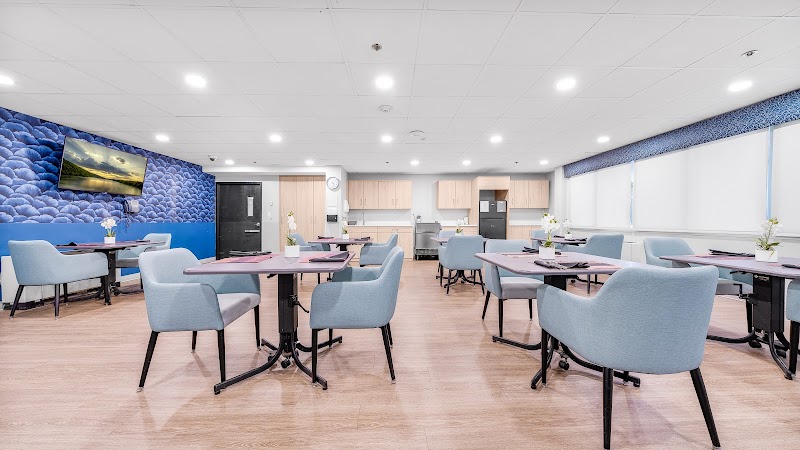
How is University City Rehabilitation And Healthcare Ctr Staffed?

CMS rates UNIVERSITY CITY REHABILITATION AND HEALTHCARE CTR's staffing level at 2 out of 5 stars, which is below average compared to other nursing homes. Staff turnover is 54%, compared to the Pennsylvania average of 46%. RN turnover specifically is 58%, which is notably high. RNs provide skilled clinical oversight, so turnover in this role can affect medical care quality.

What Have Inspectors Found at University City Rehabilitation And Healthcare Ctr?

State health inspectors documented 53 deficiencies at UNIVERSITY CITY REHABILITATION AND HEALTHCARE CTR during 2023 to 2025. These included: 52 with potential for harm and 1 minor or isolated issues. While no single deficiency reached the most serious levels, the total volume warrants attention from prospective families.
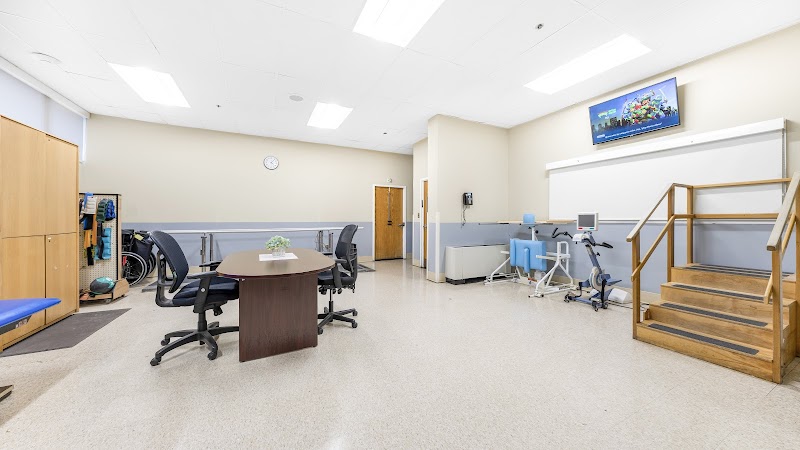
Who Owns and Operates University City Rehabilitation And Healthcare Ctr?

UNIVERSITY CITY REHABILITATION AND HEALTHCARE CTR is owned by a for-profit company. For-profit facilities operate as businesses with obligations to shareholders or private owners. The facility is operated by MARQUIS HEALTH SERVICES, a chain that manages multiple nursing homes. With 124 certified beds and approximately 119 residents (about 96% occupancy), it is a mid-sized facility located in PHILADELPHIA, Pennsylvania.

How Does University City Rehabilitation And Healthcare Ctr Compare to Other Pennsylvania Nursing Homes?

Compared to the 100 nursing homes in Pennsylvania, UNIVERSITY CITY REHABILITATION AND HEALTHCARE CTR's overall rating (3 stars) matches the state average, staff turnover (54%) is near the state average of 46%, and health inspection rating (2 stars) is below the national benchmark.

What Should Families Ask When Visiting University City Rehabilitation And Healthcare Ctr?

Based on this facility's data, families visiting should ask: "Can you walk me through typical staffing levels on day, evening, and night shifts?" "Can I visit during a mealtime to observe dining assistance and food quality?" "How do you handle medical emergencies, and what is your hospital transfer rate?" "Can I speak with family members of current residents about their experience?" These questions are particularly relevant given the below-average staffing rating.

Is University City Rehabilitation And Healthcare Ctr Safe?

Based on CMS inspection data, UNIVERSITY CITY REHABILITATION AND HEALTHCARE CTR has a clean safety record: no substantiated abuse findings (meaning no confirmed cases of resident harm), no Immediate Jeopardy citations (the most serious violation level indicating risk of serious injury or death), and is not on the Special Focus Facility watch list (a federal program monitoring the lowest-performing 1% of nursing homes). The facility has a 3-star overall rating and ranks #1 of 100 nursing homes in Pennsylvania. While no facility is perfect, families should still ask about staff-to-resident ratios and recent inspection results during their visit.

Do Nurses at University City Rehabilitation And Healthcare Ctr Stick Around?

UNIVERSITY CITY REHABILITATION AND HEALTHCARE CTR has a staff turnover rate of 54%, which is 8 percentage points above the Pennsylvania average of 46%. Moderate turnover is common in nursing homes, but families should still ask about staff tenure and how the facility maintains care continuity when employees leave.

Was University City Rehabilitation And Healthcare Ctr Ever Fined?

UNIVERSITY CITY REHABILITATION AND HEALTHCARE CTR has been fined $8,190 across 1 penalty action. This is below the Pennsylvania average of $33,161. While any fine indicates a compliance issue, fines under $50,000 are relatively common and typically reflect isolated problems that were subsequently corrected. Families should ask what specific issues led to these fines and confirm they've been resolved.

Is University City Rehabilitation And Healthcare Ctr on Any Federal Watch List?

UNIVERSITY CITY REHABILITATION AND HEALTHCARE CTR is not on any federal watch list. The most significant is the Special Focus Facility (SFF) program, which identifies the bottom 1% of nursing homes nationally based on persistent, serious quality problems. Not being on this list means the facility has avoided the pattern of deficiencies that triggers enhanced federal oversight. This is a positive indicator, though families should still review the facility's inspection history directly.