YORK NURSING AND REHABILITATION CENTER
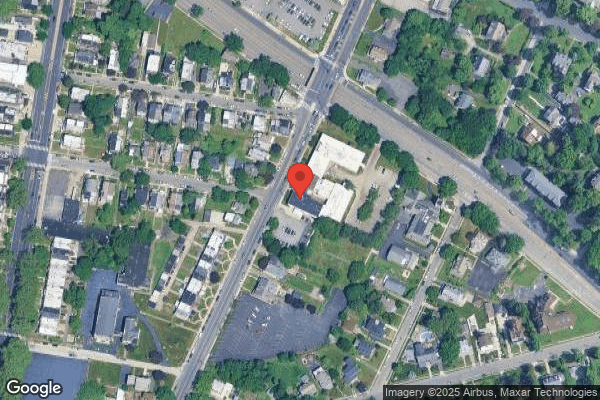
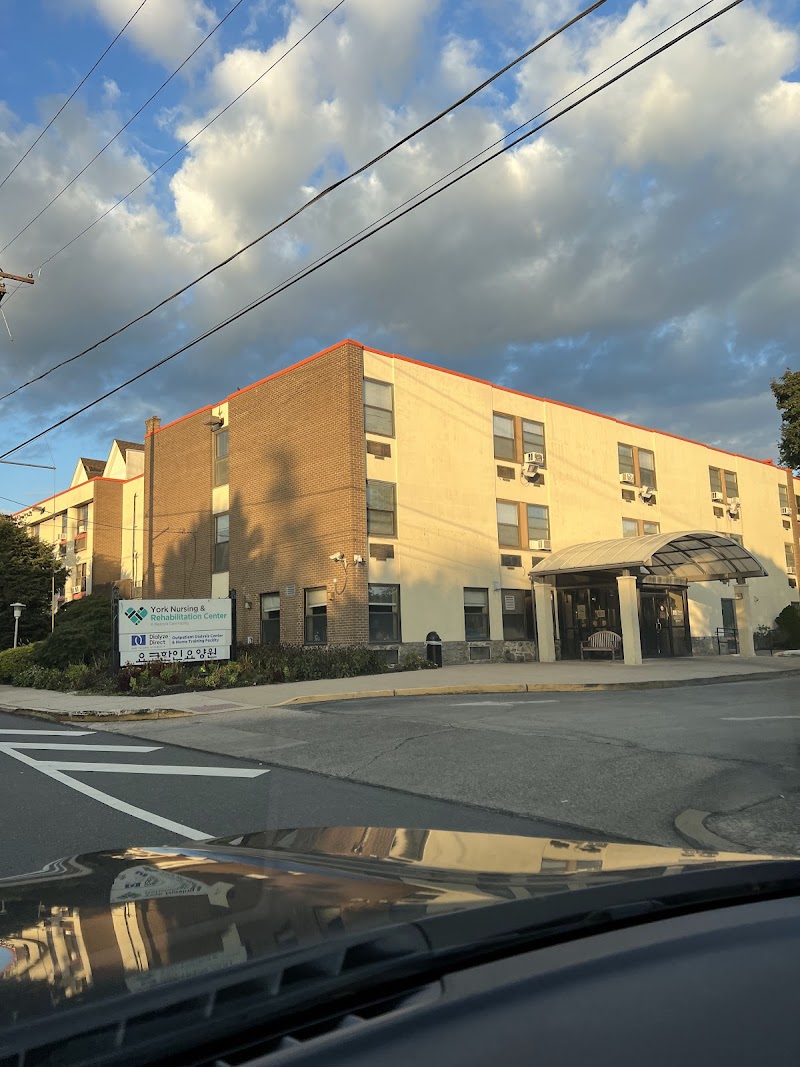
7101 OLD YORK ROAD, PHILADELPHIA, PA 19126 (215) 424-4090
For profit - Corporation 240 Beds BEDROCK CARE Data: November 2025 1 Immediate Jeopardy citation
Trust Grade
13/100
#380 of 653 in PA
Last Inspection: February 2025

Within standard 12-15 month inspection cycle. Federal law requires annual inspections.

Overview

York Nursing and Rehabilitation Center has received a Trust Grade of F, indicating significant concerns about the facility's quality of care. It ranks #380 out of 653 facilities in Pennsylvania, placing it in the bottom half, and #41 out of 58 in Montgomery County, meaning there are better options available nearby. Unfortunately, the facility is worsening, with reported issues increasing from 11 in 2024 to 19 in 2025. While staffing has an average rating of 3 out of 5 stars, the turnover rate is concerning at 53%, and the facility has higher fines of $59,351 than 77% of Pennsylvania facilities, highlighting potential compliance problems. Specific incidents include a resident being verbally and mentally abused by staff, and another resident sustaining harm when struck by another resident, which raises serious concerns about the safety and wellbeing of the residents.

Trust Score
F
13/100
In Pennsylvania
#380/653
Bottom 42%
Safety Record
High Risk
Review needed
Inspections
Getting Worse
11 → 19 violations
Staff Stability
⚠ Watch
53% turnover. Above average. Higher turnover means staff may not know residents' routines.
Penalties
○ Average
$59,351 in fines. Higher than 59% of Pennsylvania facilities. Some compliance issues.
Skilled Nurses
⚠ Watch
Each resident gets only 20 minutes of Registered Nurse (RN) attention daily — below average for Pennsylvania. Fewer RN minutes means fewer trained eyes watching for problems.
Violations
⚠ Watch
51 deficiencies on record. Higher than average. Multiple issues found across inspections.
★★★☆☆
3.0
Overall Rating
★★★☆☆
3.0
Staff Levels
★★★★★
5.0
Care Quality
★★☆☆☆
2.0
Inspection Score
Stable
2024: 11 issues
2025: 19 issues

The Good

  • 5-Star Quality Measures · Strong clinical quality outcomes
  • Full Sprinkler Coverage · Fire safety systems throughout facility
  • No fines on record

Facility shows strength in quality measures, fire safety.

The Bad

3-Star Overall Rating

Near Pennsylvania average (3.0)

Meets federal standards, typical of most facilities

Staff Turnover: 53%

Near Pennsylvania avg (46%)

Higher turnover may affect care consistency

Federal Fines: $59,351

Above median ($33,413)

Moderate penalties - review what triggered them

Chain: BEDROCK CARE

Part of a multi-facility chain

Ask about local staffing decisions and management

The Ugly 51 deficiencies on record

1 life-threatening 2 actual harm
Aug 2025 1 deficiency
CONCERN (D) 📢 Someone Reported This

A family member, employee, or ombudsman was alarmed enough to file a formal complaint

Potential for Harm - no one hurt, but risky conditions existed

Deficiency F0602 (Tag F0602)

Could have caused harm · This affected 1 resident

Based on interviews, review of facility policy and the review of facility documentation, it was determined that the facility failed to ensure one resident was free from misappropriation of resident fu...

Read full inspector narrative →
Based on interviews, review of facility policy and the review of facility documentation, it was determined that the facility failed to ensure one resident was free from misappropriation of resident funds and exploitation for one out of two residents reviewed (Resident R1). Findings include: Review of the facility Abuse policy with a review date of July 22, 2025.residents will be protected from abuse, neglect, and harm while they are residing at the facility. No abuse or harm of any type will be tolerated, and residents and staff will be monitored for Protection. The facility will strive to educate staff and other applicable individuals in techniques to protect all parties. Review of the August 2025 physician orders for Resident R1 included the diagnoses of heart failure (a syndrome caused by an impairment in the heart's ability to fill with and pump blood); hypertension (high blood pressure); cerebral infarction (a stroke); depression (a mood disorder that causes persistent feelings of sadness and loss of interest), and age-related cognitive decline. Review of documentation submitted to the State Survey Agency indicated that the facility became aware of an allegation when the resident's daughter contacted the facility social worker and completed a Concern Form on July 21, 2025 at approximately 3:30 p.m. regarding bank statements indicating that resident was transferring funds through a money transfer mobile phone application to someone who the family suspected was at the facility. Documentation from money transfer mobile application indicated that the money was being sent to a nurse aide who the facility verified worked at the facility (Employee E3). Continued review of the reportable event revealed that the nurse aide admitted to obtaining funds from the resident, and the resident admitted during the interview with the Director of Nursing (DON) that he provided funds to the nurse aide. The reportable event indicated that the resident admitted to giving the nurse aide money and claimed that he was in a romantic relationship with the nurse aide. Review of the facility investigation indicated that the facility was provided with statements from the resident's daughter which indicated that the resident sent money to the nurse aide on several occasions through a money transfer mobile phone application from at least January 2025 through May 2025, and that his account transferred money to an account that displayed the first and last name of the referenced nurse aide. The resident's daughter, and the facility's investigation estimated the amount sent to the nurse aide to be between $1,7800-$1,754.72. Review of an interview conducted by the facility on July 21, 2025 indicated that the resident reported that he was in love with the resident and that he chose to give her money. I am in love with this young lady I chose to give her money. Continued review of the interview indicated that the resident reported that he gave the nurse aide money on two occasions . to buy him (the resident) food. During an interview with the resident on August 18, 2025, at 11:19 a.m. the resident reported that he was romantically involved with the nurse aide. The resident denied any sexual contact or touching of each other when he was asked during this interview what he meant by being romantically involved with her. Review of an interview conducted by the facility on July 22, 2025, with the nurse aide regarding money taken by the nurse aide from Resident R1 revealed that the aide admitted that she had taken money from the resident, and that the first time the resident sent money was January 2025. The nurse aide also reported in her statement that throughout the months, the resident continued to send her money through money transfer mobile phone application. Continued review of the statement from the nurse aide documented that she reported during her interview that she paid the money back. The facility documented in their investigation that the nurse aide provided no proof of paying any of the funds back to the resident. Continued review of the investigation revealed documentation that the resident's daughter sent which documented several money transactions that were sent to the nurse aide from the resident from January 2025 through May 2025. The transactions included, but are not limited to the following dates from January 2025 through May 2025: January 28, 2025 $100January 30, 2025 $50February 10, 2025 $50February 18, 2025 $40 February 18, 2025 $30 February 19, 2025 $25 March 17, 2025 $25 March 18, 2025 $30 March 20, 2025 $35 April 15, 2025 $25 March 24, 2025 $40 March 26, 2025 $20 March 26, 2025 $20 March 26, 2025 $20 March 27, 2025 $20March 31, 2025 $25April 1, 2025, $2 April 2, 2025 $20 During an interview with the resident's daughter on August 20, 2025, at 10:03 a.m. the resident's daughter reported that the she and her mother (the resident's wife) noticed funds being sent though a mobile money transfer application to someone that they did not know and that they transactions took place from January 2025-May 2025. The daughter stated that she contacted the facility on July 21, 2025, and notified them of her concern. The daughter also confirmed that the individual that her father was transferring money to was a nurse aide, and that approximately $1,700 was transferred to the nurse aide. Documentation from the investigation revealed that the nurse aide was terminated from the facility on July 24, 2025 for professional misconduct related to receiving mobile money transfers from the resident. During an interview with the Director or Nursing (DON) and the Nursing Home Administrator (NHA) on August 4, 2025 at 2:30 p.m. the investigation was reviewed and the DON confirmed that the nurse aide admitted to taking money from the resident, and that the nurse aide was terminated from the facility for professional misconduct on July 24, 2025. The facility failed to ensure one Resident R1 was free from misappropriation of resident funds and exploitation. 28 Pa. Code 201.18(b)(1)(2)(e)(1) Management28 Pa. Code 201.29 (a)(c) Resident rights28 Pa Code 211.12 (c) Nursing services
Apr 2025 2 deficiencies 1 Harm
SERIOUS (G) 📢 Someone Reported This

A family member, employee, or ombudsman was alarmed enough to file a formal complaint

Actual Harm - a resident was hurt due to facility failures

Free from Abuse/Neglect (Tag F0600)

A resident was harmed · This affected 1 resident

**NOTE- TERMS IN BRACKETS HAVE BEEN EDITED TO PROTECT CONFIDENTIALITY** Based on interviews with staff, review of clinical records, facility policies and facility documentation, it was determined the ...

Read full inspector narrative →
**NOTE- TERMS IN BRACKETS HAVE BEEN EDITED TO PROTECT CONFIDENTIALITY** Based on interviews with staff, review of clinical records, facility policies and facility documentation, it was determined the facility failed to implement interventions to assure one resident (Resident R3) was free from physical abuse resulting in actual harm to Resident R3 who was struck by Resident R4 in the face with a leg rest, and sustained a chipped tooth for one of 10 resident records reviewed. (Resident R3 and Resident R4) Findings include: Review of facility policy titled, Abuse revised December 13, 2024, revealed, each resident will be free from abuse including verbal, mental, sexual, or physical abuse. Further review indicated, residents will be protected from abuse, neglect, and harm while they are residing at the facility and facility will educate staff in techniques to protect all parties. Review of Resident R3's clinical record revealed the resident was admitted on [DATE], with diagnoses including Cervical Disc Disorder, muscle weakness, difficulty walking, cognitive communication deficit, Atherosclerosis (coronary artery bypass graft), and Arterial Fibrillation (irregular rapid heart rate). Review of Resident R3's admission Minimum Data Set (MDS is an assessment of resident's care needs) dated January 28, 2025, revealed Resident R3 was cognitively intact, required maximal assistance with lower body dressing, and used a manual wheelchair for mobility. Review of Resident R3's care plan, initiated on January 22, 2025, revealed Resident R3 has an ADL (activity of daily living) self-care performance deficit related to muscle weakness, difficulty walking, and muscle wasting and atrophy (reduce muscle mass). Further review of Resident R3's care plan revealed the resident had oral/dental problems and was a smoker. Review of Resident R4's clinical record revealed Resident R4 was admitted to the facility on [DATE], with diagnoses including cognitive communication deficit, muscle weakness, Rhabdomyolysis (breakdown of skeletal muscle), Bipolar Disorder (condition in which a person has periods of depression of being extremely happy), and Depression (major loss of interest in pleasurable activities). Review of Resident R4's quarterly MDS assessment dated [DATE], revealed Resident R4 was cognitively intact and used a manual wheelchair for mobility. Review of Resident R4's care plan initiated on August 16, 2024, revealed Resident R4 had a behavior problem related to insomnia, depression, anxiety. Continued review of Resident R4's care plan revealed a single intervention, administer medications as ordered. Monitor for side effects and effectiveness. Review of Resident R3's clinical records including a Social Services note, dated March 24, 2025 revealed, a violent incident occurred outside in the smoking area. Resident was hit with leg rest from a wheelchair by another resident and Resident R3 was struck resulting in the loss of one tooth. Review of facility documentation titled, Injury Report, dated March 24, 2025, revealed Resident R3 had a chipped tooth inside of mouth. Interview conducted on April 2, 2025, at 9:55 a.m., with the Activity Aides, Employee E6, and Employee E5, who were supervising residents during the smoke break on March 24, 2025, approximately 1:30 p.m. revealed Employee E5 and Employee E6 announced to the residents, the facility staff would no longer provide cigarettes to the residents. Resident R4 responded with verbal aggression using foul language toward Employee E5 and Employee E6. Continued interview revealed when Resident R3 intervened in an effort to stop Resident R4 expressing foul language towards the activity aides, [Resident R4] got up with the leg rest in [his/her] hand and started chasing me (Employee E5), attempting to hit me. When [Resident R3] stood up from (his/her) wheelchair to defend (himself/herself), [Resident R4] swung at [Resident R3] in the face with the leg rest. Continued interview revealed Resident R3 dropped back into the wheelchair after the hit and Resident R4 tackled Resident R3 in [his/her] wheelchair and continued to punch (him/her) for approximately 15 seconds. During the interview, Activity Aides, Employee E5 and E6, revealed Resident R4 portrayed verbal aggression in the past with profanity towards staff during smoke breaks. During the Interview with Nurse Aide, Employee E11, conducted on April 2, 2025, Employee E11 stated, Resident R3 threatened to beat up [his/her] roommate because [his/her] television was loud, and now [his/her] roommate won't watch TV anymore. Interview with Nurse Aide, Employee E10, conducted on April 2, 2025, at 11:22 a.m. revealed that last month she heard Resident R4 shout at the roommate, I will beat you up. The facility failed to implement interventions to assure Resident R3 was free from physical abuse resulting in actual harm to Resident R3 who was struck in the face with a leg rest and sustained a chipped tooth. 28 Pa. Code 211.10(c)(d) Resident Care Policies 28 Pa. Code 211.12(d)(1)(5) Nursing Services
CONCERN (E) 📢 Someone Reported This

A family member, employee, or ombudsman was alarmed enough to file a formal complaint

Potential for Harm - no one hurt, but risky conditions existed

Deficiency F0804 (Tag F0804)

Could have caused harm · This affected multiple residents

Based on observations, resident and staff interviews, it was determined that the facility failed to provide food and drink that was palatable and served at palatable temperatures for three of 10 resid...

Read full inspector narrative →
Based on observations, resident and staff interviews, it was determined that the facility failed to provide food and drink that was palatable and served at palatable temperatures for three of 10 residents reviewed. (Resident R3, Resident R6, Resident R7) Findings include: Review of facility policy titled, Food Temperatures, dated January 17, 2019, revealed, All hot food items must be cooked to appropriate internal temperatures, held and served from steam table at temperature of at least 135° F. Take temperatures often to monitor for safe temperature ranges of at or below 41 ° F for cold foods and at or above 135° F (Fahrenheit) for hot foods. Continued review revealed, Hot food items may not fall below 135° F after cooking and all cold food items must be maintained and served at a temperature of 41 ° F or below. Interview with Resident R6 on April 1, 2025 at 10:00 a.m. revealed some food does not have flavor. Interview with Resident R7 on April 1, 2025, at 10:10 a.m. revealed the food is warm, not hot. Interview with Resident R3 on April 1, 2025, at 1:30 p.m. revealed, they never get my food right. Observations during a test tray conducted with the Foodservice Director, Employee E12, on April 1, 2025, at 12:26 p.m. revealed chicken registered 118 degrees Fahrenheit (F); [NAME] registered 118 degrees F; Steamed Broccoli 106.7 degrees F; and cold pears registered 46.2 degrees F. Follow-up interview with the Food Service Director, on April 1, 2025 at 12:32 p.m. revealed that that foods should be at at least 120 degrees F and confirmed that these food items were outside the acceptable temperature range and therefore not palatable. 28 Pa. Code 201.14(a) Responsibility of licensee 28 Pa. Code 201.18(b)(3) Management
Feb 2025 15 deficiencies
CONCERN (D)

Potential for Harm - no one hurt, but risky conditions existed

Deficiency F0578 (Tag F0578)

Could have caused harm · This affected 1 resident

**NOTE- TERMS IN BRACKETS HAVE BEEN EDITED TO PROTECT CONFIDENTIALITY** Based on review of facility policies, clinical record reviews and interviews with staff, it was determined that the facility fai...

Read full inspector narrative →
**NOTE- TERMS IN BRACKETS HAVE BEEN EDITED TO PROTECT CONFIDENTIALITY** Based on review of facility policies, clinical record reviews and interviews with staff, it was determined that the facility failed to ensure that a resident's right to request or refuse medical treatments were accurately reflected in the resident's record for one of 35 residents reviewed (Resident R96). Findings include: Review of Resident R96's clinical record revealed that the resident was admitted to the facility on [DATE] with a diagnosis of dementia (progressive degenerative disease of the brain). On December 13, 2024 the resident was placed on hospice care. Further review of Resident R96 clinical record revealed the resident's advanced directive remained full code. On January 31, 2025 at 2:12 p.m., interview with Unit Manager Employee E14 confirmed and stated that Resident R96's POLTS (Physician Orders for Life-Sustaining Treatment- a medical form that outlines a patient's end-of-life care preferences) should have been discussed on December 13, 2024 when the resident went on hospice care and it was not discussed with the resident and/or responsible party related to the resident's advance directives. 28 Pa. Code 211.12(d)(5) Nursing services
CONCERN (D) 📢 Someone Reported This

A family member, employee, or ombudsman was alarmed enough to file a formal complaint

Potential for Harm - no one hurt, but risky conditions existed

Safe Environment (Tag F0584)

Could have caused harm · This affected 1 resident

**NOTE- TERMS IN BRACKETS HAVE BEEN EDITED TO PROTECT CONFIDENTIALITY** Based on observations and resident and staff interviews, it was determined the facility failed to provide services to maintain a...

Read full inspector narrative →
**NOTE- TERMS IN BRACKETS HAVE BEEN EDITED TO PROTECT CONFIDENTIALITY** Based on observations and resident and staff interviews, it was determined the facility failed to provide services to maintain a clean and homelike environment for two of four nursing units. (First floor South and North Nursing Units). Findings include: The facility's policy titled Resident's Rights-Safe/Clean/Comfortable/Homelike Environment dated April 1, 2022, indicated It is the policy of the facility to provide a safe, clean, comfortable homelike environment such as manner to acknowledge and respect residents' rights. On January 28, 2025, at 11:33 a.m. observation in room [ROOM NUMBER] bed C revealed dirty privacy curtains with brown spots and black strikes on both sides of the curtain. On January 28, 2025, at 12:25 p.m., an observation was conducted with the Maintenance Director, Employee E18, in room [ROOM NUMBER]B. The inspection revealed a loose closet door with two hinge screws that were not secure, as well as cracks in the wall around the heater that were not sealed. On January 28, 2025, at 1:06 p.m., an observation was conducted with the Maintenance Director, Employee E18, in the shower room on the 1st South nursing unit. . The inspection revealed 12 ceiling tiles with water damage, including one tile that had a large hole. On January 28, 2025, at 1:20 p.m. observation with the Maintenance Director, Employee E18 room [ROOM NUMBER] dresser was broken, baseboard was detached, heater P-Tac unit cover box was loose. Holes in the wall near the baseboard on the right side of the room. Broken tray tables in the B bed. On January 29, 2025, at 9:14 a.m., an observation was conducted with the Maintenance Director, Employee E18, in the 1 North shower room. The room was cluttered with various items, including: -The first shower stall containing three large trash cans. -The second shower stall holding a large trash can and three tray tables. -A mechanical lift stored in the middle of the shower area. -No privacy curtain between the second and third shower stalls. -The fourth shower stall containing three mechanical lifts. -A regular resident's chair placed near the sink. 28 Pa. Code 201.18 (e)(1)(2.1) Management. 28 Pa. Code 201.29 (a) Resident rights.
CONCERN (D)

Potential for Harm - no one hurt, but risky conditions existed

Abuse Prevention Policies (Tag F0607)

Could have caused harm · This affected 1 resident

Based on facility policy review, personnel file review, and staff interview, it was determined that the facility failed to perform criminal history background checks prior to hire for one of five pers...

Read full inspector narrative →
Based on facility policy review, personnel file review, and staff interview, it was determined that the facility failed to perform criminal history background checks prior to hire for one of five personnel files reviewed (Employees 2). Findings Include: The facility policy titled Employment Screenings for Potential Hires: Pennsylvania dated, April 2, 2022, revealed under Procedure B. section Criminal records check: i. in accordance with Act 13 and the Older adults Protective Services Act, the Facility will conduct a Criminal History Check as a condition of employment within the first 30 days of hire. This includes clearance through the Pennsylvania State Police. Review of the personnel file for Director of Nursing, Employee 2 revealed hiring date on November 11, 2024. Further review indicated that a Pennsylvania State Police background check was completed on January 29, 2025. An interview was conducted with the Nursing Home Administrator, Employee E1, on December 31, 2025, at 11:48 a.m. Employee E1 stated that the Human Services Director, Employee E9 had conducted a criminal background check at the time of hiring; however, it was not saved, and a more recent copy is unavailable. Additionally, documentation confirmed that the Director of Nursing, Employee E2, did not undergo a criminal background check until January 29, 2025. 28 Pa. Code 201.18(b)(1)(e)(1) Management 28 Pa. Code 201.19(8) Personnel policies and procedures
CONCERN (D)

Potential for Harm - no one hurt, but risky conditions existed

Comprehensive Care Plan (Tag F0656)

Could have caused harm · This affected 1 resident

**NOTE- TERMS IN BRACKETS HAVE BEEN EDITED TO PROTECT CONFIDENTIALITY** Based on review of facility policies and clinical records, and staff interview, it was determined that the facility failed to de...

Read full inspector narrative →
**NOTE- TERMS IN BRACKETS HAVE BEEN EDITED TO PROTECT CONFIDENTIALITY** Based on review of facility policies and clinical records, and staff interview, it was determined that the facility failed to develop a comprehensive care plan for one of two residents reviewed regarding a smoking (Resident R192) Findings include: Facility policy entitled, Base Care plan, Comprehensive Care Plan and Ongoing care Plan Updates Revised October 1, 2024, revealed The facility will follow a uniform process for initiating the baseline care plan upon admission, the comprehensive care plan upon CCA (Care Area Assessment) completion, and ensuring care plan updated to reflect the resident's status. Resident R192's clinical record revealed that the resident was admitted to the facility on [DATE], with diagnoses of dementia (progressive degenerative disease of the brain), mild cognitive impairment of uncertain or unknown etiology, adjustment disorder with mixed anxiety and depressed mood, and memory deficit following a nontraumatic intracranial hemorrhage. Additionally, the resident was identified as a smoker, and a smoking assessment was completed on October 30, 2024. Review of Resident R192's Minimum Data Set (MDS - a periodic assessment of care needs) upon admission dated November 5 , 2024, revealed a Brief Interview for Mental Status (BIMS) of 15 which indicated that the resident was cognitively intact. On January 30, 2025, at 9:46 a.m. Resident R192 was observed smoking during the normal routine time. A review of the current care plan, dated October 30, 2024, found no evidence of a comprehensive, person-centered plan of care addressing smoking interventions. During an interview on February 4, 2025, at 9:45 a.m., the Director of Nursing, Employee E2, confirmed that Resident R192 was a smoker and acknowledged that no comprehensive care plan had been developed to address safe smoking interventions.
CONCERN (D) 📢 Someone Reported This

A family member, employee, or ombudsman was alarmed enough to file a formal complaint

Potential for Harm - no one hurt, but risky conditions existed

ADL Care (Tag F0677)

Could have caused harm · This affected 1 resident

**NOTE- TERMS IN BRACKETS HAVE BEEN EDITED TO PROTECT CONFIDENTIALITY** Based on clinical record review, observations, resident and staff interviews, it was determined that the facility failed to main...

Read full inspector narrative →
**NOTE- TERMS IN BRACKETS HAVE BEEN EDITED TO PROTECT CONFIDENTIALITY** Based on clinical record review, observations, resident and staff interviews, it was determined that the facility failed to maintain adequate personal hygiene and grooming of residents dependent on staff for assistance with these activities of daily living for two of 35 residents reviewed (Resident R114, and R60). Findings include: On January28, 2025, at 12:34 p.m. Resident R114 was observed to have long and dirty nails on his hands. Resident R114 reported that he prefers his nails to be cut short. Review of Resident R114's most recent annual Minimum Data Set (MDS) dated [DATE], revealed him as totally dependent on one staff physical assistance for his activities of daily living. The resident's (BIMS - Brief Interview for Mental Status - a screen used to assist with identifying a resident's current cognition) indicated Resident R114 has intact cognition. A review of the comprehensive care plan for Resident R114 dated September 22, 2022, indicated Resident R114 has potential for impairment to skin integrity r/t decreased mobility incontinence. Under interventions it further revealed Keep fingernails short. On January 29, 2025, at 1:14 p.m. Resident R114 continued to have long nails. On January 30, 2025, at 11:00 a.m. the unit manager, Employee E22 confirmed the observations that Resident R114 nails were long and dirty and it was the responsibility of the nursing assistant to get them cut. On January 29, 2025, at 8:58 a.m. an interview and observation revealed Resident R60 had very long, dirty fingernails, when asked if this was his preference Resident R60 said no, I can't cut them myself, the nurse said she would cut them for me but has not yet. Review of Resident R60's most recent quarterly Minimum Data Set (MDS) dated [DATE], revealed him as independent; however, requires setup or clean-up assistance with personal hygiene The resident's (BIMS - Brief Interview for Mental Status - a screen used to assist with identifying a resident's current cognition) indicated Resident R60 has intact cognition. On January 30, 2025, at 11:20 a.m. interview with license nurse, Employee E23 revealed that the resident refuses care, will only let certain caregivers to help him. On January 30, 2025, at 2:36 p.m. an interview with Resident R60 revealed that license nurse, Employee E24 did cut his nails. 28 Pa. Code 211.10(d) Resident care policies 28 Pa. Code 211.12(d)(1)(3)(5) Nursing services.
CONCERN (D)

Potential for Harm - no one hurt, but risky conditions existed

Accident Prevention (Tag F0689)

Could have caused harm · This affected 1 resident

Based on facility policy review, clinical records review, observations, and resident and staff interviews, it was determined that the facility failed to ensure that the resident environment was free o...

Read full inspector narrative →
Based on facility policy review, clinical records review, observations, and resident and staff interviews, it was determined that the facility failed to ensure that the resident environment was free of accident hazards for one of 35 residents reviewed (Resident 35). Findings include: The facility's policy titled Resident's Rights-Safe/Clean/Comfortable/Homelike Environment dated April 1, 2022, indicated It is the policy of the facility to provide a safe, clean, comfortable homelike environment such as manner to acknowledge and respect residents' rights. On January 28, 2025, at 12:21 p.m., an observation in Resident R35's room revealed a long electrical extension cord with five outlets plugged into a wall outlet behind the resident's bed. The cord extended across the room to power a television placed on a dresser. During an interview, Resident R35 stated that they had purchased the extension cord for their television and video player, with the facility's permission. On January 28, 2025, at 12:25 p.m., an observation was confirmed by the Maintenance Director, Employee E18, who reported that facility does not allow the electrical extension cords to be used in residents room as it is a hazardous item. 28 Pa. Code 201.14(a) Responsibility of Licensee. 28 Pa. Code 201.18 (e)(1)(3) Management.
CONCERN (D)

Potential for Harm - no one hurt, but risky conditions existed

Deficiency F0692 (Tag F0692)

Could have caused harm · This affected 1 resident

**NOTE- TERMS IN BRACKETS HAVE BEEN EDITED TO PROTECT CONFIDENTIALITY** Based on review of facility policy, review of clinical records, and staff interviews, it was determined that the facility failed...

Read full inspector narrative →
**NOTE- TERMS IN BRACKETS HAVE BEEN EDITED TO PROTECT CONFIDENTIALITY** Based on review of facility policy, review of clinical records, and staff interviews, it was determined that the facility failed to identify, implement, monitor, and modify interventions consistent with the residents needs and current professional standards of practice, to maintain acceptable parameters of nutritional status for one of eight residents reviewed. (Resident R67) Findings: Review of facility policy titled Weight Assessment and Intervention dated February 2022 revealed the nursing staff and dietician will communicate to prevent, monitor, and intervene for undesirable weight loss for the residents. The dietician will review monthly weights and determine if significant weight loss has occurred. Significant weight loss is defined as more or less 5% one month, and more or less 10% within 6 months. The dietician with the interdisciplinary team will make recommendations and care plan interventions. Review of Resident R67's annual Minimum Data Set (MDS- a federal mandated assessment for residents) dated November 7, 2024, revealed this resident was admitted to this facility on January 28, 2022 with diagnoses of coronary artery disease (blockage of arteries), hepatitis (inflammation of the liver), and dementia (group of symptoms that include problems with memory, thinking or language). Resident is 65 inches, and 160 lbs. currently prescribed a therapeutic diet with no indication of any swallowing disorder or impairment. Review of resident R 67's care plan initiated January 31, 2022, and revised on August 13 2024, revealed that this resident has a nutritional problem or potential nutritional problems related to a diagnosis of anemia (low levels of red blood cells), history of nasal cancer, bipolar (disorder that cause intense shifts in moods), depression, hypertension(high blood pressure), GERD (gastroesophageal reflux disease-stomach acid rising into the esophagus, also called heartburn), obesity, and history of significant weight changes. The goals listed include: maintain adequate nutritional status as evidenced by no significant weight changes, have no signs or symptoms of malnutrition, have no signs or symptoms of dehydration and or fluid overload and maintain skin integrity. Interventions include monitor, document, and report any signs of symptoms of dysphasia, pocketing, choking, coughing, drooling, and holding. Obtain and monitor lab diagnostic work and weight is ordered revised on April 1st, 2024 Review of resident 67's Nutrition assessment dated [DATE], revealed the resident did trigger for significant weight loss times six months. The resident was assessed as consuming 1800-2160 calories daily. The summary of findings revealed the resident was eating 50 to a 100 percent of his meals. The resident also was ordered a house shake twice a day with good acceptance. Weight is stable since initial weight loss. Review of Resident r67's weight history revealed documented weights on August 9, 2024, of 205.0 lbs. and September 11, 2024, of 163.4 lbs. and a confirmed weight on September 26, 2024, of 163.2 lbs. representing a weight loss of 20.29% (41.6lbs.). Review of Resident R67's clinical record, and physician orders dated September 25, 2024, revealed an order for weekly weights for the time span of four weeks. Review of the Resident R67's clinical record revealed no documetned evidence that weights were obtaiend four weeks as ordered by the physician. Continued Review of resident r67's clinical record physician orders dated January 13, 2025, revealed resident is ordered a four-ounce house shake three times a day for weight maintenance. Interview with dietitian employee E5 on February 4, 2025, at 10:47 a.m. revealed that it is his professional practice when assessing residents for weight loss to notify their disciplinary team of any significant weight loss and to include interventions such as speech therapy, speak to president's physician, review any therapeutic diet, observe meals and interview residents. Employee E5 confirmed that he was aware of resident's weight loss and acknowledged the resident's weight has been trending downward this month. When was alerted to resident's initial significant weight loss in September, 2024, he believed it to be caused by the scale malfunction. Employee E5 confirmed not testing the scale or practicing the above protocols for resident's weight loss. Interview with Employee E20, medical doctor on February 4, 2025, at 11:38 a.m. confirmed that Resident R67 was his patient and had significant weight loss in one month and this employee was made aware of it at that time. Employee E20 confirmed he saw resident October 21, 2024, and his documentation did not address the weight loss and did not provide any new orders relating to the weight loss. Employee E20 acknowledged that more interventions are warranted. 28 Pa. Code 211.5 (f) Clinical records 28 Pa. Code 211.12 (c)(5) Nursing services
CONCERN (D)

Potential for Harm - no one hurt, but risky conditions existed

Respiratory Care (Tag F0695)

Could have caused harm · This affected 1 resident

**NOTE- TERMS IN BRACKETS HAVE BEEN EDITED TO PROTECT CONFIDENTIALITY** Based on observation, clinical record review, review of facility policy and staff interview, it was determined that the facility...

Read full inspector narrative →
**NOTE- TERMS IN BRACKETS HAVE BEEN EDITED TO PROTECT CONFIDENTIALITY** Based on observation, clinical record review, review of facility policy and staff interview, it was determined that the facility failed to provide appropriate respiratory care and services for three of 35 residents reviewed (R31, R88, R163). Findings include: Review of the Facility Policy and Guidelines for Implementation of Oxygen Administration, dated June 2016, indicated that the nurse should review and follow the physician's orders while administering Oxygen via nasal canula. Review of Resident R163's clinical record revealed; the resident was initially admitted to the facility on [DATE]; diagnosed with Acute Respiratory Failure with Hypoxia (a condition where the lungs are unable to adequately exchange oxygen, leading to low blood oxygen levels {hypoxia}, which can occur suddenly (acute) or develop over time (chronic, causing significant breathing difficulties and potential complications depending on the severity and duration of the issue; essentially, it means the body isn't getting enough oxygen due to impaired lung function, either rapidly or gradually); Malignant Neoplasm of Upper Lobe, Left Bronchus of Lung (a cancerous tumor located in the upper lobe of the left lung). Review of clinical record indicated that Resident R163 was ordered of April 15, 2024, oxygen at 2 Liters/Min (minute0, via Nasal Cannula, continuously, every shift for supplementary Oxygen. Observation conducated on January 28, 2025, at 10:33 a.m., revealed that R163 was administered oxygen at 4 liters/Min, via nasal canula., and not 2 liters/min, as ordered by the physician; and the same was confirmed with a Director of Nursing, Employee E2 at the time of the finding. A review of the clinical record of Resident R88 revealed an admission date of December 19, 2022, with a diagnosis of dependence on supplemental oxygen. Review of clinical record indicated that Resident R88 was ordered on January 2, 2023, oxygen at 2 liters/min, via Nasal Cannula, continuously, every shift for supplementary oxygen. On January 28, 2025 at 11:28 a.m. observation of Resident R88's oxygen level was confirmed to be at 3 liter by the License nurse, Employee E10. Review of Resident R31's clinical record revealed a diagnosis of chronic obstructive pulmonary disease (lung disease) with physician orders for 3 liters of continuous supplemental oxygen. On January 28,2025 at 2:30 p.m. Resident R31 was observed using the oxygen on the incorrect setting of 4 liters and the concentrator was covered in dust. Immediately after, the Unit Manager Employee E14 confirmed the order was for 3 liters and the concentrator was not clean. 28 Pa. Code 211.10(c) Resident care policies 28 Pa. Code 211.12(d)(5) Nursing services
CONCERN (D)

Potential for Harm - no one hurt, but risky conditions existed

Deficiency F0729 (Tag F0729)

Could have caused harm · This affected 1 resident

Based on a review of facility's job descriptions and personnel files, as well as staff interviews, it was determined that the facility failed to check the annotation list which becomes available on qu...

Read full inspector narrative →
Based on a review of facility's job descriptions and personnel files, as well as staff interviews, it was determined that the facility failed to check the annotation list which becomes available on quarterly bases to verify the nurse aide certification to be valid to allow individuals to work as a nurse aide for one of three nurse aides reviewed (Employee E8). Findings include: The facility policy titled Employment Screenings for Potential Hires: Pennsylvania dated, April 2, 2022, revealed Prior to an offer of employment, the hiring manager should ensure all candidates for employment are properly interviewed and the following screens are completed: a. Attempt for two former employee references: i Ideally verification should include: 1. Dates of employment 2. Position held 3. Salary or hourly wage rate; i. When there is no prior employment, references can be obtained from schools, churches, or personal associations. a. Verification of license or certification if applicable The facility's job description for Nurse Aide, undated, revealed that a nurse aide certification was necessary to perform functions of the position. Review of information submitted to the State Survey Office on October 24, 2024 , stated the facility became aware during a routine license audit that a Nursing assistant (NA), Employee E8 had her Nurse Aide certificate revoked on 7/15/2024 due to substantiated finding on file with the Pennsylvania Nurses Aide registry from a different facility.The employee was immediately suspended pending termination. The facility reviewed the employee file and noted that Employee E8 was hired on 12/14/2021 with a valid NA certification. The facility last verified her certificate on 7/13/2023 when the certificate was reviewed. The NA registration on file was current with an expiration date of 7/7/2025. The facility interviewed the Human Services (HR) Director, Employee E9 who reported that the facility was never made aware that Employee E8's NA license was revoked. The Employee E8 last shift worked was on 10/24/2024 from 7am-1:33p.m. Employee E8 was terminated on 10/24/2024. A personnel file for Nursing Aide, Employee E8 revealed that she/he was hired on 12/14/2021 with a valid NA certificate dated effective from 7/7/2017 - 7/7/2023, then NA certificate was renewed until 7/7/2025. On 10/24/2024 a screening was conducted for Employee E8 which revealed that the NA certification was revoked on 7/15/2024. Facility conducted an interview dated 10/24/2024 with the Human Service Director, employee E9 who revealed I was in the process of auditing staff licenses and discovered that Employee E8 license was revoked. I called Employee E8 to my office and she stated that she was aware that her license was revoked. She stated she renewed it in 2023. I asked her to log into credentials to download her current license. The website also showed that her license was revoked. Employee was send home suspended pending the outcome of the investigate. Interview with the Nursing Home Administrator, Employee E1 on 01/30/2025, at 12:13 p.m. confirmed that Nurse Aide's certification for Employee E8 was revoked on 07/15/2024. Facility was conducting an audit and ran her certification license and discovered it was revoked. Employee E8 was suspended, and facility called the Department of Health field office to become aware why facility was not notified. Department of Health (DOH) notified the facility that every quarter there is a annotation list that comes out which would show if there is any certified aids' licenses were revoked due to a substantiated cases. Employee E1 was not aware of the annotation list to be available. Employee E1 obtained the annotation for 07/01/2024 and Employee E8 was not listed on the list. Then, 10/01/2024 annotation list was obtained and Employee E8 was listed as her license was revoked. On January 30, 2024, at 12:57 p.m. an interview was held with the HR director, Employee E9 who reported that she was doing an audit and discovered that Employee E8 had a revoked license. She interviewed the Employee E8 who did not disclose the revoke license and was asked to log into her credentials and the result revealed as a revoked license. Employee E8 was suspended and then terminated. Facility was not aware of the annotation list which would show a list of staff whose licenses have been revoked. Immediately, facility implemented a protocol to check the annotation list for their current staff and for any agency staff who are coming in to provide care for their residents. 28 Pa. Code 201.29 (b) Personnel Policies and Procedures.
CONCERN (D)

Potential for Harm - no one hurt, but risky conditions existed

Deficiency F0742 (Tag F0742)

Could have caused harm · This affected 1 resident

**NOTE- TERMS IN BRACKETS HAVE BEEN EDITED TO PROTECT CONFIDENTIALITY** Based on review of facility policy, review of resident clinical records, interview with staff, it was determined that the facil...

Read full inspector narrative →
**NOTE- TERMS IN BRACKETS HAVE BEEN EDITED TO PROTECT CONFIDENTIALITY** Based on review of facility policy, review of resident clinical records, interview with staff, it was determined that the facility failed to develop a comprehensive person-centered care plan relating to post traumatic stress disorder (PTSD) for two of two residents reviewed with this diagnosis of PTSD. (resident R 139, and R157) Findings include: Review of facility policy titled Trauma informed care dated October 24th, 2022, revealed that the facility ensures that residents who are trauma survivors receive culturally competent, trauma informed care in accordance with professional standards of practice and accounting for residents' experiences and preferences in order to eliminate or mitigate triggers that may cause traumatization of the resident. This includes training and assisting staff to create an environment where the resident feels safe. The facility will assess each resident to ensure they receive the appropriate treatment and services. The facility will ensure employees have education training or in service in caring for residents identified with mental and psychological disorders as well as residents with a history of Trauma and or post-traumatic stress this water. Appropriate staff will also be educated in implementing nonpharmacological interventions when appropriate. Trauma training will be part of our orientation program for all new employees and will be provided on an ongoing basis .Trauma specific interventions for a resident will be placed in our individualized person-centered care plan upon a mission and assessment. Care plans and interventions will be reviewed quarterly and more often is necessary, based on any change in residents physical and psychosocial well-being. As we evaluate our interventions, we will be sensitive to the need for professional referral to psychological mental health services and personnel as well as ways to communicate our plans with staff in order to enlist their support. The Social service department initially will identify any trauma and or PTSD by supplied questionnaire and gather trigger information through Medical records/ assessments, family members. Review of Resident R139's Quarterly Minimum Data Set(MDS) dated [DATE] revealed that Resident R139 was admitted in to facility October 12, 2022 with diagnosis including Bipolar (Bipolar disorder is a mental health condition that causes extreme mood swings between depression and mania or hypomania. Learn about the types, symptoms,) and PTSD (Post traumatic stress disorder is a mental health condition caused by a traumatic event that affects your ability to function normally. Review of resident R 139's clinical record psychology note dated December 7, 2023, revealed that resident R139 has a history of PTSD and bipolar disorders. The psychological notes indicated the resident suffered trauma as a child. Review of Resident 139's care plan noted PTSD associated with other concerns, however, did not develop any identification, plan of care, or goals for this disorder. Resident R139's care plan consists of identification of diagnosis and or health concerns including this resident has a history of shower refusal related to history of PTSD, with interventions including education of noncompliance, encourage participation, explain care activities, and paired care. Further review of resident R139's care plan revealed the focus of anti-anxiety medications usage related to PTSD with the goal of resident will be free from discover or adverse reactions related to anti-anxiety therapy. Interventions of this focus and goal include administer medications and monitor document report any adverse reactions The final notation of the diagnosis of PTSD in resident R 139's care plan can be detected under the focus of nutritional problem related to the diagnosis of diabetes two, anemia and PTSD, history of homelessness, morbid obesity, consumption of medication that may cause weight loss. The care plan reviewed contained the diagnosis of post traumatic stress disorder but lacks any goals, implementations, or outcomes directly relating to the diagnosis of PTSD. Review of Resident R157 quarterly minimum date set (MDS- a federal mandated assessment for all residents) dated November 4, 2024 revealed resident R157 was admitted into the facility on December 10, 2021 diagnosis including schizophrenia (a mental disorder characterized by disruptions in thought process, perceptions, emotional responsiveness, and social interactions) , depression, and PTSD. Review of Resident R157's comprehensive care plan revealed no documented evidence that Resident R157's diagnosis of PTSD care planned and developed related to the treatment and services for PTSD. Interview with Employee E2 Director of Nursing on February 4, 2025 at 12:40 p.m .acknowledged that care plans are incomplete with goals, implementation, and evaluation for the specific diagnosis and care needs of post traumatic stress disorder. 28 Pa. Code 211.12(d)(1)(5) Nursing services
CONCERN (D)

Potential for Harm - no one hurt, but risky conditions existed

Food Safety (Tag F0812)

Could have caused harm · This affected 1 resident

Based on observations and interviews with staff, it was determined that the facility did not ensure that food was stored, prepared, distributed and served in accordance with professional standards for...

Read full inspector narrative →
Based on observations and interviews with staff, it was determined that the facility did not ensure that food was stored, prepared, distributed and served in accordance with professional standards for food service safety. Findings include: A tour of the Food Service Department was conducted on January 28, 2025, at 10:00 a.m. with Employee E3, Food Service Director (FSD), revealed the following concerns: Observation in the receiving dock revealed dozens of empty plastic 5 gallon chemical containers sitting outside the loading dock door. Observation in the walk-in freezer revealed a bag of frozen French fries with hole in bag, and a box of frozen peanut butter cookie dough open to the circulating air. Observation in the walk-in cooler revealed a yellow substance spilled on floor which had cracks in the steel plating with sharp rusty edges with food substances in the cracks. The broken flooring moved as weight was put on it causing a tripping hazard. Observation of the floor in the corner next to the prep sink revealed a thick black substance on the floor. Observation in the dry storage area revealed multiple boxes of napkins, cups and other disposable paperware on multiple shelves all stacked less than the required 18 from the ceiling or other fixtures. Observation of the convection oven revealed that the lower over has a heavy buildup of burned on food substances on doors, base and walls of the inside of the oven. Interview with the FSD on January 28, 2025, at 10:15 a.m. confirmed the above findings. 28 Pa. Code 201.14(a) Responsibility of licensee
CONCERN (D) 📢 Someone Reported This

A family member, employee, or ombudsman was alarmed enough to file a formal complaint

Potential for Harm - no one hurt, but risky conditions existed

Medical Records (Tag F0842)

Could have caused harm · This affected 1 resident

**NOTE- TERMS IN BRACKETS HAVE BEEN EDITED TO PROTECT CONFIDENTIALITY** Based on review of clinical records , interview with staff and facility policy, it was determined that the facility failed to ma...

Read full inspector narrative →
**NOTE- TERMS IN BRACKETS HAVE BEEN EDITED TO PROTECT CONFIDENTIALITY** Based on review of clinical records , interview with staff and facility policy, it was determined that the facility failed to maintain complete and accurate records for one of 35 resident records reviewed (Resident R603). Findings include: Review of facility policy titled, Charting and Documentation, dated April 1, 2022 states, Observations, medications administered, services performed, etc., will be documented in the resident's clinical records. Resident R603 was admitted to the facility on [DATE] diagnosed with unspecific dementia with unspecified severity with agitation. Review of Resident R603 nursing progress note dated, January 20, 2025 indicated 500 milligrrams (mg) of acetaminophen was given to Resident R603 when the resident complained of pain. Interview with Licensed Practical Nurse (LPN) Employee E17 confirmed the acetaminophen was given at approximatley 2:00 p.m. with a positive effect and was sleeping at 3:30 p. m. before the nurse ended her shift. Further review of Resident R603 electronic administration record revealed the LPN failed to document the resident's acetaminophen was given for pain. Continue review of Resident R603's nursing progress note dated January 20, 2025 revealed Registered Nurse Emplyee E15 documented pain medication was given to Resident R603 with postive relief. Interview with Employee E15 on January 30, 2025 at 4:30 p.m. confirmed the nurse gave the pain medication. Further review of Resident R603 electronic administration record revealed Employee E15 failed to document that the resident's acetaminophen was given for pain. 28 Pa Code 211.12(d)(5) Nursing services
CONCERN (D)

Potential for Harm - no one hurt, but risky conditions existed

Infection Control (Tag F0880)

Could have caused harm · This affected 1 resident

**NOTE- TERMS IN BRACKETS HAVE BEEN EDITED TO PROTECT CONFIDENTIALITY** Based on review of facility policy and procedures, observations, and staff interviews, it was determined that the facility faile...

Read full inspector narrative →
**NOTE- TERMS IN BRACKETS HAVE BEEN EDITED TO PROTECT CONFIDENTIALITY** Based on review of facility policy and procedures, observations, and staff interviews, it was determined that the facility failed to follow acceptable infection control practices related to the use of appropriate protective equipment for wound care of two of two residents observed. (resident R4 and R 171). Findings: Review of facility policy titled Isolation Steps; Categories of Transmission-Based Precautions revised September 26th, 2022, revealed standard precautions shall always be used when caring for residents regardless of suspected or confirmed infection status. Transmission based precaution shall be used when caring for residents who are documented or suspected to have communicable disease or infections that can be treated submitted to others. Enhanced barrier precautions expand the use of personal protective equipment (ppe) beyond situations in which exposure to blood and bodily fluids is anticipated and refers to the use of gowns and gloves during high contact resident care activities that provide opportunity for transfer of multi-drug-resistant organisms MDRO to staff hands and clothing. All residents with any of the following conditions should use enhanced barrier precautions: infection or colonization with a novel or targeted MDRO., open wounds, indwelling medical devices (central line, urinary catheter, feeding tube, and tracheostomy). For any of the above personal protective equipment (PPE) must include wear a gown and gloves for all in our actions that may involve contact with the resident or resident's environment for high contact activities such as dressing, bathing, transferring, providing hygiene, changing linens, therapy, changing briefs or assisting with toileting, to voice care, and wound care. Review of Residents R4's Minimum Data Set (MDS- federal mandated assessment for residents) admission assessment dated [DATE], revealed that the resident entered the facility November 27, 2024, with diagnosis including anemia (low levels of red blood cells), stroke (poor blood flow to the brain causing cell death), and hemiplegia (paralysis that effects on side of the body). Further review of the admission assessment revealed that Resident R4 has an open lesion listed under skin conditions. Observation on the first-floor nursing unit on January 28, 2025, at 9:48 a.m. of Licensed nurse, Employee E19, wound nurse, providing wound care to Resident R4. Employee E19 was observed as wearing (personal protective equipment (PPE) consisting only of gloves. Employee E19 was not wearing required enhanced barrier precaution of a gown. Review of Residents R171's quarterly Minimum Data Set (MDS)dated November 20, 2024, revealed that this resident entered the facility June 9, 2024, with a diagnosis of paraplegia (paralysis in both legs). This resident has been assessed of having an unhealed pressure ulcer stage 3. Review of resident 171 wound notes dated January 31, 2025, revealed Resident R171 was being treated for wound care of right lower extremity pressure ulcer and left ankle trauma wound. Observation of Licensed nurse, Employee E19, wound nurse, and Licensed nurse Employee E 14 on January 28, 2025, at 10:30 a.m. providing wound care to Resident R171. Both licensed nurses Employee E 19 and Employee E 14 were observed only wearing gloves, neither employee wearing required enhanced barrier precaution PPE gowns. Interview with Employee E19 on January 28, 2025, at 10:48 a.m. verified that both residents R4 and R 171 were residents that require use of gowns and gloves. Interview with Employee E14 on January 28, 2025, and 11:00a.m. indicated that resident R171 was not on enhanced barrier precaution, the two wounds that were treated did not qualify as requiring PPE, that directly contradicted the facility policy . 28 Pa. Code 211.12 (d)(1)(5) Nursing services 28. Pa. Code 201.14(a) Responsibility licensee
CONCERN (E) 📢 Someone Reported This

A family member, employee, or ombudsman was alarmed enough to file a formal complaint

Potential for Harm - no one hurt, but risky conditions existed

Deficiency F0804 (Tag F0804)

Could have caused harm · This affected multiple residents

Based on observations, resident and staff interviews, and a review of facility documentation, it was determined that the facility failed to provide food and drink that was palatable and served at pala...

Read full inspector narrative →
Based on observations, resident and staff interviews, and a review of facility documentation, it was determined that the facility failed to provide food and drink that was palatable and served at palatable temperatures for five of ten residents reviewed (Residents R112, R121, R60, R56 and R32). Findings include: Interview with Resident R112 on January 28, 2024, at 10:55 a.m. revealed that since the new people took over in the kitchen, they keep bringing me breakfast items with pork, like bacon. I cannot eat pork, they know I cannot have pork it makes me sick, why do they do this? I do not eat a lot of the food it just is not good, especially at night, and the nurse has to go down to the kitchen for two sandwiches every night either grilled cheese or turkey, why can't they just send me two sandwiches on my tray so that she does not have to go all the way down there every night? Interview with Resident R121 on January 28, 2024, at 11:00 a.m. revealed that food does not look right, I can't eat the platters, so I have to ask for sandwiches, I get 2 grilled cheese sandwiches for supper, the meals are always late. Interview with Resident R60 on January 28, 2024, at 11:03 a.m. revealed staff did not offer me breakfast the past few days, the food here sucks, it's really bad. Interview with Resident R56 on January 28, 2024, at 11:05 a.m. revealed that the food here is terrible, it is all mushed together, I haven't had a salad since these people took over, the trays are dripping wet-they used to have a place mats, now you get one napkin and it is wet, disgusting, they do not have hot dogs any more, they serve mashed potatoes all the time, no baked potato or any other kind, I send the food back all the time and end up ordering out a hoagie or Chinese food. Interview with Resident R32 on January 28, 2024, at 11:07 a.m. revealed that her ticket says cold cereal (her preference) and that last two days she has been given hot cereal (grits/cream of wheat) and that her food is not always warm. Observation on January 29, 2024, at 12:05 p.m in kitchen where starter is placing cold pellets out of the dish room right on the tray. Starter said the machine (pellet heater) was not working. The person serving the hot food was taking plates which were stacked well above the plate warmer and the plates were barely warm to the touch. On January 28, 2025, at 12:53 p.m. an interview was held with Resident R111 revealed that food is disgusting I can eat waffles, pancakes, toast are good, everything else is horrible. It's the taste, the look. On January 29, 2025, at 10:30 a.m. a resident council meeting was held with 10 alert and oriented residents ( R130, R44, R17, R82, R146, R126, R86, R165, R136, R147) . It was reported that food remains an issue, with residents expressing that only one out of the three daily meals is satisfactory. Dinners are often served cold, while breakfast and lunch are frequently delayed. Additionally, meal delivery trucks from the kitchen arrive on schedule but remain on the unit for an extended period before nursing staff distribute the meals to residents. Observations during a test tray conducted on January 29, 2024, revealed that the tray cart left the kitchen at 12:17 p.m and the last tray was passed at 12:30 p.m. Temperatures were taken by the Food Service Director (FSD), Employee E4, revealed that the bread stuffing was only 125 degrees and the roast cauliflower was only 122 degrees, and the apple juice was 50 degrees and the diced pears were 50.5 degrees all outside the acceptable temperature range for palatability. An interview with the FSD, on January 29, 2024, at 12:35 p.m. confirmed that these food items were outside the acceptable temperature and therefore not palatable. 28 Pa. Code 201.14(a) Responsibility of licensee 28 Pa. Code 201.18(b)(3) Management
CONCERN (E) 📢 Someone Reported This

A family member, employee, or ombudsman was alarmed enough to file a formal complaint

Potential for Harm - no one hurt, but risky conditions existed

Deficiency F0925 (Tag F0925)

Could have caused harm · This affected multiple residents

**NOTE- TERMS IN BRACKETS HAVE BEEN EDITED TO PROTECT CONFIDENTIALITY** Based on observations of the physical environment, interviews with staff and reviews of the pest control operators reports, it w...

Read full inspector narrative →
**NOTE- TERMS IN BRACKETS HAVE BEEN EDITED TO PROTECT CONFIDENTIALITY** Based on observations of the physical environment, interviews with staff and reviews of the pest control operators reports, it was determined that the facility was not maintaining an effective pest control program. Findings include: Based on observations of the physical environment interviews with staff and reviews of the pest control operators reports, it was determined that the facility was not maintaining an effective pest control program. A review of the facility policy titled Pest Control dated, April 1, 2022, revealed Bedrock Care shall maintain an effective pest control program. On January 28, 2025, at 10:49 a.m. observation of 2 flies were seen on the 1st floor South nursing unit. On January 28, 2025, at 11:32 a.m. interview with Resident R4 revealed an observation of a fly in the room. Resident R4 reported that flies are often present. On January 28, 2025, at 12:14 p.m., an observation of the lunch meal service on the second floor near room [ROOM NUMBER] revealed the presence of flies around the tray cart and on a wheelchair in the hallway outside the room. On January 29, 2025, at 10:30 a.m. on the first floor of activity room during the resident council meeting flies were observed flying in the room. A review of the pest control logbook on the 1st South Nursing unit revealed on : -January 7, 2025 - one mouse room [ROOM NUMBER] -January 15, 2025 - Nets location S Services -January 22, 2025- Mice in room [ROOM NUMBER] A review of the pest control invoices on January 30, 2025, indicated inspected and treated kitchen and baseboards throughout. Recommended better sanitation practices in kitchen. Observed heavy drain/fruit fly activity behind cooking area and water leaks throughout cooking area. Recommended leaks to be fixed. On January 31, 2025, an interview with the Administrative, Employee E1 confirmed that flies and nets are an issue in the facility. Facility has increased their pest control treatment from ones a week to two times a week. 28 Pa. Code 201.18(a)(b)(1) Management 28 Pa. Code 201.14(a) Responsibility of licensee
Jan 2025 1 deficiency
CONCERN (D) 📢 Someone Reported This

A family member, employee, or ombudsman was alarmed enough to file a formal complaint

Potential for Harm - no one hurt, but risky conditions existed

Room Equipment (Tag F0908)

Could have caused harm · This affected 1 resident

**NOTE- TERMS IN BRACKETS HAVE BEEN EDITED TO PROTECT CONFIDENTIALITY** Based on the staff interviews, reviews of facility documents and observation, it was determined that the facility failed to ensu...

Read full inspector narrative →
**NOTE- TERMS IN BRACKETS HAVE BEEN EDITED TO PROTECT CONFIDENTIALITY** Based on the staff interviews, reviews of facility documents and observation, it was determined that the facility failed to ensure that air temperatures were maintained in two of two resident rooms observed (room [ROOM NUMBER] and room [ROOM NUMBER] Findings include: The Facility policy titled Air Temperature last revised 11/24/2020 revealed The facility is required to maintain an ambient temperature throughout residents and patient areas in temperature range of 71-81 degrees Fahrenheit (F) or at more restrictive range requirement by state or local requirements. On January 14, 2025, at approximately 9:20 a.m., an interview with Administrator Employee E1 revealed that the facility experienced a malfunctioning central heater in the first south hallway, which provides heat to the hallway. During maintenance checks, it was discovered that PTAC units in Rooms 239, 119 were not functioning. The windows were covered with plastic. Further investigation into the central heating issue revealed that the rooftop unit supplying heat to the south hallway's high side was cracked and beyond repair. On January 14, 2025, at approximately 9:50 a.m. an inspection of air temperatures was conducted with maintenance technician, Employee E10 which revealed. The temperature in room [ROOM NUMBER] was recorded at 69°F. Resident R3 was not present in the room at the time. Although the heater was functioning, an air conditioning unit installed in the window had inadequate insulation, allowing cold air to enter the room. The maintenance technician took the air conditioning unit out and provided an adequate window isolation which raised the room temperature to 72F. room [ROOM NUMBER] -had overall room temperature of 72F; however, C bed which was located by the window had a 68F. Resident R5 was resigning in bed C and reported that it's cold by the window. On January 14, 2025, at approximately 10:30 a.m., Licensed Nurse Employee E5 was interviewed and stated that Resident R5 was recently moved from room [ROOM NUMBER]B to 239C to accommodate a larger space. However, it was noted that the new room's large window allows a draft, despite insulate. On January 14, 2025, at 11:25 a.m., a Maintenance Director, Employee E11 and Administrator, Employee E1 both confirmed that room [ROOM NUMBER] and 239C were out of compliance with heating temperatures requirements during the tour. 28 Pa Code 201.14 (a) Responsibility of licensee. 28 Pa Code 201.18 (b)(1) Management.
Jun 2024 1 deficiency
CONCERN (D) 📢 Someone Reported This

A family member, employee, or ombudsman was alarmed enough to file a formal complaint

Potential for Harm - no one hurt, but risky conditions existed

Deficiency F0563 (Tag F0563)

Could have caused harm · This affected 1 resident

Based on observation, review of clinical records and staff interviews, it was determined that the facility failed to ensure that one of 12 residents reviewed was able to received visitors. (Resident R...

Read full inspector narrative →
Based on observation, review of clinical records and staff interviews, it was determined that the facility failed to ensure that one of 12 residents reviewed was able to received visitors. (Resident R1) Findings include: CMS issued guidance to the previously released QSO-NH-20-39 originally issued on 9/17/20 and revised on 11/12/21 regarding visitation in nursing homes. This revised guidance stated that, Visitation is now allowed for all residents at all times This will be implemented immediately by nursing home facilities. Review or Resident R1's Quarterly Minimum Data Set (MDS-federal mandated process for clinical assessment for all residents) dated May 2, 2024, revealed that Resident R1 entered the facility February 18, 2024, with diagnoses of anemia (blood disorder occurring when the blood lacks adequate healthy red blood cells), hypertension (also known as high blood pressure is a condition in which the blood pressure in artery is persistently elevated), diabetes mellitus (a metabolic disease involving inappropriately elevated blood glucose levels), hyperlipidemia (a chronic metabolic disorder characterized by elevated levels of lipids in the blood), hemiplegia (paralysis that effects one side of the body that results from disease or injury of the brain), anxiety (a mental condition characterized by excessive apprehensiveness about real or perceived thoughts), depression (a mood disorder that causes a persistent feeling of sadness and loss of interest),and asthma (a chronic lung disease that causes the airways to become inflamed and narrow making breathing difficult). Resident R1's Brief Interview for Mental Status (BIMS) measuring cognitive abilities received a BIMS score of 9 suggesting moderately impaired cognition. . Review of Resident R1's nursing note dated June 6, 2024, revealed IDT (Interdisciplinary team) attempted to conduct care conference with [resident's friend and emergency contact], regarding the resident's emergency contact aggressive behaviors with staff. During meeting [the resident's emergency contact] was aggressive using profanity and unable to redirect. IDT was unable to continue the meeting, will reschedule. Further review of Resident R1's social service documentation dated June 4, 2024, stated IDT team met with [resident's friend and emergency contact], educated to coordinate with business office and facility management in financial matters. Interview with Resident R1's friend and emergency contact on June 21, 2024, at 9:42 a.m., revealed that he was called to come to the facility for an emergency meeting regarding Resident R1. The conference was attended by himself, the Nursing Home Administrator (NHA), Employee E1, the Director of Nursing (DON), Employee E2, and three other employees not introduced. During the conference, he was accused of stealing money from his friends Resident R1 and Resident R2. He stated that he was told he is not allowed in the building. Interview with Resident R1 June 21,2024 at 11:02 a.m. revealed that resident was told by her friend and that he was not allowed to visit her, he was banned from the facility. Resident R1 stated that he was not allowed in the facility because they (Administration) accused her friend of stealing money from her. Resident R1 stated that she has been friends for over twenty-two years and sometimes she has given him money to purchase stuff for her. Observation of Resident R1 during the above interview revealed Resident R1 visibly very upset by her friend not being allowed to visit her. Interview with Receptionist supervisor Employee E7, June 21,2024 at 10:52 a.m. revealed that, she has been employed by the facility for three years and admit being able to recognize the residents and recognize most of the visitors. Employee E7 confirmed knowing and recognizing Resident R1' friend. Employee E7 stated that on June 14, 2024, Resident R1's friend entered the building along with a bag of items intended for Resident R1. Employee E7 stated that she told the visitor that he was not allowed to enter the facility, he let the bag of items with Employee E7 to deliver to Resident R1. Employee E7 stated that she was told by the facility that this resident's visitor was not allowed to enter the building pending an investigation. Employee E7 denied knowing anything further of the investigation. Requests to NHA, Employee E1, of investigation was declined based on the failure to conduct a proper investigation. Interview with NHA Employee E1, DON, Employee E2, and ADON (Assistant Director of Nursing), Employee E3 on June 21, 2024, at 1:59 p.m. confirmed Resident R1's friend was requested to join a meeting on June 6, 2024. The meeting was arranged to investigate concerns regarding Resident R1's finances. Employee E1 stated that it was brought to the attention of the administration that an employee had concerns that Resident R1 and Resident R2 were being coached to withdraw money by Resident R1's friend. The unidentified employee stated that she overheard a phone conversation between Resident R1's friend and Resident R1 that seemed to be aggressive. Further interview with E1, E2, and E3 indicated that the meeting became emotionally intense, Resident R1's friend behavior was acrimonious and meeting concluded. Employee E1 denied any discussion or instruction of not being allowed in the building. When Employee E1 and E2 were questioned why the receptionist Employee E7 stated that she was told he was not allowed pending an investigation. The response was that it was unknown why Employee E7 said that. 28 Pa. Code 201.14(a) Responsibility of licensee 28 Pa. Code 201.18(b)(3) Management
Apr 2024 8 deficiencies
CONCERN (D)

Potential for Harm - no one hurt, but risky conditions existed

Deficiency F0645 (Tag F0645)

Could have caused harm · This affected 1 resident

Based on interviews with staff, reviews of clinical records, policies and procedures and review of the office of Long-Term Living Bulletin, it was determined that the facility failed to conduct an acc...

Read full inspector narrative →
Based on interviews with staff, reviews of clinical records, policies and procedures and review of the office of Long-Term Living Bulletin, it was determined that the facility failed to conduct an accurate Pennsylvania Preadmission Screening Review for one of four residents. (Resident R94) Findings include: A review of the facility policy and procedure titled Pre-admission Screening and Resident Review Program dated April 1, 2022 revealed that it was the responsibility of the facility to assure that all residents admitted to the facility receive a screening and review in accordance with State and Federal Regulations. Reviews of the office of Long- Term Living Bulletin revealed that the Pennsylvania Department of Human Services had a revised form (PASRR level 1) dated March 1, 2024. The form indicated the facility was responsible for adding a list of mental health diagnoses to the preadmission screening form for each resident, if applicable. Clinical record review for Resident R94 revealed the the Pennsylvania Preadmission Screening Review (PASRR) form for this resident was not accurately documented or completed. The resident had a diagnosis of mild or major neurocognitive disorder. The screening form lacked accurate documentation about the mental health diagnoses for Resident R94. The screening form failed to include: Schizophrenia, Dementia with Behavioral Disturbances and Anxiety Disorder for Resident R94. The screening form also failed to include the diagnosis of substance use disorder(alcohol). Interview with the Social Services, Employee E11, at 1:00p.m., on April 18, 2024 confirmed the lack of accuracy and completed documentation for the Pennsylvania preadmission screening form (PASRR level 1) for Resident R94. 28 PA. Code 211.5(f)(iv)(vii) Medical records 28 PA. Code 201.14(a) Responsibility of license
CONCERN (D) 📢 Someone Reported This

A family member, employee, or ombudsman was alarmed enough to file a formal complaint

Potential for Harm - no one hurt, but risky conditions existed

Quality of Care (Tag F0684)

Could have caused harm · This affected 1 resident

Based on review of facility policy, review clinical records and interview with staff, it was determined that the facility failed to ensure that resident received medication in accordance with physicia...

Read full inspector narrative →
Based on review of facility policy, review clinical records and interview with staff, it was determined that the facility failed to ensure that resident received medication in accordance with physician orders for one of 35 residents reviewed. (Resident R49) Findings include: Review Facility Policy on Administering Medications dated April 1, 2022, revealed that under section Policy: Medications shall be administered in a safe and timely manner and as prescribed. Under section Protocol #2. The Director of Nursing Services will supervise and direct all nursing personnel who administer medications and or have related functions. #3 Medications must be administered in accordance with orders, including any required time frame. #4 If a dosage is believed to be inappropriate or excessive for a resident or a medication, has been identified as having potential adverse consequences for the resident, or is suspected of being associated with adverse consequences, the person preparing or administering the medication shall contact the resident's attending physician or medical director to discuss concerns. #8 Medications may not be prepared in advance and must be administered within one hour of their prescribed time unless otherwise specified, for example, before and after meals. #15 If a drug is withheld, refused, or given at a time other than the scheduled time, the individual administering the medication shall document in the electronic health record, per protocol. Review of Resident R49's clinical record revealed that Resident 49 had diagnoses of hypertension (high blood pressure), and Lymphedema (swelling of the legs or arms). Review of Resident R49's physician orders revealed, an order dated April 26, 2022, for Amlodipine Besylate Tablet 10 milligrams give 1 tablet by mouth one time a day for HTN (Hypertension-High blood pressure). Review of Resident R49's April 2024 Medication Administration Record (MAR) revealed an entry for Amlodipine Besylate Tablet 10 milligrams (mg) give 1 tablet by mouth one time a day for HTN -Start Date of April 27, 2022. Further the Amlodipine was signed and coded 9 for April 17, 2024, at 9:00 a.m. Review of MAR chart code revealed that 9 was the code for other/see progress note. Review of nurses notes revealed that the medication Amlodipine 10 mg was not available for administration to Resident R49. Medication administration observation conducted on April 17, 2024, at 8:49 a.m. with Licensed Nurse, Employee E9 revealed that during the medication administration of Resident R49's morning medications, Employee E9 could not find Resident R49's blister pack for Amlodipine Besylate Tablet 10 mg. Interview with Licensed Nurse, Employee E9 at the time of the observation confirmed that the blister pack for the Amlodipine Besylate Tablet 10 mg was not in the medication cart. Further, Employee Employee E9, revealed that there were two tablets left from yesterday and that she ordered the Amlodipine on April 14, 2024, but did not come yet. Further review of Resident's clinical record revealed no documented evidence that Amlodipine was administered to the resident according to physician's order. Interview with ADON (Assistant Director of Nursing) Employee E4 conducted on April 18, 2024, at 10:01 am revealed that the facility had a supply of Amlodipine in their Pyxis (secure automatic medication system). Observation of the Pyxis machine on the second floor conducted on April 18, 2024, at 10:15 together with Employee E4 revealed that Amlodipine 5 mg tablets were in the Pyxis. Further Employee E4 revealed that Licensed Nurse, Employee E9 did not know that Amlodipine was available in the Pyxis machine. 28 Pa. Code 201.14(a) Responsibility of licensee 28 Pa. Code 201.18(b)(1)(3) Management 28 Pa. Code 211.12(c)Nursing services
CONCERN (D)

Potential for Harm - no one hurt, but risky conditions existed

Pressure Ulcer Prevention (Tag F0686)

Could have caused harm · This affected 1 resident

**NOTE- TERMS IN BRACKETS HAVE BEEN EDITED TO PROTECT CONFIDENTIALITY** Based on observation, clinical record review, and reviews of policies and procedures, it was determined that the failed to ensur...

Read full inspector narrative →
**NOTE- TERMS IN BRACKETS HAVE BEEN EDITED TO PROTECT CONFIDENTIALITY** Based on observation, clinical record review, and reviews of policies and procedures, it was determined that the failed to ensure that devices to promote healing of pressure ulcers were implemented for one of two residents reviewed. (Resident R93) Findings include: Review of the facility policy titled wound prevention dated April 1, 2022, revealed that all residents would have pressure relief implemented daily. The residents were to have a pressure redistribution mattress, mobility as tolerated, positioning and repositioning devices and supports, keep the sheets dry and stretch to avoid wrinkles and wheelchair cushions as needed. Clinical record review revealed a quarterly assessment (MDS-an assessment of care needs) dated February 20, 2024, indicated Resident R93 was admitted to the facility on [DATE]. The assessment also revealed that Resident R93 was cognitively impaired and with a diagnosis of Huntington's disease (an incurable neurodegenerative disease, caused by a gene defect). This assessment indicated that Resident R93 was at risk for developing pressure ulcers. Clinical record review revealed a physical therapy evaluation dated April 10, 2024 that indicated to relieve pressure, heal existing wounds and decrease the risk of further skin breakdown, Resident R93 was to wear orthotic knee wedge with a towel for the right lower extremity underneath the knee daily. The physical therapy assessment also indicated that heel relief positioning boots were to be worn bilaterally to promote wound healing and prevent further pressure ulcer development. Observation of Resident R93 in the presence of the licensed practical nurse, Employee E14, at 10:30 a.m., on April 17, 2024 revealed that the orthotic knee wedge cushion with a towel was not available for use for this resident. Observations at 10:30 a.m., with licensed practical nurse, Employee E14 revealed that the heel relief positioning boots were also not available for use for Resident R93. 28 Pa. Code 211.12(d)(1)(2)(3)(5) Nursing services 28 Pa. Code 211.10(a)(c)(d) Resident care policies 28 Pa. Code 201.18(b)(1)(3) Management
CONCERN (D)

Potential for Harm - no one hurt, but risky conditions existed

Deficiency F0692 (Tag F0692)

Could have caused harm · This affected 1 resident

Based on clinical record reviews, interviews with residents and staff and policy and procedure review, it was determined that the facility failed to ensure that each resident maintained acceptable par...

Read full inspector narrative →
Based on clinical record reviews, interviews with residents and staff and policy and procedure review, it was determined that the facility failed to ensure that each resident maintained acceptable parameters of nutritional status for usual body weight, laboratory values and nutritional assessment for one of five residents reviewed. (Resident R5) Findings include: Reviews of the facility policy titled weight assessment and intervention dated February 15, 2022 revealed that the nursing staff and the dietitian were responsible for assessment, prevention and monitoring of residents to prevent undesirable weight loss. If a significant weight loss occurs the dietitian with the interdisciplinary team will develop a care plan to meet the nutritional needs of the resident. Clinical record review revealed weights recorded for Resident R5 as follows: April, 2024 a weight of 182 pounds, March, 2024 a weight of 201 pounds, February, 2024 a weight of 198 pounds, January, 2024 197 pounds. The resident was recorded as 64 inches in height. The weights revealed a significant weight of 7.5% over three months and a continuous weight loss over 4 months. Clinical record review revealed a quarterly assessment (MDS-an assessment of care needs) dated April 5, 2024 that indicated that Resident R5 had modified independence with cognitive abilities. The assessment also indicated that this resident had diagnoses of diabetes mellitus (a metabolic disorder in which the body has high blood glucose levels for prolonged periods of time) and renal failure. Laboratory values for April 4, 2024 indicated that Resident R5 had a low albumin (body protein stores) level. Clinical record progress notes by the Registered Dietitian for April 16, 2024 indicated that the resident was receiving hemodialysis (a machine that filters wastes, salts and fluids from the blood when the kidneys are no longer healthy enough to do this work adequately) treatments three times a week. The dietitian indicated that the resident was to continue with an evening snack daily of vanilla pudding and assorted snacks to prevent further weight loss. The nutritional care plan dated March, 2024 through July, 2024 for Resident R5 was to provide an evening snack daily to prevent significant weight loss. A review of the nursing documentation for snack delivery and administration to Resident R5 for March 18, 2024 through April 18, 2024 revealed that the nursing staff were not consistently documenting the acceptance and administration of an evening snack daily as care planned for Resident R5. Interview with Resident R5 at 10:00 a.m., on April 16, 2024 revealed that this resident was not receiving a snack daily during the day, evening or night. The resident reported that she would like to get snacks during the evening. Interview with the Registered Dietitian, Employee E10 and licensed practical nurse, Employee E14 at 10:00 a.m., on April 18, 2024 confirmed that there was no documentation to indicated that Resident R5 was receiving snacks for the evening or daytime during the months of March or April, 2024. 28 Pa. Code 211.12(d)(3) Nursing services 28 Pa. Code 211.10(c) Resident care policies
CONCERN (D)

Potential for Harm - no one hurt, but risky conditions existed

Respiratory Care (Tag F0695)

Could have caused harm · This affected 1 resident

**NOTE- TERMS IN BRACKETS HAVE BEEN EDITED TO PROTECT CONFIDENTIALITY** Based upon observation, interviews with staff, review of clinical records and facility policy, it was determined that the facili...

Read full inspector narrative →
**NOTE- TERMS IN BRACKETS HAVE BEEN EDITED TO PROTECT CONFIDENTIALITY** Based upon observation, interviews with staff, review of clinical records and facility policy, it was determined that the facility did not ensure residents who needed respiratory care related to supplemental oxygen was provided care by failing to follow physician orders for two of 35 resident records reviewed (Resident R21 and R107). Findings included: Review of facility policy on oxygen administration with review/update date of 2016 revealed that under section Purpose: To facilitate breathing by providing supplemental oxygen to residents. Under section Procedure: #1. Review physician's orders, #5. Turn oxygen on the prescribed amount. Test the oxygen that it is coming out of the mask or cannula. Review of Resident R107's clinical record revealed that the resident was admitted to the facility on [DATE], with the diagnosis of Chronic Obstructive Pulmonary disease (lung disease) and was dependent on supplemental oxygen. Review of Resident R107 physician orders dated, January 2, 2024, instructed to use 2 liters of oxygen/ per minute via nasal canula (a device that provides supplemental oxygen therapy). Observation of Resident R107 on, April 15, 2024, at approximately 2:00 p.m., it was confirmed with the Director of Nursing, physician orders were not followed, and the resident was receiving more than double the amount of oxygen, at 4.5 liters/per minute. Review of Resident R21's care plan revealed a care plan for oxygen therapy related to CHF (congested heart failure), with goals as follows: The resident will have no signs and symptoms of poor oxygen absorption through the review date. Interventions as follows: #1. Monitor for signs and symptoms of respiratory distress and report to MD (physician) as needed if increased heart rate (Tachycardia), Restlessness, Diaphoresis, Headaches, Lethargy, Confusion, Atelectasis, Hemoptysis, Cough, Pleuritic pain, Accessory muscle usage, Skin color, #2 OXYGEN SETTINGS: O2 via (nasal prongs) @ 4 liters per minute, or as otherwise specified (CONTINUOSLY). Observation conducted on April 15, 2024, at 12:17 p.m. revealed that Resident R21 was on oxygen concentrator via nasal canula at 2.5 liters. Review of Resident R21's physician's orders revealed an order for oxygen at 4 liters/Min via NC -may titrate up to 10 liters to maintain SAT 88-92% every 4 hours as needed for O2 (oxygen) less than 92% dated August 28, 2023. Follow-up observation conducted on April 16, 2024, at 11:10 a.m. revealed that Resident R21 was on oxygen concentrator at 3.25 liters/minute. Review of physician order dated April 15, 2024, revealed an order for oxygen at 4L/Min via nasal canula -may titrate up to 10 L to maintain SAT 88-92%. Interview with Licensed Nurse, Employee E9 confirmed that Resident R21's oxygen was at 3.25 Liters/minute. Further, Employee E9 adjusted Resident R21's Oxygen level to 4 liters/minute. Further, Employee E9 also revealed that the concentrator knob doesn't go past 4 liters. Observation of Resident R21's immediate vicinity of her bed revealed that there was no oxygen tank that can be used in the event of a need to titrate Resident R21's oxygen at more than 4 liters/minute. 28 Pa. Code 211.12 (d)(5) Nursing services
CONCERN (D)

Potential for Harm - no one hurt, but risky conditions existed

Pharmacy Services (Tag F0755)

Could have caused harm · This affected 1 resident

Based on clinical record review and staff interview, it was determined that the facility failed to ensure timely delivery of medications for one of 35 residents reviewed. (Resident R49) Findings inclu...

Read full inspector narrative →
Based on clinical record review and staff interview, it was determined that the facility failed to ensure timely delivery of medications for one of 35 residents reviewed. (Resident R49) Findings include: Review of Resident R49's clinical record revealed that Resident 49 had diagnoses of hypertension (high blood pressure), and Lymphedema (swelling of the legs or arms). Review of Resident R49's physician orders revealed, and order dated April 26, 2022, for Amlodipine Besylate Tablet 10 milligrams give 1 tablet by mouth one time a day for HTN (Hypertension-High blood pressure). Review of Resident R49's April 2024 Medication Administration Record (MAR) revealed an entry for Amlodipine Besylate Tablet 10 milligrams (mg) give 1 tablet by mouth one time a day for HTN -Start Date of April 27, 2022. Further the Amlodipine was signed and coded 9 for April 17, 2024, at 9:00 a.m. Review of MAR chart code revealed that 9 was the code for other/see progress note. Review of nurses notes revealed that the medication Amlodipine 10 mg was not available for administration to Resident R49. Medication administration observation conducted on April 17, 2024, at 8:49 a.m. with Licensed Nurse, Employee E9 revealed that during the medication administration of Resident R49's morning medications, Employee E9 could not find Resident R49's blister pack for Amlodipine Besylate Tablet 10 mg. Interview with Licensed Nurse, Employee E9 at the time of the observation confirmed that the blister pack for the Amlodipine Besylate Tablet 10 mg was not in the medication cart. Further, Employee E9 revealed that there were two tablets left from yesterday and that she ordered the amlodipine on April 14, 2024, but did not come yet. Employee E9 reviewed Resident R49's medication refill request, which revealed that a request for a refill for Resident R49's amlodipine was entered on April 14, 2024. Further review of Resident R49's medication refill request, revealed that Resident R49's Amlodipine 10mg has not yet been delivered as of April 17, 2024. Follow-up interview with Employee E9 regarding Resident R49's missed dose of Amlodipine 10mg conducted on April 18, 2024, at 9:49 am revealed that Resident R49's Amlodipine 10mg has not been delivered as of April 18, 2024. Employee E9 stated that she will call the pharmacy again. 28 Pa Code 211.1o (d) Resident care policies 28 Pa. Code 211.12(d)(1)(3) Nursing services
CONCERN (D)

Potential for Harm - no one hurt, but risky conditions existed

Deficiency F0761 (Tag F0761)

Could have caused harm · This affected 1 resident

Based on observation, staff interview and review facility policy, it was determined that the facility failed to ensure that all drugs and biologicals used in the facility were stored in accordance wit...

Read full inspector narrative →
Based on observation, staff interview and review facility policy, it was determined that the facility failed to ensure that all drugs and biologicals used in the facility were stored in accordance with professional standards for one of two medication rooms observed. Findings include: Review of facility policy for controlled substance log dated April 24, 2023, revealed that under section policy . shall comply with all laws, regulations and other requirements related to receiving, handling, storage, disposal and documentation of Schedule 2 and other controlled substances. Under section Guidelines Storage and Maintenance of Controlled Drugs. #7 Maintain controlled drugs in a double locked box slash cabinet separate from other medications. Observation of the first floor medication room on April 17, 2024 at 9:27a.m. with Director of Nursing, Employee E2 revealed that an unopened vial of 5 ml Lorazepam Intensol 2mg/ml oral concentrate, for Resident R471. The vial was in the refrigerator but was not inside the locked box that was permanently affixed to the refrigerator. The 5 ml vial of Lorazepam Intensol 2 ml was stored together with medications that are not schedule II to lV medications (control substances) Interview with the Director of Nursing, Employee E2 confirmed that the 5 ml vial of Lorazepam Intensol 2ml was stored outside of the permanently affixed locked box, together with medications that are not schedule ll to lV medications. 28 Pa. 201.14(a) Responsibily of licensee 28 Pa. Code 211.12(d)(1) Nursing services
CONCERN (D) 📢 Someone Reported This

A family member, employee, or ombudsman was alarmed enough to file a formal complaint

Potential for Harm - no one hurt, but risky conditions existed

Deficiency F0847 (Tag F0847)

Could have caused harm · This affected 1 resident

**NOTE- TERMS IN BRACKETS HAVE BEEN EDITED TO PROTECT CONFIDENTIALITY** Based on the review of facility documents and resident clinical record and staff interviews, it was determined that the facility...

Read full inspector narrative →
**NOTE- TERMS IN BRACKETS HAVE BEEN EDITED TO PROTECT CONFIDENTIALITY** Based on the review of facility documents and resident clinical record and staff interviews, it was determined that the facility failed to ensure a resident had the capacity to understand the terms of a binding arbitration agreement for two of three residents reviewed (Resident R153 and R148). Findings Include: Review of Resident R153's admission Minimum Data Set (MDS - federally mandated resident assessment and care screening) dated October 5, 2023, revealed the resident was admitted to the facility on [DATE], and had a diagnosis of schizophrenia, major depressive disorder, unspecified dementia, without behavioral disturbance psychotic disturbance, and mood disturbance and anxiety. Review of Resident R148's admission Minimum Data Set (MDS - federally mandated resident assessment and care screening) dated February 27, 2024, revealed the resident was admitted to the facility on [DATE], and had a diagnosis of bipolar disorder, delusional disorders, and unspecified dementia. Further review of the MDS, Section C - Cognitive Patterns (items in this section are intended to determine the resident's attention, orientation, and ability to register and recall new information - these items are crucial factors in many care-planning decisions), indicated that Resident R153 scored a 2 on the Brief Interview for Mental Status (BIMS), and Resident R148 scored a 6 on the Brief Interview for Mental Status (BIMS), which indicated the residents had severe cognitive impairment. Review of Resident R148 's Binding Arbitration Agreement (a binding agreement by the parties to submit to arbitration all or certain disputes which have arisen or may arise between them in respect of a defined legal relationship, whether contractual or not. The decision is final, can be enforced by a court, and can only be appealed on very narrow grounds) indicated the resident signed the document on February 21, 2022. Further review of the Binding Arbitration Agreement revealed it was also signed by Admission, Employee 5. Review of Resident R153's Binding Arbitration Agreement (a binding agreement by the parties to submit to arbitration all or certain disputes which have arisen or may arise between them in respect of a defined legal relationship, whether contractual or not. The decision is final, can be enforced by a court, and can only be appealed on very narrow grounds) indicated the resident signed the document on May 18, 2021. Interview on April 18, 2024, at 9:30 a.m. with Admissions, Employee E5 and Nursing Home Administrator (NHA), Employee E1 asked for residents who are severely cognitively impaired, how are you able to determine that they able to understand and appropriately sign the agreement? They were unable to explain and had no process in place, to determine if the residents were able to understand and appropriately sign the agreement. Follow up interview on April 18, 2024, at 10:08 am with Admission, Employee E5 and NHA, Employee 1 revealed that the facility used a sign system, and arbitration was a required document for all residents to sign the agreement. Facility identified issue and changed software used to sign document. Facility did not go back & allow residents to rescind the document. 28 Pa. Code 211.10 (d) Resident care policies
Mar 2024 1 deficiency
CONCERN (D) 📢 Someone Reported This

A family member, employee, or ombudsman was alarmed enough to file a formal complaint

Potential for Harm - no one hurt, but risky conditions existed

Respiratory Care (Tag F0695)

Could have caused harm · This affected 1 resident

Based on observation, clinical record review and interviews with staff, it was determined that the facility failed to administer oxygen therapy in accordance with professional standards of practice an...

Read full inspector narrative →
Based on observation, clinical record review and interviews with staff, it was determined that the facility failed to administer oxygen therapy in accordance with professional standards of practice and failed to obtain physician orders for oxygen therapy for one of one resident reviewed. (Resident R1) Findings Include: Review of Resident R1's care plan dated December 6, 2023, revealed that the resident had a diagnosis of pulmonary fibrosis (lung disease that occurs when lung tissue becomes damaged and scarred. This thickened, stiff tissue makes it harder for the lungs to work properly), sarcoidosis (disease characterized by the growth of tiny collections of inflammatory cells) and respiratory illness which required the resident to need oxygen therapy. Observation on March 8, 2024 at 9:40 a.m. revealed resident sitting on the side of the bed, wearing oxygen with a nasal cannula at 4 liters/min with a humidification bottle. Humidification bottle and oxygen tubing noted to have no date or time on them. Interview with Resident R1 on March 8, 2024 revealed that he fills up his humidification bottle with water from the sink at times because staff take too long to bring the water to refill it. Resident stated he is supplied oxygen tanks by the facility when attending appointments. Interview with Staff Educator, Employee E3 on March 8, 2024, confirmed that the resident was on oxygen at 4 liter/minute. Staff educator confirmed that there was not an order for oxygen therapy or indication of what setting the concentrator should be set to in resident's clinical record. Staff educator confirmed that it is the facility policy to have a physician order for oxygen. It was also confirmed that it is not facility policy to fill the humidification bottle with tap water and that they should be filled with distilled water by nursing staff. Interview with Assistant Director of Nursing (ADON), Employee E2 on March 8, 2024 revealed resident had an order for Oxygen 2 liter/min which 'fell off' in February 2024. ADON unsure why this happened. ADON stated order should be reactivated. 28 Pa. Code 211.10 (c) Resident Care Policies 28 Pa. Code 211.12 (d)(5) Nursing services
Feb 2024 1 deficiency
CONCERN (E) 📢 Someone Reported This

A family member, employee, or ombudsman was alarmed enough to file a formal complaint

Potential for Harm - no one hurt, but risky conditions existed

Food Safety (Tag F0812)

Could have caused harm · This affected multiple residents

Based on observations, review of facility policy and interviews with staff, it was determined that the facility did not ensure that food was distributed at appropiate temperatures on one of four nursi...

Read full inspector narrative →
Based on observations, review of facility policy and interviews with staff, it was determined that the facility did not ensure that food was distributed at appropiate temperatures on one of four nursing units. (1st Floor South unit) Findings include: A review of facility policy titled, Food Temperature effective date January 17, 2019, indicated that all hot food items must be cooked to appropriate internal temperatures, held and served from steam table at temperature of at least 135 degrees Fahrenheit (F). Take temperatures often to monitor for safe temperature ranges of at or below 41 degrees Fahrenheit (F) for cold foods and at or above 135 degrees Fahrenheit (F) for hot foods. On February 22, 2024 at 12:26 p.m. an interview with Resident R1 revealed food temp sometimes it's warm but most of the time it's cold. On February 22, 2024, at 12:35 p.m. an interview with Resident R2 revealed food temp sometimes it's warm or cold. On February 22, 2024, at 12:35 p.m. an interview with Resident R3 revealed food temp sometimes it's warm and sometimes it's cold. On February 22, 2024, at 12:57 p.m. an interview and tray testing were conducted on the 1st Floor South unit with the Food Service Director (FSD), Employee E5 who confirmed the following food temperatures at the time of serving: Cheesy Chicken Parmesan- 123 degrees Fahrenheit (F) Penne Pasta - 112 degrees Fahrenheit (F) Vegetable - 131 degrees Fahrenheit (F) Juice -51 degrees Fahrenheit (F) During an interview on February 22, 2024, at 1:50 p.m. the Nursing Home Administrator, Employee E1 and the Assistant Nursing Home Administrator Employee E2 agreed that the food temperatures where not in accordance with the facility's policy. 28 Pa. Code 201.14(a) Responsibility of licensee
Oct 2023 12 deficiencies 1 IJ
CRITICAL (J) 📢 Someone Reported This

A family member, employee, or ombudsman was alarmed enough to file a formal complaint

Immediate Jeopardy (IJ) - the most serious Medicare violation

Free from Abuse/Neglect (Tag F0600)

Someone could have died · This affected 1 resident

Based on the review of clinical records, facility policies, interviews with resident and staff, it was determined that the facility failed to ensure that the residents were free from verbal and mental...

Read full inspector narrative →
Based on the review of clinical records, facility policies, interviews with resident and staff, it was determined that the facility failed to ensure that the residents were free from verbal and mental abuse, which resulted in a staff member verbally and mentally abusing a resident (Resident R178) with documented history of mental health disorders. This failure caused the resident to experience fear and intimidation for one of 39 residents reviewed (Resident R178). This failure also put the resident at risk for potential physical abuse and bodily injury and resulted in an immediate jeopardy situation. This deficiency was identified as past non-compliance. (Resident R178) Findings Include: Review of an undated facility policy, titled, Abuse, revealed Abuse and neglect exist in many forms and to varying degrees. The following are the approved CMS definitions of abuse and neglect from the Draft State Operations Manual Appendix PP effective November 28, 2016. a. Abuse: Abuse is the willful infliction of injury, unreasonable confinement, intimidation, or punishment with resulting physical harm, pain or mental anguish. Abuse also includes the deprivation by an individual, including a caretaker, of goods or services that are necessary to attain or maintain physical, mental, and psychosocial well-being Instances of abuse of all residents, irrespective of any mental or physical condition, cause physical harm, pain or mental anguish. Abuse includes verbal abuse, sexual abuse, physical abuse and mental abuse, including abuse facilitated or enabled through the use of technology. Willful, as used in this definition of abuse, means the individual must have acted deliberately, not that the individual must have intended to inflict injury or harm i. Verbal abuse is defined as the use of oral, written or gestured language that willfully incudes disparaging and derogatory terms to residents or their families, or within their hearing distance, regardless of their age, ability to comprehend, or disability. Examples of verbal abuse include, but are not limited to: threats of harm; saying things to frighten a resident, such as telling a resident that he/she will never be able to see his/her family again. ii. Sexual abuse is non-consensual sexual contact of any type with a resident. iii. Physical abuse includes hitting, slapping, pinching, and kicking. It also includes controlling behavior through corporal punishment. iv. Mental abuse includes but is not limited to, humiliation, harassment, threats of punishment or deprivation. It is the policy of [facility's company] that each resident will be free from Abuse. Abuse can include verbal, mental, sexual, or physical abuse, corporal punishment or involuntary seclusion. The resident will also be free from physical or chemical restraints imposed for purposes of discipline or convenience and that are not required to treat the resident's medical symptoms. Additionally, residents will be protected from abuse, neglect, and harm while they are residing at the facility. No abuse or harm of any type will be tolerated, and residents and staff will be monitored for Protection. The facility will strive to educate staff and other applicable individuals in techniques to protect all parties. Review of Minimum Data Set (MDS- Assessment of resident care needs) for Resident R178 dated May 13, 2023, revealed that the resident had a BIMS (Brief Interview for Mental Status) score of 14 which indicated that the cognitive status of the resident was intact. Review of Pennsylvania Preadmission Screening Resident Review (PASRR) for Resident R178 dated May 9, 2023, revealed that the resident had a history of mild or major neurocognitive disorder and the resident had a mental health diagnosis of dementia. Review of psychiatric consult dated June 9, 2023, revealed that the resident had a history of major depressive disorder, delusional disorder, dementia, and generalized anxiety disorder. Review of care plan for Resident R178 dated October 5, 2022, revealed that the resident has behavior problem related to psychotic episode. The care plan also revealed that the resident used psychotropic medication related to behavior management. Interview with Resident R178 on October 25, 2023, at 11:46 a.m. stated that he experienced abuse in the facility that a staff member verbally and mentally abused him using derogatory language and lifted a trash can to hit me. Resident R178 stated Employee E9, Nursing Assistant, (employed through a staffing agency), bumped my bedside table [on June 4, 2023], while she was providing care to the roommate. He stated: I asked her to be careful because it had my drink on it, I did not want her to spill it over me, but she immediately turned and stated, f*** you. Resident said he felt upset because he lost his mother prior to the incident in a sad situation and asked her to repeat what she said, then she replied, f*** you, f*** your mother, f*** your brother. Resident stated he then put on his footwear and started walking towards her. Resident R178 stated she then asked me to come to her and picked up a trash can over her head and said, I'll f*** you up. Resident R178 also stated the supervisor who overheard the conversation asked her to drop the trash can three times, but she did not drop it. Resident R178 stated if the supervisor did not have interfered, they would have got onto a fight and the staff would have hurt him. Resident R178 stated he felt fear and intimidated from the incident, and he was still upset over the incident. Resident R178 stated the staff should protect the residents not hurt them or curse at them. Review of facility investigation dated June 4, 2023, revealed that the staff reported verbal abuse from nursing assistant, Employee E9. The allegation was substantiated, and the staff was placed on a do not return list. Review of a statement from Resident R178 dated June 6, 2023, obtained and signed by Employee E1, Nursing Home Administrator (NHA), revealed that the NHA interviewed Resident R178 due to the allegation of verbal abuse/aggravated behavior from Employee E9, Nursing Assistant. Resident R178 stated Employee E9 came into his room, while providing care bumped into his cart/tray. He told Employee E9 to be careful, that she almost knocked over his drink. Employee E9 responded, F you, I don't care. He was surprised and asked please repeat what she just said she responded, F you and F your momma. Resident R178 stated he got angry and told the aid to wait here while I put on my shoes. Then the aid said again F you and F your momma. Resident R178 stated he started walking towards the aide and she picked up the trash can and threatened to hit him with it. Review of an undated statement from Employee E9, Nurse Aide, revealed that she was giving care around 8:30 a.m. to his roommate and when she was finishing give care, she hit Resident R178's table. Resident R178 said what the h*** you doing. Resident R178 started to come to charging at her with his fist balled up so she backed out the room with a trash can, the acting supervisor charge nurse (Employee E10) witnessed it. Review of a statement from Employee E10, Licensed Practical Nurse Supervisor, dated June 4, 2023, revealed that on June 4, 2023, at 8:30 a.m. she was working on second floor south. She saw Employee E9, Nurse Aide, walking backwards holding a trash can above her head with both hands. Resident R178 was walking towards her. Employee E9 stated I'll f*** you up- go head hit me. Resident R178 stated to Employee E9 what did you say. Further review of the statement revealed that Employee E10 asked Employee E9 to put the trash can down and walk away, she repeated that three times to Employee E9. She then got in between the employee and the resident. She told Resident R178 to go to his room and told him, she was there, and he was safe. She also stated sorry to the resident for what happened. Review of statement from Employee E11, Licensed Practical Nurse, dated June 5, 2023, revealed that while administering medication she overheard Resident R178 and Employee E9 arguing. Resident R178 was saying you better not hit me with that trash can, I don't care if you are a girl. Employee E9 was heard saying I don't give a f***. Charge nurse told Employee E9 to get her things and leave. She went to Resident R178's room to check on the resident. He was upset but said he would be okay. He stated he just did not understand why she would do that to him. Review of a statement from Employee E12, Nursing Assistant, dated June 4, 2023, revealed that she overheard Resident R178 saying to Employee E9, Don't hit me with that trash can. Review of a statement from Resident R136, dated June 6, 2023, obtained and signed by Employee E1, Nursing Home Administrator (NHA), revealed that the NHA interviewed the resident and asked if he witnessed any altercation between Resident R178 and Employee E9, he stated he overheard the incident. Review of the statement completed by NHA revealed that Employee E13, Nursing assistant was interviewed, and she witnessed the aid holding the trash can and threatening. Employee E10 was interviewed and stated she witnessed and overheard aggressive behavior from Employee E9. Interview with Nursing Home Administrator, Employee E1, on October 26, 2023, at 12:30 p.m. stated Resident R178 told him that the staff used derogatory language towards the resident and threatened to hit him with the trash can. Employee E1 confirmed that Employee E9 could have walked away instead of threatening Resident R178 verbally and using trash can. Employee E1 confirmed that the staff failed to protect Resident R178 who had a history of documented mental disorders from physical and mental abuse which caused resident to experience fear and intimidation and placed the resident at the risk for potential physical abuse and bodily injury. Employee E1 also confirmed that Resident R178 lost his mother prior to that incident and using derogatory and abusive language against his mother made him upset. An Immediate Jeopardy situation was identified to the Nursing Home Administrator on October 26, 2023, at 3:24 p.m. for the facility's failure to ensure that residents were free from verbal and mental abuse. This failure resulted in a staff member verbally and mentally abusing a resident (Resident R178) with a documented history of mental health disorders. The verbal and mental abuse caused Resident R178 to experience fear and intimidation and placed the resident at risk for potential physical abuse and bodily injury. An Immediate Jeopardy template (a document which included information necessary to establish each of the key components of immediate jeopardy) was provided to the Nursing Home Administrator (NHA) and Director of Nursing (DON) on October 26, 2023, at 3:24 p.m. On June 4, 2023, the facility initiated a plan of correction to to ensure that residents were free from verbal and mental abuse, which resulted in a staff member verbally and mentally abusing a resident (Resident R178). The resident had a documented history of mental health disorders which caused Resident R178 to experience fear and intimidation. Placing Resident R178 at risk for potential physical abuse and bodily injury. Facility plan of correction included the following: -Staff member immediately suspended and removed from assignment. 6/4/2023 (completed) -Resident offered emotional support. 6/4/2023 (completed) -Resident received skin check to ensure no physical harm. 6/4/2023 and 6/5/2023 (completed) -Other residents on assignment received skin checks to ensure no physical harm. 6/5/2023(completed) -Residents on assignment were interviewed to ensure no verbal/mental or abuse of any kind. 6/5/2023 (completed) -Staff member involved in investigation DNR and removed from schedules. 6/5/2023 (completed) -Resident questionnaire for Abuse prevention ongoing monthly. 6/5/2023 (completed) Abuse and Neglect in-service training reinitiated. 6/5/2023 (completed) 100% of nursing staff employed after 6/5/2023 have abuse and neglect in-servicing. Abuse and neglect education with post-test. 6/5/2023 (completed) 100% of nursing staff have post-test completed. -Abuse fair planning initiated and successfully completed. (completed 7/14/2023) Freedom from abuse posters were hung around facility. 6/21/2023 - (completed) Staff signed freedom from abuse PLEDGE. 7/14/2023-7/17/2023- (completed) -IDT Review of new and at-Risk residents -via questionnaire. 6/5/2023 - (completed) Ensure awareness of residents rights to be free from abuse - via signage and ongoing education and tests. 6/5/2023 (completed) -Adhoc/QAPI Meeting - Adhoc 6/8/2023 and QAPI 7/31/2023 (completed). Date of compliance was documented as July 14, 2023. Review of facility documentation revealed that the corrective plan was immediately developed and initiated on June 4, 2023. Education was completed and audits were initiated to ensure that the residents were free from verbal and mental abuse. The action plan was accepted on October 26, 2023, at 6:50 p.m. On October 27, 2023, the action plan was reviewed, which revealed that the Employee E9 was immediately removed from the schedule and placed on Do Not Return list. Resident was offered emotional support and seen by psychiatrist on June 9, 2023. Other residents were interviewed, and skin check provided for residents that were not able to be interviewed were provided skin check. Staff were provided education on abuse and neglect prevention. Freedom from abuse signs were posted. Abuse fair was completed, and it was also revealed that the staff signed freedom from abuse pledge. Interviews were conducted with Licensed Nursing staff, Registered Nurses and Nursing Assistants regarding education related to abuse/neglect prevention and reporting of abuse. Staff also stated that they received sufficient trainings from the facility. Staff verbally demonstrated knowledge of abuse/neglect prevention and reporting protocols. The Assistant Nursing Home Administrator, Employee E3, was notified that the Immediate Jeopardy was lifted on October 27, 2023, at 2:44 p.m. and identified as past non-compliance. 28 Pa. Code 201.14(a) Responsibility of Licensee 28 Pa. Code 201.18(b)(1) Management 28 Pa. Code 201.18(e)(1) Management 28 Pa. Code 201.29 (c) Resident rights 28 Pa. Code 211.12(c) Nursing services 28 Pa. Code 211.12(d)(1) Nursing services
CONCERN (D) 📢 Someone Reported This

A family member, employee, or ombudsman was alarmed enough to file a formal complaint

Potential for Harm - no one hurt, but risky conditions existed

Deficiency F0602 (Tag F0602)

Could have caused harm · This affected 1 resident

Based on observations, review of clinical records, review of facility policies and staff interviews, determine the facility failed to prevent misappropriation of resident's medications for two of 38 r...

Read full inspector narrative →
Based on observations, review of clinical records, review of facility policies and staff interviews, determine the facility failed to prevent misappropriation of resident's medications for two of 38 resident records reviewed (Resident R259 and R260. Finding include: Review of the facility's abuse police revised on October 2022 states Abuse and Neglect exists in many forms, the policy defines misappropriation of resident property the deliberate misplacement exploitation or wrongful temporary or permanent use of a resident's belongings or money without resident's consent. Review of the facility's documentation revealed Resident R259 had a physician order for the narcotic medication Oxycodone 5 milligrams (mg) for pain. The same documentation stated, on May 25, 2023, the pharmacy delivered 58 tablets of Oxycodone 5 mg for the resident. The 58 tablets of Oxycodone were documented in the facility's narcotic book as being received on page 15 which included Resident R259's name and the name/strength of the medication. The 58 tablets were added to the resident's current supply of 7 tablets, documented as a total of 65 tablets. The medication was placed in a double locked cart. Further documentation revealed on the same day, pharmacy delivered 50 mg of Tramadol (narcotic used for pain) for Resident R260. The Tramadol tablets were added to the narcotic book under the resident's name, and medication on page 16 and the tablets were place in the nursing cart. The facility's investigation revealed both medications were reported missing from the cart and pages 15 and 16 were ripped out of the narcotic book. Interview with the Director of Nursing on October 30, 2023, at 11:00 a.m. stated they never found the residents' missing medications and the nursing staff was re-educated on misappropriation of resident's property and educated on the facility's narcotic protocol which included keeping accurate narcotic counts and the proper way to destroy narcotics. 28 Pa. Code 201.18(b)(1) Management 28 Pa. Code 211.10(c) Resident care policies 28 Pa. Code 211.12 (d)(1) Nursing services
CONCERN (D) 📢 Someone Reported This

A family member, employee, or ombudsman was alarmed enough to file a formal complaint

Potential for Harm - no one hurt, but risky conditions existed

Investigate Abuse (Tag F0610)

Could have caused harm · This affected 1 resident

**NOTE- TERMS IN BRACKETS HAVE BEEN EDITED TO PROTECT CONFIDENTIALITY** Based on interviews with staff, review of the clinical record and review of facility documents, it was determined that the facil...

Read full inspector narrative →
**NOTE- TERMS IN BRACKETS HAVE BEEN EDITED TO PROTECT CONFIDENTIALITY** Based on interviews with staff, review of the clinical record and review of facility documents, it was determined that the facility failed to ensure a complete and through investigation to rule out abuse/neglect for an injury of an unknown origin for 1 out of 38 residents reviewed (Resident R108). Findings include: Review of the facility's policy undated policy, Abuse, indicated that it is the policy of the policy of the facility that reports of abuse (mistreatment, neglect, or abuse, including injuries of unknown sources) are promptly and thoroughly investigated. The policy also indicated that the investigation of abuse will include interviews with who was involved, the resident's statement if he/she is interviewable, resident roommate statement if applicable, and involved staff and witness statement of the events. Review of Resident R108's October 2023 physician orders included the following diagnoses of dementia (a term for a range of conditions that affect the brain's ability to think, remember, and function normally); anxiety (characterized by feelings of tension, worried thoughts and physical changes); schizophrenia, a severe brain disorder that affects how people perceive and interact with reality, often causing an individual to hear or see things that are not present, false beliefs that are not real and/or shared by others, and social withdrawal); hypertension (high blood pressure) and diabetes (a group of diseases that that are characterized by high blood sugar levels). Review of the resident's Significant Change Minimum Data Set Assessment (MDS- a periodic assessment of a resident's needs) date October 15, 2023 indicated that the resident was severely cognitively impaired. Review information submitted to the State Survey Agency on October 12, 2023, indicated that on September 23, 2023, Resident R108 had a fall. Review of a nursing note dated September 24, 2023, at 3:47 p.m. indicated that the resident had a fall out of his wheelchair at the nursing station on September 23, 2023 during the 7:00 a.m. through the 3:00 p.m. nursing shift and that the resident denied, pain and discomfort, and that the resident would continue to be monitored by nursing staff. Review of nursing notes from October 4, 2023 at 12:43 p.m. indicated that the resident was observed with increased agitation and required more assistance with feeding, activities of daily living and transfers. The nursing note indicated that the nurse practitioner was notified and various order for labs, tests, various medication adjustments, and an x-ray of the resident's chest. Review of a nursing note dated October 4, 2023 at 4:48 p.m. indicated that the x-ray results showed that the resident had an impacted fracture of the left intertrochanteric hip. The resident was sent out to the hospital for further evaluation on October 4, 2023 and admitted into the hospital. Continued review of nursing notes dated October 7, 2023 at 4:55 p.m. indicated that the resident readmitted to the facility on [DATE]. Review of investigation submitted by the facility regarding the fracture that the resident sustained revealed that that the facility related the resident's hip fracture that to a fall on September 23, 2023. This fall occurred 11 days prior to changes in the resident's behavior and prompted the physician to order an x-ray of the resident's chest. Review of the investigation did not show evidence that the facility conducted a complete and through investigation into the resident's hip fracture to rule out abuse/neglect of the resident. Review of the investigation did not include interviews from any nurses and nurse aides who cared who worked on the 11:00 p.m. - 7:00 a.m. shift that started on October 3, 2023 at 11:00 p.m. and ended on October 4, 2023. In addition there were no interviews from other staff who worked 11:00 p.m. through 7:00 a.m. nursing shifts prior to theses dates to ensure staff from that nursing shift on October 4, 2023 and prior to October 4, 2023 were interviewed to ensure that abuse and/or neglect could be ruled out for the fracture of unknown origin. During and interview with the Director of Nursing (DON) on October 20, 2023 at 10:30 a.m. the DON reported that the facility tied the resident's fracture to the fall that he had 11 days prior on September 23, 2023. It was confirmed during this time, that there were no additonal interviews conducted with any staff. 28 Pa. Code 201.18(b)(1)(3) Management 28 Pa. Code 211.12(c) Nursing services
CONCERN (D) 📢 Someone Reported This

A family member, employee, or ombudsman was alarmed enough to file a formal complaint

Potential for Harm - no one hurt, but risky conditions existed

Pressure Ulcer Prevention (Tag F0686)

Could have caused harm · This affected 1 resident

**NOTE- TERMS IN BRACKETS HAVE BEEN EDITED TO PROTECT CONFIDENTIALITY** Based on observation, review of clinical records and facility policy and interviews with staff determined the facility failed to...

Read full inspector narrative →
**NOTE- TERMS IN BRACKETS HAVE BEEN EDITED TO PROTECT CONFIDENTIALITY** Based on observation, review of clinical records and facility policy and interviews with staff determined the facility failed to ensure a resident received necessary treatment and services consistent with professional standards of practice to prevent the development of a pressure ulcers for one of 38 resident records reviewed, (Resident R257). Findings include: Review of the facility's wound prevention policy dated April 2022 states the facility will assist in the care, services and documentation related to the occurrence, treatment and prevention of pressure related wounds. On admission the resident's skin will be evaluated utilizing a Braden Scale observation. All residents will have nursing care procedures implemented including pressure relief and skin prep to bony prominence's in areas of high friction and twice a day to heels. Review of Resident R257 clinical record revealed the resident was alert and oriented admitted on [DATE], for aftercare, following coronary bypass surgery, diagnosed with atherosclerotic heart disease of the coronary arteries (hardening of the arteries), anemia (low iron), high blood pressure and heart failure. Progress note dated October 20, 2023, indicated the resident used supplemental oxygen via nasal canula to assist with breathing, was incontinent of bladder and bowel, used a foley catheter for urinating, had a mid-sternum surgical wound on his chest area measuring 17.5 cm, stitches to the surgical site on the left outer leg measuring 2.5 x 0.2 cm and status post drain sites on his left and right lower abdomen Physical therapy notes, dated October 20, 2023, indicated that Resident R257 needed two people to assist with transfers, and sternal precautions that did not allow the resident to lift ten or more pounds, or lift his arms overhead, or behind his back. On October 24, 2023, the nursing progress note indicated Resident R257 complained of discomfort to his left heel. The nurse noted the left heel was very boggy and discolored and a concern form was placed for possible heel protectors while the resident was in bed. Wound note dated October 24, 2023, described Resident R257 left heel as a deep tissue injury (pressure injury) with a purple filled blister draining serosanguinous fluid (clear fluid and blood). Review of Resident R257 assessment for predicting pressure ulcers dated October 19, 2023 revealed the resident was at risk for developing pressure ulcers on admission. Review of the resident's care plan prior to the formation of the wound revealed no preventive interventions were in place. Physician orders revealed heel protectors were not obtained until October 26, 2023, after the wound was found. The Director of Nursing on October 27, 2023 at 12:49 p.m. confirmed Resident R257 did not have preventative measures in place when the pressure injury developed. 28 Pa. Code 211.12(d)(1) Nursing Services.
CONCERN (D) 📢 Someone Reported This

A family member, employee, or ombudsman was alarmed enough to file a formal complaint

Potential for Harm - no one hurt, but risky conditions existed

Accident Prevention (Tag F0689)

Could have caused harm · This affected 1 resident

Based on clinical record reviews, observations, review of facility policy and staff interviews, it was determined that the facility failed to properly supervise a resident to ensure a safe environment...

Read full inspector narrative →
Based on clinical record reviews, observations, review of facility policy and staff interviews, it was determined that the facility failed to properly supervise a resident to ensure a safe environment for one of 38 residents reviewed. (Resident R118). Findings include: The facility policy entitled Smoking Safety policy revised October 22, 2022, stated on the third page Smoking an lighting materials will be kept in a designated area and not in the resident's possession. Items will be labeled and clearly identified per resident. The smoking schedule also has a designated supervisor listed on the schedule. This includes e-cigarettes, batteries, and refill cartridges. At the end of the smoking period the materials will be collected ad returned to their appropriate location. Residents are not permitted to give other residents smoking material unless it is coordinated by the facility. Interview conducted with Resident R118 in his room on October 26, 2023, at 11:06 a.m. revealed resident had a pack of cigarettes in his pocket. Interview with license unit manager, Employee E6 on October 26, 2023, at 11:08 a.m. reported Resident R118 is not supposed to have it. Assistant Nursing Home Administrator and Recreational Director, Employee E3 also confirmed in this same interview that Resident R118 was not complying with smoking policy and was not supposed to have cigarettes in his possession, On October 26, 2023, at 11:35 a.m. outside smoking break was observed. Resident R1 was observed to take out her cigarette out of her purse while activity aide, Employee E7 was getting smoking material out of the smoking locked box. Employee E7 also observed letting a cigarette lighter to be passed down from one resident to other. A review of the clinical record for Resident R118 revealed a smoking assessment completed on May 5, 2023 noted during the observation resident unable to light his/her own cigarette and assistance required. Smoking assessment also noted consent to routinely check belongings for smoking materials. A review of the resident's care plan which was revised on June 9, 2023, noted continues to be non-compliant with smoking policy. An interview with Assistant Nursign Home Administrator and Recreational Director, Employee E3 on October 30, 2023, at approximately 12:45 p, m revealed Resident R118 had received 3 violation warnings (06/09/23, 08/29/23, 10/26/23) for being caught smoking outside during non-smocking hours, staying outside after smoking break was over, and having cigarettes in his possession. After the second violation resident should have been suspended for a day of not being able to smoke and after the third violation on 10/26/23 Resident R118 should have been suspended for three days. Interview with Employee E3 confirmed that there was no documentation of holding the Resident R118 accountable to violating the smoking policy and Employee E3 reported that Resident R118 was non compliant over the weekend 28 Pa. Code: 201.18(b)(1)(e)(1) Management 28 Pa. Code 211.12(d)(1)(5) Nursing services
CONCERN (D) 📢 Someone Reported This

A family member, employee, or ombudsman was alarmed enough to file a formal complaint

Potential for Harm - no one hurt, but risky conditions existed

Deficiency F0698 (Tag F0698)

Could have caused harm · This affected 1 resident

**NOTE- TERMS IN BRACKETS HAVE BEEN EDITED TO PROTECT CONFIDENTIALITY** Based on review of facility policy, review of clinical documentation, and interviews with staff and residents, determined the fa...

Read full inspector narrative →
**NOTE- TERMS IN BRACKETS HAVE BEEN EDITED TO PROTECT CONFIDENTIALITY** Based on review of facility policy, review of clinical documentation, and interviews with staff and residents, determined the facility failed to ensure residents who require dialysis receive such services, consistent with professional standards of practice, and the comprehensive person-centered care plan, by failing to maintain ongoing documented communication with the dialysis center for continuity of care, failing to provide dialysis treatment and medication as ordered and failing to notify the physician when these orders were not followed, for four of six hemodialysis resident reviewed, (Residents R80, R24, R119 and R148). Finding includes Review of the facility's Dialysis policy dated April 2022 states the facility shall provide residents adequate management of Dialysis services . residents will attain or maintain the highest practical physical, mental and psychosocial well-being. The policy defines End-Stage Renal Disease (ESRD) the stage of renal impairment that is irreversible, permanent, requiring dialysis to maintain life. Defines dialysis as a process which substances are removed from a patient's body from one fluid compartment to another across a semipermeable membrane. The policy states it will ensure residents who require dialysis will receive such services consistent with professional standards of practice, the comprehensive person-centered care plan and the residents' goals and preferences. The same policy states the facility will collaborate with dialysis to assure residents' needs are met, documentation requirement are met to assure treatments are provided as ordered with ongoing communication and collaborations for the development and implementation of the dialysis plan by nursing home and dialysis staff. Review of Resident R80's clinical record revealed that the resident was admitted to the facility on [DATE], with the diagnoses of ESRD (End Stage Kidney Disease) requiring dialysis. Physician note dated October 19, 2023, revealed changes to the resident's medication Velphoro, (controls serum phosphorus levels) 500 milligrams (mg) chewable tablet. New instructions were to give for two 500 mg tablets by mouth three times a day with meals for the diagnosis of ESRD. It was confirmed with the Director of Nursing on October 30, 2023, at 2:00 p.m. that this medication was not updated with the new orders. Review of the October 2023 physician orders for Resident R24 included the the diagnoses of heart failure (a progressive heart disease that affects pumping action of the heart muscles and causes fatigue and shortness of breath); diabetes (a group of diseases that that are characterized by high blood sugar levels), chronic kidney disease (a gradual loss of kidney function occurs over a period of time), and dependence on renal dialysis (a life-saving treatment for people with kidney failure, who cannot filter their blood naturally). Continued review of the resident's October 2023 physician orders revealed that the resident attended dialysis treatment every day shift on Mondays, Wednesdays and Fridays, with a 6:00 a.m. chair time. Continued review of the order also indicated that the resident attended dialysis treatments on TTS (Tuesday, Thursday and Saturday). Review of nursing notes from October 1, 2023 through October 26, 2023 documented resident leaving for and returning from dialysis treatment on dates that corresponded with Tuesdays, Thursdays and Saturdays. During an interview with Employee E18 (Unit Manager), on October 26, 2023 at 11:06 a.m. it was confirmed that the resident attended dialysis treatment on Tuesdays, Thursdays and Saturdays, and that the physician's order was not clarified to reflect the correct days. Continued review of nursing notes for Resident R24 indicated that on September 14, 2023 at 7:52 a.m. nursing staff documented that the resident refused to go to dialysis. The nursing note stated that the physician was contacted and that a message was left notifying him/her of the resident's refusal. Continued review of the nursing notes did not show evidence that the facility followed up with the physician or that the physician called the facility back to notify nursing staff of any new orders and/or instructions to implement, if any, related to the resident not attending dialysis treatment on the above referenced date to ensure continued appropriate care and services were provided for Resident R24. Continued review of nursing notes for Resident R24 indicated that on September 23, 2023 at 6:59 a.m. nursing staff documented that the resident refused to go to dialysis and that a message was left on the physician's voicemail notifying him of this. Continued review of the nursing notes did not show evidence that the facility followed up with the physician or that the physician called the facility back to notify nursing staff of any new orders and/or instructions to implement, if any. During an interview with Employee E18 (Unit Manager) on October 23, 2023 at 9:45 a.m. it was confirmed that there was no documentation to show evidence that the physician returned the phone call, or that nursing staff followed up with the physician on the messages that nursing staff left regarding Resident R24's two missed dialysis treatment appointments on the above referenced dates. Review of the October 2023 physician orders for Resident R148 included the diagnoses of diabetes; dementia (a group of symptoms that affects memory, thinking and interferes with daily life), and dependence on renal dialysis. Continued review of the resident's physician orders revealed an order for the resident to attend dialysis at 11:00 a.m. on Tuesday, Thursdays and Saturdays. Review of nursing notes dated October 8, 2022, October 15, 2022, October 22, 2022 and October 29, 2022 indicated that the resident refused to attend dialysis treatment. Continued review of the nursing notes did not show evidence that nursing staff notified that physician of the resident's refusal on any of the above referenced days. During an interview with the Employee E21 (Unit Manager) on October 20, 2023 AT 9:35 a.m. it was confirmed that there was no documentation evidence that the physician was notified of the resident's refusal to attend dialysis treatment on the above-referenced days. Review of Resident R119's dialysis binder containing communication sheet between dialysis staff and nursing staff consisting of residents vitals, labs, new medications prior to dialysis. In addition to information completed by the dialysis staff including post treatment vitals, pre and post treatment weights, any complications during the treatment, any food or fluids consummed and any medications given to the resident during the treatment. The final section of this communication sheet, to be completed by the facility nursing staff consists of: any sign or symptoms of infection presence of bruit and thrill, and nursing signature. Review of Resident R119's communication sheet for September 1, 2023 did not contain the information prior to dialysis. The sheet for September 11, did not contain the information prior to dialysis. The dialysis binder revealed that on October 20, 2023 both the prior information and post information to be completed by the nusing staff was missing. 28 Pa. Code 211.5(f) Medical records 28 Pa Code 211.12(c) Resident care policies 28 Pa. Code 211.12(d)(1)(5) Nursing Services
CONCERN (D) 📢 Someone Reported This

A family member, employee, or ombudsman was alarmed enough to file a formal complaint

Potential for Harm - no one hurt, but risky conditions existed

Pharmacy Services (Tag F0755)

Could have caused harm · This affected 1 resident

Based on interviews with residents and staff, review of facility policy and the review of clinical records, it was determined that the facility failed to ensure that medications were reordered and sto...

Read full inspector narrative →
Based on interviews with residents and staff, review of facility policy and the review of clinical records, it was determined that the facility failed to ensure that medications were reordered and stocked in a timely manner for 1 out of 38 residents reviewed (Resident R24). Findings include: Review of the facility policy, Administering Medications, dated April 1, 2022 indicated that medications will be administered in a safe and timely manner, and as prescribed. Review of the October 2023 physician orders for Resident R24 included the diagnoses of diabetes (a group of diseases that that are characterized by high blood sugar levels), chronic kidney disease (a gradual loss of kidney function occurs over a period of time) and dependence on renal dialysis (a life-saving treatment for people with kidney failure, who cannot filter their blood naturally). Resident R24's physician orders also included a diagnosis for heart failure (a progressive heart disease that affects pumping action of the heart muscles and causes fatigue and shortness of breath) Review of July 2023 physician orders included an order for the administration of one, 90 milligram tablet of Isosorbide Mononitrate to be administered to the resident by mouth at bed time for the treatment of the resident's heart failure. Review of nursing notes from July 18, 2023 through July 21, 2023 indicated that the facility was waiting for the medication to be delivered from the pharmacy, which resulted in the resident not having the medication administered, as ordered by the physician, on the above referenced dates. During an interview on October 30, 2023 at 9:40 a.m. with Employee E18 (Unit Manager), it was confirmed that the medication had not been delivered from the pharmacy, and was not administered to the resident. 28 Pa. Code 211.9 (a)(1) Pharmacy services 28 Pa. Code 211.10(c) Resident care policies 28 Pa. Code 211.12 (c) Nursing services 28 Pa. Code 211.12 (d)(5) Nursing services
CONCERN (D)

Potential for Harm - no one hurt, but risky conditions existed

Safe Environment (Tag F0921)

Could have caused harm · This affected 1 resident

Based on observations, interview with staff, review of facility maintenance log, it was revealed that the facility failed to maintain a safe and functional environment in the main kitchen. Findings I...

Read full inspector narrative →
Based on observations, interview with staff, review of facility maintenance log, it was revealed that the facility failed to maintain a safe and functional environment in the main kitchen. Findings Include: An initial tour of the Food Service Department was conducted on October 25, 2023, at 9:55 a.m., with Employee E15, Food Service Director, which revealed that an employee was working in the dishwasher area. It was observed that a pool of water on the floor of dishwasher area. The water appeared to have leaked from the sink of the dishwasher area. A kitchen employee was observed walking on the puddle of water several times. Interview with Employee E15 on October 25, 2023, at 9:55 a.m., stated there was a leak under the sink and it was leaking for two days. Further observation of the kitchen revealed that there was missing/broken cove base in several areas of the kitchen including dishwasher area, next to coffee machine, wall next to the three-compartment sink, which created holes in the wall. Observation of the kitchen floor revealed a broken transition strip on the floor. A piece of the strip was sticking up creating a tripping hazard. Review of facility maintenance log revealed no evidence that facility staff identified the concerns, and the facility was working on the issues. Evidence of facility work order or maintenance log for the above identified issue was requested to the Nursing Home Administrator, Employee E1, however facility did not provide any evidence that the facility was working on the issue. Interview with Maintenance Director, Employee E17, on October 30, 2023, at 3:06 p.m., stated the water leak in the kitchen was fixed and it took approximately half hour to complete the project. Facility did not use outside contractors for the project. 28 Pa. Code 201.14(a) Responsibility of Licensee
CONCERN (E) 📢 Someone Reported This

A family member, employee, or ombudsman was alarmed enough to file a formal complaint

Potential for Harm - no one hurt, but risky conditions existed

Safe Environment (Tag F0584)

Could have caused harm · This affected multiple residents

**NOTE- TERMS IN BRACKETS HAVE BEEN EDITED TO PROTECT CONFIDENTIALITY** Based on observations, and resident and staff interviews, it was determined that the facility failed to maintain a safe, clean, ...

Read full inspector narrative →
**NOTE- TERMS IN BRACKETS HAVE BEEN EDITED TO PROTECT CONFIDENTIALITY** Based on observations, and resident and staff interviews, it was determined that the facility failed to maintain a safe, clean, comfortable, and home-like interior on two of two nursing units (First and Second floor nursing units). Findings include: Observation during tour of residents' room accompanied with Maintenance Director Employee E 17, on October 27,2023 at 1:25 p.m. revealed Resident R62's room had a malfunctioning toilet, Resident R186's door to enter the room, did not close completely. Continued tour of the unit reveled that Resident 151 complained of having no heat. Employee E17 assessed the heater unit inside the room and found that it did not function properly. The unit was found not turning on. Further evaluation of the unit revealed that Resident R160 also had a heater unit that did not work, and a sink that did not drain properly. Employee E17 confirmed and listed all items that needed to be fixed. During an interview on October 25, 2023 at 10:30 a.m. with Resident R99, the resident was observed lying in his bed with a blanket and his winter coat on top of the blanket. Resident R99 reported that the heat has not been working and that it is cold in his room. During an interview on October 25, 2023, at 10:40 a.m. Resident R68 reported that the facility was cold and that the heat has not been working. During an interview on October 26, 2023 at 9:19 a.m. with Resident R148, the resident reported that her rooms was cold, the heat had not been working and that her roommate put a blanket on top of the heating/cooling unit in the room to prevent cool air from entering the room from the vents. A blue blanket was observed lying on top of the heating vent during the interview. During an observation on October 30, 2023 at 2:27 p.m. in Resident R148's room with the Director of Maintenance, the resident's heating unit was confirmed by the Director of Maintenance as not working. During an observation on October 30, 2023, at 2:39 p.m. in Resident R99's room, the resident's heating unit was confirmed by the Director of Maintenance as not working. During an observation on October 30, 2023, at 2:41 p.m. in Resident R68's room, the resident's heating unit was confirmed by the Director of Maintenance as not working. Observations conducted on the First floor on October 26, 2023, at 9:51 a.m. and 1:05 p.m. revealed that there was a significant urine smell, sticky floors in room [ROOM NUMBER] where 4 male residents resided. License Nursing, Employee E8 confirmed the observation. Observations conducted on October 27, 2023 at 10:55 revealed that in room [ROOM NUMBER] Resident 20 was sitting in his wheel chair and three flies were hovering around his head. Further a strong urine smell was detected in the resident's room. Observation of Second floor north side on October 25, 2023 at 11:55 a.m. revealed that there were five resident beds that were not made and did not have any linen including fitted sheets, flat sheets or blankets on them. The beds were 246A, 252 A, B and C, 254B. Continued observation revealed that there were two linen carts on the unit. One linen cart had one flat sheet. The other linen cart was empty. The unit did not have any linen for use on the floor including towels, wash cloths, bed sheets, flat sheets, pillow cover, etc. Interview with Employee E11, Licensed Nurse, on October 25, 2023 at 12:01 p.m. stated there was no linen left on the unit and staff need to go down to the laundry and get it. Employee E11 said she called around 10:00 a.m. for extra linen but still waiting for house keeping to deliver the linen. Interview with Employee E14, Unit Manager on October 25, 2023 at 12:01 p.m. revealed that there was no linen left on the unit and she went to the laundry and there was no linen left. She was informed by the house keeping staff that linen was still in the dryer. Observation of second floor north side on October 26, 2023, at 10:07 a.m. revealed that one linen cart had only two nigh gowns and three wash cloths. The other linen cart had one flat sheet. 28 Pa Code 201.14(a) Responsibility of licensee 28 Pa. Code 201.18(b)(1) Management
CONCERN (E)

Potential for Harm - no one hurt, but risky conditions existed

Deficiency F0883 (Tag F0883)

Could have caused harm · This affected multiple residents

Based on review of clinical records, review of facility policy and interview with residents and staff, it was determined the facility failed to develop procedures for immunization of residents against...

Read full inspector narrative →
Based on review of clinical records, review of facility policy and interview with residents and staff, it was determined the facility failed to develop procedures for immunization of residents against the influenza disease in accordance with national standards of practice for one of two nursing units (Second floor). Findings include: Review of facility policy Infection Prevention and Control, influenza and pneumococcal immunizations dated November 11, 2017 revealed the influenza immunizations will be initated when the vaccine becomes available to the facility. Review of manufacture's recommendations, the influenza vaccine should be given annually when available, preferably October. Vaccination is particularly important for people that are high risk of developing serious complication of influenza. Specific high risk groups include; adults 65 yrs and older, people who have diabetes, people who have compromised immune systems, people who have cancer, people with asthma, people with a history of heart disease and strokes, and people with some other chronic condition such as kidney, liver, blood and metabolic disorders. Review of facility documentation of the influenza vaccine purchased order created September 20, 2023 for Flucelvax Quadrivalent 5 ml vials, 10 doses per vial, 56. vials ordered (approximately 560 doses of the influenza vaccine). Delivery date recorded as September 21, 2023. Review of Resident R26's clinical record revealed that this residents has not received or had been educated on the influenza vaccine this year. Review of Resident R125's clinical record revealed that this resident has not received and or had been educated on the influenza vaccine this year. Review of Residents R162's clinical record revelaed that this resident has not received and or had been educated on the influenza vaccine this year. Interview with Infection Preventionist, Employee E19 on October 27, 2023 at 1:00 p.m. revelaed that she has been in the process of vaccinating all resident in the facility . As of October 27, 2023 Employee E19 stated the Second floor nursing unit has not received the influenza vaccine yet. 28 Pa. Code 201.14(a) Responsibility of licensee 28 Pa. Code 211.12(d) Nursing services
CONCERN (F)

Potential for Harm - no one hurt, but risky conditions existed

Food Safety (Tag F0812)

Could have caused harm · This affected most or all residents

Based on review of facility policy, observations, and interviews with staff, it was determined that the facility did not ensure that food was stored in accordance with professional standards for food ...

Read full inspector narrative →
Based on review of facility policy, observations, and interviews with staff, it was determined that the facility did not ensure that food was stored in accordance with professional standards for food service safety. Findings include: Review of an undated facility document titled, Quick Reference Shelf Life List, revealed that For purchased products, always follow the manufacturer's expiration date or packaging date, i.e. use by date, best if used by, etc. All opened refrigerator items must have a use by date. Items with manufactured expiration date are excluded, such as eggs, milk, yogurt, cottage cheese, sour cream. All items will be dated on date of arrival. Leftovers should only be held for 120 hours/5 days, and then discarded. Further review of the document revealed that Spices has a shelf life of 6 months and best used in within 3 months. Observations of the freezer in the kitchen with Food Service Director, Employee E15, on October 25, 2023, at 9:55 a.m. revealed that there were around 4 burger patties in a clear wrap which did not contain an expiration date or open date. Further review of the kitchen revealed that there were the following opened items in containers without an open date, ground cinnamon, granulated onion, old bay seasoning, Sazon seasoning, adobo seasoning and soy sauce Observation of the walk-in refrigerator revealed 6 cartons of expired 8-ounce milk with a use by date of October 16, 2023, and October 20, 2023. The expired carton was stored along with other 8-ounce milk cartons with appropriate use by date. Observations of the refrigerator in the kitchen with Food Service Director, Employee E15, on October 30, 2023, at 11:28 a.m. revealed that there was undated mac and cheese in a pan with clear plastic wrap. Interview with the Assistant Food service Director, Employee E16 on October 30, 2023, at 11:30 a.m. stated the milk was delivered directly to the walk-in refrigerator and the employees did not check for the expiration date prior to the delivery. Employee E6 stated all six carton was discarded and the facility should receive a credit because the vendor could not track the date the milk delivered. Employee E16 confirmed that the open and left over food items placed in the refrigerator should have an open date. 28 Pa. Code: 201.14(a) Responsibility of licensee. 28 Pa. Code: 201.18(e)(1) Management. 28 Pa. Code 201.18(b)(3) Management
CONCERN (F)

Potential for Harm - no one hurt, but risky conditions existed

Garbage Disposal (Tag F0814)

Could have caused harm · This affected most or all residents

Based on observations and an interview with staff, it was determined that the facility did not ensure that garbage and refuse was disposed of properly. Finding include: An initial tour of the Food Ser...

Read full inspector narrative →
Based on observations and an interview with staff, it was determined that the facility did not ensure that garbage and refuse was disposed of properly. Finding include: An initial tour of the Food Service Department was conducted on October 25, 2023, at 9:55 a.m., with Employee E15, Food Service Director, which revealed the following: Observations in the receiving area revealed a dumpster/trash compactor which was had brown colored pool of stagnant water under the dumpster. Observations next to the dumpster revealed that there was black colored pool of stagnant water above the drainage. The drainage appeared to have blocked without proper drainage flow. A follow up tour of the dumpster area with Maintenance Director, Employee E17, on October 30, 2023, at 3:06 p.m., revealed that there was stagnant black colored water under the dumpster. A drainage line was noted under the dumpster are which was not draining the water. Interview with Maintenance Director, Employee E17, on October 30, 2023, at 3:06 p.m., stated the drainage was not draining properly due to trash and other deposits under the metal net. Interview with the Assistant Administrator, Employee E3, on October 30, 2023, at 2:46 p.m., confirmed the above findings. 28 Pa. Code 201.18(b)(3) Management 28 Pa. Code 201.14(a) Responsibility of Licensee
Sept 2023 3 deficiencies
CONCERN (D) 📢 Someone Reported This

A family member, employee, or ombudsman was alarmed enough to file a formal complaint

Potential for Harm - no one hurt, but risky conditions existed

Quality of Care (Tag F0684)

Could have caused harm · This affected 1 resident

**NOTE- TERMS IN BRACKETS HAVE BEEN EDITED TO PROTECT CONFIDENTIALITY** Based on clinical record review and interviews with staff, it was determined that the facility failed to follow physician orders...

Read full inspector narrative →
**NOTE- TERMS IN BRACKETS HAVE BEEN EDITED TO PROTECT CONFIDENTIALITY** Based on clinical record review and interviews with staff, it was determined that the facility failed to follow physician orders related to blood sugar monitoring and weights for two of four residents reviewed (Residents R2 and R4). Findings include: Review of Resident R2's admission MDS (Minimum Data Set - a mandatory periodic resident assessment tool), dated August 28, 2023, revealed that the resident was admitted to the facility on [DATE], and had diagnoses including end stage renal disease (a medical condition in which a person's kidneys cease functioning on a permanent basis leading to the need for a regular course of long-term dialysis or a kidney transplant to maintain life), diabetes (ability to produce or respond to the hormone insulin is impaired, resulting in abnormal metabolism of carbohydrates and elevated levels of glucose), cerebrovascular accident (damage to the brain from interruption of its blood supply), hemiplegia (paralysis), human immunodeficiency virus (HIV - damage to the body's immune system that interferes with the body's ability to fight infection and disease) and dependence on dialysis (the process of removing waste products and excess fluid from the body; dialysis is necessary when the kidneys are not able to adequately filter the blood). Review of Resident R2's August 2023 Medication Administration Records revealed a physician's order, dated August 23, 2023, for accuchecks (blood sugar monitoring) and to refer to the sliding scale insulin order. Continued review revealed that on August 26, 2023, at 7:30 a.m. Resident R2's blood sugar was 381; and at 4:00 p.m. her blood sugar was 327. On September 3, 2023, at 4:00 p.m. Resident R2's blood sugar was 353. On September 4, 2023, at 4:00 p.m. Resident R2's blood sugar was 389. Continued review of Medication Administration Records for Resident R2 revealed a physician's order, dated August 24, 2023, for Humalog sliding scale insulin (medication used to lower blood sugar levels) and to call the physician if the resident's blood sugar level is below 60 or greater than 300. Review of progress notes for Resident R2 for August 26, September 3 and 4, 2023, revealed no indication that the physician was notified of the resident's blood sugar levels as prescribed. Continued review of Medication Administration Records for Resident R2 revealed a physician's order, dated August 29, 2023, to obtain weekly weights every Tuesday for four weeks. Review of Resident R2's documented weight summary revealed that on August 22, 2023, the resident weighed 133.2 pounds. The next entry, on September 5, 2023, revealed that the resident weighed 165.8 pounds. There were no additional weights documented for Resident R2 on the weight summary after September 5, 2023. Review of the Medication Administration Record indicated that on August 29, 2023, the resident weighed 133.2 pounds; on September 5, 2023 the resident weighed 133.2 pounds; and on September 12, 2023, the resident weighed 165.8 pounds. There was no documented evidence that the resident was weighed on the following Tuesdays, September 19, 2023 and September 26, 2023 as ordered by the physician. Interview on September 28, 2023, at 1:52 p.m. the Director of Nursing confirmed that there was no documentation on August 26, September 3 and 4, 2023, to indicate that the physician was notified of Resident R2's blood sugar levels as prescribed. Review of Resident R4's admission MDS, dated [DATE], revealed that the resident was admitted to the facility on [DATE], and had diagnoses including end stage renal disease and dependence on dialysis. Review of Resident R4's admission Nutrition Assessment, dated August 29, 2023, revealed that the resident was at risk of malnutrition with goals to maintain current body weight. Review of Resident R4's weights revealed that on August 28, 2023, the resident weighed 162.8 pounds. On August 30, the resident weighed 162 pounds. On September 5, 2023, the resident weighed 196 pounds. On September 13, 2023, the resident weighed 208.2 pounds. This indicates a 45.4 pound (27%) weight gain in two weeks. Review of progress notes for Resident R4 revealed a weight change note, dated September 13, 2023, which indicated that the resident triggered for a 27% significant weight gain, that nursing obtained a reweigh, and that the resident was still showing drastic fluctuations. The dietician ordered for the resident to receive daily weights for three days due to fluid concerns. Continued review of Resident R4's weights revealed that no further weights were obtained after September 13, 2023. Review of progress notes for September 13 through 16, 2023, revealed no indication that the resident refused to be weighed or any rationale for why weights were not obtained on these dates. Follow-up interview on September 28, 2023, at 4:05 p.m. the Director of Nursing confirmed that Resident R4's facility admission weight was not accurate and confirmed that daily weighs were not obtained as prescribed. 28 Pa Code 211.12(d)(1) Nursing services 28 Pa Code 211.12(d)(3) Nursing services 28 Pa Code 211.12(d)(5) Nursing services
CONCERN (D) 📢 Someone Reported This

A family member, employee, or ombudsman was alarmed enough to file a formal complaint

Potential for Harm - no one hurt, but risky conditions existed

Deficiency F0692 (Tag F0692)

Could have caused harm · This affected 1 resident

**NOTE- TERMS IN BRACKETS HAVE BEEN EDITED TO PROTECT CONFIDENTIALITY** Based on clinical record reviews and interviews with staff, it was determined that the facility failed to adequately monitor the...

Read full inspector narrative →
**NOTE- TERMS IN BRACKETS HAVE BEEN EDITED TO PROTECT CONFIDENTIALITY** Based on clinical record reviews and interviews with staff, it was determined that the facility failed to adequately monitor the nutritional and hydration status for two of four residents reviewed (Residents R2 and R4). Findings include: Review of Resident R2's admission MDS (Minimum Data Set - a mandatory periodic resident assessment tool), dated August 28, 2023, revealed that the resident was admitted to the facility on [DATE], and had diagnoses including end stage renal disease (a medical condition in which a person's kidneys cease functioning on a permanent basis leading to the need for a regular course of long-term dialysis or a kidney transplant to maintain life), diabetes (ability to produce or respond to the hormone insulin is impaired, resulting in abnormal metabolism of carbohydrates and elevated levels of glucose), cerebrovascular accident (damage to the brain from interruption of its blood supply), hemiplegia (paralysis), human immunodeficiency virus (HIV - damage to the body's immune system that interferes with the body's ability to fight infection and disease) and dependence on dialysis (the process of removing waste products and excess fluid from the body; dialysis is necessary when the kidneys are not able to adequately filter the blood). Review of Resident R2's admission Nutrition Assessment, dated August 23, 2023, revealed that the resident was malnourished, that the resident reported having a significant weight decline and that the resident was receiving bolus feeds through a feeding tube (a surgical opening and placement of a tube though a person's abdominal wall into their stomach) while in the hospital. The dietician recommended a liberalized renal, controlled carbohydrate, no added salt bite sized diet with thin liquids as well as continuous tube feedings overnight at 60 mL/hr (milliliters per hour) for ten hours for a total volume of 600 mL. The dietician noted that this would meet 50% of the resident's daily nutritional needs. In Addition, the dietician recommended free water flushes of 150 mL every six hours, for a total volume of 600 mL. Review of Resident R2's progress notes revealed a nutrition note, dated August 31, 2023, at 12:53 p.m. which indicated that the resident was noted with decreased oral intakes and well as new skin impairments. The dietician ordered to increase Resident R2's tube feedings to meet 100% of her daily nutritional needs. Review of Resident R2's physician orders revealed that the resident's tube feedings were increased on August 31, 2023, to 86 mL/hr for 14 hours overnight for a total volume of 1204 mL. Review of Resident R2's documented weight summary revealed that on August 22, 2023, the resident weighed 133.2 pounds. The next entry, on September 5, 2023, revealed that the resident weighed 165.8 pounds. This indicates a 32.6 pound (24%) weight gain in two weeks. Continued review of progress noted for Resident R2 revealed no indication that the dietician or physician were aware of the resident's significant weight change. Review of Resident R2's dialysis documentation revealed that on August 25, 2023, the resident weighed 70.4 Kg (kilograms) (154.8 pounds) prior to her first dialysis session. On August 28, 2023, Resident R2 weighed 70.2 Kg (154.4 pounds) prior to her dialysis session. On August 30, 2023, Resident R2 weighed 72.0 Kg (158.4 pounds) prior to her dialysis session. On September 1, 2023, Resident R2 weighed 74.8 Kg (164.5 pounds) prior to her dialysis session. On September 4, 2023, Resident R2 weighed 77.8 Kg (171.1 pounds) prior to her dialysis session. Dialysis notes indicated that the resident had +1 edema (excess swelling) and that the resident was educated on fluid management. On September 6, 2023, Resident R weighed 77.8 Kg (171.1 pounds) prior to her dialysis session. On September 8, 2023, Resident R2 weighed 78.2 Kg (172.0 pounds) prior to her dialysis session. Dialysis notes indicated again that the resident had +1 edema, that she was rapidly gaining weight and that she was educated on fluid management. Resident R2's dialysis weights from August 25, 2023, of 154.8 pounds, through September 8, 2023, of 172 pounds, indicates a 17.2 pound (11%) weight gain in two weeks. Further review of progress notes for Resident R2 revealed no indication that the dietician communicated with the dialysis center regarding the resident's nutritional concerns, increase in tube feeding volumes or significant weight gain. Interview on September 28, 2023, at 1:52 p.m. Employee E4, Assistant Administrator, revealed that the facility's dietician was unavailable for interview today. Continued interview revealed that the facility had reached out to the dialysis dietician for information but has not received a reply. Interview on September 28, 2023, at 2:35 p.m. the Director of Nursing confirmed that Resident R2's facility admission weight was not accurate. The Director of Nursing also confirmed that there was no evidence of any communication between the facility and the dialysis center to coordinate Resident R2's nutritional and hydration needs. Review of Resident R4's admission MDS, dated [DATE], revealed that the resident was admitted to the facility on [DATE], and had diagnoses including end stage renal disease and dependence on dialysis. Review of Resident R4's admission Nutrition Assessment, dated August 29, 2023, revealed that the resident was at risk of malnutrition with goals to maintain current body weight. Review of Resident R4's weights revealed that on August 28, 2023, the resident weighed 162.8 pounds. On August 30, the resident weighed 162 pounds. On September 5, 2023, the resident weighed 196 pounds. On September 13, 2023, the resident weighed 208.2 pounds. This indicates a 45.4 pound (27%) weight gain in two weeks. Review of progress notes for Resident R4 revealed a weight change note, dated September 13, 2023, which indicated that the resident triggered for a 27% significant weight gain, that nursing obtained a reweigh, and that the resident was still showing drastic fluctuations. The dietician ordered for the resident to receive daily weights for three days due to fluid concerns. Continued review of Resident R4's weights revealed that no further weights were obtained after September 13, 2023. Review of progress notes for September 13 through 16, 2023, revealed no indication that the resident refused to be weighed or any rationale for why weights were not obtained on these dates. Continued review revealed another weight change note, dated September 19, 2023, which indicated, Resident remains on hemodialysis causing inconsistent weight results. Dietician made aware, nursing remains supportive and will continue to monitor. Review of Resident R4's dialysis communication forms revealed that on August 31, 2023, the resident weighed 90.1 Kg (198.2 pounds) prior to his dialysis session. On September 2, 2023, the resident weighed 88.9 Kg (195.5 pounds) prior to his dialysis session. On September 7, 2023, the resident weighed 93 Kg (204.6 pounds) prior to his dialysis session. On September 12, 2023, the resident weighed 100.4 Kg (220.8 pounds) prior to his dialysis session. Dialysis communication forms from September 14, 16, 19, 21 and 28 revealed that no weights were documented. Resident R4's dialysis weights from August 31, 2023, of 198.2 pounds, through September 12, 2023, of 220.8 pounds, indicates a 22.6 pound (11%) weight gain in two weeks. Further review of progress notes for Resident R4 revealed no indication that the dietician communicated with the dialysis center regarding the resident's significant weight gain. Follow-up interview on September 28, 2023, at 4:05 p.m. the Director of Nursing confirmed that Resident R4's facility admission weight was not accurate. The Director of Nursing also confirmed that there was no evidence of any communication between the facility and the dialysis center to address Resident R4's significant weight gain. 28 Pa Code 211.12(d)(1) Nursing services 28 Pa Code 211.12(d)(3) Nursing services 28 Pa Code 211.12(d)(5) Nursing services
CONCERN (D) 📢 Someone Reported This

A family member, employee, or ombudsman was alarmed enough to file a formal complaint

Potential for Harm - no one hurt, but risky conditions existed

Deficiency F0698 (Tag F0698)

Could have caused harm · This affected 1 resident

**NOTE- TERMS IN BRACKETS HAVE BEEN EDITED TO PROTECT CONFIDENTIALITY** Based on a review of clinical records and staff interview, it was determined that the facility failed to ensure communication wi...

Read full inspector narrative →
**NOTE- TERMS IN BRACKETS HAVE BEEN EDITED TO PROTECT CONFIDENTIALITY** Based on a review of clinical records and staff interview, it was determined that the facility failed to ensure communication with the dialysis provider for two of two residents on renal dialysis. (Resident R2 and Resident R4) Findings include: Review of Resident R2's admission MDS (Minimum Data Set - a mandatory periodic resident assessment tool), dated August 28, 2023, revealed that the resident was admitted to the facility on [DATE], and had diagnoses including end stage renal disease (a medical condition in which a person's kidneys cease functioning on a permanent basis leading to the need for a regular course of long-term dialysis or a kidney transplant to maintain life), diabetes (ability to produce or respond to the hormone insulin is impaired, resulting in abnormal metabolism of carbohydrates and elevated levels of glucose), cerebrovascular accident (damage to the brain from interruption of its blood supply), hemiplegia (paralysis), human immunodeficiency virus (HIV - damage to the body's immune system that interferes with the body's ability to fight infection and disease) and dependence on dialysis (the process of removing waste products and excess fluid from the body; dialysis is necessary when the kidneys are not able to adequately filter the blood). Review of Resident R2's admission Nutrition Assessment, dated August 23, 2023, revealed that the resident was malnourished, that the resident reported having a significant weight decline and that the resident was receiving bolus feeds through a feeding tube (a surgical opening and placement of a tube though a person's abdominal wall into their stomach) while in the hospital. The dietician recommended a liberalized renal, controlled carbohydrate, no added salt bite sized diet with thin liquids as well as continuous tube feedings overnight at 60 mL/hr (milliliters per hour) for ten hours for a total volume of 600 mL. The dietician noted that this would meet 50% of the resident's daily nutritional needs. In Addition, the dietician recommended free water flushes of 150 mL every six hours, for a total volume of 600 mL. Review of Resident R2's progress notes revealed a nutrition note, dated August 31, 2023, at 12:53 p.m. which indicated that the resident was noted with decreased oral intakes and well as new skin impairments. The dietician ordered to increase Resident R2's tube feedings to meet 100% of her daily nutritional needs. Review of Resident R2's physician orders revealed that the resident's tube feedings were increased on August 31, 2023, to 86 mL/hr for 14 hours overnight for a total volume of 1204 mL. Review of Resident R2's documented weight summary revealed that on August 22, 2023, the resident weighed 133.2 pounds. The next entry, on September 5, 2023, revealed that the resident weighed 165.8 pounds. This indicates a 32.6 pound (24%) weight gain in two weeks. Review of Resident R2's dialysis documentation revealed that on August 25, 2023, the resident weighed 70.4 Kg (kilograms) (154.8 pounds) prior to her first dialysis session. On August 28, 2023, Resident R2 weighed 70.2 Kg (154.4 pounds) prior to her dialysis session. On August 30, 2023, Resident R2 weighed 72.0 Kg (158.4 pounds) prior to her dialysis session. On September 1, 2023, Resident R2 weighed 74.8 Kg (164.5 pounds) prior to her dialysis session. On September 4, 2023, Resident R2 weighed 77.8 Kg (171.1 pounds) prior to her dialysis session. Dialysis notes indicated that the resident had +1 edema (excess swelling) and that the resident was educated on fluid management. On September 6, 2023, Resident R weighed 77.8 Kg (171.1 pounds) prior to her dialysis session. On September 8, 2023, Resident R2 weighed 78.2 Kg (172.0 pounds) prior to her dialysis session. Dialysis notes indicated again that the resident had +1 edema, that she was rapidly gaining weight and that she was educated on fluid management. Resident R2's dialysis weights from August 25, 2023, of 154.8 pounds, through September 8, 2023, of 172 pounds, indicates a 17.2 pound (11%) weight gain in two weeks. Further review of progress notes for Resident R2 revealed no indication that the dietician communicated with the dialysis center regarding the resident's nutritional concerns, increase in tube feeding volumes or significant weight gain. Interview on September 28, 2023, at 1:52 p.m. Employee E4, Assistant Administrator that the facility had reached out to the dialysis dietician for information but has not received a reply. Interview on September 28, 2023, at 2:35 p.m. the Director of Nursing confirmed that there was no evidence of any communication between the facility and the dialysis center to coordinate Resident R2's nutritional and hydration needs. Review of Resident R4's admission MDS, dated [DATE], revealed that the resident was admitted to the facility on [DATE], and had diagnoses including end stage renal disease and dependence on dialysis. Review of Resident R4's admission Nutrition Assessment, dated August 29, 2023, revealed that the resident was at risk of malnutrition with goals to maintain current body weight. Review of Resident R4's weights revealed that on August 28, 2023, the resident weighed 162.8 pounds. On August 30, the resident weighed 162 pounds. On September 5, 2023, the resident weighed 196 pounds. On September 13, 2023, the resident weighed 208.2 pounds. This indicates a 45.4 pound (27%) weight gain in two weeks. Review of progress notes for Resident R4 revealed a weight change note, dated September 13, 2023, which indicated that the resident triggered for a 27% significant weight gain, that nursing obtained a reweigh, and that the resident was still showing drastic fluctuations. The dietician ordered for the resident to receive daily weights for three days due to fluid concerns. Continued review revealed another weight change note, dated September 19, 2023, which indicated, Resident remains on hemodialysis causing inconsistent weight results. Dietician made aware, nursing remains supportive and will continue to monitor. Review of Resident R4's dialysis communication forms revealed that on August 31, 2023, the resident weighed 90.1 Kg (198.2 pounds) prior to his dialysis session. On September 2, 2023, the resident weighed 88.9 Kg (195.5 pounds) prior to his dialysis session. On September 7, 2023, the resident weighed 93 Kg (204.6 pounds) prior to his dialysis session. On September 12, 2023, the resident weighed 100.4 Kg (220.8 pounds) prior to his dialysis session. Dialysis communication forms from September 14, 16, 19, 21 and 28 revealed that no weights were documented. Resident R4's dialysis weights from August 31, 2023, of 198.2 pounds, through September 12, 2023, of 220.8 pounds, indicates a 22.6 pound (11%) weight gain in two weeks. Further review of progress notes for Resident R4 revealed no indication that the dietician communicated with the dialysis center regarding the resident's significant weight gain. Follow-up interview on September 28, 2023, at 4:05 p.m. the Director of Nursing confirmed that Resident R4's facility admission weight was not accurate. The Director of Nursing also confirmed that there was no evidence of any communication between the facility and the dialysis center to address Resident R4's significant weight gain. 28 Pa Code 211.12(d)(1) Nursing services 28 Pa Code 211.12(d)(3) Nursing services 28 Pa Code 211.12(d)(5) Nursing services
Aug 2023 1 deficiency
CONCERN (D) 📢 Someone Reported This

A family member, employee, or ombudsman was alarmed enough to file a formal complaint

Potential for Harm - no one hurt, but risky conditions existed

Deficiency F0809 (Tag F0809)

Could have caused harm · This affected 1 resident

**NOTE- TERMS IN BRACKETS HAVE BEEN EDITED TO PROTECT CONFIDENTIALITY** Based on observations, resident and staff interviews, and a review of facility documentation, it was determined that the facilit...

Read full inspector narrative →
**NOTE- TERMS IN BRACKETS HAVE BEEN EDITED TO PROTECT CONFIDENTIALITY** Based on observations, resident and staff interviews, and a review of facility documentation, it was determined that the facility failed to provide meals at regular times on one of one nursing units observed. (2 North) Findings include: Observations on the 2 North nursing unit on August 21, 2023, at 9:40 a.m. revealed a large tray delivery cart with nine breakfast trays which had not been passed out yet. Further observation revealed staff actively passing these trays out to residents on the 2 North unit. Interview with Resident R8 in room [ROOM NUMBER]-A on 2 North on August 21, 2023, at 9:44 a.m. revealed that she was still waiting on her breakfast tray, which was delivered while we were talking. She stated that meals were regularly late, and that she got her lunch at 2:30 p.m. the other day, and that they brought her dinner tray a couple hours later and she was not hungry yet. She was very upset that she has to wait so long for her meals. Interview with Resident R7 in room [ROOM NUMBER]-B on 2 North on August 21, 2023, at 9:47 a.m. revealed that he was still waiting on his breakfast tray yet. Interview with the Dietary Director, Employee E7, on August 21, 2023, at 10:30 a.m. confirmed that the breakfast trays were served after the scheduled serving times, and that they were working to improve the tray delivery times. She further stated that staffing was hit or miss and that weekends were particularly challenging. She shared a new Truck Delivery form when asked what time the large carts on 2 North were to be delivered she stated that the two large carts are delivered first and that the small cart was last. Review of undated Truck Delivery times form revealed that the breakfast carts for Unit 2 North were scheduled for 8:25 a.m. and 8:45 a.m. (first two large carts). Interview with the Administrator, Employee E1, August 21, 2023, at 10:47 a.m. confirmed that the facility was aware of the problem with meal trays being delivered late, which he stated had recently been identified on a mock survey done by their corporate office. Review of Resident Council Minutes dated June 13, 2023, revealed that under new business was a concern about late meals and cold food especially on weekend was shared by seven residents. Further review of the minutes revealed that nine residents attended the Resident Council Meeting on June 13, 2023. 28 Pa. Code: 201.14(a)(b) Responsibility of Licensee 28 Pa. Code: 201.29(a) Resident rights
Apr 2023 4 deficiencies 1 Harm
SERIOUS (G) 📢 Someone Reported This

A family member, employee, or ombudsman was alarmed enough to file a formal complaint

Actual Harm - a resident was hurt due to facility failures

Free from Abuse/Neglect (Tag F0600)

A resident was harmed · This affected 1 resident

Based on review of facility policy, review of clinical records, review of facility documentation and resident and staff interviews, it was determined that the facility failed to ensure that Resident R...

Read full inspector narrative →
Based on review of facility policy, review of clinical records, review of facility documentation and resident and staff interviews, it was determined that the facility failed to ensure that Resident R1 was free from resident abuse, which resulted in physical and psychosocial harm to Resident R1 who sustained pain and redness to right wrist, and emotional anguish for one of six residents reviewed. (Resident R1) Findings include: Review of undated facility policy title Abuse revealed that abuse is the willful infliction of injury, unreasonable confinement, intimidation, or punishment with resulting physical harm, pain, or mental anguish. Physical abuse includes hitting, slapping, pinching, and kicking. It also includes controlling behavior through corporal punishment. Review of Resident R1's MDS (Minimum Data Set- Assessment of Resident care needs) dated February 17, 2023, revealed that the resident had a BIMS (Brief Interview of Mental Status) score of 0 which indicated that resident's cognitive status was impaired. Review of facility documentation dated April 9, 2023, revealed that On 4/9/2023, Charge nurse walked into the resident's room to find the resident crying and shaking. Resident reported to charge nurse while receiving care from Employee E8, Nursing Assistant (Employed by staffing agency) she accidentally scratched the care nurse's hand and told her she was sorry. In response the nursing assistant stated, I'm not trying to hear that [sh*t] and bent the residents' right hand backwards. During the assessment redness was noted to resident hand this was a clear indication that it has been altered. Review of nursing notes from April 9, 2023, at 3:39 p.m., revealed resident made a statement saying her aide bent her right hand back. The aide stated resident scratched her. When asked the resident she admitted she did it by mistake and she was sorry, and the aide stated she was not trying to hear that and bent her right hand backwards. Review of nursing notes from April 9, 2023, at 4:04 p.m., revealed resident complained of pain level 9 out of 10 (Pain level of 7-10 (Sever Pain) (disabling or unable to carry out normal daily activities, ranges from impacts your social relationships, or sleep to being bedridden or even delirious.), resident was alert and oriented, resident stated she accidentally scratched nursing assistant. Resident stated she apologized to the nursing assistant, but the nursing assistant stated, I don't believe you, you don't know who you are dealing with. Resident was tearful and stated she was trying to hurt me because I scratched her. Resident was given the pain medication Motrin (medication to treat mild to severe pain). Review of skin assessment for Resident R1 dated April 9, 2023, revealed there was a new skin issue noted. Right hand was noted with redness. Pain was noted when moving hand and wrist. Review of nursing notes from April 9, 2023, at 10:46 p.m., revealed that resident received as needed pain medication. Review of witness statement from Resident R1 obtained by the Social Service Director dated, April 9, 2023, revealed, when asked resident was there an incident with anyone recently, resident stated yes. When asked if resident felt safety at the facility, resident replied that she did not feel safe because of the nursing assistant. Social worker provided the resident with emotional support. Review of statement from Licensed Nurse, Employee E9, revealed that I walked in the resident room and found her crying and shaking. I asked her what's wrong and the nursing assistant stated she scratched me. I asked if she scratched you, why is the resident crying. I then proceeded to ask the resident what happened the resident stated she did scratch her (nursing assistant) by mistake when turning she was trying to reach the side rail. The resident stated she said sorry to the nursing assistant, but the nursing assistant stated, I am not trying to hear that shit you got the wrong one and bent her right hand back. (Hand is red) I walked in seconds after the incident was supposed to happen. Review of the facility investigation revealed that the facility concluded that resident hand was bent/twisted by Nurse aide, Employee E8. Interview with Licensed Nurse, Employee E9 on April 19, 2023, at 11:49 a.m., stated the incident involving Resident R1 and Nurse aide, Employee E8 happened around 2.30 p.m. When she walked into the room, the door was shut, and the aide was in the room. Employee E9 stated she opened the door and walked into the room. When she got there, the resident was saying, she (Employee E8) hurt me, and the resident was crying. Resident stated when I accidently scratched the aide's hand, she bent her hand. The hand was hot to touch and red. Interview with Resident R1 on April 19, 2023, at 11:57 a.m., with the presence of Licensed Nurse, Employee E9, confirmed the nursing assistant hurt her by bending her hand when she accidently scratched her. Resident did not answer any other questions. The facility failed to ensure that Resident R1 was free from resident abuse, which resulted in physical and psychosocial harm to Resident R1 who sustained emotional anguish, pain and redness to right wrist after resident's wrist was bend back by Nurse aide, Employee E8. 483.13 - Resident Behavior and Facility Practices, 10-1-1998 edition 28 Pa. Code 201.29(j) Resident rights 28 Pa. Code 201.18(b)(1) Management 28 Pa. Code 211.12(c) Nursing services 28 Pa. Code 211.12(d)(1) Nursing services
CONCERN (D) 📢 Someone Reported This

A family member, employee, or ombudsman was alarmed enough to file a formal complaint

Potential for Harm - no one hurt, but risky conditions existed

Safe Environment (Tag F0584)

Could have caused harm · This affected 1 resident

**NOTE- TERMS IN BRACKETS HAVE BEEN EDITED TO PROTECT CONFIDENTIALITY** Based on observation and staff interviews, it was determined that the facility failed to provide a safe, clean, and comfortable ...

Read full inspector narrative →
**NOTE- TERMS IN BRACKETS HAVE BEEN EDITED TO PROTECT CONFIDENTIALITY** Based on observation and staff interviews, it was determined that the facility failed to provide a safe, clean, and comfortable homelike environment for residents on one of two nursing units. (First floor unit). Findings include: Observations of the First floor on April 19, 2023 at 9:20 a.m. revealed small pieces of trash both in the hallways and in resident rooms as follows: -Resident room [ROOM NUMBER] there was a straw wrapper, two small plastic caps, small piece of cardboard all on the floor and a full trash can. -Resident room [ROOM NUMBER] showed a plastic cup was on floor. -The floor in room [ROOM NUMBER] was soiled with particles that appered to be food. -Resident room [ROOM NUMBER] had empty snack wrappers and tissues on the floor. -At 9:42 a.m. a toothbrush was observed on the floor in the hall between room [ROOM NUMBER] and 109. Continued observations revealed that at approximately 9:45 a.m. two pills were observed in the middle of the floor close to the nurses station. Licensed nurse, Employee E5 identifed the pills to be 20 milligrams of the medication Famotidine (medication for the treatment of ulcers) and retrieved the medication. One pill was still in the packaging and the other pill was loose on the floor. Licensed nurse, Employee E5 stated that she did not know how it got there and that she would discard it. 28 Pa. Code 201.29(a)(i) Resident rights 28 Pa. Code 207.2(a) Administrator's responsibility
CONCERN (D) 📢 Someone Reported This

A family member, employee, or ombudsman was alarmed enough to file a formal complaint

Potential for Harm - no one hurt, but risky conditions existed

Deficiency F0698 (Tag F0698)

Could have caused harm · This affected 1 resident

**NOTE- TERMS IN BRACKETS HAVE BEEN EDITED TO PROTECT CONFIDENTIALITY** Based on review of clinical records and staff interviews, it was determined that the facility staff failed to maintain on going ...

Read full inspector narrative →
**NOTE- TERMS IN BRACKETS HAVE BEEN EDITED TO PROTECT CONFIDENTIALITY** Based on review of clinical records and staff interviews, it was determined that the facility staff failed to maintain on going communication with the dialysis center for one of one resident reviewed. (Resident R2) Findings include: Review of the facility policy title Refusal of Care January 3, 2022 stated If a resident continues to refuse, the refusal is documented in the medical record. The refusal and the reason are documented in the electronic medical record. Review of the facility policy title Quality of Care Dialysis dated November 2017 states The facility will provide or collaborate with a provider for the provision of dialysis services. An interview with the Resident R2 on April 19, 2023 at 9:40 a.m. revealed that resident stated that she thought that she was going to dialysis on a regular basis. The resident stated she was tired. Review of Resident R2's Minimum Data Set (assessment of resident's care needs) dated January 18, 2023, revealed that the resident was admitted to the facility on [DATE] with the diagnosis of renal insufficiency. Review of Resident R2's March 2023 physician orders revealed an order to Check dialysis communication for updates and recommendations when resident returns from dialysis. On Tues, Thurs and Sat. one time a day every Tue . Revision date of March 29, 2023. Review of the dialysis communicaton book revealed no documented evidence that the resident attended dialysis during the months of January, 2023 February, 2023 and March 2023 except for March 31, 2023. Interview with Regional Director of Nursing (DON), Employee E4 stated that there were no other documentation of the resident going to Dialysis during the month of February 2023 or March 2023. Regional Director of Nursing (DON), Employee E4 confirmed on April 19, 2023 at 1:05 p.m. that Resident R2 had not received dialysis treatment other then January 17, 2023 and January 19, 2023 and the documentation included in the dialysis communcation book. Review of nursing notes dated February 11, 2023 at 1:28 p.m. noted Resident is alert and oriented to self, dialysis called for resident this afternoon, resident went down and they stated she would not be dialyzed because it was too late and they were leaving at 3:00 PM, therefore she was not dialyzed, her daughter was in the facility and aware. Continued review of nursing documentation revealed no documented evidence as to why the resident was not ready on time to be transported to the dialysis clinic. Review of the resident's clinical record it was found on February 23, 2023 at 4:46 p.m. a nursing notes Patient refused dialysis, Dr. aware and requested for the nurses to monitor her, and order BMP (Basic Metabolic panel) for tomorrow 02/24/22. Continued review of nursing documentation revealed no documented evidence of the reason why the resident refused dialysis on February 23, 2023 as stated in the facility policy. 28 Pa. Code 211.10(c) Resident care policies 28 Pa. Code 211.12(d)(1)(5) Nursing Services
CONCERN (D) 📢 Someone Reported This

A family member, employee, or ombudsman was alarmed enough to file a formal complaint

Potential for Harm - no one hurt, but risky conditions existed

Deficiency F0730 (Tag F0730)

Could have caused harm · This affected 1 resident

Based on the review of facility documentation, review of personnel files and interview with staff, it was determined that the facility did not ensure that a nurse aide had a minimum of 12-hour annual ...

Read full inspector narrative →
Based on the review of facility documentation, review of personnel files and interview with staff, it was determined that the facility did not ensure that a nurse aide had a minimum of 12-hour annual training to ensure continuing competence as required for one of five employees reviewed. (Employee E8) Finding include: Review of facility documentation dated April 9, 2023, revealed that On 4/9/2023, Charge nurse walked into the resident's room to find the resident crying and shaking. Resident reported to charge nurse while receiving care from Employee E8, Nursing Assistant (Employed by staffing agency) she accidentally scratched the care nurse's hand and told her she was sorry. In response the nursing assistant stated, I'm not trying to hear that sh*t and bent the residents' right hand backwards. During the assessment redness was noted to resident's room and it was clear indication that it was altered. Facility investigation concluded that resident hand was bent/twisted by Nurse aide, Employee E8. A request was made to the facility Nursing Home Administrator for Employee E8's annual training records on April 16, 2023, at 12:00 p.m. Review of Employee E8's personnel files revealed no documented evidence that Nurse aide, Employee E8, who was originally educated by the staffing agency on November 22, 2021, had a minimum of 12-hour annual training to ensure continuing competence as required. Interview with the Nursing Home Administrator on April 16, 2023, at 1:30 p.m. confirmed that the facility neither have documentation or received documentation from the staffing agency that Nurse aide, Employee E8 had 12-hour annual training within the last year. 28 Pa. Code 201.18(b)(1)(3) Management 28 Pa. 211.12(c) Nursing services
Dec 2022 1 deficiency
CONCERN (E) 📢 Someone Reported This

A family member, employee, or ombudsman was alarmed enough to file a formal complaint

Potential for Harm - no one hurt, but risky conditions existed

Safe Environment (Tag F0921)

Could have caused harm · This affected multiple residents

Based on observation and staff interviews, it was determined that the facility failed to maintain a safe, sanitary and functional environment for residents in four of four nursing units. (2 North, 2 S...

Read full inspector narrative →
Based on observation and staff interviews, it was determined that the facility failed to maintain a safe, sanitary and functional environment for residents in four of four nursing units. (2 North, 2 South, 1 North and 1 South) Findings include: The facility policy titled, Water Temperature revised on November 24, 2020, stated at the end of the policy How water system failure: If the hot water system should fail and temperatures reach above one hundred ten degrees Fahrenheit (110F) (43C) you should immediately shut the hot water system down and notify your administrator. Tour of the 2 North, 2 South, 1 North and 1 South on December 29, 2022, at approximately 10:13 a.m. with Employee E4, Maintenance Director confirmed the following observations: The shower room in Unit 2 North had a total of three shower stalls (A, B and C) which had no measures for staff to test the temperature of the water before giving showers to residents. Employee E4, Maintenance Director tested the water temperature using a thermometer that belonged to the maintenance department and the water was 80 degrees Fahrenheit (80F). Further observations of the shower room revealed that the sink had a broken hot water handle. Employee E4 also reported that the shower head in shower stall C was in need of replacement. The shower room in Unit 2 South had no thermometer or any other measure to test the temperature of the water in four (A, B, C, D) shower stalls before giving showers to residents. Employee E4, Maintenance Director tested the water temperature and it was 80 degrees Fahrenheit. The shower room in Unit 1 North had a stall, A, B, and C with no thermometer or any other measure to test the temperature of the water before giving showers to residents. Employee E4, Maintenance Director tested the water temperature and it was 84 degrees Fahrenheit (84F). The shower also was unsanitary as it had dirty socks, used plastic gloves, and napkins on the floor. Observation of the paper towel holder revealed that there were no paper towel available by the sink. Observations of the 1 South shower room on December 29, 2022 at 1:02 p.m. with Licensed nurse, Employee E5, confirmed that shower stall B had dirty mustard and brown substances on the floor and around the shower drainage. Stall C had approximately 10 lumps of black hair around the shower floor. The shower room looked unsanitary. 28 Pa. Code 201.18(b)(1)(3) Management 28 Pa. Code 207.2(a) Administrator's responsibility
Understanding Severity Codes (click to expand)
Life-Threatening (Immediate Jeopardy)
J - Isolated K - Pattern L - Widespread
Actual Harm
G - Isolated H - Pattern I - Widespread
Potential for Harm
D - Isolated E - Pattern F - Widespread
No Harm (Minor)
A - Isolated B - Pattern C - Widespread

Questions to Ask on Your Visit

  • "What changes have you made since the serious inspection findings?"
  • "What safeguards are in place to prevent abuse and neglect?"
  • "Can I speak with families of current residents?"
  • "What's your RN coverage like on weekends and overnight?"

Our Honest Assessment

Strengths
  • • Licensed and certified facility. Meets minimum state requirements.
Concerns
  • • Multiple safety concerns identified: Federal abuse finding, 1 life-threatening violation(s), 2 harm violation(s), $59,351 in fines. Review inspection reports carefully.
  • • 51 deficiencies on record, including 1 critical (life-threatening) violation. These warrant careful review before choosing this facility.
  • • $59,351 in fines. Extremely high, among the most fined facilities in Pennsylvania. Major compliance failures.
  • • Grade F (13/100). Below average facility with significant concerns.
Bottom line: This facility has a substantiated abuse finding. Extreme caution advised. Explore alternatives.

About This Facility

What is York's CMS Rating?

CMS assigns YORK NURSING AND REHABILITATION CENTER an overall rating of 3 out of 5 stars, which is considered average nationally. Within Pennsylvania, this rating places the facility higher than 0% of the state's 100 nursing homes. This mid-range rating indicates the facility meets federal standards but may have areas for improvement.

How is York Staffed?

CMS rates YORK NURSING AND REHABILITATION CENTER's staffing level at 3 out of 5 stars, which is average compared to other nursing homes. Staff turnover is 53%, compared to the Pennsylvania average of 46%.

What Have Inspectors Found at York?

State health inspectors documented 51 deficiencies at YORK NURSING AND REHABILITATION CENTER during 2022 to 2025. These included: 1 Immediate Jeopardy (the most serious level, indicating potential for serious harm or death), 2 that caused actual resident harm, and 48 with potential for harm. Immediate Jeopardy findings are rare and represent the most serious regulatory concerns. They require immediate corrective action.
Who Owns and Operates York?

YORK NURSING AND REHABILITATION CENTER is owned by a for-profit company. For-profit facilities operate as businesses with obligations to shareholders or private owners. The facility is operated by BEDROCK CARE, a chain that manages multiple nursing homes. With 240 certified beds and approximately 216 residents (about 90% occupancy), it is a large facility located in PHILADELPHIA, Pennsylvania.
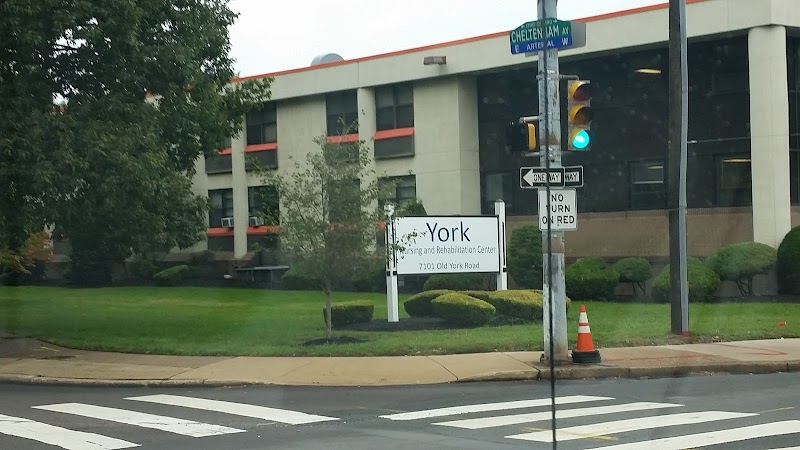
How Does York Compare to Other Pennsylvania Nursing Homes?

Compared to the 100 nursing homes in Pennsylvania, YORK NURSING AND REHABILITATION CENTER's overall rating (3 stars) matches the state average, staff turnover (53%) is near the state average of 46%, and health inspection rating (2 stars) is below the national benchmark.

What Should Families Ask When Visiting York?

Based on this facility's data, families visiting should ask: "What changes have been made since the serious inspection findings, and how are you preventing similar issues?" "What safeguards and monitoring systems are in place to protect residents from abuse or neglect?" "Can I visit during a mealtime to observe dining assistance and food quality?" "How do you handle medical emergencies, and what is your hospital transfer rate?" These questions are particularly relevant given the facility's Immediate Jeopardy citations and the substantiated abuse finding on record.

Is York Safe?

Based on CMS inspection data, YORK NURSING AND REHABILITATION CENTER has documented safety concerns. The facility has 1 substantiated abuse finding (meaning confirmed case of resident harm by staff or other residents). Inspectors have issued 1 Immediate Jeopardy citation (the most serious violation level indicating risk of serious injury or death). The facility has a 3-star overall rating and ranks #1 of 100 nursing homes in Pennsylvania. Families considering this facility should ask detailed questions about what corrective actions have been taken since these incidents.

Do Nurses at York Stick Around?

YORK NURSING AND REHABILITATION CENTER has a staff turnover rate of 53%, which is 7 percentage points above the Pennsylvania average of 46%. Moderate turnover is common in nursing homes, but families should still ask about staff tenure and how the facility maintains care continuity when employees leave.

Was York Ever Fined?

YORK NURSING AND REHABILITATION CENTER has been fined $59,351 across 2 penalty actions. This is above the Pennsylvania average of $33,672. Fines in this range indicate compliance issues significant enough for CMS to impose meaningful financial consequences. Common causes include delayed correction of deficiencies, repeat violations, or care failures affecting resident safety. Families should ask facility leadership what changes have been made since these penalties.

Is York on Any Federal Watch List?

YORK NURSING AND REHABILITATION CENTER is not on any federal watch list. The most significant is the Special Focus Facility (SFF) program, which identifies the bottom 1% of nursing homes nationally based on persistent, serious quality problems. Not being on this list means the facility has avoided the pattern of deficiencies that triggers enhanced federal oversight. This is a positive indicator, though families should still review the facility's inspection history directly.