SHENANDOAH SENIOR LIVING COMMUNITY
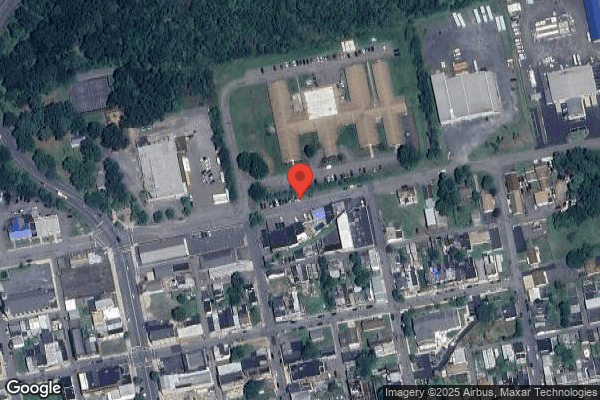
101 E. WASHINGTON ST, SHENANDOAH, PA 17976 (570) 462-1908
For profit - Limited Liability company 119 Beds GABRIEL SEBBAG & THE SAMARA FAMILY Data: November 2025
Trust Grade
20/100
#491 of 653 in PA
Last Inspection: July 2025

Inspected within the last 6 months. Data reflects current conditions.

Overview

Shenandoah Senior Living Community has a Trust Grade of F, indicating significant concerns and a poor overall reputation. It ranks #491 out of 653 facilities in Pennsylvania, placing it in the bottom half, and #10 out of 12 in Schuylkill County, meaning there are only two better options locally. While the facility is improving, reducing issues from 21 in 2024 to 5 in 2025, it still faces challenges, including $63,635 in fines, which is concerning as it's higher than 86% of Pennsylvania facilities. Staffing is average with a 3/5 star rating and a turnover rate of 46%, indicating that staff may not stay long, but there is some stability. However, there have been serious incidents, such as neglecting to provide necessary care that led to two residents suffering fractures and failing to ensure proper supervision for a resident with repeated falls, suggesting serious areas for improvement in resident safety and care.

Trust Score
F
20/100
In Pennsylvania
#491/653
Bottom 25%
Safety Record
High Risk
Review needed
Inspections
Getting Better
21 → 5 violations
Staff Stability
⚠ Watch
46% turnover. Above average. Higher turnover means staff may not know residents' routines.
Penalties
✓ Good
$63,635 in fines. Lower than most Pennsylvania facilities. Relatively clean record.
Skilled Nurses
⚠ Watch
Each resident gets only 28 minutes of Registered Nurse (RN) attention daily — below average for Pennsylvania. Fewer RN minutes means fewer trained eyes watching for problems.
Violations
⚠ Watch
39 deficiencies on record. Higher than average. Multiple issues found across inspections.
★★☆☆☆
2.0
Overall Rating
★★★☆☆
3.0
Staff Levels
★★★★☆
4.0
Care Quality
★★☆☆☆
2.0
Inspection Score
Stable
2024: 21 issues
2025: 5 issues

The Good

  • 4-Star Quality Measures · Strong clinical quality outcomes
  • Full Sprinkler Coverage · Fire safety systems throughout facility
  • No fines on record

Facility shows strength in quality measures, fire safety.

The Bad

2-Star Overall Rating

Below Pennsylvania average (3.0)

Below average - review inspection findings carefully

Staff Turnover: 46%

Near Pennsylvania avg (46%)

Higher turnover may affect care consistency

Federal Fines: $63,635

Above median ($33,413)

Moderate penalties - review what triggered them

Chain: GABRIEL SEBBAG & THE SAMARA FAMILY

Part of a multi-facility chain

Ask about local staffing decisions and management

The Ugly 39 deficiencies on record

1 actual harm
Jul 2025 5 deficiencies
CONCERN (D)

Potential for Harm - no one hurt, but risky conditions existed

Free from Abuse/Neglect (Tag F0600)

Could have caused harm · This affected 1 resident

**NOTE- TERMS IN BRACKETS HAVE BEEN EDITED TO PROTECT CONFIDENTIALITY** Based on a review of the facility's abuse prohibition policy, select investigative reports and clinical records, and staff inter...

Read full inspector narrative →
**NOTE- TERMS IN BRACKETS HAVE BEEN EDITED TO PROTECT CONFIDENTIALITY** Based on a review of the facility's abuse prohibition policy, select investigative reports and clinical records, and staff interview, it was determined the facility failed to ensure the provision of care and services necessary to prevent a fall and maintain the physical health of one resident out of 23 residents reviewed (Resident 30). Findings include: A review of the facility policy titled Abuse Policy last reviewed by the facility on June 13, 2025, revealed it is the facility's policy that the resident has the right to be free from abuse, neglect, misappropriation or resident property, and exploitation. The policy defines neglect as the failure of the facility, its employees, or service providers to provide goods and services to a resident that are necessary to avoid physical harm, pain, mental anguish, or emotional distress. A clinical record review revealed that Resident 30 was admitted to the facility on [DATE], with diagnoses that included above-the-knee right leg amputation, dementia (a condition characterized by progressive or persistent loss of intellectual functioning, especially with impairment of memory and abstract thinking, and often with personality change, resulting from organic disease of the brain), and cognitive communication deficit. A review of a quarterly Minimum Data Set assessment (MDS - a federally mandated standardized assessment process conducted periodically to plan resident care) dated March 28, 2025, revealed Resident 30 was severely moderately impaired with a BIMS score of 10 (Brief Interview for Mental Status- a tool within the Cognitive Section of the MDS that is used to assess the resident's attention, orientation, and ability to register and recall new information; a score of 8-12 indicates moderate cognitive impairment). A physician's order dated May 19, 2025, specified that Resident 30 required assistance from two staff members, using a two-wheeled walker and gait belt (a safety device used to assist residents with mobility issues during transfers and ambulation) for all transfers. The resident's Kardex (a nursing information system used to obtain specific care information for each resident) also indicated two-person assistance was required for transfers. Nursing documentation dated May 24, 2025, at 12:00 PM indicated the nurse was notified that Resident 30 had fallen on the floor in the bathroom. Preliminary assessment was completed in the bathroom and no injuries were noted. Vital signs were obtained. A full head to toe assessment was performed once the resident was back in bed. Plus (+)1 edema (swelling of an area where pressure forms at the site when pressed leaving a depth that disappears at a +1) was noted in the left foot and ankle. The resident complained of pain rated 2/10 (pain rated as one being least amount of pain and ten being the worst amount of pain) in the left ankle. The resident did not have a previous injury to that ankle. The LPN provided pain medication. An x-ray of the ankle was ordered and the resident's sister was notified. A review of a facility investigative report dated May 24, 2025 determined that Employee 2 (nurse aide) transferred the resident alone, in violation of the physician's order and Kardex instructions requiring two-person assist. A witness statement dated May 24, 2025, (no time indicated) provided by Employee 2, revealed the resident had asked to go to the bathroom. Employee 2 asked the resident if he required a one or two-person assist, and he said one. She asked if he used a wheelchair or walker, and he said walker. During transfer in front of the toilet, the resident's leg slid, resulting in a fall onto the floor. A review of the facility document titled Post Fall Root Cause Analysis dated May 24, 2025, concluded that Employee 2 failed to follow the resident's documented transfer status as indicated on the Kardex, contributing to the fall. During an interview on July 2, 2025, at approximately 9:30 AM, the Nursing Home Administrator confirmed the above information indicating that Employee 2 did not follow established protocols for safe transfers, placing the resident at risk of injury. The facility failed to implement appropriate care interventions and ensure staff compliance with the physician-ordered transfer protocol. 28 Pa. Code 201.14 (a) Responsibility of licensee. 28 Pa. Code 201.18 (e)(1) Management. 28 Pa. Code 201.29 (a) Resident Rights. 28 Pa. Code 211.12 (d)(1)(5) Nursing Services.
CONCERN (D)

Potential for Harm - no one hurt, but risky conditions existed

Report Alleged Abuse (Tag F0609)

Could have caused harm · This affected 1 resident

**NOTE- TERMS IN BRACKETS HAVE BEEN EDITED TO PROTECT CONFIDENTIALITY** Based on the review of the facility's abuse prohibition policy, clinical records, select facility investigations, and staff inte...

Read full inspector narrative →
**NOTE- TERMS IN BRACKETS HAVE BEEN EDITED TO PROTECT CONFIDENTIALITY** Based on the review of the facility's abuse prohibition policy, clinical records, select facility investigations, and staff interview, it was determined the facility failed to timely report an instance of resident neglect to the State Survey Agency for one out of the 23 residents reviewed (Resident 30). Findings include: A review of the facility policy titled Abuse Policy indicated as last reviewed by the facility on June 13, 2025, revealed all reports of abuse, neglect, exploitation, misappropriation of resident property, mistreatment, and/or injuries of unknown source shall be promptly reported to local, state, and federal agencies. The policy indicates that the nature of the allegations and the names of the resident(s) and individual(s) implicated will be reported to the appropriate agencies within five (5) working days of the incident. A clinical record review revealed that Resident 30 was admitted to the facility on [DATE], with diagnoses that included above-the-knee right leg amputation, dementia (a condition characterized by progressive or persistent loss of intellectual functioning, especially with impairment of memory and abstract thinking, and often with personality change, resulting from organic disease of the brain), and cognitive communication deficit. A review of a quarterly Minimum Data Set assessment (MDS - a federally mandated standardized assessment process conducted periodically to plan resident care) dated March 28, 2025, revealed that Resident 30 was severely moderately impaired with a BIMS score of 10 (Brief Interview for Mental Status- a tool within the Cognitive Section of the MDS that is used to assess the resident's attention, orientation, and ability to register and recall new information; a score of 8-12 indicates moderate cognitive impairment). A physician's order dated May 19, 2025, specified that Resident 30 required assistance from two staff members, using a two-wheeled walker and gait belt (a safety device used to assist residents with mobility issues during transfers and ambulation) for all transfers. The resident's Kardex (a nursing information system used to obtain specific care information for each resident) also indicated two-person assistance was required for transfers. Nursing documentation dated May 24, 2025, at 12:00 PM indicated the nurse was notified that Resident 30 had fallen on the floor in the bathroom. Preliminary assessment was completed in the bathroom and no injuries were noted. Vital signs were obtained. A full head to toe assessment was performed once the resident was back in bed. Plus (+)1 edema (swelling of an area where pressure forms at the site when pressed leaving a depth that disappears at a +1) was noted in the left foot and ankle. The resident complained of pain rated 2/10 (pain rated as one being least amount of pain and ten being the worst amount of pain) in the left ankle. The resident did not have a previous injury to that ankle. The LPN provided pain medication. An x-ray of the ankle was ordered and the resident's sister was notified. A review of a facility investigative report dated May 24, 2025 determined that Employee 2 (nurse aide) transferred the resident alone, in violation of the physician's order and Kardex instructions requiring two-person assist. A witness statement dated May 24, 2025, (no time indicated) provided by Employee 2, revealed that the resident had asked to go to the bathroom. Employee 2 asked the resident if he required a one or two-person assist, and he said one. She asked if he used a wheelchair or walker, and he said walker. During transfer in front of the toilet, the resident's leg slid, resulting in a fall onto the floor. A review of the facility document titled Post Fall Root Cause Analysis dated May 24, 2025, concluded that Employee 2 failed to follow the resident's documented transfer status as indicated on the Kardex, contributing to the fall. During an interview on July 2, 2025, at approximately 9:30 AM, the Nursing Home Administrator confirmed the incident of neglect involving Resident 30 which occurred on May 24, 2025 was never reported to the state agency, neither at the time of the incident and including the date of this interview. The incident was not reported within the required five day time frame for reporting allegations of neglect. Refer to F600 28 Pa Code 201.1 (a) Responsibility of licensee. 28 Pa Code 201.18 (e)(1) Management.
CONCERN (D)

Potential for Harm - no one hurt, but risky conditions existed

Quality of Care (Tag F0684)

Could have caused harm · This affected 1 resident

**NOTE- TERMS IN BRACKETS HAVE BEEN EDITED TO PROTECT CONFIDENTIALITY** Based on a review of clinical records, select facility policy, and staff interviews, it was determined the facility failed to pr...

Read full inspector narrative →
**NOTE- TERMS IN BRACKETS HAVE BEEN EDITED TO PROTECT CONFIDENTIALITY** Based on a review of clinical records, select facility policy, and staff interviews, it was determined the facility failed to provide nursing services consistent with professional standards of quality to ensure that licensed nurses properly evaluated and provided nursing care according to physician orders for 2 residents out of 23 residents sampled (Resident 56 and 80). According to the Pennsylvania Code, Title 49, Professional and Vocational Standards, State Board of Nursing, 21.11 (a)(1)(2)(4) indicates that the Registered Nurse (RN) was to collect complete ongoing data to determine nursing care needs, analyze the health status of individuals and compare the data with the norm when determining nursing care needs, and carry out nursing care actions that promote, maintain, and restore the well-being of individuals. The Pennsylvania Code, Title 49, Professional and Vocational Standards, State Board of Nursing, 21.145 Functions of the Licensed Practical Nurse (LPN) (a) The LPN is prepared to function as a member of the health care team by exercising sound judgment based on preparation, knowledge, skills, understandings, and past experiences in nursing situations. The LPN participates in the planning, implementation, and evaluation of nursing care in settings where nursing takes place. 21.148 Standards of nursing conduct (a) A licensed practical nurse shall: (5) document and maintain accurate records. According to the American Nurses Association Principles for Nursing Documentation, nurses document their work and outcomes and provide an integrated, real-time method of informing the health care team about the patient status. Timely documentation of the following types of information should be made and maintained in a patient's EHR (electronic health record) to support the ability of the health care team to ensure informed decisions and high quality care in the continuity of patient care: Assessments Clinical problems Communications with other health care professionals regarding the patient Communication with and education of the patient, family, and the patient's designated support person and other third parties. A review of facility policy titled Anticoagulation Clinical Protocol, last reviewed by the facility on June 13, 2025, revealed the physician will prescribe anticoagulation therapy(commonly known as a blood thinner, is a chemical substance that prevents or reduces the coagulation of blood, prolonging the clotting time) appropriately consistent with recognized guidelines and should adjust the anticoagulant dose or stop, taper, or change medications that interact with the anticoagulant and/or monitor the PT/INR (a blood test that tells you how long it takes for your blood to clot) very closely while the individual is receiving warfarin (a blood thinner) to ensure that the PT/INR stabilizes within a therapeutic range. Further review revealed the physician will order appropriate lab testing to monitor anticoagulant therapy and potential complications, for example, periodically checking hemoglobin, hematocrit, platelets, and PT/INR. A clinical record review revealed Resident 56 was admitted to the facility on [DATE], with diagnoses that included atrial fibrillation (a condition that causes the heart to beat irregularly and sometimes much faster than normal) and hypertension (blood pressure that is higher than normal). A review of a state Minimum Data Set assessment (MDS-a federally mandated standardized assessment process conducted periodically to plan resident care) dated May 12, 2025, revealed that Resident 56 had moderately impaired cognition with a BIMS score of 9 (Brief Interview for Mental Status-a tool within the Cognitive Section of the MDS that is used to assess the resident's attention, orientation, and ability to register and recall new information; a score of 8-12 indicates cognition is moderately impaired). A review of Resident 56's clinical record revealed a physician's order, dated May 29, 2025, for Warfarin 2.5 mg, one tablet daily at bedtime, for treating/preventing blood clots. A review of Resident 56's clinical record revealed a laboratory result on June 2, 2025, of a PT/INR, which was 1.9 (the therapeutic range is 2.0-3.0). A review of a nurse progress note for Resident 56, dated June 2, 2025, revealed the nurse spoke with the doctor regarding the June 2, 2025, PT/INR results and noted to keep the Coumadin (brand name for warfarin) dose the same with repeat PT/INR in one week. A review of Resident 56's clinical record revealed a physician's order dated June 2, 2025, and noted an order for PT/INR on June 9, 2025. A review of the clinical record revealed no evidence that a PT/INR resulted on June 9, 2025, as ordered by the physician, and the facility was unable to provide evidence of the result. Following surveyor inquiry, a physician's order for Resident 56, dated July 1, 2025, revealed an order for a PT/INR. A review of the clinical record of Resident 80 revealed the resident was admitted to the facility on [DATE], with diagnoses that included dementia (a chronic or persistent disorder of the mental processes caused by brain disease or injury and marked by memory disorders, personality changes, and impaired reasoning) and urine retention (difficulty urinating and completely emptying the bladder) and had an indwelling Foley catheter (small flexible tube inserted into the urethra to drain urine from the bladder). A review of a quarterly Minimum Data Set assessment (MDS-a federally mandated standardized assessment process conducted periodically to plan resident care) dated April 18, 2025, revealed that Resident 80 had moderately impaired cognition with a BIMS score of 9 (Brief Interview for Mental Status-a tool within the Cognitive Section of the MDS that is used to assess the resident's attention, orientation, and ability to register and recall new information; a score of 8-12 indicates cognition is moderately impaired). A review of Resident 80's clinical record revealed a physician's order, dated February 19, 2025, to consult urology and the resident would need an appointment due to heavy calcifications (significant mineral deposits composed of salt crystals) at the end of Foley causing bleeding when the Foley was dislodged. A review of Resident 80's clinical record revealed no evidence that any consults were called to urology and no evidence that an appointment was made for Resident 80. A review of a nurse progress note for Resident 80, dated February 19, 2025, revealed that urine was collected for urinalysis (UA a test of urine used to detect and manage a wide range of disorders, such as urinary tract infections, kidney disease and diabetes; urinalysis involves checking the appearance, concentration and content of urine) and culture and sensitivity (C & S-analysis helps find the most effective antibiotic to kill an infecting microorganism; sensitivity analysis is a test that determines the sensitivity of bacteria to an antibiotic) via catheter after it was changed, and it was noted that the collected urine was described as a blood-tinged, milky urine. A review of Resident 80's clinical record revealed a laboratory result of a UA on February 20, 2025, which was abnormal due to over 50 white blood cells, over 50 red blood cells, 26-50 bacteria cells, a large amount of blood, and turbid color (not clear or cloudy) urine. A review of a nurse's progress note, dated February 20, 2025, revealed the physician was aware of the UA result and no new orders were noted and was awaiting the culture result. A review of Resident 80's clinical record revealed a laboratory result of a urine C & S on February 24, 2025, which was abnormal and showed growth of greater than 100,000 colonies of Proteus vulgaris (type of bacteria), greater than 100,000 colonies of Morganella morganii (a type of bacteria), and 10,000 to 100,000 colonies of Serratia marcescens (a type of bacteria). A review of a nurse's progress note for Resident 80, dated February 24, 2025, revealed the physician was made aware of the urine C&S results and noted an order to follow up with infectious disease and urology. It was noted that results were faxed to urology, and follow-up with infectious disease was to be scheduled. A review of Resident 80's clinical record revealed no evidence of any new orders for urology or infectious disease consults. A review of Resident 80's clinical record revealed no evidence that any consults were called to urology and infectious disease and no evidence that appointments were made for Resident 80. A review of a nurse's progress note dated on April 3, 2025, revealed the resident's urine was noted to be thick and brown in color with a foul smell and that the nurse practitioner in the facility was made aware. A review of a nurse's progress note, dated April 4, 2025, at 9:00 A.M., revealed the nurse was called to assess the resident who was diaphoretic (sweating) with a low blood pressure of 82/52 (normal is 120/80) and a high pulse of 112 (normal is 60-100). It was noted the resident was alert but confused and unable to follow simple instructions. It was also noted the Foley had minimal urine output, and the lower abdomen was distended and tender to touch. The primary doctor evaluated Resident 80 at the bedside, and he was then sent to the emergency room. A review of a nurse's progress note, dated April 4, 2025, at 9:40 P.M., revealed the resident was being admitted to the hospital for sepsis (a life-threatening complication of an infection that leads to a bloodstream infection) and renal failure (kidney failure). Further review of Resident 80's clinical record revealed that during the hospitalization it was noted the resident underwent placement of bilateral nephrostomy tubes (a tube that is put into the kidney to drain urine directly from the kidney) and required a PICC (Peripherally Inserted Central Catheter) line with the requirement of intravenous antibiotics. An interview with the Regional Nurse Consultant on July 2, 2025, at approximately 12:00 PM confirmed the above findings regarding Residents 56 and 80's treatment and care were not` in accordance with physician orders. 28 Pa Code 211.12 (d)(1)(3)(5) Nursing Services. 28 Pa. Code 211.10 (c) Resident care policies.
CONCERN (D)

Potential for Harm - no one hurt, but risky conditions existed

Deficiency F0943 (Tag F0943)

Could have caused harm · This affected 1 resident

Based on review of select facility policy, employee files, and staff interview it was determined that the facility failed to timely train one agency employee out of four employees reviewed on the faci...

Read full inspector narrative →
Based on review of select facility policy, employee files, and staff interview it was determined that the facility failed to timely train one agency employee out of four employees reviewed on the facility's abuse prohibition policy and procedures. Findings include: A review of the facility policy titled Abuse Policy last reviewed by the facility on June 13, 2025, revealed the facility's abuse prevention program provides training for mandated staff and others that includes topics such as abuse prevention, identification, and reporting requirements and to support an environment in which covered individuals report a reasonable suspicion of a crime, freedom from retaliation or reprisal, stress management, dealing with violent behavior or catastrophic reactions, etc. training is provided at the time of hire, annually, and as needed. A review of Employee 1's personnel file, who was employed as an agency licensed practical nurse (LPN) with a documented start date of November 19, 2022, revealed no evidence that the facility provided the required training on the facility's abuse prohibition policy prior to Employee 1 (LPN) assuming resident care responsibilities. Furthermore, there was no documentation to show that Employee 1 received the training on an annual basis or as needed as required by the facility policy. During an interview conducted on August 26, 2025, at 1:20 PM, the Nursing Home Administrator (NHA) confirmed that there was no documentation verifying Employee 1 (LPN) received the required training on the facility's abuse prohibition policy and procedures either prior to beginning assigned duties or thereafter.28 Pa. Code 201.20(b) Staff development 28 Pa Code 201.18 (e)(1) Management 28 Pa Code 201.10 (d) Resident Care Policies
CONCERN (E)

Potential for Harm - no one hurt, but risky conditions existed

Deficiency F0578 (Tag F0578)

Could have caused harm · This affected multiple residents

**NOTE- TERMS IN BRACKETS HAVE BEEN EDITED TO PROTECT CONFIDENTIALITY** Based on a review of facility policy, clinical records, and staff interviews, it was determined the facility failed to ensure ph...

Read full inspector narrative →
**NOTE- TERMS IN BRACKETS HAVE BEEN EDITED TO PROTECT CONFIDENTIALITY** Based on a review of facility policy, clinical records, and staff interviews, it was determined the facility failed to ensure physician orders were consistent in reflecting a resident's elected code status for two of 23 residents reviewed (Residents 29 and 80). Findings include: A review of a facility policy titled Advanced Directives, last reviewed by the facility on [DATE], revealed it is the facility policy that the resident has the right to formulate an advanced directive, including the right to accept or refuse medical or surgical treatment, and advanced directives are honored in accordance with state law and facility policy. Further review revealed Physician Orders for Life Sustaining Treatment, or POLST, is a form designed to improve resident care by creating a portable medical order form that records the resident's treatment wishes so that emergency personnel know what treatments the resident wants in the event of a medical emergency, taking the resident's current medical condition into consideration. A review of the clinical record of Resident 29 revealed the resident was admitted to the facility on [DATE], with diagnoses that included dementia (a chronic or persistent disorder of the mental processes caused by brain disease or injury and marked by memory disorders, personality changes, and impaired reasoning) and diabetes (a chronic disease that occurs either when the pancreas does not produce enough insulin or when the body cannot effectively use the insulin it produces). A review of Resident 29's current physician orders, revealed an order dated [DATE], in the electronic health record, and identified the resident's code status as Full Code, indicating CPR (cardiopulmonary resuscitation) was to be performed in the event of cardiopulmonary arrest (if breathing stops or if the heart stops beating). Further review of Resident 29's clinical record revealed a completed and signed POLST dated [DATE]. The POLST indicated the resident elected DNR status (Do Not Resuscitate, a medical order directing that cardiopulmonary resuscitation, a life-saving procedure performed when the heart or breathing stops, should not be attempted), with a goal of allowing a natural death. Following surveyor questions, there was a physician's order dated [DATE], for DNR (Do Not Resuscitate-a medical order directing that CPR should not be attempted) for Resident 29. A review of the clinical record of Resident 80 revealed the resident was admitted to the facility on [DATE], with diagnoses that included dementia and urine retention (difficulty urinating and completely emptying the bladder). A review of Resident 80's current physician orders, revealed an order dated [DATE], in the electronic health record, and identified the resident's code status as DNR, indicating CPR was not to be performed in the event of cardiopulmonary arrest. Further review of Resident 80's clinical record revealed a completed and signed POLST dated [DATE]. The POLST indicated the resident elected CPR and to attempt resuscitation. Following surveyor questions, there was a physician's order dated [DATE], for Full Code (attempt CPR) for Resident 80. An interview with the Regional Nurse Consultant on [DATE], at approximately 10:00 AM, confirmed the physician orders did not align with the most current, signed POLST for Resident 29 and 80. 28 Pa. Code 201.29(a) Resident rights. 28 Pa. Code 211.5 (f)(i) Medical records. 28 Pa. Code 211.12 (d)(1)(3)(5) Nursing services.
Sept 2024 11 deficiencies
CONCERN (D) 📢 Someone Reported This

A family member, employee, or ombudsman was alarmed enough to file a formal complaint

Potential for Harm - no one hurt, but risky conditions existed

Deficiency F0558 (Tag F0558)

Could have caused harm · This affected 1 resident

**NOTE- TERMS IN BRACKETS HAVE BEEN EDITED TO PROTECT CONFIDENTIALITY** Based on observations and resident and staff interviews it was determined the facility failed to accommodate residents' need and...

Read full inspector narrative →
**NOTE- TERMS IN BRACKETS HAVE BEEN EDITED TO PROTECT CONFIDENTIALITY** Based on observations and resident and staff interviews it was determined the facility failed to accommodate residents' need and preference for access to the call bell system in order to request staff assistance for one resident (Resident 79). Findings include: A review of Resident 79's clinical record revealed the resident was admitted to the facility on [DATE], with diagnoses that included cerebral infarction (also known as an ischemic stroke, is the pathologic process that results in an area of necrotic tissue) with hemiplegia (is a symptom that involves one-sided paralysis. Hemiplegia affects either the right or left side of your body) and hemiparesis (is one-sided muscle weakness and occurs due to disruptions in the brain, spinal cord or the nerves that connect to the affected muscles) to the right dominant side, dysphagia (difficulty swallowing), and muscle weakness. A quarterly Minimum Date Set assessment (MDS - a federally mandated standardized assessment conducted at specific intervals to plan resident care) dated August 26, 2024, revealed the resident was dependent on staff for all care and ADL's (activities of daily living). During an observation of Resident 79, on September 12, 2024, at 10:00 a.m., the resident was sleeping in his bed. The resident's call bell was observed on the floor and not within the resident's reach. Further observation at 10:30 a.m., revealed Resident 79's call bell remained on the floor. During an interview, at the time of the observation, with Employee 1, a Licensed Practical Nurse (LPN), confirmed the resident's call bell was not in his reach. Interview with the Director of Nursing on September 12, 2024, at 1:35 p.m., the inability to reach the call for Resident 79 was discussed and the DON confirmed residents' call bells should be within reach to alert staff of the need for assistance. 28 Pa Code 211.12 (c)(d)(3)(5) Nursing services
CONCERN (D)

Potential for Harm - no one hurt, but risky conditions existed

Assessment Accuracy (Tag F0641)

Could have caused harm · This affected 1 resident

**NOTE- TERMS IN BRACKETS HAVE BEEN EDITED TO PROTECT CONFIDENTIALITY** Based on a review of clinical records and the Resident Assessment Instrument and staff interview, it was determined that the fac...

Read full inspector narrative →
**NOTE- TERMS IN BRACKETS HAVE BEEN EDITED TO PROTECT CONFIDENTIALITY** Based on a review of clinical records and the Resident Assessment Instrument and staff interview, it was determined that the facility failed to ensure that the Minimum Data Set Assessments (MDS - a federally mandated standardized assessment conducted at specific intervals to plan resident care) accurately reflected the status of one resident out of 20 sampled (Residents 95). Findings included: A review of Resident 95's clinical record revealed that the resident was admitted to the facility on [DATE], and discharged from the facility on August 16, 2024. A review of Resident 95's Discharge MDS assessment dated [DATE], revealed in Section A2105 Discharge Status that Resident 95 was discharged to a short term general hospital. A review of the skilled nursing note dated August 14, 2024, at 1429 hours (2:29 PM) indicating the resident is being discharged on August 16, 2024. A review of the resident's Discharge Plan and Instructions revealed the resident was discharged home, on August 16, 2024. Review of physician orders dated August 16, 2024, stating discharge to home with all appropriate medications. Interview with Employee 3 (Registered Nurse Assessment Coordinator - RNAC) on September 12, 2024, at approximately 2:20 PM confirmed resident 95 went home, and confirmed the MDS Assessment was inaccurate. Interview with the Nursing Home Administrator on September 12, 2024, at approximately 2:40 PM, confirmed the MDS Assessment was inaccurate. 28 Pa. Code 201.18(e)(1) Management 28 Pa. Code 211.12(c)(d)(1)(5) Nursing services
CONCERN (D)

Potential for Harm - no one hurt, but risky conditions existed

Comprehensive Care Plan (Tag F0656)

Could have caused harm · This affected 1 resident

**NOTE- TERMS IN BRACKETS HAVE BEEN EDITED TO PROTECT CONFIDENTIALITY** Based on observation, clinical record review, facility investigation reports, and staff interviews, it was determined the facili...

Read full inspector narrative →
**NOTE- TERMS IN BRACKETS HAVE BEEN EDITED TO PROTECT CONFIDENTIALITY** Based on observation, clinical record review, facility investigation reports, and staff interviews, it was determined the facility failed to develop and implement a person-centered care plan to meet the specific needs of one resident out of 20 sampled (Resident 70). Findings including: A clinical record review revealed Resident 70 was admitted to the facility on [DATE], with diagnoses that included dementia (a condition characterized by the loss of cognitive functioning such as thinking, remembering, and reasoning, to such an extent that it interferes with a person's daily life and activities). Resident 70 has a documented history of falls, as noted in facility investigations and a clinical record review, occurring on the following dates: February 24, March 2, March 29, and June 2, 2024. Resident 70's care plan initiated September 26, 2023, indicated he is deficient in his ability to carry out activities of daily life, such as eating and personal hygiene, related to a lack of coordination, and his diagnoses of dementia. Resident 70's care plan initiated on September 26, 2024, indicated he has limited physical mobility related to difficulty walking, his lack of coordination, and his unsteadiness when on his feet. Resident 70's care plan initiated on September 26, 2024, indicated he is at risk for falling related to his history of falling and his difficulty walking. Interventions implemented to mitigate Resident 70's risk of falling and protect him from injury included ensuring his bed is in the lowest position, bilateral floor mats, a bed alarm, and ensuring his call bell is within reach, initiated on September 26, 2023. A fall risk assessment dated [DATE], identified that Resident 70 is at a high risk for falling. An observation on September 10, 2024, at 11:35 AM revealed Resident 70 was in his bed. His bed was observed not in the lowest position, and a floor mat was only on one side of his bed. An additional observation on September 11, 2024, at 9:45 AM revealed Resident 70 was in his bed. His bed was observed not in the lowest position, and a floor mat was only on one side of his bed. Resident 70's call bell was not within reach, and his bed alarm was disconnected. During an interview on September 11, 2024, at 10:50 AM, Employee 4, Nurse Aide, confirmed that Resident 70's bed was not in the lowest position, a floor mat was only on one side of his bed, his call bell was not within reach, and his bed alarm was disconnected. Employee 4 connected Resident 70's bed alarm. However, the bed alarm did not sound when the resident was assisted out of bed. Employee 4, NA, confirmed the bed alarm was not functioning. During an interview on September 13, 2024, at approximately 10:00 AM, the Nursing Home Administrator (NHA) confirmed it is the facility's responsibility to implement each resident's person-centered care plan. The NHA confirmed that it is the facility's responsibility to ensure that all interventions identified in Resident 70's are implemented to mitigate resident 70's risk for falls and injury. 28 Pa. Code 211.10(d) Resident care policies. 28 Pa. Code 211.12(c)(d)(5) Nursing services.
CONCERN (D)

Potential for Harm - no one hurt, but risky conditions existed

Deficiency F0688 (Tag F0688)

Could have caused harm · This affected 1 resident

**NOTE- TERMS IN BRACKETS HAVE BEEN EDITED TO PROTECT CONFIDENTIALITY** Based on review of clinical records and resident and staff interviews, it was determined that the facility failed to provide res...

Read full inspector narrative →
**NOTE- TERMS IN BRACKETS HAVE BEEN EDITED TO PROTECT CONFIDENTIALITY** Based on review of clinical records and resident and staff interviews, it was determined that the facility failed to provide restorative nursing services planned to maintain mobility and functional abilities of one of the 20 residents sampled (Resident 77). Findings included: A clinical record review revealed Resident 77 was admitted to the facility on [DATE], with diagnoses that include unsteadiness on feet (walking that is unstable), muscle weakness, and difficulty in walking. A review of an admission Minimum Data Set assessment (MDS - a federally mandated standardized assessment process conducted periodically to plan resident care) dated August 18, 2024, revealed that Resident 77 is moderately cognitively impaired with a BIMS score of 10 (Brief Interview for Mental Status- a tool within the Cognitive Section of the MDS that is used to assess the resident's attention, orientation, and ability to register and recall new information; a score of 8-12 indicates cognition is intact). A review of Resident 77's Physical Therapy Discharge summary dated [DATE], revealed that Resident 77 was receiving physical therapy services from August 12, 2024, to August 29, 2024, and discharged with recommendations to receive restorative nursing services, including bi-lateral active range of motion exercises and ambulation of 200 feet with a roller walker (mobility device) and with a caregiver and gait belt (a safety device to help hold a resident while walking). During an interview on September 11, 2024, at 10:35 AM, Resident 77 indicated that he was not currently receiving therapy services. A Documentation Survey Report for September 2024 revealed that Resident 77 did not receive restorative nursing services until 10 days after he was discharged from physical therapy on August 29, 2024. An interview with Employee 18, Physical Therapist (PT), on September 12, 2024, at 12:00 PM confirmed the facility failed to provide Resident 77 with restorative nursing services until 10 days following discharge from physical therapy. Employee 18, PT, indicated that the facility should have promptly included Resident 77 into the restorative nursing program. During an interview on September 13, 2024, at approximately 12:00 PM, the Nursing Home Administrator (NHA) confirmed that Resident 77 was not provided restorative nursing services until 10 days following his discharge from physical therapy. The NHA confirmed it is the facility's responsibility to provide restorative nursing services planned to maintain residents' mobility and functional abilities. 28 Pa. Code: 211.12(d)(3)(5) Nursing services
CONCERN (D)

Potential for Harm - no one hurt, but risky conditions existed

Deficiency F0692 (Tag F0692)

Could have caused harm · This affected 1 resident

**NOTE- TERMS IN BRACKETS HAVE BEEN EDITED TO PROTECT CONFIDENTIALITY** Based on review of select facility policy, clinical records and staff interview, it was determined the facility failed to consis...

Read full inspector narrative →
**NOTE- TERMS IN BRACKETS HAVE BEEN EDITED TO PROTECT CONFIDENTIALITY** Based on review of select facility policy, clinical records and staff interview, it was determined the facility failed to consistently and accurately monitor resident weights to timely identify changes in nutritional parameters for a resident with an identified significant weight loss and gain for 1 of 20 residents sampled (Resident 31). Findings include: A review of the policy titled Weight Assessment and Intervention Policy Statement, last reviewed by the facility on April 21, 2024, revealed the nursing staff will weigh the resident on admission, then weekly for four weeks. If there are any weight changes, the weight will be retaken for confirmation. Any weight change of five pounds or greater since the last weight assessment will be retaken for confirmation. A review of the residents' clinical record revealed the resident was admitted on [DATE], with the diagnosis to include paroxysmal fibrillation (a type of abnormal heart rate), cerebral vascular disease (a disease that affects the blood vessels and blood supply to the brain), and dysphagia (difficulty swallowing). A review of Resident 31's weight record revealed that on May 21,2024 the resident weighed 150.2 lbs. and then on May 30, 2024, the resident's weight was 135.6 lbs., which was a 9.72% significant weight loss in nine days. Further review of Resident 31' s' weight record revealed the next recorded weight was obtained, on June 12, 2024 (thirteen days after the last documented weekly weight) and the resident weighed 122.8 lbs, which was an additional 9.4% loss in weight in thirteen days. Additionally, the resident was reweighed on June 13, 2024, and weighed 116.4 lbs., which was an additional 14.1% significant weight loss. A review of Resident 31's clinical record revealed no documented evidence the facility obtained weekly weights to timely identify and deter progressive significant weight loss. During an interview on September 13, 2024, at approximately 12:30 PM, the Registered Dietician confirmed the staff failed to obtain and record resident 31's weekly weights as planned to provide the necessary information to accurately assess the resident's nutritional status and needs and evaluate the adequacy of the resident's nutritional intake and plan nutritional support as necessary. During an interview on September 13, 2024, at approximately 12:00 PM, the Nursing Home Administrator (NHA) confirmed that Resident 31's reweights were not obtained and recorded weekly to provide the necessary information to accurately assess the resident's nutritional status. The NHA confirmed it is the facility's responsibility to monitor the nutritional parameters of a resident with an identified significant weight loss. 28 Pa. Code 211.12 (c)(d)(3)(5) Nursing services
CONCERN (D) 📢 Someone Reported This

A family member, employee, or ombudsman was alarmed enough to file a formal complaint

Potential for Harm - no one hurt, but risky conditions existed

Pharmacy Services (Tag F0755)

Could have caused harm · This affected 1 resident

Based on review of select facility policy and controlled drug records, observation, and staff interview, it was determined the facility failed to implement pharmacy procedures for the reconciliation o...

Read full inspector narrative →
Based on review of select facility policy and controlled drug records, observation, and staff interview, it was determined the facility failed to implement pharmacy procedures for the reconciliation of controlled drugs on two of three medication carts reviewed (A, and C hall). Finding include: A review of facility policy entitled Controlled Substances last reviewed by the facility on June 21, 2024, states that nursing staff must count controlled medications at the end of each shift. The nurse coming on duty and the nurse going off duty must make the count together. They must document and report any discrepancies to the Director of Nursing Services. Any discrepancies in the controlled substance count are documented and reported to the director of nursing (DON) services immediately. An observation of the medication pass on September 10, 2024, at approximately 11:40 AM, revealed Employee 1 Licensed Practical Nurse (LPN), working the Medication Cart C. A review of a document entitled Shift Change Narcotic Audit, identified by Employee 1 (LPN), as the change of shift controlled count sheet for September 2024, for the C medication cart revealed that the on-coming nurse and/or off-going nurse failed to sign the sheets during shift change on the following dates to verify completion of the task to count the controlled drugs in the respective medication cart on September 4, and 5, 2024. Interview with Employee 1 (LPN), on September 10, 2024, at approximately 11:42 AM, confirmed the observation and acknowledged the licensed nurses are expected sign the count verification at change of shift. An observation of the medication pass on September 11, 2024, at approximately 9:40 AM, revealed Employee 2 Licensed Practical Nurse (LPN), working the Medication Cart A. A review of a document entitled Shift Change Narcotic Audit, identified by Employee 2 (LPN), as the change of shift controlled count sheet for September 2024, for the A medication cart revealed that the on-coming nurse and/or off-going nurse failed to sign the sheets during shift change on the following date to verify completion of the task to count the controlled drugs in the respective medication cart on September 3, 2024. Interview with Employee 2 (LPN), on September 11, 2024, at approximately 9:50 AM, confirmed the observation and acknowledged the licensed nurses are expected sign the count verification at change of shift. Interview with the Director of Nursing (DON) on September 12, 2024, at approximately 9:40 AM, confirmed that it is her expectation that nursing staff signs the Control Substance logs, at change of shift to demonstrate that they completed the counts of the controlled drugs to timely identify any discrepancies. 28 Pa. Code 211.9(a)(1)(k) Pharmacy services 28 Pa. Code 211.12 (d)(3)(5) Nursing services
CONCERN (D)

Potential for Harm - no one hurt, but risky conditions existed

Deficiency F0757 (Tag F0757)

Could have caused harm · This affected 1 resident

**NOTE- TERMS IN BRACKETS HAVE BEEN EDITED TO PROTECT CONFIDENTIALITY** Based on a review of clinical records and staff interviews, it was determined the facility failed to ensure the resident's drug ...

Read full inspector narrative →
**NOTE- TERMS IN BRACKETS HAVE BEEN EDITED TO PROTECT CONFIDENTIALITY** Based on a review of clinical records and staff interviews, it was determined the facility failed to ensure the resident's drug regimen was free of unnecessary antibiotic medication for one out of 20 residents sampled (Resident 2). Findings included: A clinical record review revealed Resident 2 was admitted to the facility on [DATE], with diagnoses that included dementia (a condition characterized by the loss of cognitive functioning such as thinking, remembering, and reasoning, to such an extent that it interferes with a person's daily life and activities). A progress note dated June 24, 2024, at 9:30 PM indicated a urine sample was obtained from Resident 2 directly from her Foley catheter (an indwelling catheter is a flexible tube used for draining urine from the bladder and having an inflatable part at the bladder end that allows the tube to be kept in place for variable time periods). The urine sample was placed in refrigeration, while awaiting transfer to the laboratory. A review of Resident 2's clinical record revealed no documented evidence capturing Resident 2's symptoms or clinical justification to collect a urine sample for a culture and sensitivity test. A Urine Culture and Sensitivity report report (a urine culture is a method to grow and identify bacteria that may be in the urine. The sensitivity test helps select the best medicine to treat the infection) dated June 29, 2024, revealed that Resident 2's urine tested positive for the following organisms: Escherichi Coli (E. coli- a type of bacteria) with organism quantities greater than 100,000 colonies/mL Escherichi Coli (2) type with organism quantities between 10,000 and 100,000 colonies/mL. Pseudomonas aeruginosa (a type of bacteria) with organism quantities greater than 100,000 colonies/mL. The Urine Culture and Sensitivity report dated June 29, 2024, revealed that all three organisms were resistant to the Ampicillin class of antibiotics. A progress note dated June 29, 2024, at 4:26 AM, indicated the physician ordered Amoxicillin 500 mg (ampicillin and amoxicillin are aminopenicillins derived from the parent drug penicillin) three times a day for five days. A physician's order for Amoxicillin Oral Capsule 500 mg with direction to give one capsule three times a day for a urinary tract infection (UTI) initiated on June 29, 2024. A progress note dated June 29, 2024, at 2:59 PM, indicated Resident 2 began receiving Amoxicillin as ordered for a urinary tract infection. The resident had no adverse reaction, no complaints of urinary discomfort, and her Foley catheter is intact and draining clear yellow liquid. There was no documented evidence the resident had experienced any symptoms of a urinary tract infection, such as fever, chills, mental changes/confusion, fatigue, nausea/vomiting, pressure in the lower part of the pelvis, or an increase in urination from June 24, 2024, through June 29, 2024. A review of the medication administration record for June 2024 revealed that Resident 2 was administered Amoxicillin oral capsule 500 mg on: June 29, 2024, at 10:00 PM June 30, 2024, at 6:00 AM June 30, 2024, at 2:00 PM June 30, 2024, at 10:00 PM During an interview on September 13, 2024, at approximately 9:30 AM, the Director of Nursing (DON) confirmed that Resident 2's culture report dated June 29, 2024, indicated the organisms present were resistant to Ampicillin antibiotics. The DON was unable to provide the clinical justification for Resident 2 to receive Amoxicillin Oral Capsule 500 mg. The DON confirmed it is the facility's responsibility to ensure that residents' drug regimen is free of unnecessary use of antibiotic. 28 Pa. Code 211.2 (d)(3) Medical director. 28 Pa. Code 211.9 (k) Pharmacy services. 28 Pa. Code 211.12 (d)(3) Nursing services.
CONCERN (D)

Potential for Harm - no one hurt, but risky conditions existed

Deficiency F0882 (Tag F0882)

Could have caused harm · This affected 1 resident

Based on review of employee personnel records and staff interview, it was determined the facility failed to have an Infection Preventionist (IP) that worked at least part time at the facility. Finding...

Read full inspector narrative →
Based on review of employee personnel records and staff interview, it was determined the facility failed to have an Infection Preventionist (IP) that worked at least part time at the facility. Findings Include: A review of facility policy review and observations determined the facility failed to ensure infection control practices were maintained to prevent the spread of infection as evidenced by the transmission of the COVID-19 virus between two residents on September 5, 2024. During an interview on September 13, 2024, at approximately 10:30 AM the Nursing Home Administrator (NHA) confirmed that the facility did not currently have an infection preventionist. The NHA explained that the Director of Nursing (DON) has been covering the duties of the infection preventionist since July 18, 2024. A review of the DON's infection preventionist credentials revealed a certification titled Training Plan Proof of Completion that acknowledges the DON successfully completed the Nursing Home Infection Preventionist Training Course on August 27, 2024. The NHA confirmed the DON was not certified as an infection preventionist until August 27, 2024. The NHA indicated that an infection preventionist is scheduled to begin in September 2024. The facility failed to ensure that proper infection control was implemented appropriately by the acting Infection Preventionist to prevent the spread of the COVID 19 virus from one resident to the resident's roommate. Refer F880 28 Pa. Code 211.12 (d)(1)(3)(5) Nursing services. 28 Pa. Code 201.14(a) Responsibility of licensee. 28 Pa. Code 201.18(b)(1) Management.
CONCERN (E)

Potential for Harm - no one hurt, but risky conditions existed

Accident Prevention (Tag F0689)

Could have caused harm · This affected multiple residents

**NOTE- TERMS IN BRACKETS HAVE BEEN EDITED TO PROTECT CONFIDENTIALITY** Based on review of clinical records, information submitted by the facility, select facility reports, and staff interviews it was...

Read full inspector narrative →
**NOTE- TERMS IN BRACKETS HAVE BEEN EDITED TO PROTECT CONFIDENTIALITY** Based on review of clinical records, information submitted by the facility, select facility reports, and staff interviews it was determined the facility failed to provide a resident who sustained repeated falls the necessary supervision and/or effective fall interventions to prevent a fall with a monor injury for one out of five sampled residents for accidents (Resident 7). Findings include: A review of a facility policy entitled Falls Management that was last reviewed by the facility on June 21, 2024, indicated that each resident is assisted in attaining or maintaining their highest practicable level of function through providing the resident adequate supervision, assistive devices, and functional programs, as appropriate, to prevent accidents. It is the policy of this center to provide each resident with appropriate evaluation and interventions to prevent falls and minimize complications if a fall occurs. A review of Resident 7's clinical record revealed that the resident was admitted to the facility on [DATE], with diagnoses that included dementia ( a general decline in cognitive abilities that affects a person's ability to perform everyday activities), generalized anxiety (fear characterized by behavioral disturbances), dysphagia (difficulty swallowing), and behavior disturbances (common behaviors associated with dementia include hoarding, restlessness, and accusatory behaviors). A review of a quarterly Minimum Date Set assessment (MDS - a federally mandated standardized assessment conducted at specific intervals to plan resident care) dated March 11, 2024, revealed the resident's BIMS was a 4 (brief interview for mental status, a tool to assess the residents attention, orientation and ability to register and recall new information, a score of 0-7 indicates severe impairment) indicating severe cognitive impairment. A review of the resident's fall risk evaluation dated February 22, 2024, at 5:41 PM, revealed she was at a high for falls. A review of a behavior progress note completed by Employee 9, a Licensed Practical Nurse (LPN), dated April 5, 2024, at 6:52 PM, revealed at the beginning of the shift, Resident 7 had extreme agitation, anxiety, restlessness, and was screaming and yelling making derogatory remarks. The resident was propelling herself in her Broda chair (chair or wheelchair that provides comfort, support, and mobility throughout the day) throughout the unit and she was wandering in other resident's rooms. The resident was redirected out of other resident's rooms and required much encouragement to leave resident the rooms. Occasionally, the resident was leaning forward attempting to pick up things from the floor that were not there causing the chair alarm system to sound and alert staff of her unsafe movements. In response to her behaviors Employee 9 noted the resident was not receptive to taking oral medication and the resident threw the water and swung at Employee 9 and it was noted she was not receptive to conversation, snack, or fluids. The resident continued to propel herself throughout unit within direct supervision. Numerous interventions attempted and continued with periods of anxiety, restlessness, and agitation with no effect The resident's comprehensive person-centered care plan for falls, initiated on April 8, 2021, identified that Resident 7 was at risk for falls due to deconditioning and gait balance (refers to a person's pattern of limb movement while walking) problems with a goal to be free of falls. Planned fall prevention interventions included an alarm to her chair to alert staff of unassisted transfers, the alarms placement and function was to be checked on each shift and prn (as needed), ensure proper fitting gripper socks on at all times, low bed for safety, nonskid footwear at all times, and staff to anticipate and meet the resident's needs. Additionally, a review of Resident 7's cognitive impairment plan of care indicated the resident had impaired thought processes related to dementia with mood swings and behaviors with a planned intervention to cue, reorient and supervise her as needed. A review of the facility documentation revealed the Resident sustained an unwitnessed fall from her Broda chair on April 5, 2024 at 10:30 PM and sustained purpura (small blood vessels burst) tear to her right lateral forearm 5.0 centimeters. It was noted the resident was asleep in the Broda chair and when she awoke she sustained a fall. The resident's alarm sound and she was heard calling out Oh! Oh! An intervention after this fall was to place the resident at the nursing station for closer observation. A review of a rehabilitation screen completed by Employee 12, an Occupational Therapist (OT), dated April 11, 2024, at 11:32 AM, revealed that the screen was completed in response Resident 7's unwitnessed fall on April 5, 2024. Employee 12 commented that the resident utilized a Broda chair with sheep wool, Dycem (nonskid material), chair alarm, and reclined position and recently received occupational therapy services for previous fall and provided left lateral support. No change was made to the wheelchair set up and nursing was made aware to provide periodic checkup secondary to noted confusion, agitation, and hallucinations. A review of an investigative report completed by the Director of Nursing (DON), dated April 18, 2024, at 12:23 AM, revealed Resident 7 was observed laying on the floor of the hallway on her right side. Resident denied pain and physical assessment did not reveal any other injury. Redness was noted to the right shoulder, however the resident stated it was red from her scratching the area. The resident had Crocs (slip on rubber shoes) on her feet and staff noted that she was asleep in her Broda chair when a loud snore was heard and then she fell to the floor. The Broda chair was not fully reclined. Immediate action taken was to assist the resident back into her Broda chair and reclined it back. Resident 7 refused to go into her bed and stated, I have not slept in a bed for fifteen years. Further it was indicated the facility will have therapy evaluate seating and remind staff to keep Broda chair reclined when she was in it. A review of a rehabilitation screen that was initiated by the DON on April 18, 2024, at 12:38 AM, and completed by Employee 12, a Physical Therapist (PT), on April 23, 2024 (five days post her fall on April 18, 2025), revealed that skilled physical therapy was not indicated at this time due to circumstances of fall and that the resident's history of delusions, hallucinations, and agitation contributing to falls. A nursing progress note for behavior monitoring completed by Employee 2, LPN, on April 22, 2024, at 12:13 PM, indicated that Resident 7 was yelling out while self-propelling up and down hallways and was exit seeking and trying to get out of the doors. Redirection attempts for safety resulted in agitation and yelling from the resident telling staff to get away from her. Additionally, nursing progress notes reiterated Resident 7's continued behaviors (yelling and cursing staff since start of shift, hitting, attempting to bite and scratch staff) throughout the day shift. A review of an incident report completed by Employee 10, RN, dated April 22, 2024, at 5:00 PM, revealed that while in the hallway Resident 7 tumbled out of her Broda chair on to the floor. Employee 10 assessed the resident and found an 8-centimeter hematoma (is an area of blood that collects outside of the larger blood vessels due to injury or trauma) on the left side of her hairline and a 3-centimeter-long skin tear under the hematoma (a collection of blood underneath the skin). Resident was screaming to leave her alone and was resistant to all verbal conversations. The immediate action taken was cleansed skin tear and hematoma. The physician was notified and new orders noted to obtain an x-ray of head due to the possibility of serious injury. Vitals and neuro check within normal limits and X-ray results unremarkable. Further review of a witnessed fall investigation completed by Employee 16, a RN, dated May 11, 2024, at 5:00 PM, revealed that Employee 15 NA, alerted Employee 9 LPN, that the resident was in her room and slid to the floor from her Broda chair. Employee 15 stated that she walked into the resident's room and observed her reaching for her popcorn and slid out of her chair and onto her buttocks and did not bump head. All fall prevention interventions noted to be in place. Post fall intervention was to issue a reacher (devise used to pick up items without need to bend over) but it had to be removed due to Resident 7 swinging it at people. A review of an unwitnessed fall investigation completed by Employee 17, a RN, dated May 17, 2024, at 10:00 AM, revealed that the resident was found by Employee 18, a Physical Therapist (PT), on the floor in the resident dining room. The resident refused a body assessment multiple times was unable to obtain to complete an assessment due to the resident's agitation/restlessness. The resident able to standup from floor to wheelchair with extensive assistance of two-persons with no signs or symptoms of discomfort noted. Immediate intervention put in place was to not to leave resident alone in the dining room. A review of a witness statement completed by Employee 18, PT, dated May 17, 2024, at 10:15 AM, regarding the aforementioned incident, noted that she was alerted by a visitor that Resident 7 had fallen in the dining room, but had not seen it happen. The resident was observed sitting on the floor with Broda chair approximately five feet from the resident. No alarm was sounding but her non-skid socks were in place. The resident refused interventions or an assessment, yelling to leave her alone, The resident was returned to the Broda chair with assistance of two staff. While the employee was waiting for the RN supervisor, the employee observed the resident reaching toward the floor for nothing. The employee attempted to redirect and offer her the reacher to facilitate safety. The resident became agitated so the employee returned resident to the nurses' station to await further evaluation. Additionally, Resident 7 had another fall from her Broda chair on May 22, 2024, without injuries and every fifteen-minute checks were implemented. During an interview with Employee 18, a PT, on September 12, 2024, at approximately 10:30 AM, discussed Resident 7's repeated falls from her Broda chair and indicated that resident had two different wheelchairs since admission and that the Broda chair was chosen due to not wanting to compromise her mobility. The facility failed to provide sufficient supervision to a resident that was a high fall risk with known unsafe behaviors and repeated falls from the Broda chair. Additionally, the facility failed to develop and implement effective fall interventions to deter repeated falls. An interview with the Director of Nursing (DON) on September 13, 2024, at 10:15 AM, confirmed that the facility failed to provide sufficient supervision to a resident that was a high fall risk with known unsafe behaviors and repeated falls and that the facility failed to develop and implement effective fall interventions to deter Resident 7's repeated falls. 28 Pa. Code 201.18 (e)(2.1) Management 28 Pa. Code 211.12 (c)(d)(1)(3)(5) Nursing services
CONCERN (E) 📢 Someone Reported This

A family member, employee, or ombudsman was alarmed enough to file a formal complaint

Potential for Harm - no one hurt, but risky conditions existed

Deficiency F0725 (Tag F0725)

Could have caused harm · This affected multiple residents

**NOTE- TERMS IN BRACKETS HAVE BEEN EDITED TO PROTECT CONFIDENTIALITY** Based on observation, a review of clinical records, a review of nurse staffing, and interviews with staff and residents, it was ...

Read full inspector narrative →
**NOTE- TERMS IN BRACKETS HAVE BEEN EDITED TO PROTECT CONFIDENTIALITY** Based on observation, a review of clinical records, a review of nurse staffing, and interviews with staff and residents, it was determined the facility failed to provide sufficient nursing staff to provide timely and quality care for residents that sustained falls, for three residents out of 20 sampled (Residents 7, 70, and 90) and failed to provide timely care expressed by residents during a resident group interview (Residents 1, 35, 52, 65, and 71). Findings included: The facility failed to provide sufficient supervision and implement effective fall prevention interventions for two residents at high risk for falls, Resident 7 and Resident 70, both of whom experienced repeated falls despite being identified as high fall risks. A review of Resident 7's clinical record revealed the resident was admitted to the facility on [DATE], with diagnoses that included dementia and severe cognitive impairment. Resident 7 has a documented history of falls from her Broda chair, often accompanied by agitation and behaviors. Despite various care plan interventions (e.g., chair alarms, non-skid footwear), the resident continued to experience falls, including incidents on April 5, April 18, April 22, and May 22, 2024. Staff repeatedly documented the resident's agitated behaviors and attempts to get out of her chair unassisted, yet adequate supervision and effective fall interventions were not sustained. A clinical record review revealed Resident 70 was admitted to the facility on [DATE], with diagnoses that included dementia and a documented fall history. Despite various care plan interventions to mitigate Resident 70's risk of falling and protect him from injury (e.g., ensuring his bed is in the lowest position, bilateral floor mats, a bed alarm, and ensuring his call bell is within reach), the resident continued to experience falls, including incidents on February 24, March 2, March 29, and June 2, 2024. A clinical record review revealed Resident 90 was admitted to the facility on [DATE], with diagnoses that included orthopedic aftercare and with inflammation and infection to an internal right hip prosthesis (hip replacement). A review of an admission Minimum Data Set assessment (MDS - a federally mandated standardized assessment process conducted periodically to plan resident care) dated September 4, 2024, revealed that Resident 90 is cognitively intact with a BIMS score of 15 (Brief Interview for Mental Status- a tool within the Cognitive Section of the MDS that is used to assess the resident's attention, orientation, and ability to register and recall new information; a score of 13-15 indicates cognition is intact). During an interview on September 10, 2024, at 12:05 PM, Resident 90 reported experiencing pain and stated that he had been waiting to be helped into bed to rest since 11:00 AM. He explained that he is new to the facility and has been experiencing long wait times for care. He mentioned that he typically waits 30 minutes to an hour, and last night, he waited for over an hour. Resident 90 clarified that he does not blame the staff, as they are doing their best, but there aren't enough staff members to assist the residents promptly. He expressed frustration with the long wait times for care. During an interview on September 10, 2024, at 12:18 PM, Employee 6, Nurse Aide, confirmed that Resident 90 had been waiting for about 45 minutes to be assisted into bed. She explained that she is the only staff member in the area at the time and needs assistance to safely transfer him. Employee 6 emphasized that she is doing her best, but there are not enough staff to meet the residents' needs in a timely manner. She also noted that there are about 27 residents in the hallway and only two staff members available to care for them. While she is busy with resident care now, she mentioned the evening shift often faces even greater staffing shortages. During an interview on September 10, 2024, at 12:20 PM, Employee 5, Nurse Aide, reported that Resident 90 had requested to be transferred into bed around 11:30 AM. She explained that it requires two staff members to transfer him, but no one was available to help her at that moment because staff were busy serving meals. At 12:31 PM on September 10, 2024, Employees 5 and 6 were observed entering Resident 90's room to assist him into bed. During a resident group interview, with alert and oriented residents, on September 11, 2024, at 10:00 AM, Residents 1, 35, 52, 65, and 71 indicated the lack of nursing staff has negatively affected the care services they receive at the facility. During the resident group interview, Resident 1 indicated that he often waits 30 minutes to an hour for care, and the wait times are the longest on the evening and night shifts. He explained that when the facility uses agency staff because of staff shortages, the care is not any better. Resident 1 indicated that facility staff will give him a bed bath instead of a shower because they are low on staffing. He indicated that a few times this week he was not offered a snack because the nurse aides were busy providing care to other residents. During the resident group interview, Resident 35 indicated that she is independent and does not need to rely on staff for assistance with care. However, she indicated that two or three times this week there were not enough staff to pass out evening snacks. She explained that when the facility uses agency staff, they do not know that snacks need to be offered to residents. During the resident group interview, Resident 52 indicated that she sometimes waits 30 minutes or longer for care after ringing her call bell for assistance. She indicated that sometimes there is only one nurse aide assigned to her hallway and that the one staff is not able to take care of all the residents needs. During the resident group interview, Resident 65 indicated that he waits 30 minutes on the evening and night shift for staff to respond to his call bell after he rings for assistance. During the resident group interview, Resident 71 expressed concerns about staffing levels at the facility, stating that there is not enough staff. She explained that staff members never ask or remind her about taking her scheduled shower. Resident 71 reported that if she does not inform the staff that it is her shower day, she missed her shower for the week, resulting in a two-week gap between showers. A review of the facility's nurse staffing from September 5, 2024, to September 11, 2024, revealed that the facility failed to meet the state's minimum requirement for direct care hours per patient on all seven days. The required direct care hours represent the minimum amount of care each resident must receive daily, which may increase based on individual resident needs. The facility provided an average of 2.72 hours of care per resident per day, falling short of the state-mandated minimum of 3.2 hours. A review of the facility's nurse staffing from September 5, 2024, to September 11, 2024, revealed the facility failed to meet the required minimum state ratio for nurse aides on 9 of the 21 shifts reviewed. The facility failed to meet the required minimum state ratio for licensed practical nurses on 6 of the 21 shifts reviewed. The facility failed to meet the state minimum required nursing staff direct care hours per day for each resident on 7 out of 7 days reviewed. During an interview on September 13, 2024, at approximately 10:30 AM, the Nursing Home Administrator (NHA) confirmed that the facility failed to meet the state minimum requirements for nurse aides, licensed practical nurses, and nurse staff direct care hours for residents per day. The NHA confirmed that it is the facility's responsibility to provide sufficient nursing staff to provide timely and quality care to each resident. Furthermore, the NHA confirmed the facility is responsible to ensure that there is sufficient nurse staffing to provide adequate supervision to residents who are at risk of falling, to protect residents from injury, and mitigate residents' risk of falling. Refer F656 F689 28 Pa. Code 201.18 (b)(1)(3)(e)(1)(2)(3)(6) Management. 28 Pa. Code 201.29 (a) Resident rights. 28 Pa. Code 211.12 (c)(d)(4)(5)(f.1)(4)(i)(2) Nursing services.
CONCERN (E) 📢 Someone Reported This

A family member, employee, or ombudsman was alarmed enough to file a formal complaint

Potential for Harm - no one hurt, but risky conditions existed

Infection Control (Tag F0880)

Could have caused harm · This affected multiple residents

**NOTE- TERMS IN BRACKETS HAVE BEEN EDITED TO PROTECT CONFIDENTIALITY** Based on clinical record review, observations, and staff interview, it was determined the facility failed to maintain infection ...

Read full inspector narrative →
**NOTE- TERMS IN BRACKETS HAVE BEEN EDITED TO PROTECT CONFIDENTIALITY** Based on clinical record review, observations, and staff interview, it was determined the facility failed to maintain infection control practices to prevent potential spread of infection for two out of 20 residents sampled (Resident 77 and 83) and failed to offer and/or provide SARS-CoV-2 (COVID-19) immunization, unless the immunization was medically contraindicated or the resident has already been immunized, to one of five residents reviewed (Resident 2). Findings include: A review of facility policy titled Coronavirus Disease (COVID-19)-Infection Prevention and Control Measures, last reviewed by the facility on June 21, 2024, revealed the facility follows infection prevention and control practices recommended by the Centers for Disease Control and Prevention to prevent the transmission of COVID-19 within the facility. A review of the CDC ' s Use of an Additional Updated 2023-2024 COVID-19 Vaccine Dose for Adults Aged greater than or equal to 65 Years: Recommendations of the Advisory Committee on Immunization Practices-United States, 2024, revealed according to the Advisory Committee on Immunization Practices (ACIP) recommendations as of February 28, 2024, all persons aged 65 years and older should receive one additional dose of an updated (2023-2024 Formula) COVID-19 vaccine (Moderna, Novavax, or Pfizer-BioNTech). This dose should be given at least four months after their previous updated dose to enhance immunity and reduce the risk of severe COVID-19-associated illness. A review of the CDC's Testing and Management Considerations for Nursing Home Residents with Acute Respiratory Illness Symptoms when SARS-CoV-2 (COVID-19) and Influenza Viruses are Co-circulating, lasted reviewed November 14, 2023, revealed that residents confirmed to have SARS-CoV-2 infection should be placed in a single room, if available, or housed with other residents with only SARS-CoV-2 infection. A review of the COVID-19 Infection Control and Outbreak Response Toolkit for Long Term Care Published July 2023 by the Pennsylvania Department of Health indicates; Dedicating an area within the facility to cohort residents on isolation for confirmed COVID-19 during their infectious period is best practice for decreasing the likelihood of transmission. Components of a COVID-19 Care Unit ideally include the following: Physical separation from other rooms and spaces where residents are not confirmed with COVID-19; Single-person room(s) with designated bathroom(s); Place a resident with suspected or confirmed COVID-19 in a single- person room. The door should be kept closed, if safe to do so. The resident should have a dedicated bathroom. If limited single rooms are available, or if numerous residents are simultaneously identified to have symptoms concerning for COVID-19, residents may remain in their current location until cause of symptoms is determined. If cohorting, only residents with the same pathogen should be housed in the same room. Multidrug-resistant organism (MDRO) colonization or infection status, and/or presence of other communicable disease should also be taken into consideration during the cohorting process. A clinical record review revealed Resident 77 was admitted to the facility on [DATE], with diagnoses that included aftercare following digestive system surgery. A clinical record review revealed Resident 83 was admitted to the facility on [DATE], with diagnoses that included dementia (a condition characterized by the loss of cognitive functioning such as thinking, remembering, and reasoning, to such an extent that it interferes with a person's daily life and activities). A clinical record review revealed Resident 77 and Resident 83 shared resident room Blue Wing 07. Facility infection control tracking records indicate that Resident 77 tested positive for SARS-CoV-2 (COVID-19) on September 3, 2024. A clinical record review failed to find documented evidence that the facility attempted to isolate Resident 77 in a single room. A clinical record review failed to find documented evidence that the facility provided Resident 83 or Resident 83's representative information regarding the risks of sharing a room with a resident that tested positive for SARS-CoV-2 (COVID-19), including current CDC recommendations. There was no documented evidence in the clinical record the facility provided Resident 83 or Resident 83's representative with an opportunity to make an informed decision to change rooms. Facility infection control tracking records indicate that Resident 83 tested positive for SARS-CoV-2 (COVID-19) on September 5, 2024. During an interview on September 13, 2024, at approximately 9:30 AM, the Director of Nursing (DON) was unable to provide evidence the facility attempted to isolate Resident 77 in a single resident room or in a room with only other residents that tested positive for SARS-CoV-2 (COVID-19). The DON confirmed there was no documented evidence the facility provided Resident 83 or Resident 83's representative with an opportunity to make an informed decision to change rooms. A review of the DON's Nursing Home Infection Preventionist Training credentials revealed that she was not certified as an infection preventionist until August 27, 2024. During an interview on September 13, 2024, at approximately 10:30 AM, the Nursing Home Administrator (NHA) confirmed that the facility did not currently have an infection preventionist. The NHA explained that the Director of Nursing (DON) has been covering the duties of the infection preventionist since July 18, 2024. The NHA confirmed that the DON was not certified as an infection preventionist until August 27, 2024. A clinical record review revealed Resident 2 was admitted to the facility on [DATE], with diagnoses that included dementia (a condition characterized by the loss of cognitive functioning such as thinking, remembering, and reasoning, to such an extent that it interferes with a person's daily life and activities). A clinical record review revealed no evidence that Resident 2 or Resident 2's representative received education regarding the benefits and potential side effects of SARS-CoV-2 (COVID-19) immunization. The clinical record did not contain evidence that Resident 2 was offered SARS-CoV-2 (COVID-19) immunization since May 19, 2022. Resident 2's clinical record did not indicate that receiving SARS-CoV-2 (COVID-19) immunization is medically contraindicated. During an interview on September 13, 2024, at approximately 9:30 AM, the Director of Nursing (DON) was unable to provide evidence Resident 2 or Resident 2's representative received education regarding the benefits and potential side effects of SARS-CoV-2 (COVID-19) immunization, evidence Resident 2 was offered SARS-CoV-2 (COVID-19) immunization since May 19, 2022, or evidence that SARS-CoV-2 (COVID-19) immunization is medically contraindicated for Resident 2. The DON confirmed that the facility is responsible for ensuring residents/resident representatives are afforded the opportunity to make informed decisions regarding SARS-CoV-2 (COVID-19) immunization. Refer F882 28 Pa. Code 211.10(a)(d) Resident care policies 28 Pa code 211.12 (c)(d)(1)(5) Nursing Services
May 2024 5 deficiencies
CONCERN (D) 📢 Someone Reported This

A family member, employee, or ombudsman was alarmed enough to file a formal complaint

Potential for Harm - no one hurt, but risky conditions existed

Grievances (Tag F0585)

Could have caused harm · This affected 1 resident

**NOTE- TERMS IN BRACKETS HAVE BEEN EDITED TO PROTECT CONFIDENTIALITY** Based on a review of clinical records and the facility's grievance/concern log, staff and resident interviews it was determined ...

Read full inspector narrative →
**NOTE- TERMS IN BRACKETS HAVE BEEN EDITED TO PROTECT CONFIDENTIALITY** Based on a review of clinical records and the facility's grievance/concern log, staff and resident interviews it was determined that the facility failed to demonstrate prompt efforts to resolve resident grievances as evidenced by one resident out of eight sampled (Resident 69) and maintain accurate and complete evidence of the implementation of the facility's grievance process from receipt to resolution. Findings included A review of Resident 69's clinical record, indicated she was admitted to the facility on [DATE], and was cognitively intact. A Social Services note dated April 26, 2024, at 8:20 AM, indicated that Social Services spoke with the resident's power of attorney (POA) regarding an invitation to a care plan meeting scheduled for May 1, 2024. During the conversation, the POA voiced some concerns regarding complaints Resident 69 had shared with the POA about the resident's care and facility services. The resident's POA mentioned that Resident 69 had stated she was sitting on the bed pan for 1 hour and 45 minutes and was not receiving proper care after using the bathroom. A review of the April 2024, resident concern log conducted at the time of the survey on May 15, 2024, revealed only two concerns were noted, and Resident 69's complaint regarding being left on the bed pan for 1 hour and 45 minutes, voiced by the resident's POA to Social Services on April 26, 2024, was not included. A review of a Social Services note dated May 6, 2024, at 10:18 AM, indicated that meeting was held on May 6, 2024 from 9:30 - 10:00 AM with the Assistant Director of Nursing (ADON), therapy, Social Services, POA, and Resident 69 to address the concerns in regards to her care, the food, and the facility. During this meeting, the resident's POA and Resident 69 expressed other concerns regarding the resident's care, including with a nurse aide and the food. According to this entry the ADON stated she will address the issue with the nurse aide and remove resident from the aide's assignment. The resident's complaints regarding the food was that the resident was served a raw hamburger and cold food. The ADON said she would follow up with Dietary Manager. The meeting ended and all concerns were addressed according to this social service documentation. A review of the May 2024, resident concern log, at the time of the survey on May 15, 2024, revealed the word NONE, written on it, and did not include the complaints raised by Resident 69 and the resident's representative during the resident's care plan meeting on May 6, 2024. Interview with Resident 69 on May 15, 2024, at approximately 12:05 PM, revealed that she waits 30 minutes for staff to answer her call bell, and these waits occur anytime, but mostly on 3rd shift (nightshift) of nursing duty. The resident stated there have been times she has soiled herself while waiting for the call bell to be answered to provide assistance with toileting. She further stated she feels that short staffing is a problem in the facility that creates these long waits for residents to receive personal assistance when requested. Resident 69 further stated that the food served is cold and is at times unpalatable. The resident stated she has told staff about her concerns and filed complaints with the facility. The resident stated that she no longer has a problem with the specific nurse aide, but the food is still a problem. During an interview on May 15, 2024, at approximately 11:00 AM with the Nursing Home Administrator (NHA), the survey team requested any grievances filed on behalf of Resident 69, and none were provided. Interview with the NHA on May 15, 2024, at approximately 1:25 PM revealed that the NHA stated that the facility had not logged any grievances, concerns, or complaints filed by Resident 69 or on the resident's behalf and that any concerns the resident and POA had were resolved during the resident's care plan meeting. 28 Pa. Code 201.18 (e)(1) Management
CONCERN (D) 📢 Someone Reported This

A family member, employee, or ombudsman was alarmed enough to file a formal complaint

Potential for Harm - no one hurt, but risky conditions existed

Accident Prevention (Tag F0689)

Could have caused harm · This affected 1 resident

**NOTE- TERMS IN BRACKETS HAVE BEEN EDITED TO PROTECT CONFIDENTIALITY** Based on a review of clinical records, information submitted by the facility, and select facility reports, and staff interviews,...

Read full inspector narrative →
**NOTE- TERMS IN BRACKETS HAVE BEEN EDITED TO PROTECT CONFIDENTIALITY** Based on a review of clinical records, information submitted by the facility, and select facility reports, and staff interviews, it was determined that the facility failed to provide necessary supervision and effective safety measures to monitor the whereabouts and activities of one resident out of the 13 sampled (Resident CR1). Findings include: A clinical record review revealed that Resident CR1 was admitted to the facility on [DATE], with diagnoses that included cerebral infarction (brain damage that results from a lack of blood) and chronic obstructive pulmonary disease (COPD is a condition caused by damage to the airways or other parts of the lung that blocks airflow and makes it hard to breathe). An elopement assessment dated [DATE], indicated that Resident CR1 was alert and oriented, understands the need to be in nursing home placement for short term rehabilitation, and is a low risk for elopement. A physician's order indicated that Resident CR1 may go out on a leave of absence with medications initiated on April 15, 2024. A review of an admission comprehensive Minimum Data Set assessment (MDS - a federally mandated standardized assessment process conducted periodically to plan resident care) dated April 22, 2024 revealed that Resident CR1 is cognitively intact with a BIMS score of 14 (Brief Interview for Mental Status- a tool within the Cognitive Section of the MDS that is used to assess the resident's attention, orientation, and ability to register and recall new information; a score of 13-15 indicates cognition is intact). The admission MDS dated [DATE], Section GG 0170 Mobility, indicated that Resident CR1 can independently use a wheelchair to ambulate 150 feet in a corridor or similar space. Resident CR1's care plan dated April 25, 2024, indicated that the resident may leave the facility with medications. A progress note dated May 1, 2024, at 2:35 PM indicated that staff observed Resident CR1 getting out of a car at the front entrance around 12:45 PM. The resident stated that he had gone to the car wash to look at an engine. The note indicated that the resident had no injuries, was educated that he needs to notify staff when he leaves the facility, and should not go alone. Resident CR1 stated that he was not aware of needing to tell anyone where he was. An interview on May 15, 2024, at 12:15 PM revealed that Employee 1, a Licensed Practical Nurse (LPN), was assigned to administer medications on May 1, 2024, on Resident CR1's unit. Employee 1, LPN, stated that Resident CR1 was not in his room for the medication pass at around 10:00 AM on May 1, 2024. Employee 1, LPN, indicated that she continued with the morning medication pass and, when finished, went back to administer Resident CR1's medication. She stated that around 11:45 AM, she identified that Resident CR1 was not in his room and that his lunch tray was on his bedside table and uneaten. She alerted the nurse aides on her unit to locate Resident CR1. During the interview, she stated that Resident CR1 enjoyed sitting outside in front of the building. When the nurse aides were not able to locate Resident CR1, Employee 1 notified facility administration. An interview with Employee 2, LPN, on May 15, 2024, at 12:28 PM revealed that her assignment on the morning of May 1, 2024, was as a receptionist. She stated that she monitors employees, residents, and visitors when they enter or leave the building. Employee 2, LPN, stated that she leaves the desk to use the restroom and to assist residents in the dining room during lunch. She stated that she last saw Resident CR1 at approximately 10:00 AM on May 1, 2024, in the hallway, heading towards the dining room. Employee 2, LPN, stated that she did not see Resident CR1 leave the building or sign out to leave the building on May 1, 2024. An interview with Employee 3, Nurse Aide (NA), on May 15, 2024, at 12:55 PM revealed that she recalled that Resident CR1 was not in his room when his lunch tray was delivered on May 1, 2024, at around 12:00 PM. She stated that the resident likes to sit outside in front of the building. Employee 3, NA, explained that it was normal for the resident to not be in his room. An interview with Employee 4, NA, on May 15, 2024, at 1:15 PM revealed that on May 1, 2024, she went outside to search for Resident CR1. She stated that sometime after 12:00 PM, she saw him exiting a vehicle in front of the building. Employee 4, NA, explained that she approached the vehicle and told the driver that he needed to report to the facility when taking the resident. Employee 4, NA, stated that the person said he did not know the resident and found the resident at a car wash. Resident CR1 was brought back into the facility for assessment. An interview with the Nursing Home Administrator (NHA) on May 15, 2024, at 1:30 PM revealed that the facility had video footage of Resident CR1 leaving the facility. However, the NHA stated that the video footage was no longer available to view. The NHA stated that he reviewed the video footage initially but was unable to remember exactly the time that Resident CR1 left the building or if the receptionist was present. The NHA stated that it may have been around 11:00 AM on May 1, 2024. The NHA was unaware of which car wash the resident visited, but stated that the closest car wash identified was approximately a half a mile away from the facility. A witness statement dated May 1, 2024, provided by the Director of Nursing (DON), indicated that she spoke with the resident upon his return. She stated that she saw him coming through the front entrance and asked him where he went. The DON stated that Resident CR1 explained three times that he went to work on an engine and was brought back to the facility by someone he met at the car wash because he needed to come back to the facility for therapy. A facility elopement report dated May 1, 2024, at 2:59 PM indicated that the resident was unable to be located around lunchtime. Resident CR1 was seen exiting a car at the front entrance. No injuries were noted, and he was brought back to his nursing unit. Resident CR1 was noted to be appropriately dressed for the weather and wearing proper footwear. The report indicated that Resident CR1 was assessed and his BIMS was a 10 (a BIMS score of 8-12 indicated moderate cognitive impairment). Resident CR1 was given a wanderguard (a device utilized to alert caregivers if a resident attempts to exit the facility). A urine analysis, culture and sensitivity were ordered by the physician to rule out a urinary tract infection. A clinical record review revealed Resident CR1 was discharged to a personal care setting on May 10, 2024. The facility was unaware that Resident CR1 left the facility without authorization and was unable to state how long the resident was gone. Staff did not begin looking for the resident until approximately 12 PM, although he was not available for morning medication administration at 10 AM. During an interview on May 15, 2024, at 2:15 PM, the NHA confirmed that it is the facility's responsibility to provide necessary supervision and implement effective safety measures to monitor the whereabouts and activities of residents. The NHA confirmed that the facility had no knowledge that Resident CR1 exited the building on May 1, 2024, and could not confirm when the resident left, how long the resident was gone and where the resident went, and its distance from the facility which the resident traveled by means of self-propelling in a wheelchair. 28 Pa. Code 211.12 (d)(3)(5) Nursing services 28 Pa. Code 201.18 (e)(1) Management
CONCERN (E) 📢 Someone Reported This

A family member, employee, or ombudsman was alarmed enough to file a formal complaint

Potential for Harm - no one hurt, but risky conditions existed

Resident Rights (Tag F0550)

Could have caused harm · This affected multiple residents

Based on review clinical records and resident and staff interviews, it was determined that the facility failed to provide care in a manner and environment that promotes each resident's quality of life...

Read full inspector narrative →
Based on review clinical records and resident and staff interviews, it was determined that the facility failed to provide care in a manner and environment that promotes each resident's quality of life by failing to respond timely to residents' requests for staff assistance as evidenced by experiences reported by six residents out of eight interviewed (Residents 21, 62, 81, 39, 49, 69, 101, and 61). Findings include: A review of resident clinical records and a facility provided BIMS (brief interview mental status - a tool that assesses cognitive status) report and random interviews conducted on May 15, 2024, with 8 alert and oriented residents, revealed that 6 of the 8 residents interviewed voiced concerns regarding staff's failure to respond to their requests for assistance from staff and provide requested and needed care and services in a timely manner. During interviews, the residents relayed that they feel the facility is not adequately staffed because they wait extended periods of time for staff to respond to their requests for assistance, including untimely responses to their requests via the nurse call bell system. An interview with Resident 62 on May 15, 2024, at 10:05 AM revealed that he consistently waits over 15 minutes for staff to respond to his call bell rings for assistance. He explained that sometimes the wait is up to an hour. He stated that it has been going on for a while now and that he has given up on bringing it up with staff and during resident meetings because nothing has been done to resolve the issue. The resident stated that it is like beating a dead horse. The only thing we get in response is that we are working on it. Resident 62 explained that there is not enough nursing staff to help the residents that need assistance with care. Resident 62 shared that when his family recently came to visit, he wished to spend time with them outside. However, due to insufficient staffing to help him into his chair promptly, he had to have the visit in his room instead. Resident 62 indicated that the wait times for staff assistance continues to be a problem. An interview with Resident 81 on May 15, 2024, at 10:50 AM revealed she sometimes needs staff's assistance but will not ring her call bell because she knows that staff are busy assisting the other residents and will not respond timely. An interview with Resident 69 on May 15, 2024, at approximately 12:05 PM revealed that she waits 30 minutes for staff to answer her call bell. The resident stated that these waits occur anytime, but mostly on the 3rd shift (night shift) of nursing duty, and that there have been times she has soiled herself while waiting for the call bell to be answered to provide assistance with toileting. She further stated that she feels that short staffing is a problem in the facility that creates these long waits for residents to receive personal assistance when requested. Interview with Resident 49 on May 15, 2024, at approximately 12:15 PM, revealed that the resident stated she waits awhile for staff to answer her call bell. The long waits can occur at any time of day or shift and there have been times she has soiled herself while waiting for the call bell to be answered. Interview with Resident 39 on May 15, 2024, at approximately 12:20 PM, revealed that she feels that short staffing is a problem in the facility because she waits up to an hour for staff to answer her call bell. The resident stated that these waits occur daily, and are mostly during mealtimes. An interview with Resident 61 on May 15, 2024, at approximately 1:02 PM revealed that he waits 30 minutes for staff to answer his call bell. The resident stated that these waits occur mostly on the 2nd shift (evening shift) of nursing duty. An interview on May 15, 2024, at approximately 1:25 PM with the Nursing Home Administrator (NHA) verified that it is his expectation that all residents be treated with dignity and respect. The NHA was unable to explain why multiple residents are reporting untimely staff response times, resulting in the residents' feelings that the facility is not adequately staffed, which was negatively affecting the residents' quality of life in the facility. 28 Pa. Code 201.18 (e)(1) Management. 28 Pa. Code 201.29 (a) Resident rights. 28 Pa Code 211.12 (d)(5) Nursing services
CONCERN (E) 📢 Someone Reported This

A family member, employee, or ombudsman was alarmed enough to file a formal complaint

Potential for Harm - no one hurt, but risky conditions existed

Deficiency F0565 (Tag F0565)

Could have caused harm · This affected multiple residents

**NOTE- TERMS IN BRACKETS HAVE BEEN EDITED TO PROTECT CONFIDENTIALITY** Based on observation, a review of select facility policy, clinical records, the minutes from resident group meetings and grievan...

Read full inspector narrative →
**NOTE- TERMS IN BRACKETS HAVE BEEN EDITED TO PROTECT CONFIDENTIALITY** Based on observation, a review of select facility policy, clinical records, the minutes from resident group meetings and grievances lodged with the facility, and resident and staff interviews, it was determined that the facility failed to demonstrate their response to resident complaints and grievances, including those raised at group meetings, including resident complaints and grievances raised during two of the two resident group meeting minutes reviewed (March 2024 and April 2024), Findings include: A review of the facility policy titled Grievances, last reviewed by the facility on June 30, 2023, revealed that the facility has a system in place to ensure the residents right to prompt efforts to resolve grievances. The policy specifies that residents can expect a completed review of the grievance within five to seven business days. The policy also indicates that all written grievance decisions include a summary statement of the resident's grievance, steps taken to investigate the grievance, a summary of pertinent findings or conclusions, and any corrective action taken or to be taken by the facility as a result of the grievance. A clinical record review revealed a BIMS (Brief Interview for Mental Status- a tool within the Cognitive Section of the MDS that is used to assess the resident's attention, orientation, and ability to register and recall new information; a score of 13-15 indicates cognition is intact) assessment dated [DATE]. The assessment indicated that Resident 62 is cognitively intact with a BIMS score of 15. An interview with Resident 62 on May 15, 2024, at 10:05 AM revealed that he consistently waits over 15 minutes for staff to respond to his call bell rings for assistance. He explained that sometimes the wait is up to an hour. He indicated that it has been going on for a while now and that he has given up on bringing it up with staff and during resident meetings because nothing has been done to resolve the issue. The resident indicated that it is like beating a dead horse. The only thing we get in response is that we are working on it. Resident 62 explained that there is not enough nursing staff to help the residents that need assistance with care. Resident 62 shared that when his family recently came to visit, he wished to spend time with them outside. However, due to insufficient staffing to help him into his chair promptly, he had to have the visit in his room instead. Resident 62 indicated that the wait times for staff assistance continue to be a problem. A clinical record review revealed a BIMS (Brief Interview for Mental Status- a tool within the Cognitive Section of the MDS that is used to assess the resident's attention, orientation, and ability to register and recall new information; a score of 13-15 indicates cognition is intact) assessment dated [DATE]. The assessment indicated Resident 81 is cognitively intact with a BIMS score of 13. An interview with Resident 81 on May 15, 2024, at 10:50 AM revealed that she consistently has concerns about the temperature and quality of food. She explained that she has brought this issue up repeatedly, and it may be good for a day or two, but then the issue continues. Specifically, she indicated that breakfast is the worst because her eggs are cold nine out of ten times. Resident 81 said that it is discussed during resident meetings, but it has not been resolved. She also indicated that she sometimes needs staff's assistance but will not ring her call bell because she knows that staff are busy assisting the other residents. A clinical record review revealed a BIMS (Brief Interview for Mental Status- a tool within the Cognitive Section of the MDS that is used to assess the resident's attention, orientation, and ability to register and recall new information; a score of 13-15 indicates cognition is intact) assessment dated [DATE]. The assessment indicated that Resident 21 is cognitively intact with a BIMS score of 15. An interview with Resident 21 on May 15, 2024, at 11:15 AM revealed that she has concerns that she has brought up to staff and during meetings, but the facility has not resolved her concerns. She explained that there was a resident meeting about a month ago. Resident 21 indicated that she expressed concerns about the food temperature and her bedroom window not opening. She explained that the facility has not resolved the problem. A review of Resident Council meeting minutes dated March 21, 2024 revealed that residents stated food needs to be warmer. Residents at the meeting indicated that hot coffee and hot tea are served cold. Residents indicated that the menu needs more variety. Also, the meeting minutes indicated that nursing staff are not answering residents' call bell rings. There was no documented evidence that grievances were filed on behalf of residents' concerns following the March 21, 2024, meeting or that the facility took action to respond to the residents' concerns regarding the temperature of food or nursing staff's untimely response to residents' call bell rings for assistance. A review of Resident Council meeting minutes dated April 18, 2024, revealed that residents in attendance at the meeting expressed concerns that the food needs to be warmer. There was no documented evidence that grievances were filed on behalf of residents' concerns following the April 18, 2024, meeting or that the facility took action to respond to the residents' concerns regarding the temperature of food. During an interview on May 15, 2023, at approximately 2:30 PM, the Director of Nursing (DON) and Nursing Home Administrator (NHA) were unable to provide evidence that the facility responded to residents' concerns raised at resident group meetings in regards to the temperature of food and the timeliness of staff's response to residents' call bell rings for assistance. The NHA and DON were unable to provide evidence that the facility made efforts to resolve the concerns raised by residents during group meetings and communicated any follow-up actions to residents regarding those concerns. The DON and NHA confirmed that it is the policy of the facility to respond to resident concerns raised during resident group meetings and to provide resident groups with responses, actions, and rationale taken to resolve grievances and concerns. Refer F804 28 Pa. Code: 201.18 (e)(1) Management. 28 Pa. Code: 201.29 (a) Resident Rights.
CONCERN (E) 📢 Someone Reported This

A family member, employee, or ombudsman was alarmed enough to file a formal complaint

Potential for Harm - no one hurt, but risky conditions existed

Deficiency F0804 (Tag F0804)

Could have caused harm · This affected multiple residents

Based on resident and staff interviews and a review of temperature logs and clinical records revealed that the facility failed to serve appetizing food at palatable temperatures as discerned by reside...

Read full inspector narrative →
Based on resident and staff interviews and a review of temperature logs and clinical records revealed that the facility failed to serve appetizing food at palatable temperatures as discerned by residents including five of eight residents interviewed (Resident 21, 101, 61, 81, and 69). Findings included: An interview with Resident 21 on May 15, 2024, at 11:15 AM revealed that the resident stated that the food served is not palatable and is often served cold. The resident stated that the vegetables are overcooked and often mushy. An interview with Resident 101 on May 15, 2024, at approximately 12:40 PM revealed that the resident stated that the food is served cold, and mostly the breakfast meal. An interview with Resident 61 on May 15, 2024, at approximately 1:02 PM revealed that the food could be warmer. A review of a Social Services note dated May 6, 2024, at 10:18 AM, indicated that meeting was held on May 6, 2024 from 9:30 - 10:00 AM with the Assistant Director of Nursing (ADON), therapy, Social Services, POA, and Resident 69 to address the concerns in regards to her care, the food, and the facility. During this meeting, the resident's POA and Resident 69 expressed concerns regarding the food. The resident's complaints regarding the food was that the resident was served a raw hamburger and cold food. The ADON said she would follow up with Dietary Manager. The meeting ended and all concerns were addressed according to this social service documentation. However, Resident 69 stated during interview on May 15, 2024, at 12:05 PM that the food continues to be served cold and is often unpalatable. The resident stated she has told staff about her concerns in the past, with the food and filed complaints, but it remains unresolved. A review of Resident Council meeting minutes dated March 21, 2024 revealed that residents stated that the food needs to be warmer. Residents at the meeting indicated that hot coffee and hot tea are cold. Residents also stated that the menu needs more variety. A review of Resident Council meeting minutes from April 18, 2024, revealed that residents in attendance indicated that the food needs to be warmer. An interview with Resident 81 on May 15, 2024, at 10:50 AM revealed that she consistently has concerns about the temperature and quality of food at group meetings. She explained that she has brought this issue up repeatedly, and it may be good for a day or two, but then the issue continues. Specifically, she stated that breakfast is the worst because her eggs are cold nine out of ten times. Resident 81 said that the problem with cold food is discussed during resident meetings, but it has not been resolved. Observation of the kitchen on May 15, 2024, at approximately 1:45 PM, revealed dietary department temp log, dated March/April 2024, indicating the tray line temperatures for the breakfast, lunch and supper meals. On March 30, and 31, 2024, the breakfast and lunch temperatures were blank, not documented. The log for the tray line temperatures for April 2024, revealed on April 4, 5, 7, 8, 9, 13, 14, 21, 22, 23, 24, 25, 27, and 28, 2024, the breakfast and lunch temperatures were blank, not documented. A review of the tray line temperatures for May 2024, revealed on May 4, 5, 9, 11 and 12, 2024, the breakfast and lunch temperatures were blank, not documented. When reviewed on May 15, 2024, at approximately 1:48 PM, the temperatures were already documented, (in advance), for the supper meal for May 15, 2024. During an interview on May 15, 2024, at approximately 1:55 PM with Employee 5, Dietary Manager, confirmed the lack of temperatures documented on dietary logs (tray line temperature log), and had no explanation of why the temperatures were documented in advance for the supper meal this evening. She acknowledged awareness of the multiple resident complaints of cold food temperatures, and that she spoke with the resident council president, who had no concerns of the temperatures, but had no evidence that she spoke with other residents for their input. She further stated that no additional actions were taken to include point of service temperatures or test trays to evaluate the problem and address the residents' continued complaints. An interview on May 15, 2024, at approximately 1:25 PM with the Nursing Home Administrator (NHA) was unable to explain why numerous residents complained of cold food temperatures and unpalatable food. 28 Pa. Code 201.18 (e)(1)(3) Management 28 Pa. Code 201.29 (a) Resident rights
Mar 2024 4 deficiencies
CONCERN (D) 📢 Someone Reported This

A family member, employee, or ombudsman was alarmed enough to file a formal complaint

Potential for Harm - no one hurt, but risky conditions existed

Comprehensive Care Plan (Tag F0656)

Could have caused harm · This affected 1 resident

**NOTE- TERMS IN BRACKETS HAVE BEEN EDITED TO PROTECT CONFIDENTIALITY** Based on a review of clinical records and select investigation reports and staff interview, it was determined that the facility ...

Read full inspector narrative →
**NOTE- TERMS IN BRACKETS HAVE BEEN EDITED TO PROTECT CONFIDENTIALITY** Based on a review of clinical records and select investigation reports and staff interview, it was determined that the facility failed to develop and consistently implement a person-centered care plan to address a resident's known risk factors for falls for one resident out of 11 sampled. Findings include: Clinical record revealed that Resident B1 was admitted to the facility on [DATE], with diagnoses of dementia, difficulty walking and a history of falls in the facility. An admission Minimum Data Assessment (MDS - a federally mandated standardized assessment conducted at specific intervals to plan resident care) dated March 4, 2024, revealed that the resident was cognitively impaired with a BIMS score of 7 and required staff assistance with activities of daily living. The resident's care plan, initiated October 14, 2022, indicated that the resident may be out of bed to the wheelchair with gel cushion, auto lock brakes and anti-tippers. On October 21, 2022, the resident's care plan noted that the resident was at risk falls and planned interventions included wearing non-skid footwear at all at times, and auto lock brakes and antitippers on the wheelchair. The resident's care plan dated October 20, 2022, also included approaches of toileting every 2 hours, a sensor alarm to bed and chair to monitor safety, call bell in reach, encourage resident to use it and the resident needs a safe environment with; even floors free from spills and/or clutter, adequate, glare-free light, a working and reachable call light, the bed in low position at night, side rails as ordered, handrails on the walls, personal items with within reach. A facility investigation report and nursing documentation dated December 13, 2023, at 8:10 PM revealed that Resident B1 was seated in her wheelchair at the nurses station. The resident threw crushed potato chips on the floor, leaned over in her wheelchair in an attempt to pick up the chips and fell to the floor. No injuries were noted. A review of a facility investigation report and nursing documentation dated January 19, 2024, at 8 PM revealed that Resident B1 was self-propelling in her wheelchair in the hallway. She leaned forward in her wheelchair, reaching for the hallway hand railing and fell out of the chair. The resident sustained an abrasion on the back, right side of her head measuring 1 cm x 1 cm. The resident was assisted back to her wheelchair. A facility investigation report and nursing documentation dated February 2, 2024, at 1:45 PM revealed that Resident B1 was seated in her wheelchair in her room. The resident attempted to self-transfer from her wheelchair to the bed. It was noted that staff found the resident on the floor with her head next to the bedside table. The resident was not wearing any footwear at the time of the fall as care planned. Prior to the fall, she was observed self propelling in the hallway, in her wheelchair with her sneakers on her feet. No injuries were sustained. After these three falls from the wheelchair, there was no indication that the facility had timely developed and implemented specific measures to address the resident's wheelchair safety, to include supervision of the resident while seated or self-propelling in the wheelchair, and alternate seating arrangements while the resident was unsupervised in her room, to prevent repeated falls during the resident's wheelchair use, or attempting access to the wheelchair, and attempts to self-transfer from the wheelchair. Interview with the ADON and NHA on March 27, 2024, confirmed the resident's unsafe and impulsive behaviors while seated in a wheelchair, including leaning forward and transfer attempts, and that the resident's care plan did not specifically address the resident's need for increased supervision while seated in the wheelchair or timely plans for alternate seating arrangements or adaptive devices to maintain the resident's safety when unsupervised in her room. 28 Pa. Code (d)(3)(5) Nursing services
CONCERN (D) 📢 Someone Reported This

A family member, employee, or ombudsman was alarmed enough to file a formal complaint

Potential for Harm - no one hurt, but risky conditions existed

Deficiency F0692 (Tag F0692)

Could have caused harm · This affected 1 resident

**NOTE- TERMS IN BRACKETS HAVE BEEN EDITED TO PROTECT CONFIDENTIALITY** Based on clinical record review and staff interview, it was determined that the facility failed to timely identify and address a...

Read full inspector narrative →
**NOTE- TERMS IN BRACKETS HAVE BEEN EDITED TO PROTECT CONFIDENTIALITY** Based on clinical record review and staff interview, it was determined that the facility failed to timely identify and address a resident's decline in food and fluid consumption with significant weight loss for one resident out of eight sampled. Findings included: A review of clinical record revealed Resident C1 was admitted to the facility on [DATE], with diagnoses that included congestive heart failure [(CHF) is a weakened heart condition that causes fluid buildup in the feet, arms, lungs, and other organs with symptoms that include shortness of breath, fatigue, arrhythmias, and edema], cardiomyopathies [an acquired or inherited disease of the heart muscle which makes it difficult for the heart to pump blood to other parts of the body], dysphagia (difficulty swallowing), and cognitive communication deficit [may occur after a stroke, tumor, brain injury, progressive degenerative brain disorder, or other neurological damage that may result in deficits with thinking and how someone uses language]. A review of the resident's admission nutritional risk assessment completed by the facility's Registered Dietitian (RD) dated February 14, 2024, at 8:46 p.m., and locked February 20, 2023, at 12:35 p.m., revealed that Resident C1's diet order was a CCHO (consistent carbohydrate diet used for diabetic management) heart healthy (diet to assist in the management of heart related diseases) diet mechanical soft texture (comprises soft-textured foods that a person has mashed or blended to use for individuals that experience difficulty chewing or swallowing) with thin liquids with a house supplement (high calorie/high protein supplement used to supplement oral intakes for individuals experiencing decreased meal intakes) 120 ml twice per day. No meal intake history noted. Height was 69-inches, weight recorded 2/15/2024, at 10:13 a.m., at 146.2-pounds, and body mass index [(BMI) is a screening tool for overweight and obesity] was 21.6 (normal). Skin conditions were noted that the resident had a wound to his right dorsal (top) foot and sacrum (a large, triangular bone at the base of the spine that forms by the fusing of the sacral vertebrae) deep tissue injury [(DTI) The National Pressure Ulcer Advisory Panel defines a deep tissue injury as A pressure-related injury to subcutaneous tissues under intact skin]. Nutrition related medications were noted as multivitamin, vitamin C, zinc, ferrous sulfate, and Lasix (a diuretic used to remove fluid accumulation due to the heart failure) that was ordered by the physician at 40 mg twice per day. The RD estimated Resident C1's nutritional needs at 1659 - 1991 calories per day, 66 grams of protein per day, and required 1327 - 1991 milliliters (ml) of fluid per day. The care plan was updated and updated as needed and supplement initiated, will monitor. A review of the resident's amount eaten summary report dated February 15, 2024, breakfast through February 18, 2024, dinner meal revealed that the refused or consumed 0 (zero) - 25% at five meals out of 12 meals served (or 41.6% meals served), consumed 26-50% of meals for three out of 12 meals served, consumed 51-75% of meals for three out of 12 meals served and consumed 76-100% of meals at only one one meal out of 12 meals served over these three days. Resident C1's amount eaten summary report dated February 19, 2024, breakfast through February 23, 2024, dinner meal revealed that the refused or consumed 0 (zero) - 12 of 15 meals served (or 80% meals served, with consecutive meal refusals), consumed 26-50% of meals for 2 out of 15 meals served and consumed 76-100% of meals at only one meal out of 15 meals served (or 6.7%). There was no documented evidence that the registered dietitian had assessed the adequacy of the resident's oral intake of food and fluids in response to the multiple days of decreased oral intake from February 15, 2024, through February 18, 2024, which continued from February 19, 2024, through February 23, 2024. The RD did not assess the resident until February 20, 2024, as the result of a physician ordered diet consult. A progress note completed by Employee 4, a Registered Nurse (RN) dated February 19, 2024, at 1:43 p.m., revealed that the resident's attending physician was aware of lab results and requested a dietary consult due to low albumin (is a protein made by your liver. Albumin enters your bloodstream and helps keep fluid from leaking out of your blood vessels into other tissues]. A dietary note completed by the RD on February 20, 2024, at 12:32 p.m., noted weight that the resident's weight was 146.5-pounds, CCHO Heart Healthy Mech soft diet. Labs reviewed. Appetite varied. 120 ml House supplement BID (twice per day) was initiated to supplement intake and support nutrition/hydration and wound healing/prevention. Will continue POC (plan of care). A nursing progress note completed by the Assistant Director of Nursing (ADON) dated February 21, 2024, at 1:09 p.m., revealed that she spoke to the resident's niece (representative) regarding her concerns with the resident's appetite and reviewed lab results and physician's orders. A dietary note completed by the facility's Certified Dietary Manager (CDM) on February 22, 2024, at 8:27 a.m., noted that the resident's prealbumin 6 (low) with supplements in place, preferences updated, continue to monitor. A dietary progress notes completed by the RD on February 26, 2024, at 5:00 p.m., revealed that the resident's weekly weight was down to 127-pounds, a significant weight loss of 19.2-pounds since admission weight. A re-weight was requested. Appetite varied, receives 120 ml of house supplement BID; 120 ml acceptance. Labs reviewed. Receives Lasix BID as ordered. Treatment to sacrum and right food as ordered. Will increase house supplement to 120 ml three times per day offerings as accepts best. The dietitian failed to timely re-evaluate and revise Resident C1's nutrition plan of care with new interventions due to consistently poor meal intakes that contributed to a significant weight loss. A review of Resident C1's hospital record indicated that the resident was admitted to the hospital on [DATE], at 7:55 p.m., and diagnosed with septic shock likely related to sepsis [is an infection of the blood stream resulting in a cluster of symptoms such as drop in a blood pressure, increase in heart rate and fever] and volume depletion (dehydration) and hypotension (low blood pressure). During an interview with the ADON on March 27, 2024, at approximately 1:15 p.m., confirmed that the facility was unable to provide documented evidence that Resident C1's nutrition plan of care was timely re-evaluated and revised based on consistently poor meal intakes with days of consecutive meal refusals that contributed to significant weight loss and clinical decline. 28 Pa. Code 211.5(f) Medical records
CONCERN (D) 📢 Someone Reported This

A family member, employee, or ombudsman was alarmed enough to file a formal complaint

Potential for Harm - no one hurt, but risky conditions existed

Laboratory Services (Tag F0770)

Could have caused harm · This affected 1 resident

**NOTE- TERMS IN BRACKETS HAVE BEEN EDITED TO PROTECT CONFIDENTIALITY** Based on clinical record review and staff interview it was determined that the facility failed to timely obtain prescribed labor...

Read full inspector narrative →
**NOTE- TERMS IN BRACKETS HAVE BEEN EDITED TO PROTECT CONFIDENTIALITY** Based on clinical record review and staff interview it was determined that the facility failed to timely obtain prescribed laboratory services for one resident out of eight residents sampled (Resident C1). Findings included: A review of clinical record revealed Resident C1 was admitted to the facility on [DATE], with diagnoses that included congestive heart failure (CHF) is a weakened heart condition that causes fluid buildup in the feet, arms, lungs, and other organs with symptoms that include shortness of breath, fatigue, arrhythmias, and edema), cardiomyopathies (disease of the heart muscle which makes it difficult for the heart to pump blood to other parts of the body), dysphagia (difficulty swallowing), and cognitive communication deficit (may occur after a stroke, tumor, brain injury, progressive degenerative brain disorder, or other neurological damage that may result in deficits with thinking and how someone uses language). Resident C1 tested positive for COVID-19 on [DATE]. A review of nursing health status progress note in the resident's clinical record completed by Employee 1, a Registered Nurse (RN), dated February 23, 2024, at 12:34 p.m., revealed that Resident C1 fell and was assessed without any injuries. Employee 1 obtained vital signs and noted hypotension (is a blood pressure reading below the specified limit (90/60 mmHg) that can cause dizziness, blurred vision, and tiredness) post fall and noted that the resident had large incontinent episodes of foul smelling and tarry stools. Resident C1's attending physician was present at the facility making rounds and ordered 1 litter of 0.9% normal saline solution (NSS) intravenous (IV) and then discontinue when completed, and obtain stools for occult blood (a lab test used to check stool samples for hidden {occult} blood) times three related to large incontinent episodes of foul tarry stool. A change in condition assessment post fall completed by Employee 1, RN, dated February 23, 2024, at 1:19 p.m., noted that the resident's blood pressure (BP) at 9:04 a.m. was 86/58 (ideal/normal blood pressure range less than 120/80 mm Hg (millimeters of mercury) as recommended by the American Heart Association) and diarrhea and decreased appetite and fluids. Resident C1's primary care physician was notified and responded with the following feedback for staff: obtain stools for occult blood times three, infuse 1 Litter of 0.9% NSS then discontinue when completed, and repeat a complete blood count (CBC - a set of medical laboratory tests that provide information about the cells in a person's blood), complete metabolic panel (CMP - is a panel of 14 blood tests that serves as an initial broad medical screening tool that assesses kidney function, liver function, diabetic and parathyroid status, and electrolyte and fluid balance), and an iron panel (several lab values to help determine whether the cause of anemia is iron deficiency or chronic inflammation). A review of Resident C1's laboratory results dated [DATE], revealed that the resident's hemoglobin (HGB - protein containing iron that facilitates the transport of oxygen in red blood cells; adult male normal range: 13.2 to 18.0 g/dL) was low at 7.8 g/dl and hematocrit (HCT - measures the proportion of red blood cells in the blood and carry oxygen throughout the body; adult male normal range: 41% to 50%) was low at 27. A progress noted completed by Employee 3, a RN, on February 29, 2024, at 4:45 p.m., revealed that the resident had an altered mental status from his baseline and that the resident's family would like the resident transferred to the emergency department for further evaluation. A review of Resident C1's hospital admission record dated February 29, 2024, at 7:55 p.m., revealed that the resident had septic shock likely related to sepsis and volume depletion (dehydration) and hypotension (low blood pressure). Resident C1's emergency treatment plan upon admission to the hospital included a blood transfusion due to a HGB of 6.9 g/dL, intravenous (IV) fluid resuscitation for rehydration to improve hypovolemia (low blood volume) and hypotension., and administration of Remdesivir (used to treat COVID-19, for certain patients who are in the hospital), Vancomycin (antibiotic that is used to treat serious bacterial infections), Rocephin (is used to treat a wide variety of bacterial infections), and Levophed (norepinephrine bitartrate -a vasoconstrictor, similar to adrenaline, used to treat life-threatening low blood pressure). Resident C1's hospital record revealed that the resident was expired at the hospital on [DATE], at 11:28 a.m. A review of Resident C1's task summary report (an electronic report of assigned resident care needs/tasks that are entered by nurse aides/nursing staff) dated February 2024 revealed that the resident had documented bowel movements (BM) sample opportunities as follows: [DATE] at 4:48 p.m., large BM, [DATE], at 12:08 a.m., large BM, [DATE] at 10:38 a.m., large BM, [DATE] at 5:35 p.m., large BM, and [DATE] at 1:04 p.m., medium BM. At time of survey ending on [DATE], there was no documented evidence that the facility obtained any stool samples to test for occult blood required for diagnostic testing as prescribed by Resident C1's attending physician on February 23, 2024. During an interview with on Assistant Director of Nursing (ADON) on [DATE], at 1:35 p.m., the ADON confirmed that the facility was unable to provide evidence that staff attempted or obtained a stool sample to complete the physician ordered testing, stools for occult blood times three. The ADON confirmed that the facility failed to obtain the three ordered stool samples to be tested for occult blood to determine if blood was present in Resident CR1's stools to assist the physician in diagnosing the resident's low hemoglobin lab values. 28 Pa. Code 211.12 (c)(d)(3)(5) Nursing services
CONCERN (E) 📢 Someone Reported This

A family member, employee, or ombudsman was alarmed enough to file a formal complaint

Potential for Harm - no one hurt, but risky conditions existed

Deficiency F0694 (Tag F0694)

Could have caused harm · This affected multiple residents

Based on review of clinical records, facility contracts and select policies and procedures and interview with facility staff, it was determined that the facility failed to provide residents with timel...

Read full inspector narrative →
Based on review of clinical records, facility contracts and select policies and procedures and interview with facility staff, it was determined that the facility failed to provide residents with timely intravenous fluids as prescribed and consistent with professional standards of practice for one resident (Resident C1) out of eight residents reviewed. Findings include: A review of Resident C1's clinical record revealed that the resident tested positive for COVID-19 on March 18, 2024, and displayed a progressive decline in medical status and meal intakes during the month of February 2024. A nursing progress note completed by Employee 1, a Registered Nurse (RN), dated February 23, 2024, at 12:34 p.m., revealed that Resident C1 was assessed by Employee 1 and vital signs were obtained (blood pressure (BP) was Blood Pressure: BP 86/58, pulse P: 80, Pulse Oximetry: O2 82.0 %) and the resident was noted to have been hypotensive [is a blood pressure reading below the specified limit (90/60 mmHg) that can cause dizziness, blurred vision, and tiredness] and had incontinent episodes of foul smelling and tarry stools. The resident's attending physician was present at the facility and ordered 1 litter of 0.9% normal saline solution (NSS) intravenous (IV) and then discontinue when completed. A review of the resident's medication administration record (MAR) dated February 2024, revealed that there was no documented evidence that the physician ordered IV fluids were timely initiated when ordered on February 23, 2024. A review of the resident's clinical intake and output (I & O) report dated February 2024, revealed that there was no documented evidence that Resident C1 received the total volume of IV fluids ordered by the attending physician. The I & O report dated February 24, 2024, at 10:30 a.m., indicated that the resident had only received 320 ml out of 1000 ml fluids ordered by the physician on the prior day, February 23, 2024. A review of a nursing heath status progress note completed by Employee 2, RN, dated February 24, 2024, at 5:52 a.m., revealed that she assessed the resident and he was awake and confused. The resident stated that he was thirsty and requested something to drink. Employee 2 noted Requesting something to drink. Out to check orders. Assessed saline lock at that time, saline found out, catheter intact. Resident C1's clinical record failed to reveal that the physician ordered IV fluids were initiated in a timely manner and failed to reveal that the resident received the prescribed fluid volume. During an interview with the Assistant Director of Nursing (ADON) on March 27, 2024, at 1:30 p.m., confirmed that at the time of the survey the facility could not provide documented evidence that Resident C1's IV fluids were timely initiated as ordered and that the resident received the prescribed fluid volume as prescribed 28 Pa. Code 211.12 (c)(d)(1)(3)(5) Nursing services.
Feb 2024 1 deficiency 1 Harm
SERIOUS (G) 📢 Someone Reported This

A family member, employee, or ombudsman was alarmed enough to file a formal complaint

Actual Harm - a resident was hurt due to facility failures

Free from Abuse/Neglect (Tag F0600)

A resident was harmed · This affected 1 resident

**NOTE- TERMS IN BRACKETS HAVE BEEN EDITED TO PROTECT CONFIDENTIALITY** Based on review of the facility's abuse prohibition policy and procedures, clinical records, and select investigative reports an...

Read full inspector narrative →
**NOTE- TERMS IN BRACKETS HAVE BEEN EDITED TO PROTECT CONFIDENTIALITY** Based on review of the facility's abuse prohibition policy and procedures, clinical records, and select investigative reports and staff interview it was determined that the facility neglected to provide care and services necessary to avoid physical harm, a fractured hip and a fractured ankle, and maintain physical health of two residents out of eight residents sampled (Residents CR1 and 2). Findings include: A review of the facility's policy entitled Abuse Policy states the resident has the right to be free from abuse, neglect, misappropriation of resident property, and exploitation. Neglect is defined as the failure of the facility, its employees or service providers to provide goods and services to a resident that are necessary to avoid physical harm, pain, mental anguish, or emotional distress. A review of the clinical record revealed that Resident CR1 was admitted to the facility on [DATE], with diagnoses which included malignant neoplasm of the lung, muscle weakness, difficulty walking, and need for assistance with personal care. A Significant Change Minimum Data Set assessment (MDS- a federally mandated standardized assessment process conducted at specific intervals to plan resident care) dated December 31, 2023, indicated that the resident was cognitively intact. A review of the resident's plan of care initially dated December 8, 2023, that the resident had limited physical mobility related to weakness and debility related to end stage disease process with planned interventions that the resident was to be transferred with the assistance of two staff members with her rolling walker. A nursing progress note dated January 9, 2024, at 7:30 AM indicated Resident CR1 was complaining of left leg pain. The entry noted that the resident stated she was taken to the bathroom that morning, and now has leg pain. The resident's left was externally rotated. A nursing progress note dated January 9, 2024, at 1:45 PM revealed that the facility had concerns with compliance with the resident's plan of care, noting that the resident requested the bedpan for toileting, but was instead transferred with the assistance of only one staff member to the toilet. The resident reported increased pain after toileting. The resident notified her daughter, and the resident's daughter came to the facility. The concern was then reported to staff and upon assessment found that the resident's left leg had a noted deformity. The resident's left hip and leg were shortened and externally rotated. The resident had pain and swelling and was sent out to the hospital on that date. A review of a hospital Xray report dated January 9, 2024, revealed the resident had a displaced angulated fracture (two ends of the broken bone are at an angle to each other) of the left hip. A review of the facility's investigation report dated January 9, 2024, revealed Resident CR1 reported to Employee 1 LPN (license practical nurse) that Employee 2, a nurse aide (NA), on night shift took her to the bathroom when Resident CR1 requested to use the bedpan to relieve herself. Employee 2 got the resident up into the wheelchair and took her to the bathroom to use the toilet instead of providing the bedpan as the resident requested. Employee 2 transferred the resident by herself to the wheelchair when the resident's plan of care indicated that the resident is to be transferred with the assistance of two staff. Employee 2 then transferred the resident by herself onto the toilet. The employee was unable to transfer the resident back to the wheelchair from the toilet, so Employee 2 used a sit to stand lift, without the assistance of another staff member, to transfer the resident back into the wheelchair. Resident CR1 reported to Employee 1 that she heard snapping while Employee 2 was transferring her to the toilet. The facility concluded that Employee 2 neglected to follow Resident CR1's plan of care to ensure the proper staff assistance was provided to safely transfer the resident. Employee 2 was terminated from employment at the facility. A review of Resident CR1's statement regarding the event dated January 9, 2024, revealed that the resident stated Employee 2, NA, transferred her to the wheelchair to take her to the bathroom by herself. The resident stated that she was yelling out in pain during the transfer. The resident stated that Employee 2 told her to stop yelling so people don't think she is hurting the resident. The resident stated that Employee 2 took her to the bathroom and had her pivot and sit on the toilet. The resident stated while she was having her do that, she was yelling out in pain again. Resident CR1 stated Employee 2 transferred her off the toilet using a lift and that is when she heard two snaps. The resident stated Employed 2 then transferred her to the wheelchair as the resident continued to yell out in pain. The resident then stated Employee 2 brought the wheelchair to the side of the bed and the resident stated, oh no not again. The resident stated at that time Employee 2 left the room to get Employee 3, another nurse aide. The resident stated the Employee 2 and Employee 3 then placed the resident back in bed. The resident further indicated that Employee 4, LPN, came into the room after Employee 2 and Employee 3 left and administered her the scheduled pain medication. The resident then stated she called her daughter around 7:20 AM that morning to inform her of what happened during the night shift on January 9, 2024. A review of a statement from Employee 2 dated January 9, 2024, revealed that the employee reported that Resident CR1 rang the call bell and indicated that she needed to be toileted. The employee stated that she transferred the resident by herself to the wheelchair. When asked about the resident's transfer status, the employee stated she did not know the resident was an assist of two. The employee stated when the resident sat down on the toilet it sounded like a crunch. When the employee was asked if she notified the LPN, or the RN (registered nurse) supervisor, Employee 2 stated no. Employee 2 indicated that she had a difficult time getting the resident up from the toilet and stated that she told Employee 4 she was going to have to use the lift to get her up. Employee 2 stated that she used the sit to stand lift by herself to get the resident up and on the side of her bed. Employee 2 then stated Employee 3 came into the room to help lift the resident's legs into bed. Employee 2 was asked if the resident complained of pain during these transfers, the employee stated yes, but I thought it was normal for her. A review of a statement from Employee 3 dated January 9, 2024, revealed that Employee 2 came to Employee 3 for help with Resident CR1. Employee 3 indicated that when she entered the room Resident CR1 was already sitting on the side of the bed. Employee 3 revealed that Employee 2 stated to her, I keep trying to lay her down and she keeps screaming that her legs hurt. Employee 3 stated she helped assist her legs into bed. Further Employee 3 indicated she was not aware that Employee 2 had transferred the resident to and from the bathroom. A review of a statement from Employee 4 dated January 9, 2024, revealed that a little after 6:00 AM he administered Resident CR1's scheduled pain medications. The employee stated at that time she did not appear at ease and assumed pain was the culprit. The employee indicated that Employee 2 had cared for the resident that night (tour of duty). Employee 4's statement did not indicate awareness that Employee 2 had transferred to the toilet and needed a sit to stand lift to be transferred off the toilet and back to bed. An interview with the Director of Nursing on February 16, 2024, at approximately 11:15 AM revealed that prior to the incident Employee 2 was educated on abuse, neglect and following a resident's plan of care in August 2023, and she knew where to find the information regarding the resident's transfer status. A review of the clinical record revealed that Resident 2 was admitted to the facility on [DATE], with diagnoses which included dementia (a condition characterized by progressive or persistent loss of intellectual functioning, especially with impairment of memory and abstract thinking, and often with personality change, resulting from organic disease of the brain), muscle weakness, difficulty walking, and need for assistance with personal care. An Annual MDS dated [DATE], indicated the resident was moderately cognitively impaired. A review of the resident's plan of care, initially dated June 8, 2020, revealed that the resident had limited physical mobility related to osteoarthritis with planned interventions initially dated August 3, 2023, for the resident to be transferred with the assistance of two staff members with a walker. A nursing progress note dated January 12, 2024, at 7:38 PM revealed staff was assisting Resident 2 to the toilet when the resident's right knee buckled causing the resident to lose balance. Staff assisted the resident to a chair. The resident complained of pain to the right ankle. The physician was made aware, and x-rays were ordered. A review of a facility investigation report dated January 12, 2024, revealed that at 4:15 PM Employee 5, a nurse aide, took Resident 2 to the bathroom. Employee 5 was transferring the resident, without the assistance of another staff member, to the toilet when the resident's knee gave out causing the resident to fall to her knees and her ankle to turn outward. Employee 5 called out for assistance from other staff and the resident was placed back into the wheelchair. The resident was required an assist of two staff members for all transfers. Upon assessment the resident's right ankle was swollen, painful, and bruised. X-rays were ordered. The facility's investigation concluded that Employee 5 neglected to follow the resident's plan of care and transferred the resident alone when the resident required assistance of two staff. The facility notified the employee's nurse staffing agency, and she was placed on the do not return list. A review of an x-ray report dated January 12, 2024, revealed the resident had a mildly displaced acute oblique fracture (break in the bone at an angle that does not line up) of the right ankle. The resident was transferred out to the hospital on January 12, 2024, for further treatment. A review of a statement from Employee 5 dated January 12, 2024, revealed that the employee stated she was trying to toilet the resident. As the employee was assisting her turn, the resident screamed out, oh my god my legs hurt. The employee indicated that she then assisted the resident to the floor and yelled for help. An interview with the Director of Nursing on February 16, 2024, at approximately 11:15 AM revealed Employee 5 was just educated on January 12, 2024, prior to her shift on the importance of reviewing resident's [NAME] and transfer status prior to performing any care involving resident transfers. This education was completed in response to the prior incident with Resident CR1 on January 9, 2024. Employee 5 was educated on the abuse policy, resident rights policy, following resident transfer orders and plan of care due Employee 2's he neglect of Resident CR1. The Director of Nursing confirmed Employee 5 still failed to implement the resident's plan of care and use the correct amount of transfer assistance for Resident 2, and the facility's education failed to prevent another incident of neglect from happening. An interview with the Nursing Home Administrator and Director of Nursing on February 16, 2024, at approximately 1:45 PM confirmed that the facility failed to ensure that Resident CR1 and Resident 2 were provided the services necessary to avoid physical harm and Employee 2 and Employee 5 neglected to provide care planned for the resident, sufficient staff assistance with transfers, resulting in serious injuries. 28 Pa. Code 201.18(e)(1) Management 28 Pa. Code 201.29(a)(c) Resident Rights 28 Pa. Code 211.12 (c)(d)(1)(5) Nursing Services
Oct 2023 13 deficiencies
CONCERN (D)

Potential for Harm - no one hurt, but risky conditions existed

Deficiency F0552 (Tag F0552)

Could have caused harm · This affected 1 resident

**NOTE- TERMS IN BRACKETS HAVE BEEN EDITED TO PROTECT CONFIDENTIALITY** Based on clinical record review and staff interviews, it was determined that the facility failed to ensure a resident's right to...

Read full inspector narrative →
**NOTE- TERMS IN BRACKETS HAVE BEEN EDITED TO PROTECT CONFIDENTIALITY** Based on clinical record review and staff interviews, it was determined that the facility failed to ensure a resident's right to be informed of their total health status and participate in treatment decisions for one out of three sampled (Resident 88). Findings include: Clinical record review revealed that Resident 88 was admitted to the facility on [DATE], with diagnoses to include chronic kidney disease (a condition characterized by kidneys no longer filtering blood the way they should) and acute kidney failure. An admission comprehensive MDS (Minimum Data Set-a federally mandated standardized assessment conducted at specific intervals to plan resident care) assessment, dated [DATE], indicated that the resident was cognitively intact with a Brief Interview for Mental Status (BIMS) score of 15. A review of the resident's admission record indicated Resident 88 was responsible for her own decision making. A physician order dated [DATE], indicated that the resident was to receive dialysis treatment (a treatment to filter wastes and water from the blood, as the kidneys did when they were healthy) every Mondays, Wednesdays, and Fridays at an outside dialysis provider. A social services progress note dated [DATE], at 11:47 a.m. indicated that Resident 88's advanced directives were reviewed and that the resident received notification of resident rights. A social service evaluation form dated [DATE], indicated that Resident 88 did not have a Power of Attorney, made her own decisions, and was electing to have a do-not-resuscitate (DNR) order (a physician's order that directs providers to withhold cardio-pulmonary resuscitation {CPR} from the person in the event of that person's cardiac or respiratory arrest). A nursing progress note dated [DATE], at 10:31 a.m. indicated that the resident's advance directives and wishes were discussed with the resident and her son. The note indicated that both the resident and her son wished for Resident 88 to continue to have DNR orders, to continue dialysis, to decline hospice services, and that the resident was in agreement to go to the hospital if and when necessary. The entry also indicated that the resident and her son verbalized understanding of each component of the resident's wishes and the potential adverse effects of refusing dialysis and/or hospitalization. A nursing progress note dated [DATE], at 12:04 p.m. indicated that Resident 88's son was requesting to stop the resident's dialysis and would like a hospice evaluation of the resident. Nursing noted that hospice choices were provided to the resident's son and that the resident's son chose an external hospice provider. There was no documented evidence that the facility fully informed had informed Resident 88 of the treatment decisions proposed regarding initiating hospice care and stopping dialysis and that the resident was afforded the opportunity to choose preferred treatment options, including hospice care prior to initiating hospice services on [DATE]. A nursing progress note dated [DATE], at 1:51 p.m. indicated that the external hospice provider would be sending an electronic consent to Resident 88's son and a nurse would be in to do an admission evaluation. A review of the external hospice provider form titled Hospice Election Statement, Notice of Patient Rights, and Informed Consent, indicated that Resident 88's son elected to initiate Medicare hospice benefits, indicated that Resident 88's son is the resident's representative, and indicated that Resident 88 was unable to sign due to confusion. The hospice provider form was dated as signed by Resident 88's son on [DATE], at 14:07 p.m. There was no documented evidence that Resident 88 had deferred healthcare decision making to her son, including initiation of hospice services on [DATE]. There was no documented evidence that the physician had deemed Resident 88 incapable of exercising her rights to participate in her healthcare decision making. There was no documented evidence that the facility afforded Resident 88 an opportunity to review the Hospice Election Statement, Notice of Patient Rights, and Informed Consent and allow the resident the opportunity to make a fully informed decision regarding initiating her Medicare hospice benefits. A clinical record review revealed a physician order for Resident 88, initiated on [DATE], for the resident to have a hospice evaluation, hospice treatment, and to discontinue dialysis treatment. A physician order for Resident 88 was initiated on [DATE], to admit the resident to hospice care The facility was unable to demonstrate that Resident 88 was fully informed, and had participated in the treatment decisions to end dialysis and receive hospice care. During an interview on [DATE], at approximately 10:00 a.m., the Director of Nursing and Nursing Home Administrator (NHA) were unable to provide evidence that Resident 88 was afforded the right to fully participate in treatment, including making healthcare decisions regarding the initiation of ending dialysis treatments and beginning hospice care. 28 Pa. Code 201.29 (a)(b) Resident rights. 28 Pa. Code 211.12 (d)(3)(5) Nursing services
CONCERN (D)

Potential for Harm - no one hurt, but risky conditions existed

Deficiency F0565 (Tag F0565)

Could have caused harm · This affected 1 resident

Based on a review of the minutes from Resident Council meetings and grievances filed with the facility, resident interviews and staff interviews, it was determined that the facility failed to put fort...

Read full inspector narrative →
Based on a review of the minutes from Resident Council meetings and grievances filed with the facility, resident interviews and staff interviews, it was determined that the facility failed to put forth efforts to sustain resolution and prevent continued resident complaints expressed during Resident Council meetings, including those voiced by six (6) of six (6) residents attending a group meeting (Residents 1, 30, 37, 42, 56, and 58). Findings Include: A review of resident council meeting minutes from July 21, 2023, indicated that the residents in attendance voiced complaints regarding snacks not being offered in the evenings. A review of resident council meeting minutes from August 18, 2023, indicated the resident complaints regarding snacks was resolved. However, during a group meeting conducted on October 2, 2023, at 10:00 a.m. with six alert and oriented residents, all residents in attendance (Residents 1, 30, 37, 42, 56, and 58) voiced concerns that evening snacks are not offered despite the noted resolution to the resident council's complaint regarding snacks in the August 18, 2023, meeting minutes. During an interview on October 2, 2023, at approximately 2:00 p.m., the Nursing Home Administrator (NHA) was unable to provide evidence that residents' complaints raised at their group meetings, of not receiving evening snacks, had been fully resolved and solutions sustained. 28 Pa. Code 201.18 (e)(1)(4) Management 28 Pa. Code 201.29(a) Resident Rights
CONCERN (D)

Potential for Harm - no one hurt, but risky conditions existed

Quality of Care (Tag F0684)

Could have caused harm · This affected 1 resident

**NOTE- TERMS IN BRACKETS HAVE BEEN EDITED TO PROTECT CONFIDENTIALITY** Based on a review of select facility policy - protocol, clinical records and staff interview it was determined that the facility...

Read full inspector narrative →
**NOTE- TERMS IN BRACKETS HAVE BEEN EDITED TO PROTECT CONFIDENTIALITY** Based on a review of select facility policy - protocol, clinical records and staff interview it was determined that the facility failed to provide nursing services consistent with professional standards of practice by failing to follow physician orders for bowel protocol for two residents out of 20 sampled (Residents 8 and 68) to promote normal bowel activity to the extent practicable. Findings include: According to the American Academy of Family Physicians {The American Academy of Family Physicians is one of the largest medical organizations in the US founded to promote the science and art of family medicine}the primary goal of constipation management should be symptom improvement, and the secondary goal should be the passage of soft, formed stool without straining at least three times per week). The facility policy titled Bowel Protocol, last reviewed by the facility, June 30, 2023, indicated the purpose is to maintain or encourage regular bowel function in order to prevent constipation. If no bowel movement after two (2) days, the following protocol will be followed. Day 3, Milk of Magnesia (MOM) 30 ml, Day 4, Dulcolax Suppository, and Day 5, Fleets Enema. Notify physician after Day 5 if above interventions are ineffective. A review of the clinical record revealed that Resident 8 was admitted to the facility on [DATE], with diagnoses to include, cerebral infarction (stroke), Alzheimer's disease, and disease of the anus and rectum. The resident had physician orders dated January 6, 2021, for the following bowel regimen: - Milk of Magnesia Suspension 7.75% (Magnesium Hydroxide), give 30 ml by mouth as needed for constipation. Give 30 ml if no BM (bowel movement) by day 3 days on evening shift; -Biscolax Suppository 10 MG (Bisacodyl), inset 1 suppository rectally as needed for constipation. Give at bedtime if no BM by day 4 if MOM (milk of magnesia) is not effective; -Fleet Bisacodyl Enema 10 MG/30 ML (Bisacodyl), insert 1 applicator full rectally as needed for constipation. Give at hours of sleep on day 5 if suppository is not effective. If fleets is not effective call MD for further orders. Review of Resident 8's report of bowel activity from the Documentation Survey Report v2 for June 2023, revealed that the resident did not have a bowel movement on June 23, 2023, June 24, 2023, June 25, 2023, June 26, 2023, June 27, 2023, June 27, 2023, June 28, 2023, and June 29, 2023. Review of Resident 8's Medication Administration Record (MAR) for June 2023, revealed that on June 27, 2023, milk of magnesia was administered and noted as ineffective. There was no documented evidence that nursing administered prescribed bowel protocol during the time period without a bowel movement to promote bowel activity. There was no documented evidence that the physician was notified of the eight (8) consecutive days without a bowel movement. A review of the clinical record revealed that Resident 68 was admitted to the facility on [DATE], with diagnoses of diabetes, Parkinson's Disease, and Gastro-Esophageal Reflux Disease (GERD). The resident had physician orders dated May 5, 2023, for the following bowel regimen: - Milk of Magnesia Suspension 7.75% (Magnesium Hydroxide), give 30 ml by mouth as needed for constipation. Give 30 ml if no BM (bowel movement) by day 3 days on evening shift; -Biscolax Suppository 10 MG (Bisacodyl), inset 1 suppository rectally as needed for constipation. Give at bedtime if no BM by day 4 if MOM (milk of magnesia) is not effective; -Fleet Bisacodyl Enema 10 MG/30 ML (Bisacodyl), insert 1 applicator full rectally as needed for constipation. Give at hours of sleep on day 5 if suppository is not effective. If fleets is not effective call MD for further orders. Review of Resident 68's report of bowel activity from the Documentation Survey Report v2 for June 2023, revealed that the resident did not have a bowel movement on June 3, 4, 5, 6, and 7, 2023. Review of Resident 68's Medication Administration Record (MAR) for June 2023, revealed no documented evidence that nursing administered the prescribed bowel protocol during the time period without a bowel movement to promote bowel activity. There was no documented evidence that the physician was notified of the five (5) consecutive days, June 3, 4, 5, 6, and 7, 2023, without a bowel movement. During an interview with the Director of Nursing (DON) on October 3, 2023, at 12:27 PM, the DON was unable to provide evidence that physician ordered bowel protocol was followed for Residents 8 and 68, and that the physician was notified as ordered. 28 Pa. Code 211.12 (d)(1)(3)(5) Nursing services 28 Pa. Code 211.5(f) Medical records
CONCERN (D)

Potential for Harm - no one hurt, but risky conditions existed

Deficiency F0698 (Tag F0698)

Could have caused harm · This affected 1 resident

**NOTE- TERMS IN BRACKETS HAVE BEEN EDITED TO PROTECT CONFIDENTIALITY** Based on observation, a review of clinical records, and staff interview it was determined that the facility failed to plan indiv...

Read full inspector narrative →
**NOTE- TERMS IN BRACKETS HAVE BEEN EDITED TO PROTECT CONFIDENTIALITY** Based on observation, a review of clinical records, and staff interview it was determined that the facility failed to plan individualized care for resident receiving hemodialysis and failed to ensure the ready availability of necessary emergency supplies for one resident out of one sampled receiving hemodialysis (Resident 71). Findings include: According to the National Kidney Foundation patients receiving hemodialysis should keep emergency care supplies on hand. A review of the clinical record revealed that Resident 71 was admitted to the facility on [DATE], with a diagnosis to include diabetes, end stage renal disease, and Parkinson's Disease. A review of physician orders dated August 11, 2023, indicated the resident is to receive Hemodialysis (HD), Monday, Wednesday, and Friday. The resident was receiving hemodialysis (process of removing waste products and excess fluid from the body when the kidneys are not able to adequately filter the blood), every Monday, Wednesday, and Friday. A review of the resident's current plan of care revealed no indication of emergency procedures, and or location, presence of an emergency kit available. Observations of Resident 71's room was conducted on October 1, 2023, at approximately 12:08 PM, October 2, 2023, at approximately 9:08 AM, and October 3, 2023, at approximately 8:20 AM, revealed no emergency supplies available for use. An additional observation on October 3, 2023, at approximately 8:30 AM, in the presence of the Director of Nursing (DON), confirmed the absence of emergency supplies available for use. Interview with the DON on October 3, 2023, at approximately 8:30 AM, confirmed the facility failed to assure an emergency kit was readily available and that the resident's plan of care addressed emergency procedures, and or the emergency kit. 28 Pa. Code 211.12 (d)(3)(5) Nursing services
CONCERN (D)

Potential for Harm - no one hurt, but risky conditions existed

Drug Regimen Review (Tag F0756)

Could have caused harm · This affected 1 resident

**NOTE- TERMS IN BRACKETS HAVE BEEN EDITED TO PROTECT CONFIDENTIALITY** Based on a clinical record review and staff interview, the facility failed to ensure that the attending timely acted upon physic...

Read full inspector narrative →
**NOTE- TERMS IN BRACKETS HAVE BEEN EDITED TO PROTECT CONFIDENTIALITY** Based on a clinical record review and staff interview, the facility failed to ensure that the attending timely acted upon physician irregularities reported by the pharmacist for two out of 20 residents sampled (Residents 22 and 27). Findings include: A clinical record review revealed that Resident 27 was admitted to the facility on [DATE], with diagnoses to include dementia (a condition characterized by the loss of cognitive functioning such as thinking, remembering, and reasoning, to such an extent that it interferes with a person's daily life and activities), heart failure (a condition in which the heart cannot pump enough blood to meet the body's requirements), and hypertensive heart disease (abnormalities of the heart involving structure and function as a result of long-standing high blood pressure). A monthly medication review dated December 7, 2022, revealed that the pharmacist reported to the physician that resident currently receives a proton pump inhibitor (PPI), Pantoprazole 40 mg daily (initially ordered on April 20, 2019). The pharmacist noted that current guidelines and recent literature recommended duration of treatment with PPIs to be 4 to 12 weeks. PPIs are generally not indicated for continuous use beyond 3 months. The pharmacist asked the that physician Please evaluate if a trial reduction or discontinuation would be appropriate. The physician did not respond to the pharmacist's identified irregularity until February 23, 2023, when an order was noted to discontinue the pantoprazole 40 mg. A clinical record review revealed that Resident 22 was admitted to the facility on [DATE] with diagnoses that included diabetes (a chronic disease that occurs either when the pancreas does not produce enough insulin or when the body cannot effectively use the insulin it produces) and heart failure (a condition that develops when the heart doesn't pump enough blood to meet the body's needs). On November 9, 2022, the pharmacist monthly medication review noted that the American Geriatrics Society defines a sliding-scale insulin regimen as insulin regimens containing only short or rapid-acting insulin dosed according to current blood glucose levels without concurrent use of basal or long-acting insulin. As defined, sliding scale insulin is on the Beers Criteria list (a list of potentially harmful medications or medications with side effects that outweigh the benefit of taking the medication); this indicates that sliding scale insulin should be avoided in adults [AGE] years of age and older. It is associated with a higher risk of hypoglycemia without improvement in hyperglycemia management, regardless of the care setting. Please assess this resident's current insulin therapy and consider the addition of basal or long-acting insulin and/or the discontinuation of sliding-scale coverage. The physician indicated agreement with the pharmacist's medication recommendation on November 11, 2022. However, there was no evidence of the physician's actions with respect to the assessing this resident's current insulin therapy and considering the addition of basal or long-acting insulin and/or the discontinuation of sliding-scale coverage. A monthly medication regimen review note from pharmacist to physician dated May 5, 2023 again requested that the physician assess Resident 22's current insulin therapy and consider the addition of basal or long-acting insulin and/or the discontinuation of sliding scale coverage. However, a clinical record review revealed no physician action taken on the pharmacist's recommendations August 18, 2023, at 11:08 a.m. On that date nursing noted that the physician initiated a new order for laboratory work prior to changing orders for Resident 22's current insulin therapy. During an interview on October 4, 2023, at approximately 9:00 a.m., the Director of Nursing confirmed that the physician failed to act upon pharmacy identified irregularities and recommendations. 28 Pa. Code 211.9 (k) Pharmacy services 28 Pa. Code 211.2 (d)(3) Medical Director
CONCERN (D)

Potential for Harm - no one hurt, but risky conditions existed

Deficiency F0761 (Tag F0761)

Could have caused harm · This affected 1 resident

Based on observation, select facility policy review and staff interview, it was determined that the facility failed to implement procedures to ensure acceptable storage and use by dates for multi-dose...

Read full inspector narrative →
Based on observation, select facility policy review and staff interview, it was determined that the facility failed to implement procedures to ensure acceptable storage and use by dates for multi-dose medications on one of two medication carts observed (Blue B hall - Resident 28) Findings include: A review of facility policy entitled Insulin Administration last reviewed by the facility June 30, 2023, indicates the purpose is to provide guidelines for the safe administration of insulin to residents with diabetes. It further states to check expiration date, if drawing from an opened multi-dose vial. If opening a new vial, record expiration date and time on the vial (follow manufacturer recommendations for expiration after opening). Observation of medication administration pass, on October 1, 2023, at approximately 9:28 AM, revealed Employee 3, Licensed Practical Nurse (LPN), on the Blue B Hall medication cart. Observation of the Blue B Hall medication cart on October 1, 2023, at approximately 9:28 AM, revealed two (2) Novolin R vials (medication used for diabetes) belonging to Resident 28, opened and available for use, the first dated August 28, 2023, and the second dated August 29, 2023. Manufacturers' instructions for use indicated that these insulins should be used within 28 days of opening. The above observations where in the presence of Employee 3, LPN, who confirmed these observations and stated that the insulin vials where open and in use and should have been discarded. Interview with the Director of Nursing (DON) on October 3, 2023, at approximately 8:30 AM, confirmed that the facility failed to assure the implementation of procedures to ensure acceptable storage and use by dates for multi-dose medications. 28 Pa. Code 211.9 (a)(1)(k) Pharmacy Services 28 Pa. Code 211.12 (c)(d)(3)(5) Nursing services
CONCERN (D)

Potential for Harm - no one hurt, but risky conditions existed

Smoking Policies (Tag F0926)

Could have caused harm · This affected 1 resident

**NOTE- TERMS IN BRACKETS HAVE BEEN EDITED TO PROTECT CONFIDENTIALITY** Based on observation, review of select facility policy and clinical records, and staff interview, it was determined that the fac...

Read full inspector narrative →
**NOTE- TERMS IN BRACKETS HAVE BEEN EDITED TO PROTECT CONFIDENTIALITY** Based on observation, review of select facility policy and clinical records, and staff interview, it was determined that the facility failed to implement established procedures to assure safe smoking ability for one resident out of one resident identified as a current smoker (Resident 38). Findings include: A review of the facility's policy entitled Smoking Policy last reviewed by the facility June 30, 2023, indicated that on admission, change in condition, and at least quarterly the Safe Smoking Assessment Form must be completed on a resident requesting to smoke. Upon completion of the assessment form the individualized Care Plan will be completed to reflect appropriate interventions for each resident. During entrance conference meeting on October 1, 2023, at approximately 11:00 A.M., the Director of Nursing (DON) provided a list of residents at the facility that currently smoke, which included Resident 38. A review of Resident 38's clinical record revealed he was most recently admitted to the facility on [DATE], with diagnoses to have include cerebral infarction (stroke), left non-dominant hemiplegia and hemiparesis, and severe protein - calorie malnutrition. The most recently completed smoking evaluation was dated November 16, 2022, at 12:57 PM, and indicated that Resident 38 is to be supervised by staff at all times when smoking tobacco products. Review of the resident's plan of care revealed no indication that the resident smoked. Observation on October 1, 2023, at approximately 1:15 PM, revealed Resident 38 in a wheelchair in front of the building with other residents smoking, without any staff supervision. A second observation on October 1, 2023, at approximately 1:37 PM, in the presence of Employee 2 Registered Nurse Supervisor (RNS), confirmed Resident 38 was in a wheelchair in front of the building smoking without any staff supervision. In questioning, the (RNS) indicated that Resident 38 is independent - unsupervised, with smoking. An additional observation on October 1, 2023, at approximately 1:50 PM, in the presence of the Director of Nursing (DON), confirmed Resident 38 smoking, unsupervised. Interview with the DON on October 1, 2023, at approximately 2:30 PM, confirmed the last Smoking Evaluation was completed on November 15, 2022, and indicated that the resident is to be supervised by staff at all times when smoking tobacco products, and that the resident's plan of care revealed no indication of smoking. The DON stated that a Nursing Evaluation is also completed at different intervals and includes a smoking evaluation section. A review of facility provided Nursing Evaluations, Section 17, Smoking Evaluation, Summary, revealed the following: December 24, 2022, indicated the resident must request smoking material, however made no indication that the resident's smoking ability was fully addressed to include independence, supervision, or any equipment required for safe smoking, any restrictions as to time for smoking and the resident's possession and storage of smoking materials. March 24, 2023, Section 17, smoking summary was blank. June 26, 2023, Section 17, smoking summary was not completed. September 5, 2023, indicated the resident does not smoke. Interview with the DON on October 3, 2023, at approximately 8:30 AM, confirmed Resident 38 did not have a smoking care plan, and that the facility did not have a current assessment to ensure that independent smoking was safe and appropriate for the resident. 28 Pa. Code 209.3 (a)(c) Smoking.
CONCERN (E)

Potential for Harm - no one hurt, but risky conditions existed

Grievances (Tag F0585)

Could have caused harm · This affected multiple residents

Based on observation, a review of the facility's grievance policy and resident and staff interviews it was determined that the facility failed to make current information readily available to resident...

Read full inspector narrative →
Based on observation, a review of the facility's grievance policy and resident and staff interviews it was determined that the facility failed to make current information readily available to residents on the facility's grievance policy and procedures to file a complaint and timeframe for resolution. Findings included: A review of the facility policy titled Grievance Policy, last reviewed by the facility on June 30, 2023, revealed the name and e-mail address of the facility's current grievance official was not accurate and did not reflect current staff employed in the facility. The policy also failed to include the reasonable expected time frame for completing a review of a grievance. During an observation on October 1, 2023, at 9:45 a.m. of the Yellow Wing bulletin board, a posted facility policy title, Grievance Policy, was observed that included inaccurate information regarding the name and e-mail address of the facility's current grievance official. During a group meeting conducted on October 2, 2023, at 10:00 a.m. with six alert and oriented residents, all six residents in attendance (Residents 1, 30, 37, 42, 56, and 58) stated that they were unaware of who was the facility's current grievance official, did not know how to file a grievance with the facility, did not know how to file a grievance anonymously with the facility, and did not know how to file a grievance with an independent entity. Interview with the NHA on October 2, 2023, confirmed that the current posting did not accurately identify the grievance official. 28 Pa. Code 201.18 (e)(1) Management 28 Pa. Code 201.29(a) Resident Rights
CONCERN (E) 📢 Someone Reported This

A family member, employee, or ombudsman was alarmed enough to file a formal complaint

Potential for Harm - no one hurt, but risky conditions existed

Deficiency F0688 (Tag F0688)

Could have caused harm · This affected multiple residents

**NOTE- TERMS IN BRACKETS HAVE BEEN EDITED TO PROTECT CONFIDENTIALITY** Based on clinical record review, observation, and resident and staff interviews, it was determined that the facility failed to c...

Read full inspector narrative →
**NOTE- TERMS IN BRACKETS HAVE BEEN EDITED TO PROTECT CONFIDENTIALITY** Based on clinical record review, observation, and resident and staff interviews, it was determined that the facility failed to consistently provide restorative nursing services as planned to maintain mobility, range of motion and to ensure the application of splinting devices for three residents of 20 sampled (Residents 1, 27, and 54). Findings include: A review of Resident 1's clinical record revealed that the resident was admitted to the facility on [DATE], with diagnoses to include multiple sclerosis, paraplegia (paralysis of the lower body), stiffness of elbow, and contracture of muscle (abnormal shortening of muscle tissue). A physician order dated May 27, 2021, was noted for the application of a bean bag splint to resident's knee when in bed, during hours of sleep. Alternate splint between right and left knee daily. Review of Resident 1's care plan revealed a restorative nursing program (RNP) to apply a splint or brace to resident's bilateral (both) elbows and knees during hours of sleep, with the resident to determine, which elbow/knee and to alternate each night, date-initiated May 27, 2021. The resident's Documentation Survey Report v2 (general care nursing tasks completed for the resident) dated September 2023, revealed no evidence that the daily restorative program (RNP) for splint application was provided 10 times out of the ordered 30 times. Staff documented NA during the shift when the application of the splints were ordered. During an interview with Resident 1 on October 1, 2023, at 1:44 PM the resident expressed concern that staff are not applying the elbow and knee splints (to help prevent contracture or worsening contracture) that he is supposed to wear every night. He voiced concern that his elbow and knees feel like they are getting tighter. A review of Resident 54's clinical record revealed that the resident was admitted to the facility on [DATE], with diagnoses to include dementia, difficulty in walking and muscle weakness. Resident 54's clinical record revealed that the resident was discharged from physical therapy on April 5, 2023. Discharge recommendations were for the resident to receive a RNP for ambulation to walk daily, 50 feet as able, with the use of a rolling walker, contact guard assistance (touch support from staff), and a wheelchair follow. A Documentation Survey Report v2 dated September 2023, revealed that the restorative program for ambulation was not provided to the resident on 15 times out of the ordered 30 times, with staff documenting NA as a response. Interview with the Director of Nursing (DON) on October 3, 2023, at 12:30 PM, verified that NA was not an appropriate response to document in the Documentation Survey Report v2. The DON confirmed that the facility failed to consistently implement the planned restorative nursing programs for residents to maintain functional abilities and deter declines. A clinical record review revealed that Resident 27 was admitted to the facility on [DATE], with diagnoses of dementia (a condition characterized by the loss of cognitive functioning such as thinking, remembering, and reasoning, to such an extent that it interferes with a person's daily life and activities), heart failure (a condition in which the heart cannot pump enough blood to meet the body's requirements), and hypertensive heart disease (abnormalities of the heart involving structure and function as a result of long-standing high blood pressure). A review of Resident 27's (MDS assessment dated [DATE], revealed that Resident 27 is severely impaired. The resident received Occupational Therapy Services between May 24, 2023, and June 15, 2023, for physical rehabilitation that included a contracture (prolonged shortening of the muscle or other soft tissue around a joint, preventing movement of the joint) of the right hand. The Occupational Therapy Evaluation and Plan of Treatment document dated June 15, 2023, included recommendations for Resident 27 to have a restorative nursing program for right hand splinting with a washcloth or palm roll. A physician order, initially dated, October 28, 2022, was noted for Resident 27 to wear a finger separator (a type of hand orthotic) on the left hand at all times as tolerated. A review of Resident 27's current plan of care included an intervention for the resident to wear a finger separator on the left hand at all times as tolerated. An observation on October 1, 2023, at 11:35 a.m. revealed that Resident 27 was not wearing a finger separator, washcloth, palm roll, or other orthotic in either hand. There was no documented evidence in the clinical record or care plan that Resident 27 declined the use of the therapeutic devices. An observation on October 3, 2023, at 9:35 a.m. revealed that Resident 27 was not wearing a finger separator, washcloth, palm roll, or other orthotic in either hand. Interview with Employee 1 at the time of this observation, revealed that the employee stated that the devices, should be in place. There was no documented evidence in the clinical record or care plan that Resident 27 declined the use of the therapeutic devices on this date. During an interview on October 3, 2023, at approximately 2:00 p.m., the Director of Nursing failed to provide evidence that staff consistently applied the devices planned and prescribed for Resident 27's use. 28 Pa. Code: 211.5(f) Medical records 28 Pa Code 211.12 (c)(d)(3)(5) Nursing services
CONCERN (E) 📢 Someone Reported This

A family member, employee, or ombudsman was alarmed enough to file a formal complaint

Potential for Harm - no one hurt, but risky conditions existed

Accident Prevention (Tag F0689)

Could have caused harm · This affected multiple residents

**NOTE- TERMS IN BRACKETS HAVE BEEN EDITED TO PROTECT CONFIDENTIALITY** Based on review of clinical records, information submitted by the facility, and select facility reports and staff interviews it ...

Read full inspector narrative →
**NOTE- TERMS IN BRACKETS HAVE BEEN EDITED TO PROTECT CONFIDENTIALITY** Based on review of clinical records, information submitted by the facility, and select facility reports and staff interviews it was determined that the facility failed to provide effective safety measures planned to prevent falls for one resident out of four reviewed for falls (Resident 82). Findings included: A review of the clinical record revealed that Resident 82 was admitted to the facility on [DATE], with diagnoses to include cerebrovascular disease (condition that affects blood flow and blood vessels in the brain), cognitive communication deficit, difficulty in walking, and muscle weakness. A review of the quarterly Minimum Data Set Assessment (MDS - a federally mandated standardized assessment completed at specific times to identify resident care needs) dated September 21, 2023, indicated that the resident was moderately cognitively impaired with a BIMS (brief interview to assess cognitive status) score of 9 (8-12 represents moderate cognitive impairment), required extensive assist of two people to perform bed mobility tasks and transfers, and extensive assist of one person to walk in room. A review of Resident 82's Fall Risk Evaluation, dated June 29, 2023, revealed that the resident was identified as a high risk for falls. A review of Resident 82's care plan revealed that the resident was at risk for falls due to gait and balance issues and impaired safety awareness, with a planned intervention for a bed alarm to be intact at all times, date initiated on April 30, 2023. A review of incident/accident reports revealed that the resident had three unwitnessed falls in his room, which occurred on June 29, 2023, July 24, 2023, and September 21, 2023, during which the resident was attempting to get out of bed without staff assistance. According to the reports, at the time of each fall, the resident's bed alarm was plugged in and in place on the bed but was did not sound to alert staff that resident was attempting to get out of bed without assistance. Interview with the Director of Nursing (DON) on September 4, 2023, at 8:40 AM confirmed that the planned intervention of a bed alarm was not functioning properly at the time of the resident's falls while attempting self-transfers from bed on June 29, 2023, July 24, 2023, and September 21, 2023. 28 Pa. Code 211.12 (d)(3)(5) Nursing services
CONCERN (E)

Potential for Harm - no one hurt, but risky conditions existed

Incontinence Care (Tag F0690)

Could have caused harm · This affected multiple residents

**NOTE- TERMS IN BRACKETS HAVE BEEN EDITED TO PROTECT CONFIDENTIALITY** Based on observations, clinical record reviews, and staff interviews, the facility failed to ensure that residents received appr...

Read full inspector narrative →
**NOTE- TERMS IN BRACKETS HAVE BEEN EDITED TO PROTECT CONFIDENTIALITY** Based on observations, clinical record reviews, and staff interviews, the facility failed to ensure that residents received appropriate treatment and services to prevent potential complications for residents with indwelling catheters for three out of the 20 residents sampled (Residents 83, 191, and 193). Findings include: Department of Health & Human Services, USA. Centers for Disease Control and Prevention, Guideline for Prevention of Catheter-Associated Urinary Tract Infections 2009, last updated June 6, 2019, III Proper Techniques for Urinary Catheter Maintenance, B. Maintain unobstructed urine flow. 2. Keep the collecting bag below the level of the bladder at all times. Do not rest the bag on the floor. The Centers for Disease Control and Prevention released guidance on the implementation of personal protective equipment in nursing homes to prevent the spread of multidrug-resistant organisms (MDROs). Updated on July 12, 2022, the guidance expanded recommendations for enhanced barrier precautions in nursing homes to include residents with indwelling medical devices. Enhanced barrier precautions expand the use of personal protective equipment (PPE) to include the use of gowns and gloves during high-contact resident care activities. The guidance identifies residents with indwelling medical devices at especially high risk of both acquisition and colonization with MDROs. Recommendations include posting clear signage on the door or wall outside of the resident room indicating the type of precautions and the required PPE, identifying high-contact resident care activities that require the use of gowns and gloves, making PPE available immediately outside of the resident room, ensuring access to alcohol-based hand rub in every resident room, positioning a trash can inside the resident room and near the exit for discarding PPE after removal, and providing education to residents and visitors. Observations of the facility from October 1, 2023, through October 4, 2023, revealed that the facility failed to implement enhanced barrier precautions for residents with indwelling medical devices, including Yellow Wing room [ROOM NUMBER] (Resident 83), Blue Wing room [ROOM NUMBER] (Resident 191), and Yellow Wing room [ROOM NUMBER] (Resident 193). The facility failed to post signage on the door or wall outside of residents' rooms indicating the type of precautions, required types of PPE, and types of high-contact activities that would require PPE. Observation revealed that the facility failed to have PPE available immediately outside of resident rooms that had indwelling medical devices. A clinical record review revealed that Resident 191 was admitted to the facility on [DATE], with diagnoses to include diabetes (a chronic disease that occurs either when the pancreas does not produce enough insulin or when the body cannot effectively use the insulin it produces) and tubulointerstitial nephritis (inflammation that affects the tubules of the kidneys and surrounding tissue). The resident had a current physician order to care for and maintain Resident 191's nephrostomy tube (a tube that is put into the kidney to drain urine directly from the kidney). An observation on October 1, 2023, at 9:31 a.m. revealed Resident 191 self-propelling in a wheelchair near the blue hall nursing station. The resident's nephrostomy urinary collection bag containing urine was visible, dragging behind the resident in contact with the floor. The resident was observed for about 30 seconds when Employee 2 secured the bag to the resident's wheelchair. Employee 2 stated that the urine collection bag should be covered and not in direct contact with the floor. A clinical record review revealed Resident 193 was admitted to the facility on [DATE], with diagnoses to include cerebral infarction (brain damage that results from a lack of blood) and diabetes. The resident had an active physician order dated September 26, 2023, for a 16-Fr Foley urinary catheter with a 10-cc balloon and a drainage bag. An observation on October 1, 2023, at 11:52 a.m. in Yellow Wing room [ROOM NUMBER] revealed Resident 193 in bed with a urinary catheter bag and catheter tube directly on the floor. Urine was visible within the tube. A clinical record review revealed Resident 83 was admitted to the facility on [DATE], with diagnoses to include diabetes (a chronic disease that occurs either when the pancreas does not produce enough insulin or when the body cannot effectively use the insulin it produces) and calculus in the bladder (bladder stones). The resident had a current physician order initially dated June 15, 2023, for a 24-Fr Foley catheter with a 30 cc balloon and a drainage bag. An observation on October 1, 2023, at 12:00 p.m. in Yellow Wing room [ROOM NUMBER] revealed Resident 83 in bed with a urinary catheter bag directly on the floor. An observation on October 2, 2023, at 9:40 a.m. in Yellow Wing room [ROOM NUMBER] revealed Resident 83 in bed with a urinary catheter bag directly on the floor. During this observation, Employee 1 confirmed that the urinary catheter bag should be placed in a protective bag and not in direct contact with the floor. Employee 1 was observed removing Resident 83's catheter bag from direct contact with the floor following surveyor inquiry. An observation on October 2, 2023, at 12:56 p.m. in Yellow Wing room [ROOM NUMBER] revealed Resident 83 in bed with a urinary catheter bag directly on the floor. During an interview on October 3, 2023, at approximately 2:00 p.m., the Director of Nursing and Nursing Home Administrator confirmed that the urinary catheter and nephrostomy bags should not be in direct contact with the floor. The Director of Nursing and Nurse Home Administrator confirmed that the facility failed to implement enhanced barrier precautions for the residents with indwelling medical devices. 28 Pa. Code 211.12(c)(d)(1)(3)(5) Nursing services 28 Pa. Code 211.10(a)(d) Resident care policies.
CONCERN (E)

Potential for Harm - no one hurt, but risky conditions existed

Pharmacy Services (Tag F0755)

Could have caused harm · This affected multiple residents

**NOTE- TERMS IN BRACKETS HAVE BEEN EDITED TO PROTECT CONFIDENTIALITY** Based on a review of select facility policy, controlled drug usage records, medication administration records and clinical recor...

Read full inspector narrative →
**NOTE- TERMS IN BRACKETS HAVE BEEN EDITED TO PROTECT CONFIDENTIALITY** Based on a review of select facility policy, controlled drug usage records, medication administration records and clinical records and staff interviews it was determined that the facility failed to implement procedures to promote accurate medication administration, and accurate records of medication administration for four of four medication carts, (Blue A, B Hall, Yellow C, D Hall), and one residents out of 20 sampled (Resident 69). Findings include: The facility policy entitled Controlled Substances, last reviewed by the facility, June 30, 2023, indicated that Nursing staff must count controlled medications at the end of each shift. The nurse coming on duty and the nurse going off duty must make the count together, they must document, and report discrepancies. A review of the Controlled Substance Accountability Record, for the Blue, A Hall medication cart on October 1, 2023, revealed that the on-coming nurse and/or off-going nurse failed to sign the sheets during shift change on the following date to verify counts of controlled drugs in the respective medication cart: September 1, 10, 13, and 14, 2023 A review of the Controlled Substance Accountability Record, for the Blue, B Hall medication cart on October 1, 2023, revealed that the on-coming nurse and/or off-going nurse failed to sign the sheets during shift change on the following date to verify counts of controlled drugs in the respective medication cart: September 1, and 22, 2023 A review of the Shift Change Narcotic Audit, for the Yellow, C Hall medication cart on October 1, 2023, revealed that the on-coming nurse and/or off-going nurse failed to sign the sheets during shift change on the following date to verify counts of controlled drugs in the respective medication cart: September 8, and 21, 2023 A review of the Shift Change Narcotic Audit, for the Yellow, D Hall medication cart on October 1, 2023, revealed that the on-coming nurse and/or off-going nurse failed to sign the sheets during shift change on the following date to verify counts of controlled drugs in the respective medication cart: September 25, and 27, 2023. A review of the clinical record revealed that Resident 69 was admitted to the facility on [DATE], with diagnoses to include fracture of the right femur, fracture of the 2nd lumbar vertebra (low back) and difficulty in walking. Resident 69 had a physician order, initially dated August 16, 2023, for Oxycodone HCL (a narcotic opioid pain medication) 5 mg by mouth every 8 hours as needed for moderate pain 4-6 severity level. A review of the controlled medication record accounting for the above narcotic medication revealed that on August 21, 2023, at 7:00 PM nursing signed out a dose of the resident's supply of Oxycodone HCL 5 mg. However, the administration of the controlled drug to the resident was not recorded on the resident's Medication Administration Record on that date and time. Interview with the Director of Nursing (DON), on October 1, 2023, at approximately 10:50 AM, indicated that her expectation is that the controlled substance records be signed at each change of shift, and confirmed the findings above. She further acknowledged that the facility failed to accurately document the controlled substance accountability records to decrease the risk for misappropriation of resident property/drug diversion. 28 Pa. Code 211.19(a)(1)(k) Pharmacy services 28 Pa. Code 211.12 (d)(3)(5) Nursing services
CONCERN (E)

Potential for Harm - no one hurt, but risky conditions existed

Food Safety (Tag F0812)

Could have caused harm · This affected multiple residents

Based on observations of the resident pantry areas and staff interview, it was determined that the facility failed to maintain acceptable practices for the storage and service of food to prevent the p...

Read full inspector narrative →
Based on observations of the resident pantry areas and staff interview, it was determined that the facility failed to maintain acceptable practices for the storage and service of food to prevent the potential for microbial growth in foods and conditions, which increased the risk of food-borne illness. Findings include: Food safety and inspection standards for safe food handling indicate that everything that comes in contact with food must be kept clean and food that is mishandled can lead to foodborne illness. Safe steps in food handling, cooking, and storage are essential in preventing foodborne illness. You cannot always see, smell, or taste harmful bacteria that may cause illness according to the USDA (The United States Department of Agriculture, also known as the Agriculture Department, is the U.S. federal executive department responsible for developing and executing federal laws related to food). Observation of the resident food pantry located on the Yellow nursing unit on October 2, 2023, at 9:05 AM, revealed a clear plastic container with a red lid containing leftover food without a date or name, an opened 16 ounce sour cream container without a date when opened, an opened 10 ounce Coffeemate container without a date and name, an opened salad dressing without a date and name, a Ziplock bag containing a baked item without a date or name, a shaker bottle filled with brown liquid without a date or name, and four opened half-consumed water bottles without a name in the refrigerator. Observation of the freezer revealed two frozen meals without a date or name, two containers of ice cream sandwiches without a date or name and an opened one-half gallon of vanilla ice cream without a date or name. Observation of the resident food pantry located on the Blue nursing unit on October 2, 2023, at 9:34 AM revealed an opened 32-ounce Coffeemate container without a date or name, an opened one-half gallon Guers iced tea without a date or name, Bubbly sparkling water without a name, and an opened one-half gallon Tropicana orange juice without a date or name in the refrigerator. Observation of the cabinet above the sink revealed two opened peanut butter jars without a date or name, and two opened packages of cookies without a date or name. Interview with the certified dietary manager on October 4, 2023, at 9:20 AM confirmed that the food in the resident pantry was to be labeled with an open date and name of the resident and that acceptable practices for food storage were to be followed.
Understanding Severity Codes (click to expand)
Life-Threatening (Immediate Jeopardy)
J - Isolated K - Pattern L - Widespread
Actual Harm
G - Isolated H - Pattern I - Widespread
Potential for Harm
D - Isolated E - Pattern F - Widespread
No Harm (Minor)
A - Isolated B - Pattern C - Widespread

Questions to Ask on Your Visit

  • "What safeguards are in place to prevent abuse and neglect?"
  • "Can I speak with families of current residents?"
  • "What's your RN coverage like on weekends and overnight?"

Our Honest Assessment

Strengths
  • • Licensed and certified facility. Meets minimum state requirements.
Concerns
  • • Multiple safety concerns identified: Federal abuse finding, 1 harm violation(s), $63,635 in fines, Payment denial on record. Review inspection reports carefully.
  • • 39 deficiencies on record, including 1 serious (caused harm) violation. Ask about corrective actions taken.
  • • $63,635 in fines. Extremely high, among the most fined facilities in Pennsylvania. Major compliance failures.
  • • Grade F (20/100). Below average facility with significant concerns.
Bottom line: This facility has a substantiated abuse finding. Extreme caution advised. Explore alternatives.

About This Facility

What is Shenandoah Senior Living Community's CMS Rating?

CMS assigns SHENANDOAH SENIOR LIVING COMMUNITY an overall rating of 2 out of 5 stars, which is considered below average nationally. Within Pennsylvania, this rating places the facility higher than 0% of the state's 100 nursing homes. A rating at this level reflects concerns identified through health inspections, staffing assessments, or quality measures that families should carefully consider.

How is Shenandoah Senior Living Community Staffed?

CMS rates SHENANDOAH SENIOR LIVING COMMUNITY's staffing level at 3 out of 5 stars, which is average compared to other nursing homes. Staff turnover is 46%, compared to the Pennsylvania average of 46%.

What Have Inspectors Found at Shenandoah Senior Living Community?

State health inspectors documented 39 deficiencies at SHENANDOAH SENIOR LIVING COMMUNITY during 2023 to 2025. These included: 1 that caused actual resident harm and 38 with potential for harm. Deficiencies causing actual harm indicate documented cases where residents experienced negative health consequences.

Who Owns and Operates Shenandoah Senior Living Community?

SHENANDOAH SENIOR LIVING COMMUNITY is owned by a for-profit company. For-profit facilities operate as businesses with obligations to shareholders or private owners. The facility is operated by GABRIEL SEBBAG & THE SAMARA FAMILY, a chain that manages multiple nursing homes. With 119 certified beds and approximately 100 residents (about 84% occupancy), it is a mid-sized facility located in SHENANDOAH, Pennsylvania.

How Does Shenandoah Senior Living Community Compare to Other Pennsylvania Nursing Homes?

Compared to the 100 nursing homes in Pennsylvania, SHENANDOAH SENIOR LIVING COMMUNITY's overall rating (2 stars) is below the state average of 3.0, staff turnover (46%) is near the state average of 46%, and health inspection rating (2 stars) is below the national benchmark.

What Should Families Ask When Visiting Shenandoah Senior Living Community?

Based on this facility's data, families visiting should ask: "What safeguards and monitoring systems are in place to protect residents from abuse or neglect?" "Can I visit during a mealtime to observe dining assistance and food quality?" "How do you handle medical emergencies, and what is your hospital transfer rate?" "Can I speak with family members of current residents about their experience?" These questions are particularly relevant given the substantiated abuse finding on record.

Is Shenandoah Senior Living Community Safe?

Based on CMS inspection data, SHENANDOAH SENIOR LIVING COMMUNITY has documented safety concerns. The facility has 1 substantiated abuse finding (meaning confirmed case of resident harm by staff or other residents). The facility has a 2-star overall rating and ranks #100 of 100 nursing homes in Pennsylvania. Families considering this facility should ask detailed questions about what corrective actions have been taken since these incidents.

Do Nurses at Shenandoah Senior Living Community Stick Around?

SHENANDOAH SENIOR LIVING COMMUNITY has a staff turnover rate of 46%, which is about average for Pennsylvania nursing homes (state average: 46%). Moderate turnover is common in nursing homes, but families should still ask about staff tenure and how the facility maintains care continuity when employees leave.

Was Shenandoah Senior Living Community Ever Fined?

SHENANDOAH SENIOR LIVING COMMUNITY has been fined $63,635 across 1 penalty action. This is above the Pennsylvania average of $33,715. Fines in this range indicate compliance issues significant enough for CMS to impose meaningful financial consequences. Common causes include delayed correction of deficiencies, repeat violations, or care failures affecting resident safety. Families should ask facility leadership what changes have been made since these penalties.

Is Shenandoah Senior Living Community on Any Federal Watch List?

SHENANDOAH SENIOR LIVING COMMUNITY is not on any federal watch list. The most significant is the Special Focus Facility (SFF) program, which identifies the bottom 1% of nursing homes nationally based on persistent, serious quality problems. Not being on this list means the facility has avoided the pattern of deficiencies that triggers enhanced federal oversight. This is a positive indicator, though families should still review the facility's inspection history directly.