

Foxdale Village

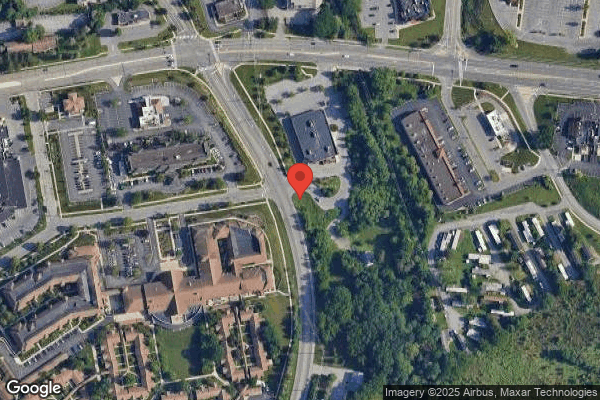
500 E. MARYLYN AVENUE, STATE COLLEGE, PA 16801 (814) 238-3322
Non profit - Other 46 Beds Independent Data: November 2025
Trust Grade
93/100
#41 of 653 in PA
Last Inspection: November 2024

Within standard 12-15 month inspection cycle. Federal law requires annual inspections.

Overview

Foxdale Village has received a Trust Grade of A, indicating it is an excellent facility that is highly recommended. It ranks #41 out of 653 nursing homes in Pennsylvania, placing it in the top half of facilities statewide, and it is the best option out of 6 in Centre County. However, the facility's trend is concerning as it has worsened over time, with issues increasing from 1 in 2022 to 6 in 2024. Staffing is a strength, boasting a 5/5 star rating with only 21% turnover, significantly lower than the state average, which means staff are more likely to be familiar with the residents. On the downside, the facility has faced some fines totaling $8,018, which is average, but it indicates some compliance issues. Notably, inspector findings revealed that residents did not receive their prescribed supplemental oxygen, and there were lapses in managing indwelling catheters according to established procedures, raising concerns about the quality of care. Overall, while Foxdale Village has strong staffing and an excellent rating, families should consider the recent increase in care issues when making their decision.

Trust Score
A
93/100
In Pennsylvania
#41/653
Top 6%
Safety Record
Low Risk
No red flags
Inspections
Getting Worse
1 → 6 violations
Staff Stability
✓ Good
21% annual turnover. Excellent stability, 27 points below Pennsylvania's 48% average. Staff who stay learn residents' needs.
Penalties
⚠ Watch
$8,018 in fines. Higher than 75% of Pennsylvania facilities, suggesting repeated compliance issues.
Skilled Nurses
✓ Good
Each resident gets 66 minutes of Registered Nurse (RN) attention daily — more than 97% of Pennsylvania nursing homes. RNs are the most trained staff who catch health problems before they become serious.
Violations
○ Average
7 deficiencies on record. Average for a facility this size. Mostly minor or procedural issues.
★★★★★
5.0
Overall Rating
★★★★★
5.0
Staff Levels
★★★★★
5.0
Care Quality
★★★★☆
4.0
Inspection Score
Stable
2022: 1 issues
2024: 6 issues

The Good

  • 5-Star Staffing Rating · Excellent nurse staffing levels
  • 5-Star Quality Measures · Strong clinical quality outcomes
  • Low Staff Turnover (21%) · Staff stability means consistent care
  • Full Sprinkler Coverage · Fire safety systems throughout facility
  • No fines on record
  • Staff turnover is low (21%)

    27 points below Pennsylvania average of 48%

Facility shows strength in staffing levels, quality measures, staff retention, fire safety.

The Bad

Federal Fines: $8,018

Below median ($33,413)

Minor penalties assessed

The Ugly 7 deficiencies on record

Nov 2024 6 deficiencies
CONCERN (D)

Potential for Harm - no one hurt, but risky conditions existed

Deficiency F0625 (Tag F0625)

Could have caused harm · This affected 1 resident

Based on clinical record review and staff interview, it was determined that the facility failed to provide written notice regarding the facility's bed-hold policy for one of one resident reviewed for ...

Read full inspector narrative →
Based on clinical record review and staff interview, it was determined that the facility failed to provide written notice regarding the facility's bed-hold policy for one of one resident reviewed for hospitalization concerns (Resident 16). Findings include: Clinical record review for Resident 16 revealed nursing documentation dated August 3, 2024, at 5:00 PM that Resident 16 had a fall, hit the back of her head, sustained a head laceration, and was sent to the hospital emergency room for evaluation. Nursing documentation dated August 3, 2024, at 9:04 PM revealed that the hospital admitted Resident 16 for observation and hypoxia (low oxygen levels). Nursing documentation dated August 5, 2024, at 1:09 PM revealed that staff left a voicemail message with Resident 16's daughter regarding holding the bed due to Resident 16's hospital admission and staff were waiting for a return call. There was no evidence that facility staff mailed or provided written notice of the facility's bed-hold policy to Resident 16's responsible party within 24 hours. Nursing documentation dated August 5, 2024, at 3:55 PM revealed that Resident 16 returned to the facility, accompanied by her daughter. The documentation did not indicate that staff attempted to provide the written notice of the facility's bed-hold policy at that time. The surveyor requested evidence that the facility provided Resident 16's responsible party the written bed-hold policy notice during an interview with Employee 1 (assistant nursing home administrator) and the Director of Nursing on October 30, 2024, at 2:15 PM. The surveyor requested evidence that the facility provided Resident 16's responsible party the written bed-hold policy notice during an interview with the Director of Nursing on October 31, 2024, at 9:53 AM. Interview with Employee 1 and the Director of Nursing on November 1, 2024, at 9:15 AM confirmed that the facility could not provide evidence of written notification to Resident 16's responsible party of the facility's bed-hold policy within 24 hours of her hospitalization on August 3, 2024. The facility failed to provide Resident 16's responsible party written information related to holding beds during absences from the facility, regardless of her payment source, within 24 hours of her emergency transfer. 28 Pa. Code 201.14(a) Responsibility of license 28 Pa. Code 201.29(a) Resident rights
CONCERN (D)

Potential for Harm - no one hurt, but risky conditions existed

Quality of Care (Tag F0684)

Could have caused harm · This affected 1 resident

Based on clinical record review, observation, and staff interview, it was determined that the facility failed to provide the highest practicable care related to physician ordered devices for one of 13...

Read full inspector narrative →
Based on clinical record review, observation, and staff interview, it was determined that the facility failed to provide the highest practicable care related to physician ordered devices for one of 13 residents reviewed (Resident 30). Findings include: Clinical record review for Resident 30 revealed an active physician's order dated June 30, 2022, for staff to apply compression stockings in the morning and remove them at hour of sleep every day and evening shift for deep vein thrombosis prophylaxis (the prevention of blood clots in the veins of the leg). An active physician order dated October 14, 2024, instructed staff to apply a palmar roll up splint (soft splint worn on the hand, on the inside of contracted fingers, to prevent damage from fingernails) to Resident 30's left hand, applied in the morning, and removed in the evening. A plan of care developed by the facility to address Resident 30's restorative nursing program for a passive range of motion program to prevent tightness of muscles and promote flexibility to prevent contractures (initiated June 14, 2024) revealed no intervention pertaining to the left-hand splint. A plan of care developed by the facility to address Resident 30's deficits to perform activities of daily living included interventions that listed a left-hand palm guard as tolerated that was assigned to the nurse and the nurse aide. Observation of Resident 30 on October 30, 2024, at 10:50 AM revealed no splint on her left hand. Observation of Resident 30 with Employee 6 (physical therapy assistant) on October 31, 2024, at 3:16 PM revealed that Resident 30 wore black socks, which Employee 6 pulled back freely from the skin of Resident 30's lower extremities. The elastic of the black socks allowed a wide opening to view the skin of Resident 30's shins. The observation also confirmed that Resident 30 did not have a splint on her left hand. Interview with Employee 7 (nurse aide who confirmed his assignment to Resident 30's care) on October 31, 2024, at 3:20 PM indicated that he believed the socks on Resident 30 were compression stockings (although they freely expanded away from her skin to expose her shin and did not compress her legs). Employee 7 expressed no knowledge of Resident 30's left hand splint. Interview with Employee 8 (nurse aide who confirmed her assignment to Resident 30's care) on October 31, 2024, at 3:22 PM indicated that she had no knowledge of Resident 30's left hand splint. Interview with Employee 9 (occupational therapist) on October 31, 2024, at 3:23 PM revealed that she was familiar with the splint ordered for Resident 30. Employee 9 went to Resident 30's room, obtained the splint, and applied the splint to Resident 30's left hand while she was in the nursing unit's common activity area. The surveyor reviewed the above concerns regarding Resident 30's splint and compression stockings during an interview with the Director of Nursing and Employee 1 (assistant nursing home administrator) on October 31, 2024, at 3:30 PM. The surveyor confirmed during the interview that nurse aide staff documented the application of compression stockings twice daily during the week of the onsite survey although the observation revealed socks that did not compress Resident 30's lower extremities. The interview indicated that when therapy staff submit a physician's order for a splinting device it is supposed to generate a restorative nursing program, which will prompt the need for documentation by the nurse aides completing the tasks; however, the order entered for Resident 30's left hand splint did not include the necessary prompts for any staff to document the application of, or refusal of, the device (either on the nurse aide task list or the medication administration record/treatment administration record). 28 Pa. Code 211.5(f)(i)-(xi) Medical records 28 Pa. Code 211.12(d)(1)(3)(5) Nursing services
CONCERN (D)

Potential for Harm - no one hurt, but risky conditions existed

Deficiency F0698 (Tag F0698)

Could have caused harm · This affected 1 resident

Based on clinical record review, observations, and staff and resident interview, it was determined that the facility failed to ensure the availability of necessary emergency supplies for one of one re...

Read full inspector narrative →
Based on clinical record review, observations, and staff and resident interview, it was determined that the facility failed to ensure the availability of necessary emergency supplies for one of one resident reviewed receiving hemodialysis (Residents 23). Findings include: Clinical record review for Resident 23 revealed he had a tunneled catheter (a thin flexible tube that is inserted into a large vein in the chest that is used to access blood for dialysis) located in his right chest for dialysis treatment. A current physician's order for Resident 23 dated indicated he was to receive hemodialysis (a machine that performs a basic function of the kidney by cleansing the blood of impurities) every Monday, Wednesday, and Friday at a dialysis center. Observation of Resident 23 in his room on October 31, 2024, at 1:00 PM with Employee 5, Licensed Practical Nurse (LPN), revealed a clear dressing over his dialysis catheter located on his right chest. Concurrent interview of Employee 5, the LPN responsible for Resident 23 at that time, revealed that she was unsure where the emergency supplies were located that may be necessary to control bleeding that could occur if the catheter dislodged or came apart. She looked for supplies in the room and was not able to locate them. A review of Resident 23's plan of care revealed no evidence of emergency care related to his dialysis catheter, until after the surveyor addressed the issue with the Director of Nursing and Employee 1, Assistant Nursing Home Administrator, on October 31, 2024, at 2:20 PM. An interview with the Director of Nursing on November 1, 2024, at 10:32 AM revealed that she corrected the care plan, and that the emergency supplies were in Resident 23's room taped to the side of his nightstand. The facility failed to ensure that emergency supplies were available and emergency care was addressed in Resident 23's plan of care related to his dialysis catheter. 28 Pa. Code 211.12 (d)(1)(3)(5) Nursing services
CONCERN (D)

Potential for Harm - no one hurt, but risky conditions existed

Infection Control (Tag F0880)

Could have caused harm · This affected 1 resident

Based on observation, clinical record review, and staff interview, it was determined that the facility failed to ensure an environment free from the potential spread of infection for one of one reside...

Read full inspector narrative →
Based on observation, clinical record review, and staff interview, it was determined that the facility failed to ensure an environment free from the potential spread of infection for one of one resident reviewed for COVID-19 transmission-based precaution (TBP) concerns (Residents 18). Findings include: Clinical record review for Resident 18 revealed she had a positive COVID-19 result dated October 26, 2024. Observation of Resident 18's room revealed she had a temporary door with magnetic closures covering her doorway. There was a sign on the door that indicated she was on droplet precautions (precautions taken to prevent the spread of infection that is transmitted by coughing, sneezing, or talking). The sign indicated that those entering the room should wear personal protective equipment (PPE) to include a gown, gloves, and an N-95 mask (a face mask that is used to protect against airborne particles) to enter the room. Observation of Resident 18 at 12:13 PM on October 29, 2024, revealed Employee 4 (nurse aide) preparing to enter Resident 18's room. She applied an N-95 mask, a gown, and gloves. She entered the room and then a dietary staff member handed her Resident 18's meal tray into the room. After Employee 4 was finished in Resident 18's room, she exited through the magnetic door opening, with her mask, gown, and gloves still on. She removed them all in the hallway and placed then in a red bin that was located right outside the door. Concurrent interview with Employee 4 revealed that the facility's expectation is for her to exit the room and remove her gown, gloves, and N-95 mask in the hallway and place them in the red bin located just outside Resident 18's room. Review of Employee 4's competency dated June 27, 2024, for donning (putting on) and doffing (removal, taking off) personal protective equipment (PPE) revealed that all PPE should be removed prior to exiting the room. Interview with the Director of nursing on October 31, 2024, at 9:40 AM revealed that Employee 4 should have removed her PPE in Resident 18's bathroom and placed it in the red bin located there. The facility failed to ensure an environment free from the potential spread of infection related to TBP for COVID-19. 28 Pa. Code 201.18(b)(3)(d)(e)(1) Management 28 Pa. Code 211.12(d)(1)(5) Nursing services
CONCERN (E)

Potential for Harm - no one hurt, but risky conditions existed

Incontinence Care (Tag F0690)

Could have caused harm · This affected multiple residents

Based on a review of select facility policies and procedures, clinical record review, and staff interview, it was determined that the facility failed to provide treatment and services based on current...

Read full inspector narrative →
Based on a review of select facility policies and procedures, clinical record review, and staff interview, it was determined that the facility failed to provide treatment and services based on current standards of practice for the use of indwelling catheters for two of three residents reviewed for catheter concerns (Residents 30 and 3). Findings include: The facility policy entitled, Infection Control with Indwelling Foley Catheters, last reviewed without changes on March 26, 2024, revealed that if an indwelling Foley catheter (flexible tubing inserted through the urethra into the bladder to drain urine) must be utilized, the facility would implement appropriate interventions to reduce the risk of Catheter Associated Urinary Tract Infections (CAUTI). The cross references listed in the policy included, CDC: Infection Control; CAUTI. The facility policy procedures included that an overnight drainage bag may be changed to a leg bag during waking hours; that the drainage bag should be changed if there is clouding, odor, or discoloration of the drainage bag; and recommended that the indwelling urinary catheter be changed for obstructions that cannot be cleared by irrigation. Review of the orientation checklist performed for newly hired nurse aides revealed that topics included Foley care: changing from a leg bag to a night bag. The current CDC Guideline for Prevention of Catheter-Associated Urinary Tract Infections (https://www.cdc.gov/infectioncontrol/guidelines/cauti/) notes that Proper Techniques for Urinary Catheter Maintenance include: If breaks in aseptic technique, disconnection, or leakage occur, replace the catheter and collecting system using aseptic technique and sterile equipment. Changing indwelling catheters or drainage bags at routine, fixed intervals is not recommended. Rather, it is suggested to change catheters and drainage bags based on clinical indications such as infection, obstruction, or when the closed system is compromised. Unless obstruction is anticipated (e.g., as might occur with bleeding after prostatic or bladder surgery) bladder irrigation is not recommended. If obstruction occurs and it is likely that the catheter material is contributing to obstruction, change the catheter. The facility practice to manage indwelling catheter obstructions by intermittent catheter irrigation and to change collection bags periodically did not adhere to the recommendations referenced in the resource cited as a basis for the facility policy. Clinical record review for Resident 30 revealed active physician orders (dated January 29, 2024), for staff to utilize a 16 French Foley catheter every shift to treat Resident 30's urinary retention. Another active physician's order (dated January 18, 2024) instructed staff to irrigate Resident 30's Foley catheter with 30-60 milliliters (ml) of normal saline every eight hours as needed for obstruction/retention. There were no active physician orders for staff to perform routine Foley catheter changes. Nursing documentation dated July 9, 2024, at 7:19 AM revealed that Resident 30 had her Foley catheter halfway pulled out and was bleeding. Staff removed the catheter and inserted a new catheter. Staff documented that urine was draining out of both the catheter tube and around it. When staff rolled Resident 30 to change the incontinence brief, more than 100 ml of bright red urine drained from the catheter tube. Review of Resident 30's Treatment Administration Record (TAR, electronic documentation of the completion of treatments by the licensed nurse) dated July 2024, revealed that staff irrigated Resident 30's catheter on July 10, 2024, at 10:11 PM and July 14, 2024, at 09:17 AM. Nursing documentation dated July 11, 2024, at 4:30 AM revealed that when Resident 30 went to bed the previous evening, staff noted that she did not have any urine output in her catheter bag. Once in bed, and rolled over for care, staff noted a large amount of hematuria (bloody urine) leaking around the catheter onto the pad and bed. The documentation indicated that staff irrigated the catheter, later. That morning, Resident 30 had 300 ml of dark red hematuria noted in the catheter bag. Review of nurse aide electronic documentation dated October 2024, revealed that nurse aide staff documented a change of Resident 30's catheter bag weekly on Thursdays (therefore breaking the closed system). There was no evidence that the facility staff changed Resident 30's indwelling urinary catheter since July 9, 2024, (more than three months earlier than the onsite survey) or routinely changed Resident 30's indwelling Foley catheter; however, staff broke the closed system repeatedly for collection bag changes and as needed for irrigation. The surveyor reviewed the above concerns regarding the facility's policy, practice, and CDC recommendations as well as Resident 30's Foley catheter maintenance during interviews with the Director of Nursing and Employee 1 (assistant nursing home administrator) on October 30, 2024, at 2:15 PM, and October 31, 2024, at 2:15 PM. Observation of Resident 3 on October 29, 2024, at 1:30 PM revealed that he had an indwelling foley catheter and a urine collection bag was attached to his bed. Clinical record review for Resident 3 revealed current physician orders for staff to provide catheter care every shift, irrigate the catheter with 60 ml of normal saline solution for poor flow as needed, and change the foley catheter as needed if unable to irrigate. Further clinical record review of Resident 3's TAR revealed that his catheter was irrigated on August 28, 2024, September 19, 2024, September 23, 2024, and on October 1, 2024, due to poor flow. His catheter was not changed until October 1, 2024, after staff were unable to irrigate it, even though the closed system was compromised on August 28, 2024, September 19, 2024, and September 23, 2024. The Director of Nursing and Employee 1 were made aware of the concerns with Resident 3's catheter during a meeting on October 30, 2024, at 2:30 PM. The facility failed to provide treatment and services based on current standards of practice for the use of indwelling catheters for Resident 3. 28 Pa. Code 211.10(d) Resident care policies 28 Pa. Code 211.12(d)(1)(5) Nursing services
CONCERN (E)

Potential for Harm - no one hurt, but risky conditions existed

Respiratory Care (Tag F0695)

Could have caused harm · This affected multiple residents

Based on clinical record review, observation, and staff interview, it was determined that the facility failed to ensure the application of physician ordered supplemental oxygen consistent with profess...

Read full inspector narrative →
Based on clinical record review, observation, and staff interview, it was determined that the facility failed to ensure the application of physician ordered supplemental oxygen consistent with professional standards of practice for three of three residents reviewed for supplemental oxygen concerns (Residents 9, 16, and 30). Findings include: Clinical record review for Resident 9 revealed an active physician order dated October 1, 2024, for staff to apply supplemental oxygen at two liters per minute (lpm) as needed for hypoxia (too little oxygen delivered to body tissues), SPO2 (pulse oximeter, or pulse ox, works by shining a light through the skin and determining the amount of oxygen based on how the light travels through the skin and blood vessels) of less than 90 percent. Observation of Resident 9 on October 30, 2024, at 11:24 AM revealed no supplemental oxygen in use. Review of Resident 9's medication administration record (MAR, electronic documentation by licensed nursing staff of the completion of medications) and treatment administration record (TAR, electronic documentation by licensed nursing staff of the completion of treatments) dated October 2024, revealed that no staff documented an assessment of Resident 9's SPO2 or the application of supplemental oxygen. Review of documentation in Resident 9's electronic medical record (EMR) weights and vital sign assessments revealed the following SPO2 entries: October 30, 2024, at 3:25 AM, 94.0 percent October 29, 2024, at 2:54 PM, 95 percent October 29, 2024, at 2:52 PM, 95 percent October 4, 2024, at 2:38 AM, 94 percent October 2, 2024, at 8:00 PM, 93 percent The available documentation indicated that Resident 9 went most days without an assessment of her SPO2 percentage although her physician's order for supplemental oxygen was contingent on this assessment. Review of plans of care developed by the facility to meet Resident 9's care needs revealed no plan of care or intervention that addressed her potential use of supplemental oxygen. Further review of Resident 9's EMR revealed that staff discontinued the physician order for supplemental oxygen on October 30, 2024, at 6:35 PM (after the surveyor's questioning). Clinical record review for Resident 16 revealed an active physician's order dated December 31, 2022, for staff to apply supplemental oxygen at two lpm as needed for an SPO2 less than 89 percent. Observation of Resident 16 on October 30, 2024, at 10:39 AM revealed no supplemental oxygen in use. Review of Resident 16's MAR and TAR dated August, September, and October 2024, revealed that no staff documented an assessment of Resident 16's SPO2 or the application of supplemental oxygen. Review of documentation in Resident 16's EMR weights and vital signs assessments revealed the following SPO2 entries: No entries for October 2024 September 30, 2024, at 11:02 PM, 92 percent September 29, 2024, at 4:59 AM and 5:04 AM, 92 percent September 11, 2024, at 4:15 AM, 93 percent August 21, 2024, at 3:00 PM, 91 percent August 18, 2024, at 4:31 AM and 11:36 PM, 95 and 91 percent respectively August 16, 2024, at 11:37 AM and 6:36 PM, 96 and 92 percent respectively August 10, 2024, at 11:16 AM, 92 percent August 7, 2024, at 4:47 PM, 99 percent August 5, 2024, at 3:28 PM, 92 percent The available documentation indicated that Resident 16 went most days without an assessment of her SPO2 percentage although her physician's order for supplemental oxygen was contingent on this assessment. The surveyor reviewed the concern that Resident 9 and 16's supplemental oxygen order was contingent on an SPO2 assessment; however, there was no evidence that staff obtained SPO2 assessments routinely, during an interview with Employee 1 (assistant nursing home administrator) and the Director of Nursing on October 30, 2024, at 2:15 PM. Further review of Resident 16's EMR revealed that staff discontinued the physician order for supplemental oxygen on October 30, 2024, at 4:03 PM (following the surveyor's questioning). Clinical record review for Resident 30 revealed an active physician's order dated December 16, 2023, for staff to administer supplemental oxygen at two lpm as needed for an SPO2 less than 90 percent or shortness of breath/wheezing as needed. Observation of Resident 30 on October 30, 2024, at 10:53 AM revealed no supplemental oxygen in use. Review of Resident 30's MAR and TAR dated August, September, and October 2024, revealed the application of supplemental oxygen with SPO2 assessments on nine occasions in August 2024, five occasions in September 2024, and seven occasions in October 2024. Review of documentation in Resident 30's EMR weights and vital signs assessments revealed inconsistent documentation (not daily or every shift) of SPO2 assessments were obtained. Staff failed to document an SPO2 assessment on 14 of 31 days in August 2024, on 8 of 30 days in September 2024, and on 15 of 31 days in October 2024. Review of plans of care developed by the facility to meet Resident 30's care needs revealed that a plan of care to address supplemental oxygen use was discontinued on August 14, 2021, and there was no evidence of another plan of care that addressed Resident 30's supplemental oxygen use until October 29, 2024 (first day of the onsite survey). The surveyor reviewed the above concerns regarding Resident 30's supplemental oxygen use during an interview with Employee 1 and the Director of Nursing on October 30, 2024, at 2:15 PM. Further review of Resident 30's EMR revealed that staff revised the physician's order for supplemental oxygen on October 30, 2024, at 4:00 PM (following the surveyor's questioning), to now prompt staff to obtain an SPO2 assessment every shift. 28 Pa. Code 211.12(d)(1)(5) Nursing services
Dec 2022 1 deficiency
CONCERN (E)

Potential for Harm - no one hurt, but risky conditions existed

Drug Regimen Review (Tag F0756)

Could have caused harm · This affected multiple residents

Based on clinical record review, review of select facility policies and procedures, and staff interview, it was determined that the facility failed to ensure that the resident's attending physician ad...

Read full inspector narrative →
Based on clinical record review, review of select facility policies and procedures, and staff interview, it was determined that the facility failed to ensure that the resident's attending physician addressed pharmacy recommendations for four of five residents reviewed (Residents 3, 10, 21, and 30). Findings include: Review of the policy entitled Pharmacy Monthly Drug Regimen Review, last reviewed on March 22, 2022, indicates that the Director of Nursing or designee will assure that recommendations associated with drug irregularities are communicated to the attending physician within three days from the receipt of the report. Review of Resident 3's clinical record revealed that the facility's pharmacist made recommendations to his physician on April 28, 2022, for the consideration of a gradual dose reduction for the use of his Risperdal (an antipsychotic used to treat certain mood or mental disorders). The pharmacy recommendation was not addressed by Resident 3's physician until December 1, 2022, after questioning from this surveyor. Review of Resident 10's clinical record revealed that the facility's pharmacist made recommendations to her physician on March 23, 2022, for the consideration of a gradual dose reduction for the use of her Seroquel (an antipsychotic used to treat certain mood or mental disorders). There was no documented evidence in Resident 10's clinical record to indicate that her physician addressed the pharmacist's recommendation. Interview with the Administrator on December 1, 2022, at 1:23 PM confirmed the above findings for Resident 10. Review of Resident 21's clinical record revealed that the facility's pharmacist made recommendations to her physician on July 21, 2022, for the consideration of a gradual dose reduction for the use of her Lexapro (a medication used to treat depression or anxiety). There was no documented evidence in Resident 21's clinical record to indicate that her physician addressed the pharmacist's recommendation. Review of Resident 30's clinical record revealed that the facility's pharmacist made recommendations to her physician on March 24, 2022, for the consideration of a gradual dose reduction for the use of her Buspar (a medication used to treat anxiety). The pharmacy recommendation was not addressed by Resident 30's physician until December 1, 2022, after questioning from the surveyor. Interview with the Administrator and Director of Nursing on December 1, 2022, at 2:00 PM, acknowledged the above findings for Residents 3, 10, 21, and 30. 28 Pa. Code 211.2(a)(k) Physician services 28 Pa. Code 211.12(d)(3) Nursing services
Understanding Severity Codes (click to expand)
Life-Threatening (Immediate Jeopardy)
J - Isolated K - Pattern L - Widespread
Actual Harm
G - Isolated H - Pattern I - Widespread
Potential for Harm
D - Isolated E - Pattern F - Widespread
No Harm (Minor)
A - Isolated B - Pattern C - Widespread

Questions to Ask on Your Visit

  • "Can I speak with families of current residents?"
  • "What's your RN coverage like on weekends and overnight?"

Our Honest Assessment

Strengths
  • • Grade A (93/100). Above average facility, better than most options in Pennsylvania.
  • • No major safety red flags. No abuse findings, life-threatening violations, or SFF status.
  • • 21% annual turnover. Excellent stability, 27 points below Pennsylvania's 48% average. Staff who stay learn residents' needs.
Concerns
  • • No significant concerns identified. This facility shows no red flags across CMS ratings, staff turnover, or federal penalties.
Bottom line: Generally positive indicators. Standard due diligence and a personal visit recommended.

About This Facility

What is Foxdale Village's CMS Rating?

CMS assigns Foxdale Village an overall rating of 5 out of 5 stars, which is considered much above average nationally. Within Pennsylvania, this rating places the facility higher than 99% of the state's 100 nursing homes. This rating reflects solid performance across the metrics CMS uses to evaluate nursing home quality.

How is Foxdale Village Staffed?

CMS rates Foxdale Village's staffing level at 5 out of 5 stars, which is much above average compared to other nursing homes. Staff turnover is 21%, compared to the Pennsylvania average of 46%. This relatively stable workforce can support continuity of care.

What Have Inspectors Found at Foxdale Village?

State health inspectors documented 7 deficiencies at Foxdale Village during 2022 to 2024. These included: 7 with potential for harm.

Who Owns and Operates Foxdale Village?

Foxdale Village is owned by a non-profit organization. Non-profit facilities reinvest revenue into operations rather than distributing to shareholders. The facility operates independently rather than as part of a larger chain. With 46 certified beds and approximately 41 residents (about 89% occupancy), it is a smaller facility located in STATE COLLEGE, Pennsylvania.

How Does Foxdale Village Compare to Other Pennsylvania Nursing Homes?

Compared to the 100 nursing homes in Pennsylvania, Foxdale Village's overall rating (5 stars) is above the state average of 3.0, staff turnover (21%) is significantly lower than the state average of 46%, and health inspection rating (4 stars) is above the national benchmark.

What Should Families Ask When Visiting Foxdale Village?

Based on this facility's data, families visiting should ask: "Can I visit during a mealtime to observe dining assistance and food quality?" "How do you handle medical emergencies, and what is your hospital transfer rate?" "Can I speak with family members of current residents about their experience?"

Is Foxdale Village Safe?

Based on CMS inspection data, Foxdale Village has a clean safety record: no substantiated abuse findings (meaning no confirmed cases of resident harm), no Immediate Jeopardy citations (the most serious violation level indicating risk of serious injury or death), and is not on the Special Focus Facility watch list (a federal program monitoring the lowest-performing 1% of nursing homes). The facility has a 5-star overall rating and ranks #1 of 100 nursing homes in Pennsylvania. While no facility is perfect, families should still ask about staff-to-resident ratios and recent inspection results during their visit.

Do Nurses at Foxdale Village Stick Around?

Staff at Foxdale Village tend to stick around. With a turnover rate of 21%, the facility is 25 percentage points below the Pennsylvania average of 46%. Low turnover is a positive sign. It means caregivers have time to learn each resident's needs, medications, and personal preferences. Consistent staff also notice subtle changes in a resident's condition more quickly. Registered Nurse turnover is also low at 23%, meaning experienced RNs are available to handle complex medical needs.

Was Foxdale Village Ever Fined?

Foxdale Village has been fined $8,018 across 1 penalty action. This is below the Pennsylvania average of $33,159. While any fine indicates a compliance issue, fines under $50,000 are relatively common and typically reflect isolated problems that were subsequently corrected. Families should ask what specific issues led to these fines and confirm they've been resolved.

Is Foxdale Village on Any Federal Watch List?

Foxdale Village is not on any federal watch list. The most significant is the Special Focus Facility (SFF) program, which identifies the bottom 1% of nursing homes nationally based on persistent, serious quality problems. Not being on this list means the facility has avoided the pattern of deficiencies that triggers enhanced federal oversight. This is a positive indicator, though families should still review the facility's inspection history directly.