GREENWOOD CENTER FOR NURSING AND REHAB
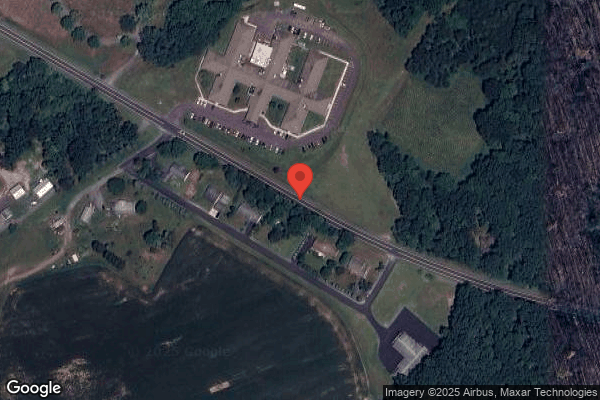
149 LAFAYETTE AVENUE, TAMAQUA, PA 18252 (570) 668-1775
For profit - Limited Liability company 150 Beds GABRIEL SEBBAG & THE SAMARA FAMILY Data: November 2025
Trust Grade
20/100
#427 of 653 in PA
Last Inspection: April 2025

Within standard 12-15 month inspection cycle. Federal law requires annual inspections.

Overview

Greenwood Center for Nursing and Rehab has received a Trust Grade of F, indicating significant concerns about the quality of care provided. Ranking #427 out of 653 facilities in Pennsylvania places it in the bottom half, and #9 out of 12 in Schuylkill County suggests that there are only a few local options that are better. The facility is showing an improving trend, with the number of issues decreasing from 19 in 2024 to 17 in 2025, but it still has a concerning staffing turnover rate of 67%, significantly higher than the state average of 46%. Additionally, the center has incurred $76,674 in fines, which is higher than 85% of Pennsylvania facilities, indicating ongoing compliance issues. Specific incidents include a resident falling and suffering a hip fracture due to inadequate supervision, and another resident was seriously injured when the facility failed to provide necessary care, resulting in a fractured arm. While the facility does offer average RN coverage, the high turnover and serious incidents highlight the need for families to carefully consider their options.

Trust Score
F
20/100
In Pennsylvania
#427/653
Bottom 35%
Safety Record
High Risk
Review needed
Inspections
Getting Better
19 → 17 violations
Staff Stability
⚠ Watch
67% turnover. Above average. Higher turnover means staff may not know residents' routines.
Penalties
⚠ Watch
$76,674 in fines. Higher than 78% of Pennsylvania facilities, suggesting repeated compliance issues.
Skilled Nurses
○ Average
Each resident gets 31 minutes of Registered Nurse (RN) attention daily — about average for Pennsylvania. RNs are the most trained staff who monitor for health changes.
Violations
⚠ Watch
61 deficiencies on record. Higher than average. Multiple issues found across inspections.
★★☆☆☆
2.0
Overall Rating
★★☆☆☆
2.0
Staff Levels
★★★☆☆
3.0
Care Quality
★★☆☆☆
2.0
Inspection Score
Stable
2024: 19 issues
2025: 17 issues

The Good

  • Full Sprinkler Coverage · Fire safety systems throughout facility
  • No fines on record

Facility shows strength in fire safety.

The Bad

2-Star Overall Rating

Below Pennsylvania average (3.0)

Below average - review inspection findings carefully

Staff Turnover: 67%

20pts above Pennsylvania avg (46%)

Frequent staff changes - ask about care continuity

Federal Fines: $76,674

Well above median ($33,413)

Moderate penalties - review what triggered them

Chain: GABRIEL SEBBAG & THE SAMARA FAMILY

Part of a multi-facility chain

Ask about local staffing decisions and management

Staff turnover is elevated (67%)

19 points above Pennsylvania average of 48%

The Ugly 61 deficiencies on record

3 actual harm
Jul 2025 3 deficiencies
CONCERN (D) 📢 Someone Reported This

A family member, employee, or ombudsman was alarmed enough to file a formal complaint

Potential for Harm - no one hurt, but risky conditions existed

Free from Abuse/Neglect (Tag F0600)

Could have caused harm · This affected 1 resident

**NOTE- TERMS IN BRACKETS HAVE BEEN EDITED TO PROTECT CONFIDENTIALITY** Based on a review of facility's abuse policy, clinical records, and select investigative reports and staff interview it was dete...

Read full inspector narrative →
**NOTE- TERMS IN BRACKETS HAVE BEEN EDITED TO PROTECT CONFIDENTIALITY** Based on a review of facility's abuse policy, clinical records, and select investigative reports and staff interview it was determined the facility failed to assure that one resident (Resident 2) was free from sexual abuse/harassment perpetrated by another resident (Resident 1) and out of 9 residents sampled.Findings included: A review of the current facility policy titled Abuse Policy, last reviewed by the facility on September 2024, revealed the resident has the right to be free from abuse, neglect, and misappropriation of resident property. Residents must not be subject to abuse by anyone, including but not limited to, facility staff, other residents, consultants or volunteers, staff of other agencies, family members or legal guardians, or other individuals. Further review defined sexual abuse as non-consensual sexual contact of any type with a resident including sexual harassment, sexual assault. A review of Resident 1's clinical record revealed admission to the facility on April 22, 2024, with diagnoses to include dementia (a group of symptoms affecting memory, thinking and social abilities. The symptoms interfere with a person's daily life). A quarterly Minimum Data Set assessment (MDS-a federally mandated standardized assessment completed periodically to plan resident care) dated June 5, 2025, indicated the resident was severely cognitively impaired with a BIMS score of 5 (brief interview of mental status to a tool to assess the resident's attention, orientation and ability to register and recall new information 0-7 represents severe cognitive impairment). Facility documentation and behavior progress notes revealed that Resident 1 exhibited sexually inappropriate behaviors prior to the incidents involving Resident 2. A progress note dated February 8, 2025, indicated that Resident 1 attempted to inappropriately grab staff during care. Resident 1's care plan, initiated April 26, 2024, identified sexualized behaviors including making sexual comments and gestures toward staff. Interventions included two-person assistance for all care and a referral to psychiatric services. A review of Resident 2's clinical record revealed admission to the facility on May 23, 2025, with diagnoses including dementia. An admission MDS dated [DATE], documented a BIMS score of 1, also indicating severe cognitive impairment. Resident 2 lacked the mental capacity to consent to sexual contact or activity. A review of facility documentation dated July 4, 2025, revealed that during a scheduled activity, Resident 1 was observed wheeling himself toward Resident 2, who was seated in a chair. Resident 1 then reached out and made contact with Resident 2's chest and groin area. The staff witness, identified as Employee 1 (Activities Aide), provided a written statement on July 4, 2025, at 2:55 p.m., documenting that Resident 1 was seen touching Resident 2's breast and subsequently placing his hand between her legs in the genital area. Staff immediately intervened and separated the residents During an interview with Employee 1 on July 24, 2025, at approximately 11:30 a.m., she stated that during the activity on July 4, 2025, she looked up and saw Resident 1 grab Resident 2 in the breast area. She stated that as she was standing up, she told Resident 1 to stop it and before she could get to them, Resident 1 grabbed Resident 2 in the groin area. Employee 1 stated Resident 2 was upset and crying briefly after the incident. However, this incident was not reported to the Department of Health. In interviews, the Director of Nursing (DON) and the Nursing Home Administrator (NHA) stated they did not believe the event was reportable, as they did not perceive intent on Resident 1's part. The only intervention implemented was to increase supervision. A second incident occurred on July 14, 2025, during lunch hour in the dining room. Facility documentation revealed that at approximately 11:45 a.m., Resident 1 reached through the back of Resident 2's chair and touched her buttocks. The incident was witnessed by Employee 2 (cook), who provided a written statement and confirmed the contact. Resident 2 expressed discomfort and described Resident 1 as gross. Following this incident, the facility reported the matter to the Department of Health, Adult Protective Services, and local law enforcement. The facility also notified Resident 2's representative. Resident 1 was then placed on one-to-one supervision, and staff were instructed to ensure separation between the two residents. The above findings were reviewed with the NHA during an interview on July 24, 2025, at 1:15 PM, the NHA acknowledged that Resident 1 displayed sexually inappropriate behaviors and was unable to provide evidence the facility ensured that Resident 2 was free from sexual harassment perpetrated by Resident 1 and could provide no evidence the facility had implemented sufficient safeguards to protect Resident 2 from recurring sexual harassment or abuse. 28 Pa. Code 201.14 (a) Responsibility of licensee. 28 Pa. Code 201.18 (e)(1) Management. 28 Pa. Code 201.29 (a) Resident Rights. 28 Pa. Code 211.10 (d) Resident care policies. 28 Pa. Code 211.12 (d)(1)(5) Nursing Services.
CONCERN (D) 📢 Someone Reported This

A family member, employee, or ombudsman was alarmed enough to file a formal complaint

Potential for Harm - no one hurt, but risky conditions existed

Investigate Abuse (Tag F0610)

Could have caused harm · This affected 1 resident

**NOTE- TERMS IN BRACKETS HAVE BEEN EDITED TO PROTECT CONFIDENTIALITY** Based on a review of select facility policy, facility investigative reports, clinical records and staff interviews it was determ...

Read full inspector narrative →
**NOTE- TERMS IN BRACKETS HAVE BEEN EDITED TO PROTECT CONFIDENTIALITY** Based on a review of select facility policy, facility investigative reports, clinical records and staff interviews it was determined the facility failed to ensure a complete and accurate investigation into sexual abuse was completed for one resident out of 9 sampled (Resident 2). Findings included: A review of the current facility policy titled Abuse Policy, last reviewed by the facility on September 2024, revealed the resident has the right to be free from abuse, neglect, and misappropriation of resident property. Further review of the facility abuse policy revealed under the area of investigation all reports of resident abuse, neglect, exploitation, misappropriation, shall be promptly reported to local, state and federal agencies as defined by current regulations, and thoroughly investigated by the administrator and or designee. The administrator or his/her designee will provide appropriate agencies or individuals within five working days of the occurrence of the incident. A review of Resident 2's clinical record revealed admission to the facility on May 23, 2025, with diagnoses to include dementia (a group of symptoms affecting memory, thinking and social abilities. The symptoms interfere with a person's daily life). An admission MDS dated [DATE], revealed the resident was severely cognitively impaired with a BIMS score of 1 (brief interview of mental status to a tool to assess the resident's attention, orientation and ability to register and recall new information 0-7 represents severe cognitive impairment). A review of the facility's investigative documentation dated July 4, 2025, revealed that Employee 1 (Activities Aide) reported observing Resident 1 grab Resident 2's breast and genital area during an activity in the activity room. The investigation summary, completed by the Director of Nursing (DON), referenced input from staff on duty and alert and oriented residents present at the time of the incident; however, no additional written statements or interview documentation from those individuals were included in the investigation file. The only written statement obtained was from Employee 1, which clearly described that she observed Resident 1 grab Resident 2's genital area over her clothing. Further review of the facility's investigative documentation revealed a written conclusion by the Director of Nursing (DON) dated July 4, 2025, which stated: After a full investigation, per reporting guidelines, if both residents are incapable and there is no injury, you do not have to report. At this point, there is no valid proof of any type of inappropriate touching or behaviors that happened. No injuries. Both residents cannot recall what happened. However, this rationale is inconsistent with federal regulatory guidance. Despite the DON's written conclusion, the facility did not document any efforts to interview other staff or alert, and oriented residents present during the incident, nor did it follow up on the eyewitness account from Employee 1, who documented that she observed Resident 1 grab Resident 2's genital area over her clothing. The incident was not reported to the Department of Health. In interviews on July 24, 2025, the DON and Nursing Home Administrator (NHA) stated they did not believe the incident was reportable due to a lack of intent by Resident 1.An interview conducted with the DON and NHA on July 24, 2025, at approximately 1:30 PM, revealed they were unable to provide evidence that the investigation into the potential sexual abuse of Resident 2 was complete or compliant with facility policy and federal reporting requirements. 28 Pa. Code 201.14 (a) Responsibility of licensee 28 Pa. Code 201.18(e)(1) Management 28 Pa. Code 201.29(a)(c) Resident Rights 28 Pa. Code 211.10(d) Resident care policies. 28 Pa. Code 211.12(c)(d)(5) Nursing Services.
CONCERN (D) 📢 Someone Reported This

A family member, employee, or ombudsman was alarmed enough to file a formal complaint

Potential for Harm - no one hurt, but risky conditions existed

QAPI Program (Tag F0867)

Could have caused harm · This affected 1 resident

**NOTE- TERMS IN BRACKETS HAVE BEEN EDITED TO PROTECT CONFIDENTIALITY** Based on a review of the facility's plan of correction from the survey ending July 24, 2025, the outcome of the activities of th...

Read full inspector narrative →
**NOTE- TERMS IN BRACKETS HAVE BEEN EDITED TO PROTECT CONFIDENTIALITY** Based on a review of the facility's plan of correction from the survey ending July 24, 2025, the outcome of the activities of the facility's quality assurance committee, a review of clinical records, and staff interviews, it was determined the facility failed to maintain compliance with nursing home regulations and ensure that plans to improve the delivery of care and services effectively addressed recurring deficiencies for one of six residents reviewed related to ensuring residents are free from sexual abuse (Resident 3) perpetrated by another resident (Resident 1). Findings include: As a result of the deficiencies cited under the requirements related to ensuring residents are free from sexual abuse during the survey of July 24, 2025, the facility developed a plan of correction to serve as their allegation of compliance, which included a quality assurance monitoring component to ensure that solutions were sustained. This corrective plan was to be completed and functional by August 19, 2025. However, during the survey ending August 28, 2025, continuing deficient facility practice was identified with these same requirements.According to the facility's plan of correction for the deficiency cited on July 24, 2025, relating to ensuring residents are free from sexual abuse, implemented to ensure deficient practice was corrected, included (1) The perpetrator is now 1:1 (level of staff to resident supervision) when out of bed. The recipient of sexual abuse was discharged from the facility. (2) The facility completed a baseline audit of abuse allegations for two weeks, and interventions have been implemented if applicable. (3) Facility educated staff regarding facility abuse policy. The facility will ensure that allegations of abuse will follow a facility policy that includes safeguards to be in place to protect residents from abuse. (4) The Nursing Home Administrator (NHA) or designee will audit the allegation of abuse to ensure facility policy is followed weekly for four weeks and then monthly for two months. (5) Audits will be submitted to the quality assurance performance improvement committee for review.A clinical record review revealed Resident 3 was admitted to the facility on [DATE]. A clinical record review revealed that Resident 1 was admitted to the facility on [DATE], with a history of known maladaptive behaviors such as inappropriate sexual comments to staff, touching staff inappropriately, wandering into female residents' rooms, and grabbing residents' wheelchairs. Further clinical record review revealed on August 27, 2025, Resident 1 sexually abused another resident when he was witnessed by facility staff touching Resident 3's genital area over her clothing without consent. A review of QAPI documentation revealed no evidence that the facility's performance improvement plan identified or addressed Resident 1's known maladaptive behaviors as risk factors requiring specific interventions. The QAPI plan focused only on the incident identified during the July 24, 2025, survey, without examining whether systemic failures in supervision, behavioral monitoring, or abuse-prevention interventions contributed to the current event. During an interview on August 28, 2025, at 11:00 AM, the Nursing Home Administrator (NHA) reviewed the concern regarding the August 27, 2025, incident in which Resident 1 was witnessed touching Resident 3 over her clothing without consent. The NHA did not provide documented evidence the facility's internal audits conducted after the July 24, 2025, survey identified Resident 1's history of maladaptive behaviors or that he was included in the audits intended to monitor and prevent recurrence of sexual abuse incidents.Further review revealed no documented evidence the Quality Assurance and Performance Improvement (QAPI) committee evaluated Resident 1's behavioral history, implemented targeted prevention strategies, or monitored the effectiveness of corrective actions beyond the initial audits.As a result, the facility's QAPI activities did not identify or correct the underlying causes of the original deficiency, contributing to the recurrence of resident-to-resident sexual abuse under the same regulatory requirement. Cross Refer to F600 28 Pa. Code 201.18(e)(4) Management.28 Pa. Code 211.12 (d)(5) Nursing services.
Jun 2025 2 deficiencies
CONCERN (E) 📢 Someone Reported This

A family member, employee, or ombudsman was alarmed enough to file a formal complaint

Potential for Harm - no one hurt, but risky conditions existed

Deficiency F0559 (Tag F0559)

Could have caused harm · This affected multiple residents

**NOTE- TERMS IN BRACKETS HAVE BEEN EDITED TO PROTECT CONFIDENTIALITY** Based on clinical record review and resident and staff interviews, it was determined that the facility failed to ensure that wri...

Read full inspector narrative →
**NOTE- TERMS IN BRACKETS HAVE BEEN EDITED TO PROTECT CONFIDENTIALITY** Based on clinical record review and resident and staff interviews, it was determined that the facility failed to ensure that written notice, including the reason for a room change, was provided to residents and/or their resident representatives prior to a facility-initiated room change for three of eight residents reviewed (Residents CR1, 3, and 4). Findings include: Federal regulatory guidance under §483.10(e)(6) notes that moving to a new room or changing roommates is challenging for residents. A resident's preferences should be taken into account when considering such changes. When a resident is being moved at the request of facility staff, the resident, family, and/or resident representative must receive an explanation in writing of why the move is required. The resident should be provided the opportunity to see the new location, meet the new roommate, and ask questions about the move. At the time of the survey ending June 17, 2025, all beds in the facility were licensed and dually certified for participation in both the Medicare and Medicaid programs. A review of Resident CR1's clinical record revealed the resident was admitted on [DATE], and initially assigned to a room on the [NAME] wing. On March 1, 2025, the resident's room was changed to a room on the East wing. There was no documented evidence that the resident or the resident's representative was provided with written notice or an explanation for the room change prior to the move. A review of Resident 3's clinical record revealed the resident was admitted to the facility on [DATE], and provided a room on the [NAME] wing. On May 19, 2025, the resident's room was changed to a room on the East wing. During an interview with Resident 3, a cognitively intact resident, on June 17, 2025, at 12:10 PM the resident stated that her room was recently changed. She stated that the facility had not informed her of why her room needed to be changed. She expressed frustration stating, someone came in and told us (pointing to her roommate) that they were going to move us to different room on the other side of the building. She continued I was in that room for over a year, I didn't want to move. I liked it there. Resident 3 stated she was not informed of her right to refuse the room change. She stated that had she been informed of her right to refuse, she would have refused the room change. She also reported the facility did not provide any written notification of the reason for the room change. There was no documentation in Resident 3's clinical record indicating that a written notice or explanation of the room change was provided to the resident or the resident's representative. A review of Resident 4's clinical record revealed the resident was admitted to the facility on [DATE], and was provided a room on the [NAME] wing. On May 19, 2025, the resident's room was changed to a room on the East wing. Continued review of Resident 4's clinical record revealed the resident was moderately cognitively impaired with a BIMS score of 12 (Brief Interview for Mental Status-a tool to assess the resident's attention, orientation, and the ability to register and recall new information, a score of 8-12 equates to moderate cognitive impairment). There was no documented evidence that written notice, including the reason for the move, was provided to the resident or the resident's representative in advance of the room change. During an interview with the Nursing Home Administrator (NHA) on June 17, 2025, at 11:15 AM the NHA failed to provide documented evidence the facility provided any written explanation of the reasons for the facility-initiated room changes to the residents and/or their representatives. 28 Pa Code 201.29 (a) Resident Rights
CONCERN (E) 📢 Someone Reported This

A family member, employee, or ombudsman was alarmed enough to file a formal complaint

Potential for Harm - no one hurt, but risky conditions existed

Deficiency F0760 (Tag F0760)

Could have caused harm · This affected multiple residents

**NOTE- TERMS IN BRACKETS HAVE BEEN EDITED TO PROTECT CONFIDENTIALITY** Based on review of clinical records, medication error reports, and staff interview it was determined that the facility failed to...

Read full inspector narrative →
**NOTE- TERMS IN BRACKETS HAVE BEEN EDITED TO PROTECT CONFIDENTIALITY** Based on review of clinical records, medication error reports, and staff interview it was determined that the facility failed to provide nursing services consistent with professional standards of practice by failing to follow physician's orders and assure that two residents out of eight reviewed were free of significant medication errors (Resident CR1 and Resident 2). Findings include: The Principles of Medication Administration, The Five Rights of Medication Administration indicate that when you are giving medication, regardless of the type of medication, you must always follow the five rights. Each time you administer a medication, you need to be sure to have the: 1. Right individual 2. Right medication 3. Right dose 4. Right time 5. Right route According to the Pennsylvania Code Title 49, Professional and Vocational Standards Department of State, Chapter 21 State Board of Nursing, Chapter 21.145 Functions of the LPN (Licensed Practical Nurse) requires the following: The LPN is prepared to function as a member of the health care team by exercising sound nursing judgement based on preparations, knowledge, skills, understandings and past experiences in nursing situations. The LPN participates in the planning, implementation and evaluation of nursing care in settings where nursing takes place. (b) The LPN administers medication and carries out the therapeutic treatment ordered for the patient in accordance with the following: (d) The Board recognizes codes of behavior as developed by appropriate practical nursing associations as the criteria for assuring safe and effective practice. A review of the clinical record revealed that Resident CR1 was admitted to the facility on [DATE], with diagnosis to include Type 2 diabetes (body has trouble controlling blood sugar and using it for energy), and falls with fracture of the let humerus (upper arm). A quarterly Minimum Data Set assessment (MDS - a federally mandated standardized assessment process conducted periodically to plan resident care) dated May 4, 2025, revealed the resident was cognitively intact with a BIMS score of 15 (Brief Interview for Mental Status - a tool to assess the resident's attention, orientation, and ability to register and recall new information, a score of 13-15 equates to being cognitively intact). Nurse documentation dated June 1, 2025, at 1:40 PM, revealed that Resident CR1 received Hydralazine 75 mg and Clonidine 0.2 mg (both medications used to treat high blood pressure) in error. RN assessment documented the resident as alert and awake, with clear speech, warm and dry skin, and no signs of distress. Her blood pressure was noted to be 80/52 (low reading). She denied dizziness, chest pain, weakness, nausea, or headache. The resident was transferred back to bed with the assistance of two staff members. Fluids were encouraged, and lower extremities were elevated. A call was placed to the on-call physician, and an order was received to send the resident to the emergency room for evaluation. Emergency medical services were dispatched, and the resident's daughter was notified. A review of the facility's Medication Error report dated June 1, 2025, indicated that Employee 2, a Licensed Practical Nurse, had administered the medications in error. According to the error report and subsequent root cause analysis, the error occurred when Employee 2 was preparing medications for Resident 5 and Resident CR1 approached the nurse requesting a pain pill. Employee 2 placed Resident CR1's pain pill into Resident 5's cup and inadvertently administered Hydralazine and Clonidine to Resident CR1. As a corrective measure, Employee 2 received re-education on the Five Rights of Medication Administration and minimizing distractions during medication pass. A review of the clinical record revealed that Resident 2 was admitted to the facility on [DATE], with diagnoses to include Alzheimer's disease (a progressive brain disease that destroys memory and other important mental functions), depression, and fall with fracture of the upper end of the right humerus (upper arm). A quarterly MDS dated [DATE], revealed the resident was severely cognitively impaired with a BIMS score of 0 (a score of 0-7 equates to severe cognitive impairment). Review of a psychiatry note from Employee 1 (nurse practitioner) dated May 8, 2025, indicated Resident 2's current medication list was as follows: Trazadone 100 mg, give one tablet by mouth at bedtime related to depression; Risperidone 1 mg, give one tablet by mouth at bedtime related to dementia; Duloxetine 30 mg, give 1 capsule by mouth related to depression; Memantine 10 mg, give one tablet by mouth two times a day related to Alzheimer's; and Donepezil 10 mg, give one tablet by mouth at bedtime related to Alzheimer's. Continued review of Employee 1's note recommended a Gradual Dose Reduction (GDR a structured process of slowly reducing a resident's medication dosage over time to evaluate the need for continued use) of Risperidone from 1 mg to 0.75 mg nightly. A physician's order dated May 9, 2025, reflected the change to Risperidone 0.75 mg at bedtime. Review of a physician's order dated May 9, 2025, revealed an order for Risperdal (Risperidone) oral tablet, give 0.75 mg by mouth at bedtime for agitation related to dementia. Continued review of physician orders revealed an order dated December 17, 2024, for Risperidone oral tablet 1 mg, give one tablet by mouth at bedtime related to dementia. A review of facility provided document titled Medication Error dated May 22, 2025, at 12:09 AM indicated a GDR of Risperidone was to be started on May 9, 2025, from 1 mg at bedtime to 0.75 mg at bedtime. The nurse added the new order for 0.75 mg but did not discontinue the 1 mg order. The resident received 1.75 mg of Risperidone from May 9, 2025, until May 22, 2025, when the error was noted. A medication error report dated May 22, 2025, documented that the nurse had entered the new 0.75 mg order into the electronic system but failed to discontinue the existing 1 mg order. As a result, Resident 2 received a combined total of 1.75 mg of Risperidone nightly from May 9, 2025, through May 22, 2025. The root cause analysis identified a transcription error during the medication reconciliation process as the source. Although no adverse effects were noted, corrective actions included staff education on transcribing provider orders, disciplinary action for the responsible nurse, and implementation of 11 PM-7 AM chart checks to verify order accuracy. During an interview with the Nursing Home Administrator (NHA) on June 17, 2025, at approximately 2:00 PM, the NHA confirmed the occurrence of significant medication errors involving both Resident CR1 and Resident 2. The facility failed to ensure residents were free of significant medication errors and failed to ensure that nursing services were provided in accordance with professional standards of practice and physician orders. 28 Pa. Code 211.12 (c)(d)(1)(3)(5) Nursing Services. 28 Pa. Code 211.10(c) Resident care policies. \
Apr 2025 11 deficiencies
CONCERN (D)

Potential for Harm - no one hurt, but risky conditions existed

Deficiency F0583 (Tag F0583)

Could have caused harm · This affected 1 resident

**NOTE- TERMS IN BRACKETS HAVE BEEN EDITED TO PROTECT CONFIDENTIALITY** Based on observations, clinical record review, and resident and staff interviews, it was determined the facility failed to maint...

Read full inspector narrative →
**NOTE- TERMS IN BRACKETS HAVE BEEN EDITED TO PROTECT CONFIDENTIALITY** Based on observations, clinical record review, and resident and staff interviews, it was determined the facility failed to maintain residents' rights to privacy and confidentiality by placing health care information in a place compromising the resident's privacy for one out of the 28 residents sampled (Resident 205) and failed to ensure that mail was delivered unopened to one of the 28 residents interviewed (Resident 3). Findings include: A clinical record review revealed Resident 205 was admitted to the facility on [DATE], with diagnoses that included acute respiratory failure (a condition where the lungs fail to adequately exchange oxygen and carbon dioxide). A physician's order to maintain standard and transmission-based precautions due to SARS-CoV-2 (COVID-19) precautions was implemented on April 8, 2025. Further clinical record review revealed a care plan focus indicating Resident 205 has altered respiratory status and difficulty breathing related to a COVID-positive diagnosis initiated on April 9, 2025. During an observation on April 13, 2025, at 12:00 PM, it was revealed the facility posted a sign to the right of Resident 205's exterior door identifying the resident as having SARS-CoV-2 (COVID-19) or SARS-CoV-2 (COVID-19) symptoms with positive testing. During an interview on April 14, 2025, at approximately 1:00 PM, the Nursing Home Administrator confirmed the sign posted outside Resident 205's room is now redacted to not violate the resident's right to privacy and confidentiality. The NHA confirmed any information identifying Resident 205 as having SARS-CoV-2 (COVID-19) was removed from the sign. The NHA confirmed it is the facility's responsibility to ensure residents' rights to privacy and confidentiality are maintained and protected. A review of the clinical record revealed that Resident 3 was admitted to the facility on [DATE], with diagnoses to include morbid obesity (a chronic disease that's characterized by a body mass index of 40 or higher, or a body mass index of 35 or higher with obesity-related health issues) and major depressive disorder (a mental health disorder characterized by a persistently low or depressed mood, decreased interest in pleasurable activities, feelings of worthlessness, lack of energy, poor concentration, appetite changes, sleep disturbances, or suicidal thoughts). A review of a quarterly Minimum Data Set Assessment (MDS - a federally mandated standardized assessment completed at specific times to identify resident care needs) dated February 2, 2025, revealed the resident was cognitively intact with a BIMS score of 15 (brief interview for mental status, a tool to assess the resident's attention, orientation, and ability to register and recall new information; a score of 13 to 15 equates to cognitively intact). During an interview on April 13, 2025, at 12:05 PM, Resident 3 stated that she does not receive her incoming mail of monthly social security statements. Resident 3 stated that she had inquired multiple times with Employee 4, the business office manager, regarding this issue; however, she only received one copy of a statement, not the original. An interview with Employee 4 on April 13, 2025, at 12:45 P.M., revealed that the nursing home is not her representative payee, but she still has been opening Resident 3's social security statements to help balance her personal account and for tax purposes and has not provided Resident 3 with any original statements. During an interview on April 13, 2024, at approximately 1:00 P.M., the Nursing Home Administrator (NHA) confirmed that residents have the right to personal privacy and to receive their mail unopened. The NHA failed to provide documented evidence that Resident 3 received her mail unopened as required to ensure resident privacy. 28 Pa. Code 201.18(e)(1) Management. 28 Pa. Code 201.29(a) Resident rights. 28 Pa. Code 211.2 (d)(6) Medical director. 28 Pa. Code 211.12 (c)(d)(1)(3) Nursing services.
CONCERN (D)

Potential for Harm - no one hurt, but risky conditions existed

Assessment Accuracy (Tag F0641)

Could have caused harm · This affected 1 resident

**NOTE- TERMS IN BRACKETS HAVE BEEN EDITED TO PROTECT CONFIDENTIALITY** Based on a review of clinical records, the Resident Assessment Instrument (RAI), and staff interview, it was determined the faci...

Read full inspector narrative →
**NOTE- TERMS IN BRACKETS HAVE BEEN EDITED TO PROTECT CONFIDENTIALITY** Based on a review of clinical records, the Resident Assessment Instrument (RAI), and staff interview, it was determined the facility failed to ensure the Minimum Data Set Assessments (MDS - a federally mandated standardized assessment conducted at specific intervals to plan resident care) accurately reflected the status of two residents out of 28 sampled (Residents 101 and 102). Findings include: According to the Resident Assessment Instrument (RAI) User's Manual (an assessment tool utilized to gather definitive information on a resident's strengths and needs, which must be addressed in an individualized care plan, and the RAI also assists staff to evaluate goal achievement and revise care plans accordingly by enabling the facility to track changes in the resident's status) dated October 2024, Section A2105: Discharge Status indicates to review the medical record, including the discharge plan and discharge orders, for documentation of discharge location. A clinical record review revealed Resident 102 was admitted to the facility on [DATE], and discharged on January 17, 2025. A review of the discharge return not anticipated minimum data set (MDS) assessment, dated January 17, 2025, Section A Identification Information; Subsection A2105 Discharge Status indicated Resident 102 was discharged to a short-term general hospital (acute hospital). A progress note dated January 17, 2025, at 1:50 PM revealed Resident 102 was discharged to another long-term care nursing facility. During an interview on April 15, 2025, at approximately 9:00 AM, the Nursing Home Administrator (NHA) confirmed Resident 102's discharge return-not-anticipated MDS assessment dated [DATE], was not accurate. The NHA confirmed Resident 102 was discharged to a long-term care facility and not transferred to a community hospital. According to the RAI User's Manual, Section O0100 Special Treatments, Procedures, and Programs (J1), the facility is to record the number of days treatments, procedures, and programs were performed within the last 14 days. A clinical record review revealed Resident 101 was admitted to the facility on [DATE], with diagnoses which included stage 4 chronic kidney disease (moderate to severe kidney damage with the kidneys not working as well as they should). A review of Resident 101's admission MDS assessment dated [DATE], Section O0100 Special Treatments, Procedures, and Programs (J1) Dialysis, indicated that the resident was receiving dialysis on admission and while a resident while a resident at the facility. Further review of the clinical record revealed no documented evidence that Resident 101 had an order for dialysis treatments. There was no documented evidence that Resident 101 had received dialysis in the last 14 days at the hospital prior to admission to the facility or while a resident at the facility. Interview the director of nursing (DON) on April 15, 2025, at approximately 1:00 PM confirmed that Resident 101 was not receiving dialysis and did not receive dialysis at the hospital prior to admission to the facility or while a resident at the facility. The DON confirmed that the MDS Assessment section O0100 for Resident 101 was inaccurate with respect to dialysis. 28 Pa. Code 211.12(d)(3) Nursing services.
CONCERN (D)

Potential for Harm - no one hurt, but risky conditions existed

Quality of Care (Tag F0684)

Could have caused harm · This affected 1 resident

**NOTE- TERMS IN BRACKETS HAVE BEEN EDITED TO PROTECT CONFIDENTIALITY** Based on a review of select facility policy, clinical records, facility-provided documentation, and staff interviews, it was det...

Read full inspector narrative →
**NOTE- TERMS IN BRACKETS HAVE BEEN EDITED TO PROTECT CONFIDENTIALITY** Based on a review of select facility policy, clinical records, facility-provided documentation, and staff interviews, it was determined the facility failed to provide services in accordance with professional standards of practice by failing to follow physician orders for wound treatments for one resident out of 28 residents reviewed. (Resident 255) Findings include: A review of the facility policy titled Wound Care, last reviewed March 2025, revealed that all dressing changes must be marked with the date, time, and initials of the staff applying the treatment. The policy further directed that all wound care treatments must be documented in the clinical record at the time they are completed to ensure accurate and timely documentation of care provided. A review of Resident 255's clinical record revealed the resident was admitted to the facility on [DATE], with diagnoses which include pneumonia (an infection in one or both lungs) and venous insufficiency (a condition where blood flow through the veins is impaired, increasing the risk of skin breakdown and poor wound healing). A review of Resident 255's admission Minimum Data Set Assessment (MDS - a federally mandated standardized assessment conducted at specific intervals to plan resident care) dated October 28, 2024, indicated that the resident was cognitively intact with a BIMS (Brief Interview for Mental Status - a tool to assess cognition) score of 15 (a score of 13-15 indicates cognition is intact). A review of Resident 255's clinical record revealed a physician's order dated November 8, 2024, that directed nursing staff to cleanse the left calf wound, pat dry, apply oil emulsion dressing, cover with ABD (a sterile, highly absorbent dressing used for moderate to heavy exudating wounds) and Kling (a conforming stretch gauze), and secure the dressing. The treatment was to be performed daily on the 7 AM-3 PM shift, and the dressing was to be checked each shift and replaced if missing. A review of facility documentation labeled Treatment Administration Record (TAR) for November 2024 indicated wound care was only documented as completed on the following dates: November 8, 9, 11, and 12, 2024. There was no documentation reflecting treatment on November 10 or 13, despite the physician's order for daily treatment. A review of the facility's internal investigation dated November 15, 2024, revealed a family member reported concerns that the resident's wound dressing had not been changed in accordance with orders. The family member observed during a visit on November 10, 2024, that the dressing was dated November 7, 2024-three days prior. On a subsequent visit on November 13, 2024, the dressing was observed to be dated November 10, 2024, indicating that dressing changes were not occurring daily as prescribed. Further review of the facility's internal investigation included two signed staff witness statements dated November 13, 2024. A statement by Employee 1 (Licensed Practical Nurse) at 12:00 PM indicated the nurse did not recall performing the dressing change on one of the days it was documented and acknowledged that while she believed she had completed it, she may have forgotten. A second statement by Employee 2 (Licensed Practical Nurse) at 12:03 PM confirmed that the nurse had signed off that the treatment was completed but the care was not fulfilled. During an interview with the Nursing Home Administrator conducted on April 14, 2025, at approximately 1:45 PM, the Administrator confirmed that staff failed to consistently perform wound care in accordance with the physician's orders and that appropriate documentation was not maintained. The facility failed to deliver care in accordance with professional standards of practice. 28 Pa. Code 201.14(a) Responsibility of licensee 28 Pa. Code 201.18(e)(1) Management 28 Pa. Code 201.29(a)(c) Resident Rights 28 Pa. Code 211.12(c)(d)(5) Nursing Services
CONCERN (D)

Potential for Harm - no one hurt, but risky conditions existed

Deficiency F0698 (Tag F0698)

Could have caused harm · This affected 1 resident

**NOTE- TERMS IN BRACKETS HAVE BEEN EDITED TO PROTECT CONFIDENTIALITY** Based on observation, clinical record review, facility policy review, and staff interviews, it was determined the facility faile...

Read full inspector narrative →
**NOTE- TERMS IN BRACKETS HAVE BEEN EDITED TO PROTECT CONFIDENTIALITY** Based on observation, clinical record review, facility policy review, and staff interviews, it was determined the facility failed to ensure the ready availability of necessary emergency dialysis supplies for one of two residents reviewed who received hemodialysis (Resident 48). Findings include: According to the National Kidney Foundation, patients receiving hemodialysis, (a life-sustaining treatment for individuals with kidney failure that removes waste and excess fluids from the blood) must have access to emergency supplies, such as clamps and pressure dressings, in the event of complications such as hemorrhage or catheter dislodgement. A review of the facility policy titled Care of Resident with End Stage Renal Disease, last reviewed in March 2025, indicated that nursing staff will be trained to provide care to dialysis residents, including the ability to recognize and respond to medical emergencies such as hemorrhage or infection. A review of Resident 48's clinical record revealed the resident was admitted to the facility on [DATE], with diagnoses to include chronic kidney disease (a condition where the kidneys gradually lose their ability to properly filter blood) and acute kidney failure (occurs when the kidneys suddenly cannot filter waste products from the blood) The clinical record revealed Resident 48 received hemodialysis via a right chest perma-Cath every Tuesday, Thursday, and Saturday. A perma-Cath (permanent dialysis catheter which includes two lumens, arterial and venous, to facilitate blood withdrawal from the patient and carries it to the dialysis machine and returns the blood to the patient from the dialysis machine during dialysis sessions. This type of catheter is typically used for urgent access while awaiting placement of long-term dialysis access) A review of Resident 48's care plan initiated on February 19,2025, included an intervention stating: Emergency kit with pressure dressing, tape, and clamp to be at bedside on the wall. If bleeding from insertion site, apply pressure for 15 minutes, reassess for bleeding. If no bleeding, re-dress area and notify physician. However, the survey team found no evidence during observation that this emergency kit was present or accessible in the resident's room. Observation of Resident 48's room on April 14, 2025, at 1:47 PM, revealed no emergency dialysis supply kit present at the bedside or mounted on the wall. There were no visible emergency clamps or pressure dressings, despite the care plan directive for these supplies to be readily available. An interview conducted at the time of observation with Employee 3, a licensed practical nurse (LPN), confirmed that an emergency kit with the appropriate supplies should have been present and easily accessible in the resident's room, per care plan instructions. A subsequent interview with the Nursing Home Administrator on April 15, 2025, at 1:50 PM, confirmed the facility policy required emergency kits to be maintained in the rooms of residents receiving hemodialysis to ensure immediate access to supplies in the event of dialysis catheter-related complications. The facility failed to ensure the presence of critical emergency supplies for Resident 48, as required by the resident's individualized care plan. 28 Pa. Code 211.12 (d)(3)(5) Nursing services
CONCERN (D)

Potential for Harm - no one hurt, but risky conditions existed

Deficiency F0700 (Tag F0700)

Could have caused harm · This affected 1 resident

**NOTE- TERMS IN BRACKETS HAVE BEEN EDITED TO PROTECT CONFIDENTIALITY** Based on observation, clinical record review, select facility policy, and staff and resident interviews, it was determined the f...

Read full inspector narrative →
**NOTE- TERMS IN BRACKETS HAVE BEEN EDITED TO PROTECT CONFIDENTIALITY** Based on observation, clinical record review, select facility policy, and staff and resident interviews, it was determined the facility failed to ensure the correct installation of bed rails was implemented for one out of the 28 residents sampled (Resident 33). Findings include: A review of facility policy titled Use of Bed Rails, last reviewed by the facility in March 2025, revealed it is the facility's policy to ensure the safe use of bed rails as resident mobility aids and prohibit the use of bed bedrails as restraints unless necessary to treat a resident's medical condition. The policy indicates manufacturer's instructions for the operation of bed rails will be adhered to. A clinical record review revealed Resident 33 was admitted to the facility on [DATE], with diagnoses that included morbid obesity (a chronic disease that's characterized by a body mass index of 40 or higher, or a body mass index of 35 or higher with obesity-related health issues) and bradycardia (a condition where the heart beats slower than normal). The resident's care plan, initiated on February 21, 2025, documented a self-care performance deficit and included an intervention for use of a bariatric bed with bilateral enablers (bed rails) to assist with mobility and maintain her current level of function throughout the next review. A signed bed rail authorization form dated March 5, 2025, indicated that the interdisciplinary care team recommended the use of bilateral bed rails based on the resident's assessment. The form also documented the resident's informed consent and acknowledgment of the associated risks of bed rail use. A review of a significant change in status Minimum Data Set assessment (MDS-a federally mandated standardized assessment process conducted periodically to plan resident care) dated March 6, 2025, revealed that Resident 33 is cognitively intact with a BIMS score of 14 (Brief Interview for Mental Status- a tool within the Cognitive Section of the MDS that is used to assess the resident's attention, orientation, and ability to register and recall new information; a score of 13-15 indicates cognition is intact). During an interview on April 13, 2025, at 10:50 AM, Resident 33 the resident stated she requested the bed rails for assistance with repositioning and mobility. However, she reported the rails were loose and shifted when used for support. An observation conducted concurrently revealed the bed rails were visibly unstable and not properly affixed to the bed frame. During an observation and interview on April 13, 2025, at 1:35 PM, the Nursing Home Administrator (NHA) confirmed the bed rails in Resident 33's room were not secured to the bed frame and moved when the resident attempted to use them. During an interview on April 14, 2025, at approximately 12:30 PM, the NHA stated that the bed rails had since been removed from the resident's room. The NHA was unable to provide any documented evidence that the bed rails used were compatible with the bariatric bed frame or that they had been installed in accordance with the manufacturer's specifications. The NHA acknowledged that it is the facility's responsibility to ensure the proper and safe installation of bed rails per manufacturer guidelines. 28 Pa. Code 201.18(b)(1)(e)(1) Management. 28 Pa. Code 211.10 (d) Resident care policies. 28 Pa. Code 211.12 (c)(d)(3)(5) Nursing services.
CONCERN (D)

Potential for Harm - no one hurt, but risky conditions existed

Pharmacy Services (Tag F0755)

Could have caused harm · This affected 1 resident

**NOTE- TERMS IN BRACKETS HAVE BEEN EDITED TO PROTECT CONFIDENTIALITY** Based on a review of clinical records and staff interviews, it was determined the facility failed to implement procedures to ens...

Read full inspector narrative →
**NOTE- TERMS IN BRACKETS HAVE BEEN EDITED TO PROTECT CONFIDENTIALITY** Based on a review of clinical records and staff interviews, it was determined the facility failed to implement procedures to ensure the timely acquisition and administration of a prescribed medication for one of 28 sampled residents (Resident 74). Findings include: A clinical record review revealed Resident 74 was admitted to the facility on [DATE], with diagnoses that included cerebral infarction (brain damage that results from a lack of blood). Review of an inter-facility transfer after-visit summary dated April 7, 2025, indicated Resident 74 was admitted to the community hospital on April 6, 2025, and discharged back to the facility on April 7, 2025. The discharge summary included a recommendation for the resident to begin taking gabapentin 100 mg capsules (an anticonvulsant and nerve pain medication), one capsule by mouth three times a day, for pain and discomfort. A review of the resident's medication administration record (MAR) for April 2025 revealed that Resident 74 did not receive any doses of gabapentin until April 13, 2025, at 9:00 PM, six days after the discharge recommendation was provided by the hospital. During an interview on April 14, 2025, at 10:30 AM, Resident 74's representative expressed concern the resident had not received the prescribed gabapentin. The representative stated she had accompanied the resident at the hospital and recalled that gabapentin was prescribed to manage the resident's pain and discomfort following the hospitalization. Further review of the April 2025 MAR indicated that Resident 74's recorded pain levels were consistently zero out of ten from April 7, 2025, through April 13, 2025. However, the physician's order for gabapentin 100 mg by mouth three times a day related to right knee pain was not entered into the resident's clinical record until April 13, 2025. During an interview on April 15, 2025, at approximately 12:30 PM, the Nursing Home Administrator (NHA) acknowledged the facility failed to ensure the attending physician received and acted upon the discharge recommendation from the hospital. The NHA confirmed it was the facility's responsibility to ensure prescribed medications, including those newly ordered after hospitalization, are timely acquired and administered as directed. 28 Pa. Code 211.9 (f)(2) Pharmacy services 28 Pa. Code 211.12 (d)(1)(3)(5) Nursing services
CONCERN (D)

Potential for Harm - no one hurt, but risky conditions existed

Deficiency F0806 (Tag F0806)

Could have caused harm · This affected 1 resident

Based on observation, a review of the facility's planned menus, and resident and staff interviews, it was determined that the facility failed to accommodate individual food preferences, to the extent ...

Read full inspector narrative →
Based on observation, a review of the facility's planned menus, and resident and staff interviews, it was determined that the facility failed to accommodate individual food preferences, to the extent possible, to increase resident satisfaction with meals for residents, which included two residents out of the 28 residents sampled (Residents 11 and 60), as expressed by one out of six residents during a resident group interview (Resident 21). Findings include: During an interview on April 13, 2025, at 12:15 PM, Resident 11 indicated that he is consistently served meals that do not match his preferences. He explained that he does not like eggs or Brussels sprouts, but the facility does not honor his preferences. He explained that he has refused his breakfast many times because eggs were served. Resident 11 indicated when they serve Brussels sprouts, he is not offered an alternative vegetable. During an observation on April 13, 2025, at 12:30 PM, Resident 11's lunch meal tray was observed with brussels sprouts. Resident 11's tray had a meal ticket indicating the resident disliked Brussels sprouts and eggs. At the time of the observation, Resident 11 indicated he is upset because the facility continues to send him food he does not like. During a resident group interview with alert and oriented residents on April 14, 2025, at 10:00 AM, Resident 21 indicated there is only one vegetable option per meal. She explained that if the residents do not like that vegetable, there is no other option. An interview with Resident 60 on April 16, 2025, at 10:30 AM revealed he continues to receive broccoli on his meal tray even though he provided his food preferences to the kitchen. Resident 60 stated that his meal ticket says no broccoli, but he continues to receive broccoli when it is on the menu. Observation of Resident 60's meal ticket during an interview with the dietary manager on April 16, 2025, at 11:30 AM confirmed the resident disliked broccoli. The dietary manager confirmed that an alternate vegetable is not offered when broccoli is the planned vegetable on the menu. During an interview on April 16, 2025, at approximately 12:00 PM, the nursing home administrator (NHA) was unable to provide documented evidence that efforts were made to accommodate individual food preferences to the extent possible, including for resident 11 and 60, in order to enhance resident satisfaction with meals. 28 Pa. Code 211.6 (a) Dietary services
CONCERN (D)

Potential for Harm - no one hurt, but risky conditions existed

Deficiency F0810 (Tag F0810)

Could have caused harm · This affected 1 resident

**NOTE- TERMS IN BRACKETS HAVE BEEN EDITED TO PROTECT CONFIDENTIALITY** Based on observation, clinical record review, and staff interview, it was determined the facility failed to ensure the provision...

Read full inspector narrative →
**NOTE- TERMS IN BRACKETS HAVE BEEN EDITED TO PROTECT CONFIDENTIALITY** Based on observation, clinical record review, and staff interview, it was determined the facility failed to ensure the provision of adaptive dining equipment as prescribed to support safe eating for one of 28 sampled residents (Resident 59). Findings include: A review of the clinical record revealed that Resident 59 was admitted to the facility on [DATE], with diagnoses to include multiple sclerosis (an immune-inflammatory disease that attacks and damages cells in the central nervous system and causes neurological impairment) and dysphagia (difficulty swallowing). A review of Resident 59's comprehensive plan of care dated March 2, 2020, indicated a focus on aspiration precautions. The care plan was revised on September 26, 2024, following a documented choking episode, to include staff-assisted feeding using a small maroon dysphagia spoon (a spoon with a narrow, shallow bowl that promotes more efficient food transfer). The care plan stated that this specific adaptive dining utensil was to be provided on all trays and used during meals. The intervention was recommended by the speech-language pathologist following the episode to support safe and effective swallowing. Further review of a physician's order dated and revised on January 22, 2025, confirmed the resident was to receive meals with a maroon spoon. The order specified use of the maroon spoon at every meal due to dysphagia and risk of aspiration, in conjunction with a prescribed diet of puree texture and honey-thick gravy or broth. Observation conducted on April 15, 2025, at 8:20 AM during breakfast service revealed that Resident 59 was served his meal using a standard silver teaspoon rather than the required prescribed maroon spoon. Employee 5, a nurse aide, was observed feeding the resident with the incorrect utensil. In an interview conducted with Employee 5 at the time of the observation, the employee confirmed the maroon spoon was not on the tray and was not being used during the feeding process. During an interview on April 15, 2025, at approximately 10:00 AM, the Nursing Home Administrator acknowledged the facility failed to ensure the prescribed adaptive equipment (maroon spoon) was provided to the resident and used in accordance with the physician's orders. 28 Pa. Code 211.12 (d)(3)(5) Nursing services.
CONCERN (D)

Potential for Harm - no one hurt, but risky conditions existed

Food Safety (Tag F0812)

Could have caused harm · This affected 1 resident

Based on observations and staff interview, it was determined the facility failed to maintain acceptable practices for the storage and service of food to prevent the potential for contamination and mic...

Read full inspector narrative →
Based on observations and staff interview, it was determined the facility failed to maintain acceptable practices for the storage and service of food to prevent the potential for contamination and microbial growth in food, which increased the risk of food-borne illness in the food and nutrition services department. Findings include: Food safety and inspection standards for safe food handling indicate that everything that comes in contact with food must be kept clean and food that is mishandled can lead to foodborne illness. Safe steps in food handling, cooking, and storage are essential in preventing foodborne illness. You cannot always see, smell, or taste harmful bacteria that may cause illness according to the USDA (The United States Department of Agriculture, also known as the Agriculture Department, is the U.S. federal executive department responsible for developing and executing federal laws related to food). Observation during the initial tour of the kitchen conducted with the facility's dietary manager on April 13, 2025, at 9:30 AM revealed the following unsanitary practices with the potential to introduce contaminants into food and increase the potential for food-borne illness: There were two opened 46-ounce bottles of nectar-thick juice on the shelf in the walk-in refrigerator which were not dated when opened. Review of the manufacturer label revealed directions to use within 10 days after opening. There was also a container of nectar-thick orange juice covered with plastic wrap and a pitcher of nectar-thick milk on the shelf in the walk-in refrigerator which were not dated. The dish dispenser located in the tray line area did not have a cover to protect the dishes located in the dispenser from contaminants. Interview with the dietary manager during the initial tour of the kitchen confirmed the dietary department was to be maintained in a sanitary manner and that foods should be dated and stored in a manner to prevent potential contamination of food and foodborne illness. 28 Pa. Code 201.18 (e) (2.1) Management 28 Pa. Code 211.6 (f) Dietary Services
CONCERN (E)

Potential for Harm - no one hurt, but risky conditions existed

Transfer Notice (Tag F0623)

Could have caused harm · This affected multiple residents

**NOTE- TERMS IN BRACKETS HAVE BEEN EDITED TO PROTECT CONFIDENTIALITY** Based on review of clinical records, facility-initiated transfer notices, and staff interview, it was determined the facility fa...

Read full inspector narrative →
**NOTE- TERMS IN BRACKETS HAVE BEEN EDITED TO PROTECT CONFIDENTIALITY** Based on review of clinical records, facility-initiated transfer notices, and staff interview, it was determined the facility failed to provide copies of written notice of facility-initiated hospital transfer notces for residents to a representative of the Office of the State Ombudsman for three out of 12 residents reviewed (Residents 1, 23, and 90). Findings include: A review of the clinical record revealed that Resident 1 was transferred to the hospital on February 10, 2025, and was readmitted to the facility on [DATE], Although written notices were provided to the resident and resident representative of the facility-initiated transfer, there was no documented evidence the facility sent copies of written notices of these facility-initiated transfers to the representative of the Office of the State Long-Term Care Ombudsman. A review of the clinical record revealed that Resident 23 was transferred to the hospital on November 5, 2024, and was readmitted to the facility on [DATE]. Although written notices were provided to the resident and resident representative of the facility-initiated transfer, there was no documented evidence the facility sent copies of written notices of these facility-initiated transfers to the representative of the Office of the State Long-Term Care Ombudsman. A review of the clinical record revealed that Resident 90 was transferred to the hospital on January 21, 2025, and was readmitted to the facility on [DATE]. Although written notices were provided to the resident and resident representative of the facility-initiated transfer, there was no documented evidence the facility sent copies of written notices of these facility-initiated transfers to the representative of the Office of the State Long-Term Care Ombudsman. An interview with the administrator on April 15, 2025, at approximately 10:00 AM confirmed there was no documented evidence that copies of facility-initiated transfer notices for Residents 1, 23, and 90 were sent to a representative of the Office of the State Long-Term Care Ombudsman. The administrator further confirmed there was no evidence that copies were sent to a representative of the Office of the State Long-Term Care Ombudsman during the months of January 2025 (for facility-initiated transfers in the month of December 2024) and February 2025 (for facility-initiated transfers in the month of January 2025). 28 Pa. Code 201.14(a) Responsibility of licensee.
CONCERN (E)

Potential for Harm - no one hurt, but risky conditions existed

Deficiency F0725 (Tag F0725)

Could have caused harm · This affected multiple residents

**NOTE- TERMS IN BRACKETS HAVE BEEN EDITED TO PROTECT CONFIDENTIALITY** Based on observation, clinical record review, resident and staff interviews, and a review of nurse staffing data, it was determi...

Read full inspector narrative →
**NOTE- TERMS IN BRACKETS HAVE BEEN EDITED TO PROTECT CONFIDENTIALITY** Based on observation, clinical record review, resident and staff interviews, and a review of nurse staffing data, it was determined the facility failed to provide sufficient nursing staff to ensure timely and quality care for 5 of 28 residents sampled (Residents 11, 17, 25, 59, and 97), and failed to ensure adequate response times and care provision as reported by 3 of 6 residents interviewed during a group resident interview (Residents 7, 21, and 41). Findings included: A review of the clinical record revealed that Resident 59 was admitted to the facility on [DATE], with diagnoses to include multiple sclerosis (an immune-inflammatory disease that attacks and damages cells in the central nervous system and causes neurological impairment) and dysphagia (difficulty swallowing). A quarterly Minimum Data Set assessment (MDS-a federally mandated standardized assessment process conducted periodically to plan resident care) dated January 31, 2025, revealed that Resident 59 is moderately cognitively impaired with a BIMS score of 11 (Brief Interview for Mental Status- a tool within the Cognitive Section of the MDS that is used to assess the resident's attention, orientation, and ability to register and recall new information; a score of 08-12 indicates moderate cognitive impairment). An interview with Resident 59 on April 13, 2025, at 11:25 AM, indicated that he often waits 30 minutes or longer for care, and the wait times are the longest on the weekend shift. Resident 59 reported that the longest he had to wait was for two hours on a weekend shift. During the resident interview, Resident 59 expressed concerns about staffing levels at the facility, stating that there is not enough staff. A review of the clinical record revealed that Resident 25 was admitted to the facility on [DATE], with diagnoses to include malignant neoplasm (cancer) of the hypopharynx (lowest part of the throat) and has a laryngectomy stoma with a tube (a soft tube that is inserted into an opening in the neck to keep the airway open and facilitate breathing) and also a PEG tube (a feeding tube inserted into the stomach) with bolus feedings. A quarterly MDS assessment dated [DATE], revealed that Resident 25 is cognitively intact with a BIMS score of 14 (a score of 13-15 indicates cognition is intact). An interview with Resident 25 on April 13, 2025, at 11:45 AM, indicated that he often waits 30 minutes or longer for care and believes the facility is not adequately staffed. A clinical record review revealed Resident 11 was admitted to the facility on [DATE], with diagnoses that included cerebral infarction (brain damage that results from a lack of blood). A quarterly MDS assessment dated [DATE], revealed that Resident 11 is cognitively intact with a BIMS score of 14 (a score of 13-15 indicates cognition is intact). During an interview on April 13, 2025, at 12:30 PM, Resident 11 stated that staff were very slow to respond to call bells and that he routinely waited approximately 30 minutes for assistance. The resident expressed concern that if an emergency were to occur, staff would not arrive in time to provide necessary care. He also stated he sometimes attempts to transfer to the bathroom on his own due to long delays, despite knowing it is unsafe to do so. Clinical record review revealed that Resident 97 was admitted to the facility on [DATE], with diagnoses that included peripheral vascular disease (reduced circulation of blood to a body part) and depression. An admission MDS assessment dated [DATE], indicated that Resident 97 is cognitively intact with a BIMS score of 14 (a score of 13-15 indicates cognition is intact). During an interview with Resident 97 on April 13, 2025, at 12:15 PM, the resident stated that nursing staff do not consistently answer her call bell timely. Resident 97 stated that she often waits greater than 15 minutes, particularly around mealtimes, for staff assistance. During a resident group interview with alert and oriented residents on April 14, 2025, at 10:00 AM, Residents 7, 21, and 41 indicated the lack of nursing staff has negatively affected the care and services they receive at the facility. During the resident group interview, Resident 7 reported routinely waiting 30 minutes or longer for staff to respond to her call bell for assistance. She explained there does not seem to be enough staff to respond timely to residents' needs. Resident 7 indicated that about once a month staff tell her there is not enough staff to give her a shower, so she receives a bed bath instead because of the lack of staffing. Resident 7 explained she loves taking a shower and would take one every everyday if she was able. A clinical record review revealed Resident 7 received 4 showers between March 20, 2025, and April 10, 2025. The clinical record indicated Resident 7 was given a bed bath on March 31, 2025, refused a shower on March 20, 2025, and was not available to be showered on March 27, 2025. During the resident group interview on April 14, 2025, at 10:00 AM, Resident 21 also reported frequent call bell response delays of 30 minutes or longer. She stated the issue had been reported to staff previously but persisted without resolution. A clinical record review revealed Resident 17 was admitted to the facility on [DATE], with diagnoses that included Parkinson's disease (a brain disorder that causes unintended or uncontrollable movements, such as shaking, stiffness, and difficulty with balance and coordination). A review of an annual MDS assessment dated [DATE], revealed that Resident 17 is cognitively intact with a BIMS score of 14 (a score of 13-15 indicates cognition is intact). The MDS assessment indicated Resident 17 is dependent on staff to roll to the left or right while in bed. During an observation on April 15, 2025, at 8:45 AM, Resident 17's call bell light was on, indicating she needed care. During an interview on April 15, 2025, at 9:05 AM, Resident 17 indicated that she had been waiting for at least 30 minutes for staff to respond to her call bell. She explained she is in pain and needs help turning and repositioning to ease the pain. Resident 17 indicated that the long wait times happen often and seem to be worse on dayshift. She explained that it feels hopeless. Resident 17 indicated that she holds her bowels as long as she can when she has to go to the bathroom. At 9:08 AM, when informed by the surveyor that Resident 17 needed assistance, Employee 6, Nurse Aide (NA), stated she was on break and had not seen the resident's call light. She acknowledged that many residents require two-person assistance and only two staff were assigned to the hallway. She stated that staff were doing their best but could not explain why the resident had waited since at least 8:45 AM for staff assistance for care (at least 23 minutes). A review of facility nurse staffing data revealed the facility failed to meet the state minimum requirement for dayshift nurse aides, evening shift nurse aides, and nurse staff direct care hours on April 15, 2025. During an interview on April 15, 2025, at approximately 12:30 PM, the Nursing Home Administrator (NHA) confirmed that the facility failed to meet the state minimum requirements for nurse aides and nurse staff direct care hours for residents per day. The NHA confirmed that it is the facility's responsibility to provide sufficient nursing staff to provide timely and quality care to each resident. The NHA was unable to explain why residents are reporting untimely staff responses to residents' requests for assistance and care or explain why Resident 17 was observed waiting for at least 23 minutes without a staff member responding to her call bell ring for assistance. 28 Pa. Code 201.18 (b)(1)(3)(e)(1)(6) Management. 28 Pa. Code 201.29 (a) Resident rights. 28 Pa. Code 211.12 (c)(d)(4)(5)(f.1)(3)(i)(2) Nursing services.
Jan 2025 1 deficiency
CONCERN (D) 📢 Someone Reported This

A family member, employee, or ombudsman was alarmed enough to file a formal complaint

Potential for Harm - no one hurt, but risky conditions existed

Deficiency F0553 (Tag F0553)

Could have caused harm · This affected 1 resident

**NOTE- TERMS IN BRACKETS HAVE BEEN EDITED TO PROTECT CONFIDENTIALITY** Based on a review of select facility policy, clinical record review, and staff interviews, it was determined the facility failed...

Read full inspector narrative →
**NOTE- TERMS IN BRACKETS HAVE BEEN EDITED TO PROTECT CONFIDENTIALITY** Based on a review of select facility policy, clinical record review, and staff interviews, it was determined the facility failed to afford a resident and their designated representative the right to participate in the development of the resident's plan of care for one resident out of seven residents sampled (Resident 3). Findings include: A review of the facility policy titled, Resident Participation- Assessment/Care Plans, last revised February 2021, revealed the resident and his or her representative are encouraged to participate in the resident's assessment and in the development and implementation of the resident's care plan. Furthermore, the policy indicated facility staff support and encourage resident and resident representative participation in the care planning process by providing sufficient notice in advance of the care plan meeting and planning for enough time for exchange of information and decision-making. The social services director or designee is responsible for notifying the resident and representative and for maintaining records of such notices. A clinical record review revealed Resident 3 was admitted to the facility on [DATE], with diagnoses that included pneumonia (a lung infection) and chronic obstructive pulmonary disease (COPD is a condition caused by damage to the airways or other parts of the lung that blocks airflow and makes it hard to breathe). A multidisciplinary care conference form dated August 30, 2024, revealed Resident 3's family member is involved in resident care and visits with resident at the facility. Resident 3's admission record form indicated the resident has identified a family member as his resident representative. A review of an admission Minimum Data Set assessment (MDS-a federally mandated standardized assessment process conducted periodically to plan resident care) dated September 4, 2024, revealed that Resident 3 is severely cognitively impaired with a BIMS score of 06 (Brief Interview for Mental Status- a tool within the Cognitive Section of the MDS that is used to assess the resident's attention, orientation, and ability to register and recall new information; a score of 00-07 indicates severe cognitive impairment). A clinical record review revealed no documented evidence that Resident 3 or Resident 3's representative were invited to participate in or attended his November 2024 quarterly interdisciplinary care plan meeting. During an interview on January 2, 2025, at approximately 11:00 AM, the Director of Nursing (DON) confirmed there was no documented evidence that Resident 3 or Resident 3's representative participated in or were invited to participate in the resident's care plan development. The DON confirmed it is the facility's responsibility to afford residents and their designated representatives the right to participate in the development of the resident's plan of care. 28 Pa. Code 201.29(a) Resident rights. 28 Pa. Code 211.12(d)(3) Nursing services.
Oct 2024 1 deficiency 1 Harm
SERIOUS (G) 📢 Someone Reported This

A family member, employee, or ombudsman was alarmed enough to file a formal complaint

Actual Harm - a resident was hurt due to facility failures

Quality of Care (Tag F0684)

A resident was harmed · This affected 1 resident

Deficiency Text Not Available

Read full inspector narrative →
Deficiency Text Not Available
Jun 2024 1 deficiency
CONCERN (D) 📢 Someone Reported This

A family member, employee, or ombudsman was alarmed enough to file a formal complaint

Potential for Harm - no one hurt, but risky conditions existed

Deficiency F0865 (Tag F0865)

Could have caused harm · This affected 1 resident

**NOTE- TERMS IN BRACKETS HAVE BEEN EDITED TO PROTECT CONFIDENTIALITY** Based on review of select facility policy and reports and clinical records and resident and staff interviews, it was determined ...

Read full inspector narrative →
**NOTE- TERMS IN BRACKETS HAVE BEEN EDITED TO PROTECT CONFIDENTIALITY** Based on review of select facility policy and reports and clinical records and resident and staff interviews, it was determined that the facility failed to demonstrate the implementation of ongoing QAPI programs, to include the use of systems for investigating and analyzing the root cause of adverse events as evidenced by one resident out of six sampled (Resident B1). Findings include: Review of the facility policy titled Quality Assurance and Performance Improvement last reviewed in January 2024, revealed that the facility shall develop, implement and maintain an effective, comprehensive, data-driven QAPI program that is focused on indicators of the outcomes of care and quality of life for the residents. The policy guidance of the QAPI program is to: (1) Maintain documentation and demonstrate evidence of its ongoing QAPI program which may include but is not limited to: a. systems and reports demonstrating systematic identification, reporting, investigation, analysis, and prevention of adverse events; and b. documentation demonstrating the development, implementation, and evaluation of corrective actions or performance improvement activities; (2) Present QAPI plan to State Survey Agency as requested; (3) Presents its QAPI plan to State Survey Agency or Federal surveyor at each annual recertification survey; and (4) Present documentation and evidence of its ongoing QAPI program's implementation and the facility's compliance with requirements to a State Survey Agency, federal surveyor or CMS upon request. Clinical record review revealed that Resident B1 was admitted to the facility on [DATE], with diagnoses to include end stage renal disease, dependence on renal dialysis (process of removing waste products and excess fluid from the body when the kidneys are not able to adequately filter the blood), and diabetes (failure of the body to produce insulin). A review of a significant change Minimum Data Set assessment (MDS - a federally mandated standardized assessment conducted at specific intervals to plan resident care) dated June 7, 2024, revealed that the resident was cognitively intact with a BIMS (brief interview to assess cognitive status) score of 15 (score of 13-15 indicated that the resident was cognitively intact), and required partial/moderate assistance to perform rolling tasks. Review of the resident's care plan, dated September 21, 2016, revealed that she utilized assist bars as enablers for bed mobility. The care plan also indicated that Resident B1 had multiple pressure related skin failures related to impaired mobility, moisture , history of diabetes, end state renal disease, atherosclerosis, incontinence and mechanical lift use, A nurses note dated May 8, 2024, at 2:10 PM indicated that after receiving wound care treatment from the wound care physician, Resident B1 required a bed linen change. While turning the resident toward the nurse, the nurse heard/felt a pop near the resident's right knee in her thigh. The nurse indicated that the resident's body was in correct alignment during turning. The resident called out in pain. Areas assessed by RN once lying flat, no swelling noted, pain with palpation. Continued review of nurses notes dated May 8, 2024, at 3:00 PM revealed that an attempt was made to contact the physician at 2:15 PM to obtain an x-ray, however the physician did not respond. The facility contacted the on-call answering service and received an x-ray order at 2:55 PM. Review of the mobile x-ray report of the right hip, femur and knee dated May 8, 2024, at 4:57 PM revealed no acute fracture. Review of the facility incident report dated May 8, 2024, at 3:15 PM revealed that wound rounds were completed with the consultant wound care physician and nurse aide. Linens needed to be changed after treatment. While turning the resident towards the nurse to change the linens with the wound care nurse aide, they heard/felt a pop near her right knee, in her thigh. Body in correct alignment during turning. Resident yelled out in pain. Review of the witness statement from Employee 1 (registered nurse) dated May 8, 2024 (no time indicated) revealed that after wound care, the wound care nurse aide and I were changing soiled bed linens. I went to turn her {the resident} toward me, felt/heard a pop in right leg, and heard {Resident B1} cry in pain. Proper turning was being performed by staff. Review of the witness statement from Employee 2 (wound care nurse aide) dated May 8, 2024, (no time indicated), revealed that while changing soiled linen, {Employee 1} and I properly turned her {the resident}. The resident complained of pain in her knee while being turned. At the time of the survey ending June 21, 2024, the facility was unable to provide documented evidence that a witness statement from the cognitively intact Resident B1 was obtained to obtain the resident's account of the incident that resulted in her injury on May 8, 2024. Review of nurses notes dated between May 9, 2024, and May 31, 2024, revealed that Resident B1 continued to experience increased pain in her right knee. On May 15, 2024, a new physician's order for an MRI of the right knee was obtained. An MRI was not performed until May 30, 2024. Review of the MRI results dated May 31, 2024, revealed that the resident had sustained a right lateral femoral condyle fracture extending from the posterior margin of the condyle through the anterior weight bearing surface. 2 mm articular surface step-off anteriorly. No displacement or articular malalignment. (The knee comprises of the thigh bone (femur), the kneecap (patella) and the shin bone (tibia) joining together. The femoral condyles are on the ball-shaped end of the femur which meet at the knee joint. Each leg has two condyles, one medial (to the inner side of the knee) and one lateral (to the outer side of the knee). Thus, fractures to this structure are either a medial femoral condyle fracture or a lateral femoral condyle fracture. The cause of medial and lateral femoral condyle fractures are mostly due to traumatic injuries, such as falling or jumping and landing from a great height. The force of this event may even fracture other bones within the knee or legs) During an interview with Resident B1 on June 21, 2024, at 11:00 AM while she was lying in bed, she stated that no one in the facility approached her to take her statement regarding the incident that occurred on May 8, 2024, during which she fractured her leg. She stated that she had just finished her wound treatment with the wound doctor and {Employee 1} told me to roll over. Well, you know how {Employee 1} is- she is fast at everything she does. I can do it (roll), but I wasn't fast enough for her, and she just grabbed my knee and pulled it. It popped and it hurt so bad, and I said Oh, you broke my leg! Continued interview with Resident B1 on June 21, 2024, revealed that the resident uses bilateral assist bars to help her roll side to side in bed. Resident B1 demonstrated to the surveyor how she was able to reach and hold onto the assist bar and pull her upper body toward the bar. Resident B1 reported that when rolling to the left the day of the incident on May 8, 2024, Employee 1 did not place her hand on the resident's shoulder or her hip to try to assist in rolling, she just pulled on her knee, which resulted in a significant injury, a right lateral femur fracture. Interview with the Nursing Home Administrator (NHA) and Director of Nursing (DON) on June 21, 2024, at 11:45 AM, confirmed that the facility did not obtain a witness statement from Resident B1 although she is cognitively intact with a BIMS score of 15 . The NHA and DON further stated that they did not feel it was necessary to obtain a statement from Resident B1 to obtain the resident's account since both employees stated in their witness statement that proper turning was performed. During an interview with Employee 1 on June 21, 2024, at 11:50 AM she stated that she utilized a proper rolling technique when rolling Resident B1 on May 8, 2024. When asked to clarify proper rolling technique, Employee 1 stated she placed her hands on the resident's shoulder and hip/thigh region. The resident, when interviewed during the survey ending June 21, 2024, stated that Employee 1 did not use the technique described to the surveyor, and had not placed her hand the resident's shoulder or hip. Multiple attempts were made to contact Employee 2 at the time of the survey ending June 21, 2024, but the employee did not answer or return the telephone calls. At the time of the survey ending June 21, 2024, the facility had not thoroughly investigated this adverse event during which Resident B1 was seriously injured. The facility failed to obtain a witness statement from a cognitively intact resident, and therefore was unable to assure accurate identification of the root cause of the incident. Resident B1's statement obtained from the surveyor during the survey ending June 21, 2024, and the statements the facility obtained from the employees involved, were not consistent. The facility was unable to show any corrective actions developed as a result of the QAPI review of this event, as the investigation was incomplete. There was no evidence that the facility had fully investigated the circumstances surrounding the resident's injury to fully ascertain the underlying cause or contributing factors to this incident and to demonstrate the facility's good faith efforts to verify that Employee 1 and Employee 2 had in fact used proper technique and that remedial or corrective actions were not required with these employees to prevent injury to residents. There was no evidence at the time of the survey that the facility demonstrated an effective QAPI program to include outcomes of quality of care and quality of life by investigating resident incidents and maintaining thorough documentation to support their analysis of the data collected and any corrective actions developed and implemented. 28 Pa. Code 201.18 (b)(1)(3)(e)(1)(4) Management 28 Pa. Code 211.12(c) Nursing Services
May 2024 16 deficiencies
CONCERN (D)

Potential for Harm - no one hurt, but risky conditions existed

Assessment Accuracy (Tag F0641)

Could have caused harm · This affected 1 resident

**NOTE- TERMS IN BRACKETS HAVE BEEN EDITED TO PROTECT CONFIDENTIALITY** Based on a review of clinical records and the Resident Assessment Instrument and staff interview, it was determined that the fac...

Read full inspector narrative →
**NOTE- TERMS IN BRACKETS HAVE BEEN EDITED TO PROTECT CONFIDENTIALITY** Based on a review of clinical records and the Resident Assessment Instrument and staff interview, it was determined that the facility failed to ensure the Minimum Data Set Assessments (MDS - a federally mandated standardized assessment conducted at specific intervals to plan resident care) accurately reflected the status of one resident out of 18 sampled (Resident 17). Findings include: According to the RAI User's Manual dated October 2023, Section J0100 Pain Management reflects pain medication the resident received in the last 5 days. The quarterly MDS Assessment of Resident 17 dated March 12, 2024, revealed Section J0100 indicated the resident did not receive scheduled pain medication or as needed pain medication in the last 5 days. A review of Resident 17's March 2024 Medication Administration Record revealed that the resident received physician prescribed Acetaminophen as needed pain medication 5 times in the last 5 days. Review of Section J Other Orthopedic Surgery indicated under J2500 that Resident 17 had repair fractures of the shoulder or arm and no repair fractures of the pelvis, hip, leg, knee, or ankle (not foot). A nurses note dated, February 14, 2024, noted that the resident was transferred to the emergency room following a fall and a preliminary x-ray report which indicated the resident had a left ankle fracture. A nurses note dated March 5, 2024, noted that the resident was readmitted to the facility on [DATE], status post fracture dislocation of the left ankle with ORIF on March 1, 2024 (open reduction and internal fixation- a type of surgery used to stabilize and heal a broken bone). Interview with the administrator on May 17, 2024, at 10:00 AM confirmed that Resident 17's quarterly MDS dated [DATE], with respect to completion of Section J related to pain medication received and orthopedic surgery was inaccurate.
CONCERN (D)

Potential for Harm - no one hurt, but risky conditions existed

Deficiency F0657 (Tag F0657)

Could have caused harm · This affected 1 resident

**NOTE- TERMS IN BRACKETS HAVE BEEN EDITED TO PROTECT CONFIDENTIALITY** Based on review of clinical records and staff interview, it was determined that the facility failed to revise the residents' com...

Read full inspector narrative →
**NOTE- TERMS IN BRACKETS HAVE BEEN EDITED TO PROTECT CONFIDENTIALITY** Based on review of clinical records and staff interview, it was determined that the facility failed to revise the residents' comprehensive plan in response to a change in condition for two residents out of 18 reviewed (Resident 77 and 17). Findings include: A review of Resident 77's clinical record revealed that the resident was admitted to the facility on [DATE], with diagnoses which included malignant neoplasm of the prostate and obstructive and reflex uropathy. A review of the resident's comprehensive plan of care, last revised by the facility March 19, 2024, revealed that the resident had an indwelling catheter, a 16 French Foley catheter (a medical device place through your urethra into your bladder to drain urine) with a 30 cc balloon. A review of a progress note dated April 5, 2024 at 3:54 PM indicated the resident had a suprapubic catheter (a medical device that helps drain urine from your bladder. It enters your body through a small incision in your abdomen) placed. A review of physician's orders dated April 5, 2024, revealed the resident has a suprapubic catheter and the site is to be cleansed with normal saline and a dry dressing applied. The facility failed to revise and update the resident's indwelling catheter care plan with new interventions after the resident had a suprapubic catheter placed on April 5, 2024. An interview on May 17, 2024, at approximately 1:15 PM, with the Nursing Home Administrator confirmed the facility failed to revise and update the resident's plan of care. A review of the clinical record revealed that Resident 17 was admitted to the facility on [DATE], and had diagnoses which included COPD (chronic obstructive pulmonary disease- group of lung diseases that block airflow and make it difficult to breathe) and diabetes mellitus. A review of the resident's comprehensive plan of care, last revised by the facility February 23, 2024, indicated that the resident has back, shoulder, hip pain, foot pain related to arthritis, and Charcot's foot diagnosis (condition that affects the bones, joints, and soft tissue in the feet and ankles). The goal was for the resident to verbalize adequate relief of pain or ability to cope with incompletely relieved pain. A nurses note dated, February 14, 2024, indicated that the resident was transferred to the emergency room following a fall and a preliminary x-ray report, which indicated that the resident had a left ankle fracture. A nurses note dated March 5, 2024, revealed that the resident was readmitted to the facility on [DATE], status post fracture dislocation of the left ankle with ORIF on March 1, 2024 (open reduction and internal fixation- a type of surgery used to stabilize and heal a broken bone). The facility failed to revise and update the resident's care plan to identify the potential for pain and new interventions after the resident was readmitted to the facility on [DATE], with a fractured ankle. An interview on May 17, 2024, at approximately 10:30 AM, with the Nursing Home Administrator confirmed the facility failed to revise and update Resident 17's plan of care. 28 Pa. Code 211.12(c)(d)(1)(5) Nursing Services.
CONCERN (D) 📢 Someone Reported This

A family member, employee, or ombudsman was alarmed enough to file a formal complaint

Potential for Harm - no one hurt, but risky conditions existed

Incontinence Care (Tag F0690)

Could have caused harm · This affected 1 resident

**NOTE- TERMS IN BRACKETS HAVE BEEN EDITED TO PROTECT CONFIDENTIALITY** Based on a review of clinical records, and staff interview, it was determined that the facility failed to accurately assess bowe...

Read full inspector narrative →
**NOTE- TERMS IN BRACKETS HAVE BEEN EDITED TO PROTECT CONFIDENTIALITY** Based on a review of clinical records, and staff interview, it was determined that the facility failed to accurately assess bowel and bladder function and implement individualized approaches to restore normal bowel and bladder function to the extent possible for one out of 18 sampled residents (Resident 86). Findings include: A review of the clinical record revealed that Resident 86 was admitted to the facility on [DATE], with diagnoses which included chronic kidney disease, unsteadiness on feet, and muscle weakness. A review of the resident's three day bowel and bladder diary completed April 29, 2024, revealed that the resident was frequently incontinent of urine. However, a review of the resident's admission bowel and bladder assessment dated [DATE], indicated that the resident was continent of bowel and bladder. A review of Resident 86's admission Minimum Data Set assessment (MDS- a federally mandated standardized assessment process conducted periodically to plan resident care) dated May 2, 2024, revealed that the resident was frequently incontinent of bowel and bladder. The facility failed to demonstrate an accurate assessment of the resident's status to ensure the necessary services were planned to meet the resident's toileting needs. An interview with the Director of Nursing on May 16, 2024, at approximately 11:00 AM revealed the resident's bowel and bladder assessment was incorrect, and the resident had mixed incontinence and a program should have been initiated. Interview with the Nursing Home Administrator on May 17, 2024, at approximately 1:15 PM confirmed that the facility failed to accurately assess bowl and bladder function and resident's toileting needs. 28 Pa. Code 211.12(c)(d)(1)(3)(5) Nursing services
CONCERN (D)

Potential for Harm - no one hurt, but risky conditions existed

Deficiency F0698 (Tag F0698)

Could have caused harm · This affected 1 resident

**NOTE- TERMS IN BRACKETS HAVE BEEN EDITED TO PROTECT CONFIDENTIALITY** Based on observation, review of clinical records, and staff interview, it was determined that the facility failed to provide per...

Read full inspector narrative →
**NOTE- TERMS IN BRACKETS HAVE BEEN EDITED TO PROTECT CONFIDENTIALITY** Based on observation, review of clinical records, and staff interview, it was determined that the facility failed to provide person-centered care for one resident receiving hemodialysis services out of 18 sampled (Resident 80). Findings include: A review of the clinical record revealed that Resident 80 was admitted to the facility on [DATE], with diagnoses to include stage 4 chronic kidney disease and dependence on renal dialysis (a procedure to remove waste products and excess fluid from the blood when the kidneys stop working properly). A review of a progress note dated May 6, 2024, at 10:00 AM revealed that the resident was on a leave of absence from the facility to go to dialysis. A review of a progress note dated May 8, 2024, at 10:30 AM indicated the resident left for dialysis in stable condition. A review of a progress note dated May 10, 2024, at 9:50 AM revealed the resident left the facility in stable condition to go to dialysis services. A review of a progress note dated May 15, 2023, at 10:00 AM indicated the resident left for dialysis in stable condition. A review of the resident's current physician's orders revealed no documented orders for the resident to receive dialysis treatment. There were no orders identifying the schedule/frequency for the resident to receive dialysis treatments. A review of the resident's current plan of care for chronic renal failure requiring dialysis, initially dated March 27, 2024, revealed the resident's care plan did not identify the resident's dialysis days, any emergency care and what supplies are needed for the resident's dialysis access it, an AV fistula (a connection that's made between an artery and a vein for dialysis access), and the resident's transportation plan to and from dialysis treatments. Interview with the Nursing Home Administrator on May 17, 2024, at approximately 1:15 PM confirmed the facility failed to demonstrate person-centered care planning for a resident receiving dialysis. 28 Pa. Code 211.12 (d)(3)(5) Nursing services
CONCERN (D)

Potential for Harm - no one hurt, but risky conditions existed

Deficiency F0726 (Tag F0726)

Could have caused harm · This affected 1 resident

**NOTE- TERMS IN BRACKETS HAVE BEEN EDITED TO PROTECT CONFIDENTIALITY** Based on a review of select facility reports and clinical records and staff interview it was determined that the facility failed...

Read full inspector narrative →
**NOTE- TERMS IN BRACKETS HAVE BEEN EDITED TO PROTECT CONFIDENTIALITY** Based on a review of select facility reports and clinical records and staff interview it was determined that the facility failed to assure that nursing staff possessed the necessary knowledge, competencies, and skill sets to provide care to meet a resident's individualized needs as identified in the resident's current plan of care for one resident out of 18 sampled (Resident 22). Findings include: A review of the clinical record of Resident 22 revealed admission to the facility on March 11, 2013, with diagnoses including Lennox-Gas taut Syndrome (a rare and severe form of epilepsy (seizure - a period of abnormally excessive neuronal activity in the brain) that starts in childhood and causes multiple types of seizures), intractable with status epilepticus, localization -related (focal)(partial) symptomatic epilepsy and epileptic syndromes with simple partial seizures, intractable with status epilepticus and anoxic (without oxygen) brain damage. A quarterly MDS assessment dated [DATE], revealed that the resident was severely cognitively impaired, requiring extensive assistance with ADLs. A review of the resident's care plan initially dated January 19, 2015, with revision on June 21, 2022, revealed that the resident had a seizure disorder with interventions to not change any neurological-related medications prior to notifying the neurologist, monitor for seizure activity every shift, if seizure persists over three minutes may send to the emergency room (ER), and to utilize vagal nerve stimulator if seizure persists over one minute; see chart for protocol on how to use magnet: Hold magnet in left hand and swipe across the resident's skin at the right side of her chest below the clavicle (collar bone) (her left) you can see the stimulator is implanted it looks like a flattened golf ball. Swipe the magnet in a way that you would swipe a credit card at the store, do this in the space of one second, count to one thousand, DO NOT HOLD THE MAGNET OVER THE DEVICE, wait one minute, if seizure is still going on swipe the magnet across the residents skin again, repeat again in one minute if seizure continues, continue repeating in intervals of one minute up to five minutes, if seizure continues call for emergency help, see chart for protocol for turning off the implant only if ordered by the physician. Give seizure medication as ordered by the physician and monitor and document side effects and effectiveness. Seizure documentation includes location of seizure activity, type of seizure activity (jerks, convulsive movements, trembling) duration, level of consciousness, any incontinence (involuntary passing of urine or feces) sleeping, dazed post-ictal state (state after a seizure), after seizure activity. A physician order dated December 10, 2023, at 2:58 PM was noted for Diazepam (Valium) Intensol Concentrate 5 milligrams (mg)/milliliters (ml) (controlled drug) give one ml via gastronomy tube (G-tube) as needed for seizures related to localization-related symptomatic epilepsy and epileptic syndromes with simple partial seizures, intractable, with status epilepticus if the resident has a seizure lasting more than three minutes then give one ml by G-tube and may repeat one ml if she continues to have seizure for more than 10 minutes. A physician order dated December 10, 2023, at 4:04 PM was noted to monitor for seizure activity every shift use Vaso Nerve Stimulator ([VNS] a magnet used to stop seizure activity) if seizure is over one minute, if seizure persists over three minutes may send to the emergency room (ER). A physician order dated December 10, 2023, at 4:04 PM was note noted VNS left chest wall if seizure lasts more than three minutes apply magnet to left chest wall implant as needed for seizure disorder. A physician order dated December 10, 2023, at 4:04 PM indicated that per neurologist monitor and log seizures with duration, send with resident to appointments for review, if seizure activity noted document as needed response in the treatment administration record (TAR) with duration and type. A review of Monthly Staff Meeting dated January 2024, revealed licensed nurse updates and information included education on Resident 22's VNS magnet device. VNS left wall if seizures last more than three minutes, swipe magnet to left chest wall implant. Do not hold the magnet over device, swipe only. Manufacturers guidelines in medication cart with magnets. There was no documented evidence that this staff education included the specific instructions listed in the resident's care plan that included how often to use the magnet and when to send to the ER. A review of the Manufacturer's Instructions for VNS indicated to follow physician protocol and included instruction on how to clean and store the device. A review of the resident's clinical record revealed no documented evidence that licensed professional nursing staff fully assessed the resident, to include the location of seizure activity, type of seizure activity, duration, level of consciousness, any incontinence, sleeping, dazed post-ictal state, after seizure activity, the need to use the VNS, the proper use of as needed medication as noted in the resident's care plan. During an interview on May 16, 2024, at 1:37 PM, the Nursing Home Administrator (NHA) stated that staff were trained on the proper use of the VNS magnet device and provided documentation dated January 2024. She stated that it is the RN Supervisor's responsibility to train nursing staff on the proper use, and that staff are instructed to read the manufacturer's instructions, which are located with the magnets in the medication cart. During an interview on May 17, 2024, at 10:23 AM with Employee 1, LPN, the nurse stated revealed that they have worked in the facility for approximately four years and have taken care of Resident 22 in the past. Employee 1 stated that the resident has not had any seizure activity while this employee was caring for her, but stated that if the resident was having a seizure, they would call the physician and give the resident her as needed medication. Employee 1 confirmed receiving training on the magnet device approximately four years ago, but stated that the employee would have to read the pamphlet on the device before using it because they are unsure of the proper use. During an interview on May 17, 2024, at 10:25 AM with Employee 2, LPN, she stated she has worked in the facility for 12 years and they do not typically care for Resident 22 but is aware that she has a stimulator. Employee 2 stated that she unsure on the proper use, and does not recall having any trainings about the device. During an interview on May 17, 2024, at 10:27 AM with Employee 3, Registered Nurse Supervisor (RNS), the nurse stated that she has worked in the facility for 34 years and has taken care of Resident 22. Employee 3, RNS, stated that the proper use of the VNS magnet is to swipe the resident's left upper chest after three minutes and then to give as needed Ativan (seizure medication) after the same time. Employee 3 RNS stated that she would document any abnormal movement, incontinence and how long the seizure lasted. Employee 3 RNS stated that the RN supervisor are not responsible for training staff on this device but will help as needed when agency staff are present. During an interview on May 17, 2024, at 10:29 AM with Employee 4, an agency LPN, who was caring for Resident 22 on this date revealed that she has worked at the facility for approximately four months. Employee 4 stated that the facility did not provide her training on the use of the device. Employee 4 LPN stated, I cannot tell you how to accurately use this device, if I had to use it now, I would have to read the pamphlet that is stored with the magnets. Interview with the DON and NHA on May 17, 2024, at approximately 12:15 PM confirmed that the facility was unable to provide documented evidence that licensed nursing staff possessed the necessary competency and skills to render care as planned and prescribed for this resident and that the facility had provided nursing staff with the necessary training and orientation to the resident's specific needs upon beginning work at the facility. 28 Pa. Code 201.20 (b)(d) Staff Development 28 Pa Code 211.12 (c)(d)(1)(5) Nursing services
CONCERN (D)

Potential for Harm - no one hurt, but risky conditions existed

Deficiency F0744 (Tag F0744)

Could have caused harm · This affected 1 resident

**NOTE- TERMS IN BRACKETS HAVE BEEN EDITED TO PROTECT CONFIDENTIALITY** Based on a review of clinical records and staff interview, it was determined that the facility failed to develop and implement a...

Read full inspector narrative →
**NOTE- TERMS IN BRACKETS HAVE BEEN EDITED TO PROTECT CONFIDENTIALITY** Based on a review of clinical records and staff interview, it was determined that the facility failed to develop and implement an effective individualized person-centered plan to address a resident's dementia-related behavioral symptoms for one out of 18 residents reviewed (Resident 20). Findings include: A review of Resident 20's clinical record revealed the resident was admitted to the facility on [DATE], with diagnoses to include vascular dementia (A condition caused by the lack of blood that carries oxygen and nutrient to a part of the brain. It causes problems with reasoning, planning, judgment, and memory.) A review of Resident 20's Quarterly Minimum Data Set Assessment (MDS - a federally mandated standardized assessment conducted at specific intervals to plan resident care) dated April 17, 2024, revealed the resident was severely cognitively impaired. A review of progress notes in the resident's clinical record dated from February 01, 2024 to May 16, 2024, revealed that the resident exhibited behaviors of exit-seeking, intrusive wandering, and agitation. The resident's current care plan, in effect at the time of the survey ending May 17, 2024, did not address her diagnosis of dementia. The facility failed to develop and implement an individualized person-centered plan to address, modify and manage this resident's dementia-related behaviors. The resident's care plan for dementia failed to include individualized interventions based on an assessment of the resident's preferences, social/past life history, customary routines, and interests in an effort to manage, modify or decrease the resident's dementia-related behavioral symptoms. The facility failed to demonstrate the provision of necessary care and services, including individualized interdisciplinary non-pharmacological approaches to care, purposeful and meaningful activities, that address the resident's customary routines, interests, preferences, and choices to enhance the resident's well-being. There was no evidence that the facility provided the resident with specialized services and supports, such specialized activities, nutrition, and environmental modifications, based on the individual's abilities and dementia related behaviors Interview with Nursing Home Administrator on May 17, 2024, at approximately 10:00 a.m., confirmed the facility was unable to provide evidence of the development and implementation of an individualized person-centered plan to address the resident's dementia-related behaviors. 28 Pa Code 211.12 (d)(3)(5) Nursing services
CONCERN (D)

Potential for Harm - no one hurt, but risky conditions existed

Deficiency F0761 (Tag F0761)

Could have caused harm · This affected 1 resident

**NOTE- TERMS IN BRACKETS HAVE BEEN EDITED TO PROTECT CONFIDENTIALITY** Based on clinical record review and staff interview it was determined that the facility failed to ensure accurate medication lab...

Read full inspector narrative →
**NOTE- TERMS IN BRACKETS HAVE BEEN EDITED TO PROTECT CONFIDENTIALITY** Based on clinical record review and staff interview it was determined that the facility failed to ensure accurate medication labeling for one of 18 residents sampled (Resident 54). Findings include: Review of Pa Code Chapter 27. State Board of Pharmacy, 27.18 Standards of Practice, (d) The container in which a prescription drug or device is sold or dispensed to the ultimate consumer shall bear a label which shall be written in ink, typed or computer generated and shall contain the following information: (1) The name, address, telephone number and DEA number of the pharmacy. (2) The name of the patient. (3) Full directions for the use of its contents. (4) The name of the prescriber. (5) The serial number of the prescription and the date originally filled. (6) The trade of brand name of the drug, strength, dosage form and quantity dispensed, the manufacturer's name shall also be shown. (7) On controlled substances, the statement: Caution: Federal law prohibits the transfer of this drug to any person other than the patient for whom it was prescribed. A review of the clinical record revealed Resident 54 was admitted to the facility on [DATE], with diagnoses to include post traumatic stress disorder ([PTSD] a mental health condition that develops following a traumatic event causing distress and anxiety) and anxiety (fear characterized by behavioral disturbances). A physician order dated January 7, 2024, at 9:43 AM was noted for the resident to receive Lorazepam (Ativan) 0.5 milligram (mg) by mouth give one tablet every 12 hours related to anxiety disorder (standing order dose). A physician order dated May 10, 2024, at 6:37 PM was noted for Lorazepam (Ativan) 0.5 milligram (mg) by mouth give one tablet every 24 hours, as needed, for anxiety related to anxiety disorder, not to be given within two hours of standing order dose (as needed dose). A review of medication administration record (MAR) for the month of May 2024 revealed staff administered the prn (as needed) Ativan to the resident on the following dates: May 11th at 3:27 PM May 12th at 4:27 PM May 13th at 4:47 PM May 14th at 4:47 PM A review of Controlled Substance Record for Resident 54 revealed that controlled drug record was maintained for Ativan 0.5 mg take one tablet by mouth every 12 hours (straight order) and did not include the physician prn Ativan order to account for the doses removed. The controlled substance record revealed that both orders for Ativan were being recorded on the straight order Controlled Substance Record. Employee 5 Licensed Practical Nurse (LPN) and the Nursing Home Administrator (NHA) confirmed the observation that both orders, prn and straight, for the Ativan were being recorded on the same controlled substance record and staff used the same blister pack failing to have an accurate record of both orders for this medication. Interview with the NHA on May 17, 2024, at 12:00 PM confirmed that the resident had two different physician orders for Ativan but there were ot two separate pharmacy labels attached to the controlled substance records. There was not blister pack of medication with the correct pharmcy label to reflect the current active physician order. Refer F 755 28 Pa. Code 211.9 (a)(1)(e)(j) Pharmacy Services
CONCERN (D)

Potential for Harm - no one hurt, but risky conditions existed

Laboratory Services (Tag F0770)

Could have caused harm · This affected 1 resident

**NOTE- TERMS IN BRACKETS HAVE BEEN EDITED TO PROTECT CONFIDENTIALITY** Based on clinical record review and staff interview it was determined that the facility failed to timely obtain prescribed labor...

Read full inspector narrative →
**NOTE- TERMS IN BRACKETS HAVE BEEN EDITED TO PROTECT CONFIDENTIALITY** Based on clinical record review and staff interview it was determined that the facility failed to timely obtain prescribed laboratory services for one resident out of 18 sampled (Resident 39). Findings included: A review of clinical record revealed Resident 39 was admitted to the facility on [DATE], with diagnoses, which included dementia. A CRNP (certified registered nurse practitioner) note dated May 10, 2024, revealed that the CRNP examined the resident. The CRNP noted that the resident was complaining of burning upon urination and had increased agitation. The CRNP was requesting a repeat U/A C&S (urinalysis and culture and sensitivity) before starting Bactrim (antibiotic). Review of Resident 39's clinical record during survey ending May 17, 2024, revealed no documented evidence that the CRNP's request for a repeat U/A C&S had been completed. There was no documented evidence that the facility completed the lab studies as the CRNP had requested. During an interview with the Director of Nursing (DON) on May 16, 2024, at approximately 2:45 PM the DON confirmed that the lab studies were not completed timely as ordered by the CRNP. 28 Pa. Code 211.12 (d)(3)(5) Nursing services
CONCERN (D)

Potential for Harm - no one hurt, but risky conditions existed

Food Safety (Tag F0812)

Could have caused harm · This affected 1 resident

Based on observation and staff interview, it was determined that the facility failed to maintain acceptable practices for the storage and service of food to prevent the potential for contamination and...

Read full inspector narrative →
Based on observation and staff interview, it was determined that the facility failed to maintain acceptable practices for the storage and service of food to prevent the potential for contamination and microbial growth in food, which increased the risk of food-borne illness in the food and nutrition services department. Findings include: Food safety and inspection standards for safe food handling indicate that everything that comes in contact with food must be kept clean and food that is mishandled can lead to foodborne illness. Safe steps in food handling, cooking, and storage are essential in preventing foodborne illness. You cannot always see, smell, or taste harmful bacteria that may cause illness according to the USDA (The United States Department of Agriculture, also known as the Agriculture Department, is the U.S. federal executive department responsible for developing and executing federal laws related to food). Observation during the initial tour of the kitchen conducted with the facility's dietary manager on May 14, 2024, at 9:00 AM revealed the following unsanitary practices with the potential to introduce contaminants into food and increase the potential for food-borne illness: There was a build-up of dirt and debris on the perimeter area of the kitchen floor throughout the kitchen. There was a plastic crate filled with half pint containers of milk stored directly on the floor of the walk-in freezer. There were two bags of frozen vegetables on the shelf of the walk-in freezer which were not dated. Observation on May 15, 2024, at 12:00 PM revealed an accumulation of dust on the fins of the fan located in the dishroom. Interview with the dietary manager on May 15, 2024, at 12:30 PM, confirmed that the dietary department was to be maintained in a sanitary manner and that foods should be dated and stored in a manner to prevent potential contamination of food and foodborne illness. 28 Pa. Code 201.18 (e)(2.1) Management 28 Pa. Code 211.6 (f) Dietary Services
CONCERN (E) 📢 Someone Reported This

A family member, employee, or ombudsman was alarmed enough to file a formal complaint

Potential for Harm - no one hurt, but risky conditions existed

Resident Rights (Tag F0550)

Could have caused harm · This affected multiple residents

**NOTE- TERMS IN BRACKETS HAVE BEEN EDITED TO PROTECT CONFIDENTIALITY** Based on clinical record review and resident and staff interviews, it was determined that the facility failed to provide care in...

Read full inspector narrative →
**NOTE- TERMS IN BRACKETS HAVE BEEN EDITED TO PROTECT CONFIDENTIALITY** Based on clinical record review and resident and staff interviews, it was determined that the facility failed to provide care in a manner and environment that promotes each resident's quality of life by failing to respond timely to residents' requests for assistance as evidenced by four residents out of 18 sampled (Residents 3, 26, 40 and 79). Findings include: A clinical record review revealed that Resident 40 had diagnoses, which included congestive heart failure (a chronic condition in which the heart does not pump blood as well as it should) and diabetes mellitus. A review of a quarterly Minimum Data Set assessment (MDS - a federally mandated standardized assessment process conducted periodically to plan resident care) dated April 12, 2024, revealed that Resident 40 is cognitively intact with a BIMS score of 15 (Brief Interview for Mental Status- a tool within the Cognitive Section of the MDS that is used to assess the resident's attention, orientation, and ability to register and recall new information; a score of 13-15 indicates cognition is intact). During an interview with Resident 40 on May 14, 2024, at 11:00 AM the resident stated that staff do not always answer call bells timely, especially on the 11:00 PM to 7:00 AM shift. Resident 40 stated that the wait time for the call bell to be answered is often greater than 45 minutes. Resident 40 said that she has reported her concern to the facility, regarding waiting too long for the staff to answer the call bell and provide needed care, but that nothing is done to solve the problem to date. A clinical record review revealed that Resident 26 was admitted on [DATE], and had diagnoses which included muscle weakness and difficulty walking. A review of a quarterly MDS dated [DATE], revealed that Resident 26 is cognitively intact with a BIMS score of 15. During an interview with Resident 26 on May 14, 2024, at 10:05 AM the resident indicated that residents rely on staff for pretty much everything and the resident has waited several hours to have staff answer the call bell to assist residents to the bathroom resulting in the residents sitting in their own feces for extended periods of time. The resident stated I feel like I ask for a lot, but I do not deserve to be neglected, I have been through a lot in my life, and I do not mean to make staff mad by ringing the bell, they seem like they are mad when I do so. A review of clinical record revealed that Resident 79 was admitted to the facility on [DATE], with diagnoses to include orthopedic after care following a surgical amputation (surgery to remove all or part of an extremity), acquired absence of right foot and gas gangrene (bacterial infection that produces tissue gas in gangrene causing death of body tissues due to lack of blood flow). A review of Grievance/Concern Form dated April 5, 2024, revealed that Resident 79's family member lodged a concern while visiting the facility on April 4, 2024, at approximately 10:30 AM. The complaint indicated that multiple staff walked by the resident's room while the call bell was on and never answered it She stated two nursing staff members did come in to change the resident and were very nice, but it is not always timely, she is more upset that the staff kept walking by without answering the call bell. The Nursing Home Administrator (NHA) explained that it would be hard to investigate who was walking by at this time. A Significant Change in Condition MDS dated [DATE], revealed that the resident had moderate cognitive impairment with a BIMS score of 10. During an interview with Resident 79 on May 14, 2024, at 11:51 PM the resident stated that the waits for staff to answer the call bell is up to two hours for staff to come in the resident's room and assist after ringing the call bell. The resident requires staff to assist to the bathroom and when the staff does not respond for hours, the resident explained that the resident is left to sit in their own urine and feces. A clinical record review revealed that Resident 3 was admitted on [DATE], and had diagnoses which morbid (severe) obesity due to excess calorie intake, muscle weakness and diabetes mellitus. A review of a quarterly MDS dated [DATE], revealed that Resident 3 is cognitively intact with a BIMS score of 15. During an interview with Resident 3 on May 14, 2024, at 12:02 PM the resident stated that she has waited a couple hours on the weekend for staff to respond to the call bell. The resident stated that the facility is short staffed all the time but the weekends are bad and that during the week she waits 30 minutes to one hour for assistance after ringing the call bell. During the survey, on May 17, 2024, the survey team received a concern that there is no means for residents to request assistance if they are the activity room and no staff is present. Observations on May 17, 2024, confirmed that there was no functioning call bell in the activity room. During a conversation with the Nursing Home Administrator, on May 20, 2024, it was confirmed that there was no way for residents to request assistance while unsupervised in activity room and the call bell in that room has been inoperable for quite a while, but was unable to confirm the duration. During an interview on May 17, 20204, at at approximately 10:00 AM, the Nursing Home Administrator (NHA) verified that all residents at the facility should be treated with dignity and respect. The NHA was unable to explain why residents are reporting untimely staff responses to residents' requests for assistance, which is negatively affecting their quality of life in the facility. 28 Pa. Code 201.18 (e)(1) Management 28 Pa. Code 201.29 (a) Resident Rights 28 Pa. Code 211.12 (c)(d)(4)(5) Nursing Services.
CONCERN (E)

Potential for Harm - no one hurt, but risky conditions existed

Safe Environment (Tag F0584)

Could have caused harm · This affected multiple residents

**NOTE- TERMS IN BRACKETS HAVE BEEN EDITED TO PROTECT CONFIDENTIALITY** Based on observations and staff interview, it was determined that the facility failed to maintain a clean and orderly environmen...

Read full inspector narrative →
**NOTE- TERMS IN BRACKETS HAVE BEEN EDITED TO PROTECT CONFIDENTIALITY** Based on observations and staff interview, it was determined that the facility failed to maintain a clean and orderly environment in resident areas on two of two resident units (West and East Nursing Units). Findings include: Observations on May 14, 2024, at approximately 11:10 AM of the [NAME] Nursing Unit revealed the following: Resident room [ROOM NUMBER] gouges in the surface of the wall were observed behind the resident's nightstand. Multiple small holes were in the wall by the resident's dressers. The paint on the wall was bubbling behind the toilet in the bathroom in this resident room and two holes in the hall near the toilet paper holder. Resident room [ROOM NUMBER] observations revealed that resident's dinner tray from the prior evening, Monday May 13, 2024, remained on the nightstand. There were dirty used gloves atop the dinner tray. The resident's breakfast tray from that morning was also still in the room on the over the bed table. There were food particles and wrappers on the floor. [NAME] stains were observed on the resident's pillowcase. Two urinals half filled with urine were observed on the floor. The bathroom door lock was broken. There were two holes in the bathroom wall by the toilet paper holder. [NAME] spots were observed on the privacy curtains. Resident room [ROOM NUMBER] observations revealed a dirty urinal coated with a dried white film inside was atop the bedside commode. Dirt and debris were observed on the floor throughout the room. Resident room [ROOM NUMBER] observations revealed chipped wood on the bathroom door. Two holes in the bathroom wall by the toilet paper holder. Gouges were observed on the surface of the wall behind the bed. The wall surface was chipped away around the heating and cooling unit. Observations on May 16, 2024, at approximately 9:00 AM of the [NAME] Nursing Unit revealed the following: Resident room [ROOM NUMBER] - brown drip spots were observed on the wall next to the bathroom door. A sticky substance, coated with dirt and dust was observed on the floor. The wood was chipped on the bathroom and closet doors. The wall was chipped around the heating and cooling unit. Observation on May 14, 2024, at 11:40 AM on the East Nursing Unit revealed an approximate 6 inch by 4 inch missing section of paint beneath the wall mounted hand sanitizer dispenser located outside Resident room [ROOM NUMBER]. Observation of Resident room [ROOM NUMBER] window bed on May 14, 2024, on East Unit,at 12:00 PM revealed the protective edge of over the bed table was removed revealing the cork underneath. Interview with the Nursing Home Administrator on May 17, 2024, at approximately 1:15 PM confirmed the facility is to be maintained daily to provide a clean and sanitary environment for the residents. 28 Pa. Code 201.18 (e)(2.1) Management
CONCERN (E)

Potential for Harm - no one hurt, but risky conditions existed

Respiratory Care (Tag F0695)

Could have caused harm · This affected multiple residents

**NOTE- TERMS IN BRACKETS HAVE BEEN EDITED TO PROTECT CONFIDENTIALITY** Based on observations, a review of clinical records, and staff interviews, it was determined that the facility failed to provide...

Read full inspector narrative →
**NOTE- TERMS IN BRACKETS HAVE BEEN EDITED TO PROTECT CONFIDENTIALITY** Based on observations, a review of clinical records, and staff interviews, it was determined that the facility failed to provide supplemental oxygen administration as ordered for one of 18 residents reviewed (Resident 64). Findings include: A review of Resident 64's clinical record revealed the resident was admitted to the facility on [DATE], with diagnoses which included shortness of breath and chronic respiratory failure with hypoxia (low levels of oxygen in your body). The resident had physician's orders as follows: Oxygen at 2 liters per minute per nasal cannula every shift for shortness of breath initially dated March 8, 2023; Check oxygen humidification water level and replace as needed initially dated March 8, 2024; Change oxygen tubing, humidification bottle, clean oxygen filter, and inspect easy foam wraps every Saturday on night shift initially dated March 8, 2024. Observation of Resident 64 on May 14, 2024, at approximately 11:15 AM revealed the resident was in bed with his supplemental oxygen in place. The water canister (to provide humidification) was dated for May 4, 2024 and was empty. The oxygen was set at 5 liters per minute not the 2 liters as ordered. Observations of the resident on May 15, 2024, at 9:56 AM revealed the resident's oxygen was still running at 5 liters per minute and the humidification water bottle still dated May 4, 2024. Observations of Resident 64 on May 15, 2024, at 1:40 PM revealed the resident was receiving his supplemental oxygen therapy from an oxygen tank on the back of his wheelchair. The oxygen tubing was not dated. The oxygen was being delivered at 3 liters per minute and the oxygen tank was empty. An interview with Employee 6 LPN (license practical nurse) on May 15, 2024, at 1:45 PM revealed the employee acknowledged the resident's oxygen tank was empty and stated she would get him a new one. Observations of the resident on May 15, 2024, at 2:00 PM revealed the resident's oxygen tank was still empty and he was not receiving his ordered oxygen therapy. Observations of Resident 64 on May 16, 2024, at 9:00 AM revealed the resident oxygen tubing connected to the tank on his wheelchair was lying on the floor. The resident was receiving oxygen therapy from the concentrator in his room. The water canister was still dated May 4, 2024, and the resident's oxygen was running at 5 liters per minute. An interview with Employee 1 LPN at the time of the observation confirmed the resident's water canister was not changed as per the physician order. Further the employee confirmed the oxygen was running at the incorrect rate the physician's orders were not followed. An interview with Nursing Home Administrator and Director of Nursing on May 17, 2024, at approximately 1:15PM confirmed the facility failed to provide supplemental oxygen administration and care consistent with professional standards of practice. 28 Pa. Code 211.12 (c)(d)(1)(5) Nursing services
CONCERN (E) 📢 Someone Reported This

A family member, employee, or ombudsman was alarmed enough to file a formal complaint

Potential for Harm - no one hurt, but risky conditions existed

Deficiency F0697 (Tag F0697)

Could have caused harm · This affected multiple residents

**NOTE- TERMS IN BRACKETS HAVE BEEN EDITED TO PROTECT CONFIDENTIALITY** Based on clinical record review and staff interview, it was determined that the facility failed to ensure that physician orders ...

Read full inspector narrative →
**NOTE- TERMS IN BRACKETS HAVE BEEN EDITED TO PROTECT CONFIDENTIALITY** Based on clinical record review and staff interview, it was determined that the facility failed to ensure that physician orders for individual pain management regimens were followed for five of 18 residents reviewed for pain management (Resident 54, 86, 64, 17 and 190). Findings include: A review of the clinical record revealed Resident 54 was admitted to the facility on [DATE], with diagnoses to include chronic pain disorder, rheumatoid arthritis ([RA] an autoimmune disorder that attack the joints and causes pain) and progressive neuropathy (nerve pain). A physician order dated February 6, 2024, at 3:27 PM was noted for Tramadol (pain medication) 50 milligrams (mg) by mouth every six hours as needed for severe pain related to chronic pain with a pain level 8-10. Review of the resident's Medication Administration Record (MAR) for the month of April 2024 revealed that nursing administered the prn opioid pain medication, Tramadol, to the resident on the following dates for pain rated lower than the physician prescribed level: April 3rd for a pain level of 4 April 5th for a pain level of 6 April 8th for a pain level of 5 April 12th for a pain level of 7 April 15th for a pain level of 7 April 17th for a pain level of 6 April 27th for a pain level of 7 Further review of MAR for the month of May 2024 revealed that nursing administered the prn opioid pain medication to the resident on the following dates for pain rated lower than the physician prescribed range: May 3rd for a pain level of 6 May 4th for a pain level of 3 May 6th for a pain level of 7 May 7th for a pain level of 7 May 11th for a pain level of 0 May 13th for a pain level of 6 May 14th for a pain level of 7 May 15th for a pain level of 7 A review of the clinical record revealed that Resident 86 was admitted to the facility on [DATE], with diagnoses which included chronic kidney disease, unsteadiness on feet, and muscle weakness. A review of physician's orders initially dated April 25, 2024, revealed an order for Oxycodone HCL (opioid pain medication) 5 mg tablet give one tablet by mouth every six hours for pain rated 8 to 10. A review of the April 2024 MAR revealed the nursing staff administered the prn opioid pain medication to the resident on the following dates for pain rated lower than the physician prescribed range: April 25, 2024, at 11:16 PM for a pain level of 7 April 26, 2024, at 11:00 AM for a pain level of 6 April 27, 2024, at 9:03 PM for a pain level of 4 April 28, 2024, at 8:51 PM for a pain level of 7 April 30, 2024, at 3:01 PM for a pain level of 7 A review of the May 2024 MAR revealed the nursing staff administered the prn opioid pain medication to the resident on the following dates for pain rated lower than the physician prescribed range: May 2, 2024, at 5:30 PM for a pain level of 6 May 3, 2024, at 12:51 AM for a pain level of 7 May 4, 2024, at 3:40 AM for a pain level of 7 May 4, 2024, at 9:56 PM for a pain level of 6 May 6, 2024, at 9:13 PM for a pain level of 7 May 9, 2024, at 9:21 PM for a pain level of 0 May 14, 2024, at 8:12 PM for a pain level of 7 During an interview with the Director of Nursing (DON) and Nursing Home Administrator (NHA) on May 17, 2024, at 12:30 PM confirmed that nursing staff failed to consistently administer pain medication according to the physician orders based on the assessed severity of the resident's pain. Review of the clinical record revealed that Resident 17 had diagnoses which included which included congestive heart failure (a chronic condition in which the heart does not pump blood as well as it should) and diabetes mellitus. A nurses note dated, February 14, 2024, noted that the resident was transferred to the emergency room following a fall and a preliminary x-ray report which indicated the resident had a left ankle fracture. A nurses note dated March 5, 2024, noted that the resident was readmitted to the facility on [DATE], status post fracture dislocation of the left ankle with ORIF on March 1, 2024 (open reduction and internal fixation- a type of surgery used to stabilize and heal a broken bone). A physician order dated March 5, 2024, was noted for Acetaminophen 325 mg one tablet by mouth every 4 hours as needed for mild pain 1-3 do not exceed 3000 mg acetaminophen per 24 hours; Acetaminophen 325 mg two tablets by mouth every 4 hours as needed for moderate pain 4-6 do not exceed 3000 mg acetaminophen per 24 hours; and Acetaminophen 1000 mg by mouth every 6 hours as needed for severe pain 8-10 do not exceed 3000 mg acetaminophen per 24 hours. A physician order dated March 12, 2024, was noted for Hydrocodone-Acetaminophen Tablet 5-325 MG one tablet by mouth every 4 hours as needed for pain. The physician order lacked the pain level range for administration. The physician order did not identify when to administer the Acetaminophen initially prescribed on March 5, 2024, versus the Hydrocodone-Acetaminophen, prescribed March 12, 2024. Review of Resident 17's March 2024 MAR from March 12, 2024, through March 31, 2024, revealed that Hydrocodone-Acetaminophen 5-325 mg was administered for pain levels varying from pain level 3 to pain level 9. Review of Resident 17's April 2024 MAR revealed that Hydrocodone-Acetaminophen 5-325 mg was administered for pain levels varying from pain level 3 through pain level 8. Review of Resident 17's May 2024 MAR from May 1, 2024, through May 13, 2024, revealed that Hydrocodone-Acetaminophen 5-325 mg was administered for pain levels varying from pain level 2 through 8. Interview with the administrator and director of nursing on May 17, 2024, at 9:30 AM confirmed that the physician order failed to specify the pain level range for the Hydrocodone-Acetaminophen 5-325 mg and that only one as needed medication should be prescribed for each pain range on the 1-10 pain scale. Review of Resident 190 clinical record revealed she was admitted to the facility on [DATE], with diagnoses to include a cholesectomy (gallbladder) tube. Review of Resident 190's care plan developed March 1, 2024, in place until resident discharged from facility March 23, 2024, revealed that the resident had no individualized plan for pain management. A review of Resident 190's admission MDS dated [DATE], revealed the resident had frequent pain that occasionally interrupted her sleep. Further review of Resident 190's clinical record revealed the resident had severe pain from the drainage site of her cholesectomy tube daily. A nursing progress note dated March 13, 2024, revealed that the resident was crying in pain. Tylenol was given without effect for pain. Review of Resident 190's Medication Administration Record for March 2024, revealed an order for Tramadol HCL Oral Tablet 25 MG for severe pain of 8-10. The resident was consistently reporting a pain level of 8 or higher. There was no evidence that the facility had addressed the resident's pain management on the resident's care plan with the individualized measures planned for the resident to meet the resident's pain management needs, which was confirmed during interview with Nursing Home Administrator and Director of Nursing on May 16, 2024 at approximately 2:00 p.m. 28 Pa. Code 211.5(f) Medical records 28 Pa. Code 211.12 (d)(d)(1)(3)(5) Nursing Services
CONCERN (E)

Potential for Harm - no one hurt, but risky conditions existed

Pharmacy Services (Tag F0755)

Could have caused harm · This affected multiple residents

**NOTE- TERMS IN BRACKETS HAVE BEEN EDITED TO PROTECT CONFIDENTIALITY** Based on a review of clinical records and controlled drug medication sheets, and staff interview, it was determined that the fac...

Read full inspector narrative →
**NOTE- TERMS IN BRACKETS HAVE BEEN EDITED TO PROTECT CONFIDENTIALITY** Based on a review of clinical records and controlled drug medication sheets, and staff interview, it was determined that the facility failed to implement procedures to promote accurate accounting of controlled medications for three of four residents sampled (Resident 64, 54, and 52). Findings include: A review of Resident 64's clinical record revealed that the resident was admitted to the facility on [DATE], with diagnoses which included lower back pain and abdominal pain. A review of the resident's clinical record revealed that Resident 64 had a physician order initially dated March 27, 2024, and revised on April 4, 2024, for Oxycodone HCL (a narcotic opioid pain medication) 5 mg tablet every 6 hours as needed for pain level 8 to 10. A review of the resident's controlled substance records accounting for the above controlled medication revealed on April 8, 2024, at 12:00 AM, April 18, 2024, at 12:00 AM, and May 10, 2024, at 11:00 PM revealed that nursing staff signed out a dose of the resident's supply of Oxycodone 5 mg. However, the administration of the controlled drug to the resident was not recorded on the resident's Medication Administration Record on those dates and times. A review of Resident 52's clinical record revealed the resident was admitted to the facility on [DATE], with diagnoses which included Parkinson's disease, left knee pain, and intervertebral disc degeneration. A review of the resident's clinical record revealed that Resident 52 had a physician order initially dated February 15, 2024, for Oxycodone HCL 5 mg tablet every 8 hours as needed for pain level 8 to 10. A review of the resident's controlled substance records accounting for the above controlled medication revealed on April 3, 2024, at 9:00 PM, April 4, 2024, at 9:00 PM, April 7, 2024, at 8:00 PM, April 15, 2024, at 9:00 PM, April 18, 2024, at 9:00 PM, April 20, 2024, at 9:00 PM, April 23, 2024, at 9:00 PM, April 24, 2024 at 9:00 PM, April 28, 2024, at 11:00 PM, April 29, 2024, at 10:33 AM, and May 1, 2024, at 9:00 PM revealed that nursing staff signed out a dose of the resident's supply of Oxycodone 5 mg. However, the administration of the controlled drug to the resident was not recorded on the resident's Medication Administration Record on those dates and times. A review of the clinical record revealed Resident 54 was admitted to the facility on [DATE], with diagnoses to include post traumatic stress disorder ([PTSD] a mental health condition that develops following a traumatic event causing distress and anxiety) and anxiety (fear characterized by behavioral disturbances). A physician order dated January 7, 2024, at 9:43 AM was noted for the resident to receive Lorazepam (Ativan) 0.5 milligram (mg) by mouth give one tablet every 12 hours related to anxiety disorder (standing order dose). A physician order dated May 10, 2024, at 6:37 PM was noted for Lorazepam (Ativan) 0.5 milligram (mg) by mouth give one tablet every 24 hours, as needed, for anxiety related to anxiety disorder, not to be given within two hours of standing order dose (as needed dose). A review of medication administration record (MAR) for the month of May 2024 revealed staff administered the prn (as needed) Ativan to the resident on the following dates: May 11th at 3:27 PM May 12th at 4:27 PM May 13th at 4:47 PM May 14th at 4:47 PM A review of Controlled Substance Record for Resident 54 revealed that controlled drug record was maintained for Ativan 0.5 mg take one tablet by mouth every 12 hours (straight order) and did not include the physician prn Ativan order to account for the doses removed. The controlled substance record revealed that both orders for Ativan were being recorded on the straight order Controlled Substance Record. Employee 5 Licensed Practical Nurse (LPN) and the Nursing Home Administrator (NHA) confirmed the observation that both orders, prn and straight, for the Ativan were being recorded on the same controlled substance record and staff used the same blister pack failing to have an accurate record of both orders for this medication. An interview on May 17, 2024, at approximately 1:15 PM the Nursing Home Administrator confirmed the inconsistencies in the accounting and administration of the opioid pain medications for Resident 64 and Resident 52, and the lack of a controlled drug record for Resident 54's prn Ativan supply. Refer F761 28 Pa Code 211.12 (d)(3)(5) Nursing services 28 Pa Code 211. (c)(k) Pharmacy services 28 Pa Code 211.5(f) Medical records
CONCERN (E)

Potential for Harm - no one hurt, but risky conditions existed

Deficiency F0804 (Tag F0804)

Could have caused harm · This affected multiple residents

Based on observation, resident and staff interviews, and test tray results it was determined that the facility failed to serve meals that are palatable, attractive, and at a safe and appetizing temper...

Read full inspector narrative →
Based on observation, resident and staff interviews, and test tray results it was determined that the facility failed to serve meals that are palatable, attractive, and at a safe and appetizing temperature. Findings include: According to the federal regulatory guidance at 483.60(i)-(2) Food safety requirements - the definition of Danger Zone, found under the Definitions section, is food temperatures above 41 degrees Fahrenheit and below 135 degrees Fahrenheit that allow rapid growth of pathogenic microorganisms that can cause foodborne illness. During an interview with Resident 40 on May 14, 2024, at 11:00 AM the resident stated that the food is often not hot enough when served. During an interview with Resident 45 on May 14, 2024, at 11:33 PM the resident states that the food served in the facility could taste better. During an interview with Resident 79 on May 14, 2024, at 11:51 PM the resident states that the food tastes lousy here and is never hot when served. During an interview with Resident 3 on May 14, 2024, at 12:02 PM the resident stated that the food is not served hot and does not taste good. The resident stated I live on sandwiches because the food that is served is very low in quality. Observation of Resident 40's lunch meal on May 14, 2024, at 12:30 PM revealed that the resident received a bowl of cream of vegetable soup on her meal tray. Resident 40 stated that the soup did not look or taste appetizing. Upon surveyor observation, the soup was a white semi-translucent (semitransparent) color and lumpy consistency. A test tray performed for the B Hall Nursing Unit on May 15, 2024, at 12:05 PM revealed that the planned hot meal served was chicken noodle soup, chicken parmesan, penne pasta with marinara, Italian blend vegetables, bread stick, and mandarin oranges. At 12:25 PM, at the time the last resident was served, a test tray was completed and yielded the following results: chicken noodle soup was 125 degrees Fahrenheit, chicken parmesan was 116 degrees Fahrenheit, penne pasta was 112 degrees Fahrenheit, and Italian vegetables were at 115 degrees Fahrenheit. The hot food tasted lukewarm and was not palatable at the temperatures served. The Italian vegetables were soggy and soft. Interview with the employee 8 (registered dietitian) on May 15, 2024, at 12:30 PM confirmed that food was to be palatable, attractive, and served at safe and appetizing temperatures.
CONCERN (E) 📢 Someone Reported This

A family member, employee, or ombudsman was alarmed enough to file a formal complaint

Potential for Harm - no one hurt, but risky conditions existed

Deficiency F0806 (Tag F0806)

Could have caused harm · This affected multiple residents

Based on observation, a review of the facility's planned menus and grievances submitted to the facility, and resident and staff interview it was determined that the facility failed to provide preferre...

Read full inspector narrative →
Based on observation, a review of the facility's planned menus and grievances submitted to the facility, and resident and staff interview it was determined that the facility failed to provide preferred food as planned and accommodate individual food preferences to the extent possible to increase satisfaction with meals for seven residents out of 18 sampled (Residents 40, 3, 28, 69, 45, and 19). Findings include: A review of the facility's 2 Gram Sodium Diet revealed that this diet is a strict sodium restriction omitting the use of saltshaker at the table and cooking. Salted food items and foods of sodium content are eliminated or replaced with a low-sodium alternate unless otherwise calculated into the diet by the dietitian. The diet can be individualized. Review of Grievance/Concern Form dated March 25, 2024, revealed that Resident 3 had a concern related to her lunch. She had selected a steak sub on her meal ticket but received baked ziti. The resident indicated that the kitchen said I knew they did not have steak subs left, but I was not informed of this, I also did not get a tea bag for the lukewarm water I received. The kitchen keeps giving me high sodium food that I can not have. Pertinent information from this grievance was noted that the kitchen was out of steak subs on this day and the dietary manager spoke with the resident, sodium in food has been addressed multiple times in the past. Corrective action: Resident 3 will be notified when the kitchen is out of something she ordered. Interview with Resident 40 on May 14, 2024, at 11:00 AM revealed that the facility provides a menu for her to choose from but that often the food items she is served differs from her chosen selections or food items are missing from the meal tray. Resident 40 stated that the other day the facility did not have buns for the planned cheesesteak alternate. Interview with Resident 3 on May 14, 2024, at 12:02 PM revealed that the facility has failed to provide her a diet low in sodium. The resident states that all the food she receives is processed and very high in salt, she has filed grievances and discussed her concerns with multiple staff members without a resolution to date. She stated that she has gained 30 pounds since being admitted and wishes that they offered items lower in sodium. She has been told that they offer a liberal diet, but she stated that all the diet consists of is greasy and fatty food without healthier options. She stated, as a result, she is forced to make a poor selection from the substitute menu if it is available and mostly eats tomato sandwiches or peanut butter and jelly sandwiches. The resident stated that dietary staff have told her that the facility does not have a low sodium diet. Observation of Resident 40's lunch meal on May 14, 2024, at 12:30 PM revealed that the resident received a ham steak instead of the meatball sandwich which was selected by the resident for that meal. Observation of Resident 3's lunch meal on May 15, 2024, at 12:40 PM revealed that the resident's menu selection was penne pasta. However, the penne pasta was not provided. An interview with Employee 7, Registered Dietician (RD), on May 16, 2024, at 12:41 PM revealed that the facility does have a low sodium diet. Employee 7 RD stated that Resident 3's food preferences were updated to include lower sodium options, but the facility does not carry a lot of low sodium foods. During a group meeting with five alert and oriented residents (40, 28, 69, 45, and 19) on May 15, 2024 at 10:30 a.m., all five residents in attendance revealed that their food preference were not always honored by the facility. The residents stated that the facility's planned alternates offered at meals aren't always available. The residents gave an example, as meatball and cheesesteak sandwiches, which the residents were unable to receive because no sandwich rolls were available. Interview with the dietary manager on May 17, 2024, at 11:30 AM confirmed that cheesesteaks and meatball sandwiches were planned alternates for residents, but the buns for the cheesesteaks were not available and that a substitution was made. The dietary manager confirmed that on occasion substitutions are needed for menu items not received with the facility's food order. The dietary manager confirmed that the facility did not have a substitution list to monitor the amount of menu substitutions that were occurring and to ensure appropriate substitutions when a planned menu item is not available for residents' meals. The dietary manager confirmed that residents' meal trays were to be checked for accuracy to ensure selected menu items are provided. The dietary manager confirmed that residents were to be informed ahead of a meal if chosen preferences were not available. 28 Pa. Code 211.6 (a) Dietary services
Jan 2024 1 deficiency
CONCERN (D) 📢 Someone Reported This

A family member, employee, or ombudsman was alarmed enough to file a formal complaint

Potential for Harm - no one hurt, but risky conditions existed

Deficiency F0551 (Tag F0551)

Could have caused harm · This affected 1 resident

**NOTE- TERMS IN BRACKETS HAVE BEEN EDITED TO PROTECT CONFIDENTIALITY** Based on clinical record review and staff interview it was determined that the facility failed to afford a resident's designated...

Read full inspector narrative →
**NOTE- TERMS IN BRACKETS HAVE BEEN EDITED TO PROTECT CONFIDENTIALITY** Based on clinical record review and staff interview it was determined that the facility failed to afford a resident's designated representative the right to make health care decisions on the resident's behalf for one resident out of six sampled (Resident CR1). Findings include: A review of the clinical record revealed that Resident CR1 was admitted to the facility on [DATE], with diagnoses that included ascites [is the buildup of fluid in your belly, often due to severe liver disease], chronic kidney disease 3A [moderate kidney damage and noticeable loss of kidney function], unspecified dementia [confusion or mild cognitive impairment can't be clearly diagnosed as a specific type of dementia], and cognitive communication deficit [deficits result in difficulty with thinking and how someone uses language]. A readmission Minimum Data Set Assessments (MDS -a federally mandated standardized assessment completed at specific intervals to define resident care needs) dated November 10, 2023, indicated that Resident CR1 was severely cognitively impaired with a BIMS score of 3 (Brief Interview for Mental Status (BIMS is a brief screener that aids in detecting cognitive impairment scores of 13-15: cognitively intact, 8-12: moderately impaired, and 0-7: severe impairment). A review of Resident A1's clinical record revealed that she was admitted to the facility on [DATE], with diagnoses that included unspecified dementia, late onset Alzheimer's dementia, and major depressive disorder. Resident A1's MDS assessment dated [DATE], and was severely cognitively impaired with a BIMS score of 2. A review of Resident CR1's clinical record revealed an entry by the Certified Registered Nurse Practitioner dated January 4, 2024, indicating that the resident was not responding verbally, had labored breathing, and was ill-appearing with mottled skin. The CRNP progress noted that the resident's daughter, Resident A1, was brought to the resident's bedside, and Resident CR1's code status was discussed, and a hospice consult was ordered. Further review of Resident CR1's clinical record revealed that the CRNP discussed changing Resident CR1's code status to a do not resuscitate (DNR) and end of life care with Resident A1. Continued review of Resident CR1's clinical record revealed that Resident A1 was not listed in Resident CR1's clinical record as the resident's designated representative or emergency contact. The resident's other daughter, who did not reside in the facility, was designated as the resident's representative and first primary contact. The resident's grandson was identified as the second emergency contact. A review of physician's orders dated January 3, 2024, at 11:58 a.m., revealed that Resident CR1's code status was changed from a full code to a do not resuscitate (DNR) and to consult hospice. During an interview with the facility's CRNP on January 24, 2024, at 10:23 AM, the CRNP stated that she spoke with Resident CR1's daughter, Resident A1, because she was present in the room when she was evaluating with the resident {Resident CR1}. The CRNP reported that despite Resident A1 having severe cognitive impairment, she felt that she would be able to make decisions for her mother {Resident CR1} and allowed Resident A1 to make the decision to change Resident CR1's code status from a full code to a DNR and decline further treatment on Resident CR1's behalf. The CRNP confirmed that she did not review Resident CR1's clinical record to identify who was the resident's designated representative and emergency contact prior to discussing end of life care with an Resident A1 who was not listed as a contact person for Resident CR1. The CRNP verified that she was unaware that Resident A1 was not designated as Resident CR1's representative or emergency contact or an individual to be contacted to make health care decisions on behalf of Resident CR1. Interview with the Nursing Home Administrator (NHA) on January 24, 2024, at 11:45 a.m., confirmed that the facility failed to afford Resident CR1's representative the right to make decisions to change the resident's code status changes and end of life care. The NHA verified that the resident's designated representative and primary emergency contact should have been consulted for these decisions, which were made by Resident A1. The NHA also confirmed that the CRNP should have reviewed Resident CR1's record for the designated contacts before discussing the resident's health care decisions with Resident A1. 28 Pa. Code 201.18. (e)(1) Management. 28 Pa. Code 201.29 (a) Resident rights
Aug 2023 17 deficiencies 1 Harm
SERIOUS (G) 📢 Someone Reported This

A family member, employee, or ombudsman was alarmed enough to file a formal complaint

Actual Harm - a resident was hurt due to facility failures

Accident Prevention (Tag F0689)

A resident was harmed · This affected 1 resident

**NOTE- TERMS IN BRACKETS HAVE BEEN EDITED TO PROTECT CONFIDENTIALITY** Based on a review of clinical records and select investigation reports and staff interview, it was determined that the facility ...

Read full inspector narrative →
**NOTE- TERMS IN BRACKETS HAVE BEEN EDITED TO PROTECT CONFIDENTIALITY** Based on a review of clinical records and select investigation reports and staff interview, it was determined that the facility failed to implement effective safety interventions including necessary staff supervision of resident with known behaviors that increased the resident's risk for falls to prevent a fall with serious injury, a fractured hip, to one resident out of four sampled (Resident 27). Findings include: Clinical record revealed that Resident 27 was admitted to the facility on [DATE], with diagnoses of dementia, protein calorie malnutrition and a history of falls with fracture at home. An admission Minimum Data Assessment (MDS - a federally mandated standardized assessment conducted at specific intervals to plan resident care) dated June 11, 2023, revealed that the resident was cognitively intact with a BIMS score of 13 and required staff assistance with activities of daily living. The resident's care plan dated June 8, 2023, indicated that the resident was at risk for falls with planned interventions to anticipate and meet the resident's needs, place the resident's call bell in reach and apply non-skid socks Nursing documentation July 18, 2023 12:16 PM revealed that staff observed Resident 27 walking up and down the hallway and wandering with no purpose. When staff asked, the resident stated he didn't know where he was and was looking for his room. Nursing noted that an elopement risk was completed and a Wanderguard placed on the resident's left wrist. A physician order dated July 19, 2023 at 4:06 PM was noted for the resident to ambulate independently in the facility with rollator walker. On July 20, 2023 an LPN was across the hall from Resident 27's room and heard a noise in Resident 27's room. The LPN responded and found the resident sitting upright on the resident's buttock with his back to the bed. The resident's walker was upright in front of the resident and his legs were stretched out in front of him. He was wearing non-skid socks with good traction. LPN and therapist assisted resident into a wheelchair and the RN completed a full assessment with no visible injuries noted. The resident stated that he got up to go into the bathroom and became dizzy on changing positioning. The resident stated that he bumped the posterior aspect of his head on the bed. Neuro Checks initiated. Therapy screen sent. A behavior note dated July 30, 2023 1:33 PM indicated that Resident 27 was confused all morning, wandering in and out of his room, and wanting to go to Summit Hill, thinking people are in his room moving his things around. When the nurse was administering medications, the resident asked the nurse about the FBI agents in hallway and their investigation. Staff found the door to the resident's room closed numerous times. A behavior note July 31, 2023 04:40 AM noted that the resident continues with confusion and increased behaviors. banging on back door. waiting for police. Redirected out of other residents' rooms. Calming conversation offered. refused to get ready for bed. attempted to assist refused said his daughter was coming with the police. A nurse's note dated July 31, 2023 11:24 AM indicated that Resident 27 was standing at the nurse's desk. The nurse was talking on the phone, looked back and heard a loud bang resident fell backward hitting his head on treatment cart garbage can. The resident stated he felt dizzy. The RN was notified and assessed. The physician was notified and ordered stat labs and a urine collected for tests. Nurses notes stated that staff were unable to collect the sample for the labs due to the resident's behavior. A late entry health status note dated July 31, 2023 2:12 PM from about 11 AM until 1 PM indicated that the resident was at nurse's station in a wheelchair for staff observation. He was given a bible to read and drinks for diversion. No behaviors were noted at that time. Around 1:30 PM, the resident was in room after visiting with family. He was seated in a wheelchair, and brought out to nurse's station for close observation. The resident wheeled himself back down to his room numerous times, stating he wanted to sit in his room. A review of a facility investigation report dated July 31, 2023 at 9 PM. revealed that staff heard a loud crash and heard help me coming from Resident 27's room. Resident 27 was found lying on the floor on his left side with the bedside table knocked over and the resident lying over the top of the table leg. He was not wearing non-skid socks, which the resident had removed and tucked under the corner of his mattress. Resident 27 had spilled melted ice cream under him as well as garbage bags scattered everywhere that he was ripping apart when found. Nursing assessment of the resident found that a bruised area to the left side of his head, 1 cm x 1 cm abrasion to the bottom of his left rib cage. He was assisted via mechanical lift to his bed and the resident complained of pain during lifting his left leg. The physician was notified and ordered that the resident be sent to the hospital for evaluation. A review of hospital documentation dated July 31, 2023 at 11:33 P.M. revealed that the resident had sustained an intertrochanteric fracture of the left hip. Resident 27 had surgery to repair the fractured hip. He was readmitted to the facility on [DATE]. The facility was aware of the resident's restless behaviors, falls related to reported episodes of dizziness, increased confusion and lack of safety awareness, occurring prior to the resident's fall, but failed to provide necessary staff supervision at the level and frequency required to prevent a fall with serious injury. During an interview August 24, 2023 at 1 P.M., the Nursing Home Administrator confirmed that Resident 27 wandered about the facility independently and had displayed increased confusion in the days leading up to the fall with fracture. 28 Pa. Code (d)(5) Nursing services
CONCERN (D) 📢 Someone Reported This

A family member, employee, or ombudsman was alarmed enough to file a formal complaint

Potential for Harm - no one hurt, but risky conditions existed

Pressure Ulcer Prevention (Tag F0686)

Could have caused harm · This affected 1 resident

**NOTE- TERMS IN BRACKETS HAVE BEEN EDITED TO PROTECT CONFIDENTIALITY** Based on observation, a review of clinical records, and staff interview it was determined that the facility failed to timely and...

Read full inspector narrative →
**NOTE- TERMS IN BRACKETS HAVE BEEN EDITED TO PROTECT CONFIDENTIALITY** Based on observation, a review of clinical records, and staff interview it was determined that the facility failed to timely and consistently provide individualized care and services based on the resident's identified needs and risk factors to prevent the development of pressure ulcers for one resident out of three sampled residents with pressure sores (Resident 175). Findings include: According to the US Department of Health and Human Services, Agency for Healthcare Research & Quality, the pressure ulcer best practice bundle incorporates three critical components in preventing pressure ulcers: Comprehensive skin assessment, Standardized pressure ulcer risk assessment and care planning and implementation to address areas of risk. ACP (The American College of Physicians is a national organization of internists, who specialize in the diagnosis, treatment, and care of adults. The largest medical-specialty organization and second-largest physician group in the United States) Clinical Practice Guidelines indicate that the treatment of pressure ulcers should involve multiple tactics aimed at alleviating the conditions contributing to ulcer development (i.e., support surfaces, repositioning and nutritional support); protecting the wound from contamination and creating and maintaining a clean wound environment; promoting tissue healing via local wound applications, debridement and wound cleansing; using adjunctive therapies; and considering possible surgical repair. A review of the clinical record revealed that Resident 175 was admitted to the facility on [DATE], with diagnoses that included traumatic subdural hemorrhage with loss of consciousness, severe protein - calorie malnutrition, alcoholic cirrhosis of liver, abnormalities of gait and mobility, contracture of muscle, left and right lower leg, and gastro - esophageal reflux disease (GERD). Review of Resident 175's admission Nursing Evaluation (Admit/Readmit/Quarterly/COC) V 9, form, section 3, Braden Scale Assessment (a standardized, evidence -based assessment tool commonly used in health care to assess and document a patient's risk for developing pressure injuries) dated August 11, 2023, revealed that the resident scored a 9 (total score of 9, equal, or below) indicating that the resident was at very high risk for developing a pressure sore, and section 4, skin integrity, indicated he had a right and left heel pressure area. A health status note dated August 11, 2023, at 3:04 PM indicated that the resident had a left 4 cm x 5 cm deep tissue injury (DTI) with black/brown dry tissue. Left inner heel has a 3.75 cm x 3.75 cm DTI with dry brownish/black tissue. A Medicare 5 - day Minimum Data Set assessment (MDS- a federally mandated standardized assessment process conducted at specific intervals to plan resident care) dated August 15, 2023, revealed the resident has both short- and long-term memory problems, and the resident required extensive staff assistance, 2 person for bed mobility, dressing, personal hygiene, toilet use, was totally dependent for bathing, and was at risk for developing pressure sores. A review of Resident 175's care plan initiated August 11, 2023, indicated that the resident was at risk for skin breakdown related to decreased mobility, a goal to to maintain the resident's skin integrity and planned interventions to apply preventative creams as ordered, use pressure reducing mattress. Three days later, on August 14, 2023, the ADL self - care performance deficit related to subdural hemorrhage and need for assistance of 2 for bed mobility was added to the resident's care plan. The resident's care plan, also dated August 14, 2023, three days following admission revealed that the resident had pressure ulcers to both heels, blisters to left inner calf and right inner thigh, MASD groin, and a right ischial ulcer. On August 19, 2023, the interventions planned included a pillow will be kept between both legs at all times, A nursing note, August 17, 2023, at 9:34 AM that the resident was totally dependent on staff for all activities of daily living (ADL) such as: bed mobility, dressing, eating, transferring, wheelchair (w/c) mobility, and personal hygiene. A health status note dated August 17, 2023, at 2:24 PM indicated that certified registered nurse practitioner (CRNP) in to evaluate resident, new order noted to continue Bactrim right ischial ulcer paint with betadine daily consult wound care, resident representative (RR) and resident aware of same. An incident note dated August 19, 2023, at 4:44 PM indicated that while providing AM care, a nurse aide reported finding a wound to the resident's right ischium measuring 4 cm x 3.75 cm with black dry leathery skin. The entry noted that the pressure area was not identified initially upon the resident's admission to facility on August 11, 2023. A wound treatment was initiated. Further assessment at that time found a broken blister area to left inner calf measuring 5 cm x 3.5 cm. An intact fluid filled blister measuring 5 cm x 7 cm on the right thigh. The resident was noted to have contractures of knees and keeps his legs resting against each other. First aid was rendered, treatment orders were noted. Nurse Practitioner (NP) and RR were informed. A pillow will be kept between bilateral lower extremities (BLE)' s at all times along with frequent repositioning. Staff education was provided. A Documentation Survey Report v2, for the month of August, 2023, revealed that the planned task to turn/reposition and check for incontinence and provide incontinence care as needed, was not initiated until August 21, 2023, at 4:00 PM, after the recognition of the right ischium, black dry leathery skin, broken blister of the left inner calf, and right inner thigh fluid filled blister. A review of the resident's clinical record, Medication Administration Record (MAR), Treatment Administration Record (TAR), and Documentation Survey Reports (tasks/interventions), for the month August 2023, revealed no documentation of the pillow between bilateral lower extremities (BLE) at all times. Observation of Resident 175 on August 23, 2023, at approximately 8:30 AM, found him resting in bed without a pillow between bilateral lower extremities. A second observation of the resident on August 23, 2023, at approximately 9:20 AM, in the presence of Employee 1, Licensed Practical Nurse (LPN) confirmed the resident is in bed without a pillow between bilateral lower extremities, and further stated that a pillow should be in place. Observation of the right ischium, left inner calf, and right inner knee on August 24, 2023, at approximately 1:23 PM, with the resident's acknowledgement, in the presence of Employee 2 Licensed Practical Nurse (LPN), revealed the right ischium was oval in shape, dark center, slight drainage, with a white boarder surrounded by redness, without odor. It measured 4 cm X 2.5 cm (as measured by Employee 2 LPN). The left inner calf was circular in shape, superficial, pink center, surrounded by redness, without drainage or odor and measured 4 cm X 2.7 cm (as measured by Employee 2 LPN). The right inner knee was circular in shape, superficial, pink center, surrounded by redness, without drainage or odor and measured 5 cm X 2.0 cm (as measured by Employee 2 LPN). At the time the survey ended August 25, 2023, the facility was unable to provide documented evidence that staff consistently placed the pillow being between both legs at all times. The resident was at high risk for pressure sore development, and had both left and right contracted lower extremities, and was dependent on staff for ADLs. The facility failed to timely initiate turn/reposition every 2 hours, which was not planned until August 21, 2023, at 4:00 PM, after the recognition of the blisters, and right ischial wound. During an interview with the Nursing Home Administrator (NHA) on August 25, 2023, at approximately 9:30 AM, confirmed the facility failed to timely and consistently implement effective interventions preventative measures to prevent pressure sore development. 28 Pa. Code: 211.12 (c)(d)(1)(3)(5) Nursing Services
CONCERN (D)

Potential for Harm - no one hurt, but risky conditions existed

Deficiency F0761 (Tag F0761)

Could have caused harm · This affected 1 resident

Based on observation, a review of select facility policy and staff interview, it was determined that the facility failed to store multi-dose medications in a manner that ensures acceptable storage tim...

Read full inspector narrative →
Based on observation, a review of select facility policy and staff interview, it was determined that the facility failed to store multi-dose medications in a manner that ensures acceptable storage times on one of the two nursing carts observed (East C Hall). Findings include: A review of the facility policy entitled Vials and Ampules of Injectable Medications, and Insulin Administration, last reviewed by the facility August 8, 2023, indicate the purpose is to provide guidelines for the safe administration of insulin to residents with diabetes. Check the expiration date, if drawing from an opened multi-dose vial. If opening a new vial, record the expiration date and time on the vial. The beyond use date and the initials of the first person to use the vial are recorded on multidose vials. Observation of the East C Hall medication cart on August 24, 2023, at approximately 1:34 P.M., revealed a Levemir Flex Pen (medication used for diabetes) belonging to Resident 22, and a Novolog vial (medication used for diabetes) belonging to Resident 62, opened and available for resident use, which were not dated when initially opened. The above observation were conducted in the presence of Employee 1, licensed practical nurse (LPN), who confirmed that the multi-dose medications were not dated when first opened for resident use. Interview with the Director of Nursing (DON), on August 24, 2023, at approximately 2:10 PM, confirmed that medications were to be dated when opened. 28 Pa. Code 211.9 (a)(1)(k) Pharmacy Services 28 Pa. Code 211.12 (c)(d)(3)(5) Nursing services
CONCERN (D)

Potential for Harm - no one hurt, but risky conditions existed

QAPI Program (Tag F0867)

Could have caused harm · This affected 1 resident

Based on a review of the statement of deficiencies from the survey ending August 25, 2023, and the activities of facility's quality assurance committee and staff interviews it was determined that the ...

Read full inspector narrative →
Based on a review of the statement of deficiencies from the survey ending August 25, 2023, and the activities of facility's quality assurance committee and staff interviews it was determined that the facility failed to implement effective corrective action plans to correct quality deficiencies related to nutrition and monitoring nutritional parameters and acceptable storage time for multiple dose medications to improve the delivery of care and services and deter future quality deficiencies. Findings included: During a standard survey completed at the facility on August 25, 2023, deficient facility practice was identified under the requirement related to nutritional status maintenance revealed that the dietician identified that a resident had a significant weight loss and planned weekly weights to monitor nutritional status. In response to the quality of care deficiency cited during the survey of August 25, 2023, the facility developed a plan of correction to include a quality assurance monitoring component to ensure that solutions were sustained. This plan was to be completed by September 25, 2023, and indicated that the following would be performed: The facility indicated that facility implemented a new process for weight loss monitoring and obtaining re-weights that included the Certified Dieticians and Dietary Director (back up) attend the clinical meeting to ensure that physicians were notified and that re-weights were obtained. The nursing home administrator (NHA) or designee would randomly audit resident weight losses weekly for four weeks and then monthly for two months to that the resident's physician was notified. Additionally, the NHA or designee would randomly audit re-weights needed and documentation weekly for four weeks, and then monthly for two months to ensure they were accruing and documented. Audits would be submitted to QAPI (Quality Assurance for Performance Improvement) for review. During a follow-up survey conducted at the facility on September 26, 2023, revealed that the facility failed to obtain and record Resident 48's weekly weights to provide the necessary information to accurately assess the resident's nutritional status and needs and evaluate the adequacy of their nutritional intake that the facility failed to timely notify the physician of significant weight changes. During a standard survey completed at the facility on August 25, 2023, deficient facility practice was identified under the requirement of labeling and storing biological medications that the facility failed to store multi-dose medications in a manner that ensures acceptable storage times. The facility's plan of correction was as follows: The facility completed a baseline audit on current insulin pens to ensure they were dated when opened and implemented a new process that night shift licensed staff will audit medication carts to ensure that the insulin pens were dated. The director of nursing (DON)/ assistant director of nursing (ADON) educated the licensed staff on this new process and the DON or designee would randomly audit insulin pens weekly for four weeks and then monthly for two months to ensure that the insulin pens were dated when opened. Audits would be submitted to QAPI for review. This plan was to be completed by September 25, 2023. During the revisit survey ending on September 26, 2023, at 9:40 AM, observations of the East A Hall medication cart revealed that a vial of Lantus 100 m/l (medication used for diabetes) belonging to Resident 10, opened and available for resident use, with an expiration/use by date of September 17, 2023, 9 days beyond the recorded and labeled expiration/use by date. The facility's quality assurance monitoring plans failed to identify these ongoing quality deficiencies. Refer F692 & F761 28 Pa. Code 211.12 (c) Nursing services 28 Pa. Code 201.18(e)(3)(4) Management
CONCERN (E)

Potential for Harm - no one hurt, but risky conditions existed

Deficiency F0565 (Tag F0565)

Could have caused harm · This affected multiple residents

Based on review of minutes from Resident Council meetings and resident and staff interviews it was determined that the facility failed to put forth sufficient efforts to promptly resolve continued res...

Read full inspector narrative →
Based on review of minutes from Resident Council meetings and resident and staff interviews it was determined that the facility failed to put forth sufficient efforts to promptly resolve continued resident complaints/grievances expressed during Resident Council Meetings including those voiced by six of 6 residents (Residents 38, 29, 14, 3, 49, and 17). Findings include: Review of the minutes from the March 15, 2023, through August 8, 2023, Resident Council meetings revealed that residents in attendance at these resident group meetings voiced their concerns regarding resident care and facility services during the meetings. During the March 15, 2023, Resident Council meeting the residents relayed concerns regarding lack of nurse staffing on third shift and lack of nurse staffing on the weekends. During the April 11, 2023, Resident Council meeting the residents relayed concerns with the timeliness of staff response to their requests for assistance via the nurse call bell system. Resident 38 stated that on weekends, staff are not answering residents' call bells between 2 AM and 2 PM. During the May 9, 2023, Resident Council meeting the residents relayed concerns with the timeliness of staff response to their requests for assistance via the nurse call bell system. During the June 13, 2023, Resident Council meeting the residents relayed concerns with insufficient nurse staffing on third shift and weekends. During the July 11, 2023, Resident Council meeting the residents relayed concerns with decreased nurse staffing over the holiday weekend. Concerns were also relayed regarding lack of frequency of incontinence brief changes. During the August 8, 2023, Resident Council meeting the residents relayed concerns with continued insufficient nurse staffing on weekends and holidays. During a group meeting held on August 23, 2023, at 10:30 AM, with six (6) alert and oriented residents, 6 residents (Residents 38, 29, 14, 3, 49, and 17), stated that untimeliness of staff response to their call bells and meeting their needs for assistance in a timely manner remains a problem for them, especially during third shift, weekends and holidays. The residents stated that they have repeatedly brought these complaints to the facility's attention without resolution to date. The facility was unable to provide documented evidence that the facility had determined if the residents' felt that their complaints/grievances had been resolved through any efforts taken by the facility in response to the residents' expressed concerns regarding untimely staff response to call bells and delays in meeting residents' needs for assistance. During an interview with the Nursing Home Administrator (NHA) on August 25, 2023, at 10:30 AM, the NHA was unable to provide documented evidence that the facility had followed-up with the residents to ascertain the effectiveness of the facility's efforts in resolving their complaints regarding facility services and resident care. 28 Pa. Code 201.18 (e)(1)(4) Management
CONCERN (E)

Potential for Harm - no one hurt, but risky conditions existed

Quality of Care (Tag F0684)

Could have caused harm · This affected multiple residents

Based on observations, a review of clinical records and resident and staff interviews, it was determined that the facility failed to provide person centered care by failing to follow physician's order...

Read full inspector narrative →
Based on observations, a review of clinical records and resident and staff interviews, it was determined that the facility failed to provide person centered care by failing to follow physician's orders for the consistent application of a prescribed or planned therapeutic measure, compression stockings, for two residents of two reviewed for edema (Resident 9 and 71). Findings include: A review of Resident 9's clinical record revealed a physician's order dated March 26, 2023, to Apply ace wraps to BLE's (bilateral lower extremities) Q AM (every morning), Remove at HS (hours of sleep), skin check b/l (bilateral) legs when applying and removing ace wraps. Observation of Resident 9 in her room on August 23, 2023, at 1:28 PM and August 24, 2023, at 10:55 AM revealed that the resident was not wearing ace wraps on her bilateral lower extremities as ordered. Interview with Employee 2 (licensed practical nurse) on August 24, 2023, at 10:58 AM, confirmed that the resident had a physician's order for ace wraps and was not wearing ace wraps at the time observed. Employee 2 also confirmed that there were no ace wraps present in the resident's room or nurses' treatment cart for the resident's use. A review of Resident 71's clinical record revealed a physician's order dated August 14, 2023, for TED stockings (compression socks) BLE's daily. During an interview with Resident 71 on August 22, 2023, at 12:30 PM, she expressed concern regarding the ongoing edema (swelling) in her legs. She stated that she was supposed to have some wraps on my legs, but they don't put them on. Observation during the interview revealed that the resident was not wearing TED stockings on her legs as ordered. Observation on August 23, 2023, at 11:45 PM revealed no TED stockings were applied to resident's lower extremities as ordered. Observation on August 24, 2023, at 10:30 AM revealed Resident 71 had ace wraps applied to her bilateral lower extremities. Interview with employee 4 (RN supervisor) on August 24, 2023, verified that Resident 71 had a physician's order for TED stockings for edema. Employee 2 confirmed that the resident did not have an order for ace wraps and that application of ace wraps and TED stockings are two separate therapeutic measures to treat edema. Employee 4 also confirmed there were no TED stockings present in the resident's room or nurses' treatment cart for the resident's use. During an interview on August 25, 2023, at approximately 10:00 AM, the Nursing Home Administrator confirmed that the staff had not followed the physician order for the application and removal of the physician prescribed ace wraps and/or TED compression stockings. 28 Pa. Code 211.5(f) Medical records 28 Pa. Code 211.12(c)(d)(3)(5) Nursing Services
CONCERN (E)

Potential for Harm - no one hurt, but risky conditions existed

Deficiency F0692 (Tag F0692)

Could have caused harm · This affected multiple residents

**NOTE- TERMS IN BRACKETS HAVE BEEN EDITED TO PROTECT CONFIDENTIALITY** Based on observation, review of select facility policy and clinical records, and resident and staff interview it was determined ...

Read full inspector narrative →
**NOTE- TERMS IN BRACKETS HAVE BEEN EDITED TO PROTECT CONFIDENTIALITY** Based on observation, review of select facility policy and clinical records, and resident and staff interview it was determined that the facility failed to consistently follow physician orders designed to maintain adequate oral intake at meals for one resident (Resident 1) and failed to effectively monitor food and fluid intake to conduct accurate assessment of residents' nutritional needs and plan individualized support to maintain adequate nutritional status of two of four residents sampled (Residents 1 and 37). Findings include: Review of a facility policy titled Weight Assessment and Intervention, that was reviewed by the facility on August 8, 2023, indicated that any weight change of 5 pounds or more since the last weight assessment will be retaken for confirmation . If weight is verified, nursing will notify the Physician and Dietitian. A review of the clinical record revealed that Resident 1 was admitted to the facility on [DATE], with diagnoses of dementia (a chronic or persistent disorder of the mental processes caused by brain disease or injury and marked by memory disorders, personality changes, and impaired reasoning) and macular degeneration (eye disease that causes vision loss). The resident required assistance with personal care and had identified self-feeding difficulties. The resident's weights were noted as: July 10, 2023: 93.3 lbs. August 7, 2023: 87.1 lbs., indicating a 6.2 lb. weight loss. There was no evidence that facility notified Resident 1's physician the 6.6% significant weight loss in one month as per facility policy. There was no evidence of a re-weight being obtained to confirm Resident 1's significant weight loss. A physician's order dated March 3, 2021, directed that all the resident's meals are to be consumed in the resident lounge area or dining room at a low table. A physician order dated July 27, 2022, was noted for pureed diet with thin liquids. A physician order dated October 27, 2022, noted that the staff were to initiate dependent feed. A physician order dated August 22, 2023, was noted to place all food in small maroon dessert bowls. Observation on August 23, 2023, at 9:05 AM, revealed Resident 1 seated in Broda chair (a speciality positioning chair) in her bedroom, asleep. Her breakfast tray was positioned in front of her, untouched. Resident 1's food was in a divided plate and not in small maroon dessert bowls as ordered on August 22, 2023. Resident 1 was observed to be alone, with no staff present to provide feeding assistance as prescribed on October 27, 2022. Observation on August 23, 2023, at 9:15 AM revealed staff removal of Resident 1's breakfast tray with the resident consuming 0%. Review of the resident's nutritional record intake for breakfast on August 23, 2023, on the Documentation Survey Report v2, indicated that the resident consumed 26-50% of the meal when the surveyor's observation revealed she consumed 0%. Observation on August 24, 2023, at 8:52 AM, revealed Resident 1 seated in Broda chair in her bedroom with her breakfast tray positioned in front of her. Breakfast was served in a divided plate and not the maroon bowls as prescribed. Resident 1 was attempting to consume her breakfast without a staff member present to assist in feeding the resident. Interview with employee 1 (licensed practical nurse) on August 23, 2023, at 9:20 AM verified Resident 1 had a current physician order to be fed by staff, for food to be placed in maroon dessert bowls and to consume meals in the lounge or dining room at a low table. Employee 1 was unable to state why staff was not providing feeding assistance and why the resident's breakfast was served breakfast in her room when the physician's order was to consume all meals in the resident lounge or dining room. A review of the clinical record revealed that Resident 37 was admitted to the facility on [DATE], with diagnoses of hemiplegia (paralysis) and hemiparesis (weakness) following a cerebral infarction (stroke), and dysphagia (difficulty swallowing foods or liquids). The resident's weights were noted as: August 7, 2023: 151.2 lbs. August 21, 2023: 144.8 lbs., indicating a 6.4 lb. weight loss. a 4.2% weight loss in two weeks There was no evidence that the facility notified Resident 37's physician of the greater than 5 lb. weight loss in two weeks according to facility policy. There was no evidence of a re-weight being obtained to confirm Resident 37's weight loss. Observation on August 22, 2023, at 12:55 PM, revealed Resident 37 was seated out of bed in his wheelchair with his meal tray positioned in front of him. Resident 37 had not consumed any food or drink from his lunch tray and stated that he did not like the food in the facility. Resident consumed 0% of the lunch meal as observed by the surveyor. Review of the resident's nutritional record intake for lunch on August 22, 2023, on the Documentation Survey Report v2, indicated that the resident consumed 51-75% of the meal. The surveyor's observation revealed he consumed 0% at the lunch meal. Interview with the Nursing Home Administrator (NHA) on August 24, 2023, at 9:17 AM was unable to provide documented evidence that the physician was notified of Resident 1 and 37's weight loss or that re-weights was obtained. The NHA also confirmed that the staff failed to accurately record the residents' actual meal intake on the nutritional records to provide the necessary information to accurately assess the residents' nutritional status and needs and evaluate the adequacy of their nutritional intake. 28 Pa Code 211.5(f) Medical records 28 Pa. Code 211.12 (c)(d)(3)(5) Nursing services
CONCERN (E)

Potential for Harm - no one hurt, but risky conditions existed

Tube Feeding (Tag F0693)

Could have caused harm · This affected multiple residents

**NOTE- TERMS IN BRACKETS HAVE BEEN EDITED TO PROTECT CONFIDENTIALITY** Based on a review of select facility policy and clinical records, observation and staff interview it was determined that the fac...

Read full inspector narrative →
**NOTE- TERMS IN BRACKETS HAVE BEEN EDITED TO PROTECT CONFIDENTIALITY** Based on a review of select facility policy and clinical records, observation and staff interview it was determined that the facility failed to provide necessary care and monitoring to prevent complications related to the use of enteral feeding tubes for two residents sampled with feeding tubes (Residents 58 and 57). Findings include: A review of facility policy entitled Gastrostomy/Jejunostomy Site Care, last reviewed by the facility August 8, 2023, indicate the purpose of this procedure are to promote cleanliness and to protect the gastrostomy or jejunostomy site from irritation, breakdown, and infection. Using gauze pads, soap, and warm water, gently clean the area immediately surrounding the tube and continue working outward in a circular fashion. Be sure to clean under the bolster. Assess the stoma site for signs of redness, pain or soreness, swelling, or drainage. A review of Resident 58's clinical record revealed that he was admitted to the facility on [DATE], with diagnoses including cerebral infarction (stroke), aphasia (loss of ability to understand or express speech), diabetes, anxiety, and dysphagia (difficulty in swallowing food or liquid). A review of the resident's current plan of care for being nutritionally at risk related to mechanically altered diet, altered labs, initiated March 2, 2023, noted that resident will wear the abdominal binder on at all times, and to provide tube feeding and flushes as ordered. The plan of care also noted that the resident had the potential for dehydration related to being nothing by mouth (NPO) initiated April 4, 2023, and to provide tube feeding and flushes as per orders. A behavior problem related to cognitive and communication deficit which includes pulling out feeding tube, was also noted on the care plan initiated August 21, 2023. The resident's care plan did not identify routine and scheduled cleaning of the peg tube site, the removal of the abdominal binder for hygiene, showers, and or the assessment, examination of the peg tube for irritation, breakdown, and infection. An admission summary, dated [DATE], at 11:00 AM, indicated that the resident had a Gastrostomy (G) Tube in the left - upper abdomen. Resident 58 was admitted with a G-tube (peg - gastrostomy tube is a medical procedure in which a tube is passed into the patient's stomach through the abdominal wall, most commonly to provide a means of feeding when oral intake is not adequate [for example, because of dysphagia] for enteral feeding [enteral nutrition generally refers to any method of feeding that uses the gastrointestinal (GI) tract to deliver part or all of a person's caloric requirements). Current physician orders dated March 2, 2023, were noted to flush G - tube with 150 ml water every shift for g tube patency, and with 60 ml before and after meds every day and evening shift for G - tube patency, an order dated March 3, 2023, for the use of an abdominal binder at all times, and June 21, 2023, an order for the enteral feeding formula Osmolite 1.5 calorie, bolus feeding six times a day, 250 ml every 4 hours. A health status note, dated April 17, 2023, 10:00 AM revealed that an alarm was sounding and staff responded to find the resident standing next to the resident's bed. Staff assisted the resident back to bed, and found the resident's PEG tube, with the balloon intact, on the resident's bed. Abdominal binder was in place. A health status note, dated May 14, 2023, 9:45 PM noted that resident was seated in the and a nurse aide found the resident with his PEG tube in his hand, the balloon fully inflated. Staff tried to replace with foley catheter temporarily, but failed and the resident was sent to the ER. An incident note, dated June 5, 2023, 7:59 PM revealed resident was witnessed sitting on floor by nurses station. A transfer to hospital summary note, dated June 6, 2023, 9:51 AM, revealed that the resident returned to the facility with a new 14 F G - tube with inflated 4 cc balloon patent and flushed easily and abdominal binder intact. A health status note, dated June 12, 2023, 3:48 AM revealed that the resident's abdominal binder was in place but g-tube pulled out and the balloon intact. Staff attempted to replace with 18 Fr G-Tube, unsuccessfully. Placed 16 Fr Foley, placement verified. Able to flush and receive medications and feedings. A health status note, dated June 19, 2023, 6:55 PM revealed that the resident pulled out his G-tube, balloon deflated. 18 f G-tube with 8 ml balloon inserted without difficulty. Placement confirmed via auscultation. A nursing note, dated August 18, 2023, 10:55 PM revealed that the resident was pulling his clothes off and grabbed his feeding tube, staff tried to redirect him and get him let go of feeding tube, but were unsuccessful, as the resident ripped the feeding tube out of his body. Observation of Resident 58 on August 25, 2023, at approximately 9:15 AM, in the presence of Employee 1, Licensed Practical Nurse (LPN), Employee 1 released the resident's abdominal binder revealing the peg tube. There was no drainage sponge or gauze was observed, and a red area surrounding the tube was observed along with a crusty build - up of a reddish appearing substance. Interview with Employee 1, LPN, on August 25, 2023, at approximately 9:19 AM, indicated that on August 13, 2023, every 15-minute safety checks of the resident were planned due to the resident's behavior of pulling out the feeding tube. Employee 1 also stated that staff release the abdominal binder each time the resident receives his bolus feeding and observes, and cleanse the site at those times. The resident's Medication Administration Record (MAR), Treatment Administration Record (TAR), and Documentation Survey Reports (tasks/interventions), for the months of May 2023, thru survey ending August 25, 2023, revealed no documentation of the cleaning of the peg tube site, the removal of the abdominal binder for hygiene, showers, and or the assessment, examination of the peg tube for irritation, breakdown, and infection. Review of Resident 57's clinical record revealed that she was admitted to the facility on [DATE], with diagnoses that included dysphagia (difficulty swallowing), cognitive communication deficits [may occur after a stroke, tumor, brain injury, progressive degenerative brain disorder, or other neurological damage that may result in difficulty with thinking and how someone uses language], and severe protein-calorie malnutrition [protein-calorie malnutrition (PCM) is a condition where the body lacks enough protein and energy to function properly]. A physician orders dated June 22, 2023, at 10:34 AM, was noted to flush G-tube [gastrostomy tube is a tube inserted surgically through the belly that brings nutrition directly to the stomach] with 120 ml of water every 6 hours for tube patency (the condition of being open, expanded, or unobstructed). The resident's current plan of care identified that the resident had nutritional concerns related to the need for a mechanically altered diet and water flushes as ordered. Planned interventions included water flushes as ordered, obtain a gastroenterology (GI) consult, provide and serve diet as ordered, monitor intake and record after each meal (mechanical soft diet texture with thin liquids). During an interview with Employee 5, a LPN, on August 25, 2023, at 9:45 AM, Employee 5 stated that Resident 57 only had physician orders for water flushes and that treatments should be recorded in the resident treatment administration record (TAR). Review of Resident 57's TAR from May 19, 2023, through survey ending August 25, 2023, revealed no documented evidence of the care provided to the resident's G-tube site. The resident's plan of care failed to indicate the French (size system based on the outer diameter of the tube) of the G-tube and routine treatments/care required to properly maintain the G-tube site to prevent skin breakdown and infection. During an interview with the Director of Nursing (DON), and Nursing Home Administrator (NHA), on August 25, 2023, at approximately 9:40 AM, confirmed that the facility failed to demonstrate consistent and planned care, services, and supervision to prevent complications related to the residents' use of feeding tubes. 28 Pa. Code 211.5 (f) Medical records 28 Pa. Code 211.12 (d)(1)(5) Nursing services.
CONCERN (E) 📢 Someone Reported This

A family member, employee, or ombudsman was alarmed enough to file a formal complaint

Potential for Harm - no one hurt, but risky conditions existed

Deficiency F0697 (Tag F0697)

Could have caused harm · This affected multiple residents

**NOTE- TERMS IN BRACKETS HAVE BEEN EDITED TO PROTECT CONFIDENTIALITY** Based on clinical record and select facility policy review and staff interview, it was determined that the facility failed to pr...

Read full inspector narrative →
**NOTE- TERMS IN BRACKETS HAVE BEEN EDITED TO PROTECT CONFIDENTIALITY** Based on clinical record and select facility policy review and staff interview, it was determined that the facility failed to provide effective individualized pain management consistent with professional standards of practice, administer pain medication as prescribed by the physician and attempt non-pharmacological interventions to alleviate pain prior to the administration of a pain medication prescribed on an as needed basis for two residents out of 18 residents sampled (Resident 3 and 30). Findings include: Review of a facility policy entitled Pain - Clinical Protocol and reviewed by the facility on August 8, 2023, indicated that the physician will order appropriate non-pharmacologic and medication interventions to address the individual's pain and that staff will provide the elements of a comforting environment and appropriate physical and complementary interventions, for example local heat or ice, and repositioning. The staff will evaluate and report the resident's use of standing and PRN (as needed) analgesics (acting to relieve pain). Review of Resident 3's clinical record revealed admission to the facility on May 9, 2023, with diagnoses of a fracture of the right lower leg, muscle weakness, and restless leg syndrome. The resident's care plan revealed a problem of pain related to a fracture and back pain with a goal for the resident to verbalize adequate relief of pain or ability to cope with incomplete relieved pain. Interventions planned to give pain medications as ordered, monitor for effectiveness and side effects, monitor/record pain characteristics frequency and PRN, quality of pain (e.g., sharp, burning), severity (1 to 10 scale), anatomical location, onset, duration (e.g., continuous, intermittent), aggravating factors and relieving factors, anticipate need for pain relief and respond immediately to any complaint of pain or non-verbal sign of pain. A review of physician's orders May 9, 2023, revealed an order for oxycodone HCL [opioid pain medication and known as a narcotic that is used to treat severe pain] oral tablet 10 MG, give 1 tablet by mouth every 6 hours as needed for severe pain of 8-10. Review of Resident 3's Medication Administration Record dated May 2023, revealed that the opioid pain medication was administered outside of the physician's ordered pain scale of 8-10 on the following dates: on May 17, 2023, at 12:51 PM, for a reported pain level at 3 and on May 31, 2023, at 2:15 PM, for a reported pain level of 3. A review of the resident's June MAR revealed that the opioid pain medication was administered outside of the physician's ordered pain scale of 8-10 on the following dates: on June 1, 2023, at 4:53 PM, for a reported pain level of 6, on June 6, 2023, at 8:21 PM, for a reported pain level of 3, on June 13, 2023, at 1:15 PM, and then for a reported pain level of 3, at 5:23 PM (previous opioid dose administered at 1:15 PM, which was an hour and fifty-two minute earlier than prescribed); on June 22, 2023, at 3:31 PM, for a reported pain level of 5; on June 26, 2023, at 8:18 PM, for a reported pain level of 3; on June 27, 2023, at 6:31 PM, for a reported pain level of 3; and on June 30, 2023, at 7:59 PM, for a reported pain level of 3. A review of the resident's July MAR revealed that the opioid pain medication was administered outside of the physician's ordered pain scale of 8-10 on the following dates: on July 15, 2023, at 7:52 PM, for a reported pain level of 2 and on July 31, 2023, at 3:22 PM, for a reported pain level of 3. Resident 3's May 2023, June 2023, and July 2023 MARs failed to reveal documented evidence that the nursing staff consistently attempted non-pharmacological interventions prior to administering the prn opioid medication. Staff failed to administer the opioid drug for pain levels as prescribed by the physician. Review of Resident 30's clinical record revealed that the resident was admitted to the facility on [DATE], with diagnoses of polyneuropathy (nerve damage) and age-related osteoporosis [is a condition when bone strength weakens and is susceptible to fracture. It usually affects hip, wrist, or spine]. The resident's care plan identified that Resident 30 had shoulder pain and a goal for the resident to voice a satisfactory level of comfort. Interventions planned were to administer analgesia as ordered, including topical gels and ice, monitor for effectiveness and side effects and to monitor/record pain characteristics and PRN quality (e.g., sharp, burning), severity (1 to 10 scale), anatomical location, onset; duration (e.g., continuous, intermittent), aggravating factors, and relieving factors. Review of Resident 30's physician's orders dated April 30, 2023, at 5:30 PM, revealed an order for Tramadol HCl [is in the opioid class of pain medication used to help relieve moderate to moderately severe pain] oral tablet 50 mg, give 0.5 tablet by mouth every 6 hours as needed for severe pain 8-10. A review of the resident's June MAR revealed that the opioid pain medication was administered outside of the physician's ordered pain scale of 8-10 on the following dates: on June 3, 2023, at 5:22 AM, for a reported pain level of 7; on June 6, 2023, at 9:48 PM, for a reported pain level of 2; on June 8, 2023, at 6:28 PM, for a reported pain level of 6; on June 13, 2023, at 9:06 PM, for a reported pain level of 3; on June 14, 2023, at 8:01 PM, for a reported pain level of 5; on June 15, 2023, at 8:59 AM, for a reported pain level of 6; June 21, 2023, at 9:15 PM, for a reported pain level of 3; on June 22, 2023, at 6:18 PM, for a reported pain level of 4; on June 23, 2023, at 6:43 PM, for a reported pain level of 3; on June 27, 2023, at 8:47 PM, for a reported pain level of 3. Review of the resident's July 2023 MAR revealed that the opioid pain medication was administered outside of the physician's ordered pain scale of 8-10 on the following dates: on July 2, 2023, at 8:02 PM, for a reported pain level of 3; on July 4, 2023, at 9:21 AM, for a reported pain level of 3; on July 11, 2023, at 8:52 PM, for a reported pain level of 3; on July 30, 2023, at 12:54 PM, for a reported pain level of 2; and on July 31, 2023, at 9:19 PM, for a reported pain level of 2. Review of the resident's August 2023 MAR revealed that the opioid pain medication was administered outside of the physician's ordered pain scale of 8-10 on the following dates: on August 2, 2023, at 9:00 PM, for a reported pain level of 0 (zero); on August 7, 2023, at 9:46 AM, for a reported pain level of 7; on August 8, 2023, at 9:33 PM, for a reported pain level of 3; on August 17, 2023, at 8:04 PM, for a reported pain level of 3; and on August 20, 2023, at 10:48 AM, for a reported pain level of 5. Resident 30's June, July, and August 2023 MARs failed to reveal documented evidence that the nursing consistently attempted non-pharmacological interventions prior to administering opioid medications. Staff failed to administered opioid for pain levels as prescribed by the physician. Interview with the Nursing Home Administrator (NHA) on August 24, 2023, at 1:33 PM, confirmed that licensed nursing staff failed to administer opioid pain medications as prescribed by Resident 3 and Resident 30's attending physicians and failed to attempt non-pharmacological interventions prior to administering prn opioid pain medications. 28 Pa. Code 211.2 (d)(3) Medical Director 28 Pa. Code 211.12 (d)(1)(2)(5) Nursing Services
CONCERN (E)

Potential for Harm - no one hurt, but risky conditions existed

Deficiency F0698 (Tag F0698)

Could have caused harm · This affected multiple residents

**NOTE- TERMS IN BRACKETS HAVE BEEN EDITED TO PROTECT CONFIDENTIALITY** Based on review of clinical records, and staff interview it was determined that the facility failed to effectively monitor a res...

Read full inspector narrative →
**NOTE- TERMS IN BRACKETS HAVE BEEN EDITED TO PROTECT CONFIDENTIALITY** Based on review of clinical records, and staff interview it was determined that the facility failed to effectively monitor a resident's fluid restriction for maintenance with the physician order for two residents out of one sampled resident receiving hemodialysis (Resident 176). Findings include: A review of the clinical record revealed that Resident 176 was admitted to the facility on [DATE], with diagnoses of end stage renal disease, diabetes, dependence on renal dialysis, anemia in chronic kidney disease, and gastro - esophageal reflux disease (GERD). A physician order dated May 17, 2023, was noted for dialysis Monday, Wednesday, Thursday, and Friday, chair time 5:45 AM, discontinued on August 12, 2023, and a physician order dated August 18, 2023, for dialysis Monday, Wednesday, Thursday, and Friday, pick up 5:00 AM. A physician order dated May 19, 2023, was noted for a fluid restriction 1500 ml/24 hour: 7 AM to 3 PM shift - 300 ml, 3 PM to 11 PM shift - 200 ml, and 11 PM to 7 AM 160 ml, discontinued July 20, 2023. On July 20, 2023, for fluid restriction 1500 ml/24 hour: dietary 960 ml, nursing 540 ml. 7 AM to 3 PM 200 ml, 3 PM to 11 PM 200 ml, and 11 PM to 7 AM 160 ml, discontinued August 12, 2023. The current physician order dated August 22, 2023, was noted for fluid restriction 1800 cc: dietary 960 ml, nursing 840 ml. 7 AM to 3 PM shift 360 cc, 3 PM to 11 PM shift 360 cc, and 11 PM to 7 AM shift 120 cc. Resident 176's plan of care revised on August 22, 2023, revealed a nutritional problem related to morbid obesity, ESRD, Dialysis 4 times per week with expected weight changes, therapeutic diet, mechanically altered diet, fluid restriction, impaired skin integrity, low albumin, and fluid restriction with the planned intervention to maintain 1800 cc fluid restriction. The daily breakdown was Nursing 840 ml per day and Dietary 960 ml per day and noted that the resident is non-compliant with fluid restrictions. The resident's May 2023, June 2023, July 2023, and August 2023, Documentation Survey Reports (tasks/interventions), revealed that the resident's fluid intake is documented in two separate locations, both entitled Fluid intake. The first every shift, (days, evening, and nights), the second by 9:00 AM, 1:00 PM, and 6:00 PM. The report revealed several blanks and notations of RU, 0, and NA. Interview with the Director of Nursing (DON) on August 23, 2023, at approximately 10:40 AM, and 11:20 AM, confirmed that the blanks indicated the task was not completed, or not documented, RU resident unavailable, 0 no intake, and NA not applicable. She further stated that the Fluid intake is the tracking method (document) used by the facility to monitor the resident's fluid intake. The intake documented per shift (day, evening, and night) is the nursing portion, and the timed (9:00 AM, 1:00 PM, and 6 PM), is the dietary portion of the fluid intake. A request for the fluid intake tracking totals, per 24 hours, and notification to the physician, and dialysis provider of exceeding, low, and or 0, no intake was requested during the survey. Interview with the facility's dietitian, and the Nursing Home Administrator (NHA) on August 23, 2023, at approximately 1:15 PM, revealed the 24-hour totals, total by day report. However, the report revealed totals and numbers that did not match the documented entries on the Documentation Survey Reports, Fluid intake, for May 2023, June 2023, July 2023, and August 2023, as confirmed by the dietitian and NHA. Interview with the NHA on August 24, 2023, at approximately 9:20 AM, revealed that the Documentation Survey Reports, Fluid intake, is not correct, stating the report, is wrong, and is not used in calculating the 24-hour totals. According to the NHA the total by day is pulled by the POC (kiosk), and only has a 30-day memory, and she is unable to provide the survey team the requested documentation from May 2023, thru present. The NHA further stated that the fluid intake documented on the Documentation Survey Reports (Fluid intake) may be in addition to the totals indicated on the total by day report. There was no documented evidence of the resident's actual total fluid intake consumed for each day during May 2023, and thru the time of the survey ending August 25, 2023, and evidence of any necessary communication with the physician and dialysis provider regarding the resident's prescribed fluid restriction, (exceeding, low, and or 0, no intake), which was confirmed by the NHA during interview on August 24, 2023, at approximately 9:20 AM. 28 Pa. Code (d)(3)(5) Nursing services 28 Pa. Code 211.5(f) Medical records
CONCERN (E) 📢 Someone Reported This

A family member, employee, or ombudsman was alarmed enough to file a formal complaint

Potential for Harm - no one hurt, but risky conditions existed

Pharmacy Services (Tag F0755)

Could have caused harm · This affected multiple residents

Based on a review of select facility policy and controlled drug records and staff interview, it was determined that the facility failed to implement procedures to promote accurate controlled medicatio...

Read full inspector narrative →
Based on a review of select facility policy and controlled drug records and staff interview, it was determined that the facility failed to implement procedures to promote accurate controlled medication records on three of three medication carts (East A, C and D hall) and accurate disposition of controlled drugs for one of 18 sampled residents (Resident CR1). Finding include: A review of facility policy entitled Controlled Substances, review date August 8, 2023, indicated that the facility shall comply with all laws, regulations, and other requirements related to handling, storage, disposal, and documentation of Schedule II and other controlled substances. Nursing staff must count controlled medications at the end of each shift. The nurse coming on duty and the nurse going off duty must make the count together. They must document and report any discrepancies to the Director of Nursing Services. A review of the Shift Change Controlled Substance Count for the East A Hall medication cart on August 22, 2023, in the presence of Employee 3 Licensed Practical Nurse (LPN) at approximately 9:34 AM, revealed that the on-coming nurse and/or off-going nurse failed to sign the sheets during shift change on the following date to verify counts of controlled drugs in the respective medication cart: August 1, 2, and 20, 2023. A review of the Shift Change Controlled Substance Count for the East C Hall medication cart on August 22, 2023, in the presence of Employee 1 (LPN) at approximately 9:46 AM, revealed that the on-coming nurse and/or off-going nurse failed to sign the sheets during shift change on the following date to verify counts of controlled drugs in the respective medication cart: August 20, 2023. A review of the Shift Change Controlled Substance Count for the East D Hall medication cart on August 22, 2023, in the presence of Employee 1 (LPN) at approximately 9:26 AM, revealed that the on-coming nurse and/or off-going nurse failed to sign the sheets during shift change on the following date to verify counts of controlled drugs in the respective medication cart: August 10, 19, and 20, 2023. A review of the clinical record revealed that Resident CR1 had physician orders dated December 12, 2022, for Hydrocodone/APAP (a narcotic opioid pain medication/non narcotic combination) 5-325 mg Tablet, by mouth every 6 hours, as needed for severe pain. A review of the controlled substance record accounting for the above controlled medication revealed that on: January 18, 2023 at 4 P.M. January 19, 2023 at 10 P.M, January 23, 2023 at 6 A.M, January 23, 2023 at 9:45 P.M., January 24, 2023 at 3:15 P.M., January 24, 2023 at 10 P.M., January 30, 2023 at 5 P.M. August 30, 2023 at 10 P.M., nursing staff signed out a dose of the resident's supply of Hydrocodone 5-325 mg. However, the administration of the controlled drug to the resident was not recorded on the resident's Medication Administration Record on those dates and times. During an interview, August 17, 2023 at approximately 3 PM the Director of Nursing confirmed the inconsistencies in the accounting and administration of the opioid pain medications for the above residents and confirmed the missing signatures on the shift change narcotic sign sheets. Interview with the Director of Nursing (DON) on August 24, 2023, at approximately 11:55 AM, confirmed that it is her expectation that nursing staff signs the Controlled Substance logs at change of shift, and at the facility failed to implement procedures to promote accurate controlled drug records and accurate records of administration. 28 Pa. Code 211.19(a)(1)(k) Pharmacy services 28 Pa. Code 211.12 (d)(3)(5) Nursing services
CONCERN (E) 📢 Someone Reported This

A family member, employee, or ombudsman was alarmed enough to file a formal complaint

Potential for Harm - no one hurt, but risky conditions existed

Deficiency F0760 (Tag F0760)

Could have caused harm · This affected multiple residents

**NOTE- TERMS IN BRACKETS HAVE BEEN EDITED TO PROTECT CONFIDENTIALITY** Based on review of resident clinical record and medication error reports and staff interview it was revealed that the facility f...

Read full inspector narrative →
**NOTE- TERMS IN BRACKETS HAVE BEEN EDITED TO PROTECT CONFIDENTIALITY** Based on review of resident clinical record and medication error reports and staff interview it was revealed that the facility failed to assure that two of 18 residents reviewed were free of significant medication errors (Resident 42 and 24 ). Findings include: A review of the clinical record revealed that Resident 42 was admitted to the facility on [DATE], with diagnosis to include lung cancer, diabetes and dementia. The resident had a physician order, dated April 7, 2021, for Gabapentin (an antiseizure medication sometimes used for nerve pain) 400 mg, give one pill twice a day for neuropathy (nerve pain). A pharmacy recommendation to the physician dated February 10, 2023, revealed that the pharmacist recommended that the physician decrease the resident's dose of Gabapentin to 300 mg by mouth twice a day. The physician agreed and signed and an order written on March 1, 2023, to decrease the resident's Gabapentin to 300 mg BID. A review of a resident's March 2023 medication administration record (MAR) revealed that nursing staff continued to administer Gabapentin 400 mg twice a day for the entire month of March 2023. The resident's April 2023 MAR revealed that nursing staff administered Gabapentin 400 mg twice a day dose from April 1, 2023 through the 9 AM dose on April 20, 2023. Resident 42 received the incorrect dose of the Gabapentin for 51 days. A review of a facility investigation report dated April 20, 2023, at 12:13 P.M. revealed that facility nursing staff were reviewing pharmacy recommendations and found that a pharmacy recommendation that was approved by the physician, but was not transcribed and carried over to the medication orders. Staff was educated on completion of pharmacy recommendations. Clinical record review revealed that Resident 24 was admitted to the facility on [DATE], with diagnoses of breast cancer, diabetes and neurogenic bladder. A physician orders dated February 28, 2022, was noted for Vesicare ( a medication for bladder spasms) 5 mg by mouth daily for bladder spasms. The resident's March 2023 MAR indicated that staff signed out the administration of the Vesicare 5 mg noting that it was administered to Resident 24 on March 6, 2023, and March 7, 2023 at 9 A.M. A review of a facility medication error report dated March 7, 2023 at 1 P.M. revealed, Resident 24 reported to the licensed nurse that on Monday (March 6, 2023) she received 3 of her yellow pills, and she usually gets one, and today Tuesday (March 7, 2023) she didn't get any (of the yellow pills) even though the LPN (licensed practical nurse) showed her it was in the (blister medication) pack to give to the resident. Immediate action taken by the facility to included that Resident 24 receives Vesicare 5 mg daily. The pharmacy sent a message to the facility of their internal investigation (completed by the pharmacy). The pharmacy uses a machine to fill the pillow packs (a plastic bag filled with the residents pills for each medication pass, The number and description of the medication is documented on the outside of the package). Per pharmacy, the machine dispensed too many medication (pills) for one day, causing there to be multiple pills in the one pack and none in the pack for the next two days. Pharmacy sent pills to cover the two missed days. Education was completed with the pharmacy quality assurance technician who missed the incorrect packaged pills. During an interview August 24, 2023 at 2 P.M., the Nursing Home Administrator confirmed the significant medication error for Residents 42 and 24 . 28 Pa. Code 211.12 (c)(d)(1)(3)(5) Nursing Services. 28 Pa. Code 211.9 (a)(1)(k) Pharmacy Services.
CONCERN (E) 📢 Someone Reported This

A family member, employee, or ombudsman was alarmed enough to file a formal complaint

Potential for Harm - no one hurt, but risky conditions existed

Deficiency F0909 (Tag F0909)

Could have caused harm · This affected multiple residents

Based on observation and staff interview it was determined that the facility failed to ensure the availability of a functioning bed for all current licensed and certified resident beds in 15 resident ...

Read full inspector narrative →
Based on observation and staff interview it was determined that the facility failed to ensure the availability of a functioning bed for all current licensed and certified resident beds in 15 resident rooms observed (Rooms 186, 187, 188, 189, 190, 191, 192, 193, 194, 196, 197, 198, 199, 200 and 201). Findings include: Observations made during an environmental tour August 22, 2023 at 11 A.M. revealed multiple broken beds on the three hallways of an unoccupied unit in the facility. Observation of resident room: 186 A and B- a sign on the bed stating that the bed is broken 187 A and B- a sign on the bed, bed broken 188 A and B- a sign on the bed, bed broken 189 A and B- a sign on the bed, bed broken 190 A and B- a sign on the bed, bed broken 191 A bed broken 192 A and B- a sign on the bed, bed broken 193 A and B-a sign on the bed, bed broken 194 A and B- a sign on the bed, bed broken 196 A and B- a sign on the bed, bed broken 197 A and B- a sign on the bed, bed broken 198 A and B- a sign on the bed, bed broken 199 A and B- a sign on the bed, bed broken 200 A and B-a sign on the bed, bed broken 201 A and B- a sign on the bed, bed broken Interview with the Nursing Home Administrator on August 23, 2023, at approximately 10 a.m. confirmed that the facility failed to ensure that all licensed and certified resident beds were readily available in safe and working order. 28 Pa. Code 205.71 Bed and furnishing 28 Pa. Code 201.18 (e)(2.1) Management
CONCERN (E) 📢 Someone Reported This

A family member, employee, or ombudsman was alarmed enough to file a formal complaint

Potential for Harm - no one hurt, but risky conditions existed

Safe Environment (Tag F0921)

Could have caused harm · This affected multiple residents

Based on observation and staff interview, it was determined that the facility failed to maintain a safe and functional environment for residents, staff and the public. Findings include: Observations m...

Read full inspector narrative →
Based on observation and staff interview, it was determined that the facility failed to maintain a safe and functional environment for residents, staff and the public. Findings include: Observations made of an unoccupied resident unit in the facility on August 22, 2023, at 10 A.M. revealed in that in licensed/certified resident rooms,188, 192, 193, 194, and 196 the P-TAC (heating and cooling units) were not functional. During an interview on August 23, 2023, at approximately 10 AM, the Nursing Home Administrator (NHA) confirmed the observation of the non-functioning heating/cooling units in the above licensed and certified resident rooms. The NHA stated that presently one of the two resident units observed were vacant. She stated that when the heating/cooling units on the currently occupied side of the facility needed repair, the maintenance department would take the part from a broken unit in an unoccupied room to perform the repair. She further stated that using the broken units for spare parts in an vacant room was the practice, instead of ordering new parts for the broken units in currently occupied rooms. 28 Pa Code 201.18 (e)(2.1) management
CONCERN (F)

Potential for Harm - no one hurt, but risky conditions existed

Food Safety (Tag F0812)

Could have caused harm · This affected most or all residents

Based on observation, review of select facility policy and staff interview, it was determined that the facility failed to maintain acceptable practices for the storage and service of food to prevent t...

Read full inspector narrative →
Based on observation, review of select facility policy and staff interview, it was determined that the facility failed to maintain acceptable practices for the storage and service of food to prevent the potential for contamination and microbial growth in food, which increased the risk of food-borne illness in the food and nutrition services department and two of three resident pantries. Findings include: Food safety and inspection standards for safe food handling indicate that everything that comes in contact with food must be kept clean and food that is mishandled can lead to foodborne illness. Safe steps in food handling, cooking, and storage are essential in preventing foodborne illness. You cannot always see, smell, or taste harmful bacteria that may cause illness according to the USDA (The United States Department of Agriculture, also known as the Agriculture Department, is the U.S. federal executive department responsible for developing and executing federal laws related to food). Review of a facility policy entitled Unit Refrigerators that was last reviewed by the facility on August 8, 2023, revealed that refrigerators on the unit will be maintained and items in the refrigerator must be labeled with resident's name, room number, and the date when perishable item was placed in the refrigerator. The nursing staff will monitor and discard all expired food items and the pantries will be cleaned weekly or as needed. The initial tour of the kitchen was conducted with the facility's Certified Dietary Manager (CDM) on August 2, 2023, at 9:13 AM, revealed unsanitary practices with the potential to introduce contaminants into food and increase the potential for food-borne illness. Observation inside the walk-in freezer, a Ziplock bag of sliced white bread with a build-up of ice crystals inside the bag that was not dated. Also, there was an open package of frozen waffles that was not dated. Observation of the walk-in produce/milk cooler revealed yellow cheese bricks and sliced tomatoes wrapped in plastic wrap and were not dated. Observation in the dish room revealed a fan had an accumulation of dust debris on the blade covers and several ceiling tiles with brown splatter. The CDM confirmed the above observations and that stored foods should be properly labeled and dated to prevent contamination and foodborne illnesses. During observations of the resident pantry, behind the nurse's station, on August 23, 2023, at 11:55 AM, revealed that inside of the refrigerator there was a 4-ounce chocolate shake that was thawed and lacked a thaw or discard date {manufacturer's label noted that nutritional shakes and drinks were to be used within 14 days of thawing} and an 8-ounce very vanilla Resource 2.0 supplement that was opened and not dated with an open or discard date. A red substance was spilled on the back of the refrigerator and shelving. Observation of the resident's panty revealed that underneath the sink revealed a plunger stored next to two large plastic beverage pitchers. Interview with the Nursing Home Administrator (NHA) on August 23, 2023, at 1:15 PM, confirmed that the dietary department and resident pantry area were to be maintained in a sanitary manner to prevent potential contamination of food and storage items. 28 Pa. Code 201.18 (e)(2.1) Management 28 Pa. Code 211.6 (f) Dietary Services
MINOR (B)

Minor Issue - procedural, no safety impact

Transfer Notice (Tag F0623)

Minor procedural issue · This affected multiple residents

Based on review of clinical records and facility-initiated transfer notices and a staff interview, it was determined that the facility failed to provide copies of written notices of facility-initiated...

Read full inspector narrative →
Based on review of clinical records and facility-initiated transfer notices and a staff interview, it was determined that the facility failed to provide copies of written notices of facility-initiated hospital transfers of residents to a representative of the Office of the State Ombudsman for one out of 18 residents reviewed (Resident 25). Findings include: Regulatory requirements indicate that before a facility transfers or discharges a resident, the facility must notify the resident and the resident's representative(s) of the transfer or discharge and the reasons for the move in writing and in a language and manner they understand. The facility must send a copy of the notice to a representative of the Office of the State Long-Term Care Ombudsman. A review of the clinical record revealed that Resident 25 was transferred to the hospital on May 10, 2023, and returned to the facility on May 16, 2023. Resident 25 was transferred to the hospital on May 19, 2023, and returned to the facility on May 24, 2023. Additionally, the resident was transferred to the hospital on June 20, 2023, and returned to the facility on July 8, 2023. At the time of the survey ending August 25, 2023, the facility was unable to provide evidence that copies of the written notice of the facility-initiated hospital transfers of the Resident 25 were sent to a representative of the Office of the State Long-Term Care Ombudsman. An interview with the Nursing Home Administrator (NHA) on August 25, 2023, at approximately 9:20 AM, revealed the lack of documented evidence that copies of the residents' transfer notices were sent to a representative of the Office of the State Long-Term Care Ombudsman for any facility-initiated transfer to the hospital from last survey to the end of July 2023, due to personnel changes.
MINOR (B)

Minor Issue - procedural, no safety impact

Deficiency F0625 (Tag F0625)

Minor procedural issue · This affected multiple residents

**NOTE- TERMS IN BRACKETS HAVE BEEN EDITED TO PROTECT CONFIDENTIALITY** Based on a review of clinical records and staff interview it was determined that the facility failed to provide evidence of writ...

Read full inspector narrative →
**NOTE- TERMS IN BRACKETS HAVE BEEN EDITED TO PROTECT CONFIDENTIALITY** Based on a review of clinical records and staff interview it was determined that the facility failed to provide evidence of written information of the facility's bed hold policy provided upon transfer to the hospital of one resident out of 18 residents sampled (Resident 25). Findings include: A review of the clinical record of Resident 25 revealed that the resident was transferred and admitted to the hospital on [DATE], and returned to the facility on May 16, 2023, and was transferred and admitted to the hospital on [DATE], and returned to the facility on May 24, 2023, and was transferred and admitted to the hospital on [DATE], and returned to the facility on July 8, 2023. There was no documented evidence that the residents and/or their representatives were provided written information about the facility's bed-hold policy (an agreement for the facility to hold a bed for an agreed upon rate during a hospitalization) at the time of transfer. Interview with the Nursing Home Administrator (NHA) on August 24, 2023, at 9:03 AM, confirmed that the facility was unable to provide documented evidence of the provision of written notice of the facility's bed hold policy upon hospital transfer. 28 Pa. Code 201.29(a) Resident rights
Jun 2023 2 deficiencies 1 Harm
SERIOUS (G) 📢 Someone Reported This

A family member, employee, or ombudsman was alarmed enough to file a formal complaint

Actual Harm - a resident was hurt due to facility failures

Free from Abuse/Neglect (Tag F0600)

A resident was harmed · This affected 1 resident

**NOTE- TERMS IN BRACKETS HAVE BEEN EDITED TO PROTECT CONFIDENTIALITY** Based on a review of the facility's abuse prohibition policy, select investigative reports and clinical records, and interview w...

Read full inspector narrative →
**NOTE- TERMS IN BRACKETS HAVE BEEN EDITED TO PROTECT CONFIDENTIALITY** Based on a review of the facility's abuse prohibition policy, select investigative reports and clinical records, and interview with staff it was determined that the facility neglected to provide the care and services necessary to avoid physical harm and maintain physical health for one resident out of five residents sampled (Resident 1) resulting in serious injury, a fractured arm. Findings include: The facility's policy entitled Abuse Policy dated as reviewed by the facility in September 2022, revealed that the resident has the right to be free from abuse, neglect, misappropriation of resident property, and exploitation. Neglect is defined as the failure of the facility, its employees or service providers to provide goods and services to a resident that are necessary to avoid physical harm, pain, mental anguish, or emotional distress. A review of the clinical record revealed that Resident 1 was admitted to the facility on [DATE], with diagnoses which included traumatic amputation of the left lower leg, acquired absence of the right leg above the knee, and the need for assistance with personal care An admission Minimum Data Set assessment (MDS- a federally mandated standardized assessment process conducted at specific intervals to plan resident care) dated June 15, 2023, indicated that the resident required the assistance of two staff member for transfers. A review of the resident's current plan of care, initially dated May 25, 2023, revealed a care plan in place for ADL (activities of daily living) self-care performance deficit related to amputation of both lower extremities. Planned interventions included were that upon admission the resident needed to utilize a mechanical lift (devices used to assist with transfers and movement of individuals who require support for mobility beyond the manual support provided by caregivers alone) with the assistance of two staff. Subsequently after physical therapy evaluation and treatment, the resident's transfer status was revised and changed to transfers with a sliding board (a device designed for helping those with a physical disability to move from one surface {like bed} to another {like wheelchair}) with the assistance of two staff members on June 9, 2023. A review of physical therapy notes dated June 8, 2023, revealed that a sliding board transfer was completed with a nurse aide present with a moderate assist of two staff members. The resident is a 100 percent assist for board placement and wheelchair setup. Therapy indicated that education was provided to facility staff for sliding board transfers with the assistance of two staff members. Therapy notes dated June 9, 2023, indicated that therapy staff continued education with facility staff with the use of the sliding board with two staff members for transfers. A nursing progress note dated June 12, 2023, at 8:40 PM indicated that Resident 1 was lying on the floor. The entry noted that the resident was an assist of two with a slide board for transfers. A staff member was in the room when the fall had occurred. The resident had been seated in a wheelchair and was transferred to the bed for care to be provided. During transfer the resident fell from the side of the bed. At that time the resident stated she felt that she was slipping so she put her arm out to catch her. The resident expressed severe pain to the right shoulder and nursing noted that the resident's right shoulder appeared asymmetrical to the left shoulder. The resident was transferred to the hospital at that time. A review of a hospital x-ray report dated June 12, 2023, revealed that the resident had an acute humeral neck (bone located at the top of the arm) fracture (break) with impaction (bone is compressed) of the fracture site. A review of the facility's investigation report dated June 12, 2023, revealed Employee 1, a nurse aide, had transferred the resident by herself with the sliding board and the resident slipped off the sliding board and fell to the floor. Employee 1 was disciplined for not following the proper transfer of the resident resulting in injury. A review of a witness statement from Employee 1 dated June 13, 2023, at 10:30 AM revealed that Employee 1 was providing care to the resident and utilized her sliding board to transfer her back to bed. As the transfer was almost complete the resident slid off the sliding board on to the floor. An interview with the Nursing Home Administrator on June 29, 2023, at approximately 10:00 AM revealed that Employee 1 knew she was to use two people when transferring Resident 1 with the sliding board. The NHA stated that therapy had educated the nursing staff on using the slide board with two staff assistance in the days prior to the resident's fall. A telephone interview with Employee 1 on June 29, 2023, at 11:40 AM revealed that Employee 1 confirmed that she knew the resident was supposed to be an assist of two staff for transfers. Employee 1 stated I made a mistake and transferred the resident myself. Employee 1 further stated I should have used two people, but I just didn't. There is no reason. It's my fault. An interview with the Nursing Home Administrator and Director of Nursing on June 29, 2023, at approximately 1:30 PM confirmed the facility failed to ensure that Resident 1 received the services necessary to avoid physical harm. The NHA and DON confirmed that Employee 1 was aware that the resident's transfer was to performed with two people but neglected to assure the presence of a second person and performed the transfer by herself resulting in the resident's fall and serious injury during transfer. 483.13 - Resident Behavior and Facility Practices, 10-1-1998 edition 28 Pa. Code 201.18(e)(1)(3) Management 28 Pa. Code 201.29(a)(c) Resident Rights 28 Pa. Code 211.12 (a)(c)(d)(5) Nursing Services
CONCERN (D) 📢 Someone Reported This

A family member, employee, or ombudsman was alarmed enough to file a formal complaint

Potential for Harm - no one hurt, but risky conditions existed

Report Alleged Abuse (Tag F0609)

Could have caused harm · This affected 1 resident

Based on a review of clinical records, information submitted by the facility and the facility's abuse prohibition policy and staff interviews, it was revealed the facility failed to timely report an i...

Read full inspector narrative →
Based on a review of clinical records, information submitted by the facility and the facility's abuse prohibition policy and staff interviews, it was revealed the facility failed to timely report an incident of potential resident neglect resulting in serious bodily injury of one of five residents reviewed (Resident 1) to the Area Agency on Aging, local law enforcement and the Pennsylvania Department of Aging. When subsequently reported the facility failed to factually report detailed information of the circumstances surrounding the resident's fall with major injury to AAA, PDA, and law enforcement. Findings include: A review of the facility policy, dated September 2022, entitled Abuse Policy Investigation and Reporting Allegations of Abuse Guidelines All reports of resident abuse, neglect, exploitation, misappropriation of resident property, mistreatment and/or injuries of unknown source (abuse) or a reasonable suspicion of a crime shall be promptly reported to local, state, and federal agencies (as defined by current regulations) and thoroughly investigated by the administrator and or designee. Those who report allegations of potential or actual abuse and neglect shall be free from retaliation or reprisal. Investigation-Timely and thorough investigations of all reports and allegations of abuse to include injuries of unknown origin. Reporting/Response-The reporting and filing of accurate documents relative to incidents of abuse; reporting to State agencies as required. (Example: In Pennsylvania include PA Department of Health/Pennsylvania Department of Aging/Area Agency on Aging as appropriate.) Analyze and implement necessary changes to prevent future occurrences of abuse. Refer to Abuse Reporting related to specific notification requirements for the Department of Health, Department of Aging, Area Agency on Aging, Adult Protective Services (age between 18 and 59), local law enforcement and licensing agency (Board of Professional and Occupational Affairs or similar agency) depending on the circumstances of the allegation or actual event. 1. An alleged violation of abuse, neglect, exploitation, or mistreatment (including injuries of unknown source, misappropriation of resident property) and reasonable suspicion of a crime resulting in bodily injury will be reported immediately, but not later than: Two (2) hours if the alleged violation involves abuse OR has resulted in serious bodily injury; or Twenty-four (24) hours if the alleged violation does not involve abuse AND has not resulted in serious bodily injury. 2. Notices will include, as appropriate: a. The name of the resident. b. The number of the room in which the resident resides. c. The type of abuse that was committed (i.e., verbal, physical, sexual, neglect, etc.). d. The date and time the alleged incident occurred. e. The name(s) of all persons involved in the alleged incident; and f. The immediate action taken by the facility. 3. The Administrator, or his/her designee, will provide the appropriate agencies or individuals listed above with a written report of the findings of the investigation within five (5) working days of the occurrence of the incident. 4. If the investigation reveals findings of abuse, such findings will be reported to the State Abuse Registry. 5. If the investigation reveals that the allegation(s) of abuse are founded, the employee(s) may have disciplinary action up to and including termination taken. 6. Appropriate professional and licensing boards may be notified when an employee is found to have committed abuse. 7. The resident and/or representative may be notified of the outcome upon conclusion of the investigation. A review of information dated June 12, 2023, submitted by the facility revealed Resident 1 was found lying face down on the floor after being transferred with a slide board by Employee 1. The resident sustained a fracture of her right humerus as a result of the fall during transfer. The facility indicated that the nurse aide, Employee 1, was disciplined because she did not follow the facility policy for slide board transfers. However, the facility failed to identify this incident as potential neglect of Resident 1 until June 26, 2023, when the facility determined that Employee 1 failed to ensure two staff members were present during the transfer of this resident on the slide board as per the resident's care plan and facility procedures for slide board transfers. A review of the facility investigation into this incident revealed no indication that the local police, Area Agency on Aging or the Pennsylvania Department of Aging were notified of the resident's serious bodily injury unusual circumstances related to potential neglect (lack of proper assistance to utile slide board) to allow these agencies to investigate this incident within the purview of their authority to rule out abuse, neglect or criminal negligence and to determine if involvement of other appropriate agencies or entities was necessary. On June 26, 2023, the State Agency instructed the facility to report the potential neglect of Resident 1 with serious physical injury to the appropriate agencies as noted in their procedures and regulatory requirements. The facility did not timely report this potential neglect to the Area on Aging and local law enforcement that occurred on June 12, 2023, until June 26, 2023. The facility did not report the incident to the Pennsylvania Department of Aging until July 5, 2023, after multiple requests by the State Survey Agency for confirmation of the report. Refer F600 483.13 - Resident Behavior and Facility Practices, 10-1-1998 edition 28 Pa. Code 201.14(a) Responsibility of licensee 28 Pa. Code 201.18(e)(1) Management 28 Pa. Code 201.29(a)(c) Resident Rights 28 Pa. Code 211.12(c)(d)(5) Nursing Services
Mar 2023 2 deficiencies
CONCERN (D) 📢 Someone Reported This

A family member, employee, or ombudsman was alarmed enough to file a formal complaint

Potential for Harm - no one hurt, but risky conditions existed

Respiratory Care (Tag F0695)

Could have caused harm · This affected 1 resident

**NOTE- TERMS IN BRACKETS HAVE BEEN EDITED TO PROTECT CONFIDENTIALITY** Based on observation, clinical record review and staff interview it was determined that the facility failed to administer oxygen...

Read full inspector narrative →
**NOTE- TERMS IN BRACKETS HAVE BEEN EDITED TO PROTECT CONFIDENTIALITY** Based on observation, clinical record review and staff interview it was determined that the facility failed to administer oxygen therapy consistent with physician orders for two (Resident 2 and Resident 6) out of three residents sampled. Findings include: A review of Resident 2's clinical record indicated that the resident was admitted on [DATE], with Chronic Obstructive Pulmonary Disease (COPD) unspecified. An observation of Resident 2 at 11:30 a.m. on March 30, 2023, revealed that the resident's oxygen concentrator administering O2 at a rate of 2.0 liters of per minute. The resident was able to be interviewed and answer questions. but signs of distress were observed. A review of Resident 2's clinical record revealed current physician orders for oxygen at 3.0 liters per minute via nasal canula (nc) continuous every shift for shortness of breath (SOB) and monitor for cough, oxygen saturation and temperature every day and evening shift. A review of Resident 6's clinical record indicated that the resident was admitted on [DATE], with Bacterial Infection, unspecified and Chronic Obstructive Pulmonary Disease (COPD) unspecified. A review of Resident 6's clinical record indicated a physician order for oxygen 3.0 liters per minute via nasal canula every shift and monitor for cough, oxygen saturation and temperature every day and evening shift. An observation of Resident 6's at 12:15 p.m. on March 30, 2023, revealed that the resident's oxygen concentrator administering O2 at a rate of 2.0 liters of per minute. An interview with Employee 1, Licensed Practical Nurse, at time of observation, confirmed the above observations. Employee 1 was observed adjusting Resident 6's oxygen concentrator administrator from 2.0 liters of oxygen per minute to 3.0 liters of oxygen per minute. Interview with the Director of Nursing on March 30, 2023, at approximately 1:45 p.m. confirmed that the facility failed to oxygen as prescribed by the physician. 28 Pa. Code 211.12 (a)(c)(d)(1)(3)(5) Nursing Services
CONCERN (E) 📢 Someone Reported This

A family member, employee, or ombudsman was alarmed enough to file a formal complaint

Potential for Harm - no one hurt, but risky conditions existed

Deficiency F0807 (Tag F0807)

Could have caused harm · This affected multiple residents

Based on observation, review of select facility procedures, and resident and staff interviews, it was determined that the facility failed to provide drinks consistent with resident preferences and to ...

Read full inspector narrative →
Based on observation, review of select facility procedures, and resident and staff interviews, it was determined that the facility failed to provide drinks consistent with resident preferences and to promote adequate hydration as reported by three of nine residents sampled (Residents 7, 8, and 9). Findings include: During interview on March 30, 2023, at approximately 10:15 AM, Residents 8 stated that in the past the facility provided soda to residents as a beverage choice, but since recent changes have taken place the facility no longer provides residents with soda as beverage option. Resident 8 stated that soda is her preferred beverage, and is not satisfied with the facility taking soda away from the residents. Interview conducted with Resident 9 on Match 30, 2023, at approximately 10:25 AM, revealed that the resident stated that she previously received soda with her meals as per her preference and that the facility provided soda since her admission to the facility in July 2021. Resident 9 stated that now she has to purchase her own soda because the facility no longer provides it with her meals. Interview Resident 7 on March 30, 2023, at approximately 1:33 PM, revealed that the resident stated that the facility previously once offered a variety of soda as beverage options to residents, but a few months ago it was discontinued as an offering with meals due to soda lacking nutrient value. The resident explained that the facility replaced soda with juice blends, sugar-free lemonade, unsweetened iced tea, and milk. Resident 7 stated that since there was a change in the facility's ownership that there had been changes in the quality of food/beverages offered and that she would still like to have soda as an option as it still provides hydration and it is preferred by many residents. Interview with the Nursing Home Administrator on March 30, 2023, at approximately 2:15 PM, confirmed that the facility no longer offers soda and verified that the facility failed to accommodate residents' beverage preferences to maintain hydration. 28 Pa. Code 201.29(j) Resident rights
Nov 2022 4 deficiencies
CONCERN (D) 📢 Someone Reported This

A family member, employee, or ombudsman was alarmed enough to file a formal complaint

Potential for Harm - no one hurt, but risky conditions existed

Deficiency F0710 (Tag F0710)

Could have caused harm · This affected 1 resident

Based on clinical record review and staff interview, it was determined that the facility failed to ensure timely physician services in response to a reported change in resident condition for one resid...

Read full inspector narrative →
Based on clinical record review and staff interview, it was determined that the facility failed to ensure timely physician services in response to a reported change in resident condition for one resident out of nine sampled (Resident B2). Findings include: A review of the clinical record revealed that Resident B2 was admitted to the facility on Jnauary 4, 2020, with diagnoses that include dementia (irreversible, progressive degenerative disease of the brain, resulting in loss of reality contact and functioning ability),a history of a cerebral vascular accident (a stroke), and stiffness of the right knee. Nursing progress notes dated November 8, 2022, at 6:07 P.M. revealed that Resident B2 was complaining of severe left lower leg pain in entire limb. It was noted that the resident was unable to straighten leg due to pain. According to the entry the attending physician paged. A nurse's note dated November 8, 2022, at 7:14 P.M. revealed that Resident B2 continues to cry for her mommy and daddy. A Medication Administration Note dated November 8, 2022, at 10:38 PM revealed that Acetaminophen Tablet (a non narcotic pain medication) 325 MG, Give 1 tablet by mouth every 4 hours as needed for pain for c/o leg pain, given at this time to Resident B2. A nurses note dated November 8, 2022, at 10:45 P.M. revealed that Resident B2 was sleeping earlier in shift then when awakened for care, she had continued complaints of left lower leg pain. Nursing noted that The physician on call, called again regarding same. Awaiting call back. A Medication Administration Note dated November 9, 2022, at 12:13 A.M. revealed Acetaminophen Tablet ( a non narcotic pain medication) 325 MG, Give 1 tablet by mouth every 4 hours as needed for pain for c/o leg pain was administered to Resident B2. A medication administration note dated November 9, 2022, at 4:45 A.M. revealed that on 11/9/2022 04:45 A.M Acetaminophen Tablet 325 MG, Give 2 tablet by mouth every 4 hours as needed for pain was administered to Resident B2. Resident B2 was noted to be restless, calling out, calms with 1:1 conversation. TV on, tolerating sips of fluids, facial grimacing when repositioned. A medication administration note dated November 9, 2022, at 9:45 A.M. revealed that Resident B2 received Acetaminophen 325 mg, give 2 tabs for pain at this time for complaints of pain. A nurses note dated November 9, 2022, at 10:46 A.M. revealed call placed to physician's office to inform him of Resident B2 having lower leg pain. Awaiting call back with further orders. A review of a nurses note dated November 9, 2022 at 12:32 PM revealed return call received from the physician's office with orders for arterial and venous dopplers and X-Ray of left hip and femur (thigh bone). Mobilex called. X-Rays and venous dopplers will be done today. Arterial doppler will be done tomorrow. A review of a nurses note dated November 9, 2022 3:47 P.M., X-Rays completed. A review of a radiology report dated November 9, 2022, at 4:32 P.M. revealed that Resident B2 left hip was in alignment and position. The left knee prosthesis ( from a prior knee surgery) was with satisfactory alignment and position. A slightly separated fracture of the medial left femoral condyle is noted, acute. Orthopedic consultation and follow up is suggested. There was no documented evidence that the physician had timely responded to the reports of the resident's change in condition, increased pain, first reported to the physican on November 8, 2022. An interview with the DON (Director of Nursing) on November 16, 2022, at approximately 1 p.m. confirmed that the physician did not respond to the reports of the resident's change in condition, initially reported on November 8, 2022, 6:07 PM, again reported on November 8, 2022, at 10:45 PM, and again called on November 9, 2022, at 10:46 AM. The physician did not respond until November 9, 2022, at 12:32 PM 28 Pa. Code 211.2(a)) Physician services 28 Pa. Code 211.5 (f)(g)(h) Clinical records
CONCERN (D) 📢 Someone Reported This

A family member, employee, or ombudsman was alarmed enough to file a formal complaint

Potential for Harm - no one hurt, but risky conditions existed

Deficiency F0726 (Tag F0726)

Could have caused harm · This affected 1 resident

**NOTE- TERMS IN BRACKETS HAVE BEEN EDITED TO PROTECT CONFIDENTIALITY** Based on a review of clinical records and select incident reports and staff interview, it was determined that the facility faile...

Read full inspector narrative →
**NOTE- TERMS IN BRACKETS HAVE BEEN EDITED TO PROTECT CONFIDENTIALITY** Based on a review of clinical records and select incident reports and staff interview, it was determined that the facility failed to provide nursing staff with necessary skills and competencies to assure resident safety and to promote the resident's physical well-being for one resident (Resident A1) out of nine sampled Findings include: A review of Resident A1's clinical record revealed that the resident was admitted to the facility on [DATE], with diagnoses to include, dementia and multiple sclerosis. The resident was severely cognitively impaired with a BIMS score of 00 (brief interview for mental status - a tool to assess cognitive function, a score of 0-7 indicates severe cognitive impairment) according a Minimum Data Set Assessment (MDS - a federally mandated standardized assessment process conducted periodically to plan resident care). The resident required the extensive assistance of two people for activities of daily living, including bed mobility, transfers, ambulation and dressing. A review of the facility investigation dated September 26, 2022, at 6:53 PM revealed on September 26, 2022, at 7 PM, it was noted that Resident A1 had an area of discoloration on he right foot. The area was greenish, appearing to be a fading bruise (aging injury). A nursing note dated September 26, 2022, 7:02 P.M. revealed healing ecchymotic area measuring 6 cm x 12 cm on right foot greenish in color. Resident A1 states she doesn't know what happened. Staff education provided to stff when using hoyer lift. However, there was no documented evidence at the time of the survey ending November 16, 2022, that the facility investigation had identified the use of the hoyer lift as the likely cause of the resident's bruise. During the facility's investigation of the cause of the bruise, it was noted that on Thursday September 22, 2022, Resident A1 attended the facility Fall Carnival in the resident dining room. Resident A1 was seated in a gerichair that was reclined and was being pushed around the room. While attempting to navigate around another resident, Resident A1's foot bumped off a table. It was minimal contact to the table. The Director of Nursing (DON) was at the table at the time of the incident and assessed Resident A1, no pain, discoloration or swelling was noted at that time. Nursing staff did not identify the bruise until September 26, 2022, at which time it was healing based on it color and appearance. Slight swelling was also noted. An x-ray result dated September 26, 2022 at 7 PM revealed that the resident had a mildly displaced transverse fractures across the distal right tibia, distal right fibula consistent with bimalleolar acute fracture (an ankle fracture). The physician was notified and the resident was transferred to the hospital for evaluation and treatment. There was no documented evidence at the time of the survey ending November 16, 2022, that the facility's nursing staff had timely identified Resident A1's foot injury (bruising) and potential signs of fracture following the incident on September 22, 2022. There was no documented evidence that nursing staff had consistently monitored the resident's skin and condition of the resident's lower extremity during the provision of nursing care to Resident A1 from the time of the incident on September 22, 2022. The resident's fracture was not identified until 4 days after the incident. During an interview November 16, 2022 at approximately 1 PM, the Director of Nursing was unable to explain why Resident A1's bruise was not found until it was at a later stage of healing and further confirmed that nursing staff failed to demonstrate consistent monitoring to timely identify the resident's change in condition following the incident on September 22, 2022. 28 Pa. Code 211.12 (a)(c)(d)(4)(5) Nursing Services. 28 Pa. Code 211.5 (f)(g)(h) Clinical records
CONCERN (D) 📢 Someone Reported This

A family member, employee, or ombudsman was alarmed enough to file a formal complaint

Potential for Harm - no one hurt, but risky conditions existed

Pharmacy Services (Tag F0755)

Could have caused harm · This affected 1 resident

**NOTE- TERMS IN BRACKETS HAVE BEEN EDITED TO PROTECT CONFIDENTIALITY** Based on clinical record review and staff interview, it was determined that the facility failed to implement procedures to promo...

Read full inspector narrative →
**NOTE- TERMS IN BRACKETS HAVE BEEN EDITED TO PROTECT CONFIDENTIALITY** Based on clinical record review and staff interview, it was determined that the facility failed to implement procedures to promote accurate narcotic medication records for one resident out of nine residents reviewed (Resident B1) and accurate administration of pain medications for one resident out of nine residents reviewed (Resident B2). Finding include: A review of the clinical record revealed that Resident B1 was admitted to the facility on [DATE], with diagnoses of depression and anxiety. The resident had physician orders in effect from October 11, 2022 to October 31, 2022 for Lorazepam (Ativan an antianxiety medication) 0.5 milligrams (mg) every 6 hours as needed for anxiety. Review of the Controlled Drug Record for Lorazepam indicated that it was given October 25, 2022 at 8:37 a.m. and October 29, 2022 at 6:00 a.m. However, a review of the Medication Administration Record (MAR) for October 2022 revealed no documented evidence that Lorazepam . 5 mg was administered on those dates and times as noted on the controlled drug record. A review of the clinical record revealed that Resident B2 was admitted to the facility on [DATE], with diagnoses of arthritis and pain. The resident had a physician order dated November 11, 2022, for Oxycodone (an opioid pain medication) 5 mg give 1/2 tablet (2.5 mg) every 4 hours as needed for severe pain (8-10). Review of the MAR for November 2022, revealed that Oxycodone 5 mg was administered to the resident on November 12, 2022, at 4:48 p.m. and 10:51 p.m. for a pain level of 7, on November 14, 2022, at 6:00 p.m. for a pain level of 5, and also given at 10:01 p.m. for a pain level of 2. Nursing administered the opioid pain medication for levels of pain outside the physician ordered paramaters of 8-10 for severe pain. Interview with the Director of Nursing on November 16, 2022 at 1:45 p.m. verified the discrepancies between Resident B1's MAR and controlled record and the inaccurate administration of the opioid pain medication to Resident B2 28 Pa Code 211.12 (a)(c)(d)(1)(3)(5) Nursing services. 28 Pa Code 211.9(a)(1)(k) Pharmacy services.
CONCERN (D) 📢 Someone Reported This

A family member, employee, or ombudsman was alarmed enough to file a formal complaint

Potential for Harm - no one hurt, but risky conditions existed

Deficiency F0840 (Tag F0840)

Could have caused harm · This affected 1 resident

**NOTE- TERMS IN BRACKETS HAVE BEEN EDITED TO PROTECT CONFIDENTIALITY** Based on review of clinical records, facility contracts, and select policies and interview with facility staff, it was determine...

Read full inspector narrative →
**NOTE- TERMS IN BRACKETS HAVE BEEN EDITED TO PROTECT CONFIDENTIALITY** Based on review of clinical records, facility contracts, and select policies and interview with facility staff, it was determined that facility failed to demonstrate that its arrangement with an outside resource specified the services provided by the outside entity, assurance of professional standards of practice for the provision of those services and assure consistent oversight of these services for one of nine sampled residents (Resident A1). Findings include: A review of Resident A1's clinical record revealed that the resident was admitted to the facility on [DATE] with diagnosis to include dementia and multiple sclerosis. The resident was severely cognitively impaired and required the extensive assistance of two people for activities of daily living, including bed mobility, transfers, ambulation and dressing. A review of a facility investigation dated September 26, 2022 at 6:53 PM revealed that on September 26, 2022 at 7 PM, staff noted that Resident A1 had an area of discoloration on he right foot. The area was greenish, appearing to be a fading bruise (aging injury). During the investigation into the cause of the resident's bruise, it was noted that on Thursday September 22, 2022, Resident A1 attended the facility Fall Carnival in the resident dining room. Resident A1 was seated in her geri chair, reclined, and was being pushed around the room by a student nurse. While the student nurse was attempting to navigate around another resident, Resident A1's foot was bumped off a table. It was minimal contact to the table. The Director of Nursing (DON) was at the table at the time of the incident and assessed Resident A1, no pain, discoloration or swelling was noted at that time. No bruising was noted until September 26, 2022. Slight swelling was noted. AN xray result dated September 26, 2022, at 7 PM revealed, mildly displaced transverse fractures across the distal right tibia, distal right fibula consistanet with bimalleolar acute fracture ( an ankle fracture). The physician was notified and the resident was transferred to the hospital for evaluation and treatment. A nursing note dated September 26, 2022 7:02 P.M. revealed a healing ecchymotic area measuring 6 cm x 12 cm on right foot greenish in color. Resident A1 states she doesn't know what happened. Staff education provided to staff when using hoyer lift, although it could not be determined why the facility believed the injury had occurred during the use of the hoyer lift. A review of a facility contract with a local Practical Nursing Program, affiliation agreement signed August 26, 2020 revealed, the school is a nationally accredited post-secondary school that offers a training program to educate students in the file of practical nursing. The objective of its Practical nursing program is to prepare its students to preform those practical nursing tasks that will enable them to work as entry level Practical Nurse upon successful completion of the program. The school recognizes the need for a clinical training program. The school agrees to: -To coordinate all aspects of the Practical Nursing Program in the facility with an individual designated by the facility for such coordination. -To be responsible for preparing, in conjunction with the facility, the schedule for the program, including student assignments, dates, times, number of students and instructors ads the clinical experiences to be included in the program. -to cooperate with the facility in connection with any internal investigation relating to, but not limited to patient care issues or allegations by school or facility of possible violation of policies and procedures. The facility's investigation did not include any witness statements from the nursing students who were present in the facility on September 22, 2022, when Resident A1 sustained the injury. The facility failed to identify the student nurse providing care to Resident A1 on September 22, 2022, when the resident was injured. There was no documentation at the time of the survey ending November 16, 2022, of the responsibilities of the student nurses or their supervisor/preceptor during their time in the facility and when caring for residents. During an interview November 16, 2022 at approximately 1 PM, the Director of Nursing (DON) stated that the student nurses did not have actual resident assignments while present in the facility and caring for/assisting with resident care. The DON was unable to identify the student nurse who had been pushing Resident A1 in the reclining geri chair during the Fall Festival hitting the resident's leg on the table during transport. The DON confirmed that she did see the incident occur, but not speak to the student nurse involved or to the nursing instructor as the result of the incident and injury to the resident. 28 Pa. Code 211.12 (a)(c)(d)(4)(5) Nursing Services. 28 Pa. Code 201.21 (a)(c) Use of Outside Resources
Understanding Severity Codes (click to expand)
Life-Threatening (Immediate Jeopardy)
J - Isolated K - Pattern L - Widespread
Actual Harm
G - Isolated H - Pattern I - Widespread
Potential for Harm
D - Isolated E - Pattern F - Widespread
No Harm (Minor)
A - Isolated B - Pattern C - Widespread

Questions to Ask on Your Visit

  • "Why is there high staff turnover? How do you retain staff?"
  • "Can I speak with families of current residents?"
  • "What's your RN coverage like on weekends and overnight?"

Our Honest Assessment

Strengths
  • • Licensed and certified facility. Meets minimum state requirements.
Concerns
  • • Multiple safety concerns identified: 3 harm violation(s), $76,674 in fines. Review inspection reports carefully.
  • • 61 deficiencies on record, including 3 serious (caused harm) violations. Ask about corrective actions taken.
  • • $76,674 in fines. Extremely high, among the most fined facilities in Pennsylvania. Major compliance failures.
  • • Grade F (20/100). Below average facility with significant concerns.
Bottom line: Trust Score of 20/100 indicates significant concerns. Thoroughly evaluate alternatives.

About This Facility

What is Greenwood Center For Nursing And Rehab's CMS Rating?

CMS assigns GREENWOOD CENTER FOR NURSING AND REHAB an overall rating of 2 out of 5 stars, which is considered below average nationally. Within Pennsylvania, this rating places the facility higher than 0% of the state's 100 nursing homes. A rating at this level reflects concerns identified through health inspections, staffing assessments, or quality measures that families should carefully consider.

How is Greenwood Center For Nursing And Rehab Staffed?

CMS rates GREENWOOD CENTER FOR NURSING AND REHAB's staffing level at 2 out of 5 stars, which is below average compared to other nursing homes. Staff turnover is 67%, which is 20 percentage points above the Pennsylvania average of 46%. High turnover can affect care consistency as new staff learn residents' individual needs. RN turnover specifically is 58%, which is notably high. RNs provide skilled clinical oversight, so turnover in this role can affect medical care quality.

What Have Inspectors Found at Greenwood Center For Nursing And Rehab?

State health inspectors documented 61 deficiencies at GREENWOOD CENTER FOR NURSING AND REHAB during 2022 to 2025. These included: 3 that caused actual resident harm, 56 with potential for harm, and 2 minor or isolated issues. Deficiencies causing actual harm indicate documented cases where residents experienced negative health consequences.

Who Owns and Operates Greenwood Center For Nursing And Rehab?

GREENWOOD CENTER FOR NURSING AND REHAB is owned by a for-profit company. For-profit facilities operate as businesses with obligations to shareholders or private owners. The facility is operated by GABRIEL SEBBAG & THE SAMARA FAMILY, a chain that manages multiple nursing homes. With 150 certified beds and approximately 104 residents (about 69% occupancy), it is a mid-sized facility located in TAMAQUA, Pennsylvania.

How Does Greenwood Center For Nursing And Rehab Compare to Other Pennsylvania Nursing Homes?

Compared to the 100 nursing homes in Pennsylvania, GREENWOOD CENTER FOR NURSING AND REHAB's overall rating (2 stars) is below the state average of 3.0, staff turnover (67%) is significantly higher than the state average of 46%, and health inspection rating (2 stars) is below the national benchmark.

What Should Families Ask When Visiting Greenwood Center For Nursing And Rehab?

Based on this facility's data, families visiting should ask: "How do you ensure continuity of care given staff turnover, and what is your staff retention strategy?" "Can you walk me through typical staffing levels on day, evening, and night shifts?" "Can I visit during a mealtime to observe dining assistance and food quality?" "How do you handle medical emergencies, and what is your hospital transfer rate?" These questions are particularly relevant given the facility's high staff turnover rate and the below-average staffing rating.

Is Greenwood Center For Nursing And Rehab Safe?

Based on CMS inspection data, GREENWOOD CENTER FOR NURSING AND REHAB has a clean safety record: no substantiated abuse findings (meaning no confirmed cases of resident harm), no Immediate Jeopardy citations (the most serious violation level indicating risk of serious injury or death), and is not on the Special Focus Facility watch list (a federal program monitoring the lowest-performing 1% of nursing homes). The facility has a 2-star overall rating and ranks #100 of 100 nursing homes in Pennsylvania. While no facility is perfect, families should still ask about staff-to-resident ratios and recent inspection results during their visit.

Do Nurses at Greenwood Center For Nursing And Rehab Stick Around?

Staff turnover at GREENWOOD CENTER FOR NURSING AND REHAB is high. At 67%, the facility is 20 percentage points above the Pennsylvania average of 46%. Registered Nurse turnover is particularly concerning at 58%. RNs handle complex medical decisions and coordinate care — frequent RN changes can directly impact care quality. High turnover means new staff may not know residents' individual needs, medications, or preferences. It can also be disorienting for residents, especially those with dementia who rely on familiar faces. Families should ask: What is causing the turnover? What retention programs are in place? How do you ensure care continuity during staff transitions?

Was Greenwood Center For Nursing And Rehab Ever Fined?

GREENWOOD CENTER FOR NURSING AND REHAB has been fined $76,674 across 2 penalty actions. This is above the Pennsylvania average of $33,846. Fines in this range indicate compliance issues significant enough for CMS to impose meaningful financial consequences. Common causes include delayed correction of deficiencies, repeat violations, or care failures affecting resident safety. Families should ask facility leadership what changes have been made since these penalties.

Is Greenwood Center For Nursing And Rehab on Any Federal Watch List?

GREENWOOD CENTER FOR NURSING AND REHAB is not on any federal watch list. The most significant is the Special Focus Facility (SFF) program, which identifies the bottom 1% of nursing homes nationally based on persistent, serious quality problems. Not being on this list means the facility has avoided the pattern of deficiencies that triggers enhanced federal oversight. This is a positive indicator, though families should still review the facility's inspection history directly.