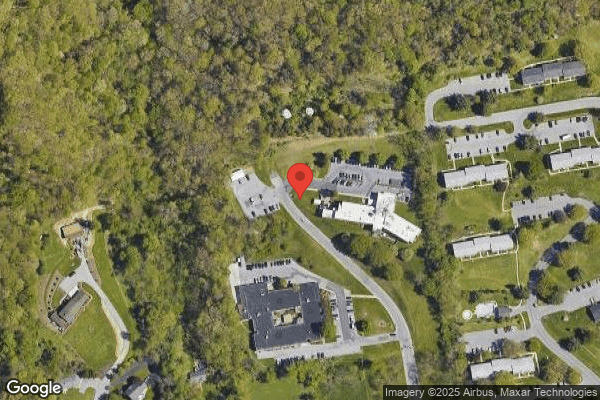


EDENBROOK SOUTH

101 LEADER DRIVE, WILLIAMSPORT, PA 17701 (570) 323-3758
For profit - Corporation 116 Beds EDEN EAST HEALTHCARE MANAGEMENT Data: November 2025
Trust Grade
28/100
#553 of 653 in PA
Last Inspection: January 2025

Within standard 12-15 month inspection cycle. Federal law requires annual inspections.

Overview

Edenbrook South in Williamsport, Pennsylvania, has received a Trust Grade of F, indicating significant concerns about the quality of care provided. Ranking #553 out of 653 facilities in the state places it in the bottom half, and #6 out of 8 in Lycoming County suggests limited better local options. Although the facility is improving, with fewer issues reported from 23 in 2024 to 17 in 2025, it still faces serious challenges, such as a neglect incident that caused actual harm to a resident. Staffing is rated average, but the 68% turnover rate is concerning compared to the state average, and there is less RN coverage than 82% of Pennsylvania facilities, which could hinder the quality of care. Additionally, fine issues include food safety violations in the kitchen, such as improperly stored food and unclean equipment, which could pose health risks to residents.

Trust Score
F
28/100
In Pennsylvania
#553/653
Bottom 16%
Safety Record
Moderate
Needs review
Inspections
Getting Better
23 → 17 violations
Staff Stability
⚠ Watch
68% turnover. Above average. Higher turnover means staff may not know residents' routines.
Penalties
✓ Good
$10,824 in fines. Lower than most Pennsylvania facilities. Relatively clean record.
Skilled Nurses
○ Average
Each resident gets 31 minutes of Registered Nurse (RN) attention daily — about average for Pennsylvania. RNs are the most trained staff who monitor for health changes.
Violations
⚠ Watch
57 deficiencies on record. Higher than average. Multiple issues found across inspections.
★☆☆☆☆
1.0
Overall Rating
★★★☆☆
3.0
Staff Levels
★★☆☆☆
2.0
Care Quality
★☆☆☆☆
1.0
Inspection Score
Stable
2024: 23 issues
2025: 17 issues

The Good

  • Full Sprinkler Coverage · Fire safety systems throughout facility
  • No fines on record

Facility shows strength in fire safety.

The Bad

1-Star Overall Rating

Below Pennsylvania average (3.0)

Significant quality concerns identified by CMS

Staff Turnover: 68%

22pts above Pennsylvania avg (46%)

Frequent staff changes - ask about care continuity

Federal Fines: $10,824

Below median ($33,413)

Minor penalties assessed

Chain: EDEN EAST HEALTHCARE MANAGEMENT

Part of a multi-facility chain

Ask about local staffing decisions and management

Staff turnover is elevated (68%)

20 points above Pennsylvania average of 48%

The Ugly 57 deficiencies on record

1 actual harm
Jun 2025 1 deficiency
CONCERN (D) 📢 Someone Reported This

A family member, employee, or ombudsman was alarmed enough to file a formal complaint

Potential for Harm - no one hurt, but risky conditions existed

Pharmacy Services (Tag F0755)

Could have caused harm · This affected 1 resident

Based on clinical record review and staff interview, it was determined that the facility failed to obtain and provide medications for one of six residents reviewed (Resident 1). Findings include: Rev...

Read full inspector narrative →
Based on clinical record review and staff interview, it was determined that the facility failed to obtain and provide medications for one of six residents reviewed (Resident 1). Findings include: Review of Resident 1's clinical record revealed that the facility admitted him on April 29, 2025. Review of Resident 1's hospital discharge records dated April 29, 2025, indicated that Resident 1 has a history of schizoaffective disorder and was to continue his Ingrezza (can be used off label for schizoaffective disorder, a chronic mental health condition) 40 mg (milligrams) nightly. A nursing progress note dated April 29, 2025, at 2:51 PM indicated that Resident 1's sister will be bringing in his Ingrezza on April 30, 2025, and that the pharmacy will not be providing. Resident 1 did not receive his nightly dose of Ingrezza on April 29, 2025. There was no indication why the pharmacy was not providing the medications, or why Resident 1's sister was expected to bring in the medication. The Ingrezza was the only medication that was not being obtained through the facility's pharmacy. Review of Resident 1's Medication Administration Record (MAR, a form used to document the administration of medications) dated May 2025, indicated that nursing staff did not administer his nightly Ingrezza 17 times. Nursing staff documented that the medication was not available from pharmacy or was not found in the medication cart. Review of Resident 1's MAR dated June 2025, indicated that nursing staff did not administer his Ingrezza medication on June 1, 2, or 3, 2025. Nursing documentation dated June 1, 2025, 10:54 AM indicated that Resident 1's sister was contacted about the facility being out of his Ingrezza. Resident 1's sister indicated she was unsure how to obtain the med from their pharmacy. There was no documented evidence to indicate why the pharmacy was not being contacted to supply the medication. Interview with the Employee 1, registered nurse, on June 4, 2025, at 3:01 PM confirmed the above findings for Resident 1. 28 Pa. Code 211.9 (a)(1)(d)(e)(4)(k) Pharmacy services 28 Pa. Code 211.12(c)(d)(1)(3)(5) Nursing services
Mar 2025 2 deficiencies
CONCERN (D) 📢 Someone Reported This

A family member, employee, or ombudsman was alarmed enough to file a formal complaint

Potential for Harm - no one hurt, but risky conditions existed

Deficiency F0692 (Tag F0692)

Could have caused harm · This affected 1 resident

Based on clinical record review, review of select facility policies and procedures, and staff interview, it was determined that the facility failed to implement interventions to promote acceptable par...

Read full inspector narrative →
Based on clinical record review, review of select facility policies and procedures, and staff interview, it was determined that the facility failed to implement interventions to promote acceptable parameters of nutrition for one of nine residents reviewed (Resident 1). Findings include: The facility policy entitled Resident Height and Weight, last reviewed without changes on January 7, 2025, revealed nursing department staff and the facility dietician will cooperate to prevent, monitor, and provide interventions for undesirable weight variances for residents. A significant weight change is defined as a 5 percent weight change over 30 days, 7.5 percent weight change over 90 days, or a 10 percent weight change over 180 days. Upon admission, and two days following, the nursing department staff will weigh the resident, weekly thereafter for four weeks, and then monthly unless otherwise ordered by the physician, or recommended by the dietitian. Any weight change of five pounds or greater within 30 days will be retaken within 72 hours for verification, and the reweight will be documented in the electronic medical record. If the re-weight verifies a significant, unplanned weight change, this is communicated to the resident's physician, responsible party ,and dietician. This weight change will be assessed and reviewed by the dietician in cooperation with the interdisciplinary team and appropriate interventions will be implemented, reviewed, and revised as needed. Clinical record review revealed the facility admitted Resident 1 on June 21, 2024. Further review of Resident 1's clinical record revealed the following weight assessments: December 13, 2024, 177 pounds January 7, 2025, 174 pounds February 6, 2025, 160 pounds (a 14-pound, 8.04 percent severe weight loss in 30 days) March 1, 2025, 154.5 pounds (a 22.5 pound, 12.71 percent severe weight loss in less than 90 days) Review of Resident 1's clinical record revealed a weight change note dated February 7, 2025, noting Resident 1's current weight was decreased 14 pounds from her prior weight. The registered dietician requested a reweight. The registered dietician had no recommendations at this time. There was no evidence that staff obtained a re-weight or notified Resident 1's physician. Further review of Resident 1's clinical record revealed no assessment of Resident 1's severe weight loss, or any interventions addressing the severe weight loss. Interview with Employee 1 (registered dietitian) on March 4, 2025, at 11:47 AM confirmed these findings. Employee 1 revealed that she was aware of Resident 1's weight loss. She stated that she had been waiting for weight verifications and confirmed that she did not assess and implement interventions to address Resident 1's severe weight loss. 28 Pa. Code 211.10(d) Resident care policies 28 Pa. Code 211.12(d)(1)(3)(5) Nursing services
CONCERN (E) 📢 Someone Reported This

A family member, employee, or ombudsman was alarmed enough to file a formal complaint

Potential for Harm - no one hurt, but risky conditions existed

Quality of Care (Tag F0684)

Could have caused harm · This affected multiple residents

Based on clinical record, review of select facility policies, and staff interview, it was determined that the facility failed to provide the highest practical care related to bowel management for one ...

Read full inspector narrative →
Based on clinical record, review of select facility policies, and staff interview, it was determined that the facility failed to provide the highest practical care related to bowel management for one of four residents reviewed (Resident 1) Findings include: The current facility policy entitled Standing Orders for Skilled Nursing Facility, revealed the following orders are initiated from standing orders. The bowel and gastrointestinal (organs that help with digestion) protocol includes nursing staff will administer residents Milk of Magnesia (MOM) 30 milliliters (mL) by mouth on the day shift of day three without a bowel movement. Nursing staff are to administer a Dulcolax Suppository 10 milligram (mg) on the evening shift of day three if the Milk of Magnesia is ineffective. Nursing staff are to administer a Fleet's enema as needed on day four without a bowel movement if no results from the suppository. Nursing staff can administer 15 to 30 mL every two hours for as needed gastrointestinal distress. Clinical record review for Resident 1 revealed the facility initiated a plan of care to address Resident 1's constipation on July 9, 2024. Interventions included that the resident would follow the bowel protocol if constipation occurs. Clinical record review for Resident 1 revealed the following physician orders to promote bowel movements: Milk of Magnesia 400 mg per 5 ml (milliliters) (MOM, laxative that pulls water into bowel to soften bowel contents) Give 30 ml by mouth as needed (PRN) and administer if no bowel movement by the third day (day shift). Dulcolax suppository (Bisacodyl, a laxative medication used to relieve constipation) insert one suppository rectally as needed for constipation for no bowel movement after administration of MOM (evening shift). Fleet's Enema 7-19 gm (grams) per 118 ml (Sodium Phosphates, liquid medication inserted into the rectum to treat constipation). Insert 1 applicatorful rectally for no bowel movement by the fourth day (day shift) if no results from administration of suppository or MOM. Review of bowel elimination records for Resident 1 revealed that staff documented no bowel movements for January 28, 29, 30 and, 31, 2025. There was no documentation of Resident 1's bowels from February 1 to 4, 2025. Further review of Resident 1's bowel elimination record revealed that staff documented no bowel movements for February 5, 6, 7, 8, 9,10, 11, 12, 13, 14, 15, 16, 17, and 18, 2025. Interview with Employee 2, assistant director of nursing, on March 4, 2025, at 1:25 PM revealed there was no documentation of Resident 1's bowel movements from February 1 to 5, 2025, because the facility had to use paper documentation during this time due to changes in facility ownership and the bowel movements were not being documented on the nurse aide data collection tool. There was no indication that staff offered (as per the physician orders and bowel management protocol), or Resident 1 refused, any PRN medications. Further review of Resident 1's clinical record revealed nursing documentation dated February 12, 2025, at 11:14 AM noting that transportation was in the facility to take Resident 1 to a gastrointestinal appointment she made on her own. Resident 1's guardian stated she is not to go to this appointment. Documentation revealed transportation staff stated Resident 1 has to go she has not had a bowel movement in over three weeks. Documentation noted Resident 1 stated, I have not been able to go. Nursing documentation dated February 12, 2025, at 11:59 AM revealed that Resident 1 called 911 due to not being able to go to her appointment due to her guardian's decision. The facility called the guardian and agreed to send her to the hospital. Review of hospital documentation from February 12 to 13, 2025, revealed Resident 1 presented to the emergency department for evaluation of constipation with abdominal pain. Fecal disimpaction was performed in the hospital. Resident 1 was educated on use of Miralax for continued constipation. Nursing documentation dated February 19, 2025, at 10:03 AM noted Resident 1 voiced concerns of a hot broom handle feeling, in her rectum this morning after having a bowel movement. Resident 1 also stated there was blood in the toilet. Nursing documentation on February 19, 2025, at 5:38 PM noted Resident 1 was demanding to go to the hospital, called 911, emergency medical services arrived, and transported Resident 1 to the hospital. Nursing documentation dated February 20, 2025, at 12:49 AM noted Resident 1 was transferred from the emergency room to a medical center for a gastrointestinal consult. Review of the gastrointestinal documentation dated February 20, 2025, revealed a CTE (computed tomography enterography, a noninvasive imaging test that examines the small intestine) was recommended and performed showing small bowel thickening. The documentation revealed that rectal bleeding could be multifactorial but mostly could be from possible solitary rectal ulcer history of constipation requiring disimpaction and the current CTE showing significant stool in the rectum. Resident 1 returned to the facility on February 26, 2025. The facility failed to provide the highest practical care related to bowel management. These findings were reviewed during an interview with the Nursing Home Administrator and Director of Nursing on March 4, 2025, at 2:25 PM. 28 Pa. Code 211.12(d)(1)(3)(5) Nursing services
Jan 2025 14 deficiencies
CONCERN (D)

Potential for Harm - no one hurt, but risky conditions existed

Resident Rights (Tag F0550)

Could have caused harm · This affected 1 resident

Based on observation and staff interview, it was determined that the facility failed to ensure that care and services were provided in a manner that enhanced resident dignity for one of 21 residents s...

Read full inspector narrative →
Based on observation and staff interview, it was determined that the facility failed to ensure that care and services were provided in a manner that enhanced resident dignity for one of 21 residents sampled (Resident 61). Findings include: Observation on January 21, 2025, at 10:42 AM revealed Resident 61 was sleeping in bed. Observation from the hallway revealed Resident 61's catheter bag was full of urine, not covered, and laying on the floor. Observation on January 22, 2025, at 10:36 AM revealed Resident 61 was sleeping in bed. Observation from the hallway revealed Resident 61's catheter bag was again not covered and laying on the floor. The surveyor reviewed the above findings during a meeting with the Director of Nursing on January 24, 2025, at 9:34 AM. CFR 483.10(a) Resident Rights/Exercise of Rights. Previously cited deficiency 2/16/24. 28 Pa. Code 201.18(b)(1) Management
CONCERN (D)

Potential for Harm - no one hurt, but risky conditions existed

Safe Environment (Tag F0584)

Could have caused harm · This affected 1 resident

Based on observation and staff interview, it was determined that the facility failed to provide adequate housekeeping and maintenance services to maintain a clean and safe environment on four of four ...

Read full inspector narrative →
Based on observation and staff interview, it was determined that the facility failed to provide adequate housekeeping and maintenance services to maintain a clean and safe environment on four of four nursing units (North, South, East and West, Residents 85, 56, 68, 14, 39, and 50 ). Findings include: An observation of Resident 85 on January 21, 2025, at 10:28 AM revealed the resident was in bed. An enteral feeding pump was observed hanging from the pole beside the resident's bed, not in use. The feeding pump was observed to have several spots of dried brown liquid splatter/spills on the exterior of the feeding pump. There was no enteral feeding bag/container hanging at the time of the observation. Resident 85's observation of the feeding pump was reviewed with the Director of Nursing on January 22, 2025, at 2:30 PM. An observation of Resident 56 on January 21, 2025, at 11:01 AM revealed the resident was in bed. An enteral feeding pump and bag was observed hanging from a pole beside the resident's bed. The feeding pump was observed to have several spots of dried brown liquid splatter/spills on the exterior of the feeding pump, the pole, and the bagged supplies hanging from the pole. The above findings for Resident 56's feeding tube feed were reviewed with the Nursing Home Administrator and Director of Nursing during a meeting on January 22, 2025, at 2:12 PM. Observation of the [NAME] Nursing Unit on the following dates and times revealed the following: On January 21, 2025, at 11:30 AM there was a strong odor of urine in Resident 68's bathroom. On January 22, 2025, at 11:47 AM there was a strong odor of urine in Resident 68's room and the bathroom. At 12:02 PM there was a strong odor of urine in Resident 14's room. On January 23, 2025, at 11:56 AM there was a strong odor of urine in Resident 68's room. On January 24, 2025, at 10:57 AM there was a faint odor of urine in Resident 14's room. The surveyor reviewed this information during an interview with the Nursing Home Administrator and Director of Nursing on January 23, 2025, at 2:45 PM. Observation of Resident 39's room on January 22, 2025, at 10:13 AM revealed a strong urine smell, and the floor was dirty from his bed to the area at the bottom of his roommates bed. The wall to the left of the doorway was dirty. There were two night stands right inside the door to the left with an unorganized pile of stuff on top to include: briefs, clothes, books, CDs, O2 equipment, and Eucerin cream (used to treat dry skin). The first nightstand had the handle missing from the top drawer. The second nightstand had a broken handle hanging down from the second drawer. The wall to the right of the bed (when looking at the bed) and adjacent to the bathroom, was all marred and the paint was peeled near the bottom of the wall. Observation of Resident 50's room on January 24, 2025, at 10:45 AM revealed the cove base coming off the wall directly behind the head of Resident 50's bed. There were crumbled pieces of the wall on the floor that appeared to have come from the area where the cove base was missing. The Nursing Home Administrator and Director of Nursing were made aware of the concerns in Resident 39 and 50's rooms on January 24, 2024, at 11:30 AM. 483.10(i)(1)-(7) Safe/clean/comfortable/homelike Environment Previously cited 2/16/24, and 8/6/24 28 Pa. Code 201.14(a) Responsibility of licensee
CONCERN (D)

Potential for Harm - no one hurt, but risky conditions existed

Abuse Prevention Policies (Tag F0607)

Could have caused harm · This affected 1 resident

Based on clinical record review, staff interview, and review of facility investigation documentation, it was determined that the facility failed to thoroughly investigate a resident's injury of unknow...

Read full inspector narrative →
Based on clinical record review, staff interview, and review of facility investigation documentation, it was determined that the facility failed to thoroughly investigate a resident's injury of unknown origin for one of two residents reviewed for abuse (Resident 42). Findings include: Clinical record review for Resident 42 revealed a progress note dated December 30, 2024, at 1:16 PM that indicated the nurse was made aware of Resident 42 having a bruise on the right side of her face that measured 3 centimeters (cm) x 2 cm and was dark bluish and purplish in color. The bruise was on the outside of the right eye. The note indicated that Resident 42 is combative with care and staff were educated to walk away when performing care if the resident becomes combative to avoid self-inflicted wounds. Further clinical record review revealed that there was no follow-up progress notes related to the event until January 22, 2025, at 5:49 PM after the surveyor inquired about event reports related to Resident 42 in a meeting on January 22, 2025, at 3:01 PM with the Director of Nursing. The note indicated that the registered nurse concluded her investigation and believed that Resident 42's bruise was consistent with her aggressively knocking her glasses off her face while having behaviors during care. The note also indicated that the staff were educated. Review of the facility's investigation into the event revealed that they did not obtain witness statements from staff related to how the injury may have occurred and there was no evidence of staff education. Interview with the Director of Nursing on January 23, 2025, at 2:55 PM revealed that she did not have witness statements from staff related to how the bruise may have occurred, or evidence that the staff were educated on interventions to implement when Resident 42 became combative and aggressive with care. The facility failed to thoroughly investigate Resident 42's injury of unknown origin. 483.12(b)(1) Prohibit and prevent abuse, neglect, and exploitation of residents and misappropriation of resident property. Previously cited 5/22/2024. 28 Pa. Code 201.18(e)(1) Management 28 Pa. Code 201.29(a)(c) Resident rights
CONCERN (D)

Potential for Harm - no one hurt, but risky conditions existed

Assessment Accuracy (Tag F0641)

Could have caused harm · This affected 1 resident

Based on clinical record review and staff interview, it was determined that the facility failed to ensure assessments accurately reflected a resident's status for one of 21 residents reviewed (Residen...

Read full inspector narrative →
Based on clinical record review and staff interview, it was determined that the facility failed to ensure assessments accurately reflected a resident's status for one of 21 residents reviewed (Resident 52). Findings include: Clinical record review for Resident 52 revealed a quarterly MDS (Minimum Data Set, an assessment tool completed at specific intervals to determine resident care needs) dated November 6, 2024, that facility staff assessed Resident 52 as receiving an anticoagulant medication during the last seven days in the assessment period. Further clinical record review revealed no evidence that Resident 52 received an anticoagulant medication during the assessment period for the MDS noted above. Interview with the Director of Nursing on January 23, 2025, at 2:31 PM confirmed that Resident 52's November 6, 2024, MDS was coded in error regarding receiving an anticoagulant medication. 28 Pa. Code 211.5(f)(ix) Medical records 28 Pa. Code 211.12(d)(1)(3)(5) Nursing services
CONCERN (D)

Potential for Harm - no one hurt, but risky conditions existed

Quality of Care (Tag F0684)

Could have caused harm · This affected 1 resident

Based on clinical record review, observation, and resident and staff interview, it was determined that the facility failed to ensure the highest practical care related to consultant recommendations fo...

Read full inspector narrative →
Based on clinical record review, observation, and resident and staff interview, it was determined that the facility failed to ensure the highest practical care related to consultant recommendations for one of 21 residents reviewed (Resident 93). Findings include: Observation and interview with Resident 93 on January 21, 2025, at 10:51 AM revealed Resident 93 complained of a cold hand. Observation of his right hand revealed he had no grasp, and his fingers were partially contracted. He stated that he sits on his hand to try and warm up his hand and straighten his fingers. Resident 93 stated that he went to see a specialist about his hand. Review of Resident 93's clinical record indicated he saw a plastic surgeon on January 13, 2025, due to pain and stiffness in his right hand. The physician progress note indicated with some exercise Resident 93's range of motion improved. The physician noted that the facility stopped doing occupational therapy even though he was improving. The physician recommended warm soaks twice a day and a need to resume hand therapy. Further review of Resident 93's clinical record revealed no documentation that the facility implemented the physician's recommendations. Interview with the Director of Nursing on January 24, 2025, at 11:06 AM confirmed these findings and stated the facility implemented the physician's recommendations after the surveyor's questioning. 483.25 Quality of Care Previously cited deficiency 2/16/24 28 Pa. Code 211.12(d)(1)(3)(5) Nursing services
CONCERN (D)

Potential for Harm - no one hurt, but risky conditions existed

Respiratory Care (Tag F0695)

Could have caused harm · This affected 1 resident

Based on observation, clinical record review, and staff interview, it was determined that the facility failed to provide appropriate respiratory care and services for one of three residents reviewed (...

Read full inspector narrative →
Based on observation, clinical record review, and staff interview, it was determined that the facility failed to provide appropriate respiratory care and services for one of three residents reviewed (Resident 43). Findings include: According to the American Association for Respiratory Care proper cleansing of respiratory (nebulizer) equipment reduces infection risk. The longer a dirty nebulizer sits and is allowed to dry, the harder it is to clean thoroughly. Parts of the aerosol drug delivery device should be rinsed and then washed with soap and hot water after each treatment. Once completely dry, store the nebulizer cup and mouthpiece in a zip lock bag. Clinical record review for Resident 43 revealed a current physician's order for staff to provide oxygen at 5 liters per minute (LPM) via NC (nasal canula, tubing to deliver oxygen to the nose) continuously every day and evening shift for supplementary oxygen and BiPAP (pressurized non-invasive air ventilation via mask): oxygen 6 to 7 LPM at bedtime and as needed (PRN) for sleep apnea. Observation of Resident 43's oxygen concentrator on January 21, 2025, at 11:15 AM and January 22, 2025, at 11:52 AM and 3:20 PM revealed that their oxygen level was set at 9 LPM via NC and without humidification. Resident 43's BiPAP mask was unbagged and lying on the floor behind their oxygen concentrator during the January 21, 2025, observation and lying on their bedside stand during the January 21, 2025, observations. The surveyor reviewed the above information for Resident 43 during an interview with the Director of Nursing on January 22, 2025, at 3:20 PM. 483.25(i) Respiratory/tracheostomy Care and Suctioning Previously cited 2/16/24 28 Pa. Code 211.10 (c)(d) Resident care policies 28 Pa. Code 211.12(d)(1)(5) Nursing Services
CONCERN (D)

Potential for Harm - no one hurt, but risky conditions existed

Deficiency F0761 (Tag F0761)

Could have caused harm · This affected 1 resident

Based on observation and staff interview, it was determined that the facility failed to secure treatments on one of four nursing hallways (North Hall, Resident 56). Findings include: Observations of R...

Read full inspector narrative →
Based on observation and staff interview, it was determined that the facility failed to secure treatments on one of four nursing hallways (North Hall, Resident 56). Findings include: Observations of Resident 56's room on January 21, 2025, at 10:02 AM, January 22, 2025, at 10:19 AM, and January 23, 2025, at 10:52 AM, revealed two open bottles of Dakin's solution (an antiseptic used to treat and prevent infections in wounds), and a bottle of Derma wound cleanser (antiseptic for skin and wounds) on the windowsill. The label on the bottle read to keep out of reach of children, and if swallowed to get medical help, or call poison control. The above findings for Residents 56 and were reviewed with the Nursing Home Administrator and Director of Nursing during a meeting on January 23, 2025, at 2:29 PM. The Director of Nursing confirmed the above-mentioned items should not be stored on Resident 56's windowsill. 483.45(g)(h)(1)(2) Label/store Drugs and Biologicals Previously cited deficiency 2/16/24 28 Pa. Code 211.9 (a)(1)(k) Pharmacy services 28 Pa. Code 211.12 (d)(1)(3)(5) Nursing services
CONCERN (E)

Potential for Harm - no one hurt, but risky conditions existed

ADL Care (Tag F0677)

Could have caused harm · This affected multiple residents

Based on clinical record review and staff interview, it was determined that the facility failed to provide activities of daily living (ADL) for two of five residents reviewed (Resident 65 and 89). Fin...

Read full inspector narrative →
Based on clinical record review and staff interview, it was determined that the facility failed to provide activities of daily living (ADL) for two of five residents reviewed (Resident 65 and 89). Findings include: Clinical record review for Resident 65 revealed that the facility completed a significant change MDS assessment (Minimum Data Set, an assessment tool completed at specific intervals to determine resident care needs) on November 25, 2024, which indicated that it was somewhat important that they choose between a tub bath, shower, bed bath, or sponge bath. The MDS also identified that they were dependent on staff for a shower and to bathe themself. Review of Resident 65's task documentation (documentation where staff indicate completion of ADL care) revealed that since June 29, 2023, staff was to complete ADL - Bathing (bed bath) during the day shift on Tuesdays and Saturdays. Review of Resident 65's task documentation revealed that there was documentation that indicated staff provided the following showers to Resident 65: October 5 and 29, 2024 November 12, 19, 26, and 30, 2024 December 3, 7, and 31, 2024 January 7, and 11, 2025 Further review of Resident 65's task documentation revealed that staff documented RR (resident refused) or did not document that bathing was completed on the following dates: October 8, 2024 November 2 and 23, 2024 December 14, 17, and 21, 2024 January 18, 2025 There was no documentation that indicated staff re-approached, re-addressed bathing, or provided Resident 65 the opportunity to bathe the next shift or following day. Further review of Resident 65's task documentation revealed that staff indicated No they did not cleanse Resident 65's hair on bathing days or did not document completion of cleansing Resident 65's hair on the following dates: October 5, 2024, day shift October 8, 2024, evening shift November 2, 2024, evening shift November 23, 2024, day shift December 21, 2024, evening shift December 24, 2024, day and evening shift January 4, 7, and 18, 2025 Further review of Resident 65's task documentation revealed that staff documented RR (resident refused) or did not document that hair cleansing was completed on the following dates: October 5, 2024, evening shift October 8, 2024, day shift October 22, 2204, day and evening shift November 2, 2024, day shift November 23, 2024, evening shift December 21, 17, and 21, 2024 January 18, 2025 There was no documentation that indicated staff re-approached, re-addressed cleansing Resident 65's hair, or provided Resident 65 the opportunity to cleanse their hair the following day. Observation of Resident 65 on January 22, 2025, at 11:46 AM and January 23, 2025, 2:07 PM revealed that their hair was disheveled. The surveyor reviewed the above information during an interview with the Director of Nursing on January 24, 2025, at 8:57 AM Clinical record review for Resident 89 revealed that the facility admitted him on March 23, 2024, with diagnosis of dementia with behavioral disturbances and adult failure to thrive. Clinical record review for Resident 89 revealed current task documentation that he was independent to requiring transfer assistance and at times requires physical assistance with bathing/showers and personal hygiene. Review of Resident 89's task documentation revealed that staff were to complete his showers on Sundays and Thursdays during the day shift. Review of Resident 89's task documentation for November 2024, revealed that there was documentation that indicated staff provided him with a shower or bed bath on November 10, and November 21, 2024. Review of Resident 89's task documentation for December 2024, revealed that there was documentation that staff provided him with a shower or bed bath on December 8, 2024. Review of Resident 89's task documentation for January 1-19, 2025, revealed that there were no documented showers for him during that time period. Review of Resident 89's shower documentation for November 2024, revealed that he refused his shower on November 3, 7, 14, 17, 24, and 28, 2024. Review of Resident 89's shower documentation for December 2024, revealed that he refused his shower on December 1, 5, 12, 15, 19, 22, and 26, 2024, with no documentation on December 29, 2024. Review of Resident 89's shower documentation for January 1-19, 2025, revealed that he refused his shower on January 2, 5, 9, 12, and 16, with no documentation on January 19, 2025. There was no documentation that indicated staff re-approached, re-addressed bathing, or provided Resident 89 the opportunity to bathe the next shift or following day. Review of Resident 89's care plan revealed no interventions related to him refusing baths or showers. The surveyor reviewed the above information during an interview with the Director of Nursing on January 23, 2025, at 3:08 PM. 483.24(a)(2) Adl Care Provided for Dependent Residents Previously cite 9/12/24, 5/22/24, and 2/16/24 28 Pa. Code 211.10(c) Resident care policies 28 Pa. Code 211.12(d)(1)(3)(5) Nursing services
CONCERN (E)

Potential for Harm - no one hurt, but risky conditions existed

Deficiency F0688 (Tag F0688)

Could have caused harm · This affected multiple residents

**NOTE- TERMS IN BRACKETS HAVE BEEN EDITED TO PROTECT CONFIDENTIALITY** Based on clinical record review and staff interview, it was determined that the facility failed to provide services to maintain ...

Read full inspector narrative →
**NOTE- TERMS IN BRACKETS HAVE BEEN EDITED TO PROTECT CONFIDENTIALITY** Based on clinical record review and staff interview, it was determined that the facility failed to provide services to maintain or improve a resident's range of motion (ROM) and mobility for three of seven residents reviewed (Residents 42, 65, and 70). Findings include: Clinical record review for Residents 65 revealed a current therapy restorative referral dated November 29, 2024. Therapy staff indicated nursing staff should provide seated AROM/AAROM (active and active assisted range of motion, movement of the body to maintain a resident's ability) one to two times daily for their LAQ's (bilateral anterior quadriceps, upper leg muscles) marches, heel to toes, hip abduction (legs move away from the body's midline), adduction (legs move towards the body's midline), and pillow squeezes. Review of Resident 65's task documentation revealed that nursing staff did not implement the AROM/AAROM the restorative nursing program until December 6, 2024, day shift. There was no documentation that staff completed or indicated No for Resident 65's AROM/AAROM restorative nursing program on the following dates: December 6. 15, 25, and 30, 2024 January 8, 13, 18, and 19, 2025 The surveyor reviewed the above information on January 24, 2025, at 11:44 AM with the Director of Nursing. Clinical record review for Resident 42 revealed a Minimum Data Set (MDS, an assessment completed by the facility at intervals to determine care needs of the resident) assessment dated [DATE], that indicated she had an impairment on one side of her upper and lower extremities. Further clinical record review revealed no evidence that Resident 42 was receiving a ROM program. Review of Resident 42's physical therapy discharge information dated December 23, 2024, revealed that a restorative ROM program was established, and staff were trained for Resident 42 to have AROM/AAROM to bilateral lower extremities. Review of her occupational therapy discharge information dated December 20, 2024, revealed that a ROM program was established for her right upper extremity. Resident 42 was also to have a splint brace program for a carrot splint (a device placed in hand to prevent contractures) to be placed in her right hand at all times except for meals and activities of daily living. A restorative nursing program instruction form from physical therapy was sent to nursing on December 24, 2024, outlining the instructions for the program that was to be completed with Resident 42 related to her bilateral lower extremities. The program was never initiated until January 22, 2025, after the surveyor brought it to the attention of the Director of Nursing (DON) on the same date at 3:00 PM. The Nursing Home Administrator and the DON were made aware of the issues above related to Resident 42's ROM and splint programs on January 23, 2025, at 3:00 PM. Clinical record review for Resident 70 revealed an MDS assessment dated [DATE], that indicated he had a limited ROM on one side of his upper and lower extremity. Further clinical record review revealed no evidence that he was receiving a ROM program. Review of Resident 70's physical therapy summary dated December 23, 2024, revealed that a ROM program was established for AROM to his bilateral lower extremities. A restorative nursing program instruction form from physical therapy was sent to nursing on December 24, 2024, outlining the instructions for the program that was to be completed with Resident 70 related to his bilateral lower extremities. There was no evidence that the program was ever initiated. The Director of Nursing confirmed on January 24, 2024, at 8:54 AM that the ROM program for Resident 70 was never initiated. The facility failed to provide services to maintain or improve range of motion for Residents 42, 65, and 70. 483.25(c)(1)-(3) Increase/prevent Decrease In Rom/mobility Previously cited 9/12/24 and 2/16/24 28 Pa. Code 211.10(a)(c)(d) Resident care policies 28 Pa. Code 211.12(c)(d)(1)(3)(5) Nursing services
CONCERN (E)

Potential for Harm - no one hurt, but risky conditions existed

Deficiency F0726 (Tag F0726)

Could have caused harm · This affected multiple residents

Based on review of facility documentation and staff interview, it was determined that the facility failed to ensure that nursing staff possessed the appropriate competencies and skill sets related to ...

Read full inspector narrative →
Based on review of facility documentation and staff interview, it was determined that the facility failed to ensure that nursing staff possessed the appropriate competencies and skill sets related to the care and assessment of residents with enteral tube feeding, tracheostomy care, catheter care, medication administration, and dressing changes for four of four employees reviewed for competencies (Employees 4, 5, 6, and 7). Findings include: A review of the facility documentation revealed that the facility had a total of 121 residents receiving medications, 10 residents with indwelling catheters (insertion of a tube into the bladder to remove urine), five residents with pressure ulcers, five residents with enteral tube feedings (device that allows liquid food to enter your stomach or intestine through a tube), and one resident with a tracheostomy (a surgical airway management procedure that consists of making an incision on the anterior aspect of the neck and opening a direct airway through an incision in the trachea). A request for nursing staff competencies for enteral tube feeding, tracheostomy care, catheter care, medication administration, and dressing changes revealed the facility was unable to provide any competencies for Employees 4 (registered nurse, RN), 5 (RN), 6 (licensed practical nurse, LPN), and 7 (LPN). The findings were reviewed with the Nursing Home Administrator and Director of Nursing on January 24, 2025, at 9:03 AM. Further interview with the Director of Nursing on January 24, 2025, at 10:15 AM confirmed the facility could provide no documentation that ensured Employees 4, 5, 6, and 7 have specific competencies and skill sets to care for the residents' needs listed above. 28 Pa Code 201.20(a) Staff development
CONCERN (E)

Potential for Harm - no one hurt, but risky conditions existed

Drug Regimen Review (Tag F0756)

Could have caused harm · This affected multiple residents

Based on clinical record review and staff interview, it was determined that the facility failed to maintain pharmacy recommendations or evidence pharmacy recommendations were addressed by the physicia...

Read full inspector narrative →
Based on clinical record review and staff interview, it was determined that the facility failed to maintain pharmacy recommendations or evidence pharmacy recommendations were addressed by the physician for three of five residents reviewed (Residents 23, 42, and 49). Findings include: Clinical record review for Resident 23 revealed a pharmacist monthly medication review note dated June 10, 2024, which indicated a medication review was completed for the resident and to see report for recommendation. There was no evidence of the pharmacist report of recommendations or a physician's response to a pharmacy recommendation for the date indicated. Interview with the Nursing Home Administrator and Director of Nursing on January 24, 2025, at 8:52 AM revealed the pharmacy recommendation for June 10, 2024, could not be located to determine if the physician addressed the recommendation. Clinical record review for Resident 49 revealed that the consultant pharmacist completed a medication review on November 10, 2024. There was no documentation what the consultant pharmacist recommended or that the physician or facility responded to the consultant pharmacist recommendations. This surveyor reviewed the above information during an interview with the Nursing Home Administrator on January 24, 2025, at 9:15 AM. Clinical record review for Resident 42 revealed a consultant pharmacist monthly medication review note dated June 10, 2024, which indicated a medication review was completed for the resident and to see report for recommendation. There was no evidence of the pharmacist's report of a recommendation or a physician's response to a pharmacy recommendation for the date indicated. The Nursing Home Administrator and the Director of Nursing confirmed on January 24, 2025, at 8:54 AM that they could not locate the pharmacy recommendation from June 10, 2024. 483.45(c)(4) Pharmacy review Previously cited 2/16/24, and 5/22/24 28 Pa. Code 211.9 (d)(k) Pharmacy services 28 Pa. Code 211.12(d)(3)(5) Nursing services
CONCERN (E)

Potential for Harm - no one hurt, but risky conditions existed

Medication Errors (Tag F0758)

Could have caused harm · This affected multiple residents

Based on clinical record review and staff interview, it was determined that the facility failed to ensure a resident's medication regime was free from potentially unnecessary medications for two of fi...

Read full inspector narrative →
Based on clinical record review and staff interview, it was determined that the facility failed to ensure a resident's medication regime was free from potentially unnecessary medications for two of five residents reviewed for medication regime review (Residents 9 and 65). Findings include: Clinical record review revealed the facility admitted Resident 9 on January 16, 2023. Review of the consultant pharmacist's recommendation dated July 13, 2024, revealed Resident 9 has been receiving Buspar (medication used to treat anxiety) 10 milligrams (mg) three times a day and Cymbalta (antidepressant medication) 90 mg every day. The consultant pharmacist requested the facility consider an attempted dose reduction or trial discontinuation. Resident 9's physician agreed to change her Cymbalta to 60 mg every day on July 24, 2024. Further review of Resident 9's clinical record revealed the facility never decreased her Cymbalta to 60 mg until January 17, 2025. Interview with the Nursing Home Administrator and Director of Nursing on January 24, 2025, confirmed these findings indicating the facility did not follow through with the physician's response to Resident 9's July 13, 2024's, consultant pharmacist recommendation. Clinical record review for Resident 65 revealed the following physician orders: Ativan (Lorazepam) 0.5 mg by mouth (PO) every 8 hours as needed (PRN) for anxiety, ordered on August 27, 2024, and discontinued on August 31, 2024. There was no stop date identified for this PRN psychotropic medication. Ativan 0.5 mg PO every 8 hours PRN for anxiety for 14 Days, ordered on August 31, 2024, and discontinued on September 3, 2024. Ativan 0.5 mg PO every 8 hours PRN for anxiety for 28 Days, ordered on September 3, 2024, and discontinued on October 1, 2024. Ativan 0.5 mg PO every 8 hours PRN for general anxiety disorder (GAD), ordered on October 7, 2024, 11:00 AM and discontinued on October 7, 2024, shortly thereafter. There was no stop date identified for this PRN psychotropic medication. Ativan 0.5 mg PO every 8 hours PRN for GAD for 30 Days, ordered on October 7, 2024, and discontinued on November 6, 2024. Lorazepam 0.5mg PO once for anxiety PRN, one time only for anxiety/behaviors for 1 day, ordered on November 7, 2024, at 11:00 AM and discontinued on November 7, 2024, shortly thereafter. Lorazepam 0.5 mg PO every 8 hours PRN for GAD for 30 Days then re-evaluate, ordered on November 26, 2024, and discontinued on December 12, 2024. Lorazepam 0.5 mg PO every 8 hours PRN for GAD for 90 Days, ordered on December 12, 2024, and currently active. Review of facility documentation revealed that staff initiated and re-ordered Resident 65's Ativan PRN medication on October 7, 2024. There was no documentation available that indicated Resident 65's physician, physician's assistant, or physician's assistant specializing in psychiatry saw them on October 7, 2024, to provide justification for the PRN Ativan. Review of Resident 65' behavior monitoring from August to December 2024, and January 2025, revealed staff documented behavior(s) on the following dates: August 23, 2024, evening shift August 27, 2024, day shift August 28, 2024, day and evening shifts August 31, 2024, day shift September 1, 4, 5, 10, 11, 21, 22, 28, and 29, 2024, day shift September 2, 14, 15, and 18, 2024, evening shift September 23, 2024, night shift October 7, 8. 13, 14, 15, 18, 20, 23, 25, and 26, 2024, day shift October 19, 20, and 29, 2024, evening shift November 1, 3, 8, 10, 12, 13, 14, 18, 20, 21, 22, 26, 28, 2024, day shift November 16, 20, and 23, 2024, evening shift November 7 and 26, 2024, night shift December 3, 8, 10, 16, 19, 21, 22, 24, 28, 2024, day shift December 4, 7, 9, 11, 12, 13, 15, 19, 22, 26, 27, and 31, 2024, evening shift December 16 and 29, 2024, night shift January 2, 3, 4, 5, 6, 9, 10, 13, 14, 21, 2025, day shift January 4, 6, 7, 12, 13, 15, 16, 18, and 19, 2025, evening shift January 23, 2025, night shift Review of Resident 65's clinical record revealed that the facility's contracted physician's assistant specializing in psychiatry saw them on July 16 and 25, 2024, August 6, 22, and 27, 2024, September 5, 12, and 19, 2024, October 17 and 29, 2024, November 12, 2024, December 10, 2024, and January 2, and 23, 2025. Further review of Resident 65' clinical record revealed that the facility's physician or physician's assistant saw them on August 23 and 26, 2024, September 10, 12, 25, and 27, 2024, October 17, 2024, November 3 and 24, 2024, December 2, 9, 19, 20, 24, and 29, 2024, and January 2, 5, and 19, 2025. On January 13, 2025, the consultant pharmacist reviewed Resident 65's medications and recommended to evaluate if the PRN Ativan can be discontinued or if a 14 day stop date can be added. The facility's physician and contracted physician's assistant specializing in psychiatry responded other and PRN Ativan has a 90 day stop date due to ongoing anxiety .will continue to evaluate in the future. There was no other documentation available, which indicated Resident 65 had behavior(s) or that they were unable to be seen by a provider to justify and/or necessitate the need for extension of Resident 65's PRN Ativan medication longer than 14 days per regulatory compliance. Review of Resident 65's August through December 2024, and January 2025's, MAR (medication administration record, a form to document medication administration) revealed that the facility administered Ativan 0.5 mg PRN on the following dates: August 31, 2024, at 5:38 PM September 1, 2024, at 10:02 AM September 2, 2024, at 8:30 PM September 11, 2024, at 9:32 AM September 20, 2024, at 9:06 AM September 21, 2024, at 9:00 AM September 22, 2024, at 8:38 AM September 28, 2024, at 9:03 AM September 29, 2024, at 10:19 AM October 7, 2024, at 11:15 AM October 8, 2024, at 9:24 AM October 10, 2024, at 12:50 PM October 13, 2024, at 9:45 AM October 14, 2024, at 9:20 AM October 15, 2024, at 1:39 PM October 18, 2024, at 7:24 AM October 19, 2024, at 7:20 AM October 20, 2024, at 10:12 AM October 22, 2024, at 9:02 AM October 23, 2024, at 1:39 AM, 11:40 AM, and 8:03 PM October 28, 2024, at 7:49 AM and 8:31 PM October 30, 2024, at 8:51 PM November 1, 2024, at 12:00 PM November 2, 2024, at 7:43 AM November 3, 2024, at 10:48 AM November 5, 2024, at 8:30 AM November 8, 2024, at 5:00 PM November 10, 2024, at 8:15 AM November 13, 2024, at 8:42 AM November 14, 2024, at 8:14 AM November 15, 2024, at 2:36 PM November 16, 2024, at 9:05 AM November 17, 2024, at 1:54 PM November 20, 2024, at 8:05 AM and 3:57 PM November 21, 2024, at 8:36 AM December 1, 2024, at 8:20 AM December 3, 2024, at 9:13 AM December 7, 2024, at 4:00 PM December 8, 2024, at 3:11 AM December 9, 2024, at 3:20 AM and 3:19 PM December 10, 2024, at 8:28 AM December 11, 2024, at 2:51 AM December 13, 2024, at 1:18 PM December 14, 2024, at 7:42 AM December 16, 2024, at 4:00 PM December 19, 2024, at 8:51 AM December 20, 2024, at 5:02 PM December 21, 2024, at 4:21 PM December 24, 2024, at 6:28 PM December 26, 2024, at 4:11 PM December 28, 2024, at 7:20 AM December 29, 2024, at 12:42 AM and 8:46 AM There was no documentation that indicated non-medicinal interventions were attempted prior to administering the PRN Ativan medications. The surveyor reviewed this information during an interview with the Nursing Home Administrator and Director of Nursing on January 23, 2025, at 12:25 PM. 483.45(d)(e)(1)-(2) Drug Regimen is Free from Unnecessary Drugs Previously cited deficiency 2/16/24 28 Pa. Code 211.9(a)(1)(k) Pharmacy services 28 Pa. Code 211.10(a) Resident care policies 28 Pa. Code 211.12(c)(d)(1)(3)(5) Nursing services
CONCERN (E)

Potential for Harm - no one hurt, but risky conditions existed

Infection Control (Tag F0880)

Could have caused harm · This affected multiple residents

Based on observation and staff interview, it was determined that the facility failed to prevent the potential spread of infection during medication administration pass for two of five residents observ...

Read full inspector narrative →
Based on observation and staff interview, it was determined that the facility failed to prevent the potential spread of infection during medication administration pass for two of five residents observed (Residents 10 and 60), during a dressing change for one of one resident observed for a dressing change (Resident 50), and failed to adhere to enhanced barrier precautions for one of one resident observed during observation of a dressing change (Resident 50). Findings include: Observation of Employee 8 (Licensed Practical Nurse, LPN) during a medication administration pass on January 23, 2025, at 8:35 AM revealed she prepared the following medications for Resident 10, Famotidine (a medication used to treat ulcers of reflux disease) 20 milligrams (mg) two capsules; Mucinex (a medication used to treat cough caused by the common cold) 600 mg one tablet; One daily with minerals (a multi vitamin) one tablet; Vitamin D3 (used to supplement vitamin D in the body) 1000 units, one capsule; Colace (a medication used to treat or prevent constipation) 100 mg one capsule; and Fexofenadine (a medication used to treat seasonal allergies) 180 mg one tablet, by taking them out of the bottle with her ungloved (bare) hand and placing them into the medication cup. Observation also revealed she punched out of a punch card the medication Clopidogrel (a medication used to prevent blood clots) that landed on top of her medication cart. She then picked up the pill with her ungloved hand and placed it into the medication cup. She entered Resident 10's room and administered the medications to her. Observation of Employee 8, LPN, during a medication administration pass on January 23, 2025, at 8:25 AM revealed she prepared the following medication for Resident 60, Famotidine 20 mg one capsule, by taking it from the bottle with her ungloved hand and placing it into the medication cup. She then entered Resident 60's room and administered the medication to her. Concurrent interview with Employee 8, confirmed the above noted findings. The Nursing Home Administrator and Director of Nursing were made aware of the concerns with medication administration pass on January 23, 2025, at 2:55 PM. Observation of Employee 9 , Registered Nurse, infection preventionist, and wound nurse, on January 24, 2025, at 10:30 AM during a dressing change of Resident 50's left lateral heel pressure ulcer, revealed she entered the room with her supplies and place them on Resident 50's overbed table. She did not clean or prepare the overbed table first, failing to establish a clean field for her supplies. She then sanitized her hands and donned gloves. She raised Resident 50's bed, removed her gloves, sanitized her hands, and put on a new pair of gloves. Without changing her gloves, Employee 9 then completed the following actions: took off Resident 50's non-skid sock, removed the old dressing, (Employee 9 should have donned new gloves) cleansed the area with normal saline solution and gauze, applied betadine to the area, covered it with a new dressing, reapplied residents' non-skid socks, discarded the old dressing, cleaned up her supplies, removed gloves, and washed her hands. Observation of the door to Resident 50's room revealed no sign indicating he was on enhanced barrier precautions (EBPs, precautions used to prevent the spread of multi-drug resistant organisms). Concurrent interview with Employee 9 revealed that EBPs should have been used when doing the dressing change to include a gown in addition to the gloves she wore. She also indicated that she should have set up a clean surface for her dressing supplies and changed her gloves after removing the old dressing from Resident 50's left heel. The Nursing Home Administrator and the Director of Nursing were made aware of concerns with Resident 50's dressing change concerns and concerns with enhanced barrier precautions on January 24, 2025, at 11:10 AM. 28 Pa. Code 201.18 (d) Management 28 Pa. Code 211.10(d) Resident care policies 28 Pa. Code 211.12(d)(1) Nursing services
CONCERN (F)

Potential for Harm - no one hurt, but risky conditions existed

Food Safety (Tag F0812)

Could have caused harm · This affected most or all residents

Based on observation and staff interview, it was determined the facility failed to store food and maintain food service equipment in accordance with professional standards for food service safety in t...

Read full inspector narrative →
Based on observation and staff interview, it was determined the facility failed to store food and maintain food service equipment in accordance with professional standards for food service safety in the facility's main kitchen. Findings include: Observation of the facility's main kitchen on January 21, 2025, at 8:58 AM with Employee 1, dietary director, revealed the following: Two large bulk clear plastic containers were observed on a lower shelf of a production table with a white substance in each container. One container was labeled as flour and the other sugar, but there was no date to indicate when the products were placed in the containers or when they needed used by. Several white potholders were observed sitting on top of the convection oven. The potholders were soiled with dried foods and significantly stained. The bottom shelf of the steamer and prep table had dried food debris. The bottom shelf of the steamer and lower shelf of the production table across from the steamer contained dust and dried food debris. The flooring under and behind the steamer and the table beside the steamer contained dried food and debris buildup. The area surrounding a pipe where it enters the floor behind the steamer was caked up with dried food and debris. A two-door cooler behind the serving line contained multiple shelves in the unit with exposed rust colored metal where the protective coating of the shelves had worn off. The exterior of the ceiling vents over the wall of coolers, the vents over the single door food cooler above the serving line, and the vents at the exit door of the kitchen to the resident hallway were covered in dust. The ceiling tile and light covers surrounding the vent over the single door cooler by the serving line were also covered in dust. Another ceiling tile over the single door cooler was significantly brown stained and drooping around a hole where an electrical cord came down through the tile to the single door cooler by the serving line. The plate warming unit contained dried food splatter on the exterior sides of the unit and the lower corner bumpers contained debris and dust. Observation of the food serving temperature log for January 21, 2025, revealed no temperatures were recorded for the items served at the breakfast meal that day as Employee 1 indicated breakfast had already been served to residents. There was no evidence that temperatures were checked for the food served. The temperature log also did not have temperatures recorded for breakfast January 20, 2025; the day prior. A follow up observation in the main kitchen on January 23, 2025, at 11:45 AM revealed four potholders sitting on top of the convection oven. The potholders were blackened and covered in dried food. The above information was reviewed with the Nursing Home Administrator and Director of Nursing on January 23, 2025, at 2:30 PM. 483.60(i)(2) Store, prepare, food safe and sanitary Previously cited 2/16/24 28 Pa. Code 201.14 (a) Responsibility of Licensee
Sept 2024 3 deficiencies
CONCERN (D) 📢 Someone Reported This

A family member, employee, or ombudsman was alarmed enough to file a formal complaint

Potential for Harm - no one hurt, but risky conditions existed

Deficiency F0806 (Tag F0806)

Could have caused harm · This affected 1 resident

Based on observation and resident and staff interview, it was determined that the facility failed to provide food that accommodated resident preferences for one of five residents reviewed (Resident 5)...

Read full inspector narrative →
Based on observation and resident and staff interview, it was determined that the facility failed to provide food that accommodated resident preferences for one of five residents reviewed (Resident 5). Findings include: Interview with Resident 5 on September 12, 2024, at 11:11 AM revealed that she rated the facility's meals a seven on a one to 10 scale (10 being very good). Resident 5 stated that her strongest complaint was that she either received food that she is allergic to (strawberries, occurred approximately one month ago) or food that is on her dislike list of foods that she would prefer she not receive. She stated that she repeatedly receives rice, which she claims that she has reported that she does not like. Resident 5 stated that staff do not offer to obtain an alternative when she reports errors in her provided meal. Resident 5 claimed that staff often respond, .well, that's what they (dietary staff) put on your tray. Observation of the lunch meal on September 12, 2024, at 12:05 PM revealed Resident 5 was in the [NAME] Hall dining room talking to Employee 2 (activities staff). Resident 5 pointed to her tray ticket that listed peaches as a food dislike when her meal tray included peaches. Resident 5 received a large portion of rice, but the tray ticket did not include this food as a disliked food for Resident 5. Resident 5 stated that she has discussed disliking rice in her care conference, but no one has added it to her disliked food list. Resident 5's tray ticket indicated that she was to receive noodles and green beans, which she did not receive. Interview with Employee 2 on September 12, 2024, at 12:08 PM confirmed that Resident 5 reported concerns with her lunch meal. Employee 2 confirmed that she believed the meal provided to Resident 5 was not correct when compared to her meal tray ticket; however, Employee 2 stated that she did not know who to forward the concerns to; therefore, she went to her office and did not refer the issue to anyone. Interview with Employee 1 (food service director) on September 12, 2024, at 12:29 PM revealed that the menu tickets given to residents for their meal item selections do not match the planned meal items that are available. The interview indicated that Employee 1 wrote that Resident 5 wanted noodles and green beans on the tray ticket; however, there were no noodles or green beans planned for the lunch meal on September 12, 2024. The surveyor reviewed the above concerns regarding Resident 5's lunch meal during an interview with the Nursing Home Administrator and the Director of Nursing on September 12, 2024, at 1:26 PM. 28 Pa. Code 211.6 (a) Dietary services
CONCERN (E) 📢 Someone Reported This

A family member, employee, or ombudsman was alarmed enough to file a formal complaint

Potential for Harm - no one hurt, but risky conditions existed

ADL Care (Tag F0677)

Could have caused harm · This affected multiple residents

Based on observation, clinical record review, and interviews with staff and residents, it was determined that the facility failed to provide dependent residents with activities of daily living assista...

Read full inspector narrative →
Based on observation, clinical record review, and interviews with staff and residents, it was determined that the facility failed to provide dependent residents with activities of daily living assistance for three of five residents reviewed (Residents 2, 3, and 4). Findings include: Clinical record review for Resident 2 revealed a plan of care developed by the facility to address his deficits with performing activities of daily living (initiated October 14, 2022). Interventions included in the plan of care noted that Resident 2 requires supervision/cueing for personal hygiene. Observation of Resident 2 on September 12, 2024, at 10:53 AM revealed several days of beard growth on his face. Interview with Resident 2 on the date and time of the observation revealed that staff shave him because he cannot see what he is doing to do it well. Resident 2 stated that he could not remember, but he may have had shaving assistance with his shower on Monday. Resident 2 stated that although his showers are scheduled for Mondays and Thursdays, he had a shower yesterday (Wednesday). Resident 2 stated that he was not sure why staff provided him shower assistance on a Wednesday; but believed, maybe they (staff) were trying to get ahead of the curve. Resident 2 confirmed that staff did not provide him with shaving assistance with his shower yesterday. Clinical record review for Resident 3 revealed a plan of care developed by the facility to address Resident 3's urinary incontinence and history of recurrent urinary tract infections. Interventions included in the plan of care instructed staff to adjust toileting times to meet Resident 3's needs, prompt and assist with toileting upon rising, before and after meals, before bed, and two to three times on overnight shift, and as needed; provide assistance with toileting, and provide incontinence care as needed. A plan of care initiated by the facility on January 15, 2019, to address Resident 3's deficits to perform activities of daily living included interventions that instructed staff to assist with daily hygiene, grooming, dressing, oral care, and eating as needed. Task List documentation (electronic documentation completed by nurse aide staff upon completion of activities of daily living tasks) dated July, August, and September 2024, for Resident 3 revealed that staff did not document the provision of oral care (scheduled for the day shift and evening shifts) as follows: July 2024, on seven occasions August 2024, on five occasions September 2024, on four occasions (dated September 1 through 11, 2024) Task List documentation revealed that staff did not document that staff prompted and assisted Resident 3 with toileting upon rising, before and after meals, before bed, and two to three times on the overnight shift and as needed as follows: July 2024: Day shift on 28 of 31 days Evening shift on 17 of 31 days Night shift on 26 of 31 days August 2024: Day shift on 24 of 31 days Evening shift on 15 of 31 days Night shift on 24 of 31 days September 2024: Day shift on six of 11 days Evening shift on nine of 11 days Night shift on 11 of 11 days Clinical record review for Resident 4 revealed a plan of care developed by the facility on March 7, 2023, to address his deficits to perform activities of daily living that noted Resident 4 required the assistance of one staff for bathing and showering. Resident 4 required supervision and cueing for personal hygiene and oral care. The facility initiated a plan of care on February 25, 2023, to address that Resident 4 had potential for oral/dental health problems related to having natural teeth with probable cavities. Observation of Resident 4 on September 12, 2024, at 11:25 AM revealed that his fingernails extended beyond the tips of his fingers. Interview with Resident 4 on the date and time of the observation confirmed that he believed that staff should trim his fingernails. Task List documentation dated July 2024, revealed that although staff were to assist Resident 4 with showering on Tuesday and Friday evenings, staff failed to document the care on July 2, 19, and 26, 2024. Task List documentation dated July 2024, revealed that although staff were to assist Resident 4 with oral care, staff failed to document the provision of care on nine of 31 evening shifts. Task List documentation dated August 2024, revealed that staff failed to document assistance with Resident 4's shower on August 2, 6, 23, 27, and 30, 2024. Task List documentation dated August 2024, revealed that staff failed to document assistance with Resident 4's oral care on three of 31 day shifts and three of 31 evening shifts. Task List documentation dated September 1 through 11, 2024, revealed that staff failed to document assistance with Resident 4's shower on September 6, 2024. Task List documentation dated September 1 through 11, 2024, revealed that staff failed to document assistance with Resident 4's oral care on two of 11 evening shifts. The surveyor reviewed the above concerns regarding Resident 2, 3, and 4's care during interviews with the Director of Nursing and the Nursing Home Administrator on September 12, 2024, at 1:26 PM and 2:43 PM. 483.24(a)(2) Previously cited deficiency 2/16/24 and 5/22/24 28 Pa. Code 211.12(d)(1)(5) Nursing services
CONCERN (E) 📢 Someone Reported This

A family member, employee, or ombudsman was alarmed enough to file a formal complaint

Potential for Harm - no one hurt, but risky conditions existed

Deficiency F0688 (Tag F0688)

Could have caused harm · This affected multiple residents

**NOTE- TERMS IN BRACKETS HAVE BEEN EDITED TO PROTECT CONFIDENTIALITY** Based on clinical record review and staff and resident interview, it was determined that the facility failed to provide services...

Read full inspector narrative →
**NOTE- TERMS IN BRACKETS HAVE BEEN EDITED TO PROTECT CONFIDENTIALITY** Based on clinical record review and staff and resident interview, it was determined that the facility failed to provide services for mobility deficits for two of five residents reviewed (Residents 2 and 4). Findings include: Review of Resident Council meeting minutes dated July 10, 2024, revealed that Resident 2 had concerns regarding, walking. A Resident Concern Report dated July 10, 2024, revealed that Resident 2 wanted an evaluation for walking. Findings recorded on the form indicated that physical therapy evaluated Resident 2 on July 11, 2024, and began physical therapy services. Clinical record review for Resident 2 revealed a physical therapy Discharge summary dated [DATE], that indicated staff discharged Resident 2 from skilled physical therapy services. The documentation indicated that the skilled physical therapy staff did not indicate a restorative program at that time. Clinical record review for Resident 2 revealed a plan of care developed by the facility to address his need for a restorative program related to his unsteady gait (initiated November 28, 2022). Interventions included in the plan of care instructed staff to encourage Resident 2 to participate in restorative programs to the best of his ability. A plan of care developed by the facility to address Resident 2's high risk for falls related to his history of repeated falls and ambulatory dysfunction (initiated October 14, 2022) listed interventions that included to encourage Resident 2 to participate in activities that promote exercise, physical activity, for strengthening and improved mobility. Interview with Resident 2 on September 12, 2024, at 10:53 AM revealed that his concern with, walking, was, sort of improved. Resident 2 stated that he was told that staff would have him, up and walking daily, but it wasn't happening. Or was happening every two to three days if an attendant (nurse aide) was available to do it, with him. Clinical record review for Resident 2 revealed task list documentation (electronic system of nurse aide documentation of care provided) dated August 2024, that staff were to complete a restorative program for training and skill practice related to walking, a restorative ambulation program, for one staff to assist Resident 2 to ambulate up to two hallways with a roller walker on day and evening shifts. The documentation indicated that Resident 2 required cues for safety and hand/foot placement. Documentation of the restorative task dated August 2024, revealed that staff failed to document assistance with Resident 2's restorative program on day shift for nine of 31 days and on evening shift for 12 of 31 days. Documentation of the restorative task dated September 1 through 11, 2024, revealed that staff failed to document assistance with Resident 2's restorative program on day shift for four of 11 days and on evening shift for two of 11 days. Interview with Employee 3 (occupational therapist/skilled therapy department director) on September 12, 2024, at 2:13 PM confirmed that the task documentation indicated that staff were to complete a restorative ambulation program with Resident 2 twice daily; however, the documentation did not indicate that staff are consistently completing the program with Resident 2. Clinical record review for Resident 4 revealed a plan of care initiated by the facility on April 14, 2023, because Resident 4 required restorative programs due to poor balance and an unsteady gait. Interventions included in the plan of care instructed staff to encourage Resident 4 to participate in restorative programs to the best of his ability. Review of task list documentation dated July, August, and September 2024, revealed that staff were to document the completion of a restorative program for Resident 4's training and skill practice in walking, restorative ambulation, when one staff provided contact guard supervision, and ensured a wheelchair followed closely behind, as Resident 4 ambulated up to 60-75 feet with a roller walker on day shift and evening shift. The available task list documentation revealed that staff did not document that staff assisted Resident 4 with the restorative ambulation program as follows: July 2024: Day shift on six of 31 days when staff indicated that the program was not applicable Evening shift on 20 of 31 days (11 occasions where staff indicated that the program was not applicable, and nine occasions staff failed to document any program was attempted) August 2024: Day shift on 18 of 31 days (16 occasions staff indicated that the program was not applicable, and two occasions staff failed to document any program was attempted) Evening shift on 19 of 31 days (15 occasions staff indicated that the program was not applicable, and four occasions staff failed to document any program was attempted) September 1 through 11, 2024: Day shift on six of 11 days when staff indicated that the program was not applicable Evening shift on eight of 11 days (five occasions staff indicated that the program was not applicable, and three occasions staff failed to document any program was attempted) The surveyor reviewed the above concerns regarding Resident 2 and 4's care during interviews with the Director of Nursing and the Nursing Home Administrator on September 12, 2024, at 1:26 PM and 2:43 PM. 483.25(c)(1)-(3) Mobility Previously cited deficiency 2/16/24 28 Pa. Code 211.12(d)(1)(5) Nursing services
Aug 2024 1 deficiency
CONCERN (E) 📢 Someone Reported This

A family member, employee, or ombudsman was alarmed enough to file a formal complaint

Potential for Harm - no one hurt, but risky conditions existed

Safe Environment (Tag F0584)

Could have caused harm · This affected multiple residents

Based on observation and staff interview, it was determined that the facility failed to provide a clean, comfortable, and homelike environment on four of four nursing units reviewed (North, East, Sout...

Read full inspector narrative →
Based on observation and staff interview, it was determined that the facility failed to provide a clean, comfortable, and homelike environment on four of four nursing units reviewed (North, East, South, and [NAME] Nursing Units, Resident 1). Findings include: Observations on the [NAME] Nursing Unit on August 6, 2024, between 9:05 AM and 9:15 AM revealed the following: The main dining room revealed three vents on the center of the ceiling that had an accumulation of what appeared to be moisture related dark colored spots on the majority surface of the vents. A smaller vent on the ceiling located near the perimeter of the ceiling with the wall had a significant accumulation of a dust-like substance. A nourishment ice cart at the South/West nurse station revealed a drip tray underneath the ice chest that had a slimy, black colored substance accumulated on the entire perimeter of the drip tray. There was a brown moisture stain on the ceiling tile near the exit sign. A vent on the ceiling in the hallway in front of the South/West nurse's station was noted to have a significant accumulation of moisture on it especially near the perimeter of the vent. The nourishment room behind the South/West nurse's station had a smaller ceiling vent with a significant accumulation of a dust-like substance. Observation of the hallway on August 6, 2024, at 9: 27 AM located outside of the entrance to the main kitchen revealed multiple ceiling tiles with brown colored water stains on them. Observation of the South Nursing Unit on August 6, 2024, between 11:12 AM and 11:25 AM revealed the following: A lounge at the East/South intersection revealed four wall heating/air conditioning units with a black substance accumulating on the vents. One unit had a significant accumulation of dead, small, winged insects on the unit, in the vents, and on the floor surrounding the unit. There were three ceiling lights with an accumulation of debris and dead insects in the protective coverings of the lights. A bug zapper on the wall had a significant accumulation of dead insects on the unit, the ceiling above the unit, on the wall surrounding the unit, and several cobwebs that contained dead insects that surrounded the unit. Nine ceiling lights in the resident hallway contained debris and dead insects accumulated in the protective coverings to the lights. Observation of the North Nursing Unit on August 6, 2024, at 11:30 AM revealed the following: A large brown colored water-stained ceiling tile in the resident hallway that was warped. A refrigerator at the East/North hallway revealed a significant accumulation of dust and debris on top of it that included an unsmoked cigarette. There was a dried brown stain on the top of it. The top of the refrigerator also contained an unopened container of Froot Loops cereal, a bottle of water, a box of gloves, and several containers of hand sanitizer. Observation of the ceiling vent in Resident 1's bathroom at 12:18 PM revealed a significant accumulation of dust. Observation of the physical therapy area at 12:39 PM revealed two vents with an accumulation of dust on the vents and the surrounding ceiling tiles. The above information was reviewed in a meeting with the Nursing Home Administrator and Director of Nursing on August 6, 2024, at 2:40 PM. 28 Pa. Code 201.18(b)(3)(e)(2.1) Management
May 2024 5 deficiencies
CONCERN (D) 📢 Someone Reported This

A family member, employee, or ombudsman was alarmed enough to file a formal complaint

Potential for Harm - no one hurt, but risky conditions existed

Abuse Prevention Policies (Tag F0607)

Could have caused harm · This affected 1 resident

Based on review of select facility policies and procedures, review of employee personnel records, and staff interview, it was determined that the facility failed to thoroughly investigate and report t...

Read full inspector narrative →
Based on review of select facility policies and procedures, review of employee personnel records, and staff interview, it was determined that the facility failed to thoroughly investigate and report to the required agencies an allegation of resident mental abuse for one of five residents reviewed (Resident CR1). Findings include: The CMS State Operations Manual, Appendix PP - Guidance to Surveyors for Long Term Care, revised February 3, 2023, defines abuse as the willful infliction of injury, unreasonable confinement, intimidation, or punishment with resulting physical harm, pain, or mental anguish. It includes verbal abuse, sexual abuse, physical abuse, and mental abuse including abuse facilitated or enabled by technology. Mental abuse is the use of verbal or nonverbal conduct which causes or has the potential to cause the resident to experience humiliation, intimidation, fear, shame, agitation, or degradation. Mental abuse includes abuse that is facilitated or enabled through the use of technology, such as smartphones and other personal electronic devices. This would include keeping and/or distributing demeaning or humiliating photographs and recordings through social media or multimedia messaging. Depending on what was photographed or recorded, physical and/or sexual abuse may also be identified. The facility policy entitled, Abuse Policy - PA, published December 4, 2023, defined mental abuse as the use of verbal or nonverbal conduct which causes or has the potential to cause the resident to experience humiliation, intimidation, fear, shame, agitation, or degradation. It is the policy of the facility that reports of abuse (mistreatment, neglect, or abuse, including injuries of unknown source, exploitation, and misappropriation of property) are promptly and thoroughly investigated. The investigation is the process used to try to determine what happened. The designated facility personnel will begin the investigation immediately. The investigation will include: who was involved, involved staff and witness statements of events, and environmental considerations. All staff must cooperate during the investigation to assure the resident is fully protected. The results of the investigation will be recorded and attached to the report. All reports of suspected crime and/or alleged sexual abuse must be immediately reported to local law enforcement to be investigated. Facility staff will fully cooperate with the local law enforcement designee. The follow-up investigative notes will be submitted online within five working days of the initial report. Procedures must be in place to provide the resident with a safe, protected environment during the investigation which included notification of law enforcement and/or state agency as indicated. Complaints about a nursing assistant must be reported to the state specific agency for nursing assistants. If an incident or allegation is considered reportable, the Administrator or designee will make an initial (immediate or within 24 hours) report to the State agency. The facility must submit reports that are accurate, to the best of its knowledge at the time of submission of the report. The facility policy did not include that the inappropriate use of technology, taking resident pictures, or taking resident videos, are examples of mental abuse as stipulated in the State Operations Manual. Review of Employee 1's (nurse aide) personnel file revealed an, Employee Education/Counseling Form, dated May 7, 2024, that described an incident as, It was brought to the facility's attention of (Employee 1) having used her electronic device (phone). The facility noted a review of the electronic devices portion of the handbook. The only handbook reference highlighted noted, The use of iPods, air pods, or any recording and/or video device inside the Facility is prohibited. Failure to adhere to this policy may result in discipline up to and including termination. The Nursing Home Administrator and Employee 1 signed the document on May 9, 2024. There was no other information regarding for what purpose Employee 1 used her phone (e.g., record the inside of the facility, take pictures of residents, record other employees, etc.). A witness statement from Employee 1 dated May 7, 2024, noted, I have never taken a photo or video of a resident. There was no other information provided in the statement. Interview with the Nursing Home Administrator (NHA) on May 22, 2024, at 12:05 PM indicated that Employee 1's education was necessary because the NHA received an email dated May 3, 2024, at 8:35 AM of a picture of a toilet. The email did not include Employee 1's name or reference to any facility resident. When the surveyor requested information from the facility regarding how a picture of a toilet indicated Employee 1 required education pertaining to phone use, the NHA provided a statement from Employee 2 (medical records) dated May 3, 2024, that noted, I was told by a CNA (nurse aide) that (Employee 1) was taking pictures and videos of her residents and sent them to people including her boyfriend .(the boyfriend) called several times to the facility but was hung up on because (Employee 1) told (Employee 3, licensed practical nurse/unit manager) to take the calls and that her boyfriend was just trying to get her fired. (The boyfriend) called a lot, myself and (Employee 4, social services) and I'm not sure who else heard (Employee 3) say, that (the boyfriend) is crazy and won't stop calling etc. (This was before the CNA came to me on Fri 5/3 (Friday May 3, 2024) and said (Employee 3) never took the calls for (the boyfriend) to report what (Employee 1) was doing) because (Employee 1) tried to intercept the situation by telling (Employee 3) this was just boyfriend drama. This CNA did not want involved out of fear of (Employee 1) retaliating on her. Interview with the NHA on May 22, 2024, at 12:05 PM confirmed that the facility did not attempt to obtain a statement from Employee 1's boyfriend, Employee 3, or Employee 4, regarding the reported concern. The facility did not notify the Department or other agencies (Area Agency on Aging or law enforcement) regarding the allegation of staff taking photos or videos of a resident inappropriately. 28 Pa. Code 201.18(e)(1) Management 28 Pa. Code 201.29(a)(c) Resident rights
CONCERN (D) 📢 Someone Reported This

A family member, employee, or ombudsman was alarmed enough to file a formal complaint

Potential for Harm - no one hurt, but risky conditions existed

ADL Care (Tag F0677)

Could have caused harm · This affected 1 resident

**NOTE- TERMS IN BRACKETS HAVE BEEN EDITED TO PROTECT CONFIDENTIALITY** Based on clinical record review and staff interview, it was determined that the facility failed to provide bathing assistance fo...

Read full inspector narrative →
**NOTE- TERMS IN BRACKETS HAVE BEEN EDITED TO PROTECT CONFIDENTIALITY** Based on clinical record review and staff interview, it was determined that the facility failed to provide bathing assistance for a dependent resident for one of five residents reviewed (Resident CR1). Findings include: Closed clinical record review for Resident CR1 revealed that she resided in the facility from [DATE], to May 10, 2024. Review of an admission MDS (Minimum Data Set, an assessment tool completed at specific intervals to determine resident care needs) dated April 3, 2024, revealed that staff assessed that Resident CR1 was dependent upon staff to shower or bathe. Review of the Documentation Survey Report (electronic documentation by nurse aides for the completion of tasks related to activities of daily living) dated April 2024, for Resident CR1 revealed that nurse aides were to complete bathing via a bed bath on Tuesdays and Saturdays. Staff documented that Resident CR1 required the physical help of staff or was completely dependent upon the physical performance of the task by staff for bathing. The report revealed that staff failed to document the completion of a bed bath for Resident CR1 on the following dates: Saturday, April 13, 2024 Tuesday, April 16, 2024 Saturday, April 27, 2024 The surveyor reviewed the above findings for Resident CR1 during an interview with the Nursing Home Administrator on May 23, 2024, at 10:45 AM. 483.24(a)(2) ADL Care Provided for Dependent Residents Previously cited deficiency 2/16/24 28 Pa. Code 211.12(d)(1)(5) Nursing services
CONCERN (D) 📢 Someone Reported This

A family member, employee, or ombudsman was alarmed enough to file a formal complaint

Potential for Harm - no one hurt, but risky conditions existed

Deficiency F0710 (Tag F0710)

Could have caused harm · This affected 1 resident

**NOTE- TERMS IN BRACKETS HAVE BEEN EDITED TO PROTECT CONFIDENTIALITY** Based on clinical record review and staff interview, it was determined that the facility failed to ensure that a physician super...

Read full inspector narrative →
**NOTE- TERMS IN BRACKETS HAVE BEEN EDITED TO PROTECT CONFIDENTIALITY** Based on clinical record review and staff interview, it was determined that the facility failed to ensure that a physician supervised the care of one of five residents reviewed (Resident CR1). Findings include: Closed clinical record review for Resident CR1 revealed that she resided in the facility from [DATE], to May 10, 2024. Diagnoses for Resident CR1 did not indicate a history of cancer or radiation treatments. A verbal physician order dated April 10, 2024, instructed staff to administer Temozolomide (medication used to treat certain types of brain cancer) 140 mg (milligrams) by mouth one time a day for, give med for duration of radiation NPO (nothing by mouth) for 90 min (minutes) prior to administration. There was no appropriate diagnosis included with the Temozolomide medication order as the resident did not have cancer and was not prescribed radiation therapy. Employee 5 (certified registered nurse practitioner, CRNP) electronically signed the order on April 15, 2024, for nursing staff to implement the medication. There was no indication that Employee 5 identified that there was no appropriate diagnosis for its use. Employee 6 (CRNP) documented progress notes that stipulated that Resident CR1's medication list was reviewed and/or reconciled during visits on the following dates and times: April 16, 2024, at 11:24 PM April 19, 2024, at 2:58 PM April 21, 2024, at 6:44 PM April 23, 2024, at 1:32 PM April 26, 2024, at 4:37 PM May 1, 2024, at 10:35 PM May 6, 2024, at 6:27 PM The practitioner did not identify that Temozolomide was included in Resident CR1's medication profile without an appropriate diagnosis or indication for its use during any of those visits. Nursing staff discontinued the April 10, 2024, Temozolomide order on April 22, 2024, but entered a new verbal order on April 22, 2024, with the same administration parameter to administer the medication for the duration of radiation therapy. Employee 7 (Doctor of Medicine, MD) electronically signed the order on April 24, 2024. The practitioner did not identify that Temozolomide was included in Resident CR1's medication profile without an appropriate diagnosis or indication for its use. Interview with the Nursing Home Administrator, the Director of Nursing, and Employee 2 (medical records) on May 22, 2024, at 1:05 PM confirmed the above findings regarding Resident CR1's Temozolomide medication. The facility was unable to provide evidence that physician practitioners conducted a medical evaluation of a resident before ordering a new medication. 28 Pa. Code 211.2(d)(3)(8)(9)(10) Medical director 28 Pa. Code 211.12(d)(1)(3)(5) Nursing services
CONCERN (D) 📢 Someone Reported This

A family member, employee, or ombudsman was alarmed enough to file a formal complaint

Potential for Harm - no one hurt, but risky conditions existed

Drug Regimen Review (Tag F0756)

Could have caused harm · This affected 1 resident

**NOTE- TERMS IN BRACKETS HAVE BEEN EDITED TO PROTECT CONFIDENTIALITY** Based on closed clinical record review and staff interview, it was determined that the facility failed to ensure that the consul...

Read full inspector narrative →
**NOTE- TERMS IN BRACKETS HAVE BEEN EDITED TO PROTECT CONFIDENTIALITY** Based on closed clinical record review and staff interview, it was determined that the facility failed to ensure that the consultant pharmacist identified a potential medication irregularity for physician review for one of five residents reviewed (Resident CR1). Findings include: Closed clinical record review for Resident CR1 revealed that she resided in the facility from [DATE], to May 10, 2024. Diagnoses for Resident CR1 did not indicate a history of cancer or radiation treatments. A verbal physician order dated April 10, 2024, instructed staff to administer Temozolomide (medication used to treat certain types of brain cancer) 140 mg (milligrams) by mouth one time a day for, give med for duration of radiation NPO (nothing by mouth) for 90 min (minutes) prior to administration. There was no appropriate diagnosis included with the Temozolomide medication order as the resident did not have cancer and was not prescribed radiation therapy. A Pharmacy Monthly Medication Review dated April 16, 2024, at 10:03 AM indicated that Resident CR1 was reviewed by the consultant pharmacist and to, See report for recommendation. Interview with the Nursing Home Administrator, the Director of Nursing, and Employee 2 (medical records) on May 22, 2024, at 1:05 PM confirmed that the consultant pharmacist did not provide a written report to the attending physician and the Director of Nursing identifying the potential medication irregularity that Resident CR1 was prescribed a medication used for cancer with no appropriate cancer diagnosis and with parameters pertinent to radiation therapy when Resident CR1 did not receive radiation treatments. 483.45(c)(4) Drug Regimen Review Previously cited deficiency 2/16/24 28 Pa. Code 211.12(d)(1)(3)(5) Nursing services
CONCERN (E) 📢 Someone Reported This

A family member, employee, or ombudsman was alarmed enough to file a formal complaint

Potential for Harm - no one hurt, but risky conditions existed

Deficiency F0757 (Tag F0757)

Could have caused harm · This affected multiple residents

**NOTE- TERMS IN BRACKETS HAVE BEEN EDITED TO PROTECT CONFIDENTIALITY** Based on closed clinical record review and staff interview, it was determined that the facility failed to ensure each resident's...

Read full inspector narrative →
**NOTE- TERMS IN BRACKETS HAVE BEEN EDITED TO PROTECT CONFIDENTIALITY** Based on closed clinical record review and staff interview, it was determined that the facility failed to ensure each resident's medication regimen was free from unnecessary medications for one of five residents reviewed (Resident CR1). Findings include: Closed clinical record review for Resident CR1 revealed that she resided in the facility from [DATE], to May 10, 2024. Diagnoses for Resident CR1 did not indicate a history of cancer or radiation treatments. A verbal physician order dated April 10, 2024, instructed staff to administer Temozolomide (medication is used to treat certain types of brain cancer) 140 mg (milligrams) by mouth one time a day, give med for duration of radiation NPO (nothing by mouth) for 90 min (minutes) prior to administration. There was no appropriate diagnosis included with the Temozolomide medication order as the resident did not have cancer and was not prescribed radiation therapy. Employee 5 (certified registered nurse practitioner, CRNP) electronically signed the order on April 15, 2024, for nursing staff to implement the medication. Nursing staff discontinued the April 10, 2024, Temozolomide order on April 22, 2024, but entered a new verbal order on April 22, 2024, with the same administration parameter to administer the medication for the duration of radiation therapy. Employee 7 (Doctor of Medicine, MD) electronically signed the order on April 24, 2024. The practitioner did not identify that Temozolomide was included in Resident CR1's medication profile without an appropriate diagnosis or indication for its use. Interview with the Nursing Home Administrator, the Director of Nursing, and Employee 2 (medical records) on May 22, 2024, at 1:05 PM confirmed the above findings regarding Resident CR1's Temozolomide medication. The facility implemented Temozolomide in Resident CR1's medication regimen without adequate indications for its use. 28 Pa. Code 211.9(k) Pharmacy services 28 Pa. Code 211.2(d)(3)(9) Medical director 28 Pa. Code 211.12(d)(1)(3)(5) Nursing services
May 2024 1 deficiency 1 Harm
SERIOUS (G) 📢 Someone Reported This

A family member, employee, or ombudsman was alarmed enough to file a formal complaint

Actual Harm - a resident was hurt due to facility failures

Free from Abuse/Neglect (Tag F0600)

A resident was harmed · This affected 1 resident

Based on review of select facility policies, facility documentation, clinical record review, and staff interview, it was determined that the facility failed to ensure that residents were free from neg...

Read full inspector narrative →
Based on review of select facility policies, facility documentation, clinical record review, and staff interview, it was determined that the facility failed to ensure that residents were free from neglect for one of five residents reviewed resulting in actual harm (Resident 1, East Hall Nursing Unit). This deficiency is cited as past noncompliance. Findings include: The current facility policy entitled Abuse, revealed that they identified neglect as the failure of the facility, its employees or service providers to provide goods and services to a resident that are necessary to avoid physical harm, pain, mental anguish or emotional distress. Neglect occurs when the facility was aware of, or should have been aware of, goods or services that a resident requires but the facility fails to provide them to the resident, that has resulted in or may result in physical harm, pain, mental anguish, or emotional distress. Neglect includes cases where the facility's indifference or disregard for resident care, comfort, or safety, resulted in or could have resulted in physical harm, pain, mental anguish, or emotional distress. A covered individual is anyone who is an owner, operator, employee, manager, agent, or contractor of the facility. Willful is defined in the definition of abuse and means the individual must have acted deliberately, not that the individual must have intended to inflict injury or harm. It is the facility policy that each resident will be free from abuse. Residents will be protected from abuse, neglect, and harm while they are residing at the facility. No abuse or harm of any type will be tolerated, and residents and staff will be monitored for protection. Clinical record review for Resident 1 revealed that on April 14, 2024, at 7:05 PM Employee 1, licensed practical nurse (LPN), documented a concern (was broken) with the facility's bladder scanner when she attempted to bladder scan Resident 1 per his physician's order to determine the amount of urine in the bladder if his (urine) output was less than 250 cubic centimeters (cc). Employee 1 documented Resident 1's urine output for the evening shift was 200 cc. At 8:30 PM, Employee 1 documented that she held Resident 1's physician ordered Lantus insulin 10 units. Resident 1's blood sugar was 104 mg/dl (milligrams/deciliter) at the time the insulin was held. Review of Resident 1's physician orders revealed no parameters (i.e., hold if less than 120 mg/dl) to hold Resident 1's insulin. Review of Resident 1's April 2024 MAR (medication administration record, a form to document medication administration) revealed that Employee 1, LPN, documented that Resident 1 refused his Oxycodone (narcotic) at 12:00 PM and his Fentanyl (narcotic) patch at 12:21 PM. Employee 1 documented that Resident 1 refused his physician ordered Eliquis (blood thinner) and Ensure (dietary supplement) at 5:00 PM, his Oxycodone at 6:00 PM and 10:00 PM, his Lidocaine (pain medication) and Milk of Magnesia (for constipation) at 8:00 PM. There was no other documentation on April 14, 2024, during the day or evening shift that indicated concerns with the health and welfare of Resident 1. On April 15, 2024, at 12:52 AM Employee 3, registered nurse (RN), documented this nurse was alerted to resident (Resident 1) change in condition reported from prior shift per LPN. This nurse assessed for profound AMS (altered mental status), right sided facial droop, decreased mobility, and weakened grasp in RUE (right upper extremity). Febrile 100.9 (degrees Fahrenheit), bradycardic (slow pulse) at 24 BPM (beats per minute), minimally responsive to verbal and tactile stimuli, inappropriate verbal response when able. BP (blood pressure)/HR (heart rate) labile (unstable). This nurse immediately summoned staff support, code blue on standby (Resident 1 was a full code), 911 dispatched. (Medical Director) on-call service physician assistant-certified: made aware and in agreement with transfer. New orders received: transfer to ER (emergency room) for evaluation and treatment related to AMS, rule out CVA (cerebral vascular accident, stroke), bradycardia (slow pulse), fever. Transferred via EMS (emergency medical services). Paperwork and POLST (code status) surrendered. Will follow up for outcome of transfer. Review of Resident 1's hospital documentation dated April 15, 2024, at 1:09 AM revealed that the ambulance (EMS) called a stroke alert enroute to the hospital as right sided weakness and slurred speech was noted. In the ER, the physician noted a Glasgow Coma Scale (to determine potential brain injury) of 12 (moderate brain injury) and a National Institute of Scale's Stroke Score of 18 (moderate/severe stroke) with bilateral (both) upper and lower extremity (arm/leg) drift, right sided facial droop, dysarthria (weak muscles causing difficulty speaking), and aphasia (loss of ability to understand and/or express speech caused by brain injury), tachycardia (fast pulse) of 100 BPM. Neurology was consulted who recommended admission for an MRI (magnetic resonance imaging) and further stroke workup. Employee 4's, RN, witness statement dated April 17, 2024, revealed that when she arrived tonight at 10:45 PM, Employee 5, RN, informed her that on her previously worked shift (April 14, 2024, 3-11 PM) Employee 1 did not report to her that Resident 1 was having health issues on the entire shift. This was also reported to Employee 4 by Employee 6, LPN. Per Employee 6, Employee 1 informed the 11-7 AM LPNs of the issue with Resident 1 and instructed them to call their supervisor, Employee 3, to have (Resident 1) assessed. Resident 1 was transferred to the hospital and admitted . Review of Employee 5's witness statement dated April 22, 2024, revealed he was discussing pertinent information regarding recent admissions to the hospital with and LPN (Employee 1) that works 3-11 PM frequently on East Hall (Resident 1's unit). I asked when she first noted a change in (Resident 1's) condition. Her response was that she passed the information to oncoming staff/RN. Employee 5 asked why she didn't give this information to the RN during her shift? (Employee 1's) response was that because she doesn't speak to that RN. Employee 5 told Employee 1 that we have to work together regardless. (Employee 1) laughed and said NO. Review of Employee 7's, nurse aide (NA), witness statement dated April 23, 2024, revealed that Resident 1 was sleeping all day and talking slow, like he was high. Resident 1 told Employee 7 he felt like I've been drugged. Employee 1 and (Employee 7) both noticed he was off - something was not right. Employee 7 had to put food into Resident 1's mouth. Employee 7 indicated the Resident 1's face was pale and droopy when (he) first arrived on shift, doing rounds. (Resident 1) was asking all shift to go to the hospital. Employee 7 indicated that Resident 1's roommate also stated that (Resident 1) was not right. Review of Employee 2's, NA, witness statement dated April 23, 2024, revealed NA was not assigned to the resident (Resident 1) on April 14, 2024, and did not provide any care to the resident (Resident 1). The facility re-interviewed Employee 2 on May 3, 2024. Employee 2 revealed that upon initial interview she was asked if she worked/was assigned to (East) Hall, (Resident 1's unit) which she answered yes. Employee 2 indicated that she was not asked about providing care to Resident 1 specifically. Employee 2 then confirmed that she did provide care to Resident 1 on April 14, 2024, during the evening shift. She stated that she did not recognize a change in condition because she rarely works East Hall and last time she worked on the hall was a long time ago. Employee 2 revealed that (she) don't know (Resident 1's) baseline. I thought he was acting normal. Review of the facility's deployment sheet for April 14, 2024, into April 15, 2024, confirmed that Employees 1, 2, 3, 4, 6, and 7 worked on either evening shift on April 14, 2024, or night shift on April 14th into the 15th, 2024. Further review revealed that Employees 2, 4 and 6 are agency staff. Review of a facility implemented plan of correction, signed by facility administration during an Ad Hoc quality assurance (QA) meeting on April 30, 2024, revealed that the facility implemented the following: On April 15, 2024, when notified of Resident 1's concern staff immediately assessed and received orders for evaluation and treatment at the ER. On April 21, 2024, all East Hall residents were screened to ensure that there was not a change in condition that went unreported within the past two weeks (April 7, 2024, to April 21, 2024). On April 25, 2024, and April 26, 2024, facility staff were reeducated on facility policies regarding a change in condition, neglect, and supervision, Ongoing weekly and again monthly after April 17, 2024, facility staff will audit any reports of a change in condition. Audits will be reported to and reviewed by the QA steering committee monthly. After three months of audits are completed, the committee will review the audit findings and determine the frequency of future audits. Ongoing, the facility will educate newly hired employees on facility policies regarding a change in condition, neglect, and supervision. Interview with the Director of Nursing (DON) on April 19, 2024, at 9:17 AM revealed that he was unaware of the concern identified by Employee 4 until April 22, 2024, as Employee 4 had slipped her witness statement under his door. The DON indicated once notified he initiated a facility investigation immediately. Interview on May 2, 2024, at 9:17 AM and on May 2, 2024, 3:30 PM with the Nursing Home Administrator indicated that the facility substantiated their investigation and founded that Employee 1 neglected Resident 1 while in her care. The DON indicated that Employee 1 was terminated. Past non-compliance was determined that the facility failed to ensure a safe environment that was free from neglect from April 14, 2024, through April 26, 2024. 28 Pa. Code 201.18(b)(2)(e)(1) Management 28 Pa. Code 211.10(c)(d) Resident care policies 28 Pa. Code 211.12(c)(d)(1)(3)(5) Nursing services
Feb 2024 13 deficiencies
CONCERN (D)

Potential for Harm - no one hurt, but risky conditions existed

Resident Rights (Tag F0550)

Could have caused harm · This affected 1 resident

Based on observation and resident and staff interviews, it was determined that the facility failed to ensure that care and services were provided in a manner that enhanced resident dignity for two of ...

Read full inspector narrative →
Based on observation and resident and staff interviews, it was determined that the facility failed to ensure that care and services were provided in a manner that enhanced resident dignity for two of 21 residents sampled (Residents 27 and 56). Findings include: Observation on February 13, 2024, at 10:48 AM and 1:47 PM revealed Resident 56 was in bed with his urinary catheter bag hanging full of urine on the door side of the bed, uncovered. The urinary catheter bag was able to be observed from the hallway. Observation on February 13, 2024, at 12:38 PM revealed Resident 27 was in bed with his urinary catheter bag hanging full of urine on the door side of the bed, uncovered. The urinary catheter bag was able to be observed from the hallway. Resident 27 was in a hospital gown at this time and when questioned, he confirmed that he went to therapy this morning in the hospital gown. Observation on February 14, 2024, at 1:13 PM revealed Resident 27 was in his wheelchair in a hospital gown. Resident 27 confirmed he wears the hospital gown to therapy every day. He stated that he has clothes and would prefer he was dressed before going to therapy. Observation on February 15, 2024, at 10:15 AM revealed Resident 27 was dressed in a hospital gown with a blanket over his shoulders. Further interview with Resident 27 confirmed he would like to be dressed prior to going to therapy. The surveyor reviewed the above findings during a meeting with the Nursing Home Administrator and Director of Nursing on February 14, 2024, at 2:05 PM 28 Pa. Code 201.29(a) Resident rights 28 Pa. Code 201.18(b)(1) Management
CONCERN (D)

Potential for Harm - no one hurt, but risky conditions existed

Notification of Changes (Tag F0580)

Could have caused harm · This affected 1 resident

Based on clinical record review and staff interview, it was determined that the facility failed to consult a physician for a deterioration in health status for one of seven residents reviewed for hosp...

Read full inspector narrative →
Based on clinical record review and staff interview, it was determined that the facility failed to consult a physician for a deterioration in health status for one of seven residents reviewed for hospitalization (Resident 65). Findings include: Review of a nursing progress note for Resident 65 dated December 7, 2023, at 4:30 PM revealed that the resident asked for the nurse and he usually does not. The resident had an emesis (vomited). Resident 65 reported his stomach was upset. He was coughing and wheezing (a high-pitched noise that indicates narrowing and inflammation of the airway in any location, from the throat to the lungs). Resident 65 had a temperature of 100.8 degrees (feverish, possibly indicating an infection). The resident was given Tylenol (medication to reduce fever). With a temperature recheck, the resident was afebrile (no fever). The resident refused tube feeding (nutrition given by way of a tube that is inserted in the stomach). The resident had adventitious breath sounds (abnormal sounds in the lungs). The resident refused the suggestion of going to the emergency room. Oxygen saturations were 91percent on room air (the level of oxygen in the blood, normal is between 96-100 percent). Review of a nursing progress note for Resident 65 dated December 8, 2023, at 7:19 AM revealed the resident had a dark brown emesis coming out of the tracheostomy (opening placed surgically in the trachea/breathing tube for a person to breathe from) and mouth. The resident told the nurse that he took out the inner cannula (a tube within the outer tube inside the tracheostomy) because he was having a hard time breathing. The resident's vital signs were taken. His oxygen saturation was 84-86 percent on room air and his heart rate was 106 beats per minute (normal 60-100 beaths per minute). The supervisor was notified. Review of a nursing progress note for Resident 65 dated December 8, 2023, at 7:35 AM revealed the resident was transported to the hospital by emergency services. Review of a nursing progress note for Resident 65 dated December 8, 2023, at 2:08 PM revealed the resident was admitted to the hospital for aspiration pneumonia (infection of the lung when food or liquid is breathed into the airways or lungs), hypoxia (the absence of enough oxygen to sustain bodily functions) and hematemesis (the vomiting of blood, has an appearance of coffee grounds). Clinical record review for Resident 65 revealed that there was no documented evidence that the physician was notified when the resident first displayed signs of breathing difficulty and having a brown emesis possibly indicating blood. There were no further documented assessments of the resident's condition and physician notification until the next morning approximately 15 hours later when the resident's condition declined further. During an interview with the Nursing Home Administrator on February 16, 2024, at 9:10 AM it was confirmed that there was no documented evidence of the nurse notifying the physician of Resident 65's declining condition. 28 Pa. Code 211.12(d)(1)(3)(5) Nursing services
CONCERN (D)

Potential for Harm - no one hurt, but risky conditions existed

Safe Environment (Tag F0584)

Could have caused harm · This affected 1 resident

Based on observation and staff interview, it was determined that the facility failed to provide a clean and safe environment and maintain resident medical equipment free of disrepair on two of two nur...

Read full inspector narrative →
Based on observation and staff interview, it was determined that the facility failed to provide a clean and safe environment and maintain resident medical equipment free of disrepair on two of two nursing units (North and South Hall; Residents 60 and 65). Findings include: An observation of Resident 60, north hall, on February 13, 2024, at 11:54 AM revealed the resident sleeping in bed. An enteral feeding pump was observed to be running and attached to the resident. Several spots of a dried brown substance (the same color as the feeding formula hanging in the bag above) were observed on the feeding pump. The head of the resident's bed was elevated. The frame of the resident's bed was very dusty. A suction machine sitting on a tray table near Resident 60's bed was observed with several rusty spots on the machine. The machine contained a maintenance check sticker that indicated the machine was last checked by maintenance in June 2021. The floor of Resident 60's bathroom contained holes in the linoleum. A follow up observation of Resident 60's enteral feeding pump on February 14, 2024, at 8:25 AM revealed the areas of dried brown substance remained on the pump. The above findings regarding Resident 60 were reviewed with the Nursing Home Administrator and Director of Nursing on February 14, 2024, at 2:45 PM. An observation of Resident 65's room on the south hall on February 14, 2024, at 9:02 AM revealed the pole that held the device used to administer tube feedings (formula delivered in a tube directly to the stomach) was rusty, the base of the suction machine (a device for removing secretions or obstructions in a person's airway) was rusty, and the cover to the pressure level indicator gauge on the suction machine was missing, which exposed the gauge to malfunction. The above findings for Residents 65 were reviewed in an interview with the Director of Nursing and the Nursing Home Administrator on February 14, 2024, at 2:30 PM. 483.10(i)(1)-(7) Safe/clean/comfortable/homelike Environment Previously cited 6/22/23 and 3/17/23 28 Pa. Code 201.14(a) Responsibility of licensee
CONCERN (D)

Potential for Harm - no one hurt, but risky conditions existed

ADL Care (Tag F0677)

Could have caused harm · This affected 1 resident

Based on clinical record review, observation, and resident, family, and staff interview, it was determined that the facility failed to assist with mouth care for residents requiring staff assistance f...

Read full inspector narrative →
Based on clinical record review, observation, and resident, family, and staff interview, it was determined that the facility failed to assist with mouth care for residents requiring staff assistance for two of four residents sampled for activities of daily living (Residents 24 and 3) and nail care for one of four residents sampled for activities of daily living (Resident 3). Findings include: Observation and interview with Resident 24 on February 13, 2024, at 10:38 AM revealed a build-up of film on Resident 24's teeth. Resident 24 stated she is afraid of losing her teeth. Resident 24 stated she is not able to brush her own teeth without some help from staff. Clinical record review revealed an annual MDS (an assessment tool completed at specific intervals to determine care needs) dated February 2, 2024, noting staff assessed Resident 24 as requiring supervision or touching assistance for oral hygiene. A follow-up interview with Resident 24, on February 16, 2024, at 10:00 AM revealed she is not able to brush her teeth in the bathroom due to her wheelchair being too low, not able to reach the sink, and not being able to wheel herself out of the bathroom. Resident 24 revealed that the staff does not assist her. Resident 24 stated there was a nurse who no longer works at the facility who used to set her up at the bedside so she could brush her teeth, but Resident 24 indicated the staff does not currently help her. Review of Resident 3's care plan revised May 12, 2023, revealed the resident required the assistance of one staff with personal hygiene and oral care. During a telephone interview with a family member of Resident 3 on February 13, 2024, at 12:00 PM it was relayed that the family member discussed with the facility that the resident was not capable of brushing her teeth and told the facility that the resident needed help. Observation of Resident 3's teeth on February 13, 2024, at 2:26 PM revealed a build-up of white and yellow substance on the resident's teeth and a brown substance under the resident's long fingernails. Resident 3 indicated that she would like her fingernails shorter. The facility failed to assist with oral hygiene for two residents requiring assistance and nail care with one resident requiring assistance. Findings were reviewed with the Nursing Home Administrator and Director of Nursing during a meeting on February 15, 2024, at 2:12 PM. 28 Pa. Code 211.12 (d)(1)(2)(3)(5) Nursing services
CONCERN (D)

Potential for Harm - no one hurt, but risky conditions existed

Quality of Care (Tag F0684)

Could have caused harm · This affected 1 resident

Based on clinical record review and resident and staff interview, it was determined that the facility failed to provide the highest practicable care regarding physician orders for one of three dischar...

Read full inspector narrative →
Based on clinical record review and resident and staff interview, it was determined that the facility failed to provide the highest practicable care regarding physician orders for one of three discharged residents reviewed (Resident 107) and care of a mediport for one of 21 current residents reviewed (Resident 56). Findings include: Review of Resident 107's physician orders dated August 29. 2023 through October 2, 2023, revealed that staff was to administer Carvedilol (medication to treat hypertension which is high blood pressure) 12.5 milligrams tablet by mouth twice daily for hypertension. If Resident 107's heart rate was less than 60 beats per minute staff was to not administer the medication. Review of the Medication Administration Record for Resident 107 revealed the following times when Carvedilol was documented as being administered for a heart rate under 60 beats per minute: September 22, 2023, at 9:00 AM, heart rate 58 beats per minute September 23, 2023, at 9:00 AM, heart rate 57 beats per minute September 28, 2023, at 9:00 AM, heart rate 58 beats per minute September 29, 2023, at 9:00 AM, heart rate 46 beats per minute During an interview with the Nursing Home Administrator on February 16, 2024, at 2:00 PM it was confirmed that Resident 107 received medication outside the physician ordered heart rate parameters. Clinical record review revealed the facility admitted Resident 56 on July 2, 2022. Further review of Resident 56's clinical record revealed he was diagnosed with colon cancer on March 20, 2023. Interview with Resident 56 on February 13, 2024, at 2:15 PM revealed that he leaves the facility to get his chemotherapy. Resident 56 stated that he receives chemotherapy through his mediport (a small medical appliance that is surgically installed beneath the skin). Resident 56 stated he returns to the hospital a few days later to have his chemotherapy disconnected. Observation of Resident 56 on February 15, 2024, at 9:47 AM revealed he was seated in his wheelchair and his pump was connected. Resident 56's clinical record contained no physician's order or plan of care addressing Resident 56's mediport, the care of, or potential complications of Resident 56's mediport. Interview with the Director of Nursing on February 16, 2024, at 11:50 AM revealed that he was unsure when Resident 56's mediport was placed and would have to collect the information. During this interview, the Director of Nursing confirmed the above findings for Resident 56. The facility failed to provide the highest practical care to Resident 56 regarding his mediport and chemotherapy. 483.25 Quality of Care Previously cited 10/13/23 and 3/17/23 28 Pa. Code 211.10(a)(d) Resident care policies 28 Pa. Code 211.12(d)(1)(2)(3)(5) Nursing services
CONCERN (D)

Potential for Harm - no one hurt, but risky conditions existed

Deficiency F0688 (Tag F0688)

Could have caused harm · This affected 1 resident

Based on clinical record review and staff interview, it was determined that the facility failed to implement interventions to address a decline in range of motion for one of one resident reviewed (Res...

Read full inspector narrative →
Based on clinical record review and staff interview, it was determined that the facility failed to implement interventions to address a decline in range of motion for one of one resident reviewed (Resident 95). Findings include: Review of Resident 95's clinical record revealed a Minimum Data Set Assessment (MDS, an assessment completed at specific intervals to determine care needs) dated December 13, 2023, indicating that the facility assessed Resident 95 as having range of motion limitations to one side of her lower extremities. Previous MDS assessments dated June 28, 2023, and September 23, 2023, indicated that the facility assessed Resident 95 as having no range of motion limitations to her lower extremities. There was no documented evidence in Resident 95's clinical record to indicate that the facility identified her change in range of motion after the facility completed the December 13, 2023, MDS nor implemented or assessed Resident 95 for a restorative range of motion program. Interview with the Director of Nursing on February 16, 2024, at 9:26 AM confirmed the above findings for Resident 95 and provided a document to indicate that the facility is now referring her to therapy for screening regarding her change in range of motion. 483.25(c)(2)(3) Mobility Previously cited 3/17/23 28 Pa. Code 211.12 (d)(1)(5) Nursing services
CONCERN (D) 📢 Someone Reported This

A family member, employee, or ombudsman was alarmed enough to file a formal complaint

Potential for Harm - no one hurt, but risky conditions existed

Medication Errors (Tag F0758)

Could have caused harm · This affected 1 resident

**NOTE- TERMS IN BRACKETS HAVE BEEN EDITED TO PROTECT CONFIDENTIALITY** Based on clinical record review and staff interview, it was determined that the facility failed to ensure a resident's medicatio...

Read full inspector narrative →
**NOTE- TERMS IN BRACKETS HAVE BEEN EDITED TO PROTECT CONFIDENTIALITY** Based on clinical record review and staff interview, it was determined that the facility failed to ensure a resident's medication regime was free from potentially unnecessary medications for two of six residents reviewed (Residents 23 and 107). Findings include: Review of Resident 23's clinical record revealed a physician order dated December 15, 2023, for nursing staff to administer Ativan (used to treat anxiety) 0.5 mg (milligrams) every four hours as needed for restlessness and agitation. This order was to continue for three months. There was no documented evidence in Resident 23's clinical record to indicate a rationale for the Ativan to extend past the 14 day timeframe for as needed psychoactive medications. Review of Resident 23's Medication Administration Record (MAR, a form used to document the administration of medications) dated December 2023 indicated that Resident 23 did not require nursing staff to administer the Ativan. Review of Resident 23's MAR dated January 2024 revealed that nursing staff administered Resident 23 the Ativan one time on January 2, 2024. There was no documented evidence in Resident 23's clinical record to indicate that nursing staff attempted non-pharmacological interventions prior to the administration of the Ativan on January 2, 2024. Review of Resident 23's clinical record revealed no documented evidence to indicate that the facility was tracking her exhibited behaviors for the use of the Ativan. Clinical record review for Resident 107 revealed the resident was [AGE] years old and was admitted to the facility on [DATE]. The resident had diagnoses of Alzheimer's Dementia (a progressive disease that destroys memory and important mental functions), depression, and generalized anxiety disorder (severe, ongoing anxiety that interferes with daily activities). Resident 107 was transferred to the hospital on January 1, 2024, after falling and sustaining an acute fracture of the T1 vertebral body (neck). Upon discharge from the hospital, the resident was discharged from the facility and admitted to a dementia unit in another facility on January 4, 2024. Review of a medical provider note dated November 13, 2023, at 11:14 AM revealed the medical provider received a fax notification from the nurse requesting an as needed medication for anxiety for Resident 107. The medical provider indicated the resident was currently on Cymbalta (medication to treat depression/anxiety) 60 mg daily, Buspar (medication to treat anxiety) 15 mg twice daily, clonazepam (a controlled substance called a benzodiazepine used to treat anxiety) 0.5 mg twice daily, and Seroquel (medication ordered to treat psychosis, hallucinations/delusions) 25 mg twice daily. The medical provider indicated the Seroquel was recently increased from 25 mg at bedtime to 50 mg twice daily (effective November 2, 2023). The medical provider increased the Buspar to 15 mg three times daily and clonazepam 0.5 mg to three times daily. The medical provider also recommended psychiatry to reevaluate for increased anxiety with history of behavioral disturbances and the primary care provider would appreciate further medication recommendations. Review of a psychiatry consultation dated November 14, 2024, at 11:00 PM revealed that Resident 107 was struggling with anxiety and depressive symptoms. The recommendations were to increase the Cymbalta from 60 mg to 90 mg daily for depressive and anxiety symptoms. Review of Resident 107's MAR (Medication Administration Record) for November 2023, revealed that the resident's dosage of Seroquel was increased on November 2, 2023, dosages of Buspar and clonazepam were increased on November 13, 2023, and then the resident's dosage of Cymbalta was increased on November 16, 2023. During a meeting with the Nursing Home Administrator on February 16, 2024, at 1:57 PM the surveyor reviewed Resident 107 increased dosages of four psychotropic medications (any drug that affects brain activities associated with mental processes and behavior) from November 2 through November 16, 2023, without adequate time for monitoring the effectiveness of each medication before the increase of another medication. In addition, the surveyor reviewed the recommended dose of Cymbalta exceeded the recommended dose of 60 mg daily. According to Drugs.com, a dosage of Cymbalta greater than 60 mg daily does not have any additional benefit. 28 Pa. Code 211.9(a)(k) Pharmacy services 28 Pa. Code 211.10(a) Resident care policies 28 Pa. Code 211.12(c)(d)(1)(3)(5) Nursing services
CONCERN (D)

Potential for Harm - no one hurt, but risky conditions existed

Deficiency F0761 (Tag F0761)

Could have caused harm · This affected 1 resident

Based on observation and staff interview, it was determined that the facility failed to secure medications on one of two nursing units (South Hall; Residents 36 and 82). Findings include: Observation ...

Read full inspector narrative →
Based on observation and staff interview, it was determined that the facility failed to secure medications on one of two nursing units (South Hall; Residents 36 and 82). Findings include: Observation on February 14, 2024, at 8:41 AM revealed an open bottle of acetic acid solution (strong vinegar solution to cleanse wounds, that can be harmful if not used properly) on Resident 36's dresser. Concurrent observation of Resident 82's windowsill revealed an open bottle without a lid of acetic acid solution. During an interview with Employee 5, licensed practical nurse, on February 14, 2024, at 10:12 AM revealed that Resident 36 takes items that belong to Resident 82 and the acetic acid was used for Resident 82's dressing changes. Employee 5 removed the items from the room and indicated they should be stored in a locked area. The facility failed to safely store medications. The above findings for Residents 36 and were reviewed with the Nursing Home Administrator and Director of Nursing on February 14, 2024, at 2:30 PM. 28 Pa. Code 211.9 (a)(1)(k) Pharmacy services 28 Pa. Code 211.12 (c)(d)(1)(5) Nursing services
CONCERN (E)

Potential for Harm - no one hurt, but risky conditions existed

Pressure Ulcer Prevention (Tag F0686)

Could have caused harm · This affected multiple residents

**NOTE- TERMS IN BRACKETS HAVE BEEN EDITED TO PROTECT CONFIDENTIALITY** Based on observation, clinical record review, and staff and resident interview, it was determined that the facility failed to pr...

Read full inspector narrative →
**NOTE- TERMS IN BRACKETS HAVE BEEN EDITED TO PROTECT CONFIDENTIALITY** Based on observation, clinical record review, and staff and resident interview, it was determined that the facility failed to provide treatment and services regarding skin assessments and treatments for four of five residents reviewed (Residents 27, 95, 93, and 82). Findings include: Review of Resident 95's clinical record revealed a follow up progress note from a wound care consultant company dated October 17, 2023, that indicated that her sacral area was assessed, and that the treatment plan would be cleaning Resident 95's sacral area with acetic acid (helps kill microorganisms in the wound), applying Santyl (a gel that helps debride wounds), and apply a foam dressing. Review of the facility's physician order dated October 17, 2023, did not contain the recommended acetic acid, nor was there documented evidence to indicate contraindication to its use. The wound care consultant assessed Resident 95's sacral wounds on October 31, 2023, and indicated that the treatment plan should remain the same as on October 17, 2023. A physician's order dated October 31. 2023, indicated that the facility would use calcium alginate (for wounds with excess drainage) dressing in place of the Santyl gel. The two medications are not similar in their use for wound care. There was no documented evidence in Resident 95's clinical record to indicate why the Santyl was not continued for Resident 95's wound care. On November 28, 2023, December 5, 2023, and again on December 12, 2023, indicated that the wound care consultant recommended that the facility initiate e-stim (electrical stimulation to facilitate wound healing) or diathermy (using heat to stimulate circulation and/or relieve pain) treatments to Resident 95's right heel wound. There was no documented evidence in Resident 95's clinical record to indicate that the facility attempted to initiate these treatments. The wound care consultant assessed Resident 95's right heel wound on January 9, 2024, and indicated that the treatment plan should be betadine and a dry protective dressing every day. A physician's order dated January 9, 2024, indicated that the facility would use acetic acid to clean Resident 95's right heel wound. There was no documented evidence to indicate why the facility did not follow the wound care consultants plan of care for Resident 95's right heel wound. Review of Resident 95's current physician order for sacral wound care dated February 6, 2024, indicated that nursing staff should apply MetroCream (an antibiotic cream used for wound infections) 0.75% every day to Resident 95's sacral wound. Observation on February 15, 2024, at 10:23 AM revealed Employee 2, licensed practical nurse, performing wound care for Resident 95's sacral wound. Employee 2 cleansed Resident 95 sacral wound with wound cleanser, applied the MetroCream, and covered the sacral wound with a foam dressing. There was no current order in Resident 95's clinical record for nursing staff to use wound cleanser or a foam dressing on her sacral wound. Interview with the Director of Nursing on February 16, 2024, at 9:26 AM confirmed the above findings for Resident 95. In an interview with Resident 93 on February 13, 2024, at 12:09 PM the resident indicated she had some skin issues on her heel, bottom, and side. Resident 93 stated everything was healed up except an area on her side. Resident 93 was not sure how she got the area on her side and stated she thought it was an abrasion from her wheelchair, and the heel she stated was just very dry. Resident 93 stated she had a history of a stroke and sometimes they don't realize people with a stroke are hypersensitive to that. The resident stated her wheelchair was her own personal wheelchair and she would not utilize a different wheelchair, the resident also indicated she would not use a cushion because then her legs would not reach the floor. Clinical record review for Resident 93 revealed the resident was being treated for moisture associated skin damage (MASD) on her sacrum and a Stage 3 pressure ulcer to the back of her right thigh. Treatment to her right heel was discontinued on February 15, 2024. Review of a skin observation tool for Resident 93 completed by a licensed practical nurse (LPN) dated December 2, 2023, noted the identification of a 1.0 cm (centimeter) by 1.0 cm unstageable area on the resident's right heel. There was no evidence of any new interventions added on December 2, 2023, for the area on Resident 93's right heel or any further assessment by a registered nurse. Further clinical record review for Resident 93 revealed a nursing note dated December 3, 2023, at 2:17 PM by the same LPN, noting the resident complains of her heel hurting and upon observing noted to have a necrotic (dead tissue) area the size of a dime. The LPN noted making the resident aware she needs to keep her heels elevated and she would have the wound nurse see her also. There was no evidence Resident 93 had any interventions initiated or assessment of the area on her right heel by a registered nurse or physician, unit seen by the wound care consultant on December 5, 2023, which noted a Stage 2 (partial thickness loss of dermis presenting as a shallow open ulcer with a red or pink wound bed, without sloughing or bruising) pressure area to the resident's right heel measuring 1.0 cm x 1.0 cm and 0.1 cm deep. The area to the right heel was noted as resolved on February 13, 2024. Observation of Resident 93's right heel on February 15, 2024, at 11:22 AM revealed the area was healed. The above finding regarding Resident 93 were reviewed with the Nursing Home Administrator and Director of Nursing on February 15, 2024, at 2:30 PM. Clinical record review revealed the facility admitted Resident 27 on January 19, 2024. Review of the admission Nursing assessment dated [DATE], under the category of skin noted see wound notes. There was no documented assessment of Resident 27's skin until January 23, 2024. Review of the wound care consultant's initial evaluation on January 23, 2024, noted a Stage 3 (full thickness tissue loss, subcutaneous fat may be visible) pressure ulcer to Resident 27's sacrum, measuring 7.0 by 8.0 by 0.1 centimeters. The wound care consultant ordered a treatment to cleanse Resident 27's sacral wound with acetic acid 0.25%, apply Santyl, cover with foam, and change every day and as needed. Review of Resident 27's Treatment Administration Record (TAR, a form utilized by the facility to document treatments) dated January 2024 revealed nursing staff did not document the administration of Resident 27's treatment until January 25, 2024. Further review of Resident 27's clinical record revealed the facility did not initiate a plan of care addressing Resident 27's sacral wound until January 24, 2024. There was no initial plan of care addressing Resident 27's skin. An interview with the Director of Nursing on February 16, 2024, at 12:25 PM confirmed the above findings for Resident 27. The Director of Nursing stated that he believed Resident 27 had a sacral ulcer upon admission to the facility, but confirmed there was no documented evidence of this. The facility failed to assess and implement interventions timely and consistent with professional standards of practice, to promote healing, prevent infection, and prevent new ulcers from developing. Clinical record review for Resident 82 revealed he was admitted to the facility on [DATE]. Review of Resident 82's care plan dated February 14, 2023, revealed the resident required the assistance of one staff for turning and repositioning in bed. The care plan dated March 19, 2023, identified the resident as having the potential for impairment of skin integrity. There was no evidence that the resident was on a turning and repositioning program to prevent pressure ulcers. Clinical record review for Resident 82 revealed he was hospitalized form December 11 to 21, 2023. Review of a nursing admission assessment dated [DATE], revealed that the resident's skin was red but intact. There was no documentation indicating where the skin was red. Review of a nursing note for Resident 82 dated January 4, 2024, at 8:16 PM indicated the resident had open areas on his buttocks. The resident stated that they are pressure areas, and that nursing is already aware. Barrier cream (a cream used for routine incontinence care to protect the skin) was applied to the area and it was covered. The registered nurse supervisor was notified due to no prior documentation on these areas. Review of the TAR for Resident 82 dated January 8, 2024, revealed that a treatment was initiated to cleanse the areas on the buttocks with soap and water, apply collagen powder (a powder with healing properties), and apply zinc (protectant) cream. Apply border foam dressing once a day and as needed. Review of a wound consultant note for Resident 82 dated January 9, 2024, revealed a Stage 3sacral (the bony section located at the base of the back) pressure ulcer that measured 4 cm (centimeter) length x 4 cm width x 0.2 cm depth. Further down the wound consultation, revealed conflicting documentation to include active problems that included a pressure ulcer of the sacral region, Stage 2. The treatment recommendations were for the nurse to cleanse the wound with acetic acid 0.25 % (vinegar solution) and apply Santyl (a healing treatment that also removes dead tissue), dry protective dressing, daily and as needed. If not covered by insurance, use collagen particles and zinc. In addition, turning and repositioning and offloading pressure was recommended. Clinical record review for Resident 82 revealed no treatment for the open areas on the buttocks until January 8, 2024, and there was no documented assessment of the wound, including size, depth, or description until assessed by the wound consultant on January 9, 2024, when it was described as a Stage 2 or Stage 3. Review of Resident 82's care plan identified a Stage 3 pressure ulcer of the sacrum on January 10, 2024. One intervention included avoiding positioning the resident on the sacrum. There was no evidence of the frequency of turning and repositioning. Clinical record review for Resident 82 revealed he was hospitalized from [DATE] to 22, 2024. Review of a nursing admission assessment for Resident 82 dated January 22, 2024, revealed the resident was assessed to have a Stage 3 pressure ulcer. There was no measurements or description entered on this form. Review of a wound consultant note for Resident 82 dated January 23, 2024, revealed the sacral pressure ulcer was a Stage 3 that measured 0.5 cm length x 0.5 cm width x 0.2 cm depth. Review of a wound consultant note for Resident 82 dated January 30, 2024, revealed the sacral pressure ulcer was a Stage 3 that measured 0.5 cm length x 0.5 cm width x 0.1 cm depth. Review of a wound consultant note for Resident 82 dated February 6, 2024, revealed the sacral pressure ulcer was a Stage 3 that measured 2 cm length x 2 cm width x 0.2 cm depth. Review of a physical therapy evaluation and plan of treatment for Resident 82 dated February 7, 2024, revealed the resident is totally dependent for bed mobility. There is no documented evidence that the resident was on a turning and repositioning program to promote healing of the pressure ulcer. Review of a wound consultant note for Resident 82 dated February 13, 2024, revealed the sacral pressure ulcer was a Stage 3 that measured 5 cm length x 6 cm width x 0.2 cm depth. Observation of the sacral dressing change for Resident 82 completed by Employee 2, LPN, on February 15, 2024, at 1:40 PM revealed the resident needed assistance to turn on his side in bed. The dressing was saturated with serosanguinous (drainage that includes blood, can be healthy) drainage. During a meeting with the Director of Nursing and Nursing Home Administrator on February 15, 2024, at 3:10 PM the surveyor reviewed the findings of Resident 82's pressure ulcer that was not assessed, they did not have a physician ordered treatment for four days after being identified, and lack of a turning and repositioning program to prevent and heal the pressure ulcer. 28 Pa. Code 211.12 (c)(d)(1)(5) Nursing services
CONCERN (E)

Potential for Harm - no one hurt, but risky conditions existed

Respiratory Care (Tag F0695)

Could have caused harm · This affected multiple residents

Based on observation, clinical record review, and staff interview, it was determined that the facility failed to provide care, consistent with physician orders, for the administration of supplemental ...

Read full inspector narrative →
Based on observation, clinical record review, and staff interview, it was determined that the facility failed to provide care, consistent with physician orders, for the administration of supplemental oxygen for five of eight residents reviewed for oxygen use (Residents 27, 78, 97, 60, and 93). Findings include: Review of Resident 27's clinical record revealed a physician's order dated January 20, 2024, for nursing staff to administer two Liters of oxygen per minute via nasal cannula continuously (a tubing that connects the flow of oxygen to the resident's nose) every day related to chronic obstructive pulmonary disease. Observation on February 13, 2024, at 12:39 PM revealed Resident 27 was in bed and his oxygen was running at 6 liters per minute. Observation on February 14, 2024, at 9:37 AM and 12:05 PM revealed Resident 27 was in bed with his oxygen running at 6 liters per minute. Observation with Employee 2 (licensed practical nurse) on February 14, 2024, at 12:15 PM confirmed these findings. The facility failed to provide supplemental oxygen as ordered by Resident 27's physician. The surveyor reviewed the above information for Resident 27 during an interview with the Nursing Home Administrator and Director of Nursing on February 14, 2024, at 2:05 PM Clinical record review for Resident 60 revealed a physician's order dated November 24, 2023, for the resident to have oxygen with humidification via trach collar (a device that goes over the tracheostomy [a hole that surgeons make through the front of the neck and into the windpipe for breathing] and provides humidification and supplemental oxygen as needed) every shift. An observation of Resident 60 on February 13, 2023, at 11:54 AM revealed the resident was sleeping in bed with a trach (a device inserted through the windpipe to provide an alternative airway). A gallon jug with a manufacturer's label of distilled water was observed sitting on a tray table beside the resident's bed. The bottle was dated across the front in marker 7/30/23, and did not have any lid present on the jug. A follow up observation on February 14, 2024, at 8:25 AM revealed the same jug sitting in the same spot without a lid. The above observations of Resident 60 were reviewed with the Nursing Home Administrator and Director of Nursing on February 14, 2024, at 2:45 PM. Observation of Resident 78 on February 13, 2024, at 12:18 PM revealed an oxygen concentrator beside the resident's bed. The resident was not in the room. The oxygen tubing and nasal cannula (tubing piece inserted into the nostrils to administer supplemental oxygen) were observed hanging on the top of the oxygen concentrator. A nebulizer machine (a device that turns the liquid medicine into a mist which is then inhaled through a mouthpiece or a mask) was observed sitting directly on the floor beside the oxygen concentrator. The tubing and mouthpiece for the nebulizer was detached from the machine and sitting on top of the oxygen concentrator with the oxygen tubing. Neither the nebulizer mouthpiece or nasal cannula were bagged or covered. There was no bag or storage device observed in the area. An observation of Resident 93 on February 13, 2024, at 12:15 PM revealed the resident sitting in her wheelchair in her room. A nebulizer with tubing and mouthpiece was observed sitting on the resident's bedside stand surrounded by magazines and papers. The mouthpiece was not bagged or covered. In a concurrent interview with the resident the resident stated she had the nebulizer in her room since November or December 2023, but has not used it, it has just been sitting there. Clinical record review for Resident 93 revealed an inhalation medication to be administered via the nebulizer as needed was ordered on December 28, 2023. A review of Resident 60's treatment administration record from January to February 14, 2024, revealed Resident 60 has not used the nebulizer treatment. A follow up observation of Resident 93's room on February 14, 2024, at 8:15 AM revealed the nebulizer was no longer on the resident's bedside stand. Resident 93 indicated staff had come in last night and took it out of her room. An observation of Resident 97 on February 13, 2024, at 11:45 AM revealed a CPAP (a continuous positive airway pressure machine used to keep airways open while you sleep) sitting on the resident's tray table with the mask lying on top of the machine uncovered. Resident 97 indicated she can take the mask off herself. There was no bag or storage container observed in the area for Resident 97's CPAP mask/tubing. Resident 97 stated she only recalls being provided a bag or storage for the mask/tubing once or twice. The above findings regarding Residents 78, 93, 97 were reviewed with the Nursing Home Administrator and Director of Nursing on February 14, 2024, at 2:00 PM. 483.25(i) Respiratory/tracheostomy Care and Suctioning Previously cited 6/22/23 28 Pa. Code 211.12(d)(1)(5) Nursing services
CONCERN (E)

Potential for Harm - no one hurt, but risky conditions existed

Drug Regimen Review (Tag F0756)

Could have caused harm · This affected multiple residents

Based on clinical record review and staff interview, it was determined that the facility failed to ensure that the resident's attending physician addressed pharmacy recommendations for two of six resi...

Read full inspector narrative →
Based on clinical record review and staff interview, it was determined that the facility failed to ensure that the resident's attending physician addressed pharmacy recommendations for two of six residents reviewed (Residents 58 and 24) and failed to ensure that the consulting pharmacist identified potential appropriateness for psychoactive medications for one of six residents reviewed (Resident 23). Findings include: Review of Resident 23's clinical record revealed a physician's order dated December 15, 2023, for nursing staff to administer Ativan (used to treat anxiety) 0.5 mg (milligrams) every four hours as needed for restlessness and agitation for three months. There was no documented evidence in Resident 23's clinical record to indicate a rationale for extending the as needed Ativan past 14 days. Review of Resident 23's pharmacy consultation report dated January 10, 2024, did not identify the inappropriateness of Resident 23's Ativan order past 14 days. Review of Resident 58's clinical record revealed a consultant pharmacy recommendation dated July 18, 2023, indicating that the pharmacist recommended an attempted gradual dose reduction (GDR) for Melatonin (used for insomnia) 5 mg at bedtime. Resident 58's attending physician signed the form on July 23, 2023, and indicated that an attempted GDR in past, no changes. There was no documented evidence in Resident 58's clinical record to indicate that a gradual dose reduction was ever attempted during her stay. Resident 58's Melatonin order was initiated on her admission at the same dose on July 27, 2022. A pharmacy recommendation dated October 15, 2023, again recommended an attempted dose reduction for Resident 58's Melatonin. Resident 58's attending physician signed the form on October 31, 2023, indicating disagree and refer to psych. There was no documented evidence in Resident 58's clinical record to indicate that her physician documented a clinical rationale, which included the risk versus the benefits of continuing Resident 58's Melatonin at the current dosage. Interview with the Director of Nursing on February 16, 2024, at 9:30 AM confirmed the above findings for Resident 23 and 58. Clinical record review for Resident 24 revealed a Consultant Pharmacist Medication Regimen Review dated August 14, 2023, indicating Resident 24 currently receives Prilosec (a proton pump inhibitor, PPI) 30 mg twice a day, since 2021. The consultant pharmacist noted guidelines and recent literature recommended duration of treatment for PPI's is four to 12 weeks, depending on the type and severity of the disease. PPI's are generally not indicated for continuous use beyond three months. Please evaluate if a trial reduction or discontinuation would be appropriate. Resident 24's physician disagreed with this recommendation on August 22, 2023, but provided no rationale in the resident's medical record. Interview with the Director of Nursing on February 16, 2024, at 11:08 AM confirmed the above findings for Resident 24. 483.45(c)(4) Drug Regimen Review Previously cited 3/17/23 28 Pa. Code 211.12(d)(3)(5) Nursing services
CONCERN (F)

Potential for Harm - no one hurt, but risky conditions existed

Food Safety (Tag F0812)

Could have caused harm · This affected most or all residents

Based on observation and staff interview, it was determined the facility failed to store food and maintain food service equipment in accordance with professional standards for food service safety in t...

Read full inspector narrative →
Based on observation and staff interview, it was determined the facility failed to store food and maintain food service equipment in accordance with professional standards for food service safety in the facility's main kitchen and employee breakroom. Findings include: Observation of the facility's main kitchen on February 13, 2024, at 9:30 AM with Employee 1, food service director revealed the following: A large gray garbage can in the food preparation area across from the coolers was observed with visible dried food and dried liquid runs on the exterior of the lid and can, crumbs and debris were observed collected in the grooves of the handles. The coating of shelves in the coolers by the floor mixer was peeled/worn off in several locations exposing rust colored metal. Flooring throughout the kitchen under preparation tables, steam table, and coolers, along with the wall edges in corners and behind equipment was observed with significant debris and black buildup. The lower shelf of the preparation table and steam table contained dried spills and splatter, and dried food debris. Pans and cooking equipment on the shelves also had dried food splatter. A single door cooler containing juices had dried spills in the interior and on the vent on the front of the cooler. A three-tier cart parked beside the juice cooler was covered in large brown stains on the top shelf, along with several dried brown spills throughout the cart. A foot pedal garbage can located in the corner by the juice cooler was observed with a soiled exterior with dried food and dried liquid. Dried food was observed on the wall behind the garbage can. The bottom shelf of the table holding the toaster was observed covered in crumbs and debris. A power strip running along the wall behind the toaster table contained a buildup of dust and dried food, which extended along the wall. The lower shelf of the steamer was covered in debris, dried food, and pots. The lids sitting on the shelf were covered in a dried white substance. The shelf was greasy and sticky to touch. Dried liquid spills/splatter were observed down the side of the stove directly beside the steamer. The exhaust vent panels over the stove/cooktop area contained thick visible dust buildup throughout, the pipe of the fire suppression system directly above the cooktop/stove was covered in dust. The white wall behind the stove was covered in brown buildup. The top of the convection ovens had visible dust and was sticky to touch. Employee 1 stated he had just wiped it off that morning. Three large clear bins with lids were observed sitting on the lower shelf of a preparation table, one was filled with a white granular substance, another with a white powdery substance, and the third with a brown granular substance. None of the containers were labeled with the contents of the bin, when it was placed there, or when it expired. Employee 1 indicated the containers were white sugar, flour, and brown sugar. Flooring throughout the dish room area under the machine and along the walls was observed with dirt and debris. Used bottles, lids, cups, pudding cup, and wrappers were observed scattered under the machine area. The pipes under the machine and wall area under the machine had dried splatter and dust. A metal panel covering the grease trap was dirty and appeared rusty. Tile grout surrounding the grease trap area was broken and crumbling along the wall behind the grease trap. A meal tray/silverware/condiment cart was observed in the dish room with some plates on the top shelf and serving trays on the lower shelf. Employee 1 indicated they were clean. The shelves holding the plates and trays was covered in crumbs and dust. The tops had plastic containers covered in plastic bags stuck down in the holes on the top of the cart, which were holding various condiments such as salt, pepper, and sugar packets. The bags were sticky to touch. The bags were sticking to the metal holder when trying to remove the containers from the holes. Brown, sticky rings were observed around the holes where the containers covered in bags were removed. A metal ceiling vent over the dish machine was rusted. Flooring in the dry storage room was observed with debris throughout under the shelving units. The floor behind the door to the dry storage room, which was propped open upon entering was observed with a large pile of dirt, cereal pieces, and other debris behind the door. The lower shelve in the dry storage area had various food products that contained dust and debris. One shelf was observed with a black apron sitting on the shelf behind food products covered in a white powdery substance. Two ceiling vents in the dry storage room were observed with visible thick dust. The chemical room was filled with boxes of paper products (plates, cups, etc.), stored directly on the floor. Employee 1 indicated there was no place to store the paper products when they ordered them for infection control outbreaks. An observation of the facility ice machine located across from the kitchen in the employee break room on February 14, 2024, at 1:03 PM revealed a wet floor sign sitting in front of the ice machine. The floor under and extending out around the ice machine was saturated with water pooling under the ice machine. The floor under the machine was observed with a black build up, a piece of curled plastic resembling cove base material, as well as a pink plastic bin shoved up along the wall. Concurrently Employee 3, nurse aide, entered the room with a cooler on a cart. Employee 3 indicated the ice machine was used to obtain ice in the cooler carts for water pass on the units. Employee 3 proceeded to lift the cooler off the top of the cart and dump water from the cooler in the sink in the area. A large gray plastic drainage bin was observed underneath where the cooler was removed from the cart with approximately one inch of water in the bin. A significant amount of white debris was observed floating in the water and settled on the bottom of the bin. A pink film was observed on the interior bottom of the bin extending to the sides. Employee 3 indicated the dietary staff were to clean the ice carts but was not sure when that happens. The above findings were reviewed with the Nursing Home Administrator and Director of Nursing on February 14, 2024, at 3:24 PM. 483.60(i)(2) Store, prepare, food safe and sanitary Previously cited 7/13/23, 11/8/23 28 Pa. Code 201.14 (a) Responsibility of Licensee
MINOR (B)

Minor Issue - procedural, no safety impact

Staffing Information (Tag F0732)

Minor procedural issue · This affected multiple residents

Based on observation, review of posted daily nurse staffing data, and staff interview, it was determined that the facility failed to ensure accurate and complete daily nursing time posting for both un...

Read full inspector narrative →
Based on observation, review of posted daily nurse staffing data, and staff interview, it was determined that the facility failed to ensure accurate and complete daily nursing time posting for both units (North and South hall). Findings include: Observation on February 14, 2024, at 9:25 AM revealed the facility's posted nursing time did not include the total number and the actual hours worked by licensed and unlicensed staff directly responsible for resident care per shift. A review of the previous four weeks of the posted daily nursing time revealed that each posting did not include the total number and the actual hours worked by licensed and unlicensed staff directly responsible for resident care per shift. Interview with Employee 4 (scheduling manager) confirmed these findings. These findings were reviewed with the Nursing Home Administrator and Director of Nursing during a meeting on February 15, 2024, at 2:12 PM 28 Pa. Code 201.14(a) Responsibility of licensee. 28 Pa. Code 211.12(d)(1) Nursing services
Nov 2023 1 deficiency
CONCERN (E) 📢 Someone Reported This

A family member, employee, or ombudsman was alarmed enough to file a formal complaint

Potential for Harm - no one hurt, but risky conditions existed

Food Safety (Tag F0812)

Could have caused harm · This affected multiple residents

Based on observation and staff interview, it was determined that the facility to serve food in a sanitary manner on one of two nursing units (nursing station 2). Findings include: An observation of t...

Read full inspector narrative →
Based on observation and staff interview, it was determined that the facility to serve food in a sanitary manner on one of two nursing units (nursing station 2). Findings include: An observation of the lunch meal service on November 8, 2023, at 12:05 PM with Employee 1, dietetic technician, revealed a metal meal tray delivery cart parked outside the west hall dining room located on the station 2 nursing unit. One resident lunch tray remained in the cart and several residents were observed being served and eating in the west hall dining room. The meal delivery cart was observed to have multiple dried brown and various colored runs/splatter on the sides of the cart. The base of the cart had dried food and thick buildup of dried debris on the top of the cart bottom bumper and dried food stuck to the surface of the bumper. A concurrent observation on the south hall of the station 2 nursing unit revealed a meal delivery cart parked outside the south dining room. Several residents were observed eating lunch in the south dining room. The meal delivery cart was observed with several dried spills on the sides of the cart, dried food on the door of the cart, a large orange dried substance on the front bottom bumper, a dried brown stained salt pack stuck to the base of the cart, and dried brown and black debris on the corners and sides of the cart where the sides the top of the bumper base. A follow up observation outside the west hall dining room at 12:13 PM revealed a second meal delivery cart had arrived outside the dining room. There was dried debris and dried food splatter observed on the exterior sides and door of the cart. The interior base contained dried brown spills. The above findings were reviewed with the Nursing Home Administrator on November 8, 2023, at 2:00 PM. 483.60 (i)(2) Store/prepare food professional standards Previously cited 7/13/23 28 Pa. Code 201.14 (a) Responsibility of Licensee
Oct 2023 1 deficiency
CONCERN (E) 📢 Someone Reported This

A family member, employee, or ombudsman was alarmed enough to file a formal complaint

Potential for Harm - no one hurt, but risky conditions existed

Quality of Care (Tag F0684)

Could have caused harm · This affected multiple residents

Based on clinical record review and staff interview, it was determined that the facility failed to provide the highest practicable care regarding physician ordered vital signs for three of 11 resident...

Read full inspector narrative →
Based on clinical record review and staff interview, it was determined that the facility failed to provide the highest practicable care regarding physician ordered vital signs for three of 11 residents reviewed (Residents 4, 5, and 6). Findings include: Clinical record review for Resident 4 revealed a physician's order dated October 2, 2023, for staff to complete vital signs every shift and to report to the physician if the heart rate was below 40 bpm (beats per minute) and the blood pressure was below 90/60 mmHg (millimeters of Mercury) Review of Resident 4's clinical documentation revealed that staff signed that they completed Resident 4's vital signs; however, there were no vital signs documented in her clinical record on the following dates: Day shift: October 4, 5, 6, and 10, 2023 Evening shift: October 2, 3, 4, 8, and 9, 2023 Night shift: October 2, 3, 4, 6, and 9, 2023 Further review revealed that staff did not complete Resident 4's vital signs on October 9, 2023, day shift. From October 8, 2023, at 10:00 AM through October 12, 2023, at 6:16 AM, Resident 4's physician ordered vital signs ever two hours for 24 hours. Staff were to contact the physician with any low blood pressures, low heart rates, or abnormal vital signs. Review of Resident 4's clinical documentation revealed that staff signed that they completed Resident 4's vital signs; however, there were no vital signs documented in her clinical record on the following dates and times: October 8, 2023, at 8:00 PM, and 10:00 PM October 9, 2023, at 12:00 AM, 2:00 AM, 4:00 AM, 6:00 AM, 8:00 AM, 10:00 AM, 12:00 PM, 2:00 PM, 4:00 PM, 6:00 PM, 8:00 PM, and 10:00 PM October 10, 2023, at 12:00 AM, 2:00 AM, 4:00 AM, 6:00 AM, 8:00 AM, 10:00 AM, 12:00 PM, 2:00 PM, 4:00 PM, 6:00 PM, and 8:00 PM October 11, 2023, at 12:00 AM, 4:00 AM, 6:00 AM, 8:00 AM, 10:00 AM, 2:00 PM, 6:00 PM, 8:00 PM, and 10:00 PM October 12, 2023, at 2:00 AM, 4:00 AM Clinical record review for Resident 5 revealed a physician's order dated September 1, 2023, for staff to complete vital signs every shift and to contact the physician if the blood pressure was less than 90/60 mmHg or greater than 160/100 mmHg, the heart rate was less than 50 bpm or greater than 100 bpm, and/or the temperature was greater than 101.0 degrees Fahrenheit. Review of Resident 5's clinical documentation revealed that staff did not complete Resident 5's vital signs on the following dates: Day shift: September 18 and 25, 2023 October 4 and 6, 2023 Evening shift: September 4, 2023 Night shift: September 1, 2, 3, 8, 9, 11, 13, 14, 16, 22, 25, 29, and 30, 2023 October 1 and 2, 2023 Further review of Resident 5's clinical record revealed a blood pressure on September 21, 2023, evening shift, of 84/42 mmHg, on September 23, 2023, evening shift, of 84/56 mmHg, and on October 1, 2023, evening shift of 89/45 mmHg. There was no documentation that facility notified Resident 5's physician of the blood pressure being less than 90/60 mmHg. Further review of Resident 5's clinical documentation revealed a physician's order dated September 21, 2023, for staff to administer Prednisolone Acetate Ophthalmic Suspension (steroid eye drops) 1 percent instill one drop in the right eye five times daily for eye swelling and discomfort and Brimonidine Tartrate Ophthalmic Solution (eye drops) 0.2 percent instill drop in the right eye three times a day for glaucoma. Review of Resident 5's October 2023 Medication Administration Record (MAR, a form utilized by the facility to document the administration of medications) revealed Employee 1, licensed practical nurse, documented that they administered both Prednisolone Acetate and Brimonidine Tartrate Ophthalmic Solution on October 7, 2023, at 2:00 PM; however, Employee 2, registered nurse, documented that on October 7, 2023, at 12:01 PM the facility transferred Resident 5 to the hospital due to a change in his condition. Employee 1 documented administration of Resident 5's medication when he was at the hospital. Clinical record review for Resident 6 revealed a physician's order dated September 8, 2023, at 10:00 PM for staff to complete vital signs every four hours for 72 hours. Review of Resident 6's clinical documentation revealed that staff signed that they completed Resident 6's vital signs; however, there were no vital signs documented in his clinical record on the following dates and times: September 9, 2023, at 2:00 AM, 6:00 AM, and 10:00 AM. September 10, 2023, at 2:00 AM, 6:00 AM, 10:00 AM, and 2:00 PM. On September 15, 2023, Resident 6's physician ordered vital signs every shift and discontinued the monitoring on October 5, 2023. Review of Resident 6's clinical documentation revealed that staff did not complete Resident 6's vital signs on the following dates: Night shift: September 17, 2023 October 2, 2023. The surveyor reviewed the above information during an interview on October 13, 2023, at 12:15 PM with the Nursing Home Administrator. 483.25 Quality of Care Previously cited 3/17/23 28 Pa. Code 211.10(c)(d) Resident care policies 28 Pa. Code 211.12(c)(d)(1)(3)(5) Nursing services
Sept 2023 2 deficiencies
CONCERN (E) 📢 Someone Reported This

A family member, employee, or ombudsman was alarmed enough to file a formal complaint

Potential for Harm - no one hurt, but risky conditions existed

Deficiency F0561 (Tag F0561)

Could have caused harm · This affected multiple residents

Based on observation, as well as staff and resident interviews, it was determined that the facility failed to ensure self-determination for resident's choices related to wake time schedules for 10 of ...

Read full inspector narrative →
Based on observation, as well as staff and resident interviews, it was determined that the facility failed to ensure self-determination for resident's choices related to wake time schedules for 10 of 11 residents sampled (Residents 2, 3, 4, 5, 6, 7, 8, 9, 10, and 11). Findings include: Observation of the facility on September 20, 2023, at 5:50 AM revealed there were residents on each hall up in wheelchairs and dressed for the day. Observation of Resident 10 on September 20, 2023, at 5:50 AM revealed she was dressed for the day and in her wheelchair in the hallway. A review of Resident 10's admission MDS (Minimum Data Set, an assessment completed at specific intervals to determine care needs) dated August 31, 2023, revealed staff assessed her as requiring extensive assistance of one staff for dressing. An interview with Resident 10 revealed she has to get up at this time because the girls are waking my husband (Resident 11) up before 6:00 AM. Observation of Residents 8 and 9 on September 20, 2023, at 5:52 AM revealed they were in the South Hall up and dressed. Attempts to interview Residents 8 and 9 related to their wake time preferences were unsuccessful. The facility assessed these residents as severely impaired. There was no documentation in Resident 8 or 9's clinical records that an early wake time was discussed with their responsible parties as to their normal routines. Interviews with nurse aides working the 11:00 PM to 7:00 AM shift on September 20, 2023, revealed the following. An interview with Employee 1 (nurse aide) on September 20, 2023, at 6:31 AM revealed she works the North Hall. She stated that she has a list of residents she is required to get up, shower, and dress on the night shift. Employee 1 identified three residents currently on her list (Residents 1, 2, and 3). An interview with Resident 2 on September 20, 2023, at 8:42 AM revealed that he is retired and prefers not to get up so early. He stated the staff get his roommate up early for dialysis and tell Resident 2 that he also needs to get up. Resident 2 stated that the nurse aides just keep telling him that the nurse said he wanted to get up. Resident 2 stated he never stated that. An interview with Resident 3 on September 20, 2023, at 8:48 AM revealed that she does not want to get up so early. Resident 3 stated that she would prefer to sleep until 8:00 AM as she did at home. An interview with Employee 2 (nurse aide) on September 20, 2023, at 6:38 AM revealed she works the East Hall and has a list and is required to get up four residents (Residents 4, 5, 6, and 7). She stated that these residents are not able to state their preferences and often resist. Attempts to interview Residents 4, 5, 6, and 7 related to their wake time preferences were unsuccessful. The facility assessed these residents as moderately to severely impaired. There was no documentation in these residents' clinical records that an early wake time was discussed with their responsible parties as to their normal routines. An interview with Employee 3 (nurse aide) on September 20, 2023, at 6:42 AM revealed she floats between both units. Employee 3 stated that she was assigned to shower Residents 1 and 2 during the night shift. She stated that she usually must start a shower at approximately 5:00 AM. Employee 3 stated that Resident 1 is agreeable to the early shower, but Resident 2 does not always want a shower at this time. Interview with Employee 4 (nurse aide) on September 20, 2023, at 6:49 AM revealed she works the South Hall and indicated that she does not have a list of residents, but stated she is required to get eight residents up, perform morning care and get them dressed on night shift. Interview with Employee 5 (nurse aide) on September 20, 2023, at 7:01 AM states she works the [NAME] Hall and does not have a list but is expected to get at least four residents up and dressed on the night shift. An interview with Employee 6 (nurse aide) on September 20, 2023, at 7:12 AM revealed that she floats between South and [NAME] halls. Employee 6 stated that she has been told she is required to get eight residents up and complete morning care on the night shift. These findings were reviewed with the Nursing Home Administrator and Director of Nursing during a meeting on September 20, 2023, at 1:00 PM The facility failed to promote and facilitate residents self-determination related to wake times for Resident 2, 3, 4, 5, 6, 7, 8, 9, 10, and 11. 28 Pa. Code 201.29 (j) Resident rights 28 Pa. Code 201.18 (b)(1)(3) Management 28 Pa. Code 211.12(d)(1)(5) Nursing services
CONCERN (E) 📢 Someone Reported This

A family member, employee, or ombudsman was alarmed enough to file a formal complaint

Potential for Harm - no one hurt, but risky conditions existed

Accident Prevention (Tag F0689)

Could have caused harm · This affected multiple residents

Based on clinical record review, review of select facility policies and procedures, and staff and family interview, it was determined that the facility failed to report, document, and investigate an i...

Read full inspector narrative →
Based on clinical record review, review of select facility policies and procedures, and staff and family interview, it was determined that the facility failed to report, document, and investigate an injury of unknown origin for one of one resident sampled for injuries of unknown origin (Resident 13) and failed to implement interventions to prevent potential accidents for one of one resident reviewed (Resident 15). Findings include: The facility policy entitled Resident Accidents and Incidents, last reviewed without changes on April 1, 2022, revealed that all incidents involving a resident are reported, and documented, and an investigation is initiated after the incident is identified. The Clinical Manager or Nursing Supervisor is immediately notified of incidents (skin conditions, falls, etc.) An interview with Resident 13's daughter on September 20, 2023, at 12:25 PM revealed that she visited Resident 13 on September 16, 2023. During the visit, she noticed blood on Resident 13's floor by his wheelchair and bathroom floor. Resident 13's daughter stated that he indicated that he cut his toe and staff took care of it. A review of Resident 13's clinical record revealed no documentation of Resident 13's injury to his toe on September 16, 2023. Nursing documentation dated September 19, 2023, noted a skin wound note indicating Resident 13 was seen by the wound nurse who ordered a new treatment to his left great toe. A review of the Integrated Wound Care progress note dated September 19, 2023, indicated that Resident 13 was seen for evaluation and treatment recommendations regarding the trauma wound to his left great toe from a fall. An interview with the Nursing Home Administrator and Director of Nursing on September 20, 2023, at 11:05 AM confirmed the facility could provide no further documentation indicating Resident 13's injury of unknown origin was reported, documented, and investigated to prevent further injuries. An interview with Resident 13 on September 20, 2023, at 12:50 PM revealed that he injured his left toe on the bathroom floor. An interview with the Nursing Home Administrator and Director of Nursing on September 20, 2023, at 12:58 PM confirmed the nursing staff did not report Resident 13's injury. They indicated maintenance created a work order to temporarily fix Resident 13's bathroom floor on September 18, 2023 (two days after the injury) and did not complete the work order until September 20, 2023, when questioned by the surveyor. The facility failed to thoroughly investigate Resident 13's injury of unknown origin to prevent potential further injuries. Clinical record review for Resident 15 revealed nursing documentation dated September 4, 2023, at 5:00 AM indicating the nurse went into Resident 15's room and found her standing over Resident 16 (her roommate). Resident 15 had taken Resident 16's clothing and bedding off her and was throwing water all over her. Resident 16 was lying in bed and was noted to be visibly scared and had red marks indicating someone had tried to claw at her neck and choke her. Documentation revealed that Resident 15 admitted to assaulting Resident 16, remarking this bitch will die tonight on multiple occasions. Nursing documentation revealed Resident 15 barricaded the staff and Resident 16 in the room and would not let them leave the room. Nursing documentation revealed the door had to be forcefully opened and staff directed Resident 15 to step away from Resident 16 and allow her to leave the room. Resident 15 continued to scream She is not going anywhere, I will die before that happens, and followed staff and Resident 16 down the hallway attempting to continue to assault her. Documentation revealed Resident 15 was transferred to the emergency department for a psychological evaluation. Further review of Resident 15's clinical record revealed the facility readmitted her on September 8, 2023. Nursing documentation dated September 9, 2023, at 12:10 PM noted Resident 15 was demanding to talk to the woman she supposedly chocked. Resident 15 became very verbally nasty and demanded to know where Resident 16 was. Documentation dated September 10, 2023, at 4:03 PM revealed Resident 15 confronted Resident 16, noting the Residents had to be separated before escalating. Documentation dated September 11, 2023, at 9:17 AM revealed Resident 15 began yelling and demanding her new roommate's personal drawer on wheels be removed from the room. Documentation noted Resident 15 would not rationalize with the staff, she continued to yell. Documentation dated September 12, 2023, at 8:24 PM noted Resident 15 can be easily upset, one minute very nice, but can change and be very bossy and acts superior the next. Further review of Resident 15's clinical record revealed the facility did not have a plan of care in place to address Resident 15's new behaviors. There was no documentation in Resident 15's clinical record to indicate the facility addressed Resident 15's physically and verbally abusive behaviors to prevent potential accidents. The Nursing Home Administrator confirmed these findings through email correspondence on September 22, 2023. 28 Pa. Code 211.12(d)(1)(5) Nursing services
Jul 2023 2 deficiencies
CONCERN (E) 📢 Someone Reported This

A family member, employee, or ombudsman was alarmed enough to file a formal complaint

Potential for Harm - no one hurt, but risky conditions existed

Deficiency F0761 (Tag F0761)

Could have caused harm · This affected multiple residents

Based on observation and staff interview, it was determined that the facility failed to secure medications on one of two nursing units (nursing unit one) and ensure temperature control monitoring was ...

Read full inspector narrative →
Based on observation and staff interview, it was determined that the facility failed to secure medications on one of two nursing units (nursing unit one) and ensure temperature control monitoring was in place for medication storage on two of two nursing units (nursing stations one and two). Findings include: An observation of nursing unit one located just inside the facility's main entrance on July 13, 2023, at 4:20 PM revealed the door to the medication room was propped open with a two-step stool/ladder. A staff member was observed sitting at the nursing station desk on the telephone as the surveyor entered the mediation room and proceeded to make observations inside the room. The staff member was overheard completing the phone conversation and got up and left the nursing station area. No other staff were present in the vicinity of the nursing station. An unlocked overhead cabinet was observed to have two shelves fully stocked with facility stock medications some of which included Vitamin B, Vitamin C, Vitamin D, multi-vitamins, and acetaminophen (a mild pain reliever). A medication storage refrigerator was observed in the open medication room. The refrigerator was locked, although there was no evidence of any temperature monitoring of the refrigerator temperatures. The Nursing Home Administrator was concurrently stopped in the hallway passing by the nursing station and shown the propped open door. The Nursing Home Administrator then closed the door. The Nursing Home Administrator confirmed the refrigerator located in the room was used for medication storage and could not locate any evidence of temperature monitoring of the refrigerator in the room. In an interview and observation of the nursing station one medication room with Employee 5, registered nurse unit manager, on July 13, 2023, at 4:27 PM, Employee 5 was also not able to locate any evidence of temperature monitoring of the medication refrigerator. Upon concurrent observation of the contents of the medication refrigerator it was found to contain multiple vials and unopened pens of insulin including Lantus (a type of insulin to manage blood sugar), and a bottle of constituted Omeprazole oral suspension (a medication used to treat heartburn). A review of manufacturer's storage instructions for Lantus revealed any unopened pens are to be stored between 36 and 46 degrees Fahrenheit. Review of manufacturer's storage guidance for constituted Omeprazole oral suspension indicated it is to be stored between two to eight degrees Celsius (35.6 - 46.4 degrees Fahrenheit). An observation of nursing station two's medication storage room refrigerator on July 13, 2022, at 4:32 PM revealed multiple vials and pens of insulin stored in the refrigerator. There was no evidence of temperature monitoring of the refrigerator. Observations of nursing station one and nursing station two medication rooms and medication refrigerators at 4:36 PM with the Director of Nursing also provided no evidence of temperature control monitoring of the medication refrigerators. The Director of Nursing continued to look in additional offices and was not able to provide any evidence that temperature control monitoring had occurred to assure medications were stored at the appropriate temperature per manufacturer's guidelines for July 2023. The above findings were reviewed with the Nursing Home Administrator on July 13, 2023, at 5:15 PM. 28 Pa. Code 211.9 (k) Pharmacy services 28 Pa. Code 211.12 (c)(d)(1)(5) Nursing services
CONCERN (E) 📢 Someone Reported This

A family member, employee, or ombudsman was alarmed enough to file a formal complaint

Potential for Harm - no one hurt, but risky conditions existed

Food Safety (Tag F0812)

Could have caused harm · This affected multiple residents

**NOTE- TERMS IN BRACKETS HAVE BEEN EDITED TO PROTECT CONFIDENTIALITY** Based on observation and staff interview, it was determined that the facility failed to store food items and maintain equipment ...

Read full inspector narrative →
**NOTE- TERMS IN BRACKETS HAVE BEEN EDITED TO PROTECT CONFIDENTIALITY** Based on observation and staff interview, it was determined that the facility failed to store food items and maintain equipment in a sanitary manner on two of two nursing units (nursing station 1 and nursing station 2), and the facility food receiving area. Findings include: An observation of the resident nourishment area on nursing station one on July 13, 2023, at 11:13 AM revealed a cabinet with a plastic bin in it containing a mix of crackers and cookies, The bin contained a buildup of crumbs and debris on the bottom of the bin, and there was no date to indicate when the items were placed there, or when they expire on the bin or on the product packaging. The refrigerator contained an open eight ounce container of milk with no date to indicate when it was opened. The two lower storage bins of the refrigerator were empty, and both contained dried spills, green spots, and dried food debris. Individual packs of butter were in a storage compartment in the refrigerator with no evidence of the date they were placed there or when they needed to be used by. An observation of the nourishment area on nursing station two on July 13, 2023, at 11;20 AM revealed the interior of the refrigerator was significantly soiled with dried brown and red spills covering the lower glass shelf area that extended under the glass shelf behind and underneath two clear empty lower storage bins. The right lower storage bin contained a large crack extending from the top to the bottom of the front of the bin. The vent cover located on the lower exterior front of the refrigerator was covered in dust and brown buildup. The freezer portion of the refrigerator unit contained a frozen pastry in an open bakery box with no name, or date; a frozen brown beverage in a clear plastic cup with a domed lid and wide open hole on the top with a straw in it and a foam cup with a lid and frozen substance in it was also observed in the freezer. There was no label on the cups to indicated what was in each cup, or a date as to when the cup was placed there or needed to be used by. An open box of [NAME] Dean biscuit roll ups was observed in the freezer with a manufacturer's use by date of June 19, 2023. Observation of a cabinet in the nursing station two nourishment area with the Director of Nursing present revealed a clear plastic bin containing hot cocoa packets, cookies, crackers, ketchup packets, mustard packets, and a small container of barbecue sauce. The interior of the bin contained crumbs and debris. There was no date on the bin or individual items int the bin to indicate when they were placed there or when they needed to be used by. Large foam cups were in the same cabinet containing a mixture of powdered creamer packets, sugar, sweetener, ketchup, mustard, mayonnaise, and salad dressing. Products were mixed inside the cups. The interior bottom of the cups contained crumbs and food debris. There was no date on any of the cups/products to indicate when they were placed there, when they expired, or needed used by. A foam cup containing ice and liquid with condensation on the outside of the cup was sitting on the same shelf as the above noted items in the cabinet, a large metal travel mug with liquid in the mug was also sitting on the shelf in the cabinet. An observation of the food service receiving hallway and receiving dock area on July 13, 2023, at 11:18 AM revealed 3 racks of packaged bread products sitting in the hallway outside the kitchen area on the floor. The flooring in the area contained a significant amount of dirt and debris, a buildup of dirt was observed along the cove base, and multiple non-food service related equipment and supplies were stacked in the area. Employee 4, dietary director, indicated the bread was delivered that morning and had not been put away in the kitchen yet. Employee 4 indicated the bread gets delivered to the facility between 5:00 AM to 5:30 AM. Further observation of the receiving area and outside dock revealed a significant amount of dirt and debris in the receiving area to the back door receiving dock with additional non-food service related items stacked in the area as well as several carboard boxes of paper products utilized for the serving of food and beverages stored directly on the floor in the area with a delivery date of July 12, 2023. The outside receiving dock was observed to have large pieces of dirt and debris throughout the area. A carpet located just inside the receiving dock door entrance was significantly worn and tattered. The above findings were reviewed the Nursing Home Administrator and Director of Nursing on July 13, 2023, at 5:15 PM. 28 Pa. Code 201.14 (a) Responsibility of Licensee
Jun 2023 2 deficiencies
CONCERN (E) 📢 Someone Reported This

A family member, employee, or ombudsman was alarmed enough to file a formal complaint

Potential for Harm - no one hurt, but risky conditions existed

Safe Environment (Tag F0584)

Could have caused harm · This affected multiple residents

**NOTE- TERMS IN BRACKETS HAVE BEEN EDITED TO PROTECT CONFIDENTIALITY** Based on observations and resident and staff interview, it was determined that the facility failed to provide adequate housekeep...

Read full inspector narrative →
**NOTE- TERMS IN BRACKETS HAVE BEEN EDITED TO PROTECT CONFIDENTIALITY** Based on observations and resident and staff interview, it was determined that the facility failed to provide adequate housekeeping and maintenance services to maintain a clean and orderly environment on four of four nursing units. (North Hall, South Hall, East Hall, and [NAME] Hall; Residents 1, 4, 6, 7, 2 ,8, 9, and 5). Findings include: An observation of the East Shower Room Women's Shower, on June 22, 2023, at 9:26 AM revealed a sink with a dried brown substance covering the drain and brown spots throughout the sink. The tile flooring in the large area of the shower room contained multiple black areas, dried footprints, and debris. A drain in the open area had a large glob of dried brown hair looking substance surrounding the drain. A shower stall on the right-hand side was observed to have multiple cracked flooring tiles, with black buildup surrounding the stall edges where the wall meets the floor. The silver faucet was covered in a white flakey buildup. A center shower stall had multiple cracked and missing floor tiles, a black buildup surrounded the wall edges where the wall tile and floor tile meet. Two large round white bins in which a staff member identified as for soiled/used briefs, were observed with dirty lids and soiled exterior with dried runs down the sides. A shower room located across the hall from the East Shower Room Women's Shower, labeled Men's Shower, contained a shower stall to the right just inside the door. The tile flooring had black buildup throughout the grout. A toilet in the shower room was observed with significant rust buildup around the caulking, which was black and disintegrating around the base of the toilet. A window in the shower room was observed to have a curtain over the window only attached at the two ends hanging down in the middle with broken curtain hooks observed on the rail above. The curtain was dusty, and the window ledge was covered in dirt and dust, with pieces of caulking lying on the windowsill. A screen outside the window was covered in cobwebs and a thick lint looking substance. A large shower chair was parked in the corner of the room with multiple items stored on top of it, including two round plastic discs/covers that were covered in dust. A sign was observed taped to the wall above the sink area with thick clear tape completely across the top and bottom of the sign which read, Please flush the toilet after use. The clear tape was covered in dirt/debris on the side sticking to the wall. An observation of Nursing Station number 2, open and visible to the residents, on June 22, 2023, at 9:40 AM revealed worn and stained carpet. The carpet was covered in small paper pieces and wrappers throughout. A dumbwaiter just outside the nursing station facing the resident hallway had several spots of peeling and chipped paint. An observation of the [NAME] Shower Room Women's Shower, on June 22, 2023, at 9:42 AM revealed orange rust covering the lower interior door frame. The first shower stall contained orange and brown buildup in several areas of the tile caulking on the walls. The flooring in the main area near the sink and toilet contained a missing tile as well as multiple cracked and broken tiles. A second shower stall with multiple shower chairs stored in it contained cracked caulking where the floor tile meets the wall down the right side of the stall with black buildup. Continued observations in the facility revealed the following: 9:48 AM, Resident 1's privacy curtain was visibly soiled with brown smears and large stains. The bathroom flooring surrounding the toilet was observed with black smudges/discoloring, the caulking around the base of the toilet had black buildup. A buildup of orange, brown, and black substance was observed surrounding the assist bar mounting bracket attached to the toilet behind the toilet seat. The ceiling vent above the toilet was covered in dust. 11:18 AM Resident 4's privacy curtain was dirty with multiple brown and black spots. Resident 4 stated she has never seen the curtain changed or cleaned and has resided at the facility since April of 2023. 11:36 AM Resident 6's bathroom had a large piece of cove base which was detached from the wall and lying on the floor in front of it. Unpainted and chipped drywall was exposed on the wall. The bathroom floor was covered in debris, and the toilet base was covered in dried yellow/gray spots. The mounting bracket for the assist bar behind the toilet seat was covered in dried black and orange buildup. Dirt buildup was observed along the remaining cove base where the flooring meets the wall. 11:43 PM a wet floor sign was observed sitting just inside Resident 5's door entrance. Nursing staff sitting nearby stated housekeeping must have just mopped the room. Dirt and debris were observed on the floor just inside the door as well as in front of and under Resident 5's bed visible from the doorway. Resident 5 was observed in her bed sleeping. A concurrent interview with Employee 2, housekeeping, indicated she had just mopped the room [ROOM NUMBER]-20 minutes prior. Employee 2 stated it was procedure to sweep the room, then mop the floor, and that she did both in Resident 5's room. Employee 2 confirmed the debris on the floor and under Resident 5's bed and stated it must have come off the mop. 11:52 AM Resident 2's window ledge was dirty and dusty. 12:00 PM Resident 7's tray table was observed dirty with dried food and spills on the leg and base of the stand. Resident 7's bathroom was observed with dirt buildup along the cove base surrounding the interior of the bathroom. Dried hair and dried yellow splatter was observed on the base of the toilet. The flooring surrounding the toilet had orange and brown buildup on the caulking. The vent above the toilet was covered in dust. 12:15 PM chipped, worn, and discolored floor tiles were observed at the entry of Resident 8 and Resident 9's rooms located beside each other. 1:13 PM Nursing Station number 1 located just inside the main entrance to the facility was observed with worn and stained carpet. Debris and small shreds of paper were observed throughout the floor of the area. The above information was reviewed with the Nursing Home Administrator on June 22, 2023, at 1:20 PM. 42 CFR 483.10(i)(1)-(7) Safe/Clean/Comfortable/Homelike Environment. Previously cited 3/17/23 28 Pa. Code 207.2(a) Administrators Responsibility
CONCERN (E) 📢 Someone Reported This

A family member, employee, or ombudsman was alarmed enough to file a formal complaint

Potential for Harm - no one hurt, but risky conditions existed

Respiratory Care (Tag F0695)

Could have caused harm · This affected multiple residents

Based on observation, clinical record review, and staff and resident interview, it was determined that the facility failed to provide respiratory therapy care consistent with professional standards fo...

Read full inspector narrative →
Based on observation, clinical record review, and staff and resident interview, it was determined that the facility failed to provide respiratory therapy care consistent with professional standards for two of two residents reviewed for oxygen use (Residents 2 and 6). Findings include: An observation of Resident 6 on June 22, 2023, at 11:36 AM revealed she was in bed with oxygen on via nasal cannula (device used to provide supplemental oxygen through the nose). The oxygen concentrator was covered in dust, and the air vent on the machine was coated in dust buildup. Clinical record review for Resident 2 revealed two active orders to change the resident's oxygen tubing weekly every night shift on Saturday. One order was dated July 30, 2022, and the other order was dated December 24, 2022. The resident was also ordered to have his oxygen filter cleaned nightly beginning October 12, 2022. A review of Resident 2's treatment record for June 2023, revealed facility staff had signed off that the oxygen tubing was replaced on June 3, 10, and 17, and the filter was cleaned nightly on all nights June 1 - 21, 2023, except for June 5. In interview and observation of Resident 2 on June 22, 2023, at 11:52 AM revealed the resident in bed with oxygen on via nasal cannula. The oxygen concentrator was covered in dust and white flakes. The filter on the back of the concentrator was covered in thick balls of dust. The oxygen tubing coming from the concentrator was labeled with a worn curled up sticker dated 5/16, and an extension piece of tubing connected to the nasal cannula contained a worn curled up sticker dated 5/21 Resident 2 indicated he had used oxygen at home prior to being admitted to the facility and cleaned the filter to the machine regularly, and he was concerned he had not seen any staff in the facility clean the filter on the machine. A BiPap (a positive airway pressure machine to assist with breathing) was observed on Resident 2's bedside stand with the mask lying directly on the stand uncovered. Resident 2 stated he wore the BiPAP at night and staff removes the mask in the morning. In a concurrent interview with Employee 1, licensed practical nurse, she confirmed the thick dust on the filter and concentrator, and was not sure why the tubing was signed off as changed on the June dates noted above, but the stickers were dated in May. She indicated that staff are to sticker the tubing when it is changed. The above findings were reviewed with the Nursing Home Administrator on June 22, 2023, at 1:20 PM. 28 Pa. Code 211.10(a) Resident care policies 28 Pa. Code 211.12(d)(1)(5) Nursing services
Mar 2023 9 deficiencies
CONCERN (D)

Potential for Harm - no one hurt, but risky conditions existed

Assessment Accuracy (Tag F0641)

Could have caused harm · This affected 1 resident

**NOTE- TERMS IN BRACKETS HAVE BEEN EDITED TO PROTECT CONFIDENTIALITY** Based on clinical record review and staff interview, it was determined that the facility failed to ensure complete and accurate ...

Read full inspector narrative →
**NOTE- TERMS IN BRACKETS HAVE BEEN EDITED TO PROTECT CONFIDENTIALITY** Based on clinical record review and staff interview, it was determined that the facility failed to ensure complete and accurate Minimum Data Set (MDS) assessments for two of two residents reviewed (Residents 5 and 82). Findings include: Review of Resident 5's clinical record revealed a Minimum Data Set Assessment (MDS, a form completed at specific intervals to determine care needs) dated February 23, 2023, indicating that the facility assessed him as taking an anticoagulant (blood thinner) seven days in the assessment period. There was no documented evidence in Resident 5's clinical record to indicate that he ever took an anticoagulant. Interview with the Nursing Home Administrator on March 17, 2023, at 9:07 AM confirmed that the MDS assessment dated [DATE], that indicated Resident 5 received an anticoagulant medication was completed in error. Review of Resident 82's clinical record revealed an MDS dated [DATE], that indicated the facility assessed her as not taking any anticoagulants. Review of Resident 82's physician orders revealed that she was ordered to take Eliquis (a blood thinner) 5 mg (milligrams) every day upon return from the hospital on December 1, 2022. Interview with the Administrator on March 16, 2023, at 10:36 AM confirmed the above findings for Resident 82. 28 Pa. Code 211.5(f) Clinical records 28 Pa. Code 211.12(d)(1)(5) Nursing services
CONCERN (D)

Potential for Harm - no one hurt, but risky conditions existed

Comprehensive Care Plan (Tag F0656)

Could have caused harm · This affected 1 resident

Based on clinical record review and resident and staff interview, it was determined that the facility failed to develop and implement a comprehensive person-centered care plan to maintain the highest ...

Read full inspector narrative →
Based on clinical record review and resident and staff interview, it was determined that the facility failed to develop and implement a comprehensive person-centered care plan to maintain the highest practicable well-being for two of 20 residents reviewed (Residents 20 and 34). Findings Include: Interview with Resident 20 on March 14, 2023, at 2:03 PM revealed that she has issues with constipation. She indicated that sometimes they give her something and sometimes they don't. Clinical record review for Resident 20 revealed current physician orders for the following medications to treat constipation: MiraLAX Powder 17 grams every 24 hours as needed for constipation, Senna Tablet 8.6 milligrams give one tablet every 24 hours as needed for constipation, and Enulose 10 grams per 15 milliliters (ml) give 45 ml every 24 hours as needed for constipation and Colace capsules one capsule every 12 hours as needed for constipation. Review of Resident 20's Bowel movement documentation revealed that she had no bowel movement from January 30, 2023, through February 4, 2023. Review of her medication administration record (MAR) revealed that she did not receive any of the as needed medications listed above after going 6 days without a bowel movement, until February 5, 2023 (day 7 with not bowel movement). Further review of Resident 20's bowel movement documentation revealed that she did not have a bowel movement from February 6 to 8, 2023, (3 days) February 10 to 12, 2023, (3 days), February 14 to 18, 2023 (5 days), and February 25 to 28, 2023 (4 days), and was not provided with any of her medications that were ordered for the treatment of constipation. Interview with the Director of Nursing on March 16, 2023, 2023, at 10:42 AM confirmed the above noted findings that the facility failed to develop and implement a person-centered care plan for Resident 20 related to constipation. Observation on March 14, 2023, at 11:14 AM revealed Resident 34 was sitting in the hallway in a specialized tilt chair with a shoulder harness across the chest and seatbelt across the waist. Review of Resident 34's diagnostic list revealed the resident had Spastic Quadriplegia (disabling increased muscle tone causing movements to be stiff and awkward. displaying jerkiness of arms, legs, and trunk and sometimes the face, which places the person at risk for contractures or loss of joint motion that can be painful, making joint movement difficult for dressing/bathing/other activities, and places the person at risk for pressure ulcers between the joints). Review of Resident 34's physician's orders revealed that staff were to provide a standard wheelchair with a seatbelt, shoulder harness, and anti-tip attachment effective July 22, 2022. There was no documented evidence that the care plan for Resident 34 included specific interventions on the resident's wheelchair seating as outlined above. During an interview with the Nursing Home Administrator and Employee 6, Director of Therapy, on March 16, 2023, at 11:40 AM confirmed that Resident 34's care plan lacked the specialized safe seating requirements. 28 Pa. Code 211.11 (d) Resident care plan
CONCERN (D)

Potential for Harm - no one hurt, but risky conditions existed

Quality of Care (Tag F0684)

Could have caused harm · This affected 1 resident

Based on select policy review, clinical record review, and staff and resident interview, it was determined that the facility failed to provide the highest practicable care regarding bowel management f...

Read full inspector narrative →
Based on select policy review, clinical record review, and staff and resident interview, it was determined that the facility failed to provide the highest practicable care regarding bowel management for one of one resident reviewed (Resident 20). Findings include: The policy and procedure entitled Bowel Protocol last reviewed without changes on January 25, 2023, revealed the purpose was to identify residents at risk for constipation to implement a bowel regime to maintain comfort and avoid complications. Interview with Resident 20 on March 14, 2023, at 2:03 PM revealed that she has problems with constipation. She indicated that sometimes they give her something and other times they don't. Review of Resident 20's current physician orders revealed that she had multiple medications ordered PRN (as needed) for the treatment of constipation with the same parameters: MiraLAX Powder (used to treat constipation) 17 grams every 24 hours as needed for constipation Senna Tablet (used to treat constipation) 8.6 milligrams give one tablet every 24 hours as needed for constipation Enulose (used to treat constipation) 10 grams per 15 milliliters (ml) give 45 ml every 24 hours as needed for constipation. She also had an order for Colace capsules (a stool softener) one capsule every 12 hours as needed for constipation and MiraLAX Powder 17 grams to be given on day 3 or day 4 with no bowel movement. Review of Resident 20's Bowel movement documentation revealed that she had no bowel movement from January 30, 2023, through February 4, 2023. Review of her medication administration record (MAR) revealed that she did not receive any of the as needed medications listed above after going 6 days without a bowel movement, until February 5, 2023 (day 7 with not bowel movement). Further review of Resident 20's bowel movement documentation revealed that she did not have a bowel movement from February 6-8, 2023, (3 days) February 10-12, 2023, (3 days), February 14-18, 2023 (5 days), and February 25-28, 2023 (4 days), and was not provided with any of her medications that were ordered for the treatment of constipation. Interview with the Director of Nursing on March 16, 2023, 2023, at 10:42 AM confirmed the above noted findings that the facility failed to provide the highest practicable care regarding bowel management for Resident 20. 28 Pa. Code: 211.10(a)(c)(d) Resident care policies 28 Pa. Code 211.12(d)(1)(3)(5) Nursing services
CONCERN (D)

Potential for Harm - no one hurt, but risky conditions existed

Drug Regimen Review (Tag F0756)

Could have caused harm · This affected 1 resident

Based on clinical record review and staff interview, it was determined that the facility failed to ensure an appropriate physician response to the consultant pharmacist's recommendation for three of f...

Read full inspector narrative →
Based on clinical record review and staff interview, it was determined that the facility failed to ensure an appropriate physician response to the consultant pharmacist's recommendation for three of five residents reviewed for potentially unnecessary medications (Residents 20, 41, and 60). Findings include: Clinical record review for Resident 20 revealed pharmacy progress notes that indicated the pharmacist conducted a medication review on June 14, 2022, with recommendations. Further clinical record review revealed the recommendation was not present in Resident 20's clinical record to indicate what the recommendation was and the physician's response to the recommendation. Clinical record review for Resident 41 revealed pharmacy progress notes that indicated the pharmacist conducted a medication review on November 15, 2022, December 20, 2022, and February 14, 2023, with recommendations. Further clinical record review revealed the recommendations were not present in Resident 41's clinical record to indicate what recommendation were made and the physician's response to the recommendation. Clinical record review for Resident 60 revealed pharmacy progress notes that indicated the pharmacist conducted a medication review on November 15, 2022, and February 14, 2023, with recommendations. Further clinical record review revealed the recommendations were not present in Resident 60's clinical record to indicate what recommendation were made and the physician's response to the recommendation. Interview with the Director of Nursing on March 17, 2023, at 8:45 AM confirmed that the pharmacy recommendations were not present in Resident 20, 41 or 60's clinical record and the facility could not provide evidence that the recommendations were addressed by the resident's attending physician. 28 Pa. Code 211.2(a) Physician services 28 Pa. Code 211.9(k) Pharmacy services 28 Pa. Code 211.12(d)(3) Nursing services
CONCERN (D)

Potential for Harm - no one hurt, but risky conditions existed

Deficiency F0888 (Tag F0888)

Could have caused harm · This affected 1 resident

Based on review of the Centers for Medicare and Medicaid (CMS) directives, employee vaccination information, and staff interview, it was determined that the facility failed to ensure that all staff we...

Read full inspector narrative →
Based on review of the Centers for Medicare and Medicaid (CMS) directives, employee vaccination information, and staff interview, it was determined that the facility failed to ensure that all staff were fully vaccinated for COVID-19, except for those granted exemption status as recommended by the Centers for Disease Control (CDC) and CMS guidelines (Employee 4). Findings include: A review of a Department of Health & Human Services, Center for Clinical Standards and Quality/ Quality, Safety & Oversight Group dated October 26, 2022, QSO 23-02-ALL memo stated that there is a process for ensuring all staff (except for those staff who have pending requests for, or who have been granted, exemptions to the vaccination requirements of this section, or those staff for whom COVID-19 vaccination must be temporarily delayed, as recommended by the CDC, due to clinical precautions and considerations) have received, at a minimum, a single-dose COVID-19 vaccine, or the first dose of the primary vaccination series for a multi dose COVID-19 vaccine prior to staff providing any care, treatment, or other services for the facility and/or its residents. Review of Employee 4's, housekeeping, COVID-19 vaccination status information revealed that the employee did not receive a first dose of a multiple dose vaccine series prior to starting employment. Review of facility documentation revealed that Employee 4 began employment on February 21, 2023. Employee 4 did not receive the first dose of a multiple dose of a COVID-19 vaccine until March 1, 2023. During an interview with the Nursing Home Administrator and Employee 3, Human Resource Director, on March 15, 2023, at 1:15 PM confirmed that Employee 4 declined to file for an approved exemption on the date of hire and the employee did not meet the criteria for a temporary delay. The facility scheduled her for the first dose of a multiple dose vaccine for the next vaccine clinic day. The Nursing Home Administrator provided a signed statement written from Employee 4 on March 16, 2023, at 10:21 AM, which was written the same date and indicated that the employee received the exemption forms for the COVID-19 vaccine at new hire orientation. The employee indicated that she changed her mind and decided on receiving the vaccines and as soon as she told the employer, the employee was able to get vaccinated. Immediately after reading the above statement, the surveyor re-interviewed Employee 3 and confirmed that Employee 4 told her on the day of hire that she did not want to file an exemption and wanted the COVID-19 vaccine, and the facility failed to provide Employee 4 with the first dose of a multiple dose COVID-19 vaccine prior to providing services for the facility and/or its residents. 28 Pa. Code 201.14(a) Responsibility of Licensee 28 Pa. Code 201.18(b)(1)(d)(e)(1) Management
CONCERN (E)

Potential for Harm - no one hurt, but risky conditions existed

Safe Environment (Tag F0584)

Could have caused harm · This affected multiple residents

Based on observations and resident, staff, and responsible party interview, it was determined that the facility failed to provide adequate housekeeping and maintenance services to maintain a clean and...

Read full inspector narrative →
Based on observations and resident, staff, and responsible party interview, it was determined that the facility failed to provide adequate housekeeping and maintenance services to maintain a clean and orderly environment on four of four nursing units (North Hall, South Hall, East Hall, and [NAME] Hall; Residents 8, 79, 84, 95, 203, 2, 20, 37, 41, 49, 31, 34, 97, 32, 43, 71, and 50). Findings include: Observation of the facility's North Hall nursing unit on March 15, 2023, at 10:20 AM revealed the following environmental concerns: In Resident 8's room the flooring in front of, under, and to the right of her bed had several areas of dried spills and dried debris. A corner protector behind her privacy curtain was stained with dried spills. The cove basing beside Resident 8's bed was marred, dirty, and dusty. Interview with Resident 8's responsible party on March 14, 2023, at 11:30 AM revealed that Resident 8's room never appears clean and that she has voiced these concerns to the Administrator and housekeeping staff. Resident 79's bathroom had a metal piece protruding from the wall between the sink and the toilet leaking brown fluid that dripped down the wall and onto the cove base and flooring. The cove base was discolored with dust and stains. In Resident 84's bathroom, the area around the toilet where caulking should be, was disintegrating with a rust-colored substance surrounding the toilet. In Resident 95's room, the cove basing in the room appeared dusty and dirty with black areas in the corner of the cove base. In Resident 203's room there was a brown clumpy substance that was smeared on the floor in front of his bed and also on his bedside stand. The brown clumpy substance remained on the floor until the surveyor brought up the issue during a meeting at 2:30 PM. The above concerns were reviewed with the Administrator and Director of Nursing on March 14, 2023, at 2:45 PM. Observation of the facility's East Hall nursing unit revealed the following environmental concerns: Resident 2's room on March 15, 2023, at 10:08 AM revealed the windowsill was covered in dust. Resident 20's room on March 14, 2023, at 1:29 PM revealed that there was rust and dirt around the toilet base in the bathroom. The towel bar was broken, and the metal bar was laying behind the toilet. The bathtub/shower was dirty with a deep buildup of scum around and on top of the drain plug. The cove base throughout the room was dirty with a black build up where it met the floor. The door trim was marred. There were towels on the windowsill under each window. Resident 20 indicated that the towels are there because the windows do not shut tight. The wallpaper on the right-side wall as you enter the room, was separating and lifting from the wall. Resident 37's room on March 15, 2023, at 12:30 PM revealed there was dirt in the corner behind the door and all along the cove base and in the bathroom all along the cove base. Resident 41's room on March 15, 2023, at 12:35 PM revealed there was dirt in the corner behind the door, dirt all along the cove base in the room and in the bathroom. The bathroom door and door frame were all marred on the inside. The back door to the room was all marred. Resident 49's room on March 14, 2023, at 2:27 PM revealed rust and dirt around the toilet. The cove base was all dirty throughout the room and bathroom. The door trim was marred. A brown spill was on the floor in front of her nightstand. A small circular medication patch (identified by the Director of nursing on March 16, 2023, at 10:03 AM as a lidocaine patch used to treat pain) was on the floor along the cove base to the right as you enter her room. The patch was dated March 10 (no year). Observation on March 15, 2023, at 12:33 PM revealed the dried spill was still noted in front of her nightstand and the small circular patch was still on the floor near the cove base to the right as you enter her room. The above concerns were reviewed with the Administrator and Director of Nursing on March 14, 2023, at 2:45 PM. Observation of the facility's [NAME] Hall nursing unit revealed the following environmental concerns: Resident 31's room on March 14, 2023, at 12:31 PM revealed the floor had debris in the corners and under the bed, the floor had a dried stained in front of the television, and a food wrapper was under the bed. Further observation on March 15, 2023, at 11:30 AM revealed the room was in the same condition. Observation of the facility's South Hall nursing unit revealed the following environmental concerns: On March 14, 2023, at 11:11 AM Resident 34 was sitting in the south hall in the wheelchair with formula running in a feeding tube (nutritional supplement provided by tube that is surgically inserted into the stomach). There was dried feeding over the resident's chair and the base of the pole holding the tube feeding. Residents 97 and 32's room on March 15, 2023, at 11:33 AM revealed the floor was dirty with debris under the beds and dried stains on the floor. Residents 43, 71, and 50's room on March 15, 2023, at 11:39 AM revealed the floor had crumbs and debris throughout including the floor edges and dried stains in the walkway of the room. The above concerns were reviewed with the Administrator and Director of Nursing on March 15, 2023, at 3:00 PM. 28 Pa. Code 207.2(a) Administrators Responsibility
CONCERN (E)

Potential for Harm - no one hurt, but risky conditions existed

Deficiency F0688 (Tag F0688)

Could have caused harm · This affected multiple residents

**NOTE- TERMS IN BRACKETS HAVE BEEN EDITED TO PROTECT CONFIDENTIALITY** Based on observation, clinical record review, and staff interview, it was determined that the facility failed to implement treat...

Read full inspector narrative →
**NOTE- TERMS IN BRACKETS HAVE BEEN EDITED TO PROTECT CONFIDENTIALITY** Based on observation, clinical record review, and staff interview, it was determined that the facility failed to implement treatment to prevent a decline in range of motion for one of four residents reviewed (Resident 34). Findings include: Observation on March 14, 2023, at 11:14 AM revealed Resident 34 was sitting in the hallway in a specialized tilt chair with a shoulder harness across the chest and seatbelt across the waist. Resident 34 was non-communicative and had no purposeful movement. Review of Resident 34's diagnostic list revealed the resident had Spastic Quadriplegia (disabling increased muscle tone causing movements to be stiff and awkward. displaying jerkiness of arms, legs, and trunk and sometimes the face, which places the person at risk for contractures or loss of joint motion that can be painful, making joint movement difficult for dressing/bathing/other activities, and places the person at risk for pressure ulcers between the joints). Review of a Physical Discharge summary dated [DATE], for Resident 34 revealed the resident was referred for an RNP (Restorative Nursing Program, a program performed to help residents improve or maintain overall functioning) for ROM (range of motion exercises) to the lower extremities (legs to feet) twice daily. Review of an Occupation Discharge summary dated [DATE], for Resident 34 revealed the resident was referred for an RNP for ROM to the bilateral upper extremities (arm to the hand) twice daily. Clinical record review for Resident 34 revealed no documentation of any RNP for Resident 34. During an interview with the Nursing Home Administrator and Employee 6, Director of Therapy, on March 16, 2023, at 11:40 AM it was confirmed that the ROM programs were inadvertently stopped on November 17, 2022, and the programs will be restarted. 28 Pa. Code 211.12(d)(1)(5) Nursing services
CONCERN (E)

Potential for Harm - no one hurt, but risky conditions existed

Deficiency F0692 (Tag F0692)

Could have caused harm · This affected multiple residents

Based on clinical record review, review of select facility policies and procedures, and staff interview, it was determined that the facility failed to provide timely assessment and implement intervent...

Read full inspector narrative →
Based on clinical record review, review of select facility policies and procedures, and staff interview, it was determined that the facility failed to provide timely assessment and implement interventions to promote acceptable parameters of nutritional status for 5 of 6 residents reviewed for nutritional concerns (Residents 1, 5, 41, 52, and 82). Findings include: The facility policy entitled Weight Protocol, last reviewed without changes on January 25, 2023, revealed it is the facility policy to weigh each resident on admission, then weekly for four weeks, then monthly thereafter, unless otherwise ordered by physician. Each resident will be weighed by the 10th day of the month. Any resident with weight changes of five or more pounds will be re-weighed no later than 24 hours post the original weight by the assigned nurse aide and nurse. Any resident displaying a change of greater than or equal to five pounds gain or loss in one month will be reported to the dietician for review. The dietician will review the medical record of residents with significant weight changes of five percent in one month, seven and a half percent in three months, or 10 percent in six months, and interventions will be recommended as needed. The nurse will confirm with the physician any order recommendations made by the dietician. Interventions that are initiated in response to a weight change will be reflected in the residents' care plan. Residents with significant weight loss or gain will be further reviewed in the interdisciplinary team meetings. Interview with Resident 1 on March 14, 2023, at 11:16 AM revealed that she does not like the food and stated she is not eating much and losing weight. Resident 1 stated that she requested toast in place of her normal food tray and Resident 1 stated that she does not receive it. Clinical record review for Resident 1 revealed weight documentation in Matrix Care (electronic medical record) indicating the following weights for Resident 1: December 3, 2022, 198 pounds February 21, 2023, 174.6 pounds (23.4 pounds, 11.82 percent severe weight loss in 3 months) Further review of Resident 1's clinical record revealed there was no assessment of Resident 1's February 21, 2023, severe weight loss. The last nutritional assessment was on February 20, 2023, prior to staff obtaining Resident 1's weight identifying the severe weight loss. Clinical record review for Resident 5 revealed weight documentation in Point Click Care (electronic medical record) indicating the following weights for Resident 5: September 2, 2022, 130.0 pounds October 31, 2022, 120.5 pounds (9.5 pounds, 7.31 percent significant weight loss) Further review of Resident 5's clinical record revealed there was no assessment of Resident 5's October 31, 2022, significant weight loss. The last nutritional assessment was on November 28, 2022, and there was no documentation addressing Resident 5's significant weight loss. Interview with Employee 2 (dietary technician) on March 16, 2023, at 10:25 AM confirmed the above findings for Residents 1 and 5. Employee 2 indicated the registered dietician was not made aware of their severe and significant weight loss, respectively. Review of Resident 82's clinical record revealed that the facility weighed her on November 1, 2022, at 197 pounds. Resident 82 was weighed on February 1, 2023, at 175 pounds, an 11 percent severe weight loss in three months. Review of Resident 82's nutritional notes revealed a nutritional progress note a month after the severe weight loss was noted, completed by a diet technician on March 9, 2023, indicating that Resident 82 experienced a significant weight loss and that the weight loss is desired. There was no documented evidence in Resident 82's clinical record to indicate that the Registered Dietician or her physician was notified of the weight loss. Interview with Employee 2 on March 16, 2023, at 10:35 AM confirmed the above information for Resident 82 Clinical record review for Resident 41 revealed a nutrition/weight note dated January 3, 2023, at 3:10 PM by a diet technician, revealed that she had a significant weight loss of 7.5 percent in 3 months. Her current body weight on January 1, 2023, was 137.5 pounds. Her body weight on October 3, 2022, was 149.5 pounds. The note indicated that Resident 41 would receive whole milk three times a day, yogurt, banana, and peanut butter in addition to breakfast and ice cream with lunch and dinner and snacks in the morning and afternoon. A nutrition/weight note dated January 19, 2023, at 5:23 PM by a diet technician revealed that Resident 41's current weight was 138.5 pounds. A significant 3-month weight loss noted from her October 25, 2022, weight of 150.7 pounds to her current weight of 138.5 pounds. Nutritional juice at breakfast and between meals was initiated. An ongoing nutrition monitoring was to continue. A nutrition/weight note dated January 31, 2023, at 4:33 PM by a diet technician revealed that Resident 41 had a significant weight loss in one month and in 3 months. Her current weight was 135 on January 31, 2023, and the previous weights were 143.5 on December 27, 2022, and 150.7 on October 25, 2022. No new interventions were initiated at this time. There were no further assessments or progress notes from the diet technician or dietician until March 9, 2023, at which time Resident 41 continued to have weight loss. There was no evidence in the clinical record that the dietician was notified of Resident 41's significant weight loss on January 3, 2023, January 19, 2023, or January 31, 2023. There was no evidence that Resident 41's physician was made aware of her significant weight loss on January 31, 2023. The above noted finding related to Resident 41's weight loss were reviewed with the Nursing Home Administrator on March 17, 2023, at 9:12 AM. Clinical record review for Resident 52 revealed the following weights: September 2, 2022, 104 pounds October 4, 2022, 107 pounds November 8, 2022, 108 pounds December 30, 2022, 89.5 pounds (17.13 percent severe weight loss or 18.5-pound loss since the last monthly weight and 14.42 percent loss or 14.5-pound loss in 6 months) January 4, 2023, 88 pounds February 2, 2023, 87 pounds February 6, 2023, 89 pounds March 5, 2023, 89 pounds Review of a progress note for Resident 52 by Employee 2 dated January 4, 2023, at 4:07 PM revealed the resident had a significant weight loss of 19 pounds or 17.6 percent loss in one month and the weight was stable for three and six months. The resident's meal completion was 76 to 100 percent. Nutritional juice at breakfast and lunch, and an afternoon and bedtime snack were implemented. There was no documentation that the physician, registered dietitian, or family was notified of the weight loss and there was no indication that more than monthly weights were ordered. Clinical record review for Resident 52 revealed no documented nutritional note or assessment was completed for February 2023. Clinical record review for Resident 52 revealed a note by Employee 2 dated March 15, 2023, at 7:42 AM that indicated the resident had a significant weight gain of one pound and weight has stabilized. The resident's BMI (Body Mass Index, according to the CDC, Center for Disease Control and Prevention, a BMI of 18.5 is considered underweight) was 17.4 During an interview with the Nursing Home Administrator on March 16, 2023, at 3:00 PM the surveyor questioned why Resident 52 did not have a weight at the start of December 2022, instead of December 30, 2022, and why the resident's weight gain was significant when there was only a one-pound gain, and why the registered dietitian and physician were not notified of the resident's severe weight loss. On March 17, 2023, clinical record review for Resident 52 revealed that the above note dated March 15, 2023, was crossed out and a progress note by Employee 2 dated March 16, 2023, at 4:36 PM was entered. The note revealed the resident had a significant weight loss noted per electronic medical record. The resident's current weight was 89 pounds and had a BMI of 17.4. The weight loss stabilized, and the resident had a one-pound beneficial gain the past month. During an interview with the Nursing Home Administrator on March 17, 2023, at 9:23 AM it was confirmed that the registered dietitian and physician were not notified of Resident 52's severe weight loss, and the resident's monthly weight was not performed timely. Cross Refer to F801 28 Pa. Code 211.6 (d) Dietary services 28 Pa. Code 211.12 (d)(1)(3)(5) Nursing services
CONCERN (E)

Potential for Harm - no one hurt, but risky conditions existed

Deficiency F0801 (Tag F0801)

Could have caused harm · This affected multiple residents

Based on staff interview and a review of employee credentials, it was determined that the facility failed to employ sufficient staff with appropriate competencies to carry out functions of the food an...

Read full inspector narrative →
Based on staff interview and a review of employee credentials, it was determined that the facility failed to employ sufficient staff with appropriate competencies to carry out functions of the food and nutrition service (Employees 2 and 5). Findings include: Interview with the Nursing Home Administrator on March 16, 2023, at 9:05 AM revealed that the facility does not employ a registered dietician. She stated Employee 2 consults with a registered dietician from another facility one day a week. Review of Employee 2's personnel file and interview with the Nursing Home Administrator on March 17, 2023, at 10:30 AM revealed Employee 2 was hired as a full-time dietary technician on August 23, 2022. Review of Employee 5's personnel file revealed the facility hired him on October 18, 2022, as director of food and nutrition. There was no evidence Employee 5 had the qualifications of food service manager certification/degree, or a certified dietary manager credential in the absence of a full-time qualified dietitian. During an interview on March 17, 2023, at 11:10 AM the Nursing Home Administrator acknowledged the facility did not employ an individual on a full-time basis who possessed the regulatory required qualifications to provide oversight of the dietary department in the absence of a full time Registered Dietitian. Cross Refer to F692 28 Pa. Code 211.6(c)(d) Dietary services 28 Pa Code 201.18(e)(1)(6) Management
Understanding Severity Codes (click to expand)
Life-Threatening (Immediate Jeopardy)
J - Isolated K - Pattern L - Widespread
Actual Harm
G - Isolated H - Pattern I - Widespread
Potential for Harm
D - Isolated E - Pattern F - Widespread
No Harm (Minor)
A - Isolated B - Pattern C - Widespread

Questions to Ask on Your Visit

  • "Why is there high staff turnover? How do you retain staff?"
  • "Can I speak with families of current residents?"
  • "What's your RN coverage like on weekends and overnight?"

Our Honest Assessment

Strengths
  • • Licensed and certified facility. Meets minimum state requirements.
Concerns
  • • 57 deficiencies on record, including 1 serious (caused harm) violation. Ask about corrective actions taken.
  • • $10,824 in fines. Above average for Pennsylvania. Some compliance problems on record.
  • • Grade F (28/100). Below average facility with significant concerns.
  • • 68% turnover. Above average. Higher turnover means staff may not know residents' routines.
Bottom line: Trust Score of 28/100 indicates significant concerns. Thoroughly evaluate alternatives.

About This Facility

What is Edenbrook South's CMS Rating?

CMS assigns EDENBROOK SOUTH an overall rating of 1 out of 5 stars, which is considered much below average nationally. Within Pennsylvania, this rating places the facility higher than 0% of the state's 100 nursing homes. A rating at this level reflects concerns identified through health inspections, staffing assessments, or quality measures that families should carefully consider.

How is Edenbrook South Staffed?

CMS rates EDENBROOK SOUTH's staffing level at 3 out of 5 stars, which is average compared to other nursing homes. Staff turnover is 68%, which is 22 percentage points above the Pennsylvania average of 46%. High turnover can affect care consistency as new staff learn residents' individual needs. RN turnover specifically is 72%, which is notably high. RNs provide skilled clinical oversight, so turnover in this role can affect medical care quality.

What Have Inspectors Found at Edenbrook South?

State health inspectors documented 57 deficiencies at EDENBROOK SOUTH during 2023 to 2025. These included: 1 that caused actual resident harm, 55 with potential for harm, and 1 minor or isolated issues. Deficiencies causing actual harm indicate documented cases where residents experienced negative health consequences.

Who Owns and Operates Edenbrook South?

EDENBROOK SOUTH is owned by a for-profit company. For-profit facilities operate as businesses with obligations to shareholders or private owners. The facility is operated by EDEN EAST HEALTHCARE MANAGEMENT, a chain that manages multiple nursing homes. With 116 certified beds and approximately 92 residents (about 79% occupancy), it is a mid-sized facility located in WILLIAMSPORT, Pennsylvania.

How Does Edenbrook South Compare to Other Pennsylvania Nursing Homes?

Compared to the 100 nursing homes in Pennsylvania, EDENBROOK SOUTH's overall rating (1 stars) is below the state average of 3.0, staff turnover (68%) is significantly higher than the state average of 46%, and health inspection rating (1 stars) is much below the national benchmark.

What Should Families Ask When Visiting Edenbrook South?

Based on this facility's data, families visiting should ask: "How do you ensure continuity of care given staff turnover, and what is your staff retention strategy?" "Can I visit during a mealtime to observe dining assistance and food quality?" "How do you handle medical emergencies, and what is your hospital transfer rate?" "Can I speak with family members of current residents about their experience?" These questions are particularly relevant given the facility's high staff turnover rate.

Is Edenbrook South Safe?

Based on CMS inspection data, EDENBROOK SOUTH has a clean safety record: no substantiated abuse findings (meaning no confirmed cases of resident harm), no Immediate Jeopardy citations (the most serious violation level indicating risk of serious injury or death), and is not on the Special Focus Facility watch list (a federal program monitoring the lowest-performing 1% of nursing homes). The facility has a 1-star overall rating and ranks #100 of 100 nursing homes in Pennsylvania. While no facility is perfect, families should still ask about staff-to-resident ratios and recent inspection results during their visit.

Do Nurses at Edenbrook South Stick Around?

Staff turnover at EDENBROOK SOUTH is high. At 68%, the facility is 22 percentage points above the Pennsylvania average of 46%. Registered Nurse turnover is particularly concerning at 72%. RNs handle complex medical decisions and coordinate care — frequent RN changes can directly impact care quality. High turnover means new staff may not know residents' individual needs, medications, or preferences. It can also be disorienting for residents, especially those with dementia who rely on familiar faces. Families should ask: What is causing the turnover? What retention programs are in place? How do you ensure care continuity during staff transitions?

Was Edenbrook South Ever Fined?

EDENBROOK SOUTH has been fined $10,824 across 1 penalty action. This is below the Pennsylvania average of $33,187. While any fine indicates a compliance issue, fines under $50,000 are relatively common and typically reflect isolated problems that were subsequently corrected. Families should ask what specific issues led to these fines and confirm they've been resolved.

Is Edenbrook South on Any Federal Watch List?

EDENBROOK SOUTH is not on any federal watch list. The most significant is the Special Focus Facility (SFF) program, which identifies the bottom 1% of nursing homes nationally based on persistent, serious quality problems. Not being on this list means the facility has avoided the pattern of deficiencies that triggers enhanced federal oversight. This is a positive indicator, though families should still review the facility's inspection history directly.