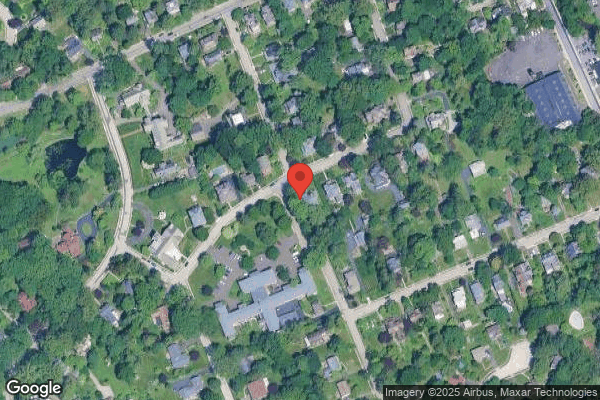
WYNCOTE CARE CENTER

208 FERNBROOK AVENUE, WYNCOTE, PA 19095 (215) 885-2620
Non profit - Corporation 58 Beds Independent Data: November 2025
Trust Grade
55/100
#252 of 653 in PA
Last Inspection: December 2024

Within standard 12-15 month inspection cycle. Federal law requires annual inspections.

Overview

Wyncote Care Center has a Trust Grade of C, which means it is average and ranks in the middle of the pack among nursing homes. It ranks #252 out of 653 facilities in Pennsylvania, placing it in the top half, and is #31 out of 58 in Montgomery County, indicating that only a few local options are better. The facility is improving, having reduced issues from 7 in 2024 to 3 in 2025, but concerns remain, especially with $28,850 in fines, which is higher than 85% of other Pennsylvania facilities. Staffing is a strength, with a 4/5 star rating and a turnover rate of 0%, significantly lower than the state average, which suggests that staff are experienced and familiar with residents. However, serious incidents have been reported, including a failure to properly assess a resident after a fall, resulting in pain and delayed treatment for a hip fracture, highlighting some weaknesses in care standards that families should consider.

Trust Score
C
55/100
In Pennsylvania
#252/653
Top 38%
Safety Record
High Risk
Review needed
Inspections
Getting Better
7 → 3 violations
Staff Stability
○ Average
Turnover data not reported for this facility.
Penalties
⚠ Watch
$28,850 in fines. Higher than 96% of Pennsylvania facilities. Major compliance failures.
Skilled Nurses
✓ Good
Each resident gets 76 minutes of Registered Nurse (RN) attention daily — more than 97% of Pennsylvania nursing homes. RNs are the most trained staff who catch health problems before they become serious.
Violations
⚠ Watch
20 deficiencies on record. Higher than average. Multiple issues found across inspections.
★★★★☆
4.0
Overall Rating
★★★★☆
4.0
Staff Levels
★★★★☆
4.0
Care Quality
★★★★☆
4.0
Inspection Score
Stable
2024: 7 issues
2025: 3 issues

The Good

  • 4-Star Staffing Rating · Above-average nurse staffing levels
  • 4-Star Quality Measures · Strong clinical quality outcomes
  • Full Sprinkler Coverage · Fire safety systems throughout facility
  • No fines on record

Facility shows strength in staffing levels, quality measures, fire safety.

The Bad

Federal Fines: $28,850

Below median ($33,413)

Moderate penalties - review what triggered them

The Ugly 20 deficiencies on record

3 actual harm
Sept 2025 1 deficiency
CONCERN (D) 📢 Someone Reported This

A family member, employee, or ombudsman was alarmed enough to file a formal complaint

Potential for Harm - no one hurt, but risky conditions existed

Deficiency F0583 (Tag F0583)

Could have caused harm · This affected 1 resident

Based on the review of clinical records, facility documentation, and staff interviews, it was determined that the facility failed to protect the confidentiality of medical records for one of three rec...

Read full inspector narrative →
Based on the review of clinical records, facility documentation, and staff interviews, it was determined that the facility failed to protect the confidentiality of medical records for one of three records reviewed. (Resident R1) This was cited as past non-compliance.Findings Include:Review of an undated facility policy Medical Records Policy revealed that Wyncote Care Center maintains accurate and confidential medical records for all residents in compliance with federal and state regulations. The facility ensures secure storage, proper retention, and lawful release of medical records in accordance with CMS (Centers for Medicare & Medicaid Services).3. Release of Information:- Medical records will be released only in accordance with applicable federal and state privacy laws (e.g., HIPAA).- Records may be released to:- The resident.- The resident's legally authorized representative (e.g., Power of Attorney, legal guardian).- Healthcare providers involved in the resident's care.- Regulatory agencies and authorities as required by law.- Other parties only with a valid, signed authorization from the resident or their legalrepresentative.- All requests for records must be submitted in writing and will be processed in a timelymanner.-A fee may be charged for record copies in accordance with facility policy and state law.- Documentation of all record releases will be maintained, including the request,authorization (if applicable), date of release, and recipient details. Review of facility reported incident dated August 1, 2025, revealed that Facility made aware that another family received the wrong medical records, causing a HIPAA breach.Further review of the facility reported incident revealed that NHA notified POA of the HIPAA breach, and assistance was extended for any identification protection measures. In addition, the family member who was accidentally given wrong record is scheduled to return the document for proper management.Interview with the Administrator on September 2, 2025, at 12:30 p.m. revealed that the staff provided the wrong record, record of Resident R1, to Resident R2's representative. Facility could not find out what information was provided; however, it was informed by Resident R2's representative that information such as social security number and date of birth was part of the privacy breach. The administrator also confirmed that the facility medical record request process was not followed. This deficiency was cited as past non-compliance. Review of facility Action plan/Follow up documentation revealed the following information. 1. Facility administrator notified the affected resident's (R1) POA(power of attorney) of the possible HIPAA breach, and extended assistance or resources as a result of the breach. In addition, R2 POA (the family who received R1's medical information) was asked to return the documents back to the facility, so it can be properly discarded.2. The Concierge program was utilized in order to monitor other potential breaches of medical information. Since the facility was unable to determine who provided the record, facility administration had to ensure that facility is quick to identify anyone else, if effected. Facility did not identify others effected, and this was an isolated incident. 3. Training was provided for staff on proper Medical Record Request policy and process. Forms were made available for future medical records requests.4. Monthly QAPI and weekly concierge discussions review any medical records requests. NHA is made aware of all medical record requests, in order to prevent future breaches. Facility date of compliance was August 29, 2025.A review was conducted of clinical records, facility documentation, staff education, and documentation of audits conducted by the facility. Interview with staff revealed that the staff was knowledgeable about facility medical record request practices and HIPAA compliance. It was determined that the plan of correction was implemented, and identified as past non-compliance. 28. Pa Code: 201.29(a) Resident Rights28 Pa. Code 211.5(b) Medical Records
Jun 2025 1 deficiency
CONCERN (D) 📢 Someone Reported This

A family member, employee, or ombudsman was alarmed enough to file a formal complaint

Potential for Harm - no one hurt, but risky conditions existed

Pressure Ulcer Prevention (Tag F0686)

Could have caused harm · This affected 1 resident

**NOTE- TERMS IN BRACKETS HAVE BEEN EDITED TO PROTECT CONFIDENTIALITY** Based on interviews with staff, residents, and family members, review of clinical records, it was determined that the facility d...

Read full inspector narrative →
**NOTE- TERMS IN BRACKETS HAVE BEEN EDITED TO PROTECT CONFIDENTIALITY** Based on interviews with staff, residents, and family members, review of clinical records, it was determined that the facility did not implement appropriate interventions to prevent and support the healing of pressure ulcers for one of four residents reviewed (Resident R1).Findings include:Review of Resident R1 ' s clinical record revealed that Resident R1 was admitted to the facility on [DATE], with diagnoses of, but not limited to, Dementia, muscle weakness.Review of Resident R1 ' s clinical record revealed physician order, dated January 31, 2025, for Prevention Devices check every shift. Pressure reducing devices to bed and wheelchair, offload heels on pillows in bed, turn and reposition frequently in bed.Review of Resident R1 ' s MDS (Minimum Data Set) State Optional dated May 3, 2025, under section M1200, dated May 3, 2025, revealed Resident R1 is not enrolled in a turning and repositioning program.Further review of Resident R1 ' s MDS (Minimum Data Set) State Optional dated May 3, 2025, under section G0110, revealed Resident R1 is Total dependence (full staff performance every time during entire shift) for bed mobility (how resident moves to and from lying position, turns side to side, and positions body while in bed).Review of Resident R1 ' s Care Plan date-initiated January 28, 2025, revealed that Resident R1 has a potential for alteration in skin integrity r/t incontinence.Review of Resident R1 ' s clinical record revealed progress notes written by Employee E3, Licensed Practical Nurse dated April 7, 2025, While CNA was giving care an open area noted on resident ' s sacrum and CNA reported that to the charge nurse. Charge assessed area and measured it 2 cm x 1.75 cm.Review of Resident R1 ' s clinical record revealed nursing progress note dated April 10, 2025, Seen by wound doctor, see wound consult for more information.Interview with Employee E1, Administrator on 6/24/2025 at 2:30pm revealed that wound consult documentation unavailable to view, A lot of stuff is missing from the switch over.Review of Resident R1 ' s clinical record revealed Wound Evaluation and Management Summary by Wound Physician dated April 17, 2025, Wound with significant deterioration over the past week, not eating per nursing, may be beginning of end stage skin failure. Wound Size measuring 3.2 x 3.2 x not measurable (depth is unmeasurable due to presence of nonviable tissue and necrosis). General recommendations include off-Load wound, reposition per facility protocol, turn side to side in bed.No documented evidence of care plan initiated for facility acquired pressure ulcer. Confirmed by Employee E2, Director of Nursing on June 24, 2025 at 2:05pm. 28 Pa Code 211.10(c) Resident care policies28 Pa. Code 211.12 (d)(1) Nursing services
Jun 2025 1 deficiency
CONCERN (D) 📢 Someone Reported This

A family member, employee, or ombudsman was alarmed enough to file a formal complaint

Potential for Harm - no one hurt, but risky conditions existed

Quality of Care (Tag F0684)

Could have caused harm · This affected 1 resident

**NOTE- TERMS IN BRACKETS HAVE BEEN EDITED TO PROTECT CONFIDENTIALITY** Based on review of clinical record, facility documentation, and interviews with staff, it was determined that the facility faile...

Read full inspector narrative →
**NOTE- TERMS IN BRACKETS HAVE BEEN EDITED TO PROTECT CONFIDENTIALITY** Based on review of clinical record, facility documentation, and interviews with staff, it was determined that the facility failed to provide care and treatment in accordance with professional standards of practice, by failing to perform weekly skin assessments as ordered by the physician for one of six residents reviewed. (Resident R1) Findings include: Review of facility policy titled Skin Check Policy, effective 2025, stated the facility will perform comprehensive skin checks on all residents as prescribed in their care plan, and at a minimum frequency consistent with the physician's orders (e.g., weekly, biweekly, monthly). The goal is to promptly identify changes in skin integrity and initiate appropriate interventions. Findings must be recorded in the resident's clinical record immediately after completion. Any new or worsening skin condition must be documented and reported to the attending physician and Director of Nursing immediately. Clinical record review revealed Resident R1 was admitted to the facility on [DATE] with a diagnosis of type 2 diabetes mellitus (when the body doesn't use insulin properly, resulting in unusual blood sugar levels), bilateral primary of osteoarthritis of knee (condition that affects both knee joints with cartilage damage and inflammation), and dementia. Review of physician's order, dated April 18, 2025, revealed an order for Skin care: skin and nail checks weekly, every day shift, every Tuesday. Nursing progress note, dated May 13, 2025, stated Resident R1's skin check was done after (his/her) bed bath, Resident R1 abdominal fold looks irritated and red. Further review of Resident R1's progress notes revealed no further skin assessments and no indication of skin issues noted. Review of Resident R1's clinical record revealed on May 30, 2025 Resident R1 was transferred to the hospital due to change in mental status and abnormal vital signs. Review of Resident R1's hospital documentation, dated May 31, 2025, revealed Resident R1 had an admitting diagnosis of sepsis with acute renal failure (Sepsis is a life-threatening condition caused by an intense response of your immune system to an infection. Sepsis triggers inflammation throughout your body that can result in multiple organ failure. Sepsis is the most common risk factor of acute kidney failure. Acute kidney failure, or acute kidney injury, is a sudden loss of kidney function). Review of Resident R1's hospital documentation, dated June 02, 2025, revealed a physician's note that stated Resident R1 says ouch when examining abdomen and left lower extremity however more severe pain when examining right lower extremity. Right lower extremity with lower leg swelling, wound of lateral lower leg without parlance/drainage. Physician note, dated June 03, 2025, revealed right knee fluid gram stain positive for gram positive cocci (strong indicator of septic arthritis). Right ankle fluid clotted. Plan for OR today for right knee irrigation and debridement with possible right ankle irrigation and debridement (surgical procedure that involves washing out and cleaning a wound, by removing debris and dead or damaged tissue). Interview with on June 04, 2025 at 12:17 p.m. with Director of Nursing, Employee E1, revealed not being aware of any skin issues on Resident R1. Interview on June 04, 2025 at 2:05 p.m. with Registered Nurse, Employee E2, revealed that she was Resident R1's nurse on May 30, 2025, the day Resident R1 was transported to the hospital. Registered Nurse, Employee E2, was unaware of swelling or skin issues on Resident R1's right lower extremity and no nurse aides reported any concerns. Interview with Administrator, Employee E2, confirmed the facility was unable to find evidence that there was a wound present on Resident R1's right lower extremity and weekly skin assessment was not performed as ordered. 28 Pa. Code 211.10(c) Resident care policies 28 Pa. Code 211.12(d)(1)(5) Nursing services.
Dec 2024 2 deficiencies
CONCERN (D)

Potential for Harm - no one hurt, but risky conditions existed

Deficiency F0657 (Tag F0657)

Could have caused harm · This affected 1 resident

Based on review of facility policy, review of clinical record, and staff interview, it was determined that the facility failed to review and revise a care plan related to feeding assistance for one of...

Read full inspector narrative →
Based on review of facility policy, review of clinical record, and staff interview, it was determined that the facility failed to review and revise a care plan related to feeding assistance for one of 12 residents reviewed (Resident R34). Findings Include: Review of facility policy Interdisciplinary Care Planning revised 12/16/2024 revealed it is the responsibility of each discipline to add, revise, and discontinue care plan problems, goals, and interventions as needed. Review of Resident R34's comprehensive care plan revised December 13, 2024, revealed the resident had potential for alteration in nutrition status related, but not limited to, dementia, varied meal completion, and decline in self-feeding with need for adaptive feeding devices. Intervention dated February 12, 2024, and March 22, 2024, revealed to provide Resident R34 with a Kennedy cup for beverages and inner lip plate for food items with all meals. Observations in the dining room on December 18, 2024, at 12:00 p.m. revealed Resident R34 was not provided with adaptive equipment for the lunch meal service and was instead being fed by nurse aide, Employee E5. Interview on December 18, 2024, at 12:00 p.m. with Nurse Aide, Employee E5, revealed Resident R34 had a decline in self-feeding capabilities and was no longer able to use the adaptive equipment at meals. Further interview with nurse aide, Employee E5, revealed Resident R34 required 1:1 feeding assistance with meals. Review of Resident R34's comprehensive care plan revealed no evidence interventions were revised related to self-feeding capabilities. 28 Pa. Code 211.10 (d) Resident care policies 28 Pa. Code 211.12 (d)(5) Nursing services
CONCERN (D)

Potential for Harm - no one hurt, but risky conditions existed

Infection Control (Tag F0880)

Could have caused harm · This affected 1 resident

**NOTE- TERMS IN BRACKETS HAVE BEEN EDITED TO PROTECT CONFIDENTIALITY** Based on review of clinical record, facility policy, observations, and interviews with staff, it was determined that the facilit...

Read full inspector narrative →
**NOTE- TERMS IN BRACKETS HAVE BEEN EDITED TO PROTECT CONFIDENTIALITY** Based on review of clinical record, facility policy, observations, and interviews with staff, it was determined that the facility failed to exercise proper infection control techniques and wear personal protective equipment (PPE) during a dressing change for one of one resident observed (Residents R32). Findings include: Review facility policy titled Transmission Based Precautions- Infection Control revised May 28, 2024, revealed precautions should be maintained as long as necessary to prevent the transmission of the infection. Further review of policy under section Enhanced Barrier Precautions (EBP) revealed that gloves and gowns are to be used when providing high contact resident care. High contact resident care activities include wound care. EBP are implemented for any resident with a wound. Review of Resident R32's clinical record revealed that Resident R32 was admitted to the facility on [DATE] with a diagnoses hydrocephalus (excess fluid in the brain ventricles), edema (swelling caused by too much fluid trapped in the body's tissues), and lack of coordination. Review of physician orders revealed an order dated November 11, 2024, that stated cleanse left buttock with normal saline, apply anasept gel (prevent and treat skin and tissue infections), calcium alginate (type of wound dressing), and cover with boarder gauze daily and prn (as needed). Wound care observation on Resident R32 conducted on December 18, 2024, at approximately 10:00 a.m. with licensed nurses Employee E3 and Employee E4 revealed that Employee E3 and Employee E4 donned gloves prior to performing Resident R32's dressing change. Further, observation revealed that licensed nurse, Employee E4 started performing wound dressing change on Resident R32 without donning a gown. Interview with Licensed nurse, Employee E4, conducted December 18, 2024, at approximately 11:20 a.m. revealed proper PPE, which includes donning gloves and gown during high contact resident care, is to be worn for residents on enhanced barrier precautions when providing care. 28 Pa. Code 201.14(a) Responsibility of licensee 28 Pa. Code 211.12(c)(d)(1)(5) Nursing Services
Mar 2024 5 deficiencies
CONCERN (D)

Potential for Harm - no one hurt, but risky conditions existed

Notification of Changes (Tag F0580)

Could have caused harm · This affected 1 resident

**NOTE- TERMS IN BRACKETS HAVE BEEN EDITED TO PROTECT CONFIDENTIALITY** Based on clinical record reviews, interviews with staff, facility documentation, policy and procedure reviews and interviews wit...

Read full inspector narrative →
**NOTE- TERMS IN BRACKETS HAVE BEEN EDITED TO PROTECT CONFIDENTIALITY** Based on clinical record reviews, interviews with staff, facility documentation, policy and procedure reviews and interviews with family members, it was determined that the facility failed to notify the resident's representative of a need to alter treatment significantly and failed to notify the resident's physician of an accident requiring physician intervention for two of 23 residents reviewed. (Residents R96 and R97) Findings include: A review of the facility policy titled Notification of Changes revealed that it was the responsibility of the facility to immediately inform each resident and/or resident representative of accidents that have the potential for physician intervention or significant changes in condition. The policy also indicated that it was the facility's responsibility to ensure that the physician was immediately notified of an accident that had the potential for requiring physician intervention. The policy said that the physician was to be notified immediately of a significant change in physical, mental and psychosocial status of the resident. Clinical record review for Resident R96 revealed that this resident was admitted to the facility on [DATE]. The nursing progress note indicated that Resident R96 had poor cognitive status. The nurse indicated that the resident's diagnosis upon admisssion was CVA (cerebral vasculer accident) with right sisded weakness and aphasia (a loss or impairment of one's capacity to use or comprehend language, which is most commonly caused by injury to a specific area in the brain). Clinical record review on February 13, 2024 indicated that Resident R96 received testing for the virus that causes COVID-19 and the test results were positive. The nursing progress note on February 13, 2024 indicated that interventions were significantly changed for Resident R96 to include taking transmission based precaustions when providing care or visiting this resident. The nursing progress note dated February 15, 2024 indicated that Resident R96 had a persistent cough. Interview with Resident R96's responsible party/family member at 1:00 p.m., on February 27, 2024, revealed that the family member was not notified of the need to alter Resident R96's treatment and care due to the fact that Resident R96 was diagnosed as being positive for the virus that causes COVID-19 on February 13, 2024. The family member reported visiting the facility on February 14, 2024 and having to ask nursing staff, the medical status of Resident R96. Interview with Employee E2, the Director of Nursing, at 9:00 on February 28, 2024 confirmed that the facility had no documentation to indicate that the responsible party for Resident R96 was notified of a significant change (postive results for COVID-19 testing) or change in medical status on February 13, 2024. Clinical record documentation for Resident R97 indicated that this resident was admitted to the facility on [DATE] and had diagnoses of osteoporosis (brittle bones), rheumatoid arthritis(autoimmune disease of joint swelling, redness or warmth) and infection of the internal fixation device of the ulna (forearm). Clinical record review for Resident R97 revealed that the resident reported to the Licensed nurse on February 8, 2024 that she had fallen from the toilet, in the bathroom on February 7, 2024, at approximately 6:00 p.m. The nursing assistant responsible for this resident reported that she was clearing a path or clearing the room to the resident's bed, when she saw the resident fall in the bathroom. Review of facility's investigation of alleged abuse, neglect and misappropriation of property dated February 8, 2024 indicated that the nursing assistant assigned to provide care to Resident R97 failed to report to the licensed nurse that Resident R97 experienced a fall on February 7, 2024. The fall occurred in the bathroom on February 7, 2024 for Resident R97. After the fall occurred, the nursing assistant responsible for Resident R97 asked another nursing assistant to assist the resident from the floor and they placed Resident R97 into the wheelchair and into bed on February 7, 2024. Continued review of the faciltiy's investigation revealed that the resident's incident/accident was consequently not reported to the physician, by the licensed nurse, on February 7, 2024, for required intervention post fall. The investigation report form indicated that the facility was not aware of any incident/accident for Resident R97 until the resident reported the incident on February 8, 2024. Interview with the Director of Nursing, Employee E2, on February 29, 2024 confirmed that lack of notification of the physician of an incident/accident (fall) involving Resident R97 on February 7, 2024. Employee E2, Director of Nursing also confirmed that the lack of notification of the physician, resulted in a delay of assessment, monitoring and potential treatment for Resident R97. 28 Pa. Code 211.10(d) Resident care policies 28 Pa. Code 211.12(c)(d)(1)(5) Nursing services
CONCERN (D)

Potential for Harm - no one hurt, but risky conditions existed

Accident Prevention (Tag F0689)

Could have caused harm · This affected 1 resident

**NOTE- TERMS IN BRACKETS HAVE BEEN EDITED TO PROTECT CONFIDENTIALITY** Based on clinical record reviews, interviews with staff and review of facility documentation, it was determined that the facilit...

Read full inspector narrative →
**NOTE- TERMS IN BRACKETS HAVE BEEN EDITED TO PROTECT CONFIDENTIALITY** Based on clinical record reviews, interviews with staff and review of facility documentation, it was determined that the facility failed to ensure adequate supervision and assistive devices to prevent accidents for one of two residents reviewed with falls. (Resident R97) Findings include: Review of Resident R97's admission assessment dated [DATE] indicated that the resident was able to make needs know with cognitively intact decision making. The resident was dependent on one staff member for toileting hygiene (ability to maintain perineal hygiene), substantial/maximal assistance to perform sit to stand, and partial to moderate assistance with walking ten feet. Continued review of the resident assesment revealed that the resident was frequently incontinent of bladder and bowel. Review of clinical record documentation dated January 9, 2024 indicated that this resident had diagnoses that included: osteoporosis (brittle bones), rheumatoid arthritis s(autoimmune disease of joint swelling, redness or warmth) and infection of the internal fixation device of the ulna (forearm). Review of Resident R97's care plan revealed that the resident was at risk for falls. Interventions included to provide Resident R97 with one person assist with all transfers (how a resident moves from surface to surface). The resident's care plan also indicated that Resident R97 required assistance of one staff member with bathroom needs and incontinence care of bowel and bladder. Review of occupational and physical therapy documentation dated January 10, 2024 through February 6, 2024 indicated that Resident R97 required stand by assistance and safety cues to prepare for a transfer. The assessment also indicated that Resident R97 required the support of one person for standing from the sitting position and required care giver assistance to ambulate with the wheeled walker. Interview with the Employee E3, a physical therapist, at 1:00 p.m., on February 29, 2024 confirmed that Resident R97 required stand by assistance to transfer and stand safely. The therapist also confirmed, during this interview, that Resident R97 required care giver hands on assistance for safe toileting. Clinical record review for Resident R97 revealed that this resident reported to the licensed nurse on February 8, 2024 that she had fallen from the toilet, in the bathroom on February 7, 2024. The facility incident report indicated that the nursing assistant responsible for assisting Resident R97 with toileting, standing, transferring and ambulating on February 7, 2024 said that she was clearing a path or moving things out of the way, to the resident's bed, when she saw the resident fall. Interview with employee E2, the Director of Nursing, at 9:00 a.m., on March 1, 2024 confirmed that the nursing assistant responsible for providing toileting, standing, transferring and ambulation assistance for Resident R97 on February 7, 2024; failed to provide this assistance as care planned for Resident R97. The Director of Nursing confirmed during this interview that the lack of proper assistance by the nursing assistance, during toileting, resulting in a fall for Resident R97 on February 7, 2024. 28 Pa. Code 211.12(c)(d)(1)Nursing services 28 Pa. Code 201.18(b)(1) Management
CONCERN (D)

Potential for Harm - no one hurt, but risky conditions existed

Deficiency F0726 (Tag F0726)

Could have caused harm · This affected 1 resident

Based on facility policy, observation, interview with residents and staff and review of facility documentation, it was determined that the facility failed to ensure that all nursing staff possess the ...

Read full inspector narrative →
Based on facility policy, observation, interview with residents and staff and review of facility documentation, it was determined that the facility failed to ensure that all nursing staff possess the competencies and skill sets necessary to provide nursing and related services for three of twenty nine residents reviewed relating staff response to call bells, resident needs and nursing required skills. (Resident R16, Resident R39 and Resident R149) Findings include: Review of facility policy titled Call System and Response revised February 21, 2020, revealed that the facility will maintain a functional communication system from residents' rooms, bathrooms, and bathing areas. All resident call bells will be answered in a timely manner. Further review of this policy states that answering the call system is primarily the responsibilities of the certified nurse assistants. However, when a resident's call light is activated, the nearest available employee is to respond. Interview with Resident R16 on February 27, 2024 at 10:40 a.m., revealed that his major concern and complaint of the facility that the call bell was not answered in a timely manner. He continued the interview with an example as recent as the same morning of the interview, Resident R16 activated his call bell in need of toileting and stated he waited an hour for an employee to respond to the call bell. At the time of this interview Resident R16 activated his call bell, there was no response to the call for a period of forty-four minutes. This time was also confirmed in a call bell audit provided by the Director of Nursing, Employee E2. Interview with Resident R39 on February 28, 2024, at 11:30 a.m. revealed that Resident R39 was observed in gown. The resident expressed that she has been waiting since 6:30 a.m. to be cleansed and dressed. Resident R39 stated that she has requested to be assisted with these activities of daily living (ADLs) and was told later. During this interview, Resident R 39 initiated her call bell, nurse aide, Employee E13 , responded and stated that Resident R39 had to wait until physical therapy could assists in cleaning and dressing of this resident. Interview with Physical therapist Employee E3 , February 28, 12:30 p.m. revealed that Resident R39 required a two person assists however did not need to wait for physical therapy to complete this tasks. Employee E3 revealed that any employee could assists with these tasks. Review of the facility's job description of register nurses revealed that this position essential duties includes assess residents, plans, and implements care plans, receives reports, and relays information to nursing staff, informs physician of resident changes, orders medications as well as is performs resident treatments designed to be done by a licensed nurse, including wound care. Further review of this policy reveals that all supervisors are accountable for their own performance as well as the performance of their direct reports and are accountable to clearly communicate and reinforce department goals and individual job performance expectations. Observation of Licensed nurse, Employee E18 providing wound care to Resident R149 on February 27, 2023, at 12:10 p.m. revealed that Employee E18 was unprepared and unknowledgeable of Resident R149. Licensed nurse, Employee E18 had limited information pertaining to this resident wounds and care needs. Licensed nurse, Employee E16 was unprepared needing to leaving the room twice for supplies, Licensed nurse, Employee E16 was unaware of location of wounds, condition, and proper wound care techniques. Interview with Licensed nurse, Employee E16 at time of observation revealed that this was her first day, she was not provided information or training of wound care. Interview with Education Training Instructor, Employee E10 revealed that Licensed nurse, Employee E18 completed her orientation and skills needed for wound care would have been achieved on the floor training. This employee was not assigned to any resident that needed or were provided wound care during on the floor training, therefore was not instructed or provided any practice prior to provided Resident R149's wound care. 28 Pa. Code 201.20 (a)(6)(b) Staff development 28 Pa. Code 211.12 (c)(d)(1)(5) Nursing Services
CONCERN (E)

Potential for Harm - no one hurt, but risky conditions existed

Deficiency F0583 (Tag F0583)

Could have caused harm · This affected multiple residents

Based facility policy, observation, and interviews, it was determined that facility failed to secure residents privacy relating to confidential medical records for 5 out of 42 residents reviewed. (Res...

Read full inspector narrative →
Based facility policy, observation, and interviews, it was determined that facility failed to secure residents privacy relating to confidential medical records for 5 out of 42 residents reviewed. (Residents; R14, R28, R37, R11, and R1) Findings include: Review of the center for Disease Control and Prevention (CDC), Public health law titled the Health Insurance Portability and Accountability Act of 1996 (HIPAA) revealed that HIPAA is a federal law that required the creation of national standards to protect sensitive patient health information from being disclosed without the patient's consent or knowledge. The US Department of Health and Human Services (HHS) issued the HIPAA Privacy Rule to implement the requirements of HIPAA. The HIPAA Security Rule protects a subset of information covered by the Privacy Rule which is a set of national standards for the protection of certain health information. The U.S. Department of Health and Human Services (HHS) issued the Privacy Rule to implement the requirement of the Health Insurance Portability and Accountability Act of 1996 (HIPAA). The Privacy Rule standards address the use and disclosure of individuals' health information-called protected health information. Review of the facility policy titled Transmission-based Precautions last revised June 20, 2023, revealed that the Infection preventionist will identify the type of transmission-based precautions and notification will be placed on the residents doors to which transmission based precaution is implemented, the selection and use of personal protective equipment (PPE), and the clinical conditions for which specific PPE should be used. Observation of the facility Second floor nursing unit on February 27, 2023 at 10:40 a.m. revealed residents rooms: 404, 419, 420, 422, and 428 with a red colored sign hanging on the outside of the doors for everyone to see, which revealed the residents occupying those rooms were identified as being covid positive. Interview with Licensed nurse, Employee E18, at time of observation above, confirmed that the signs on these doors declared the residents diagnosis of covid positive. 28 Pa. Code 210.14(a) Responsibility of licensee 28 Pa. Code 201.18(b)(1) Management
CONCERN (E)

Potential for Harm - no one hurt, but risky conditions existed

Room Equipment (Tag F0908)

Could have caused harm · This affected multiple residents

Based on observations of the daily meal preparation and delivery from the Food and Nutrition Department to the nursing unit for 41 of 46 residents reviewed and interviews with staff, it was determined...

Read full inspector narrative →
Based on observations of the daily meal preparation and delivery from the Food and Nutrition Department to the nursing unit for 41 of 46 residents reviewed and interviews with staff, it was determined that the facility failed to ensure that essential resident care equipment, for the food service operation was maintained in safe operating condition. Findings include: Observations on February 27, 2024 during the noon meal service revealed that the dietary staff was not using the plate warmer according to manufacturer's recommendations. There were no lids in place above the lowerator wells. The every day china plates were stacked above the food service equipment's warming mechanism; preventing proper heating of the dishware. Observations on February 27 and March 1, 2024 during the plating of foods and beverages and assembly of meal trays; revealed that dietary staff were using opened slotted carts and opened push carts to deliver meals throughout the hallways on the nursing units and into each resident room. Observations on February 27 and March 1, 2024 of the food service equipment being used to deliver the breakfast, lunch and dinner meals for the residents eating inside their rooms, revealed that the entire thermal set of food service equipment for plating, transporting and delivery of hot foods was not available for use. There were no metal pellets as specified by the equipment manufacturer for the dietary services. Interview with the Director of Dietary, Employee E11 at 11:30 a.m., on February 27, 2024 and the dietary staff, Employees E5, E6 and E7 confirmed that the thermal heating equipment (pellets) manufactured to keep foods hot and safe during plating, transportation and delivery to each resident's room for breakfast lunch and dinner, were not being used according to manufacturer's recommendations and standards of the food service operation to ensure food service safety. 28 Pa. Code 201.18(b)(1)(3)(e)(1) Management
Sept 2023 1 deficiency
CONCERN (D) 📢 Someone Reported This

A family member, employee, or ombudsman was alarmed enough to file a formal complaint

Potential for Harm - no one hurt, but risky conditions existed

Deficiency F0804 (Tag F0804)

Could have caused harm · This affected 1 resident

Based on observations, review of facility policy, review of facility documentation and review of temperature logs and interviews with dietary staff, it was determined that foods were not being served ...

Read full inspector narrative →
Based on observations, review of facility policy, review of facility documentation and review of temperature logs and interviews with dietary staff, it was determined that foods were not being served to residents at temperatures that were appetizing on one of one nursing units. (Second Floor) Findings include: The Servsafe Manager Manual, National Restaurant Association; 2019 guidelines for holding hot foods were 135 degrees Fahrenheit or higher to prevent pathogens from growing at unsafe levels. Review of Facility Policy on Resident Meal Audit- Dining Services, dated January 17, 2019; last revised on May 6, 2021 indicated a served standard for cold food and beverages must be maintained at a temperature 51 degrees F (Fahrenheit) or below, hot food at 140 degrees F to 170 degrees F, and hot beverages at 140 degrees F to 170 degrees F. Frozen desserts need to be at appropriate temperatures (frozen state) at point of service. On September 27, 2023, at 12:01 p.m., reviewed the temperature of lunch items served at the last point of service at the Second floor revealed the following temperature: Pork Cutlet with Gravy: 115 F.; Sauerkraut: 118 F.; German Potato Salad 120 F.; Apple Sauce: 70 F.; Apple Streusel: 58 F.; Apple Juice: 56 F These temperatures were verified by Employee E7, the Executive Chef, at 12:01 p.m., on September 27, 2023. 28 Pa Code 201.18(a)(b)(1)(2)(3) Management
Apr 2023 9 deficiencies 3 Harm
SERIOUS (G)

Actual Harm - a resident was hurt due to facility failures

Free from Abuse/Neglect (Tag F0600)

A resident was harmed · This affected 1 resident

**NOTE- TERMS IN BRACKETS HAVE BEEN EDITED TO PROTECT CONFIDENTIALITY** Based on clinical record review, staff interview, review of facility policies, and review of facility documentation, it was dete...

Read full inspector narrative →
**NOTE- TERMS IN BRACKETS HAVE BEEN EDITED TO PROTECT CONFIDENTIALITY** Based on clinical record review, staff interview, review of facility policies, and review of facility documentation, it was determined that the facility failed to ensure that Resident R29 was free from neglect related to a Registered Nurse failing to immediately assess the resident after being notified of a fall sustained by the resident. Facility staff transferred the resident off the ground to the bed without an assessment from a Registered Nurse for possible injuries, causing the resident to scream with pain. The facility's failure to complete a timely assessment for Resident R29, resulted in harm, when the resident experienced pain and a delay in treatment for one of 17 residents reviewed. (Resident R29) Findings include: Review of facility policy, Abuse Policy - Prevention, Investigation, Reporting dated March 29, 2022, revealed that, The facility must ensure that all alleged violations involving mistreatment, neglect, or abuse, including injuries of unknown source and misappropriation of resident property are reported immediately to the administrator of the facility and to other officials. Review of facility policy Fall Management Program last revised My 13, 2022, revealed: Definition of a Fall per the RAI Manual: Unintentional change in position coming to rest on the ground, floor or onto the next lower surface (i.e. onto a bed, chair, or bedside mat). The fall may be witnessed, reported by the resident or an observer or identified when a resident is found on the floor or ground. Review of facility documentation reported to the Department of Health on February 27, 2023, revealed: . resident had a fall on 2/26/2023 at around 0500am . Review of Resident R29's clinical record revealed that the resident was admitted to the facility on [DATE], with the diagnoses of left femur (hip) fracture, Alzheimer's disease (causes the brain to shrink and brain cells to eventually die), dementia (usually progressive condition marked by the development of multiple cognitive deficits such as memory impairment) with severity and behavioral disturbance, muscle weakness, history of falling. Review of Resident R29's fall assessment, dated December 26, 2022, revealed that the resident was considered a moderate risk for falls. The interventions recommended included a low bed, non-skid footwear, frequent checks, sit in visualization of staff, broad chair, chair locked. Review of Resident R29's quarterly Minimum Data Set (MDS- assessment of resident's care needs) dated February 3, 2023, revealed that the resident had a BIMS (Brief Interview of Mental Status) score of 3 which indicated that the resident was cognitively impaired. Continued review of the MDS revealed that the resident required extensive assistance for bed mobility and limited assistance with transfers and ambulation of one person. Review of Resident R29's care plan, dated February 6, 2023, revealed that the resident had a history of falls/injury and was unaware of safety needs. The interventions developed included half side rails to bed as enablers, encourage and assist to participate in activities or social settings that minimize the potential for falls, ensure that resident was wearing appropriate footwear while out of bed and provide slipper socks or non-skid slippers as indicated for nighttime and hourly checks. Review of nursing note dated February 26, 2023 at 7:00 a.m. [late entry] revealed CNA (nurse aide) called to nurse resident observed laying on floor next to her bed with blankets over her, no s/s (signs and symptoms) of injury, no c/o (complaint) pain. Resident assisted back to bed. Nsg (nursing) supervisor made aware. Review of the next available nursing note dated February 26, 2023, at 1:02 p.m. revealed Resident cried out in pain during assessment of lower extremities. Assessment revealed visually swollen b/l (bilateral) knees, R. (right) L (left), no bruising or erythema noted. Resident medicated for pain. The resident's physician was contacted and orders were obtained for X-ray to bilateral knees and left hip. Review of a Nursing note dated February 26, 2023 at 1:02 p.m. revealed: Resident moaning, pointing to left inner thigh, stating it hurts. Resident cried out in pain during assessment of lower extremities. Assessment revealed visually swollen b/l knees, R>L, no bruising or erythema noted. Resident medicated for pain as per PRN order an lidocaine patches placed to b/l knee with some relief noted. Call out to [Doctor's Office], spoke with on call physician . Order given, readback and verified for X-Ray to B/L knee and Left hip. Resident resting comfortably in chair, will continue to monitor. Continued review of nursing documentation dated February 27, 2023, at 4:10 p.m. noted that the results of the X-ray revealed left hip with acute fracture of the subcaptial left femoral (hip) neck. Orders were obtained for the resident to be transferred to the local hospital for evaluation. Review of nursing documentation dated March 1, 2023, revealed that the resident's daughter was informed that after investigation, the facility determined that the resident had a fall in her room that caused her hip fracture. By not having a Registered Nurse assess Resident R29 following an unwitnessed fall caused undue pain and a delay in care and treatment. Resident R29 did not have an x-ray report read until 23 hours and 10 minutes from the initial fall. The lack of assessment caused actual harm, undue pain and delay in care to Resident R29 who was diagnosed with a left femoral neck fracture. Review of physician's notes dated March 6, 2023, revealed that the resident was re-admitted to the facility after a fall resulting in left femoral neck fractures. She had a left total hip replacement done on February 28, 2023. Employee E11, Nurse Aide, Witness statement dated February 27, 2023 (11pm-7am) revealed I was doing my rounds and I hard [heard] someone screaming and I stop to listen I didn't hear anything so I kept on to the net [next] room so when I came out the room I hard [heard] screaming again but this time the nurse was out in the hall and I ask her did she hear so we start looking for where the noise was coming from so the nurse whent [sic - went] in [Resident R29] room and i was right behind her at the same time she was laying on the floor with both blankets and her baby on top of her so I start helping her up the nurse start helping me so when I try to put her all the way in the bed she start screaming more so I said your going to have to send her out she said ok the nurse walk out the room told the nurse supervision so I got [Resident R29] back in bed i finish my work so the next night well that night when i came in the nurse came to me and ask can I put [Resident R29] in bed because x Ray was about to come for her but never did and no i didn't say anything to the next shift i thought everyone knew because they said xray was coming. Review of a witness statement, dated February 27, 2023, by Nursing Supervisor, Employee E15, revealed I regret that I did not immediately get up and assess the situation keeping in mind that Resident R29 was confused and may have fallen. My thinking was that she was resting and not getting up wondering through the hall and going into other residents rooms. The Registered Nurse Supervisor confirmed not assessing Resident 29 on February 26, 2023 for possible injuries after being notified of a fall sustained by the resident. Facility staff then then transfered the resident off the ground to the bed without an assessment from a Registered Nurse, causing harm to the resident who screamed out in pain and still continued to demostrate signs and symtoms of pain six hours after the fall. Interview on April 21, 2023, 1:45 p.m. with nurse aide, Employee E11, confirmed that she was a nurse aide assigned to Resident 29 and that she found Resident R29 wrapped up in a blanket rolled over her floor mattress and screaming for help. The resident bed was in low position, Resident R29 complaint of her pain in her leg, there was no bleeding, bruising. I told the nurse we need to send her out. Review of a witness statement dated February 27, 2023, by Licensed Practical Nurse, Employee E9, revealed It was around 5:00 a.m. we both went into the room; it looked like [Resident R29] may have either gotten twisted up and fell from the bed or got up to walk and got twisted. [Resident R29] does get up at night to wonder into other people's room and we have to re-direct her .I did ROM of her legs and then she said something about her arm. I lifted up her gown to see if I could see anything unusual and did passage ROM of her arm, because she was agitated that I was touching her at all, which can be her usual behavior. Then I went to [Registered Nurse Supervisor, Employee E15] I told the [Registered Nurse Supervisor, Employee E15] [Resident R29] was on the floor holding her doll and with her blanket on top of her. [Registered Nurse Supervisor, Employee E15] said were not going to consider that a fall. I went back to [Resident R29's] room and told CNA (nurse aide) that we're going to get her up and put her in the bed. [Registered Nurse Supervisor, Employee E15] did not visit the [Resident R29]. Interview on April 21, 2023, at 10:04 a.m. with Licensed Practical Nurse, Employee E9, confirmed that she was a nurse assigned to Resident 29 on night shift of February 25, 2023. Employee E9 confirmed Resident R29 was laying on stomach, and away from the floor mat on the bare floor. That she did a brief assessment and went to Registered Nurse, Supervisor, Employee R15. I advised her that Resident R29 was found on the floor. The RN, Supervisor, Employee E15 told me that we're not doing an incident report. I went back to ROM of upper extremity/lower extremity arms and leg and lifted her up to standings position and transferred her to bed. I cannot give an explanation why there's no documentation in the resident's clinical record. I did not notify the coming nurse of the possible unwitnessed fall. On April 20, 2023, at 2:23 p.m. an interview was held with Nursing Home Administrator (NHA) and Director of Nursing (DON) who reported that based on the video footage, Registered Nurse Supervisor, Employee E15 did not go into the resident's room to assess the resident and failed to report the incident, investigated the allegation, and make any documentation in the clinical report of Resident 29. Interview on March 15, 2023, at 9:15 a.m. the Nursing Home Administrator (NHA) confirmed that RN Supervisor, Employee E15, was terminated for neglect related to not reporting and investigating an unwitnessed fall for Resident R29. The facility failed to ensure that Resident R29 was free from neglect related to a Registered Nurse failing to immediately assess the resident after being notified of a fall sustained by the resident. Facility staff transferred the resident off the ground to the bed without an assessment from a Registered Nurse for possible injuries, causing the resident to scream with pain and to continue to experience signs and symtoms of pain 8 hours after the fall incident. The facility's failure to complete a timely assessment for Resident R29, resulted in harm, when the resident experienced pain and a delay in treatment. Refer to F684 and F658 483.13 - Resident Behavior and Facility Practices, 10-1-1998 edition 28 Pa. Code 201.18 (b)(1)(e)(1) Management 28 Pa. Code 211.5(h)Clinical records 28 Pa. Code 211.11(d) Resident care policies 28 Pa. Code 211.12(c) Nursing services 28 Pa. Code 211.12(d)(1)(3) Nursing services 28 Pa. Code 211.12(d)(3) Nursing services 28 Pa. Code 211.12(d)(5) Nursing services
SERIOUS (G)

Actual Harm - a resident was hurt due to facility failures

Deficiency F0658 (Tag F0658)

A resident was harmed · This affected 1 resident

**NOTE- TERMS IN BRACKETS HAVE BEEN EDITED TO PROTECT CONFIDENTIALITY** Based on clinical record review, review of personnel files, review of facility documentation and interviews with staff, it was d...

Read full inspector narrative →
**NOTE- TERMS IN BRACKETS HAVE BEEN EDITED TO PROTECT CONFIDENTIALITY** Based on clinical record review, review of personnel files, review of facility documentation and interviews with staff, it was determined that the facility failed to ensure that a Licensed Practical Nurse and a Registered Nurse, maintained professional standards of quality care in the implementation and evaluation of nursing care using focused assessment and communication with the health care team members as set forth in the Pennsylvania Code Title 49, Professional and Vocational Standards. This failure resulted in actual harm to a resident related to a lack of a timely nursing assessment and a delay of medical care to a resident who sustained a fall which resulted in fracture of left hip which required medical intervention for one of 17 residents reviewed (Resident R29). Findings include: Review of the Pennsylvania Code Title 49, Professional and Vocational Standards, State Board of Nursing 21.11(a)(1)(2)(4) indicated that the Registered Nurse was responsible for collect complete and ongoing data to determine nursignc are needs, analyze the health status of individuals and comare the datat with the norm norm when determining care needs and carrying out nursing care actions that promote, maintain and restore the well-being of individuals. Review of the Pennsylvania Code Title 49, Professional and Vocational Standards, Chapter 21.145 Functions of the LPN (Licensed Practical Nurse) revealed, The LPN is prepared to function as a member of the health-care team by exercising sound nursing judgement based on preparation, knowledge, experience in nursing and competency. The LPN participates in the planning, implementation and evaluation of nursing care using focused assessment in settings where nursing takes place. Continued review revealed, An LPN shall communicate with a licensed professional nurse and the patient's health care team members to seek guidance when . the patient's condition deteriorates or there is a significant change in condition, the patient is not responding to therapy, the patient becomes unstable, or the patient needs immediate assistance. Review of Licensed Practical Nurse, Employee E9's personnel file revealed a Licensed Practical Nurse Position Description signed and dated by the Employee E9 on June 4, 2021, which indicated that essential job duties included ensuring that documents resident's progress, deterioration, changes in condition etc., as necessary Continued review revealed that, abides by both institutional and State Board of Nursing Examiners requirements in the performing of all duties. Review of Registered Nurse, Employee E15's personnel file revealed a Registered Nurse Shift Supervisor job description, signed and dated by the Registered Nurse Supervisor, Employee E15 on March 31, 2023, which indicated that essential job duties included, Investigates all incidents of unknown origin and other incidents and monitors nursing care for accurate assessment and appropriate interventions; supervises the care given to residents on assigned shift. Review of Resident R29's clinical record revealed that the resident was admitted to the facility on [DATE], with the diagnoses of left femur (hip) fracture, Alzheimer's disease (causes the brain to shrink and brain cells to eventually die), dementia (usually progressive condition marked by the development of multiple cognitive deficits such as memory impairment) with severity and behavioral disturbance, muscle weakness, history of falling. Review of Resident R29's fall assessment, dated December 26, 2022, revealed that the resident was considered a moderate risk for falls. The interventions recommended included a low bed, non-skid footwear, frequent checks, sit in visualization of staff, broad chair, chair locked. Review of Resident R29's quarterly Minimum Data Set (MDS- assessment of resident's care needs) dated February 3, 2023, revealed that the resident had a BIMS (Brief Interview of Mental Status) score of 3 which indicated that the resident was cognitively impaired. Continued review of the MDS revealed that the resident required extensive assistance for bed mobility and limited assistance with transfers and ambulation of one person. Review of Resident R29's care plan, dated February 6, 2023, revealed that the resident had a history of falls/injury and was unaware of safety need. The interventions developed included half side rails to bed as enablers, encourage and assist to participate in activities or social settings that minimize the potential for falls, ensure that resident was wearing appropriate footwear while out of bed and provide slipper socks or non-skid slippers as indicated for nighttime and hourly checks. Review of nursing note dated February 26, 2023 at 7:00 a.m. revealed CNA (nurse aide) called to nurse resident observed laying on floor next to her bed with blankets over her, no s/s (signs and symptoms) of injury, no c/o (complaint) pain. Resident assisted back to bed. Nsg (nursing)_ supervisor made aware. Review of the next available nursing note dated February 26, 2023, at 1:02 p.m. revealed Resident cried out in pain during assessment of lower extremities. Assessment revealed visually swollen b/l (bilateral) knees, R. (right) L (left), no bruising or erythema noted. Resident medicated for pain. The resident's physician was contacted and orders were obtained for X-ray to bilateral knees and left hip. Continued review of nursing documentation dated February 27, 2023, at 4:10 p.m. noted that the results of the X-ray revealed left hip with acute fracture of the subcaptial left femoral (hip) neck. Orders were obtained for the resident to be transferred to the local hospital for evaluation. Review of nursing documentation dated March 1, 2023, revealed that the resident's daughter was informed that after investigation, the facility determined that the resident had a fall in her room that caused her hip fracture. Review of physician's notes dated March 6, 2023, revealed that the resident was re-admitted to the facility after a fall resulting in left femoral neck fractures. She had a left total hip replacement done on February 28, 2023. Review of a witness statement, by Nurse aide, Employee E11, dated February 27, 2023, revealed I was doing my rounds and I heard someone screaming and I stopped to listen I didn't hear anything so I kept on to the next room so when I came out the room I heard screaming again but this time the nurse was out in the hall and I asked her did she hear so we start looking for where the noise was coming from so the nurse went into [Resident R29] room . she was laying on the floor with both blankets and her baby on top of her so I start helping her up the nurse start helping me so when I try to put her all the way in the bed she start screaming more so I said of the nurse walk out the room told the nurse supervisor so I got [Resident R29] back in bed. Review of a witness statement dated February 27, 2023, by Licensed Practical Nurse, Employee E9, revealed It was around 5:00 a.m. we both went into the room; it looked like [Resident R29] may have either gotten twisted up and fell from the bed or got up to walk and got twisted. [Resident R29] does get up at night to wonder into other people's room and we have to re-direct her .I did ROM (range of motion) of her legs and then she said something about her arm. I lifted up her gown to see if I could see anything unusual and did passage ROM of her arm, because she was agitated that I was touching her at all, which can be her usual behavior. Then I went to [Registered Nurse Supervisor, Employee E15] I told the [Registered Nurse Supervisor, Employee E15] [Resident R29] was on the floor holding her doll and with her blanket on top of her. [Registered Nurse Supervisor, Employee E15] said were not going to consider that a fall. I went back to [Resident R29's] room and told CNA (nurse aide) that we're going to get her up and put her in the bed. [Registered Nurse Supervisor, Employee E15] did not visit the [Resident R29]. Review a witness statement, dated February 27, 2023, by Nursing Supervisor, Employee E15, revealed I regret that I did not immediately get up and assess the situation keeping in mind that Resident R29 was confused and may have fallen. My thinking was that she was resting and not getting up wondering through the hall and going into other residents rooms.' On April 20, 2023, at 2:23 p.m. an interview was held with Nursing Home Administrator (NHA) and Director of Nursing (DON) who reported that based on the video footage, RN Supervisor Employee E15 did not go into the resident's room to assess the resident and failed to report the incident, investigate the allegation, and make any documentation in the clinical report of Resident R29. Registered Nurse, Supervisor, Employee E15 was terminated. Review of documentation by the facility, revealed that Licensed nurse, Employee E9 and CNA, Employee E11 found Resident R29 on her floor on February 26, 2023, approximately at 5:00 a.m. Based on the facility investigation the unwitnessed fall was communicated to the RN, Supervisor Employee E15 who failed to assess the resident, failed to investigate, and document the incident. Resident R29 fell and sustained significant injury of an acute fracture of the sub capital left femoral [NAME] with proximal migration of the distal fragment with no dislocation which required a medical intervention a surgery. Licensed nurse, Employee E9 and Registered Nurse, Supervisor Employee E15 failed to document an unwitnessed fall, investigate the incident which delayed medical treatment from 5:00 a.m. to 1:00 p.m. on February 26, 2023, which resulted in Resident R29 being neglected. Therefore, allegation of neglect is substantiated against Licensed nurse, Employee E9 and Registered Nurse, Supervisor Employee E15 Interview on March 15, 2023, at 9:15 a.m. the Nursing Home Administrator (NHA) confirmed that RN Supervisor, Employee E15 was terminated for neglect related to not reporting and investigating an unwitnessed fall for Resident R29. Licensed Practical Nurse, Employee E9, failed to maintain professional standards of quality care in the implementation and evaluation of nursing care using focused assessment and communication with the health care team members when Resident R29 had a unwitnessed fall as set forth in the Pennsylvania Code Title 49, Professional and Vocational Standards. which resulted in harm to the resident related to a lack of a timely nursing assessment and a delay of medical care to the resident. Registered Nurse Supervisor, Employee E15 failed to maintain professional standards of quality care, established by essential job requirements, to completed an assessment of Resident R29 after receiving a report of an unwitnessed, investigate the accident, and changes in resident condition as set forth by Chapter 21.1 Practice of professional nursing. This failure resulted in actual harm to Resident R29 related to a lack of timely nursing assesment and a delay on medical care to the resident. Refer to F600 and F684. 28 Pa. Code 201.18 (b)(1)(e)(1) Management 28 Pa. Code 211.5(h)Clinical records 28 Pa. Code 211.11(d) Resident care policies 28 Pa. Code 211.12(c) Nursing services 28 Pa. Code 211.12(d)(1)(3) Nursing services 28 Pa. Code 211.12(d)(3) Nursing services 28 Pa. Code 211.12(d)(5) Nursing services
SERIOUS (G)

Actual Harm - a resident was hurt due to facility failures

Quality of Care (Tag F0684)

A resident was harmed · This affected 1 resident

**NOTE- TERMS IN BRACKETS HAVE BEEN EDITED TO PROTECT CONFIDENTIALITY** Based on clinical record review, staff interview and review of facility documentation, it was determined that the facility faile...

Read full inspector narrative →
**NOTE- TERMS IN BRACKETS HAVE BEEN EDITED TO PROTECT CONFIDENTIALITY** Based on clinical record review, staff interview and review of facility documentation, it was determined that the facility failed to ensure that a resident received treatment and care in accordance with professional standards of practice by not having a Registered Nurse assess Resident R29 following an unwitnessed fall causing undue pain and a delay in care and treatment. Resident R29 did not have an x-ray report read until 23 hours and 10 minutes from the initial fall for one of 20 residents reviewed. The lack of assessment caused actual harm, undue pain and delay in care to Resident R29 who was diagnosed with a left femoral neck fracture, for one of 17 residents reviewed. (Resident R29) Findings include: Review of Resident R29's clinical record revealed that the resident was admitted to the facility on [DATE], with the diagnoses of left femur (hip) fracture, Alzheimer's disease (causes the brain to shrink and brain cells to eventually die), dementia (usually progressive condition marked by the development of multiple cognitive deficits such as memory impairment) with severity and behavioral disturbance, muscle weakness, history of falling. Review of Resident R29's fall assessment, dated December 26, 2022, revealed that the resident was considered a moderate risk for falls. The interventions recommended included a low bed, non-skid footwear, frequent checks, sit in visualization of staff, broad chair, chair locked. Review of Resident R29's quarterly Minimum Data Set (MDS- assessment of resident's care needs) dated February 3, 2023, revealed that the resident had a BIMS (Brief Interview of Mental Status) score of 3 which indicated that the resident was cognitively impaired. Continued review of the MDS revealed that the resident required extensive assistance for bed mobility and limited assistance with transfers and ambulation of one person. Review of Resident R29's care plan, dated February 6, 2023, revealed that the resident had history of falls/injury and was unaware of safety need. The interventions developed included half side rails to bed as enablers, encourage and assist to participate in activities or social settings that minimize the potential for falls, ensure that resident was wearing appropriate footwear while out of bed and provide slipper socks or non-skid slippers as indicated for nighttime and hourly checks. Review of nursing note dated February 26, 2023 at 7:00 a.m. revealed CNA (nurse aide) called to nurse resident observed laying on floor next to her bed with blankets over her, no s/s (signs and symptoms) of injury, no c/o (complaint) pain. Resident assisted back to bed. Nsg (nursing)_ supervisor made aware. Review of a Nursing note dated February 26, 2023 at 1:02 p.m. revealed: Resident moaning, pointing to left inner thigh, stating 'it hurts'. Resident cried out in pain during assessment of lower extremities. Assessment revealed visually swollen b/l knees, R>L [right greater than left], no bruising or erythema noted. Resident medicated for pain asper PRN order an lidocaine patches placed to b/l knee with some relief noted. Call out to [Doctor's Office], spoke with on call physician . Order given, readback and verified for X-Ray to B/L knee and Left hip. Resident resting comfortably in chair, will continue to monitor. Continued review of nursing documentation dated February 27, 2023, at 4:10 p.m. noted that the results of the X-ray revealed left hip with acute fracture of the subcapital left femoral (hip) neck. Orders were obtained for the resident to be transfer to the local hospital for evaluation. By not having a Registered Nurse assess Resident R29 following an unwitnessed fall caused undue pain and a delay in care and treatment. Resident R29 did not have an x-ray report read until 23 hours and 10 minutes from the initial fall. The lack of assessment caused actual harm, undue pain and delay in care to Resident R29 who was diagnosed with a left femoral neck fracture. Review of nursing documentation dated March 1, 2023, revealed that the resident's daughter was informed that after investigation, the facility determined that the resident had a fall in her room that caused her hip fracture. Review of physician's notes dated March 6, 2023, revealed that the resident was re-admitted to the facility after a fall resulting in left femoral neck fractures. She had a left total hip replacement done on February 28, 2023. Employee E11, Nurse Aide, Witness statement dated February 27, 2023 (11pm-7am) revealed I was doing my rounds and I hard [heard] someone screaming and I stop to listen I didn't hear anything so I kept on to the net [next] room so when I came out the room I hard [heard] screaming again but this time the nurse was out in the hall and I ask her did she hear so we start looking for where the noise was coming from so the nurse whent [sic - went] in [Resident R29] room and i was right behind her at the same time she was laying on the floor with both blankets and her baby on top of her so I start helping her up the nurse start helping me so when I try to put her all the way in the bed she start screaming more so I said your going to have to send her out she said ok the nurse walk out the room told the nurse supervision so I got [Resident R29] back in bed i finish my work so the next night well that night when i came in the nurse came to me and ask can I put [Resident R29] in bed because x Ray was about to come for her but never did and no i didn't say anything to the next shift i thought everyone knew because they said xray was coming. Review of a witness statement, dated February 27, 2023, by Nursing Supervisor, Employee E15, revealed I regret that I did not immediately get up and assess the situation keeping in mind that Resident R29 was confused and may have fallen. My thinking was that she was resting and not getting up wondering through the hall and going into other residents rooms. The Registered Nurse Supervisor not assessing the Resident after a fall for possible injuries and as a result facility staff then transferring the resident off the ground to the bed without an assessment from a Registered Nurse for possible injuries, caused the resident to scream out in pain causing harm to the Resident. Interview on April 21, 2023, 1:45 p.m. with nurse aide, Employee E11, confirmed that she was a nurse aide assigned to Resident R29 and that she found Resident R29 wrapped up in a blanket rolled over her floor mattress and screaming for help. The resident bed was in low position, Resident R29 complaint of her pain in her leg, there was no bleeding, bruising. I told the nurse we need to send her out. Review of a witness statement dated February 27, 2023, by Licensed Practical Nurse, Employee E9, revealed It was around 5:00 a.m. we both went into the room; it looked like [Resident R29] may have either gotten twisted up and fell from the bed or got up to walk and got twisted. [Resident R29] does get up at night to wonder into other people's room and we have to re-direct her .I did ROM of her legs and then she said something about her arm. I lifted up her gown to see if I could see anything unusual and did passage ROM of her arm, because she was agitated that I was touching her at all, which can be her usual behavior. Then I went to [Registered Nurse Supervisor, Employee E15] I told the [Registered Nurse Supervisor, Employee E15] [Resident R29] was on the floor holding her doll and with her blanket on top of her. [Registered Nurse Supervisor, Employee E15] said were not going to consider that a fall. I went back to [Resident R29's] room and told CNA (nurse aide) that we're going to get her up and put her in the bed. [Registered Nurse Supervisor, Employee E15] did not visit the [Resident R29]. Interview on April 21, 2023, at 10:04 a.m. with Licensed Practical Nurse, Employee E9, confirmed that she was a nurse assigned to Resident 29 on night shift of February 25, 2023. Employee E9 confirmed Resident R29 was laying on stomach, and away from the floor mat on the bare floor. That she did a brief assessment and went to Registered Nurse, Supervisor, Employee R15. I advised her that Resident R29 was found on the floor. The RN Supervisor, Employee E15 told me that we're not doing an incident report. I went back to ROM of upper extremity/lower extremity arms and leg and lifted her up to standings position and transferred her to bed. I cannot give an explanation why there's no documentation in the resident's clinical record. I did not notify the coming nurse of the possible unwitnessed fall. Review a witness statement, dated February 27, 2023, by Nursing Supervisor, Employee E15, revealed I regret that I did not immediately get up and assess the situation keeping in mind that Resident R29 was confused and may have fallen. My thinking was that she was resting and not getting up wondering through the hall and going into other residents rooms. The facility failed to ensure that a resident received treatment and care in accordance with professional standards of practice by not having a Registered Nurse assess Resident R29 following an unwitnessed fall causing undue pain and a delay in care and treatment. Resident R29 did not have an x-ray report read until 23 hours and 10 minutes from the initial fall. The lack of assessment caused actual harm, undue pain and delay in care to Resident R29 who was diagnosed with a left femoral neck fracture. Refer to F600 and F658. 28 Pa. Code 201.18 (b)(1)(e)(1) Management 28 Pa. Code 211.5(h)Clinical records 28 Pa. Code 211.11(d) Resident care policies 28 Pa. Code 211.12(c) Nursing services 28 Pa. Code 211.12(d)(1)(3) Nursing services 28 Pa. Code 211.12(d)(3) Nursing services 28 Pa. Code 211.12(d)(5) Nursing services
CONCERN (D)

Potential for Harm - no one hurt, but risky conditions existed

Resident Rights (Tag F0550)

Could have caused harm · This affected 1 resident

**NOTE- TERMS IN BRACKETS HAVE BEEN EDITED TO PROTECT CONFIDENTIALITY** Based on review of facility policy, observations, clinical record review, and staff interviews, it was determined that the facil...

Read full inspector narrative →
**NOTE- TERMS IN BRACKETS HAVE BEEN EDITED TO PROTECT CONFIDENTIALITY** Based on review of facility policy, observations, clinical record review, and staff interviews, it was determined that the facility failed to promote care for residents in a manner and environment that enhances each resident's dignity for one of 26 residents reviewed (Residents R44). Findings include: Review of Resident R44's clinical record revealed an admission on [DATE], with a diagnosis that included retention of urine, encounter for fitting and adjustment of urinary device. Observations of Resident R44 on April 19, 2023, at 2:02 p.m., revealed their catheter drainage bag to be on the floor facing the hallway with yellow urine noted in the drainage bag. In addition, a lunch tray was wheeled over the drainage bag. Nursing Staff, Employee E5, confirmed the observation and moved the rolling tray and hung up the catheter drainage bag facing the door. On April 20, 2023, at 9:49 AM, revealed the catheter drainage bag to be visible from the hallway with yellow urine noted in the drainage bag. On April 21, 2023, at 9:37 AM, the Director of Nursing (DON) made observation of the catheter drainage bag to be visible from the hallway with yellow urine noted in the drainage bag. The DON reported: that normally when residents are in their room the dignity bag is not placed on the catheter drainage bag we normally place dignity bags when resident is out of the room. Administrator also reported that facility does not have a dignity policy. 28 Pa code 201.29(d) - Resident Rights
CONCERN (D)

Potential for Harm - no one hurt, but risky conditions existed

Report Alleged Abuse (Tag F0609)

Could have caused harm · This affected 1 resident

**NOTE- TERMS IN BRACKETS HAVE BEEN EDITED TO PROTECT CONFIDENTIALITY** Based on review of facility policies and documentation, clinical record reviews and interviews with staff, it was determined tha...

Read full inspector narrative →
**NOTE- TERMS IN BRACKETS HAVE BEEN EDITED TO PROTECT CONFIDENTIALITY** Based on review of facility policies and documentation, clinical record reviews and interviews with staff, it was determined that the facility failed to ensure that all allegations of abuse and neglect, including injuries of unknown origin, were reported to the Administrator of the facility for two of 19 residents reviewed (Residents R29 and R52). Findings include: Review of facility policy, Abuse Policy - Prevention, Investigation, Reporting dated March 29, 2022, revealed that, The facility must ensure that all alleged violations involving mistreatment, neglect, or abuse, including injuries of unknown source and misappropriation of resident property are reported immediately to the administrator of the facility and to other officials. Review of Resident R29's clinical record revealed that the resident was admitted to the facility on [DATE], with the diagnoses of left femur (hip) fracture, Alzheimer's disease (causes the brain to shrink and brain cells to eventually die), dementia (usually progressive condition marked by the development of multiple cognitive deficits such as memory impairment) with severity and behavioral disturbance, muscle weakness, history of falling. Review of Resident R29's fall Assessment, dated December 26, 2022, revealed that the resident was considered a moderate risk for falls. The interventions recommended included a low bed, non-skid footwear, frequent checks, sit in visualization of staff, broad chair, chair locked. Review of Resident R29's care plan, dated February 6, 2023, revealed that the resident had history of falls/injury and was unaware of safety need. The interventions developed included half side rails to bed as enablers, encourage and assist to participate in activities or social settings that minimize the potential for falls, ensure that resident was wearing appropriate footwear while out of bed and provide slipper socks or non-skid slippers as indicated for nighttime, hourly cheeks. Review of a witness statement, dated February 27, 2023, by Nurse aide, Employee E11, which stated, I was doing my rounds and I heard someone screaming and I stopped to listen I didn't hear anything so I kept on to the next room so when I came out the room I heard screaming again but this time the nurse was out in the hall and I asked her did she hear so we start looking for where the noise was coming from so the nurse went into [Resident R29] room . she was laying on the floor with both blankets and her baby on top of her so I start helping her up the nurse start helping me so when I try to put her all the way in the bed she start screaming more so I said of the nurse walk out the room told the nurse supervisor so I got [Resident R29] back in bed. Review of a witness statement dated February 27, 2023, by Licensed Practical Nurse, Employee E9, revealed It was around 5:00 a.m. we both went into the room; it looked like [Resident R29] may have either gotten twisted up and fell from the bed or got up to walk and got twisted. [Resident R29] does get up at night to wonder into other people's room and we have to re-direct her .I did ROM of her legs and then she said something about her arm. I lifted up her gown to see if I could see anything unusual and did passage ROM of her arm, because she was agitated that I was touching her at all, which can be her usual behavior. Then I went to [Nursing Supervisor, Employee E15] I told the [Nursing supervisor Employee E15] [Resident R29] was on the floor holding her doll and with her blanket on top of her. [Nursing Supervisor Employee E15] said were not going to consider that a fall. I went back to [Resident R29's] room and told CNA (nurse aide) that we're going to get her up and put her in the bed. [Nursing Supervisor, Employee E15] did not visit the [Resident R29]. Review a witness statement, dated February 27, 2023, by Nursing Supervisor, Employee E15, revealed I regret that I did not immediately get up and assess the situation keeping in mind that Resident R29 was confused and may have fallen. My thinking was that she was resting and not getting up wondering through the hall and going into other residents rooms. Review of facility documentation submitted to the Department of Health on February 27, 2023, revealed a transfer/admission to hospital because of injury/accident report, revealed during am care, Resident R29 was moaning, pointing to left inner thigh, it hurts. Resident cried out in pain during assessment of lower extremities. Assessments revealed visually swollen both knees, no bruising or erythema noted. X-ray were ordered, obtained, and revealed there is an acute fracture of the sub capital left femoral (hip) neck with proximal migration of the distal fragment with no dislocation which required a surgery. After investigation, it was determined that resident had a fall on 2/26/2023 the charge nurse reported the fall to the supervisor, no incident report, or progress was written. Continued review of the documentation reported to the Deaprtment of Heath revealed that Resident R29 was subsequently transferred to the hospital for further evaluation. Upon discovery of the femor (hip) fracture, the facility initiated an investigation and determined that Resident R29 had a fall on February 26, 2023, at around 5:00 a.m. that was reported by the Licensed nurse, Employee E9 to the Registered Nurse Supervisor on duty Employee, E15. Employee E15 failed to assessed Resident R29 which resulted in a delay in medical treatment. Further Registered Nurse Supervisor, Employee E9 failed to investigate the fall incident, and document the fall which resulted in neglicence. The facility failed to report to the Department of Health the incident of neglect sustained by Resident R29 by Licensed Practical Nurse, Employee E9 and Registered Nurse Supervisor, Employee E15. Review of Resident R52's Quarterly MDS, dated [DATE], revealed that the resident was admitted to the facility on [DATE], and had diagnoses including dementia, seizure disorder (abnormal electrical activity in the brain), orthostatic hypotension (low blood pressure that happens when standing up from sitting or lying down), osteoporosis (a condition in which bones become weak and brittle), muscle weakness and repeated falls. Continued review revealed that the resident had a BIMS (Brief Interview for Mental Status) of 14, indicating that the resident was cognitively intact. Further review revealed that the resident required the assistance from a staff member for bed mobility, transfers and toileting. Review of Resident R52's care plan, dated initiated July 28, 2020, revealed that the resident was at risk for falls and that she had a history of multiple falls while at the facility. Interventions included for staff to perform frequent checks in an effort to anticipate the resident's needs, to offer bathroom assistance and to encourage the resident to utilize her callbell. Review of progress notes for Resident R52 revealed a nurses note, dated December 29, 2022, at 6:00 p.m. which indicated that the resident reported to a nurse that earlier that morning at 6:00 a.m. she fell and was helped back to bed by staff. The resident reported that she tried to get up on her own to go to the bathroom when her leg gave out, she lost her balance and fell. The resident reported that she bumped her head. The nurse completed an assessment at that time and noted that the resident had a bump on the right side of her forehead. The resident was subsequently transferred to the hospital emergency department for further evaluation. Review of hospital discharge documentation revealed that Resident R52 was evaluated for her fall and closed head injury (contusion of forehead) with recommendations to continue to monitor the resident. Review of facility documentation submitted to the Department of Health on December 30, 2022, revealed that on December 29, 2022, Resident R52 reported to a nurse that earlier that morning she fell out of bed and bumped her head. The resident reported that a staff member assisted her back into bed and provided a description of that staff person. Upon discovery, the facility initiated an investigation and determined that the fall was not reported by the staff member at the time that the incident occurred. Review of facility documentation related to Resident R52's fall revealed a written statement, dated December 30, 2022, from Employee E14, nurse aide, which indicated that Employee E14 last saw Resident R52 around 5:00 a.m. and that she was sleep in bed after AM care. Continued review of facility documentation revealed a summary of camera footage from December 29, 2022, from 5:51 a.m. through 6:50 a.m. which showed that Employee E14 went in and out of Resident R52's room several times during that period. Continued review of facility documentation revealed that the Nursing Home Administrator (NHA) and Director of Nursing (DON) conducted an interview with Employee E14 on December 30, 2022, and discussed the camera footage with the employee. Employee E14 denied picking up the resident off the floor and denied knowing anything about a fall. Interview on April 20, 2023, at 2:35 p.m. the NHA confirmed that due to Resident R52's report of the incident, including description of the staff person that assisted her back to bed, as well as forehead contusion, that Employee E14 failed to report a fall as required and was terminated from employment. 28 Pa Code: 201.14 (a) Responsibility of licensee 28 Pa Code: 201.18 (e)(1) Management
CONCERN (D)

Potential for Harm - no one hurt, but risky conditions existed

Comprehensive Care Plan (Tag F0656)

Could have caused harm · This affected 1 resident

**NOTE- TERMS IN BRACKETS HAVE BEEN EDITED TO PROTECT CONFIDENTIALITY** Based on review of clinical record and staff interviews, it was determined that the facility failed to develop a comprehensive c...

Read full inspector narrative →
**NOTE- TERMS IN BRACKETS HAVE BEEN EDITED TO PROTECT CONFIDENTIALITY** Based on review of clinical record and staff interviews, it was determined that the facility failed to develop a comprehensive care plan related to a urinary indwelling catheter and device to prevent hand contractures for two of 20 residents reviewed (Resident R40 and R44). Findings included: Review of Resident R44's clinical record revealed the resident was admitted on [DATE], with a diagnosis that included retention of urine, encounter for fitting and adjustment of urinary device. A review of an admission progress note dated, March 14, 2023 recorded that the resident arrived with a 16 fr (French) foley cath (catheter) in place draining 100cc tea color urine. Observations of Resident R44 on April 19, 2023, at 2:02 p.m.; April 20, 2023, at 9:49 a.m.; and April 21, 2023, at 9:37 a.m.; revealed the resident had a urinary indwelling catheter in place. Review of Resident R44's current plan of care revealed no care plan with interventions related to the care of a foley catheter. Interview on April 21, 2023, at 9:37 a.m. with the Director of Nursing (DON) confirmed that Resident R44 had a foley catheter and there was no care plan developed. Review of Resident 40's clinical record revealed admission on [DATE], with a diagnosis that included rheumatoid arthritis (primarily affects the joints), and muscle weakness. An admission Minimum Data Set assessment (MDS)- a federally mandated standardized assessment process conducted at specific intervals to plan resident care) dated, February 22, 2023, revealed, the resident required one staff member physical assist for bed mobility, transfer, dressing, personal hygiene, and toilet use. The Brief Interview for Mental Status (BIMS) indicated that the resident's cognition was intact. A review of occupational therapy (OT) discharge summary revealed that Resident R40 was discharged from therapy on February 2, 2023 and was recommended restorative nursing program (RNP) to facilitate patient maintaining current level of performance and in order to prevent a decline, development of and instruction in the following RNPs has been completed with IDT: splint or brace Care and eating/self-feeding. A comprehensive care plan revised on September 28, 2022, did not reveal any documentation related to the splint. On April 19, 2023, at 10:49 a.m. an interview with the Resident R40 revealed that he supposed to have a palm protector for his left hand. Resident R40 observed to have contracture as he was sitting in the day room playing a word game with another resident. Resident R40 reported: I supposed to have a brace on left hand, it's somewhere in my room, it's a white color. On April 20, 2023, ad 9:52 a.m. Resident R40 observed to be in the day room without the palm protector. On April 20, 2023, at 9:52 a. m. an interview was held with Therapy Director, Employee E12, who confirmed that Resident R40 received occupational therapy and was discharged on February 22, 2023, with recommendation to received RNP program to prevent contractures. His OT therapist recommended for Resident R40 to wear left palm protector at night 8- to 10 hours as tolerated. Day time use at patient request. To prevent skin breakdown in palm. Therapist Director, Employee E12 further reported that Resident did not agree to wear the palm protector during the night, therefore R40 agreed to wear it during the day. On April 20, 2023, at 2:37 p.m. an interview with Director of Nursing and Administrator was held who confirmed that there was no care plan that had been developed for Resident R40's restorative nursing program. 28 Pa. Code 201.14(a) Responsibility of licensee 28 Pa. Code 211.11(a) Resident care plan 28 Pa. Code 211.12(d)(3)(5) Nursing services
CONCERN (D)

Potential for Harm - no one hurt, but risky conditions existed

Deficiency F0688 (Tag F0688)

Could have caused harm · This affected 1 resident

**NOTE- TERMS IN BRACKETS HAVE BEEN EDITED TO PROTECT CONFIDENTIALITY** Based on clinical record review, review of faciilty policy and staff interview, it was determined that the facility failed to pr...

Read full inspector narrative →
**NOTE- TERMS IN BRACKETS HAVE BEEN EDITED TO PROTECT CONFIDENTIALITY** Based on clinical record review, review of faciilty policy and staff interview, it was determined that the facility failed to provide nursing services to maintain one resident's range of motion and functional ability for one out of 19 residents reviewed. (Resident R40). Findings include: A review of the facility policy Restorative and Functional Maintenance Programs revised January 20, 2023, revealed The purpose of the Restorative Nursing Programs (RNP)/ Functional Maintenance Programs (FMP) as a part of the resident care plan, is to increase independence, promote safety, preserve function, increase self-esteem, promote improvement in function, and minimize deterioration. Review of Resident 40's clinical record revealed admission on [DATE], with a diagnosis that included rheumatoid arthritis (primary affects joins), muscle weakness. An admission Minimum Data Set assessment (MDS)- a federally mandated standardized assessment process conducted at specific intervals to plan resident care) dated, February 22, 2023, revealed, the resident required a one staff member physical assist for bed mobility, transfer, dressing, personal hygiene, and toilet use. Brief Interview for Mental Status (BIMS) indicated that the resident's cognition was cognition was intact. A review of occupational therapy discharge summary revealed that Resident R40 was discharged from therapy on February 2, 2023 and was recommended restorative nursing program (RNP) to facilitate patient maintaining current level of performance and in order to prevent decline, development of and instruction in the following RNPs has been completed with IDT: splint or brace Care and eating/self-feeding. A comprehensive care plan revised on September 28, 2022, did not reveal any documentation about the splint. On April 19, 2023, at 10:49 a.m. an interview with the Resident R40 revealed that he supposed to have a palm protector for his left hand. Resident R40 observed to have contracture as he was sitting in the day room playing a word game with another resident. Resident R40 reported: I supposed to have a brace on left hand, it's somewhere in my room, it's a white color. On April 20, 2023, at 9:52 a.m. Resident R40 was observed to be in the day room without the palm protector on. On April 20, 2023, at 9:52 a.m. an interview was held with Therapy Director, Employee E12, who confirmed that Resident R40 received occupational therapy and was discharged on February 22, 2023, with recommendation to be on a RNP to prevent contractures. His OT therapist recommended for Resident R40 to wear left palm protector at night 8- to 10 hours as tolerated. Day time use at patient request. To prevent skin breakdown in palm. Employee E12 further reported that the Resident did not agree to wear the palm protector during the night, therefore R40 agreed to wear it during the day. On April 20, 2023, at 2:37 p.m., an interview with the Director of Nursing and Administrator was held who confirmed that restorative nursing program was not implemented for Resident R40. 28 Pa. Code: 211.5 (f)(h) Clinical records 28 Pa Code 211.12 (a)(c)(d)(3)(5) Nursing services
CONCERN (D)

Potential for Harm - no one hurt, but risky conditions existed

Incontinence Care (Tag F0690)

Could have caused harm · This affected 1 resident

**NOTE- TERMS IN BRACKETS HAVE BEEN EDITED TO PROTECT CONFIDENTIALITY** Based on clinical record review, facility policy review, and staff interview, it was determined the facility failed to ensure th...

Read full inspector narrative →
**NOTE- TERMS IN BRACKETS HAVE BEEN EDITED TO PROTECT CONFIDENTIALITY** Based on clinical record review, facility policy review, and staff interview, it was determined the facility failed to ensure that a resident who was admitted to the facility with a urinary catheter was assessed for its removal in a timely manner for one of 19 residents reviewed. (Resident R44) Findings include: Review of facility policy and procedure titled Urinary Catheter Management, reviewed December 14, 2020, revealed Urinary catheter insertion is implemented when clinically indicated using the following guidelines: Urinary retention that cannot be medically or surgically corrected and for which alternative therapy is not an option characterized by: a. Documented PVR volumes over 350 milliliters. B. inability to manage the incomplete bladder emptying or urinary retention with intermittent catheterization. C. persistent overflow incontinence , systematic infections and or renal disaccustoming. 2. Contamination of stage 3 or 4 pressure ulcer which has impeded healing. 3. Terminal illness or severe impairment which makes positioning or clothing change painful. Review of Resident 44's clinical record revealed admission on [DATE], with a diagnosis that included retention of urine, encounter for fitting and adjustment of urinary device. Review of Resident R44's current physician orders did not reveal any order for a urinary foley catheter. A Brief Interview for Mental Status (BIMS), dated March 14, 2022, indicated that the resident's cognition was severely impaired. A review of a admission progress note dated, March 14, 2023 recorded that the resident arrived to the facility with a 16fr foley cath in place draining 100cc tea color urine. Observations of Resident R44 on April 19, 2023, at 2:02 p.m.; April 20, 2023, at 9:49 a.m.; and April 21, 2023, at 9:37 a.m.; revealed the resident had a urinary foley catheter. Interview conducted with the Director of Nursing (DON) on April 21, 2023, at 9:37 a.m. confirmed that Resident R44 had a urinary foley catheter and there was no other reason in the clinical record to show the necessity of the foley catheter besides the diagnosis of retention of urine. DON confirmed that facility failed to assess the necessity of the urinary foley catheter for Resident R44 nor has not completed a trial for the possible removal of the urinary foley catheter. 28 Pa. Code 211.11(d) Resident care plan 28 Pa. Code 211.10 (d) Resident care policies 28 Pa. Code 211.12(d)(1)(3)(5) Nursing services
CONCERN (E)

Potential for Harm - no one hurt, but risky conditions existed

Transfer Notice (Tag F0623)

Could have caused harm · This affected multiple residents

Based on review of facility policies, clinical record review, and interviews with staff, it was determined that the facility failed to notify the Office of the State Long-Term Care Ombudsman of facili...

Read full inspector narrative →
Based on review of facility policies, clinical record review, and interviews with staff, it was determined that the facility failed to notify the Office of the State Long-Term Care Ombudsman of facility-initiated emergency transfers and discharges as required for six of six records reviewed (Residents R50, R29, R52, R41, R22 and R37). Findings include: Review of facility policy, Transfer or Discharge Facility-Initiated dated January 4, 2023, revealed that, Facility-initiated transfers or discharge require a copy of the Transfer or Discharge Notice be sent to The Office of State Long-Term Care Ombudsman. Continued review revealed, Copies of notices for emergency transfers must also still be sent to the ombudsman, but they may be sent when practicable, such as in a list of residents on a monthly basis. The Emergency Transfer from Facility Log will be utilized monthly and completed by Social Services or designee for this purpose and sent electronically to the Office of the State Long-Term Care Ombudsman. Review of progress notes for Resident R50 revealed a nurses note, dated March 16, 2023, at 5:54 p.m. which indicated that the resident had a change in condition, including confusion and hallucinations, and was ordered by the physician to be transferred to a local hospital emergency department for further evaluation. The resident subsequently discharged home after her hospital stay and was not readmitted to the facility. Review of progress notes for Resident R29 revealed a nurses note, dated February 27, 2023, at 4:10 p.m. which indicated that the resident had sustained an acute hip fracture after a fall and was ordered by the physician to be transferred to a local hospital emergency department for further evaluation. Review of progress notes for Resident R52 revealed a nurses note, dated December 29, 2022, at 7:00 p.m. which indicated that the resident had a fall and subsequently developed a raised bruise to her forehead. The physician ordered for the resident to be transferred to a local hospital emergency department for further evaluation. Review of progress notes for Resident R41 revealed a nurses note, dated March 10, 2023, at 3:44 p.m. which indicated that the resident was transferred to a local hospital emergency department via 911 due to possible stroke with right arm flaccid, burning and tingling. Review of progress notes for Resident R22 revealed a nurses note, dated March 25, 2023, at 10:45 p.m. which indicated that the resident had a fall and was ordered by the physician to be transferred to a local hospital emergency department for further evaluation. Review of progress notes for Resident R37 revealed a nurses note, dated January 4, 2023, at 5:47 a.m. which indicated that the resident had a change in condition, including dark bloody stools and was ordered by the physician to be transferred to a local hospital emergency department for further evaluation. Review of facility documentation, Emergency Transfers from Facility Log from December 2022 through March 2023 revealed that Residents R50, R29, R52, R41, R22 and R37 were listed on the logs as being emergently transferred to the hospital. Continued review revealed that in December 2022, there were a total of three facility-initiated emergency transfers; in January 2023, there were a total of six facility-initiated emergency transfers; in February 2023, there were a total of six facility-initiated emergency transfers; and in March 2023, there were a total of eight facility-initiated emergency transfers. Further review revealed that there was no indication that the Office of the State Long-Term Care Ombudsman was notified of the above facility-initiated emergency transfers until the information was requested by surveyors on April 21, 2023. Interview on April 21, 2023, at 12:16 p.m. the Nursing Home Administrator confirmed that the Office of the State Long-Term Care Ombudsman was not notified in a timely manner as required of facility-initiated emergency transfers and discharges. 28 Pa. Code 201.14(a) Responsibility of licensee 28 Pa. Code 201.18(b)(2) Management
Understanding Severity Codes (click to expand)
Life-Threatening (Immediate Jeopardy)
J - Isolated K - Pattern L - Widespread
Actual Harm
G - Isolated H - Pattern I - Widespread
Potential for Harm
D - Isolated E - Pattern F - Widespread
No Harm (Minor)
A - Isolated B - Pattern C - Widespread

Questions to Ask on Your Visit

  • "Can I speak with families of current residents?"
  • "What's your RN coverage like on weekends and overnight?"

Our Honest Assessment

Strengths
  • • Licensed and certified facility. Meets minimum state requirements.
Concerns
  • • Multiple safety concerns identified: 3 harm violation(s), $28,850 in fines. Review inspection reports carefully.
  • • 20 deficiencies on record, including 3 serious (caused harm) violations. Ask about corrective actions taken.
  • • $28,850 in fines. Higher than 94% of Pennsylvania facilities, suggesting repeated compliance issues.
  • • Grade C (55/100). Below average facility with significant concerns.
Bottom line: Mixed indicators with Trust Score of 55/100. Visit in person and ask pointed questions.

About This Facility

What is Wyncote's CMS Rating?

CMS assigns WYNCOTE CARE CENTER an overall rating of 4 out of 5 stars, which is considered above average nationally. Within Pennsylvania, this rating places the facility higher than 99% of the state's 100 nursing homes. This rating reflects solid performance across the metrics CMS uses to evaluate nursing home quality.

How is Wyncote Staffed?

CMS rates WYNCOTE CARE CENTER's staffing level at 4 out of 5 stars, which is above average compared to other nursing homes.

What Have Inspectors Found at Wyncote?

State health inspectors documented 20 deficiencies at WYNCOTE CARE CENTER during 2023 to 2025. These included: 3 that caused actual resident harm and 17 with potential for harm. Deficiencies causing actual harm indicate documented cases where residents experienced negative health consequences.

Who Owns and Operates Wyncote?

WYNCOTE CARE CENTER is owned by a non-profit organization. Non-profit facilities reinvest revenue into operations rather than distributing to shareholders. The facility operates independently rather than as part of a larger chain. With 58 certified beds and approximately 43 residents (about 74% occupancy), it is a smaller facility located in WYNCOTE, Pennsylvania.

How Does Wyncote Compare to Other Pennsylvania Nursing Homes?

Compared to the 100 nursing homes in Pennsylvania, WYNCOTE CARE CENTER's overall rating (4 stars) is above the state average of 3.0 and health inspection rating (4 stars) is above the national benchmark.

What Should Families Ask When Visiting Wyncote?

Based on this facility's data, families visiting should ask: "Can I visit during a mealtime to observe dining assistance and food quality?" "How do you handle medical emergencies, and what is your hospital transfer rate?" "Can I speak with family members of current residents about their experience?"

Is Wyncote Safe?

Based on CMS inspection data, WYNCOTE CARE CENTER has a clean safety record: no substantiated abuse findings (meaning no confirmed cases of resident harm), no Immediate Jeopardy citations (the most serious violation level indicating risk of serious injury or death), and is not on the Special Focus Facility watch list (a federal program monitoring the lowest-performing 1% of nursing homes). The facility has a 4-star overall rating and ranks #1 of 100 nursing homes in Pennsylvania. While no facility is perfect, families should still ask about staff-to-resident ratios and recent inspection results during their visit.

Do Nurses at Wyncote Stick Around?

WYNCOTE CARE CENTER has not reported staff turnover data to CMS. Staff turnover matters because consistent caregivers learn residents' individual needs, medications, and preferences. When staff frequently change, this institutional knowledge is lost. Families should ask the facility directly about their staff retention rates and average employee tenure.

Was Wyncote Ever Fined?

WYNCOTE CARE CENTER has been fined $28,850 across 4 penalty actions. This is below the Pennsylvania average of $33,367. While any fine indicates a compliance issue, fines under $50,000 are relatively common and typically reflect isolated problems that were subsequently corrected. Families should ask what specific issues led to these fines and confirm they've been resolved.

Is Wyncote on Any Federal Watch List?

WYNCOTE CARE CENTER is not on any federal watch list. The most significant is the Special Focus Facility (SFF) program, which identifies the bottom 1% of nursing homes nationally based on persistent, serious quality problems. Not being on this list means the facility has avoided the pattern of deficiencies that triggers enhanced federal oversight. This is a positive indicator, though families should still review the facility's inspection history directly.