MISERICORDIA NURSING & REHABILITATION CENTER

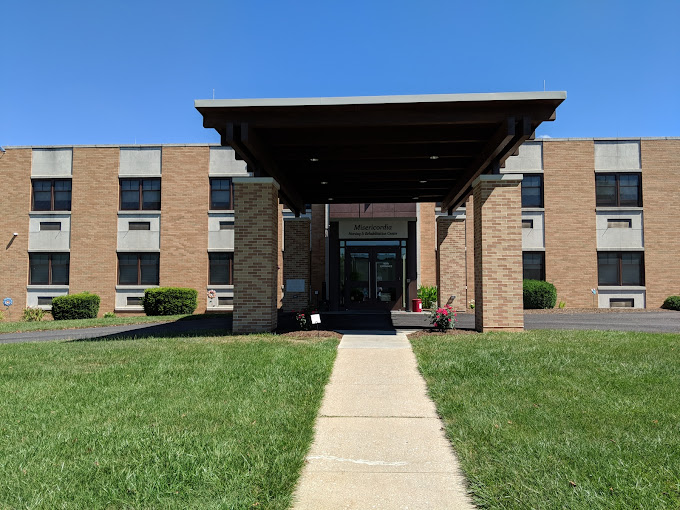
998 SOUTH RUSSELL STREET, YORK, PA 17402 (717) 755-1964
Non profit - Corporation 50 Beds Independent Data: November 2025
Trust Grade
90/100
#86 of 653 in PA
Last Inspection: August 2024

Within standard 12-15 month inspection cycle. Federal law requires annual inspections.

Overview

Misericordia Nursing & Rehabilitation Center has received an excellent Trust Grade of A, indicating a high level of care and reliability. They rank #86 out of 653 facilities in Pennsylvania, placing them in the top half, and #2 out of 14 in York County, meaning only one local option is better. The facility is improving, with issues decreasing from two in 2023 to one in 2024. Staffing is rated 4 out of 5 stars, but the turnover rate is 51%, which is average for the state. Notably, there have been no fines, which is a positive sign. However, there have been concerns about care plans not being comprehensive for some residents, and issues with food safety and urinary catheter care that could pose health risks. Overall, while there are strengths like high ratings and no fines, families should be aware of the specific areas where the facility needs improvement.

Trust Score
A
90/100
In Pennsylvania
#86/653
Top 13%
Safety Record
Low Risk
No red flags
Inspections
Getting Better
2 → 1 violations
Staff Stability
⚠ Watch
51% turnover. Above average. Higher turnover means staff may not know residents' routines.
Penalties
✓ Good
No fines on record. Clean compliance history, better than most Pennsylvania facilities.
Skilled Nurses
✓ Good
Each resident gets 44 minutes of Registered Nurse (RN) attention daily — more than average for Pennsylvania. RNs are trained to catch health problems early.
Violations
✓ Good
Only 3 deficiencies on record. Cleaner than most facilities. Minor issues only.
★★★★★
5.0
Overall Rating
★★★★☆
4.0
Staff Levels
★★★★★
5.0
Care Quality
★★★★☆
4.0
Inspection Score
Stable
2023: 2 issues
2024: 1 issues

The Good

  • 4-Star Staffing Rating · Above-average nurse staffing levels
  • 5-Star Quality Measures · Strong clinical quality outcomes
  • Full Sprinkler Coverage · Fire safety systems throughout facility
  • No fines on record

Facility shows strength in staffing levels, quality measures, fire safety.

The Bad

Staff Turnover: 51%

Near Pennsylvania avg (46%)

Higher turnover may affect care consistency

The Ugly 3 deficiencies on record

Aug 2024 1 deficiency
CONCERN (D)

Potential for Harm - no one hurt, but risky conditions existed

Incontinence Care (Tag F0690)

Could have caused harm · This affected 1 resident

Based on facility policy review, clinical record review, observations, and staff interview, it was determined that the facility failed to ensure residents receive appropriate urinary catheter care and...

Read full inspector narrative →
Based on facility policy review, clinical record review, observations, and staff interview, it was determined that the facility failed to ensure residents receive appropriate urinary catheter care and services to prevent urinary tract infections for one of two residents reviewed for catheter care (Resident 29). Findings include: Review of facility policy, titled Catheter Care- Daily, last reviewed October 12, 2023, read, in part, Objective: To prevent infection of residents with foley catheters. Ensure foley catheter is secured to leg with leg strap or tape. Assist resident to position of comfort and cover. Review of Resident 29's clinical record revealed diagnoses that included chronic kidney disease, stage 4 (a condition characterized by a gradual loss of kidney function), obstructive and reflux uropathy (occurs when urine can't flow normally through your urinary tract due to a blockage), and dementia (a chronic disorder of the mental processes caused by brain disease, marked by memory disorders, personality changes, and impaired reasoning). Review of Resident 29's physician orders revealed an order for Suprapubic Catheter 18Fr to bedside drainage system with dignity cover, with a start date of March 4, 2024. Observation of Resident 29 on August 5, 2024, at 12:22 PM, revealed he was eating lunch in the dining room. His catheter bag was on the right side of his chair and was visible without a dignity cover. Observation of Resident 29 on August 6, 2024, at 9:40 AM, revealed he was in a common area watching television. His catheter bag was underneath his chair, touching the floor, and was visible without a dignity cover. Observation of Resident 29 on August 6, 2024, at 12:35 PM, revealed he was eating lunch in the dining room. His catheter bag was underneath his chair, touching the floor, and was visible without a dignity cover. Interview with the Director of Nursing on August 7, 2024, at 9:53 AM, revealed she would expect Resident 29's catheter bag to have a dignity cover and not to touch the floor. 28 Pa Code 211.12(d)(1)(2)(5) Nursing Services
Oct 2023 2 deficiencies
CONCERN (E)

Potential for Harm - no one hurt, but risky conditions existed

Comprehensive Care Plan (Tag F0656)

Could have caused harm · This affected multiple residents

Based on review of facility policy, observations, staff interviews, and record review, the facility failed to develop and implement a comprehensive person-centered care plan for five of 16 resident re...

Read full inspector narrative →
Based on review of facility policy, observations, staff interviews, and record review, the facility failed to develop and implement a comprehensive person-centered care plan for five of 16 resident records reviewed (Residents 13, 24, 33, 102, and 202). Findings Include: Review of facility policy, titled Care Plans, Comprehensive Person-Center, not dated, read, in part, comprehensive person-centered care plans describe services to be furnished to attain or maintain resident highest practicable physical, mental, and psychosocial wellbeing. Review of Resident 13's clinical record on October 10, 2023, at approximately 10:55 AM, revealed diagnoses that included retention of urine (a condition in which you are unable to empty all the urine from your bladder) and bulbous urethral stricture (narrowing of the urethra tube that transports urine out of the body, impeding the body's ability to pass urine). Observation of Resident 13 on October 10, 2023, at 10:34 AM, revealed the Resident lying in bed with a catheter inserted and hanging on his bed frame. Review of Resident 13's physician orders revealed an order for a foley catheter, written on September 12, 2023. Review of Resident 13's comprehensive plan of care revealed Resident 13 did not have a care plan developed or implemented that addressed the foley catheter. During an interview with the Nursing Home Administrator (NHA) on October 12, 2023, at approximately 10:50 AM, it was revealed that it was the facility's expectation that Resident 13's comprehensive plan of care would include the foley catheter. Review of Resident 24's clinical record revealed diagnoses that included congestive heart failure (CHF - chronic condition in which the heart doesn't pump blood as well as it should), dementia (a condition characterized by progressive loss of intellectual functioning, impairment of memory and abstract thinking), and Parkinson's disease (a progressive disease of the nervous system marked by tremor, muscular rigidity, and slow imprecise movement). Review of Resident 24's October 2023 physician orders included oxygen at 2 Liters/Minute (rate of oxygen flow) on in HS (hour of sleep - at bedtime) and remove in AM, with a start date May 23, 2023. Review of Resident 24's interdisciplinary plan of care revealed none developed to address the Resident's use of oxygen. During an interview with the NHA on October 11, 2023, at 11:20 AM, it was revealed that the oxygen wasn't documented on the care plan and it should've been on the care plan. Review of Resident 33's clinical record revealed diagnoses that included hypertension (elevated blood pressure) and atrial fibrillation (a common type of irregular heart rhythm). Review of Resident 33's physician orders revealed an order for the medication Eliquis (an anticoagulant medication used to treat and prevent blood clots and to prevent stroke in people with nonvascular atrial fibrillation) 5 mg (milligrams) twice a day. Review of Resident 33's interdisciplinary plan of care revealed none developed to address the Resident's use of the anticoagulant medication. Review of Resident 102's clinical record revealed diagnoses that included chronic respiratory failure (a condition that occurs when the lungs cannot get enough oxygen into the blood or eliminate enough carbon dioxide from the body) and difficulty in walking. Review of Resident 102's physcian orders revealed an order for the continous use of oxygen on day, evening and night shifts. Review of Resident 102's interdisciplinary plan of care revealed none developed to address the use of oxygen. An interview with the NHA on October 11, 2023, at 11:20 AM, confirmed the anticoagulant medication care plan for Resident 33 and the oxygen care plan for Resident 102 were not developed and would be added to their care plans. Review of Resident 202's clinical record revealed diagnoses that included acute respiratory failure (acute or chronic impairment of gas exchange between the lungs and the blood) and diabetes (a group of diseases that result in too much sugar in the blood [high blood glucose]). Observation of Resident 202 on October 10, 2023, at 10:34 AM, revealed the Resident sitting in their wheelchair in their room. There was an oxygen concentrator sitting beside Resident 202's bed. Immediate interview with Resident 202 revealed that they use supplemental oxygen at night, while in bed. Review of Resident 202's current physician's orders on October 10, 2023, revealed current physician's orders for continuous supplemental oxygen at 2 liters per minute to be applied at bedtime and removed in the morning, and an order for Eliquis (anticoagulant medication) 5 mg two times daily. Review of Resident 202's care plan on October 10, 2023, failed to reveal any care planning for the Resident's use of a supplemental oxygen or anticoagulant medication. During a staff interview with the NHA on October 11, 2023, at 11:20 AM, revealed that Resident 202 did not have a care plan for her supplemental oxygen use or anticoagulant use, but that they would be added. 28 Pa. Code 211.12(d)(3) Nursing services 28 Pa. Code 211.12(d)(5) Nursing services
CONCERN (E)

Potential for Harm - no one hurt, but risky conditions existed

Food Safety (Tag F0812)

Could have caused harm · This affected multiple residents

**NOTE- TERMS IN BRACKETS HAVE BEEN EDITED TO PROTECT CONFIDENTIALITY** Based on observation, review of facility policy, and staff interviews, it was determined that the facility failed to store and s...

Read full inspector narrative →
**NOTE- TERMS IN BRACKETS HAVE BEEN EDITED TO PROTECT CONFIDENTIALITY** Based on observation, review of facility policy, and staff interviews, it was determined that the facility failed to store and serve food/beverages in accordance with professional standards for food safety in the main kitchen and for one of one kitchenette. Findings include: Review of facility policy, titled Food Storage, revised August 2019, read, in part, ready-to-eat foods must be labeled with a use by date. Thickened liquids, once opened, user must add use by information; product to be used within five days after opening. Observation in the dry storeroom on October 10, 2023, at 9:35 AM, revealed one bag of spaghetti was open with contents partially removed and was not date marked with an open date. During an interview on October 10, 2023, at 9:35 AM, with Employee 1 (Director of Food Service), it was revealed that the spaghetti should've been date marked when it was opened. Observation in the main kitchen on October 10, 2023, at 9:45 AM, revealed a white scoop was inside a bag of bulk sugar that was inside a bulk bin. During an interview with Employee 1 on October 10, 2023, at 9:45 AM, it was revealed that the scoop shouldn't be stored in the bag of sugar. Observation on October 10, 2023, at 9:56 AM, in the cupboard in the main kitchen revealed three packages of chicken gravy mix were open with contents partially removed and not date marked. During an interview with Employee 1 on October 10, 2023, at 9:56 AM, it was revealed that the gravy mix should be dated once opened. Observation in the [NAME] Field kitchenette on October 10, 2023, at 10:06 AM, in the refrigerator, revealed: one 46 ounce container of mildly thickened orange juice and on 46 ounce container of mildly thickened cranberry juice that were opened with contents partially removed and not date marked with an opened date. During an interview with Employee 1 on October 10, 2023, at 10:06 AM, it was revealed that the aforementioned thickened juices should be date marked when opened. Observation in the [NAME] Field kitchenette on October 10, 2023, at 10:07 AM, in the freezer, revealed there was one sleeve of frozen waffles and one sleeve of frozen French toast that was not date marked. During an interview with Employee 1 on October 10, 2023, at 10:76 AM, it was revealed that the sleeve of waffles and French toast should be date marked with the received date when removed from the original case. During an interview with the Nursing Home Administrator on October 12, 2023, at 10:38 AM, it was revealed that the aforementioned items should be date marked per the Food Storage policy. 28 Pa code 211.6(f) - Dietary Services
Understanding Severity Codes (click to expand)
Life-Threatening (Immediate Jeopardy)
J - Isolated K - Pattern L - Widespread
Actual Harm
G - Isolated H - Pattern I - Widespread
Potential for Harm
D - Isolated E - Pattern F - Widespread
No Harm (Minor)
A - Isolated B - Pattern C - Widespread

Questions to Ask on Your Visit

  • "Can I speak with families of current residents?"
  • "What's your RN coverage like on weekends and overnight?"

Our Honest Assessment

Strengths
  • • Grade A (90/100). Above average facility, better than most options in Pennsylvania.
  • • No major safety red flags. No abuse findings, life-threatening violations, or SFF status.
  • • No fines on record. Clean compliance history, better than most Pennsylvania facilities.
  • • Only 3 deficiencies on record. Cleaner than most facilities. Minor issues only.
Concerns
  • • No significant concerns identified. This facility shows no red flags across CMS ratings, staff turnover, or federal penalties.
Bottom line: Generally positive indicators. Standard due diligence and a personal visit recommended.

About This Facility

What is Misericordia Nursing & Rehabilitation Center's CMS Rating?

CMS assigns MISERICORDIA NURSING & REHABILITATION CENTER an overall rating of 5 out of 5 stars, which is considered much above average nationally. Within Pennsylvania, this rating places the facility higher than 99% of the state's 100 nursing homes. This rating reflects solid performance across the metrics CMS uses to evaluate nursing home quality.

How is Misericordia Nursing & Rehabilitation Center Staffed?

CMS rates MISERICORDIA NURSING & REHABILITATION CENTER's staffing level at 4 out of 5 stars, which is above average compared to other nursing homes. Staff turnover is 51%, compared to the Pennsylvania average of 46%. RN turnover specifically is 64%, which is notably high. RNs provide skilled clinical oversight, so turnover in this role can affect medical care quality.

What Have Inspectors Found at Misericordia Nursing & Rehabilitation Center?

State health inspectors documented 3 deficiencies at MISERICORDIA NURSING & REHABILITATION CENTER during 2023 to 2024. These included: 3 with potential for harm.

Who Owns and Operates Misericordia Nursing & Rehabilitation Center?

MISERICORDIA NURSING & REHABILITATION CENTER is owned by a non-profit organization. Non-profit facilities reinvest revenue into operations rather than distributing to shareholders. The facility operates independently rather than as part of a larger chain. With 50 certified beds and approximately 47 residents (about 94% occupancy), it is a smaller facility located in YORK, Pennsylvania.
How Does Misericordia Nursing & Rehabilitation Center Compare to Other Pennsylvania Nursing Homes?

Compared to the 100 nursing homes in Pennsylvania, MISERICORDIA NURSING & REHABILITATION CENTER's overall rating (5 stars) is above the state average of 3.0, staff turnover (51%) is near the state average of 46%, and health inspection rating (4 stars) is above the national benchmark.

What Should Families Ask When Visiting Misericordia Nursing & Rehabilitation Center?

Based on this facility's data, families visiting should ask: "Can I visit during a mealtime to observe dining assistance and food quality?" "How do you handle medical emergencies, and what is your hospital transfer rate?" "Can I speak with family members of current residents about their experience?"

Is Misericordia Nursing & Rehabilitation Center Safe?

Based on CMS inspection data, MISERICORDIA NURSING & REHABILITATION CENTER has a clean safety record: no substantiated abuse findings (meaning no confirmed cases of resident harm), no Immediate Jeopardy citations (the most serious violation level indicating risk of serious injury or death), and is not on the Special Focus Facility watch list (a federal program monitoring the lowest-performing 1% of nursing homes). The facility has a 5-star overall rating and ranks #1 of 100 nursing homes in Pennsylvania. While no facility is perfect, families should still ask about staff-to-resident ratios and recent inspection results during their visit.

Do Nurses at Misericordia Nursing & Rehabilitation Center Stick Around?

MISERICORDIA NURSING & REHABILITATION CENTER has a staff turnover rate of 51%, which is about average for Pennsylvania nursing homes (state average: 46%). Moderate turnover is common in nursing homes, but families should still ask about staff tenure and how the facility maintains care continuity when employees leave.

Was Misericordia Nursing & Rehabilitation Center Ever Fined?

MISERICORDIA NURSING & REHABILITATION CENTER has no federal fines on record. CMS issues fines when nursing homes fail to meet care standards or don't correct problems found during inspections. The absence of fines suggests the facility has either maintained compliance or corrected any issues before penalties were assessed. This is a positive indicator, though families should still review recent inspection reports for the full picture.

Is Misericordia Nursing & Rehabilitation Center on Any Federal Watch List?

MISERICORDIA NURSING & REHABILITATION CENTER is not on any federal watch list. The most significant is the Special Focus Facility (SFF) program, which identifies the bottom 1% of nursing homes nationally based on persistent, serious quality problems. Not being on this list means the facility has avoided the pattern of deficiencies that triggers enhanced federal oversight. This is a positive indicator, though families should still review the facility's inspection history directly.