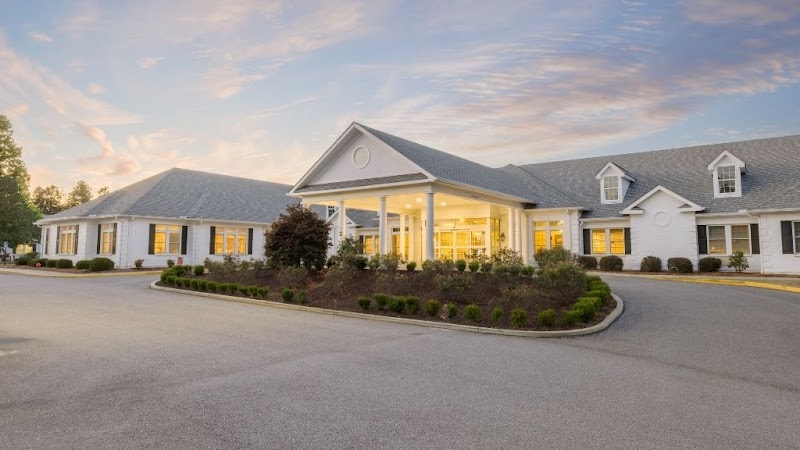
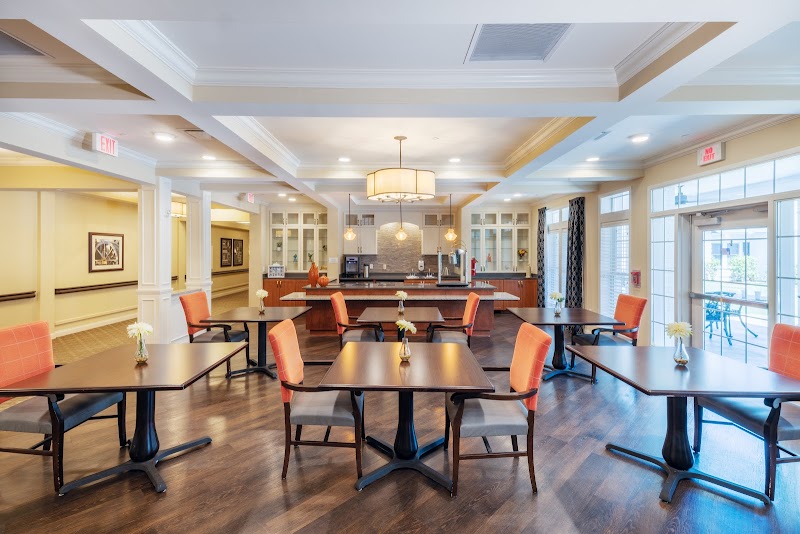
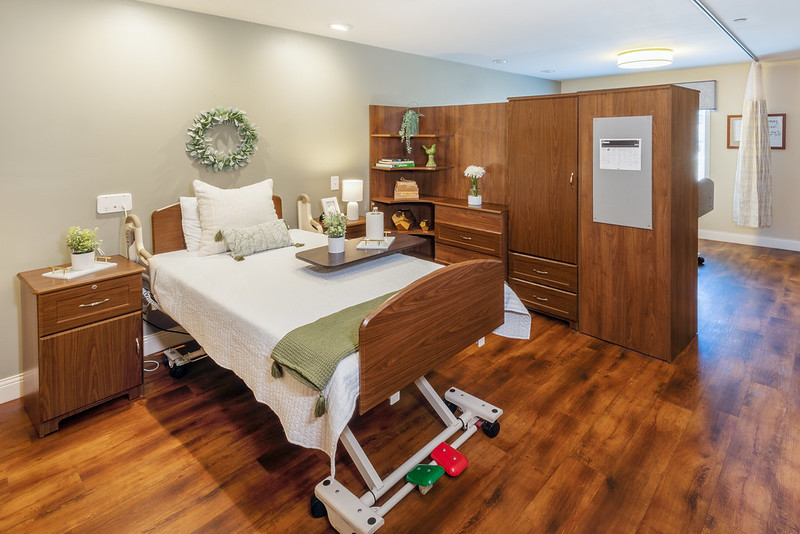
Anchor Post Acute

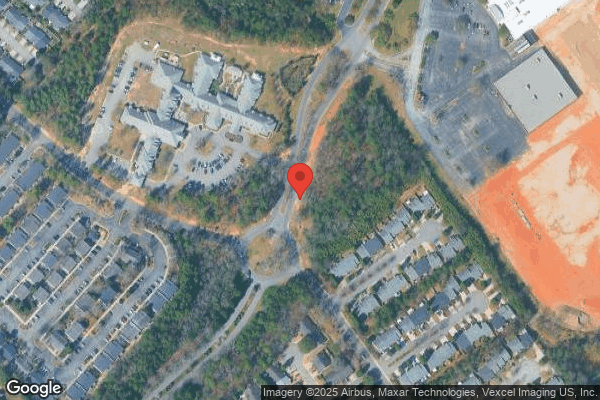
550 East Gate Drive, Aiken, SC 29803 (803) 643-3694
For profit - Limited Liability company 120 Beds PACS GROUP Data: November 2025
Trust Grade
38/100
#142 of 186 in SC
Last Inspection: July 2024

Within standard 12-15 month inspection cycle. Federal law requires annual inspections.

Overview

Anchor Post Acute, located in Aiken, South Carolina, has received a Trust Grade of F, which indicates significant concerns and a poor overall rating. They rank #142 out of 186 nursing homes in South Carolina, placing them in the bottom half of facilities in the state, and #6 out of 6 in Aiken County, meaning there is only one local option that is better. Unfortunately, the facility is worsening, with issues increasing from 1 in 2022 to 12 in 2024. Staffing is a significant concern here, with a low rating of 1 out of 5 stars and a turnover rate of 66%, much higher than the state average of 46%. Additionally, there have been troubling incidents noted in inspections. For example, staff failed to ensure proper hand hygiene when serving food, which poses a risk of infection. Also, residents reported that the food served was not hot or well-seasoned, indicating issues with meal quality. While it's worth noting that the facility has received an average fine of $9,428, indicating some compliance problems, the lack of sufficient registered nurse coverage raises further concerns about overall care quality.

Trust Score
F
38/100
In South Carolina
#142/186
Bottom 24%
Safety Record
Low Risk
No red flags
Inspections
Getting Worse
1 → 12 violations
Staff Stability
⚠ Watch
66% turnover. Above average. Higher turnover means staff may not know residents' routines.
Penalties
○ Average
$9,428 in fines. Higher than 67% of South Carolina facilities. Some compliance issues.
Skilled Nurses
⚠ Watch
Each resident gets only 17 minutes of Registered Nurse (RN) attention daily — below average for South Carolina. Fewer RN minutes means fewer trained eyes watching for problems.
Violations
⚠ Watch
18 deficiencies on record. Higher than average. Multiple issues found across inspections.
★☆☆☆☆
1.0
Overall Rating
★☆☆☆☆
1.0
Staff Levels
★★★☆☆
3.0
Care Quality
★★☆☆☆
2.0
Inspection Score
Stable
2022: 1 issues
2024: 12 issues

The Good

  • Full Sprinkler Coverage · Fire safety systems throughout facility
  • No fines on record

Facility shows strength in fire safety.

The Bad

1-Star Overall Rating

Below South Carolina average (2.8)

Significant quality concerns identified by CMS

Staff Turnover: 66%

20pts above South Carolina avg (46%)

Frequent staff changes - ask about care continuity

Federal Fines: $9,428

Below median ($33,413)

Minor penalties assessed

Chain: PACS GROUP

Part of a multi-facility chain

Ask about local staffing decisions and management

Staff turnover is elevated (66%)

18 points above South Carolina average of 48%

The Ugly 18 deficiencies on record

Sept 2024 1 deficiency
CONCERN (D) 📢 Someone Reported This

A family member, employee, or ombudsman was alarmed enough to file a formal complaint

Potential for Harm - no one hurt, but risky conditions existed

Deficiency F0761 (Tag F0761)

Could have caused harm · This affected 1 resident

Based on observation, interview, and review of the facility policy, the facility failed to ensure safe and secure storage of medications and biologicals in 2 of 2 medications observed. Findings inclu...

Read full inspector narrative →
Based on observation, interview, and review of the facility policy, the facility failed to ensure safe and secure storage of medications and biologicals in 2 of 2 medications observed. Findings include: Review of the facility policy titled, Storage of Medications last revised November 2023, states, The facility stores all drugs and biologicals in a safe, secure, and orderly manner. Furthermore it states, Compartments (including, but not limited to, drawers, cabinets, rooms, refrigerators, carts, and boxes) containing drugs and biologicals are locked when not in use. Unlocked medication carts are not left unattended. Observation on 09/03/24 at 2:01 PM and 2:30 PM of Hall 400 Medication Carts, revealed, an unattended and unlocked medication cart with 1 bottle of Clear Lax sitting on the top of the cart. Observation and interview on 09/03/24 at 3:16 PM of Hall 400 Medication Carts, revealed, an unattended and unlocked medication cart with 1 bottle of Clear Lax sitting on the top of the cart and one medicine cup with a mixture of applesauce and pills. Licensed Practical Nurse (LPN)1 stated that the medicine cup was left on top due to a resident refusing medication and that her cart was unlocked because she was called away to do something. LPN1 stated that per policy, the medications should have been disposed of in the medications storage room. During an interview on 09/03/24 at 3:40 PM with the Director of Nursing (DON), the DON stated that medication carts are to be locked when not in use.
Jul 2024 11 deficiencies
CONCERN (D)

Potential for Harm - no one hurt, but risky conditions existed

Deficiency F0554 (Tag F0554)

Could have caused harm · This affected 1 resident

Based on observation, record review, interviews, and facility policy review, the facility failed to assess a resident for self-administration of medication for one of one resident (Resident (R) 27) re...

Read full inspector narrative →
Based on observation, record review, interviews, and facility policy review, the facility failed to assess a resident for self-administration of medication for one of one resident (Resident (R) 27) reviewed for self-administration of medication of 23 sample residents. This had the potential to affect resident medication safety at the facility. Findings include: Review of the facility's policy titled, Self-Administration of Meds, revised in 02/21, indicated, under the section Policy Interpretation and Implementation that, lf it is deemed safe and appropriate for a resident to self-administer medications, this is documented in the medical record and the care plan. The decision that a resident can safely self-administer medications is re-assessed periodically based on changes in the resident's medical and/or decision-making status. Review of R27's admission Record in the Profile tab of the electronic medical record (EMR) revealed an admission date of 12/13/17. The admission Record also revealed a diagnosis of hemiplegia and hemiparesis following cerebral infarction, affecting left dominant side. Review of R27's admission Minimum Data Set (MDS) with an Assessment Reference Date (ARD) of 06/04/24 and located in the MDS tab, revealed a Brief Interview for Mental Status (BIMS) score of 15 out of 15 which indicated the resident was cognitively intact. During an observation and interview on 06/30/24 at 8:10 PM, observation revealed three bottles of eye drops on R27's bedside table. Licensed Practical Nurse (LPN)6 stated, Yes ma'am we always leave them in her room at bedside. I will check to see if she has order to keep at bedside for the eye drops. LPN6 checked orders and stated, I don't see one to keep eyedrops at bedside. During an observation and interview on 06/30/24 at 8:39 PM, R27 stated, I've kept my eye drops here ever since I've been here. I've been here six and a half years. If I could get the lids off I could do them myself. I used to do them twice a day myself, but that was six and a half years ago. The facility has done them for me the entire time I've been here. I never asked the doctor if I could keep them at bedside. I think the nurses leave them here, because they used to come in and forget them. Then they would have to leave, go get them, and give them to me. It's easier to just keep them in here.
CONCERN (D)

Potential for Harm - no one hurt, but risky conditions existed

Grievances (Tag F0585)

Could have caused harm · This affected 1 resident

Based on interviews, document review, and review of facility policy, the facility failed to respond to resident grievances in a timely manner for one of one resident (Resident (R) 75) reviewed for gri...

Read full inspector narrative →
Based on interviews, document review, and review of facility policy, the facility failed to respond to resident grievances in a timely manner for one of one resident (Resident (R) 75) reviewed for grievances out of 23 sampled residents. This had the potential to affect resolution of resident concerns. Findings include: Review of the facility policy titled, Grievances/Complaints, Recording and Investigating, revised April 2017, showed: Policy Interpretation and Implementation .5. The Resident Grievance/Complaint Investigation Report Form will be filed with the administrator within five (5) working days of the incident. 6. The resident, or person acting on behalf of the resident, will be informed of the findings of the investigation, as well as any corrective actions recommended, within ___ working days of the filing of the grievance or complaint . During an interview on 06/30/24 at 4:27 PM, R75 stated she had $40.00 stolen from me. When asked where it had been, R75 indicated In cabinet like this [pointed to a bedside table with a lockable top drawer], but the key didn't work; they did not replace it; and a clothes hamper that was stolen in laundry. During an interview on 07/02/24 at 6:35 PM, the Social Services Director (SSD) provided two grievance forms; one dated 05/31/24 regarding the missing money that showed a resolution date of 07/01/24; the second regarding the missing hamper dated 07/01/24 with a resolution date of 07/01/24, the SSD stated they were unaware of the missing hamper. The SSD stated that when she interviewed the resident on 05/31/24, she asked R75 where she got the money and R75 stated she got the money from her daughter; So I asked her if I call her daughter would she tell me she gave you the money? I tried calling the daughter and she didn't call me back. So, I called the POA [Power of Attorney] and the POA said the daughter had been known for taking her money. So, I called the daughter again and she didn't call back. So, the Administrator went to look for the blue hamper in the laundry and found the money there. The SSD confirmed that the grievance was put in on 05/31/24 and not resolved until 07/01/24. During an interview on 07/02/24 at 7:13 PM, the Administrator stated an expectation that grievances would be resolved promptly, 72 hours if I can. When queried at 7:15 PM if over 30 days was too long, the Regional Nurse stated, Well, it depends on what it is and if it is still being investigated.
CONCERN (D) 📢 Someone Reported This

A family member, employee, or ombudsman was alarmed enough to file a formal complaint

Potential for Harm - no one hurt, but risky conditions existed

Free from Abuse/Neglect (Tag F0600)

Could have caused harm · This affected 1 resident

**NOTE- TERMS IN BRACKETS HAVE BEEN EDITED TO PROTECT CONFIDENTIALITY** Based on interviews, record review, and review of the facility's policy, the facility failed to ensure one of three residents (R...

Read full inspector narrative →
**NOTE- TERMS IN BRACKETS HAVE BEEN EDITED TO PROTECT CONFIDENTIALITY** Based on interviews, record review, and review of the facility's policy, the facility failed to ensure one of three residents (Resident (R) 254) reviewed for abuse were free from abuse of 23 sample residents. Specifically, R254 reported that she was afraid to push her call light due to two instances of intimidation and verbal abuse by Certified Nursing Assistant (CNA)1. This had the potential to affect resident safety at the facility. Findings include: Review of the facility's policy titled, Abuse and Neglect- Clinical Protocol, revised March 2018, indicated, 1. Abuse is defined . the willful inflection of . intimidation or punishment with resulting physical harm, pain, or mental anguish. Abuse also includes the deprivation by an individual including a caretaker, of goods and services that are necessary to attain or maintain physical, mental and psychological well-being. Instances of abuse of all residents, irrespective of any, mental or condition, cause physical harm, pain and mental anguish. Record review R254's Face Sheet located under the Profile tab of the electronic medical record (EMR), revealed the resident was admitted to the facility on [DATE] with a diagnosis of hemiplegia and hemiparesis following nontraumatic intracerebral hemorrhage affecting left non-dominant side. Review of the R254's admission Minimum Data Set (MDS) located under the MDS tab of the EMR with an Assessment Reference Date (ARD) of 06/19/24 revealed the facility assessed the resident as having a Brief Interview for Mental Status (BIMS) score of 15 out of 15 which indicated the resident was cognitively intact. During a family interview on 06/30/24 at 1:52 PM, when asked had the resident ever been abused, made to feel afraid or humiliated/degraded, R254's Family Member (F) 254 stated a week ago, CNA1 came into the resident's room and told R254 to stop pressing the call bell and that the CNA1 had other residents who were dying and needed her care. The next day the resident reported to F254 that CNA1 told her We will not have a repeat of yesterday. F254 stated she then came to the facility to speak to CNA1. F254 stated she spoke to CNA1 about how she spoke to R254 and asked that CNA1 not provide care for R254. CNA1 has not provided care for R254 since then. F254 stated she reported it to Licensed Practical Nurse (LPN) 1. During an interview on 07/01/24 at 3:50 PM, R254 stated When I was first admitted to the facility the staff told me if I needed help to press the call bell so that's what I did. Then [CNA1] came in and told me to stop pressing the call bell so much and that I was playing with the call bell. I asked her how I would get care if I don't press my call bell and that I was not playing with it, I actually needed help. R254 then stated the next day CNA1 came into the room and told her We are not doing this today in regard to pressing the call bell. The resident stated that she asked CNA1 what she meant by that, and the CNA replied playing with the call bell. The resident stated to the CNA that she wasn't playing with the call bell and that she needed help. R254 stated that her granddaughter then came to the facility and asked CNA1 how would R254 get care if she did not press the call bell. When asked if she was scared to press the call bell, the resident responded, yes but it's not like they were going to come. Review of the facility's Grievance Log, provided by the facility during the entrance conference, revealed the log did not have any concerns logged by R254 and/or F254. During an interview on 06/30/24 at 2:39 PM, the Social Services Director (SSD) stated they did not have any staff to resident abuse concerns reported to them. During an interview on 06/30/24 at 2:45 PM, the Administrator and Assistant Director of Nursing (ADON) stated they had not received a complaint about staff to resident verbal abuse. During an interview on 06/30/24 at 6:58 PM, LPN1 stated she reported to the Assistant Director of Nursing (ADON) that CNA1 was rude to R254 (06/22/24), and the family asked for CNA1 to be removed from caring for R254. The LPN stated while she was doing medication pass, she heard loud yelling coming from R254's room (the yelling was between CNA1 and F254- 06/23/24). When she entered R254's room, LPN1 stated CNA1 was explaining to F254 that she was just loud and not being rude. LPN1 said F254 reported to her that CNA1 was rude and loud and wanted CNA1 removed from grandmother's care. LPN1 then stated, I reported this allegation of abuse to [ADON]. When asked what the facility's expectation for reporting abuse was, LPN1 stated she reported it to ADON via text message. LPN1 stated in regard to abuse we would report it to our supervisor, they would remove the staff member from the resident until the investigation was completed. The LPN1 stated she did not write a statement or document the incident with R254. LPN1 stated if she witnessed abuse she would remove the staff member from the care pending the investigation. When asked was CNA1 removed from care, LPN1 stated no she was just swapped out with another CNA to provide care to R254. During an interview on 06/30/24 at 7:54 PM, LPN1, the Director of Nursing (DON) and ADON revealed R254 called her family and stated that CNA1 was loud, so the facility took the concern as CNA1 being loud and not rude. The ADON did not ask exactly what CNA1 said to R254. The ADON stated I spoke to CNA1, and she said she wasn't rude, she was just loud. The family stated they did not want CNA1 working with their grandmother. We swapped CNA1 out and she had not worked with her again. On the day of the incident, LPN1 stated she was four doors down completing a medication pass when she heard the commotion in R254's room and went to see what was happening. When she entered, CNA1 was explaining to F254 that she was not being rude. LPN1 confirmed CNA1 was not removed from care but instead swapped to the care for other residents. Review of the Concern/Grievance Report, submitted 06/30/24 at 10:30 PM by the ADON, stated, Date initiated 06/23/24 . Subject- Last Wednesday CNA was removed from assignment due to resident thinking CNA was talking Loudly. Comments- CNA removed from assignment. Concerns Party Response- CNA Removed from assignment family stated they were okay with interventions. When asked were there any additional residents interviewed to ensure they did not feel as though CNA1 was rude to them, the ADON and Regional Nurse Responded no.
CONCERN (D)

Potential for Harm - no one hurt, but risky conditions existed

Report Alleged Abuse (Tag F0609)

Could have caused harm · This affected 1 resident

**NOTE- TERMS IN BRACKETS HAVE BEEN EDITED TO PROTECT CONFIDENTIALITY** Based on interviews, record review, and facility policy review, the facility failed to report staff to resident abuse when they ...

Read full inspector narrative →
**NOTE- TERMS IN BRACKETS HAVE BEEN EDITED TO PROTECT CONFIDENTIALITY** Based on interviews, record review, and facility policy review, the facility failed to report staff to resident abuse when they failed to report the allegation of abuse to the State Survey Agency (SSA) for one of two residents (Resident (R) 254) reviewed for abuse of 23 sample residents. These failures had the potential to contribute to further verbal abuse and possible psychosocial harm. Findings Include: Review of the facility's policy titled, Abuse, Neglect, Exploitation or Misappropriation- Reporting and Investigation, revised September 2022, indicated All reports of resident abuse, neglect exploitation, or theft/misappropriation of resident property are reported to local, state and federal agencies (As required by current regulations) and thoroughly investigated by facility management. Review of the undated Face sheet found in the electronic medical record (EMR) under the Profile tab, revealed R254 was admitted to the facility on [DATE] with a diagnosis of hemiplegia and hemiparesis following nontraumatic intracerebral hemorrhage affecting left non-dominant side. Review of the R254's admission Minimum Data Set (MDS) located under the MDS tab of the EMR with an Assessment Reference Date (ARD) of 06/19/24 revealed the facility assessed the resident as having a Brief Interview for Mental Status (BIMS) score of 15 out of 15 which indicated the resident was cognitively intact. During a family interview on 06/30/24 at 1:52 PM, when asked had the resident ever been abused, made to feel afraid or humiliated/degraded, R254's Family Member (F) 254 stated a week ago, Certified Nursing Assistant (CNA) 1 came into the resident's room and told R254 to stop pressing the call bell and that the CNA1 had other residents who were dying and needed her care. The next day the resident reported to F254 that CNA1 told her, We will not have a repeat of yesterday. F254 stated she then came to the facility to speak to CNA1. F254 stated she spoke to CNA1 about how she spoke to R254 and asked that CNA1 not provide care for R254. CNA1 has not provided care for R254 since then. F254 stated she reported it to Licensed Practical Nurse (LPN) 1. Review of the facility's Grievance Log, provided by the facility during the entrance conference, revealed the log did not have any concerns logged by R254 and/or F254. During an interview on 06/30/24 at 2:39 PM, Social Services Director (SSD) stated they did not have any staff to resident abuse concerns reported to them. During an interview on 06/30/24 at 2:45 PM the Administrator and Assistant Director of Nursing (ADON) stated they had not received a complaint about staff to resident verbal abuse. During an interview on 06/30/24 at 6:58 PM, LPN1 stated she reported to the Assistant Director of Nursing (ADON) that CNA1 was rude to R254, and the family asked for CNA1 to be removed from caring for R254. When asked what the facility's expectation for reporting abuse was, LPN1 stated she reported the allegation of abuse to ADON via text message. LPN1 stated in regard to abuse they would have reported it to their supervisor. Review of the Concern/Grievance Report, submitted 06/30/24 at 10:30 PM by the ADON, stated, Date initiated 06/23/24 . Subject- Last Wednesday CNA was removed from assignment due to resident thinking CNA was talking Loudly. Comments- CNA removed from assignment. Concerns Party Response- CNA Removed from assignment family stated they were okay with interventions. During an interview on 06/30/24 at 10:30 PM, when asked Was the incident reported to the SSA, the ADON and Regional Nurse Responded no. The Regional Nurse stated she felt as though the concerns went through nursing as a customer service issue and therefore stayed within nursing.
CONCERN (D)

Potential for Harm - no one hurt, but risky conditions existed

Investigate Abuse (Tag F0610)

Could have caused harm · This affected 1 resident

**NOTE- TERMS IN BRACKETS HAVE BEEN EDITED TO PROTECT CONFIDENTIALITY** Based on interviews, record review, and facility policy review, the facility failed to ensure a thorough investigation was condu...

Read full inspector narrative →
**NOTE- TERMS IN BRACKETS HAVE BEEN EDITED TO PROTECT CONFIDENTIALITY** Based on interviews, record review, and facility policy review, the facility failed to ensure a thorough investigation was conducted for an allegation of abuse for one of two residents (Resident (R) 254) reviewed for abuse of 23 sample residents. These failures had the potential to contribute to further abuse and possible psychosocial harm. Findings include: Review of the facility's policy titled, Abuse, Neglect, Exploitation or Misappropriation- Reporting and Investigation revised September 2022, indicated, All allegations are thoroughly investigated. The administrator initiates the investigations . 6. Any employee who has been accused of resident abuse is placed on leave with no resident contact until the investigation is completed. The individual conducting the investigation as a minimum: a. Reviews the documentation and evidence b. reviews the residents medical record to determine the resident physical and cognitive status at the time of the incident and since the incident. C. observes the alleged victim, including his or interaction with staff and other residents. D. interview the person reporting the incident. E. interview any witnesses to the incident . Review of the undated Face Sheet located in the electronic medical record (EMR) under the Profile tab, revealed R254 was admitted to the facility on [DATE] with a diagnosis of hemiplegia and hemiparesis following nontraumatic intracerebral hemorrhage affecting left non-dominant side. Review of R254's admission Minimum Data Set (MDS) located under the MDS tab of the EMR with an Assessment Reference Date (ARD) of 06/19/24 revealed the facility assessed the resident as having a Brief Interview for Mental Status (BIMS) score of 15 out of 15 which indicated the resident was cognitively intact. During a family interview on 06/30/24 at 1:52 PM, when asked has the resident ever been abused, made to feel afraid or humiliated/degraded, R254's Family Member (F) 254 stated a week ago Certified Nursing Assistant (CNA) 1 came into the resident's room and told R254 to stop pressing the call bell and that the CNA1 had other residents who were dying and needed her care. The next day the resident reported to F254 that CNA1 told her that we will not have a repeat of yesterday. F254 stated she then came to the facility to speak to CNA1. F254 stated she spoke to CNA1 about how she speaks to R254 and asked CNA1 not to care for R254. CNA1 had not cared for R254 since then. F254 stated she reported it to Licensed Practical Nurse (LPN) 1. Review of the facility's Grievance Log, provided by the facility during the entrance conference, revealed the log did not have any concerns logged by R254 and/or F254. During an interview on 06/30/24 at 2:39 PM, the Social Services Director (SSD) stated they did not have any staff to resident abuse concerns reported to them. During an interview on 06/30/24 at 2:45 PM the Administrator and Assistant Director of Nursing (ADON) stated they had not received a complaint about staff to resident verbal abuse. During an interview on 06/30/24 at 6:58 PM, LPN1 stated she reported to the Assistant Director of Nursing (ADON) that CNA1 was rude to R254, and the family asked for CNA1 to be removed from caring for R254. When asked what the facility's expectation for reporting abuse was, LPN1 stated she reported the allegation of abuse to the ADON via text message. LPN1 stated in regard to abuse they would report it to their supervisor, she would remove the staff member from the resident until the investigation was completed. The LPN stated she did not write a statement or document the incident with R254. LPN1 stated if she witnessed abuse she would have removed the staff member from care pending the investigation. When asked if CNA1 was removed from care, LPN1 stated no she was just swapped out with another CNA to provide care to R254. Review of the Concern/Grievance Report submitted 06/30/24 at 10:30 PM by the ADON, stated, Date initiated 06/23/24 . Subject- Last Wednesday CNA was removed from assignment due to resident thinking CNA was talking Loudly. Comments- CNA removed from assignment. Concerns Party Response- CNA Removed from assignment family stated they were okay with interventions. During an interview on 06/30/24 at 10:30 PM, when asked was the incident reported to the SSA, the ADON and Regional Nurse Responded no. When asked were there any additional residents interviewed to ensure they did not feel as though CNA1 was rude to them, the ADON and Regional Nurse Responded no. The Regional Nurse stated she felt as though the concerns went through nursing as a customer service issue and therefore stayed within nursing.
CONCERN (D)

Potential for Harm - no one hurt, but risky conditions existed

Transfer Notice (Tag F0623)

Could have caused harm · This affected 1 resident

**NOTE- TERMS IN BRACKETS HAVE BEEN EDITED TO PROTECT CONFIDENTIALITY** Based on record review, and interviews, the facility failed to ensure three of three residents and/or their representatives (Res...

Read full inspector narrative →
**NOTE- TERMS IN BRACKETS HAVE BEEN EDITED TO PROTECT CONFIDENTIALITY** Based on record review, and interviews, the facility failed to ensure three of three residents and/or their representatives (Resident (R) 11, R25 and R101) reviewed for facility initiated emergent hospital transfer, from a total sample of 23 residents, were provided with written transfer/discharge notice that contained the required information. This failure had the potential to affect the resident and their Resident Representative (RR) by not having the knowledge of where and why a resident was transferred, and/or how to appeal the transfer, if desired. Findings include: 1. During an interview on 06/30/24 at 4:41 PM, R11 stated she had been sent to the hospital about a month ago. Review of R11's electronic medical record (EMR) Census tab, showed R11 had been hospitalized on [DATE]. Review of R11's EMR Progress Notes tab, showed on 06/10/24 at 4:53 PM, R11 was hard to arouse, had slurred speech, and was not at her normal baseline. R11 was sent to the hospital for evaluation. A Progress Note, date 02/25/24 at 7:37 AM, revealed R11 was noted to have an altered mental status and not responding at baseline. Review of R11's admission Record from the EMR Profile tab, showed a facility admission date of 06/10/18, readmission on [DATE], with medical diagnoses that included spinal stenosis, intervertebral disc disorder, rheumatoid arthritis, and pulmonary hypertension. Review of R11's quarterly Minimum Data Set (MDS) with an Assessment Reference Date (ARD) of 05/14/24 showed a Brief Interview for Mental Status (BIMS) score of 15 out of 15, indicative of being cognitively intact. Further review of R11's Progress Notes tab, Evaluations tab, and Documents tab, did not show evidence of a written notice of transfer having been provided to R11 or her RR. In response to a request for the evidence of provision of a written notice of transfer, the facility provided two untitled forms- on facility letterhead; the first dated 02/24/24 stated R11 was her own 'self' and the form was provided to her that stated she was being sent to the hospital for altered mental status. The form did not include any information regarding the Ombudsman contact or appeal rights. The second form was dated 06/10/24 and was addressed to the R11's RR, did not include the reason for transfer (a canned line of related to a change in medical status), Ombudsman mailing address, or information regarding an appeal of the transfer. During a follow-up interview on 07/02/24 at 11:27 AM regarding the receipt of the written notice of transfer, R11 reviewed the papers and responded, First time I seen this paper. They never gave me this paper. My daughter never got one either - you can call her. Three unsuccessful attempts were made to contact R11's RR. 2. Review of R25's Census tab showed he had been sent to the hospital on [DATE] and 04/19/24. Review of R25's admission Record from the EMR Profile tab, showed a facility admission date of 11/23/19, with readmissions on 05/05/21 and 11/19/21; with medical diagnoses that included hypertensive heart disease with heart failure, stage IV pressure injury, diabetes type II, chronic obstructive pulmonary disease (COPD), acute respiratory failure, and ventricular tachycardia. Review of R25's significant change of status MDS with an ARD of 06/13/24 showed a BIMS score of 15 out of 15, indicative of being cognitively intact. Review of R25's Progress Notes tab, revealed on 04/10/24 at 8:03 AM, he was experiencing blood pooling from around his catheter with no urine output and was sent to the emergency room. On 04/19/24 at 3:33 PM a Progress Note revealed R25 was experiencing a change in mental status with respiratory distress and was again sent to the emergency room. In response to a request for evidence of provision of the written notices of transfers, the facility provided two untitled forms. The first, dated 04/10/24, addressed to R25's RR showed R25 was sent to the hospital for a change in medical status, but did not include the Ombudsman mailing address or how to appeal the transfer. Review of the second form, dated 04/19/24, addressed to R25's RR, showed R25 was sent to the hospital for a change in medical status, but did not include the Ombudsman mailing address or information to appeal the transfer if desired. During an interview on 07/02/24 at 11:17 AM regarding receipt of the two forms, R25 reviewed the forms and responded, No, not ever received anything like this. During a telephone interview, regarding receipt of written notices of transfers, on 07/02/24 at 1:33 PM, R25's Representative (RR25) stated, No, I never received anything in writing, they called. 3. Review of R101's admission Record from the EMR Profile tab, showed a facility admission date of 06/03/21, readmissions on 04/03/23 and 05/02/23; with medical diagnoses that included chronic kidney disease, emphysema, diabetes type II, pleural effusion, and heart failure. R101 was reviewed as a hospitalization closed record. Review of R101's EMR Census tab, showed a hospital leave status as of 04/11/24. Review of R101's EMR Progress Notes tab, showed on 04/11/24 at 6:06 PM, the resident experienced a low blood pressure and was sent to the emergency room. Further review of R101's Progress Notes tab, Evaluations tab, and Documents tab, did not show evidence of a written notice of transfer provision to the Resident or RR. In response to a request for evidence of the provision of a written notice of transfer, the facility provided an untitled form for R101, stating he was transferred for altered conditions, but did not include any information regarding Ombudsman contact or appeal rights. During an interview on 07/02/24 at 9:15 AM, the Assistant Director of Nursing (ADON) reviewed the regulation and confirmed the two different forms provided did not contain all the required information. As evidence of the notices being provided to the Resident and RR, the ADON printed out the full months of April and June (no print date of the report was found) and a check mark was placed next to the resident name which indicated the form was mailed out. During an interview on 07/02/24 at 5:12 PM, the Director of Nursing (DON) stated, I expect they would get it [written notice] the day they transfer. A request was made for an emergent transfer policy on 07/02/24 at 1:57 PM, but no policy was received.
CONCERN (D)

Potential for Harm - no one hurt, but risky conditions existed

Accident Prevention (Tag F0689)

Could have caused harm · This affected 1 resident

**NOTE- TERMS IN BRACKETS HAVE BEEN EDITED TO PROTECT CONFIDENTIALITY** Based on observation, record review, interview, and facility policy review, the facility failed to prevent accidents for one of ...

Read full inspector narrative →
**NOTE- TERMS IN BRACKETS HAVE BEEN EDITED TO PROTECT CONFIDENTIALITY** Based on observation, record review, interview, and facility policy review, the facility failed to prevent accidents for one of one resident (Resident (R) 32) when they failed to implement an intervention listed on the care plan of 23 sample residents. This failure had the potential to cause the resident harm from a fall out of bed. Findings include: Review of the facility's policy titled, Falls and Fall Risk, Managing, dated March 2018, indicated, 1. Resident centered fall prevention plans should be reviewed and revised as appropriate. 2. Several possible interventions may be identified considering resident fall risk, and the staff may prioritize certain interventions [NAME] on circumstances . Record review of R32's undated Face Sheet located under the Profile tab of the electronic medical record (EMR), revealed the resident was admitted to the facility on [DATE] with a diagnosis of hemiplegia and hemiparesis following nontraumatic intracerebral hemorrhage affecting left non-dominant side, muscle weakness, and unsteadiness on feet. Review of the significant change Minimum Data Set (MDS) located under the MDS tab of the EMR with an Assessment Reference Date (ARD) of 06/13/24 indicated the resident had a Brief Interview for Mental Status (BIMS) score of three out of 15 indicating severe cognitive impairment. Review of the Physician Order, dated 06/30/24, indicated, Change to scoop mattress. Review of R32's Care Plan, located under the Care Plan tab of the EMR, indicated Falls: Resident is at risk for falls with or without injury related to history of falls, weakness, incontinence, diuretic use, psychotropic drug use Intervention included, 03/01/24 Fall mat to right side of bed . 05/24/24-Fall mat to left side of bed . There was no documentation of the scoop mattress on the care plan. Review of the Initial Falls Assessment located under the Assessment tab of the EMR, dated 01/25/24, coded the resident as a high risk for falls. There were no interventions documented in the assessment. The monthly Fall Assessment assessed the resident as high risk. During an interview and observation on 07/02/24 at 1:50 PM, the Restorative Certified Nursing Assistant (CNA) stated the scoop mattress was to prevent the resident from scooting down and getting out of bed. Observation at time of interview revealed the resident had a fall mat on the left side but not the right side of the bed. The resident was not oriented but could answer basic questions. During an interview on 07/02/24 at 1:55 PM, CNA8 stated R32 had a fall on Sunday because she felt as though she could get out of bed herself. She stated that she was known to have two fall mats and confirmed there was only one in the room. During an interview on 07/02/24 at 2:03 PM the Regional Nurse stated they just changed her bed to a scoop mattress as an intervention for her falls. The Regional Nurse stated the resident previously had an air mattress, but they swapped it out for a scoop mattress to try and reduce the falls. During an interview on 07/02/24 at 2:23 PM Licensed Practical Nurse (LPN) 2 stated she was usually on the 400-hall. LPN2 confirmed there was no fall mat on the right side of the mattress. During an observation and interview on 07/02/24 at 6:07 PM, the Assistant Director of Nursing (ADON) stated the resident should have had floor mats on both sides of the bed. The ADON searched the room and revealed there was no additional fall mat in the room. At 6:30 PM, the ADON returned and reported the reason the fall mat was missing was because it was getting cleaned.
CONCERN (D)

Potential for Harm - no one hurt, but risky conditions existed

Medication Errors (Tag F0758)

Could have caused harm · This affected 1 resident

**NOTE- TERMS IN BRACKETS HAVE BEEN EDITED TO PROTECT CONFIDENTIALITY** Based on interview, record review, and facility policy review, the facility failed to ensure one of five residents (Resident (R)...

Read full inspector narrative →
**NOTE- TERMS IN BRACKETS HAVE BEEN EDITED TO PROTECT CONFIDENTIALITY** Based on interview, record review, and facility policy review, the facility failed to ensure one of five residents (Resident (R) 6) had a gradual dose reduction (GDR) conducted according to the physician approved recommendation from the pharmacist in a timely manner of 23 sample residents. This had the potential for the resident to receive unnecessary antipsychotic medications. Findings include: Review of the facility policy titled Behavior Management, effective date 12/31/15, showed: .Provision for Psychotropic Medication Use .5. Dosage reduction or re-evaluations are provided according to CMS [Centers for Medicare and Medicaid Services] and OBRA [Omnibus Budget Reconciliation Act] regulatory guidance: -Anti-psychotropic medications: every 6 months of continuous use. Twice within the first year .6. The Consultant Pharmacist reviews the appropriateness of the psychotropic medication order as part of the monthly drug regimen, at a minimum . Review of the facility policy titled Physician Services, revised February 2021, showed: Policy Statement The medical care of each resident is supervised by a licensed physician. Policy Interpretation and Implementation .3. Supervising the medical care of the residents includes (but is not limited to) .d. prescribing medications and therapy .5. The attending physician will determine the relevance of any recommended interventions for other disciplines .6. Physician orders and progress notes are maintained in accordance with current OBRA regulations and facility policy. Review R6's undated admission Record from the facility electronic medical record (EMR) Profile tab, showed a facility admission date of 04/25/19 and readmission on [DATE] with medical diagnoses that included psychosis, Wernicke's encephalopathy, and dementia. Review of R6's EMR Orders tab, showed an order for the atypical antipsychotic medication Seroquel (generic name quetiapine) 25 milligrams (mg) at bedtime for agitation, ordered 06/29/24. Review of R6's monthly Pharmacist Medication Reviews showed on 04/08/24 a gradual dose recommendation was made for the Seroquel, then at 50 mg per day; the recommendation was signed for reduction to 25mg on 04/11/24. The Pharmacist made a recommendation on 06/11/24 that the GDR was ordered but the Medication Administration Record (MAR) did not show the reduction. During an interview on 07/02/24 at 2:33 PM, regarding the reason the GDR took over 60 days to be instituted, the Assistant Director of Nursing (ADON) responded, The doctor signed it but did not put the order in. When asked to clarify, the ADON stated, the doctors put their own orders in [EMR name]. When queried about what happened to the signed pharmacy recommendations, ADON stated they went to Medical Records to be scanned into the record. When asked if anyone reviewed the signed recommendations, the ADON stated someone would be from now on.
CONCERN (E)

Potential for Harm - no one hurt, but risky conditions existed

Deficiency F0804 (Tag F0804)

Could have caused harm · This affected multiple residents

Based on interviews, observations, record review, and facility policy review, the facility failed to serve food that was palatable as expressed by five of five residents (Resident (R) 26, R27, R52, R5...

Read full inspector narrative →
Based on interviews, observations, record review, and facility policy review, the facility failed to serve food that was palatable as expressed by five of five residents (Resident (R) 26, R27, R52, R53, and R55) in a group interview, in that the hot foods when served to the residents did not taste hot and the food was not seasoned. This had the potential to affect 105 residents who consumed food prepared from the facility's kitchen. Findings include: Review of facility policy titled, ''Food: Quality and Palatability,'' revised 02/23, revealed, ''Food will be prepared by methods that conserve nutritive value, flavor, and appearance. Food will be palatable, attractive, and served at a safe and appetizing temperature .1. The Dining Services Director and Cook(s) are responsible for food preparation .4. The cook(s) prepare food in accordance with the recipes, and season for region and/or ethnic preferences, as appropriate. Cook(s) use proper cooking techniques to ensure color and flavor retention.'' During the resident group meeting that was held on 07/01/24 at 4:30 PM, five residents (R26, R27, R52, R53 and R55), whom the Activity Director identified as alert and oriented stated that the hot foods were served cold, and that the food was not seasoned. Five of Five residents stated that during the lunch meal on 07/01/24, the potatoes were served cold and had no seasoning. R52 stated that the lima beans were cold and had no taste to them. R55 stated that the grits were served cold and stiff. R55 stated that the lima beans served on 07/01/24 were cold and had no taste. R27 stated that the food came from the kitchen and sat in the hallways for at least 10 minutes or more before being served by staff, which contributed to the coldness. Review of the ''Resident Council Minutes,'' dated 08/31/23, 09/29/23, 11/30/23, 12/21/23, 03/01/24, 03/29/24, 04/30/24, 05/03/24, and 06/28/24 revealed unidentified ''Dietary concerns.'' Observation of the lunch meal tray line on 07/01/24 at 1:03 PM with Cook1 revealed the following: [NAME] gravy: 150 degrees Fahrenheit (F), Dijon gravy: 166 degrees F, Pork Loin: 182 degrees F, Lima beans: 191 degrees F, Fried potatoes and onions: 185 degrees F, Pureed meet: 157 degrees F, Ground meet: 160 degrees F, Pureed beans: 176 degrees F, Mashed potatoes: 196 degrees F, Salisbury Steaks: 122 degrees F. The dietary manager put the Salisbury steaks back in the oven to reheat and then retested the Salisbury steaks which were now when retested 173 degrees F. The last 200-hall residents' meal cart left the kitchen for the hallway on 07/01/24 at 1:25 PM. The last resident's tray was served at 1:33 PM. The Dietary Manager (DM) took the temperatures of the test tray at 1:34 PM. The following were the temperatures of the test tray: -Pork loin with Dijon gravy: 138.8 degrees F, -Fried potatoes and onions: 122.3 degrees F, and -Lima beans: 111.8 degrees F. Review of the test tray alongside the Certified Nursing Assistant (CNA) 7 revealed: The pork loin with Dijon gravy had a good taste but was at room temperature. Lima beans were at room temperature and had no seasoning and/or moisture, which made them hard to eat. Fried potatoes and onions were at room temperature and had no seasoning. CNA7 confirmed the findings. The DM confirmed the food temperatures were low.
CONCERN (E)

Potential for Harm - no one hurt, but risky conditions existed

Infection Control (Tag F0880)

Could have caused harm · This affected multiple residents

**NOTE- TERMS IN BRACKETS HAVE BEEN EDITED TO PROTECT CONFIDENTIALITY** Based on observations, record review, interviews, and facility policy review, the facility failed to provide resident care in a ...

Read full inspector narrative →
**NOTE- TERMS IN BRACKETS HAVE BEEN EDITED TO PROTECT CONFIDENTIALITY** Based on observations, record review, interviews, and facility policy review, the facility failed to provide resident care in a manner that prevented cross-contamination for one of one resident (Resident (R) 42) reviewed for catheter care of 23 sampled residents. In addition, the facility failed to ensure that staff wore appropriate Personal Protective Equipment (PPE) for three of three residents (R65, R36, and R12) when providing care to residents on enhanced barrier precautions (EBP). This failure could promote the spread of multi drug resistant organisms throughout the facility. Findings include: Review of facility policy titled, ''PPE-Gloves,'' revised 07/09, revealed, '' .8. Wash your hands after removing gloves.'' Review of facility policy titled, ''Handwashing/Hand Hygiene,'' revised 10/23, revealed '' .Indications for hand hygiene .d. after touching a resident; e. after touching the resident's environment; f. before moving from work on a soiled body site to a clean body site on the same resident; and g. immediately after glove removal. Review of facility policy titled, ''Catheter Care, Urinary,'' revised 08/22, revealed, '' .Steps in the Procedure: Routine Perineal Hygiene .14. For a male resident: a. Use a washcloth with warm water and soap (or clean bathing wipe) to cleanse around the meatus, b. Cleanse the glans using circular strokes from the meatus outward, c. Change the position of the washcloth (or wipe) with each cleansing stroke.'' Review of the facility's policy titled, Isolation - Categories of Transmission-Based Precautions, revised 09/22, indicated under the section Contact Precautions that, These strategies may differ depending on the prevalence or incidence of the MDRO [multidrug-resistant bacteria] in the facility and region. For example, additional usage of PPE (enhanced barrier precautions) may be used for residents who do not meet criteria for contact precautions but are infected or colonized with MDROs (or have risk factors for MDRO acquisition). There was no other reference to enhanced barrier precautions within the policy. 1. Review of R42's undated ''Face Sheet,'' located under the ''Profile'' tab in the electronic medical record (EMR), revealed that R42 was re-admitted to the facility on [DATE] with a diagnosis including neuromuscular dysfunction of the bladder. Review of R42's quarterly Minimum Data Set (MDS) with Assessment Reference Date (ARD) of 05/08/24 indicated a Brief Interview of Mental Status (BIMS) score of 15 out of 15 revealed R42 was cognitively intact. During catheter care with Certified Nursing Assistant (CNA) 2 on 07/02/24 at 12:32 PM, she gathered all her belongings and donned (put on) her PPE prior to entering R42's room. She placed a clean barrier on the over bed table, then placed two clear plastic bags on the barrier. CNA2 had her gloves on, she was observed adjusting the bedside table. With the same gloves, she removed R42's incontinent brief and tucked it under R42's buttocks .CNA2 obtained several wipes and wiped in an upward and downward motion several times on the left side of the genital area. CNA2 then wiped, with the same gloves, in a downwards motion at first on R42's catheter tubing, then wiped up and down the tubing while wiping around R42's penis, several times. After that, CNA2, did not remove her gloves. CNA2 pushed the overbed table to the other side of R42's bed. She assisted R42 in rolling over to his left side, and finished removing his incontinent brief, and the drawl sheet. CNA2 obtained several wipes and started in an upward motion on R42's bottom at first, and then obtained new wipes where she wiped in an up and down motion several times. At this point, when CNA2 was wiping the surveyor observed a lightly brown color on the wipes after CNA2 wiped R42's anus area. CNA2 disposed of these wipes and placed a new incontinent brief on R42 without removing her gloves. After she placed R42's incontinent brief on him, CNA2 adjusted the drawl sheet, tucking it under R42. CNA2 moved from the right side of R42's bed, to the left side, and assisted R42 to roll over to his right side. CNA2 then finished untucking the drawl sheet from under R42 and adjusted his brief. She adjusted R42's blanket, and placed a pillow under his feet, along with a flat sheet covering the resident. Currently, she removed her gloves, and PPE, but did not wash her hands. She gathered her two plastic bags and exited R42's room. After exiting the room, CNA2 placed the bags inside a dirty bin in the spa room next door to R42's bedroom. After she disposed of these bags, CNA2 did not wash her hands and/or use hand sanitizer. Review of ''Physician Orders,'' dated 02/02/23 located under the ''Orders'' tab in the EMR, revealed ''Foley catheter care every shift and when needed (PRN).'' Review of R42's ''Urinalysis Culture,'' dated 02/08/24, located under the ''Result'' tab in the EMR, revealed ''Escherichia coli (E. Coli) and Extended spectrum beta lactamase (ESBL). During an interview on 07/02/24 at 1:55 PM, the Infection Preventionist (IP) confirmed that staff were to change gloves when going from a dirty area to a clean area, and stated that staff were trained to wipe downwards, and change the direction of the wipes. At 2:22 PM, she stated that the staff had a skills fair last week. During an interview on 07/02/24 at 2:10 PM, the CNA2 stated did not realize what she had done incorrect during the catheter care and stated that when she wiped, she changed the direction of her wipe. When the surveyor asked about changing gloves and/or sanitizing hands, she stated that she had not completed an observation with a surveyor from this state before. 2. a. Review of R65's admission Record in the Profile tab of the EMR revealed an admission date of 05/04/24. The admission Record also revealed diagnoses of breakdown (mechanical) of internal fixation device of bone of left lower leg and infection and inflammatory reaction due to internal fixation device. Review of R65's admission MDS with an ARD of 05/09/24 and located in the MDS tab, revealed a BIMS score of 13 out of 15 which indicated the resident was cognitively intact. During observation of R65 in her room on 06/30/24 at 9:43 AM, the resident had a STOP EBP Precaution signage on the door frame revealing staff must wear gloves and a gown and with an isolation cart outside doorway. CNA4 rearranged the top sheet on patient lying in bed. CNA4 was wearing gloves, but no gown. During an interview on 06/30/24 at 9:46 AM, CNA4 stated, We don't have to gown up for her [R65]. The isolation carts are at different spots in the building for the residents. One isolation cart is for multiple residents on the same hallway. The nurse will know who is in isolation. The supplies in the cart are for everyone. During an interview on 06/30/24 at 9:51 AM, Licensed Practical Nurse (LPN) 3 stated, She[(R65] has a surgical wound. It's not infected now, so we don't wear gowns. When it was infected, then we would wear a gown when providing care to her. During an interview on 06/30/24 at 3:34 PM, R65 stated, Staff use hand sanitizer and wear their gloves, but not gowns. b. Review of R36's admission Record in the Profile tab of the EMR revealed and admission date of 06/03/24. The admission Record also revealed diagnosis of acute kidney failure and end stage renal disease. Review of R36's admission MDS with an ARD of 06/10/24 and located in the MDS tab revealed a BIMS score of one out of 15 which indicated the resident was severely cognitively impaired. During observation of R36 in his room on 07/01/24 at 12:13 PM, LPN5 used a glucometer device to check blood glucose. LPN5 performed hand hygiene and donned gloves but did not wear a gown during resident care. c. Review of R12's admission Record in the Profile tab of the EMR revealed an admission date of 05/25/23. The admission Record also revealed diagnoses of dysphagia (difficulty swallowing) following cerebral infarction, requiring the use of a gastrostomy tube (G-tube). A G-tube is a tube inserted through the abdomen that brings nutrition directly to the stomach. Review of R12's admission MDS with an ARD of 06/14/24 and located in the MDS tab revealed a BIMS score of 99 out of 15 which indicated the resident was unable to complete interview. During an observation of R12 in his room on 07/01/24 at 1:19 PM, LPN5 administering medications and tube feeding via gastrostomy tube. LPN5 performed hand hygiene and donned gloves but did not wear a gown during resident care. During an interview on 07/01/24 at 1:30 PM, LPN5 stated, We have a protocol to monitor infection with foley, wound, G-tube, colostomy, and COVID. We take precautionary measures and do handwashing and follow these guidelines (pointing to the STOP EBP based sign) wearing a gown with those residents with infection. We only wear gowns when we do ADLs [activities of daily living] for more than, like two or three minutes. During an interview on 07/02/24 at 12:11 PM, CNA5 stated, We had training on infection control within the last three weeks. We do it for everyone. I don't know what EBP is. During an interview on 07/02/24 at 12:37 PM, IP stated, EBP was implemented longer than a month ago, I believe it was April. I don't know why that CNA [CNA5] would say I don't know what (EBP) is. I've trained on EBP twice recently in this last month and a couple times a month since we started it. I did a one-on-one training with them all this morning and they signed off on it. We even did a skills fair with them as recently as last week. I don't know why that nurse [LPN5] would go in a room without gowning up. She told me about it, and I wrote her up for it . Anytime they provide direct care they need to wear a gown and gloves. They all know to look at the EBP signs on the door as a reminder of when they need to wear them.
CONCERN (F)

Potential for Harm - no one hurt, but risky conditions existed

Food Safety (Tag F0812)

Could have caused harm · This affected most or all residents

Based on observations, interviews, document review, and facility policy review, the facility failed to ensure the ice machine remained clean and not contaminated, ensure proper hand hygiene when servi...

Read full inspector narrative →
Based on observations, interviews, document review, and facility policy review, the facility failed to ensure the ice machine remained clean and not contaminated, ensure proper hand hygiene when serving food from the steam table, ensure proper handwashing when going from a dirty to a clean area, and ensure staff (Cook1) wore a beard guard for one of one kitchen. These failures had the potential to affect 105 residents in the facility who consumed food from the kitchen. Findings include: Review of facility policy titled, ''Ice,'' revised 09/17, revealed, ''Ice will be prepared and distributed in a safe and sanitary manner .4. Ice bins will be cleaned monthly and as needed .Staff will adhere to proper utensil usage or clean gloved hands for handling.'' Review of facility policy titled, ''Food: Preparation,'' revised 09/17, revealed, ''All foods are prepared in accordance with the Food and Drug Administration (FDA) Food Code. 1. All staff will practice proper hand washing techniques and glove use .4. The Dining Services Director/Cook(s) will be responsible for food preparation techniques which minimize the amount of time that food items are exposed to temperatures greater than 41 degrees Fahrenheit (F) and/or less than 135 F, or per regulation .13. All foods will be held at appropriate temperatures, greater than 135 degrees F (or as state regulation requires) for hot holding .15. All staff will use serving utensils appropriately to prevent cross contamination.'' During the initial tour with the Registered Dietitian (RD) on 06/30/24 between 10:15 AM-11:00 AM, revealed the following concerns: 1. There was light pink colored unknown substance on the inside of the ice machine, right side of the white lip. In addition, there was an eight-ounce bottle of Shasta ginger-ale buried into the ice on the right side of the machine. The surveyor took a paper towel and ran it under the white lip, which obtained slimy pink colored unknown substance on the paper towel. The RD confirmed the pink colored unknown substance and stated that the ice machine was cleaned weekly. The RD removed the Shasta ginger-ale out of the ice. 2. Cook1 was over at the stove cooking without a beard guard. Cook1 had facial hair on his chin area. During an observation on 07/01/24 at 12:58 PM, Cook1 removed his gloves, and went over to the handwashing sink, turned on the water, and washed his hands for less than 20 seconds. After washing and rinsing his hands, cook1 turned the water off with his left hand, then used paper towels to dry hands. Cook1 placed on new gloves and rejoined the tray line. Cook1 was placing food on the trays and during this, cook1 was observed using his left gloved hand, touching his face and beard guard three times, then went back to the tray line and pick up several rolls with his same gloved hand and placed them on resident trays. During an interview on 07/02/24 at 5:17 PM, the Dietary Manager (DM) confirmed that beard guards were to always be worn while working in the kitchen. The DM confirmed that the ice machine was cleaned daily, and the plastic part could be unscrewed and washed in the dish machine. The DM stated that there was no certain time for it to be cleaned daily and confirmed it had not been cleaned on 06/30/24. In addition, she stated that there should have been nothing placed in the ice. She confirmed that after staff washed their hands, the staff should have turned off the faucet with a paper towel and should have washed their hands for at least 20 seconds. She stated that staff should not go from a dirty surface to a clean surface, indicating that staff should have not touched their face then touched food with the same hand.
Jun 2022 1 deficiency
CONCERN (D)

Potential for Harm - no one hurt, but risky conditions existed

Deficiency F0638 (Tag F0638)

Could have caused harm · This affected 1 resident

**NOTE- TERMS IN BRACKETS HAVE BEEN EDITED TO PROTECT CONFIDENTIALITY** Based on review of the facility's policy, record review, and staff interviews, the facility failed to ensure the completion of q...

Read full inspector narrative →
**NOTE- TERMS IN BRACKETS HAVE BEEN EDITED TO PROTECT CONFIDENTIALITY** Based on review of the facility's policy, record review, and staff interviews, the facility failed to ensure the completion of quarterly Minimum Data Set (MDS) assessments for three residents (Resident (R) 7, R32, and R9) of six residents reviewed for timely assessment completion. Findings include: Review of the facility's policy titled, MDS Completion and Submission Timeframes, dated July 2017, revealed, The Assessment Coordinator or designee is responsible for ensuring that resident assessments are submitted . in accordance with current federal and state guidelines . Timeframes for completion and submission of assessments is based on the current requirements published in the Resident Assessment Instrument Manual. Review of the October 2019 Long-Term Care Facility Resident Assessment Instrument 3.0 User's Manual Version 1.17.1, documented, Completion Timing: - For all . assessments, the MDS Completion Date must be no later than 14 days after the Assessment Reference Date (ARD). 1. Review of the Resident Profile in the Electronic Medical Record (EMR) under the Profile tab revealed R7 was admitted to the facility on [DATE]. Review of R7's EMR under the MDS tab revealed a quarterly MDS assessment, with an ARD of 05/08/22, was In Progress. Further review of the 05/08/22 quarterly MDS assessment revealed the sections addressing hearing, speech, and vision; functional status, bladder and bowel, pain; falls; oral/dental status; skin conditions; medications; special treatments and procedures; and restraints were marked as In Progress and were not completed. 2. Review of the Resident Profile in the EMR under the Profile tab revealed R32 was admitted to the facility on [DATE]. Review of R32's EMR under the MDS tab revealed a quarterly MDS assessment, with an ARD of 05/03/22, was In Progress. Further review of the 05/03/22 quarterly MDS assessment revealed the sections addressing hearing, speech, and vision; functional status, bladder and bowel, pain; falls; oral/dental status; skin conditions; medications; special treatments and procedures; and restraints were marked as, In Progress and not completed. 3. Review of the Resident Profile in the EMR under the Profile tab revealed R9 was admitted to the facility on [DATE]. Review of R9's EMR under the MDS tab revealed a quarterly MDS assessment, with an ARD of 05/07/22, was In Progress. Further review of the 05/07/22 quarterly MDS assessment revealed the sections addressing hearing, speech, and vision; functional status, bladder and bowel, pain; falls; oral/dental status; skin conditions; medications; special treatments and procedures; and restraints were marked as, In Progress and not completed. In an interview on 06/17/22 at 9:58 AM, the MDS Coordinator (MDSC) stated she was working on those assessments but had not gotten a chance to complete them yet. The MDSC indicated that the expectation for completion and submission timing was 14 days. The MDSC stated the issue was a time management problem and she was aware these assessments were overdue. During an interview on 06/17/22 at 10:40 AM, the Assistant Administrator stated the issue of overdue assessments had never been brought to her attention.
Apr 2021 5 deficiencies
CONCERN (D)

Potential for Harm - no one hurt, but risky conditions existed

Resident Rights (Tag F0550)

Could have caused harm · This affected 1 resident

**NOTE- TERMS IN BRACKETS HAVE BEEN EDITED TO PROTECT CONFIDENTIALITY** Based on observations and staff interviews, the facility failed to treat each resident with respect and dignity by refraining fr...

Read full inspector narrative →
**NOTE- TERMS IN BRACKETS HAVE BEEN EDITED TO PROTECT CONFIDENTIALITY** Based on observations and staff interviews, the facility failed to treat each resident with respect and dignity by refraining from practices demeaning to residents such as leaving urinary catheter bags uncovered for 1 of 3 residents reviewed for catheter care. (Resident #46) The findings included: Resident #46 (R #46) was admitted to the facility on [DATE] with a diagnosis of type II diabetes mellitus with diabetic neuropathy, hypertension, history of urinary tract infections (UTIs), retention of urine, and colostomy status. A quarterly Minimum Data Set (MDS), dated [DATE], revealed R #46's Brief Interview for Mental Status (BIMS) score of 10 out of 15. On 4/19/2021 at 11:30 AM; R #46's door was open, and s/he was in bed watching television. A catheter with urine visible was attached to the lower part of the bed. A privacy cover was not available. A facility policy titled Resident Rights Privacy, Property and Living Arrangements stated Resident's have the right to a home-like environment that maximizes their comfort and provides them with assistance to be as independent as possible
CONCERN (D)

Potential for Harm - no one hurt, but risky conditions existed

Incontinence Care (Tag F0690)

Could have caused harm · This affected 1 resident

Based on observation, interviews and review of the facility policy titled, Catheter Care- Male, the facility failed to ensure proper Foley catheter care related to hand washing during catheter care fo...

Read full inspector narrative →
Based on observation, interviews and review of the facility policy titled, Catheter Care- Male, the facility failed to ensure proper Foley catheter care related to hand washing during catheter care for Resident #710 (R #710), for 1 of 3 residents reviewed with Foley catheters. The findings included: The facility admitted R #710 with diagnoses including, but not limited to, Urinary Retention, Overactive Bladder and Benign Prostatic Hypertrophy with Lower Urinary Tract Symptoms. An observation on 04/21/2021 at approximately 11:00 AM of Foley catheter care went as follows: The Certified Nursing Assistant (CNA) #3 washed his/her hands and applied, after explaining the procedure to R #710. He/she then took the bed control in his/her gloved hands and lowered the head of the bed. Using the same gloved hands, he/she removed the resident's soiled brief and proceeded with Foley catheter care. He/she did not remove the soiled gloves and wash his/her hands. Using the same gloved hands he/she cleaned around the insertion site three times changing the wipe each time, and them cleaned down the tubing three times. using a clean wipe each time. Then cleaned the groin area on each side changing the wipe each time. The CNA did not remove his/her gloves and wash his/her hands. He/she then, using the same gloved hands refastened the brief, fluffed the bed pillow and took the bed control in hand and raised the head of the bed to make Resident #710 comfortable. After he/she finished, then he/she removed the gloves and wash his/her hands. An interview on 04/21/2021 at approximately 11:15 AM with CNA #3 confirmed that he/she had not removed his/her gloves and washed/cleaned his/her hands after first taking the bed control in his/her hand and adjusting the head of the bed, and unfastening the brief for Resident #710. And confirmed that he/she had not removed the soiled gloves after catheter care, before refastening the brief, lowering the head of the bed and fluffing Resident #710's pillow. Review on 04/21/2021 at approximately 11:30 AM of the facility policy titled, Catheter Care-Male, under Procedure states, Knock on resident's door. Wash hands. Gather materials (pre-moistened wipes). Set up supplies on a barrier. Explain procedure to resident. Provide privacy. Position resident for care. Wash hands. Apply gloves. Hold shaft of penis (retract foreskin if uncircumcised). Cleanse around one side of the meatus in a circular motion. Dispose of wipe. Cleanse the other side with new wipe in circular motion. Dispose of wipe. Anchor catheter, hold securely and cleanse tubing from the urethral opening downward. Dispose of the wipe. Return the foreskin over the end of the penis if uncircumcised. Remove gloves. Reposition residents clothing and cover. Wash hands. Discard trash and linen. Wash hands. .
CONCERN (D)

Potential for Harm - no one hurt, but risky conditions existed

Infection Control (Tag F0880)

Could have caused harm · This affected 1 resident

Based on observations, interviews, and review of the facility policy titled, General Dose Preparation and Medication Administration, The Laundry Process, and the form titled, SAHC New Hire Orientation...

Read full inspector narrative →
Based on observations, interviews, and review of the facility policy titled, General Dose Preparation and Medication Administration, The Laundry Process, and the form titled, SAHC New Hire Orientation, the facility failed to ensure Licensed Practical Nurse (LPN) #2 administered the oral medications for Resident #82 without touching them with his/her bare hands for 1 of 5 residents reviewed during medication administration. The facility further failed to ensure soiled linen was bagged at point of use before taking it to the soiled linen carts during 1 observation of transporting soiled linen and 1 observation of sorting soiled linen. The findings included: An observation on 04/20/2021 at approximately 9:20 AM of medication administration on the 200 Hall revealed LPN #2 placing the oral medications for Resident #82, in a cup one at a time using his/her bare hands. An interview on 04/20/2021 at approximately 9:30 AM with LPN #2, confirmed that he/she had placed each pill in a cup using his/her bare hands for Resident #82 to consume orally. Review on 04/20/2012 at approximately 10:00 AM of the facility policy titled, General Dose Preparation and Medication Administration, under Procedure 3 - 3.4 reads, Facility staff should not touch the medication when opening a bottle or unit dose package. An observation on 04/20/2021 at approximately 12:15 PM revealed the Housekeeping Supervisor retrieving soiled linen from the soiled utility room. Large amounts of soiled linen, bed sheets, pads and towels were noted to be thrown in a large bag and in the shower room. Some smaller bags with patient gowns, towels and wash cloths were observed on top of the unbagged linen in the large bags. The large soiled linen had not been bagged at point of use and then taken to the cart located in the shower room. An observation on 04/20/2021 at approximately 12:30 PM revealed Laundry Worker #1 sorting the soiled linen from the large bags that had been retrieved from the carts in the shower room by the Housekeeping Supervisor. During interview on 04/20/2021 at approximately 12:25 PM with Laundry Worker #1, he/she stated, this is how they bring it to me and I just take it out of the bags and wash them. He/she was not aware of the proper way for the facility to bag and handle soiled linen in the Halls. An interview on 04/20/2021 at approximately 12:35 PM with Certified Nursing Assistant (CNA) #5 concerning how he/she handles soiled linen went as follows: CNA #5 stated, he/she washes his/her hands, applies gloves, bags the dirty linen and dirty clothes without them touching the floor and take the tied bag to the linen cart located in the shower room. When the cart is full it is taken it to the laundry room. An interview on 04/20/2021 at approximately 12:37 PM with CNA #1 states that he/she washes his/her hands, puts on gloves, we do not let the dirty linens touch the floor, then places soiled linen/clothes in plastic bags , tie the bag and then take to the dirty linen cart in the shower room. An interview on 04/20/2021 at approximately 12:39 PM with CNA #2 he/she stated, I knock on the resident's door, wash my hands, put on gloves while explaining why you are there. Take the dirty linens and put them in the bag you bring in with you, not letting them touch yourself or the floor, tie the bag and take to the dirty linen cart located in the shower room. During an interview on 04/21/2021 at approximately 12:50 PM with the Director of Nursing (DON) explained the procedure as it should be completed by staff for infection prevention and contamination from soiled linen. The DON did agree that the soiled linen should be placed in a plastic bag at point of use and then carried to the soiled linen room/containers and not just thrown in the 3 bins located in the shower rooms. Review on 04/20/2021 at approximately 2:25 PM of the facility policy titled, The Laundry Process, states under Transferring Soiled Linen, Do not allow soiled linens to be dropped into a container. Review on 04/20/2021 at approximately 3:00 PM of a form titled, SAHC New Hire Orientation, states under, Laundry, Employees should wear gloves and a gown when carrying soiled linen. All laundry must be secured in plastic or cloth before carrying it through the hall to the Soiled Linen Room.
CONCERN (D)

Potential for Harm - no one hurt, but risky conditions existed

Room Equipment (Tag F0908)

Could have caused harm · This affected 1 resident

Based on observation, interviews and review of the facility policy titled, Underneath Cleansing of the Dryers, the facility failed to ensure an extremely large amount of lint on the upper three walls ...

Read full inspector narrative →
Based on observation, interviews and review of the facility policy titled, Underneath Cleansing of the Dryers, the facility failed to ensure an extremely large amount of lint on the upper three walls and over the lint basket hanging from the wiring was removed from 2 of 2 clothes dryers. The findings included: An observation on 04/21/2021 at approximately 6:15 AM of the clothes dryers revealed an extremely large amount of lint in on the upper three walls and over the lint basket hanging from the wiring. An interview on 04/21/2021 at approximately 6:15 AM with Laundry Worker #2 confirmed the findings and stated, he/she was not sure if the laundry workers or the maintenance workers were to clean the upper walls and above the lint basket on the wiring. An interview on 04/21/2021 at approximately 6:40 AM with the Maintenance Director, confirmed the extremely large amount of lint on the 3 upper walls of the 2 clothes dryers and over the lint basket on the wiring. He/she went on to say that it was the responsibility of the Laundry Workers to clean all the lint from the clothes dryers. Review on 04/21/2021 at approximately 3:00 PM of the facility policy titled, Underneath Cleaning of the Dryers, states, 1. Daily cleaning of the lint screen at the beginning of the shift. Use a broom/duster to clean the lint screen to remove any lint accumulated in the drying process. Make sure to sweep the walls within reach and the door. If there is a tear or break in the lint screen notify maintenance department to replace the screen and discontinue use of the machine. 2. Lint screen to be wiped as lint builds up. The purpose is to ensure good air flow. 3. Maintenance to perform monthly preventative cleaning on the dryers. Vacuum underneath on the ledges and harder to reach areas where a duster/broom are not able to reach. Remove the lint cover to vacuum any lint.
CONCERN (F)

Potential for Harm - no one hurt, but risky conditions existed

Food Safety (Tag F0812)

Could have caused harm · This affected most or all residents

Based on observations, interview and review of the facility policy titled, Meal Distribution, the facility failed to ensure staff cleaned their hands before and after serving each resident lunch in th...

Read full inspector narrative →
Based on observations, interview and review of the facility policy titled, Meal Distribution, the facility failed to ensure staff cleaned their hands before and after serving each resident lunch in their room on the 200 Hall during 2 of 2 observations. The findings included: An observation on 04/19/2021 at approximately 12:20 PM, revealed Certified Nursing Assistant (CNA) #4 passing out lunch trays on the 200 Hall. CNA #4 was observed coming out of a resident room after taking the lunch tray into the room, placing it on the over bed table, moving the over bed table, and raising the head of the bed. The proceeding to open the containers and the silverware. CNA #4 then left the room and did not cleanse his/her hands. After reaching the hall CNA #4 took his/her hair in hand and moved it out of his/her face, and went directly to the meal cart and retrieved a second tray and carried it into a resident's room without first cleaning his/her hands. Then CNA #4 came out of the room and did not cleanse his/her hands, touched his/her hair again, and without washing his/her hands went to the cart to retrieve another lunch tray and carry it into another resident's room. An interview on 04/21/2021 at approximately 11:35 AM with CNA #4 confirmed that he/she had not cleansed his/her hands between resident rooms while delivering lunch trays and before leaving the rooms and retrieving another resident's lunch tray, after touching items in resident rooms, and touching his/her hair. Review on 04/21/2021 at approximately 11:40 AM of the facility policy titled, Meal Distribution, under Policy Statement reads, Meals are transported to the dining locations in a manner that ensures proper temperature maintenance, protects against contamination, and are delivered in a timely and accurate manner. Under, Procedures #6. states, Proper food handling techniques to prevent contamination will be used for point-of-service dining.
Understanding Severity Codes (click to expand)
Life-Threatening (Immediate Jeopardy)
J - Isolated K - Pattern L - Widespread
Actual Harm
G - Isolated H - Pattern I - Widespread
Potential for Harm
D - Isolated E - Pattern F - Widespread
No Harm (Minor)
A - Isolated B - Pattern C - Widespread

Questions to Ask on Your Visit

  • "Why is there high staff turnover? How do you retain staff?"
  • "Can I speak with families of current residents?"
  • "What's your RN coverage like on weekends and overnight?"

Our Honest Assessment

Strengths
  • • No major safety red flags. No abuse findings, life-threatening violations, or SFF status.
Concerns
  • • 18 deficiencies on record. Higher than average. Multiple issues found across inspections.
  • • Grade F (38/100). Below average facility with significant concerns.
  • • 66% turnover. Above average. Higher turnover means staff may not know residents' routines.
Bottom line: Trust Score of 38/100 indicates significant concerns. Thoroughly evaluate alternatives.

About This Facility

What is Anchor Post Acute's CMS Rating?

CMS assigns Anchor Post Acute an overall rating of 1 out of 5 stars, which is considered much below average nationally. Within South Carolina, this rating places the facility higher than 0% of the state's 100 nursing homes. A rating at this level reflects concerns identified through health inspections, staffing assessments, or quality measures that families should carefully consider.

How is Anchor Post Acute Staffed?

CMS rates Anchor Post Acute's staffing level at 1 out of 5 stars, which is much below average compared to other nursing homes. Staff turnover is 66%, which is 20 percentage points above the South Carolina average of 46%. High turnover can affect care consistency as new staff learn residents' individual needs. RN turnover specifically is 58%, which is notably high. RNs provide skilled clinical oversight, so turnover in this role can affect medical care quality.

What Have Inspectors Found at Anchor Post Acute?

State health inspectors documented 18 deficiencies at Anchor Post Acute during 2021 to 2024. These included: 18 with potential for harm.

Who Owns and Operates Anchor Post Acute?

Anchor Post Acute is owned by a for-profit company. For-profit facilities operate as businesses with obligations to shareholders or private owners. The facility is operated by PACS GROUP, a chain that manages multiple nursing homes. With 120 certified beds and approximately 106 residents (about 88% occupancy), it is a mid-sized facility located in Aiken, South Carolina.

How Does Anchor Post Acute Compare to Other South Carolina Nursing Homes?

Compared to the 100 nursing homes in South Carolina, Anchor Post Acute's overall rating (1 stars) is below the state average of 2.8, staff turnover (66%) is significantly higher than the state average of 46%, and health inspection rating (2 stars) is below the national benchmark.

What Should Families Ask When Visiting Anchor Post Acute?

Based on this facility's data, families visiting should ask: "How do you ensure continuity of care given staff turnover, and what is your staff retention strategy?" "Can you walk me through typical staffing levels on day, evening, and night shifts?" "Can I visit during a mealtime to observe dining assistance and food quality?" "How do you handle medical emergencies, and what is your hospital transfer rate?" These questions are particularly relevant given the facility's high staff turnover rate and the below-average staffing rating.

Is Anchor Post Acute Safe?

Based on CMS inspection data, Anchor Post Acute has a clean safety record: no substantiated abuse findings (meaning no confirmed cases of resident harm), no Immediate Jeopardy citations (the most serious violation level indicating risk of serious injury or death), and is not on the Special Focus Facility watch list (a federal program monitoring the lowest-performing 1% of nursing homes). The facility has a 1-star overall rating and ranks #100 of 100 nursing homes in South Carolina. While no facility is perfect, families should still ask about staff-to-resident ratios and recent inspection results during their visit.

Do Nurses at Anchor Post Acute Stick Around?

Staff turnover at Anchor Post Acute is high. At 66%, the facility is 20 percentage points above the South Carolina average of 46%. Registered Nurse turnover is particularly concerning at 58%. RNs handle complex medical decisions and coordinate care — frequent RN changes can directly impact care quality. High turnover means new staff may not know residents' individual needs, medications, or preferences. It can also be disorienting for residents, especially those with dementia who rely on familiar faces. Families should ask: What is causing the turnover? What retention programs are in place? How do you ensure care continuity during staff transitions?

Was Anchor Post Acute Ever Fined?

Anchor Post Acute has been fined $9,428 across 1 penalty action. This is below the South Carolina average of $33,173. While any fine indicates a compliance issue, fines under $50,000 are relatively common and typically reflect isolated problems that were subsequently corrected. Families should ask what specific issues led to these fines and confirm they've been resolved.

Is Anchor Post Acute on Any Federal Watch List?

Anchor Post Acute is not on any federal watch list. The most significant is the Special Focus Facility (SFF) program, which identifies the bottom 1% of nursing homes nationally based on persistent, serious quality problems. Not being on this list means the facility has avoided the pattern of deficiencies that triggers enhanced federal oversight. This is a positive indicator, though families should still review the facility's inspection history directly.