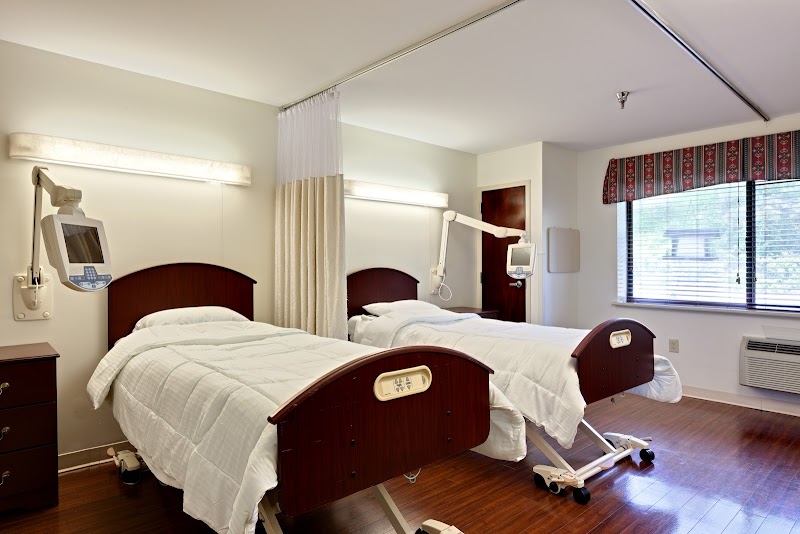
PruittHealth- Aiken

830 Laurens Street North, Aiken, SC 29801 (803) 649-6264
For profit - Corporation 176 Beds PRUITTHEALTH Data: November 2025
Trust Grade
35/100
#131 of 186 in SC
Last Inspection: September 2024

Within standard 12-15 month inspection cycle. Federal law requires annual inspections.

Overview

PruittHealth-Aiken received a Trust Grade of F, indicating significant concerns about its quality of care and overall performance. This places the facility at #131 out of 186 in South Carolina, putting it in the bottom half of nursing homes in the state, and #5 out of 6 in Aiken County, meaning only one local option is better. The facility is worsening, with issues increasing from 2 in 2023 to 8 in 2024, raising red flags for potential residents and their families. Staffing is average, with a turnover rate of 38%, which is better than the state average, but the overall care quality is reflected in a low 2 out of 5 star rating. Specific concerns include improper food storage practices, a lack of a designated Infection Control Preventionist, and unsecured medications, which could pose risks to resident health. While there are some strengths, such as no fines and decent staffing levels, the numerous deficiencies highlight serious areas of concern.

Trust Score
F
35/100
In South Carolina
#131/186
Bottom 30%
Safety Record
High Risk
Review needed
Inspections
Getting Worse
2 → 8 violations
Staff Stability
○ Average
38% turnover. Near South Carolina's 48% average. Typical for the industry.
Penalties
✓ Good
No fines on record. Clean compliance history, better than most South Carolina facilities.
Skilled Nurses
○ Average
Each resident gets 30 minutes of Registered Nurse (RN) attention daily — about average for South Carolina. RNs are the most trained staff who monitor for health changes.
Violations
⚠ Watch
29 deficiencies on record. Higher than average. Multiple issues found across inspections.
★★☆☆☆
2.0
Overall Rating
★★★☆☆
3.0
Staff Levels
★★☆☆☆
2.0
Care Quality
★★☆☆☆
2.0
Inspection Score
Stable
2023: 2 issues
2024: 8 issues

The Good

  • Full Sprinkler Coverage · Fire safety systems throughout facility
  • No fines on record
  • Staff turnover below average (38%)

    10 points below South Carolina average of 48%

Facility shows strength in fire safety.

The Bad

2-Star Overall Rating

Below South Carolina average (2.8)

Below average - review inspection findings carefully

Staff Turnover: 38%

Near South Carolina avg (46%)

Typical for the industry

Chain: PRUITTHEALTH

Part of a multi-facility chain

Ask about local staffing decisions and management

The Ugly 29 deficiencies on record

Dec 2024 1 deficiency
CONCERN (D) 📢 Someone Reported This

A family member, employee, or ombudsman was alarmed enough to file a formal complaint

Potential for Harm - no one hurt, but risky conditions existed

Deficiency F0602 (Tag F0602)

Could have caused harm · This affected 1 resident

**NOTE- TERMS IN BRACKETS HAVE BEEN EDITED TO PROTECT CONFIDENTIALITY** Based on facility policy review, record review, observations, and interviews, the facility failed to ensure that Resident (R)1's...

Read full inspector narrative →
**NOTE- TERMS IN BRACKETS HAVE BEEN EDITED TO PROTECT CONFIDENTIALITY** Based on facility policy review, record review, observations, and interviews, the facility failed to ensure that Resident (R)1's medications were not misappropriated for 1 of 1 resident reviewed for misappropriation. Findings include: Review of the facility policy titled, Medication Administration: General Guidelines, with a last review date of 7/22/2024, revealed -Medications are administered in accordance with written orders of the attending physician. -All current medications and dosage schedules, except topicals used for treatments, are listed on the patient/resident's medication administration record (MAR) or within the e-MAR system for facilities using electronic charting of medications. -Medications for one patient/resident are never administered to another patient/resident. Review of the facility policy titled, Controlled Substance Diversion, with a last revision date of 4/29/24 reveals: It is the policy of [NAME] Health Pharmacy Services that medications listed as controlled substances (Scheduled I-V) under federal or state regulations will be properly stored with maintained accountability. Drug diversion is a medical and legal concept involving the transfer of any legally prescribed controlled substance from the individual for whom it was prescribed to another person for any illicit use. Review of the facility policy titled, Prevention of Patient Abuse, Neglect, Exploitation, Mistreatment, and Misappropriation of Property, with a last review date of 11/15/24 reveals: It is the policy of PruittHealth and its affiliated entities (collectively, the Organization) to actively preserve each patient's right to be free from verbal, sexual, physical, and mental abuse, corporal punishment, involuntary seclusion, neglect, exploitation, mistreatment, and misappropriation of patient property, (referred to collectively in this policy as abuse, neglect, mistreatment, and exploitation). The Organization and its partners should assure that best efforts are made to prevent any occurrences of any form of abuse, neglect, and exploitation. Record review of R1's face sheet revealed R1 was diagnosed with Anxiety Disorder. Review of R1's Physician orders revealed an order for Diazepam, Schedule IV tablet; 2 milligrams (mg); amt: 1 tab; oral Twice A Day 09:00 AM, 09:00 PM dated 7/2/24. There were no PRN (as needed) orders for Diazepam. Record review of R1's Quarterly Minimum Data Set (MDS) with an Assessment Reference Date (ARD) of 12/5/24 revealed R1 has a Brief Interview for Mental Status (BIMS) score of 15 out of 15, suggesting resident cognition is intact. Review of the facility document titled, Controlled Drug Record for [NAME] Health [NAME]. Dated 12/3/24 reveals: Date Medication was received 12/2/24 Count of 30 Drug: Diazepam tablet 2mg Order: 1 Tab by mouth twice daily. 12/15/24 at 10 PM reveals count of 9 after 1 tablet given. Signed initials 12/16/24 at 2 AM reveals count of 8 after 1 tablet given. Signed initials 12/16/24 at 6 AM reveals count of 7 after 1 tablet given. Signed initials 12/16/24 at 9 AM reveals count of 6 after 1 tablet given. Signed initials Record review of R1's Medication Administration Record (MAR) reveals: 12/16/24 at 9 PM: Licensed Practical Nurse (LPN)1 administered Diazepam 2 mg to resident. 12/16/24 at 9AM: LPN2 administered Diazepam 2 mg to resident. No recorded electronic documentation seen on MAR to indicate Diazepam 2 mg was given to resident by LPN1 at 2 AM and 6 AM as indicated by the Controlled Drug Record. Review of [NAME] Public Safety Incident Investigation/Report on 12/16/24 at 1945 (7:45 PM) revealed: 2 pills of diazepam 2 mg were documented as stolen by Officer Case (ID Number 883). Review of the facility document titled, Discipline 4 - Termination, dated 12/20/24 reveals staff member was terminated from the facility. Note states, Due to the serious nature of this allegation, and Partners failure to respond to requests for her statement regarding the matter, Partner is terminated from employment at this time. Review of undated witnessed statement by LPN2, revealed, During my morning med pass I noticed a med error when signing out a narcotic for one of my resident's. First, I went back to the orders to make sure I wasn't making a medication error. The order said to give BID, 9a,9P. I saw where the medication was signed out as given 10p, 2a, 6a then I gave it at 9a. I immediately made the unit manager aware of the situation who then made the DHS aware. Observation of hall 400 med cart with LPN3 on 12/23/24 at 12 PM revealed no additional discrepancies in controlled medication outside of date under investigation. An interview with R1 on 12/23/24 at 11 AM revealed, she knows she takes her Diazepam pills twice a day for her anxiety. R1 revealed that on 12/15/24, LPN1 gave her her nighttime pills, which included her Diazepam. R1 knows her Diazepam was in the cup, as she states its a white circular pill. R1 revealed she always checks her medication cups before taking her medications to ensure she is getting only what she is supposed to be getting. R1 denied receiving any additional doses of Diazepam 2 mg the following morning at 2 AM and 6 AM. An interview with LPN1 on 12/23/24 at 12:12 PM revealed LPN1 does not remember pulling two additional doses of Diazepam for the resident. LPN2 revealed that if the Controlled Drug Record reflects LPN1 signing out 1 dose of Diazepam at 2am and 6pm, LPN1 reveals that she probably did sign out those medication. LPN1 is unsure why she pulled the additional doses, despite not having a PRN order for diazepam and only an active order for diazepam twice a day at 9 AM and 9 PM. LPN2 also does not recall whether she administered the medication to R1, but states that if she did pull those additional doses, then she most likely gave them to the R1. She is unable to determine if the resident was experiencing increased anxiety that would warrant extra doses of diazepam. When asked why she acted outside of the provider's orders, the nurse responded, I don't know. An interview with the Director of Nursing (DON) and Administrator (ADR) at 12/23/24 at 12:30 PM revealed that when it comes to proper medication administration, it is their expectation for staff to follow provider orders and not deviate from the order. Additionally, it is the expectation of the DON and ADR to complete controlled medication reconciliation and counts during shift change between the off going and ongoing nurse. DON revealed that when discrepancy was found by LPN2, LPN1 was suspended pending investigation. LPN1 ignored the facilities attempts to contact her during the investigation. Due to LPN1's lack of communication with facility during investigation and the nature of the allegation, DON reveals the facility decided to terminate LPN1's employment. DON and ADR revealed that LPN1 was in breach of facility policy. DON revealed that at the conclusion of the investigation, the 2 missing Diazepam pills were considered unaccounted for.
Dec 2024 1 deficiency
CONCERN (D) 📢 Someone Reported This

A family member, employee, or ombudsman was alarmed enough to file a formal complaint

Potential for Harm - no one hurt, but risky conditions existed

Report Alleged Abuse (Tag F0609)

Could have caused harm · This affected 1 resident

**NOTE- TERMS IN BRACKETS HAVE BEEN EDITED TO PROTECT CONFIDENTIALITY** Based on review facility policy, interview and record review, the facility failed to report an allegation of sexual abuse, invol...

Read full inspector narrative →
**NOTE- TERMS IN BRACKETS HAVE BEEN EDITED TO PROTECT CONFIDENTIALITY** Based on review facility policy, interview and record review, the facility failed to report an allegation of sexual abuse, involving Resident (R)2 and R1, to the Ombudsman, for 1 of 1 residents reviewed for abuse. Findings include: Review of the facility policy, with a revised date of 07/29/19 titled, Reporting Patient Abuse, Neglect, Exploitation, Mistreatment, and Misappropriation of Property documented, It is the policy to comply with all applicable federal and state requirements regarding the reporting of patient abuse, neglect, exploitation, mistreatment and misappropriation of property. The Ombudsman should also be notified as required by state law. Review of R2's Face Sheet revealed R2 was admitted to the facility on [DATE], with diagnoses including but not limited to: Alzheimer's disease, hypertensive chronic kidney disease, and anemia. Review of R1's Face Sheet revealed R1 was admitted to the facility on [DATE], with diagnoses including but not limited to: chronic obstructive pulmonary disease, Type 2 diabetes mellitus with diabetic chronic kidney disease, and end stage renal disease. Review of R1's Progress Note, written by the Social Worker (SW), dated 11/22/24, revealed the SW was made aware by the charge nurse that his roommate, last night, had his penis out of his pants and told him to suck his penis. R1 reports his roommate did not touch him at all. The SW did speak with R1 who expressed he was awakened by roommate saying you gonna suck my dick. R1 also stated that his roommate walked from his side of the room to his and continued to make this statement along with I'll get the nurse to suck it then. R1 reports he told him to get away from him numerous times. The SW did inform the Administrator as well as the Director of Nurses (DON). The SW called the Responsible party (RP). Awaiting return call. Report has been made and police has been called. During an interview with the Regional Ombudsman Office on 12/02/24 at 10:12 AM, the Ombudsman stated, I didn't get the self-report from them on this allegation (sexual abuse). The last time I got something from them has been well over 6 months, any allegation of abuse, neglect or exploitation are to be reported to me. During an interview with the Administrator on 12/02/24 at 5:32 PM, the Administrator stated, I have not been reporting any allegations to the Ombudsman.
Sept 2024 4 deficiencies
CONCERN (D) 📢 Someone Reported This

A family member, employee, or ombudsman was alarmed enough to file a formal complaint

Potential for Harm - no one hurt, but risky conditions existed

Deficiency F0602 (Tag F0602)

Could have caused harm · This affected 1 resident

**NOTE- TERMS IN BRACKETS HAVE BEEN EDITED TO PROTECT CONFIDENTIALITY** Based on observation, interviews, record review, and review of the facility policy. The facility failed to prevent the misapprop...

Read full inspector narrative →
**NOTE- TERMS IN BRACKETS HAVE BEEN EDITED TO PROTECT CONFIDENTIALITY** Based on observation, interviews, record review, and review of the facility policy. The facility failed to prevent the misappropriation of controlled medication for one of one resident (Residents (R)99) reviewed. Findings include: Review of the facility policy titled Controlled Substance for Healthcare Centers dated 2014, revealed, It is the policy of Pruitthealth Pharmacy that medications listed as controlled substance (Schedules 1-V) under federal or state regulation will be properly stored with maintained accountability. Reconciliation of controlled substances will be performed at the end of each shift by licensed professional nurses. The healthcare center will obtain and keep on file any permits related to ordering and storing controlled substances required by state or federal agencies. Review of R99's Face Sheet revealed the resident was admitted to the facility on [DATE], with diagnoses including but not limited to: trigeminal neuralgia, chronic pain, third degree burns involving 50-59% of body surface, burn of male genital region, post-traumatic stress disorder, acquired absence of right and left leg, and left fingers. Review of R99's Annual Minimum Data Set (MDS) with an Assessment Reference Date (ARD) of 07/25/24, revealed R99 had a Brief Interview for Mental Status (BIMS) score of 15 out of 15, indicating R99 was cognitively intact. Further review revealed R99 was on a scheduled pain medication regimen and reported severe pain. Review of R99's Care Plan last revised 07/29/24 states, R99 has chronic pain related to a history of burns and wounds, with the following interventions, Administer pain medications per physicians' orders. Review of R99's Physician Orders dated 08/14/24, indicated R99 was to receive Oxycodone- Scheduled II tablet: 11-tab amt: 1 tab: oral, Four Times a day, starting 06:00 AM, 12:00 PM, 06:00 PM and 12:00 AM. Morphine-Schedule II tablet extended release: 30 mg: amt: 1 tab: oral Special instruction: Give Morphine 30 ER 1 tab po every 12 hours for pain twice a day at 09:00 AM and 09:00 PM. Review of a Packing Slip dated 07/29/24 revealed that 2 cards of 30 pills of Oxycodone 10 mg (milligram) each with a total of 60 tablets all signed by the Director of Health Services (DHS). Review of a Packing Slip dated 08/13/24 revealed that 2 cards of 30 pills of Oxycodone 10 mg each with a total of 60 tablets all signed by the DHS. Review of R99's Controlled Drug Record (CDR) and Medication Administration Record (MAR) for Oxycodone 10 mg four times a day revealed several discrepancies. On August 11 at 2:00 PM and 10:00 PM doses were marked as not given due to Drug/item unavailable. August 12 at 06:00 AM, 2:00 PM and 10:00 PM, doses were marked as not given due to Drug/item unavailable. August 13 at 6:00 AM dose was marked as not given due to Drug/item unavailable. Further review revealed there was 1 card of Oxycodone 10 mg containing 30 pills that was missing. Review of a Focused Observation dated 08/13/24 at 11:36 AM, revealed, R99 was experiencing penetrating, shooting, twisting and aching pain at a level of 8 out of 10, indicating severe pain. During an interview on 09/10/24 at 11:00 AM, R99 stated, I have to take my medication because I will be in pain. I'm a double amputee and I was in a house fire that burned over 90 percent of my body. During an interview on 09/16/24 at 4:56 PM, License Practical Nurse (LPN)1 verified her statement, On Friday August 09, I didn't have a 2pm Oxycodone 10mg to give to [R99]. The nurse had given the last one at 6am that day. The resident reminds me often not to let his medication run out. I remember putting the order in the doctor's book and faxing it after it got sign; just can't recall what day. I notified the pharmacy on Saturday August 10, about the script and I was told they received it. When I returned to work on Sunday August 11; I was told in the report that the Oxycodone 10mg for [R99] July 29 (60) pills. I reviewed the Controlled Drug Inventory Form and noted 2 cards was signed in but only one was completed at 6am on August 09, 2024, and the other one was not present. I notified the DON [Director of Nursing] regarding this matter. I can't recall ever seeing the card in the medication cart. During an interview 09/11/24 at 5:10 PM, Registered Nurse (RN)1 verified her statement, On Wednesday, 8/7/24, I worked station 4 South cart. There were several narcotic prescriptions that were signed that I faxed to our pharmacy, was nearly out of oxycodone and morphine, both of which are scheduled. I called the pharmacy to ensure they did get the fax since we have been having intermittent issues with the fax. The pharmacy informed me that the morphine prescription was for immediate release. I rewrote the prescription as was ordered and placed it in [Medical Director] book for signature. I relayed this information to the nurse that relieved me on night shift. I also told the nurse om [sic] report that the medications should be in since I had confirmed verbally with the pharmacy that hard scripts had been received. There was only enough oxycodone for a day and a half. I worked another station the next day. During an interview on 09/16/24 at 10:06 AM, R99 stated, I was in a lot of pain. I was in pain for 2 to 3 days. The nurse did give me my Morphine medication and it helped a little bit, but not like the Oxycodone will. Yes, the nurse did inform me that they were looking for my Oxycodone. I'm on Medicaid, so they paid them. The in-house doctor here was mad, because that could mess up his license. During an interview on 09/16/24 at 1:15 PM, the DHS stated, When I got word about the incident, I came into the facility and interviewed the nursing staff that worked the cart that day and we also conducted a drug test on each nurse. It took about two hours to complete. I spoke with the Administrator; Unit Nurse and we told the pharmacist about the missing medication. A whole card of 30 oxycodone was missing, a medication that I had signed for prior. We needed approval from the facility to get another prescription. We do in-services with our nursing staff. We monitored his level of pain. The Unit Nursing Manager asked him about his level of pain. I did contact the physician.
CONCERN (D)

Potential for Harm - no one hurt, but risky conditions existed

PASARR Coordination (Tag F0644)

Could have caused harm · This affected 1 resident

**NOTE- TERMS IN BRACKETS HAVE BEEN EDITED TO PROTECT CONFIDENTIALITY** Based on record review and interviews, the facility failed to conduct a Preadmission Screening and Resident Review (PASARR) Leve...

Read full inspector narrative →
**NOTE- TERMS IN BRACKETS HAVE BEEN EDITED TO PROTECT CONFIDENTIALITY** Based on record review and interviews, the facility failed to conduct a Preadmission Screening and Resident Review (PASARR) Level 1 for Resident (R)77 prior to admission. Additionally, the facility failed to refer R77 for a PASARR Level II, after a new diagnosis of a severe mental illness, for 1 of 3 residents reviewed for PASARR. Findings include: On 09/12/24 at 9:00 AM, the PASARR policy was requested, the Director of Nursing (DON) and Clinical Competency Coordinator (CCC) stated they do not have a PASARR policy. Review of R77's Face Sheet revealed the resident was admitted to the facility on [DATE], with diagnoses including but not limited to: type 2 diabetes mellitus, tachycardia, and osteoarthritis. Further review of the R77's diagnoses, listed on the Face Sheet, revealed R77 was diagnosed with, Other psychotic disorder on 07/05/21. Review of R77's Quarterly Minimum Data Set (MDS) with an Assessment Reference Date (ARD) of 05/08/24, revealed a Brief Interview for Mental Status (BIMS) score of 8 out of 15 indicating R77 was moderately cognitively impairmed, and had Potential Indicators of Psychosis for Delusions. Review of R77's Progress Note dated 05/11/24, revealed resident is alert to self with confusion and on 07/20/24 - 07/21/24, revealed resident is alert and oriented to self with hallucinations at times and has confusion. Review of [NAME] Psychiatric and Psychotherapy physician notes dated on 05/08/24, revealed, he is seen in follow up today. [R77]is now back on Haldol and Seroquel. Staff does not think [R77] is any different on it. Still yells and talks to people not there. Review of R77's PASSAR Level 1 dated 11/16/23, does not include the resident's psychotic disorder or antipsychotic medication. Further review revealed that a PASARR Level II was not recommended. During an interview on 09/12/24 at 1:53 PM, the Social Worker (SW)1 revealed that the decision to refer a resident for a PASARR Level II is based on if the resident is diagnosed with a psychotic disorder after admission. SW1 revealed she missed the diagnosis for R77 but is taking the steps necessary to refer the resident by contacting their physician to start the review.
CONCERN (D)

Potential for Harm - no one hurt, but risky conditions existed

Deficiency F0808 (Tag F0808)

Could have caused harm · This affected 1 resident

Based on observation, interview and record review, the facility failed to ensure Resident (R)25 received a meal based on her preferences, for 1 of 13 residents reviewed during dining. Findings include...

Read full inspector narrative →
Based on observation, interview and record review, the facility failed to ensure Resident (R)25 received a meal based on her preferences, for 1 of 13 residents reviewed during dining. Findings include: Review of R25's Face Sheet revealed the resident was admitted to facility on 04/19/24. R25 was admitted with diagnoses including but not limited to: varicose veins of right lower extremity with chronic obstructive pulmonary disease, diabetes mellitus due to underlying condition with diabetic nephropathy, venous insufficiency (chronic) (peripheral), muscle weakness, diastolic (congestive) heart failure, cognitive communication deficit, cellulitis, nutritional deficiency, and morbid (severe) obesity due to excess calories. Review of R25's Quarterly Minimum Data Set (MDS) with an Assessment Reference Date (ARD) of 04/25/24, revealed a Brief Interview for Mental Status (BIMS) score of 15 out of 15 indicating the resident is cognitively intact. Review of R25's Diet Orders revealed an order dated 06/28/24 for, CCHO (consistent carbohydrate diet)/Liberalized diabetic plan with special instructions, which documented, no oatmeal, only grits, no fish and milk with breakfast. During an observation and interview on 09/12/24 at 1:11 PM, revealed R25 was served fish with her lunch. R25 stated she has an order to not have fish. R25 further stated, I have never eaten fish, and it is on my lunch ticket, but this happens all the time. Review of R25's Menu Ticket (which arrived on the lunch tray) on 09/12/24 at 1:11 PM, documented on the bottom of the ticket, NO FISH. During an interview on 09/12/24 at 9:21 AM, the Kitchen Manager (KM)1 stated, I am constantly reminding them to pay attention to the cards. The person calling out the resident meal should check and the person who puts the tray on the serving rack should check. During an interview on 09/12/24 at 1:59 PM, the Director of Nursing (DON) revealed the resident's preference and special diets should be listed on their meal ticket. The kitchen staff should ensure the resident's plate is in accordance with the ticket and the Certified Nursing Assistants (CNAs) should also be looking at the meal ticket to see the dislikes, and diet preferences are correct.
CONCERN (F)

Potential for Harm - no one hurt, but risky conditions existed

Food Safety (Tag F0812)

Could have caused harm · This affected most or all residents

Based on observations, interview, and review of facility policy, the facility failed to ensure foods were properly stored and labeled. Additionally, the facility failed to remove expired food items fr...

Read full inspector narrative →
Based on observations, interview, and review of facility policy, the facility failed to ensure foods were properly stored and labeled. Additionally, the facility failed to remove expired food items from storage, in 1 of 1 main kitchen. Findings include: Review of the facility policy titled Quick References Shelf Life list, Brief Summary Sheet with an effective date of 11/22/17, and last revised on 02/23/18, states, All opened refrigerator items must have a use by date . all items will be dated on date of arrival. Further review of the policy states, Meat, poultry, fish, pork, vegetables and soup . 3 days shelf life. Review of the facility policy titled Leftovers with an effective date of 09/01/01 and last revised on 10/18/17, states, 2. Leftovers will be covered, labeled, and dated: then stored appropriately (refrigerated or frozen if necessary) immediately after the end of the meal service . 4. Leftovers that have not been properly stored will be discarded. (When in doubt throw it out.) During a tour of the kitchen on 09/10/24 at 9:47 AM, the following was observed in the walk-in refrigerator: Six (6) sandwiches, wrapped, undated and unlabeled. One (1) container of unknown orange pureed item, stored undated and unlabeled. Five (5) hard boiled eggs, undated and unlabeled. One (1) container of labeled pork loin with a used by date of 09/06/24. Nine (9) small 2% white milk cartons with an expiration date of 09/06. During an interview on 09/10/24 at 10:00 AM, the [NAME] Aid revealed the produce is to be dated and labeled as soon as it comes into the refrigerator and if it is not labeled, the policy is to take the food out and trash it. During an interview on 09/10/24 at 10:15 AM, the Kitchen Manager (KM) revealed that a label and date should be on all open foods in the walk-in refrigerator. The label is for 3 days and after 3 days the food is discarded. During an interview on 09/11/24 at 9:30 AM, the KM revealed that the expired milk was thrown out right after we left on yesterday and that the label for the snack bags for the residents with dialysis should be dated and labeled after the bags are made. During an interview on 09/12/24 at 4:00 PM, the Administrator revealed that the items should be labeled and thrown out if not. They (kitchen staff) should be checking the dates daily.
Jun 2024 1 deficiency
CONCERN (D) 📢 Someone Reported This

A family member, employee, or ombudsman was alarmed enough to file a formal complaint

Potential for Harm - no one hurt, but risky conditions existed

Quality of Care (Tag F0684)

Could have caused harm · This affected 1 resident

Based on record review and interview, the facility failed to ensure that there was a process in place for the review of provider recommendations and continuity of care for 1 (Resident (R)1) of 1 resid...

Read full inspector narrative →
Based on record review and interview, the facility failed to ensure that there was a process in place for the review of provider recommendations and continuity of care for 1 (Resident (R)1) of 1 resident reviewed for coordination of care. Findings included: A Resident Face Sheet revealed the facility admitted R1 on 10/12/2020. According to the Resident Face Sheet, the resident had a medical history that included bipolar disorder, post-traumatic stress disorder (PTSD), schizoaffective disorder bipolar type, dementia, unspecified disorder of adult personality and behavior, generalized anxiety disorder, suicidal ideations, and major depressive disorder. A quarterly Minimum Data Set (MDS), with an Assessment Reference Date (ARD) of 05/21/2024, revealed R1 had a Brief Interview for Mental Status (BIMS) score of 15, which indicated the resident had intact cognition. The MDS indicated the resident did not have any concerns related to feeling down, depressed, or hopeless. The MDS indicated the resident was independent for self-care and mobility. The MDS indicated the resident had the following diagnoses of psychiatric/mood disorder: anxiety disorder, depression, bipolar disorder, psychotic disorder, schizophrenia, major depressive disorder, and PTSD. The MDS revealed that the resident received antipsychotic, antianxiety, and antidepressant medications during the seven-day lookback period. R1's Care Plan, included a problem statement initiated on 12/19/2023, that indicated the resident verbalized feelings of depression, had received electroconvulsive therapy, had a history of hallucinations/altered mental status, a history of expressing self-harm, and the resident was followed by a psychiatrist. The goal statement revealed the resident would not cause harm to self and have decreased episodes of feeling depressed thru the next review. Interventions directed staff to administer medications as ordered, consult the doctor as needed, notify the medical doctor of changes, observe for suicidal ideations and report to the nurse/physician, and obtain a psychological consult/psychosocial therapy. R1's Consultant Pharmacist Communication to Physician report dated 04/16/2024, revealed the Center for Medicare & Medicaid Services (CMS) gradual dose reduction (GDR) review indicated that the resident was ordered diazepam 2 milligram (mg) at bedtime (QHS) for anxiety, trazadone 100 mg QHS for insomnia, duloxetine 60 mg daily for bipolar disorder, and quetiapine 100 mg QHS for schizoaffective bipolar type. The report revealed R1 was due for a dose reduction evaluation. The report revealed that the last psychiatry note scanned into the system for R1 was from 03/22/2024. The report revealed that at that time, it was suggested to consider reducing duloxetine to 40 mg daily as serotonin-norepinephrine reuptake inhibitors (SNRI) had the potential to destabilize mood in residents with bipolar disorder. The report revealed it was also suggested to reduce trazadone and increase quetiapine. The report revealed that the recommendation was No change. An attempted GDR is likely to result in impairment of function or increased distressed behavior. A Psychiatry Follow Up Note, dated 05/10/2024, revealed the Psychiatric Nurse Practitioner (NP) discussed the resident's case with the collaborating psychiatrist. The note revealed the medication Tegretol was recommend as mood stabilizers were considered first line treatment for bipolar diagnosis and anti-depressants could increase manic cycling. The note revealed the resident and staff were aware to monitor for a spreading rash and to discontinue Tegretol at the first sign which could indicate Stevens-Johnson Syndrome. The note revealed a medication trough was needed after 10 days as Tegretol was an auto-metabolizer and dosage adjustments may be necessary. The note revealed the Psychiatric NP's recommendations/plan indicated an electrocardiography (EKG), complete blood count (CBC), comprehensive metabolic panel (CMP), liver function test (LFT), thyroid panel and lipid profile was to be completed prior to starting the medication Tegretol. The recommendations/plan revealed a recommendation to add the medication Tegretol 200 mg two times a day for bipolar diagnosis, monitor white blood cell count (WBC), complete a LFT, and draw medication trough after 10 days. The recommendations/plan revealed no further changes to psychotropic medications at this time. R1's Medication Administration Record [MAR] for the timeframe from 05/01/2024 to 05/29/2024 revealed a transcription of the following orders: Seroquel (quetiapine) 100 mg one tablet QHS with a start date of 12/06/2023; duloxetine capsule, delayed release/enteric coated (DR/EC) 60 mg one capsule once a day with a start date of 12/26/2023 and discontinued on 05/20/2024; donepezil tablet 10 mg one tablet QHS with a start date of 06/12/2023; memantine 10 mg one tablet twice a day with a start date of 06/12/2023; and diazepam 2 mg one tablet QHS with a start date of 12/28/2023 and discontinued on 05/20/2024. Further review revealed no transcription of an order for Tegretol. During an interview on 06/12/2024 at 9:10 AM, the Administrator stated that R1 refused to see the facility doctor and went to an outside primary care physician (PCP). During an interview on 06/12/2024 at 9:30 AM, Medical Doctor (MD)11, who was the facility's primary care physician, stated that R1 had fired him three times over the last 10 years the resident had been at the facility. MD11 stated that he did not touch R1's psychiatric medications. During an interview on 06/12/2024 at 9:14 AM, the Director of Health Services (DHS) stated MD12 (R1's outside PCP) had discontinued R1's trazadone order in April 2024, and diazepam and duloxetine were discontinued on 05/20/2024. The DHS stated that she was aware when R1's medications were stopped on 05/20/2024 and the nurses were made aware of the medication changes. The DHS stated if anything came from the psychiatrist, it should be shared with R1's outside PCP. The DHS said she did not know why the new recommendations were not sent to R1's outside PCP. Per the DHS, the resident would not see MD11. The DHS further stated that it was the responsibility of the facility to notify the Psychiatric NP that R1 was seeing an outside PCP. The DHS stated that the outside PCP was not documented on R1's Resident Face Sheet. She stated that it was an oversight that the facility did not notify the Psychiatric NP that R1 was seeing an outside PCP. During an interview on 06/12/2024 at 3:41 PM, the DHS stated that the facility had 30 days to act on recommendations and it was not the facility's practice to wait the 30 days. The DHS stated that was the first time they had a recommendation from the Psychiatric NP to relay to the residents outside PCP. She stated that if R1 was seeing the facility doctor, they would have put the recommendations in the provider notification book and the doctor would have signed off on the orders. Per the DHS, R1 was the only resident who saw an outside PCP. During an interview on 06/12/2024 at 10:47 AM, the Consultant Pharmacist stated that R1's outside PCP made many changes, and she would have liked to speak to them about GDRs and stopping the medication all together. During an interview on 06/12/2024 at 10:15 AM, R1 stated that the resident expressed concerns with MD12 about being on too many medications and asked him to decrease them. During an interview on 06/12/2024 at 11:45 AM, Licensed Practical Nurse (LPN)10 stated that she called R1's outside PCP on 05/20/2024 to clarify that he wanted the duloxetine and diazepam stopped. LPN #10 stated that the doctor said he was trying to get the resident off some of their medications at R1's request. During an interview on 06/12/2024 at 12:50 PM, MD12 stated that he stopped R1's medications because they were not working. He stated that he had prescribed duloxetine 60 mg for back pain. MD12 stated that he did not coordinate R1's care with the Psychiatric NP and he did not touch the resident's psychiatric medications. During an interview on 06/12/2024 at 1:40 PM, the DHS stated that the facility did not have a policy for carrying out orders for residents with an outside PCP. The DHS stated that the recommendation for Tegretol was probably not sent to R1's outside PCP for an order. The DHS stated that the recommendations were missed. During an interview on 06/12/2024 at 2:39 PM, the Psychiatric NP stated that there was no medication proven that would halt suicidal thoughts. She further stated that she could not say for sure that not adding Tegretol would cause suicidal ideations. The Psychiatric NP stated that she was adding Tegretol as a mood stabilizer for bipolar and it was a first line medication. She further stated that Seroquel was an adjunct medication for bipolar. The Psychiatric NP stated that she did know that R1 was seeing an outside PCP. During an interview on 06/12/2024 at 4:50 PM, the Psychiatric NP confirmed that R1 was not on a mood stabilizer, and she thought R1 would benefit from being on Tegretol. The Psychiatric NP stated that in the past when the facility doctor declined her recommendation, she would see the note in the resident's chart. The Psychiatric NP confirmed that she was unaware of R1 having an outside provider and that she did not know if the recommendations were carried out. During an interview on 06/12/2024 at 4:45 PM, the DHS stated that the Interdisciplinary Team (IDT) team did not meet on the process of R1 having an outside PCP. The DHS stated that they reached out to the Ombudsman but did not know how to handle the situation with coordination of care. During an interview on 06/12/2024 at 5:25 PM, the DHS stated that it was her expectation going forward that recommendations would be communicated to the resident's PCP and facility staff would receive a response within the given 30-day timeframe. The DHS stated that the facility did not have a policy that addressed following through on physician recommendations and orders. During an interview on 06/12/2024 at 5:50 PM, the Administrator stated it was his expectation that staff follow the process to make sure recommendations were followed through in a timely manner.
Mar 2024 1 deficiency
CONCERN (D) 📢 Someone Reported This

A family member, employee, or ombudsman was alarmed enough to file a formal complaint

Potential for Harm - no one hurt, but risky conditions existed

Free from Abuse/Neglect (Tag F0600)

Could have caused harm · This affected 1 resident

**NOTE- TERMS IN BRACKETS HAVE BEEN EDITED TO PROTECT CONFIDENTIALITY** Based on review of facility policy, record reviews, and interviews the facility failed to ensure Resident (R)1 was free from ver...

Read full inspector narrative →
**NOTE- TERMS IN BRACKETS HAVE BEEN EDITED TO PROTECT CONFIDENTIALITY** Based on review of facility policy, record reviews, and interviews the facility failed to ensure Resident (R)1 was free from verbal abuse by Certified Nursing Assistant (CNA)1. Findings include: Review of the facility policy titled Abuse, Neglect, Exploitation and Misappropriation Prevention Program last revised on 10/27/20, states, It is the policy of [NAME] Health and its affiliated entities (collectively , the Organization) to actively preserve each patient's right to be free from verbal, sexual, physical, and mental abuse, corporal punishment , involuntary seclusion, neglect, exploitation, mistreatment, and misappropriation of patient property, (referred to collectively in this policy as abuse, neglect, and mistreatment, and exploitation). The Organization and its partners should assure that best efforts are made to prevent any occurrences of any form of abuse, neglect, and exploitation. Review of the facility's Inservice Education Program Summary Record Form dated 01/05/24, revealed the following: When communicating with residents be observant of your tone and keep in mind that it could/may be perceived as abuse. Do not argue with residents. If you feel that an interaction with a resident is escalating, please excuse yourself and get your supervisor. If you witness an encounter that could potentially be abuse (visually or auditory) you are to notify your direct supervisor immediately. Review of R1's Face Sheet revealed R1 was admitted to the facility on [DATE] with diagnoses including but not limited to: bipolar disorder and depression. Review of R1's Quarterly Minimum Data Set (MDS) revealed that R1 had a Brief Interview for Mental Status (BIMS) score of 15 out of 15 indicating R1 was cognitively intact. Review of R1's Care Plan dated 09/21/23, revealed problems related to mood and behavior. Behavioral Indicators: [R1] is noted to swear at times and can be impatient . Mood Indicators: [R1] exhibits s/s [signs/symptoms] of grief. He is hyper-verbal at times . Further review of the Care Plan indicated an approach which stated, Encourage appropriate interaction with staff and peers. During an interview on 03/28/24 at approximately 1:35 PM, R1 revealed it was a misunderstanding. R1 stated he did not know what happened. I just come back from the doctor and I feel the issue was resolved. I don't know how it started. During an interview on 03/28/24 at approximately 1:40 PM, the Director of Nursing (DON) revealed there was a verbal altercation between R1 and CNA1. The DON stated CNA1 admitted to using a curse word and witnesses heard her curse. The DON further stated she told CNA1 it was inappropriate to use profanity, and CNA1 was terminated immediately. During an interview on 03/28/24 at 3:09 PM, CNA1 stated, R1 was asking why his roommate was not given a shower and R1 was very belligerent. CNA1 further stated R1 was cursing at her because she did not give his roommate a shower. CNA1 then stated that she told R1 she could not share information about his roommate because it was a HIPPA violation. CNA1 revealed when R1 cursed at her she cursed back at him. CNA1 concluded that she was terminated from the facility.
Jul 2023 2 deficiencies
CONCERN (D) 📢 Someone Reported This

A family member, employee, or ombudsman was alarmed enough to file a formal complaint

Potential for Harm - no one hurt, but risky conditions existed

Notification of Changes (Tag F0580)

Could have caused harm · This affected 1 resident

**NOTE- TERMS IN BRACKETS HAVE BEEN EDITED TO PROTECT CONFIDENTIALITY** Based on interviews, record review, and facility policy review, the facility failed to promptly notify the resident representati...

Read full inspector narrative →
**NOTE- TERMS IN BRACKETS HAVE BEEN EDITED TO PROTECT CONFIDENTIALITY** Based on interviews, record review, and facility policy review, the facility failed to promptly notify the resident representative, of a change in the resident's room. Findings Include: Review of facility policy titled Room or Roommate Changes revised 12/06/22 stated It is our policy to inform patients/residents in advance of any change in room or roommate and allow patients/residents the opportunity to have input in the decision. Furthermore Procedure: 7. A progress note will be written in both roommates' medical records by the Social Worker or designee regarding the room change. A review of Resident (R)1 face sheet revealed the resident was admitted on [DATE] to room [ROOM NUMBER]B with diagnoses that include but not limited to dementia, depression, palliative care encounter and generalized anxiety disorder. A review of R1's quarterly Minimum Data Set (MDS) with an Assessment Reference Date (ARD) of 01/05/23 revealed a Brief Interview for Mental Status (BIMS) score of 7, indicating severe cognitive impairment. A review of R1's Census Detail revealed that on 11/23/22, R1 was moved from room [ROOM NUMBER]B to 421A. Additionally on 01/25/23, R1 was moved from 421A to 416A and on 02/03/23, R1 was moved from 416A to 321B. A review of R1's progress note dated 11/23/22 stated RP requested she be notified immediately of any changes 24/7. States that she is not happy with this facility. Further review of R1's progress notes did not reveal any documentation of notification made to the resident's representative (RR) regarding the subsequent room changes. During an interview on 07/21/23 at 1:36 PM, the Social Worker (SW) stated that if a resident room is changed the nurses, nurse navigator and/or social worker is responsible for notifying resident representatives and if they are unable to reach a resident representative then a notification of change letter will be sent out and scanned into the resident chart. SW then stated that even if a letter is sent out notification should be noted in residents progress notes. Social worker was unable to provide documentation of notification for R1 nor an explanation for why the documentation of room notification was not done. During an interview on 07/21/23 at 1:50 PM, the Director of Nursing (DON) stated that the social worker is ultimately responsible for ensuring the paperwork is completed and that the nurses are also responsible for notifying families and resident as well of any room changes. The DON could not provide an explanation as to why notification was not made to R1's RR.
CONCERN (D) 📢 Someone Reported This

A family member, employee, or ombudsman was alarmed enough to file a formal complaint

Potential for Harm - no one hurt, but risky conditions existed

Pressure Ulcer Prevention (Tag F0686)

Could have caused harm · This affected 1 resident

**NOTE- TERMS IN BRACKETS HAVE BEEN EDITED TO PROTECT CONFIDENTIALITY** Based on record review, interview, and review of facility policy, the facility failed to provide necessary treatment and service...

Read full inspector narrative →
**NOTE- TERMS IN BRACKETS HAVE BEEN EDITED TO PROTECT CONFIDENTIALITY** Based on record review, interview, and review of facility policy, the facility failed to provide necessary treatment and services consistent with professional standards of practice to promote healing of pressure ulcers related to assessing and providing treatments for residents admitted and with pressure ulcers. Findings Include: Review of facility policy revised on 07/13/23 titled Documentation of Skin and Wound Care admission Documentation : states admission skin assessment reflects current skin condition, noting wounds, areas of skin compromise, ect. At the time of admission. Wound Manager is to be completed at admission on any noted skin conditions, Furthermore, obtain an orders as needed. Any delay or concern related to orders or products- contact physician or adjunct for clarification/interim order. Review of a Face Sheet revealed Resident (R)1 was admitted on [DATE] with diagnoses including but not limited to acute embolism and thrombosis of unspecified deep veins of lower extremity, bilateral, altered mental status, dysphagia, generalized muscle weakness, and dementia. A review of R1's quarterly Minimum Data Set (MDS) with an Assessment Reference Date (ARD) of 01/05/23 revealed a Brief Interview for Mental Status (BIMS) score of 7, indicating severe cognitive impairment. Review of R1's admission Documentation revealed a wound note dated 10/17/22 from R1's discharge facility documenting R1's wounds as Sacrum and bilateral inner buttock-previous evolving DTPI, Right lateral heel-previous evolving DTPI, and Right medial heel-previous evolving DTPI. Furthermore, the note revealed a treatment plan that stated Sacrum-continue plan of care using calazime cream bid and prn. Right heel- keep dry and intact - paint with betadine daily and keep elevated off bed with [NAME] boots. Review of R1's Progress Note dated 10/17/22 stated .Resident noted to have a sl red area on his sacrum and a rt. heel DTI. Resident is non-ambulatory. Review of R1's Wound Management Detail Report revealed that R1's sacral wound was not added to his wound management until 01/26/23 and was reported as not present on admission. Furthermore R1's medial and lateral right heel wounds were not added until 11/01/22. Review of R1's physician's orders revealed that R1 did not receive treatment or orders for wound treatment until 10/25/22 for R1's sacral wound. During an Interview on 07/21/23 at 1:50 PM the Director of Nursing (DON) stated that it is her expectation that nurses complete full and accurate documentation of residents wounds upon admission. DON stated that when residents are admitted with treatment orders they are expected to follow those orders or if appropriate have the order changed immediately. Furthermore if a resident is admitted without wound treatment orders it is her expectation that nurses put in a clean and cover wound order until the wound care nurse can see them or place wound care orders for the resident. During an interview on 07/21/23 at 1:04 PM, Licensed Practical Nurse (LPN)1 stated that upon admission residents wounds should be entered into the wound manager. LPN1 further stated that they don't always receive wound care orders upon admission and it would depend on the particular hospital system if wound orders were sent. Furthermore, LPN1 stated that if residents are admitted with wound care orders, they would follow those orders unless the Registered Nurse (RN) over wound care does not find the orders suitable. LPN1 also states that if any changes are needed to the wound orders, then the current wound care order will remain in place until new orders can obtained. LPN1 states only RN's can document on admission wounds and place orders due to scope of practice.
Aug 2022 7 deficiencies
CONCERN (D)

Potential for Harm - no one hurt, but risky conditions existed

Report Alleged Abuse (Tag F0609)

Could have caused harm · This affected 1 resident

Based on review of facility policy, record review, and interviews, the facility failed to report an allegation of resident to resident abuse for 1 of 2 residents reviewed for abuse. Findings Include: ...

Read full inspector narrative →
Based on review of facility policy, record review, and interviews, the facility failed to report an allegation of resident to resident abuse for 1 of 2 residents reviewed for abuse. Findings Include: Review of facility policy titled, Reporting Patient Abuse, Neglect, Exploitation, Mistreatment, and Misappropriation of Property, with a revised date of 07/29/2019 revealed, 1. Any allegation, suspicion, or identified occurrence is identified involving patient abuse, neglect, exploitation, mistreatment, and misappropriation of property, including injuries of an unknown source, should be immediately reported to the Administrator of the provider entity. 2. In accordance with applicable laws and regulations, the Administrator or his or her designee should notify the appropriate state agency (or agencies) . Review of the R10's Progress Notes dated 07/20/2022 at 2:42 PM (recorded as late entry), revealed Resident and another resident was sitting in common area both sitting in w/c. This writer heard the 2 residents arguing. Writer heard don't you back your wheel chair in to me, I aint going to run my wheelchair in to you. As soon as writer heard the commotion, writer got up from nurse's station. Upon approaching both residents, [resident] was observed swatting toward other resident. Residents were immediately separated. RP notified. An interview with the Director of Nursing (DON) on 08/12/2022 at 5:42 PM revealed, a nurse witnessed the altercation. The DON further stated the altercation wasn't reported because it wasn't physical, but the resident has had 2 reportables in the past. An interview with Licensed Practical Nurse (LPN)1 on 08/12/2022 at 5:53 PM revealed, LPN1 was at the desk and she heard the two residents arguing. They were right beside each other and bickering. LPN1 stated she probably shouldn't have used the word swatting in the nursing notes. It wasn't like they were hitting each other. Both residents were separated and LPN1 notified the DON, family, and physician. LPN1 stated she did not think it needed to be reported because it was not abuse. The residents did not make contact with each other and there were no verbal threats. An interview with the Administrator on 08/12/2022, at an unspecified time revealed, both residents have dementia and behaviors. The Administrator stated it wasn't reported because there was no physical contact and no cursing. The staff handled it appropriately and there were no threats of violence.
CONCERN (D)

Potential for Harm - no one hurt, but risky conditions existed

Pressure Ulcer Prevention (Tag F0686)

Could have caused harm · This affected 1 resident

Based on review of the facility policy, observation, and interview, the facility failed to follow a procedure during wound care to prevent infection and to promote healing of a Stage IV wound of the s...

Read full inspector narrative →
Based on review of the facility policy, observation, and interview, the facility failed to follow a procedure during wound care to prevent infection and to promote healing of a Stage IV wound of the sacral area for Resident (R)51 for 1 of 3 residents reviewed for wound care. Findings include: Review of the undated facility policy titled, Procedure: Guidelines for cleansing and Observing a Wound, Section 9 states, To cleanse an injury or pressure ulcer, work in half or full circles, beginning in the center of the wound and working outward. Cleanse the skin at least on inch beyond the edge of the dressing. Use a new sponge for each circle. Section 14 states, As soon as you have finished removing the soiled dressing and cleansing the wound, remove and discard your gloves. Otherwise, everything you touch, including the faucet and handles, will be contaminated by microorganisms on your gloves. Section 16 states, Wash your hands (or use an alcohol cleanser) after removing and discarding the existing dressing. The facility admitted R51 with diagnoses including, but not limited to a Stage IV Pressure area to her sacrum. An observation on 8/12/22 at 10:15 AM of wound care revealed the following: Registered Nurse (RN)1 and this surveyor knocked on R51's door and waited for permission to enter. RN1 explained the procedure to the resident and this surveyor asked for permission to observe RN1 performing wound care on her sacrum and she gave permission. The Licensed Practical Nurse (LPN)1 assisting with wound care then removed the resident's brief and turned her onto her right side. RN1 had already set up the supplies on the over bed table. RN1, LPN1, and this surveyor had donned personal protective equipment (PPE) before entering the room. RN1 washed his hands and went to dry them and realized there were no paper towels in the bathroom in which to dry his hands. RN1 then doffed the PPE and went out of the room to get paper towels. RN1 returned with paper towels and had donned PPE before entering the room then went back to the bathroom to wash his hands. After washing his hands he applied gloves and went to the bedside and removed the soiled dressing from the sacral wound of R51. Without removing his gloves and cleaning his hands, he then sprayed a stack of 4x4 gauze pads with wound cleanser and then cleaned the wound bed and then the surrounding tissue again, he then took more 4x4 gauze pads and dried the wound bed and the surrounding tissue with the same 4x4 gauze pads. He then removed his gloves and washed his hands and applied gloves and then opened the mensal and applied it inside the wound bed. RN1 then took a pen from his pocket and cleaned it with a alcohol prep and then wrote the date and his initials on the dressing and applied it over the mensal that he had applied inside the wound bed. He then bagged the trash and the soiled linen and then helped LPN1 to make the resident comfortable. RN1 removed his gown and his gloves and placed them in the receptacle inside the room and then washed his hands and left the room. An interview on 8/12/22 at 10:30 AM with RN1, confirmed he had not removed his gloves and washed or cleaned his hands after removing the soiled dressing or before spraying the 4x4 gauze with wound cleanser and cleaning the wound. RN1 also confirmed he had used the same 4x4 gauze pads sprayed with wound cleanser to wipe inside the wound bed and around the wound bed. He also confirmed that he had dried the wound bed and the surrounding tissue using the same 4x4 gauze pad.
CONCERN (D)

Potential for Harm - no one hurt, but risky conditions existed

Deficiency F0692 (Tag F0692)

Could have caused harm · This affected 1 resident

**NOTE- TERMS IN BRACKETS HAVE BEEN EDITED TO PROTECT CONFIDENTIALITY** Based on observation, interview, and facility policy, the facility failed to provide Resident (R)99 adequate hydration for 1 of ...

Read full inspector narrative →
**NOTE- TERMS IN BRACKETS HAVE BEEN EDITED TO PROTECT CONFIDENTIALITY** Based on observation, interview, and facility policy, the facility failed to provide Resident (R)99 adequate hydration for 1 of 1 resident reviewed for hydration. Specifically, the facility did not provide water during an outside activity, with a temperature of 87.8 degrees Fahrenheit (F) at approximately 6:30 PM. Findings include: Review of the facility policy titled Hydration: Dietary Services revealed It is the policy of [NAME] Health that patients/residents will be adequately hydrated. An observation on 8/10/22 at approximately 6:25 PM revealed Resident (R)99's representative speaking with the evening Receptionist and asking for water for R99 because she was hot. R99's representative asked the Receptionist how long R99 had been outside and the Receptionist stated, they didn't know. Observation further revealed R99's representative receiving change and two bottles of water, purchased from the receptionist. An observation and interview on 8/10/22 at approximately 6:30 PM with R99 and their Representative revealed the evening Receptionist had charged them for water and that this was an often occurrence. Another resident, who was unable to be identified and sitting outside with R99, confirmed residents were required to pay for water from the receptionist, if none was automatically provided by the facility. R99's representative stated, Although she doesn't always like to pay for water or drinks for R99, she does not mind, because she cares about their safety while outside in hot temperatures. R99 was admitted to the facility 12/03/20 with diagnoses including but not limited to; type 2 diabetes, anemia, dysphasia, and hypertensive heart failure. R99 has a Brief Interview for Mental Status (BIMS) score of 15 out 15, which indicates she is cognitively intact. An interview with R99 on 08/11/22 at 9:53 AM revealed, the facility often allowed the residents to go outside for long periods of time, without offering or providing hydration. R99 further revealed that she often has to go back to her room to receive any form of hydration, when she decides to go outside. She then stated, At times I have a hard time wheeling myself back to my hallway for water when I go outside, but I like it out there. An observation on 08/11/22 at 5:45 PM revealed R99 outside speaking with their representative and stated they got water before they got outside but no-one specifically offered them water while outside. An interview with the daytime receptionist on 08/12/22 at 2:55 PM revealed they are expected to check on residents while they are outside. Activity staff and nursing staff are supposed to provide residents hydration periodically. Daytime receptionist further stated, the facility does charge for bottle water and sodas but resident and their families can receive water without charge from the unit as well. An interview on 08/12/22 at 3:00 PM with the Activities Director (AD) revealed, residents go outside every day at 9:45 AM, 2:00 PM, and on Wednesday evenings, residents sit on the back patio around 6:00 PM. AD further stated they offer the residents water throughout the day while they are outside and will bring around cups filled with ice and refill the resident's water with a pitcher. R99 is able to go outside on her own because she is cognitive and will sign out with the receptionist and that water and other drinks should be provided by the receptionist, nursing staff, or themselves. An interview on 08/12/22 at 3:30 PM with the Administrator revealed, staff are expected to check on residents while they are outside and provide residents with water or some type of fluid.
CONCERN (D)

Potential for Harm - no one hurt, but risky conditions existed

Infection Control (Tag F0880)

Could have caused harm · This affected 1 resident

**NOTE- TERMS IN BRACKETS HAVE BEEN EDITED TO PROTECT CONFIDENTIALITY** Amended 10/04/22 Based on observation, interview, and review of the facility policy, the facility failed to maintain appropriate...

Read full inspector narrative →
**NOTE- TERMS IN BRACKETS HAVE BEEN EDITED TO PROTECT CONFIDENTIALITY** Amended 10/04/22 Based on observation, interview, and review of the facility policy, the facility failed to maintain appropriate infection control policies and procedures. Specifically, 1 out of 4 units reviewed for Transmission Based Precautions (TBP) revealed improper infection control procedures. Findings include: Review of the facility policy titled, Coronavirus (COVID-19) Infection Prevention and Control Policy, last revised 3/6/20 revealed: It is policy of the [NAME] Health organization to imitate the appropriate measures to protect our patients/residents, partners, and families from risks associated with the Coronavirus (COVID-19) through mitigation and educational tools, utilizing resources as provided by the Department of Public Health and the Centers for Disease Control (CDC). During the care of any patient/resident with known or suspected COVID-19, healthcare personnel should do the following: 1. If a private room is not available, such as in a pandemic situation, place (cohort) suspected COVID-19 patients/residents with other patients/residents suspected of having COVID-19. Cohort confirmed COVID-19 patients/residents with other patients/residents that have the same type of COVID-19 virus. 2. In the case of a pandemic, the CDC and/or the Department of Health will advise whether additional measure are warranted. 3. Wear an N 95 mask upon entering the patient/residents room or when working within 3 feet of the patient/resident. Remove the mask when leaving the patient/resident room and dispose of the mask in a waste container. 4. Wear goggles or face shield, waterproof gowns and gloves with Contract and Droplet isolation of these patients/residents. Review of Centers for Disease Control and Prevention (CDC) guidance, with a revised date of 2/2/22, revealed Identify Space in the Facility that could be Dedicated to Monitor and Care for Residents with Confirmed SARS-CoV-2 Infection. Determine the location of the COVID-19 care unit and create a staffing plan. 1. The location of the COVID-19 care unit should ideally be physically separated from other rooms or units housing residents without confirmed SARS-CoV-2 infection. This could be a dedicated floor, unit, or wing in the facility or a group of rooms at the end of the unit that will be used to cohort residents with SARS-CoV-2 infection. 2. Identify HCP who will be assigned to work only on the COVID-19 care unit when it is in use. At a minimum this should include the primary nursing assistants (NAs) and nurses assigned to care for these residents. If possible, HCP should avoid working on both the COVID-19 care unit and other units during the same shift. An interview on 8/10/22 at 9:45 AM with the Administrator revealed, there are currently twenty eight (28) COVID positive residents between the 200 Unit and 400 Unit. Additionally, there are fifteen (15) residents between the 200, 300, and 400 Units that are under suspicion of COVID. The Administrator further stated there is no designated staff for COVID positive residents for the 200 and 400 Units. An observation on 8/10/22 at between 10:15 AM - 10:30 AM revealed staff members on the 400 Unit entering COVID positive rooms and not gowning the appropriate personal protective equipment (PPE). An interview on 8/10/22 at 10:34 AM with the Administrator revealed, that staff are expected to wear appropriate PPE including gowns, gloves, N95 face mask, and eye protection to include face shields or goggles. A meal observation and interview on 08/10/22 at 12:46 PM revealed, Certified Nursing Assistant (CNA)2 and CNA3 entering quarantine/isolation rooms to deliver lunch without gowning the appropriate PPE. CNA2 stated she was unaware that she had to put on full PPE when entering an isolation precaution room. An interview on 8/10/22 at 12:35 PM with Licensed Practical Nurse (LPN)5 revealed, staff are expected to gown in full PPE when entering resident rooms that are on isolation precaution. LPN5 further stated, Level 1 - active COVID positive residents, Level 2 - Resident under suspicion for COVID and are on droplet precautions, Level 3 - Residents that are not under contact precautions. An observation on 8/10/22 at 12:36 PM of the 400 Unit revealed: Level 1 (COVID positive) Resident rooms - 405, 406, 407, 408 (active COVID positive) Level 2 (Suspicion of COVID, droplet precautions) Resident rooms - 414, 415, 416, 417, 418, 419, 420, 421, 422, 423 Level 3 (No isolation) Resident rooms - 401, 402, 403, 404, 412, 413 Observation further revealed, residents (not on isolation) in room [ROOM NUMBER] - 40 share the same hall and staff with active COVID positive residents. An interview on 8/10/22 at 12:40 PM with CNA1 revealed staff are working with Level 1 (COVID-19 positive) residents and Level 3 (No isolation precaution) residents because they are on the same hallway and the facility is short-staffed. An observation on 8/10/22 at 3:34 PM of Resident (R)108, a resident on Level 2 isolation precaution, outside of his room without a mask and speaking with other residents that are Level 3 (no isolation precautions). Further observation revealed LPN5 speaking to R108 without re-directing the resident back to their room. R108 was admitted to the facility on [DATE] with diagnoses including, but not limited to; depression, frequent pain, and anxiety disorder. Review of the Quarterly Minimum Data Set (MDS) with an Assessment Reference Date (ARD) of 07/19/22 revealed R108 has a Brief Interview of Mental Status (BIMS) score of 15 out of 15, which indicates he is cognitively intact. An observation on 08/10/22 at 03:44 PM of the 300 Unit revealed room [ROOM NUMBER] on Level 2 isolation precaution. The rest of the Unit rooms on the 300 unit are Level 3 status. An observation on 08/10/22 at 4:04 PM of the 200 Unit revealed: Level 1 (COVID positive) Resident Rooms - 214, 216, 217, 218, 219, 220, 221, 222, 223. Level 2 (Suspicion of COVID, droplet precautions) Resident Rooms - 201, 203, 204, 205, 212. Level 3 (No Isolation) Resident Rooms - 206, 207, 209, 210, 211. An interview on 8/11/22 at 11:55 AM with CNA1 revealed, staff are still working with residents on Level 3 and residents on Level I precautions. An interview on 8/11/22 at 12:47 PM with the Administrator and Executive Director (ED) revealed, the facility is short-staffed and is unable to have dedicated staff work on the COVID isolation units. A phone interview on 8/11/22 at 4:30 PM with a South Carolina Department of Health and Environmental Control (SCDHEC) Midland Registered Nurse (MRN) and Infection Preventionist revealed, they have been in contact with the Administrator and have been attempting to complete an on-site assessment since May but communication has been slow. MRN further stated, when they contact the Administrator they stress the importance of reporting a line listing for COVID positive residents in a timely manner (24 hours) and that they were unaware the facility had 28 COVID positive residents.
CONCERN (D)

Potential for Harm - no one hurt, but risky conditions existed

Antibiotic Stewardship (Tag F0881)

Could have caused harm · This affected 1 resident

**NOTE- TERMS IN BRACKETS HAVE BEEN EDITED TO PROTECT CONFIDENTIALITY** Based on review of facility policy, interview, and record review, the facility failed to maintain an appropriate Antibiotic Stew...

Read full inspector narrative →
**NOTE- TERMS IN BRACKETS HAVE BEEN EDITED TO PROTECT CONFIDENTIALITY** Based on review of facility policy, interview, and record review, the facility failed to maintain an appropriate Antibiotic Stewardship Program. Findings include: Review of facility policy titled, Antibiotic Stewardship Program, last revised on 11/28/17, revealed As part of the Infection Prevention and Control Program, [NAME] Health will implement and maintain an Antibiotic Stewardship Program (ASP). Under the direction of the Medical Director (MD) and Director of Health Services the ASP is designed to promote appropriate use of antimicrobials to treat infections and reduce possible adverse events associated with antibiotic use. The Infection Preventionist (IP) will be responsible for infection surveillance and multi-drug resistance organism tracking. An interview with the Registered Nurse (RN)3 on 08/12/22 at 5:39 PM revealed, she was unable to locate the antibiotic tracking for the month of July 2022 and was unsure if it had been completed. RN3 further stated the facility sometimes received assistance with Infection Control from the Consultant RN, but the documentation was not always readily available at the facility. An interview with the Administrator and additional Consultant RN on 08/12/22 during the exit interview confirmed, they were unable to locate the antibiotic tracking for the month of July 2022 and they were unable to confirm it had been completed.
CONCERN (E)

Potential for Harm - no one hurt, but risky conditions existed

Deficiency F0761 (Tag F0761)

Could have caused harm · This affected multiple residents

**NOTE- TERMS IN BRACKETS HAVE BEEN EDITED TO PROTECT CONFIDENTIALITY** Additional findings include: An observation on 08/11/22 at 9:34 AM, during a walk through of the facility revealed, the medicati...

Read full inspector narrative →
**NOTE- TERMS IN BRACKETS HAVE BEEN EDITED TO PROTECT CONFIDENTIALITY** Additional findings include: An observation on 08/11/22 at 9:34 AM, during a walk through of the facility revealed, the medication cart on Unit 2 was observed with opened medications on top, unsecured with no staff present. LPN2 was observed walking up to the cart and stated, she is on the cart and is in the process of passing morning medications. An interview on 08/12/22 at 5:33 PM with the Unit Manger revealed, the nurse should have locked the medications in the cart prior to leaving the cart. An interview on 08/12/22 at 5:39 PM with the Director of Nursing (DON) revealed, if the nurse administering the medication is not in view of the cart then all medications on top of cart should be locked away before the nurse steps away from the cart. Based on observations, interviews, and review of facility policy, the facility failed to ensure expired medications were removed from 2 of 7 medication carts and 2 of 4 medication rooms. Furthermore, the facility failed to ensure opened medications on top of the medication card were attended to, on the 300 Unit. Findings include: Review of the undated facility policy titled, Medication Storage in Healthcare Centers, states under the Policy Statement, Medications and biological's are stored safely, securely, and properly following manufacturer's recommendations or those of the supplier. Section 3 under Procedure states, Nurses are required to check all medications for deterioration and expiration before administration. Nurses are also required to inspect medication storage facilities, including medication carts, routinely. Section 12 states, Outdated, contaminated, or deteriorated medications and those in containers that are cracked soiled, or without secure closures are immediately removed from stock, disposed of according to procedures for medication destruction, and reordered from pharmacy, if a current order exists. An observation on 8/11/22 at 7:45 AM of the medication cart located on 300 South unit revealed, the medication Tramadol 50 milligrams, 2 tablets with Lot #828191146, expired on 5/27/2022. The expired medication was verified by Licensed Practical Nurse (LPN) 1 and removed from the medication cart. An observation on 8/11/22 at 8:00 AM of the medication storage room on the 300 Unit revealed, the medication GoodSense Mucus Relief (Children's) 4 ounces, distributed by [NAME] with Lot #DEK0928, expired on 4/2022. The expired medication was confirmed by the Unit Manager (UM) and removed from the storage room. An observation on 8/11/22 at 8:20 AM of the medication cart on the 100 Unit revealed, the medication Geri Care Bisacodyl - Stimulant Laxative EC 100 count tablets, floor stock, 36 tablets with Lot 441S03 expired on 3/22. The expired medication was confirmed by LPN2 and removed from the storage room. Further observation on 8/11/22 at 8:20 AM of the locked refrigerator in the 100 Unit medication storage room revealed, 2 one milliliter (ml) syringes with a clear liquid that was in the syringe and amounted to 0.25 mls in each syringe. The two syringes were not properly labeled with the medication they contained. LPN2 confirmed that the syringes were not labeled with the medication or the date the medication was put in the syringes.
CONCERN (F)

Potential for Harm - no one hurt, but risky conditions existed

Deficiency F0882 (Tag F0882)

Could have caused harm · This affected most or all residents

Based on review of the facility policy, interviews, and observation, the facility failed to have a designated Infection Control Preventionist. This failure had the potential to impact all residents at...

Read full inspector narrative →
Based on review of the facility policy, interviews, and observation, the facility failed to have a designated Infection Control Preventionist. This failure had the potential to impact all residents at risk for infections. Findings include: Review of facility policy titled, Infection Prevention and Control Program Overview last revised on 1/31/16, reviewed on 8/10/22, revealed It is the policy of this facility to establish and maintain an Infection Control Program that includes detection, prevention, and control of the transmission of disease and infection among patients/residents and partners. Infection Preventionist (IP): the person designated to carry out the daily functions of the program. The IP responsible for collecting, analyzing and providing infection data and trends to staff. The IP is responsible for assuring education and training is provided and assuring infection control policies and practices are followed in the facility. An interview on 8/10/22 at 10:34 with the Administrator revealed the Infection Preventionist for the facility, Registered Nurse (RN)4 was on leave, but would return on 8/13/22 and that RN3 assists RN4 with infection control tasks at the facility. An observation and interview on 8/12/22 at 9:32 AM with RN4 on the 400 COVID Isolation Unit revealed At times, I help with infection control but, I am not the designated nurse for infection prevention and mostly work as a floor nurse. RN4 further stated she last completed Antibiotic Stewardship for the facility in March of 2022. She stated she was down on paper as being the facility's IP, however, she does not continuously maintain the role and have not in months. An interview with RN3 on 8/12/22 at 5:39 PM revealed she is in the process of completing the Infection Preventionist training and have been completing the facility's Antibiotic Stewardship documentation at times, with the help from a consultant nurse for the facility. During the exit conference on 8/12/22 at approximately 6 PM, the Administrator stated a company Consultant was also the facility's Infection Preventionist. However, he was unable to provide any information to verify.
Feb 2022 12 deficiencies
CONCERN (D)

Potential for Harm - no one hurt, but risky conditions existed

Free from Abuse/Neglect (Tag F0600)

Could have caused harm · This affected 1 resident

**NOTE- TERMS IN BRACKETS HAVE BEEN EDITED TO PROTECT CONFIDENTIALITY** Based on interviews, record reviews, and review of the facility's policy, the facility failed to ensure two (Resident (R) 178 an...

Read full inspector narrative →
**NOTE- TERMS IN BRACKETS HAVE BEEN EDITED TO PROTECT CONFIDENTIALITY** Based on interviews, record reviews, and review of the facility's policy, the facility failed to ensure two (Resident (R) 178 and R53 of seven residents reviewed for abuse were free from physical abuse when R53 and R178 had a verbal altercation that progressed to a physical altercation that resulted in a minor injury for R178. This deficient practice placed R53 and R178 at potential risk for further physical abuse. Findings include: Review of the facility's policy titled Freedom from Patient Abuse, Neglect, Exploitation, Mistreatment, and Misappropriation of Property Mission Statement dated 01/15/18 directs The Organization recognizes that every patient has the right to be free from verbal, sexual, physical, and mental abuse, corporal punishment, and involuntary seclusion. The purpose of our abuse prohibition procedures is to assure that our partners are doing all that is within our control to create a standard of intolerance and to prevent any occurrences of any form of patient abuse, neglect, exploitation, mistreatment, and misappropriation of property. Our policies and procedures establish standards of practice for protecting patients, and the prevention, identification, investigation and responding/reporting of abuse, neglect, exploitation, mistreatment, and misappropriation of property. Review of R53's Face Sheet located in the Resident tab in the Electronic Medical Record (EMR) revealed R53 was admitted to the facility on [DATE] and re-admitted on [DATE]. Review of the quarterly Minimum Data Set (MDS) located in the RAI tab in the EMR with an assessment reference date (ARD) of 12/22/21 revealed the resident had a Brief Interview for Mental Status (BIMS) score or 12 which indicated the resident has moderate cognitive impairment without any mood or behaviors. Review of R53's Care Plan located in the RAI tab in the EMR reveal there was no care plan for cognitive loss/dementia until: 12/29/2021 and documented that R52 is alert with gradual changes over time. He has the ability to compensate and conceal cognitive changes however is noted to struggle to maintain independence. He is able to make his needs known. Recently he has required increased time to respond exhibiting forgetfulness however he has been able to self-correct in most instances. Review of R178's Face Sheet located in the Resident tab in the electronic medical record EMR revealed R178 was admitted to the facility on [DATE]. Review of the Census documenting the Resident tab in the EMR revealed R178 was R53's roommate from 10/04/21 to 12/29/21. Review of Social Services Progress Notes dated 08/30/21 located in the Resident tab in the EMR revealed a call from [R53's] Sister/RP states [R53] had a concern with nursing and the volume of his roommate's TV. I explained I would f/u [follow-up] however Nursing did report having to redirect [R53] several times for blasting the heat and closing the door. He is in semi-private accommodation and the heat level was described as intolerable. [R53] often exhibits deficits in detail accuracy during recall. His sister acknowledges this as she often states she feels he has some sort of Dementia. Staff will continue [sic] to offer reminders and redirection in efforts to have a temperature suitable for both residents. This RP states [R53] calls me with a lo [sic] of stuff he needs. Review of R53's Social Services Progress Notes dated 09/03/21 located in the Resident tab in the revealed recently he has required increased redirection related to appropriate behavior related to his adjusting the thermostat in his room. He has request [sic] a room change and will be accommodated upon availability. Review of nursing Progress Notes located in the Residents tab in the EMR did not document any behaviors and/or roommate problems with R53. Review of a Resident on Resident Situation dated 12/29/21 located in the Events tab under the Resident tab in the EMR revealed R53 was yelling at roommate [sic], on roommates [sic]side of room and grabbed roommates hand causing skin tares [sic] Review of Initial 2/24-H our Report dated 12/29/21 revealed that at 5:30 PM, R53 had a Verbal altercation between residents following disagreement when roommate wouldn't close the bathroom door after having a bowel movement. Altercation escalated when roommate wouldn't close bathroom door due to the offensive smell. Words continued to be exchanged and finger shaking and pointing occurred. Resident [53] became agitated and went over and grabbed resident's [R178] left wrist. Review of the Five-Day Follow-Up Report summary dated 01/4/22 revealed [R53[ said it was an accident and he didn't mean to do it. He was already upset that day due to it being his dad's birthday and he passed away a month ago and he was cremated today, and he was unable to attend it. He apologized and knew it was wrong. There was NO willful intent and a mistake on the resident's behalf. During a concurrent record review and interview on 02/17/22 at 11:55 AM, the Station Three Unit Manager, Licensed Practical Nurse (LPN) 1, acknowledged that on 12/29/21 R53 and R178 had a dispute that started as verbal and R53 became physically aggressive towards R178. LPN1 stated that she was not aware of any problems/disputes between the two roommates and stated that normally R53 is very low key and may require redirection to not touch their TV. When asked if he has cognitive deficits, LPN1 stated she wasn't sure and upon checking his EMR stated oh yes, he does have dementia. During a concurrent interview on 02/17/22 at 4:52 PM, the Administrator and Director of Health Services (DHS) acknowledged that the incident occurred and stated that R53 did not mean to harm R178, and they did not feel it was abuse because he had no intent. He was sent to the Emergency Department and the ED Physician stated the same thing. When he returned to the facility, they placed him in a different room and obtained psychiatric services to assist the resident with grief counseling.
CONCERN (D)

Potential for Harm - no one hurt, but risky conditions existed

Report Alleged Abuse (Tag F0609)

Could have caused harm · This affected 1 resident

Based on interview, record review, and review of facility's policy, the facility failed to report allegations of abuse to the Administrator and State Survey Agency (SSA) immediately, but not later tha...

Read full inspector narrative →
Based on interview, record review, and review of facility's policy, the facility failed to report allegations of abuse to the Administrator and State Survey Agency (SSA) immediately, but not later than two hours for one of seven sampled residents reviewed for abuse (Resident (R)25). Findings include: Review of the facility's policy titled, Reporting Patient Abuse, Neglect, Exploitation, and Misappropriation of Property, Revised 04/26/17, revealed, Policy Statement. comply with all applicable federal and state requirements regarding the reporting of patient abuse, neglect, exploitation, mistreatment, and misappropriation of property. Procedures. 1. Any allegation, suspicion, or identified occurrence is identified involving patient abuse, neglect, exploitation, misstatement, and misappropriation of property, including injuries of an unknown source, should be immediately reported to the Administrator of the provider entity. 2. the Administrator or his or her designee should notify the appropriate state agency (or agencies) . of any allegation or incident described above and of the pending investigation. The state survey agency .should be notified in accordance with state law through established procedures of any allegations of abuse .within 2 hours after the allegation is made if the events upon which the allegation is based involve abuse or result in serious bodily injury . Review of the facility's initial investigation report for an allegation of abuse involving R25 dated 02/14/22 revealed . Date/Time of Reportable Incident: 02/12/2022 around 7pm. Brief Description of Reportable Incident: Resident reported when Certified Nurse Aide (CNA) fluffed her sheets when making her bed, CNA accidentally hit her foot. At first thought it was an accident, but today, not sure if it was an accident. Facility investigation pending regarding allegation. During an interview on 02/17/22 at 9:32 AM, R25 was asked what day the incident occurred, R25 responded it was during the weekend. During an interview on 02/17/22 at 3:46 PM, Licensed Practical Nurse (LPN)4 was asked if she was told about the incident by the resident. LPN4 stated, During the med pass (Medication pass) on Sunday evening, the resident told me about a CNA hitting her leg the night before. LPN4 was asked why she did not report the incident when she heard about it from the resident. LPN4 stated, I forgot. It was a busy night. I forgot and reported it on Monday. During an interview on 02/18/22 at 10:53 AM, the Administrator was asked about the incident. The Administrator revealed the incident was reported to him on Monday 02/14/22. When asked when the incident occurred, he stated the incident occurred on Saturday 02/12/22. The Administrator was asked if it should have been reported sooner. The Administrator stated, it should have been reported to me as soon as the staff was told. And then it should have been reported to the State Agency within two hours. The Administrator agreed it was not done in a timely manner. This deficiency was cited based on complaint intake: SC00051365
CONCERN (D)

Potential for Harm - no one hurt, but risky conditions existed

Transfer Notice (Tag F0623)

Could have caused harm · This affected 1 resident

**NOTE- TERMS IN BRACKETS HAVE BEEN EDITED TO PROTECT CONFIDENTIALITY** Based on interviews, record reviews, document review and facility policy review, the facility failed to ensure written notice wa...

Read full inspector narrative →
**NOTE- TERMS IN BRACKETS HAVE BEEN EDITED TO PROTECT CONFIDENTIALITY** Based on interviews, record reviews, document review and facility policy review, the facility failed to ensure written notice was sent to residents' representatives after emergent transfers from the facility to the hospital for two of five residents (Resident (R) 29 and R 91) reviewed for hospitalizations. This failure had the potential to affect any resident that may be transferred from the facility. Findings include: Review of the facility's policy titled Involuntary Transfers and Discharges dated 06/30/18 directs, The healthcare center must provide notice to the patient, guardian or representative, and the patient's physician in writing and language that they understand. The facility must send a copy of the notice to the Office of the State Long-Term Care Ombudsman. Facility must keep a copy of the notice in the medical record .The Notice of Involuntary Transfer or Discharge includes: Reason for transfer or discharge. Effective date of transfer or discharge. Location to which patient will be transferred or discharged . Notice of the patient's right to appeal and right to counsel. Contact information for the long-term care Ombudsman and State agencies for the protection of the developmentally and mentally disabled. 1. Review of R29's Face Sheet located in the Resident tab in the Electronic Medical Record (EMR) revealed R29 was admitted to the facility on [DATE]. Review of the quarterly Minimum Data Set (MDS) located in the RAI tab in the EMR with an assessment reference date (ARD) of 12/04/21 revealed R29 had a Brief Interview for Mental Status (BIMS) score of 15 which indicated the resident was cognitively intact. Review of the 11/30/21 hospital discharge orders in the admission Records tab and Resident Documents tab in the EMR revealed R29 was hospitalized from [DATE] to 11/30/21 after developing significant shortness of breath during hemodialysis. Review of the Progress Notes and Resident Documents in the EMR revealed there was no notification to the resident, responsible party and /or ombudsman regarding the transfer to the hospital. Review of the Admit/Discharge Report dated 11/01/21 - 11/30/21 provided by the Director of Social Services (DSS) on 02/17/22 at 4:36 PM revealed R29 was not on the report. The DSS stated that the ombudsman prefers to receive notification from that report, which is generated from the EMR, acknowledged that the ombudsman was not notified of R29's hospital transfer and acknowledged that she had no further information to provide regarding providing the notices to the resident and/or responsible party. 2. Review of R91's Face Sheet for R91 located in the Resident tab in the EMR revealed R91 was admitted to the facility on [DATE]. Review of the quarterly MDS located in the RAI tab in the EMR with an ARD of 01/11/22 revealed R91 had a BIMS score of 15 which indicated the resident was cognitively intact. Review of the 12/15/21 hospital discharge orders in the admission Records tab and Resident Documents tab in the EMR revealed R91 was hospitalized from [DATE] to 12/15/21 after developing a sudden onset of chest pain, shortness of breath and hypotension. Review of the Progress Notes and Resident Documents in the EMR revealed there was no notification to the resident, responsible party and /or ombudsman regarding the transfer to the hospital. Review of the Admit/Discharge Report dated 12/01/21 - 12/31/21 provided by the Director of Social Services (DSS) on 02/17/22 at 4:36 PM revealed R29 and R91 were not represented on the list. The DSS stated that the Ombudsman prefers to receive notification from that report which is generated from the EMR and acknowledged that although the ombudsman was notified of the transfer, she had no further information to provide regarding providing the notices to the resident and/or responsible party. During an interview on 02/17/22 at 4:36 PM, the Social Services Director (SSD) acknowledged that R29 and R91 and/or their representatives did not receive notification regarding the need for the transfer. During an interview on 02/18/22 at 7:35 PM, the Director of Health Services (DHS) acknowledged that facility recently discovered that they dropped the ball on transfer notices and that the facility was required to issue them when a resident is transferred to the hospital.
CONCERN (D)

Potential for Harm - no one hurt, but risky conditions existed

Deficiency F0625 (Tag F0625)

Could have caused harm · This affected 1 resident

**NOTE- TERMS IN BRACKETS HAVE BEEN EDITED TO PROTECT CONFIDENTIALITY** Based on interview, record review, and review of facility policy, the facility failed to ensure two (Resident (R) 29 and R91) of...

Read full inspector narrative →
**NOTE- TERMS IN BRACKETS HAVE BEEN EDITED TO PROTECT CONFIDENTIALITY** Based on interview, record review, and review of facility policy, the facility failed to ensure two (Resident (R) 29 and R91) of five residents reviewed for hospitalizations were provided a bed hold notice at the time of transfer to a local hospital. This deficient practice had the potential to limit the amount of information, on the facility's bed payment policy, which would possibly affect the resident's right to return to the same room after a hospitalization. Findings include: Review of the facility's policy titled, Bed Hold Authorization Form: South Carolina dated 09/19/19 directs, Any patient/resident who is transferred or discharged from the healthcare center is allowed to be re-admitted , in accordance with applicable regulations, including determining that there are no medical care issues that the medical staff believes the healthcare center will be unable to treat . ln cases of emergency transfer, notice 'at the time of transfer' means that the family and/or undersigned parties, not to include the healthcare center, is provided with written notification within 24 hours of the transfer. The requirement is met if the patient/resident's copy of the notice is sent with other papers accompanying the patient/resident to the hospital. 1. Review of R29's Face Sheet located in the Resident tab in the Electronic Medical Record (EMR) revealed R29 was admitted to the facility on [DATE]. Review of the quarterly Minimum Data Set (MDS) located in the RAI tab in the EMR with an assessment reference date (ARD) of 12/04/21 revealed R29 had a Brief Interview for Mental Status (BIMS) Score or 15 which indicated the resident was cognitively intact. Review of the 11/30/21 hospital discharge orders in the admission Records tab and Resident Documents tab in the EMR revealed R29 was hospitalized from [DATE] to 11/30/21 after developing significant shortness of breath during hemodialysis. Review of the Progress Notes and Resident Documents in the EMR revealed there was no notification to the resident, responsible party for a bed hold after transfer to the hospital. 2. Review of R91's Face Sheet located in the Resident tab in the EMR revealed R91 was admitted to the facility on [DATE]. Review of the quarterly MDS located in the RAI tab in the EMR with an ARD of 01/11/22 revealed R91 had a BIMS score or 15 which indicated the resident was cognitively intact. Review of the 12/15/21 hospital discharge orders in the admission Records tab and Resident Documents tab in the EMR revealed R29 was hospitalized from [DATE] to 12/15/21 after developing a sudden onset of chest pain, shortness of breath and hypotension. Review of the Progress Notes and Resident Documents in the EMR revealed there was no notification to the resident and/or responsible party for a bed hold after transfer to the hospital. During an interview on 02/17/22 at 4:36 PM, the Social Services Director (SSD) acknowledged that R29 and R91 and/or their representatives did not get a bed hold notice after transfer to the hospital. During an interview on 02/18/22 at 7:35 PM, the Director of Health Services (DHS) acknowledged that facility recently discovered that they dropped the ball on issuing bed hold notices and that the facility was required to issue them when a resident is transferred to the hospital.
CONCERN (D)

Potential for Harm - no one hurt, but risky conditions existed

Deficiency F0657 (Tag F0657)

Could have caused harm · This affected 1 resident

Based on observation, interview, record review, and policy review, the facility failed to ensure the care plan was revised for one of 42 residents (Resident (R)63) reviewed for care plans. R63's care ...

Read full inspector narrative →
Based on observation, interview, record review, and policy review, the facility failed to ensure the care plan was revised for one of 42 residents (Resident (R)63) reviewed for care plans. R63's care plan failed to include the use of the Hoyer lift. Findings include: Review of facility policy titled Care Plans dated 12/31/96 indicated, .Care plans will be updated by nurses, Case Mix Directors (CMD), or any other interdisciplinary team member so that the care plan will reflect the patient/resident's needs at any given moment. Review of R63's Continuity of Care document, located in Electronic Medical Record (EMR) under the Resident tab revealed R63 was admitted to facility on 05/04/21 with a primary diagnosis of strain of muscle, fascia and tendon at neck level. Review of R63's admission Minimum Data Set (MDS) under the Resident Assessment Instrument (RAI) tab, with assessment reference date (ARD) of 05/11/21 revealed R63 required extensive assistance with one-person physical assist. The quarterly MDS with an ARD date of 10/12/21 revealed R63 was totally dependent on two staff for all transfers. The quarterly MDS with an ARD date of 12/28/21 stated activity did not occur . for transfer status. Review of R63's nursing care plan dated 01/04/22 located in the EMR under the RAI tab, revealed the care plan did not include use of mechanical lift for transfers. Care plan revealed R63 had a history of falls and required assist for toileting and transfers. Activities of daily living (ADL) status .provide assistive device as needed . and requires supervision to extensive assistance with ADL's. Review of R63's physical therapy plan of care dated 01/21/22 revealed, .the patient will safely transfer from bed <> [to and from] wheelchair increasing to hoyer lift with staff able to perform transfer and positioning of pt [patient] in high back reclining wc [wheelchair] with cushion and elevating leg rests to allow pt alternate seating and positioning and a means to get out of her room. Review of R63's PT [physical therapy] daily treatment note dated 02/10/22 under the resident tab of the EMR revealed , .she will remain LTC [long term care] and caregivers will utilize hoyer lifter for transfers . Observation on 02/16/22 at 10:21 AM revealed R63 transferred by certified nursing assistant (CNA)10 using a mechanical lift. During an interview on 02/16/22 at 10:30 AM, CNA10 confirmed R63 was transferred using a mechanical lift. During an interview with R63 on 02/18/22 at 3:57 PM, R63 confirmed she requires mechanical lift for transfers and that routinely only one staff member assists with the transfer. Occasionally, two staff assist with mechanical lift transfers. During an interview with Registered Nurse (RN)6 on 02/18/22 at 6:57 PM, RN6 revealed R63 requires mechanical lift for all transfers. RN6 further confirmed that the current care plan did not address the need for mechanical lift but should have been included. RN6 stated she was unable to locate nursing documentation that R63 required mechanical lift for transfers and that floor nurses received assignments at the beginning of the month to assist in updating MDS which would then trigger updates for nursing care plan. During an interview on 02/18/22 at 12:30 PM, the Director of Health Services (DHS) confirmed that all mechanical lift transfers should be included in the care plan. During an interview on 02/18/22 at 1:25 PM, the Administrator confirmed that all mechanical lift transfers should be included in the care plan.
CONCERN (D)

Potential for Harm - no one hurt, but risky conditions existed

Deficiency F0658 (Tag F0658)

Could have caused harm · This affected 1 resident

Based on observations, interviews, record review, and policy review, the facility failed to ensure appropriate care of a gastrostomy (g-tube) during medication administration for one (Resident (R) 106...

Read full inspector narrative →
Based on observations, interviews, record review, and policy review, the facility failed to ensure appropriate care of a gastrostomy (g-tube) during medication administration for one (Resident (R) 106) of two residents who were reviewed during medication administration. Specifically, Licensed Practical Nurse (LPN)2 administered g-tube medications without verifying placement of the g-tube and provided the medications via a push method rather than by gravity administration. Findings include: Review of undated facility policy titled Administration of Medications via a Feeding Tube stated to verify the physician's order for the medication administration. Follow organization's policy and procedure manual for administering medications via a feeding tube .check for tube placement according to organization's policy and protocols. If organization requires, check for gastric residual volume (GVR). Once correct tube placement has been verified, pinch or clap enteral tube and draw up 15-30ml of sterile water, or other ordered amount, then release clamp and flush tubing .remove bulb or plunger of syringe and insert tip of syringe into the feeding tube. Release the clamp if necessary. Administer first dose of medication by pouring into syringe and allowing the medication to flow into the tube by gravity. Hold the barrel of the syringe slightly above the level of insertion to allow gravity to work . Review of facility's Relias training titled Procedure: Medication Administration Via Enteral Feeding Tube stated, .9. Verify tube placement via aspiration method. Return aspirate to stomach. 10. Flush enteral feeding tube with minimum of 15 ml water . Review of facility's policy dated 01/30/20 titled Medication Administration: Enteral Tubes stated, .5. Verify tube placement using the following procedures: aspirate stomach contents with syringe .10. Allow medication to flow down tube via gravity .Do not push medications through the tube . Review of R106's Continuity of Care (CCD) document, located in Electronic Medical Record (EMR) under the Resident tab revealed R106 was admitted to facility on 10/21/21 with diagnosis including gastrostomy status. The CCD also indicated that all oral medications are administered via gastric tube. Review of R106's physician orders, located in EMR under the Resident Orders tab, indicated the resident was to be NPO (Nothing by mouth) and orders were in place for the resident to have g-tube checked for placement and residual prior to medication administration and flushes. Specifically, during medication administration times, flush tube with 15 mLs [milliliters] water before and after medications and 5 mLs with each medication .Medication Note: Resident gets medications crushed and administered per tube. Orders in place for Ativan [antianxiety medication]1 mg (milligram) tab via g-tube twice daily, carbamazepine [anticonvulsant medication] 100mg/5ml via g-tube four times daily, famotidine [Gastric Acid Secretion Reducer medication] 40mg /5ml = 2.5ml via g-tube twice daily, keppra [anticonvulsant medication] 100mg/ml (7.5ml) via g-tube twice a day and valproic acid [anticonvulsant medication] 250mg/5ml (10ml) via g-tube twice a day. Review of R106's admission Minimum Data Set (MDS) with an Assessment Reference Date (ARD) under the Resident Assessment Instrument (RAI) tab, confirmed R106 was severely cognitively impaired, with a Brief Interview for Mental Status (BIMS) score of 3. The assessment indicated the resident received 51 percent or more of his daily caloric intake via his g-tube. Observation on 02/17/22 at 4:48 PM revealed LPN2 administered R106's Ativan, carbamazepine, famotidine and keppra via gastric tube and did not check placement prior to administration. LPN2 administered each medication separately via push method with syringe. Interview with LPN2 on 02/17/22 at 5:00 PM confirmed she administered R106's g-tube medications with syringe using push method and was unaware of the facility policy to administer medications via gravity flow. Interview on 02/17/22 at 8:19 PM with Registered Nurse (RN)6 confirmed placement should be verified prior to g-tube medication administration and that gravity method should be utilized for all residents. Interview on 02/18/22 at 11:55 AM with RN4 confirmed placement should be verified prior to g-tube medication administration and that gravity method should be utilized for all residents. Interview on 02/18/22 at 1:45 PM with Director of Health Services (DHS) confirmed nurses should be verifying placement prior to g-tube medication administration and should use gravity method as opposed to pushing medications with syringe.
CONCERN (D)

Potential for Harm - no one hurt, but risky conditions existed

Deficiency F0679 (Tag F0679)

Could have caused harm · This affected 1 resident

**NOTE- TERMS IN BRACKETS HAVE BEEN EDITED TO PROTECT CONFIDENTIALITY** Based on interview, record review, and facility policy review, the facility failed to ensure there were sufficient activities of...

Read full inspector narrative →
**NOTE- TERMS IN BRACKETS HAVE BEEN EDITED TO PROTECT CONFIDENTIALITY** Based on interview, record review, and facility policy review, the facility failed to ensure there were sufficient activities of interest for two of two residents (Resident (R)18, and R58) who resided in the Memory Support Unit (MSU) to promote quality of life for these residents. This deficient practice had the potential to affect the residents' psychosocial needs. Findings include: Review of the facility's policy titled, Recreational Programming revised 10/30/21, revealed, Policy Statement: It is the policy of the Healthcare Center to provide a wide variety of recreation programs and opportunities for involvement in life according to an established schedule and spontaneously on a daily basis. Group and individual programming will be organized and designed to meet recreational interests and needs of each patient/resident with the objective of eliminating loneliness, helplessness, and boredom among the population of the healthcare center. Programming will be designed and provided to meet, at least, the following goals: To improve physical, mental, and/or social functioning level and/or effect positive behavioral change. To increase knowledge and skills necessary to develop or enhance their leisure lifestyle and abilities in social interaction. To provide opportunity for fun, self-expression, companionship and continuation of his/her usual leisure lifestyle. 1. Review of R18's undated Face Sheet under the Resident tab in the Electronic Medical Record (EMR) revealed R18 was admitted to the facility with diagnoses of dementia with behaviors, transient cerebral ischemic attack, and major depressive disorder. Review of R18's annual Minimum Data Set (MDS) dated [DATE] found under the MDS tab in the EMR, indicated R18's Basic Interview for Mental Status (BIMs) score could not be measured. Activities were listening to music, participating group activities, spending time outdoors and participating in religious activities. Review of R18's Comprehensive Care Plan, dated 06/21/21 under the Care Plan tab in the EMR, identified the problem area of Activities. The goal was for the resident to participate in four activities of interest a day though the next review period. Approaches were to assist R18 to and from activities and assist with going outside. Assist with watching television. Encourage and praise her. Inform and invite to activities of interest and provide with iPod (a portable electronic device for playing and storing digital audio and video files) to listen to music. Review of the R18's activity log titled POC History Report provided by the facility for the month of November 2021 revealed, R18 attended music, worship service and fitness program on 11/16/21. Review of the R18's activity log titled POC History Report provided by the facility for the month of December 2021 revealed, R18 attended music, 12/26/21 and 12/29/21. Review of the R18's activity log titled POC History Report provided by the facility for the month of January 2022 revealed, R18 attended music on 01/19/22 and 01/20/22, music and worship service on 01/21/22, 01/24/22, 01/25/22, 01/27/22, 01/28/22, and 01/31/22. Review of the R18's activity log titled POC History Report provided by the facility for the month of February 2022 revealed, R18 attended music 02/02/22, 02/03/22, 02/08/22, 02/09/22, 02/10/22, 02/14/22, 02/16/22, and worship service on 02/01/22, 02/02/22, 02/04/22, 02/07/22, 02/08/22, 02/09/22, 02/10/22, 02/11/22, 02/14/22, 02/16/22, and 02/17/22. During an interview on 02/18/22 at 1:17 PM, Recreation Activities (RA) 1 was asked about the activities for R18. RA1 was asked about the worship service. RA1 stated she pulls a cart down the hall and plays worship music outside the door of each resident. She was asked about R18 attending worship service. RA1 stated if she stops by the cart and listens to the music then I mark R18 as attending the service. RA1 was asked about the iPod as per the care plan. RA1 stated she had never seen the care plan and did not know about the iPod. 2. Review of R58's Face Sheet under the Resident tab, EMR revealed R58 was initially admitted on [DATE] and had a readmission on [DATE], with diagnoses of hemangioma of intracranial structures, (tightly packed thin- walled capillaries that are prone to bleeding in the brain), dementia with behaviors, nontraumatic chronic subdural hemorrhage and Alzheimer's disease. Review of the Significant change Minimum Data Set (MDS) with an Assessment Reference Date (ARD) of 05/03/21, in the EMR under the RAI tab, revealed R58 could not be measured with a Brief Interview for Mental Status score (BIMS). The MDS indicated R58 liked listening to music, keeping up with the news spending time outdoors and participating in religious activities or '. Review of R58's Care Plan Report dated 05/03/21 (initiation date), in the EMR, under the Care Plan tab under the heading Activities indicated the problem: resident needs to be encouraged to attend acts of interest. His interest are games, bingo, outdoors, attending church, music/singing, sports, music (old school, gospel, R&B [rhythm and blues], easy listening), watching tv (old sitcoms, westerns, sports, news), reading (magazines (sports), religious material, spending time with family and friends. Goals: Will attend 4 acts [activities] a day of interest thru next review with the following approaches: Assist to and from acts and in acts. Assist with going outdoors as weather permits; Assist with listening to music (old school, gospel, R&B, easy listening) and watching tv (old sitcoms, westerns, sports, news; Encourage and praise him. Visit with him as needed; Inform/Invite to acts such as religious acts, news, reminiscing, games, bingo, socials, parties, music/singing and outdoors; Provide with reading material (magazines (sports), religious material) as needed. Review of the R58's activity log titled POC History Report provided by the facility for the month of November and December 2021 had no activities documented. Review of the R58's activity log titled POC History Report provided by the facility for the month of January 2022 revealed R58 attended worship service and music on 01/21/22, 01/24/22, 01/25/22, 01/27/22, 01/28/22 and 01/31/22. Review of the R58's activity log titled POC History Report provided by the facility for the month of February 2022, R58 attended music and worship service on 02/03/22, 02/04/22, 02/07/22, 02/08/22, 02/09/22, 02/10/22, 02/11/22, 02/14/22, 02/16/22, and 02/17/22. One on One 02/08/22, 02/09/22, 02/10/22 and 02/14/22. During an interview on 02/18/22 at 1:17 PM, RA1 was asked about activities for R58. She stated that the resident did not come out of his room much, but he liked to listen to music. RA1 stated, He has a blue tooth, but it does not always work, so I use the iPad when available. RA1 stated that she was new to activities and had not seen the care plan for R58. RA1 stated she does one on one when she plays music. She was asked if she actually spends time in the room with R58 during the one-on-one time. RA1 stated, No. I just turn on the music and leave. While reviewing the care plan, RA1 was asked about R58 attending four activities a day. She stated, No. During an interview on 02/18/22 at 1:51 PM, RA2 was asked about the care plan and stated , Yesterday was very nice out and RA1 was told to take residents outside. RA2 stated,R58 used to love to go outside. He also used to like to watch TV. RA2 was asked about a TV since there was not one in R58's room. RA2 stated R58 had some changes occur and his care plan should have been revised. RA2 was asked about one on one time with the resident. RA2 stated, You have to spend some time with the resident. Turning on the radio and walking out of the room did not count as one on one time. During an interview on 02/18/22 at 2:41 PM, the Director of Health Services (DHS) stated that the residents needed to be engaged more. DHS stated that R58 had behaviors that were concerning. He did not have furniture in his room because he can tear it up. He does like to listen to the music, and it should be played. During an interview on 02/18/22 at 6:05 PM, Registered Nurse (RN)2 was asked about activities. RN2 stated activities was something she had been pushing for the residents.
CONCERN (D)

Potential for Harm - no one hurt, but risky conditions existed

Medication Errors (Tag F0758)

Could have caused harm · This affected 1 resident

Based on record review, staff interview, policy review, and document review, the facility failed to ensure that one resident, (R) 54), in the sample of five residents reviewed for unnecessary medicati...

Read full inspector narrative →
Based on record review, staff interview, policy review, and document review, the facility failed to ensure that one resident, (R) 54), in the sample of five residents reviewed for unnecessary medications, was free from as needed, (PRN), unnecessary psychotropic medication. The potential outcome of receiving a psychotropic medication longer than needed with potential side effects that could cause harm. Findings include: Review of the facility's policy titled, Monitoring of antipsychotics dated 07/06/21 indicated PRN orders for antipsychotic drugs are limited to 14 days and cannot be renewed unless the attending physician or prescribing practitioner evaluated the resident for appropriateness of that medication. All PRN antipsychotic medication orders will be automatically stopped after 14 days. Review of the physician order dated 01/21/22 found in the EMR under the order tab indicated Haldol (antipsychotic medication) 5 milligrams (mg) every four hours as needed. Review of R54's Medication Administration Record (MAR) found in the EMR under the reports tab indicated R54 received Haldol 5mg on 01/26/22, 01/30/22, 02/01/22, 02/03/22, 02/04/22, 02/08/22, 02/09/22, 02/12/22, 02/13/22 and 02/15/22. Review of the February 2022 monthly medication review (MMR) indicated a review was performed on 02/11/22 by the consulting pharmacist with no irregularities and no recommendations noted. In an interview on 2/18/22 at 6:00 PM, the Director of Health Services (DHS) stated, the automatic stop order is not in the EMR, it was supposed to be added to the order, but it wasn't. We missed the stop date.
CONCERN (D)

Potential for Harm - no one hurt, but risky conditions existed

Dental Services (Tag F0791)

Could have caused harm · This affected 1 resident

**NOTE- TERMS IN BRACKETS HAVE BEEN EDITED TO PROTECT CONFIDENTIALITY** Based on observation, record review, review of facility policy and interviews, the facility failed to assist a resident in obtai...

Read full inspector narrative →
**NOTE- TERMS IN BRACKETS HAVE BEEN EDITED TO PROTECT CONFIDENTIALITY** Based on observation, record review, review of facility policy and interviews, the facility failed to assist a resident in obtaining dental services for one (Resident (R) 30) of two residents reviewed for dental services. Findings include: Review of the facility's policy titled Specialty Services: Dental Service . dated 10/04/18 directs It shall be the responsibility of this healthcare center to obtain regular and emergency specialty services for each patient/resident to ensure the highest well-being of the residents. The healthcare center has specialty service providers who provides consultation, participates in inservice education, and is available in case of emergency .Specialty Services include, but not limited to: Dental Services . Review of R30's Face Sheet located in the Resident tab in the Electronic Medical Record (EMR) revealed R30 was admitted to the facility on [DATE]. Review of R30's annual Minimum Data Set (MDS) located in the RAI [Resident Assessment Instrument]tab in the EMR with an assessment reference date (ARD) of 12/01/21 revealed the resident had a Brief Interview for Mental Status (BIMS) score of 8, which indicated the resident has severe cognitive impairment and did not document any problems with R30's Oral/Dental Status. Review of R30's Care Plan located in the RAI tab in the EMR reveal there was no care plan for R30's Oral/Dental Status. Review of a Dental Consult located under Provider Notes in the Resident Documents tab in the EMR dated 11/10/21 revealed R30 refused to get up and follow-up with resident at a future visit. Review of Progress Notes located in the Resident tab and Provider Notes located in the Resident documents tab within the Resident tab in the EMR revealed that there were no further problems and/or notes documented about R30's Oral/dental Status. During an observation on 02/16/22 at 10:00 AM, R30 was mostly edentulous and playing with a loose tooth with his tongue on the left near the back of his jaw while talking. During an interview on 02/18/22 at 11:41 AM, the Licensed Practical Nurse (LPN) 1 Unit Manager acknowledged that R30 was having problems with pain in his remaining tooth on his left side and that he was mostly edentulous. LPN1 stated that when a resident refuses a dental appointment, they are usually placed back on the dental list to reapproach; this is done by nursing informing social services to place the resident on the list. LPN1 stated she did not know why the resident was not reapproached since November when the dental services are provided a least monthly. During an interview on 02/18/22 at 2:25 PM, the Director of Social Services (DSS) stated that the social worker who managed the dental list left at the end of November and if the communication from nursing staff did not occur the social services staff would not know to place the resident back on the list. The SSD acknowledged that dental staff were in the building in December 2021 and January 2022 and that R30 was not on the list to be re-evaluated. During an interview on 02/18/22 at 7:38 PM, the Director of Health Services (DHS) acknowledged that residents who require dental services that refuse should be re-approached and rescheduled. If residents are having dental problems, they are at risk for possible aspiration and infection.
CONCERN (E)

Potential for Harm - no one hurt, but risky conditions existed

Deficiency F0700 (Tag F0700)

Could have caused harm · This affected multiple residents

**NOTE- TERMS IN BRACKETS HAVE BEEN EDITED TO PROTECT CONFIDENTIALITY** Based on observations, interviews, record reviews, and review of facility policy, the facility failed to ensure five residents(R...

Read full inspector narrative →
**NOTE- TERMS IN BRACKETS HAVE BEEN EDITED TO PROTECT CONFIDENTIALITY** Based on observations, interviews, record reviews, and review of facility policy, the facility failed to ensure five residents(R)4, R13, R26, R35, and R113) of five sampled were assessed for the use of side rails, failed to accurately complete the side rail consents, and failed to attempt alternative use of bed rails prior to the use of side rails. Findings include: Review of the facility's policy titled Bed Rails dated 02/01/18, revealed prior to installing or using bed rails on a patient's bed, the patient should be assessed by the admitting nursing and/or interdisplinary team (IDT) .the patient and/or the patient's representative should be educated on the proper use of bed rails as well as the risks of using bed rails, which should include, but not limited to, the risk of entrapment. The nurse should complete the initial/annual observation for physical device form in determining whether the bedrails should be considered an enabler or a restraint for the patient. 1. Review of R4's undated Face Sheet located in R4's electronic medical record (EMR) under the Face Sheet tab, indicates R4 was initially admitted to the facility on [DATE] and readmitted on [DATE]. Diagnoses includes muscle weakness, rheumatoid arthritis, polymyositis with myopathy (muscle weakness), and lack of coordination. Review of R4's quarterly Minimum Data Set (MDS) located in R4's EMR under the MDS Assessment tab, with an assessment reference dated (ARD) of 11/11/21, revealed the facility assessed R4's cognition as 15 out of 15, indicating R4's cognition is intact. R4 requires extensive assistance for bed mobility and transfers. Review of R4's Physician's Orders dated 02/01/22, located in R4's EMR under the Orders tab, revealed an order for ¼ siderails for turning and repositioning. Review of R4's EMR revealed R4 had not been assessed for the use of side rails, did not contain a side rail consent, and there were no documented attempts for alternatives prior to the use of side rails. Observation on 02/16/22 at 10:19 AM and 02/18/22 at 10:26 AM revealed R4's bed contained bilateral upper siderails that remained up. During an interview conducted with R4 on 02/18/22 at 10:26 AM, R4 was asked if she had been provided consent for the use of the side rails and information on the side rails. R4 responded no she was not provided with any materials on the side rails, no one asked her to sign a consent for her side rails. 2. Review of R13's undated Face Sheet located in R13's EMR under the Face Sheet tab, indicated R13 was admitted to the facility on [DATE]. Diagnoses includes osteoporosis, abnormal posture, muscle weakness, and cognitive communication deficit. Review of R13's quarterly MDS located in R13's EMR under the RAI tab, with an ARD of 11/18/21, revealed the facility assessed R13's cognitive skills for daily decision making is severely impaired. R13's required extensive assistance with bed mobility and is totally dependent for transfer. Side rails were not indicated as being in use. Review of R13's Physician's Orders dated [DATE] originally ordered on 03/23/21, located in R13's EMR under the Orders tab, revealed an order for ¼ siderails for turning and repositioning. Review of R13's EMR revealed R13 had not been assessed for the use of side rails, did not contain a side rail consent, and there were no documented attempts for alternatives prior to the use of side rails. Observations on 02/16/22 at 11:42 AM and 02/18/22 at 10:35 AM, revealed R13's bed contained bilateral upper side rails that remained up. During an interview conducted on 02/18/22 at 10:29 AM. Certified Nursing Assistant (CNA)14 was asked if R13 can get up on her own. CNA14 responded no, she cannot get out of bed. CNA14 was asked why R13 required side rails positioned up on the bed. CNA14 responded I do not know. I am agency staff. During an interview conducted on 02/18/22 at 10:35 AM, Registered Nurse (RN)4 was asked why does R13 have side rails positioned up on the bed. RN4 responded R13 can position herself a little, but does not try to get out of bed, not sure why she has side rails. 3. Review of R26's undated Face Sheet located in R26's EMR under the Face Sheet tab, indicates R26 was admitted to the facility on [DATE] with diagnosis of unsteadiness on feet. Review of R26's quarterly MDS located in R26's EMR under the RAI tab, with an ARD of 11/25/21 revealed the facility assessed R26's cognitive skills for daily decision making to be severely impaired. R26 required extensive assistance for bed mobility and transfers. Review of R26's Physician Orders dated February 2022, originally ordered on 09/01/21, located in R26's EMR under the Orders tab, revealed an order for ¼ side rails for turning and repositioning. Review of R26's EMR revealed R26 had not been assessed for the use of side rails, did not contain a side rail consent, and there were no documented attempts for alternatives prior to the use of side rails. Observations on 02/16/22 at 1:12 PM and 02/18/22 at 10:33 AM, revealed R26's bed contained bilateral upper siderails that remained up on the bed. During an interview conducted with Licenses Practical Nurse (LPN)3 on 02/18/22 at 10:34 AM, LPN3 was asked why does R26's bed have side rails positioned up. LPN3 responded the side rails are for positioning. R26 can move around on her own. 4. Review of R35's undated Face Sheet located in R35's EMR under the Face Sheet tab, indicates R35 was initially admitted to the facility on [DATE] with a readmission on [DATE]. Diagnoses includes dementia with behavioral disturbance, muscle weakness, fracture of right femur. Review of R35's quarterly MDS located in R35's EMR under the RAI tab, with an ARD of 12/06/21, revealed the facility assessed R35's cognitive skills for daily decision making is severely impaired. R35 required extensive assistance for bed mobility and transfers. There was no indication of side rail use. Review of R35's Physician's Orders dated February 20221 originally ordered on 12/21/21, located in R35's EMR under the Orders tab, revealed an order for ¼ siderails for turning and repositioning. Review of R35's EMR revealed R35 had not been assessed for the use of side rails, did not contain a side rail consent, and there were no documented attempts for alternatives prior to the use of side rails. Observations on 02/16/22 at 12:49 PM and 02/18/22 at 10:39 AM revealed R35's bed contained bilateral upper siderails that remained up on the bed. During an interview conducted on 02/18/22 at 10:22 AM, CNA7 was asked why R35 required siderails up on her bed. CNA7 responded because resident gets up unattended. During an interview conducted on 02/18/22 at 10:39 AM, LPN3 was asked why R35 has side rails positioned up. LPN3 responded, I don't really know. R35 falls all the time. 5. Review of R113's undated Face Sheet located in R113's EMR under the Face Sheet tab, indicated R113 was admitted to the facility on [DATE] with diagnoses of muscle weakness, unsteadiness on feet, and cognitive communication deficit. Review of R113's five-day scheduled assessment MDS located in R113's EMR under the MDS Assessment with an ARD of 01/27/22, revealed the facility assessed R113 as being cognitively intact. R113 required extensive assistance for bed mobility. There was no indication of side rail use. Review of R113's Physician Orders dated 01/20/22, located in R113's EMR under the Orders tab, revealed an order for ¼ siderails for turning and repositioning. Review of R113's EMR revealed R113 had not been assessed for the use of side rails, did not contain a side rail consent, and there were no documented attempts for alternatives prior to the use of side rails. During an interview conducted on 02/17/22 at 10:45 AM with R113, R113 was asked if he had been asked about using the side rails on the bed or received any information regarding the side rails. R113 stated no, they were here when I arrived. Observations on 02/16/22 at 11:11 and 02/18/22 at 10:37 AM, revealed R113's bed contained bilateral upper siderails that remained up During an interview conducted on 02/18/22 at 10:46 AM, the Director of Health Services (DHS), the DHS confirmed for R4, R13, R26, R35, and R113's EMRs lacked documentation of an assessment for the use of the side rails, assessment of entrapment risks, singed consents, and alternatives attempted prior to the use of the side rails. During an interview with the Medical Doctor (MD) on 02/18/22 at 11:10 AM ,the MD was asked his opinion on the use of side rails for residents. The MD stated, I think they are a skin tear machine. When questioned if he was ever requested to conduct a risk assessment for entrapment, the MD responded No, I have not. I don't see any issues with side rails being an entrapment issue.
CONCERN (E)

Potential for Harm - no one hurt, but risky conditions existed

Deficiency F0711 (Tag F0711)

Could have caused harm · This affected multiple residents

**NOTE- TERMS IN BRACKETS HAVE BEEN EDITED TO PROTECT CONFIDENTIALITY** Based on record review, staff and physician interview, the facility failed to ensure that the physician visits included an evalu...

Read full inspector narrative →
**NOTE- TERMS IN BRACKETS HAVE BEEN EDITED TO PROTECT CONFIDENTIALITY** Based on record review, staff and physician interview, the facility failed to ensure that the physician visits included an evaluation of the resident's condition, a total plan of care, including medications and treatments, a decision about the continued appropriateness of the resident's current medical regimen and a yearly recertification. The potential outcome would be that the nursing staff would not have a comprehensive assessment of the residents' care, treatments, and current status which would enable nursing staff the ability to provide care for the seven residents (R)R54, R80, R33, R92, R44, R91, R53) of the 42 residents in the sample. Findings include: 1. Review of R54's Electronic Medical Record (EMR) revealed R54's face sheet found under the Resident tab was admitted on [DATE]. Review of the Quarterly Minimum Data Set (MDS) found under the RAI tab with an Assessment Reference Date (ARD) of 12/22/21 indicated that the Brief Interview for Mental Status (BIMs) score of 3, indicating severe impairment and diagnoses including dementia with behavioral disturbance. Review of Medical Doctor (MD)1 Physician Progress notes in the EMR under the Progress notes tab indicated: 02/10/22 Reasonably calm, vital signs (vs) within normal limits (wnl), exam ok (okay), medications reviewed. 01/01/22 awake, alert, confused, otherwise no change 11/29/21 no issues exam no change 11/10/21 no issues exam no change 10/15/21 Agitated of late altercation yest (yesterday). Awake alert confused exam ok no urinary tract infection (uti) will observe closely no specific prescription (rx) at the moment 10/12/21 No issues exam no change 09/13/21 No issues exam no change 2. Review of R80's EMR face sheet under the Resident tab revealed R80 was admitted on [DATE]. Review of the Annual MDS found under the RAI tab with an ARD of 01/05/22 revealed a BIMs score of 13, indicating mild cognitive impairment, and diagnoses including dementia with behavioral disturbance. Review of MD1's Physician Progress notes found in the EMR under the Progress note tab indicated: 01/31/22 No issues working on feet 01/01/22 No issues exam no change 11/29/21 No issues exam no change 11/01/21 No issues exam no change 10/01/21 Awake alert exam no change 09/01/21 No issues exam no change In an interview with R80 and R54's physician (MD1) on 2/18/22 at 11:18AM, revealed, I don't look back in records and I was unaware that I was supposed to. 3. Review of the undated Face Sheet under the Resident tab in the EMR revealed R33 was admitted to the facility on [DATE] with diagnoses of psychotic disorder, Bipolar disorder, Schizophrenia, delusional disorders, and post-traumatic stress disorder. Review of MD1's Physician progress notes revealed under the Progress Notes tab in the EMR revealed the following: On 01/08/22 at 10:08 AM, No issues. Exam no change. On 12/08/21 at 9:09 AM, No issues quiet exam no change. On 11/10/21 at 9:23 AM, No issues exam no change. On 10/12/21 at 11:05 AM, No issues exam no change. During an interview on 02/18/22 at 11:09 AM, the Medical Doctor (MD1) was asked about the lack of documentation in his notes. MD1 agreed his notes were scant 4. Review of R53's Face Sheet located in the Resident tab in the EMR revealed R53 was admitted to the facility on [DATE] and re-admitted on [DATE]. Review of the quarterly MDS located in the RAI tab in the EMR with an ARD of 12/22/21 revealed the resident had a Brief Interview for Mental Status (BIMS) Score or 12 which indicated the resident has moderate cognitive impairment without any mood or behaviors with diagnoses or coronary artery disease, peripheral vascular disease, depression, Review of R53's CCD(Continuum Care Document)] located under the Residents tab in the EMR revealed the resident has diagnoses and/or history of Acquired absence of left leg below knee (Primary), Paroxysmal atrial fibrillation, Peripheral vascular disease, Essential (primary) hypertension, Cognitive communication deficit, Unsteadiness on feet, Muscle weakness (generalized), Other symptoms and signs involving cognitive functions and awareness, Unsteadiness on feet, Major depressive disorder, recurrent, unspecified, Hyperlipidemia, unspecified, Repeated falls, Unsteadiness on feet, Morbid (severe) obesity due to excess calories, Dementia with behavioral disturbance, 2019-COVID acute respiratory disease, and Tobacco use. Review of MD1's Physician Progress Notes located under the Residents tab in the EMR from 01/05/21 to 01/31/22 revealed there was monthly visit documentations dated 01/05/21, 02/06/21, 03/11/21, 08/04/21, 09/01/21, 11/01/21, 11/29/21 and 01/01/22 all indicated, no issues, exam no change with no corresponding assessments and plans for further care. 5. Review of R91'sFace Sheet located in the Resident tab in the EMR revealed R91 was admitted to the facility on [DATE]. Review of the quarterly MDS located in the RAI tab in the EMR with an ARD of 01/11/22 revealed R91 had a BIMS score or 15 which indicated the resident was cognitively intact. Review of R91's CCD located under the Residents tab in the EMR revealed the resident has diagnoses and/or history of Respiratory syncytial virus (viral respiratory infection) (Primary), Chronic combined systolic (congestive) and diastolic (congestive) heart failure(Admission), Morbid (severe) obesity with alveolar hypoventilation (under ventilation of lungs) , Acute kidney failure, unspecified, Other urogenital candidiasis (fungal infection) , Other chest pain, Hyperlipidemia, Chronic kidney disease, stage 3, Chronic embolism (clot) and thrombosis (clot) of unspecified deep veins of right distal lower extremity, Urinary tract infection, Hypo-osmolality and hyponatremia (electrolyte imbalance), Venous insufficiency (chronic) (peripheral), Pressure ulcer of sacral region, stage 4, Supraventricular tachycardia (heart irregularity), Hypotension, Infection and inflammatory reaction due to indwelling urethral catheter, sequela, Myocardial infarction type 2 (heart attack), Cervical disc disorder at C5-C6 level with myelopathy,(spinal cord injury), and Disease of spinal cord. Review of MD1s Physician Progress Notes located under the Residents tab in the EMR from 02/07/21 to 02/18/22 revealed there was numerous monthly visit documentations dated 01/05/21, 08/02/21, 10/05/21, and 11/08/21 indicated, no issues, exam no change with no corresponding assessments and plans for further care. MD1's Physician Progress Notes dated 07/11/21 documented No further ear co. [complaints] Exam ok and a note dated 12/02/21 documented Wounds healing still I ear issues [sic]. Exam 6. Review of R92's Face Sheet located in the Resident tab in the electronic medical record (EMR) revealed R91 was admitted to the facility on [DATE]. Review of the annual MDS located in the RAI tab in the EMR with an ARD of 01/11/22 revealed R92 had a BIMS) score of 12 which indicated the resident has moderate cognitive impairment. Review of R92's CCD located under the Residents tab in the EMR revealed the resident has diagnoses and/or history of Pressure ulcer of sacral region, stage 4(Primary), Chronic obstructive pulmonary disease (lung disease) (Admission), Moderate protein-calorie malnutrition, Obesity, Vitamin D deficiency, Type 2 diabetes mellitus with other skin ulcer, Other insomnia not due to a substance or known physiological condition, Chronic atrial fibrillation (heart irregularity), Abnormal posture, Unspecified combined systolic (congestive) and diastolic (congestive) heart failure, Encounter for attention to other artificial openings of digestive tract (History of), Muscle weakness (generalized), Gastroparesis (delayed stomach emptying), Encounter for attention to other artificial openings of urinary tract, Respiratory syncytial virus (viral respiratory infection) as the cause of diseases classified elsewhere, Presence of cardiac pacemaker, Constipation, Dementia with behavioral disturbance, Methicillin resistant Staphylococcus aureus infection. Review of MD1's Physician Progress Notes located under the Residents tab in the EMR from 03/10/21 to 02/18/22 revealed notes dated 11/08/21 and 01/03/22 documented there was numerous monthly visit documentations that indicated, no issues, exam no change with no corresponding assessments and plans for further care. MD1's Physician Progress Notes dated 10/05 21 documented No issues abed [sic] foley in for sacral [sic] wound, 11/27/21 weak sacral wound pain meds added, and 12.02/21 no issues working on sacrum without documentation of any corresponding assessments and plans for care. 7. Review of R44'sFace Sheet located in the Resident tab in the EMR revealed R44 was admitted to the facility on [DATE]. Review of the quarterly MDS located in the RAI tab in the EMR with an ARD of 12/14/21 revealed R44 had a BIMS score of 8 which indicated the resident has severe cognitive impairment. Review of R44's CCD located under the Residents tab in the EMR revealed the resident has diagnoses and/or history of Unspecified dementia with behavioral disturbance(Primary, Admission), Malignant neoplasm of brain (cancer), unspecified, Major depressive disorder, recurrent, Other seizures, Anxiety disorder, Sick sinus syndrome (heart irregularity), Dysphagia (abnormal swallowing), oral phase, Aphasia (inability to talk), Personal history of transient ischemic attack (TIA), and cerebral infarction (stroke) without residual deficits, Bradycardia (slow heart rhythm), Constipation, Personal history of malignant neoplasm of breast (cancer), Hyperlipidemia, Rash and other nonspecific skin eruption, Muscle weakness (generalized), Other malaise, Cognitive communication deficit, 2019-COVID acute respiratory disease, Unsteadiness on feet, Altered mental status, Sepsis (systemic infection), unspecified organism, Repeated falls, and Acute bronchitis. Review of MD1's Physician Progress Notes located under the Residents tab in the EMR from 03/19/19 to 02/18/22 revealed there were numerous monthly visit documentations dated 12/07/20, 01/05/21, 02/06/21, 03/10/21, 03/31/21, 05/03/21, 06/02/21, 07/11/21, 08/02/21, 09/06/21, 10/05/21, 11/08/21, and 01/03/21 that indicated, no issues, exam no change with no corresponding assessments and plans for further care. During an interview on 02/18/22 at 11:10 AM, the residents' MD 1 acknowledged that he was the primary physician for residents residing on Station One, and Station 2 and some on Station 3 and that his notes were scant. During an interview on 02/18/22 at 7:41 PM, the Director of Health Services (DHS) acknowledged that the medical staff should be documenting progress notes in accordance with CMS [Centers for Medicare and Medicaid Services] guidelines and stated she was not aware that MD1 was documenting scant information and assessments of residents during routine visits. During an interview on 02/17/22 at 7:25 PM, the Director of Health Services (DHS) acknowledged that the facility did not have policies for routine medical visits for residents and stated the facility follows CMS guidelines. 1. The surveyor 54
CONCERN (E)

Potential for Harm - no one hurt, but risky conditions existed

Infection Control (Tag F0880)

Could have caused harm · This affected multiple residents

Based on observations, interviews, record reviews, and review of facility policy, the facility failed to maintain adequate infection control measures for eight (Resident (R) 26, 54, 63, 75, 76, 87, 10...

Read full inspector narrative →
Based on observations, interviews, record reviews, and review of facility policy, the facility failed to maintain adequate infection control measures for eight (Resident (R) 26, 54, 63, 75, 76, 87, 106, and 116) of 42 residents reviewed for infection control. Specifically, staff did not maintain protective eyewear while providing direct care to residents and did not perform hand hygiene before and after glucose testing, and during medication administration. Findings include: Review of facility's policy titled Handwashing dated 07/27/20 stated to perform hand hygiene, .before and after any direct patient skin contact . Review of facility's Relias Performing Hand Hygiene document dated 2021 stated, .you should always perform hand hygiene: .before applying and after removing personal protective equipment, such as gloves .before and after providing any type of care .after touching an individual or their immediate environment .after contact with blood, bodily fluids, or other potentially contaminated surfaces . Review of facility's policy Covid-19 Partner Prevention and Control Policies revised 02/09/22 stated, 1. Direct care partners are required to wear appropriate PPE while caring for patients/residents. 2. PPE required by direct care partners for patients/residents exposed to COVID-19 or confirmed to have COVID-19 will be N95 mask, eye protection, gowns, and gloves. 3. PPE required by direct care partners for patients/residents without exposure or confirmed COVID-19 will be at a minimum of surgical mask. There may be a need for transmission-based precaution required PPE if applicable. In counties with county level of transmission rates that arc High/Substantial (orange or red), all partners must also wear eye protection and N95 masks. 4. All partners in an outbreak testing must wear a N95 mask and eye protection until outbreak testing has ended (minimum of 14 days or until no new positives for 14 days). During an interview on 02/15/22 at 7:56 PM, during the entrance conference, the Administrator stated that staff and visitors are required to wear N95 masks and face shields/eyewear throughout the building for COVID precautions. Review of a sign posted at the entrance to resident hallways indicated, all staff to wear N95 mask and protective eyewear past this point. 1. Review of R26's Continuity of Care Document (CCD) located in Electronic Medical Record (EMR) under the Resident tab revealed R26 was admitted to facility on 09/01/21. Observation on 02/17/22 at 9:36 PM revealed Licensed Practical Nurse (LPN)7 donned gloves, administered medications but did not perform hand sanitizing before or after medication administration to R26. Additionally, LPN7 had direct contact with R26 as she assisted resident back to her bed. Interview on 02/17/22 at 9:40 PM with LPN7 confirmed she did not perform hand sanitizing before and after medication administration to R26 and should have. 2. Review of R54's CCD located in EMR under the Resident tab revealed R54 was admitted to facility on 06/16/20. Observation on 02/18/22 at 6:25 PM revealed Certified Nurse Aide (CNA)9 provided incontinent care to R54 and upon exiting R54's room, removed protective eyewear and walked into hallway. Interview on 02/18/22 at 6:25 PM with CNA9 confirmed she removed protective eyewear as she was leaving R54's room, stating I don't know why I just did that. CNA9 additionally stated N95 mask and protective eyewear must be worn while in the building. 3. Review of R63's CCD: located in EMR under the Resident tab revealed R63 was admitted to facility on 05/04/21. Observation on 02/17/22 at 4:31 PM revealed LPN2 donned gloves, obtained blood sample, and doffed gloves while providing direct care to R63. LPN2 did not perform hand sanitizing before or after donning and doffing gloves while checking random glucose testing for R63. Interview on 02/17/22 at 4:32 PM with LPN2 confirmed she did not perform hand sanitizing before or after checking random glucose testing for R63 and should have. LPN2 stated that facility policy is to wear eye protection, N95 mask, and gloves during direct resident care, along with hand sanitizing before and after administration. 4. Review of R75's CCD located in EMR under the Resident tab revealed R75 was admitted to facility on 09/06/19 with primary diagnosis of human immunodeficiency virus (HIV) disease. Observation on 02/17/22 at 9:25 PM revealed LPN7 donned gloves, administered medication to R75, then doffed gloves. LPN7 did not perform hand sanitizing before or after donning and doffing gloves before and after medication administration for R75. Interview on 02/17/22 at 9:32 PM with LPN7 confirmed she did not perform hand sanitizing before and after medication administration for R75 and should have performed hand hygiene. 5. Review of R76's CCD located in EMR under the Resident tab revealed R76 was admitted to facility on 03/23/12. Observation on 02/18/22 at 6:13 PM revealed CNA9 was not wearing protective eyewear while providing feeding assistance to R76. Interview on 02/18/22 at 6:25 PM with CNA9 confirmed she was not wearing protective eyewear while providing feeding assistance to R76 and should have been wearing eyewear. 6. Review of R87's CCD located in EMR under the Resident tab revealed R87 was admitted to facility on 10/01/20. Observation on 02/18/22 at 6:18 PM revealed CNA8 was not wearing protective eyewear while providing feeding assistance to R87. Interview on 02/18/22 at 6:18 PM with CNA8 confirmed she was not wearing protective eyewear while providing feeding assistance to R87 and should have been. CNA8 stated she left her face shield in the medication room, was supposed to be wearing it but forgot it. 7. Review of R106's Face Sheet located in EMR under the Resident tab revealed R106 was admitted to facility on 10/21/21. Observation on 02/17/22 at 4:48 PM revealed LPN2 did not perform hand sanitizing before administering enteral (g-tube) medications to R106, and doffed (removed) gloves in the hallway after administering g-tube medications. Interview on 02/17/22 at 4:50 PM with LPN2 confirmed she did not perform hand sanitizing before administering g-tube medications to R106 and should have. LPN2 also confirmed that she removed her gloves in the hallway but should have removed them in the resident's room and performed hand sanitizing again at that time. 8. Review of R116's CCD located in EMR under the Resident tab revealed R116 was admitted to facility on 02/11/22. Observation on 02/17/22 at 9:43 PM revealed LPN7 donned and doffed gloves but did not perform hand sanitizing before administering oral medications to R116. Interview on 02/17/22 at 9:44 PM, LPN7 confirmed she did not perform hand sanitizing before administering oral medications to R116 but should have performed hand hygiene. During an interview conducted with the Infection Control Preventionist (ICP) on 02/16/22 at 3:16 PM, the ICP confirmed the community positivity rate is high. The ICP reported that the facility currently has one staff member that tested positive for COVID-19 this week and the facility is on outbreak status due to community positivity rate and staff being positive. The ICP stated that all visitors and staff are to wear an N95 mask and eye protection.
Understanding Severity Codes (click to expand)
Life-Threatening (Immediate Jeopardy)
J - Isolated K - Pattern L - Widespread
Actual Harm
G - Isolated H - Pattern I - Widespread
Potential for Harm
D - Isolated E - Pattern F - Widespread
No Harm (Minor)
A - Isolated B - Pattern C - Widespread

Questions to Ask on Your Visit

  • "What safeguards are in place to prevent abuse and neglect?"
  • "Can I speak with families of current residents?"
  • "What's your RN coverage like on weekends and overnight?"

Our Honest Assessment

Strengths
  • • No fines on record. Clean compliance history, better than most South Carolina facilities.
  • • 38% turnover. Below South Carolina's 48% average. Good staff retention means consistent care.
Concerns
  • • Multiple safety concerns identified: Federal abuse finding. Review inspection reports carefully.
  • • 29 deficiencies on record. Higher than average. Multiple issues found across inspections.
  • • Grade F (35/100). Below average facility with significant concerns.
Bottom line: This facility has a substantiated abuse finding. Extreme caution advised. Explore alternatives.

About This Facility

What is Pruitthealth- Aiken's CMS Rating?

CMS assigns PruittHealth- Aiken an overall rating of 2 out of 5 stars, which is considered below average nationally. Within South Carolina, this rating places the facility higher than 0% of the state's 100 nursing homes. A rating at this level reflects concerns identified through health inspections, staffing assessments, or quality measures that families should carefully consider.

How is Pruitthealth- Aiken Staffed?

CMS rates PruittHealth- Aiken's staffing level at 3 out of 5 stars, which is average compared to other nursing homes. Staff turnover is 38%, compared to the South Carolina average of 46%. This relatively stable workforce can support continuity of care.

What Have Inspectors Found at Pruitthealth- Aiken?

State health inspectors documented 29 deficiencies at PruittHealth- Aiken during 2022 to 2024. These included: 29 with potential for harm.

Who Owns and Operates Pruitthealth- Aiken?

PruittHealth- Aiken is owned by a for-profit company. For-profit facilities operate as businesses with obligations to shareholders or private owners. The facility is operated by PRUITTHEALTH, a chain that manages multiple nursing homes. With 176 certified beds and approximately 148 residents (about 84% occupancy), it is a mid-sized facility located in Aiken, South Carolina.

How Does Pruitthealth- Aiken Compare to Other South Carolina Nursing Homes?

Compared to the 100 nursing homes in South Carolina, PruittHealth- Aiken's overall rating (2 stars) is below the state average of 2.8, staff turnover (38%) is near the state average of 46%, and health inspection rating (2 stars) is below the national benchmark.

What Should Families Ask When Visiting Pruitthealth- Aiken?

Based on this facility's data, families visiting should ask: "What safeguards and monitoring systems are in place to protect residents from abuse or neglect?" "Can I visit during a mealtime to observe dining assistance and food quality?" "How do you handle medical emergencies, and what is your hospital transfer rate?" "Can I speak with family members of current residents about their experience?" These questions are particularly relevant given the substantiated abuse finding on record.

Is Pruitthealth- Aiken Safe?

Based on CMS inspection data, PruittHealth- Aiken has documented safety concerns. The facility has 1 substantiated abuse finding (meaning confirmed case of resident harm by staff or other residents). The facility has a 2-star overall rating and ranks #100 of 100 nursing homes in South Carolina. Families considering this facility should ask detailed questions about what corrective actions have been taken since these incidents.

Do Nurses at Pruitthealth- Aiken Stick Around?

PruittHealth- Aiken has a staff turnover rate of 38%, which is about average for South Carolina nursing homes (state average: 46%). Moderate turnover is common in nursing homes, but families should still ask about staff tenure and how the facility maintains care continuity when employees leave.

Was Pruitthealth- Aiken Ever Fined?

PruittHealth- Aiken has no federal fines on record. CMS issues fines when nursing homes fail to meet care standards or don't correct problems found during inspections. The absence of fines suggests the facility has either maintained compliance or corrected any issues before penalties were assessed. This is a positive indicator, though families should still review recent inspection reports for the full picture.

Is Pruitthealth- Aiken on Any Federal Watch List?

PruittHealth- Aiken is not on any federal watch list. The most significant is the Special Focus Facility (SFF) program, which identifies the bottom 1% of nursing homes nationally based on persistent, serious quality problems. Not being on this list means the facility has avoided the pattern of deficiencies that triggers enhanced federal oversight. This is a positive indicator, though families should still review the facility's inspection history directly.