Achieve Rehabilitation and Nursing Center
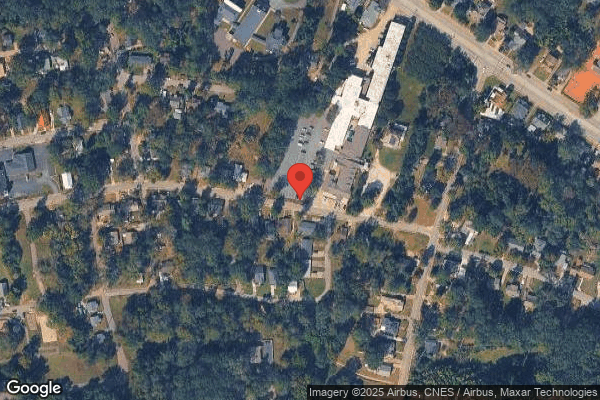
611 East Hampton Street, Anderson, SC 29624 (864) 226-5054
For profit - Limited Liability company 181 Beds SIMCHA HYMAN & NAFTALI ZANZIPER Data: November 2025 4 Immediate Jeopardy citations
Trust Grade
0/100
#141 of 186 in SC
Last Inspection: January 2025

Within standard 12-15 month inspection cycle. Federal law requires annual inspections.

Overview

Achieve Rehabilitation and Nursing Center in Anderson, South Carolina has received a Trust Grade of F, indicating significant concerns and a poor overall quality of care. It ranks #141 out of 186 facilities in South Carolina and is at the bottom of the list in Anderson County, sitting at #5 out of 5. The facility is worsening, with issues increasing from 7 in 2024 to 16 in 2025. Staffing is a major concern, with a low rating of 1 out of 5 stars and a high turnover of 62%, well above the state average. Additionally, there have been critical incidents, including a failure to accurately document a resident's code status, which could prevent life-saving measures, and a lack of adequate medication administration practices, both of which raise serious safety concerns. While the facility has some good quality measures, the overall picture shows significant weaknesses that families should carefully consider.

Trust Score
F
0/100
In South Carolina
#141/186
Bottom 25%
Safety Record
High Risk
Review needed
Inspections
Getting Worse
7 → 16 violations
Staff Stability
⚠ Watch
62% turnover. Above average. Higher turnover means staff may not know residents' routines.
Penalties
✓ Good
$83,288 in fines. Lower than most South Carolina facilities. Relatively clean record.
Skilled Nurses
⚠ Watch
Each resident gets only 7 minutes of Registered Nurse (RN) attention daily — below average for South Carolina. Fewer RN minutes means fewer trained eyes watching for problems.
Violations
⚠ Watch
35 deficiencies on record. Higher than average. Multiple issues found across inspections.
★☆☆☆☆
1.0
Overall Rating
★☆☆☆☆
1.0
Staff Levels
★★★★☆
4.0
Care Quality
★☆☆☆☆
1.0
Inspection Score
Stable
2024: 7 issues
2025: 16 issues

The Good

  • 4-Star Quality Measures · Strong clinical quality outcomes
  • Full Sprinkler Coverage · Fire safety systems throughout facility
  • No fines on record

Facility shows strength in quality measures, fire safety.

The Bad

1-Star Overall Rating

Below South Carolina average (2.8)

Significant quality concerns identified by CMS

Staff Turnover: 62%

15pts above South Carolina avg (46%)

Frequent staff changes - ask about care continuity

Federal Fines: $83,288

Well above median ($33,413)

Moderate penalties - review what triggered them

Chain: SIMCHA HYMAN & NAFTALI ZANZIPER

Part of a multi-facility chain

Ask about local staffing decisions and management

Staff turnover is elevated (62%)

14 points above South Carolina average of 48%

The Ugly 35 deficiencies on record

4 life-threatening
Mar 2025 1 deficiency
CONCERN (D) 📢 Someone Reported This

A family member, employee, or ombudsman was alarmed enough to file a formal complaint

Potential for Harm - no one hurt, but risky conditions existed

Deficiency F0602 (Tag F0602)

Could have caused harm · This affected 1 resident

**NOTE- TERMS IN BRACKETS HAVE BEEN EDITED TO PROTECT CONFIDENTIALITY** Based on review of facility policy, observation, record review and interview, the facility failed to ensure Resident (R)1 was fr...

Read full inspector narrative →
**NOTE- TERMS IN BRACKETS HAVE BEEN EDITED TO PROTECT CONFIDENTIALITY** Based on review of facility policy, observation, record review and interview, the facility failed to ensure Resident (R)1 was free from misappropriation of a narcotic medication for 1 of 4 residents reviewed for misappropriation. Findings include: Review of the facility policy dated 11/26/24, titled, Abuse, Neglect and Exploitation revealed under the policy, Misappropriation of Resident Property means the deliberate misplacement, exploitation, or wrongful, temporary or permanent use of a residents belongings or money without the residents consent. Review of R1's Facesheet revealed she was admitted to the facility on [DATE], with diagnoses that include, but not limited to: polyneuropathy, paraplegia, and anxiety. Review of R1's Quarterly Minimum Data Set (MDS) with an Assessment Reference Date (ARD) of 01/10/25, revealed R1 had a Brief Interview for Mental Status (BIMS) score of 15 out of 15, indicating R1 was cognitively intact. Review of R1's Medication Monitoring/Control Record revealed, Percocet 10/325 milligrams (mg) take one by mouth twice daily. The date received was 01/23/25, and amount received was 30 tablets. Two of the Percocet were signed off as administered by Licensed Practical Nurse (LPN)1 on 01/22/25, the first entry time was 9:10 AM, and the second entry time was 9:00 PM. The remaining amount of Percocet was 28 tablets. Further review of the Medication Monitoring/Control Record dated 01/23/25, recorded Percocet was also signed off as administered by LPN1 at 9:15 AM, and by LPN2 at 8:35 PM. Review of R1's Medication Administration Record (MAR) dated 01/22/25, revealed Percocet was signed as administered by LPN1 on 01/21-23/25 at 9:00 AM. Review of the MAR on 01/21/25 and 01/22/25, revealed Percocet was signed as given by LPN2 at 9:00 PM. Additionally, the MAR revealed at 9:00 PM on 01/21/25 and 01/22/25, was coded with a 2. The chart codes for 2 revealed Drug Refused. Review of a Pharmacy Packing Slip Proof of Delivery revealed R1's Percocet was delivered to the facility on [DATE] at 1:06 AM. Review of an undated statement from LPN1 revealed R1 had zero tablets left on 01/21/25. Her medication came in on 01/22/25. It also stated she could not understand why LPN2 didn't understand, but the count was correct. Review of a Disciplinary Action Form dated 01/29/25, revealed LPN1 was terminated due to failure to follow Medication Administration Policy. During an interview on 03/05/25 at 1:30 PM, the Administrator stated she had to investigate this and stated she relied on nursing because she didn't understand the nursing aspect of nurses passing medication and had to keep asking questions. The Administrator stated what LPN1 said didn't make sense because her story changed a few times, she originally reported to the Nurse Practitioner (NP) that she made a medication error and gave R1's medications to another resident. LPN1 told me that as well, then she said it was the other resident that she accidentally gave the medication to. The Administrator further stated, I terminated her because her story kept changing. I don't think it was a medication error. She confirmed 2 Percocet were missing and could not be accounted for. During an interview on 03/05/25 at 2:01 PM, LPN2 stated, When I came on shift, I asked [LPN1] if [R1's] medication Percocet had come in. She said yes. I looked at the narcotic sheet. I pointed out to [LPN1] that two of the medications were signed as given on 01/22/25 and I asked her why. LPN1 said she made a med error. Her story changed several times and then said it was a different nurse. I said we need to speak to the Director of Nurses (DON). She then said she made a medication error and had to call the NP. So she called her. After, the conversation, I called my DON. She told me LPN1 called the NP and said she made a med error. The NP had already called the DON, supposedly about a med error. Looking at the narcotic sheets, she confirmed the last time the Percocet was given was dated 01/20/25 x2 that day. She confirmed the Percocet ran out. She said, We've been told in the past that we cannot document 8 - Medication Not Available. So, I didn't, that's why I coded the 2, which I should not have coded it that way. An attempted phone interview on 03/05/25 at 2:03 PM, with LPN1 was unsuccessful. During an interview on 03/05/25 at 2:33 PM, R1 stated, I take Percocet twice a day, 9 PM and 9 PM. R1 further stated, I remember being out of my Percocet in January, it was for a couple days. I told the nurses I was in pain. They gave me Tylenol. Tylenol only takes away a headache, it doesn't relieve my pain, I have nerve damage on my right side, back and front.
Jan 2025 15 deficiencies 1 IJ
CRITICAL (J)

Immediate Jeopardy (IJ) - the most serious Medicare violation

Deficiency F0578 (Tag F0578)

Someone could have died · This affected 1 resident

**NOTE- TERMS IN BRACKETS HAVE BEEN EDITED TO PROTECT CONFIDENTIALITY** Based on interview, record review, and review of facility policy, the facility failed to accurately document Resident (R)110's w...

Read full inspector narrative →
**NOTE- TERMS IN BRACKETS HAVE BEEN EDITED TO PROTECT CONFIDENTIALITY** Based on interview, record review, and review of facility policy, the facility failed to accurately document Resident (R)110's wishes to be a full code; and failed to periodically review code statuses for R110, for 1 of 36 sampled residents reviewed for code status. This failure placed the resident at risk of not receiving life saving measures. On [DATE] at 8:56 PM, the Administrator was notified that the failure to accurately reflect a residents code status in the medical record, in accordance with the resident's wishes, constituted Immediate Jeopardy at F578. On [DATE] at 8:56 PM, the survey team provided the Administrator with a copy of the CMS Immediate Jeopardy (IJ) Template and informed the facility IJ existed as of [DATE]. The IJ was related to 42 CFR 483.10 - Resident Rights. On [DATE] at 6:39 PM, the facility provided an acceptable plan for removal of the IJ. The survey team validated the IJ was removed on [DATE] at 1:00 PM, following the facility's implementation of the plan for removal of the IJ. The facility remained out of compliance at F578 at a lower scope and severity of D. Findings include: Review of the facility policy titled, Residents' Rights Regarding Treatment and Advance Directives, with a copyright date of 2024, documented it was the facility policy to support and facilitate a resident's right to formulate an advanced directive. Decisions regarding advanced directives and treatment will be periodically reviewed as part of the comprehensive care planning process. Any decisions will be documented in the resident's medical record and communicated to the interdisciplinary team and staff responsible for the resident's care. Review of the Admission record located under the Profile tab of the EMR revealed R110 was admitted to the facility on [DATE]. Review of R110's quarterly Minimum Data Set (MDS) located in the MDS tab of the EMR with an Assessment Reference Date (ARD) of [DATE], identified R110 as having a Brief Interview for Mental Status (BIMS) score of 15 out of 15, which indicated he was cognitively intact and capable of making his own decisions. Review of R110's electronic medical record (EMR) revealed his code status on the dashboard of the EMR was marked as a Do Not Resuscitate (DNR). Review of R110's Physician Orders located in the Orders tab of the EMR, revealed an order for DNR with an order start date of [DATE]. Review of a document titled [Facility Name] located in the Documents tab of the EMR, documented, Please indicate your choice by checking the appropriate statement the choices were Full Code or Do Not Resuscitate. The resident check marked Full Code and next to the words full code it revealed I request that if (Resident's Name) has sudden failure of a vital function that emergency medical measure be used to restore the function. The form was signed by the resident and a facility representative with signature dates of [DATE]. Review of R110's Plan of Care located in the Care Plan tab of the EMR, revealed R110 had a Focus area of Advanced Directives which revealed he was a DNR with an initiation date of [DATE] and a revision date of [DATE]. During an interview on [DATE] at 5:37 PM, Licensed Practical Nurse (LPN)7 was asked what she would do if R110 was found without vital signs. LPN7 stated she would check the EMR for his code status. LPN7 checked the EMR and stated he was a DNR and therefore she would not start cardiopulmonary resuscitation (CPR). During an interview on [DATE] at 5:38 PM, LPN3 was asked what she would do if R110 was found without vital signs. LPN3 stated she would check the EMR for his code status. She checked the EMR and stated he was a DNR and therefore she would not start CPR. During an interview on [DATE] at 5:41 PM, R110 stated he wanted to be resuscitated and he stated he wanted to be Full Code and he wanted to be resuscitated. When asked, he also stated he would want to be sent to the hospital if needed. During an interview on [DATE] at 2:52 PM, the Administrator stated this resident had the order in place since [DATE] and confirmed it had been incorrect since [DATE]. On [DATE] at 6:39 PM, the facility provided an acceptable plan for removal, which included the following: 1. Immediately upon notification resident #110 Code Status medical record was updated to reflect their Advance Directive Form. 2. All residents have the potential to be affected by this alleged deficient practice. 3. On admissions all residents will be listed as full code unless documented is provided. The Interdisciplinary team will review advance directives quarterly and annually. All new admissions will be reviewed daily x 4 weeks, then weekly x4 weeks, then x1 month thereafter, in effort to ensure substantial compliance. Random audits will be reviewed daily x 4 weeks, then weekly x 4 weeks, then 1 month thereafter. 4. Director of Nursing (DON)/Designee conducted a facility-wide assessment to determine if any other residents were affected by this alleged deficient practice. Any identified concerns were immediately corrected. The DON/Designee reeducated all licensed practical nurses and registered nurses to review code status order entry on the third shift. Any staff not currently working will be educated prior to the start of next shift. All Licensed Nursing staff were educated by the Director of Nursing/Designee on [DATE], the outcome of the Immediate Jeopardy ensuring that Residents have the right to formulate advanced directives. Any staff not currently working will be educated prior to the start of the next shift until all staff have been educated. 5. DON/Designee will complete random audits using a Advance Directive audit tool for all new admissions. Random audits to be conducted daily x4 weeks, then weekly x4 weeks, then x1 month thereafter, in effort to ensure substantial compliance. Any negative findings will be corrected immediately, and this will be discussed at the Facility monthly Facility Quality Assessment and Performance Improvement (QAPI) meeting. Plan of removal date: [DATE], 9:00 am.
CONCERN (D)

Potential for Harm - no one hurt, but risky conditions existed

Resident Rights (Tag F0550)

Could have caused harm · This affected 1 resident

**NOTE- TERMS IN BRACKETS HAVE BEEN EDITED TO PROTECT CONFIDENTIALITY** Based on observation, record review, interview, and facility policy review, the facility failed to provide care and services in ...

Read full inspector narrative →
**NOTE- TERMS IN BRACKETS HAVE BEEN EDITED TO PROTECT CONFIDENTIALITY** Based on observation, record review, interview, and facility policy review, the facility failed to provide care and services in a manner that maintained and promoted dignity which included ensuring the privacy curtain was pulled closed, for 1 of 1 resident, (Resident (R)123), reviewed for resident rights. This failure placed residents at risk for diminished self-worth, self-esteem, and feelings of embarrassment. Findings include: Review of the facility's policy titled, Resident Rights, dated 2024, documented, It is the practice of this facility to protect and promote resident rights and treat each resident with respect and dignity . Maintain resident privacy. Review of R123's admission Record located under the Profile tab in the electronic medical record (EMR) documented, R123 was admitted to the facility on [DATE], with diagnoses including but not limited to: Alzheimer's disease. Review of the quarterly Minimum Data Set (MDS) located under the MDS tab in the EMR with an Assessment Reference Date (ARD) of 11/25/24, revealed R123 had a Brief Interview for Mental Status (BIMS) of 99 out of 15 which indicated R123 was severely cognitively impaired, was incontinent of bowel and bladder functions, and was dependent on one staff for personal care and dressing. During an observation on 01/08/25 at 10:19 AM, a staff member stated a resident was receiving personal care. The curtain between R123 and her roommate's bed was not pulled. The roommate was sitting in her wheelchair and R123 was lying in her bed, which was visible to the roommate. R123 was wearing a shirt and a brief. Certified Nursing Assistant (CNA)3 was providing incontinent care to R123. CNA3 proceeded to remove R123's brief, exposing the lower half of her body, provided incontinence care, placed a clean brief on R123, and finished dressing her with the privacy curtain still not pulled. During an interview on 01/08/25 at 10:25 AM, CNA3 stated she usually worked the second shift, was behind in her assignment, R123 needed to be washed, dressed, and out of bed, she was distracted, and forgot to pull the privacy curtain. CNA3 stated the roommate, who was alert and oriented, was able to observe her care to R123. During an interview on 01/10/25 at 10:02 AM, Licensed Practical Nurse (LPN) 3 stated the staff were to ensure a resident's privacy with clothing/blanket and pull the privacy curtains whenever providing personal care to a resident. During an interview on 01/09/25 at 1:16 PM, the Director of Nurses (DON) stated all staff were educated regarding the facility's dignity policy during orientation and as needed. She stated when staff were assisting residents, they were to ensure a resident's body parts were not exposed to others and privacy curtains were to be pulled to ensure residents' dignity.
CONCERN (D)

Potential for Harm - no one hurt, but risky conditions existed

Deficiency F0582 (Tag F0582)

Could have caused harm · This affected 1 resident

**NOTE- TERMS IN BRACKETS HAVE BEEN EDITED TO PROTECT CONFIDENTIALITY** Based on record review and interview, the facility failed to provide the Advanced Beneficiary Notice of Non-Coverage (ABN) and t...

Read full inspector narrative →
**NOTE- TERMS IN BRACKETS HAVE BEEN EDITED TO PROTECT CONFIDENTIALITY** Based on record review and interview, the facility failed to provide the Advanced Beneficiary Notice of Non-Coverage (ABN) and the Notice of Medicare Non-Coverage (NOMNC) to 1 of 2 residents (Resident (R)136) reviewed for Beneficiary Notification of 36 sample residents. This failure had the possibility to negatively impact residents due to them not being aware that they no longer had coverage for their stay under Medicare Part A. Findings include: Review of R136's Face Sheet located under the Profile tab of the electronic medical record (EMR) revealed R136 was admitted to the facility on [DATE], with diagnoses including but not limited to: other neurological conditions, urinary tract infection, diabetes, and depression. Review of R136's five-day Minimum Data Set (MDS) with an Assessment Reference Date (ARD) date of 08/28/24, located under the Resident Assessment Instrument (RAI) tab, indicated R136 was set up assist for oral hygiene; supervision for showering; dependent for lower body dressing; partial/moderate assistance for upper body dressing, transfers, and bed mobility. The MDS revealed a Brief Interview for Mental Status (BIMS) score of 12 out of 15, indicating R136 was cognitively intact. Review of the SNF (Skilled Nursing Facility) Beneficiary Notification Review forms that were provided to the facility for completion, indicated R136's forms were incomplete and the ABN and NOMNC had not been provided to R136 when Medicare Part A Services ended on 12/22/24. During an interview on 01/11/25 at 11:20 AM, the Administrator confirmed that the beneficiary notices had not been provided to R136. The Administrator explained that the Social Service Director may not have understood the necessity of the forms being completed and notification made to the residents since they had so few residents that were covered by Medicare Part A.
CONCERN (D)

Potential for Harm - no one hurt, but risky conditions existed

ADL Care (Tag F0677)

Could have caused harm · This affected 1 resident

**NOTE- TERMS IN BRACKETS HAVE BEEN EDITED TO PROTECT CONFIDENTIALITY** Based on record review, interview and facility policy review, the facility failed to provide appropriate Activities of Daily Liv...

Read full inspector narrative →
**NOTE- TERMS IN BRACKETS HAVE BEEN EDITED TO PROTECT CONFIDENTIALITY** Based on record review, interview and facility policy review, the facility failed to provide appropriate Activities of Daily Living (ADLs) for residents to maintain adequate personnel hygiene for 2 of 2 residents (Resident (R)145 and R115) reviewed for ADLs of 36 sample residents. Findings include: Review of the facility's undated policy titled, Activities of Daily Living (ADLs) documented, .Care and services will be provided for the following activities of daily living: 1. Bathing . Policy Explanation and Compliance Guidelines .2. A resident who is unable to carry out activities of daily living will receive the necessary services to maintain .personal .hygiene . Review of the facility's undated policy titled, Resident Showers documented, Policy: It is the practice of this facility to assist residents with bathing to maintain proper hygiene .Policy Explanation and Compliance Guidelines: 1. Residents will be provided showers as per request or as per facility schedule protocols . Review of the facility's policy titled, Nail Care, dated 2023, documented Routine cleaning and inspection of nails will be provided during Activities of Daily Living (ADL) care on an ongoing basis. Routine nail care to include trimming and filing will be provided on a regular schedule .Nail care will be provided between scheduled occasions as the need arises. The resident's care will identify: the frequency of nail care to be provided, the person responsible for providing nail care .Nails should be kept smooth to avoid skin injury. Only licensed nurse shall trim or file fingernails of residents with diabetes. 1. Review of R145's Face Sheet located under the Profile tab of the electronic medical record (EMR) revealed R145 was admitted to the facility on [DATE], with diagnoses including but not limited to: hemiplegia and hemiparesis following cerebral infarction affecting the left dominant side, heart failure, chronic obstructive pulmonary disease, bipolar disorder, and major depressive disorder. Review of R145's five-day Minimum Data Set (MDS) with an Assessment Reference Date (ARD) date of 12/09/24, located under the Resident Assessment Instrument (RAI) tab indicated R145 was set up assist with eating; dependent for lower body dressing; substantial/maximum assist for upper body dressing and showering/bathing; and partial/moderate assist for bed mobility. The MDS revealed a Brief Interview for Mental Status (BIMS) score of 15 out of 15 indicating R145 was cognitively intact. Review of Unit 1's Shower Sheet binder, provided by the facility, indicated R145, since her admission on [DATE], received a shower/bath on the following dates: 12/13/24 and 12/30/24. Review of the shower schedule that was posted in the binder revealed room [ROOM NUMBER] (R145's room) was to receive a shower on Monday/Wednesday/Friday during the second shift. During an interview on 01/08/25 at 4:00 PM, R145 stated she had not been receiving a bath/shower on a regular basis. R145 said since her admission to the facility she had gone 13 days without a shower, then received a shower only to go another 11 days without a shower. During an interview on 01/09/25 at 2:10 PM, Certified Nursing Assistant (CNA)7 stated there should be a shower sheet in the binder for every bath/shower completed. During an interview on 01/09/25 at 2:20 PM, Occupational Therapy Assistant (OTA)1 confirmed they assisted with showers for some of the residents. OTA1 explained their showers were part of the resident's therapy session and they did set up for the resident, but the resident did the rest. OTA1 reviewed the Occupational Therapy (OT) notes in their computer system and located additional showers for R145 on the following dates: 12/04/24, 12/13/24, 12/19/24, and 01/09/25. OTA1 stated R145 had complained to her, previously, about not getting enough showers/baths. During an interview on 01/09/25 at 3:30 PM, a request was made with the Administrator to provide any additional completed shower sheets for R145. No additional shower sheets were located. During an interview on 01/10/25 at 9:55 AM, CNA8 and CNA12 stated the shower sheets were to be filled out for every bath/shower that was completed for a resident and placed in the shower sheet binder located at the nurse's station. CNA8 confirmed that the OTA assisted with resident's bathing/showering as part of their therapy session. During an interview on 01/10/25 at 11:00 AM, the Director of Nursing (DON) stated showers were supposed to be consistently three times a week for all residents. The DON stated shower sheets were to be filled out when the resident's shower was given. The DON said she felt there were times when the CNAs were not completing the shower sheets but were providing the showers for residents. During an interview on 01/11/25 at 11:10 AM, Registered Nurse (RN)1 stated R145 had not brought it to her attention that she was missing showers. 2. Review of R115's Face Sheet located under the Profile tab in the EMR documented R115 was admitted to the facility on [DATE], with diagnoses including but not limited to: type two diabetes mellitus and the history of a stroke with hemiparesis. Review of the quarterly MDS located under the MDS tab in the EMR with an ARD of 10/10/24, documented R115 had a BIMS of 99 out of 15, which indicated R115 was severely cognitively impaired, required maximum assistance from the staff for personal care and personal hygiene that included nail care, and had no rejection of care. Review of the Care Plan, dated 11/06/23 and located under the Care Plan tab in the EMR related to Activities of Daily Living (ADL)/self-care performance deficit revealed dependent one assist for personal hygiene and bathing. Observations on 01/08/25 at 10:45 AM, 01/09/25 at 3:08 PM, and 01/10/25 at 10:15 AM, revealed R115 had long fingernails, black material under all of her fingernails, an offensive odor from her left contracted hand, and needed hand and nail care. During an interview on 01/11/25 at 10:15 AM, Certified Nursing Assistant (CNA)9 stated R115 was confused, cooperative with care, and the staff provided her personal care and nail care during personal care and as needed. She stated the nurses trimmed R115's nails and she was only allowed to clean the nails. CNA9 stated sometimes there were not enough staff to provide nail care to residents. CNA9 stated although she provided range of motion (ROM) exercises to R115, R115 had three fingers on her left hand that did not open and close all the way, and she did not provide ROM to the left hand. She stated she washed R115's left hand carefully as best she could and had not noticed any odors. During an interview on 01/10/25 at 10:20 AM, Licensed Practical Nurse (LPN)3 stated R115 was compliant with care and the licensed staff trimmed her fingernails as she had diabetes mellitus, and the CNAs cleaned her nails. LPN3 stated it was the responsibility of the CNAs to wash R115's left hand and report any issues. During an interview on 01/10/25 at 10:25 AM, LPN3 assessed R115's fingernails and left hand. She confirmed R115's left hand had an odor and stated her nails were long, dirty, and her hand and nails needed cleaning and trimming. During an interview on 01/10/25 at 9:39 AM, the Director of Nursing Service (DON) stated the CNAs provided fingernail care to residents during their shower, during a full bed bath, and as needed. She stated R115's left hand was to be cleaned and dried during personal care, and issues such as an odor to the hand were to be reported to the nurse.
CONCERN (D)

Potential for Harm - no one hurt, but risky conditions existed

Deficiency F0679 (Tag F0679)

Could have caused harm · This affected 1 resident

**NOTE- TERMS IN BRACKETS HAVE BEEN EDITED TO PROTECT CONFIDENTIALITY** Based on facility policy review, observations, interviews, and record review, the facility failed to provide a consistent activi...

Read full inspector narrative →
**NOTE- TERMS IN BRACKETS HAVE BEEN EDITED TO PROTECT CONFIDENTIALITY** Based on facility policy review, observations, interviews, and record review, the facility failed to provide a consistent activities program for residents on the secure/dementia care unit for 1 of 4 residents (Resident (R)116) and failed to provide activities of choice for 1 of 1 resident (R75) reviewed for activities of 36 sample residents. The failure to provide an activities program in a behavioral health unit can exacerbate behaviors due to boredom and negatively impact their psychosocial well-being. Findings include: Review of the facility's policy titled, Activities and dated as implemented on 12/01/24, documented, Policy: It is the policy of this facility to provide an ongoing program to support residents in their choice of activities based on their comprehensive assessment, care plan, and preferences. Facility-sponsored and individual and independent activities will be designed to meet the interests of each resident, as well as support their physical, mental, and psychosocial well-being. Activities will encourage both independence and interactions within the community. Definitions: Activities refer to any endeavor, other than routine ADLs (activities of daily living), in which a resident participates that is intended to enhance her/his sense of well-being and to promote or enhance physical, cognitive, and emotional health .9. Special considerations will be made for developing meaningful activities for residents with dementia and/or special needs. These include, but are not limited to, considerations for: Residents who exhibit unusual amounts of energy or walking without purpose, Residents who engage in behaviors not conducive with a therapeutic home. Residents who exhibit behaviors that require a less stimulating environment to discontinue behaviors not welcomed by other residents sharing a social space. Residents who go through others' belongings. Residents who have withdrawn from previous activity interest/customary routines and spend time alone in room/bed most of the day. Residents who excessively seek attention from staff and/or peers, Residents who lack awareness of personal safety, Residents who have delusional and hallucinatory behavior that is stressful to themselves . 1. Review of R116's undated Face Sheet found in the Profile tab of the electronic medical record (EMR) revealed he was admitted to the facility on [DATE], with diagnoses including but not limited to: paranoid schizophrenia, history of a traumatic brain injury (TBI) with intellectual disabilities and aggressive behaviors, as well as psychosis with auditory hallucinations. Review of R116's EMR revealed, a quarterly Minimum Data Set (MDS) with an Assessment Reference Date (ARD) of 11/19/24, located under the MDS tab of the EMR, revealed a Brief Interview for Mental Status (BIMS) score of 6 out of 15, which indicated R116 was severely cognitively impaired. During an observation on 01/09/25 at 3:30 PM and on 01/11/25 at 12:45 PM, R116 was observed to be independently ambulatory with the use of a wheelchair. R116 could stand and ambulate short distances in his room without devices. R116 was rarely found in his room during the survey. He spent much of his time in the dayroom of the secure unit, or in front of the nurse's station engaging with staff and other residents. Review of R116's Care Plan located in the Care Plan tab of the EMR and dated as implemented on 11/23/23, revealed quarterly reviews and revised interventions updated prn (as needed). The care plan included R116's behaviors of wandering, walking without assistance, placing himself on the floor intentionally, physical aggression towards staff, other residents and self when delusional and/or hallucinating. The interventions included .Present just one thought, idea, question or command at a time; Cue, reorient and supervise as needed; Observe for signs and symptoms of mania or hypomania racing thoughts or euphoria; increased irritability; frequent mood changes; pressured speech; flight of ideas; marked change in need for sleep; agitation or hyperactivity; Distract resident from wandering or aggressive behaviors by offering pleasant diversions, structured activities, food, conversation, television, books; and intervene as necessary to protect the rights and safety of others . During an interview on 01/09/25 at 10:00 AM, Licensed Practical Nurse (LPN)1 and Certified Nursing Assistant (CNA)1 stated, We are supposed to have activities, but it hasn't happened in a while. There was a COVID outbreak last month and the activity person for back here (secure unit) has been out for knee surgery. When asked who was covering for the activity person, both staff members confirmed no-one was providing organized activities for the cognitively impaired residents on the secure unit and hadn't for several weeks . During an interview on 01/10/25 at 9:30 AM, The Regional Director of Clinical Services (RDCS) stated she was unaware that no-one was providing activities on the dementia unit and stated she would make sure that was addressed. She confirmed the facility policy was not followed if organized activities were not being provided on the secure unit. During an interview on 01/10/25 at 2:30 PM, Registered Nurse (RN)2 stated she was the secure unit manager. RN2 was asked about activities for the residents, and she confirmed, .the activity person assigned back here has been out for medical, so my staff has to do it . When advised that no activities, except supervised smoking, had been observed on the unit during the survey, RN2 stated, .well we are supposed to do it if there's time . During a phone interview on 01/11/25 at 11:30 AM, the Activity Director (AD) stated she was now fully staffed and had an activity person for each unit. When asked about the secure unit she stated that the specific staff member had been out on medical leave, but someone else was covering for her. When advised no activities had been observed during the four on-site days, the AD stated she would take care of it when she returned the following week. 2. Review of R75's activity note, dated 10/06/23 and timed 3:55 PM, located under the Progress Notes tab of the EMR, revealed the resident was nonverbal and spoke with her son to obtain information. According to the note, R75 liked to watch crime shows. Review of the plan of care under the Care Plan tab of the EMR, revealed she had an activity plan of care (POC) with a last reviewed date of 01/07/25, revealed she was non-verbal and once liked watching crime shows and horror movies. The interventions included continuing one-on-one visits at least twice a week and encouraging her to get up and go to the day room to watch television. The diagnosis listed on the POC included but was not limited to muscle weakness, vascular dementia with psychotic disturbance, aphasia, hemiplegia, and hemiparesis following a cerebral infarction, and cognitive communication deficit. Review of the annual MDS with an ARD of 10/09/24, and located under the MDS tab of the EMR revealed she had a BIMS score of 99 out of 15 which revealed the resident was severely cognitively impaired. Under the activity portion of the MDS it was marked that it was somewhat important for her to listen to music she liked and to do her favorite activities. The MDS identified her as being dependent on staff for transfers, dressing, and locomotion in the wheelchair. Review of a handwritten progress note, provided by the facility, dated 12/31/24, and signed by the AD revealed the resident was no longer being set up in the day room and she was placed on one-on-ones on Monday, Wednesday, and Friday. The note revealed activities would listen to music and enjoy snacks with her. During observations on 01/08/25 at 2:34 PM and 3:22 PM, 01/09/25 at 12:08 PM, 12:26 PM, 2:58 PM, 3:29 PM, and 5:21 PM; on 01/10/25 at 8:03 AM, 9:29 AM, and 12:24 PM; and 01/11/25 at 10:35 AM; R75 was observed laying in her bed on her back either sleeping or awake. The curtain was pulled in front of her bed, and she did not have a television or radio playing during the observations. During an interview on 01/11/25 at 10:41 AM, Certified Nursing Assistant (CNA)11 stated she had cared for the resident for the past year. She stated the resident was kept in her room and liked to stay in bed. She stated when they got her up and took her to the dining room to watch television (TV) she screamed out baby baby. She stated the resident liked to watch television and she used to watch her roommate's TV however the roommate moved out a while back. She stated other than activity visiting her about twice a week the resident was not engaged in any activities. She verified the resident did not have access to a radio or TV in her room. During an interview on 01/11/25 at 10:50 AM, LPN9 stated R75 did not like to leave her room. She stated she liked to watch TV, and she used to watch her roommates' TV, and the roommate would get upset because she would have it on when she did not want it on, and she spoke to the son about getting earphones for her. She stated her roommate moved sometime before Thanksgiving and the resident had no access to a TV since. She stated if R75 had a TV or radio it would give her more stimulation. During an interview via telephone on 01/11/25 at 12:45 PM, LPN10 was asked about R75's activities and she stated the resident liked staying in her room. She stated when they got her up, she screamed or verbalized. She stated R75 liked to watch TV, and they would put her in a geriatric chair to watch TV, but she tended to scream when they took her out to the dining room where the TV was located. She stated she used to watch her roommates' TV, but her roommate moved out a month or two ago and she has not had a TV since then. She stated the resident could benefit from having a TV in her room. During a telephone interview on 01/11/25 at 11:29 AM, the AD stated R75 was just added to the one-on-one list on 12/31/24 but she has not been started on one-on-ones yet because they had covid in the building and were not fully staffed. She stated R75 screamed when she was put in the geriatric chair and taken to the dining room where the television was located. She stated R75 liked to watch television and listen to music. She stated she used to watch her roommate's television however the roommate moved some time ago and she has not had access to a television since she moved. She stated they did have a radio on the unit for all the residents to share, however she was not sure where the radio was. She stated the resident would benefit from having a television and radio in her room since she preferred to stay in her room, and she enjoyed watching television.
CONCERN (D)

Potential for Harm - no one hurt, but risky conditions existed

Quality of Care (Tag F0684)

Could have caused harm · This affected 1 resident

**NOTE- TERMS IN BRACKETS HAVE BEEN EDITED TO PROTECT CONFIDENTIALITY** Based on observations, interviews, and record review, the facility failed to follow physician's orders for compression wrap for ...

Read full inspector narrative →
**NOTE- TERMS IN BRACKETS HAVE BEEN EDITED TO PROTECT CONFIDENTIALITY** Based on observations, interviews, and record review, the facility failed to follow physician's orders for compression wrap for 1 of 1 resident (Resident (R)33) reviewed for edema of 36 sample residents. This failure had the potential to negatively affect R33's diagnosed undated circulatory deficits. Findings include: Review of R33's undated Face Sheet found in the Profile tab of the electronic medical record (EMR) revealed she was admitted to the facility on [DATE], with diagnoses including but not limited to: dementia with behaviors, anxiety disorder, and Alzheimer's disease. Review of R33's quarterly Minimum Data Set (MDS) with an Assessment Reference Date (ARD) of 10/23/24, located under the MDS tab of the EMR, revealed a Brief Interview for Mental Status (BIMS) score of 11 out of 15, which indicated R33 was moderately cognitively impaired. During observations on 01/09/25 at 3:30 PM and on 01/11/25 at 12:45 PM, R33 had notable edema (condition where excess fluid accumulates in the body's tissues, causing swelling) to her feet and legs. R33 rarely sat to elevate her legs, so the edema worsened during the day as she stood and waited for her ride home every day. There were no observations of R33 wearing the compression hose as ordered. Review of R33's Order Summary Report and found under the Orders tab of the EMR, revealed a physician's order, dated 11/16/24 at 7:00 AM, Please have supply person order: Tubular compression wraps: Tubular compression size G to BLE (bilateral lower extremities) and size J to thighs. To be applied daily for chronic lymphedema BLE. May be removed at bedtime to give rest. Review of R33's Medication Administration Record (MAR) and her Treatment Administration Record (TAR) found in the EMR under Orders, then Reports tabs from 11/15/24 through 01/11/25, revealed no entries related to the application or removal of the compression wraps. Review of the EMR progress notes in the Progress Notes tab, revealed on 11/24/24, Medication Administration Note: Please have supply person order tubular compression wraps: Tubular compression size G to BLE and J to thighs to be applied daily for chronic lymphedema BLE. May be removed at bedtime to rest. This note was repeated on 12/07/24; on 12/29/24; on 01/04/25; and again on 01/05/25. During an interview on 01/10/25 at 9:30 AM, the Regional Director of Clinical Services (RDCS) stated she entered the multiple Administrative Notes, . because the contracted DME (Durable Medical Equipment) provider had not filled the order. She confirmed that seven weeks was excessive, and the facility needed another way to ensure the physician's orders got implemented timely. During an interview on 01/11/25 at 10:30 AM, the Director of Nursing (DON) stated it was absolutely her expectation that treatment orders were processed and carried out timely. She stated this delay in treatment was unacceptable and she would correct immediately.
CONCERN (D)

Potential for Harm - no one hurt, but risky conditions existed

Deficiency F0688 (Tag F0688)

Could have caused harm · This affected 1 resident

**NOTE- TERMS IN BRACKETS HAVE BEEN EDITED TO PROTECT CONFIDENTIALITY** Based on observation, interview, record review, and facility policy review, the facility failed to ensure that residents who wer...

Read full inspector narrative →
**NOTE- TERMS IN BRACKETS HAVE BEEN EDITED TO PROTECT CONFIDENTIALITY** Based on observation, interview, record review, and facility policy review, the facility failed to ensure that residents who were dependent on staff for restorative nursing received range of motion, a carrot to the left hand, and/or a wedge to the leg for positioning, as ordered by the Physician for 2 of 3 residents (Resident (R)115 and R71) reviewed for restorative services of 36 sample residents. This failure has the potential for other residents to be at risk for decreased range of motion, worsening of their contracture, and/or increased edema. Findings include: Review of the facility's policy titled, Restorative Nursing Programs, dated 2023, documented, It is the policy of this facility to provide maintenance and restorative services designed to maintain or improve a resident's abilities to the highest practicable level .Restorative aides will implement the plan for a designated length of time, performing the activities and documenting on the Restorative Aide Documentation Form .The Restorative Nurse, or designated licensed nurse will provide oversight of the restorative aide activities, review the documentation at least weekly, and evaluate the effectiveness of the plan. 1. Review of R115's Face Sheet, located under the Admissions tab in the electronic medical record (EMR) documented R115 was admitted to the facility on [DATE], with diagnoses including but not limited to: type two diabetes mellitus and history of a stroke with hemiparesis. Review of R115's Physician Orders located under the Orders tab in the EMR, dated 04/14/24, revealed, Resident may participate in Restorative Nursing Programs 5 times a week for ROM upper and lower extremities. Review of R115's Physician Orders located under the Orders tab of the EMR, dated 05/24/24, revealed, Resident may participate in Restorative Nursing Program as per MD [Medical Doctor] order: Place carrot to left hand five times a week, place wedge to left leg five days per week for positioning. Review of R115's quarterly Minimum Data Set (MDS) located under the MDS tab in the EMR with an Assessment Reference Date (ARD) of 10/10/24, revealed a Brief Interview for Mental Status (BIMS) of 99 out of 15 which indicated R115 was severely cognitively impaired, had a functional limitation of range of motion on the upper and lower body on one side, required maximum assistance on the staff for personal care, and had no rejection of care. During observations on 01/08/25 at 10:46 AM, 01/09/25 at 3:06 PM, and 01/10/25 at 10:15 AM, revealed R115 had no wedge to her left leg and no carrot in her left hand. During an interview on 01/11/25 at 10:15 AM, Certified Nursing Assistant (CNA)9 stated R115 was confused, cooperative with care, and the staff provided her with personal care. CNA9 stated although she provided range of motion (ROM) exercises to R115, R115 had three fingers on her left hand that did not open and close all the way, and she did not provide ROM to the left hand. During an interview on 01/10/25 at 10:25 AM, Licensed Practical Nurse (LPN)3 stated she was not aware R115 was to have a carrot placed in her left hand. She stated she was not sure R115 used a wedge on her left leg for positioning and said she had not observed a wedge in her bed. During an interview on 01/10/25 at 11:37 AM, the Restorative Aide (RA)1 stated she met with the Rehabilitation Director weekly, and they discussed the restorative program for each resident. She said she was educated on any changes in the resident's restorative program and any new residents added to the restorative program. RA1 stated that for the past several months, she worked as a CNA, had a CNA assignment, did not meet with the Rehabilitation Director, and did not provide restorative services to residents on the restorative program. RA1 stated she was assigned to work as a RA on 01/09/25 and 01/10/25. She stated she provided range of motion exercises to R115's upper and lower body. RA1 stated she was not aware R115 was to have a carrot in her left hand and there was no wedge in R115's room. RA1 stated she told the Rehabilitation Director about the missing wedge. During an interview on 01/10/25 at 12:01 PM, the Therapy Director stated for the past several months she had not met with RA1 to discuss the residents on the restorative program as RA1 was assigned to work as a CNA on the nursing units. The Therapy Director stated the CNAs were expected to provide ROM during personal care. She stated she was not aware that R115 needed a carrot and wedge. The Therapy Director said although R115's orders were for five days a week; they should have been for seven days a week. During an interview on 01/11/25 at 3:30 PM, the Regional Director of Clinical Services (RDCS) confirmed there were no RA notes in the clinical record for R115 from 11/01/25 to 01/10/25. During an interview on 01/10/25 at 9:39 AM, the Director of Nurses (DON) stated although restorative nursing had not been provided by the RA for several months, the CNAs could provide ROM during care, could place carrots etc. and use wedges or positioning devices as ordered. She stated she was not aware R115 did not have a wedge and carrot available for use. The DON stated R115 did not receive her restorative program from 11/01/24 to 01/09/25. 2. Review of R71's Face Sheet, located in the EMR under the Admissions tab documented R71 was admitted to the facility on [DATE], with diagnoses including but not limited to: history of a stroke with hemiparesis (partial weakness on one side of the body) and hemiplegia (paralysis on one side of the body). Review of the Physician Orders located in R71's EMR under the Orders tab, dated 01/06/25, revealed Restorative Nursing for left hand brace. To be worn six hours per day. Review of the quarterly MDS located under the MDS tab in the EMR with an ARD of 08/22/24, documented R71 had a BIMS of 15 out of 15 which indicated R71 had intact cognition, functional limitation of range of motion on the upper and lower body on one side, was dependent on staff for personal care, and had no rejection of care. During an observation and interview on 01/08/25 at 11:21 AM, R71 stated he had not seen any rehabilitation staff in several days and no one had applied the splint to his left hand in several days. Although R71 had a left-hand splint in his room, it was not observed on his left hand. During an observation and interview on 01/10/25 at 10:05 AM, R71 stated no one applied the left-hand splint to his left hand yesterday or today and there was no left-hand splint observed on his left hand. Review of the Adaptive Rehab In-Service /Staff Meeting Acknowledgement and Attendance Record, dated 01/30/24, revealed R71 was to use a splint on his left hand six hours per day. The record revealed that four staff on R71's unit had received education, including one nurse. The record revealed that RA1 was not listed on the form. During an interview on 01/10/25 at 11:37 AM, RA1 stated she worked as a CNA on the nursing unit and not as an RA for several months. She stated that on 01/06/25 to 01/08/25, she worked as a CNA and not a RA. RA1 stated that on 01/09/25 and 01/10/25, although she was assigned to work as a RA, she was not educated that R71 was on restorative program that included a left hand splint, and therefore did not apply the splint on 01/09/25 and 01/10/25. RA1 stated R71 had not had the left-hand splint placed between 01/06/25 and 01/11/25. During an interview on 01/10/25 at 12:01 PM, the Therapy Director stated she had not met with the RA for several months. The Therapy Director stated R71 was on occupational therapy from 11/08/24 to 01/02/25, (Thursday). She stated the splint was to be worn seven days a week for six hours. She stated she notified the DON prior to 01/02/25 that R71's occupational therapy ended, and they needed a physician order for the splint to be done by the RA. The Therapy Director stated she was not aware the order for R71's splint was not obtained until 01/06/25. She stated the orders for restorative nursing were usually obtained as soon as she emailed or gave them to the DON. She stated on 01/03/25, the staff on R71's unit, which included the nurse and CNAs assigned to the unit that day were educated about the splint and the splint was applied to R71's left hand. She stated her staff did not apply the splint to R71 after 01/03/25 as it was not the responsibility of nursing to apply the splint. She stated after the education was completed; the nurses were to continue the education with the other staff. The Therapy Director stated RA1 was not usually assigned to R71's floor and would have been educated by the nurse when RA1 was assigned to work as a RA again and not assigned as a CNA on a unit. During an interview on 01/11/25 at 3:30 PM, the RDCS confirmed there were no RA notes in the clinical record for R71 from 01/04/25 to 01/11/25. During an interview on 01/10/25 at 9:24 AM, the Director of Nurses (DON) stated R71 completed his occupational therapy and when notified on 01/05/25 or 01/06/25, she obtained an order for a restorative splint program for R71. She confirmed the RA had not worked as an RA for several months. When asked who was responsible for placing the splint on R71, she stated if RA1 was not assigned to work as an RA, the DON stated the nurse would assume the responsibility. The DON stated R71 had not had the left-hand splint applied from 01/06/25 to 01/11/25.
CONCERN (D)

Potential for Harm - no one hurt, but risky conditions existed

Deficiency F0692 (Tag F0692)

Could have caused harm · This affected 1 resident

**NOTE- TERMS IN BRACKETS HAVE BEEN EDITED TO PROTECT CONFIDENTIALITY** Based on observation, interview, record review, and facility policy review, the facility failed to maintain acceptable nutrition...

Read full inspector narrative →
**NOTE- TERMS IN BRACKETS HAVE BEEN EDITED TO PROTECT CONFIDENTIALITY** Based on observation, interview, record review, and facility policy review, the facility failed to maintain acceptable nutritional parameters by not monitoring weights, implementing interventions, and monitoring meal intake for 1 of 2 residents (Residents (R)123) reviewed for nutrition of 36 sample residents. This had the potential to cause further weight loss without a root cause analysis and/or additional interventions put in place. Findings include: Review of the facility's policy titled, Weight Monitoring, dated 01/25, revealed, The facility will utilize a systemic approach to optimize a resident's nutritional status. This process includes .Developing and consistently implementing pertinent approaches and monitoring the effectiveness of interventions and revising them as necessary. A weight monitoring schedule will be developed upon admission for all residents .Residents with weight loss-monitor weekly .The physician should be informed of a significant change in weight and may order nutritional interventions. The physician should be encouraged to document the diagnosis or clinical conditions that may be contributing to the weight loss. Meal consumption information should be recorded . Review of R123's Face Sheet, located in the electronic medical record (EMR) under the Profile tab revealed the resident was admitted on [DATE], with diagnoses including but not limited to: heart failure, renal insufficiency, diabetes mellitus, major depression, and anemia. Review of R123's Comprehensive Care Plan located in the EMR under the Care Plan tab, revealed the resident had a Nutrition Care Plan, dated 08/29/24, related to risk for malnutrition related to Alzheimer's disease, depression, and history of dysphagia. The goal was R123 to have no significant weight change and show no signs/symptoms of malnutrition. The Care Plan interventions included: monitor/record/report to MD (Medical Doctor) as needed (prn) signs of malnutrition, significant weight loss: three pounds in one week, greater than five percent in one month, greater than 7.5% in three months, greater than ten percent in six months, and Registered Dietician (RD) to evaluate and make diet change recommendations prn. Review of R123's quarterly Minimum Data Set (MDS) with an Assessment Reference Date (ARD) of 09/23/24, located in the MDS tab of the EMR, revealed a Brief Interview for Mental Status (BIMS) score of 99 out of 15 which indicated R123's cognition was severely impaired. The MDS indicated R123 received a regular diet and was assisted with meals. Review of R123's quarterly MDS with an ARD of 11/25/24 located in the MDS tab of the EMR, revealed R123 was dependent on staff for eating. Review of R123's Physician's order located in the EMR under the Orders tab, dated 08/23/24, documented: Boost (oral supplement) twice per day (bid) and a regular diet. Review of R123's Physician Progress Note located in the EMR under the Document tab, dated 09/24/24, revealed R123 had Alzheimer's disease with early onset, the staff reported R123 did well when assisted with meals, R123 was at risk for malnutrition due to dementia, and the RD was to be consulted as needed (prn) to assist with supplements/nutrition. Review of R123's weights located in the EMR under the Weights and Vital tab, revealed the following: -08/21/24 - 115.0 lbs. (Pounds) -08/27/24 - 117.8 lbs. -09/03/24 - 118.2 lbs. -10/09/24 - 117.4 lbs. -11/05/24 - 100.2 lbs. -01/10/25 - 92.5 lbs. Review of the quarterly Nutrition Evaluation located in the EMR under the Documents tab, dated 11/26/24, revealed R123 consumed 75% to 100% of her meals, her height was 64 inches, and her weight was 100.2 pounds, which was a significant weight loss of 14.9 % in three months. No significant weight loss/gain during the past 6 months. No supplements currently ordered. Pt [patient] with diagnosis of unspecified dysphagia however difficulty swallowing/chewing not currently noted .No nutrition concerns .Goals: no significant weight changes in the next 3 months . continue diet as currently ordered; week weights . Review of the Physician Orders located in the EMR under the Orders tab, dated 12/27/24 revealed: Regular diet, mechanical soft-ground meat texture, thin liquid consistency. Review of the Food and Fluid Intake provided by the Regional Director of Clinical Services (RDCS), dated 11/26/24 to 1/10/25, revealed: there was no documentation related to R123's meal and snack intake on 11/27/24, 11/28/24, 12/01/24, 12/02/24, 12/04/24, 12/06/24, 12/07/24, 12/09/24, 12/09/24, and 12/11/24 to 01/10/25. R123's meal intake on 01/11/25 revealed the resident consumed 75 % and her snack intake documented NA (not applicable). During an observation on 01/08/25 at 11:45 AM, R123 was out of bed in the dining room. A staff member sat next to R123 and fed her lunch. R123 consumed approximately 50 % of her meal and drank her milk and juice. During an observation on 01/11/25 at 12:00 PM, R123 was out of bed in the dining room. A staff member sat next to R123 and fed her lunch. She had an extra dessert on her tray. R123 ate approximately 50% of her meal and half of the extra dessert. When it finished, the Certified Nursing Assistant (CNA) offered Boost (nutritional supplement) to R123 but R123 refused to drink it. During an interview on 01/08/25 at 2:45 PM, CNA3 stated the staff fed R123. She stated in the last few months, R123 had increased sleepiness and sometimes ate very poorly. CNA3 stated some days, R123 ate 25 percent, and other days ate 50 percent. She stated her best meal was at lunchtime. CNA3 stated the staff transferred her back to bed after dinner for a nap. CNA3 stated R123 liked Boost and on the days when R123 was more awake, they gave her Boost with a snack. CNA3 stated R123 usually drank 50 to 75 percent of the Boost. During an interview on 01/09/25 at 1:16 PM, the Director of Nurses (DON) stated R123's Alzheimer's disease had progressed over the past several months and she had further decline after having Covid-19 in December 2024. She stated if a resident had a significant weight loss/gain since last month, the staff were to reweigh the resident. The DON stated if there was still a discrepancy, the weight was to be reported to her and the Physician, and the nurse was to initiate weekly weights. The DON stated she was not aware of R123's significant weight loss in November 2024, there was no evidence in the clinical record that the physician was notified, a reweigh was not obtained, weekly weights were not initiated, there were no progress notes related to the weight loss, and she did not discuss weight concerns with the team at morning meetings. The DON said the Registered Dietician evaluated residents at the facility twice per week and also worked from home a few days. She stated weight summary reports could be printed to review 30-60-90-180-day weights. The DON stated that when a resident lost a significant amount of weight, the RD evaluated the resident during their next visit. She stated although R123's weight loss was documented on 11/05/24, the RD did not evaluate R123 until 11/26/24 when her quarterly assessment was due. The DON stated the RD's evaluation had conflicting information related to R123's weight loss. She stated although the RD documented R123 had a 14.9% weight loss in six months, R123 was admitted on [DATE] and the weight loss was in three months, which was greater than 14.9%. The DON stated the RD's intervention was for weekly weights, continuing the current plan, and follow up as needed. The DON stated the RD did not notify her of R123's significant weight loss and lack of weekly weight monitoring. During an interview on 01/10/25 at 10:02 AM, Licensed Practical Nurse (LPN)3 stated R123 had significant cognitive impairment, she was at risk for weight loss, received supplements, and the staff fed the resident her meals. LPN3 stated she was not aware of R123's weight loss. LPN3 stated the CNAs reweighed residents with weight discrepancies and were to notify her of any weight loss or gain. LPN3 stated residents with significant weight loss were weighed weekly. LPN3 stated she had not discussed R123's weight loss with the Physician, Director of Nurses, or the Registered Dietician as she was not aware of her weight loss. She stated the Restorative Aide (RA) entered weights in the EMR and stated she was not aware R123's weights were not in the EMR. LPN3 stated R123 had a fair appetite and was not on hospice. LPN3 stated R123 had a fair appetite, received supplements, and the staff frequently encouraged and gave her snacks and fluids. She stated some days R123 was sleepy and had a decreased appetite. During an interview on 01/10/25 at 10:10 AM, Licensed Practical Nurse (LPN)3 stated R123 had end stage Alzheimer's disease and had a decline in her physical and mental status. LPN3 stated the staff fed R123 and said her appetite was fair. She stated R123 liked Boost, and the staff offered and assisted her to drink Boost as she was able. LPN3 stated some days, R123 was very sleepy, and the staff had a difficult time feeding her. LPN3 stated R123 liked Boost, and no choking. LPN3 stated the nurses and CNAs offered supplements and snacks during each encounter with R123. During an interview on 01/10/25 at 11:37 AM, RA1 stated she entered residents' weights in the EMR, and she or the CNAs notified the nurse of weight discrepancies. RA1 stated she had been assigned to work as a CNA on the units and had not entered resident weights into the EMR. She stated said she was assigned to work as a RA on 01/09/25 and 01/10/25 and entered any weights obtained by the CNAs into the EMR. During an interview on 01/11/25 at 10:15 AM, CNA9 stated she fed R123 her meals and snacks. She stated R123 was confused, and her appetite was fair to poor. CNA9 stated she entered the resident's meal percentages in the EMR. She stated she was not aware of R123 being on weekly weights. CNA9 stated she encouraged R123 to eat at meals and frequently offered fluids and snacks to her between meals. During an interview on 01/10/25 at 3:15 PM, the DON stated R123's weight was 92.5 pounds, which was a 21.3 percent weight loss in three months. The DON stated the Physician was called and only new interventions were initiated. The DON stated although R123 had expected weight loss from her advanced Alzheimer's disease and Covid-19, the facility did not investigate R123's weight loss, obtain weekly weight, notify her and the Physician, and did not put appropriate interventions in place to reduce any further weight loss.
CONCERN (D)

Potential for Harm - no one hurt, but risky conditions existed

Respiratory Care (Tag F0695)

Could have caused harm · This affected 1 resident

**NOTE- TERMS IN BRACKETS HAVE BEEN EDITED TO PROTECT CONFIDENTIALITY** Based on observation, record review, interview and facility policy review, the facility failed to ensure residents received oxyg...

Read full inspector narrative →
**NOTE- TERMS IN BRACKETS HAVE BEEN EDITED TO PROTECT CONFIDENTIALITY** Based on observation, record review, interview and facility policy review, the facility failed to ensure residents received oxygen via nasal cannula, according to the physician's order, and that oxygen supplies were stored appropriately when not in use for 2 of 2 residents (Resident (R)400 and R87) reviewed for oxygen administration of 36 sample residents. Additionally, the facility failed to ensure 1 of 1 resident (R71) had physician orders for oxygen administration of 36 sample residents. This failure had the potential for the residents to receive increased oxygen causing hyperoxia (cells, tissues and organs are exposed to an excess supply of oxygen). Findings include: Review of the facility's policy titled, Oxygen Administration, initiated 12/04/24 and revised 01/01/25, revealed, Oxygen is administered under orders of a physician, except in case of an emergency. In such case, oxygen is administered and orders for oxygen are obtained as soon as practicable when the situation is under control. 3. Staff shall document the initial and ongoing assessment of the resident's condition warranting oxygen and the response to oxygen therapy. 4. The resident's care plan shall identify the interventions for oxygen therapy, based upon the resident's assessment and orders, such as, but not limited to: a. The type of oxygen delivery system. b. When to administer, such as continuous or intermittent and/or when to discontinue. c. Equipment setting for the prescribed flow rates. d. Monitoring of SpO2 (oxygen saturation) levels and/or vital signs, as ordered. e. Monitoring for complications associated with the use of oxygen. 5. Staff shall perform hand hygiene and don gloves when administering oxygen or when in contact with oxygen equipment. Other infection control measures include: a. Follow manufacturer recommendations for the frequency of cleaning equipment filters. b. Change oxygen tubing and mask/cannula weekly and as needed if it becomes soiled or contaminated. c. Change humidifier bottle when empty, every 72 hours or per facility policy, or as recommended by the manufacturer. Use only sterile water for humidification. d. If applicable, change nebulizer tubing and delivery devices every 72 hours or per facility policy and as needed if they become soiled or contaminated. e. Keep delivery devices covered in plastic bag when not in use. 1. Review of R400's Face Sheet located in the electronic medical record (EMR) under the Profile tab revealed the resident was admitted to the facility on [DATE], with diagnoses including but not limited to: chronic respiratory failure with hypoxia Review of R400's admission Minimum Data Set (MDS) with an Assessment Reference Date (ARD) of 11/05/24, and located in the resident's EMR under the MDS tab, revealed R400 was in a persistent vegetative state/no discernible consciousness. Review of R400's Care Plan, dated 10/30/24 and located in the EMR under the Care Plan tab, revealed, The resident has chronic respiratory failure with hypoxia. Interventions in place were to administer oxygen, dated 01/08/25 02:25 PM. Review of the physician orders dated 12/04/24 and located under the Orders tab of the EMR revealed O2 via trach collar at eight liters per minute (LPM) via tracheostomy collar continuously. During observations on 01/08/24 at 3:00 PM, 01/09/24 at 11:15 AM, and 01/10/24 at 9:34 AM, the resident was lying in bed using a tracheostomy collar and the oxygen concentrator was set at six LPM. During an observation and interview on 01/11/24 at 12:30 PM, Licensed Practical Nurse (LPN)5 stated R400 should be on eight LPM. She looked at R400's oxygen concentrator and stated it was set at 6 LPM. She then tried to adjust the rate, and the concentrator level would not rise to 8 LPM. During an interview on 01/11/24 at 12:50 PM, the Director of Nurses (DON) stated she would expect staff to follow physician orders for oxygen administration and administer the correct LPM. 2. Review of R87's undated admission Record located under the Profile tab of the EMR, revealed R87 was admitted to the facility on [DATE], with diagnoses including but not limited to: chronic obstructive pulmonary disease (COPD) and congestive heart failure. Review of R87's quarterly MDS with an ARD of 12/18/24, located in the EMR under the MDS tab, revealed R87 had a BIMS score of 15 out of 15, which indicated R87 was cognitively intact. Review of R87's Care Plan, dated 01/08/24, located in the EMR under the Care Plan tab, revealed oxygen settings O2 via Nasal cannula at 2 LPM as needed. Review of R87's physician orders, dated 09/01/23 and located under the Order tab of the EMR, revealed O2 via nasal cannula collar at 2 liters per minute (LPM). During observations on 01/08/24 at 1:26 PM and on 01/09/24 at 9:35 AM, the oxygen concentrator was set at 2.5 LPM. And on 01/10/24 at 11:45 AM the resident was lying in bed using a nasal cannula and the oxygen concentrator was set at 3 LPM. There was no date on the oxygen tubing or humidifier bottle on any observation. The concentrator was crusted with white stains. During an observation and interview on 01/11/24 at 12:30 PM, LPN4 stated R87 should be on two LPM. She looked at R87's oxygen concentrator and stated it was set at three LPM. She stated she should have checked it. During an interview on 01/11/24 at 12:50 PM, the Director of Nurses (DON) stated she would expect staff to follow physician orders for oxygen administration and administer the correct LPM. 3. Review of R71's Face Sheet located under the Admissions tab in the EMR documented R71 was admitted to the facility on [DATE], with diagnoses including but not limited to: history of a stroke with hemiparesis (partial weakness on one side of the body) and hemiplegia (paralysis on one side of the body), history of Covid-19, anxiety, stroke, and cardiac pacemaker. Review of the quarterly Minimum Data Set (MDS) located under the MDS tab with an Assessment Reference Date (ARD) of 08/22/24 revealed R71 had a Brief Interview for Mental Status (BIMS) score of 15 out of 15 which indicated R71 had intact cognition and did not use oxygen. Review of R71's Care Plan located under the Care Plan tab in the EMR, dated 11/22/24, revealed no care plan for oxygen. Review of R71's December 2024 and January 2025 Physician Orders located under the Orders tab in the EMR, revealed no order for R71 to receive oxygen, no orders to change the oxygen tubing, and no orders for oxygen monitoring. Review of R71's December 2024 and January 2025 Treatment Administration Record (TAR) located under the Orders tab in the EMR, revealed no order for R71 to receive oxygen, no orders to change the oxygen tubing, and no orders for oxygen monitoring. During an interview on 01/08/25 at 11:21 AM, R71 stated he has used oxygen for many years and has used oxygen since his admission to the facility. He stated he did not know his current oxygen rate. Observations on 01/08/25 at 10:56 AM and 5:00 PM, 01/09/25 at 4:35 PM and 8:00 PM, and 01/10/25 at 10:02 AM revealed R71 was using oxygen via a nasal canula at 2.5 liters per minute (lpm). The oxygen unit was dusty and soiled with a dried brown material and the filter was full of gray lint. The oxygen tubing was dated and clean. During an interview on 01/10/25 at 10:02 AM, Licensed Practical Nurse (LPN)3 stated R71 has received oxygen since he was admitted to the facility. She stated all residents receiving oxygen were to have a physician order for oxygen. LPN3 confirmed that R71 did not have an order for oxygen, and she stated she would call the physician for oxygen orders. LPN3 stated R71's oxygen unit was dirty and not sanitary, and the unit and filter needed to be cleaned. During an interview on 01/10/24 at 9:25 AM, the Director of Nurses (DON) stated all residents receiving oxygen were to have a physician order for oxygen that included the method of administration, the oxygen rate and whether the oxygen was continuous or as needed (prn), monitoring for oxygen, and weekly changing of oxygen equipment. She stated oxygen information was to be recorded on the TAR and in the care plan. The DON stated the night nurse was to clean oxygen machines weekly and as needed and were to clean the filters every night. The DON confirmed there was no physician order for oxygen, care plan, or information for R71's oxygen use in the clinical record.
CONCERN (D)

Potential for Harm - no one hurt, but risky conditions existed

Medical Records (Tag F0842)

Could have caused harm · This affected 1 resident

**NOTE- TERMS IN BRACKETS HAVE BEEN EDITED TO PROTECT CONFIDENTIALITY** Based on record review and interviews, the facility failed to ensure the medical record accurately and completely reflected the ...

Read full inspector narrative →
**NOTE- TERMS IN BRACKETS HAVE BEEN EDITED TO PROTECT CONFIDENTIALITY** Based on record review and interviews, the facility failed to ensure the medical record accurately and completely reflected the physician's orders for 1 resident (Resident (R) 44) reviewed for medical records of 36 sample residents. Failure to accurately and completely document physician's orders had the potential in this resident not receiving needed care. Findings include: Review of R44's physician's Encounter note, dated 01/02/25 and timed 12:00 AM and located in the progress notes tab of the electronic medical record (EMR) revealed the physician wrote the resident was admitted to the hospital on [DATE], for altered mental status and was readmitted to the facility on [DATE], with the same physician's orders as she was on at the time she was discharged to the hospital on [DATE]. Review of the orders, January 2025, located under the Orders tab of the EMR, revealed the nurse failed to enter the residents' previous orders for a renal, no concentrated sweets diet regular texture, thin liquids consistency, large protein portions; a foley catheter 16 French with 10 ml bulb; for acute charting for hemodialysis catheter site and to monitor drainage, bleeding and edema; providing a bagged lunch to take to hemodialysis Monday, Wednesday, and Friday; and for a fluid restriction 1200 ml/day with nursing providing 300ml/day, dietary providing 660ml/day. As a result, the January orders and the January medication administration record were absent to these orders. During an interview on 01/11/25 at 11:08 AM, the Director of Nursing (DON) verified the resident still had a foley catheter; was still receiving dialysis; was still on a fluid restriction and was still on renal, no concentrated sweets with thin liquids and large protein portions. She stated that because the resident was out of the facility at the hospital for 24 hours, she was considered a new admission, and the nurse should have input the orders into the computer and she herself checked the orders the following day and she missed that these orders had not been entered. She verified the orders were not entered into the January physician's orders resulting in the January orders not being complete and accurate. During an interview on 01/11/25 at 1:00 PM, the Regional Director of Clinical Services stated they did not have a policy specific to medical records and entering physician's orders. She provided a document titled General Nursing admission Checklist and stated it was what the nurse's followed when admitting or re-admitting a resident to the facility. The form had a line labeled Med Orders entered correctly with an area to mark yes or no and enter a date.
CONCERN (E)

Potential for Harm - no one hurt, but risky conditions existed

Safe Environment (Tag F0584)

Could have caused harm · This affected multiple residents

**NOTE- TERMS IN BRACKETS HAVE BEEN EDITED TO PROTECT CONFIDENTIALITY** Based on observation, interviews, and facility policy review, the facility failed to ensure a clean, comfortable, homelike envir...

Read full inspector narrative →
**NOTE- TERMS IN BRACKETS HAVE BEEN EDITED TO PROTECT CONFIDENTIALITY** Based on observation, interviews, and facility policy review, the facility failed to ensure a clean, comfortable, homelike environment related to the rooms and common areas not being maintained in clean conditions for 3 of 4 units (100 unit, 200 unit, and 300 unit). Failure to maintain a clean homelike environment has the potential to result in resident dissatisfaction with their living conditions and increased depression. Findings include: Review of the facility's policy titled, Cycle Cleaning with a copyright date of 2024, revealed it was the facility policy to identify the functional areas in the facility that require cleaning and to use the cleaning schedules to maintain regularly scheduled environmental service tasks and it was the responsibility of the Environmental Services Manager to ensure cleaning was maintained. 1. During intermittent observations conducted over four days of the survey (01/08/25 through 01/11/25) the bottom portions of the walls on the 300 unit were soiled with scuffs up and down the length of the corridors and there was a dark brown build up on the floor along the baseboards; there was heavy dirt build up on the floor around the door frames to the kitchen and the employee lounge. 2. During an observation on 01/08/25 at 3:14 PM, and on 01/10/25 at 10:05 AM, there was a water stained and drooping ceiling tile in the corridor leading to the shower room across from room [ROOM NUMBER]. The stain was brown and appeared to be from a leaking pipe or leaking roof. 3. During an observation on 01/08/25 at 12:43 PM, and on 01/10/25 at 10:05 AM, resident room [ROOM NUMBER] had dirt built up along the walls, vents, and under the closets. The top of the baseboard type heater had a build up of dust and debris. 4. During an observation on 01/08/25 at 12:34 PM, and on 01/10/25 at 10:09 AM, the bathroom off of room [ROOM NUMBER] had a buildup of dirt along the walls and behind the toilet. 5. During an observation on 01/08/25 at 11:11 AM, and on 01/10/25 at 10:12 AM, the floor in front of the refrigerator located behind the nursing station on the 200 unit had a heavy build up of black dirt in front of it. 6. During an observation on 01/08/25 at 11:17 AM, and on 01/10/25 at 10:12 AM, the floor under and on the side of the ice maker and in front of the refrigerator on the 100 unit had a build-up of dirt. The wall to the side of the refrigerator was soiled with what appeared to be dried spilled residue. During observation and interview on 01/10/25 from 9:50 AM through 10:15 AM, the units were toured with the Maintenance Director and the Housekeeping Supervisor (HS). They verified each of the above observations. The HS verified the areas described above were soiled and in need of cleaning and stated it would be his expectation that the areas be clean and well maintained.
CONCERN (E)

Potential for Harm - no one hurt, but risky conditions existed

Menu Adequacy (Tag F0803)

Could have caused harm · This affected multiple residents

Based on observation, interviews, record review, and facility policy review, the facility failed to ensure the menu was followed for 2 of 2 residents, who wish to remain anonymous, of 36 sample reside...

Read full inspector narrative →
Based on observation, interviews, record review, and facility policy review, the facility failed to ensure the menu was followed for 2 of 2 residents, who wish to remain anonymous, of 36 sample residents. Failure to follow the menu had the potential to result in weight loss, resident dissatisfaction, and resident hunger with the potential to affect 151 of 157 residents consuming food in the facility. Findings include: Review of the facility's policy titled, Menus and Adequate Nutrition with a revised date of 01/01/25, revealed menus must be posted in the kitchen and in an area accessible to all residents at least one week in advance. The policy stated the menus will be followed as posted. Review of the menu titled, 2022-23 F/W [Fall/Winter] Menus .Week: 2 revealed the facility was supposed to serve the residents on regular diets, low concentrated sweets diets, and liberal renal diets three ounces of buttered corn and two hushpuppies along with their lunch meal. Residents on the mechanical soft diet were supposed to receive four ounces of seasoned carrots and a dinner roll. Residents on puree diets were to receive two ounces of puree bread with the noon meal on 01/10/25. During an interview on 01/08/25 at 11:49 AM, a resident wishing to remain confidential, stated the food was not appetizing, she did not get the food on the menu or what she requested, and the food was often cold. During an interview on 01/08/25 at 12:47 PM, a resident wishing to remain confidential, stated the menu was not followed and the food was not hot about 75% of the time. During an observation and interview on 01/10/25 at 11:36 AM, [NAME] 2 placed the serving utensils in the food items on the steam table. She placed a 3-ounce scoop in the corn, a 3-ounce scoop in the lima beans, and a 3-ounce scoop in the puree lima beans. She did not have carrots on the steam table and when queried about why she gave the mechanical soft and purees lima bean and not carrots she stated she just decided to make the change without any additional explanation. At 11:59 AM, she began serving the noon meal using the above scoops. On 01/10/25 at 12:14 PM after she completed serving the unit 300 cart and the first cart to unit 400, the Dietary Manager (DM) was asked to check the scoop sizes. He verified the scoop in the corn, lima beans, and puree lima beans were 3-ounce scoops and should have been a 4-ounce scoop. After he was asked about the scoop sizes, he switched the 3-ounce scoop into the corn with a 4-ounce scoop and left the 3-ounce scoop in the lima beans. During the meal service, no rolls or hushpuppies were observed on the tray line and were not on the residents' trays. During an interview on 01/10/25 at 12:24 PM, [NAME] 2 was asked if she was supposed to serve bread with the meal and she stated she was supposed to give the residents two hushpuppies or a roll and she stated she forgot to prepare the hushpuppies and rolls and stated she did not give them to any of the residents.
CONCERN (E)

Potential for Harm - no one hurt, but risky conditions existed

Room Equipment (Tag F0908)

Could have caused harm · This affected multiple residents

**NOTE- TERMS IN BRACKETS HAVE BEEN EDITED TO PROTECT CONFIDENTIALITY** Based on observations, record review, interviews, and facility policy review, the facility failed to maintain all electrical out...

Read full inspector narrative →
**NOTE- TERMS IN BRACKETS HAVE BEEN EDITED TO PROTECT CONFIDENTIALITY** Based on observations, record review, interviews, and facility policy review, the facility failed to maintain all electrical outlets in safe operating conditions for 4 of 4 resident rooms and 7 of 7 residents (Resident (R)68, R39, R54, R15, R82, R11, and R7) reviewed of 36 sample residents. Failure to ensure residents had functioning outlets in their rooms resulted in the residents not being able to watch their televisions, charge their devices, or run their refrigerators. Failure to ensure the outlet covers are not in disrepair exposing the wires had the potential to result in shock of a resident or employee. Findings include: Review of the facility's policy titled, Electrical Safety implementation date of 01/01/25, revealed it was the facility policy for the Maintenance Director (MD) or designee to inspect and test electrical components. The policy stated hazards or other conditions that could develop into a hazard must be reported to a supervisor or MD as soon as practical. 1. During observations on 01/08/25 at 12:43 PM and 3:16 PM, on 01/09/25 at 12:12 PM, and on 01/10/25 at 10:02 PM, the outlet cover over R68's bed was observed to be broken with a fourth of the cover missing exposing the outlet. During an interview on 01/10/25 at 10:02 AM, the MD verified the outlet cover was broken. 2. During an observation and interview on 01/08/25 at 5:47 PM, R39's family member (FM)1 was interviewed. During the interview it was noted the cords to the tube feeding pump and the electric bed were strung across the room. FM1 stated that it was the only outlet that worked in the room. She stated that because the other outlets did not work R39 was not able to have his television (TV), or his refrigerator plugged in. She stated the outlets had been messed up about a month or more. She stated they used to watch TV together in the room but now they go to the lounge to watch TV. She stated the room next door also had outlet problems and at times they would have an extension cord plugged into an outlet in the hall for the room. The bed and the tube feeding pump were also observed plugged into the outlet over the TV on 01/09/25 at 12:05 PM and at 5:00 PM. During an interview on 01/09/25 at 3:31 PM, the Ombudsman stated there was a concern in the facility related to the electric outlets not working in some of the residents' rooms. During an interview on 01/10/25 at 9:39 AM, the MD was interviewed about the outlets. He stated he was just notified on Monday 01/06/25 of the outlets not working and he checked all the rooms and found the outlets did not work in three rooms. He stated an electrician came in on 01/07/25 and verified the outlets did not work. He provided a letter titled Accu-Mechanical which revealed the technician came to the facility on [DATE] and was trying to find the cause of the electrical problem. According to the letter they were preparing an estimate to update the wires and the receptacles. Review of the Daily Census report, dated 01/08/25, revealed R39, R54, R15, R82, R11, and R7 resided in the three rooms with the non-functioning outlets. During an interview on 01/10/25 at 10:05 AM, R54 was sitting in the dining room watching TV. She stated none of the outlets in her room have worked for over a month. She stated as a result she had to watch TV and charge her phone in the dining room. She stated if the outlets worked, she would watch TV in her room. She stated she had informed several employees of the outlets not working but did not provide any specific employee names. Review of R54's quarterly Minimum Data Set (MDS) with an Assessment Reference Date (ARD) 10/02/24 and located in the MDS tab of the electronic medical record (EMR) identified her as having a Brief Interview for Mental Status (BIMS) score of 14 out of 15 indicating she was cognitively intact. During an interview on 01/11/25 at 10:50 AM, Licensed Practical Nurse (LPN)9 stated the electrical outlets in the affected rooms had not functioned for at least a couple of weeks. She stated when it first occurred it involved the rooms, the hallway, and the dietary department. She stated they got the power working in the hallway and the dietary department, however the outlets in three of the rooms continued to not work. She stated, she called the MD and left a message on his cell phone about the issue a couple of weeks ago. During an interview on 01/11/25 at 11:02 AM, R15 stated the outlets in her room have not functioned for the past three to four weeks. She stated she liked to watch TV and if they did work, she would watch TV in her room at times. Review of R15's quarterly MDS located in the MDS tab of the EMR with an ARD of 08/14/24, identified her as having a BIMS score of 15 out of 15 indicating she was cognitively intact. During a telephone interview on 01/11/25 at 12:45 PM, LPN10 was asked if she was aware of any electrical outlets that did not work. She stated she was, and she stated the problem had started about a month ago and when asked if it was reported she stated it had been and stated R45 had told numerous staff members about it.
CONCERN (F)

Potential for Harm - no one hurt, but risky conditions existed

Food Safety (Tag F0812)

Could have caused harm · This affected most or all residents

Based on observation, interviews, and facility policy review, the facility failed to ensure sanitizer was at a strength to sanitize the counters; ensure pans, utensils, equipment, and food preparation...

Read full inspector narrative →
Based on observation, interviews, and facility policy review, the facility failed to ensure sanitizer was at a strength to sanitize the counters; ensure pans, utensils, equipment, and food preparation counters were clean and sanitized; ensure food was labeled and dated and disposed of by the use by date; ensure food was refrigerated after opening in accordance with the manufacturer's instructions; ensure hand washing between touching soiled objects and returning to serving; and ensure the outside of food and spice containers were clean with the potential to affect 151 of 157 census residents consuming food out of 1 of 1 kitchen. Failure to store, prepare, and distribute under sanitary conditions had the potential to result in cross contamination of food and food borne illness. Findings include: Review of the facility's policy titled, Use and Storage of Food Brought in by Family or visitors with a revised date of 01/01/25, revealed food placed in the resident refrigerators must by labeled and dated and consumed within three days and any foods older than three days would be discarded. Review of the facility's policy titled, Handwashing Guidelines for Dietary Employees with a copyright date of 2024, revealed employees must wash their hands after touching anything unsanitary. Review of the facility's policy titled, Sanitation Inspection with a copyright date of 2024, revealed all areas of the kitchen would be kept clean and sanitary. Review of the facility's policy titled, Date Marking for Food Safety with an implementation date of 12/13/24, revealed refrigerated ready to eat food shall be held at a temperature of 41 degrees or less for a maximum of seven days; food shall be clearly marked with the date the food should be consumed or discarded; and food should not exceed the manufacturer's use-by date or four days which ever is earliest. Review of the facility's policy titled, Food Safety Requirements with an implementation date of 12/01/24, revealed food will be stored, prepared, and distributed and served in accordance with professional standards for food service safety. The policy stated food should be stored in a manner that helps prevent deterioration or contamination of the food, including the growth of microorganisms. Staff should wash hands between contact with soiled objects and food. The policy stated all equipment used in the handling of food should be cleaned and sanitized and handled in a manner to prevent contamination. 1. During an observation of the kitchen on 01/08/25 with the Dietary Manager (DM) from 10:08 AM through 10:54 AM the following food service equipment/areas were observed to be soiled and in need of cleaning: a) The shelf under the coffee pot and the shelf under the sheet pan racks were covered with aluminum foil. The foil was visibly soiled with dust and what appeared to be dried food residue. b) A Robo coupe food processor and a five-gallon container of Clear Canola Salad Oil were stored on a soiled shelf below a food preparation counter located next to the food storage room. The outside of the oil container was visibly soiled with what appeared to be spilled oil; the food processor was soiled with what appeared to be dust and food crumbs; and the shelf was soiled with oil and what appeared to be food crumbs. The DM stated they did not use the food processor anymore and verified the observation. c) The bottom of two drawers containing food utensils was visibly rusty and soiled with food particles. The drawer contained two food scoops that had visibly dried food on them. The DM verified the observation and verified the utensils were not properly cleaned prior to being placed in the drawer. 2. During an observation of the kitchen and interview on 01/08/25 at 10:24 AM, the red containers of sanitizing solution with a wiping cloth in it tested at zero (0) parts per million (ppm). [NAME] (C)1 stated she was using it to clean off the food preparation counters. The Registered Dietitian (RD) assisted with obtaining the sanitizer level of the solution and verified it was zero ppm. During an observation and interview on 01/10/25 at 10:54 AM, two red containers of sanitizing solution located under the food preparation counter located across from the 3-compartment sink were tested by the DM. They both tested to be zero parts per million. [NAME] 3 stated they were using it to clean the counter. One of the containers had a cloth in it. [NAME] 3 stated he thought he put the sanitizer in the container at 9:15 AM that morning. The DM stated the solution should be good for at least four hours. Review of the manufacturer's instructions located on the Oasis 146 Multi-Quat Sanitizer revealed the sanitizer should be 150 to 400 ppm to sanitize food contact surfaces. 3. During an observation on 01/08/25 at 10:29 AM, the dry food storage room located off the main kitchen was inspected with the DM and the RD. The storage room contained the following items: a) Two open unsealed boxes of kosher salt were not dated to indicate when they were opened and one of the boxes was visibly soiled on the outside of the box with what appeared to be an oily substance. The DM stated the boxes should have had an open date and should have been sealed closed once they were opened. b) Sixteen (16) 16-ounce containers of spices that had been opened and partially used revealed the outside of each of the containers were visibly soiled with what appeared to be dried food substance and five of the containers felt greasy to the touch. c) Two-16 ounce open and partially used containers of paprika had a use by date of 07/12/23. The containers were not labeled with the date they were opened and one of the containers had the lid open exposing it to potential cross contamination. d) Two-one gallon open and partially used containers of Kens Home Style Ranch dressing revealed the outside of both containers was heavily soiled with spilled salad dressing and the date of 12/05/24 was marked on the containers with a black marker. The DM stated the 12/05/24 date was the date the containers were opened and placed in the food storage room. The manufacturer's instructions stated to keep refrigerated after opening. The RD and DM verified the salad dressing should have been refrigerated after it was opened, and the outside of the container should have been cleaned prior to storing it. e) One - one gallon opened partially used container of Kikkoman Teriyaki sauce had an open date of 01/18/24 marked on it with a black marker. The manufacturer's instructions on the label stated refrigerate after opening. f) A 16-ounce box of Peace Mining Belgian Waffle mix had an opened date of 12/28/24. The box was open to the air and not sealed shut. 4. During an observation of the 300-unit and interview on 01/08/25 at 10:54 AM, the resident food storage refrigerator located behind the nursing station on the 300 unit was inspected with the RD. The refrigerator did not have a thermometer in it therefore it was not possible to determine if it was maintained at a safe temperature level. The refrigerator contained three-two (2) ounce bags of sliced apples with expiration dates of 12/29/24; an undated/unlabeled plastic grocery store bag containing bread and chips; and an undated unlabeled pizza box. 5. During an observation of the 200-unit and interview on 01/08/25 at 10:56 AM, the resident food storage freezer and refrigerator located behind the nursing station on the 200 unit was inspected with the RD. The refrigerator contained an undated bag with three restaurant style food containers and a quart of open tomato juice. The tomato juice was one quarter full; did not have an open date; and had an expiration date of 12/21/24. The refrigerator also contained 18 four-ounce cartons of Mighty Shake nutritional supplements. The shakes were completely thawed. The containers were not dated to indicate the date they were thawed. The manufacturer's instructions on the outside of the containers stated to use within 14 days of thawing. 6. During an observation of the 400-unit and interview on 01/08/25 at 11:10 AM, the resident food storage freezer and refrigerator located behind the nursing station on the 400-unit was inspected with the RD. The refrigerator contained one four-ounce carton of Mighty Shake nutritional supplement. The shake was completely thawed. The container was not dated to indicate the date they were thawed. The manufacturer's instructions on the outside of the container stated to use within 14 days of thawing. 7. During an observation of the 100-unit and interview on 01/08/25 at 11:10 AM, the resident food storage freezer and refrigerator located behind the nursing station on the 100 unit was inspected with the RD. The refrigerator contained 24 completely thawed Mighty Shakes with no thaw dates on the containers; an open 32-ounce jar of apple sauce with an open date of 11/25/24; and an undated unlabeled KFC bag containing chicken. 8. During an observation of the kitchen and interview on 01/10/25 at 11:10 AM there was a tray with cups of ice sitting on top of a three-shelf chart. The DM stated they were prepared for the noon meal. The shelves of the cart were soiled with dried residue and the bottom shelf had a black build up. He verified the cart should have been cleaned and sanitized prior to use. 9. During an observation of the kitchen and interview on 01/10/25 at 11:12 AM, the large metal cart next to the three-compartment sink and across from the dishwasher had Clean steam table pans stacked together on it. Four of the six pans checked where stacked together wet and soiled with a white wet residue resembling food. The DM verified this and stated the pans on the rack should have been clean and allowed to dry prior to stacking them. 10. During an observation of the kitchen and interview on 01/10/25 at 12:11 PM, [NAME] 1 took a plate to the soiled end of the dishwasher and rinsed the plate off using the water sprayer with her gloved hands. She placed the plate on the counter at the soiled end of the dishwasher and then returned to the steam table and continued serving the noon meal touching the plates and the utensils without changing her gloves. On 01/10/25 at 12:14 PM the DM stated he would have expected [NAME] 1 to remove her soiled gloves and put on clean gloves after touching the soiled sprayer and prior to returning to serving. 11. During an observation of the 400-unit and interview on 01/10/25 at 12:24 PM the closed metal food cart containing residents' noon meal trays arrived at the 400 unit. The 400-unit cart containing the resident's meal trays was visibly soiled on the rungs and on the bottom were the rungs attached to the cart. The black substance was sticky to the touch. The DM verified the cart contained the meal trays that the kitchen had just prepared and that it was not clean prior to the staff placing the residents' trays in it. He stated he would have expected the carts to be cleaned and sanitized between meals. He stated they use the carts to deliver the trays to the unit and then the soiled trays are placed back in the cart after the residents are finished eating.
CONCERN (F)

Potential for Harm - no one hurt, but risky conditions existed

Safe Environment (Tag F0921)

Could have caused harm · This affected most or all residents

Based on observation and interview, the facility failed to ensure the laundry room equipment was clean, which included two large washing machines, six dryers, one fan, the windowsill, items lying dire...

Read full inspector narrative →
Based on observation and interview, the facility failed to ensure the laundry room equipment was clean, which included two large washing machines, six dryers, one fan, the windowsill, items lying directly on the floor or in a plastic bag on the floor, and a dusty laundry chute for 1 of 1 laundry room. Findings include: Observations on 01/09/25 at 11:57 AM, in the laundry room revealed the following: 1. The designated dirty area revealed: -The two large washing machines, which were next to each other had white dried material, gray grime, and dust on the outside of the machines. -There was a fan that was positioned directly on the floor, which was caked with dust and grime. -There was a blue bin directly on the floor that had dust and black material inside the bin and a glove. -There was one large plastic bag that was partially ripped with pillows partially in the bags, and the bag was lying directly on the floor. There were three pillows not in plastic bags, two were lying directly on the floor. -There were a few paper towels and two gloves lying on the floor. -There were six blankets that were stacked on top of each other and the bottom blanket was lying directly on the floor. -The outside of the laundry dispenser that contained the detergents was located on the wall near the drain and was caked with dust and grime. -There was a large plastic bag filled with clean wash cloths lying directly on the floor in the dirty laundry room. 2. The designated clean area revealed: -The six dryers had a moderate amount of dust on the top of the dryers. -There was a silver cart in the clean area of the laundry room that had a microwave and coffee pot on top of the cart, coffee and coffee filters and other items on the second shelf of the cart. --The top and second shelf on the cart were very dusty. -The refrigerator and hot water heater were very dusty. -The one windowsill in the laundry room was caked with dust. 3. The laundry chute that was located in another area and was filled with a large amount of dust with dust strings hanging from the inside of the chute. During an interview on 01/09/25 at 11:57 AM, Laundry Aide (LA)1 confirmed the above findings. LA1 stated there was not enough space between the two washing machines to clean the machines properly. She stated the staff cleaned the outside of the washing machines and dryers when they had time. LA1 stated none of them were tall and they could not reach on top of the machines where a lot of dust accumulated and could not reach the upper sides of the machines. She stated the laundry staff were responsible for keeping the cart clean and stated she did not know when the cart was last cleaned. LA1 stated the other two fans that were mounted on the walls were cleaned by maintenance and he had not cleaned the fan on the floor. She stated the blankets that were lying on the floor were used by the ambulance staff when transporting residents to the facility; they cleaned the blankets, and the ambulance staff periodically picked them up. LA1 stated the staff were not able to clean the laundry dispenser machine because they could not get adequate access to the area due to the area around the drain had partially deteriorated and it was not safe to step on. LA1 stated the bag of clean wash cloths was an emergency supply for the upcoming storm in case of electrical issues. LA1 stated clean items, such as the washcloths and ambulance blankets, were not to be stored in the dirty laundry area. She stated the last time there was a deep cleaning in the laundry was the summer of 2024, which included the laundry chute. LA1 stated the laundry room was dusty, dirty, and needed to be deep cleaned. During an interview on 01/09/25 at 12:32 PM, the Housekeeping Supervisor (HS) stated there was no set schedule for the cleaning of the laundry room. He stated three weeks ago that one of the laundry staff told him the laundry chute needed to be cleaned. The Housekeeping Supervisor stated he had observed the laundry chute and confirmed it needed to be cleaned with compressed air. He stated the laundry chute was to be checked weekly and cleaned monthly. The HS stated he did not know when the laundry chute had been last cleaned. He stated nothing was to be stored directly on the floor and the clean blankets used by the ambulance staff and the washcloths were to be kept in the clean part of the laundry room. The HS stated fans, carts, dryers, washing machines, and other equipment were to be kept clean. He stated the area around the drain needed to be safe for staff to step on to replace the cleaning agents in the dispenser.
Jul 2024 1 deficiency
CONCERN (D) 📢 Someone Reported This

A family member, employee, or ombudsman was alarmed enough to file a formal complaint

Potential for Harm - no one hurt, but risky conditions existed

Investigate Abuse (Tag F0610)

Could have caused harm · This affected 1 resident

Based on record review, interview, and facility policy review, the facility failed to ensure staff conducted and maintained documentation of a thorough investigation of a staff-to-resident abuse alleg...

Read full inspector narrative →
Based on record review, interview, and facility policy review, the facility failed to ensure staff conducted and maintained documentation of a thorough investigation of a staff-to-resident abuse allegation for 1 (Resident #3) of 7 residents reviewed for abuse. Findings included: An admission Record revealed the facility admitted Resident #3 on 09/01/2023. According to the admission Record, the resident had a medical history that included diagnoses of dementia, altered mental status, and cognitive communication deficit. A quarterly Minimum Data Set (MDS), with an Assessment Reference Date (ARD) of 05/01/2024, revealed Resident #3 had a Brief Interview for Mental Status (BIMS) score of 2, which indicated the resident had severe cognitive impairment. The assessment further revealed Resident #3 had no physical, verbal, or other behaviors directed towards others during the assessment period. A Five-Day Follow-Up Report, dated 04/12/2024, revealed that on 04/06/2024 at 8:45 PM, the previous Administrator was notified of an allegation that a certified nurse aide (CNA) alleged that they saw CNA #6 holding and pulling on a resident's wrist in order to redirect the resident. The report revealed CNA #13 was listed as a witness. An Incident/Accident Staff/Resident/Witness Statement, signed by CNA #13, dated 04/10/2024, indicated that CNA #6 was very aggressive with Resident #3, grabbing the resident's wrist tightly and throwing the resident around. A Statement Form, dated 04/09/2024, signed by CNA #6, indicated that after trying to get Resident #3 on an elevator, he picked [the resident] up and put the resident on the elevator. The statement indicated that CNA #6 denied being rough or abusive with the resident. The facility investigation revealed that there was no documentation as part of the investigation to show that any residents had been interviewed. A Disciplinary Action Form, dated 04/06/2024, revealed CNA #6 had been suspended on 04/06/2024 pending an investigation. The form indicated that the suspension start date was 04/06/2024 and end date was 04/08/2024. A Disciplinary Action Form, dated 04/22/2024, revealed CNA #6's employment was terminated for being unprofessional with another employee on 04/22/2024. During an interview on 06/14/2024 at 3:30 PM, Licensed Practical Nurse (LPN) #3 stated that CNA #6 was physically aggressive towards Resident #3 within the last month or two but did not remember the date. She stated that CNA #6 no longer worked at the facility. She stated that she provided a written statement. On 06/14/2024 at 5:15 PM, the Administrator stated she started working at the facility on 05/06/2024. She stated that she did not have any other documentation for the investigation, and she did not have anything to show how the facility concluded CNA #6 could return to work. After the Administrator reviewed the investigation, she stated there were no resident interviews and she could not tell if it was a thorough investigation because there was nothing to attest to the investigation. The Administrator stated the abuse allegation should have been substantiated.
Mar 2024 6 deficiencies 2 IJ
CRITICAL (J) 📢 Someone Reported This

A family member, employee, or ombudsman was alarmed enough to file a formal complaint

Immediate Jeopardy (IJ) - the most serious Medicare violation

Accident Prevention (Tag F0689)

Someone could have died · This affected 1 resident

**NOTE- TERMS IN BRACKETS HAVE BEEN EDITED TO PROTECT CONFIDENTIALITY** Based on the review of the facility policy, observations, and interview, the facility failed to ensure that Resident (R)1 was fr...

Read full inspector narrative →
**NOTE- TERMS IN BRACKETS HAVE BEEN EDITED TO PROTECT CONFIDENTIALITY** Based on the review of the facility policy, observations, and interview, the facility failed to ensure that Resident (R)1 was free from elopement from the facility on February 27th, 2024, at approximately 5 PM. On 03/06/2024 at 4:11 PM, the State Agency (SA) determined that the facility's non-compliance with one or more federal health, safety, and/or quality regulations has caused or was likely to cause serious injury, serious harm, serious impairment, or death. On 03/06/2024 at 4:11 PM, the survey team provided the Administrator and Interim Director of Nursing with a copy of the CMS Immediate Jeopardy (IJ) Template at F689 related to 42 CFR 483.25 - Quality of Care, Informing the facility IJ existed as of 02/27/2024 for failure to ensure that Resident (R)1 was free from elopement from the facility on February 27th, 2024, at approximately 5 PM. On 03/07/2024 at 3:30 PM, the survey team exited the facility. The facility failed to provide an acceptable IJ Removal Plan. IJ is ongoing. Findings include: A review of facility policy titled, Elopements and Wandering Residents revealed Residents who exhibit wandering behavior and/or are at risk for elopement receive adequate supervision to prevent accidents and receive care in accordance with their person-centered plan of care addressing the unique factors contributing to wandering or elopement risk. Under policy and explanation and compliance guidelines, states under section D- Adequate supervision will be provided to help prevent accidents or elopements. R1 was admitted to the facility on [DATE] with diagnoses including but not limited to Dementia, Cognitive Communication Deficit, Muscle Weakness, and Altered Mental Status. According to the Significant change in status, Minimal Data Set with an Assessment Reference date of 1/30/2024, R1 has a Brief Interview of Mental Status (BIMS) score of 99, which indicates he is not cognitively intact/ severely impaired. Further review of the MDS revealed that R1 had wandering behaviors during the assessment period. E0900. Wandering - Presence & Frequency- Behavior of this type occurred for 4 to 6 days. A review of the Elopement/Wandering Risk Evaluation dated 1/30/2024 revealed the resident is at high risk for elopement. The evaluation indicated, The resident orientation is Disoriented (x3 spheres), Behavior/Mood is Combative/severely agitated, Exhibits/expresses fear and/or anxiety, and does not understand his surroundings. No recent changes/ experiences. The resident's mobility is independent, with no assistance. The resident's diagnosis is dementia with psychosis. The resident's medications taking antipsychotics, anti-anxiety/hypnotics, and documented as taking narcotics as well. The resident has a history of wandering/exit seeking as well as wandering aimlessly without purpose. A review of R1's progress notes revealed a note dated, 2/27/2024 22:36 Behavior Note- Resident (R)1 remains on 1 to 1 related to wandering and exit seeking at present time accepts medications without difficulty fair po/fluid intake observed vitals stable 1 to 1 at bedside vitals stable remains safe and monitored. An interview with Licensed Practical Nurse (LPN)1 on 03/05/2024 at 12:30 PM revealed that she worked on February 27th, 2024. LPN1 stated, She was unsure how, but the resident made it out of the facility with the housekeeper. LPN1 stated that alarms went off and she got nervous because it was her first day in the locked unit. LPN1 stated that all she knows is that the resident made it back in with a staff member and does not remember who the staff member was. LPN1 also stated that she is unsure how far the resident went because she didn't go outside. An interview with the facility housekeeper on 03/05/2024 at 12:33 PM revealed she confirmed she is the housekeeper for unit 4, which is a locked unit. The Housekeeper stated that on February 27th, 2024, she heard the alarms going off. She stated she then called LPN1, who told her to turn the alarm off, while she, (LPN)1, remained seated while charting. The housekeeper saw staff searching for the resident in the parking lot, while she was turning off the alarm. The housekeeper stated a nurse was yelling The resident got out. The housekeeper stated that she didn't remember who the staff members were that were looking for the resident. She stated that the resident is known for this behavior, he knows how to get out and to wait 15 seconds and push the door. During a second interview on 03/05/2024 at 2:17 PM, the Housekeeper stated the staff walked the resident to the front of the building because they did not come in through the exit door located on unit 4, which is the door the resident was able to exit from. The housekeeper stated staff gets tired of chasing after the resident and that she was trained to tell the nurse if a resident was having wandering behaviors. Staff was not able to confirm how the resident was dressed or the exact temperature. Continued review of the medical record revealed no additional documentation related to the elopement. A telephone interview with R1's brother/emergency contact on 03/05/2024 at 2:33 PM revealed the facility called him and told him that they found R1, 1.2 miles away from the facility on [NAME] Drive. R1's brother stated the facility told him they would take him to the hospital to be checked out and the hospital called him asking for permission to treat the resident because it was cold outside at the time they found the resident. R1's brother stated that the resident is known for his wandering behaviors and is not sure why the staff was not supervising him, especially with his diagnosis. A telephone interview on 03/05/2024 at 3:52 PM with the Facility Administrator (FA) confirmed she was in the facility on the day of the incident. FA stated staff member, Human Resources (HR) was in the parking lot when she heard the alarm go off. HR told FA when the alarm went off she saw the resident come out of the building, unsure of what door. FA stated that HR called other staff to come outside and assist with redirecting the resident and that's when FA came outside along with the other staff. FA stated one staff member who happened to have a good rapport with the resident was able to hold his hand and walk back in the building. FA stated that the resident didn't make it out of the premises to her knowledge, just to the facility parking lot, and the resident was put on 1:1 as a precaution of his wandering behaviors. During an interview on 03/07/2024 at 10:45 AM, an interview with HR revealed, I was already outside on the phone when I heard the alarms go off and sounds coming from unit 4. I looked up and it was R1 wandering by the Security shed located across the kitchen area, in the facility parking lot. I ran to him, and he was upset. I texted the scheduler letting her know the resident made it out. The scheduler is one of the few people who can calm the resident down. After that, staff comes running out approximately a few minutes later. All staff surrounded the resident asking him if he wanted a drink or a snack, the resident then replied, yes, and the staff was able to bring him back into the building. HR stated, Trying to escape the facility is a normal pattern for the resident. She stated, Typically there is a code for the doors to open, so I'm unsure how he was able to make it out, but he made it out. An anonymous caller on 03/07/2024 at 2:08 PM indicated she wanted to call and relay information related to the resident and his elopements. The caller stated the resident has had multiple elopements and the facility often does not tell about it, but he has gotten out multiple times before.
CRITICAL (J) 📢 Someone Reported This

A family member, employee, or ombudsman was alarmed enough to file a formal complaint

Immediate Jeopardy (IJ) - the most serious Medicare violation

Deficiency F0760 (Tag F0760)

Someone could have died · This affected 1 resident

Based on review of the facility policy, record review, and interviews, the facility failed to administer medications according to medication practices for 1 of 1 Resident, Resident (R)2. R2 was given ...

Read full inspector narrative →
Based on review of the facility policy, record review, and interviews, the facility failed to administer medications according to medication practices for 1 of 1 Resident, Resident (R)2. R2 was given his medications whole versus crushed and the nurse did not observe the resident while administering the medications. On 03/06/2024 at 4:11 PM, the State Agency (SA) determined that the facility's non-compliance with one or more federal health, safety, and/or quality regulations has caused or was likely to cause serious injury, serious harm, serious impairment, or death. On 03/06/2024 at 4:11 PM, the survey team provided the Administrator and Interim Director Of Nursing with a copy of the CMS Immediate Jeopardy (IJ) Template notifying that the failure to administer medications according to medication practices for Resident (R)2 constituted Immediate Jeopardy (IJ) at F760, related to 42 CFR 483.45 Pharmacy Services and informed the facility the IJ existed as of 01/09/2024. On 03/07/2024 at 3:30 PM, the survey team exited the facility. The facility failed to provide an acceptable IJ Removal Plan. IJ is ongoing. Findings include: Review of the facility policy entitled Medication Administration reviewed 2/2024 revealed, 14c states Crush medication as ordered. Additionall number 15 states, Observe resident consumption of medication. Record review of R2 revealed a new diagnosis of Gastrointestinal (GI) bleed with acute Esophageal Necrosis and Distal Esophageal Stricture and Dysphagia. R2's physician orders included an order dated 12/31/2021, May change medication form as condition warrants (solid, liquid, crush). R2 also had a diet order dated 1/6/2024 for Puree texture, Honey/Moderately thick consistency, for Dysphagia Pureed, honey thickened liquids. Resident expired on 1/9/2024. An interview with R3 on 3/5/2024 at 11:57 AM, whom has a Brief Interview of Mental Status (BIMS) score of 15, indicating full capacity stated, I was there when R2 began choking. Licensed Practical Nurse (LPN)2 came back with a cup of regular water, not thickened and a little cup of pills and left them at the corner of our table and she left. They weren't crushed. His liquids were supposed to be thickened and his medication crushed. She, (LPN)2, left and he took the medication as it was. I watched him, he started to jerk a minute, then I noticed starting from his head, his color started to leave him, to that early death color. His head fell forward on his chest, liquid started running from his nose. They brought the crash cart. The oxygen tank was empty, I heard them say it. R2 and I were very close, we were boyfriend and girlfriend, everyone here knew it. An interview with R4 on 3/5/2024 at 12:26 PM revealed, I was in the dining room when R2 died. The staff did Cardiopulmonary resuscitation (CPR) and didn't have any oxygen. She confirmed she told the staff they can use her oxygen since she had her tank on and it was working. An interview on 3/5/2024 at 12:31 PM with the former Director of Nursing (DON) revealed, I got a call from LPN2 to tell me R2 had expired. She said he choked. I caught wind of the oxygen tank that was empty, the next morning. We started an investigation and crash cart checks. R3 called me and told me everything that happened. I had him the day before and I gave him his medications crushed and in thickened water. He had no difficulty swallowing them that way. An interview on 3/5/2024 at 1:20 PM with LPN2 revealed she gave R2 his medication whole, but gave him thickened liquid. She also confirmed the crash cart oxygen was empty. She confirmed she did not watch him take the medications. An interview on 3/5/2024 at 2:23 PM with Certified Nurse Assistant (CNA)2 revealed, I heard someone say, help, help, help, it was R3. I saw vomit coming from R2's nose and mouth, he was sitting in his wheelchair at the dinner table with R3. I went to get the nurse on B Cart. She came and we pulled him to the floor in the corner. I got another CNA and asked her to call on the intercom for CPR. Unit 4's nurse came and we got the crash cart, but there was nothing on it. The oxygen tank was there, but it was empty. I looked for the suction machine and it wasn't on the crash cart either. I knew his roommate used one and knew it was in there. I first went down the hall towards the oxygen room, when I saw his nurse coming from another Unit. I asked her to get the oxygen, so I went back to get the suction machine. CNA1 began chest compressions while LPN3, was using the Ambu Bag. On 3/5/2024 a phone interview with CNA2 at 2:23 PM, revealed,I was the one who had picked up his meal tray. He didn't eat his dinner, he told me he didn't want it. On 3/5/2024 at 2:20 PM, an interview with LPN2 revealed, I worked over that day, I worked on Unit 2. I've been over there several times before. R3 approached me saying R2 needed to go to the hospital. LPN3 was also working on the Unit. I spoke with R2 and I asked him what was going on. He said he was having hoarseness. He had a cup beside him with mucous. He said his chest was hurting, when he coughed, a soreness. He said no, I don't want to go to the hospital. He asked for as needed pain meds. It was 5:30-6 PM, when I gave him the medicine with his routine meds in the dining room on the Unit. R3 asked me to crush his meds, but he took them whole. R2 had an order that they may be crushed, not that they should be crushed. I gave him his medication whole. He coded about 7 pm. An interview on 3/5/2024 at 3:25 pm with LPN3 revealed His meds should have been crushed. He also got thickened liquid and he was on puree foods. His regular nurse remarked on this when he returned from the hospital. It was a complete change for him. The nurse that had him that day was not his routine nurse. I believe he choked. During an interivew on 3/6/2024 at 10:10 AM with the Interim DON, she stated, My expectation would be to call the doctor to clarify the order and inform the family. Nurses learn in school and common sense would tell you if a resident is on a puree diet with thickened liquids, you would just crush the meds. She should have called the doctor. You never leave the medications; you must ensure the residents are taking them. Record review of R2's progress note dated 1/9/2024 at 19:06 stated, 2 was found unresponsive, CPR unsuccessful, EMS arrived and was unable to revive.
CONCERN (D) 📢 Someone Reported This

A family member, employee, or ombudsman was alarmed enough to file a formal complaint

Potential for Harm - no one hurt, but risky conditions existed

Deficiency F0657 (Tag F0657)

Could have caused harm · This affected 1 resident

Based on record review, interview and facility policy, the facility failed to review and revise the comprehensive care plan for 2 of 11 residents reviewed, Resident (R)2 and R10. The findings include...

Read full inspector narrative →
Based on record review, interview and facility policy, the facility failed to review and revise the comprehensive care plan for 2 of 11 residents reviewed, Resident (R)2 and R10. The findings include; Review of facility policy with revision date 2/2024 entitled, Care Plan Revisions Upon Status change revealed, the comprehensive care plan will be reviewed, and revised as necessary, when a resident experiences a status change. Care plans will be revised as needed by the MDs Coordinator or other designated staff member. Review of facility policy with revision date of 2/2024 entitled, Thickened Liquids revealed, 3. The reason for thickened liquids is to be documented in the medical record and or indicated on the residents comprehensive care plan. Record review of R2's electronic medical record (emr) revealed a diet order dated 1/6/2024 for Puree texture, Honey/Moderately Thick consistency, for Dysphagia Pureed, Honey thickened. Review of R2's care plan revealed a care plan for at risk for malnutrition dated 12/27/2021. An intervention for R2's diet recorded regular diet/regular texture, thin liquids dated 10/14/2022. During an interview with the Interim Director of Nurses on 3/6/2024 at 8:50 AM, she stated, I am the Minimum Data Set (MDS) Lead nurse and have been here a year and a half. She confirmed R2's dietary care plan had not been updated upon his return from the hospital and it was such a change that it needed updating. Review of R10's emr revealed an order dated 10/31/2023 to measure and record ileostomy output, call physician office if output is greater than 1000 milliliters (ml) in 24 hours. On March 2,2024 the output recorded 300 ml, 350 ml and 800 ml, totaling 1450 ml in 24 hours. On March 3, 2024 the output recorded 400 ml, 500ml and 500 ml, totaling 1400 ml. There was no documentation in the medical record that the physician had been notified. An interview with Licensed Practical Nurse (LPN)5 on 3/6/2024 revealed, R10 went to see her surgeon on 2/23/2024. She confirmed the order for the Ileostomy and said she could not find any notes that the physician was notified for the output on March 2-3, 2024 where the output was greater than 1000 mls. LPN5 said, He should have been called. An interview with the Interim Director of Nursing on 3/6/2024 at 3:45 pm revealed, The output for R10 is greater than 1000 mls on March 2-3, 2024. The treatment record doesn't actually show the total in a 24 hour period. There is no care plan reflecting care of her Ileostomy. I usually put it in in the bowel and bladder care plan or the Activity of Daily Living care plan. She confirmed the order for the Ileotomy output dated 10/31/2023.
CONCERN (D) 📢 Someone Reported This

A family member, employee, or ombudsman was alarmed enough to file a formal complaint

Potential for Harm - no one hurt, but risky conditions existed

Deficiency F0691 (Tag F0691)

Could have caused harm · This affected 1 resident

Based on record review and interview, the facility failed to follow physicians orders related to Ileostomy care for 1 of 1 resident reviewed, Resident (R)10. The findings include: Review of the medica...

Read full inspector narrative →
Based on record review and interview, the facility failed to follow physicians orders related to Ileostomy care for 1 of 1 resident reviewed, Resident (R)10. The findings include: Review of the medical record for R10 revealed she has a Ileostomy with an order date of 10/31/2023 to Measure and Record Ileostomy output. Call our office if more than 1000 ml in 24 hours, Q shift. Review of the Treatment Administration Record (TAR) for R10 dated March 2024 revealed, 2 days of output more than 1000 milliliters (ml)s. On March 2, 2024, the output recorded 300 ml, 350 ml and 800 ml, totaling 1450 ml in 24 hours. On March 3, 2024, the output recorded 400 ml, 500ml and 500 ml, totaling 1400 ml. There was no documentation in R10 medical record that the physician had been notified. An interview with Licensed Practical Nurse (LPN)5 on 3/6/2024 revealed, R10 went to see her surgeon on 2/23/2024. She confirmed the order for the Ileostomy and stated, She could not find any notes that the physician was notified for the output on March 2-3, 2024, where the output was greater than 1000 mls. She said, He should have been called. An interview with the Interim Director of Nursing on 3/6/2024 at 3:45 PM revealed, The output for R10 is greater than 1000 mls on March 2-3, 2024. The TAR doesn't actually show the total in a 24 hour period. She confirmed the order for the Ileotomy output dated 10/31/2023. She then stated, I cannot find documentation related to the doctor being notified, it is not in the record.
CONCERN (D) 📢 Someone Reported This

A family member, employee, or ombudsman was alarmed enough to file a formal complaint

Potential for Harm - no one hurt, but risky conditions existed

Pharmacy Services (Tag F0755)

Could have caused harm · This affected 1 resident

Based on review of the facility policy, record review, and interviews, the facility failed to record narcotic medication on the Medication Administration Record (MAR) as given for 1 of 11 records revi...

Read full inspector narrative →
Based on review of the facility policy, record review, and interviews, the facility failed to record narcotic medication on the Medication Administration Record (MAR) as given for 1 of 11 records reviewed. Resident (R) 11 had inaccuracies on their MAR. Findings include: Review of the facility policy entitled, Controlled Substance Administration & Accountability with reviewed date of 1/2024, revealed 1.g states, In all cases, the dose noted on the usage form or entered into the automated dispending system must match the dose recorded on the Medication Administration Record . Record review of an internal investigation of possible narcotic diversion revealed a narcotic count sheet with date received of 1/10/2023 for R11. The medication, Tramadol, had an order for 50 milligrams (mg) take 1 tablet twice a day as needed for pain. There were 14 signed entires with name of person giving. The first entry of medication signed as taking medication from count recorded wasted. There was no date. The sixth entry recorded 3 tablets signed out. On the bottom of the sheet of waste and spoilage recorded an entry dated 12/3/2023, recorded hole in foil during count. Two nurse signatures were signed. On 12/5/2023, recorded entry 7 was wasted, hole punch, with 1 tablet. Again, it was recorded on the bottom of the record as, hole in foil with 2 nurse signatures. The remaining count of 14 was observed. Additionally, there were 3 recorded entries where the Tramadol was signed from the narcotic box dated 12/2/2023, 12/6/2023 and 12/22/2023. Review of the Medication Administration Record (MAR) dated 12/2023 revealed three dates that did not match the Tramadol 50 mg sign out entry. The dates of 12/2/2023, 12/6/2023 and12/22/2023 were blank. During an interview on 3/7/2024 at 3:17 PM with the Interim Director of Nurses (DON) revealed, For narcotics, we have our pharmacy come through to do the counts. They do between shift narcotic reconciliation quarterly. They choose different wings/carts, new nurses etc . She stated, We have a binder in the DON's office, where they are held, then filed in the resident record. I don't know what the practice was before me, but I will be checking them randomly now to compare the narcotic sheet with the MAR. The nurses should have noted the date on every entry on the narc sheet with a descriptive note. She then stated, The one date does not have any signatures. I would have made copies of the pharmacy findings for the providers and look at areas of concern.
CONCERN (D) 📢 Someone Reported This

A family member, employee, or ombudsman was alarmed enough to file a formal complaint

Potential for Harm - no one hurt, but risky conditions existed

Deficiency F0761 (Tag F0761)

Could have caused harm · This affected 1 resident

Based on observation and interview, the facility failed to secure a medication cart for 1 of 4 units. Findings include: A facility policy was requested, but was not received prior to the exit of the ...

Read full inspector narrative →
Based on observation and interview, the facility failed to secure a medication cart for 1 of 4 units. Findings include: A facility policy was requested, but was not received prior to the exit of the survey. On 03/07/24 at 1:30 PM, an observation of the Medication Cart 1 on Unit 3 revealed the cart was unlocked and unmanned. The medication cart was in the dining room of the unit, where many residents were located without supervision at the time the cart was observed. On 03/07/24 at 1:30 PM, Licensed Practical Nurse (LPN)5 observed the other med cart, unlocked, and stated, It was not her med cart, but it should be locked when we are away from it. On 03/07/24 at 1:35 PM during an interview with LPN7, she confirmed the cart was unlocked. She stated, I had to confirm times of medication and forgot to lock it. On 03/07/24 at 1:40 PM, an interview with the Interim Director of Nurses revealed, It is not safe to have the medication cart unlocked.
Dec 2023 1 deficiency 1 IJ
CRITICAL (J) 📢 Someone Reported This

A family member, employee, or ombudsman was alarmed enough to file a formal complaint

Immediate Jeopardy (IJ) - the most serious Medicare violation

Accident Prevention (Tag F0689)

Someone could have died · This affected 1 resident

**NOTE- TERMS IN BRACKETS HAVE BEEN EDITED TO PROTECT CONFIDENTIALITY** Based on review of facility policy, interview and record review, the facility failed to provide adequate supervision to prevent ...

Read full inspector narrative →
**NOTE- TERMS IN BRACKETS HAVE BEEN EDITED TO PROTECT CONFIDENTIALITY** Based on review of facility policy, interview and record review, the facility failed to provide adequate supervision to prevent an elopement. Specifically, on 12/12/23 at approximately 8:30 AM, Resident (R)1 was found by police at a gas station approximately 3.7 miles from the facility. This failure placed R1 at risk for severe harm and/or death due to cold exposure, dehydration and/or other medical complications, or being struck by a motor vehicle. On 12/14/23 at 3:15 PM, the Administrator and the Director of Nursing were notified that the failure to prevent the elopement of Resident (R)1 constituted Immediate Jeopardy (IJ) at F689. On 12/14/23 at approximately 3:15 PM, the survey team provided the Administrator with a copy of the CMS Immediate Jeopardy (IJ) Template and informed the facility IJ existed as of 12/12/23. On 12/15/23 at 12:40 PM, the facility presented an acceptable IJ Removal Plan. On 12/15/23 at 1:50 PM, the survey team validated the facility's corrective actions and removed the IJ as of 12/14/23. The facility remained out of compliance at F689 at a lower scope and severity of D. An extended survey was conducted in conjunction with the Complaint Survey for non-compliance at F689, constituting substandard quality of care. Findings include: Review of the undated facility policy titled Elopements and Wandering Residents documented, Elopement occurs when a resident leaves the premises or a safe area without authorization and/or any necessary supervision to do so. Review of R1's Face Sheet revealed R1 was admitted to the facility on [DATE] with diagnoses including but not limited to: dementia, muscle weakness, and cognitive communication deficit. Review of R1's admission Minimum Data Set (MDS) with an Assessment Reference Date (ARD) of 09/08/23 revealed a Brief Interview for Mental Status (BIMS) score of 3 out of 15, indicating R1 suffered from severe cognitive impairment. Review of R1's Elopement/Wandering Risk Evaluation dated 12/08/23 revealed R1 scored 24, indicating R1 was at moderate risk for elopement/wandering due to being disoriented to person, place, and time; having early dementia; being independent with mobility; and demonstrating wandering behaviors. Review of R1's Care Plan revealed R1 was initiated as an elopement risk on 09/12/23 with interventions including distracting from wandering, identified the pattern of wandering, and providing structured activities. During an interview on 12/14/23 at approximately 10:45 AM, the Administrator revealed that R1 eloped from the facility on the morning of 12/12/23. The police notified the Administrator at approximately 8:30 AM that the resident was found at a local gas station. The resident was soiled and wet and the police took him to the emergency room. Though the facility had not been able to determine how the resident left, it was suspected that he followed someone leaving the locked unit. Review of Google Maps revealed R1 was found at an Exxon gas station that was 3.7 miles away from the facility. which was a 1 hour and 22 minute walk. Review of timeanddate.com revealed the weather in [NAME], SC on 12/12/23 from 6:00 AM - 12:00 PM was sunny and between 28 degrees Fahrenheit and 48 degrees Fahrenheit. During an interview on 12/14/23 at 11:13 AM, a Detective with the local police department confirmed R1 was found by the police at a gas station. However, the Detective did not discover the resident, and the deputy who did was unavailable. Review of an undated Statement to the facility written by Licensed Practical Nurse (LPN)1 revealed, LPN1 did not see R1 that morning. During shift change, the previous nurse reported R1 took medication at approximately 6:30 AM. R1 was noted missing at approximately 7:20 AM. During an interview on 12/14/23 at 11:40 AM, LPN1 confirmed her statement to the facility. LPN1 stated the previous nurse (LPN2) said she had given R1 PRN (as needed) Klonopin at 6:40 PM, and that he was currently asleep. They did not discover he was missing until breakfast was served at approximately 7:15 AM - 7:20 AM. LPN1 further stated, at that point they searched the unit/building for the resident and called a Code Pink (elopement code). The resident did have a history of wandering, and there were no further interventions other than being on a locked unit. On 12/14/23 at 11:45 AM attempted interview with LPN2 was unsuccessful. Review of LPN3's statement to the facility written on 12/12/23 revealed, LPN3 arrived at 7:10 AM. R1 was discovered missing during breakfast at approximately 7:30 AM and at that point they searched rooms and bathrooms before calling Code Pink. During an interview on 12/14/23 at 11:45 AM, LPN3 confirmed her statement to the facility. LPN3 stated, the local police department notified the facility of R1's discovery at approximately 8:00 AM - 8:30 AM. LPN3 further stated R1 had a history of pacing aimlessly around the facility but he had never previously verbalized a desire to leave the building. The resident did not have a wander guard at the time of the incident, though he was on the locked unit. Review of a picture provided by the facility of R1 at the gas station revealed R1 was wearing a plaid pajama bottom, a burgundy long-sleeved shirt, and slippers. Review of Certified Nursing Assistant (CNA)1's statement to the facility written on 12/12/23 at 9:22 AM, revealed she did not see the patient that morning. CNA1 overheard a conversation between the nurses that he was given medications at 6:45 AM and was in bed sleeping. CNA1 rounded at 7:20 AM and discovered the resident was not in bed. She began looking for him, and they called a Code Pink. During an interview on 12/14/23 at 12:06 PM, CNA1 confirmed her statement to the facility. CNA1 stated R1 went missing around shift change, and she did not actually see him before his elopement. CNA1 further stated she discovered he was missing when she was first rounding on her residents. Observation and interview with R1 on revealed he was dressed and groomed in the dining room with supervision. He did not recall the elopement. He had no concerns with facility care at the time of the interview. During an observation on 12/12/23 at 12:20 PM, revealed a sign posted at the locked unit doors which warned those leaving the unit not to allow residents to follow them. Review of the Maintenance Director's (MD) statement to the facility written on 12/12/23 revealed he was notified of R1's elopement at 7:35 AM. He checked all doors on the locked unit to ensure they were functioning, which they were. During an interview on 12/14/23 at 1:10 PM, the MD confirmed his statement to the facility. The MD stated all doors were functioning on the locked unit at the time of the incident. During an interview on 12/14/23 at approximately 2:06 PM, the Director of Nursing (DON) confirmed R1 was discovered 3.7 miles from the facility. The DON stated R1 was missing for about 1.5 hours or more. The last CNA to see him was the 3rd shift CNA assigned to the resident (CNA2). During an interview on 12/14/23 at 2:16 PM, the Administrator revealed there were no family or visitors in the facility at the time of the elopement. The Administrator further stated since R1 eloped around shift change, he could have followed any number of the employees leaving the building at that time, and the facility does not track exiting staff. On 12/14/23 at 2:32 PM, interview attempt with CNA2 was unsuccessful. On 12/15/23 the facility submitted a removal plan which included the following: Identification of Residents Affected or Likely to be Affected: (Completion Date: 12/14/23) Residents directly involved in the deficient practice had their care plans reviewed and updated by the DON to reflect current wandering and elopement risk. The Minimum Data Set (MDS) Coordinator reviewed section E of the MDS and associated care plans for all residents on Unit 4. Residents requiring additional care plan revision were identified. These residents will have new MDS assessments to ensure correct assessments and care plans. The DON, designee, and or MDS Coordinator re-evaluated residents on Unit 4 that were at risk for wandering/elopement using an elopement risk assessment tool. Nursing staff on all shifts received education on wandering, elopement, and resident safety from the DON or designee. Any staff on leave will receive education on their next scheduled workday. Non-nursing employees will receive education on responding to door alarms. Actions to Prevent Occurrence/Recurrence: (Completion Date: 12/14/23) R1 had a history of removing his wander guard. A wander guard will be attached on the resident's belt buckle and the buckle will be on his backside. Th DON or designee will educate staff on the application of the resident's wander guard and there will be a return demonstration. His wander guard will be checked every shift. R1 will also have frequent checks by facility staff as to his location and whereabouts. When R1 was returned to the facility after the elopement he was placed on 1:1 observation and continues on 1:1 observation. His attending physician did not order any medication changes. Psych services is in the facility today and will be reviewing R1. Elopement and wandering residents' policy was reviewed/revised. The facility revised its pre-admission screening intake form to include a question about history and frequency of wandering / elopement. The DON or designee will audit new admissions for elopement risk and ensure appropriate interventions are in place. The DON or designee will audit completed MDS's to ensure the care plan reflects the needs/concerns identified in the Care Area Assessments (CAAs). New hires will receive education on wandering, elopement, and resident safety by the DON, Director of Social Services, or designee(s). A Quality Assurance Performance Improvement (QAPI) Performance Improvement Project (PIP) was implemented to review and interpret all audit findings. All findings will be discussed at the monthly QAA meeting for a minimum of three months or until the pattern of compliance is maintained. Unannounced Elopement drills will be conducted every shift on a weekly basis x 4 weeks, then monthly thereafter. Date Facility Asserts Likelihood for Serious Harm no Longer Exists: December 14, 2023.
Apr 2023 1 deficiency
CONCERN (E) 📢 Someone Reported This

A family member, employee, or ombudsman was alarmed enough to file a formal complaint

Potential for Harm - no one hurt, but risky conditions existed

Accident Prevention (Tag F0689)

Could have caused harm · This affected multiple residents

**NOTE- TERMS IN BRACKETS HAVE BEEN EDITED TO PROTECT CONFIDENTIALITY** Based on record reviews, interviews and review of the facility's policy, the facility failed to provide evidence that all allege...

Read full inspector narrative →
**NOTE- TERMS IN BRACKETS HAVE BEEN EDITED TO PROTECT CONFIDENTIALITY** Based on record reviews, interviews and review of the facility's policy, the facility failed to provide evidence that all alleged violations were thoroughly documented, reported, and investigated for 3 of 5 residents. Findings include: Review of facility policy titled, Incidents and Accidents revised 10/2022. Policy: It is the policy of this facility for staff to report, investigate, and review any accidents or incidents that occur or allegedly occur on facility property and may involve or allegedly involve a resident. The policy states under Compliance Guidelines 5. The following incidents/accidents require an incident/accident report but are not limited to: falls, resident to resident altercations, observed accidents/incidents, and unobserved injuries. 13. Documentation should include the date, time, nature of the incident, location, initial findings, immediate interventions, notifications and orders obtained or follow-up interventions. Review of Resident (R)4's Face Sheet revealed the facility admitted R4 on 7/21/2021 with diagnoses of but not limited to; dementia, vascular disease, fracture of the neck of left femur; type 2 diabetes; heart failure; and muscular weakness. Review of Minimum Data Set (MDS) with an Assessment Reference Date (ARD) of 1/3/2023, revealed R4 has a Brief Interview Mental Status (BIMS) score of 7 out of 15, which indicated the resident is severely cognitively impaired. R4 required one-person physical assistance with self-help skills and basic level ADL's including dressing, personal hygiene and R4 totally dependent for toilet use and bath. Review of Progress Note dated 12/20/2022 (General Note) revealed, upon entering room R4 attempted to get out of wheelchair and fell to floor. Body assessment performed. No injuries noted. Review of Progress Note dated 12/21/2022 revealed R4 complaint pain in left leg and yelled out if touched. R4 fell yesterday on 3-11 shift. Doctor notified and x-ray ordered. Review of Progress Note dated 12/21/2022 revealed R4 transported to ER. Family notified. Review of Progress Note dated 12/29/2022 revealed R4 returned to [NAME] on 12/27/22 with new diagnosis of Fracture of unspecified part of neck of left femur, subsequent encounter for closed fracture with routine healing. Review of the 5-day report fax, dated 12/22/2022, to the Ombudsman and the Department of Health and Environmental Control (DHEC) revealed the packet contained R4 admission Record Face Sheet, and DHEC Accident/Incident Reporting, Bureau of Health Facilities Licensing form. No other evidence, investigations, witness statements, interventions, follow-ups, recommendations, or outcome of the investigation was included in the information provided. No facility reported case record could be obtained from Administrator or Director of Nursing (DON). Review of Face Sheet revealed the facility admitted R2 on 5/20/2019 with diagnoses of but not limited to; muscle weakness, congestive heart failure, displaced mid-cervical fracture, dementia, depressive disorder and anxiety. Review of the Quarterly MDS with an ARD of 02/21/2023, revealed R2 has a BIMS score of 99 which indicated the resident's cognitive state is severely impaired. R2 required personal assistance with self-help skills and ADL's included two person physical assistance with transfers. Review of Progress Note dated 12/18/2022 revealed R2 was found lying in front of wheelchair in dining room. R2 assessed and pressure dressing applied to forehead. Bleeding contained. R2 has gash to middle of forehead. Progress of Progress Note dated 12/18/2022 revealed R2 returned to facility via Med Shore stretcher, has stitches to head with a bandage, no signs or symptoms of distress or discomfort at this time. Review of 5-day report fax dated 12/19/2022 to Ombudsman and DHEC revealed the packet contained R2 admission Record Face Sheet, and DHEC Accident/Incident Reporting Form Bureau of Health Facilities Licensing form. No other evidence, investigations, witness statements, interventions, follow-ups, recommendations, or outcome of the investigation was included in the information provided. No facility reported case record could be obtained from Administrator or Director of Nursing. In an interview with the DON at approximately 3:42 PM on 04/10/2023, she revealed she remembered the incident and recalled they had to call and await the Hospice Nurse who was on her way to the facility. She stated that fall precautions were in place before the incident. She stated that before the fall, they incorporated and interacted with change of condition and a Post Ivy Fall program where they put in management notes/report and do a clinical update of the information. She stated R2 was sent out to the hospital after fall and the intervention was a CT scan, and she was cleared for head injury. She stated the nurse put in an increase visual and brought resident closer to the nurses' station. She stated they incorporated 15/30-minute checks and the conditions were discussed with staff at their morning meetings. She stated they asked therapy to evaluate, along with review from Medical Doctor and/or Nurse Practitioner and draw labs. She stated she believed her staff met her expectations in dealing with the fall. She stated the interventions put in place were check care plan and wheelchair tilt. She stated staff were educated according to fall and fall precautions. No documentation of these interventions, precautions, staff education, what occurred before, during or after incident (evidence) could be provided in writing. In an interview with the Social Services Director at approximately 4:18 PM on 04/10/2023, she stated normally clinical or therapy will document in residents record in relation to falls. Review of electronic medical records indicate R1 was admitted to the facility on [DATE] with a re-entry date of 07/18/2022. R1 was admitted with diagnoses including, but not limited to, Alzheimer's, dementia, schizophrenia, and atherosclerotic heart disease. Review of the quarterly MDS with an ARD of 10/25/2022 indicated that R1 had a BIMS score of 3 out of 15, revealing that R1 has severe cognitive impairment. The MDS also revealed that R1 required extensive assistance for transfers, locomotion on the unit, dressing, toilet use, and personal hygiene activities with one-person physical assistance. The fall history on admission/entry or reentry was not assessed at this time and was coded as unable to determine if any falls had occurred. Review of electronic medical records reveal an Ivy Post Fall Review dated 01/08/2023, that R1 suffered a witnessed fall where she was found on the floor in the dining room in front of the recliner laying on her side. The review states that first aid was provided, and they were sending R1 to the emergency room for evaluation and treatment due to an injury. Review of the electronic medical record Care Plan with an initiated date of 03/22/2021 revealed that the resident has had falls in the past and she is at risk for falls related to poor safety awareness. Goals included staff to monitor for increased falls and decrease in mobility or balance (initiated 03/22/2021), frequent checks (initiated 03/30/22), and send to ED for evaluation of post fall hip pain (initiated 01/09/2023). Review of a hospital report revealed on 01/08/2023, R1 has a fracture of femur, intertrochanteric, left, closed, initial encounter. An interview with the Social Services Director (SSD) on 04/10/23 at 3:47 PM states that the family didn't have any concerns about R1 and her falling. The SSD stated that R1 wandered around often, and they don't have any details about how she fell. She stated that they interviewed other residents, but they were not able to provide any details on how R1 fell. The facility had completed a PHQ9 and BIMS assessment and R1 was confused, but this was her baseline. The facility contacted the hospital, family, ombudsman and provided the bed hold policy, once she was admitted to the hospital. An interview with Licensed Practical Nurse (LPN)1 on 04/10/2023 at 4:20 PM revealed R1 fell on the floor in the dining area and when she saw her, she helped her up and sat her back in the chair. She then had to call hospice, because they were the ones that could make the decision to send her out of the facility. She states the resident was in pain and she was crying, they moved her leg, and she started hollering and that's when they knew that she was hurt badly and needed to go to the emergency room. She also stated that she cried a lot the day before because her other leg was in pain. Because R1 was a fall risk, she constantly tried to get up so they would put her in a wheelchair in front of the nurse's station. Other interventions included putting her bed to keep an eye on her. A few weeks back, she was involved in a resident-to-resident altercation and the other resident pushed R1 down and that is how she hurt her other leg. An interview with the DON on 04/10/2023 at 5:13 PM revealed she was informed that R1 had fallen in the day room, and they had to contact hospice so they could send her out to the emergency room. She was in a lot of pain and wasn't feeling well so she made the decision to go ahead and contact an ambulance to take her to the Emergency Room. The DON included the family was fine with the steps they had taken because they didn't want to send R1 to a hospice house and they felt she was receiving good care at the facility. The measures they put in place being that R1 had repeat falls was putting the bed in the lowest position and placing fall mats on the floor. She states that the son was here right before R1 fell, he usually lets R1 know when he is leaving and this time, he didn't say a good-bye so R1 got up to look for him and that is how the DON feels that the resident fell. On 04/10/2023 at 6:20 PM the DON explained that they are unable to produce documents for the investigation that was completed for this incident. She states the information was submitted to the Department of Health and Environmental Control (DHEC) reporting agency, but they aren't able to locate the paperwork
Feb 2023 6 deficiencies
CONCERN (D)

Potential for Harm - no one hurt, but risky conditions existed

Deficiency F0645 (Tag F0645)

Could have caused harm · This affected 1 resident

Based on record reviews, interviews, and review of the facility policy titled, Resident Assessment - Coordination with PASARR Program, the facility failed to ensure Resident (R)10 with a new diagnoses...

Read full inspector narrative →
Based on record reviews, interviews, and review of the facility policy titled, Resident Assessment - Coordination with PASARR Program, the facility failed to ensure Resident (R)10 with a new diagnoses of Schizophrenia was screened for specialized services in a timely manner for 1 of 2 residents identified with a new diagnosis of a mental illness. Findings include: Review of the facility policy titled, Resident Assessment - Coordination with PASARR Program, revised 01/2023. The policy documented, This facility coordinates assessments with the preadmission screening and resident review (PASARR) program under Medicaid to ensure the individuals with a mental disorder, intellectual disability, or a related condition receives care and services in the most integrated setting appropriate to their needs. Number six states, The Social Services Director shall be responsible for keeping track of each resident's PASARR screening status, and referring to the appropriate authority. Number nine states, Any resident who exhibits a newly evident or possible serious mental disorder, intellectual disability or a related condition will be referred promptly to the state mental health or intellectual disability authority for a Level II resident review: An example: b. A resident whose intellectual disability or related condition was not previously identified and evaluated through PASARR. The facility admitted R10 on 01/09/20 with diagnoses, including but not limited to, dementia with psychotic disturbance and schizoaffective disorder. On 08/25/21 a new diagnosis of Schizophrenia was added to the Quarterly Minimum Data Set (MDS). R10 was not screened for a PASARR Level II to ensure R10 would not benefit for outside mental health services. During an interview on 02/01/23 at 9:22 AM with the Social Services Director, she stated she was aware that R10 should have been screened for a PASARR Level II, to ensure R10 received the outside services for the new diagnosis of Schizophrenia that she would benefit from.
CONCERN (D)

Potential for Harm - no one hurt, but risky conditions existed

Tube Feeding (Tag F0693)

Could have caused harm · This affected 1 resident

Based on observation, interviews and review of the facility policy titled, Flushing a Feeding Tube, the facility failed to ensure placement and residual was verified prior to administering a water flu...

Read full inspector narrative →
Based on observation, interviews and review of the facility policy titled, Flushing a Feeding Tube, the facility failed to ensure placement and residual was verified prior to administering a water flush and a bolus feeding for Resident (R)47, for 1 of 1 residents reviewed for tube feeding. Findings include: Review of the facility policy titled, Flushing a Feeding Tube, (Revised January 2023) documented,It is the policy of this facility to ensure that staff providing care and services to the resident via a feeding tube are aware of, competent in and utilize facility protocols regarding feeding nutrition and care. Feeding tube care and services will be provided in accordance with resident needs and professional standards of practice. Policy Explanation and Compliance Guidelines, number 9. states, Prior to flushing the feeding tube, the administration of medication or providing tube feedings, the nurse verifies the proper placement by noting the length of the tubing or performing a measure of the gastric secretions. Number 10 states, After tube placement has been verified, flush the tube utilizing with 60 milliliters catheter tip syringe with the prescribed amount of water every four (4) hours, before and after feedings and medications or as directed by the physician. The facility admitted R47 with diagnoses including, but not limited to, Hemiplegia, Dysphagia and a Gastrostomy. R47 is NPO (nothing by mouth) and has a feeding tube. Review on 01/30/23 at 08:55 AM of the physician's orders for R47, indicated he receive a tube feeding of Osmolite 1.5 at 55 milliliters per hour for 12 hours from 1900 to 0700 via a pump with a water flush of 70 milliliters per hour from 1900 to 0700 along with the feeding. An additional order revealed, bolus feeding 3 times a day manually with Osmolite 1.5 of 240 milliliters at 09:00 AM, 1300 and 1700 and to flush manually with 45 milliliters of water before and after the bolus. An observation on 01/30/23 at 09:00 AM during the water flush and the bolus feeding for R47 revealed, Licensed Practical Nurse (LPN)2 proceeded to pour 45 milliliters of water into the tube to infuse by gravity and then went directly to the bolus feeding of Osmolite. While the 240 milliliters of Osmolite was slowly going down the tube, LPN2 stated, I know what I forgot. I forgot to check residual. LPN2 did not check placement of the feeding tube.
CONCERN (D)

Potential for Harm - no one hurt, but risky conditions existed

Unnecessary Medications (Tag F0759)

Could have caused harm · This affected 1 resident

Based on observations, interviews, record review and review of the facility policy titled, Insulin Pen, the facility failed to ensure a medication error rate of less than 5 percent (%) during medicati...

Read full inspector narrative →
Based on observations, interviews, record review and review of the facility policy titled, Insulin Pen, the facility failed to ensure a medication error rate of less than 5 percent (%) during medication administration. The medication error rate was 12% during medication administration, for 3 of 25 opportunities for error. The residents observed were Resident (R)57, R50 and R87. Findings include: Review of the facility policy titled, Insulin Pen, revised January 2023, states, It is the policy of this facility to use insulin pens in order to improve the accuracy of insulin dosing, provide increased resident comfort, and serve as a teaching aid to prepare residents for self-administration of insulin therapy upon discharge. The Policy Explanation and Compliance Guidelines states under number 6. Insulin pens will be primed prior to each use to avoid collection of air in the insulin reservoir. Number 11, Procedure, Attach pen needle: Remove the pen cap from the insulin pen. Wipe the rubber seal with an alcohol pad. Screw the pen needle onto the insulin pen. Twist open and remove outer cover from the pen needle. Prime the insulin pen. Dial 2 units by turning the dose selector clockwise. With the needle pointing up, push the plunger, and watch to see that at least one drop of insulin appears on the tip of the needle. If not, repeat until at least one drop appears. Set the insulin dose. Turn the dose selector to ordered dose. A click will be heard for each unit dialed. If an incorrect dose has been set, dial the dose selector forward or backward unit the correct number of units has been set. Check dose a second time. Injecting the insulin. Cleanse the skin with an alcohol pad. Gently pinch up the skin at the injection site and hold. Inject the needle straight at a 90-degree angle to the skin. Fully depress plunger until the dosing numbers count back to zero. While pressing the plunger, keep the needle in the skin for up to 6-10 seconds and then remove the needle from the skin. An observation and interview on 01/30/23 at 08:30 AM during medication administration by Licensed Practical Nurse (LPN)1 revealed, LPN1 attempting to administer 25 units of Lantus Insulin to R57. LPN1 did not prime the insulin pen. This surveyor asked about the priming and LPN1 was not sure how to prime the insulin pen. LPN1 was attempting to prime the pen without the needle attached. After attaching the needle she was not sure how many units to prime the insulin pen. LPN1 proceeded to ask the nurse administering medications on the other cart. The nurse on the other medication cart told LPN1, 2 units, and then LPN1 primed the pen using 5 units. LPN1 proceeded to R57's room, cleaned an area on the resident's abdomen with alcohol, and then placed the pen against her skin. LPN1 had not dialed up the correct dose of 25 units. This surveyor asked LPN1 about the 25 units and LPN1 stated she usually dials the dosage after she places the pen on the skin. LPN1 dials up the amount and administers the 25 units and then removes the pen not waiting the manufacturer's recommendation of 6 to 10 seconds. An observation and interview on 01/31/23 at 08:25 AM during medication administration of insulin by LPN2 revealed after priming the pen, and cleaning the area of R50's skin with alcohol prep, LPN2 administered the insulin and as soon as the medication was administered, she removed the needle from the R50's skin. When asked how long should she hold the needle in place, LPN2 replied, I only leave it in the skin until the medication is administered then its ok to remove the needle. LPN2 had not waited the manufacturer's recommendation of 6 to 10 seconds. An observation and interview on 01/31/23 at 08:40 AM during insulin administration by LPN4 for R87 revealed LPN4 forgetting to prime the pen with 2 units of insulin prior to administration. When asked about priming the pen prior to administering the insulin, LPN4 started over and primed the insulin pen.
CONCERN (D)

Potential for Harm - no one hurt, but risky conditions existed

Deficiency F0760 (Tag F0760)

Could have caused harm · This affected 1 resident

Based on observations, interviews, record review and review of the facility policy titled, Insulin Pen, the facility failed to ensure 3 residents (R) 57, R50 and R87 were free from significant medicat...

Read full inspector narrative →
Based on observations, interviews, record review and review of the facility policy titled, Insulin Pen, the facility failed to ensure 3 residents (R) 57, R50 and R87 were free from significant medications errors as evidenced by incorrect administration of an Insulin Pen during the observations of medication pass. Cross F759. Findings Include: Review of the facility policy titled, Insulin Pen, revised January 2023, states, It is the policy of this facility to use insulin pens in order to improve the accuracy of insulin dosing, provide increased resident comfort, and serve as a teaching aid to prepare residents for self-administration of insulin therapy upon discharge. The Policy Explanation and Compliance Guidelines states under number 6. Insulin pens will be primed prior to each use to avoid collection of air in the insulin reservoir. Number 11, Procedure, Attach pen needle: Remove the pen cap from the insulin pen. Wipe the rubber seal with an alcohol pad. Screw the pen needle onto the insulin pen. Twist open and remove outer cover from the pen needle. Prime the insulin pen. Dial 2 units by turning the dose selector clockwise. With the needle pointing up, push the plunger, and watch to see that at least one drop of insulin appears on the tip of the needle. If not, repeat until at least one drop appears. Set the insulin dose. Turn the dose selector to ordered dose. A click will be heard for each unit dialed. If an incorrect dose has been set, dial the dose selector forward or backward unit the correct number of units has been set. Check dose a second time. Injecting the insulin. Cleanse the skin with an alcohol pad. Gently pinch up the skin at the injection site and hold. Inject the needle straight at a 90-degree angle to the skin. Fully depress plunger until the dosing numbers count back to zero. While pressing the plunger, keep the needle in the skin for up to 6-10 seconds and then remove the needle from the skin. Observations and interviews during med pass on 01/30/23 and 01/31/23 revealed 3 residents receiving insulin via an insulin pen. Three Licensed Practical Nurses were unsure of how to correctly administer the insulin specifically how to prime the pen, how many units of insulin used to prime the pen, when to dial up the correct dosage, and how long to leave the pen needle in the skin before removing it.
CONCERN (D)

Potential for Harm - no one hurt, but risky conditions existed

Infection Control (Tag F0880)

Could have caused harm · This affected 1 resident

Based on a random observation and interviews, the facility failed to ensure Licensed Practical Nurse (LPN)2 followed a procedure during wound care to prevent infection and to provide privacy to 1 of 1...

Read full inspector narrative →
Based on a random observation and interviews, the facility failed to ensure Licensed Practical Nurse (LPN)2 followed a procedure during wound care to prevent infection and to provide privacy to 1 of 1 residents observed receiving wound care in the hallway at the nurses' desk on Unit 400. Finding include: Multiple requests were made for the wound care policy. However, it was not provided at the time of the survey. A random observation and interview on 04/10/23 at 12:20 PM revealed LPN2 in the hallway, at the nurses' desk, providing wound care to a resident's foot wound that was dripping blood onto the floor. LPN2 had placed the bandage and the scissors directly on the floor. This surveyor asked LPN2, about doing the wound care at the desk and placing the bandage and the scissors on the floor and she yelled out for the other nurse on the unit to bring her a clean dressing. She did not offer an explanation as to why she was at the nurses desk, or why she had placed the dressing and the scissors on the floor. During an interview on 04/10/23 at 06:15 PM with the Director of Nursing, she stated she would expect the nurse to provide wound care in the resident's room and not at the nurses's desk. She also stated she would not expect the nurse to place the supplies on the floor.
CONCERN (E)

Potential for Harm - no one hurt, but risky conditions existed

Deficiency F0761 (Tag F0761)

Could have caused harm · This affected multiple residents

**NOTE- TERMS IN BRACKETS HAVE BEEN EDITED TO PROTECT CONFIDENTIALITY** Based on review of the facility policy titled, Medication Storage, observations, and interviews, the facility failed to ensure e...

Read full inspector narrative →
**NOTE- TERMS IN BRACKETS HAVE BEEN EDITED TO PROTECT CONFIDENTIALITY** Based on review of the facility policy titled, Medication Storage, observations, and interviews, the facility failed to ensure expired medications were removed from storage with resident medications that were in use in 3 of 4 treatment carts. The facility further failed to ensure a red, sticky, dried substance and a cookie were not in the locked refrigerator in 1 of 3 medication rooms reviewed. Findings include: Review of the facility policy titled, Medication Storage, revealed that the policy states, It is the policy of this facility to ensure all medications housed on our premises will be stored in the pharmacy and/or medication rooms according to manufacturer's recommendations and sufficient to ensure proper sanitation, temperature, light, ventilation, moisture control, segregation and security. Number 8 under, Policy Explanation and Compliance Guidelines, states, Unused Medications: The pharmacy and all medication rooms are routinely inspected by the consultant pharmacist for discontinued, outdated, defective, or deteriorated medications with worn, illegible, or missing labels. These medications are destroyed in accordance with our Destruction of Used Drugs Policy. Review on 01/31/23 at 08:00 AM of the Unit 4 treatment cart revealed the following: One tube of Muscle and Joint Cream 3 ounces, Manufacturer Care All, expired on 09/22. Four boxes of Assure Dose Control Solution Lot# 040521A, High Solution, expired on 10/7/22 and Normal Solution, expired on 10/5/22. One tube of Derma Fungal, Anti Fungal Cream with 2 percent Miconazole Nitrate 3.75 ounces, expired on 05/22. Protective Ointment manufactured by [NAME] & Nephew 2.47 ounces, expired on 2/20. Clobetsol Propionate Topical Solution, USP 0.05 percent w/w Scalp Application Lot# PCA 2003A, expired on 07/22. During an interview on 01/31/23 at 08:15 AM with Licensed Practical Nurse (LPN)3 confirmed the expired biological's and medications and removed them from storage. An observation on 01/31/23 at 8:30 AM of Unit 4 medication room revealed inside the locked medication refrigerator, a red, sticky, dried substance in the bottom of the refrigerator and one cookie wrapped in cellophane. The Director of Nursing (DON), removed the cookie, and confirmed the red spilled, dried substance. An observation on 02/01/23 at 08:40 AM of the Unit 3 treatment cart revealed the following: One tube of Muscle and Joint Cream 3 ounces, Manufacturer Care All with Lot# KI20305, expired on 09/22. During an interview on 02/01/23 at 08:40 AM with LPN5 confirmed the expired tube of Muscle and Joint Cream and removed it from storage. An observation on 02/01/23 at 9:20 AM of the treatment cart on Unit 2 revealed the following: SionBiotext Triple Antibiotic Ointment Packets, 93 count with Lot # 90260, expired on 12/22. During an interview on 02/01/23 at 9:20 AM with LPN6 the expired 93 packets of Triple Antibiotic Ointment were confirmed and removed from storage.
Nov 2022 1 deficiency
CONCERN (D) 📢 Someone Reported This

A family member, employee, or ombudsman was alarmed enough to file a formal complaint

Potential for Harm - no one hurt, but risky conditions existed

Deficiency F0602 (Tag F0602)

Could have caused harm · This affected 1 resident

Based on record review, facility policy review, and interviews, the facility failed to ensure 2 of 2 (Residents (R) 2 and R10) were free from Misappropriation of Property, out of a total sample of 10 ...

Read full inspector narrative →
Based on record review, facility policy review, and interviews, the facility failed to ensure 2 of 2 (Residents (R) 2 and R10) were free from Misappropriation of Property, out of a total sample of 10 residents Both residents were identified as having checks forged from their accounts in an undisclosed amounts belonging to the residents and residents responsible parties/Power of Attorney (POA). These accounts and checks forged were not authorized by the residents and/or POAs. The facility further failed to ensure resident checks which are paid by families, for room and board, were safeguarded and protected in a secure location. By not safeguarding resident funds, the potential for exploitation and misappropriation of property increases the risk to vulnerable residents. Findings include: Review of the facility's policy titled, Abuse, Neglect and Exploitation, revised 09/2022, indicated, It is the policy of this facility to provide protections for the health, welfare, and rights of each resident by developing and implementing written policies and procedure that prohibit and prevent .exploitation and misappropriation of resident property. Definitions: Misappropriation of Resident Property means the deliberate misplacement, exploitation, or wrongful, temporary or permanent, use of a resident's belongings or money without the resident's consent. Review of the facility's policy titled, Resident Personal Funds, revised on 03/20/21, indicated, If the resident chooses to deposit personal funds with the facility .the facility must .safeguard, manage, and account for the personal funds of the resident . Review of the facility's policy titled, Resident Trust Fund Management Policy and Procedure, dated 12/2021, indicated, The Business Office Manager (BOM) is responsible for maintaining monthly folders that will contain all transactions, copies of checks .The BOM is responsible for opening and closing of resident accounts, keying all deposits and withdrawals, printing checks, monitoring resident balances, and reconciling petty cash and resident trust accounts. Another designated employee (Assistant Business Office Manager, Administrative Assistant, Receptionist, etc.) is responsible for safe keeping of .receiving deposits from residents and/or family members. Review of an Accident/Incident Reporting Form-Bureau of Health Facilities Licensing- 24-hour Report, dated 11/08/22, indicated, Type of Accident/Incident: Misappropriation of Property involving two residents, R2 and R10. The document further indicated, [name of Police detective] came to the facility to follow up on an investigation regarding forged checks belonging to the responsible parties of two residents [R2 and R10] residing at [name of this nursing facility] .the checks were forged from the personal checking accounts of the resident responsible parties. Review of an untitled typed document included as part of the facility investigation, dated 11/08/22, indicated, two police detectives Entered [name of facility] on November 8, 2022. They were investigating 2 police reports regarding 2 residents that had checks forged on their personal checks . Review of R2's medical diagnosis, located in the electronic medical record (EMR) under the Med (medical) Diag (diagnosis) tab indicated diagnoses to include Alzheimer's Disease. Review of R2's significant change in condition Minimum Data Set (MDS) assessment, located in the electronic medical record (EMR) under the MDS tab, with an Assessment Reference Date (ARD) of 10/19/22, revealed a Brief Interview of Mental Status (BIMS) score of 99 out of 15, indicating R2 had severely impaired cognitive skills for daily decision making. Review of R10's medical diagnosis, located in the EMR under the Med Diag tab indicated diagnoses to include Alzheimer's disease, Dementia in other diseases classified elsewhere, severe with agitation. Review of R10's quarterly MDS, with an ARD of 10/24/22, revealed a BIMS of 99 out of 15, indicating R10 had severely impaired cognitive skills for daily decision making. During an observation on 11/16/22 at 10:40 AM, R2 was observed in her room on the 400 unit lying in bed. During the observation , R2 was not able to communicate. During an observation on 11/16/22 at 11:00 AM, R10 was observed in her room on the 400 unit laying in bed. During the observation, R10 was observed to not be able to communicate her needs. During an interview on 11/16/22 at 11:34 AM, the Administrator stated that he was initially made aware of the misappropriation of property when two detectives from the police department came to the facility indicating that two residents' family members identified forged checks on their accounts and were wanting to know if the facility was aware. One of the accounts he stated, still has to get a search warrant from the bank and the investigation was only in the early stages. So far, two residents family members indicated to the police, their checking accounts had fraudulent charges stemming from some forged checks. The Administrator indicated he wasn't sure exactly when this incident had occurred, and only found out when the family of R10 came to the facility with a copy of the forged check asking if he had any knowledge of what occurred. When asked about what system was in place to safeguard resident accounts, the Administrator stated, from what he understood since only being the Administrator for a short time at this facility, the families of R's 2 and R10 would bring in a check to pay for the resident's room and board. Once the checks were written, the receptionist would write out a receipt and give it to the families. If the Business Office Manager (BOM) was here, those checks would be hand delivered to the BOM who would then scan them into the computer to be deposited. During an interview on 11/17/22 at 11:43 AM, the receptionist stated her process is when a family member comes in and writes a check out for room and board as in the case of R2 and R10, the families will give that check to her. She will write a receipt for it then give the receipt to the family member. She will then take that check and give it to the BOM. If the BOM is not in the office , she stated, I put the check in an envelope, seal it up with the resident name on it and it is put in a locked drawer in my desk. If the BOM is here, I will take that check from the family member, then after giving the family member the receipt, I will take that check to the BOM, and my process is done from here. During an interview on 11/17/22 at 11:59 AM, the BOM stated her process is that she will get the checks from the receptionist. Then will scan them into a bank scanner. After scanning, , the checks go into an envelope for the month, and then put into a filing cabinet. The BOM stated, For R2, the family will come in and write out a check. Receptionist will give them a receipt and she will bring me the actual check. Then I would scan it in, it goes to the bank, and once scanned in, that paper check goes into my filing cabinet in an envelope with everything for the month. At the time of the interview, the BOM did not mention the file cabinet where the monthly checks are being kept in her office was unlocked and broken. Review of a list of residents with resident trust accounts in the facility revealed these two residents R2 and R10 have never had a Resident Trust account set up with the facility. Only room and board was being paid by each of the families. Review of a complete audit that was completed by the facility revealed no discrepancies on any of resident trust accounts at this time. Review of a statement of accounting information for R2 from November 2021 to October 4, 2022, revealed checks were being written to the facility for room and board from a joint checking account shared with R2 and the POA of R2. The amounts written by the POA of R2 were consistent each month of amounts of $806.00 from 11/09/21 to 08/03/22, then $1,516.00 from 09/02/22 to 11/10/22. No other names were identified as being written on these checks. Review of a statement of accounting information for R10 from November 2021 to November 7, 2022, revealed checks were being written to the facility for room and board from a joint checking account shared with R10 and the POA of R10. The amounts written by the POA of R10 were consistent each month of amounts of $1,683.00 from 11/17/21 to 11/07/22. No other names were identified as being written on these checks. During an interview on 11/17/22 at 12:51 PM, the Administrator stated, When this all occurred, the family of R10 came to the facility with a photocopy of a check she got from her bank with a person's name written on it. It said, Pay to the order of [forged name written on the check]. According to the family member, this person was not authorized to be writing checks. The family member of R10 was asking if we have an employee by this name that was on the check. The Administrator stated, I looked at the copy of the check and we didn't have an employee by the name that was written on the check. The Administrator then stated, a few days later, on 11/08 two investigators from the police department came to the facility and informed him of another resident [identified as R2] who also had forged checks. The Administrator stated, According to the Police there were three forged checks written on the account for R2 and one forged check written on the account of R10. The Administrator then stated, Prior to this, I was not aware of any issues going on. We did an audit and both accounts were fine. Nothing was withdrawn from their accounts from their funds. The Administrator stated, After we reported this, I interviewed both the receptionist and the BOM to ask what is the process here, what do you do with the checks, does the family get receipts. Since I haven't been the Administrator here very long, I wasn't sure of the process here. I was told that the original checks are kept in the BOM file cabinet which is locked. The Administrator then stated, We did a complete audit and did not see anything. Two unsuccessful attempts to contact the family member of R2 via phone were made on 11/18/22 at 9:00 AM and 3:00 PM. An attempt to contact the family member of R10 via phone was made 11/18/22 at 9:10 AM. The family member indicated they did not want to answer any questions at this time. During an interview with the Administrator and the BOM on 11/18/22 at 10:03 AM, the BOM then stated, The cabinet where the current checks for the month are kept are in an envelope, but the cabinet the envelopes are in does not lock. When the BOM was asked how long the cabinet has been unlocked for, she stated, It has never had a lock on it. It does not have a lock period. It has been broken ever since I've been here which is over a year. Prior to this incident, the BOM stated, All the other paper checks were being kept in a locked file cabinet in the file room. They are in envelopes with the date/year, and I was the only one with keys to it. So as the month ends, I will pull all the checks from my file cabinet in my office (which does not lock) and file those away in the locked cabinet in the file room. At this time, the Administrator indicated he was not aware the cabinet in the BOM office where resident checks were being kept, was broken and did not lock. At this time, the BOM stated that she had never reported to the Administrator that the cabinet in her office where checks were being kept for each month was broken. The BOM then stated, I was made aware of this incident when the family of R10 came in and asked me to look at the copy of the check to see if I recognized the name that was written on it. On 11/18/22 at 10:53 AM, an observation was made of a large black two-tiered file cabinet in the file room which according to the BOM contained resident checks. During this observation, this file cabinet was observed to be locked. Observation was then made of a cream colored two drawer file cabinet in the BOM office next to her desk where checks for the month were being kept. During this observation, the file cabinet was observed to be unlocked and broken. The locking mechanism to the file cabinet was observed to be missing and a hole in the upper right-hand corner where the locking mechanism would be was observed. During a phone interview on 11/18/22 at 1:02 PM, the Detective with the Police Department stated, A couple of residents POA's were looking over their finances and saw there were some checks that were written off their accounts that were not authorized. I did some digging and the families indicated they were fake. The thing that ties them together to the facility is the fact they happened so close together. We are trying to make sure nobody in the facility was writing fraudulent checks that were not authorized to do so. We were told the names on the checks didn't match any of their employees or past employees. Now that doesn't mean they didn't give it to their families, or friends. We don't know that yet as far as figuring out the names that were written on the checks. We have been given the bank a search warrant which takes a very long time. We are still early on in our investigation.
Nov 2022 1 deficiency
CONCERN (D) 📢 Someone Reported This

A family member, employee, or ombudsman was alarmed enough to file a formal complaint

Potential for Harm - no one hurt, but risky conditions existed

Free from Abuse/Neglect (Tag F0600)

Could have caused harm · This affected 1 resident

**NOTE- TERMS IN BRACKETS HAVE BEEN EDITED TO PROTECT CONFIDENTIALITY** Based on review of the facility policy, record review, and interviews, the facility failed to protect 1 Resident (R)3 out of 3 r...

Read full inspector narrative →
**NOTE- TERMS IN BRACKETS HAVE BEEN EDITED TO PROTECT CONFIDENTIALITY** Based on review of the facility policy, record review, and interviews, the facility failed to protect 1 Resident (R)3 out of 3 residents reviewed from physical abuse by Certified Nursing Assistant (CNA)1. Findings include: Review of the facility's policy titled, Abuse, Neglect, and Exploitation with a revision date of 9/2022 indicated: Abuse means the willful infliction of injury, unreasonable confinement, intimidation, or punishment with resulting physical harm, pain or mental anguish. R3 was admitted to the facility on [DATE] with diagnoses including but not limited to, major depressive disorder, osteoporosis, hypertension, and muscle weakness. Review of R3's quarterly Minimum Data Set (MDS) with an Assessment Reference Date (ARD) of 09/21/22 revealed R3 has a Brief Interview of Mental Status (BIMS) score of 15 out of 15, indicating R3 is cognitively intact. An observation of R3 on 11/04/22 at 2:03 PM revealed her sitting in her wheelchair, on her laptop. In an interview on 11/04/22 at 2:04 PM, R3 revealed the incident took place in the middle of the night, last night. R3 stated, CNA1 came in to check my blood pressure. CNA1 grabbed my arm, and I started hollering because it hurt. CNA1 put her hand over my mouth and nose, and I couldn't breathe. I started shaking my head trying to get her hand off my face because I couldn't breathe. I pushed my alarm to try and get help, then CNA1 hit me on my leg. When I checked, I didn't see any bruises, but it hurt when she hit me. CNA1 left and another nurse came in. I feel nervous and have panic attacks, I saw another nurse come in later and I panicked because I thought it was her. I've been here a long time and never thought something like this would happen. In an interview on 11/04/22 at 2:13 PM, R3's roommate, R5, revealed, I was in the room when this happened, it was 1:00 in the morning. CNA1 came in our room and flipped the light on. CNA1 looked at me and asked if I was R3. I pointed at R3. I told CNA1 she can't go over there and wake her up. But she went over there anyway. CNA1 had a pressure cuff in her hand, and I told her you can't use that on her. CNA1 pulled the curtain, and I couldn't see what happened. I heard R3 yelling No and Stop. R3's breathing was getting heavy, and I think she was having a panic attack. CNA1 kept telling her to hush and be quiet. I pressed my call light to get help for R3. A nurse came but CNA1 was already gone. CNA1 has never worked with me, this is the first time I've ever seen her. During a telephone interview with CNA1 on 11/4/22 at 2:27 PM, she stated, I was making round and doing vitals on my shift when I went to take R3's vitals. I was not aware that she did not like her vitals taken at night. When I attempted to get her vitals, she started kicking at me and her alarms began sounding. She told me, No. CNA2 then came into the room and said R3's vitals were not to be taken at night, so I took the blood pressure cuff off of her arm, grabbed my other supplies and left her room. When asked if she had been educated on resident refusals, CNA1 stated, Yes, but I think vitals should still be taken, so that's why I continued to attempt to take them. During an interview with the Director of Nursing (DON) on 11/04/22 at 2:42 PM, she stated it was her expectation that if a resident refuses, staff immediately stop and report it to her. She stated it can sometimes be the staff member or the approach, so she prefers to be notified when instances happen. When asked what should CNA1 have done when R3 refused, the DON stated, she should have immediately stopped and walked away. During a telephone interview with Licensed Practical Nurse (LPN)1 on 11/04/22 at 4:30 PM, she revealed R3 prefers to not have her vitals taken at night. She stated R3 is very particular with her care, although she requires assistance from staff. LPN1 stated on the morning of 11/04/22, it was reported to her by CNA2 that R3 was crying and upset and wanted to speak to her. Upon arrival to R3's room, LPN1 was told by R3 that CNA1 had come into her room to take vitals and she had told her to stop. CNA1 did not stop, so I began swinging and kicking in order to hit her to get her to stop. At that time, CNA1 put her hand over my mouth like to smother me. LPN1 stated she immediately assessed R3 for injuries but did not note any injuries to her legs. She immediately had CNA1 removed from the facility and alerted all responsible parties. Multiple telephone attempts were made to contact CNA2 with no success.
May 2021 2 deficiencies
CONCERN (D)

Potential for Harm - no one hurt, but risky conditions existed

Safe Environment (Tag F0584)

Could have caused harm · This affected 1 resident

**NOTE- TERMS IN BRACKETS HAVE BEEN EDITED TO PROTECT CONFIDENTIALITY** An Interview with Resident #26 on 5/17/21 at approximately 12:16 PM revealed an issue with the resident's bedrails that had not ...

Read full inspector narrative →
**NOTE- TERMS IN BRACKETS HAVE BEEN EDITED TO PROTECT CONFIDENTIALITY** An Interview with Resident #26 on 5/17/21 at approximately 12:16 PM revealed an issue with the resident's bedrails that had not been resolved. An Interview and observation with Resident #26 on 5/18/21 at approximately 2:50 PM confirmed the right bedrail was loose and cracked. Per the resident, the facility knew about this as they had told nursing some time ago. The resident also revealed the foot of the bed could not lift. An Interview and tour with the Plant Operations Director on 5/19/21 at approximately 3:26 PM confirmed the side rail was cracked and insecurely fastened to the bed. Resident #26 also demonstrated that the foot of the bed would not rise. The resident stated that they had cellulitis and wanted to be able to elevate the foot of the bed to alleviate symptoms. Based on observations, record reviews, and interviews, the facility failed to maintain a comfortable, homelike environment for Residents #60 and #26, 1 of 1 sampled residents reviewed with a urinary catheter and 1 of 32 Initial Pool residents reviewed for environmental concerns. Resident #60 had a leaking urinary catheter and their room had a strong urine odor. Resident #26's bed was in disrepair. The findings included: The facility admitted Resident #60 with diagnoses including, but not limited to, Hemiplegia and Hemiparesis following a Stroke, Neurogenic Bladder, and Dementia. Observations of Resident #60's room on 5/17/21 at 2:16 PM, 5/18/21 at 9:03 AM, and 5/18/21 at 12:28 PM revealed a strong urine odor coming from an unknown location in the room. Resident #60 appeared clean and dry at the time of the observations. Resident #60's roommate also appeared to be clean and dry during the observations. Record review of nurse's notes, on 5/18/21 at 12:43 PM, revealed multiple entries indicating the resident's suprapubic catheter had been leaking. A note from 1/27/21 revealed PT supra pubic cath continues to leak this nurse spoke with Dr [NAME] regarding the situation. A note from 3/10/21 revealed Residents suprapubic catheter continues to leak. A note from 5/17/21 revealed Urine collecting bag changed due to leaking issue. During an interview with Resident #60, on 5/17/21 at 2:16 PM, the resident stated staff does come to check the catheter frequently throughout the day due to it leaking. During an interview with Registered Nurse (RN) #1, on 5/18/21 at 10:00 AM, RN #1 stated staff go in to clean the resident, the resident's bed, and the room frequently throughout the day to try to help with the smell of urine in the room. RN #1 also stated that the facility had looked into and talked to Resident #60 about having a private room due to the leaking catheter. During an interview and observation of Resident #60's room with RN #1, on 5/18/21/at 2:20 PM, RN #1 confirmed the strong smell of urine present in the resident's room RN #1 stated the urinary catheter has been leaking for the past several months and the resident had been seen by Urology multiple times to address the issue. RN #1 also reiterated staff try to check on and clean Resident #60 and the bed frequently due to the leaking and the odor. Resident #60's room was observed on 5/19/21 at 10:33 AM. The room appeared clean and free of odors. During an interview with the Nursing Home Administrator (NHA), on 5/19/21 at 10:45 AM, the NHA stated the resident's bed had been replaced and the room had been deep cleaned.
CONCERN (D)

Potential for Harm - no one hurt, but risky conditions existed

Deficiency F0657 (Tag F0657)

Could have caused harm · This affected 1 resident

Based on observation, record review and interview, the facility failed to review and revise Resident #60's care plan due to a leaking urinary catheter, 1 of 1 sampled residents reviewed with a urinary...

Read full inspector narrative →
Based on observation, record review and interview, the facility failed to review and revise Resident #60's care plan due to a leaking urinary catheter, 1 of 1 sampled residents reviewed with a urinary catheter. Record review and interview revealed the catheter had been leaking for several months and had not been addressed on the care plan. The findings included: The facility admitted Resident #60 with diagnoses including, but not limited to, Hemiplegia and Hemiparesis following a Stroke, Neurogenic Bladder, and Dementia. Multiple observations of Resident #60's room on 5/17/21 and 5/18/21 revealed a strong urine odor present in Resident #60's room. Record review of nurse's notes, on 5/18/21 at 12:43 PM, revealed multiple entries from January 2021- May 2021 indicating the resident's urinary catheter was leaking. Record review of the care plan, on 5/18/21 at 12:38 PM, revealed a problem area and interventions for the resident's urinary catheter. However, the care plan did not indicate the catheter had been leaking and there were no interventions to manage the leaking catheter. During an interview and observation of Resident #60's room with RN #1, on 5/18/21/at 2:20 PM, RN #1 confirmed the strong smell of urine present in the resident's room. RN #1 stated the urinary catheter has been leaking for the past several months and the resident had been seen by Urology multiple times to address the issue. RN #1 also stated staff try to check on and clean Resident #60 and the bed frequently due to the leaking cathter and the odor. RN #1 was asked if checking the resident's catheter for leakage and cleaning any leakage was addressed on the care plan. RN #1 stated it was not on the care plan. RN #1 also confirmed the care plan did not indicate the catheter had been leaking. RN #1 was asked if there was other documentation indicating the staff had been educated on how to manage the leaking catheter. RN #1 stated there was not.
Understanding Severity Codes (click to expand)
Life-Threatening (Immediate Jeopardy)
J - Isolated K - Pattern L - Widespread
Actual Harm
G - Isolated H - Pattern I - Widespread
Potential for Harm
D - Isolated E - Pattern F - Widespread
No Harm (Minor)
A - Isolated B - Pattern C - Widespread

Questions to Ask on Your Visit

  • "What changes have you made since the serious inspection findings?"
  • "Why is there high staff turnover? How do you retain staff?"
  • "Can I speak with families of current residents?"
  • "What's your RN coverage like on weekends and overnight?"

Our Honest Assessment

Strengths
  • • Licensed and certified facility. Meets minimum state requirements.
Concerns
  • • Multiple safety concerns identified: 4 life-threatening violation(s), Special Focus Facility, $83,288 in fines, Payment denial on record. Review inspection reports carefully.
  • • 35 deficiencies on record, including 4 critical (life-threatening) violations. These warrant careful review before choosing this facility.
  • • $83,288 in fines. Extremely high, among the most fined facilities in South Carolina. Major compliance failures.
  • • Grade F (0/100). Below average facility with significant concerns.
Bottom line: This facility is on CMS's Special Focus list for poor performance. Consider alternatives strongly.

About This Facility

What is Achieve Rehabilitation And Nursing Center's CMS Rating?

CMS assigns Achieve Rehabilitation and Nursing Center an overall rating of 1 out of 5 stars, which is considered much below average nationally. Within South Carolina, this rating places the facility higher than 0% of the state's 100 nursing homes. A rating at this level reflects concerns identified through health inspections, staffing assessments, or quality measures that families should carefully consider.

How is Achieve Rehabilitation And Nursing Center Staffed?

CMS rates Achieve Rehabilitation and Nursing Center's staffing level at 1 out of 5 stars, which is much below average compared to other nursing homes. Staff turnover is 62%, which is 15 percentage points above the South Carolina average of 46%. High turnover can affect care consistency as new staff learn residents' individual needs. RN turnover specifically is 92%, which is notably high. RNs provide skilled clinical oversight, so turnover in this role can affect medical care quality.

What Have Inspectors Found at Achieve Rehabilitation And Nursing Center?

State health inspectors documented 35 deficiencies at Achieve Rehabilitation and Nursing Center during 2021 to 2025. These included: 4 Immediate Jeopardy (the most serious level, indicating potential for serious harm or death) and 31 with potential for harm. Immediate Jeopardy findings are rare and represent the most serious regulatory concerns. They require immediate corrective action.

Who Owns and Operates Achieve Rehabilitation And Nursing Center?

Achieve Rehabilitation and Nursing Center is owned by a for-profit company. For-profit facilities operate as businesses with obligations to shareholders or private owners. The facility is operated by SIMCHA HYMAN & NAFTALI ZANZIPER, a chain that manages multiple nursing homes. With 181 certified beds and approximately 156 residents (about 86% occupancy), it is a mid-sized facility located in Anderson, South Carolina.

How Does Achieve Rehabilitation And Nursing Center Compare to Other South Carolina Nursing Homes?

Compared to the 100 nursing homes in South Carolina, Achieve Rehabilitation and Nursing Center's overall rating (1 stars) is below the state average of 2.8, staff turnover (62%) is significantly higher than the state average of 46%, and health inspection rating (1 stars) is much below the national benchmark.

What Should Families Ask When Visiting Achieve Rehabilitation And Nursing Center?

Based on this facility's data, families visiting should ask: "What changes have been made since the serious inspection findings, and how are you preventing similar issues?" "How do you ensure continuity of care given staff turnover, and what is your staff retention strategy?" "Can you walk me through typical staffing levels on day, evening, and night shifts?" "Can I visit during a mealtime to observe dining assistance and food quality?" These questions are particularly relevant given the facility's Immediate Jeopardy citations, the facility's high staff turnover rate, and the below-average staffing rating.

Is Achieve Rehabilitation And Nursing Center Safe?

Based on CMS inspection data, Achieve Rehabilitation and Nursing Center has documented safety concerns. Inspectors have issued 4 Immediate Jeopardy citations (the most serious violation level indicating risk of serious injury or death). The facility is currently on the Special Focus Facility watch list (a federal program monitoring the lowest-performing 1% of nursing homes nationwide). The facility has a 1-star overall rating and ranks #100 of 100 nursing homes in South Carolina. Families considering this facility should ask detailed questions about what corrective actions have been taken since these incidents.

Do Nurses at Achieve Rehabilitation And Nursing Center Stick Around?

Staff turnover at Achieve Rehabilitation and Nursing Center is high. At 62%, the facility is 15 percentage points above the South Carolina average of 46%. Registered Nurse turnover is particularly concerning at 92%. RNs handle complex medical decisions and coordinate care — frequent RN changes can directly impact care quality. High turnover means new staff may not know residents' individual needs, medications, or preferences. It can also be disorienting for residents, especially those with dementia who rely on familiar faces. Families should ask: What is causing the turnover? What retention programs are in place? How do you ensure care continuity during staff transitions?

Was Achieve Rehabilitation And Nursing Center Ever Fined?

Achieve Rehabilitation and Nursing Center has been fined $83,288 across 4 penalty actions. This is above the South Carolina average of $33,912. Fines in this range indicate compliance issues significant enough for CMS to impose meaningful financial consequences. Common causes include delayed correction of deficiencies, repeat violations, or care failures affecting resident safety. Families should ask facility leadership what changes have been made since these penalties.

Is Achieve Rehabilitation And Nursing Center on Any Federal Watch List?

Achieve Rehabilitation and Nursing Center is currently an SFF Candidate, meaning CMS has identified it as potentially qualifying for the Special Focus Facility watch list. SFF Candidates have a history of serious deficiencies but haven't yet reached the threshold for full SFF designation. The facility is being monitored more closely — if problems continue, it may be added to the official watch list. Families should ask what the facility is doing to address the issues that led to this status.