Greenwood Transitional Rehabilitation Unit
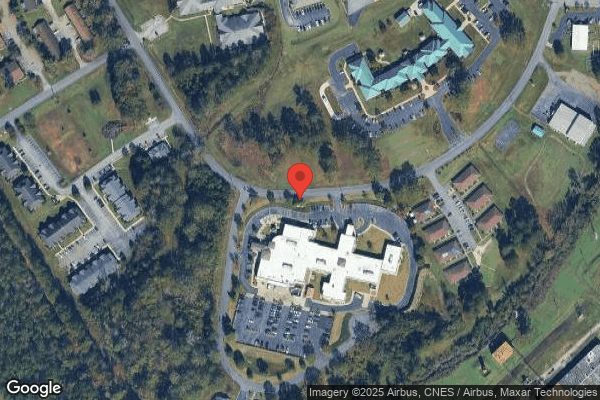
1530 Parkway, Greenwood, SC 29646 (864) 330-9070
For profit - Corporation 12 Beds Independent Data: November 2025
Trust Grade
90/100
#7 of 186 in SC
Last Inspection: June 2025

Inspected within the last 6 months. Data reflects current conditions.

Overview

Greenwood Transitional Rehabilitation Unit in Greenwood, South Carolina, has an excellent Trust Grade of A, indicating that it is highly recommended for families seeking a nursing home. It ranks #7 out of 186 facilities in the state, placing it well within the top half, and is the highest-rated facility out of four in Greenwood County. The facility is improving, having reduced its issues from three in 2024 to zero in 2025. Staffing is a weakness here, rated only 1 out of 5 stars, but they boast a low turnover rate of 0%, which is significantly better than the state average of 46%. While there have been no fines, there are some concerns, including failures to report allegations of neglect and not providing necessary notifications for residents being transferred to the hospital, which could impact the quality of care and communication.
Trust Score
A
90/100
In South Carolina
#7/186
Top 3%
Safety Record
Low Risk
No red flags
Inspections
Getting Better
3 → 0 violations
Staff Stability
○ Average
Turnover data not reported for this facility.
Penalties
✓ Good
No fines on record. Clean compliance history, better than most South Carolina facilities.
Skilled Nurses
○ Average
RN staffing data not reported for this facility.
Violations
✓ Good
Only 4 deficiencies on record. Cleaner than most facilities. Minor issues only.
★★★★★
5.0
Overall Rating
★☆☆☆☆
1.0
Staff Levels
★★★★★
5.0
Care Quality
★★★★★
5.0
Inspection Score
Stable
2024: 3 issues
2025: 0 issues

The Good

  • 5-Star Quality Measures · Strong clinical quality outcomes
  • Full Sprinkler Coverage · Fire safety systems throughout facility
  • No fines on record

Facility shows strength in quality measures, fire safety.

The Bad

No Significant Concerns Identified

This facility shows no red flags. Among South Carolina's 100 nursing homes, only 0% achieve this.

The Ugly 4 deficiencies on record

Jun 2024 3 deficiencies
CONCERN (D) 📢 Someone Reported This

A family member, employee, or ombudsman was alarmed enough to file a formal complaint

Potential for Harm - no one hurt, but risky conditions existed

Report Alleged Abuse (Tag F0609)

Could have caused harm · This affected 1 resident

**NOTE- TERMS IN BRACKETS HAVE BEEN EDITED TO PROTECT CONFIDENTIALITY** Based on interview, record review, and policy review, the facility failed to report an allegation of neglect in a timely manner ...

Read full inspector narrative →
**NOTE- TERMS IN BRACKETS HAVE BEEN EDITED TO PROTECT CONFIDENTIALITY** Based on interview, record review, and policy review, the facility failed to report an allegation of neglect in a timely manner for one of one resident (Resident (R) 61) reviewed for neglect out of a total sample of 11 residents. This failure had the potential to place residents at risk of not receiving appropriate care. Findings include: Review of the Abuse, Assault, Neglect, and Misappropriation of Property - Victims of policy, revised 06/2019 and provided by the facility, revealed, abuse is defined as the willful infliction of injury, unreasonable confinement, intimidation, or punishments, with resulting physical harm, pain or mental anguish. This includes staff neglect or indifference to the infliction of injury or intimidation of one resident by another. Neglect is considered a form of abuse and is defined as the failure to provide goods and services necessary to avoid physical harm, mental anguish, or mental illness. The policy indicated the procedure of preventing, identifying, reporting, and investigating abuse. The reporting section contained the requirement of reporting the allegation/incident within two hours if it involved neglect. Review of the Face Sheet (FS), provided by the facility, revealed R61 was admitted on [DATE] and discharged from the facility on 01/23/24. Review of the admission Minimum Data Set (MDS) with an Assessment Reference Date (ARD) of 01/03/24 and provided by the facility revealed R61 had a Brief Interview for Mental Status (BIMS) score of 14 out of 15, indicating R61 was cognitively intact. R61 required set-up for meals and moderate assistance with toileting and bathing. Review of the Initial Report, dated 01/15/24 and provided by the facility, revealed a box labeled Brief Description of Reportable Incident that indicated Resident Family Member (FM)61 had reported that she felt R61 had been neglected. FM61 stated to the facility that she did not understand why R61's pain was not improving and why he had increased confusion. FM61 reported that there had been an unused diaper seen on the floor, R61 had not been able to feed himself and was not given assistance, and R61 had not been bathed or dressed. Review of the Initial Report, dated 01/15/24 and provided by the facility, revealed the facility had taken the report from FM61 and listed the type of reportable incident as neglect. The report indicated the time of the report to be 12:30 PM on 01/15/24. A box labeled 24-Hour Initial was checked under the report type. The fax cover sheet provided with the initial report indicated the report went through to the State on 01/16/24 at 10:07 AM. Review of a printed interdisciplinary email between the Administrator and staff, dated 01/15/24 and provided by the facility, revealed the Administrator was planning to report the incident after finishing the email, to meet the two-hour reporting requirement. However, the time of the incident was at 12:30 PM and the email was sent at 3:17 PM. In an interview on 06/05/24 at 2:15 PM, the Administrator stated she knew the complaint by FM61 warranted the two-hour initial report due to the complaint being of an alleged neglect nature. The Administrator supplied an email that indicated she was aware of the required time frame and intended to comply with the regulation evidenced in the printed conversation. The Administrator stated she did not know why the 24-hour box was checked on the report sent to the State, nor why the report was sent in within the 24-hour time frame and not the two-hour time frame. The Administrator stated the allegation should have been reported by 2:30 PM on 01/15/24 after the allegation was made.
CONCERN (D)

Potential for Harm - no one hurt, but risky conditions existed

Transfer Notice (Tag F0623)

Could have caused harm · This affected 1 resident

**NOTE- TERMS IN BRACKETS HAVE BEEN EDITED TO PROTECT CONFIDENTIALITY** Based on record review, interviews, and policy review, the facility failed to ensure one of one resident (Resident (R) 9) review...

Read full inspector narrative →
**NOTE- TERMS IN BRACKETS HAVE BEEN EDITED TO PROTECT CONFIDENTIALITY** Based on record review, interviews, and policy review, the facility failed to ensure one of one resident (Resident (R) 9) reviewed for hospitalization out of a total sample of 11 was given a written notice prior to transfer to the hospital. This failure created the potential for residents or their responsible party to not have the information needed to understand their transfer to the hospital. Findings include: Review of facility policy titled, Right to Notification of Changes, revised 06/18, revealed To provide for notification of changes related to residents as outlined by federal and state regulations. Policy: The unit will immediately inform the resident, consult with the resident's physician, and if known, notify the resident's legal guardian or an interested family member when there is .D. The decision to transfer or discharge the resident from the unit .Procedure .F. All notifications will be documented in the resident's medical record and will include the following components: date, time, details of notification, individual being notified, response of that individual, and follow up care. Review of a facility document titled, ''Discharge/Transfer Notice,'' revised 06/10/19, revealed the following items to be completed by the facility prior to discharge of a resident: ''Date of discharge/transfer: Reason for discharge/transfer: Transfer/discharge is necessary for your welfare because the [name of the facility] cannot meet your needs . Discharge/transfer destination . Special instructions for care (this section is to be completed for transfers only. For discharge, see attached discharge instructions).'' Review of facility provided ''Face Sheet'' revealed that R9 was admitted to the facility on [DATE] and transferred on 04/12/24. Further review the ''Face Sheet'' revealed R9 was re-admitted to the facility on [DATE] and transferred on 04/30/24. Review of facility provided ''admission History and Physical (H&P),'' dated 04/08/24, revealed '' .R9 has a past medical history significant for hypertension, diabetes, gastroesophageal reflux disease (GERD), chronic obstructive pulmonary disease (COPD), anxiety and cerebrovascular accident (CVA).'' Review of facility provided ''Notes,'' dated 04/12/24, revealed ''[R9] having recurrent brown watery emesis [vomiting] and foul odor . [name of physician] ordered to send [R9] onto emergency care center (ECC) .[R9] and wife in agreement with sending to ECC.'' Further review revealed '' .[R9] is admitted to hospital with bowel obstruction.'' Review of facility provided ''admission H&P,'' dated 04/27/24, revealed ''[R9] on 04/12/24 was sent to emergency department (ED) secondary to abdominal pain, diarrhea and abdominal distention .taken into surgery and underwent sigmoidoscopy with decompression and rectal tube placement [this is a procedure that uses a sigmoidoscopy to decompress the sigmoid volvulus and place a rectal tube in the sigmoid colon] .recommend to be discharged to rehabilitation facility.'' Review of facility provided ''Notes,'' dated 04/30/24, revealed [R9] complained of lower abdominal pain good bowel movement yesterday, but this morning was only able to pass small amount of loose stool with moderate amount of mucous. [R9] states the pain feels the same as it did last time . [name of physician] ordered to send to [name of hospital] emergence department (ED) for further evaluation to rule out small bowel obstruction (SBO).'' Review of the electronic medical record (EMR) with the Director of Transitional Rehab Unit (DOTRU), located under the tab Clinical Documentation revealed no evidence of a written transfer notice for either the 04/12/24 and/or 04/30/24 hospital transfer. During an interview on 06/05/24 at 11:01 AM, the DOTRU confirmed that R9 did not have a written transfer notice for either hospital transfer on 04/12/24 and 04/30/24. During an interview on 06/05/24 at 12:30 PM, the Administrator stated that the written transfer notices for acute transfers were completed by the nurses and confirmed that R9's paperwork was not done upon either transfer to the hospital.
CONCERN (D)

Potential for Harm - no one hurt, but risky conditions existed

Deficiency F0625 (Tag F0625)

Could have caused harm · This affected 1 resident

**NOTE- TERMS IN BRACKETS HAVE BEEN EDITED TO PROTECT CONFIDENTIALITY** Based on record review interviews, and policy review, the facility failed to ensure one of one resident (Resident (R) 9) reviewe...

Read full inspector narrative →
**NOTE- TERMS IN BRACKETS HAVE BEEN EDITED TO PROTECT CONFIDENTIALITY** Based on record review interviews, and policy review, the facility failed to ensure one of one resident (Resident (R) 9) reviewed for hospitalization out of a total sample of 11 residents was given a written copy of a bed hold notice prior to or within 24-hours of emergency transfer to the hospital. This failure created the potential for resident and responsible party to not have the information needed to safeguard their return to the facility. Findings include: Review of the facility document titled, ''Discharge/Transfer Notice,'' revised 06/10/19, revealed .''Notice of bed hold: Your bed will be held for two midnights following transfer to acute care, in case you become medically stable and appropriate to return to skilled nursing care within the two-midnight period. Review of facility provided ''Face Sheet'' revealed that R9 was admitted to the facility on [DATE] and transferred on 04/12/24. Further review the ''Face Sheet'' revealed R9 was re-admitted to the facility on [DATE] and transferred on 04/30/24. Review of facility provided ''admission History and Physical (H&P),'' dated 04/08/24, revealed '' .R9 has a past medical history significant for hypertension, diabetes, gastroesophageal reflux disease (GERD), chronic obstructive pulmonary disease (COPD), anxiety and cerebrovascular accident (CVA).'' Review of facility provided ''Notes,'' dated 04/12/24, revealed ''[R9] having recurrent brown watery emesis [vomiting] and foul odor . [name of physician] ordered to send [R9] onto emergency care center (ECC) .[R9] and wife in agreement with sending to ECC.'' Further review revealed '' .[R9] is admitted to hospital with bowel obstruction.'' Review of facility provided ''admission H&P,'' dated 04/27/24, revealed ''[R9] on 04/12/24 was sent to emergency department (ED) secondary to abdominal pain, diarrhea and abdominal distention .taken into surgery and underwent sigmoidoscopy with decompression and rectal tube placement [this is a procedure that uses a sigmoidoscopy to decompress the sigmoid volvulus and place a rectal tube in the sigmoid colon] .recommend to be discharged to rehabilitation facility.'' Review of facility provided ''Notes,'' dated 04/30/24, revealed [R9] complained of lower abdominal pain good bowel movement yesterday, but this morning was only able to pass small amount of loose stool with moderate amount of mucous. [R9] states the pain feels the same as it did last time . [name of physician] ordered to send to [name of hospital] emergence department (ED) for further evaluation to rule out small bowel obstruction (SBO).'' Review of the electronic medical record (EMR) under the tab Clinical Documentation revealed no evidence of a written bed hold notice for either the 04/12/24 and/or 04/30/24 transfers to the hospital. During an interview on 06/05/24 at 11:01 AM, the Director of Transitional Rehab Unit (DOTRU) stated that the written bed hold notice was at the bottom of the written transfer notice and confirmed that R9 did not get the bed hold notice for either transfer to the hospital. During an interview on 06/05/24 at 12:30 PM, the Administrator stated that the bed hold notices for acute transfers were completed by the nurses and confirmed that R9's written bed hold notice was not completed for either hospital transfer.
Jun 2022 1 deficiency
CONCERN (D)

Potential for Harm - no one hurt, but risky conditions existed

Respiratory Care (Tag F0695)

Could have caused harm · This affected 1 resident

**NOTE- TERMS IN BRACKETS HAVE BEEN EDITED TO PROTECT CONFIDENTIALITY** Based on observations, interviews, record review and document review, the facility failed to ensure one (Resident(R) 14) of thre...

Read full inspector narrative →
**NOTE- TERMS IN BRACKETS HAVE BEEN EDITED TO PROTECT CONFIDENTIALITY** Based on observations, interviews, record review and document review, the facility failed to ensure one (Resident(R) 14) of three residents reviewed for respiratory care received services in accordance with professional standards of practice. Specifically, R14's oxygen tubing was not labeled and R14's continuous positive airway pressure (CPAP) was not covered. Findings include: Review of R14's undated Face Sheet provided by the facility, indicated R14 was admitted to the facility on [DATE] with diagnoses including congestive heart failure and chronic obstructive pulmonary disease (COPD). Review of R14's undated Care Plan provided by the facility revealed R14 has an alteration in respiratory function related to COPD, pneumonia risk as evidenced by increased work of breathing, abnormal breath sounds, low oxygenation on room air, shallow respirations, tachypnea, bronchospasms, and bronchoconstriction .interventions included .administer oxygen via in line with CPAP at night per home use. Review of R14's Physician Orders provided by the facility, revealed orders dated 05/27/22 for CPAP/BiPAP (bilevel positive airway exchange) at night .and oxygen therapy every shift, oxygen delivery: nasal cannula, 2 liters(L)/minute . Request for care and labeling of resident's nasal cannula and CPAP mask policy was requested from both the Director of Nursing Operations (DNO) and the Administrator. Both indicated that the facility does not have a policy for these items. The DNO later provided a form she called the respiratory therapy protocol, which instructed oxygen tubing/masks should be changed every seven days or as needed and, high flow devices and humidification accessories should be changed per policy (usually 48 to 72 hours). Observations on 05/31/22 at 11:41 AM and 06/01/22 at 8:20 AM of R14's oxygen tubing, attached to the wall revealed the tubing was unlabeled, indicating when it was applied and/or changed. Observations conducted at the same times were made of R14's CPAP face mask which was lying on R14's bedside table, not covered, leaving the mask open to contamination. During an interview conducted with Registered Nurse (RN)1 on 06/01/22 at approximately 8:24 AM, RN1 confirmed the oxygen tubing was not labeled and the CPAP mask was not covered. RN1 stated, the oxygen tubing should be labeled, and the CPAP mask covered. RN1 added it is the responsibility of the respiratory therapist and nursing to ensure this is done. During an interview conducted with Director of the Transitional Rehabilitation Unit (DTRU), on 06/01/22 at 8:28 AM, the DTRU confirmed that R14's oxygen tubing is supposed to be labeled and the CPAP mask has to be covered. During an interview with the DNO on 06/01/22 at 10:05 AM, the DNO stated, oxygen tubing should be labeled for seven days, discard afterwards. The respiratory therapist and/or the admission nurse is responsible for these to be completed. Also, the CPAP mask should have been in a bag.
Understanding Severity Codes (click to expand)
Life-Threatening (Immediate Jeopardy)
J - Isolated K - Pattern L - Widespread
Actual Harm
G - Isolated H - Pattern I - Widespread
Potential for Harm
D - Isolated E - Pattern F - Widespread
No Harm (Minor)
A - Isolated B - Pattern C - Widespread

Questions to Ask on Your Visit

  • "Can I speak with families of current residents?"
  • "What's your RN coverage like on weekends and overnight?"

Our Honest Assessment

Strengths
  • • Grade A (90/100). Above average facility, better than most options in South Carolina.
  • • No major safety red flags. No abuse findings, life-threatening violations, or SFF status.
  • • No fines on record. Clean compliance history, better than most South Carolina facilities.
  • • Only 4 deficiencies on record. Cleaner than most facilities. Minor issues only.
Concerns
  • • No significant concerns identified. This facility shows no red flags across CMS ratings, staff turnover, or federal penalties.
Bottom line: Generally positive indicators. Standard due diligence and a personal visit recommended.

About This Facility

What is Greenwood Transitional Rehabilitation Unit's CMS Rating?

CMS assigns Greenwood Transitional Rehabilitation Unit an overall rating of 5 out of 5 stars, which is considered much above average nationally. Within South Carolina, this rating places the facility higher than 99% of the state's 100 nursing homes. This rating reflects solid performance across the metrics CMS uses to evaluate nursing home quality.
How is Greenwood Transitional Rehabilitation Unit Staffed?
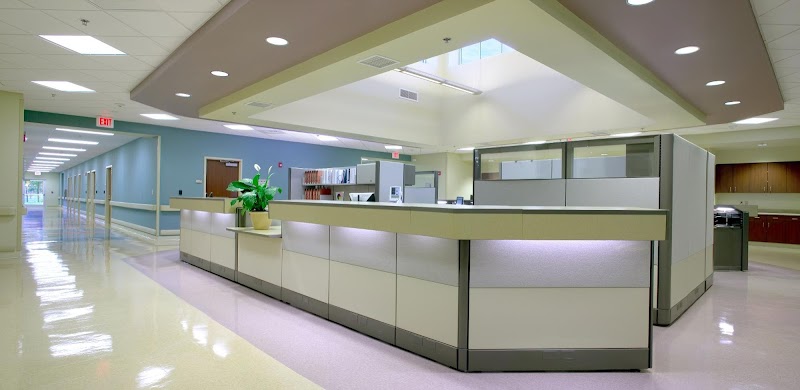
CMS rates Greenwood Transitional Rehabilitation Unit's staffing level at 1 out of 5 stars, which is much below average compared to other nursing homes.

What Have Inspectors Found at Greenwood Transitional Rehabilitation Unit?

State health inspectors documented 4 deficiencies at Greenwood Transitional Rehabilitation Unit during 2022 to 2024. These included: 4 with potential for harm.

Who Owns and Operates Greenwood Transitional Rehabilitation Unit?

Greenwood Transitional Rehabilitation Unit is owned by a for-profit company. For-profit facilities operate as businesses with obligations to shareholders or private owners. The facility operates independently rather than as part of a larger chain. With 12 certified beds and approximately 10 residents (about 83% occupancy), it is a smaller facility located in Greenwood, South Carolina.

How Does Greenwood Transitional Rehabilitation Unit Compare to Other South Carolina Nursing Homes?

Compared to the 100 nursing homes in South Carolina, Greenwood Transitional Rehabilitation Unit's overall rating (5 stars) is above the state average of 2.9 and health inspection rating (5 stars) is much above the national benchmark.

What Should Families Ask When Visiting Greenwood Transitional Rehabilitation Unit?

Based on this facility's data, families visiting should ask: "Can you walk me through typical staffing levels on day, evening, and night shifts?" "Can I visit during a mealtime to observe dining assistance and food quality?" "How do you handle medical emergencies, and what is your hospital transfer rate?" "Can I speak with family members of current residents about their experience?" These questions are particularly relevant given the below-average staffing rating.

Is Greenwood Transitional Rehabilitation Unit Safe?

Based on CMS inspection data, Greenwood Transitional Rehabilitation Unit has a clean safety record: no substantiated abuse findings (meaning no confirmed cases of resident harm), no Immediate Jeopardy citations (the most serious violation level indicating risk of serious injury or death), and is not on the Special Focus Facility watch list (a federal program monitoring the lowest-performing 1% of nursing homes). The facility has a 5-star overall rating and ranks #1 of 100 nursing homes in South Carolina. While no facility is perfect, families should still ask about staff-to-resident ratios and recent inspection results during their visit.

Do Nurses at Greenwood Transitional Rehabilitation Unit Stick Around?

Greenwood Transitional Rehabilitation Unit has not reported staff turnover data to CMS. Staff turnover matters because consistent caregivers learn residents' individual needs, medications, and preferences. When staff frequently change, this institutional knowledge is lost. Families should ask the facility directly about their staff retention rates and average employee tenure.

Was Greenwood Transitional Rehabilitation Unit Ever Fined?

Greenwood Transitional Rehabilitation Unit has no federal fines on record. CMS issues fines when nursing homes fail to meet care standards or don't correct problems found during inspections. The absence of fines suggests the facility has either maintained compliance or corrected any issues before penalties were assessed. This is a positive indicator, though families should still review recent inspection reports for the full picture.

Is Greenwood Transitional Rehabilitation Unit on Any Federal Watch List?

Greenwood Transitional Rehabilitation Unit is not on any federal watch list. The most significant is the Special Focus Facility (SFF) program, which identifies the bottom 1% of nursing homes nationally based on persistent, serious quality problems. Not being on this list means the facility has avoided the pattern of deficiencies that triggers enhanced federal oversight. This is a positive indicator, though families should still review the facility's inspection history directly.