

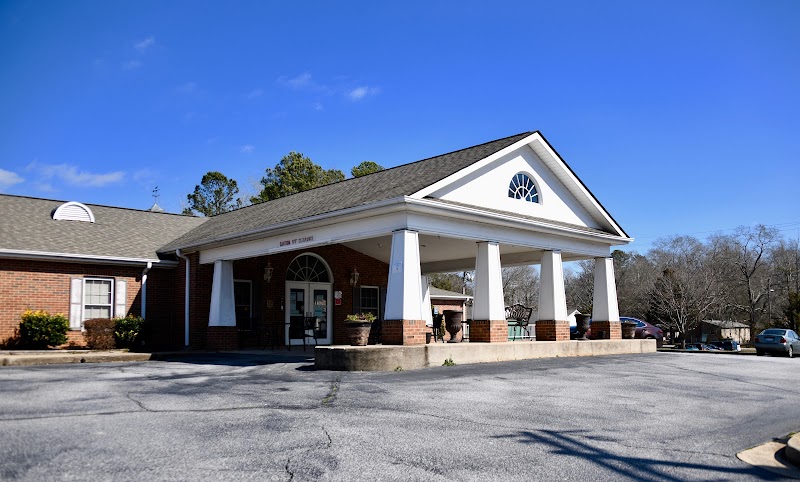


Iva Post-Acute

406 West Broad Street, Iva, SC 29655 (864) 348-7433
For profit - Limited Liability company 60 Beds PACS GROUP Data: November 2025
Trust Grade
70/100
#77 of 186 in SC
Last Inspection: July 2024

Within standard 12-15 month inspection cycle. Federal law requires annual inspections.

Overview

Iva Post-Acute in Iva, South Carolina, has a Trust Grade of B, indicating it is a good choice for families considering a nursing home. It ranks #77 out of 186 facilities in the state, placing it in the top half, and #3 out of 5 in Anderson County, meaning there are only two local options rated higher. However, the facility is worsening, with issues increasing from 2 in 2022 to 6 in 2024. Staffing is a concern, with a low rating of 1 out of 5 stars and a turnover rate of 54%, which is higher than the state average, indicating that staff may not stick around long enough to build relationships with residents. Although there have been no fines, which is positive, recent inspection findings noted several issues, including failures in infection control during medication administration and incorrect forms being issued for Medicare services, suggesting some areas need improvement to ensure resident safety and compliance.

Trust Score
B
70/100
In South Carolina
#77/186
Top 41%
Safety Record
Low Risk
No red flags
Inspections
Getting Worse
2 → 6 violations
Staff Stability
⚠ Watch
54% turnover. Above average. Higher turnover means staff may not know residents' routines.
Penalties
✓ Good
No fines on record. Clean compliance history, better than most South Carolina facilities.
Skilled Nurses
⚠ Watch
Each resident gets only 26 minutes of Registered Nurse (RN) attention daily — below average for South Carolina. Fewer RN minutes means fewer trained eyes watching for problems.
Violations
○ Average
8 deficiencies on record. Average for a facility this size. Mostly minor or procedural issues.
★★★☆☆
3.0
Overall Rating
★☆☆☆☆
1.0
Staff Levels
★★★★☆
4.0
Care Quality
★★★★☆
4.0
Inspection Score
Stable
2022: 2 issues
2024: 6 issues

The Good

  • 4-Star Quality Measures · Strong clinical quality outcomes
  • Full Sprinkler Coverage · Fire safety systems throughout facility
  • No fines on record

Facility shows strength in quality measures, fire safety.

The Bad

3-Star Overall Rating

Near South Carolina average (2.8)

Meets federal standards, typical of most facilities

Staff Turnover: 54%

Near South Carolina avg (46%)

Higher turnover may affect care consistency

Chain: PACS GROUP

Part of a multi-facility chain

Ask about local staffing decisions and management

The Ugly 8 deficiencies on record

Jul 2024 6 deficiencies
CONCERN (D)

Potential for Harm - no one hurt, but risky conditions existed

Deficiency F0582 (Tag F0582)

Could have caused harm · This affected 1 resident

Based on record review and interviews, the facility failed to ensure the correct form was issued for Resident (R)28 and R35, when Medicare Part A services were ending. Specifically R28 and R35 receive...

Read full inspector narrative →
Based on record review and interviews, the facility failed to ensure the correct form was issued for Resident (R)28 and R35, when Medicare Part A services were ending. Specifically R28 and R35 received the form CMS-R-131 for Part B services and not the correct CMS-10055 for Part A services for 2 of 3 residents reviewed for advanced beneficiary notices. Findings include: Review of a facility document titled, Form Instructions Skilled Nursing Facility Advanced Beneficiary Notice of Non-coverage (SNFABN) states, Medicare require's SNFs to issue the SNFABN to Original Medicare, also called fee-for-service (FFS), beneficiaries prior to providing care that Medicare usually covers, but may not pay for in this instance because the care is: Not medically reasonable and necessary; or Considered custodial. The SNFABN provides information to the beneficiary so that she/he can decide whether or not to get the care that may not be paid for by Medicare and assume financial responsibility. SNFs must use the SNFABN when applicable for SNF Prospective Payment System services (Medicare Part A). Review of R28's Medicare Part A Skilled Services Episode with a start date of 04/30/24, revealed R28's last covered day of Part A Service was 06/07/24. The facility/provider initiated the discharge from Medicare Part A Services when benefit days were not exhausted and R28 remained in the facility. Review of R35's Medicare Part A Skilled Services Episode with a start date of 04/03/24, revealed R35's last covered day of Part A Services was 04/21/24. The facility/provider initiated the discharge form Medicare Part A Services when the benefit days were not exhausted and R35 remained in the facility. Further review of the documents received by R28 and R35 or their personal representative revealed a Form CMS-10123-NOMNC was given informing them of the last day of Medicare Part A Skilled Services. Further review revealed R28 and R35 received Form CMS-R-131 for Medicare Part B Services. However, R28 and R35 did not receive the required CMS Form-10055. During an interview on 07/11/24 at 9:32 AM, the Business Office Manager and the Assistant Business Office Manager both confirmed that the CMS-R-131 was the form used and not the CMS Form-10055. They stated this is the only form they have and the only form they have been using along with the CMS-10123.
CONCERN (D)

Potential for Harm - no one hurt, but risky conditions existed

Tube Feeding (Tag F0693)

Could have caused harm · This affected 1 resident

**NOTE- TERMS IN BRACKETS HAVE BEEN EDITED TO PROTECT CONFIDENTIALITY** Based on observation, interview, and review of facility policy, the facility failed to ensure that Resident (R)31 received medic...

Read full inspector narrative →
**NOTE- TERMS IN BRACKETS HAVE BEEN EDITED TO PROTECT CONFIDENTIALITY** Based on observation, interview, and review of facility policy, the facility failed to ensure that Resident (R)31 received medications safely through enteral feeding, for 1 of 1 resident reviewed. Findings include: Review of the facility policy titled Administering Medications through an Enteral Tube dated 2001, states, The purpose of this procedure is to provide guidelines for the safe administration of medications through an enteral tube. Preparation: 3. Assemble the equipment and supplies as needed. General Guidelines: 7. Towel or Chux pad 12. Stethoscope Steps in the Procedure: 4. d. Fold bed linens to the resident ' s waist and cover the chest with a towel or Chux pad. 6. Verify placement of feeding tube Review of (R)31 ' s Face Sheet revealed R31 was admitted to the facility on [DATE], with a diagnoses including but not limited to: Parkinson ' s Disease with Dyskinesia, without mention of fluctuations. Review of (R)31 ' s Quarterly Minimum Data Set (MDS) with an Assessment Reference Data (ARD) of 07/03/24, revealed a Brief Interview for Mental Status (BIMS) score of 5 out of 15, indicating (R)31 has severe cognitive impairment. Review of (R)31 ' s Care Plan with a start date of 06/27/24 documented, Enteral Nutrition/Medications: Resident has [x] GT [] JT [] NGT [] Other and is at risk for enteral nutrition complications related to aspiration pneumonia, clogged tubing, excessive residual. Further review of R31's Care Plan revealed the following approach, check for residual as ordered, check for tube placement as ordered, check lung sounds for signs and symptoms of fluid overload as needed, check lung sounds for signs and symptoms of fluid overload as needed, monitor intake and output per protocol, monitor weight per protocol, and notify MD if unable to tolerate. Review of (R)31 ' s Physician Orders with a start date of 06/25/24 documented, Enteral Feed, continuous feed Jevity 1.5 45ml/hr with 100 ml free water flush every 4 hours. During an observation on 07/10/24 at 5:00 PM, Licensed Practical Nurse (LPN)1 administered Vancomycin HCL 750mg (2.5ml). LPN1 pulled the sheet back from R31, stopped Tube Feed (TF), removed plunger from syringe and placed on bedside table. LPN1 than placed the syringe in TF port. Poured medications in syringe. Water flush poured after medication gravitated by gravity. LPN1 than placed the syringe on the bare sheet. The TF was reconnected and TF restarted. LPN1 took the plunger off the bedside table and reinserted it into the syringe. During an interview on 07/10/24 at 5:15 PM, LPN1 stated, Oh, I need to place a towel down on the bed and bedside table, plus check for placement. LPN1 concluded, I totally tossed the syringe in the trash due to contamination. During an interview on 07/10/24 at 5:30 PM, the Director of Nursing (DON) stated, We will give an in-service on Tube Feeding to ensure medications are being given per protocol using proper procedure.
CONCERN (D)

Potential for Harm - no one hurt, but risky conditions existed

Deficiency F0698 (Tag F0698)

Could have caused harm · This affected 1 resident

**NOTE- TERMS IN BRACKETS HAVE BEEN EDITED TO PROTECT CONFIDENTIALITY** Based on record review and interview, the facility failed to assure professional standards of communication occurred between the...

Read full inspector narrative →
**NOTE- TERMS IN BRACKETS HAVE BEEN EDITED TO PROTECT CONFIDENTIALITY** Based on record review and interview, the facility failed to assure professional standards of communication occurred between the facility and the dialysis center for 1 of 1 resident reviewed, Resident (R)10. Findings include: Review of the facility policy titled End-Stage Renal Disease, Care of a Resident With with a revision date of September 2010, the policy statement revealed, Residents with end-stage renal disease (ERSD) will be cared for according to currently recognized standards of care. Policy Interpretation and Implementation, 4. Agreements between facility and contracted ERSD facility include all aspects of how the resident's care will be managed including: b: how information will be exchanged between the facilities. Review of the facility's SNF (Skilled Nursing Facility) Dialysis Services Agreement dated 12/27/11 revealed, Obligations of Nursing Facility, 2. Interchange of information: The Nursing Facility shall provide for the interchange of information useful or necessary for the care of the ERSD Residents, including a Registered Nurse as a contact person at the Nursing Facility whose responsibilities include oversight of provision of services to the ESRD residents. D. Mutual Obligations, 1. Collaboration of Care: Both parties shall ensure that there is documented evidence of collaboration of care and communication between the Nursing Facility and ESRD Dialysis Unit. Documentation shall include, but not be limited to, participation in care conferences, continual quality improvements program, annual review of infection control policies and procedures. Review of R10's Face Sheet revealed R10 was last admitted to the facility on [DATE], with diagnoses including but not limited to: Type 2 diabetes mellitus with diabetic kidney disease and End Stage Renal Disease (ESRD). Review of R10's Care Plan, dated 04/29/24, revealed R10 received hemodialysis for ESRD. Review of R10's Dialysis Communication Record revealed the following Dialysis Communication Records were faxed to the facility on [DATE] at 12:57 PM: 06/01/24, 06/04/24, 06/11/24, 06/15/24, 06/20/24, and 06/22/24. Further review of R10's Dialysis Communication Record revealed records were missing for the following dates: 07/04/24, 07/06/24, and 07/09/24. During an interview on 07/11/24 at 10:05 AM, Licensed Practical Nurse (LPN)2 revealed that R10 goes to dialysis on Tuesday, Thursday and Saturday and R10 is usually picked up around 11:15 AM. LPN2 also revealed that when R10 leaves for dialysis that a face sheet and the communication sheet goes with them to dialysis, the dialysis center completes it, returns it to the facility, and once it is returned we send it to medical records. During an interview on 07/11/24 at 1:41 PM, the Director of Nursing (DON) revealed when R10 is sent out to dialysis they are sent with a communication form and a copy of their face sheet. The dialysis center sends back the communication form and face sheet, and if there are changes it will be listed on the communication form. The nurses are to return the communication form to medical records. The DON further explains that when the resident returns the nursing staff should check their access cite. During an interview on 07/11/24 at 2:08 PM, the Medical Records Coordinator stated, When the resident goes out to dialysis a face sheet, a communication sheet, and an order summary goes with them and it all comes back with them. The Medical Records Coordinator explains, 3rd shift staff usually starts the communication form either hand written or opened up in PCC [Point Click Care] then 1st shift completes it with vital signs and weights before the resident leaves, then the returning nurse looks at the communication sheet to make sure its completed correctly and if not completed correctly, I have to contact the dialysis center to get them to correct it. When they return, I have to go to the floor to retrieve the form from my box on the floor. If the form is not correct, I call them and let them know I am faxing it and they fax it back. The Medical Records Coordinator verified they are responsible for keeping up with the communication form and keeping them in a folder and stated If some are missing, I go looking for them, and if they are not in the facility I contact the dialysis center.
CONCERN (D)

Potential for Harm - no one hurt, but risky conditions existed

Staffing Information (Tag F0732)

Could have caused harm · This affected 1 resident

Based on observations, record review, and interviews, the facility failed to include a Registered Nurse (RN) on the daily staff posting for the month of March, June, and July of 2024. Findings include...

Read full inspector narrative →
Based on observations, record review, and interviews, the facility failed to include a Registered Nurse (RN) on the daily staff posting for the month of March, June, and July of 2024. Findings include: A policy for the daily staffing sheet was not provided when requested on 07/11/24 at 2:00 PM. Review of the daily staffing sheets, as worked, posted for each shift from March 2024, June 2024, and July 1-11, 2024, did not include a designated registered nurse for at least eight (8) hours. Review of the Daily Staffing sheets revealed a line which indicated RN, each sheet revealed a blank indicating RN hours were not listed. During an interview on 07/11/24 at 1:20 PM, the Operation Manager stated the RN hours should be included on the daily staff posting. The Operation Manager revealed they were completing the daily staff posting in January and February and they are not sure why the Human Resource (HR) officer for the facility did not include the RN hours when they took over the task. The Operation Manager concluded the HR officer was new.
CONCERN (D)

Potential for Harm - no one hurt, but risky conditions existed

Deficiency F0761 (Tag F0761)

Could have caused harm · This affected 1 resident

Based on observation, interview, and review of facility policy, the facility failed to ensure that medications and biologicals that were outdated or without proper labeling were removed from the medic...

Read full inspector narrative →
Based on observation, interview, and review of facility policy, the facility failed to ensure that medications and biologicals that were outdated or without proper labeling were removed from the medication treatment cart for 1 of 1 medication treatment cart. Findings include: Review of the facility policy titled Storage of Medications revised on November 2020, states, The facility stores all drugs and biologicals in a safe, secure, and orderly manner. Procedures: 4. Drug containers that have missing, incomplete, improper, or incorrect labels are returned to the pharmacy for proper labeling before storing. Discontinued, outdated, or deteriorated drugs or biologicals are returned to the dispensing pharmacy or destroyed. During an observation on 07/10/24 at 6:26 AM, of Unit 100/200 Treatment Cart, with Licensed Practical Nurse (LPN)1 revealed the following: 1. Maxorb II AG Alginate Wound Dressing with antibacterial Silver, Lot#83623126340, Ref MSC 9945EP - opened sterile dressing, no longer sterile. 2. Opticell Chitosan-Based Gelling Fiber 4.25 x 4.25 square, Lot#W056844, Ref MSC 7844EP - 1 opened sterile wound dressing, no longer sterile. 3. Opticell AG Chitosan-Based Gelling Fiber 4 x 5 rectangle, Lot# W057510, Ref MSC 9845EP - opened and no longer sterlie. 4. MediHoney Hydrogel, Lot# 053620 - 1 of 4 opened and no longer sterile. Expired on 2023-08. 5. MediHoney Calcium Alginate Dressing with active Leptospermum Honey, Lot#H2345 - opened and no longer sterile. 6. Telfa Non-Adherent Pad Prepack 8x3 Covidien, Lot# 22F067862 - opened and no longer sterile. 7. (Medline) Exuderm Satin Hydrocolloid Wound Dressing 4x4 square10 sterile wound dressings, Lot# C2301191 - 1 of 6 opened and no longer sterile. 8. (Medline) Thera Honey HD Sheet Honey Impregnated sterile wound dressing, Lot# W02307482 - 1 of 9 opened and no longer sterile. 9. (Medline) Maxorb II alginate wound dressing calcium alginate 4x4 square, Lot #83620108396, Ref MSC 7344EP - Expired on 2023 01-01. During an interview on 07/10/24 at 7:20 AM, the findings were verified by LPN1 and discarded. During an interview on 07/10/24 at 9:30 AM, the Director of Nursing (DON) stated, All nurses should check for expired medications.
CONCERN (D)

Potential for Harm - no one hurt, but risky conditions existed

Deficiency F0849 (Tag F0849)

Could have caused harm · This affected 1 resident

Based on review of facility policy, record review, and interview, the facility failed to ensure Resident (R)15's coordination of care between hospice and the facility, for 1 of 1 resident reviewed for...

Read full inspector narrative →
Based on review of facility policy, record review, and interview, the facility failed to ensure Resident (R)15's coordination of care between hospice and the facility, for 1 of 1 resident reviewed for Hospice Care and Services. Findings include: Review of the undated facility policy titled, Hospice Program revealed , Policy Interpretation and Implementation: #9. In general, it is the responsibility of the hospice to manage the resident's care as it relates to the terminal illness and related conditions, including the following: a. Determining the appropriate hospice plan of care; b. Changing the level of services provided when it is deemed appropriate; c. Providing medical direction, nursing and clinical management of the terminal illness; #10. In general, it is the responsibility of the facility to meet the resident's personal care and nursing needs in coordination with the hospice representative, and ensure the level of care provided is appropriately based on the individual resident's needs. d. Communicating with the hospice provider (and documenting such communication) to ensure that the needs of the resident are addressed and met 24 hours per day. #12. Our facility has designated someone to coordinate care provided to the resident by out facility and the hospice staff. (Note: this individual is a member of the IDT with clinical and assessment skills who is operating within the state scope of practice act.) He or she is responsible for the following: a. Collaborating with hospice representatives and coordinating facility staff participation in the hospice care planning process for resident's receiving these services; b. Communication with hospice representatives and other healthcare providers participating in the provision of care for the terminal illness, related conditions, and other conditions, to ensure quality of care for the resident and family. Review of the Hospice Services Agreement dated July 9, 2024, states on page 5, Section E, Coordination of Care: (i) General - Facility shall participate in any meetings, when requested by Hospice, for the coordination of services provided to Hospice Patients. Hospice and Facility shall communicate with one another regularly and as needed for each particular Hospice Patient. Each party is responsible for documenting such communications in its respective clinical records to ensure that the needs of Hospice Patients are met 24 hours per day. Review of R15's Face Sheet revealed R15 was admitted to the facility with diagnoses including but not limited to: cerebrovascular accident, chronic viral hepatitis C, psychoactive substance abuse, anxiety, falls, and convulsions. R15 was admitted for hospice care and services on 02/29/24 with a diagnosis of cerebrovascular accident. Review on 07/10/24 at 3:49 PM, of R15's Medical Record revealed no indication of Hospice visit assessments, to include findings during the assessments for progress, decline or if changes were needed to the care plan for R15. Furthermore, there was no specified nursing staff designated by the facility for the hospice staff to report to ensure continuity of care for R15. During an interview on 07/11/24 at 8:30 AM, the Director of Nursing (DON) provided the hospice notes from the hospice nurses visits from 04/02/24 through 07/09/24. The DON stated that the Hospice entity had sent the daily assessments overnight to the facility. The DON stated that the assessments should have been in the hospice binder to ensure coordination of care between hospice and the facility staff working with R15. .
Apr 2022 2 deficiencies
CONCERN (D)

Potential for Harm - no one hurt, but risky conditions existed

Medication Errors (Tag F0758)

Could have caused harm · This affected 1 resident

**NOTE- TERMS IN BRACKETS HAVE BEEN EDITED TO PROTECT CONFIDENTIALITY** Based on record review, interviews and review of facility policy, the facility failed to ensure appropriate monitoring for one R...

Read full inspector narrative →
**NOTE- TERMS IN BRACKETS HAVE BEEN EDITED TO PROTECT CONFIDENTIALITY** Based on record review, interviews and review of facility policy, the facility failed to ensure appropriate monitoring for one Resident (R) R6 of three residents reviewed for unnecessary use of psychotropic medication. Specifically, behaviors were not monitored related to medications administered for psychosis and sleep for R6. Findings include: The facility's Behavioral Assessment, Intervention and Monitoring Policy most recently revised in 03/2019 read, in pertinent part, Behavioral symptoms will be identified using facility approved behavioral screening tools and the comprehensive assessment; and When medications are prescribed for behavioral symptoms, documentation will include: e. Specific target behaviors and expected outcomes; and h. monitoring for efficacy and adverse consequences. Review of the admission Record located in the Electronic Medical Record (EMR) revealed R6 was admitted to the facility on [DATE] with diagnoses including unspecified dementia with behavioral disturbance, unspecified psychosis not due to a substance or physiological condition, and insomnia. Review of R6's Psychotropic Medication Care Plan, most recently revised on 10/20/21 and found in the EMR under the Care Plan tab, indicated R6 was receiving antipsychotic and antidepressant medications related to his diagnoses of psychosis and insomnia. Approaches included: Administer medications as ordered. Observe for tolerance and effectiveness. Report any possible adverse side effects to MD (Medical Doctor). Review of the Minimum Data Set (MDS) located in the MDS tab in the EMR with an Assessment Reference Date (ARD) of 12/29/21, indicated a Brief Interview for Mental Status (BIMS) score of nine out of 15, indicating the resident was moderately cognitively impaired. The assessment indicated the resident exhibited behaviors including threatening, screaming, and cursing at others on one to three of seven days of the assessment period and indicated R6 received antipsychotic and antidepressant medications on seven of seven days during the assessment period. Review of R6's Order Summary Report found in the EMR under the Orders tab and dated 04/12/22, indicated orders for Seroquel (an anti-psychotic medication) 100 milligrams (mg) by mouth in the evening and 75 mg during the day for unspecified psychosis and for Trazadone (an anti-depressant medication) 50 mg once daily at bedtime for insomnia. Review of R6's Medication Administration Records (MARs) and Treatment Administration Records (TARs) located under the Orders tab in the EMR for 03/2022 and 04/2022 revealed nothing to indicate threatening and cursing behaviors related to R6's use of Seroquel or hours of sleep for his use of Trazadone were being monitored. Review of R6's Progress Notes from 03/2022 and 04/2022 revealed nothing to indicate behaviors for the use of Seroquel for R6's cursing and threatening behavior or hours of sleep for his use of Trazadone were being monitored. During an interview with the Regional Director of Clinical Services (RDCS) on 04/12/22 at 7:32 PM, she verified no behavior documentation for R6's use of anti-psychotic medication or antidepressant medication for sleep could be found in the resident's record. She stated all behaviors related to the use of psychotropic medications were to be monitored on the MAR/TAR or in the resident's Progress Notes. She stated all psychotropic medications were to be monitored by the Director of Nursing (DON) and the rest of the Inter-Disciplinary Team each weekday morning in the facility's daily clinical stand-up meeting. During an interview with the Director of Nursing (DON) on 04/13/22 at 5:59 PM, she confirmed her expectation was specific behaviors were to be documented for the administration of any psychotropic medication for a resident. She stated, behaviors related to R6's use of Trazadone for sleep and Seroquel for his threatening and cursing behaviors should have been documented in either the MAR or the progress notes.
CONCERN (E)

Potential for Harm - no one hurt, but risky conditions existed

Infection Control (Tag F0880)

Could have caused harm · This affected multiple residents

**NOTE- TERMS IN BRACKETS HAVE BEEN EDITED TO PROTECT CONFIDENTIALITY** Based on observations, interview, record review, and facility policy review, the facility failed to ensure infection control pro...

Read full inspector narrative →
**NOTE- TERMS IN BRACKETS HAVE BEEN EDITED TO PROTECT CONFIDENTIALITY** Based on observations, interview, record review, and facility policy review, the facility failed to ensure infection control procedures were followed for two residents (R)29 and R41 of six residents observed during medication administration and for one resident (R48) of seven residents observed for the provision of wound care. Findings include: The facility's policy related to infection control specific to medication administration were requested but no specific policy was able to be located by the facility prior to survey exit on 04/13/22. 1. Review of the undated admission Record, found in the electronic medical record (EMR) under the Profile tab, revealed R29 was admitted to the facility on [DATE] with diagnoses including type 2 diabetes. Review of R29's Order Summary Report most recently dated 02/16/22 and found in the EMR under the Orders tab revealed orders for blood glucose monitoring, Humalog insulin per sliding scale, subcutaneously, four times daily, via insulin pen for her diagnosis of type 2 diabetes. Observation of Registered Nurse (RN)1 on 04/12/22 at 11:29 AM revealed the RN was observed completing R29's blood sugar monitoring and administering insulin. While preparing the resident for testing and insulin administration, RN1 placed the shared unit blood sugar monitor on the resident's bedside table in her room without placing a clean barrier between the monitor and the potentially contaminated surface in the room. After administering R29's medication, RN1 placed the blood sugar monitor on the top of the medication cart. During an interview with RN1 on 04/12/22 at 11:40 AM, she stated she was unaware a clean barrier should be used between equipment or medications being put back in the medication cart and surfaces in common areas or resident rooms. She stated, No one ever told me that, but it makes sense. 2.Review of the undated admission Record, found in the EMR under the Profile tab, revealed R41 was admitted to the facility on [DATE] with diagnoses including type 2 diabetes. Review of R41's Order Summary Report most recently dated 02/16/22 and found in the EMR under the Orders tab revealed orders for blood glucose monitoring and insulin lispro 10 unit subcutaneously, three times daily routinely, via insulin pen for her diagnosis of type 2 diabetes. Observation of RN 2 on 04/12/22 at 11:43 AM revealed while preparing R41's testing and insulin administration, RN2 placed the shared unit blood sugar monitor on the resident's bedside table and the container of test strips on the resident's windowsill in her room without placing a clean barrier between the monitor and the test strip container and potentially contaminated surfaces in the room. After administering R41's medication RN2 placed the blood sugar monitor and the container of test strips on the top of the medication cart. During an interview with RN2 on 04/12/22 at 11:54 AM, she stated, I knew I was supposed to put a clean barrier down for things going back to cart. I don't know why I didn't do that. I should have done that. During an interview with the Director of Nursing (DON) and the Infection Preventionist, Visiting (IVP) from a sister facility on 04/13/22 at 6:02 PM, the IVP stated all nurses were educated to place a barrier between common surfaces and equipment or medication to be put back in the medication cart, or to use aseptic technique to sanitize those items prior to placing them back in or on the medication cart. The DON stated it was her expectation nursing practice the same. 3. Review of the facility's policy titled Wound Care revised 10/10 revealed. verification of physician orders, gather supplies, ensure table is cleaned prior to arranging supplies .2. Wash and dry your hands thoroughly. 3. Position resident. Place disposable cloth next to the resident (under the wound) to serve as a barrier to protect the bed linen and other body sites. 4. Put on exam glove. Loosen tape and remove dressing. 5. Pull glove over dressing and discard into appropriate receptacle. Wash and dry your hands thoroughly. 6. Put on gloves .7. Use no-touch technique. Use sterile tongue blades and applicators to remove ointments and creams from their containers .10. Wear sterile gloves when physically touching the wound or holding a moist surface over the wound. 11. Place one (1) gauze to cover all broken skin. Wash tissue around the wound that is usually covered by the dressing, tape or gauze with antiseptic or soap and water. 12. Remove dry gauze. Apply treatments as indicated. 16. Discard disposable items into the designated container .Remove disposable gloves and discard into designated container. Wash and dry your hands thoroughly . Review of R48's admission Record located in in the EMR under the Profile tab revealed she was originally admitted to the facility on [DATE] with a diagnosis including pressure ulcer of sacral region, stage 2. Review of R48's physician order dated 04/07/22 revealed to Apply to sacrum topically every day shift for wound care. Clean with wound cleanser. Apply silver sulfadiazine once daily and cover with abdominal (ABD) pad. Observation on 04/12/22 at 2:56 PM revealed RN1 with the assistance of Licensed Practical Nurse (LPN)1 administered wound care to R48. Both nurses washed their hands, then assisted R48 from her chair to the bed. RN1 then donned gloves, cleaned the over the bed table with sanitizing wipes, placed wound care supplies on the table for use during procedure. RN1 doffed soiled gloves, did not perform hand sanitizing prior to donning new gloves. RN1 then removed the soiled dressing located on R48's sacrum and placed soiled dressing in a trash bag, She then cleansed the sacral wound with wound cleanser, put a small amount of silver cream on her soiled gloved finger and applied it to open sacral wound. RN1 then covered the wound with abdominal (ABD) pad and secured it with tape. Used supplies were then discarded in the trash bag, RN1 doffed gloves in the trash bag, and then exited the room. LPN1 doffed soiled gloves and placed them in the trash and then washed her hands. Interview on 04/12/22 at 3:15 PM with RN1 confirmed nurses are supposed to perform hand sanitizing before entering the room and after they exit. RN1 stated she was unaware she was supposed to change gloves and sanitize her hands after removing soiled dressing, cleansing the wound, and applying new dressing. Additionally, RN1 was not aware she was not supposed to apply silver sulfadiazine cream to her soiled, gloved finger and then directly apply to the wound. Interview on 04/13/22 at 6:04 PM with the DON confirmed nurses are expected to perform hand sanitizing prior to performing wound care, after removing soiled dressing, and when moving from a dirty to clean area. All staff should perform hand sanitizing after completing resident care and exiting the room.
Understanding Severity Codes (click to expand)
Life-Threatening (Immediate Jeopardy)
J - Isolated K - Pattern L - Widespread
Actual Harm
G - Isolated H - Pattern I - Widespread
Potential for Harm
D - Isolated E - Pattern F - Widespread
No Harm (Minor)
A - Isolated B - Pattern C - Widespread

Questions to Ask on Your Visit

  • "Can I speak with families of current residents?"
  • "What's your RN coverage like on weekends and overnight?"

Our Honest Assessment

Strengths
  • • No major safety red flags. No abuse findings, life-threatening violations, or SFF status.
  • • No fines on record. Clean compliance history, better than most South Carolina facilities.
Concerns
  • • No major red flags. Standard due diligence and a personal visit recommended.
Bottom line: Mixed indicators with Trust Score of 70/100. Visit in person and ask pointed questions.

About This Facility

What is Iva Post-Acute's CMS Rating?

CMS assigns Iva Post-Acute an overall rating of 3 out of 5 stars, which is considered average nationally. Within South Carolina, this rating places the facility higher than 99% of the state's 100 nursing homes. This mid-range rating indicates the facility meets federal standards but may have areas for improvement.

How is Iva Post-Acute Staffed?

CMS rates Iva Post-Acute's staffing level at 1 out of 5 stars, which is much below average compared to other nursing homes. Staff turnover is 54%, compared to the South Carolina average of 46%. RN turnover specifically is 71%, which is notably high. RNs provide skilled clinical oversight, so turnover in this role can affect medical care quality.

What Have Inspectors Found at Iva Post-Acute?

State health inspectors documented 8 deficiencies at Iva Post-Acute during 2022 to 2024. These included: 8 with potential for harm.

Who Owns and Operates Iva Post-Acute?

Iva Post-Acute is owned by a for-profit company. For-profit facilities operate as businesses with obligations to shareholders or private owners. The facility is operated by PACS GROUP, a chain that manages multiple nursing homes. With 60 certified beds and approximately 55 residents (about 92% occupancy), it is a smaller facility located in Iva, South Carolina.

How Does Iva Post-Acute Compare to Other South Carolina Nursing Homes?

Compared to the 100 nursing homes in South Carolina, Iva Post-Acute's overall rating (3 stars) is above the state average of 2.8, staff turnover (54%) is near the state average of 46%, and health inspection rating (4 stars) is above the national benchmark.

What Should Families Ask When Visiting Iva Post-Acute?

Based on this facility's data, families visiting should ask: "Can you walk me through typical staffing levels on day, evening, and night shifts?" "Can I visit during a mealtime to observe dining assistance and food quality?" "How do you handle medical emergencies, and what is your hospital transfer rate?" "Can I speak with family members of current residents about their experience?" These questions are particularly relevant given the below-average staffing rating.

Is Iva Post-Acute Safe?

Based on CMS inspection data, Iva Post-Acute has a clean safety record: no substantiated abuse findings (meaning no confirmed cases of resident harm), no Immediate Jeopardy citations (the most serious violation level indicating risk of serious injury or death), and is not on the Special Focus Facility watch list (a federal program monitoring the lowest-performing 1% of nursing homes). The facility has a 3-star overall rating and ranks #1 of 100 nursing homes in South Carolina. While no facility is perfect, families should still ask about staff-to-resident ratios and recent inspection results during their visit.

Do Nurses at Iva Post-Acute Stick Around?

Iva Post-Acute has a staff turnover rate of 54%, which is 8 percentage points above the South Carolina average of 46%. Moderate turnover is common in nursing homes, but families should still ask about staff tenure and how the facility maintains care continuity when employees leave.

Was Iva Post-Acute Ever Fined?

Iva Post-Acute has no federal fines on record. CMS issues fines when nursing homes fail to meet care standards or don't correct problems found during inspections. The absence of fines suggests the facility has either maintained compliance or corrected any issues before penalties were assessed. This is a positive indicator, though families should still review recent inspection reports for the full picture.

Is Iva Post-Acute on Any Federal Watch List?

Iva Post-Acute is not on any federal watch list. The most significant is the Special Focus Facility (SFF) program, which identifies the bottom 1% of nursing homes nationally based on persistent, serious quality problems. Not being on this list means the facility has avoided the pattern of deficiencies that triggers enhanced federal oversight. This is a positive indicator, though families should still review the facility's inspection history directly.