Sumter East Health & Rehabilitation Center
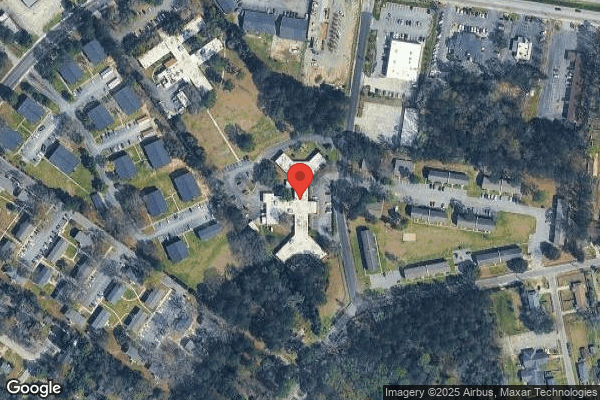
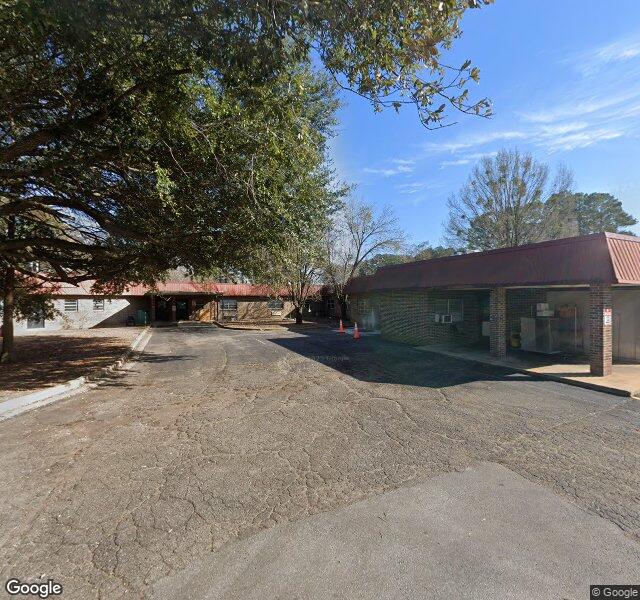
880 Carolina Avenue, Sumter, SC 29150 (803) 775-5394
For profit - Limited Liability company 176 Beds Independent Data: November 2025 3 Immediate Jeopardy citations
Trust Grade
0/100
#181 of 186 in SC
Last Inspection: October 2024

Within standard 12-15 month inspection cycle. Federal law requires annual inspections.

Overview

Sumter East Health & Rehabilitation Center has received a Trust Grade of F, indicating significant concerns about the facility's operations and care. Ranking #181 out of 186 nursing homes in South Carolina places them in the bottom half statewide, and they are the least favorable option out of three facilities in Sumter County. While the number of reported issues has improved from 7 in 2024 to 2 in 2025, the overall staffing rating is only 1 out of 5 stars, with a concerning 48% turnover rate, which is similar to the state average. There have been serious incidents documented, including a staff member physically abusing a resident and another incident where a resident was improperly restrained during care, highlighting troubling patterns in resident safety and care. Although the facility has provided some RN coverage, it falls short compared to 95% of other state facilities, which is a critical area of concern for families considering this option.

Trust Score
F
0/100
In South Carolina
#181/186
Bottom 3%
Safety Record
High Risk
Review needed
Inspections
Getting Better
7 → 2 violations
Staff Stability
⚠ Watch
48% turnover. Above average. Higher turnover means staff may not know residents' routines.
Penalties
✓ Good
$42,475 in fines. Lower than most South Carolina facilities. Relatively clean record.
Skilled Nurses
⚠ Watch
Each resident gets only 14 minutes of Registered Nurse (RN) attention daily — below average for South Carolina. Fewer RN minutes means fewer trained eyes watching for problems.
Violations
⚠ Watch
27 deficiencies on record. Higher than average. Multiple issues found across inspections.
★☆☆☆☆
1.0
Overall Rating
★☆☆☆☆
1.0
Staff Levels
★★☆☆☆
2.0
Care Quality
★☆☆☆☆
1.0
Inspection Score
Stable
2024: 7 issues
2025: 2 issues

The Good

  • Full Sprinkler Coverage · Fire safety systems throughout facility
  • No fines on record

Facility shows strength in fire safety.

The Bad

1-Star Overall Rating

Below South Carolina average (2.8)

Significant quality concerns identified by CMS

Staff Turnover: 48%

Near South Carolina avg (46%)

Higher turnover may affect care consistency

Federal Fines: $42,475

Above median ($33,413)

Moderate penalties - review what triggered them

The Ugly 27 deficiencies on record

3 life-threatening 1 actual harm
Mar 2025 2 deficiencies 2 IJ
CRITICAL (J) 📢 Someone Reported This

A family member, employee, or ombudsman was alarmed enough to file a formal complaint

Immediate Jeopardy (IJ) - the most serious Medicare violation

Free from Abuse/Neglect (Tag F0600)

Someone could have died · This affected 1 resident

Based on review of facility policy, record review and interview, the facility failed to protect Resident (R)1 from physical abuse by Certified Nursing Assistant (CNA)1. Specifically, CNA1 slapped R1's...

Read full inspector narrative →
Based on review of facility policy, record review and interview, the facility failed to protect Resident (R)1 from physical abuse by Certified Nursing Assistant (CNA)1. Specifically, CNA1 slapped R1's bilateral stumps to ensure his stumps were flat on the bed, for 1 of 3 residents reviewed for abuse. On 03/20/25 at 2:00 PM the Administrator and the Director of Nursing were notified that the failure to protect a resident from physical abuse constituted Immediate Jeopardy (IJ) at F600. On 03/20/25 at 2:00 PM, the survey team provided the Administrator with a copy of the CMS Immediate Jeopardy (IJ) Template and informed the facility IJ existed as of 03/02/25. The IJ was related to 483.12 Freedom from Abuse, Neglect, and Exploitation. On 03/20/25 at 7:20 PM, the facility provided an acceptable IJ Removal Plan. On 03/20/25, the survey team, validated the facility's corrective actions and removed the IJ. The facility remained out of compliance at F600 at a lower scope and severity of D. An extended survey was conducted in conjunction with the Complaint Survey for non-compliance at F600, constituting substandard quality of care. Findings include: Review of the facility policy titled Abuse, Neglect and Exploitation, states, Abuse means the willful infliction of injury, unreasonable confinement, intimidation, or punishment with resulting physical harm, pain or mental anguish, which can include staff to resident abuse and certain resident to resident altercations. Abuse also includes the deprivation by an individual, including a caretaker, of goods or services that are necessary to attain or maintain physical, mental and psychosocial well-being. Instances of abuse of all residents, irrespective of any mental or physical condition, cause physical harm, pain or mental anguish. It includes verbal abuse, sexual abuse, physical abuse and mental abuse including abuse facilitated or enabled through the use of technology . Physical Abuse includes but is not limited to hitting, slapping, punching, biting, and kicking. It also includes controlling behavior through corporal punishment. The facility admitted R1 on 06/27/24, with diagnoses including but not limited to: respiratory failure with hypoxia, dependent on renal dialysis for ESRD (End Stage Renal Disease), peripheral vascular disease and left and right below the knee amputations. R1 has a dialysis catheter to his right upper chest area. Review of R1's Quarterly Minimum Data Set (MDS) with an Assessment Reference Date of 01/22/25, revealed a Brief Interview for Mental Status (BIMS) score of 15 out of 15, which indicates R1 was cognitively intact. Review of R1's Care Plan revealed R1 has a self care deficit related to activities of daily living (ADLs), impaired mobility, muscle weakness, and lack of coordination, with pulmonary edema, and incontinence of bowel and bladder. R1 is receiving oxygen therapy related to acute and chronic congestive heart failure, restrictive lung disease and cardiomyopathy. During an interview on 03/17/25 at 11:58 AM, the Social Services Director (SSD) stated that R1 had told her that CNA1 was rough with him and overly aggressive. The SSD further stated R1 has bilateral amputations and when he lays back his stumps will raise up a little, CNA1 slapped R1s legs for him to put them down. When CNA1 slapped his legs, R1 swung at him. Then the CNA1 grabbed both of the resident's hands, held them and and pressed them against R1's upper chest and neck area. The SSD further stated CNA1 told the resident, You are not going to hit me. The SSD stated that CNA1 held down R1's hands while he performed incontinent care for R1. The SSD concluded that R1 became distressed and was very upset and felt abused by the act. During an interview on 03/17/25 at 12:18 PM, the Director of Nursing (DON) stated, The CNA is arrogant and out spoken and is in the military Reserves. The DON further stated that CNA1 had informed the DON that he grabbed both of the resident's hands and with one of his hands he held them down across his upper chest and neck area. CNA1 said to the DON, I had no choice but to restrain him. During an interview on 03/17/25 at 2:25 PM, CNA1 stated, The resident [R1] put on his call light, as he does several times during the night and was whining. I was not assigned to the resident, his CNA was busy taking care of another resident. I went in to see if I could help him. I was turning him over to loosen his brief and he swung at me and hit me. I tried blocking his hand with my hands and he stopped for a minute and I continued changing him and left the room. CNA1 did not mention the slapping of R1's legs and restraining him by holding his hands pressed against his upper chest. Review on 03/17/25 at 2:35 PM, of the original statement written by CNA1 documented, Resident put on his call light, I, myself went in and asked what was wrong and he said he needed a brief change. So, I told him the CNA working with him would be with him and he said ok. I left the room to finish my rounds, and the resident started to whine. His CNA for the night was falling behind so I went in his room and told him I was going to change him and he swung at me so I restrained him until he cooled down. He let me change him and I left the room. He threatened me and disrespected me physically and vocally. During an interview on 03/17/25 at 3:28 PM, R1 stated, The CNA came in my room when I rang the call bell, he just started hitting my stumps. My left stump is still tender because it has not been long since I had the amputation. The CNA went out of the room so I called again. He came back in and grabbed me and held my hands down around the upper part of my chest. I was scared he would pull out my dialysis catheter, so I just quit struggling with him. In a little while he quit holding me down. I never hit him or pushed him. I could not believe he was doing me like that. My CNA, a female, that usually helped me was helping someone else at the time. That is why he came in my room in the first place. During an interview on 03/20/25 at 10:40 AM, Licensed Practical Nurse (LPN)1 stated she was the nurse coming on duty for the day shift on 03/02/25. R1 started calling for this nurse as soon as he saw she was there. LPN1 stated that R1 was very upset and it took a few minutes to calm him down. She stated that R1 was not crying, but he was very upset. I informed him that he was safe and that the CNA would not be back and could not hurt him. After he appeared calmer, I left the room for a few minutes to go and report what the resident had told me. The resident was adamant about calling his family and wanting to press charges against the CNA. On 03/20/25 at 7:20 PM, the facility provided an acceptable IJ Removal Plan, which included the following: Please accept this as our plan for abatement of the Immediate Jeopardy with a date of compliance of 03/20/25. Actions taken for the affected resident: On 03/02/2025 at approximately 07:15 AM, Resident #1 reported to the Licensed Practical Nurse #1 (LPN1) the he (R1) wanted to call the police to press charges against CNA #1. The resident then went on to disclose how CNA#1 was rough with him and smacked his leg. LPN1 informed the Unit Manager and the Director of Nursing. On 03/02/2025 at approximately 07:30 AM, the Director of Nursing (DON) was contacted by LPN1 and was notified of the allegation. LPN1 remained with the resident pending the arrival of the DON to start the investigation. On 03/02/2024 at approximately 07:45 AM, the DON contacted CNA1 via phone and suspended him. The DON requested that CNA1 provide a written statement regarding his interactions with R1. The DON interviewed CNA1 in which he admitted that he (CNA1) restrained the resident. On 03/02/2025 at approximately 08:04 AM, the DON provided notification to the South Carolina Department of Public Health of the allegation of abuse. On 03/02/2025 at approximately 08:30 AM, the DON interviewed resident (R1) as a part of the investigation. She completed a body audit that was negative for marks or bruises. Resident (R1) disclosed that he was lying on his back with his legs bent. He (R1) demonstrated and it was observed that due to amputations his legs point up into the air. Resident #1 states that when CNA1 entered the room. CNA1 hit his (R1s) legs and told him to put them down if he wanted to be changed. The resident did not disclose pain or injury from the open-handed contact but it made him mad and then he, R1, took a swing at CNA1. The resident then demonstrated how CNA1 crossed the residents arms on his upper chest and held his arms. On 03/02/2025 at approximately 09:30 AM, the DON notified the local police authorities. Officers responded and statements were taken and a report was filed. On 03/02/2025 at approximately 08:45 AM, the DON contacted the family and left a message. At approximately 09:00 AM the family returned the call and spoke with LPN1 regarding the allegations. On 03/02/2025 at approximately 07:25 AM, LPN1 notified the Attending Physician of the allegation of abuse. On 03/02/2025 at approximately 9:00 AM, the DON began providing education to staff regarding Abuse Neglect and Restraints. The SDC took lover the training after arriving to the facility. On 03/02/2025, the Social Service Director began to monitor the resident (R1) for residual and latent effects. She reports no latent effects and that the resident (R1) is glad that CNA1 not longer works here. Actions taken to identify other residents potentially affected: On 03/05/2025, the Social Services Director interviewed other residents able to be interviewed and no pattern was noted. No residents reported abuse or being restrained. Systemic Changes: Based on the following facts: 1) Resident interviews indicated that this was an isolated event. 2) Resident #1's skin audit was negative for marks or bruises. 3) CNA1 admitted both verbally and in his written statement to having restraining R1. The allegation was substantiated. On 03/02/2025, the Staff Development Coordinator (SDC) began education on Abuse, Neglect and Exploitation for staff. Education will be provided upon hire, annually and as needed. All education will be completed by Staff on or before 03/20/2025. Staff will not be allowed to work without completing the training. On 03/20/2025, The Abuse, Neglect and Exploitation Policy was reviewed by the DON, the Administrator and the Corporate Nurse Consultant. No Policy Revision needed at this time. The SDC will audit new hire Orientation Packets Monthly x 6 months and then quarterly to ensure that employees were provided training on restraints. The SDC will track and trend and report the results of the audits monthly x 6 months and then quarterly. Annually, the SDC, DON, or Designee will provide education to staff regarding Restraints. Annually, the SDC will audit all employee training records to ensure that all staff have received annual training. The SDC will track and trend her annual education audit and report to QAPI at least annually. QAPI On 03/20/2025, an Ad Hoc QAPI Committee meeting was held with the Medical Director attending via phone. The plan of actions taken were reviewed and it was determined that the appropriate preventative actions had been take. The Committee approved the addition of restraints as a focus to the new hire process and annual education. The Committee will monitor the results of the new hire and the annual training audits and make recommendations and modifications as needed to ensure continued compliance.
CRITICAL (J) 📢 Someone Reported This

A family member, employee, or ombudsman was alarmed enough to file a formal complaint

Immediate Jeopardy (IJ) - the most serious Medicare violation

Deficiency F0604 (Tag F0604)

Someone could have died · This affected 1 resident

Based on review of facility policy, record review and interview, the facility failed to protect Resident (R)1 from being physically restrained by Certified Nursing Assistant (CNA)1. Specifically, CNA1...

Read full inspector narrative →
Based on review of facility policy, record review and interview, the facility failed to protect Resident (R)1 from being physically restrained by Certified Nursing Assistant (CNA)1. Specifically, CNA1 grabbed both of R1's hands, held them crossed against R1's upper chest during incontinence care, for 1 of 3 residents reviewed. On 03/20/25 at 2:00 PM the Administrator and the Director of Nursing were notified that the failure to protect a resident from being physically restrained constituted IJ at F604. On 03/20/25 at 2:00 PM, the survey team provided the Administrator with a copy of the CMS Immediate Jeopardy (IJ) Template and informed the facility IJ existed as of 03/02/25. The IJ was related to 483.12 Freedom from Abuse, Neglect, and Exploitation. On 03/20/25 at 7:20 PM, the facility provided an acceptable IJ Removal Plan. On 03/20/25, the survey team, validated the facility's corrective actions and removed the IJ. The facility remained out of compliance at F604, at a lower scope and severity of D. An extended survey was conducted in conjunction with the Complaint Survey for non-compliance at F604, constituting substandard quality of care. The findings include: Review of the facility policy titled, Restraint Free Environment, documents, It is the policy of this facility that each resident shall attain and maintain his/her highest practicable well-being in an environment that prohibits the use of physical or chemical restraints for discipline or convenience and limits restraint use to circumstances in which the resident has medical symptoms that warrant the use of restraints . Physical Restraint, refers to any manual method or physical or mechanical device, material, or equipment attached or adjacent to the resident's body that the individual cannot remove and restricts freedom of movement or normal access to one's body. Physical restraints may include but are not limited to . Holding down a resident in response to behavioral symptoms, during the provision of care if the resident is resistive or refusing the care. The facility admitted R1 on 06/27/24 with diagnoses including but not limited to, respiratory failure with hypoxia, dependent on renal dialysis for ESRD (End Stage Renal Disease), peripheral vascular disease and left and right below the knee amputations. Further review revealed, R1 has a dialysis catheter to his right upper chest area. Review of R1's Quarterly Minimum Data Set (MDS) with an Assessment Reference Date (ARD) of 01/22/25, revealed a Brief Interview for Mental Status (BIMS) score of 15 out of 15, indicating R1 was cognitively intact. Further review of the MDS revealed R1 is not scored for moods and behaviors. Review R1's Care Plan revealed R1 had a self care deficit related to activities of daily living (ADLs) and impaired mobility, muscle weakness, and lack of coordination, with pulmonary edema, and incontinence of bowel and bladder. R1 is receiving oxygen therapy related to acute and chronic congestive heart failure, restrictive lung disease and cardiomyopathy. During an interview on 03/17/25 at 11:58 AM, the Social Services Director (SSD) stated that R1 told her that CNA1 was rough with him and overly aggressive. The SSD stated that R1 has bilateral amputations and when he lays back his stumps will raise up a little. The SSD stated CNA1 grabbed both of the resident's hands, held them in one of his hands and pressed them against R1's upper chest and neck area. The SSD further stated that CNA1 told the resident, You are not going to hit me. The SSD stated that CNA1 held down R1's hands while he performed incontinent care for R1. The SSD concluded that R1 became distressed, was very upset and felt abused by the act. During an interview on 03/17/25 at 12:18 PM, the Director of Nursing (DON) stated, [CNA1] is arrogant and out spoken and is in the military Reserves. CNA1 had informed the DON that he grabbed both of the resident's hands and with one of his hands, he held them down across R1's upper chest and neck area. CNA1 said to the DON, I had no choice but to restrain him. During an interview on 03/17/25 at 2:25 PM, CNA1 stated, The resident put on his call light, as he does several times during the night and was whining. I was not assigned to the resident, his CNA was busy taking care of another resident. I went in to see if I could help him. I was turning him over to loosen his brief and he swung at me and hit me. I tried blocking his hand with my hands and he stopped for a minute and I continued changing him and left the room. CNA1 did not mention restraining R1 by holding his hands pressed against his upper chest. Review on 03/17/25 at 2:35 PM, of the statement written by CNA1 revealed, Resident put on his call light, I, myself went in and asked what was wrong and he said he needed a brief change. So, I told him the CNA working with him would be with him and he said ok. I left the room to finish my rounds, and the resident started to whine. His CNA for the night was falling behind so I went in his room and told him I was going to change him and he swung at me so I restrained him until he cooled down. He let me change him and I left the room. He threatened me and disrespected me physically and vocally. During an interview on 03/17/25 at 3:28 PM, R1 stated, The CNA came in my room when I rang the call bell, he just started hitting my stumps. My left stump is still tender because it has not been long since I had the amputation. The CNA went out of the room so I called again. He came back in and grabbed me and held my hands down around the upper part of my chest. I was scared he would pull out my dialysis catheter, so I just quit struggling with him. In a little while he quit holding me down. I never hit him or pushed him. I could not believe he was doing me like that. My CNA, a female, that usually helped me was helping someone else at the time. That is why he came in my room in the first place. During an interview on 03/20/25 at 10:40 AM, Licensed Practical Nurse (LPN)1 states, she was the nurse coming on duty for the day shift on 03/02/25. R1 started calling for this nurse as soon as he saw she was there. LPN1 stated that R1 was very upset and it took a few minutes to calm him down. LPN1 stated that R1 was not crying, but he was very upset. LPN1 stated she informed him that he was safe and that the CNA would not be back and could not hurt him. After he appeared calmer, LPN1 left the room for a few minutes to go and report what the resident had said. The resident was adamant about calling his family and wanting to press charges against the CNA. On 03/20/25 at 7:20 PM, the facility provided an acceptable IJ Removal Plan, which included the following: Please accept this as our plan for abatement of the Immediate Jeopardy with a date of compliance of 03/20/25. Actions taken for the affected resident: On 03/02/2025 at approximately 07:15 AM, Resident #1 reported to the Licensed Practical Nurse #1 (LPN1) the he (R1) wanted to call the police to press charges against CNA #1. The resident then went on to disclose how CNA#1 was rough with him and smacked his leg. LPN1 informed the Unit Manager and the Director of Nursing. On 03/02/2025 at approximately 07:30 AM, the Director of Nursing (DON) was contacted by LPN1 and was notified of the allegation. LPN1 remained with the resident pending the arrival of the DON to start the investigation. On 03/02/2024 at approximately 07:45 AM, the DON contacted CNA1 via phone and suspended him. The DON requested that CNA1 provide a written statement regarding his interactions with R1. The DON interviewed CNA1 in which he admitted that he (CNA1) restrained the resident. On 03/02/2025 at approximately 08:04 AM, the DON provided notification to the South Carolina Department of Public Health of the allegation of abuse. On 03/202/2025 at approximately 08:30 AM, the DON interviewed resident (R1) as a part of the investigation. She completed a body audit that was negative for marks or bruises. Resident (R1) disclosed that he was lying on his back with his legs bent. He (R1) demonstrated and it was observed that due to amputations his legs point up into the air. Resident #1 states that when CNA1 entered the room. CNA1 hit his (R1s) legs and told him to put them down if he wanted to be changed. The resident did not disclose pain or injury from the open-handed contact but it made him mad and then he, R1, took a swing at CNA1. The resident then demonstrated how CNA1 crossed the residents arms on his upper chest and held his arms. On 03/02/2025 at approximately 09:30 AM, the DON notified the local police authorities. Officers responded and statements were taken and a report was filed. On 03/02/2025 at approximately 08:45 AM, the DON contacted the family ad left a message. At approximately 09:00 AM the family returned the call and spoke with LPN1 regarding the allegations. On 03/02/2025 at approximately 07:25 AM, LPN1 notified the Attending Physician of the allegation of abuse. On 03/02/2025, the Social Service Director began to monitor the resident (R1) for residual and latent effects. She reports no latent effects and that the resident (R1) is glad that CNA1 not longer works here. Actions taken to identify other residents potentially affected: On 03/05/2025, the Social Services Director interviewed other residents able to be interviewed and no pattern was noted. No residents reported abuse or being restrained. Systemic Changes: Based on the following facts: 1) Resident interviews indicated that this was an isolated event. 2) Resident #1's skin audit was negative for marks or bruises. 3) CNA1 admitted both verbally and in his written statement to having restrained R1. The allegation was substantiated. On 03/20/2025, the Staff Development Coordinator, DON and or Unit Manager/Coordinator began providing education to staff regarding restraints to include holding a resident's hands down. Education will be provided upon hire, annually and as needed. All education will be completed by Staff on or before 03/20/2025. Staff will not be allowed to work without completing the training. On 03/20/2025 the Restraint Policy was reviewed by the DON, the Administrator and the Corporate Nurse Consultant. No Policy Revision needed at this time. The SDC will audit new hire Orientation Packets Monthly x 6 months and then quarterly to ensure that employees were provided training on restraints. The SDC will track and trend and report the results of the audits monthly x 6 months and then quarterly. Annually, the SDC, DON, or Designee will provide education to staff regarding Restraints. Annually, the SDC will audit all employee training records to ensure that all staff have received annual training. The SDC will track and trend her annual education audit and report to QAPI at least annually. QAPI On 03/20/2025, an Ad Hoc QAPI Committee meeting was held with the Medical Director attending via phone. The plan of actions taken were reviewed and it was determined that the appropriate preventative actions had been take. The Committee approved the addition of restraints as a focus to the new hire process and annual education. The Committee will monitor the results of the new hire and the annual training audits and make recommendations and modifications as needed to ensure continued compliance.
Oct 2024 7 deficiencies 1 IJ
CRITICAL (J) 📢 Someone Reported This

A family member, employee, or ombudsman was alarmed enough to file a formal complaint

Immediate Jeopardy (IJ) - the most serious Medicare violation

Accident Prevention (Tag F0689)

Someone could have died · This affected 1 resident

**NOTE- TERMS IN BRACKETS HAVE BEEN EDITED TO PROTECT CONFIDENTIALITY** Based on review of facility policy, interview, and record review, the facility failed to provide appropriate supervision for Res...

Read full inspector narrative →
**NOTE- TERMS IN BRACKETS HAVE BEEN EDITED TO PROTECT CONFIDENTIALITY** Based on review of facility policy, interview, and record review, the facility failed to provide appropriate supervision for Resident (R)78, resulting in R78 successfully eloping from the facility. On 10/09/24 at 11:28 AM, the survey team provided the Administrator with a copy of the CMS Immediate Jeopardy (IJ) Template, informing the facility IJ existed as of 09/26/24. The IJ was related to 42 CFR 483.25 - Free of Accidents Hazards/Supervision/Devices. On 10/10/24 at approximately 1:40 PM, the facility provided an acceptable IJ Removal Plan. The survey team validated the facility's corrective actions and determined the facility put forth good faith attempts to address the non-compliance. The IJ is considered at Past Non-Compliance with a correction date of 09/30/24. An Extended Survey was conducted in conjunction with the Complaint Survey for non-compliance at F689, constituting substandard quality of care. Findings Include: Review of an undated facility policy titled Elopements and Wandering Residents documented under Definitions, elopement occurs when a resident leaves the premises or a safe area without authorization. Further review, documented under Policy Explanation and Compliance Guidelines, 2. Alarms are not a replacement for necessary supervision. Staff are to be vigilant in responding to alarms in a timely manner . 4 a. residents will be assessed for risk of elopement and unsafe wandering upon admission and throughout their stay by the interdisciplinary care plan team, d. adequate supervision will be provided to help prevent accidents or elopements. Review of R78's Face Sheet revealed R78 was admitted to the facility on [DATE], with diagnoses including but not limited to: Dementia, cognitive communication deficit, and abnormalities of gait and mobility. Review of R78's Quarterly Minimum Data Set (MDS) with an Assessment Reference Date (ARD) of 08/21/24, revealed that a Brief Interview for Mental Status (BIMS) was not conducted because the resident is rarely/never understood. Further review of the MDS revealed R78 was moderately impaired regarding Cognitive Skills for Daily Decision Making. Additionally, R78's assessment for Rejection of Care and Wandering indicated that these behaviors did not occur. Review of R78's Progress Notes revealed a note dated 09/26/24 at 6:34 PM, which documented, resident wondered out of building and was found on the ground by staff. no injuries or broken skin noted. Resident stated that she did not hit her head. wonder guard was administered, and resident is in bed resting with eyes open. MD and family notified. will continue to monitor During my shift. During an interview on 10/08/24 at 12:04 PM, Dietary [NAME] (DC)1 stated, on 09/26/24 at approximately 5:20 PM, I went out to the trash can of the west building to throw away some boxes and that's when I saw the resident on the ground next to a tree. DC1 stated it was raining and [R78] was wet and looked like she had been out there for a while. DC1 then notified staff members who came and assisted [R78] back into the building. During an interview on 10/08/24 at 2:50 PM, Receptionist 1 stated at approximately 4:45 PM, she heard the door alarm going off in the east building, however she was assisting a family member and could not respond to the alarm. Receptionist 1 further stated that after about 15 seconds the alarms stopped and then a few minutes later a CNA [certified nursing assistant] asked if she had let a resident out and she said no. Receptionist 1 stated it was raining that day because it was the day before Hurricane [NAME]. During an interview on 10/08/24 at 2:57 PM, Certified Nursing Assistant (CNA)1 stated around 4:40 PM dinner trays came to the unit, and then around 5:00 PM is when R78 was noticed to be missing and not in her room. CNA1 stated that all rooms and inside areas of the east building were searched and R78 could not be found. CNA1 further stated that R78 was found outside the west building on the fence line near a tree. CNA1 was not able to determine how R78 exited the building. During an interview on 10/08/24 at 3:20 PM, the Director of Nursing (DON) stated she was not on duty when R78 went missing, however she received a call stating that they could not find her (R78) and that they had looked everywhere inside. The DON stated R78 was not an elopement risk due to her being immobile at the time of admission and that an updated assessment was not done until after R78 eloped from the facility. The DON concluded R78 would walk the halls but had not previously attempted to elope. During an interview on 10/08/24 at 3:30 PM, the Administrator stated that R78 was not an elopement risk prior and that they had been unable to determine which door R78 had used to elope. The Administrator stated that elopement assessments are done upon admission. According to the Weather Channel, on 09/26/24 at 5:20 PM, the high was 73 °F with heavy rain and fog. On 10/10/24 at 1:40 PM, the facility provided an acceptable IJ Removal Plan, which included the following: Action taken for the affected residents: On 9-26-24 at appx. 5:20 PM, Resident # 78 was returned to the facility and experienced no injury while outside of the facility. The Director of Nursing (DON) completed the initial report to South Carolina Department of Public Health for the elopement of Resident #78. On 9-26-24, when Resident# 78 returned to the facility an Elopement Assessment, Head to Toe Skin Assessment and an Incident Report were completed by the charge nurse including notification to the Physician and Responsible Party/Family of the incident and safe return. On 9-26-24, facility nursing staff initiated q 15-minute checks x 72 hours on Resident #78. Checks were completed without any negative occurrences. Based upon the elopement assessment, a wander guard bracelet was placed on Resident #78 by the charge nurse on 9-26-24 with the Attending Physician and Family notified by the charge nurse. Resident #78's CP has been updated with intervention for wander guard by MDS on 9-27-24. Resident #78's Care Plan (CP) was updated to reflect this incident and her increased exit seeking behavior on 9-27-24 by the MDS Director. On 9-27-24, The Administrator completed a post incident Brief interview Mental Status (BIMS) on Resident #78. Actions taken to identify other residents potentially affected: On 9-26-24, Nursing Supervisor accounted for all residents listed on 24-hour census. All residents were accounted. On 9-26-24, Nursing Supervisor check all resident with wander guard bracelet. On 9-27-24, All doors with wander guard alarms were audited by Maintenance Director or designee determined to be in good working order. Systemic Changes: Wander guard door in the EAST building will be monitored by staff to ensure residents at risk do not elope from the buildings started on 9-27-24 in the East Building. On 9-27-24, Administrator provided education to the Central Supply Clerk, DON and Unit Managers on a Par System for Wander guard Bracelets. On 9-27-24, Administrator provided education to the Central Supply Clerk regarding the maintaining adequate supply of Wanderguard bracelets. PAR level was established of at least 5 and she was educated and verbalized understanding. She placed an order for 20 wander guards on to meet current needs and exceed PAR Level. On 9-27-24, the DON completed an Audit of residents identified as an elopement risk and needing a WanderGuard Bracelet. The DON created log to track which resident was issued a wander guard bracelet and the expiration of date of the Bracelet. The DON will update the log as wander guard bracelets are issued or as they expire. New wandering and elopement assessments will be completed by the DON, IDT Team and charge nurse on all residents and care plans will be updated as needed by 9-30-24. On 9-30-24, the Elopement Policy has been reviewed by the DON, Administrator and Corporate Nurse Consultant to include supervision for residents with increased behaviors/exit seeking behaviors. On 10-1-24, Door Vendor assessed wander guard doors and in the assessment process the vendor caused disruption of normal working and was not able to restore normal operations. Doors were already being watched by staff post elopement. On 10-8-24, a second vendor was able to assist Maintenance Director in replacing equipment that had been damaged and doors returned to normal operations. Door watch continues pending abatement of IJ. On 10-1-24, wander guard bracelets were received by Central Supply Clerk and nurses place bracelets on newly identified residents determined to be at risk and the bracelet removed by the resident and the bracelet found not to be operating by nursing staff. Staff will be educated on the elopement policy to include management of exit seeking behaviors beginning on 9-27-24 and continuing until 10-3-24. Any staff member who has not completed training by 5 PM on 10-3-24 will not be allowed to work util training is complete. The training is conducted by the DON, Staff Development Coordinator and the Administrator. Staff will be educated on the elopement policy and how to manage exit seeking behaviors upon hire, annually and as needed by the Staff Development Coordinator, Administrator, Director of Nursing or Designee on going. Elopement drills will be conducted weekly for 4 weeks on each shift beginning on 9/27/24 and continuing through week ending 10-25-24 by the Maintenance Director or Designee. Monthly elopement drills will be done for two months beginning in November 2024 and then at least quarterly by the Maintenance Director or Designee. The corporate regulatory consultant will do monthly random audits of behavior care plans and assessments for 90 days beginning October 2024 and continuing for 90 days. The DON/Designee will audit binder monthly and alert the central supply clerk of the number of bracelets to expire in the next 30 days in order to ensure PAR is maintained. QAPI On 9-30-24, an Ad Hoc QAPI Committee Meeting was held with the DON, Administrator and Medical Director. The plan of actions taken were review and the it was determined that all necessary actions had been taken at this time. The results of the audits, drills and wander guard documentation will be reported to the QAPI Committee for review and assessment to assure continued compliance. . date of compliance of 09/30/24.
CONCERN (D)

Potential for Harm - no one hurt, but risky conditions existed

Deficiency F0582 (Tag F0582)

Could have caused harm · This affected 1 resident

Based on the facility policy, record review and interview, the facility failed to provide the required documents to notify Resident (R)63 and R125 regarding medicare eligibility and coverage for 2 of ...

Read full inspector narrative →
Based on the facility policy, record review and interview, the facility failed to provide the required documents to notify Resident (R)63 and R125 regarding medicare eligibility and coverage for 2 of 3 residents reviewed for advance beneficiary notices. Findings include: Review of the facility policy titled, Advance Beneficiary Notices, states: 4. The facility shall inform Medicare beneficiaries of his or her potential liability for payment. A liability notice shall be issued to Medicare beneficiaries of his or her potential liability for payment. A liability notice shall be issued to Medicare beneficiaries upon admission or during a resident's stay. 5. The current CMS-approved version of the forms shall be used at the time of issuance to the beneficiary (resident or resident representative). Contents of the form shall comply with related instructions and regulations regarding the use of the form. a. For Part A items and services, the facility shall use the Skilled Nursing Facility Advance Beneficiary Notice (SNFABN), Form CMS-10055. c. A Notice of Medicare Non-Coverage (NOMNC), Form CMS-10123, shall be issued to the resident/representative when Medicare covered service (s) are ending, no matter if the resident is leaving the facility or remaining in the facility. This informs the resident on how to request an appeal or expedited determination from their Quality Improvement Organization (QIO). Review of R63's Electronic Medical Record (EMAR) revealed R63 was admitted to the facility for rehab services. After the last covered day of Part A Medicare services, R63 remained in the facility with benefit days remaining. R63 received the form Notice of Medicare Non-Coverage, (NOMNC) Form CMS-10123 but not the required CMS form 10055. R63 received Form CMS-R-131 for Medicare Part B services. Review of R125's EMAR revealed R125 was admitted to the facility for rehab services. After the last covered day of Part A Medicare services, R125 remained in the facility with benefit days remaining. R125 received 2 notices of non coverage, however did not receive form CMS-10055. During an interview on 10/10/24 at 1:10 PM, the Social Services Assistant stated she was not aware that the incorrect forms were being used. She stated that the CMS-10123 and the CMS-R-131 form are the only forms the facility has and uses.
CONCERN (D)

Potential for Harm - no one hurt, but risky conditions existed

Respiratory Care (Tag F0695)

Could have caused harm · This affected 1 resident

**NOTE- TERMS IN BRACKETS HAVE BEEN EDITED TO PROTECT CONFIDENTIALITY** Based on review of facility policy, observation, interview, and record review, the facility failed to ensure that Resident (R)18...

Read full inspector narrative →
**NOTE- TERMS IN BRACKETS HAVE BEEN EDITED TO PROTECT CONFIDENTIALITY** Based on review of facility policy, observation, interview, and record review, the facility failed to ensure that Resident (R)18 who needed respiratory care was provided with such care that was consistent with professional standards of practice for 1 of 2 residents reviewed for oxygen therapy. Findings include: Review of the undated facility policy titled Oxygen Administration revealed, Oxygen is administered to residents who need it, consistent with professional standards of practice, the comprehensive person-centered care plans, and the residents' goals and preferences. 1. Oxygen is administered under orders of a physician . Review of R18's Face Sheet revealed R18 was admitted to the facility on [DATE], with diagnoses including but not limited to: chronic respiratory failure, congestive heart failure (CHF), and chronic obstructive pulmonary disease (COPD). Review of R18's Quarterly Minimum Data Set with an Assessment Reference Date of 08/26/24, revealed that R18 had a Brief Interview for Mental Status (BIMS) score of 12 out of 15, indicating moderate cognitive impairment. Further review of the MDS revealed R18 has dyspnea (shortness of breath). Review of R18's Physician Orders did not reveal any orders for oxygen therapy. Review of R18's Care Plan revealed, R18 has an altered respiratory status and has the potential for difficulty breathing and/or shortness of breath related to acute respiratory failure with hypoxia, COPD, CHF. Further review revealed R18 requires oxygen use. During an observation and interview on 10/09/24 at 1:00 PM, revealed R18 lying in bed receiving oxygen at 2 liters per minute (LPM) via nasal cannula (NC). R18 stated that she had always been on oxygen and was waiting for someone to change her NC. During an observation and interview on 10/10/24 at 10:21 AM, Licensed Practical Nurse (LPN)2, stated R18 was currently receiving oxygen via NC at 2 LPM. LPN2 was unable to find or produce an order for oxygen therapy for R18, and stated she should have one, but she would need to go check. During an interview on 10/10/24 at 10:39 AM, the Director of Nursing (DON), stated when residents are admitted from the hospital any orders are automatically populated into the system and then the medical director will review and sign off on them. The DON states that she will update R18's orders to correctly reflect oxygen therapy. The DON was unaware of how often orders are reviewed by the physician.
CONCERN (D)

Potential for Harm - no one hurt, but risky conditions existed

Deficiency F0761 (Tag F0761)

Could have caused harm · This affected 1 resident

**NOTE- TERMS IN BRACKETS HAVE BEEN EDITED TO PROTECT CONFIDENTIALITY** Based on review of facility policy, observations, and interviews, the facility failed to ensure that all drugs and biologicals u...

Read full inspector narrative →
**NOTE- TERMS IN BRACKETS HAVE BEEN EDITED TO PROTECT CONFIDENTIALITY** Based on review of facility policy, observations, and interviews, the facility failed to ensure that all drugs and biologicals used in the facility were labeled in accordance to professional standards including expiration dates for 3 of 3 Medication Storage Rooms, 1 out of 4 Medication Carts , and 1 out of 3 Treatment Carts. Findings include: Review of the facility policy, copyright 2024 (The Compliance Store, LLC), titled, Medication Storage, states It is the policy of this facility to ensure all medications housed on our premises will be stored in the pharmacy and/or medication rooms according to the manufacturer's recommendations and sufficient to ensure proper sanitation, temperature, light, ventilation, moisture control, segregation, and security. 8. Unused medications: The pharmacy and all medication rooms are routinely inspected by the consultant pharmacist for discontinued, outdated, defective, or deteriorated medications with worn, illegible, or missing labels. These medications are destroyed in accordance with our Destruction of Unused Drugs Policy. An observation on 10/09/24 at 9:17 AM, of [NAME] Front Medication Storage Room (#1) for 100 & 200 Hall revealed the following: CareFusion MaxPlus Clear needleless connector Ref # MP1000-C Lot (10) 18065214 exp 2023-06-02, EZ Huber Safety Infusion Set 22G x 1.0 in with needless Y site exp 2024 05-31 Manufacturer BARD Sterile Lot REFU0162. An interview on 10/09/24 at 9:31 AM, Licensed Practical Nurse (LPN)5 stated, I went through the cabinets 10 times. I don't know why it is still expired items in there. This is my unit, so I am responsible for checking the cabinets on this unit for expired medications. An observation on 10/09/24 at 3:34 PM, of the South Medication Storage Room (#2) revealed: Dressing change kit w/Chloraprp @ Triple swab sticks manufacturer Wolf-Pak Lot No 221586506, Expired 2024 01-31. An observation on 10/09/24 at 3:50 PM revealed Storage room [ROOM NUMBER] refrigerator logs for August 2024, days 20-23 days temperature was not recorded. An interview on 10/09/24 at 3:50 PM, LPN1 stated the refrigerator is checked by the manager but we are in the process of hiring a manager. I've been trying to check for expirations. An observation on 10/10/24 at 11:50 AM, of the [NAME] Back Medication Storage Room (#3) revealed the following: BD max Plus clear needless connector Ref MP1000C Lot # (10) 19075266 exp 2024 07-10, Care fusion clear needless connector Ref MP1000-C Lot (10)18065214 Exp 2023 06 02, CareFusion MaxPlus Ref MP10000-C Lot# (10) 18055492 Exp 2023 05 30, EZ Huber Safety Infusion Set 22G x 1.0 in (0.7 mm x 25 mm) with needless Y site Lot REFX3523 Exp 2024 09 30 Sterile open, Medline Insulin safety syringe 0.5 ml (50 units), 29 G x 0.5' Ref SYRSl193292 Lot # 897190700001 Exp 2024 06 30, [NAME] Point Syringe 3ml 25G x 1 (0.50 mm x 25 mm) Ref 10391 exp 2024 09 28 x2. On 10/10/24 at 12:20 PM reviewed expired medication with LPN3 who discarded in needle box. An interview on 10/10/24 at 12:30 PM, LPN3 stated, The unit managers usually check the medication storage rooms for expirations we are in transition now. An observation on 10/10/24 at 7:40 AM, of the Medication Cart 2 600 Hall (#3) revealed ExcelGinate Sterile Non-Woven Calcium Alginate 4 x 5 Dressing 1 Dressing, Manufactured MPM Medical, Lot # 21010151, Expired 2024 02 19. An interview on 10/10/24 at 7:40 AM, LPN4 stated, I never used that before. It is usually kept in the treatment cart. Expired medication was also reviewed by DON. An interview on 10/11/24 at 7:22 AM, the Director of Nursing (DON) stated, They are supposed to throw the expired medications away. The Staff Development Coordinator (SDC) does education on all treatment supplies and dressings. The wound MD usually instructs if it is different from the norm.
CONCERN (D)

Potential for Harm - no one hurt, but risky conditions existed

Infection Control (Tag F0880)

Could have caused harm · This affected 1 resident

Based on review of facility policy, observations, interviews, and record review, the facility failed to properly clean a glucometer machine. Findings include: Review of the facility's policy titled, B...

Read full inspector narrative →
Based on review of facility policy, observations, interviews, and record review, the facility failed to properly clean a glucometer machine. Findings include: Review of the facility's policy titled, Blood Glucose Monitoring copyright date 2023 revealed, It is the policy of this facility to preform blood glucose monitoring to diabetic residents as per physician's orders. Policy Explanation and Compliance Guidelines 2. The nurse will perform the blood glucose test utilizing the facility's glucometer as per manufacturer's instructions. 3. The nurse will abide by the infection control practices of cleaning and disinfection of the glucometer as per the manufacturer's instructions and in accordance with the facility's glucometer disinfection policy. Procedure 18. Clean and disinfect the glucometer as per manufacturer's instructions. During an observation on 10/10/24 at 8:16 AM, Licensed Practical Nurse (LPN)2 cleaned a glucometer machine with an alcohol wipe. During an interview on 10/10/24 at 10:00 AM, Director of Nursing (DON) stated, Glucometer machines are cleaned with our Bleach Wipes.
CONCERN (E)

Potential for Harm - no one hurt, but risky conditions existed

Deficiency F0692 (Tag F0692)

Could have caused harm · This affected multiple residents

**NOTE- TERMS IN BRACKETS HAVE BEEN EDITED TO PROTECT CONFIDENTIALITY** Based on review of facility policy, record review, and interview, the facility failed to provide services and interventions to p...

Read full inspector narrative →
**NOTE- TERMS IN BRACKETS HAVE BEEN EDITED TO PROTECT CONFIDENTIALITY** Based on review of facility policy, record review, and interview, the facility failed to provide services and interventions to prevent significant weight loss for 3 of 4 resident's reviewed for nutrition, Resident (R)3, R 17, and R78. Findings Include: Review of an undated facility policy titled, Weight Monitoring, revealed, . The facility will ensure that all residents maintain acceptable parameters of nutritional status . Further review of the Compliance Guidelines section, revealed, 1. The facility will utilize a systemic approach to optimize a resident's nutritional status 2. A comprehensive nutritional assessment will be completed upon admission on residents ., 3. Information gathered from the nutritional assessment and current dietary standards of practice are used to develop an individualized care plan ., 4. Interventions will be identified, implemented, monitored and modified (as appropriate), consistent with the residents' assessed needs and current professional standards to maintain acceptable parameter of nutritional status. 7. Documentation: a. The physician should be informed of a significant change in weight and may order nutritional interventions, c. Meal consumption information should be recorded and may be referenced by the interdisciplinary team as needed, e. The Registered Dietitian, Dietary Manager should be consulted to assist with interventions: actions are recorded in the nutrition progress notes, g. The interdisciplinary plan of care communicates care instructions to staff. Review of an undated facility policy titled Menu and Adequate Nutrition revealed, The purpose of the policy is to assure menus are developed and prepared to meet resident choices including their nutritional, religious, cultural and ethnic needs, while using established guidelines. 1. Review of R78's Face Sheet revealed R78 was admitted to the facility on [DATE], with diagnoses including but not limited to: Dementia, protein calorie malnutrition, type 2 diabetes mellitus, dysphagia and gastro-esophageal reflux disease. Review of R78's Weights located in the Electronic Medical Record (EMR) revealed the following weights: On admission [DATE]), R78 weighed 145 pounds. On 06/07/2024, R78 weighed 145 pounds. On 07/05/2024, R78 weighed 142 pounds. On 07/12/2024, R78 weighed 123 pounds. On 08/16/2024, R78 weighed 120 pounds. On 08/30/2024, R78 weighed 118 pounds. On 09/13/2024, R78 weighed 116 pounds. On 10/04/2024, R78 weighed 115 pounds. Review of R78's Physician Orders revealed the following: On 05/17/2024, weekly weights on Fridays. On 05/21/2024, Diabetic diet, pureed texture, regular consistency. On 05/21/2024, [Speech-Language Pathologist] (SLP) to see patient 5x a week for 5 weeks to increase PO [by mouth] intake. On 05/22/2024, Glucerna three times a day for inadequate energy intake x1 with meals. Review of the Registered Dietitians (RD) Monthly Weight Report dated 08/23/24, revealed, R78 had a 15.5 % weight loss over the last 30 days and a 16.8% weight loss over 90 days. Further review revealed, the following interventions: Med pass [a fortified nutritional shake] 120ml TID r/t significant [weight] loss. Review of R78's Electronic Medical Record (EMR) revealed that this intervention was never ordered. During an interview on 10/11/24 at 10:02 AM, the Registered Dietitian (RD) reported that she had noticed a significant weight change for R78 and had requested a re-weigh from staff, however RD did not follow up afterwards. RD states that she wrote interventions for R78 in August, 2024 and she sent them to the facility, but she is responsible for entering orders that do not include medications. RD confirmed interventions for R78 were not entered and never put in place. 2. Review of R3's Face Sheet reveled R3 was admitted to the facility with diagnoses including, but not limited to: dementia, cognitive communication deficit, fracture of left femur, and a wedge compression fracture of the second lumbar vertebra. Review of R3's Weight revealed an unplanned weight loss. On 05/01/24, R3 weighed 154.2 pounds. On 06/06/24, R3 weighed 131.3 pounds. On 07/04/24, R3 weighed 125.4 pounds and on 08/01/2024 R3 weighed 120.0 pounds. On 10/01/24, R3 weighed 133.8 pounds. Review of R3's Physician Orders revealed R3 is receiving a dietary supplement, Magic Cup, and a cardiac diet with regular texture and regular consistency. Review of R3's Comprehensive Plan of Care, revealed that R3 has potential for nutritional deficits and the following interventions are in place: Resident to maintain adequate nutritional status as evidenced by maintaining weight, no signs or symptoms of malnutrition and consuming meals daily. Determine individual likes and dislikes and serve preferences as able. Invite to activities that promote additional intake. Meal assistance: Provide set up assistance and offer snacks at bedtime and as requested. Weigh per orders/protocol. Registered Dietician to to evaluate and make diet change recommendations as needed. Provide and serve diet as ordered and record intake of each meal. During an interview on 10/10/24 at 3:19 PM, the Registered Dietician (RD) stated that R3 had a 13.75% weight loss. The RD stated that the scales are calibrated and may or may not be accurate. The RD further stated she is in the facility one day a week and sometimes she will request a reweigh. The RD concluded that R3 has a body mass index of 20 and feels like some of the previous weights are not correct due to the broken scale, the RD will check her again on the following Tuesday. During an interview on 10/11/24 at 11:20 AM, the attending Physician stated he does not like to be too aggressive with the elderly and sometimes the staff will let him know of weight loss but he checks it himself while reviewing the record. The Physician stated sometimes he will order lab work or a supplement and he does not always trust the scales. 3. Review of an admission record revealed the facility admitted R19 on 02/02/24, with diagnoses including but not limited to: acute respiratory failure with hypoxia, unspecified protein-calorie malnutrition, and muscle wasting and atrophy in left and right lower leg, and left and right upper arm not elsewhere classified. Review of R19's Orders dated 10/09/24 revealed Pro-Stat AWC Oral Liquid (Amino Acids-Protein Hydrolysate) Give 30 ml by mouth three times a day for advanced care wound healing, dated 09/12/24 Med-Pass give 30ml by mouth three times a day for advanced care wound healing. Review of R19's Minimum Data Set (MDS) with an Assessment Reference Date (ARD) of 08/04/24, revealed R19 had a Brief Interview for Mental Status (BIMS) of 15 out of 15, which indicated R19 was cognitively intact. During an interview on 10/08/24 at 11:17 AM, R19 stated, I seen the nutritionist about two weeks ago, they do not have nondairy ensure. So, I must order mine from Amazon when I have the money. I get my niece to order it for me. During an interview on 10/08/24 at 2:43 PM, R19's Daughter-in-law stated, He is losing weight. I know he is a picky eater. He doesn't like grits, but he will eat oatmeal. During an interview on 10/10/24 at 10:49 AM, the Registered Dietician (RD) stated, I have a note on 09/10/2024 my intervention was to increase med pass a concentrated source and change prostat awc 30ml BID. I don't know if they were able to get [R19] on it or not. We tried to initiate tube feeding to meet additional needs. I am planning on doing a report on my recommendations. The weights are not accurate, it is questionable. The conversation needs to start with the resident and if he refuses the recommended tube feeding all I can do is supplement him. During an interview on 10/11/24 at 9:05 AM, Certified Nursing Assistant (CNA)3 stated, [R19] doesn't always like the food. We feed him too. He is a total care. He buys his own supplements because he is lactose free. If he doesn't eat the food, someone from his family will bring him something to eat. His brothers will bring him food. He likes breakfast foods and sandwiches, and fast-food items. He does look like he is losing weight. During an interview on 10/10/24 at 1:02 PM, the Director of Nursing (DON) stated, [R19] is lactose intolerant. We can order the nondairy supplements. He gets up quite a bit. Every day or every other. He has a friend in this building so he will come over here and they will sit on the porch. During an interview on 10/11/24 at 9:52 AM, Licensed Practical Nurse (LPN)5 stated, [R19] has had several appointments. He is followed by RD and wound MD. He is alert and oriented. A lot of the food he doesn't like. Even the staff goes out and get him food. We have lactose intolerant supplements, but he still thinks it has dairy in it. During an interview on 10/11/24 at 11:05 AM, the Medical Director (MD) stated, I am aware of the situation, [R19] is a picky eater. I talk to him many times. It's related to GI. [R19] bounces back a few months. I knew him before. I look at the residents' weights myself to follow up. I review the weights. Sometimes I review the charts before I document my notes. I order weekly or biweekly instead of monthly. The first number of weights I don't trust. So, I always ask them to reweigh and get PO intakes. Any true nutritional decline like eating less than half. I ask when I make rounds how they are eating, sleeping and etc. I usually go by their look and go with that. So, the staff may or may not tell me, but I usually assess that when I come to the facility.
CONCERN (F)

Potential for Harm - no one hurt, but risky conditions existed

Room Equipment (Tag F0908)

Could have caused harm · This affected most or all residents

Based on review of facility policy, observation and interview, the facility failed to ensure 3 of 3 clothes dryers in the East Building did not contain an excessive amount of lint. The lint was locate...

Read full inspector narrative →
Based on review of facility policy, observation and interview, the facility failed to ensure 3 of 3 clothes dryers in the East Building did not contain an excessive amount of lint. The lint was located above the lint baskets and onto the wiring. Findings include: Review of the facility policy titled Care of Equipment states, To review the use and care of all equipment used by the Laundry Department to perform their daily duties. Laundry departments work with 2 types of equipment. Large pieces (washers/dryers, etc). Larger equipment must be maintained on a regular basis. Preventative Maintenance (PM) work may be the responsibility of the Maintenance Department in some buildings, but the Laundry Supervisor must still be familiar with the daily cleaning and simple maintenance. Laundry Equipment - Dryers Lint screens must be cleaned every two or three loads. The bottom of the dryers must also be lint free. The drums of dryer should be cleaned after each load to prevent any type of trash or lint from heating up and melting to the inside. The area between the drum and walls of the dryers should be blown clean of lint on a regular basis. The area at the top of the dryers by the control panel and around the pilot should be kept free of lint at all times. The area behind the dryers as well as the vent work coming from the dryers should be kept free of lint. Always document the dryer cleaning. An observation on 10/10/24 at 7:40 AM, of the laundry room in the East Building revealed 3 clothes dryers with an excessive amount of lint on top of the lint baskets and around the wiring. This was confirmed by the laundry worker and the maintenance director. Review of the Work History Report: Listed is the Building, East or West, the Due Date, the Task Description and Task Completion date and time and by whom. The dryer vent cleaning was completed in the East Building on 10/01/24. The dryer vents in the East Building were scheduled to be cleaned on 08/31/24 and was completed on 09/18/24. On 07/31/24 the dryer vent cleaning was due to be competed but was marked as completed on 07/30/24. During an interview on 10/10/24 at 7:45 AM, the Maintenance Director confirmed the excessive amount of lint over the lint baskets and hanging from the wiring for 3 clothes dryers in the East Building. The Maintenance Director stated that the area above the lint baskets and on the wiring is removed monthly.
Sept 2023 2 deficiencies 1 Harm
SERIOUS (G) 📢 Someone Reported This

A family member, employee, or ombudsman was alarmed enough to file a formal complaint

Actual Harm - a resident was hurt due to facility failures

Accident Prevention (Tag F0689)

A resident was harmed · This affected 1 resident

**NOTE- TERMS IN BRACKETS HAVE BEEN EDITED TO PROTECT CONFIDENTIALITY** Based on observation, interview, record review, and facility policy review, the facility failed to properly supervise 1 of 2 res...

Read full inspector narrative →
**NOTE- TERMS IN BRACKETS HAVE BEEN EDITED TO PROTECT CONFIDENTIALITY** Based on observation, interview, record review, and facility policy review, the facility failed to properly supervise 1 of 2 residents to prevent a fall, resulting in injury. Specifically, Resident (R)3 wandered into a staff break room and tripped and fell over a hole in the floor, resulting in R3 suffering a closed head injury and pain. This failure constituted actual harm. Findings include: A review of the un-dated facility's policy titled, Accidents and Supervision indicated, The resident environment will remain as free of accident hazards as is possible. Each resident will receive adequate supervision and assistive devices to prevent accidents. This includes Identifying hazards and risks, implementing interventions to reduce hazards and risks, monitoring for effectiveness, and modifying interventions when necessary. 1.) Identification of Hazards and Risks- the process through which the facility becomes aware of potential hazards in the resident environment and the risk of a resident having an avoidable accident. A.) All staff are to be involved in observing and identifying potential hazards in the environment while taking into consideration the unique characteristics and abilities of each resident. B.) The facility should make a reasonable effort to identify the hazards and risk factors for each resident. 3.) Implementation of Interventions- A.) Communicating interventions to all relevant staff. E.) Ensuring that the interventions are put into action. 4.) Monitoring and Modification-A. Ensuring that the interventions are implemented correctly and consistently. 5.) Supervision- Supervision is an intervention and a means of mitigating accident risk. The facility will provide adequate supervision to prevent accidents. Review of R3's Face Sheet revealed R3 was admitted to the facility on [DATE] with diagnoses of dementia, history of falling, diabetes mellitus, and hypothyroidism. Review of R3's quarterly Minimum Data Set (MDS) with an Assessment Reference Date (ARD) of 09/25/23, revealed R3 had a Brief Interview for Mental Status (BIMS) score of 9 out of 15, indicating R3 was moderately cognitively impaired. Review of R3's Care Plan dated 07/27/23 with a target completion date of 9/30/23 revealed the following: impaired cognitive function related to dx (diagnosis) of dementia, at risk for falls related to my impaired, decreased mobility, History of falls, impaired vision, impaired cognition. Interventions include, I need a safe environment with: (SPECIFY: even floors free from spills and/or clutter); Nursing to monitor resident when ambulating in the hall. Encourage the resident to wait for assistance before ambulating. Please remind me to call for assistance with the call bell prior to transfers and ambulating. Staff education. Review of R3's progress note dated 09/07/2023 at an unspecified time reveaeld, Note Text: The writer observed a closed bruise on the left side of the resident's forehead. When asked if she fell, the resident denied falling 3 times. Resident finally admitted falling when asked again, multiple times by the Unit Manager (On duty at the time a bruise was observed and reported). It is unknown exactly when the resident fell, but neuro checks and vital signs have been initiated. Review of R3's emergency room After Visit Summary Report dated 09/24/23 states the diagnoses are, Closed head injury, initial encounter, Rib pain on the right side, Right-hand pain, Right hip pain, and urinal tract Infection. Imaging tests performed were, CT head w/o contrast, XR chest, XR hand, XR hip, and XR spine lumbar 2 or 3 View. Review of an email conversation from the Director of Nursing (DON) to Agency management dated 09/08/23 states I have spoken with [unidentied staff] about this. However, there were two patients who fell during her shift, and she was instructed by a manager to complete incident reports. She stated to her manager I am not putting my anything that I may have to go to court for later. When the manager told her that one of the patients had a bruise she stated, Oh well that's a day shift problem. If the manager had been at work, I would have had to deal with a state reportable due to an injury of an unknown origin. I cannot have nurses working in my building who do not care about the patients. Review of the facility Fall Incidents printout dated 06/01/23 - 09/28/23 revealed R3's fall was not listed for the month of September 2023. During an interview on 09/29/23 at 11:47 AM, R3 revealed I was walking out one day, and I went to the dining room, and I don't know, I went into a little room off to the side, I open the door and I fell in a hole and I hit my head real bad. I guess I was looking for something. I don't remember how I got out of there, I didn't go to the hospital. My sister told me this place didn't call her. My sister found out a few days later when she came to visit me. An interview with the Director of Nursing, DON on 09/29/23 at 12:09 PM, revealed she was on vacation when she got a call from LPN2 on 09/09/23 stating that she believed R3 had a fall on 09/06/23 during the third shift. LPN2 told the DON she saw R3's cane and eyeglasses in the hole that was located in the break room. The DON states that LPN2 told her she removed the items from the hole, removed R3 from the breakroom, put a table in front of the door, and took R3 back to her room. The DON stated that R3 likes to go to the dining room to look for loose change in the vending machines. The DON further stated that the hole in the breakroom had been there for quite some time due to some repairs that were needed under the building. The job has not been completed so she was unsure of when the hole would be fixed. The DON stated that upon return from her vacation a few days later, R3's representative was not contacted, the incident report had not been completed, and staff in-service was not done. The DON stated that the resident eventually went out to the hospital a few days later, when R3's family came to the facility and requested for R3 to be sent out. R3 did not have any broken bones, just a lot of discoloration to the face. R3 went out twice to the hospital according to R3's records, however, could not locate the after-visit summary for the first hospital encounter at the beginning of the month of September. The DON stated that her expectation of staff is to be doing frequent 2-hour checks, residents who are care planned as wanderers, to keep a close eye on them. The DON stated that staff is to complete incident reports when a resident falls, or suspects a fall, and she and the Medical Director should be notified immediately along with the resident representative, regardless of time. During an interview on 09/29/23 at 12:47 PM, R3's sister revealed I went to visit my sister the morning of the 6th and my sister was fine, normal self. I then go back to visit on the 10th, and my sister is all banged up. I go see my sister a few times a week. My sister told me that she was curious about what was in the room that night, walked in, fell in the hole, and hit her head with the pipe that was sticking up from the hole. My sister then took me to the dining room and showed me the door, which was beside the vending machine, and it had a padlock on it. My sister was not acting right, when she sat up on the bed, she had bruises and a big lump on the left side of her face. I attempted to speak with staff, and nobody had any knowledge about the fall. Nobody called me about the fall, didn't send my sister out to the hospital until I told the staff to send her out. The Administrator told somebody, I can't remember her name, that staff didn't need to call the family. I found out from several employees that the hole in the staff break room has been there for weeks. The staff refused to allow me to see the hole in the break room because they didn't have a key. When I asked the Administrator why I wasn't notified about my sister's fall, he told me that she was doing okay, and it wasn't deemed necessary to call.
CONCERN (E) 📢 Someone Reported This

A family member, employee, or ombudsman was alarmed enough to file a formal complaint

Potential for Harm - no one hurt, but risky conditions existed

Deficiency F0602 (Tag F0602)

Could have caused harm · This affected multiple residents

**NOTE- TERMS IN BRACKETS HAVE BEEN EDITED TO PROTECT CONFIDENTIALITY** Based on review of facility policy, interview, observation, and record review, the facility failed to protect 7 of 19 residents ...

Read full inspector narrative →
**NOTE- TERMS IN BRACKETS HAVE BEEN EDITED TO PROTECT CONFIDENTIALITY** Based on review of facility policy, interview, observation, and record review, the facility failed to protect 7 of 19 residents from misappropriation of medications. Specifically, Licensed Practical Nurse (LPN)2 diverted medications from Residents (R)5, R6, R13, R14, R15, R16, and R17 during the months of August and September 2023. Findings include: Review of the undated facility policy titled Abuse, Neglect and Exploitation revealed, misappropriation of resident property means the deliberate misplacement, exploitation, or wrongful, temporary or permanent, use of a resident's belongings or money without the resident's consent. Review of R5's Face Sheet revealed R5 was admitted to the facility on [DATE] with diagnoses including, but not limited to: muscle weakness, gout, and chronic kidney disease. Review of R5's quarterly Minimum Data Set (MDS) with an Assessment Reference Date (ARD) of 08/28/23, revealed a Brief Interview for Mental Status (BIMS) score of 15 out of 15, indicating R5 was cognitively intact. Review of R6's Face Sheet revealed R6 was admitted to the facility on [DATE] with diagnoses including, but not limited to: vascular dementia, depression, and fracture of superior rim of right pubis. Review of R6's quarterly MDS with an ARD of 07/11/23, revealed a BIMS score of 7 out of 15, indicating R6 was moderately cognitively impaired. Review of R13's Face Sheet revealed R13 was admitted to the facility on [DATE] with diagnoses including, but not limited to: dementia, chronic obstructive pulmonary disease, and history of healed pathological fracture. Review of R13's quarterly MDS with an ARD of 07/19/23, revealed a BIMS score of 15 out of 15, indicating R13 was cognitively intact. Review of R14's Face Sheet revealed R14 was admitted to the facility on [DATE] with diagnoses including, but not limited to: paraplegia, spina bifida, epilepsy, and anxiety. Review of R14's annual MDS with an ARD of 07/06/23, revealed a BIMS score of 14 out of 15, indicating R14 was cognitively intact. Review of R15's Face Sheet revealed R15 was admitted to the facility on [DATE] with diagnoses including, but not limited to: schizophrenia, pain in right and left leg, dementia, and anxiety. Review of R15's quarterly MDS with an ARD of 08/29/23, revealed a BIMS score of 99 out of 15, indicating R15 could not be interviewed. Review of R16's Face Sheet revealed R16 was admitted to the facility on [DATE] with diagnoses including, but not limited to: cerebral palsy and displaced bicondylar fracture of the left tibia. Review of R16's annual MDS with an ARD of 08/02/23, revealed a BIMS score of 12 out of 15 indicating R16 was moderately cognitively impaired. Review of R17's Face Sheet revealed R17 was admitted to the facility on [DATE] with diagnoses including, but not limited to: osteoarthritis of left ankle and foot and Alzheimer's dementia. Review of R17's quarterly MDS with an ARD of 09/03/23, revealed a BIMS score of 6 out of 15 indicating R17 was severely cognitively impaired. Review of Care Plans for R5, R6, R13, R14, R15, R16, and R17 revealed all residents had care plan interventions for pain and required pain management. Review of R5's narcotic reconciliation sheets and Medication Administration Record (MAR) for Oxycodone 5 mg every 6 hours as needed revealed several discrepancies. The narcotic reconciliation sheet had several sign-outs without corresponding MAR entries. This includes the following dates: 09/18/23 at 10:30 PM by LPN2, 09/19/23 at 5:45 AM by LPN2, 09/19/23 at 12:00 PM by LPN1, 09/19/23 at 6:00 PM by LPN1, 09/20/23 at 12:30 AM and 6:30 PM by LPN7, 09/21/23 at 6:55 AM by LPN2, 09/21/23 at 1:00 PM by LPN4, 09/21/23 at 8:00 PM by LPN2 and 09/22/23 at 2:00 AM by LPN2. During an interview on 09/28/23 at an unspecified time, the DON confirms that all entries, other than LPN2, were likely forgeries as the staff in question were not working those days. Review of R6's MAR and narcotic reconciliation cards for Norco 5-325 mg every 8 hours as needed revealed several discrepancies. R6 was missing a narcotic pill card from 09/05/23 to 09/08/23, the narcotic reconciliation card was also missing. The narcotic reconciliation card attached to R6's second narcotic pill card had several sign-outs with no corresponding MAR entries. This includes 09/06/23 at 7:00 PM by LPN2, 09/12/23 at 9:00 PM by LPN2, 09/15/23 at 9:00 PM with an illegible signature, 09/20/23 at 7:45 PM by LPN2, 09/21/23 at 8:30 AM by LPN1, 09/21/23 at 6:30 PM by LPN1, 09/22/23 at 7:45 AM by LPN7, 09/22/23 at 11:00 PM by LPN2, 09/23/23 at 7:00 AM by LPN2, 09/23/23 at 3:00 PM and 5:00 AM by LPN4, 09/21/23 at 9:00 AM by LPN2, 09/22/23 at 5:00 AM by LPN2, and 09/22/23 at 5:00 PM by LPN2. During an interview on 09/28/23 at an unspecified time, the DON revealed that all LPNs, other than LPN2, were likely forgeries as many staff did not work the shifts for which they allegedly signed out. The DON further stated that LPN4's name was misspelled during her entries on the narcotic reconciliation sheets. Review of R13's narcotic reconciliation sheet and MARs revealed one discrepancy on 09/02/23 at 5:00 AM signed by LPN2. Review of R14's narcotic reconciliation sheets and MAR for the month of September 2023, revealed multiple illegible signatures. R14's September 2023 narcotic reconciliation sheet entries 3, 6, and 8 had illegible signatures. Entries 17 and 18 were signed by LPN2, but she was not scheduled to work at that time. Entry 20 was signed by LPN8. Entry 28 had an unrecognizable signature. Review of R16's revealed no corresponding MAR entries for Tramadol 40 mg every 6 hours as needed on 09/22/23 at 11:00 PM and 6:00 AM. Review of R17's narcotic reconciliation sheet revealed R17 was missing two pills of Ativan 0.5 mg scheduled at the hour of sleep. Observation revealed the pill card was empty, but the narcotic reconciliation card indicated there should be two remaining after the last pill was signed out on 09/21/23 by LPN6. Review of staffing schedules revealed that LPN1 did not work 09/21/23, LPN7 did not work 09/22/23, and LPN4 was not working on 09/23/23 until 7:00 AM. Further review of staffing schedules revealed that LPN1 did not work 09/19/23, LPN7 did not work 09/20/23, and LPN4 did not work 09/21/23. Review of LPN4's statement to the facility written on 09/08/23 revealed, 3 packs of Norco were received by the facility on 09/05/23. The first pack contained 27 narcotic pills and the other two packs contained 30 each. When LPN4 returned to work on 09/08/23, she noticed the facility was working off a second pack, meaning the remainder of the pack of narcotics with 27 pills had gone missing. LPN4 alerted the DON. During an interview on 09/28/23 at approximately 12:00 PM, LPN4 confirmed her statement to the facility. One of the narcotic reconciliation sheets and the narcotic pill packages intended for R6 had gone missing between 09/05/23 and 09/08/23. During an interview on 09/29/23 at 11:25 AM, LPN1 confirmed the signatures attributed to her on days where she did not work were forgeries. LPN1 states she always uses the same pen to write which creates bold ink strokes, and the false entries had less pronounced strokes from the pen. Attempted interviews with LPNs 2, 6, 7, and 8 were unsuccessful. During an observation and interview with R5, R6, R15, R16 and R17 on 09/28/23 revealed no concerns with pain management. During an observation and interview with R13 on 09/28/23 at 11:18 AM, revealed no concerns with pain management. R13 stated they were never in pain due to lack of medication and generally did not request his Tramadol. R13 concluded that he did not even notice the pain medication was missing. During an observation and interview with R14 on 09/28/23 at 11:49 AM revealed no concerns with pain management. R14 stated they were never in pain due to lack of medication and the most she had to wait for pain medication was 30 minutes. R14 stated she believed the facility was providing good care. During an interview on 09/28/23 at 2:44 PM, the Director of Nursing (DON) revealed R15 was missing at least 81 pills of Oxycodone HCl 5 milligrams, ordered every 8 hours as needed. The DON confirmed the missing medications because the facility received 90 pills in the month of August. A package of 30 came on 08/01/23, another package of 30 arrived on 08/13/23 and a final package of 30 arrived on 08/22/23. The DON stated all three packages and narcotic reconciliation cards went missing by the end of the month, and review of R15's MAR indicated only 9 pills were signed out. During an interview on 09/29/23 at 11:03 AM, the Director of Nursing (DON) revealed that LPN2 was the alleged thief. On 09/08/23 the DON received a call from LPN4 alerting her that a card of narcotics meant for R6 went missing between 09/05/23 and 09/08/23. The DON stated the facility began investigating and discovered that R15 was also missing an entire narcotics pill card. Further investigation revealed that R13 and R14 were also missing narcotics.
Jul 2023 1 deficiency
CONCERN (D) 📢 Someone Reported This

A family member, employee, or ombudsman was alarmed enough to file a formal complaint

Potential for Harm - no one hurt, but risky conditions existed

Deficiency F0567 (Tag F0567)

Could have caused harm · This affected 1 resident

**NOTE- TERMS IN BRACKETS HAVE BEEN EDITED TO PROTECT CONFIDENTIALITY** Based on review of the facility policy, record review, and interview, the facility failed to ensure that one Resident (R)9) of t...

Read full inspector narrative →
**NOTE- TERMS IN BRACKETS HAVE BEEN EDITED TO PROTECT CONFIDENTIALITY** Based on review of the facility policy, record review, and interview, the facility failed to ensure that one Resident (R)9) of two residents reviewed for protection/management of Personal Funds had their funds managed properly. Findings include: Review of the facility's policy titled: Abuse, Neglect and Exploitation, Policy does not include date implemented. Definitions: Misappropriation of Resident Property means the deliberate misplacement, exploitation, or wrongful, temporary, or permanent, use of a resident's belongings or money without the resident's consent. The facility did not provide a policy for managing resident funds. Review of the admission Record revealed R9 was admitted to the facility on [DATE] with diagnoses including, but not limited to, chronic kidney disease and abnormalities of gait and mobility. Review of R9's annual Minimum Data Set (MDS) with an Assessment Reference Date (ARD) of 06/04/23 revealed R9 has a Brief Interview of Mental Status (BIMS) score of 15 out of 15, indicating R9 is cognitively intact. During an interview on 07/21/23 at approximately 1:36 PM with R9 revealed the following: R9 stated that she did not receive her monthly funds in the amount of a total of $90, which included her checks deposits of $30 for the months of February, June, and July of this year. She stated did not receive any statements for those months. She brought this to the business office's attention on numerous occasions and still has not received her funds. R9 stated, Staff think you are crazy when you are in this place, but I am not and I know I did not receive my $30 for the months of February 2023. I did receive March 2023, April 2023, and May 2023, but not for June 2023 and July 2023. During an interview on 07/21/23 at approximately 3:54 PM, the Business Manager (BM) revealed she is aware that R9 did not receive her payments from her Social Security Checks for February, June, and July 2023. The Business Manager stated prior to her taking the position, the previous BM was supposed to provide a copy of the deposit receipts for February 2023 to R9, however, she never provided them. The BM admitted to depositing checks into the incorrect account and she has been working with an accounting company, in which the facility utilizes to get assistance with tracking down the missing checks. The BM was unable to provide validation that R9 had either received her missing funds or that she had been reimbursed by the facility for them.
May 2023 2 deficiencies
CONCERN (D) 📢 Someone Reported This

A family member, employee, or ombudsman was alarmed enough to file a formal complaint

Potential for Harm - no one hurt, but risky conditions existed

Deficiency F0655 (Tag F0655)

Could have caused harm · This affected 1 resident

**NOTE- TERMS IN BRACKETS HAVE BEEN EDITED TO PROTECT CONFIDENTIALITY** Based on interview, record review, and review of the facility's policy, the facility failed to develop and implement a baseline ...

Read full inspector narrative →
**NOTE- TERMS IN BRACKETS HAVE BEEN EDITED TO PROTECT CONFIDENTIALITY** Based on interview, record review, and review of the facility's policy, the facility failed to develop and implement a baseline care plan within 48 hours of admission, to include the physician orders, to properly care for the immediate needs of 1 of 1 Resident (R)3. This deficiency has the potential to diminish resident safety and safeguard against adverse health conditions. Findings Include: Review of the facility's undated policy titled, Baseline Care Plan revealed, The facility will develop and implement a baseline care plan for each resident that includes the instructions needed to provide effective and person-centered care of the resident that meet professional standards of quality care. 1. The baseline care plan will: b. Include minimum healthcare information necessary to properly care for a resident including, but not limited to: ii. Physician orders. 2. The admitting nurse, or supervising nurse on duty, shall gather information from the admission physical assessment, hospital transfer information, physician orders, and discussion with the resident and resident representative, if applicable. b. Interventions shall be initiated that address the resident's current needs including: iii. Any special needs such as for IV therapy, dialysis, or wound care. c. Once established, goals and interventions shall be documented in the designated format. Review of the facility's undated policy titled, Consulting Physician/Practitioner Orders, reveals, The attending physician shall authenticate orders for the care and treatment of assigned residents. Review of the medical record revealed R3 was admitted to the facility on [DATE], with diagnoses of, but not limited to, neuromuscular dysfunction of bladder, encephalopathy, type 2 diabetes mellitus, retention of urine, and altered mental status. Review of R3's Five-day Minimum Data Set (MDS) with an Assessment Reference Date (ARD) of 03/21/23 revealed R3 had a Brief Interview for Mental Status (BIMS) score of 7 of 15, indicating R3 has severely impaired cognition. Further review of the MDS revealed R3 displayed no physical or verbal behaviors and did not reject any form of care. R3 entered the facility with an indwelling catheter and is always incontinent. Review of R3's Care Plan revealed there was not a baseline care plan established to include any treatment orders for catheter care authenticated by a physician. Review of R3's Orders revealed the Treatment Administration Record (TAR) or general transcribed orders, did not include any documented treatment relative to catheter care. An interview with Licensed Practical Nurse (LPN)1 on 05/02/23 at 1:49 PM revealed, a foley catheter should be replaced every 30 days and that you need an order to change it, because it is an invasive procedure. An interview with the Assistant Director of Nursing (ADON) on 05/02/23 at 2:39 PM revealed, if there is not an order for catheter care or replacement, the staff member should contact the physician to obtain permission to change every 30 days. The ADON also included the initial orders are transmitted through the physician, hospital, nurse practitioner, or physician assistant. In order to provide catheter care or replace a catheter, a physician order is needed and is documented in the Order Summary and Nurses Notes. Multiple attempts were made to request receipt of an initial order, that was care planned. The Administrator and ADON were unable to provide those documents prior to the exit conference of this complaint survey.
CONCERN (D) 📢 Someone Reported This

A family member, employee, or ombudsman was alarmed enough to file a formal complaint

Potential for Harm - no one hurt, but risky conditions existed

Incontinence Care (Tag F0690)

Could have caused harm · This affected 1 resident

**NOTE- TERMS IN BRACKETS HAVE BEEN EDITED TO PROTECT CONFIDENTIALITY** Based on interview, record review, and review of the facility's policy, the facility failed to ensure Resident (R)3 was receivin...

Read full inspector narrative →
**NOTE- TERMS IN BRACKETS HAVE BEEN EDITED TO PROTECT CONFIDENTIALITY** Based on interview, record review, and review of the facility's policy, the facility failed to ensure Resident (R)3 was receiving appropriate treatment for catheter care for 1 of 1 resident. This deficiency had the potential to cause harm by failing to prevent tugging/pulling, dislodging of the catheter, acquiring a urinary tract infection or inflammation pain, as well as severe trauma to the urethra. Findings Include: Review of the facility's undated policy titled, Catheter Care states, Policy: It is the policy of this facility to ensure that residents with indwelling catheters receive appropriate catheter care and maintain their dignity and privacy when indwelling catheters are in use. Review of the facility's undated policy titled, Consulting Physician/Practitioner Orders states, The attending physician shall authenticate orders for the care and treatment of assigned residents. 2. For consulting physician/practitioner orders received in writing or via fax, the nurse in a timely manner will: b. Document the verification order by entering the order and the time, date, and signature on the physician order sheet. C. Follow facility procedures for verbal or telephone orders including: noting the order, submitting to pharmacy, and transcribing to medication or treatment administration record. Review of R3's medical record revealed, R3 was admitted to the facility on [DATE], with diagnoses of, but not limited to, neuromuscular dysfunction of bladder, encephalopathy, type 2 diabetes mellitus, retention of urine, and altered mental status. Review of R3's Five-day Minimum Data Set (MDS) with an Assessment Reference Date (ARD) of 03/21/23 revealed R3 had a Brief Interview for Mental Status (BIMS) score of 7 of 15, indicating R3 has severely impaired cognition. Further review of the MDS revealed, R3 displayed no physical or verbal behaviors and did not reject any form of care. R3 entered the facility with an indwelling catheter and is always incontinent. Review of R3's orders revealed the Treatment Administration Record (TAR) or general transcribed orders, did not include any documented treatment relative to catheter care. Review of R3's medical record revealed that a SAVA- Baseline Care Plan and Summary was completed on 03/21/23 and identified R3 as incontinent and the resident has no bowel or bladder appliances, excluding an indwelling catheter. Review of R3's medical record revealed R3 was admitted to a local emergency department on 03/22/23 at 2:01 PM, and was diagnosed with a Urinary Tract Infection (UTI). The urinary analysis revealed an infection and stated that a fresh catheter was placed today, due to likely UTI worsening her symptoms and lactate. Review of a progress note dated 03/17/23 at 12:49 PM revealed, Meet and greet conference: Resident in bed. She is confused. States no pain. SOB with lying flat. Has glasses at bed side. Has scaley legs, no open wounds on legs. Has dark spot on left heel, DTI. Has healing stage III on sacrum. Has clean and dry dsg to left thigh. Has Foley catheter. Lived alone. Daughter present. Discharge plan, short term rehab. Review of a progress note dated 03/22/23 at 4:26 AM revealed, .resident with bed in lowest position, resident with catheter out with the bulb (10ml) intact but out, resident with ROM (passive) for lower body, resident with upper body ROM (active) resident with 0 injury's, with vs obtained and oxygen saturation reading of 98 % room air, resident with same behaviors of kicking and grabbing, and scratching at nursing staff, with times 3 assisted back into bed, with this nurse to cont neuro checks and attempted to re insert catheter (new one) resident grabbed and kicked and yelling, this nurse not able, will cont to attempt to replace catheter as ordered, with POA (daughter) notified and MD aware as well. Review of a progress note dated 03/22/23 at 7:45 AM revealed, In report from PM shift, nurse old resident pulled out foley. This nurse went in at beginning of shift with CNA assistance. New foley placed by this nurse. No complications and tolerated well. Did attempted to pull foley back out twice while nurse in room. Stat lock in place. Resident in room having crying behaviors, no tears present. Bed in lowest position for safety. Decline am meds twice this shift. Nurse will attempt again when resident calm down. 16fr 10ml balloon foley in place, stat lock to rt anterior thigh. Dark urine flowing patent. Will update daughter upon arrival due to work nurse schedule. In an interview with Licensed Practical Nurse (LPN)1 on 05/02/23 at 1:49 PM revealed that a foley catheter should be replaced every 30 days and that you need an order to change it because it is an invasive procedure. LPN1 also included that only LPNs and Registered Nurse (RN)s do actual assessments for catheter care. Different variants such as color, odor, clarity, or debris in the catheter bag are things that they look for in the bag to verify if it needs to be changed. She also includes that changes in vitals, such as temperature, and confusion could also indicate that there is something wrong. In an interview with the Assistant Director of Nursing (ADON) on 05/02/23 at 2:39 PM revealed, If there is not an order for catheter care or replacement that the staff member should contact the physician to obtain permission to change every 30 days. The ADON also includes that the initial orders are transmitted through the physician, hospital, nurse practitioner, or physician assistant. In order to provide catheter care or replace a catheter, a physician order is needed and is documented in the Order Summary and Nurses Notes. In an interview with the Assistant Administrator on 05/02/23 at 3:37 PM revealed, nurses receive orders from the physician and then they carry it out, certified nursing assistants (CNA) can only provide basic activity of daily living (ADL) care to include perineal care. In an interview with the Administrator on 05/02/23 at 3:45 PM revealed, the nurse had difficulty with the catheter change and because of R3's dementia she thought she may have been raped. He also includes that he is new at the facility, so he is not familiar with the process and procedure of receiving orders from physicians. The Administrator states that his expectation of his staff is to provide care at the highest practical level and maintain a quality of life.
Oct 2022 12 deficiencies
CONCERN (D)

Potential for Harm - no one hurt, but risky conditions existed

Resident Rights (Tag F0550)

Could have caused harm · This affected 1 resident

**NOTE- TERMS IN BRACKETS HAVE BEEN EDITED TO PROTECT CONFIDENTIALITY** Based on observations, interviews, record review, and facility policy review, the facility failed to maintain the dignity for 2 ...

Read full inspector narrative →
**NOTE- TERMS IN BRACKETS HAVE BEEN EDITED TO PROTECT CONFIDENTIALITY** Based on observations, interviews, record review, and facility policy review, the facility failed to maintain the dignity for 2 (Resident (R)11 and R68) of 3 residents reviewed for dignity. Specifically, staff allowed R11 to dine on soiled linens while wearing a soiled brief and dine with dirty hands and fingernails. The facility also failed to provide a privacy cover for R68's indwelling urinary catheter collection bag. Findings include: Review of a facility policy titled, Resident Dignity and Personal Property, with a revision date of June 2007, indicated, The facility provides care for residents in a manner that respects and enhances each resident's dignity, individuality, and right to personal privacy. Further review of the policy under Procedure indicated residents should be Groom appropriately and to resident's desire. The policy did not include any direction for covering a collection bag for an indwelling urinary catheter. 1. A review of the admission Record for R11 revealed the resident had diagnoses which included cerebral palsy, cerebral infarction, abnormal posture, Alzheimer's disease, and neurologic neglect syndrome. A review of R11's quarterly Minimum Data Set (MDS), dated [DATE], indicated the resident had a Brief Interview for Mental Status (BIMS) score of 10, indicating the resident was moderately cognitively impaired. The MDS also indicated the resident required extensive assistance for toileting and personal hygiene tasks. R11's care plan, with a revision date of 10/12/22, identified the resident as incontinent, and the goal was to manage the incontinence and to maintain the resident's dignity by, in part, providing care as needed. Interventions included providing hand washing before and after all delivery of care and to provide incontinent care at regular intervals and as needed. R11 was observed eating lunch in the resident's room on 10/17/22 at 12:40 PM; however, staff were not observed to wash the resident's hands prior to the meal. An observation on 10/17/22 at 12:43 PM revealed the resident's fingernails were long with a large amount of black matter underneath the nails and on the front of the nails along the cuticles. An interview on 10/17/22 at 12:45 PM with Certified Nursing Assistant (CNA)5 revealed she had not washed any residents' hands prior to the meal. CNA5 added if residents' hands were washed with morning care, it served the purpose. An observation on 10/18/22 at 8:30 AM revealed R11's fingernails were long with black matter lodged underneath the fingernails and along the cuticle line. [NAME] smears were also seen on the left side of R11's bottom sheet at the height of the resident's elbow. Further observation on 10/18/22 at 8:47 AM, revealed R11 was in bed with the breakfast tray in front of the resident. An interview on 10/18/22 at 8:47 AM with CNA6 revealed the CNA acknowledged the brown smears on R11's bottom sheet was feces. She stated she had washed the resident's hands and pointed to the sink where a white washcloth with many brown stains was seen. The CNA stated R11 played in the brief and would smear feces. She added the resident must have smeared the feces on the sheets during the night. CNA6 stated she had washed R11's hands because the resident had not yet received morning care, but if the resident had received morning care, she would have not washed the resident's hands. The CNA checked the resident's brief and found the resident dry, but with feces in the brief. The CNA then pulled the resident up in bed and placed the resident's breakfast tray back in front of the resident. CNA6 stated incontinence care would be provided after breakfast when the meal trays were removed from the residents' rooms. During an interview on 10/18/22 at 8:55 AM, Unit Manager (UM)2 stated her expectation would be for linens and briefs to be free of feces prior to the resident eating. At this time, the UM observed R11 and confirmed R11's bottom sheet had smeared feces on it and observed the resident had feces in their brief. She stated she would speak to the CNA and request the CNA provide incontinent care for R11. She noted the resident's hands were still dirty and added she expected all residents to have their hands washed before meals. During an interview on 10/18/22 at 1:20 PM, CNA4 revealed even if a meal tray had been served and a resident required incontinence care, she would remove the resident's tray, provide the care, and then return the meal tray. Further interview on 10/18/22 at 1:33 PM, CNA6 stated she had been taught in CNA school not to provide incontinent care to residents when meal trays were on the hall. She added she did not know what the facility's policy was for providing incontinent care during meals. During an interview on 10/18/22 for 2:39 PM, Licensed Practical Nurse (LPN)3 stated she was an agency nurse. She stated R11 had been cleaned during breakfast and again before lunch since the resident had smeared feces again and the resident's nails were dirty again. She stated she had noticed how dirty the resident's nails were but had no idea it was feces. Further interview on 10/19/22 at 11:06 AM, with UM2 revealed she was disappointed and very upset in the way the resident was found on 10/18/22. The UM added she had spoken to the CNA and informed the Director of Nursing (DON) and the Administrator what had happened. The UM stated eating while soiled was a dignity issue and she would not want to eat with her hands so dirty. During an interview on 10/20/22 at 11:06 AM, the DON stated she expected residents' hands to be cleaned before meals and added morning care was not a substitute for pre-meal hand hygiene. The DON stated all residents should be clean and dry before meals to enhance dignity and respect. During an interview on 10/20/22 at 12:12 PM, the Administrator stated she expected all residents to have clean hands and clean linens prior to eating. She stated she expected residents not to sit in wet or soiled briefs while eating. The Administrator stated eating while linens were soiled or in a dirty brief was a dignity issue. 2. A review of the facility policy titled, Indwelling urinary catheter (Foley) Care and Management, revised 11/19/21, revealed the policy did not address privacy covers for indwelling urinary catheters. A review of R68's admission Record, revealed the facility admitted the resident with diagnoses that included pneumonia, cardiomyopathy, pressure ulcer on the right heel, and a urinary tract infection. A review of R68's admission MDS, dated [DATE], indicated a Brief Interview for Mental Status (BIMS) score of 13, indicating the resident was cognitively intact. The MDS indicated R68 required extensive assistance for toilet use. Per the MDS, the resident had an indwelling catheter. The resident was identified with a urinary tract infection within the past 30 days. A review of R68's care plan, initiated on 09/12/22, indicated the resident had an indwelling catheter; however, the care plan did not address the need for a privacy cover for the resident's indwelling urinary catheter. An observation on 10/17/22 at 8:30 AM revealed R68 was in their room. There was no privacy cover covering R68's urinary catheter collection bag. Urine was visible to anyone entering the resident's room. During an interview on 10/18/22 at 2:30 PM, CNA6 stated R68 had the catheter for a while. She stated she usually kept a privacy cover on the resident's catheter and did not understand why there was not one on the bag yesterday (10/17/22) or this morning (10/18/22) prior to leaving for the resident's out-of-facility appointment. CNA6 stated she knew there had been a privacy cover on when she emptied the contents of the collection bag on 10/17/22. An observation with LPN3 of R68 upon returning from the outside appointment on 10/18/22 at 3:00 PM revealed the urinary collection bag had no privacy cover. LPN3 stated the catheter collection bag should have had a privacy cover but added this was the first day this week she had worked with the resident. She stated no one had reported there was no privacy cover, and the resident had left before 9:00 AM for an appointment. During an interview on 10/19/22 at 10:53 AM, LPN4 stated a privacy cover was required on urinary collection bags to promote privacy. During an interview on 10/19/22 at 10:58 AM, UM2 stated the facility's policy was to cover the urinary catheter collection bag with a privacy cover to promote dignity for the resident. During an interview on 10/20/22 at 11:01 AM, the Director of Nursing (DON) stated R68's urinary collection bag should be covered by a privacy cover to promote resident dignity. During an interview on 10/20/22 at 12:09 PM, the Administrator stated she expected R68's indwelling urinary catheter to be covered for privacy to maintain the resident's dignity.
CONCERN (D)

Potential for Harm - no one hurt, but risky conditions existed

Deficiency F0604 (Tag F0604)

Could have caused harm · This affected 1 resident

Based on record review, observations, and staff interviews, the facility failed to assess for the use of a lap belt restraint for 1 Resident (R)91 of 1 resident reviewed for restraints. Findings incl...

Read full inspector narrative →
Based on record review, observations, and staff interviews, the facility failed to assess for the use of a lap belt restraint for 1 Resident (R)91 of 1 resident reviewed for restraints. Findings include: Review of the admission Record for R91 revealed the resident had diagnoses that included dementia and contracture of bilateral lower extremities. A review of R91's quarterly Minimum Data Set (MDS) with an Assessment Reference Date (ARD) of 09/19/22, revealed a Brief Interview for Mental Status (BIMS) was not completed as the resident was rarely/never understood. Per the Staff Assessment for Mental Status, the resident was severely cognitively impaired. The MDS indicated the resident used a trunk restraint daily. Review of R91's care plan, initiated 09/21/22, revealed a focus area that the resident required the use of a soft belt restraint when out of bed in the wheelchair with interventions which included to observe proper placement of the soft seat belt. A physician order, dated 09/07/22, revealed an order for a device belt, a soft waist belt, to be on the resident when up in a chair. A review of R91's medical record revealed the facility had not completed an assessment for the lap belt restraint which included the medical symptoms for the restraint until 10/17/22. Observation on 10/17/22 at 1:33 PM revealed R91 up in a wheelchair in the resident's room. The wheelchair was observed to have a lap belt (a cloth belt that attached around the resident's waist) attached to the wheelchair and secured around R91's waist. During an interview with Certified Nursing Assistant (CNA)8 on 10/20/22 at 10:23 AM, the CNA discussed the movements of R91 by stating the resident could lean themself forward, rock from side to side, and kick their feet slightly but was unable to perform these movements when asked. CNA8 stated the lap belt was placed on R91 when the resident would sit in the wheelchair to prevent the resident from sliding out of the chair. CNA8 said R91 could still move but was unable to fall out of the wheelchair. CNA8 also said she was unaware if there had been an assessment completed prior to the resident receiving the lap belt. Licensed Practical Nurse (LPN)6 was interviewed on 10/20/22 at 10:55 AM. LPN6 stated the facility had not used restraints, but R91 had a lap belt present when the resident sat in a wheelchair to help [the resident] not fall out of the chair. The LPN explained R91's movements as not purposeful movements and explained the resident would move their legs, rock side to side, and lean forward but was unable to perform the movements when asked. The nurse stated the lap belt kept R91 from leaning forward in the wheelchair but stated the lap belt did not prevent the resident from other movement. The LPN stated she was not aware if an assessment had been completed for the resident's lap belt and explained therapy typically completed the assessments. An interview with Occupational Therapist (OT)1 occurred on 10/20/22 at 11:40 AM. The OT discussed R91 having a lap belt to prevent the resident from leaning forward and falling out of the wheelchair. The OT stated therapy would do an evaluation to determine what device was appropriate for a resident and discuss the options with the resident, resident representative, and staff to decide what option was preferred. The OT stated she was not aware of any form or assessment that needed to be completed if the device being used was a restraint. The Director of Nursing (DON) was interviewed on 10/20/22 at 12:38 PM. The DON stated there was not a restraint assessment completed prior to the use of the lap belt for R91 and explained the assessment was missed. During an interview with the Administrator on 10/20/22 at 12:44 PM, the Administrator stated she expected staff to follow the facility's policy and procedure for restraints. There was no policy/procedure related to restraints provided during the survey.
CONCERN (D)

Potential for Harm - no one hurt, but risky conditions existed

Deficiency F0657 (Tag F0657)

Could have caused harm · This affected 1 resident

**NOTE- TERMS IN BRACKETS HAVE BEEN EDITED TO PROTECT CONFIDENTIALITY** Based on facility policy review, record review, observation, and interviews, the facility failed to revise a care plan to includ...

Read full inspector narrative →
**NOTE- TERMS IN BRACKETS HAVE BEEN EDITED TO PROTECT CONFIDENTIALITY** Based on facility policy review, record review, observation, and interviews, the facility failed to revise a care plan to include a behavioral problem for 1 Resident (R)11, of 28 reviewed. Findings include: Review of the facility's policy titled, Comprehensive Care Plan, revised May 2021, indicated the purpose of the care plan was to provide effective and person-centered care for each resident. Further review of the policy revealed Minimum Requirements of the Comprehensive Care Plan. The comprehensive care plan must describe services that are provided to the resident to attain or maintain the resident's highest practicable physical, mental, and psychosocial well-being. The plan must address the resident's individual needs, strengths, and preferences. Continued review of the policy revealed The care plan is reviewed on an ongoing basis and revised as indicated by the resident's needs, wishes, or a change in condition. A review of the admission Record for R11 revealed the resident had diagnoses which included cerebral palsy, cerebral infarction, abnormal posture, Alzheimer's disease, and neurologic neglect syndrome. A review of R11's quarterly Minimum Data Set (MDS), dated [DATE], indicated the resident had a Brief Interview for Mental Status (BIMS) score of 10, indicating the resident was moderately cognitively impaired. The MDS also indicated the resident required extensive assistance for toileting and personal hygiene tasks. There was no indication the resident had exhibited behaviors during the assessment period. R11's care plan, with a revision date of 08/30/22, was reviewed and no information was found indicating R11 had a behavior of smearing feces. A review of R11's progress notes from 07/05/22 to 10/17/22 revealed there was no documentation of any behaviors. An observation on 10/17/22 at 12:43 PM in the resident's room revealed R11's fingernails were observed with black matter imbedded underneath the fingernails and along the cuticle line on all nails. On 10/18/22 at 8:30 AM, black matter was observed underneath the resident's nails and along the cuticle line on R11's fingernails. Multiple black/brown smears were observed on the left side of the resident's bottom sheet at the level of the resident's elbow. Certified Nursing Assistant (CNA)6 was interviewed on 10/18/22 at 8:47 AM. CNA6 stated the resident played in their brief and would smear feces. CNA6 acknowledged the brown smears on the resident's bottom sheet were where the resident had smeared feces during the night. An interview and observation of R11 on 10/18/22 at 8:55 AM with Unit Manager (UM)2, revealed the UM observed and confirmed the resident's bottom sheet had smeared feces and observed the resident had feces in their brief. A review of R11's progress notes, dated 10/18/22, revealed UM2 had added documentation regarding the resident smearing feces. CNA6 was interviewed on 10/18/22 at 1:33 PM. CNA6 stated R11 had developed the behavior of smearing feces two to three months ago. She stated she had told various nurses, including the nurse caring for the resident today, about the resident's behaviors. Licensed Practical Nurse (LPN)3 was interviewed on 10/18/22 at 2:39 PM. LPN3 stated she was assigned to care for R11 that day and had been unaware of the resident's behaviors until today when CNA6 told her. The nurse added R11 had smeared feces again before lunch. Social Worker (SW)1, the SW for R11's unit, was interviewed on 10/20/22 at 8:40 AM. The SW stated she would have expected R11's behavior of smearing feces to be care planned. The SW added she had been unaware the resident exhibited that behavior. The SW reviewed the care plan for R11 and verified there was nothing care planned related to the resident's behavior. The SW added she was not the person primarily responsible for care planning behaviors, but it was the responsibility of the entire interdisciplinary team. The SW stated she was unsure why R11's behavior had not been care planned but thought it may have been a miscommunication between the nursing department, the MDS department, and the SW department. The SW added she was not aware what went on in the nursing department unless UM2 told her. The MDS Director was interviewed on 10/20/22 at 9:07 AM. The MDS Director stated the person that completed a resident assessment was also responsible for updating and revising the resident's care plan. She added if she were aware of any issues, she would also revise the care plan. The MDS Director stated she had not been aware R11 smeared feces but believed the behavior should have been added to the care plan. The MDS Director reviewed the care plan and verified there was no care plan added to cover R11's behavior. UM2 was interviewed on 10/20/22 at 9:45 AM. The UM stated she had been aware R11 smeared feces but had not relayed the behavioral information to the MDS department and the behavior had not been care planned. The Director of Nursing (DON) was interviewed on 10/20/22 at 11:06 AM. The DON stated R11's behavior of smearing feces should have been care planned. The Administrator was interviewed on 10/20/22 at 12:12 PM. The Administrator stated R11's behavior should have been care planned with interventions to prevent the behavior from occurring again.
CONCERN (D)

Potential for Harm - no one hurt, but risky conditions existed

Accident Prevention (Tag F0689)

Could have caused harm · This affected 1 resident

**NOTE- TERMS IN BRACKETS HAVE BEEN EDITED TO PROTECT CONFIDENTIALITY** Based on interview, record review, and document review, the facility failed to investigate and identify the root cause of a fall...

Read full inspector narrative →
**NOTE- TERMS IN BRACKETS HAVE BEEN EDITED TO PROTECT CONFIDENTIALITY** Based on interview, record review, and document review, the facility failed to investigate and identify the root cause of a fall for 1 (Resident #91) of 1 resident reviewed for accidents. Additionally, the facility failed to ensure an assessment of Resident #91 was completed and documented after the fall. Findings included: Review of Resident #9's admission Record revealed the resident's diagnoses included dementia and bilateral contractures of the lower extremities. Review of the quarterly Minimum Data Set (MDS), dated [DATE], revealed a Brief Interview for Mental Status was not completed. Per the MDS, Resident #91 was severely cognitively impaired and required extensive assistance of two people for transfers and required total assistance of two people for bed mobility. Per the MDS, Resident #91 did not have any falls during the look-back period. A review of Resident #91's care plan, dated 09/21/2022, revealed the resident was at risk of falls with a goal to minimize risks and injury potential. The interventions included to anticipate resident needs, ensure call light was in reach, ensure the resident was wearing appropriate footwear, and the resident required a mechanical lift with two staff for transfers. A review of the SBAR [situation, background, assessment, recommendation] Communication Form and Progress Note, dated 06/07/2022, revealed when the certified nursing assistant (CNA) was changing the resident, Resident #91 rolled out of bed onto the floor. The Physician and the resident's legal representative were notified but there was no documentation of an assessment of the resident. A review of the facility's Interdisciplinary Post Fall Review (the facility's investigation), dated 06/07/2022 and signed on 06/08/2022, revealed Resident #91's fall was witnessed with no injury. The vital signs documented were dated 05/31/2022, indicating no new vital signs were taken after the fall. The description of the fall documentation indicated that CNA #9 was providing incontinence care to Resident #91 on 06/07/2022 when Resident #91 rolled out of the bed onto the floor. The post-fall review included interventions for staff to be educated on fall prevention. The investigation did not list the root cause of the resident's fall. Further review of Resident #91's care plan related to fall risks revealed an intervention was added on 06/08/2022 to Please provide education to staff regarding proper bed positioning during incontinent care. The care plan did not include the number of staff required to safely reposition the resident in bed. CNA #9 was interviewed on 10/19/2022 at 1:55 PM by telephone. The CNA stated she was familiar with Resident #91 and had been assigned to the resident on 06/07/2022. She stated Resident #91 was in the bed when she entered the room. The CNA described that the bed was in the flat position, and the resident was positioned near the middle of the bed. CNA #9 stated she had rolled the resident onto their right side to sit the resident up to place the resident into the wheelchair. She stated the right-side rail was down and the resident was close to the edge of the bed. CNA #9 stated she walked to the left side of the bed to get the bed remote and while she was retrieving the remote, the resident fell out of bed. The CNA said she called for Licensed Practical Nurse (LPN) #1, and she and LPN #1 assisted the resident back into the bed. She stated the resident did not show any signs of pain or discomfort. CNA #9 stated management asked her what happened but had not questioned her on specific details. During an interview on 10/19/2022 at 2:30 PM, LPN #1 stated she had not worked with Resident #91 on 06/07/2022 but may have answered the CNA's call for help until the assigned nurse arrived. The LPN said she did not remember the event or if she had completed an assessment. During an interview by telephone with Registered Nurse (RN) #1 on 10/19/2022 at 3:00 PM, the nurse stated she was assigned to Resident #91 on 06/07/2022 and remembered the resident falling out of the bed. She explained that when she was called into Resident #91's room, she assessed the resident by taking the resident's blood pressure and performing a neurological check and then assisted the resident back into bed. RN #1 stated she could not remember documenting her findings or an assessment but stated the resident did not have any injuries. RN #1 discussed asking the CNA what had happened, and the CNA had told her she was providing incontinence care to Resident #91, had rolled the resident onto the right side and the resident rolled out of bed onto the floor. The Director of Nursing (DON) was interviewed on 10/19/2022 at 4:18 PM. The DON explained that when a resident fell, the nurse was responsible for completing a nursing note in the progress notes and an incident documentation form to include a head-to-toe assessment to include current vital signs of the resident and neurological checks if needed. The DON reviewed the documentation relating to Resident #91's fall on 06/07/2022 and stated she expected to see more information in the fall investigation and nursing documentation because the documentation did not contain a root cause analysis (the reason why the resident fell out of bed) or an assessment of the resident. The Administrator was interviewed on 10/20/2022 at 12:50 PM. The Administrator stated she expected staff to follow the facility's policy for falls.
CONCERN (D)

Potential for Harm - no one hurt, but risky conditions existed

Incontinence Care (Tag F0690)

Could have caused harm · This affected 1 resident

**NOTE- TERMS IN BRACKETS HAVE BEEN EDITED TO PROTECT CONFIDENTIALITY** Based on observations, interviews, record review, and facility policy review, the facility failed to determine the medical justi...

Read full inspector narrative →
**NOTE- TERMS IN BRACKETS HAVE BEEN EDITED TO PROTECT CONFIDENTIALITY** Based on observations, interviews, record review, and facility policy review, the facility failed to determine the medical justification for the use of an indwelling urinary catheter and failed to secure an indwelling urinary catheter with a leg strap for 1 (Resident #68) of 1 resident reviewed with a urinary catheter. Findings included: A review of the facility policy titled, Indwelling urinary catheter (Foley) care and management, revised on 11/19/2021, indicated, Inappropriate or unnecessary use of an indwelling urinary catheter can result in catheter-associated urinary tract infection (CAUTI). CAUTIs are the most common type of health care-associated infection in adult patients. Researchers estimate that as many as 70% of these infections are preventable by following evidence-based practices. The policy also indicated staff should, Review the necessity of continued urinary catheter use; remove the catheter as soon as it's no longer clinically indicated to reduce risk of CAUTI. Additionally, per the policy, staff are directed to Make sure that the catheter is secured properly. A review of the admission Record, indicated the facility had admitted the resident on 09/01/2022 with diagnoses that included pneumonia, cardiomyopathy, a pressure ulcer on the right heel, and a urinary tract infection. A review of Resident #68's admission Minimum Data Set (MDS), dated [DATE], indicated a Brief Interview for Mental Status (BIMS) score of 13, indicating the resident was cognitively intact. The MDS also indicated Resident #68 required extensive assistance for toilet use. Per the MDS, the resident had an indwelling catheter. The resident was identified with a urinary tract infection within the past 30 days. Review of Resident #68's care plan, initiated on 09/12/2022, indicated the resident had an indwelling catheter. The interventions included to anchor the catheter and secure to prevent tension and promote flow of urine. A review of hospital documentation, with a resident admission date of 08/13/2022, indicated the resident had an indwelling urinary catheter but did not include a diagnosis to support the use of the catheter. The Problem List for Resident #68 indicated the resident had a urinary tract infection (UTI) that was treated and resolved while in the hospital. The hospital Discharge Summary, dated 09/01/2022, indicated Resident #68 had an indwelling urinary catheter. No supporting diagnosis or orders for replacing or caring for the catheter were given. A review of Resident #68's current physician's orders for October 2022 included orders for an indwelling urethral catheter due to urinary retention and use of a catheter-securing device to reduce excessive tension on the tubing and facilitate urine flow. An observation and interview with Resident #68 on 10/17/2022 at 8:30 AM revealed Resident #68 was lying in bed. The resident stated they had the catheter for months and was unsure why the catheter had been placed. The resident added they would like the catheter removed. Resident #68 pulled the linens back, and there was no device securing the catheter tubing to the resident's upper thigh. On 10/18/2022 at 3:00 PM, Resident #68 was observed with Licensed Practical Nurse (LPN) #3 present. LPN #3 stated in an interview that was the first day that week she had worked with Resident #68. LPN #3 assessed Resident #68 to see if Resident #68's catheter was secured. The LPN verified the catheter was not secured. LPN #3 was unaware of why Resident #68 had an indwelling urinary catheter. Resident #68 interjected they wanted the catheter removed but no one would remove the catheter. An observation of Resident #68 on 10/19/2022 at 10:34 AM revealed a leg strap to secure the catheter tubing was not present. Resident #68 stated, They have not put it on yet. Resident #68 again stated they wanted the catheter out, it was bothering the resident, but they could not get anyone to take the catheter out. During an interview with LPN #3 on 10/19/2022 at 10:37 AM, she stated she had placed a leg strap on Resident #68 yesterday (10/18/2022) before she left work for the evening. The nurse stated she had only worked in the building for a brief time and did not know why Resident #68 required an indwelling urinary catheter. LPN #4 was interviewed on 10/19/2022 at 10:53 AM. LPN #4 stated leg straps were needed to secure catheters in place to protect the resident from injury or trauma. Unit Manager (UM) #2 was interviewed on 10/19/2022 at 10:58 AM. She stated diagnoses used to support the use of an indwelling urinary catheter included urinary retention. The UM added Resident #68 was admitted with the catheter due to having problems with voiding. The UM acknowledged Resident #68's catheter had not been removed since admission and no voiding trials had been attempted. The UM stated she was unaware Resident #68 wanted the catheter removed. UM #2 stated the facility's policy included applying a strap to keep the tubing secured to the resident to decrease pulling the tubing or causing Resident #68 trauma. The procedure included the nurses checking daily to make sure the strap to secure the catheter was in place. The UM stated Resident #68 was alert, oriented, and dependable. A telephone interview was held on 10/19/2022 at 3:08 PM with Resident #68's primary care physician. The physician stated he was unsure why Resident #68 had an indwelling urinary catheter. The physician added the only reason he would leave a catheter in would be if Resident #68 had a wound or if the resident were unable to void. Without a wound or the inability to void, the physician said there was not a good reason for Resident #68 to have the indwelling urinary catheter, and the catheter needed to come out. The physician stated he had not been notified Resident #68 wanted the catheter removed. On 10/20/2022 at 9:22 AM, during an interview, the MDS Coordinator verified the resident was admitted with the catheter, and the MDS Director verified the resident had no diagnosis of neurogenic bladder or obstructive uropathy. The MDS Coordinator reviewed the hospital discharge orders for Resident #68 and stated she was unable to relay where the catheter came from and the purpose of the catheter since there was no information on the discharge summary. The MDS Director stated she thought the nursing department was trying to get the catheter removed since nursing did not know why Resident #68 had the catheter. The MDS Director reviewed progress notes and stated there was no documentation nursing had spoken with the physician about removing the catheter and added urinary retention was not a supporting diagnosis for a catheter to be used. On 10/20/2022 at 9:36 AM, UM #2 was interviewed. She stated orders for new admissions were obtained from the hospital discharge summary. If an order were needed for a resident that had not been included in the discharge orders, the nurse would notify the facility physician and a telephone order obtained. The order would then be entered into the electronic medical system and the medical records department would scan the order into the electronic medical records. The UM scanned through the hospital discharge summary and hospital records and verified there was no order for the catheter or diagnosis to support the catheter. The UM stated she knew physician orders were needed for catheter care and knew only a physician could provide a diagnosis to support the use of a catheter but added someone with a catheter had orders added for catheter standard of care. The UM scanned through the telephone orders and was unable to find any physician's orders for care of the catheter or to support the use of the catheter. The UM added she had no idea where the diagnosis for Resident #68's catheter came from. She stated there had been no communication made to Resident #68's physician to have a trial removal of the catheter. The Director of Nursing (DON) was interviewed on 10/20/2022 at 11:01 AM. The DON stated admission orders for residents were obtained from the hospital discharge summary. She stated if other orders were needed, the facility physician was called, and orders were received. Telephone orders were then written and transcribed into the electronic medical record. The DON stated urinary retention was not a supporting diagnosis for the use of a catheter. The DON added indwelling urinary catheters should be secured to prevent trauma or accidental dislodgement. The Administrator was interviewed on 10/20/2022 at 12:09 PM. The Administrator stated she expected any resident with an indwelling urinary catheter to have a diagnosis to support the catheter. She added she expected the catheter to be secured to keep the residents from experiencing unnecessary trauma.
CONCERN (D)

Potential for Harm - no one hurt, but risky conditions existed

Unnecessary Medications (Tag F0759)

Could have caused harm · This affected 1 resident

Based on observations, interviews, and record review, the facility failed to maintain a medication error rate of 5% or less. During medication administration observation, four nurses were observed adm...

Read full inspector narrative →
Based on observations, interviews, and record review, the facility failed to maintain a medication error rate of 5% or less. During medication administration observation, four nurses were observed administering medications to six residents for a total of 26 opportunities with two errors, which yielded a medication error rate of 7.69%. Findings included: Reference: According to Multivitamins and minerals Uses, Side Effects & Warnings - Drugs.com, referenced on 11/09/2022: Minerals (especially taken in large doses) can cause side effects such as tooth staining, increased urination, stomach bleeding, uneven heart rate, confusion, and muscle weakness or limp feeling. 1. During medication administration observation on 10/19/2022 at 8:43 AM, Licensed Practical Nurse (LPN) #5 was observed to prepare and administer cetirizine (an antihistamine used to relieve allergy symptoms) 10 milligrams (mg) to Resident #87. A review of Resident #87's physician's orders indicated that, on 08/09/2022, staff were directed to administer cetirizine 5 mg one time daily to Resident #87. In an interview on 10/19/2022 at 10:09 AM, LPN #5 confirmed the cetirizine bottle indicated the medication strength was 10 mg, that 10 mg was administered to Resident #87, and the physician's order for Resident #87 directed staff to administer 5 mg. LPN #5 stated he read the name of the medication on the bottle but did not read the strength (in mg). LPN #1 acknowledged he did not apply the five rights of medication administration when he administered medication to Resident #87. According to LPN #5, Resident #87 received double the dose of medication ordered, but he did not think it would harm the resident since it was only an allergy medication. 2. During medication administration observation on 10/19/2022 at 8:07 AM, Licensed Practical Nurse (LPN) #1 was observed to prepare and administer one multivitamin with minerals (a supplement with vitamins made from organic substances and minerals made from inorganic substances) tablet by way of gastrostomy tube to Resident #18. A review of Resident #18's physician's orders indicated that, on 05/26/2021, staff were directed to administer one multivitamin tablet by way of gastrostomy tube. In an interview on 10/19/2022 at 10:16 AM, LPN #1 stated she did not realize a multivitamin tablet and a multivitamin with minerals tablet were different medications. In an interview on 10/19/2022 at 11:27 AM, Unit Manager (UM) #2 stated it was considered a medication error when the nurse administered 10 mg of cetirizine instead of the 5 mg that was ordered by the physician; however, she noted she was unsure it would a medication error to administer a multivitamin with mineral tablet when the physician's order was for a multivitamin tablet. During an interview on 10/19/2022 at 11:50 AM, a Physician's Assistant (PA) stated the cetirizine administered to Resident #87 was considered a medication error. The PA further stated the facility's computer system was not able to differentiate between a multivitamin with minerals tablet and a multivitamin without minerals tablet. Per the PA, whatever the nurse administered was okay. In an interview on 10/20/2022 at 11:18 AM, the Director of Nursing (DON) stated she expected the nurses to follow the five rights of medication administration (right resident, right medication, right dose, right route, and right time). Regarding Resident #87, the DON stated she would expect the nurse to verify the dosage and call central supply for the right dose. The DON further stated the nurse should have read the medication bottle and administered the right medication to Resident #18. During an interview on 10/20/2022 at 11:50 AM, the Administrator stated she expected residents to receive the right doses of medications.
CONCERN (D)

Potential for Harm - no one hurt, but risky conditions existed

Deficiency F0761 (Tag F0761)

Could have caused harm · This affected 1 resident

Based on review of the facility policy titled, Medication Reordering, observation, and interviews, the facility failed to ensure Resident (R)1 received an ordered dose of a Prenatal Vitamin Plus Low I...

Read full inspector narrative →
Based on review of the facility policy titled, Medication Reordering, observation, and interviews, the facility failed to ensure Resident (R)1 received an ordered dose of a Prenatal Vitamin Plus Low Iron on 12/21/22 as ordered by the physician for 1 of 5 residents observed during Medication Administration. Findings Include: Review of the facility policy titled, Medication Reordering, states, It is the policy of this facility to accurately and safely provide or obtain pharmaceutical services including the provision of routine and emergency medications and biological's in a timely manner to meet the needs of each resident. The Policy Explanation and Compliance Guidelines: #1 states, The facility will utilize a systemic approach to provide or obtain routine and emergency medications and biological's in order to meet the needs of each resident. #2. Acquisition of medications should be completed in a timely manner to ensure medications are administered in a timely manner. #7. states, If medication is not available notify pharmacy, or back up pharmacy to refill. An observation on 12/21/22 at 8:55 AM during medication administration with Licensed Practical Nurse (LPN)5 revealed the medication Prenatal Vitamin Plus Low Iron Tablet 27-1 milligram to be given one time a day as a supplement was not given. The medication was unavailable on the medication cart. An interview on 12/21/22 at 8:55 AM with LPN5 confirmed that R1 had been receiving the Prenatal Vitamin since 4/24/2019 and the medication was not on the medication cart for R1, making her unable to receive the ordered dosage at 9:00 AM. LPN1 checked the reorder status of the medication and it indicated that the Prenatal Vitamin had been ordered, but not found on the medication cart. During an interview on 12/21/22 at 1:40 PM, the Director of Nursing (DON) confirmed that the Prenatal Vitamin was not on the cart after she searched it. The DON then called the pharmacy. The pharmacy representative stated that the medication had been ordered on 12/8/22 and they had sent the facility a 14 day supply. The pharmacy indicated that when the medication was ordered on 12/8/22 that there should be enough doses to administer each day as ordered through 12/22/22.
CONCERN (D)

Potential for Harm - no one hurt, but risky conditions existed

Dental Services (Tag F0791)

Could have caused harm · This affected 1 resident

Based on record review and interviews, the facility failed to follow-up on Resident #106's request to be evaluated for dentures. This affected 1 (Resident #106) of 3 residents reviewed for dental serv...

Read full inspector narrative →
Based on record review and interviews, the facility failed to follow-up on Resident #106's request to be evaluated for dentures. This affected 1 (Resident #106) of 3 residents reviewed for dental services. Findings included: A review of Resident #106's admission Record revealed the resident's payer source was Medicaid. A review of a dental Summary Report for ]Resident #106], dated 03/16/2022, indicated the resident wanted to be evaluated for a new set of dentures. A review of a dental Summary Report for [Resident #106], dated 09/22/2022, indicated the resident was edentulous (being without teeth). A review of Resident #106's quarterly Minimum Data Set (MDS), with an assessment reference date of 10/02/2022, indicated the resident was cognitively intact as evidenced by a Brief Interview for Mental Status (BIMS) score of 14. According to the MDS, the resident required extensive assistance with personal hygiene (how the resident maintained personal hygiene, including combing hair, brushing teeth, shaving, applying makeup, washing/drying face and hands). In an interview on 10/17/2022 at 11:13 AM, Resident #106 stated their dentures were lost at the hospital prior to admission to the facility and the resident had not gotten any dentures since then. In an interview on 10/18/2022 at 1:12 PM, Unit Manager (UM) #2 stated the Social Worker (SW) managed dental clinic visits. In an interview on 10/19/2022 at 9:38 AM, SW #1 stated she was not aware Resident #106 wanted dentures. During an interview on 10/20/2022 at 8:50 AM, a representative from the contracted dental company stated Resident #106 was on the list for the next dental clinic, which was scheduled for 10/27/2022. In an interview on 10/20/2022 at 9:33 AM, the Director of Nursing (DON) stated she was not aware Resident #106 wanted dentures. According to the DON, the social services department handled dental appointments and if there was a recommendation for dentures, the SW was to notify a unit manager or the DON for follow-up. The DON stated the facility did not have a policy that addressed dental services for residents. During an interview on 10/20/2022 at 10:52 AM, the Administrator stated she was not aware that Resident #106 wanted dentures. The Administrator stated when dental services personnel came in to see residents, they usually addressed any previous concerns. The Administrator stated each resident had an ambassador who called a resident representative weekly to see if the family had any concerns and visited the resident daily to see if the resident had concerns. During the interview, the Administrator called Resident #106's ambassador, who stated she had called the resident representative for Resident #106 weekly, but was unsuccessful in making contact as the resident representative did not answer the telephone. According to Resident #106's ambassador, she spoke frequently with Resident #106 and the resident had not said anything about wanting dentures. The Administrator stated there was a breakdown somewhere in the system.
CONCERN (D)

Potential for Harm - no one hurt, but risky conditions existed

Infection Control (Tag F0880)

Could have caused harm · This affected 1 resident

**NOTE- TERMS IN BRACKETS HAVE BEEN EDITED TO PROTECT CONFIDENTIALITY** Based on observation, record review, policy review, and staff interview, the facility failed to ensure staff followed infection ...

Read full inspector narrative →
**NOTE- TERMS IN BRACKETS HAVE BEEN EDITED TO PROTECT CONFIDENTIALITY** Based on observation, record review, policy review, and staff interview, the facility failed to ensure staff followed infection control practices related to hand hygiene and wound care supplies during wound treatment for 1 Resident(R)106, of 1 resident observed receiving wound care. Specifically, observations of wound care for R106 revealed staff failed to follow hand washing protocols between glove changes when changing a wound dressing, failed to set up wound care supplies on a clean surface, and failed to ensure contaminated supplies were not returned to a treatment cart after use. Findings include: A review of a facility policy titled Wound Care Procedure for Major Wounds, dated 02/2018, revealed the following: Set up the supplies on a clean surface at the bedside (cover the surface with a clean impervious barrier before putting the supplies out), put gloves on, remove the soiled dressing and place in a bag at the bedside, remove gloves, wash your hands, put on clean gloves, clean the wound according to the physician's orders, remove gloves, put on new gloves, apply a clean dressing as ordered, remove gloves, wash your hands. Review of an admission Record revealed the facility admitted R106 on 02/11/20. A review of the active care plan for R106 revealed an entry dated 03/05/22 that noted R106 had the potential for skin impairment and pressure ulcers related to decreased mobility and comorbidities. A review of a quarterly Minimum Data Set (MDS) dated [DATE] revealed R106 had a Brief Interview for Mental Status (BIMS) score of 14, indicating the resident was cognitively intact. The MDS revealed R106 required extensive assistance with bed mobility, transfers, and toileting and was incontinent of bowel and bladder. The MDS revealed the resident had no pressure ulcers and a pressure reducing device was provided for the resident's bed. The MDS revealed nutrition and hydration measures were in place to manage skin problems. A review of a physician's order dated 10/18/22 revealed an order directing staff to cleanse wounds on R106's right and left buttocks with normal saline, pat them dry, and apply Xeroform (petrolatum dressing) and a gauze dressing once a day. An observation on 10/18/22 at 2:18 PM revealed Licensed Practical Nurse (LPN)4 provided wound care for R106. LPN4 placed a bottle of wound cleanser, a large package of 4x4 gauze, a box of disposable gloves, and a package of Xeroform gauze on the resident's overbed table that contained a water pitcher and other personal items. LPN4 did not clean the table or put down a barrier prior to placing the items on the table. LPN4 donned a pair of gloves and removed soiled dressings from the left and right buttocks of R106. LPN4 placed the soiled dressings in a plastic bag beside the bed, removed her gloves, and donned a clean pair of gloves without washing her hands. LPN4 then reached in the bag of 4x4 gauze, removed some gauze, sprayed the wound and gauze with wound cleanser, and cleaned the wound on the left buttocks. LPN4 removed her gloves and went to a treatment cart without washing her hands and removed a pair of scissors and cleaned the scissors with alcohol swabs. LPN4 washed her hands, donned clean gloves, removed 4x4 gauze from the bag of gauze, sprayed the gauze with wound cleanser, and again cleaned the wound on the left buttock and removed her gloves. LPN4 donned clean gloves, used the scissors to cut the Xeroform gauze, and placed the gauze over the wound on the left buttocks and applied a gauze dressing. LPN4 then removed her gloves and washed her hands. LPN4 donned clean gloves and removed more gauze from the gauze package and cleaned the wound on the resident's right buttock using wound cleanser and gauze. LPN4 then removed her gloves, donned clean gloves, cut a piece of Xeroform gauze, placed the Xeroform over the wound on the right buttock, and placed a gauze dressing over the wound. LPN4 removed her gloves and picked up the package of gauze and wound cleanser and placed the items back in the drawer of the treatment cart without washing her hands. LPN4 placed the box of gloves on top of the treatment cart. LPN4 then washed her hands. On 10/18/22 at 2:58 PM, LPN4 stated in an interview that she did not clean the overbed table or put down a barrier prior to placing the supplies on the table. LPN4 noted that, after the treatment, she put the treatment supplies back on the treatment cart the way she usually did. LPN4 acknowledged she had contaminated the supplies used during the treatment and put contaminated supplies back on the treatment cart. LPN4 stated she usually washed her hands each time she removed her gloves but had experienced a difficult day and was just trying to get through the treatment. On 10/19/22 at 2:22 PM, the Treatment Nurse stated in an interview that, during a treatment, she usually took the bottle of wound cleanser in the room but only took the dressing supplies she needed and at the end of the treatment she sanitized the bottle of wound cleanser before she put it back on the treatment cart. The Treatment Nurse stated when performing wound care, she washed her hands every time she removed her gloves. The Director of Nursing (DON) stated in an interview on 10/20/22 at 10:09 AM that the facility did not have a policy regarding what supplies could be taken in a room during wound care. The DON stated LPN4 should have sanitized the overbed table and put down a barrier prior to placing the supplies on the table and when she finished the care the nurse should have sanitized the bottle of wound cleanser prior to placing it on the treatment cart. The DON stated when the nurse put her gloved hand in the package of 4 by 4 gauze, this contaminated the whole package of gauze and she needed to check with central supply to see why a big package of gauze was being used. The Administrator stated in an interview on 10/20/22 at 11:17 AM that she was not a nurse and did not know the full process, but noted LPN4 should have washed her hands after removing her gloves.
CONCERN (E)

Potential for Harm - no one hurt, but risky conditions existed

Food Safety (Tag F0812)

Could have caused harm · This affected multiple residents

Based on observations, record review, policy review, and staff interview, the facility failed to maintain one (main building kitchen) of two kitchens in sanitary condition to prevent potential contami...

Read full inspector narrative →
Based on observations, record review, policy review, and staff interview, the facility failed to maintain one (main building kitchen) of two kitchens in sanitary condition to prevent potential contamination of food that could result in food borne illness for residents who received meals from the dietary department. Specifically, the facility: - failed to ensure stainless-steel service carts, food preparation (prep) tables, the inside of the microwave, the kitchen heating, ventilation, and air conditioning (HVAC) vents, the ice machine, and other kitchen equipment/surfaces were free of rust, dust, and/or debris. - failed to ensure the kitchen floor was maintained in good repair. Additionally, the facility failed to ensure staff wore gloves while handing a resident's food during meal tray delivery and set-up on 1 (300 Hall) of 8 halls. The failed practices had the potential to affect all residents who received meals from the kitchen, including residents who received meals on the 300 Hall. Findings included: 1. Review of a facility policy titled, Environment, dated September 2017 and provided by the District Manager of the contract company responsible for the facility's dietary services, revealed, All food preparation areas, food service areas, and dining areas will be maintained in a clean and sanitary condition. The listed procedures included the following: - 1. The Dining Services Director will ensure that the kitchen is maintained in a clean and sanitary manner, including floors, walls, ceilings, lighting, and ventilation. 4. The Dining Services Director will ensure that a routine cleaning schedule is in place for all cooking equipment, food storage areas, and surfaces. Observations on 10/17/22 at 9:10 AM during an initial tour of the kitchen in the main building revealed the following: - A metal box on the front of the dishwashing machine contained a red knob and a green knob. The front of the box was covered with rust. - There were two large service racks against the wall next to the dishwasher that held clean dishes. The metal racks had rust build-up on the surfaces, and the frame on the left side of the rack at the fourth and fifth shelves had peeling grey paint. - There was a three-foot long stainless-steel prep cart sitting beside a plate warmer cart next to the steam table. There was rust and debris on the bottom shelf of the prep cart. There was a stainless-steel prep table, eight feet in length beside the warmer that contained rust and debris on the bottom shelf of the prep table. On 10/19/22 at 10:30 AM, further observations in the kitchen of the main building revealed rust was present on both interior lower corners of microwave door. The Dietary Manager (DM) was interviewed at this time and stated the kitchen staff used the microwave to melt butter and to re-heat meals for the residents. The DM stated it looked like they needed a new microwave. During the interview, the cleaning schedule for the kitchen was requested. The DM stated a daily and a weekly cleaning schedule was posted on a bulletin board outside her office but there was not one posted there at this time and stated someone took it down. The DM was able to provide the completed cleaning schedules for September 22 but stated she could not find the cleaning schedules for October 22. On 10/19/22 at 10:35 AM further observations in the main building kitchen revealed the following: - The rust and debris remained on the three-foot long stainless-steel prep cart beside the plate warmer next to the steam table and on the lower shelf of the eight-foot stainless-steel prep cart beside the warmer. During an interview at this time, the DM stated the lower shelves of both carts needed to be cleaned. - The DM was observed to lift the lid on the ice machine. Debris was observed on the outside ledge, and there were light brown areas on the white plastic shield over the ice. During an interview at this time, the DM stated the ice machine needed to be cleaned. - The plate warmer cart beside the steam table had streaks of a dried substance down the left side of the cart. During an interview at this time, the DM stated the cart needed to be cleaned. On 10/19/22 at 11:15 AM, Dietary Staff (DS) #1 was observed cleaning the side of the plate warmer. During an interview at this time, DS #1 stated she did not know what the debris on the side of the cart was but did not think it was food. A tour of the kitchen in the main building was conducted with the District Manager on 10/19/22 from 11:20 AM to 11:35 AM. The District Manager told the DM to remove the microwave and he would try to get another microwave. The District Manager stated the staff should not use the microwave with rust on the inside of the door due to contamination issues. Observations during the tour revealed the ice machine had multiple streaks of an unknown substance down the right side of the machine and a white substance at the edge of a rubber strip between the top and the lower part of the ice machine. The District Manager stated this was condensation that had accumulated and dripped down the side of the machine. The District Manager told the DM they needed to get maintenance to start painting the rusty surfaces in the kitchen. Further observations with the District Manager revealed cracked tiles on the floor around the dishwasher drain, with standing water in the cracks. There were metal racks with five shelves each along the wall beside the dishwasher, with plates, cups and insulated dome lids and bottoms stored on the racks. The surface of the racks was covered with rust, and the frame on the left side of the rack at the fourth and fifth shelves had peeling grey paint. The two coolers in the kitchen area contained debris on the grates at the bottom of the coolers. A heating, ventilation, and air conditioning (HVAC) vent in front of the two coolers had dust and a dark substance on the surfaces of the vent. The HVAC vent in front of a rack of clean dishes contained dust and lint hanging from the vent. There was also a layer of dust under the racks of clean dishes against the wall by the dishwasher. The HVAC vent in front of the ice machine had a dark substance on the surface of the vent. During an interview on 10/19/22 at 11:38 AM, the District Manager stated there were a lot of maintenance issues in the kitchen. The District Manager stated dietary services was under contract, and the dietary staff did not have access to the facility's way of contacting maintenance when maintenance services were needed in the kitchen. The District Manager stated the kitchen needed to be cleaned. The District Manager stated they did audits in the kitchen twice a month and he would note any issues in the report but once noted, he did not put the issue in subsequent reports if the issue had not been addressed. During an interview on 10/20/22 at 10:33 AM, the Director of Nursing (DON) stated kitchen inspections were done, but the DON was not sure who did them. The DON indicated the Administrator would address any kitchen issues. On 10/20/22 at 11:25 AM the Administrator stated that the dietary managers from both kitchens were in the morning meetings, and they were always asked if there were any issues that maintenance needed to be aware of, and the maintenance staff were also in the meetings, and no issues had been brought up regarding issues in the kitchen needing attention. The Administrator provided an inspection report dated 09/14/22 and stated according to the report, there were no issues in the kitchen. 2. During an interview on 10/20/22 at 10:22 AM, the Director of Nursing (DON) revealed the facility did not have a policy regarding staff handling residents' food. Observations on 10/17/22 at 12:27 PM on the 300 Hall revealed Certified Nursing Assistant (CNA)7 delivered a lunch tray to R20. The CNA picked up the top bun of a hamburger on the meal tray with her bare hand to add toppings to the hamburger, then replaced the top bun on the hamburger. During an interview on 10/17/22 at 12:55 PM, CNA 7 stated she should have put on gloves and not touched Resident #20's food with her bare hands. During an interview on 10/20/22 at 10:22 AM, the Director of Nursing (DON) stated the CNA should have used a utensil or a barrier and should not have touched the resident's food with her bare hands. During an interview on 10/20/22 at 11:22 AM, the Administrator stated the CNA should have sanitized her hands prior to handling food items.
CONCERN (E)

Potential for Harm - no one hurt, but risky conditions existed

Deficiency F0925 (Tag F0925)

Could have caused harm · This affected multiple residents

Based on observation, interviews, and policy review, the facility failed to maintain an effective pest control program for 3 of 3 residents (R)89, R28, and R108) interviewed and 1 of 2 kitchens observ...

Read full inspector narrative →
Based on observation, interviews, and policy review, the facility failed to maintain an effective pest control program for 3 of 3 residents (R)89, R28, and R108) interviewed and 1 of 2 kitchens observed to eradicate roaches and maintain the facility free of pests. This failure had the potential to cause a diminished quality of life for the residents. Findings include: A review of the facility pest control policy titled, Pest Control, with a revised date of 09/2017, specified, A program will be established for the control of insects and rodents for the Dining Services department. During an interview on 10/20/22 at 10:49 AM, the Administrator stated that although the facility pest control policy only addressed pest control for the dining department, the policy applied to the whole facility. During an interview with R89 on 10/17/22 at 10:12 AM, the resident was observed lying in bed, and a small roach was observed crawling on the resident's mattress. The resident stated there were roaches in the room. The resident noted they often saw roaches by the sink area and by the window of the room. During an interview with R28 on 10/17/22 at 2:07 PM, the resident was lying in bed in their bedroom. The resident stated, I've seen [roaches] on my bedroom walls, crawling around. During an interview with R108 on 10/17/22 at 1:24 PM, the resident was lying in their bed and stated that last week they saw something crawling on their blanket. R108 stated, I looked and thought, 'Oh my God, it's a roach' and I killed it. I squished it. I also see [roaches] crawling on the walls. The aides kill them. During an interview on 10/19/22 at 9:50 AM, Certified Nurse Assistant (CNA)7 stated they had seen roaches in the facility, although they did not see that many roaches anymore because the facility sprayed for them. During an interview on 10/19/22 at 9:57 AM, Housekeeping Supervisor (HS)3 stated they had seen roaches in the facility. According to HS3, the facility had a pest control company that sprayed every week on Thursdays. During an interview on 10/19/22 at 11:58 AM, the Administrator stated the facility had had an influx of roaches due to the standing water left from the hurricane. The Administrator noted the facility contracted with a pest control company that came out weekly or when notified of issues. During an interview on 10/19/22 at 12:06 PM, Maintenance Supervisor (MS)4 stated any staff member could report to them if they saw roaches. MS4 noted he would receive the information and forward it to the pest control company, who would respond to the report on Thursdays when they came to the facility. Per MS4, if something needed to be addressed as soon as possible, then the pest control company would come to the facility sooner. MS4 noted it was a constant struggle to get rid of the roaches. During an interview on 10/20/22 at 9:05 AM, Kitchen Staff (KS)5 stated she usually saw roaches on the kitchen floor drains or in the dry storage area. KS5 walked to the storage area, and a pest control technician was observed spraying for roaches. KS5 stated the pest control company sprayed every Thursday. KS5 stated she had not received any education regarding how to help eradicate roaches in the kitchen. During an interview on 10/20/22 at 9:07 AM, Collateral Contact #1, pest control technician, stated they came to the facility to spray for roaches every Thursday, noting they sprayed the doorways, entry ways, exteriors, and drains, plus any rooms or specific areas they were asked to spray. According to Collateral Contact #1, This is an old building, and it has been hard to contain the roaches. During an interview on 10/20/22 at 10:15 AM, the Administrator stated her expectation was for the facility not to have any roaches. During an interview on 10/20/22 at 11:38 AM, the Director of Nursing stated the expectation was for the facility to be free of any pests.
MINOR (B)

Minor Issue - procedural, no safety impact

Deficiency F0568 (Tag F0568)

Minor procedural issue · This affected multiple residents

**NOTE- TERMS IN BRACKETS HAVE BEEN EDITED TO PROTECT CONFIDENTIALITY** Based on interviews, document review, and policy review, the facility failed to ensure a resident received a quarterly statement...

Read full inspector narrative →
**NOTE- TERMS IN BRACKETS HAVE BEEN EDITED TO PROTECT CONFIDENTIALITY** Based on interviews, document review, and policy review, the facility failed to ensure a resident received a quarterly statement related to a personal funds account for 1 Resident (R)106 of 2 residents reviewed for personal funds. Findings included: A review of a facility policy titled Resident Trust Accounts, last revised September 2021, revealed under a heading of Fundamental Information with a sub-heading of Regulations, The resident or the resident's legal/personal representative must be provided with an individual accounting of all transactions on a quarterly basis and upon request. A review of an admission Record revealed the facility admitted R106 to the facility on [DATE]. The record identified both the resident and family member #1 as Billing Responsible Party. A review of a quarterly Minimum Data Set (MDS) dated [DATE] revealed R106 had a Brief Interview for Mental Status (BIMS) score of 14 out of 15, indicating R106 had intact cognition. During an interview on 10/17/22 at 11:07 AM, R106 stated the facility managed a personal funds account in R106's name, but the resident did not recall ever receiving a statement regarding the account. During an interview on 10/19/22 at 8:10 AM, Business Office Employee ([NAME])1 confirmed R106 had a personal funds account with the facility. BOE1 stated the corporate office mailed personal funds account statements to the facility or to the billing responsible party, noting cognitively intact residents were given their statements by activities personnel and statements for non-cognitively intact residents were sent by corporate office staff to the billing responsible party. BOE1 stated that R106's statements would be sent to family member #1. BOE1 then acknowledged that R106's statements should be sent to the facility for delivery to the resident. During an interview on 10/19/22 at 10:52 AM, BOE1 clarified that the facility received personal funds account statements for R106. BOE1 explained that activities staff delivered statements to residents, who signed a Resident Activity List document to acknowledge receipt of the statement. BOE1 noted the Activity Assistant (AA) delivered the statements in the main building and the Activity Director (AD) delivered statements in the [NAME] building. A review of Resident Activity List documents dated 01/11/22 and 04/11/22 and containing a listing of residents with personal funds accounts revealed R106 was listed on the documents with a unique account number. The right side of the documents contained a space for resident signatures to indicate they received a quarterly statement. R106's signature was absent from the 01/11/22 and 04/11/22 documents. An interview was conducted with family member #1 on 10/19/22 at 11:03 AM, who stated they had never received a statement regarding the personal funds account for R106. On 10/20/22 at 12:37 PM, [NAME] #2 stated she was unable to find a Resident Activity List sheet for July of 22. On 10/22/22 at 12:42 PM, an interview was conducted with the AD. The AD stated the day prior was the first day she had passed out quarterly statements, noting R106 received a statement the day prior and signed for it. The AD stated she had no way of knowing which residents in the facility were supposed to receive a statement, but noted she handed out the statements she received from the business office. The Director of Nursing stated during an interview on 10/20/22 at 10:40 AM that she did not deal with the business office and noted the Administrator managed the business office related to financial statements. The Administrator stated in an interview on 10/20/22 at 11:37 AM that a resident with a personal funds account was supposed to receive a quarterly statement regarding their account. The Administrator noted there was a problem with the facility's process.
Oct 2021 1 deficiency
CONCERN (F)

Potential for Harm - no one hurt, but risky conditions existed

Infection Control (Tag F0880)

Could have caused harm · This affected most or all residents

**NOTE- TERMS IN BRACKETS HAVE BEEN EDITED TO PROTECT CONFIDENTIALITY** Based on observation, facility record and policy review and interviews, the facility failed to maintain a screening process for ...

Read full inspector narrative →
**NOTE- TERMS IN BRACKETS HAVE BEEN EDITED TO PROTECT CONFIDENTIALITY** Based on observation, facility record and policy review and interviews, the facility failed to maintain a screening process for COVID-19 for visitors and employees that would provide a safe environment for residents and help prevent the development and transmission of communicable disease and infection. The findings included: Review of facility policy titled, Screening Process for Visitors with an effective date of 9/30/21 revealed, A trained screener will screen all visitors at each visit. The screening process will assist in determining whether any of the following mandatory restriction criteria is met. A screening tool has been created to use for all screenings that includes specific questions regarding presence of symptoms and potential exposure to COVID-19. Mandatory restriction on entrance will apply in the following individual circumstances: a. Individuals that screen positively for symptoms consistent with COVID-19 and/or fever or combination of fever, respiratory symptoms or others as identified on the screening tool; or, b. Individuals with a confirmed diagnosis of COVID-19 within the past 10 days; or, c. Unvaccinated individuals who have had close contact with others with SARS-VoV-2 infection during the prior 14 days or who are under investigation for COVID-19; or, d. Individuals who have traveled and require a quarantine period will be restricted from visitation until the quarantine period has been completed. As part of the screening process, visitors will identify whether they have worked in a nursing center, medical office, or other healthcare setting that has confirmed COVID-19 cases in the past 14 days. This information will be evaluated as part of the screening process to determine ability to visit. If a visitor answers Yes to one (1) or more questions, that alone may not warrant sending someone home, unless fever is present or other mandatory restriction criteria are met. Some symptoms of COVID-19 infection may resemble seasonal allergies. The Infection Preventionist or licensed nurse should review the screening tool and discuss the findings with the individual. The Infection Preventionist or licensed nurse should make the decision regarding whether the person can work/enter the center and should document their clinical reasoning. If a visitor's answers indicate a risk of exposure to COVID-19, the individual will not be allowed to visit and will be directed to follow up with their medical provider and local health department. Surveyors are not included in this restriction unless a fever is present. Follow the guidance in the section below titled Surveyor Entry. The Infection Preventionist will be notified when a visitor is unable to visit due to risk of exposure to COVID-19. Completed screening tools will be maintained in a binder or electronic platform, if utilized, for documentation purposes. Advise any individuals (essential healthcare personnel and visitors) who enter the center to: a. Self-monitor for signs and symptoms of respiratory infection for 14 days after exiting the center. If symptoms occur, advise them to self-isolate at home, contact their health care provider, and immediately notify the center of the date they were in the center, the individual(s) they were in contact with and the location within the center they visited. b. The center should immediately screen the individuals with whom contact was made and take action based on findings. Review of facility policy titled, Non-employee Healthcare Workers with an effective date of 9/30/21, revealed Healthcare workers who are not employees of the center that provide direct care to the resident, such as hospice workers, dialysis technicians, laboratory technicians, radiology technicians, social workers, clergy, etc., must be permitted to come into the center as long as they are not subject to a work exclusion due to an exposure to COVID-19 or showing signs/symptoms of COVID-19 after being screened. Review of facility policy titled, Surveyor Entry with an effective date of 9/30/21, revealed In the event of surveyor entry, conduct the visitor screening per the memo guidance. If the surveyor indicates that they had potential or known contact with COVID-19 and used PPE (personal protective equipment) appropriately during that contact, the surveyor is considered to pose a low risk of transmission and must be granted access. Document the finding of the screening and the statement of the proper use of PPE, as appropriate. Surveyors may not enter a center if they have a fever. Surveyors are not required to be vaccinated to enter a center. Review of facility policy titled, Employee and Essential Healthcare Screening with an effective date of 9/30/21 revealed: Center staff, agency personnel and other essential healthcare personnel must be screened by the screener, Infection Preventionist or designated licensed nurse on entrance and/or at the beginning of their assigned shift and prior to working with residents. Persons considered other essential healthcare personnel (HCP) include: 1. District and/or Division team members, including district/division HCSG (Health Care Services Group) team members, who have a reason to be in the center for clinical, nutritional, environmental and/or operations support. 2. Physicians or providers caring for residents in the center, including Pharmacists, Dieticians, hospice, mental health professionals, and laboratory services, pharmacy technicians, etc., 3. Life Safety representatives. An employee screening log or electronic screening system will be used to document essential healthcare personnel, staff, agency, and center assigned HCSG staff responses. Mandatory restriction on entrance will apply in the following individual circumstances: 1. Individuals that screen positively for symptoms consistent with COVID-19 and/or fever or a combination of fever, respiratory symptoms or others as identified on the screening tool; or, 2. Individuals with a confirmed diagnosis of COVID-19 within the past 10 days; or, 3. Unvaccinated individuals who have had close contact with other with SARS-CoV-2 infection during the prior 14 days or who are under investigation for COVID-19; or, 4. Individuals who have traveled and require a quarantine period will be restricted from visitation until the quarantine period has been completed. The screening will include a temperature check (fever is considered >100º F (Fahrenheit)) and documentation of absence of cough, shortness of breath, chills, fatigue, muscle or body aches, headache, new loss of taste or smell, sore throat, congestion or runny nose, nausea or vomiting, or diarrhea. This list does not include all possible symptoms. Some symptoms of COVID-19 may be similar to seasonal allergies. The screener should contact the Infection Preventionist or licensed nurse to investigate further to determine whether a staff member should be excluded from work. 1. If the employee has a fever, even if they have no other exposure risk, or is otherwise ill, have them put on a face mask, offer point of care COVID-19 viral testing, if available, send them home to self-isolate, and seek medical attention as necessary. Employees should follow return-to-work criteria, as indicated. The center must actively screen center, agency staff and essential HCP who have worked in or entered other facilities with suspected or confirmed COVID-19 and restrict them appropriately to reduce the spread of COVID-19 and/or respiratory illness. The screening tool includes questions regarding whether the employee works/has worked at another nursing center or medical practice where suspected or confirmed cases of COVID-19 are present. Determination of the ability to work will be completed based on the Epidemiologic Risk Classification criteria outline in Managing COVID-19 in your Center, Tool Kit B, Contact Tracing. Essential healthcare personnel, staff, agency and center-assigned HCSG employees will follow universal masking protocols and transmission-based precautions, as indicated, while in the center. If a person answers yes to one or more questions, that alone may not warrant sending someone home, unless they have a fever or other mandatory restriction criteria are met. The Infection Preventionist or licensed nurse should review the screening tool and discuss the findings with the individual. The Infection Preventionist or licensed nurse should make the decision regarding whether the person can work/enter the center and should document their clinical reasoning on the Employee Infection Record. If it is determined that the person should not work or enter the center, they will be directed to follow up with their primary care physician or local department of health. The Infection Preventionist will be notified of any staff member/agency personnel/essential healthcare personnel who are unable to work due to risk of exposure to COVID-19. Review of the document titled Visitor/Vendor/Surveyor COVID-19 Screening Tool dated 9/30/21 revealed a three (3) page document. [Page one (1)]: The screening tool included instructions to the screener to Instruct the visitor to conduct hand hygiene prior to completing the visitor screening form. Complete the screening form by asking the visitor the following questions: 1. Are you undergoing evaluation for SARS-CoV-2 and/or COVID-19 (such as pending viral test) due to exposure or close contact to a person with COVID-19? If yes, visitation will not be allowed until the person has been cleared or meets discontinuation of transmission-based precaution criteria. 2. Have you been diagnosed with SARS-CoV-2 and/or COVID-19 infection in the prior 10 days? If yes, visitation will not be allowed until the person has been cleared or meet discontinuation of transmission-based precaution criteria. 3. In the past 14 days, have you had any contact with any person with known SARS-CoV-2 and/or COVID-19 infection or who may be under evaluation for exposure to SARS-CoV-2 and/or COVID-19 or who is exhibiting symptoms consistent with COVID-19 infection? If yes and not fully vaccinated, visitation will not be allowed until the visitor meets discontinuation of transmission-based precaution criteria. 4. Have you or anyone you have had contact with, traveled domestically or internationally within the past 14 days? If yes, visitation will to be allowed until the visitor has completed the quarantine period as outlined in CDC travel guidance. [Page Two (2)] 5. Do you have or have you had in the past 24 hours, any of the following symptoms. Presence of a fever will prohibit visitation even if other symptoms are not present. Cough, Fever, Sore Throat, Repeated shakes with chills, Headache, Fatigue, New onset of loss of taste or smell, Shortness of Breath, Congestion or runny nose, Diarrhea, Chills, Muscle Pain or body aches, Nausea and/or Vomiting, None of the above. If any of the above items are checked, a licensed nurse must evaluate for other plausible causes (i.e. (for example) Asthma, allergies, etc.,) prior to entry to the center. Based on the evaluation results, the visitor may be prohibited from entry. 6. Temperature (A fever is defined as a temperature of >100ºF) [There is a place to record the temperature] Presence of a fever will prohibit visitation even if other symptoms are not present. 7. In the past 14 days, have you worked in a nursing facility, medical office or other healthcare setting that has confirmed COVID-19 cases? If yes, where? [Page Three (3)] Screener Evaluation A. Is there evidence of fever, potential SARS-CoV-2 and/or COVID-19 signs and/or symptoms, or possible exposure? The presence of fever will prohibit visitation even if other symptoms are not present. If other evidence of potential infection or exposure are present, the screener will alert a licensed nurse to complete a review of the information to determine whether visitation is allowed. The licensed nurse should use clinical judgment and the CDC's guidance on signs/symptoms of SARS-CoV-2 and/or COVID-19 infection to complete the evaluation. Determination If yes, restrict from center until the person no longer meets criteria and notify Infection Preventionist. If no, the center must educate the visitor on items one to seven (1-7). If vendor or surveyor, educated on item seven (#7) only. 1. Limit movement in the center. Share center specific processes for visitation (remain in resident room or designated area) 2. Limit touching surfaces 3. Hand Hygiene prior to donning PPE and throughout visit 4. Personal Protective Equipment (PPE) and face mask use while in the facility 5. Practice social distancing, no handshakes or hugging and remain six feet apart, as according to CDC guidance 6. Refrain from physical contact with residents and others 7. Self-monitor for signs and symptoms of respiratory infection for 14 days after exiting the center. If symptoms occur, self-isolate at home, contact your health care provider, and immediately notify this center of the date you were in here, the individuals you were in contact with and the location within the center you visited. B. Acknowledgement Visitor/Vendor/Surveyor Signature Acknowledging Education (place for signature) Visitor/Vendor Surveyor Name (place to print) Phone Number (place to write number) Screener/Evaluator Name (place to sign) Date (place to date) Licensed Nurse Name (place to sign) Date (place to date) Review of the facility staff screening tool which is untitled and dated 7/29/21 revealed a spreadsheet document. The employees are to complete with the following information and answer the questions: 1. Date 2. Name 3. Shift 4. Have you been vaccinated for COVID-19 in the last three (3) days? 5. Temperature check results (Fever is >100ºF) 6. In the past 24 hours have you exhibited fever, cough, shortness of breath, fatigue, sore throat, chills, rigors, muscle pain, headache, nausea, vomiting, diarrhea, congestion/runny nose, or new loss of taste or smell (yes/no) If yes indicate symptom(s) 7. Have you taken any fever reducing medications to address symptoms within the past 24 hours? (yes/no) 8. If yes, you took fever reduction medication, what was the reason for taking the medication? 9. Have you or anyone you have had contact with traveled domestically via cruise ship or internationally within the past 14 days? (yes/no) 10. In the past 14 days have you had any contact with any person with known COVID-19 or who may be under evaluation for exposure to COVID-19 or a person who is ill with respiratory symptoms? (yes/no) 11. In the past 14 days have you worked in or entered a facility with suspected or confirmed COVID-19 infection? (yes/no) 12. If yes to column 11, what center and what cohort? 13. If you answered yes to column 11, did you wear appropriate PPE? (yes/no) 14. Based on this screen is the evidence of COVID-19 or possible exposure? (yes/no) *If yes notify Infection Preventionist for further action 15. Instructional Handout Reviewed/Provided 16. Screener/Nurse Completing Screen Review of the notebook on the podium at the front entrance, containing screening forms revealed a form dated 10/23/21 which had been completed by a visitor with a signature. This form had not been verified by a screener or licensed nurse to verify the visitor met criteria to enter the facility for visitation. There were two (2) undated and unsigned forms which had page one (1) completed but pages two (2) and three (3) were blank and there was no signature from the visitor or a staff member. A fourth form was noted to be completed and signed by a visitor but there was no staff signature verifying criteria had been met to enter the facility. Upon entrance of the survey team to the facility on [DATE] at 11:00 a.m., there was no screener at the front entrance. The front doors were unlocked. Just inside the front door was a podium with a notebook containing screening forms that were three (3) pages in length. There was a sign attached to the podium that stated screening of all visitors must be completed prior to entrance to the facility. A thermometer was attached to the wall to the left of the podium. The survey team completed the forms after checking temperatures and use of hand sanitizer by each surveyor. There was no staff present to verify information to determine if criteria had been met to enter the facility. The team leader went to the nurses' station to make the facility aware the survey team was in the building. The staff at the desk notified the nursing supervisor who then came to the entrance and greeted the team. Registered Nurse (RN) #2 did not verify the screening process had been completed. S/he did not ask the team to use hand sanitizer prior to entering the facility. At approximately 11:45 a.m. on 10/24/21, two (2) visitors were observed by two (2) surveyors to enter the facility through the front door. Both visitors stopped at the podium, read the sign and turned pages in the notebook containing the screening forms. Neither visitor completed the form nor checked their temperature, nor utilized hand sanitizer. The visitors were observed to proceeded inside the facility, one (1) going to the north wing and one (1) to the south wing of the east building. There was no employee present to screen the visitors at the entrance to the facility. On 10/27/21 at 12:30 p.m., a person entered the facility through the ambulance entrance, and approached the nurses' station on the north wing, east building. His/her shirt indicated s/he worked for the transportation company. S/he approached the nurses' desk and stated s/he was there to pick up a resident for a doctor's appointment. The transportation employee was not wearing a mask. S/he was not screened upon entrance to the facility. Licensed Practical Nurse (LPN) #7 spoke to the transportation employee and explained the resident was no longer in the facility. At no point did LPN #7 screen the visitor or ask him/her to put on a mask. On 10/27/21 at 1:30 p.m., Dietary Aide (DA) #1 was observed at the north wing nurses' desk signing in on the COVID-19 screening form for employees. S/he completed the line on the form by answering the questions and proceeded down the hallway, passing resident rooms, towards the kitchen. Two (2) licensed nurses and a Certified Nursing Assistant (CNA) were at the north wing nurses' station; however, no one reviewed the COVID-19 sign in screening log to ensure DA #1 met criteria prior to entering the resident care area. On 10/24/21 at 11:10 a.m., RN #2 stated during an interview, the facility does not have a person to screen visitors at the front entrance. S/he stated the nurses on the north wing of the east building had the responsibility for screening visitors. S/he did not review the screening tools completed by the survey team to ensure criteria had been met to enter the facility. At 12:10 p.m. on 10/24/21, an interview with the visitor on the north wing confirmed s/he had not completed the screening form when s/he entered the facility. S/he stated s/he spoke to the nursing staff at the nurses' desk when she arrived, but no one questioned her about the screening process. The visitor stated the facility staff did not check his/her temperature, nor ask him/her to use hand sanitizer, nor did they ask any questions regarding COVID exposure or criteria to enter the facility. The visitor who went to the south wing could not be located for interview. There is no screening station at the south wing nurses' station. On 10/24/21 at 2:00 p.m., during an interview with the Administrator (ADM), s/he stated the facility has a screener at the front entrance Monday through Friday from 9:00 a.m. until 5:00 p.m. The ADM stated the front doors are locked from 8:00 p.m. until 8:00 a.m. and the screening process would be the responsibility of the north hall nursing staff during the period of time outside the working hours of the designated screener. On 10/24/21 at 2:00 p.m., RN #1, who was present during the interview with the ADM, stated during an interview the screening process on weekends and between the hours of 5:00 p.m. until 9:00 a.m. would be the responsibility of the nurses on the north wing in the east building. She confirmed visitors who enter the front door and employees who enter the entrance by the time clock must walk through a resident care/living area past resident rooms to reach the north wing nurses' station to be screened and sign in. On 10/25/21 at 10:45 a.m. the Director of Nursing (DON) and the Regional Director of Clinical Services (RDCS) #2 confirmed during an interview the screening process for visitors and employees was not completed as it should have been. The DON stated the nurses on the north wing of the east building had not completed visitor screening as they should have. S/he confirmed visitors who enter the front door outside the time from of 9:00 a.m. to 5:00 p.m. and all employees who enter the facility by the time clock entrance must walk down a hallway where residents reside and are in the halls before they have been screened to see if they meet criteria to enter the facility. The DON confirmed visitors were not being properly screened which could put the residents at risk of being exposed to communicable diseases including COVID-19. RN #1 was also present during the interview and stated the screening process was not conducted properly and would have to be reviewed to ensure residents were not being exposed to communicable diseases, including COVID-19. On 10/27/21 at 12:40 p.m. an interview with RN #1 confirmed the procedure for screening would be the responsibility of the nurses at the north wing nurses' station in the east building when the front door screener is not present to screen visitors. S/he stated employees enter in the back of the building, go to the north wing nurses' station, check their temperature, and complete the screening questions. S/he stated the nurses at the north wing nurses' station have the responsibility to review the employees screening process to ensure they meet criteria to enter the facility to work that shift. RN #1 was present with the surveyor when DA #1 signed in. S/he confirmed the nurses at the north wing east building nurses station did not review the screening tool as they should have when DA #1 signed in for work. RN #1 confirmed visitors and employees who require screening at the north wing nurses' station must walk down the hall, past resident rooms and care areas to reach the area to be screened for criteria to enter the facility. On 10/27/21, at 1:00 p.m. an interview with CNA #5 revealed s/he enters the facility through the entrance by the time clock, punches in on the time clock and goes to the north wing nurses' desk to check his/her temperature and complete the screening questions. S/he stated the employees gather at the desk prior to the start of the shift to wait to complete the screening questions. S/he stated there is usually no one to review the screening questions or to ensure the employees have taken their temperature because the nurses are busy getting their assignments ready for the day. On 10/27/21 at 2:45 p.m. the ADM, stated in an interview the facility will be obtaining new screening devices to be placed at the visitor and employee entrances. S/he stated the new screening devices should help to ensure criteria had been met for entrance to the facility. S/he stated the screening process needed to be cleaned up a bit in order for it to be effective to prevent the possible transmission of communicable diseases, including COVID-19.
Understanding Severity Codes (click to expand)
Life-Threatening (Immediate Jeopardy)
J - Isolated K - Pattern L - Widespread
Actual Harm
G - Isolated H - Pattern I - Widespread
Potential for Harm
D - Isolated E - Pattern F - Widespread
No Harm (Minor)
A - Isolated B - Pattern C - Widespread

Questions to Ask on Your Visit

  • "What changes have you made since the serious inspection findings?"
  • "What safeguards are in place to prevent abuse and neglect?"
  • "Can I speak with families of current residents?"
  • "What's your RN coverage like on weekends and overnight?"

Our Honest Assessment

Strengths
  • • Licensed and certified facility. Meets minimum state requirements.
Concerns
  • • Multiple safety concerns identified: Federal abuse finding, 3 life-threatening violation(s), 1 harm violation(s), $42,475 in fines. Review inspection reports carefully.
  • • 27 deficiencies on record, including 3 critical (life-threatening) violations. These warrant careful review before choosing this facility.
  • • $42,475 in fines. Higher than 94% of South Carolina facilities, suggesting repeated compliance issues.
  • • Grade F (0/100). Below average facility with significant concerns.
Bottom line: This facility has a substantiated abuse finding. Extreme caution advised. Explore alternatives.

About This Facility

What is Sumter East Health & Rehabilitation Center's CMS Rating?

CMS assigns Sumter East Health & Rehabilitation Center an overall rating of 1 out of 5 stars, which is considered much below average nationally. Within South Carolina, this rating places the facility higher than 0% of the state's 100 nursing homes. A rating at this level reflects concerns identified through health inspections, staffing assessments, or quality measures that families should carefully consider.

How is Sumter East Health & Rehabilitation Center Staffed?

CMS rates Sumter East Health & Rehabilitation Center's staffing level at 1 out of 5 stars, which is much below average compared to other nursing homes. Staff turnover is 48%, compared to the South Carolina average of 46%. RN turnover specifically is 58%, which is notably high. RNs provide skilled clinical oversight, so turnover in this role can affect medical care quality.

What Have Inspectors Found at Sumter East Health & Rehabilitation Center?

State health inspectors documented 27 deficiencies at Sumter East Health & Rehabilitation Center during 2021 to 2025. These included: 3 Immediate Jeopardy (the most serious level, indicating potential for serious harm or death), 1 that caused actual resident harm, 22 with potential for harm, and 1 minor or isolated issues. Immediate Jeopardy findings are rare and represent the most serious regulatory concerns. They require immediate corrective action.

Who Owns and Operates Sumter East Health & Rehabilitation Center?

Sumter East Health & Rehabilitation Center is owned by a for-profit company. For-profit facilities operate as businesses with obligations to shareholders or private owners. The facility operates independently rather than as part of a larger chain. With 176 certified beds and approximately 149 residents (about 85% occupancy), it is a mid-sized facility located in Sumter, South Carolina.

How Does Sumter East Health & Rehabilitation Center Compare to Other South Carolina Nursing Homes?

Compared to the 100 nursing homes in South Carolina, Sumter East Health & Rehabilitation Center's overall rating (1 stars) is below the state average of 2.8, staff turnover (48%) is near the state average of 46%, and health inspection rating (1 stars) is much below the national benchmark.

What Should Families Ask When Visiting Sumter East Health & Rehabilitation Center?

Based on this facility's data, families visiting should ask: "What changes have been made since the serious inspection findings, and how are you preventing similar issues?" "What safeguards and monitoring systems are in place to protect residents from abuse or neglect?" "Can you walk me through typical staffing levels on day, evening, and night shifts?" "Can I visit during a mealtime to observe dining assistance and food quality?" These questions are particularly relevant given the facility's Immediate Jeopardy citations, the substantiated abuse finding on record, and the below-average staffing rating.

Is Sumter East Health & Rehabilitation Center Safe?

Based on CMS inspection data, Sumter East Health & Rehabilitation Center has documented safety concerns. The facility has 1 substantiated abuse finding (meaning confirmed case of resident harm by staff or other residents). Inspectors have issued 3 Immediate Jeopardy citations (the most serious violation level indicating risk of serious injury or death). The facility has a 1-star overall rating and ranks #100 of 100 nursing homes in South Carolina. Families considering this facility should ask detailed questions about what corrective actions have been taken since these incidents.

Do Nurses at Sumter East Health & Rehabilitation Center Stick Around?

Sumter East Health & Rehabilitation Center has a staff turnover rate of 48%, which is about average for South Carolina nursing homes (state average: 46%). Moderate turnover is common in nursing homes, but families should still ask about staff tenure and how the facility maintains care continuity when employees leave.

Was Sumter East Health & Rehabilitation Center Ever Fined?

Sumter East Health & Rehabilitation Center has been fined $42,475 across 8 penalty actions. The South Carolina average is $33,504. While any fine indicates a compliance issue, fines under $50,000 are relatively common and typically reflect isolated problems that were subsequently corrected. Families should ask what specific issues led to these fines and confirm they've been resolved.

Is Sumter East Health & Rehabilitation Center on Any Federal Watch List?

Sumter East Health & Rehabilitation Center is not on any federal watch list. The most significant is the Special Focus Facility (SFF) program, which identifies the bottom 1% of nursing homes nationally based on persistent, serious quality problems. Not being on this list means the facility has avoided the pattern of deficiencies that triggers enhanced federal oversight. This is a positive indicator, though families should still review the facility's inspection history directly.