LIFE CARE CENTER OF HICKORY WOODS
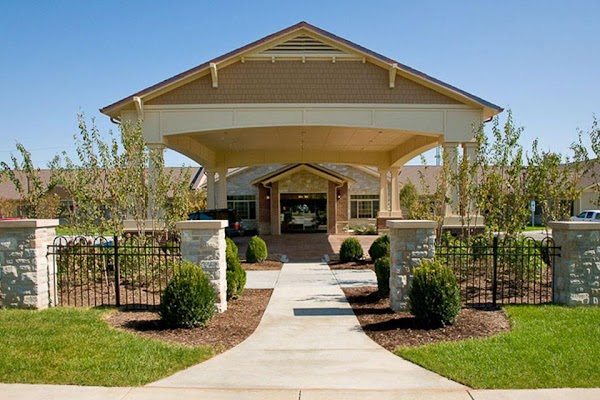
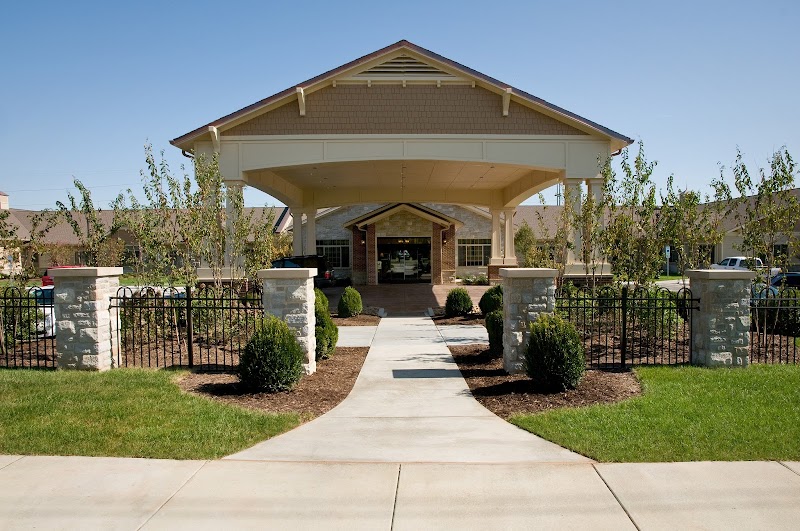
4200 MURFREESBORO PIKE, ANTIOCH, TN 37013 (615) 501-3500
For profit - Limited Liability company 124 Beds LIFE CARE CENTERS OF AMERICA Data: November 2025
Trust Grade
75/100
#71 of 298 in TN
Last Inspection: August 2024

Within standard 12-15 month inspection cycle. Federal law requires annual inspections.

Overview

Life Care Center of Hickory Woods has a Trust Grade of B, indicating it is a good choice for families seeking care, though it is not without its issues. It ranks #71 out of 298 nursing homes in Tennessee, placing it in the top half of facilities statewide, and #2 out of 19 in Davidson County, meaning only one local option is rated higher. The facility is currently experiencing worsening conditions, with the number of issues increasing from 1 in 2023 to 9 in 2024. Staffing is rated average with a turnover rate of 54%, which is slightly above the state average of 48%. Notably, there have been no fines issued, which is a positive sign. However, there have been concerning incidents, such as a resident not having their call light within reach, making it difficult for them to summon help, and failures to report allegations of abuse promptly. While the facility has strengths, such as a good overall star rating and no fines, these issues highlight areas that need attention.

Trust Score
B
75/100
In Tennessee
#71/298
Top 23%
Safety Record
Low Risk
No red flags
Inspections
Getting Worse
1 → 9 violations
Staff Stability
⚠ Watch
54% turnover. Above average. Higher turnover means staff may not know residents' routines.
Penalties
✓ Good
No fines on record. Clean compliance history, better than most Tennessee facilities.
Skilled Nurses
✓ Good
Each resident gets 45 minutes of Registered Nurse (RN) attention daily — more than average for Tennessee. RNs are trained to catch health problems early.
Violations
⚠ Watch
16 deficiencies on record. Higher than average. Multiple issues found across inspections.
★★★★☆
4.0
Overall Rating
★★★☆☆
3.0
Staff Levels
★★★★★
5.0
Care Quality
★★★☆☆
3.0
Inspection Score
Stable
2023: 1 issues
2024: 9 issues

The Good

  • 5-Star Quality Measures · Strong clinical quality outcomes
  • Full Sprinkler Coverage · Fire safety systems throughout facility
  • No fines on record

Facility shows strength in quality measures, fire safety.

The Bad

Staff Turnover: 54%

Near Tennessee avg (46%)

Higher turnover may affect care consistency

Chain: LIFE CARE CENTERS OF AMERICA

Part of a multi-facility chain

Ask about local staffing decisions and management

The Ugly 16 deficiencies on record

Aug 2024 9 deficiencies
CONCERN (D) 📢 Someone Reported This

A family member, employee, or ombudsman was alarmed enough to file a formal complaint

Potential for Harm - no one hurt, but risky conditions existed

Deficiency F0558 (Tag F0558)

Could have caused harm · This affected 1 resident

**NOTE- TERMS IN BRACKETS HAVE BEEN EDITED TO PROTECT CONFIDENTIALITY** Based on facility policy review, medical record review, observation, and interview, the facility failed to ensure call lights we...

Read full inspector narrative →
**NOTE- TERMS IN BRACKETS HAVE BEEN EDITED TO PROTECT CONFIDENTIALITY** Based on facility policy review, medical record review, observation, and interview, the facility failed to ensure call lights were within reach for 1 of 118 (Resident #82) sampled residents reviewed for access to call lights. The findings include: Review of the facility's policy titled, Resident Call System, revised on 1/4/2023, revealed, .The nurses' stations in the facility will be equipped to receive resident calls with a communication system through audible or visual signals from resident rooms .The call light should be positioned in reach of the resident .The call system must be accessible to residents while in their bed or other sleeping accommodations within the resident's room . Review of the medical record revealed Resident #82 was admitted to the facility on [DATE] and readmitted on [DATE] with diagnoses which included Hemiplegia and Hemiparesis (conditions that cause weakness or paralysis of one side of the body) following cerebral Infarction (condition that occurs when blood flow to the brain is blocked) affecting Left Non-Dominant side, Type 2 Diabetes Mellitus with Hyperglycemia, Displaced Intertrochanteric Fracture of Left Femur, and Dysphagia (swallowing difficulties) following Cerebral Infarction. Review of the Quarterly Minimum Data Set (MDS) assessment dated [DATE], revealed Resident #82 had a Brief Interview for Mental Status (BIMS) score of 7 which indicated severe cognitive impairment. Resident #82 required supervision to total assistance with Activities of Daily Living [ADL]s. Observation in Resident #82's room on 8/19/2024 at 10:15 AM, revealed Resident #82 lying in bed on her back with the call light on the floor on the side of the bed next to the room door. Observation and interview in Resident #82's room on 8/19/2024 at 10:18 AM, Licensed Practical Nurse (LPN) G confirmed the call light was on the floor on the side of the bed next to the room door and the call light was not within Resident #82's reach. LPN G stated, .Call lights should be in residents' reach . During an interview in the 100 Hall on 8/20/2024 at 12:32 PM, LPN J the 100 Hall Unit Manager confirmed call lights should be within residents' reach when in their beds. During an interview in the conference room on 8/21/2024 at 3:50 PM, the Director of Nursing (DON) confirmed call lights should be within the residents' reach while in their rooms.
CONCERN (D) 📢 Someone Reported This

A family member, employee, or ombudsman was alarmed enough to file a formal complaint

Potential for Harm - no one hurt, but risky conditions existed

Report Alleged Abuse (Tag F0609)

Could have caused harm · This affected 1 resident

**NOTE- TERMS IN BRACKETS HAVE BEEN EDITED TO PROTECT CONFIDENTIALITY** Based on facility policy review, medical record review, Facility Reported Investigation (FRI) review, and interview, the facilit...

Read full inspector narrative →
**NOTE- TERMS IN BRACKETS HAVE BEEN EDITED TO PROTECT CONFIDENTIALITY** Based on facility policy review, medical record review, Facility Reported Investigation (FRI) review, and interview, the facility failed to report allegations of abuse within 2 hours for 2 of 3 (Residents #170 and #270) sampled residents reviewed for abuse. The findings include: Review of the facility policy titled, Incident and Reportable Event Management, with revision date of 5/4/2023 revealed, .Reporting of Alleged Violations .Ensure that all alleged violations involving abuse, neglect, exploitation or mistreatment .are reported immediately, but not later than 2 hours after the allegation is made . Review of the medical record revealed Resident #170 was admitted to the facility on [DATE] and discharged on 10/3/2023 with diagnoses which included Chronic Obstructive Pulmonary Disease, Altered Mental Status, Cognitive Communication Deficit, Type 2 Diabetes Mellitus with Diabetic Neuropathy, and Atherosclerotic Heart Disease. Review of the Quarterly Minimum Data Set (MDS) dated [DATE] revealed Resident #170 had a Brief Interview for Mental Status (BIMS) score of 13 which indicated no cognitive impairment. Review of the Incident Description dated 8/28/2023 revealed .Resident [Resident #170] was on the hallway angry swinging her cane and talking loud .a [Resident #270] was in her room, and he was aggressive and being racist when she told him to get out of her room . Review of the medical record revealed Resident #270 was admitted to the facility on [DATE] and discharged on 8/29/2023 with a diagnosis which included Anxiety, Cognitive Communication Deficit, Adjustment Disorder with Disturbance of Conduct, and Dementia. Review of the MDS dated [DATE] revealed Resident #270 had a BIMS score of 4 which indicated severe cognitive impairment. Review of the Incident Description dated 8/28/2023 revealed Resident #270 was confused and was not aware of the situation and stated, today is my birthday, and he went in his room and got his birthday card to show the nurse. Continued review of the Incident Description revealed Resident #270 was a wanderer. Resident #270 was redirected to his room and closely supervised until he was transferred to the ER (Emergency Room). Review of the FRI #20230829155745 revealed on 8/28/2023 at 4:48 PM, Resident #170 reported to her nurse that another resident (Resident #270) came into her room and hit her. Resident #170 reported Resident #270 swung an open hand at her and scratched the right side of her face. Both residents received a head-to-toe skin assessment with no visible bruises or other injuries noted. Both residents were immediately separated from one another. Review of the facility investigation revealed no employee witnessed the incident, but Resident #270 was observed coming from the direction of Resident #170's room. Resident #270 with a BIMS score of 4 and cognitive communication deficit was unable to give any details. Resident #270 was sent to the ER for an immediate psychiatric evaluation and returned back to the facility. Resident #270 was placed on 1:1 supervision until he was transferred to another facility. The FRI review revealed the allegation of physical abuse was not reported timely. The incident occurred on 8/28/2023 at 4:48 PM but was not reported to the state agency until 8/29/2023 at 4:27 PM. During an interview on 8/13/2023 at 12:15 PM, Certified Nursing Assistant (CNA) M stated, .I was here the day that [Named Resident #170] said [Named Resident #270] hit her . During an interview on 8/14/2024 at 6:30 PM, Family Member R stated, .My sister was on the phone with [Resident #170] when the other resident came in her room. He [Resident #270] argued that was his room and she [Resident #170] said he hit her . During an interview on 8/22/2024 at 2:07 PM, the Administrator was asked when an allegation of abuse occurs when should it be reported to the state agency. The Administrator stated, .allegation of abuse should be reported immediately within 2 hours . The Administrator was asked to provide this surveyor with documentation of timely reporting of the incident. The Administrator could not provide documentation to prove the FRI #20230829155745 was reported timely.
CONCERN (D) 📢 Someone Reported This

A family member, employee, or ombudsman was alarmed enough to file a formal complaint

Potential for Harm - no one hurt, but risky conditions existed

Deficiency F0637 (Tag F0637)

Could have caused harm · This affected 1 resident

**NOTE- TERMS IN BRACKETS HAVE BEEN EDITED TO PROTECT CONFIDENTIALITY** Based on facility policy review, Resident Assessment Instrument (RAI) Version 3.0 Manual review, medical record review, and inte...

Read full inspector narrative →
**NOTE- TERMS IN BRACKETS HAVE BEEN EDITED TO PROTECT CONFIDENTIALITY** Based on facility policy review, Resident Assessment Instrument (RAI) Version 3.0 Manual review, medical record review, and interview, the facility failed to complete a Significant Change Minimum Data Set (MDS) assessment for 1 of 4 residents (Resident #273) reviewed. The findings include: Review of the facility's policy titled, Resident Assessment Instrument & Care Plan Development, revised [DATE], revealed, .The facility will follow the procedures set forth in the Resident Assessment Instrument (RAI) User's Manual 3.0 when completing the MDS, Care Area Assessment, and Comprehensive Care Plan .MDS assessments are completed at a minimum upon admission, quarterly, and with a significant change in patient status . Review of the RAI Version 3.0 Manual revealed, .When a SNF [Skilled Nursing Facility] or NF [Nursing Facility] is the hospice resident's residence for purposes of the hospice benefit .the resident must be assessed using the RAI .Comprehensive assessments are completed upon admission, annually, and when a significant change in a resident's status has occurred .Significant Change in Status Assessment [SCSA] .The SCSA is a comprehensive assessment for a resident that must be completed .when a terminally ill resident enrolls in a hospice . Review of the medical record revealed Resident #273 was admitted to the facility on [DATE] and readmitted on [DATE], with diagnoses which included Encounter for Surgical Aftercare following Surgery on the digestive System, Type 2 Diabetes Mellitus without complications, Moderate Protein-Calorie Malnutrition, Diverticulosis of Intestine, Acute Kidney Failure, Personal History of other Malignant Neoplasm of Large Intestine, and Vascular Dementia. Resident #273 expired on [DATE]. Review of the Order Summary Report for Resident #273, revealed an order dated [DATE], .Admit to [Named Hospice Agency] end of life care . Review of the Quarterly MDS assessment dated [DATE] revealed Resident #273 had a Brief Interview of Mental Status (BIMS) score of 3 which indicated severe cognitive impairment. The MDS assessment revealed, Hospice Care was not documented for Resident #273 while under hospice services. Review of the medical record for Resident #273 revealed, no Significant Change MDS assessment was completed for hospice services received by Resident #273. During a telephone interview on [DATE] at 8:37 AM, Registered Nurse (RN) SS confirmed Resident #273 received hospice services from [DATE] through [DATE]. During an interview in the MDS Coordinator's Office on [DATE] at 10:15 AM, MDS Licensed Practical Nurse (LPN) TT and MDS RN P were asked when a resident is admitted to hospice services would an MDS assessment be performed? MDS LPN TT stated. When a resident goes on hospice services a Significant Change MDS assessment should be performed and submitted.When asked if there were any situations when a resident is admitted to hospice services that a Significant Change MDS assessment would not be done. The MDS RN P and MDS LPN TT both stated, no, that a Significant Change MDS assessment should always be submitted when a resident goes on hospice services. When asked to review Resident #273 medical record, both MDS LPN TT and MDS RN P, confirmed no Significant Change MDS assessment was submitted when Resident #273 was placed on hospice services on [DATE]. Both MDS LPN TT and MDS RN P confirmed on the Quarterly MDS assessment for Resident #273 dated [DATE], hospice care was not documented in Section O. During a telephone interview on [DATE] at 1:55 PM, the named hospice agency's Clinical Director (RN WW) stated Resident #273 received hospice services at the facility from [DATE] through [DATE].
CONCERN (D) 📢 Someone Reported This

A family member, employee, or ombudsman was alarmed enough to file a formal complaint

Potential for Harm - no one hurt, but risky conditions existed

Deficiency F0657 (Tag F0657)

Could have caused harm · This affected 1 resident

**NOTE- TERMS IN BRACKETS HAVE BEEN EDITED TO PROTECT CONFIDENTIALITY** Based on facility policy review, medical record review, document review, and interview the facility failed to revise care plans ...

Read full inspector narrative →
**NOTE- TERMS IN BRACKETS HAVE BEEN EDITED TO PROTECT CONFIDENTIALITY** Based on facility policy review, medical record review, document review, and interview the facility failed to revise care plans for 2 of 5 (Residents #170 and #270) sampled residents reviewed for resident-to-resident physical altercations, 1 of 6 (Resident #175) sampled residents reviewed for fall interventions, 1 of 3 (Resident #111) sampled residents with urinary catheters, 1 of 5 (Resident #18) sampled residents reviewed for changes to antipsychotic medication, and 1 of 4 (Resident #273) sampled residents reviewed for hospice services. The findings include: Review of the facility's policy titled, Comprehensive Care Plan and Revision dated [DATE], revealed, .The facility will ensure .that the comprehensive care plan is reviewed and revised by an interdisciplinary team .The facility should monitor the resident over time to help identify changes in the resident condition that may warrant an update to the person-centered plan of care .When changes occur, the facility should review and update the plan of care to reflect the changes to care delivery, this can include .Additional interventions on existing problems .Updating goal or problem statements .Adding a short-term problem, goal, and interventions to address a time limited condition . Review of the facility's policy tilted, Incident and Reportable Event Management, with review date of [DATE], revealed, .Event Management includes, but is not limited to .Fall Unwitnessed or Witnessed .To help reduce the risk of an event .The licensed nurse should implement an appropriate immediate intervention, based on the conclusions of the initial investigation .The license nurse would update the residents [residents'] care plan and communicate the intervention to the staff caring for the resident .The IDT [Interdisciplinary Team] will as part of their review, determine if the initial interventions is sufficient or if a modification is needed . Review of the medical record revealed Resident #18 was admitted to the facility on [DATE] with diagnoses which included Chronic Obstructive Pulmonary Disease, Dementia, Anxiety Disorder, and Depression. Review of the comprehensive care plan for Resident #18 revealed, .The resident uses antipsychotic medications date initiated [DATE] . Review of the Order Recap Report dated [DATE] revealed an order for Quetiapine Fumarate [antipsychotic medication given for behaviors] oral tablet 35 mg (milligram) given 0.5 tablet by mouth at bedtime for Depressive Disorder with a start date of [DATE] and end date of [DATE]. Review of the comprehensive care plan for Resident #18 revealed the care plan was not updated to reflect the antipsychotic medication had been discontinued. During an interview on [DATE] at 4:21 PM, the Minimum Data Set (MDS) Coordinator stated, .her [Resident #18] care plan does say use of antipsychotic. It should be updated . Review of the medical record revealed Resident #111 was admitted to the facility on [DATE] with diagnoses which included Congestive Heart Failure, Acute Kidney Failure, and Retention of Urine. Review of the comprehensive care plan for Resident #111 revealed, .The resident has Foley Catheter Urine Retention Date Initiated XXX[DATE] . Review of the Order Summary Report for Resident #111 revealed, .Indwelling catheter .Order Date XXX[DATE] .D/C [discontinue] foley XXX[DATE] . Review of the comprehensive care plan for Resident #111 revealed the care plan was not updated after the Foley Catheter was discontinued. During an interview on [DATE] at 4:21 PM, the MDS Coordinator stated, .he had the foley catheter upon admission the care plan should be updated . Review of the medical record revealed Resident #170 was admitted to the facility on [DATE] and discharged on [DATE] with diagnoses which included Chronic Obstructive Pulmonary Disease (COPD), Altered Mental Status, Cognitive Communication Deficit, and Type 2 Diabetes Mellitus with Diabetic Neuropathy. Review of the Quarterly MDS dated [DATE] revealed Resident #170 had a Brief Interview for Mental Status (BIMS) score of 13 which indicated no cognitive impairment. Review of the facility investigation revealed on [DATE] at 4:48 PM, Resident #170 reported to her nurse that another resident (Resident #270) came into her room and hit her. Resident #170 reported Resident #270 swung an open hand at her and scratched the right side of her face. Both residents received a head-to-toe skin assessment with no visible bruises or other injuries noted. Both residents were immediately separated from one another. Review of the comprehensive care plan for Resident #170 revealed no interventions related to the resident-to-resident altercation on [DATE]. Review of the medical record revealed Resident #270 was admitted to the facility on [DATE] and discharged on [DATE] with a diagnoses which included Anxiety, Cognitive Communication Deficit, Adjustment Disorder with Disturbance of Conduct, and Dementia. Review of the MDS dated [DATE] revealed Resident #270 had a BIMS score of 4 which indicated severe cognitive impairment. Review of the facility investigation revealed on [DATE] at 1:30 PM, Resident #271 reported that his roommate Resident #270 had hit him over his head with a plate lid. A skin assessment was completed on Resident #271, and no bruises or marks were found. Resident #271 was immediately moved to another room on another wing. Family was notified, and Physician was made aware of incident. Review of the comprehensive care plan for Resident #270 revealed there was no revision to the plan of care following the physical alterations on [DATE] and [DATE]. Review of the medical record revealed Resident #271 was admitted to the facility on [DATE] and readmitted on [DATE] with diagnoses which included Encounter for Orthopedic Aftercare following Surgical Amputation, Type 2 Diabetes Mellitus, Osteomyelitis, Acquired Absence of Right Leg Below Knee, Muscle Weakness, and Other Lack of Coordination. Review of the admission MDS for Resident #271 dated [DATE] revealed a BIMS score of 15 which indicated no cognitive impairment. Review of the Comprehensive Care Plan for Resident #271 revealed appropriate interventions added. Resident #271 was switched to a different room on a different hall. During an interview on [DATE] at 11:23 AM, MDS Registered Nurse (RN) P was asked if a resident-to-resident altercation occurred should that be reflected on the care plan. MDS RN P stated, .yes .I would place something on the care plan for the staff to know the resident was abusive .It would be important to place that on the victims' care plan also . The MDS RN P was asked if Resident #170 and Resident #270's care plans were updated after the resident-to-resident altercation dated [DATE]. The MDS RN P reviewed the care plans and stated, .No . MDS RN P also confirmed that the resident-to-resident altercation that occurred on [DATE] between Resident #270 and #271 was not on Resident #270's care plan. Review of the medical record revealed Resident #175 was admitted to the facility on [DATE] with diagnoses which included Hemiplegia and Hemiparesis following Cerebral Infarction Affecting Right Dominant Side, History of Falling, Unsteadiness on Feet, and COPD. Review of the Progress Notes dated [DATE] revealed, .Resident told this nurse I fell from my wheelchair . Review of the admission MDS dated [DATE] revealed Resident #175 had a BIMS score of 15 which indicated no cognitive impairment. Continued review of the MDS revealed Resident #175 required substantial/maximal assistance with sit to stand and chair/bed to chair transfer. Further review of the MDS revealed Resident #175 had a fall in the last month prior to admission and a fracture related to a fall in the last 6 months. Review of the comprehensive care plan revealed no revision to address the [DATE] fall. During an interview on [DATE] at 9:11 AM, Resident #175 stated, .I fell Saturday .once I was going to the wheelchair and the other time, I was going back to the bed . During an interview on [DATE] at 4:21 PM, the MDS Coordinator stated, .Ideally after a fall the floor nurse would put in an intervention to prevent further falls . During a telephone interview on [DATE] at 4:56 PM, RN LLL stated, .I was there the day [Named Resident #175] had a fall .I was across the hall giving medications, and I heard him yelling .I really didn't know how to update the care plan . Review of the medical record revealed Resident #273 was admitted to the facility on [DATE] and readmitted on [DATE], with diagnoses which included Encounter for Surgical Aftercare following Surgery on the digestive System, Type 2 Diabetes Mellitus without complications, Moderate Protein-Calorie Malnutrition, Diverticulosis of Intestine, Acute Kidney Failure, Personal History of other Malignant Neoplasm of Large Intestine, and Vascular Dementia. Resident #273 expired on [DATE]. Review of the comprehensive care plan revised [DATE] for Resident #273 revealed no focus related to hospice care initiated on [DATE]. Review of the Order Summary Report for Resident #273 revealed an order dated [DATE], .Admit to [Named Hospice Provider] end of life care . Review of the Quarterly MDS dated [DATE] revealed Resident #273 had a BIMS score of 3 which indicated severe cognitive impairment. During an interview on [DATE] at 10:33 AM, MDS Licensed Practical Nurse (LPN) TT was asked if Resident #273 was care planned for Hospice Services. MDS LPN TT confirmed Resident #273's comprehensive care plan did not address Hospice Services.
CONCERN (D) 📢 Someone Reported This

A family member, employee, or ombudsman was alarmed enough to file a formal complaint

Potential for Harm - no one hurt, but risky conditions existed

ADL Care (Tag F0677)

Could have caused harm · This affected 1 resident

**NOTE- TERMS IN BRACKETS HAVE BEEN EDITED TO PROTECT CONFIDENTIALITY** Based on facility policy review, facility documentation, and interview, the facility failed to provide incontinence care for 6 o...

Read full inspector narrative →
**NOTE- TERMS IN BRACKETS HAVE BEEN EDITED TO PROTECT CONFIDENTIALITY** Based on facility policy review, facility documentation, and interview, the facility failed to provide incontinence care for 6 of 31 (Residents #6, #40, #55, #99, #103, and #108) sampled residents reviewed for incontinence care. The findings include: Review of the facility policy titled, Activities of Daily Living (ADLs), with a revision date 2/12/2024 revealed, .The resident will receive assistance as needed to complete activities of daily living .Based on the comprehensive assessment of a resident, the facility must ensure that residents receive treatment and care in accordance with professional standards of practice .and the residents ' choices .The facility must provide care and services in accordance with paragraph (a) for the following activities of daily living .Hygiene-bathing, dressing, grooming .A resident who is unable to carry out activities of daily living receives the necessary services to maintain good .grooming, and personal .hygiene .Assist resident with bed/wheelchair repositioning as necessary to promote good body alignment and to prevent breakdown . Review of the facility policy titled, Resident Rights, with review date of 9/25/2023 revealed, .The resident has a right to a dignified existence .The facility must provide equal access to quality care regardless of diagnosis, severity of condition, or payment source . Review of the facility policy titled, Resident Call System, with review date of 1/15/2024 revealed, .The nurses' stations in the facility will be equipped to receive resident calls with a communication system through audible or visual signals from resident rooms, toilets, and bathing facilities .Facility associates should always be aware of call lights .The call light should not be deactivated until the need has been met . Review of the medical record revealed Resident #6 was admitted to the facility on [DATE] and readmitted to the facility on [DATE] with diagnoses which included Hemiplegia and Hemiparesis (a condition that can cause weakness or paralysis on one side of the body) following Cerebral Infarction affecting Dominate Right Side, and Chronic Obstructive Pulmonary Disease (COPD). Review of the Quarterly MDS assessment dated [DATE] revealed Resident #6 had a BIMS score of 15 which indicated no cognitive impairment. Resident #6 required substantial/maximal assistance with toileting hygiene and frequently incontinent of bowel and bladder. During an interview on 8/13/2024 at 11:45 AM, Resident #6 was asked about care in the facility Resident #6 stated, the worst call light response times are at breakfast, lunch, and dinner and can take up to an hour at times for staff to respond. Resident #6 was asked how she knew how long it took for staff to answer the call light. Resident #6 stated, .I time it by my clock on the wall . Review of the medical record revealed Resident #40 was admitted to the facility on [DATE] with diagnoses which included Fracture of Left Ilium, Muscle Weakness, Difficulty Walking, COPD, and Paroxysmal Atrial Fibrillation. Review of the admission MDS dated [DATE] revealed Resident #40 had a BIMS score of 13 which indicated no cognitive impairment. Resident #40 was incontinent of bowel, bladder, and required assistance with toileting and upper body dressing. During an interview on 8/21/2024 at 3:50 PM, Resident #40, stated, .it takes a long time for your call light to be answered especially during mealtimes .sometimes I lay in urine all night .I mean if I am going to need to stay wet, I would prefer to be in a swimming pool .can't get up and go to the bathroom without help .there is one CNA that will come in turn my light off say she is going to get help, and I always know she won't come back . Review of the medical record revealed Resident #55 was admitted to the facility on [DATE] and readmitted on [DATE] with diagnoses which included Other Spondylosis with Myelopathy, Cervical Region, Displacement of Indwelling Ureteral Stent, Personal History of Transient Ischemic Attack (TIA), and Cerebral Infarction without Residual Deficit. Review of the Quarterly MDS dated [DATE], revealed Resident #55 had a BIMS score of 13 which indicated no cognitive impairment. Resident #55 required supervision to total assistance with Activities of Daily Living [ADL]s, and frequently incontinent of bowel and bladder. During an interview on 8/13/2024 at 11:40 AM, Resident #55 stated the call light response time can take from 30 minutes to an hour depending on the time of day and the staff will not change me during mealtimes. Resident #55 was asked how she knew how long it took for staff to respond to the call light. Resident #55 stated by the time on my cell phone and my roommate's big clock on the wall. Review of the medical record revealed Resident #99 admitted to the facility on [DATE] with diagnoses which included Hemiplegia and Hemiparesis following Nontraumatic Intracerebral Hemorrhage affecting Left Dominant Side, Asthma, and Acute Respiratory Failure with Hypoxia. Review of the MDS dated [DATE] revealed Resident #99 had a BIMS score of 15 which indicated no cognitive impairment. Resident #99 required substantial/maximal assistance with toileting and rolling left and right. During an interview on 8/19/2024 at 9:54 AM, Resident #99 stated, .the staff will come in answer the light and say I need to go get some help and then you don ' t see them again .the [Certified Nursing Assistant] CNAs will tell you I can't change you right now we are delivering trays .Monday I waited 3 hours to be changed I was wet and dirty .it was around breakfast time .I watched the clock . Review of the medical record revealed Resident #103 was admitted to the facility on [DATE], with diagnosis that included Aftercare following Joint Replacement Surgery, Type 2 Diabetes Mellitus, Chronic Pain Syndrome, and Muscle Weakness (generalized). Review of the admission MDS assessment dated [DATE], revealed Resident #103 had a BIMS score of 15 which indicated no cognitive impairment. Resident #103 was incontinent of bladder and required supervision/total assistance with ADLs. During an interview on 8/22/2024 at 2:55 PM, Resident #103 stated, .It takes 20 minutes or more for call lights to be answered . Resident #103 was asked for specific dates, times, and shifts that the call light was not being answered timely. Resident #103 stated, .It happens several times a week and is worse on evenings and weekends . Resident #103 was asked how she knows how long it takes for staff to answer the call light. Resident #103 stated, .I know because I time it with my cell phone, and I look at my roommates' clock on the wall, and I can time it by my 30-minute programs on TV . Resident #103 was asked about call light response during mealtimes. Resident #103 stated, .The techs [CNAs] will answer the call light and have told me that when trays are on the hall, they cannot change me . Review of the medical record revealed Resident #108 was admitted to the facility on [DATE] with diagnoses which included COPD, Acute and Chronic Respiratory Failure with Hypoxia, Type 2 Diabetes Mellitus, and Hypertensive Chronic Kidney Disease. Review of the admission MDS dated [DATE] revealed Resident #108 had a BIMS score of 13 which indicated no cognitive impairment. Resident #108 required partial/moderate assistance with toileting, upper and lower body dressing, and personal hygiene. During an interview on 8/21/2024 at 10:58 AM, Resident #108 stated, .My roommate [Resident #40] had her light on for a long time because she was wet .I know she waited an hour and half. I watched the clock .it just seems like they don't have enough help .the CNAs will tell you when they are passing out meal trays they can't do anything else .I can take myself to the bathroom but one night around 6:00 PM or 7:00 PM, I was having difficulty pulling up my pull up [brief] .I had my light on, I was crying and screaming for help .I finally kept on trying and got it pulled up but I was so out of breath by the time I made it back to the bed it was awful because I have COPD . I don't understand why they can't assign someone during the meals to answer the call lights . During an interview on 8/21/2024 at 8:30 AM, CNA PP stated, .we are not allowed to change someone during meals we have to deliver trays first . During an interview on 8/21/2024 at 9:05 AM, Licensed Practical Nurse (LPN) D stated, .if the staff are passing trays one CNA would need to stop, change the resident .you would not put the resident off if they needed changing . During an interview on 8/21/2024 at 9:25 AM, CNA W stated, .if I was delivering trays, I would get another CNA to go change the resident if the resident was wet . During an interview on 8/22/2024 at 2:07 PM, the Administrator stated, I knew we had some issues with bathing. During an interview on 8/22/2024 at 4:38 PM, the Regional Registered Nurse stated, we schedule bathing 3 times per week, but regulations are 2 times per week. During an interview on 8/22/2024 at 2:07 PM, the Administrator was asked what the CNAs should do if resident needs assistance with toileting/incontinence care while meal trays were being served. The Administrator stated the resident should receive the needed care. During an interview on 8/22/2024 at 5:35 PM, CNA BBB stated, .at mealtime .we can't change a resident during that time due to cross contamination .
CONCERN (D) 📢 Someone Reported This

A family member, employee, or ombudsman was alarmed enough to file a formal complaint

Potential for Harm - no one hurt, but risky conditions existed

Quality of Care (Tag F0684)

Could have caused harm · This affected 1 resident

**NOTE- TERMS IN BRACKETS HAVE BEEN EDITED TO PROTECT CONFIDENTIALITY** Based on facility policy review, medical record review, and interview, the facility failed to follow Medical Doctor's (MD) order...

Read full inspector narrative →
**NOTE- TERMS IN BRACKETS HAVE BEEN EDITED TO PROTECT CONFIDENTIALITY** Based on facility policy review, medical record review, and interview, the facility failed to follow Medical Doctor's (MD) orders for 1 of 9 (Resident #275) sampled residents reviewed. The findings include: Review of the facility policy titled, Administration of Medications, revised 2/13/2023, revealed, .The facility will ensure medications are administered safely and appropriately per physician order to address residents' diagnoses and signs and symptoms .Staff who are responsible for medication administration will adhere to the 10 Rights of Medication Administration .Right Documentation .Medication administrations should be documented timely following the administration to the resident. Review of the facility policy titled, Nursing Documentation, issued 8/20/2019, revealed, .The medical record must reflect .the care and services provided across all disciplines . Review of the medical record revealed Resident #275 was admitted to the facility on [DATE] with diagnoses which included Acute Respiratory Failure, Pneumonia, Acute Kidney Failure, Acute Pulmonary Edema, Chronic Obstructive Pulmonary Disease, and Elevated [NAME] Blood Cell Count. Resident #273 was discharged to the hospital on 7/26/2023. Review of the Clinical Physician Orders for Resident #275 dated 7/10/2023, revealed, .CPAP [continuous positive airway pressure- a device used to ensure needed oxygen is delivered] on while sleeping/napping and off while awake .directions .every shift .Oxygen with CPAP: Pressure setting 10, Large and type of mask Full Face mask, liter of oxygen 3L/m [3 liters/minute], frequency of use at bedtime and prn [as needed] every shift . Review of the admission Minimum Data Set (MDS) dated [DATE], revealed Resident #275 had a Brief Interview for Mental Status (BIMS) score of 14 which indicated no cognitive impairment. Resident #273 received Oxygen therapy. Review of the Treatment Administration Record (TAR) for Resident #275 dated 7/1/2023 through 7/31/2023, revealed there was no documentation of administration of Oxygen with CPAP on 7/16/2023, 7/17/2023, 7/20/2023, 7/22/2023 and 7/23/2023 for dayshift, and CPAP on while sleeping/napping and off while awake every shift on 7/16/2023, 7/17/2023, 7/20/2023, 7/22/2023 and 7/23/2023 for dayshift. Review of the comprehensive care plan for Resident #275 revised on 7/25/2024, revealed, .Focus .CPAP O2 [Oxygen delivered by CPAP] COPD [Chronic Obstructive Pulmonary Disease] PNA [Pneumonia]Respiratory failure .Interventions .CPAP per MD order. Care and maintenance per facility staff . During an interview on 8/21/2024 at 4:00 PM, the Director of Nursing (DON) viewed the TAR for Resident #275 dated 7/1/2023 through 7/31/2023 and confirmed there was no documentation of administration of Oxygen with CPAP or removal on the following dates: 7/16/2023, 7/17/2023, 7/20/2023, 7/22/2023, and 7/23/2023, The DON stated, .The expectation is that medications and treatments are signed off immediately after administration by nursing staff .
CONCERN (D) 📢 Someone Reported This

A family member, employee, or ombudsman was alarmed enough to file a formal complaint

Potential for Harm - no one hurt, but risky conditions existed

Deficiency F0697 (Tag F0697)

Could have caused harm · This affected 1 resident

**NOTE- TERMS IN BRACKETS HAVE BEEN EDITED TO PROTECT CONFIDENTIALITY** Based on facility policy review, medical record review, facility documentation, and interview, the facility failed to implement ...

Read full inspector narrative →
**NOTE- TERMS IN BRACKETS HAVE BEEN EDITED TO PROTECT CONFIDENTIALITY** Based on facility policy review, medical record review, facility documentation, and interview, the facility failed to implement an effective pain management regimen for 1 of 6 (Resident #111) sampled residents reviewed for pain management. The findings include: Review of the facility policy titled, Pain Assessment and Management, with revision date 9/12/2023 revealed, .All residents will be assessed for pain indicators upon admission/readmission, quarterly and with any change in condition .The facility must ensure that pain management is provided to residents who require such services; consistent with professional standards of practice .and the residents ' goals and preferences .Identifying and using specific strategies for preventing or minimizing different levels or sources of pain or pain-related symptoms based on the resident-specific assessment, preferences and choices, a pertinent clinical rationale, and the resident's goals . Review of the medical record revealed Resident #111 was admitted to the facility on [DATE] with diagnoses which included Congestive Heart Failure, Type 2 Diabetes Mellitus, Chronic Kidney Disease, Stage 3, Presence of Automatic Cardiac Defibrillator, and Retention of Urine. Review of the comprehensive care plan dated 7/29/2024, for Resident #111 revealed, .The resident is on pain medication therapy Opiod .[Opioid] . Review of the admission Minimum Data Set (MDS) dated [DATE] revealed Resident #111 had a Brief Interview for Mental Status (BIMS) score of 15 which indicated no cognitive impairment. Review of the OT (Occupational Therapy) Evaluation and Plan of Treatment dated 7/24/2024 revealed, .Pain .Patient has pain that interferes/limits functional activity .Yes .Patient has pain that interferes with sleep .Yes .Patient verbalized pain .Is skilled therapy needed to address pain .Nursing to address . Review of the OT Treatment Encounter Notes dated 7/25/2024 through 8/20/2024 revealed, .Pre-Tx [treatment] Is skill therapy needed to address pain .Nursing to address . Review of the OT Therapy Progress Report dated 8/6/2024 revealed, .Remaining Impairments .pain . Review of the PT (Physical Therapy) Evaluation and Plan of Treatment dated 7/24/2024 revealed, .Patient Goals: Return home with greatest independence and get this pain down .Potential for Achieving Rehab Goals: Good with pain mgmt [management] and consistent participation in skilled therapy .Patient has pain that interferes/limits functional activity .Yes .Patient verbalized pain .Is skill therapy needed to address pain .Yes .prior two week history of progressive weakness and falls with subsequent R [right] knee pain .Pt [patient] reports 9/10 [pain scale range of 1 being the lowest and 10 being the highest] pain with minimal RLE [right lower extremity] movement and weight bearing, pt [patient] unable to stand as he reports pain is intolerable .Pt requires skilled therapy, pain mgmt, and skilled nursing to reduce pain and restore mobility . Review of the PT Therapy Progress Report dated 8/6/2024 revealed, .Pt.refuses to attempt standing or any other transfer secondary to pain . Review of the Progress Notes dated 8/6/2024 revealed, .Note Text: Resident and family participated in care plan meeting with IDT [Interdisciplinary Team] .Therapy is working on sitting up at edge of bed. Pain is a barrier that is limiting him at this time. Goal is to start standing and getting OOB [out of bed] . Review of the Medication Administration Record (MAR) dated 8/2024 revealed on 8/4/2024 Resident #111 had a pain scale of 7 (severe pain) out of 10. Resident #111 was given Tylenol 650 mg (milligram) 1 tablet. Continued review of the MAR revealed Resident #111 had not been given Tramadol since his admission but was given Tylenol two times on 8/4/2024 and 8/17/2024. Review of the Order Summary Report dated 8/23/2024 revealed, an order for Tramadol HCL (Hydrochloride) (pain medication used to relieve acute pain severe enough to require an opioid treatment) oral tablet 50 mg (milligram) give 1 tablet by mouth every 6 hours as needed for moderate - severe pain and Tylenol give 650 mg by mouth every 6 hours as needed for mild - moderate pain. During an interview on 8/21/2024 at 9:35 AM, Certified Nursing Assistant (CNA) PP stated, .[Named Resident #111] experiences pain every time you roll him and touch him .his legs hurt him really bad .he will tell me, I hate this part because it hurts so bad . During an interview on 8/21/2024 at 10:47 AM, Resident #111 stated, .I hurt so bad, they give me Tylenol but at home it took 4 tablets to help relieve my pain . During an interview on 8/21/2024 at 11:40 AM, Resident #111 stated, .My legs and knees hurt me. The nurses told me I couldn't take anything else but Tylenol. Therapy got me up twice this morning. I didn't get any pain meds [medications] this morning . Resident #111 was asked if pain limits his ability to perform in his therapy and [Resident #111] stated, .Pain stops a whole lot of things from happening . During an interview on 8/21/2024 at 12:02 PM, Physical Therapist (PT) BB was asked about the pain Resident #111 was experiencing during his therapy. PT BB stated, .we have been battling this for a while Tylenol only given when he asks for the medication .I went to nursing, I have wrote a note .I am not sure it is being communicated .it is hindering him progressing .his pain is with movement .I spoke to one nurse .sometimes we have to stop therapy .he lets us know when he is experiencing pain .standing hurts him bad I know it has been on 3 separate occasions he said I can't do it .It would help him if he had routine pain medication or given pain medication 30 minutes prior to his therapy . PT BB was asked if he had ever spoken to the Director of Nursing in regards to his pain control, he stated, No. During an interview on 8/21/2024 at 12:20 PM, the Director of Nursing (DON) was asked if a resident voiced in a care plan meeting that pain is barrier for him, what would she expect staff to do. The DON stated, .definitely look at pain management .If he expressed, he was having pain I expect the Tramadol to be given . During an interview on 8/21/2024 at 12:30 PM, Licensed Practical Nurse (LPN) D stated, .He [Named Resident #111] has told me a couple of times he was hurting. I will usually ask him if he is having pain. I never know what time he is going to go to therapy. It would be helpful for me to have a list of the times . LPN D was asked if she was notified that Resident #111 voiced in the care plan meeting 8/6/2024 that pain was a barrier for him. LPN D stated, .I wasn't notified .If I had known I could have tried to get the pain medication scheduled with his routine medications .I don't know why the Tramadol hasn't been given . During an interview on 8/22/2024 at 2:07 PM, the Administrator stated, .If a resident communicated the pain to therapy, I would expect them to follow up .If I was a therapist and I told the nurse today about his pain, I would expect the therapist to go above the nurse and speak to administration .
CONCERN (D) 📢 Someone Reported This

A family member, employee, or ombudsman was alarmed enough to file a formal complaint

Potential for Harm - no one hurt, but risky conditions existed

Pharmacy Services (Tag F0755)

Could have caused harm · This affected 1 resident

**NOTE- TERMS IN BRACKETS HAVE BEEN EDITED TO PROTECT CONFIDENTIALITY** Based on facility policy review, medical record review, facility document review, and interview the facility failed to provide p...

Read full inspector narrative →
**NOTE- TERMS IN BRACKETS HAVE BEEN EDITED TO PROTECT CONFIDENTIALITY** Based on facility policy review, medical record review, facility document review, and interview the facility failed to provide pharmaceutical services policies and procedures that ensured the dispensing and disposition (possession or control of medication) of physician ordered medications to meet the needs of each resident in 1 of 1 (Resident #275) sampled resident reviewed for taking medications brought in from home by a family member. The findings include: Review of the facility policy titled, MEDICATIONS BROUGHT TO NURSING CARE CENTER BY RESIDENT OR RESPONSIBLE PARTY, dated 1/2023, revealed, .Medications brought into the nursing care center by a resident or responsible party are accepted only with a current order by the resident's prescriber, after the contents are verified by the nurse, and if packaging meets the state, federal and pharmacy's guidelines .Use of the medications brought to the nursing care center by a resident or responsible party is allowed only when the following conditions are met and is allowed per state regulation .The medication name, dosage form, and strength has been verified by the nurse accepting the medication . Review of the medical record revealed Resident #276 was admitted to the facility on [DATE] with diagnoses which included Aftercare following Explantation (removal) of Hip Joint Prosthesis, Hepatic Encephalopathy, Other Cirrhosis of Liver, Bacterial Infection, and Acute Kidney Failure, unspecified. Resident #276 was discharged from the facility on 1/10/2024 to the acute care hospital. Review of the Order Summary Report for Resident #276 dated 1/2/2024, revealed, .rifaximin Oral Tablet 550 MG [milligram] (Rifaximin) give 1 tablet by mouth two times a day for Cirrhosis .Order Dated 1/2/2024 . Review of the admission Minimum Data Set (MDS) assessment dated [DATE], revealed Resident #276 had a Brief Interview for Mental Status (BIMS) score of 9 which indicated moderate cognitive impairment. Review of the Progress Notes for Resident #276 dated 1/2/2024 through 1/9/2024, revealed, no documentation of receipt of any physician ordered medication brought into the facility by a family member, no documentation of nurse accepting or verifying medication brought into the facility by a family member, and no documentation of disposition of physician ordered medication brought into the facility by a family member after Resident #276 was discharged on 1/10/2024. Review of the Medication Administration Record (MAR) for Resident #276 dated 1/1/2024 through 1/31/2024, revealed, .rifaximin Oral Tablet 550 MG [Milligram] (Rifaximin) Give 1 tablet by mouth two times a day for Cirrhosis - Order Date 1/2/2024 1408 [2:08PM]- D/C [Discontinue] Date - 1/11/2024 0748 [7:48 AM] . Nursing documentation on 1/2/2024 through 1/5/2024 revealed medication was not administered as per physicians order. Review of the facility document titled, RETURNS/DISCARDS AUDIT REPORT, dated 1/1/2024 through 3/31/2024, revealed, no documentation Rifaximin 550 MG was returned to the pharmacy. Review of the facility document titled, Drop-Box Drop Record, dated 1/3/2023, 2/9/2023, 3/2/2023, 3/12/2023, and 3/19/2023, revealed no documentation Rifaximin 550 MG tablet was returned to the pharmacy for Resident #276. During an interview on 8/13/2024 at 10:45 AM, Licensed Practical Nurse (LPN) D was asked about the procedure when a family member brings in a physician ordered medication from home. LPN D stated when a family member brings in physician ordered medications from home the medication has to be in the original bottle and untouched. The medication is then locked in the medication cart and documented when administered on the MAR. LPN D was asked about disposition of medications brought from home when a resident goes to the hospital or is discharged . LPN D stated if the resident is returning to the facility the medication is kept in the locked medication cart. If the resident is discharged the family is called and asked to pick up the medication. LPN D was asked about documentation of medication receipt and disposition of the medication. LPN D stated the facility did not have a procedure or form to document receipt or disposition of medications brought into the facility from home. During an interview on 8/13/2024 at 11:37 AM, LPN J was asked about disposition of physician ordered medications brought into the facility from home. LPN J stated the medication is kept in the locked medication cart and documented as administered on the MAR. When the resident is discharged , the medication is sent home with the family. LPN J was asked about disposition of physician ordered medications from the pharmacy when a resident is discharged . LPN J stated it is sent back to the pharmacy. LPN J was asked what happens if medication not obtained from the pharmacy are sent back to the pharmacy. LPN J stated the pharmacy would send the medication back to the facility. During a phone interview on 8/13/2024 at 12:45 PM, the Pharmacy Representative was asked if the facility returned a resident's personal medication brought from home to the pharmacy what would happen to the medication. The Pharmacy Representative stated that the pharmacy does not accept personal resident medications that were not dispensed by the pharmacy. If received the medication would be returned to the facility. When asked if there was a chain of custody on the receipt and return to facility of medications not filled by the pharmacy the Pharmacy Representative stated, No, we would call the facility and tell them we are sending it back if we got something we did not dispense. If the medication was not dispensed by [named pharmacy] we would not have any knowledge of it. When asked if there was a policy or procedure for tracking the receipt and disposition of physician ordered medications brought into the facility by residents or resident representatives. The Pharmacy Representative stated, the pharmacy has a Returns/Discards Audit Report for tracking medications dispensed and returned to the pharmacy. The facility should have a policy or procedure in place for tracking physician ordered medications brought into the facility by other sources. During a phone interview on 8/13/2024 at 4:12 PM, Family Member OO stated she was asked by the facility to bring in Resident #276's physician ordered medication Xifaxin (rifaximin). Family Member OO stated, the facility told her it had to be an unopened full bottle of medication with pharmacy label on it. Family Member OO stated, .I brought one bottle of the medication Xifaxin to the facility on Saturday 1/6/2024. I asked the nurse for a receipt the nurse stated it was not necessary .I went to the facility to pick up the medication a few days after he (Resident #276) was admitted to the hospital and was told the medication could not be located. I never received the medication after his [Resident #276] discharge . During an interview on 8/13/2024 at 4:59 PM, Registered Nurse (RN) H stated, Resident #276's family had brought a physician ordered medication in from home, and stated the medication was picked up by the family member with Resident #276's belongings after Resident #276 was discharged to the hospital. There was no documentation of receipt of a physician ordered medication brought in by a family member to the facility in Resident #276's medical record. There was no documentation Resident #276's family member received a physician ordered medication brought to the facility after Resident #276's discharge. During an interview on 8/13/2024 at 5:25 PM, The Administrator was asked for a policy and/or procedure for tracking physician ordered medications brought into the facility by a resident's family. The Administrator stated, there was no facility policy or procedure in place on tracking the receipt and disposition of physician ordered medications brought into the facility for residents from family members. During a phone interview on 8/15/2024 at 12:15 PM, the Medical Director was asked about the policy and procedure for tracking physician ordered medications brought into the facility for residents by family members. The Medical Director stated, I don't know the exact procedure for medications being brought in from home. I approve or disapprove the medication. The Medical Director was asked would you expect medication brought in from home to have a chain of custody? The Medical Director stated, Yes, someone should be tracking the medication. I would expect the facility to have a policy or procedure in place for tracking medications brought into the facility from home.
CONCERN (D) 📢 Someone Reported This

A family member, employee, or ombudsman was alarmed enough to file a formal complaint

Potential for Harm - no one hurt, but risky conditions existed

Deficiency F0919 (Tag F0919)

Could have caused harm · This affected 1 resident

Based on facility policy, observation, and interview the facility failed to maintain a resident call system to allow a resident or resident representative to call for staff assistance through a commun...

Read full inspector narrative →
Based on facility policy, observation, and interview the facility failed to maintain a resident call system to allow a resident or resident representative to call for staff assistance through a communication system which relays the call directly to a centralized staff work area for 1 of 31 (Resident #105) sampled residents reviewed. The findings include: Review of the facility's policy titled, Resident Call System, revised on 1/4/2023, revealed, .The nurses' stations in the facility will be equipped to receive resident calls with a communication system through audible or visual signals from resident rooms .The call light should be positioned in reach of the resident .The call system must be accessible to residents while in their bed or other sleeping accommodations within the resident's room .In the event that the nurse call system becomes inoperable .Director of Maintenance .should be called immediately if there is a malfunction of any portion of the system . Observation in Resident #105's room on 8/20/2024 at 10:15 AM, the call light was without a cord for the resident or resident representative to use if needed. During an observation and interview in Resident #105's room on 8/20/2024 at 10:27 AM, Licensed Practical Nurse D stated, .It looks like the call light is on the floor and maybe broken . LPN D was asked to get the Maintenance Director. An unnamed Certified Nursing assistant walked into Resident #105's room moved the bed and found the call light cord on the floor with the connecting wires hanging out of the end. During an observation and interview in Resident #105's room on 8/20/2024 at 10:32 AM, the Maintenance Director stated, .I was not aware of the broken call light .
Feb 2023 1 deficiency
CONCERN (D) 📢 Someone Reported This

A family member, employee, or ombudsman was alarmed enough to file a formal complaint

Potential for Harm - no one hurt, but risky conditions existed

Pressure Ulcer Prevention (Tag F0686)

Could have caused harm · This affected 1 resident

**NOTE- TERMS IN BRACKETS HAVE BEEN EDITED TO PROTECT CONFIDENTIALITY** Based on facility policy review, medical record review, observation and interview the facility failed to assess and provide time...

Read full inspector narrative →
**NOTE- TERMS IN BRACKETS HAVE BEEN EDITED TO PROTECT CONFIDENTIALITY** Based on facility policy review, medical record review, observation and interview the facility failed to assess and provide timely treatment for a pressure ulcer and suspected deep tissue injury for 1 of 3 (Resident #2) sampled residents. The findings include: Review of the facility policy titled, Skin Integrity & [and] Pressure Ulcer/Injury Prevention and Management revised 8/25/2021 revealed .A comprehensive skin inspection/ assessment on admission and re-admission to the center may identify pre-existing signs of possible deep tissue damage already present. These signs include purple or very dark areas surrounded by edema; profound redness, or induration; bogginess; and /or discoloration .A skin assessment/inspection occurs on admission/readmission. Skin observations also occur throughout points of care provided by CNAs [Certified Nursing Assistants] during ADL [activities of daily living] care (bathing, dressing, incontinent care, etc). Any changes or open areas are reported to the Nurse. CNAs will also report to nurse if topical dressing is identified as soiled, saturated, or dislodged. Nurse will complete further inspection/assessment and provide treatment if needed . Review of the medical record revealed Resident #2 was admitted to the facility on [DATE] with diagnoses which included Fracture of Right Femur and Dementia. Review of the Admission/readmission Collection Tool dated 12/3/2022 revealed bruising, surgical incision, friction/shearing, open wound area (location and wound characteristics were not documented), blanchable area, scar, and other were captured on the assessment. Continued review revealed the identification of a pressure ulcer and deep tissue injury were not captured on the assessment. Review of the Wound Observation Tool dated 12/5/2022 revealed a stage 2 to the coccyx with a measurement of 2.5 centimeter (cm) (length) x 4.5 cm (width) x 0.2 cm (depth). Continued review revealed a deep tissue injury to the right heel with a measurement of 2.3 cm x 2.3 cm x 0. There was no documented physician's order for treatment of the deep tissue injury until 12/15/2022. Review of the Physician Orders dated 12/5/2022 revealed .cleanse open area to coccyx with wound cleanser, pat dry, apply wound ointment. Cover with bordered drsg [dressing] Monday, Wednesday, and Friday and PRN [as needed] . There was no documentation that a physician order was obtained to treat the coccyx wound from 12/3/2022 to 12/5/2022. Review of the comprehensive care plan dated 12/6/2022 revealed .Open area to the coccyx, stage 2. Discoloration to the right heel DTI [Deep Tissue Injury] . Review of the admission Minimum Data Set (MDS) assessment dated [DATE] revealed Resident #2 had a Brief Interview for Mental Status (BIMS) score of 8, indicating moderate cognitive impairment. Continued review revealed Resident #2 had one stage 2 pressure ulcer and one deep tissue injury captured on the 7 day look back period. Resident #2 was at risk for developing pressure ulcers. Review of the Physician Orders dated 12/15/2022 revealed .apply skin prep to discoloration area to right heel daily . During a telephone interview on 2/15/2023 at 11:15 AM, the Wound Care Nurse stated the process was that the admission nurse would be the first person to assess the wounds. Then the EHR (electronic health record) would trigger the Wound Care Nurse to go and conduct a further assessment of the wound and obtain orders. The Wound Care Nurse stated he worked eight hours a day, five days a week. Continued interview confirmed the nurse who admitted the resident in the evening or weekends was responsible for assessing the wound and calling the Nurse Practitioner or Physician for orders (there was no documentation found for wound care orders written for the pressure wound to the coccyx until 12/5/2022 and no wound care orders for the deep tissue injury to the right heel until 12/15/2022). During an interview on 2/15/2023 at 12:45 PM, Licensed Practical Nurse (LPN) #6 stated the nurses assessed the skin and documented pressure ulcers on the skin assessment. LPN #6 stated the nurses were to describe the wounds and their locations but were not to stage the pressure ulcers. During an interview on 2/15/2023 at 3:27 PM, the Director of Nursing stated the nurses were to identify and assess pressure ulcers and wounds and obtain orders for treatments.
Dec 2022 2 deficiencies
CONCERN (D) 📢 Someone Reported This

A family member, employee, or ombudsman was alarmed enough to file a formal complaint

Potential for Harm - no one hurt, but risky conditions existed

Quality of Care (Tag F0684)

Could have caused harm · This affected 1 resident

**NOTE- TERMS IN BRACKETS HAVE BEEN EDITED TO PROTECT CONFIDENTIALITY** Based on facility policy, medical record review, and interview the facility failed to ensure 1 of 6 sampled residents (Resident ...

Read full inspector narrative →
**NOTE- TERMS IN BRACKETS HAVE BEEN EDITED TO PROTECT CONFIDENTIALITY** Based on facility policy, medical record review, and interview the facility failed to ensure 1 of 6 sampled residents (Resident #2) received treatment and care in accordance with professional standards of practice. Review of the facility policy titled, Administration of Medications, dated 8/25/2022 revealed, .The facility will ensure medications are administered safely and appropriately per physician order to address residents' diagnoses and signs and symptoms .As needed administration [PRN] medications should reflect the initial administration and the additional follow-up performed to determine the effectiveness of the medication administered . Review of the medical record revealed Resident #2 was admitted to the facility on [DATE] and discharged on 10/15/2022 with diagnoses which included Hypoglycemia, Muscle Weakness, and Secondary Malignant Neoplasm of Unspecified Lung. Review of Resident #2's Care Plan dated 9/26/2022 revealed direction for staff to encourage resident to sit on toilet to evacuate bowels and goal to have a normal bowel movement at least every 3 days. Review of the admission Minimum Data Set (MDS) assessment dated [DATE] revealed Resident #2 had a Brief Interview Mental Status (BIMS) score of 15 which indicated no cognitive impairment. Review of the Medication Administration Record (MAR) revealed Resident #2 received Milk of Magnesia Suspension 400 mg (milligram)/5 ml (milliliters) (Magnesium Hydroxide) give 30 ml by mouth as needed for constipation daily on 10/13/2022 with nurse follow up charted as ineffective, Polyethylene Glycol Powder (Polyethylene Glycol 1450) give 17 gram by mouth every 24 hours as needed for constipation on 10/13/2022 with nurse follow up charted as ineffective, and Bisacodyl Suppository 10 mg insert 1 suppository rectally as needed with order date of 10/13/2022 for constipation daily and no documentation for administration of the suppository. No further medications were given for constipation. During an interview on 12/19/2022 at 12:15 PM, the DON (Director of Nursing) reviewed Resident #2's MAR and confirmed the two laxatives given to Resident #2 were ineffective. The DON stated. I am not sure why the Bisacodyl suppository was not given, The DON confirmed she would expect the nursing staff to move to the next step for constipation and notify the medical provider.
CONCERN (D) 📢 Someone Reported This

A family member, employee, or ombudsman was alarmed enough to file a formal complaint

Potential for Harm - no one hurt, but risky conditions existed

Incontinence Care (Tag F0690)

Could have caused harm · This affected 1 resident

**NOTE- TERMS IN BRACKETS HAVE BEEN EDITED TO PROTECT CONFIDENTIALITY** Based on facility policy, medical record review, and interview the facility failed to ensure that a resident who is continent of...

Read full inspector narrative →
**NOTE- TERMS IN BRACKETS HAVE BEEN EDITED TO PROTECT CONFIDENTIALITY** Based on facility policy, medical record review, and interview the facility failed to ensure that a resident who is continent of bladder and bowel on admission received services and assistance to maintain continence for 3 of 6 sampled residents (Resident #1, Resident #4, and Resident #5) reviewed for incontience. The finidings include: Review of the facility policy titled, Fecal Incontinence, dated 8/22/2022 revealed, .Each resident's fecal incontinence status will be identified and assessed upon admission, quarterly, and with significiant change in bowel function .For a resident with fecal incontinence, based on the resident's comprehensive assessment, the facility must ensure that a resident who is incontinent of bowel receives appropriate treatment and services to restore as much normal bowel function as possible .assess the resident's medication regimen .provide bowel retraining for a neurologically capable resident .schedule extra time to provide encouragement and support for the resident who may feel shame .Documentation associated wtih fecal incontinence management includes .all bladder and bowel retraining efforts . Review of the facility policy titled, Urinary Incontinence Management, dated 8/22/2022 revealed, .Each resident who is incontinent of urine is identified, assessed and provided appropriate treatment and services to achieve or maintian as much normal bladder function as possible .bladder retraining a program that aims to establish a regular voiding pattern .assess the resident's intake and voiding patterns and reason for each accidental voiding .establish a voiding schedule .keep a record of continence and incontinence for about 5 days to help reinforce the resident's effort to remain continent .Documentaion associated with urinary incontinence management includes: all bladder retraining efforts .scheduled bathroom times .duration of continent periods .teaching provided to the resident and family . Review of the medical record revealed Resident #1 was admitted to the facility on [DATE] with diagnoses which included Metabolic Encephalopathy and Depression. Review of the Admission/readmission Collection Tool dated 10/28/2022 for Resident #1 revealed she was continent of urine. Review of the 5-day MDS (Minimum Data Set) assessment dated [DATE] revealed Resident #1 had a BIMS (Brief Interview of Mental Status) score of 15 which indicated no cognitive impairment. Continued review of the MDS revealed no trial of a toileting program and Resident #1 experienced occasional incontinence of urine and frequent incontinence of bowels post her admission. During an interview on 12/13/2022 at 12:50 PM, the Director of Nursing (DON) stated, I do remember [Named Resident #1]. I personally took her to the bathroom frequently, she had urgency, always wanting to go, and overly fixated with going to the bathroom. During a telephone interview on 12/14/2022 at 8:00 AM, Complainant stated, The staff would answer her [Resident #1] call light but not meet her needs. The staff didn't want to take her to the bathroom. Mom would call me because she didn't want to wet or mess on herself. She was continent prior to coming into the facility Review of the medical record revealed Resident #4 was admitted to the facility on [DATE] with diagnoses which included Fracture of Unspecified part of Neck of Right Femurs, Muscle Weakness, Need for Assistance with Personal Care, and Type 2 DM. Review of Resident #4's Admission/readmission Collection Tool dated 12/3/2022 revealed she was continent of bowel and bladder upon admission. Review of the 5-day MDS assessment dated [DATE] revealed Resident #4 had a BIMS score of 12 which indicated moderately impaired cognitive abilities. Continued review of the MDS revealed no trial of a toileting program and Resident #4 experienced frequent incontinence of urine and bowels post her admission. Observation and interview on 12/13/2022 at 11:10 AM, Resident #4 stated It takes staff awhile to answer the call light, but staff eventually answer it. Review of the medical record revealed Resident #5 was admitted to the facility on [DATE] with diagnoses which included Heart Failure, Acute Embolism and Thrombosis of Unspecified Deep Veins of Unspecified Lower Extremity, Type 2 Diabetes Mellitus (DM) and Muscle Weakness. Review of Resident #5's Admission/readmission Collection Tool dated 12/1/2022 revealed she was continent of bowel and bladder upon admission. Review of the 5-day MDS assessment dated [DATE] revealed Resident #5 had a BIMS score of 13 which indicated no cognitive impairment. Continued review of the MDS revealed no trial of a toileting program and Resident #5 was occasionally incontinent of urine and bowels post her admission. During an observation and interview on 12/14/2022 at 10:15 AM, Resident #5 revealed staff assist her to the bathroom but sometimes it takes time for them to take you to the bathroom. During an interview on 12/14/2022 at 12:18 PM, the Regional Director was asked how the facility maintains a resident's continent status after admission. She stated, Well it was addressed on admission anyone over 45 is going to have some occasional incontinence. During an interview on 12/14/2022 at 2:30 PM, Licensed Practical Nurse (LPN) #2 revealed he performs the admission assessments for the residents. LPN #2 revealed the staff take the residents to the bathroom every two hours as needed. LPN #2 stated, I am unaware of any residents that have scheduled times for toileting. They would just ring their light when they are needing to go. During an interview on 12/14/2022 at 2:45 PM, Certified Nursing Assistant (CNA) #2 revealed she is unaware of any residents that are on a toileting program. CNA #2 stated, The ones who can let us know we would answer their light and take them. The other residents we just start going in the rooms every two hours and make sure they are dry. During an interview on 12/14/2022 at 2:55 PM, the DON confirmed the facility does not evaluate a resident on admission related to any pattern or diary related to incontinence with bowel and bladder. The DON stated, Our electronic charting system is not set up for any type of bowel and bladder program. During an interview on 12/14/2022 at 3:10 PM, LPN #3 revealed she performs MDS for the facility. LPN #3 confirmed the facility does not have a bowel and bladder program. LPN #3 stated, I have not marked any resident on the MDS related to a trial toileting program because we do not have one.
Sept 2019 1 deficiency
CONCERN (D)

Potential for Harm - no one hurt, but risky conditions existed

Medication Errors (Tag F0758)

Could have caused harm · This affected 1 resident

**NOTE- TERMS IN BRACKETS HAVE BEEN EDITED TO PROTECT CONFIDENTIALITY** Based on facility policy review, medical record review and interview, the facility failed to provide a duration for the use of a...

Read full inspector narrative →
**NOTE- TERMS IN BRACKETS HAVE BEEN EDITED TO PROTECT CONFIDENTIALITY** Based on facility policy review, medical record review and interview, the facility failed to provide a duration for the use of a PRN (as needed) psychotropic (chemical substance that alters perception, mood, consciousness, cognition or behavior) medication for 1 (#14) of 16 residents reviewed for unnecessary medications. The findings include: Review of facility policy, Psychotropic Medication Use, revised 11/28/16 revealed .A psychotropic drug is any medication that affects brain activities associated with mental processes and behavior .PRN [as needed] orders for psychotropic drugs should be limited to 14 days .if the attending physician or prescribing practitioner believes that it is appropriate for the PRN order to be extended beyond 14 days, he or she should document their rationale in the resident's medical record and indicate the duration for the PRN order .PRN orders for anti-psychotic drugs should be limited to 14 days and should not be renewed unless the attending physician or prescribing practitioner evaluates the resident for the appropriateness of that medication .The facility should not extend the PRN antipsychotic orders beyond 14 days . Medical record review revealed Resident #14 was admitted to the facility on [DATE] with diagnoses which included Major Depressive Disorder and Anxiety Disorder. Medical record review of Resident #14's Physician Orders dated 7/15/19 revealed .clonazepam [an antianxiety medication] 0.5 mg [milligram] 1 tab [tablet] PO [by mouth] BID [twice daily] PRN [as needed] . Medical record review of Resident #14's Pharmacy Consultation Report dated 8/2/19 revealed .[Resident #14] has a PRN order for an anxiolytic, without a stop date: Clonazepam 0.5 mg BID PRN ANXIETY .please discontinue PRN Clonazepam .if the medication cannot be discontinued at this time, current regulations require that the prescriber document the indication for use, the intended duration of therapy, and the rationale for the extended time period . Interview with Licensed Practical Nurse #1 on 9/10/19 at 8:56 AM at the Stones River Nurse Station when asked to review Resident #14's Physician Order dated 7/15/19 confirmed there was no duration/stop date for the as needed anti-anxiety medication. Interview with the Nurse Practitioner on 9/10/19 at 11:19 AM at the Stones River Nurse Station when asked to review Resident #14's Physician's Orders confirmed she had written an order on 7/15/19 for Resident #14 to receive Clonazepam 0.5 mg twice daily as needed for anxiety. Continued interview confirmed there was no duration/stop date for the use of the PRN antianxiety medication. Continued interview she stated I'm aware of the 14 day stop date regulation; I guess that one slipped through the cracks. Interview with the Director of Nursing on 9/11/19 at 2:33 PM in her office when asked to review Resident #14's Physician Orders confirmed there was no stop date for the prn antianxiety medication ordered on 7/15/19. Continued interview when reviewing Resident #14's medical record she stated we just missed it.
Oct 2018 3 deficiencies
CONCERN (D)

Potential for Harm - no one hurt, but risky conditions existed

Assessment Accuracy (Tag F0641)

Could have caused harm · This affected 1 resident

**NOTE- TERMS IN BRACKETS HAVE BEEN EDITED TO PROTECT CONFIDENTIALITY** Based on medical record review and interview, the facility failed to accurately assess Hospice Services and Bilevel Positive Air...

Read full inspector narrative →
**NOTE- TERMS IN BRACKETS HAVE BEEN EDITED TO PROTECT CONFIDENTIALITY** Based on medical record review and interview, the facility failed to accurately assess Hospice Services and Bilevel Positive Airway Pressure (BiPAP) treatment for 1 of 35 residents (#51) reviewed. The findings include: Medical record review revealed Resident #51 was admitted to the facility on [DATE] with diagnoses included Alzheimer's Disease, Pneumonia, and Sleep Apnea. Medical record review of the Physician Order dated 9/14/18 revealed .admit to .hospice services .BiPAP at bedtime . Medical record review of the admission Minimum Data Set (MDS) dated [DATE] revealed the facility assessed Resident #51 as having no Hospice services or BiPAP treatment. Interview with the MDS Coordinator on 10/9/18 at 8:59 AM in her office confirmed the facility did not accurately assess Resident #51 for hospice services and BiPAP treatment.
CONCERN (D)

Potential for Harm - no one hurt, but risky conditions existed

Deficiency F0710 (Tag F0710)

Could have caused harm · This affected 1 resident

**NOTE- TERMS IN BRACKETS HAVE BEEN EDITED TO PROTECT CONFIDENTIALITY** Based on medical record review and interview, the facility failed to administer medication per the physician order for 1 of 35 r...

Read full inspector narrative →
**NOTE- TERMS IN BRACKETS HAVE BEEN EDITED TO PROTECT CONFIDENTIALITY** Based on medical record review and interview, the facility failed to administer medication per the physician order for 1 of 35 residents (#30) reviewed. The findings include: Medical record review revealed Resident #30 was admitted to the facility on [DATE] with diagnoses included Displaced Bimalleolar Fracture of Right Lower Leg, Hypertension, Fracture of Upper End of Right Tibia, Anxiety Disorder, Diabetes Mellitus Type 2, Chronic Obstructive Pulmonary Disease, Dementia without Behavioral Disturbances, and Pain. Medical record review of the physician order dated 10/4/18 revealed Remeron (antidepressant, also used for appetite stimulant) 7.5 milligrams by mouth every bedtime for weight loss. Medical record review of the October 2018 Medication Administration Record (MAR) revealed no documentation of the administration of the Remeron ordered on 10/4/18. Interview with the Director of Nursing on 10/9/18 at 10:24 AM in the conference room stated the MAR had no documentation of administration for the Remeron. Further interview confirmed the facility failed to follow the physician orders.
CONCERN (E)

Potential for Harm - no one hurt, but risky conditions existed

Food Safety (Tag F0812)

Could have caused harm · This affected multiple residents

Based on observation and interview, the facility failed to store thawing meat in a manner to prevent contamination in 3 of 6 observations; and failed to maintain dietary equipment in a sanitary manner...

Read full inspector narrative →
Based on observation and interview, the facility failed to store thawing meat in a manner to prevent contamination in 3 of 6 observations; and failed to maintain dietary equipment in a sanitary manner in 1 of 6 observations. The findings include: Observation on 10/7/18 at 8:55 AM in the dietary department walk-in refrigerator revealed roast beef wrapped in plastic wrap and 1 open case containing 1 vacuum pack ham on a sheet pan and 1 open case of vacuum pack roast turkey breast stored over 2 open cases of vacuum packed scrambled eggs. Further observation revealed 2 plastic bags labeled ham on a sheet pan stored over an open case of fresh eggs with the eggs exposed. Observation on 10/7/18 at 12:11 PM in the dietary department walk-in refrigerator revealed 1 vacuum pack roast turkey breast in an opened case and a vacuum pack ham in an opened case stored on the same sheet pan placed over 2 opened cases of vacuum pack scrambled eggs. Further observation revealed 2 plastic bags labeled turkey and 2 plastic bags labeled ham on a sheet pan placed over the open case of fresh eggs with the eggs exposed. Observation on 10/7/18 at 1:38 PM in the dietary department walk-in refrigerator, with the Dietary Manager present, revealed an open case with 1 vacuum pack turkey roast and a 2nd open case with 1 vacuum packed ham on a sheet pan over 2 cases of vacuum pack scrambled eggs. Further observation revealed a sheet pan with 2 plastic bags labeled turkey placed over the open case of fresh eggs with eggs exposed. Interview with the Dietary Manager on 10/7/18 at 1:38 PM in the dietary department walk-in refrigerator, when asked where the thawing meats were located, the Dietary Manager stated the .thawing meats were on sheet pans . stored over the open cases of fresh eggs and vacuum packed scrambled eggs. Further interview revealed when asked if the thawing location was appropriate the Dietary Manager stated .since the meats were on a pan it was okay . Observation on 10/8/18 at 8:45 AM in the dietary department, with the Dietary Manager and Registered Dietitian present, revealed the grill spill pan and the grill disposal slot were full of food debris and liquid. Further observation of the 2 spill pans under the 6 burner range top revealed the spill pans were foil lined. Further observation revealed the top of the foil had a heavy accumulation of blackened debris and food remnants in both spill pans. Further observation revealed the foil was stuck onto both spill pans due to an accumulation of sticky debris under the foil. Interview with the Dietary Manager on 10/8/18 at 8:45 AM in the dietary department revealed the last time the grill had been used was Yesterday, 10/7/18. Further interview confirmed the grill spill pan and grill disposal slot and the 2 spill pans for the range top had an accumulation of debris.
Understanding Severity Codes (click to expand)
Life-Threatening (Immediate Jeopardy)
J - Isolated K - Pattern L - Widespread
Actual Harm
G - Isolated H - Pattern I - Widespread
Potential for Harm
D - Isolated E - Pattern F - Widespread
No Harm (Minor)
A - Isolated B - Pattern C - Widespread

Questions to Ask on Your Visit

  • "Can I speak with families of current residents?"
  • "What's your RN coverage like on weekends and overnight?"

Our Honest Assessment

Strengths
  • • No major safety red flags. No abuse findings, life-threatening violations, or SFF status.
  • • No fines on record. Clean compliance history, better than most Tennessee facilities.
Concerns
  • • 16 deficiencies on record. Higher than average. Multiple issues found across inspections.
Bottom line: Generally positive indicators. Standard due diligence and a personal visit recommended.

About This Facility

What is Life Of Hickory Woods's CMS Rating?

CMS assigns LIFE CARE CENTER OF HICKORY WOODS an overall rating of 4 out of 5 stars, which is considered above average nationally. Within Tennessee, this rating places the facility higher than 99% of the state's 100 nursing homes. This rating reflects solid performance across the metrics CMS uses to evaluate nursing home quality.

How is Life Of Hickory Woods Staffed?

CMS rates LIFE CARE CENTER OF HICKORY WOODS's staffing level at 3 out of 5 stars, which is average compared to other nursing homes. Staff turnover is 54%, compared to the Tennessee average of 46%. RN turnover specifically is 68%, which is notably high. RNs provide skilled clinical oversight, so turnover in this role can affect medical care quality.

What Have Inspectors Found at Life Of Hickory Woods?

State health inspectors documented 16 deficiencies at LIFE CARE CENTER OF HICKORY WOODS during 2018 to 2024. These included: 16 with potential for harm.
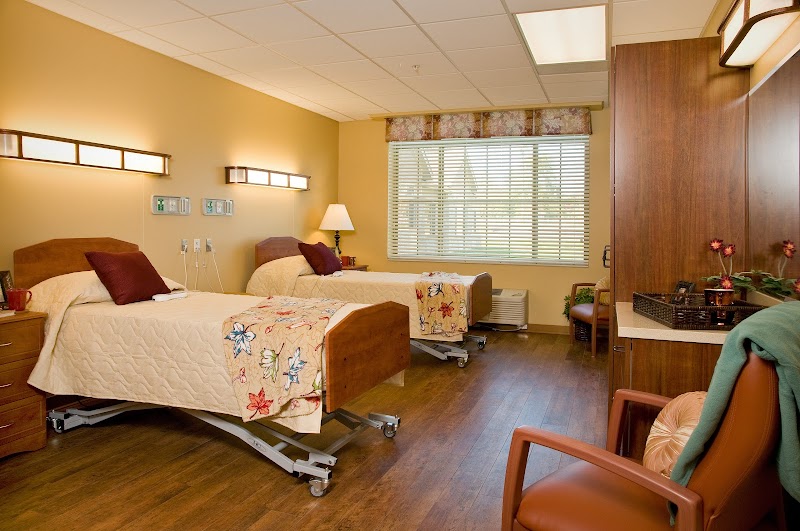
Who Owns and Operates Life Of Hickory Woods?

LIFE CARE CENTER OF HICKORY WOODS is owned by a for-profit company. For-profit facilities operate as businesses with obligations to shareholders or private owners. The facility is operated by LIFE CARE CENTERS OF AMERICA, a chain that manages multiple nursing homes. With 124 certified beds and approximately 111 residents (about 90% occupancy), it is a mid-sized facility located in ANTIOCH, Tennessee.

How Does Life Of Hickory Woods Compare to Other Tennessee Nursing Homes?

Compared to the 100 nursing homes in Tennessee, LIFE CARE CENTER OF HICKORY WOODS's overall rating (4 stars) is above the state average of 2.8, staff turnover (54%) is near the state average of 46%, and health inspection rating (3 stars) is at the national benchmark.

What Should Families Ask When Visiting Life Of Hickory Woods?

Based on this facility's data, families visiting should ask: "Can I visit during a mealtime to observe dining assistance and food quality?" "How do you handle medical emergencies, and what is your hospital transfer rate?" "Can I speak with family members of current residents about their experience?"

Is Life Of Hickory Woods Safe?

Based on CMS inspection data, LIFE CARE CENTER OF HICKORY WOODS has a clean safety record: no substantiated abuse findings (meaning no confirmed cases of resident harm), no Immediate Jeopardy citations (the most serious violation level indicating risk of serious injury or death), and is not on the Special Focus Facility watch list (a federal program monitoring the lowest-performing 1% of nursing homes). The facility has a 4-star overall rating and ranks #1 of 100 nursing homes in Tennessee. While no facility is perfect, families should still ask about staff-to-resident ratios and recent inspection results during their visit.

Do Nurses at Life Of Hickory Woods Stick Around?

LIFE CARE CENTER OF HICKORY WOODS has a staff turnover rate of 54%, which is 8 percentage points above the Tennessee average of 46%. Moderate turnover is common in nursing homes, but families should still ask about staff tenure and how the facility maintains care continuity when employees leave.

Was Life Of Hickory Woods Ever Fined?

LIFE CARE CENTER OF HICKORY WOODS has no federal fines on record. CMS issues fines when nursing homes fail to meet care standards or don't correct problems found during inspections. The absence of fines suggests the facility has either maintained compliance or corrected any issues before penalties were assessed. This is a positive indicator, though families should still review recent inspection reports for the full picture.

Is Life Of Hickory Woods on Any Federal Watch List?

LIFE CARE CENTER OF HICKORY WOODS is not on any federal watch list. The most significant is the Special Focus Facility (SFF) program, which identifies the bottom 1% of nursing homes nationally based on persistent, serious quality problems. Not being on this list means the facility has avoided the pattern of deficiencies that triggers enhanced federal oversight. This is a positive indicator, though families should still review the facility's inspection history directly.