SOMERFIELD AT THE HERITAGE

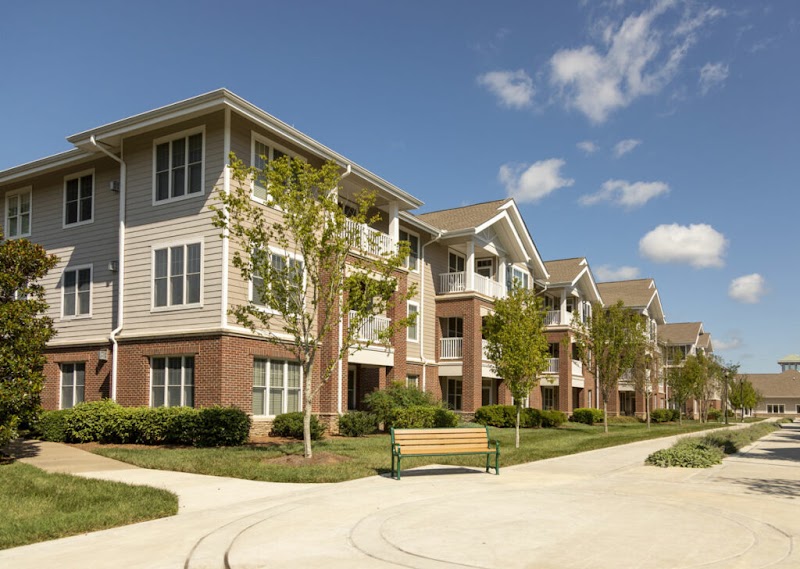
900 HERITAGE WAY, BRENTWOOD, TN 37027 (615) 564-4900
For profit - Limited Liability company 66 Beds LIFE CARE SERVICES Data: November 2025
Trust Grade
85/100
#42 of 298 in TN
Last Inspection: April 2022

Over 2 years since last inspection. Current conditions may differ from available data.

Overview

Somerfield at the Heritage has a Trust Grade of B+, which indicates that it is above average and recommended for consideration. In Tennessee, it ranks #42 out of 298 facilities, placing it in the top half, and it is the best option among five nursing homes in Williamson County. The facility is improving, with a drop in issues from four in 2019 to two in 2022, showing progress in care. Staffing is rated at 4 out of 5 stars, although the turnover rate of 66% is concerning compared to the state average of 48%, suggesting that while some staff remain, there may be challenges in retention. Importantly, there have been no fines reported, indicating good compliance with regulations. However, recent inspections revealed some weaknesses; for instance, the facility did not adequately inform two residents about their right to develop Advance Directives, which is important for their care preferences. Additionally, there was a failure to accurately assess a pressure injury for one resident, potentially affecting their treatment. While the facility provides more RN coverage than 96% of other Tennessee facilities, which helps ensure residents receive necessary medical attention, these incidents highlight areas that need improvement. Overall, Somerfield at the Heritage has strong points, but families should be aware of the concerns raised in the inspections.

Trust Score
B+
85/100
In Tennessee
#42/298
Top 14%
Safety Record
Low Risk
No red flags
Inspections
Getting Better
4 → 2 violations
Staff Stability
⚠ Watch
66% turnover. Above average. Higher turnover means staff may not know residents' routines.
Penalties
✓ Good
No fines on record. Clean compliance history, better than most Tennessee facilities.
Skilled Nurses
✓ Good
Each resident gets 74 minutes of Registered Nurse (RN) attention daily — more than 97% of Tennessee nursing homes. RNs are the most trained staff who catch health problems before they become serious.
Violations
○ Average
6 deficiencies on record. Average for a facility this size. Mostly minor or procedural issues.
★★★★★
5.0
Overall Rating
★★★★☆
4.0
Staff Levels
★★★☆☆
3.0
Care Quality
★★★★★
5.0
Inspection Score
Stable
2019: 4 issues
2022: 2 issues

The Good

  • 4-Star Staffing Rating · Above-average nurse staffing levels
  • Full Sprinkler Coverage · Fire safety systems throughout facility
  • No fines on record

Facility shows strength in staffing levels, fire safety.

The Bad

Staff Turnover: 66%

20pts above Tennessee avg (46%)

Frequent staff changes - ask about care continuity

Chain: LIFE CARE SERVICES

Part of a multi-facility chain

Ask about local staffing decisions and management

Staff turnover is elevated (66%)

18 points above Tennessee average of 48%

The Ugly 6 deficiencies on record

Apr 2022 2 deficiencies
CONCERN (D)

Potential for Harm - no one hurt, but risky conditions existed

Deficiency F0578 (Tag F0578)

Could have caused harm · This affected 1 resident

**NOTE- TERMS IN BRACKETS HAVE BEEN EDITED TO PROTECT CONFIDENTIALITY** Based on policy review, medical record review, and interview, the facility failed to provide information regarding a resident's ...

Read full inspector narrative →
**NOTE- TERMS IN BRACKETS HAVE BEEN EDITED TO PROTECT CONFIDENTIALITY** Based on policy review, medical record review, and interview, the facility failed to provide information regarding a resident's right to develop an Advance Directive for 2 of 11 sampled residents (Resident #49 and #302) reviewed for Advance Directives. The findings include: Review of the facility's policy titled, Advance Directives, dated 12/2016, revealed .Advance directives will be respected in accordance with state law and facility policy .Upon admission, the resident will be provided with written information concerning the right to refuse or accept medical or surgical treatment to formulate an advance directive if he or she chooses to do so . Review of the medical record, revealed Resident #49 was admitted to the facility on [DATE] with diagnoses of Spinal Stenosis, Diabetes Mellitus, Anemia, and Adjustment Disorder with Anxiety. Review of the 5-day Minimum Data Set (MDS) dated [DATE], revealed Resident #49 had a Brief Interview for Mental Status (BIMS) score of 14, which indicated she was cognitively intact. Review of Resident #49's medical record, revealed there was no Advance Directive present and there was no documentation the resident or her legal representative was informed or provided written information regarding her right to develop an Advance Directive upon admission. Review of the medical record, revealed Resident #302 was admitted to the facility on [DATE], with diagnoses of Displaced Spiral Fracture Right Tibia, Chronic Obstructive Pulmonary Disease, Congestive Heart Failure, Hypertension, and Urinary Tract Infection. Review of admission MDS dated [DATE], revealed Resident #302 had a BIMS of 15, which indicated she was cognitively intact. Review of Resident #302's medical record, revealed there was no Advance Directive present and there was no documentation the resident or her legal representative was informed or provided written information regarding her right to develop an Advance Directive upon admission. During an interview on 4/19/2022 at 3:28 PM, the Assistant Director of Nursing (ADON) confirmed that Resident #49 and #302 did not have Advance Directives and there was no documentation the residents or legal representatives were informed or provided written information regarding their right to develop an Advance Directive upon admission.
CONCERN (D)

Potential for Harm - no one hurt, but risky conditions existed

Pressure Ulcer Prevention (Tag F0686)

Could have caused harm · This affected 1 resident

**NOTE- TERMS IN BRACKETS HAVE BEEN EDITED TO PROTECT CONFIDENTIALITY** Based on policy review, medical record review, and interview, the facility failed to accurately assess a pressure injury for 1 o...

Read full inspector narrative →
**NOTE- TERMS IN BRACKETS HAVE BEEN EDITED TO PROTECT CONFIDENTIALITY** Based on policy review, medical record review, and interview, the facility failed to accurately assess a pressure injury for 1 of 1 sampled resident (Resident #205) reviewed for pressure ulcers. The findings include: Review of the facility's policy titled, Pressure Ulcers/Skin Breakdown - Clinical Protocol, dated 4/2018, revealed .the nurse shall describe and document/report the following .Full assessment of pressure sore including location, stage, length, width and depth, presence of exudate . Review of the closed medical record, revealed Resident #205 was admitted to the facility on [DATE] with diagnoses of Parkinson's Disease, Hypertensive Chronic Kidney Disease, Pressure Ulcer of the Right Hip, Diabetes Mellitus, Anemia, Osteoarthritis, Acute Kidney Failure, and Hypertension. Review of the Clinical Note Entry dated 3/3/2022, revealed Resident #205 had a Stage 2 pressure injury on the coccyx that was present on admission to the facility. Review of the admission Minimum Data Set (MDS) dated [DATE], revealed Resident #205 had a Stage 2 pressure injury that was present on admission to the facility. Review of the Clinical Notes Report dated 3/15/2022, revealed .PI [Pressure Injury] to coccyx, stage II [2] .7cm [centimeter] x [by] 7.2cm x 0.2cm, 80% [percent] tan slough [necrotic tissue] to wound bed . Review of the Clinical Notes Report dated 3/22/2022, revealed .PI [Pressure Injury] to coccyx, stage II [2] .8cm x 9.5cm x UTD [unable to determine] [depth], 100% dark brown to yellow, firm adherent tissue to wound bed . During an interview on 4/20/2022 at 1:50 PM, the Director of Nursing (DON), confirmed that Resident #205 had a stage 2 pressure injury to the coccyx that was present on admission to the facility. The DON confirmed that Resident #205's coccyx pressure injury should have been re-classified as a stage 3 on 3/15/2022, when there was 80% slough present, and as an unstageable on 3/22/2022, when the wound depth was unable to be determined due to being 100% covered with a firm adherent tissue.
Jan 2019 4 deficiencies
CONCERN (D)

Potential for Harm - no one hurt, but risky conditions existed

Deficiency F0583 (Tag F0583)

Could have caused harm · This affected 1 resident

**NOTE- TERMS IN BRACKETS HAVE BEEN EDITED TO PROTECT CONFIDENTIALITY** Based on policy review, medical record review, observation, and interview, the facility failed to maintain privacy and confident...

Read full inspector narrative →
**NOTE- TERMS IN BRACKETS HAVE BEEN EDITED TO PROTECT CONFIDENTIALITY** Based on policy review, medical record review, observation, and interview, the facility failed to maintain privacy and confidentiality of medical records for 1 of 5 (Resident #119) sampled residents. The findings include: The facility's undated HIPAA [Health Insurance Portability and Accountability Act]/PRIVACY SAFEGUARDING AND STORING PROTECTED HEALTH INFORMATION policy documented, .The policy of this Community is to ensure, to the extent possible, that PHI [Private Health Information] is not intentionally or unintentionally .disclosed in a manner that would violate the HIPAA Privacy Rule or any other federal or state regulation governing confidentiality and privacy of health information .Access to computer-based PHI shall be limited to staff members who need the information for treatment, payment, or health care operations .Community staff members shall log off their workstation when leaving the work area .Computer monitors shall be positioned so that unauthorized persons cannot easily view information on the screen . Medical record review revealed Resident #119 was admitted to the facility on [DATE] with diagnoses of Trigeminal Neuralgia, Urinary Tract Infection, Hypertension, Cognitive Communication Deficit, Macular Degeneration, Hyperlipidemia, Gastro-esophageal Reflux Disease, Diabetes, Depression, and Mood Disorder. Observations in the Sunflower Hall on 1/29/19 at 8:10 AM, revealed Resident #119's personal health information opened and visible on the computer monitor on the unattended medication cart. Interview with RN #2 on 1/29/19 at 8:15 AM, at the medication cart in the Sunflower Hall, RN #2 was asked if a resident's personal health information should be visible on the computer monitor when the medication cart was unattended. RN #2 stated, No. Interview with the Interim Director of Nursing (DON) on 1/29/19 at 11:10 AM, in the Conference Room, the Interim DON was asked if a resident's personal health information should be visible on the computer monitor when the medication cart was unattended. The DON stated, No ma'am.
CONCERN (D)

Potential for Harm - no one hurt, but risky conditions existed

Pharmacy Services (Tag F0755)

Could have caused harm · This affected 1 resident

**NOTE- TERMS IN BRACKETS HAVE BEEN EDITED TO PROTECT CONFIDENTIALITY** Based on policy review, medical record review, observation, and interview, the facility failed to ensure medications were availa...

Read full inspector narrative →
**NOTE- TERMS IN BRACKETS HAVE BEEN EDITED TO PROTECT CONFIDENTIALITY** Based on policy review, medical record review, observation, and interview, the facility failed to ensure medications were available for administration for 1 of 4 (Resident #269) residents observed during medication pass. The findings include: The facility's Medication Administration Schedule policy revised April 2007documented, .Medications shall be administered according to established procedures . Medical record review revealed Resident #269 was admitted to the facility on [DATE] with diagnoses of Aftercare Following Joint Replacement Surgery, Fracture of the Neck of the Right Femur, Diabetes, Disorder of Kidney and Ureter, Vitamin Deficiency, and Malignant Neoplasm of the Stomach. The Physician Order Sheet dated January 2019 documented, .ergocalciferol (vitamin D2) 2,000 unit tablet .every one day starting 1/19/2019 . Observations on 1/29/19 at 8:50 AM, at the med cart on Sunflower Hall, revealed Registered Nurse (RN) #2 was unable to administer ergocalciferol to Resident #269 because the medication was not available. Review of the January 2019 Medication Administration Record (MAR) revealed ergocalciferol was not administered on 1/26/19,1/27/19 and 1/29/19 because the medication was not available. Interview with the Interim Director of Nursing (DON) on 1/29/19 at 11:10 AM, in the Conference Room, the Interim DON was asked if it was acceptable not to give a medication for 2-3 days because it is not available. The DON stated, No ma'am.
CONCERN (D)

Potential for Harm - no one hurt, but risky conditions existed

Deficiency F0760 (Tag F0760)

Could have caused harm · This affected 1 resident

**NOTE- TERMS IN BRACKETS HAVE BEEN EDITED TO PROTECT CONFIDENTIALITY** Based on review of the GERIATRIC MEDICATION HANDBOOK, 11TH EDITION provided by the American Society of Consultant Pharmacists, p...

Read full inspector narrative →
**NOTE- TERMS IN BRACKETS HAVE BEEN EDITED TO PROTECT CONFIDENTIALITY** Based on review of the GERIATRIC MEDICATION HANDBOOK, 11TH EDITION provided by the American Society of Consultant Pharmacists, policy review, medical record review, observation, and interview, the facility failed to ensure residents were free of a significant medication error when 1 of 4 (Registered Nurse (RN) #1) nurses failed to administer food promptly after a rapid-acting insulin injection. The findings include: 1. The GERIATRIC MEDICATION HANDBOOK, 11TH edition provided by the American Society of Consultant Pharmacists documented, .DIABETES: INJECTABLE MEDICATIONS .NovoLog .Insulin Aspart .Rapid-Acting Insulin .ONSET .15 min .ADMINISTRATION .5-10 minutes prior to meals . 2. The facility's Insulin Administration policy revised on 9/2014, documented, .1. The three key characteristics of insulin are: a. Onset of action-how quickly the insulin reaches the bloodstream and begins to lower blood glucose .Rapid-acting .Onset .10-15 min [minutes] . 3. Medical record review revealed Resident #169 was admitted to the facility on [DATE] with diagnoses of Compression Fracture of the Lumbar Vertebrae, Malignant Neoplasm of the Prostate, Diabetes, and Hypertension. The Physician Order Sheet dated January 2019 documented, .NovoLOG Flexpen U [Unit] .100 unit/mL [milliliter] subcutaneous (SSI) [Sliding Scale Insulin] INSULIN PEN .Therapeutic Range Sliding Scale Insulin .Blood sugar is 141.00-200.00 8 Units . Observations in Resident #169's room on 1/28/19 at 4:45 PM, revealed RN #1 obtained a blood glucose test from Resident #169 with a reading of 172. Observations in Resident #169's room on 1/28/19 at 4:57 PM, revealed RN #1 administered Novolog 8 units to Resident #169. Observations in Resident #169's room on 1/28/19 at 5:45 PM, revealed Resident #169 was delivered a meal tray. Staff failed to provide a meal or substantial snack for 48 minutes after Novolog a rapid-acting insulin was administered. Interview with the Interim Director of Nursing (DON) on 1/29/19 at 11:10 AM, in the Conference Room, the Interim DON was asked how soon should a resident eat after receiving a Novolog injection. The Interim DON stated, With short acting, 15-30 minutes.
CONCERN (D)

Potential for Harm - no one hurt, but risky conditions existed

Deficiency F0761 (Tag F0761)

Could have caused harm · This affected 1 resident

Based on policy review, observation, and interview, the facility failed to ensure medications were securely locked and inaccessible to residents, unauthorized staff and visitors in 1 of 4 medication (...

Read full inspector narrative →
Based on policy review, observation, and interview, the facility failed to ensure medications were securely locked and inaccessible to residents, unauthorized staff and visitors in 1 of 4 medication (Sunflower Medication Cart) storage areas. The findings include: Review of the facility's undated Storage of Medications policy revealed, .Compartments (including, but not limited to, drawers, cabinets, rooms, refrigerators, carts, and boxes.) containing drugs and biologicals shall be locked when not in use or out of sight, and trays or carts used to transport such items shall not be left unattended if open or otherwise potentially available to others . Observations in the Sunflower Hall on 1/29/19 at 8:10 AM, revealed a medication cart unlocked and unattended. The medication cart contained numerous containers of physician prescribed medications. Interview with Registered Nurse (RN) #2 on 1/29/19 at 8:15 AM, at the Sunflower Medication Cart, RN #2 was asked if the medication cart should be unlocked and unattended. RN #2 stated, No. Interview with the Interim Director of Nursing (DON) on 1/29/19 at 11:10 AM, in the Conference Room, the Interim DON was asked if a medication cart should be locked when unattended. The Interim DON stated, Yes, if it is out of sight, it should be locked.
Understanding Severity Codes (click to expand)
Life-Threatening (Immediate Jeopardy)
J - Isolated K - Pattern L - Widespread
Actual Harm
G - Isolated H - Pattern I - Widespread
Potential for Harm
D - Isolated E - Pattern F - Widespread
No Harm (Minor)
A - Isolated B - Pattern C - Widespread

Questions to Ask on Your Visit

  • "Why is there high staff turnover? How do you retain staff?"
  • "Can I speak with families of current residents?"
  • "What's your RN coverage like on weekends and overnight?"

Our Honest Assessment

Strengths
  • • Grade B+ (85/100). Above average facility, better than most options in Tennessee.
  • • No major safety red flags. No abuse findings, life-threatening violations, or SFF status.
  • • No fines on record. Clean compliance history, better than most Tennessee facilities.
Concerns
  • • 66% turnover. Above average. Higher turnover means staff may not know residents' routines.
Bottom line: Generally positive indicators. Standard due diligence and a personal visit recommended.

About This Facility

What is Somerfield At The Heritage's CMS Rating?

CMS assigns SOMERFIELD AT THE HERITAGE an overall rating of 5 out of 5 stars, which is considered much above average nationally. Within Tennessee, this rating places the facility higher than 99% of the state's 100 nursing homes. This rating reflects solid performance across the metrics CMS uses to evaluate nursing home quality.

How is Somerfield At The Heritage Staffed?

CMS rates SOMERFIELD AT THE HERITAGE's staffing level at 4 out of 5 stars, which is above average compared to other nursing homes. Staff turnover is 66%, which is 20 percentage points above the Tennessee average of 46%. High turnover can affect care consistency as new staff learn residents' individual needs.

What Have Inspectors Found at Somerfield At The Heritage?

State health inspectors documented 6 deficiencies at SOMERFIELD AT THE HERITAGE during 2019 to 2022. These included: 6 with potential for harm.

Who Owns and Operates Somerfield At The Heritage?

SOMERFIELD AT THE HERITAGE is owned by a for-profit company. For-profit facilities operate as businesses with obligations to shareholders or private owners. The facility is operated by LIFE CARE SERVICES, a chain that manages multiple nursing homes. With 66 certified beds and approximately 62 residents (about 94% occupancy), it is a smaller facility located in BRENTWOOD, Tennessee.
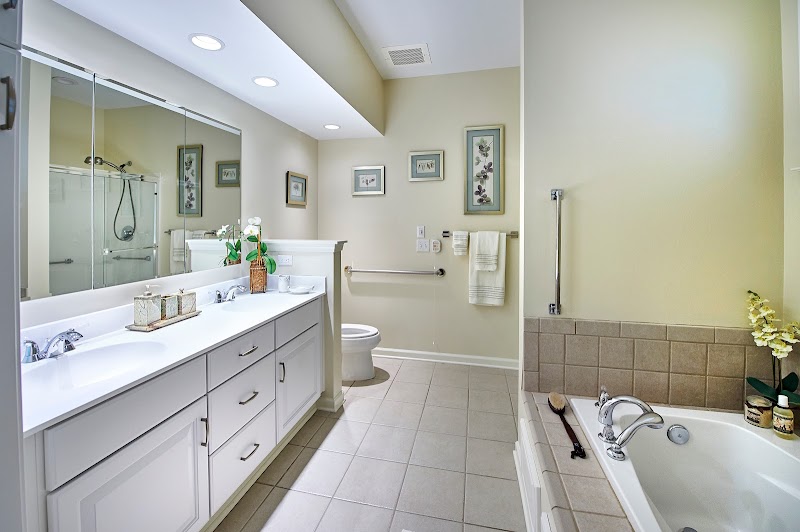
How Does Somerfield At The Heritage Compare to Other Tennessee Nursing Homes?

Compared to the 100 nursing homes in Tennessee, SOMERFIELD AT THE HERITAGE's overall rating (5 stars) is above the state average of 2.9, staff turnover (66%) is significantly higher than the state average of 46%, and health inspection rating (5 stars) is much above the national benchmark.

What Should Families Ask When Visiting Somerfield At The Heritage?

Based on this facility's data, families visiting should ask: "How do you ensure continuity of care given staff turnover, and what is your staff retention strategy?" "Can I visit during a mealtime to observe dining assistance and food quality?" "How do you handle medical emergencies, and what is your hospital transfer rate?" "Can I speak with family members of current residents about their experience?" These questions are particularly relevant given the facility's high staff turnover rate.

Is Somerfield At The Heritage Safe?

Based on CMS inspection data, SOMERFIELD AT THE HERITAGE has a clean safety record: no substantiated abuse findings (meaning no confirmed cases of resident harm), no Immediate Jeopardy citations (the most serious violation level indicating risk of serious injury or death), and is not on the Special Focus Facility watch list (a federal program monitoring the lowest-performing 1% of nursing homes). The facility has a 5-star overall rating and ranks #1 of 100 nursing homes in Tennessee. While no facility is perfect, families should still ask about staff-to-resident ratios and recent inspection results during their visit.

Do Nurses at Somerfield At The Heritage Stick Around?

Staff turnover at SOMERFIELD AT THE HERITAGE is high. At 66%, the facility is 20 percentage points above the Tennessee average of 46%. High turnover means new staff may not know residents' individual needs, medications, or preferences. It can also be disorienting for residents, especially those with dementia who rely on familiar faces. Families should ask: What is causing the turnover? What retention programs are in place? How do you ensure care continuity during staff transitions?

Was Somerfield At The Heritage Ever Fined?

SOMERFIELD AT THE HERITAGE has no federal fines on record. CMS issues fines when nursing homes fail to meet care standards or don't correct problems found during inspections. The absence of fines suggests the facility has either maintained compliance or corrected any issues before penalties were assessed. This is a positive indicator, though families should still review recent inspection reports for the full picture.

Is Somerfield At The Heritage on Any Federal Watch List?

SOMERFIELD AT THE HERITAGE is not on any federal watch list. The most significant is the Special Focus Facility (SFF) program, which identifies the bottom 1% of nursing homes nationally based on persistent, serious quality problems. Not being on this list means the facility has avoided the pattern of deficiencies that triggers enhanced federal oversight. This is a positive indicator, though families should still review the facility's inspection history directly.