THE HEALTH CENTER AT RICHLAND PLACE
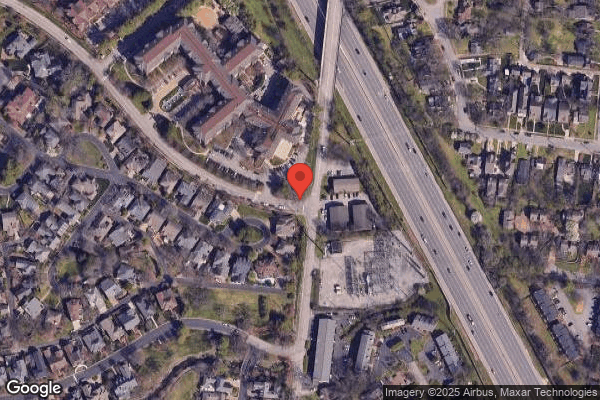
504 ELMINGTON AVENUE, NASHVILLE, TN 37205 (615) 292-4900
Non profit - Other 107 Beds Independent Data: November 2025 2 Immediate Jeopardy citations
Trust Grade
11/100
#150 of 298 in TN
Last Inspection: June 2021

Over 2 years since last inspection. Current conditions may differ from available data.

Overview

The Health Center at Richland Place has received a Trust Grade of F, indicating significant concerns about the facility's quality of care, which is below average. With a state rank of #150 out of 298 in Tennessee, they are in the bottom half of nursing homes, and they rank #8 out of 19 in Davidson County, meaning only a few local options are worse. Unfortunately, the facility is worsening, having increased from three issues in 2024 to five in 2025. Staffing is a relative strength here, with a 4-star rating and a turnover rate of 37%, which is better than the state average of 48%. However, the facility has concerning fines totaling $56,378, higher than 86% of Tennessee facilities, suggesting ongoing compliance problems. There are also serious issues, including a critical incident where a resident with severe cognitive impairment sustained multiple fractures after being left unattended and falling. Another finding indicated a failure to communicate about pressure ulcers, delaying necessary care and worsening the resident's condition. While there are positive aspects, such as good RN coverage, the overall picture raises significant red flags for families considering this nursing home.

Trust Score
F
11/100
In Tennessee
#150/298
Top 50%
Safety Record
High Risk
Review needed
Inspections
Getting Worse
3 → 5 violations
Staff Stability
○ Average
37% turnover. Near Tennessee's 48% average. Typical for the industry.
Penalties
✓ Good
$56,378 in fines. Lower than most Tennessee facilities. Relatively clean record.
Skilled Nurses
✓ Good
Each resident gets 55 minutes of Registered Nurse (RN) attention daily — more than average for Tennessee. RNs are trained to catch health problems early.
Violations
⚠ Watch
23 deficiencies on record. Higher than average. Multiple issues found across inspections.
★★★☆☆
3.0
Overall Rating
★★★★☆
4.0
Staff Levels
★★★★★
5.0
Care Quality
★★☆☆☆
2.0
Inspection Score
Stable
2024: 3 issues
2025: 5 issues

The Good

  • 4-Star Staffing Rating · Above-average nurse staffing levels
  • 5-Star Quality Measures · Strong clinical quality outcomes
  • Full Sprinkler Coverage · Fire safety systems throughout facility
  • No fines on record
  • Staff turnover below average (37%)

    11 points below Tennessee average of 48%

Facility shows strength in staffing levels, quality measures, fire safety.

The Bad

3-Star Overall Rating

Near Tennessee average (2.8)

Meets federal standards, typical of most facilities

Staff Turnover: 37%

Near Tennessee avg (46%)

Typical for the industry

Federal Fines: $56,378

Above median ($33,413)

Moderate penalties - review what triggered them

The Ugly 23 deficiencies on record

2 life-threatening 3 actual harm
Aug 2025 5 deficiencies
CONCERN (D) 📢 Someone Reported This

A family member, employee, or ombudsman was alarmed enough to file a formal complaint

Potential for Harm - no one hurt, but risky conditions existed

Resident Rights (Tag F0550)

Could have caused harm · This affected 1 resident

**NOTE- TERMS IN BRACKETS HAVE BEEN EDITED TO PROTECT CONFIDENTIALITY** Based on policy review, medical record review, observation, and interview, the facility failed to provide care and services to p...

Read full inspector narrative →
**NOTE- TERMS IN BRACKETS HAVE BEEN EDITED TO PROTECT CONFIDENTIALITY** Based on policy review, medical record review, observation, and interview, the facility failed to provide care and services to promote privacy for 2 of 5 (Resident #1 and Resident #4) sampled residents reviewed for dignity. The findings include: 1. Review of the facility's Patient Rights document in the admission handbook dated 9/2024, revealed .PRIVACY.we provide you with privacy so that you may maintain a dignified existence, self-determination, and communication with and access to persons and services inside and outside the center.People not directly involved in your medical care will not be present without your consent.Privacy is also maintained during toileting, bathing and other activities of personal hygiene.Each center shall respect a patient's right to the use and quiet enjoyment of his or her personal room.patient's shall have the right to close the door to their room if they wish. 2. Review of the medical record revealed Resident #1 was admitted to the facility on [DATE] with diagnoses including Pneumonia, Acute Respiratory Failure, Congestive Heart Failure, and Nicotine Dependence. Review of the admission Minimum Data Set (MDS) dated [DATE], revealed Resident #1 had a Brief Interview for Mental Status (BIMS) score of 15, indicating intact cognition. Observation in the Resident's room on 8/5/2025 at 8:30 AM, revealed Resident #1 was eating breakfast and visiting with a friend as Licensed Practical Nurse (LPN) C opened the door and entered the resident's room without knocking or asking permission to do so. During an observation and interview in Resident #1's room on 8/5/2025 at 11:45 AM, LPN C walk into Resident #1's room without knocking on the door or asking permission to enter, stepped into bathroom, then came out without speaking to Resident #1. Resident stated, They do that almost daily, come right on in without asking. Observation in Resident #1's room on 8/6/2025 at 9:00 AM, revealed Resident #1 sat on her bed talking on her cell phone as CNA H opened the door without knocking or asking permission to enter. CNA H proceeded to go into Resident #1's bathroom to wash her hands then she exited the room without speaking to the resident. Observation in Resident #1's room on 8/6/2025 at 12:15 PM, revealed Resident #1 speaking to Nurse Practitioner, as Case Worker I opened door and entered Resident #1's room, without knocking or asking permission to enter. Case Worker I turned around and left the room without speaking to Resident #1. 3. Review of the medical record revealed Resident #4 was admitted to the facility on [DATE], with diagnoses including Congestive Heart Failure, Dependence on Supplemental Oxygen, Chronic Obstructive Pulmonary Disease, and Anxiety. Review of the annual Minimum Data Set (MDS) dated [DATE], revealed a Brief Interview for Mental Status (BIMS) score of 15 indicating intact cognition. During an observation and interview in Resident #4's room on 8/6/2025 at 12:30 PM, Resident #4 was sitting in bed feeding herself and family was at the bedside, as CNA J opened the door and entered the room without knocking or asking permission to enter. CNA J went into the bathroom put something in the garbage can and turned and left without speaking to Resident #4. Resident #4 confirmed the staff do not knock and ask permission to enter her room each time. During an interview on 8/6/2025 at 1:45 PM, the Director of Nursing confirmed staff should knock on the residents' door and ask for permission before entering a resident's room.
CONCERN (D) 📢 Someone Reported This

A family member, employee, or ombudsman was alarmed enough to file a formal complaint

Potential for Harm - no one hurt, but risky conditions existed

Respiratory Care (Tag F0695)

Could have caused harm · This affected 1 resident

**NOTE- TERMS IN BRACKETS HAVE BEEN EDITED TO PROTECT CONFIDENTIALITY** Based on policy review, medical record review, observation, and interview, the facility failed to follow Physician's Orders for ...

Read full inspector narrative →
**NOTE- TERMS IN BRACKETS HAVE BEEN EDITED TO PROTECT CONFIDENTIALITY** Based on policy review, medical record review, observation, and interview, the facility failed to follow Physician's Orders for oxygen administration and failed to store, change, and date respiratory supplies for 2 of 3 (Resident #1 and #2) sampled residents reviewed for respiratory care. The findings include; Review of the facility's policy titled, Oxygen Administration, dated 2001, revealed .The purpose of this procedure is to provide guidelines for safe oxygen administration.Verify that there is a physician's order for this procedure. Review the physician's orders.for oxygen administration.Portable oxygen cylinder (strapped or secured in a stand). Review of the medical record revealed Resident #1 was admitted to the facility on [DATE], with diagnoses including Pneumonia, Acute Respiratory Failure, Congestive Heart Failure, and Nicotine Dependence. Review of the admission Minimum Data Set (MDS) dated [DATE], revealed Resident #1 had a Brief Interview for Mental Status (BIMS) score of 15, indicating intact cognition. Review of the Physician's Order dated 7/22/2025, revealed .Oxygen at 4-6 L/min [Liters per minute] via [per] nasal cannula every shift.Oxygen equipment maintenance once a day on Tues [Tuesday].Special Instructions: Change connector and humidity bottle; have new respiratory bag at bedside. Observation and interview in Resident #1's room on 8/4/2025 at 4:45 PM, revealed an inhalation nebulizer machine at bedside laying on the resident's dressing table at the end of her bed. The mask was laying on the table not covered. Resident #1's oxygen concentrator was at the bedside on 3 liters oxygen per binasal cannula (3 L/min BNC) with a long undated oxygen tubing on the floor. A full unsecured portable oxygen cylinder was sitting on the floor at the end of the resident's bed. Resident #1 was asked when her oxygen tubing was changed. Resident #1 stated, They gave me this on the day I was admitted . During an interview on 8/4/2025 at 5:05 PM, Registered Nurse (RN) A was asked how often the oxygen tubing is to be changed and should it be dated. RN A stated .I think its weekly.the respiratory therapist changes the tubing, and the oxygen supplies, we don't do that.I don't know about the dating of tubing. RN A was asked how many liters of oxygen Resident #1 was ordered and if the portable oxygen cylinder should be in the resident's room unsecured. RN A stated, 4 to 6 liters of oxygen.I will check her settings. the portable cylinder should be in a stand. Observation in Resident #1's room on 8/5/2025 at 8:30 AM, revealed a nebulizer breathing treatment machine at bedside with a nebulizer mask covered with a dried white thick substance inside the mask, laying on the table uncovered, and the oxygen tubing was undated and on the floor. The oxygen concentrator was set on 3L/min BNC. A full portable unsecured oxygen cylinder was sitting at the end of the Resident #1's bed. During an interview on 8/5/2025 at 9:00 AM, LPN A was asked what oxygen setting was ordered for Resident #1 and if the tubing should be dated. LPN A stated, She [Resident #1] is usually on 5 liters of oxygen.I will check her settings.Nurses don't change the tubing, respiratory does that, but I think the respiratory therapist has been off. LPN A was asked if Resident #1 was on respiratory treatments, and should the mask be covered. LPN A stated .She doesn't have an order for respiratory treatments.she shouldn't have the nebulizer at her bedside.but the mask should always be covered when not in use. LPN A was asked if the full unsecured portable oxygen cylinder should be in the resident's room. LPN A stated, No, not without a stand. 2. Review of medical record revealed Resident #4 was admitted to the facility on [DATE], with diagnoses including Congestive Heart Failure, Dependence on Supplemental Oxygen, Chronic Obstructive Pulmonary Disease, and Anxiety. Review of annual Minimum Data Set (MDS) dated [DATE], revealed a Brief Interview for Mental Status (BIMS) score of 15 indicating intact cognition. Review of the Physician Order dated 2/27/2025, revealed .ipratropium-albuterol solution for nebulization; 0.5 mg [milligram]/ [per] 3 ml [milliliter].every 6 hours PRN [as needed]. Review of Physician Order dated 6/6/2025, revealed .Oxygen at 2-4 L/min via nasal cannula. Review of the Physician Order dated 7/16/2025, revealed .Oxygen equipment maintenance once a day.Change and date oxygen tubing, connector and humidity bottle; have a new respiratory bag at bedside. Observation in Resident #4's room on 8/5/2025 at 11:30 AM and 4:45 PM, revealed the oxygen tubing and humidifier water bottle with no date, and a nebulizer mask with a thin film of white substance on the inside of the mask, laying on the bedside table that was not covered. During an interview on 8/5/2025 at 5:00 PM, LPN B was asked if the oxygen tubing and humidifier water bottle should be dated and if the nebulizer mask should be covered. LPN B stated, I think it should be dated.the RT [Respiratory Therapist] is responsible for that.the nebulizer mask should be covered or in a plastic bag. During a telephone interview on 8/6/2025 at 12:30 PM, the Respiratory Therapist (RT) was asked should a portable full oxygen cylinder be stored in a resident room. The RT stated .it should only be in a patient room if it is secured in a stand or a strap on the back of a wheelchair.oxygen storage is secured in a stand and locked behind a closed door with a keypad. The RT was asked how often oxygen tubing, and the humidified water bottle was to be changed and should the supplies have a date on them. The RT confirmed the oxygen tubing, and the humidified water bottle should be dated and changed weekly. The RT was asked how the nebulizer mask is stored when not in use and if the oxygen tubing should be on the floor. The RT stated The nebulizer mask should be cleaned and stored after each use preferably in a plastic bag.the tubing should be off the floor if possible. Durin an interview on 8/6/2025 at 1:30 PM, the Director of Nursing confirmed oxygen tank storage should be secured in a stand or behind a locked door, oxygen settings should follow the Physician orders, and oxygen equipment should be clean, changed weekly and dated.
CONCERN (D) 📢 Someone Reported This

A family member, employee, or ombudsman was alarmed enough to file a formal complaint

Potential for Harm - no one hurt, but risky conditions existed

Pharmacy Services (Tag F0755)

Could have caused harm · This affected 1 resident

**NOTE- TERMS IN BRACKETS HAVE BEEN EDITED TO PROTECT CONFIDENTIALITY** Based on policy review, medical record review, observation, and interview, the facility failed to ensure Physician Orders were w...

Read full inspector narrative →
**NOTE- TERMS IN BRACKETS HAVE BEEN EDITED TO PROTECT CONFIDENTIALITY** Based on policy review, medical record review, observation, and interview, the facility failed to ensure Physician Orders were written and documented when 1 of 3 (Resident #1) sampled residents received medications without a written Physician Order for a respiratory breathing treatment. The findings include: 1. Review of the facility's policy titled, MEDICATION ADMINISTRATION-GENERAL GUIDELINES dated 2/25/2025, revealed .Medications are administered as prescribed in accordance with good nursing principles and practices and only by persons legally authorized to do so .Before administering a medication, the nurse should assure he/she is administering to the correct patient, verify the medication, dose, time and route .The medication administration record (MAR) is always employed during medication administration .the physician's orders are checked .Medications are administered in accordance with written orders of the prescriber . Review of the facility's Patient Rights document in the admission handbook revised 9/2024, revealed .MEDICATION AND TREATMENT DECISIONS .Medical Oversight .Medications and treatments are ordered by and given under the general supervision of your attending physician . Review of the facility's policy titled, PATIENT CARE POLICIES, revised 3/2025, revealed .RESPIRATORY THERAPY .including inhalation therapy, will be given only upon the order of a physician or physician extender . 2. Review of the medical record revealed Resident #1 was admitted to the facility on [DATE], with diagnoses including Pneumonia, Acute Respiratory Failure, Congestive Heart Failure, and Nicotine Dependence. Review of the admission Minimum admission Data Set (MDS) dated [DATE], revealed Resident #1 had a Brief Interview for Mental Status (BIMS) score of 15 indicating intact cognition. During observation and interview in Resident #1's room on 8/5/2025 at 10:30 AM, Resident #1 asked for a respiratory breathing treatment. The facility's Nurse Practitioner (NP) entered room and stated to Resident #1 that she didn't feel like she needed a breathing treatment related to it would increase her heart rate. Resident #1 stated she received a breathing treatment the day before, pointing to her respiratory breathing treatment machine at her bedside. Review of the Resident #1's medical record revealed no Physician's Order for respiratory treatments. Review of Resident #1's MAR dated 7/2025 and 8/2025, revealed no documentation related to receiving a respiratory treatment. During an interview on 8/5/2025 at 11:15 AM, Licensed Practical Nurse (LPN) A confirmed no Physician Order or documentation of a respiratory treatment was noted in Resident #1's medical record. During observation and interview on 8/6/2025 at 8:30 AM, Resident #1 stated she would like to have a respiratory breathing treatment since she had one last night. Review of Resident #1's medical record revealed no documentation of a respiratory treatment administered. During an interview on 8/6/025 at 8:45 AM, Registered Nurse (RN) A confirmed she gave Resident #1 a respiratory treatment on 8/4/2025. RN A stated, .I don't see a Physician Order for respiratory treatments in her chart . RN A was asked did she see documentation of the resident's lung sounds or vital signs documented in her medical record or where she did receive the respiratory treatment. RN A stated, No I don't see any documentation of that . RN A was asked if she administered a respiratory treatment to Resident #1 without a Physician Order. RN A stated, Yes. RN A was asked if she documented the assessment of the Resident's lung sounds or vital signs before and after her respiratory treatment. RN A stated, No. RN A was asked should she administer medications without a written physician's order and should that be documented in the medical record. RN A stated There should be an order, and the respiratory treatment should be documented .as well as lung assessment before and after . During an interview on 8/6/2025 at 9:00 AM, the Director of Nursing (DON) confirmed Resident #1 received respiratory treatments on 8/4/2025 and 8/5/2025 without a Physician's Order. The DON stated, Residents should have a written Physician Order prior to administering medications and the medical record should document all medications administered. During an interview on 8/6/2025 at 1:30 PM, the Nurse Practitioner (NP) was asked should a resident receive medications without a Physician Order. The NP stated, Of course not .I completed an assessment today and she [Resident #1] had rales to both lower lobes [lungs] so she can now have respiratory treatments every 4 hours as needed for shortness of breath .
CONCERN (D) 📢 Someone Reported This

A family member, employee, or ombudsman was alarmed enough to file a formal complaint

Potential for Harm - no one hurt, but risky conditions existed

Medical Records (Tag F0842)

Could have caused harm · This affected 1 resident

**NOTE- TERMS IN BRACKETS HAVE BEEN EDITED TO PROTECT CONFIDENTIALITY** Based on policy review, medical record review, observation, and interview, the facility failed to provide care and services to p...

Read full inspector narrative →
**NOTE- TERMS IN BRACKETS HAVE BEEN EDITED TO PROTECT CONFIDENTIALITY** Based on policy review, medical record review, observation, and interview, the facility failed to provide care and services to promote privacy of medical records for 2 of 3 (Resident #1 and Resident #3) sampled residents reviewed during medication administration. The findings include: Review of the facility's Patient Rights document dated 9/2024, revealed .MEDICAL RECORDS.A record kept of Physician's Orders, Progress Notes and Professional documentation which is called your Medical Record.your personal and medical records are kept confidential and are used only by individuals involved in your care. Review of the medical record revealed Resident #1 was admitted to the facility on [DATE], with diagnoses including Pneumonia, Acute Respiratory Failure, Congestive Heart Failure, and Nicotine Dependence. Observation on 2nd floor short hall across from the elevators on 8/4/2025 at 4:10 PM, revealed a medication cart with the laptop open showing Resident #1's personal information and medications on the laptop screen. During an interview on the 2nd floor across from the elevators on the short hall on 8/4/2025 at 4:18 PM, Registered Nurse (RN) A was asked should Resident #1's personal information and the medication administration record (MAR) be visible for staff and visitors to see. RN A stated, No, I thought I had it [laptop] closed most of the way. Observation during medication administration on 8/4/2025 at 4:55 PM, revealed RN A walked away from the medication cart and into Resident #1's room, while leaving Resident #1's medical record visible on the laptop screen. The Nurse was asked if the laptop MAR should be visible exposing the Resident's personal information. RN A stated No.it shouldn't have been. Review of the medical record revealed Resident #3 was admitted to the facility on [DATE], with diagnoses including Diabetes, Hypertension, and Orthopedic aftercare of Laminectomy/fusion. Observation on the 2nd floor outside of Resident #3's room on 8/5/2025 at 3:50 PM, revealed RN B walked away from his medication cart during medication administration, leaving his laptop open exposing Resident #3's personal information and MAR on the laptop screen. During an interview on 8/5/2025 at 5:10 PM, RN B was asked should the Resident's (Resident #3) private information including his MAR be left exposed for staff and visitors to see. RN B stated, No. During an interview on 8/6/2025 at 9:10 AM, the Director of Nursing confirmed the Residents' private information and MARs should not be exposed for staff and visitors and visitors to see.
CONCERN (D) 📢 Someone Reported This

A family member, employee, or ombudsman was alarmed enough to file a formal complaint

Potential for Harm - no one hurt, but risky conditions existed

Infection Control (Tag F0880)

Could have caused harm · This affected 1 resident

**NOTE- TERMS IN BRACKETS HAVE BEEN EDITED TO PROTECT CONFIDENTIALITY** Based on policy review, Centers for Disease Control and Prevention Guideline (CDC) review, observation, and interview, the facil...

Read full inspector narrative →
**NOTE- TERMS IN BRACKETS HAVE BEEN EDITED TO PROTECT CONFIDENTIALITY** Based on policy review, Centers for Disease Control and Prevention Guideline (CDC) review, observation, and interview, the facility failed to ensure practices to prevent the potential spread of infection were maintained for medication administration for 3 of 3 (Resident #1, #2 and #3) sampled residents reviewed receiving medications, when 3 of 3 nurses (Registered Nurse (RN) A, RN B, and Licensed Practical Nuse (LPN) C) failed to clean the site prior to administering a transdermal patch, failed to perform hand hygiene before and after glove use, and failed to disinfect re-usable equipment. The findings include: 1. Review of the facility's policy titled, Hand Hygiene, dated 2/2025, revealed .PURPOSE .To decrease the number of microorganisms, preventing cross contamination between staff and patients .Provide hand hygiene before and after contact with each patient .and before and after removal of gloves . Review of the facility's policy titled, SPECIFIC MEDICATION ADMINISTRATION PROCEDURES: Transdermal Drug Delivery System (Patch) Application dated 2/25/2025, revealed .Wash hands or use facility-approved sanitizer .cleanse area of old patch with a clean water wet gauze and pat dry with another gauze pad if needed .Cleanse area where new patch will be placed using clean water wet gauze pad and pat dry with another gauze pad if needed . Review of the CDC Guidelines dated 3/24/2024, revealed .Considerations for Reducing Risk of infections.re-usable equipment must be cleaned before and after each patient use. 2. Review of the medical record revealed Resident #1 was admitted to the facility on [DATE] with diagnoses including Pneumonia, Acute Respiratory Failure, Congestive Heart Failure, and Nicotine Dependence. Review of Resident #1's Physician Order dated 7/24/2025, revealed .Nicotine patch 24 hour: 7mg [milligram]/ [per] 24hr[hours]: 1 patch; transdermal .apply patch to a new area of skin daily .once a day . Observation in Resident #1's room on 8/4/2025 at 4:30 PM, revealed Registered Nurse (RN) A administering a transdermal patch. RN A failed to perform hand hygiene prior to applying gloves while applying the transdermal patch. RN A failed to clean Resident #1's upper arm prior to applying the medication patch. During an interview on 8/4/2025 at 4:50 PM, RN A was asked if the transdermal site should be cleaned prior to administering a medicated patch and when hand hygiene should be performed. RN A stated, Yes, I should have cleaned my hands before applying gloves and I should clean the site before applying the medication patch . 3.Review of the medical record revealed Resident #2 was admitted to the facility on [DATE] with diagnoses including Contusion of Liver, Diabetes, and Hypertension. Observation in Resident #1'and Resident #2's room on 8/5/2025 at 8:27AM, revealed LPN C using a blood pressure cuff to obtain the residents' vital signs. After administering Resident #1's medications, LPN C proceeded to obtain Resident #2's (roommate) vital signs using the same blood pressure cuff on Resident #2 without cleaning the blood pressure cuff before and after each resident use. LPN C failed to perform hand hygiene after using the BP machine. LPN C exited the residents' room and returned to the cart and signed off the medical record without performing hand hygiene. During an interview on 8/5/2025 at 9:05 AM, LPN C was asked if the multi-use blood pressure cuff is cleaned between residents. LPN A stated, yes I try to, but I didn't do that and should have to prevent the spread of any kind of infection . LPN C was asked if she performed hand hygiene after contact with the BP machine or after contact with each resident. LPN C stated, No but I should . 4. Review of the medical record revealed Resident #3 was admitted to the facility on [DATE] with diagnoses including Diabetes, Hypertension, and Orthopedic aftercare of Laminectomy/fusion. Observation in Resident 3's room on 8/5/2025 at 3:50 PM, revealed RN B preparing to obtain a glucometer check. RN B applied clean gloves without performing hand hygiene. RN B proceeded to clean the glucometer with a bleach wipe, put the glucometer down on a barrier, removed his dirty gloves, re-applied clean gloves, without performing hand hygiene, obtained an Accu-Chek, disposed of glucometer strip in sharps container, removed gloves then left the room without performing hand hygiene. RN B then put on clean gloves, without hand hygiene, to clean the used glucometer, he then removed dirty gloves and signed out his glucometer reading in the resident's medical record, and did not perform hand hygiene. During an interview on 8/5/2025 at 4:20 PM, RN B was asked if he should perform hand hygiene before and after donning and doffing gloves and after cleaning re-useable glucometer. RN B stated, Yes. During an interview on 8/6/2025 at 8:45 AM, the Director of Nursing (DON) confirmed hand hygiene should be performed before and after glove use. The DON confirmed the Licensed Nurse should clean a resident's skin prior to administering a transdermal patch and the staff should clean a multi-use BP cuff before and after each resident.
Mar 2024 3 deficiencies 2 IJ
CRITICAL (J) 📢 Someone Reported This

A family member, employee, or ombudsman was alarmed enough to file a formal complaint

Immediate Jeopardy (IJ) - the most serious Medicare violation

Accident Prevention (Tag F0689)

Someone could have died · This affected 1 resident

**NOTE- TERMS IN BRACKETS HAVE BEEN EDITED TO PROTECT CONFIDENTIALITY** Based on facility policy review, medical record review, and interview, the facility failed to provide adequate supervision and a...

Read full inspector narrative →
**NOTE- TERMS IN BRACKETS HAVE BEEN EDITED TO PROTECT CONFIDENTIALITY** Based on facility policy review, medical record review, and interview, the facility failed to provide adequate supervision and assistance for 1 of 5 (Resident #1) sampled residents reviewed for accident hazards. Resident #1, a non-ambulatory resident with severe cognitive impairment, was left, unattended, sitting on the side of the bed, had an unwitnessed fall, and sustained multiple fractures (left femur, pelvis, left humerus, ribs, and vertebrae). Resident #1 was transferred to the hospital and admitted to level 3 trauma services. The facility's failure to provide adequate supervision and assistance resulted in an Immediate Jeopardy (IJ), a situation in which the provider's noncompliance with one or more requirements of participation has caused, or is likely to cause, serious injury, harm, impairment, or death to a resident. The Administrator was notified of the Immediate Jeopardy on [DATE] at 5:00 PM in the Private Dining Room. The facility was cited at F-689 with a scope and severity of J, which is Substandard Quality of Care. The Immediate Jeopardy was effective [DATE] and is on-going. A partial extended survey was conducted [DATE] through [DATE]. The facility is required to submit a Plan of Correction. The finding include: Review of the facility's policy titled, 205 Incident and Accident Process, dated [DATE] revealed, .Some examples of incidents/accidents are: falls, found on floor .When any incident results injury . Injury is defined, for reporting purposes, as, Significant injury including: Fracture or dislocation of bones or joints . Review of the facility's policy titled, [Named Facility] Falls Management Process Resource, dated [DATE] revealed, .It is to assist centers in providing individualized, person-centered care, and improving their fall processes and outcomes .When a fall occurs, careful evaluation and investigation, along with immediate intervention during the first 24 hours, can help identify risk, contributing factors, and prevent future incidents .Screening at admission, quarterly, annually and change of condition are key identifying patients at high risk of a fall .Assessment: Past history of fall is the single best indicator of future falls. Ideally, assessment begins prior to the patient being admitted with review of hospital records .Patient assessed via Morse Fall Scale in EHR [Electronic Health Records] on admission. Baseline Care Plan created with interventions based on needs and risks .Develop care plans for patients with risks of falls. Care plans should include appropriate interventions, proactive approaches to prevent falls, and be individualized to the patient .Investigate Fall Circumstances: Even when a patient is found on the floor after an unwitnessed fall .All licensed nursing staff should be trained in the immediate fall response, a detailed investigation, appropriate documentation, and immediate interventions . Review of the medical record revealed Resident #1 was admitted to the facility on [DATE] with diagnoses which included Type 2 Diabetes Mellitus, History of Falling, Contusion of Scalp, Subsequent Encounter, Alzheimer's Disease, Dementia, Psychotic Disturbance, Mood Disturbance, and Anxiety, Muscle Weakness (Generalized), and Other Abnormalities of Gait and Mobility. Resident #1 was transferred and discharged [DATE]. Review of the Baseline Care Plan dated [DATE] for Resident #1 revealed, .Fall Risk - Will have risk for falls with injury addressed and minimized, Call light within reach, Bed in lowest position. Educate on call light use .ADL [Activities of Daily Living] needs will be met with staff assistance . Resident #1 had severe cognitive impairment, attempts to provide resident education, demonstration, or instructions were inappropriate care plan interventions for a severely cognitively impaired resident. Resident #1 was unable to retain information, or follow instructions based on the Alzheimer's disease diagnosis and memory impairment. Review of the Fall assessment dated [DATE] for Resident #1 revealed, .History of Falls .Weak Gait [walking pattern]. Overestimates, Forgets Limitations .Level: High Risks for Falls . Review of the Functional Abilities assessment dated [DATE] revealed Resident #1 refused mobility assessment and was dependent on staff for assistance. Review of the Physical Therapy (PT) Evaluation and Plan of Treatment dated [DATE] for Resident #1 revealed, .Pt [Patient] presents with severe apprehension for all movement and noted to be short of breath at the idea of movement. Pt refused to participate in bed mobility. Pt appears anxious at the thought of movement. Pt is at risk for falls . Review of the Occupational Therapy (OT) Evaluation and Plan of Treatment dated [DATE] for Resident #1 revealed, .Patient with dementia requiring repetition of structured task to facilitate new learning and Severity of functional limitations . Review of the Physical Therapy Treatment Encounter Notes dated [DATE] for Resident #1 revealed, .pt [patient] refused to participate in functional mobility beyond ankle pumps .Multiple requests for bed mobility were made, with pt appearing anxious at the thought of movement .Complexities/Barriers Impacting Session: significant dementia and apprehension of movement . Review of the Skilled Nurse's Note dated [DATE] for Resident #1 revealed, .Thinking ability- Periods of altered perception, Abilities vary .Mood-Anxious, restless, fidgety .Education provided this shift- Anxiety management, Fall prevention, Pain management .Safety management/fall prevention-Floor mats, Low bed . Review of the Skilled Nurse's Note dated [DATE] for Resident #1 revealed, .Daily Decision Making-Moderately impaired .Sometimes understands .Thinking ability- Abilities vary .Mood-Anxious, restless, fidgety .Education provided this shift- Anxiety management, Fall prevention, Orthopedic precautions .Safety management/fall prevention-Up with assistance only, Low bed, Education for fall prevention . Resident #1 had severe cognitive impairment and was likely unable to retain fall prevention education. Review of the admission Minimum Data Set (MDS) dated [DATE] for Resident #1 revealed a Brief Interview for Mental Status (BIMS) score of 3 which indicates severe cognitive impairment. Further review revealed, .Mental Status: Inattention, Altered Level of Consciousness . Behavior: Rejection of Care present occurred 1-3 days .Needs help with self-care .Fall in last 6 months .Indoor Mobility Independent .Upper extremity movement -impaired on one side. Mobility assessment-Resident refused, has manual wheelchair .Bowel/Bladder incontinence. Falls since admission: Yes, No injury. No injury .Medications: Antidepressant and Diuretic .Occupational Therapy and Physical Therapy eval [evaluation] . The admission MDS assessment dated [DATE] inaccurately documented Resident #1 was Independent for indoor mobility. Review of the Physical Therapy Treatment Encounter Notes dated [DATE] for Resident #1 revealed, .Pt. [patient] assisted with bed mobility, from sitting EOB [End of Bed] to supine with Mod A [moderate assistance] in order to lift BLEs [Bilateral lower extremity] up into bed. No further mobility able to be completed at this time due to pt.'s [patient] increased anxiety and agitated behaviors .Response to Session Interventions: PT [Physical Therapy] session limited due to pt. [patient] unable to perform any functional mobility due to increased anxiety and agitated behaviors .Co-Treatment Details .with OT for safety as pt. [patient] requires two-person assistance due to cognitive deficits, increased anxiety, and significant fear of falling . Review of the Occupational Therapy Treatment Encounter Notes dated [DATE] for Resident #1 revealed, .pt [patient] exhibiting increasing anxiety and agitation w/ all mobility tasks . Review of the incident report dated [DATE] at 6:51 PM by Licensed Practical Nurse (LPN) C revealed, .Loud thud was heard, patient found on floor. Prior to fall .[Resident #1] was lying in bed, got up abruptly .unwitnessed. c/o [complains of] pain, clutching left hip when transferred back to bed .Pain-Moderate '4' 1 to 10 scale. Injury possibly left hip .Unable to complete ROM [Range of Motion]. Lethargic, Uncooperative, seeming not to understand questions, unable to follow instructions .Prior to fall .more confused. Staff member reported walking passed [past] resident's room when he heard a very loud thud .CNA [Certified Nursing Assistant] F had just exited patient's room. Patient was found lying in floor on her side .Patient lifted by staff into chair to complete assessment for injury. Patient stuporous [a state of near unconsciousness], unable to indicate where she is hurting. Left arm seemed limp. Lifted resident into bed, patient clutched her left hip, moaned in pain . Review of the Post Fall Checklist dated [DATE] revealed, .Sent to hospital. Hit Head: Y [Yes] Neuro Checks Initiated N [No] .Transfer to hospital . Review of the SNF/NF [Skilled Nursing Facility/Nursing Facility] to Hospital Transfers Form dated [DATE] revealed, .Primary diagnosis(es) for admission: Recent fall .Reason(s) for transfer: Unable to Determine if Patient Sustained Any Fractures . Review of the SBAR [Situation, Background, Appearance, Review] Communication Form dated [DATE] created by RN [Registered Nurse] A for Resident #1 revealed, .The change in condition, symptoms, or signs observed and evaluated is/are resident fell in room in the doorway .Mental Status Evaluation: Altered level of consciousness .Functional Status Evaluation: Weakness (general) .pain .Left hip area and left arm .Does the resident show non-verbal signs of pain (for residents with dementia) .Facial grimacing and screaming .Summarize your observations and evaluation: resident fell in room, has complaints of pain to left hip and left arm .Summarize your observations and evaluation: resident fell in room, has complaints of pain to left hip and left arm .Recommendations of Primary Clinicians: send to ER [emergency room] for evaluation . Review of the Hospital Medical Record for Resident #1 revealed, XXX[DATE] Emergency Dept. MD [Medical Director] progress note .presented after mechanical ground level fall . CT [Computed Tomography] scan with the injuries as follows: Comminuted and displaced left intertrochanteric femur fracture [left hip], left humeral head [left upper arm] fracture .Subacute right obturator ring fracture [pelvis], Multiple nondisplaced rib fractures [4-6 ribs] and Severe burst deformity of the T12 vertebral body [an injury in which the vertebra, the primary bone of the spine, breaks in multiple directions] .This is favored to be acute. *High risk for morbidity and mortality associated with these injuries. Consult with Ortho [Orthopedic] as well as trauma and spine team. admitted to the trauma services for further management .ED [Emergency Department] note .awake, speaking but not responding logically to questions .confused, affect consistent with known dementia .Arrives as Level 3 Trauma .Altered mental status .consistent with patient known history of dementia .Patient does note left sided hip pain on evaluation .For treatment of severe pain left hip, patient was taken to O.R. [Operating Room] on [DATE] for repair of left femur fracture and pelvic ring with closed fixation and IM [Intramedullary a rod placed inside broken bone] nail. The patient experienced pain, poor appetite, and clinically declined during the hospital stay. Patient was moved to the Palliative Care Unit, and discharged to an in-patient hospice facility . The facility was notified Resident #1 expired on [DATE]. During an interview on [DATE] at 4:00 PM, Licensed Practical Nurse (LPN) C stated, .I was almost at the end of my shift. CNA F had just left from taking Resident #1's tray from her room. Then, I was notified that Resident #1 had fallen .RN A, CNA F, and I assisted with moving Resident #1 from the floor to the chair .Then when [Resident #1] was being transferred from the chair to the bed, [Resident #1] started to hold her left hip and moan . LPN C was asked what position Resident #1's bed was in when she entered the room. LPN C stated, .The bed wasn' t in the highest position, but it wasn't in the lowest position either. It was about in the middle . During an interview on [DATE] at 1:51 PM, the Nurse Practitioner (NP) stated, .I was informed that Resident #1 was found on the floor from an unwitnessed fall and had been assisted to her wheelchair by staff. I was told Resident #1 was holding her left hip in pain. I approved to send Resident #1 out to the ER due to her being in so much pain. Staff also informed me that Resident #1's left arm was limp . During an interview on [DATE] at 12:20 PM, LPN C stated, .[Resident #1]'s bed was not in the lowest position and was not in the highest position, it was somewhere in the middle. I assessed her for injuries after she was moved from the floor to the wheelchair. [Resident#1] was having pain in her hip after we transferred her to the bed [from the wheelchair], she was holding her hip and moaning from the pain . During an interview on [DATE] 12:45 PM, the PT Director reviewed the PT and OT evaluations for Resident #1 and stated, .[Resident #1's] bed mobility was 50% [meaning 50% assistance required] Ambulation was not performed. She [Resident #1] had problems following instructions. Standing position - 50% Assistance. MAX [maximum] Assistance. The OT evaluation stated dependent with ADLs. Total Assistance . During an interview on [DATE] 1:05 PM, the OT stated, Resident #1 was fearful of moving in bed and would not attempt to stand. OT stated, Resident #1 would need assistance transferring to standing position. OT stated, Resident #1 was transferred from lying to sitting on the side of bed with stand by assistance for safety due to Resident #1's high risk for falls. During an interview on [DATE] at 2:50 PM, CNA F stated, .I was assigned to [named Resident #1] on [DATE] evening shift at the time the fall occurred. I assisted Resident #1 to the side of the bed, placed bedside table in front of the resident, set up meal tray, and left the room. The bed was raised to about mid-level for her to be able to eat on the bedside table .Later, about 30 minutes, Resident #1 was finished eating. I pulled the bedside table away from the bed, and Resident #1 remained seated on the side of the bed. I picked up the meal tray, told Resident #1 to stay there, and I would be right back. I made sure to put the bed back in the lowest position before I left out of the room. I started to walk down the hall, then I heard a loud thud (approx. 10 feet from Resident #1 ' s door). An RN [Registered Nurse A] and I immediately ran to the room to find out what happened. We found the resident [Resident #1] on the floor near the foot of the bed laying on her left side .In the process of moving [named Resident #1] from the chair to bed, she [Resident #1] started to clutch her left hip and was moaning in pain. During observation and interview on [DATE] at 3:20 PM, CNA F re-enacted Resident #1's position: CNA F sat on the side of the bed to demonstrate Resident #1's position prior to the fall. Resident #1's bed was A bed (by the door). CNA F demonstrated Resident #1 was seated on the bed facing the window. CNA F also reviewed her written statement with surveyor. CNA F wrote, [Resident #1] attempted to get up prior to the fall. CNA F was asked if Resident #1's fall was unwitnessed. CNA F stated, Yes. CNA F was asked how she determined Resident #1 fell during an attempt to stand if the fall was unwitnessed. CNA F stated, I asked her if she was trying to get up. CNA F was asked if she was aware Resident #1 had a diagnosis of Alzheimer's disease, memory impairment, and was high-risk of falls. CNA F stated, Yes. CNA F was asked if Resident #1's Alzheimer's diagnosis and memory impairment, could impact the Resident #1's ability to follow instructions or recall the events leading up to her fall with injury. CNA F stated, I don't know. During an interview on [DATE] at 3:15 PM, RN A stated he was walking down the hall to look out the window at the end of the hall. He heard a loud noise and thought it came from [Resident #1's] room. RN A stated when he entered the room, he found (Resident #1) lying in the floor, .I knew immediately she needed to go to the hospital . RN A stated, The resident was moaning with pain, and was unable to answer questions .I did neuro checks and saw that her left arm was injured . she was uncomfortable .[CNA F] and I put a gait belt around her and stood her up and transferred her to the wheelchair. [LPN C] came in the room and assessed [Resident #1]. We stood her up again and transferred her to the bed. Resident was moaning with pain and holding her left hip. RN A was unable to provide details of the assessment conducted before transferring Resident #1 from the floor to the wheelchair. RN A was asked if he documented a post-fall assessment on Resident #1. RN A stated, No I didn't. RN A stated he completed a transfer form but not a post-fall assessment or the incident report. RN A was asked if he provided a written statement regarding the unwitnessed fall or transferring Resident #1 from the floor to the wheelchair and from the wheelchair to the bed after finding the resident injured in the floor. RN A stated, No, I wasn't asked to provide a written statement. RN A was asked if transferring a resident following an unwitnessed fall with unknown injuries could cause further injury or increased pain. RN A stated, .I guess that's possible . RN A was asked if a head-to-toe assessment should be conducted on a resident following an unwitnessed fall and before moving a resident that was cognitively impaired and unable to answer questions. RN A stated, .Yes, an assessment should be done. RN A was asked if the post fall assessment should be documented in the medical record and on the incident report. RN A stated, Yes, I believe so. During an interview on [DATE] at 3:20 PM, the Director of Nursing [DON] confirmed Resident #1 was high risk for falls, had severe cognitive impairment, and required assistance with bed mobility. The DON was asked what should the nursing staff do immediately upon finding a resident with injuries in the floor after an unwitnessed fall. The DON stated, I would expect the nurse to do an assessment and document the findings. The DON confirmed RN A and CNA F transferred Resident #1 from the floor to the wheelchair and from the wheelchair to the bed. The DON confirmed the facility investigation of the unwitnessed fall was incomplete, did not include proper documentation of a post-fall assessment by RN A, and the care plan interventions to prevent Resident #1 from falling did not address the resident ' s cognitive impairment and inability to follow instructions or retain fall education . During an interview on [DATE] at 2:32 PM, Family Member (FM) J stated the facility staff contacted her by phone on [DATE] and stated (Resident #1) was found in the floor. The caller stated (Resident #1) was put back in bed, was unable to sit up, and asked FM J if she wanted to wait a couple of days to see how [Resident #1] responded. FM J stated she told the caller, No, I want you to transfer her to the emergency room. FM J stated she arrived at the hospital on [DATE], the day after Resident #1 was admitted to the hospital. FM J stated [Resdent #1] experienced excruciating pain from the time she was hospitalized on [DATE] until the time of her death at the hospice facility.
CRITICAL (J) 📢 Someone Reported This

A family member, employee, or ombudsman was alarmed enough to file a formal complaint

Immediate Jeopardy (IJ) - the most serious Medicare violation

Deficiency F0726 (Tag F0726)

Someone could have died · This affected 1 resident

**NOTE- TERMS IN BRACKETS HAVE BEEN EDITED TO PROTECT CONFIDENTIALITY** Based on facility policy review, personnel record review, medical record review, and interview, the facility failed to provide s...

Read full inspector narrative →
**NOTE- TERMS IN BRACKETS HAVE BEEN EDITED TO PROTECT CONFIDENTIALITY** Based on facility policy review, personnel record review, medical record review, and interview, the facility failed to provide sufficient nursing staff with appropriate competencies and skill sets to ensure resident safety and attain or maintain the highest level of practicable physical well-being for 1 of 5 (Resident #1) sampled residents reviewed. On 12/11/2023, Resident #1 (severely cognitively impaired, dependent upon staff for bed mobility assistance, and a high-risk for falls) was left, unattended, on the side of the bed, had an unwitnessed fall, and sustained multiple fractures (left femur, pelvis, left humerus, ribs, and vertebrae). Registered Nurse (RN) A and Certified Nursing Assistant (CNA) F immediately went to Resident #1's room and found the resident on the floor. No post-fall assessment was conducted before RN A and CNA F lifted the resident from the floor to a wheelchair and then from the wheelchair to the bed. Resident #1 moaned with pain and clutched her lift hip. Resident #1 was transferred to the hospital and admitted to level 3 trauma services. The facility's failure to provide competent nursing staff to supervise a cognitively impaired resident and complete a post-fall assessment prior to moving Resident #1 after an unwitnessed fall with major injuries resulted in an Immediate Jeopardy (IJ), a situation in which the provider's noncompliance with one or more requirements of participation has caused, or is likely to cause, serious injury, harm, impairment, or death to a resident. The Administrator was notified of the Immediate Jeopardy on 3/21/2024 at 3:25 PM in the Private Dining Room. The facility was cited at F-726 with a scope and severity of J. The Immediate Jeopardy was effective 12/11/2023 and is on-going. A partial extended survey was conducted 3/21/2024 through 3/25/2024. The facility is required to submit a Plan of Correction. The findings include: Review of the facility's policy titled, Incident and Accident Process, dated January 2024 revealed, .Some examples of incidents/accidents are .falls, found on floor .When any incident results in injury .DON [Director of Nursing] should review all incidents for accuracy and complete documentation . Review of the facility's policy titled, [Named Facility] Falls Management Process Resource, dated October 2023 revealed, .When a fall occurs, careful evaluation and investigation, along with immediate intervention during the first 24 hours, can help identify risk, contributing factors, and prevent future incidents .Screening at admission, quarterly, annually and change of condition are key identifying patients at high risk of a fall .Assessment: Past history of fall is the single best indicator of future falls. Ideally, assessment begins prior to the patient being admitted with review of hospital records .Patient assessed via Morse Fall Scale in EHR [Electronic Health Records] on admission. Baseline Care Plan created with interventions based on needs and risks .Develop care plans for patients with risks of falls. Care plans should include appropriate interventions, proactive approaches to prevent falls, and be individualized to the patient .Investigate Fall Circumstances: Even when a patient is found on the floor after an unwitnessed fall, direct care staff can use their experience and knowledge of the patient to make educated guesses based on the evidence .All licensed nursing staff should be trained in the immediate fall response, a detailed investigation, appropriate documentation, and immediate interventions . A staffing policy was requested, and the facility was unable to provide a policy. Review of the personnel record for Registered Nurse (RN) A revealed a Partner Acknowledgement form signed and dated 8/22/2019, which indicated RN A received training related to Dementia Guidelines. Review of the 2023 Skills Fair Check-Off List dated 11/14/2023 revealed no documentation RN A attended the training, which included fall management. Review of the personnel record for Certified Nursing Assistant (CNA) F revealed the 2022 and 2023 Skills Fair Check-Off List related to falls, gait belt transfer, challenging behaviors, and therapeutic communication was completed. Review of the medical record revealed Resident #1 was admitted to the facility on [DATE] with diagnoses which include Type 2 Diabetes Mellitus, History of Falling, Alzheimer's Disease, Dementia, Psychotic Disturbance, Mood Disturbance, Anxiety, Muscle Weakness (Generalized), and Other Abnormalities of Gait and Mobility. Review of the Baseline Care Plan dated 12/8/2023 for Resident #1 revealed, .Fall Risk - Will have risk for falls with injury addressed and minimized, Call light within reach, Bed in lowest position. Educate on call light use .ADL [Activities of Daily Living] needs will be met with staff assistance . Review of the Initial Minimum Data Set (MDS) dated [DATE] for Resident #1 revealed, . Brief Interview for Mental Status (BIMS) score of 3 which indicated severe cognitive impairment .Ability to Understand Others .Sometimes understands .Mental Status .Inattention, Altered Level of Consciousness . Behavior .Rejection of Care present occurred 1-3 days .Needs help with self-care .Fall in last 6 months .Indoor Mobility .Independent .Upper extremity movement -impaired on one side. Mobility assessment-Resident refused, has manual wheelchair .Bowel/Bladder incontinence .Falls since admission .Yes . Review of the Incident report dated 12/11/2023 at 6:51 PM created by LPN C and the Assistant Director of Nursing (ADON) revealed, .Loud thud was heard, patient found on floor. Prior to fall, patient was lying in her bed, got up abruptly unassisted. Unwitnessed. c/o [complaints of] pain, clutching left hip when transferred back to bed. Pain- Moderate 4 1 to 10 scale. Injury possibly left hip. NP [Nurse Practitioner], daughter, and 911 called. Unable to complete ROM [range of motion]. Lethargic, Uncooperative, seeming not to understand questions, unable to follow instructions. MS [mental status] change, pupils round, sluggish. Prior to fall - more confused. Staff member reported walking passed [past] resident' s room when he heard a very loud thud. CNA [CNA F] had just exited patient's room. Patient was found lying in floor on her side .Patient lifted by staff into chair to complete assessment for injury. Patient STUPOROUS, unable to indicate where she is hurting. Left arm seemed limp. Lifted resident into bed, patient clutched her left hip, moaned in pain . LPN C and the ADON created the 12/11/2023 Incident report following Resident #1's fall. RN A found the resident in the floor, there was no documentation to show a post-fall assessment was conducted prior to moving Resident #1 from the floor to the wheelchair. LPN A documented in the incident report, an assessment was conducted after Resident #1 was lifted from the floor and placed in the wheelchair. Review of the Progress Note dated 12/11/2023, revealed LPN C documented .C0-WORKER [co-worker] [RN A] REPORTED THAT HE WAS WALKIING [walking] PASSED [past] PATIENT'S [Resident #1] ROOM WHEN HE HEARD A VERY LOUD THUD .CNA [CNA F] HAD JUST EXITED THIS PATIENT'S [Resident #1] ROOM. PATIENT [Resident #1] WAS FOUND LYING ON HER SIDE (NOT SURE WHICH SIDE) AS IT WAS REPORTED THAT PATIENT [Resident #1] WAS SEEMING TO TRY TO TURN SELF. PATIENT LIFTED BY STAFF INTO CHAIR TO COMPLETE ASSESSING FOR INJURY. PATIENT [Resident #1] APPEARS STUPOROUS AND UNABLE TO INDICATE WHERE SHE IS HURTING. LEFT ARM SEEMED LIMP, BUT THEN PATIENT [Resident #1] MOVED IT SOME. PATIENT [Resident #1] LEANING FORWARD IN HER CHAIR. WHEN LIFTED INTO BED, PATIENT CLUTCHED HER LEFT HIP AND MOANED IN PAIN. NP PREVIOUSLY NOTIFIED AND INSTRUCTED TO CALL FAMILY TO SEE IF THEY WANT HER TO BE SEEN AT THE HOSPITAL. DAUGHTER WAS PHONED AND NOTIFIED OF WHAT HAPPENED AND HOW PATIENT WAS ACTING AND THAT WE COULD NOT DETERMINE IF SHE SUSTAINED AN INJURY. DAUGHTER IN AGREEMENT WITH HOSPITAL TRANSPORT. 911 WAS CALLED AND GIVEN INSTRUCTIONS TO TAKE PATIENT [Resident #1] TO [Named Hospital] FOR ASSESSMENT FOLLOWING A FALL. PATIENT [Resident #1] HAS BEEN TRANSPORTED VIA AMBULANCE TO THE HOSPITAL . On 12/11/2023, CNA F left Resident #1 sitting on the side of the bed, unsupervised, following the evening meal. Immediately following CNA F leaving the room, Resident #1 had an unwitnessed fall and sustained multiple fractures (left femur, left humerus, pelvis, ribs and vertebrae). The facility was unable to provide a post-fall assessment after Resident #1's fall and prior to moving the resident from the floor to the chair. Review of the Hospital Medical Record revealed Resident #1 was transferred to a local Emergency Department (ED), Level 3 trauma services on 12/11/2023 for evaluation after the unwitnessed fall. The ED physician note revealed, .left .femur fracture, left humeral head [upper arm], right obturator ring fracture [pelvis], multiple [4-6] rib fractures, and severe burst deformity of T12 vertebral body [primary bone of the spine breaks in multiple directions] . On 12/12/2023, Resident #1 underwent surgical repair of the left femur fracture and pelvic ring for treatment of severe left hip pain. Following surgery on 12/12/2023, Resident #1 experienced pain, poor appetite, and clinically declined. Resident #1 was transferred to the Palliative Care Unit, was discharged to an in-patient hospice facility and expired. The facility was notified Resident #1 expired on 12/28/2023. During an interview on 3/11/2024 at 4:00 PM, LPN C stated, .CNA F had just left from taking Resident #1's tray from her room. Then, I was notified that Resident #1 had fallen. [Named RN A and Named CNA F] and I assisted with moving Resident #1 from the floor to the chair. Then when Resident #1 was being transferred from the chair to the bed, Resident #1 started to hold her left hip and moan . LPN C was asked what position Resident #1's bed was in when she entered the room. LPN C stated, .The bed wasn ' t in the highest position, but it wasn ' t in the lowest position either. It was about in the middle at a height to where Resident #1 would be able to eat her food off the bedside tray table . During an interview on 3/13/24 at 12:20 PM, LPN C stated, .I assessed [Resident #1] for injuries after we transferred the resident to the wheelchair. She was having pain in her left hip when we transferred her to the bed. She was holding her left hip and moaning from the pain . During an interview on 3/13/2024 at 3:20 PM, CNA F stated she entered (Resident#1)'s room to pick up the evening meal tray. Resident #1 remained on the side of the bed after the bedside table was rolled away from the resident. CNA F instructed Resident #1 to, Stay there, I'll be right back. CNA F confirmed during the interview, Resident #1 had a dementia diagnosis with memory impairment that likely impacted Resident #1's ability to follow instructions and retain information. CNA F also acknowledged Resident #1 was high-risk for falls and required assistance with bed mobility. During an interview on 3/20/2024 at 3:15 PM, RN A, who assisted in transferring Resident #1 from the floor to the wheelchair, stated, [Named CNA F] helped me move [Resident #1] from the wheelchair. RN A was asked if he documented a post-fall assessment on Resident #1. RN A stated, No I didn't. RN A stated he completed a transfer form, but not a post-fall assessment or incident report. RN A was asked if he provided a written statement regarding the unwitnessed fall, the post fall assessment, or transferring Resident #1 from the floor to the wheelchair and from the wheelchair to the bed after finding the resident injured on the floor. RN A stated, No, I wasn't asked to provide a written statement about the fall. RN A was asked if transferring a resident following an unwitnessed fall with injuries could cause further injury or increased pain. RN A stated, I guess that's possible. RN A was asked if a head-to-toe assessment should be conducted on a resident following an unwitnessed fall and before moving a resident that was cognitively impaired and unable to answer questions. RN A stated, Yes, an assessment should be done. RN A was asked if the post fall assessment should be documented in the medical record and on the incident report. RN A stated Yes, I believe so. During an interview on 3/20/2024 3:20 PM, the Director of Nursing (DON) was asked what should the nursing staff do upon finding a resident with injuries on the floor after an unwitnessed fall. The DON stated, I would expect the nurse to do an assessment and document the findings. The DON confirmed RN A and CNA F transferred Resident #1 from the floor to the wheelchair and from the wheelchair to the bed. The DON confirmed there was no documentation to show RN A conducted a post fall assessment before transferring Resident #1 following the unwitnessed fall. During an interview on 3/25/2024 at 10:30 AM, the DON confirmed that she could not find a 2023 Skills Fair Check-Off List for RN A, so she could not verify if RN A attended. During an interview on 3/25/2024 at 2:32 PM, Family Member (FM) J stated, .the facility nursing staff contacted me by phone on 12/11/23 [2023] and stated [Resident #1] was found on the floor. The caller stated (Resident #1) was put back in bed, was unable to sit up, and asked FM J if she wanted to wait a couple of days to see how (Resident #1) responded. FM J stated she told the caller, No, I want you to transfer her to the emergency room. FM J stated Resident #1 experienced excruciating pain from the time she was hospitalized (12/11/2023) until the time of her death at the hospice facility. Refer to F-689.
CONCERN (D) 📢 Someone Reported This

A family member, employee, or ombudsman was alarmed enough to file a formal complaint

Potential for Harm - no one hurt, but risky conditions existed

Comprehensive Care Plan (Tag F0656)

Could have caused harm · This affected 1 resident

**NOTE- TERMS IN BRACKETS HAVE BEEN EDITED TO PROTECT CONFIDENTIALITY** Based on facility policy review, medical record review, and interview, the facility failed to implement appropriate intervention...

Read full inspector narrative →
**NOTE- TERMS IN BRACKETS HAVE BEEN EDITED TO PROTECT CONFIDENTIALITY** Based on facility policy review, medical record review, and interview, the facility failed to implement appropriate interventions on the care plan for 1 of 5 (Resident #1) sampled residents reviewed. The findings include: Review of the facility's policy titled, Patient Care Plans, dated November 2023, revealed, .The center will ensure an interdisciplinary and comprehensive approach to the development of the patients care plan. Patient ' s goals and care preferences will be determined and used to develop their care plan of care .Baseline plan of care within 48 hours of admission addressing the immediate needs of the patient. Must be presented to patient and/or representative in terms they understand . Review of the medical record revealed Resident #1 was admitted to the facility on [DATE] with diagnoses which include Type 2 Diabetes Mellitus, History of Falling, Contusion of Scalp, Subsequent Encounter, Alzheimer's Disease, Psychotic Disturbance, Mood Disturbance, Anxiety, Muscle Weakness, and Other Abnormalities of Gait and Mobility. Review of the Baseline Care Plan dated 12/8/2023 for Resident #1 revealed, .Fall Risk - Will have risk for falls with injury addressed and minimized, Call light within reach, Bed in lowest position. Educate on call light use . Review of the Initial Minimum Data Set (MDS) dated [DATE] for Resident #1 revealed a Brief Interview for Mental Status (BIMS) score of 3 which indicated severe cognitive impairment. Ability To Understand Others .Sometimes understands-responds .Mental Status .Inattention, Altered Level of Consciousness .Behavior: Rejection of Care present occurred 1-3 days .Needs help with self-care .Fall in last 6 months .Indoor Mobility .Independent .Upper extremity movement -impaired on one side. Mobility assessment-Resident refused, has manual wheelchair . Falls since admission .Yes .No injury . During an interview on 3/11/2024 at 4:00 PM, Licensed Practical Nurse (LPN) C stated, .I was almost at the end of my shift. CNA F had just left from taking Resident #1 ' s tray from her room. Then, I was notified that Resident #1 had fallen . LPN C was asked what position Resident #1 ' s bed was in when she entered the room. LPN C stated, .The bed wasn ' t in the highest position, but it wasn ' t in the lowest position either . During an interview on 3/12/2024 at 10:23 AM, RN A stated, .I was walking down the hallway to look out the window and heard a loud thud. I saw Resident #1 laying in the floor . I don ' t remember if the bed was in the highest or lowest position . During interview on 3/25/2023 at 4:05 PM, LPN E stated she initiated the baseline care plan for Resident #1. LPN E admitted the fall interventions for Resident #1 included keeping the bed in lowest position. LPN E confirmed residents with severe cognitive impairment may be unable to follow instructions or retain information related to call light education
Jun 2021 4 deficiencies
CONCERN (D)

Potential for Harm - no one hurt, but risky conditions existed

Deficiency F0558 (Tag F0558)

Could have caused harm · This affected 1 resident

**NOTE- TERMS IN BRACKETS HAVE BEEN EDITED TO PROTECT CONFIDENTIALITY** Based on observation and interview, the facility failed to ensure personal items were within the resident's reach for 1 of 38 re...

Read full inspector narrative →
**NOTE- TERMS IN BRACKETS HAVE BEEN EDITED TO PROTECT CONFIDENTIALITY** Based on observation and interview, the facility failed to ensure personal items were within the resident's reach for 1 of 38 residents (Resident #57) observed. The findings include: Review of the medical record revealed Resident #57 was readmitted to the facility on [DATE] with diagnoses which included Paroxysmal Atrial Fibrillation, Congestive Heart Failure, and Gout. Review of the Quarterly Minimum Data Set (MDS) dated [DATE] revealed Resident #57 had a Brief Interview for Mental Status (BIMS) score of 15 which indicated no cognitive impairment. Review of the Care Plan dated 3/9/2020, revealed Resident #57 was care planned for .Encourage independence as much as possible/tolerated .Place personal items close to PT [patient] . Observation and interview conducted on 6/21/2021 at 11:29 AM, revealed the resident's reacher which stood upright against the nightstand and the back scratcher was on the table behind Resident #57 out of his reach. Resident #57 stated he wanted his reacher and his back scratcher but he could not reach them. Observation in the resident's room on 6/21/2021 at 11:35 AM, revealed Registered Nurse (RN) #1 retrieved Resident #57's back scratcher and reacher, placing them within the resident's reach. During a telephone interview on 6/23/2021 at 2:08 PM, RN #1 confirmed the back scratcher and reacher was not within reach for Resident #57. During an interview on 6/23/2021 at 5:00 PM, the Director of Nursing (DON) stated, anything that is essential to the residents should be available and in reach.
CONCERN (D)

Potential for Harm - no one hurt, but risky conditions existed

Comprehensive Care Plan (Tag F0656)

Could have caused harm · This affected 1 resident

**NOTE- TERMS IN BRACKETS HAVE BEEN EDITED TO PROTECT CONFIDENTIALITY** Based on facility policy review, medical record review, observation, and interview, the facility failed to implement a care plan...

Read full inspector narrative →
**NOTE- TERMS IN BRACKETS HAVE BEEN EDITED TO PROTECT CONFIDENTIALITY** Based on facility policy review, medical record review, observation, and interview, the facility failed to implement a care plan for 1 of 11 residents (Resident #106) reviewed for Intravenous (IV) therapy. The findings include: Review of facility policy titled, Care Plan Development, revised 7/3/08, revealed, .B. Procedure: 13. Updating and Revising Care Plans- c. Other Changes: 1) New problems are handled as they arise, and are be added to the current care plan even if the change in condition is not considered significant enough for a complete revision . Review of the medical record, revealed Resident #106 was admitted to the facility on [DATE] with diagnoses which included, Hypertensive Heart Disease, Diastolic Congestive Heart Failure, and Permanent Atrial Fibrillation. Review of the Physician's Order Report dated 5/22/2021 - 6/22/2021, revealed Resident #106 had a physician's order dated 6/11/2021 for, .place midline once - One Time: 07:00 [7:00 AM] - 07:00 PM . Review of the Care Plan dated 6/15/2021, revealed there was no care plan for addressing midline IV placement, IV site assessment, care, or dressing changes for Resident #106. Observation in the resident's room on 6/22/2021 at 8:30 AM, revealed Resident #106 had a midline catheter to her left upper arm with a dressing dated 6/13/2021. During an interview on 6/22/2021 at 10:59 AM, the Unit Manager reviewed Resident #106's care plan and confirmed Resident #106 had no care plan addressing midline IV placement, assessment, care, or dressing changes.
CONCERN (D)

Potential for Harm - no one hurt, but risky conditions existed

Quality of Care (Tag F0684)

Could have caused harm · This affected 1 resident

**NOTE- TERMS IN BRACKETS HAVE BEEN EDITED TO PROTECT CONFIDENTIALITY** Based on facility policy review, medical record review, observation, and interview, the facility failed to follow physician's or...

Read full inspector narrative →
**NOTE- TERMS IN BRACKETS HAVE BEEN EDITED TO PROTECT CONFIDENTIALITY** Based on facility policy review, medical record review, observation, and interview, the facility failed to follow physician's orders for 1 of 11 residents (Resident #50) reviewed for weekly intravenous dressing changes. The facility also failed to obtain physician's orders for 2 of 11 residents (Resident #84 and #106) reviewed for Intravenous (IV) therapy, and 1 of 29 residents (Resident #344) reviewed for oxygen therapy. The findings include: Review of the facility policy titled, Supplemental Oxygen, dated 1/2005, revealed .the purpose of delivering oxygen by nasal cannula is to .equipment: oxygen concentrator or stationary supply of oxygen .Procedure: check for a complete physician order, explain procedure to patient and family .Patient response to treatment: respiratory status and improvement, vital signs for stabilization or changes . Review of the facility policy titled, Oxygen delivered by Nasal Cannula, dated 10/1999 and revised 1/2005, .Procedure: 1. Check for a complete physician order . Review of the facility policy titled, Medication Orders, revised 11/2014, revealed, .The purpose of this procedure is to establish uniform guidelines in the receiving and recording of medication orders. Recording Orders: 3. Oxygen Orders - When recording orders for oxygen, specify the rate of flow, route, and rationale. 6. Treatment Orders- When recording treatment orders, specify the treatment, frequency and duration of the treatment . Review of the facility policy titled, Patient Care Policies, revised 2/2020, revealed, .III. B. admission Orders are those orders for the immediate care and treatment of the patient .admission orders will, at minimum, include orders for diet, drugs (if necessary) and routine care to maintain or improve the patient's functional abilities . Review of the facility policy titled, Central Venous Catheter Dressing Changes, revised April 2016, revealed, .Change transparent semi-permeable membrane (TSM) dressings at least every 5-7 days and PRN [as needed] (when wet, soiled, or not intact) . Review of the medical record revealed Resident #50 was admitted to the facility on [DATE] with diagnoses which included Moderate Protein-Calorie Malnutrition, Type 2 Diabetes Mellitus with Hyperglycemia, and Postsurgical Malabsorption. Review of the Physician Order Report dated 5/10/2021 - 6/22/2021, revealed Resident #50 had an order for, .PICC [Peripherally Inserted Central Catheter] dressing and interclaves [caps] .Change dressing and interclaves Q [every] THURSDAY NIGHT SHIFT .begin 5/10/2021 . Review of the admission Minimum Data Set (MDS) dated [DATE], revealed Resident #50 received IV medications. Review of the Care Plan dated 5/28/2021, revealed Resident #50 was care planned for, .PICC care as ordered . Observation in the resident's room on 6/21/2021 at 2:51 PM, revealed Resident #50 had a PICC line to her left upper arm with a dressing dated 6/10/2021. Observation and interview in the resident's room on 6/21/2021 at 4:51 PM, Licensed Practical Nurse (LPN) #1 confirmed Resident #50's PICC line dressing was dated 6/10/2021. She stated, The PICC line dressing changes are done weekly by the night shift nurse and it should have been changed on the 17th . Review of the medical record, revealed Resident #84 was admitted to the facility on [DATE] with diagnoses which included Chronic Diastolic Congestive Heart Failure, Chronic Atrial Fibrillation, and Muscle Weakness. Review of the Care Plan dated 6/18/2021, revealed Resident #84 was care planned for, .Administer IV meds/fluids per order/s .Flush, clean and change caps per order .IV care per order-Assess IV dressing every shift for being loose, damp or visibly soiled' Change if any signs of compromise' protect from immersion . Review of the Physician Order Report dated 6/01/2021 - 6/21/2021, revealed Resident #84 had an order for .D5 (Dextrose 5% [percent]) -0.45 % sodium chloride parenteral solution; - amt [amount]: 100cc [cubic centimeters]/hr [hour] X [times] 4 LITERS FOR AKI [Acute Kidney Injury] Every Shift; Day Shift 07:00 AM - 07:00 PM, Night Shift 07:00 PM - 07:00 AM .begin 06/17/2021 . Review of the Physician's Order Report dated 6/1/2021 - 6/21/2021, revealed Resident #84 had no physician's order for IV dressing changes. Observation in the resident's room on 6/21/2021 at 3:20 PM, revealed Resident #84 was lying in bed with a midline catheter present to her upper left arm covered with an undated dressing. During an interview on 6/21/2021 at 3:31 PM, Licensed Practical Nurse (LPN) #3 confirmed Resident #84 had a midline catheter placed on 6/17/2021. During an interview on 6/22/2021 at 6:08 PM, the Assistant Director of Nursing (ADON) confirmed there was no physician's order for midline dressing changes for Resident #84. Review of the medical record revealed Resident #106 was admitted to the facility on [DATE] with diagnoses which included Hypertensive Heart Disease, Diastolic Congestive Heart Failure, and Permanent Atrial Fibrillation. Review of the Physician's Order Report dated 5/22/2021 - 6/22/2021, revealed Resident #106 had a physician's order dated 6/11/2021 for .place midline once- One Time: 07:00 [7:00 AM]-07:00 PM . Observation in the resident's room on 6/22/2021 at 8:30 AM, revealed Resident #106 had a midline catheter to her left upper arm with a dressing dated 6/13/2021. During an interview on 6/22/2021 at 10:56 AM, Licensed Practical Nurse (LPN) #2 confirmed Resident #106 had a midline catheter to left upper arm with a dressing dated 6/13/2021. Continued interview LPN #2 confirmed the midline dressing was supposed to be changed weekly. Review of the medical record revealed Resident #344 was admitted to the facility on [DATE] with diagnoses which included Atrial Fibrillation, Chronic Diastolic Congestive Heart Failure, Hypertensive Heart Disease with Heart Failure, Atherosclerotic Heart Disease, Hypothyroidism, and Peripheral Vascular Disease. Review of the Physician's Order Report dated 6/1/2021 - 6/21/2021, revealed Resident #344 had no physician's order for oxygen therapy. Observations in the resident's room on 6/21/2021 at 3:44 PM and on 6/22/2021 at 9:21 AM, revealed Resident #344 was wearing oxygen at 3 liters per minute by nasal cannula. During an interview on 6/22/2021 at 11:10 AM, the Unit Manager confirmed there was no physician's order for oxygen therapy for Resident #344.
CONCERN (D)

Potential for Harm - no one hurt, but risky conditions existed

Infection Control (Tag F0880)

Could have caused harm · This affected 1 resident

**NOTE- TERMS IN BRACKETS HAVE BEEN EDITED TO PROTECT CONFIDENTIALITY** Based on facility policy review, medical record review, observation, and interview, the facility failed to dispose of a used int...

Read full inspector narrative →
**NOTE- TERMS IN BRACKETS HAVE BEEN EDITED TO PROTECT CONFIDENTIALITY** Based on facility policy review, medical record review, observation, and interview, the facility failed to dispose of a used intravenous (I.V.) medication bag and tubing after administration for 1 of 11 residents (Resident #84) reviewed receiving I.V. therapy. The findings include: Review of the facility policy titled, Network Pharmacy Policy and Procedure; Preparation and General Guidelines, dated 1/1/2019, revealed, .Administer IV solution as directed and complete documentation .Discard used bag at the time of completion or when it is time for the next dose . Review of the medical record revealed Resident #84 was admitted to the facility on [DATE] with diagnoses which included Chronic Diastolic Congestive Heart Failure, Chronic Atrial Fibrillation, and Muscle Weakness. Review of the Care Plan dated 6/18/2021 revealed Resident #84 was care planned for .Administer IV meds/fluids per order/s .Flush, clean and change caps per order .IV care per order-Assess IV dressing every shift for being loose, damp or visibly soiled' Change if any signs of compromise' protect from immersion . Review of the Physician Order Report dated 6/1/2021 - 6/21/2021, revealed Resident #84 had an order for .D5 (Dextrose 5%) - 0.45 % sodium chloride parenteral solution; - amt [amount]: 100cc [cubic centimeters]/hr [hour] X [times] 4 LITERS FOR AKI [Acute Kidney Injury] Every Shift; Day Shift 07:00 AM - 07:00 PM, Night Shift 07:00 PM - 07:00 AM .begin 06/17/2021 . Observation in the resident's room on 6/21/2021 at 3:20 PM, revealed Resident #84 was lying in bed. Continued observation revealed an IV pump at her bedside with an empty bag of D5 - 0.45 NACL [sodium chloride] to run at 100 ml [milliliters] an hour hanging on the pump with the end of the tubing open and not capped. Continued observation revealed the bag was dated from the pharmacy for 6/17/2021 with a stop date of 6/18/2021. Observation and interview in the resident's room on 6/21/2021 at 3:31 PM, Licensed Practical Nurse #3 confirmed Resident #84's IV fluid bag should have been taken down and thrown away. He stated it's my fault, I usually take it down when it's finished, but I didn't do it today. During an interview on 6/21/2021 at 4:01 PM with the Assistant Director of Nursing at the 2nd floor nurses' station confirmed empty IV bags should be thrown away when the infusion is completed. She stated, you would take the resident's name off the empty bag and throw the bag into the trash can once the infusion is done.
Jun 2019 7 deficiencies 3 Harm
SERIOUS (G)

Actual Harm - a resident was hurt due to facility failures

Free from Abuse/Neglect (Tag F0600)

A resident was harmed · This affected 1 resident

**NOTE- TERMS IN BRACKETS HAVE BEEN EDITED TO PROTECT CONFIDENTIALITY** Based on facility policy review, medical record review, observation and interview, the facility failed to communicate and docume...

Read full inspector narrative →
**NOTE- TERMS IN BRACKETS HAVE BEEN EDITED TO PROTECT CONFIDENTIALITY** Based on facility policy review, medical record review, observation and interview, the facility failed to communicate and document two pressure ulcers causing a delay in care for 6 days. The facility deficient practice resulted in the worsening of 2 pressure ulcers assessed and staged at a 2 on 6/4/19 then again on 6/10/19 at a Stage 4 for 1 of 16 (#55) residents with pressure ulcers resulting in Neglect. The findings include: Review of the facility policy, Patient Protection and Response Policy for Allegations/Incidents of Abuse, Neglect, Misappropriation of Property and Exploitation, revised 12/11/17 revealed .Medical and emotional support will be made immediately available to any individual suffering either alleged abuse, neglect, misappropriation of patient property or expolitation Neglect: the failure of the facility, its employees, or service providers to provide goods and services necessary to avoid physical harm, mental anguish, or mental illness . Medical record review revealed Resident #55 was admitted to the facility on [DATE] with diagnoses including Malignant Neoplasm of Endometrium, Secondary Malignant Neoplasm of Genital Organs, Encounter for Attention to Colostomy, Type 2 Diabetes Mellitus, Edema, and Difficulty in Walking. Medical record review of the Braden Scale for Predicting Pressure Sore Risk, dated 5/7/19, revealed a total Braden Score of 13 indicating Resident #55 was at a moderate risk for developing a pressure ulcer. Medical record review of the admission Minimum Data Set (MDS), dated [DATE], revealed a Brief Interview for Mental Status (BIMS) score of 14 indicating Resident #55 was cognitively intact, understood others with clear comprehension, had adequate vision-saw fine detail, wore glasses, and had no behaviors. Resident required extensive assistance with bed mobility using 1 person, limited assistance with transfers using 2 persons, had a urinary catheter and a colostomy, and had no Pressure Ulcer's on admission to the facility. Medical record review of the Nursing Care Plan, revised 5/27/19, revealed .Pt [patient] at risk for bed sores [pressure ulcers] and increased pain due to immobility from metastatic/reoccurrence cancer .Decrease pt pain and maintain bed mobility .Implement exercise program that targets strength, ROM [range of motion] .Pt is likely to have pain and pressure areas develop without AROM [active range of motion]/strength maintenance. Pt has metastatic cancer . Medical record review of the Weekly Skin Assessment, undated, posted at the 3rd floor nurses station, revealed Resident #55 was scheduled to have a skin assessment every Saturday by the resident's nurse. Medical record review of the Hospice Communication Form admission note, dated 6/4/19, at 5:08 PM revealed .met with pt nurse [Licensed Practical Nurse (LPN) #1] .collaborated POC [plan of care] with pt, facility nurse [LPN #1] et [and] this RN [Registered Nurse] .wound stage 2 coccyx . Medical record review of the Hospice Communication Form, dated 6/5/19, revealed .stage II [Pressure Ulcer] [partial thickness skin loss involving eprdermis, dermis, or both .superficial and presents as an abrasion or blister] to bilateral [both] buttocks .care collaborated .continue with current POC . Medical record review of the Certified Nursing Assistant (CNA) skin assessments, dated 6/1/19 to 6/10/19, revealed no documentation of PU's for Resident #55. Medical record review of Wound Care notes, dated 6/10/19, revealed .While competing weekly assessment of patient [resident], [resident] c/o [complained of] 'butt hurting'. Had patient turn to right and two pressure ulcers were noted; one to coccyx and one to the right gluteal. Medical record review of the Wound Management note, dated 6/10/19, revealed Pressure Ulcer on coccyx assessed to be 2 centimeters (cm) long x 1 cm wide x 0.3 cm deep with light exudate (drainage) that was serous (clear, amber, thin and watery), with no odor, unstageable with slough and/or eschar (dead tissue) 95%, granulation tissue (healthy tissue) 5%. PU on right buttock assessed to be 1.2 cm long x 1.8 cm wide x 0.2 cm deep with light exudate that was serous, without odor, unstageable with slough and/or eschar 100%. Review of the Nursing Care Plan dated 6/10/19 revealed .Resident has a pressure ulcer R/T [related to] decreased mobility .unstageable pressure ulcers [ulcer covered with slough or eschar] to coccyx and right gluteal .Start Date: 6/12/2019 Apply dressings per MD [medical doctor] order .See wound care orders .Assess resident for pain related to pressure ulcer or its treatment .Prevent or treat pain by repositioning, redirection, medication .Assess the pressure ulcer for stage, size (length, width, and depth), presence/absence of granulation tissue and epithelization, and condition of surrounding skin weekly and PRN .Conduct a systematic skin inspection weekly .Report any signs of any further skin breakdown (sore, tender, red, or broken areas) .Instruct resident to reposition self every 1-2 hours when resident is in bed .Keep clean and dry as possible .Minimize skin exposure to moisture .Keep linens clean, dry, and wrinkle free .Keep resident off coccyx and right gluteal .Reduce friction injuries by using lubricants, protective films, protective dressings, protective padding, etc .Supplements: see Dietary orders .Use moisture barrier product to perineal area .Use support surface when resident in bed: pressure reducing mattress . Interview with Hospice Registered Nurse (RN) #3, on 6/12/19 at 10:15 AM in the 3rd floor hallway revealed she assessed Resident #55 on 6/5/19 with 2 Stage 2 Pressure Ulcers. Continued interview confirmed a Hospice Care Plan was not available to the facility at this time. Interview with RN #1, identified as the Wound Care nurse, on 6/12/19 at 10:20 AM in the 3rd floor hallway revealed she was not informed of the PU's on Resident #55 and was unaware of them until her assessment on 6/10/19. Continued interview revealed she depended on the weekly skin assessments by the nurses and daily skin assessments by the CNAs (Certified Nursing Asssitants) done with resident care each shift to inform her of developing Pressure Ulcers. Continued interview also revealed she expected the hospice nurse to inform her of developing Pressure Ulcers. Interview with RN #2, identified as the 3rd floor Unit Manager and Assistant Director of Nursing (ADON), on 6/12/19 at 2:50 PM at the 3rd floor nurses station revealed the Hospital Report Sheet (transfer form with information about the resident] was initiated on admission and kept at the nurses station for the CNAs and nurses to use for report. Continued interview revealed .it [Hospital Report Sheet] is updated daily by the Unit Clerk or the nurse . CNA Skin assessment forms are filled out each shift and left in the Wound Care Nurses' office. Continued interview confirmed .I expect the CNAs to do a skin assessment with all care .bedbaths .diaper changes .and notify the nurse . Continued interview confirmed there was no documentation of Pressure Ulcer's on Resident #55's Hospital Report Sheet. Interview with CNA #3 on 6/12/19 at 3:10 PM in the 3rd floor dining room revealed the CNAs .do skin assessments every time we do care like a bedbath or a diaper change [adult briefs] .we have sheets we fill out and give to the wound care nurse .or we tell the nurse if we need to . Interview with the DON on 6/12/19 at 5:45 PM at the 3rd floor nurses station confirmed she expected the nurses to do skin assessments with all care, document them, and let the Wound Care Nurse know about changes. Continued interview revealed the facility failed to prevent the worsening of pressure ulcers by failing to treat 2 pressure ulcers which was assessed and staged at a 2 on 6/4/19 by hospice, and rediscovered by the facility on 6/10/19 at a Stage 4 (full thickness skin and tissue loss with exposed or directly palpable fascia, muscle, tendon, ligament, cartilage or bone in the ulcer, slough or eschar may be visible) for 1 of 16 (#55) residents with pressure ulcers resulting in HARM
SERIOUS (G)

Actual Harm - a resident was hurt due to facility failures

Pressure Ulcer Prevention (Tag F0686)

A resident was harmed · This affected 1 resident

**NOTE- TERMS IN BRACKETS HAVE BEEN EDITED TO PROTECT CONFIDENTIALITY** Based on facility policy review, medical record review, observation and interview, the facility failed to communicate, document ...

Read full inspector narrative →
**NOTE- TERMS IN BRACKETS HAVE BEEN EDITED TO PROTECT CONFIDENTIALITY** Based on facility policy review, medical record review, observation and interview, the facility failed to communicate, document and treat the presence of 2 pressure pressure ulcers assessed and staged at a 2 on 6/4/19 by a Hospice Nurse and later by the facility on 6/10/19 at a Stage 4 for 1 of 16 (#55) residents with pressure ulcers resulting in HARM. The findings include: Review of facility policy, Skin Integrity Prevention and Management Assessment, dated 1/1/03 revealed .skin assessments are completed on all patients by the licensed nurse and documented using the Weekly Skin Assessment Record . Review of facility policy, Skin Monitoring Assessment Guidelines, dated 1/1/03, revealed .daily monitoring will enable staff to remain alert to potential changes in the skin condition . Medical record review revealed Resident #55 was admitted to the facility on [DATE] with diagnoses including Malignant Neoplasm of Endometrium, Secondary Malignant Neoplasm of Genital Organs, Encounter for Attention to Colostomy, Type 2 Diabetes Mellitus, Edema, and Difficulty in Walking. Medical record review of the Braden Scale for Predicting Pressure Sore Risk, dated 5/7/19, revealed a total Braden Score of 13 indicating Resident #55 was at a moderate risk for developing a pressure ulcer. Medical record review of the admission Minimum Data Set (MDS), dated [DATE], revealed a Brief Interview for Mental Status (BIMS) score of 14 indicating Resident #55 was cognitively intact, understood others with clear comprehension, had adequate vision-saw fine detail, wore glasses, and had no behaviors. Resident required extensive assistance with bed mobility using 1 person, limited assistance with transfers using 2 persons, had a urinary catheter and a colostomy, and had no Pressure Ulcer's on admission to the facility. Medical record review of the Nursing Care Plan, revised 5/27/19, revealed .Pt [patient] at risk for bed sores [pressure ulcers] and increased pain due to immobility from metastatic/reoccurrence cancer .Decrease pt pain and maintain bed mobility .Implement exercise program that targets strength, ROM [range of motion] .Pt is likely to have pain and pressure areas develop without AROM [active range of motion]/strength maintenance. Pt has metastatic cancer . Medical record review of the Weekly Skin Assessment, undated, posted at the 3rd floor nurses station, revealed Resident #55 was scheduled to have a skin assessment every Saturday by the resident's nurse. Medical record review of the Hospice Communication Form admission note, dated 6/4/19, at 5:08 PM revealed .met with pt nurse [Licensed Practical Nurse (LPN) #1] .collaborated POC [plan of care] with pt, facility nurse [LPN #1] et [and] this RN [Registered Nurse] .wound stage 2 coccyx . Medical record review of the Hospice Communication Form, dated 6/5/19, revealed .stage II [Pressure Ulcer] [partial thickness skin loss involving eprdermis, dermis, or both .superficial and presents as an abrasion or blister] to bilateral [both] buttocks .care collaborated .continue with current POC . Medical record review of the Certified Nursing Assistant (CNA) skin assessments, dated 6/1/19 to 6/10/19, revealed no documentation of PU's for Resident #55. Medical record review of the Wound Management note, dated 6/10/19, revealed Pressure Ulcer on coccyx assessed to be 2 centimeters (cm) long x 1 cm wide x 0.3 cm deep with light exudate (drainage) that was serous (clear, amber, thin and watery), with no odor, unstageable with slough and/or eschar (dead tissue) 95%, granulation tissue (healthy tissue) 5%. PU on right buttock assessed to be 1.2 cm long x 1.8 cm wide x 0.2 cm deep with light exudate that was serous, without odor, unstageable with slough and/or eschar 100%. Review of the Nursing Care Plan dated 6/10/19 revealed .Resident has a pressure ulcer R/T [related to] decreased mobility .unstageable pressure ulcers [ulcer covered with slough or eschar] to coccyx and right gluteal .Start Date: 6/12/2019 Apply dressings per MD [medical doctor] order .See wound care orders .Assess resident for pain related to pressure ulcer or its treatment .Prevent or treat pain by repositioning, redirection, medication .Assess the pressure ulcer for stage, size (length, width, and depth), presence/absence of granulation tissue and epithelization, and condition of surrounding skin weekly and PRN .Conduct a systematic skin inspection weekly .Report any signs of any further skin breakdown (sore, tender, red, or broken areas) .Instruct resident to reposition self every 1-2 hours when resident is in bed .Keep clean and dry as possible .Minimize skin exposure to moisture .Keep linens clean, dry, and wrinkle free .Keep resident off coccyx and right gluteal .Reduce friction injuries by using lubricants, protective films, protective dressings, protective padding, etc .Supplements: see Dietary orders .Use moisture barrier product to perineal area .Use support surface when resident in bed: pressure reducing mattress . Medical record review of the Skilled Nursing Notes, dated 6/1/19-6/12/19, revealed no Pressure Ulcer's were documented for Resident #55. Observation and interview with Resident #55 on 6/11/19 at 10:45 AM in the resident's room revealed the resident was sitting in the wheelchair and stated, .it's my own fault because I refuse to get up in my chair and off my back .I like to watch TV in bed all day . Interview with RN #1, identified as the Wound Care nurse, on 6/12/19 at 10:20 AM in the 3rd floor hallway revealed she was not informed of the PU's on Resident #55 and was unaware of them until her assessment on 6/10/19. Continued interview revealed she depended on the weekly skin assessments by the nurses and daily skin assessments by the CNAs done with resident care each shift to inform her of developing Pressure Ulcers. Continued interview also revealed she expected the hospice nurse to inform her of developing Pressure Ulcers. Observation of Resident #55 on 6/12/19 at 10:30 AM in the resident's room revealed resident able to assist turning herself to the side by using upper body strength and the side rails during wound care. Interview with RN #2, identified as the 3rd floor Unit Manager and Assistant Director of Nursing (ADON), on 6/12/19 at 2:50 PM at the 3rd floor nurses station revealed the Hospital Report Sheet (transfer form with information about the resident] was initiated on admission and kept at the nurses station for the CNAs and nurses to use for report. Continued interview revealed .it [Hospital Report Sheet] is updated daily by the Unit Clerk or the nurse . CNA Skin assessment forms are filled out each shift and left in the Wound Care Nurses' office. Continued interview confirmed .I expect the CNAs to do a skin assessment with all care .bedbaths .diaper changes .and notify the nurse . Continued interview confirmed there was no documentation of Pressure Ulcer's on Resident #55's Hospital Report Sheet. Interview with CNA #3 on 6/12/19 at 3:10 PM in the 3rd floor dining room revealed the CNAs .do skin assessments every time we do care like a bedbath or a diaper change [adult briefs] .we have sheets we fill out and give to the wound care nurse .or we tell the nurse if we need to . Interview with the DON on 6/12/19 at 5:45 PM at the 3rd floor nurses station confirmed she expected the nurses to do skin assessments with all care, document them, and let the Wound Care Nurse know about changes. Continued interview revealed the facility failed to prevent the worsening of pressure ulcers by failing to treat 2 pressure ulcers which was assessed and staged at a 2 on 6/4/19 by hospice, and rediscovered by the facility on 6/10/19 at a Stage 4 (full thickness skin and tissue loss with exposed or directly palpable fascia, muscle, tendon, ligament, cartilage or bone in the ulcer, slough or eschar may be visible) for 1 of 16 (#55) residents with pressure ulcers resulting in Harm. Interview with LPN #1 on 6/13/19 at 8:15 AM on the 3rd floor hallway revealed .I remember the hospice nurse talking to me about [Resident #55] on 6/4/19 but she didn't tell me about Pressure Ulcer's .I would have put a dressing on them and called the wound care nurse .
SERIOUS (G)

Actual Harm - a resident was hurt due to facility failures

Accident Prevention (Tag F0689)

A resident was harmed · This affected 1 resident

**NOTE- TERMS IN BRACKETS HAVE BEEN EDITED TO PROTECT CONFIDENTIALITY** Based on review of facility policy, medical record review, review of the facility investigation, review of hospital data, observ...

Read full inspector narrative →
**NOTE- TERMS IN BRACKETS HAVE BEEN EDITED TO PROTECT CONFIDENTIALITY** Based on review of facility policy, medical record review, review of the facility investigation, review of hospital data, observation and interview, the facility failed to provide supervision to prevent a fall; and failed to provide a complete investigation of the fall for 1 of 20 residents (#36) with falls. The findings include: Review of the facility policy, Accidents and Incidents-Investigation and Reporting, revised 7/2017, revealed .All accidents and incidents involving residents .occurring on our premises shall be investigated . Further review revealed .The following data, as applicable, shall be included on the Report of Incident/Accident form .The circumstances surrounding the accident or incident .The disposition of the injury (i.e. transferred to hospital .) .Any corrective action taken .Follow-up information .Other pertinent data as necessary or required . Review of the facility policy, Administering Medications through a Small Volume (handheld) Nebulizer, revised 10/2010, revealed .remain with the resident for the treatment unless determined to be safe for self-administration . Medical record review revealed Resident #36 was admitted to the facility on [DATE] with diagnoses which included Pneumonia, Chronic Obstructive Pulmonary Disease, Anxiety, Psychosis, and History of Falling. Medical record review of the Fall Risk Assessment Tool dated 3/27/19 revealed the score of 17, indicating Resident #36 was at High Risk for falls, (score over 13 is high risk). Medical record review of the baseline Care Plan dated 3/27/19 revealed Resident #36 was .at risk for falls related to .Fall Risk Assessment Tool .history of falls . with approaches including .medication review by nurse, pharmacy, MD/NP [Medical Doctor/Nurse Practitioner] as needed .OT [Occupational Therapy] .PT [Physical Therapy] referral and treat as needed . Medical record review of the admission orders dated 3/27/19 revealed Occupational and Physical Therapy were ordered and continued until the therapy was discontinued on 6/10/19. Medical record review of the admission Minimum Data Set (MDS) dated [DATE] revealed Resident #36 had short and long term memory impairment; required extensive 2 person assistance for bed mobility; required extensive 1 person assistance for transferring, locomotion on the unit, dressing, and toileting; required limited 1 person assistance for locomotion off the unit and personal hygiene; was frequently incontinent of bowel and bladder; and on 1 or 2 occasions walked in room or corridor with 1 person assistance. Further review revealed the resident had a fall 2-6 months prior to the admission to the facility and had had no falls after admission to the facility. Medical record review of the 14 day MDS dated [DATE] revealed Resident #36 had a Brief Interview for Mental Status (BIMS) of 15/15, indicating the resident was cognitively intact. Resident #36 exhibited no delirium, moods, psychosis, or behaviors; required extensive 2 person assistance for bed mobility; required extensive 1 person assistance for transferring, locomotion on and off the unit, dressing, toileting and bathing; required limited 1 person assistance for walking in the room; and walking in the corridor did not occur. Resident #36 was frequently incontinent of bladder, occasionally incontinent of bowel; and had no falls since admission. Medical record review of the Occupational Therapy (OT) Daily Treatment Note revealed the following: On 4/22/19 and 4/23/19 Resident #36 .required supervision from therapist to ensure safe body mechanics to target specific muscle groups to avoid injury . Further review of the 4/23/19 note revealed .Cont'd [Continued] edu [education]/retraining utilizing rollator [mobility device] within facility/room environment . On 4/24/19 Resident #36 .requiring supervision with 35% verbal and visual cues for sequencing through safe rollator placement, for locking/unlocking brakes appropriately, and overall safety awareness .pt hopes to return to [home] Friday, April 26 . Medical record review of the Physical Therapy (PT) Daily Treatment Note revealed the following: On 4/22/19 Resident #36 .ambulated over 400 feet with RW [rolling walker/rollator] at Moderate [Mod] 1 level demonstrating safety awareness with ascending/descending to rollator seat . Medical record review of the Resident Progress Note dated 4/25/19 revealed .Pt [Patient] found on floor in doorway of bathroom. Pt states .was trying to use bathroom. Pt hit head; knot noted to back of head . Medical record review of the Event Report dated 4/25/19 revealed Resident #36 was resting in the bed prior to the fall, was found on the bathroom floor, and had pain to the back of the head at an intensity of 4 out of 10 indicating moderate pain. Further review revealed the .Location of Injury .Knot noted to back of head .Note any injury to the head .Bump/Hematoma .Range of Motion [ROM] x [times] 4 [extremities] Without Pain/Limitation .Position of Extremities .No Rotation/Deformity/Shortening Noted .Mental Status .No Changes .Vitals [Vital Signs] Blood Pressure 170/76 .Notes .Pt found on floor in doorway of bathroom. Pt states .trying to use the bathroom. Pt hit head; Knot noted to back of head. Neurochecks initiated . Review of the Event form of the Neuro Checks revealed they were within normal limits. Further review revealed the .Intervention immediate measure taken .rest .education . Further review revealed the .Orders .Fall with Suspected Head Trauma: Initiate Neurochecks per facility protocol; Fall: Initiate Fall Prevention Program; and Fall: Monitor status for 72 hours for bruising, change in mental status, pain, or other injuries related to fall . Review of the facility investigation revealed Resident #36 had an unwitnessed fall on 4/25/19 at 6:30 AM, and was found .laying on floor in doorway of bathroom ., the fall was related to toileting, had no falls in last 3 months, no new medication or significant increase within 1 week, required no medical attention, and fell while walking in the resident's bathroom. The Root Cause determination revealed .getting out of bed without assistance, weakness, pt needing to use restroom, and did not use call light . The Root Cause revealed .getting out of bed without assistance . The intervention based on root cause revealed .Educate pt to call for assistance . Further review revealed when the family was notified of the fall, the family .requesting a MRI [Magnetic Resonance Imaging- strong magnetic field and radio waves to create detailed images of organs and tissues within the body], NP notified . Further review of the investigation revealed no identification of staff assigned to the resident, no staff interviews or statements of the fall scene or observation/interaction with resident on 4/25/19; no description of the environment of the fall scene; no data regarding right shoulder issue; no data of the hospitalization or the results from the hospitalization; and no review of medication or laboratory data. Medical record review of the April 2019 Treatment Administration Record revealed on every shift, the neurochecks were completed for 2 days, the resident was monitored for 72 hours, and the fall prevention program was initiated and monitored for 5 days. Review of the Fall Risk Assessment Tool dated 4/25/19 revealed a score of 9, Moderate Fall Risk (moderate range was 6-13). Medical record review of the NP Progress Note dated 4/25/19 revealed .Pt seen at request of staff due to fall at approx [approximately] 630 this AM in which pt struck .head on the tile and bathroom. Pt has large hematoma to occipital lobe. Pt has no alteration in mental status .is alert and oriented and states .was going to the bathroom and .'does not know what happened' but .'fell backwards striking .head.' Pt states [name NP], this is terrible because I am supposed to discharge tomorrow.' I explained that we would contact .daughter .but due to the size of the hematoma on back of .head, we would be sending .to the emergency room for additional evaluation. I have a concern for subdural hematoma. Pt verbalizes understanding .Assessment Plan 1. Fall with head injury-new onset-pt states .was ambulating in bathroom and fell backwards striking .head on floor. Pt had large hematoma noted to occipital lobe. Pt is alert and oriented with no change in mental status .Pt will be transported .emergency room for further evaluation and treatment due to concern for subdural hematoma . Continued review revealed .Follow-Up: Pt was returning early afternoon- Per .Hospital CT [Computed tomography-combination of x-rays and computer to create pictures of organs, bones, and other tissue] head was negative. Pt did return with right upper extremity in sling. Per hospital records pt has evidence of possible fracture noted to right forearm. Recommendation is that pt follow-up with orthopedic service for additional examination. Instructed staff to please obtain appointment for pt with orthopedic service as soon as possible. Pt will be kept at nonweight bearing status to right upper extremity until follow up with orthopedic. Right upper extremity will be kept in sling until follow up with orthopedic. Therapy notified of change in pt's status and that pt will not be able to discharge as planned tomorrow . Medical record review of the Nursing Home to Hospital Transfer Form dated 4/25/19 revealed the transfer was related to Fall-Hit head, knot on back of head. Review of the hospital Final Report dated 4/25/19 revealed .pt presents after a fall .going to bathroom with [resident's] walker .let go of the walker to reach for the bar, missed, and fell backwards .hit .head, but not lose consciousness . Review of the Medical Decision Making: revealed .CT scan of head demonstrated scalp hematoma, but no intracranial abnormality. Xrays right shoulder and humerus demonstrated possible nondisplaced fracture distally. I have low clinical suspicion of fracture as pt had no swelling or deformity on examination, but a sling was ordered as precaution .pt given Tylenol for headache . Medical record review of Resident #36's Care Plan initiated on 3/27/19 was at risk for falls approaches, updated on 4/25/19, revealed .educate patient on need to call for assistance . Medical record review of the Orthopedic Surgeon report dated 4/29/19 at 2:20 PM revealed .Chief Complaint: Follow up on right shoulder pain and new complaint right arm pain . Further review revealed Resident #36 .returns to the clinic today .fell recently .stated .fell backwards and landed on .head .performed x-rays of .shoulder and arm at that time. [Resident] was told .could have a crack in .arm . Continued review of the .Physical Exam demonstrates supple motion of .elbow .has no tenderness along .elbow .is neurovascularly intact. In regard to .shoulder .continues to have pain with passive and active motion . Further review of the .Imaging from 4/25/19 of .humerus is normal. The shoulder demonstrates severe arthritis again .Assessment: Shoulder arthritis .Plan: has significant shoulder arthritis .discussed options .wants to try another injection .steroid injected right shoulder 1 ml [milliter] Depo-Medrol and 4 ml of 1% [percent] lidocaine .procedure tolerated well as needed . Medical record review of the Fall Risk Assessment Tool dated 4/29/19 at 2:21 AM revealed a score of 18 indicating Resident #36 was a high risk for fall. Medical record review of the Event Report dated 4/29/19 revealed Resident #36 was receiving a nebulizer treatment prior to the unwitnessed fall. The resident was found on the floor in the resident's room and the .Pt heard yelling 'HELP' shortly after nebulizer tx [treatment] was administered and found lying on floor next to .wheelchair . Further review revealed the .Pain Observation .Does resident exhibit or complain of pain related to the fall? .Yes, right shoulder . with the intensity of .6/10 . in the moderate/severe range; the range of Motion was .painful/limited upper extremity Neurological Check .was the same as the 4/25/19 neurological check except the left and right lower extremity movement was weak. The vital signs dated 4/29/19 at 8:51 PM revealed 96% O2 Sat [oxygen saturation] while resting with O2 in use at 2 lpm [liters per minute] and blood pressure of 126/86. Review of the Possible Contributing factors revealed the resident complained of or experienced tripping prior to the fall. Further review revealed .Additional Information .X ray shows fracture to right shoulder . and the .Interventions Immediate measures taken .Analgesic, cold, and rest . Review of the facility fall investigation revealed Resident #36 fell while standing or attempting to stand in the resident's room on 4/29/19, Monday, at approximately 8:30 PM and required .medical attention, no hospitalization .was on restorative caseload . received .purposeful rounding . had .2 falls in last 3 months . and .no new medication or increases within 1 week . Review revealed the root cause determination included .Pt got up from wheelchair without assistance and did not use call light, pt tripped over footrest on wheelchair, and didn't move foot rest . with the root cause of .pt attempted ambulation without assistance . Further review revealed the intervention based on root cause was .reinforce using call light to ask for assistance-Pt demonstrates understanding verbally and agrees to comply . Further review revealed the investigation failed to include the identification of staff assigned to the resident, had no staff interview or statements of the fall scene or observation/interaction with resident on 4/29/19; no description of the environment of the fall scene; had no reference regarding second issue with right shoulder, had no data of the hospitalization or the results from the hospitalization; and had no review of medication or laboratory data. Medical record review of the Radiology Report dated 4/30/19 of the right shoulder revealed .Results .There is a fracture involving humeral neck with displacement . Observation on 6/10/19 at 10:00 AM of Resident #36 in the resident's room revealed the right arm in a sling. When asked why the arm was in a sling the resident stated .fell in facility once and hurt my right arm . Observation at 9:14 AM revealed the resident was in the room in the wheelchair with a sling for the right arm and had non-skid socks on. When asked why the resident was wearing a sling the resident stated .was trying to stand up and went to fast and fell on my face .no staff there but were there right away .told me to stick to my wheelchair and not to walk without staff and to call for help . Telephone interview with Licensed Practical Nurse (LPN) #2 on 6/13/19 at 8:57 AM regarding the 4/29/19 fall involving Resident #36 confirmed the LPN was the assigned nurse to the resident and responded to the fall. LPN #2 stated he had administered a nebulizer treatment to the resident in the resident's room and the resident was in a wheelchair. The LPN stated under .ideal circumstances the nurse stays with the resident during the administration but he had to step out of the room to the medication cart about 10 feet away . The LPN stated the .resident was behind a privacy curtain and not in direct site . The LPN stated a Certified Nurse Aide (CNA) was doing rounds and entered the room no more than 5 minutes from when he left the room. The CNA yelled out the resident was on the floor and the LPN went in to see the resident on the floor. The LPN stated the .resident said [the resident] stood up and was turning off the nebulizer and tripped . Telephone interview with CNA #2 on 6/13/19 at 9:02 AM and 9:05 AM revealed she was not on duty on 4/29/19 and .was not there .I didn't find it [resident on floor] . When informed she was on duty, was providing care to the resident per the time sheet and ADL [Activities of Daily Living] report, the CNA stated she did not recall assisting the nurse getting resident off the floor. Further interview at 10:28 AM revealed the CNA .wanted to clarify what was said earlier and did not mean to indicate .I was not working that night but that I did not recall the incident . Interview with the Director of Nursing (DON) on 6/13/19 starting at 9:12 AM in the conference room confirmed the investigation .had no statements from staff regarding the fall, the investigation failed to identify staff on duty, and the investigation was not complete . When asked how the root cause was determined, the DON stated the Charge Nurse on duty at the time of the fall determined the root cause and then it was reviewed the next day by the team for additional thoughts. The DON suggested and obtained medication review by the psychiatric nurse and orthopedic services who agreed to trial decrease/discontinue medications. Since then the resident had become more alert and the resident's daughter took the resident to a personal psychiatrist who did change the medication and would monitor also. Further interview confirmed all the issues discussed were not included in the investigation information. Further interview revealed .Our FOLLOW-UP addressed what the circumstances of the fall was, the intervention, how the intervention worked, the resident fell involving the same shoulder on both falls; [orthopedic] interventions as well as medication reviews decreased in antipsychotic use, resident has a long history of antipsychotic use. We thought the cause of the first fall was due to training/knowledge of the resident .in that we know [resident was told to use call light and at times [resident] would and other times not. Resident knew was going home Friday [April 26, 2019] and thought .could walk to bathroom on .own so we felt reminding [resident] after fall would emphasize why to call us and [resident] was compliant most of time . The cause of the second fall, 4/29/19, was miscommunication or failure to communicate .resident not calling to get us to help . Interview with the DON and Registered Nurse (RN) #6 on 6/13/19 at 2:40 PM and 3:00 PM in the conference room revealed the RN was the unit clerk on 4/25/19 and wrote the Event Report. Further interview with the RN and DON revealed at the time of the 4/25/19 fall .we felt [Resident #36] was excited regarding leaving on Friday and was trying to do more for self so we felt reminding the resident to use the call light for help was enough at the time. Initially the resident was compliant but not 100% and staff reminded the resident to call so not fall. The resident remained alert and oriented and did what the resident thinks the resident could or can do for self . When asked regarding the follow-up to intervention process the DON stated .We would have followed up in a meeting a week after the fall. From what I was told on 4/29/19 the resident was going to turn off the nebulizer, got up from the wheelchair to do that unassisted . When asked do you feel the facility failed to provide adequate supervision to prevent the fall, the DON stated .If the nurse would have stayed in the room during the treatment as stated in the policy the fall may not have happened . When asked if would agree the investigation did not include who responded to the fall, statements or interviews by staff responding and other staff on duty to determine what staff was aware of on the days of the falls, failed to identify the same shoulder was involved in both falls, the hospital data 4/25/19, the orthopedic results, and the failure of LPN #2 not remaining with the resident while a nebulizer treatment was administered in order to have a complete investigation to determine the root cause, the DON confirmed .I agree the investigation lacked information . The facility failed to provide a thorough investigation to determine the root cause of both falls to place interventions in place to prevent the second fall that resulted in a fracture. On 4/25/19 the resident got out of bed by self and ambulated to the bathroom where resident fell backwards hitting back of head resulting in a scalp hematoma. The facility determined the root cause to be the resident getting out of bed without assistance and educate pt to call for assistance. On 4/29/19 the resident was receiving a nebulizer treatment prior to the fall. Facility policy revealed the Nurse set up the nebulizer while resident in wheelchair with foot pedals and left the resident even though facility policy was to stay during administration of medication with a nebulizer. The Nurse left the resident and went back to the medication cart with curtain pulled and Resident stood up from wheelchair without assistance and tripped over the foot pedals and fell resulting a fracture to the right shoulder and HARM.
CONCERN (D)

Potential for Harm - no one hurt, but risky conditions existed

Deficiency F0773 (Tag F0773)

Could have caused harm · This affected 1 resident

**NOTE- TERMS IN BRACKETS HAVE BEEN EDITED TO PROTECT CONFIDENTIALITY** Based on facility policy review, medical record review, and interview, the facility failed to identify 1 of 33 residents (#55) p...

Read full inspector narrative →
**NOTE- TERMS IN BRACKETS HAVE BEEN EDITED TO PROTECT CONFIDENTIALITY** Based on facility policy review, medical record review, and interview, the facility failed to identify 1 of 33 residents (#55) prior to obtaining laboratory services. The findings include: Review of facility policy, Laboratory and Diagnostic Test Results-Clinical Protocol, dated 9/2012, revealed .The staff will process requisitions and arrange for tests . Medical record review revealed Resident #55 was admitted to the facility on [DATE] with diagnoses which included Malignant Neoplasm of Endometrium, Malignant Neoplasm of Genital Organs, Encounter for attention to Colostomy, Type 2 Diabetes Mellitus, Difficulty in Walking. Medical record review of the admission Minimum Data Set (MDS) dated [DATE] revealed a Brief Interview for Mental Status (BIMS) score of 14 indicating resident was cognitively intact, understood others with clear comprehension, had adequate vision-saw fine detail, wore glasses, and had no behaviors. Medical record review of the Physician's orders for Resident #55 revealed no laboratory tests (labs) were ordered from 5/31/19 to 6/3/19. Medical record review of an Event Report dated 5/31/19 with a completion date of 6/11/19, revealed .Lab drawn in error x 2 . on Resident #55 on 5/31/19 and 6/3/19. Interview with Resident #55 on 6/11/19 at 10:45 AM in the resident's room revealed serum lab tests were drawn twice from her left arm in the last 1-2 weeks without a Physician's order. Resident states she wasn't wearing her identification band on her left wrist because .it bothers me . and the phlebotomist did not ask for her name. Continued interview revealed she questioned her nurse on 6/3/19 .after the 2nd time and that's when they (facility) found out I didn't have any labs ordered . Resident #55 denied bruising or pain at the venipuncture site. Interview with Licensed Practical Nurse (LPN) #1 on 6/11/19 at 5:00 PM at the 3rd floor nurses station revealed the Director of Nursing (DON) was notified that lab tests were drawn on Resident #55 on 5/31/19 and 6/3/19. Continued interview revealed when lab tests were ordered, the nurse entered the order into the facility electronic documentation system which generated a computerized requisition through the clinical laboratories and placed in a notebook at the nurses station for the phlebotomist. Continued interview with LPN #1 revealed the computerized Daily Log was initialed by the phlebotomist after the lab specimens were obtained. Interview with Registered Nurse (RN) #2, identified as the 3rd floor Unit Manager and Assistant Director of Nursing (ADON), on 6/12/19 at 3:15 PM at the 3rd floor nurses station revealed once lab orders were placed in the computer system by the nurse there were electronic lab reminders at 12:15 AM, were printed by the nurse working at th time and placed in the identified lab notebook at the nurses station with the computerized requisition. Interview with the phlebotomist on 6/13/19 at 7:30 AM in the hallway on the 3rd floor revealed .the names on the door said the resident [#35] was in 'A' bed .I asked the resident [in the 'A' bed/actually Resident #55] if .name was [Resident #35] and [resident in the 'A' bed/actually Resident #55] said yes .I asked .where .armband was and .said it was in the cup .I should have found the nurse to help identify .[the resident] . Telephone interview with the Account Manager for the Clinical Laboratories on 6/12/19 at 5:35 PM confirmed a phlebotomist should check the resident's name on the door, ask for a resident's name and date of birth , or ask the resident's nurse to identify a resident before obtaining a specimen for laboratory tests. Interview with the DON on 6/13/19 at 11:15 AM in the conference room revealed it was up to the nurse entering the lab order into the computer system to change the room and bed number so the computerized Daily Log was accurate for the phlebotomist. Continued interview with the DON revealed the computer automatically generated the information for the requisition from the admission data on the resident and must be checked by the nurse with each lab order before printing the requisition for the phlebotomist. Resident #35 was admitted to room [ROOM NUMBER]-A and later moved to 320-B prior to 5/31/19 lab order. Continued interview with the DON confirmed the nurse entered lab orders on Resident #35 on 5/31/19 and 6/3/19 and failed to change the bed from 320-A to 320-B when the order was entered resulting in Resident #55 having 2 unnecessary venipunctures for unordered lab tests.
CONCERN (D)

Potential for Harm - no one hurt, but risky conditions existed

Deficiency F0849 (Tag F0849)

Could have caused harm · This affected 1 resident

**NOTE- TERMS IN BRACKETS HAVE BEEN EDITED TO PROTECT CONFIDENTIALITY** Based on facility contract review, medical record review, and interview, the facility failed to have an interdisciplinary care p...

Read full inspector narrative →
**NOTE- TERMS IN BRACKETS HAVE BEEN EDITED TO PROTECT CONFIDENTIALITY** Based on facility contract review, medical record review, and interview, the facility failed to have an interdisciplinary care plan between the hospice services provider and the facility for 1 of 8 residents (#55) receiving hospice services. The findings include: Review of a facility contract, Agreement between Hospice and Facility, dated 6/12/08, revealed .Hospice will prepare a care plan for that patient within two (2) working days and deliver a copy of it to the Facility . Medical record review revealed Resident #55 was admitted to the facility on [DATE] with diagnoses which included Malignant Neoplasm of Endometrium, Malignant Neoplasm of Genital Organs, Malignant Neoplasm of Other Specified Sites, Encounter for Attention to Colostomy, Type 2 Diabetes Mellitus without complications, Edema, and Difficulty in Walking. Medical record review of the Physician's orders, dated 6/4/19, revealed Hospice to evaluate and treat as indicated. Medical record review of the Nursing Care Plan, revised 6/11/19, revealed Resident has recently elected hospice services for comfort care--please notify hospice nurse of changes in condition/comfort .Nursing staff and hospice will collaborate care of resident/services needed for resident . Medical record review of the Hospice Care Plan, dated 6/12/19, revealed .skilled nursing to assess and evaluate 6/3/19 through 6/17/19 . Interview with Hospice Registered Nurse (RN) #3, on 6/12/19 at 10:15 AM in the 3rd floor hallway revealed she assessed Resident #55 on 6/5/19 with 2 Stage 2 Pressure Ulcers. Continued interview confirmed a Hospice Care Plan was not available to the facility at this time. Telephone interview with Hospice RN #7, identified as the Clinical Director of the Hospice provider, on 6/12/19 at 5:00 PM confirmed .we communicate our assessments verbally to the facility .we always talk to the nurse in the facility .written assessments are available to be sent over on request .we place the [handwritten] note [Communication Form] in a box in the charting room to be scanned into the chart .yes our policy says 48 hours after admission we try to give the [Hospice] care plan to the facility . Interview with the Director of Nursing (DON) on 6/13/19 at 3:00 PM in the conference room confirmed the Hospice Plan of Care was signed by the Hospice Medical Director on 6/12/19, sent to the facility 8 days after the resident was admitted to the Hospice provider instead of the 2 days required by the contract agreement between hospice and the facility.
CONCERN (F)

Potential for Harm - no one hurt, but risky conditions existed

Transfer Notice (Tag F0623)

Could have caused harm · This affected most or all residents

**NOTE- TERMS IN BRACKETS HAVE BEEN EDITED TO PROTECT CONFIDENTIALITY** Based on medical record review and interview, the facility failed to send notification of discharge/transfer to the Ombudsman fo...

Read full inspector narrative →
**NOTE- TERMS IN BRACKETS HAVE BEEN EDITED TO PROTECT CONFIDENTIALITY** Based on medical record review and interview, the facility failed to send notification of discharge/transfer to the Ombudsman for 3 of 3 (#23, #62, #91) residents reviewed. The findings include: Medical record review revealed Resident #23 was admitted to the facility on [DATE] with diagnoses which included Orthopedic Aftercare, Dementia without Behavioral Disturbance and Hypertension. Medical record review of the Matrix Care resident census revealed Resident #23 was discharged /transferred to the hospital on 3/7/19. Medical record review revealed Resident #62 was admitted to the facility on [DATE] with diagnoses which included Heart Failure, Dependence on Supplemental Oxygen and Dysphagia. Medical record review of the Matrix Care resident census revealed Resident #62 was discharged /transferred to the hospital on 4/12/19. Medical record review revealed Resident #91 was admitted to the facility on [DATE] with diagnoses which included Orthopedic Aftercare, Multiple Sclerosis, Chronic Obstructive Pulmonary Disease and Bipolar Disorder. Medical record review of the Matrix Care resident census revealed Resident #91 was discharged /transferred to the hospital on 4/18/19. Interview with the Director of Health Information on 6/12/19 at 4:12 PM in her office confirmed the Ombudsman notifications of discharge/transfers had not been sent since the facility started using Matrix Care in late November 2018. Interview with the Director of Nursing on 6/13/19 at 5:15 PM in her office confirmed the Ombudsman notifications of discharge and transfer were expected to be sent to the Ombudsman by the 20 day of the month after the current month.
MINOR (C)

Minor Issue - procedural, no safety impact

Staffing Information (Tag F0732)

Minor procedural issue · This affected most or all residents

Based on observation and interview, the facility failed to update the daily posted staffing and census on 6/8/19 and 6/9/19. The findings include: Observation on 6/10/19 at 8:39 AM on the main hallway...

Read full inspector narrative →
Based on observation and interview, the facility failed to update the daily posted staffing and census on 6/8/19 and 6/9/19. The findings include: Observation on 6/10/19 at 8:39 AM on the main hallway wall revealed the posted staffing and census was dated 6/7/19. Interview with the Director Of Nursing on 6/13/19 at 5:29 PM in the conference room confirmed .we usually have the weekend admission Nurse to post the daily staffing and census. She took the weekend off and we got somebody to cover the admission part but forgot to update them on that part [posting the daily staffing and census sheet daily] .
Jun 2018 4 deficiencies
CONCERN (D)

Potential for Harm - no one hurt, but risky conditions existed

Tube Feeding (Tag F0693)

Could have caused harm · This affected 1 resident

**NOTE- TERMS IN BRACKETS HAVE BEEN EDITED TO PROTECT CONFIDENTIALITY** Based on review of the facility policy, medical record review, observation, and interview, the facility failed to administer a t...

Read full inspector narrative →
**NOTE- TERMS IN BRACKETS HAVE BEEN EDITED TO PROTECT CONFIDENTIALITY** Based on review of the facility policy, medical record review, observation, and interview, the facility failed to administer a tube feeding formula as ordered by the physician for 1 resident (Resident #133) of 5 residents with tube feeding. Findings include: Review of the undated policy, Enteral Tube Feeding (Continuous Pump), revealed the .Procedure .Verify the physician's order .Check the label on the enteral formula against the physician order . Medical record review revealed Resident #133 was admitted to the facility on [DATE] with diagnoses including Hemiplegia and Hemiparesis following Cerebral Infarction affect Non--Dominant Right Side, Dysphagia, Acute Kidney Failure, Diabetes Mellitus Type 2 with Diabetic Peripheral Angiopathy, and Artificial Opening to Digestive Tract (for tube feeding administration). Medical record review of the physician order dated 6/15/18 revealed Glucerna (enteral/tube feeding for artificial nutrition) 1.2 calories at 60 milliliters per hour (ml/hr) continuous. Further review revealed the order was discontinued on 6/21/18. Further review of the physician orders dated 6/21/18 revealed Glucerna 1.2 calories at 75 ml/hr continuous. Observations on 6/25/18 at 8:37 AM and at 12:55 PM in Resident #133's room revealed a bottle of Glucerna 1.5 was available to be or was being administered. Observation on 6/26/18 at 7:43 AM revealed Resident #133 in the room and the tube feeding, Glucerna 1.5, was being administered with approximately 925 ml of the 1000 ml remaining available for administration. Observation in the resident's room on 6/26/18 at 10:27 AM, with Registered Nurse (RN) #3 present, and at 10:35 AM, with the Assistant Director of Nursing (ADON) #1 and RN #3 present, revealed the bottle of Glucerna 1.5 with 800 ml remaining in the bottle. Interview with RN #3 on 06/26/18 at 10:25 AM on the 200 hall confirmed RN #3 was assigned to Resident #133. Further interview confirmed the current physician order for Resident #133's tube feeding was Glucerna 1.2 calories at 75 ml/hr continuous. Further interview in Resident #133's room confirmed the tube feeding hung to be administered and had been administered to the resident was Glucerna 1.5. Further interview confirmed the facility failed to administer the ordered tube feeding. Interview with ADON #1 on 6/26/18 at 10:32 AM at the 200 nursing station confirmed the current tube feeding ordered for Resident #133 was Glucerna 1.2 at 75 ml/hr continuous. Further interview in Resident #133's room, with RN #1 present, confirmed the available tube feeding was Glucerna 1.5. Further interview confirmed the facility failed to follow the physician's order for the tube feeding.
CONCERN (D)

Potential for Harm - no one hurt, but risky conditions existed

Deficiency F0800 (Tag F0800)

Could have caused harm · This affected 1 resident

Based on observation and interview, the facility dietary department failed to serve the cold food at or below 41 degrees Fahrenheit (F). Findings include: Observation on 6/25/18 at 11:22 AM revealed t...

Read full inspector narrative →
Based on observation and interview, the facility dietary department failed to serve the cold food at or below 41 degrees Fahrenheit (F). Findings include: Observation on 6/25/18 at 11:22 AM revealed the resident main dining room mid-day meal trayline was in process and residents were eating. Further observation revealed banana pudding with whipped topping stored on ice on the trayline. Further observation revealed Registered Dietitian (RD) #1 obtaining 52 degrees F for the banana pudding. Observation on 6/25/18 at 11:32 AM in the dietary department revealed the resident mid-day meal trayline was in progress and 1 cart with 8 trays had been delivered to a unit. Further observation revealed RD #1 obtaining temperatures of individual servings of chicken salad at 50 degrees F, cottage cheese at 47 degrees F, potato salad at 48 degrees F, and banana pudding with whip topping at 42 degrees F. Observation on 6/25/18 at 11:42 AM in the dietary department revealed RD #1 tested the thermometer used to obtain all the food temperatures calibration and obtained the appropriate 32 degrees F. Interview with RD #1 on 6/25/18 at 11:22 AM in the resident main dining room and at 11:32 AM in the dietary department confirmed the facility failed to maintain the cold food at or less than 41 degrees F.
CONCERN (D)

Potential for Harm - no one hurt, but risky conditions existed

Infection Control (Tag F0880)

Could have caused harm · This affected 1 resident

**NOTE- TERMS IN BRACKETS HAVE BEEN EDITED TO PROTECT CONFIDENTIALITY** Based on facility policy review, medical record review, observation, and interview, revealed the facility failed to store and da...

Read full inspector narrative →
**NOTE- TERMS IN BRACKETS HAVE BEEN EDITED TO PROTECT CONFIDENTIALITY** Based on facility policy review, medical record review, observation, and interview, revealed the facility failed to store and date the nebulizer equipment for 2 of 6 residents (Resident #20 and Resident #13) with nebulizer equipment. Findings include: Review of the facility policy Respiratory Manual revised 7/14 revealed .Be sure nebulizer and tubing are labeled with date and initials . Medical record review revealed Resident #20 was admitted to the facility on [DATE] with diagnoses including Dementia, Hemiplagia and Hemiparesis following Cerebral Infarction affecting Left Side Non-Dominant Side, Aphasia, and Muscle Weakness. Medical record review of the physician orders dated 6/18/18 revealed .ipratropium-albuterol 0.5 mg-3(2.5mg [milligram] base)/3 ml [milliter] Neb [nebulizer] Solution (IPRATROPIUM BROMIDE/ALBUTEROL SULFATE) 1 ampul [ampule] Inhalation 4 times per day 7 days NEBULIZATION Dx [diagnosis]: PNEUMONIA . Medical record review of the physician orders dated 4/27/18 revealed .ipratropium-albuterol 0.5 mg-3 (2.5mg base)/3 ml Neb Solution (IPRATROPIUM BROMIDE/ALBUTEROL SULFATE) 1 ampul Inhalation 4 times per day as needed CONGESTION NEBULIZER Dx: COPD [Chronic Obstructive Pulmonary Disease] . Observation on 6/25/18 at 9:08 AM in Resident #20's room revealed a nebulizer mask on top of the bedside dresser undated and not bagged. Observation on 6/25/18 at 11:25 AM in Resident #20's room, with Register Nurse (RN) #1 present, revealed the undated nebulizer mask and tubing was connected to the nebulizer machine. Further observation revealed the mask and tubing were found in the trash can. Medical record review revealed Resident #13 was admitted to the facility on [DATE] with diagnoses including Fracture of Upper End Humerus, Pnemonia, Gout, and Hypertension. Medical record review of the physician orders dated 6/8/18 revealed .ipratropium-albuterol 0.5 mg -2.5 mg /2.5 mL Neb Solution (IPRATROPIUM BROMIDE/ALBUTEROL SULFATE) 1 ampul Inhalation 4 times per day NEBULIZATION DX: RESPIRATORY SYMPTOMS . Observation on 6/25/18 at 9:13 AM in Resident #13's room revealed an undated and unbagged nebulizer mask attached to the nebulizer machine stored on top of the bedside dresser. Interview with RN #1 on 6/25/18 at 11:27 AM at the 3rd floor nurse station confirmed Resident #13 and, Resident #20, had undated and unbagged nebulizer masks stored on top of their bedside dressers. Interview with RN #2 on 6/27/18 at 10:32 AM at the 3rd floor nurse station confirmed the nebulizer masks were to be changed out every other day and were to be stored in a clear bag. Further interview confirmed the facility failed to date and appropriately store the nebulizer tubing and masks.
MINOR (C)

Minor Issue - procedural, no safety impact

Staffing Information (Tag F0732)

Minor procedural issue · This affected most or all residents

Based on observation and interview, the facility failed to update the posted staffing and census on 6/23/18 and 6/24/18. Findings included: Observation on 6/25/18 at 8:08 AM on the main hallway wall r...

Read full inspector narrative →
Based on observation and interview, the facility failed to update the posted staffing and census on 6/23/18 and 6/24/18. Findings included: Observation on 6/25/18 at 8:08 AM on the main hallway wall revealed the posted staffing and census was dated 6/22/18. Interview with the Administrator on 6/25/18 at 1:30 PM in the private dining room confirmed the facility failed to update the posted staffing and census for 6/23/18 and 6/24/18.
Understanding Severity Codes (click to expand)
Life-Threatening (Immediate Jeopardy)
J - Isolated K - Pattern L - Widespread
Actual Harm
G - Isolated H - Pattern I - Widespread
Potential for Harm
D - Isolated E - Pattern F - Widespread
No Harm (Minor)
A - Isolated B - Pattern C - Widespread

Questions to Ask on Your Visit

  • "What changes have you made since the serious inspection findings?"
  • "Can I speak with families of current residents?"
  • "What's your RN coverage like on weekends and overnight?"

Our Honest Assessment

Strengths
  • • 37% turnover. Below Tennessee's 48% average. Good staff retention means consistent care.
Concerns
  • • Multiple safety concerns identified: 2 life-threatening violation(s), 3 harm violation(s), $56,378 in fines. Review inspection reports carefully.
  • • 23 deficiencies on record, including 2 critical (life-threatening) violations. These warrant careful review before choosing this facility.
  • • $56,378 in fines. Extremely high, among the most fined facilities in Tennessee. Major compliance failures.
  • • Grade F (11/100). Below average facility with significant concerns.
Bottom line: Trust Score of 11/100 indicates significant concerns. Thoroughly evaluate alternatives.

About This Facility

What is The At Richland Place's CMS Rating?

CMS assigns THE HEALTH CENTER AT RICHLAND PLACE an overall rating of 3 out of 5 stars, which is considered average nationally. Within Tennessee, this rating places the facility higher than 99% of the state's 100 nursing homes. This mid-range rating indicates the facility meets federal standards but may have areas for improvement.

How is The At Richland Place Staffed?

CMS rates THE HEALTH CENTER AT RICHLAND PLACE's staffing level at 4 out of 5 stars, which is above average compared to other nursing homes. Staff turnover is 37%, compared to the Tennessee average of 46%. This relatively stable workforce can support continuity of care.

What Have Inspectors Found at The At Richland Place?

State health inspectors documented 23 deficiencies at THE HEALTH CENTER AT RICHLAND PLACE during 2018 to 2025. These included: 2 Immediate Jeopardy (the most serious level, indicating potential for serious harm or death), 3 that caused actual resident harm, 16 with potential for harm, and 2 minor or isolated issues. Immediate Jeopardy findings are rare and represent the most serious regulatory concerns. They require immediate corrective action.

Who Owns and Operates The At Richland Place?

THE HEALTH CENTER AT RICHLAND PLACE is owned by a non-profit organization. Non-profit facilities reinvest revenue into operations rather than distributing to shareholders. The facility operates independently rather than as part of a larger chain. With 107 certified beds and approximately 92 residents (about 86% occupancy), it is a mid-sized facility located in NASHVILLE, Tennessee.

How Does The At Richland Place Compare to Other Tennessee Nursing Homes?

Compared to the 100 nursing homes in Tennessee, THE HEALTH CENTER AT RICHLAND PLACE's overall rating (3 stars) is above the state average of 2.8, staff turnover (37%) is near the state average of 46%, and health inspection rating (2 stars) is below the national benchmark.

What Should Families Ask When Visiting The At Richland Place?

Based on this facility's data, families visiting should ask: "What changes have been made since the serious inspection findings, and how are you preventing similar issues?" "Can I visit during a mealtime to observe dining assistance and food quality?" "How do you handle medical emergencies, and what is your hospital transfer rate?" "Can I speak with family members of current residents about their experience?" These questions are particularly relevant given the facility's Immediate Jeopardy citations.

Is The At Richland Place Safe?

Based on CMS inspection data, THE HEALTH CENTER AT RICHLAND PLACE has documented safety concerns. Inspectors have issued 2 Immediate Jeopardy citations (the most serious violation level indicating risk of serious injury or death). The facility has a 3-star overall rating and ranks #1 of 100 nursing homes in Tennessee. Families considering this facility should ask detailed questions about what corrective actions have been taken since these incidents.

Do Nurses at The At Richland Place Stick Around?

THE HEALTH CENTER AT RICHLAND PLACE has a staff turnover rate of 37%, which is about average for Tennessee nursing homes (state average: 46%). Moderate turnover is common in nursing homes, but families should still ask about staff tenure and how the facility maintains care continuity when employees leave.

Was The At Richland Place Ever Fined?

THE HEALTH CENTER AT RICHLAND PLACE has been fined $56,378 across 1 penalty action. This is above the Tennessee average of $33,643. Fines in this range indicate compliance issues significant enough for CMS to impose meaningful financial consequences. Common causes include delayed correction of deficiencies, repeat violations, or care failures affecting resident safety. Families should ask facility leadership what changes have been made since these penalties.

Is The At Richland Place on Any Federal Watch List?

THE HEALTH CENTER AT RICHLAND PLACE is not on any federal watch list. The most significant is the Special Focus Facility (SFF) program, which identifies the bottom 1% of nursing homes nationally based on persistent, serious quality problems. Not being on this list means the facility has avoided the pattern of deficiencies that triggers enhanced federal oversight. This is a positive indicator, though families should still review the facility's inspection history directly.