THE BELMONT AT TWIN CREEKS
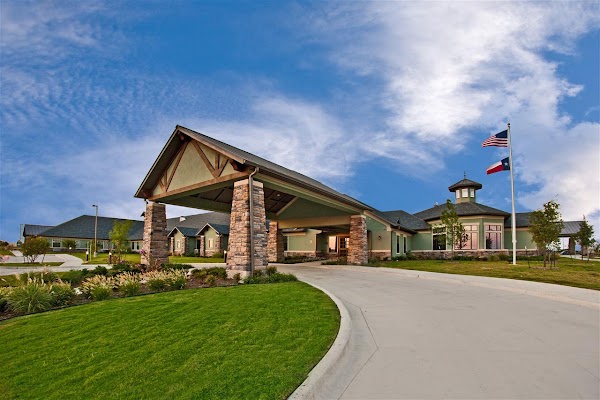
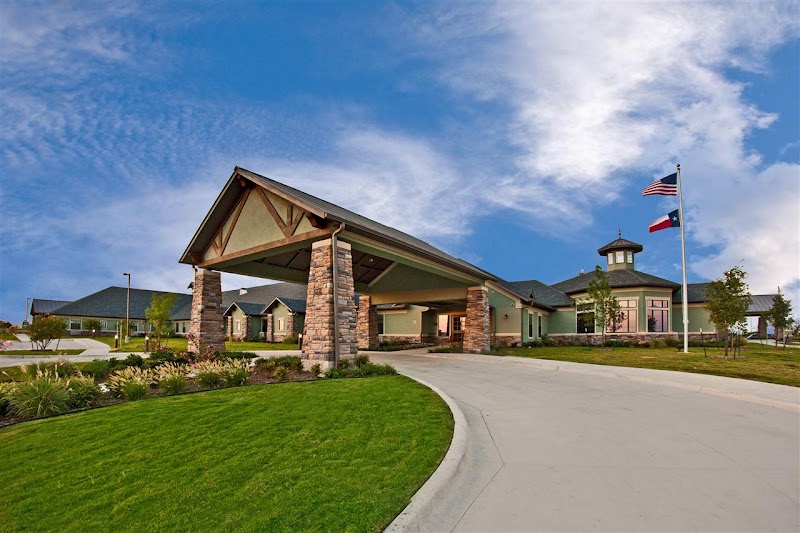
999 RAINTREE CIRCLE, ALLEN, TX 75013 (972) 390-8088
For profit - Corporation 112 Beds CANTEX CONTINUING CARE Data: November 2025
Trust Grade
23/100
#848 of 1168 in TX
Last Inspection: May 2025

Inspected within the last 6 months. Data reflects current conditions.

Overview

The Belmont at Twin Creeks has a Trust Grade of F, which indicates poor quality and significant concerns about care. It ranks #848 out of 1168 nursing homes in Texas, placing it in the bottom half of facilities statewide, and #19 out of 22 in Collin County, meaning only three local options are worse. The facility is showing signs of improvement, as the number of issues reported decreased from 11 in 2024 to 9 in 2025. Staffing is rated at 2 out of 5 stars, with a turnover rate of 58%, which is average, suggesting that while staff may not be very stable, there is some consistency. However, there have been serious concerns, including a case where a resident was subjected to verbal and physical abuse by a staff member, and issues with food safety that could affect many residents, highlighting the facility's struggles despite having good RN coverage compared to other facilities.

Trust Score
F
23/100
In Texas
#848/1168
Bottom 28%
Safety Record
High Risk
Review needed
Inspections
Getting Better
11 → 9 violations
Staff Stability
⚠ Watch
58% turnover. Above average. Higher turnover means staff may not know residents' routines.
Penalties
⚠ Watch
$23,278 in fines. Higher than 79% of Texas facilities, suggesting repeated compliance issues.
Skilled Nurses
○ Average
Each resident gets 31 minutes of Registered Nurse (RN) attention daily — about average for Texas. RNs are the most trained staff who monitor for health changes.
Violations
⚠ Watch
24 deficiencies on record. Higher than average. Multiple issues found across inspections.
★★☆☆☆
2.0
Overall Rating
★★☆☆☆
2.0
Staff Levels
★★★★☆
4.0
Care Quality
★★☆☆☆
2.0
Inspection Score
Stable
2024: 11 issues
2025: 9 issues

The Good

  • 4-Star Quality Measures · Strong clinical quality outcomes
  • Full Sprinkler Coverage · Fire safety systems throughout facility
  • No fines on record

Facility shows strength in quality measures, fire safety.

The Bad

2-Star Overall Rating

Below Texas average (2.8)

Below average - review inspection findings carefully

Staff Turnover: 58%

12pts above Texas avg (46%)

Frequent staff changes - ask about care continuity

Federal Fines: $23,278

Below median ($33,413)

Minor penalties assessed

Chain: CANTEX CONTINUING CARE

Part of a multi-facility chain

Ask about local staffing decisions and management

Staff turnover is elevated (58%)

10 points above Texas average of 48%

The Ugly 24 deficiencies on record

1 actual harm
May 2025 6 deficiencies
CONCERN (D)

Potential for Harm - no one hurt, but risky conditions existed

Deficiency F0605 (Tag F0605)

Could have caused harm · This affected 1 resident

**NOTE- TERMS IN BRACKETS HAVE BEEN EDITED TO PROTECT CONFIDENTIALITY** Based on interview and record review, the facility failed to ensure residents were free from chemical restraints that were not r...

Read full inspector narrative →
**NOTE- TERMS IN BRACKETS HAVE BEEN EDITED TO PROTECT CONFIDENTIALITY** Based on interview and record review, the facility failed to ensure residents were free from chemical restraints that were not required to treat the residents' medical symptoms for 1 (Resident #89) of 5 residents reviewed for unnecessary medications. The facility failed to ensure Resident #89's PRN prescription of Xanax 0.5mg (a medication used to treat the symptoms of anxiety) was discontinued after 14 days. The facility did not document a rationale for the continued provision of the medication. This failure could place residents at risk for adverse reactions and negative side effects from the administration of medication and dependence on unnecessary medications. Findings included: Review of Resident #89's Face Sheet, dated 05/21/25, reflected he was a [AGE] year-old male, who admitted to the facility on [DATE], with diagnoses including nontraumatic intracerebral hemorrhage (bleeding within the brain tissue itself, not due to a head injury), quadriplegia (the paralysis of both arms and legs, and often the torso, resulting from damage to the cervical (neck) portion of the spinal cord), and restlessness and agitation (a general feeling of unease, nervousness, and difficulty remaining still). Review of Resident #89's MDS Assessment, dated 05/02/25, reflected he was taking a prescribed antianxiety medication which had an indication for use. Review of Resident #89's Care Plan, dated 05/19/25, reflected he was taking a prescribed antianxiety medication (Xanax) due to anxiety disorder. Goals included for Resident #93 to be free from discomfort or adverse reactions related to antianxiety therapy. Review of Resident #89's Physician's Orders, dated 05/21/25, reflected he was prescribed Xanax Oral Tablet 0.5mg (Alprazolam). The orders specified for staff to give 1 tablet via g-tube every 8 hours as needed for anxiety. The start date was 04/26/25. There was no specified end date. Review of Resident #89's Medication Administration Record, from April 2025 to May 2025, reflected Resident #89 received his prescription of Xanax Oral Tablet 0.5mg (Alprazolam) on 04/29/25, 05/01/25, 05/08/25, 05/11/25, and 05/14/25. During an interview with the Director of Nursing on 05/21/25 at 1:00PM, she stated the expectation for PRN psychotropic medications was for the medication not to be prescribed for more than 14 days. She stated she was not sure why Resident #89's PRN prescription medication of Xanax Oral Tablet 0.5mg (Alprazolam) had been prescribed for more than 14 days. She stated she did not know what type of risk this could pose to the resident. A policy related to PRN antianxiety/psychotropic medication use was requested on 05/21/25 at 1:11PM. The Administrator stated the facility did not have a written policy related to this area, but the facility was expected to go by State guidelines.
CONCERN (D)

Potential for Harm - no one hurt, but risky conditions existed

Deficiency F0628 (Tag F0628)

Could have caused harm · This affected 1 resident

**NOTE- TERMS IN BRACKETS HAVE BEEN EDITED TO PROTECT CONFIDENTIALITY** Based on interview and record review, the facility failed to complete a discharge summary that included but was not limited to, ...

Read full inspector narrative →
**NOTE- TERMS IN BRACKETS HAVE BEEN EDITED TO PROTECT CONFIDENTIALITY** Based on interview and record review, the facility failed to complete a discharge summary that included but was not limited to, (i) A recapitulation of the resident's stay that includes, but was not limited to, diagnoses, course of illness/treatment or therapy, and pertinent lab, radiology, and consultation results; (ii) A final summary of the resident's status; (iii) Reconciliation of all pre-discharge medications with the resident's post-discharge medications (both prescribed and over-the-counter) for 1 of (Resident #71) of 3 residents reviewed for discharge planning. The facility failed to complete a recapitulation of stay for Resident #71, who discharged to another facility on 05/06/25. This failure could place residents at risk of a recapitulation of their stay being unavailable to help ensure continuity of care once they discharged from the facility. Findings included: Review of Resident #71's Face Sheet, dated 05/21/25, reflected she was an [AGE] year-old female, who admitted to the facility on [DATE], with diagnoses including urinary tract infection (an infection in any part of the urinary system), type 2 diabetes mellitus with hyperglycemia (a chronic condition that happens when you have persistently high blood sugar levels), and unspecified injury of head (a head injury where the specific type or severity of the injury is not clearly defined or known). Resident #71 discharged from the facility on 05/06/25. Review of Resident #71's Recapitulation of Stay, dated 05/07/25, reflected the document was not completed nor signed. The areas of Social Services, Nursing Services, Activities, Dietary Services, and Rehabilitation Services were all missing required information. During an interview with the Director of Nursing on 05/21/25 at 1:00PM, she stated it was expected for each department to complete their appropriate section of a resident's Recapitulation of Stay. She stated she was not sure why Resident #71's Recapitulation of Stay had not been completed. She stated she did not believe a risk was posed to a resident if/when their Recapitulation of Stay was not completed, as the facility still sent all medical paperwork with the resident and/or to the receiving facility upon discharge. A policy related to the completion of recapitulation of stays was requested on 05/21/25 at 1:11PM. The Administrator stated the facility did not have a written policy related to this area, but the facility was expected to go by State guidelines.
CONCERN (D) 📢 Someone Reported This

A family member, employee, or ombudsman was alarmed enough to file a formal complaint

Potential for Harm - no one hurt, but risky conditions existed

Deficiency F0692 (Tag F0692)

Could have caused harm · This affected 1 resident

**NOTE- TERMS IN BRACKETS HAVE BEEN EDITED TO PROTECT CONFIDENTIALITY** Based on observations, interviews, and record review, the facility failed to ensure they offered a therapeutic diet when there w...

Read full inspector narrative →
**NOTE- TERMS IN BRACKETS HAVE BEEN EDITED TO PROTECT CONFIDENTIALITY** Based on observations, interviews, and record review, the facility failed to ensure they offered a therapeutic diet when there was a nutritional problem and the health care provider ordered a therapeutic diet for 1 of 3 residents (Resident #27) reviewed for nutritional status. The facility failed to ensure Resident #27 received the therapeutic diet that was ordered for her during the lunch hour on 05/20/25. This failure could result in residents not receiving their ordered therapeutic meal which could lead to malnutrition and/or choking. The findings included: Record review of Resident #27's admission MDS assessment dated [DATE], revealed she was an [AGE] year-old female who admitted to the facility on [DATE]. Her BIMs score was 7 indicating she was cognitively impaired. Her diagnoses included stroke, diabetes, non-Alzheimer's disease, and malnutrition. The resident required supervision while eating. The resident was on a therapeutic diet. Record review of Resident #27's Physician Order Summary report reflected: 04/14/25 Regular diet, ground texture, regular/thin consistency. 02/04/25 Magic Cup (supplement) two times a day for malnutrition. Record review of Resident #27's Care Plan reflected: Date initiated: 03/19/25 with revision on: 04/09/25. The resident had a swallowing problem. Facility interventions included: All staff to be informed of resident's special dietary and safety needs. Instruct resident to eat in an upright position, to eat slowly, and to chew each bite thoroughly. Keep head of bed elevated 45 degrees during meal and thirty minutes afterwards. Resident to eat only with supervision. Record review of Resident #27's Hospice Note, dated 03/18/25, reflected: RN Comprehensive Visit Mechanical diet Assistance required with meals Notes: Pt [patient] tolerating mechanical soft. Pt continues to refused to eat, consuming mostly fluids . An observation on 05/20/25 at 1:18 PM of Resident #27 revealed the resident was lying in bed at a 30-degree angle. Her tray was raised up and to the right of the resident. The resident could not reach all the food on the tray. The resident was trying to feed herself a magic cup and drink milk. The resident was served a whole ham or turkey sliced sandwich with a slice of tomato on it. The tray also had broccoli florets and macaroni. The Surveyor stepped into the hall and requested staff to assist the resident to sit-up and have access to her tray. An interview and observation with LVN I on 05/20/25 at approximately 1:22 PM she said she did not know how Resident #27 was supposed to eat with her tray far away from her. LVN I said she would get assistance to pull her up. LVN J entered the room with LVN I. Both nurses washed their hands and pulled the resident up in bed. LVN I said the resident was supposed to have assistance to eat, but said the resident would not let staff feed her, because she liked to feed herself. LVN I said she thought the resident was on a regular diet but would check. LVN I left the room and ADON F entered the room. ADON F said the resident was ordered to be on a regular, ground diet and that she was not supposed to be served a whole sandwich. ADON F said the resident was at risk for choking. An interview on 05/20/25 at 2:21 PM with CNA G revealed she delivered the wrong tray to Resident #27 on 05/20/25. She said she did not check the tray and just looked at the tray card for the name. CNA G said she was supposed to check the tray, sit up the resident, make sure the food was the right portion, and ask the resident if she needed anything else. CNA G said she did not check the tray for Resident #27 on 05/20/25 because she was rushing to help. CNA G said the resident was at risk of choking if she was not assisted to sit up and was at risk of having an allergy if she received the wrong diet tray. CNA G said sometimes the resident received a puree' diet and sometimes she received a regular diet . An interview on 05/20/25 at 2:26 PM with the Dietician for Resident #27 revealed the resident was supposed to be on a ground diet. The Dietician said the macaroni and cheese was the proper texture and the broccoli was the appropriate texture. The Dietician said the staff returned Resident 27's whole sandwich and the resident received a tuna fish sandwich instead. The Dietician said the resident did not have any choking incidents. The Dietician she was on a ground diet to optimize her oral intake. The Dietician said she did not know if the resident had dysphagia but had a care plan for trouble swallowing. The Dietician said the kitchen staff and nursing staff were responsible for checking the resident's tray. An interview on 05/20/25 at 3:07 PM with the DON revealed she did not know what happened with Resident #27's tray. She said dietary and nursing were responsible for checking the trays. The DON said she was told the resident was delivered a thinly sliced turkey sandwich. The DON said she did not know why the resident did not have supervision to eat and staff were supposed to make sure that she was in the right position to eat. The DON said the resident was at risk for choking if she was served the wrong diet. Record review of the facility policy, Regular Ground Diet, dated 07/26/22, reflected: Policy It is the policy of this facility that the Dining Services Department shall provide a Regular Ground diet when ordered by a physician that is nutritionally adequate and texturally appropriate for the Patient. Responsibility: All Dining Services Staff Procedure: 1. All Dining Services staff must follow the Regular Ground Diet as written on the modified diet spreadsheets. 2. The Regular Ground Diet shall be served according to the guidelines listed in the Diet Rationale from the menu company, unless otherwise indicated. 3. All meats must be ground on all meal trays. 4. Any Patients requiring a different meat texture modification shall have a different diet order indicating that difference. For example, Patients able to tolerate a whole piece of bacon may obtain a physician order; May have a whole piece of bacon. 5. The Dining Services Director and/or designee shall interview the Patient upon admission, readmission and as needed to determine the tolerance of certain foods allowed on the Regular Ground Diet. Any intolerances shall be listed on the tray ticket system. 6. Patients with several food intolerances may be referred to Speech Therapy for a screen.
CONCERN (D) 📢 Someone Reported This

A family member, employee, or ombudsman was alarmed enough to file a formal complaint

Potential for Harm - no one hurt, but risky conditions existed

Pharmacy Services (Tag F0755)

Could have caused harm · This affected 1 resident

**NOTE- TERMS IN BRACKETS HAVE BEEN EDITED TO PROTECT CONFIDENTIALITY** Based on observation, interview, and record review, the facility failed to provide pharmaceutical services (including procedures...

Read full inspector narrative →
**NOTE- TERMS IN BRACKETS HAVE BEEN EDITED TO PROTECT CONFIDENTIALITY** Based on observation, interview, and record review, the facility failed to provide pharmaceutical services (including procedures that assure the accurate acquiring, receiving, dispensing, and administering of all drugs and biologicals) to meet the needs of each resident for one (Resident #73) of four residents reviewed for pharmacy services. The facility failed to ensure the medication cart contained accurate narcotic logs for Resident #73. This failure could place residents at risk for medication error and drug diversion. Findings included: Record review of Resident #73's admission MDS assessment, dated 05/01/25, reflected Resident #73 was a [AGE] year-old male. He admitted to the facility on [DATE] with diagnoses including cancer, bone fracture, and Parkinson's disease. Resident #73 had a BIMs score of 14 which indicated he was cognitively intact. Record review of Resident #73's care plan, dated 04/24/25, revealed the resident was on pain medication therapy (morphine) for fracture related to bone cancer. Facility interventions included: Administer pain medications as ordered by physician. Record review of Resident #73's physician order summary, dated May 2025 reflected: 05/13/25 Morphine 15 milligrams, give half a tablet, by mouth three times a day for pain. 04/24/25 Morphine 15 milligrams, give half a tablet, by mouth every 4 hours as needed for pain. Record review of Resident #73's May 2025 Medication Administration Record reflected: 1. Morphine 15 milligrams, (half a tablet) was administered to the resident once on 05/13/25 at 9:00 PM, two times on 05/14/25 at 3:00 PM and 9:00 PM, and three times a day from 05/15/25 - 05/19/25 at 9:00 AM, 3:00 PM, and 9:00 PM, and one time on 05/20/25 at 9:00 AM. 2. Morphine 15 milligrams, (half a tablet) PRN (as needed order) was administered to the resident once on 05/14/25 at 4:00 AM. The total doses documented as administered was 19. Record review of Resident #73's Narcotic Record reflected the resident was ordered to receive Morphine 15 milligrams three times a day. The resident received the following doses of Morphine: 15 milligrams on 05/13/25 at 9:00 AM 7.5 milligrams on 05/14/25 at 12:00 AM and 9:00 PM 7.5 milligrams on 05/15/25 at 12:30 PM and 9:00 PM 7.5 milligrams on 05/16/25 at 9:30 AM and 9:00 PM 7.5 milligrams on 05/17/25 at 04:33 AM, 7:00 AM, and 9:00 PM 7.5 milligrams on 05/18/25 at 7:00 AM and 9:00 AM 7.5 milligrams on 05/19/25 at 9:00 AM, 11:22 AM, 1:00 PM, and 9:00 PM 7.5 milligrams on 05/20/25 at 9:00 AM The total doses signed out as administered was 17. Review of Resident #73's Morphine card that contained the morphine pills reflected the count was correct. Record reviews of the MAs competency checks reflected: MA E - competency check completed on 01/08/24 and signed by ADON F. MA D - competency check completed on 02/25/21 and signed by ADON F. MA C - competency check completed on 01/08/25 and signed by ADON F. An interview and observation on 05/21/25 at 2:48 PM revealed Resident #73 was lying in bed. The resident said he was not aware that he missed 2 doses of Morphine between 05/13/25 - 05/20/25. He said it did not affect his pain level. The resident said his current pain level was a 6 on a [NAME] of 1-10 and was told that he was about to receive a dose of Morphine. An interview on 05/21/25 at 12:26 PM with LVN A revealed she completed a narcotic count of Resident #73's Morphine. LVN A said the Morphine Card showed the resident was supposed to receive Morphine 15 milligrams three times a day. The Narcotic Count Sheet reflected the same dose. LVN A said prior to 05/13/25, the resident was ordered to receive 15 milligrams of Morphine three times a day. LVN A said the order was changed to 7.5 milligrams three times a day on 05/13/25. LVN A said the nurse would cut the dose in half and destroy it with the MA as a witness. An interview on 05/21/25 at approximately 12:40 PM with ADON B revealed there were missing signatures from the narcotic record indicating there was not a witness to the half tab (7.5 milligrams) being wasted. ADON B said she did not know why there were missing signatures on the narcotic record. An interview on 05/22/25 at 11:18 AM with MA C revealed she worked the 6:00 AM - 2:00 PM shift with Resident #73. She said she administered a 7.5 milligram of dose to the resident at 12:30 PM on 05/15/25 instead of 9:00 AM because he did not want the dose at 9:00 AM. She said she documented in the medication administration record that she administered the dose at 9:00 AM even though she did not. She said if a dose was not given, then she was supposed to notify the nurse and document the dose as not given. An interview on 05/22/25 at 12:51 PM with MA D revealed he worked double shifts on the weekend on 05/17/25 and 05/18/25. He said he documented on the medication administration record that he gave the doses at 9:00 AM, 3:00 PM, and 9:00 PM on those days. On the narcotic record he administered a dose at 7:00 AM and 9:00 PM on 05/17/25 and 7:00 AM and 9:00 AM on 05/18/25. He said he did not know why the narcotic record and the medication administration record showed different times, but that he gave all the doses as ordered on 05/17/25 and 05/18/25. He said he saved the half table of Morphine 7.5 milligrams and left the doses in a cup in the medication cart. He said the risk to the resident was a tough question because he gave all the doses. An observation and interview on 05/21/25 at 3:23 PM revealed MA D wasted 7.5 milligrams of morphine with unknown nurse in the drug buster in the cart. MA D then administered 7.5 milligrams of Morphine to Resident #73. MA D said she worked the 2:00 PM-10:00 pm shift on 05/13/25 - 05/16/25 and 05/19/25. She said that on those days she did not administer the 3:00 PM doses of Morphine because the resident told her he already received it. The Narcotic Record reflected the 3:00 PM doses were not administered on 05/13/25 - 05/16/25. MA D said she thought that maybe the nurse had already administered the dose, so she just documented on the medication administration record that she administered the dose. She said the risk to the resident was overdose. A follow-up interview on 05/21/25 at 1:38 PM with ADON B for Resident #73 revealed the half tab (7.5 milligrams) of Morphine was being saved. ADON B said she found out the MAs and nurses were saving the half tab on 05/19/25. She said she instructed the staff that the half tab had to be destroyed with a witness on 05/19/25. ADON B said the facility could not change the narcotic record and Morphine card to the correct dose of 7.5 milligrams, but that a correction sticker could have been placed on the record and card. ADON B said the nurse did not do that. ADON B said they could not send the morphine pills back to the pharmacy and they were supposed to be destroyed. ADON B said she told staff to call on 05/19/25 to get the correct dose card and correct narcotic record. ADON B said she did not know why staff had documented that they gave doses on the Medication Administration Record that were not actually given. ADON B said the MA was administering the scheduled doses and the nurse was supposed to waste the other half dose that was left over. Interviews on 05/21/25 at 2:08 PM, 05/22/25 at 12:48 PM, and 05/22/25 2:10 PM with the DON for Resident #73 revealed 2 staff were supposed to witness a drug's destruction. The dose was to be placed in the Drug Buster that was kept on the medication cart. The DON said she found out on 05/19/25 that the staff had been saving the half tab and not destroying it. The DON said staff should have contacted the doctor and the pharmacy to get the correct dose on the Morphine card and narcotic record. The DON said she spoke to LVN A and was told the doctor said it was ok to use the Morphine 15 milligrams and split the tablets in half. The DON said Resident #73 was scheduled to receive Morphine 7.5 milligrams three times a day. The DON said she did not know staff were signing in the Medication Administration Record that they were administering doses that they did not administer. The DON said to ensure the MAs were competent, the facility did competency checks, and the pharmacy consultant would pick someone to watch monthly to do medication pass. She said the MAs were not trained at the facility, but they were trained and had a certification. The facility said they did competency checks before they were assigned to pass medications. The DON said the MAs worked under the nurse's license, the DON's license, and the Administrator's license. She said the resident was at risk of pain and not receiving the correct dose due to not receiving the doses of Morphine. Record review of the facility policy titled Pharmacy Services Overview, revised April 2019, reflected: 1. Pharmaceutical services consists of: a. the processes of receiving and interpreting prescriber's orders; acquiring, receiving, storing, controlling, reconciling, compounding (e.g., intravenous antibiotics), dispensing, packaging, labeling, distributing, administering, monitoring responses to, using and/or disposing of all medications, biologicals, chemicals; b. the provision of medication-related information to health care professionals and residents; c. the process of identifying, evaluating and addressing medication-related issues including the prevention and reporting of medication errors; and d. the provision, monitoring and/or the use of medication-related devices . Record review of the facility policy titled Management of Controlled Medications, dated January 2024, reflected: POLICY The Facility staff will follow the method of accounting for controlled medications through receiving, administration, storage, and destruction, which meets the requirements of state and federal narcotic enforcement agencies. PROCEDURE Receipt from Pharmacy 1. Upon receipt of a controlled medication, the charge nurse will verify/initial the receipt of and validate the quantity received with a second nurse/courier using the Controlled Drug Receipt/Record/Disposition Form. 2. Upon receipt, controlled medications will be logged on a Controlled Drug Receipt/Record/Disposition Form if the form did not come from pharmacy. 3. Controlled medications will immediately be placed under double lock, in the appropriate medication cart. Shift-to-Shift Count: 1. Controlled medications will be counted every shift change (scheduled or incidental) by an authorized staff member (RN/LVN/CMA) reporting on duty with an authorized staff member reporting off duty. a. Scheduled shift change = routine shift changes (8, 12, or 16 hours) b. Incidental shift change = interrupted routine shift due to any circumstances (staff illness, reassignments, partial shift work etc) 2. At the end of every shift the authorized staff member reporting on duty and the authorized staff member reporting off duty meet at the designated medication cart or storage area to count controlled medications. 3. The authorized staff member reporting off duty reads all Controlled Drug Receipt/Record/Disposition Form one sheet at a time, announcing the Patient's name, the medication, and dose. 4. The authorized staff member reporting on duty counts the amount of remaining controlled medications (bubble pack or bottle) and announces the number out loud. 5. Steps 3 and 4 are repeated for each controlled medication and/or Controlled Drug Receipt/Record/Disposition Form. 6. Both the authorized staff member reporting off duty and the authorized staff member reporting on duty verify that the count of all controlled medications and Controlled Drug Receipt/Record/Disposition Form(s) are correct and sign the Controlled Medication Count Sheet. 7. In counting controlled medications, the authorized staff member reporting on duty is alert for any evidence of a substitution. a. Inspect tablets and solutions closely. Note any defects in medication container. b. Immediately report any suspicion of substitution or tampering with controlled medications to the Director of Nursing. Generate the appropriate incident reports. c. If a controlled medication is discontinued or the Patient expires, the controlled medication must remain in the scheduled and/or incidental count until the Director of Nursing (DON) picks up the controlled medication for destruction. When picking up the controlled medication the DON and authorized staff member in control of the keys will both sign and date below the number of controlled medications remaining on each Controlled Drug Receipt/Record/Disposition Form. 8. The DON will log the discontinued controlled medications on the Destruction Log and place them under double lock in the designated controlled medication destruction bin until the pharmacist returns for drug destruction. 9. During the drug destruction, all narcotics will be removed from their container, placed in the biohazard bag/box and destroyed by applying liquids over them. If a discrepancy is found: a. Check the Patient's order sheets, administration records and nurse's notes in the chart to see if a controlled medication has been administered and not recorded. b. Check previous recordings on the Controlled Drug Receipt/Record/ Disposition Form for mistakes in arithmetic or error in transferring numbers from one sheet to the next. c. If the cause of the discrepancy cannot be located and/or the count does not balance, report the matter to the Director of Nursing/designee IMMEDIATELY. d. The authorized staff member reporting off duty must remain in the Facility during the investigation. e. Generate the appropriate incident statements. f. The Director of Nursing/designee will then contact the Administrator. The Administrator will determine if the incident is reportable (internal/external). The Consultant Pharmacist will be notified .
CONCERN (D) 📢 Someone Reported This

A family member, employee, or ombudsman was alarmed enough to file a formal complaint

Potential for Harm - no one hurt, but risky conditions existed

Deficiency F0760 (Tag F0760)

Could have caused harm · This affected 1 resident

**NOTE- TERMS IN BRACKETS HAVE BEEN EDITED TO PROTECT CONFIDENTIALITY** Based on observation, interview, and record review, the facility failed to ensure residents were free of any significant medicat...

Read full inspector narrative →
**NOTE- TERMS IN BRACKETS HAVE BEEN EDITED TO PROTECT CONFIDENTIALITY** Based on observation, interview, and record review, the facility failed to ensure residents were free of any significant medication errors for one (Resident #73) of four residents reviewed for medication errors. The facility failed to ensure morphine (pain medicine) was administered to Resident #73 as ordered from 05/11/25 until 05/18/25 and 05/20/25. (9 days). This failure could place residents at risk for not receiving medications as ordered by their physician and not receiving the intended therapeutic benefit of the medications. Findings included: Record review of Resident #73's admission MDS assessment dated [DATE] reflected Resident #73 was a [AGE] year-old male. He admitted to the facility on [DATE] with diagnoses including cancer, bone fracture, and Parkinson's disease. Resident #73 had a BIMs score of 14 which indicated he was cognitively intact. Record review of Resident #73's care plan, dated 04/24/25, revealed the resident was on pain medication therapy (morphine) for fracture related to bone cancer. Facility interventions included: Administer pain medications as ordered by physician. Record review of Resident #73's physician order summary, dated May 2025 reflected: 05/13/25 Morphine 15 milligrams, give half a tablet by mouth three times a day for pain. 04/24/25 Morphine 15 milligrams, give half a tablet by mouth every 4 hours as needed for pain. Record review of Resident #73's May 2025 Medication Administration Record reflected: 1. Morphine 15 milligrams, (half a tablet) was administered to the resident once on 05/13/25 at 9:00 PM, two times on 05/14/25 at 3:00 PM and 9:00 PM, and three times a day from 05/15/25 - 05/19/25 at 9:00 AM, 3:00 PM, and 9:00 PM, and one time on 05/20/25 at 9:00 AM. 2. Morphine 15 milligrams, (half a tablet) PRN (as needed order) was administered to the resident once on 05/14/25 at 4:00 AM. The total doses documented as administered was 19. Record review of Resident #73's Narcotic Record reflected the resident was ordered to receive Morphine 15 milligrams three times a day. The resident received the following doses of Morphine: 15 milligrams on 05/13/25 at 9:00 AM 7.5 milligrams on 05/14/25 at 12:00 AM and 9:00 PM 7.5 milligrams on 05/15/25 at 12:30 PM and 9:00 PM 7.5 milligrams on 05/16/25 at 9:30 AM and 9:00 PM 7.5 milligrams on 05/17/25 at 04:33 AM, 7:00 AM, and 9:00 PM 7.5 milligrams on 05/18/25 at 7:00 AM and 9:00 AM 7.5 milligrams on 05/19/25 at 9:00 AM, 11:22 AM, 1:00 PM, and 9:00 PM 7.5 milligrams on 05/20/25 at 9:00 AM The total doses signed out as administered was 17. Review of Resident #73's Morphine card that contained the morphine pills reflected the count was correct. An interview on 05/21/25 at 2:48 PM revealed Resident #73 was lying in bed. The resident said he was not aware that he missed 2 doses of Morphine between 05/13/25 - 05/20/25. He said it did not affect his pain level. The resident said his current pain level was a 6 on a [NAME] of 1-10 and was told that he was about to receive a dose of Morphine. An interview on 05/21/25 at 12:26 PM with LVN A revealed she completed a narcotic count of Resident #73's Morphine. LVN A said the Morphine Card showed the resident was supposed to receive Morphine 15 milligrams three times a day. The Narcotic Count Sheet reflected the same dose. LVN A said prior to 05/13/25, the resident was ordered to receive 15 milligrams of Morphine three times a day. LVN A said the order was changed to 7.5 milligrams three times a day. LVN A said the nurse would cut the dose in half and destroy it with the MA as a witness. An interview on 05/21/25 at approximately 12:40 PM with ADON B revealed there were missing signatures from the narcotic record indicating there was not a witness to the half tab (7.5 milligrams) being wasted. ADON B said she did not know why there were missing signatures on the narcotic record. An interview on 05/22/25 at 11:18 AM with MA C revealed she worked the 6:00 AM - 2:00 PM shift with Resident #73. She said she administered a 7.5 milligram of dose to the resident at 12:30 PM on 05/15/25 instead of 9:00 AM because he did not want the dose at 9:00 AM. She said she documented in the medication administration record that she administered the dose at 9:00 AM even though she did not. She said if a dose was not given, then she was supposed to notify the nurse and document the dose as not given. An interview on 05/22/25 at 12:51 PM with MA D revealed he worked double shifts on the weekend on 05/17/25 and 05/18/25. He said he documented on the medication administration record that he gave the doses at 9:00 AM, 3:00 PM, and 9:00 PM on those days but on the narcotic record he only administered a dose at 7:00 AM and 9:00 PM on 05/17/25 and 7:00 AM and 9:00 AM on 05/18/25. He said he did not know why the narcotic record and the medication administration record showed different times, but that he gave all the doses as ordered on 05/17/25 and 05/18/25. He said he saved the half table of Morphine 7.5 milligrams and left the doses in a cup in the medication cart. He said the risk to the resident was a tough question because he gave all the doses. An observation and interview on 05/21/25 at 3:23 PM revealed MA D wasted 7.5 milligrams of morphine with unknown nurse in the drug buster in the cart. MA D then administered 7.5 milligrams of Morphine to Resident #73. MA D said she worked the 2:00 PM-10:00 pm shift on 05/13/25 - 05/16/25 and 05/19/25. She said that on those days she did not administer the 3:00 PM doses of Morphine because the resident told her he already received it. The Narcotic Record reflected the 3:00 PM doses were not administered on 05/13/25 - 05/16/25. MA D said she thought that maybe the nurse had already administered the dose, so she just documented on the medication administration record that she administered the dose. She said the risk to the resident was overdose. A follow-up interview on 05/21/25 at 1:38 PM with ADON B for Resident #73 revealed the half tab (7.5 milligrams) of Morphine was being saved. ADON B said she found out the MAs and nurses were saving the half tab on 05/19/25. She said she instructed the staff that the half tab had to be destroyed with a witness on 05/19/25. ADON B said the facility could not change the narcotic record and Morphine card to the correct dose of 7.5 milligrams, but that a correction sticker could have been placed on the record and card. ADON B said the nurse did not do that. ADON B said they could not send the morphine pills back to the pharmacy and they were supposed to be destroyed. ADON B said she told staff to call on 05/19/25 to get the correct dose card and correct narcotic record. ADON B said she did not know why staff had documented that they gave doses on the Medication Administration Record that were not actually given. ADON B said the MA was administering the scheduled doses and the nurse was supposed to waste the other half dose that was left over. An interview on 05/21/25 at 2:08 PM and 05/22/25 at 12:48 PM with the DON for Resident #73 revealed 2 staff were supposed to witness a drug's destruction. The dose was to be placed in the Drug Buster that was kept on the medication cart. The DON said she found out on 05/19/25 that the staff had been saving the half tab and not destroying it. The DON said staff should have contacted the doctor and the pharmacy to get the correct dose on the Morphine card and narcotic record. The DON said she spoke to LVN A and was told the doctor said it was ok to use the Morphine 15 milligrams and split the tablets in half. The DON said Resident #73 was scheduled to receive Morphine 7.5 milligrams three times a day. The DON said she did not know staff were signing in the Medication Administration Record that they were administering doses that they did not administer. She said the resident was at risk of pain and not receiving the correct dose due to not receiving the doses of Morphine. Record review of the facility policy titled Medications, dated November 2017, reflected: Upon admission (including readmission) of each Patient/Resident, the physician's orders for the Patient/Resident must be reviewed and reconciled by the Charge Nurse and the Director of Nursing or his/her designee for accuracy in the Electronic Medical Record . Record review of the facility policy titled Management of Controlled Medications, dated January 2024, reflected: POLICY The Facility staff will follow the method of accounting for controlled medications through receiving, administration, storage, and destruction, which meets the requirements of state and federal narcotic enforcement agencies. PROCEDURE Receipt from Pharmacy 1. Upon receipt of a controlled medication, the charge nurse will verify/initial the receipt of and validate the quantity received with a second nurse/courier using the Controlled Drug Receipt/Record/Disposition Form. 2. Upon receipt, controlled medications will be logged on a Controlled Drug Receipt/Record/Disposition Form if the form did not come from pharmacy. 3. Controlled medications will immediately be placed under double lock, in the appropriate medication cart. Shift-to-Shift Count: 1. Controlled medications will be counted every shift change (scheduled or incidental) by an authorized staff member (RN/LVN/CMA) reporting on duty with an authorized staff member reporting off duty. a. Scheduled shift change = routine shift changes (8, 12, or 16 hours) b. Incidental shift change = interrupted routine shift due to any circumstances (staff illness, reassignments, partial shift work etc) 2. At the end of every shift the authorized staff member reporting on duty and the authorized staff member reporting off duty meet at the designated medication cart or storage area to count controlled medications. 3. The authorized staff member reporting off duty reads all Controlled Drug Receipt/Record/Disposition Form one sheet at a time, announcing the Patient's name, the medication, and dose. 4. The authorized staff member reporting on duty counts the amount of remaining controlled medications (bubble pack or bottle) and announces the number out loud. 5. Steps 3 and 4 are repeated for each controlled medication and/or Controlled Drug Receipt/Record/Disposition Form. 6. Both the authorized staff member reporting off duty and the authorized staff member reporting on duty verify that the count of all controlled medications and Controlled Drug Receipt/Record/Disposition Form(s) are correct and sign the Controlled Medication Count Sheet. 7. In counting controlled medications, the authorized staff member reporting on duty is alert for any evidence of a substitution. a. Inspect tablets and solutions closely. Note any defects in medication container. b. Immediately report any suspicion of substitution or tampering with controlled medications to the Director of Nursing. Generate the appropriate incident reports. c. If a controlled medication is discontinued or the Patient expires, the controlled medication must remain in the scheduled and/or incidental count until the Director of Nursing (DON) picks up the controlled medication for destruction. When picking up the controlled medication the DON and authorized staff member in control of the keys will both sign and date below the number of controlled medications remaining on each Controlled Drug Receipt/Record/Disposition Form. 8. The DON will log the discontinued controlled medications on the Destruction Log and place them under double lock in the designated controlled medication destruction bin until the pharmacist returns for drug destruction. 9. During the drug destruction, all narcotics will be removed from their container, placed in the biohazard bag/box and destroyed by applying liquids over them. If a discrepancy is found: a. Check the Patient's order sheets, administration records and nurse's notes in the chart to see if a controlled medication has been administered and not recorded. b. Check previous recordings on the Controlled Drug Receipt/Record/ Disposition Form for mistakes in arithmetic or error in transferring numbers from one sheet to the next. c. If the cause of the discrepancy cannot be located and/or the count does not balance, report the matter to the Director of Nursing/designee IMMEDIATELY. d. The authorized staff member reporting off duty must remain in the Facility during the investigation. e. Generate the appropriate incident statements. f. The Director of Nursing/designee will then contact the Administrator. The Administrator will determine if the incident is reportable (internal/external). The Consultant Pharmacist will be notified .
CONCERN (D) 📢 Someone Reported This

A family member, employee, or ombudsman was alarmed enough to file a formal complaint

Potential for Harm - no one hurt, but risky conditions existed

Infection Control (Tag F0880)

Could have caused harm · This affected 1 resident

**NOTE- TERMS IN BRACKETS HAVE BEEN EDITED TO PROTECT CONFIDENTIALITY** Based on observations, interviews, and record review the facility failed to establish and maintain an infection prevention and c...

Read full inspector narrative →
**NOTE- TERMS IN BRACKETS HAVE BEEN EDITED TO PROTECT CONFIDENTIALITY** Based on observations, interviews, and record review the facility failed to establish and maintain an infection prevention and control program designed to provide a safe, sanitary, and comfortable environment and to help prevent the development and transmission of communicable diseases and infections for two (Resident #57 and Resident #84) of eight residents, reviewed for infection control. 1. The facility failed to ensure CNA G performed hand hygiene during incontinence care and did not soil the wipes container with soiled gloves for Resident #57. 2. The facility failed to ensure CNA H did not soil the wipes container with soiled gloves for Resident #84. This failure placed residents at risk for healthcare associated cross contamination and infections. Findings included: 1. Review of Resident 57's Quarterly MDS Assessment, dated 03/28/25, reflected the resident had a BIMs score of 13 and was cognitively intact. She was a [AGE] year-old female admitted to the facility on [DATE]. The resident had diagnoses which included fall with fracture. The resident was occasionally incontinent of bladder and was always incontinent of bowel. The resident required partial assistance with toileting. Review of Resident #57's Comprehensive Care Plan, dated 05/22/25, reflected the resident had an activities of daily living self-care performance deficit. Facility interventions included: Toilet use: The resident requires assistance of one or two staff for toileting. An observation on 05/20/25 at 10:55 AM of Resident #57 revealed CNA G was preparing to perform incontinence Care. CNA G washed her hands, put on gloves, positioned the resident in bed on her back, folded down the brief, and cleaned the vaginal area. The brief was soiled with bowel movement. CNA G turned the resident to her right side and wiped her buttocks. CNA G grabbed clean wipes out of the wipes container with soiled gloves. CNA G changed her gloves but did not perform hand hygiene. CNA G put a clean brief on the resident. An interview on 05/20/25 at 11:12 AM with CNA G revealed she was supposed to perform hand hygiene after removing her soiled gloves. She also said she was not supposed to touch the container of wipes with soiled gloves. CNA G said she did not perform hand hygiene and touched the wipes container with soiled gloves because she was stressed. CNA G said the risk to the resident was infection. 2. Review of Resident 84's Quarterly MDS Assessment, dated 04/15/25, reflected the resident had a BIMs score of 6 and was cognitively impaired. She was an [AGE] year-old female admitted to the facility on [DATE]. The resident had diagnoses which included cancer. The resident was always incontinent of bladder and bowel. The resident required partial assistance with toileting. Review of Resident #84's Comprehensive Care Plan, dated 05/04/25, reflected the resident had an activities of daily living self-care performance deficit. Facility interventions included: Toilet use: The resident requires assistance of one or two staff for toileting. An observation on 05/20/25 at 12:25 PM of Resident #84 revealed CNA G and CNA H were preparing to perform incontinence care. Both CNAs washed their hands and put on gloves. The resident was positioned on her back. CNA H folded down the resident's brief and it was soaked with urine. The resident was lying on a dry bed pad, but the resident's bottom sheet had a large urine stain on it. The brief also contained bowel movement. CNA H began cleansing the buttocks and picked up clean wipes with soiled gloves. CNA H placed the soiled wipes container on the bedside table. The CNAs changed their gloves and washed their hands. CNA H put a clean brief on the resident but did not change the soiled sheet. CNA H said she would change the sheet later. An interview on 05/20/25 at 12:30 PM with CNA H revealed she was not supposed to touch and move the wipes container with soiled gloves on the bedside table. She said she was also not supposed to leave soiled linen on the bed. CNA H said she did it this time because she was in a hurry and the risk to the resident was contamination. An interview on 05/21/25 at 4:12 PM with ADON B revealed staff were supposed to change gloves and perform hand hygiene when going from a dirty area to a clean area. ADON B also said it was not ok for staff to stick soiled, gloved, hands into the wipe's container and pull out wipes. ADON B said the risk to the resident was infection. An interview with the DON on 05/22/25 at 12:42 PM revealed staff were supposed to change gloves and perform hand hygiene when going from a dirty area to a clean area. The DON also said it was not ok for staff to stick soiled, gloved, hands into the wipe's container. The DON said the risk to the resident was infection and contamination. Record review of the facility policy, Infection Control, dated November 2017, reflected: 1. The facility must establish an infection prevention and control program (IPCP) that must include: a. A system for preventing, identifying, reporting, investigating, and controlling infections and communicable diseases for all Patients, staff, volunteers, visitors, and other individuals . Record review of the facility policy, Handwashing, dated August 2012, reflected: GUIDELINES Standards of Practice/Hand washing Hand washing is the single most important means of preventing the spread of infection. The principle of good hand washing is that of using friction to mechanically remove micro-organisms. After Patient contact - Wash hands with soap and running water - Rinse hands with running water - Dry hands well with paper towel - Use paper towel to turn off faucet. All manually controlled faucets are considered contaminated. - Dispose of single use or linen towels in appropriate receptacle. - May use Hand sanitizing gel in place of soap and water.
Jan 2025 3 deficiencies 1 Harm
SERIOUS (G) 📢 Someone Reported This

A family member, employee, or ombudsman was alarmed enough to file a formal complaint

Actual Harm - a resident was hurt due to facility failures

Free from Abuse/Neglect (Tag F0600)

A resident was harmed · This affected 1 resident

**NOTE- TERMS IN BRACKETS HAVE BEEN EDITED TO PROTECT CONFIDENTIALITY** Based on observation, interviews, and record review, the facility failed to ensure the right to be free from abuse was provided ...

Read full inspector narrative →
**NOTE- TERMS IN BRACKETS HAVE BEEN EDITED TO PROTECT CONFIDENTIALITY** Based on observation, interviews, and record review, the facility failed to ensure the right to be free from abuse was provided for 1 (Resident #1) of 6 residents reviewed for abuse and neglect. The facility failed to protect Resident #1 from abuse when CNA A was witnessed being verbally and physically abusive to Resident #1, resulting in Resident #1 becoming fearful of CNA A. The noncompliance was identified as PNC. The noncompliance began on 12/23/24 and ended on 12/27/24. The facility had corrected the noncompliance before the survey began. This failure could place residents at risk for abuse and neglect. Findings included: Review of Resident #1's Annual Minimum Data Set (MDS ), dated 01/26/2025, reflected she was an [AGE] year-old female who was admitted to the facility on [DATE] with diagnoses including depression (a mood disorder that causes persistent feelings of sadness, emptiness, and loss of joy, fibromyalgia (a chronic disorder characterized by widespread musculoskeletal pain, fatigue, and trouble sleeping, it occurs in the absence of an identifiable physical or physiological cause). Resident #1 had a Brief Interview for Mental Status (BIMS) score of 10, reflecting mild cognitive impairment. The MDS also revealed Resident #1 required extensive assistance with Activities of Daily Living (ADL). During an interview and observation of Resident #1 on 01/30/2025 at 10:05 a.m., Resident #1 reported an incident in early December involving CNA A and CNA B. While CNA A was providing incontinent care, Resident #1 asked CNA A to stop rolling her over due to pain, but CNA A continued despite protest from both Resident #1 and CNA B. Resident #1 stated CNA A was verbally abusive during the interaction, though she could not recall the exact words used. The physical handling caused Resident #1 pain, and she became fearful that CNA A would harm or kill her. Resident #1 reported the incident to multiple staff members but was initially told no one matching CNA A's description or name worked at the facility. Weeks later, Resident #1 recognized CNA A during an activity and confronted her, learning that CNA A had provided a false name during the incident. Resident #1 reported this to the ADON and the DON. Resident #1 stated she had only seen CNA A one time since the initial occurrence and CNA A did not provide her care before that incident nor after. Resident #1 stated she feels safe living in the facility and receiving care. During an interview on 01/30/2025 at 1:10 PM with LVN A, she reported she worked the 6 a.m. to 2 p.m. shift on Resident #1's hall. The LVN reported Resident #1 reported that she was abused by a CNA. The LVN stated she immediately reported the alleged abuse to the Administrator and the DON. During an interview on 01/30/2025 at 2:45 with Resident #1's FM. FM stated Resident #1 told him when CNA A was rolling her over to her side to change her, Resident #1 said she did it a little aggressively. FM stated he had not heard about the incident from the facility, which is why family installed a camera in Resident #1's room, for added security. He expressed frustration that the facility initially dismissed Resident #1's claims, suggesting she might be fabricating the story, as they did not have a staff member by the name Resident #1 was saying. FM stated soon after this incident he received another call from the facility stating they were going to have his Resident #1 tested by psychology. He stated he thought this was odd because Resident #1's mind is on point. During an interview on 01/30/2025 at 2:30 PM with RN A, the Weekend Supervisor, RN A confirmed Resident #1's account and began conducting interviews of weekend staff. During his interviews, RN A learned from CNA B that she witnessed CNA A abusing Resident #1 and did not report the incident. RN A stated he educated CNA B that if she saw abuse or was unsure if it was abuse that she witnessed, CNA B should have reported the incident. RN A stated he had worked with CNA A before and never had any issues reported to him. RN A stated in speaking with Resident #1, she was unable to provide a date of when the incident occurred, she denied being in pain, and Resident #1 stated that the CNA A providing Resident #1 the wrong name upset her. RN A stated he had called the DON and the Administrator once he became aware of the allegation and that CNA B was suspended but CNA A was not on duty. RN A stated that the following Monday, (12/23/24) CNA A was suspended. RN A stated he was educated on abuse, neglect and reporting allegations of abuse to the abuse coordinator the Administrator, immediately. During an interview on 01/30/2025 at 12:50 PM, CNA B reported she was in the room with CNA A when the incident happened. CNA B said CNA A told Resident #1 to move onto her side for incontinent care and Resident #1 was refusing. She stated Resident #1 was resisting while CNA A was pushing on Resident #1's back to place her onto her side. CNA B said she told CNA A to leave the room numerous times, but she wouldn't. CNA B said CNA A also witnessed CNA B saying to Resident #1 that her FM does not love her and left her here. CNA B said she did not report this incident to management or the abuse coordinator after it happened. CNA B said she made an emotional decision on not to report the abuse. CNA B stated she knew abuse and neglect was supposed to be reported to the Abuse Coordinator, the Administrator immediately but CNA A's living conditions at the time made her hesitant to say anything as she felt bad about CNA A's situation. During an interview on 01/30/2025 at 3:50 PM, the DON stated she learned about the incident on between Resident #1 and CNA A from RN A. DON stated RN A called on Saturday or Sunday unsure date her to state Resident#1 had a camera put in her room, when DON asked why RN A reported that Resident #1 said she was verbally assaulted but did not state by who. DON stated she immediately called the Administrator and started an investigation. DON stated she directed RN A to talk to as many staff to find out what occurred and that was when CNA B reported she witnessed CNA A be abusive to Resident #1. DON stated prior (unknown date) Resident #1 told her a CNA was rude to her and turned her over too fast to reposition. DON stated around 12/09/24 a grievance was filed related to the information. The DON reported that Resident #1 gave her a name, but they did not have anyone by that name that worked at the facility or fit the physical description of any of their employees. The DON stated a few weeks later Resident #1 said she recognized the CNA that was abuse to her as CNA A and reported this to staff. The DON stated she completed a mental assessment and a physical assessment for injuries and non were found. DON stated that the MD referred Resident #1 to psych service. DON stated CNA A was suspended. She stated CNA B was also suspended for not reporting the abuse. DON stated she spoke to staff who all denied that anything occurred between CNA A and Resident #1. DON stated when talked to Resident #1 the first time Resident #1 said she was not abuse but the second time they spoke Resident #1 expressed she felt abused, and Resident #1 was providing conflicting information. During an interview on 01/30/2025 at 3:15 PM, the ADON reported she was made aware of the alleged abuse by Resident #1 who reported she was abused by a CNA while being provided care. The ADON stated that she and the DON went to interview Resident #1 who gave a description of a person who did not match any of the employed staff. ADON stated that Resident #1 stated the aide was being rude. ADON stated that Resident #1 had reported to RN A a week or two later that an aide had been abusive towards her. ADON stated that while RN A was interviewing, CNA B stated she had witnessed the event between Resident #1 and CNA A. ADON stated that Resident #1 did not express she was in pain during the incident. ADON stated once CNA A was identified as the perpetrator, she was suspended and later terminated from employment. ADON stated she was educated on abuse, neglect and reporting allegations of abuse to the abuse coordinator the Administrator, immediately. During an interview on 01/30/2025 at 4:00 PM, the Administrator stated she learned about the alleged abuse on 12/22/2024 when she reported it. She stated she was contacted by the DON who told her Resident #1 had reported she was abused by a CNA. The Administrator stated a couple of weeks prior to this, Resident #1 reported a CNA was rude to her and the description provided by Resident #1 did not match anyone that worked there. The Administrator stated that she did not feel like Resident #1 was abused. Administrator stated that CNA A was suspended pending the investigation and was then fired. She reported CNA B was fired for not reporting the alleged abuse. The Administrator reported she did not report the alleged abuse on 12/09/2024 because Resident #1 stated she did not feel like the abuse was intentional. Administrator stated that Resident #1 is always reporting abuse and is confused. Administrator stated as a result of the 12/22/24 incident the facility completed in-services on abuse and neglect, when and who to report allegations of abuse to with all staff. Safe surveys were completed, an assessment of Resident #1 was completed for injuries, both aides were terminated from employment. During a follow-up interview on 01/30/25 at 6:17 PM Regional Nurse Consultant, DON and Administrator stated that the facility completed safe surveys on residents, in-serviced all staff on abuse, neglect and when to report allegations of abuse and to whom, the abuse coordinator. Regional Nurse Consultant, DON and Administrator stated that they felt like CNA B stated she was there as there when CNA A abused Resident #1 as there was tension between staff. Review of the facility Provider Investigation Report dated 12/27/24, reflected the following: CNA B stated that she witnessed CNA A being unkind and rude to [Resident #1] stated this happened a few weeks ago but did not give a date Resident [#1] had no physical injuries noted, resident stated she felt okay however employee did make her upset . Treatment was not provided. Provider Response: ED notified RDO/RCS/ Executive Director reported Abuse Allegation to HHSC at 11:02 PM on 12/22/24, employee statements collected, Physician, Ombudsman and Family notified. Staff was re-in serviced on Abuse and Neglect and Injuries of Unknown Origin, Staff was re-tested for Abuse and Neglect, Resident Safe Surveys conducted. CNA were suspended. Investigation Summary: the investigation concluded that this claim was inconclusive due to inconsistencies in description and time and place from resident .Facility did terminate both CNA's due to statements by the resident and due to the CNA failing to report to administration. Please see investigation summary for detailed investigation report. Review of Facility External/Internal Investigation Summary dated 12/27/24 reflected the following: incident CNA B stated that she witnessed CNA A being unkind and rude to miss. She stated this happened a few weeks ago but did not give an exact date. Timeline 12/09/24 Resident #1 stated to DON that CNA by the name of [NAME] was rude to her period DON stated that we did not have an employee by that name and asked if she could describe the person. She stated she was tall black and that she had four blonde cornrows on top of her head . DON asked her if she knew what date and times occurred, Resident #1 was unsure of date or time. [DON] asked her if she felt unsafe or that it was verbally abusive Resident #1 stated she felt safe and that she felt the aid was just having a bad day, but it was not verbally abusive. [DON] informed [Resident #1] that we did not have an aide by that name or a nurse by that name and we did not have anyone who fit the description she stated she would let us know if she saw the person again. Family member was notified. [FM] stated [Resident #1] had told him something similar but also knows [Resident #1] has a history of confusion Grievance report was done, and staff interviewed no one knew of incident or employee that matched description. 12/22/24 [DON] received a phone call from the weekend supervisor [RN A] regarding Resident #1 now having a camera in her room . [Resident #1] told the supervisor it was because of aide that was rude and required. [Resident #1] stated the aids name was [the same as CNA A]. [RN A] informed [DON] that [CNA B] had just informed him that she was in the room with [CNA A] when she was being rude to [Resident #1] [CNA B] stated that [CNA A] stated that [Resident #1's] [FM] left her at the facility because they did not love her and did not want to take care of her. [CNA B] also stated that [CNA A] stated that she made a comment that she should be happy someone is there to wipe her ass these statements were never stated to [DON] prior by [Resident #1] . When administrator and [DON] inquired if she had informed anybody of the allegations prior, she stated she had not. Administrator informed her [CNA B] that she was required to inform about any type of abuse or neglect witness suspected or reported. [CNA B] has completed training on abuse neglect prior to this incident stated she did know she should have reported to us. [CNA B] was suspended while investigation was ongoing due to not reporting directly to administrator and timely manner. Facility reported to HHS allegation of verbal abuse .CNA A was informed that she was suspended by pending investigation . Resident Safe Surveys Conducted, Employee interviews conducted, ombudsman and physician notified. 12/23/24 [DON] and [ADON] spoke with [Resident #1] in the morning regarding [CNA A]. [Resident #1] stated she did see the aide she was talking about two week prior going to a Christmas Caroling evening and she had asked the aide who was taking her what her name was, and she informed her that her name was [CNA A] .All staff training and tests on abuse and neglect .12/27/24 CNA A was terminated from employment. CNA B was terminated from employment for failing to report in a timely manner, despite prior training . Actions taken by facility: ED notified RDO/RCS. [ED] reported abuse allegation to HHSC at 11:02 PM on 12/22/24, employment statements were collected, physician, ombudsman and family notified, staff was in serviced on abuse and neglect and injuries of unknown origin .retested on abuse and neglect. Safe surveys were conducted, CNA A and B were suspended. Review of facility in-service titled Abuse and Neglect dated 12/23/24 was presented by the DON, the contents included abuse in reporting guidelines; If you witness or suspect any type of abuse, you must report it immediately. Failure to report abuse is grounds for corrective action and or termination. Revealed 59 staff members (RN, LVN, ADON, PTA, Cook, DOR, Nutritional Aide, PT, DOR, MA, Concierge, HR, DOM, SW, Hskping Supervisor, Laundry Aide) had taken the in-service. Review of facility Review Discussion Form with a creation date of 12/22/24 initiated by DON reflected that CNA A was suspended pending investigation. Review of facility Personnel Action Form with an effective date of 12/27/24, for CNA B reflected: Employee status TERMINATED. Date last worked: 12/21/24. Review of facility Personnel Action Form with an effective date of 12/27/24, for CNA A reflected: Manager Comments: Misconduct/Violation of rules and policies. Failure to report allegations Employee status TERMINATED . Date last worked: 12/21/24. Review of facility Resident Safe Surveys dated 12/22/24 reflected all residents felt safe in the facility and had no concerns. Review of facility [Facility Name] Abuse Protocol Test reflected 89 staff had taken the tests between 12/23/24 through 12/27/24. Interview on 01/30/24 from 9:30 AM to 4:00 PM revealed that 5 LVN (1 PRN), 1 RN, ADON, 3 CNAs had been educated by the DON on abuse neglect exploitation, including when and who to report abuse to. All staff confirmed that they had taken a post test on the abuse policy. An Abuse Prevention and Reporting Policy dated April 2029 indicated .our facility will not condone patient abuse, neglect, mistreatment, or misappropriation of patient property and exploitation (collectively Patient Abuse) by anyone, including staff members, other patient, consultants, volunteers, staff of other agencies serving the patient, family members, legal guardians, sponsors, friends, or other individuals.Abuse is defined as the willful infliction of injury, unreasonable confinement, intimidation, or punishment with resulting physical harm or pain or mental anguish, or deprivation by an individual, including caretaker, of goods or services that are necessary to attain or maintain physical, mental, and psychosocial well-being.Verbal abuse is defined as any use of oral, written or gestured language that includes disparaging and derogatory terms to patient or their families, or within their hearing distance, or describe patient, regardless of their age, ability to comprehend, or disability.
CONCERN (D) 📢 Someone Reported This

A family member, employee, or ombudsman was alarmed enough to file a formal complaint

Potential for Harm - no one hurt, but risky conditions existed

Report Alleged Abuse (Tag F0609)

Could have caused harm · This affected 1 resident

**NOTE- TERMS IN BRACKETS HAVE BEEN EDITED TO PROTECT CONFIDENTIALITY** Based on interviews and record review, the facility failed to ensure all alleged violations involving abuse and neglect were imm...

Read full inspector narrative →
**NOTE- TERMS IN BRACKETS HAVE BEEN EDITED TO PROTECT CONFIDENTIALITY** Based on interviews and record review, the facility failed to ensure all alleged violations involving abuse and neglect were immediately reported, including injuries of unknown origin, but not later than 2 hours after the allegation was made if the events that caused the allegation involved abuse or resulted in serious bodily injury 24 hours after the allegations were made, to the State Survey Agency for one (Resident #1) of six residents reviewed for abuse. 1. Facility staff (CNA B) failed to notify the Abuse Coordinator/ADM of witnessed abuse of Resident #1 by CNA A. 2. The Abuse Coordinator failed to report to the State Survey Agency alleged abuse when Resident #1 reported abuse to facility staff on 12/09/2024. This failure could place residents at risk of injuries, abuse, and/or neglect. Findings Include: Review of Resident #1's Annual Minimum Data Set (MDS ), dated 01/26/2025, reflected she was an [AGE] year-old female who was admitted to the facility on [DATE] with diagnoses including depression (a mood disorder that causes persistent feelings of sadness, emptiness, and loss of joy, fibromyalgia (a chronic disorder characterized by widespread musculoskeletal pain, fatigue, and trouble sleeping, it occurs in the absence of an identifiable physical or physiological cause). Resident #1 had a Brief Interview for Mental Status (BIMS) score of 10, reflecting mild cognitive impairment. The MDS also revealed Resident #1 required extensive assistance with Activities of Daily Living (ADL). During an interview and observation of Resident #1 on 01/30/2025 at 10:05 a.m., Resident #1 reported an incident in early December involving CNA A and CNA B. While CNA A was providing incontinent care, Resident #1 asked CNA A to stop rolling her over due to pain, but CNA A continued despite protest from both Resident #1 and CNA B. Resident #1 stated CNA A was verbally abusive during the interaction, though she could not recall the exact words used. The physical handling caused Resident #1 pain, and she became fearful that CNA A would harm or kill her. Resident #1 reported the incident to multiple staff members but was initially told no one matching CNA A's description or name worked at the facility. Weeks later, Resident #1 recognized CNA A during an activity and confronted her, learning that CNA A had provided a false name during the incident. Resident #1 reported this to the ADON and the DON. Resident #1 stated she had only seen CNA A one time since the initial occurrence and CNA A did not provide her care before that incident nor after. Resident #1 stated she feels safe living in the facility and receiving care. During an interview on 01/30/2025 at 1:10 PM with LVN A, she reported she worked the 6 a.m. to 2 p.m. shift on Resident #1's hall. The LVN reported Resident #1 reported that she was abused by a CNA. The LVN stated she immediately reported the alleged abuse to the Administrator and the DON. During an interview on 01/30/2025 at 2:45 with Resident #1's FM. FM stated Resident #1 told him when CNA A was rolling her over to her side to change her, Resident #1 said she did it a little aggressively. FM stated he had not heard about the incident from the facility, which is why family installed a camera in Resident #1's room, for added security. He expressed frustration that the facility initially dismissed Resident #1's claims, suggesting she might be fabricating the story, as they did not have a staff member by the name Resident #1 was saying. FM stated soon after this incident he received another call from the facility stating they were going to have his Resident #1 tested by psychology. He stated he thought this was odd because Resident #1's mind is on point. During an interview on 01/30/2025 at 2:30 PM with RN A, the Weekend Supervisor, RN A confirmed Resident #1's account and began conducting interviews of weekend staff. During his interviews, RN A learned from CNA B that she witnessed CNA A abusing Resident #1 and did not report the incident. RN A stated he educated CNA B that if she saw abuse or was unsure if it was abuse that she witnessed, CNA B should have reported the incident. RN A stated he had worked with CNA A before and never had any issues reported to him. RN A stated in speaking with Resident #1, she was unable to provide a date of when the incident occurred, she denied being in pain, and Resident #1 stated that the CNA A providing Resident #1 the wrong name upset her. RN A stated he had called the DON and the Administrator once he became aware of the allegation and that CNA B was suspended but CNA A was not on duty. RN A stated that the following Monday, (12/23/24) CNA A was suspended. RN A stated he was educated on abuse, neglect and reporting allegations of abuse to the abuse coordinator the Administrator, immediately. During an interview on 01/30/2025 at 12:50 PM, CNA B reported she was in the room with CNA A when the incident happened. CNA B said CNA A told Resident #1 to move onto her side for incontinent care and Resident #1 was refusing. She stated Resident #1 was resisting while CNA A was pushing on Resident #1's back to place her onto her side. CNA B said she told CNA A to leave the room numerous times, but she wouldn't. CNA B said CNA A also witnessed CNA B saying to Resident #1 that her FM does not love her and left her here. CNA B said she did not report this incident to management or the abuse coordinator after it happened. CNA B said she made an emotional decision on not to report the abuse. CNA B stated she knew abuse and neglect was supposed to be reported to the Abuse Coordinator, the Administrator immediately but CNA A's living conditions at the time made her hesitant to say anything as she felt bad about CNA A's situation. During an interview on 01/30/2025 at 3:50 PM, the DON stated she learned about the incident on between Resident #1 and CNA A from RN A. DON stated RN A called on Saturday or Sunday unsure date her to state Resident#1 had a camera put in her room, when DON asked why RN A reported that Resident #1 said she was verbally assaulted but did not state by who. DON stated she immediately called the Administrator and started an investigation. DON stated she directed RN A to talk to as many staff to find out what occurred and that was when CNA B reported she witnessed CNA A be abusive to Resident #1. DON stated prior (unknown date) Resident #1 told her a CNA was rude to her and turned her over too fast to reposition. DON stated around 12/09/24 a grievance was filed related to the information. The DON reported that Resident #1 gave her a name, but they did not have anyone by that name that worked at the facility or fit the physical description of any of their employees. The DON stated a few weeks later Resident #1 said she recognized the CNA that was abuse to her as CNA A and reported this to staff. The DON stated she completed a mental assessment and a physical assessment for injuries and non were found. DON stated that the MD referred Resident #1 to psych service. DON stated CNA A was suspended. She stated CNA B was also suspended for not reporting the abuse. DON stated she spoke to staff who all denied that anything occurred between CNA A and Resident #1. DON stated when talked to Resident #1 the first time Resident #1 said she was not abuse but the second time they spoke Resident #1 expressed she felt abused, and Resident #1 was providing conflicting information. During an interview on 01/30/2025 at 3:15 PM, the ADON reported she was made aware of the alleged abuse by Resident #1 who reported she was abused by a CNA while being provided care. The ADON stated that she and the DON went to interview Resident #1 who gave a description of a person who did not match any of the employed staff. ADON stated that Resident #1 stated the aide was being rude. ADON stated that Resident #1 had reported to RN A a week or two later that an aide had been abusive towards her. ADON stated that while RN A was interviewing, CNA B stated she had witnessed the event between Resident #1 and CNA A. ADON stated that Resident #1 did not express she was in pain during the incident. ADON stated once CNA A was identified as the perpetrator, she was suspended and later terminated from employment. ADON stated she was educated on abuse, neglect and reporting allegations of abuse to the abuse coordinator the Administrator, immediately. During an interview on 01/30/2025 at 4:00 PM, the Administrator stated she learned about the alleged abuse on 12/22/2024 when she reported it. She stated she was contacted by the DON who told her Resident #1 had reported she was abused by a CNA. The Administrator stated a couple of weeks prior to this, Resident #1 reported a CNA was rude to her and the description provided by Resident #1 did not match anyone that worked there. The Administrator stated that she did not feel like Resident #1 was abused. Administrator stated that CNA A was suspended pending the investigation and was then fired. She reported CNA B was fired for not reporting the alleged abuse. The Administrator reported she did not report the alleged abuse on 12/09/2024 because Resident #1 stated she did not feel like the abuse was intentional. Administrator stated that Resident #1 is always reporting abuse and is confused. Administrator stated as a result of the 12/22/24 incident the facility completed in-services on abuse and neglect, when and who to report allegations of abuse to with all staff. Safe surveys were completed, an assessment of Resident #1 was completed for injuries, both aides were terminated from employment. During a follow-up interview on 01/30/25 at 6:17 PM Regional Nurse Consultant, DON and Administrator stated that the facility completed safe surveys on residents, in-serviced all staff on abuse, neglect and when to report allegations of abuse and to whom, the abuse coordinator. Regional Nurse Consultant, DON and Administrator stated that they felt like CNA B stated she was there as there when CNA A abused Resident #1 as there was tension between staff. Review of the facility Provider Investigation Report dated 12/27/24, reflected the following: CNA B stated that she witnessed CNA A being unkind and rude to [Resident #1] stated this happened a few weeks ago but did not give a date Resident [#1] had no physical injuries noted, resident stated she felt okay however employee did make her upset . Treatment was not provided. Provider Response: ED notified RDO/RCS/ Executive Director reported Abuse Allegation to HHSC at 11:02 PM on 12/22/24, employee statements collected, Physician, Ombudsman and Family notified. Staff was re-in serviced on Abuse and Neglect and Injuries of Unknown Origin, Staff was re-tested for Abuse and Neglect, Resident Safe Surveys conducted. CNA were suspended. Investigation Summary: the investigation concluded that this claim was inconclusive due to inconsistencies in description and time and place from resident .Facility did terminate both CNA's due to statements by the resident and due to the CNA failing to report to administration. Please see investigation summary for detailed investigation report. Review of Facility External/Internal Investigation Summary dated 12/27/24 reflected the following: incident CNA B stated that she witnessed CNA A being unkind and rude to miss. She stated this happened a few weeks ago but did not give an exact date. Timeline 12/09/24 Resident #1 stated to DON that CNA by the name of [NAME] was rude to her period DON stated that we did not have an employee by that name and asked if she could describe the person. She stated she was tall black and that she had four blonde cornrows on top of her head . DON asked her if she knew what date and times occurred, Resident #1 was unsure of date or time. [DON] asked her if she felt unsafe or that it was verbally abusive Resident #1 stated she felt safe and that she felt the aid was just having a bad day, but it was not verbally abusive. [DON] informed [Resident #1] that we did not have an aide by that name or a nurse by that name and we did not have anyone who fit the description she stated she would let us know if she saw the person again. Family member was notified. [FM] stated [Resident #1] had told him something similar but also knows [Resident #1] has a history of confusion Grievance report was done, and staff interviewed no one knew of incident or employee that matched description. 12/22/24 [DON] received a phone call from the weekend supervisor [RN A] regarding Resident #1 now having a camera in her room . [Resident #1] told the supervisor it was because of aide that was rude and required. [Resident #1] stated the aids name was [the same as CNA A]. [RN A] informed [DON] that [CNA B] had just informed him that she was in the room with [CNA A] when she was being rude to [Resident #1] [CNA B] stated that [CNA A] stated that [Resident #1's] [FM] left her at the facility because they did not love her and did not want to take care of her. [CNA B] also stated that [CNA A] stated that she made a comment that she should be happy someone is there to wipe her ass these statements were never stated to [DON] prior by [Resident #1] . When administrator and [DON] inquired if she had informed anybody of the allegations prior, she stated she had not. Administrator informed her [CNA B] that she was required to inform about any type of abuse or neglect witness suspected or reported. [CNA B] has completed training on abuse neglect prior to this incident stated she did know she should have reported to us. [CNA B] was suspended while investigation was ongoing due to not reporting directly to administrator and timely manner. Facility reported to HHS allegation of verbal abuse .CNA A was informed that she was suspended by pending investigation . Resident Safe Surveys Conducted, Employee interviews conducted, ombudsman and physician notified. 12/23/24 [DON] and [ADON] spoke with [Resident #1] in the morning regarding [CNA A]. [Resident #1] stated she did see the aide she was talking about two week prior going to a Christmas Caroling evening and she had asked the aide who was taking her what her name was, and she informed her that her name was [CNA A] .All staff training and tests on abuse and neglect .12/27/24 CNA A was terminated from employment. CNA B was terminated from employment for failing to report in a timely manner, despite prior training . Actions taken by facility: ED notified RDO/RCS. [ED] reported abuse allegation to HHSC at 11:02 PM on 12/22/24, employment statements were collected, physician, ombudsman and family notified, staff was in serviced on abuse and neglect and injuries of unknown origin .retested on abuse and neglect. Safe surveys were conducted, CNA A and B were suspended. Review of facility in-service titled Abuse and Neglect dated 12/23/24 was presented by the DON, the contents included abuse in reporting guidelines; If you witness or suspect any type of abuse, you must report it immediately. Failure to report abuse is grounds for corrective action and or termination. Revealed 59 staff members (RN, LVN, ADON, PTA, Cook, DOR, Nutritional Aide, PT, DOR, MA, Concierge, HR, DOM, SW, Hskping Supervisor, Laundry Aide) had taken the in-service. Review of facility Review Discussion Form with a creation date of 12/22/24 initiated by DON reflected that CNA A was suspended pending investigation. Review of facility Personnel Action Form with an effective date of 12/27/24, for CNA B reflected: Employee status TERMINATED. Date last worked: 12/21/24. Review of facility Personnel Action Form with an effective date of 12/27/24, for CNA A reflected: Manager Comments: Misconduct/Violation of rules and policies. Failure to report allegations Employee status TERMINATED . Date last worked: 12/21/24. Review of facility Resident Safe Surveys dated 12/22/24 reflected all residents felt safe in the facility and had no concerns. Review of facility [Facility Name] Abuse Protocol Test reflected 89 staff had taken the tests between 12/23/24 through 12/27/24. Interview on 01/30/24 from 9:30 AM to 4:00 PM revealed that 5 LVN (1 PRN), 1 RN, ADON, 3 CNAs had been educated by the DON on abuse neglect exploitation, including when and who to report abuse to. All staff confirmed that they had taken a post test on the abuse policy. An Abuse Prevention and Reporting Policy dated April 2029 indicated .our facility will not condone patient abuse, neglect, mistreatment, or misappropriation of patient property and exploitation (collectively Patient Abuse) by anyone, including staff members, other patient, consultants, volunteers, staff of other agencies serving the patient, family members, legal guardians, sponsors, friends, or other individuals.Abuse is defined as the willful infliction of injury, unreasonable confinement, intimidation, or punishment with resulting physical harm or pain or mental anguish, or deprivation by an individual, including caretaker, of goods or services that are necessary to attain or maintain physical, mental, and psychosocial well-being.Verbal abuse is defined as any use of oral, written or gestured language that includes disparaging and derogatory terms to patient or their families, or within their hearing distance, or describe patient, regardless of their age, ability to comprehend, or disability.
CONCERN (E) 📢 Someone Reported This

A family member, employee, or ombudsman was alarmed enough to file a formal complaint

Potential for Harm - no one hurt, but risky conditions existed

Dental Services (Tag F0791)

Could have caused harm · This affected multiple residents

**NOTE- TERMS IN BRACKETS HAVE BEEN EDITED TO PROTECT CONFIDENTIALITY** Based on observation, interview and record review, the facility failed to ensure that residents received routine and 24-hour eme...

Read full inspector narrative →
**NOTE- TERMS IN BRACKETS HAVE BEEN EDITED TO PROTECT CONFIDENTIALITY** Based on observation, interview and record review, the facility failed to ensure that residents received routine and 24-hour emergency dental services for one of (Residents #2) of three residents reviewed for the provision of routine/emergency dental services. The facility failed to ensure Resident #2 received routine dental care. This failure could affect residents by placing them at risk of pain, weight loss, infection, difficulty eating and a decline in their quality of life due to unmet dental needs. Findings included: Review of Resident #2's annual MDS Resident assessment dated [DATE] revealed she was a [AGE] year old female who admitted to the facility on [DATE]. Her diagnoses included heart failure, hypertension, gastroesophageal reflux disease, hyperkalemia, hyperlipidemia, Alzheimer's disease, multiple sclerosis, and seizure disorder. Her functional abilities section reflected she was dependent on staff regarding personal hygiene. Interview with RP on 01/30/25 at 11:24 am revealed she had requested dental services for Resident #2 multiple times. She stated Resident #2 had not been seen by the dentist. She stated Resident #2 needed to be seen by the dentist because her top denture kept falling out. Observation and interview with Resident #2 on 01/30/25 at 12:35 PM revealed her top denture was not secured to her gum. Her top denture kept sliding down. Resident #2's entire top denture was visible while she talked. She stated she did not remember receiving dental services. She appeared to be confused. Review of Resident #2's progress notes on 01/30/25 dated 05/13/24 and 05/22/24 reflected the RP had requested dental services for Resident #2 and a referral was sent to the dental company. There was no documentation reflecting Resident #2 was seen by the dentist. Review of the dental company visit summary dated 11/06/24 reflected Resident #2 was not seen by the dentist. Interview with the social worker on 01/30/25 at 4:49 pm revealed she was responsible for ensuring Resident #2 received dental services. She stated the previous social worker had submitted Resident #2 dental referral to the dental company. She stated she did not know if Resident #2 received dental services. She stated Resident #2 was not her dental list. She stated there was no reason Resident #2 should not have received dental services. She stated the dentist or dental hygienist saw residents monthly at the facility. The purpose of Resident #2 receiving dental services was maintain good hygiene and dental care. Record review of the facility policy titled Dental Services, dated December 2016, revealed Routine and emergency dental services are available to meet the resident's oral health services in accordance with the resident's assessment and plan of care.
Aug 2024 1 deficiency
CONCERN (D) 📢 Someone Reported This

A family member, employee, or ombudsman was alarmed enough to file a formal complaint

Potential for Harm - no one hurt, but risky conditions existed

Deficiency F0687 (Tag F0687)

Could have caused harm · This affected 1 resident

**NOTE- TERMS IN BRACKETS HAVE BEEN EDITED TO PROTECT CONFIDENTIALITY** Based on observation, interview, and record review, the facility failed to ensure that residents receive proper treatment and ca...

Read full inspector narrative →
**NOTE- TERMS IN BRACKETS HAVE BEEN EDITED TO PROTECT CONFIDENTIALITY** Based on observation, interview, and record review, the facility failed to ensure that residents receive proper treatment and care to maintain good foot health for one (Resident #1) of four residents reviewed for foot care. The facility failed to ensure Resident #1 received foot care. This failure could place residents at risk of diminished quality of life by not receiving care and services to meet their needs. Findings included: Record review of Resident #1's Quarterly MDS, dated [DATE], revealed a [AGE] year-old female who admitted to the facility on [DATE]. Her diagnoses included heart failure, hypertension, gastroesophageal reflux disease, hyperkalemia, hyperlipidemia, Alzheimer's disease, multiple sclerosis, and seizure disorder. Her BIMS score was 3 out of 15, which revealed she was severely cognitively impaired. She required maximal assistance with mobility and dependent on staff with ADLs. Record review of Resident #1's Care Plan, updated 08/21/24, revealed her pressure ulcer prevention was skin prep to bilateral toes once a day as preventative measures. Her goal was not to develop pressure ulcers. Her interventions were pressure redistribution mattress and assess for appropriate footwear. Record review of Resident #1's August 2024 physician orders reflected: Weekly head to toe with an order date of 04/21/24 and frequency of one time weekly; Wound treatment - apply triple antibiotic ointment with an order date of 08/21/24 (the order did not specify application area); Preventative treatment - skin prep - apply skin prep to bilateral toes for preventative treatment with an order date of 08/21/24; and Preventative treatment - monitor site- monitor bilateral toes for signs and symptoms of complications (open wounds, redness, or infection) with an order date of 08/21/24. Record review of Resident #1's August 2024 treatments (08/01/24 - 08/31/24) reflected: Weekly head to toe assessments were completed on 08/02/24, 08/09/24, and 08/16/24; Podiatry consult - one time daily for thirty days starting 07/11/24 - completed (completion date was not included in the order); and Wound treatment - apply triple antibiotic ointment one time daily starting 08/21/24 (the order did not specify application area). Record review of Resident #1's podiatry note dated 07/15/2024 reflected: Resident #1 was seen and evaluated on 07/15/24. A complete foot examination was performed. Resident #1's toenails of bilateral feet were provided sharp debridement using a sterile nail clipper without insult to the skin. Resident #1's toenail specimen was sent to lab for further evaluation. A complete vascular examination was also performed. Resident #1 will be seen again in three months or sooner if necessary. Record review of Resident #1's Telehealth visit summary dated 08/21/24 reflected: Reason for visit: Skin/wound issue Participating provider: Wound care physician Comments: Resident #1 had various pink areas on bilateral toes, notified Wound care physician. Per Wound Care Physician the toes did not appear open; skin prep and monitor. The Telehealth visit was conducted after Surveyor intervention on 08/21/24. Observation of Resident #1's toes on 08/21/24 at 12:20 pm revealed there were pink areas on both feet. There was flaky skin on the top of both feet and in between two of her toes on her left foot. Resident #1's toenails curled over the top of her toes on two of her toes on both feet. Resident #1 had discoloration to two of her nails on both feet. Interview with the Treatment Nurse on 08/21/24 at 12:30 pm revealed Resident #1's toes appeared better than in July 2024. The treatment nurse stated Resident #1's toes appeared better than other residents at the facility. The Treatment Nurse repeatedly stated there were no issues with Resident #1's toes. She stated Resident #1 received skin prep to toes in July 2024. The Treatment nurse stated Resident #1 was not currently receiving any wound care to her toes. Interview with the DON on 08/21/24 at 12:35 pm revealed Resident #1's toes appeared to look good. The DON stated there were no issues with Resident #1's toes. She stated Resident #1 had been seen by the podiatrist in July 2024. Interview with the SW on 08/21/24 at 1:07 pm revealed she was responsible for referring residents to the podiatrist. She stated Resident # 1 was seen by the podiatrist on 07/15/24 and will be seen again in October 2024. She stated the purpose of podiatry was to maintain proper foot care. She stated the risk to Resident #1 not receiving proper foot care was development of wounds. Interview with a Family Member on 08/21/24 at 2:45 pm revealed she last saw Resident #1's toes weeks ago. She stated in July 2024 Resident #1's toes had wounds that were weeping. She stated she should not have to come to the facility and remove Resident #1's shoes to see if care had been provided. She stated the facility should be taking care of Resident #1's toes. Observation and Interview with Resident #1 on 08/23/24 at 11:45 am revealed her toes appeared to be clean and free of flaky skin. There appeared to be scars noted on Resident #1's knuckles. There were no open areas on Resident #1's toes. On Resident #1's left foot, her second digit was discolored and appeared darker than the other toes. Resident #1 stated she was able to feel when the nurse touched her toe. Resident #1 stated her toes were not painful. Resident #1 was able to answer a few simple questions and was oriented to person only. Interview with the Treatment Nurse on 08/23/24 at 1:12 pm revealed Resident #1 would benefit from routine skin prep. She stated Resident #1 was currently receiving skin prep to her toes. She stated the purpose of skin prep was to harden Resident #1's skin on her toes. She stated there was no difference in the appearance of Resident #1's toes on 08/21/24 and 08/23/24. Interview with the DON on 08/23/24 at 4:00 pm revealed Resident #1's toes appeared the same on 08/21/24 and 08/23/24. She stated the appearance of Resident #1's toes were her baseline. She stated there was nothing wrong with Resident #1's feet. She stated the appearance of Resident #1's toes on 08/21/24 was avoidable with lotion. She stated skin prep was performed to the pink areas on Resident #1's toes for preventative measures. She stated Resident #1 had dry skin on her toes. She stated the risk to Resident #1 was skin breakdown on her toes. A podiatry policy was requested from the Administrator on 08/21/24 at 11:39 AM and was not provided.
Jul 2024 1 deficiency
CONCERN (D) 📢 Someone Reported This

A family member, employee, or ombudsman was alarmed enough to file a formal complaint

Potential for Harm - no one hurt, but risky conditions existed

Pharmacy Services (Tag F0755)

Could have caused harm · This affected 1 resident

**NOTE- TERMS IN BRACKETS HAVE BEEN EDITED TO PROTECT CONFIDENTIALITY** Based on observations, interviews, and record review the facility failed to provide pharmaceutical services (including procedure...

Read full inspector narrative →
**NOTE- TERMS IN BRACKETS HAVE BEEN EDITED TO PROTECT CONFIDENTIALITY** Based on observations, interviews, and record review the facility failed to provide pharmaceutical services (including procedures that assure the accurate acquiring, receiving, dispensing, and administering of all drugs and biologicals) to meet the needs of each resident, for 1 of 2 Residents (Resident #1) reviewed for medication administration. Resident #1 received medication (Oxybutynin and Trazodone) on 06/22/2024 that was prescribed for another resident. The noncompliance was identified as PNC. The noncompliance began on 06/22/2024 and ended on 06/22/2024. The facility had corrected the noncompliance before the survey on 07/06/2024. This deficient practice could affect resident who received medication and place them at risk of not receiving the appropriate amount of medication and could result in an adverse reaction or a decline in health. The findings included: Record review of Resident #1's face sheet, undated revealed a [AGE] year-old female admitted to the facility on [DATE] with diagnoses that included hemiplegia following cerebral infarction that affected the right dominate side (paralysis of partial or total body function on one side of the body). Record review of Resident #1's most recent Nursing Home Comprehensive assessment, dated 06/11/2024 revealed the resident was admitted to the facility on [DATE] from general-short term hospital with a BIMS score of 14 which indicated the resident was cognitively intact. Record review of Resident #1's comprehensive care plan, dated 06/06/2024 revealed the resident received medication related to diabetes with interventions that included to give medication per order, monitor labs, report abnormalities to the MD . Record review of Resident #1's Order Summary Report, dated 05/30/2024 did not include medications Trazodone or Oxybutynin. Record Review of Resident #1's MAR dated 06/22/2024 reflected Resident #1 received the following mediations: Gabapentin 400 mg capsule (1) Capsule oral schedule 8:00, 14:00, and 20:00; Metoprolol tartrate 25 mg tablet (0.5) tablet oral 8:00 and 20:00; Rosuvastatin 40 mg tablet (1) tablet oral schedule 20:00. Record Review of Resident #2's face sheet, undated revealed a [AGE] year-old female admitted to the facility on [DATE] with diagnoses that included urinary tract infection and insomnia. Record Review of Resident #2's MAR dated 06/22/2024 reflected Resident #2 received the following medications: Alendronate 70 mg (1 TAB) tablet Oral scheduled at 5:00; Aspirin 81 mg tablet, delayed release (1tab) tablet, delayed release oral scheduled at 8:00; Wellbutrin XL 300 mg 24 hr tablet, extended release (1 tab) tablet, extended release 24 hour oral scheduled 8:00; Colace 100 mg capsule (1 Cap) Capsule Oral One time daily schedule 8:00; Fanapt 12mg tablet (1 Tab (12 MG) Oral schedule 21:00; Ferrous sulfate 325 mg (65 mg iron) tablet (1 tab) tablet Oral schedule 8:00 and 20:00; Lithium carbonate 300 mg tablet (1tab) tablet oral schedule 8:00; Metformin 500 mg tablet (1tab) tablet oral scheduled 8:00 and 20:00; Oxybutynin chloride 5 mg tablet (1 tab) tablet oral schedule 8:00 and 20:00; Pantoprazole 40 mg tablet, delayed release (1 tab) tablet delayed release schedule 7:00; Trazodone 100 mg tablet (1 tab) tablet Oral 20:00; and Trintellix 20 mg tablet (1 tab) tablet Oral schedule 8:00 . Record Review of progress note authored by the ADON, dated 06/24/2024 at 11:09 am revealed Resident was given Trazodone and Oxybutynin, resident had no adverse reactions or side effects, will continue to monitor resident for 48hrs post medication to ensure the continuation of non-adverse reactions are occurring. Provider, MD notified and n/o to monitor for any reactions. Conducting Q2hr checks and per shift. Record Review of progress note authored by LVN B, dated 06/23/2024 at 6:27 (CDT) revealed Resident comfortably resting in bed at this time w/OU closed but easily aroused/able to fully verbalize needs. Respirations are even and non-labored w/NAD or SOB noted Q 2h checks during the shift completed w/no s/s or any adverse reactions r/t Trazodone and Oxybutynin noted. Will continue to monitor. Call light/fall precautions in place. Record Review of progress note authored by LVN C, dated 06/23/ 2024 at 12:41 (CDT) revealed this nurse was notified that the resident was more slurred speech than usual. Vital signs were 123/62/82 . Muscle weakness was noted to be worse. Patient was responsive to commands. O2 stat was down to 60. Patient was put on Oxygen 3L. Record Review of progress note authored by LVN C, dated 06/23/2024 at 14:06 (CDT) revealed this nurse was notified that the resident was more slurred speech than usual. Vital signs were 123/62/82. Muscle Weakness was not noted to be worse. Patient was responsive to commands. O2 sat was down to 87. Patient put on Oxygen 3L and post oximeter reading went up to 90% on continuous oxygen with MD notified. N/O to do x-ray and lab work on Stat before this writer place the order in. Patient situation start deteriorating 9-1-1 called and patient was sent to ER. Record Review of hospital records, 06/23/2024, revealed, .Per reports, patient was accidentally given Trazadone for the first time so this may be a medication side effect MRIs are negative for acute stroke .Case discussed with patient's family. The are concerned because reportedly the nursing home accidentally gave her trazadone for the first time yesterday evening. This was given in error. I explained that some of the symptoms may be due to medication side effect .will plan to observe in the hospital for Neuro eval .noted her left facial weakness and right UE weakness appeared to be neurologically stable .Pt was placed in observation and neurology was consulted .Pt recent CVA about 3 months ago . Record Review of in-service training report, 06/23/2024, revealed, nursing department training was conducted on 06/23/2024; employee groups present education with nurses and medication aides; topic medication administration conducted by ADON attached signature page. In an interview on 07/06/2024 at 3:39 PM the CMA A stated she took the blood pressure for Resident #2, then pulled her mediations. Resident #2's stated that the resident just started eating and to hold off on medication. CMA A stated she placed the medication back in the cup and labeled the cup with Resident #2's room number. CMA A stated she placed the cup back on the medication cart and pulled medication for Resident #1. She stated that the nurse on duty pulled her away from the medication cart for assistance. When she returned to the medication cart, she picked up the cup labeled for Resident #2. She gave resident #1 the cup labeled Resident #2 with the medication for Resident #2. At that time, the family member who was in the room stated that the cup of medication was labeled with Resident #2's room number. CMA A stated she instructed Resident #1 to spit out the medication and noticed she had swallowed two of the pills. CMA A then exited the room and alerted the ADON on duty. She stated that the risk for a resident taking mediation that was not prescribed by a doctor could make the resident sick or kill them . In an interview on 07/06/2024 at 4:03 pm the ADON stated the medication aide came to her and stated that she made a mistake. He stated he then checked medical records to verify if Resident #1 had medication allergies. Then Resident #1's vitals were checked, and the DON was notified. The doctor advised to monitor the resident for fatigue and lethargy (A condition marked by drowsiness and an unusual lack of energy and mental alertness). He stated that the CMA A was given a corrective action with skills check off. The risk to the resident was adverse side effects . In an interview on 07/06/2024 at 5:15 PM the LVN A revealed the 6 Rights of Medication Administration: Right Patient, Right Drug, Right Dose, Right Dosage Form, Right Time, Right Route, Right Indication. In an interview on 07/06/2024 at 5:28 PM the DON revealed the expectation for the Medication Aide was to prepare medications for one resident at a time, complete everything before you go to the next resident. She stated Resident #1 was sent to the hospital because of altered mental status . Record review of the policy and procedure titled, Medication Administration not dated revealed 2. The 6 rights of medication administration. A. Right Patient identify correct patient before preparing mediations and check patient location to ensure your patient is ready to receive mediations.
Apr 2024 2 deficiencies
CONCERN (D) 📢 Someone Reported This

A family member, employee, or ombudsman was alarmed enough to file a formal complaint

Potential for Harm - no one hurt, but risky conditions existed

Safe Environment (Tag F0584)

Could have caused harm · This affected 1 resident

**NOTE- TERMS IN BRACKETS HAVE BEEN EDITED TO PROTECT CONFIDENTIALITY** Based on observation, interview and record review the facility failed to provide a safe, clean, and comfortable environment for ...

Read full inspector narrative →
**NOTE- TERMS IN BRACKETS HAVE BEEN EDITED TO PROTECT CONFIDENTIALITY** Based on observation, interview and record review the facility failed to provide a safe, clean, and comfortable environment for 2 of 7 (Resident #4 and #5) residents reviewed for resident rights. The facility failed to ensure Resident #4's room, which shared a bathroom with Resident #5's room, was clean and free of urine odors. This failure could place residents at risk of living in an unsanitary, unclean environment which could diminish their quality of life. Findings included: Record review of Resident #4's Face Sheet dated 04/12/24 indicated the [AGE] year-old female was admitted to the facility on [DATE] with diagnoses which included chronic pain, muscle weakness, tibia fracture, age related cognitive decline, adjustment disorder with mixed anxiety and depressed mood. Record review of Resident #4's quarterly MDS dated [DATE] indicated the resident was moderately cognitively impaired with a BIMS score of 8 (a score of 8-12 indicated moderate cognitive impairment). Her diagnoses included coronary artery disease, hypertension, and insomnia. Resident #4 received an antidepressant. The resident had no behaviors and no rejection of care. Resident #4 was continent of bowel and occasionally incontinent of urine. The resident did not receive a urinary toileting program. Record review of Resident #4's Care Plan, effective from 11/10/20 to the present, dated 04/12/24 indicated the resident rejected care. The resident gets upset when staff enters her room to check on her. The resident refused to allow the facility to wash her soiled laundry. The resident refused assistance to the restroom and refused to allow bed linen changes; the goal was to minimize the resident's resistance care over the next 90 days. The interventions included, to talk to the resident/family about her reasons for refusal of care and the potential risk, when care is refused remind the resident of the potential risk. Coax but do not force compliance. The care plan did not address the resident's physical environment. Record review of Resident #4's Psychological Progress Note dated 012/12/23 indicated, the resident yelled very angrily for the therapist to go away because she was using the bathroom. The therapist returned later, and the resident was calm. The resident believed she did not need to reside in the facility because she could take care of herself. Record review of Resident #4's Psychological Progress Note dated 01/02/24 indicated, the Therapist also noticed incontinence and strong odor of urine in her room. The resident insisted she did not need to wear briefs, only needed cloth underwear. Record review of Resident #4's Psychological Progress Note dated 01/17/24 indicated self-care and hygiene was discussed because the resident did not accept her incontinence and would not wear briefs. Record review of Resident #4's Clinical Note dated 03/27/24 at 10:34 AM indicated the SW sent a referral for the resident to be placed in a facility with a memory care unit. Record review of Resident #4's Clinical Note dated 03/27/24 at 11:52 AM indicated the SW documented she was notified around 9:00 AM the resident continued to urinate on items and there was a strong odor of urine coming out of the resident's room. There was no documentation of any interventions or attempts to encourage the resident to allow care. Record review of Resident #4's Clinical Note dated 03/27/24 at 12:50 PM indicated the SW documented she was notified around 12:50 PM the resident told housekeeping to get the fuck out of her room and declined housekeeping. There was no documentation of any interventions or attempts to encourage the resident to allow the housekeeping services. Record review of Resident #4's Clinical Note dated 04/01/24 at 5:31 PM indicated the SW contacted other facilities to see if they would accept the resident. Record review of Resident #4's Clinical Note dated 04/03/24 the SW contacted a facility with a memory care unit to see if they would accept the resident. Record review of Resident #4's Clinical Note dated 04/10/24 at 9:42 AM the nurse documented the resident was in her room in bed. The resident refused care and was noted lying in soiled urine. The resident refused to allow staff to assist her with her personal hygiene and linen change. The resident was educated on the importance of personal hygiene and compliance with care. The resident continued to refuse all care from staff. There was no documentation regarding further attempts or interventions to encourage the resident to allow care. An observation on 04/10/24 at 4:20 PM, over six hours from the resident's documented refusal of care at 9:42 AM, revealed a strong smell of urine on Resident #4's Hall. The eight residents', who resided on Resident #4's hall, doors were closed, and the urine odor permeated the entire hall. In an interview on 04/10/24 at 4:30 PM ADON B stated Resident #4 had been refusing care for several days and her bed sheets needed to be changed because they were saturated with urine; he stated that was why the hall, even with Resident #4's door closed, smelled so strongly of urine. He stated a CNA was in Resident #4's room providing care, but the resident was upset care was being provided and did not want staff in her room. He stated Resident #4's refusal of care had been an ongoing issue. In an observation on 04/10/24 at 4:35 PM Resident #4's door was closed, the investigator knocked on the door and an unknown CNA answered the door and stated she was providing care to Resident #4. Record review of Resident #4's Clinical Note dated 04/10/24 at 5:15 PM the Administrator documented the Housekeeping Supervisor went to speak to the resident on 04/10/24 at 4:43 PM about cleaning her room and carpet, but after multiple attempts the resident continued to refuse to allow her room to be cleaned. The facility was waiting to hear back about placement for Resident #4 at another facility. In an interview with the DON at 04/12/24 at 9:46 AM the Investigator asked the DON what the facility was doing to address Resident #4's refusal of care and the urine odor. The DON stated the facility was trying to discharge the resident to another facility because the resident was non-complaint with care. The DON stated the resident refused to bathe, urinated in the room, and refused to allow staff to clean her room. The DON stated staff had been trying since Saturday (04/06/24) to provide care to the resident and clean the resident's room but the resident refused. The DON stated the resident's family member visited the resident and tried to encourage the resident to allow care, but the DON did not feel the resident was appropriate for the facility setting because of the resident's worsening dementia. The DON stated the resident's family member did the resident's laundry. The DON stated the SW was working a lot with the resident. In an interview on 04/12/24 at 12:37 PM the SW stated Resident #4 had a strong smell of urine in her room and to her person even when the resident left her room. The SW stated she was not the one who specifically attempted to intervene when the resident refused care. The SW stated the Housekeeping Supervisor knew the resident better and tried to encourage her to allow the room to be cleaned. The SW stated the facility made referrals for Resident #4 to receive psychiatric services and had spoken to the resident's family member about discharging the resident to a facility with a memory care unit. In an interview on 04/12/24 at 1:03 PM the Housekeeping Supervisor stated Resident #4 had the right to refuse housekeeping services and the resident would often tell the housekeeping staff to get out of her room. He stated the resident did not leave her room very often, but she had gone on trips to the store in the past. He stated when the resident left her room to go to the store or use the phone the housekeeping staff was able to go in and clean the resident's room. He stated housekeeping could not force the resident to leave her room and the resident did not participate in group activities, although the AD invited her to join. He stated a while back one resident, he could not remember which resident, mentioned the hall smelled of urine but housekeeping was able to go in and clean Resident #4's room. He stated the situation was hard on housekeeping because the hall smelled strongly of urine and the housekeeping staff had to frequently pass by the resident's room and spray a deodorizer. He stated the resident allowed the housekeeping staff into her room earlier today (04/12/24) and housekeeping cleaned the resident's room and shampooed her carpet. In an observation and interview on 04/12/24 at 11:55 AM revealed Resident #4 was in bed, she had items in bags on the floor of the room, the room smelled of urine. She stated she did not want or need assistance from the staff because she was independent. She stated she wanted to move to her own apartment closer to her family member. She reported no issues with her care or treatment in the facility. The resident's bathroom was shared with Resident #5. The door to Resident #5's room, from the shared bathroom, was closed. In a telephone interview on 04/12/24 at 11:59 AM, a concerned party stated, a while ago during a visit with Resident #4, the room was super messy, smelled strongly of urine, and looked like a bomb had gone off in the room. The concerned party stated maybe the facility could do a little more to try to keep Resident #4's room cleaner and tidier. Record review of Resident #5's Face Sheet dated 04/12/24 indicated the [AGE] year-old female resident was admitted to the facility on [DATE] with diagnoses which included an arm fracture. Record review of Resident #5's quarterly MDS dated indicated the resident was cognitively intact with a BIMS score of 13 (a score of 13-15 indicated cognitively intact). She was frequently incontinent of urine and always incontinent of bowel. She required partial assistance with toileting and personal hygiene. In an observation and interview on 04/12/24 at 12:00 PM revealed Resident #5 was in her room in bed. The shared bathroom door with Resident #4 was closed. There was no odor of urine in Resident #5's room. Resident #5 stated said she did not use the shared bathroom because she did not get up to go to the bathroom. She stated she requested the door to the bathroom be closed at all times due to the strong smell of urine coming from Resident #4's room and bathroom. She stated Resident #4 refused care, so she understood why the room smelled of urine. She stated the urine smell was sometimes worse than others. She stated a friend visited her and must have smelled the urine odor because the next time her friend visited she brought her an air freshener. In an interview on 04/12/24 at 1:35 PM the Administrator stated she was aware Resident #4 refused care and housekeeping services. She stated Resident #4's refusal of care had increased, and the facility was trying to discharge the resident to a facility with a memory care unit. She stated staff try to encourage the resident to come out of her room so housekeeping can clean the room. She stated the facility has tried to get the resident to participate in group activities and physical therapy to encourage the resident to come out of her room more, but the resident has refused. She stated she did not know of any other interventions used to try to get the resident to come out of her room and allow housekeeping staff to clean the room. Record review of the facility's policy Homelike Environment dated February 2021 indicated residents are provided with a safe, clean, comfortable, and homelike environment and encouraged to use their personal belongings. Staff provides person-centered care that emphasizes the residents' comfort, independence and personal needs and preferences. The facility staff and management minimize, to the extent possible, the characteristics of the facility that reflect a depersonalized, institutional setting. The characteristics included institutional odors.
CONCERN (D) 📢 Someone Reported This

A family member, employee, or ombudsman was alarmed enough to file a formal complaint

Potential for Harm - no one hurt, but risky conditions existed

Infection Control (Tag F0880)

Could have caused harm · This affected 1 resident

**NOTE- TERMS IN BRACKETS HAVE BEEN EDITED TO PROTECT CONFIDENTIALITY** Based on observation, interview and record review the facility failed to establish and maintain an infection prevention and cont...

Read full inspector narrative →
**NOTE- TERMS IN BRACKETS HAVE BEEN EDITED TO PROTECT CONFIDENTIALITY** Based on observation, interview and record review the facility failed to establish and maintain an infection prevention and control program designed to provide a safe, sanitary, and comfortable environment and to help prevent the development and transmission of communicable diseases and infections for 2 (Residents #2 and #8) of 4 residents reviewed for incontinence care. CNA A and CNA B failed to perform hand hygiene during incontinence care for Resident #2 and Resident #8. These failures placed all residents at risk of unintended infections and inadequate treatment. Findings included: Resident #8 Record review of Resident #8's Face Sheet revealed a [AGE] year-old male admitted on [DATE] and readmitted on [DATE]. His diagnoses included: hypertension (high blood pressure), dementia, psychotic disturbance, debilitating cardiorespiratory conditions, current urinary tract infection, Parkinson's disease, benign prostatic hyperplasia with lower urinary tract symptoms and suprapubic catheter (an opening in the lower abdomen with a device to drain urine from the bladder.) Record review of Resident #8's comprehensive MDS assessment dated [DATE] revealed a BIMS score of 3 indicating severe cognitive impairment. He was always incontinent of bowel and bladder and totally dependent on staff assistance. Record review of Resident #8's care plan (print date 04/10/24) revealed a self-care deficit, extensive assistance required with bathing, hygiene, dressing and grooming. His interventions included monitor for incontinence. Change pads/briefs as needed, provide hygiene after voiding/bowel movement to prevent skin breakdown. Observation on 04/12/24 at 12:24 AM when entering Resident #8's room CNA A was in the bathroom disposing of a container of urine into the toilet. CNA A said she had completed catheter care on Resident #8 but still needed to change his brief and wipe his buttocks off. CNA C was standing on one side of the bed assisting Resident #8 to lie on his side. CNA A washed hands in bathroom returned to the bedside and applied gloves. CNA A proceeded to clean Resident #8's buttocks area with the wipes and disposed of them in the trash can. When CNA A finished, she removed her gloves and applied new gloves without washing her hands or using hand sanitizer. CNA A and CNA C assisted Resident #8 with repositioning with pillows and his blanket was pulled back up. An interview on 04/12/24 at 12:28 AM with CNA C said this was her second day working at the facility and was being oriented by CNA A. An interview on 04/12/24 at 12:28 AM CNA A said she had incontinence care/peri care training and infection control/hand hygiene training about 2 months ago. She said she was trained to wash her hands or use hand sanitizer with glove changes. She said she had forgotten to wash her hands or use hand sanitizer after removing her gloves. CNA A said if peri care was not done properly it increases risk of infection such as a urinary tract infection. Resident #2 Record review of Resident #2's Face Sheet revealed an [AGE] year-old female admitted on [DATE] and re-admitted on [DATE]. Her diagnoses included: gastro-esophageal reflux disease (liquid from stomach refluxes into esophagitis), gastrointestinal hemorrhage (gastrointestinal bleed), major depressive disorder, panic disorder, anxiety disorder and hypertension (high blood pressure). Record review of Resident #2's of last quarterly MDS assessment dated [DATE] revealed a BIMS score of 14 indicating intact cognition. The MDS identified Resident #2 was always incontinent of urine and frequently incontinent of bowel and needed moderate assistance with toileting and personal hygiene. Record review of Resident #2's care plan (print date 04/10/24) revealed a self-care deficit with interventions to provide assistance with self-care as needed. She was always incontinent (bowel and bladder) with interventions included check for incontinence; change if wet/soiled, clean skin with mild soap and water, apply a moisture barrier, check skin for areas of redness and use pads/ briefs to manage incontinence. Observation on 04/12/24 at 12:56 AM revealed CNA A and CNA B entered the room of Resident #2. CNA A and CNA B washed their hands and donned gloves in the resident's bathroom. Resident # 2 was lying on her back in the bed with one CNA standing on each side of the bed. CNA A pulled down the linen on Resident #2. CNA A and CNA B unfastened the brief and turned the resident on her side to remove the soiled brief. CNA B cleaned Resident #2's buttocks then removed her gloves and applied new gloves without washing her hands or using hand sanitizer. CNA B placed a clean brief under the resident. CNA B opened a dresser drawer and pulled out a tube of barrier cream. CNA B applied another pair of gloves over the other gloves and applied the barrier cream on Resident #2's buttocks. CNA B removed the outer pair of gloves and threw them in the trash can then positioned the resident on her back. CNA B removed a wipe from the container and wiped the perineal area. CNA A continued to use the same gloves to fasten the resident's new brief, reposition the resident in bed and placed her belongings within reach. CNA A did not wash her hands or use hand sanitizer before she pulled up the blanket to cover the resident. An interview on 04/12/24 at 1:05 AM with CNA B revealed she had been in-serviced on incontinence care and hand hygiene a couple of months ago. She said she should have washed her hands or used hand sanitizer when she changed her gloves according to her training on incontinent care. Interview on 04/12/24 at 9:46 AM, the DON said CNA A notified her that she forgot to wash her hands between glove changes during the observation with the surveyor. She expected her nurses and CNAs to wash their hands upon entering and exiting resident rooms and with glove changes. She said she had training with her staff on infection control such as hand washing, incontinence care, and indwelling catheter care. The DON revealed in March 2024 there were 2 residents with positive urine culture for E. coli. She said E. coli in urine was typically from improper wiping. Record review of the facility's Handwashing/Hand Hygiene policy revision date of April 2019 reflected in part: .This facility considers hand hygiene the primary means to prevent the spread of infections. 2. All personnel shall follow the handwashing/ hand hygiene procedures to help prevent the spread of infections to other personnel, residents, and visitors. .7. Use an alcohol-based hand rub containing at least 62% alcohol; or, alternatively, soap and water for the following situations: .h. Before moving from a contaminated body site to a clean body site during resident care; i. After contact with a resident's intact skin; j. After contact with blood or bodily fluids .m. After removing gloves .
Mar 2024 7 deficiencies
CONCERN (D) 📢 Someone Reported This

A family member, employee, or ombudsman was alarmed enough to file a formal complaint

Potential for Harm - no one hurt, but risky conditions existed

Report Alleged Abuse (Tag F0609)

Could have caused harm · This affected 1 resident

**NOTE- TERMS IN BRACKETS HAVE BEEN EDITED TO PROTECT CONFIDENTIALITY** Based on observation, interview and record review, the facility failed to ensure all allegations of abuse were reported immediat...

Read full inspector narrative →
**NOTE- TERMS IN BRACKETS HAVE BEEN EDITED TO PROTECT CONFIDENTIALITY** Based on observation, interview and record review, the facility failed to ensure all allegations of abuse were reported immediately to the State agency, thoroughly investigated, and residents were protected during investigation for 1 of 5 residents reviewed for abuse and neglect. (Resident #34). The facility failed to report immediately to the State agency when Resident #34 was found alone on the floor in her room. These failures could place residents at risk for not having allegations of abuse investigated. Findings included: Record Review of physician orders dated 3/22/2024 indicated Resident #34 was admitted on [DATE], was [AGE] years old, and her diagnoses included, long term (current) use of anticoagulants; Essential (Primary) hypertension; edema, unspecified; estrogen excess; hyperlipidemia, unspecified means your blood has too many lipids, or fats, such as cholesterol and triglycerides; unspecified asthma, uncomplicated; mononeuropathy, unspecified is damage to a single nerve, usually near the skin or a bone. It can cause pain, numbness, and weakness; hypothyroidism is a disorder of the endocrine system in which the thyroid gland does not produce enough thyroid hormones. unspecified. Record review of the MDS revealed a BIMS score of 9 indicating moderately impaired cognition, Observation and interview on 03/19/24 at 08:52 AM revealed Resident #34 lying in bed with the television on. Resident #34 had multiple bruises on her face. On 03/20/24 at 11:07AM Resident #34 said she fell. Resident #34 consented to having photos taken of her bruises. Pictures were taken of the Resident #34's face front and both sides along with quarter size bruise on left wrist area. Interview on 03/20/24 at 03:26 PM with RN D revealed she was working when Resident#34 fell. RN D revealed Aides had just given Resident #34 her breakfast and Resident #34 was sitting in her wc. RN D revealed the Receptionist walked past Resident #34's room and yelled out for a nurse to come to the room. RN D revealed Resident #34 was laying on the floor on her right-side. RN D revealed blood was coming out of Resident #34's head in small amounts, not streaming. RN D revealed Resident #34 was able to talk and say she fell. RN D indicated Resident #34 could not verbalize how the fall occurred. RN D revealed Resident #34's pants were half on. RN D checked vials, called the attending, and ADON. RN D revealed she cleaned the wound and put on a dressing and applied pressure. The MD gave order to do dressings and neurological checks every 15 min then 4x every 30 minutes then each shift as the neurologic check form indicates. No x-rays were ordered. RN D said she had the treatment nurse check the wound the same day. Interview on 03/21/24 at 03:36 PM LVN Q revealed most of Resident #34's falls are due to trying to toilet herself. LVN Q revealed the following to help prevent falls: keep door to room open, encourage Resident #34 to call for help-(LVN Q revealed Resident #34 forgets), do every15 minute checks on Resident #34. LVN Q revealed he did not witness the most recent fall for Resident #34. LVN Q revealed as he came on shift, he was given report about Resident #34's fall from the outgoing nurse. Interview on 03/22/24 at 11:25 AM Receptionist revealed while walking down the 300 hall she saw Resident #34 on the floor in her room. The Receptionist revealed from just outside the resident's doorway she saw Resident #34 laying on her right side with the right side of her face with blood on the floor. The Receptionist revealed Resident #34 was not yelling or anything. The Receptionist said she flagged down the nurse and aide to come to the room. Interview on 3/22/24 at 12:00 noon Aide P revealed just prior to the fall Resident #34 was at the nurse's station. Aide P revealed she did not witness Resident #34's fall. Aide P said the Receptionist walked past Resident #34's room and found the resident on the floor. Aide P revealed her, and the nurse went to Resident #34's room where they assisted Resident #34 get into bed. Aide P reported I think there was blood on ground and a little in resident #34's hair. Aide P reported she did not remember if Resident #34 showed or expressed pain. Aide P reported she does not remember what time this occurred. Interview on 3/22/24 at 3:28pm the Administrator reported for falls they do assessments, monitor for pain, injury, notify Attending for orders of x-ray and/or send out to the hospital. The Administrator revealed they would find out what caused the fall. The Administrator revealed if the resident hit their head, they usually would send out depending on the outcome of the neuro checks, and if residents can tell what happened. The Administrator revealed the facility did not report the injury saying it did not meet the criteria for reporting. The Administrator is the Abuse Coordinator. Interview on 3/22/24 at 5pm the Treatment nurse- revealed he called the family members of Resident #34, who separately told him the same thing about the fall. The Treatment nurse revealed Resident #34 said the same as the that the reason for the fall was Resident #34 was bending over to try and pull up her pants and fell. The Treatment nurse stated he believes he documented but a record review reflected no documentation from the treatment nurse. Record Review of the facility's Reportable Incident Protocol Policy reflects the following, 1) Ensure all alleged violations involving abuse, neglect, exploitation, or mistreatment, including injuries of unknown source . 4) Report the results of all investigations to the Executive Director or his or her designee and to other officials in accordance with State law, including the State Survey Agency within 5 working days of the incident, and if the alleged violation is verified appropriate corrective action must be taken. The agency policy goes on to define injuries of unknown source as Any injury should be classified as an injury of unknown source when both of the following conditions are met: - The source of injury was not observed by any person, or the source of the injury could not be explained by the patient. AND - The injury is suspicious because of the extent of the injury or the location of the injury (e.g., the injury is located in an area not generally vulnerable to trauma) or the number of injuries observed at one particular point in time or the incident of injuries over time.
CONCERN (D)

Potential for Harm - no one hurt, but risky conditions existed

Deficiency F0645 (Tag F0645)

Could have caused harm · This affected 1 resident

**NOTE- TERMS IN BRACKETS HAVE BEEN EDITED TO PROTECT CONFIDENTIALITY** Based on observation, interview, and record review, the facility failed to ensure individuals with mental disorders were evaluat...

Read full inspector narrative →
**NOTE- TERMS IN BRACKETS HAVE BEEN EDITED TO PROTECT CONFIDENTIALITY** Based on observation, interview, and record review, the facility failed to ensure individuals with mental disorders were evaluated and received care and services in the most integrated setting appropriate to their needs for 1 of 3 residents (Resident #95) reviewed for PASRR Level I screenings. The facility did not correctly identify Resident #95 as having a mental illness and did not complete a new PASRR Level I Screening. This failure placed residents at risk of not receiving adequate services or care related to mental illnesses. Findings included: Review of Resident #95's Face Sheet, dated 03/22/24, reflected she was a [AGE] year-old female who admitted to the facility on [DATE], with diagnoses including bipolar disorder (a disorder associated with episodes of mood swings ranging from depressive lows to manic highs), major depressive disorder (a mental health disorder characterized by persistently depressed mood or loss of interest in activities, causing significant impairment in daily life), and anxiety disorder (a mental health disorder characterized by feelings of worry, anxiety, or fear that are strong enough to interfere with one's daily activities). Review of Resident #95's MDS Assessment, dated 02/21/24, also reflected she had diagnoses including depression (other than bipolar) and manic depression (bipolar disease). Review of Resident #95's PASRR Level I Screening, dated 02/15/24, reflected there was no evidence that Resident #95 had indicators of a mental illness. Observation of Resident #95 on 03/19/24 at 10:35AM revealed she was clean, well-groomed, and appropriately dressed. She was free from any odors. There were no visible marks or bruises noted on her person. Resident #95 was alert and oriented; she was also visibly distressed and crying out. During an interview with Resident #95 on 03/19/24 at 10:35AM, she stated facility staff treated her exceptionally well and reported she felt as though she had the best nurses and aides in the world. She had no concerns regarding the facility or the care received; however, she described trauma she had recently sustained including almost dying due to illness (prior to her admission to the facility) and her immediate family member recently dying without a known cause. She appeared to be very upset and grief-stricken throughout the duration of the interview. During an interview with the MDS Coordinator on 03/21/24 at 3:03PM, she stated Resident #95's PASRR Level I was completed at the hospital prior to her admission and indicated she did not have a mental illness; therefore, she did not qualify for a PASRR Level II evaluation. The MDS Coordinator stated upon a resident's admission to the facility, she verified a PASRR Level I screening had been completed and reviewed the resident's diagnoses to ensure they were appropriately captured on the PASRR Level I screening. She stated when she checked Resident #95's PASRR Level I screening and medical history, her diagnoses including bipolar disorder, major depressive disorder, and anxiety disorder had not been uploaded in her medical history. She stated because of these diagnoses, Resident #95 should have received a PASRR Level II evaluation. The MDS Coordinator stated she was not aware of any risk factors present due to Resident #95 not yet receiving a PASRR Level II evaluation.
CONCERN (D)

Potential for Harm - no one hurt, but risky conditions existed

Deficiency F0655 (Tag F0655)

Could have caused harm · This affected 1 resident

**NOTE- TERMS IN BRACKETS HAVE BEEN EDITED TO PROTECT CONFIDENTIALITY** Based on interview and record review, the facility failed to develop and implement a baseline care plan for each resident that i...

Read full inspector narrative →
**NOTE- TERMS IN BRACKETS HAVE BEEN EDITED TO PROTECT CONFIDENTIALITY** Based on interview and record review, the facility failed to develop and implement a baseline care plan for each resident that includes the instructions needed to provide effective and person-centered care of the resident that meet professional standards of quality care for 1 (Resident #95) of 3 residents reviewed for baseline care plans, in that: The facility failed to ensure Resident #95's baseline care plan was completed and included information related to her care needs and status at the time of her admission. This failure could place newly admitted residents at risk of not receiving continuity of care and communication among nursing home staff to ensure their immediate care needs are met. Findings included: Review of Resident #95's Face Sheet, dated 03/22/24, reflected she was a [AGE] year-old female who admitted to the facility on [DATE], with diagnoses including bipolar disorder (a disorder associated with episodes of mood swings ranging from depressive lows to manic highs), major depressive disorder (a mental health disorder characterized by persistently depressed mood or loss of interest in activities, causing significant impairment in daily life), and anxiety disorder (a mental health disorder characterized by feelings of worry, anxiety, or fear that are strong enough to interfere with one's daily activities). Review of Resident #95's MDS Assessment, dated 02/21/24, also reflected she had diagnoses including depression (other than bipolar) and manic depression (bipolar disease). Resident #95 was identified as needing ADL assistance including bathing and dressing. Review of Resident #95's Baseline Care Plan, dated 02/14/24, reflected no areas of the document had been completed; there was no information regarding Resident #95's status or care needs. During an interview with the Administrator on 03/22/24 at 3:48PM, she stated the expectation was for baseline care plans to be completed upon a resident's admission to the facility, by the nursing staff completing the admission. She stated the risk of a resident's baseline care plan not being completed included staff not knowing how to best care for a resident. The facility's policy regarding baseline care plans was requested from the Administrator on 03/22/24 at 4:57PM but was not provided.
CONCERN (D)

Potential for Harm - no one hurt, but risky conditions existed

Comprehensive Care Plan (Tag F0656)

Could have caused harm · This affected 1 resident

**NOTE- TERMS IN BRACKETS HAVE BEEN EDITED TO PROTECT CONFIDENTIALITY** Based on observation, interviews and record review the facility failed to develop and implement a comprehensive person care plan...

Read full inspector narrative →
**NOTE- TERMS IN BRACKETS HAVE BEEN EDITED TO PROTECT CONFIDENTIALITY** Based on observation, interviews and record review the facility failed to develop and implement a comprehensive person care plan for each resident that included measurable objectives and timetables to meet a resident's medical, nursing, and mental and psychosocial needs for two of eight residents reviewed for care plans. (Residents #08 and #35). The facility failed to develop and implement person-centered care plans for Residents #08 and #35. This deficient practice placed residents at risk of not having their individualized needs met in a timely manner and communicated to providers and could result in injury and a decline in physical well-being. Findings Included: 1. Review of Resident #08's Face Sheet, dated 06/15/23, reflected he was a [AGE] year-old male who admitted to the facility on [DATE] with diagnoses including Dementia (a term used to describe a group of symptoms affecting memory, thinking and social abilities), psychotic disturbance(a group of serious illnesses that affect the mind) and anxiety disorder (anxiety disorder includes persistent and excessive anxiety and worry about activities or events ) and schizophrenia. Review of Resident #08's Care Plan, with a section dated 06/15/23 reflected, Resident #08 problems included: Parkinson's Disease and is at risk for injury from increased tremors and involuntary muscle movement. Record review of Resident #08 care plan reflected, was took Sinemet . Record review of Resident#08 care plan reflected, goals .no occurrence of injuries . Record review of Resident#08 care plan reflected, interventions included: Give medication as order and monitor labs No documentation of Resident #08 schizophrenia Review of Resident #08 patient medication profile (undated) reflected, Resident# 08 was proscribed Seroquel 25mg tablet for three times a day. Record review of Resident #08 Patient Medication profile reflected; Seroquel medication is used to treat certain mental/mood disorders (such as schizophrenia .) Review of Resident #08 quarterly MDS, dated [DATE], reflected Resident #08 had a BIMS of 03, severe cognitive impaired. Record review of quarterly MDS reflected active diagnosis of psychiatric/mood disorder included Schizophrenia. Interview at 03/22/24 at 2:00 PM with MDS coordinator revealed she overlooked the diagnosis and did not add it to his care plan. The MDS coordinator stated by not adding the Schizophrenia diagnosis could prevent the resident from getting the care he needed. The.MDS coordinator stated her, and the DON are responsible for adding information to care plan. Interview at 03/22/24 at 2:15 PM with DON revealed that residents' family member wanted resident to be back on Seroquel because the last hospital visits the doctors put him on that medication. The DON revealed she found pervious documentation that resident was on Seroquel when he was in [state]. Family member signed the consent on 02/29/24 and resident began medication treatment. The DON stated care could be missed by not adding needed information to care plan. 2. Record review of Resident #35's face sheet, dated 03/22/24, reflected a [AGE] year-old female, was admitted to the facility on [DATE] with the following diagnoses which included, acute kidney failure (occurs when your kidneys suddenly become unable to filter waste products from your blood), hypertensive (commonly known as high blood pressure), type 2 diabetes mellitus (condition characterized by high blood sugar levels, insulin resistance, and relative lack of insulin), and vitamin deficiency and pain. Record review of Resident #35's admission MDS, undated, reflected Resident #35 had a BIMS score of 15 reflecting no cognition impaired. Required minimum to maximum assistance with activities of daily living. Resident #35 was taking anticoagulants, hypnotics, opioids, and hypoglycemia (including insulin). Record review of Resident #35's Comprehensive Care Plan revealed the resident did not have a care plan. Observation and interview on 03/19/24 at 12:15 PM, revealed Resident #35 was in the room. Resident #35 was in the room, she was awake and alert. The resident stated she was having a cough and it was getting better. In an interview on 03/21/24 at 11:53 AM with LVN H (ADON), she reviewed the clinical records and then LVN H stated Resident #35 was missing the care plan. LVN H stated she did not complete the Resident #35's care plan because she missed to complete the care plan. LVN H stated she completed the comprehensive care plan of the residents upon admission and at times the MDS personnel will complete the care plan. LVN H stated Resident #35 care plan was to be completed to indicate the resident's care needs. LVN H stated Resident #35 not having a care plan could lead to the staff not meeting the resident's care. LVN H stated she was the only one responsible to make sure the care plans were completed timely. In an interview on 03/22/24 at 10:13 AM with the DON she stated she was responsible to check and make sure the care plan was completed timely. The DON stated she completed random checks to make sure the nurses were completing the care plan correctly, and she had not checked if Resident #35 care plan had been completed. The DON stated the care plan was to be completed to show the resident needs and goals and interventions met. Record review of the facility policy, revised March 2022 titled, Care Plan, Comprehensive Person-Centered reflected, A comprehensive person-centered care plan that includes measurable objectives and timetables to meet the resident's physical, physiological and functional needs is developed and implemented for each resident.A comprehensive person-centered care plan is developed within seven (7) days of the completion of the required MDS assessment (Admission, Annual, or Significant Change in Status), and not more than 21 days after admission. Tge policy also reflected, .12. The interdisciplinary team reviews and updates the care plan: 07. B) Describes the services that are to be furnished to attain or maintain the resident's highest practicable . e) reflects currently recognized standards of practice for problem area and conditions . 12. C) when the resident has been readmitted to the facility from a hospital stay. D) At least quarterly, in conjunction with the required quarterly MDS assessment .
CONCERN (D)

Potential for Harm - no one hurt, but risky conditions existed

Tube Feeding (Tag F0693)

Could have caused harm · This affected 1 resident

**NOTE- TERMS IN BRACKETS HAVE BEEN EDITED TO PROTECT CONFIDENTIALITY** Based on observation, interview, and record review, the facility failed to ensure residents who are fed by enteral means receive...

Read full inspector narrative →
**NOTE- TERMS IN BRACKETS HAVE BEEN EDITED TO PROTECT CONFIDENTIALITY** Based on observation, interview, and record review, the facility failed to ensure residents who are fed by enteral means receive the appropriate treatment and services to prevent complications of enteral feeding including but not limited to aspiration pneumonia, diarrhea, vomiting, dehydration, and metabolic abnormalities for one resident (Resident #51) of 2 residents reviewed for enteral nutrition. LVN E failed to check for residual volume prior to medication administration for Resident #51 These failures could affect all residents who receive enteral feeding and place them at risk for metabolic abnormalities, medical complications, or a decline in health due to not following appropriate procedures. Findings included: Review of Resident #51's face sheet, dated 03/22/24, reflected the resident was a [AGE] year-old female who originally admitted to the facility on [DATE]. Her diagnoses included Gastrostomy status (an opening in the stomach at the abdominal wall made surgically to introduce food), hypertension, type 2 diabetes, and chronic kidney disease. Review of Resident #51's annual MDS Assessment, undated, revealed Resident #51's BIMS score of 3 which indicated severe cognitive impaired. Resident # 51 required extensive assistance with activities of daily living with one to two persons assist. Further review revealed Resident #51 had a feeding tube, which she received 51% or more of the total calories. Record review of Resident #51's physician order review dated 02/23/22 reflected an order to, Check tube for proper placement by auscultation of injected air (place a stethoscope on the left side of the abdomen just above the waist) or visual inspection of aspirated stomach contents prior to instilling medication, and/or initiating a feeding. Check every shift . Order Date: 2/23/2022. Observation on 03/19/24 at 07:36 AM, revealed LVN F administering medication to Resident #51 through the feeding tube. LVN F got the following medications ready, levothyroxine 175 mg Aspirin chewable 81 mg, Acidophilus with citrus pectin, Vitamin D3 25 mcg (1000iu), Vitamin C 500 mg, Daily vitamins, Isosorbide 30 mg, Amlodipine Besylate 10 mg, Thiamin vitamin B-1 100 mg, Carvedilol 6.25 mg, Hydralazine HCL 100 mg, Protein supplement 30 cc. Crushed the medications separately in different medication cups and mixed with 10 cc of water. LVN F then checked for placement, staff did not check for residual. LVN F then administered medications and flushed in between medications and after medication administration. In an interview on 03/19/24 at 08:28 AM with LVN F she stated she was supposed to check for residual, but she forgot. She stated she was supposed to check for residual to check if the resident was not being overfed and digestion was okay. LVN F stated if Resident #51 had a lot of fluids in the stomach could lead to aspiration (happens when food, liquid, or other material enters a person's airway and eventually the lungs by accident). In an interview on 03/22/24 at 10:25 AM with the DON she stated LVN F was supposed to check for residual before medication administration, to make sure the feeding tube was at the right place and the amount in the stomach. The DON stated if the stomach was too full it could lead to aspiration. The DON stated she was responsible to check and make sure the medication administration was completed per the orders and correctly. The DON stated the facility had completed feeding tube medication administration check off in February, and LVN F was among the staff who had the check off. Reviewed the in-service and revealed LVN F completed the check off. Record review of the facility policy revised 2018, titled Administering Medication through an Enteral Tube reflected, .6. Verify placement of the feeding tube: a. If you suspect and improper tube positioning, do not minister feeding or medication. Notify the charge nurse or Physician. The policy did not address checking for residual.
CONCERN (E) 📢 Someone Reported This

A family member, employee, or ombudsman was alarmed enough to file a formal complaint

Potential for Harm - no one hurt, but risky conditions existed

Deficiency F0694 (Tag F0694)

Could have caused harm · This affected multiple residents

Deficiency Text Not Available

Read full inspector narrative →
Deficiency Text Not Available
CONCERN (F) 📢 Someone Reported This

A family member, employee, or ombudsman was alarmed enough to file a formal complaint

Potential for Harm - no one hurt, but risky conditions existed

Food Safety (Tag F0812)

Could have caused harm · This affected most or all residents

**NOTE- TERMS IN BRACKETS HAVE BEEN EDITED TO PROTECT CONFIDENTIALITY** Based on observation, interview and record review, the facility failed to store, prepare, distribute and serve food in accordanc...

Read full inspector narrative →
**NOTE- TERMS IN BRACKETS HAVE BEEN EDITED TO PROTECT CONFIDENTIALITY** Based on observation, interview and record review, the facility failed to store, prepare, distribute and serve food in accordance with professional standards for food service safety in the facility's only kitchen. The facility failed to ensure foods were properly stored, labeled, and expired foods were discarded. This failure could have affected 83 of the 87 residents at the facility by placing them at risk for food exposed to adulteration or contaminantes. Adulterated foods have had severe health effects. Diarrhea, nausea, allergic reactions, diabetes, and cardiovascular disease have been observed upon consumption of adulterated food. Findings included: Initial tour of the dry storage on 3/19/2024 beginning at 5:40am revealed the following: 3 bags of white corn 4 tortillas in a box labeled 6 flour tortillas with 6 flour tortillas. Observed a yellow/brown colored granular substance type item loosely wrapped in a heavy blue plastic, inside an acrylic container, unlabeled as to the contents with a date of 1-9-24. 1 of 4 dented 4 pounds 2.5-ounce cans were on the shelf with the other canned items, instead of in the area labeled as Dented Cans Only, do not use. 1 of 8 packages of tea bags were not labeled with a received or expiration date. An observation of a facility's refrigerator designated for resident use on 3/19/2024 at 5:40am revealed the following: 1 of 24 cups of cut fruit was not covered. 3 of 3 16 ounces of Margarine was not labeled with a received or expired date. 12 of 24 cups of dark liquid not labeled with contents, received date, or expiration date. An observation of a facility's freezer designated for resident use on 3/19/2024 at 5:40am revealed the following: 1 of 1 box of Tyson 8 piece cut chicken breast-98 individual pieces in an opened cardboard box sitting a shelf above boxes of bacon on a tray with blood leaking from below the box into the tray with the tray partially hanging off the shelf. 1 of 1 box of mixed food items altogether in one box with contents unlabeled, no received or expiration date. 1 of 1 package of [NAME] observed with frostbite. 2 of 2 chickens were on a shelf above 2 other shelves with food on them. Observation and Interview on 03/19/24 5:40am-Observed dirty dishes on a rack in the dining room from the day prior. Observed Head [NAME] in the kitchen preparing food for the day. Head [NAME] revealed Dietary Manager was the Kitchen Manager. Head [NAME] revealed breakfast is served at 7am, Lunch at 12noon, dinner at 5pm. Head [NAME] revealed residents in the dining room were served first then the trays were taken to the halls for the nursing staff to serve the residents that ate in their room. 3/19/2024 at 11:23am Interview with Dietary Manager and Dietitian revealed dietitian came weekly. During this interview Observed Head [NAME] temp the lunch food and Dietary Manager documented the temps. All temps were within normal range. 3/19/24 at 11:23am Interview with Dietary Manager revealed he had reviewed the kitchen for the items discussed that were out of expiration, dented cans, foods with frost bite, improperly thawing and found not stored properly. Dietary Manager stated he was responsible for ensuring food was stored properly and for training staff on food storage procedures. During this interview The Head cook, Dietary Manager stated he took care of the issues the facility failed to properly store and lable along with discharding the frost bitten food. The Dietitian revealed she visits the facility kitchen usually on a weekly basis and checks with the Dietary Manager about the diets. The kitchen line staff acknowledged the importance of properly stored food. Review of the U.S. Public Health Service Food Code dated 2017 reflected: .3-302.11 Packaged and Unpackaged Food -Separation, Packaging, and Segregation. (7) Storing damaged, spoiled, or recalled food being held in the food establishment as specified under § 6-404.11; . Review of U.S Department of Health and Human Services Food Code, dated 2017, revealed, 3-202.15 Package Integrity reflected: Food packages shall be in good condition and protect the integrity of the contents so that the food is not exposed to adulteration or potential contaminants. Review of the Food and Drug Administration Food Code, dated 2017, reflected, .3-302.12 Food Storage Containers, Identified with Common Name of Food. Except for containers holding food that can be readily and unmistakably recognized such as dry pasta, working containers holding food or food ingredients that are removed from their original packages for use in the food establishment, such as cooking oils, flour, herbs, potato flakes, salt, spices, and sugar shall be identified with the common name of the food 3-305.11 Food Storage. (A) .food shall be protected from contamination by storing the food: (1) In a clean, dry location; (2) Where it is not exposed to splash, dust, or other contamination .(B) .refrigerated, ready-to eat time/temperature control for safety food prepared and packaged by a food processing plant shall be clearly marked, at the time the original container is opened in a food establishment and if the food is held for more than 24 hours, to indicate the date or day by which the food shall be consumed on the premises, sold, or discarded, based on the temperature and time combinations specified in (A) of this section and: (1) The day the original container is opened in the food establishment shall be counted as Day 1; and (2) The day or date marked by the food establishment may not exceed a manufacturer's use-by date if the manufacturer determined the use-by date based on food safety .3-302.12 Food Storage Containers, Identified with Common Name of Food. Except for containers holding food that can be readily and unmistakably recognized such as dry pasta, working containers holding food or food ingredients that are removed from their original packages for use in the food establishment, such as cooking oils, flour, herbs, potato flakes, salt, spices, and sugar shall be identified with the common name of the food 3-305.11. (B) .refrigerated, ready-to eat time/temperature control for safety food prepared and packaged by a food processing plant shall be clearly marked, at the time the original container is opened in a food establishment and if the food is held for more than 24 hours, to indicate the date or day by which the food shall be consumed on the premises, sold, or discarded, based on the temperature and time combinations
Jun 2023 1 deficiency
CONCERN (E) 📢 Someone Reported This

A family member, employee, or ombudsman was alarmed enough to file a formal complaint

Potential for Harm - no one hurt, but risky conditions existed

Food Safety (Tag F0812)

Could have caused harm · This affected multiple residents

Based on observation, interview and record review, the facility failed to store, prepare, distribute, and serve food in accordance with professional standards for food safety in the facility's only ki...

Read full inspector narrative →
Based on observation, interview and record review, the facility failed to store, prepare, distribute, and serve food in accordance with professional standards for food safety in the facility's only kitchen. 1. The facility failed to ensure that food items past their expiration date were discarded. This failure could place residents at risk for food borne illness. Findings included: 1. Observation and interview on 06/10/23 at 11:46 a.m. while conducting a tour of the facility refrigerated walk-in storage area with DM revealed that several food items that were stored in clear plastic containers were observed to be stored past their respective expiration dates: Pureed Spaghetti dated 6/4/23, Pureed Porkchops dated 6/4/23, Coleslaw dated 6/6/23, and Vanilla Pudding dated 5/3/23. The Dietary Dir. Immediately set the foods aside for immediate disposal and stated that all left over foods should only be retained for a maximum of 72 hours and that if expired foods were served to residents, it could cause the residents to become ill. In an interview with the lead [NAME] on 06/10/23 at 12:02 p.m. the lead cook stated that Food items that were past their expiration date could become contaminated and be a hazard for residents if they (expired food items) were served. In an interview with the ADM on 06/10/23 at 1:50 p.m. the ADM stated that all foods that were past their expiration dates should be thrown out to protect residents from contracting a food borne illness. In an interview with the DON on 06/10/23 at 1:53: p.m. the DON stated that foods that were past their expiration date should be discarded because those foods could expose residents to food borne illnesses and put them at risk. Review of the facility's policy Frozen and Refrigerated Foods Storage, revised March 2019, reflected, 9. Items stored in the refrigerator must be dated upon receipts, unless they contain a manufacturer use by, sell by, best by date, or a date delivered .13 Leftover food is stored in covered containers or wrapped carefully and securely. Each item is clearly labeled and dated before being refrigerated. Leftover food is used with 2-3 days or discarded. Review of The Food and Drug Administration Food Code dated 2017 reflected, 3-305.11 Food Storage. (A) .food shall be protected from contamination by storing the food: (1) In a clean, dry location; (2) Where it is not exposed to splash, dust, or other contamination .(B) .refrigerated, ready-to eat time/temperature control for safety food prepared and packaged by a food processing plant shall be clearly marked, at the time the original container is opened in a food establishment and if the food is held
Feb 2023 1 deficiency
CONCERN (D)

Potential for Harm - no one hurt, but risky conditions existed

Deficiency F0806 (Tag F0806)

Could have caused harm · This affected 1 resident

**NOTE- TERMS IN BRACKETS HAVE BEEN EDITED TO PROTECT CONFIDENTIALITY** Based on observation, interview and record review, the facility failed to ensure each resident received food that accommodates r...

Read full inspector narrative →
**NOTE- TERMS IN BRACKETS HAVE BEEN EDITED TO PROTECT CONFIDENTIALITY** Based on observation, interview and record review, the facility failed to ensure each resident received food that accommodates resident preferences for one resident (Resident #21) of five residents reviewed for food preferences. The facility failed to ensure Resident #21's likes and dislikes food preferences were honored during the lunch service on 02/06/23. This failure could cause residents who ate meals from the kitchen at risk of not having their choices and food preferences accommodated, possible weight loss, and a diminished quality of life. Findings included: Review of Resident #21's face sheet, dated 02/07/23, reflected she was an [AGE] year-old female who admitted to the facility on [DATE]. Her diagnoses included Parkinson's disease, chronic kidney disease, and major depressive disorder. Review of Resident #21's undated Quarterly MDS Assessment reflected she had a BIMS score of 15 indicating no cognitive impairment. In an interview on 01/30/23 at 12:00 PM with Resident #21 revealed she loved vegetables but only certain ones. Resident #21 said she had given the kitchen staff a list of her likes and dislikes, including vegetables. Resident #21 said she was still served vegetables she did not like even though her preferences were listed on her meal ticket that came with her tray. In an observation and interview with Resident #21 on 02/06/23 at 12:16 PM revealed she had just received her lunch tray. Resident #21 said she saw the tray had vegetables on it including carrots which she had as dislike on her meal ticket. Resident #21's lunch tray revealed mixed vegetables on it, including carrots. Resident #21's meal ticket revealed no carrot on the top part and was placed on her tray [sic]. Resident #21 said she was not going to be able to eat the vegetables because she did not want to have to pick out all the carrots. In an interview on 02/06/23 at 12:48 PM with the DM revealed the facility used a meal tracker system that was specialized for each person so that their dislikes showed up on their meal tickets. The DM said if for example a resident did not like a certain vegetable it would show up as no and then the vegetable name on the resident's meal ticket. The DM said if the kitchen was serving that vegetable, then they would not put that on the resident's tray. The DM said he did not know that Resident #21 was served carrots today even though her meal ticket said no carrots at the top. The DM said the cook did not read Resident #21's meal ticket and should not have served her the mixed vegetables with carrots and should have given her an alternative vegetable. In an interview on 02/06/23 at 1:04 PM with the Dietitian revealed she had met with Resident #21 about her likes/dislikes/preferences. The Dietitian said she tried to check in with Resident #21 often because she was picky about food. The Dietitian said the resident's' dislikes were on the meal tickets served with their trays. The Dietitian said she saw Resident #21's meal ticket which reflected no carrots at the top which meant she should have been served an alternate vegetable instead of the mixed vegetable today that included carrots. In an interview on 02/06/23 at 1:17 PM with LVN A revealed she was Resident #21's nurse and had to go to the kitchen about once a week to get an alternate vegetable because Resident #21 was served one that she did not like. In an interview on 02/07/23 at 9:30 AM with the DON revealed Resident #21 had filed a grievance last week regarding food issues. The DON said Resident #21 reported wanting more vegetables but had no idea it was regarding her not receiving her preferences. The DON said she had asked the DM to speak to Resident #21 to discuss her likes/dislikes to update her preferences and was not sure if that had been done or not. In an interview on 02/07/23 at 10:53 AM with the Administrator revealed he was not aware that Resident #21 was having issues with receiving food outside of her preferences. The Administrator said the kitchen was responsible for ensuring the residents received the foods they liked. The Administrator said the kitchen staff should review the meal ticket and offer an alternative or leave the item off the tray if it was listed as a dislike for the resident. The Administrator did not give a concern with residents' preferences not being honored. Review of the facility's policy, revised 10/19, and titled Patient/Resident Nutrition Interview reflected: 5. Food preferences will be honored as reasonable.
Jan 2023 2 deficiencies
CONCERN (E) 📢 Someone Reported This

A family member, employee, or ombudsman was alarmed enough to file a formal complaint

Potential for Harm - no one hurt, but risky conditions existed

Deficiency F0761 (Tag F0761)

Could have caused harm · This affected multiple residents

**NOTE- TERMS IN BRACKETS HAVE BEEN EDITED TO PROTECT CONFIDENTIALITY** Based on observation, interview, and record review, the facility failed to store all drugs and biologicals in locked compartment...

Read full inspector narrative →
**NOTE- TERMS IN BRACKETS HAVE BEEN EDITED TO PROTECT CONFIDENTIALITY** Based on observation, interview, and record review, the facility failed to store all drugs and biologicals in locked compartments and permit only authorized personnel to have access to the keys for four of seven medication/treatment carts reviewed, and 8 (Resident #1, Resident #2, Resident # 3, Resident #4, Resident #5, Resident #6, Resident #7 and Resident #8) out of 28 residents had unsecured medications in their rooms. 1. The facility failed to ensure four of seven medication/treatment carts were locked when unattended. 2. The Facility failed to store all drugs and biologicals in locked compartments for eight (Resident #1, Resident #2, Resident # 3, Resident #4, Resident #5, Resident #6, Resident #7 and Resident #8) residents. This failure could place residents at risk of having access to unauthorized medications and/or lead to possible harm or drug diversions. Findings included: An observation on 01/02/23 at 11:30 AM revealed the facility's treatment cart was unlocked and unattended. The treatment cart was positioned on the side of the nursing station facing 600 hallways with the drawers facing out, in the lobby. All drawers of the treatment cart could be opened, supplies were left on top of the treatment cart, and supplies were easily accessible. No staff were observed within eyesight of the treatment cart. An observation revealed residents were in their rooms. Treatment cart was left unattended for ten minutes. An interview on 01/02/23 at 11:39 AM with the Treatment Nurse, she revealed that the resident in room [ROOM NUMBER] had trouble breathing and she went to attend to the resident. The Treatment Nurse stated that the facility does not have residents that wander and stated no residents were at risk. Treatment Nurse identified the medication and supplies left on top of the treatment cart as: *Povidone iodine 10%Solution (Topical antiseptic to aid in the prevention of infection) * Wound cleanser *Gaza *Scissors An interview on 01/02/23 at 11:45 AM with the DON revealed the treatment cart should have been locked when not in use. An interview on 01/02/23 at 4:45 PM with the DON revealed she did not have a policy about the treatment cart being locked. The DON stated she had done an in-service with staff. An observation on 01/02/23 at 5:05 PM revealed the medication cart was left unlocked and unattended. Medication cart was located in the 700 hall between room [ROOM NUMBER] and 703. Observation of the medication cart revealed the drawers facing out, in the Lobby. During an observation and interview on 01/02/23 at 5:12 PM, LVN C walked by the medication cart and locked it. LVN C stated the medication cart should have been always locked. LVN C stated leaving the cart unattended and unlocked could be very bad for residents. LVN C stated the residents could take medications and this could be big problems. LVN C revealed the medication cart was LVN C's responsibility. An interview on 01/02/23 at 5:45 PM with LVN D revealed he was rushing to complete vitals and some resident's medications before dinner. LVN D revealed residents could get into the medication cart and take medications . An interview on 01/02/23 at 5:55 PM with the DON revealed medication cart should be always locked when unattended. The DON stated residents could get into the medication cart. The DON revealed the facility had several residents that are mobile and do move around the facility at any time of the day. Policy was requested regarding treatment cart storage on 01/02/23 at 11:45 AM to DON and no policy was provided before exit. An interview on 01/05/23 at 11:30 AM with the DON revealed the facility had one treatment cart. DON stated the Treatment Nurse was responsible for the treatment cart. The DON stated residents had the potential to get into the cart and take medications. An interview on 01/05/23 at 11:45AM with the Administrator revealed the treatment cart needed to be locked when unattended. The Administrator revealed residents were at risk of taking medications. Record review of the facility's in-service, dated 01/05/23, revealed treatment cart must be always locked when not attended to. During an observation and interview on 01/05/23 at 6:30 AM revealed medication cart was unlocked and unattended with the drawers facing out, in the Lobby. All drawers to the treatment cart could be opened and medication easily accessible. Observation revealed the medication cart was located down the hall between room [ROOM NUMBER] and 304 and across from 303 and 301. An observation revealed no resident in the vicinity. In an observation on 01/05/23 at 6:37AM revealed LVN A and LVN B were down hall 100 counting the medication cart. Observed medication cart unlocked and unattended while LVN A and LVN B both went into the medication prep room. An observation revealed no resident in the vicinity of the medication cart. An interview on 01/05/23 at 6:48 AM with LVN B revealed that she usually locked that medication cart and was very sorry. LVN B stated residents could take the wrong medication and become ill. During an interview and observation on 01/05/23 at 6:55 PM revealed LVN A at the nursing station with her head down on the computer . Observed LVN A return to the medication cart on 300 hall at 7:00 AM. LVN A stated that she thought the medication cart was locked. LVN A stated residents could self-medicate. During an observation and interview on 01/05/23 at 7:57 AM, medication cart was left unattended and unlocked with drawers facing the lobby. Observed medication cart on hall 700 between rooms [ROOM NUMBERS]. DON walked by and locked the medication cart and let LVN A know it was left unlocked. LVN A stated, that she locked the medication cart. During an observation on 01/05/23 at 8:05 AM, LVN A left medication cart unlocked and unattended across from room [ROOM NUMBER] with drawers facing the lobby. LVN A went into residents' room to do a tube feeding and the cart was out of sight. In an interview on 01/05/23 at 11:30 AM with the DON revealed the facility had six medication carts and one treatment cart. DON stated medication aides were assigned to their cart and was responsible for the medication cart. The DON revealed the Treatment Nurse is responsible for the treatment cart. The DON stated residents had the potential to get into the medication/treatment cart and take medications. In an interview on 01/05/23 at 11:45 AM with the Administrator revealed the medication cart needed to be locked when unattended. Administrator revealed residents were at risk of taking medications from the cart. Record review of the facility's in-service, dated 01/03/23, revealed staff must keep medication/treatment cart locked when not attended. 2. Record review of Resident #1's quarterly MDS assessment, undated, reflected Resident #1 was an [AGE] year-old male admitted to the facility on [DATE] with diagnoses of Glaucoma, allergy unspecified and chronic pain. He had a BIMS of 09 indicating he was moderately impaired cognition. In an observation on 01/02/23 at 9:35AM medication was on resident's #1 bedside table included: *Fluticasone Propionate nasal spray Record review of Resident #2's MDS assessment, undated, reflected Resident #2 was an [AGE] year-old male admitted to the facility on [DATE] with disorder of Zinc metabolism, Vitamin C deficiency, Vitamin B12 deficiency and insomnia. She had a BIMS of 15 indicating she was cognitively intact. In an observation 01/02/23 at 10:00 AM medication was on Resident #2s bedside table included: *Aller_Flo nasal spray *Clobetasol Propionate cream *Simply saline nasal spray Record review of the medication profile undated revealed Resident #2 did not have a order for these medications. Record review of Resident #3's quarterly MDS assessment, undated, reflected Resident #3 was a [AGE] year-old female admitted to the facility on [DATE] with diagnoses of blindness, kidney disease and chronic congestive heart failure. He had a BIMS of 15 indicating he was cognitively intact. In an observation and interview on 01/02/23 at 10:49 AM revealed: *Fluticaone Propionate nasal spray *Equate fast Acting nasal spray *Resident #3 reported staff assist her with medication Record review of medication profile undated revealed Resident #3 did not have an order for these medications. Record review of Resident #4's quarterly MDS assessment, undated, reflected Resident #1 was a [AGE] year-old male admitted to the facility on [DATE] with depression and anxiety. He had a BIMS of 14 indicating he was cognitively intact. In an observation and interview on 01/02/23 revealed: *99 pills in pill reminder in bathroom Record review of medication profile undated revealed Resident #4 did not have an order for these medications. Record review of Resident #5's MDS assessment, undated, reflected Resident #5 was an [AGE] year-old female admitted to the facility on [DATE] with diagnoses of Glaucoma and Pulmonary embolism (blood clot that blocks and stops blood flow to an artery in the lung.) She had a BIMS of 05 indicating she had severely impaired cognition. In an observation and interview on 01/02/23 at 11:14 AM revealed: *Hemorrhoidal ointment with applicator on top of dresser *Resident#5 said she puts it on herself and that she brought it with her to the facility. Record review of medication profile undated revealed Resident #5 did not have a order for these medications. Record review of Resident #6's quarterly MDS assessment, dated 11/15/22, reflected Resident #1 was a [AGE] year-old male admitted to the facility on [DATE] with diagnoses of Parkinson's disease, depression, need for assistance with personal care. He had a BIMS of 14 indicating he was cognitively intact. In an observation and interview on 01/02/23 at 11:32 AM revealed: *Afrin nasal spray on bedside table Record review of medication profile undated revealed Resident #6 did not have an order for these medications. Record review of Resident #7's quarterly MDS assessment, undated, reflected Resident #7 was a [AGE] year-old male admitted to the facility on [DATE] with diagnoses of heart failure, Diabetes and Seizures. She had a BIMS of 07 indicating she had severely impaired cognition . In an observation and interview on 01/02/23 at 12:20 PM revealed: *Preparation H on top of dresser *Resident #7 reported staff assisted her with medication. Resident #7 could not identify the staff that assist her with the treatment. Record review of medication profile undated revealed Resident #7 did not have a order for these medications. Record review of Resident #8's quarterly MDS assessment, undated, reflected Resident #8 was a [AGE] year-old female admitted to the facility on [DATE] with diagnoses of dry eye syndrome of bilateral lacrimal glands, cardiac arrhythmia and acute kidney failure. she had a BIMS of 12 indicating he was moderately impaired. In an observation and interview on 01/02/23 revealed: *Chloxdine Gluconate 4% solution Antiseptic exp 7-22 *Resident #8 reported staff puts the medication on her after showers. Resident#8 could not identify staff that assisted her. Record review of medication profile undated revealed Resident #8 did not have an order for these medications. Policy was requested regarding medication cart storage and medication administration and self-administering medication on 01/02/23 at 6:00PM to DON and no policy was provided before exit. In an interview on 01/05/23 at 11:45 AM with the Administrator revealed medications should not be left in resident's room. Administrator revealed residents are at risk of taking other residents' medications and overdosing. In an interview on 01/05/23 at 11:50 AM with the DON revealed no residents can self-administer medications and treatments. The DON revealed no medications and treatments should be left in the residents' rooms. Record review of an in-service training report on 1/2/23 revealed When providing care, making rounds, cleaning, etc., if you observe medications in residents room please notify charge nurse, unit manager or DON immediately. Residents should not keep medications in room to self-administer without an order. DON revealed residents doctors had been contacted and residents orders will be updated.
CONCERN (E) 📢 Someone Reported This

A family member, employee, or ombudsman was alarmed enough to file a formal complaint

Potential for Harm - no one hurt, but risky conditions existed

Infection Control (Tag F0880)

Could have caused harm · This affected multiple residents

Based on observation, interview, and record review the facility failed to maintain an infection prevention and control program designated to provide a safe, sanitary, and comfortable environment and t...

Read full inspector narrative →
Based on observation, interview, and record review the facility failed to maintain an infection prevention and control program designated to provide a safe, sanitary, and comfortable environment and to help prevent the development and transmission of communicable disease and infection for five (Resident #7, Resident #9, Resident #10, Resident #11, Resident #12) of twelve residents reviewed for infection control. LVN D failed to disinfect the blood pressure machine between residents and use proper hand hygiene between (Resident #7, Resident #9, Resident #10, Resident #11, Resident #12,) residents This failure could place residents at-risk of cross contamination which could result in infections or illness. Findings included: During an observation on 01/02/23 at 5:08PM revealed LVN D failed to use proper hand hygiene and failed to disinfect blood pressure machine when entering Resident #7 room. During an observation LVN D used the unsantized blood pressure machine. In an observation LVN D did not wash or sanitize hands before going into Resident #9 room. During in observation on 01/02/23 at 5:15PM revealed LVN D failed to use proper hand hygiene and failed to disinfect blood pressure machine when leaving Resident #9 room. During an observation LVN D used the unsantized blood pressure machine.In an observation LVN D did not wash or sanitize hands before going into Resident #10 room. During an observation on 01/02/23 at 5:20 PM revealed LVN D failed to use proper hand hygiene and failed to disinfect blood pressure machine. During an observation LVN D used the unsantized blood pressure machine.In an observation LVN D did not wash or sanitize hands before going into Resident #11 room. During an observation on 01/02/23 at 5:25 PM revealed LVN D failed to use proper hand hygiene and failed to disinfect blood pressure machine. During an observation LVN D used the unsantized blood pressure machine.In an observation LVN D did not wash or sanitize hands before going into Resident #11 room. An interview on 01/02/23 at 5:45 PM with LVN D revealed he was rushing to complete vitals and some residents' medications before dinner. LVN D stated Residents are at risk of cross contamination. LVN D stated he should wipe down the blood pressure machine between each resident. An interview on 01/05/23 at 11:30 AM with the DON revealed resident were in danger of cross contamination since blood pressure machine was not sanitize between residents. The DON stated residents are in danger for cross contamination because staff did not sanitize hands between residents. The DON stated LVN D, has been in serviced on handwashing between each resident. The DON stated LVN D, had been in-service on wiping down reusable machine between residents. Record review of the facility policy titled handwashing (undated) revealed, handwashing is the single most important means of preventing spread of infection .After patient contact wash hands with soap and running water . May use hand sanitizing gel in place of soap and water . Record review of the facility policy titled cleaning multi use medical equipment (undated) revealed prior to entering the patients rooms clean the medical equipment you used with appropriate antiviral wipe. Allow dry .Immediately after exiting the Patient's rooms clean the medical equipment This must be done again prior to entering another patient's room to use the same equipment.
Understanding Severity Codes (click to expand)
Life-Threatening (Immediate Jeopardy)
J - Isolated K - Pattern L - Widespread
Actual Harm
G - Isolated H - Pattern I - Widespread
Potential for Harm
D - Isolated E - Pattern F - Widespread
No Harm (Minor)
A - Isolated B - Pattern C - Widespread

Questions to Ask on Your Visit

  • "What safeguards are in place to prevent abuse and neglect?"
  • "Why is there high staff turnover? How do you retain staff?"
  • "Can I speak with families of current residents?"
  • "What's your RN coverage like on weekends and overnight?"

Our Honest Assessment

Strengths
  • • Licensed and certified facility. Meets minimum state requirements.
Concerns
  • • Multiple safety concerns identified: Federal abuse finding, 1 harm violation(s). Review inspection reports carefully.
  • • 24 deficiencies on record, including 1 serious (caused harm) violation. Ask about corrective actions taken.
  • • $23,278 in fines. Higher than 94% of Texas facilities, suggesting repeated compliance issues.
  • • Grade F (23/100). Below average facility with significant concerns.
Bottom line: This facility has a substantiated abuse finding. Extreme caution advised. Explore alternatives.

About This Facility

What is The Belmont At Twin Creeks's CMS Rating?

CMS assigns THE BELMONT AT TWIN CREEKS an overall rating of 2 out of 5 stars, which is considered below average nationally. Within Texas, this rating places the facility higher than 0% of the state's 100 nursing homes. A rating at this level reflects concerns identified through health inspections, staffing assessments, or quality measures that families should carefully consider.
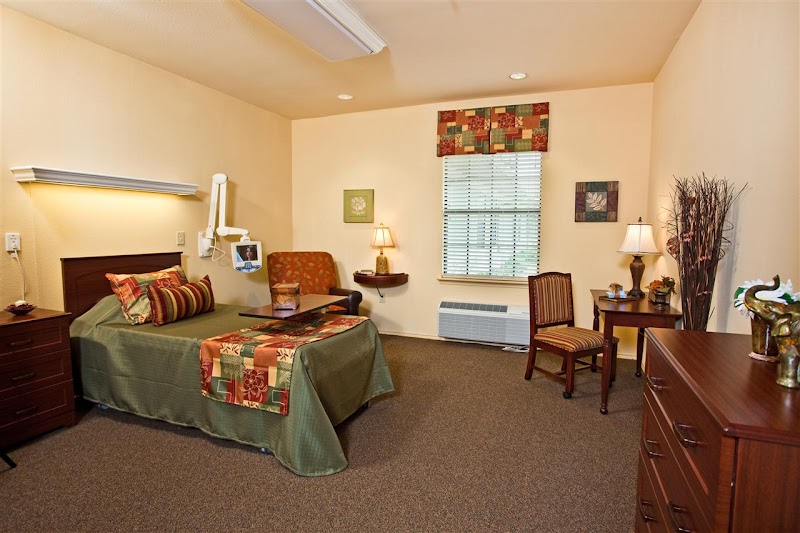
How is The Belmont At Twin Creeks Staffed?

CMS rates THE BELMONT AT TWIN CREEKS's staffing level at 2 out of 5 stars, which is below average compared to other nursing homes. Staff turnover is 58%, which is 12 percentage points above the Texas average of 46%. High turnover can affect care consistency as new staff learn residents' individual needs. RN turnover specifically is 62%, which is notably high. RNs provide skilled clinical oversight, so turnover in this role can affect medical care quality.

What Have Inspectors Found at The Belmont At Twin Creeks?

State health inspectors documented 24 deficiencies at THE BELMONT AT TWIN CREEKS during 2023 to 2025. These included: 1 that caused actual resident harm and 23 with potential for harm. Deficiencies causing actual harm indicate documented cases where residents experienced negative health consequences.

Who Owns and Operates The Belmont At Twin Creeks?

THE BELMONT AT TWIN CREEKS is owned by a for-profit company. For-profit facilities operate as businesses with obligations to shareholders or private owners. The facility is operated by CANTEX CONTINUING CARE, a chain that manages multiple nursing homes. With 112 certified beds and approximately 93 residents (about 83% occupancy), it is a mid-sized facility located in ALLEN, Texas.

How Does The Belmont At Twin Creeks Compare to Other Texas Nursing Homes?

Compared to the 100 nursing homes in Texas, THE BELMONT AT TWIN CREEKS's overall rating (2 stars) is below the state average of 2.8, staff turnover (58%) is significantly higher than the state average of 46%, and health inspection rating (2 stars) is below the national benchmark.

What Should Families Ask When Visiting The Belmont At Twin Creeks?

Based on this facility's data, families visiting should ask: "What safeguards and monitoring systems are in place to protect residents from abuse or neglect?" "How do you ensure continuity of care given staff turnover, and what is your staff retention strategy?" "Can you walk me through typical staffing levels on day, evening, and night shifts?" "Can I visit during a mealtime to observe dining assistance and food quality?" These questions are particularly relevant given the substantiated abuse finding on record, the facility's high staff turnover rate, and the below-average staffing rating.

Is The Belmont At Twin Creeks Safe?

Based on CMS inspection data, THE BELMONT AT TWIN CREEKS has documented safety concerns. The facility has 1 substantiated abuse finding (meaning confirmed case of resident harm by staff or other residents). The facility has a 2-star overall rating and ranks #100 of 100 nursing homes in Texas. Families considering this facility should ask detailed questions about what corrective actions have been taken since these incidents.

Do Nurses at The Belmont At Twin Creeks Stick Around?

Staff turnover at THE BELMONT AT TWIN CREEKS is high. At 58%, the facility is 12 percentage points above the Texas average of 46%. Registered Nurse turnover is particularly concerning at 62%. RNs handle complex medical decisions and coordinate care — frequent RN changes can directly impact care quality. High turnover means new staff may not know residents' individual needs, medications, or preferences. It can also be disorienting for residents, especially those with dementia who rely on familiar faces. Families should ask: What is causing the turnover? What retention programs are in place? How do you ensure care continuity during staff transitions?

Was The Belmont At Twin Creeks Ever Fined?

THE BELMONT AT TWIN CREEKS has been fined $23,278 across 2 penalty actions. This is below the Texas average of $33,312. While any fine indicates a compliance issue, fines under $50,000 are relatively common and typically reflect isolated problems that were subsequently corrected. Families should ask what specific issues led to these fines and confirm they've been resolved.

Is The Belmont At Twin Creeks on Any Federal Watch List?

THE BELMONT AT TWIN CREEKS is not on any federal watch list. The most significant is the Special Focus Facility (SFF) program, which identifies the bottom 1% of nursing homes nationally based on persistent, serious quality problems. Not being on this list means the facility has avoided the pattern of deficiencies that triggers enhanced federal oversight. This is a positive indicator, though families should still review the facility's inspection history directly.