BANGS NURSING AND REHABILITATION

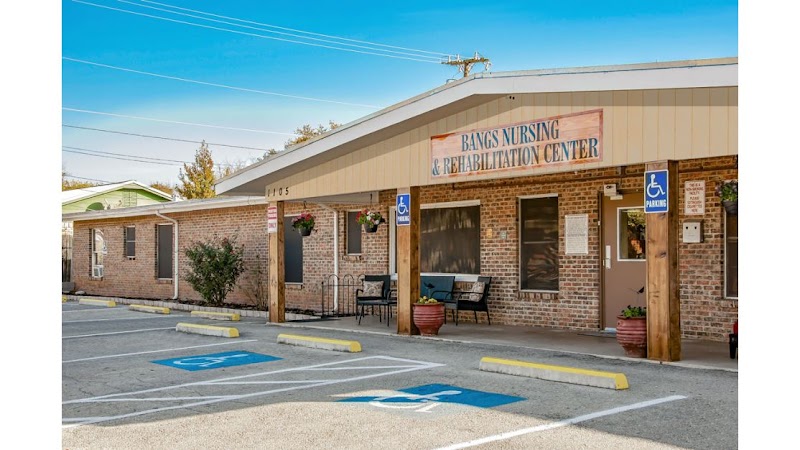
1105 FITZGERALD, BANGS, TX 76823 (325) 752-6321
For profit - Limited Liability company 48 Beds EDURO HEALTHCARE Data: November 2025
Trust Grade
90/100
#10 of 1168 in TX
Last Inspection: August 2025

Inspected within the last 6 months. Data reflects current conditions.

Overview

Bangs Nursing and Rehabilitation has received an excellent Trust Grade of A, indicating a high level of quality care and service. Ranking #10 out of 1,168 facilities in Texas places them in the top tier for the state, and they are the best option out of seven facilities in Brown County. The facility is showing improvement, with reported concerns decreasing from 2 issues in 2024 to just 1 in 2025. Staffing is rated average with a 3 out of 5 stars and a turnover rate of 44%, which is better than the state average. Notably, there have been no fines, indicating compliance with regulations, and they have more RN coverage than 94% of Texas facilities, which is beneficial for resident care. However, there are some weaknesses to be aware of. Recent inspections revealed concerns related to care planning, where residents did not have comprehensive care plans that met their specific needs. Additionally, there were issues with infection control, such as staff failing to perform proper hand hygiene during wound care, which poses a risk for infection. Lastly, one resident did not receive necessary pressure relief boots, which could lead to preventable skin issues. Overall, while Bangs Nursing and Rehabilitation has many strengths, families should consider these specific areas for improvement.

Trust Score
A
90/100
In Texas
#10/1168
Top 1%
Safety Record
Low Risk
No red flags
Inspections
Getting Better
2 → 1 violations
Staff Stability
○ Average
44% turnover. Near Texas's 48% average. Typical for the industry.
Penalties
✓ Good
No fines on record. Clean compliance history, better than most Texas facilities.
Skilled Nurses
✓ Good
Each resident gets 42 minutes of Registered Nurse (RN) attention daily — more than average for Texas. RNs are trained to catch health problems early.
Violations
○ Average
6 deficiencies on record. Average for a facility this size. Mostly minor or procedural issues.
★★★★★
5.0
Overall Rating
★★★☆☆
3.0
Staff Levels
★★★★★
5.0
Care Quality
★★★★★
5.0
Inspection Score
Stable
2024: 2 issues
2025: 1 issues

The Good

  • 5-Star Quality Measures · Strong clinical quality outcomes
  • Full Sprinkler Coverage · Fire safety systems throughout facility
  • No fines on record
  • Staff turnover below average (44%)

    4 points below Texas average of 48%

Facility shows strength in quality measures, fire safety.

The Bad

Staff Turnover: 44%

Near Texas avg (46%)

Typical for the industry

Chain: EDURO HEALTHCARE

Part of a multi-facility chain

Ask about local staffing decisions and management

The Ugly 6 deficiencies on record

Aug 2025 1 deficiency
CONCERN (E)

Potential for Harm - no one hurt, but risky conditions existed

Comprehensive Care Plan (Tag F0656)

Could have caused harm · This affected multiple residents

**NOTE- TERMS IN BRACKETS HAVE BEEN EDITED TO PROTECT CONFIDENTIALITY** Based on interview and record review the facility failed to develop and implement a comprehensive, person-centered care plan for...

Read full inspector narrative →
**NOTE- TERMS IN BRACKETS HAVE BEEN EDITED TO PROTECT CONFIDENTIALITY** Based on interview and record review the facility failed to develop and implement a comprehensive, person-centered care plan for each resident that included measurable objectives and time frames to meet, attain, and/or maintain the resident's highest practicable physical, mental, and psychosocial well-being for 6 of 6 residents (Residents #3, Resident #10, Resident #16, Resident #17, Resident #25, and Resident #30) reviewed for care plans. 1.The facility failed when Resident #3 did not have a comprehensive care plan dated 05/13/2025 that included measurable goals related to therapeutic diet, PASRR positive status, medication use, risk for seizures and contractures, or food intake. 2.The facility failed when Resident #10 did not have a comprehensive care plan dated 07/29/2025 that included measurable goals related to nutritional needs, roommate, PASRR status, communication, medication use, falls, pain and altered comfort. 3.The facility failed when Resident #16 did not have a comprehensive care plan dated 07/29/2025 that included measurable goals related to behaviors, medication use, and antipsychotic medications. 4.The facility failed when Resident #17 did not have a comprehensive care plan dated 06/17/2025 that addressed physician ordered fluid restrictions. 5.The facility failed when Resident #25 did not have a comprehensive care plan dated 06/17/2025 that included measurable goals related to pain management, physical functioning, medication use, and nutrition. 6.The facility failed when Resident #30 did not have a comprehensive care plan dated 07/29/2025 that included measurable goals related to physical functioning, medication use, falls, edema, and hospice care. This failure could affect residents by placing them at risk of not receiving individualized care and services to achieve their goals.The findings included the following: 1. Review of Resident #3's Resident Face Sheet, dated 08/05/25, revealed he was a [AGE] year-old male admitted to the facility on [DATE] with medical diagnoses including cerebral palsy, anxiety, epilepsy, major depressive disorder, history of falls, edema, weakness, urinary tract infection, depression, and problems with swallowing. Review of Resident #3's Annual MDS Assessment, dated 04/12/2025 Section C - Cognitive Patterns, subsection C0500 BIMS Summary Score revealed he had a BIMS score of 3 out of 15, indicating severe cognitive impairment. Review of Resident #3's Comprehensive Care plan reviewed/revised 05/13/2025 revealed the following: Focus: [Resident] is receiving a therapeutic or altered consistency diet and is at risk for nutritional impairment. Goal: [Resident] will have adequate fluid intake . Focus: Resident has been identified as having PASRR positive status related to an intellectual disability/developmental disability. Goal: Resident will maintain his/her highest level of practicable wellbeing . Focus: Black Box warning: This medication/s has a black box warning, the strongest warning mandated by the FDA, which indicates a need to closely evaluate and monitor the potential benefits and risks of the medication. Black box warning sign due to drug use of Furosemide (diuretic or water pill), Tramadol (opioid pain medication), Linzess (used to treat irritable bowel syndrome), Depakote 9anticonvulsant), Citalopram (antidepressant), Seroquel (antipsychotic), Lorazepam (antianxiety), IBU (non-steroidal anti-inflammatory). Goal: Facility to educate him/her/representative about the risk and benefits of drug and safety measures will be maintained to prevent or lessen any adverse reactions or injury from the drug use. Focus: [Resident] has Dx of Cerebral Palsy and is at risk for seizure activity and worsening of contractures. Goal: [Resident] will be able to function at the fullest potential possible . Focus: Potential for altered comfort r/t GERD. Goal: Resident will maintain adequate intake . Goals: continued review of Resident #3's comprehensive care plan dated 05/13/2025 did not included measurable goals related to therapeutic diet, PASRR positive status, medication use, risk for seizures and contractures, or food intake. 2. Review of Resident #10's Resident Face Sheet, dated 08/05/2025, revealed she was a [AGE] year-old female admitted to the facility on [DATE] with medical diagnoses including anxiety, epilepsy, quadriplegia, malnutrition, difficulty swallowing, intellectual disabilities, weakness, repeated falls, impulse disorder, incontinence of bowel and bladder, inability to speak, contracture of both hands, and a vitamin deficiency. Review of Resident #10's Quarterly MDS Assessment, dated 07/22/2025 revealed she had a BIMS score of 00 out of 15, indicating severe cognitive impairment. Review of Resident #10's Comprehensive Care Plan reviewed/revised 07/29/2025 revealed the following: Focus: [Resident] is receiving a therapeutic or altered consistency diet and is at risk for nutritional impairment. Goal: [Resident] will have adequate fluid intake . Focus: Per responsible party may room with life long room mate. Goal: Provide privacy for all ADLs initiated 07/25/2022. Focus: Resident has been identified as having PASRR positive status related to an intellectual disability/developmental disability. Goal: Resident will maintain his/her highest level of practicable wellbeing . Focus: [Resident] has a communication problem r/t Profound Intellectual Disabilities. Dx of aphasia. Rarely understood/Rarely understands. Goal: [Resident's] needs will be anticipated and met through nursing judgement . Focus: Black Box warning: This medication/s has a black box warning, the strongest warning mandated by the FDA, which indicates a need to closely evaluate and monitor the potential benefits and risks of the medication. Black box warning sign due to drug use of montelukast (used to treat asthma), linzess, IBU, depakene (used to treat seizures), carbamazepine (anticonvulsant), clonazepam (antianxiety/antiseizure), medroxyprogesterone (synthetic hormone). Goal: Facility to educate him/her/representative about the risk and benefits of drug and safety measures will be maintained to prevent or lessen any adverse reactions or injury from the drug use. Focus: [Resident] is at risk for falls r/t: Hx of falls and is at risk for future falls. Impaired Safety Awareness. Constant moving and squirming in bed and chair. Rolled out of bed - no injuries. Goal: [Resident's] risks and injury potential will be minimized . Focus: At risk for pain r/t chronic disease processes. Goal: Will report reduction in pain with interventions . Focus: Potential for altered comfort r/t GERD. Goal: Resident will maintain adequate intake . Goals: continued review of Resident # 10's comprehensive care plan dated 07/29/2025 did not included measurable goals related to nutritional needs, roommate, PASRR status, communication, medication use, falls, pain and altered comfort. 3.Review of Resident #16's Resident Face Sheet, dated 08/05/2025, revealed she was a [AGE] year-old female admitted to the facility on [DATE] with medical diagnoses including chronic obstructive pulmonary disease (lung disease that makes breathing difficult), high blood pressure, type 2 diabetes mellitus, paranoid schizophrenia(a subset of schizophrenia characterized by delusions and hallucinations), major depressive disorder (mental illness characterized by persistent sadness), chronic pain, repeated falls, weakness, low thyroid function, heartburn, insomnia, Review of Resident #16's Quarterly MDS Assessment, dated 07/22/2025 revealed she had a BIMS score of 00 out of 15, indicating severe cognitive impairment. Review of Resident #16's Comprehensive Care Plan reviewed/revised 07/29/2025 revealed the following: Focus: [Resident] requires psychological services provided by. Goal: [Resident] will exhibit less behaviors and needs will be met . Focus: Black Box warning: This medication/s has a black box warning, the strongest warning mandated by the FDA, which indicates a need to closely evaluate and monitor the potential benefits and risks of the medication. Black box warning sign due to drug use of tramadol, metformin (used to treat Type 2 Diabetes), Zyprexa (antipsychotic), haloperidol (antipsychotic), Wellbutrin (antidepressant), losartan (used to treat high blood pressure), metoprolol (used to treat high blood pressure). Goal: Facility to educate him/her/representative about the risk and benefits of drug and safety measures will be maintained to prevent or lessen any adverse reactions or injury from the drug use. Focus: [Resident] receives antipsychotic medications (Zyprexa, Haldol) r/t Disease process (Schizophrenia). Goal: [Resident] drug related complications, including movement disorder, discomfort, hypotension, gait disturbance, constipation/impaction or cognitive impairment through review date. Goals: continued review of Resident # 16's comprehensive care plan dated 07/29/2025 did not included measurable goals related to behaviors, medication use, and antipsychotic medications. 4.Review of Resident #17's Resident Face Sheet, dated 08/05/2025, revealed she was an [AGE] year-old female admitted to the facility on [DATE] with medical diagnoses including cardiomyopathy (heart disease), cerebral infarction (stroke), weakness, history of falling, high blood pressure, tremor, and anemia (low red blood cell count). Review of Resident #17's admission MDS Assessment, dated 06/11/2025 revealed she had a BIMS score of 15 out of 15, indicating intact cognition. Review of Resident #17's Comprehensive Care Plan reviewed/revised 06/17/2025 revealed the following: Focus [Resident] gets nervous and anxious at times dx anxiety. Goal [Resident] will have fewer outbursts of yelling/calling out . Record review of Resident #17's Comprehensive care dated 06/17/2025 plan did not have fluid restrictions addressed. 5.Review of Resident #25's Resident Face Sheet, dated 08/05/2025, revealed she was an [AGE] year-old female admitted to the facility on [DATE] with medical diagnoses including cardiomyopathy, cerebral infarction (stroke), weakness, history of falling, high blood pressure, tremor, and anemia. Review of Resident #25's admission MDS Assessment, dated 06/11/2025 revealed she had a BIMS score of 15 out of 15, indicating intact cognition. Review of Resident #25's Comprehensive Care Plan reviewed/revised 06/17/2025 revealed the following: Focus Need for pain management and monitoring related to. Goal: Will achieve acceptable pain level goal . Focus Impaired physical functioning and ADLs r/t debility/weakness, fatigue. Goal Will increase physical functioning level . Focus Black Box warning: This medication/s has a black box warning, the strongest warning mandated by the FDA, which indicates a need to closely evaluate and monitor the potential benefits and risks of the medication. Black box warning sign due to drug use of clopidogrel (prevents blood clots). Goal: Facility to educate him/her/representative about the risk and benefits of drug and safety measures will be maintained to prevent or lessen any adverse reactions or injury from the drug use. Focus Potential for alteration in nutrition . Goal Will achieve and maintain a healthy weight and nutritional status . Focus At risk for or actual pain. Goal Will have reduction in pain . Goals: continued review of Resident #25's comprehensive care plan dated 06/17/2025 did not included measurable goals related to pain management, physical functioning, medication use, and nutrition. 6.Review of Resident #30's Resident Face Sheet, dated 08/05/2025, revealed she was a [AGE] year-old female admitted to the facility on [DATE] with medical diagnoses including chronic kidney disease, adult failure to thrive, heart disease, low thyroid function, high blood pressure, myocardial infarction (heart attack), history of falls, weakness, chronic pain, rhabdomyolysis, shortness of breath, difficulty swallowing, and malnutrition. Review of Resident #30's Quarterly MDS Assessment, dated 07/21/2025 revealed she had a BIMS score of 14 out of 15, indicating intact cognition. Review of Resident #30's Comprehensive Care Plan reviewed/revised 07/29/2025 revealed the following: Focus [Resident] has physical functioning deficit related to . Goal Resident will improve current level of physical functioning. Focus Black Box warning: This medication/s has a black box warning, the strongest warning mandated by the FDA, which indicates a need to closely evaluate and monitor the potential benefits and risks of the medication. Black box warning sign due to drug use of tramadol, levothyroxine (thyroid hormone), Lasix (diuretic or water pill), voltaren gel (used to treat inflammation associated with arthritis), and Losartan (used to treat high blood pressure). Goal: Facility to educate him/her/representative about the risk and benefits of drug and safety measures will be maintained to prevent or lessen any adverse reactions or injury from the drug use. Focus . is at risk for falls/injuries r/t arthritis, cardiac compromise, depression, fall history, gait and balance. Goal Noncompliance with safety needs. Focus Potential for complications r/t edema Edema. Goal Resident will have not significant increase of weight r/t edema . Focus Hospice Care due to diagnosis of Heart Disease. Goal Will be kept comfortable with reduced pain . Goals: continued review of Resident #30's comprehensive care plan dated 07/29/2025 did not include measurable goals related to physical functioning, medication use, falls, edema, or hospice care. During an interview on 08/07/2025 at 08:36 AM, the dietary cook stated Resident #17 had a fluid restriction of 1.5 liters per day. The cook had a paper showing how much fluid to serve at each meal to comply with fluid restrictions. The cook stated if fluid restriction was not followed the resident could have more swelling in her feet. During an interview on 08/07/2025 at 09:40 AM, LVN A stated leadership was responsible for care plans. She stated the ADON or DON will ask the staff for input prior to care plan meetings. During an interview on 08/07/2025 at 09:58 AM, the ADON stated she runs care plan meetings and was responsible for creating the baseline care plans. She explained everybody could update a care plan as changes occur. During an interview on 08/07/2025 at 10:07 AM, the DON stated the ADON/MDS Coordinator was responsible for care plans. She explained the system prepopulated a resident's care plan based on data entered from the MDS assessment. The DON stated the prepopulated selections were editable. The DON stated monitoring care plans occurred during quarterly audits performed by a corporate nurse. She stated training on the system and creating care plans was on the job. The DON explained training was also provided when the corporate nurse performed quarterly care plan audits. She stated there was no effect on the residents when the goals were not measurable because of the information included in the interventions and physician's orders provided guidance. During an interview on 08/07/2025 at 10:30 AM, Resident #17 stated did not care that the staff told her she could only have so much to drink. Resident #17 stated she got enough and did not feel thirsty. Review of facility policy titled Care Plans, Comprehensive Person-Centered dated Quarter 3, 2018, revealed in the Policy Statement A comprehensive, person-centered care plan that includes measurable objectives . The Policy Interpretation and Implementation section revealed 8. The comprehensive, person-centered care plan will: a. Include measurable objectives ., k. Reflect treatment goals, timetables and objectives in measurable outcomes
Jul 2024 2 deficiencies
CONCERN (D) 📢 Someone Reported This

A family member, employee, or ombudsman was alarmed enough to file a formal complaint

Potential for Harm - no one hurt, but risky conditions existed

Pressure Ulcer Prevention (Tag F0686)

Could have caused harm · This affected 1 resident

**NOTE- TERMS IN BRACKETS HAVE BEEN EDITED TO PROTECT CONFIDENTIALITY** Based on observation, interview, and record review, the facility failed to ensure that a resident received care, consistent with...

Read full inspector narrative →
**NOTE- TERMS IN BRACKETS HAVE BEEN EDITED TO PROTECT CONFIDENTIALITY** Based on observation, interview, and record review, the facility failed to ensure that a resident received care, consistent with professional standards of practice, to prevent pressure ulcers that were avoidable for 1 of 14 residents (Resident #28) reviewed for quality of care. The facility failed to ensure Resident #28's physician ordered pressure relief boots were placed on Resident #28's feet while he was laying in his bed. This failure could place residents at risk of having skin breakdown . Findings included: Record review of Resident #28's face sheet dated 07/02/2024 revealed a [AGE] year-old male admitted on [DATE] with an original admission date of 08/29/2022, with diagnosis of Spastic Quadriplegic Cerebral Palsy(, disorder of bone density and structure, protein-malnutrition and muscle weakness. Record review of Resident #28's Quarterly MDS assessment dated [DATE], revealed: Section C-Cognitive Patterns, Resident #28 had a BIMS score of 0 meaning Resident #28 was given the assessment because he was rarely/never understood; Section GG-Functional Abilities and Goals, Resident #28 was dependent on staff for all ADL's; Section M- Skin Conditions, Resident #28's skin intact , no pressure ulcers. Record review of Resident #28's physician orders revealed Start date of 12/30/2022 Keep bed in low position, pressure relief scoop mattress, pressure relief cushion to w/c [wheel chair], pressure relief boots to feet for prevention. Every day and night shift During an observation on 06/30/2024 at 9:10 AM , Resident #28 laying in his bed. Resident #28's bed was in lowest position. Pressure relief boots were laying on top of the covers and were not on Resident #28's feet. During interview on 07/02/2024 at 12:24 PM the ADMN stated he would refer any clinical questions to his DON and the staff should have followed the policies of the facility. During an observation and interview on 07/02/2024 at 12:55 PM, the DON stated Resident #28 should have been wearing pressure relief boots on both his feet to prevent pressure ulcers. The DON stated if the order stated every day and night shift, then the boots should be on when Resident #28 was laying in bed. The DON stated Resident #28 did not have any skin issues, the order for pressure relief boots was to prevent pressure ulcers. The DON lifted the sheet up to reveal that Resident #28 was not wearing pressure relief boots. The skin on Resident #28's feet was intact with no redness or open areas. The DON stated she did not know why the boots were not on. She stated they may have been in laundry. The DON located the boots in the top of Resident #28's closet. The DON stated her expectation was that orders should have been followed, and per orders, the boots should have been on Resident #28 feet. The DON stated the effect on resident could have been a pressure ulcer could have developed. The DON stated she did not have a response to why the boots were not on Resident #28's feet. The DON stated they did not have a policy for following physician orders.
CONCERN (D) 📢 Someone Reported This

A family member, employee, or ombudsman was alarmed enough to file a formal complaint

Potential for Harm - no one hurt, but risky conditions existed

Respiratory Care (Tag F0695)

Could have caused harm · This affected 1 resident

**NOTE- TERMS IN BRACKETS HAVE BEEN EDITED TO PROTECT CONFIDENTIALITY** Based on observations, interviews, and record reviews, the facility failed to ensure that a resident who needs respiratory care,...

Read full inspector narrative →
**NOTE- TERMS IN BRACKETS HAVE BEEN EDITED TO PROTECT CONFIDENTIALITY** Based on observations, interviews, and record reviews, the facility failed to ensure that a resident who needs respiratory care, is provided such care, consistent with professional standards of practice, the comprehensive person-centered care plan, the residents' goals and preferences for 2 of 5 (Resident # 85 and Resident #19) reviewed for quality of care. 1. The facility failed to ensure Resident #85's oxygen nasal cannula and oxygen tubing were not lying in the floor. 2. The facility failed to ensure Resident #19's nebulizer mask/tubing was placed in a clear plastic bag when not in use. These failures placed residents of the facility at risk for respiratory illnesses. Findings included: Resident #85 Record Review of Resident #85's electronic Face sheet dated 07/01/2024, revealed a [AGE] year-old male admitted on [DATE], with the following diagnoses Malignant Neoplasm (uncontrolled abnormal growth of cells or tissue in the body) unspecified part of unspecified Bronchus or Lung, Anxiety, Hypertension (high blood pressure) and COPD (Chronic Obstructive Pulmonary Disease) Record review of Resident #85's admission MDS assessment dated [DATE] revealed: Section C- Cognitive Behavior Resident # 85 had a BIMS score of 10, meaning moderately impaired cognitive function. Record review of Resident 85's Care Plan dated 06/27/2024 revealed: requires supplemental oxygen for respiratory status of COPD and SOB (shortness of breath) The goal: Resident will tolerate use of supplemental oxygen and oxygen saturation will remain within normal ranges daily. Interventions: Monitor for complications related to oxygen use (ears, nose, dry mucosa membranes), Oxygen per nasal cannula as ordered, Oxygen tubing changed per facility protocol Record review of Resident #85's Physician Orders dated 06/01/2024 revealed change (oxygen) mask/tubing every night shift every Sunday. During an observation and attempted interview on 06/30/2024 at 2:25 PM, Resident #85 was lying in bed, nasal canula for oxygen was lying on floor beside resident's bed. Resident #85 was not able to provide response. Resident #19 Record review of Resident #19's electronic face sheet dated 03/07/2024 revealed a [AGE] year-old female admitted on [DATE] with the following diagnoses: non-ST elevation Myocardial Infarction (Heart attack) and Shortness of Breath Record review Resident #19's Quarterly MDS dated [DATE] revealed: Section C- Cognitive Behavior Resident #19 had a BIMS Score 13 meaning no cognitive impairment; Section O -Special Treatment Resident #19 required oxygen therapy. Record review Resident #19's Care Plan dated 05/16/2024 Resident #19 Required PRN supplemental oxygen for shortness of breath to maintain O2 (oxygen) sats (saturation) above 90%. The goal: Resident will tolerate use of supplemental oxygen and oxygen saturation will remain within normal ranges daily. Interventions: Monitor for complications related to oxygen use (ears, nose, dry mucosa membranes), Oxygen per nasal cannula as ordered, Oxygen tubing changed per facility protocol Record review Resident #19's Physician orders dated 06/01/2024 Oxygen 2-4 liter per minute PRN (as needed). Change (oxygen) tubing/mask every night shifts every Sunday. During an observation on 06/30/24 at 2:30 PM Resident #19 was sitting up in her wheelchair. Her nebulizer equipment was not stored in a plastic bag or dated when tubing was last changed. Nebulizer mask was lying on a table at the resident's bedside. During an interview on 07/02/24 at 10:33 AM, Resident # 19 stated the staff did not always put her nebulizer mask in a bag. She stated she wished they would have kept the mask in bag to keep it clean. She stated that she only needed breathing treatments occasionally. During an interview on 07/02/24 at 10:45 AM, the DON stated oxygen tubing should have been in a clear plastic bag when not in use. She stated nebulizer masks or tubing and nasal canula should have been in a clear plastic bag when not in use. She stated tubing and breathing treatment supplies should have been kept in plastic bag when not in use, for infection control. She stated the Charge Nurse on the Sunday night shift was responsible for changing oxygen tubing and mask, and nebulizer device each week, and they should have been dating the plastic bag. She stated there was no harm to residents unless the supplies got dirty. She stated the best practice was to place tubing in plastic bag. She stated she did not know why this failure occurred. During an interview on 07/02/2024 at 10:50 AM, RN A stated the nebulizer tubing, mask, handheld device should have been in plastic bag when not in use. She stated if she found oxygen tubing on the resident's floor, she would have replaced it with a new oxygen tubing and nasal canula. She stated the Sunday night shift nurse should have changed the tubing and put it in a plastic bag, with the date on the bag. She stated the resident could possibly have gotten an infection if dirty tubing was used. She stated she did not know how this failure occurred. During interview on 07/02/2024 at 12:24 PM the ADMN stated he would refer any clinical questions to his DON and the staff should have followed the policies of the facility. Review of facility policy titled, Departmental (Respiratory Therapy)-Prevention of Infection dated November 2011 revealed: The purpose of this procedure is to guide prevention of infection associated with respiratory therapy tasks and equipment, including ventilators, among resident and staff . Steps in the Procedure: 8. Keep the oxygen cannula and tubing used PRN in a plastic bag when not in use .
May 2023 3 deficiencies
CONCERN (D)

Potential for Harm - no one hurt, but risky conditions existed

Report Alleged Abuse (Tag F0609)

Could have caused harm · This affected 1 resident

**NOTE- TERMS IN BRACKETS HAVE BEEN EDITED TO PROTECT CONFIDENTIALITY** Based on observation, interview and record review, the facility failed to ensure all alleged violations involving of mistreatmen...

Read full inspector narrative →
**NOTE- TERMS IN BRACKETS HAVE BEEN EDITED TO PROTECT CONFIDENTIALITY** Based on observation, interview and record review, the facility failed to ensure all alleged violations involving of mistreatment, neglect, abuse or injuries of unknown source were reported immediately, but not later than 24 hours after the allegation was made to the administrator and to other officials (including to the State Agency) for 1 of 3 residents (Resident #27) reviewed for reporting an allegation of abuse. The facility failed to report to the administrator of bruising of suspicious nature in shape and/or position within 24 hours for Resident #27. This failure could result in unreported incidents of abuse/neglect and lead to diminished quality of life, and psychosocial harm for residents. Findings included: Review of Resident #27's admission Record dated 5/23/23 revealed he was an [AGE] year-old male admitted to the facility on [DATE] with diagnoses including compression fracture of the right lower leg, dementia, psychotic disorder with hallucinations, Alzheimer's Disease, Chronic Pain, and history of falls. Review of Resident #27's admission MDS Assessment, dated 3/27/23, revealed: He had a mental status exam score of 3 of 15 (indicating severe cognitive impairment). He showed signs of delirium included inattention and disorganized thinking. He showed behavioral symptoms including physical behaviors directed toward others (4 - 6 days a week); verbal behaviors directed toward others (1 - 3 days a week); and other behavioral symptoms not directed towards others (4 -6 days a week). He resisted care (1 - 3 days a week) and wandered (4 - 6 days a week). He needed extensive assistance from two or more staff in all ADLs except eating. He used a wheelchair. He was frequently incontinent of bladder and always incontinent of bowel. Review of Resident #27's Care Plan, started 3/27/23 revealed: Focus: Resistive with care due to cognitive loss and diagnosis of Alzheimer's and dementia Goal: Resident #27 will be compliant with all necessary care Interventions: allow resident to express preferences and follow these when possible and meet resident's needs as is possible and explain what it is being done to meet needs. Review of Resident #27's Care plan, started 3/30/23, revealed: Focus: Resident #27 sometimes has behaviors which include cursing, hitting during care, kicking, screaming, and shouting. Goal: Resident #27 will calm down with staff intervention daily Interventions: attempt interventions before resident's behaviors begin. Review of Resident #27's Order Summary Report, dated 5/23/23, revealed he was not on any anti-coagulant, anti-platelet, or Non-steroid Anti-inflammatory Drug. Review of Resident #27's Nurse's Notes 4/22/23 - 5/23/23 revealed no notes about bruises to Resident #27's arm. Review of Resident #27's only incident/ accident report revealed an incident/ accident report, dated 5/20/23, completed by LVN D that documented yellow, healing bruises. Observation on and interview on 05/22/23 at 12:26 PM revealed Resident #27 in his room up in his wheelchair. Resident #27 was observed to have a bruise near his arm. Family member pulled up the arm to his shirt and showed surveyor the bruising on the bicep of his left arm with a skin tear in the middle. Resident #27's family member told the facility she did not know what happened. The bruise on his arm was a red crescent shaped bruise to the outside of the arm. On the inner arm was a dark purple oval shaped bruise. Observation and interview 05/23/23 at 11:41AM showed Resident #27's bruises measured approximated 2.5 - 3 inches long for the crescent bruise. The inner arm bruise was approximately an inch and matched the outline of a thumb. Interview on 05/23/23 at 3:04 PM CNA C stated Resident #27 was fairly new and excessive assistance on everything. She said he got fairly aggressive at times and clocked her about a week ago. She said she was not sure how long Resident #27 had the bruise on his arm. CNA C said she became aware of the bruise when she came back from her days off last week and no one told her about them. She stated when she found the bruising on Resident #27's arm she reported it to her nurse. CNA C said she just remembered a circular bruise on his arms. CNA C stated a circular bruise might be from someone grabbing him or being pulled up CNA C stated when she found a bruise on a resident, she would bring it to her charge nurse or ADON. Interview and observation on 05/23/23 at 3:18 PM LVN A stated Resident #27 had Alzheimer's disease and had lot of behaviors. LVN A explained Resident #27 would punch and fight and kick when he was changed. LVN A said she did not know anything about a bruise on Resident #27 and stated she needed to measure it. Resident #27 was observed in bed asleep. LVN A was able to measure the bruise on Resident #27's arm; due to the way Resident #27 was laying, she was able to measure the red crescent bruise on the bicep at 1.5 cm x 1.5 cm and the skin tear was 1.5 cm long. LVN A stated she would complete an incident/accident report on the bruise. LVN A stated no one told her of any bruising in shift to shift report. LVN moved Resident #27's arm to examine the inner arm and stated the purple bruise looked like a thumb print but was unable to measure it. Interview on 05/23/23 at 3:34 PM the ADON stated she was not sure how Resident #27 got the red or purple bruises on his arm. She stated she tried to look at Resident #27's arms but Resident #27 would not let her look at it. Interview on 05/24/23 at 9:15 AM the ADON stated she went into Resident #27's room when he got undressed. The ADON stated she though the incident/accident report completed on 5/20/23 was about different bruise(ing). She confirmed she saw the bruise when he got undressed. The ADON stated she did see the inner arm bruise and stated it was purple, in-tact and non-blanchable. The ADON said she thought he hit the half-rail on his bed, she continued she thought it would form an oval bruise (the half rail was long, straight, smooth plastic bar structure for resident to grab during ADL care). When it was pointed out the half rail was long and thin, the ADON said he might have bumped it on his wheelchair (wheelchair arms are padded, long and thin). The ADON said to rule out staff mistreatment, they talked to the staff and everything. The ADON stated Resident #27 was unable to explain what happened, but if someone did something to him, he did not like he'd get you. The ADON stated if the bruise was from someone holding too tightly there would be a bruise from the fingers as well. The ADON said the 5/20/23 skin assessment did not document any new skin issues. The ADON said to investigate the bruises she called Resident's #27's Responsible Party and they did not think anything happened. Interview on 05/24/23 at 9:41 AM the Administrator stated the only bruising he was aware of was old bruising discovered 5/20/23 that was yellow. He was not aware of the red or purple bruise. He said causes of bruising could be a transfer not done right or a resident-to-resident altercation. The Administrator stated he did not look at Resident #27's arm. The Administrator admitted he did not do anything to rule out abuse or neglect. He admitted he did receive training for abuse and neglect, and it covered mandatory reporting and suspicious injuries. The Administrator stated suspicious injuries could be inner soft skin and the face. Interview on 05/24/23 at 11:00 AM LVN D said she worked 5/20/23 and did not find red or purple bruisng. LVN D said she did not know how the aides provided ADL care and not notice the red or purple bruising, but neither knew about it. LVN D said she worked on Friday 5/19/23 and no one said anything about bruising at that time. LVN D said Resident #27 was always agitated during care and needed two-people for assistance. LVN D said there was nothing abnormal about 5/19/23 or 5/20/23. Review of the facility's policy and procedure on Abuse Prevention Program, dated 1/2022, revealed: Policy Statement: Our residents have the right to be free from abuse, neglect, misappropriation of resident property, and exploitation. This includes but is not limited to freedom from corporal punishment, involuntary seclusion, verbal, mental, sexual or physical abuse, and physical or chemical restraint not required to treat the resident's symptoms. As part of the resident abuse prevention, the administration will: Develop and implement policies and procedures to aide our facility in preventing abuse, neglect, or mistreatment of our residents. Resident staff training/orientation programs that include such topics as abuse prevention, identification and reporting of abuse, stress management and handling verbally or physically aggressive resident behavior. Identify and assess all possible incidents of abuse Investigate and report any allegation s of abuse within timeframes as required by federal requirements. Review of the facility's policy and Procedure on Abuse and Neglect - Clinical Procedure, dated 1/2022 revealed: Assessment and Recognition: The nurse will assess the individual and document related findings. Assessment data will include: a. injury assessment (Bleeding, bruising, deformity, swelling etc.) b. pain assessment c. current behavior d. Patient's age and sex e. All current medications, especiall7y anti-coagulants, Non-Steroidal, Anti-Inflammatory Drugs, salicylate. f. Other platelet inhibitors g. Vital sighs. h. Behavior over last 24 hours (bruise could be related to movement disorder or aggressive behavior) i. History of any tendency towards bruising j. All active diagnoses. The physician and staff will help identify risk factors for abuse within the facility; for example, significant numbers of residents/ patients with unmanageable problematic behavior. Cause identification: the staff with the physician's input as needed, will investigate alleged abuse and neglect to clarify what happened and identify possible causes.
CONCERN (D)

Potential for Harm - no one hurt, but risky conditions existed

Deficiency F0761 (Tag F0761)

Could have caused harm · This affected 1 resident

Based on observation, interview, and record review the facility failed to label medications in accordance with currently accepted professional principles, and include the the expiration date , and to ...

Read full inspector narrative →
Based on observation, interview, and record review the facility failed to label medications in accordance with currently accepted professional principles, and include the the expiration date , and to store all drugs and biologicals in locked compartments under proper temperature controls and permit only authorized personnel to have access to the keys for one of one medication room and one (cart #1) of one treatment carts reviewed for label and storage of drugs and biologicals. The facility failed to label multi-use vials of tuberculin and influenza formula with the open date The facility failed to ensure treatment cart #1 was locked when unattended on 05/22/2023 and 05/24/2023. These failures could place residents at risk of being administered expired medications and having access to unauthorized medications and/or lead to possible harm or drug diversions. Findings included: During an observation and record review on 05/23/23 at 3:02 PM the medication room was observed with LVN A present. Inside a small refrigerator there were two opened 1ml vials of tuberculin formula that did not have an open date on them. The tuberculin box indicated Discard opened product after 30 days. There also was a one opened 5ml vial influenza vaccine formula vial that did not have an open date on it. The influenza formula manufacture pamphlet dated March 2022 indicated in part: Once the stopper of the multi-dose vial has been pierced the vial must be discarded within 28 days. During an interview on 05/23/23 at 3:12 PM LVN A said she did not know if someone was designated to check the medication room for expired medications. LVN A said she would definitely start checking for expired medications in the medication room from now on. During an interview on 05/24/23 at 10:30 AM the ADON said normally the nurses were supposed to monitor the medication room for expired medications and such. The ADON said she checked the medication room once a week but she must have missed those vials. The ADON said if they used an expired vial medication it could lead to inaccurate readings or not get the desired effect. During an interview on 05/24/23 at 12:02 PM the Administrator said it was the nurses duty to monitor the medication room for expired medications and discard them if not dated (out of date). Record review of the facility's policy titled Medication labeling and storage dated 02/2023 indicated in part: The medication label includes at a minimum - expiration date when applicable. Multi-dose vials that have been opened or accessed (e.g. needle puncture) are dated and discarded within 28 days unless the manufacturer specifies a shorter or longer date for the open vial. During an observation and interview on 05/22/2023 from 3:05 PM to 3:09 PM, treatment cart #1 was observed unlocked and unattended. There were no facility staff observed near the treatment cart or seen, all drawers of the medication cart were unlocked, and all medications, supplies, and additional items were easily accessible with no staff in eyesight of the treatment cart. Surveyor waited by cart for 4 minutes before a LVN D walked by and took the cart. During an observation and interview on 05/24/23 08:30 AM to 08:50AM, treatment cart #1 was observed unlocked and unattended. There were no facility staff observed near the treatment cart or seen, all drawers of the medication cart were unlocked, and all medications, supplies, and additional items were easily accessible with no staff in eyesight of the treatment cart. Surveyor waited by cart for 20 minutes before a LVN D arrived. LVN D was questioned about who was responsible for locking the cart. LVN D stated that she and the other nurse shared the treatment cart. Surveyor asked why the cart was unlocked, LVN D shrugged her shoulders and stated that she would lock the cart when she finished what she was doing. In an interview on 05/24/23 at 1:10 PM, the ADON stated the carts should never be left unlocked and unattended. ADON stated that her expectations were that staff should be locking carts. The ADON stated that she recently put out an in-service on unlocked carts because it had been a problem. ADON stated that she is constantly telling the nurses to lock the carts. ADON stated that she would re-educate the nurses on importance of locking carts for safety of residents. Review of the facility's policy, titled Security of Medication Cart, revised April 2007, reflected (in part): Policy Statement: The medication cart shall be secured during medication passes. Policy Interpretation and Implementation: 1. The nurse must secure the medication cart during the medication pass to prevent unauthorized entry. 2. The medication cart should be parked in the doorway of the residence room during the medication pass. 3. When it is not possible to park the medication cart in the doorway, the cart should be parked in the hallway against the wall with doors and drawers facing the wall. The card must be locked before the nurse enters the residence room. 4. Medication carts must be securely locked at all times went out of the nurses view. 5. When the medication cart is not being used, it must be locked and parked at the nurses station or inside the medication room. Review of facilities mandatory in-service, dated 04/01/2023, titled Locking Medication Carts Topic discussed: When not standing directly in front of medication heart, the cart must be locked, and the computer should not contain patient information.
CONCERN (E)

Potential for Harm - no one hurt, but risky conditions existed

Infection Control (Tag F0880)

Could have caused harm · This affected multiple residents

**NOTE- TERMS IN BRACKETS HAVE BEEN EDITED TO PROTECT CONFIDENTIALITY** Based on observation, interview and record review, the facility failed to maintain an infection control program designed to prev...

Read full inspector narrative →
**NOTE- TERMS IN BRACKETS HAVE BEEN EDITED TO PROTECT CONFIDENTIALITY** Based on observation, interview and record review, the facility failed to maintain an infection control program designed to prevent the development and transmission of disease and infection. PT B double gloved during incontinent and wound care for Resident #23 and did not sanitize or wash her hands in between glove changes. PT B failed to perform hand hygiene prior to leaving room after performing wound care and incontinence care. CNA C failed to perform hand hygiene or glove changes during incontinent care of Resident #25. CNA C touched residents clothing and linens with soiled gloves after conducting incontinence care. These failures could place resident's risk for cross contamination and the spread of infection. Findings included: Record review of Resident #23's admission record dated 05/23/23 indicated he was admitted to the facility on [DATE]. Diagnoses included pressure ulcer of sacral region, muscle wasting and atrophy. He was [AGE] years of age. Record review of Resident #23's MDS dated [DATE] indicated in part: Bladder and Bowel: Bowel Continence = 3. Always incontinent (no episodes of continent bowel movements). Record review of Resident #23's physician orders active as of 05/23/2023 indicated in part: Cleanse stage 4 to sacrum with antimicrobial skin and wound gel and pat dry. Apply 2x2 to cover wound bed. Apply thin layer of sure-prep (A skin protectant wipe that forms a waterproof barrier on skin) )around wound and cover with dressing. LT (left) heel= After CPI (Closed Pulse Irrigation) irrigation by therapy. pat dry, apply hydrogel impregnated gauze on wound bed &cover with dry gauze and foam dressing Monday to Friday. Record review of Resident #23's care plan dated 05/17/2023 indicated in part: Focus: Potential for complications related to incontinence of bowel. Goal: Resident will be free from complications r/t incontinence as evidence by intact skin, no rash or redness to peri care, no signs or symptoms of infection daily. Interventions: Clean peri area thoroughly after each episode of incontinence, assess, assess skin after each episode of incontinence-notify nurse with any problems. Focus: Infection actual or at risk for related to: Stage 3 decubitus ulcer to sacrum. Goal: Infection will resolve without complication . Interventions: Follow standard precautions refer to Living Center Infection Control Manual. Record review of Resident #25's admission record indicated she was admitted to the facility on [DATE]. Diagnoses included epilepsy, full incontinence of urine and bowel, intellectual disabilities. She was [AGE] years of age. Record review of Resident #25's MDS dated [DATE] indicated in part: Bladder and Bowel: Bowel Continence = 3. Always incontinent (no episodes of continent bowel movements). Record review of Resident #25's care plan dated 05/17/2023 03/13/23 indicated in part: Focus: Resident has bowel/bladder incontinence and is at risk for skin breakdown and UTI's. Goal: Residents risk for septicemia will be minimalized /prevented via prompt recognition and treatment of symptoms of UTI through the review date. Resident will remain free from skin breakdown due to incontinence and brief use. Intervention: Clean peri area with each incontinence episode, handwashing before and after delivery of care. During an observation on 05/22/23 at 02:42 PM PT B performed wound care to Resident #23's coccyx area. PT B sanitized her hands and put on 1 pair of gloves on both hands. PT B undid the brief and noted the resident had a bowel movement, so she took some wipes and wiped bowel movement. While still wearing the same original gloves that she used to wipe the bowel movement, PT B took a clean pair of gloves and put them over the soiled pair of gloves she was already wearing. PT B then placed a clean cloth pad under the resident and removed the dressing from the wound on Resident #23's coccyx area. PT B then removed the first pair of gloves and placed another clean pair of gloves over the ones that she used to clean the bowel movement. PT B then took some sure-prep pads and wiped around the wound area and placed a plastic dressing over the entire coccyx are while still wearing the same double gloves. The resident had more bowel movement, so PT B wiped the bowel movement with some wipes then removed those gloves and put on another pair over the ones she already had on. PT B then took some 4x4 gauze and cleaned the wound then she removed the pair of gloves and put on a new pair over the ones she had on from the beginning. While wearing the same pair of gloves PT B took a clean cloth pad and placed it under Resident #23 then took a clean brief and fastened it to him. While wearing the same pair of gloves PT B took a clean pair of shorts and assisted the resident with putting them on. PT B then removed both gloves from her left hand but only one glove from the right hand, she then placed a new glove over the old glove on right hand and placed 2 gloves on her left hand without sanitizing or washing her hands. PT B then took a plastic dressing and placed it on Resident #23's left foot. PT B's cellphone rung so with the gloved hand took the cellphone from her shirt pocket and pressed a button to silence it, placed the phone back in her pocket and proceeded with the wound care. While wearing the same gloves PT B took the CPI machine and debrided the ankle with the sodium chloride solution. PT B then removed the plastic dressing, removed the first pair of gloves while leaving the old pair still on and then took a clean pair of gloves and donned them over the old pair. After PT B was done with the care, she placed the used items in a bag and removed her gloves and placed them in the bag and left the room without sanitizing or washing her hands. During an observation and interview on 05/23/23 at 04:00 PM, CNA C washed hands, donned gloves, pulled curtain, and used the remote to adjust bed to lay resident flat. CNA C removed resident #25's pants, and folded residents soiled brief in on itself. CNA C wiped resident's perineal area x5 with wet wipes, then rolled resident to her left side and wiped residents bottom x3 with wet wipes. CNA C removed soiled brief, and dried residents bottom with a dry towel, then placed new brief under resident and then rolled resident and dried resident front perineal area with a clean dry towel. CNA C secured residents brief. CNA C covered resident with her blankets and adjusted her pillows. CNA C lowered bed to lowest position using the remote. CNA C doffed her gloves and washed her hands. CNA C failed to perform hand hygiene, use hand sanitizer or change gloves during incontinent care of Resident #25. During an interview on 05/24/23 at 10:42 AM the ADON said staff was expected to remove their gloves if they became contaminated with bowel movement. The ADON said staff were then expected to wash their hands and the put- on clean gloves to continue the care. The ADON said staff were supposed to only put one pair of gloves at a time and not double glove. The ADON said staff were not supposed to double glove because the first pair of gloves could become damage and contaminate the other pair. The ADON said the PT staff should have removed both gloves and washed their hands before putting on another pair of gloves. The ADON said PT B not changing her gloves and washing her hands could lead to cross contamination. The ADON said she did training, on a monthly basis, regarding hand washing and glove use and all staff was present including the therapy staff. The ADON said she would do more training on the use of gloves and hand washing. During an interview on 05/24/23 at 11:56 AM PT B said she should have probably changed her gloves once they became contaminated and washed or sanitized her hands. PT B acknowledged that using double gloves was not appropriate and would not do that anymore. PT B said she attended the in-services they had at the facility regarding hand washing and glove use and she should have been more careful to prevent cross contamination. During an interview on 05/24/23 at 12:04 PM the Administrator was made aware of the observation of PT B using double gloves and not washing or sanitizing their hands in between glove changes. The Administrator acknowledged it was a concern and there would be more training regarding handwashing and glove changing. Record review of the facility's policy titled Handwashing/Hand Hygiene and dated 08/2019 indicated in part: This facility considers hand hygiene the primary means to prevent the spread of infections. All personnel shall follow the handwashing/hand hygiene procedures to help prevent the spread of infection to other personnel, residents, and visitors. Wash hands with soap (antimicrobial or non-antimicrobial) and water for the following situations: When hands are visibly soiled. Use an alcohol-based hand rub containing at least 62% alcohol or alternatively, soap (antimicrobial or non-antimicrobial) and water for the following situations: Before and after coming on duty; before and after direct contact with residents, before moving from a contaminated body site to a clean body site during resident care. Hand hygiene is the final step after removing and disposing of personal protective equipment. The use of gloves does not replace hand washing/hand hygiene. Integration of glove use along with routine hand hygiene is recognized as the best practice for preventing healthcare-associated infections. Single use disposable gloves should be used before aseptic procedures; when anticipating contact with blood or bodily fluids and when in contact with a resident or the equipment or environment of a resident who is on contact precautions. Record review of the facility's policy titled Personal protective equipment-using gloves and dated 09/2010 indicated in part: When gloves are indicated use disposable single use gloves. Wash hands after removing gloves (Note: Gloves do not replace handwashing).
Understanding Severity Codes (click to expand)
Life-Threatening (Immediate Jeopardy)
J - Isolated K - Pattern L - Widespread
Actual Harm
G - Isolated H - Pattern I - Widespread
Potential for Harm
D - Isolated E - Pattern F - Widespread
No Harm (Minor)
A - Isolated B - Pattern C - Widespread

Questions to Ask on Your Visit

  • "Can I speak with families of current residents?"
  • "What's your RN coverage like on weekends and overnight?"

Our Honest Assessment

Strengths
  • • Grade A (90/100). Above average facility, better than most options in Texas.
  • • No major safety red flags. No abuse findings, life-threatening violations, or SFF status.
  • • No fines on record. Clean compliance history, better than most Texas facilities.
  • • 44% turnover. Below Texas's 48% average. Good staff retention means consistent care.
Concerns
  • • No significant concerns identified. This facility shows no red flags across CMS ratings, staff turnover, or federal penalties.
Bottom line: Generally positive indicators. Standard due diligence and a personal visit recommended.

About This Facility

What is Bangs Nursing And Rehabilitation's CMS Rating?

CMS assigns BANGS NURSING AND REHABILITATION an overall rating of 5 out of 5 stars, which is considered much above average nationally. Within Texas, this rating places the facility higher than 99% of the state's 100 nursing homes. This rating reflects solid performance across the metrics CMS uses to evaluate nursing home quality.

How is Bangs Nursing And Rehabilitation Staffed?

CMS rates BANGS NURSING AND REHABILITATION's staffing level at 3 out of 5 stars, which is average compared to other nursing homes. Staff turnover is 44%, compared to the Texas average of 46%. This relatively stable workforce can support continuity of care.

What Have Inspectors Found at Bangs Nursing And Rehabilitation?

State health inspectors documented 6 deficiencies at BANGS NURSING AND REHABILITATION during 2023 to 2025. These included: 6 with potential for harm.

Who Owns and Operates Bangs Nursing And Rehabilitation?

BANGS NURSING AND REHABILITATION is owned by a for-profit company. For-profit facilities operate as businesses with obligations to shareholders or private owners. The facility is operated by EDURO HEALTHCARE, a chain that manages multiple nursing homes. With 48 certified beds and approximately 35 residents (about 73% occupancy), it is a smaller facility located in BANGS, Texas.

How Does Bangs Nursing And Rehabilitation Compare to Other Texas Nursing Homes?

Compared to the 100 nursing homes in Texas, BANGS NURSING AND REHABILITATION's overall rating (5 stars) is above the state average of 2.8, staff turnover (44%) is near the state average of 46%, and health inspection rating (5 stars) is much above the national benchmark.

What Should Families Ask When Visiting Bangs Nursing And Rehabilitation?

Based on this facility's data, families visiting should ask: "Can I visit during a mealtime to observe dining assistance and food quality?" "How do you handle medical emergencies, and what is your hospital transfer rate?" "Can I speak with family members of current residents about their experience?"

Is Bangs Nursing And Rehabilitation Safe?

Based on CMS inspection data, BANGS NURSING AND REHABILITATION has a clean safety record: no substantiated abuse findings (meaning no confirmed cases of resident harm), no Immediate Jeopardy citations (the most serious violation level indicating risk of serious injury or death), and is not on the Special Focus Facility watch list (a federal program monitoring the lowest-performing 1% of nursing homes). The facility has a 5-star overall rating and ranks #1 of 100 nursing homes in Texas. While no facility is perfect, families should still ask about staff-to-resident ratios and recent inspection results during their visit.

Do Nurses at Bangs Nursing And Rehabilitation Stick Around?

BANGS NURSING AND REHABILITATION has a staff turnover rate of 44%, which is about average for Texas nursing homes (state average: 46%). Moderate turnover is common in nursing homes, but families should still ask about staff tenure and how the facility maintains care continuity when employees leave.

Was Bangs Nursing And Rehabilitation Ever Fined?

BANGS NURSING AND REHABILITATION has no federal fines on record. CMS issues fines when nursing homes fail to meet care standards or don't correct problems found during inspections. The absence of fines suggests the facility has either maintained compliance or corrected any issues before penalties were assessed. This is a positive indicator, though families should still review recent inspection reports for the full picture.

Is Bangs Nursing And Rehabilitation on Any Federal Watch List?

BANGS NURSING AND REHABILITATION is not on any federal watch list. The most significant is the Special Focus Facility (SFF) program, which identifies the bottom 1% of nursing homes nationally based on persistent, serious quality problems. Not being on this list means the facility has avoided the pattern of deficiencies that triggers enhanced federal oversight. This is a positive indicator, though families should still review the facility's inspection history directly.