FOCUSED CARE OF CENTER
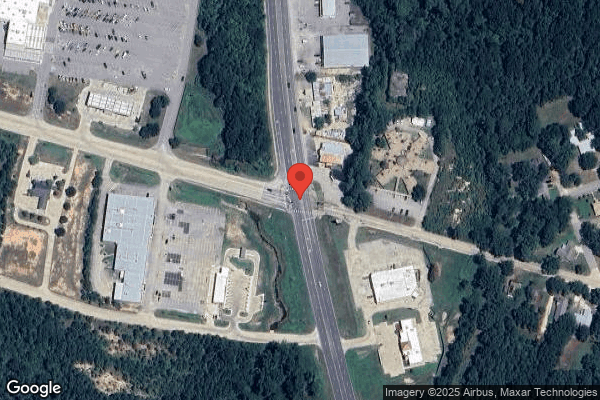
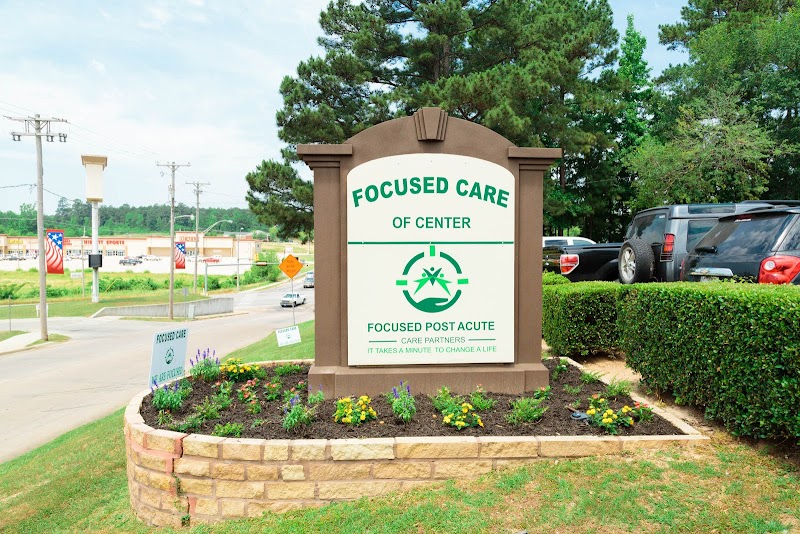
501 TIMPSON, CENTER, TX 75935 (936) 598-2483
For profit - Limited Liability company 92 Beds FOCUSED POST ACUTE CARE PARTNERS Data: November 2025 4 Immediate Jeopardy citations
Trust Grade
0/100
#711 of 1168 in TX
Last Inspection: June 2025

Inspected within the last 6 months. Data reflects current conditions.

Overview

Focused Care of Center in Center, Texas has received a Trust Grade of F, indicating significant concerns about the quality of care provided. Ranking #711 out of 1168 facilities in Texas means they fall in the bottom half, and they are #3 out of 3 in Shelby County, suggesting there are no better local options. Although the facility is showing a trend of improvement with a decrease in issues from 14 to 13, they still face serious challenges, including $381,677 in fines which is concerning and higher than 99% of Texas facilities. Staffing is relatively stable with a turnover rate of 40%, which is better than the state average, but they have less RN coverage than 89% of Texas facilities, raising concerns about adequate oversight. Specific incidents noted during inspections include residents being involved in fights due to inadequate supervision, and the facility's failure to protect residents from potential abuse. For example, one resident was allowed to remain in contact with another resident despite allegations of mistreatment, and there were multiple instances where residents were able to elope from the facility, highlighting serious safety issues. While the quality measures received an excellent rating, the overall health inspection and staffing ratings are below average, indicating a need for improvement in several key areas.

Trust Score
F
0/100
In Texas
#711/1168
Bottom 40%
Safety Record
High Risk
Review needed
Inspections
Getting Better
14 → 13 violations
Staff Stability
○ Average
40% turnover. Near Texas's 48% average. Typical for the industry.
Penalties
✓ Good
$381,677 in fines. Lower than most Texas facilities. Relatively clean record.
Skilled Nurses
⚠ Watch
Each resident gets only 12 minutes of Registered Nurse (RN) attention daily — below average for Texas. Fewer RN minutes means fewer trained eyes watching for problems.
Violations
⚠ Watch
36 deficiencies on record. Higher than average. Multiple issues found across inspections.
★★☆☆☆
2.0
Overall Rating
★★☆☆☆
2.0
Staff Levels
★★★★★
5.0
Care Quality
★☆☆☆☆
1.0
Inspection Score
Stable
2024: 14 issues
2025: 13 issues

The Good

  • 5-Star Quality Measures · Strong clinical quality outcomes
  • Full Sprinkler Coverage · Fire safety systems throughout facility
  • No fines on record
  • Staff turnover below average (40%)

    8 points below Texas average of 48%

Facility shows strength in quality measures, fire safety.

The Bad

2-Star Overall Rating

Below Texas average (2.8)

Below average - review inspection findings carefully

Staff Turnover: 40%

Near Texas avg (46%)

Typical for the industry

Federal Fines: $381,677

Well above median ($33,413)

Significant penalties indicating serious issues

Chain: FOCUSED POST ACUTE CARE PARTNERS

Part of a multi-facility chain

Ask about local staffing decisions and management

The Ugly 36 deficiencies on record

4 life-threatening
Jun 2025 7 deficiencies
CONCERN (D)

Potential for Harm - no one hurt, but risky conditions existed

Resident Rights (Tag F0550)

Could have caused harm · This affected 1 resident

**NOTE- TERMS IN BRACKETS HAVE BEEN EDITED TO PROTECT CONFIDENTIALITY** Based on observation, interview, and record review, the facility failed to treat each resident with respect and dignity and care...

Read full inspector narrative →
**NOTE- TERMS IN BRACKETS HAVE BEEN EDITED TO PROTECT CONFIDENTIALITY** Based on observation, interview, and record review, the facility failed to treat each resident with respect and dignity and care for each resident in a manner and in an environment that promotes maintenance or enhancement of his or her quality of life, recognizing each resident's individuality for 1 of 6 residents (Resident #17) reviewed for resident rights. The facility failed to ensure the window blinds were closed when personal care was provided on 6/10/2025. These failures could place residents at risk of decreased feelings of self-worth and decreased quality of life. Findings included: Record review of an admission Record for Resident #17 dated 6/11/2025 indicated she admitted to the facility on [DATE] and was [AGE] years old with diagnoses of COPD (a group of lung diseases that affect breathing), Type 2 diabetes, major depressive disorder and (low mood, low self-esteem and a loss of interest) heart failure (heart not able to pump effectively). Record review of a Quarterly MDS Assessment for Resident #17 dated 5/29/2025 indicated she had severe impairment in thinking with a BIMS score of 4. She required substantial/maximal assistance with personal hygiene. Resident #17 was always incontinent of urine and bowel. Record review of a care plan for Resident #17 revised on 9/16/2024 indicated she had an ADL deficit from disease process. She required moderate assistance by one staff with personal hygiene. During an observation on 6/10/2025 at 11:25 AM, in the room of Resident #17. Staff members CNA F and CNA G performed personal care. Personal care was provided, they closed the door and pulled the privacy curtain but did not close the window blinds. During care provided a car passed by. During an interview on 6/10/2025 at 11:42 AM, CNA F said she had been employed at the facility for 2 1/2 years and worked day shift from 6 am-6 pm. She said usually when she provided care to a resident in their rooms, she closed the doors and pulled the privacy curtain so if anyone entered the room, they would not be able to see care being provided. She said the normally did not close the window blinds in the room unless the room was at the front of the facility and did not think anyone could see Resident #17's window from the road by the facility. She said the blinds should be closed for all residents as it gave privacy from someone on the outside of the facility. She said it would make her feel exposed if someone had to provide personal care to her and they kept the blinds open. She said she had training on privacy for the residents when care was provided. Record review of a competency evaluation for CNA F dated 2/23/2025 indicated she successfully met the performance criteria for incontinent care that included to provide privacy which included to close the blinds. During an observation on 6/10/2025 at 2:00 PM, outside of the facility from the front parking lot looking into the room of Resident #17, her window blinds were up, and a light could be seen in the hallway. Her door was open, and a person walked down the hallway. During an observation and interview on 6/10/2025 at 8:25 AM, Resident #17 was sitting up in a wheelchair in her room. She said the staff would sometimes close the window blinds when they provided care for her. She said she did not notice it yesterday that the staff did not close the blinds but did not want anyone seeing her. During an interview on 6/10/2025 at 9:25 AM, the ADON said she had been employed at the facility since December 2024. She said staff were to provide privacy when care was provided that included pulling the privacy curtains pulled and making sure window blinds were closed. She said by staff not providing privacy to a resident during care it could be a dignity issue. During an interview on 6/10/2025 at 9:32 AM, CNA G said she had been employed for 5 years. She said she on yesterday 6/10/2025 during care provided to Resident #17, they should have closed the window blinds. She said she did not think about it and was nervous. She said they were to close the doors, pull the privacy curtains and close the blinds when care was provided. She said by them not closing the blinds, a resident could feel like their privacy was being invaded or if people passed by could be able to see in the room. She said it would make her feel uncomfortable if she was not given privacy when care was provided. Record review of a competency evaluation for CNA G dated 12/18/2024 indicated she successfully met the performance criteria for incontinent care that included to provide privacy which included to close the blinds. During an interview on 6/10/2025 at 9:35 AM, the DON said she was made aware of the staff who failed to close the window blinds when care was provided to Resident #17 on yesterday 6/10/2025. She said it was a dignity issue and window blinds should be closed and privacy curtain pulled when care was provided. She said she planned to in-service and train staff on providing privacy. She said the facility did not have a policy on dignity but in the competency skills evaluation for the nursing staff it instructed them to provide privacy and close the blinds. During an interview on 6/10/2025 at 10:15 AM, the Administrator said she was made aware of the staff that did not close the window blinds when care was provided. She said the staff would be retrained by an in-service. She said residents could feel embarrassed if the staff did not close the blinds when care was provided. She said the facility did not have a policy for dignity.
CONCERN (D)

Potential for Harm - no one hurt, but risky conditions existed

Safe Environment (Tag F0584)

Could have caused harm · This affected 1 resident

Based on observation, interview and record review the facility failed to provide a safe, functional, sanitary, and comfortable environment for residents for 1 of 2 shower rooms (Hall 100) observed for...

Read full inspector narrative →
Based on observation, interview and record review the facility failed to provide a safe, functional, sanitary, and comfortable environment for residents for 1 of 2 shower rooms (Hall 100) observed for resident environment. The facility failed to ensure the shower rooms in the facility were clean. There was a black substance on the bathroom tiles and walls on 6/10/2025. This failure could place residents at risk for an unsafe environment and unsanitary environment. The findings included: During an interview on 6/9/2025 at 3:11 PM, residents in a confidential resident council meeting said the shower room on Hall 100 needed to be clean and always had clothes and feces on the floor. During an observation on 6/10/2025 at 10:18 AM, the shower room on Hall 100 revealed two shower stalls. One (1) stall had a black substance on the walls and floor where they meet, along with cracked tiles and there were not any baseboards present. In the other stall (2) it had detached baseboards. A used, dirty towel was on the floor. During an observation and interview on 6/10/2025 at 2:59 PM Housekeeper B was on Hall 100 and said she had been employed at the facility for 2-3 months and rotated the halls daily. She said housekeepers were responsible for cleaning the shower rooms during their shift daily. She said the housekeeping staff were supposed to clean the sinks, toilets, shower chairs and wipe down the shower area along with mopping and sweeping. She said if they noticed anything that required attention or repair, they were instructed to notify the Housekeeping Supervisor. She observed the shower room on Hall 100 and said she had cleaned it earlier. She said one of the stalls had a black substance on the walls and floors and it had been that way since she started. She said the other stall had baseboards that were not completely attached. She said the shower room had been in that condition since she started at the facility. She said she was not sure what the black substance was on the walls and floors. During an observation and interview on 6/10/2025 at 3:01 PM, the Housekeeping Supervisor said the housekeeping staff were responsible for cleaning the shower rooms daily after the nurse aides picked up the linens. She said they deep cleaned the shower rooms twice a week and used a disinfectant spray to clean. She observed the shower room on Hall 100 and said the black substance on the walls and floors looked like glue from the baseboards that were not present. She said the baseboards came off a while ago and were never replaced. She said the shower area had tiles that were cracked that needed to be replaced. The other stall in the shower room said it had baseboards that were not completely attached. She said the Maintenance Supervisor would be responsible for repairs in the shower room. She said she would not want to take a shower in there. During an observation and interview on 6/10/2025 at 3:12 PM, the Maintenance Supervisor said he had been employed at the facility since the first of May 2025. He said he was aware of the shower room for Hall 100, and it was on a list of repairs to be done for the facility. He observed the shower room on Hall 100 and said the walls had a black substance mildew that was present on the walls and floors and one of the stalls had missing baseboards and broken tiles. He said the shower room needed a deep cleaning and resealing of the walls and baseboards. He said a plan was in place to complete the repairs but had not been a priority. He said he would have a hard time wanting to shower in that room. During an observation and interview on 6/10/2025 at 3:18 PM, the Administrator observed the shower room on Hall 100 and said she was aware of some issues in the shower room. She said it had been discussed with the facility's corporate staff and had talked about taking up the baseboards as they were not appropriate in the shower room and were planning to install proper flooring. She said the shower room was dirty and needed to be cleaned. She said the black substance on the walls and floors looked like glue and the floors had some cracked tiles. She said she would not want to use the shower room. She said she planned to get the Maintenance Supervisor to start working on the shower room. Record review of a facility policy titled Quality of Life-Homelike Environment revised May 2017 indicated, .2. The facility staff and management shall maximize, to the extent possible, the characteristics of the facility that reflect a personalized, homelike setting. These characteristics include: a. Clean, sanitary, and orderly environment .
CONCERN (D)

Potential for Harm - no one hurt, but risky conditions existed

Pharmacy Services (Tag F0755)

Could have caused harm · This affected 1 resident

**NOTE- TERMS IN BRACKETS HAVE BEEN EDITED TO PROTECT CONFIDENTIALITY** Based on observation, interview, and record review, the facility failed to provide pharmaceutical services (including procedures...

Read full inspector narrative →
**NOTE- TERMS IN BRACKETS HAVE BEEN EDITED TO PROTECT CONFIDENTIALITY** Based on observation, interview, and record review, the facility failed to provide pharmaceutical services (including procedures that assure the accurate acquiring, receiving, dispensing, and administering of all drugs and biologicals) to meet the needs of each resident for 1 of 1 vaccine/medication storage refrigerators reviewed for pharmacy procedures. The facility failed on 06/11/2025 to remove expired tuberculin skin testing (TST) solution from the vaccine/medication refrigerator. This failure could place residents who receive medications at risk of not receiving the intended therapeutic benefit of the medications. Findings included: During an observation and interview on 06/11/25 at 9:00 AM the vaccine/ medication refrigerator had 1 vial of tuberculin skin testing (TST) solution in the refrigerator with an open date of 4/24 with no initials. The medication storage directions indicated tuberculin skin testing solution was to be discarded after 30 days of opening. The ADON said TST was administered by the nurse on the floor to any resident or staff member needing a TB test. The ADON said using the TST after it had expired to residents could be adverse reactions, medication not as strong as it should be, and false readings. ADON said she assumed the vial had been open on 4/24/2025 but the date read 4/24 with no initials so there was no way to be sure exactly when it was opened. During an interview on 06/11/25 at 9:39 AM DON said that the ADON was responsible for ensuring multi dose vials are labeled and expired medications are discarded. She said not discarding vaccines and testing materials could cause an infective vaccination or false results of tuberculosis testing. During an interview on 6/11/2025 at 10:00 AM, the Administrator said the process for tuberculosis testing was the DON's responsibility. The Administrator said the tuberculin skin testing solution should not be given after the use by date. She expects that staff are trained accordingly and will oversee the DON to ensure all staff are trained. Record Review of policy and procedure titled Storage of Medications dated 09/2018 indicated, .#5. When the manufacturer has specified a usable duration after opening the nurse shall place a date opened sticker on the medication and record the date opened and the new date of expiration. The expiration date of the vial or container will be 30 days from opening, unless manufacturer recommends another date or regulations/guidelines require different dating. Record review of tuberculin skin testing (TST) package insert states to dispose of medication 30 days after opening. Record review of https://www.fda.gov document dated 11/9/2020 reference 22. [NAME] S, et al. Effect of oxidation on the stability of tuberculin purified protein derivative (PPD) In: International Symposium on Tuberculin and BCG Vaccine. Basel: International Association of Biological Standardization, 1983. Dev Biol Stand 1986; 58:545-552. (Dispose of Vial 30 days after opening)
CONCERN (D)

Potential for Harm - no one hurt, but risky conditions existed

Infection Control (Tag F0880)

Could have caused harm · This affected 1 resident

**NOTE- TERMS IN BRACKETS HAVE BEEN EDITED TO PROTECT CONFIDENTIALITY** Based on observations, interviews, and record reviews the facility failed to establish and maintain an infection prevention and ...

Read full inspector narrative →
**NOTE- TERMS IN BRACKETS HAVE BEEN EDITED TO PROTECT CONFIDENTIALITY** Based on observations, interviews, and record reviews the facility failed to establish and maintain an infection prevention and control program designed to provide a safe, sanitary, and comfortable environment and to help prevent the development and transmission of communicable diseases and infections for 1 of 6 staff (CNA H) reviewed for infection control. The facility failed to ensure CNA H washed or sanitized her hands when passing out meal trays to residents on Hall 500 on 6/9/2025. These failures could place residents at risk of exposure to infectious diseases due to improper infection control practices. Findings included: During an observation of meal service on 6/9/2025 from 1:03 PM to 1:22 PM, CNA H did not wash or sanitize her hands prior to entering/exiting rooms or handling meal trays for the next room for the following rooms on Hall 500: entered room [ROOM NUMBER] and took the meal tray into the room and set up the tray and opened the utensils. She repositioned the resident in bed and exited. She then entered room [ROOM NUMBER] and placed the meal tray on over bed table and exited. She then entered room [ROOM NUMBER] and placed the meal tray on the over bed table and opened sugar packets and poured them into a cup of tea and set up the meal tray for the resident. She exited the room and did not wash or sanitize her hands. During an interview on 6/11/2025 at 9:25 AM, the ADON said she was one of the Infection Preventionists (IP's) in the facility. She said staff should sanitize their hands between residents when passing trays. She said there could be a risk for cross contamination or spreading infections when staff did not wash or sanitize their hands. She said they started an in-service with staff on hand hygiene on 6/9/2025. ADON said staff were trained quarterly on infection control and hand hygiene and they had a competency evaluation for skills back in December 2024. Record review of an in-service dated 6/9/2025 indicated the DON conducted a training on hand hygiene and CNA H was present. During an interview on 6/11/2025 at 9:35 AM, the DON said she and the ADON were the IPs for the facility. She said staff were trained on hand hygiene quarterly. She said there was not a risk for infection control with staff not sanitizing their hands between passing meal trays unless they were providing direct resident care between passing meal trays. During an interview on 6/11/2025 at 10:15 AM, the Administrator said the IPs were the DON and ADON who were responsible for training staff on infection control in the facility. She said she was aware that CNA H did not sanitize her hands between passing meal trays on 6/9/2025. She said the facility immediately in-serviced the staff on hand hygiene. She said if the staff did not sanitize between passing meal trays there could be a risk for cross contamination. Record review of a facility policy titled Hand Hygiene revised 10/24/2022 indicated, . Hand Hygiene is used to prevent the spread of pathogens in healthcare settings. 1. You should always perform hand hygiene: before and after providing any type of care; after contact with medical equipment or other environmental surfaces that may be contaminated .
CONCERN (D)

Potential for Harm - no one hurt, but risky conditions existed

Smoking Policies (Tag F0926)

Could have caused harm · This affected 1 resident

Based on observations, interviews, and record reviews, the facility failed to ensure it formulated, adopted, and enforced policies regarding smoking, smoking areas, and smoking safety that also consid...

Read full inspector narrative →
Based on observations, interviews, and record reviews, the facility failed to ensure it formulated, adopted, and enforced policies regarding smoking, smoking areas, and smoking safety that also consider non-smoking residents for 1 of 2 smoking areas (secured unit smoking area) reviewed for smoking safety. The facility failed to ensure paper and plastic trash were not discarded into the fire safety can on 6/09/2025. This failure could place residents at risk of injury, burns, and an unsafe smoking environment. Findings included: During an observation on 06/09/25 at 9:03 AM the designated smoking area off the secured unit was observed with one fire can that contained cigarette butts, 1 plastic bottle and an empty cigarette package. There was no ashtray in the area. During an interview on 06/09/25 at 9:04 AM CNA A said the housekeeping staff were responsible for cleaning the fire can daily. She said smokers were supervised during smoking and there were no ashtrays because the residents dug in them. CNA A said they put the resident's cigarette butts in the fire can because it had a lid and there should not be any trash in the fire can because it was a fire hazard. During an interview on 06/10/25 at 3:20 PM Housekeeper B said that the housekeepers were responsible for cleaning the designated smoking areas daily. She said the staff that supervise the smokers should also make sure that the fire cans did not have any trash and was only for cigarette butts. Housekeeper B said trash in the fire can could result in a fire. During an interview on 06/11/25 at 8:23 AM the Administrator said that housekeeping was responsible for maintaining the designated smoking areas and cleaned them daily. She said the staff supervising the smokers should also be checking for any trash in the fire cans and expected staff to regularly inspect the area before and after smoke breaks for any fire hazards. Administrator said trash in the fire can could cause a fire. Record review of a facility policy titled Smoking dated 10/12/2022 revealed, .policy of this community to provide a safe environment, 2. smoking by residents is allowed with the following safety measures readily available: ashtrays made of noncombustible material, metal containers with self-closing covers into which ashtrays can be emptied .
CONCERN (E)

Potential for Harm - no one hurt, but risky conditions existed

Food Safety (Tag F0812)

Could have caused harm · This affected multiple residents

Based on observation, interview and record review, the facility failed to store, prepare, distribute, and serve food in accordance with professional standards for food safely. The facility did not ens...

Read full inspector narrative →
Based on observation, interview and record review, the facility failed to store, prepare, distribute, and serve food in accordance with professional standards for food safely. The facility did not ensure walls, floors, and equipment were not dirty with a buildup of grease, food and dust on 6/09/2025 and 6/10/2025 in the facility only kitchen. These failures could place residents who received their meals from the kitchen at risk for food-borne illness and food contamination. Findings included: During an observation on 06/09/25 at 8:20 a.m., the floor and baseboards in the dry storage area had a black, dirt buildup. The food preparation and cooking area had dirt and food debris on the floor. The walls located next to the washing station and steam table had visible dirt and grease build up from the baseboards up to approximately 18 inches. The top of the dishwashing machine had visible food debris. The air vents located in the food preparation and dish washing area had visible dust and a black substance on the vent cover. During an observation on 6/10/2025 at 10:30 AM, the floor in the kitchen preparation and wash areas were dirty with dust and food debris. The walls located next to the washing station and steam table had visible dirt and grease build up. During an interview on 06/09/25 at 08:40 AM, [NAME] C said that the kitchen staff was responsible for cleaning the kitchen area. She said the staff tries to clean throughout the shift but sometimes they are not able to clean good until the end of the shift. She stated that the kitchen should be kept clean so that the food was not contaminated. During an interview on 6/10/25 at 10:45 AM, [NAME] D said everybody in the kitchen was responsible for cleaning the kitchen and storage area. She said the tries to clean throughout the shift, but that it gets busy at times and the staff will clean before they leave for the day. She said that a cleaning schedule was followed and employees are assigned tasks to complete daily and weekly. [NAME] D said that food was at risk for contamination if the kitchen was not clean. During an interview on 6/10/25 at 11:00 AM, Dietary Aide E said that all kitchen staff was responsible for cleaning the kitchen and food storage area. She said the cleaning schedule was followed and signed by the staff. She said the dietary manager checked the cleaning schedule. She said that food was at risk for contamination if the kitchen was not clean. During an interview on 6/11/2025 at 8:30 am, the Administrator said the kitchen staff was responsible for cleaning the kitchen area. She said the dietary manager was responsible for oversite of the staff and ensuring that all tasks assigned to the kitchen staff were completed. She said the kitchen was in the process of being updated and remodeled. She said the walls were being replaced or painted as new equipment arrives. She said she was aware of the areas of concern and the facility was currently in the process of repairing and painting the areas of concern. She stated that an outside vender had come to the facility the previous week to power was the kitchen floors. She said that the dirt and grease visible on the wall was from years of use and that the wall coverings were being replaced or deep cleaned and repainted. She said the possible outcome of the kitchen not being clean was food contamination that could cause illness in the residents. Administrator stated moving forward the facility would continue with repairs and updates in the kitchen. The Administrator said that the dietary manager would be responsible for monitoring and in services for staff on kitchen cleaning. During an interview on 06/11/25 at 8:50 am, the Dietary Manager said the kitchen staff was responsible for cleaning the kitchen area. She said that she oversees the staff and the cleaning schedule. She said that staff was expected to keep kitchen area clean throughout the shift. She said deeper cleaning was done at the end of the shift or she will bring in extra staff to deep clean. She stated she also assists with cleaning the kitchen. She said that if the kitchen was not cleaned, there would be a risk of food contamination and resident illness. She stated that the staff would continue to be responsible for cleaning the kitchen throughout the shift and she would continue to work with administration and maintenance to update and clean the kitchen and storage areas. Record review of a monthly kitchen cleaning schedule log indicated full cleaning performed in March 2025, April 2025, and May 2025. Record review of a policy for Kitchen Cleaning Schedule revised November 2023 indicated Food and Nutrition Services Personnel will be responsible to maintaining the cleanliness and sanitation of kitchen. Procedure included It is the responsibility of all employees to follow the cleaning schedule. Written cleaning instructions for each area and piece of equipment will be provided.
MINOR (C)

Minor Issue - procedural, no safety impact

Staffing Information (Tag F0732)

Minor procedural issue · This affected most or all residents

Based on observation, interview and record review the facility failed to ensure nurse staffing data was posted daily and readily accessible to residents and visitors with all required information for ...

Read full inspector narrative →
Based on observation, interview and record review the facility failed to ensure nurse staffing data was posted daily and readily accessible to residents and visitors with all required information for 2 of 2 days reviewed (6/10/2025 and 6/11/2025) for nurse staffing posting. The facility failed to post accurate daily staffing information on 6/10/2025 and 6/11/2025. This failure could place residents, families, and visitors at risk of not being informed of the census and number of staff working each day to provide care on all shifts. Findings included: During an observation on 6/10/2025 at 7:45 AM, the daily staffing census information was posted by the front entrance on a wall dated 6/9/2025. During an observation on 6/11/2025 at 8:14 AM, the daily staffing census information was posted by the front entrance on a wall dated 6/9/2025. During an interview on 6/11/2025 at 8:16 AM, the ADON said she and the DON were responsible for posting the daily staffing census information. She said she was not sure why the posting was not put out up yesterday 6/10/2025. She said the posting showed the staff coverage for the facility based on the census for the residents and if it were not posted then family or visitors would not have the information. ADON said she was about to post the daily census information for today 6/11/2025. During an interview on 6/11/2025 at 9:35 AM, the DON said she was responsible for putting up the daily staff posting. She said she forgot to put it up yesterday 6/10/2025. She said the posting was put up so people would know who was staffed in the facility. During an interview on 6/11/2025 at 10:26 AM, the Administrator said the DON was responsible for putting up the daily staff posting. She said the posting was put up so that residents and families could see what staff were in the facility for the day. She said if the posting were not put up then visitors and residents would not be able to see how the facility was staffed. Record review of a facility policy titled Posting Direct Care Daily Staffing Numbers revised July 2016 indicated, .Our facility will post, on a daily basis for each shift, the number of personnel responsible for providing direct care to residents. 1. Within two (2) hours of the beginning of each shift, the number of Licensed Nurses and the number of unlicensed nursing personnel directly responsible for resident care will be posted in a prominent location (accessible to residents and visitors) and in a clean and readable format .
Apr 2025 6 deficiencies 3 IJ (2 affecting multiple)
CRITICAL (J) 📢 Someone Reported This

A family member, employee, or ombudsman was alarmed enough to file a formal complaint

Immediate Jeopardy (IJ) - the most serious Medicare violation

Accident Prevention (Tag F0689)

Someone could have died · This affected 1 resident

**NOTE- TERMS IN BRACKETS HAVE BEEN EDITED TO PROTECT CONFIDENTIALITY** Based on observation, interview, and record review the facility failed to ensure the resident environment remains as free of acc...

Read full inspector narrative →
**NOTE- TERMS IN BRACKETS HAVE BEEN EDITED TO PROTECT CONFIDENTIALITY** Based on observation, interview, and record review the facility failed to ensure the resident environment remains as free of accident hazards as is possible; and each resident receives adequate supervision and assistance devices to prevent accidents for 2 of 7 (Resident #1 and Resident #2) residents reviewed for supervision. The facility failed to ensure the secured unit courtyard gates were locked after lawn care services on 6/3/2024. On 6/3/2024 Resident #1 eloped from the facility grounds through an unlocked gate in the courtyard of the secured unit. A good Samaritan encountered Resident #1 at a nearby doctor's office and Resident #1 was returned to the facility. The facility failed to provide adequate supervision for Resident #2. On 1/3/2025 Resident #2 eloped from the facility through the front door. A good Samaritan encountered Resident #2 at a nearby roadway intersection and returned Resident #2 to the facility. An IJ was identified on 4/15/2025. The IJ template was provided to the facility on 4/15/2025 at 4:51 PM. While the IJ was removed on 4/17/2025, the facility remained out of compliance at a scope of isolated and a severity level of no actual harm with the potential for more than minimal harm because (e.g.) all staff had not been trained on the facilities elopement policy. This failure could place residents at risk of not being properly supervised resulting in injury or death. Findings included: 1.Record review of the electronic face sheet for Resident #1 indicated Resident #1 admitted to the facility on [DATE] with diagnosis that included: dementia (decline in cognitive function), muscle weakness, type 2 diabetes (high blood sugar). Record review of Resident #1's annual MDS assessment dated [DATE] indicated a BIMS of 03, which indicates severe cognitive impairment. It also indicated Resident #1 was independent with walking 150 feet. Record review of Resident #1's care plan dated 3/11/2024 indicated: I am exhibiting behavior of wandering. I have dementia and may wander or pace. I may enter other's rooms uninvited. I respond well to redirection at this time. I have been moved to secured unit for safety. Interventions included: Staff will monitor for safe environment and to ensure no unusual episodes occur. Record review of Resident #1's elopement risk assessment dated [DATE] indicated an elopement score of 15 which was of high risk category. Record review of Resident #1's elopement risk assessment dated [DATE] indicated an elopement score of 3 which was of medium risk category. Record review of facility incident report for Resident #1 dated 6/3/2024 at 3:31pm completed by the DON indicated: Resident had finished eating lunch and asked to go outside in the courtyard, approximately, 12:55pm. At 1:08pm a family member of a staff member, [family member] called facility asking if we were missing one of our residents. Staff immediately left facility, where [family member] had resident and brought him back to facility at approximately 1:13pm just smiling. When SW interviewed resident, he remembers leaving facility on foot but doesn't know where he was going. 2. Record review of the electronic face sheet for Resident #2 indicated Resident #2 admitted to the facility on [DATE] with diagnosis that included: anxiety (feelings of worry or unease), metabolic encephalopathy (brain dysfunction), type 2 diabetes (high blood sugar). Record review of Resident #2's admission MDS assessment dated [DATE] indicated a BIMS of 01, which indicates severe cognitive impairment. It also indicated Resident #2 partial to moderate assistance with walking 150 feet. Record review of Resident #2's care plan dated 1/3/2025 indicated: I will reside on the facility secured care unit due to wander/elopement risks. Related to disoriented to place, history of attempts to leave facility unattended, impaired safety awareness. Interventions included: Distract resident from wandering by offering pleasant diversions, structured activities, food, conversation, television, book. Record review of Resident #2's elopement risk assessment dated [DATE] indicated an elopement score of 3 which was of medium risk category. Record review of Resident #2's elopement risk assessment dated [DATE] indicated an elopement score of 9 which was of high risk category. Record review of facility incident report for Resident #2 dated 1/3/2025 at 8:30am completed by the ADON indicated: A community member knocked on front entrance door with resident noted to be sitting in wheelchair, stating he was down there in the road Resident assessed with no noted distress. Resident #2 said I just want to go home. Record review of facility incident report for Resident #2 dated 1/3/2025 at 8:30am notes completed by the DON indicated: from review of cameras-resident left building behind [family member] family member who did not close the door after him. Per staff-they saw resident on 400 hall approximately, 8 am as they went into a staff meeting, when they came out at approximately 8:10 he was out of facility and in process of being returned. Record review of Resident #2's electronic medical record indicated Resident #2 expired in the facility on 1/18/2025. During an interview on 4/15/2025 at 11:44am CNA Q said they document once a shift to check the outside doors and gates to make sure they are locked. She said for the back door you have to put in the door code and that unlocks the door and the outside gate. She said you have to be fast to go down to the gate because it locks back pretty fast. She said the dining room door is unlocked and residents can come and go as they want. She said they have to push the emergency exit button that unlocks all doors in the secured unit to unlock the gate in the dining room courtyard. She said they have to push and turn the emergency exit button again to lock the gate back. She said when the [NAME] come the button releases the gate and one of them goes and opens the gate and then the other pushes the button to lock all the doors back. She said when the lawn care service was at the facility, they had to watch the residents in the secure unit to ensure no one got out of the locked doors. She said the staff had to remember to relock the doors and gates after the lawn care service was finished. During and observation and interview on 4/15/2025 at 11:44am CNA R said that all gates are checked once a shift and CNA Q usually already checked them prior to him getting to work so he typically did not check them. CNA R put in the code on the back door of the secured unit. CNA R said the code would release the back door and also the gate outside of the back hallway door. Surveyor observed the gate being released and the gate required being pushed back so the magnets on the gate would reattach and lock the gate. If the gate was not pushed back together the gate would not lock. The secured unit dining room door was observed with no lock and residents could come and go freely to the outside courtyard. CNA Q pushed the emergency exit button which then released all locked doors of the secured unit. CNA Q then pushed and turned the emergency exit button in the dining room to relock the secured unit doors and gates. The Surveyor observed the courtyard gate had to be physically pushed back together in order for the magnets to reattach and lock the gate. Resident #1 was sitting outside during this observation and got up and went and checked to see if the gate was locked. CNA R said they had to keep a closer watch on the residents when the lawn care service was there and then had to remember to relock the doors and gates once they were finished. During an interview on 4/15/2025 at 12:52pm the ADON said she started in December 2024 right before the Resident #2's elopement. She said a passerby came and knocked on the door and said Resident #2 was out and had brought him back to the door. She said she didn't know where she had encountered Resident #2 and did not have contact with anyone at the facility and was just driving by. She said they took Resident #2 to the unit and assessed Resident #2 and then checked the door locks and alarms. She said she saw Resident #2 at around 8:00am and she didn't know how long Resident #2 was out before being brought back to the facility. During an interview on 4/15/2025 at 1:13pm the DON said Resident #1 got out the gate and went to a nearby doctor's office. She said Resident #1 was brought back to the facility at 1:13pm. She said at 12:55pm Resident #1 was last seen after he had just finished lunch and then was returned to the facility at 1:13pm. She said they believed there was an issue with the magnetic lock but when the lock was checked it was fine. She said the lawn care service had been there the day before but is not sure if that was the cause. She said staff were supposed to do 4-hour checks on the gates that was started prior to the elopement. She said they had a monitoring sheet for the gate checks but was not able to find any monitoring sheets since December 2024. She said Resident #2 admitted on [DATE] and eloped on 1/3/25. She said Resident #2 went to the door and wheeled out the door right behind another family member. She said a passerby brought the resident back from down the street on the corner at the redlight. She said Resident #2 went out at 8:10am and was brought back to the facility at 8:26am. During an interview on 4/22/2025 at 9:28am LVN A said she was here the day Resident #2 eloped but said all she remembered was that Resident #2 kept saying he wanted to go home. She said Resident #2 kept going to the doors trying to get out and someone would redirect him and then he eloped. During an interview on 4/22/2025 at 9:50am LVN H said Resident #1 had gotten out of the secured unit before the elopement. He said Resident #1 liked standing by the doors and one day he didn't close the door soon enough and Resident #1 got out of the secured unit and was walking around the nurse's station. He said he had eyes on Resident #1 the whole time and was easy to get back into the secured unit. He said he didn't remember the day he got out of the gate. He said he was here the day Resident #2 eloped but by the time he knew anything about it they had already gotten Resident #2 back in the facility. During an interview on 4/22/2025 at 10:48am with the Administrator via phone, she said her expectation was to prevent elopements. She said if a resident were to elope that resident was in danger of being hurt. Record review of the facilities Elopement policy dated 11/1/2019 indicated: To safely and timely redirect patients/residents to a safe environment. A prompt investigation and search will be conducted if a patient/resident is considered missing . This was determined to be an Immediate Jeopardy (IJ) on [Date] at [Time]. The [Titles of people identified] were notified. The [Name of person given the IJ template] was provide with the IJ template on [Date] at [Time]. I . The facility's plan of removal was accepted on 4/16/2025 at 9:16 am and included: The following is a plan of removal, which has been immediately implemented at the facility to remedy the immediate jeopardy as a result of alleged deficient practices, which was imposed on April 15, 2025 at 5:26pm. Resident #1 was assessed and interviewed upon return on 6-3-24. The resident was not injured and was not in distress. The Maintenance Director checked the functioning of the magnetic locks on the doors and gates on the secured unit, all were in working order. Secured Unit staff were educated on 6-3-24 on the required gate lock checks every 4 hours and to complete the Secured Unit Gate Monitoring Log. Resident #2 was assessed upon return on 1-3-25. The resident was not injured and was not in distress. The Maintenance Director and EDO checked all exit doors for functioning of key pads and alarms, all were in working order. Video footage revealed the resident exited the front door behind another resident's family member. The resident was moved to the secured unit due to the new elopement risk on 1-3-25. The front door code was changed on 1-3-25, and a staff in-service was completed on 1-3-25 on keeping the code confidential. All staff in-serviced on Elopement/Missing Resident on April 15, 2025 by Executive Director of Operations (EDO)/Director of Clinical Operations(DCO) and/or designee. All staff not present at time of in-service will not be permitted back to work until in-service is complete. All staff in-serviced on magnetic lock reset function during power disruption on April 15, 2025 by EDO and DCO. All staff not present at time of in-service will not be permitted back to work until in-service and competency test is complete. implemented and educated all staff on new process during lawn care services on April 15, 2025. New process adopted by facility is as follows: Facility staff will bring residents inside during lawn care and monitor all exit doors to not allow residents to leave secured unit hallway. Staff will then reengage the magnetic locks when lawncare is completed and verify that each door and gate are secured. Lawn vendor contacted on April 15, 2025 at 8:45 pm by EDO and educated on communication with EDO and/or DCO about exiting the property and verifying the gate is secured. All staff in-serviced on facility door code confidentiality and who to contact if he/she feels the code has been compromised on April 15, 2025 by EDO and DCO. All staff not present at time of in-service will not be permitted back to work until in-service is completed. Facility EDO reviewed and in-serviced on facility policy to door code changes. All resident with risk of elopement have the potential to be affected by the this alleged deficient practice. An audit was completed on 4-15-25 by the CRC to ensure all residents had a current elopement risk assessment and accurate care plan. The Medical Director was initially made aware on April 15, 2025 of the immediate jeopardy, and has been involved in the development of the plan to remove during an abbreviated QA. These conversations are considered a part of the QA process. Next schedule QA meeting set for April 21, 2025 at 12pm. All in-servicing began 4/15/2025. This plan was initially implemented 4/15/2025 and will be monitored, through personal observation, through completion by Regional [NAME] President of Operation and Regional Director of Clinical Services. On 4/17/2025 the Surveyor confirmed the facility implemented their plan of removal sufficiently to remove the IJ by: Record review of skin assessment completed 6/3/24 on Resident #1. Record review of inservice record dated 6/3/2024 regarding required gate lock checks on secured unit every 4 hours and check the courtyard gate to ensure the lock is secure and complete the log attached. 18 staff signatures on inservice. Record review confirmed Resident #2 was moved to the secured unit on 1/3/25. Record review of an untitled document dated 1/03/25 revealed maintenance director and ADO together checked all exit doors for functioning of keypads and alarms, and all were in working order. Record review of inservice record dated 1/03/2025 titled Do not give the door codes to anyone other than staff. Staff are to let visitors out of the doors. 34 staff signatures on inservice. Record review of inservice dated 4/15/25 at 7:00pm titled 1. All staff inservices on the elopement/missing resident protocol. With 33 employee signatures. Record review of inservice dated 4/15/25 at 7:00pm titled 2. All staff inservices on the magnetic lock reset function. 3. All staff inservices on process during lawn care visits. With 33 employee signatures. Record review of inservice dated 4/15/25 at 8:45pm titled Lawn vendors to communicate with ADM/DCO each time they need to enter and exit the secured unit patio/lawn care areas. Doors and Gates must be secured before they leave the area lawn care service inserviced via phone. Record review of inservice dated 4/15/25 at 7:00pm titled 4. Door codes-are confidential and are never to be given to residents/family members or vendors at any time With 33 employee signatures. Record review of residents with risk of elopement audit completed by the CRC on 4/15/25. Record review of Ad Hoc Qapi meeting held on 4/15/25 at 7:15pm attended by the medical director, Administrator and DON. During interviews conducted on 4/17/2025 between 8:45 am - 9:15 am CNA M, PTA, CNA B, CNA F, CNA N, Activity Director, HSK, Floor Tech, Laundry U, Laundry V, Receptionist, BOM, CNA K, ADON, CNA S, LVN H, LVN T, LVN A, and LVN G all verbalized if a resident is missing a code pink is called. They all said the codes to the doors are never to be shared with visitors and if a visitor is observed entering a code the Administrator was to be notified so it can be changed. They all said the gates on the unit must be checked every 4 hours and the inside buttons to be checked to make sure the light was green. They said if the lawn care service was present, they were to be let in and then back out when they were finished. On 4/17/2025 at 9:55am, the Administrator was notified the IJ was removed. However, the facility remained out of compliance at a level of no actual harm with the potential for more than minimal harm with a scope identified as isolated due to the facility's need to monitor the implementation and effectiveness of its POR.
CRITICAL (K) 📢 Someone Reported This

A family member, employee, or ombudsman was alarmed enough to file a formal complaint

Immediate Jeopardy (IJ) - the most serious Medicare violation

Free from Abuse/Neglect (Tag F0600)

Someone could have died · This affected multiple residents

**NOTE- TERMS IN BRACKETS HAVE BEEN EDITED TO PROTECT CONFIDENTIALITY** Based on interview and record review the facility failed to ensure residents had the right to be free from abuse, neglect, misap...

Read full inspector narrative →
**NOTE- TERMS IN BRACKETS HAVE BEEN EDITED TO PROTECT CONFIDENTIALITY** Based on interview and record review the facility failed to ensure residents had the right to be free from abuse, neglect, misappropriation of resident property, and exploitation for 4 of 7 residents (Resident #3, Resident #4, Resident #5 and Resident #6) reviewed for abuse and neglect. 1. The facility failed to prevent a Resident-to-Resident altercation when Resident #3 and Resident #4 began fighting and both residents fell to the ground in the smoking area on 11/30/2024. 2. The facility failed to protect Resident #6 from abuse from an Unidentified Resident on 1/5/2025 when an Unidentified Resident grabbed Resident #6 by the arm and threatened him. 3. The facility failed to prevent a Resident-to-Resident altercation when Resident #5 hit Resident #3 with a walker and then began fighting and both residents fell to the ground in the dining room on 2/15/2025. 4. The facility failed to protect Resident #6 from abuse from Resident #3 on 3/25/2025 when Resident #3 kicked Resident #6 in the dining room at breakfast. An Immediate Jeopardy (IJ) situation was identified on 4/16/2025. While the IJ was removed on 4/17/2025, the facility remained out of compliance at a scope of pattern with the potential for more than minimal harm, due to the facility's need to evaluate the effectiveness of the corrective systems. These failures could place residents at risk for severe negative psychosocial outcomes which could prevent them from achieving their highest practicable physical, mental, and psychosocial well-being. Findings include: 1. Record review of the electronic face sheet for Resident #3 indicated the resident was admitted to the facility on [DATE] with the most recent readmission on [DATE]. Resident #3 had diagnoses which included: bipolar disorder (significant shifts in mood, energy, and activity levels, causing periods of intense highs and lows), impulse disorder (difficulty controlling impulses, urges, or behaviors, leading to harmful or inappropriate actions), Parkinson's (neurological disorder that primarily affects movement) and Wilson's disease (causes copper to build up in the liver, brain, and other organs). Record review of Resident #3's admission MDS assessment, dated 2/8/2025, indicated a BIMS of 15, which indicated no cognitive impairment. Record review of Resident #3's care plan, dated 11/15/2024, indicated: I am exhibiting behavior of making flirtatious comments towards staff and some female residents. Interventions included: 1. [Counseling] services evaluate and treat. 2. Monitor/document/report PRN any signs/symptoms of resident posing danger to self and others. 3. Staff will monitor for safe environment and to ensure no unusual episodes occur. The care plan dated 3/4/2025, indicated I am exhibiting behavior of-verbal aggression to other residents, I like to 'stir the pot', boss people around and tell people what they can and can't do. I am often loud and obnoxious and often instigate arguments with staff and residents. Interventions included: 1. Monitor/document/report PRN and signs/symptoms of resident posing danger to self and others. 2. Psychological services evaluate and treat. 3. Staff will monitor for safe environment and to ensure no unusual episodes occur. 4. When the resident becomes agitated: intervene before agitation escalates; guide away from source of distress; engage calmly in conversation; if response is aggressive, staff to walk calmly away and approach later. Record review of the facility's incident report for Resident #3, dated 2/15/2025 at 2:38 PM, completed by LVN A, indicated: Heard loud noises coming from dining room, when arrived to dining room, saw resident sitting on floor along with the other resident. Resident stated the CNA was in the way and [Resident #5] asked him to move and resident yelled back at him. Resident stated they both were going back and forth. [Resident #5] got angry and hit him on top of his head with walker. Staff member broke incident up. 2. Record review of the electronic face sheet for Resident #4 indicated the resident was admitted to the facility on [DATE] with the most recent admission on [DATE]. Resident #4 had diagnosis which included: vascular dementia (difficulty thinking, memory and behavior), Hemiplegia (paralysis on the left side of the body) and muscle weakness. Record review of Resident #4's admission MDS assessment, dated 4/4/2025, indicated a BIMS of 13, which indicated no cognitive impairment. It also indicated Resident #4 was independent with walking 150 feet. Record review of Resident #4's care plan, dated 11/15/2024, indicated: I have a ADL self-care performance deficits related to disease processes. I am mostly independent with ADLs with some assistance with set-up and supervision with locating thing. I have left side hemiplegia and walk with a cane. Interventions included: 1. Transfer: The resident requires supervision and set-up assistance by 1 staff to move between surfaces as necessary. Record review of the facility's incident report for Resident #4, dated 11/30/2024 at 6:45 PM, indicated: Resident stated he was outside smoking when he and another male resident started arguing, he stated he walked up to the other resident and the other resident pulled himself up out of his wheelchair using him they began hitting one another and fell to the ground. The notes section indicated: Resident involved in physical altercation with [Resident #3]. Resident had words with other resident and both decided to show who was boss. Few slaps back and forth, easily redirected by staff present. No injury noted or complaint of pain. Both residents redirected to their room and further smoke breaks this evening. Record review of the facility's progress note for Resident #4, dated 11/30/2024 at 7:31 PM, completed by LVN C, indicated: This nurse was at the medication cart when a dietary worker came in the hallway and stated 'hey they need some help out here.' Nurse went to the dining room and the door leading out to the smoke area was open. Resident was observed laying in the smoke area with the other male resident beside him and they were both arguing and still trying to engage physically. Nurse stepped between them and assisted this resident up. Resident was assisted back in the facility and sat in a chair. After he got his shoes back on he was assisted to his room. Resident described in his words what happened. DON was notified. Resident was instructed to stay away from the other male resident and there would be no other smoke breaks for him. Resident did not have any visible physical injuries after assessment. Denies any physical or emotional distress 3. Record review of the electronic face sheet for Resident #5 indicated the resident was admitted to the facility on [DATE]. Resident #5 had diagnoses which included: toxic encephalopathy (brain disorder caused by exposure to toxic substances), chronic obstructive pulmonary disease (progressive lung disease that makes it difficult to breathe) and type 2 diabetes (high blood sugar). Record review of Resident #5's quarterly MDS assessment, dated 2/5/2025, indicated a BIMS of 14, which indicated no cognitive impairment. It also indicated Resident #2 was independent with walking 150 feet. Record review of Resident #5's care plan, dated 2/21/2025, indicated: The resident was/has potential to be physically aggressive hit another resident with walker, related to anger, poor impulse control 2/15/25-became impatient with another resident and hit that resident with walker. Interventions included: 1. Analyze times of day, places, circumstances, triggers, and what de-escalates behavior and document . 3. Monitor/document/report PRN any s/sx of resident posing danger to self and others. 4. Offer psych or psychology services as needed. 5. Social Worker to talk and evaluate resident after any incidents. 6. When the resident becomes agitated: Intervene before agitation escalates; Guide away from source of distress; Engage calmly in conversation; If response is aggressive, staff to walk calmly away, and approach later. Record review of the facility's progress notes for Resident #5, dated 2/15/2025 at 3:16 PM, completed by the LVN A indicated: Resident had a witnessed physical altercation with another resident. Resident was found sitting on the floor in front of his walker. Resident denies pain or discomfort at this time. Resident vital signs are stable. No injuries noted at this time. 4. Record review of the electronic face sheet for Resident #6 indicated the resident was admitted to the facility on [DATE]. Resident #6 had diagnoses which included: intracerebral hemorrhage (stroke), Hemiplegia (paralysis on the right side of the body), and muscle weakness. Record review of Resident #6's annual MDS assessment, dated 2/25/2025, indicated a BIMS of 03, which indicated severe cognitive impairment. It also indicated Resident #6 required substantial to maximal assistance with transfers. Record review of Resident #6's care plan, dated 1/5/2025, indicated: I received physical and verbal aggression from another resident when he was grabbed by the hand and another resident told him he would knock the hell out of him. I am still protective of other residents and may act aggressively towards others. Interventions included: 1. Resident will be assessed for emotional distress and physical injuries after incident and as needed. 2. Resident will be redirected when appropriate. 3. Resident will not go on the same smoke breaks as physically aggressive resident . 5. Staff will monitor for safe environment and to ensure no unusual episodes occur. Record review of the facility's incident report for Resident #6, dated 1/5/2025 at 8:30 am, indicated: Resident was in dining room near the smoking door with another resident when his w/c bumped into the other resident's chair. The other resident grabbed his and told him if he did it again he would knock the shit out of him. Residents were separated and no further physical contact was made. Resident was assessed for injuries with none observed. Resident showed no signs of emotional trauma. Residents will not go on the same smoke breaks together. 5. Record review of the electronic face sheet for Resident #7 indicated the resident admitted to the facility on [DATE] with the most recent admission on [DATE]. Resident #7 had diagnoses diagnosis which included: major depressive disorder (persistently low mood), chronic respiratory failure with hypoxia (lungs cannot adequately provide oxygen to the blood), and muscle weakness. Record review of Resident #7's quarterly MDS assessment, dated 2/18/2025, indicated a BIMS of 15, which indicated no cognitive impairment. It also indicated Resident #4 required supervision or touching assistance with walking 150 feet. Record review of Resident #7's care plan, dated 4/15/2022, indicated: I may have a potential for Coping Impaired related to situational and social factors including loss of autonomy or independence; disrupted family life, grief, loneliness, helplessness, or hopelessness. I am seeing counselor at facility and have visits with [Psychiatrist] as needed. Interventions included: Monitor/document/report PRN any risk for harm to self: suicidal plan, past attempt at suicide, risky actions (stockpiling pills, saying goodbye to family, giving away possessions or writing a note), intentionally harmed or tried to harm self, refusing to eat or drink, refusing medication or therapies, sense of hopelessness or helplessness, impaired judgment or safety awareness. During an interview on 4/15/2025 at 10:48 AM, Resident #5 said Resident #3 was in the way while he was trying to get out the door to the smoking area. He said he asked him to let him get by and he said Resident #3 talked noise and cussed him out. He said Resident #3 was agitated and spoke in Spanish. He said Resident #3 turned around and was raising up out of his chair like he was going to fight. He said he then hit him with his walker. He said they both fell on the floor in the dining room. He said Resident #3 called the police and they came and talked to him and told him the next time they would take him to jail. He said if Resident #3 acted that way again he would hit him again. He said that had been the only physical incident he had with Resident #3. He said there was another guy on the 300 hall, Resident #4 had a physical altercation with Resident #3. He said Resident #3 had problems with a lot of residents because he was always in other people's business and cussing other residents. During an interview on 4/15/2025 at 11:11 AM, Resident #7 said she called bingo when the activity director couldn't and said Resident #3 yelled out at her when she called bingo like a bully would. She said they sent Resident #3 to a behavioral hospital because he was physical with Resident #6. She said they initially put Resident #3 on another hall, but he was now back on her hall. She said Resident #3 would throw things. She said Resident #6 was really the only resident she had ever seen Resident #3 kick or get physical with. She said he kissed the older ladies', hands a lot and did not feel it was appropriate. She said one lady (unknown) finally yelled at him to stop and leave her alone. She said Resident #3 did a lot of cussing and calling people names. She said Resident #3 had asked her for sex, and she turned him down and he didn't like it. She said he asked a lot of the ladies and employees for sex. She said she was not afraid of him physically, but she was afraid of what he brought out in her and was afraid she would hit him. She said one time they got in an argument, and he tried to charge at her, and staff pulled him back. She said she felt so much better when he resided on a different hallway. She said he had just moved back to this hall yesterday 4/14/2025 because he got into an altercation with his roommate on the 300 hall and his roommate called the police. She said all altercations or arguments were always centered around Resident #3. During an interview on 4/15/2025 at 11:25 AM revealed Resident #6 could not answer questions due to a diagnosis of aphasia (language disorder that results from damage to the brain's language centers). During an interview on 4/15/2025 at 11:31 AM, CNA D said Resident #3 moved back to the 500 hall yesterday 4/14/2025. She said she did not know what prompted the move back to the 500 hall. She said Resident #3 was smart mouthed and disrespectful to staff and residents. She said a staff member would be talking to another resident and Resident #3 would chime in with his negative input. She said she had seen the arguing with Resident #3 but had never seen him get physical with anyone. During an interview on 4/15/2025 at 12:52 PM, the ADON said he was an instigator and liked to create tiffs until other residents went off on him. She had been employed at the facility since December 2024, Resident #3 was sent to a behavioral hospital and had 2 room changes, and medication changes. She said the SW was sending out referrals to discharge Resident #3, but no one would accept him. During an interview on 4/15/2025 at 1:13 pm, the DON said Resident #3 liked to stir the pot and instigate arguments with residents and staff. She said Resident #3 had been in a group home and multiple nursing homes prior to being at the facility. She said Resident #3 had issues when he was living at home with his mother and thought that adult protective services had been involved because Resident #3 had acted out and called the police many times while he was there. She said Resident #3 was sent to after he kicked Resident #6 at breakfast. During an interview on 4/16/2025 at 10:01 am, the SW said on 3/25/25 Resident #3 kicked Resident #6 during breakfast because he was making some noise and Resident #3 did not like it. She said he came to her office that morning and said he had kicked Resident #6 but did not know why he did it. She said on 2/15/25 the residents were going out to smoke and Resident #3 was in the doorway and Resident #5 was telling him to go go go and he said he couldn't go so he was cussing Resident #5, and Resident #5 picked up his walker and hit Resident #3, and both residents began fighting and fell on the floor. She said Resident #3's head was sore from being hit and he had an abrasion but otherwise there were no other injuries. She said she saw the video footage and could not tell if Resident #3 was hit on the head or shoulder area. She said on 11/30/2024 Resident #3 and Resident #4 were outside in the smoking area and were going back and forth arguing and both residents ended up on the ground. She said she couldn't remember if either one actually hit the other one. She said she couldn't remember any other physical altercations she was aware of. She said Resident #3 was referred to counseling services on 11/5/24 but refused. She said on 2/19/25 the order and consent were received for counseling services, and he was evaluated by the counselor on 2/26/25. She said he had a verbal altercation a few days earlier and if another incident happened then they needed to seek further help for him. She said the Resident #3 received counseling services on Wednesday and the Psych MD and saw him monthly. She said she sent out 6 referrals to seek alternate placement for Resident #3 between 4/1/2025 and 4/15/2025 and all had been denied. During an interview on 4/16/2025 at 11:50 am, the Administrator said Resident #3 had a history of behaviors. She said she knew Resident #3 had behaviors before the resident was admitted to the facility, but she accepted him anyway because she felt like they could help Resident #3. She said Resident #3 liked to instigate and stir the pot with other residents and staff. She said Resident #3 often inserted himself into conversations with staff and residents who were not about him. She said Resident #3 knew what he was doing and would often apologize after an altercation with staff or other residents. During an interview on 4/16/2025 at 1:21 PM, Resident #3 said when he was 28 he was in the hospital for 2 months and that's when he was diagnosed with the Wilson's disease. He said he is a sweet guy but when you him make him mad, he turns into the devil. He said he did not receive counseling services at the facility. He said he had only talked to a counselor 1 time since he had been at the facility. He said when he had the incidents with other residents he would go and apologize after the incident was over. He said he did not have control over his actions when he got mad and he got anxious. He said he told Resident #4 to tie his shoe and Resident #4 told him to shut up and for him to tie it and said he got up and started walking over to him and they just began fighting and fell to the ground in the smoking area. He said Resident #5 told him to go out the door and he said Resident #5 took his walker and put it over his head and jerked it back as if to choke him. He said he kicked Resident #6 because he was jealous the staff were feeding Resident #6 and not him. He said he went to the behavior hospital after he kicked Resident #6. He said he got kicked out of another nursing facility for trying to bite the medication aide's finger. During an interview on 4/17/2025 at 1:25 PM, Resident #4 said he did not like Resident #3 and said on the day in question he was in the smoking area. He said Resident #3 told him his shoe was untied and he told Resident #3 it was none of his business. He said Resident #3 would not leave him alone and he got mad and him and Resident #3 mutually began fighting and fell on the ground. He said after the incident he did not like Resident #3, but he just tried to stay away from him and stay out of trouble. During an interview on 4/22/2025 at 9:28 AM, LVN A said on 2/15/2025 someone came and got her and let her know Resident #3 and Resident #5 were fighting in the kitchen. She said Resident #5 told her Resident #3 was talking bad to him. She said Resident #5 said he hit him. She said when she asked Resident #3 what happened he said Resident #5 was talking to someone else and Resident #3 got in their business and started the argument with Resident #5. She said both residents fell on the floor in the dining room. She said Resident #3 was always in someone else's business. She said she thought Resident #3 was just angry because he was in the nursing home. She said Resident #3 would wake up and just be mad at the world. During an interview on 4/22/2025 at 10:14 AM, CNA E said on 2/15/2025 she was taking the smokers out and stook in the doorway. She said she heard Resident #5 tell Resident #3 to go and he said don't you see CNA E in the way. She said she didn't hear him say anything else and then Resident #5 put his walker over Resident #3 like he was trying to choke him with it. She said then Resident #3 started shaking and fell on the floor. She said Resident #3 called the police. Said she thought both residents had been arguing prior to the incident. She said Resident #3 could not get along with anyone. Record review of the facility's policy titled Abuse, dated 2/1/2017, reflected: The purpose of this policy is to ensure that each resident has the right to be free from any type of Abuse, Neglect, Intimidation, Involuntary Seclusion/Confinement, and or Misappropriation of property . Residents will not be subjected to abuse by anyone, including, but not limited to community staff, other residents, consultants, volunteers, staff of other agencies serving the residents, family members or legal guardians, care taker, friends, or other individuals . This was determined to be an Immediate Jeopardy (IJ) on 04/16/2025 at 5:42 PM. The facility Administrator was notified. The Administrator was provided with the IJ template on 4/16/2025 at 5:42 PM. The following Plan of Removal submitted by the facility was accepted on 4/17/2025 at 2:07 PM: The following is a plan of removal, which has been immediately implemented at the facility, to remedy the immediate jeopardy as a result of alleged deficient practices, which was imposed on April 16, 2025, at 5:45 PM. F600 Abuse 11-30-24: Resident #3 was assessed on 11-30-24 after incident and had scratches to left arm that were treated in house. Resident #4 was assessed on 11-30-24 after incident and had no injuries or physical or emotional distress. DCO and LVNs redirected residents to their rooms and with no further smoke breaks for them that evening. Psych Services conducted a patient care call with Resident #3 on 12-2-24 with a new order for an increase to his Depakote ER to 1500 mg qhs. Psych Services conducted a patient care call with Resident #4 on 12-2-24 with no new orders. 2-15-25: Resident #3 was assessed on 2-15-25 after incident and had a small abrasion to right midback. Resident #5 was assessed on 2-15-25 after the incident and had no injuries. Police were called and they came and spoke to both residents and left. DRSS spoke with both residents individually on 2-17-25, and they reported no emotional effects from the incident and both residents were offered counseling services, which were refused. Psych services conducted a patient follow up visit on 2-18-25 on Resident #3 with no new orders or interventions. Resident #3 was reeducated on counseling services on 2-19-25 and agreed to the service and signed consent for treatment. Resident #5 refused counseling services again on 2-18-25. 3-25-25: Resident #3 was discharged to Behavioral hospital on 3-25-25 for behaviors. Resident #6 was assessed on 3-25-25 after the incident with no injuries. Psych Services visited Resident #6 on 3-29-25 with no new orders. Immediate Action All staff in-serviced on April 16, 2025, by Executive Director of Operations (EDO)/Director of Clinical Operations (DCO) and/or designee on the following topics: Prevention, Identification and Reporting/Investigation of Abuse; How to Immediately Protect Residents when abuse is suspected; Possible Interventions to Assist with De-escalation after an Incident. All staff not present at time of in-service will not be permitted back to work until in-service is complete. 4-16-25: Resident #3 was placed on one-to-one monitoring at 7:20pm. Discharge Planning initiated to family. Family agreed by phone to discharge resident to their care on 4-16-25 at 9pm. Resident remained on one-to-one monitoring until discharge on [DATE] at 7:52am. 4-16-25: Safe Surveys were conducted by DRSS and/or designee with all residents cognitively able to participate. Results of and action after Safe Surveys are as follows: 3 residents expressed that Resident #3 was rude- Resident #3 was on one-on-one monitoring, 1 resident expressed that a nurse was unsure of what to do for his wound care-resident no longer in facility, 1 resident expressed a CNA was rough during her bed bath-the resident was reinterviewed by DCO to get details, the resident did not think the CNA had been abusive or intentionally rough, it was determined that due to her current clinical condition she requires 2 person assistance for bed mobility and personal care, the care plan and tasks were updated on 4-17-25, One-on-one in-service to be completed on 4-17-25 with CNA. 4-17-25: All residents identified as at risk for physically aggressive behaviors were reviewed by the CRC/ADCO to ensure they had an accurate care plan, appropriate interventions and appropriate Psych Services or Counseling Services The DCO/ADCO/EDO will monitor EMR documentation including the 24-hour report, incident reports and alerts, and Grievances to identify potential abuse or situations requiring further investigation during morning meeting. Abuse allegations will be reported and investigated according to company policy and THHS regulations. Potential abuse or situations requiring further investigation will be documented on a Grievance form with any investigation documentation attached. All staff in-serviced on April 17, 2025, on the Grievance process and utilizing the Grievance form to document the potential abuse or situation and the investigation. The Medical Director was initially made aware on April 16, 2025, of the immediate jeopardy, and has been involved in the development of the plan to remove during an abbreviated QA. These conversations are considered a part of the QA process. Next schedule QA meeting set for April 21, 2025 at 12pm. All in-servicing began on 4/16/2025. This plan was initially implemented on 4/16/2025 and will be monitored, through personal observation, through completion by Regional [NAME] President of Operation and Regional Director of Clinical Services. Monitoring of the Plan of Removal included the following: During interviews on 4/17/2025 between 3:56 PM and 4:32 PM the following staff across multiple shifts were able to appropriately describe abuse, ways to prevent abuse, de-escalation techniques of abuse, 1 to 1 monitoring and the grievance process: CNA F, LVN G, LVN H, CNA J, Floor Tech, CNA K, LVN L, CNA M, Activity Director, CNA N, Cook, Dietary Aide, and CNA E. Record review of skin assessment dated [DATE] for Resident #3. Record review of skin assessment dated [DATE] for Resident #3. Record review of behavioral hospital paperwork for Resident #3 dated 3/25/2025 through 4/2025. Record review of in-service, dated 4/16/2025, on the following topics: Prevention, Identification and Reporting/Investigation of Abuse; How to Immediately Protect Residents when abuse is suspected; Possible Interventions to Assist with De-escalation after an Incident with 39 staff signatures. Record review of every 15-minute monitoring for Resident #3 revealed 1 to 1 monitoring started on 4/16/2025 at 7:30PM and ended on 4/17/2025 at 7:52AM when Resident #3 discharged from the facility. Record review of 66 safe surveys conducted on 4/16/2025 with no noted concerns. Record review of inservice dated 4/17/2025 for completing grievance/complaint investigation report for with 11 staff signatures. The Administrator was informed the Immediate Jeopardy was removed on 4/17/2025 at 4:35 PM. The facility remained out of compliance at a severity level of no actual harm with potential for more than minimal harm that is not immediate jeopardy and a scope of pattern due to the facility's need to evaluate the effectiveness of the corrective systems that were put into place.
CRITICAL (K) 📢 Someone Reported This

A family member, employee, or ombudsman was alarmed enough to file a formal complaint

Immediate Jeopardy (IJ) - the most serious Medicare violation

Investigate Abuse (Tag F0610)

Someone could have died · This affected multiple residents

**NOTE- TERMS IN BRACKETS HAVE BEEN EDITED TO PROTECT CONFIDENTIALITY** Based on interview and record review the facility failed to have evidence that all alleged violations were thoroughly investigat...

Read full inspector narrative →
**NOTE- TERMS IN BRACKETS HAVE BEEN EDITED TO PROTECT CONFIDENTIALITY** Based on interview and record review the facility failed to have evidence that all alleged violations were thoroughly investigated and prevented further abuse, neglect, exploitation, or mistreatment while the investigation was in progress for 3 of 7 residents (Residents #3, Resident #4 and Resident #6) reviewed for abuse/neglect. The facility failed to prevent further potential abuse and mistreatment of Resident #4 and Resident #6 by allowing the alleged perpetrator Resident #3 to remain in the facility and to have direct contact with the residents. An Immediate Jeopardy (IJ) situation was identified on 4/16/2025. While the IJ was removed on 4/17/2025, the facility remained out of compliance at a scope of a pattern with the potential for more than minimal harm due to the facility need to evaluate the effectiveness of the corrective systems. This failure could place residents at risk for abuse, physical harm, psychosocial harm, trauma, unrecognized abuse and emotional distress. The findings include: 1. Record review of the electronic face sheet for Resident #3 indicated Resident #3 admitted to the facility on [DATE] with the most recent readmission on [DATE] with diagnosis that included: bipolar disorder (significant shifts in mood, energy, and activity levels, causing periods of intense highs and lows), impulse disorder (difficulty controlling impulses, urges, or behaviors, leading to harmful or inappropriate actions), parkinsons (neurological disorder that primarily affects movement), wilsons disease (causes copper to build up in the liver, brain, and other organs). Record review of Resident #3's admission MDS assessment dated [DATE] indicated a BIMS of 15, which indicates no cognitive impairment. Record review of Resident #3's care plan dated 11/15/2024 indicated: I am exhibiting behavior of making flirtatious comments towards staff and some female residents. Interventions included: 1.[Counseling] services evaluate and treat. 2. Monitor/document/report PRN any signs/symptoms of resident posing danger to self and others. 3. Staff will monitor for safe environment and to ensure no unusual episodes occur. The care plan dated 3/4/2025 indicated I am exhibiting behavior of-verbal aggression to other residents, I like to stir the pot, boss people around and tell people what they can and can't do. I am often loud and obnoxious and often instigate arguments with staff and residents. Interventions included: 1. Monitor/document/report PRN and signs/symptoms of resident posing danger to self and others. 2. Psychological services evaluate and treat. 3. Staff will monitor for safe environment and to ensure no unusual episodes occur. 4. When the resident becomes agitated: intervene before agitation escalates; guide away from source of distress; engage calmly in conversation; if response is aggressive, staff to walk calmly away and approach later. Record review of facility incident report for Resident #3 dated 2/15/2025 at 2:38pm completed by the LVN A indicated: Heard loud noises coming from dining room, when arrived to dining room, saw resident sitting on floor along with the other resident. Resident stated the CNA was in the way and [Resident #5] asked him to move and resident yelled back at him. Resident stated they both were going back and forth. [Resident #5] got angry and hit him on top of his head with walker. Staff member broke incident up. Record review of nursing progress notes, dated 1/1/2025 at 4:30 PM, written by the LVN P, indicated: [Resident #3] is verbally aggressive towards another resident. Intervened at this time and DON aware. Record review of nursing progress notes, dated 1/6/2025 at 12:38 PM, written by the SW, indicated: Spoke to [Resident #3] about an incident that occurred during a smoke break on 01/05/25. [Resident #3] stated that a male resident was hollering, cussing and calling his friend/another resident racial slurs. [Resident #3] said that he started to holler back at the male resident since his friend could not defend himself. [Resident #3] stated he was fine with the other resident now and that he just puts his headphones in his ears during smoke breaks to avoid the other resident. [Resident #3] was encouraged to keep doing that and to avoid any other future conflicts with the male resident. Record review of nursing progress notes, dated 1/24/2025 at 9:59 AM ,written by the SW, indicated: Spoke to [Resident #3] about the way he talks to other residents in the facility. [Resident #3] stated he cares for some of the residents and wants to teach them and keep them from getting into things they are not supposed to. Educated [Resident #3] that when he cusses, hollers and tells other residents what to do - it is not helping them. Informed [Resident #3] to let the staff redirect other residents. [Resident #3] understood and stated he would stop 'getting onto' and hollering at residents. Record review of nursing progress notes, dated 2/19/2025 at 3:25 PM, written by the SW, indicated: Spoke with [Resident #3] with EDO regarding comments that resident was making towards staff, and reports of him touching female staff inappropriately. Education was provided to resident on why the statements he was making, and his actions were not appropriate. Also educated [Resident #3] that the facility cannot tolerate him touching the female staff on the bottoms or anywhere else [Resident #3] stated he understood and would not do those things anymore. [Resident #3] was educated on [counseling] clinical services to help with these behaviors and [Resident #3] agreed to these services. Record review of nursing progress notes, dated 2/20/2025 at 3:46 PM, written by the SW, indicated: Spoke with [Resident #3] with EDO regarding behaviors that were observed by staff today. Educated [Resident #3] again on the expectations that the facility has for him on his treatment towards staff and other residents. [Resident #3] stated that he is 'trying to remember when we talked last, and to do better.' [Resident #3] stated he understood that he is not supposed to touching staff inappropriately, other residents or cursing towards staff and residents. Educated [Resident #3] again on reporting to nursing staff if he has a concern with other residents - that he should not try and 'help' the resident himself. [Resident #3] stated he understood and that he wants to stay at the facility. [Resident #3] was informed that alternate placement would be considered if resident's behaviors continued. [Resident #3] is now receiving services from Psychiatry and [counseling] Clinical Services to help with behaviors. Record review of nursing progress notes, dated 3/16/2025 at 3:03 PM, written by the RN O, indicated: [Resident #3] was heard yelling at another resident to pull his pants up. Both residents were yelling at each other. Resident was redirected to the dining area. Record review of nursing progress notes, dated 3/24/2025, written by the SW, indicated: Care Plan meeting with resident, Ombudsman, DCO, ADCO and DRSS. Discussed residents behavior towards staff and how the facility will not tolerate them. Ombudsman educated resident on his rights and other residents rights and education on the facility discharging him if behaviors continue. Resident stated he understood and that he wanted to stay at the facility. Resident also stated that he understands that he should not holler and 'pick on' other residents. DCO and ADCO educated resident on all interventions the facility have made to improve behaviors and resident stated he understood. Resident stated he would limit behaviors. Record review of nursing progress notes, dated 3/25/2025 at 8:09 AM, written by LVN A indicated: It was reported to this nurse that [Resident #3] kicked another resident for no reason this morning at breakfast time. Staff CNA was feeding another resident and [Resident #3] decided to kick him multiple times. Resident is aware of possible consequences of his actions. Notified [DON]. Record review of nursing progress notes, dated 3/25/2025 at 8:16 AM, written by the SW, indicated: [Resident #3 came into DRSS office stating, 'I have to tell you something before anyone else does.' [Resident #3] stated that he 'kicked' another male resident during breakfast and that he did it for no real reason. [Resident #3] stated he knew it was wrong and that he would apologize to male resident. [Resident #3] went to doorway of my office and said 'I'm sorry' to male resident then asked if this SW heard him apologize. Reminded [Resident #3] that we just had a meeting yesterday with the ombudsman about his behaviors towards other residents. [Resident #3] stated he remembered the meeting and that is why he wanted to tell me and apologize. Record review of nursing progress notes, dated 4/14/2025 at 7:28 AM, written by the ADON, indicated: This nurse was in office when a verbal altercation between this [Resident #3] and roommate. [Resident #3] states that his roommate was on the phone and 'he was lying to whoever he was talking, all he does is lie when what he needs to do is get his fat ass up. But I never threatened him' This nurse informed resident that the phone conversation that roommate is having has nothing to do with [Resident #3]. [Resident #3] states 'well, I am sick of him lying all the time.' [Resident #3] was assisted in getting dressed and was taken from room. Roommate called police department over altercation, officer was dispatched, where it was determined that no offense occurred. Administrator notified of situation. Record review of nursing progress notes, dated 4/14/2025 at 11:30 AM, written by the SW, indicated: Spoke to [Resident #3] regarding an altercation he had with his roommate. [Resident #3] stated he 'didn't meant to holler' towards roommate and that his roommate 'lies to people' on the phone all the time. Educated [Resident #3] that he did not need to intervene in other resident's business. Educated resident that if he had any concerns to come to staff - [Resident #3] understood that hollering towards resident was inappropriate and that he would not do that again. [Resident #3] agreed to room change as well. 2. Record review of the electronic face sheet for Resident #4 indicated Resident #4 admitted to the facility on [DATE] with the most recent admission on [DATE] with diagnosis that included: vascular dementia (difficulty thinking, memory and behavior), Hemiplegia (paralysis on the left side of the body), and muscle weakness. Record review of Resident #4's admission MDS assessment dated [DATE] indicated a BIMS of 13, which indicates no cognitive impairment. It also indicated Resident #4 was independent with walking 150 feet. Record review of Resident #4's care plan dated 11/15/2024 indicated: I have a ADL self-care performance deficits related to disease processes. I am mostly independent with ADLs with some assistance with set-up and supervision with locating thing. I have left side hemiplegia and walk with a cane. Interventions included: 1. Transfer: The resident requires supervision and set-up assistance by 1 staff to move between surfaces as necessary. Record review of facility incident report for Resident #4 dated 11/30/2024 at 6:45pm indicated: Resident stated he was outside smoking when he and another male resident started arguing, he stated he walked up to the other resident and the other resident pulled himself up out of his wheelchair using him they began hitting one another and fell to the ground. The notes section indicated: Resident involved in physical altercation with [Resident #3]. Resident had words with other resident and both decided to show who was boss. Few slaps back and forth, easily redirected by staff present. No injury noted or complaint of pain. Both residents redirected to their room and further smoke breaks this evening. Record review of facility progress note for Resident #4 dated 11/30/2024 at 7:31pm completed by the LVN C indicated: This nurse was at the medication cart when a dietary worker came in the hallway and stated hey they need some help out here. Nurse went to the dining room and the door leading out to the smoke area was open. Resident was observed laying in the smoke area with the other male resident beside him and they were both arguing and still trying to engage physically. Nurse stepped between them and assisted this resident up. Resident was assisted back in the facility and sat in a chair. After he got his shoes back on he was assisted to his room. Resident described in his words what happened. DON was notified. Resident was instructed to stay away from the other male resident and there would be no other smoke breaks for him. Resident did not have any visible physical injuries after assessment. Denies any physical or emotional distress. 3. Record review of the electronic face sheet for Resident #5 indicated Resident #5 admitted to the facility on [DATE] with diagnosis that included: toxic encephalopathy (brain disorder caused by exposure to toxic substances), chronic obstructive pulmonary disease (progressive lung disease that makes it difficult to breathe), type 2 diabetes (high blood sugar). Record review of Resident #5's quarterly MDS assessment dated [DATE] indicated a BIMS of 14, which indicates no cognitive impairment. It also indicated Resident #2 was independent with walking 150 feet. Record review of Resident #5's care plan dated 2/21/2025 indicated: The resident was/has potential to be physically aggressive hit another resident with walker, related to anger, poor impulse control 2/15/25-became impatient with another resident and hit that resident with walker. Interventions included: 1. Analyze times of day, places, circumstances, triggers, and what de-escalates behavior and document . 3. Monitor/document/report PRN any s/sx of resident posing danger to self and others. 4. Offer psych or psychology services as needed. 5. Social Worker to talk and evaluate resident after any incidents. 6. When the resident becomes agitated: Intervene before agitation escalates; Guide away from source of distress; Engage calmly in conversation; If response is aggressive, staff to walk calmly away, and approach later. Record review of facility progress notes for Resident #5 dated 2/15/2025 at 3:16pm completed by the LVN A indicated: Resident had an witnessed physical altercation with another resident. Resident was found sitting on the floor in front of his walker. Resident denies pain or discomfort at this time. Resident vital signs are stable. No injuries noted at this time. 4. Record review of the electronic face sheet for Resident #6 indicated Resident #6 admitted to the facility on [DATE] with diagnosis that included: intracerebral hemorrhage (stroke), Hemiplegia (paralysis on the right side of the body), and muscle weakness. Record review of Resident #6's annual MDS assessment dated [DATE] indicated a BIMS of 03, which indicates severe cognitive impairment. It also indicated Resident #6 required substantial to maximal assistance with transfers. Record review of Resident #6's care plan dated 1/5/2025 indicated: I received physical and verbal aggression from another resident when he was grabbed by the hand and another resident told him he would knock the hell out of him. I am still protective of other residents and may act aggressively towards others. Interventions included: 1. Resident will be assessed for emotional distress and physical injuries after incident and as needed. 2. Resident will be redirected when appropriate. 3. Resident will not go on the same smoke breaks as physically aggressive resident . 5. Staff will monitor for safe environment and to ensure no unusual episodes occur. Record review of facility incident report for Resident #6 dated 1/5/2025 at 8:30am indicated: Resident was in dining room near the smoking door with another resident when his w/c bumped into the other resident's chair. The other resident grabbed his and and told him if he did it again he would knock the shit out of him. Residents were separated and no further physical contact was made. Resident was assessed for injuries with none observed. Resident showed no signs of emotional trauma. Residents will not go on the same smoke breaks together. 5. Record review of the electronic face sheet for Resident #7 indicated Resident #7 admitted to the facility on [DATE] with the most recent admission on [DATE] with diagnosis that included: major depressive disorder (persistently low mood), chronic respiratory failure with hypoxia (lungs cannot adequately provide oxygen to the blood), and muscle weakness. Record review of Resident #7's quarterly MDS assessment dated [DATE] indicated a BIMS of 15, which indicates no cognitive impairment. It also indicated Resident #4 required supervision or touching assistance with walking 150 feet. Record review of Resident #7's care plan dated 4/15/2022 indicated: I may have a potential for Coping Impaired related to situational and social factors including loss of autonomy or independence; disrupted family life, grief, loneliness, helplessness, or hopelessness. I am seeing counselor at facility and have visits with [Psychiatrist] as needed. Interventions included: Monitor/document/report PRN any risk for harm to self: suicidal plan, past attempt at suicide, risky actions (stockpiling pills, saying goodbye to family, giving away possessions or writing a note), intentionally harmed or tried to harm self, refusing to eat or drink, refusing med or therapies, sense of hopelessness or helplessness, impaired judgment or safety awareness. During an interview on 4/15/2025 at 10:48am Resident #5 said Resident #3 was in the way while he was trying to get out the door to the smoking area. He said he asked him to let him get by and he said Resident #3 talked noise and cussed him out. He said Resident #3 was agitated and speaking in Spanish. He said Resident #3 turned around and was raising up out of his chair like he was going to fight. He said he then hit him with his walker. He said they both fell on the floor in the dining room. He said Resident #3 called the police and they came and talked to him and told him the next time they would take him to jail. He said if Resident #3 acted that way again he would hit him again. He said that had been the only physical incident he had with Resident #3. He said there was another guy on the 300 hall Resident #4 that had a physical altercation with Resident #3. He said Resident #3 had problems with a lot of residents because he was always in other peoples business and cussing other residents. During an interview on 4/15/2025 at 11:11am Resident #7 Said she calls bingo when the activity director can't and said Resident #3 yells out at her when she calls bingo like a bully would. She said they sent Resident #3 to a behavioral hospital because he was physical with Resident #6. She said they initially put Resident #3 on another hall, but he is now back on her hall. She said Resident #3 will throw things. She said Resident #6 is really the only resident she had ever seen Resident #3 kick or get physical with. She said he kissed the older ladies' hands a lot and did not feel it was appropriate. She said one lady (unknown) finally yelled at him to stop and leave her alone. She said Resident #3 did a lot of cussing and calling people names. She said Resident #3 had asked her for sex, and she turned him down and he didn't like it. She said he asked a lot of the ladies and employees for sex. She said she was not afraid of him physically, but she was afraid of what he brought out in her and was afraid she would hit him. She said one time they got in an argument, and he tried to charge at her, and staff pulled him back. She said she felt so much better when he resided on a different hallway. She said he had just moved back to this hall yesterday 4/14/2025 because he got into an altercation with his roommate on the 300 hall and his roommate called the police. She said all altercations or arguments is always centered around Resident #3. During an interview on 4/15/2025 at 11:25am Resident #6 could not answer questions due to diagnosis of aphasia (language disorder that results from damage to the brain's language centers). During an interview on 4/15/2025 at 11:31am CNA D said Resident #3 moved back to the 500 hall yesterday 4/14/2025. She said she did not know what prompted the move back to the 500 hall. She said Resident #3 was smart mouthed and disrespectful to staff and residents. She said a staff member would be talking to another resident and Resident #3 will chime in with his negative input. She said she had seen the arguing with Resident #3 but had never seen him get physical with anyone. During an interview on 4/15/2025 at 12:52pm the ADON said he was an instigator and liked to create tiffs until other residents go off on him. She she had been employed at the facility since December 2024, Resident #3 had been sent to a behavioral hospital and had 2 room changes, and medication changes. She said the SW had been sending out referrals to discharge Resident #3, but no one would accept him. During an interview on 4/15/2025 at 1:13pm the DON said Resident #3 liked to stir the pot and instigate arguments with residents and staff. She said Resident #3 had been in a group home and multiple nursing homes prior to being at the facility. She said Resident #3 had issues when he was living at home with his mother and thought that APS had been involved because Resident #3 had acted out and called the police many times while he was there. She said Resident #3 was sent to Brentwood after he kicked Resident #6 at breakfast. During an interview on 4/16/2025 at 10:01am the SW said on 3/25/25 Resident #3 kicked Resident #6 during breakfast because he was making some noise and Resident #3 did not like it. She said he came to her office that morning and said he had kicked Resident #6 but did not know why he did it. She said on 2/15/25 the residents were going out to smoke and Resident #3 was in the doorway and Resident #5 was telling him to go go go and he said he couldn't go so he was cussing Resident #5 and Resident #5 picked up his walker and hit Resident #3 and both residents began fighting and fell on the floor. She said Resident #3's head was sore from being hit and he had an abrasion but otherwise there were no other injuries. She said she saw the video footage and could not tell if Resident #3 was hit on the head or shoulder area. She said on 11/30/2024 Resident #3 and Resident #4 were outside in the smoking area and were going back and forth arguing and both residents ended up on the ground. She said she couldn't remember if either one actually hit the other one. She said she couldn't remember any other physical altercations that she was aware of. She said Resident #3 was referred to counseling services on 11/5/24 but refused. She said on 2/19/25 the order and consent were received for counseling services, and he was evaluated by the counselor on 2/26/25. She said he had a verbal altercation a few days earlier and if another incident happened then they needed to seek further help for him. She said the Resident #3 received counseling services on Wednesday and the Psych MD and sees him monthly. She said she sent out 6 referrals to seek alternate placement for Resident #3 between 4/1/2025 and 4/15/2025 and all had been denied. During an interview on 4/16/2025 at 11:50am the Administrator said had a history of behaviors. She said she knew that the Resident #3 had behaviors before Resident #3 admitted to the facility, but she accepted him anyway because she felt like they could help Resident #3. She said Resident #3 liked to instigate and stir the pot with other residents and staff. She said Resident #3 often inserted himself into conversations with staff and residents that were not about him. She said Resident #3 knew what he was doing and would often apologize after an altercation with staff or other residents. During an interview on 4/16/2025 at 1:21pm Resident #3 said when he was 28 he was in the hospital for 2 months and that's when he was diagnosed with the Wilson's disease. He said he is a sweet guy but when you him make him mad, he turns into the devil. He said he did not receive counseling services at the facility. He said he had only talked to a counselor 1 time since he had been at the facility. He said when he has the incidents with other residents he will go an apologize after the incident was over. He said he did not have control over his actions when he gets mad and he gets anxious. He said he told Resident #4 to tie his shoe and Resident #4 told him to shut up and for him to tie it and said he got up and started walking over to him and they just began fighting and fell to the ground in the smoking area. He said Resident #5 told him to go out the door and he said Resident #5 took his walker and put it over his head and jerked it back as if to choke him. He said he kicked Resident #6 because he was jealous the staff were feeding Resident #6 and not him. He said he went to the behavior hospital after he kicked Resident #6. He said he got kicked out of another nursing facility for trying to bite the medication aide's finger. During an interview on 4/17/2025 at 1:25pm Resident #4 said he did not like Resident #3 and said on the day in question he was in the smoking area. He said Resident #3 told him his shoe was untied and he told Resident #3 it was none of his business. He said Resident #3 would not leave him alone and he got mad and him and Resident #3 mutually began fighting and fell on the ground. He said after the incident he did not like Resident #3 but he just tried to stay away from him and stay out of trouble. During an interview on 4/22/2025 at 9:28am LVN A said on 2/15/2025 someone came and got her and let her know Resident #3 and Resident #5 were fighting in the kitchen. She said Resident #5 told her that Resident #3 was talking bad to him. She said Resident #5 said he hit him. She said when she asked Resident #3 what happened he said Resident #5 was talking to someone else and Resident #3 got in their business and started the argument with Resident #5. She said both residents fell on the floor in the dining room. She said Resident #3 was always in someone else's business. She said she thought Resident #3 was just angry because he was in the nursing home. She said Resident #3 would wake up and just be mad at the world. During an interview on 4/22/2025 at 10:14am CNA E said on 2/15/2025 she was taking the smokers out and was standing in the doorway. She said she heard Resident #5 tell Resident #3 to go and he said don't you see CNA E in the way. She said she didn't hear him say anything else and then Resident #5 put his walker over Resident #3 like he was trying to choke him with it. She said then Resident #3 started shaking and fell on the floor. She said Resident #3 called the police. Said she thought both residents had been arguing prior to the incident. She said Resident #3 could not get along with anyone. Record review of the facility's policy titled Abuse, dated 2/1/2017, reflected: . Residents will not be subjected to abuse by anyone, including, but not limited to community staff, other residents, consultants, volunteers, staff of other agencies serving the residents, family members or legal guardians, care taker, friends, or other individuals .Upon notification of an allegation of physical or mental abuse, neglect or involuntary seclusion, the facility will conduct interviews that include documented statement summaries from the alleged perpetrator, the alleged victim, family members, visitors who may have made observations, roommate, and any staff who worked prior to and during the time of the incident. Investigations will focus on determining if the abuse occurred, the extent of the abuse and potential causes . This was determined to be an Immediate Jeopardy (IJ) on 04/16/2025 at 5:42 PM. The facility Administrator was notified. The Administrator was provided with the IJ template on 4/16/2025 at 5:42 PM. The following Plan of Removal submitted by the facility was accepted on 4/17/2025 at 2:07 PM: The following is a plan of removal, which has been immediately implemented , to remedy the immediate jeopardy as a result of alleged deficient practices, which was imposed on April 16, 2025 at 5:45pm. F610 Investigate/Prevent/Correct Alleged Violation 11-30-24: Resident #3 was assessed on 11-30-24 after incident and had scratches to left arm that were treated in house. Resident #4 was assessed on 11-30-24 after incident and had no injuries or physical or emotional distress. DCO and LVNs redirected residents to their rooms and with no further smoke breaks for them that evening. Psych Services conducted a patient care call with Resident #3 on 12-2-24 with a new order for an increase to his Depakote ER to 1500 mg qhs. Psych Services conducted a patient care call with Resident #4 on 12-2-24 with no new orders. 2-15-25: Resident #3 was assessed on 2-15-25 after incident and had a small abrasion to right midback. Resident #5 was assessed on 2-15-25 after the incident and had no injuries. Police were called and they came and spoke to both residents and left. DRSS spoke with both residents individually on 2-17-25, and they reported no emotional effects from the incident and both residents were offered counseling services, which were refused. Psych services conducted a patient follow up visit on 2-18-25 on Resident #3 with no new orders or interventions. Resident #3 was reeducated on counseling services on 2-19-25 and agreed to the service and signed consent for treatment. Resident #5 refused counseling services again on 2-18-25. 3-25-25: Resident #3 was discharged to Behavioral hospital on 3-25-25 for behaviors. Resident #6 was assessed on 3-25-25 after the incident with no injuries. Psych Services visited Resident #6 on 3-29-25 with no new orders. Immediate Action All staff in-serviced on April 16, 2025 by Executive Director of Operations (EDO)/Director of Clinical Operations(DCO) and/or designee on the following topics: Prevention, Identification and Reporting/Investigation of Abuse. All staff not present at time of in-service will not be permitted back to work until in-service is complete. The EDO/DCO were in-serviced on 4-16-25 by the RDCO on Prevention, Identification and Reporting/Investigation of Abuse. 4-16-25: Resident #3 was placed on one-to-one monitoring at 7:20pm. Discharge Planning initiated to family. Family agreed by phone to discharge resident to their care on 4-16-25 at 9pm. Resident remained on one-to-one monitoring until discharge on [DATE] at 7:52am. 4-16-25: Safe Surveys were conducted by DRSS and/or designee with all residents cognitively able to participate. Results of and action after Safe Surveys are as follows: 3 residents expressed that Resident #3 was rude- Resident #3 was on one-on-one monitoring, 1 resident expressed that a nurse was unsure of what to do for his wound care-resident no longer in facility, 1 resident expressed a CNA was rough during her bed bath-the resident was reinterviewed by DCO to get details, the resident did not think the CNA had been abusive or intentionally rough, it was determined that due to her current clinical condition she requires 2 person assistance for bed mobility and personal care, the care plan and tasks were updated on 4-17-25, One-on-one in-service to be completed on 4-17-25 with CNA. 4-17-25: All residents identified as at risk for physically aggressive behaviors were reviewed by the CRC/ADCO to ensure they had an accurate care plan, appropriate interventions and appropriate Psych Services or Counseling Services The DCO/ADCO/EDO will monitor EMR documentation including the 24-hour report, incident reports and alerts, and Grievances to identify potential abuse or situati[TRUNCATED]
CONCERN (D) 📢 Someone Reported This

A family member, employee, or ombudsman was alarmed enough to file a formal complaint

Potential for Harm - no one hurt, but risky conditions existed

Deficiency F0558 (Tag F0558)

Could have caused harm · This affected 1 resident

**NOTE- TERMS IN BRACKETS HAVE BEEN EDITED TO PROTECT CONFIDENTIALITY** Based on observations, interviews, and record review, the facility failed ensure the right to reside and receive services in the...

Read full inspector narrative →
**NOTE- TERMS IN BRACKETS HAVE BEEN EDITED TO PROTECT CONFIDENTIALITY** Based on observations, interviews, and record review, the facility failed ensure the right to reside and receive services in the facility with reasonable accommodation of resident needs and preferences except when to do so would endanger the health or safety of the resident or other residents for 1 of 8 residents (Resident #8) reviewed for accomodation of needs. The facility failed to ensure Resident #8's call light in the room was left within reach on 4/17/2024. This failure could place residents at risk of injury, pain, hospitalization, and a diminished quality of life. Findings included: Record review of an admission Record dated 4/17/2025 for Resident #8 revealed he was a [AGE] year-old male admitted to the facility on [DATE] with a primary diagnosis of dementia (altered cognition) and secondary diagnoses of hemiplegia and hemiparesis (weakness or paralysis on one side of the body) and muscle weakness. Record review of an MDS assessment dated [DATE] for Resident #8 indicated he had a BIMS score of 12 which indicated moderate cognitive impairment. He was dependent on staff for most ADLs except for eating. He was always incontinent of bladder and had an ostomy. Record review of Resident #8's care plan dated 4/5/22 and revised on 2/25/24 indicated he had a history of falls and was at risk for future falls due to diagnosis of hemiplegia/hemiparesis. An intervention was in place to Ensure call light is in reach and answer promptly. During an observation and interview on 4/17/25 at 11:00 AM, Resident #8 was in his room lying in his bed in a semi-private room with no roommate. His call light was lying on the unoccupied bed in the room. Resident #8 said CNA B assisted him with personal care and left his call light lying out of reach. He said he used a trapeze bar (bed pull up assistance device) to sit up in bed and could not stand or walk independently. During an interview on 4/17/2025 at 11:30 AM, CNA B said she was assigned to hall 500 today, 4/17/2025, where Resident #8 resided. CNA B said she had recently rounded on Resident #8 and assisted him with personal care. She said CNAs were responsible for ensuring call lights were left accessible to residents before leaving the room. During an interview on 4/17/25 at 2:00 PM, the ADM said direct care staff were expected to round on every resident at least every two hours. She said direct care staff were expected to ensure call lights were left within reach before leaving the room. The ADM said the DON was responsible for ensuring all nursing staff and CNAs received required training and successfully completed skill competency checkoffs. During an interview on 4/17/2025 at 2:45 PM, the DON said she was responsible ensuring all CNAs and nursing staff successfully complete competency checkoffs. She said CNAs and nurses were expected to ensure call lights were accessible by residents before leaving the room. Record review of a facility policy titled Bedrooms revised in May 2017 indicated .All resident rooms are equipped with a resident call system that allows residents to call for staff assistance .
CONCERN (D) 📢 Someone Reported This

A family member, employee, or ombudsman was alarmed enough to file a formal complaint

Potential for Harm - no one hurt, but risky conditions existed

Report Alleged Abuse (Tag F0609)

Could have caused harm · This affected 1 resident

**NOTE- TERMS IN BRACKETS HAVE BEEN EDITED TO PROTECT CONFIDENTIALITY** Based on interview and record review the facility failed to ensure that all alleged violations involving abuse, neglect, exploit...

Read full inspector narrative →
**NOTE- TERMS IN BRACKETS HAVE BEEN EDITED TO PROTECT CONFIDENTIALITY** Based on interview and record review the facility failed to ensure that all alleged violations involving abuse, neglect, exploitation or mistreatment, including injuries of unknown source and misappropriation of resident property, were reported immediately, but not later than 2 hours after the allegation was made, if the events that caused the allegation involved abuse or resulted in serious bodily injury, to the administrator of the facility and to other officials, which included to the State Survey Agency, in accordance with State law through established procedures for 3 of 7 residents (Resident #3, Resident #4 and Resident #6) reviewed for abuse. 1. The facility failed to immediately report an allegation of resident-to-resident abuse to HHSC after the allegation was made on 11/30/2024. On 11/30/2024 at 6:45 PM Resident #4 and Resident #3 had a physical altercation while outside in the smoking area. 2. The facility failed to report immediately report an allegation of resident-to-resident abuse to HHSC after the allegation was made on 3/25/2025 at 8:09 AM. On 3/25/2025 Resident #3 kicked Resident #6 multiple times during breakfast. These failures could place residents at risk of further potential abuse. Findings include: 1. Record review of the electronic face sheet for Resident #3 indicated Resident #3 admitted to the facility on [DATE] with the most recent readmission on [DATE] with diagnosis that included: bipolar disorder (significant shifts in mood, energy, and activity levels, causing periods of intense highs and lows), impulse disorder (difficulty controlling impulses, urges, or behaviors, leading to harmful or inappropriate actions), parkinsons (neurological disorder that primarily affects movement), wilsons disease (causes copper to build up in the liver, brain, and other organs). Record review of Resident #3's admission MDS assessment dated [DATE] indicated a BIMS of 15, which indicates no cognitive impairment. Record review of Resident #3's care plan dated 11/15/2024 indicated: I am exhibiting behavior of making flirtatious comments towards staff and some female residents. Interventions included: 1. [Counseling] services evaluate and treat. 2. Monitor/document/report PRN any signs/symptoms of resident posing danger to self and others. 3. Staff will monitor for safe environment and to ensure no unusual episodes occur. The care plan dated 3/4/2025 indicated I am exhibiting behavior of-verbal aggression to other residents, I like to stir the pot, boss people around and tell people what they can and can't do. I am often loud and obnoxious and often instigate arguments with staff and residents. Interventions included: 1. Monitor/document/report PRN and signs/symptoms of resident posing danger to self and others. 2. Psychological services evaluate and treat. 3. Staff will monitor for safe environment and to ensure no unusual episodes occur. 4. When the resident becomes agitated: intervene before agitation escalates; guide away from source of distress; engage calmly in conversation; if response is aggressive, staff to walk calmly away and approach later. Record review of nursing progress notes, dated 3/25/2025 at 8:09 AM, written by the LVN A, indicated: It was reported to this nurse that [Resident #3] kicked another resident for no reason this morning at breakfast time. CNA E was feeding another resident and [Resident #3] decided to kick him multiple times. Resident is aware of possible consequences of his actions. Notified [DON]. 2. Record review of the electronic face sheet for Resident #4 indicated Resident #4 admitted to the facility on [DATE] with the most recent admission on [DATE] with diagnosis that included: vascular dementia (difficulty thinking, memory and behavior), Hemiplegia (paralysis on the left side of the body), and muscle weakness. Record review of Resident #4's admission MDS assessment dated [DATE] indicated a BIMS of 13, which indicates no cognitive impairment. It also indicated Resident #4 was independent with walking 150 feet. Record review of Resident #4's care plan dated 11/15/2024 indicated: I have a ADL self-care performance deficits related to disease processes. I am mostly independent with ADLs with some assistance with set-up and supervision with locating thing. I have left side hemiplegia and walk with a cane. Interventions included: 1. Transfer: The resident requires supervision and set-up assistance by 1 staff to move between surfaces as necessary. Record review of facility incident report for Resident #4 dated 11/30/2024 at 6:45pm indicated: Resident stated he was outside smoking when he and another male resident started arguing, he stated he walked up to the other resident and the other resident pulled himself up out of his wheelchair using him they began hitting one another and fell to the ground. The notes section indicated: Resident involved in physical altercation with [Resident #3]. Resident had words with another resident and both decided to show who was boss. Few slaps back and forth, easily redirected by staff present. No injury noted or complaint of pain. Both residents redirected to their room and further smoke breaks this evening. Record review of facility progress note for Resident #4 dated 11/30/2024 at 7:31pm completed by the LVN C indicated: This nurse was at the medication cart when a dietary worker came in the hallway and stated, hey they need some help out here. Nurse went to the dining room and the door leading out to the smoke area was open. Resident was observed laying in the smoke area with the other male resident beside him and they were both arguing and still trying to engage physically. Nurse stepped between them and assisted this resident up. Resident was assisted back in the facility and sat in a chair. After he got his shoes back on he was assisted to his room. Resident described in his words what happened. DON was notified. Resident was instructed to stay away from the other male resident and there would be no other smoke breaks for him. Resident did not have any visible physical injuries after assessment. Denies any physical or emotional distress. 3. Record review of the electronic face sheet for Resident #6 indicated Resident #6 admitted to the facility on [DATE] with diagnosis that included: intracerebral hemorrhage (stroke), Hemiplegia (paralysis on the right side of the body), and muscle weakness. Record review of Resident #6's annual MDS assessment dated [DATE] indicated a BIMS of 03, which indicates severe cognitive impairment. It also indicated Resident #6 required substantial to maximal assistance with transfers. Record review of Resident #6's care plan dated 1/5/2025 indicated: I received physical and verbal aggression from another resident when he was grabbed by the hand and another resident told him he would knock the hell out of him. I am still protective of other residents and may act aggressively towards others. Interventions included: 1. Resident will be assessed for emotional distress and physical injuries after incident and as needed. 2. Resident will be redirected when appropriate. 3. Resident will not go on the same smoke breaks as physically aggressive resident . 5. Staff will monitor for safe environment and to ensure no unusual episodes occur. Record review of facility incident report for Resident #6 dated 1/5/2025 at 8:30am indicated: Resident was in dining room near the smoking door with another resident when his w/c bumped into the other resident's chair. The other resident grabbed his and told him if he did it again, he would knock the shit out of him. Residents were separated and no further physical contact was made. Resident was assessed for injuries with none observed. Resident showed no signs of emotional trauma. Residents will not go on the same smoke breaks together. During an interview on 4/15/2025 at 11:25 AM revealed Resident #6 could not answer questions due to diagnosis of aphasia (language disorder that results from damage to the brain's language centers). During an interview on 4/15/2025 at 11:31am CNA D said Resident #3 moved back to the 500 hall yesterday 4/14/2025. She said she did not know what prompted the move back to the 500 hall. She said Resident #3 was smart mouthed and disrespectful to staff and residents. She said a staff member would be talking to another resident and Resident #3 will chime in with his negative input. She said she had seen the arguing with Resident #3 but had never seen him get physical with anyone. During an interview on 4/15/2025 at 12:52pm the ADON said he was an instigator and liked to create tiffs until other residents go off on him. She she had been employed at the facility since December 2024, Resident #3 had been sent to a behavioral hospital and had 2 room changes, and medication changes. She said the SW had been sending out referrals to discharge Resident #3, but no one would accept him. During an interview on 4/15/2025 at 1:13pm the DON said Resident #3 liked to stir the pot and instigate arguments with residents and staff. She said Resident #3 had been in a group home and multiple nursing homes prior to being at the facility. She said Resident #3 had issues when he was living at home with his mother and thought that APS had been involved because Resident #3 had acted out and called the police many times while he was there. She said Resident #3 was sent to Brentwood after he kicked Resident #6 at breakfast. During an interview on 4/16/2025 at 10:01am the SW said on 3/25/25 Resident #3 kicked Resident #6 during breakfast because he was making some noise and Resident #3 did not like it. She said he came to her office that morning and said he had kicked Resident #6 but did not know why he did it. She said on 11/30/2024 Resident #3 and Resident #4 were outside in the smoking area and were going back and forth arguing and both residents ended up on the ground. She said she couldn't remember if either one actually hit the other one. She said she couldn't remember any other physical altercations that she was aware of. She said Resident #3 was referred to counseling services on 11/5/24 but refused. She said on 2/19/25 the order and consent were received for counseling services, and he was evaluated by the counselor on 2/26/25. She said he had a verbal altercation a few days earlier and if another incident happened then they needed to seek further help for him. She said the Resident #3 received counseling services on Wednesday and the Psych MD and sees him monthly. She said she sent out 6 referrals to seek alternate placement for Resident #3 between 4/1/2025 and 4/15/2025 and all had been denied. During an interview on 4/16/2025 at 11:50am the Administrator said had a history of behaviors. She said she knew that the Resident #3 had behaviors before Resident #3 admitted to the facility, but she accepted him anyway because she felt like they could help Resident #3. She said Resident #3 liked to instigate and stir the pot with other residents and staff. She said Resident #3 often inserted himself into conversations with staff and residents that were not about him. She said Resident #3 knew what he was doing and would often apologize after an altercation with staff or other residents. She said her expectation was to do their best to prevent abuse and if something did happen they reported and took action. During an interview on 4/16/2025 at 1:21pm Resident #3 said when he was 28, he was in the hospital for 2 months and that's when he was diagnosed with the Wilson's disease. He said he is a sweet guy but when you him make him mad, he turns into the devil. He said he did not receive counseling services at the facility. He said he had only talked to a counselor 1 time since he had been at the facility. He said when he has the incidents with other residents, he will go an apologize after the incident was over. He said he did not have control over his actions when he gets mad, and he gets anxious. He said he told Resident #4 to tie his shoe and Resident #4 told him to shut up and for him to tie it and said he got up and started walking over to him and they just began fighting and fell to the ground in the smoking area. He said he kicked Resident #6 because he was jealous the staff were feeding Resident #6 and not him. He said he went to the behavior hospital after he kicked Resident #6. He said he got kicked out of another nursing facility for trying to bite the medication aide's finger. During an interview on 4/17/2025 at 1:25pm Resident #4 said he did not like Resident #3 and said on the day in question he was in the smoking area. He said Resident #3 told him his shoe was untied and he told Resident #3 it was none of his business. He said Resident #3 would not leave him alone and he got mad and him and Resident #3 mutually began fighting and fell on the ground. He said after the incident he did not like Resident #3 but he just tried to stay away from him and stay out of trouble. Record review of the facility's policy titled Abuse, dated 2/1/2017, reflected: . All events that involve an allegation of abuse or involve a suspicious serious bodily injury of unknown origin must be reported immediately or not later than 2 hours of alleged violation
CONCERN (E) 📢 Someone Reported This

A family member, employee, or ombudsman was alarmed enough to file a formal complaint

Potential for Harm - no one hurt, but risky conditions existed

Deficiency F0925 (Tag F0925)

Could have caused harm · This affected multiple residents

Based on observation, interview, and record review, the facility failed to provide an effective pest control program to ensure the facility is free of pests and rodents in 1 of 1 facility kitchens. T...

Read full inspector narrative →
Based on observation, interview, and record review, the facility failed to provide an effective pest control program to ensure the facility is free of pests and rodents in 1 of 1 facility kitchens. The facility failed to address the roaches in the facility kitchen, which staff was aware of and had reported to the Dietary Manager and ADM. This failure could place all residents who eat meals prepared in the facility kitchen at risk of food borne illness and cross contamination. Findings included: An observation on 4/17/25 at 12:30 p.m. in the facility kitchen revealed dead insects on top of dry-food storage shelves and stuck to the walls below a food preparation area. During an interview on 4/17/2025 at 12:40 p.m., the Dietary Aide said there had been roaches in the kitchen for at least a month. She said had reported the roaches to the Dietary Manager and ADM, but the issue had not been addressed. During an interview on 4/17/2025 at 12:45 p.m., the [NAME] said there had been roaches in the kitchen off and on since December of 2024. She said she had reported the issue to both Dietary Manager and ADM but there were still roaches in the kitchen. During an interview on 4/17/2025 at 1:00 p.m., the Dietary Manager said she had worked at the facility for 4 months and there had been an issue with roaches in the facility kitchen. She said pest control had come out today to spray for pests. During an interview on 4/17/25 at 2:00 p.m., the ADM said the facility had roaches in the walls in the kitchen since December of 2024. She said facility maintenance staff saw roaches in the walls in the kitchen while repairing a leak on or around 4/11/25. She said facility staff sprayed the area with a can of pesticide, but she did not call pest control because they were coming out next week for a scheduled monthly visit. She said there was no risk to residents from roaches in the kitchen. Review of the Pest Control service visits revealed a Service Order for a visit on 4/16/25. The service order instructions indicated there were reports of roaches in the dining room cabinets and kitchen. Pest control products were applied in the kitchen, dish pit, dining room, break room, and common area targeting pests American Roaches and German Roaches with a follow-up visit recommended to be scheduled in a week. Review of a facility policy titled Pest Control last revised in May 2008 indicated .This facility maintains an on-going pest control program to ensure that the building is kept free of insects and rodents .
Jul 2024 1 deficiency
CONCERN (D) 📢 Someone Reported This

A family member, employee, or ombudsman was alarmed enough to file a formal complaint

Potential for Harm - no one hurt, but risky conditions existed

Deficiency F0655 (Tag F0655)

Could have caused harm · This affected 1 resident

**NOTE- TERMS IN BRACKETS HAVE BEEN EDITED TO PROTECT CONFIDENTIALITY** Based on interviews and record review, the facility failed to develop and implement a baseline care plan for each resident that ...

Read full inspector narrative →
**NOTE- TERMS IN BRACKETS HAVE BEEN EDITED TO PROTECT CONFIDENTIALITY** Based on interviews and record review, the facility failed to develop and implement a baseline care plan for each resident that included the instructions needed to provide effective and person-centered care for 1 of 3 residents reviewed for baseline care plans. (Resident #1) The facility failed to develop a baseline care plan that addressed Resident #1's use of a fall mat at bedside and bed in the lowest position. This failure could place residents at risk of not receiving care and services to meet their needs. Findings Record review of the face sheet dated 07/05/2024 indicated Resident #1 was a [AGE] year-old female admitted to the facility on [DATE] with diagnoses including acute osteomyelitis (bone infection) of the right ankle and foot, muscle wasting, cognitive communication deficit, lack of coordination, hypertension (high blood pressure), pressure ulcers of the sacral area (a wound near the lower back and spine). Record review of the admission MDS assessment dated [DATE] indicated Resident #1 was sometimes understood by others and sometimes understood others. The MDS indicated Resident #1 had a BIMS of 04 and was severely cognitively impaired. The MDS indicated Resident #1 was dependent with toileting, lower body dressing, and putting on and taking off footwear, required maximum assistance with bathing, and moderate assistance with upper body dressing. In section GG0120 Mobility devices the MDS indicated in the last 7 days Resident #1 used a walker and a wheelchair. Record review of the Order Summary Report dated 07/06/2024 indicated Resident #1 had an active order with a start date of 06/25/2024 for fall mat at bedside and bed to be in lowest position. Record review of the baseline care plan signed 06/25/2024 revealed it did not address the use of a fall mat at bedside and bed in the lowest position. Record review of an undated comprehensive care plan indicated Resident #1 was at increased risk for falls with the following interventions: Anticipate needs, provide prompt assistance. Assure lighting is adequate and areas are free of clutter. Encourage resident to ask for assistance of staff. Encourage socialization and activity attendance as tolerated. Ensure call light is in reach and answer promptly. The comprehensive care plan did not address the floor mat at bedside or the bed in lowest position. During an interview on 07/06/2024 at 04:15 PM, LVN A said she had worked at the facility as the charge nurse for approximately 2 years. LVN A stated the charge nurse completed admissions when the ADON or DON were not in the building. LVN A stated all new admission orders were placed in the system for the MARs and TARs and all that information combined and created the baseline care plan. LVN A stated Resident #1 required a fall mat at her bedside and the bed in the lowest position to prevent injury because she was at high risk for falls. LVN A stated that the care plan not addressing Resident #1's use of a floor mat at bedside would result in a gap in the care provided to Resident #1. During an interview on 07/06/2024 at 4:33 PM, the ADON said she and the DON were responsible for completing the baseline care plans. The ADON said she and the DON completed new admissions in the system including verifying and entering orders for the MAR and TAR daily and checked each other's work as the check and balance system to ensure an appropriate baseline plan of care was developed for the residents. The ADON said Resident #1 required a fall mat at her bedside and the bed in the lowest position to prevent injury because she was at high risk for falls. The ADON said Resident #1's order for the floor mat at bedside and bed in lowest position should have been included in the baseline care plan. The ADON said Resident #1's baseline care plan did not address the use of a fall mat at bedside because when Resident #1 admitted to the facility there had been a lot of admissions, and the DON was hospitalized . The ADON said the baseline care plans were important so staff would know what the residents' needs were and how to take care of them. During an interview on 07/06/2024 at 5:53 PM, the Administrator said the ADON and DON completed the baseline care plans. The Administrator said the ADON and DON switched out their work and verified each other's work was done appropriately by using a checkoff audit tool. The Administrator said the baseline care plans should be completed within the 48 hours after a resident was admitted to the facility. The Administrator said the baseline care plan ensured the best care was provided and prevented harm to the residents. Record review of a revised Baseline Care Plan policy dated 11/01/2019 indicated, a baseline care plan is required to be completed within 48 hours of admission. The baseline care plan must include: Initial goals based on admission orders , Physician Orders, Dietary Orders, Therapy Services, Social Services, PASARR ( if applicable) .The facility will provide the resident and their representative with a summary of the baseline care plan that includes but is not limited to: the initial goals of the resident, a summary of the resident's medications and dietary instructions, any services and treatments to be administered by the facility and personnel acting on behalf of the facility, information to properly care for the resident upon admission, address specific health and safety concerns. The baseline care plan will be amended with any changes in care needs and those changes will be communicated to the resident and or resident's representative .
May 2024 13 deficiencies
CONCERN (D)

Potential for Harm - no one hurt, but risky conditions existed

Deficiency F0558 (Tag F0558)

Could have caused harm · This affected 1 resident

**NOTE- TERMS IN BRACKETS HAVE BEEN EDITED TO PROTECT CONFIDENTIALITY** Based on observations, interviews, and record reviews the facility failed to ensure the right to reside and receive services in ...

Read full inspector narrative →
**NOTE- TERMS IN BRACKETS HAVE BEEN EDITED TO PROTECT CONFIDENTIALITY** Based on observations, interviews, and record reviews the facility failed to ensure the right to reside and receive services in the facility with reasonable accommodation of resident needs and preferences except when to do so would endanger the health or safety of the resident or other residents for 1 of 12 residents (Resident #58) reviewed for call lights. The facility failed to ensure Resident #58's call light was within reach on 5/13/2024 and 5/14/2024. This could affect residents who used their call light or desire to use the call light and place them at risk of not being able to notify staff of their needs. Findings include: Record review of a facility face sheet dated 5/13/2024 indicated Resident #58 was [AGE] years old and admitted to the facility on [DATE] with diagnosis of intervertebral disc degeneration (break down of the bones in the back). Record review of a quarterly MDS assessment dated [DATE] indicated Resident #58 had a BIMS of 12 indicating intact cognition and required assistance with ADL's. Record review of a comprehensive care plan dated 4/24/2024 indicated Resident #58 had a history of falls and to ensure call light was within reach. During an observation on 05/13/24 at 10:31 am Resident # 58 was in the bed awake and alert and call light was hanging on a monitor attached to the wall on the other side of the room. During an observation on 05/13/24 at 2:17 pm Resident #58's call light remained hanging on the monitor on the other side of room. During an interview on 05/13/24 at 2:18 pm Resident # 58 said she used her call light to ask for help and was not sure where her light went. She said she would have to yell for help if she needed it. During an observation on 05/14/24 at 8:26 am Resident #58 was in the bed asleep and her call light was hanging across a monitor on the other side of room. During an interview on 5/14/2024 at 9:50 am CNA E stated she had been a CNA for 10 years and at the facility 6 years. She said that all call lights should be always within reach, and it was everyone's responsibility to check with their rounds. She said the CNA's are mostly responsible because they were in the rooms the most. She said Resident #58 used her call light at times and was not aware her light was across the room. She said she had been trained on call light placement and if a resident could not reach their light they could fall or become injured. During an interview on 5/14/2024 at 2:00 pm LVN A said that all staff should check that the call light was in place each time care was provided. She said management has had in-services regarding call light placement and if a call light was not in reach a resident could not call for help or could have a fall. During an interview on 5/14/2024 at 3:05 pm the DON said she was responsible for oversight of the facility and all staff have been trained on keeping the call lights in reach. She said that she expected that every resident could reach their call light to avoid a negative outcome to the resident. During an interview on 5/14/2024 at 4:02 pm the administrator said all staff should be checking the call lights with each encounter of care. She said that staff were trained regularly on call light placement and expected every resident to have access to their call light to prevent a negative outcome. She said the facility did not have a specific policy for call light placement.
CONCERN (D)

Potential for Harm - no one hurt, but risky conditions existed

Safe Environment (Tag F0584)

Could have caused harm · This affected 1 resident

**NOTE- TERMS IN BRACKETS HAVE BEEN EDITED TO PROTECT CONFIDENTIALITY** Based on observation, interview, and record review, the facility failed to provide comfortable and safe temperature levels for 1...

Read full inspector narrative →
**NOTE- TERMS IN BRACKETS HAVE BEEN EDITED TO PROTECT CONFIDENTIALITY** Based on observation, interview, and record review, the facility failed to provide comfortable and safe temperature levels for 1 of 12 residents (Resident #1) reviewed for comfortable environment. The facility failed to prevent the temperature from being 67°F in Resident #1's room on 5/13/2024. This failure placed the residents at risk for harm by a diminished quality of life and discomfort. Findings: Record review of a facility face sheet dated 5/13/2024 indicated Resident #1 was [AGE] years old and admitted to the facility on [DATE] with diagnosis of Alzheimer's. Record review of a quarterly MDS assessment dated [DATE] indicated Resident #1 had a BIMS of 8 indicating moderate cognitive impairment and was independent with ADL's. Record review of a comprehensive care plan dated 01/30/2024 indicated Resident #1 had behaviors related to disturbed sleep and to monitor for safe environment. During an interview on 05/13/24 at 1:50 pm Resident # 1 said her room was too cold. She was upset and said they must stop turning the air down so low. She said she doesn't know what the facility has changed but when she wakes up now her room is so cold, and she did not like it that cold. During an observation and interview on 05/13/2024 at 1:58 pm the maintenance director came to Resident #1's room to check the room temperature. Thermostat on hall read 71 degrees and temperature per portable thermometer on resident side of room read 67 degrees Fahrenheit. The door was opened, and the air vent was closed. The maintenance director stated the temperature should be 71-81 degrees and they would adjust the air and monitor the temperature until the temperature was above 71 degrees Fahrenheit. He said the temperature should be maintained between those ranges for resident health. During an interview on 5/13/2024 at 2:05 pm Resident # 1 said she was going back to bed and cover up until the room warmed up. Record review of a facility temperature log dated 5/13/2024 for Resident #1's room indicated at 2:00 pm the room temperature was 69.3 degrees and then 70 degrees Fahrenheit. Every 1-hour checks completed until 3:00 pm and temperature in Resident #1's room was 74 degrees. During an observation and interview on 05/14/24 at 7:45 am Resident #1 was in her room asleep. The room temperature was comfortable and the temperature on the hall thermostat stated 72 degrees. The maintenance director increased the temperature back to 74 degrees and locked the thermostat cover. He stated the temperature should be 71-81 degrees Fahrenheit and he had placed signs on the thermostat, but staff would adjust the temperature up and down themselves. He said if a resident voiced they were hot the staff would move the temperature down without thinking about other residents being cold. He said that temperatures should be maintained per the regulation for resident comfort and safety. During an interview on 5/14/2024 at 9:50 am CNA E said that the temperature was controlled by management, but some staff would adjust the temperature on their own if a resident voiced being too hot or too cold. She said she was not aware that a facility had to maintain a certain temperature range but could see how that would be necessary. She said if a resident was too cold it could cause them to get sick. During an interview on 5/14/2024 at 3:45 pm the administrator said that the maintenance department was responsible for maintaining the correct temperatures in the facility, but the staff did adjust the temperature as needed for spikes and drops in temperatures. She said that she was not aware that Resident #1's room was getting too cold but would continue to monitor and place a thermometer in the room to monitor. She said that if temperature ranges were not maintained per the regulation there could be a potential for a negative resident outcome. Record review of a facility policy titled Quality of Life-Homelike Environment dated May 2017 indicated, .comfortable and safe temperatures of 71F-81F .
CONCERN (D)

Potential for Harm - no one hurt, but risky conditions existed

Deficiency F0655 (Tag F0655)

Could have caused harm · This affected 1 resident

**NOTE- TERMS IN BRACKETS HAVE BEEN EDITED TO PROTECT CONFIDENTIALITY** Based on interviews and record reviews the facility failed to develop and implement a baseline care plan for each resident that ...

Read full inspector narrative →
**NOTE- TERMS IN BRACKETS HAVE BEEN EDITED TO PROTECT CONFIDENTIALITY** Based on interviews and record reviews the facility failed to develop and implement a baseline care plan for each resident that includes the instructions needed to provide effective and person-centered care of the resident that meet professional standards of quality care for 2 of 7 residents (Resident #58 and #61) reviewed for baseline care plans. The facility failed to complete a baseline care plan within 48 hours of admission on Resident # 58 and provide a care plan summary to the resident or representative. The facility failed to complete a baseline care plan within 48 hours of admission on Resident # 61 and provide a care plan summary to the resident or representative. This failure could place residents at risk of not receiving correct and/or necessary care/treatment. Findings included: 1. Record review of a facility face sheet dated 5/13/2024 indicated Resident #61 was [AGE] years old and admitted to the facility on [DATE] with diagnosis of encephalopathy (brain changes). Record review of an admission MDS assessment dated [DATE] indicated Resident #61 had a BIMS of 99 indicating Resident #61 was not able to complete the interview. Record review of a baseline care plan for Resident # 61 indicated he was admitted on [DATE] and baseline care plan was not completed until 12/27/2023. 2. Record review of a facility face sheet dated 5/13/2024 indicated Resident #58 was [AGE] years old and admitted to the facility on [DATE] with diagnosis of intervertebral disc degeneration (changes in the bones in the back). Record review of an admission MDS assessment dated [DATE] indicated Resident #58 had a BIMS of 13 indicating intact cognition and required supervision with ADL's. Record review indicated Resident # 58 admitted to the facility on [DATE] and her baseline care plan was not completed until 10/15/2023. During an interview on 05/14/24 at 2:40 pm LVN A said that when a resident was going to be admitted the RN opened the baseline care plan, the admitting nurse entered the information into the assessment, then the RN reviewed and finalized the care plan. She said a copy of the summary was given to the resident or representative by the RN once completed and the process should be completed within 48 hours of admission. She said that if the baseline care plan was not completed timely it could cause missed resident care. During an interview on 5/14/2024 at 2:45 pm the clinical reimbursement coordinator said that the admitting nurse was to enter the information into the baseline care plan, she then reviewed the information, and the DON finalized the care plan. She said that if a resident was admitted after hours or weekends the DON or RN supervisor was responsible for the task. She said once completed the family or resident should receive a copy of the summary and all should be done within 48 hours of admission. She said that failure to complete baseline care plans timely could cause care delays. During an interview on 5/14/2024 at 2:55 pm the DON said that baseline care plans should be done on admission by the admitting nurse, the MDS nurse should review them and then she finalized the care plan. She said the baseline should be completed within 48 hours, but she was behind. She said the weekend RN supervisor helped as well but she had been the supervisor on the weekends recently. She said once the care plan was completed the resident and family should receive a copy of the summary. She said if the baseline care plan was not completed per the regulation could be a potential for inaccurate care. During an interview on 5/14/2024 at 3:30 pm the administrator said the DON was responsible for ensuring the baseline care plan was completed and the family received a copy of the summary. She said that the baseline care plan should be completed within 48 hours of admission and if not done could lead to care delays. She said there was not a specific policy for base line care plans and the nurse was to follow the admission checklist. Record review of an undated facility admission checklist indicated, .must initiate baseline care plan and give summary to resident and resident representative.
CONCERN (D)

Potential for Harm - no one hurt, but risky conditions existed

ADL Care (Tag F0677)

Could have caused harm · This affected 1 resident

**NOTE- TERMS IN BRACKETS HAVE BEEN EDITED TO PROTECT CONFIDENTIALITY** Based on observations, interviews, and record review, the facility failed to provide the necessary services to maintain personal...

Read full inspector narrative →
**NOTE- TERMS IN BRACKETS HAVE BEEN EDITED TO PROTECT CONFIDENTIALITY** Based on observations, interviews, and record review, the facility failed to provide the necessary services to maintain personal hygiene for 1 of 6 resident reviewed for ADLs. (Resident #62) The facility failed to remove Resident #62's unwanted facial hair. This failure could place residents who required assistance from staff for ADLs at risk of not receiving care and services to meet their needs which could result in feelings of poor self-esteem, lack of dignity, and health. Findings included: Record review of an admission Record dated 5/14/2024 for Resident #62 indicated she admitted to the facility 1/3/2024 and was [AGE] years old with diagnoses of Alzheimer's Disease (a brain disorder that causes memory loss, thinking problems and personality changes), major depressive disorder (persistent sadness or loss of interest), and hypertension (high blood pressure). Record review of a Quarterly MDS dated [DATE] for Resident #62 indicated she had severe impairment in thinking with a BIMS score of 5. She required set up or clean up assistance with personal hygiene including combing hair, shaving, applying makeup, washing/drying face and hands. Record review of a care plan dated 1/16/2024 for Resident #62 indicated she had ADL self-care performance deficits related to disease processes. For personal hygiene she required set-up assist and verbal cues of one staff with personal hygiene and oral care. During an observation and interview on 5/13/2024 at 10:05 AM, Resident #62 was sitting up on the side of her bed, alert to person with confusion noted. She was dressed and had facial hair on her chin. During an observation and interview on 5/13/2024 at 1:55 PM, Resident #62 said she had asked someone to help her shave her face. Facial hair was noted to her chin and top of lip. She said she picked at the hair and did not like it. She said they shaved it once or twice since being admitted . During an observation on 5/14/2024 at 8:06 AM, Resident #62 was sitting up on the side of her bed, dressed, facial hair on her upper lip and chin. During an observation and interview on 5/14/2024 at 3:15 PM, Resident #62 was standing up in her room by her bed and said she did not get a shower today and thought it was yesterday 5/13/24, she still had facial hair on her face. During an interview on 5/14/2024 at 3:20 PM, CNA H said she had been employed at the facility since October 2023 full time and worked the hall where Resident #62 resided. She said Resident #62 was able to do everything for herself, but they assisted. She said the resident had a shower this morning. She said usually on shower days the aides were required to change the linens, wash their hair if needed and if they had facial hair to remove it if they would allow it. She said she did not notice that Resident #62 had facial hair this morning because the resident washed her own face. She said she should have had the facial hair removed during her shower. She said if she had unwanted facial hair, she would not like it. Record review of tasks for Resident #62 indicated she was scheduled to receive her bath on Tuesday, Thursday, and Saturdays but it did not include to shave. During an interview on 5/15/2024 at 10:00 AM, the DON said the nurse aides were supposed to shave residents on their assigned shower days. She said she was not aware on yesterday 5/14/2024 that Resident #62 had facial hair, but it had been taken care of. She said shaving was part of the nurse aide's tasks and Resident #62 had never refused care that she was aware of. She said having facial hair would make her feel uncomfortable. She said she would in-service the nurse aides about resident care. She said they did not have a policy on ADL care. She said she expected care to be provided to all of the residents to make them comfortable and look appropriate. During an interview on 5/15/2024 at 10:20 AM, the Administrator said that nursing services were responsible for ADL care being provided to the residents. She said the nursing staff should be checking to ensure the nurse aides were doing what they were supposed to. She said nursing services should be making daily rounds to ensure residents were showered and shaved. She said having unwanted facial hair would make her feel uncomfortable. She said going forward they would monitor more closely during daily rounds that the residents had the care they needed. She said the facility did not have a policy on ADL Care.
CONCERN (D)

Potential for Harm - no one hurt, but risky conditions existed

Deficiency F0692 (Tag F0692)

Could have caused harm · This affected 1 resident

**NOTE- TERMS IN BRACKETS HAVE BEEN EDITED TO PROTECT CONFIDENTIALITY** Based on observations, interviews, and record review, the facility failed to maintain acceptable parameters of nutritional statu...

Read full inspector narrative →
**NOTE- TERMS IN BRACKETS HAVE BEEN EDITED TO PROTECT CONFIDENTIALITY** Based on observations, interviews, and record review, the facility failed to maintain acceptable parameters of nutritional status, such as usual body weight or desirable body weight range and offered a therapeutic diet when there was a nutritional problem, and the healthcare provider orders a therapeutic diet for 1 of 3 residents (#33) reviewed for weight loss and nutrition. The facility failed to provide Resident #33 with nutritional supplements as indicated by the physician orders for health shakes. These failures could place residents at risk for unplanned weight loss, malnutrition, and failure to thrive. The findings included: Record review of an admission Record dated 5/14/2024 for Resident #33 indicated she admitted to the facility on [DATE] and was [AGE] years old with diagnoses of acute chronic respiratory failure with hypoxia (not enough oxygen in the blood that causes breathing problems), hypertension (high blood pressure), type 2 diabetes, and COPD (lung disease that causes obstructed airflow from the lungs). Record review of active physician orders for Resident #33 dated 5/13/2024 indicated an order for dietary supplements for a house shake with meals for weight loss for poor oral intake for 90 days with a start date of 3/11/2024. Record review of a Quarterly MDS assessment dated [DATE] for Resident #33 indicated she had moderate impairment in thinking with a BIMS score of 11. She required set up or clean up assistance with eating. She had a weight loss of 5% or more in the last month or loss of 10% or more in the last 6 months and was not on a physician-prescribe weight-loss regimen. Record review of a care plan revised on 3/11/2024 for Resident #33 indicated she may have nutritional deficits with weight loss related to diagnoses, meds, diet, and appetite. Interventions included add one house shake BID x60 days related to weight loss. 3/11/2024-increase to TID x90 days. Record review of a progress note dated 3/21/2024 by the RD indicated, Resident #33 has unstageable pressure injury to right heel measuring that resolved on 3/15/24 weekly wound assessment. Weight 106.2# with BMI 20.1 WNL for height. Medication reviewed; furosemide (fluid medication) ordered. Diet: Carb Controlled, Regular texture, Regular consistency with majority of PO intake 51-100% of meals. Supplements: House shake BID and Active Liquid Protein 30 ml BID. GOAL: Provide adequate nutrition for weight maintenance, promote wound healing, and prevent dehydration. Intervention: Continue diet and Active Liquid Protein as ordered. Change House shakes from BID to TID x 90 days. Encourage fluids to prevent dehydration: 6-7 cups fluid daily. Monitor weight, skin, and PO intake. Record review of a Nutrition Recommendation to Physician by the RD dated 3/8/2024 indicated an order to change house shake from bid to TID x90 days related to weight loss. Record review of a Nutrition Recommendation to Physician by the RD dated 2/9/2024 indicated an order to add one house shake bid x60 days related to weight loss. Record review of weight logs for Resident #33 revealed: 5/9/2024 11:53 107.0 Lbs Standing 4/5/2024 19:07 106.0 Lbs Wheelchair 3/11/2024 09:42 106.2 Lbs Wheelchair 3/8/2024 16:35 104.5 Lbs Wheelchair 2/8/2024 15:16 110.0 Lbs Mechanical Lift 1/28/2024 14:53 110.0 Lbs Standing 1/25/2024 17:27 116.0 Lbs Standing 1/15/2024 15:01 118.5 Lbs Wheelchair 1/8/2024 18:57 118.5 Lbs Wheelchair 1/5/2024 19:49 118.5 Lbs Wheelchair During an observation on 5/13/2024 at 12:10 PM, Resident #33 was eating in the dining room and her tray card read house shake x90 days ending 6/9/2024: house shake at breakfast, lunch, and dinner. There was not a health shake on her tray. During an observation and interview on 5/13/2024 at 1:51 PM, Resident #33 was in her room sitting in a wheelchair and said she did not get a health shake at lunch today and had only been getting them at breakfast and supper. Record review of Dietary Sticker Sheet for Residents that were to receive shakes undated indicated Resident #33 was listed for AM and Supper. There was not a sticker for lunch. During an interview on 5/14/2024 at 3:20 PM, CNA H said she had been employed at the facility since October 2023 fulltime and worked the hall where Resident #33 resided. She said Resident #33 was supposed to get health shakes twice a day with meals. She said sometimes the health shakes were not on the trays and would have to go to the kitchen to get one. She said Resident #33 usually ate in her room and this morning she had a health shake on her morning and lunch tray. She said on yesterday 5/13/2024 she was not aware that the resident did not get a health shake at lunch in the dining room. She said it depended on who was working in the dining room to ensure the residents received them with their meals. She said the dietary staff do not usually put them on the trays and the staff had to get health shakes for the residents. During an interview on 5/15/2024 at 9:28 AM, Dietary Aide said she worked at the facility for over a year part time. She said she helped set up trays for meals and placed health shakes on the trays. She said Resident #33 received a health shake for breakfast and lunch but was not sure about supper and was on the list of residents who were to receive health shakes. She said she did not work on Monday 5/13/2024. She said some residents were given health shakes if they did not eat. She said she did not know what could happen if a resident did not get their shake. During an interview on 5/15/2024 at 9:35 AM, the DM said Resident #33 was supposed to get a health shake three times a day. She said the RD sends a copy of the recommendations and when she received the communication form from the DON, she would make changes to the orders in the dietary system. She said she was told not to change anything with the orders until a communication form was received from the DON. She said residents could be at risk for weight loss if they did not get their ordered supplements such as health shakes. She said the Dietary aides were responsible for putting the shakes on the trays. She said on 5/13/2024, Resident #33 was just missed at lunch. She said she had a system in place already that included stickers to help the dietary staff visualize who needed health shakes. During an interview on 5/15/2024 at 10:00 AM, the DON said the RD visited the facility monthly and saw people based on risk factors. She said the RD reviewed the report twice a month and would send recommendations to her. She said Resident #33 triggered for a 10.5% weight loss in April 2024 and an order was given to put her on health shakes. She said her weight has stabilized now and the health shakes have been increased to TID and before it was BID. She said the dietary staff were responsible for placing the health shakes on the meal trays and the nurses were supposed to check the diet orders and tray cards to ensure the residents were getting what was ordered. She said there was a risk for weight loss. Going forward she would talk to the DM and have her pull the order from the computer to ensure it matched the tray cards along with in-service nursing staff to make sure they are looking for the shakes. During an interview on 5/15/2024 at 10:20 AM, the Administrator said the dietician sent recommendations to the DON and the DM. She said then the DON talked to the physician and received approval for the order, would put the order in the system and would write a communication form for dietary to let them know and then the DM would then enter the orders in the dietary system She said she was not aware that Resident #33 was not receiving her ordered health shakes. She said going forward she would retrain nursing to read the tray cards and retrain dietary staff. She said there was a risk of not getting the nutritional value the residents needed if they did not receive their supplements. She said the facility did not have a policy on dietary orders or recommendations.
CONCERN (D)

Potential for Harm - no one hurt, but risky conditions existed

Deficiency F0730 (Tag F0730)

Could have caused harm · This affected 1 resident

Based on interview and record review the facility failed to review the work of each Certified Nurse Assistant (CNA) at least once every 12 months, for 1 of 6 (CNA G) reviewed for annual competency eva...

Read full inspector narrative →
Based on interview and record review the facility failed to review the work of each Certified Nurse Assistant (CNA) at least once every 12 months, for 1 of 6 (CNA G) reviewed for annual competency evaluations. The facility failed to complete a performance review of CNA G and conduct inservices based on the results of the review. This deficient practice could affect residents and place them at risk of not receiving consistent, appropriate interventions necessary to meet the residents' needs. Findings included: Record review of a personnel file review for CNA G indicated she was hired at the facility on 1/17/2023, with no evidence of a competency evaluation in the past 12 months. Last evaluation was on 1/17/2023. During an interview on 5/15/2024 at 9:50 AM, the ADON said she was responsible for conducting the competency evaluations for staff in the facility. She said skill check offs were conducted annually in December. She said CNA G was not conducted at that time because the facility had an outbreak of COVID in November 2023 and some did not get theirs done. She said there could a risk for cross contamination, infections, safety issues, falls and injuries if staff did not have a competency evaluation. During an interview on 5/15/2024 at 10:00 AM, the DON said the ADON was responsible for conducting the competency evaluations yearly. She said the facility had not completed the nurse aide evaluations this year. She said they had a set month to do competency evaluations and would try to keep the same month yearly. She said she had not seen any increased infections or any negative outcomes from not having them completed. She said they had QAPI and if they noticed any increased risk areas, they would take it to them. She said there was always a potential risk for infections and cross contamination. During an interview on 5/15/2024 at 10:20 AM, the Administrator said nursing was responsible for ensuring staff received their competency evaluations. She said they were to be done on hire and yearly thereafter. She said she was made aware of CNA G not having an annual evaluation done. She said CNA G changed from a part time position to prn and the facility had a COVID outbreak in November 2023 and the ADON had to shift focus and did not get a change to get hers done. She said there was a risk of staff not remembering the proper way to perform tasks if they did not have a competency evaluation. She said the facility did not have a policy on competency evaluations.
CONCERN (D)

Potential for Harm - no one hurt, but risky conditions existed

Pharmacy Services (Tag F0755)

Could have caused harm · This affected 1 resident

Based on interviews and record review the facility failed to establish a system of records of receipt and disposition of all controlled drugs in sufficient detail to enable an accurate reconciliation ...

Read full inspector narrative →
Based on interviews and record review the facility failed to establish a system of records of receipt and disposition of all controlled drugs in sufficient detail to enable an accurate reconciliation and follow a policy to provide pharmacy services in accordance with State and Federal laws or rules of the Drug Enforcement Administration for 2 of 12 months (January 2024 and February 2024) reviewed for pharmacy services. The facility failed to document the required number of witness signatures for the drug destruction on 01/10/2024 and 02/06/2024. This failure could put residents at risk for misappropriation and drug diversion. Findings include: Record review of facility drug destruction records for the last 12 months revealed that on 01/10/2024 and 02/06/2024, the cover page was only signed by one witness and the consultant pharmacist (Drug destruction cover sheet was not signed by two witnesses as required by regulation). During an interview 05/14/24 2:06 at pm the ADON said that she usually witnesses the drug destruction as the second witness when the pharmacist performs a destruction at the facility. She said the Pharmacist and DON usually complete the destruction and she will witness if needed. She said she did not witness the January and February destruction because the second witness line was blank. During an interview on 05/15/24 at 9:00 am the Administrator said the DON is responsible for ensuring compliance with drug destruction and obtaining two witnesses' signature during the destruction process. The Administrator said there was a risk of a drug diversion of procedures were not followed as required per regulation. During a phone interview on 05/15/24 at 10:00 am the consultant pharmacist said drug destruction should always be witnessed by herself and two other witnesses. She said the ADON usually assists her with destruction. She said not following regulation increased the risk of drug diversion. During an interview on 05/15/24 at 11:00 am the DON said she is responsible for ensuring compliance with drug destruction and obtaining two witnesses' signature during the destruction process. The DON said there was a risk of a drug diversion of procedures were not followed as required per regulation. Record Review of a PHARMSCRIPT policy, Controlled Substance Disposal Policy# 5.1 Effective Date I 09-2018 Revision Date(s) I 08-2020 Medications classified as controlled substances by the Drug Enforcement Administration (DEA) are subject to special handling, storage, disposal, and recordkeeping in the facility in accordance with federal and state laws and regulations. Procedures 8. The Director of Nursing, in collaboration with the consultant pharmacist, is responsible for the facility's compliance with federal and state laws and regulations in the handling of controlled medications. Only authorized, licensed nursing and pharmacy personnel have access to controlled medications. 2. When a dose of a controlled substance is removed from the container for administration but refused by the resident or not given for any reason, it is not placed back in the container. It is destroyed in the presence of two licensed nursing personnel, and/or in accordance with facility policy and state regulations, and the disposal is documented on the accountability record on the line representing that dose. The same process applies to the disposal of unused partial tablets and unused portions of single-dose ampules and doses of controlled substances wasted for any reason. 3. All controlled substances remaining in the facility after a resident has been discharged or an order discontinued are disposed of: a. In the facility by the Director of Nursing and consultant pharmacist (or other licensed personnel as permitted by state regulations), or b. By returning to the Drug Enforcement Administration (DEA), or c. By retaining for destruction by an agent of the DEA, or d. By sending to the appropriate state agency, as directed by state laws, regulations, and/or by the DEA. 4. Disposition is documented on the facility's Drug Destruction log or similar form. For emergency kit controlled substances disposal, the bottom portion of the accountability record is completed. Controlled drugs given via intravenous/infusion therapy may be accounted for on a separate type of controlled drug record, and disposition of any remaining drug is documented on that form. Empty containers and tubing used in administration of controlled drugs via intravenous/infusion therapy are disposed of in the same manner as containers and tubing for any other intravenous/infusion drug. See facility policies and procedures for intravenous/infusion therapy. 5. The licensed nurse(s) and pharmacist witnessing the destruction ensure that at a minimum, the following information is entered on the facility's Drug Destruction log or similar form. a. Date of destruction b. Resident's name c. Name and strength of medication d. Prescript ion number e. Amount of medication destroyed f. Signature of witnesses . 6. Accountability records for controlled substances that are disposed of or destroyed are maintained with the unused supply until it is destroyed or disposed of and then stored for two years or per applicable law and regulation. 7. A controlled substance may be returned to the provider pharmacy only if it is refused at the time of delivery. 8. Unless otherwise directed in a facility policy, when a fentanyl patch is removed from a resident the patch is folded in half with the adhesive attaching to the adhesive and the patch is placed in inert material such as cat litter to render the mixture unusable in the presence of 2 licensed personnel. The disposal is documented per facility policy.
CONCERN (D)

Potential for Harm - no one hurt, but risky conditions existed

Infection Control (Tag F0880)

Could have caused harm · This affected 1 resident

**NOTE- TERMS IN BRACKETS HAVE BEEN EDITED TO PROTECT CONFIDENTIALITY** Based on observations, interviews, and record reviews the facility failed to establish and maintain an infection prevention and ...

Read full inspector narrative →
**NOTE- TERMS IN BRACKETS HAVE BEEN EDITED TO PROTECT CONFIDENTIALITY** Based on observations, interviews, and record reviews the facility failed to establish and maintain an infection prevention and control program designed to provide a safe, sanitary, and comfortable environment and to help prevent the development and transmission of communicable diseases and infections for 2 of 4 residents (Resident #29 and Resident #39) and 2 of 5 staff (CNA D and CNA H) reviewed for infection control. CNA D did not change gloves and sanitize/wash hands when providing incontinent care to Resident #29 on 5/13/2024. CNA H did not sanitize or wash her hands after changing gloves when providing incontinent care to Resident #39 on 5/14/2024. These failures could place residents at risk of exposure to communicable diseases and infections. Findings include: 1.Record review of a facility face sheet dated 5/13/2024 indicated Resident #29 was [AGE] years old and admitted to the facility on [DATE] with diagnosis of cerebral infarction (lack of blood to the brain). Record review of a quarterly MDS assessment dated [DATE] indicated Resident #29 had a BIMS of 4 indicating severe cognitive impairment and was always incontinent of bowel and bladder and required maximum assistance with toileting. Record review of a comprehensive care plan dated 3/22/2024 indicated Resident #29 had ADL self-performance deficit and required extensive assistance with toileting. During an observation on 05/13/24 at 10:05 AM Resident # 29 was receiving care from CNA D. CNA D had gloves on, Resident #29's brief was opened and pulled down forward, CNA D wiped front to back with stool present. Resident #29 turned self on right side, CNA D wiped stool from buttocks using wipes. CNA D placed soiled brief in a bag, and wiped buttocks until clean. She placed soiled wipes in bag. Without changing gloves and performing hand hygiene, CNA D applied barrier clean to buttocks and placed clean brief under Resident #29. Resident #29 rolled back over, and CNA D continued to apply skin barrier to front peri-area and pulled clean brief into place. Wearing same soiled gloves, CNA D placed pillow under Resident #29's right arm and adjusted linen on bed. CNA D then removed gloves and washed her hands before leaving room. During an interview on 05/13/24 at 10:15 AM CNA D said she had been a CNA for 21 years. She said she had received training on incontinent care recently and was checked off. She said she was nervous and should have changed her gloves from dirty to clean to prevent infections. Record review of a competency evaluation for hand hygiene indicated CNA D was last evaluated for competency on 11/12/2023. 2. Record review of an admission Record for Resident #39 dated 5/14/2024 indicated she admitted to the facility on [DATE] and was [AGE] years old with diagnosis of major depressive disorder (persistent sadness or loss of interest), diastolic heart failure (condition in the heart that causes the heart to become stiff and unable to fill properly) , morbid obesity (overweight), and hypertension (high blood pressure). Record review of a Quarterly MDS Assessment for Resident #39 dated 2/15/2024 indicated she did not have any impairment in thinking with a BIMS score of 14. She required substantial/maximal assistance with toileting. She was always incontinent of bladder and bowel. Record review of a care plan for Resident #39 revised on 9/30/2023 indicated she was incontinent of bladder and bowel with interventions to monitor for incontinence every 2 hr/prn, change promptly. During an observation on 5/14/2024 at 11:05 AM in the room of Resident #39, CNA H was present to provide incontinent care. She removed gloves from her scrub top pocket and placed them on her hands without washing or sanitizing them. She opened the brief of Resident #39 and pulled it down between the resident's thighs. She removed wipes and wiped the resident's lower abdomen and then wiped down the left inner thigh and placed the wipe in the trash. She removed a wipe and wiped down the right inner thigh and placed it in the trash. She removed a wipe and wiped down the middle of peri area from front to back. She rolled the resident onto her left side and removed her gloves and placed them in the trash. She removed gloves from her pocket and placed them on her hands without washing or sanitizing them. She removed wipes and wiped the resident's rectal area from front to back. She rolled the brief underneath the resident's buttocks. She opened a clean brief and placed it underneath the dirty brief and removed the dirty brief. She rolled the residents onto her back and secured the brief. She removed her gloves and placed them in the trash. She went to the resident's closet and picked out a dress for the resident to wear. She said she had to leave the room to get the mechanical lift to transfer the resident from the bed to her wheelchair and did not wash or sanitize her hands. During an interview on 5/14/2024 at 3:20 PM, CNA H said she had been employed at the facility since October 2023 and was full time and worked the hall where Resident #39 resided. She said during the incontinent care provided to Resident #39, she did not wash her hands before care was started, during or after the care provided. She said when she thought about sanitizing her hands it was too late. She said she did not have her sanitizer in her pocket like normal because she was wearing a different jacket. She said her gloves should have been in a plastic bag and not stored in her pocket. She said she recently had a skills check off by the ADON last month April 2024. She said residents could be at risk for infections if staff did not wash or sanitize their hands when providing care. Record review of a Hand Hygiene Competency Check Off Audit Form dated May 2024 conducted by the ADON indicated CNA H was checked on 5/2/2024 for hand hygiene and passed. Record review of a competency skills evaluation for CNA H dated 12/10/2023 indicated she was satisfactory with providing incontinent to a female resident that included hand hygiene. During an interview on 05/14/24 at 1:37 PM the DON said that CNA D had been trained on proper hygiene and had been a CNA for many years. She said she expected all staff to follow proper hand hygiene when providing care. She stated the risk of improper incontinent care could lead to infections and negative resident outcomes. During an interview on 5/14/2024 at 3:33 pm the administrator said that nurse management was responsible for oversight of resident care like incontinent care and hand hygiene. She said CNA D had been a CNA for many years and expected all staff to follow proper hand hygiene and incontinent care. She said that the CNA not performing correct peri care and hand hygiene could cause cross contamination. During an interview on 5/15/2024 at 9:50 AM, the ADON said she was the IP and responsible for training staff on hand hygiene. She said she conducted quarterly check offs with staff on hand hygiene. She said CNA H was present on 5/2/2024 when she had a training on hand hygiene. She said staff should perform hand hygiene before starting care, between care, and before exiting the room. She said residents could be at risk of cross contamination and infections if they did not wash or sanitize their hands. During an interview on 5/15/2024 at 10:00 AM, the DON said staff should wash or sanitize their hands before starting care, when going from dirty to clean, and before leaving the room. She said the ADON was responsible for training staff on hand hygiene, and it was done quarterly. She said going forward, they would continue training staff on hand hygiene with check offs. She said there was a risk of cross contamination and infections if staff did not wash or sanitize their hands. During an interview on 5/15/2024 10:20 AM, the Administrator said hand hygiene should be done before care was started, when changing gloves, between dirty to clean procedures, at the end of care, and any time hands were visibly soiled. She said the ADON was the IP and had been doing hand hygiene competencies quarterly and as needed. She said residents could be at risk for infections if staff did not perform hand hygiene. Record review of a facility policy titled Perineal Care dated 10/01/21 indicated, .to prevent infections and skin irritation;11. remove gloves and discard, wash hands, 12. reposition bed covers . Record review of a facility policy titled Hand Hygiene dated 8/4/21 indicated, .Hand hygiene is used to prevent the spread of pathogens in healthcare settings. 1. You should always perform hand hygiene: before applying and after removing personal protective equipment (e.g., gloves), before and after providing any type of care; 2. You must perform hand hygiene (handwashing or the use of an ABHR) after contact with bodily fluids, such as urine .
CONCERN (D)

Potential for Harm - no one hurt, but risky conditions existed

Deficiency F0945 (Tag F0945)

Could have caused harm · This affected 1 resident

**NOTE- TERMS IN BRACKETS HAVE BEEN EDITED TO PROTECT CONFIDENTIALITY** Based on interview and record review, the facility failed to provide the mandatory training on standards, policies, and procedur...

Read full inspector narrative →
**NOTE- TERMS IN BRACKETS HAVE BEEN EDITED TO PROTECT CONFIDENTIALITY** Based on interview and record review, the facility failed to provide the mandatory training on standards, policies, and procedures for an infection prevention and control program for 1 of 14 staff (CNA J) reviewed for training. The facility failed to ensure infection prevention and control training was provided CNA J on hire. This failure could place residents at risk of the spread of illness due to lack of staff training. The findings were: Record review of the personnel file for CNA J indicated she hired at the facility on 3/5/2024 and did not have training on infection control on hire. During an interview on 5/14/2024 at 11:30 AM, the BOM said the facility did not have a person in house that was designated for HR duties. She said corporate was responsible for all of the required trainings for new and existing staff. She said she was responsible for completing the orientation of new hires. During an interview on 5/14/2024 at 2:34 PM, the HR Business Partner said the facility was fairly new to her and she acquired it at the end of January 2024. She said on hire the required trainings should be done at orientation in the facility. She said some of the facilities used the monthly electronic version and others still used paper documentation for the trainings. She said when trainings were sent out to the facilities, they were sent via email by the Director of Clinical Education. She said then the facility should be completing them accordingly. She said if someone was not present at the time of the monthly in-service training, when that staff returned to work, they should follow-up to ensure they received the training. During an interview on 5/15/2024 at 8:36 AM, the Director of Clinical Education said she was responsible for the trainings for staff on hire and annually. She said the facility had a centralized onboarding of new hires with corporate. She said the on boarding started with corporate and new hires received training on Abuse, Dementia Care, HIPAA, Human Immunodeficiency Virus (HIV), Texas House [NAME] 300, Restraints, and Slips, Trips, and Falls on hire and annually. She said the facility was in the process of ensuring the orientation and on boarding with staff included the additional education on trainings that included behavioral health, infection control, compliance and ethics and QAPI. She said every month she sent the facilities a different topic for training and included who the training should be given to. She said if staff were not present at the time of the trainings, then education should be provided to that staff member when they returned to work. She said the facilities could provide training as much as they needed to. She said if staff did not receive the required training, they could potentially have a knowledge deficit. She said the facility did not have a policy on trainings for staff. During an interview on 5/15/2024 at 10:00 AM the DON said she was responsible for the trainings that was sent by the Director of Education. She said the Director of Education sent the facility a monthly list of trainings and it told them who gets what and they scheduled the training with staff. She said they just went by the list that was sent and the Director of Education was responsible for ensuring the facility received the required trainings. She said going forward they would ensure the staff received any missing trainings. She said there was a risk of staff not knowing how to do their jobs. She said all of the state required trainings came from corporate. During an interview on 5/15/2024 at 10:20 AM, the Administrator said the trainings were split between the DON and herself. She said she received an email monthly for what trainings were needed. She said corporate would send the trainings and it would indicate who needed the training. She said they have always just gone by what corporate sent to them. She said she thought that the trainings that were sent out to the facilities were being done correctly. She said there was a risk of staff not knowing how to handle situations if they did not receive training. She said the facility did not have a policy on the required trainings. Record review of a facility assessment dated [DATE] reviewed on 3/11/2024 indicated Training: Upon initial new hire (all staff) receive training on Resident Rights, Abuse policy, Blood borne pathogens, Infection Control. Competencies should be completed annually. Regular training in services are used to complete new hire orientation and annually (HIV, Abuse, Falls, Dementia, Restrain Free environment, Ethics). Required in-service training for CNA and CMA: Be sufficient to ensure the continuing competence of nurse aides but must be no less than 12 hours per year. Record review of a facility policy titled Infection Control revised 10/25/22 indicated, .This communities' infection control policies and practices are intended to facilitate maintaining a safe, sanitary, and comfortable environment and to help prevent and manage transmission of diseases and infections. 5. All personnel will be trained on our infection control policies and practices upon hire and periodically thereafter .
CONCERN (D)

Potential for Harm - no one hurt, but risky conditions existed

Deficiency F0946 (Tag F0946)

Could have caused harm · This affected 1 resident

Based on interview and record review, the facility failed to provide the required compliance and ethics training for 1 of 14 employees (CNA J) reviewed for training. The facility failed to ensure comp...

Read full inspector narrative →
Based on interview and record review, the facility failed to provide the required compliance and ethics training for 1 of 14 employees (CNA J) reviewed for training. The facility failed to ensure compliance and ethics training was provided to CNA J. This failure could affect residents and place them at risk of staff not being aware of facility standards/policies due to lack of staff training. Findings included: Record review of the personnel file for CNA J indicated she hired at the facility on 3/5/2024 and did not have training on compliance and ethics training. During an interview on 5/14/2024 at 11:30 AM, the BOM said the facility did not have a person in house that was designated for HR duties. She said corporate was responsible for all of the required trainings for new and existing staff. She said she was responsible for completing the orientation of new hires. During an interview on 5/14/2024 at 2:34 PM, the HR Business Partner said the facility was fairly new to her and she acquired it at the end of January 2024. She said on hire the required trainings should be done at orientation in the facility. She said some of the facilities used the monthly electronic version and others still used paper documentation for the trainings. She said when trainings were sent out to the facilities, they were sent via email by the Director of Clinical Education. She said then the facility should be completing them accordingly. She said if someone was not present at the time of the monthly in-service training, when that staff returned to work, they should follow-up to ensure they received the training. She said the trainings for on hire included: Abuse, Dementia Care, HIPAA, Human Immunodeficiency Virus (HIV), Texas House [NAME] 300, Restraints, and Slips, Trips, and Falls. During an interview on 5/15/2024 at 8:36 AM, the Director of Clinical Education said she was responsible for the trainings for staff on hire and annually. She said the facility had a centralized onboarding with new hires with corporate. She said the on boarding started with corporate and new hires received training on Abuse, Dementia Care, HIPAA, Human Immunodeficiency Virus (HIV), Texas House [NAME] 300, Restraints, and Slips, Trips, and Falls on hire and annually. She said the facility was in the process of ensuring the orientation and on boarding with staff included the additional education on trainings that included behavioral health, compliance and ethics and QAPI. She said every month she sent the facilities a different topic for training and included who the training should be given to. She said if staff were not present at the time of the trainings, then education should be provided to that staff member when they returned to work. She said the facilities could provide training as much as they needed to. She said if staff did not receive the required training, they could potentially have a knowledge deficit. She said the facility did not have a policy on trainings for staff. During an interview on 5/15/2024 at 10:00 AM the DON said she was responsible for the trainings that was sent by the Director of Education. She said the Director of Education sent the facility a monthly list of trainings and it told them who gets what and they scheduled the training with staff. She said they just went by the list that was sent and the Director of Education was responsible for ensuring the facility received the required trainings. She said going forward they would ensure the staff received any missing trainings. She said there was a risk of staff not knowing how to do their jobs. She said all of the state required trainings came from corporate. During an interview on 5/15/2024 at 10:20 AM, the Administrator said the trainings were split between the DON and herself. She said she received an email monthly for what trainings were needed. She said corporate would send the trainings and it would indicate who needed the training. She said they have always just gone by what corporate sent to them. She said she thought that the trainings that were sent out to the facilities were being done correctly. She said there was a risk of staff not knowing how to handle situations if they did not receive training. She said the facility did not have a policy on the required trainings.
CONCERN (E)

Potential for Harm - no one hurt, but risky conditions existed

Deficiency F0761 (Tag F0761)

Could have caused harm · This affected multiple residents

**NOTE- TERMS IN BRACKETS HAVE BEEN EDITED TO PROTECT CONFIDENTIALITY** Based on observations, interviews, and record review the facility failed to ensure drugs and biologicals used in the facility we...

Read full inspector narrative →
**NOTE- TERMS IN BRACKETS HAVE BEEN EDITED TO PROTECT CONFIDENTIALITY** Based on observations, interviews, and record review the facility failed to ensure drugs and biologicals used in the facility were labeled and stored in accordance with currently accepted professional principles and the expiration date when applicable for 2 of 4 medication carts (500 hallway medication cart and 600 hallway medication cart) were reviewed for labeling and storage. The facility failed to properly label 3 vials of glucometer strips with an opened date. The facility failed to discard expired high and low glucose check solutions. This failure could place residents who receive medications at risk for receiving outdated medications and could result in residents not receiving the intended therapeutic effects of their medications and health decline. Findings included: During an observation and interview on [DATE] at 08:00 am of the Medication cart for 500-hallway, glucometer strips, 3 vials are open with no date opened. Expiration date [DATE]. Interview with LVN A said the nurses have received training to date the glucometer strips when opened they are to perform a high and a low check when they open a new package of strips and document in the glucometer logbook at the nurses' station. She said the resident's glucose reading per glucometer could not be accurate if the test strips were not used by the recommended use by date after opening. LVN A was not sure how long the strips were good after opening. During an interview on [DATE] at 1:53 PM the ADON said the facility recently started a new process for the glucose strips on the electronic medication administration record when the resident requires a new vial of strips, they are opened, a quality control check of high and low solutions which expire 90 after opening, is performed by the opening nurse and documented. The ADON said the opening nurse is responsible for labeling the new vial with the date opened. The ADON said all licensed staff had received training on the new process by herself and the DON. She said that not labeling the glucose strips with an open date could cause the strips to be used beyond the use date intended by the manufacturer. During an interview and observation on [DATE] 07:50 AM of the 600-hallway medication cart, G2 glucose control solutions high and low labeled with date opened [DATE]. LVN B, she said she had worked at the facility for 2 years. She said that the facility had recently implemented a new process for checking the glucometers with high and low solutions and did not use a central log anymore. She said the controls are to be checked when a new vial of strips was opened and recorded on the electronic medication administration record. She said she did not know how long the solutions were good for once opened. LVN B said she had not received training on how long the glucose high and low solutions were good, she thought 30 days. During an interview and observation on [DATE] at 08:00 AM of the 200-hallway medication cart there were no glucose hi and low solutions on the cart. LVN C said he had only worked at the facility for 2 days. LVN C said that all test strips should be dated when opened. He said he had not received any training on testing the glucometer with high and low solutions when new vials were opened. He said he did not know how long strips or control solutions were to be used before discarding. LVN C said using expired solutions or test strips could result in inaccurate glucose testing results. During an interview on [DATE] 09:00 AM the Administrator said the DON is responsible for training nursing staff and ensuring compliance with glucometer checks including discarding expired solutions and dating of opened test solutions. The Administrator said that using expired solutions or test strips could result in inaccurate glucose testing results. During an interview on [DATE] at 2:00PM the DON said she is responsible for training nursing staff and ensuring compliance with glucometer checks including expired solutions and dating of opened test solutions. The DON said that using expired solutions or test strips could result in inaccurate glucose testing results. Record review of a package insert of glucose control solutions indicated discard any unused control solution 90 days after first opening or after the expiration date. Record review of a package insert for glucose strips indicated the strips are good for 6 months after opening or the expiration date. Record review of an undated facility competency checklist for Glucometer checks indicated: Ensure date/time is set accurately on meter. If opening a new bottle of test strips, record 'opened date' on outside of bottle. Test strips should be discarded 6 months after date of opening according to manufactures guidelines. Record review of an undated glucometer controls out of range guide: Check that solution has not expired. Recheck solution. Use another glucometer-replace.
CONCERN (E)

Potential for Harm - no one hurt, but risky conditions existed

Deficiency F0940 (Tag F0940)

Could have caused harm · This affected multiple residents

**NOTE- TERMS IN BRACKETS HAVE BEEN EDITED TO PROTECT CONFIDENTIALITY** Based on interview and record review, the facility failed to develop, implement, and maintain an effective training program for ...

Read full inspector narrative →
**NOTE- TERMS IN BRACKETS HAVE BEEN EDITED TO PROTECT CONFIDENTIALITY** Based on interview and record review, the facility failed to develop, implement, and maintain an effective training program for 5 of 14 employees (Administrator, Director of Resident Support Service, Director of Life Enrichment, DM, and CNA J) reviewed for training. The facility failed to ensure the Administrator was trained on restraint reduction annually. The facility failed to ensure the Director of Resident Support Service was trained on restraint reduction annually. The facility failed to ensure the Director of Life Enrichment was trained on restraint reduction annually. The facility failed to ensure the DM was trained on fall prevention and restraint reduction annually. The facility failed to ensure CNA J was trained on fall prevention annually. These failures could place residents at risk of not receiving care to attain or maintain their highest practicable physical, mental, and psychosocial well-being due to lack of staff training. Findings include: Record review of a facility assessment dated [DATE] and reviewed on 3/11/2024 indicated Training: Upon initial new hire (all staff) receive training on Resident Rights, Abuse policy, Blood borne pathogens, Infection Control. Competencies should be completed annually. Regular training in services are used to complete new hire orientation and annually (HIV, Abuse, Falls, Dementia, Restrain Free environment, Ethics). Required in-service training for CNA and CMA: Be sufficient to ensure the continuing competence of nurse aides but must be no less than 12 hours per year. Record review of the personnel file for the Administrator indicated she hired at the facility on 6/21/2022 and did not have an annual training on restraints. Record review of the personnel file for the Director of Support Service indicated she hired at the facility on 11/3/2022 and did not have an annual training on restraints. Record review of the personnel file for the Director of Life Enrichment indicated she hired at the facility on 7/26/2021 and did not have an annual training on restraints. Record review of the personnel file for the DM indicated she hired at the facility on 10/13/2022 and did not have an annual training on fall prevention and restraints. Record review of the personnel file for CNA J indicated she hired at the facility on 10/4/2022 and did not have an annual training on fall prevention. During an interview on 5/14/2024 at 11:30 AM, the BOM said the facility did not have a person in house that was designated for HR duties. She said corporate was responsible for all of the required trainings for new and existing staff. She said she was responsible for completing the orientation of new hires. During an interview on 5/14/2024 at 2:34 PM, the HR Business Partner said the facility was fairly new to her and she acquired it at the end of January 2024. She said on hire the required trainings should be done at orientation in the facility. She said some of the facilities used the monthly electronic version and others still used paper documentation for the trainings. She said when trainings were sent out to the facilities, they were sent via email by the Director of Clinical Education. She said then the facility should be completing them accordingly. She said if someone was not present at the time of the monthly in-service training, when that staff returned to work, they should follow-up to ensure they received the training. She said the trainings for on hire included: Abuse, Dementia Care, HIPAA, Human Immunodeficiency Virus (HIV), Texas House [NAME] 300, Restraints, and Slips, Trips, and Falls. During an interview on 5/15/2024 at 8:36 AM, the Director of Clinical Education said she was responsible for the trainings for staff on hire and annually. She said the facility had a centralized onboarding with new hires with corporate. She said the on boarding started with corporate and new hires received training on Abuse, Dementia Care, HIPAA, Human Immunodeficiency Virus (HIV), Texas House [NAME] 300, Restraints, and Slips, Trips, and Falls on hire and annually. She said the facility was in the process of ensuring the orientation and on boarding with staff included the additional education on trainings that included behavioral health, compliance and ethics and QAPI. She said every month she sent the facilities a different topic for training and included who the training should be given to. She said if staff were not present at the time of the trainings, then education should be provided to that staff member when they returned to work. She said the facilities could provide training as much as they needed to. She said if staff did not receive the required training, they could potentially have a knowledge deficit. She said the facility did not have a policy on trainings for staff. She said there was an oversight issue with the email on the restraint training that was sent out to the facility because it did not include all staff to be trained and only said for nursing staff. Record review of an email dated June 2, 2023, by the Director of Clinical Education indicated a monthly education for June 2023 to include training on restraint for all nursing staff. All nursing staff includes any nurse, medication aide, certified nurse aide, restorative aide, and uncertified aide. During an interview on 5/15/2024 at 10:00 AM the DON said she was responsible for the trainings that was sent by the Director of Education. She said the Director of Education sent the facility a monthly list of trainings and it told them who gets what and they scheduled the training with staff. She said they just went by the list that was sent and the Director of Education was responsible for ensuring the facility received the required trainings. She said going forward they would ensure the staff received any missing trainings. She said there was a risk of staff not knowing how to do their jobs. She said all of the state required trainings came from corporate. During an interview on 5/15/2024 at 10:20 AM, the Administrator said the trainings were split between the DON and herself. She said she received an email monthly for what trainings were needed. She said corporate would send the trainings and it would indicate who needed the training. She said they have always just gone by what corporate sent to them. She said she thought that the trainings that were sent out to the facilities were being done correctly. She said there was a risk of staff not knowing how to handle situations if they did not receive training. She said the facility did not have a policy on the required trainings.
CONCERN (F)

Potential for Harm - no one hurt, but risky conditions existed

Food Safety (Tag F0812)

Could have caused harm · This affected most or all residents

Based on observation, interview and record review, the facility failed to store, prepare, distribute, and serve food under sanitary conditions in 1 of 1 kitchen observed for kitchen sanitation. The ki...

Read full inspector narrative →
Based on observation, interview and record review, the facility failed to store, prepare, distribute, and serve food under sanitary conditions in 1 of 1 kitchen observed for kitchen sanitation. The kitchen floor, walls, and handles of the refrigerator had buildup of a sticky substance on 5/13/2024. There was a fan in use in the kitchen with dark thick substance on the fan blades and fan cover on 5/13/2023. The drink dispenser located in the kitchen had undated boxes of concentrate liquid and the orange liquid concentrate was on the floor and connected to the machine on 5/13/2024. The coffee dispenser had undated boxes of coffee concentrate connected to the machine and the machine had dried dark brown substance on the inside on 5/13/2024. The kitchen refrigerator stored unlabeled and expired objects on 5/13/2024. These deficient practices could place residents who ate food from the kitchen at risk for foodborne illness. Findings include: During an observation on 5/13/2024 at 9:03 am the kitchen had buildup on the floors, walls, and handles of refrigerator of a dark sticky substance. There was a fan present in the prep area with dark thick buildup on blades and outside cover. The drink dispenser in the kitchen had 3 concentrated juices attached. The 3 containers were undated and the bag with an orange liquid concentrate was laying on the floor. The coffee dispenser in the dining room had 2 boxes of coffee concentrate and neither were dated and inside of the machine had a dark brown dried liquid substance on the inside. The refrigerator had 2 containers of cottage cheese container with best by date of 4/19/24, cranberry sauce in a reusable container dated to use by 5/11/24, an unlabeled meat link in a plastic bag, a bottle of red sauce dated as opened 5/5/2024 and the directions read to use within 5 days of opening, an unlabeled yellow thick substance in a reusable container, and an unlabeled green pea substance in a reusable container. During an observation on 5/13/2024 at 9:20 am of a coffee dispenser located in the dining room had a cleaning schedule located on the inside of the door that indicated a daily rinsing schedule and a weekly sanitizing schedule per manufacturer recommendations. During an interview on 5/13/2024 at 9:26 am [NAME] F said that everyone was responsible for checking the refrigerator daily for unlabeled and expired items. She said that items should be labeled and dated and disposed of within 3 days or per the label or directions. She said she was not sure on the drink dispensers and if the boxes needed to be dated or not and was not aware of a cleaning schedule for the dispensers or the kitchen. She said she cleaned as she cooked. She said she had been trained on properly storing items and did the best she could, but other workers had to do their part when they were working. She said that an unsanitary kitchen and improper storage of foods could cause illness. During an interview on 5/13/2024 at 9:40 am the DM said she was responsible for all duties in the kitchen and dining room and the kitchen staff should be cleaning daily, labeling, and storing food appropriately and all items should be dated. She said the staff had been trained on maintaining the kitchen in a sanitary condition. She said there was a cleaning schedule and the staff had been signing off that cleaning had been done. She said the drink dispensers were wiped down but the company that provided them were to deep clean them. She said she was not aware of the manufacturer weekly cleaning schedule listed inside the drink dispensers but would check into it. She said that by not maintaining kitchen sanitation it could lead to contamination and illness. During an interview on 5/14/2024 at 4:00 pm the administrator said the dietary manager was responsible for oversight of the kitchen and she expected the kitchen to be cleaned and items stored in a sanitary manner. She said the staff had been trained on proper cleaning of the kitchen and how to label and store foods but would oversee more training was done. She said that an unsanitary kitchen could lead to illness and expected the kitchen to be maintained in a sanitary condition. Record review of a monthly kitchen cleaning schedule log indicated full cleaning performed in January 2024, February 2024, March 2024, and April 2024. Record review of an in-service training dated 3/21/2024 titled Dating and Labeling and cleaning indicated staff had been trained. Record review of an in-service training dated 12/21/2023 titled deep cleaning kitchen and dating and labeling indicated staff had been trained. Record review of a facility policy titled Food Storage dated 4/11/2022 indicated' .4. foods are stored at least 6 inches off the floor, 6. food removed from its original packaging will be labeled .
Oct 2023 2 deficiencies
CONCERN (D) 📢 Someone Reported This

A family member, employee, or ombudsman was alarmed enough to file a formal complaint

Potential for Harm - no one hurt, but risky conditions existed

Deficiency F0657 (Tag F0657)

Could have caused harm · This affected 1 resident

**NOTE- TERMS IN BRACKETS HAVE BEEN EDITED TO PROTECT CONFIDENTIALITY** Based on interview, and record review, the facility failed to develop a person-centered comprehensive care plan to address medic...

Read full inspector narrative →
**NOTE- TERMS IN BRACKETS HAVE BEEN EDITED TO PROTECT CONFIDENTIALITY** Based on interview, and record review, the facility failed to develop a person-centered comprehensive care plan to address medical needs for 1of 8 residents (Resident #1) reviewed for comprehensive care plans. The facility failed to ensure Resident #1's care plan was revised to reflect measurable objectives, interventions, and time frames to promote skin wellness, and prevention and healing pressure ulcers. This failure could place the resident at increased risk of not receiving necessary care, and a decreased quality of life. The findings included: Record review of Resident #1's face sheet dated 10/10/23 indicated Resident #1 was an [AGE] year-old female admitted to the facility 10/11/22 with diagnoses of Alzheimer's disease (A type of brain disorder that causes problems with memory, thinking and behavior), muscle wasting, osteoporosis (a disease that weakens your bones), dementia (a term used to describe a group of symptoms affecting memory, thinking and social abilities), and dysphagia ( difficulty in swallowing) following cerebral infarction (the most common form of stroke). Record review of Resident #1s quarterly MDS assessment dated [DATE] indicated Resident #1 had a BIMS score of 7, indicating she had severely impaired cognition. The MDS indicated Resident #1 required extensive assistance with personal hygiene and dressing. The MDS indicated Resident #1 was always incontinent of bowel and bladder. The MDS indicated Resident #1 was at risk for developing pressure ulcers/injuries and had no unhealed ulcers/injuries at this time. Record review of Resident #1's care plan with a revision date of 10/23/22 indicated the following: Focus: I may have skin breakdown. Interventions: Document each incident of bruising, skin tear, or other skin problems noted and tailor interventions to prevent further occurrences. During an interview on 10/11/23 at 9:56 a.m. LVN A stated that residents who had pressure ulcers or at risk for pressure ulcers received frequent turning, attempts to keep them hydrated, make sure they received protein supplements, and kept clean and dry. LVN A stated she was not sure who was responsible for placing interventions on the care plan and felt interventions should be specific for all residents. During an interview on 10/11/23 at 10:45 a.m. LVN B stated residents at risk for pressure injuries were frequently repositioned with pillows. LVN B stated all interventions should be on the care plan, and she was not sure who was responsible for updating care plans. During an interview on 10/11/23 at 11:15 a.m. LVN C stated interventions used for residents with elevated risk for pressure ulcers included turning every 2 hours, pillows between legs, or behind back, and making sure residents were kept clean and dry. LVN C stated there was a how to book about wound care kept at the nurses station they could use if needed for reference on wound care. During an interview on 10/11/23 at 2:10 p.m. LVN D stated she updated care plans when she received new orders. LVN F stated the DON and ADON reviewed care plans. During an interview on 10/12/23 at 3:00 p.m. the Administrator stated the DON reviewed care plans, and any staff member could put interventions in. During an interview on 10/16/23 at 9:29 a.m. the ADON stated the DON reviewed the care plans. The ADON stated interventions such as pillows for offloading and turning every 2 hours should be in the care plan. During an interview on 10/16/23 at 10:20 a.m. LVN E stated the DON had showed the staff how to put information into the care plan, before she left on leave about a month ago, but she had forgotten how to do it. LVN E stated that interventions used for residents with or at risk for pressure ulcers included repositioning every 2 hours and offloading heels. LVN E stated all specific interventions should be on the care plan. Stated the DON had told the staff to put interventions into the computer the time the incident occurred. During an interview on 10/16/23 at 11:26 a.m. the Interim DON stated ideally, specific interventions should be on the care plan. Interim DON stated the wound care company the facility was contracted with provided a manual to assist staff in identifying and staging wounds as well as providing treatment guidelines and protocols. Interim DON stated staff were expected to follow these guidelines. Stated any staff member could update care plans and was not sure if there was one person who was responsible for them. Record Review of policy titled Skin Management: Prevention and Treatment of Wounds with a revision date of 10/6/2022 indicated the following: Residents at risk for developing pressure ulcers based on the Braden Score will have care plan developed to include interventions to prevent skin breakdown . Record review of a policy titled Comprehensive Care Plan with a revision date of 4/25/21 indicated the following: the care plan is revised every quarter, significant change of condition, annual or as the resident condition changes .
CONCERN (D) 📢 Someone Reported This

A family member, employee, or ombudsman was alarmed enough to file a formal complaint

Potential for Harm - no one hurt, but risky conditions existed

Deficiency F0658 (Tag F0658)

Could have caused harm · This affected 1 resident

**NOTE- TERMS IN BRACKETS HAVE BEEN EDITED TO PROTECT CONFIDENTIALITY** Based on interview, and record review, the facility failed to ensure services provided or arranged by thge facility as outlined ...

Read full inspector narrative →
**NOTE- TERMS IN BRACKETS HAVE BEEN EDITED TO PROTECT CONFIDENTIALITY** Based on interview, and record review, the facility failed to ensure services provided or arranged by thge facility as outlined by the comprehensive care plan meets professional standards of quality for 1 of 8 residents (Resident #1) reviewed for skin assessments. The facility failed to ensure Resident #1 received a weekly skin assessment. This failure could place the resident at increased risk of not having their individual needs met. Findings included: Record review of Resident #1's face sheet dated 10/10/23 indicated Resident #1 was an [AGE] year-old female admitted to the facility 10/11/22 with diagnoses of Alzheimer's disease (a type of brain disorder that causes problems with memory, thinking and behavior), muscle wasting, osteoporosis (a disease that weakens your bones), dementia (a term used to describe a group of symptoms affecting memory, thinking and social abilities), and dysphagia ( difficulty in swallowing) following cerebral infarction (the most common form of stroke). Record review of Resident #1s quarterly MDS dated [DATE] indicated Resident #1 had a BIMS score of 7, indicating she had severely impaired cognition. The MDS indicated Resident #1 required extensive assistance with personal hygiene and dressing. The MDS indicated Resident #1 was always incontinent of bowel and bladder. The MDS indicated Resident #1 was at risk for developing pressure ulcers/injuries and had no unhealed ulcers/injuries at this time. Record review of Resident #1's physician orders dated 10/1/23-10/31/23 indicated the following: nursing to perform weekly skin assessment. Every night shift, every Monday. During an interview on 10/11/23 at 9:56 a.m. LVN A said skin assessments were done weekly. LVN A stated there was a schedule at the desk and the dates they need to be completed. LVN A stated there was also an alert that popped up on the computer screen when assessments were due. LVN A stated night shift and day shift were responsible to see that all skin assessments were done. LVN A stated if a skin assessment was not completed, the alert turned red and stayed on the computer until it has been done. LVN A stated if she found any new skin concern on a resident, she would do a full skin assessment from head to toe, and she would report it to the DON, ADON, MD, and family. LVN A stated that all clothing needed to be removed for proper skin assessment to be done. During an interview on 10/11/23 at 10:45 a.m. LVN B stated skin assessments were done weekly. LVN B stated the computer alerted staff to residents who were due for an assessment, and when they needed to be done. LVN B stated a full skin assessment included removing clothing from head to toe. LVN B stated on 10/1/23 she was notified by another staff that Resident #1 had 2 open areas. LVN B stated she assessed Resident #1 and it looked like 2 scratches on the top and bottom of Resident #1's right hip. LVN B stated she did not complete a full head to toe assessment. LVN B stated she just assessed Resident #1's bottom. LVN B stated that if any new wound/skin condition were found, staff were to do a full skin assessment. During an interview on 10/11/23 at 11:15 a.m. LVN C said skin assessments were to be done weekly. LVN C stated residents skin was to be looked at from head to toe. LVN C stated clothing would be removed to get a good look at all the skin. LVN C stated if a new skin condition were observed, she would do a complete head to toe skin observation. During an interview on 10/11/23 at 12:30 p.m. Interim DON said the LVN charge nurses did head to toe skin assessments weekly. Interim DON stated LVNs could measure wounds but not stage them. Interim DON stated her expectation, and what she would like the staff to do is a new full skin assessment when any new skin issue was identified. During an interview on 10/12/23 at 10:15 a.m. the ADON stated staff were to do complete head to toe skin assessments weekly, and if they were notified of any skin issue, they should also do a full assessment. During an interview on 10/12/23 at 10:28 a.m. LVN F stated head to toe skin assessments were done every week. LVN F stated there was a pop up on the computer to let staff know when the assessments were due. LVN F stated when she did her assessments, she would make the resident stand up, lie down, and remove all clothes including any socks. LVN F stated if she found any skin issues, or any were reported to her she would do a complete skin assessment. LVN F stated staff were also supposed to do a complete head to toe skin assessment whenever there was a fall. LVN F stated she always had another staff member look at any wounds she found as she did not feel comfortable measuring them. During an interview on 10/12/23 at 3:00 p.m. the Administrator stated skin assessments are done weekly, and all clothing should be removed. Administrator stated when staff identified a new skin condition, they were to do a skin assessment, and typically would do a full assessment. During an interview on 10/16/23 at 10:20 a.m. LVN E stated she did 5-6 skin assessments per week. LVN E stated there were alerts on the computer to alert staff when skin assessments were due. LVN E stated she tried to do her assessments when the residents were in the shower so she could get a good look at their skin. LVN E stated if she found, or was notified of any new skin condition, she would do a complete head to toe assessment removing clothing including socks. LVN E stated she received training when she was hired which consisted of doing overall skin assessments/wound reports. Record review of a policy titled Skin Management: Prevention and Treatment of Wounds with a revision date of 10/6/2022 indicated the following: .skin assessments will be conducted at a minimum of every 7 days on a week on a Weekly Skin Assessment . Residents at risk for developing pressure ulcers based on the Braden Score will have care plan developed to include interventions to prevent skin breakdown. Dependent residents will have heels floated while in bed and be turned and repositioned at a minimum of every 2 hours .Wound Protocols will be used for wound care guidelines and reference for staging wounds .care plan will be developed by the IDT to include risk factors, interventions to promote skin wellness and healing pressure ulcers .
Oct 2023 1 deficiency 1 IJ
CRITICAL (J) 📢 Someone Reported This

A family member, employee, or ombudsman was alarmed enough to file a formal complaint

Immediate Jeopardy (IJ) - the most serious Medicare violation

Deficiency F0700 (Tag F0700)

Someone could have died · This affected 1 resident

**NOTE- TERMS IN BRACKETS HAVE BEEN EDITED TO PROTECT CONFIDENTIALITY** Based on observations, interviews, and record reviews, the facility failed to ensure correct installation, use, and maintenance ...

Read full inspector narrative →
**NOTE- TERMS IN BRACKETS HAVE BEEN EDITED TO PROTECT CONFIDENTIALITY** Based on observations, interviews, and record reviews, the facility failed to ensure correct installation, use, and maintenance of bed rails for two of twenty-one residents (Resident #1 and Resident #2) reviewed for bed rails. The facility failed to follow the manufacturers' recommendations and specifications for installing bed rails and developing care plan interventions for risk of entrapment. The facility assist bars installed on Resident #1 and Resident #2 ' s bed were not intended for use and care plans did not include risk for entrapment per manufacturer ' s specifications. Resident #1 expired at the facility after CNA A found him in his room with his neck between the assist bar and bed face down with his legs on the floor mat. An IJ was identified on 10/02/2023. The IJ template was provided to the facility on [DATE] at 2:12 p.m. While the IJ was removed on 10/03/2023, the facility remained out of compliance at a scope of isolated and a severity level of actual harm that is not immediate jeopardy due to the facility's need to evaluate the effectiveness of the corrective systems. This failure could place residents at risk for entrapment with serious injury or death. Findings included: Resident #1 Review of a face sheet for Resident #1. Dated 10/01/2023, revealed he was a [AGE] year old male admitted to the facility on [DATE] and had diagnoses including moderate dementia with mood disturbance, muscle wasting and atrophy to right and left shoulders, erosive osteoarthritis to left knee, and transient alteration of awareness. Review of Physician Orders, dated 11/06/2022, revealed Resident #1 may have assist bars x 2 on bed to facilitate with turning and repositioning every day and night shift for bed mobility. Review of Resident #1 ' s Bed Rail Mobility Device Assessment, dated 08/31/2023, revealed no concerns for risks of entrapment and assist bars were installed for bed mobility post falls following prior interventions of a floor mat and bed in low position. Review of Resident #1 ' s MDS, dated [DATE], revealed he had a Brief Interview for Mental Status score of 04, indicating severe cognitive impairment. Resident # ' 1 ' s functional status revealed he was non-ambulatory and required a two person assist for bed mobility. Review of Resident #1 ' s care plan, revised 09/11/2023, revealed the resident had a history of falls and sliding off the bed with a recent fall on 9/16/2023 where he was found on the floor mat with no injuries. The care plan revealed Resident #1 had a focus of being unable to bear weight or walk and limitations to legs and shoulders with interventions to include bilateral transfer bars. The care plan did not address the residents risk of entrapment. Bed Mobility Device Assessment Review of incident report log from September 2023 to October 2023 revealed Resident #1 had a fall on 09/16/2023 and incident category listed as other 09/30/2023. Review of Provider Timeline Report, dated 09/30/2023, revealed the following: *3:00 a.m., revealed CNA A last saw Resident #1 prior to incident during incontinent care check. *4:10 a.m., revealed CNA A found resident unresponsive with his head and neck between the assist bar and mattress. LVN A assessed, 911 was notified, AED device was placed by staff and CPR was initiated. EMS assisted with CPR. *4:38 a.m., EMS pronounced Resident #1 ' s death. *4:56 a.m., the administrator was notified of death. *5:17 a.m., revealed Regional Director of Operations was notified. *6:23 a.m., revealed police were notified. Three officers arrived, assessed incident, obtained witness statements, and notified the Justice of the Peace that ordered an autopsy. During an interview on 10/01/2023 at 11:35 a.m., the Administrator said the Director of Plant Operations was responsible for bed and assist bar installation and maintenance. The Administrator said CNA A last saw Resident #1 during incontinent care rounds at 3:00 a.m. on 09/30/2023 and he was doing fine and upon rounding at 4:10 a.m. CNA A noticed his legs were hanging off the bed and found him on the floor mat face down with his head and neck between the assist bar and bed. LVN A and the ADON assessed Resident #1 and there were no apparent injury or bruising at the time of the incident. AED device was obtained, and resident was a full code. CPR was initiated and EMS arrived and hooked him up to EKG, there were no readings, resident was determined deceased , and CPR was halted. The Administrator said Resident #1 ' s roommate was asleep and not aware of what had happened until the police came. The Administrator said Resident #1 ' s family member was notified by the ADON, and she called law enforcement and an autopsy was ordered. During an interview on 10/01/2023 at 3:39 p.m., CNA A said she went in to check on Resident #1 at 3:00 a.m. on 09/30/2023 and he was good, awake, and not trying to get off the bed. CNA A said when she went by his room at 4:10 a.m., Resident #1 was hanging off the bed with legs crossed on the floor, right arm was on the floor, and his neck was in between bed and rail. CNA A said she did not notice any injuries or bruising. CNA A said Resident #1 never used the assist bars on his bed and did not know why they were in place because he could not grip the bar to hold. CNA A said his bed did not appear to have any concerns with integrity of equipment. CNA A said it was important for assist bars to be installed per manufacturer ' s specifications to prevent all residents from getting hurt and pose a risk of entrapment to all resident using assist bars. CNA A said the Director of Plant Operations was responsible for installing and maintaining assist bars on beds and the facility has not provided her any training on bed safety or assist bars. During an interview on 10/01/2023 at 2:49 p.m., LVN A said she last saw resident #1 during medication pass on 09/29/2023 at 9:00 p.m. and said he was at baseline. LVN A said maintenance, the Director of Plant Operations, would be responsible for installing assist bars on the beds. LVN A said when someone falls, she typically does interventions such as placing a fall mat or providing education. She stated she did not know why the assist bar were installed on the residents bed and she was aware they could pose a risk of entrapment. LVN A said it was important for assist bars to be properly installed to prevent injury or death for all residents. During an interview on 10/01/2023 at 12:28 p.m., the Administrator said following the incident with Resident #1, staff were in-serviced on bed safety and audit checks were completed on all resident beds with assist bars thoroughly checked and there were no concerns with integrity of assist bar equipment. During an interview on 10/01/2023 at 2:15 p.m., LVN B said she was informed Resident #1 had gotten out of bed and got hung in the rail. LVN B said Resident #1 was a repeat faller, could not walk, had little movement, and could get his legs off the bed somehow with fall risk interventions of fall mat at bedside and keeping his bed low to the floor. LVN B said he has rolled of the bed before and have caught him with his legs off the bed and had to reposition him. LVN B said she did not know why they put the assist bar on his bed . She stated she had no concerns related to the beds ,assist bars or the use of the rail bars. She stated if she did, she would report to maintenance, the Director of Plant Operations. LVN B said following Resident #1 ' s incident, in-services were provided on bed safety. LVN B said hazards with using air mattresses and assist bars on beds could pose a risk of entrapment. During an interview and observation on 10/01/2023 at 4:45 p.m., the Director of Plant Operations said the bed located in Resident #1 ' s room was the original bed and equipment for resident. The Director of Plant Operations said the bed manufacturer was [company 2], model P503, and the assist bar was manufactured by [company 1]. The Director of Plant operations said there was no gap allowed between the assist bar and bed for this type of assist bar. The Director of Plant Operations said he completed bed safety checks for all beds following Resident #1 ' s incident. The Director of Plant Operations said he was not aware that the assist bar was intended for use on[company 1].beds only per manufacturer ' s specification and that he installed the assist bars if the holes in resident bed frames lined up with the holes in assist bar. The Director of Plant Operations said it was important for assist rails to be installed properly to prevent the risk of injury or death and that improperly installed assist bars could pose a risk of entrapment. The Director of Plant Operations said he completed bed rail safety checks monthly and did not know if there were any [company 1]manufactured beds in the facility and that he did not keep an inventory of beds available. The Director of Plant Operations said the different white colored assist bars used in the facility were universal and that he did not have the manual for the universal assist bars. Review of [company 1] assist bar manual undated revealed the following: Warning: Possible Injury Or Death. This product is intended for use with [company 1] bed models ECS Series beds, B784, B694, B684, B624, B675, B530, B330, and B40/41. Use of this product on any bed it was not designed for could result in an unproven or unsafe configuration, potentially resulting in serious injury or death . and It is also extremely important to review the resident/patient ' s physical and mental condition and initiate an appropriate individual care plan to address entrapment risk. Resident #2 Review of face sheet for Resident #2, dated 10/02/2023, revealed she was a [AGE] year-old female admitted on [DATE] and had diagnoses including muscle wasting and atrophy to right and left shoulders, acquired absence of left leg above knee, hemiplegia and hemiparesis following cerebral infarction affecting left dominant side, age related osteoporosis, and encephalopathy. Review of Resident #2 ' s MDS, dated [DATE], revealed she a Brief Interview for Mental Status Score of 04, indicating severe impairment. Resident #2 ' s functional status revealed she was non-ambulatory and required a two person assist with bed mobility. Review of Resident #2 ' s care plan, revised 08/10/2023, revealed she required extensive assist of two staff with bed mobility with intervention of bilateral transfer bars to assist with positioning and care. The care plan did not address the residents risk of entrapment. Review of Bed Mobility Device Assessment for Resident #2, dated 09/30/2023, revealed no concerns for risks of entrapment and assist bars were installed for bed mobility. During an observation on 10/2/2023 at 1:25 p.m., Resident #2 had a white universal assist bar installed to [company 2] manufactured bed, model P503. During an interview on 10/02/2023 at 2:22 p.m., the Director of Plant Operations said he did not have a manual for the universal assist bars and provided a manufacture and model number of [company 3] 54588. Review of [company 3] 54588 assist bar manual from supplier online website, undated, revealed the following: Warning: Risk of serious injury or death. This product is intended only for use with [company 3] 1500, 3000, 3250, and 3500 beds. Do not use this device with any other model or brand of bed. Use of this product on any bed it was not designed for could result in an unproven or unsafe configuration, potentially resulting in serious injury or death. During an interview on 10/02/2023 at 3:30 p.m., the Executive Director of Operations, Regional Nurse, and Clinical Reimbursement Coordinator said they will address Resident #2 ' s [company 3] assist bar installed on [company 2] manufactured bed not intended for use as soon as possible following HHSC Investigator intervention to ensure safety. During an interview on 10/02/2023 at 3:50 p.m., the Executive Director of Plant Operations said [company 2] assist bar was available for Resident #2 ' s bed, however, the assist bar was removed following an assessment and determination that resident was not using assist bars as intended for repositioning and were removed with approval from the representative. During an interview and record review on 10/02/2023 at 3:53 p.m., the Clinical Reimbursement Coordinator revealed care plan verbiage to be added to residents with assist bars that included risk for entrapment. Review of facility in-services, dated 09/30/2023, revealed bed safety education was provided to nursing staff. Review of facility policy, titled Bed Safety, effective 04/2021, revealed the following: Policy Focused Communities will strive to provide a safe sleeping environment for the resident. PROCEDURE 1. The resident's sleeping environment shall be assessed by the interdisciplinary team, considering the resident's safety, medical conditions, comfort, and freedom of movement, as well as input from the resident and family regarding previous sleeping habits and bed environment. 2. To try to prevent deaths/injuries from the beds and related equipment (including the frame, mattress, side rails, headboard, footboard, and bed accessories), the facility shall promote the following approaches: a. An inspection should be done by the Director of Plant Operations at installation/before use and quarterly thereafter of all beds and related equipment as part of our regular bed safety program to identify risks and problems including potential entrapment risks; b. Review that gaps within the bed system are within the dimensions established by the FDA (Note: The review shall consider situations that could be caused by the resident's weight, movement, or bed position. c. Ensure that when bed system components are worn and need to be replaced, they are replaced with compatible components that meet manufacturer specifications; d. Ensure that bed side rails are properly installed using the manufacturer's instructions and other pertinent safety guidance to ensure proper fit (e.g., avoid bowing, ensure proper distance from the headboard and footboard, etc.); and . 10. When using side rails for any reason, the staff shall take measures to reduce related risks. The Executive Director of Operations was notified of the Immediate Jeopardy on 10/02/2023 at 2:12 p.m. and was provided the Immediate Jeopardy template. The facility was asked to provide a Plan of Removal to address the Immediate Jeopardy. The Facility's Plan of Removal was accepted on 10/03/23 at 12:54 p.m. and reflected the following: Part 1: Identification of Recipients: 1 The resident directly affected by the deficient practice is no longer in the community. Part 2: Actions to Prevent Occurrence or Recurrence: 1. Universal Assist bar was removed from additional resident with air mattress on 10/2/2023. 2. All facility policies and procedures regarding assist rails were reviewed during Ad Hoc QAPI with Medical Director on 10/2/23. 3. The DON or designee will educate all staff, prior to their next scheduled shift, on the proper use of assist rails per facility policy, the process of determining proper use of side rails depending on resident ' s mental and physical status, and the increased risk of injury and death when assist rails are used improperly. Education will include bed mobility device inspection, FDA recommended space and instruction to report gaps greater than recommendation to DON/Administrator/Maintenance Director. Education will begin 10/2/23 and completed 10/3/2023 before the start of their next scheduled shift. a. Newly hired personnel will be educated on the proper use of assist rails per facility policy, the process of determining proper use of side rails depending on resident ' s mental and physical status, and the increased risk of injury and death when assist rails are used improperly. 4. Maintenance personnel provided 1:1 inservice on installation of all assist bars per manufacture guideline on 10/2/2023 by the Regional Nurse. Manufacturer guidelines will be available to any staff installing assist bars. The guidelines will be located in the Administrator and Maintenance Director ' s office and at nurse ' s station. 5. The IDT reviewed all residents with assist bars to determine the appropriateness of continued assist bar placement and risk of entrapment on 10/2/2023. All residents utilizing assist bars will have a Bed Mobility Device assessment completed on 10-3-2023 by 1p.m. 6. The IDT reviewed the care plans of residents with bed rails to ensure they include risk associated with use of assist bars completed on 10/2/2023. On 10/03/23 at 5:30 p.m., the surveyor confirmed the facility implemented their plan of removal sufficiently to remove the Immediate Jeopardy (IJ) by: Removal of assist bars not intended for use from beds and replacement with approved assist bar per manufacturer ' s specification, Review of in-services revealed staff training was completed on bed mobility zone gap recommendations, care plans updates included entrapment risk for residents with assist bars, interviews with staff demonstrating knowledge and location of bed mobility inspection sheet at nursing station, and bed inventory list with approved bed manufacture for assist bars used. During an interview and record review on 10/03/2023 at 4:03 p.m., the Executive Director of Operations said the interdisciplinary team consisted of the DON or Interim Administrator, MDS Coordinator, Activity Director, Social Worker, Rehab Director, ADON, Maintenance Director, Medical Director, and included herself. The Executive Director of Plant Operations said staff received in-services per plan of removal, care plans were updated to include risk of entrapment, and assist bars not intended for use were removed from service. The Executive Director of Operations said only[company 2] manufactured beds with[company 2] assist bars were now utilized for resident beds at the facility to ensure manufacturer specifications were being met and was in the process of obtaining and replacing approved beds. Review of resident assist bar audit tool, care plan tasks, and physician order listing report, dated 10/3/2023, revealed rental beds were listed, [company 2] manufactured beds were rented, care plans were updated, and physician orders revealed assist bars were in place for repositioning and turning of residents. The Executive Director of Operations said it was important for staff to follow the assist bar manufacturer guidelines to ensure they are properly installed and used accordingly to reduce risks for any hazards including injury or entrapment and that not following manufacturer ' s guidelines could pose a risk to the residents that are using assist rails. The Executive Director of Operation said the facility has reassessed residents with assist bars installed and determined that some assist bars were no longer needed based on their ability to use the bar as intended for bed mobility. The Executive Director said family was contacted to approve removal of bars prior to removal and education was provided to residents and representatives on risks of using them. The Executive Director of Operations said the facility provided a legend with 4-3/4 inch requirement on bed mobility inspection sheet from FDA (Food and Drug Administration) recommendation for Zone 3 between assist bar and mattress and that the sheet will be located at the nurse station in the bed assist form manual and provided to every employee. The Executive Director of Operations said completion of[company 2] manufactured assist bars installation on Drive manufactured beds will be done by the end of the day. Review of in-service, dated 10/02/2023, revealed training was provided to nursing staff on proper use of assist rails to include assessment for assist bars on care plan prior to usage. In-service revealed bed mobility inspection sheet that included gap recommendation of less than 4-3/4 for Zone 3 located between bed rail and mattress. During an interview on 10/03/2023 at 4:15 p.m., CNA B said she had been employed at the facility for 3 years and that training was provided on bed safety via in-services. CNA B said the maintenance man, Director of Plant Operations, would be responsible for installing bed rails or assist bars. CNA B said if assist bars were not installed per manufacturer guidelines it could pose a risk of entrapment and affect any resident with an assist bar. During an interview on 10/03/2023 at 4:23 p.m., CNA C said to ensure beds are safe she made sure the bed was low, and made sure bed rails are secure, and look for space in between assist bar and bed so residents cannot get stuck in between them and uses length of badge as a reference for gap recommendation. CNA C said it was important for assist bars to be installed properly to prevent entrapment and could pose a risk of death if installed on beds not intended for use. During an interview on 10/03/2023 at 4:41 p.m., LVN C said she had been employed by facility for a year and a half. LVN C said residents were reassessed for assist bar use and knew that one resident had assist bars removed due to risk. LVN C said the facility provided training on bed safety today and that maintenance would be responsible for installing assist bars on the beds. LVN C said it would be a risk if a bed was not intended for use with an assist bar because it may malfunction and cause a risk for entrapment. During an interview on 10/03/2023 at 4:48 p.m., LVN D said she had been employed for 3 and a half years. LVN D said the facility provided in-services and the manual at the nurse station goes over bed rails. LVN D said it was important to install the assist bar as intended to prevent incidents or accidents and said residents could fall and get injured and posed a risk for entrapment. LVN D said if there was gap in Zone 3 that was bigger than 4-3/4 she would notify maintenance and Administrator to make sure they addressed concerns. During an interview and record review on 10/03/2023 at 5:10 p.m., the Clinical Reimbursement Coordinator said blanks on the assist bar assessment audit tool were residents waiting on new beds. During an interview on 10/03/2023 at 5:20 p.m., the Director of Plant Operations said assist bars had been replaced and were now only using [company 2] brand assist bars., model P503 and P903. The Director of plant Operation said he reviewed with the Regional Nurse on how to properly install the Drive assist bars and ensure safety by making sure we are following manufacturer guidelines. The Director of Plant Operations said he was checking beds weekly for proper install and that all staff were provided and referring to gap recommendation of less than 4-3/4 on the bed mobility device inspection sheet for Zone 3 between bed rail and mattress. The Director of Plant Operations said staff are being asked questions and that a small test will be conducted on bed safety in a couple of days to demonstrate retention of knowledge. On 10/03/2023 at 5:30 p.m., the Executive Director of Operations was informed the Immediate Jeopardy was removed; however, the facility remained out of compliance at a scope of isolated and a severity level of actual harm that is not immediate jeopardy due to the facility's need to evaluate the effectiveness of the corrective systems.
Mar 2023 6 deficiencies
CONCERN (D) 📢 Someone Reported This

A family member, employee, or ombudsman was alarmed enough to file a formal complaint

Potential for Harm - no one hurt, but risky conditions existed

Resident Rights (Tag F0550)

Could have caused harm · This affected 1 resident

**NOTE- TERMS IN BRACKETS HAVE BEEN EDITED TO PROTECT CONFIDENTIALITY** Based on observation, interview, and record review the facility failed to ensure each resident was treated with respect, dignity...

Read full inspector narrative →
**NOTE- TERMS IN BRACKETS HAVE BEEN EDITED TO PROTECT CONFIDENTIALITY** Based on observation, interview, and record review the facility failed to ensure each resident was treated with respect, dignity, and care for 1 of 15 residents (Resident # 52) observed for care in that: The COTA failed to knock and ask for permission to enter Resident #52's room causing him to be exposed to the hallway during personal care. This failure could affect all residents in the facility who received care and could result in residents not being treated with dignity and respect and being exposed during care. Findings: Record review of facility face sheet dated 03/21/2023 indicated Resident # 52 admitted to the facility originally on 12/05/2022 and was readmitted [DATE], and 03/13/2023 with diagnoses of pneumonia (lung infection), hypoglycemia (low blood sugar), and major depressive disorder. Record review of admission MDS dated [DATE] indicated Resident # 52 had a BIMS score of 11 indicating moderate cognitive impairment and required extensive assistance times one person for toilet use. Record review of comprehensive care plan dated 03/13/2023 indicated Resident # 52 had ADL self-care performance deficits with intervention for toilet use for extensive assistance times one person and alteration in bowel elimination with intervention of providing adequate time and privacy for elimination. During an observation of Resident # 52's room on 03/20/2023 at 11:39 am Resident # 52 was lying in bed located closest to the door and the room had 1 curtain suspended in the middle of the room. No curtain was present on Resident # 52's side of the room to allow for full privacy. During an observation on 03/21/2023 at 08:22 am Resident # 52 was receiving incontinent care from CNA C with the door closed to the room but no curtain available to pull for full privacy. While CNA C performed incontinent care the COTA knocked on Resident # 52's door and opened the door after CNA C voiced 2 times patient care was in progress exposing Resident # 52 to the hallway. Resident # 52 was in the bed on his left side without any clothing from waist down. The COTA stood at the doorway talking to CNA C and Resident # 52 for approximately 45 seconds. During an interview on 03/21/2023 at 08:29 am Resident # 52 stated he was embarrassed by the therapist coming in his room during incontinent care and his private area being exposed. He stated it has happened before but he had not told anyone. He stated there had not been a curtain around his bed since arriving at the facility, he preferred the bed closest to the door, and would like a curtain for privacy. During an interview on 03/21/2023 at 08:32 am CNA C stated she should have pulled the bed linen over Resident # 52 when the therapist opened the door. She stated by not doing so it exposed Resident # 52 to the hallway and could have caused him embarrassment. CNA C stated she did not know why there was no curtain to provide full privacy for Resident # 52. She stated she had been trained on dignity and privacy and would never want any of her residents to feel bad. During an interview on 03/21/2023 at 08:39 am the COTA stated she knocked, heard someone inside the room and thought it was ok to enter. She stated when she saw Resident # 52 exposed, she should have closed the door and come back at another time. She also stated she should have not entered the room until the resident said for her to come in. She stated the risk to the resident would be not protecting their privacy and dignity. During an interview on 03/21/2023 at 08:42 am the DON stated that a closed door was the resident's privacy and if a CNA voiced patient care in progress no one should enter that room. She stated the room in which Resident # 52 resides was set up to be a private room and only had the privacy curtain in the middle. She stated Resident # 52 does prefer the bed next to the door and should have a curtain on that side to provide full privacy. She stated she would see that a privacy curtain was installed and that all staff are retrained on maintaining privacy and dignity for all residents. She stated the risk could be embarrassment. During an interview on 03/21/2023 at 08:45 am the administrator stated Resident # 52's room was set up as a private room a few years back and she had not realized Resident # 52 was residing in the bed closest to the door. She stated that all residents should be able to have full visible privacy and would see that a curtain was put in place today. She stated that by not having a curtain in place could allow exposure of resident during care causing embarrassment or humiliation. Record review of facility policy and procedure titled, Quality of Life - Dignity dated August 2009 indicated, .#6. Resident's private space and property shall be always respected. a. Staff will knock and request permission before entering resident's room, 10. Staff shall promote, maintain, and protect resident privacy, including bodily privacy during assistance with personal care and during treatment procedures.
CONCERN (D)

Potential for Harm - no one hurt, but risky conditions existed

Deficiency F0583 (Tag F0583)

Could have caused harm · This affected 1 resident

**NOTE- TERMS IN BRACKETS HAVE BEEN EDITED TO PROTECT CONFIDENTIALITY** Based on observation, interview, and record review, the facility failed to ensure that each resident had a right to privacy duri...

Read full inspector narrative →
**NOTE- TERMS IN BRACKETS HAVE BEEN EDITED TO PROTECT CONFIDENTIALITY** Based on observation, interview, and record review, the facility failed to ensure that each resident had a right to privacy during medical care for 1 of 24 residents (Residents # 52) observed for privacy. The facility failed to ensure full visual privacy during incontinent care for Resident # 52. This deficient practice placed residents at risk of loss of privacy and dignity. Findings: Record review of facility face sheet dated 03/21/2023 indicated Resident # 52 admitted to the facility originally on 12/05/2022 and was readmitted [DATE], and 03/13/2023 with diagnoses of pneumonia (lung infection), hypoglycemia (low blood sugar), and major depressive disorder. Record review of admission MDS dated [DATE] indicated Resident # 52 had a BIMS score of 11 indicating moderate cognitive impairment and required extensive assistance times one person for toilet use. Record review of comprehensive care plan dated 03/13/2023 indicated Resident # 52 had ADL (activities of daily living) self-care performance deficits with intervention for toilet use for extensive assistance times one person and alteration in bowel elimination with intervention of providing adequate time and privacy for elimination. During an observation on 03/21/23 at 08:52 am Resident # 52 resided on the side of room next to the door with only a curtain suspended from the middle of the room. During an observation on 03/20/2023 at 11:39 am Resident # 52 was lying in bed located closest to the door and room only had 1 curtain suspended in the middle of the room. No curtain present on Resident # 52's side of the room to allow for full privacy. During an observation on 03/21/2023 at 08:22 am Resident # 52 was receiving incontinent care from CNA C with the door closed to the room but no curtain available to pull for full privacy. While performing incontinent care the COTA knocked on Resident # 52's door and opened the door after CNA C voiced 2 times patient care was in progress exposing Resident # 52 to the hallway. Resident # 52 was in the bed on his left side without any clothing from waist down. The COTA stood at the doorway talking to CNA C and Resident # 52 for approximately 45 seconds. During an interview on 03/21/2023 at 08:29 am Resident # 52 stated he was embarrassed by the therapist coming in his room during incontinent care and his private area being exposed. He stated it has happened before but had not told anyone. He stated there had not been a curtain around his bed since arriving at the facility, he preferred the bed closest to the door, and would like a curtain for privacy. During an interview on 03/21/2023 at 08:32 am CNA C stated she should have pulled the bed linen over Resident # 52 when the therapist opened the door. She stated by not doing so it exposed Resident # 52 to the hallway and could have caused him embarrassment. CNA C stated she did not know why there was no curtain to provide full privacy for Resident # 52. She stated she had been trained on dignity and privacy and would never want any of her residents to feel bad. During an interview on 03/21/2023 at 08:39 am the COTA stated she knocked, heard someone inside the room and thought it was ok to enter. She stated when she saw Resident # 52 exposed, she should have closed the door and come back at another time. She also stated she should have not entered the room until the resident said for her to come in. She stated the risk to the resident would be not protecting their privacy and dignity. During an interview on 03/21/2023 at 08:42 am the DON stated that a closed door was the resident's privacy and if a CNA voiced patient care in progress no one should enter that room. She stated the room in which Resident # 52 resides was set up to be a private room and only had the privacy curtain in the middle. She stated Resident # 52 does prefer the bed next to the door and should have a curtain on that side to provide full privacy. She stated she would see that a privacy curtain was installed and that all staff are retrained on maintaining privacy and dignity for all residents. She stated the risk could be embarrassment. During an interview on 03/21/2023 at 08:45 am the administrator stated Resident # 52's room was setup as a private room a few years back and had not realized Resident # 52 was residing in the bed closest to the door. She stated that all residents should be able to have full visible privacy and would see that a curtain was put in place today. She stated that by not having a curtain in place could allow exposure of resident during care causing embarrassment or humiliation. Record review of facility policy and procedure titled, Quality of Life - Dignity dated August 2009 indicated, .#6. Resident's private space and property shall be always respected. a. Staff will knock and request permission before entering resident's room, #10. Staff shall promote, maintain, and protect resident privacy, including bodily privacy during assistance with personal care and during treatment procedures.
CONCERN (D) 📢 Someone Reported This

A family member, employee, or ombudsman was alarmed enough to file a formal complaint

Potential for Harm - no one hurt, but risky conditions existed

ADL Care (Tag F0677)

Could have caused harm · This affected 1 resident

**NOTE- TERMS IN BRACKETS HAVE BEEN EDITED TO PROTECT CONFIDENTIALITY** Based on observation, interview, and record review the facility failed to ensure a resident who was unable to carry out activiti...

Read full inspector narrative →
**NOTE- TERMS IN BRACKETS HAVE BEEN EDITED TO PROTECT CONFIDENTIALITY** Based on observation, interview, and record review the facility failed to ensure a resident who was unable to carry out activities of daily living received the necessary services to maintain personal hygiene for 1 of 4 residents reviewed for ADL care. (Resident #38) The facility failed to ensure Resident #38 received timely incontinent care. This failure could place residents at risk of embarrassment, discomfort, and skin breakdown. Findings included: Record review of an admission Record dated 3/21/2023 for Resident #38 indicated he admitted to the facility on [DATE] and was [AGE] years old with diagnoses of schizoaffective disorder (a mental illness that can affect thoughts, mood and behavior), bipolar type (extreme mood swings), unspecified dementia (impaired ability to remember, think or make decisions), type 2 Diabetes and venous insufficiency (veins unable to send blood back from the legs to the heart). Record review of a care plan for Resident #38 dated 1/20/2022 with a revision on 11/14/2022 indicated, I am incontinent of bowel and bladder. I have no control of bladder or bowel. Interventions included to monitor for incontinence every 2 hours and prn (as needed), change promptly and apply protective skin barrier. Record review of a Quarterly MDS assessment for Resident #38 indicated he had severe impairment in thinking with a BIMS score of 5. He required extensive assistance with bed mobility, transfers, dressing, toilet use and personal hygiene with one to two persons assist. He was totally dependent in bathing with one person assist. During an observation and interview on 3/20/2023 at 3:16 PM in Resident #38's room, Resident #38 was lying in bed with a wet gown and sheet on bed. The room had a strong urine odor smell that filled the room. CNA E entered the room looking for CNA F and CNA E observed resident lying in bed. and this surveyor had CNA E to verbalize what condition she observed Resident #38 in at that time. CNA E said there was a ring of urine on the bed that Resident #38 was lying in that had extended past his shoulders and his gown was wet. CNA E said she was not assigned to the hall for Resident #38 and would find CNA F and bring her back to the room. During an observation and interview on 3/20/2023 at 3:33 PM CNA F entered the room of Resident #38 and said it was about 1:40 PM today when she last checked on Resident #38 and she changed his brief and rotated him in bed and then went on her break. CNA F was assisted by CNA E, both washed their hands in the bathroom in the room and applied gloves. Both removed the wet hospital gown from Resident #38, brief pulled down and thick, yellow-green discharge was present coming out of his penis. CNA F said she didn't notice any drainage earlier during her shift from his penis. CNA F used wipes to clean Resident #38's penis. There was a small open wound noted to his sacrum that was bleeding, no dressing was noted. Resident #38's back had wrinkles on his skin, the draw sheet was saturated in urine, his sacral area was red and macerated (skin wrinkly from being in moisture too long), excoriation (red and raw) on both inner thighs. Both CNA E and F provided incontinent care to Resident #38 and applied barrier cream to his sacrum. Resident #38's linens were changed, and the mattress was wiped down because of urine saturation on the mattress , there was no water proof cover on the mattress. CNA E exited the room to notify the charge nurse of the drainage from Resident #38's penis and bleeding noted from his sacrum. During an interview on 3/20/2023 at 4:08 PM, CNA F said she had been employed at the facility for a year. She said she normally worked hall 100 where Resident #38 was. She said she checked on the dependent residents about 5 times during her 12-hour shift. She said Resident #38 was wet the last time she checked on him about 1:40 PM, and she changed him. She said she checked on the residents every 2 hours. She said he had been saturating the bed but did not tell the nurse that he was very wet. She said that was the first time to see the drainage around his penis. She said he has had the redness on his bottom for a couple of weeks and staff was applying barrier cream to the area. She said the open area on his bottom was noted earlier and Resident #38 has had it for a while, but it was not bleeding earlier. She said the ADON conducted skills check off on incontinent care at the beginning of last month with her. She said the resident could be at risk of skin break down if the resident was left in urine for extended periods. She said she could have done more and checked him again before she went on her break and to her it looked like he had not been changed at all that day. During an interview on 3/21/2023 at 12:35 PM, with the DON and ADON. The DON said she was aware of the condition that Resident #38 was found in yesterday afternoon. The DON said she talked with CNA F who told her the last time she changed Resident #38 was before lunch (noon). She said they conducted check offs with the CNA's annually and periodically if they see there had been a problem. The ADON said CNA F completed a check off on incontinent care in November 2022 with her. The DON said Resident #38 was a dependent resident and the CNAs should be checking and changing the resident at least 3 times during their 12-hour shift. The DON said a resident that was left in urine for extended periods of time could develop wounds, excoriation, and discomfort. The DON said she met with her staff on 3/20/2023 and had an in-service on turning and repositioning of dependent residents. The DON said going forward she would make the nurses more responsible and have the staff make more rounds. She said CNA F should have checked on Resident #38 more often. The DON said the facility did not have a policy specific on ADLs, but they did expect the staff to follow the resident's care plan. During an interview on 3/22/2023 at 1:43 PM, the Administrator said she was made aware of the condition that Resident #38 was in on 3/20/2023 by the DON. She said all residents would receive their care timely based on individual needs. She said the risk for residents not receiving care timely would be skin break down. She said going forward she would make sure all the residents who were dependent would be assessed for their needs on an individual basis, and their care plans would be up to date along with their tasks if they needed more frequent attention. Record review of a Competency Evaluation dated 11/26/2022 for CNA F indicated she was checked off on incontinent care of a male resident without a catheter by the ADON. Record review of a facility policy titled Comprehensive Care Plan with a revised date of 4/25/2021 indicated, .Every resident will have an individualized interdisciplinary plan of care in place. The interdisciplinary team will continue to develop the plan in conjunction with the RAI (resident assessment instrument) MDS and CAAS (care area assessment). 2. To assure that the resident's immediate care needs are met and maintained .
CONCERN (D)

Potential for Harm - no one hurt, but risky conditions existed

Pharmacy Services (Tag F0755)

Could have caused harm · This affected 1 resident

**NOTE- TERMS IN BRACKETS HAVE BEEN EDITED TO PROTECT CONFIDENTIALITY** Based on observation, interview, and record review, the facility failed to provide pharmaceutical services, including procedures...

Read full inspector narrative →
**NOTE- TERMS IN BRACKETS HAVE BEEN EDITED TO PROTECT CONFIDENTIALITY** Based on observation, interview, and record review, the facility failed to provide pharmaceutical services, including procedures that assures the accurate acquiring, receiving, dispensing, and administering of medications for 1 of 4 residents (Resident #51) reviewed for pharmacy services. The facility did not ensure medications were administered by licensed staff for Resident #51. This failure could place residents at risk for the unsafe administration of medications, not receiving prescribed doses of ordered medications and infection. Findings included: During a record review physician order summary dated 3/21/23 for Resident #51 indicated he was [AGE] years old with diagnosis of diabetes (high glucose in the blood), blindness and chronic pain with an admission date of 10/01/22. Resident #51 Physician orders indicated an order for Latanoprost Solution 0.005% instill 1 drop in both eyes at bedtime and Lubricating Plus Eye Drops Solution 0.5% (carboxymethylcellulose Sodium) instill one drop in both eyes four time a day for dry eye, blindness. During a record review of Resident #51's MDS dated [DATE] indicated he was legally blind, cognitively intact with a BIMS score of 15 and required supervision with setup help only for ADLs except bathing in which he required assistance of one person for showering. During an interview and observation on 03/20/23 at 2:12 PM with Resident #51 revealed a white plastic medication bottle was on the bedside table with a handwritten label indicating eye drops were inside. After asking permission from resident this surveyor opened the bottle and found a vial of Latanoprost Solution 0.005% with prescription label for resident #51. Resident #51 said he puts his own drops in nightly and his own lubricating eye drops in four times a day. Resident #51 showed this surveyor his vial of lubricating drops. During an interview and observation on 03/21/23 at 08:05 AM of medication administration with LVN A and Resident # 51, LVN A said that the eye drops were kept at bedside for resident use. She said she was not aware the resident needed an assessment to self-administer his eye drops. Resident #51 agreed that he kept and administered his own eye drops at night and lubricating eye drops during the day. He said I put them in, so I don't have to bother anyone for help. Resident #51 said I can do that myself. LVN A said that applying his eye drops without washing his hands could cause infection. Resident #51 said he could not see well but he touched the vial to his eye to make sure the drop went in. During an interview on 03/21/23 at 09:41 AM the DON said that the resident could not keep his eye drops at bedside without an MD order and an assessment for safe medication administration. She said she would remove the eye drops, complete an assessment today and contact the Physician if it was appropriate. She said if the resident was unable to safely administer his eye drops it could cause an eye infection or under dosing and overdosing. During an interview on 3/22/23 at 11:30 the Administrator said that resident #51 could not self-medicate without an assessment and an order from his medical doctor. The administrator said the medication had been removed. She said that the DON and ADON were responsible for ensuring medications were administered according to regulation. The administrator said there was a risk to the resident for infection or incorrect dosages. The administrator said that the staff had already received an Inservice for safe administration of medication to ensure this problem is corrected. Review of a Pharmscript Policy revision date 08-2020, General Guidelines for Medication Administration reflected: Medications are administered as prescribed in accordance with good nursing principles and practices and only by person legally authorized to administer .13. Residents are permitted to self-administer medications when specifically authorized by the attending physician and in accordance with the procedures for self-administration of medications.
CONCERN (D)

Potential for Harm - no one hurt, but risky conditions existed

Deficiency F0761 (Tag F0761)

Could have caused harm · This affected 1 resident

**NOTE- TERMS IN BRACKETS HAVE BEEN EDITED TO PROTECT CONFIDENTIALITY** Based on observation, interview, and record review the facility failed to ensure drugs and biologicals used in the facility were...

Read full inspector narrative →
**NOTE- TERMS IN BRACKETS HAVE BEEN EDITED TO PROTECT CONFIDENTIALITY** Based on observation, interview, and record review the facility failed to ensure drugs and biologicals used in the facility were stored in accordance with currently accepted professional principles, and included the appropriate accessory and cautionary instructions, and the expiration date when applicable for 1 of 3 medication carts (nurse cart 600 hall) reviewed for labeling and storage. The facility failed to remove expired insulin from the nurse medication cart on hall 600. This deficient practice could place residents at risk for improper glucose monitoring and could result in residents not receiving the intended therapeutic effects of their medications causing a health decline. Findings include: Record Review of physician order summary dated 3/21/23 reflected Resident #36 was a [AGE] year old admitted [DATE] with a diagnosis of diabetes (high blood sugar), alcoholic cirrhosis of liver and alcohol dependence with dementia. Review of physician orders reflected Insulin Detemir solution 100 unit per milliliter 20 units subcutaneously at bedtime for diabetes dated 6/12/22. During observation and interview on 03/21/23 at 8:45 AM of the nurse cart on 600 hall revealed a vial of Levemir Insulin was dated as opened on 10/22/2022 and the package insert indicated to discard 42 days after opening, (discard date 12/03/22). LVN A said she had been employed at the facility for 6 years. LVN A said the nurses were responsible for checking that insulin was within administration dates before administration. LVN A said she was not aware how long the insulin was good for, maybe six months from the date opened. LVN A said she had not received any education recently on when the multi dose vials expire. She said the risk could be ineffective medication action, injection site infections and elevated blood sugar readings. During an interview on 03/21/23 at 12:30 PM, the DON said she and the ADON were responsible for ensuring the carts are checked for expired medications and supplies. The DON stated she had just performed a total audit last week on all carts and the medication room was surprised that expired insulin was found on the cart. The DON said that the consultant pharmacist also checks carts and medication rooms for expired medications monthly during the medication review. During an interview and record review of Resident #36's medication administration record on 03/21/23 at 1:00 PM, the DON said that the resident had a history of refusing his insulin and the last day of documented insulin administration was 2/23/23. The DON said Resident #36's Glycosylated Hemoglobin on 3/21/23 was 5.5. The DON said Resident #36's physician was contacted, and the insulin was then discontinued on 3/21/23 due to resident refusals. The DON said that insulins were good for so many days depending on manufacturer and should be removed from the cart when expired. During an interview on 03/21/2023 at 5:00 PM, the Administrator stated the DON and ADON were responsible for oversight in the nursing department. She stated she would assist with overseeing the DON and ADON retrained nursing staff on policy and procedures and those policies were followed. She said that the negative outcome of not removing expired medications could be that residents are given medications that have lost their effectiveness. Record review of the facility policy and procedure titled Vials and Ampules of Injectable Medications, revision date 09/2020, indicated, Quality of Control solutions and test strips, Policy: Vials and ampules of injectable medications are used in accordance with the manufacturer's recommendations of the provider pharmacy's directions for storage, use and disposal. 1 Vials and ampules dispensed by the pharmacy are maintained in the box or container with the pharmacy label in which they are dispensed .4. The solution in multi-dose vials (MDV) is inspected prior to each use for unusual cloudiness, precipitation, or foreign bodies If the Multi dose vial is opened and does not indicate an opened date the open date reverts to the dispensing date .6. Medication in multi-use vials may be used until the manufacture's recommended expiration date .
CONCERN (E)

Potential for Harm - no one hurt, but risky conditions existed

Deficiency F0804 (Tag F0804)

Could have caused harm · This affected multiple residents

**NOTE- TERMS IN BRACKETS HAVE BEEN EDITED TO PROTECT CONFIDENTIALITY** Based on observation, interview, and record review the facility failed to provide food that was palatable and at an appetizing t...

Read full inspector narrative →
**NOTE- TERMS IN BRACKETS HAVE BEEN EDITED TO PROTECT CONFIDENTIALITY** Based on observation, interview, and record review the facility failed to provide food that was palatable and at an appetizing temperature for 1 of 1 resident (#52) and 10 confidential residents reviewed for food palatability and temperature. The facility failed to serve food that had a palatable flavor and temperature. This failure could affect residents who ate their meals from 1 of 1 kitchen by placing them at risk for weight loss, altered nutrition status and a diminished quality of life. Findings Include: During a confidential group interview on 03/21/23 at 9:47AM with ten residents, identified as being alert, oriented and cognitively intact. All ten residents said the food was cold all the time. During an observation on 03/21/23 at 1:29 PM the test tray- pureed was cold when served to the surveyors. The tray included that turnip greens, baked beans, and pork roast. During an observation and interview on 03/22/23 at 7:25 AM Resident #52 was observed up in bed with his breakfast tray on the over bed table. He said, it is what it is. He said he eats in his room daily and his food is cold when he gets it every time. He said he has not complained or told anyone because he did not want to be a bother. He said he would let the staff know he wanted a new tray that was hot. During an interview on 03/22/23 at 1:04 PM CNA D said she had been a CNA for 11 years and employed at the facility for 2. She said the dietary staff prepared the hall trays and put them on the cart to go down each hall, while the nursing staff are assisting in the dining room. She said she had to finish assisting residents in the dining room before taking trays down the hall and sometimes trays sit for longer times. She said that residents may not eat well if their food is cold. Record Review of facility face sheet dated 03/21/23 indicated resident #52 admitted to the facility on [DATE] and was readmitted [DATE], and 03/13/2023 with diagnosis of pneumonia (lung infection), hypoglycemia (low blood sugar), and major depressive disorder. Record review of admission MDS dated [DATE] indicated resident #52 had a BIMS score of 11 indicating moderate cognitive impairment and required setup assist for eating. Record Review of comprehensive care plan dated 03/13/2023 indicated resident #52 may have an altered nutritional status, weight loss, dehydration, and skin breakdown with an intervention to serve diet as ordered and monitor intake every meal. During a phone interview on 03/22/23 at 12:57 PM the RD said she was last in the building on 03/16/23, and the food was hot on the sample food tray on that day. She said she did not provide any in-service training during the visit on 03/16/23. She said she would send any in-services needed to the dietary manager for her to perform. She said, I would not be happy if I received a food tray that was cold. She said the Administrator was responsible for training the dietary manager and the dietary manager would be responsible for training her staff in the kitchen. She said the facility served the dining room first, secured unit second and then the trays go down the hall. During a phone interview on 03/22/23 at 1:00PM with the Regional Dietician Consultant, she said the RD had on going in service training with the DM which started during orientation and continued during every visit to the facility. The RD would identify issues during her visit to the facility and have on going-trainings with the DM. The DM is responsible for in servicing her staff in the kitchen. The Administrator and the RD are responsible for providing oversight to the DM. The RD will get with the Administrator about concerns to monitor in the kitchen, what observations were noted during the visit. The Regional Dietary Consultant said it was not the first time to hear anything about cold food items and they have had issues in the past. She said the facility does not have plate warmers or insulated carts. During an interview on 03/22/23 at 1:33PM with the DM and the Administrator, the DM said she had been employed at the facility for a year and had been the DM since July 2022. She said she was responsible for training the staff in the kitchen. She said she was aware of the test tray served to the RD being cold on the last visit. She said the RD said she was not aware if it just took too long for the test tray to get to her, was the reason the food was cold. The RD said the facility does not have the plug ins for plate warmers. She said the facility also only has one insulated cart and it goes to the unit. The DM said they would keep the food in the oven longer, wrapped in foil before plating it to go down the halls and that would help keep it warm. The Administrator said they would look at the timing of how long it takes for the trays to be passed on the hall. The Administrator said the secured unit is the only hall that has an insulated cart. Record Review of the Registered Dietician Consultant Report dated 02/28/23 by the RD indicated meal/rounds/dining service observation tasks: hot food items not hot. Meatloaf and pureed item's not on steam table. Salad not cold; should have been on ice during meal service. Additional recommendations: Will provide in-service for kitchen staff next visit. Next RD visit scheduled March 15, 2023. Record Review of facility policy titled Food Production Meal Service dated 04/2022 indicated, .Residents will be provided with nourishing, palatable, and attractive meals .
Understanding Severity Codes (click to expand)
Life-Threatening (Immediate Jeopardy)
J - Isolated K - Pattern L - Widespread
Actual Harm
G - Isolated H - Pattern I - Widespread
Potential for Harm
D - Isolated E - Pattern F - Widespread
No Harm (Minor)
A - Isolated B - Pattern C - Widespread

Questions to Ask on Your Visit

  • "What changes have you made since the serious inspection findings?"
  • "What safeguards are in place to prevent abuse and neglect?"
  • "Can I speak with families of current residents?"
  • "What's your RN coverage like on weekends and overnight?"

Our Honest Assessment

Strengths
  • • 40% turnover. Below Texas's 48% average. Good staff retention means consistent care.
Concerns
  • • Multiple safety concerns identified: Federal abuse finding, 4 life-threatening violation(s), $381,677 in fines. Review inspection reports carefully.
  • • 36 deficiencies on record, including 4 critical (life-threatening) violations. These warrant careful review before choosing this facility.
  • • $381,677 in fines. Extremely high, among the most fined facilities in Texas. Major compliance failures.
  • • Grade F (0/100). Below average facility with significant concerns.
Bottom line: This facility has a substantiated abuse finding. Extreme caution advised. Explore alternatives.

About This Facility

What is Focused Care Of Center's CMS Rating?

CMS assigns FOCUSED CARE OF CENTER an overall rating of 2 out of 5 stars, which is considered below average nationally. Within Texas, this rating places the facility higher than 0% of the state's 100 nursing homes. A rating at this level reflects concerns identified through health inspections, staffing assessments, or quality measures that families should carefully consider.

How is Focused Care Of Center Staffed?

CMS rates FOCUSED CARE OF CENTER's staffing level at 2 out of 5 stars, which is below average compared to other nursing homes. Staff turnover is 40%, compared to the Texas average of 46%. This relatively stable workforce can support continuity of care.

What Have Inspectors Found at Focused Care Of Center?

State health inspectors documented 36 deficiencies at FOCUSED CARE OF CENTER during 2023 to 2025. These included: 4 Immediate Jeopardy (the most serious level, indicating potential for serious harm or death), 31 with potential for harm, and 1 minor or isolated issues. Immediate Jeopardy findings are rare and represent the most serious regulatory concerns. They require immediate corrective action.

Who Owns and Operates Focused Care Of Center?

FOCUSED CARE OF CENTER is owned by a for-profit company. For-profit facilities operate as businesses with obligations to shareholders or private owners. The facility is operated by FOCUSED POST ACUTE CARE PARTNERS, a chain that manages multiple nursing homes. With 92 certified beds and approximately 65 residents (about 71% occupancy), it is a smaller facility located in CENTER, Texas.

How Does Focused Care Of Center Compare to Other Texas Nursing Homes?

Compared to the 100 nursing homes in Texas, FOCUSED CARE OF CENTER's overall rating (2 stars) is below the state average of 2.8, staff turnover (40%) is near the state average of 46%, and health inspection rating (1 stars) is much below the national benchmark.

What Should Families Ask When Visiting Focused Care Of Center?

Based on this facility's data, families visiting should ask: "What changes have been made since the serious inspection findings, and how are you preventing similar issues?" "What safeguards and monitoring systems are in place to protect residents from abuse or neglect?" "Can you walk me through typical staffing levels on day, evening, and night shifts?" "Can I visit during a mealtime to observe dining assistance and food quality?" These questions are particularly relevant given the facility's Immediate Jeopardy citations, the substantiated abuse finding on record, and the below-average staffing rating.

Is Focused Care Of Center Safe?

Based on CMS inspection data, FOCUSED CARE OF CENTER has documented safety concerns. The facility has 1 substantiated abuse finding (meaning confirmed case of resident harm by staff or other residents). Inspectors have issued 4 Immediate Jeopardy citations (the most serious violation level indicating risk of serious injury or death). The facility has a 2-star overall rating and ranks #100 of 100 nursing homes in Texas. Families considering this facility should ask detailed questions about what corrective actions have been taken since these incidents.

Do Nurses at Focused Care Of Center Stick Around?

FOCUSED CARE OF CENTER has a staff turnover rate of 40%, which is about average for Texas nursing homes (state average: 46%). Moderate turnover is common in nursing homes, but families should still ask about staff tenure and how the facility maintains care continuity when employees leave.

Was Focused Care Of Center Ever Fined?

FOCUSED CARE OF CENTER has been fined $381,677 across 2 penalty actions. This is 10.3x the Texas average of $36,896. Fines at this level are uncommon and typically indicate a pattern of serious deficiencies, repeated violations, or failure to correct problems promptly. CMS reserves penalties of this magnitude for facilities that pose significant, documented risk to resident health or safety. Families should request specific documentation of what issues led to these fines and what systemic changes have been implemented.

Is Focused Care Of Center on Any Federal Watch List?

FOCUSED CARE OF CENTER is not on any federal watch list. The most significant is the Special Focus Facility (SFF) program, which identifies the bottom 1% of nursing homes nationally based on persistent, serious quality problems. Not being on this list means the facility has avoided the pattern of deficiencies that triggers enhanced federal oversight. This is a positive indicator, though families should still review the facility's inspection history directly.