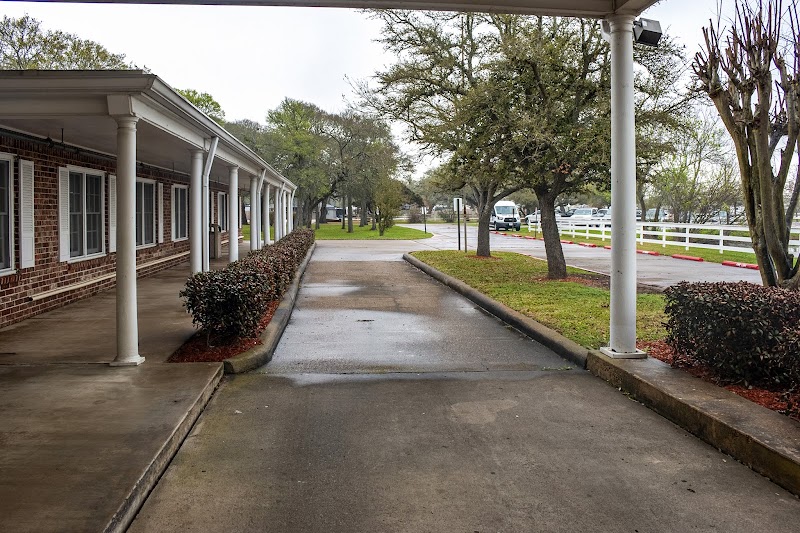
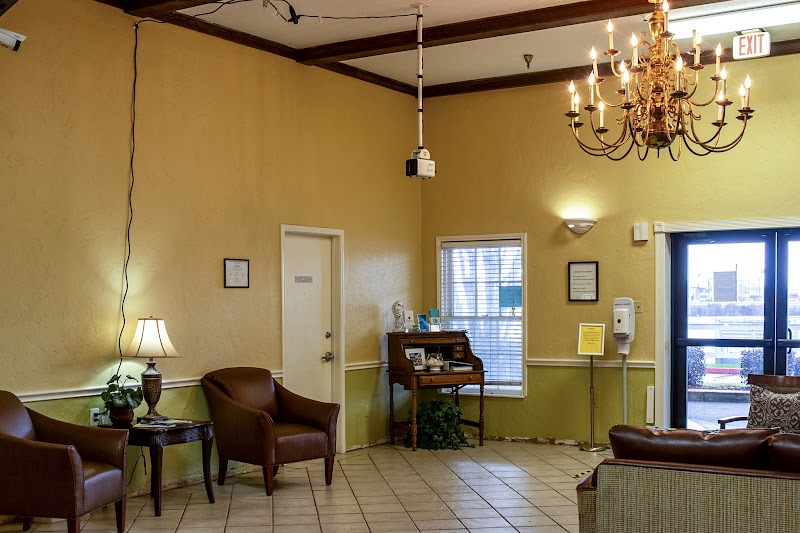
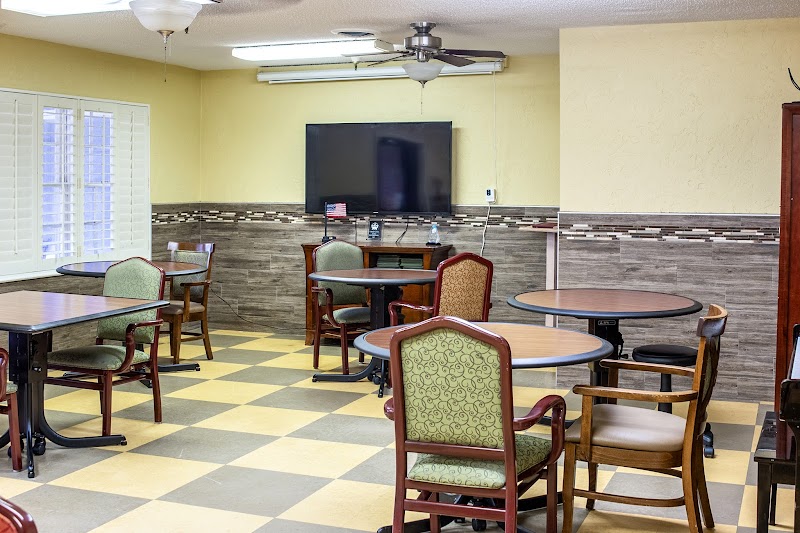
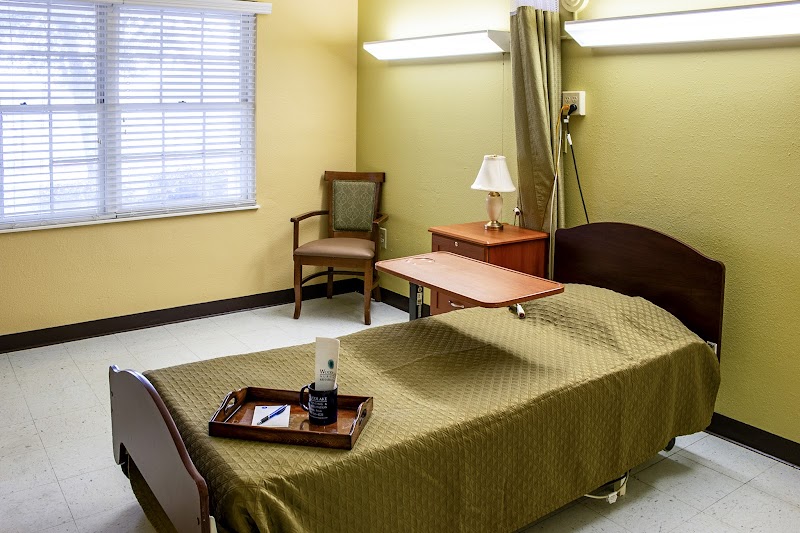
WOODLAKE NURSING CENTER

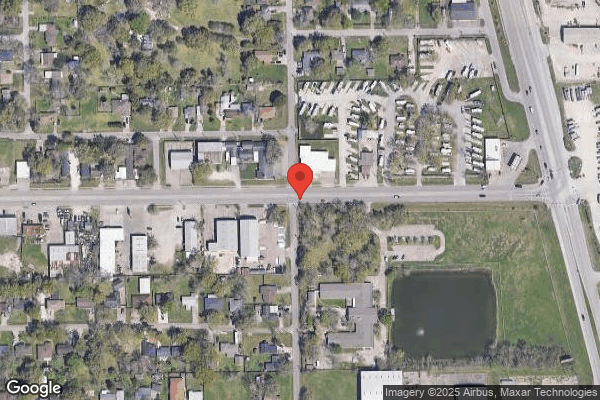
603 E PLANTATION RD, CLUTE, TX 77531 (979) 265-4221
For profit - Corporation 93 Beds GULF COAST LTC PARTNERS Data: November 2025 2 Immediate Jeopardy citations
Trust Grade
34/100
#902 of 1168 in TX
Last Inspection: June 2025

Inspected within the last 6 months. Data reflects current conditions.

Overview

Woodlake Nursing Center has received a Trust Grade of F, indicating significant concerns about care quality. Ranked #902 out of 1168 facilities in Texas, they fall in the bottom half, and at #11 out of 13 in Brazoria County, only two local options are worse. The facility is showing an improving trend, decreasing from 4 issues in 2024 to 2 in 2025, yet still faces serious concerns, including critical incidents where residents experienced delays in necessary hospital transfers and unsafe handling during lift operations. Staffing levels are decent, with a 3/5 star rating and a turnover rate of 43%, which is below the Texas average. However, the facility has been fined $20,965 and has had incidents that raise alarms, such as a resident sustaining a hip fracture during a lift transfer and another falling from a wheelchair due to inadequate supervision. Overall, while there are some positive aspects in staffing and a slight improvement in compliance, the facility's serious deficiencies and poor trust grade make it a concerning option for families.

Trust Score
F
34/100
In Texas
#902/1168
Bottom 23%
Safety Record
High Risk
Review needed
Inspections
Getting Better
4 → 2 violations
Staff Stability
○ Average
43% turnover. Near Texas's 48% average. Typical for the industry.
Penalties
✓ Good
$20,965 in fines. Lower than most Texas facilities. Relatively clean record.
Skilled Nurses
○ Average
Each resident gets 31 minutes of Registered Nurse (RN) attention daily — about average for Texas. RNs are the most trained staff who monitor for health changes.
Violations
○ Average
10 deficiencies on record. Average for a facility this size. Mostly minor or procedural issues.
★★☆☆☆
2.0
Overall Rating
★★★☆☆
3.0
Staff Levels
★☆☆☆☆
1.0
Care Quality
★★★☆☆
3.0
Inspection Score
Stable
2024: 4 issues
2025: 2 issues

The Good

  • Full Sprinkler Coverage · Fire safety systems throughout facility
  • No fines on record
  • Staff turnover below average (43%)

    5 points below Texas average of 48%

Facility shows strength in fire safety.

The Bad

2-Star Overall Rating

Below Texas average (2.8)

Below average - review inspection findings carefully

Staff Turnover: 43%

Near Texas avg (46%)

Typical for the industry

Federal Fines: $20,965

Below median ($33,413)

Minor penalties assessed

Chain: GULF COAST LTC PARTNERS

Part of a multi-facility chain

Ask about local staffing decisions and management

The Ugly 10 deficiencies on record

2 life-threatening
Jun 2025 2 deficiencies
CONCERN (E)

Potential for Harm - no one hurt, but risky conditions existed

Assessment Accuracy (Tag F0641)

Could have caused harm · This affected multiple residents

**NOTE- TERMS IN BRACKETS HAVE BEEN EDITED TO PROTECT CONFIDENTIALITY** Based on observation, interview, and record review, the facility failed to ensure assessments accurately reflected the resident'...

Read full inspector narrative →
**NOTE- TERMS IN BRACKETS HAVE BEEN EDITED TO PROTECT CONFIDENTIALITY** Based on observation, interview, and record review, the facility failed to ensure assessments accurately reflected the resident's status for 3 of 15 resident (Resident #14, Resident #17, and Resident #53) reviewed for accuracy of assessments. - The facility failed to accurately assess Residents #14, #17, and #53 for their lack of natural teeth in their oral cavity. These failures could place residents at risk of not receiving care and services necessary for their physical, mental, and psychosocial well-being. The findings included: Resident #14 Record review of Resident #14's face sheet dated 06/25/25 revealed a -[AGE] year-old female admitted to the facility on [DATE] and re-admitted on [DATE]. Her diagnoses included chronic obstructive pulmonary disease, heart disease, essential (primary) hypertension (High blood), type 2 diabetes mellitus with diabetic neuropath (nerve damage that can happen with diabetes) arthritis (inflammation of the joints), panic disorder, anxiety and major depressive disorder, cognitive communication deficit (difficulty in communication), and abnormalities of gait and mobility. Record review of Resident #14's Annual MDS assessment dated [DATE] revealed she had a BIMS score of 9 which indicated moderate cognitive impairment. The section on nutritional approaches, she was coded as receiving a mechanically altered diet. The section on oral\dental status, she was coded as 0 which indicated no problem (all natural teeth intact). Record review of Resident #14's care plan dated 05/28/25 revealed Resident #14 care plan for dentures: Resident #14 has dentures Date Iniiated: 05/28/2025. Goal: Resident #14 will consume adequate nutrition and hydration; pain will be relieved within 1 hour of intervention no s/s of infection will occur through the review period date 7/14/25. Observation and interview on 06/23/25 at 10:15 AM, revealed Resident #14 was in bed alert and oriented. During an interview she said she had upper and lower dentures, but the lower dentures did not fit, and she did not use them. She said she managed the best way that she could. Resident #17 Record review of Resident #17's face sheet dated 06/26/25 revealed a -[AGE] year-old female admitted to the facility on [DATE] and re-admitted on [DATE]. Her diagnoses included chronic obstructive pulmonary disease, heart disease, essential (primary) hypertension (High blood), type 2 diabetes mellitus with diabetic neuropath (nerve damage that can happen with diabetes) arthritis (inflammation of the joints), panic disorder, anxiety and major depressive disorder, cognitive communication deficit (difficulty in communication), and abnormalities of gait and mobility. Record review of Resident #17's Annual MDS assessment dated [DATE] revealed she had a BIMS score of 14 which indicated that she was cognitively intact. The section on nutritional approaches, she was coded as receiving a mechanically altered diet. The section on oral\dental status, she was coded as 0 which indicated no problem (all natural teeth intact). Observation and interview on 06/24/26 revealed she had a mechanical altered diet. Resident #17 said she had dentures but did not wear them because they did not fit right. She said she had seen the dentist but did not remember when. In an interview with the facility's Social Worker on 06/26/25, she said Resident #17 had seen the dentist and provided a copy of the last dental visit. Record review of the dental record dated 08/03/23 for Resident #17, revealed . [Resident #17] seen on unit for initial visit. Comprehensive review of medical history completed . Pt is edentulous and reports discomfort in anterior mix gingiva. Advice pt this is likely due to irritation from chewing without teeth. pt has had F/F/ in the past and would like a new set. pt was warned that due to severe resorption. adhesive will be required. impressions and bite for F\F taken and will deliver at next visit. Resident #53 Record review of Resident #53's face sheet dated 06/25/25 revealed a -[AGE] year-old male admitted to the facility on [DATE] and re-admitted on [DATE]. His diagnoses included cerebral infarction, (refers to a blood vessel blockage in the brain), essential hypertension(primary), type 2 diabetes mellitus (condition characterized by insulin resistance and elevated blood sugar levels) anemia (low blood count), fracture of one rib, left side, history of falling, heart disease encounter for closed fracture with routine healing, other abnormalities of gait and mobility, muscle weakness and other lack of coordination, urinary tract infection, benign prostatic cancer. Record review of Resident #53's admission MDS assessment dated [DATE] revealed he had a BIMS score of 13 out of 15 which indicated that she was cognitively intact. Record review of section L oral/dental indicated he was coded as obvious or likely cavity or broken natural teeth (D). Record review of Resident #53's care plan dated 05/01/25 revealed Resident #53 care plan for oral\dental - Resident #53 has potential for oral/dental health problems. Date Initiated: 05/07/2025. Goal- The resident will be free of infection, pain or bleeding in the oral cavity by/through review date. Date Initiated: 05/07/2025 -Target Date: 06/08/2025 Observation on 06/25/25 at 11:00AM revealed Resident #53was in bed alert and oriented. During an interview he said he did not have any teeth in his oral cavity. He said he had upper and lower dentures, and they fit. He said he had a fall at home and was at the facility for rehabilitation. In an interview with the MDS Coordinator on 06/25/25 at 4:00pm, she stated she completed the MDS by visiting residents, talking to them and reviewing nurse's documentation. She said she was responsible for ensuring that all MDSs reflected the resident's condition. She said she would audit all MDSs to do corrections as needed. She said inaccurate MDS assessments may result in an inaccurate care plan preventing residents from getting needed care services. A policy on Accuracy of MDS assessment was requested from the Acting Administrator on 06/25/25 at 4:30PM. She said the facility followed the RAI manual.
CONCERN (F)

Potential for Harm - no one hurt, but risky conditions existed

Food Safety (Tag F0812)

Could have caused harm · This affected most or all residents

**NOTE- TERMS IN BRACKETS HAVE BEEN EDITED TO PROTECT CONFIDENTIALITY** Based on observations, interviews, and record review, the facility failed to store, prepare, distribute, and serve food in accor...

Read full inspector narrative →
**NOTE- TERMS IN BRACKETS HAVE BEEN EDITED TO PROTECT CONFIDENTIALITY** Based on observations, interviews, and record review, the facility failed to store, prepare, distribute, and serve food in accordance with professional standards for food service safety for the 1 of 1 kitchen. -The facility failed to ensure Dietary Staff A wore hair net and beard cover while in the kitchen. -The facility failed to ensure that the kitchen and the equipment were kept in a clean, sanitary condition. -The facility failed to ensure that prepared, leftover food items in one of two freezers, and one of one walk-in freezer were dated and labeled with an open\store date and use by date. - The facility failed to ensure that dented cans were stored away from undented cans. -The facility failed to ensure that trash can in the kitchen was covered and not exposed in food preparation area. These failures could place residents at risk for cross contamination and food-borne illnesses. Findings include: Initial kitchen observations, and interviews, on 05/27/25 from 9:00 AM to 9:20 AM revealed- - Dietary Staff A was observed in the kitchen without a hair net and without bead restraint. He had facial hair about 1-2 inches long. In an interview, he said he was not supposed to work today 06/23/25 but came in to help. He walked away and did not answer any other questions. -Observation revealed the kitchen floor was greasy, and dirty with food crumbs and a dead roach on the floor. -Observation of two cooking stoves in the kitchen revealed baked on grease and [NAME] food substance inside the stove. Grease was all around the stoves. -Observation of one of two freezers in the kitchen revealed a whitish-creamy substance in a plastic wrap that looked like cake. It was not dated and not labeled. Dietary Staff B said it was french-fries, but she did not know who left it in the freezer. -Observation of the walk-in freezer revealed the following left-over food items-undated and unlabeled: puree tomato soup in a container, mash potatoes, soup, pears out of the original container, sausage and tuna. All food items were identified by Dietary Staff B. In an interview she said she did not know who left the unlabeled food products in the freezer and walked away. -Observation of the dry goods storage area revealed the following dented cans stored together with the undented can good: 2 6Ibs cans of dented solid packed pears. 4 4Ibs cans of skip jack tuna 2-50oz cans of cream of chicken soup Observation of the dish washing area revealed a large trash container uncovered, half full of waist from left over food items, and there was a strong smell around the dishwasher. Dietary Staff C said the smell might be coming from the trash can or the drainage. She wheeled out the trash can. Around the dishwasher were food crumbs and dead roaches. Dietary staff B and C said the garbage disposal was not working, and the trash can was used for the leftover food from meal service. In an interview with the Acting Administrator on 06/23/25 at 3:30PM, she said the kitchen was one of the reasons why the facility did not have an Administrator. She said the Dietary Manager had been on FMLA since April and the Administrator was supposed to see to the day-to-day activity of the kitchen in the absence of the Dietary Manager. She said all staff in the kitchen were new and she would make sure that they were trained. She said she would get an assistant from sister facility to assist with cleaning. During an interview with the RD on 06/24/25 at 10:40 am, she said her schedule was 8 hours a month and 2 hours remotely. She said she observed food preparation and a quick walk around during her visit. She said she would correct what need to be corrected during her rounds. She said she would have an in-service with the staff on upkeeping of the kitchen, labeling and dating all left-over food items with date stored and used by date and to ensure that food items left in refrigerator are discarded after the used by dates. She said she found the cover to the trash can in the kitchen and it was now covered. She said preparing food in a dirty, unorganized kitchen may lead to cross contamination and food born illness. In an interview with the facility Acting Administrator on 06/25/25 at 2:00PM, she said the manager from the assistant facility would continue to work with the current staff to come up with a cleaning schedule, proper food storage, labeling and correct way of dating left over food items. Record review of provided facility's policy dated 2001 revised 2002 titled Food Preparation and Service Policy Statement- Food and nutrition services employees prepare, distribute and serve food in a manner that complies with safe food handling practices . 2. Cross-contamination can occur when harmful substances, i.e., chemical or disease-causing microorganisms are transferred to food by hands (including gloved hands), food contact surfaces, sponges, cloth towels, or utensils that are not adequately cleaned. Cross-contamination can also occur when raw food touches or drips onto cooked or ready-to-eat foods . The policy did not address food labeling, kitchen cleanliness and food storage.
Jun 2024 2 deficiencies 2 IJ
CRITICAL (J) 📢 Someone Reported This

A family member, employee, or ombudsman was alarmed enough to file a formal complaint

Immediate Jeopardy (IJ) - the most serious Medicare violation

Quality of Care (Tag F0684)

Someone could have died · This affected 1 resident

**NOTE- TERMS IN BRACKETS HAVE BEEN EDITED TO PROTECT CONFIDENTIALITY** Based on interviews and record reviews, the facility failed to ensure that residents received treatment and care in accordance w...

Read full inspector narrative →
**NOTE- TERMS IN BRACKETS HAVE BEEN EDITED TO PROTECT CONFIDENTIALITY** Based on interviews and record reviews, the facility failed to ensure that residents received treatment and care in accordance with professional standards of practice, the comprehensive person-centered care plan, and the residents' choices for one (Resident #1) of seven residents reviewed for quality of care. 1. The facility delayed Resident #1 a transfer to the hospital for higher level of care and delayed treatment resulting in prolonged discomfort and pain. An IJ was identified on 06/07/24. The IJ template was provided to the facility on [DATE] at 6:13 pm. While the IJ was removed on 06/11/24, the facility remained out of compliance at a scope of isolated and a severity level of no actual harm with potential for more than minimal harm that is not immediate jeopardy due to the facility's need to monitor the implementation of the plan of removal. This failure could place residents at risk of decline or decrease in their quality of life and quality of care. Findings included: Record review of Resident #1's face sheet revealed a sixty-five-year-old woman who was admitted to the facility on [DATE]. Her admitting diagnoses included contractures to the left knee, right knee, left shoulder, and muscle; hemiplegia (partial paralysis); cerebral infraction (stroke); abnormal posture; and major depressive disorder. Record review of Resident #1's care plan revealed that she had left sided hemiplegia/hemiparesis. Interventions initiated 11/15/21 listed to complete range of motion (active or passive) with am/pm care daily. Resident was at risk for pain due to joints, history of poliomyelitis, and muscle spasms. Intervention (initiated 11/15/21) stated to monitor for vocalizations (yelling out) and face (crying and worried). Care plan also indicated that on 05/16/24, resident was required to use a hoyer lift for all transfers. Record review of Resident #1's MDS (clinical assessment to determine resident's strength and needs) Quarterly Assessment Section C - Cognitive Patterns dated 04/22/24 revealed a score of 13/15, cognitively intact. Record review of Resident #1's MDS Section G- Functional Abilities and Goals dated 06/01/24 revealed that Resident #1's functional limitations range of motion were impaired on both sides. Review of the subsection titled Mobility, Resident #1 was completely dependent with sitting to lying and lying to sitting. Walking, sitting to stand, and self-wheeling were not attempted due to medical condition and safety concerns. Record review of Resident #1's hospital records (post ER transfer) reflected that she was admitted on [DATE] at 4:51 pm. Her admitting diagnoses was a right femur fracture and acute pain due to trauma. Treatment included intramedullary nailing (is surgery to repair a broken bone and keep it stable)of the right femur. Record review of Resident #1's progress note, written on 05/24/24 by LVN Nurse A at 9:31 a.m., displayed that CNA was transferring patient onto wheelchair from Hoyer Lift, as patient was lowered into chair, patient slid off of the wheelchair to the ground. Pain, neuro, and skin assessments yielded no abnormal findings, suggest no trauma, VS all WNL. Patient startled but denies pain. Responsible party, PCP, and DON notified of incident. Will continue to monitor. Record review of the facility's In-service trainings from January 2024-June 2024, revealed that a hoyer lift training was conducted from 05/29/24- 06/05/24. No other trainings were found. In an interview on 06/05/24 at 1:56 pm, CNA A stated that she was familiar with Resident #1, and she was switched to a hoyer lift transfer during the month of May. She stated that around 9 am on 05/24/24, NA B and herself were transferring Resident #1 from the hoyer lift to the wheelchair in the hallway. She explained that while she controlled the hoyer controls, CNA was supposed to hold the wheelchair. While the resident was being lowered down, NA B let go of the wheelchair to straighten Resident #1. Due to NA B letting go of the wheelchair so quickly, Resident #1 was described to slide out the wheelchair and land on her leg in pain. When she fell, she cried out in pain in instantly. LVN Nurse A came to assess the resident and she was crying because she was in a lot of pain. CNA stated that she asked LVN Nurse A to send her out, but he did not send Resident #1 out until after the family arrived that evening. She explained with tears in her eyes that this situation had really hurt her because her family and Resident #1's family were close, and she was angry that LVN Nurse A did not send her out right away. An interview was attempted on 06/05/24 at 2:22 pm with Resident #1. She stated she was very tired, and the interview would be completed at a later time. An interview was attempted on 06/05/24 at 3:42 pm, with NA B a voicemail and text message were sent out requesting a call back. In an interview on 05/24/24 at 4:27 pm, LVN Nurse A stated that he had started working at the facility on 05/02/24. He stated that on 05/24/24 when Resident #1 fell, he was working with another resident when he heard a loud scream in pain. He ran into the hall and saw Resident #1 on the floor next to the hoyer lift. He stated that he provided neuro checks for the resident, took vitals, and did a skin assessment, however he did not perform ROM. LVN Nurse A stated he did not perform ROM on Resident #1 because she was fully contracted and whenever he would move her limbs, she would grimace due to pain. His focuses were the points of contact made with the ground. He explained that Resident #1 was well aware of what happened, he did not hear her say anything about pain, and felt that she was more startled than anything. He stated after the fall, he contacted the doctor, NP, and the family. LVN Nurse A stated that he performed checks every 2 hours around 12:00 pm, he noticed some swelling on her right hip, but thought it was due to the resident being contracted. When the family arrived at 4:30 pm, that evening, he stated that they confronted him and she was in severe pain. She was given pain medication at that time, and he attempted to reach out to the doctor and the NP, both who were unavailable. He informed the family that an X-ray could be done, but the technicians would not arrive to the facility until Tuesday due to the holiday. He felt that nothing was wrong with Resident #1 based off his assessment but the family did not want to wait and requested to send her out. LVN Nurse A denied Resident #1 crying but stated that when he asked her to describe her pain level on a scale of 1 (being the lowest) and 10 (being the highest), she stated a 9. In an interview on 06/05/24 at 4:44 pm, with Resident #1 and her family member, Resident #1 stated that when she fell on [DATE], she was crying the entire time and she yelled out very loudly when she dropped because the fall hurt. The family member stated that she arrived to the facility at 3:30 pm and when she tried to adjust Resident #1 in bed for an afternoon snack, she yelled out very loudly and said Stop, Stop! It hurts!. She told LVN Nurse A that she was in pain but he told her the doctor would not be available until Tuesday, which they were not comfortable with. Family member explained that whenever she came to the facility, she was always able to adjust Resident #1's legs without any problem and Resident #1 stated that it did not hurt when she did this. Family member told LVN Nurse A that her hip and arm were swollen. Once LVN Nurse A decided to send her out, she was taken by the emergency services, then was transferred to a major hospital in a bigger city for immediate surgery. In a follow up interview on 06/05/24 at 5:06 pm, CNA A said that when LVN Nurse A was assessing Resident #1, she was crying and told him that it hurt. She stated that she heard Resident #1 tell LVN Nurse A that she was hurting from the fall and she explained that from the way she was crying, she knew she was in pain. In an interview on 06/07/24 at 11:29 am, NA B stated that she had been working at the facility for 3 weeks. She stated that initially, she was walking down the hall when CNA A asked if she could assist her with a hoyer transfer with Resident #1. She explained that during the transfer, Resident #1 was not sitting in the sling correctly. As CNA A lowered the resident down into the chair, she slid out of the chair and onto the floor because she felt like the seat pillow was not positioned right. She said that she didn't think she fell very hard but stated that she was not sure because Resident #1 is an elder and was contracted. NA B felt that Resident #1 screamed when she fell because she was more scared than hurt. She explained that when LVN Nurse A did the post fall assessment, he did not extend her legs out, but he did take her vitals. NA B also stated that prior to this incident, she had not received any hoyer lift training at the facility and that was her first time performing a Hoyer transfer with a human being and not a plastic dummy. In an interview on 06/07/24 at 12:46 pm, with the DON, she stated that when Resident #1 fell, she was told it was because she was not placed in the wheelchair correctly. She stated that if she was assessing the resident, she would not have done a ROM assessment because she was contracted, but if she did, she would be very careful. She stated that she never liked the hoyer lift and there should always be two people operating it at a time. She expressed that she was not aware that LVN Nurse A did not perform ROM when he assessed her and stated that it if the resident hit their head or had an obvious fracture, they would need to be sent out. The Administrator was notified of the IJ on 06/07/24 at 6:13 p.m and given the IJ template due to the above failures and a POR was requested. The POR was accepted on Sunday 06/09/24 at 9:17 am, and reflected the following: Re: Plan of Removal of Immediate Jeopardy F0684 The following is a plan of removal, which was immediately implemented at XXX, to remedy the Immediate Jeopardy which was imposed 6/7/24 at approximately 6:22 PM. The notification of Immediate Jeopardy states as follows: F684 All items listed will be completed by 5:00 pm on 6/8/24 with continued follow-up for scheduled staff. 1. Administrator/DON initiated an in-service for all staff on 6/7/24 on incident/accident policy and abuse neglect exploitation. A post-test will be performed with staff over information in-serviced on by administration, and a score of 100% must be achieved. If less than 100%, staff will be reeducated and retest until 100% is achieved. 2. In-service initiated on 6/7/24 by the administrator and DON regarding changes in condition policy and procedure and residents needing higher level of care for injuries/assessment findings for all licensed clinical staff. 3. Administrator/DON initiated an 1:1 Inservice with LVN Nurse A regarding assessment of a resident post fall and recognizing assessment changes of condition that warrant higher level of care. 4. Administrator and DON were in-serviced on 6/7/24 by Regional Director of Clinical Services on all the policies mentioned above, and to notify regional/corporate staff of ALL falls/incidents, and are to notify regional/corporate staff of any discrepancies. Regional/corporate staff will follow-up on each fall/incident in question and direct with appropriate interventions. If staff are unable to attend any of the in-services, they will be required to complete the in-service before starting their assigned shift. Any agency will be in-serviced prior to the beginning of their shift. Any new hires will be in-serviced on hire, prior to working a shift. The Medical Director was made aware of the Immediate Jeopardy 6/7/24 at 6:49 pm and has been involved in developing the Plan of Removal. These conversations are considered part of the QA process. A QAPI meeting was held on 6/7/24 with attendance of Administrator, Director of Nursing, Assistant Director of Nursing, MDS Coordinator, Regional Director of Clinical Services, and Regional Director of Operations. This plan was initially implemented 6/7/24 and will be monitored through completion by corporate and regional staff. Plan of Removal completion date is 6/8/24 by 5:00 pm with continuation of oncoming staff and follow-up. Monitoring/Verification of Plan of removal The POR were reviewed as followed. The facility created a binder and numbered each tab in the binder with the completed documented necessary to fulfill the plan. Plan 0684 -Resident #1 had her care plan updated. Also had discharge orders in place. -an all staff Inservice was initiated on 06/07/24 and staff were required to take a fall assessment test. -an Inservice for the DON and Admin regarding changes to condition policy was initiated on 06/07/24. This task was completed. -a 1:1 in-service was attempted for LVN Nurse A, but LVN Nurse A put in his resignation letter on 06/08/24. He wished to be released on the spot. -Admin and DON were in serviced on 06/07/24 by RDCS on all policies mentioned in POR. This was completed. -residents were assessed regarding any changes in condition. For verification, staff were asked to provide a resident roster in the form of a spreadsheet to show which residents had a change in condition update, care plan update, or any new orders per the POR. Monday June 10, 2024 The interviews were as followed regarding in-service topics: In an interview with RN A at 12:36 pm, he stated they talked about who to notify if abuse and neglect were suspected and who to look for if you suspect something happened. Things to look for may be bruises and injuries. The abuse coordinator is the Admin and the reporting time is within 2 hours. In an Interview with CNA E at 12:41 pm, she stated that in the abuse and neglect in-service, they talked about who was the abuse coordinator and who do they report to. They report to nurse first, then ADON, DON, and Admin. The abuse coordinator was the Admin. Reportables were anything physical, neglect, money situation or abuse of funds, and verbal. Examples were bruising on the body or anything foreign. In an interview with NA C at 12:51 pm, she stated that for abuse and neglect, they discussed if someone saw someone doing something harmful, immediately report it. The chain of command was nurse, ADON, and DON, then Admin. The abuse coordinator was the Admin. Types were physical, emotional, verbal, and sexual. She explained when a resident falls, they immediately report it to nurse. From there the Admin and DON, ADON. The nurse checked it out and saw if they could lift them or any issues. If so, they would send them out. If a resident falls, she would wait for a nurse to come and check them. In an interview with CMA A at 12:58 pm, he explained that for abuse and neglect, they covered if they noticed abuse and neglect. Types were verbal, sexual, physical, neglect. If suspected, they would report it to their Admin, who was the abuse coordinator. For falls, they would go to charge nurse first so they can come and assess the resident before they touch or do anything with them. In an interview with CMA B at 1:05 pm, they covered that if they saw any abuse, they were to report it to the charge nurse. The abuse coordinator was the Admin. She stated that if she saw a resident on the ground, she would stay with the resident and she would holler for an aid or a changer nurse to come help. She would not pick the resident off the floor. She would wait for the charge nurse and pick them up when the charge nurse said it was ok and the assessment had been completed. In an interview with LVN A at 11:16 pm, she said that all forms of suspected abuse were to be reported to the abuse coordinator, the Admin. If a resident falls, they were supposed to report it to the DON and she would call the family and the doctor. For fall assessments, they nurses would complete skin checks, vitals, range of motion, and a pain assessment. After that has been completed, aides could pick the resident off of the floor. In an interview with CNA F at 1:22 pm, she stated they covered what staff would do when someone fell. She said they would not move the resident and would wait until the nurse got there and did the vitals. It was not ok to move the resident unless the nurse had checked the vitals and they were ok. If they needed to go to the hospital, then the paramedics would move them. For abuse and neglect, they covered that when they see abuse and neglect, they must report it to the abuse coordinator, the Admin. She gave the example that some different types of abuse were emotional, sexual, physical, mental, or stealing from residents. An example she gave was when she saw an old coworker years ago at a different facility get hit by a resident and she responded by hitting them back. She reported it immediately. A hoyer lift observation was witnessed on 06/10/24 at 1:33 pm with Resident #1, NA C, NA D (who observed), CNA E, and RN A. CNA E strapped Resident #1's legs in the harness while she was sitting in the wheelchair. NA C used the controls to lift her slowly up in the hoyer while she was in a sitting position. They moved the wheelchair back and RN A grabbed the back on the sling and adjusted Resident #1 above the bed. She was laid gently in the bed by NA D, who held her legs in a slightly bent position due to her contractures. Resident #1 said she was ok during the transfer and she was not in pain. No concerns with transfer. In an interview on 06/11/24 at 5:55 pm with LVN B, he stated that he worked from 6pm - 6am. The abuse and neglect training covered that all reportables should be taken to the abuse coordinator who was the Admin. After a resident fell, he would do his assessment from head to toe and would not let an aide touch the resident until after he had cleared them. He also stated that on his shift, he would be the nurse to watch all hoyer lift transfers and residents in the lift should be sitting in an upright position. Whenever there was a change in condition for a resident (sickness, coughing, change of temperature, or after a fall) he would create a change of condition form. Afterwards, he would alert the DON, contact the doctor, and reach out to the family. The care plan should be updated quarterly and as needed. The care plan meetings usually consisted of the doctors, DON, ADON, and social worker. In an interview on 06/11/24 at 6:00 pm at LVN C, she stated that worked the 6pm-6am shift and she was on her second day. In the abuse and neglect training, they covered that staff should take all reports to her and she would pass the report along to the abuse coordinator. If someone fell, she would perform a range of motion assessment, neuro check, make sure nothing was broken, check movement, pain levels, and bruising or discoloration of the skin. When a hoyer lift transfer was to be performed, she would be monitoring for a safe transfer and she was comfortable with the training. Whenever there was a change in condition for a resident (sickness, coughing, change of temperature, or after a fall) she would create a change of condition form. Afterwards, he would alert the DON, contact the doctor, and reach out to the family. The care plan should be updated quarterly and as needed. The care plan meetings usually consisted of the doctors, DON, ADON, and social worker. In an interview on 06/11/24 at 6:14 pm, LVN D stated that she worked the 6pm-6am shift. In the abuse and neglect in-service, all suspected abuse should be reported to the abuse coordinator immediately. The type of assessments done if a resident fell, were breathing, pain, ROM, and vitals. CNAs were only able to pick a resident off the floor after the assessment and there were not injured. Nurses have to say it was safe to pick them up. Hoyer transfers should always be done with 2 aides and nurse to monitor. The care plan should be updated every 90 days and with any change in condition. Nurses should do a change of condition form when there was any type of change like fever, diarrhea, or a fall. They would notify the doctor, family, and DON. For creating the comprehensive care plan, some of the nurses would be a part of the care plan meeting such as the DON, ADON, family, and the resident could join as well. This would also include everyone who was a part of administration. Record review of sign in sheets for Abuse and neglect inservice started 06/07/24reflected that all staff had been in serviced regarding the topics listed in the POR on both rotating shifts and for the day and night shifts as well. Review of the quizzes covering the topic of abuse and neglect reflected that al quizzes had been completed with a score of 100%. Record review of the in-service dated 06/08/24 covering the topic of Admin, DON, ADON will notify corporate of all falls/incidents and any discrepancies displayed that it had been completed. Record review of a termination letter from LVN Nurse A dated 06/08/24 revealed that LVN Nurse A wished to resign immediately due to an out of state family emergency. Record review of the facilities Abuse and neglect Policy revised April 2021 stated: Residents have the right to be free from abuse, neglect, misappropriation of resident property and exploitation. This included but was not limited to freedom from corporal punishment and voluntary seclusion, verbal, mental, sexual or physical abuse, and physical or chemical restraint not required to treat the resident's symptoms. The facility should develop and implement policies and protocols to prevent and identify a. abuse or mistreatment of residents b. neglect of residence c. theft, exploitation or misappropriation of resident property. The facility should provide staff orientation and training/orientation programs that include topics such as abuse prevention, identification and reporting of abuse, stress management, and handling verbally or physically aggressive resident behavior. Record review of the facilities policy titled Accidents and Incident- Investigating and Reporting revised July 2017 stated: The Nurse Supervisor/Charge Nurse and/or the department director or supervisor shall promptly initiate and document investigation of the accident or incident. Record review of the facilities policy titled Change in a Resident's Condition or status revised February 2021, displayed: 1. The nurse will notify the resident's attending physician or physician on call when there has been a(an): a. accident or incident involving the resident; b. discovery of injuries of an unknown source; c. adverse reaction to medication; d. significant change in the resident's physical/emotional/mental condition; e. need to alter the resident's medical treatment significantly; f. refusal of treatment or medications two (2) or more consecutive times); g. need to transfer the resident to a hospital/treatment center; h. discharge without proper medical authority; and/or i. specific instruction to notify the physician of changes in the resident's condition. 2. A significant change of condition is a major decline or improvement in the resident's status that: a. will not normally resolve itself without intervention by staff or by implementing standard disease related clinical interventions (is not self-limiting); b. impacts more than one area of the resident's health status; c. requires interdisciplinary review and/or revision to the care plan; and d. ultimately is based on the judgment of the clinical staff and the guidelines outlined in the Resident Assessment Instrument. 3. Prior to notifying the physician or healthcare provider, the nurse will make detailed observations and gather relevant and pertinent information for the provider, including (for example) information prompted by the Interact SBAR Communication Form. 4. Unless otherwise instructed by the resident, a nurse will notify the resident's representative when: a. the resident is involved in any accident or incident that results in an injury including injuries of an unknown source; b. there is a significant change in the resident's physical, mental, or psychosocial status; c. there is a need to change the resident's room assignment; d. a decision has been made to discharge the resident from the facility; and/or e. it is necessary to transfer the resident to a hospital/treatment center. The administrator was notified that the IJ was removed on 06/11/24 at 07:35 pm, however the facility remained out of compliance at a scope of isolated and a level of minimal harm due to the facility's need to monitor the implementation of the plan of removal.
CRITICAL (J) 📢 Someone Reported This

A family member, employee, or ombudsman was alarmed enough to file a formal complaint

Immediate Jeopardy (IJ) - the most serious Medicare violation

Accident Prevention (Tag F0689)

Someone could have died · This affected 1 resident

**NOTE- TERMS IN BRACKETS HAVE BEEN EDITED TO PROTECT CONFIDENTIALITY** Based on interviews and record reviews the facility failed to ensure that the resident environment remained as free of accident ...

Read full inspector narrative →
**NOTE- TERMS IN BRACKETS HAVE BEEN EDITED TO PROTECT CONFIDENTIALITY** Based on interviews and record reviews the facility failed to ensure that the resident environment remained as free of accident hazards as was possible and that each resident received adequate supervision and assistance devices to prevent accidents for two (Resident #1 and Resident #2) of five residents reviewed for accidents hazards and supervision, in that: 1. The facility failed to make sure staff were properly trained before operating the hoyer lift. Resident #1 sustained a hip fracture during a Hoyer lift transfer by CNA A and NA B, which required surgical intervention. 2. Resident #2 was placed into his wheelchair and left unattended after a decline in his health caused him unsteady trunk balance and support. He fell out of the wheelchair, hit his face, and was transferred to the emergency room. An IJ was identified on 06/07/24. The IJ template was provided to the facility on [DATE] at 6:13 pm. While the IJ was removed on 06/11/24, the facility remained out of compliance at a scope of isolated and a severity level of not actual harm with potential for more than minimal harm that is not immediate jeopardy due to the facility's need to monitor the implementation of the plan of removal. The failure could place residents at risk of experiencing accidents, injuries, and/or death. The findings included: Resident #1 Record review of Resident #1's face sheet revealed a sixty-five-year-old woman who was admitted to the facility on [DATE]. Her admitting diagnoses were contractures to the left knee, right knee, left shoulder, and muscle; hemiplegia (partial paralysis); cerebral infraction (stroke); abnormal posture; and major depressive disorder. Record review of Resident #1's care plan completed 05/28/24 revealed that she had left sided hemiplegia/hemiparesis. Interventions initiated 11/15/21 listed to complete range of motion (active or passive) with am/pm care daily. Resident was at risk for pain due to joints, history of poliomyelitis, and muscle spasms. Intervention (initiated 11/15/21) stated to monitor for vocalizations (yelling out) and face (crying and worried). Care plan also indicated that on 05/16/24, resident was required to use a hoyer lift for all transfers. Record review of Resident #1's MDS dated [DATE](clinical assessment to determine resident's strength and needs) Quarterly Assessment Section C - Cognitive Patterns dated 04/22/24 revealed a score of 13/15, cognitively intact. Record review of Resident #1's MDS dated [DATE]Quarterly Assessment Section G- Functional Abilities and Goals dated 06/01/24 revealed that Resident #1's functional limitations range of motion were impaired on both sides. Review of the subsection titled Mobility, Resident #1 was completely dependent with sitting to lying and lying to sitting. Walking, sitting to stand, and self-wheeling were not attempted due to medical condition and safety concerns. Record review of Resident #1's hospital records (post ER transfer) reflected that she was admitted on [DATE] at 4:51 pm. Her admitting diagnoses were a right femur fracture and acute pain due to trauma. Record review of the facility's In-service trainings from January 2024-June 2024, revealed that a hoyer lift training was conducted from 05/29/24- 06/05/24. No other trainings were found. Record review of Resident #1's progress note, written on 05/24/24 by LVN Nurse A at 9:31 a.m., displayed that CNA was transferring patient onto wheelchair from Hoyer Lift, as patient was lowered into chair, patient slid off of wheelchair to the ground. Pain, neuro, and skin assessments yielded no abnormal findings, suggest no trauma, VS all WNL. Patient startled but denies pain. Responsible party, PCP, and DON notified of incident. Will continue to monitor. In an interview on 06/05/24 at 1:56 p.m., CNA A stated that she was familiar with Resident #1, and she was switched to a hoyer lift transfer during the month of May. She stated that around 9 a.m. on 05/24/24, NA B and herself were transferring Resident #1 from the hoyer lift to the wheelchair in the hallway. She explained that while she controlled the hoyer controls, CNA was supposed to hold the wheelchair. While the resident was being lowered down, NA B let go of the wheelchair to straighten Resident #1. Due to NA B letting go of the wheelchair so quickly, Resident #1 was described to slide out the wheelchair and land on her leg in pain. When she fell, she cried out in pain in instantly. LVN Nurse A came to assess the resident and she was crying because she was in a lot of pain. CNA stated that she asked LVN Nurse A to send her out, but he did not send Resident #1 out until after the family arrived that evening. She explained with tears in her eyes that this situation had really hurt her because her family and Resident #1's family were close, and she was angry that LVN Nurse A did not send her out right away. An interview was attempted on 06/05/24 at 2:22 p.m., with Resident #1. She stated she was very tired, and the interview would be completed at a later time. An interview was attempted on 06/05/24 at 3:42 p.m., with NA B a voicemail and text message were sent out requesting a call back. In an interview on 05/24/24 at 4:27 p.m., LVN Nurse A stated that he had started working at the facility on 05/02/24. He stated that on 05/24/24 when Resident #1 fell, he was working with another resident when he heard a loud scream in pain. He ran into the hall and saw Resident #1 on the floor next to the hoyer lift. He stated that he provided neuro checks for the resident, took vitals, and did a skin assessment, however he did not perform ROM. LVN Nurse A stated he did not perform ROM on Resident #1 because she was fully contracted and whenever he would move her limbs, she would grimace due to pain. His focuses were the points of contact made with the ground. He explained that Resident #1 was well aware of what happened, he did not hear her say anything about pain, and felt that she was more startled than anything. LVN Nurse A stated that he performed checks every 2 hours around 12 pm, he noticed some swelling on her right hip, but thought it was due to the resident being contracted. When the family arrived at 4:30 pm that evening, he stated that they confronted him and he was in severe pain. She was given pain medication at that time, and he attempted to reach out to the doctor and the NP, both who were unavailable. He informed the family that an X-ray could be done, but the technicians would not arrive to the facility until Tuesday due to the holiday. He felt that nothing was wrong with Resident #1 based off his assessment but they family did not want to wait and requested to send her out. LVN Nurse A denied Resident #1 crying but stated that when he asked her to describe her pain level on a scale of 1 (being the lowest) and 10 (being the highest), she stated a 9. In an interview on 06/05/24 at 4:44 p.m., with Resident #1 and her family member, Resident #1 stated that when she fell on [DATE], she was crying the entire time and she yelled out very loudly when she dropped because the fall hurt. The family member stated that she arrived to the facility at 3:30 pm and when she tried to adjust Resident #1 in bed for an afternoon snack, she yelled out very loudly and said Stop, Stop! It hurts!. She told LVN Nurse A that she was in pain but he told her the doctor would not be available until Tuesday, which they were not comfortable with. Family member explained that whenever she came to the facility, she was always able to adjust Resident #1's legs without any problem and Resident #1 stated that it did not hurt when she did this. Family member told LVN Nurse A that her hip and arm were swollen. Once LVN Nurse A decided to send her out, she was taken by the emergency services, then was transferred to a major hospital in a bigger city for immediate surgery. In an interview on 06/07/24 at 11:29 a.m., NA B stated that she had been working at the facility for 3 weeks. She stated that initially, she was walking down the hall when CNA A asked if she could assist her with a hoyer transfer with Resident #1. She explained that during the transfer, Resident #1 was not sitting in the sling correctly. As CNA A lowered the resident down into the chair, she slid out of the chair and onto the floor because she felt like the seat pillow was not positioned right. She said that she didn't think she fell very hard but stated that she was not sure because Resident #1 is an elder and was contracted. NA B felt that Resident #1 screamed when she fell because she more scared than hurt. She explained that when LVN Nurse A did the post fall assessment, he did not extend her legs out, but he did take her vitals. NA B also stated that prior to this incident, she had not received any hoyer lift training at the facility and that was her first time preforming a hoyer transfer with a human being and not a plastic dummy. In an interview on 06/07/24 at 12:46 p.m., with the DON, she stated that when Resident #1 fell, she was told it was because she was not placed in the wheelchair correctly. She stated that if she was assessing the resident, she would not have done ROM because she was contracted, but if she did, she would be very careful. She stated that she never liked the hoyer lift and there should always be two people operating it at a time. DON stated that a hoyer lift transfer in service had been started on 05/29/24, but she was informed that this was after the fall with Resident #1. She stated that she would need to check the in-service binder for more documentation. No additional in-services were provided. The DON expressed that she was not aware that LVN Nurse A did not perform ROM when he assessed her and stated that it if the resident hit their head or had an obvious fracture, they would need to be sent out. Resident #2 Record review of Resident #2's face sheet revealed an eighty-year-old man admitted on [DATE]. His admitting diagnoses were atherosclerosis of arteries (build up in arteries) in right and left leg with ulceration of foot, contractures of muscle in right and left lower leg, pain in right and left knee, and stiffness of unspecified joint. Resident #2 was also on hospice. Record review of Resident #2's MDS (clinical assessment to determine resident's strength and needs) Section C - Cognitive Patterns dated 05/24/24 revealed a score of 0/15, severely impaired. Record review of Resident #2's MDS Section G- Functional Abilities and Goals dated 05/24/24 revealed that Resident #2 was totally dependent for bed mobility and transfers. He also was categorized as a two-person physical assist. Record review of Resident #2's care plan (revised 05/15/24) revealed that he was at risk for falls related to gait/balance problems, paralysis/contracture, vision/hearing problems and cognitive loss. Interventions prior to fall listed to encourage resident to lay in center of bed (dated 01/16/23), anticipate and meet needs (revised 04/05/21), and to monitor in wheelchair for safety (post fall, 05/15/24). Care plan also stated that he was placed on hospice on 04/16/24 and interventions included to adjust provision of ADLS to compensate for changing abilities. Record review of Resident #2's progress note dated on 03/28/24 at 05:30 pm revealed that LVN E discussed with a family member that Resident #2 had been refusing to eat, take his medication, and there had been a decline is his ADLs. The option of hospice was suggested to the family. Record review of Resident #2's progress note dated on 04/03/24 at 11:26 am, LVN E spoke with another member of the family and expressed her concern for Resident #2's decline due to his low food and fluid intake. Family member stated that they had decided to move forward with hospice and they were in the process of choosing a company. Record review of Resident #2's progress note dated on 04/04/24 at 10:56 am, LVN E documented that a hospice company was selected. Record review of Resident #2's progress note dated on 04/07/24 at 11:55 am, RN B documented the resident had his first hospice visit and received comfort supplies. Record review of Resident #2's progress note dated on 05/15/24 at 5:06 pm, WCN documented that the resident had an unwitnessed fall and was found on the floor with a laceration to his right eyebrow. Record review of Resident #2's progress note dated on5/15/24 at 9:18 pm, WCN documented that the resident returned to the facility in a wheelchair by transport vehicle. In an interview on 06/05/24 at 2:48 pm, CNA E stated that Resident #2 was a total care resident and was currently on hospice. She said that he used to get up in his wheelchair and sit in the dining room but ever since he was placed on hospice, they no longer did a lot with him. She stated that she did not work the day of his fall on 05/15/24 but she was confused on why the staff got him out of bed. She explained that Resident #2 no longer had balance and he could not sit in a wheelchair. In an observation on 06/05/24 at 4:03 pm, Resident #2 was in bed asleep. His bed was in a low position and side rails were in place as well as a fall mat. A wheelchair was folded against the wall and displayed that it was from the hospice company. In an interview on 06/05/24 at 4:05 pm with WCN, she stated that she had worked at the facility for 1 year but she had never seen Resident #2 out of bed. She explained that he was constantly in pain, with 2 pressure ulcers and 4 arterial wounds. When he returned to the facility after his fall, he had steristrips covering the laceration on his forehead that healed in a week or so. She stated that he did have a wheelchair but believed the wheelchair had been provided from hospice. In an interview on 06/07/24 at 12:07 pm, with CNA C, she stated that the Restorative aide was in Resident #2's room and she asked her for help to get him out of bed and into his wheelchair on 5/15/24. She explained that Resident #2 had stopped getting up a month prior to this incident and if they did, it would be dependent on how he felt. She stated that after she helped the Restorative Aid, she stated that the aide did not recline his chair and she guessed that he fell forward and had a gash above his right eye. She did not see the fall but stated that he was sent out using emergency services to make sure he was alright. In an interview on 06/07/24 at 12:24 pm, with the Restorative Aide, she stated that on 05/15/24, she walked past Resident #2's room and asked the resident if he wanted to get out of bed, in which he replied, yea baby. With the help of CNA C, she transferred him into the wheelchair and set his bedside table up in front of him. She asked him did he want coffee, and she left the room along with CNA C to grab some coffee. When the Restorative Aide returned to the room with the coffee, she set it on his table, asked if he was ok, and left out the room. Several minutes later, she heard staff screaming and when she came back to the room, she saw the bedside table knocked over on the floor, Resident #2 had fallen out of the wheelchair onto the floor, and his head was laid against the leg of the table. After, an in-service was done that covered from the RD that if Resident #2 was in a sitting position, his wheelchair needed to be reclined back. She explained that she didn't originally recline his wheelchair back because he was drinking coffee and she was trying to align his body. In an interview on 06/07/24 at 12:46 pm, with the DON, she stated that Resident #2 had been getting worst in the past few months and he was placed on hospice 2 months prior. She stated that he had passed away in his sleep on 06/06/24 around 2:30 am. She stated that he fell out of his wheelchair on 05/15/24, but she was not there. She stated that she thought he was too weak and suggested that maybe he had tried to grab something from his bedside table. Resident #2 did hit his head, but his results came back negative. She denied that he should have been sitting a certain way. She stated that the staff had stopped getting him out of bed as frequently because she was worried about him sitting in his wheelchair for extended periods of time. An attempted call was made on 06/07/24 at 1:28 pm to the NP. A voicemail was left requesting a call back. An attempted call was made on 06/08/24 at 1:26 pm, to the hospice nurse. A voicemail was left requesting a call back. In an interview on 06/08/24 at 1:48 p.m., with the RD, she sated that Resident #2 had a chair from hospice and it did recline. She could tell that he hit his head on the base of the table and said that from then on, she instructed all aides to recline his chair because he could not recover his strength to bring his body back after he reached for something. She stated that he had not been out of his wheelchair in a least a week or so, but he used to be able to sit in a normal wheelchair. She stated that he did not have the trunk stability to bring himself back upright in a wheelchair so she made the recommendation after the fall to have him reclined when he sat. The Administrator was notified of the IJ on 06/07/24 at 6:13 p.m. and given the IJ template due to the above failures and a POR was requested. On 06/09/24 at 9:17 am, the POR was accepted. It was documented as follows: Re: Plan of Removal of Immediate Jeopardy The following is a plan of removal, which was immediately implemented at XXX to remedy the Immediate Jeopardy which was imposed 6/7/24 at approximately 6:22 PM. The notification of Immediate Jeopardy states as follows: F689 All items listed will be completed by 5:00 PM on 6/8/24 with continued follow-up for scheduled staff. 1. On 6/7/24 a hoyer lift in-service was initiated to include return demonstration with all direct care staff. Direct care staff will not be allowed to hoyer transfer until return demonstration completed. This in-service will include human simulation and a post test demonstration. 2. A list of all hoyer list residents was obtained for the in-service and communicated with the staff with care plan comparison. 3. On 6/7/24 pain assessments on all residents were started by nursing administration to ensure all pain needs were addressed with interventions in place. 4. Administrator/DON initiated an in-service for all staff on 6/7/24 on incident/accident policy, abuse neglect exploitation. A post-test will be performed with staff over information in-serviced on by administration, and a score of 100% must be achieved. If less than 100%, staff will be reeducated and retest until 100% is achieved. 5. Administrator/DON initiated an in-service for licensed nursing staff on 6/7/24 on incidents and accidents assessments with a focus on ROM status and changes in ROM warranting higher level of care need. An in service with licensed nursing staff regarding the facility fall policy and procedure. A post-test will be performed with staff over information in-serviced on by administration, and a score of 100% must be achieved. If less than 100%, staff will be reeducated and retest until 100% is achieved. 6. Administrator/DON initiated an in-service 1:1 for CNA A and CNA B regarding hoyer lift transfer with return demonstration, and immediate notification either the DON or administrator regarding policy failure identified. Immediate disciplinary action regarding policy and procedure failure will take place with CNA A. 7. Administrator/DON initiated an 1:1 Inservice with LVN Nurse A regarding assessment of a resident post fall with a focus on ROM activity to perform. 8. Administrator and DON were in-serviced on 6/7/24 by Regional Director of Clinical Services on all the policies mentioned above, and to notify regional/corporate staff of ALL falls/incidents, and are to notify regional/corporate staff of any discrepancies. Regional/corporate staff will follow-up on each fall/incident in question and direct with appropriate interventions. If staff are unable to attend any of the in-services, they will be required to complete the in-service before starting their assigned shift. Any agency will be in-serviced prior to the beginning of their shift. Any new hires will be in-serviced on hire, prior to working a shift. The Medical Director was made aware of the Immediate Jeopardy 6/7/24 at 6:49 PM and has been involved in developing the Plan of Removal. These conversations are considered part of the QA process. A QAPI meeting was held on 6/7/24 with attendance of Administrator, Director of Nursing, Assistant Director of Nursing, MDS Coordinator, Regional Director of Clinical Services, and Regional Director of Operations. This plan was initially implemented 6/7/24 and will be monitored through completion by corporate and regional staff. Plan of Removal completion date is 6/8/24 by 5:00 PM with continuation of oncoming staff and follow-up. Monitoring/Verification of Plan of removal The POR were reviewed as followed. The facility created a binder and numbered each tab in the binder with the completed documentation necessary to fulfill the plan. Sunday 06/09/24 Plan 0689 -a hoyer in-service was initiated for all direct care staff and staff were not allowed to return to work unless the hoyer lift training had been completed. -a list of hoyer lift residents were provided and all hoyer lifts would be observed by LVN for the next 7 days. A hoyer lift review would be watched on 6/10/24. The surveyor would for review of competency. This was completed. -In-service on abuse and neglect was initiated with the post test. Completed for all direct care staff. -Admin and DON in-serviced licensed nursing staff regarding ROM status and changes in ROM. A test would be given with a score of 100% or better. -staff would be reviewed and questioned for competency. -needed to check the list of last falls in 90 days to review that interventions listed have been put into place. This was completed. -Completed the in-services for admin and DON on all policies highlighted in POR for 0689 -a hoyer lift Inservice was also completed on 06/08/24 with CNA A and NA B. 1:1. Both were signed and the check list showed a passing score. -hoyer lift list was presented to surveyor. Demonstration was also caught. -Post test was also initiated for hoyer lift training with staff. Monday 06/10/24 Interviews: Interview with RN A at 12:36 p.m., he stated they talked about who to notify if abuse and neglect were suspected and who to look for if you suspect something happened. Things to look for may be bruises and injuries. The abuse coordinator was the Admin and the reporting time was within 2 hours. He stated that they also discussed the full head to toe assessment and to make sure they notify the physician and the family. They did a hoyer lift training as well and he was used as the test person. They trained the aides and made sure they were comfortable with doing a hoyer transfer. He said he didn't learn anything new and he didn't have any issues with it. In an Interview with CNA E at 12:41 p.m., she stated that in the abuse and neglect in-service, they talked about who was the coordinator and to whom did they report. They reported to nurse first, then ADON, DON, and Admin. The abuse coordinator was the Admin. Reportables were anything physical, neglect, money situation or abuse of funds, and verbal. Examples were bruising on the body or anything foreign. From the hoyer training, she covered that the hoyer must always be done with two people, a nurse to monitor and two aides. She was comfortable with the demonstration today and felt that it was good refresher. In an interview with NA C at 12:51 p.m., she stated that for abuse and neglect, they discussed if someone saw someone doing something harmful, immediately report it. The chain of command was nurse, ADON, and DON, then Admin. The abuse coordinator was the Admin. Types were physical, emotional, verbal, and sexual. She explained when a resident fell, they immediately reported it to nurse. From there the Admin and DON, ADON. The nurse checked it out and saw if they could lift them or any issues. If so, they would send them out. If a resident fell, she would wait for a nurse to come and check them. She stated she felt comfortable with the hoyer lift training because she had been doing it since she was [AGE] years old. In an interview with CMA A at 12:58 p.m., he explained that for abuse and neglect, they covered if they noticed abuse and neglect. Types were verbal, sexual, physical, and neglect. If suspected, they would report it to the Admin, who was the abuse coordinator. For falls, they would go to the charge nurse first so they could come and assess the resident before they touched or did anything with them. He stated the hoyer lift training was a refresher and learned that they must always operate the lift with 2 aides and a nurse. He explained that they were not supposed to do a hoyer transfer in the hallways unless it was an emergency. He stated that it was best to do a hoyer transfer in the resident's room so that they could have their privacy. In an interview with LVN A at 11:16 p.m., she said that all forms of suspected abuse were to be reported to the abuse coordinator, the Admin. If a resident [NAME] they were supposed to report it to the DON and she would call the family and the doctor. For fall assessments, they nurses would complete skin checks, vitals, range of motion, and a pain assessment. After that had been completed, aides could pick the resident off of the floor. In the hoyer lift training they covered that they must always operate the lift with 2 aides and a nurse. The resident must be in a sitting position and the colors on the top and bottom of the sling must match up and the chair should be locked. This was a refresher for her. In an interview with CNA F at 1:22 p.m., she stated they covered what staff would do when someone fell. She said they would not move the resident and would wait until the nurse got there and did the vitals. It was not ok to move the resident unless the nurse had checked the vitals and they were ok. If they needed to go to the hospital, then the paramedics would move them. For abuse and neglect, they covered that when they see abuse and neglect, they must report it to the abuse coordinator, the Admin. She gave the example that some different types of abuse were emotional, sexual, physical, mental, or stealing from residents. An example she gave was when she saw an old coworker years ago at a different get hit by a resident and they responded by hitting them back. She reported it immediately. She stated the hoyer lift training was a refresher and learned that they must always operate the lift with 2 aides and a nurse. She explained that they were not supposed to do a hoyer transfer in the hallways and always in their rooms. In an interview with NA D at 12:29 p.m., she explained that the hoyer lift training covered how to position the resident in the hoyer lift. She learned how to operate the hoyer lift controls and brace them in the locked wheelchair. The resident should always be positioned in a siting position in the hoyer lift and there should always be at least 3 people. A hoyer lift observation was witnessed on 06/10/24 at 1:33 p.m., with Resident #1, NA C, NA D, CNA E, and RN A. CNA E strapped Resident #1's legs in the harness while she was sitting in the wheelchair. NA C used the controls to lift her slowly up in the hoyer while she was in a sitting position. They moved the wheelchair back and RN A grabbed the back on the sling and adjusted Resident #1 above the bed. She was laid gently in the bed by NA D, who held her legs in a slightly bent position due to her contractures. Resident #1 said she was ok during the transfer and she was not in pain. No concerns with transfer. Tuesday 06/11/24 On Tuesday 06/11/24 from 4:30pm - 6:00pm, calls were made to staff who were on the alternate rotating 12 hour schedule. A total of 14 calls were made from staff who worked the 6am-6pm and the 6pm-6am shift. Seven calls were successful. NA E call at 4:34 p.m., 6am-6pm shift She stated for abuse and neglect, they covered the bruising and if they saw any bruising, the way someone talked to a resident, she should report immediately after witnessing it to the abuse coordinator. Different types of abuse were verbal, physical, and neglect. When witnessing a fall, staff immediately reported to charge nurse and would not mess with them. The charge nurse would check the vital signs immediately after the fall. Staff only moved the resident after the charge nurse gave them the permission to move them. For the hoyer lift, they were to make sure the residents were in a sitting position and not laying in the hoyer lift. Two CNA's and a charge nurse should be present. She learned that residents should be in a sitting position. CNA C called at 4 ;42 p.m., 6am-6pm shift, PRN Said she had not been to work since the following week and had not covered the abuse and neglect trainings yet but she would be returning to work the following day. For the hoyer lift training, she had to demonstrate how to do it and how to put it on. She would have the resident in a sitting chair position. There should be two people present during a hoyer transfer. When a resident fell, she would leave them there and go get the nurse. The nurse would examine them and they would not be able to lift them up or touch them until after they has been examined after a fall. CMA C called 4:59 p.m., 6a-6p For abuse and neglect they covered about reporting if they saw anything, like from another staff or another resident, they have to report it immediately. The abuse coordinator was the Admin and the different types of abuse were hitting, kicking, biting and scratching. For falls, they were supposed to get the nurse immediately and don't move them. They left them there and asked if they were ok. The nurse needed to check and they have to makes sure the resident was ok and have someone watching. For hoyer training, there should always be two people with a hoyer lift. When they use the sling, all the colors should be matching so that the resident was balanced correctly and in a sitting position. CNA G called at 6:44 p.m., 6am- 6pm shift They covered what was abuse and neglect and the importance in making sure everybody was in communication and documenting. The priority was to make sure residents were safe and secure. Some examples were mental, physical, and financial. A real time example would be if a resident asked for some water or something to drink and staff ignored it and said it was not their job. The abuse coordinator was the Admin and all abuse should be reported immediately. When a resident fell, don't touch them and call the nurse. Let them get viewed and don't touch them until the nurse said it was ok. Aides do an incident report and follow up. For the hoyer lift, staff cannot do a hoyer transfer in the hallway and it had to be 2 persons or more. All of the colors in the straps have to match, the wheelchair must be locked, and the person must be trained to do the hoyer lift. She explained that she was comfortable with the training and it was refresher. She explained the Kardex was used to let you know what is happening with the resident, where their room was, what their plan of care was, and what we have to chart for. To find the Kardex she would sign in, got to the POC, go to different labels, and find the chart that said Kardex and open it up. The Kardex showed things about the resident like meals, blood pressure, and gave some familiarity with what was going on with the resident CNA H called at 5:18 p.m., 6am-6pm shift, PRN The abuse and neglect training cove[TRUNCATED]
May 2024 2 deficiencies
CONCERN (E)

Potential for Harm - no one hurt, but risky conditions existed

Deficiency F0727 (Tag F0727)

Could have caused harm · This affected multiple residents

Based on record review and interview, the facility failed to utilize the services of a Registered Nurse for at least 8 consecutive hours a day, seven days a week for 4th quarters of 2023 and first qua...

Read full inspector narrative →
Based on record review and interview, the facility failed to utilize the services of a Registered Nurse for at least 8 consecutive hours a day, seven days a week for 4th quarters of 2023 and first quarters of 2024 reviewed for RN Coverage. -The facility failed to provide evidence of a RN coverage for 8 hours a day, seven days a week for 7 days out of 92 days for quarter 4 of 2023 (07/09/, 07/22/, 07/23, 08/19, 08/20,09/02, and 09/03/23) and 9 out of 91days in Fiscal Year quarter 1 of 2024 from October 1 through December 31, 2024). (10/28, 10/29, 11/11, 11/12,11/25, 11/26,12/09, 12/10, &12/23/2024) This failure could place residents at risk for altered physical, mental, and psychological well-being due to decisions that would have required an RN to make in the management of the residents' healthcare needs and in managing and monitoring the direct care staff. Findings include: Record review of the facility's Payroll Based Journal Staffing Data Report for Fiscal Year Quarter 1 2024 (October -December 31 revealed no evidence of a RN coverage on the following days 10/28/24 and 10/29/24; November 11, 12, 25; 26 and December 9;10; and 23 (9 days out of 91) Record review of the facility's Payroll Based Journal Staffing Data Report for Fiscal Year Quarter 4 2023 (July 1 - September 30the) revealed no RN coverage on July 9, 22, 23, August 19 and 20 September 2 & 3 (7 days out of 92) On 05/21/2024 at 2:30 PM, documentation of RN coverage was requested from the Business Office Manager. The Business office Manager said the report for the second quarter (January -March of 2024) was not available. She provided the schedules for January through May 19th, 2024. She said all pay roll information was handled by the cooperate office. Record review of provided schedules revealed no RN coverage for the following days of the following month- January 2024- 6, 14, 20 & 21, - (4 Days in January February 2024-3, 4 (2 days in February) March 2024 -2, (1 day in March) April 2024-28 (1day in April) Interview with the DON on 05/21/24 at 3:00PM, she said she was always present at the facility and the staff could call her at any time as needed. She said her job was 24 hours a day, 7 days a week. She said she cared about the residents, and she made sure that all residents were cared for. Interview on 05/21/24 at 3:50PM, the Director of Operations said the facility worked hard to ensure that there was RN coverage daily; at least 8 hours per day. He said the DON can always be reached as needed. He said the facility cared about the residents and all residents' need were met. During a phone interview on 05/22/24 at 11:00AM, the Regional Director of Data processing said she was responsible for submitting the facility's staffing Date to CMS quarterly. She said she went by the time sheet that was submitted by the facility. Review of the facility's policy titled Staffing read in part Our facility provides sufficient numbers of staff with the skills and competency necessary to provide care and services for all residents in accordance with resident care plans and the facility assessment. Policy Interpretation and Implementation -An RN is available for coverage 8 hours a day 7 days a week. -Direct care staffing information per day (including agency and contract staff) is submitted to the CMS payroll-based journal system on the schedule specified by CMS, but no less than once a quarter. -Inquiries or concerns relative to our facility's staffing should be directed to the Administrator or his/her designee. .
CONCERN (F)

Potential for Harm - no one hurt, but risky conditions existed

Deficiency F0837 (Tag F0837)

Could have caused harm · This affected most or all residents

Based on observation, interview, and record review, the governing body failed to have a qualified Administrator reviewed for governing body. -The facility failed to ensure the Corporate Administrator...

Read full inspector narrative →
Based on observation, interview, and record review, the governing body failed to have a qualified Administrator reviewed for governing body. -The facility failed to ensure the Corporate Administrator was the active administrator. - The facility failed to ensure the Administrator in training (AIT) had an active Texas Administrator license. This failure could place residents at risk of being cared for by staff who were not managed by a licensed Administrator. Findings include: During the entrance conference on 5/20/24 around 9:00 am, the AIT identified herself as the Administrator/AIT and said that the Corporate Administrator would arrive at the facility shortly. Record review on 5/20/24 at 9:30 am of undated facility document titled Key Personnel revealed Corporate Administrator was listed as the facility Administrator. Interview on 5/20/24 at 2:42 pm with the Corporate Administrator, he said he was no longer the administrator at the facility and that the facility currently had no licensed Administrator. He said the AIT was the Administrator and then clarified that the AIT had no active license. The Corporate Administrator said that the facility may have been out of compliance. The Corporate Administrator said he would have to check and would follow up with surveyor. Interview with the AIT on 5/20/24 on 2:53 pm, she said her direct manager and supervisor was the Corporate Administrator. The AIT said she was unsure how many days per week the Corporate Administrator was on location at the facility. Interview with AIT on 5/21/24 at 9:53 am, she said she did not have an Administrator license yet and that she was scheduled to retake her test on 5/28/24. The AIT said she took her first test in January of 2024 and bummed it, so she had to take it again. The AIT said she had been working at the facility under the Corporate Administrator's license since September of 2023. The AIT said she believed the Corporate Administrator's license was valid and in active use for the facility. The AIT said the facility was required to have a licensed Administrator and again, said she was unsure how often the Corporate Administrator was on-site at the facility weekly. In a follow up interview on 5/21/24 at 10:08 am with the Corporate Administrator, he said he was not at the facility every week. He said he averages about 16 hours per week physically at the facility and was also available to the facility virtually for extended hours. The Corporate Administrator said that he had to transfer his Administrator license to another facility in mid-April and that no one's license was on the building at that time. He went on to say he believed that the regulation was that they had a 30-day window to be without an administrator, but he believed they were currently out of compliance. He said he was working with the AIT to pass her test and that he did not have an employee file at the facility and did not have a copy of his license but would try to get it. The Corporate Administrator said there should be a licensed administrator for the facility. Record review on 5/21/24 at 10:59 am the Corporate Administrator provided an undated document that read in part: Notification of change and was dated 3/25/2024 with facility ID number, and corporate Administrator's license number, Type of Action-Change-Administrator Effective 3/18/24 Corporate Administrator. Record review of the facility's provided Administrator job description revealed a summary of qualifications that included: Maintains a current, valid Texas Nursing Home Administrator's License. .
Mar 2023 4 deficiencies
CONCERN (D)

Potential for Harm - no one hurt, but risky conditions existed

PASARR Coordination (Tag F0644)

Could have caused harm · This affected 1 resident

**NOTE- TERMS IN BRACKETS HAVE BEEN EDITED TO PROTECT CONFIDENTIALITY** Based on observation, interview, and record review, the facility failed to coordinate assessments with the pre-admission screeni...

Read full inspector narrative →
**NOTE- TERMS IN BRACKETS HAVE BEEN EDITED TO PROTECT CONFIDENTIALITY** Based on observation, interview, and record review, the facility failed to coordinate assessments with the pre-admission screening and resident review (PASARR) program and to refer all level II residents and all residents with newly evident or possible serious mental disorder, intellectual disability, or a related condition for level II resident review upon a significant change in status assessment for two of two residents (Residents #27 and #47) reviewed for PASARR assessment. The facility failed to refer Resident #27 and Resident #47 for a PASARR level II screening after a new mental disorder diagnosis was made. This failure could place residents requiring PASARR services at risk of not having their special needs assessed and met by the facility. Findings include: Resident #27 Record review of Resident #27's admission record dated 3/29/2023 revealed a [AGE] year-old admitted on [DATE] with diagnoses major depressive disorder, anxiety disorder (an intense, persistent fear of being watched and judged by others), and PTSD (a mental health condition that is triggered by a terrifying event, either experiencing it or witnessing it). Resident #27's admission record revealed the diagnosis related to PTSD was made on 1/18/2022. Record review of Resident #27's prescribed medication report revealed prescriptions for Tramadol HCL 50mg, Paxil 30mg, amlodipine besylate 10mg, Abilify 10mg, Rivastigmine Patch 24 hour 9.5mg/24hour, and Memantine HCI 10mg. Record review of Resident #27's quarterly MDS dated [DATE] with an ARD of 2/7/2023 revealed no BIMS score because she was rarely/never understood, and she was severely cognitively impaired. The MDS revealed no behaviors which impacted other residents. The MDS revealed Resident #27 required extensive assistance and two-person physical assistance with bed mobility and transfers and Resident #27 required extensive assistance and one-person physical assistance with locomotion, dressing, eating, and personal hygiene. Per the MDS, Resident #27 was totally dependent on two-person assistance for toileting and Resident #27 did not walk. The MDS revealed Resident #27 was frequently incontinent of bladder and always incontinent of bowel, and she was not on a toileting program. The MDS documented Resident #27 was prescribed antipsychotic and antidepressant medications. The MDS revealed Resident #27 received occupational and physical therapies and Resident #27 had no falls since the prior assessment. Record review of Resident #27's care plan created 3/20/2023 included a focus on her altered neurological status due to PTSD and Anxiety with interventions including monitoring for medication side effects, reorientation, and medication treatments. Record review of Resident #27's PASARR Level 1 completed 7/18/2019 revealed no reported mental illness, intellectual disability, or developmental disability. Record review of an HHS Form 1012-Mental Illness/Dementia Resident Review revealed Resident #27 was not eligible for further PASARR services or review. The Form 1012 was unsigned, undated, and there was no identification of the individual completing the form. Observation on 3/29/2023 at 1:43 PM. Resident #27 was lying on her bed watching television. Resident #27 was fully dressed and appeared clean and appropriately groomed. Resident #27's bed was in the lowest position and the call light was on the bed within reach. Interview and record review on 3/30/2023 at 3:03 PM with the MDS nurse she said the facility received the initial PASARR Level I from the location the resident was coming to the facility from. She said the PASARR LEVEL I was then submitted to the local authority for review. The MDS nurse said if the resident received a new diagnosis a new PASARR LEVEL I would be completed and submitted to the local authority. She said the facility's expectation for resubmission of a PASARR LEVEL I following a new diagnosis was to submit it within one week of the diagnosis. The MDS nurse said she did not complete Resident #27's PASARR 1 review. The MDS nurse said PTSD was a diagnosis requiring a new PASARR LEVEL I. She said if Resident #27 was diagnosed with PTSD on 1/8/2022 the resident should have had a new assessment. The MDS nurse said she was not sure why a new assessment was not completed. She said if the assessment was not completed appropriately the resident may not receive services to which he/she was entitled. Record review the MDS nurse reviewed Resident #27's Mental Illness/Dementia Resident Review and stated it was not signed or dated. She said she was unsure why it was unsigned or undated. 2 Resident #47 Record review of Resident #47's face sheet dated 3/29/23, indicated he is an [AGE] year-old male, admitted on [DATE], and had diagnoses including pulmonary fibrosis (lung tissue becomes damaged and scarred), anxiety (intense worry, fear or stress), anemia in chronic kidney disease (not enough red blood cells in long standing kidney disease), major depressive disorder (persistent depressed mood or loss of interest in activities), chronic systolic heart failure (left side of the heart cannot pump blood efficiently), type II diabetes mellitus (insulin resistance causing higher blood sugar levels in the blood), delusional disorders (type of psychotic disorder with one or more delusions), insomnia (unable to go to sleep or stay asleep), and essential hypertension (high blood pressure not caused by a medical condition). Record review of Resident #47's MDS dated [DATE], on question A1500, it asked if the resident was evaluated by Level II PASARR and determined to have a serious mental illness and/or mental retardation or a related illness. The answer was marked no. Resident #47 had a BIMS score of 12 out of 15, indicating moderately impaired cognition. On section I of the MDS, Resident #47 had depression and a psychotic disorder (other than schizophrenia) marked for active diagnoses, and on question N0410 it showed the resident had been taking antipsychotics and antidepressants for 7 days prior to admission. Record review of Resident #47's PASARR Level 1 Screening dated 11/10/22 indicated he had no mental illness and was given a negative PASARR Level 1 Screening. Record review of Resident #47's psychiatric evaluation dated 12/1/22, indicated the resident was diagnosed with delirium due to known physiologic condition, psychotic disorder with hallucinations due to known physiological condition, and major depressive disorder, severe without psychotic features. Record review of Resident #47's MDS dated [DATE], revealed on question A1500, where it asked if the resident had been evaluated by Level II PASARR and determined to have a serious mental illness, it was left blank. On section I under active diagnoses, Resident #47 had depression, and psychotic disorder (other than schizophrenia) checked. Under section N, the MDS indicated the resident had been taking antidepressants and antipsychotics for the previous 7 days. Also, the MDS indicated no GDR had been attempted because the physician documented it as clinically contraindicated. Record review of Resident #47's MDS dated [DATE], revealed on question A1500, where it asked if the resident had been evaluated by Level II PASARR and determined to have a serious mental illness, it was left blank. On section I of the MDS, it was checked that Resident #47 had depression and a psychotic disorder (other than schizophrenia). The MDS also stated under section N, specifically N0410, that Resident #47 was taking antipsychotics and antidepressants. Also, the MDS indicated no GDR had been attempted because the physician documented it as clinically contraindicated. Record review of Resident #47's care plan dated 11/29/22 indicated he requires psychotropic medications. Resident will be/remain free of drug related complications .through review date: Administer medications as ordered. Monitor/document for side effects and effectiveness. Consult with pharmacy, MD to consider dosage reduction when clinically appropriate. Medications: Quetiapine . Resident #47 also requires antidepressant medication. Resident will be free from discomfort or adverse reactions .through the review date: Administer antidepressant medications as ordered by physician .Medications: Sertraline . Also noted on the care plan was that Resident #47 has a mood problem. Diagnosis: Delusional Disorders. Resident will have improved mood state through the review date: Administer medications as ordered .Medications: Quetiapine. Monitor/record mood . Resident also has depression. Diagnosis: Major Depressive Disorder. Resident will exhibit indicators of depression, anxiety, or sad mood, less than daily by review date: Administer medications as ordered Arrange for psych consult, follow up as indicated. Medications: Sertraline . In an interview and record review on 3/30/2023 at 3:03pm with the MDS nurse, she stated she received the initial PASARR Level 1 from the facility that sent the resident to them. The MDS nurse said the PASARR Level 1 was then submitted to the local authority for review if it was positive. The MDS nurse said if the resident received a new diagnosis, a new PASARR Level 1 would be completed and submitted to the local authority. She said the facility expectation for resubmission of a PASARR Level 1, following a new diagnosis, was within one week of the diagnosis. The Surveyor showed the MDS nurse the PASARR Level 1 Screening for Resident #47, and she confirmed it was negative on 11/10/22. However, she confirmed Resident #47 was diagnosed with a psychotic disorder on 12/1/22 and should have been re-evaluated at that time and sent to the proper authorities. The MDS nurse stated she just resubmitted Resident #47's Level 1 screening today, on 3/31/23. The MDS nurse said she was unsure of how she overlooked Resident #47's re-screening and that it was an accident. She also said if the assessment was not completed appropriately and mental health authorities were not notified, the resident may not receive services to which he/she were entitled. Record review of the facility's PL1/PASARR/NFSS/1012/PCSP policy dated 1/16/2019 revealed The facility will ensure compliance with all Phase I and II guidelines of the PASARR Process for Long Term Care. The policy identified the MDS coordinators, marketing/admissions team members/social worker, administrator, DON, and IDT members as the parties responsible for compliance. The policy documented procedures including submission of a PL1 for all entering the facility. The policy further revealed If at any time a resident has a significant change, ., or you receive information that might indicate the resident may have a MI/ID/DD diagnosis or condition mot contained in the medical record, please submit a PL1 form for the resident to be evaluated by the Local Authority.
CONCERN (D)

Potential for Harm - no one hurt, but risky conditions existed

Deficiency F0657 (Tag F0657)

Could have caused harm · This affected 1 resident

**NOTE- TERMS IN BRACKETS HAVE BEEN EDITED TO PROTECT CONFIDENTIALITY** Based on observation, interview, and record review, the facility failed to review and revise the care plan after each assessment...

Read full inspector narrative →
**NOTE- TERMS IN BRACKETS HAVE BEEN EDITED TO PROTECT CONFIDENTIALITY** Based on observation, interview, and record review, the facility failed to review and revise the care plan after each assessment, including both the comprehensive and quarterly review assessments for 2 (#9, and #66) out of 16 residents reviewed for care plans. 1. Resident #9's code status on his care plan was not updated from full code to DNR and it did not indicate he was Spanish speaking and needed a translator. The care plan also did not mention the resident was ordered oxygen, a pressure relieving mattress, to be turned and repositioned Q 2hr, and he required feeding assistance Q 4hr PRN. 2. Resident #66's care plan did not include heel protectors, oral suctioning, a pressure relieving mattress, and bowel rest from her PEG tube. This deficient practice could place residents at risk of not receiving care and services that are needed to attain/maintain their highest practicable quality of life. 1. Record review of Resident #9's face sheet indicated he is a [AGE] year-old male, readmitted on [DATE], with diagnoses of Alzheimer's disease (brain disorder that slowly destroys memory and thinking skills), abnormalities of gait and mobility (problems with walking and moving), major depressive disorder (sadness/loss of hope and loss of pleasure in daily activities), anxiety disorder (fear, stress, tension in daily life), hypertension (high blood pressure), dysphagia (trouble swallowing), pulmonary fibrosis (scar tissue/damage to lungs), and protein-calorie malnutrition (deficient in proteins and calories). Also on his face sheet was his code status, which was DNR. Record review of Resident #9's most recent care plan dated [DATE], revealed resident had a Full code CPR order in place initiated [DATE]. The goal: Request for CPR to be initiated will be followed initiated [DATE]. The interventions: Call 911 and initiate CPR, Review medical record to ensure that proper documents are signed, and Consult with nursing staff on changes in health all initiated [DATE]. The DNR was ordered on [DATE]. The care plan also did not have the order for the pressure relieving mattress that was ordered on [DATE], the oxygen ordered on [DATE], the turning and repositioning Q2hr ordered on [DATE], being a regular feeder Q4hr PRN ordered on [DATE], and the resident being Spanish speaking and requiring a translator. Record review of Resident #9's MDS, dated [DATE], indicated on A1100 A., the resident needed/wanted an interpreter to communicate with the doctor and health care staff. On A1100 B., it was indicated that the resident's preferred language was Spanish. Record review of Resident #9's physician orders revealed orders for a DNR code status on [DATE], a pressure relieving mattress on [DATE], oxygen 2-4 LPM via NC PRN on [DATE], turn and reposition Q2hr on [DATE], and for the resident to be a regular feeder Q4hr PRN ordered on [DATE]. Observation and interview on [DATE] at 1:53pm with Resident #9 revealed resident was Spanish speaking only and did not understand anything Surveyor was saying in English. Resident had a caregiver with him; however, she did not speak much English herself and did not understand most questions the Surveyor asked. Interview with CMA D on [DATE] at 11:00am revealed the facility and staff did not use a translator to communicate with Resident #9. To communicate with resident, CMA D would call another employee who spoke Spanish, to speak with him. CMA D stated there were 1 or 2 staff members who spoke Spanish on the day shift and on the night shift. Interview with family member on [DATE] at 1:00pm revealed Resident #9 did not understand any English. Family member stated they were unsure of how he communicated with staff. Family member said they never saw a translator being used before. In an Interview with the ADON on [DATE] at 3:47pm revealed Resident #9 switched to hospice just this week and that was why the care plan had not been updated to DNR yet. Per the ADON, all the charts have a code sheet in the front of them that state if the resident is full code or DNR, and there is not a code book. So, there should not be a chance of getting mixed up with the codes. 2. Record review of Resident #66's face sheet indicates she is a [AGE] year-old female, admitted on [DATE], with diagnoses of cerebral infarction (stroke), candidiasis of skin and nail (fungal infection of skin and nail), pressure-induced deep tissue damage of left heel (damage to the tissue of the left heel from pressure that can cause a pressure ulcer), pneumonia (infection of the lungs), protein-calorie malnutrition (inadequate intake of proteins and calories to meet nutritional needs), anemia (body doesn't have enough red blood cells), atrial fibrillation (irregular, often rapid heart rate that causes poor blood flow), memory deficit, peripheral vascular disease (narrowed blood vessels to limbs causing circulation problems), chronic embolism and thrombosis of deep veins of left upper extremity (long standing problem with clots to the deep veins of the left upper arm), and dysphagia (trouble swallowing). Record review of Resident #66's physician orders revealed, orders for Bilateral heel protectors to feet, always while in bed, ordered on [DATE], bowel rest from 12:00am to 4:00am every night shift ordered on [DATE], gentle oral suction PRN for increased secretions ordered on [DATE], and a pressure relieving mattress ordered on [DATE]. Record review of Resident #66's most recent care plan, dated [DATE], did not have bilateral heel protectors, bowel rest, oral suctioning PRN, or a pressure relieving mattress on it. Observation of Resident #66 on [DATE] at 11:44am revealed resident was asleep, laying on her back, on a pressure relieving mattress. She had a PEG tube infusing Jevity 1.2 at 36ml/hr and was receiving oxygen 2.5L via NC. In Interview with the DON on [DATE] at 11:57am she stated everyone (nursing) was responsible for updating the care plans, but ultimately her and the MDS nurse were responsible for ensuring the care plans were updated to match the MDS. Per the DON, she did not check 100% of the time because she was too busy, so she was sure there were care plans that were not updated and were wrong. The DON said the care plan was very important, and if it was not correct it could cause the resident to miss needed interventions, because that was how they delivered care, based off the interventions on the care plan. Record review of the facility's policy and procedures for Care Plans, Comprehensive Person-Centered (Revised [DATE]) read in part: Policy Statement: A comprehensive, person-centered care plan that includes measurable objectives and timetables to meet the resident's physical, psychosocial and functional needs is developed and implemented for each resident. Policy Interpretation and Implementation: 2. The care plan interventions are derived from a thorough analysis of the information gathered as part of the comprehensive assessment . 8. The comprehensive, person-centered care plan will: . b. Describe the services that are to be furnished to attain or maintain the resident's highest practicable physical, mental, and psychological well-being .g. Incorporate identified problem areas; h. Incorporate risk factors associated with identified problems . l. Identify the professional services that are responsible for each element of care; m. Aid in preventing or reducing decline in the resident's functional status and/or functional levels . 13. Assessments of residents are ongoing and care plans are revised as information about the residents and the resident's conditions change. 14. The Interdisciplinary Team must review and update the care plan: a. When there has been a significant change in the resident's condition; b. When the desired outcome is not met; c. When the resident has been readmitted to the facility from a hospital stay; and d. At least quarterly, in conjunction with the required quarterly MDS assessment.
CONCERN (E)

Potential for Harm - no one hurt, but risky conditions existed

Comprehensive Assessments (Tag F0636)

Could have caused harm · This affected multiple residents

**NOTE- TERMS IN BRACKETS HAVE BEEN EDITED TO PROTECT CONFIDENTIALITY** Based on observation, interviews and record review, the facility failed to conduct a comprehensive, accurate, standardized repro...

Read full inspector narrative →
**NOTE- TERMS IN BRACKETS HAVE BEEN EDITED TO PROTECT CONFIDENTIALITY** Based on observation, interviews and record review, the facility failed to conduct a comprehensive, accurate, standardized reproducible assessment for 4 of 16 (Resident # 11, #51, #8, #66,) reviewed for accuracy of assessments. 1 Resident # 11's annual MDS assessment did not reflect her mental illness and dental care needs. 2 Resident #51 was not assessed for his race\ethnicity, His admission MDS did not reflect his use of assistive device for ambulating, his dental, vision, and hearing need, his fall history 3 Resident #8's significant change MDS did not reflect his bed rails, pressure reducing device for bed, pressure reducing device for chair, turning/repositioning program, and applications of ointments/medications. 4 Resident #66's significant change MDS did not reflect her oxygen therapy, suctioning, pressure reducing device for bed, application of nonsurgical dressings (with or without topical medications) other than to feet, applications of ointments/medications other than to feet, ability to hear (with hearing aid or hearing appliances if normally used), ability to see in adequate light (with glasses or other visual appliances), bowel patterns, and her swallowing disorder. These failures could place residents at risk of not having their needs met. The findings included: 1 Electronic record review of Resident #11's face sheet indicated a [AGE] year-old female who was admitted to the facility on [DATE]. Her diagnoses included Major depressive disorder, Bipolar (is a mental health condition that causes extreme mood swings that include emotional highs) with psychotic features, Anxiety, (an intense, persistent fear of being watched and judged by others). Muscle weakness, type 2 diabetes mellitus (chronic condition that affects the way the body processes blood sugar), Record review of Resident #11's annual comprehensive MDS assessment with ARD of 12/29/22, revealed section A-1500 was checked as 0 indicating no mental illness. Section L on dental was checked as no problem with oral cavity. Record review of Resident #11's annual MDS assessment dated [DATE] revealed she had a BIMs score of 15 out of possible 15 indicating she was cognitively intact. Record review of Resident # 11's PASRR's evaluation dated 01/06/22 revealed she was positive for mental illness. Record review of Resident #11's care plan with a revision date of 03/17/23, revealed she was care planed for positive PASRR: Resident #11 is [NAME] positive for MI. Goal - Resident #11 will have all specialized services provided to meet needs (specify: MI (Bipolar) Resident #11 requires psychotropic medication for diagnoses of Bipolar. Goal Resident #11 will reduce the use of psychoactive medication through 04/16/23 . Observation and interview on 03/28/23 at 11:00 AM, revealed Resident # 11 was in bed alert and oriented. Observation revealed she had 4 natural teeth in her oral cavity. She said her dentures were in the bathroom. She said the dentures does not fit well. She said she had seen a dentist in the past and she need to go back for more treatment. She said she had not gone back. She said she manage with what she had. Record review of her clinical records revealed a dental assessment dated [DATE]. The assessment read in part patient tolerated examination very well. Patient reported #17 recently started to erupt . 2 Electronic record review of Resident #51's face sheet revealed Resident was a [AGE] year-old male who admitted to the facility on [DATE]. His diagnoses included Benign prostatic hyperplasia, chronic kidney disease stage 2, essential hypertension, anxiety, and Alzheimer's disease. Record review of Resident #51's admission MDS assessment with an ARD of 12/29/22, revealed his BIM score was 7 indicated severely impaired cognition. Review of section A-1000 Race, and ethnicity was left blank. Section B Hearing, speech and vision were all checked 0 indicating adequate hearing, vision, and speech. Section G-600 mobility device was checked none of the above indicated he ambulate without assistive device Section J 1700 fall history, number of falls since admission was left blank Section L was checked 0 indicated he had all his natural teeth. Record review of Resident # 51's care plan dated 11/30/22 revealed he was cared plan for moderate risk for fall related to gait \balance problem, unaware of safety needs. Care plan dated 12/06/22 revealed Resident #51 has impaired visual function, and communication problem Record review of Resident #51's facility's accident and incident report revealed Resident #51 had an unwitnessed fall on 11/25/22 at 8:00AM. During an interview with his nurse LVN E on 03/28/23 at 12:15PM, she said Resident #51 had hard time expressing himself and easily gets agitated. She said Resident #51 had few falls and need to use his walker but sometimes he forgets to use it. Observation and interview on 03/28/23 at 1:00PM, revealed Resident #51 standing beside his walker in his room. He was alert and oriented. During the interview he said he does not hear very well to speak louder. He said he needed to see a dentist and an eye doctor. His communication was not easily understood. Observation revealed he had two of his natural teeth in his oral cavity. 3 Record review of Resident #8's face sheet indicated he is a [AGE] year-old male, readmitted on [DATE], with diagnoses of legal blindness, pressure ulcer of sacral area (pressure ulcer above the tailbone), unspecified protein-calorie malnutrition (inadequate intake of proteins and calories to meet nutritional needs), muscle weakness, dysphagia (trouble swallowing), abnormalities of gait and mobility (trouble walking), lack of coordination, delusional disorders (irrational/intense beliefs or suspicions that a person believes to be true), malignant neoplasm of the prostate (cancer of the prostate), insomnia (inability to go to sleep or stay asleep), anxiety (feelings of tension, worried thoughts, dread, or uneasiness), hypertension (high blood pressure), GERD (acid reflux), stenosis of the coronary artery (narrowing of the artery to the heart), and hyperlipidemia (high cholesterol). Record review of Resident #8's significant change MDS, with an ARD date of 2/14/23 did not have a BIMS score on it. Question M1200 Skin and Ulcer/Injury Treatments, had D- nutrition or hydration intervention and E- pressure ulcer/injury care marked. Also, under section P (restraints and alarms) for question P0100 Physical Restraints, a 0, or not used, was marked for bed rails. Record review of Resident #8's physician orders revealed an order for a pressure relieving mattress, with an order date of 12/28/22. There was an order for ¼ side rails to bed every shift, with an order date of 2/7/23. Also, a physician's order for turning and repositioning every 2 hours to prevent skin breakdown, was ordered on 2/12/23. There was also an order for Nystatin Powder 100000 unit/gm, apply to groin topically two times a day for groin/scrotum redness, ordered on 1/5/23. Lastly, there was an order for Lotrisone Cream 1-0.05% (Clotrimazole-Betamethasone), apply to back topically every 12 hours as needed for itching, which was ordered on 12/28/22. Record review of Resident #8's care plan initiated on 2/1/23 and revised on 3/24/23, revealed he had a stage 2 to his sacrum, and resident was started on vitamin C, zinc, promod, and multivitamins with minerals. The resident's stage 2 will show signs of healing and remain free from infection through the review date: Resident needs assistance to turn/reposition at least every 2 hours, more often as needed or requested, initiated 2/1/23. The resident requires a cushion to their wheel or Geri chair, initiated 2/1/23. The resident requires the use of an air mattress, initiated 2/1/23. Further record review of Resident #8's MDS revealed question M1200 Skin and Ulcer/Injury Treatments did not have A- pressure reducing device for chair, B- pressure reducing device for bed, C- turning/repositioning program, and H- applications of ointments/medications other than to feet, marked. Also, bed rail was not marked for P0100 Physical Restraints. Observation and interview of Resident #8 on 3/28/23 at 11:51am revealed he did have a pressure relieving mattress in place, and side rails on his bed. 4 Record review of Resident #66's face sheet indicates she's a [AGE] year-old female, admitted on [DATE], with diagnoses of cerebral infarction (stroke), candidiasis of skin and nail (fungal infection of skin and nail), pressure-induced deep tissue damage of left heel (damage to the tissue of the left heel from pressure that can cause a pressure ulcer), pneumonia (infection of the lungs), protein-calorie malnutrition (inadequate intake of proteins and calories to meet nutritional needs), anemia (body doesn't have enough red blood cells), atrial fibrillation (irregular, often rapid heart rate that causes poor blood flow), memory deficit, peripheral vascular disease (narrowed blood vessels to limbs causing circulation problems), chronic embolism and thrombosis of deep veins of left upper extremity (long standing problem with clots to the deep veins of the left upper arm), and dysphagia (trouble swallowing). Record review of Resident #66's significant change MDS, with an ARD date of 3/6/23, revealed a BIMS score of 5 out of 15 (indicating severe impairment with cognition). Section B (hearing, speech, and vision) question B0200 Hearing was marked as 0 or adequate ability to hear. Also under section B, question B1000 Vision was marked as 0 or adequate ability to see. Section K (swallowing/nutritional status) on the MDS, specifically K0100 Swallowing Disorder said to check all that apply for signs and symptoms of possible swallowing disorder. Z- none of the above was marked. Record review of Resident #66's physician orders revealed an order for oxygen ordered on 2/9/23. There was also an order for barrier cream to both buttocks/sacrum, every brief change and as needed, ordered on 2/8/23. Also, there was a physician's order to apply split gauze dressing and secure with occlusive dressing, to PEG tube site every day and PRN, ordered on 2/8/23. An order for oral suctioning as needed, for increased secretions was ordered on 2/8/23. On 2/8/23 there was an order for a pressure relieving mattress. Record review of Resident #66's care plan dated 2/22/23, revealed the resident required tube feeding due to dysphagia, initiated on 2/16/23. Also, according to the care plan the resident had oxygen therapy that was initiated on 2/16/23 and revised on 2/17/23. The care plan also revealed the resident had a hearing deficit that was initiated on 2/17/23. Also noted on the care plan, the resident had impaired visual function that was initiated on 2/23/23. The resident had a swallowing problem noted on the care plan that was initiated on 2/23/23. Further record review of Resident #66's MDS revealed hearing deficit and impaired visual function were not marked on questions B0200 and B1000. Also, under section K of the MDS, question K0100 C- coughing or choking during meals or when swallowing medications or D- complaints of difficulty or pain with swallowing were not marked. Under section M, question M1200 B- Pressure reducing device for bed, G- Application of nonsurgical dressings (with or without topical medications) other than to feet, and H- Applications of ointments/medications other than to feet were not marked. Then, under section O question O0100 C- Oxygen Therapy and D- Suctioning were not marked. Observation of Resident #66 on 3/28/23 at 11:24am revealed she was using oxygen 2.5L via nasal cannula, and resident had a pressure relieving mattress on her bed. Resident #66 also had a PEG tube infusing Jevity 1.2 at 36ml/hr via feeding pump. During an interview on 03/30/23 at 3:00PM, the MDS coordinator said she was responsible for completing the MDS. The MDS nurse said the assessments were wrong because she did not physically assess the residents to complete the MDS but depended on nursing documentation. She entered information on the MDS based off what the nurse's assessed the resident's for, and documented in the chart. She said not having an accurate assessment for residents would result in residents not receiving the type of care and services they needed. She also said the outcome may result in diminished quality of health. During an interview with the DON on 03/30/23 at 4:00PM, she said the MDS staff were supposed to assess residents to ensure that the assessment accurately reflected resident's conditions. Record review of facility's policy dated 2001 revised November 2019 titled Care Area Assessments did not address accuracy of MDS assessment.
CONCERN (E)

Potential for Harm - no one hurt, but risky conditions existed

Deficiency F0646 (Tag F0646)

Could have caused harm · This affected multiple residents

**NOTE- TERMS IN BRACKETS HAVE BEEN EDITED TO PROTECT CONFIDENTIALITY** Based on observation, interview, and record review, the facility failed to notify the state mental health authority or state int...

Read full inspector narrative →
**NOTE- TERMS IN BRACKETS HAVE BEEN EDITED TO PROTECT CONFIDENTIALITY** Based on observation, interview, and record review, the facility failed to notify the state mental health authority or state intellectual disability authority, as applicable, promptly after a significant change in the mental or physical condition of a resident who had mental illness or intellectual disability for 2 of 2 residents (Residents #27 and #47) reviewed for PASARR Significant Change Notification. 1 The facility failed to notify the local mental health authority after Resident #27' significant change in mental illness diagnosis following a new PTSD diagnosis. 2 Resident #47 was identified with a significant change to their mental illness diagnoses and notification was not made to the me local mental health authority. This failure could place residents requiring PASARR services at risk of not having their special needs assessed and met by the facility. Findings include: Resident #27 Record review of Resident #27's admission record dated 3/29/2023 revealed a [AGE] year-old admitted on [DATE] with diagnoses major depressive disorder, anxiety disorder (an intense, persistent fear of being watched and judged by others), and PTSD (a mental health condition that is triggered by a terrifying event - either experiencing it or witnessing it). Resident #27's admission record revealed the diagnosis related to PTSD was made on 1/18/2022. Record review of Resident #27's prescribed medication report revealed prescriptions for Tramadol HCL 50mg, Paxil 30mg, amlodipine besylate 10mg, Abilify 10mg, Rivastigmine Patch 24 hour 9.5mg/24hour, and Memantine HCI 10mg. Record review of Resident #27's quarterly MDS dated [DATE] with an ARD 0f 2/7/2023 revealed no BIMS score because she was rarely/never understood, and she was severely cognitively impaired. The MDS revealed no behaviors which impacted other residents. The MDS revealed Resident #27 required extensive assistance and two-person physical assistance with bed mobility and transfers and Resident #27 required extensive assistance and one-person physical assistance with locomotion, dressing, eating, and personal hygiene. Per the MDS, Resident #27 was totally dependent on two-person assistance for toileting and Resident #27 did not walk. The MDS revealed Resident #27 was frequently incontinent of bladder and always incontinent of bowel, and she was not on a toileting program. The MDS documented Resident #27 was prescribed antipsychotic and antidepressant medications. The MDS revealed Resident #27 received occupational and physical therapies and Resident #27 had no falls since the prior assessment. Record review of Resident #27's care plan created 3/20/2023 included a focus on her altered neurological status due to PTSD and Anxiety with interventions including monitoring for medication side effects, reorientation, and medication treatments. Record review of Resident #27's PASARR Level 1 completed 7/18/2019 revealed no reported mental illness, intellectual disability, or developmental disability. Record review of an HHS Form 1012-Mental Illness/Dementia Resident Review revealed Resident #27 was not eligible for further PASARR services or review. The Form 1012 was unsigned, undated, and there was no identification of the individual completing the form. Observation on 3/29/2023 at 1:43 PM. Resident #27 was lying on her bed watching television. Resident #27 was fully dressed and appeared clean and appropriately groomed. Resident #27's bed was in the lowest position and the call light was on the bed within reach. Interview 3/30/2023 at 3:03 PM with the MDS nurse, she said the facility received the initial PASARR Level I from the location the resident was coming to the facility from. She said the PASARR LEVEL I was then submitted to the local authority for review. The MDS nurse said if the resident received a new diagnosis a new PASARR LEVEL I would be completed and submitted to the local authority. She said the facility expectation for resubmission of a PASARR LEVEL I following a new diagnosis was to submit it within one week of the diagnosis. The MDS nurse said she did not complete Resident #27's PASARR 1 review. The MDS nurse said PTSD was a diagnosis requiring a new PASARR LEVEL I. She said if Resident #27 was diagnosed with PTSD on 1/8/2022 the resident should have had a new assessment. The MDS nurse said she was not sure why a new assessment was not completed. She said no notification was made to the local mental health authority because a new PASARR Level 1 was not created. The MDS Nurse said notification should have been made to the local mental health authority. She said if the assessment was not completed appropriately the resident may not receive services he/she was entitled to. During a record review by the MDS nurse, she reviewed Resident #27's Mental Illness/Dementia Resident Review and stated it was not signed or dated. She said she was unsure why it was unsigned or undated. 2 Resident # 47 Record review of Resident #47's face sheet dated 3/29/23, indicated he is an [AGE] year-old male, admitted on [DATE], and had diagnoses including pulmonary fibrosis (lung tissue becomes damaged and scarred), anxiety (intense worry, fear or stress), anemia in chronic kidney disease (not enough red blood cells in long standing kidney disease), major depressive disorder (persistent depressed mood or loss of interest in activities), chronic systolic heart failure (left side of the heart cannot pump blood efficiently), type II diabetes mellitus (insulin resistance causing higher blood sugar levels in the blood), delusional disorders (type of psychotic disorder with one or more delusions), insomnia (unable to go to sleep or stay asleep), and essential hypertension (high blood pressure not caused by a medical condition). Record review of Resident #47's MDS dated [DATE], on question A1500, it asked if the resident was evaluated by Level II PASARR and determined to have a serious mental illness and/or mental retardation or a related illness. The answer was marked no. Resident #47 had a BIMS score of 12 out of 15, indicating moderately impaired cognition. On section I of the MDS, Resident #47 had depression and a psychotic disorder (other than schizophrenia) marked for active diagnoses, and on question N0410 it showed the resident had been taking antipsychotics and antidepressants for 7 days prior to admission. Record review of Resident #47's PASARR Level 1 Screening dated 11/10/22 indicated he had no mental illness and was given a negative PASARR Level 1 Screening. Record review of Resident #47's psychiatric evaluation dated 12/1/22, indicated the resident was diagnosed with delirium due to known physiologic condition, psychotic disorder with hallucinations due to known physiological condition, and major depressive disorder, severe without psychotic features. Record review of Resident #47's MDS dated [DATE], revealed on question A1500, where it asked if the resident had been evaluated by Level II PASARR and determined to have a serious mental illness, it was left blank. On section I under active diagnoses, Resident #47 had depression, and psychotic disorder (other than schizophrenia) checked. Under section N, the MDS indicated the resident had been taking antidepressants and antipsychotics for the previous 7 days. Also, the MDS indicated no GDR had been attempted because the physician documented it as clinically contraindicated. Record review of Resident #47's MDS dated [DATE], revealed on question A1500, where it asked if the resident had been evaluated by Level II PASARR and determined to have a serious mental illness, it was left blank. On section I of the MDS, it was checked that Resident #47 had depression and a psychotic disorder (other than schizophrenia). The MDS also stated under section N, specifically N0410, that Resident #47 was taking antipsychotics and antidepressants. Also, the MDS indicated no GDR had been attempted because the physician documented it as clinically contraindicated. Record review of Resident #47's care plan dated 11/29/22 indicated he requires psychotropic medications. Resident will be/remain free of drug related complications .through review date: Administer medications as ordered. Monitor/document for side effects and effectiveness. Consult with pharmacy, MD to consider dosage reduction when clinically appropriate. Medications: Quetiapine . Resident #47 also requires antidepressant medication. Resident will be free from discomfort or adverse reactions .through the review date: Administer antidepressant medications as ordered by physician .Medications: Sertraline . Also noted on the care plan was that Resident #47 has a mood problem. Diagnosis: Delusional Disorders. Resident will have improved mood state through the review date: Administer medications as ordered .Medications: Quetiapine. Monitor/record mood . Resident also has depression. Diagnosis: Major Depressive Disorder. Resident will exhibit indicators of depression, anxiety, or sad mood, less than daily by review date: Administer medications as ordered Arrange for psych consult, follow up as indicated. Medications: Sertraline . In an interview and record review on 3/30/2023 at 3:03pm with the MDS nurse, she stated she received the initial PASARR Level 1 from the facility that sent the resident to them. The MDS nurse said the PASARR Level 1 was then submitted to the local authority for review if it was positive. The MDS nurse said if the resident received a new diagnosis, a new PASARR Level 1 would be completed and submitted to the local authority. She said the facility expectation for resubmission of a PASARR Level 1, following a new diagnosis, was within one week of the diagnosis. The Surveyor showed the MDS nurse the PASARR Level 1 Screening for Resident #47, and she confirmed it was negative on 11/10/22. However, she confirmed Resident #47 was diagnosed with a psychotic disorder on 12/1/22 and should have been re-evaluated at that time and sent to the proper authorities. The MDS nurse stated she just resubmitted Resident #47's Level 1 screening today, on 3/31/23. The MDS nurse said she was unsure of how she overlooked Resident #47's re-screening and that it was an accident. She also said if the assessment was not completed appropriately and mental health authorities were not notified, the resident may not receive services to which he/she were entitled. Record review of the facility's PL1/PASARR/NFSS/1012/PCSP policy dated 1/16/2019 revealed The facility will ensure compliance with all Phase I and II guidelines of the PASARR Process for Long Term Care. The policy identified the MDS coordinators, marketing/admissions team members/social worker, administrator, DON, and IDT members as the parties responsible for compliance. The policy documented procedures including submission of a PL1 for all entering the facility. The policy further revealed If at any time a resident has a significant change, ., or you receive information that might indicate the resident may have a MI/ID/DD diagnosis or condition mot contained in the medical record, please submit a PL1 form for the resident to be evaluated by the Local Authority.
Understanding Severity Codes (click to expand)
Life-Threatening (Immediate Jeopardy)
J - Isolated K - Pattern L - Widespread
Actual Harm
G - Isolated H - Pattern I - Widespread
Potential for Harm
D - Isolated E - Pattern F - Widespread
No Harm (Minor)
A - Isolated B - Pattern C - Widespread

Questions to Ask on Your Visit

  • "What changes have you made since the serious inspection findings?"
  • "Can I speak with families of current residents?"
  • "What's your RN coverage like on weekends and overnight?"

Our Honest Assessment

Strengths
  • • 43% turnover. Below Texas's 48% average. Good staff retention means consistent care.
Concerns
  • • Multiple safety concerns identified: 2 life-threatening violation(s). Review inspection reports carefully.
  • • 10 deficiencies on record, including 2 critical (life-threatening) violations. These warrant careful review before choosing this facility.
  • • $20,965 in fines. Higher than 94% of Texas facilities, suggesting repeated compliance issues.
  • • Grade F (34/100). Below average facility with significant concerns.
Bottom line: Trust Score of 34/100 indicates significant concerns. Thoroughly evaluate alternatives.

About This Facility

What is Woodlake Nursing Center's CMS Rating?

CMS assigns WOODLAKE NURSING CENTER an overall rating of 2 out of 5 stars, which is considered below average nationally. Within Texas, this rating places the facility higher than 0% of the state's 100 nursing homes. A rating at this level reflects concerns identified through health inspections, staffing assessments, or quality measures that families should carefully consider.

How is Woodlake Nursing Center Staffed?

CMS rates WOODLAKE NURSING CENTER's staffing level at 3 out of 5 stars, which is average compared to other nursing homes. Staff turnover is 43%, compared to the Texas average of 46%. This relatively stable workforce can support continuity of care.

What Have Inspectors Found at Woodlake Nursing Center?

State health inspectors documented 10 deficiencies at WOODLAKE NURSING CENTER during 2023 to 2025. These included: 2 Immediate Jeopardy (the most serious level, indicating potential for serious harm or death) and 8 with potential for harm. Immediate Jeopardy findings are rare and represent the most serious regulatory concerns. They require immediate corrective action.

Who Owns and Operates Woodlake Nursing Center?

WOODLAKE NURSING CENTER is owned by a for-profit company. For-profit facilities operate as businesses with obligations to shareholders or private owners. The facility is operated by GULF COAST LTC PARTNERS, a chain that manages multiple nursing homes. With 93 certified beds and approximately 54 residents (about 58% occupancy), it is a smaller facility located in CLUTE, Texas.

How Does Woodlake Nursing Center Compare to Other Texas Nursing Homes?

Compared to the 100 nursing homes in Texas, WOODLAKE NURSING CENTER's overall rating (2 stars) is below the state average of 2.8, staff turnover (43%) is near the state average of 46%, and health inspection rating (3 stars) is at the national benchmark.

What Should Families Ask When Visiting Woodlake Nursing Center?

Based on this facility's data, families visiting should ask: "What changes have been made since the serious inspection findings, and how are you preventing similar issues?" "Can I visit during a mealtime to observe dining assistance and food quality?" "How do you handle medical emergencies, and what is your hospital transfer rate?" "Can I speak with family members of current residents about their experience?" These questions are particularly relevant given the facility's Immediate Jeopardy citations.

Is Woodlake Nursing Center Safe?

Based on CMS inspection data, WOODLAKE NURSING CENTER has documented safety concerns. Inspectors have issued 2 Immediate Jeopardy citations (the most serious violation level indicating risk of serious injury or death). The facility has a 2-star overall rating and ranks #100 of 100 nursing homes in Texas. Families considering this facility should ask detailed questions about what corrective actions have been taken since these incidents.

Do Nurses at Woodlake Nursing Center Stick Around?

WOODLAKE NURSING CENTER has a staff turnover rate of 43%, which is about average for Texas nursing homes (state average: 46%). Moderate turnover is common in nursing homes, but families should still ask about staff tenure and how the facility maintains care continuity when employees leave.

Was Woodlake Nursing Center Ever Fined?

WOODLAKE NURSING CENTER has been fined $20,965 across 1 penalty action. This is below the Texas average of $33,289. While any fine indicates a compliance issue, fines under $50,000 are relatively common and typically reflect isolated problems that were subsequently corrected. Families should ask what specific issues led to these fines and confirm they've been resolved.

Is Woodlake Nursing Center on Any Federal Watch List?

WOODLAKE NURSING CENTER is not on any federal watch list. The most significant is the Special Focus Facility (SFF) program, which identifies the bottom 1% of nursing homes nationally based on persistent, serious quality problems. Not being on this list means the facility has avoided the pattern of deficiencies that triggers enhanced federal oversight. This is a positive indicator, though families should still review the facility's inspection history directly.