Cimarron Place Health & Rehabilitation Center
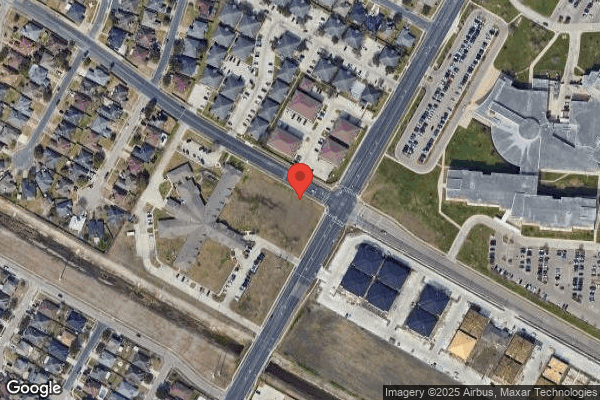

3801 Cimarron, Corpus Christi, TX 78414 (361) 993-8500
For profit - Limited Liability company 120 Beds HMG HEALTHCARE Data: November 2025
Trust Grade
53/100
#448 of 1168 in TX
Last Inspection: June 2025

Inspected within the last 6 months. Data reflects current conditions.

Overview

Cimarron Place Health & Rehabilitation Center has a Trust Grade of C, indicating an average rating that places it in the middle of the pack among nursing homes. It ranks #448 out of 1,168 facilities in Texas, meaning it is in the top half, and #7 out of 14 in Nueces County, suggesting that only a few local options are better. Unfortunately, the facility is experiencing a worsening trend, with the number of issues increasing from 5 in 2024 to 8 in 2025. Staffing is a significant concern, receiving only 1 out of 5 stars, with a turnover rate of 59%, which is higher than the state average. Additionally, there were serious incidents where a resident did not receive proper pain management and another resident had a PICC line dressing that was not changed as required, which could lead to infection. On a positive note, the facility has good health inspection ratings, but families should weigh both the strengths and weaknesses carefully.
Trust Score
C
53/100
In Texas
#448/1168
Top 38%
Safety Record
Moderate
Needs review
Inspections
Getting Worse
5 → 8 violations
Staff Stability
⚠ Watch
59% turnover. Above average. Higher turnover means staff may not know residents' routines.
Penalties
○ Average
$10,033 in fines. Higher than 68% of Texas facilities. Some compliance issues.
Skilled Nurses
⚠ Watch
Each resident gets only 21 minutes of Registered Nurse (RN) attention daily — below average for Texas. Fewer RN minutes means fewer trained eyes watching for problems.
Violations
⚠ Watch
16 deficiencies on record. Higher than average. Multiple issues found across inspections.
★★★☆☆
3.0
Overall Rating
★☆☆☆☆
1.0
Staff Levels
★★★★☆
4.0
Care Quality
★★★★☆
4.0
Inspection Score
Stable
2024: 5 issues
2025: 8 issues

The Good

  • 4-Star Quality Measures · Strong clinical quality outcomes
  • Full Sprinkler Coverage · Fire safety systems throughout facility
  • No fines on record

Facility shows strength in quality measures, fire safety.

The Bad

3-Star Overall Rating

Near Texas average (2.8)

Meets federal standards, typical of most facilities

Staff Turnover: 59%

13pts above Texas avg (46%)

Frequent staff changes - ask about care continuity

Federal Fines: $10,033

Below median ($33,413)

Minor penalties assessed

Chain: HMG HEALTHCARE

Part of a multi-facility chain

Ask about local staffing decisions and management

Staff turnover is elevated (59%)

11 points above Texas average of 48%

The Ugly 16 deficiencies on record

1 actual harm
Jul 2025 1 deficiency 1 Harm
SERIOUS (G) 📢 Someone Reported This

A family member, employee, or ombudsman was alarmed enough to file a formal complaint

Actual Harm - a resident was hurt due to facility failures

Deficiency F0697 (Tag F0697)

A resident was harmed · This affected 1 resident

**NOTE- TERMS IN BRACKETS HAVE BEEN EDITED TO PROTECT CONFIDENTIALITY** Based on interview and record review, the facility failed to provide pain management to one resident (Resident#1), of five resid...

Read full inspector narrative →
**NOTE- TERMS IN BRACKETS HAVE BEEN EDITED TO PROTECT CONFIDENTIALITY** Based on interview and record review, the facility failed to provide pain management to one resident (Resident#1), of five residents reviewed for pain management, that was consistent with professional standards of practice, her comprehensive person-centered care plan, and her goals and preferences.On 07/14/2025 the facility staff failed to recognize and address Resident #1's pain while providing incontinent care to Resident #1. On 07/14/2025 CNA A failed to alert RN A of Resident #1's expression and exhibition of pain. CNA A continued to provide incontinent care on 07/14/2025 even when Resident #1 exhibited signs and symptoms of pain. This failure could place residents at risk from receiving prompt pain management.The findings include:1. Record review of Resident #1's admission Record, dated 07/19/2025, revealed a [AGE] year-old-female who was initially admitted to the facility on [DATE] and readmitted on [DATE]. Resident #1 was admitted with diagnoses which included cerebral infarction (stroke), altered mental status, muscle wasting and atrophy (tissue wasting), cognitive communication deficit, and thrombocytopenia (blood clotting irregularity). Record review of Resident #1's Quarterly MDS, dated [DATE], revealed Resident #1 had a BIMS score of 11, which meant moderate cognitive impairment. Resident #1 was partial/moderately reliant on staff for ADLs. Record review of Resident #1's care plan, date initiated 04/20/25, documented [Resident #1] has had an actual fall 4/20/25 related to: unsteady gait Actual fall 4/22/25 Actual fall 5/9/25 Actual fall 7/13/25 Goal: Will resume usual activities without further fall incident 4/20/25: grip strips to area in front of toilet. 4/22/25: Visual cues, Call don't fall signs in room. 5/9/25: therapy to assess for therapeutic modifications to wheelchair. 7/13/25: Dycem to wheelchair, pulmar cushion to wheelchair.Record review of Resident #1's progress note documented by RN B effective date 07/13/2025 20:50 (8:50PM) revealed Resident was watching TV in wheelchair in sitting area in front of nurses station. Resident was then observed on floor next to wheelchair on her right side. Resident did not cry out or request any help. Resident was alone in sitting area, no other employees or residents in residents' vicinity. This RN rushed to resident side, assessed for injuries, range of motion, obvious disfigurements, none observed. Resident offered prn pain medication and resident refused. Denies pain to any other areas. Resident assisted up to wheelchair by staff and taken to room, placed in bed. Brief changed and peri-care performed. Resident again observed for injury or deformities. None noted. Resident offered prn pain medication and denied again. Resident further assessed for any other injuries, Resident denies hitting her head or losing consciousness. [Provider] contacted and resident [family member] contacted. [Resident #1] and [family member] refused ER evaluation.Record review of Resident #1's progress note documented by RN A, effective date 07/14/2025 at 03:51 (3:51AM), revealed F/U Fall Day 1/3. No c/o pain/discomfort. No distress noted. No latent injuries noted. Sleeping with eyes closed. RRR, even and unlabored. VS WNL. Record review of Resident #1's progress note documented by RN A, effective date 07/14/2025 at 0:500 (5:00AM) at 0420 (4:20AM) CNA came to alert this nurse that resident was crying out in pain when CNA had to turn her to change her bed. Slight deformity noted to outer right hip area w/ bruising noted. Bruise noted to inside aspect of right knee. Resident is unable to pick up her right leg and screams out in pain every time she is moved or turned. VS - 125/78, 82, 16, 98.9. @ 0434 Called 911; @ 0437 Called [family member] LMOM. EMS arrives to transport resident. Assisted them w/ transfer to stretcher for resident's comfort. @ 0450 Called report to [ER]. Called [family member] back and spoke with her to let her know which hospital EMS was transporting [Resident #1] to. @ 0457 [physician] (notified). @ 0458 Notified DON. Record review of Resident #1's ER record dated 07/15/2025 revealed [AGE] year-old female fall out of wheelchair and sustained a right greater trochanter fracture. MRI completed and confirmed fracture does not show extension into the intertrochanteric area. Ortho deemed her non-operative and she is to follow up in their clinic in 2 weeks with x-rays. Mobilize/ambulate using assistive device. Due to this being an isolated orthopedic injury and is non-op, there are no further interventions or surgeries planned by our service. Tertiary survey was completed and was negative for any new issues, pains, or concerns. 2. Record review of Resident #2's admission Record, dated 07/20/2025, revealed a [AGE] year-old- female who was admitted to the facility on [DATE]. Resident #2 was admitted with diagnoses which included muscle wasting and atrophy (partial or complete wasting away or a part of the body), and lack of coordination. Record review of Resident #2's Quarterly MDS, dated [DATE], revealed Resident #2 had a BIMS score of 15, which meant Resident #2 was cognitively aware. Resident #2 was substantially/maximally reliant on staff for ADLs. Resident #2 was not coded for any neurological deficit that would indicate deficit in cognition. Record review of Resident #2's care plan, date initiated 05/02/2025, documented The resident has an ADL self-care performance deficit r/t left hand Arthritis with contracted fingers, weakness post hospital stay. Goal: The resident will improve current level of function in through the review date. Interventions: Provide the level of assistance resident requires in ADL care as follows: Bed Mobility: Assist X 1 Staff toileting: assist x 1 Staff transfers: assist x 1 Staff dressing/ grooming: assist x 1 staff Eating: limited assist X 1 Staff bathing: assist X 1 Staff M-W-F 6/2. Monitor/document/report PRN any changes, any potential for improvement, reasons for self-care deficit, expected course, declines in function. PT/OT evaluation and treatment as per MD orders. Resident #2 was not care-planned for any cognition impairments. During an interview on 07/19/2025 at 4:47 PM and 07/20/2025 at 3:48 PM, Resident #2 stated she was Resident #1's roommate. Resident #2 stated she recalled the event on Sunday, 07/13/2025. Resident #2 stated, she recalled Resident #1 being transferred by wheelchair into the room and heard Resident #1 emoting an emotional response. Resident #2 stated the emotional response sounded like an outburst of moaning which indicated to her, Resident #1 was in pain. Resident #2 recalled on 07/13/2025, overhearing RN B (dayshift) on the phone with Resident #1's family member, telling the family member Resident #1 had fallen, but both the family member and Resident #1 voiced no desire for ER transfer. Resident #2 stated she recalled the night shift (10PM-6AM) CNA A enter the room on three separate occasions throughout the night. Resident #2 stated during CNA A's second round, CNA A entered the room, notified Resident #1 she was going to provide care, and overheard Resident #1 verbalizing moans and ow which indicated pain. Resident #2 stated she told CNA A Resident #1 was moaning throughout the night. Resident #2 stated after she notified CNA A, CNA A vacated the room. Resident #2 stated CNA A entered the room for a third round, and again Resident #1 verbalized an exhibition of pain, and Resident #2 stated to CNA A she believed Resident #1 may have broken something after her fall on 07/13/2025, to which CNA A vacated the room, and returned with a nurse. Resident #2 stated after the nurse entered the room, she overheard the nurse instruct CNA A to not move Resident #1, and Resident #1 needed to be sent to the emergency room as something might be broken. Resident #2 stated she recalled roughly around 5AM, EMS arrived and removed Resident #1 from the room. Resident #2 reiterated she saw CNA A enter the room on three separate occasions. Resident #2 stated the first occasion was roughly around 11PM on 07/13/2025, the second around 2-3AM and third around 4-5AM on 07/14/2025. Resident #2 stated on the second and third occasion she smelled bowel movement and stated that was her confirmation CNA A was providing incontinent care. Resident #2 stated Resident #1 was consistently and intermittently moaning throughout the night and voiced to the CNA on the second and third round, Resident #1 was verbally exhibiting pain of moaning. Resident #2 stated on the second occasion when CNA A entered the room and provided care, she overheard Resident #2 scream and complain about her leg hurting. Resident #2 stated it wasn't until the third round around roughly 4AM that she saw a nurse enter the room. During a phone interview on 07/19/2025 at 5:00 PM, CNA A stated when she arrived for her shift around 10:00 PM on 07/13/2025, she did not recall being notified of Resident #1's fall. CNA A stated she rounded on Resident #1 on three occasions. CNA A stated she rounded on Resident #1 around 10:20 PM on 07/13/2025, secondly around 2:30 AM and thirdly around 4:30 AM both on 07/14/2025. CNA A stated during her first round, she provided care to Resident #1, Resident #1 did not seem like herself, as she was quiet and not as talkative, but at the time she did not exhibit any signs or symptom of pain, and when she asked Resident #1 if anything was wrong, Resident #1 verbalized she was okay. CNA A stated during her second round, she provided incontinent care to Resident #1, and during the care Resident #1 was exhibiting signs and symptoms of pain and was moaning throughout incontinent care yet continued to gently complete the incontinent care. CNA A stated during the second round Resident #1 verbalized pain in her right hip. CNA A stated she did not report the pain to charge nurse because as soon as she completed the incontinent care and desisted with moving Resident #1, Resident #1 no longer exhibited pain, and therefore CNA A continued to care for other residents. CNA A stated while she attempted to recall the second and third round on 07/14/2025, Resident #1's pain appeared to get worse while she provided perineal and bowel movement care, and furthermore became difficult to turn Resident #1 as she was exhibiting pain and saying ow when CNA A attempted to turn Resident #1. CNA A stated during her third round, roughly around 4:30 AM, Resident #1 was exhibiting more pain during incontinent care. CNA A stated she was trying to clean Resident #1 without moving her, as an effort to minimize pain, but when she asked Resident #1 what hurt, Resident #1 stated her leg was hurting. CNA A reiterated round two consisted of Resident #1's complaint of pain of the hip area, and on the third round, the pain was of Resident #1's leg. CNA A stated she did not desist with attempting to provide care, as her reasoning was, she could not leave Resident #1 in bowel movement and urine. CNA A stated she was educated to notify the charge nurse when she notices anything irregular. CNA A stated had she had more information about Resident #1's fall, her actions would have been to notify the charge nurse during her second round. CNA A stated she had taken care of Resident #1 before, and Resident #1 was known to lightly moan when she was turned during incontinent care, and did not believe anything was irregular during her first round. CNA A stated she notified RN A on her third round when Resident #1 was exhibiting pain, but did not notify RN A during her second round because Resident #1, after completion of incontinent care, no longer exhibited signs of pain. CNA A stated during her third round, Resident #1 was attempting to assist with movement, as CNA A asked for Resident #1 to lift her buttock but was exhibiting severe pain, therefore could not assist CNA A with incontinent care. CNA A stated she did not desist with providing care on the third round because she needed to get the job done. CNA A stated after she completed Resident #1's incontinent care, she exited the room and went to notify RN A around 4-5AM timeframe. CNA A stated she notified RN A of Resident #1's exhibition of pain, to which she verbalized to RN A she believed something may have been broken. CNA A stated when RN A entered the room, RN A directed her not to move Resident #1, as an intervention to decrease any chance of an injury worsening. CNA A stated RN A stated Resident #1 was going to be transferred to the emergency room, and the paramedics would be transferring her shortly. CNA A stated after her shift was completed on 07/14/2025, she learned Resident #1 had a fall on 07/13/2025. CNA A stated she believed her actions were just and would not have changed the choices she made. CNA A reiterated she did not notify RN A regarding her second round, as Resident #1 discontinued signs and symptoms of pain after incontinent care was completed. CNA gave no definitive answer when asked, what could potentially occur if the charge nurses were not notified when residents exhibit signs and symptoms of pain. CNA A stated during her three rounds, while she was consistently within Resident #1's hallway, and throughout her shift, Resident #1's door was ajar, and never heard any loud outward expression of pain coming from Resident #1's room. During a phone interview on 07/19/2025 at 7:42 PM, RN A stated she worked on Sunday night (10PM-6AM), 07/13/2025. RN A stated on 07/13/2025, during bedside shift report, she was notified of Resident #1's fall, and that RN B (2PM-10PM) stated sometime around 9PM, the Resident #1 fell to the floor and never cried out, nor had any skin irregularities or noticeable contusions that warranted emergent interventions. RN A stated Resident #1 was scheduled for x-rays on 07/14/2025. RN A was told the mobile x-ray company did not have technicians after hours and would need to be completed in the morning on 07/14/2025. RN A stated she rounded on Resident #1 around 11PM and Resident #1 was not exhibiting any signs nor symptoms of pain. RN A stated she rounded on Resident #1 roughly 2-3 times between the hours of 11PM-1AM while assessing Resident #1's Neuro checks. RN A stated additionally she was quietly observing Resident #1 and without turning the light on, observed Resident #1 with her eyes closed, and was not exhibiting any signs nor symptoms of pain. RN A stated as part of the fall protocol neuro checks must be completed. RN A stated she checked vital signs and Neuro checks throughout the night from roughly 11:00PM (07/13/2025) thru 1:00AM (07/14/2025) and completed an assessment roughly around 3:00AM on 07/14/2025, however Resident #1 never verbalized any complaint of pain, or exhibited any signs of pain. RN A stated during her first initial round Resident #1 was not exhibiting any signs nor symptoms of pain. RN A stated it was not until 4-5AM timeframe when CNA A notified her Resident #1 was really hurting. RN A stated once she was notified, she commenced a head-to-toe assessment on Resident #1 and noticed not only a slight deformity to right hip but also exhibiting pain. RN A stated she noticed swelling on the outside of the right end of the femur that met the pelvis and had a purple/red discoloration. RN A stated she immediately called 9-1-1 because her findings were abnormal. RN A stated between the hours of 11:00PM on 07/13/2025 thru 4:00AM on 07/14/2025 she was not notified of any pain concerns for Resident #1. RN A reiterated she was in Resident #1's room consistently throughout the night completing neuro checks, vital signs, and additionally was in the hallway consistently to attend other residents, and never heard any loud outward expression of pain from Resident #1's open door room. RN A stated the protocol for all aides was if they noticed any irregularities including pain, they must notify the nurse. RN A stated the reason aides were mandated to notify the charge nurses of any irregularities was so the nurses could complete an assessment and if warranted would implement interventions to mitigate the issues. RN A stated additionally with every concern, especially pain, the physician must be notified, and the physician's directives would be executed. RN A stated she followed her protocol when she was notified of Resident #1's pain, she immediately called 9-1-1, then notified her managerial staff, physician, and responsible person. RN A stated if CNA A witnessed Resident #1 in pain, she should have been notified immediately and continued to state she directed Resident #1 not to be moved to minimize any further injury exacerbations, which potentially would prevent any negative outcome. RN A stated as a preventative measure she did not want to cause a potential dislodgement of Resident #1's lower extremity, and immediately called 9-1-1. RN A stated she was never notified of CNA A's second round findings regarding Resident #1. RN A stated the scheduled facility x-rays were not completed at the facility due to Resident #1 being transferred to the ER. During an interview at 07/20/2025 at 3:50 PM, the DON stated she was notified on 07/14/2025 by RN A that roughly around the 4-5AM timeframe, Resident #1 was exhibiting signs and symptoms of pain. The DON stated she was notified on 07/14/2025 by the night nurse RN A, via text, that during CNA A's last round roughly around the 4-5AM timeframe, when CNA A completed her last round of incontinent care, Resident #1 was exhibiting signs and symptoms of severe pain. The DON stated CNA A notified RN A she could not turn Resident #1 and was exhibiting pain during care. The DON stated when RN A completed her assessment, RN A observed bruising which warranted further evaluation and called 9-1-1 as the situated necessitated emergent services. The DON stated it was not until the 4-5AM timeframe on 07/14/2025, that she was notified of any additional concerns after Resident #1 fell around 9PM on 07/13/2025. The DON stated if CNA A witnessed any concerns regarding pain or any irregularity, she should have notified RN A immediately to advocate for Resident #1's safety. The DON stated aides were mandated to notify the clinical nurse so the nurses could complete a head-to-toe assessment and should their findings warrant an immediate intervention, the nurse could act swiftly to ensure the well-being of all residents. The DON stated she was unaware of CNA A's second round pain findings regarding Resident #1. The DON stated if RN A implemented a directive to not move Resident #1, it may have been due to precautionary measure to minimize further injury exacerbations. The DON stated potentially if CNA A did not notify RN A when she first witnessed Resident #1 exhibiting pain, there would be a potential for a negative outcome. The DON reiterated she was not notified of any additional pain concerns from when Resident #1 fell on [DATE] around 9PM, to when she was notified by RN A of the pain concern on 07/14/2025 around 4-5AM. The DON stated the physician was notified when Resident #1 had the fall on 07/13/2025 around 8:50PM and additionally when RN A was made aware of Resident #1's pain around 4-5AM on 07/14/2025. Record review of the facility's Acute Condition Changes-Clinical Protocol policy and procedure, date revised December 2015, revealed, .3. Direct care staff, including Nursing Assistants will be trained in recognizing subtle but significant changes in the resident (for example, a decrease in food intake, increased agitation, changes in skin color or condition) and how to communicate these changes to the Nurse. A. Nursing assistant are encouraged to use the Stop and Watch Early Warning Tools to communicate subtle changes in the resident to the Nurse. Record review of Pain Assessment and Management policy and procedure revise dated March 2015, revealed Pain management is a multidisciplinary care process that includes the following b. Effectively recognizing the present of pain;.5.conduct a comprehensive pain assessment upon admission to the facility, at the quarterly review, whenever there is a significant change in condition, and when there is on set of new pain or worsening of existing pain. 6. Assess the resident's pain and consequences of pain at least each shift for acute pain or significant changes.
Jun 2025 4 deficiencies
CONCERN (D)

Potential for Harm - no one hurt, but risky conditions existed

Accident Prevention (Tag F0689)

Could have caused harm · This affected 1 resident

**NOTE- TERMS IN BRACKETS HAVE BEEN EDITED TO PROTECT CONFIDENTIALITY** Based on observations, interview, and record review, the facility failed to ensure the resident environment remained as free of ...

Read full inspector narrative →
**NOTE- TERMS IN BRACKETS HAVE BEEN EDITED TO PROTECT CONFIDENTIALITY** Based on observations, interview, and record review, the facility failed to ensure the resident environment remained as free of accident hazards as was possible and each resident received adequate supervision and assistance devices to prevent accidents for one (Resident #62) of eight residents reviewed for accidents and hazards. The facility failed on 06/24/2025 to ensure floor mats were in place both sides of Resident #62's bed, as indicated on her current comprehensive care plan dated 03/27/25, Resident #62 had five previous falls in the last three months on 05/18/25, 05/24/25, and 06/01/2025. This failure could place residents at risk for injury. The findings included: Record review of Resident #62's face sheet, dated 06/25/25, reflected a [AGE] year-old male who was admitted to the facility on [DATE]. Resident #62 had diagnoses which included Cerebral Infarction (a type of stroke that occurs when flood flow to the brain is blocked, leading to tissue damage due to lack of oxygen) muscle wasting and atrophy, muscle weakness, and lack of coordination. Record review of Resident #62's MDS assessment dated [DATE] indicated he had a BIMS (Brief Interview for Mental Status) score of 4 which indicated, severe cognitive impairment. The MDS also indicated he was dependent on staff for ADL's (Activities of Daily Living.) Record review of Resident #62's care plan dated 03/27/25 reflected the Following: The resident is at risk for falls related to left sided weakness, cognitive impairment. Date Initiated: 03/27/2025. Fall mats at bedside date initiated 03/27/2025. The resident was on pain medication therapy date initiated 03/27/2025. 05/18/25 unwitnessed fall- without injury. 05/24/25 unwitnessed fall without injury. 06/01/2025 unwitnessed fall with injury physician and patient representative notified. Record review of Resident #62's physician's order reflected no orders for fall mats were ordered before survey team entered the facility on 06/24/25. Record review of Resident #62's progress notes dated 05/27/2025 reflected F/U fall day 3 of 3, patient is in bed resting quietly with eyes closed. No signs or symptoms of pain or distress noted thus far. Uses hand bell, (cannot press call button given hand bell) to call for assistance, is within reach. Bed is in lowest position; floor mat is beside bed for safety. Record Review of Resident #62's Fall Risk Assessment/ Morse Fall Scale reflected no assessment had been conducted before survey team entered the facility on 06/24/25. Observation on 06/24/25 at 11:20 AM, revealed Resident #62 was lying in bed watching a football game. Resident #62 had a floor mat on the floor on the left side of his bed but not on his right side. In an interview on 06/25/25 at 4:46 PM with CNA D who stated she had just started employment 2 weeks ago and was not aware of the one fall mat not being in place. If the resident was to have fallen, he could have gotten seriously get hurt. She said the resident could get severely injured for example a broken bone, hit his head against floor or wall get a concussion, and obtain a tear to his skin. If the resident got severely hurt the fall could lead to death. CNA D said the last training she received on falls and accident prevention was two weeks ago. In an interview on 06/25/25 at 4:52 PM with CNA F who stated the resident was supposed to have fall mats by bed. Every staff member was responsible for making sure the fall mats are in place, but the charge nurse was the one responsible for ensuring fall mats are being placed according to residents orders and care plan. The resident could fall and hurt himself the mats are for safety. The resident could have broken a bone, obtained a back injury and gotten paralyzed, or have received head trauma. These injuries could result in death. She stated the resident has had some falls in past. The last time she had a training on falls accidents hazards was 3 months ago at her hiring. In an interview on 06/25/25 at 5:07 PM ADON C said all staff entering the room should be checking for fall mat placement by the bed when the resident was lying in bed. She said it was the nurse's responsibility for making sure the floor mats are in place correctly. Not having mats can be dangerous for resident as a fall can occur and could cause major injury to the resident. She said some of the major injuries could cause death. The last training for fall and accidents and hazards was a month ago. Record review of the facility's Fall Prevention Program Policy dated 09/22 reflected Based on the preceding assessment, the staff and physicians will identify pertinent interventions to try to prevent subsequent falls and to address risks of serious consequences of falling.
CONCERN (D)

Potential for Harm - no one hurt, but risky conditions existed

Deficiency F0760 (Tag F0760)

Could have caused harm · This affected 1 resident

**NOTE- TERMS IN BRACKETS HAVE BEEN EDITED TO PROTECT CONFIDENTIALITY** Based on interview and record review, the facility failed to ensure residents were free from significant medication errors for t...

Read full inspector narrative →
**NOTE- TERMS IN BRACKETS HAVE BEEN EDITED TO PROTECT CONFIDENTIALITY** Based on interview and record review, the facility failed to ensure residents were free from significant medication errors for two of six residents (Resident #10 and Resident #21) reviewed for medication errors in that:The facility failed to ensure MA I did not administer Resident #10's blood pressure/pulse altering medications (Metoprolol ER and Amiodarone) on 06/05/25 when her pulse was not within the required parameters per the two physician's orders. The facility failed to ensure MA J did not administer Resident #21's blood pressure/pulse altering medications (Losartan and Nifedipine ER) on 06/01/25, 06/07/25, 06/08/25, 06/09/25, 06/14/25 and 06/21/25 when her blood pressure/pulse was not within the required parameters per the two physician's orders. These failures could place residents who receive blood pressure/pulse altering medications at an increased risk for complications such as decreased blood pressure, decreased pulse, exacerbation of symptoms and disease process, and potential hospitalization.1. Record review of Resident #10's admission record reflected a [AGE] year-old female originally admitted to the facility on [DATE] and most recent admission on [DATE]. Her diagnoses included non-ST segment elevation MI (heart attack), sick sinus syndrome (heart rhythm problems that happen because the heart's natural pacemaker is not working properly causing it to beat too slow, too fast, or irregularly), atrial fibrillation (an irregular, often fast heartbeat), and hypertension (high blood pressure).Record review of Resident #10's annual MDS dated [DATE] reflected a BIMS score of 8 which indicated moderate cognitive impairment.Record review of Resident #10's physician orders on 06/25/25 reflected the following orders:Amiodarone HCl Tablet 200mg. Give 1 tablet by mouth two times a day for abnormal heart rhythm. Hold if BP is below 110/60 or pulse below 60. Start date 04/29/25.Metoprolol Succinate ER Tablet Extended Release 24 Hour 25mg. Give 1 tablet by mouth one time a day for HTN. Hold if BP below 110/60 or pulse below 60. Start date 04/30/25.Record review of Resident #10's June 2025 eMAR reflected on 06/05/25, MA I documented Resident #10's blood pressure as 142/67 and pulse as 54. MA I documented that she administered Resident #10's Amiodarone at 7:59 pm. 2. Record review of Resident #21's admission record reflected a [AGE] year-old female admitted to the facility on [DATE]. Her diagnoses included hypertension (high blood pressure), atrial fibrillation (an irregular, often fast heartbeat), atherosclerotic heart disease (buildup of fats and other substances in and on the artery walls of the heart causing decreased blood flow and/or clots), and type 2 diabetes (chronic condition that happens when blood sugar levels are persistently high which can lead to heart disease, kidney disease, and stroke). Record review of Resident #21's quarterly MDS dated [DATE] reflected a BIMS score of 12 which indicated mild cognitive impairment.Record review of Resident #21's physician orders on 06/25/25 reflected the following orders:Losartan Potassium Tablet 25mg. Give 1 tablet by mouth two times a day for hypertension. Hold if BP less than 110/60, pulse less than 60. Start date 03/05/25. Nifedipine ER Oral Tablet Extended Release 24 Hour 30mg. Give 1 tablet by mouth one time a day for HTN. Hold if BP is less than 110/60, pulse less than 60. Start date 05/28/25.Record review of Resident #21's June 2025 blood pressure and pulse summaries, June 2025 eMAR and progress notes dated 05/25/25 to 06/25/25 reflected the following:06/01/25 at 7:06 am, Resident #21's blood pressure was 134/74 and pulse was 48. MA J documented on the eMAR an X in the space for both blood pressure and pulse and she did not administer Resident #21's Nifedipine but did administer her Losartan. MA J documented in the progress notes, hold bp for the Nifedipine medication administration note. 06/07/25 there was no documentation of Resident #21's blood pressure or pulse. MA J documented in the eMAR she did not administer Resident #21's Nifedipine but did administer her Losartan. MA J documented in the progress notes, hold bp for the Nifedipine medication administration note. 06/08/25 at 6:29 am, Resident #21's blood pressure was 139/79 and pulse was 50. MA J documented on the eMAR she did not administer Resident #21's Nifedipine but did administer her Losartan. MA J documented in the progress notes, hold bp for the Nifedipine medication administration note.06/14/25 at 6:43 am, Resident #21's blood pressure was 147/78 and pulse was 45. MA J documented on the eMAR she did not administer Resident #21's Nifedipine but did administer her Losartan. MA J documented in the progress notes, hold bp for the Nifedipine medication administration note.06/21/25 at 6:59 am, Resident #21's blood pressure was 166/89 and pulse was 45. MA J documented on the eMAR she did not administer Resident #21's Nifedipine but did administer her Losartan. MA J documented in the progress notes, ?hold bp [sic] for the Nifedipine medication administration note.In an interview on 06/25/25 at 4:05pm, the DON stated if there was a space for the vital signs to be documented on the eMAR, then they should have been documented for each medication that has a space for it. It was not acceptable to put X or NA in the spaces. The DON stated she did not know how the system was allowing NA to be documented. The DON stated the nurse manager and IDT reviewed documentation in morning meetings and audited orders to ensure BP meds had parameters and such. The DON stated, We reviewed eMARs; if we ran reports that showed that a medication was missed, then we took that report and looked at the actual eMAR, but there was nothing flagged if NA or an X was documented instead of the actual vital signs. The DON stated in-services on medication administration and documentation was done often and they had just done an in-service on BP medications and documentation which included documentation if a medication was held due to being outside of parameters within the last couple of weeks. The DON stated they notified the provider if the BP or pulse was really high or really low or consistently high or low. The DON further stated if a blood pressure and or pulse were not checked, it could needlessly lower a resident's blood pressure or pulse which could cause bradycardia (slow heartbeat) or hypotension (low blood pressure).On 06/26/25 at 10:42 am an attempt was made to call MA J, however a recording stated phone was restricted and unable to leave a message.In an interview on 06/26/25, MA K stated it was important to check vital signs before giving medications that could affect them because if you gave a blood pressure medication and their blood pressure was low, you could drop the blood pressure lower which could lead to hypotension, falls, hospitalization and even death.On 06/26/25 at 2:47 pm an attempt was again made to call MA J, however a recording stated phone was restricted and unable to leave a message.Record review of the facility's Administering Medications policy dated 2001 and revised December 2012 reflected in part: 3. Medications must be administered in accordance with the orders, including any required time frame.8. The following information must be checked/verified for each resident prior to administering medications:a. Allergies to medications; andb. Vital signs, if necessary.
CONCERN (D)

Potential for Harm - no one hurt, but risky conditions existed

Deficiency F0761 (Tag F0761)

Could have caused harm · This affected 1 resident

Based on observation, interview, and record review the facility failed to store all drugs and biologicals in locked compartments on 1 of 8 medication carts reviewed for storage of drugs. The facility ...

Read full inspector narrative →
Based on observation, interview, and record review the facility failed to store all drugs and biologicals in locked compartments on 1 of 8 medication carts reviewed for storage of drugs. The facility failed to ensure RN A's medication cart located by the nurse's station was locked when not in use on 06/25/2025.This deficient practice could affect residents who have medications on the nurse medication cart and could result in lost medications, drug diversion, or harm due to accidental ingestion of unprescribed medications.During an observation on 06/25/25 at 11:44 AM, a medication cart by the nurse's station appeared to be unlocked. This surveyor opened the top drawer recognizing the medication cart being unlocked while not in use. Multiple medications in bulk bottles and blister packs were easily assessable for removable. RN A was sitting behind the nurse's station and identified himself as being responsible for the unlocked medication cart.In an interview on 06/25/25 at 11:50 AM RN A stated the medication cart should be locked at all times to prevent unauthorized people from accessing the medications within the cart. RN A stated he was getting things out of the cart, went to go chart at the nurse's station and forgot to lock it. RN A stated there was no reason why it was unlocked, and he just forgot. RN A stated staff were in-serviced on locking medication carts when not in use frequently and the DON usually makes rounds throughout the day to ensure all carts are locked. In an interview on 06/25/25 at 04:03 PM the DON stated med carts were supposed to be locked when not in use for safety of the residents, staff, and to prevent a possible drug diversion. The DON stated there was daily in-servicing about ensuring medication carts being locked at all times when not in use. The DON stated she personally makes daily frequent rounds to ensure medication carts were locked. Record review of the facility's Storage of Medications policy dated April 2007 reflected:The facility shall store all drugs and biologicals in a safe, secure, and orderly manner. 7. Compartment (including, but not limited to, drawers, cabinets, rooms, refrigerators, carts, and boxes.) containing drugs and biologicals shall be locked when not in use, and trays or carts used to transport such items shall not be left unattended if open or otherwise potentially available to others.
CONCERN (E)

Potential for Harm - no one hurt, but risky conditions existed

Deficiency F0694 (Tag F0694)

Could have caused harm · This affected multiple residents

**NOTE- TERMS IN BRACKETS HAVE BEEN EDITED TO PROTECT CONFIDENTIALITY** Based on observation, interviews and record reviews, the facility failed to develop and implement resident care policies based u...

Read full inspector narrative →
**NOTE- TERMS IN BRACKETS HAVE BEEN EDITED TO PROTECT CONFIDENTIALITY** Based on observation, interviews and record reviews, the facility failed to develop and implement resident care policies based upon current professional standards of practice for the preparation, insertion, administration, maintenance and discontinuance of an IV as well as for the prevention of infection at the site to the extent possible for one (Resident #231) of 8 residents review for IV therapy.The facility failed to provide Resident #231 with dressing changes, as ordered by his physician, to his right arm PICC line dressing. The PICC line dressing was dated 06/01/24 and was not changed until 06/24/24, despite the physician orders indicating to change the dressing every seven days.This deficient practice could result in infection or PICC line malfunction and infection.The findings included:Resident #231's Face Sheet dated 06/24/25 revealed a [AGE] year-old male admitted to the facility on [DATE] with the diagnoses of: osteomyelitis (bone infection an inflammation of the bone caused by infection, generally in the legs and arm or spine), Acquired absence of other left toe, diabetes mellitus due to underlying condition with foot ulcer, peripheral vascular disease, chronic kidney disease stage 2 mild and type 2 diabetes.Resident #231's admission Minimum Data Set (MDS) assessment dated [DATE] reflected Resident #231 was still in progress. No information could be obtained from this MDS was from admission and the MDS dated [DATE] was still in progress. No information could be obtained from this MDS.Record review of Resident#231's Care Plan dated 06/11/25 revealed no mention of Resident#231's PICC line or the monitoring or maintenance of his line.Record review of Resident #231's Physician's Orders dated 06/24/25 reflected:- PICC [Peripherally Inserted Central Catheter - A long thin flexible tube inserted into a vein in the arm and threaded into a large vein near the heart right upper arm] change IV dressing every 7 days and PRN-Monitor IV insertion site Right upper arm for signs and symptoms of infection/infiltration every shift.Record review of Resident #231's June 2025 Medication Administration Record/Treatment Administration Record 06/26/25 Medication Administration Record/Treatment Administration Record reflected Resident #231's upper right upper arm PICC line dressing had been initialed to indicate the dressing was changed from 06/06/25-06/24/25.In an observation and interview on 06/24/25 at 10:50 AM with Resident #231 revealed he was observed lying in bed watching television. Resident #231 was alert and able to answer questions appropriately. Resident#231 was observed to have a PICC IV to his right upper arm with a dressing covering the insertion site that was dated 06/01/24. Resident #231 stated he told several staff members (although he was not able to provide names of staff) his dressing needed to be changed every 7 days as it was being done in the hospital.In an interview on 06/25/25 at 9:01 AM with RN A, he stated he did not have much contact with Resident #231 as he had just started working 06/24/25 in the hall the resident was currently staying and was aware that the dressing was changed.In an observation and interview on 06/25/25 at 10:30 AM revealed Resident #231 laid in bed and welcomed this surveyor in his room. Resident #231 said the nurse changed his PICC line dressing yesterday after this surveyor visited him on 06/24/25. Observation of Resident #231's right arm PICC line dressing revealed the dressing was intact and dated 06/24/25.In an interview on 06/26/25 at 9:00 AM with CNA F she said Resident #231 never mentioned to her about the IV dressing needing changing and if he had she would have told the charge nurse. CNA F said had seen the dressing several times and it looked fine her with no signs of infection. CNA F said it was her responsibility to inform the nurse if she saw anything out of the ordinary with the dressing or site.In an interview on 06/26/25 at 9:20 AM with RN H revealed she was not informed about the dressing needing to be changed but did know he had a PICC line. RN H said she noticed the dressing was dated 06/01/25 and she was going to change Resident #231's PICC line dressing on 06/20/25 but could not find the correct dressing to change it. RN H stated when she could not find the correct dressing she told the evening nurse, LVN E, about not being able to find the dressing and asked her if she could find the right one and change it.This surveyor attempted to contact LVN E on 06/26/25 and a text was sent to her on the same day, but no response was received throughout the survey.In an interview on 06/26/25 at 9:50 AM with ADON B she said Resident #231's PICC line dressing should have been changed every seven days according to the resident's orders. ADON B said the facility had the proper dressings for the PICC line and it should have been changed. ADON B said the nurses were responsible for making sure the PICC lines were changed. ADON B said she was not made aware of Resident #231's PICC lines dressings not being changed or of any unavailable dressings. The ADON said annual trainings/competencies that included PICC line dressing changes were performed by all nurses. ADON B said all nurses should dressing change skills and training when hired from nursing school and or previous employment. ADON B presented this surveyor with a new dressing change kit to prove there was no lack of dressing change kits. ADON B said the dressing changes and site care were important to reduce infection. ADON B said the facility has a supervisory called Ambassadors that conducted daily rounds that included daily an observation of any medical equipment/supplies the resident had. ADON B said Resident #231's outdated dressing should have not only been noticed and changed by the nurses caring for him on each shift but also should have been noticed by the Ambassador who saw the resident daily.In an interview on 06/26/25 at 10:35 AM with the DON, she said Resident #231's PICC line dressing should have been changed every seven days as ordered by the physician. The DON said all nurses should know how to change a PICC line dressing because they receive that training initially in nursing school and the facility provided them with annual competency trainings which she knew they passed or else they would not be working with the residents. The DON stated all the nurses who cared for Resident #231 since his admission should have been aware when to change his dressing first through the date on his dressing and by the TAR instruction. The DON said Resident #231's Ambassador was ADON B and she had no excuse as to why she did not notice the date on the dressing and when it should have been changed. The DON said the importance for changing the PICC line dressing every seven day and as the physician ordered was to monitor the insertion site and line for any discrepancy and to prevent infection and maintaining the catheter functionality. The DON also said an infection could travel to heart further compromising the residents health and cause major complications.Subsequently interview with ADON B on 06/26/25 at 1:30 PM she stated d she did not physically observe Resident #231's dressing, specifically the date on the dressing when she conducted her Ambassador daily rounds. She said she took it for granted that the charge nurse had changed the dressing.Record review of the facility's policy and procedure dated 04/2016 on PICC/ Central Venous Catheter Dressing Changes states the purpose of this procedure is to prevent catheter-related infections that are associated with contaminated, loosened, soiled, or wet dressings. Change transparent semi-permeable (TSM) dressings at least every 5-7 days and PRN (when wet, soiled or not intact). A physician order is not needed for this procedure.
May 2025 1 deficiency
CONCERN (D) 📢 Someone Reported This

A family member, employee, or ombudsman was alarmed enough to file a formal complaint

Potential for Harm - no one hurt, but risky conditions existed

Comprehensive Care Plan (Tag F0656)

Could have caused harm · This affected 1 resident

**NOTE- TERMS IN BRACKETS HAVE BEEN EDITED TO PROTECT CONFIDENTIALITY** Based on interviews and record review, the facility failed to develop and implement a comprehensive person-centered care plan fo...

Read full inspector narrative →
**NOTE- TERMS IN BRACKETS HAVE BEEN EDITED TO PROTECT CONFIDENTIALITY** Based on interviews and record review, the facility failed to develop and implement a comprehensive person-centered care plan for each resident that included measurable objectives and timeframes to meet a resident's medical, nursing, mental, and psychosocial needs, for 1 (Resident #1) of 5 residents reviewed for care plans. The facility failed to update Resident #1's care plan with the DNR code status after the OOH DNR order was signed by all appropriate parties on [DATE]. This failure could place residents at risk of receiving care out of line with their wishes. Findings included: Record review of Resident #1's face sheet dated [DATE] revealed an [AGE] year-old female with an initial admission date of [DATE] and a current admission date of [DATE]. Pertinent diagnosis included Unspecified Dementia (dementia without a specific diagnosis or a diagnosis that is not yet known). Resident #1 was discharged on [DATE] due to death. Record review of Resident #1's PPS MDS assessment dated [DATE] revealed a BIMS score of 0 (severe impairment). Record review of Resident #1's comprehensive care plan dated [DATE] revealed the focus [Resident #1] wishes to have CPR performed should the need arise initiated on [DATE] and cancelled on [DATE]. The goal listed for this focus included Resident, family, surrogate will have wishes respected initiated on [DATE] and cancelled on [DATE]. Interventions listed for the focus included: -Ensure chart is properly identified initiated on [DATE] and cancelled on [DATE]. -If resident has no pulse or respirations, initiate CPR initiated on [DATE] and cancelled on [DATE]. Record review of Resident #1's order summary revealed a discontinued order for DNR initiated on [DATE] and ended on [DATE]. Record review of Resident #1's OOH DNR order revealed the document was signed by Resident #1's RP and two non-staff witnesses on [DATE]. The document was signed by the physician on [DATE]. In an interview with LVN A on [DATE] at 9:27 AM, LVN A stated if she did not know a resident's code status, she would check the front page of the MAR. LVN A stated a resident's code status should be listed on the care plan as well. LVN A stated it was important to keep the care plan updated so everyone on the healthcare team knew how to care for the resident. LVN A stated if the code status was incorrect on the care plan it was possible for a resident with a signed OOH DNR to receive CPR or vice versa. In an interview with LVN B on [DATE] at 10:06 AM, LVN B stated if she needed to know the code status of a resident, she would check the resident's MAR or the binder at the nurse's station which contained the code status for all residents at the facility. LVN B stated she did look at resident's care plans to ensure she was up to date on how to care for her residents. LVN B stated if the code status was not accurate in the care plan, it was possible a resident with an active DNR order could receive CPR or a resident with a full code order could not receive CPR. In an interview with the ADON on [DATE] at 11:09 AM, the ADON stated, typically, the social worker updated the code status in the care plan for residents. The ADON stated it was a team effort to ensure the care plans were accurate. The ADON stated if the care plans did not accurately reflect a resident's code status, the resident could receive CPR unnecessarily or not get CPR when they wished to receive it. In an interview with the DON on [DATE] at 1:30 PM, the DON stated nurses could look in PCC or the binder at the nurse's station to determine a resident's code status. The DON stated when a resident wished to go from a full code status to DNR status, they met with the social worker who started the process. The DON stated once the OOH DNR form was signed by all parties, the social worker would inform the nurses to put the new DNR order in the resident's chart. The DON stated it was a team effort to ensure the care plan was updated appropriately. The DON stated if the care plan did not accurately reflect the resident's current plan of care, a nurse could provide inappropriate care to a resident such as using improper transfer methods or not taking a resident's behavior into account. In an interview with the LMSW on [DATE] at 2:24 PM, the LMSW stated she had meetings with families and residents about updating their code status. The LMSW stated once the form was signed by all parties, she informed the DON and charge nurses about the update to the resident's code status. The LMSW stated she was normally the one to update the care plan with the new code status if she uploaded the OOH DNR into PCC. The LMSW stated sometimes the MDS nurse uploaded the DNR into PCC. The LMSW stated she remembered Resident #1 was a DNR but did not know why Resident #1's care plan was not updated with the correct code status. The LMSW stated if a resident's care plan was not updated in a timely manner, staff may not know the current best way to care for a resident. Record review of the facility policy titled Care Plans, Comprehensive Person-Centered last revised on [DATE] revealed the following: .8. The comprehensive, person-centered care plan will: .e. Include the resident's stated goals upon admission and desired outcomes; .i. Reflect the resident's expressed wishes regarding care and treatment goals;
Mar 2025 2 deficiencies
CONCERN (D) 📢 Someone Reported This

A family member, employee, or ombudsman was alarmed enough to file a formal complaint

Potential for Harm - no one hurt, but risky conditions existed

Comprehensive Care Plan (Tag F0656)

Could have caused harm · This affected 1 resident

**NOTE- TERMS IN BRACKETS HAVE BEEN EDITED TO PROTECT CONFIDENTIALITY** Based on interviews and record review the facility failed develop and implement a comprehensive person-centered care plan for ea...

Read full inspector narrative →
**NOTE- TERMS IN BRACKETS HAVE BEEN EDITED TO PROTECT CONFIDENTIALITY** Based on interviews and record review the facility failed develop and implement a comprehensive person-centered care plan for each resident, consistent with resident needs, that included measurable objectives and time frames to meet a resident's medical, nursing, and mental and psychosocial needs, for 1 (Resident #1) of 4 residents reviewed for care plans. The facility failed to develop a comprehensive person-centered care plan for Resident #1 to address her behaviors (e.g. yelling, banging on bed/table, throwing items, removing brief). The facility failed to care plan the fall mat for Resident #1. This failure could place the residents at risk of not receiving appropriate interventions and care to meet their current needs as indicated on the comprehensive care plans. The findings included: Record review of Resident #1's face sheet dated 03/06/25 reflected the resident was a [AGE] year-old female who was admitted to the facility on [DATE] with diagnoses that included: traumatic subdural hemorrhage (brain bleed), hemiplegia (left side paralysis), muscle wasting and atrophy, unsteadiness on feet, cognitive communication deficit, type 2 diabetes (high levels of sugar in blood), unspecified dementia, cerebral infarction (stroke), and chronic kidney disease. Record review of Resident #1's MDS assessment dated [DATE] reflected Resident #1 had a BIMS score of 7, indicating severe cognitive impairment. Verbal behavioral symptoms directed toward others (e.g., threatening others, screaming at others, cursing at others) reflected no behaviors exhibited. Record review of Resident #1's care plan dated 03/06/25 reflected Resident #1 had an ADL self-care performance deficit related to cognitive deficit, weakness, and subdural hematoma. Date initiated: 02/13/25. Resident #1's care plan did not reflect behaviors (yelling, banging on bed/table, throwing items, removing brief). Resident #1 was at risk for falls related to history of falls with subdural hematoma. Date initiated: 02/13/25. Resident #1's care plan did not reflect the fall mat. Interview attempted with Resident #1 on 03/06/25 at 1:00 PM, revealed Resident #1 was discharged . Interview with MDS N on 03/13/25 at 11:00 AM, revealed MDS N said Resident #1 would yell out and was very vocal since she was admitted . MDS N said Resident #1 would mostly yell that she wanted to go home or would sometimes curse at others so it took a lot of redirection and reassuring. MDS N said since it was Resident #1's normal behaviors since admission, the behaviors would not need to be care planned. MDS N said if there was an increase in behaviors or change noted, then that would be care planned. MDS N said whenever they noticed an increase or change of behaviors, then at that point they would have to update the care plan as soon as possible. MDS N said the care plan was updated by the team as they discussed things every morning during their meeting and then decided what could be implemented. Interview with the DON on 03/13/25 at 3:10 PM, revealed the DON said when Resident #1 was first admitted , she would repetitively call out and said hello or I want to go home. The DON said Resident #1 also had behaviors of throwing items since admission. The DON said she recalled the hospital records indicated Resident #1 was on a 1:1 at the hospital and she speculated it was due to behaviors. The DON said Resident #1 would holler out, bang on the bed or table, and throw other items like her brief. The DON said she did not think Resident #1's behaviors had really increased during her stay but her behaviors fluctuated depending on the time of the day. The DON said Resident #1 was more vocal some days than others. The DON said Resident #1's behaviors would have been care planned. The DON said it was important for Resident #1's behaviors to be care planned so that staff were aware and knew what to do if Resident #1 exhibited behaviors. The DON said the care plan would have reflected the interventions implemented specific for Resident #1's behaviors. The DON said for Resident #1 it was a lot of redirection and distraction to address her behaviors. The DON said she was not sure why Resident #1's behaviors were not care planned. The DON said Resident #1 did not have any falls at the facility but they were aware of Resident #1's history of falls prior to admission so Resident #1 had a fall mat at her bedside and the bed low during her stay. The DON said fall mats were care planned for those residents at risk for falls as the fall mats were an intervention. The DON said Resident #1 was at risk for falls since admission. The DON said the fall mat was not care planned for Resident #1 and the DON said she did not know why not. The DON said the care plans were developed by the team. Record review of the facility's Care Plans, Comprehensive Person-Centered policy dated December 2016 reflected - Policy Statement: A comprehensive, person-centered care plan that includes measurable objectives and timetables to meet the resident's physical, psychosocial and functional needs is developed and implemented for each resident. 8.g. Incorporate identified problem areas, incorporate risk factors associated with identified problems. 13. Assessments of residents are ongoing and care plans are revised as information about the residents and the residents' conditions change.
CONCERN (D) 📢 Someone Reported This

A family member, employee, or ombudsman was alarmed enough to file a formal complaint

Potential for Harm - no one hurt, but risky conditions existed

Medical Records (Tag F0842)

Could have caused harm · This affected 1 resident

**NOTE- TERMS IN BRACKETS HAVE BEEN EDITED TO PROTECT CONFIDENTIALITY** Based on interviews and record review, the facility failed to maintain medical records in accordance with accepted professional ...

Read full inspector narrative →
**NOTE- TERMS IN BRACKETS HAVE BEEN EDITED TO PROTECT CONFIDENTIALITY** Based on interviews and record review, the facility failed to maintain medical records in accordance with accepted professional standards and practices that were complete and accurately documented for 1 of 4 residents (Resident #1) reviewed for accuracy of records, in that: The facility failed to document in Resident #1's medical record when Resident #1 was sent to the hospital on [DATE] for a CT scan. The facility failed to document the physician's order for the CT scan. This failure could affect residents whose records are maintained by the facility and could place them at risk for errors in care. The findings included: Record review of Resident #1's face sheet dated 03/06/25 reflected the resident was a [AGE] year-old female who was admitted to the facility on [DATE] with diagnoses that included: traumatic subdural hemorrhage (brain bleed), hemiplegia (left side paralysis), muscle wasting and atrophy, unsteadiness on feet, cognitive communication deficit, type 2 diabetes (high levels of sugar in blood), unspecified dementia, cerebral infarction (stroke), and chronic kidney disease. Record review of Resident #1's MDS assessment dated [DATE] reflected Resident #1 had a BIMS score of 7, indicating severe cognitive impairment. Verbal behavioral symptoms directed toward others (e.g., threatening others, screaming at others, cursing at others) reflected no behaviors exhibited. Record review of Resident #1's care plan dated 03/06/25 reflected Resident #1 had an ADL self-care performance deficit related to cognitive deficit, weakness, and subdural hematoma. Date initiated: 02/13/25. Record review of Resident #1's orders for entire stay dated 03/06/25 reflected no physician's order documented for the CT scan ordered on 02/25/25. Record review of Resident #1's progress notes dated 03/06/25 reflected no progress notes documented when Resident #1 was sent to the hospital on [DATE] for a CT scan. Interview with LVN C on 03/12/25 at 2:00 PM, revealed LVN C said on 02/25/25, the MD ordered a CT scan for Resident #1 as Resident #1 exhibited increased behaviors. LVN C said she took over Resident #1's hall (hall 200) at about 5:45 PM and had to arrange the transport for Resident #1 to be taken to the hospital for the CT scan. LVN C said in between completing tasks and documenting for 2 halls, she forgot to document a progress note in Resident #1's medical record regarding the CT scan or transport. LVN C said the previous nurse, LVN D, had not documented either as that nurse had a personal emergency and left. LVN C said she was not aware if the CT scan order was entered or documented in Resident #1's orders. LVN C said she followed directives from the DON once she took over hall 200 to arrange Resident #1's transport. LVN C said Resident #1 was transported to the hospital on [DATE] at around 6 PM. Interview with the DON on 03/12/25 at 6:40 PM, revealed the DON said there was no physician's order documented for the CT scan ordered for Resident #1 on 02/25/25 as it was a verbal order communicated to the hospital staff. The DON said there would be no need to document the order in the chart. The DON said the nurse called in report and gave the hospital staff the information of what was needed and the hospital staff knew what Resident #1 was sent for. The DON said there would be a progress note to show that Resident #1 was sent to hospital for the CT scan and why. Interview attempted with LVN D on 03/12/25 at 7:00 PM. LVN D did not answer. LVN D was no longer employed by the facility. Interview with the DON on 03/13/25 at 3:10 PM, revealed the DON said on 02/25/25, Resident #1 was sent out to a small hospital to get a CT scan. The DON said she was not sure at what time Resident #1 was sent out. The DON said Resident #1 was supposed to come right back so the DON would not expect there to be a progress note documented in the medical record for when Resident #1 was sent out. The DON said she had seen in the past where they documented a progress note when the resident returned from what hospital or doctor's office, what occurred and if they received any new orders. The DON said Resident #1 never returned to them so there was no progress note entered. The DON said the charting and documenting policy indicated to document changes, labs, medications, but not necessarily document a note for sending a resident to the hospital for an in/out procedure like this CT scan for Resident #1. The DON said they had a meeting with the MD and the MD requested a CT scan to check how Resident #1 was doing in comparison to before her admission at the facility because she had a brain bleed. The DON said they never documented notes in the resident's medical record based on the meetings with providers. The DON said the policy for medication and treatment orders indicated that verbal orders must be recorded immediately in the resident's chart. The DON said they had not taken the CT scan as a verbal order, but the MD had requested it and they sent Resident #1 out. The DON said she did not know that an order needed to be inputted for Resident #1 to get a CT scan that was going to be in and out, outpatient procedure. Interview with the ADM on 03/13/25 at 4:00 PM, revealed the ADM said when they sent Resident #1 out to get the CT scan on 02/25/25, the nurse should have documented that Resident #1 was going out for a scan and should have documented the order. The ADM said it was important to have such things documented so the next shift knew what was being done and so they could follow up on test results. The ADM said it was important for the resident's medical record to be complete and accurately documented to ensure there was proper continuity of care. Record review of the facility's Medication and Treatment Orders policy dated July 2016 reflected - 7. Verbal orders must be recorded immediately in the resident's chart by the person receiving the order and must include prescriber's last name, credentials, the date and time of the order. Record review of the facility's Charting and Documentation policy dated July 2017 reflected - Policy Statement: All services provided to the resident, progress toward the care plan goals, or any changes in the resident's medical, physical, functional, or psychosocial condition, shall be documented in the resident's medical record. The medical record should facilitate communication between the interdisciplinary team regarding the resident's condition and response to care. 3. Documentation in the medical record will be objective, complete, and accurate.
May 2024 5 deficiencies
CONCERN (D)

Potential for Harm - no one hurt, but risky conditions existed

Pharmacy Services (Tag F0755)

Could have caused harm · This affected 1 resident

**NOTE- TERMS IN BRACKETS HAVE BEEN EDITED TO PROTECT CONFIDENTIALITY** Based on observation, record review and interview, the facility failed to provide pharmaceutical services (including the accurat...

Read full inspector narrative →
**NOTE- TERMS IN BRACKETS HAVE BEEN EDITED TO PROTECT CONFIDENTIALITY** Based on observation, record review and interview, the facility failed to provide pharmaceutical services (including the accurate administering of all drugs) to meet the needs of each resident for 1 (Resident #274) of 5 residents reviewed for medication administration. The facility failed to administer the correct dose of Resident #274's scheduled medication (Pramipexole) according to the physician orders. This failure could place residents at risk of not receiving the therapeutic benefits of their prescribed medications. Findings included: Record review of Resident #274's admission record revealed a [AGE] year-old female admitted to the facility on [DATE]. Diagnoses included atrial fibrillation (irregular heartbeat), chronic pain syndrome, restless leg syndrome (condition that causes a very strong urge to move the legs), and ends stage renal disease. Record review of Resident #274's comprehensive MDS dated [DATE] revealed resident had a BIMS score of 15 which indicated no cognitive impairment. Observation of medication administration on 05/02/24 at 08:46 AM revealed MA A administered 1 tablet of Pramipexole 0.125mg (instead of 2 tablets to equal 0.25mg) by mouth to Resident #274 as ordered. Observation of the medication label revealed Pramipexole 0.125mg. Give 2 tablets (0.25mg) by mouth one time a day. Record review of Resident #274's physician orders revealed an order for Pramipexole 0.125mg, give 2 tablets (0.25mg) by mouth one time a day related to Parkinson's. In an interview on 05/02/24 at 09:07 AM, MA A stated that giving less than the prescribed dose of a medication could lead to the resident not getting the full desired effect of the medication. MA A said giving the wrong dose of important medications such as blood pressure medications or narcotics could lead to undesired side effects and hospitalization. In an interview on 05/02/24 at 02:48 PM, DON stated that a lower dose of some medications could cause the medication to not have its intended effects and giving a higher dose of some medications could cause adverse reactions. DON stated when a medication error occurs, the person who made the error or the person who discovered the error would initiate a medication error, assess the resident for signs/symptoms of an adverse reaction, and notify the physician. In an interview on 05/02/24 at 02:50 PM, ADON A stated depending on the medication error, the outcome could range from nothing all the way to serious adverse reactions. ADON A stated that anytime a medication error occurred, the physician is to be contacted. The physician would advise if any correction was necessary. Record review of facility's policy and procedure on Administering Medications dated 2021 and revised December 2022 stated in part: -Medications must be administered in accordance with the orders, including any required time frames. -The individual administering the medication must check the label THREE (3) times to verify the right resident, right medication, right dosage, right time, and right method (route) of administration before giving the medication.
CONCERN (D)

Potential for Harm - no one hurt, but risky conditions existed

Deficiency F0761 (Tag F0761)

Could have caused harm · This affected 1 resident

Based on observation and interview the facility failed to ensure, in accordance with State and Federal laws, all drugs and biologicals were stored in locked compartments under proper temperature contr...

Read full inspector narrative →
Based on observation and interview the facility failed to ensure, in accordance with State and Federal laws, all drugs and biologicals were stored in locked compartments under proper temperature controls and permitted only authorized personnel to have access to the keys for 1 of 8 medication carts (500 Hall Medication Cart) reviewed for medication storage. The facility failed to ensure the 500 Hall Medication Cart was locked when left unattended. This deficient practice could place residents at risk of misappropriation of medications or harm due to accidental ingestion of unprescribed mediations. The findings included: During a medication administration observation on 05/01/24 at 02:44 PM, MA B was preparing to walk into a resident's room to administer medication when MA B failed to lock the 500 Hall medication cart and left the medication cart unattended. There were no residents in the hallway. In an interview on 05/01/24 at 02:48 PM, MA B came out of the resident's room and took ownership of the unlocked medication cart and stated she did not realize she had left the medication cart unlocked. MA B stated she always made sure to lock the medication cart when not in use and stated she became nervous and just forgot. MA B stated the medication cart should be locked at all times when not in use so unauthorized people could not have access to the medications located inside the medication cart. MA B stated staff are reminded frequently to keep unattended medication carts locked. In an interview on 05/02/24 at 11:30 AM the Administrator stated all medications carts should be locked due to resident safety and to keep the medications secure. The Administrator stated if the medication carts are not locked, anyone could have access to medications that do not belong to them and could cause a possible drug diversion. In an interview on 05/02/24 at 02:14 PM, ADON A stated all medication carts should not be unlocked due to possible drug diversion. ADON A stated staff are reminded often on locking medication carts and in-services on keeping medication carts locked while unattended are conducted quarterly and as needed. ADON A stated charge nurses, ADON's, and DON is responosble to make sure medication carts are locked at all time. In an interview on 05/02/24 02:23 PM, the DON stated all medication carts should be locked at all times when unattended due to possible drug diversion. Record review of Storage of Medications Policy dated 4/2007 stated: The facility shall store all drugs and biologicals in a safe, secure, and orderly manner. 7. Compartments (including, but not limited to, drawers, cabinets, rooms, refrigerators, carts, and boxes.) containing drugs and biologicals shall be locked when not in use, and trays or carts used to transport such items shall not be left unattended if open or otherwise potentially available to others.
CONCERN (D)

Potential for Harm - no one hurt, but risky conditions existed

Food Safety (Tag F0812)

Could have caused harm · This affected 1 resident

Based on observation, interview, and record review, the facility failed to store, prepare, distribute, and serve food in accordance with professional standards for food service safety for 1 of 1 nutri...

Read full inspector narrative →
Based on observation, interview, and record review, the facility failed to store, prepare, distribute, and serve food in accordance with professional standards for food service safety for 1 of 1 nutrition room reviewed for kitchen sanitation. 1. The facility failed to maintain a temperature log for the nutrition room freezer 2. The facility failed to ensure the nutrition room freezer had a thermometer 3. The facility failed to ensure the nutrition room freezer was monitored daily for correct temperatures These failures could place residents at risk of foodborne illnesses. Findings include: Observation of the nutrition room on 05/01/24 at 02:05 PM revealed the refrigerator/freezer did not have a thermometer in the freezer, nor a temperature log for the freezer. The nutrition room freezer had a gel-type ice pack in it. An interview with LVN C and the DON on 05/01/24 02:05 revealed they did not see a thermometer in the freezer, and neither could provide the freezer temperature log. LVN C stated the night shift was responsible for logging the freezer temperatures. The DON stated the freezer log was on top of the refrigerator. The DON showed this State Surveyor a temperature log titled, Refrigerator Log which had no spaces or references for freezer temperatures. The DON stated they did not use the freezer. The DON stated if the freezer went out, it could affect the refrigerator as well. When asked how the facility would know if the freezer was going out, the DON stated, Good point. In an interview with the RDM on 05/01/24 at 02:31 PM, she stated nursing staff was responsible for checking the temperatures of the nutrition room refrigerator and freezer and logging the results. The RDM stated the DON told her she assigned random night shift staff for this task. The RDM stated the nutrition room refrigerator was supposed to have a thermometer and a temperature log. The RDM stated the temperature of the freezer in the nutrition room should be monitored daily to ensure it was operating properly. The RDM stated the nutrition room freezer had not been monitored daily. The RDM stated it was important to keep a freezer log and a refrigerator log to make sure items in the refrigerator/freezer did not spoil and cause residents to become ill if they consumed somthing that was not properly cooled or frozen. In an interview with the ADM on 05/02/24 at 2:30 PM, she stated the facility never used that freezer in the nutrition room and was unaware of the regulation that required maintenance and monitoring of all temperature-controlled equipment. The ADM stated they put a thermometer in the freezer, created a log for it, and were now monitoring the freezer in the nutrition room. Record Review of the facility policy titled, Food Receiving and Storage revised 07/2014, reflected Policy Interpretation and Implementation-11. Functioning of the refrigeration and food temperatures will be monitored at designated intervals throughout the day by the Food Service Manager or designee and documented according to state-specific requirements. References: https://www.fda.gov/food/buy-store-serve-safe-food/refrigerator-thermometers-cold-facts-about-food-safety CHILL. Refrigerate foods promptly. Use an appliance thermometer to be sure the temperature is consistently 40° F or below and the freezer temperature is 0° F or below.
CONCERN (D)

Potential for Harm - no one hurt, but risky conditions existed

Infection Control (Tag F0880)

Could have caused harm · This affected 1 resident

**NOTE- TERMS IN BRACKETS HAVE BEEN EDITED TO PROTECT CONFIDENTIALITY** Based on observation, interview, and record review, the facility failed to maintain an infection prevention and control program,...

Read full inspector narrative →
**NOTE- TERMS IN BRACKETS HAVE BEEN EDITED TO PROTECT CONFIDENTIALITY** Based on observation, interview, and record review, the facility failed to maintain an infection prevention and control program, including hand hygiene, designed to provide a safe, sanitary, and comfortable environment, and to help prevent the development and transmission of communicable diseases and infections, for 1 of 6 residents (Resident #54) observed for infection control practices during personal care, in that: Wound Care nurse failed to perform hand hygiene for 20 seconds or greater and exposed Resident #54's wound to an uncleaned surface. This failure could place residents that require assistance with personal care at risk for healthcare associated cross-contamination and infections. The Findings included: Record review of Resident #54's face sheet dated 5/2/2024 reflected a [AGE] year-old-male with an original admission date of 12/12/2023. Diagnoses included cerebral ischemia (insufficient amount of blood flow to the brain also known as a stroke), atrial fibrillation (abnormal rapid and irregular heart rhythm), and hypertension (high blood pressure). Record review of Resident #54's physician orders indicated: Dated 3/14/2024: stage 3 (pressure ulcer that affects the top two layers of skin as well as fatty tissue) left lateral (side of the body farther from the middle from the middle of the body) heel. every day shift treatment order: cleanse with wound cleanser pat dry apply santyl (topical medication used to treat skin ulcers by removing dead skin and aid in wound healing) then apply calcium alginate (wound dressing that is highly absorbent) then secure with abd (abdominal) pad (pads used for wounds requiring high absorbency) then wrap with kerlix and secure with tape and as needed. Dated 4/24/2024: stage 3 left pressure ulcer lateral calf. every day shift treatment order: cleanse with wound cleanser pat dry apply collagen flakes to wound bed then apply calcium alginate then secure with dry dressing and as needed. Dated 4/24/2024: stage 3 pressure ulcer right lateral foot. every day shift treatment order: cleanse with wound cleanser pat dry apply calcium alginate then secure with dry boarder dressing and as needed. During an observation on 05/02/24 08:42 AM of Resident # 54's wound care, the Wound Care Nurse Washed hands for approximately 15 seconds and put on gloves. After repositioning Resident #54, the Wound Care Nurse took off her gloves and washed her hands for approximately 8 seconds. The Wound Care Nurse put on a PPE gown, gloves, and began Resident #54's wound care to the left lateral heel. The Wound Care Nurse cut off Resident #54's previous bandages, removed and disposed of the PPE gown and gloves and washed hands for approximately 7 seconds and put on a new PPE gown and gloves. The Wound Care Nurse cleansed Resident #54's left lateral heel wound with normal saline and gauze as ordered. The Wound Care Nurse then removed gloves and washed hands for approximately 12 seconds and applied new gloves to pat dry Resident #54's wound. The Wound Care Nurse then applied santyl, calcium alginate and secured with abd pad then wrapped Resident #54's wound in kerlix and secured with tape as ordered. The Wound Care Nurse took off the PPE gown and gloves and washed hands for approximately 8 seconds. The Wound Care Nurse sanitized hands and went to wound care cart to grab the supplies for the next wound care on Resident #54. The Wound Care Nurse washed hands for approximately 13 seconds and put on a new PPE gown and gloves. The Wound Care Nurse removed Resident # 54'sprevious bandage to the left lateral calf, removed gloves and washed hands for approximately 5 seconds. The Wound Care Nurse then put on new gloves and proceeded with Resident #54's wound care as ordered. The Wound Care Nurse then removed gloves and washed hands for approximately 12 seconds and put on new gloves. The Wound Care Nurse removed previous bandages to Resident # 54's right lateral foot, removed gloves and washed hands for approximately 7 seconds. The Wound Care Nurse put on new gloves, propped up Resident #54's right foot on pillow to gain access to Resident #54's wound on the right later heel, removed previous bandage, removed gloves and washed hands for approximately 10 seconds. The Wound Care Nurse returned to Resident #54's bed which revealed Resident #54's right lateral foot wound had come in contact with mattress. The Wound Care Nurse propped up Resident # 54's right foot with a blanket to remove contact with bed, cleansed wound as ordered and removed gloves and washed hands for approximately 12 seconds. In an interview on 05/02/24 at 09:51 AM, the Wound Care Nurse stated she was nervous and that is why she did not wash hands for 20 seconds or greater and she miscounted. The Wound Care Nurse stated handwashing should be for about 20 seconds or greater to make sure to get any bacteria and organisms off the hands that could come in contact with wounds causing cross contamination. The Wound Care Nurse stated the last hand hygiene in-service was approximately a couple weeks ago. The Wound Care Nurse stated it was important to keep wounds away from a potentially contaminated surface, so bacteria and germs do not get into the wound and cause infections and harm the resident. In an interview on 05/02/24 at 11:35 AM, the Administrator stated staff should wash hands for about 30 seconds or greater or enough time to sing happy birthday twice. The Administrator statated it is important to wash hands correctly to stop the spread of germs. In an interview on 05/02/24 at 02:18 PM, ADON A stated hand washing should be 20 seconds or greater as to kill any bacteria and stop the spread of infection. ADON A stated the last in-service on hand hygiene and infection control was approximately a month or two ago. In an interview on 05/02/24 at 02:25 PM, the DON stated hand washing should be approximately 20 seconds are greater to stop the spread of infection for residents, staff and visitors. The DON stated making sure residents wounds are free from cross contamination is crucial to make sure the wound heals properly and not make the wound worse. Record review of Handwashing/Hand Hygiene policy dated 8/2015 stated: This facility considers hand hygiene the primary means to prevent the spread of infections. Washing Hands 1. Vigorously lather hands with soap and rub them together, creating friction to all surfaces, for a minimum of 20 seconds (or longer) under a moderate stream of running water, at a comfortable temperature. Hot water is unnecessarily rough on hands. Record review of Infection Control Policy dated 8/2007 stated: This facility's infection control policies and practices are intended to facilitate maintaining a safe, sanitary and comfortable environment and to help prevent and manage transmission of diseases and infections. 2. The objectives of our infection control policies and practices are to: a. Prevent, detect, investigate, and control infections in the facilty; b. Maintain a safe, sanitary, and comfortable environment for personnel, residents, visitors, and the general public;
MINOR (B)

Minor Issue - procedural, no safety impact

Garbage Disposal (Tag F0814)

Minor procedural issue · This affected multiple residents

Based on observation, interview and record review, the facility must dispose of garbage and refuse properly for 2 of 2 grease barrels reviewed for garbage disposal. 1. The facility failed to ensure t...

Read full inspector narrative →
Based on observation, interview and record review, the facility must dispose of garbage and refuse properly for 2 of 2 grease barrels reviewed for garbage disposal. 1. The facility failed to ensure the grease barrels had tight fitting lids 2. The facility failed to ensure the grease barrel lids were secured 3. The facility failed to ensure the grease barrel lock rings were secured 4. The facility failed to ensure the grease barrels, lids, and lock rings were maintained in good working condition These failures could place residents at risk of infection from improperly disposed garbage. Findings include: Observation of the outdoor grease barrels on 04/30/24 at 10:55 PM revealed two, partially full 55-gallon metal drums of discarded grease. Both barrels had ill-fitting lids that were rusted and bent. Both barrels were missing the lock rings that kept the lids secured tightly. The lock rings were on the ground near the barrels. The lock rings were bent and rusted. In an interview with the RDM on 05/01/24 at 02:35 PM, she stated the facility did not have a regulation in place for the oil barrel rings, and should they get pushed over, it would be an environmental hazard, and cause cross contamination. The RMD stated they should have a policy on keeping the grease barrels safe. In an interview with the MS on 05/01/24 at 3:00 PM, he stated the locking rings on the oil barrels were very hard to place on the barrels for a while. The MS would not say precisely how long. The MS stated he was able to get the lock rings on, but it took him a while because they were bent, and the lids were rusty. The MS stated the lock rings were supposed to be on the barrels at all times except when pouring old grease into them. The MS stated, If the barrels got knocked over, the grease would spill on the ground and attract rodents and cause an environmental hazard because the grease should not be able to pour out onto the ground because it could get tracked back inside the building. In an interview with the ADM on 05/01/24 at 3:30 PM, she stated she looked at the grease barrels. The ADM stated the lids and lock rings were very hard to place on the barrels because the lids were bent and rusted. The ADM stated she was having them replaced. Record review of the facility's policy titled, Food-Related Garbage and Rubbish revised 12/2008, Policy Statement-Food -related garbage and rubbish shall be disposed of in accordance with current state laws regulating such matters. Policy Interpretation and Implementation-2. All garbage and rubbish containers shall be provided with tight fitting lids or covers and must be kept covered when stored or not in continuous use.
Jul 2023 1 deficiency
CONCERN (D) 📢 Someone Reported This

A family member, employee, or ombudsman was alarmed enough to file a formal complaint

Potential for Harm - no one hurt, but risky conditions existed

Accident Prevention (Tag F0689)

Could have caused harm · This affected 1 resident

**NOTE- TERMS IN BRACKETS HAVE BEEN EDITED TO PROTECT CONFIDENTIALITY** Based on interview and record review, the facility failed to ensure the resident environment remained as free of accident hazard...

Read full inspector narrative →
**NOTE- TERMS IN BRACKETS HAVE BEEN EDITED TO PROTECT CONFIDENTIALITY** Based on interview and record review, the facility failed to ensure the resident environment remained as free of accident hazards as possible for 2 in 5 residents (Resident # 1 and Resident #2) Resident #1 and Resident #2 were given a donated bag with candy that contained a circular bar of soap. Both Resident #1 and Resident #2 ingested pieces of soap which caused reactions in both residents. Both residents required to be sent to the hospital. This failure could place residents at risk for injury or harm. The findings included: Record review of Resident #1's face sheet, dated 07/08/23, revealed the resident was a [AGE] year-old female who was initially admitted to the facility on [DATE] with diagnoses that included: Alzheimer's disease (progressive disease that destroys memory and other important mental functions), atherosclerotic heart disease of native coronary artery without angina pectoris (narrowed arteries caused by plaque buildup), hypertension (blood pressure that is higher than normal), and chronic kidney disease (damaged kidneys that cannot filter blood as they should) , stage 3 (mild to moderate damage to kidneys). Record review of Resident #1's quarterly MDS, dated [DATE], revealed Resident #1 had BIMS score of 03, indicating she had severe cognitive impairment. MDS also revealed Resident #1 required limited assistance for eating. Record review of Resident #1's care plan, retrieved 07/08/23 with a revised and initiated date of 10/01/2018, revealed, The resident has impaired thought process due to dementia. With an intervention of, cue, reorient and supervise as needed. Record review of Resident #1's nursing noted dated 07/03/23 at 11:51pm by LVN A revealed at approx. 2150 (9:50 PM) this nurse was walking down hallway and heard this resident yelling nurse!. Entered residents' rooms to find her sitting on her bed facing doorway. Immediately noted swelling to bottom lip. No talking or breathing deficits noted at this time. The same nursing note later stated, Resident was brought out nurses' station in wheelchair for closer monitoring while waiting for EMS. While at desk, swelling to residents' tongue/both lips drastically worsen. Resident was talking, then suddenly stopped and respiratory distress was noted. Record review of Resident #1's emergency room visit notes dated 07/03/23 at 11:23PM revealed a section titled Physical Exam Detail which stated, There Is significant soft tissue swelling with nonpitting edema of the upper and lower lips as well as the tongue and floor of the mouth. Record review of Resident #2's face sheet, dated 07/08/23, revealed the resident was a [AGE] year-old female who was initially admitted to the facility on [DATE] with diagnoses that included: Rhabdomyolysis (breakdown of muscle tissue that releases a damaging protein into the blood), Chronic obstructive pulmonary disease (a group of lung diseases that block airflow and make it difficult to breath), Parkinson's disease ( brain disorder that causes unintended or uncontrollable movements, such as shaking, stiffness and difficulty with balance and coordination), and schizophrenia (a disorder that affects a person's ability to think, feel and behave clearly.) Record review of Resident #2's Medicare 5 day MDS, dated [DATE], revealed Resident #2 had BIMS score of 12, indicating she had a moderate cognitive impairment. MDS also revealed, Resident #2 required supervision for eating. Record review of Resident #2's care plan, retrieved 07/08/23 with a revised date of 07/05/23 and initiated date of 05/08/23, revealed, Resident #2 has impaired cognitive function/impaired thought processes HX (history) of eating items that appear to (be) food items 7/3/23 bit packaged and labeled soap. Record review of Resident #2's nursing note dated 07/04/23 at 12:08AM by LVN A stated, entered room to find resident lying in bed with swelling to bottom lip. Nursing note also stated, EMS came to transfer resident to local hospital. Record review of Resident #1's emergency room visit notes dated 07/03/23 at 11:23PM revealed a section titled Physical Exam Detail which stated, There Is significant soft tissue swelling with nonpitting edema of the upper and lower lips as well as the tongue and floor of the mouth. LVN A was attempted to be reached via telephone on 07/08/23 at 12:40pm, 1:05PM, 2:21PM and 6:05pm with no answer, and voicemail left detailing who was calling and reason for call. No phone call was returned as of 07/20/23 by LVN A. During an interview with Resident #2 on 07/08/23 at 12:45pm she stated she got a bag of candy and there was a piece of soap that she ate and made her sick. She stated had not been made aware that there was a piece of soap in the bag, she stated it looked like a donut and she ate the entire piece of soap. Resident #2 stated her lips got real big and stated the facility had to call an ambulance. She stated staff took the bag away from her. During an interview on 07/08/23 with The Activity Director at 1:57PM she stated on 07/03/23 residents were given bags with chips and candy donated from a youth group. The Activity Director stated that her department was responsible for opening donated bags or boxes to verify the contents. The Activity Director stated that before handing out the bags on 07/02/23 she went through only 1 bag to verify contents and saw chips and candy in the bag. The Activity Director stated she did not see any donut shaped pieces of soap in the one bag she checked. The Activity Director stated she believed only some bags contained pieces of soap in them. The Activity Director stated any staff member should have been able to verify the contents of the donated bags and stated she did look in 1 bag and assumed they were all the same. The Activity Director stated she was not aware or made aware that there was soap in the bags donated. The Activity Director stated because staff was not aware of soap in bags the residents were not made aware either. When asked if any residents had eaten pieces of soap she stated none in her presences but stated she had been made aware that Resident #1 and Resident #2 had an allergic reaction and were sent to the emergency room. The Activity Director stated Resident #1 was so so cognitively impaired and had poor safety awareness. The Activity Director stated she did not know if Resident #1's care plan stated she had impaired thought process due to dementia. When asked if it was safe for Resident #1 to receive a bag the Activity Director stated she only saw chips and candy and nothing hazardous which was okay for Resident #1 to receive. When the Activity Director was asked if Resident #2 was cognitively impaired she stated, I would say with certain things stating that in some situations yes and in others no. The Activity Director stated Resident #2 was not aware of any dangers. The Activity Director stated if she were to look in Resident #2's care plan she's aware it would mention that resident had impaired cognitive function. The Activity Director stated she had previously been trained over preventing accidents and keeping residents free of hazards and stated staff was also in serviced after this incident. The Activity Director stated nursing leadership was responsible for providing the training. The Activity Director was asked how she monitored and supervised residents to prevent accidents and to ensure their environment was free of hazards, The Activity Director stated by making sure residents were free from any items that were hazardous or were a hazard. When the Activity Director was asked what negative impact not appropriately monitoring and supervising residents to ensure they are from hazards could have on the residents, she stated, if you do not then anything can happen. During an interview with Resident #1 on 07/08/23 at 3:39pm when she returned from the hospital Resident #1 stated she thought she had gotten a bag with chips and candy but did not recall a donut, she stated she ate the entire bag and did not get sick. Resident #1 stated she thought she ate something small last week but did not get sick. Resident #1 was unable to recall where she had previously been. During an interview on 07/08/23 at 7:23PM with The Administrator she stated on 07/03/23 residents were provided bags of candy. The Administrator stated she was not aware of anyone checking contents of all bags and stated the Activity Director only checked a couple of bags and did not notice anything in them and assumed the rest were the same. The Administrator was not sure why the Activity Director did not check all the bags. The Administrator stated the Activity Director was responsible for verifying items in bags before handing them out to residents and should have done so. The Administrator stated she was not made aware of pieces of soap in bags and stated she did not know if residents were made aware. The Administrator stated the bags did not contain a piece of soap that looked like a donut but did contain a circular piece of bath soap that was labeled bath soap. The Administrator stated there were 2 residents Resident's #1 and #2 that attempted to eat the soap. The Administrator stated Resident #1 was cognitively impaired, had poor safety awareness and was not able to make her own decisions. The Administrator stated she and staff were aware of Resident #1's care plan stating she had impaired thought process. The Administrator stated Resident #2 was cognitively aware and stated when it came to safety awareness and ability to make her decisions Resident #2 did know it was soap one she took a bite. The Administrator stated she was later made aware by Resident #2's family that she had a history of eating items that look like food. The Administrator stated Resident #1 should not have received on of the bags as it was not safe for her. The Administrator stated she thought Resident #2 was okay to receive bag before she was made aware of her history of eating items that looked like food. The Administrator stated staff was in serviced after the incident and stated her self and DON were responsible for providing training to staff. The Administrator was asked how she monitored and supervised residents to prevent accidents and to ensure their environment was free of hazards, the Administrator stated by making nursing rounds, having managers perform rounds to check the environment for safety, going over incident and accident reports during their morning meetings, and checking for any new orders. When the Administrator was asked what negative impact not appropriately monitoring and supervising residents to ensure they are from hazards could have on the residents, she stated, you could have an accident. During an interview on 07/08/23 at 8:19PM with The DON stated she was not aware of what date the bags had been given to residents, stating she was out that day and was made aware after the fact. The DON stated the contents of the bags should have been checked by activities. The DON stated no staff member verified the contents of the bags before handing them out to residents and she did not know why. The DON stated staff should have verified bags before handing the out to residents. The DON stated she was told there was a piece of soap but did not know if staff or residents were made aware previously as she was not working that day. The DON stated there were 2 residents Resident's #1 and #2 that attempted to eat the soap. The DON stated Resident #1 was cognitively impaired, had poor safety awareness and was not able to make her own decisions. The DON stated she and staff were aware of Resident #1's care plan stating she had impaired thought process. The DON stated Resident #2 was cognitively aware, was able to make her own decisions and a still had some safety awareness intact. The DON stated her, and her staff were aware of Resident #2's care plan stating she had impaired cognitive function. The DON stated she was later made aware by Resident #2's family that she had a history of eating items that looked like food. When asked if it was safe for Resident #1 and #2 to receive one of the bags, the DON stated, the majority of items in the bag were fine for them. The DON stated staff had previously been in serviced over incidents and accidents and were also in serviced after the incident. The DON was asked how she monitored and supervised residents to prevent accidents and to ensure their environment was free of hazards, the DON stated by having department heads check rooms in the morning and report back any issues. When the DON was asked what negative impact not appropriately monitoring and supervising residents to ensure they are from hazards could have on the residents, she stated, if they were not monitoring and ensuring things are safe in the building, accidents can happen. The facility did not have any specific policy that contained verbiage regarding the screening and handling of donated items.
Mar 2023 2 deficiencies
CONCERN (D)

Potential for Harm - no one hurt, but risky conditions existed

Comprehensive Care Plan (Tag F0656)

Could have caused harm · This affected 1 resident

**NOTE- TERMS IN BRACKETS HAVE BEEN EDITED TO PROTECT CONFIDENTIALITY** Based on interview and record review the facility failed to develop and implement a comprehensive person-centered care plan that...

Read full inspector narrative →
**NOTE- TERMS IN BRACKETS HAVE BEEN EDITED TO PROTECT CONFIDENTIALITY** Based on interview and record review the facility failed to develop and implement a comprehensive person-centered care plan that includes measurable objectives and time frames to meet a resident's medical and nursing needs to be furnished to attain or maintain the resident's highest practicable physical, mental, and psychosocial well-being for 1 of 8 residents (Resident #59) reviewed for care plans in that: The facility failed to implement a comprehensive person-centered care plan for Residents #59's diagnosis of edema resulting in weight loss and gain. This deficient practice could place residents in the facility at risk of not being provided with the necessary care or services and having personalized plans developed to address their specific needs. The findings were: Record review of Resident #59's admission record, dated 03/09/23 revealed an admission date of 12/31/22 and re-admission date of 02/23/23 and was a [AGE] year old male with diagnoses that included sepsis (body's response to infections), acute kidney failure (kidneys suddenly become unable to filter waste products from blood), cauda equina syndrome (collection of nerve roots at bottom of spinal cord that affects legs and lower end of spinal cord), gout (arthritis causing sudden and severe attacks of pain), hydronephrosis (condition of the urinary tract where one or both kidneys swell), dementia (impaired ability to remember, think or make decisions), hypertension (high blood pressure), and depressive disorders (mood disorder characterized by sadness.) Record review of Resident #59's most recent MDS quarterly assessment dated [DATE] revealed the resident's cognitive status was moderately impaired for daily decision-making skills and required extensive assistance by two persons for bed mobility, transfers, dressing. Active diagnosis for Resident #59 included renal insufficiency, renal failure (kidneys lose the ability to filter waste from blood), or end stage renal disease (ESRD). Record review of Resident #59's physician's orders dated 03/09/23 revealed an order for a catheter for urine drainage due to the diagnosis of hydronephrosis with renal and ureteral calculous obstruction, start date, 02/23/23. Record review of Resident #59's care plan, last review/revision date 03/08/23 revealed resident has unplanned/unexpected weight loss r/t acute illness, recent hospitalization had 3 + edema to bilateral (both sides) upper and lower extremities. 2/16/23 -5% change over 30 day(s) [comparison weight 1/25/23, 191 lbs, -13.6%, -26 lbs]. 3/2/23-5% change over 30 day(s), [comparison weight 2/2/23, 190 lbs, -18.9%, -36 lbs.] Interventions included double portions with meals, liquid protein, RD to review and weekly weights until weight is stable. During an observation on 03/07/23 at Resident #59 was observed lying in bed and alert and oriented. Resident said he had lost weight off and on during his stay at the facility since he was admitted on [DATE]. Resident #59 said he had been placed with a catheter that helped drain his urine and the excess weight he had accumulated due to his diagnosis. Record review of Resident #59's weights and vitals indicated Resident #59's weights. 1/4/23 176.1 lbs 1/10/23 177.2 lbs 1/23/23 191.4 lbs 2/2/23 190.0 lbs 2/10/23 164.5 lbs 2/16/23 164.8 lbs 2/24/23 155.0 lbs 3/2/2023 153.5 Lbs Interview on 03/08/23 at 2:55 pm with ADON/LVN B revealed Resident #59 had been out to the hospital on two occasions and was re-admitted to facility. ADON/LVN B said Resident #59 had edema +3 (swelling caused by a collection of fluid in the spaces that surround the body's tissues and organs with a level of 3.) ADON/LVN B said Resident #59 had been transferred to the hospital on [DATE] and was re-admitted to facility on 01/25/23. Resident # 59 was also transferred to the hospital on [DATE] and re-admitted back to the facility on [DATE]. ADON/LVN B said she had not developed a care plan to address the weight loss and gains for Resident #59 because Resident #59 had not had any weight loss when he was admitted on [DATE]. ADON/LVN A said she had documented on Resident #59's progress notes that addressed his weight loss due to edema. Record review of the progress notes for Resident #59 completed by ADON/LVN A; 02/02/23 Weight Change Note; Weight Warning; Value 190.0 lbs Vital Date; 2023-02-02 MDS: +5.0% change over 30 day(s) [8.0% ,14.0] readmitted [DATE] has edema has decreased weekly weight, POC 02/10/23 Weight Change Note; Weight Warning; Value 164.5 lbs Vital Date; 2023-02-10 MDS: -5% change over 30 day(s) [6.8%, 12.0] admitted with 3+ edema, edema has decreased, weight is back to about baseline will cont POC and RD to review. Interview on 03/09/23 at 8:54 am with MDS Coordinator B revealed ADON/LVN A was responsible to develop and implement the care plans that addressed weights, either loss or gain. An IDT including the charge nurse, DON, MDS Coordinator,team developed all the care plans, and they were updated by the IDT. Interview on 03/09/23 at 8:40 am with ADON/LVN A revealed she said she had not found a care plan that addressed Resident #59's fluctuating weights due to edema but she had just developed a care plan that addressed his weight variances after surveyor had identified there was no care plan to address the weight variance due to Resident #59's edema. ADON/LVN A said she should have developed a care plan to address his weight variance since his weights were varying during the last three months due to edema and after he went to hospital and returned. Resident #59 had edema that changed his weights regularly. The care plans should be developed to provide nurses and staff with goals, time frames for those goals and interventions. Interview on 03/09/23 at 9:02 am with the DON revealed when residents were admitted a baseline care plan was developed. Resident #59's initial admission did not include weight loss and this care area was not developed. ADON/LVN A was in charge of the weight system and care planning and MDS Coordinator B was charge of all care plans. Resident #59's weight variance had been monitored. The DON said the purpose of a care plan was to provide the care needed with interventions and goals with time frames to reach those goals. The DON said there should have been a care plan developed for resident's weight variance due to edema. Interview on 03/09/23 at 9:22 am with ADON/LVN A revealed Resident #59 was re-admitted to the facility on [DATE] and between 02/02/23 Resident #59 lost approximately 26 pounds. ADON/LVN A said a care plan should have been developed to address the weight loss due to edema and she had not developed a care plan as needed. ADON/LVN A said she had entered documentation in Resident #59's progress notes and had dietary recommendations to address the weight variances. ADON/LVN A said the causes of edema for Resident #59 would be his diagnosis of hypertension, sepsis, and paralysis of lower extremities. These diagnoses were not care planned. Interview on 03/09/23 at 11:00 am with MDS Coordinator B revealed she was currently working on Resident #59's care plans after he was admitted on [DATE]. MDS Coordinator said she did not have a care plan for edema due to his diagnosis of hypertension, sepsis, and paralysis. MDS Coordinator B said she was responsible to develop these area of care plans for Resident #59 and she had not developed these care plans because she had overlooked this area. Interview on 03/09/23 at 1:15 pm with Resident #59 revealed he had edema due to urine retention. On his return from the hospital on [DATE] he had been ordered to use a catheter to help drain his urine. Resident #59 said his weight had fluctuated very much due to this urine retention that was due to health diagnosis. Resident #59 he was not sure how he gained or lost so much weight, but he had lost all the urine that had cause his weight back to what it was currently at. Records of Resident #59's weights and vital reviewed indicated Resident #59's last weight was 153.5 lbs on 03/02/23. Interview on 03/09/23 at 1:25 pm with LVN C revealed a care plan was developed to address the care that was to be provided to each resident. IDT placed their input into care plans to inform nurses and staff of the goals with interventions for the care to be provided to each resident. LVN C said she was not aware of any care plan developed for Resident #59's weight variances due to edema. Record review of the facility policy titled Care Plans, Comprehensive Person-Centered, dated December 2016 indicated. A comprehensive, person-centered care plan that includes measurable objectives and timetables to meet the resident's physical, psychosocial and functional needs is developed and implemented for each resident. The Interdisciplinary Team (IDT), in conjunction with the resident and his/her family or legal representative, develops and implements a comprehensive, person-centered care plan for each resident. The Interdisciplinary Team must review and update the care plan when the resident has been readmitted to the facility from a hospital stay.
CONCERN (E)

Potential for Harm - no one hurt, but risky conditions existed

Food Safety (Tag F0812)

Could have caused harm · This affected multiple residents

Based on observation, interview, and record review, the facility failed to store, prepare, distribute, and serve food by professional standards for food service safety for 1 of 1 kitchen reviewed in t...

Read full inspector narrative →
Based on observation, interview, and record review, the facility failed to store, prepare, distribute, and serve food by professional standards for food service safety for 1 of 1 kitchen reviewed in that: The deep fryer was full of odiferous grease and was inoperable A full-size sheet pan had baked-on brown substances The steamer oven was leaking water There was undated food in the dry storage area There was a container of food with a brown substance all over the outside of it in the dry storage area There was improperly stored food in the dry storage area There were dirty cups in the clean area There was an unlabeled, unidentified paper bag with food in it in the refrigerator There was a marred Teflon pan hanging on the pan rack The facility was not following a cleaning list The ice machine cover was broken The findings included: Initial tour observation on 03/07/23 beginning at 9:05 AM revealed the deep fryer was full of odiferous grease and had floating debris on the surface; the DM T stated it had been sitting since 03/05/23. There was a full-size sheet pan in one of the ovens with a baked-on brown substance. The central sink had been leaking and there were exposed wires in the floor, as the cap to cover them was sitting on the floor, on top of a drain. The steamer oven was leaking water and had a mop bucket to catch the water. There was a 5 lb. jar of peanut butter on the dry storage shelf that was open but had no open date and had peanut butter smeared on the outside of the jar. There were 2 unsealed gallon bags of cereal on the dry storage shelf. There were 30 plastic coffee cups with a powdery white substance in them on the clean rack; one of them had a greasy substance on the outside of it. There was an unlabeled folded paper bag in the refrigerator that contained a sandwich dated 03/06, and a drink. There was a non-stick frying pan hanging on a rack the non-stick surface was very marred and scratched. The DM T could not find the cleaning list. The ice machine cover was broken. An interview with the DM T on 03/07/23 at 9:15 AM stated the deep fryer had gone out on Sunday (03/05/23) and it was not heating properly and he just didn't get to it to empty the grease-it was normally emptied at least weekly. The DM T stated the full-size sheet pan had been used last night (03/06/23) as a drip pan and no one cleaned it or removed it from the oven, and he knew it was there. The DM T stated the gaskets on the steamer had been replaced recently, and now it dripped water out of the front of it. The DM T stated they empty the mop bucket under the steamer every night. The DM T stated he did not know why the peanut butter jar had peanut butter all over it or why it did not have an open date. The DM T stated all food items, whether in storage or under refrigeration, should be labeled with open dates. The DM T removed the 2 unsealed gallon bags of cereal from the dry storage shelf as the surveyor and DM T entered the pantry, stating these shouldn't be here. The DM T stated the coffee cups did not look clean. The DM T stated he checks the coffee cups every morning. The DM T stated the paper bag in the refrigerator was a snack for one of the dialysis patients left over from yesterday and could not say why it did not have a resident's name, date, or label of contents on it. The DM T stated the non-stick pan should have been thrown away long ago. The DM T could not say why the non-stick pan had not been thrown away and that it was not safe-that pieces of the Teflon could get into the food and cause illness. The DM T stated the pan was probably still being used since it was on the pan rack. The DM T stated the process for reporting equipment that needed to be fixed was to place a request in the electronic reporting system, the MS would fix whatever he could, and if the MS could not fix it, he would call the vendor for repairs. The DM T stated he placed a work order in the electronic reporting system for the deep fryer, the ice machine cover (in January, 2023), the central sink and the exposed wires in the floor, and the steamer oven. The DM T stated he did a walk-through every morning and evening to check the cleaning list, and he would clean if something was left undone. The DM T stated if something was not done, he would counsel the employee and take corrective actions, such as a write-up if the employee repeated the error(s). Interview with DM B on 03/07/23 at 9:30 AM stated there was no cleaning list for the staff to initial and she was going to make one. DM B stated she had only been at the facility since 03/02/23 because DM A had to leave for bereavement. DM B stated she was still trying to get a bearing on the facility's kitchen because she had never been there before. Interview with MS on 03/09/23 at 07:19 AM stated, I don't have any idea what is going on with the kitchen. The MS stated the process of reporting equipment that needed to be fixed was work orders go to the electronic reporting system and he had already fixed everything for the kitchen. The MS stated he fixed the light in the office a long time ago. The MS stated he did not know the light in the office was still broken. The MS stated he replaced the ice machine cover yesterday. The MS stated he did not know about the leaking sink or the wiring in the floor. The MS stated he knew about the deep fryer and the vendor was supposed to come yesterday but did not know if he did. The MS stated the restaurant company fixed the steamer oven. The MS stated he was unaware the steamer oven was leaking into a mop bucket. The MS stated the process to report repairs was to place a work order in the electronic reporting system, talk to them [kitchen staff], and discusses it in morning meetings at 9:00 AM every day. The MS stated if he couldn't fix it, he called the company and sometimes told the DM T to call them. The MS stated the DM T had been at the facility for 4 or 5 months. A record review of the electronic reports dated December 1, 2022, through March 9, 2023, revealed only the deep fryer needing repair from the kitchen. The other work orders the DM T stated he completed were not there. An interview with the ADM on 03/09/23 at 09:45 AM revealed there was no certified DM since before he started work at this facility on 02/12/23. The ADM stated there had been several DMs that he knew of, but none of them were full-time. He stated there was an RD that was also not full-time. An interview with DM B on 03/09/23 at 1:30 PM revealed she created and provided a 19-item cleaning list today (03/09/23). DM B stated the list was from this week. DM B stated the initials on the list were hers and DM A's. When asked why the staff was not initialing the list, DM B stated because it was not posted, that DM T kept it in the office. Record review of an undated, 19-item cleaning list revealed no date(s) and 17 initialed boxes of a possible 76. A record review of personnel files for DM A revealed the position she was hired into was for dietary aide on 06/20/16. There were adequate computer-based in-services and a certification for Food Service Managers dated 11/29/21. CMS recognizes the U.S. Food and Drug Administration's (FDA) Food Code and the Centers for Disease Control and Prevention's (CDC) food safety guidance as national standards to procure, store, prepare, distribute, and serve food in long-term care facilities in a safe and sanitary manner. http://www.FoodSafety.gov https://www.fda.gov/food/fda-food-code/food-code-2017
Understanding Severity Codes (click to expand)
Life-Threatening (Immediate Jeopardy)
J - Isolated K - Pattern L - Widespread
Actual Harm
G - Isolated H - Pattern I - Widespread
Potential for Harm
D - Isolated E - Pattern F - Widespread
No Harm (Minor)
A - Isolated B - Pattern C - Widespread

Questions to Ask on Your Visit

  • "Why is there high staff turnover? How do you retain staff?"
  • "Can I speak with families of current residents?"
  • "What's your RN coverage like on weekends and overnight?"

Our Honest Assessment

Strengths
  • • Licensed and certified facility. Meets minimum state requirements.
Concerns
  • • 16 deficiencies on record, including 1 serious (caused harm) violation. Ask about corrective actions taken.
  • • $10,033 in fines. Above average for Texas. Some compliance problems on record.
  • • Grade C (53/100). Below average facility with significant concerns.
  • • 59% turnover. Above average. Higher turnover means staff may not know residents' routines.
Bottom line: Mixed indicators with Trust Score of 53/100. Visit in person and ask pointed questions.

About This Facility

What is Cimarron Place Health & Rehabilitation Center's CMS Rating?

CMS assigns Cimarron Place Health & Rehabilitation Center an overall rating of 3 out of 5 stars, which is considered average nationally. Within Texas, this rating places the facility higher than 99% of the state's 100 nursing homes. This mid-range rating indicates the facility meets federal standards but may have areas for improvement.
How is Cimarron Place Health & Rehabilitation Center Staffed?
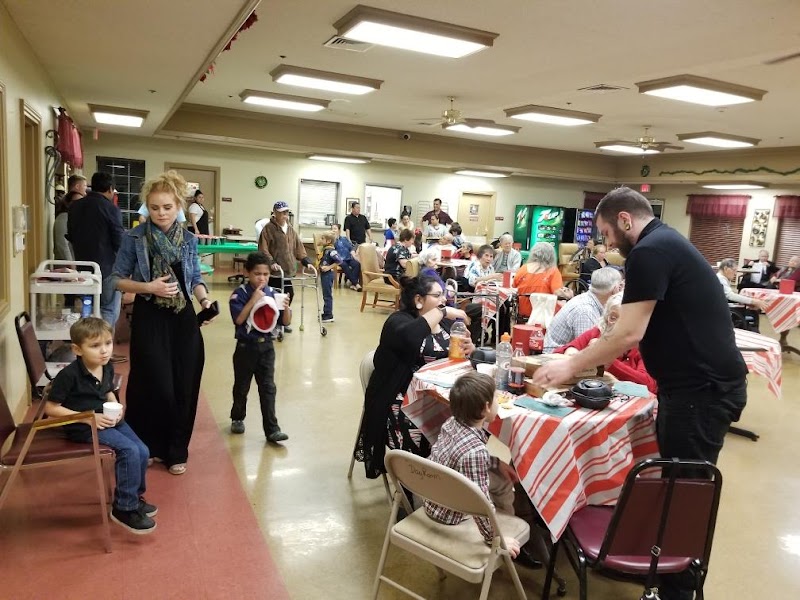
CMS rates Cimarron Place Health & Rehabilitation Center's staffing level at 1 out of 5 stars, which is much below average compared to other nursing homes. Staff turnover is 59%, which is 13 percentage points above the Texas average of 46%. High turnover can affect care consistency as new staff learn residents' individual needs.

What Have Inspectors Found at Cimarron Place Health & Rehabilitation Center?

State health inspectors documented 16 deficiencies at Cimarron Place Health & Rehabilitation Center during 2023 to 2025. These included: 1 that caused actual resident harm, 14 with potential for harm, and 1 minor or isolated issues. Deficiencies causing actual harm indicate documented cases where residents experienced negative health consequences.

Who Owns and Operates Cimarron Place Health & Rehabilitation Center?

Cimarron Place Health & Rehabilitation Center is owned by a for-profit company. For-profit facilities operate as businesses with obligations to shareholders or private owners. The facility is operated by HMG HEALTHCARE, a chain that manages multiple nursing homes. With 120 certified beds and approximately 78 residents (about 65% occupancy), it is a mid-sized facility located in Corpus Christi, Texas.

How Does Cimarron Place Health & Rehabilitation Center Compare to Other Texas Nursing Homes?

Compared to the 100 nursing homes in Texas, Cimarron Place Health & Rehabilitation Center's overall rating (3 stars) is above the state average of 2.8, staff turnover (59%) is significantly higher than the state average of 46%, and health inspection rating (4 stars) is above the national benchmark.

What Should Families Ask When Visiting Cimarron Place Health & Rehabilitation Center?

Based on this facility's data, families visiting should ask: "How do you ensure continuity of care given staff turnover, and what is your staff retention strategy?" "Can you walk me through typical staffing levels on day, evening, and night shifts?" "Can I visit during a mealtime to observe dining assistance and food quality?" "How do you handle medical emergencies, and what is your hospital transfer rate?" These questions are particularly relevant given the facility's high staff turnover rate and the below-average staffing rating.

Is Cimarron Place Health & Rehabilitation Center Safe?

Based on CMS inspection data, Cimarron Place Health & Rehabilitation Center has a clean safety record: no substantiated abuse findings (meaning no confirmed cases of resident harm), no Immediate Jeopardy citations (the most serious violation level indicating risk of serious injury or death), and is not on the Special Focus Facility watch list (a federal program monitoring the lowest-performing 1% of nursing homes). The facility has a 3-star overall rating and ranks #1 of 100 nursing homes in Texas. While no facility is perfect, families should still ask about staff-to-resident ratios and recent inspection results during their visit.

Do Nurses at Cimarron Place Health & Rehabilitation Center Stick Around?

Staff turnover at Cimarron Place Health & Rehabilitation Center is high. At 59%, the facility is 13 percentage points above the Texas average of 46%. High turnover means new staff may not know residents' individual needs, medications, or preferences. It can also be disorienting for residents, especially those with dementia who rely on familiar faces. Families should ask: What is causing the turnover? What retention programs are in place? How do you ensure care continuity during staff transitions?

Was Cimarron Place Health & Rehabilitation Center Ever Fined?

Cimarron Place Health & Rehabilitation Center has been fined $10,033 across 1 penalty action. This is below the Texas average of $33,179. While any fine indicates a compliance issue, fines under $50,000 are relatively common and typically reflect isolated problems that were subsequently corrected. Families should ask what specific issues led to these fines and confirm they've been resolved.

Is Cimarron Place Health & Rehabilitation Center on Any Federal Watch List?

Cimarron Place Health & Rehabilitation Center is not on any federal watch list. The most significant is the Special Focus Facility (SFF) program, which identifies the bottom 1% of nursing homes nationally based on persistent, serious quality problems. Not being on this list means the facility has avoided the pattern of deficiencies that triggers enhanced federal oversight. This is a positive indicator, though families should still review the facility's inspection history directly.