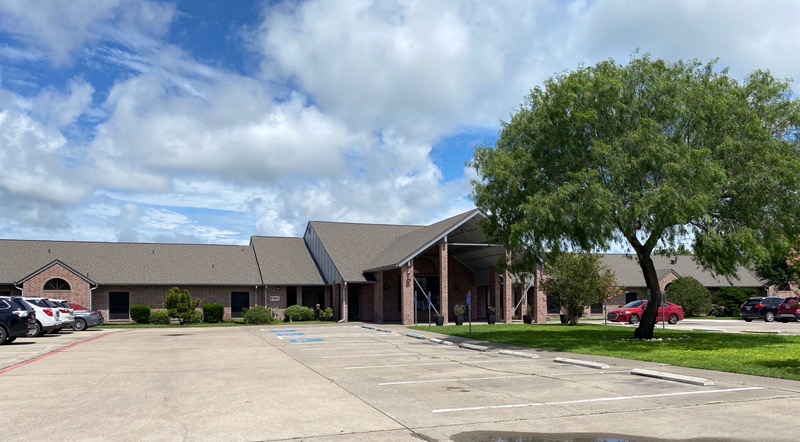
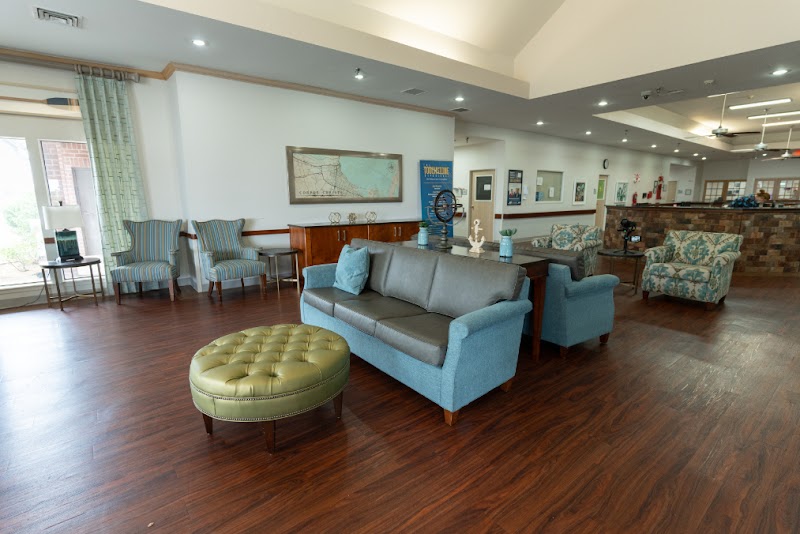
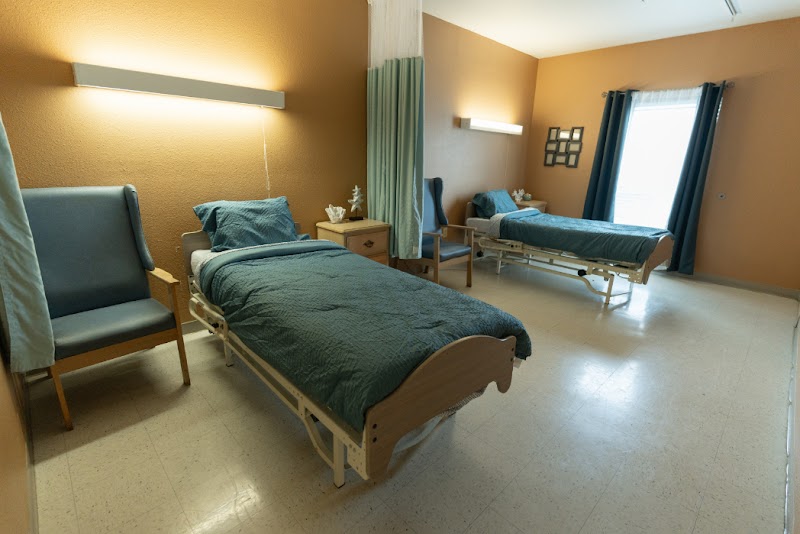
RIVER RIDGE NURSING & REHABILITATION

3922 W RIVER DR, CORPUS CHRISTI, TX 78410 (361) 767-2000
For profit - Limited Liability company 120 Beds TOUCHSTONE COMMUNITIES Data: November 2025 2 Immediate Jeopardy citations
Trust Grade
29/100
#552 of 1168 in TX
Last Inspection: October 2024

Within standard 12-15 month inspection cycle. Federal law requires annual inspections.

Overview

River Ridge Nursing & Rehabilitation has received a Trust Grade of F, indicating significant concerns about the quality of care offered at this facility. It ranks #552 out of 1168 nursing homes in Texas, placing it in the top half, but the overall grade suggests serious issues. The facility is worsening, with the number of reported problems increasing from 7 in 2023 to 10 in 2024. Staffing is a notable weakness, with a poor rating of 1 out of 5 stars and a high turnover rate of 62%, which is above the state average. There were critical incidents, including a failure to notify a resident's physician about a serious health change, resulting in a fractured femur, and multiple concerns regarding food safety in the kitchen, which could pose a risk of foodborne illnesses. While it has excellent quality measures, families should weigh these strengths against the serious issues noted.

Trust Score
F
29/100
In Texas
#552/1168
Top 47%
Safety Record
High Risk
Review needed
Inspections
Getting Worse
7 → 10 violations
Staff Stability
⚠ Watch
62% turnover. Above average. Higher turnover means staff may not know residents' routines.
Penalties
✓ Good
$8,031 in fines. Lower than most Texas facilities. Relatively clean record.
Skilled Nurses
⚠ Watch
Each resident gets only 17 minutes of Registered Nurse (RN) attention daily — below average for Texas. Fewer RN minutes means fewer trained eyes watching for problems.
Violations
⚠ Watch
23 deficiencies on record. Higher than average. Multiple issues found across inspections.
★★★☆☆
3.0
Overall Rating
★☆☆☆☆
1.0
Staff Levels
★★★★★
5.0
Care Quality
★★★☆☆
3.0
Inspection Score
Stable
2023: 7 issues
2024: 10 issues

The Good

  • 5-Star Quality Measures · Strong clinical quality outcomes
  • Full Sprinkler Coverage · Fire safety systems throughout facility
  • No fines on record

Facility shows strength in quality measures, fire safety.

The Bad

3-Star Overall Rating

Near Texas average (2.8)

Meets federal standards, typical of most facilities

Staff Turnover: 62%

16pts above Texas avg (46%)

Frequent staff changes - ask about care continuity

Federal Fines: $8,031

Below median ($33,413)

Minor penalties assessed

Chain: TOUCHSTONE COMMUNITIES

Part of a multi-facility chain

Ask about local staffing decisions and management

Staff turnover is elevated (62%)

14 points above Texas average of 48%

The Ugly 23 deficiencies on record

2 life-threatening
Oct 2024 6 deficiencies
CONCERN (D) 📢 Someone Reported This

A family member, employee, or ombudsman was alarmed enough to file a formal complaint

Potential for Harm - no one hurt, but risky conditions existed

Abuse Prevention Policies (Tag F0607)

Could have caused harm · This affected 1 resident

**NOTE- TERMS IN BRACKETS HAVE BEEN EDITED TO PROTECT CONFIDENTIALITY** Based on interview and record review, the facility failed to implement its written policies and procedures to prohibit and preve...

Read full inspector narrative →
**NOTE- TERMS IN BRACKETS HAVE BEEN EDITED TO PROTECT CONFIDENTIALITY** Based on interview and record review, the facility failed to implement its written policies and procedures to prohibit and prevent abuse, neglect, and exploitation of residents and misappropriation of resident property, for 1 (Resident #39) of 8 residents reviewed for abuse and neglect, in that: LVN A did not implement facility abuse policy related to reporting allegations of abuse to Resident #39's RP when CNA C was alleged to have abused Resident #39 on 10/22/24. This failure could place residents at risk of abuse and neglect. The findings included: Record review of Resident #39's face sheet dated 10/29/24 revealed a [AGE] year-old female with an admission date of 03/01/21. Pertinent diagnoses included Unspecified Dementia and Major Depressive Disorder. Record review of Resident #39's care plan dated 10/29/24 revealed no information regarding the reporting of abuse allegations. Record review of Resident #39's Quarterly MDS Assessment section C, Cognitive Patterns, dated 09/09/24 revealed a BIMS score of 6 (severe impairment). Record review of the provider investigation report dated 10/30/24 revealed the alleged abuse occurred on 10/22/24 at 11:00 PM. Further review revealed the alleged victim was Resident #39 and alleged perpetrator was CNA C. Further review revealed the incident category was Abuse. Further review revealed the following investigation summary, On October 22, 2024 at approximately 11:30pm [ADM] was notified by [DON] that our night shift charge nurse [LVN A] was bringing an allegation of Abuse and Neglect. LVN [A] states that she heard a resident yelling on the 200 hall and entered rom 209. She noticed [Resident #39] and [CNA C] in the resident's bed area. LVN [A] states that she heard the CNA [C] and resident yelling at each other and that the CNA [C] told the resident to 'Shut Up'[.] LVN [A] also stated that she observed the CNA [C] cover the resident mouth. The CNA [C] stated that she did not tell the resident to shut up but instead stated [Resident #39] please be quiet, there are people sleeping. Also stated she did not cover the resident's mouth but was actually attempting to to[sic] take paper out of her mouth. The LVN [A] and another [LVN B] assessed the resident for any injuries or concerns, they assessed her mouth and oral cavity and did not identify any concerns, or discoloration. Resident's physician notified. [ADM] interviewed the resident, unfortunately she did not remember or provide any information. She was in good spirits and she had no concerns. The CNA [C] was immediately suspended that night and it was decided to terminate the CNA [C] on 10/29/24. In an interview with the RP of Resident #39 on 10/28/24 at 1:18 PM, the RP stated Resident #39 did well at the facility. The RP stated Resident #39 was stubborn, but not combative. The RP stated she was not aware of any allegation of abuse made that involved Resident #39 being abused by CNA C at the facility. In an interview with the ADM on 10/28/24 at 1:43 PM, the ADM stated the DON contacted him at home around 11:30 PM on 10/22/24 to tell him LVN A may have witnessed potential abuse by CNA C. The ADM stated he had not called the RP to notify her of the abuse allegation. The ADM stated when there was an allegation of abuse, the doctor and RP should have been notified immediately by one of the nurses working at the time. In an interview with LVN A on 10/29/24 at 12:14 PM, LVN A stated she observed what she believed to be CNA C abusing Resident #39. LVN A stated she had only been working in the facility for a few weeks and was not sure of the process for reporting the abuse. LVN A asked LVN B for help and LVN B walked LVN A through the process of filing a complaint. LVN A stated the only person she called was the DON. LVN A stated she did not know if anyone called the RP of Resident #39. LVN A stated she performed an assessment on Resident #39 after the incident and did not find any injuries or markings. In an interview with LVN B on 10/29/24 at 2:37 PM, LVN B stated LVN A told her she had witnessed a CNA potentially abusing a resident. LVN B stated she called the NP to inform them about the potential abuse. LVN B stated she did not call the RP of Resident #39. In an interview with the DON on 10/29/24 at 1:10 PM, the DON stated she talked to LVN A on the phone immediately after the incident and told her to call the family of Resident #39 and document the incident. The DON stated she did a follow-up call with the RP of Resident #39 on 10/28/24 and learned at that time that LVN A never called the RP. The DON stated she usually made follow-up calls to the RPs within 3 to 5 business days after an allegation was made to inform them of the investigation results. The DON stated they should notify the RP as soon as possible after an allegation of abuse was made involving a resident. The DON stated the charge nurses on shift were the ones supposed to call the RP after an incident. In a follow-up interview with the RP of Resident #39 on 10/30/24 at 1:48 PM, the RP stated the DON called her sometime after this surveyor did on 10/28/24 to inform her of the incident. In an interview with Resident #39 on 10/30/24 at 3:30 PM, Resident #39 was unable to recall the incident with CNA C allegedly abusing her. Resident #39 stated the nurses were always nice to her and she had never had any issues with any of them. Record review of the facility policy Abuse Guidance: Preventing, Identifying and Reporting dated 02/17 and revised 10/22 revealed the following: Investigative Procedures Related to Allegations of Abuse, Neglect or Exploitation . Investigation should include, but is not limited to: Immediate notification of the alleged victim's practitioner and the family or responsible party.
CONCERN (D)

Potential for Harm - no one hurt, but risky conditions existed

Deficiency F0645 (Tag F0645)

Could have caused harm · This affected 1 resident

**NOTE- TERMS IN BRACKETS HAVE BEEN EDITED TO PROTECT CONFIDENTIALITY** Based on record reviews and interviews, the facility failed to ensure a PASRR evaluation was completed on newly admitted residen...

Read full inspector narrative →
**NOTE- TERMS IN BRACKETS HAVE BEEN EDITED TO PROTECT CONFIDENTIALITY** Based on record reviews and interviews, the facility failed to ensure a PASRR evaluation was completed on newly admitted residents prior to admission or after admission for 2 (Residents #48 and #25) residents of 5 residents reviewed for PASRR screenings. 1. The facility failed to ensure Resident #48 had an accurate PASRR Level 1 screening 2. The facility failed to ensure Resident #25 had an accurate PASRR Level 1 screening These failures placed residents at risk of not receiving or benefiting from specialized therapy and equipment services they may require. Findings included: 1. Record review of Resident #48's face sheet dated 11/08/22 revealed an [AGE] year-old male with an admission date of 11/08/22. Diagnoses including unspecified dementia, severe, with psychotic disturbance, Parkinsonism, bipolar disorder, current episode depressed, moderate 02/25/22, and generalized anxiety disorder 06/07/22. Record review of Resident #48's clinicals dated 11/04/22 received from the sending nursing facility listed diagnoses including bipolar disorder 11/8/2022, current episode depressed, moderate 02/25/22, Dementia 06/07/22, generalized anxiety disorder 06/07/22, mood (affective) disorder 07/01/21, anxiety disorder 05/01/21, Parkinson's 05/01/21. Record review of Resident #48's quarterly MDS dated [DATE] indicated Resident #48 had a BIMS of 0 (severely impaired cognition). Resident #48 did not display any behaviors during the assessment period. The assessment indicated active diagnoses of non-traumatic brain dysfunction, non-Alzheimer's dementia, anxiety disorder, bipolar disorder, unspecified dementia, severe, with psychotic disturbance, and Parkinsonism. Record review of Resident #48's comprehensive care plan dated 10/15/22 reflected o I require psychotropic medications and I am at potential risk for side effects r/t my medication regimen. Medication regimen is required r/t targeted behavior/behaviors: Antianxiety, Antidepressant, and Antipsychotic medication regimen Date Initiated: 10/28/2024. o I require anti-depressant, anti-anxiety medication r/t Dx: Bipolar Disorder w/Depression and Anxiety Disorder Date Initiated: 09/19/2024 Created on: 09/19/2024 Revision on: 09/19/2024. o I require anti-psychoticmedication: Dementia w/psychotic disturbance, Bipolar Disorder Date Initiated: 07/18/2023 Created on: 07/18/2023 Revision on: 09/19/2024. Record review of Resident #48's November 2024 physician orders reflected Anti-Depressant, Anti-manic, Antianxiety, and Antipsychotic side effect monitoring: Order summary: Carbidopa-Levodopa four times a day related to Parkinson's disease. Clonazepam three times a day related to anxiety disorder. Fluoxetine one time a day for depression. Oxcarbazepine one time a day related to bipolar disorder. Oxcarbazepine at bedtime related to bipolar disorder. Seroquel at bedtime related to bipolar disorder. Trazodone one time a day for depression. Trazodone at bedtime for depression. Record review of Resident #48's progress notes dated 9/7/2024 at 5:53 am: Resident became combative hitting and kicking. Staff attempted to redirect resident and unable to. Staff exited room to allow resident time to self soothe. 09/28/2024 at 9:58 am: Resident hitting, kicking, at staff. Hitting/kicking the door to memory care unit, not allowing staff to enter or exit the unit. Record review of Resident #48's PASRR dated 11/08/22 revealed #2 Mental Illness: Is there evidence or an indicator this is an individual that has a mental illness? No. 2. Record review of Resident #25's face sheet dated 08/01/24 revealed a [AGE] year-old female with an admission date of 08/01/24. Diagnoses included metabolic encephalopathy, unspecified dementia, unspecified severity, with anxiety, epilepsy, generalized anxiety disorder, and schizoaffective disorder, bipolar type. Record review of Resident #25's quarterly MDS dated [DATE] indicated she had a BIMS of 10 (moderate cognitive impairment). The assessment indicated active diagnoses of medically complex conditions, non-Alzheimer's dementia, seizure disorder (epilepsy), anxiety disorder, and metabolic encephalopathy. Medications she was taking included antipsychotics, antianxiety, antidepressants, and opioids. Record review of Resident #25's comprehensive care plan dated 08/22/24 reflected: I have chronic health conditions & co-morbid conditions that have affected my physical function and may further affect my quality of life: Epilepsy, schizoeffective disorder, bipolar type. Date Initiated: 09/06/2024 Revision on: 09/06/2024 o I require psychotropic medications and I am at potential risk for side effects r/t my medication regimen: Antianxiety, Antidepressant, and Antipsychotic. Date Initiated: 10/28/2024 Created on: 10/28/2024. Record review of Resident #25's October 2024 physician order summary reflected Anti-Depressant, Anti-manic, Antianxiety, and Antipsychotic Side Effect Monitoring. Clonazepam every 12 hours for anxiety. Divalproex three times a day for seizures. Doxepin at bedtime for Depression. Seroquel at bedtime for psychosis. Record review of Resident #25's PASRR dated 07/24/24 revealed #2 Mental Illness: Is there evidence or an indicator this is an individual that has a mental illness? No. In an interview with the MDS nurse on 10/29/24 at 12:15 PM, she stated she would look into the 1012 for the PL1 dated 11/08/22. She said she was responsible for making sure residents had the correct PL1. The MDS nurse said she had since been re-educated on PASRR by the RDCR on what they should be looking for and not what a facility or entity provided. She said she had worked at the facility for a while. In an interview with the RDCR nurse on 10/30/24 at 2:23 PM, she said they did not have a 1012 for Resident #48 and never had one, but they had one signed by the doctor to be faxed to [NAME] (Local Intellectual and Developmental Disability Authorities) today. She said it was important for the residents because otherwise they would not get the services and or the benefits they deserved. She said improper screenings could be detrimental if the residents suffer a delay of care and or treatments. In an interview with the RDCR nurse at 10/30/24 at 2:32 PM, she stated Resident #25 should have had a positive PL1 for schizoaffective disorder and bipolar disorder. She said she would be submitting another form for R#25. Specific PASRR/L1 & L2 referral was requested, but not received. Record review of the facility's policy titled, Comprehensive Assessments revised January 2024 reflected, Compliance guidelines: Pre-admission screening determines whether the community can provide the level and scope of services required by the resident's medical and mental condition. This assessment is important because it is the initial source of information that will ultimately determine the resident's comprehensive care plan. Pre-admission screening and resident review (PASRR) screen is required of all individuals with mental illness (MI) or mental retardation (MR}. These screenings are provided within fourteen days of the resident's admission to the community, when there has been a significant change in the resident's condition, quarterly, and annually (every twelve months). PASRR preadmission screens: Residents with mental illness or mental retardation: The community coordinates resident assessments with pre-admission screening to maximize the resident assessment process. The community does not admit new residents with mental illness (MI) or mental retardation (MR) unless approved by the appropriate state mental health or mental retardation agency. Preadmission screening is required of all individuals with MI or MR.
CONCERN (D)

Potential for Harm - no one hurt, but risky conditions existed

Deficiency F0657 (Tag F0657)

Could have caused harm · This affected 1 resident

**NOTE- TERMS IN BRACKETS HAVE BEEN EDITED TO PROTECT CONFIDENTIALITY** Based on observations, interviews, and record reviews, the facility failed to ensure that the comprehensive care plans were revi...

Read full inspector narrative →
**NOTE- TERMS IN BRACKETS HAVE BEEN EDITED TO PROTECT CONFIDENTIALITY** Based on observations, interviews, and record reviews, the facility failed to ensure that the comprehensive care plans were reviewed and revised by the interdisciplinary team after each assessment, for 1 (Resident #140) of 8 residents whose care plans were reviewed for timing and revision. Resident #140's care plan was not revised after self-removal of her tracheostomy tube. Resident #140's care plan was not revised after her tracheostomy sutures were removed. Resident #140's care plan was not revised after pleasure feeding was discontinued and changed to a pureed diet. Resident #140's care plan was not revised after enteral feedings were discontinued. These failures could place residents at risk for inadequate care. The findings included: Record review of Resident #140's face sheet dated 10/12/24 reflected a [AGE] year-old female admitted on [DATE]. Diagnoses included nontraumatic stroke with subsequent right sided paralysis, anoxic (no oxygen) brain damage, vascular dementia, tracheostomy (breathing tube), and gastrostomy (feeding tube). Record review of Resident #140's MDS dated [DATE] reflected Resident #140 had a BIMS score of 01 indicating severe cognitive impairment. She was incontinent of bladder and bowel. Her active diagnoses included stroke, non-Alzheimer's dementia, hemiplegia (paralysis on one side of the body), respiratory failure, gastrostomy, and tracheostomy. J2710 involving the respiratory system including .trachea, J2910 involving the gastrointestinal tract . including creation of ostomies or percutaneous feeding tubes, K0520 Nutritional approaches-check all that apply: 1. On admission-Assessment period is days 1 through day 3 of the SNF stay starting with A2400B, column 2 while a resident/B. Feeding Tube, K0710. Percent Intake by Artificial Route - Complete K0710 only if Column 2 and/or Column 3 are checked for K0520A and/or K0520B, L0200-oral care, M1040 was checked for Surgical wounds, M1200-surgical wound care, Section N medications/High risk, were blank. Record review of Resident #140's care plan dated 10/12/24 and revised on 10/15/24 did not reflect any gastrostomy care, dietary changes, or tracheostomy. Enhanced Barrier Precautions practices as clinically indicated. Date Initiated: 10/12/2024. Drinking by Mouth: NPO (Nothing by Mouth) Date Initiated: 10/12/2024 Created on: 10/12/2024. I am at risk for experiencing discomfort or pain r/t (related to): Peg tube (g-tube) placement Date Initiated: 10/12/2024 Created on: 10/12/2024. Interventions: Monitor for s/s of substance abuse, such as changes in resident behavior, increased unexplained drowsiness, lack of coordination, slurred speech, mood changes, and/or loss of consciousness, etc. If s/s are noted, notify Physician and/or DON Date Initiated: 10/12/2024. Record review of Resident #140's physician orders revealed: Oxygen and nebulizer orders were discontinued on 10/18/24 after Resident #140 self-removed her tracheostomy on 10/15/24. Enteral Feed two times a day at 65ml/hour for 22 hours to provide 2145 kcal, 97g protein, with automatic water flushes of 150ml/4hrs via pump. Downtime from 9am-11am. Active 10/28/2024. Discontinued 10/28/2024. Pleasure feeding was changed to Regular diet, Puree texture, Mildly Thick/Nectar-Like consistency related to dysphagia (difficulty swallowing) Active 10/23/2024. Enteral Feed Order every shift Check Gastric Tube placement by auscultation prior to water flushes Q (every) shift Active 10/23/24. Enteral Feed Order every shift Flush with 30ml H2O Q shift. Clean G-Tube stoma site with normal saline or wound cleanser, pat dry and leave open to air as needed and every evening shift Active 10/27/2024. Record review of Resident #140's progress notes dated 10/15/24 at 10:00 AM revealed the resident pulled oxygen tubing from trach and threw it behind her. Resident refused to allow nurse or NP (Nurse Practitioner) to check vitals or place oxygen on or around trach. EMS (Emergency Medical services) arrived and sent to ER. called RP to inform of trach removal. Record review of Resident #140's hospital records dated 10/15/24 revealed Resident #140 was sent to the ER in stable condition, and the tracheostomy was sutured closed at that time. Observation of Resident #140 and interview with DP on 10/28/24 at 9:20 AM revealed DP removed Resident #140's tracheostomy sutures at the bedside without difficulty. There was no bleeding or distress. DP explained the procedure and told Resident #140 that she would be able to eat food now, and she no longer required tube feedings. DP stated Resident #140 was doing very well. Resident #140 responded by smiling and nodding her head up and down indicating yes. In an interview with the DON on 10/29/24 at 2:35 PM she said, orders for EBP regarding g-tubes, tracheostomies and any tube were required. She said orders for Hospice were required. She said care plans should be updated at the time of changes in resident conditions. She said nursing was responsible for updating the care plans. She said she did not know how much time was acceptable to lapse between resident changes (good or bad) and updating care plans. She said care plans were supposed to be updated to coincide with resident care and to meet the individualized needs of the resident. She said the nurses and CNAs looked at the care plans to know how to take care of the residents they served. She said the resident came in with a trach and a g-tube and there were no EBP orders or PPE in the hallways for Resident #140. She said Resident #140's care plans were not updated, and there was no hospice in the physician orders. She said she was not sure how all these things got left out. She said she and the MDS nurse were responsible for overseeing care plans and the MDS, but there was no real monitoring in place. In an interview with the AD on 10/30/24 at 2:48 PM, she said Resident # 140 did not go to activities, but she had seen her in the dining room yesterday. She said she saw Resident #140 on admission when she could not talk because of the tracheostomy. She said she would go into Resident #140's room, turn the TV on and talk to her but did not realize Resident #140 could speak since she self-removed her trach. She said she did not have the exact date when she last saw her. She said she would make a point to get to know Resident #140. Record review of the facility policy revised January 2023 titled, Care Plans, under guidelines: The community develops a comprehensive care plan for each resident that includes measurable objectives to meet a resident's medical, nursing, mental, and psychosocial needs that are identified in the comprehensive assessment. The care plan should be reflective of the identified problem or risk, a measurable outcome objective and appropriate interventions in relation to the identified problem or risk, outcome objective, and the resident's ability, needs, medical condition, and preventable measures. The care plan in conjunction with the plan of care throughout the medical record is developed and or recommended to attain or maintain the resident's highest practicable physical, mental, and psychosocial well-being. The care plan should be updated and reviewed at least quarterly thereafter, then annually and with significant changes in conditions .The care plan should serve as a guide, which should direct care needs, choices, and preferences.
CONCERN (D)

Potential for Harm - no one hurt, but risky conditions existed

Deficiency F0761 (Tag F0761)

Could have caused harm · This affected 1 resident

Based on observation, interview, and record review, the facility failed to ensure all drugs and biological were stored in locked compartments of one out of three medication cart (200-hall Medication C...

Read full inspector narrative →
Based on observation, interview, and record review, the facility failed to ensure all drugs and biological were stored in locked compartments of one out of three medication cart (200-hall Medication Cart) reviewed for storage, in that: The facility failed to ensure the 200-hall Medication Cart was locked when left unattended. This deficient practice could place residents at risk of misappropriation of medications or harm due to accidental ingestion of unprescribed mediations. The findings were: During an observation on 10/27/24 at 11:00 AM, the 200-hall medication cart was found unlocked and unattended. This surveyor was able to open all drawers revealing multiple blister packs and bottles of medication. In an interview on 10/27/24 at 11:52 AM LVN D stated she was helping a resident get ready to go out on pass. LVN D stated she did not realize she left the medication cart unlocked and did not usually leave the medication cart unlocked. LVN D stated it was important the medication cart was locked at all times due to resident, visitor, and staff safety. LVN D stated by the medication cart being unlocked, anyone could get into the cart and take medications from the cart. LVN D stated the last in-service on keeping medication carts locked was about a few weeks ago. In an interview on 10/29/24 at 01:07 PM the DON stated the medication cart should not have been unlocked as it would not be safe for residents and visitors. The DON stated if the medication cart was not locked someone other than the nurse, like a resident with dementia, could open the medication cart, take out the medications and take them. The DON stated in-services are done quarterly and the last in-service on keeping medication carts locked was sometime in July of 2024. The DON stated LVN D received a one-on-one training and all staff received in-service on keeping medication carts locked on 10/27/24. Record review of the facility's Medication Cart Use and Storage dated 3/15/23 stated: Compliance Guidelines The Nursing Team Members (Nurses & CMA's) use the medication cart to systematically distribute physician ordered medications to residents. Guidelines 1. Security The medication cart and its storage bins should be kept closed, secured and/or in the line of sight when not in use.
CONCERN (D)

Potential for Harm - no one hurt, but risky conditions existed

Infection Control (Tag F0880)

Could have caused harm · This affected 1 resident

**NOTE- TERMS IN BRACKETS HAVE BEEN EDITED TO PROTECT CONFIDENTIALITY** Based on observation, interview, and record review, the facility failed to maintain an infection prevention and control program,...

Read full inspector narrative →
**NOTE- TERMS IN BRACKETS HAVE BEEN EDITED TO PROTECT CONFIDENTIALITY** Based on observation, interview, and record review, the facility failed to maintain an infection prevention and control program, including hand hygiene, designed to provide a safe, sanitary, and comfortable environment, and to help prevent the development and transmission of communicable diseases and infections for one (Resident #61) of 4 residents reviewed for infection control practices, in that: The facility failed to ensure LVN E wore proper PPE during wound care for Resident #61 who required enhanced barrier precautions. This failure could place residents that require wound care at risk for healthcare associated cross-contamination and infections. The Findings included: Record review of Resident #61's face sheet dated 10/30/24 reflected a [AGE] year-old-male with an original admission date of 12/04/23. Diagnoses included arterial ulcer to right heel (deep sores or wounds in the skin of the lower leg or foot), acute osteomyelitis (acute inflammatory condition of bone secondary to infection), and type 2 diabetes mellitus (insufficient insulin production in the body). Record review of Resident #61's physician orders dated 5/28/24 stated: Enhanced barrier precautions when in contact with wound. Record review of Resident # 61's care plan created 9/20/24 stated Resident #61 was risk for infection or recurrent/chronic infection r/t compromised medical condition of active wounds. Interventions included: -Report changes in condition to doctor as clinically indicated. -Enhanced barrier precautions when in contact with wound. During an observation on 10/28/24 at 02:49 PM LVN E did not put on proper PPE such as a gown during wound care on Resident #61. In an interview on 10/30/24 at 11:18 AM the DON stated if there was an order for enhanced barrier precautions, then direct care staff providing care to a resident should be wearing the required PPE. The DON stated there should be an enhanced barrier precautions sign in the resident's room (observed above Resident #61's bed) and PPE was placed out in the hallways on a cart. In an interview on 10/30/24 at 01:31 PM LVN E stated she did not gown up due to forgetting. LVN E stated she did not see the PPE cart and that usually reminds her to put on PPE. LVN E stated it was important to wear PPE because it could compromise Resident #61's wound and could get infected. LVN stated there was an in-service on following infection control about a week ago. In an interview on 10/30/24 at 01:56 PM the DON stated it was important to follow doctor's orders and wear appropriate PPE to provide proper patient care. The DON stated LVN E should have worn PPE as ordered. The DON stated Resident #61 could be affected by wound getting infected. The DON stated if there was no PPE cart seen, then the charge nurse should have been notified and the charge nurse would tell the Infection Control Preventionist to get the proper supplies. The DON stated in-services are done at least quarterly. Record review of facility's Infection Prevention and Control policy dated 4/2024 stated: Compliance Guidelines: The infection prevention and control program is a facility-wide effort involving all disciplines and individuals and is an integral part of the quality assurance and performance improvement program. In addition to isolation practices, Enhanced Barrier Precautions (EBP) maybe implemented as an infection control intervention designed to reduce transmission of resistant organisms. The use of PPE, such as gown and glove use during high contact resident care activities. Residents/Patients with the following clinical indication should be under EBP: Significant Wounds such as chronic wounds, ulcers, open PUI or complicated/non-healing surgical incisions or wounds, and/or open wounds requiring a dressing; excluding simple skin breaks or tears that are covered with an adhesive bandage (e.g., Band-Aid) or similar dressing.
CONCERN (E)

Potential for Harm - no one hurt, but risky conditions existed

Food Safety (Tag F0812)

Could have caused harm · This affected multiple residents

Based on observations, interviews, and record reviews, the facility failed to store, prepare, distribute, and serve food in accordance with professional standards for food service safely for 1 of 1 ki...

Read full inspector narrative →
Based on observations, interviews, and record reviews, the facility failed to store, prepare, distribute, and serve food in accordance with professional standards for food service safely for 1 of 1 kitchen reviewed for sanitation. The facility failed to label and date prepared refrigerated drinks and puree. The facility failed to ensure ingredients were not left open to air in the dry storage room freezer, and on prep tables. The facility failed to ensure the kitchen was free of gnats. The facility failed to ensure personal items were not on a prep table. The facility failed to ensure dirty dishes were not on the clean rack. The facility failed to ensure the ice machine, non-stick pans, and a large spatula was maintained and sanitary. The facility failed to ensure items in the kitchen were clean. The facility failed to store cases of food off the floor in the freezer. The facility failed to discard used grease properly. These failures could place residents at risk of foodborne illnesses. Findings were: Observations and initial tour of the kitchen on 10/27/24 at 11:15 AM revealed 10 of 18 glasses of juice, 2 sippy cups with a clear liquid in one and a yellow liquid in the other, three small glasses of milk, and a partially full 5-liter container of prepared pureed bread that was open to air in the service refrigerator. All items were unlabeled and undated in the service refrigerator. The prepared bread puree had a scoop inside. 3 of 15, 16 oz. containers of spice were open to air. A large plastic bag of cereal was open to air on a prep table. There were boxes of garlic bread sticks, sliced carrots, and hamburger patties open to air in the freezer. There was an unlabeled, undated bag of vegetable blend in the freezer that had a brownish color on the vegetables inside, and the vegetables were wilted. There was also a build-up of ice crystals in the bag of vegetables. There was a partially full 8 lb. container of mixed peanut butter and jelly with the lid ajar. There was a personal phone on a prep table. There was a brownish red removable substance on the ice chute inside the ice machine. The mouthpiece of a sippy cup lid on a clean rack was clogged with an unknown substance. There were 2 non-stick pans that were stacked together on a prep table next to the stove. They were dirty, eroded and flaking on the bottoms and sides. There was one non-stick pan that was eroded and flaking on the bottoms and sides on the clean rack to be used. There was a large spatula that had chips broken off around the edges on the clean rack for use. There were 6 cases of frozen food stored on the floor of the walk-in freezer. There was a large vat on the floor under the 3-compartment sink that was full of a brown substance resembling used grease. In an interview with the cook, on 10/27/24 at 11:25 AM, she said the spice containers should always be closed because something could get in them and if the contaminated spices were used on the food, it could make residents sick. She said she should have labeled and dated the glasses of juice and milk because she made them around 7:00 AM this morning for the lunch service. She said the pureed bread in the refrigerator should not have been open to air nor have a scoop inside, and it should have been labeled and dated. She said it was left over from breakfast service around 7:00 AM. She said the sippy cups with juice and the glasses of milk should have been labeled and dated because she made them this morning around 7:00 AM for lunch service. She said the gnats had been a problem but could not say for how long but said for a while. She said the items in the freezer should not have been unsealed because they could get freezer burn which would alter the taste or because something else could get into the open food, get cross contaminated, and make the residents sick. She said she had just stocked the cases of frozen food on the shelf beside them and did not know how or who might have moved them onto the floor. She said the dirty non-stick pans should not have been on the prep table. She said the non-stick pan on the clean rack was there for use. She said all of the non-stick pans should have been discarded before they became eroded as much as they were. She said she did not know why she did not discard them. She said the spatula was used all the time because it was the only one they had. She said the spatula should have been discarded because the bits of plastic that were breaking off of the spatula could get into the resident's food and hurt them or make them sick. She said she did not know when the vat of grease was emptied. She said she thought it was weird the way the facility collected the grease and discarded it and she had never done that at the facility. In an interview with the DA on 10/27/24 at 11:30 AM, she said the removable reddish-brown substance on the ice chute inside the ice machine was mold or bacteria of some kind. She said the unknown substance in the mouthpiece of the sippy cup lid was gross and some kind of food. She said the container with the mix of peanut butter and jelly should not have been there with the lid halfway on and it had been sitting on the prep table since around 7:00 PM yesterday on 10/26/24. In an interview with the DM on 10/30/24 at 3:57 PM, she said the kitchen staff should have known about labeling drinks, food and keeping foods sealed. She said the prepared pureed bread mix with the scoop inside should have been discarded or the scoop removed, the container covered properly, labeled, dated, and placed in the refrigerator. She said she did not know why the cereal was not put away properly because items that were open to the air could spoil and become cross contaminated. She said the peanut butter and jelly mixture should have been covered, labeled, dated and put away in the refrigerator. She said the personal phone, or any personal item was never allowed in the kitchen because of cross contamination. She said staff could touch a personal item with their hands and not wash their hands afterwards every single time. She said cross contamination could make the residents ill. She said the non-stick pans were contaminated and should have been discarded. She said the finish on the non-stick pans could come off in the food and make residents ill. She said the ice machine was cleaned weekly. She said the dirty dishes on the clean rack should not have been there and whatever was in the mouthpiece of the sippy cup should not have been there and especially not on the clean rack because residents were served from dishes on the clean rack. She said the cases of frozen on the floor was inexcusable and her staff knew better. She said the broken spatula and dirty non-stick pans should have been in the 3-compartment sink and more importantly, all of them should have been discarded before they got so bad. She said kitchen staff were responsible for letting her know when equipment needed to be replaced so she could order replacements in a timely manner. She said she did not know why kitchen staff were using such a large vat to discard used grease. She said the used grease should have been discarded properly as it was emptied from the deep fryer every time because the vat was so large, it could risk injury to the staff and create an environmental hazard if it spilled while pouring it in the grease trap outside. Record review of kitchen specific in-services: 08/26/24 Pot and pan cleaning, 09/30/24 Choking hazards, 10/08/24 Utilizing standardized menus, recipes, and extensions. Record review of the facility policy revised 06/01/19 titled Food Storage revealed under Dry Storage Room: 1.d. To ensure freshness, store opened and bulk items in tightly covered containers. All containers must be labeled and dated. H. Store all items at least 6 inches above the floor with adequate clearance between goods and ceiling to protect from overhead pipes and other contamination. Under Refrigerators: d. Date, label and tightly seal all refrigerated foods using clean, nonabsorbent, covered containers that are approved for food storage. Under freezers: c. Store all foods on racks or shelves off the floor. E. Store frozen foods in moisture proof wrap or containers that are labeled and dated.
Sept 2024 4 deficiencies 2 IJ
CRITICAL (J) 📢 Someone Reported This

A family member, employee, or ombudsman was alarmed enough to file a formal complaint

Immediate Jeopardy (IJ) - the most serious Medicare violation

Notification of Changes (Tag F0580)

Someone could have died · This affected 1 resident

**NOTE- TERMS IN BRACKETS HAVE BEEN EDITED TO PROTECT CONFIDENTIALITY** Based on interviews and record reviews, the facility failed to immediately notify the resident's physician when there was a sign...

Read full inspector narrative →
**NOTE- TERMS IN BRACKETS HAVE BEEN EDITED TO PROTECT CONFIDENTIALITY** Based on interviews and record reviews, the facility failed to immediately notify the resident's physician when there was a significant change in the resident's physical, mental, or psychosocial status (that is, a deterioration in health, mental or psychosocial status in either life threatening conditions or clinical complications) for 1 (Resident #21) of 3 residents reviewed for change in condition. The facility failed to immediately notify Resident #21's physician before 11/29/23 at 8:30am when Resident #21's radiology report dated 11/28/23 at 5:51pm reflected that Resident #21 had a displaced fracture of her left femur neck (top of the thigh bone at the hip) that occurred when Resident #21 fell in the facility's dining room three days before the x-ray was completed on 11/28/23. On 9/18/24 at 2:06pm an Immediate Jeopardy was identified. While the Immediate Jeopardy was removed on 9/20/24 at 1:35pm, the facility remained out of compliance at a scope of isolated with a severity of no actual harm with potential for more than minimal harm that was not Immediate Jeopardy due to the facility continuing to monitor the implementation and effectiveness of their plan of removal. These failures could place residents at risk of a delay in treatment, decline in physical, mental, and/or psychosocial status, hospitalization, and even death. The findings included: Record review of Resident #21's face sheet reflected an [AGE] year-old female that was admitted to the facility on [DATE] with a primary diagnosis of encounter for palliative care (care focused on improving quality of life for people with serious illnesses). Other pertinent diagnoses included congestive heart failure (the heart didn't pump blood effectively and could cause fluid buildup in the lungs), dementia (loss of memory, language, problem-solving and other thinking abilities severe enough to interfere with daily life), inflammatory polyneuropathy (an auto immune attack on the peripheral nerves that can cause progressive muscle weakness, numbness, loss of reflexes, and pain or tingling in the arms, hands, legs, and feet), major depressive disorder, chronic kidney disease-stage 3 (mild to moderate kidney damage), dyspnea (shortness of breath), edema (swelling), muscle weakness, and muscle atrophy (wasting or loss of muscle tissue). There were no diagnoses related to liver damage or liver failure. Record review of Resident #21's admission MDS dated [DATE] reflected she had a BIMS score of 00 which indicated she had severe cognitive impairment. Record review of Resident #21's care plan dated 10/27/23 with revisions on 10/30/23, 11/29/23 and 12/6/23 reflected in part: Focus: I have impaired cognitive function/dementia or impaired thought process r/t (Specify). Goal: I will (Maintain or improve) current level of cognitive function through the review date. Interventions/Tasks: Communicate with me, my family/caregivers regarding my capabilities and needs, Notify MD of any changes in cognitive function, specifically changes in decision making ability, memory, recall and general awareness, difficulty expressing self, difficulty understanding others, level of consciousness, mental status. Focus: I have a communication problem: Goal: I will be able to make basic needs known by (verbally/however able to express) on a daily basis through the review date. Interventions/Tasks: Anticipate and meet my needs. Notify MD PRN for changes in ability to communicate, potential contributing factors for communication problems, potential for improvement. Focus: I am at risk for falls r/t [left blank] Goal: I will be free from falls and/or will not experience significant injuries associated with falls through the next review date. Interventions/Tasks: Refer to therapy for screen and/or eval as indicated. Focus: Advanced care planning choices for end-of-life care: Hospice care elected. Goal: I will have my comfort, quality of life and dignity protected an honored through my next review date. In a phone interview on 9/12/24 at 10:05am Resident #21's family member stated that Resident #21 had a history of breast cancer and colon cancer but had received PET (Positron emission tomography) scans for at least the last 3 to 5 years prior to her admission to the facility that showed no cancer anywhere. Resident #21's family member stated that Resident #21 did not have any history of liver damage or liver failure and that Resident #21's primary care physician prior to going on hospice had told Resident #21 and her family member that her kidney disease was stable. Resident #21's family member stated that the reason Resident #21 went into the facility with hospice care was because Resident #21's dementia had progressed to the point that the family member could not take care of her at home anymore. Resident #21's family member stated that Resident #21 went back to the family member's house on 11/30/23 with hospice services because the emergency room physician and the surgeon told the family member that surgery for Resident #21's left hip fracture was not an option due to the resident now having kidney and liver failure. Resident #21 passed away at home on [DATE]. Record review of Resident #21's progress notes section in the facility's PCC system reflected an entry dated 11/25/23 at 2:38pm by RN I that stated, Resident stood up on her own out of her wheelchair in dining room, did not take any steps but lost her balance and CNA was standing near resident and resident went to the floor, landed on her left side, CNA who witnessed the fall cradled residents head and resident did not hit her head or face on the floor Resident checked for injuries, denies pain, and assisted by 3 staff members back into her wheelchair, DON, RP, and Medical provider notified. Resident taken to her room and vital signs taken and head to toe assessment completed. [sic] Record review of the facility's PCC assessments page for Resident #21 reflected an eINTERACT Change in Condition Evaluation that was entered on 11/25/23 in reference to Resident #21's fall in the facility's dining room on the same date that stated in part, Resident #21 had no complaints of pain. Resident [#21] had a witnessed fall with neuro checks intact, moves all extremities, and no s/s of injuries, skin checked for discoloration none noted at this time [sic]. This document reflected that the physician was notified of Resident #21's fall on 11/25/23 at 2:45pm and the physician's recommendation was to refer Resident #21 for a physical therapy evaluation In an interview on 9/11/24 at 3:50pm, the DON stated, We did not do x-rays at the time [of the fall] because when I looked at the camera, she was self-propelling in the dining room. She was shaking a doorknob and kind of slid out of her chair onto the floor. She did not actually stand and fall. She did not have any bruising at that time. She was being medicated for pain on the 25th (November 2023) because she was post fall and couldn't tell us I have pain here. She just had signs and symptoms of pain. We got an x-ray on the 28th. I don't remember why or what her signs and symptoms were. With hospice patients, hospice won't order x-rays, so we contacted our doctor instead of the hospice physician and that's why there was a delay from the complaint of pain on the 27th to the order on the 28th (of November 2023) In an interview on 9/13/24 at 12:48pm, CNA M stated, On 11/25/23, Resident #21 was in the dining room toward the kitchen washroom area. I was passing by taking people out of the dining room. I saw her getting up off the wheelchair and standing. Once I saw her taking some steps and was unbalanced, I knew she was going to fall so I sprinted over there to try to catch her. It was kind of a slow fall. She was not quite on the floor when I got to her, so I made sure she did not hit her head. When she was on the floor, she was kind of on her left side. Two other people saw it as well and came in to assist me to get her back to her chair. She said she was in pain after that. I can't remember if she said her arm or her hip, but she was saying, ow- it hurts, it hurts. She was just kind of whimpering and saying she hurt when she was assisted back into the wheelchair. Record review of Resident #21's MAR dated November 2023 reflected that Resident #21 had an order for Tramadol HCl (a pain medication) oral tablet 50mg to be given by mouth every six hours as needed for pain. Resident #21 did not have any other medications ordered for pain relief. Resident #21 was given Tramadol 50mg on 11/25/23 at 6:25pm for generalized pain at level 5 out of 10 (10 being the worst pain), 11/26/23 at 3:53pm for generalized pain at level 2 out of 10, and 11/26/23 at 10:00pm for generalized pain at level 5 out of 10. On 11/27/23 at 5:44am, LVN J gave Resident #21 Tramadol 50mg for left shoulder and left leg pain at level 10 out of 10. Record review of Resident #21's progress notes page dated 11/6/23 to 12/6/23, assessments page dated 10/27/23 to 11/29/23 in the facility's PCC system and a telephone interview of LVN J on 9/16/24 at 11:48am reflected that Resident #21's physician was not notified of her significant increase in pain on 11/27/23 by LVN J at the time she medicated Resident #21, nor any other time that day. LVN J stated she did not recall why she did not notify the doctor when Resident #21 complained of a 10 out of 10 pain level. LVN J stated if someone fell, she would do range of motion and check them out; if the resident had complained of pain during that, LVN J stated she would have notified the doctor and gotten an x-ray. LVN J stated when an x-ray was done, the nurse would have had to look for the results and that there was no flag or anything to let the nurse know that the results were posted. LVN J stated if she was going off shift, she would pass it on to the next shift to look for the results. LVN J stated they would not be notified by the radiology company. LVN J stated sometimes the x-ray technician would let them know if something did not look right and to keep an eye out for the report. LVN J stated if she pulled up an x-ray report and something looked abnormal or bad, she would notify the physician right away- as soon as she saw the result. LVN J stated she did not know if anyone at the facility got notified automatically of results. LVN J stated that she worked at the facility until March 2024 and had been there for about a year. LVN J stated they discussed notification of changes almost every day and had once a month in-services on various topics. Record review of Resident #21's Physician Orders reflected a left shoulder and hip/pelvis x-ray ordered by RN K on 11/28/23 at 11:30am. Record review of Resident #21's printable view progress notes dated 11/29/23 at 8:34am reflected an entry by RN I that stated, Xray report from Xray of 11/28/23 reviewed and reported to medical provider left shoulder x ray showed no acute fracture, RP states she will think about the situation, but shows grossly displaced femoral neck fracture of left hip, acute fracture. Medical provider recommends send resident too [sic] ER (Emergency Room) for evaluation of left hip fracture. DON notified. And RP notified and will think about whether she wants notify Nurse when she makes a decision on sending the resident sent out to ER, states she will call back to notify this facility. Call out to the hospice company to notify of positive left hip fracture, left msg to have hospice return my call. [sic] Record review of the facility's PCC assessments page for Resident #21 reflected an unsigned eINTERACT Change in Condition Evaluation that was dated 11/29/23 and revealed the situation being reported was Trauma (fall related or other) and that Resident #21 had new pain, left hip pain/left iliac crest (rear)/Left trochanter (hip) and intensity of pain 2 of 10. In the area for observation and evaluation summary, the author documented, Results of x ray to hip positive for Grossly displaced femoral neck fracture of left hip with no discoloration to area. Resident does have pain on left hip, with pain medication. Medical provider notified and recommends to send resident out to ER for evaluation, DON notified of Results of left hip X RAY and RP notified states since resident is hospice, she will need to decide whether she wishes to send resident out to ER, will notify nurses of her decision [sic]. This document also stated that Resident #21's physician was notified on 11/29/23 at 8:40am and the physician recommended Resident #21 be taken by non-emergent transfer ambulance for evaluation of left hip fracture to the ER. In a telephone interview on 9/13/24 at 10:21am a supervisor for the facility's contracted radiology company stated that the result of the left shoulder and hip/pelvis x-ray was automatically delivered by email to the facility's DON and administrator on 11/28/23 at 5:51pm. The supervisor stated that the result was also automatically faxed to the facility's fax number on record on 11/28/23 at 5:51pm, but that it failed. The supervisor stated there was no documentation that the radiology company called the facility to report the significant findings of the x-ray. In an interview on 9/11/23 at 3:56pm the DON stated, If there is a significant finding for an x-ray, I receive an email and they call the facility within, I think, 24 hours. I received the email at 5:51pm (on 11/28/23). Even if I was gone for the day, I would check my email from home. I may have been out with the flu or COVID at that time, but I remember calling the facility that evening. I can't say why the physician was not notified until 8:30 the next morning or why the nurse didn't document anything. The physician and RP should have been notified that evening. A lot of the longer tenure nurses will want to notify the hospice doctor before the facility doctor because they are hospice, but we don't have documentation of that either. If the physician and RP are not notified, it could lead to negative outcomes including untreated pain or worsening of a fracture. The physician and RP should be notified immediately when critical results are received. The DON did not state who she talked to when she called the facility on 11/28/23 about the x-ray results. In a telephone interview on 9/13/24 at 11:00am the MD stated he would expect the doctor or nurse practioner to be notified of any critical/significant results with 30-45 minutes. The MD stated he did not know if it would have made a difference if he had been notified of Resident #21's fractured femur the evening before. The MD stated, if for some reason the facility was unable to contact either the NP or himself, they should just go ahead and send the resident out to the ER. The MD stated that when Resident #21 was treated for 10 of 10 pain specifically to her left leg and shoulder on 11/27/23 following a fall on her left side on 11/25/23, he or the NP should have been notified. The MD stated, What we know of hip fractures in older adults, we need to intervene sooner rather than later because being in bed for three days, especially if they are in pain and probably not eating or drinking well, it can lead to multi organ failure. If we had known about the fracture and intervened earlier, she may have lived a little longer. The MD stated that it was ultimately a hospice decision to x-ray a hospice patient, but if she had not been a hospice patient, it would have been prudent to do an x-ray at the time of the fall. In an interview on 9/13/24 at 1:11pm the ADON stated for critical findings, the lab or radiology would call the facility and would ask for the nurse of that specific resident. The nurse would talk to them and get the results. After the nurse received the critical or significant finding information, he/she would then call the doctor and see if there were any new orders. The ADON stated, We call the doctor immediately when we have critical results. The ADON stated, That I know of there isn't a specific policy in writing about when to notify the doctor of critical results. In an interview on 9/16/24 at 10:15am, CNA B stated that Resident #21 was on pain meds and would complain of pain mostly in the mornings and later in the day. CNA B stated when Resident #21 was first admitted she was good until the fall on 11/10/23 . After that fall, she got more confused and complained of more pain. I know she was always getting in and out of her chair. CNA B stated if a resident had a bad fall or had to be assessed by physical therapy, the CNAs would not get the resident out of bed until physical therapy saw and assessed them. CNA B stated, I don't recall her (Resident #21) falling at all when I worked on 11/27/23 or 11/28/23 and it was not reported to me that she fell any time after 11/25/23. After the fall, family was here more often than before. I don't think she was eating very well that week. There's nothing more that I can recall. In an interview on 9/16/24 at 11:12am, RN K stated she kind of remembered Resident #21 but did not remember anything specific about the week after Resident #21 fell on [DATE]. RN K stated if she had a resident that had fallen two days prior and then started complaining of a significant increase in pain, she would notify the NP or the doctor to advise them of the increase in pain on the side the resident had fallen on two days before. RN K stated if it was a hospice patient, she would notify the facility (primary) doctor or NP, then hospice. RN K stated in most cases, she would call the facility attending and then let hospice know that she notified the primary doctor. RN K stated if there was an abnormal finding on an x-ray, the radiology company posted the results on the website. RN K stated she did not think the facility got called if there were significant findings. RN K stated she thought that once the results got posted, the facility doctor looked at the results and it went from there. RN K stated she did not recall any time when the DON or ADON went to her and said that there was an abnormal x-ray result and for her to notify the physician. RN K stated if the nurse found something (a significant finding) before the doctor did, then the nurse would call the doctor immediately. RN K stated if the nurse was not able to contact the doctor, he/she was to contact the DON to let her know so that she could follow up. RN K stated the x-ray technician would not tell the nurse if they saw something abnormal on the x-ray. RN K stated that sometimes x-rays would result right away, but sometimes they took a very long time. In an interview on 9/16/24 at 12:24pm, the DON stated, At that time when abnormal or critical x-rays were received, the facility would receive a phone call with the results. I would also get an email for significant findings. Normally, if I wasn't at the facility, I would call to make sure the nurse knew of the findings. Let's say I didn't see the email or get the email; the x-ray people would call the facility and we could get into the portal and print out the x-ray results. X-ray will call, but sometimes they don't call until the next day. If it was the next day, it was like a follow up call when they'd ask if we saw it. If the facility is notified of an abnormal result (for hospice) it would depend on the nurse whether the primary physician or hospice would get notified first, but they would both be notified. The nurse would need to notify the doctor as soon as they found out about it. In reference to (Resident #21's) x-ray result, I got the email on 11/28/23 at 5:51pm. I was not here (at the facility) at the time, and I don't remember if I called the facility or not. The DON stated that the floor nurse would have had to go into the portal to see if the x-ray result was there. The PCC system did not flag or alert when an x-ray was resulted, the nurse would have to check. The DON stated if the x-ray was not resulted during the day shift, the day shift nurse would pass on to the night shift nurse to look out for the result. If for some reason the night shift nurse did not get the result, then the day shift nurse would follow up the next morning. The DON stated, In general, if there was a critical or significant finding, the physician should have been notified right away. Notification 15 hours later is generally not acceptable. There may be times when that would be ok, but in this particular case, no. The DON stated, She (Resident #21) wasn't x-rayed the day of the fall because she didn't display any signs or symptoms of pain; not even when they were getting her off the floor initially. If she had a significant increase in pain 2 days post fall, it would warrant a notification to the doctor. The DON stated it was important to notify the physician of any significant change in condition or results of diagnostics so that they could provide the best quality of care for the resident. The DON stated if the physician was not notified of changes, the resident's quality of care could have been affected, the resident may not have gotten needed treatment, services, or medication, the resident could have been hospitalized , or it could have even led to death. The DON stated, The policy does not have a specific time frame for notification. The DON stated when a physician was notified of results or a change of condition, documentation included dated and time of notification of provider and RP and any new orders. In an interview on 9/16/24 at 2:14pm the Admin stated, I do get the emails that say significant findings from radiology. If I see that email come through, I contact the DON and make sure she saw it and ask what it is about. If it is a night or weekend, I will still talk to the DON about it, and she will contact facility staff. The Admin stated, If there are significant or critical findings on any diagnostics, the physician should be notified in a timely manner- ASAP. It shouldn't be more than 2 hours once the nurse finds out that they try to notify the physician. 15 hours is not an acceptable time frame. The Admin stated he did not recall seeing a timeframe on the policy. The Admin stated the physician should always be notified if a resident complained of a significant increase in pain. The Admin stated it was important to notify the physician right away for changes in condition so that they could plan the next steps in the resident's care. The Admin stated if they did not notify the physician, the resident may not receive the appropriate care, they could have an adverse effect, they could be hospitalized , or it could lead to death. In a phone interview on 9/18/24 at 10:56am LVN L stated he worked PRN (as needed) at the facility, usually on weekends. LVN L stated it had been a while since he last worked there and he could not recall what date he worked there last. LVN L stated he remembered Resident #21's name but did not remember anything specific about her. LVN L stated if an x-ray was done, the results may have been faxed to the facility. LVN L stated that he thought had seen a couple of chest x rays come through on the fax before but did not recall that anyone got any significant x-ray results while he was on shift. LVN L stated if he ordered an x-ray and had not received a result after about a couple of hours, he would call the x-ray place and ask about it. LVN L stated that x-ray results could go straight to the resident's profile now. LVN L stated they could go into the results tab and see if the x-ray was resulted. LVN L stated there was not a pop up or anything to remind you to go look at the result. LVN L stated if he got a significant finding, he would call the doctor to let them know as soon as he got the result. LVN L stated in his orientation they went over the things you were supposed to notify the physician for. LVN L stated, I don't remember them saying when specifically, the doctor should be notified after receiving the results. LVN L stated if an x-ray was done on his shift and he had not gotten the result yet, he, as the off going nurse, reported it to the oncoming nurse who would keep an eye out for the result. LVN L stated there was also a piece of paper that stuff was written on to pass along to the next shift. In an interview on 9/18/24 at 2:10pm the DON stated that she never opened the email from the radiology company on 11/28/23. The DON provided a copy of the radiology company's print out of the details of Resident #21's x-ray that was done on 11/28/23. The print-out reflected that a SIGNIFICANT report was emailed to the DON and the Admin on 11/28/23 at 5:51pm. This print-out also reflected that a text message was sent to a phone number and a fax was sent to the facility's fax number with the x-ray findings on 11/28/23 at 5:51pm. The DON and the Admin stated that the fax number that the radiology company had was not the facility's fax number and they did not know why the radiology company had that number. The DON and the Admin also stated that they did not know who the phone number belonged to that the text message was sent to. An internet search on 9/20/24 revealed the fax number that the radiology company sent the result to had been associated with this facility and the phone number that the text message was sent to belonged to the person who was the DON at the facility at the time the contract with the radiology company was signed in 2022. Record review of Resident #21's Nursing Progress Notes reflected an entry by RN I dated 11/29/23 effective at 11:17am that stated, RP present, resident being transported per (non-emergent ambulance) stretcher report given to ambulance driver, and resident transported with paperwork and copy of DNR to ER, DON aware. [sic] Record review of Resident #21's Medication Administration Note reflected an entry by LVN J dated 11/29/23 effective 10:12pm that stated, admitted to hospital. Record review of Resident #21's Medication Administration Note reflected an entry by RN I dated 11/30/23 effective 11:23am that stated, At hospital. In an interview on 9/12/24 at 10:47am, the ME stated that Resident #21 passed away at home on [DATE] and that she ruled Resident #21's death as, Accident- Accidental fall/ complications of femur fracture, fall, dementia, hypertension, and COPD. The ME stated she did not do an autopsy, but rather reviewed all of Resident #21's medical records. Record review on 9/18/24 of the facility's radiology company contract that was signed on 2/8/22 reflected in part: SERVICES: 4. REPORTS The Radiologist will dictate a report to the attending physician for each examination. (The x-ray company) will provide a written copy of the written report to the community and to the attending physician. 6. WEB ACCESS (The x-ray company) agrees to provide the Community with direct access to patient records on the (x-ray company's) website. There was no part of the provided contract that discussed if, how, or when the facility would be notified of significant findings. Record review of this contract also revealed that it was signed by the current Admin on 2/8/22. Record review of the facility's Changes in Resident Condition Policy revealed in part: Compliance Guidelines: The resident, medical provider (MD/NP/PA) and resident representative or designated family member should be notified when changes in condition or certain events occur. Communication with the interdisciplinary team and caregivers is important to facilitate consistency and continuity of care. Guidelines: 1. The resident, medical provider (MD/NP/PA) and resident representative or designated family member should be notified when there is: c. a significant change in the resident's physical, mental, or psychosocial status; 1) assess and document changes in; 2) provide assessment information to physician and 3) provide clear comprehensive documentation g. when laboratory, radiology or other diagnostic results fall outside the clinical reference ranges set by the contracted service provider or per physician orders. This policy did not indicate a timeframe for notifying the resident's physician or nurse practitioner after diagnostic results that fell outside of the clinical reference ranges were received. An Immediate Jeopardy was identified on 9/18/24 at 11:15am. The Admin was informed of the Immediate Jeopardy, given the Immediate Jeopardy template, and a Plan of Removal was requested on 9/18/24 at 2:06pm . The facility's Plan of Removal was accepted on 9/19/24 at 8:49pm. The facility's Plan of Removal included: [Facility] Plan of Removal F580 Notification of Changes in Condition Date: September 18, 2024 Corrective Action: Resident #21 who was admitted on [DATE] under hospice services for end-of-life care for diagnoses of Renal Failure, Liver Failure, Congestive Heart Failure, and Malignant Neoplasm of Left Breast sustained a witnessed fall on 11/25/23. Resident assessed by charge nurse and risk management report completed and MD/RP/hospice notification made. Non stat X-ray order obtained on 11/28/23 and positive fracture results received on 11/29/23 and reported to MD and hospice with hospice collaboration for RP notification. Resident discharged to hospital on [DATE]. Resident #21 is no longer an active resident within our community. Resident #21 was assessed and being monitored by the nurses prior to being sent to the hospital on [DATE]. Per hospital report, resident did not receive any treatment for fracture and was discharged home with family. Identification: All residents with change in condition may be at risk for the alleged deficient practice. Director of Nursing/Assistant Director of Nursing conducted an audit of all residents with recent (in last 60 days) to identify any changes in condition to include increased pain needs in order to ensure the MD/NP/PA have been notified and appropriate interventions were in place, as well as to ensure family representatives have been notified. Outcome: Date Completed: 9/18/24. Systematic Changes: The Regional Nurse (DCO) conducted an in-service to the Director of Nursing/Assistant Director of Nursing regarding the process for nurses to assess resident changes in condition to include pain and report any significant increase in pain and changes in condition identified to the MD/NP/PA. The nurse should ensure interventions are in place to address the resident's change in condition and/or pain needs and nurse should document in the electronic health record. Date Completed: 9/18/24. Director of Nursing/Assistant Director of Nursing conducted in-service training to all licensed nurses prior to next scheduled shift regarding: a. The process for ensuring that changes in condition have been identified to include pain and reported to MD/NP/PA. Orders given should be implemented as ordered and nursing should document in the electronic health record. b. Nurses will communicate during change of shift nursing report any changes in condition to include pain and ensure proper interventions are in place and notifications to the MD/NP/PA have been completed. c. Charge Nurses educated to follow HHSC guidance that indicates that the nurse should conduct a post fall assessment following the fall event. The nurse will continue ongoing monitoring of the resident following a fall event and should conduct follow up assessments upon any changes in condition identified. The nurse should then notify the medical provider upon identifying the change in condition or abnormal findings. The physician should be notified promptly upon identification of a change in condition and/or significant/critical abnormal diagnostic report. Typically, the notification will occur immediately but no more than two hours of being identified. The nurse will then attempt to contact the physician at minimum once per shift until the notificat[TRUNCATED]
CRITICAL (J) 📢 Someone Reported This

A family member, employee, or ombudsman was alarmed enough to file a formal complaint

Immediate Jeopardy (IJ) - the most serious Medicare violation

Deficiency F0777 (Tag F0777)

Someone could have died · This affected 1 resident

**NOTE- TERMS IN BRACKETS HAVE BEEN EDITED TO PROTECT CONFIDENTIALITY** Based on interviews and record reviews, the facility failed to promptly notify the ordering physician, physician assistant, nurs...

Read full inspector narrative →
**NOTE- TERMS IN BRACKETS HAVE BEEN EDITED TO PROTECT CONFIDENTIALITY** Based on interviews and record reviews, the facility failed to promptly notify the ordering physician, physician assistant, nurse practitioner, or clinical nurse specialist of results that fall outside of clinical reference ranges in accordance with facility policies and procedures for notification of a practitioner or per the ordering physician's orders for 1 (Resident #21) of 3 residents reviewed for diagnostic services. 1. The facility failed to immediately notify Resident #21's physician before 11/29/23 at 8:30am when Resident #21's radiology report dated 11/28/23 at 5:51pm revealed that Resident #21 had a displaced fracture of her left femur neck (top of the thigh bone at the hip) that occurred when Resident #21 fell in the facility's dining room on 11/25/23. On 9/18/24 at 2:06pm an Immediate Jeopardy was identified. While the Immediate Jeopardy was removed on 9/20/24 at 1:35pm, the facility remained out of compliance at a scope of isolated with a severity of no actual harm with the potential for more than minimal harm that was not Imediate Jeopardy due to the facility continuing to monitor the implementation and effectiveness of their plan of removal. This failure could place residents at risk of a delay in treatment, decline in physical, mental, and/or psychosocial status, hospitalization, and even death. The findings included: Record review of Resident #21's face sheet reflected an [AGE] year-old female that was admitted to the facility on [DATE] with a primary diagnosis of Encounter for palliative care (care focused on improving quality of life for people with serious illnesses). Other pertinent diagnoses included congestive heart failure (the heart didn't pump blood effectively and could cause fluid buildup in the lungs), dementia (loss of memory, language, problem-solving and other thinking abilities severe enough to interfere with daily life), inflammatory polyneuropathy (an auto immune attack on the peripheral nerves that can cause progressive muscle weakness, numbness, loss of reflexes, and pain or tingling in the arms, hands, legs, and feet), major depressive disorder, chronic kidney disease-stage 3 (mild to moderate kidney damage), dyspnea (shortness of breath), edema (swelling), muscle weakness, and muscle atrophy (wasting or loss of muscle tissue). There were no diagnoses related to liver damage or liver failure. Record review of Resident #21's admission MDS dated [DATE] reflected she had a BIMS score of 00 which indicated she had severe cognitive impairment. Record review of Resident #21's care plan dated 10/27/23 and revised on 10/30/23, 11/29/23 and 12/6/23 reflected in part: Focus: I have impaired cognitive function/dementia or impaired thought process r/t (Specify). Goal: I will (Maintain or improve) current level of cognitive function through the review date. Interventions/Tasks: Communicate with me, my family/caregivers regarding my capabilities and needs, Notify MD of any changes in cognitive function, specifically changes in decision making ability, memory, recall and general awareness, difficulty expressing self, difficulty understanding others, level of consciousness, mental status. Focus: I have a communication problem: Goal: I will be able to make basic needs known by (verbally/however able to express) on a daily basis through the review date. Interventions/Tasks: Anticipate and meet my needs. Notify MD PRN for changes in ability to communicate, potential contributing factors for communication problems, potential for improvement. Focus: I am at risk for falls r/t [left blank] Goal: I will be free from falls and/or will not experience significant injuries associated with falls through the next review date. Interventions/Tasks: Refer to therapy for screen and/or eval as indicated. Focus: Advanced care planning choices for end-of-life care: Hospice care elected. Goal: I will have my comfort, quality of life and dignity protected an honored through my next review date. In a phone interview on 9/12/24 at 10:05am Resident #21's family member stated that Resident #21 had a history of breast cancer and colon cancer but had received PET (Positron emission tomography) scans for at least the last 3 to 5 years prior to her admission to the facility that showed no cancer anywhere. Resident #21's family member stated that Resident #21 did not have any history of liver damage or liver failure and that Resident #21's primary care physician prior to going on hospice had told Resident #21 and her family member that her kidney disease was stable. Resident #21's family member stated that the reason Resident #21 went into the facility with hospice care was because Resident #21's dementia had progressed to the point that the family member could not take care of her at home anymore. Resident #21's family member stated that Resident #21 went back to the family member's house on 11/30/23 with hospice services because the emergency room physician and the surgeon told the family member that surgery for Resident #21's left hip fracture was not an option due to the resident now having kidney and liver failure. Resident #21 passed away at home on [DATE]. Record review of Resident #21's progress notes section in the facility's PCC system reflected an entry dated 11/25/23 at 2:38pm by RN I that stated, Resident stood up on her own out of her wheelchair in dining room, did not take any steps but lost her balance and CNA was standing near resident and resident went to the floor, landed on her left side, CNA who witnessed the fall cradled residents head and resident did not hit her head or face on the floor Resident checked for injuries, denies pain, and assisted by 3 staff members back into her wheelchair, DON, RP, and Medical provider notified. Resident taken to her room and vital signs taken and head to toe assessment completed. [sic] Record review of the facility's PCC assessments page for Resident #21 reflected an eINTERACT Change in Condition Evaluation that was entered on 11/25/23 in reference to Resident #21's fall in the facility's dining room on the same date that stated in part, Resident #21 had no complaints of pain. Resident [#21] had a witnessed fall with neuro checks intact, moves all extremities, and no s/s of injuries, skin checked for discoloration none noted at this time [sic]. This document reflected that the physician was notified of Resident #21's fall on 11/25/23 at 2:45pm and the physician's recommendation was to refer Resident #21 for a physical therapy evaluation. In an interview on 9/11/24 at 3:50pm, the DON stated, We did not do x-rays at the time [of the fall] because when I looked at the camera, she was self-propelling in the dining room. She was shaking a doorknob and kind of slid out of her chair onto the floor. She did not actually stand and fall. She did not have any bruising at that time. We got an x-ray on the 28th (11/28/23). I don't remember why or what her signs and symptoms were. With hospice patients, hospice won't order x-rays, so we contacted our doctor instead of the hospice physician and that's why there was a delay from the complaint of pain on the 27th (11/27/23) to the order on the 28th (11/28/23). In an interview on 9/13/24 at 12:48pm, CNA M stated, On 11/25/23, Resident #21 was in the dining room toward the kitchen washroom area. I was passing by taking people out of the dining room. I saw her getting up off the wheelchair and standing. Once I saw her taking some steps and was unbalanced, I knew she was going to fall so I sprinted over there to try to catch her. It was kind of a slow fall. She was not quite on the floor when I got to her, so I made sure she did not hit her head. When she was on the floor, she was kind of on her left side. Two other people saw it as well and came in to assist me to get her back to her chair. She said she was in pain after that. I can't remember if she said her arm or her hip, but she was saying, ow- it hurts, it hurts. She was just kind of whimpering and saying she hurt when she was assisted back into the wheelchair. Record review of Resident #21's Orders reflected a left shoulder and hip/pelvis x-ray ordered by RN K on 11/28/24 at 11:30am. Record review of Resident #21's printable view progress notes dated 11/29/23 at 8:34am reflected an entry by RN I that stated, Xray report from Xray of 11/28/23 reviewed and reported to medical provider left shoulder x ray showed no acute fracture, RP states she will think about the situation, but shows grossly displaced femoral neck fracture of left hip, acute fracture. Medical provider recommends send resident too [sic] ER (Emergency Room) for evaluation of left hip fracture. DON notified. And RP notified and will think about whether she wants notify Nurse when she makes a decision on sending the resident sent out to ER, states she will call back to notify this facility. Call out to the hospice company to notify of positive left hip fracture, left msg to have hospice return my call. [sic] Record review of the facility's PCC assessments page for Resident #21 reflected an unsigned eINTERACT Change in Condition Evaluation that was dated 11/29/23 and reflected the situation being reported was Trauma (fall related or other) and that Resident #21 had new pain, left hip pain/left iliac crest (rear)/Left trochanter (hip) and intensity of pain 2 of 10. In the area for observation and evaluation summary, the author documented, Results of x ray to hip positive for Grossly displaced femoral neck fracture of left hip with no discoloration to area. Resident does have pain on left hip, with pain medication. Medical provider notified and recommends to send resident out to ER for evaluation, DON notified of Results of left hip X RAY and RP notified states since resident is hospice, she will need to decide whether she wishes to send resident out to ER, will notify nurses of her decision [sic]. This document also stated that Resident #21's physician was notified on 11/29/23 at 8:40am and the physician recommended Resident #21 be taken by non-emergent transfer ambulance for evaluation of left hip fracture to the ER. In an interview on 9/11/24 at 3:56pm, the DON stated, If there is a significant finding for an x-ray, I receive an email and they call the facility within, I think, 24 hours. I received the email at 5:51pm (on 11/28/23). Even if I was gone for the day, I would check my email from home. I may have been out with the flu or COVID at that time, but I remember calling the facility that evening. I can't say why the physician was not notified until 8:30 the next morning or why the nurse didn't document anything. The physician and RP should have been notified that evening. A lot of the longer tenure nurses will want to notify the hospice doctor before the facility doctor because they are hospice, but we don't have documentation of that either. If the physician and RP are not notified, it could lead to negative outcomes including untreated pain or worsening of a fracture. The physician and RP should be notified immediately when critical results are received. The DON did not state who she talked to when she called the facility on 11/28/23 about the x-ray results. In a telephone interview on 9/13/24 at 10:21am a supervisor for the facility's contracted radiology company stated that the result of the left shoulder and hip/pelvis x-ray was automatically delivered by email to the facility's DON and administrator on 11/28/23 at 5:51pm. The supervisor stated that the result was also automatically faxed to the facility's fax number on record on 11/28/23 at 5:51pm, but that it failed. The supervisor stated there was no documentation that the radiology company called the facility to report the significant findings of the x-ray. In a telephone interview on 9/13/24 at 11:00am the MD stated he would expect for the physician or nurse practitioner to be notified of any critical/significant results with 30-45 minutes. The MD stated he did not know if Resident #21's outcome would have been different if he had been notified of her broken femur when the x-ray was resulted on 11/28/23 at 5:51pm. The MD stated if for some reason the facility was unable to contact either the NP or the MD, they should just go ahead and send the resident out to the ER. The MD stated that when Resident #21 was treated for 10 of 10 pain specifically to her left leg and shoulder on 11/27/23 following a fall on her left side on 11/25/23 he or nurse practitioner should have been notified. The MD stated, What we know of hip fractures in older adults, we need to intervene sooner rather than later because being in bed for three days, especially if they are in pain and probably not eating or drinking well, it can lead to multi organ failure. If we had known about the fracture and intervened earlier, she may have lived a little longer. The MD stated that it was ultimately a hospice decision to x-ray a hospice patient, but if she had not been a hospice patient, it would have been prudent to do an x-ray at the time of the fall. In an interview on 9/13/24 at 1:11pm the ADON stated for critical findings, the lab or radiology would call the facility and would ask for the nurse of that specific resident. The nurse would talk to them and get the results. After the nurse received the critical or significant finding information, he/she would then call the doctor and see if there were any new orders. The ADON stated, We call the doctor immediately when we have critical results. The ADON stated, That I know of there isn't a specific policy in writing about when to notify the doctor of critical results. In an interview on 9/16/24 at 11:12am, RN K stated if there was an abnormal finding on an x-ray, the radiology company posted the results on the website. RN K stated she did not think the facility got called if there were significant findings. RN K stated she thought that once the results got posted, the facility doctor looked at the results and it went from there. RN K stated she did not recall any time when the DON or ADON went to her and said that there was an abnormal x-ray result and for her to notify the physician. RN K stated if the nurse found something (a significant finding) before the doctor did, then the nurse would call the doctor immediately. RN K stated if the nurse was not able to contact the doctor, he/she was to contact the DON to let her know so that she could follow up. RN K stated the x-ray technician would not tell the nurse if they saw something abnormal on the x-ray. RN K stated that sometimes x-rays would result right away, but sometimes they took a very long time. In a telephone interview on 9/16/24 at 11:48am LVN J stated when an x-ray was done, the nurse would have had to look for the results and that there was no flag or anything to let the nurse know that the results were posted. LVN J stated if she was going off shift, she would pass it on to the next shift to look for the results. LVN J stated they would not be notified by the radiology company. LVN J stated sometimes the x-ray technician would let them know if something did not look right and to keep an eye out for the report. LVN J stated if she pulled up an x-ray report and something looked abnormal or bad, she would notify the physician right away- as soon as she saw the result. LVN J stated she did not know if anyone at the facility got notified automatically of results. LVN J stated that she worked at the facility until March 2024 and had been there for about a year. LVN J stated they discussed notification of changes and physician notification almost every day and had once a month in-service on various topics. In an interview on 9/16/24 at 12:24pm, the DON stated, At that time (11/28/23) when abnormal or critical x-rays were received, the facility would receive a phone call with the results. I would also get an email for significant findings. Normally, if I wasn't at the facility, I would call to make sure the nurse knew of the findings. Let's say I didn't see the email or get the email; the x-ray people would call the facility and we could get into the portal and print out the x-ray results. X-ray will call, but sometimes they don't call until the next day. If it was the next day, it was like a follow up call when they'd ask if we saw it. If the facility is notified of an abnormal result (for hospice) it would depend on the nurse whether the primary doctor or hospice would get notified first, but they would both be notified. The nurse would need to notify the doctor as soon as they found out about it. In reference to (Resident #21's) x-ray result, I got the email on 11/28/23 at 5:51pm. I was not here (at the facility) at the time, and I don't remember if I called the facility or not. The DON stated that the floor nurse would have had to go into the portal to see if the x-ray result was there. The PCC system did not flag or alert when an x-ray was resulted, the nurse would have to check. The DON stated if the x-ray was not resulted during the day shift, the day shift nurse would pass on to the night shift nurse to look out for the result. If for some reason the night shift nurse did not get the result, then the day shift nurse would follow up the next morning. The DON stated, In general, if there was a critical or significant finding, the physician should have been notified right away. Notification 15 hours later is generally not acceptable. There may be times when that would be ok, but in this particular case, no. The DON stated, She (Resident #21) wasn't x-rayed the day of the fall because she didn't display any signs or symptoms of pain; not even when they were getting her off the floor initially. The DON stated it was important to notify the physician of any significant change in condition or results of diagnostics so that they could provide the best quality of care for the resident. The DON stated if the physician was not notified of changes or diagnostic results, the resident's quality of care could have been affected, the resident may not have gotten needed treatment, services, or medication, the resident could have been hospitalized , or it could have even led to death. The DON stated, The policy does not have a specific time frame for notification. The DON stated when a physician was notified of results or a change of condition, documentation included dated and time of notification of provider and RP and any new orders. In an interview on 9/16/24 at 2:14pm the Admin stated, I do get the emails that say significant findings from radiology. If I see that email come through, I contact the DON and make sure she saw it and ask what it is about. If it is a night or weekend, I will still talk to the DON about it and she will contact facility staff. The Admin stated, If there are significant or critical findings on any diagnostics, the physician should be notified in a timely manner- ASAP. It shouldn't be more than 2 hours once the nurse finds out that they try to notify the physician. 15 hours is not an acceptable time frame. The Admin stated he did not recall seeing a timeframe on the policy. The Admin stated the physician should always be notified if a resident complained of a significant increase in pain. The Admin stated it was important to notify the physician right away for changes in condition so that they could plan the next steps in the resident's care. The Admin stated if they did not notify the physician, the resident may not receive the appropriate care, they could have an adverse effect, they could be hospitalized , or it could lead to death. In a phone interview on 9/18/24 at 10:56am LVN L stated he worked PRN (as needed) at the facility, usually on weekends. LVN L stated it had been a while since he last worked there and he could not recall what date he worked there last. LVN L stated he remembered Resident #21's name but did not remember anything specific about her. LVN L stated if an x-ray was done, the results may have been faxed to the facility. LVN L stated that he thought had seen a couple of chest x rays come through on the fax before but did not recall that anyone got any significant x-ray results while he was on shift. LVN L stated if he ordered an x-ray and had not received a result after about a couple of hours, he would call the x-ray place and ask about it. LVN L stated that x-ray results could go straight to the resident's profile now. LVN L stated they could go into the results tab and see if the x-ray was resulted. LVN L stated there was not a pop up or anything to remind you to go look at the result. LVN L stated if he got a significant finding, he would call the doctor to let them know as soon as he got the result. LVN L stated in his orientation they went over the things you were supposed to notify the physician for. LVN L stated, I don't remember them saying when specifically, the doctor should be notified after receiving the results. LVN L stated if an x-ray was done on his shift and he had not gotten the result yet, he, as the off going nurse, reported it to the oncoming nurse who would keep an eye out for the result. LVN L stated there was also a piece of paper that stuff was written on to pass along to the next shift. In an interview on 9/18/24 at 2:10pm the DON stated that she never opened the email from the radiology company on 11/28/23. The DON provided a copy of the radiology company's print out of the details of Resident #21's x-ray that was done on 11/28/23. The print-out reflected that a SIGNIFICANT report was emailed to the DON and the Admin on 11/28/23 at 5:51pm. This print-out also reflected that a text message was sent to a phone number and a fax was sent to the facility's fax number with the x-ray findings on 11/28/23 at 5:51pm. The DON and the Admin stated that the fax number that the radiology company had was not the facility's fax number and they did not know why the radiology company had that number. The DON and the Admin also stated that they did not know who the phone number belonged to that the text message was sent to. An internet search on 9/20/24 revealed the fax number that the radiology company sent the result to had been associated with this facility and the phone number that the text message was sent to belonged to the person who was the DON at the facility at the time the contract with the radiology company was signed in 2022. Record review of Resident #21's Nursing Progress Notes reflected an entry by RN I dated 11/29/23 effective at 11:17am that stated, RP present, resident being transported per (non-emergent ambulance) stretcher report given to ambulance driver, and resident transported with paperwork and copy of DNR to ER, DON aware. [sic] Record review of Resident #21's Medication Administration Note reflected an entry by LVN J dated 11/29/23 effective 10:12pm that stated, admitted to hospital. Record review of Resident #21's Medication Administration Note reflected an entry by RN I dated 11/30/23 effective 11:23am that stated, At hospital. In an interview on 9/12/24 at 10:47am, the ME stated that Resident #21 passed away at home on [DATE] and that she ruled Resident #21's death as, Accident- Accidental fall/ complications of femur fracture, fall, dementia, hypertension, and COPD. The ME stated she did not do an autopsy, but rather reviewed all of Resident #21's medical records. Record review on 9/18/24 of the facility's radiology company contract that was signed on 2/8/22 reflected in part: SERVICES: 4. REPORTS The Radiologist will dictate a report to the attending physician for each examination. (The x-ray company) will provide a written copy of the written report to the community and to the attending physician. 6. WEB ACCESS (The x-ray company) agrees to provide the Community with direct access to patient records on the (x-ray company's) website. There was no part of the provided contract that discussed if, how, or when the facility would be notified of significant findings. Record review of this contract also revealed that it was signed by the current Admin on 2/8/22. Record review of the facility's Changes in Resident Condition Policy revealed in part: Compliance Guidelines: The resident, medical provider (MD/NP/PA) and resident representative or designated family member should be notified when changes in condition or certain events occur. Communication with the interdisciplinary team and caregivers is important to facilitate consistency and continuity of care. Guidelines: 1. The resident, medical provider (MD/NP/PA) and resident representative or designated family member should be notified when there is: g. when laboratory, radiology or other diagnostic results fall outside the clinical reference ranges set by the contracted service provider or per physician orders. This policy did not indicate a timeframe for notifying the provider after diagnostic results that fell outside of the clinical reference ranges were received. An Immediate Jeopardy was identified on 9/18/24 at 11:15am. The Admin was informed of the Immediate Jeopardy, given the Immediate Jeopardy template, and a Plan of Removal was requested on 9/18/24 at 2:06pm. The facility's Plan of Removal was accepted on 9/19/24 at 8:49pm. The facility's Plan of Removal included: [Facility] Plan of Removal F777 Radiology/Diag. Services Ordered/Notify Results Date: September 18, 2024 Corrective Action: Resident #21 who was admitted on [DATE] under hospice services for end-of-life care for diagnoses of Renal Failure, Liver Failure, Congestive Heart Failure, and Malignant Neoplasm of Left Breast sustained a witnessed fall on 11/25/23. Resident assessed by charge nurse and risk management report completed and MD/RP/hospice notification made. Non stat X-ray order obtained on 11/28/23 and positive fracture results received on 11/29/23 and reported to MD and hospice with hospice collaboration for RP notification. Resident discharged to hospital on [DATE]. Resident #21 is no longer an active resident within our community. Resident #21 was assessed and being monitored by the nurses prior to being sent to the hospital on [DATE]. Per hospital report, resident did not receive any treatment for fracture and was discharged home with family. Identification: All residents who have abnormal X-ray results may be at risk for the alleged deficient practice. Director of Nursing/Assistant Director of Nursing conducted an audit of all residents to identify any abnormal x-rays within the last 60 days to ensure the MD and family representatives have been notified and appropriate interventions are in place and prescribers orders have been carried out as ordered. Outcome: No negative outcomes identified. Date Completed: 9/18/24. Systematic Changes: The Regional Nurse (DCO) conducted an in-service to the Director of Nursing/Assistant Director of Nursing regarding the process for ensuring that abnormal x-ray have been identified, x-ray portals are being checked during shift to identify pending results, and the results are reported to the medical provider, orders provided should be implemented as ordered and nursing should document in the electronic health record the notification of abnormal x-ray results to the MD/NP/PA as well as any prescribed orders. Date Completed: 9/18/24. Director of Nursing/Assistant Director of Nursing conducted in-service training to all licensed nurses prior to next scheduled shift regarding: a. The process for ensuring that abnormal x-rays have been identified, x-ray portals are being checked once in first half of shift and once in second half of shift to identify pending results, and the results are reported to the medical provider upon receipt of abnormal x-ray findings, orders provided should be implemented as ordered and nursing should document in the electronic health record the notification of abnormal x-ray results to the MD/NP/PA as well as any prescribed orders. b. If the x-ray company is unable to reach the nursing staff on duty, they will place a call to the Director of Nursing/Administrator or Regional Nurse DCO (contact information provided) so that timely notification to the MD/NP/PA. This has been communicated to the X-ray company and confirmed by them via email and telephone call. c. Charge Nurses will report abnormal x-ray findings to DNS/ADNS via in person or telephonic communication. d. Nurses will communicate during change of shift nursing report any pending x-rays results or changes in condition such as increased pain needs and ensure proper interventions are in place and notifications to the MD/NP/PA have been completed. e. Charge Nurses educated to follow HHSC guidance that indicates that the nurse should conduct a post fall assessment following the fall event. The nurse will continue ongoing monitoring of the resident following a fall event and should conduct follow up assessments upon any changes in condition identified. The nurse should then notify the medical provider upon identifying the change in condition or abnormal findings. Date Completed: 9/18/24. Monitoring: DNS/ADNS (Director of Nursing / Assistant Director of Nursing) will review during the clinical meeting (5-7 days per week) abnormal x-ray results, both pending and resulted in order to validate appropriate interventions are in place, proper follow up and notifications to MD/NP/PA has been made in order to ensure patient care needs are met, and documentation is noted within the medical record. Date initiated: 9/18/24 & Ongoing. Administrator and Director of Nursing conducted an Ad Hoc QAPI meeting with the Medical Director on 9/18/24 to review plan of removal / immediate corrective action plan implemented. Date Completed: 9/18/24. The facility will conduct a monthly QAPI meeting to review the status and compliance notification to MD/NP/PA abnormal x-ray results, ensuring appropriate intervention and orders are implemented as ordered and appropriate documentation is in noted within the E.H.R. Findings of audits and status of compliance will be reviewed to the Administrator and the QAPI committee during the monthly meetings for the next 2 -3months. Verification of the facility's Plan of Removal consisted of the following: Interviews with licensed staff (included both shifts) in person and by telephone on 9/20/24 included: 11:26am - LVN D 11:36am - LVN P 11:46am - LVN Q 12:00pm - ADON 12:26pm - LVN R 12:35pm - LVN S 12:48pm - NAC 1:00pm - DCE 1:04pm - RN T All staff interviewed stated the physician and responsible party are to be notified immediately anytime there is a change in a resident's condition, change in pain level, or critical lab/x-ray results. All staff stated that they were to notify the DON if they were having issues with getting x ray results. All staff stated the change in condition or critical result is to be documented in the electronic health record, as well as who was notified and when. All staff stated any new orders are to be entered as soon as they are received, and if it was an order for physical or occupational therapy, they would go tell physical therapy or occupational therapy and would place that information on the 24 hour report. All staff stated falls are to be documented in the progress notes and ongoing resident assessments should be done to include assessing for pain. All staff stated any change in resident condition or pending results for labs or x rays were to be passed on to the next shift during report and documented on the 24 hour communication report in PCC. All staff stated they received hand-outs with the information that was covered in the in-services. The Admin stated that he contacted the radiology company about notification of significant reports and requested that significant reports not be em[TRUNCATED]
CONCERN (D) 📢 Someone Reported This

A family member, employee, or ombudsman was alarmed enough to file a formal complaint

Potential for Harm - no one hurt, but risky conditions existed

Comprehensive Care Plan (Tag F0656)

Could have caused harm · This affected 1 resident

**NOTE- TERMS IN BRACKETS HAVE BEEN EDITED TO PROTECT CONFIDENTIALITY** Based on interview and record review, the facility failed to develop a comprehensive care plan for each resident, consistent wit...

Read full inspector narrative →
**NOTE- TERMS IN BRACKETS HAVE BEEN EDITED TO PROTECT CONFIDENTIALITY** Based on interview and record review, the facility failed to develop a comprehensive care plan for each resident, consistent with the resident's rights, that includes measurable short-term and long-term objectives and timeframes to meet a resident's medical, nursing, mental, and psychosocial needs that are identified in the comprehensive assessment for 1 (Resident #21) of 3 residents reviewed for care plans in that: 1. The facility failed to retain Resident #21's DNR (Do Not Resuscitate) code status on the comprehensive care plan when Resident #21 was transferred to the hospital. 2. The facility failed to ensure Resident #21's DNR code status was included in Resident #21's comprehensive care plan when it was signed by the physician on [DATE]. 3. The facility failed to ensure Resident #21's comprehensive care plan was updated to reflect an unwitnessed fall in Resident #21's room on [DATE] at 9:30pm. 4. The facility failed to ensure Resident #21's comprehensive care plan was updated to reflect an unwitnessed fall in Resident #21's room on [DATE] at 4:30am. 5. The facility failed to ensure Resident #21's comprehensive care plan was updated to reflect a witnessed fall in the facility dining room on [DATE] at 2:30pm. 6. The facility failed to retain Resident #21's Latex allergy on the comprehensive care plan when Resident #21 was transferred to the hospital on [DATE]. These failures could place residents at risk of not receiving individualized care and services to attain or maintain the residents highest practicable physical, mental, and psychosocial wellbeing. The findings included: Record review of Resident #21's face sheet reflected an [AGE] year-old female that was admitted to the facility on [DATE] with a primary diagnosis of Encounter for Palliative Care (care focused on improving quality of life for people with serious illnesses). Other pertinent diagnoses included congestive heart failure (the heart didn't pump blood effectively and could cause fluid buildup in the lungs), dementia (loss of memory, language, problem-solving and other thinking abilities severe enough to interfere with daily life), inflammatory polyneuropathy (an auto immune attack on the peripheral nerves that can cause progressive muscle weakness, numbness, loss of reflexes, and pain or tingling in the arms, hands, legs, and feet), major depressive disorder, chronic kidney disease-stage 3 (mild to moderate kidney damage), dyspnea (shortness of breath), edema (swelling), muscle weakness, and muscle atrophy (wasting or loss of muscle tissue). There were no diagnoses related to liver damage or liver failure. In a phone interview on [DATE] at 9:03am Resident #21's family member stated that Resident #21 had a history of breast cancer and colon cancer but had received PET (Positron emission tomography) scans for at least the last 3 to 5 years prior to her admission to the facility that showed no cancer anywhere. Resident #21's family member stated that Resident #21 did not have any history of liver damage or liver failure and that Resident #21's primary care physician prior to going on hospice had told Resident #21 and her family member that her kidney disease was stable. Resident #21's family member stated that the reason Resident #21 went into the facility with hospice care was because Resident #21's dementia had progressed to the point that the family member could not take care of her at home anymore. Record review of Resident #21's admission MDS dated [DATE] reflected she had a BIMS score of 00 which indicated she had severe cognitive impairment. Record review of Resident #21's Care Plan dated [DATE] with revisions on [DATE], [DATE] and [DATE] reflected in part: The original care plan had some correct information, however when Resident #21 went to the hospital on [DATE], the DON revised the care plan and did not retain the original necessary information or added necessary information that was not on the original care plan. **Note: The following part of Resident #21's Care Plan was not visible unless the Care Plan with Revisions was reviewed: 1.) FOCUS: o RESOLVED: I/Family/RP has completed documentation for DNR status. I wish to be designated as DNR Date Initiated: [DATE] Created on: [DATE]. Created by: SW. Revision on: [DATE] Revision by: DON. Resolved Date: [DATE]. GOAL: o RESOLVED: Community will follow DNR status request through review date Date Initiated: [DATE] Created on: [DATE]. Created by: SW. Revision on: [DATE] Revision by: DON. Target Date: [DATE] Resolved Date: [DATE]. INTERVENTIONS / TASKS: o RESOLVED: A physician's order for DNR is to be placed in my clinical record Date Initiated: [DATE] Created on: [DATE]. Created by: SW. Revision on: [DATE] Revision by: DON. Resolved Date: [DATE]. o RESOLVED: Keep a copy of the OOHDNR form in my clinical record Date Initiated: [DATE] Created on: [DATE]. Created by: SW. Revision on: [DATE] Revision by: DON. Resolved Date: [DATE]. o RESOLVED: Review code status quarterly and as needed Date Initiated: [DATE] Created on: [DATE]. Created by: SW. Revision on: [DATE] Revision by: DON. Resolved Date: [DATE]. o RESOLVED: Send a copy of the OOHDNR with me in the event of transfer to the hospital or other facility Date Initiated: [DATE] Created on: [DATE]. Created by: SW. Revision on: [DATE] Revision by: DON. Resolved Date: [DATE]. 2.) FOCUS: o Resident/Family/RP does not have advance directives and elects Full Code Status. Date Initiated: [DATE] Created on: [DATE]. Created by: DON. GOAL: o Community will follow full code status through review date Date Initiated: [DATE] Created on: [DATE]. Created by: DON. Revision on: [DATE] Revision by: NAC. Target Date: [DATE]. INTERVENTIONS / TASKS: o Review code status at least annually and as indicated Date Initiated: [DATE] Created on: [DATE]. Created by: DON. 3, 4, 5.) FOCUS: o I am at risk for falls r/t: Cognitive impairment noted. Date Initiated: [DATE] Created on: [DATE]. Created by: NAC. Revision on: [DATE] Revision by: NAC. GOAL: o *I will be free from falls and / or will not experience significant injuries associated with falls through next review date. Date Initiated: [DATE] Created on: [DATE]. Created by: NAC. Revision on: [DATE] Revision by: NAC. Target Date: [DATE]. INTERVENTIONS/ TASKS: o *Anticipate & meet needs & keep call bell within reach as indicated. Date Initiated: [DATE] Created on: [DATE]. Created by: NAC. o *Keep commonly used items close to resident for easy access. Date Initiated: [DATE] Created on: [DATE]. Created by: NAC. o *Bed at appropriate height when unattended. Date Initiated: [DATE] Created on: [DATE]. Created by: DON. o *Educate on importance of wearing non-slippery shoes when standing, walking or moving about in w/c. Date Initiated: [DATE] Created on: [DATE]. Created by: DON. o *Refer to therapy for screen and/or eval as indicated. Date Initiated: [DATE] Created on: [DATE]. Created by: DON. **Note: The following part of Resident #21's Care Plan was not visible unless the Care Plan with Revisions was viewed: 5.) FOCUS: o RESOLVED: I am allergic to Latex Date Initiated: [DATE] Created on: [DATE]. Created by: NAC. Revision on: [DATE] Revision by: DON. Resolved Date: [DATE]. GOAL: o RESOLVED: I will not have any adverse reactions to allergies through review date. Date Initiated: [DATE] Created on: [DATE]. Created by: NAC. Revision on: [DATE] Revision by: DON. Resolved Date: [DATE]. INTERVENTIONS / TASKS: o RESOLVED: Ensure a list of my allergies go with me to the physician, pharmacy, and hospital Date Initiated: [DATE] Created on: [DATE]. Created by: NAC. Revision on: [DATE] Revision by: DON. Resolved Date: [DATE]. Record review of Resident #21's Assessments page in the facility's PCC system reflected an entry dated [DATE] for Nrsg: Neuro checks tscv2, TYPE: Fall Neuro. Resident #21's Assessments page also revealed 2 entries dated [DATE] for Nrsg: Neuro Checks tscv2, TYPE: Admission and Nrsg: Post Fall Review (SBAR), TYPE: Post fall review as well as 2 entries dated [DATE] for eINTERACT Change in Condition Evaluation-V5.1, TYPE: Initial and Nrsg: Post Fall Review (SBAR), TYPE: Post Fall Review. Record review of Resident #21's Progress Notes- All Notes page in the facility's PCC system reflected on entry written by the DON on [DATE] at 4:38pm with an effective date and time of [DATE] at 4:37am that stated, LATE ENTRY Note Text : SN was making rounds resident was observed in bed and as SN returned to nurse's station heard yell from 100 hall and went to investigated and found that this resident's room, upon entering the room, patient was observed on the floor faced down and laying on her belly with her right arm underneath her, next to her bed, her head was at the foot of the bed. Upon skilled nurse assessment, skin tear noted to top of the right hand, c/o pain to right wrist when touched, a small open area noted to bridge of her nose with blood observed to site. Door open to room, call light on. In an interview on [DATE] at 2:12pm, the DON stated the initial care plan was done on admission and within 48 hours of admission. The DON stated the initial care plan was generated from the admission assessment and included comorbidities such as risk for infection, anticoagulants, heart disease, hospice, end of life, tracheostomy and/or ventilator, transfers and lifts, dialysis, cardiac issues, cognition, vision, hearing, skin concerns, bowel and bladder, antidepressants, antianxiety medications, hypnotics, antipsychotics, exit seeking, allergies, code status, preferred name, self-care deficits, dementia, nutrition and hydration, feeding tube, fall risk, discharge planning, and mental health behaviors or issues. The DON stated that the facility did not have the DNR paperwork when the resident was admitted . The DON stated the DNR was signed by the physician and uploaded into the system on [DATE] and she did not know why it did not get put on the care plan until [DATE]. The DON stated she did not know why or how the DNR status was, Resolved on the care plan on [DATE]. The DON stated, [DATE] was the date that the nursing admission assessment was locked. My guess is at the time of admission we did not have the DNR and she (Resident #21) was put in as a full code. When I went back in to lock the assessment, it locked in as a full code, maybe. The DON stated that everything that was in the initial assessment should show in the care plan, including the things that were not locked until [DATE]. The DON stated that it was everyone's responsibility to update the care plan and that they did DNR audit as needed to make sure that they had the correct code status. The DON stated, The nursing staff doesn't have any set schedule to do DNR audits, but the social worker probably does. The DON stated that not having a resident's code status on the care plan could potentially cause an issue because if the resident had a DNR order and coded but the code status was unclear, CPR might be started, which would not have been the resident's or the RP's wishes. In an interview on [DATE] at 3:01pm, the NC stated that Focus, Goal, and Interventions/ Tasks items that were created and initiated on the same day that the DON entered them would normally be new things (focuses, goals, interventions/tasks) that were entered. The NC stated, If I do the admission assessment and lock it by signing it, that will show up in the care plan for that day. For something to show as Resolved, someone has to go in and actually resolve that specific area. The NC stated she was not sure why the DNR code status showed Resolved and reverted to full code on Resident #21's care plan. When asked about the Focus of, I wish to be called by my preferred name (specify), The NC stated it was the responsibility of the person who initiated that focus to update the care plan and specify the name. The NC stated that anyone who could have updated the care plan, should have updated the care plan. The NC stated she did not know why Resident #21's DNR status did not get put on the care plan until [DATE], 21 days after admission. In an interview on [DATE] at 11:50am, LVN D stated, admission assessments are signed by putting in your log in information once you are done with each section. It is signed to show that you completed it. It gets flagged if not completed, but I am not sure where that shows up. I think if it does not get signed, the DON and ADON get notified. LVN D stated the baseline care plan was created by the admission assessment. LVN D stated certain things would get triggered once each section was completed and she would go in and check all the appropriate boxes. LVN D stated she had never not completed an assessment, so she did not know what happened if a section was not signed. LVN D stated her preceptor gave her specific training on admission assessments and helped her with the first few that she did. LVN D stated she did not recall getting in services on admission assessments. LVN D stated code status was established during the admission assessment; if the resident wanted to be a DNR, they had to have a valid OOH (out of hospital) DNR form. LVN D stated for the OOH DNR form to be valid, it had to have the resident's (or RP's) signature, 2 witness signatures, and the physician's signature. LVN D stated if the resident had the form and it was valid, it had to be scanned into the system and the order for DNR was entered. LVN D stated that the form was placed in the medical records folder at the nurse's station, the medical records person picked it up every morning and scanned it into the system. LVN D stated as far as she knew, medical records had the hard copy of the DNR forms. LVN D stated if she had a resident with a DNR form that was missing the physician's signature, she would call the physician to make him or her aware of it, and that the social worker or MDS nurse would help with that, also. LVN D stated if a resident coded before the DNR got a physician signature, she would initiate CPR (Cardiopulmonary Resuscitation). In an interview on [DATE] at 12:43pm, LVN A stated when she was hired, she shadowed a nurse the first day, then did skills check offs on the second day. LVN a stated she was specifically trained on admission assessments. LVN A stated after an LVN did an admission the RN, usually the MDS nurse, would go over it and add or take away things as needed. LVN A stated admission assessments were done as soon as the resident entered the facility and included a head-to-toe assessment, skin assessment, dentures, hearing aids, any other devices, the resident's abilities, diet, and code status. LVN A stated if the resident was a DNR, she would make sure the form was complete, then filed it in the medical records folder for the medical records people to scan it into the computer. LVN A stated if a resident came in on the weekend and had a valid DNR form she would make a copy of it and put it on her pass down. LVN A stated typically, Hospice would meet the resident at the facility to make sure that the medications were there, the orders were done, and all the necessary paperwork was done. LVN A stated if the DNR was not signed by the hospice physician, they would typically call the hospice doctor to get the signature. LVN A stated at the end of the admission assessment they would enter their electronic signature into the box that asked, Sign and save? LVN A stated the admission assessment was supposed to be answered completely and signed, and if it was not signed, the DON and/or ADON would get a report that showed what was incomplete. LVN A stated the DON or ADON would go to the nurse and had them fix it, but sometimes it was a couple of weeks later. LVN A stated a baseline care plan was developed from the admission assessment. LVN A stated if there were things that were getting missed often, the nursing staff would be in serviced on those topics. In an interview on [DATE] at 2:40pm, the SW stated she reviewed code status on admission (the first or second business day after admission) and quarterly. The SW stated she would update care plans with other information such as discharge planning, evacuation plan, and social history. The SW stated if the resident presented a completed OOH DNR, she would go into the care plan, resolve the full code status and put in the DNR status. The SW stated she would take the completed DNR form to the nurse's station, ask the nurse to get the order for DNR and update it in PCC, then place the form in the medical records folder for it to be uploaded. The SW stated she thought that medical records kept a hard copy of DNRs in their office. The SW stated she did not know why there would be a delay in putting a DNR on the care plan. The SW stated there was no specific time frame for doing code status audits, but that they had to be done on admission and quarterly and she would sometimes just check over things. The SW stated there was no specific policy except quarterly because that was when they had care plan meetings. The SW stated the code status was updated on the care plan so that everything matched in the resident's chart. The SW stated if something was not updated in the care plan, it would cause issues with the resident's plan of care. The SW stated that she was out on leave for over a month and did not return until 4 days after Resident #21 was admitted . The SW stated she had to go back and review all the residents that were admitted while she was out and that was why there was a delay in care planning Resident #21's DNR status. In an interview on [DATE] at 3:48pm, the NAC stated the baseline care plan was developed when the resident got admitted and it was developed from the nursing admission assessment. The NAC stated she did not know if the admission assessment being signed or locked at a later date would Resolve a code status if the original status was different than what was care planned. The NAC stated she oversaw the care plans and when a resident was admitted , she would review it on the next business day and edit or complete the care plan as needed. The NAC stated, I have no idea if the admission assessment being signed/locked after I put something directly into the care plan would resolve my entry. The NAC stated they had 48 hours to enter a baseline care plan and until the 21st day after admission to make it comprehensive. The NAC stated she did not know when or how the comprehensive assessment would be done. The NAC stated they did a 72-hour care plan meeting and confirmed the code status with the resident and family at that time and that the code status should be care planned within the first couple of days. The NAC stated that Resident #21's DNR states should have been care planned sooner than 17 days after it was signed by a physician and 21 days after admission. The NAC stated she may have waited to care plan Resident #21's DNR status because the admission assessment was not completed. The NAC stated if she found an admission assessment that had not been completed, she would let the DON and/or ADON know that it needed to be completed. The NAC stated, Now I go in and complete what needs to be completed so that the care plan reflects the resident's and/or family member's wishes about the plan of care. The NAC stated the created date and the initiated date on the care plan could be different if the admission/ readmission assessment was started on one date and signed/locked on a later date or in the case of a readmission such as a resident that transferred back from the hospital, the created date would be from the original admission assessment and the initiated date could be from the readmission assessment. The NAC stated she did not know of a way to see who filled out which sections of the admission assessment or when it was filled out if it was not signed by the admitting nurse when it was done. The NAC stated she thought the care plan would show both code statuses if the admitting status was different than what was entered later. In an interview on [DATE] at 11:00am, the MD stated he would expect the admitting nurse to notify him if there was a DNR that needed his signature so that there would not be a significant delay in entering a DNR order. The MD stated he had the ability to have a DNR form emailed or faxed to him so that he could sign it and send it back, whether it was during business hours or a night/weekend. In an interview on [DATE] at 1:11pm, the ADON stated the comprehensive care plan was a team effort; LVNs could do the baseline care plan through the admission assessment, but an RN had to view it and make modifications if needed. The ADON stated there was not any one person who was responsible for the comprehensive care plan. The ADON stated in the admission assessment you could click the save and next button once each section was finished and then click the option to sign all for the whole assessment. The ADON stated if there were sections that were already signed and someone went in and clicked the sign all button, it would not over sign the sections that were already signed. The ADON stated she thought if the admission assessment had a full code but there was a DNR put into the care plan later, it would just show both if the admission assessment was locked after the DNR was put into the care plan. The ADON stated anyone could add to the care plan as necessary. Record review of the facility's Care Plans policy dated 2/2017 and revised 1/2023 reflected in part: Guidelines: The community develops a comprehensive care plan for each resident that includes measurable objectives to meet a resident's medical, nursing, mental, and psychosocial needs that are identified in the comprehensive assessment. The care plan should be reflective of the identified problem or risk, a measurable outcome objective and appropriate intervention(s) in relation to the identified problem or risk, outcome objective, and the resident's ability, needs, medical condition, preventative measures. The care plan may also include the expressed preferences. The care plan in conjunction with the plan of care throughout the medical record is developed and or recommended to attain or maintain the resident's highest practicable physical, mental, and psychosocial well-being. The IDT should include within the care plan the right to refuse any recommended care, treatment or services identified but that is not provided due to the resident exercising his or her right to refuse care, service, or treatment, as well as the resident's legal representative acting on behalf of the resident. The care plan should be initiated upon admission, continued to be developed during the initial 48-72 hrs., throughout the completion of the admission comprehensive assessment. The care plan should be updated and reviewed at least quarterly thereafter, then annually and with significant changes in condition as defined in the RAI manual. Additional updates to the care plan may be done as indicated. The care plan should be developed no later than seven days following the completion of the comprehensive assessment.
CONCERN (D) 📢 Someone Reported This

A family member, employee, or ombudsman was alarmed enough to file a formal complaint

Potential for Harm - no one hurt, but risky conditions existed

Deficiency F0657 (Tag F0657)

Could have caused harm · This affected 1 resident

**NOTE- TERMS IN BRACKETS HAVE BEEN EDITED TO PROTECT CONFIDENTIALITY** Based on interview and record review the facility failed to develop a comprehensive care plan within 7 days after completion of ...

Read full inspector narrative →
**NOTE- TERMS IN BRACKETS HAVE BEEN EDITED TO PROTECT CONFIDENTIALITY** Based on interview and record review the facility failed to develop a comprehensive care plan within 7 days after completion of the comprehensive assessment for 1 (Resident #21) of 3 residents reviewed for care plan timing. The facility failed to ensure that Resident #21's comprehensive care plan was developed within 7 days of a comprehensive assessment or within 21 days of Resident #21's admission date of 10/27/23 and comprehensive assessment date of 10/31/23. These failures could place residents at risk of not receiving individualized care and services to attain or maintain the residents highest practicable physical, mental, and psychosocial wellbeing. The findings included: Record review of Resident #21's face sheet reflected an [AGE] year-old female that was admitted to the facility on [DATE] with a primary diagnosis of Encounter for Palliative Care (care focused on improving quality of life for people with serious illnesses). Other pertinent diagnoses included congestive heart failure (the heart didn't pump blood effectively and could cause fluid buildup in the lungs), dementia (loss of memory, language, problem-solving and other thinking abilities severe enough to interfere with daily life), inflammatory polyneuropathy (an auto immune attack on the peripheral nerves that can cause progressive muscle weakness, numbness, loss of reflexes, and pain or tingling in the arms, hands, legs, and feet), major depressive disorder, chronic kidney disease-stage 3 (mild to moderate kidney damage), dyspnea (shortness of breath), edema (swelling), muscle weakness, and muscle atrophy (wasting or loss of muscle tissue). There were no diagnoses related to liver damage or liver failure. In a phone interview on 9/10/24 at 9:03am Resident #21's family member stated that Resident #21 had a history of breast cancer and colon cancer but had received PET (Positron emission tomography) scans for at least the last 3 to 5 years prior to her admission to the facility that showed no cancer anywhere. Resident #21's family member stated that Resident #21 did not have any history of liver damage or liver failure and that Resident #21's primary care physician prior to going on hospice had told Resident #21 and her family member that her kidney disease was stable. Resident #21's family member stated that the reason Resident #21 went into the facility with hospice care was because Resident #21's dementia had progressed to the point that the family member could not take care of her at home anymore. Record review of Resident #21's admission MDS dated [DATE] reflected she had a BIMS score of 00 which indicated she had severe cognitive impairment. Record review of Resident #21's Care Plan dated 10/27/23 and revised on 10/30/23, 11/29/23 and 12/6/23 reflected in part: The original care plan had some correct information, however when Resident #21 went to the hospital on [DATE], the DON revised the care plan and did not retain the original necessary information or added necessary information that was not on the original care plan. a.) FOCUS: Admission/readmission Care Plan; I may be at risk for: self-care deficit, falls, skin concerns, pain, infection, nutritional/ hydration concerns, and emotional distress. Date Initiated: 11/29/23. Created On: 10/30/23. Created by: NAC. Revision on: 11/29/23. Revision by: DON. - admission Care Plan; I may be at risk for: self-care deficit, falls, skin concerns, pain, infection & nutritional/hydration concerns and emotional distress. c. LTC admission from home on hospice services Date Initiated: 10/27/2023 Created on: 10/30/2023. Created by: NAC. Revision on: 10/30/2023 Revision by: NAC. - Admission/readmission Care Plan; I may be at risk for: self-care deficit, falls, skin concerns, pain, infection & nutritional/hydration concerns, and emotional distress. c. Respite care admission from home on hospice services. Date Initiated: 10/30/2023 Created on: 10/30/2023. Created by: NAC. GOAL: - Resident's condition will be stable and his/her needs will be anticipated and met as indicated. Resident's emotional needs will be supported, and resident will adjust to placement without any sign of emotional distress noted. Resident will not experience a health decline, will tolerate medication/treatment and progress towards goals established until the comprehensive plan of care can be developed. Date Initiated: 10/30/2023 Created on: 10/30/2023. Created by: NAC. INTERVENTIONS/ TASKS: -*1. Administer medication, care, and treatments as per MD recommendation. 2. Provide ADL care as indicated. E. Monitor psycho-social status or monitor behaviors to establish targeted behaviors. 4. Monitor vital signs and health condition as indicated. 5. Notify PCP and RP of any change in condition as clinically indicated. 6. See nurse for any care related questions or concerns. Date initiated: 10/27/23. Created on:10/30/23. Created by: NAC. -**7. Therapy services as ordered by the physician. 8. Social services as indicated. Mental health providers as ordered. 9. Coordinate all essential medical and/ or mental health provider visits or telehealth visits as indicated. 10. Provide care and safety checks throughout shift. 11. Nutrition/ hydration (food/ foods) within prescribed diet. 12. Provide care and services as indicated. 13. Provide teaching regarding medication, treatment, care and health status as needed. 14. Activities as tolerated. Date initiated: 11/29/23. Created on: 11/29/23. Created by: DON. *Admission/re-admission Orient resident to the community, dining times, resident areas, activities, therapy, call bell type and usage, lights, TV, remote, bed usage, bathroom. Date initiated: 11/29/23. Created on: 11/29/23. Created by: DON. *Collaborate with IDT/Care Team and Resident/Representative to determine resident's usual functional ability within the first 3 days post admission. Date initiated: 11/29/23. Created on: 11/29/23. Created by: DON. *Interview Patient/Representative regarding: home medications, ADL and care needs/preferences, medical appointments, and discharge plans. Communicate with IDT as indicated. Date initiated: 11/29/23. Created on: 11/29/23. Created by: DON. *Collaborate with Hospice Agency Partner for orders, care and services as indicated. Date initiated: 11/29/23. Created on: 11/29/23. Created by: DON. b.) FOCUS: o I have a Self-Care deficit r/t (DX) *Cognitive Impairment, *Poor physical functioning Date Initiated: 10/27/2023 Created on: 10/30/2023. Created by: NAC. Revision on: 10/30/2023 Revision by: NAC. GOAL: o *I will maintain or improve my ability to participate in my care with ADLs through my next review date. Date Initiated: 10/30/2023. Created on: 10/30/2023. Created by: NAC. Revision on: 12/06/2023 Revision by: NAC. Target Date: 11/29/2023 o Resident will experience safe transfers through next review date Date Initiated: 11/29/2023. Created on: 11/29/2023. Created by: DON. Revision on: 12/06/2023. Revision by: NAC. Target Date: 11/29/2023. INTERVENTIONS/ TASKS: o Bathing/Shower Schedule: I prefer to be showered 2-3 times weekly & as needed. INDICATE SHIFT: DAY Date Initiated: 10/27/2023. Created on: 10/30/2023. Created by: NAC. Revision on: 10/30/2023. Revision by: NAC. o Dressing & Grooming: x 1 person assistance Date Initiated: 10/27/2023. Created on: 10/30/2023. Created by NAC. o Bathing/Shower Schedule: I prefer to be showered 2-3 times weekly 2 or 3 days of week. INDICATE SHIFT: Date Initiated: 11/29/2023. Created on: 11/29/2023. Created by: DON. o Bed Mobility: x 1 person assistance Date Initialed: 11/29/2023. Created on: 11/29/2023. Created by: DON. o Bed Mobility: x 1 person assistance as needed only Date Initiated: 11/29/2023. Created on: 11/29/2023. Created by: DON. o Eating & Drinking: Set Up Assistance Needed; then usually able to feed self but may require more physical assistance at times x 1 person assistance Date Initiated: 11/29/2023. Created on: 11/29/2023. Created by: DON. o Eating & Drinking: Supervision, Coaxing and Encouragement during meals as needed. Date Initiated: 11/29/2023. Created on: 11/29/2023. Created by: DON. o Hygiene: X 1 person assist. Date Initiated: 11/29/2023. Created on: 11/29/2023. Created by: DON. o Mobility: I use a wheelchair Date Initiated: 11/29/2023. Created on: 11/29/2023. Created by: DON. o Toileting/Incontinent Care x 1 person assistance Date Initiated: 11/29/2023 Created on: 11/29/2023. Created by: DON. o TRANSFER: x1 assistance more assistance at times / as needed only Date Initialed: 11/29/2023 Created on: 11/29/2023. Created by: DON. o Turning & Repositioning: On rounds and as needed Date Initiated: 11/29/2023 Created on: 11/29/2023. Created by: DON. o TRANSFER: Sit To Stand x1 Team Member Date Initiated: 11/29/2023 Created on: 11/29/2023. Created by: DON. c.) FOCUS: o I am at risk for oral care issues: Partial Dentures/ Plate noted. Date Initiated: 10/27/2023 Created on: 10/30/2023. Created by: NAC. Revision on: 10/30/2023 Revision by: NAC. GOAL: o I will not experience any problems such as infection, abscess or other oral concerns through my next review date. Date Initiated: 10/30/2023. Created on: 10/30/2023. Created by: NAC. Revision on: 12/06/2023 Revision by: NAC. Target date: 11/29/23. INTERVENTIONS/ TASKS: o *Provide oral care as indicated. Date Initiated: 10/27/2023 Created on: 10/30/2023. Created by: NAC. o *Report any abnormal oral findings to MD as indicated. Date Initiated: 10/27/2023 Created on: 10/30/2023. Created by: NAC. o Provide and set up oral care supplies as indicated. Date Initiated: 11/29/2023 Created on: 11/29/2023. Created by: DON. o Denture cleaning and care twice daily as indicated. Date Initiated: 11/29/2023 Created on: 11/29/2023. Created by: DON. o *Coordinate referrals, appointments and transportation to dental appointments as indicated. Date Initiated: 11/29/2023 Created on: 11/29/2023. Created by: DON. d.) FOCUS: o I have dementia Date Initialed: 10/27/2023 Created on: 10/30/2023. Created by: NAC. Revision on: 10/30/2023 Revision by: NAC. GOAL: o I will current level of cognitive function through the review date. [sic] Date Initiated: 10/27/2023 Created on: 10/30/2023. Created by: NAC. Revision on: 10/30/2023 Revision by: NAC. INTERVENTIONS/ TASKS: o *Keep my routine consistent and try to provide consistent caregivers as much as possible in order to decrease confusion. Date Initiated: 10/27/2023 Created on: 10/30/2023. Created by: NAC. o Administer medications as ordered. Observe for side effects and effectiveness. Date Initiated: 10/27/2023 Created on: 10/30/2023. Created by: NAC. o Communicate with me, my family/caregivers regarding my capabilities and needs Date Initiated: 11/29/2023 Created on: 11/29/2023. Created by: DON. o Discuss concerns about confusion, disease process, NH placement with me, my family/caregivers. Date Initiated: 11/29/2023 Created on: 11/29/2023. Created by: DON. o Notify MD of any changes in cognitive function, specifically changes in decision making ability, memory, recall and general awareness, difficulty expressing self, difficulty understanding others, level of consciousness, mental status. Date Initiated: 11/29/2023 Created on: 11/29/2023. Created by: DON. e.) FOCUS: o I have a communication problem: Date Initiated: 11/29/2023 Created on: 11/29/2023. Created by: DON. GOAL: o I will be able to make basic needs known by (verbally/ however able to express) on a daily basis through the review date. Date Initiated: 11/29/2023 Created on: 11/29/2023. Created by: DON. Revision on: 12/06/2023 Revision by: NAC. Target Date: 11/29/2023. INTERVENTIONS / TASKS: oAnticipate and meet my needs. Date Initiated: 11/29/2023 Created on: 11/29/2023. Created by: DON. o *Notify MD PRN for changes in: Ability to communicate, Potential contributing factors for communication problems, Potential for improvement. Date Initiated: 11/29/2023 Created on: 11/29/2023. Created by: DON. o *Refer to Audiology for hearing consult as ordered. Date Initiated: 11/29/2023 Created on: 11/29/2023. Created by: DON. o *Report to Nurse changes in: Ability to communicate, possible factors which cause/make worse/make better, communication problems. Date Initiated: 11/29/2023 Created on: 11/29/2023. Created by: DON. o *When communicating ensure that the environment is suitable for adequate hearing and understanding, adjust volume of TV/Radio etc to ensure both parties are able to hear and participate in conversation. Date Initiated: 11/29/2023 Created on: 11/29/2023. Created by: DON. o Provide translator as necessary to communicate with me. Translator is (Specify) Date Initiated: 11/29/2023 Created on: 11/29/2023. Created by: DON. o Refer to speech therapy for evaluation and treatment as ordered. Date Initiated: 11/29/2023 Created on: 11/29/2023. Created by: DON. f.) FOCUS: o I am at risk for nutritional deficits and/or dehydration risks r/t [NO ANSWER] Date Initiated: 11/29/2023 Created on: 11/29/2023. Created by: DON. GOAL: o I will maintain adequate nutritional status as evidenced by maintaining weight without s/s of significant weight changes & no s/s of malnutrition or dehydration through review date. Date Initiated: 11/29/2023 Created on: 11/29/2023. Created by: DON. Revision on: 12/06/2023 Revision by: NAC. Target Date: 11/29/2023. INTERVENTIONS / TASKS: o *RD to evaluate and make diet change recommendations PRN. Date Initiated: 11/29/2023 Created on: 11/29/2023. Created by: DON. o *Offer me an alternate meal or supplement if I eat less than 50% of my foods at each meal. Date Initiated: 11/29/2023 Created on: 11/29/2023. Created by: DON. o Provide education to me/my representative regarding why the recommendations were made and the potential complications that may arise if the recommended diet/fluids are not followed. Date Initiated: 11/29/2023 Created on: 11/29/2023. Created by: DON. o Consult with and Coordinate transportation to specialty medical provider as indicated. Date Initiated: 11/29/2023 Created on: 11/29/2023. Created by: DON. g.) FOCUS: o My skin is fragile, and I am at risk for skin injury--new or worsening skin condition. Date Initiated: 11/29/2023 Created on: 11/29/2023. Created by: DON. GOAL: o I will have intact skin, free of redness, blisters, or discoloration by/through review date. Date Initiated: 11/29/2023 Created on: 11/29/2023. Created by: DON. Revision on: 12/06/2023 Revision by: NAC. Target Date: 11/29/2023. INTERVENTIONS / TASKS: o *Apply treatment as ordered. Date Initiated: 11/29/2023 Created on: 11/29/2023. Created by: DON. o *Keep clean & dry and apply skin barrier cream as indicated. Date Initiated: 11/29/2023 Created on: 11/29/2023. Created by: DON. o *Therapeutic pressure reducing w/c cushion. Date Initiated: 11/29/2023 Created on: 11/29/2023. Created by: DON. o *Turn & Reposition regularly during rounds and more often as needed. Handle fragile skin with caution & report to nurse if any skin concerns arise. Date Initiated: 11/29/2023 Created on: 11/29/2023. Created by: DON. h.) FOCUS: o I am at risk for experiencing discomfort or pain r/t: [NO ANSWER] Date Initiated: 11/29/2023 Created on: 11/29/2023. Created by: DON. GOAL: o I will maintain a tolerable comfort level and will not experience any physical or emotional distress that will affect my daily activity through my next review date. Date Initiated: 11/29/2023 Created on: 11/29/2023. Created by: DON. Revision on: 12/06/2023 Revision by: NAC. Target Date: 11/29/2023. NTERVENTIONS / TASKS: o Monitor for s/s of substance abuse, such as changes in resident behavior, increased unexplained drowsiness, lack of coordination, slurred speech, mood changes, and/or loss of consciousness, etc. If s/s are noted, notify MD and/or DON. Date Initiated: 11/29/2023 Created on: 11/29/2023. Created by: DON. o *Administer my medication to relieve my pain as recommended by my doctor. Date Initiated: 11/29/2023 Created on: 11/29/2023. Created by: DON. o *Attempt non-pharmacological interventions to promote comfort and relaxation. (dim lights, reposition with pillows, fluff pillows, give a gentle back rub, apply lotion by softly rubbing arms and legs, lower noise level, offer a preferred beverage or snack, a warm shower). Date Initiated: 11/29/2023 Created on: 11/29/2023. Created by: DON. o *If non-medical intervention does not work or if resident does not wish to have you help this way, promptly tell the nurse that elder is in pain. Date Initiated: 11/29/2023 Created on: 11/29/2023. Created by: DON. o *Coordinate with my doctor and review my medications as indicated to ensure that I am on the least amount of medications at the lowest dose to treat my pain. Date Initiated: 11/29/2023 Created on: 11/29/2023. Created by: DON. o Therapy referral as indicated. Date Initiated: 11/29/2023 Created on: 11/29/2023. Created by: DON. i.) FOCUS: o I wish to be called by my preferred name (specify) [NO ANSWER] Date Initiated: 11/29/2023 Created on: 11/29/2023. Created by: DON. GOAL: o I wish for all team members to call me by my preferred name through all reviews Date Initiated: 11/29/2023 Created on: 11/29/2023. Created by: DON. Revision on: 12/06/2023 Revision by: NAC. Target Date: 11/29/2023. INTERVENTIONS / TASKS: o Please call me by my preferred name of (Specify) [NO ANSWER] Date Initiated: 11/29/2023 Created on: 11/29/2023. Created by: DON. j.) FOCUS: o I have a hearing problem that may affect my ability to understand others. Date Initiated: 11/29/2023 Created on: 11/29/2023. Created by: DON. GOAL: o I will not have any further hearing loss or problems with understanding others r/t my hearing problems through my next review date. Date Initiated: 11/29/2023 Created on: 11/29/2023. Created by: DON. Revision on: 12/06/2023 Revision by: NAC. Target Date: 11/29/2023. INTERVENTIONS / TASKS: [NO ANSWER] k.) FOCUS: o At risk for psycho-social issues: emotional distress or behaviors r/t: (indicated / select the appropriate etiology) [NO ANSWER] Date Initiated: 11/29/2023 Created on: 11/29/2023. Created by: DON. GOAL: o I will not experience any adverse events or have negative outcomes associated with my emotional well-being through my next review date. Date Initiated: 11/29/2023 Created on: 11/29/2023. Created by: DON. Revision on: 12/06/2023 Revision by: NAC. Target Date: 11/29/2023. INTERVENTIONS / TASKS: o BEHAVIOR/TRIGGERS:(indicated the behavior and/or known triggers here) [NO ANSWER] Date Initiated: 11/29/2023 Created on: 11/29/2023. Created by: DON. o Calm and re-assure resident/patient is safe. Date Initiated: 11/29/2023 Created on: 11/29/2023. Created by: DON. o Keep environment calm, quiet and avoid loud noises as much as possible. Date Initiated: 11/29/2023 Created on: 11/29/2023. Created by: DON. o Refer to Mental Health Providers as indicated. Date Initiated: 11/29/2023 Created on: 11/29/2023. Created by: DON. o Refer to social service as indicated. Date Initiated: 11/29/2023 Created on: 11/29/2023. Created by: DON. l.) FOCUS: o I require anti-depressant medication r/t [NO ANSWER] Date Initiated: 11/29/2023 Created on: 11/29/2023. Created by: DON. GOAL: o I will have no complications r/t anti-depressant medication through review date Date Initiated: 11/29/2023 Created on: 11/29/2023. Created by: DON. Revision on: 12/06/2023 Revision by: NAC. Target Date: 11/29/2023. INTERVENTIONS / TASKS: o Administer medication per MD orders Date Initiated: 11/29/2023 Created on: 11/29/2023. Created by: DON. o Educate me and/or my family regarding all potential side effects, and risks associated with psychotropic medications and obtain consent for medication use. Date Initiated: 11/29/2023 Created on: 11/29/2023. Created by: DON. o Monitor/document/report to MD prn ongoing s/sx of depression unaltered by antidepressant meds: Sad, irritable, anger, never satisfied, crying, shame, worthlessness, guilt, suicidal ideations, neg. mood/comments, slowed movement , agitation, disrupted sleep, fatigue, lethargy, does not enjoy usual activities, changes in cognition, changes in weight/ appetite, fear of being alone or with others, unrealistic fears, attention seeking, concern with body functions, anxiety, constant reassurance. Date Initiated: 11/29/2023 Created on: 11/29/2023. Created by: DON. m.) FOCUS: o I require anti-anxiety medication r/t [NO ANSWER] Date Initiated: 11/29/2023 Created on: 11/29/2023. Created by: DON. GOAL: o I will have no complications r/t anti-anxiety medication therapy through review date. Date Initiated: 11/29/2023 Created on: 11/29/2023. Created by: DON. Revision on: 12/06/2023 Revision by: NAC. Target Date: 11/29/2023 INTERVENTIONS / TASKS: o Administer medications per MD orders Date Initiated: 11/29/2023 Created on: 11/29/2023. Created by: DON. o Educate me and/or my family regarding all potential side effects, and risks associated with psychotropic medications and obtain consent for medication use. Date Initiated: 11/29/2023 Created on: 11/29/2023. Created by: DON. o Monitor/document/report to MD PRN any adverse reactions to ANTI-ANXIETY therapy: Drowsiness, lack of energy, clumsiness, slow reflexes, slurred speech, confusion and disorientation, depression, dizziness, lightheadedness, impaired thinking and judgment, memory loss, forgetfulness, nausea, stomach upset, blurred or double vision. UNEXPECTED SIDE EFFECTS: Mania, hostility, rage, aggressive or impulsive behavior, hallucinations. Date Initiated: 11/29/2023 Created on: 11/29/2023. Created by: DON. n.) FOCUS: o I am on hypnotic/sedative medications r/t [NO ANSWER] Date Initiated: 11/29/2023 Created on: 11/29/2023. Created by: DON. GOAL: o I will have improved rest and sleep and I will not experience drug related complications through my next review date. Date Initiated: 11/29/2023 Created on: 11/29/2023. Created by: DON. Revision on: 12/06/2023 Revision by: NAC. Target Date: 11/29/2023 INTERVENTIONS / TASKS: o Administer medications per MD orders Date Initiated: 11/29/2023 Created on: 11/29/2023. Created by: DON. o Educate me and/or my family regarding all potential side effects, and risks associated with psychotropic medications and obtain consent for medication use. Date Initiated: 11/29/2023 Created on: 11/29/2023. Created by: DON. o Monitor/document/report to MD PRN s/sx of psychotropic drug complications: altered mental status, decline in mood or behavior, hallucinations, delusions, social isolation, withdrawal, decline in ADLs & continence& cognition, suicidal ideations, constipation, impaction, urinary retention, shuffling gait, rigid muscles, syncope, accidents, dizziness, vertigo, Motor agitation, Tremors, tardive dyskinesia, poor balance, Diarrhea, fatigue, insomnia, loss of appetite, weight loss, N&V (nausea & vomiting). Date Initiated: 11/29/2023 Created on: 11/29/2023. Created by: DON. o.) FOCUS: o I require Anti-psychotic medication r/t [NO ANSWER] Date Initiated: 11/29/2023 Created on: 11/29/2023. Created by: DON. GOAL: o I will have no complications r/t anti-psychotic medication therapy through review date. Date Initiated: 11/29/2023 Created on: 11/29/2023. Created by: DON. Revision on: 12/06/2023 Revision by: NAC. Target Date: 11/29/2023 INTERVENTIONS / TASKS: o Administer medications as ordered by MD Date Initiated: 11/29/2023 Created on: 11/29/2023. Created by: DON. o Educate me and/or my family regarding all potential side effects, and risks associated with psychotropic medications and obtain consent for medication use. Date Initiated: 11/29/2023 Created on: 11/29/2023. Created by: DON. o Monitor/document/report to MD PRN s/sx of psychotropic drug complications: altered mental status, decline in mood or behavior, hallucinations, delusions, social isolation, withdrawal, decline in ADLs & continence& cognition, suicidal ideations, constipation, impaction, urinary retention, Shuffling gait, rigid muscles, syncope, accidents, dizziness, vertigo, Motor agitation, Tremors, tardive dyskinesia, poor balance, Diarrhea, fatigue, insomnia, loss of appetite, weight loss, N&V (nausea & vomiting) Date Initiated: 11/29/2023 Created on: 11/29/2023. Created by: DON. p.) FOCUS: o I wish to remain in the community as LTC Date Initiated: 11/29/2023 Created on: 11/29/2023. Created by: DON. GOAL: o I would like to remain as a resident in the community at this time and not be discharged to an external community. Date Initiated: 11/29/2023 Created on: 11/29/2023. Created by: DON. Revision on: 12/06/2023 Revision by: NAC. Target Date: 11/29/2023 INTERVENTIONS / TASKS: [NO ANSWER] q.) FOCUS: o Discharge Planning: Date Initiated: 11/29/2023 Created on: 11/29/2023. Created by: DON. GOAL: o Resident/Patient will not experience AMA (against medical advice) or will not experience any negative outcomes as a result. Date Initiated: 11/29/2023 Created on: 11/29/2023. Created by: DON. Revision on: 12/06/2023 Revision by: NAC. Target Date: 11/29/2023 INTERVENTIONS / TASKS: o Coordinate a care plan meeting as indicated. Include resident/patient and representative as indicated. Date Initiated: 11/29/2023 Created on: 11/29/2023. Created by: DON. o Coordinate safe discharge efforts as indicated by ensuring appropriate referrals have been made, DME has been ordered and home-based services have been arranged prior to discharge. Date Initiated: 11/29/2023 Created on: 11/29/2023. Created by: DON. o Coordinate with Ombudsman as indicated. Date Initiated: 11/29/2023 Created on: 11/29/2023. Created by: DON. o Explore options such as external community resources as indicated. Date Initiated: 11/29/2023 Created on: 11/29/2023. Created by: DON. o Reassure resident and family regarding choices, options and support to be provided to prevent AMA. Date Initiated: 11/29/2023 Created on: 11/29/2023. Created by: DON. o Reassure resident regarding safety and well-being as indicated. Date Initiated: 11/29/2023 Created on: 11/29/2023. Created by: DON. o Refer to Physician as indicated. Date Initiated: 11/29/2023 Created on: 11/29/2023. Created by: DON. o Refer to Social Service as indicated. Date Initiated: 11/29/2023 Created on: 11/29/2023. Created by: DON. In an interview on 9/11/24 at 2:12pm, the DON stated the initial care plan was done on admission and within 48 hours of admission. The DON stated the initial care plan was generated from the admission assessment and included comorbidities such as risk for infection, anticoagulants, heart disease, hospice, end of life, tracheostomy and/or ventilator, transfers and lifts, dialysis, cardiac issues, cognition, vision, hearing, skin concerns, bowel and bladder, antidepressants, antianxiety medications, hypnotics, antipsychotics, exit seeking, allergies, code status, preferred name, self-care deficits, dementia, nutrition and hydration, feeding tube, fall risk, discharge planning, and mental health behaviors or issues. The DON stated that it was everyone's responsibility to update the care plan. In an interview on 9/11/24 at 3:01pm, when asked about the Focus of, I wish to be called by my preferred name (specify), the NC stated it was the responsibility of the person who initiated that focus to update the care plan and specify the name. The NC stated that anyone who could have updated the care plan, should have updated the care plan. In an interview on 9/12/24 at 2:40pm, the SW stated she reviewed code status on admission (the first or second business day after admission) and quarterly. The SW stated she would update care plans with other information such as discharge planning, evacuation plan, and social history. The SW stated there was no specific time frame for doing code status audits, but that they had to be done on admission and quarterly and she would sometimes just check over things. The SW stated there was no specific policy on updating care plans except quarterly because that was when they had care plan meetings. The SW stated the care plan was updated so that everything matched in the resident's chart. The SW stated if something was not updated in the care plan, it would cause issues with the resident's plan of care. The SW stated that she was out on leave for over a month and did not return until 4 days after Resident #21 was admitted . The SW stated she had to go back and review all the residents that were admitted while she was out. In an interview on 9/12/24 at 3:48pm, the NAC stated the baseline care plan was developed when the resident got admitted and it was developed from the nursing admission assessment. The NAC stated she oversaw the care plans and when a resident was admitted , she would review it on the next business day and edit or complete the care plan as needed. The NAC stated, I have no idea if the admission assessment being signed/locked after I put something directly into the care plan would resolve my entry. The NAC stated they had 48 hours to enter a baseline care plan and until the 21st day after admission to make it comprehensive. The NAC stated she did not know when or how the comprehensive assessment would be done. The NAC stated they did a 72-hour care plan meeting and confirmed the code status with the resident and family at that time and that the code status should be care planned within the first couple of days. The NAC stated that Resident #21's DNR states should have been care planned sooner than 17 days after it was signed by a physician and 21 days after admission. The NAC stated she may have waited to care plan Resident #21's DNR status because the admission assessment was not completed. The NAC stated if she found an admission assessment that had not been completed, she would let the DON and/or ADON know that it needed to be completed. The NAC stated, Now I go in and complete what needs to be completed so that the care plan reflects the resident's and/or family member's wishes about the plan of care. The NAC stated the created date and the initiated date on the care plan could be different if the admission/ readmission assessment was started on one date and signed/locked on a later date or in the case of a readmission such as a resident that transferred back from the hospital, the created date would be from the original admission assessment and the initiated date could be from the readmission assessment. The NAC stated she did not know of a way to see who filled out which sections of the admission assessment or when it was filled out if it was not signed by the admitting nurse when it was done. The NAC stated she thought the care plan would show both code statuses if the admitting status was different than what was entered later. In an interview on 9/13/24 at 1:11pm, the ADON stated the comprehensive care plan was a team effort; LVNs could do the baseline care plan through the admission assessment, but
Dec 2023 3 deficiencies
CONCERN (D) 📢 Someone Reported This

A family member, employee, or ombudsman was alarmed enough to file a formal complaint

Potential for Harm - no one hurt, but risky conditions existed

Deficiency F0655 (Tag F0655)

Could have caused harm · This affected 1 resident

**NOTE- TERMS IN BRACKETS HAVE BEEN EDITED TO PROTECT CONFIDENTIALITY** Based on observations, interviews, and record reviews, the facility failed to develop and implement a baseline care plan that in...

Read full inspector narrative →
**NOTE- TERMS IN BRACKETS HAVE BEEN EDITED TO PROTECT CONFIDENTIALITY** Based on observations, interviews, and record reviews, the facility failed to develop and implement a baseline care plan that includes the instructions needed to provide effective and person-centered care of the resident that meet professional standards of quality care within 48 hours of admission for one (Resident #1) of two residents reviewed for baseline care plans, in that: The facility failed to develop a care plan within 48 hours of Resident #1's return from the emergency room that addressed Resident #1's wound care needs or address emergency management in the event of suture displacement. This failure could affect the resident's healthcare needs and risks the resident to suffer pain, loss of blood or infection. The findings included: Record review of Resident #1's face sheet from 12/22/2023 indicated a [AGE] year-old female, admitted to the facility on [DATE] with a primary diagnosis of Alzheimer's disease. Record review of Resident #1's MDS assessment dated [DATE] showed Resident#1 had a BIMS score of 4 indicating severe cognitive impairment. Record review of Resident Care Plan accessed 12/22/2023 revealed no care plan for wound maintenance. Record review of Resident #1's emergency room record from 12/17/2023 showed she arrived at an emergency room post fall at 1:34 PM and received x-rays and a cat scan with negative results. Resident #1 was given a local anesthesia, treated for a laceration to her head with 5 sutures, and discharged from the emergency room at 3:50 PM with instructions to keep the wound clean and dry, to watch for infection, and to give over the counter Tylenol and ibuprofen as needed for pain. During an observation of Resident #1 on 12/22/2023 at 2:10 PM she displayed an approximately a 1-inch by 2-inch patch of dried blood to her forehead. No sutures were visible. During an interview with the DON on 12/22/2023 at 2:30 PM she said there was no care plan in the chart for wound care, but there should have been a care plan in the chart. The DON said the MDS Coordinator usually created the care plans, but the charge nurses could make changes to the care plan. The DON said that a resident discharged from the emergency room should have had a care plan right away. The DON said interventions for wound care should have been established and were not. She said it would be important to know how many sutures there were, and if they were intact. During an interview with the MDS Coordinator on 12/22/2023 at 3:10 PM she said Resident #1 should have had a care plan for sutures. The MDS coordinator said she did not know how many sutures Resident #1 had. She said it would be important to know how many sutures there were, and if they were intact. The MDS coordinator said a care plan should have been done within 24 hours of Resident #1's return from the emergency room. The MDS coordinator said it should have been included in the care plan to assess for pain prior to wound care. Record review of facility's policy on Care Plans (revised March 2023) revealed A comprehensive, person-centered care plan will describe measurable objectives and timetables to meet the resident's physical, psychosocial and functional needs that have been identified through a comprehensive assessment.
CONCERN (D) 📢 Someone Reported This

A family member, employee, or ombudsman was alarmed enough to file a formal complaint

Potential for Harm - no one hurt, but risky conditions existed

Quality of Care (Tag F0684)

Could have caused harm · This affected 1 resident

**NOTE- TERMS IN BRACKETS HAVE BEEN EDITED TO PROTECT CONFIDENTIALITY** Based on observation, interview and record review, the facility staff failed to ensure residents received treatment and care in ...

Read full inspector narrative →
**NOTE- TERMS IN BRACKETS HAVE BEEN EDITED TO PROTECT CONFIDENTIALITY** Based on observation, interview and record review, the facility staff failed to ensure residents received treatment and care in accordance with professional standards of practice for 1 of 2 residents (Resident #1) reviewed for quality of care. The facility failed to ensure nursing staff documented, monitored, and assessed Resident #1's sutures for 5 days. This failure could affect residents by placing them at risk of delayed medical treatment, hospitalization, or a decline in condition. Findings included: Record review of Resident #1's face sheet from 12/22/2023 indicated a [AGE] year-old female, admitted to the facility on [DATE] with a primary diagnosis of Alzheimer's disease. Record review of Resident #1's MDS assessment dated [DATE] showed Resident #1 had a BIMS score of 4 indicating severe cognitive impairment. Record review of Resident #1's MD Orders dated 12/18/2023 at 3:04 PM indicated: Monitor sutures to mid forehead for s/s of infection daily. Cleanse dried blood with wound cleanser, LOTA (leave open to air). During a record review of Resident #1's chart on 12/22/2023 at 2:30 PM no documents were found to indicate how many sutures Resident #1 had. No nursing notes indicated wound care had been done for the 5 days since Resident #1 had returned from the emergency room. No nursing notes indicated Resident #1 was resisting wound care. Record review of Resident #1's hospital record from 12/17/2023 showed she arrived at an emergency room post fall at 1:34 PM and received x-rays and a cat scan with negative results. Resident #1 was given a local anesthesia, treated for a laceration to her head with 5 sutures, and discharged from the emergency room at 3:50 PM with instructions to keep the wound clean and dry, to watch for infection, and to give over the counter Tylenol and ibuprofen as needed for pain. During an observation of Resident #1 on 12/22/2023 at 2:10 PM she displayed an approximately a 1-inch by 2-inch patch of dried blood to her forehead. Dried blood obscured the resident's sutures: no sutures were visible. During an interview with CNA A on 12/22/2023 at 2:10 PM she said she did not know if Resident #1 had stiches. CNA A said she could not see through the blood. During an interview with wound care nurse LVN B on 12/22/2023 at 2:20 PM she could not state how many sutures Resident #1 had During an observation of Resident #1s wound care on 12/22/2023 at 2:20 PM Resident #1 raised her hand to block LVN B's attempt at wound care. LVN B abruptly discontinued wound care. During an interview on 12/22/2023 at 2:30 PM with the DON she said she thought it was unusual that the wound care nurse did not know how many sutures Resident #1 had. The DON said it would be impossible to know if a suture came out if the total amount of sutures was unknown. During an interview with the DON on 12/22/2023 at 4:10 PM she said she would have to request the emergency room records from the hospital to find out how many sutures Resident #1 had because she could not find the records. Review of facility Policy and procedures [NAME] , Wound Care (3/14/1019) #1 If needed, pre-medicate resident for pain.
CONCERN (D) 📢 Someone Reported This

A family member, employee, or ombudsman was alarmed enough to file a formal complaint

Potential for Harm - no one hurt, but risky conditions existed

Deficiency F0726 (Tag F0726)

Could have caused harm · This affected 1 resident

**NOTE- TERMS IN BRACKETS HAVE BEEN EDITED TO PROTECT CONFIDENTIALITY** Based on observation, interview and record review, the facility staff failed to ensure residents received Nursing Services in ac...

Read full inspector narrative →
**NOTE- TERMS IN BRACKETS HAVE BEEN EDITED TO PROTECT CONFIDENTIALITY** Based on observation, interview and record review, the facility staff failed to ensure residents received Nursing Services in accordance with professional standards of practice for 1 of 2 residents (Resident #1) reviewed for quality of care. The facility failed ensure nursing staff documented, monitored, and assessed Resident #1's sutures for 5 days. The facility failed to ensure nursing staff assessed Resident #1 for pain before attempting wound care. This failure could affect residents by placing them at risk of delayed medical treatment, hospitalization, or a decline in condition. Findings included: Record review of Resident #1's face sheet from 12/22/2023 indicated a [AGE] year-old female, admitted to the facility on [DATE] with a primary diagnosis of Alzheimer's disease. Record review of Resident #1's MDS assessment dated [DATE] showed Resident#1 had a BIMS score of 4 indicating severe cognitive impairment. Record review of Resident #1's MD Orders dated 12/18/2023 at 3:04 PM indicated: Monitor sutures to mid forehead for s/s of infection daily. Cleanse dried blood with wound cleanser, LOTA (leave open to air). Record review of Resident #1's emergency room record from 12/17/2023 showed she arrived at an emergency room post fall at 1:34 PM and received x-rays and a cat scan with negative results. Resident #1 was given a local anesthesia, treated for a laceration to her head with 5 sutures, and discharged from the emergency room at 3:50 PM with instructions to keep the wound clean and dry, to watch for infection, and to give over the counter Tylenol and ibuprofen as needed for pain. During an observation of Resident #1's wound care by LVN B on 12/22/2023 at 2:20 PM, LVN B did not assess Resident #1 for pain before starting wound care to forehead. During an observation of Resident #1s wound care on 12/22/2023 at 2:20 PM Resident #1 raised her hand to block LVN B's attempt at wound care. LVN B abruptly discontinued wound care. During an interview with LVN B on 12/22/2023 at 2:20 PM she did not know if Resident #1 had received pain medications before starting wound care. LVN B did not know what pain medications were ordered for Resident #1. Resident #1 had orders for pain medications to be given every 6 hours as needed. During an interview with the DON on 12/22/2023 at 2:30 PM she said Resident #1 should have been assessed for pain before wound care was provided. The DON said she was aware Resident #1 was resistant to care because LVN B told her on 12/21/2022 and again before lunch on 12/22/2023. The DON said if Resident #1 had been properly medicated, she may have allowed LVN B to perform wound care. Record review of Resident #1's care plan did not indicate a resistance to care. During an interview with the MDS coordinator on 12/22/2023 at 3:10 she said usually a nurse would ask the resident if they were in pain prior to them having wound care. It would have been something to ask prior to wound care. The MDS coordinator said that possibly Resident #1 would not let wound care happen because of pain. During an interview with the DON on 12/29/2023 at 10:30 AM she said she could not find documentation that Resident #1 was resisting care. The DON said she did not know why the MD had not been notified of Resident #1's condition. The DON said there should have been documentation on Resident #1 since 12/17/2023 and there was no wound care documentation until 12/22/2023. During an interview with the ADON on 12/29/2023 at 1:30 PM she said she thought Resident #1 should have had an entry in her chart for resistance to care. The ADON said the MD should have been notified. The ADON did not know why the nurse had not notified the MD. Annual competency training dated 7/28/2023 indicated LVN B demonstrated competency for wound care and assessments. Review of facility Policy and procedures [NAME] , Wound Care (3/14/1019) #1 If needed, pre-medicate resident for pain.
Jul 2023 4 deficiencies
CONCERN (D)

Potential for Harm - no one hurt, but risky conditions existed

Quality of Care (Tag F0684)

Could have caused harm · This affected 1 resident

**NOTE- TERMS IN BRACKETS HAVE BEEN EDITED TO PROTECT CONFIDENTIALITY** Based on observation, interview and record review, the facility failed to ensure residents received treatment and care in accord...

Read full inspector narrative →
**NOTE- TERMS IN BRACKETS HAVE BEEN EDITED TO PROTECT CONFIDENTIALITY** Based on observation, interview and record review, the facility failed to ensure residents received treatment and care in accordance with professional standards of practice, the comprehensive person-centered care plan, and the resident's choices for two (Resident #54, Resident #59) of 18 residents whose care were reviewed, in that: 1.Wound Care Nurse did not follow doctor's orders (pat dry wound) for treatment of wound care for Resident #54. 2. The facility failed to assess and provide treatment for redness/rash on Resident #59's forehead and scalp. This deficient practice could affect residents who require care and monitoring and place them at risk of not receiving adequate care and services to meet their needs. Findings included: 1.) Review of Resident #54's Face sheet dated 07/20/2023 documented age [AGE] year-old male admitted on [DATE] with a diagnosis of severe dementia (decline in cognitive abilities that impact a person's ability to do everyday activities), type 2 diabetes ( insufficient production of insulin), cirrhosis of liver ( degenerative disease of the liver causing scarring and liver failure), Pressure induced deep tissue damage of left ankle, Pressure induced deep tissue damage of left heel, and pressure ulcer of right elbow stage 3 (sores that have progressed to the third stage have broken down completely through the top two layers of the skin and into the fatty tissue below. Record Review of Resident #54's Minimum Data Set, dated [DATE] documented a BIMS score of 3 (severe impairment) and requires extensive assistance with bed mobility, dressing and toilet use. Record review of Resident #54's Care plan dated 01/23/2023 documented R #54 had fragile skin and was at risk for skin injury, new or worsening skin condition. -Abscess noted to R Elbow -I will have intact skin, free of redness, blisters, or discoloration by/through review date. -Apply treatment as ordered. -Keep clean & dry and apply skin barrier cream as indicated. -Turn & reposition regularly during rounds and more often as needed. -Handle fragile skin with caution & report to nurse if any skin concerns arise. -The resident will exhibit adequate coping skills dealing with loss of limb and rehabilitation through the review date. -Change position frequently. Alternate periods of rest with activity out of bed in order to respiratory complications, prevent dependent edema, flexion deformity and skin pressure areas. -Give analgesics as ordered by physician. Monitor/document for side effects and effectiveness. -Monitor/document pain management. Document frequency, duration, intensity of pain, phantom pain. Report to physician if medications are not effective. -PT and O T to evaluate and treat as ordered. -Reassure resident that phantom limb pain will diminish in time. Record review of Resident #54's orders stated; -Cleanse abscess to R (right) elbow with wound cleanser, pat dry, pack with iodoform packing strip, and then cover with dry dressing. one time a day for wound therapy AND as needed for soiled saturated or missing dressing. -Left Heel/Diabetic ulcer- cleanse with normal saline, pat dry, apply Santyl to slough, apply Xeroform to reddened area, cover with gauze, wrap with kerlix and secure with tape. One time a day for wound therapy. -Left Great anterior toe/diabetic ulcer- cleanse with normal saline, pat dry, apply Xeroform, cover with gauze, wrap with kerlix and secure with tape. During observation of wound care for Resident #54 on 07/20/23 at 02:08 PM by wound care nurse revealed, upon right elbow wound care nurse removed previous bandages (no obvious odors or drainange noted to wound), cleansed area with wound cleanser, and did not pat dry wound as ordered. After cleansing wound, wound care nurse threw away dry gauze in trash bag meant for pat drying. Resident #54 was becoming agitated and somewhat resistive to care but would calm down as wound care nurse would redirect Resident #54. Wound care nurse, removed gloves, sanitized hands with alcohol-based rub, then put on new gloves and began to pack wound with iodoform packing strip, and covered wound with dry dressing as ordered. Wound care nurse began second wound care treatment to left greater anterior toe on Resident #54 by putting on new gloves, removing old bandages (no obvious odors or drainange noted to wound). At this time resident started to become agitated and started screaming out incoherently. Resident #54 would calm down after redirection from wound care nurse but would yell out profanities and became somewhat resistive to care at times. Wound care nurse then removed gloves, sanitized hands with alcohol-based rub. Wound care nurse put on new gloves, removed previous bandages, cleansed Resident # 54 left great anterior (near the front) toe with normal saline and did not pat dry area. After cleansing wound, wound care nurse threw away dry gauze in trash bag meant for pat drying. Wound care nurse removed gloves, sanitized hands with alcohol-based rub, and put on new gloves. Wound care nurse applied Xeroform to wound, covered wound with gauze as ordered. Wound care nurse removed gloves, sanitized hands with alcohol-based rub. Wound care nurse began third treatment to Resident #54's left heel by putting on new gloves, and removing previous bandages (no obvious odors or drainange noted to wound), cleansed wound with normal saline using gauze, and did not pat dry wound as ordered. After cleansing wound, wound care nurse threw away dry gauze in trash bag meant for pat drying. Wound care nurse then removed gloves, sanitized hands with alcohol-based rub, applied new gloves and continued Resident #54's wound care by applying Xeroform to left heel wound, covered with gauze and began to wrap Resident #54's left foot with kerlix and secured with tape as ordered. All bandages were dated and initialed. Wound care nurse removed gloves after cleaning up area and washed hands for approximately 6 seconds. Interview with wound care nurse on 07/19/23 at 2:49 PM stated, she was nervous and was rushing because Resident #54 was getting agitated. Wound care nurse acknowledged she did not pat dry Resident #54's wounds to prevent maceration (soften or become softened by soaking in liquid). Wound care nurse stated she got more nervous when Resident # 54 started getting more agitated and began shaking and yelling out and using profanity and forgot to pat dry after cleansing wound and threw away the gauze she had to pat dry. Interview with DON on 07/20/23 9:30 AM It was important to follow doctor orders so residents can have the individualized care ordered by their doctor. What can happen if we don't follow orders, negative outcome for resident. Record review of wound care nurse skills check off form for wound care dated 6/27/23 and signed off by DON revealed, all wound care area criteria were demonstrated correctly with competency being met. Record review of Wound: Clean Dressing Change dated 3/14/2019 reflected; The licensed nurse or therapist applies dressing using a clean technique to promote wound healing and prevent cross contamination among and between residents and caregivers. Sterile dressing changes shall be performed only when specifically ordered by physician. Line 12. Clean wound as indicated and apply treatment as ordered. If necessary, blot skin around wound with clean dry gauze to dry. Reminder: do not go back over area cleaned with the same cleaning gauze. Change to another gauze or use different part of cleaning gauze. 2. Record review of Resident #59's Physician's Orders dated 07/20/23 revealed Resident #59 was admitted to facility on 08/02/21 with diagnosis of Generalized Anxiety Disorder (mental condition characterized by excessive or unrealistic anxiety), Unspecified Dementia (a group of conditions characterized by impairment of at least two brain functions, such as memory loss and judgment), and Insomnia due to other mental disorder (persistent problems falling and staying asleep). Record review of Resident #59's Quarterly MDS assessment dated [DATE] reflected Resident #59: -was usually understood by others, -was usually able to understand others, -had severe cognitive impairment, -required supervision, oversight, encouragement, or cueing for ADLs and, -required application of ointments/medications on his skin. Record review of Resident 59's Skin & Wound -Total Body Skin Assessments dated 07/04/23 and 07/11/23 indicated Resident #59 had skin condition that was normal, with normal moisture and good elasticity. Record review of Resident #59's Physician's Orders for July 2023 did not reflect any lotions, ointments or medications for face or skin. Record review of Resident 59's care plan dated 03/29/23 reflected Resident #59 had fragile skin and at risk for skin injury . Resident #59's care plan interventions required following community practice for assessing skin and reporting skin concerns to charge nurse, doctor, resident, or resident representative . Observation on 07/18/23 at 11:45 am revealed Resident #59 was sitting in the dining room and was wearing blue sweatshirt and grey shorts with suspenders. Surveyor observed a rash on Resident#59's forehead and the front of his scalp. The skin on Resident #59 looked red, thickened, dry and flaky. Resident #59's scalp looked dry, flaky and had multiple scabs as if Resident #59 had been scratching or picking at his scalp. In an interview on 07/18/23 at 11:46 am Resident #59 stated he was not happy with his care. Surveyor asked Resident if he could explain. Surveyor asked resident #59 if he was getting treatment for his rash. Resident said he was not getting any medications for the rash. In an interview on 07/20/23 9:35 am Resident #59 stated he had a rash to his forehead and scalp and had it for about a year. Resident #59 stated it did not itch. The forehead looked red and flaky. Resident #59 kept rubbing his forehead. Resident #59 has scabs and flakes on the front of the scalp. In an interview on 07/20/23 at 9:39 am LVN A stated Resident #59 had not voiced any concerns about a rash on his face or scalp. LVN A stated Resident #59 touched his forehead often and that could be why his forehead was red. LVN stated R#59 was compliant with his care and showers. LVN A stated the wound care nurse only did the skin assessments when a resident had wounds, and the nurses did the weekly skin assessments. LVN A stated she had not seen the rash on Resident #59's forehead or his scalp. LVN A stated she had only been working in the unit since January, so she was not familiar with Resident #59. LVN A stated she would go assess resident's face and then would call his doctor. In an interview on 07/20/23 at 3:02 pm CNA B stated she had never noticed the resident's rash on his forehead. CNA B stated she knew his face was red and that he had some scabs on his scalp but had not realized he had a rash. 07/20/23 3:10 PM RN C stated she had done the skin assessment for Resident #59 and had not seen a rash on his forehead. RN stated Resident #59 would rub his forehead at times and it could have caused his forehead to look red. Surveyor informed the RN that surveyor had seen Resident with the rash on 07/18/23 in the morning and again today and he still had a skin condition. RN stated Resident 59's sisters did not allow the doctor to prescribe medications because it was against their religion. RN C stated the sisters would bring an over-the-counter face cream to put on his forehead, but she could not remember the name of it. RN said she would check Resident #59 and then check if the face cream was in his room. In an interview on 07/20/23 at 3:46 pm the DON stated the CNAs would be the ones to notify the charge nurse of any issues if the resident had any change in condition. The nurse would do an assessment and then notify the doctor. Then the doctor would determine if the issue warranted new orders or not. The doctor for Resident does not have a PA, but he comes in every 30 days and is available to facility nurses if needed. The DON stated it is important for nurses to know their residents and be able to see and be aware of any change whether it was a mild or a critical change in condition. The staff call her for everything. The DON agreed that the nurse should have addressed the issue. In an interview on 07/20/23 at 4:10 PM The Administrator stated the nurse should have assessed the resident and his nursing staff should know the residents in the unit well because there are only 16 residents and many of them were unable to voice their needs. The Administrator said the staff would be in-serviced on change of condition. Record review of facility's policy on Standards of Nursing Practice dated 08/21/17 provided the following guidelines: The steps of the nursing process are -Assessments - the nurse collects data regarding the resident's current health status and potential risk areas. -Diagnosis - data collected shall be analyzed to identify actual or potential health problems or risk areas that independent nursing actions can resolve. Record review of facility's policy on Changes in Resident Condition dated 05/2017 reflected: Compliance Guidelines: The resident, attending physician and resident representative or designated family member should be notified when changes in condition or certain events occur. Communication with the interdisciplinary team and caregivers is important to facilitate consistency and continuity of care. Guidelines: 1. The resident, attending physician and resident representative or designated family member should be notified when there is: c. a significant change in the resident's physical, mental, or psychosocial status: 1) Assess and document changes in; 2) provide assessment information to physician and 3) provide clear comprehensive documentation 2. Changes in condition should be communicated from shift to shift through the 24-hour report management system. 3. Changes in the resident status that affect the problem(s)/goal(s) or approach(s) on his/her care plan should be documented as revisions and communicated to the interdisciplinary caregivers.
CONCERN (D)

Potential for Harm - no one hurt, but risky conditions existed

Deficiency F0761 (Tag F0761)

Could have caused harm · This affected 1 resident

Based on observations, interviews, and record reviews, the facility failed to ensure that all drugs and biologicals used in the facility were labeled and stored in accordance with professional standar...

Read full inspector narrative →
Based on observations, interviews, and record reviews, the facility failed to ensure that all drugs and biologicals used in the facility were labeled and stored in accordance with professional standards, including expiration dates for, 1 of 4 medication carts and 1 of 1 medication room reviewed for expiration dates and proper storage. There were loose medications in medicine cups inside a medication cart The temperature logs in the medication room for the freezer, medication refrigerator, and specimen refrigerator (small fridge) were not completed The findings included: Observation and interview with the ADON on 07/19/23 beginning at 02:51 pm revealed there was no thermometer in the medication room freezer, and the log for the empty freezer was not filled out. The ADON stated there was a rule that nothing at any time was to be stored in the freezer. The specimen refrigerator (small fridge) log showed 32 and less on several dates without intervention. The ADON stated, Freezing temperatures could cause the concentration of urine and any other specimen to change and result in false results, which could lead to the resident's not getting an antibiotic or other medication to treat whatever germ or bacteria they may have had. The thermometer inside the specimen and medication refrigerators showed C & F markings. The ADON stated it was a little confusing. Interview and record review with the MS on 07/20/23 beginning at 09:04 am regarding the temperature logs stated he could not tell if the temperatures were written in Celsius or Fahrenheit. The MS stated the bottom of the log read, Temp: Refrigerator 41 degrees or less and freezer 0 or less, report temperature to supervisor and/or maintenance The MS stated, it looked like the temperatures should have been written in Celsius because freezing was zero. The MS stated it was not clear on the log what temperatures were written because there were only numbers, and they did not show a C or an F to differentiate Celsius from Fahrenheit. The MS asked this surveyor what the thermometers in the refrigerators showed when this surveyor looked at them. I stated there were both Celsius and Fahrenheit markings. He looked at a comparison chart of temperatures for both Celsius and Fahrenheit and stated, If the temperature written on the logs was 40F, it would be 4C, or if it was 40C, it would be 104F. The MS stated, There were no other parameters on the logs, so either way, the temperature documented 42 degrees on July 6, 2023, and July 18, 2023-they should have been reported, and he had not been informed of the temperatures. In an interview with the DON on 07/20/23 at 09:10 am she stated she could not determine what the temperatures were on the logs, and freezing temperatures documented on the small fridge (specimen refrigerator) should have been reported. She stated the night shift was responsible for logging the temperatures and she was ultimately responsible for checking them. The DON stated the facility needed a new log that was more comprehensive. An interview with the DON on 07/20/23 at 03:07 pm stated, The night shift told her they assumed the temps were Fahrenheit. She told them they could not assume because it could reflect the result of the specimen. Record review of the temperature log dated July 2023 revealed the bottom of the log read Temp: Refrigerator 41 degrees or less and freezer 0 or less, and beneath that read, Report temperature to supervisor and/or maintenance. The log did not indicate whether the temperatures should have been recorded as F or C. Observation and interview with RN A and the DON on 07/20/23 at 08:50 am regarding the PRN medication cart for hall 400 revealed 4 loose medications (Neurontin x2, Amlodipine, and Methocarbamol) were found in the drawer in a medication cup. The medications were identified by the DON, and she stated, Resident #35 would often refuse medications in the morning, then when the nurse or medication aid walked out of the room, he would want them, and back and forth. The DON stated, The night nurse should have thrown them away. The DON stated, The oncoming nurse (RN A) said in their report that the resident refused but the off-going nurse (LVN A) did not let her know the drugs were in the drawer. RN A stated, I checked the MAR at 9:20 am and discovered the medications had not been given, so she informed the MA, who gave the medications, but not the ones in the drawer because she did not know if they were contaminated. RN A stated she compared the medications to the MAR to ensure the medications were the ones the resident refused, determined they were, and proceeded to medicate the resident-the medications on the MAR were marked as refused. Phone Interview with LVN A on 07/20/23 at 03:00 pm stated, Resident #35 refused his meds this morning and told her he might take them later, that he would rather take them later than not at all. LVN A stated, The meds should have been discarded-he had never refused meds for her. LVN A stated, I did not throw them away-I saw them there, it's my mistake, it's not best practice. LVN A stated, There are so many reasons not to do that; you never know what might happen to them (the medications). I take full responsibility; it was a bad decision on my part. A record review of the MAR for Resident #35 showed the medications were marked as refused by LVN A on 07/20/23 at 8:10 am and given on 07/20/23 at 9:20 am by RN A. Record review of the facility policy, Medication administration revised 01/2023 documented under Compliance Guidelines: Resident medications are administered in an accurate, safe, timely, and sanitary manner .2. D. Never administer medications from an unmarked container .4. Follow safe preparation practices. 4a. Prepare medications immediately prior to administration.
CONCERN (D)

Potential for Harm - no one hurt, but risky conditions existed

Food Safety (Tag F0812)

Could have caused harm · This affected 1 resident

Based on observation, interview, and record review, the facility failed to store, prepare, distribute, and serve food by professional standards for food service safety for 1 of 1 kitchen reviewed and ...

Read full inspector narrative →
Based on observation, interview, and record review, the facility failed to store, prepare, distribute, and serve food by professional standards for food service safety for 1 of 1 kitchen reviewed and 1 of 1 nutrition room, in that: There was an open package of cereal There was expired food in the refrigerator Food products were not discarded on or before the expiration date in the nutrition room The temperature logs in the nutrition room refrigerator were not completed The facility failed to ensure the nutrition room freezer had a thermometer and the freezer log for temperature was not completed. Findings included: The initial tour and Interview with the DM on 07/18/23 beginning at 9:30 am revealed 1 bag of open cereal on a shelf, and the zip lock the cereal was in was open. The DM stated, It (the package of cereal) was not supposed to be like that because the cereal could get bugs or go soggy and make the residents sick. There was 1 container of pimento cheese spread with a use by date of 07/14/23, 2, 4 oz. containers of tuna salad (Identified by the DM) with use by date of 07/17/23, and 1, 4 oz. container of chicken salad (Identified by the DM) with a use by date of 07/17/23. Observation and interview with the RA regarding the nutrition room refrigerator on 07/20/23 beginning at 4:21 pm revealed there was no thermometer in the nutrition room freezer, and the log for the freezer was not documented. The refrigerator log showed 32 on all days in July 2023, except 07/07/23, which documented 35, without intervention. The RA stated the med aids stocked the protein drinks and house shakes, she stocked the nutrition room refrigerator, and she was responsible for the temperatures and documentation on the temperature log. There was an unopened 16-ounce container of cut fruit with a best-if-used-by date of 07/13/23 and 8 two-packs of wafers with peanut butter with best if used-by date of June 25, 2023. Interview and record review with the MS on 07/20/23 beginning at 9:04 am regarding the temperature logs stated he could not tell if the temperatures were written in Celsius or Fahrenheit. The MS stated the bottom of the log read, Temp: Refrigerator 41 degrees or less and freezer 0 or less, report temperature to supervisor and/or maintenance The MS stated, It looked like the temperatures should have been written in Celsius because freezing was zero. The MS stated it was not clear on the log what temperatures were written because there were only numbers, and they did not show a C or an F to differentiate Celsius from Fahrenheit. The MS asked this surveyor what the thermometers in the refrigerators showed when this surveyor looked at them. I stated there were both Celsius and Fahrenheit markings. He looked at a comparison chart of temperatures for both Celsius and Fahrenheit and stated, If the temperature written on the logs was 32F, it would be 0C, or if it was 32C, it would be 89.6F. The MS stated, There were no other parameters on the logs, so either way, the temperature documented 32 degrees, except the 7th, where it showed 35 -they should have been reported, and he had not been informed of the temperatures. An interview with the DON on 07/20/23 at 04:34 pm stated, The cut melon fruit in the expired container was especially bad because they harbor different harmful bacteria. She stated everyone was responsible for the contents of the nutrition room refrigerator. Record review of the temperature log revealed the bottom of the log read Temp: Refrigerator 41 degrees or less and freezer 0 or less, and beneath that read, Report temperature to supervisor and/or maintenance. The log did not indicate whether the temperatures should have been recorded as F or C.
CONCERN (D)

Potential for Harm - no one hurt, but risky conditions existed

Infection Control (Tag F0880)

Could have caused harm · This affected 1 resident

**NOTE- TERMS IN BRACKETS HAVE BEEN EDITED TO PROTECT CONFIDENTIALITY** Based on observation, interview, and record review, the facility failed to maintain an infection prevention and control program,...

Read full inspector narrative →
**NOTE- TERMS IN BRACKETS HAVE BEEN EDITED TO PROTECT CONFIDENTIALITY** Based on observation, interview, and record review, the facility failed to maintain an infection prevention and control program, including hand hygiene, designed to provide a safe, sanitary and comfortable environment, and to help prevent the development and transmission of communicable diseases and infections, for one Resident #54 (R #54) of two residents observed for infection control practices during personal care, in that: 1.) Wound care nurse: -performed hand hygiene for approximately 5 seconds after glove change -performed hand hygiene for approximately 6 seconds after end of care and glove removal This failure could place residents that require assistance with personal care at risk for healthcare associated cross-contamination and infections. The findings included: Review of R #54's Face sheet dated 07/20/2023 documented age [AGE] year-old male admitted on [DATE] with a diagnosis of severe dementia (decline in cognitive abilities that impact a person's ability to do everyday activities), type 2 diabetes ( insufficient production of insulin), cirrhosis of liver ( degenerative disease of the liver causing scarring and liver failure), Pressure induced deep tissue damage of left ankle, Pressure induced deep tissue damage of left heel, and pressure ulcer of right elbow stage 3 (sores that have progressed to the third stage have broken down completely through the top two layers of the skin and into the fatty tissue below. Record Review of R #54's Minimum Data Set, dated [DATE] documented a BIMS score of 3 (severe impairment) and requires extensive assistance with bed mobility, dressing and toilet use. Record review of R #54's Care plan dated 01/23/2023 documented R #54 had fragile skin and was at risk for skin injury, new or worsening skin condition. -Abscess noted to R Elbow -I will have intact skin, free of redness, blisters or discoloration by/through review date. -Apply treatment as ordered. -Keep clean & dry and apply skin barrier cream as indicated. -Turn & Reposition regularly during rounds and more often as needed. -Handle fragile skin with caution & report to nurse if any skin concerns arise. -The resident will exhibit adequate coping skills dealing with loss of limb and rehabilitation through the review date. -Change position frequently. Alternate periods of rest with activity out of bed in order to respiratory complications, prevent dependent edema, flexion deformity and skin pressure areas. -Give analgesics as ordered by physician. Monitor/document for side effects and effectiveness. -Monitor/document pain management. Document frequency, duration, intensity of pain, phantom pain. Report to physician if medications are not effective. -Physical Therapy and Occupational Therapy to evaluate and treat as ordered. -Reassure resident that phantom limb pain will diminish in time. Record review of R #54's orders stated; -Cleanse abscess to R (right) elbow with wound cleanser, pat dry, pack with iodoform packing strip, and then cover with dry dressing. one time a day for wound therapy AND as needed for for soiled saturated or missing dressing. -Left Heel/Diabetic ulcer- cleanse with normal saline, pat dry, apply Santyl to slough, apply Xeroform to reddened area, cover with gauze, wrap with kerlix and secure with tape. One time a day for wound therapy. -Left Great anterior toe/diabetic ulcer- cleanse with normal saline, pat dry, apply Xeroform, cover with gauze, wrap with kerlix and secure with tape. During observation of wound care for R #54 on 07/20/23 at 07/19/23 at 02:08 PM by wound care nurse revealed, upon right elbow wound care nurse removed previous bandages, cleansed area with wound cleanser, and did not pat dry wound as ordered. R #54 was becoming agitated and somewhat resistive to care but would calm down as wound care nurse would redirect R #54. Wound care nurse, removed gloves, sanitized hands with alcohol based rub, then put on new gloves and began to pack wound with iodofoam packing strip, and covered wound with dry dressing as ordered. Wound care nurse then removed gloves, and began to wash hands for approximately five seconds after care. Wound care nurse began second wound care treatment to left greater anterior toe on R #54 by putting on new gloves, removing old bandages. At this time resident started to become agitated and started screaming out incoherently. R #54 would calm down after redirection from wound care nurse but would yell out profanities and became somewhat resistive to care at times. Wound care nurse then removed gloves, sanitized hands with alcohol based rub. Wound care nurse put on new gloves, removed previous bandages, cleansed R# 54 left great anterior toe with normal saline and did not pat dry area. Wound care nurse removed gloves, sanitized hands with alcohol based rub, and put on new gloves. Wound care nurse applied Xeroform to wound, covered wound with gauze as ordered. Wound care nurse removed gloves, sanitized hands with alcohol based rub. Wound care nurse began third treatment to R#54's left heel by putting on new gloves, and removing previous bandages, cleansed wound with normal saline using gauze, and did not pat dry wound as ordered. Wound care nurse then removed gloves, sanitized hands with alcohol based rub, applied new gloves and continued R#54's wound care by applying Xeroform to left heel wound, covered with gauze and began to wrap R #54's left foot with kerlix and secured with tape as ordered. All bandages were dated and initialed. Wound care nurse removed gloves after cleaning up area and washed hands for approximately 6 seconds. Interview with wound care nurse on 07/19/23 at 02:49 PM stated, she was nervous and was rushing because R#54 was getting agitated. Wound care nurse acknowledged she did not wash her hands for at least 20 seconds and stated Infection control is important to prevent the spread of infection and bacteria to residents. Wound care nurse stated she got more nervous when R# 54 started getting more agitated and began shaking and yelling out and using profanity and did not realize she was not washing her hands long enough. Wound care nurse stated last hand washing/infection control in-service was within the last month or so and is done frequently. Interview with DON on 07/20/23 09:26 AM stated, proper infection control is important as to prevent the spread of infections and disease to residents', staff and visitors. DON stated hands should be washed for at least 20 seconds or greater, and in-service on handwashing is conducted monthly, as needed. DON stated, an in-service on infection control was conducted this month by the Infection Control Prevention (ICP) and herself(DON). DON stated infection control and hand washing in-services are conducted in person for all staff. Record review of wound care nurse skills check off form for wound care dated 6/27/23 and signed off by DON revealed, all wound care area criterias were demonstrated correctly with competency being met. Record review of Handwashing/Hand Hygiene Policy dated August, 2015 states; This facility considers hand hygiene the primary means to prevent the spread of infections. 1. All personnel shall be trained and regularly in-services on the importance of hand hygiene in preventing the transmission of healthcare-associated infections. 2. All personnel shall follow the handwashing/hand hygiene procedures to help prevent the spread of infections to other personnel, residents and visitors. Washing Hands 1. Vigorously lather hands with soap and water and rub them together, creating friction to all surfaces, for a minimum of 20seconds (or longer) under a moderate steam of running water, at a comfortable temperature. Hot water is unnecessarily rough on hands.
May 2022 6 deficiencies
CONCERN (D)

Potential for Harm - no one hurt, but risky conditions existed

Resident Rights (Tag F0550)

Could have caused harm · This affected 1 resident

**NOTE- TERMS IN BRACKETS HAVE BEEN EDITED TO PROTECT CONFIDENTIALITY** Based on observation, interview, and record review, the facility failed to ensure residents were treated with respect and dignit...

Read full inspector narrative →
**NOTE- TERMS IN BRACKETS HAVE BEEN EDITED TO PROTECT CONFIDENTIALITY** Based on observation, interview, and record review, the facility failed to ensure residents were treated with respect and dignity and care for each resident in a manner and in an environment, that promotes maintenance or enhancement of his or her quality of life, for 1 Resident (R#61) of 12 residents reviewed for dignity issues. R #61's foley catheter drainage bag did not have a privacy bag, leaving the urine in the bag visually exposed. This failure could place residents at risk of feeling uncomfortable and disrespected and could decrease residents' self-esteem and/or quality of life. Findings were: Record review of R #61's Face sheet dated 5/10/22 documented a [AGE] year-old female, initially admitted on [DATE] and re-admitted on [DATE] with the diagnosis of failure to thrive , type 2 diabetes, end stage renal disease, pressure ulcer of sacral, and dementia. Record review of R #61's MDS, dated [DATE], revealed a Brief Interview of Mental Status score of 02 (severe cognition) , and had an indwelling catheter. Record review of R #61's Care plan dated 3/30/22 documented R #61 required a foley catheter related to stage 4 pressure ulcer to Sacrum, Foley catheter in place as needed per MD orders. Record review of R #61's Physician's orders dated 05/10/22 revealed Foley Catheter 18 French 10 cc, may change if occluded or leaking. Dx: stage 4 sacral ulcer as needed (start date:1/18/22) During an observation of R #61 on 5/09/22 at 9:35 AM revealed her foley catheter drainage bag was hanging on the right side of the bed with yellow urine noted. The urinary drainage bag was able to be viewed from outside of the room while in the hall. In an interview with LVN A on 5/09/22 at 9:47 AM revealed she was the charge nurse for R #61. She revealed there should be a privacy screen or bag over the foley catheter urinary drainage bag for privacy. She revealed there was usually a privacy flag on the drainage bag that the facility used but she was unsure why R #61's urinary drainage bag didn't have one. She revealed it was important to have something covering the urinary drainage bag for privacy and dignity of the resident. In an interview with DON on 5/11/22 at 8:50 AM she revealed there should be a privacy bag or a privacy flap on the urinary drainage bag of R #61. The DON stated she was unsure if the staff had been educated on providing privacy for foley catheter urinary drainage bags. She revealed it was important to provide privacy for the urinary bag as a part of dignity purposes. Record review of the facility's Standards of Clinical Procedures dated 01/2022 documented Policy: Appropriate care is taken to put forth the resident's right to privacy and dignity, as well as the resident's health and safety are protected during the performance of any clinical care or procedure.
CONCERN (D)

Potential for Harm - no one hurt, but risky conditions existed

Tube Feeding (Tag F0693)

Could have caused harm · This affected 1 resident

**NOTE- TERMS IN BRACKETS HAVE BEEN EDITED TO PROTECT CONFIDENTIALITY** Based on observation, interview, and record review, the facility failed to ensure a resident who was fed by enteral means receiv...

Read full inspector narrative →
**NOTE- TERMS IN BRACKETS HAVE BEEN EDITED TO PROTECT CONFIDENTIALITY** Based on observation, interview, and record review, the facility failed to ensure a resident who was fed by enteral means receive the appropriate treatment and services to restore, if possible, oral eating skills and to prevent complications of enteral feeding including but not limited to aspiration pneumonia, diarrhea, vomiting, dehydration, metabolic abnormalities, and nasal-pharyngeal ulcers for one resident (Resident #2) of two resident's reviewed for feeding tube care, in that: The facility failed to ensure Resident #2's head of bed was positioned at 30-45 degrees while receiving enteral feeding through her feeding tube. This deficient practice could affect residents with enteral tubes and could result in aspiration pneumonia or vomiting. The findings included: Record review of Resident #2's Face Sheet dated 05/10/22 documented a [AGE] year-old male initially admitted [DATE] and re-admitted [DATE] with the diagnoses of: Aspiration of fluid (fluid breathed into the airways), pressure ulcer, diabetes mellitus (high blood glucose levels), acute respiratory failure with hypoxia (absence of enough oxygen in the tissues to sustain bodily functions) , cognitive communication disorder (difficulty with thinking and how someone uses language), Gastrostomy tube (a surgically placed device used to give direct access to the stomach for supplemental feeding, hydration or medication), and Down's Syndrome (a genetic chromosome disorder causing developmental and intellectual delays). Record review of Resident #2's Comprehensive Care Plan dated 04/10/22 documented: · I require a feeding tube related to Dysphagia [difficulty swallowing] and History of CVA [Cardiovascular Accident - stroke] with residual effects. Interventions: · Head of Bed should be elevated when in bed, avoid flat while feeding is on/pump running. · NPO - NOTHING BY MOUTH --- I require enteral [nutrition involving or passing through the intestine through an artificial opening) feeding support . Record review of Resident #2's Significant Change Minimum Data Set, dated [DATE] revealed he had unclear speech, rarely/never understood others and rarely/never made self understood. Resident #2 was totally dependent on staff for transfers, bed mobility, dressing, and personal hygiene. Resident #2 had a feeding tube while not a resident and while a resident. Record review of Resident #2's May 2022 Physician's Orders documented 05/09/22 - every shift Head of bed to be elevated at least 30-45 degrees; Glucerna [tube feeding formula] 1.5 at 55 milliliters per hour X 22 hours . Observation of Resident #2 on 05/10/22 at 8:42 AM revealed he was lying in bed, on his back. Resident #2's eyes were open but did not attempt to communicate. His head of bed was barely elevated from a flat position and he had enteral feeding of Glucerna 1.5 at 55 milliliters per hour infusing via his abdominal feeding tube by use of a feeding pump. Interview with Licensed Vocational Nurse (LVN) A on 05/10/22 at 09:03 AM revealed she assessed Resident #2 and said His head is not high enough. LVN A immediately raised Resident #2's head of bed and when asked how elevated Resident #2's head of bed should be, she said At least 30 degrees. LVN A said it was important to keep Resident #2's head of bed elevated at least 30 degrees to prevent aspiration since he was receiving continuous enteral feeding. LVN A said she last saw Resident #2 about an hour ago when she gave him his medications and said Resident #2's head of bed was more elevated than it currently was. LVN A said she did not know who repositioned Resident #2's head of bed but she would remind the Certified Nurse Aides (CNA) to ensure Resident #2's bed was elevated. Interview with CNA B on 05/10/22 at 09:10 AM revealed she was aware of Resident #2 requiring his head of bed elevated because He receives tube feeding. The head has to be up at least 45 degrees. CNA B said she had not moved Resident #2's head of bed and had not seen Resident #2 since breakfast began, approximately one and a half hours ago. Interview with the Director of Nurses (DON) on 05/10/22 at 10:47 AM revealed she stated Resident #2's head of bed should be elevated 30-45 degrees while in bed and receiving enteral feedings. The DON said the nurse and CNAs should ensure Resident #2's head of bed be elevated every time they conduct rounds. The DON said raising the head of bed decreased the risk of aspiration while receiving enteral feeding. Record review of the facility's Enteral Nutrition Policy dated 01/25/22 documented A resident who is fed by nasogastric tube [a tube inserted through the nares to the stomach used to feed and provide certain medications to people temporarily unable to swallow anything] or gastrostomy tube [the creation of an artificial external opening into the stomach for nutritional support or gastric decompression] receives the appropriate treatment and services to prevent aspiration pneumonia, diarrhea, vomiting, dehydration, metabolic abnormalities, and nasopharyngeal ulcers. Record review of the facility's Skills Competency Assessment for Enteral Tube Feeding via Continuous Pump dated November 2018 documented Steps in the Procedure: .4. Position the head of the bed at 30 degrees-40 degrees (semi-Fowler's position) for feeding, unless medically contraindicated.
CONCERN (D)

Potential for Harm - no one hurt, but risky conditions existed

Menu Adequacy (Tag F0803)

Could have caused harm · This affected 1 resident

Based on observation, interview and record review, the facility failed to ensure the menu and recipe was followed for 1 of 1 meal service (dinner) observed for meal accuracy. 1) Portion size for resi...

Read full inspector narrative →
Based on observation, interview and record review, the facility failed to ensure the menu and recipe was followed for 1 of 1 meal service (dinner) observed for meal accuracy. 1) Portion size for residents on regular diet were not served according to the menu and recipe: a. Diced chicken served with tongs instead of a 1-ounce spoodle/ladle. b. Shredded cheese served with tongs instead of 1-ounce spoodle/ladle. c. 2 halves of hard-boiled egg instead of one half of hard-boiled egg served. 2) The planned dinner menu had meal food items substituted with no updates on daily menu nor recorded on substitution log: a. Turkey substituted with chicken for regular, mechanical and puree diets. b. Squash blend substituted with Cabbage and Carrot mix for mechanical soft and puree. c. Couscous substituted with white rice for mechanical soft diet. d. Couscous substituted with mashed potatoes for puree diet. e. 7 trays given vanilla ice cream instead of strawberries with whipped topping. These failures could place residents at risk for dissatisfaction, poor intake, altered nutritional status, and/or weight loss. The findings included: 1) During a record review of the Diet Spreadsheet (extended menu) Spring/Summer 2022 for Day 3 Wednesday for 5/10/2022 revealed residents who received regular diet were to be served 1 each (1.5 cup portion) of Turkey Chef Salad. During a record review of the recipe titled Turkey Chef Salad for Day 3 Dinner revealed the portion size of Turkey to be 1 ounce, ½ hard-boiled egg, and shredded cheese to be 1 ounce. During an observation on 05/10/2022 at 05:34 PM, revealed the CDM placed the serving utensils on the steam table with tongs placed in shredded cheese for service. During an observation on 05/10/2022 at 05:46 PM, revealed the CDM placed the serving utensils on the steam table with tongs placed in diced chicken for service and tongs for the eggs. During an observation on 05/10/2022 at 06:30 PM, the CDM plated a regular diet resident plate with two egg halves, lettuce, diced chicken, and cheese using a tongs. During an interview on 05/11/2022 at 10:45 AM, the CDM stated she briefly glanced over the turkey salad recipe to determine service utensils, she chose to use tongs and give 2 halves of a hard-boiled egg. During an interview on 05/11/2022 at 10:52 AM, the CDM stated not serving the correct portions of chicken, cheese, and eggs could affect resident's calorie intake and cause them to either get too little or too much affecting weight and nutrient intake. 2) Record review of the posted daily menu in the dining room revealed for the dinner meal, residents were to receive Turkey Chef Salad, Dressing of Choice, 3 Bean salad, Crackers, Strawberries with whipped topping, and Beverage of choice. Record review of the Diet Spreadsheet (extended menu) Spring/Summer 2022 for Day 3 Wednesday (5/10/2022) revealed residents with mechanical soft and puree diet to receive: Turkey, poultry gravy, couscous, squash blend, wheat roll, and strawberries with whipped topping. Record review of an invoice from food supplier delivery date 05/10/2022 indicated turkey breast out of stock. Record review of the Invoice from food supplier order date 05/09/2022, revealed the squash blend vegetable was not purchased. The invoice however noted that cabbage green and peeled petite carrots were ordered. During an observation and interview on 05/10/2022 at 04:54 PM, revealed on the steam table there was diced chicken instead of turkey. The CDM stated she had to make a substitution for the turkey due to supplier not having it in stock when she made her order. The CDM stated she had not written the substitution on the substitution log. During an observation on 05/10/2022 at 05:35 PM, the steam table had diced, mechanically chopped, and pureed chicken, white rice, mashed potatoes, and mechanically chopped and pureed cabbage with carrot blend. During an interview on 05/10/2022 at 07:11 PM, the CDM stated their supplier was out of squash blend so she ordered and used cabbage with carrots instead. During an interview on 05/10/2022 at 07:12 PM, the CDM stated the facility was out of couscous and used white rice and mashed potatoes. During an observation and interview on 05/10/2022 at 06:55 PM, the CDM was serving on the meal service line and ran out of strawberries with whipped topping and then they gave residents vanilla ice cream for the last 7 resident trays. DA C stated they ran out of strawberries with whipped topping and gave vanilla ice cream as a replacement. During an observation on 05/11/2022 at 10:33 AM, the CDM was observed writing in substitutions for the meal served last night: a. Chicken instead of turkey, substitution log noted out of stock. b. [NAME] rice instead of Couscous, substitution log noted out of stock. During an interview on 05/11/2022 at 10:33 AM, the CDM stated she failed to order couscous. During an interview on 05/11/2022 at 10:52 AM, the CDM stated substitutions to the meal could affect resident's calorie intake and them liking the meal affecting if the residents want to eat or not and how much they eat. During a record review of the facility's policy Menu Substitutions dated 2018, revealed, Policy: The facility believes that a well-balanced menu, planned in advanced and served as posted, is important to the wellbeing of its residents. The menus will be served as planned except for emergency situations when a food item in unavailable. Procedure: (1) The menu will be served as written unless an emergency situation arises. (2) If a specific item is not available, the cook will consult with the Nutrition & Foodservice Manager or consultant RDN/NDTR regarding an appropriate substitution. If the Nutrition & Foodservice manager or dietitian is not available, the cook will refer to the Menu Substitution Guide included in this section. (3) All substitutions will be made in accordance with the Menu Substitution Guide to ensure that the meal is well-balanced and adequate. (4) all changes to the menu will be recorded on the Menu substitution approval form.
CONCERN (D)

Potential for Harm - no one hurt, but risky conditions existed

Deficiency F0804 (Tag F0804)

Could have caused harm · This affected 1 resident

Based on observation and interview the facility failed to provide food that was served at a safe and appetizing temperature for 1 of 1 meal (dinner) observed for safe and appetizing temperature in tha...

Read full inspector narrative →
Based on observation and interview the facility failed to provide food that was served at a safe and appetizing temperature for 1 of 1 meal (dinner) observed for safe and appetizing temperature in that: The DA C served pre-cooked burger patty without checking for a safe and appetizing temperature prior to service. This failure could place residents at risk for foodborne illness and decreased intake of food. The findings include: During an observation and interview on 05/10/2022 at 06:12 PM, DA C took a pre-cooked hamburger patty that was plated and covered with plastic wrap dated 5/10/2022 from a cart next to stove. DA C then placed the patty into the microwave. DA C took the patty out of the microwave and put it in between the hamburger patty. DA C did not take temperature after re-heating pre-cooked burger patty and placed on plate with other items to be served and was headed to the serving window to give the nurse. The surveyor intervened and asked the DA C if she took a temperature of the hamburger patty after reheating in the microwave. DA C stated, No I did not, was I supposed to? DA C then proceeded to take temperature of the hamburger patty. The DA C stated the hamburger patty temperature was at 110?F. The CDM told DA C to reheat to right temperature. During an observation and interview on 05/10/2022 at 06:14 PM, the DA C was observed reheating the hamburger patty for a second time. DA C stated the temperature was 180?F for the reheated hamburger patty. During an interview on 05/11/2022 at 10:53 AM, the CDM reported Whomever is reheating the pre-cooked item would be responsible for taking the temperature of the food item before serving it. The CDM stated the DA should have checked temperature prior to platting burger patty. During an interview on 05/11/2022 at 10:54 AM, the CDM stated not re-heating the hamburger patty to the safe temperature could cause foodborne illness to resident if appropriate temperature is not met when reheating food. Record review of the facility's policy Food Holding and Service dated 2018, revealed, Policy: To ensure that all food served by the facility is of good quality and safe for consumption, all food will be held and served according to the state and US Food Codes and HACCP guidelines. Record review of U.S. Public Health Food Service, 2017 by the US Food and Drug Administration Section 3-403.11 revealed, (B) Except as specified under (C) of this section, TIME/TEMPERATURE CONTROL FOR SAFETY FOOD reheated in a microwave oven for hot holding shall be reheated so that all parts of the FOOD reach a temperature of at least 74?C (165?F) and the FOOD is rotated or stirred, covered, and allowed to stand covered for 2 minutes after reheating. Record review of the facility's policy Cooling and Reheating Foods dated 2018, revealed, Policy: To ensure that all food served by the facility is of good quality and safe for consumption, all food will be cooled and reheated according to the state and US Food Codes and HACCP guidelines. Procedure: 2. Reheating foods (d) Reheat leftover food using proper equipment, such as an oven, steam kettle, microwave, or stove. Do not reheat in a steam table, hot holding cabinet or food warmer. (e) Reheat leftover food ONLY one time.
CONCERN (D)

Potential for Harm - no one hurt, but risky conditions existed

Medical Records (Tag F0842)

Could have caused harm · This affected 1 resident

**NOTE- TERMS IN BRACKETS HAVE BEEN EDITED TO PROTECT CONFIDENTIALITY** Based on observation, interview, and record review, the facility failed to ensure medical records were maintained in accordance ...

Read full inspector narrative →
**NOTE- TERMS IN BRACKETS HAVE BEEN EDITED TO PROTECT CONFIDENTIALITY** Based on observation, interview, and record review, the facility failed to ensure medical records were maintained in accordance with accepted professional standards and practices, that are complete and accurately documented for 1 of 24 residents (Resident #81) reviewed for accuracy of records in that: Resident #81's MAR (Medication admission Record) 05/11/22, did not reflect the correct formula at the times administered. This deficiency could place resident at risk of decreased caloric and protein intake. The findings were: Record review of Resident #81's face sheet dated 04/11/22, revealed the resident was admitted to the facility on [DATE] with diagnoses that included: Pressure ulcer of sacral region, stage 4, Dysphagia, Gastro-esophageal reflux disease without esophagitis. Record review of Resident #81's MDS, dated [DATE], revealed the resident had a BIMS score of 1, which indicated the resident was severely impaired. MD indicated resident receives 51% or more of calaries through tube feeding and fluid through IV or tube feeding 501cc/day or more. Record review of Resident #81's physician orders on 5/11//22 11:30 AM revealed an order to d/c 2 cal on 05/08/22. In addition, it revealed an order for, Isosource HN, with an order start date of 05/08/22. The order read as follows: Isosource HN at 70 ml per hour, 3 hours on and one hour off for 24 hours. 05/11/22 11:46 AM Interview with LVN D, she reported 2-cal hn is on hand and isosource HN in the big bag. She was not sure on the nutritional facts but medical records told her it was the same thing. Record review of Resident #81's MAR (Medication Administration Review) 05/11/22, showed times stating when 2 cal should be turned on and/or off. i.e. on at 0100, off at 0400, on at 0500, off at 0800. During an interview with DON on 05/11/22 4:00 PM, She stated that the order on the administration records stating the times to turn enteral feeder on and off, with the 2 cal formula, are time prompts only. Record review showed it was not signified that times listed on MAR were only time prompts/reminders for when to turn feeder on and off. During interview, the DON confirmed that the nurses normally d/c an order when the doctor's orders are received. When quastioned on what happened she stated oversight. Record review of Resident #81's care plan, dated 05/10/22, revealed the care plan addressed the resident's peg-tube feedings, Tube Feeding: Provide enteral feedings and flushes as recommended by my physician. LVN RN Provide education to me/my representative regarding why the recommendations were made and the potential complications that may arise if the recommended diet/fluids are not followed. RN, LVN, SW, ST, PHYS I am at risk for nutritional deficits and/or dehydration risks r/t dysphagia, recent acute illness, pressure injuries upon admission · *I will maintain adequate nutritional status as evidenced by maintaining weight without s/s of significant weight changes & no s/sx of malnutrition or dehydration through review date - *I will maintain adequate nutritional status as evidenced by maintaining weight without s/s of significant weight changes & no s/sx of malnutrition or dehydration through review date · *RD to evaluate and make diet change recommendations PRN. Z Charge Nurse · *Provide meals, snack and fluids within my dietary recommendations AllD NSG · Tube Feeding: Provide enteral feedings and flushes as recommended by my physician. LVN RN · Provide education to me/my representative regarding why the recommendations were made and the potential complications that may arise if the recommended diet/fluids are not followed. RN LVN SW ST PHYS Observation on 05/11/22 11:00 AM revealed Resident #81was lying in bed. Further observation revealed the resident was connected to a peg-tube feeding and was receiving Isosource HN 70ml as was marked on the bag. During an interview with the dietician, on 05/11/22 02:05 PM , she stated that the facility did not inform her of the change in formula. She said the facility usually contacts her when there is a change. When asked about the two formulas she stated that they were not comparable, however; it was still meeting the resident's needs. Two attempts were made to contact the MD on May 11, 2022 12:00 PM and 2:00 PM. The MD did not answer or respond to voicemail.
CONCERN (E)

Potential for Harm - no one hurt, but risky conditions existed

Food Safety (Tag F0812)

Could have caused harm · This affected multiple residents

Based on observation, interview, and record review, the facility failed to store, prepare, distribute, and serve food in accordance with professional standards for food service safety for 1 of 1 kitch...

Read full inspector narrative →
Based on observation, interview, and record review, the facility failed to store, prepare, distribute, and serve food in accordance with professional standards for food service safety for 1 of 1 kitchen, in that: - Janitor closet revealed mop head facing down in cluttered storage area. - Uncooked rolls that were uncovered had gnats on them. - Food items in walk in refrigerator were not labeled/dated. - A container with bagged liquid egg was filled with a liquid and piece of non-food debris floating around. - Onions had in the refrigerator were growing green and gray fuzzy substance. - The floor of refrigerator dirty was stained with a reddish residue from above dripping ground beef. - Bulk sugar bag had brownish residue on plastic protective bag. - Steam table had reddish brown substance in bottom of wells and an off-white coloring along bottom/side of wells. - Multiple areas around the outside frame of the dishwasher had off-white and brownish residue buildup. These deficient practices can place residents who ate food from the kitchen at risk for foodborne illness and food contamination. The findings were: 1. During an observation and interview on 05/09/2022 at 09:28 AM, a kitchen mop was head facing down into cluttered storage area, not hung up. The CDM, stated the rack was pending replacement by maintenance. Record review of the facility's policy Janitor's Closet policy dated 2018, revealed, Policy: The facility will maintain the janitor's closet in a sanitary manner to minimize the risk of food hazards Procedure (8) indicates Mops and brooms must be stored head up. 2. During an observation and interview on 05/09/2022 at 09:35 AM, gnats were observed flying around and on uncovered sheet pan of uncooked rolls. The CDM stated rolls should be covered. Record review of the facility's policy Food Preparation and Handling dated 2018, revealed, Policy: To ensure that all food served by the facility is of good quality and safe for consumption, all food will be prepared and handled according to the state and US Food Codes and HACCP guidelines. Review of the US Food Code, dated 2017, reflected, Thawing: Except as specified in (D) of this section, Time/Temperature Control for safety of food shall be thawed: (A) Under refrigeration that maintains the FOOD temperature at 5?C (41?F) or . (C) As part of a cooking process if the FOOD that is frozen is: (1) Cooked as specified under 3-401.11(A) or (B) or § 3-401.12, or (2) Thawed in a microwave oven and immediately transferred to conventional cooking EQUIPMENT, with no interruption in the process; or (D) Using any procedure if a portion of frozen READY-TO-EAT FOOD is thawed and prepared for immediate service in response to an individual CONSUMER'S order. 3. During an observation and interview on 05/09/2022 at 09:37 AM, revealed an unlabeled and undated pitcher Tomatoes Juice was in walk-in refrigerator. The CDM stated they missed labeling the pitcher. Observed CDM labeling and dating pitcher. The beverages from the AM meal service were unlabeled and not dated. During an observation on 05/09/2022 at 9:40 AM, revealed in walk-in refrigerator an unlabeled and undated jar of jalapenos. The CDM created a label at time of questioning. During an interview on 05/11/2022 at 10:54 AM, the CDM stated whoever puts something away needs to date and label prior to putting away. The CDM stated residents could be affect when food items are unlabeled by causing foodborne illness. During an observation and interview on 05/09/2022 at 09:38 AM, revealed in walk-in refrigerator a container holding bags of liquid eggs had unknown liquid surrounding bags and floating in liquids appeared to be a moth wing. The CDM attempted to retrieve debris out of the container holding the bagged liquid eggs. The CDM stated she did not know what it was, but it shouldn't be there. There were onions growing green and gray fuzzy substance on them. The CDM stated we will remove onions from here. During an observation on 05/09/2022 at 09:40 AM, revealed in the walk-in refrigerator floor appeared to have dried ground beef drippings from above 2 tubs of ground beef not stored in container. During record review the facility's policy Food Storage dated 2018, revealed, Policy: To ensure that all food served by the facility is of good quality and safe for consumption, all food will be stored according to the state, federal and US Food codes and HACCP guidelines. Procedure: 2. Refrigerators (d.) Date, label and tightly seal all refrigerated foods using clean, nonabsorbent, covered containers that are approved for food storage. Record review of the facility's policy Refrigerators, Coolers and Freezers dated 2018, revealed, Policy: the facility will maintain refrigerators, coolers and freezers in a clean and sanitary manner to minimize the risk of food hazards. Refrigerators, coolers and freezers will be kept clean on a daily basis and will be thoroughly cleaned every month or more often as needed. 4. During an observation and interview on 05/09/2022 at 9:43 AM, revealed under a kitchen prep table had a bin with a plastic bag that held a bulk sugar bag that had brownish splatter residue across the outside of the plastic bag. The CDM stated we should have changed the outside plastic bag with the residue on it. During record review of the facility's policy Ingredient Bins policy dated 2018, revealed, Policy: The facility will maintain the ingredients bins in a sanitary manner to minimize the risk of food hazards. The ingredient bins will be cleaned once every two weeks and each time the bin contents are replaced, or more often as needed. 5.During an observation and interview on 05/09/2022 at 09:46 AM, the steam table wells had reddish rust like residue on bottom and off-white coloring along bottom/side of wells. Underneath steam table a shelf was dirty with brownish colored residue. The CDM stated the wells appeared unclean and stated the facility has hard water. The CDM stated wells are cleaned 1 time per week. Record review of cleaning schedule on 05/11/2022, the facility cleaning schedule log's indicated the steam table was to be wiped out after each meal. Cleaning log indicates last wipe out of steam table on 05/09/2022. Record review of the facility's policy Steam Table policy dated 2018, revealed, Policy: The facility will maintain the steam table in a clean and sanitary manner to minimize the risk of food hazards. The steam table will be wiped clean after each meal. Steam heated well will be drained and cleaned once each week. 6. During an observation on 05/09/2022 at 09:56 AM, the dishwasher had an off-white and brownish residue built up around outside frame of dishwasher. During an observation on 05/11/2022 at 10:29 AM, dishwasher had an off-white and brownish residue build up on outside areas of machine. During an interview on 05/09/2022 at 9:57 AM, the CDM stated the dishwasher is delimed 1 time per month by the supplier. No logs are available of when service is done or completed. During an interview on 05/11/2022 at 10:30 AM, the CDM stated the off-white and brownish build up occurs within 3 weeks and then the supplier comes out the 1 time per month. During an interview on 05/11/2022 at 10:32 AM, the CDM stated the buildup on the dishwasher could cause potential contamination of equipment and service ware. Record review of the facility's policy Garbage Disposal and Dishwashing Machine policy dated 2018, revealed, Policy: The facility will maintain garbage disposals and dishwashing machines in a clean condition to minimize the risk of food hazards. Garbage disposal and dishwashing machine will be cleaned three times a day after each meal. Procedure: 10. Wash the outside of the disposal, dishwashing machine and hood with a clean cloth soaked in detergent solution.
Understanding Severity Codes (click to expand)
Life-Threatening (Immediate Jeopardy)
J - Isolated K - Pattern L - Widespread
Actual Harm
G - Isolated H - Pattern I - Widespread
Potential for Harm
D - Isolated E - Pattern F - Widespread
No Harm (Minor)
A - Isolated B - Pattern C - Widespread

Questions to Ask on Your Visit

  • "What changes have you made since the serious inspection findings?"
  • "Why is there high staff turnover? How do you retain staff?"
  • "Can I speak with families of current residents?"
  • "What's your RN coverage like on weekends and overnight?"

Our Honest Assessment

Strengths
  • • Licensed and certified facility. Meets minimum state requirements.
Concerns
  • • Multiple safety concerns identified: 2 life-threatening violation(s). Review inspection reports carefully.
  • • 23 deficiencies on record, including 2 critical (life-threatening) violations. These warrant careful review before choosing this facility.
  • • Grade F (29/100). Below average facility with significant concerns.
  • • 62% turnover. Above average. Higher turnover means staff may not know residents' routines.
Bottom line: Trust Score of 29/100 indicates significant concerns. Thoroughly evaluate alternatives.

About This Facility

What is River Ridge Nursing & Rehabilitation's CMS Rating?

CMS assigns RIVER RIDGE NURSING & REHABILITATION an overall rating of 3 out of 5 stars, which is considered average nationally. Within Texas, this rating places the facility higher than 99% of the state's 100 nursing homes. This mid-range rating indicates the facility meets federal standards but may have areas for improvement.

How is River Ridge Nursing & Rehabilitation Staffed?

CMS rates RIVER RIDGE NURSING & REHABILITATION's staffing level at 1 out of 5 stars, which is much below average compared to other nursing homes. Staff turnover is 62%, which is 16 percentage points above the Texas average of 46%. High turnover can affect care consistency as new staff learn residents' individual needs. RN turnover specifically is 56%, which is notably high. RNs provide skilled clinical oversight, so turnover in this role can affect medical care quality.

What Have Inspectors Found at River Ridge Nursing & Rehabilitation?

State health inspectors documented 23 deficiencies at RIVER RIDGE NURSING & REHABILITATION during 2022 to 2024. These included: 2 Immediate Jeopardy (the most serious level, indicating potential for serious harm or death) and 21 with potential for harm. Immediate Jeopardy findings are rare and represent the most serious regulatory concerns. They require immediate corrective action.

Who Owns and Operates River Ridge Nursing & Rehabilitation?

RIVER RIDGE NURSING & REHABILITATION is owned by a for-profit company. For-profit facilities operate as businesses with obligations to shareholders or private owners. The facility is operated by TOUCHSTONE COMMUNITIES, a chain that manages multiple nursing homes. With 120 certified beds and approximately 80 residents (about 67% occupancy), it is a mid-sized facility located in CORPUS CHRISTI, Texas.

How Does River Ridge Nursing & Rehabilitation Compare to Other Texas Nursing Homes?

Compared to the 100 nursing homes in Texas, RIVER RIDGE NURSING & REHABILITATION's overall rating (3 stars) is above the state average of 2.8, staff turnover (62%) is significantly higher than the state average of 46%, and health inspection rating (3 stars) is at the national benchmark.

What Should Families Ask When Visiting River Ridge Nursing & Rehabilitation?

Based on this facility's data, families visiting should ask: "What changes have been made since the serious inspection findings, and how are you preventing similar issues?" "How do you ensure continuity of care given staff turnover, and what is your staff retention strategy?" "Can you walk me through typical staffing levels on day, evening, and night shifts?" "Can I visit during a mealtime to observe dining assistance and food quality?" These questions are particularly relevant given the facility's Immediate Jeopardy citations, the facility's high staff turnover rate, and the below-average staffing rating.

Is River Ridge Nursing & Rehabilitation Safe?

Based on CMS inspection data, RIVER RIDGE NURSING & REHABILITATION has documented safety concerns. Inspectors have issued 2 Immediate Jeopardy citations (the most serious violation level indicating risk of serious injury or death). The facility has a 3-star overall rating and ranks #1 of 100 nursing homes in Texas. Families considering this facility should ask detailed questions about what corrective actions have been taken since these incidents.

Do Nurses at River Ridge Nursing & Rehabilitation Stick Around?

Staff turnover at RIVER RIDGE NURSING & REHABILITATION is high. At 62%, the facility is 16 percentage points above the Texas average of 46%. Registered Nurse turnover is particularly concerning at 56%. RNs handle complex medical decisions and coordinate care — frequent RN changes can directly impact care quality. High turnover means new staff may not know residents' individual needs, medications, or preferences. It can also be disorienting for residents, especially those with dementia who rely on familiar faces. Families should ask: What is causing the turnover? What retention programs are in place? How do you ensure care continuity during staff transitions?

Was River Ridge Nursing & Rehabilitation Ever Fined?

RIVER RIDGE NURSING & REHABILITATION has been fined $8,031 across 1 penalty action. This is below the Texas average of $33,159. While any fine indicates a compliance issue, fines under $50,000 are relatively common and typically reflect isolated problems that were subsequently corrected. Families should ask what specific issues led to these fines and confirm they've been resolved.

Is River Ridge Nursing & Rehabilitation on Any Federal Watch List?

RIVER RIDGE NURSING & REHABILITATION is not on any federal watch list. The most significant is the Special Focus Facility (SFF) program, which identifies the bottom 1% of nursing homes nationally based on persistent, serious quality problems. Not being on this list means the facility has avoided the pattern of deficiencies that triggers enhanced federal oversight. This is a positive indicator, though families should still review the facility's inspection history directly.