
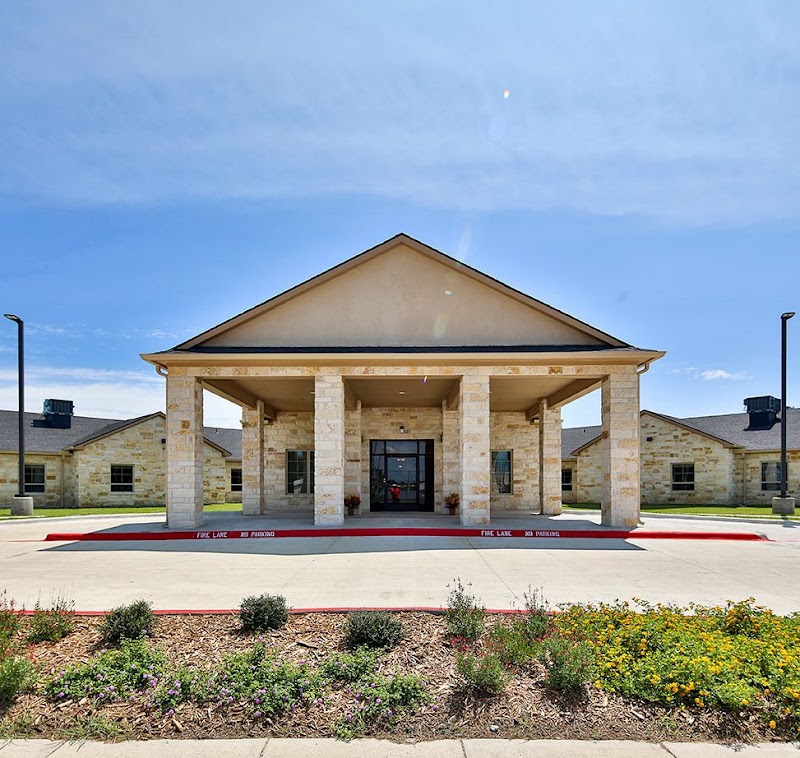
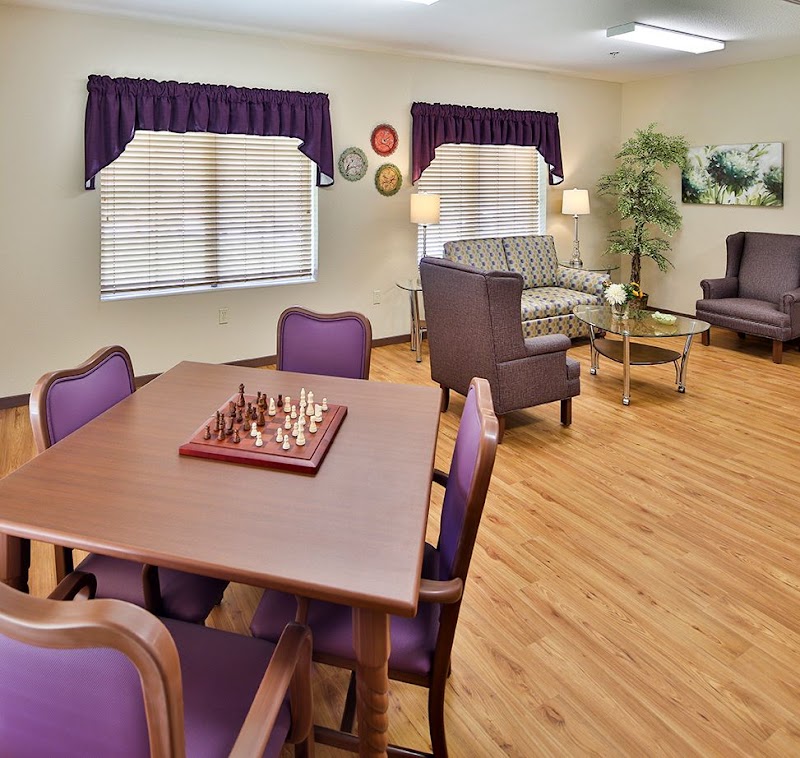
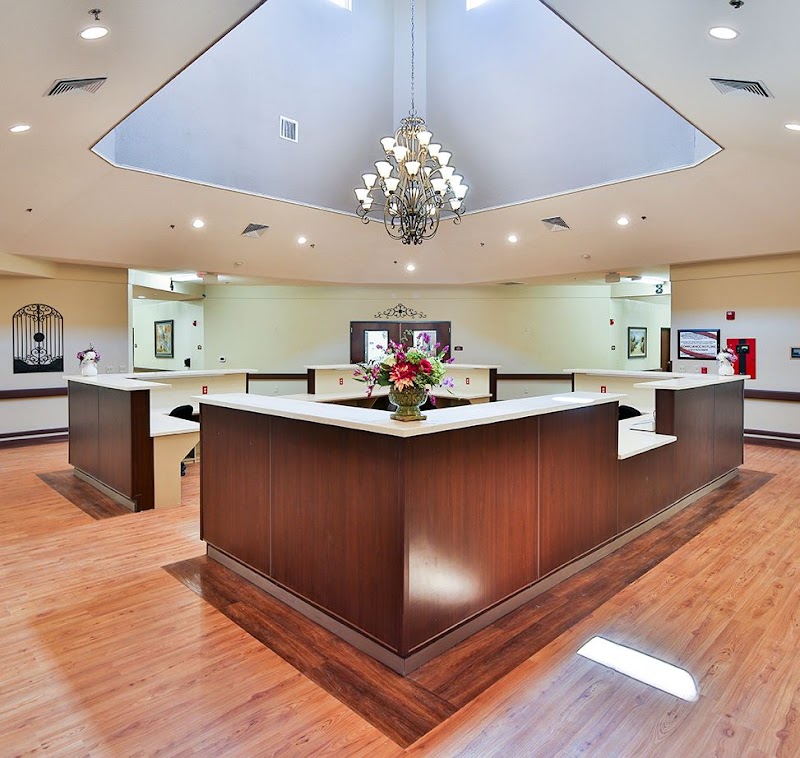

WINDSOR CALALLEN

4162 WILDCAT DR, CORPUS CHRISTI, TX 78410 (361) 241-2954
Government - Hospital district 120 Beds WELLSENTIAL HEALTH Data: November 2025
Trust Grade
63/100
#378 of 1168 in TX
Last Inspection: May 2025

Inspected within the last 6 months. Data reflects current conditions.

Overview

Windsor Calallen in Corpus Christi, Texas, has a Trust Grade of C+, indicating that it is slightly above average but not outstanding. It ranks #378 out of 1168 facilities in Texas, placing it in the top half, and #5 out of 14 in Nueces County, meaning only four local options are better. The facility is improving, with the number of reported issues decreasing from 13 in 2024 to 12 in 2025. Staffing is a concern, with a rating of 2 out of 5 stars and a turnover rate of 43%, which is better than the Texas average of 50%, suggesting some stability among staff. However, there have been some serious incidents, including a failure to ensure proper assistance for a resident who required two-person support for transfers, and numerous concerns regarding food safety and sanitation practices in the kitchen, which could impact residents' health and safety. Overall, while Windsor Calallen has strengths in its ranking and improving trend, families should be aware of the staffing issues and specific incidents that raise concerns about safety and care quality.

Trust Score
C+
63/100
In Texas
#378/1168
Top 32%
Safety Record
Moderate
Needs review
Inspections
Getting Better
13 → 12 violations
Staff Stability
○ Average
43% turnover. Near Texas's 48% average. Typical for the industry.
Penalties
⚠ Watch
$12,893 in fines. Higher than 90% of Texas facilities, suggesting repeated compliance issues.
Skilled Nurses
⚠ Watch
Each resident gets only 18 minutes of Registered Nurse (RN) attention daily — below average for Texas. Fewer RN minutes means fewer trained eyes watching for problems.
Violations
⚠ Watch
30 deficiencies on record. Higher than average. Multiple issues found across inspections.
★★★★☆
4.0
Overall Rating
★★☆☆☆
2.0
Staff Levels
★★★★★
5.0
Care Quality
★★★☆☆
3.0
Inspection Score
Stable
2024: 13 issues
2025: 12 issues

The Good

  • 5-Star Quality Measures · Strong clinical quality outcomes
  • Full Sprinkler Coverage · Fire safety systems throughout facility
  • No fines on record
  • Staff turnover below average (43%)

    5 points below Texas average of 48%

Facility shows strength in quality measures, fire safety.

The Bad

Staff Turnover: 43%

Near Texas avg (46%)

Typical for the industry

Federal Fines: $12,893

Below median ($33,413)

Minor penalties assessed

Chain: WELLSENTIAL HEALTH

Part of a multi-facility chain

Ask about local staffing decisions and management

The Ugly 30 deficiencies on record

1 actual harm
Aug 2025 1 deficiency
CONCERN (D) 📢 Someone Reported This

A family member, employee, or ombudsman was alarmed enough to file a formal complaint

Potential for Harm - no one hurt, but risky conditions existed

Comprehensive Care Plan (Tag F0656)

Could have caused harm · This affected 1 resident

**NOTE- TERMS IN BRACKETS HAVE BEEN EDITED TO PROTECT CONFIDENTIALITY** Based on interviews and record review, the facility failed to develop and implement a person-centered care plan for each residen...

Read full inspector narrative →
**NOTE- TERMS IN BRACKETS HAVE BEEN EDITED TO PROTECT CONFIDENTIALITY** Based on interviews and record review, the facility failed to develop and implement a person-centered care plan for each resident that included measurable objectives and timeframes to meet a resident's medical, nursing, and mental and psychosocial needs that were identified in the comprehensive assessment for 1 of 5 residents (Resident #1) reviewed for comprehensive care plans. The facility did not include Resident #1's mechanically altered diet (modified texture and consistency of food and liquids such as mechanical soft or purred diet) on her care plan. This failure could place residents at risk for not receiving a safe and appropriate care.The findings include: Record review of Resident #1's face sheet, dated 08/21/25, revealed an [AGE] year-old female who was admitted to the facility on [DATE] and discharged on 08/16/25. Resident #1 had diagnoses which included: fistula of vagina to large intestine (abnormal connection that allows gas, stool and other contents from the large intestine to leak into the vagina), malignant neoplasm (cancer) of unspecified ovary, and anorexia nervosa (eating disorder), unspecified. Record review of Resident #1's Medicare 5 day Minimum Data Set assessment, dated 07/04/25, revealed Resident #1 had a BIMS score of 11, which indicated she was moderately cognitively impaired. Resident #1's MDS indicated she was on a mechanically altered diet that required a change in texture of food or liquids on admission and while a resident at the facility. Record review of Resident #1's initial nursing evaluation with an effective date of 07/02/25 reflected she was on a mechanically altered diet. Record review of Resident #1's order summary report reflected she had an order for mechanical soft texture and regular liquids consistency from 07/02/25 until 07/25/25 when it was discontinued and was upgraded to a regular texture and regular liquid consistency diet from 07/25/25 until 08/11/25. Resident #1 had an order for pureed texture and regular liquids started 08/11/25 until it was discontinued on 08/16/25. Record review of Resident #1's initial baseline care plan dated 07/02/25 reflected her diet ordered was .mech [mechanical] soft, thin liquids and was marked as Yes under question that asked, Mechanically Altered? Record review of Resident #1's nursing noted reflected a note dated 08/11/25 that stated Resident #1's responsible party had notified RN A of Resident #1's request to change her diet texture to puree. Record review of Resident #1's closed comprehensive care plan, with a closed date of 08/18/25 did not reflect Resident #1's mechanically altered diet or food texture and liquid consistency. During an interview with MDS Nurse B on 08/21/25 at 3:05pm she stated she was responsible for completing the comprehensive care plan for Resident #1. MDS Nurse B stated she had reviewed Resident #1's care plan and it did not include her diet. MDS Nurse B stated it was best to include residents diets and altered texture diets on their care plans and stated she should have put a diet on Resident #1's care plan. MDS Nurse B stated she did not have a valid reason as to why Resident #1's diet was not include don her care plan. MDS Nurse B stated it was initially important to include diets on residents care plans to notify staff that they are on a mechanically altered diet. MDS Nurse B stated the care plans had to be signed by an RN but she was not sure about how often they were being monitored. MDS Nurse B stated she had been trained over developing a care plan and what it should include., MDS Nurse B did not recall an exact date of her last training but stated they had calls every Friday with their corporate team where they stressed the importance of care planning. MDS Nurse B was asked how not including a residents diet on their care plan could negatively impact them and stated she understood the importance of it but stated there were plenty of other areas that staff could find that information that was accurate, good, safe and quick for their diets in question. During an interview on 08/21/25 at 3:25pm with the Regional MDS Nurse, she stated every Friday she completed education calls. The Regional MDS Nurse stated on 05/05/25 she was at the facility and provided a training over care areas that had to be care planned including nutrition and where to care plan diets. The Regional MDS Nurse stated MDS Nurse B had received the training. The Regional MDS Nurse stated she was unable to find any documentation of the education that was provided on 05/05/25. During an interview with the DON on 08/21/25 at 3:42pm she stated MDS Nurse B was responsible for completing Resident #1's care plan. The DON stated care plans should include the resident's diets and stated she had reviewed Resident #1's care plan and it did not include her diet. The DON stated she did not know why Resident #1s care plan did not include her diet. The DON stated it was important to include resident's diets on their care plans so that everyone could be aware of it. The DON stated she reviewed and monitored the care plans to ensure they had all required information. The DON stated care plans should be monitored daily and stated she performed monthly audits on everything and stated any new changes should have been updated on the care plans. The DON stated her and MDS Nurse B had both been trained by the Regional MDS Nurse over developing a care plan and what should be included and stated her last training was on 07/15/25 and MDS Nurse B last training was on 05/05/25. The DON stated they did not have any documentation for those trainings. The DON stated not including a resident diet on their care plan could negatively impact them because they could miss a diet texture. During a continued interview on 08/21/25 at 3:42pm with the DON she stated she did not have any documentation to provide for the training her and MDS Nurse B had received over care plans by the Regional MDS nurse on 05/05/25 and 07/15/25. At this time the DON provided an Inservice she had started on 08/21/25 that included the DON and MDS Nurse B and covered, completing care plans accurately and reviewing [and] updating daily [with] any new orders, changes in condition/ADLS Record review of facility policy titled, Comprehensive Care Plans with an implementation date of 10/24/22 included the following verbiage, Policy: It is the policy of this facility to develop and implement a comprehensive person-centered care plan for each resident, consistent with resident rights, that includes measurable objectives and timeframes to meet a resident's medical, nursing, and mental and psychosocial needs that are identified in the resident's comprehensive assessment. and 3. The comprehensive care plan will describe, at a minimum, the following: a. The services that are to be furnished to attain or maintain the resident's highest practicable physical, mental, and psychosocial well-being.
Aug 2025 1 deficiency
CONCERN (D) 📢 Someone Reported This

A family member, employee, or ombudsman was alarmed enough to file a formal complaint

Potential for Harm - no one hurt, but risky conditions existed

Pharmacy Services (Tag F0755)

Could have caused harm · This affected 1 resident

**NOTE- TERMS IN BRACKETS HAVE BEEN EDITED TO PROTECT CONFIDENTIALITY** Based on interview and record reviews the facility failed to ensure that drugs and biologicals for Resident #1 were received and...

Read full inspector narrative →
**NOTE- TERMS IN BRACKETS HAVE BEEN EDITED TO PROTECT CONFIDENTIALITY** Based on interview and record reviews the facility failed to ensure that drugs and biologicals for Resident #1 were received and counted appropriately for 1 of 4 residents. A narcotic medication for Resident #1 was not received and counted appropriately by RN A when Resident #1 admitted to the facility. The narcotic count for medication Oxycodone-Acetaminophen Oral Tablet 10-325 MG was short by 15 pills.This failure could result in being in pain.Findings included: Record review of Resident #1’s face sheet dated August 5, 2025, revealed Resident #1 admitted on [DATE]. Resident #1 had medical diagnoses of Cirrhosis of the liver (chronic liver damage), Other Psychoactive substance abuse, Hypertension (High Blood Pressure), Hepatitis C, and Repeated falls. Review of Resident #1’s admission MDS assessment dated [DATE], revealed Resident #1 had a BIMS (Brief Interview Mental Status) score of 05 which indicates severe cognition impairment. Record review of Resident #1’s care plan, undated, revealed Resident #1 had chronic pain due to liver cirrhosis. Record review of Resident #1’s physician orders dated August 5, 2025, included Oxycodone-Acetaminophen Oral Tablet 10-325 MG by mouth every 4 hours as needed for Pain with a start date of July 10, 2025. During an interview on August 5, 2025, at 1:35p.m., LVN A verbalized she was giving report to the oncoming nurse on July 10, 2025, and they (she and the oncoming shift nurse) were waiting on narcotics from the hospice nurse for Resident #1. LVN A stated “RN A told me she would count the narcotics when they arrived”. I had already signed in some other medications Resident #1 brought from home. LVN A stated she was going off shift and RN A was coming on shift when the narcotics arrived, but I never opened or saw the narcotics. LVN A stated she did not think this resident was abused or neglected due to Resident #1 never being without medication. LVN A stated we (the facility staff) changed the way we receive medication, and we have to ensure we count the medication with whomever drops off the medication and we have them sign our paperwork also. It has always been the policy to have 2 staff members sign for narcotic medication. During an attempt to reach Resident #1 on August 8, 2025, this investigator was hung up on two times. This occurred at 2:00p.m and 2:05p.m. During an interview on August 8, 2025, at 2:30p.m., LVN B verbalized he counted the narcotic medication cart when he came on shift on July 11, 2025. LVN B stated the off-going shift nurse had Resident #1's medication in pill bottles and when he counted the narcotics named Oxycodone-Acetaminophen Oral Tablet 10-325 MG the count was off by 15 pills. LVN B stated he notified the ADON and DON that the narcotic count was off. LVN B stated the DON and ADON took the medication and recounted the medication and started an investigation. LVN B stated he was not sure what happened after they started investigating the missing medication. During an interview on August 8 ,2025 at 2:40p.m., RN A stated she did receive the Oxycodone-Acetaminophen Oral Tablet 10-325 MG from the hospice nurse, and she did lock them up but did not count them. RN A stated she took report from the off going staff member (LVN A) started her shift. RN A stated she received a pill bottle from the hospice nurse and took the count listed on the bottle as the amount of narcotics in the bottle (the count was 60). RN A stated she knew she should have counted them, but she did not count the medication. RN A stated she did not know how to answer the question of if its abuse or neglect for Resident #1. RN A stated Resident #1 was never without her medication and was never in pain. RN A stated she did not follow proper policy and protocol. During an interview on August 8, 2025, at 3:00p.m., the Director of Nursing (DON) stated she was notified by LVN B that the narcotic medication labeled Oxycodone-Acetaminophen Oral Tablet 10-325 MG count was off by 15 pills for Resident #1. The DON stated she immediately took the bottle of medication and tried to find the missing pills. The DON stated she notified the Administration and started an investigation. The DON verbalized the investigation included interviewing staff, calling hospice, placing staff on suspension, doing in-services on narcotic medication, reviewing Resident #1's entire clinical record, reviewing narcotic logs, and providing support to leadership during the process of investigating. During an interview on August 8, 2025, at 3:15p.m., the Administrator stated he was made aware the narcotic medication labeled Oxycodone-Acetaminophen Oral Tablet 10-325 MG was missing the morning of July 11, 2025, by the DON. The Administrator stated I called the person who delivered the medication, the pharmacy, and the DON for Hospice. The Administrator stated we (staff involved in the investigation) found out that this medication was left at the Hospice office for over 24 hours. The Administrator stated his facility staff nurse (RN A) trusted the pharmacy count and she did not count the actual medications. The Administrator stated policy and procedure was not followed. The Administrator stated the staff were placed on suspension and we have updated our policy and process for receiving medication. The Administrator stated we have also updated staff on the policy and now we request blister packs from all our pharmacies and Hospice companies. The Administrator stated I do not think this resident was abused or neglected and the resident was never in pain because she was never out of medication. A review of the facility policy named “Medication Policy, subsection Receiving Controlled Substances” dated October 1, 2019, revealed “At the time of delivery, the licensed nurse will verify the controlled substances received in the presence of the driver. The information on the manifest delivery log is correlated and both copies are signed indicating delivery and receipt of the individual controlled substances has been accomplished”.
May 2025 5 deficiencies
CONCERN (D)

Potential for Harm - no one hurt, but risky conditions existed

Deficiency F0645 (Tag F0645)

Could have caused harm · This affected 1 resident

**NOTE- TERMS IN BRACKETS HAVE BEEN EDITED TO PROTECT CONFIDENTIALITY** Based on interviews and record reviews, the facility failed to a PASRR evaluation was completed on newly admitted residents prio...

Read full inspector narrative →
**NOTE- TERMS IN BRACKETS HAVE BEEN EDITED TO PROTECT CONFIDENTIALITY** Based on interviews and record reviews, the facility failed to a PASRR evaluation was completed on newly admitted residents prior to admission or after admission for 1 of 5 residents (Resident #83) reviewed for Preadmission Screening and Resident Review screenings. The facility failed to ensure Resident #83's PASRR L1 screening dated 08/26/21 accurately reflected his diagnoses of mental illness. There was no evidence that Resident #83 was referred to a Level 2 PASRR Screening and Evaluation. This failure could affect residents by placing them at risk for not receiving needed treatments and services. Findings included: Record review of Resident #83's face sheet revealed a [AGE] year-old male with an admission, original and initial date of 08/27/21. His principal diagnosis was stroke and secondary diagnoses were alcohol abuse and kidney failure. Diagnoses included major depressive disorder, recurrent, moderate dated 06/07/22, and anxiety disorder dated 06/07/22 and 12/08/21. Post-Traumatic Stress Disorder, Chronic dated 09/15/21, mood (affective) disorder dated 04/21/25, dementia, unspecified severity, with agitation dated 01/24/23, dementia dated 04/25/23, insomnia, altered mental status, and restlessness and agitation dated 04/21/25. Record review of Resident #83's admission MDS report dated 08/30/21 revealed a BIMS score of 06 indicating severe cognitive impairment. Section D: Mood indicated he had little interest or pleasure in doing things, felt tired or had no energy nearly every day. He felt down, depressed, or hopeless, trouble falling or staying asleep, or sleeping too much half or more of the days. He had a poor appetite for several days. He was on a mechanically altered diet. He was not steady and only able to stabilize with staff assistance. He required staff assistance with toileting, dressing, footwear, showering and positioning, personal hygiene, and set-up with oral hygiene and eating. He could sit in a wheelchair. He was frequently incontinent of bladder and bowel. Record review of Resident #83's quarterly MDS report dated 04/22/25 revealed a BIMS score of 00 indicating severe cognitive impairment. His cognitive skills were severely impaired for daily decision making. His inattention was continuous. He had physical and/or verbal behavioral symptoms directed toward others every 1-3 days. He was dependent on staff for all ADL's. He was on a mechanically altered diet. He was always incontinent of bladder and bowel. His active diagnoses were stroke, mood (affective) disorder, insomnia, altered mental status, restlessness and agitation, encounter for palliative care, cognitive communication deficit, insomnia, and alcohol abuse. He was taking antianxiety, antidepressant, and hypnotic medications. He was receiving hospice care. Record review of Resident #83's PL1 from a local hospital dated 08/26/21 was negative for MI (mental illness), ID (intellectual disability), and DD (developmental disability). There were no other PL1 screenings for Resident #83. Record review of Resident #83's Care Plan dated 08/29/21 revealed he has an ADL self-care performance deficit r/t Confusion, Dementia Date Initiated: 09/02/21 Revision on: 09/02/21. He had a behavior problem of abusive language, threatening behavior, rejection of care, and will push staff related to PTSD, dementia, yelling, screaming, pushing, and grabbing Date Initiated: 05/09/22 Revision on: 08/08/22. He had impaired cognitive function/dementia or impaired thought processes related to Alzheimer's, Dementia Date Initiated: 06/07/22 Revision on: 06/07/22. He had a history of actual falls and was at a high risk for further falls. Confusion, poor safety awareness, Deconditioning, anxiety, use of psychoactive medications. Will pull his floor mat onto his bed. Date Initiated: 09/02/21 Revision on: 05/05/25. He used anti-anxiety medications r/t anxiety disorder and mood disorder. Date Initiated: 10/22/21 Revision on: 03/12/25. He used antidepressant medication r/t Depression, Insomnia Date Initiated: 10/22/21 Revision on: 04/28/25. He had a terminal prognosis r/t cerebral infarction (stroke) Date Initiated: 10/31/22 Revision on: 10/31/22. Record review of Resident #83's Care Plan dated 04/16/25 revealed the revision date for a history of actual falls and was at a high risk for further falls. Confusion, poor safety awareness, deconditioning, anxiety, use of psychoactive medications. Will pull his floor mat onto his bed. Date Initiated: 09/02/21 Revision on: 03/12/25. He was on sedative/hypnotic therapy r/t Insomnia Date Initiated: 09/02/21 Revision on: 09/26/22. Record review of Resident #83's Form 1012 (Mental Illness/Dementia Resident Review) dated 02/02/23 revealed Yes, the individual has a primary diagnosis of dementia as defined above. The physician signs and dates the form attesting to the dementia diagnosis. Complete Sections D and E of the form. File the form in the resident's medical record. The Form 1012 Indicated the PL1 was dated 08/26/21. Section C. of the Form 1012 indicated Resident #83 had a Mood Disorder (Major Depression) The Form 1012 did not indicate Resident #83 had an anxiety disorder or any other disorder (such as PTSD). Section C instructed If all the responses are No, physician signs and dates the form. A new PL 1 is not needed at this time. Complete Sections D and E. If any of the responses are YES, the nursing facility needs to complete a new PL 1 and Sections D and E of the form. A full PASRR Evaluation will be conducted after the nursing facility submits the new positive PL 1. Section D of Resident #83's Form 1012 had The PL 1 remains negative and no new PL 1 needs to be completed. The nursing facility files the completed form in the resident's chart selected, but not A new positive PL 1 was submitted on _______ according to the instructions in Section C with DLN Driver's License Number). Resident #83's Form 1012 was signed by the MDS nurse on 02/02/23. Record review of Resident #83's Psychiatric Subsequent assessment dated [DATE] indicated he had diagnoses of: Primary Treating Diagnosis: Generalized anxiety disorder. Secondary Treating Diagnosis: Insomnia due to other mental disorder. Tertiary Treating Diagnosis: Major depressive disorder, recurrent, moderate. Reason for Referral: Anxiety, Agitation, Alcohol or Substance Abuse, Previous Mental Health Diagnosis: fidgety, pacing, intruding roommates' space, Other: PTSD. In an interview with the MDS on 05/06/25 at 5:28 PM, she said Resident #83's PASRR L1 dated 08/26/21 was negative and the person who worked at the facility before her, quit, so she had been catching things up, and that was why Resident #83's Form 1012 dated 02/02/23 had taken 2 years to send. She said she checked the Form 1012 Section C yes for Mood Disorder (Major Depression) and signed the form. She said she missed the part of the instructions where the Form 1012 stated, If any of the responses are yes, the nursing facility needs to complete a new PL1 and sections D and E of the form. A full PASRR Evaluation will be conducted after the nursing facility submits the new positive PL1. She said she misread Section D of the Form 1012 and filled in the circle that stated, The PL1 remains negative and so no new PL1 needs to be completed. The nursing facility files the completed form in the resident's chart. She said her signature was on the Form 1012 and said she would submit another PL1 now. She said Resident #83 had declined since his admission. Policy for PASRR was requested at this time. In an interview with the ADM on 05/07/25 at 8:55 AM, he said the facility did not have a policy on PASRR.
CONCERN (D)

Potential for Harm - no one hurt, but risky conditions existed

Deficiency F0692 (Tag F0692)

Could have caused harm · This affected 1 resident

**NOTE- TERMS IN BRACKETS HAVE BEEN EDITED TO PROTECT CONFIDENTIALITY** Based on observations, interviews, and record review, the facility failed to maintain acceptable parameters of nutritional statu...

Read full inspector narrative →
**NOTE- TERMS IN BRACKETS HAVE BEEN EDITED TO PROTECT CONFIDENTIALITY** Based on observations, interviews, and record review, the facility failed to maintain acceptable parameters of nutritional status, such as usual body weight or desirable body weight range and electrolyte balance, unless the resident's clinical condition demonstrates that this is not possible or resident preferences indicate otherwise for 1 of 5 residents (Resident #50) reviewed for nutritional status. The facility failed to recognize, evaluate, and address timely interventions such as continued weekly weights to identify and prevent weight loss when Resident #1 experienced significant weight loss of 21% (47 pounds) between the dates of 03/10/25 and 05/07/25. This failure could place residents at risk for improper care, weight loss, malnutrition, and overall health decline. Findings included: Record review of Resident #50's face sheet revealed an [AGE] year-old male with an admission date of 03/06/25. Diagnoses included Type 2 Diabetes Mellitus (a disease that affects how the body uses blood sugar), Congestive Heart Failure (a condition affecting the heart's ability to pump blood well), Pressure Ulcers, Chronic Kidney Disease (a condition affecting the kidney's ability to filter waste from the blood), and Muscle Wasting and Atrophy (a decrease in size or wasting away of a body part or tissue). Record review of Resident #50's care plan initiated 05/06/25 revealed he had potential nutritional problems due to decreased mobility, and multiple areas of impaired skin integrity. Interventions included monitor, record, and report to provider signs and symptoms of malnutrition, emaciation, muscle wasting, and significant weight loss (3lb in 1 week, greater than 5% in 1 month, greater than 7.5% in 3 months, and/or greater than 10% in 6 months). Record review of physician orders initiated 03/07/25 revealed an order to weigh weekly x 4 weeks, then monthly and PRN. There were also multiple orders for wound care. A physician order dated 04/30/25 revealed an order for liquid protein and an order for a nutritional supplement. A regular diet order dated 03/06/25 revealed an order for fortified foods with all meals, and large portions with breakfast and dinner. Record review of Resident #50's weight summary revealed on 05/07/25 a weight of 174.2lbs; on 05/02/25 a weight of 179.6lbs; on 04/02/25 a weight of 196.2lbs; on 03/27/25 a weight of 194.6lbs; on 03/20/25 a weight of 196.6lbs; on 03/13/25 a weight of 204.6lbs; on 03/10/25 a weight of 221lbs for a total weight loss of 47 lbs. Resident #50's current BMI was 27.3. Record review of Resident #50's progress note dated 04/16/25 revealed Resident #50 had refused to be weighed. No other weight refusals or weight attempts noted between 04/02/25 and 05/02/25. No progress notes noting the physician was notified of weight loss or weight refusals. Record review of in-service dated 05/06/25 revealed an in-service regarding nursing staff obtaining weights on admission, as well as obtaining weekly weights when the RA is unavailable. In an interview and observation on 05/06/25 at 8:45 AM Resident #50 was observed lying in bed with a wound vac sitting below the bed attached to his lumbar or sacral area. Resident #50 stated he had many wounds the nurses had been working on to get better. He stated he was losing weight because his appetite was not as good as it used to be, and he did not eat as much as he used to. He also stated the food there was not great either. In an observation on 05/07/25 at 9:00 AM, the RA was observed weighing Resident #50 via the mechanical lift. In an observation on 05/06/25 at 2:56 PM, Resident #50's wounds appeared to be progressing and healing. In an interview with ADON-A on 05/06/25 05:42 PM she stated the RA typically weighed the residents weekly on the same day each week. She also stated the RA was also a CNA, so she would get pulled to work the floor frequently. She also stated she was unsure why Resident #50 was not getting weighed weekly. She stated when a resident had as much weight loss as Resident #50 had, weekly weights should have been continued. She stated they were aware they needed to continue to monitor his weight due to his weight loss, and they had attempted it, but it was why there was a refusal in the progress notes dated for 04/16/25. ADON-A stated although the RA was the one who took the weights, only nurses entered weights into the electronic charts, and it was typically the DON who entered the weights. She stated the RA had been falling behind on obtaining weights because they had been scheduling her to work on the floor as a CNA. She also stated if weights were not being taken, the TAR should have flagged that the weights were not being completed, and this was something her and ADON-B, as well as the DON were alerted about. She stated they all dropped the ball on continuing his weights and reporting his weights to the provider. In an interview with the RD on 05/06/25 at 5:51 PM she stated she was flagged regarding Resident #50's weight loss, and it was why he was on interventions for weight loss and wounds such as Med Pass (started 04/07/25), Mirtazipine (started 05/03/25), Critical Care Liquid Protein (started 04/30/25), Juven (started 04/30/25), high protein snacks three times a day (started 04/07/25), fortified diet with large portions (started 03/06/25). She stated she was unsure of the reasons he continued to have weight loss. She stated she was only alerted when the residents' weights were entered, and they triggered for weight loss. She stated she ran weight variance reports monthly to determine which residents had weight loss or weight gain and what interventions needed to be put into place. She stated she did not always look at the orders to determine who was a daily, weekly, or monthly weight, and she was not sure if she was supposed to look at the orders or know that information. She stated she was not sure if it was in her job description to check orders, but she would find out. In an interview with ADON-B on 05/07/25 at 8:50 AM he stated Resident #50 had lost over 40 lbs. He stated excessive weight loss could lead to dehydration, malnutrition, loss of muscle mass, and possible death. ADON-B stated the RA did the weekly weights then took them to the DON, and the DON input the weights and checked for weight loss. He also stated weights that had not been completed would flag red in the TAR when they had not been done, and this would alert the ADONS. If the weight obtained showed a large weight loss or weight gain, the RA would usually get a reweigh; also, if the weight was not obtained because the RA was busy working the floor or gone that day, either the LVN would obtain the weight, or the RA would obtain at a later time. Resident #50's orders were for weekly weights x 4 weeks, then monthly and PRN. He stated if the resident continued to have weight loss the order should have been continued for weekly weights, and although Resident #50's order showed monthly and prn, the RA knew to continue weighing him weekly due to his weight loss. He was currently being weighed monthly. ADON-B stated Resident #50 refused weights sometimes, and this was care planned. After checking Resident #50's chart, ADON-B stated he could not find a progress note or anything else showing the physician had been contacted regarding Resident #50's weight refusals or weight loss. He stated they usually discussed the residents who needed weights and the residents with weight loss in the morning meetings, but somehow, they had missed or overlooked Resident #50's weight loss, the need for a new weight order, and the need for continued weekly weights. He stated either the ADONs or the DON should have put in an order to continue weekly weights, and by not doing that it placed the resident at risk for malnutrition and poor wound healing. In an interview with the RA on 05/07/25 at 9:20 AM she stated she had a list of weekly weights that came from the DON and the RD that were obtained from the residents' orders, and Resident #50 was on her weekly weight list, and he was weighed via mechanical lift. She stated she was the one who did the admission and weekly weights when she was able, but if she was pulled to work the floor, and unable to obtain the weights, the DON would get a nurse or someone else to get the weights. She notified the DON with any 5lb weight gain or loss, and she would typically have to reweigh them within 24 hours. She stated Resident #50 was a refusal on 4/16, but she should have attempted again that evening or the next day; she also stated Resident #50 was supposed to be weighed on 04/09/25 and 04/23/25, but she was working the floor those days, so the DON was supposed to get someone else to weigh him. She stated she did not know Resident #50 had a weight loss until 05/06/25 because the DON was the one who input and reviewed the weights. She stated she did get the 04/29/25 weight, but she was unsure why the DON entered the 04/29/25 weight on 05/02/25. She stated Resident #50's current weight for today (05/07/25) was 174.2 lbs. She also stated if a resident continued to lose weight it could prevent them from getting better, and they would probably get sicker. In an interview with the DON on 05/07/25 at 10:35 AM she stated the RD should be reviewing the residents' orders for weight orders. She stated on 04/16/25 Resident #50 declined to be weighed, but it should have been attempted again at a later time. The DON stated Resident #50 was care planned for weight refusals. She stated he was not currently on weekly weights, but if his weight continued to decline, he would be placed on weekly weights. Then she stated considering the amount of weight loss he had there should have been weekly weights ordered. The DON stated the RA obtained the weights and reported them to her, and if she was pulled to work the floor she would stay late to get weights, or the floor nurses would obtain their own, and if the weights were not obtained for residents on weekly weights, there would be an alert on the dashboard (the electronic monitoring system) for the ADONs. According to the DON, the alerts for the missed weights and concerns for weight loss were discussed in their morning stand-up meetings. She stated the RA was pretty good about going back and getting weights that had been missed. She stated in-services and communication notes were done yesterday (05/06/25) regarding the need for nurses to obtain their own weights when the RA was unable to obtain them. She stated she did not get alerts that the weights were not being done, but she did in-service if there was an alert on the dashboard that weights were not getting done, she needed to be notified so someone else could get the weight. The DON stated if a resident had a large amount of weight loss it could potentially lead to malnutrition, dehydration, organ failure, and even death, but none of these issues had happened, and no red flags were noted for Resident #50 by the nursing or therapy teams. She stated there were no signs of excessive weight loss of Resident #50 such as lethargy, dehydration, or clothing fitting differently. She stated she had access to the dashboard where unobtained weights would alert, but she had not been reviewing the dashboard for any alerts. She thought the ADONs may have opened the alerts and reviewed and cleared them. In an interview with the primary care provider on 05/07/25 at 12:05 PM he stated the skilled patients were not at the facility for long term needs, they were only there for a short-term skilled need, so he was not concerned with their weight loss. He also stated most of the skilled patients were okay to lose some weight and probably needed to lose some weight, and Resident #50's weight was acceptable and not a concern. He stated he did not have an expectation for the nurses to call him with weight loss regarding the skilled patients, only the long-term patients. The provider stated he was busy trying to drive and unable to answer any more questions. In an interview with the Wound Care Nurse on 05/07/25 at 2:10 PM, she stated the Resident #50's wounds were healing and looked better. She also stated Resident #50 was being seen and followed by a wound care physician and service that tracked the progress of his wounds. In an interview with the RD on 05/07/25 at 2:50 PM she stated she had spoken with her supervisor and found out it was not in her job description to review residents' orders, and she was not required to look at the orders to determine who was on daily, weekly, or monthly weights. She stated she typically came to the facility weekly unless she was out on vacation or PTO. She also stated she printed weight variance reports weekly, not monthly as previously stated. Record review of the facility's Weight Monitoring policy (no implementation or revision date) revealed Weight can be a useful indicator of nutrition status. Significant unintended changes in weight (loss or gain) or insidious weight loss (gradual unintended loss over a period of time) may indicate a nutritional problem. 5. A weight monitoring schedule will be developed upon admission for all residents: C. Residents with significant weight loss - monitor weight weekly. D. If clinically indicated - monitor weight daily.
CONCERN (D)

Potential for Harm - no one hurt, but risky conditions existed

Deficiency F0761 (Tag F0761)

Could have caused harm · This affected 1 resident

**NOTE- TERMS IN BRACKETS HAVE BEEN EDITED TO PROTECT CONFIDENTIALITY** Based on observation, interview, and record review, the facility failed to properly label and include the expiration date for 2 ...

Read full inspector narrative →
**NOTE- TERMS IN BRACKETS HAVE BEEN EDITED TO PROTECT CONFIDENTIALITY** Based on observation, interview, and record review, the facility failed to properly label and include the expiration date for 2 of 4 medication carts (Hall #3 med-cart and Hall #5 med-cart) reviewed for storage and 1 of 1 medication room (med-room [ROOM NUMBER]) reviewed for labeling and storage. The facility failed to properly label from hall #3 med-cart a bottle of saline nasal spray that had been opened and used. The bottle was approximately half full. The facility failed to dispose of the medication from hall #3 med-cart Morphine (a narcotic pain medication) 30 MG tablets belonging to Resident #17 that expired on 04/11/24. The facility failed to dispose of the medication from hall #3 med-cart Pravastatin (a drug used to lower cholesterol) 20 MG tablets belonging to Resident #44 that expired on 04/08/2025. The facility failed to dispose of the medication from hall #5 med-cart a tube of Hydrocortisone Cream that expired in April of 2025. The facility failed to dispose of a large bin of single use Tuberculin Safety Syringes from med-room [ROOM NUMBER]. These deficient practices could place residents at risk of receiving medications or supplies that were both expired and possibly cross-contaminated. The findings included: Record review of Resident #17' s face sheet dated 05/07/25 revealed an [AGE] year-old female with an initial admission date of 08/04/16, and a current admission date of 12/19/24. Diagnoses included Chronic Pain Syndrome. Record review of Resident #17' s care plan initiated 04/03/18 and revised 02/20/19 revealed a care plan for risk for pain with interventions to include give medications for pain as ordered. Record review of Resident #17's physician orders dated 01/02/25 revealed an order for Morphine Sulfate 30 MG. Record review of Resident #44' s face sheet dated 05/07/25 revealed a [AGE] year-old female with an original admission date of 08/27/21, and a current admission date of 07/12/22. Diagnoses included Hyperlipidemia (abnormally high levels of lipids or fats in the blood). Record review of Resident #44's physician orders dated 07/10/23 revealed an order for Pravastatin Sodium 20mg for Hyperlipidemia. During an observation on 05/06/25 at 9:37 AM of the Hall #3 med-cart revealed Hall #3 med-cart had an open, unlabeled bottle of saline nasal spray, approximately half full. The med-cart from hall #3 also had expired meds to include 10 tablets of Morphine (belonging to Resident #17) that had expired 04/11/25, 60 tablets of Pravastatin (belonging to Resident #44) that had expired 04/08/25, and 30 tablets of Pravastatin (belonging to Resident #44) that had expired 10/20/24. During an observation on 05/06/25 at 9:57 AM of med-room [ROOM NUMBER] revealed a large bin with approximately 50 single use Tuberculin Safety Syringes that expired 11/30/24. During an observation on 05/06/25 at 4:55 PM of Hall #5 med-cart revealed an approximately half full, open tube of Hydrocortisone Cream that expired in April of 2025. In an interview with MA-F on 05/06/25 at 9:42 AM, she stated did not realize the medications were expired, and the ADONs and the DON typically checked the med-carts every week or so for expired medication, but the floor nurses knew they were supposed to routinely check their carts for expired medications as well. She stated the reason the DON checked the carts every two weeks was because the med-aides were not allowed to take expired narcotics from the med-carts. So, if a med-aide noticed an expired narcotic on the med-cart they would let the DON know it was there so she could have removed it. She stated administering expired medications could cause a resident to become sick or could be ineffective in treating the resident since most medications lose their efficacy after expiring. In an interview with LVN E on 05/06/25 at 11:00 AM, she stated the ADONs or the DON would typically check the med-carts and medication room every couple of weeks for expired medication or supplies. She also stated central supply usually checked the medication room for expired supplies when they stock items, but she was unsure of how often. She stated those syringes (expired Tuberculin syringes) never got used, so the bin stayed full, and that was probably why no one ever noticed they were expired. In an interview with RN-D on 05/06/25 at 4:55 PM he stated the ADONs or the DON routinely checked the medication room and med-carts for expired medications and supplies. He stated he thought they had just checked his cart today, but they must have missed the expired Hydrocortisone Cream. He stated using expired medications could be ineffective at treating whatever the medication was intended for, and it could even possibly cause harm. In an interview with ADON-B on 05/07/25 at 8:50 AM he stated both the ADONs and the DON routinely checked for expired medications and supplies in the medication room and on the med-carts. They were typically checked every week or so. He stated using expired medications could be ineffective at treating the residents' symptoms as well as could even possibly cause harm. Record review of Medication Policies revised 10/01/19 revealed all drugs and biologicals in the facility are labeled in accordance with all Federal and State regulations. 6. Resident specific over the counter products that are not labeled by the pharmacy are to be labeled with the name of the resident and room number at minimum. Nursing may apply such a label when the over-the-counter product is procured from an alternative vendor. Record review of Medication Policies revised 10/01/19 revealed 1. Unused, unwanted, and non-returnable medications should be moved from their storage area and secured until destroyed. Record review of Medication Policies revised 10/01/19 revealed Drugs which have been dispensed for individual residents are not to be used beyond the expiration date indicate by the manufacturer or pharmacy. The facility is to strictly adhere to the expiration dating.
CONCERN (D)

Potential for Harm - no one hurt, but risky conditions existed

Infection Control (Tag F0880)

Could have caused harm · This affected 1 resident

The facility must establish and maintain an infection prevention and control program designed to provide a safe, sanitary and comfortable environment and to help prevent the development and transmissi...

Read full inspector narrative →
The facility must establish and maintain an infection prevention and control program designed to provide a safe, sanitary and comfortable environment and to help prevent the development and transmission of communicable diseases. The facility failed to handle, store, process, and transport all linens to prevent the spread of infection for 2 of 2 (Bin #1 and Bin #2) laundry bins reviewed for infection control. The facility failed to ensure LA H and LA I properly washed and stored wet linen according to facility procedures. The facility failed to ensure LA H and LA I dried wet linen and resident clothing after washing them. These failures could place residents at risk for cross contamination and infection. The findings include: During an observation of the laundry facility on 05/06/25 at 04:35 PM, two bins, one with wet white linen and one with wet resident clothing were observed in the dryer area. In an interview on 05/06/25 at 04:45 PM, the HS stated the two LA ' s had left for the day and must have left the wet linen and wet resident clothing in the bins without drying them. When asked if this was normal practice, the HS stated staff would normally rewash them in the morning if they did not have time to dry them the previous day. The HS stated she had only been employed at the facility for six months and this was how they always did it. When asked if she spoke to the laundry aides about leaving wet resident clothing and wet linen overnight, the HS stated she did not know they were leaving wet clothing and linen, and this was the first time she had seen this. The HS stated after the LA ' s had left for the day, she would walk by and see the bins through the window, but she would not go into the laundry room to check if there was clothing or linen in them. The HS stated resident clothing, and linen should not be left wet because the linen and clothing could get mildew or mold. The HS stated the linen and resident clothing should have been dried before the LA ' s left for the day. In an interview on 05/07/25 at 10:12 AM, LA H stated it was not normal practice but yesterday (05/06/25) she did not have enough time to dry and fold the linen and resident clothing and decided she would leave the wet linen and clothing to be dried the next day. LA H stated she was the last one to leave yesterday and for her it was not a problem to leave the linen and resident clothing wet. LA H stated the HS in-serviced her on why it was not good to leave the clothes wet and she would no longer do that. LA H stated it was not the first time she has left the clothes wet and had done it about 3 to 4 times before and the next day she would just dry them but would not rewash them. In an interview on 05/07/25 at 10:23 AM, LA I stated she left the facility at 2:30 PM yesterday (05/06/25) before her coworker (LA H) and was not the last one to leave for the day. LA I stated the linen and resident clothing should not have stayed wet overnight because they could become smelly and get mildew. LA I stated she was the first to arrive the morning of 05/07/25, and had seen the wet linen and wet resident clothing in the bins and did not rewash them at first but dried them. LA I stated later, when the HS in-serviced her on the proper drying procedures, she rewashed all the linen and resident clothing that was left overnight. In an interview on 05/07/25 at 01:06 PM, ADON A stated she was not aware of the issue and the LA ' s should not have left wet linen or wet resident clothing overnight due to the possibility of getting mildew. ADON A stated the resident clothing could become smelly, which could be a dignity issue for residents. ADON A stated she was going to in-service all staff on infection control and speak with the HS. Record review of facility's Laundry Process not dated reflected: Drying Linens should be moved from washer to dryer as quickly as possible Record review of facility's General Personal Clothing Policies not dated reflected: 4. Washing Once a load of personal clothing is washed it should be dried immediately. Wet clothes left to sit will mildew. If it is just not possible to process wet clothing immediately, store the wet linen in bin with a plastic, airtight cover.
CONCERN (E)

Potential for Harm - no one hurt, but risky conditions existed

Food Safety (Tag F0812)

Could have caused harm · This affected multiple residents

Based on observation, interview, and record review, the facility failed to store, prepare, distribute, and serve food in accordance with professional standards for food service safety for 1 of 1 kitch...

Read full inspector narrative →
Based on observation, interview, and record review, the facility failed to store, prepare, distribute, and serve food in accordance with professional standards for food service safety for 1 of 1 kitchen reviewed for sanitation in that: 1. The facility failed to ensure all food was labeled, dated, and not expired in refrigerators #1 and #2. 2. The facility failed to ensure all food was labeled, dated, and not expired in freezers #1 and #2. 3. The facility failed to ensure all refrigerators and freezers had internal thermometers. 4. The facility failed to ensure the chest-type milk refrigerator was clean and sanitized. 5. The facility failed to ensure rotted tomatoes were not stored with fresh tomatoes. 6. The facility failed to ensure dry goods were dated, labeled, sealed, and not expired. 7. The facility failed to ensure the meat slicer and roasting pans were clean and sanitized. 8. The facility failed to ensure the steamer oven was clean and sanitized. 9. The facility failed to ensure the dumpster side doors remained closed at all times. 10. The facility failed to ensure personal items were not kept on a prep table. 11. The facility failed to ensure a spatula was not chipped. These failures could place residents at risk of foodborne illnesses. Findings included: Observation and initial tour of the kitchen on 05/05/25 beginning at 10:00 AM revealed 1, half-full 4-quart container of what appeared to be sliced cheese, and 1, half full 4-quart container of what appeared to be shredded cheese with the lids ajar, unlabeled, and undated in refrigerator #1. There were 2, 4-quart containers of what appeared to be sliced meat unlabeled and undated in refrigerator #1. There were 3 pre-made plates of salad and 3 pre-made bowls of salad unlabeled and undated in refrigerator #1. There was a 1-quart container of an unknown substance unlabeled and undated in refrigerator #1. There was a cut onion loosely wrapped in plastic, not sealed, unlabeled and undated in refrigerator #1. There were 2, 1-gallon containers with manufacturer labels of Dijon mustard on one and Cole slaw dressing on the other that had crusty substances around the lids and black furry dots and clumps on the outsides of the containers in refrigerator #1-both containers expired on 07/2024. There were 2 trays of beverages that were unlabeled and undated; 1 tray had 15 beverage cups filled with some red and some brown liquids in them, the other tray had 17 beverage cups with various liquids in them; some with a thick white substance appearing to be milk, some with a red substance, and others with a brown substance in refrigerator #1. There was an unknown substance wrapped in foil that was unlabeled and undated in refrigerator #1. There was a tray with 20 small cups of a thick yellow substance, unlabeled, undated and approximately half of them had lids ajar in refrigerator #2. There were 5 slices of pie and 7 small cups of what appeared to be cut fruit unlabeled and undated in refrigerator #2. There were 7, 4-quart containers partially full of various substances that had no use-by dates; 1 was labeled cranberry sauce and 1 was labeled tomato sauce. The other 5 containers were unlabeled and undated. There was a 2-pound opened bag of cheese that was not sealed in refrigerator #2. There were 2, 1-gallon jugs of an unknown dark brown liquid that were unlabeled and undated in refrigerator #2. There was a 1-gallon bag labeled pureed egg that was undated. There was a 4-quart container of a yellow substance that was unlabeled and undated in refrigerator #2. There was a mostly empty 25-pound container with a manufacturer label of hard cooked peeled eggs and the lid ajar. It was undated. There was a take-out container with hand-written sausage and egg that was undated in refrigerator #2. There were two bowls of an unknown substance that were unlabeled and undated in refrigerator #2. There was no internal thermometer in refrigerator #2. There was a removable black substance on the entire gasket of the lid to the chest-type milk refrigerator and ice accumulation on all four of the inside walls. There was condensation dripping from the top of the chest-type milk refrigerator where the lid met the chest. The bottom of the chest-type milk refrigerator was dirty and a reddish-brown substance on places of the metal floor and metal grate above the floor of the chest-type milk refrigerator. There was a large, partial bag of French fries with frost on them and on the inside of the bag, open to air, unlabeled and undated in freezer #1. There was a 29.7-pound box of frozen biscuits open to air, unlabeled and undated in freezer #1. There was 3, 2-gallon bags of what appeared to be English muffins, unlabeled and undated in freezer #1. There were 17 large beverage glasses on a tray filled with what appeared to be ice. The ice in the glasses had frost on them. The tray nor the glasses were labeled or dated in freezer #1. There was a 10.5-pound box with a manufacturer label of Salisbury steak that was open to air and the steaks inside were shriveled in freezer #2. There was no internal thermometer in freezer #2. There was a large, mostly empty box of fresh tomatoes that had what appeared to be rotten tomatoes open and dripping onto fresh tomatoes in the kitchen. There was an opened 28-ounce box with a manufacturer label of instant breakfast cereal that was undated and not sealed properly, leaving it open to air in the dry storage area. The covered meat slicer had food debris on the blade, the cutting platform, and the slider platform. The plastic cover on the meat slicer was dusty. There was a rubber spatula that had missing chunks of it around the edges and crevices worn into both sides. There were dirty roasting pans on the shelf of the steamer table. The oven-type steamer had a thick, yellow-white substance caked on the bottom and all four sides. The substance was flaking and floating in the water of the oven-type steamer. The dumpster side doors were open or partially open on all days of the survey from 05/05/25-05/07/25. Return observation of the kitchen on 05/06/25 at 04:21 p.m. revealed the steam oven still had a flaking yellow-white substance on the sides and bottom with floating debris in the water. Return observation of the kitchen on 05/07/25 at 11:30 a.m. revealed the steam oven still had a flaking yellow-white substance on the sides and bottom with floating debris in the water. In an interview with the FSS on 05/05/25 at 10:30 a.m. during the initial tour, she stated she did not know what the used-by dates were for any of the unlabeled and undated containers in Refrigerator #1, Refrigerator #2, Freezer #1, or Freezer #2. She said she did not know why the labels on the food containers only had the received dates on them. She said she received shipments and labeled food and containers with the received dates only. She said she and whoever placed food in the refrigerators and freezers was responsible for writing the correct dates and their initials on labels, including use-by dates. She said using undated food could cause the residents to get sick because of staff would not know how old the food was and because of cross-contamination. She said staff should know to make sure lids were tight on the containers in the refrigerators, but it was her responsibility to make sure the lids were tight on the containers. The FSS said the black furry dots and clumps on the outsides of the 1-gallon containers in Refrigerator #2 was mold. She said she was unaware of the mold and the expiration dates on the 1-gallon containers. She said she was responsible for checking the refrigerators and freezers for cleanliness. She said the open boxes of food in the freezers were probably freezer burned. She said she did not know who left them open or why. She said they would have to dispose of all the ruined food. The FSS stated the steam oven was cleaned weekly. The FSS said she was not aware rotten tomatoes were in the same box as fresh tomatoes. She said rotten tomatoes could attract gnats, ants, and roaches and could cross contaminate the good tomatoes. She said the entire box should be discarded. The FSS stated the contents of the unsealed container of instant breakfast cereal in the dry storage room could be contaminated by things in the air, moisture, or insects. She said the container of instant breakfast cereal could also taste funny and make residents not want to eat it or make them sick. She said she did not know why some of the refrigerators and freezers had more than one internal thermometer and others did not have any and she would have to speak to the kitchen staff about it. She said all the refrigerators and freezers had to have internal thermometers because there was no way to compare the digital reading on the exterior with an internal thermometer for accuracy. She said temperatures inside the refrigerators and freezers were important to make sure they were working properly and keeping foods the kitchen served from being bad. The FSS said the chest-type milk refrigerator had mold all around the gasket and did not know that it could affect the seal. She said she did not know how long it had been since the milk refrigerator had been cleaned and it was not on the cleaning schedule. She said she did not know if a bad seal could cause ice build-up on the inside walls of the chest-type milk refrigerator. She said the meat slicer was cleaned after each use. She said the meat slicer did not look like it had been cleaned. She said they did not use it very often, so she did not know when it was cleaned last or who used it last. She said the bits of meat on the meat slicer could be growing bacteria and could cause some real problems with residents getting sick from it. The FSS said she had not noticed the dirty roasting pans on the shelf below the steam table because they did not use them very often. She said they should be clean and were not on the cleaning schedule. The FSS said the chipped spatula should be thrown out because the pieces probably got in the food and could be bad for the residents. The FSS said the doors on the dumpsters were supposed to be closed unless it was being used. She said the kitchen was not the only department that used them. She said if they were already open, no one would bother to close them. She said open doors on the dumpsters could attract rodents. The FSS said she did not know who put their personal items on a prep table in the kitchen. She said the kitchen staff had a designated area for their things. She said she would have in-services about everything. Training, cleaning schedules, and kitchen policies requested at this time. Cleaning schedules were not received. In an interview with the COOK on 05/05/25 at 11:30 a.m., he said everything in the refrigerators and freezers and storage room should be labeled, dated, initialed, and have the use-by date on them. He said everyone was responsible, including himself. He said they (kitchen staff) all knew what was in there and when it was put in there. He said nothing when asked about the mold on the 1-gallon containers. He said there was a cleaning schedule and the meat slicer, and roasting pans were not on the schedule. He said he had not used the meat slicer because they usually got pre-cut meat. He said he did not know who used it last. He said personal items were not allowed in the kitchen. He said he did not know who or why someone would do that. He said personal items on the prep table caused cross contamination and could make residents sick if whoever it was did not wash their hands before touching items the residents would be touching. In an interview with the RD on 05/06/25 at 11:30 a.m., she said the kitchen followed a cleaning schedule. She said she monitored hand washing and service when she was at the facility every 2 weeks or so and as needed. She said she was always available to kitchen staff to answer any questions. She said she did not check labeling of food in the refrigerators or freezers. She said the FSS conducted in-services. Record review of In-services: 02/07/25-Deep Cleans of all areas, 03/21/25-Report any AC issue on electronic reporting system, 04/08/25-Coffee Temp. Record review of the facility policy, Food Storage revised 06/01/19: Policy: To ensure that all food served by the facility is of good quality and safe for consumption, all food will be stored according to the state, federal, and US Food Codes and HACCP (Hazard Analysis Critical Control Point) guidelines. Procedure: 1. Dry storage rooms d. To ensure freshness, store opened and bulk items in tightly covered containers. All containers must be labeled and dated. c. Use all leftovers within 72 hours. Discard items that are over 72 hours old. 2. Refrigerators: d. Date, label and tightly seal all refrigerated foods using clean, covered containers .e. Use all leftovers within 72 hours. Discard items that are over 72 hours old. h. Place a thermometer inside refrigerators near the door .Check the temperature of all refrigerators using the internal thermometer to make sure the temperature stays at 41F or below. 3. Freezers: e. Store frozen foods in moisture-proof wrap or containers that are labeled and dated. h. Place a thermometer inside freezers near the door .Check the temperature of all freezers using the internal thermometer to make sure the temperature stays at 0F or below. Record review of the facility policy, General Kitchen Sanitation dated 10/01/18: Policy: The facility recognizes that food-borne illness has the potential to harm elderly and frail residents. All nutrition and food service employees will maintain clean, sanitary kitchen facilities in accordance with the state and US food Codes in order to minimize the risk of infection and food-borne illness. Procedure: 6. Clean non-food-contact surfaces of equipment at intervals as necessary to keep them free of dust, dirt, and food particles and otherwise in a clean and sanitary condition. Record review of the facility policy, Steamers dated 10/01/18: Policy: The facility will maintain steamers in a clean and sanitary manner to minimize the risk of food hazards. The steamers will be cleaned after each use. Record review of the facility policy, Meat Slicer dated 10/01/18: Policy: The facility will maintain the meat slicer in a sanitary manner to minimize the risk of food hazards. The meat slicer will be cleaned after each use.
Apr 2025 2 deficiencies
CONCERN (D) 📢 Someone Reported This

A family member, employee, or ombudsman was alarmed enough to file a formal complaint

Potential for Harm - no one hurt, but risky conditions existed

Comprehensive Care Plan (Tag F0656)

Could have caused harm · This affected 1 resident

**NOTE- TERMS IN BRACKETS HAVE BEEN EDITED TO PROTECT CONFIDENTIALITY** Based on observation, interview and record review the facility failed to develop and implement a person-centered comprehensive c...

Read full inspector narrative →
**NOTE- TERMS IN BRACKETS HAVE BEEN EDITED TO PROTECT CONFIDENTIALITY** Based on observation, interview and record review the facility failed to develop and implement a person-centered comprehensive care plan to include measureable objectives and timeframes to attain or maintain the resident's highest practical physical, mental and psychosocial well-being for 1 of 5 residents (Resident #8) reviewed for comprehensive care plans in that: The facility failed to revise or update Resident #8's care plan to reflect the habitual losing or misplacing of items and accusing others of theft. This failure could affect the resident by placing him at risk for not receiving appropriate interventions to meet his current needs. The findings included: Record review of Resident #8 ' s face sheet dated 04/09/25 revealed an [AGE] year-old male with an original admission date of 02/28/23, and a current admission date of 05/20/23. Diagnoses for Resident #8 revealed Dementia (a decline in cognitive function) and Anxiety (feelings of worry, fear, and apprehension). Record review of Resident #8 ' s Quarterly MDS assessment dated [DATE] revealed a BIMS score of 10, which indicated moderately impaired cognition. Record review of Resident #8 ' s care plan initiated 03/15/23 revealed no care plan for misplacing items, losing items, and/or accusing others of theft of items. In an interview with CNA-D on 4/8/25 at 2:56 PM, she stated the CNAs used the care plans to know what the residents ' needs were and how to meet them, but they were not the ones who updated them. She stated she thought the nurses did that. In an interview with Resident #8 on 04/09/25 at 10:35 AM, he stated that he had 40 dollars in his wallet on his bed and 60 dollars in an envelope in his drawer. He stated that when he realized it was missing on 03/08/25, he reported it. He stated he was not exactly sure what happened to the money, and he initially stated he thought the nurse took it but then stated he had been suspicious of the CNA who worked his hall and the CNA who worked the other hall. He stated they were mother and daughter, and he thought they were in on it together. Resident #8 also stated he had property that went missing previously, and he usually found it, but he never found this missing money. Resident #8 stated he locked everything up now and kept the keys on him. In an observation on 04/09/25 at 10:35 AM, Resident #8 was showing how he wore the keys to his locked compartment around his neck so as to not lose them. Resident #8 was then observed unlocking the locked compartment on his dresser and leaving his keys in the locked compartment. Resident #8 started to go back to bed, but this surveyor reminded Resident #8 that he forgot his keys in the locked compartment. In an interview with the SW on 04/09/25 at 10:40 AM, she stated she spoke with Resident #8 after his money went missing. She stated he had accused two of the CNAs of taking his money, although he had no proof. She stated Resident #8 had property that went missing in the past, and accused others of stealing it, then found it. She stated this was a behavior that should have been care planned so the nurses and other staff were aware of the behavior and knew what interventions to take. She stated care plans were updated and revised by the IDT. In an interview with the MDS nurse on 04/09/25 at 11:20 AM, she stated if a resident frequently lost or misplaced items, and accused others of stealing them, it should have definitely been care planned so that the proper goals and interventions could have been set for this resident. She stated the SW should have updated Resident #8 ' s care plan with this information, but she would work on getting it updated right now. In an interview with ADON-A on 04/09/25 at 11:25 AM, she stated if a resident frequently lost items, misplaced items, and accused others of stealing them, it should have been noted in their care plan so that nurses and other staff knew the appropriate interventions to take, and this should have been updated in the care plan by either the SW or the MDS nurse, but either way, it should have been care planned. In an interview with ADON-B on 04/09/25 at 11:30 AM, he stated Resident #8 should have had a care plan regarding lost and/or misplaced items and accusing others of stealing items. He stated this should have been done by the MDS nurse, the SW, the DON or one of the ADONs. He stated the care plans needed to be personalized so the nurses and staff knew the appropriate precautions and interventions to use. Record review of the Comprehensive Care Plan policy, implemented 10/24/22, revealed It is the policy of this facility to develop and implement a comprehensive person-centered care plan for each resident, consistent with resident rights, that includes measurable objectives and timeframes to meet a resident ' s medical, nursing, and mental and psychosocial needs that are identified in the resident ' s comprehensive assessment. 3. The comprehensive care plan will describe, at a minimum, the following: a. The services that are to be furnished to attain or maintain the resident ' s highest practicable physical, mental, and psychosocial well-being.
CONCERN (D) 📢 Someone Reported This

A family member, employee, or ombudsman was alarmed enough to file a formal complaint

Potential for Harm - no one hurt, but risky conditions existed

Infection Control (Tag F0880)

Could have caused harm · This affected 1 resident

**NOTE- TERMS IN BRACKETS HAVE BEEN EDITED TO PROTECT CONFIDENTIALITY** Based on observation, interview, and record review the facility failed to maintain an infection prevention and control program, ...

Read full inspector narrative →
**NOTE- TERMS IN BRACKETS HAVE BEEN EDITED TO PROTECT CONFIDENTIALITY** Based on observation, interview, and record review the facility failed to maintain an infection prevention and control program, including hand hygiene, designed to provide a safe, sanitary, and comfortable environment, and to help prevent the development and transmission of communicable diseases and infections, for one Resident (Resident #1) of five residents reviewed for infection control practices, in that: The facility failed to ensure CNA C performed hand hygiene after removing gloves during incontinent care. This failure could place residents that require assistance with personal care at risk for healthcare associated cross-contamination and infections. The findings included: Record review of Resident #1's face sheet dated 04/09/25 reflected an [AGE] year-old-female with an original admission date of 10/01/16. Diagnosis included dementia (general decline in cognitive abilities that affects a persons ability to perform everyday activities). Record review of Resident #1's annual MDS dated [DATE] reflected a BIMS score of 00 (severe cognitive impairment). During an observation of incontinent care on 04/09/25 at 10:10am, CNA C was performing peri care on Resident #1, she removed her gloves, did not wash, or sanitize hands, before putting new gloves on. In an interview on 04/09/25 at 10:26 am CNA C stated she did not wash/sanitize hands between glove change. CNA C stated she was nervous and just forgot. CNA C stated she should have washed or sanitized her hands between glove change to stop the spread of infection. CNA C stated in-service on infection control and hand washing is done frequently and was done last week (verified through record review). In an interview on 04/09/25 at 10:31am the DON stated CNA C should have washed and sanitized hands between glove changes to prevent cross contamination. The DON stated by not washing/sanitizing hands during glove changes could put the resident at risk for infection. In an interview on 04/09/25 at 10:38am ADON A stated CNA C should have washed or sanitized hands between glove changes to prevent the risk of resident infection. The ADON A stated staff are in-serviced weekly on hand washing and sanitizing hands. Record review of the facility's Hand Hygiene policy dated 10/24/22 stated: Policy: All staff will perform proper hand hygiene procedures to prevent the spread of infection to other personnel, residents, and visitors. This applies to all staff working in all locations within the facility. Hand hygiene is a general term for cleaning your hands by handwashing with soap and water or the use of antiseptic hand run, also known as alcohol-based hand run (ABHR). 6. Additional consideration: a. The use of gloves does not replace hand hygiene. If your task requires gloves, perform hand hygiene prior to donning gloves, and immediately after removing gloves.
Apr 2025 1 deficiency
CONCERN (D) 📢 Someone Reported This

A family member, employee, or ombudsman was alarmed enough to file a formal complaint

Potential for Harm - no one hurt, but risky conditions existed

Safe Environment (Tag F0584)

Could have caused harm · This affected 1 resident

**NOTE- TERMS IN BRACKETS HAVE BEEN EDITED TO PROTECT CONFIDENTIALITY** Based on observation, interview, and record review, the facility failed to provide a safe, functional, and comfortable environme...

Read full inspector narrative →
**NOTE- TERMS IN BRACKETS HAVE BEEN EDITED TO PROTECT CONFIDENTIALITY** Based on observation, interview, and record review, the facility failed to provide a safe, functional, and comfortable environment for 1 of 10 residents (Resident #1) reviewed for safe environment. The facility failed to ensure Resident #1's room temperature was maintained at or below 81 degrees. This failure could place residents at risk of living in an uncomfortable and unsafe environment and a diminished quality of life. Findings included: Record review of Resident #1's admission record, dated 04/04/25 reflected a [AGE] year-old female admitted to facility on 03/26/22. Her relevant diagnoses included chronic obstructive pulmonary disease (a group of lung diseases that block airflow and make it difficult to breath) and shortness of breath. Record review of Resident #1's quarterly MDS dated [DATE] revealed she had a BIMS score of 12, which indicated her cognition was moderately impaired. Record review of Resident #1's quarterly care plan dated 03/07/25 reflected she was on continuous oxygen therapy related to ineffective gas exchange. Interventions in part included to 2 liters per minute via nasal cannula. During an observation on 04/04/25 at 12:45 p.m., As soon as the door was opened the heat could be felt. Resident #1 was observed lying in bed awake and was on oxygen therapy via nasal canula. She had two portable fans directly across her bed that were on. In an interview on 04/04/25 at 12:46 p.m., Resident #1 said her room was too hot. She said the two fans helped but it was still hot and at times it was hard for her to breath. Resident #1 said she started feeling the change in temperature 2 days ago, when the weather outside changed. She said she had already reported it to the CNAs, nursing staff and to the maintenance director but nothing had been done (did not remember when she had reported). She said she had not felt any respiratory distress due to the temperature in her room and thought it was because she was receiving oxygen therapy and had her two fans on all the time. She said she had not gone to the hospital or had any medical emergencies due to her room being too hot. During an observation on 04/04/25 at 1:15 p.m. with the Maintenance Director and using his infrared thermometer, Resident #1's room temperature registered at 81.6 degrees. He said the resident rooms should be between 71 to 81 degrees. In an interview on 04/04/25 at 1:40 pm., CNA A said for past couple of days, she had felt the temperature in Resident #1's room was warmer than other rooms (in the same hall). She said Resident #1 had not complained of the temperature in her room, and thought it was because she had two fans directly in front of her on all the time. CNA A said she mentioned the temperature in Resident #1's room to CNA B earlier that day and CNA B told her she had already reported it to their Charge Nurse, RN C. CNA A said since CNA B had already reported it, she did not report it to anyone else. In an interview on 04/04/25 at 1:50 p.m., CNA B said she had noticed Resident #1's room had been hot the past 2 days. She said she had reported it to RN C earlier that day. She said Resident #1 had two fans directly in front of her bed that helped circulate the air. CNA B said Resident #1 was on continuous oxygen therapy. In an interview on 04/04/25 at 1:58 p.m RN C said CNA B had mentioned to him earlier that day that Resident #1's room seemed warmer compared to the other rooms in Hall 400. He said CNA B mentioned it in a casual conversation they had about something else and he did not taken it as a concern. He said he could not remember if he had reported it to the Maintenance Director or to his ADON. He was not able to say what negative outcome if any to Resident #1 if her room was too hot. In an interview on 2:10 p.m., the Maintenance Director said he checked the temperature in all 6 halls every morning and logged them in the facility's temperature log. He said he had not encountered any concerns regarding the temperatures in the halls in the past month. He said he would not check the temperature in the resident's room unless a concern was reported. He said he had not received any concerns regarding the temperature in Resident #1's room. He said the air condition that would cool Resident #1's room had not been serviced in 12 months. In an interview on 04/04/25 at 2:00 p.m., the ADON said she had not received any concerns regarding Resident #1's room temperature. She said each resident had what they called guardian angels that were assigned to them. She said the guardian angels would visit their residents daily. An interview on 04/04/25 at 3:25 p.m., CMA F said had noticed Resident #1's room was humid the past couple of days. She said Resident #1 was continuous oxygen therapy and the temperature in the room could make it uncomfortable for her. She said she had not reported it to anyone because she did not think it could negatively affect Resident #1. An interview on 04/04/25 at 3:45 p.m., the Medical Records/Guardian Angel said her responsibilities as a guardian angel were to visit her assigned residents daily. She said during those visits, she would ensure their room was safe and comfortable. She said she had noticed Resident #1's room was stuffy which she said was not normal the past 2 days. She said she had verbally reported it to the Maintenance Director on 04/03/25 and 04/04/25 but the Maintenance Director did not acknowledge her. She said she had not reported it to anyone else. Record review of Resident #1's medical electronic record reflected she had not had a change in condition or had been transferred to the local hospital in the past 2 weeks. Record review of the facility's air temperature-daily morning inspection log reflected the temperature in hall 400 was between 72 and 73 degrees from 03/01/25 to 04/04/25. In an interview on 04/04/25 at 4:00 p.m., the Administrator said he had not received any concerns regarding Resident #1's room temperature. He said the Maintenance Director would check the temperature in all six halls daily and would keep a log. He said he did not review the logs unless there was a concern. He said the Maintenance Director would not go into any resident rooms when checking the temperature in the halls. The Administrator said he had personally checked Resident #1's room temperature at 1:45 p.m. with the Maintenance Director infrared thermostat and verified the temperature was 81.6 degrees. He said he had immediately instructed the Maintenance Director to install a window unit in Resident #1's room. He said Resident #1 had not voiced any concerns about her room temperature to him. The Administrator said there were no negative outcome to Resident #1 for having her room temperature at 81.6 degrees since she had two fans. The Administrator said the facility did not have a policy related to room temperatures.
Feb 2025 2 deficiencies
CONCERN (D) 📢 Someone Reported This

A family member, employee, or ombudsman was alarmed enough to file a formal complaint

Potential for Harm - no one hurt, but risky conditions existed

Deficiency F0655 (Tag F0655)

Could have caused harm · This affected 1 resident

**NOTE- TERMS IN BRACKETS HAVE BEEN EDITED TO PROTECT CONFIDENTIALITY** Based on interview and record review, the facility failed to develop and implement a baseline care plan for each resident that i...

Read full inspector narrative →
**NOTE- TERMS IN BRACKETS HAVE BEEN EDITED TO PROTECT CONFIDENTIALITY** Based on interview and record review, the facility failed to develop and implement a baseline care plan for each resident that included the instructions needed to provide effective and person-centered care of the resident that met professional standards of quality care for 1 (Resident #2) of 5 residents reviewed for care plans. The facility failed to develop a baseline care plan, or a comprehensive care plan in place of a baseline care plan, in place of a baseline care plan, for Resident #2 during the 20 days Resident #2 was at the facility. This failure could place residents at risk of not receiving effective person- centered care to achieve their highest practicable level of physical, mental, and psychosocial well-being. The findings included: Record review of Resident #2's admission Record reflected a female who was admitted to the facility on [DATE] and discharged on 09/26/24. Her diagnoses included aftercare following joint replacement surgery, left femur fracture (the long bone at the top of the leg) anemia, type 2 diabetes (adult onset condition in which the body has trouble controlling blood sugar), unspecified protein-calorie malnutrition (a state of inadequate intake of food as a source of protein, calories, and other essential nutrients), hyperlipidemia (high cholesterol), depression, hypertension (high blood pressure), paroxysmal atrial fibrillation (an irregular, often fast heartbeat that is not constant), age related osteoporosis (decreased bone marrow density), unspecified fall, and a need for assistance with personal care. Record review of Resident #2's admission MDS dated [DATE] reflected a BIMS score of 13 which indicated that Resident #2 was cognitively intact. Record review of Resident #2's September 2024 MAR reflected an order for Lovenox (an anticoagulant/ blood thinner) Injection Solution 40mg. Inject 40mg subcutaneously (the fatty layer under the skin) every 24 hours for DVT prophylaxis s/p left hip repair for 14 days until finished with a start date of 09/06/24 and an order for Tramadol HCl Oral Tablet 50mg. Give 1 tablet orally every 6 hours as needed for pain- moderate with a start date of 09/06/24. Record review of Resident #2's medical record in PCC reflected there was no baseline or comprehensive care plan. Record review of Resident #2 ' s Nursing- Initial Baseline/Advanced Care Plan-V4 effective 09/06/24 at 8:46pm and signed by ADON A reflected the following information: Section 1 Part C1 Vision and Hearing: Resident#2 wore glasses, however none of the boxes for Vision Care Planning were marked. Section 1 Part D1 ADLs: Resident #2 required assistance with ADLs, however none of the boxes for Functional Status Care Planning were marked. Section 1 Part G Safety and Skin Risks: G1: Resident #2 was at risk for falls however none of the boxes for Fall Risk Care Planning were marked. G2: Resident #2 had a moderate risk for developing pressure injuries, G2b: Resident #2 had potential/ actual impaired skin integrity, however none of the boxes for Potential/ Actual impaired skin integrity Care Planning were marked. 2d: Resident #2 had pressure ulcers however none of the Pressure Ulcer Care Planning boxes were marked. Section 2 Part C2: Medications ordered: Resident #2 had pain medications ordered however none of the boxes for Pain Care Planning were checked. Resident #2 was also on an anticoagulant however the Anticoagulant box was not checked therefore the Anticoagulant Care Planning area did not populate on the form. Section 2 Part C 4d: Resident #2 had upper and lower dentures, however the box for dentures was not checked. In an interview on 02/19/25 at 3:57pm, CMN C stated a baseline care plan was done on admission by the admitting nurse on the initial baseline/advanced care plan form. It would automatically populate to the care plan when the admitting nurse marked the boxes in the care planning area for the pertinent items. CMN C stated the IDT would meet Monday through Friday in the morning and check the initial admission forms for the admissions that came in the previous day or over the weekend. CMN C stated either ADON A or the DON would look over and sign the Initial Baseline/ Advanced Care Plan form that was filled out by the admitting nurse. CMN C stated she oversaw the long-term resident's care plans and CMN D oversaw the short-term resident ' s care plans. CMN C stated the SW made sure residents' code status was correct or updated, the DON or ADON B would update infection control issues, and CMN C would update things like wounds and falls after the morning meeting. CMN C stated it was important to have things care planned so everyone was on the same page and knew what was going on with the resident. CMN C stated if things were not care planned, the staff may not provide the proper care for the resident; for example, if the resident was supposed to be transferred with a Hoyer lift (a mechanical lift that used a sling to help safely transfer someone) but it was not care planned and the CNAs attempted to transfer someone without it, it could have led to injury to the resident or to staff. CMN C stated overall she did the care plans, but each of the department heads had to go in and sign their own parts. CMN C stated if there were changes to the care plan, she would go in and update the whole care plan for the department heads to sign. CMN C stated they did audits every so often, but not on any specific schedule. In an interview on 02/19/25 at 5:14pm, LVN E stated when a resident was admitted they would do a care plan form that had the questions that pertained to baseline care planning. LVN E stated if a question was checked yes, it would generate the focus, goals, and intervention boxes. LVN E stated the nurse would then check the boxes that pertained to that resident. LVN E stated she had always checked the boxes that applied so she did not know what would happen if the focus, goals, and interventions were not marked. LVN E stated it was important things were care planned so the residents got proper care and everyone knew what was going on with them. LVN E also stated that they could all check the care plan to see what needed to be done with the resident. In an interview on 02/20/25 at 8:06am, CMN D stated baseline care plans were done by the admitting nurse upon admission, and the facility had 48 hours to complete it. CMN D stated the IDT reviewed the baseline care plan information then she went in and added to it with the MDS information and completed the comprehensive care plan. CMN D stated her job was to review the resident's normal activities and ascertain what the resident's risks were going to be. CMN D stated her expectation was the admitting nurse did a thorough assessment so that any risk factors could be identified, and care planned accordingly. CMN D stated if the admission care plan was not done thoroughly it could cause a delay in resident care because not everyone was aware of the needs of the resident. In an interview on 02/20/25 at 9:09am, ADON A stated a baseline care plan was developed upon admission when the resident came in with a form that was filled out during the admission process, the next day the IDT looked at it to ensure all of the resident's care needs were reflected in it. ADON A stated it then got signed off by an RN. ADON A stated it was very important it was filled out accurately and completely because it was personalized to each resident and dealt with goals and interventions needed. ADON A stated if it was not done correctly, it could delay or prevent the resident from reaching their highest practicable level of physical, mental, and psychosocial well-being. ADON A stated the Initial Baseline/Advanced Care Plan form had to have an RN sign off on it if an LVN did it initially. ADON A stated she was not sure why Resident #2 ' s Initial Baseline/Advanced Care Plan form was not filled out completely when Resident #2 was admitted . ADON A stated every weekday morning the IDT looked over the new admissions from the previous day or the weekend and had a checklist to ensure all the needed information was there. ADON A stated as new staff came in, in services were done on care plans and they typically did an in service or at least discussed care plans weekly. ADON A stated new nurses would shadow the more experienced nurses to learn how to do the admission/ assessment paperwork. In an interview on 02/20/25 at 10:25am, ADON B stated baseline care plans were developed by the admission nurse when the resident arrived and the admitting nurse checked off the focus, goals and intervention for each of the care areas that applied to the resident and those items were then incorporated into the baseline care plan. ADON B stated the following day the DON or one of the ADONs opened up the baseline care plan, made sure it was complete with goals and interventions, then either CMN C or CMN D went over it and added what was in the MDS. ADON B stated CMNs C and D were the ones who were ultimately responsible for making sure care plans were done and accurate. ADON B stated it was important to have a care plan to coordinate the residents' care so they could reach their goals. ADON B stated if a care plan was not done or not accurate things would be missed and some interventions would not be put into place to ensure the residents were safe and they would reach their goals. ADON B stated a care plan was a way for the entire team to see what needs and preferences the resident had so that everyone was on the same page. ADON B stated CMN C usually did in-services on care plans once a month. ADON B stated he did not recall the last in-service, but he thought CMN C started one on 02/19/25 after she talked with the state surveyor. A baseline care plan policy was requested from CMN C on 02/19/25 at 4:30 pm. A baseline care plan policy was not received prior to exit. The facility provided only the Comprehensive Care Plans policy. Record review of the facility's Comprehensive Care Plans policy dated 10/24/22 reflected: Policy: It is the policy of this facility to develop and implement a comprehensive person-centered care plan for each resident, consistent with resident rights, that includes measurable objectives and timeframes to meet a resident ' s medical, nursing, and mental and psychosocial needs that are identified in the resident ' s comprehensive assessment. Policy Explanation and Compliance Guidelines: 2. The comprehensive care plan will be developed within 7 days after the completion of the comprehensive MDS assessment. All Care Assessment Areas (CAAs) triggered by the MDS will be considered in developing the plan of care. 4. The comprehensive care plan will be prepared by an interdisciplinary team . 5. The comprehensive care plan will be reviewed and revised by the interdisciplinary team after each comprehensive and quarterly assessment. 6. The comprehensive care plan will include measurable objectives and timeframes to meet the resident ' s needs as identified in the resident ' s comprehensive assessment. The objectives will be utilized to monitor the resident ' s progress. Alternative interventions will be documented, as noted. 8. Qualified staff responsible for carrying out interventions specified in the care plan will be notified of their roles and responsibilities for carrying out the interventions, initially and when changes are made.
CONCERN (D) 📢 Someone Reported This

A family member, employee, or ombudsman was alarmed enough to file a formal complaint

Potential for Harm - no one hurt, but risky conditions existed

Quality of Care (Tag F0684)

Could have caused harm · This affected 1 resident

**NOTE- TERMS IN BRACKETS HAVE BEEN EDITED TO PROTECT CONFIDENTIALITY** Based on observation, interview and record review the facility failed to ensure residents received treatment and care in accorda...

Read full inspector narrative →
**NOTE- TERMS IN BRACKETS HAVE BEEN EDITED TO PROTECT CONFIDENTIALITY** Based on observation, interview and record review the facility failed to ensure residents received treatment and care in accordance with professional standards of practice, the comprehensive person-centered care plan and the residents' choices for one (Resident #1) of two residents reviewed for quality of care. The facility failed to ensure the Wound Care Nurse followed doctor's orders (pat dry wound) during wound care for Resident #1. This failure could place residents at risk for not receiving the appropriate care and treatment. The findings include: Record review of Resident #1's face sheet, dated 02/12/25, reflected a [AGE] year-old-female with an original admission date of 02/28/24. Resident #1 had diagnoses which included Dementia (loss of cognitive functioning that interferes with a person's daily life and activities), end stage renal (kidney) failure, and unspecified open wound of right breast. Record review of Resident #1's physician orders, dated 01/14/25, reflected: Cleanse nonhealing surgical wound to the right breast with anasept (skin wound cleanser that fights bacteria) and 4x4 gauze (allows fluids from wound to be absorbed into the fibers), pat dry with 4x4 gauze, apply blue bacteriostatic foam (type of wound dressing that prevents the growth of bacteria) apply bordered dry dressing daily and as needed if soiled/dislodged. Monitor site for redness, warmth, increased drainage, increased pain, and notify doctor as needed. Record review of Resident #1's care plan initially, dated 02/29/24, stated reflected Resident #1 had a non-healing surgical wound to the right breast. Interventions included administer medications as ordered to address medical diagnosis/conditions. Monitor for effectiveness and adverse side effects . Record review of Resident #1's quarterly MDS dated [DATE] reflected a BIM score of 9 (Moderate cognitive impairment). During an observation of wound care on 2/11/25 at 2:08 PM, the Wound Care nurse performed wound care on Resident #1 by cleansing the wound with anasept as ordered. The Wound Care nurse then applied the blue bacteriostatic foam without pat drying the wound and applied a bordered dry dressing. In an interview on 02/11/25 at 2:28 PM, the Wound Care nurse stated Resident #1's wound should have been patted dry as ordered to ensure the skin had an enact dry surface before applying the bordered foam. The Wound Care nurse stated the wound could retain moisture by not pat drying which could have increased the chance of infection. The Wound Care nurse stated she usually pat dried the wound but forgot. The Wound Care nurse stated the last in-service on infection control was approximately a month or two ago. In an interview on 02/11/25 at 3:31 PM, the DON stated the wound care nurse should have followed the doctor's orders as written and pat dried the wound. The DON stated the wound could stay wet with moisture making the wound more prone to infection. The DON stated the last infection control in-service was in the last 30 days but was going to in-service staff on infection control and following physician orders immediately. Record review of the facility's in-service on infection control and following physician orders ,dated 02/12/25, reflected it was for all staff . Record review of the facility's Medication Administration policy, dated 10/01/19, reflected: Procedure 2. Administration B. Medications are administered in accordance with written orders of the prescriber .
Jul 2024 1 deficiency
CONCERN (D) 📢 Someone Reported This

A family member, employee, or ombudsman was alarmed enough to file a formal complaint

Potential for Harm - no one hurt, but risky conditions existed

Deficiency F0761 (Tag F0761)

Could have caused harm · This affected 1 resident

Based on observation, interview and record review the facility failed to ensure that drugs and biologicals were stored in locked compartments for 1 of 9 medication carts observed for compliance. One m...

Read full inspector narrative →
Based on observation, interview and record review the facility failed to ensure that drugs and biologicals were stored in locked compartments for 1 of 9 medication carts observed for compliance. One medication cart in the 600 hall was left unlocked and unattended by LVN C. This failure could place residents at risk of access and ingestion of non-narcotic medications. Findings were: Observation on 6/27/2024, at 1:41 p.m., one medication cart was unlocked (the button to lock the cart was out and a drawer opened when tugged on) on hall 600 without a supervised staff in view of the cart. The cart was unlocked for 2 minutes until LVN C exited a room and returned to the cart. During an interview on 6/27/2024 at 1:41 p.m., LVN C verbalized the unlocked cart was her cart. She verbalized she thought she locked the cart before entering a room to give medication to a resident. The cart had a variety of medications in it, but the narcotics were in a locked drawer. LVN C stated it was proper process to lock the carts when the cart was not in view or when not being utilized. She also states a resident could have accessed the medications in the drawers that were accessible (all non-narcotics). During an interview on 6/27/2024 at 1:47 p.m., the Assistant Director of Nursing (ADON) stated it is the expectation of the facility for all staff passing medications to follow the policy and lock the medication carts. The ADON stated all carts are to be within the line of sight of the staff member utilizing the cart or locked. The locked carts prevent residents from obtaining access to improper medication. During an interview on 7/1/2024 at 12:27 p.m., the Administrator stated LVN C has been 1:1 counseled and we have conducted a staff in-service regarding leaving medication carts unlocked. It is the policy of the facility to keep all medication carts locked. A review of the medication cart policy dated 10/01/2019 reveals Do not leave the medication cart unlocked or unattended in the resident care areas and The cart must remain in your line of sight when it is not locked.
Mar 2024 10 deficiencies
CONCERN (D)

Potential for Harm - no one hurt, but risky conditions existed

Deficiency F0583 (Tag F0583)

Could have caused harm · This affected 1 resident

Based on observation, interview, and record review the facility failed to ensure residents have the right to personal privacy and confidentiality of his or her personal and medical records for 1 (Resi...

Read full inspector narrative →
Based on observation, interview, and record review the facility failed to ensure residents have the right to personal privacy and confidentiality of his or her personal and medical records for 1 (Residents # 27) of 6 residents for personal privacy and confidentiality in that: On 03/04/2024, MA A did not lock the nurse's station computer that contained sensitive resident information such as medication administered, name, room numbers, and advance directives for Resident # 27. This failure could place residents at risk for having their personal and medical information exposed. Findings included: An observation on 03/04/24 at 10:18 AM revealed a medication cart at the nurse's station with the computer on and unlocked. On the screen was Resident #27's personal information including name, date of birth , medication administered, and code status. Observed MA A walking in from the front door of the facility, around the nurse's station, stopped at the medication cart with the opened computer, used ABHR, and walked into the nurse's station to another computer. In an interview and observation on 03/04/24 at 10:24 AM with MA A, MA A walked down # three hall and identified the unlocked computer. MA A stated the computer was to be locked after every use. MA A stated locking the computer after each use was taught during orientation. MA A stated there was no paper or online training available for HIPAA documentation. MA A stated DON oversaw the medication cart containing the computer. MA A stated a negative outcome was it released HIPAA information. In an interview on 03/04/24 at 10:28 AM, MA A stated she forgot to close the computer after working on it. Indicated she has been trained on locking the computer since back in nursing classes and training. MA A stated she did learn the procedure at the facility, and she just completed another in-service on HIPAA information. MA A stated a negative outcome could be patient information could be stolen, used, or transferred to someone it doesn't belong to. No policy related to HIPAA privacy and documentation was provided by the facility prior to exit .
CONCERN (D) 📢 Someone Reported This

A family member, employee, or ombudsman was alarmed enough to file a formal complaint

Potential for Harm - no one hurt, but risky conditions existed

Abuse Prevention Policies (Tag F0607)

Could have caused harm · This affected 1 resident

**NOTE- TERMS IN BRACKETS HAVE BEEN EDITED TO PROTECT CONFIDENTIALITY** Based on observation, record review and interview the facility failed to develop and implement written policies and procedures t...

Read full inspector narrative →
**NOTE- TERMS IN BRACKETS HAVE BEEN EDITED TO PROTECT CONFIDENTIALITY** Based on observation, record review and interview the facility failed to develop and implement written policies and procedures that Prohibit and prevent abuse, neglect, and exploitation of residents and misappropriation of resident property for one resident (Resident#70) of four residents reviewed for abuse, neglect, and exploitation. The facility failed to conduct an investigation of Resident#70 injury of unknown origin. Resident #70 sustained a skin tear approximately 5.5cm X 0.1 cm to his left wrist. These deficient practices could place residents at risk for abuse, neglect, and not having their needs met. Findings Included: Record review of Resident #70's electronic face sheet dated 03/05/2024 revealed the resident was a [AGE] year-old male admitted to the facility on [DATE]. His diagnosis included Anxiety Disorder, Dementia, Chronic Obstructive Pulmonary Disease (a chronic lung disease that causes air flow limitation), Osteoarthritis (degenerative joint disease), Essential Hypertension (high blood pressure), Hyperlipidemia (high cholesterol), Hypothyroidism (underactive thyroid gland), and Unsteadiness on feet. Record review of Resident #70's quarterly MDS assessment, dated 12/22/2023 revealed a BIMS score of 08, indicating Resident #70 was moderately cognitive impaired. Record Review of Nursing Noted dated 02/17/2024 at 7:04pm, Created by: LVN D Resident#70 with skin tear to left hand/wrist area measuring 5.5cm X 0.1cm. Resident stated that skin tear was caused during peri care in the middle of the night. Resident #70, reached out for the assist bar rail while trying to turn onto his right side and struck his hand against it causing the skin tear several nights ago. Resident #70 with no complaints of pain at this time, skin tear continues healing with dressing clean and dry and in place with daily care. Will continue to monitor. Called LVN D via phone on 03/05/24 at 03:47pm, no answer. Surveyor A not able to leave voicemail due to box being full. Called LVN D via phone on 03/06/24 at 09:27am, no answer. Surveyor A not able to leave voicemail due to box being full. Interview on 03/04/24 at 02:55pm with Resident#70 stated he has not been mistreated by any staff. Resident#70 stated he feels safe at this facility. Call light was answered in a timely manner. Surveyor A asked what happened on his left wrist. He stated that two CNAs changed his brief, and he thinks they might have accidently cut him with their fingernail when they turned him over. He does not remember who the two CNAs were. Resident was observed in his room, lying in bed. Resident was well dressed and appeared with good personal hygiene. Resident had a small dressing on his left wrist. Resident was not in distress. Call light within reach. Observation on 03/05/24 at 04:05pm, during Resident #70 perineal care. Observed Resident #70 logrolled self and would hold on to the side bed rails throughout care. When he turned to the right side, he would hold on to the side bed rail with his left hand. Then when he turned to the left side, he would hold on to the side rail with his right hand. Observed neither CNA grab his arms for any reason. Resident #70 lifted buttocks up and CNA C placed brief down. Interview on 03/06/24 at 9:30am CNA G, stated she worked with Resident#70 the night of 02/17/24. She stated if he needs to change, he does assist. CNA G stated he usually turns himself in bed when doing perineal care. Resident #70 lifts his bottom to pull pants down. She stated Resident #70 did not let her know if he did get a skin tear. She did not see it and Resident #70 is pretty good at telling her. Resident #70 had a long sleeve flannel shirt that night. She stated she did not see or verbalize anything. She cannot remember who else would have assisted her since Resident #70 is usually really good to assist. She stated Resident #70 was good at voicing his needs. CNA G stated if she were to notice a skin tear on a resident, she was to notify nurse in charge right away. Then they would have her complete and sign an incident report. She stated she has not signed an incident report for Resident #70. She stated the abuse coordinator was the Administrator. She has not witnessed any abuse. She stated the in-service for abuse, neglect and exploitation was done last week around Thursday or Friday. Interview on 03/05/24 at 03:15pm with RN E, stated process if a resident had a skin tear is as followed: He would go in and assess resident, if they need a dressing then he would put one right there in then. He would then notify doctor, RP, and wound care nurse. RN E would then do a skin assessment. He would do an incident report and they would try to investigate. RN E stated they are to notify RP of any skin tears or any new injury. He stated if a resident falls, there is another protocol for that. He stated Resident #70 does not like when you go in there. Resident #70 will use call light when he needs something. RN E stated he monitors CNAs by being in the hall and looking at the dashboard in the computer. RN E stated in service for abuse, neglect was last week. Interview on 03/06/24 at 10:25am with LVN F, stated he works with Resident #70. He stated process if a resident had a skin tear is as followed: He would go assess and see how the resident is doing. He would ask them if they have any pain. He would talk to him and try to find out what happened. LVN F would then notify doctor and family member. He would document in his chart with a note that way that resident could be monitored. He would also put order in for wound care treatment. LVN F stated that an incident report is done on all skin tears, he documents everything. He has not witnessed any abuse. Resident #70 is vocal and is able to tell you what happened. He stated his last in service for abuse, neglect, and exploitation, was done maybe about a month ago. Interview on 03/06/24 at 10:38am with ADON A, stated the process for a skin tear is to stop it from bleeding, apply pressure, cleanse, and apply a dressing. Stated then to notify the RP and the doctor. ADON A stated that an incident report is done at all times with skin tears. In service for abuse, neglect, and exploitation was done last week. Interview on 03/06/24 at 11:05am with DON, stated the skin tear procedure is that it would be investigated. She stated the nurse attend to the resident and document incident. The DON stated the nurse will also get measurements, put in the treatment orders that is required. Stated depending on what type of skin tear it is it will be in the incident/accident log. The DON stated that she is not sure why LVN D did not do an incident report. She stated that there was no investigation was done since he did not do an incident report on that skin tear. She stated there is no documentation that he notified RP or doctor. The DON stated they are to reach out to RP and medical doctor for any changes like skin tears or new medications. She stated that LVN D was supposed to complete an incident report as well. Incident report is done to continue to follow up and make sure the resident is okay and does not have a decline. Proper notification is required. Making sure they are doing investigation, and looking into how he is turning. Interview on 03/06/24 at 02:35pm with the Administrator, stated that the process of when a resident acquires a skin tear is as follows: skin tear is identified by staff or resident themselves. Staff reports it to the nurse. The nurse then does an assessment and communicates with doctor. RP or family are notified. She stated they have stand by treatment to pat dry and apply dressing. Staff is to continue to monitor skin tear. She stated they have a way to review incidents in the facilities electronic health records system. She reviews it and identify any significant injuries that were not reported. The DON stated she does not know why there was no incident report done for Resident #70 skin tear. She stated she was not aware of incident. Record review of the facility's Incidents and Accidents Policy and Procedure dated 08/15/22 revealed Policy: It is the policy of this facility for staff to report, investigate, and review any accidents or incidents that occur or allegedly occur, on facility property and may involve or allegedly involve a resident. An Incident is defined as an occurrence or situation that is not consistent with the routine care of a resident or with the routine operation of the organization. This can involve a visitor, vendor, or staff member. Policy Explanation: The purpose of incident reporting can include: Assuring that appropriate and immediate interventions are implemented, and corrective actions are taken to prevent recurrences and improve the management of resident care. Conducting root cause analysis to ascertain causative/contributing factors as part of the Quality Assurance Performance Improvement to avoid further occurrences. Alert administration of occurrences that could result in reporting requirements. Meeting regulatory requirements for analysis and reporting of incidents and accidents. Compliance Guidelines: 1.Incident/accident reports are part of the facility's performance improvement process and are confidential quality assurance information. 2.Licensed staff will utilize PCC Risk Management to report incidents/accidents and assist with completion of any investigative information to identify root causes. 4. The following incidents/accidents require an incident/accident report but are not limited to: Self-inflicted injuries, unobserved injuries
CONCERN (D)

Potential for Harm - no one hurt, but risky conditions existed

Quality of Care (Tag F0684)

Could have caused harm · This affected 1 resident

**NOTE- TERMS IN BRACKETS HAVE BEEN EDITED TO PROTECT CONFIDENTIALITY** Based on observation, interview, and record review, the facility failed to ensure that residents received treatment and care in ...

Read full inspector narrative →
**NOTE- TERMS IN BRACKETS HAVE BEEN EDITED TO PROTECT CONFIDENTIALITY** Based on observation, interview, and record review, the facility failed to ensure that residents received treatment and care in accordance with professional standards of practice and the comprehensive person-centered care plan, for one resident (Resident #18) of 16 residents reviewed for quality of care, in that: The facility did not implement the use of Prevalon Boots (heel protectors that help reduce the risk of bedsores by keeping the heel floated, relieving pressure) for Resident #18, as ordered by her physician to maintain skin integrity on 3/5/24. This deficient practice could affect residents receiving preventative skin care at risk for pressure ulcer development or a deterioration of a current pressure ulcer. The findings included: Record review of Resident #18's Face Sheet dated 03/05/2024 reflected a [AGE] year-old female with an original admission date of 07/21/2021 and a readmission date of 02/01/2023. Diagnoses included Dementia (decline in cognitive abilities that impacts a person's ability to perform everyday activities), heart failure, muscle wasting and atrophy (wasting away of tissue or an organ), neuropathy (damage or disease affecting the nerves), acute respiratory failure, and hypertension (high blood pressure). Record review of Resident #18's physician orders stated; Order Summary: 11/13/23 Prevalon Boots to bilateral feet to promote skin integrity, every shift. Record Review of Resident #18's Care Plan dated 5/17/22 stated; Skin Integrity: The resident is at risk for impaired skin integrity related to bladder incontinence, bowel incontinence. Resident #18 had an order for Prevalon Boots. Administer medications as ordered to address medical diagnosis / conditions. Monitor for effectiveness and adverse side effects. C.N.A's (certified nurse aide) to monitor skin daily during care and report any signs of skin breakdown to licensed nurse. Conduct skin inspections / examinations weekly and as needed. Document findings. Educate and reinforce on risk factors associated with resident or family. Encourage and/or assist with frequent position changes while in bed and out of bed if applicable. Record Review of Resident #18 MDS dated [DATE] reflected under the Skin and Ulcer/Injury Treatments, pressure reducing device for bed was selected for Resident #18. In an interview/observation on 03/05/24 at 09:43 AM Resident #18 was not wearing Prevalon Boots to bilateral feet to promote skin integrity as ordered. Resident #18 stated she thought she was supposed to be wearing the boots, but no one has come to put them on. Observation on 03/05/24 at 03:26 PM Resident #18 was not wearing Prevalon Boots. In an interview on 03/05/24 at 03:30 PM, LVN C stated Resident #18 was not wearing the Prevalon Boots as ordered but Resident #18 was ordered to be wearing them to promote skin integrity and to take pressure off her heels. LVN C stated nurses are in charge of making sure Resident #18 was wearing her boots and if Resident #18 refused, it should have been documented in nurses notes and be care planned. LVN C stated it was important to follow physician order's as it was person centered and prescribed for that resident by a doctor. LVN C asked Resident #18 if she would like to wear the Prevalon Boots and Resident #18 stated yes. LVN C proceeded to apply Prevalon Boots. In an interview 03/06/24 at 09:49 AM the DON stated Resident #18 should be wearing the Prevalon Boots as ordered to prevent skin breakdown and promote skin integrity. The DON stated following doctor's orders was important because it is person centered. The DON state the charge nurses are in charge of making sure Resident #18 was wearing Prevalon Boots as ordered and DON should oversee doctor's orders are being implemented. The DON stated there was no specific policy for following doctor's orders.
CONCERN (D)

Potential for Harm - no one hurt, but risky conditions existed

Drug Regimen Review (Tag F0756)

Could have caused harm · This affected 1 resident

**NOTE- TERMS IN BRACKETS HAVE BEEN EDITED TO PROTECT CONFIDENTIALITY** Based on interview and record review, the facility failed to ensure the drug regimen of 1 out of 1 resident (Resident #4) was re...

Read full inspector narrative →
**NOTE- TERMS IN BRACKETS HAVE BEEN EDITED TO PROTECT CONFIDENTIALITY** Based on interview and record review, the facility failed to ensure the drug regimen of 1 out of 1 resident (Resident #4) was reviewed at least once a month by a licensed pharmacist, in that: Resident #4 was missing monthly medication reviews documented for the months of January 2024 and February 2024. This deficient practice could place resident at risk from harm related to unnecessary medications or dosages, could place them at risk for adverse consequences related to medication therapy, and impact residents' ability to achieve or maintain their highest practicable level of physical, mental, and psychosocial well-being. The findings included: A record review of Resident #4's face sheet dated 03/06/2024 reflected an [AGE] year-old female admitted on [DATE] with diagnoses of Cerebral Infarction (a stroke), Dementia, Atherosclerotic Heart Disease (thickening or hardening of the arteries), Anxiety, Hyperglycemia (high blood sugar), Anemia, Type 2 Diabetes Mellitus, Insomnia, Hyperlipemia (high cholesterol), Depression, Essential Hypertension (high blood pressure). A record review of Resident #4's quarterly MDS assessment dated [DATE] reflected a BIMS score of 04, which indicated severely impaired cognition. A record review of Resident #4's order dated 09/08/2023 revealed an active order for Prozac 40 mg daily give 1 capsule by mouth one time a day for Depression. A record review of Resident #4's order dated 09/01/2023 revealed an active order for Temazepam 15 mg daily give 1 capsule by mouth at bedtime for insomnia. A record review of Resident #4's order dated 09/08/2023 revealed an active order for Xanax 0.25mg daily give 1 tablet by mouth three times a day for Anxiety. In an interview on 03/06/24 at 02:12 PM with DON, surveyor A asked to provide copy of Medication Regimen Review for Resident #4, DON stated she would have to go through her emails to check for it. DON did not provide surveyor A with the document prior to exit. A record review of the facility's policy titled Psychotropic Medication dated 8/15/2022 reflected the following: Policy: Residents are not given psychotropic drugs unless the medication is necessary to treat a specific condition, as diagnosed and documented in the clinical record, and the medication is beneficial to the resident, as demonstrated by monitoring and documentation of the resident's response to the medication(s). Policy Explanation and Compliance Guidelines: 3. The attending physician will assume leadership in medication management by developing, monitoring, and modifying the medication regimen in collaboration with residents, their families and/or representatives, other professionals, and the interdisciplinary team.
CONCERN (D)

Potential for Harm - no one hurt, but risky conditions existed

Medication Errors (Tag F0758)

Could have caused harm · This affected 1 resident

**NOTE- TERMS IN BRACKETS HAVE BEEN EDITED TO PROTECT CONFIDENTIALITY** Based on observation, interview and record review, the facility failed to ensure residents on psychotropic drugs received a grad...

Read full inspector narrative →
**NOTE- TERMS IN BRACKETS HAVE BEEN EDITED TO PROTECT CONFIDENTIALITY** Based on observation, interview and record review, the facility failed to ensure residents on psychotropic drugs received a gradual dose reduction for 1 of 1 resident (Resident #4) reviewed for psychotropic drugs. The facility failed to ensure Resident #4 received a gradual dose reduction for Prozac (antidepressant), Xanax (anxiolytic), and Temazepam (sedative/hypnotic) since 09/2023. These failures placed residents at risk of unnecessary psychotropic drug use. Finings included: A record review of Resident #4's face sheet dated 03/06/2024 reflected an [AGE] year-old female admitted on [DATE] with diagnoses of Cerebral Infarction (a stroke), Dementia, Atherosclerotic Heart Disease (thickening or hardening of the arteries), Anxiety, Hyperglycemia (high blood sugar), Anemia, Type 2 Diabetes Mellitus, Insomnia, Hyperlipemia (high cholesterol), Depression, Essential Hypertension (high blood pressure). A record review of Resident #4's quarterly MDS assessment dated [DATE] reflected a BIMS score of 04, which indicated severely impaired cognition. A record review of Resident #4's order dated 09/08/2023 revealed an active order for Prozac 40 mg daily give 1 capsule by mouth one time a day for Depression. A record review of Resident #4's order dated 09/01/2023 revealed an active order for Temazepam 15 mg daily give 1 capsule by mouth at bedtime for insomnia. A record review of Resident #4's order dated 09/08/2023 revealed an active order for Xanax 0.25mg daily give 1 tablet by mouth three times a day for Anxiety. A record review of facility ' s GDR ' s for Resident #4 was not done. Observation and attempted interview on 03/05/2024 at 11:40 am, Resident#4 was observed awake lying down in bed, in her room. Surveyor introduced herself and asked questions, but she did not answer. Resident was well groomed. Resident was observed without injury. Resident was not in distress. Call light was within reach. Interview on 03/06/24 at 02:12pm with DON, stated she has been working at this facility for 8 years but has been the DON for only 2 years. Stated the GDRs were done depending on what the pharmacy has emailed. She stated the pharmacist consultant was the one who sends the GDRs. She states she will find out how often they are supposed to be done. DON stated she does not have a system in place to know when GDRs are due. She relies on getting an email from the pharmacist that sends out report and will send recommendations to the doctor. Interview on 3/6/24 at 02:35pm with the Administrator stated their pharmacy should be doing GDRs and MRR. She stated she will talk to DON and find out if there was a timeline of when those should be getting done. A record review of the facility's policy titled Psychotropic Medication dated 8/15/2022 reflected the following: Policy: Residents are not given psychotropic drugs unless the medication is necessary to treat a specific condition, as diagnosed and documented in the clinical record, and the medication is beneficial to the resident, as demonstrated by monitoring and documentation of the resident's response to the medication(s). Policy Explanation and Compliance Guidelines: 1. A psychotropic drug is any drug that affects brain activities associated with mental processes and behavior. Psychotropic drugs include but are not limited to the following categories: antipsychotics, antidepressants, anti-anxiety, and hypnotics. 6. Residents who use psychotropic drugs shall receive gradual dose reductions, unless clinically contraindicated, in an effort to discontinue these drugs.
CONCERN (D)

Potential for Harm - no one hurt, but risky conditions existed

Deficiency F0761 (Tag F0761)

Could have caused harm · This affected 1 resident

**NOTE- TERMS IN BRACKETS HAVE BEEN EDITED TO PROTECT CONFIDENTIALITY** Based on observation, interview, and record review, the facility failed to store all drugs and biologicals in locked compartment...

Read full inspector narrative →
**NOTE- TERMS IN BRACKETS HAVE BEEN EDITED TO PROTECT CONFIDENTIALITY** Based on observation, interview, and record review, the facility failed to store all drugs and biologicals in locked compartments for one hall (Hall 300) of eight medication carts. On 03/05/2024, The facility failed to keep one medication cart locked on Hall 300 . These failures placed 24 residents on Hall 300 at risk of drug diversions or misuse of medications. Findings included: Observation on 03/05/24 at 3:25 PM revealed medication cart 1 was unlocked and unattended on Hall 300 near room [ROOM NUMBER]. Investigator noticed the drawers on medication cart 1 were slightly ajar. All the drawers of medication Cart 1 could be opened, and the medication was easily accessible. The cart was unattended for about 30 seconds until 3:26 PM when they were closed by LVN A. Interview with LVN A on 03/05/24 at 3:26 PM revealed staff were to secure medications and not leave medication carts unlocked and unattended. LVN A reported that she was the one that left it unlocked, but the locking mechanism on medication cart 1 is faulty and that sometimes the lock does not get pushed in all the way. She added that maintenance had been notified of the issue one and a half months ago, but it had not been fixed yet. This surveyor asked LVN A what some potential consequences of an unlocked cart are, and she responded that some residents may grab and use medication that were not theirs or steal others resulting in harm to residents. Interview with DON on 03/06/24 at 9:37 AM revealed that medication carts should be locked when the nurse or medication aide is away from the cart. DON was unaware of any issues or maintenance requests relating to the locking mechanism of medication cart 1. Interview with MD on 03/06/24 at 2:27 PM showed that he was unaware of any active maintenance work orders relating to the locking mechanism of medication cart 1. Record review showed the policy Medication Carts and Supplies for Administering Meds dated 10/01/19. Under the Procedure heading for medication carts, points 2 and 3 state The medication cart is locked at all times when not in use and Do not leave the medication cart unlocked or unattended in the resident care areas respectively. Record review showed that on 03/04/24 there was an in-service training for all LVN's, RN's and CNA's about proper policies for locking medication carts. LVN A's signature was located on the attendance sign-in sheet as a participant for this in-service training.
CONCERN (E)

Potential for Harm - no one hurt, but risky conditions existed

Safe Environment (Tag F0584)

Could have caused harm · This affected multiple residents

**NOTE- TERMS IN BRACKETS HAVE BEEN EDITED TO PROTECT CONFIDENTIALITY** Based on observation interview and record review, the facility failed to provide a safe, functional, sanitary, and comfortable e...

Read full inspector narrative →
**NOTE- TERMS IN BRACKETS HAVE BEEN EDITED TO PROTECT CONFIDENTIALITY** Based on observation interview and record review, the facility failed to provide a safe, functional, sanitary, and comfortable environment for 4 of 10 residents (Resident #24, Resident #58, Resident #55, and Resident #68), staff, and the public; in that: 1.)The facility failed to ensure bathroom sinks hot water temperatures were below 110 degrees Fahrenheit in occupied rooms for Resident #24 and Resident #58 on 3/4/24 through 3/6/24. 2.)The facility failed to ensure bathroom sinks hot water temperatures were below 110 degrees Fahrenheit in occupied rooms for Resident #55 and Resident #68 on 3/4/24 through 3/6/24. This failure could affect residents by placing them at risk for diminished quality of life due to the lack of a well-kept environment and water temperatures over 110 degrees Fahrenheit, placing residents at risk of being in an unsafe environment and at risk for burn injuries. Findings Included: 1.) Observation on 03/04/24 at 4:45pm with the Maintenance Director and using the maintenance director's digital thermometer revealed the sink hot water temperature on 3/4/24 at 4:07 PM were: Resident #24 bathroom was 112 degrees Fahrenheit. Resident #58-bathroom sink was 117 degrees Fahrenheit. In an interview on 03/05/24 at 02:37 PM with Resident #24 stated she does not have a problem adjusting the water temp in the restroom sink and has never been burned with hot water. In an interview on 3/5/24 at 11:44 AM PM with Resident #58 stated she does not use the water in the bathroom and requires total assistance for ADL's (activities of daily living), so it was of no concern to her. 2.) Observation on 03/04/24 at 4:45pm with the Maintenance Director and using the maintenance director's digital thermometer revealed the sink hot water temperature were: room [ROOM NUMBER]-bathroom sink was 116 degrees Fahrenheit. room [ROOM NUMBER]-bathroom sink was 115 degrees Fahrenheit. In an interview on 03/04/24 at 4:45pm the Maintenance Director at time of observation stated he did rounds every day in the morning. The Maintenance Director stated he checks two rooms in each hall every day and the last time he checked them was this morning (3/4/24). The Maintenance Director stated that he documented the temperature readings in the logbook. The Maintenance Director stated the temperature should be at 100-110 degrees Fahrenheit, but no higher than 115 degrees Fahrenheit. The Maintenance Director stated he has only been working at the facility for about 4-5 months and the previous Maintenance Director trained him for about 2 weeks. Record Review of the Logbook documentation dated 03/04/24 revealed room [ROOM NUMBER] was 110 degrees F and room [ROOM NUMBER] was 102 degrees F. Further review of Logbook for month of February and March revealed minimal variation of temperature between 110 to 112 degrees F. Record review of Resident #55's electronic face sheet dated 03/05/2024 revealed the resident was a [AGE] year-old male admitted to the facility on [DATE]. His diagnosis included Hyperlipidemia (high cholesterol), Essential Hypertension (high blood pressure), Mixed Receptive Expressive Language Disorder (problems with speaking), Dysphagia (difficulty swallowing), and Unsteadiness on feet. Record review of Resident #55's quarterly MDS assessment, dated 02/16/2024 revealed a BIMS score of 03, indicating Resident #55 was severely cognitive impaired. In an interview on 03/05/24 at 2:18 pm with Resident #55, he was coming out of the restroom in his wheelchair. His speech was not clear. Surveyor A asked if he had any problems adjusting the temperature of the water in the sink, he shook his head no. Surveyor A asked if he had ever gotten burned, he shook his head no and motioned with his finger no. Record review of Resident #68's electronic face sheet dated 03/05/24 revealed the resident was a [AGE] year-old female admitted to the facility on [DATE]. Her diagnosis included Anxiety Disorder, Gastroesophageal Reflux Disease, Dementia, Major Depression, Post Traumatic Stress Disorder, Chronic Obstructive Pulmonary Disease (a chronic lung disease that causes air flow limitation). Record review of Resident #68's quarterly MDS assessment, dated 01/19/24 revealed a BIMS score of 09, indicating Resident #55 was moderately cognitive impaired. In an interview on 03/06/24 at 10:11am with Resident #68, stated she has not had any issues with the sink water temperature and has never been burned. Call light within reach. In an interview on 03/06/24 at 9:50am with the Administrator, stated that the procedure for checking the water temperature was that the maintenance director does sample tests every day. He documents the readings in the log. She ensures the water temperatures are getting checked by using the TELS system (a platform designed to help maintenance teams' efficiency). This system will show her things that have been done daily and or monthly. She monitors this on her end and their corporate team does as well. This system was accessible through an application on their mobile phone and in the computer. The administrator stated that the hot water temperature, max should be 110 degrees F. She stated if the hot water was too hot, then there was a potential that it could cause injury to the resident. Staff in the showers will test water to make sure it was an appropriate temperature prior to getting into the shower. She stated Maintenance director was trained by the regional maintenance director. Review of facility's incident and accidents logs dated 12/2023, 01/2024, and 02/2024 did not reveal any injuries to residents due to hot water. Review of the facility's Grievance logs dated 12/2023, 01/2024, and 02/2024 did not reveal any complaints of water temperature being too hot. Review of the facility's Instructions Direct Supply TELS provided the following information: 1. Ensure patient room water temperatures are between 100 degrees and 110 degrees Fahrenheit. Record results in the water temperature log.
CONCERN (E) 📢 Someone Reported This

A family member, employee, or ombudsman was alarmed enough to file a formal complaint

Potential for Harm - no one hurt, but risky conditions existed

Pharmacy Services (Tag F0755)

Could have caused harm · This affected multiple residents

**NOTE- TERMS IN BRACKETS HAVE BEEN EDITED TO PROTECT CONFIDENTIALITY** Based on observation, interview and record review, the facility failed to provide pharmaceutical services (including procedures ...

Read full inspector narrative →
**NOTE- TERMS IN BRACKETS HAVE BEEN EDITED TO PROTECT CONFIDENTIALITY** Based on observation, interview and record review, the facility failed to provide pharmaceutical services (including procedures that assure he accurate acquiring, receiving, dispensing, and administering of all drugs and biologicals) to meet the needs of each resident on one of four medication carts (hall 100 nurse's cart) reviewed for pharmacy services. 1. The facility failed to account for 2 of Resident #81's 0.5mg Lorazepam (medication to treat anxiety) tablets. 2. RN A and RN B failed to accurately document Resident #81's 0.5mg Lorazepam drug count on 03/04/24. This failure could place residents at risk for drug diversion and delay in medication administration. Findings included: Record review of Resident #81's face sheet revealed a [AGE] year-old female admitted on [DATE]. Her diagnoses included mixed receptive-expressive language disorder (difficulty understanding words/sentences and difficulty speaking), need for assistance with personal care, dementia- mild- with agitation (organic brain disease causing loss of intellectual functioning, memory impairment, and often personality change), Alzheimer's disease (generalized brain degeneration causing mental deterioration), and other symptoms and signs involving cognitive functions and awareness. Record review of Resident #81's quarterly MDS dated [DATE] revealed a BIMS score of 00 indicating severe cognitive impairment. Observation of 100 hall nurse's medication cart on 03/04/24 at 10:35 AM revealed a discrepancy with a narcotic (Lorazepam) for 1 of 4 residents reviewed. Resident #81 was prescribed Lorazepam 0.5mg PO every 4 hours as needed for anxiety. The medication card showed that there should have been 58 tablets, however there were 2 tablets missing (blister pockets 51 and 41). The backs of blister pockets 51 and 41 were intact, however the bottom of the card was not securely sealed (the sticky substance that held the 2 parts of the card together was not sealed leaving an opening at the bottom left side of the card). Blister pockets 51 and 41 are on the bottom left side of the card. RN A inspected the narcotic drawer and there were no loose tablets of any kind. Record review of the Individual Narcotic Record on 03/04/24 at 10:40 AM for Resident #81's Lorazepam 0.5mg tablets indicated that the last dose of this medication was given on 11/2/23 at 09:00 PM by RN C and documented that there were 58 tablets left. In an interview of RN A on 03/04/24 at 10:42 AM, RN A stated that she did not notice any missing tablets during the morning shift change narcotic count done on 03/04/24 at approximately 06:00 AM with RN B. RN A stated that the procedure for checking narcotics was to look at the card to make sure the tablets are all there and to look at the back of the card to see if it had been tampered with. RN A stated that if she found that there were missing medications, she would notify the DON or the ADON. In an interview with DON on 03/04/24 at 11:47 AM, DON stated the procedure for verifying the narcotic count is for 2 nurses to look at the card and make sure the card matches the count. DON stated, if the count is not correct, they should call me. I will try to figure it out. Check to see if there's a missing medication not signed out, check to see if it was accidentally popped out, and check the bottom of the drawer. If it's not there, I would call Regional. When asked about why narcotic counts are important, DON stated it was to make sure that the residents are getting their medications. DON stated if there was a discrepancy, they would go through the MARs (Medication Administration Records), interview staff, and ask the doctor about drug labs for the resident. DON stated if there was an indication of diversion, she would call Regional and see about drug tests for staff that were in charge of that cart for the last 24 - 72 hours. DON stated that she had already contacted Regional in reference to this situation. Record review on 3/4/24 at 2:00PM of the facility Medication Policy, Reporting Controlled Substance Theft, Breakage, or Other Loss dated 10/01/19 revealed: Policy The following procedures are designed to serve as guidelines for the facility when any type of medication diversion or tampering has occurred. Procedure If drug diversion is suspected by a Licensed Nurse, it is his/her responsibility to report this to the Director of Nursing. In an interview with DON on 3/5/24 at 3:12 PM, DON stated that she would have to find out because as far as she knew, they did not have a system for drug diversions. DON stated she called their pharmacy and they did not have any paperwork for that. DON stated that the only thing they had was their medication error form that they would fill out but that she didn't know where that goes after it was uploaded to the resident's profile. DON stated, I guess we have a tracking system for that. DON stated that when she was out doing observations of the shift change count, she would focus on making sure the nurses were taking the actual card out and checking for all of the pills, not just pulling it up to see what the last number was because the bottom of the card couldn't really be seen since the pills that were missing were on the bottom of a card. DON stated she would also make sure that the nurses were looking at the back of the blister pack and if they saw a medication that looked like it was about to pop out, the nurse would get another nurse so they could pop it out and destroy it so that it didn't end up missing or at the bottom of the drawer. When asked what she would do if she suspected drug diversion, the DON stated she would contact the regional nurse, the pharmacist, and the police. DON stated the decision to call the police would be made if they believe that the residents were in any danger or weren't getting their medications or if the nurse that had that cart showed any signs or symptoms of drug use. DON stated that she would need to verify with ADMIN if the police were called for this incident or if it was just reported to state because ADMIN would be the one reporting it. DON stated that they had been doing audits and found a couple more today that came from the pharmacy and from Hospice that were coming unglued at the bottom of the blister pack card. DON stated that she and the ADONs went through all the carts and notified the pharmacy consultant also. DON stated that a narrative would be done to add to the state report. In an interview with ADMIN on 3/5/24 at 1600, she stated that the police had been notified on 3/4/24. The police department assigned Event #2403005261 to this incident. Record Review on 3/6/24 at 08:30 AM of RN A's Facility RN/LVN Orientation Skills Checklist indicated that RN A had been checked off as performing the following skills/duties in facility on 7/10/23 and signed off by preceptor ADON-B. PHARMACY: -Storage- Carts, Refrigerator, and Med room -Receipt of meds -Narcotic count Record Review on 3/6/24 at 08:30 AM of RN B's Facility RN/LVN Orientation Skills Checklist indicated that RN B had been checked off as performing the following skills/duties in facility on 1/8/24 and signed off by preceptor ADON-B. PHARMACY: -Storage- Carts, Refrigerator, and Med room -Receipt of meds -Narcotic count
CONCERN (E)

Potential for Harm - no one hurt, but risky conditions existed

Food Safety (Tag F0812)

Could have caused harm · This affected multiple residents

Based on observation, interview, and record review, the facility failed to store, prepare, distribute, and serve food in accordance with professional standards for food service safety for 1 of 1 kitch...

Read full inspector narrative →
Based on observation, interview, and record review, the facility failed to store, prepare, distribute, and serve food in accordance with professional standards for food service safety for 1 of 1 kitchen and 1 of 1 nutrition room reviewed for sanitation in that: 1. The facility failed to ensure juice dispenser guns were sanitary 2. The facility failed to ensure equipment was clean and sanitized 3. The facility failed to ensure dishwasher temperatures were at a safe temperature to sanitize dishes 4. The facility failed to ensure chemical logs were accurate and at safe sanitation levels 5. The facility failed to ensure dry goods were dated, labeled, sealed, and not expired 6. The facility failed to ensure spices were not left open to air 7. The facility failed to ensure items in the nutrition room refrigerator were not expired 8. The facility failed to ensure the kitchen was following their policies 9. The facility failed to implement an approved cleaning schedule These failures could place residents at risk of foodborne illnesses. Findings included: Observation and initial tour of the kitchen on 03/04/24 at 10:30 a.m. revealed the juice gun nozzles and hoses were coated with a thick, reddish, sticky substance. There was a slimy looking substance in the holster for the juice guns. The insides of the steam table wells were crusted with a whitish yellow substance that was flaking from the sides and bottoms, with floating debris in the water. The Steamer well was crusted with a whitish yellow substance that was flaking from the sides and bottoms, with floating debris in the water. The shelf directly above the steam table had a removable reddish substance the length of it. The can opener had a white substance around the blade. There was a removable yellow substance on the ice machine chute. The dishwasher log dated March 2024 (no other dishwasher logs were provided) had dish washer temps marked as 110 F on 03/01/24, 110 F on 03/02/24, 120 F (scratched out) on 03/03/24, and 123 F on 03/04/24 for breakfast service, and 120 F for all other services from 03/01/24-03/03/24. The 3-compartment sink sanitizer test strip logs dated Jan. 2024, Feb. 2024, and March 2024 had 200 ppm on every entry. The dry storage area revealed a partial 1-gallon container labeled Fortified Dry Milk with a use-by date of 01/25/24. There were 5, 5 lb. boxes of dry pancake mix with a use-by date of 01/17/24. There was an unopened partial 50 lb. bag of dry oatmeal open to air. There was 1 open and unsealed 16 oz. box of brown sugar, and 1 opened and unsealed 16 oz. box of powdered sugar. There were 4, partially filled 1-gallon containers of dry cereals that had no use-by dates, no initials, nor were the contents identified on the labels. There were 4 of 12, 18 oz. containers of spices that were open to air. There were 2 unopened cases of bread with use-by dates of 03/02/24. The Nutrition room revealed 1 liter of tube feed with expiration date of 03/01/24. Return observation of the kitchen on 03/05/24 at 04:21 p.m. revealed the steam table wells still had a flaking yellow-white substance on the sides and bottoms with floating debris in the water, in all 4 wells. Return observation of the kitchen on 03/06/24 at 11:33 a.m. revealed the steam table wells still had a flaking yellow-white substance on the sides and bottoms with floating debris in the water, in all 4 wells. An interview with the DM on 03/04/24 at 10:30 a.m. during the initial tour stated the can opener had not been cleaned but was supposed to have been cleaned after every service. The DM pointed at a cleaning schedule posted on a window inside the kitchen. There were no initials and no spaces for initials. The DM stated the juice guns and hoses were not supposed to look like that. The DM stated the steam table wells were supposed to be cleaned weekly and de-limed every Wednesday. The DM identified the removable reddish substance the length of the shelf directly above the steam table as rust and grease and wiped his thumb on it. The DM stated the substance could drop off into the food and cause cross-contamination or make the residents sick. The DM stated he did not know what the removable yellow substance was on the ice machine chute and did not know how the substance got there. The DM stated the temperature of the dishwasher should be at least 120 F, and he had not been notified by staff the temperatures were less than that. The DM stated the temperatures needed to be hot enough to kill germs to keep bacteria from forming because it could make the residents sick or very sick. The dish washer chemical strips were all marked 50 ppm on the March 2024 log. The DM tested a chemical strip in the dishwasher and the result was 200 ppm. The DM stated, the minimum the chemical test strips should be was 50 ppm. The DM tested a chemical test strip in the 3-compartment sink that showed 400 ppm. The DM stated too many chemicals could be hard to rinse off and stick to the dishes. The DM stated chemical residue could make the residents sick. The DM stated it was his fault for not teaching the kitchen staff to write down the exact numbers because he only told them about the ppm for the 3-compartment sink had to be at least 200 ppm, and the dish washer minimum was 50 ppm. The DM stated he did not have any other past logs for the dishwasher. The DM stated the contents of the containers in the dry storage room were various dry cereals. The DM stated the (expired) bread was in use for service. The DM stated all foods should be labeled with the contents, opened date, use-by dates, and initials. The DM stated he did not know why the labels were not correct. The DM stated he did not check items for labels. Interview with the DON and ADM on 03/04/24 at 03:49 p.m. stated the nutrition room was stocked by central supply and maintained by central supply. Interview with CS on 03/04/24 at 03:53 p.m. stated the nutrition room was stocked by central supply and maintained by central supply, and he was responsible for the nutrition room. The CS stated he checked the nutrition room at least daily. Interview with the DM on 03/06/24 at 11: 35 AM stated the steam table wells were still dirty and he put in an order with maintenance. The DM stated the steam wells were supposed to be cleaned weekly and de-limed every Wednesday. The DM stated he had been working on them for several days. The DM stated the steam wells did not look like they had been cleaned according to his cleaning schedule. The DM stated it was not maintenance's responsibility to clean the steam table wells. Record review of the facility policy, Food Storage revised 06/01/19: Policy: To ensure that all food served by the facility is of good quality and safe for consumption, all food will be stored according to the state, federal, and US Food Codes an HACCP guidelines. Procedure: 1. Dry storage rooms d. To ensure freshness, store opened and bulk items in tightly covered containers. All containers must be labeled and dated. c. Use all leftovers within 72 hours. Discard items that are over 72 hours old. Record review of the facility policy, General Kitchen Sanitation dated 10/01/18: Policy: The facility recognizes that food-borne illness has the potential to harm elderly and frail residents. All nutrition and food service employees will maintain clean, sanitary kitchen facilities in accordance with the state and US food Codes in order to minimize the risk of infection and food-borne illness. Procedure: 6. Clean non-food-contact surfaces of equipment at intervals as necessary to keep them free of dust, dirt, and food particles and otherwise in a clean and sanitary condition. Record review of the facility policy, Cleaning Schedules dated 10/01/18: Policy: The facility will maintain a cleaning schedule prepared by the Nutrition and Foodservice Manager and followed by employees as assigned in order to ensure that the kitchen is free of hazards. Procedure: 1.Sample forms for daily cleaning, weekly cleaning, and monthly cleaning follow this policy. 3. The cleaning list will be posted weekly and initialed off and dated by each employee upon completion of the task. The Nutrition and foodservice Manager or designee will verify that the tasks were completed as assigned. Record review of In-services: 01/19/24-Temperature Logging, 02/07/24-Dietician and Activities Department, 03/04/24-Shelf Life, Dish Room References: TAC 228.111 (p) Warewashing equipment (three-compartment-sink) determining chemical sanitizer concentration: concentration of the sanitizing solution shall be accurately determined by using a test kit or other device. Figure: 25 TAC 228.111(n)(1) Sanitizer Concentration range: 25-49 ppm, when the minimum temperature is 150 degrees Fahrenheit.
CONCERN (E)

Potential for Harm - no one hurt, but risky conditions existed

Infection Control (Tag F0880)

Could have caused harm · This affected multiple residents

**NOTE- TERMS IN BRACKETS HAVE BEEN EDITED TO PROTECT CONFIDENTIALITY** Based on observation, record review, and interview, the facility failed to establish and maintain an infection prevention and co...

Read full inspector narrative →
**NOTE- TERMS IN BRACKETS HAVE BEEN EDITED TO PROTECT CONFIDENTIALITY** Based on observation, record review, and interview, the facility failed to establish and maintain an infection prevention and control program, designed to provide a safe, sanitary, and comfortable environment and to help prevent the development and transmission of communicable diseases and infections, for two of six Residents (Resident #89, and Resident #70) that were reviewed for infection control and transmission-based precautions policies and practices, in that: 1.) The facility failed to maintain an infection and prevention control program that included, at a minimum, a system for preventing and controlling Legionella (bacteria that grows and multiplies in moist areas that can cause respiratory illness) through a program that identifies areas in the water system where Legionella bacteria can grow and spread. 2.) Resident #89's ventilator mask and oxygen nasal cannula tubing were left unbagged for 2 days when not in use. 3.) The CNA C did not remove the dirty barrier linen underneath Resident#70's buttocks and placed the clean brief on top of the dirty linen while performing perineal care. These failures could place residents at risk for infection through cross contamination of pathogens and infectious diseases and affects residents on oxygen therapy that could result in respiratory infections. The findings included: 1.) During an interview with the Maintenance Director on 03/06/24 at 09:35 AM stated he did not know what Legionella was and did not know if there was a water flow chart or a log of Legionella testing. The Maintenance Director stated he was recently hired by the facility and was still learning the job functions and unsure where he would find that information. In an interview on 03/06/24 at 09:45 AM, the DON/ Infection Control Preventionist stated she did not know if testing was being done and stated the Maintenance Director was a new employee and unsure if he had a flow chart or if testing for Legionella was being conducted. In an interview on 03/06/24 09:58 AM, the Administrator stated Corporate was revising a new plan for Legionella testing and planned to roll out the new testing by the end of the month. The Administrator stated she was unsure if current testing was being conducted. The Administrator stated, the facility did not have a policy or procedure for Legionella testing and stated she thought Legionella testing was only conducted if there was a concern. The Administrator stated the facility currently did not have any measures in place to monitor for Legionella. 2) Record review of Resident #89's electronic face sheet dated 03/04/2024 reflected she was originally admitted to the facility on [DATE]. Her diagnoses included: diabetes mellitus (a disease of inadequate control of blood levels of glucose), atherosclerotic heart disease (a common condition that develops when plaque builds up inside the arteries), obstructive sleep apnea (when the throat muscles relax and block the airway), Alzheimer's disease (a progressive disease beginning with mild memory loss and possibly leading to loss of the ability to carry on a conversation and respond to the environment) and heart failure (occurs when the heart muscle doesn't pump blood as well as it should). Record review of Resident #89's quarterly MDS assessment of 01/22/2024 reflected she scored a 10/15 on her BIMS which signified she was moderate cognitive impairment. She required moderate assistance with her ADL's. She was coded to have an active diagnosis of congestive heart failure (CHF) (a long-term condition that happens when the heart cannot pump blood well enough to give a body a normal supply, blood and fluid can collect in the lungs and legs). Record review of Resident #89's comprehensive care plan revised date 02/03/2024 reflected Focus, altered respiratory status r/t DX of CHF, and acute/chronic respiratory failure, use of oxygen PRN and ventilator machine at NOC. Record review of Resident #89's Active Orders as of: 02/20/2024 .Change O2 tubing, humidifier water, and bag to place tubing in weekly . 07/26/2023. May apply O2 via Nasal Cannula PRN SOB/hypoxia (a state in which oxygen is not available in sufficient amounts at the tissue level to maintain homeostasis): Titrate O2 2-5LPM to keep SPO2 equal or greater than 90%. Write liters per min of O2 as needed for SOB/Hypoxia Active 07/26/2023. Record review of Resident #89's MAR for February 2024 reflected she was being checked for edema each shift and her compression stockings were applied in the AM and taken off in the PM. On 03/04/2024 at 10:13am, upon observation of residents it was discovered that Resident #89 (R #89) was asleep in her room and her nasal canula was on the floor the right side of her bed. The oxygen machine was not on. On 03/04/2024 at 4:14pm, the resident was awake, and her nasal cannula was still on the floor on the right side of her bed and it was not bagged. Upon interview with the resident, she stated that she hardly uses her oxygen, and it is only when he needs it. The investigator asked R #89 when the last time was, she used the oxygen machine and she stated that it has been about two months. Observation on 03/05/2024 at 10:00 AM of Resident #89 revealed she was sitting in her room in her bed. Her ventilator mask was unbagged, and his oxygen nasal cannula was hanging over the concentrator and was unbagged. On 03/04/2024 at 4:30pm, interview with C.N.A. A stated that the resident does not use her oxygen every day and does not know why it is on the floor. C.N.A. A stated that she does not work every day and does not know when the last time R #89 used her oxygen but can check. The investigator asked C.N.A. A if the nasal canula should be on the ground when not in use. C.N.A. A stated that it should be in a bag. Investigator asked C.N.A. A what the harm to the nasal canula is being on the floor, C.N.A. A stated that it is not clean on the floor and that it will have germs the next time that R #89 needs it again. 03/06/2024 at 1:38pm, interview with LVN B. LVN B is the Licensed Vocational Nurse and the Guardian Angel Advocate for R #89. The Guardian Angel is a resident advocate for the facility. LVN B was not aware of the oxygen tank being inside R #89's room. She stated that she had not noticed it behind the curtain. LVN B stated that R #89 has not utilized her oxygen for a month and a half. The investigator asked LVN B when the oxygen is not in use where does the nasal canula belong. LVN B replied that it should be in a bag until it is used again. The investigator asked LVN B how often she visits with R # 89 and she stated she sees all of her residents daily. The investigator asked her how she didn't see the oxygen machine behind the curtain or the nasal canula on the ground if she had already visited with R # 89 and LVN B stated that she may have just missed it. The investigator asked LVN B what could happen if a nasal canula is left on the floor and LVN B stated that it could lead to contamination. Interview on 03/06/2024 at 2:10 PM with the DON, she stated Resident #89's oxygen tubing and ventilator mask needed to be bagged when not in use to prevent cross contamination. Record review of the facility titled Cleaning and Disinfecting Equipment (undated) stated: Resident care-equipment, including reusable items and durable medical equipment will be cleaned and disinfected. 3.) Record review of Resident #70's electronic face sheet dated 03/05/2024 revealed the resident was a [AGE] year-old male admitted to the facility on [DATE]. His diagnosis included Anxiety Disorder, Dementia, Chronic Obstructive Pulmonary Disease (a chronic lung disease that causes air flow limitation), Osteoarthritis (degenerative joint disease), Essential Hypertension (high blood pressure), Hyperlipidemia (high cholesterol), Hypothyroidism (underactive thyroid gland), and Unsteadiness on feet. Record review of Resident #70's quarterly MDS assessment, dated 12/22/2023 revealed a BIMS score of 08, indicating Resident #70 was moderately cognitive impaired. Resident #70's urinary incontinence is always incontinent, and bowels are frequent incontinent. Record review of Resident #70's comprehensive person-centered care plan, date revised on 02/14/2023 and reflected Focus Resident #70 has bowel and bladder incontinence related to Dementia. Intervention Resident #70 clean peri-area with each incontinence episode . Observation of Resident #70 on 03/05/24 at 4:05 PM revealed CNA C kept the dirty barrier linen underneath resident's buttocks and placed the clean brief on top of it. After CNA was done fastening the clean brief, she then removed the dirty barrier linen from underneath the resident. Interview on 03/05/24 at 4:20 PM with CNA C, stated she forgot to remove the dirty barrier linen from underneath the residents' buttocks, and she put down the clean brief on top of it. She stated that it was important to remove dirty linen and keep it from touching the clean brief to prevent infection. CNA C stated in service on infection control was done about 2 weeks ago. Interview on 03/6/24 at 1:50pm with ADON A, stated she conducts the yearly skill check offs on the CNAs and as needed. She stated the CNAs should be rolling the dirty draw sheet in when they are putting a clean sheet along with the clean brief. ADON A stated that it is important to keep dirty surface does not touch clean surface. She stated this is done to prevent infection control. ADON A stated the negative outcome could be cross contamination or cellulitis. She stated you don't know if the dirty linen got wet and they want to keep skin integrity. In service for perineal care and infection control was done last month. Record review of CNA C, Validation Skills Checklist: Pericare Male dated 05/01/23 revealed she performed pericare male procedure in accordance with the facility's standard of practice. Record review of the facility's Perineal Care Policy and procedure dated 10/24/22 revealed Policy: It is the practice of this facility to provide perineal care to all incontinent residents during routine bath and as needed in order to promote cleanliness and comfort, prevent infection to the extent possible, and to prevent and assess for skin breakdown. Perineal care refers to the care of the external genitalia and the anal area.
Jan 2024 2 deficiencies
CONCERN (D) 📢 Someone Reported This

A family member, employee, or ombudsman was alarmed enough to file a formal complaint

Potential for Harm - no one hurt, but risky conditions existed

Transfer Notice (Tag F0623)

Could have caused harm · This affected 1 resident

**NOTE- TERMS IN BRACKETS HAVE BEEN EDITED TO PROTECT CONFIDENTIALITY** Based on interviews and record review the facility failed to notify the resident, resident's representative, and ombudsman of th...

Read full inspector narrative →
**NOTE- TERMS IN BRACKETS HAVE BEEN EDITED TO PROTECT CONFIDENTIALITY** Based on interviews and record review the facility failed to notify the resident, resident's representative, and ombudsman of the transfer or discharge and the reasons for the move in writing and in a language and manner they understood before transferring or discharging the resident for 1 of 5 residents (Resident #1) reviewed for transfer and discharge. 1. Resident #1, Resident #1's responsible party and the ombudsman were not notified in writing of the effective date of transfer on or discharge for Resident #1, the reason for the transfer/discharge, the location to which the resident would be transferred, or the right of appeal. Resident #1 was discharged on 9/1/23 to an acute behavioral hospital. This deficient practice could affect residents who are transferred or discharged from the facility at risk of having their discharge rights violated. The findings included: Record review of Resident #1's face sheet dated 1/24/24 reflected a [AGE] year-old female who was admitted on [DATE] and readmitted on [DATE]. Diagnoses included dementia (decline in cognitive abilities that impacts a person's ability to perform everyday activities), depression (a mental state of low mood and aversion to activity), and anxiety (emotion which is characterized by an unpleasant state of inner turmoil). Record review of Resident #1's MDS assessment dated [DATE] reflected a BIMS score of 8 (moderate cognitive impairment) with daily rejection of care and verbal behavioral symptoms directed toward others such as, threatening others, screaming at others, cursing at others. Record review of Resident #1's care plan dated 4/10/23 reflected Resident #1 had a behavior problem including arguing with roommate, being rude to staff, putting holes in the liner of the bedside commode to ensure a mess when being cleaned up, and making statements toward staff such as I will pee on the floor on purpose. Resident #1 would not want to get out of bed at night and took of brief full of feces and threw it at staff. Resident #1 was verbally aggressive towards staff and would yell, scream, and argue with staff if Resident #1 would not get what she wanted when she wanted and would accuse staff of not providing care. Resident # 1's discharge planning has been discussed with Resident #1's responsible party and discharge to the community is not expected. Interview on 1/23/24 at 1:37PM, the SW stated Resident #1 was medically warranted (mental health warrant) out twice to an acute behavioral hospital within a month and had a history of psychiatric care at other nursing facilities. The SW stated on 8/7/23, Resident #1 was displaying increased verbal and physical outburst towards staff. The SW stated a warrant was obtained and Resident #1 was sent out to an acute behavioral hospital and was readmitted back to the facility on 8/18/23 after Resident #1 was stabilized and was no longer displaying aggression at the acute behavioral hospital. The SW stated when Resident #1 returned to the nursing facility, Resident #1 started to display behaviors again which had worsened as Resident #1 felt angry about being sent out. The SW stated Resident #1 was refusing any medications that were for behaviors and Resident #1's responsible party was contacted but did not provide much assistance as far as Resident #1's care as they stated Resident #1 could make her own choices. The SW stated on 9/1/23, Resident #1 started to make threats to harm herself, suicidal ideation, and continuation of declining care. The SW stated Resident #1 had a brief full of feces and threw it at the nurse's station and another medical warrant (mental health warrant) was obtained to have Resident #1 transferred out to an acute behavioral hospital. The SW stated after Resident #1 was sent out, a decision was made by staff and corporate that Resident #1 was not able to return to the nursing facility due to facility not being able to meet Resident #1's needs. The SW did not state if Resident #1, Resident #1's family, or the Ombudsman were notified. The SW stated she had no other information she could provide at this time. Interview on 1/23/24 at 1:51PM, the Administrator stated Resident #1 was very combative and verbally abusive with the staff. The Administrator stated Resident #1 was refusing medications and psychiatric services and stated a meeting was held with herself, the DON, the SW, staff, the Regional Director and the Regional Nurse and it was decided the facility was no longer able to meet the needs of Resident #1. The Administrator stated the acute behavioral hospital contacted the facility stating Resident #1 was ready for discharge and administrator informed their staff that Resident #1 was not able to come back to the nursing facility due to not being able to meet Resident #1's needs. The Administrator stated no discharge papers were given to the facility and it was more verbal communication amongst acute behavioral hospital staff and Resident #1's responsible party. The Administrator stated she was unsure how Resident #1 was notified that she was unable to return to the nursing facility as this was the first time this situation had occurred and was not familiar with the process and had told the acute behavioral hospital to find Resident #1 placement elsewhere. The Administrator stated Resident #1, Resident #1's reponsible party, and the Ombudsman were not notified of the discharge and was only made aware of the transfer to the acute behavioral hospital. The Administrator stated the Ombudsman contacted the nursing facility (date unknown) and stated Resident #1 was still at the acute behavioral hospital and they had not found placement for Resident #1. The Administrator stated a meeting with, the DON, the SW, and acute behavioral hospital staff was conducted, and the nursing facility was able to find placement for Resident #1 at another facility. Phone Interview on 1/24/24 at 2:56PM with Director of Utilization Review at acute behavioral hospital stated Resident #1 was at their facility for about two weeks when they called the nursing facility and stated Resident #1 was stable and ready for discharge and was informed over the phone on 9/8/23 at 3:30pm, that Resident #1 was unable to return to the nursing facility. Director of Utilization Review stated that was the first time the facility was informed Resident #1 was unable to return to the nursing facility and never received any discharge documentation. Director of Utilization Review stated Resident #1 was at their facility for a total of 97 days after the initial two week stay Resident #1 had on 8/17/23 and typically, residents stay between 5-14 days as they run as an acute care behavioral hospital and do not keep patients' long term and do not typically find placements for residents once they are ready for discharge. Director of Utilization Review stated when patients are accepted to the facility, the nursing facility are given a form to sign stating they (facility) understand that their facility (acute behavioral hospital) was an acute behavioral facility and patients are to return once stable. Director of Utilization Review stated they tried finding placement for Resident #1 at multiple facilities and stated no facility would accept Resident #1 due to the behaviors. Director of Utilization Review stated once their legal team, and the Ombudsman got involved, the nursing facility helped find placement for Resident #1 at another facility. Record review of Discharge Summary and Plan of Care policy dated 10/24/22 stated: It is the policy of this facility to ensure that a discharge planning process is in place which addresses each resident's discharge goals and needs, including caregiver support and referrals to local contact agencies. Policy Explanation and Compliance Guidelines: a.The Physician's assessment of the resident's discharge and rehabilitation potential at the time of admission, as documented in admission physician's orders. The physician should update the assessment of potential, as appropriate. b.During the initial social History and Assessment, the social service designee should determine the resident and family's goals for discharge and the support system available to the resident. c.The comprehensive care plan reflects discharge plans, and the goals the resident is to achieve to accomplish discharge, when appropriate. All disciplines should be involved in helping the resident achieve discharge goals, where appropriate. d.To ensure the needs of the resident will be met after discharge from the facility, the social service designee should identify and arrange for post discharge needs using therapy services, medical equipment for discharge home or to alternate care setting. e.Referrals to local contact agencies, the local ombudsman or other appropriate entities; f.Documentation of the referrals and response to the referrals; g.Reevaluation regularly and be updated when the resident goals change.
CONCERN (D) 📢 Someone Reported This

A family member, employee, or ombudsman was alarmed enough to file a formal complaint

Potential for Harm - no one hurt, but risky conditions existed

Deficiency F0661 (Tag F0661)

Could have caused harm · This affected 1 resident

**NOTE- TERMS IN BRACKETS HAVE BEEN EDITED TO PROTECT CONFIDENTIALITY** Based on interview and record review, the facility failed to complete a discharge summary for 1 of 1 resident (Resident #1) revi...

Read full inspector narrative →
**NOTE- TERMS IN BRACKETS HAVE BEEN EDITED TO PROTECT CONFIDENTIALITY** Based on interview and record review, the facility failed to complete a discharge summary for 1 of 1 resident (Resident #1) reviewed for discharge summaries. The facility did not complete a discharge summary for Resident #1 on the discharge date of 09/07/2023. This failure could affect residents who are discharged from the facility by not providing a recapitulation of the residents stay and a final summary of the residents' status for any continuation of care that may be required. Findings included: Record review of Resident #1's face sheet dated 1/24/24 reflected a [AGE] year-old female who was admitted on [DATE] and readmitted on [DATE]. Diagnoses included dementia (decline in cognitive abilities that impacts a person's ability to perform everyday activities), depression (a mental state of low mood and aversion to activity), and anxiety (emotion which is characterized by an unpleasant state of inner turmoil). Record review of Resident #1's MDS assessment dated [DATE] reflected a BIMS score of 8 (moderate cognitive impairment) with daily rejection of care and verbal behavioral symptoms directed toward others such as, threatening others, screaming at others, cursing at others. Record review of Resident #1's care plan dated 4/10/23 reflected Resident #1 had a behavior problem including arguing with roommate, being rude to staff, putting holes in the liner of the bedside commode to ensure a mess when being cleaned up, and making statements toward staff such as I will pee on the floor on purpose. Resident #1 would not want to get out of bed at night and took of brief full of feces and threw it at staff. Resident #1 was verbally aggressive towards staff and would yell, scream, and argue with staff if Resident #1 would not get what she wanted when she wanted and would accuse staff of not providing care. Resident # 1's discharge planning has been discussed with Resident #1's responsible party and discharge to the community is not expected. Interview on 01/23/23 at 09:45 AM, the Administrator stated there was no discharge summary for Resident #1 and she was not aware the facility was required to give the acute behavioral hospital discharge information. The Administrator stated Resident #1 was unable to return to the nursing facility as they felt Resident #1 was not in a safe condition to return to the facility and the nursing facility was no longer able to meet Resident #1's needs. The Administrator stated there was no discharge summary given to the acute behavioral hospital as she was unaware one was needed to be provided since Resident #1 had left the faciity on an emergency behavioral discharge warrant. Interview on 01/24/24 at 01:56 PM, the DON stated there was not a discharge summary for Resident #1 given to the receiving facility. The DON stated the discharge summary had not been completed and the DON had been informed by the Administrator that she and the corporate office were going to continue to handle the matter amongst themselves. Phone Interview on 1/24/24 at 2:56 PM with Director of Utilization Review at acute behavioral hospital stated Resident #1 was at their facility for about two weeks when they called the nursing facility and stated Resident #1 was stable and ready for discharge and was informed over the phone on 9/8/23 at 3:30pm, that Resident #1 was unable to return to the nursing facility. Director of Utilization Review stated that was the first time the facility was informed Resident #1 was unable to return to the nursing facility and never received any discharge documentation. Director of Utilization Review stated Resident #1 was at their facility for a total of 97 days and typically, residents stay between 5-14 days as they run as an acute care behavioral hospital and do not keep patients' long term and do not typically find placements for residents once they are ready for discharge. Director of Utilization Review stated when patients are accepted to the facility, the nursing facility are given a form to sign stating they (facility) understand that their facility (acute behavioral hospital) was an acute behavioral facility and patients are to return once stable. Director of Utilization Review stated they tried finding placement for Resident #1 at multiple facilities and stated no facility would accept Resident #1 due to the behaviors. Director of Utilization Review stated once their legal team, and the Ombudsman got involved, the nursing facility helped find placement for Resident #1 at another facility. The behavioral acute hospital attempted to discharge Resident #1 back to the nursing home after about 14 days. The nursing home facility did not accept the resident back, therefore Resident #1 was at the behavioral acute hospital for a total of 97 days before the nursing home assisted the behavioral acute hospital to find additional placement for the facility. Record review of Discharge Summary and Plan of Care policy dated 10/24/22 stated: It is the policy of this facility to ensure that a discharge planning process is in place which addresses each resident's discharge goals and needs, including caregiver support and referrals to local contact agencies. Policy Explanation and Compliance Guidelines: a. The Physician's assessment of the resident's discharge and rehabilitation potential at the time of admission, as documented in admission physician's orders. The physician should update the assessment of potential, as appropriate. b. During the initial social History and Assessment, the social service designee should determine the resident and family's goals for discharge and the support system available to the resident. c. The comprehensive care plan reflects discharge plans, and the goals the resident is to achieve to accomplish discharge, when appropriate. All disciplines should be involved in helping the resident achieve discharge goals, where appropriate. d. To ensure the needs of the resident will be met after discharge from the facility, the social service designee should identify and arrange for post discharge needs using therapy services, medical equipment for discharge home or to alternate care setting. e. Referrals to local contact agencies, the local ombudsman or other appropriate entities; f. Documentation of the referrals and response to the referrals; g. Reevaluation regularly and be updated when the resident goals change.
Nov 2023 1 deficiency
CONCERN (D) 📢 Someone Reported This

A family member, employee, or ombudsman was alarmed enough to file a formal complaint

Potential for Harm - no one hurt, but risky conditions existed

Deficiency F0761 (Tag F0761)

Could have caused harm · This affected 1 resident

Based on observation, interview, and record review, the facility failed to ensure all drugs and biological were stored in locked compartments of 1 (100 hall medication cart) of 6 of the medication car...

Read full inspector narrative →
Based on observation, interview, and record review, the facility failed to ensure all drugs and biological were stored in locked compartments of 1 (100 hall medication cart) of 6 of the medication carts reviewed for storage, in that: On 11/19/2023,the facility failed to ensure the 100 hall medication cart was not left unlocked and unattended at the nurses station. This deficient practice could place residents at risk of misappropriation of medications or harm due to accidental ingestion of unprescribed mediations. Findings included: Observation on 11/19/2023 at 7:41am, revealed the 100 hall medication cart was left unattended and unlocked by the entrance of the 100 hall. There were no residents in the vicinity. There were 3 employees (LVN A, LVN B, ADON) around the area not facing the direction of the medication cart (approximately 3 feet away). LVN B was standing by the nurses' station and the other two staff members (ADON and LVN A) were guiding the Investigator to the conference room upon entrance of the survey investigation. The Investigator stopped in front 100 hall medication cart and was able to open the drawers, which held numerous medications. Interview on 11/19/2023 at 7:41am, while opening medication cart drawers, this investigator asked, who oversaw this medication cart? CMA A took ownership of the unlocked medication cart and was returning back from a resident's room and forgot to lock the medication cart. CMA A stated all medication carts should be locked at all times when not in use so unauthorized people do not have access to it. CMA A added that she did not mean to leave it unlocked and because it was early in the morning on the weekend, she thought it would not be an issue. When asked when the last time an in-service on locked medication carts was done, CMA A stated, about one month ago, but administration is always rounding and making sure medication carts are locked at all times when not in use. Interview with ADON and DON on 11/19/2023 at 8:00am, revealed they stated medications carts are supposed to be locked at all times as per facility protocol when not in use. The DON and the ADON stated that it is important to keep the medication carts locked to prevent someone from taking medications that do not belong to them or from taking unprescribed medications. Record review of the facility's Medication Cart Use and Storage Policy dated 10/07/2022 stated Guidelines Security Line 1. The medication cart and its storage bins are kept locked until the specified time of medication administration.
May 2023 1 deficiency
CONCERN (D) 📢 Someone Reported This

A family member, employee, or ombudsman was alarmed enough to file a formal complaint

Potential for Harm - no one hurt, but risky conditions existed

Infection Control (Tag F0880)

Could have caused harm · This affected 1 resident

**NOTE- TERMS IN BRACKETS HAVE BEEN EDITED TO PROTECT CONFIDENTIALITY** Based on observation, interview and record review, the facility failed to maintain an infection control program designed to prev...

Read full inspector narrative →
**NOTE- TERMS IN BRACKETS HAVE BEEN EDITED TO PROTECT CONFIDENTIALITY** Based on observation, interview and record review, the facility failed to maintain an infection control program designed to prevent the development and transmission of communicable diseases and infections; in that: for 1 of 3 rooms (room [ROOM NUMBER]) reviewed for infection control procedures. This failure could place, 106 residents, staff and visitors at risk of exposure of infectious diseases. These issues could leave residents at risk for cross contamination and the development of infection resulting in the need for medical and treatment, and the loss of current health and well-being and the potential need for hospitalization. The findings included: Observations on 5/15/2023 at 1:23pm during facility tour revealed the following: Resident room [ROOM NUMBER] had a three-drawer plastic PPE bin by room door. No transmission-based precaution sign was posted on resident room [ROOM NUMBER] door or entry way to alert staff/visitors. CNA A approached room and stated this room was under transmission-based precautions due to a resident in bed 614 B had something in her urine but would need to get the charge nurse to clarify. Interview, on 5/15/23 at 1:26pm with LVN A, Charge Nurse for 600 hall revealed, resident in bed B, has ESBL (Extended Spectrum Beta Lactamases) a contagious bacterial infection in urine. LVN A stated, Typically there is a transmission-based precautions-based signage posted on the door by the charge nurse who receives the positive lab results for that resident. LVN A stated she typically does not work this hall and is not sure who the nurse in charge of putting up the sign was and thought there was a sign up on the door this morning. Interview on 5/15/23 at 1:32pm with ADON for 600 hall, stated, Yes, there should be a sign posted on the door of all transmission based precaution rooms. The signage should be placed on the room entry door by the charge nurse who received the positive lab results for that resident. ADON stated, there was a sign up this morning but does not remember what time. ADON stated, I usually conduct rounds on the halls to ensure proper signs on transmission-based precaution rooms are posted, but today, I was not able to make it down the hall since I had a situation with a resident and was not able to get to the end of the hall today. ADON stated, the possible risks include possible transmission of infectious diseases could take place and infect other residents, staff, and visitors. ADON posted sign on door as I was interviewing ADON. Contact Precaution Sign states Please see the nurse Prior to Entering the Room. Gowns and gloves should be worn if entering room. Observation on 5/15/23 at 1:55pm of Covid-positive rooms [ROOM NUMBERS], did have a droplet precaution sign and stated the appropriate PPE to wear when entering room. Interview on 5/16/2023 at 9:44am with DON. DON stated, signage is posted when the lab results for that resident come back as positive. The charge nurse, ADON, and DON/ Infection Control Preventionist oversee this practice. The resident in room [ROOM NUMBER] B was placed on isolation precautions on 5/12/2023. DON stated, ADON informed her that there was a sign posted on the morning of 5/15/2023 on the door of room [ROOM NUMBER]. Staff are aware of what PPE to use when entering room, but a sign is placed for family/visitors to know that there is a transmission-based precautions in place and PPE is needed to enter that room. DON stated, monthly audits are done for staff to make sure they are knowledgeable on the procedures once a resident is positive. 5/9/2023 was the last infection Control in-service, but an in-service on Infection Control was conducted yesterday (5/15/2023) by ADON. Review of facility Policy Explanation and Compliance Guidelines: 1.The designated Infection Preventionist is responsible for oversight of the program and serves as a consultant to our staff on infectious diseases, resident room placement and implementing isolation precautions, staff and resident exposures, surveillance, and epidemiological investigations of exposures of infectious diseases. 2.All staff are responsible for following all policies and procedures related to the program. 3. Surveillance a. A system of surveillance is utilized for prevention, identifying, reporting, investigation, and controlling infections and communicable diseases for all residents, staff, volunteers, visitors, and other individuals 5. Isolation Protocol; (Transmission-Based-Precautions): a. A resident with an infection or communicable disease shall be placed on transmission-based-precautions as recommended by current CDC guidelines. 13. Resident/Family/Visitor Education Screening: c. Isolation signs are used to alert staff, family members and visitors of transmission-based precautions. Review of facilities Infection Prevention and Control Program Policy dated 5/13/2023 states; This facility has established and maintains an infection prevention and control program designed to provide a safe, sanitary, and comfortable environment and to help prevent the development and transmission of communicable diseases and infections as per accepted national standards and guidelines. Definitions: Staff includes all facility staff (direct and indirect care functions), contracted staff, consultants, volunteers, others who provide care and services to residents on behalf of the facility, and students in the facility's nurse aide training programs or from affiliated academic institutions.
Apr 2023 2 deficiencies 1 Harm
SERIOUS (G) 📢 Someone Reported This

A family member, employee, or ombudsman was alarmed enough to file a formal complaint

Actual Harm - a resident was hurt due to facility failures

Accident Prevention (Tag F0689)

A resident was harmed · This affected 1 resident

**NOTE- TERMS IN BRACKETS HAVE BEEN EDITED TO PROTECT CONFIDENTIALITY** Based on record review and interview the facility failed to ensure that each resident recieved adequate supervision and assistan...

Read full inspector narrative →
**NOTE- TERMS IN BRACKETS HAVE BEEN EDITED TO PROTECT CONFIDENTIALITY** Based on record review and interview the facility failed to ensure that each resident recieved adequate supervision and assistance to prevent accidents for one resident (Resident #3) of six resident reviewed for supervision. The facility did not implement Resident #3's comprehensive care plan and did not transfer Resident #3 with a 2-person assisted Hoyer (mechanical lift) transfer as reflected on Resident #3's comprehensive care plan. This deficient practice could place residents at risk for not receiving appropriate treatment and services. The findings were: Record review of Resident #3's face sheet, dated 04/14/23, revealed a [AGE] year-old female with an admission date of 02/10/2021 with diagnoses which included: Alzheimer's disease (a progressive disease that destroys memory and other important mental functions), unspecified, contracture ( tightening or shortening) of muscle, multiple sites, age-related osteoporosis (bone disease that develops when bone mineral density and bone mass decrease) without current pathological fracture (break caused by preexistent issue like a disease), and dysphagia (difficulty swallowing), unspecified. Record review of Resident #3's quarterly MDS assessment, dated 02/07/23, revealed Resident #3 had a BIMS score of 0, which indicated severe cognitive impairment. Resident #3's quarterly MDS dated [DATE] reflected she was total dependent for bed mobility and total dependent for transfers with 2-person physical assist. Record review of Resident #3's care plan, obtained on 04/14/23, revealed a focus of Resident #3 has an ADL self-care performance deficit related to Alzheimer's, with an initiated date of 02/11/21. Associated interventions stated, TRANSFER: the resident requires TOTAL ASSIST X 2 (2 person) Hoyer staff to move between surfaces as necessary., with an initiation date of 02/11/21. Record review of Resident #3's documented tasks of ADL-Transferring, revealed Resident #3 was transferred with 1-person physical assist on 03/17/23, 03/18/23, 03/19/23, 03/22/23, 03/27/23, 03/28/23, 03/30/23, and 03/31/23 by CNA A. Documentation identified CNA B had transferred Resident #3 with 1-person physical assist on 03/23/23 and 03/29/23 and CNA C transferred Resident #3 with 1-person physical assist on 03/26/23. Documentation identified CNA D had transferred Resident #3 with 1-person physical assist on 03/25/23 and CNA E had transferred Resident #3 with 1-person physical assist on 03/20/23, 03/21/23, and 03/24/23. Record Review of Resident #3's nursing notes dated 03/30/23 at 12:42pm reflected LVN F was notified that Resident #3 had left knee pain while getting ready for breakfast. This nursing note continues to describe LVN F's assessment of Resident #3 stating upon further assessment pain was noted to Resident #3's left knee when bending knee at a slight angle. Resident #3 was administered pain medication that was identified to have helped subside pain. A few hours later LVN F checked on Resident #3 again and identified slight pain remained. Nurse practitioner was notified and had X rays ordered for Resident #3. Record review of Resident #3's radiology report with an examination date of 03/31/23 at 12:00pm revealed Resident #3 was identified to have a fracture of the left distal femur with soft tissue swelling. Record review of Resident #3's nursing notes reflected she was sent out of facility to the hospital for evaluation and treatment of fracture to left femur on 03/31/23 and had not returned as of 04/14/23. Record review of Resident #3's CAT (computed axial tomography) scan of left lower extremity without contrast revealed Resident #3 had a comminuted fracture identified involving the distal left femur. Record review of Resident #3's CAT (computed axial tomography) scan of right lower extremity without contrast revealed Resident #3 had a comminuted fracture identified involving the distal right femur between the stem of the stem of the femoral intramedullary rod and the femoral component of the knee prosthesis. An observation of staff transferring Resident #3 was not possible due to Resident #3 not being in the facility. During an interview with the Administrator on 4/09/23 at 3:30pm she stated Resident #3 had been discharged from facility. During an interview with the LVN F on 04/09/23 at 1:55pm he stated CNA A notified him of Resident #3 having some pain while she was getting her ready for breakfast. LVN F stated Resident #3 was able to notify him of pain with facial grimacing and by verbalizing no no no and ah ah ah when he was attempting to bend her left knee. LVN F stated while he was assessing Resident #3's knees he touched and bent residents left knee a little bit and stated Resident #3 was grimacing and making a sound like ah ah. LVN F stated he administered Tylenol and came back a couple hours later and stated Resident #3 was not in as much pain, so he tried to bend Resident #3's left knee again but stated Resident #3 continued to make noises. When LVN F was asked if he knew how Resident #3 fractured her femur he stated, he did not know the findings. During an interview on 04/14/23 at 4:08 p.m., CNA A stated she had worked with Resident #3 and stated she was responsible for Resident #3's transfers when working with her. CNA A reviewed Resident #3's tasks of ADL-Transferring and confirmed she had documented she transferred Resident #3 with 1-person physical assist on 03/17/23, 03/18/23, 03/19/23, 03/22/23, 03/27/23, 03/28/23, 03/30/23, and 03/31/23. CNA A stated there had been times her and her partner would perform a 2 person transfer for Resident #3. CNA A stated there had been times when Resident #3 was willing to help, and CNA A would use a gait belt and transfer Resident #3 herself as a single person transfer. CNA A stated she did not use a Hoyer lift when transferring Resident #3 because she was not aware Resident #3 was a Hoyer transfer. CNA A stated she did not know Resident #3 was a Hoyer transfer until recently when the DON made her aware this month (April 2023). CNA A stated Resident #3's care plan recently started reflecting she was a Hoyer lift and stated she had not seen it. CNA A stated she was not following Resident #3's care plan because Resident #3 was helping her, and CNA A would just transfer her. CNA A stated she should have looked more at the kiosk (Kiosks include [NAME] system that show resident care plans) to see if Resident #3 was a Hoyer lift. CNA A stated she had been trained on transfers and following residents' care plans. CNA A stated the DON and ADON monitored her several times and observed her complete transfers to ensure she was providing appropriate care. CNA A stated she did not know how Resident #3 fractured her femur, however she stated not following a resident's care plan and performing incorrect transfers could cause residents to have bruises, skin tears, broken bones and could cause death if they fell. During an interview on 04/14/23 at 4:40 p.m., CNA B stated she had worked with Resident #3 and stated CNAs were responsible for completing resident transfers. CNA B reviewed Resident #3's tasks of ADL-Transferring and confirmed she had documented she transferred Resident #3 with 1-person physical assist on 03/23/23 and 03/29/23. CNA B stated she would transfer Resident #3 as a 2 person transfer and a gait belt and did not know why she documented she had completed a 1-person transfer. CNA B stated she did not use a Hoyer lift when transferring Resident #3. CNA B stated Resident #3's care plan reflected transfers as pretty much 2 person or 1 person. CNA B stated now Resident #3's care plan reflected, 2 person transfers with Hoyer. CNA B stated she was not following Resident #3's care plan because she did not know Resident #3 was a 2-person Hoyer transfer. CNA B stated she had been trained on transfers and following resident care plans. CNA B stated the hall nurses and ADON walked down the halls and would monitor if we are doing everything the right way. CNA B stated not following a resident's care plan and performing incorrect transfers could have a lot of negative effects, stating, we could injure them. CNA B was asked if she knew how Resident#3 fractured her femur and she stated, I don't know how she got those fractures. Could be through miss transferring her or she has her days when she's trying to get up, I don't know. During an interview on 04/14/23 at 6:00 p.m., CNA C stated she had previously worked with Resident #3 and stated CNAs were responsible for completing resident transfers. CNA C was unable to review Resident #3's tasks of ADL-Transferring due to interview being conducted via telephone. CNA C explained that her documentation reflected she transferred Resident #3 on 03/26/23 as a 1-person transfer. CNA C stated she would transfer Resident #3 as a 2 person transfer and would use a gait belt and stated she probably meant to click on 2-person transfer when documenting. CNA C stated she did not know Resident #3 was a Hoyer transfer and stated she did know that Resident #3 was a Hoyer transfer now. CNA C stated she had been trained on transfers and following residents' care plans. CNA C stated she was monitored with in-services and meetings to ensure she was following care plans and providing appropriate care. CNA C stated not following a resident's care plan and performing incorrect transfers would put herself and the resident at risk for falls and skin tears. During an interview on 04/14/23 at 6:30 p.m., CNA D did not recall working with Resident #3. During an interview on 04/14/23 at 4:40 p.m., CNA E stated she had worked with Resident #3 and stated she was responsible for completing Resident #3's transfers. CNA E was unable to review Resident #3's tasks of ADL-Transferring due to interview being conducted via telephone. CNA E explained that her documentation reflected she transferred Resident #3 with 1-person physical assist on 03/20/23, 03/21/23, and 03/24/23. CNA E stated she had been transferring Resident #3 as a 1 person transfer and stated she had not used a Hoyer when she transferred Resident #3. CNA E stated she was not following the care plan for Resident #3 because she was not aware Resident #3 was a Hoyer transfer. CNA E stated Resident #3's care plan now reflected she was a Hoyer transfer, CNA E stated she had been trained on transfers and following residents' care plans. CNA E stated the ADON and DON were assigned to each hall and would keep up as far as who is 1 or 2 person transfers. CNA E also stated the ADON and DON would make sure their POC (a mobile-enabled app that runs on wall-mounted kiosks that enable care staff to document activities of daily living) was correct. CNA E stated not following a resident's care plan and performing incorrect transfers could have negative effects on residents such as broken bones. CNA E was asked if she knew how Resident #3 fractured her femur with CNA E stating, I think it was a fall, or they dropped her or she fell off the bed. During an interview on 04/14/23 at 6:46 p.m. the DON stated Resident #3's care plan and [NAME] (location for CNAs to view plan of care) reflected Resident #3 was a Hoyer lift. The DON stated there were staff members who had been transferring Resident #3 and did not know she was a Hoyer transfer. The DON stated staff did not know Resident #3 was a Hoyer lift previously because the kiosk system that the CNA's use was not reflecting that Resident #3 was Hoyer transfer. The DON stated she completed an audit on all Hoyer transfers and had corrected them by adding a custom task to state Hoyer transfer on the [NAME] system. The DON stated staff was asking Resident #3 to hug them and were using gait belts to transfer her as a 1 person transfer and without use of Hoyer. The DON stated staff was not following Resident #3's care plan and stated staff said they were transferring Resident #3 that way because she was able to follow commands to hug staff and was not buckling and was able to bear weight based on what nursing staff told the DON. The DON reviewed Resident #3's documented tasks of ADL-Transferring, and confirmed Resident #3 was documented as transferred with 1-person physical assist on 03/17/23, 03/18/23, 03/19/23, 03/22/23, 03/27/23, 03/28/23, 03/30/23, and 03/31/23 by CNA A. The DON reviewed and confirmed CNA B documented she transferred Resident #3 with 1-person physical assist on 03/23/23 and 03/29/23. The DON reviewed and confirmed CNA C documented she transferred Resident #3 with 1-person physical assist on 03/26/23. The DON reviewed and confirmed CNA D documented she transferred Resident #3 with 1-person physical assist on 03/25/23. The DON reviewed and confirmed CNA E documented she transferred Resident #3 with 1-person physical assist on 03/20/23, 03/21/23, and 03/24/23. The DON stated all nursing including the ADON, the MDS nurse and the DON were responsible for educating and supervising nursing aides on resident care plans and to ensure they were providing appropriate care to residents. The DON stated she monitored and ensured staff were providing appropriate care to residents and following their care plans by doing walking rounds, in-services, spot checks and having the MDS nurse do ADL training with staff. The DON stated staff had been recently in-serviced staff over transfers. Documentation was reviewed by this surveyor and confirmed in services completed on 03/31/23. The DON stated not following a resident's care plan and doing incorrect transfers could have negative effects on residents such as injuries from skin tears to fractures. Record review of the facility's policy titled, Comprehensive Care Plans with an implementation date of 10/24/22 revealed a section titled, Policy: that reflected, It is the policy of this facility to develop and implement a comprehensive person-centered care plan for each resident, consistent with resident rights, that includes measurable objectives and timeframes to meet a resident's medical, nursing, and mental and psychosocial needs that are identified in the resident's comprehensive assessment. The section titled ,Policy Explanation and Compliance Guidelines: reflected, 8.Qaulified staff responsible for carrying out interventions specified in the care plan will be notified of their roles and responsibilities for carrying out the interventions, initially and when changes are made.
CONCERN (D) 📢 Someone Reported This

A family member, employee, or ombudsman was alarmed enough to file a formal complaint

Potential for Harm - no one hurt, but risky conditions existed

Comprehensive Care Plan (Tag F0656)

Could have caused harm · This affected 1 resident

**NOTE- TERMS IN BRACKETS HAVE BEEN EDITED TO PROTECT CONFIDENTIALITY** Based on interview and record review, the facility failed to develop and implement a person-centered care plan for each resident...

Read full inspector narrative →
**NOTE- TERMS IN BRACKETS HAVE BEEN EDITED TO PROTECT CONFIDENTIALITY** Based on interview and record review, the facility failed to develop and implement a person-centered care plan for each resident that included measurable objectives and timeframes to meet a resident's medical, nursing, and mental and psychosocial needs that were identified in the comprehensive assessment for 1 of 6 residents (Resident #3) reviewed for comprehensive care plans in that: The facility did not implement Resident #3's comprehensive care plan and did not transfer Resident #3 with a 2-person assisted Hoyer (mechanical lift) transfer as reflected on Resident #3's comprehensive care plan. This deficient practice could place residents at risk for not receiving appropriate treatment and services. The findings were: Record review of Resident #3's face sheet, dated 04/14/23, revealed a [AGE] year-old female with an admission date of 02/10/2021 with diagnoses which included: Alzheimer's disease (a progressive disease that destroys memory and other important mental functions), unspecified, contracture ( tightening or shortening) of muscle, multiple sites, age-related osteoporosis (bone disease that develops when bone mineral density and bone mass decrease) without current pathological fracture (break caused by preexistent issue like a disease), and dysphagia (difficulty swallowing), unspecified. Record review of Resident #3's quarterly MDS assessment, dated 02/07/23, revealed Resident #3 had a BIMS score of 0, which indicated severe cognitive impairment. Resident #3's quarterly MDS dated [DATE] reflected she was total dependent for transfers with 2-person physical assist. Record review of Resident #3's care plan, obtained on 04/14/23, revealed a focus of Resident #3 has an ADL self-care performance deficit related to Alzheimer's, with an initiated date of 02/11/21. Associated interventions stated, TRANSFER: the resident requires TOTAL ASSIST X 2 (2 person) Hoyer staff to move between surfaces as necessary., with an initiation date of 02/11/21. Record review of Resident #3's documented tasks of ADL-Transferring, revealed Resident #3 was transferred with 1-person physical assist on 03/17/23, 03/18/23, 03/19/23, 03/22/23, 03/27/23, 03/28/23, 03/30/23, and 03/31/23 by CNA A. Documentation identified CNA B had transferred Resident #3 with 1-person physical assist on 03/23/23 and 03/29/23 and CNA C transferred Resident #3 with 1-person physical assist on 03/26/23. Documentation identified CNA D had transferred Resident #3 with 1-person physical assist on 03/25/23 and CNA E had transferred Resident #3 with 1-person physical assist on 03/20/23, 03/21/23, and 03/24/23. Record review of Resident #3's nursing notes reflected she was sent out of facility to the hospital for evaluation and treatment of fracture to left femur on 03/31/23 and had not returned as of 04/14/23. An observation of staff transferring Resident #3 was not possible due to Resident #3 not being in the facility. During an interview with the Administrator on 4/09/23 at 3:30pm she stated Resident #3 had been discharged from facility. During an interview on 04/14/23 at 4:08 p.m., CNA A stated she had worked with Resident #3 and stated she was responsible for Resident #3's transfers when working with her. CNA A reviewed Resident #3's tasks of ADL-Transferring and confirmed she had documented she transferred Resident #3 with 1-person physical assist on 03/17/23, 03/18/23, 03/19/23, 03/22/23, 03/27/23, 03/28/23, 03/30/23, and 03/31/23. CNA A stated there had been times her and her partner would perform a 2 person transfer for Resident #3. CNA A stated there had been times when Resident #3 was willing to help, and CNA A would use a gait belt and transfer Resident #3 herself as a single person transfer. CNA A stated she did not use a Hoyer lift when transferring Resident #3 because she was not aware Resident #3 was a Hoyer transfer. CNA A stated she did not know Resident #3 was a Hoyer transfer until recently when the DON made her aware this month (April 2023). CNA A stated Resident #3's care plan recently started reflecting she was a Hoyer lift and stated she had not seen it. CNA A stated she was not following Resident #3's care plan because Resident #3 was helping her, and CNA A would just transfer her. CNA A stated she should have looked more at the kiosk (Kiosks include [NAME] system that show resident care plans) to see if Resident #3 was a Hoyer lift. CNA A stated she had been trained on transfers and following residents' care plans. CNA A stated the DON and ADON monitored her several times and observed her complete transfers to ensure she was providing appropriate care. CNA A stated not following a resident's care plan and performing incorrect transfers could cause residents to have bruises, skin tears, broken bones and could cause death if they fell. During an interview on 04/14/23 at 4:40 p.m., CNA B stated she had worked with Resident #3 and stated CNAs were responsible for completing resident transfers. CNA B reviewed Resident #3's tasks of ADL-Transferring and confirmed she had documented she transferred Resident #3 with 1-person physical assist on 03/23/23 and 03/29/23. CNA B stated she would transfer Resident #3 as a 2 person transfer and a gait belt and did not know why she documented she had completed a 1-person transfer. CNA B stated she did not use a Hoyer lift when transferring Resident #3. CNA B stated Resident #3's care plan reflected transfers as pretty much 2 person or 1 person. CNA B stated now Resident #3's care plan reflected, 2 person transfers with Hoyer. CNA B stated she was not following Resident #3's care plan because she did not know Resident #3 was a 2-person Hoyer transfer. CNA B stated she had been trained on transfers and following resident care plans. CNA B stated the hall nurses and ADON walked down the halls and would monitor if we are doing everything the right way. CNA B stated not following a resident's care plan and performing incorrect transfers could have a lot of negative effects, stating, we could injure them. During an interview on 04/14/23 at 6:00 p.m., CNA C stated she had previously worked with Resident #3 and stated CNAs were responsible for completing resident transfers. CNA C was unable to review Resident #3's tasks of ADL-Transferring due to interview being conducted via telephone. CNA C explained that her documentation reflected she transferred Resident #3 on 03/26/23 as a 1-person transfer. CNA C stated she would transfer Resident #3 as a 2 person transfer and would use a gait belt and stated she probably meant to click on 2-person transfer when documenting. CNA C stated she did not know Resident #3 was a Hoyer transfer and stated she did know that Resident #3 was a Hoyer transfer now. CNA C stated she had been trained on transfers and following residents' care plans. CNA C stated she was monitored with in-services and meetings to ensure she was following care plans and providing appropriate care. CNA C stated not following a resident's care plan and performing incorrect transfers would put herself and the resident at risk for falls and skin tears. During an interview on 04/14/23 at 6:30 p.m., CNA D did not recall working with Resident #3. During an interview on 04/14/23 at 4:40 p.m., CNA E stated she had worked with Resident #3 and stated she was responsible for completing Resident #3's transfers. CNA E was unable to review Resident #3's tasks of ADL-Transferring due to interview being conducted via telephone. CNA E explained that her documentation reflected she transferred Resident #3 with 1-person physical assist on 03/20/23, 03/21/23, and 03/24/23. CNA E stated she had been transferring Resident #3 as a 1 person transfer and stated she had not used a Hoyer when she transferred Resident #3. CNA E stated she was not following the care plan for Resident #3 because she was not aware Resident #3 was a Hoyer transfer. CNA E stated Resident #3's care plan now reflected she was a Hoyer transfer, CNA E stated she had been trained on transfers and following residents' care plans. CNA E stated the ADON and DON were assigned to each hall and would keep up as far as who is 1 or 2 person transfers. CNA E also stated the ADON and DON would make sure their POC (a mobile-enabled app that runs on wall-mounted kiosks that enable care staff to document activities of daily living) was correct. CNA E stated not following a resident's care plan and performing incorrect transfers could have negative effects on residents such as broken bones. During an interview on 04/14/23 at 6:46 p.m. the DON stated Resident #3's care plan and [NAME] (location for CNAs to view plan of care) reflected Resident #3 was a Hoyer lift. The DON stated there were staff members who had been transferring Resident #3 and did not know she was a Hoyer transfer. The DON stated staff did not know Resident #3 was a Hoyer lift previously because the kiosk system that the CNA's use was not reflecting that Resident #3 was Hoyer transfer. The DON stated she completed an audit on all Hoyer transfers and had corrected them by adding a custom task to state Hoyer transfer on the [NAME] system. The DON stated staff was asking Resident #3 to hug them and were using gait belts to transfer her as a 1 person transfer and without use of Hoyer. The DON stated staff was not following Resident #3's care plan and stated staff said they were transferring Resident #3 that way because she was able to follow commands to hug staff and was not buckling and was able to bear weight based on what nursing staff told the DON. The DON reviewed Resident #3's documented tasks of ADL-Transferring, and confirmed Resident #3 was documented as transferred with 1-person physical assist on 03/17/23, 03/18/23, 03/19/23, 03/22/23, 03/27/23, 03/28/23, 03/30/23, and 03/31/23 by CNA A. The DON reviewed and confirmed CNA B documented she transferred Resident #3 with 1-person physical assist on 03/23/23 and 03/29/23. The DON reviewed and confirmed CNA C documented she transferred Resident #3 with 1-person physical assist on 03/26/23. The DON reviewed and confirmed CNA D documented she transferred Resident #3 with 1-person physical assist on 03/25/23. The DON reviewed and confirmed CNA E documented she transferred Resident #3 with 1-person physical assist on 03/20/23, 03/21/23, and 03/24/23. The DON stated all nursing including the ADON, the MDS nurse and the DON were responsible for educating and supervising nursing aides on resident care plans and to ensure they were providing appropriate care to residents. The DON stated she monitored and ensured staff were providing appropriate care to residents and following their care plans by doing walking rounds, in-services, spot checks and having the MDS nurse do ADL training with staff. The DON stated staff had been recently in-serviced staff over transfers. Documentation was reviewed by this surveyor and confirmed in services completed on 03/31/23. The DON stated not following a resident's care plan and doing incorrect transfers could have negative effects on residents such as injuries from skin tears to fractures. Record review of the facility's policy titled, Comprehensive Care Plans with an implementation date of 10/24/22 revealed a section titled, Policy: that reflected, It is the policy of this facility to develop and implement a comprehensive person-centered care plan for each resident, consistent with resident rights, that includes measurable objectives and timeframes to meet a resident's medical, nursing, and mental and psychosocial needs that are identified in the resident's comprehensive assessment. The section titled ,Policy Explanation and Compliance Guidelines: reflected, 8.Qaulified staff responsible for carrying out interventions specified in the care plan will be notified of their roles and responsibilities for carrying out the interventions, initially and when changes are made.
Jan 2023 1 deficiency
CONCERN (D)

Potential for Harm - no one hurt, but risky conditions existed

Deficiency F0760 (Tag F0760)

Could have caused harm · This affected 1 resident

**NOTE- TERMS IN BRACKETS HAVE BEEN EDITED TO PROTECT CONFIDENTIALITY** Based on interview and record review, the facility failed to ensure residents were free from significant medication errors for 1...

Read full inspector narrative →
**NOTE- TERMS IN BRACKETS HAVE BEEN EDITED TO PROTECT CONFIDENTIALITY** Based on interview and record review, the facility failed to ensure residents were free from significant medication errors for 1 resident (Resident #43) out of 5 residents reviewed for significant medication errors, in that: Resident #43 was administered potassium chloride ER (extended release) 4 tabs (80 mEq) crushed and dissolved in water 24 times from 01/01/23 through 01/20/23, by MA A. This deficient practice placed residents at risk for serious injuries up to and including cardiac arrest. The findings include: Record review of Resident #43's admission record, dated 01/20/23, revealed age [AGE] year old female, with an admission date of 02/21/21, with diagnoses which included hypertension (high blood pressure), heart failure, obesity, atherosclerotic of left leg (a disease where plaque builds up in the wall of the blood vessels and thickens. This narrows the channel within the artery - reducing blood flow, lessening the amount of oxygen and other nutrients reaching the body) with ulceration (formation of a break on the skin or on the surface of the skin), peripheral vascular disease (a circulatory condition in which narrowed blood vessels reduce blood flow to the limbs), non-pressure chronic ulcer of other part of left foot with unspecified severity, non-pressure chronic of unspecified part of left lower leg, and type 2 diabetes mellitus. Record review of Resident #43's quarterly MDS assessment, dated 12/01/22, revealed: -BIMS score of 10, which indicated moderate cognitive impairment -Required extensive assistance with one person physical assistance for bed mobility, transfers, dressing, toileting, and personal hygiene. Record review of Resident #43's physicians orders, dated 2/17/20, revealed Potassium Chloride ER Tablet Extended Release 20 MEQ Give 4 tablet by mouth two times a day for Hypokalemia 4 tabs = 80mEq; administer with at least 4oz water Start Date: 05/26/2022 04:00 p.m. D/C Date: 01/19/2023 10:08 a.m. Record review of Resident #43's January 2023 Medication Administration Record (MAR), Potassium Chloride ER 20 mEq tablet (4 tablets = 80 mEq) were given 37 times. 24 times in January 2023, MA A administered the medication by crushing the tablets and dissolving in water. During a medication pass observation on 01/19/23 at 09:42 a.m., MA A administered Potassium Chloride ER 80 mEq (4 tablets) after crushing the medication and dissolving the crushed tablets in water. In an interview on 01/19/23 at 09:57 a.m., MA A stated she always crushed Potassium Chloride ER for Resident #43. MA A stated she did not know the negative outcome for giving Potassium Chloride ER crushed off the top of her head. In an interview on 01/19/23 at 10:04 a.m., LVN C stated the negative outcome for giving Potassium Chloride ER crushed would be the Potassium Chloride would not be absorbed properly. LVN C stated there no order [NAME] crush Potassium Chloride ER for Resident #43. LVN C stated there is an order to crush medications as needed, but Potassium Chloride ER is not to be crushed. In an interview on 01/19/23 at 10:10 a.m., DON stated she already heard about MA A crushing Potassium Chloride ER and the ADONs (ADON D, ADON E, and ADON F), were running a report on all residents receiving Potassium Chloride ER, so their doctors can be notified and to get an order to not crush the medication. DON stated the negative outcome for crushing Potassium Chloride ER is that there would be too much in the system at once and would not be a slow release. DON stated doctor is being notified and Resident #43 was being monitored for any adverse side effects. DON stated MA A was being shadowed by ADON for medication rounds. In an interview on 01/19/23 at 10:22 a.m., ADON D stated Potassium Chloride ER was not supposed to be crushed. ADON D said the negative outcome would be that it would not be as effective for the resident being crushed. There would be too much Potassium Chloride being in the resident's system at one time. ADON D stated they were looking at the order to make sure it was not supposed to be crushed. In an interview on 01/19/23 at 10:25 a.m., ADON E for 300 Hall stated Potassium Chloride ER should not be crushed. ADON E said the negative outcome would be the absorption rate would be too much in the resident's system. ADON E stated the doctor was at the facility and ADON E notified him of the Potassium Chloride ER being crushed. The doctor stated for them to check resident's (Resident #43) vital signs and assess the resident. Doctor stated to monitor resident for 24 hours. ADON E stated they added DO NOT CRUSH to the order per the doctor. In an interview on 01/19/23 at 10:30 a.m., ADON F stated she just graduated from RN school, but worked at the facility for 7 years as an LVN. ADON F stated they watched the CMAs during rounds, notify and in-service med aides when new medications come out. ADON F stated the negative outcome for crushing Potassium Chloride ER was the patient would have received the Potassium Chloride ER too fast in her system by crushing the medication. The resident could have her throat swell and stomach problems from receiving the Potassium Chloride ER too fast. ADON F said the doctor was there and notified. In an interview on 01/19/23 at 12:46 p.m., the Administrator was notified of the medication error. Administrator stated in-services had already been completed and doctor notified. In an interview on 01/20/23 at 01:20 p.m., the DON stated she in-serviced the two dayshift CMAs on how to administer Potassium Chloride ER. DON stated the pharmacy was coming on Monday to talk to the CMAs and nurses concerning medications that were not to be crushed or dissolved in water. DON stated doctor said he was going to be going over residents' charts who receive Potassium Chloride ER to see if there is a packet they can administered instead of the tablet form. DON stated doctor is going to look at giving (Resident #43) 2 tabs Potassium Chloride ER four times a day instead of 4 tabs of Potassium Chloride ER twice a day. A record review of the facility's policy titled, Medication Administration, dated 10/24/22, revealed, Policy: Medications are administered by licensed nurses, or other staff who are legally authorized to do so in this state, as ordered by the physician and in accordance with professional standards of practice, in a manner to prevent contamination or infection. Policy Explanation and Compliance Guidelines: 14. Administer medication as ordered in accordance with manufacturer specifications. c. Crush medications as ordered. Do not crush medications with do not crush instructions. Example guidelines for Medication administration (unless otherwise ordered by physician), this list is not all-inclusive. Do Not Crush Medications: -Slow release -Enteric coated A record review of the facility's policy titled, Medication Administration Crushing Medications, dated 10/01/19, revealed, Medications That Should Not Be Crushed 2.Timed released capsules/tablets: This formulation is also known as extended released and is designed to release medication over a period of time. Eight to twelve hours is the usual time frame of release. Times released products reduce stomach irritation, or achieve prolonged medication action. The formulation of timed release is accomplished by several mechanisms: 1) multiple layered tablets releasing drug as each layer is dissolved as it passes through the gastrointestinal tract, 2)mixed release pellets that dissolve at different time intervals, and 3)special matrixes that are themselves inert, but slowly release drug from the matrix. Crushing or chewing this dosage form would destroy the timed released properties and may increase the risk of side effects or the potential of drug toxicity. Review of https://www.drugs.com/sfx/potassium-chloride-side-effects.html Medically reviewed by Drugs.com. Last updated on [DATE]. Serious side effects of Potassium chloride Applies to potassium chloride: oral tablet extended release. WARNING/CAUTION: Even though it may be rare, some people may have very bad and sometimes deadly side effects when taking a drug. Tell your doctor or get medical help right away if you have any of the following signs or symptoms that may be related to a very bad side effect: Signs of an allergic reaction, like rash; hives; itching; red, swollen, blistered, or peeling skin with or without fever; wheezing; tightness in the chest or throat; trouble breathing, swallowing, or talking; unusual hoarseness; or swelling of the mouth, face, lips, tongue, or throat. Signs of a high potassium level like a heartbeat that does not feel normal; change in thinking clearly and with logic; feeling weak, lightheaded, or dizzy; feel like passing out; numbness or tingling; or shortness of breath. Slow heartbeat. Chest pain or pressure. Signs of bowel problems like black, tarry, or bloody stools; fever; mucus in the stools; throwing up blood or throw up that looks like coffee grounds; or very bad stomach pain, constipation, or diarrhea. Swelling of belly. Other side effects of Potassium chloride All drugs may cause side effects. However, many people have no side effects or only have minor side effects. Call your doctor or get medical help if any of these side effects or any other side effects bother you or do not go away: Stomach pain or diarrhea. Upset stomach or throwing up. Gas. Some products of potassium are in a wax matrix; you may see this in stool. The potassium has been taken into the body, but the wax has not. These are not all of the side effects that may occur. If you have questions about side effects, call your doctor. Call your doctor for medical advice about side effects. You may report side effects to the FDA at [PHONE NUMBER]. You may also report side effects at https://www.fda.gov/medwatch. For Healthcare Professionals Applies to potassium chloride: compounding powder, intravenous solution, oral capsule extended release, oral granule extended release, oral liquid, oral powder for reconstitution, oral tablet, oral tablet extended release. Metabolic Hyperkalemia can cause muscle weakness, paresthesia of the extremities, listlessness, mental confusion, flaccid paralysis, cold skin, grey pallor, peripheral vascular collapse, fall in blood pressure, paralysis, cardiac arrhythmias, and heart block. Electrocardiogram abnormalities include disappearance of the P-wave, widening and slurring of QRS complex, changes of the S-T segment, tall peaked T-waves. At extremely high concentrations (8 to 11 mmol/L) may cause death from cardiac depression, arrhythmias, or arrest.[Ref] Frequency not reported: Hyperkalemia (including cardiac arrest as a manifestation), hypervolemia, hyponatremia and hyponatremic encephalopathy, hypokalemia[Ref] Gastrointestinal Frequency not reported: Nausea, vomiting, flatulence, abdominal pain/discomfort, diarrhea, obstruction, bleeding, ulceration, perforation, gastrointestinal hemorrhage, local irritation of the mucosa Cardiovascular Frequency not reported: Cardiac arrhythmias, cardiac arrest[Ref] Dermatologic Rare (less than 0.1%): Skin rash Frequency not reported: Urticaria, pruritus[Ref] Other Frequency not reported: Febrile response[Ref]
Understanding Severity Codes (click to expand)
Life-Threatening (Immediate Jeopardy)
J - Isolated K - Pattern L - Widespread
Actual Harm
G - Isolated H - Pattern I - Widespread
Potential for Harm
D - Isolated E - Pattern F - Widespread
No Harm (Minor)
A - Isolated B - Pattern C - Widespread

Questions to Ask on Your Visit

  • "Can I speak with families of current residents?"
  • "What's your RN coverage like on weekends and overnight?"

Our Honest Assessment

Strengths
  • • 43% turnover. Below Texas's 48% average. Good staff retention means consistent care.
Concerns
  • • 30 deficiencies on record, including 1 serious (caused harm) violation. Ask about corrective actions taken.
  • • $12,893 in fines. Above average for Texas. Some compliance problems on record.
Bottom line: Mixed indicators with Trust Score of 63/100. Visit in person and ask pointed questions.

About This Facility

What is Windsor Calallen's CMS Rating?

CMS assigns WINDSOR CALALLEN an overall rating of 4 out of 5 stars, which is considered above average nationally. Within Texas, this rating places the facility higher than 99% of the state's 100 nursing homes. This rating reflects solid performance across the metrics CMS uses to evaluate nursing home quality.

How is Windsor Calallen Staffed?

CMS rates WINDSOR CALALLEN's staffing level at 2 out of 5 stars, which is below average compared to other nursing homes. Staff turnover is 43%, compared to the Texas average of 46%. This relatively stable workforce can support continuity of care.

What Have Inspectors Found at Windsor Calallen?

State health inspectors documented 30 deficiencies at WINDSOR CALALLEN during 2023 to 2025. These included: 1 that caused actual resident harm and 29 with potential for harm. Deficiencies causing actual harm indicate documented cases where residents experienced negative health consequences.

Who Owns and Operates Windsor Calallen?

WINDSOR CALALLEN is owned by a government entity. Government-operated facilities are typically run by state, county, or municipal agencies. The facility is operated by WELLSENTIAL HEALTH, a chain that manages multiple nursing homes. With 120 certified beds and approximately 109 residents (about 91% occupancy), it is a mid-sized facility located in CORPUS CHRISTI, Texas.

How Does Windsor Calallen Compare to Other Texas Nursing Homes?

Compared to the 100 nursing homes in Texas, WINDSOR CALALLEN's overall rating (4 stars) is above the state average of 2.8, staff turnover (43%) is near the state average of 46%, and health inspection rating (3 stars) is at the national benchmark.

What Should Families Ask When Visiting Windsor Calallen?

Based on this facility's data, families visiting should ask: "Can you walk me through typical staffing levels on day, evening, and night shifts?" "Can I visit during a mealtime to observe dining assistance and food quality?" "How do you handle medical emergencies, and what is your hospital transfer rate?" "Can I speak with family members of current residents about their experience?" These questions are particularly relevant given the below-average staffing rating.

Is Windsor Calallen Safe?

Based on CMS inspection data, WINDSOR CALALLEN has a clean safety record: no substantiated abuse findings (meaning no confirmed cases of resident harm), no Immediate Jeopardy citations (the most serious violation level indicating risk of serious injury or death), and is not on the Special Focus Facility watch list (a federal program monitoring the lowest-performing 1% of nursing homes). The facility has a 4-star overall rating and ranks #1 of 100 nursing homes in Texas. While no facility is perfect, families should still ask about staff-to-resident ratios and recent inspection results during their visit.

Do Nurses at Windsor Calallen Stick Around?

WINDSOR CALALLEN has a staff turnover rate of 43%, which is about average for Texas nursing homes (state average: 46%). Moderate turnover is common in nursing homes, but families should still ask about staff tenure and how the facility maintains care continuity when employees leave.

Was Windsor Calallen Ever Fined?

WINDSOR CALALLEN has been fined $12,893 across 2 penalty actions. This is below the Texas average of $33,208. While any fine indicates a compliance issue, fines under $50,000 are relatively common and typically reflect isolated problems that were subsequently corrected. Families should ask what specific issues led to these fines and confirm they've been resolved.

Is Windsor Calallen on Any Federal Watch List?

WINDSOR CALALLEN is not on any federal watch list. The most significant is the Special Focus Facility (SFF) program, which identifies the bottom 1% of nursing homes nationally based on persistent, serious quality problems. Not being on this list means the facility has avoided the pattern of deficiencies that triggers enhanced federal oversight. This is a positive indicator, though families should still review the facility's inspection history directly.