CUERO NURSING AND REHABILITATION CENTER

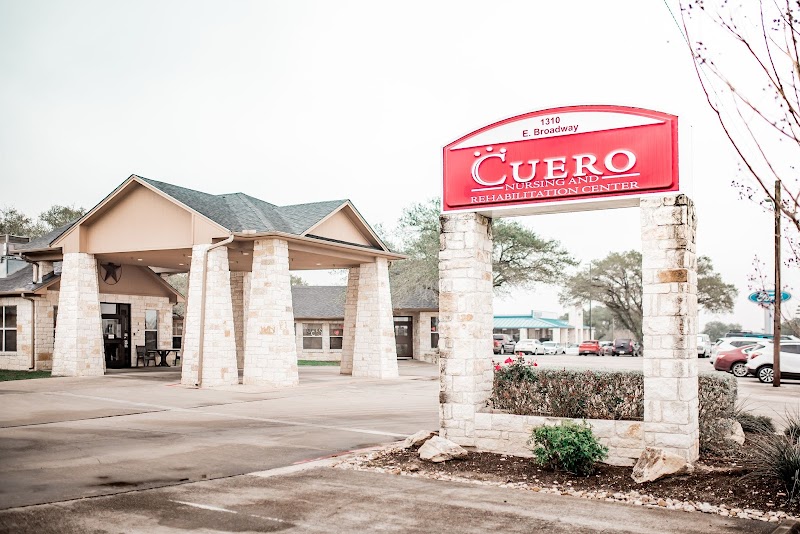
1310 E BROADWAY, CUERO, TX 77954 (361) 275-9133
Non profit - Corporation 120 Beds WELLSENTIAL HEALTH Data: November 2025 3 Immediate Jeopardy citations
Trust Grade
9/100
#683 of 1168 in TX
Last Inspection: October 2024

Within standard 12-15 month inspection cycle. Federal law requires annual inspections.

Overview

Cuero Nursing and Rehabilitation Center has received a Trust Grade of F, which means there are significant concerns about the quality of care provided. Ranking #683 out of 1168 in Texas places it in the bottom half of facilities in the state, and #3 out of 4 in De Witt County indicates that there is only one local option that is better. The facility is showing an improving trend, having reduced the number of issues from 8 in 2024 to 4 in 2025, but it still has a concerning staffing rating of 1 out of 5 stars, with a 46% turnover rate, which is below the Texas average of 50%. Specific incidents of concern include a failure to provide adequate supervision, resulting in a resident leaving the facility unnoticed, and another incident where a resident was transferred improperly, leading to a skin abrasion. In addition, there was a critical issue where a resident was served the wrong diet texture, potentially putting them at risk for choking. While there is some good news with a quality measure rating of 4 out of 5, the overall performance raises several red flags for families considering this nursing home.

Trust Score
F
9/100
In Texas
#683/1168
Bottom 42%
Safety Record
High Risk
Review needed
Inspections
Getting Better
8 → 4 violations
Staff Stability
⚠ Watch
46% turnover. Above average. Higher turnover means staff may not know residents' routines.
Penalties
✓ Good
$32,806 in fines. Lower than most Texas facilities. Relatively clean record.
Skilled Nurses
⚠ Watch
Each resident gets only 14 minutes of Registered Nurse (RN) attention daily — below average for Texas. Fewer RN minutes means fewer trained eyes watching for problems.
Violations
⚠ Watch
26 deficiencies on record. Higher than average. Multiple issues found across inspections.
★★☆☆☆
2.0
Overall Rating
★☆☆☆☆
1.0
Staff Levels
★★★★☆
4.0
Care Quality
★★★☆☆
3.0
Inspection Score
Stable
2024: 8 issues
2025: 4 issues

The Good

  • 4-Star Quality Measures · Strong clinical quality outcomes
  • Full Sprinkler Coverage · Fire safety systems throughout facility
  • No fines on record

Facility shows strength in quality measures, fire safety.

The Bad

2-Star Overall Rating

Below Texas average (2.8)

Below average - review inspection findings carefully

Staff Turnover: 46%

Near Texas avg (46%)

Higher turnover may affect care consistency

Federal Fines: $32,806

Below median ($33,413)

Moderate penalties - review what triggered them

Chain: WELLSENTIAL HEALTH

Part of a multi-facility chain

Ask about local staffing decisions and management

The Ugly 26 deficiencies on record

3 life-threatening
Jul 2025 4 deficiencies
CONCERN (D) 📢 Someone Reported This

A family member, employee, or ombudsman was alarmed enough to file a formal complaint

Potential for Harm - no one hurt, but risky conditions existed

Quality of Care (Tag F0684)

Could have caused harm · This affected 1 resident

**NOTE- TERMS IN BRACKETS HAVE BEEN EDITED TO PROTECT CONFIDENTIALITY** Based on interviews and record reviews, the facility failed to ensure the residents received treatment and care in accordance wi...

Read full inspector narrative →
**NOTE- TERMS IN BRACKETS HAVE BEEN EDITED TO PROTECT CONFIDENTIALITY** Based on interviews and record reviews, the facility failed to ensure the residents received treatment and care in accordance with professional standards of practice for 2 of 5 (Resident #1 and Resident #2) residents reviewed for quality of care. 1. The facility failed to follow policy and Resident #1's care plan intervention to conduct weekly skin assessments for 1 of 14 (week of 05/09/2025) weeks reviewed. 2. The facility failed to follow policy and conduct a quarterly fall risk assessment for Resident #2 scheduled on 06/26/2025. This failure could affect residents currently residing in the facility resulting in not receiving needed care to maintain optimum health and placing them at risk for injury and/or deterioration in their condition. The findings included: 1. Record review of Resident #1's admission Record, dated 07/08/2025, reflected a [AGE] year-old male, admitted to the facility on [DATE]. Record review of Resident #1's Medical Diagnosis EMR tab, undated and accessed on 07/08/2025, reflected Resident #1 had diagnoses which included alcohol dependence with alcohol-induced persisting dementia (a general term for impaired ability to remember, think, or make decisions), hypertension (condition of high pressure in the vessels that carry blood from the heart to the rest of the body), and muscle wasting and atrophy (shrinking of muscle or nerve tissue). Record review of Resident #1's Quarterly MDS, dated [DATE], reflected Resident #1 had a BIMS score of 12, which indicated he was mildly cognitively impaired. He was documented as received a pressure reducing device for his bed under skin and ulcer/injury treatments. Record review of Resident #1's Care Plan, undated and accessed 07/08/2025, reflected Resident #1 had a focus for skin integrity, noted as at risk for impaired skin integrity related to decreased mobility, smoker, hx of alcohol dependence., date initiated and revised 10/01/2024. His interventions included, Conduct skin inspections / examinations weekly and as needed. Document findings., date initiated 10/01/2024. Record review of Resident #1's [EMR] Skin & Wound- Total Body Skin Assessments, located under the EMR Forms tab, reflected an assessment was not recorded in the medical record for the week of 05/09/2025. His prior [EMR] Skin & Wound- Total Body Skin Assessment was dated 05/02/2025 and his following assessment was dated 05/12/2025. Record review of Resident #1's Progress Notes, dated 05/02/2025 to 05/14/2025, did not reveal a progress note mentioning skin conditions, appointments, passes, or transfers/discharges. Record review of facility document, Daily Nursing Schedule, dated 05/09/2025 and 05/10/2025, revealed LPN E was scheduled as the nurse for Resident #1's hall from 06:00 a.m. to 06:00 p.m. LPN E had initialed next to her name on both dates. During an interview on 07/10/2025 at 11:09 a.m., Resident #1 revealed he had not experienced any skin issues or wounds since his admission to the facility. Resident #1 revealed he could not recall a skin assessment having been missed. During an interview on 07/10/2025 at 02:53 p.m., the DON revealed the [EMR] Skin & Wound- Total Body Skin Assessment was to be completed every 7 days. She stated the assessment was assigned by hall and the treatment nurse was responsible for completing those assessments. She revealed the impact of a missed skin assessment might be that a skin issue was not identified timely and could develop into something worse. During an interview on 07/10/2025 at 03:13 p.m., LPN F revealed she had worked for the facility since around November or December of 2024, but transitioned to the treatment nurse position in late May 2025. She revealed she was not the treatment nurse during the week of 05/09/2025. She stated it was possible Resident #1 was out for an appointment or something, which caused him to miss his skin assessment. She stated the charge nurses were completing the weekly skin assessments between the time the prior full-time treatment nurse left and she transitioned into the position, no more than a week. She revealed since starting the treatment nurse position, she was responsible for completing the weekly skin assessments. She revealed Resident #1 had not experienced any skin issues other than dry skin since she had started completing the weekly skin assessments. During an interview on 07/10/2025 at 03:24 p.m., LPN E revealed she did not recall Resident #1's skin assessment for the week on 05/09/2025. She stated she did not know if the assessment was not done or just not marked as done. She stated that at the time, the system for completing the skin assessments was being changed. She stated the nurses could go to the forms tab in the EMR and see if there were any resident assessments due that day or past due. She stated she was unsure what would have been due on 05/09/2025 or 05/10/2025 for Resident #1. She revealed she was not aware of Resident #1 having had any skin issues. She stated Resident #1 was very independent and would tell the staff if he had any concerns. She stated that if an assessment was missed, the staff would have to go back and assess him to ensure they didn't miss any changes. Record review of facility policy, Skin Assessment, date implemented 04/24/2025, reflected, Policy Explanation and Compliance Guidelines: 1. A full body, or head to toe, skin assessment will be conducted by a licensed or registered nurse upon admission/re-admission and weekly thereafter. 2. Record review of Resident #2's admission Record, dated 07/09/2025, reflected a [AGE] year-old male. He was admitted to the facility on [DATE]. Record review of Resident #2's Medical Diagnosis EMR tab, undated and accessed on 07/09/2025, reflected Resident #2 had diagnoses which included diastolic (congestive) heart failure (CHF; a long-lasting condition resulting from the loss of the heart's ability to relax between heartbeats reducing the amount of blood that can enter the heart), unsteadiness on feet, (osteo)arthritis (OA; a joint disease where the cartilage that cushions the ends of bones wears down over time leading to pain, stiffness, and a loss of flexibility), gout (inflammatory arthritis), polyneuropathy (a disorder that damages the peripheral nerves, which control the movement of the arms and legs), and muscle wasting and atrophy. Record review of Resident #2's Quarterly MDS, dated [DATE], reflected Resident #2 had a BIMS score of 12, which indicated he was mildly cognitively impaired. He was documented as having had no falls since admission/entry or reentry or the prior assessment. Record review of Resident #2's Care Plan, undated and accessed 07/09/2025, reflected Resident #2 had the following focuses and interventions:- [Resident #2] has ADL self-care performance deficit r/t generalized weakness & debility. DX: CHF, OA and Gout. He has poor balance., date initiated 05/10/2024 and revised on 07/06/2025. Interventions included, Monitor/document/report PRN any changes, any potential for improvement, reasons for self-care deficit, expected course, declines in function.- [Resident #2] has limited physical mobility related to weakness and debility. DX: CHF, Gout, Neuropathy & OA. Non-ambulatory., date initiated 05/08/2024 and revised on 07/06/2025. Interventions included, Monitor/document/report PRN any s/sx of immobility: contractures [a permanent tightening of the muscles, tendons, skin, and nearby tissues that causes the joints to shorten and become very stiff] forming or worsening, thrombus [blood clots within the blood vessels that reduces blood flow] formation, skin-breakdown, fall related injury, date initiated 05/08/2024. - [Resident #2] is at risk for falls related to impaired cognition, balance and safety awareness. He has impaired vision., date initiated and revised 05/10/2024. His interventions included, Educate the resident/family/caregivers about safety reminders and what to do if a fall occurs., date initiated 05/08/2024. Record review of Resident #2's EMR Forms tab, accessed on 07/09/2025, reflected a Nursing- Fall Risk Evaluation V-1 was due 06/26/2025, with schedule frequency noted as Schedule Completion of Fall Risk- admission / Quarterly. The most recent Nursing- Fall Risk Evaluation V-1 was dated 03/26/2025. Record review of Resident #2's Nursing- Fall Risk Evaluation- V 1, dated effective date 03/26/2025, reflected the reason for the evaluation was quarterly. The resident was categorized as high fall risk with a score of 15. Record review of Resident #2's Progress Notes, created date range 03/26/2025 to 07/09/2025, did not reveal a progress note mentioning Resident #2's fall risks between 06/26/2025 and the last documented progress note, dated 07/02/2025. Attempted interview on 07/10/2025 at 01:33 p.m. Resident #2 was not able to vocalize response, but indicated he did not want to be interviewed. He indicated he did not feel well and wanted to see the nurse. During an interview on 07/10/2025 at 02:53 p.m., the DON revealed the Nursing- Fall Risk Evaluations was to be completed upon admission, re-admission, quarterly, and if there is a significant change or incident, it may trigger to be completed. She stated the schedule for the evaluations was per policy. She stated the evaluations were assigned to the charge nurses, but the MDS nurses may also complete them. She stated the evaluations will automatically populate in the EMR when they are due. She stated the nurses are notified when they have a quarterly assessment to complete. She revealed the impact of a missed assessment or evaluation might be that the staff do not catch a change in the resident's well-being. During an interview on 07/10/2025 at 03:24 p.m., LPN E revealed the nurses are typically notified by the MDS nurses when their resident quarterlies are due, and the notification would include what shift was assigned to do them. She revealed the assignments were separated by shift, so each shift had only so many assessments/evaluations to do during their shift. Record review of facility policy, Fall Prevention Program, date implemented 08/15/2022, reflected, Policy: Each resident will be assessed for fall risk and will receive care and services in accordance with their individualized level of risk to minimize the likelihood of falls.Policy Explanation and Compliance Guidelines: . 4. Low Risk Protocols: . g. Complete a fall risk assessment every 90 days and as indicated when the resident's condition changes. 5. High Risk Protocols: . b. Provide additional interventions as directed by the resident's assessment.
CONCERN (D) 📢 Someone Reported This

A family member, employee, or ombudsman was alarmed enough to file a formal complaint

Potential for Harm - no one hurt, but risky conditions existed

Pharmacy Services (Tag F0755)

Could have caused harm · This affected 1 resident

**NOTE- TERMS IN BRACKETS HAVE BEEN EDITED TO PROTECT CONFIDENTIALITY** Based on observations, interviews, and record reviews, the facility failed to provide pharmaceutical services including procedur...

Read full inspector narrative →
**NOTE- TERMS IN BRACKETS HAVE BEEN EDITED TO PROTECT CONFIDENTIALITY** Based on observations, interviews, and record reviews, the facility failed to provide pharmaceutical services including procedures that assure the accurate dispensing, administering, and timely documentation of medications given, to meet the needs of each resident for 2 of 17 residents (Resident #3 and Resident #4) reviewed for pharmacy services. 1. CMA A failed to ensure medications were signed out as given to Resident #3 after administration, and not before they were given. 2. LPN H failed to reconcile Resident #4's documented penicillin (antibiotic) allergy with the physician's order for amoxicillin (antibiotic) before it was scheduled for administration on 06/29/2025. These failures could place residents at risk for loss of prescribed medications, drug diversion, and not receiving the intended therapeutic effects of prescribed medications or receiving potentially harmful side effects from prescribed medications. Findings included: 1. Record review of Resident #3's admission Record reflected a [AGE] year-old male, with an original admission date of 05/29/2025 and a re-admission date of 06/09/2025. Record review of Resident #3's Medical Diagnosis EMR tab, undated and reviewed on 07/10/2025, reflected Resident #3 had diagnoses including high blood pressure, pain in the right knee, constipation, stiffness in the right knee, and low back pain. Record review of Resident #3's MDS dated [DATE] documented a BIMS score of 12 out of 15, which suggested a moderate cognitive impairment (some trouble with memory, thinking issues, and making decisions that affected daily life). Record review of Resident #3's Care, undated and assessed on 07/10/2025, reflected the following focus, The resident has an AOL self-care, initiated on 05/30/2025 and revised on 06/25/2025. The interventions included staff assistance with showering, dressing, transferring, and monitoring for any changes. Record review of Resident #3's Order Summary Report dated 07/09/2025 reflected the following orders: Baclofen Oral Tablet (Baclofen) Give 20 mg by mouth three times a day for muscle spasm, dated 06/09/2025. Docusate Sodium Oral Capsule 100 MG (Docusate Sodium) Give 1 capsule by mouth two times a day forConstipation dated 06/09/2025. Gabapentin Oral Tablet 600 MG (Gabapentin) Give 1 tablet by mouth three times a day for NERVE PAIN, dated 06/09/2025. hydrALAZINE HCI Oral Tablet 100 MG (Hydralazlne HCI) Give 1 tablet by mouth three times a day related to ESSENTIAL (PRIMARY) HYPERTENSION (110) **Give 2-50mg tablets to equal 100mg until supplyexhaust**, dated 06/12/2025. oxyCODONE HCI Oral Tablet 20 MG (Oxycodone HCI) Give 1 tablet by mouth every 6 hours for PAIN, dated 06/09/2025. During an observation on 07/08/2025 at 05:00 p.m., CMA A pulled and poured Resident #3's medications, . CMA A then proceeded to sign out all medications as given, which turned each medication color on the electronic medication administration record from yellow to green, CMA A then went into Resident #3's room where he took all of the medications. During an interview on 07/08/2025 at 05:10 p.m., CMA A stated that she administered Resident #3's and indicated she signed the medications out as given before Resident #3 took them and that she was trained that way two years ago by a CMA who no longer worked in the facility and had not had any training since that time. CMA A revealed that when it was time for medications to be given, the color on the screen appeared yellow, and that when they were signed as given the medications turned green. Record review of the facility's policy titled Medication Administration dated 10/01/2019, reflected that for Documentation (including electronic) A. The individual who administers the medication dose records the administration on the resident's MAR directly after the medication is given. 2. Record review of Resident #4's admission Record, dated 07/09/2025, reflected an [AGE] year-old female. She was originally admitted to the facility on [DATE] and re-admitted on [DATE]. Record review of Resident #4's Medical Diagnosis EMR tab, undated and accessed on 07/09/2025, reflected Resident #4 had diagnoses which included vascular dementia (brain damage typically caused by multiple strokes), cerebral infarction (a disruption in the brain's blood flow), and type 2 diabetes mellitus (a condition that develops with the way the body regulates and uses sugar as fuel) with hyperglycemia (high sugar levels in the blood). Record review of Resident #4's Quarterly MDS, dated [DATE] with observation end date of 07/02/2025, reflected Resident #4 had a BIMS score of 8, which indicated she was mildly cognitively impaired. She was documented as having taken an antibiotic during the last 7 days or since admission/entry or reentry if less than 7 days. Record review of Resident #4's EMR Allergy tab, accessed on 07/09/2025, reflected Resident #2 had an allergy to Penicillin, dated 11/18/2019, with unknown severity. Record review of Resident #4's Care Plan, undated and accessed 07/09/2025, reflected the following focus, [Resident #4] is at risk for allergic reaction as she is allergic to: PENICILLIN & SULFA ANTIBIOTICS, date initiated 12/07/2024 and revised 02/05/2025. The interventions included, [NAME] chart with allergies, Notify MD of any accidental ingestions of medications/foods on allergy list, and Notify pharmacy of allergies, all initiated on 12/07/2024. Record review of Resident #4's Order Audit Report, dated 07/09/2025, reflected Amoxicillin Oral Tablet 500 MG (Amoxicillin) Give 1 tablet by mouth two times a day for UTI for 5 Days, was verbally ordered by MD D on 06/29/2025 at 04:59 p.m. The order was created by LPN H on 06/29/2025 at 05:01 p.m. The Signature Type was noted as Pending. The order was last revised on 06/29/2025 at 07:34 p.m. The Administrative Order Summary noted LPN E documented the order was discontinued on 06/30/2025 at 07:48 a.m. by MD C with the reason DC MEDICATION D/T ALLERGIC REACTION. Record review of Resident #4's MAR (Medication Administration Record), dated 06/01/2025 - 06/30/2025 and printed on 07/09/2025, reflected: Amoxicillin Oral Tablet 500 MG (Amoxicillin) Give 1 tablet by mouth two times a day for UTI for 5 Days, start date 06/29/2025 at 06:00 p.m. and d/c date 06/30/2025 at 07:48 a.m., was administered one time, on 06/29/2025 at *6p-1, by LPN G. Record review of Resident #4's Progress Notes, created date range 06/26/2025 to 07/09/2025 and printed on 07/09/2025, reflected: - a NURSING Nurse Note, dated 06/29/2025 at 05:01 p.m., by LPN H reflected This nurse notified [MD D] of the UA and C&S results, and he ordered Amoxicillin Oral Tablet 500 MG [sic] Give 1 tablet by mouth two times a day for UTI for 5 Days.- a NURSING Nurse Note, dated 06/29/2025 at 05:01 p.m., by LPN H reflected The system has identified a possible drug allergy for the following order: Amoxicillin Oral Tablet 500 MG (Amoxicillin) [sic] Give 1 tablet by mouth two times a day for UTI for 5 Days.- a NURSING Nurse Note, dated 06/30/2025 at 01:22 a.m., by LPN G reflected INITIAL DOSE OF ABT AMOXICILLIN 500MG 1 TAB PO BID X5 DAYS FOR UTI, RES TOLERATED MEDICAITON WELL. ENCOURAGED RESIDENT TO OMCREASE [sic] WATER INTAKE. NO CONCERNS VOICED.- a NURSING Nurse Note, dated 06/30/2025 at 07:43 a.m., by LPN E reflected RESIDENT IS PRESCRIBED PO AMOXCILLIN [sic] 500MG 1 TAB BID X 5 DAYS FOR UTI, WITH INITIAL DOSED [sic] OF ADMINISTRATION LAST NIGHT; HOWEVER, RESIDENT HAS ALLERGIES TO PENICILLIN. RES AOX 4, ABLE TO ANSWER QUESTIONS CLEAR AND APPROPRIATELY. V/S OBTAINED.NO S/S OF ANY ADVERSE REACTION OR COC. NO VERBAL CONCERNS MENTIONED.MORNING DOSE OF ABT IS HELD. NOTIFIED [MD C], GIVEN NEW ORDER TO DC PO AMOXICILLIN.NOTIFIED [Resident #4's Representative].- a Change of Condition, dated 06/30/2025 at 07:43 a.m., by LPN E reflected MED ERROR: PO AMOXICILLIN GIVEN, WHOM HAS ALLERGIES TO PENICILLIN, started 06/30/2025, since started it has gotten: [response not selected]. - a NURSING- Nurse Note, dated 07/01/2025 at 02:32 a.m., by LPN I reflected Day 1 F/U med error receiving ABT Amoxicillin x 1 dose. Resident is allergic to ABT. No adverse reactions noted. No redness, rash or swelling noted. Resident is able to voice needs.- a NURSING- Nurse Note, dated 07/01/2025 at 06:41 a.m., by LPN E reflected DAY 1 F/U MED ERROR OF RECEIVING ABT AMOXCILLIN [sic] X 1.NO S/S OF ANY ADVERSE REACTION NOTED. NO VERBAL CONCERNS MENTIONED. - a NURSING- Nurse Note, dated 07/02/2025 at 02:35 a.m., by LPN I reflected Day 2 F/U FOR med error received ABT resident has an allergy to. No adverse reactions noted. No complaints of discomfort voiced.- a NURSING- Nurse Note, dated 07/02/2025 at 07:09 p.m., by LPN J reflected DAY 2 F/U FOR MED ERROR OF RECEIVING ABT AMOXCILLIN [sic]. NO ADVERSE REACTIONS NOTED. NO C/O PAIN OR DISCOMFORT NOTED. - a NURSING- Nurse Note, dated 07/03/2025 at 11:28 a.m., by LPN J reflected DAY 3 F/U FOR MED ERROR OF RECEIVING ABT AMOXCILLIN [sic]. NO ADVERSE REACTIONS NOTED. NO C/O PAIN OR DISCOMFORT NOTED. Record review of facility report, Incidents By Incident Type, date range 04/08/2025 to 07/08/2025 and printed 07/08/2025, reflected Resident #4 noted under Medication Error Incidents on 06/30/2025 at 07:43 a.m. During an interview on 07/10/2025 at 11:10 a.m., Resident #4 revealed she was aware the facility changed her antibiotic order after 1 dose of the oral antibiotic to an antibiotic given intravenously, through her vein. She revealed she had not experienced any rashes, upset stomach, or other side effects from the oral antibiotic medication. Resident #4 did not mention a prior allergic reaction to the oral antibiotic. During an interview on 07/10/2025 at 12:17 p.m., MD C revealed he was the facility medical director. He revealed he believed the amoxicillin was ordered after the bacteria culture result was received and relayed to the on-call physician, MD D. He revealed MD D ordered the amoxicillin, but MD C stated he was not sure if the nurse that relayed the culture result to MD D saw the allergy note on Resident #4's record or relayed the allergy information to MD D. He stated he would say that the allergy information should have been relayed. MD C stated the EMR would have required the nurse to bypass the allergy notification when putting in the order. MD C stated he did not have any concerns regarding Resident #4's impact of the error because Resident #4 had only received one dosage and the facility notified him that she had not experienced any adverse effects. Attempted to interview LPN H on 07/10/2025 at 01:02 p.m., 02:50 p.m., and 05:00 p.m. Missed LPN H's return call on 07/10/2025 at 04:19 p.m. During an interview on 07/10/2025 at 02:53 p.m., the DON revealed the nurse took the amoxicillin order from the doctor and administered the medication without verifying allergies. The DON stated the allergy concern was identified in the morning, the doctor and family were notified, and Resident #4 was put on a 72-hour observation. The DON stated she did not believe Resident #4 was impacted by the error because the resident did not have an adverse reaction to the antibiotic and the doctor changed the antibiotic the next day. The DON stated she was not sure who received the order and did not know if the nurse had discussed the allergy information with the physician. The DON stated the facility medication administration training did cover medication allergies. During an interview on 07/10/2025 at 02:38 p.m., LPN G revealed she did not put in the amoxicillin order for Resident #4 but did administer the medication. She revealed she did not call the physician about the order because she assumed that the staff member that entered the order in the EMR had called the doctor and discussed the order. She revealed she was not aware Resident #4 had any allergies until the next day; however, she did check on Resident #4 during the night and Resident #4 did not have any type of reaction. LPN G revealed part of the facility procedure for receiving and documenting a new medication order was to alert the family and resident about the new medication, and to make sure there were not any adverse reactions to the medication. Record review of facility policy, Medication Administration, date devised 10/01/2019, reflected under Procedure, 1. Preparation.D. 10 Rights of Medication Administration- .10. Right Evaluation- Make sure you check for drug allergies and interactions between different medications. Doctors and pharmacists don't always catch them [sic] and we need to be a third set of eyes.
CONCERN (D) 📢 Someone Reported This

A family member, employee, or ombudsman was alarmed enough to file a formal complaint

Potential for Harm - no one hurt, but risky conditions existed

Medical Records (Tag F0842)

Could have caused harm · This affected 1 resident

**NOTE- TERMS IN BRACKETS HAVE BEEN EDITED TO PROTECT CONFIDENTIALITY** Based on interviews and record reviews, the facility failed to ensure, in accordance with accepted professional standards and pr...

Read full inspector narrative →
**NOTE- TERMS IN BRACKETS HAVE BEEN EDITED TO PROTECT CONFIDENTIALITY** Based on interviews and record reviews, the facility failed to ensure, in accordance with accepted professional standards and practices, medical records were maintained on each resident that were complete and accurately documented for 2 of 4 residents (Resident #1 and Resident #4) reviewed for clinical records. 1. CMA A failed to document a progress note following the entry of chart code 5= Hold/See Progress Notes on 06/16/2025 for Resident #1's Metoprolol Tartrate (a blood pressure medication) order. 2. CMA A failed to document progress notes following the entry of chart code 9= Other/See Progress Notes on 07/02/2025 and 07/03/2025 for Resident #5's Olmesartan Medoxomil-HCTZ (a blood pressure medication) order. This failure could place residents at risk of not receiving the care and services needed due to inaccurate or incomplete clinical records. Findings included: 1. Record review of Resident #1's admission Record, dated 07/08/2025, reflected a [AGE] year-old male. He was admitted to the facility on [DATE]. Record review of Resident #1's Medical Diagnosis EMR tab, undated and accessed on 07/08/2025, reflected Resident #1 had diagnoses which included alcohol dependence with alcohol-induced persisting dementia (a general term for impaired ability to remember, think, or make decisions), hypertension (condition of high pressure in the vessels that carry blood from the heart to the rest of the body), and muscle wasting and atrophy (shrinking of muscle or nerve tissue). Record review of Resident #1's Quarterly MDS, dated [DATE], reflected Resident #1 had a BIMS score of 12, which indicated he was mildly cognitively impaired. Record review of Resident #1's Order Recap Report, order date: 06/01/2025- 07/31/2025 and printed on 07/08/2025, reflected Metoprolol Tartrate Oral Tablet 25 MG (Metoprolol Tartrate) Give 1 tablet by mouth one time a day related to ESSENTIAL (PRIMARY) HYPERTENSION (I10) hold for sbp<100 dbp< 60 hr <60, order date 11/13/2024, start date 11/14/2024, and end date 07/02/2025. Record review of Resident #1's MAR, dated 06/01/2025 - 06/30/2025 and printed on 07/08/2025, reflected: Metoprolol Tartrate Oral Tablet 25 MG (Metoprolol Tartrate) Give 1 tablet by mouth one time a day related to ESSENTIAL (PRIMARY) HYPERTENSION (I10) hold for sbp<100 dbp< 60 HR <60, start date 11/14/2024 at 06:00 p.m. and d/c date 07/02/2025 at 01:12 p.m., was coded as 5 on 06/16/2025 by CMA A. Vitals entered on 06/16/2025 reflect a blood pressure of 94/62 and pulse of 67. Chart Codes reflect 4=BS/VS Outside of Parameters for Admin and 5=Hold/See Progress Notes. Record review of Resident #1's Progress Notes, dated 06/11/2025 to 06/25/2025, did not reveal a progress note mentioning medication administration or blood pressure values. During an interview on 07/10/2025 at 11:09 a.m., Resident #1 revealed he had received his medications on time and had not observed any issues with his medication administration. He revealed the staff check his blood pressure twice a day and he knew his blood pressure values go up and down due to his heart issues. He stated he had not had any issues with his blood pressures or blood pressure medication. 2. Record review of Resident #5's admission Record, dated 07/08/2025, reflected an [AGE] year-old female. She was admitted to the facility on [DATE] and readmitted on [DATE]. Record review of Resident #5's Medical Diagnosis EMR tab, undated and accessed on 07/08/2025, reflected Resident #5 had diagnoses which included unspecified dementia, polyneuropathy, and hypertension. Record review of Resident #5's Annual MDS, dated [DATE], reflected Resident #5 had a BIMS score of 9, which indicated she was mildly cognitively impaired. Record review of Resident #5's Order Summary Report, dated on 07/08/2025, reflected Olmesartan Medoxomil-HCTZ Oral Tablet 40-12.5 MG (Olmesartan Medoxomil-Hydrochlorothiazide) Give 1 tablet by mouth one time a day related to ESSENTIAL (PRIMARY) HYPERTENSION (I10), order date 07/01/2025 and start date 07/02/2025. Record review of Resident #5's MAR, dated 07/01/2025 - 07/31/2025 and printed on 07/08/2025, reflected: Olmesartan Medoxomil-HCTZ Oral Tablet 40-12.5 MG (Olmesartan Medoxomil-Hydrochlorothiazide) Give 1 tablet by mouth one time a day related to ESSENTIAL (PRIMARY) HYPERTENSION (I10), start date 07/02/2025 at 08:00 a.m., was coded as 9 on 07/02/2025 and 07/03/2025 by CMA A. Chart Codes reflect 9=Other / See Progress Notes. Chart Codes did not reflect a code description for On order. Record review of Resident #5's Progress Notes, printed on 07/08/2025 and dated effective date range: 06/08/2025 to 09/09/2025 and created date range: all created; did not reveal a progress note entered after 07/01/2025. During an interview on 07/10/2025 at 02:13 p.m., Resident #5 revealed she was administered her medications generally at the same time each day. She stated she took medication for blood pressure and the staff checked her blood pressure twice a day. She stated her blood pressure was different at different times a day. During an interview on 07/10/2025 at 12:51 p.m., CMA A revealed she did not recall entering a code for Resident #1's blood pressure medication on 06/16/2025, but thought she most likely held his medication because his blood pressure was outside of parameters. She stated she would have entered an out of parameters code in the MAR if Resident #1's blood pressure values were outside the order's hold parameters. CMA A revealed she did recall Resident #5's blood pressure medication not being in stock when the order started. She stated the nurse told her they (the nursing staff) would start administering the medication once the medication was in stock. She revealed she recalled putting an on order code in the eMAR. She stated when she clicked No for administered, the computer will provide prompts, and she could select on order. She stated she selected on order for those days. During an interview on 07/10/2025 at 02:53 p.m., the DON revealed she believed the MAR had a code for when a medication was not available. She revealed the staff were to go to the nurse when a medication was not available, and the nurse was to order the medication or take it out of the facility's medication inventory. The DON stated she believed the eMAR was supposed to generate a progress note when a staff member selects see progress note, and the staff were to put specifics of the medication administration into the progress note. The DON stated she was unsure why there would not have been corresponding progress notes to see progress note codes in the MAR. The DON stated the impact of not having the corresponding progress note would be that the nurse managers would have to search for the information and/or speak directly with the staff member that entered the see progress note to determine what meds were not given and why. Record review of facility policy, Medication Administration, date devised 10/01/2019, reflected under Procedure, 4. Documentation (including electronic) . F. If a dose of regularly scheduled medication is withheld, refused, not available, or given at a time other than the scheduled time.An explanatory note is entered.G. If an electronic MAR system is used, specific procedures required for.documentation of administration, refusal, holding of doses, and dosing parameters such as vital signs and lab values are described in the system's user manual. Record review of facility policy, Documentation in Medical Record, date implemented 10/24/2022, reflected under Policy Explanation and Compliance Guidelines: . 3. Principles of documentation include, [sic] but are not limited to: .b. Documentation shall be accurate, relevant, and complete, containing sufficient details about the resident's care and/or responses to care.
CONCERN (D) 📢 Someone Reported This

A family member, employee, or ombudsman was alarmed enough to file a formal complaint

Potential for Harm - no one hurt, but risky conditions existed

Infection Control (Tag F0880)

Could have caused harm · This affected 1 resident

Based on observation, interview, and record review, the facility failed to maintain an infection prevention and control program designed to provide a safe, sanitary, and comfortable environment to hel...

Read full inspector narrative →
Based on observation, interview, and record review, the facility failed to maintain an infection prevention and control program designed to provide a safe, sanitary, and comfortable environment to help prevent the development and transmission of infections involving 1 of 3 staff (CMA B) reviewed for infection control, in that: The facility failed to ensure CMA B cleaned the blood pressure cuff between Resident #6 and Resident #7. These deficient practices could place residents at-risk for infections. The findings included: During an observation on 07/09/2025 at 02:36 p.m., CMA B was observed taking Resident #6's blood pressure prior to administering medications to the resident. CMA B returned to her medication cart and placed the blood pressure cuff on the cart. CMA B did not sanitize the blood pressure cuff. CMA B then went and took Resident #7's blood pressure with the same cuff. CMA B again returned to her medication cart and placed the blood pressure on top of her cart. CMA B again did not sanitize the blood pressure cuff. During an interview on 07/09/2025 at 02:49 p.m., CMA B stated she knew she was forgetting something during her medication administration observation. She revealed she was supposed to wipe the blood pressure cuff after and between each resident. She stated the nursing facility had provided training that reviewed these procedures. She stated wiping the cuff between residents was for sanitation reasons, to stop the spread of germs. During an interview on 07/10/2025 at 02:53 p.m., the DON revealed staff were to take blood pressure readings prior to administering blood pressure medications and the staff were to disinfect the blood pressure cuff between each resident. She stated disinfecting the cuff was for infection control purposes. Record review of facility policy, Infection Prevention and Control Program, date implemented 05/13/2023, reflected under Policy Explanation and Compliance Guidelines, 4. Standard Precautions: a. All staff shall assume that all residents are potentially infected or colonized with an organism that could be transmitted during the course of providing resident care services. and 10. Equipment Protocol: a. All reusable items and equipment requiring special cleaning, disinfection, or sterilization shall be cleaned in accordance with our current procedures governing the cleaning and sterilization of soiled or contaminated equipment.
Oct 2024 4 deficiencies
CONCERN (D)

Potential for Harm - no one hurt, but risky conditions existed

PASARR Coordination (Tag F0644)

Could have caused harm · This affected 1 resident

**NOTE- TERMS IN BRACKETS HAVE BEEN EDITED TO PROTECT CONFIDENTIALITY** Based on interview and record review, the facility failed to refer a resident with newly evident or possible serious mental diso...

Read full inspector narrative →
**NOTE- TERMS IN BRACKETS HAVE BEEN EDITED TO PROTECT CONFIDENTIALITY** Based on interview and record review, the facility failed to refer a resident with newly evident or possible serious mental disorder, intellectual disability, or a related condition for level II resident review for 1 of 5 residents (Resident #4) reviewed for resident assessment. Resident #4 was not referred to the pre-admission screening and resident review (PASARR) program for a level II resident review despite having a serious mental disorder diagnosis. This failure could place residents at risk of not receiving specialized services to meet their needs. The findings were: Record review of Resident #4's face sheet dated 10/18/24 revealed the resident was a [AGE] year-old female admitted to the facility on [DATE] and readmitted on [DATE]. Diagnoses included major depressive disorder (mental health disorder characterized by persistently depressed mood or loss of interest in activities, causing significant impairment in daily life), delusional disorders (classified as a psychotic disorder, a disorder where a person has trouble recognizing reality), alcohol dependence with alcohol-induced persisting dementia (form of dementia caused by long-term, excessive consumption of alcohol, resulting in neurological damage and impaired cognitive function), and generalized anxiety disorder (excessive, ongoing anxiety and worry that interferes with daily activities). Further review revealed major depressive disorder was the primary admitting diagnosis. Record review of Resident #4's annual MDS assessment dated [DATE] revealed the resident was not considered to have a serious mental disorder or illness by the state level II PASRR process, serious mental illness was left blank, and the resident had a BIMS score of 4 indicating the resident was severely cognitively impaired. The MDS reflected the resident had depression and a psychotic disorder. Record review of Resident #4's care plan undated revealed a focus initiated on 5/30/23 and revised on 8/28/24 for the resident being at risk of having behaviors related to her diagnoses Dementia w/agitation, irritability & psychosis; Major Depressive Disorder; Delusional Disorder; & Anxiety. She has voiced being tired and having trouble concentrating. HX of hiding medications & confusing them. HX of insomnia. Voices having little interest, feeling down and moving slower than normal. Interventions included giving the resident antidepressant and antipsychotic medications as ordered. Record review of Resident #4's PASRR (Preadmission Screening and Resident Review) level 1 screening form dated 5/23/22 revealed under the question if the resident had a mental illness was marked no. Record review of Resident #4's EHR revealed there was no evidence that a PASRR level 2 screening was completed for Resident #4. In an interview on 10/17/24 at 1:25 p.m. LVN A was unable to state why Resident #4's PASRR level 1 was marked no under mental illness and stated there was nothing she could see from the physician certifying dementia as the resident's primary diagnosis and would look for more information. In an interview on 10/18/24 at 11:18 a.m. LVN B stated Resident #4's PASRR level 1 should have been marked yes under mental illness and the resident should have been referred to the pre-admission screening and resident review (PASARR) program for a level 2 but they were contacting the physician because dementia was the primary diagnosis and they would likely have form 1012 completed. LVN B stated it was important for residents PASRR level 1 screenings to be correct so residents got a level 2 evaluation and PASARR specialized services if needed. LVN B stated LVN A was fairly new and was how it got missed but was being corrected . LVN B stated the facility was not aware of the error on Resident #4's PASRR level 1 screening form until brought to their attention by the surveyor. In an interview on 10/18/24 at 12:13 p.m. the facility PASARR policy was requested from the DON and she stated she would ask the regional consultant. In an interview on 10/18/24 at 12:17 p.m. the DON stated the facility did not have a PASARR policy.
CONCERN (D)

Potential for Harm - no one hurt, but risky conditions existed

Drug Regimen Review (Tag F0756)

Could have caused harm · This affected 1 resident

**NOTE- TERMS IN BRACKETS HAVE BEEN EDITED TO PROTECT CONFIDENTIALITY** Based on interview and record review the facility failed to ensure the attending physician documented in the resident's medical ...

Read full inspector narrative →
**NOTE- TERMS IN BRACKETS HAVE BEEN EDITED TO PROTECT CONFIDENTIALITY** Based on interview and record review the facility failed to ensure the attending physician documented in the resident's medical record that the identified irregularity has been reviewed and what, if any, action has been taken to address it in response to the pharmacist report for 1 of 2 Residents (Resident #15) reviewed for antipsychotic use. Nursing staff failed to ensure the attending physician responded to the pharmacists' recommendations for Resident #15. This deficient practice could affect residents who receive recommendations for psychotropic medications and result in the unnecessary adverse side affects. The findings were: Review of Resident #15's face sheet, dated, 10/18/24, revealed she was admitted to the facility on [DATE] with diagnoses including unspecified Dementia, unspecified severity, with psychotic disturbance, Bipolar disorder, unspecified, Major Depressive disorder, recurrent, mild, Anxiety disorder, unspecified. Review of Resident #15's quarterly MDS, dated [DATE], revealed her BIMS was 7 reflective of severe cognitive impairment, was diagnosed with anxiety, Bipolar disorder and Dementia, unspecified severity, with psychotic disturbance and was receiving antipsychotic and antianxiety medications. Review of Resident #15's Care Plan revised on 9/10/24 revealed she had behaviors related to DX: Bipolar, Schizoaffective Disorder, Dementia w/ Psychotic Disturbance, Anxiety & Depression. Interventions included Administer antianxiety, mood stabilizers & antipsychotic medications as ordered. Observe/document for side effects and effectiveness. F/U with [Psychiatrist name] (Psychiatry) as ordered or needed. Review of Resident #15's physician's consolidated orders, dated October 2024, revealed the following orders: LORazepam Oral Concentrate 2 MG/ML (Lorazepam), Give 0.25 ml by mouth every 6 hours as needed for AGITATION, start date 10/17/24 for ANXIETY, OR RESTLESSNESS for 14 Days; LORazepam Oral Tablet 0.5 MG (Lorazepam) Give 1 tablet by mouth two times a day for AGITATION; risperiDONE Oral Tablet 2 MG (Risperidone) Give 1 tablet by mouth in the morning for BIPOLAR; risperiDONE Oral Tablet 3 MG (Risperidone) Give 1 tablet by mouth at bedtime for BIPOLAR; and Valproic Acid Oral Solution 250 MG/5ML (Valproate Sodium) Give 5 ml by mouth every 12 hours for seizures. Review of Resident #15's MAR for October 2024 revealed Resident #15 was receiving Lorazepam, RisperiDONE and Valproic Acid according to physician's orders. Review of Resident #15's Consultant Pharmacist/Physician Communication reviews revealed on 9/25/23 the review read: Per CMS regulations please evaluate resident for trial dose reduction. Clonazepam 0.25mg po on time a day for anxiety since 3/21/23 Clonazepam 0.5mg po hs for anxiety since 12/4/22 Risperidone 3mg po hs for Bipolar Disorder since 3/30/23 Resident is also receiving: Depakene 250mg/5ml give 10ml=500mg po bid for Bipolar Disorder If dose reduction is contraindicated or resident failed previous dose reduction attempt, please document below. Further review revealed response, Psych managing with an illegible signature and dated, 10/4/23. There was no response to the recommendation. Review of Resident #15's Consultant Pharmacist/Physician Communication reviews revealed on 1/11/24 read Per CMS regulations please evaluate resident for trial dose. Depakene 250mg/5ml give 10ml=500mg po bid for Bipolar Disorder since 1/30/23 Resident is also receiving: Clonazepam 0.25mg po one time a day for anxiety Clonazepam 0.5mg po hs for anxiety Risperidone 3mg po hs for Bipolar Disorder If dose reduction is contraindicated or resident failed previous dose reduction attempt, please document below. Further review revealed response, under psychiatric care with an illegible signature and dated, 2/6/24. There was no response to the recommendation. Review of Resident #15's EHR revealed there was no documentation from the PCP regarding the pharmacist's recommendations dated 9/25/23 and 1/11/24. Interview on 10/18/24 at 12:48 PM with the DON revealed Resident #15 was receiving LORazepam Oral Concentrate 2 MG/ML PRN and scheduled LORazepam for anxiety, risperiDONE for BIPOLAR and Valproic Acid Oral Solution 250 MG/5ML as a mood stabilizer. The DON stated she received the pharmacist's recommendations for review. She stated the signature on the Consultant Pharmacist reviews revealed Resident #15's PCP signed them but did not respond to the actual recommendations which was required in order to make necessary changes to Resident #15's medication regimen. Review of facility policy, Consultant Pharmacist Services and Reports, revised 10/1/19, read in relevant part: The consultant pharmacist works with the facility to establish a system whereby the consultant pharmacist observations and recommendations regarding residents' medication therapy are communicated to those with authority and or responsibility to implement the recommendations, and responded to in an appropriate and timely fashion. Procedure: 3. Recommendations are acted upon and documented by the facility staff and or the prescriber. If the prescriber does not respond to recommendation directed to him/her within 30 days, the Director of Nursing and or the consultant pharmacist may contact the Medical Director.
CONCERN (D)

Potential for Harm - no one hurt, but risky conditions existed

Garbage Disposal (Tag F0814)

Could have caused harm · This affected 1 resident

Based on observation, interview and record review revealed the facility failed to dispose of garbage and refuse properly for 1 of 4 survey dates (10/18/24). The facility failed to ensure all dumpster'...

Read full inspector narrative →
Based on observation, interview and record review revealed the facility failed to dispose of garbage and refuse properly for 1 of 4 survey dates (10/18/24). The facility failed to ensure all dumpster's had a plug at the bottom to keep spillage and the attraction of insects, bugs and rodents which could carry diseases and infections. This deficient practice could affect all residents and result in the spillage of trash seepage, attraction of bugs, rodents and insects that could enter the facility. The findings were: Observation on 10/18/24 at 11:20 AM revealed one of three dumpster's did not have a plug on the opening located one of the sides and bottom of the dumpster. The dumpster's were located within 10 to 15 feet away from the nursing facility. Interview with the DM stated the first dumpster did not have a plug on the opening. She stated all dumpster's should have a plug to prevent spillage from inside the dumpster which could be an infection control problem. She stated staff could step on the spillage and carry the germs inside the facility or flies could land on the spillage and carry the germs inside the facility. She stated the smell of trash could also attract insects, bugs and rodents and they could access the facility and resident rooms. The DM stated germs, diseases and infections could make the residents sick. Review of facility policy, Garbage Receptacles, revised June 1, 2019 read in relevant part: The facility will maintain garbage receptacles in a clean and sanitary manner to minimize the risk of food hazards. It should be constructed to have tight fitting lids, doors or covers and stored in a manner that is inaccessible to insect and rodents with doors/lids kept closed and no waste outside of the receptacle.
CONCERN (F)

Potential for Harm - no one hurt, but risky conditions existed

Food Safety (Tag F0812)

Could have caused harm · This affected most or all residents

Based on observation, interview and record review the facility failed to prepare, distribute and serve food in accordance with professional standards for food service safety in 1 of 1 kitchen. Cook C ...

Read full inspector narrative →
Based on observation, interview and record review the facility failed to prepare, distribute and serve food in accordance with professional standards for food service safety in 1 of 1 kitchen. Cook C failed to cover a pan of wheat rolls to prevent the rolls from being contaminated. Cook D failed to ensure all foods were covered during meal preparation and failed to allow two pans to air dry before using them also to prevent debris from contaminating the foods. [NAME] D also dried two pans with paper towels then used them during meal prep which could also contaminate the food. These deficient practices could affect the majority of residents who ate from the kitchen and could result in resident getting sick due to the spread of food borne illnesses. Observation on 10/15/24 at 9:05 AM revealed a pan of wheat rolls sitting on the side tabletop of the steam table. The pan of wheat rolls was not covered. Observation and interview on 10/15/24 at 9:16 AM revealed a pan of wheat rolls sitting on the side tabletop of the steam table. The pan of wheat rolls was not covered. Interview with [NAME] C revealed she did not cover the rolls with wax paper because the wax paper would get stuck to the rolls. She stated she understood all food should be covered to prevent from debris landing on it and risk contaminating the food. [NAME] C stated it could make the residents sick. Observation and interview on 10/17/24 at 10:58 AM revealed covered pans of food on the steam table. There was a large pan full of chicken fried steak on the steam table as well. It was not covered. Interview with [NAME] D revealed she was getting ready to take temperatures of the food. She called out the following temperature for the macaroni and cheese was 100 degrees. [NAME] D stated she would put it back in the oven until it reached temperature of at least 135 degrees. She stated the steam table was set at 10 which was the highest setting. Observation on 10/17/25 at 11:05 AM revealed the pan of chicken fried steak was still uncovered. Further observation revealed a large pan of corn bread, sprinkled with honey, was on the prep table. It was not covered. Observation and interview on 10/17/24 at 11:07 AM revealed [NAME] D removed the puree macaroni and cheese from the oven. She stated the temperature was 120 degrees and placed it on the steam table. Observation interview on 10/17/24 at 11:12 AM revealed [NAME] D stated the pureed spinach was 131 degrees and the puree macaroni and cheese was 100 degrees. [NAME] D left the items on the steam table. Observation on 10/17/24 at 11:13 AM revealed the DM covered the pan of cornbread with foil paper. Observation on 10/17/24 at 11:15 AM revealed a deep pan of ground beef patties in water next to the robocoupe blender on a prep table alongside the stove. The pan was not covered. Observation on 10/17/24 at 11:16 AM revealed [NAME] D took the temperature for the puree spinach again and stated it was 131 degrees and she also took the temp of the puree macaroni and cheese and stated it was 113 degrees. [NAME] D grabbed a ladle and stirred the puree macaroni and cheese. Observation and interview on 10/17/24 at 11:17 PM revealed [NAME] D removing a small pan and a long pan from the dish rack. Water was dripping from the pans onto the floor. [NAME] D placed the pans by the Robocoupe blender. The pan of boiled meat patties was still uncovered. [NAME] D then started looking for alternate thermometer reaching into the bottom shelf hanging right over the pan of meat patties. There were crumbs on the bottom shelf where [NAME] D reached into. Interview with [NAME] D revealed she changed from manual thermometer to digital thermometer and stated the DM had a digital thermometer in her office. Further observation revealed [NAME] D adding water to the pans on the steam table. She stated she noticed there was not enough water in the pans and that was why the steam table was not heating the food properly. Observation on 10/17/24 at 11:45 AM revealed [NAME] D initiated plating the lunch meal of the day which included Country Fried Steak, Country gravy, macaroni and cheese, spinach, cornbread, margarine, red velvet cake, coffee or tea and garnish parsley sprig. Interview on 10/17/24 at 1:57 PM with [NAME] D revealed she had been a cook for 6 months. She stated she felt nervous and was having trouble with the temperatures and had to make adjustment. She stated she felt distracted. [NAME] D stated all food should reach at least 135 degrees for safe service. She stated the puree macaroni and cheese, and the puree spinach did not reach 135 degrees. [NAME] D stated she did not write the temperatures down as she took them and was unsure what the exact temperature was for all food items. She stated she served all items on the steam table even the ones that did not reach temperature. Further interview revealed [NAME] D stated she used the pans she took from the dish rack for the puree and mechanical soft meat patties. Initially, she stated the pans were dry and then stated she remembered they were wet because she wiped the inside of the pans dry with a paper towel. She stated the pans should be air dried to prevent bacteria from forming. [NAME] D stated all the pans of food on the steam table were covered with foil paper to keep at safe temperature. She stated she uncovered the pan of chicken fried steam to take the temperature of the meat but then she did not cover it back up. [NAME] D stated food on the steam table should also be covered to prevent from debris landing on the food. It could make the residents sick. [NAME] D stated the beef patties were also not covered. She stated again she felt nervous and distracted. [NAME] D stated she saw a fly in the kitchen but stated flies did not get into the kitchen very often. [NAME] D also stated she did not cover the pan of cornbread because she was going to cut it. Interview on 10/18/24 at 10:35 AM with the DM revealed food temperatures should reach 135 to 165 degrees for safe service. She stated she understood [NAME] D missed some things She stated she talked with [NAME] D who said she was nervous and was distracted because the food temperatures were not all reaching 135 degrees. The DM stated it was important food items reached at least 135 degrees and hold for serving to prevent the development of food borne illnesses to prevent residents from getting sick. She stated she did not know the food had to reach 165 degrees for at least 15 seconds after rewarming before serving. The DM revealed food Items should be covered related to cross contamination, debris falling in it and contaminating the foods, infection control and to prevent the spread of diseases. The DM also stated flies usually did not get into kitchen but the door was opened more than usual as a result of the food delivery. The DM stated pans should be air dried and staff should not use paper towels to dry because it could get resin (According to Wikipedia, Polyamide epichlorohydrin (PAAE) is a permanent wet strength additive used in papermaking) on the pan and contaminate the pan that had been sanitized. Review of facility policy, Food Preparation and Handling revised on June 1, 2019 read in relevant part: Policy: To ensure that all food served by the facility is of good quality and safe for consumption, all food will be prepared and handled according to the state and Us Food Codes and HACCP (according to Wikipedia it is Systems and methods for monitoring food processing and food storage) guidelines. Procedure: 1. General Guidelines a. Use clean, sanitized surfaces, equipment and utensils. 4. Hot Food Temperatures: f. fresh, frozen, or canned fruits and vegetables that are cooked for hot holding shall be cooked to a minimum temperature of 140-degree F. Review of FDA Food Code 2022 read in relevant part: 3-403.11 Reheating for Hot Holding. (A) Except as specified under ¶¶ (B) and (C) and in ¶ (E) of this section,TIME/TEMPERATURE CONTROL FOR SAFETY FOOD that is cooked, cooled, and reheated for hot holding shall be reheated so that all parts of the FOOD reach a temperature of at least 74oC (165oF) for 15 seconds. 4-9 Protection of Clean Items 4-901 Drying 4-901.11 Equipment and Utensils, Air-Drying Required. After cleaning and SANITIZING, EQUIPMENT and UTENSILS: (A) Shall be air-dried or used after adequate draining as specified in the first paragraph of 40 CFR 180.940 Tolerance exemptions for active and inert ingredients for use in antimicrobial formulations (food-contact surface SANITIZING solutions), before contact with FOOD; and (B) May not be cloth dried except that UTENSILS that have been air-dried may be polished with cloths that are maintained clean and dry.
Sept 2024 4 deficiencies 2 IJ
CRITICAL (J) 📢 Someone Reported This

A family member, employee, or ombudsman was alarmed enough to file a formal complaint

Immediate Jeopardy (IJ) - the most serious Medicare violation

Accident Prevention (Tag F0689)

Someone could have died · This affected 1 resident

**NOTE- TERMS IN BRACKETS HAVE BEEN EDITED TO PROTECT CONFIDENTIALITY** Based on observation, interview, and record review, the facility failed to ensure the resident environment remained as free of a...

Read full inspector narrative →
**NOTE- TERMS IN BRACKETS HAVE BEEN EDITED TO PROTECT CONFIDENTIALITY** Based on observation, interview, and record review, the facility failed to ensure the resident environment remained as free of accident hazards as possible and each resident received adequate supervision to prevent accidents for 2 of 4 residents (Resident #1 and #3) reviewed for accidents and supervision. 1. The facility failed to ensure Resident #1 did not elope from the facility without staff knowing on the evening of 1/26/2024. The noncompliance was identified as PNC. The IJ began on 1/26/2024 and ended on 1/26/2024. The facility had corrected the noncompliance before the survey began. 2. Nurse Aide-E transferred Resident #3 from the bed to the resident's wheelchair using a gait belt by herself and lower the resident to the floor on 02/04/2024. It caused skin abrasion to Resident #3's back. On 02/08/2024, CNA-F transferred Resident #3 into the resident's wheelchair utilizing a mechanical lift without another CNA, and it caused the resident slid out of his wheelchair and no injury noted. This deficient practice could place residents at-risk of harm, serious injury, or death. The findings included: 1. Record review of Resident #1's admission record, dated 09/26/2024, reflected that Resident #1 was a [AGE] year-old female initially admitted on [DATE], with diagnoses that included unspecified dementia (group of thinking and social symptoms that interferes with daily functioning), chronic obstructive pulmonary disease (group of lung diseases that block airflow and make it difficult to breathe), and bipolar disorder (disorder associated with episodes of mood swings ranging from depressive lows to manic highs). Record review of Resident #1's quarterly MDS assessment, dated 11/17/2023, reflected that Resident #1 had a BIMS score of 14, indicating cognitively intact. Resident #1 was assessed for using a wheelchair and a walker in the 7 days prior to assessment and was assessed as, supervision or touching assistance for the ability to walk at least 50 feet and make 2 turns, and Not applicable for, the ability to walk at least 150 feet in a corridor or similar space. The MDS assessment further reflected that wandering behavior was not exhibited by Resident #1. Record review of Resident #1's care plan dated 9/26/2024, reflected 1/26/24 - Eloped from facility from 100 hall (therapy dept door) into parking lot. Continued to exit seek numerous times with interventions including, Behavior monitoring for exit seeking behaviors, Deer Oaks to provide psychological services, Memory Care Unit, with date initiated 1/27/2024. Record review of Resident #1's elopement assessment from 11/8/2023 reflected her not to have wandered previously and to have been oriented with a short attention span. Record review of Resident #1's nursing note, dated 1/26/2024, revealed, [6:45 PM] RES NOTED SITTING UP IN W/C AT FRONT EXIT PUSHING ON EXIT DOOR. [Visitor] WAS TALKING TO RESIDENT AND REPORTED TO I CHARGE NURSE THAT RES WAS OUTSIDE IN THE PARKING LOT NEXT TO HER CAR. RES CONT TO PUSH ON DOOR TRYING TO EXIT FACILITY STATING SHE WANTED TO GO HOME. DOOR ALARM WORKING PROPERLY AT THIS TIME. REDIRECTION AT THIS TIME INEFFECTIVE. ADMINISTRATOR IN FACILITY AND WAS IMMEDIATELY NOTIFIED. WHILE SHE WAS TALKING TO RESIDENT REDIRECTING HER TO NOT LEAVE NO VISIBLE INJURIES NOTES FROM EXITING FACILITY. NO C/O OF PAIN OR DISCOMFORT. RES KEPT CRYING SAY SHE WANTED TO GO HOME. UPON PHYSICAL ASSESSMENT NOTED SMALL AMOUNT OF BLOODY DRAINAGE FROM PINPOINT SIZE AREA TO LT UPPER CHEEK. RES UNAWARE OF SITE. WHEN ASKED IF SHE SCRATCHED HERSELF SHE REFUSED TO SAY. RES REFUSED TO HAVE VITALS TAKEN. I CHARGE NURSE CALLED [PHYSICIAN] ON CALL TO REPORT INCIDENT. [PHYSICIAN] ORDERED TO PLACE RESIDENT IN MEMORY CARE UNIT FOR PERSONAL SAFETY AND ALLOW PINPOINT AREA TO SCAB OVER NO TREATMENT NEEDED. SON NOTIFIED AND CAME TO FACILITY TO HELP WITH RESIDENT. RECEIEVED PERMISSION FROM SON TO PLACE IN MCU. SON ALSO HELPED PERSUADE RESIDENT TO LET US DO A FLU SWAB TEST THAT WAS ORDER ON PREVIOUS SHIFT. RES ALSO TOOK HER HS MEDS. Record review of Facility Provider Investigation Report, undated, reflected that on 1/26/2023 at around 6:40 PM, resident #1 exited the 100-hall door. Staff responded to the alarm but did not see anyone outside. A visitor stated Resident #1 exited the facility through the 100 hall door and they located Resident #1 by their car. The visitor aided Resident #1 back into the facility. Resident assessment reflected resident was returned unharmed. Observation of door used for exit by Resident #1 was approximately 20 feet from the front door of the facility. Interview on 9/24/2024 at 10:24 AM, the DON and Admin stated neither of them were employed at the facility at the time of the incident, both having begun their employment at the building in June of 2024. Interview on 9/24/2024 at 11:43 AM, Resident #1 stated she was just upset at the time and did not have a plan to go anywhere, just wanted to go outside. Resident #1 stated she has not done it again, does not want to leave, and likes it at the facility. Interview on 9/24/2024 at 11:45 AM, ADON I stated that Resident #1 was confused and upset at the time, but that Resident #1 stated she did not have a plan to go anywhere and just wanted to go outside. ADON I stated that Resident #1 had been offered to discharge with home health with her son, but she declined and stated she preferred to stay at the facility. ADON I stated that Resident #1 was allowed to sign herself out on pass at the time, though that was revoked with her son's permission when the change in cognitive condition was recognized. The Administrator was notified on 9/26/2024 at 11:45 AM, a past non-compliance IJ situation had been identified due to the above failure. The facility implemented the following interventions. Record review reflected that the facility enhanced Resident #1's care plan to include a risk for elopement, psychological services, including family in care when resident is feeling emotional to help calm them, and moving the resident to the memory care unit for more specialized care. Record review of the facility's in-service records dated 1/27/2024 revealed all staff members across all departments and work shifts had signed and documented they received the trainings on elopement protocol and the new changes made after Resident #1's elopement. All new hires were also in-serviced as part of the new hire on-boarding process. Record review reflected that after the incident, regular elopement drills were in place once a month since January 2024 for 6 months and were being done at the time of survey. Review also reflected the drills were completed quarterly on different shifts. Interview on 9/25/2024 at 4:25 PM, CNA J stated she received elopement training when she began at the facility in the beginning of August and was able to explain the procedure to enact if a door alarm went off. Interview on 9/25/2024 at 4:31 PM, NA K stated she began the job recently and got extensive elopement training. She stated she knew and felt confident on what she would do if a door alarm went off and was able to easily re-direct residents if they attempt to elope, even if it is just going through the door to the main facility area from the memory care. Interview on 9/26/2024 at 4:53 PM, RN M stated she has worked here for about a year and has had elopement training multiple times, including in January 2024 after Resident #1 eloped. RN M was able to describe how to check the facility, indoor and outdoor, if there is a suspected elopement, and what to do if any fire door alarms are heard. Facility policy titled, Elopements and Wandering Residents, dated revised 11/21/22, reflected, This facility ensures that residents who exhibit wandering behavior and/or are at risk for elopement receive the adequate supervision to prevent accidents and receive care in accordance with their person-centered plan of care addressing the unique factors contributing to wandering or elopement risk. The Facility Elopements and Wandering Residents Policy then detailed the procedures for monitoring residents at risk for elopement, locating a missing resident, and procedure for post-elopement. 2. Record review of Resident #3's face sheet, dated 09/27/2024, reflected the resident was [AGE] years old, male, and originally admitted to the facility on [DATE] and re-admitted to the facility on [DATE] with diagnosis of Alzheimer's disease (destroy memory and thinking skills), contracture to right ankle (shortening of muscles), type 2 diabetes mellitus (not control blood sugar levels), hemiplegia and hemiparesis (weakness or paralysis on one side), and muscle wasting and atrophy (thinning or loss of muscle tissue). Record review of Resident #3's quarterly MDS, dated [DATE], reflected the resident's BIMS score was 5 out of 15, which indicated the resident had severe cognitive impairment. Further record review of the MDS revealed the resident required substantial/maximal assistance (helper does more than half the effort) to sit to stand, chair/bed-to-chair transfer, toilet transfer, and tub/shower transfer. Record review of Resident #3's care plan, dated 01/17/2024, reflected Resident #3 required Chair/bed-to-chair transfer: the resident is dependent on the assistance of 2 staff using a Mechanical Hoyer Lift to transfer to and from a bed to a chair (or wheelchair). Record review of Resident #3's incident report, dated 02/04/2024, reflected Nurse was called to [Resident #3]'s room and noted the resident sitting on his buttock on the floor leaning against his wheelchair. Assessed the resident noted an abrasion to his back measuring approximately 14 centimeters. [Nurse Aide-E] stated she asked if the resident wanted to be a Hoyer lift [mechanical lift], he stated no, she [Nurse Aide-E] attempted to transfer when the resident's leg gave out, and [Nurse Aide-E] lowered the resident to the floor. The resident had usual range of motions noted to all four extremities without any complaint of pain or deformities. Record review of the facility in-service training report, dated 02/04/2024, reflected the facility provided in-services to Nurse Aide-E and all CNAs (total 34 CNAs) regarding all residents must have two employees when transferring a resident with a mechanical lift, if resident is care planned as a mechanical lift transfer, we must follow plan of care, never ask resident how they want to be transferred - if resident is requesting other form of transfer and/or care - Report to charge nurse immediately. Record review of the Nurse Aide-E's employee profile reflected the facility suspended the Nurse Aide-E on 02/04/2024 and terminated the employment on 05/02/2024. Record review of Resident #3's incident report, dated 02/08/2024, reflected [CNA-F] reported that [Resident #3] slid out of wheelchair onto floor landing on buttocks. The resident sitting on floor. Assessment done for injuries and reddish-purple discoloration present to outer aspect of left elbow. Skin intact. No swelling present. Record review of facility investigation report dated 02/08/2024, reflected [CNA-F] stated she [CNA-F] utilized the Hoyer lift [mechanical lift] to transfer [Resident #3] from his bed to his wheelchair without another staff. The resident began to slide once he was in the wheelchair, and [CNA-F] assisted the resident to the floor. Record review of the facility in-service training report dated 02/08/2024, reflected the facility provided in-services to CNA-F and all CNAs (total 40 CNAs) regarding Residents are to be transferred according to what in Kiosk. Hoyer lift transfers always require 2 training people. If a resident has declined and you feel the way of transferring need to change, let DON, ADON or case management know so it can be looked into and addressing. Record review of the CNA-F's employee profile reflected the facility suspended the CNA-F and terminated the employment on 02/08/2024. Observation on 09/25/2024 at 1:05 PM revealed CNA-G and CNA-H transferred Resident #3 from the wheelchair to the bed with a mechanical lift as the care plan (two persons with mechanical lift) without any issue. Interview on 09/25/2024 at 8:42 AM with Resident #3 stated two staff transferred the resident with a lift machine from the wheelchair to the bed or from the bed to the wheelchair all the time. Interview on 09/25/2024 at 10:24 AM with ADON-I stated the DON and Administrator working in February 2024 quit their job after 02/04/2024 incident and 02/08/2024 incident. Current DON and Administrator did not know regarding these incidents. However, ADON-I could remember these incidents because she worked on 02/04/2024 and 02/08/2024. The ADON-I acknowledged on 02/04/2024, Nurse Aide-E transferred Resident #3 without a mechanical lift, and on 02/08/2024, CNA-F transferred the resident with a mechanical lift by herself. Resident #3 required a mechanical lift with two staff all the time for transfer. The facility terminated Nurse Aide-E and CNA-F, and no incidents reported since 02/08/2024 when the facility completed providing in-services to all CNA (Certified Nurse Aide)s. Interview on 09/25/2024 from 09:29 AM to 4:37 PM with 11 CNAs who stated Resident #3 had a mechanical lift with two persons all the time for transfer, and they should look at [NAME] of care plan to find out what kinds of transfer facility residents needed. If resident refused, they should notify it to charge nurses immediately. Interview on 09/27/2024 at 9:37 AM with DON who stated the DON did not know regarding Resident #3's 02/04/2024 incident and 02/08/2024 incident because she was hired on 06/19/2024. However, if the care plan said Resident #3 needed to have a mechanical lift with 2 staff for transfer, Nurse Aide-E and CNA-F should have transferred Resident #3 utilizing a mechanical lift with 2 staff. All nursing staff should follow the plans of care, and the potential harm was it might cause Resident #3's fall and result in serious injury, such as fracture. Record review on the facility policy and procedure, titled Mechanical Lift, date implemented 08/11/2022, reflected The portable lift required 2 people assist, that have completed competency training on the lift.
CRITICAL (J) 📢 Someone Reported This

A family member, employee, or ombudsman was alarmed enough to file a formal complaint

Immediate Jeopardy (IJ) - the most serious Medicare violation

Deficiency F0805 (Tag F0805)

Someone could have died · This affected 1 resident

**NOTE- TERMS IN BRACKETS HAVE BEEN EDITED TO PROTECT CONFIDENTIALITY** Based on interviews and record reviews, the facility failed to ensure residents received food provided and prepared in a from de...

Read full inspector narrative →
**NOTE- TERMS IN BRACKETS HAVE BEEN EDITED TO PROTECT CONFIDENTIALITY** Based on interviews and record reviews, the facility failed to ensure residents received food provided and prepared in a from designated to meet individual needs for 1 of 3 residents (Resident #2). The facility failed to ensure Resident #2 received the correct diet texture to prevent a choking hazard when Resident #2 was served a regular texture diet despite being prescribed a pureed texture diet. This failure to follow dietary orders could place residents at risk of harm, serious injury, or death. The noncompliance was identified as PNC. The IJ began on 01/26/204 and ended on 01/27/2024. The facility had corrected the noncompliance before the survey began. The findings included: Record review of Resident #2's face sheet revealed an admission date of 02/19/2024 with an original admission date 01/10/2023 with the diagnoses: Alzheimer's with late onset; heart failure; vascular dementia with psychotic disturbance; and dysphagia. Resident #2's Quarterly MDS dated [DATE] revealed max assist with ADLs,a mechanically altered diet, and had to be fed by staff. Resident #2 had a BIMS score of 1. Resident #2's Care Plan dated 02/15/2024 revealed swallowing difficulties related to impaired cognition with interventions included, Provide, serve diet as ordered. With a date initiated of 1/10/2022, and intervention, Diet as ordered with date initiated of 1/27/2024. of pureed texture food with honey thickened liquids consistency and must be fed. Record review of diet order dated 4/6/2022 revealed Resident #2 was prescribed a pureed diet texture with a honey thick texture. Record review of Resident #2's progress note, dated 1/26/2024 at 10:39 AM, revealed Resident slept through breakfast. When he woke up hungry and the aide gave him a Pimiento Cheese sandwich. Resident choked on sandwich and this nurse was able to do the Heimlich on the resident and he spit the food out without any complications. Resident has no C/O pain or distress. [Physician] is aware of the incident and the RP has been notified. Record review of Resident #2's hospital clinical record revealed an admission date to the regional hospital on 2/15/2024 with a history of present illness that read, Chest x-ray showing right lower lobe pneumonia. Patient does have fairly advanced dementia has had some ongoing issues with swallow dysfunction associated with progressive cognitive decline. There was also concern that this may be attributed to aspiration, but no clear episode noted .Patient meeting sepsis criteria but no evidence of acute organ dysfunction. Further hospital record review reflect Resident #2 reportedly had a fever of 102 earlier in the day of 2/15/2024 and an O2 saturation of 88-89 without supplemental oxygen. Record review of nurses' notes revealed Resident # 2 expired 3/4/2024. Resident # 2 was admitted on hospice for services on 2/19/2024 with terminal diagnosis of Alzheimer's dementia. Record review revealed he had a life expectancy of 6 months with decline with feeding and swallowing difficulties which resulted in recurrent lower lobe pneumonia secondary to aspirations. The facility implemented the following interventions: Record review of in-services done on 01/27/2024 for Abuse & Neglect and Dietary Textures were done for 89/100 employees received the in-service for dietary texture and following dietary orders, and not follow what residents' family does. During an interview on 9/25/2024 at 9:05AM the DON stated a pimento cheese sandwich was not appropriate for a pureed diet. The DON stated the bread was difficult and could present as a choking hazard and the pieces in the pimento cheese could also cause choking. During an interview on 9/25/2024 at 9:35AM, CNA C stated Resident #2 was hungry and she asked LVN B what she could give him and she told her a peanut butter and jelly or pimento cheese sandwich. CNA C stated Resident #2 was doing fine for a while and then he started choking. CNA C stated either her or LVN B tried to take away the sandwich and Resident #2 began to shove the food in his mouth. CNA C stated LVN B had to do the Heimlich maneuver once and dislodged the food. CNA C stated she was aware of his pureed diet but thought it was fine to give him the sandwich. CNA C stated his family would give him cookies and other things that were not a part of his diet. CNA C stated they had in-service on that if a family provides food that does not follow diet orders, it does not mean the staff should do the same. CNA C stated she now understands the reason why she should not give a resident the incorrect diet texture. CNA C stated she understood pimento cheese and bread is not safe because it was not pureed and that not adhering to the diet could lead to choking. CNA C stated she had not seen anyone else give the wrong diet and they multiple in-services on diet textures. Interview on 9/25/24 at 9:48 AM, LVN B stated that she knew Resident #2 was on a pureed diet and his family gave him solid food and thin liquid. LVN B stated that Resident #2 kept stating he was hungry, so she thought that because the family gave Resident #2 solid foods, he would be able to eat a pimento cheese sandwich. LVN B told CNA C to provide Resident #2 a pimento cheese sandwich cut into quarters and to only give him one quarter at a time. LVN B stated she heard Resident #2 coughing and went over and stood next to him. This was when LVN B asked CNA C if she cut up the sandwich and CNA C informed LVN B that she forgot. When Resident #2 stopped coughing, LVN B performed the Heimlich maneuver and dislodged the piece of food from Resident #2's throat. LVN B stated that she believed pimento cheese could be pureed, but was not sure, and that she thought it was safe for him to eat the sandwich slowly and with supervision. During an interview on 9/25/2024 at 10:29AM, the Dietician stated that a pimento cheese sandwich was not appropriate to give a resident on a pureed diet because they cannot form a bolus and they were not able to swallow safely. The bread was not pureed and the pimento cheese was not pureed which does not make it safe for a pureed diet. During an interview on 9/25/2024 at 11:10AM, the DM stated the pimento cheese was pre-made and delivered with other food items. DM stated she was told about the incident with Resident #2. The DM was told that Resident #2 was given a sandwich on the unit and he choked and the nurse was able to remove it. DM stated she asked who gave him the sandwich and was told that it was not dietary that gave him the sandwich. DM stated she, nor her staff, would give a resident on a pureed diet the pimento cheese sandwich because it was not the correct consistency for a pureed diet. DM stated it had to be more of a baby food consistency to facilitate swallowing and to prevent choking. The DM stated staff was in-serviced for correct diet consistencies. On 09/25/2024 at 11:30AM the investigator received and observed a pimento cheese sandwich from Dietary Services with one slice of bread on 9/25/2024 at 11:30AM. The pimento cheese had shredded cheese pieces as well as pimento peppers, all of regular consistency. This was the same cheese used by Dietary Services on the day the sandwich was given to Resident #2. During an interview on 9/25/2024 at 1:13PM the ST stated Resident #2 had issues with swallowing and he would eat very fast. The ST stated for a while Resident #2 had a mechanical soft diet but because of his swallowing difficulties, he was put on a pureed diet. The ST stated sometimes he would allow help to eat which could facilitate a slower speed eating and sometimes he would refuse. He would be given verbal cues, but he would not listen to them which was another catalyst for his diet change to pureed. She stated pimento sandwich was not safe for a resident on pureed diet unless it was pureed. During an interview on 9/25/2024 at 4:36PM DA N (Dietary Aide) stated she had in-service for dietary consistency. DA N stated a pimento cheese sandwich would not be appropriate for someone on a pureed diet because they would not be able to chew the bread and the pimento cheese had pieces of food that would make it hard to swallow, especially the bread. During an interview on 4/25/2024 at 4:43PM LVN L stated she was in-serviced on the different dietary textures and to follow the dietary orders and not what family does. LVN L stated a pimento cheese sandwich would not be safe because a resident on a pureed diet would not be able to swallow the bread and the cheese. LVN L stated pureed had the consistency of baby food and a sandwich was not that consistency. During an interview on 9/27/2024 at 9:32AM RN O stated she was in-serviced about dietary textures and to follow physician's orders and not what family does. RN O stated nurses must check all the trays and snacks to ensure resident received the appropriate dietary per doctor's orders. Record review of in-services done on 01/27/024 for Abuse & Neglect and Dietary Textures were done for 89/100 employees received the in-service for dietary texture and following dietary orders, and not follow what residents' family does. Record review of Dietary Policy, undated revealed the facility will ensure food texture is appropriate to individual needs of the residents. The Administrator was notified on 09/26/2024 at 11:45AM, a past non-compliance IJ situation starting on 01/26/2024 and ending on 01/27/2024 had been identified.
CONCERN (D) 📢 Someone Reported This

A family member, employee, or ombudsman was alarmed enough to file a formal complaint

Potential for Harm - no one hurt, but risky conditions existed

Deficiency F0602 (Tag F0602)

Could have caused harm · This affected 1 resident

**NOTE- TERMS IN BRACKETS HAVE BEEN EDITED TO PROTECT CONFIDENTIALITY** Based on interviews, and record review, the facility failed to ensure the right to be free from re misappropriation of funds was...

Read full inspector narrative →
**NOTE- TERMS IN BRACKETS HAVE BEEN EDITED TO PROTECT CONFIDENTIALITY** Based on interviews, and record review, the facility failed to ensure the right to be free from re misappropriation of funds was provided for 1 of 5 residents (Resident # 4), reviewed for misappropriation. The facility failed to ensure that Resident #4 was free from misappropriation of property when [NAME] D took $100 from the resident to buy Resident #4 a refrigerator and did not return. This failure could affect residents by putting them at a greater risk exploitation and diminished quality of life. The noncompliance was identified as PNC. The noncompliance began on 07/03/2024 and ended on 07/04/2024. The facility had corrected the noncompliance before the survey began. The Findings Included: Review of the facility's Face Sheet, Resident #4 was admitted to the facility on [DATE] with diagnosis that included but was not limited to Genetic Torsion dystonia(A genetic disorder resulting in a defect in a protein called Torsin A affecting muscle control). Resident #4 has not discharged and was a current resident of this facility. During interview with Resident #4 on 10/26/24 at 1:14 p.m., Resident #4 stated she had given [NAME] D the sum of $100.00 when she offered to purchase a refrigerator for her. During interview with ADMIN on 9/24/24 at 1:00 p.m., ADMIN confirmed that [NAME] D had acknowledged she had taken the money, never returned to work and would not respond to further phone calls & messages to contact her. ADMIN confirmed that police were notified Case # 24-002402. ADMIN confirmed [NAME] D's employment was terminated on 07/04/24. Review of Petty Cash Log revealed that facility reimbursed Resident #4 $100.00 on 7/3/24. Interview with Resident #4 on 9/26/24 at 1:14 p.m. confirmed that she received $100.00 from facility. A review of the facility's Abuse, Neglect and Exploitation Policy implemented 8/15/22 reflected that was the policy of the facility to 1.a. Prohibit and prevent abuse, neglect, and exploitation of residents and misappropriation of resident property; II.A. New employees will be educated on abuse, neglect, exploitation, and misappropriation of resident property during initial orientation; II. B. Existing staff will receive annual education through planed in-services and as needed; and IV. A. An immediate investigation is warranted when suspicion of abuse, neglect or exploitation, or reports of abuse, neglect or exploitation occur. Review of Employee file revealed [NAME] D held a current Texas Food Handlers Certification, completed orientation on 8/17/23 to include Maintaining resident rights including dignity, mail, visitors, personal property and telephone. Background Profile 8/11/23 reflected clear public records; Misconduct Registry 1/26/24 reflected no Results found; and Criminal History Conviction search reflected no search results found date?. Record review of facility investigation report dated 7/4/24, reflected the Administrator reported incident to appropriate state agency, suspended [NAME] D pending investigation, completed Abuse, Neglect & Exploitation in-service 7/3/24 with emphasis on misappropriation, completed resident interviews, notified police, validated Resident #4 allegation, and terminated [NAME] D on 07/04/2024.
CONCERN (D) 📢 Someone Reported This

A family member, employee, or ombudsman was alarmed enough to file a formal complaint

Potential for Harm - no one hurt, but risky conditions existed

Incontinence Care (Tag F0690)

Could have caused harm · This affected 1 resident

**NOTE- TERMS IN BRACKETS HAVE BEEN EDITED TO PROTECT CONFIDENTIALITY** Based on observations, interviews, and record reviews, the facility failed to ensure that a resident who was incontinent of blad...

Read full inspector narrative →
**NOTE- TERMS IN BRACKETS HAVE BEEN EDITED TO PROTECT CONFIDENTIALITY** Based on observations, interviews, and record reviews, the facility failed to ensure that a resident who was incontinent of bladder recieved appropriate treatment and services for 1 of 4 residents (Residents #3) reviewed for infection control, in that: CNA-G touched Resident #3's clean brief with dirty gloves after cleaning the resident's bowel movement while providing incontinent care to Resident #3 on 09/25/2024 at 1:12 PM. These deficient practices could place residents at-risk for infection due to improper care practices. The findings included: Record review of Resident #3's face sheet, dated 09/27/2024, reflected the resident was [AGE] years old, male, and originally admitted to the facility on [DATE] and re-admitted to the facility on [DATE] with diagnosis of Alzheimer's disease (destroy memory and thinking skills), contracture to right ankle (shortening of muscles), type 2 diabetes mellitus (not control blood sugar levels), hemiplegia and hemiparesis (weakness or paralysis on one side), and muscle wasting and atrophy (thinning or loss of muscle tissue). Record review of Resident #3's quarterly MDS (Minimum Data Set ), dated 06/20/2024, reflected the resident's BIMS score was 5 out of 15, which indicated the resident had severe cognitive impairment. Further record review of the MDS revealed the resident was dependent to toilet hygiene and shower/bathe self. Further record review of the MDS indicated Resident #3 was always incontinent to bladder and bowel. Record review of Resident #3's care plan, dated 12/14/2018, reflected [Resident #3] has total incontinent of bladder and bowel; intervention for decreased risk of septicemia to prevent urinary tract infection - clean peri-area with each incontinence episode. Observation on 09/25/2024 at 1:12 PM revealed while CNA-G and CNA-H were providing incontinent care to Resident #3, CNA-G and CNA-H rolled the resident to right, and CNA-G cleaned the resident's buttock because the resident had bowel movement. CNA-G finished cleaning the bowel movement, then touched Resident #3's clean brief with the dirty gloves and put the clean brief under the resident's buttock area, then closed the new brief. Interview on 09/25/2024 at 1:30 PM with CNA-G who stated she touched Resident #3's new brief with dirty gloves after cleaning the resident's bowel movement. The CNA-G should have changed the dirty gloves to new gloves after sanitizing her hands because CNA-G's gloves became dirty after cleaning the resident's bowel movement before touching the resident's new brief. CNA-G was nervous so forgot changing gloves. Interview on 09/27/2024 at 9:37 AM with DON who stated CNA-G should have changed the dirty gloves to new gloves after sanitizing her hands before touching Resident #3's new brief to prevent possible infection. Record review of the facility policy and procedure, titled Perineal Care, date implemented 10/24/2022, reflected . 9. If perineum is grossly soiled, turn resident on side, remove any fecal material with toilet paper, then removed and discard - a. cleans buttock and anus, front to back and b. thoroughly dry. 10. Re-position resident in supine position. Change gloves if soiled and continue with perineal care 16. Remove gloves and discard. Perform hand hygiene and replace all equipment used.
Sept 2023 6 deficiencies
CONCERN (D) 📢 Someone Reported This

A family member, employee, or ombudsman was alarmed enough to file a formal complaint

Potential for Harm - no one hurt, but risky conditions existed

MDS Data Transmission (Tag F0640)

Could have caused harm · This affected 1 resident

**NOTE- TERMS IN BRACKETS HAVE BEEN EDITED TO PROTECT CONFIDENTIALITY** Based on interviews and record reviews, the facility failed to transmit within 14 days after a facility completes a resident's a...

Read full inspector narrative →
**NOTE- TERMS IN BRACKETS HAVE BEEN EDITED TO PROTECT CONFIDENTIALITY** Based on interviews and record reviews, the facility failed to transmit within 14 days after a facility completes a resident's assessment, a facility must electronically transmit encoded, accurate, and complete MDS data to the CMS System, including a subset of items upon a resident's discharge with for 1 of 3 residents (Resident #74) reviewed for the transmittal of assessments, in that: Resident #74's discharge MDS reflected he was discharged to an acute hospital when he was discharged to the community. This deficient practice affects residents who are discharged and result in misinformation of resident status and condition. The findings included: Record review of Resident #74's electronic face sheet dated 09/15/2023 revealed he was initially admitted to the facility on [DATE]. He had diagnoses which included: bipolar disorder (mental illness which causes extreme mood swings), diabetes mellitus (a metabolic disorder in which the body has high sugar levels for prolonged periods of time) with foot ulcer (open wound or sore that will not heal) and osteomyelitis (an infection in the bone caused by bacteria or fungi. Usually affects the long bones of arms and legs and may be life threatening). Record review of Resident #74's discharge MDS assessment dated [DATE] reflected he was discharged to an acute hospital. Further review reflected he scored a 13/15 on his BIMS which indicated he was cognitively intact. Record review of Resident #74's comprehensive care plan with a revision date of 08/03/2023 reflected Focus .active DC planning started .Interventions .Follow-up as needed to see if there are changes to the discharge plan. Record review of Resident #74's progress note dated 08/18/2023 written by LVN A revealed Note Text: Resident dc' d to home. Left facility via personal vehicle accompanied by family member. Meds reviewed with resident and stated understanding. Appt made for follow up with PCP on 8/21/23 @ 0900 [9:00 a.m.]. Resident made aware. All personal belongings gathered by resident. MD aware of resident dc' d to home. Interview on 09/15/2023 at 11:12 a.m. with LVN A revealed she was the nurse who discharged Resident #74 and he did not go to an acute hospital. LVN A stated he went home. Interview on 09/15/2023 at 11:20 AM with the SSD revealed Resident #74 was discharged to the community with home health and that was his discharge plan since his admission. Interview on 09/15/2023 at 1:47 p.m. with LVN B (Care Management Specialist and MDS Nurse) revealed that she did not know why she coded Resident #74's discharge MDS wrong. She stated she knew he was discharged to the community and she sent CMS a corrected MDS already. She stated it was important to know what his disposition and status was for follow-up care at the time of his discharge. Record review of CMS Long-Term Care Facility Resident Assessment Instrument 3.0 User's Manual, Version 1.17.1, October 2019 revealed The RAI process has multiple regulatory requirements .the assessment accurately reflects the resident's status.
CONCERN (D) 📢 Someone Reported This

A family member, employee, or ombudsman was alarmed enough to file a formal complaint

Potential for Harm - no one hurt, but risky conditions existed

Deficiency F0655 (Tag F0655)

Could have caused harm · This affected 1 resident

**NOTE- TERMS IN BRACKETS HAVE BEEN EDITED TO PROTECT CONFIDENTIALITY** Based on interview and record review, the facility failed to develop and implement a baseline care plan for each resident that i...

Read full inspector narrative →
**NOTE- TERMS IN BRACKETS HAVE BEEN EDITED TO PROTECT CONFIDENTIALITY** Based on interview and record review, the facility failed to develop and implement a baseline care plan for each resident that includes the instructions needed to provide effective and person-centered care of the resident that meet professional standards of quality care for 1 of 8 residents (Resident #277) reviewed for baseline care plan, in that: The facility failed to ensure Resident #277's baseline care plan included information related to resident's use of oxygen therapy. This failure could place newly admitted residents at risk of not receiving continuity of care and communication among nursing home staff to ensure their immediate care needs are met. The findings were: Record review of Resident #277's face sheet, dated 09/15/2023, revealed an admission date of 09/01/2023 with diagnoses that included: secondary malignant neoplasm (cancerous tumor) of brain, malignant neoplasm (cancerous tumor) of upper lobe, pulmonary hypertension (increased blood pressure in the arteries of the lungs) and chronic obstructive pulmonary disease (progressive lung disease; long term respiratory symptoms and airflow limitation). Record review of Resident #277's admission MDS, dated [DATE], revealed a BIMS score of 15, which indicated the resident's cognition to be intact. Further review in Section O, Special Treatments, Procedures, and Programs, revealed Resident #277 had received Oxygen therapy and Non-Invasive Mechanical Ventilator (BiPaP/CPAP) both while not a resident at the facility and while a resident of the facility within the last 14 days. Record review of Resident #277's baseline care plan, effective date 09/01/2023, revealed no focus area for Resident #277's oxygen therapy needs. Record review of Resident #277's Order Summary Report, Active Orders as of 09/15.2023 revealed an order, Apply O2 at 5LPM via NC continuous. every shift related to MALIGNANT NEOPLASM OF UPPER LOBE, LEFT BRONCHUS OR LUNG, with a start date of 09/01/2023 and a second order, Place CPAP on at HS at bedtime, also with a start date of 09/01/2023. Further review of the active orders revealed an order, assess after administering Nebulizer Treatment two times a day with a start date of 09/05/2023. In an observation and interview with Resident #277 on 09/12/2023 at 1:35 p.m., Resident #277 was observed with O2 at 5 LPM. Resident #277 CPAP was observed lying on the bedside table. Resident #277 revealed the CPAP machine belonged to her, that she used it each night and had used the CPAP prior to moving into the facility. In an interview with LVN F on 09/15/2023 at 1:57 p.m., LVN F confirmed Resident #277's oxygen and CPAP requirements were not addressed in the baseline care plan. LVN F stated she had included Resident #277's respiratory issues in her initial nursing assessment however the baseline care plan did not have a respiratory section to complete. In an interview with the DON on 09/15/2023 at 2:37 p.m., the DON confirmed Resident #277's oxygen therapy to include oxygen and CPAP use should have been included on her baseline care plan. The DON stated not having oxygen therapy on the care plan could place residents at risk of not receiving continuity of care. Record review of the facility's policy titled, Baseline Care Plan, date implemented 10/22/2022, revealed, The facility will develop and implement a baseline care plan for each resident that includes the instructions needed to provide effective and person-centered care of the resident that meet professional standards of quality care.
CONCERN (D) 📢 Someone Reported This

A family member, employee, or ombudsman was alarmed enough to file a formal complaint

Potential for Harm - no one hurt, but risky conditions existed

Deficiency F0657 (Tag F0657)

Could have caused harm · This affected 1 resident

**NOTE- TERMS IN BRACKETS HAVE BEEN EDITED TO PROTECT CONFIDENTIALITY** Based on observation, interviews and record reviews, the facility failed to review and revise the comprehensive person-centered ...

Read full inspector narrative →
**NOTE- TERMS IN BRACKETS HAVE BEEN EDITED TO PROTECT CONFIDENTIALITY** Based on observation, interviews and record reviews, the facility failed to review and revise the comprehensive person-centered care plan for one resident (#11) out of 8 residents reviewed for comprehensive care plans in that: Resident #11's PRN oxygen or her oxygen saturation checks each shift were not reflected on her care plan since she had them ordered on 06/01/2023. This deficient practice could affect residents who are assessed and have care plans and places them at risk for not receiving necessary care. The findings included: Record review of Resident #11's electronic face sheet dated 09/14/2023 revealed she was initially admitted to the facility on [DATE] and readmitted on [DATE]. She had diagnoses which included: Alzheimer's disease (brain disorder that slowly destroys memory and thinking skills, and eventually, the ability to carry out the simplest tasks), rheumatoid arthritis f(an autoimmune inflammatory disease which attacks healthy cells in the body by mistake causing painful swelling and inflammation of joints), delusional disorders (unshakable belief in something that's not true), heart failure (condition that develops when the heart doesn't pump enough blood for the body's needs) and parainfluenza pneumonia (human parainfluenza viruses which cause respiratory infections). Record review of Resident #11's SCSA MDS dated [DATE] reflected she scored a 03/15 on her BIMS which indicated she was severely cognitively impaired. Further review revealed she received oxygen therapy while a resident at the facility. Record review of Resident #11's comprehensive person-centered care plan with a revision date of 07/11/2023 reflected Focus .is at high risk for communicable respiratory infections influenza pneumonia .05/25/2023. Further review revealed no oxygen therapy or oxygen saturation checks each shift was reflected. Record review of Resident #11's Active Orders As of: 09/14/2023 reflected Oxygen at 2 LPM via N/C every 1 hours as needed related to PNEUMONIA, UNSPECIFIED ORGANISM to keep O2 saturations above 94%Active 06/02/2023 . Oxygen Saturation - Check every shift related to PNEUMONIA, UNSPECIFIED ORGANISM To keep O2 SATS above 94% ** See PRN O2 order **Active 06/02/2023. Record review of Resident #11's MAR dated 09/01/2023 to 09/30/2023 reflected she had oxygen saturation checks recorded on each shift and she had not required the PRN oxygen. Observation on 09/12/2023 at 10:40 a.m. of Resident #11 revealed she was sitting up in a tall wheelchair in her room, and there was an oxygen concentrator in her room. Interview on 09/15/2023 at 1:47 p.m. with LVN C, who completed the comprehensive care plan revealed that Resident #1 was on oxygen when she had pneumonia in June and that she still had an as needed order which was not reflected in her care plan. She stated Resident #1 received oxygen saturation checks each shift and it was an important ongoing part of her care. She confirmed that the PRN oxygen and saturation checks needed to be a part of Resident #1's care plan and it was missed. She stated that as major changes or orders for a resident have occurred the care plan needed to be revised and her SCSA MDS triggered her use and need for oxygen. Interview on 09/15/2023 at 2:00 p.m. with the DON revealed Resident #11's comprehensive person-centered care plan needed to address her oxygen saturation checks and PRN oxygen because that was an important part of her care and if missed could result in a compromised cardiac or respiratory issue not being addressed. Record review of the facility policy and procedure titled Care Plan Revisions Upon Status Change dated 10/24/202 reflected The comprehensive care plan will be reviewed, and revised as necessary, when a resident experiences a status change. Record review of CMS Long-Term Care Facility Resident Assessment Instrument 3.0 User's Manual, Version 1.17.1, October 2019 revealed Care Plan Completion .SCSA's .in these cases the care plan will already be in place. Review of the CAA's (Care Area Assessments) when the MDS is complete for these assessment types should raise questions about the need to modify or continue services and result in either the continuance or revision of the existing care plan.
CONCERN (D) 📢 Someone Reported This

A family member, employee, or ombudsman was alarmed enough to file a formal complaint

Potential for Harm - no one hurt, but risky conditions existed

Pharmacy Services (Tag F0755)

Could have caused harm · This affected 1 resident

**NOTE- TERMS IN BRACKETS HAVE BEEN EDITED TO PROTECT CONFIDENTIALITY** Based on observation, interviews and record reviews, the facility failed to provide pharmaceutical services (including procedure...

Read full inspector narrative →
**NOTE- TERMS IN BRACKETS HAVE BEEN EDITED TO PROTECT CONFIDENTIALITY** Based on observation, interviews and record reviews, the facility failed to provide pharmaceutical services (including procedures that assure the accurate acquiring, receiving, dispensing, and administering of all drugs and biologicals) to meet the needs of each resident for one resident (#58) out of 7 residents reviewed for medication administration in that: CMA E left Resident #58's lactulose (used to treat high ammonia levels in the blood which can lead to loss of brain function for people with liver disease) at his bedside for him to take and she did not observe the resident take the medication. This deficient practice could affect residents with medications and place residents at risk for aspiration or not taking required medications. The findings included: Record review of Resident #58's electronic face sheet dated 09/14/2023 reflected he was initially admitted to the facility on [DATE]. He had diagnoses which included: Alzheimer's disease (type of dementia that damages the brain and affects memory, thinking and behavior), anxiety (common emotion that helps people cope with stress, but sometimes becomes overwhelming and interferes in daily living), and cirrhosis of liver (a degenerative disease of the liver resulting in scarring and liver failure), Record review of Resident #58's quarterly MDS assessment with an ARD of 05/31/2023 revealed he scored a 15/15 on his BIMS which indicated he was cognitively intact. Further review reflected he needed supervision and oversight with his ADL's. Record review of Resident #58's Active Orders As of: 09/14/2023 reflected Lactulose Oral Solution 20 GM/30ML (Lactulose) Give 30 ml by mouth two times a day for elevated ammonia Active 01/12/2023. Record review of Resident #58's MAR dated 09/01/2023 to 09/30/2023 reflected he received Lactulose Oral Solution 20 GM/30ML two times a day for elevated ammonia and was initialed off for his 5:00 p.m. dose on 09/14/2023. Observation on 09/14/2023 at 4:38 p.m. of Resident #58 was sitting on the side of his bed yelling for someone to come in and help him. His medication cup with his Lactulose Oral Solution was tipped over on his bed side stand and dripping down onto his sheet between his legs. When asked by the surveyor who left the medication with him, he stated the aide who entered back into the room. Interview on 09/144/2023 at 5:00 p.m. with CMA E, she stated she left the Resident #58's Lactulose Solution by his bedside as she went to check on his snack. She stated she knew she should not have left the medicine there because he could spill it or choke. She further stated she was trained to watch the resident take medication for safety reasons. Interview on 09/14/2023 at 5:15 p.m. with the DON, she stated CMA E knew better than to leave medication at the bedside. She stated Resident #58 needed supervision and leaving a medication at the bedside could place a resident at risk of choking or spilling their medication which they require for their disease process. Record review of the facility policy and procedure titled Medication Administration dated 10/24/22 reflected Observe resident's consumption of medication.
CONCERN (D) 📢 Someone Reported This

A family member, employee, or ombudsman was alarmed enough to file a formal complaint

Potential for Harm - no one hurt, but risky conditions existed

Medical Records (Tag F0842)

Could have caused harm · This affected 1 resident

**NOTE- TERMS IN BRACKETS HAVE BEEN EDITED TO PROTECT CONFIDENTIALITY** Based on observation, interviews and record reviews the facility failed to have medical records that were in accordance with acc...

Read full inspector narrative →
**NOTE- TERMS IN BRACKETS HAVE BEEN EDITED TO PROTECT CONFIDENTIALITY** Based on observation, interviews and record reviews the facility failed to have medical records that were in accordance with accepted professional standards and practices, the facility must maintain medical records on each resident that are complete and accurately documented for one resident (#129) of 8 residents reviewed for clinical records in that: The facility was aware that Resident #129's Full Code status was changed to DNR and the physician orders in the clinical record were not updated until 9 days later. This deficient practice could affect residents who desire advanced directives and place them at risk for receiving full code measures when they wanted to have DNR status. The findings included: Record review of Resident #129's electronic face sheet dated [DATE] reflected he was admitted to the facility on [DATE]. He had diagnoses which included: alcoholic cirrhosis of liver with ascites (type of end-stage liver disease caused by years of heavy drinking), anemia (deficiency of healthy red blood cells essential to carry oxygen to all parts of the body and could cause fatigue) and hypertensive heart and kidney disease with heart failure (high blood pressure causes damage to the blood vessels and filters in the kidney, making removal of waste from the body difficult leading to heart failure). Record review of Resident #129's entry tracking record MDS dated [DATE] revealed he was admitted from an acute hospital setting. Record review of Resident #129's Nursing-Initial Baseline/Advanced Care Plan-V2 dated [DATE] reflected he answered the questions himself and he did not have advanced directives and was checked off on code status as full code. Record review of Resident #129's comprehensive person-centered care plan date initiated as [DATE] revealed Focus .is a DNR .Interventions .Ensure signed DNR is in medical record. Record review of Resident #129's Active Orders As of: [DATE] reflected CPR (Full Code) Active [DATE]. Record review of Resident #129's OOH DNR Order dated [DATE] reflected the physician signed the document on [DATE]. Observation on [DATE] at 4:00 p.m. of Resident #129 revealed he was in his room lying on his bed. Interview on [DATE] at 4:03 p.m. with Resident #129 he stated he did not want any life saving measures and wanted DNR status. Interview on [DATE] at 2:00 p.m. with the SSD revealed that Resident #129's DNR paperwork was signed and back on [DATE]. He stated he must have missed not getting it in or communicating the information to the nursing staff so Resident #129's physician orders would be updated to reflect his status of DNR and not Full Code. He stated it was important because the resident did not want CPR and if the nurse did not check the right record, he could get CPR. Interview on [DATE] at 2:15 p.m. with the DON, she stated she did not know what happened and why the information took 9 days to be updated once the facility had the paperwork. She stated it was important to know and accommodate the resident's wishes. Record review of the facility policy and procedure titled Communication of Code Status dated [DATE] reflected When an order is written pertaining to a resident's presence or absence of an Advance Directive, the directions will be clearly documented in the physician orders section of the medical record.
CONCERN (E) 📢 Someone Reported This

A family member, employee, or ombudsman was alarmed enough to file a formal complaint

Potential for Harm - no one hurt, but risky conditions existed

Respiratory Care (Tag F0695)

Could have caused harm · This affected multiple residents

**NOTE- TERMS IN BRACKETS HAVE BEEN EDITED TO PROTECT CONFIDENTIALITY** Based on observations, interviews and record reviews, the facility failed to ensure that a resident who needs respiratory care, ...

Read full inspector narrative →
**NOTE- TERMS IN BRACKETS HAVE BEEN EDITED TO PROTECT CONFIDENTIALITY** Based on observations, interviews and record reviews, the facility failed to ensure that a resident who needs respiratory care, including tracheostomy care and tracheal suctioning, was provided such care, consistent with professional standards of practice, the comprehensive person-centered care plan, and the resident's goals for 3 residents (#15, #41 and #127) out of 6 residents observed for oxygen therapy in that: 1. Resident #15's nasal cannula tubing was lying on her bed and not placed in the plastic bag provided at her bedside when not in use. 2. Resident #41's oxygen nebulizer mask was unbagged when not in use. 3. Resident #127's oxygen nebulizer mask was unbagged when not in use. These deficient practices could affect residents on oxygen and nebulization therapy and place them at risk for respiratory distress. The findings included: 1. Record review of Resident #15's electronic face sheet dated 09/14/2023 reflected she was initially admitted to the facility on [DATE] and readmitted on [DATE]. She had diagnoses which included: dementia, a range of conditions that affect the brain's ability to think, remember and function normally) acute bronchitis (condition when the lining of the bronchial tube which carries air to and from the lungs is inflamed and can cause shortness of breath), hypoxemia (underlying illness that affects blood flow or breathing which leads to low oxygen levels in the blood) and Parkinson's disease (condition that affects the brain and causes problems with movement, balance and coordination). Record review of Resident #15's quarterly MDS assessment with an ARD of 08/31/2023 revealed she scored a 02/15 on her BIMS which indicated she was severely cognitively impaired. Further review reflected she was on oxygen therapy while a resident at the facility. Record review of Resident #15's comprehensive person-centered care plan with a revision date of 09/12/2023 reflected Focus .is at risk for ineffective breathing pattern related to .acute bronchitis .Interventions .oxygen as ordered. Record review of Resident #15's Active Orders As of: 09/14/2023 reflected Oxygen at 2 LPM via nasal cannula every shift for Hypoxemia **May be off for short periods', Active 12/05/2022. Record review of Resident #15's MAR dated 09/01/2023 to 09/30/2023 reflected she received oxygen at 2 LPM via nasal cannula every shift for her hypoxemia. Observation on 09/12/2023 at 10:30 a.m. of Resident #15's room revealed her oxygen nasal cannula tubing was lying on her bed and not placed in the plastic bag by her bedside stand. Observation on 09/14/2023 at 1:30 p.m. of Resident #15 revealed she was lying in bed with her oxygen nasal cannula on and her concentrator was set at 2 LPM. Interview on 09/15/2023 at 08:32 a.m. with CN A D revealed she was the C NA on the hall with Resident #15 on 09/12/2023 and may have set her oxygen nasal cannula tubing on her bed instead of placing it in the plastic bag beside her bed. She stated it was important to place the tubing into a plastic bag to keep any dirt or dust from getting into the tubing which would cause respiratory distress. Interview on 09/15/2023 at 2:00 p.m. with the DON revealed staff are trained to place oxygen tubing and breathing equipment when not in use into the plastic bags to prevent them from getting soiled or damaged which could cause respiratory compromise. Record review of facility policy and procedure titled Oral Inhalation Administration revised date 10/01/19 reflected Store oxygen tubing and mask in plastic bag when not in use. 2. Record review of Resident #41's electronic face sheet, dated 09/13/2023, revealed an initial admission date of 02/27/2023 and re-admission date of 07/06/2023 with diagnoses that included: chronic obstructive pulmonary disease (a group of lung diseases that block airflow and make it difficult to breathe), sepsis (blood poisoning), emphysema (lung condition that causes shortness of breath), and chronic respiratory failure with hypoxia (decreased level of oxygen in all or part of your body) and hypercapnia (CO2 retention, condition of abnormally elevated carbon dioxide levels in the blood). Record review of Resident #41's Quarterly MDS, dated [DATE], revealed a BIMS score of 12, which indicated moderate cognitive impairment. Further review revealed the assessment indicated Resident #41 had received oxygen therapy during the 14-day look back period. Record review of Resident #41's care plan, last review date 09/05/2023, revealed a focus area [Resident #41] is at risk for ineffective breathing pattern related to DX: COPD, CHF, CKD 3b, Chronic Hypoxic & Hypercapnic Respiratory Failure, Cirrhosis, Pleural Effusion, Emphysema, Chronic Dyspnea, & Chronic Pulmonary Edema and a goal for optimal breathing patterns through review date initiated 02/27/2023, with a revision on 07/12/2023 and target date of 10/12/2023. Further review of Resident #41's care plan revealed an intervention Administer routine and PRN nebulizer treatments as ordered/needed. Following surveyor intervention, a record review of Resident #41's care plan revealed [Resident] has been noted removing his nebulizer mask and setting it at his bedside. He will take his oxygen off and throw tubing down, on the bed, bedside table & floor at times, with a revision date of 09/12/2023. Record review of Resident #41's active orders, dated 09/13/2023, revealed an order for Budesonide Inhalation Suspension 0.5 MG/2ML (Budesonide (Inhalation)) 1 vial inhale orally two times day for COPD rinse mouth after use, with a start date of 07/14/2023 and DuoNeb Solution 0.5-2.5 (3) MG/3ML (Ipratropium-Albuterol) 1 unit inhale orally every 6 hours as needed for COPD related to CHRONIC OBSTRUCTIVE PULMONARY DISEASE, UNSPECIFIED with a start date of 07/10/2023. An observation and interview with Resident #41 on 09/12/2023 at 11:44 a.m., revealed Resident #41's nebulizer mask was hanging between the bed and bedside table unbagged. Resident #41 revealed nursing staff perform nebulizer treatments. He stated, I don't fool with it here like I did at home, they come in and do it when it's time. Resident #41 stated he was not aware of a bag for his nebulizer mask. 3. Record review of Resident #127's electronic face sheet, dated 09/13/2023, revealed an admission date of 07/28/2023 with diagnoses that included: aftercare following explantation of hip joint prosthesis, polyosteorarthritis (any type of arthritis that involves 5 or more joints simultaneously) and emphysema (lung condition that causes shortness of breath). Record review of Resident #127's admission MDS, dated [DATE], revealed a BIMS score of 12, which indicated moderate cognitive impairment. Further review of the assessment revealed Resident #127 had not received oxygen therapy within the 14-day look back period. Record review of Resident #127's care plan, last review date 08/14/2023, revealed a focus area [Resident] is at risk for ineffective breathing pattern related to DX: Emphysema, CHF, & Allergic Rhinitis with an intervention Administer nebulizer treatments as ordered. Record review of Resident #127's active orders, dated 09/13/2023, revealed an order for Ipratropium-Albuterol Inhalation Solution 0.5-2.5 (3) MG/3ML (Ipratropium-Albuterol) 1 vial inhale orally every 4 hours as needed for CHF, with a start date of 08/23/2023. An observation and interview with Resident #127 on 09/12/2023 beginning at 1:00 p.m., revealed Resident #127's nebulizer mask resting on top of the bedside table behind his bed was unbagged. Resident #127 stated he had not taken a treatment in a long time and would refuse them because they make me cough so hard I can't breathe. In an observation and interview with the ADON on 09/12/2023 beginning at 1:10 p.m., the ADON stated Resident #41's nebulizer mask should have been bagged. The ADON revealed an uncovered mask could place the resident at risk of a respiratory infection. In an observation and interview with the ADON on 09/12/2023 beginning at 1:17 p.m., the ADON confirmed Resident #127's nebulizer mask should have been bagged. The ADON revealed she felt the resident removed the mask from the plastic bag at times. The ADON further stated that both nursing and CNA staff can ensure the resident's nebulizer masks remain in a plastic bag each time they are in the room. In an interview with the DON on 09/14/2023 at 3:53 p.m., the DON confirmed all respiratory masks should be placed in a plastic bag and dated when not in use to prevent respiratory infections. Record review of the facility's policy titled Medication Administration: Oral Inhalation Administration revised date 10/01/19 revealed Nebulizer - 23. When equipment is completely dry, store in a plastic bag with the resident's name and the date on it.
Apr 2023 1 deficiency 1 IJ
CRITICAL (J) 📢 Someone Reported This

A family member, employee, or ombudsman was alarmed enough to file a formal complaint

Immediate Jeopardy (IJ) - the most serious Medicare violation

Deficiency F0760 (Tag F0760)

Someone could have died · This affected 1 resident

**NOTE- TERMS IN BRACKETS HAVE BEEN EDITED TO PROTECT CONFIDENTIALITY** Based on interview and record reviews the facility failed to ensure residents were free of significant medication errors for 1 o...

Read full inspector narrative →
**NOTE- TERMS IN BRACKETS HAVE BEEN EDITED TO PROTECT CONFIDENTIALITY** Based on interview and record reviews the facility failed to ensure residents were free of significant medication errors for 1 of 11 residents (Resident #1) reviewed for significant medication errors. The facility staff failed to continue Resident #1's anticoagulant (Anticoagulants are a group of medications that decrease your blood's ability to clot) medication when she returned from the hospital after being gone less than 24 hours. The Resident missed 9 days of her anticoagulant medication which required treatment in a hospital for bilateral embolism (A pulmonary embolism is a clot in the veins of one or both lungs.) The noncompliance was identified as PNC(past non compliance). The IJ (immediate Jeopardy) began on 12/1/2022 and ended on 12/09/2022. The facility had corrected the noncompliance before the survey began. This failure could place residents at risk of serious harm or death due to not receiving physician ordered medication. Findings include: Record review of Resident #1's face sheet, dated 4/5/23, revealed an initial admission date of 10/17/2022 and re-admission date of 12/12/2022. Resident #1 had diagnoses which included: Alzheimer's disease (Alzheimer's disease is a brain disorder that slowly erodes memory, thinking, and behavior), Acute Embolism and thrombosis of unspecified deep veins of left lower extremity (Acute embolism and thrombosis of unspecified deep veins of lower extremity. If the vein swells, the condition is called thrombophlebitis. A deep vein thrombosis can break loose and cause a serious problem in the lung), personal history of pulmonary embolism and paranoid schizophrenia (Schizophrenia is a mental disorder that affects how a person thinks, feels, and behaves.) Record review of Resident #1's Quarterly MDS assessment, dated 2/27/2023, revealed a BIMS score of 2, which indicated cognitively impaired cognition. Section N - medications indicated anticoagulant received. Record review of Resident #1's Care plan, with date initiated as 12/12/2022, and revision date of 3/1/2023, revealed a focus of: at risk for abnormal bleeding/bruising related to the use of anticoagulant medication. History: Bilateral popliteal vein thrombosis (A blood clot in your circulatory system) and bilateral pulmonary emboli's. Interventions: Administer anticoagulant medications as ordered by physician. Observe for side effects and effectiveness. This was initiated on 10/17/2022 and a revision on 11/15/2022 and 12/18/2022. Record review of Resident #1's physician orders, dated 10/18/2022, revealed medication Apixaban (blood thinner, anticoagulant) tablet 5.0 mg give 1 tablet by mouth two times a day. Record review of Resident #1's electronic medication administration record, for 12/1-12/31/2022, revealed medication Apixaban 5.0 mg give 1 tablet by mouth two times a day was not given beginning 12/1/2022 through 12/9/22, when Resident #1 went to the hospital. Record review of Resident #1's hospital medical records for 12/9/2022-12/12/2022, provided by facility revealed an admitting diagnosis of bilateral pulmonary embolism . Record review of Resident #1's nursing notes dated 12/9/2022 revealed Resident #1 had an elevated temperature of 103.3, oxygen saturation of 88%,and labored breathing. She was sent to the hospital on [DATE]. During an interview on 4/6/2023 at 9:16 a.m. with LVN B revealed he was not working in facility on the date of 12/9/2022, when Resident #1 needed to be sent to the hospital. He stated he had in services regarding admission orders and anticoagulant medications and their side effects. He further revealed he was aware of Resident #1 having physician prescribed anticoagulant medication and knew side effects such as bleeding could occur. He stated he also was aware that if an anticoagulant was not taken as ordered blood clots could occur or a pulmonary embolus may occur. During a telephone interview with LVN A on 4/6/2023 at 10:25 a.m., he stated he was the nurse on duty when Resident #1 came back from the hospital on [DATE]. He stated orders were to resume previous medications. He stated there was no medication list provided. He further revealed Resident #1 had been discharged in the facility Electronic Medical Record system therefore he did not notice her past medications. He stated he was terminated from the facility because of what happened to Resident #1. He revealed no further information. During an interview on 4/5/2023 at 3:30 p.m., the facility DON revealed LVN A admitted Resident #1 on 11/30/22 back from an almost 24-hour emergency room visit for a chronic dislocated hip requiring treatment and then she was returned to the facility. She further revealed she was present on 12/9/22 when Resident #1 was sent to the hospital for a change in condition of feeling weak and not being like herself, which was alert, able to walk and to feed herself. DON further revealed on 12/10/2022 the spouse of Resident #1 came to facility and asked the DON if the resident had been getting her anticoagulant medication because she was diagnosed at the hospital with Bilateral Pulmonary Embolism. The DON started an investigation that day and then found the medication had not been given. The DON further revealed Resident #1's primary physician was notified on 12/9/2022 of Resident #1 not receiving her anticoagulant medication. During an interview on 4/6/2023 at 11:46 a.m., the facility DON revealed LVN A did not reach out for assistance or question the medical record for Resident #1. She further stated because the resident had been discharged before the full 24 hours, which was typically what the facility did, the error occurred. The DON stated the facility had all staff in services, and clip board in services (the DON goes around and individually speaks with staff.), 24 report summary, stand up and stand down meetings which the nurses came in and our IDT discussed the days occurrences. The DON revealed, she monitored staff through observations of practices while on duty, the ADON also did rounding checks. She stated the ADON'S did rounds and made sure medications were given to residents. They checked medication carts weekly for expired medications and to see if the medications the residents had ordered were correct. The DON stated they ensured residents were safe and free from harm through frequent ambassadors checking on residents and what the facility called a stop and watch which when an aide was alerted to something they filled out a form, gave it to the nurse of duty, and they would follow up with the care needed. The DON stated the potential consequences of Resident #1 not getting her anticoagulant as physician ordered was she could have had prolonged illness or died. When asked if the return of Resident #1 on 11/30/22 was discussed at the next morning meeting and reviewed for medications the DON stated, no because Resident #1 technically wasn't admitted to the hospital. She (Resident#1) went to the local ER and then went to another hospital ER, was not admitted and then came back to the facility . She (Resident #1) never should have been discharged at the facility because she wasn't gone a full 24 hours. The DON stated, the nurse(LVN A) just jumped the gun, and discharged her(Resident #1) in the system at the facility which made the medication list not available. During an interview on 4/6/2023 at 11:58 a.m., the facility Administrator stated she did not know why the deficient practice occurred and she was not the Administrator at that time. The Administrator stated she monitored staff by having morning and evening meetings where the nurses came in and told the department heads if there were any changes or concerns with residents each business day. This was attended by all department heads. The Administrator stated she did rounds throughout the facility and checked on residents and staff. During an interview on 4/6/2023 at 11:30 a.m. the DON and Regional Nurse Consultant reported medication order reviews and MAR to cart audits were completed 12/10/2022- 12/14/2022. Staff were educated on abuse and neglect. All nurses were educated on medication reconciliation, order entry, notification of physician for clarifying medication, discharge process and when and what type of discharge was needed when a resident left the facility, education on drug regimen review and notifying MD of any issues. All orders for admissions were verified by two nurses for accuracy 12/10/2022-12/14/2022. The DON and 1 designee reviewed resident orders on admission, readmission, and transfers during the morning clinical meeting to ensure orders were transcribed correctly and results of findings discussed in the monthly QAPI meeting. The DON stated LVN A was terminated on 12/13/22 due to Resident #1 incident. During an interview on 4/6/2023 at 11:30 a.m. the Administrator, DON, and Regional Nurse Consultant stated all staff had been educated, and monitoring continues. The DON reported there were no further issues with the residents receiving their anticoagulants. Record review risk management documents, 24 hr report daily revealed the facility had a Medical Director meeting each month. Record review of the facility's investigation, with a start date of 12/10/22, confirmed Resident #1 had not received her ordered anticoagulant medication from 11/29/22 until discharged to hospital on [DATE]. The investigation determined the charge nurse LVN A had not transcribed the physician orders when she returned from the ER on [DATE]. Record review of a statement, dated 12/10/22 by LVN A, revealed when resident came back from the hospital, they said to resume previous medications. No medication list was provided. I went through her discontinue meds and restarted the meds she had been on. Record review of intakes revealed the facility made a report to the State Survey Agency regarding the incident on 12/10/22. Record review of actions taken by the facility revealed on 12/10/22 a QAPI meeting was held with the former Administrator, Medical Director, DON, and Regional Nurse Consultant and a performance improvement plan was developed with immediate interventions, re-education, systemic changes, and monitoring outcomes. Record review of actions taken by the facility revealed on 12/10/22 and 12/11/22 all residents in the facility who received anticoagulants were reviewed for order accuracy, medication administration, and lab work if required and a binder was started. Record review of actions taken by the facility revealed on 12/10/22 all admissions, readmissions, and transferred residents for the last 30 days was started to ensure accuracy of orders and was completed by the DON, ADON, and Regional Nurse Consultant on 12/11/22. Record review of actions taken by the facility revealed on 12/10/22 a MAR to the medication cart review was started for all residents and completed by the DON, ADON, and Regional Nurse Consultant on 12/11/22. Record review of actions taken by the facility revealed on 12/10/22 an In-service training signed by the DON, ADON's, and Regional Nurse Consultant for review of all admissions within 24 business hours was to be completed for accuracy of physician orders, completion of required assessments and forms, verifying all medications were received from pharmacy, and care plans were in place with interventions and an admission/readmission checklist placed in charts. Record review of actions taken by the facility revealed on 12/10/22 and 12/11/22 all nurses were educated on the discharge and admission process with details the resident was not to be discharged from the facility until they had been out of the facility for 24 hours and upon admission, readmission, and return from the emergency room the admitting nurse would verify all medication with the physician and if the medication list was not sent with the discharge paperwork received by the facility, then the most recent medication list would be sent to the provider for review and confirmation. If the drug regimen review identified any issues the physician must be notified. The transfer/discharge form, and drug regimen review were also reviewed separately with the nurses on 12/11/22. Record review of actions taken by the facility revealed on 12/10/22 the DON, ADON's, and RN supervisor were educated that orders were to be reviewed daily for all new orders from admission, readmission, procedures, and ER visits with details on how to pull the order listing from the computer and looking for written orders at the nurses' station to verify and scan. Record review of actions taken by the facility revealed on 12/10/22 and 12/11/22 CMA's, LVN's, and RN's were educated on medication order management for understanding the process of entering medication orders into PCC (Point Click Care-Computer system) and how to review, clarify new and existing medication orders with physician medication reconciliation and sending the list for the physician to review. Record review of actions taken by the facility revealed on 12/10/22, 12/11/22, 12/12/22, 12/14/22, and completed on 12/16/22 all facility staff (housekeeping, dietary, therapy, nursing, CMA, and CNA's) were educated on abuse and neglect, how to report, and where the number was posted for reporting. Record review of the facility's, undated, Abuse Prevention, Identification and Reporting policy, revealed: Neglect is a pattern of conduct or inaction of a care provider that fails to provide goods or services that maintain physical or mental health or that fails to avoid or prevent physical or mental harm or pain, or an act of omission that constitutes a clear and present danger to health, welfare or safety of a resident. Record review of the facility medication reconciliation policy, date implemented 10/24/22, revealed . refers to the process of verifying that the resident's current medication list matches the physician's orders for the purposes of providing the correct medication to the resident at all points throughout his or her stay. 4. admission Processes: b. compare orders to hospital records, etc. Obtain clarification orders as needed. C. Transcribe orders in accordance with procedures for admission orders. d. Have a second nurse review transcribed orders for accuracy and cosign the orders, indicating the review This was determined to be Past Noncompliance Immediate Jeopardy (PCN IJ) on 4/6/2023 at 4:30 p.m. The Administrator was notified The Administrator was provided with the IJ template 04/06/2023 at 4:30 p.m. The facility had corrected the noncompliance before the survey began.
Dec 2022 1 deficiency
CONCERN (D) 📢 Someone Reported This

A family member, employee, or ombudsman was alarmed enough to file a formal complaint

Potential for Harm - no one hurt, but risky conditions existed

Pharmacy Services (Tag F0755)

Could have caused harm · This affected 1 resident

**NOTE- TERMS IN BRACKETS HAVE BEEN EDITED TO PROTECT CONFIDENTIALITY** Based on observation, interview and record review the facility failed to provide pharmaceutical services, including procedures t...

Read full inspector narrative →
**NOTE- TERMS IN BRACKETS HAVE BEEN EDITED TO PROTECT CONFIDENTIALITY** Based on observation, interview and record review the facility failed to provide pharmaceutical services, including procedures that assure the accurate administering of all drugs and biologicals, to meet the needs of each resident, for 2 of 10 residents (Residents #9 and #10) reviewed for drug administration, in that: MA D administered Resident #9 and Resident #10's medications more than 60 minutes later than their scheduled times. This deficient practice could affect residents who receive medications and place them at risk for not receiving a therapeutic effect or being over-medicated. The findings were: 1. Record review of Resident #9's face sheet, dated 12/14/22, revealed the resident was admitted to this facility on 12/9/22 with diagnoses of vascular dementia [brain damage typically caused by multiple strokes], hypo-osmolarity [low levels of electrolytes, proteins and nutrients in the blood] and hyponatremia [low salt levels in the blood], other specified disorders of the brain, muscle weakness, and age-related physical debility. Record review of Resident #9's Annual MDS, dated [DATE], revealed the resident had a BIMS score of 7, which indicated the resident was severely cognitively impaired. Record review of Resident #9's current orders, dated 12/14/22, revealed Resident #9 had the following medication ordered: - Divalproex Sodium [a medication used to treat seizures and bipolar disorder, which is a mental disorder associated with episodes of mood swings ranging from depressive lows to manic highs] Tablet Delayed Release 125 MG Give 3 tablet by mouth two times a day. Ordered on 12/10/22. - Docusate Sodium [a stool softener] Capsule 50 MG Give 2 capsule by mouth one time a day. Ordered on 12/10/22. - Folic Acid [a type of vitamin] Tablet 1 MG Give 1 tablet by mouth one time a day. Ordered on 12/10/22. - Levetiracetam [a medication used to treat seizures] Tablet 1000 MG Give 1 tablet by mouth two times a day. Ordered on 12/10/22. - Oxybutynin Chloride [used to treat overactive bladder, a condition in which the bladder muscles contract uncontrollably and causes frequent urination, urgent need to urinate, and inability to control urination] ER Tablet Extended Release 24 Hour 5 MG Give 1 tablet by mouth two times a day. Ordered on 12/10/22. - Phenytoin Sodium [a medication used to treat seizures] Extended Capsule 100 MG Give 1 capsule by mouth three times a day. Ordered on 12/9/22. - Thiamine HCl [a type of vitamin] Tablet Give 100 mg by mouth one time a day. Ordered on 12/10/22. Record review of Resident #9's MAR and TAR, dated 12/14/22, revealed the following medications were scheduled to be given at the following times in the morning: - Divalproex Sodium Tablet Delayed Release 125 MG Give 3 tablet by mouth two times a day - 8:00 a.m. - Docusate Sodium Capsule 50 MG Give 2 capsule by mouth one time a day - 8:00 a.m. - Folic Acid Tablet 1 MG Give 1 tablet by mouth one time a day - 8:00 a.m. - Levetiracetam Tablet 1000 MG Give 1 tablet by mouth two times a day- 8:00 a.m. - Oxybutynin Chloride ER Tablet Extended Release 24 Hour 5 MG Give 1 tablet by mouth two times a day - 8:00 a.m. - Phenytoin Sodium Extended Capsule 100 MG Give 1 capsule by mouth three times a day - 8:00 a.m. - Thiamine HCl Tablet Give 100 mg by mouth one time a day for supplement - 8:00 a.m. 2. Record review of Resident #10's face sheet, dated 12/14/22, revealed the resident's latest admission to the facility was on 5/18/22 with diagnoses of cerebral infarction [stroke], vascular dementia, mild, with mood disturbance, urinary tract infection, site not specified, bacteremia [bacteria in the blood], and essential (primary) hypertension. Record review of Resident #10's Quarterly MDS, dated [DATE], revealed the resident had a BIMS score of 15, which indicated the resident had no cognitive impairment. Record review of Resident #10's current orders, dated 12/10/22, revealed Resident #10 had the following medications ordered: - Pantoprazole Sodium [a medication used to treat acid reflux disease] Tablet Delayed Release 40 MG Give 1 tablet by mouth one time a day. Ordered on 5/18/22. - Ascorbic Acid [Vitamin C, a type of vitamin] Tablet 500 MG Give 1 tablet by mouth two times a day. Ordered on 5/18/22. - Aspirin Tablet Chewable 81 MG Give 1 tablet by mouth one time a day. Ordered on 5/18/22. - Baclofen [a medication used to treat muscle spasms] Tablet 10 MG Give 1 tablet by mouth three times a day. Ordered on 5/30/22. - Calcium 600 + D3 [a combination of calcium and vitamin D] Tablet 600-400 MG-UNIT Give 1 tablet by mouth one time a day. Ordered on 5/18/22. - Cetirizine HCl [a medication used to treat signs and symptoms of allergies] Tablet 10 MG Give 1 tablet by mouth one time a day. Ordered on 5/18/22. - Duloxetine HCl [a medication used to treat depression and anxiety] Capsule Delayed Release Sprinkle 60 MG Give 1 capsule by mouth two times a day. Ordered on 5/30/22. - Gemfibrozil [a medication used to lower fat levels in the blood] Tablet 600 MG Give 1 tablet by mouth two times a day. Ordered on 5/18/22. - Losartan Potassium-HCTZ [a medication used to treat high blood pressure] Tablet 50-12.5 MG Give 1 tablet by mouth one time a day. Ordered on 8/31/22. - Memantine HCl [a medication used to treat symptoms of Alzheimer's disease, which is a progressive disease that affects memory and other important mental functions] Tablet 10 MG Give 1 tablet by mouth two times a day. Ordered on 5/18/22. - Metformin HCl [a medication used to treat diabetes] ER Tablet Extended Release 24 Hour 500 MG Give 2 tablet by mouth two times a day. Ordered on 10/21/22. - Potassium Chloride ER [a mineral the human body needs to work properly] Tablet Extended Release 20 MEQ Give 1 tablet by mouth one time a day. Ordered on 5/21/22. - Multivitamin-Minerals Tablet (Multiple Vitamins-Minerals) Give 1 tablet by mouth one time a day. Ordered on 5/19/22. - Lyrica Capsule 100 MG (Pregabalin) [a medication used to treat nerve pain, seizures and anxiety] Give 1 capsule by mouth three times a day. Ordered on 12/7/2022. Record review of Resident #10's MAR and TAR, dated 12/14/22, revealed the following medications were scheduled to be given at the following times in the morning: - Pantoprazole Sodium Tablet Delayed Release 40 MG Give 1 tablet by mouth one time a day - 7:30 a.m. - Ascorbic Acid Tablet 500 MG Give 1 tablet by mouth two times a day - 8:00 a.m. - Aspirin Tablet Chewable 81 MG Give 1 tablet by mouth one time a day - 8:00 a.m. - Baclofen Tablet 10 MG Give 1 tablet by mouth three times a day - 8:00 a.m. - Calcium 600+D3 Tablet 600-400 MG-UNIT Give 1 tablet by mouth one time a day - 8:00 a.m. - Cetirizine HCl Tablet 10 MG Give 1 tablet by mouth one time a day - 8:00 a.m. - Duloxetine HCl Capsule Delayed Release Sprinkle 60 MG Give 1 capsule by mouth two times a day - 8:00 a.m. - Gemfibrozil Tablet 600 MG Give 1 tablet by mouth two times a day - 8:00 a.m. - Losartan Potassium-HCTZ Tablet 50-12.5 MG Give 1 tablet by mouth one time a day - 8:00 a.m. - Memantine HCl Tablet 10 MG Give 1 tablet by mouth two times a day - 8:00 a.m. - Metformin HCl ER Tablet Extended Release 24 Hour 500 MG Give 2 tablet by mouth two times a day - 8:00 a.m. - Potassium Chloride ER [a mineral the human body needs to work properly] Tablet Extended Release 20 MEQ Give 1 tablet by mouth one time a day. - Multivitamin-Minerals Tablet (Multiple Vitamins-Minerals) Give 1 tablet by mouth one time a day. - Lyrica Capsule 100 MG (Pregabalin) [a medication used to treat nerve pain, seizures and anxiety] Give 1 capsule by mouth three times a day. Observation on 12/13/22 at 10:02 a.m. revealed MA D placed the following medications for Resident #9 in a small medication cup: - Divalproex Sodium Tablet Delayed Release 125 MG, 3 tablets. - Docusate Sodium Capsule 50 MG, 2 capsules. - Folic Acid Tablet 1 MG, 1 tablet. - Levetiracetam Tablet 1000 MG, 1 tablet. - Oxybutynin Chloride ER Tablet Extended Release 24 Hour 5 MG, 1 tablet. - Phenytoin Sodium Extended Capsule 100 MG, 1 capsule. - Thiamine HCl Tablet Give 100 mg by mouth one time a day for supplement, 1 tablet. Observation on 12/13/22 at 10:04 a.m. revealed MA D entered Resident #9's room, and placed the medication cup of medication in Resident #9's hand. Resident #9 raised the cup to her mouth and swallowed all medications prepared by MA D. Observation on 12/13/22 at 10:16 a.m. revealed MA D placed the following medications for Resident #10 in a medication cup: - Pantoprazole Sodium Tablet Delayed Release 40 MG, 1 tablet. - Ascorbic Acid Tablet 500 MG, 1 tablet. - Aspirin Tablet Chewable 81 MG, 1 tablet. - Baclofen Tablet 10 MG, 1 tablet. - Calcium 600+D3 Tablet 600-400 MG-UNIT, 1 tablet. - Cetirizine HCl Tablet 10 MG, 1 tablet. - Duloxetine HCl Capsule Delayed Release Sprinkle 60 MG, 1 capsule. - Gemfibrozil Tablet 600 MG, 1 tablet. - Losartan Potassium-HCTZ Tablet 50-12.5 MG, 1 tablet. - Memantine HCl Tablet 10 MG, 1 tablet. - Metformin HCl ER Tablet Extended Release 24 Hour 500 MG, 2 tablets. - Potassium Chloride ER Tablet Extended Release 20 MEQ, 1 tablet. - Multivitamin-Minerals Tablet (Multiple Vitamins-Minerals), 1 tablet. - Lyrica Capsule 100 MG (Pregabalin), 1 capsule. Observation on 12/13/22 at 10:19 a.m. revealed MA D entered Resident #10's room. MA D gave the medication cup to Resident #10, and the resident placed the medications in her mouth, and swallowed all the medication pills. During an interview on 12/13/22 at 10:23 a.m., MA D stated she gave the medications for Resident #9 and Resident #10 late. MA D stated she had been late to work today and that caused her to be late with passing medications. MA D stated it was important to give medications on time because, their [the resident's] body is used to that time already. And the resident likes to have it at that time. When asked what sort of negative effects could occur if medications were not given on time, MA D stated, it depends on the side effects of the medications. During an interview on 12/14/22 at 12:02 p.m., the DON stated medications should be administered one hour before their orderer time and up to one hour after. The DON confirmed that if medications were scheduled to be administered at 8:00 a.m. then they would be considered late if they were administered at 10:00 a.m. When asked if the facility had a quality assurance process to ensure medications were being administered on time, the DON stated, I go to my [electronic health record] and I have a report there that shows me that medications are late. And I go to that nurse or aide and try to know why. The DON stated she reviewed this report daily on the days that she worked. When asked what sort of negative outcomes could occur to residents if medications were administered late, the DON stated, it would depend on the medications. Record review of MA D's Medication Pass skills check, dated 12/12/22 revealed MA D was deemed satisfactory for the check-off item, Medications are administered within timeframe as written? by the facility's consulting pharmacist. Record review of the facility's policy titled, Medication Administration, dated 10/24/22, revealed the following verbiage: Administer within 60 minutes prior to or after scheduled time unless otherwise ordered by physician.
Jul 2022 6 deficiencies
CONCERN (D)

Potential for Harm - no one hurt, but risky conditions existed

Pressure Ulcer Prevention (Tag F0686)

Could have caused harm · This affected 1 resident

**NOTE- TERMS IN BRACKETS HAVE BEEN EDITED TO PROTECT CONFIDENTIALITY** Based on observation, interview, and record review, the facility failed to ensure a resident with pressure ulcers receives neces...

Read full inspector narrative →
**NOTE- TERMS IN BRACKETS HAVE BEEN EDITED TO PROTECT CONFIDENTIALITY** Based on observation, interview, and record review, the facility failed to ensure a resident with pressure ulcers receives necessary treatment and services consistent with professional standards of practice to promote healing and prevent further development of pressure ulcers, for 1 (Resident #32) of 16 residents reviewed for pressure ulcers. The facility failed to ensure Resident #32's heel protectors, which were used to prevent skin breakdown, were placed on the resident. This failure could place residents at risk for the development of pressure injuries. The findings included: Review of Resident #32's face sheet dated 7/28/2022 revealed the resident was admitted to the facility on [DATE] and had diagnoses that included congestive heart failure, dementia with behavioral disturbance, fibromyalgia (widespread musculoskeletal pain accompanied by fatigue, sleep, memory and mood issues) and Alzheimer's disease (a progressive neurologic disorder that cause the brain to shrink and brain cells to die). Review of Resident #32's Annual Minimum Data Set (MDS) dated [DATE] revealed the resident had short-and-long-term memory problems with severely impaired decision-making. Further review of the MDS revealed the resident required extensive assistance of two staff for bed mobility and transfers, total assistance of one staff member for eating, toileting and bathing, and at risk for developing pressure ulcers/injuries. Resident #32's Annual MDS also noted the resident had a pressure reducing device for bed. Review of Resident #32's care plan dated 7/30/2022 revealed the resident was at risk for impaired skin integrity related to impaired mobility. Review of a weekly skin evaluation dated 10/10/2021 revealed Resident #32 had redness to the resident's right heel, left outer ankle, right inner ankle, right foot boney prominence near the toes, middle of the left foot boney prominence and left lateral foot boney prominence. Review of a current weekly skin evaluation dated 7/30/2022 revealed Resident #32 had no redness or pressure ulcers. Review of Resident #32's physician order with a start date of 10/12/2021 revealed, Heal protectors while in bed. In an observation on 7/28/22 at 10:30 a.m. of Resident #32 revealed the resident was in bed asleep. In an observation and interview on 7/28/2022 at 10:31 a.m. with CNA H revealed the resident was wearing socks on his feet but he was not wearing any heal protectors. The CNA reported she was not working when the resident was placed in bed. In an interview on 7/28/2022 at 10:41 a.m. with RN F, after reviewing Resident #32's medical record she reported the resident had an order for heel protectors while in bed. In an observation and interview on 7/28/2022 at 10:42 a.m., after observing Resident #32 in bed, RN F reported there were no heal protectors on the resident's feet as ordered. At that same time the DON came into the room with Podus boots (multipurpose boots designed to use for plantar flexion contracture, decubitus heel and toe ulcers, and hip rotation) and stated to place them on the resident's feet until his heel protectors could be located. The DON reported, yes, he is supposed to have heel protectors while in bed. Review of the facility policy, Pressure Injury Prevention and management, date implemented 6/29/22, revealed, c. Evidence-based interventions for prevention will be implemented for all residents who are assessed at risk or who have pressure injury present. Basic or routine care interventions could include, but are not limited to: i. Redistribute pressure (such as repositioning, protecting and/or offloading heels, etc).
CONCERN (D)

Potential for Harm - no one hurt, but risky conditions existed

Unnecessary Medications (Tag F0759)

Could have caused harm · This affected 1 resident

Based on observations, interviews, and record reviews the facility failed to ensure a medication error rate below 5% for 2 of 3 residents (Resident #188 and #189) observed and 1 of 1 staff, LVN C, rev...

Read full inspector narrative →
Based on observations, interviews, and record reviews the facility failed to ensure a medication error rate below 5% for 2 of 3 residents (Resident #188 and #189) observed and 1 of 1 staff, LVN C, reviewed for medication administration errors. 1. 33 medications opportunities were observed of which 7 were in error, which resulted in a 21% medication error rate (7/33=21.21%). 2. LVN C administered 2 late medications to Resident #188. 3. LVN C administered 5 late medications to Resident #189. These failures could place residents at risk for not receiving therapeutic effects of their medications and possible adverse reactions. The findings included: 1. A record review of Resident #188's admission record revealed an admission date of 7/25/2022 with diagnoses which included type II diabetes (an impairment in the way the body regulates and uses sugar (glucose) as a fuel) and urinary tract infection. A record review of Resident #188's July 2022 physician order summary, dated 7/27/2022, revealed medications to be administered: cefuroxime axetil (a second-generation oral cephalosporin antibiotic) 500mg, give 1 tablet by mouth two times a day, at 8:00 AM and at 8:00 PM, related to urinary tract infection, and metformin (used together with diet to lower high blood sugar levels in patients with type 2 diabetes) 500mg, give 1 tablet by mouth two times a day, at 8:00 AM and again at 8:00 PM, related to type II diabetes. A record review of Resident #188's July 2022 medication administration record revealed LVN C administered cefuroxime axetil and metformin medications on 7/27/2022 scheduled for 8:00 AM. During an observation on 7/27/2022 at 12:00 PM revealed LVN C prepared, dispensed and administered to Resident #188, 8 medications of which 2 were scheduled for 8:00 AM (1 tablet cefuroxime axetil 500mg and 1 tablet metformin 500mg). During an interview on 7/27/2020 at 12:05 PM, LVN C stated the medication aide who was scheduled to pass medications called in, due to a death in the family. LVN C stated she was assigned to pass medications around 11:40 AM. LVN C stated she was late at passing the 8:00 AM morning medications. LVN C stated she was so distraught she would resign at the end of her shift. LVN C stated Resident #188 received all his medications morning medications hours late of which 2 were scheduled twice a day. LVN stated Resident #188 was at risk for not receiving the effects of his medication as prescribed, his next scheduled doses are at 8PM and there may not be enough time for him to metabolize the meds. 2. A record review of Resident #189's admission record revealed an admission date of 7/22/2022 with diagnoses which included urinary tract infection, embolism (obstruction of a blood vessel) and thrombosis (blood clot) of left popliteal vein (behind the knee, a major route for venous return from the lower leg), hypertension (high blood pressure), and constipation. A record review of Resident # 189's July 2022 physician's order summary, dated 7/27/2022, revealed medications to be administered: apixaban (used to treat and prevent blood clots) give 5mg by mouth two times a day, at 9:00 AM and at 5:00 PM, for deep vein thrombosis; cipro (used to treat infections caused by bacteria) 250mg give 1 tablet two times a day, at 9:00 AM and at 5:00 PM, for urinary tract infection; metoprolol 25mg (used to lower blood pressure) give 1 tablet by mouth two times a day related to hypertension; miralax 17gm (used to treat constipation), give 1 packet by mouth two times a day, at 9:00 AM and at 5:00 PM, related to constipation; diltiazem 30mg, (used to treat high blood pressure) give 1 tablet by mouth three times a day, at 9:00 AM, 5:00 PM and at 9:00 PM related to hypertension. A record review of Resident #189's July 2022 medication administration record revealed LVN C administered apixaban, cipro, metoprolol, miralax, and diltiazem medications scheduled for 9:00 AM on 7/27/2022. During an observation on 7/27/2022 at 12:15 PM revealed LVN C prepared, dispensed and administered to Resident #189, 7 medications of which 5 were scheduled for 9:00 AM; Apixaban 5mg, 1 tablet; cipro 2mg 1 tablet; metoprolol 25mg 1 tablet; miralax 17gm 1 packet; diltiazem 30mg 1 tablet. During an interview on 7/27/2022 at 9:28 AM LVN C stated she it is what it is I am late passing medications. During an interview on 7/27/2022 at 4:52 PM the DON stated LVN C was alerted earlier that morning (around 8:00 AM) the medication aide would not be in to pass medications. The DON stated LVN C refused help from 2 other nurses and stated, I'll pass my own meds. The DON stated LVN C resigned today 7/27/2022. The DON stated LVN C's refusal for help in providing on time quality care for residents was unacceptable and accepted LVN C's resignation. The DON stated residents were at risk for not receiving their medications therapeutic effects as prescribed. The DON stated the Residents, their representatives, and their physician were given a report. The DON stated a med error incident report and investigation were initiated and the results would be reviewed by the QAPI committee. A record review of the facility's policy Medication Administration, dated 10/1/2019, revealed, The director of nursing services will supervise and direct all nursing personnel who administer medications and or have related functions medications must be administered in accordance with the orders including any required timeframe.
CONCERN (D)

Potential for Harm - no one hurt, but risky conditions existed

Medical Records (Tag F0842)

Could have caused harm · This affected 1 resident

Based on observations, interviews, and record reviews the facility failed to ensure assessments accurately reflected Resident statuses for 1 of 3 residents (Resident #24) reviewed for accuracy of asse...

Read full inspector narrative →
Based on observations, interviews, and record reviews the facility failed to ensure assessments accurately reflected Resident statuses for 1 of 3 residents (Resident #24) reviewed for accuracy of assessments. LVN D recorded Resident #24's medications as administered when Resident #24 did not receive his medications. This failure could place residents at risk for harm by not accurately reflecting their health status. The findings included: A record review of Resident #24's admission record, dated 7/29/2022, revealed an admission date of 5/24/2022 with diagnoses which included vascular dementia (caused when decreased blood flow damages brain tissue), delusional disorder (a mental illness in which a person has delusions, but with no accompanying prominent hallucinations), and major depressive disorder (a mood disorder that causes a persistent feeling of sadness and loss of interest). A record review of Resident #24's care plan, dated 7/29/2022, revealed, Resident #24 has impaired cognitive function related to a diagnosis of vascular dementia .administer memory enhancing medication as ordered. Assure all medications, laboratory orders, and treatment orders are carried out per doctor's orders daily. A record review of Resident #24's physicians order summary, dated 7/29/2022, revealed medications to be administered, donepezil 5mg give 1 tablet by mouth at bedtime related to vascular dementia; risperidone 0.25mg, give 1 tablet by mouth at bedtime related to delusional disorders; sertraline 25mg, give 0.5 tablet by mouth at bedtime related to major depressive disorder, recurrent mild anxiety disorder. A record review of Resident #24's July medication administration record revealed LVN D recorded, on 7/28/2022 at 9:00 PM, Resident #24 was administered 1 tablet donepezil 5mg 1 tablet; risperidone 0.25mg 1 tablet, and sertraline 25mg ½ tablet. During an observation on 7/29/2022 at 9:26 AM, revealed MA E at the medication cart. MA E opened the 1st drawer of the medication cart and revealed a small clear white pill cup with a name written on the cup. The cup contained 3 pills (1 lite blue round pill, 1 small round orange pill, and 1 half of an oval green pill). During an interview on 7/29/2022 at 12:30 PM MA E stated the pills were a mystery I don't know whose they are or who put them here . I will show and report them to the DON. MA E stated the pills should not have been in the cart. MA E stated the pills could have been mistaken by a staff member and administered to the wrong Resident. MA E stated she never pre-pours medications. MA E stated pre-pouring refers to preparing and dispensing someone's medications and storing them for a later administration. During an interview on 7/30/3022 at 1:01 PM the DON stated she was given a report of the pre-poured medications discovered in the medication cart by MA E. The DON stated her investigation revealed LVN D had pre-poured the medication on the evening of 7/28/2022 with the intent of administering medications to Resident #24 when he was distracted and stored the medications in the cart. The DON stated, LVN D claimed, Resident #24 fell and I forgot his medications. The DON stated LVN D did not administer Resident #24's medications on the evening of 7/28/2022 but did document in Resident #24's medication administration record as if he had administered Resident #24's medications. The DON stated this practice is not the facility expectation or training. The DON stated she initiated a medication error incident investigation and would report the incident to the Resident, the Resident's representative, the physician, and the QAPI committee. The DON stated LVN D would receive disciplinary action and re-enforced training for medication administration. The DON stated the failure rested upon LVN D and could have place Resident #24 at risk for not receiving the therapeutic effects of the medications prescribed. A record review of the facility's Medication Administration policy, dated 10/1/2019, revealed, document administered medications as they are passed. Medications not given are logged with an initial and circled in the proper time slot. An explanation is provided on the back of the medication administration record.
CONCERN (E)

Potential for Harm - no one hurt, but risky conditions existed

Deficiency F0727 (Tag F0727)

Could have caused harm · This affected multiple residents

Based on interviews and record reviews. the facility failed to use the services of a registered nurse for at least 8 consecutive hours a day, 7 days a week for 1 of 1 facility reviewed for RN coverage...

Read full inspector narrative →
Based on interviews and record reviews. the facility failed to use the services of a registered nurse for at least 8 consecutive hours a day, 7 days a week for 1 of 1 facility reviewed for RN coverage. The facility did not have a registered nurse for a minimum of 8 hours for 6 days from May 1st to July 29th, 2022. This failure could place residents at risk harm by not having a registered nurse to provide clinical assessments and communications with physicians. The findings are: During a record review of the facility's payroll documents for the period May 1st, 2022 to July 29th, 2022 the following dates were noted without a registered nurse on duty for a minimum of 8 Hours; Sunday May 1st, 2022 = no RN Friday May 6th, 2022 = no RN for a minimum of 8 hours. Friday May 20th, 2022 = no RN for a minimum of 8 hours. Saturday May 28th, 2022 = no RN Saturday June 11th, 2022 = no RN for a minimum of 8 hours. Saturday June 25th, 2022 = no RN for a minimum of 8 hours. During an interview on 7/30/2022 at 11:02 AM the DON stated she relieved DON A of duty on 7/7/2022. The DON stated she reviewed the payroll reports for the period 5/1 to 7/30/2022 and recognized the facility failed to have RN coverage for 2 days during the period from 5/1 to 7/30/2022 and did not have RN coverage for a minimum of 8 hours for another 4 days. The DON stated the failure was the responsibility of the previous DON, DON A. the DON stated residents could have been at risk for harm by not having the nursing staff with the experience and education an RN would have to assess residents with a change of condition and intervene with nursing services. During an interview on 7/30/2022 at 11:38 PM the Administrator stated she relieved the previous Administrator, Administrator B, at the beginning of July 2022. The Administrator stated the failure to have RN services for a minimum of 8 hours a day could place residents at risk for harm by not having the clinical assessment services of an RN. The Administrator stated she could not comment as to why the failure occurred but did state the Administrator and DON were directly responsible for the RN coverage schedule. A record review of the facility's Nursing Services - Registered Nurse (RN) policy dated 1/1/2022, revealed, Policy: it is the intent of the facility to comply with Registered Nurse staffing requirements. Policy Requirements and Compliance Guidelines .the facility will utilize the services of a registered nurse for at least 8 consecutive hours per day.
CONCERN (E)

Potential for Harm - no one hurt, but risky conditions existed

Deficiency F0761 (Tag F0761)

Could have caused harm · This affected multiple residents

Based on observations, interviews, and record reviews the facility failed to ensure drugs and biologicals used in the facility are labeled in accordance with currently accepted professional principles...

Read full inspector narrative →
Based on observations, interviews, and record reviews the facility failed to ensure drugs and biologicals used in the facility are labeled in accordance with currently accepted professional principles, and include the appropriate accessory and cautionary instructions, and the expiration date, and failed to store all drugs and biologicals in locked compartments under proper temperature controls, and permit only authorized personnel to have access to the keys, for 2 of 4 medication carts and 1 of 3 Residents (Resident #24) reviewed for medication storage in that: 1. Resident #24's medications were stored without labels, instructions, and or expiration dates. 2. A medication cart containing Resident's medications, was left unsupervised and unlocked. 3. A vial of injectable lidocaine and a medication broncho inhaler were stored in the medication cart with out the packaging as sent from th pharmacy and lacked labels, instructions, and or expiration dates. These failures could place residents at risk for not receiving the therapeutic effects of their medications by not storing all drugs and biologicals in locked compartments under proper temperature controls and permit only authorized personnel to have access. The findings included: 1. A record review of Resident #24's admission record, dated 7/29/2022, revealed an admission date of 5/24/2022 with diagnoses which included vascular dementia (caused when decreased blood flow damages brain tissue), delusional disorder (a mental illness in which a person has delusions, but with no accompanying prominent hallucinations), and major depressive disorder (a mood disorder that causes a persistent feeling of sadness and loss of interest). A record review of Resident #24's care plan, dated 7/29/2022, revealed, Resident #24 has impaired cognitive function related to a diagnosis of vascular dementia .administer memory enhancing medication as ordered. Assure all medications, laboratory orders, and treatment orders are carried out per doctor's orders daily. A record review of Resident #24's physicians order summary, dated 7/29/2022, revealed medications to be administered, donepezil 5mg give 1 tablet by mouth at bedtime related to vascular dementia; risperidone 0.25mg, give 1 tablet by mouth at bedtime related to delusional disorders; sertraline 25mg, give 0.5 tablet by mouth at bedtime related to major depressive disorder, recurrent mild anxiety disorder. A record review of Resident #24's July medication administration record revealed LVN D recorded, on 7/28/2022 at 9:00 PM, Resident #24 was administered 1 tablet donepezil 5mg 1 tablet; risperidone 0.25mg 1 tablet, and sertraline 25mg ½ tablet. During an observation on 7/29/2022 at 9:26 AM, revealed MA E at the medication cart. MA E opened the 1st drawer of the medication cart and revealed a small clear white pill cup with a name written on the cup. The cup contained 3 pills (1 lite blue round pill, 1 small round orange pill, and 1 half of an oval green pill). During an interview on 7/29/2022 MA E stated the pills were a mystery I don't know whose they are or who put them here . I will show and report them to the DON. MA E stated the pills should not have been in the cart. MA E stated the pills could have been mistaken by a staff member and administered to the wrong Resident. MA E stated she never pre-pours medications. MA E stated pre-pouring refers to preparing and dispensing someone's medications and storing them for a later administration. During an interview on 7/30/3022 at 1:01 PM the DON stated she was given a report of the pre-poured medications discovered in the medication cart by MA E. the DON stated her investigation revealed LVN D had pre-poured the medication on the evening of 7/28/2022 with the intent of administering them to Resident #24 when he was distracted and stored the medications in the cart. The DON stated, LVN D told her, Resident #24 fell and I forgot his medications. The DON stated LVN D did not administer Resident #24's medications on the evening of 7/28/2022 but did document in Resident #24's medication administration record as if he had administered Resident #24's medications. The DON stated this practice was not the facility expectation or training. The DON stated she initiated a medication error incident investigation and would report the incident to the Resident, the Resident's representative, the physician, and the QAPI committee. The DON stated LVN D would receive disciplinary action and re-enforced training for medication administration. The DON stated the failure rested upon LVN D and could have place Resident #24 at risk for not receiving the therapeutic effects of the medications prescribed. 2. During an observation on 7/27/2022 at 11:09 AM revealed RN F left the medication cart, located on 600-hall, unlocked and unattended when RN F entered Residents #9 and #14's room, RN F then exited and entered Resident #31's room, and exited down the hall out of sight, leaving the 600-hall medication cart unattended and unlocked. During an observation on 7/27/2022 from 11:14 to 11:20 AM revealed the medication cart was unattended and unsecured with 3 separate staff passing by the cart. During an observation on 7/27/2022 at 11:22 AM RN F returned to the 600-hall medication cart. During an interview on 7/27/2022 at 11:23 AM RN F stated she did leave the medication cart unattended and unlocked. RN F stated, .I am new to the facility .and I am unfamiliar with the medication cart .I know I should have locked the cart every time I leave it. RN F stated the failure to secure the cart could have resulted in missing and or misappropriated medications. RN F stated the medication cart stored medications, including narcotics, for Residents of 600-hall. During an interview on 7/27/2022 at 4:45 PM the DON stated the facility policy, training, and expectation was for all medication carts to be locked when not attended. The DON stated RN F would receive re-enforced training for medication / medication cart safety. The DON stated residents could have been placed at risk by not having their medications secured, e.g., medications could have gone missing, medications could have been taken by residents for whom the medications were not intended. The DON stated the failure was due to RN F not following professional standards, facility policy and training for medication storage. 3. During an observation on 7/28/2022 at 12:54 PM revealed LVN G attending the medication cart on 500-hall. Further observation revealed LVN G opened the top drawer of the medication cart and revealed 1 clear liquid vial and 1 broncho inhaler. The vial was not in the original pharmacy packaging and not labeled with any resident's name. The broncho inhaler was not in the original pharmacy packaging and not labeled with any resident's name. The vial was labeled as Lidocaine HCL Injection 1% 100mg/10ml, (10mg/ml), for infiltration and nerve block. Not for epidural or caudal use. 10ml multiple dose vial, RX only. The broncho inhaler was labeled as albuterol sulfate inhalation aerosol, 90mcg per actuation, for oral inhalation with enclosed actuator only, 200 metered inhalations, RX only, 8.5 grams net contents. During an interview on 7/28/2022 at 12:56 PM LVN G stated she did not know the origin of the lidocaine vial or the albuterol inhaler. LVN G stated she would report the vial and broncho inhaler to the DON. LVN G stated all medications should be kept in their original pharmacy packaging with the pharmacy label which would indicate the residents name, drug, and instructions. During an interview on 7/29/2022 at 1:10 PM, the DON stated all medications in the facility were received from the pharmacy and were stored in the original pharmacy packaging with the pharmacy label indicating the Resident's name, drug, dosage, and instructions for administration, and expiration date. The Administrator stated the lidocaine vial and broncho inhaler should not have been stored outside of their original pharmacy packaging without labels and were returned to the pharmacy for disposal. The DON stated the practice of storing medications outside of the pharmacy packaging without labels placed residents at risk, e.g., residents could receive unintended medications. The DON stated the failure was due to staff not following standard professional practices and facility policies for medication storage. During an interview on 7/29/2022 at 5:02 PM the Administrator stated she received report that LVN D stored Resident #24's medications in a pill cup, RN F left the 600-hall cart unattended and unlocked, and 2 medications were stored in the 500-hall cart without labels. The Administrator stated the practice could have placed residents at risk for not having their medications secured and was not tolerated. The Administrator stated the incidents would generate incident reports with QAPI follow up and disciplinary actions with re-enforced training for staff. A record review of the facility's Medication Administration policy, dated 10/1/2019, revealed, The facility maintains equipment and supplies necessary for the preparation and administration of medications to residents. The mobile medication cart will be used to facilitate administration of medications to residents. The purpose of the mobile medication system is to ensure appropriate control and surveillance of residents assigned medications. Procedure .medcarts .the medication cart is locked at all times when not use .do not leave the medication cart unlocked or unattended in resident care areas . Drugs and biologicals used in the facility must be labeled in accordance with currently accepted professional principles, and include the appropriate accessory and cautionary instructions, and the expiration date when applicable.
CONCERN (E)

Potential for Harm - no one hurt, but risky conditions existed

Infection Control (Tag F0880)

Could have caused harm · This affected multiple residents

Based on observations, interviews, and record reviews the facility failed to establish and maintain an infection prevention and control program designed to provide a safe, sanitary, and comfortable en...

Read full inspector narrative →
Based on observations, interviews, and record reviews the facility failed to establish and maintain an infection prevention and control program designed to provide a safe, sanitary, and comfortable environment and to help prevent the development and transmission of communicable diseases and infections, for 7 of 7 Residents (Resident's #11, #77, #187, #188, #189, #190, and #192) reviewed for infection control. 1. CNA, I did not don or doff PPE per CDC and facility guidelines., CNA I wore the same N95 FFR in between serving and assisting COVID-19 Residents and non-COVID-19 Residents with their lunch. a. The FSM did not don COVID-19 PPE, other than a N95 FFR, prior to entering Resident #187's presumed COVID-19 room and did not doff the N95 FFR after she exited the residents' room to return to the kitchen. b. All the residents' doors, in the presumed COVID-19 and COVID-19 500-hall, presented open. These failures could place residents at risk for harm by contracting the COVID-19 virus during a pandemic. The findings included: 1. A record review of Resident #11's admission record, dated 7/28/2022, revealed an admission date of 10/30/2022 with diagnoses which included COVID-19, neurogenic bladder(lack of bladder control), and aphasia (damage to one or more of the language areas of the brain). A record review of Resident #11's care plan dated 7/28/2022, revealed, Resident #11 is at high risk for exposure to COVID-19 due to living in close proximity to others and frequent interaction with caregivers and staff. A record review of Resident #192's baseline care plan dated 7/28/2022 revealed an admission date of 7/23/2022 with diagnoses which included COVID-19 and hypertension (high blood pressure). A record review of Resident #192's care plan dated 7/28/2022, revealed, Resident #192 is at high risk for exposure to COVID-19 due to living in close proximity to others and frequent interaction with caregivers and staff. A record review of Resident #77's care Plan dated 7/28/2022, revealed an admission date of 2/25/2021 with diagnoses which included Alzheimer's disease (a progressive neurologic disorder that causes the brain to shrink (atrophy) and brain cells to die), dementia (the loss of cognitive functioning), and osteoporosis (a disease that weakens bones). A record review of Resident #77's care plan dated 7/28/2022, revealed, Resident #77 is at high risk for exposure to COVID-19 due to living in close proximity to others and frequent interaction with caregivers and staff. A record review of Resident #187's baseline care plan dated 7/28/2022 revealed an admission date of 7/19/2022 with diagnoses which included hypertension (high blood pressure) and type II diabetes. A record review of Resident #187's care plan dated 7/28/2022, revealed, Resident #187 is at high risk for exposure to COVID-19 due to living in close proximity to others and frequent interaction with caregivers and staff. A record review of Resident #188's admission record, dated 7/28/2022, revealed an admission date of 7/25/2022 with diagnoses which included chronic pulmonary obstructive disease (a group of diseases that cause airflow blockage and breathing) and dependence on supplemental oxygen. A record review of Resident #188's care plan dated 7/28/2022, revealed, Resident #188 is at high risk for exposure to COVID-19 due to living in close proximity to others and frequent interaction with caregivers and staff. A record review of Resident #189's admission record, dated 7/28/2022, revealed an admission date of 7/22/2022 with diagnoses which included pulmonary fibrosis and dementia. A record review of Resident #189's care plan dated 7/28/2022, revealed, Resident #189 is at high risk for exposure to COVID-19 due to living in close proximity to others and frequent interaction with caregivers and staff. A record review of Resident #190's admission record, dated 7/27/2022, revealed an admission date of 7/25/2022 with diagnoses which included atherosclerotic heart disease (narrowed / blocked arteries) and pulmonary edema (too much fluid in the lungs). A record review of Resident #190's care plan dated 7/27/2022, revealed, Resident #189 is at high risk for exposure to COVID-19 due to living in close proximity to others and frequent interaction with caregivers and staff. b. During an observation on 7/27/2022 at 11:26 AM revealed the facility utilized the 500-hall as their presumed COVID-19 and COVID-19 hall. Observation of the 500-hall revealed Resident doors open , fresh PPE supplies stored in hangers which were hung on the Resident's door . Further observation revealed, no PPE doffing waste receptacles in the hallway and residents on isolation droplet transmission-based precautions had their doors open, to include Resident's in the presumed COVID-19 area, #187, #188, #189, and #190. The residents who resided on the COVID-19 area, Residents #11, and #192 also presented with their doors opened. During a record review on 7/27/22, at 11:35 AM, revealed Resident #187's room with signage that read, Droplet Isolation .See Charge Nurse Before Entering .PPE required for staff / visitors; face shield or goggles, gloves, gown, N95 respirator .Droplet Isolation Donning and Doffing procedure; How to put on (Don) PPE gear; 1. Perform hand hygiene, 2. Put on isolation gown, 3. Put surgical mask over n95 respirator to allow for reuse of N95 respirator, 4. Put on face shield or goggles, 5. Put on gloves, 6. You may now enter room .How to take off (Doff) PPE gear; 1. Remove gown and peel off your gloves at the same time, only touching the inside of the gloves and gown with your bare hands, 2. You may now exit the room, 3. Perform hand hygiene, 4. Remove face shield / goggles, 5. Remove surgical mask covering n95 respirator, 6. Perform hand hygiene. Further observation revealed Residents #188, #189, #190, #11 and #192 had the exact same signage posted by their room doors. Observation on 7/27/2022 at 11:46 AM revealed CNA I entered the 500-hall with a large stainless steel carriage containing Residents' lunch meals. CNA, I wore an N95 FFR green in color. CNA, I proceeded to deliver lunch trays to residents without donning COVID-19 PPE and without doffing COVID-19 PPE. CNA, I entered Resident #187's room and delivered the lunch tray, did not doff the N95 FFR and continued to deliver lunch trays in the same manner to Residents #188, #189, 190. CNA, I arrived at the COVID-19 area of 500-hall and proceeded to practice hand hygiene, donned gloves, gown, a surgical mask over the N95 FFR, and face shield . CNA, I delivered the lunch meal to COVID-19 positive Resident #Resident #11. CNA, I doffed the PPE in Resident #11's room except for the N95 FFR, which CNA I continued to wear and provided hand hygiene, donned gloves, gown, a surgical mask over the N95 FFR, and face shield. CNA, I delivered the lunch meal to COVID-19 positive Resident #Resident #192. CNA, I doffed the PPE in Resident #192's room except for the N95 FFR, which CNA I continued to wear. At 11:58 AM, CNA I exited the COVID-19 area of 500-hall and recovered the meal cart and proceeded to return the meal cart to the kitchen. a. During an observation on 7/27/2022 at 11:48 AM revealed the FSM in Resident #187's presumed COVID-19 room speaking to Resident #187. The FSM wore a N95 FFR as the sole PPE. The FSM was observed to exit the room and after a small interval of time returned to Resident #187's room and continued to not don or doff any PPE other than the N95 FFR the FSM already wore. During an interview on 7/27/2022 at 12:38 PM the FSM stated she had spoken to Resident #187 earlier today (7/27/2022) concerning Resident #187's dietary preferences. The FSM stated she had not donned or doffed any PPE and was not aware of the COVID-19 PPE precautions for Resident #187. The FSM stated she returned to the kitchen in between visits to Resident #187's presumed COVID-19 room. During an interview on 7/27/2022 at 11:59 AM LVN C stated residents at the beginning of 500-hall, Residents #187, #188, #189, and #190, were being monitored for signs and symptoms of COVID-19 due to their exposure to COVID-19, lack of COVID-19 vaccinations, or unknown COVID-19 vaccination status. LVN C stated residents at the end of the hall were segregated due to their positive COVID-19 status and included 2 residents, Resident #11, and Resident #192. LVN C stated COVID-19 PPE should be used when interacting with the 500-hall residents to include doffing the PPE in the room and continuing with the same N95 FFR. During an interview on 7/27/2022 at 2:08 PM, CNA I stated she was the CNA assigned to 500 and 600- halls. CNA, I stated 500-hall was the COVID-19 hall with 2 residents in the back were COVID-19 positive and the others are being watched for COVID-19. CNA, I stated she arrived for work today (7/27/2022) at 6:00 AM and donned a fresh N95 FFR. When asked if it was the same N95 FFR CNA I currently wore, CNA I stated, yes, it is. CNA, I stated she did serve lunch to the residents in the presumed COVID-19 area of the 500-hall, Residents #187, #188, #189, and #190. CNA, I stated she did not don and doff PPE in between serving residents. CNA, I stated, I did sanitize my hands in between each Resident. CNA, I stated she did don COVID-19 PPE when she arrived at the COVID-19 area of 500-hall. CNA, I stated she doffed her PPE in the COVID-19 Residents' rooms, except for her N95 FFR, which she continued to wear through the day. CNA, I stated she was confused as to the COVID-19 PPE donning and doffing protocol and stated she has had conflicting training by the previous DON A. CNA I stated the signage posted directing staff to don and doff PPE was also confusing, it said to don a surgical mask over the N95 FFR and then to doff the surgical mask over the N95 and to continue to wear the N95. CNA, I stated she did not doff the N95 after serving COVID-19 positive residents and then assisted non-COVID-19 Resident #77 to eat her meal. During an interview on 7/27/2022 at 2:50 PM, the DON stated she was the facility's Infection Preventionist. The DON stated the facility's 500-hall was the facility's designated isolation warm and hot zones where residents who were COVID-19 positive reside at the end of the hall and residents who were being monitored for signs and symptoms of COVID-19 reside in the beginning of the hall. The DON stated Residents #11 and #192 were diagnosed as COVID-19 positive and reside at the end of the hall, segregated from the rest of the hall. The DON stated 4 residents, #187, #188, #189, and #190 reside in the warm zone of 500-hall. The DON stated these residents were at risk for contracting COVID-19 due to either not being vaccinated against COVID-19 and / or being exposed to COVID-19 prior to their admission into the facility. The DON stated the rooms themselves are considered the warm / hot zones and the hallway a cold zone. The DON stated the staff were to follow the CDC's guidance for COVID-19 PPE donning and doffing as posted on flyers in the hallway by the Residents' doors detailing instructions for COVID-19 PPE donning and doffing. The DON stated the staff were instructed to don a new N95 FFR at the beginning of their work day and prior to entering a room under presumed COVID-19 or COVID-19 precautions the staff were to: perform hand hygiene, don a gown, gloves, and a face shield; and prior to exiting the COVID-19 precautions room the staff are to: doff the gown, gloves, perform hand hygiene, exit the room, and in the cold zone immediately perform hand hygiene, doff the face shield, and doff the N95 FFR and DON a fresh N95 FFR prior to continuing work duties. The DON stated this was the procedure for all staff who entered COVID-19 or presumed (warm) COVID-19 rooms. The DON stated the signage would be removed immediately and the entire staff would receive re-enforced training for COVID-19 PPE donning and doffing procedures. The DON stated the failure was upon the previous DON and herself by not communicating the CDC / facility guidelines for COVID-19 PPE donning and doffing procedures. The DON stated the failure could expose residents and staff to the COVID-19 virus and could cause residents and staff to contract the COVID-19 virus during a pandemic. When asked for the facility's COVID-19 infection control prevention policy the DON stated the facility followed the CDC's COVID-19 prevention guidelines. A record review on 7/27/2022 of the CDC's website, https://www.cdc.gov/coronavirus/2019-ncov/hcp/infection-control-recommendations.html, Interim Infection Prevention and Control Recommendations for Healthcare Personnel During the Coronavirus Disease 2019 (COVID-19) Pandemic, updated Feb. 2, 2022. Source control options for HCP include: A NIOSH-approved N95 or equivalent or higher-level respirator OR A respirator approved under standards used in other countries that are similar to NIOSH-approved N95 filtering facepiece respirators (Note: These should not be used instead of a NIOSH-approved respirator when respiratory protection is indicated) OR a well-fitting facemask. When used solely for source control, any of the options listed above could be used for an entire shift unless they become soiled, damaged, or hard to breathe through. If they are used during the care of patient for which a NIOSH-approved respirator or facemask is indicated for personal protective equipment (PPE) (e.g., NIOSH-approved N95 or equivalent or higher-level respirator) during the care of a patient with SARS-CoV-2 infection, facemask during a surgical procedure or during care of a patient on Droplet Precautions, they should be removed and discarded after the patient care encounter and a new one should be donned. 2. Recommended infection prevention and control (IPC) practices when caring for a patient with suspected or confirmed SARS-CoV-2 infection The IPC recommendations described below also apply to patients with symptoms of COVID-19 (even before results of diagnostic testing) and asymptomatic patients who have met the criteria for empiric Transmission-Based Precautions (quarantine) based on close contact with someone with SARS-CoV-2 infection. However, these patients should NOT be cohorted with patients with confirmed SARS-CoV-2 infection unless they are confirmed to have SARS-CoV-2 infection through testing. Patient Placement Place a patient with suspected or confirmed SARS-CoV-2 infection in a single-person room. The door should be kept closed (if safe to do so). The patient should have a dedicated bathroom. Facilities could consider designating entire units within the facility, with dedicated HCP, to care for patients with SARS-CoV-2 infection. Dedicated means that HCP are assigned to care only for these patients during their shifts. Only patients with the same respiratory pathogen should be housed in the same room. Limit transport and movement of the patient outside of the room to medically essential purposes. Communicate information about patients with suspected or confirmed SARS-CoV-2 infection to appropriate personnel before transferring them to other departments in the facility (e.g., radiology) and to other healthcare facilities.
Understanding Severity Codes (click to expand)
Life-Threatening (Immediate Jeopardy)
J - Isolated K - Pattern L - Widespread
Actual Harm
G - Isolated H - Pattern I - Widespread
Potential for Harm
D - Isolated E - Pattern F - Widespread
No Harm (Minor)
A - Isolated B - Pattern C - Widespread

Questions to Ask on Your Visit

  • "What changes have you made since the serious inspection findings?"
  • "Can I speak with families of current residents?"
  • "What's your RN coverage like on weekends and overnight?"

Our Honest Assessment

Strengths
  • • Licensed and certified facility. Meets minimum state requirements.
Concerns
  • • Multiple safety concerns identified: 3 life-threatening violation(s), $32,806 in fines. Review inspection reports carefully.
  • • 26 deficiencies on record, including 3 critical (life-threatening) violations. These warrant careful review before choosing this facility.
  • • $32,806 in fines. Higher than 94% of Texas facilities, suggesting repeated compliance issues.
  • • Grade F (9/100). Below average facility with significant concerns.
Bottom line: This facility has 3 Immediate Jeopardy findings. Serious concerns require careful evaluation.

About This Facility

What is Cuero's CMS Rating?

CMS assigns CUERO NURSING AND REHABILITATION CENTER an overall rating of 2 out of 5 stars, which is considered below average nationally. Within Texas, this rating places the facility higher than 0% of the state's 100 nursing homes. A rating at this level reflects concerns identified through health inspections, staffing assessments, or quality measures that families should carefully consider.
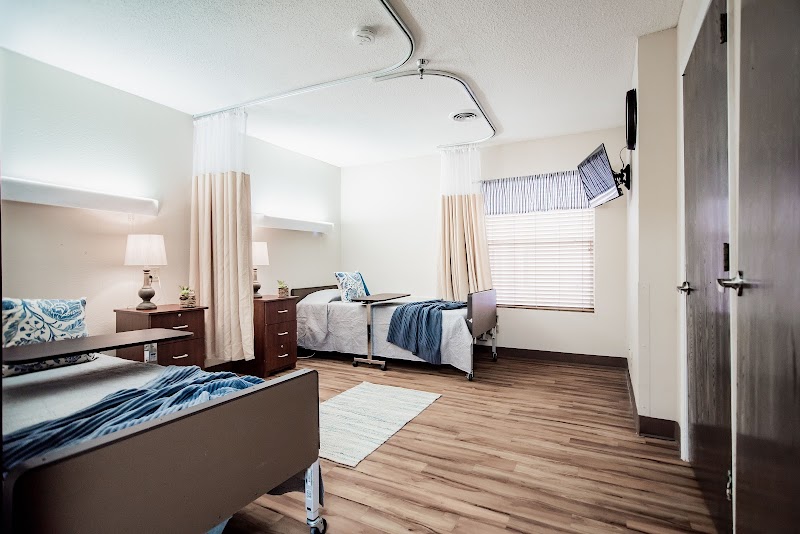
How is Cuero Staffed?

CMS rates CUERO NURSING AND REHABILITATION CENTER's staffing level at 1 out of 5 stars, which is much below average compared to other nursing homes. Staff turnover is 46%, compared to the Texas average of 46%. This relatively stable workforce can support continuity of care.

What Have Inspectors Found at Cuero?

State health inspectors documented 26 deficiencies at CUERO NURSING AND REHABILITATION CENTER during 2022 to 2025. These included: 3 Immediate Jeopardy (the most serious level, indicating potential for serious harm or death) and 23 with potential for harm. Immediate Jeopardy findings are rare and represent the most serious regulatory concerns. They require immediate corrective action.
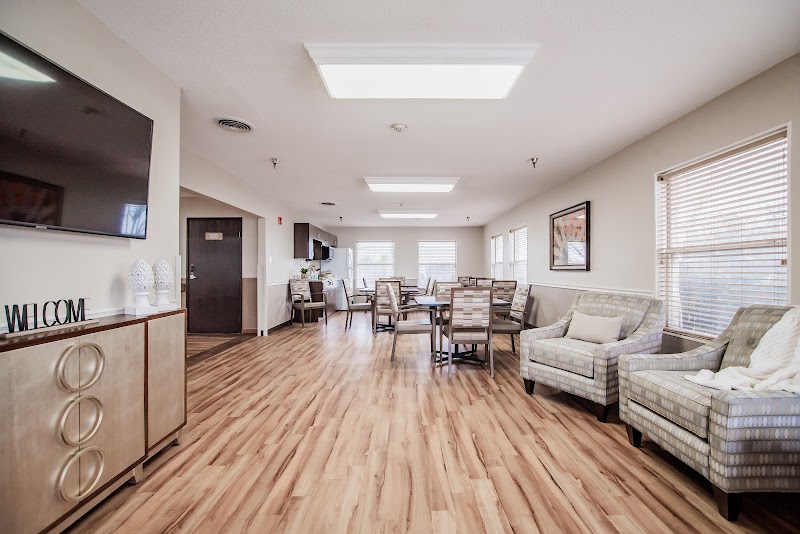
Who Owns and Operates Cuero?

CUERO NURSING AND REHABILITATION CENTER is owned by a non-profit organization. Non-profit facilities reinvest revenue into operations rather than distributing to shareholders. The facility is operated by WELLSENTIAL HEALTH, a chain that manages multiple nursing homes. With 120 certified beds and approximately 84 residents (about 70% occupancy), it is a mid-sized facility located in CUERO, Texas.
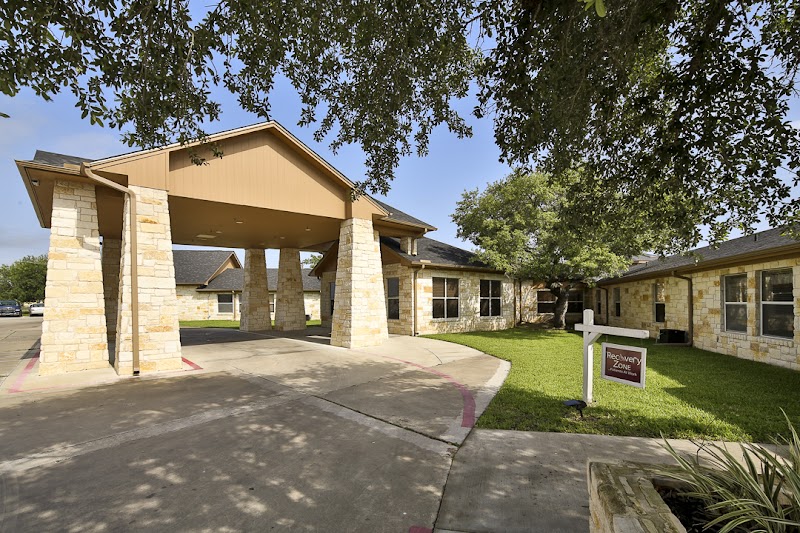
How Does Cuero Compare to Other Texas Nursing Homes?

Compared to the 100 nursing homes in Texas, CUERO NURSING AND REHABILITATION CENTER's overall rating (2 stars) is below the state average of 2.8, staff turnover (46%) is near the state average of 46%, and health inspection rating (3 stars) is at the national benchmark.

What Should Families Ask When Visiting Cuero?

Based on this facility's data, families visiting should ask: "What changes have been made since the serious inspection findings, and how are you preventing similar issues?" "Can you walk me through typical staffing levels on day, evening, and night shifts?" "Can I visit during a mealtime to observe dining assistance and food quality?" "How do you handle medical emergencies, and what is your hospital transfer rate?" These questions are particularly relevant given the facility's Immediate Jeopardy citations and the below-average staffing rating.

Is Cuero Safe?

Based on CMS inspection data, CUERO NURSING AND REHABILITATION CENTER has documented safety concerns. Inspectors have issued 3 Immediate Jeopardy citations (the most serious violation level indicating risk of serious injury or death). The facility has a 2-star overall rating and ranks #100 of 100 nursing homes in Texas. Families considering this facility should ask detailed questions about what corrective actions have been taken since these incidents.

Do Nurses at Cuero Stick Around?

CUERO NURSING AND REHABILITATION CENTER has a staff turnover rate of 46%, which is about average for Texas nursing homes (state average: 46%). Moderate turnover is common in nursing homes, but families should still ask about staff tenure and how the facility maintains care continuity when employees leave.

Was Cuero Ever Fined?

CUERO NURSING AND REHABILITATION CENTER has been fined $32,806 across 2 penalty actions. This is below the Texas average of $33,407. While any fine indicates a compliance issue, fines under $50,000 are relatively common and typically reflect isolated problems that were subsequently corrected. Families should ask what specific issues led to these fines and confirm they've been resolved.

Is Cuero on Any Federal Watch List?

CUERO NURSING AND REHABILITATION CENTER is not on any federal watch list. The most significant is the Special Focus Facility (SFF) program, which identifies the bottom 1% of nursing homes nationally based on persistent, serious quality problems. Not being on this list means the facility has avoided the pattern of deficiencies that triggers enhanced federal oversight. This is a positive indicator, though families should still review the facility's inspection history directly.