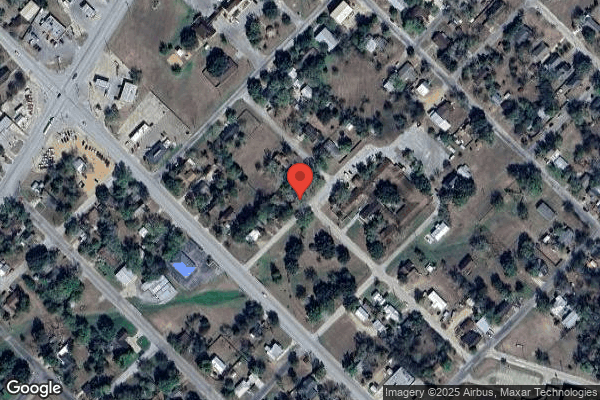
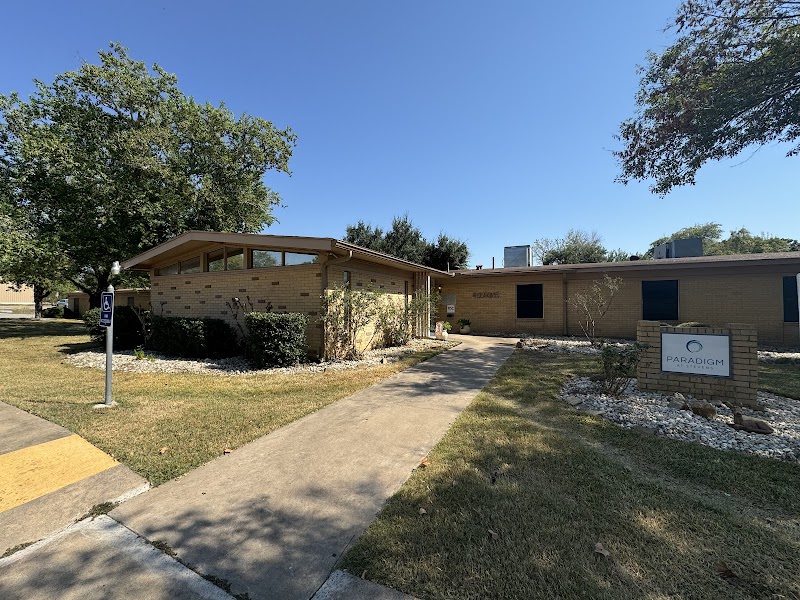
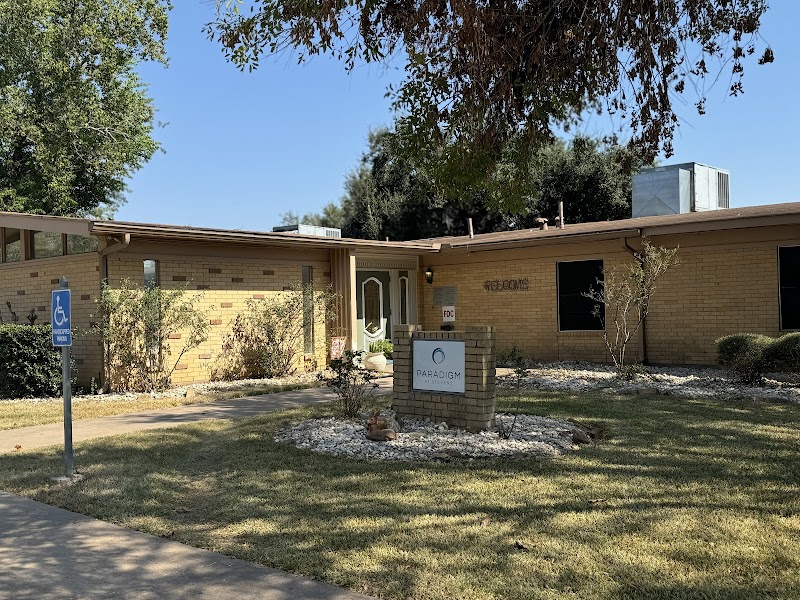

Paradigm at Stevens

204 Walter St, Yoakum, TX 77995 (361) 293-3544
For profit - Corporation 106 Beds PARADIGM HEALTHCARE Data: November 2025
Trust Grade
40/100
#1075 of 1168 in TX
Last Inspection: March 2025

Within standard 12-15 month inspection cycle. Federal law requires annual inspections.

Overview

Paradigm at Stevens has a Trust Grade of D, indicating below-average performance with some concerns about care and management. It ranks #1075 out of 1168 facilities in Texas, placing it in the bottom half, and is last in its county, suggesting limited local options for better care. The facility is worsening, with issues increasing from 12 in 2024 to 21 in 2025. Staffing is a significant weakness, with a poor 1 out of 5 stars and a 52% turnover rate, which is about average for Texas but still indicates instability. Specific incidents include a nurse failing to properly wash hands after handling utensils, potentially spreading foodborne illnesses, and care plans for residents not being updated properly, risking their health needs not being met. On a positive note, the facility has not incurred any fines, which is a good sign, but the overall RN coverage is concerning, being less than 82% of other Texas facilities.

Trust Score
D
40/100
In Texas
#1075/1168
Bottom 8%
Safety Record
Low Risk
No red flags
Inspections
Getting Worse
12 → 21 violations
Staff Stability
⚠ Watch
52% turnover. Above average. Higher turnover means staff may not know residents' routines.
Penalties
✓ Good
No fines on record. Clean compliance history, better than most Texas facilities.
Skilled Nurses
⚠ Watch
Each resident gets only 14 minutes of Registered Nurse (RN) attention daily — below average for Texas. Fewer RN minutes means fewer trained eyes watching for problems.
Violations
⚠ Watch
34 deficiencies on record. Higher than average. Multiple issues found across inspections.
★☆☆☆☆
1.0
Overall Rating
★☆☆☆☆
1.0
Staff Levels
★★★★☆
4.0
Care Quality
★★☆☆☆
2.0
Inspection Score
Stable
2024: 12 issues
2025: 21 issues

The Good

  • 4-Star Quality Measures · Strong clinical quality outcomes
  • Full Sprinkler Coverage · Fire safety systems throughout facility
  • No fines on record

Facility shows strength in quality measures, fire safety.

The Bad

1-Star Overall Rating

Below Texas average (2.8)

Significant quality concerns identified by CMS

Staff Turnover: 52%

Near Texas avg (46%)

Higher turnover may affect care consistency

Chain: PARADIGM HEALTHCARE

Part of a multi-facility chain

Ask about local staffing decisions and management

The Ugly 34 deficiencies on record

Sept 2025 2 deficiencies
CONCERN (D) 📢 Someone Reported This

A family member, employee, or ombudsman was alarmed enough to file a formal complaint

Potential for Harm - no one hurt, but risky conditions existed

Safe Environment (Tag F0584)

Could have caused harm · This affected 1 resident

**NOTE- TERMS IN BRACKETS HAVE BEEN EDITED TO PROTECT CONFIDENTIALITY** Based on observation, interview, and record review, the facility failed to maintain comfortable temperature levels for 2 of 5 re...

Read full inspector narrative →
**NOTE- TERMS IN BRACKETS HAVE BEEN EDITED TO PROTECT CONFIDENTIALITY** Based on observation, interview, and record review, the facility failed to maintain comfortable temperature levels for 2 of 5 residents (Residents #1 and #2) reviewed for environment. The facility failed to ensure the temperature in the room shared by Residents #1 and #2 was cooled to a comfortable level in September 2025. This failure could lead to decreased quality of life for residents. Findings included:Record review of Resident #1's face sheet dated 9/6/2025 reflected a [AGE] year-old female admitted to the facility on [DATE]. Relevant diagnoses included schizophrenia (a mental health disorder in which a person has difficulty distinguishing their own thoughts/delusions from reality), depression, and generalized anxiety disorder. Record review of Resident #1's admission MDS, submitted 8/14/2025, reflected a BIMS score of 15, indicating intact cognition. Record review of Resident #2's face sheet dated 9/6/2025 reflected a [AGE] year-old female admitted to the facility on [DATE]. Relevant diagnoses included hypertensive (elevated blood pressure) and schizoaffective disorder (a mental health disorder with similar presentations as schizophrenia). Record review of Resident #2's admission MDS, submitted 8/14/2025, reflected a BIMS score of 13, indicating intact cognition. In an observation and interview on 9/6/2025 at 10:55 AM, the room shared by Residents #1 and #2 had a recorded temperature of 75.5 degrees F. Three fans were observed to be circulating air in the room. Resident #1 stated the room frequently becomes so hot that she sweats profusely in spite of the fans. She said the room had been intermittently hot since she admitted to the facility. She had reported the temperature to the nursing staff, and they provided the additional fans for cooling. She stated that the temperature of the room at the time was warm and slightly uncomfortable. Resident #2 stated the room felt warm and that she wished it was cooler. In an observation and interview on 9/6/2025 at 1:17 PM, the same room had a recorded temperature of 80.2 degrees F. The temperature recorded next to the air conditioning vent above the door measured 80.1 degrees F. Resident #1 stated she felt hot and was uncomfortable. In an observation on 9/6/2025 at 1:18 PM, the temperature at the nurse's station in the hallway of Residents' #1 and #2 room was recorded at 79.4 degrees F. The air conditioning control panel next to the nurse's station was observed to be set at 72 degrees F. In an interview with the ADON on 9/6/2025 at 1:17 PM, she stated she was unaware that Residents #1 and #2 had ongoing discomfort related to the temperature of their room. She was aware of ongoing issues with the air conditioning in that area of the building and stated the air conditioning had been worked on recently. She stated the air conditioning was set to cool at 72 degrees F and maintained by the Maint. Dir., but she would relocate both residents to a cooler area of the facility. In an interview on 9/6/2025 at 1:53 PM, LVN A stated the hallway in front of Resident #1 and #2's room frequently became very hot as well as their room. She had reported the issue to the ADON in August, when both residents admitted to the facility, but stated nothing had been done to correct the temperature. She reported no adverse effects of the warm temperature to either resident other than discomfort. In an observation and interview on 9/6/2025 at 2:52 PM, the Maint. Dir. was observed on a ladder working in the ceiling in the hallway in front of the room shared by Residents #1 and #2. He stated he was not aware of any issues with the air conditioning in that hallway, and the air conditioning unit had been replaced earlier in the year. He then said the staff had notified him previously that some of the rooms in the same hallway were hot, but he found no issues when he checked the temperatures of the rooms. He stated he came to the facility that day after being notified by the ADON that the room was hot, and he found that an area of the air conditioning duct was dislodged, but he had been able to repair it. In an observation and interview on 9/6/2025 at 2:59 PM, Residents #1 and #2 were observed to have been relocated to a room across the hall from their original, shared room. The temperature in the room was measured at 72.9 degrees F near Resident #2's bed and 64.5 degrees F next to the air conditioning vent above the doorway. Residents #1 and #2 both stated they felt better and more comfortable, and they were satisfied with the temperature of the room. In an interview with the Admin. on 9/6/2025 at 3:25 PM, she stated she was unaware of the ongoing discomfort of Residents #1 and #2 with the temperature in the room. She was not sure how the residents obtained the fans in their room. She stated the potential harm to residents who had an uncomfortable temperature in their rooms was discomfort. Record review of the facility policy titled Dignity: Residents' Right for revised 6/2019, reflected the following: 7) Create a home-like environment for the resident that includes .e. proper temperature and ventilation.
CONCERN (D) 📢 Someone Reported This

A family member, employee, or ombudsman was alarmed enough to file a formal complaint

Potential for Harm - no one hurt, but risky conditions existed

Deficiency F0813 (Tag F0813)

Could have caused harm · This affected 1 resident

**NOTE- TERMS IN BRACKETS HAVE BEEN EDITED TO PROTECT CONFIDENTIALITY** Based on observation, interview, and record review, the facility failed to ensure food was stored in accordance with professiona...

Read full inspector narrative →
**NOTE- TERMS IN BRACKETS HAVE BEEN EDITED TO PROTECT CONFIDENTIALITY** Based on observation, interview, and record review, the facility failed to ensure food was stored in accordance with professional food standards for food service safety for 1 of 2 residents (Resident #1) reviewed for food storage. The facility failed to ensure Resident #1's personal refrigerator was maintained at proper temperature and the food was dated and labeled appropriately for September 2025. This failure could lead to food-borne illness and decreased quality life of residents. Findings included:Record review of Resident #1's face sheet dated 9/6/2025 reflected a [AGE] year-old female admitted to the facility on [DATE]. Relevant diagnoses included schizophrenia (a mental health disorder in which a person has difficulty distinguishing their own thoughts/delusions from reality), depression, and generalized anxiety disorder. Record review of Resident #1's admission MDS, submitted 8/14/2025, reflected a BIMS score of 15, indicating intact cognition. In an observation and interview on 9/6/2025 at 9:55 AM, Resident #1 was observed to have a small, personal refrigerator in her room containing several items of fruit, open containers of ketchup and mayonnaise, and a partially empty container of lunch meat. All items felt warm to the touch. The temperature of the refrigerator was recorded as 75.3 degrees F. Resident #1 stated someone used to check the temperature of the refrigerator, but it had not been checked lately and did not contain a thermometer. She stated her family had visited recently and provided groceries. She denied any gastro-intestinal illness related to food intake. In an observation and interview on 9/6/2025 at 1:17 PM, the ADON stated the night nursing staff was responsible for monitoring the temperature logs of residents' personal refrigerators. A binder containing the temperature logs was observed, but it did not contain a temperature log of Resident #1's refrigerator for September 2025. She was unsure of the facility's policy regarding labeling and dating the food contained in residents' personal fridges. She said the staff will clean the personal refrigerators approximately once a week to ensure there is no expired food inside. In an interview with the Admin on 9/6/2025 at 3:25 PM, she stated she was the person responsible for the temperature log of Resident #1's personal refrigerator as she was the Resident Ambassador for the room. She stated she had not performed a check of Resident #1's refrigerator temperature in September. She was unsure what the proper range was for food storage. She was unsure of the facility policy regarding food labeling/dating for personal food. She reported the potential harm to residents of having improperly stored food was sickness. Record review of the facility policy titled Resident Refrigerators revised 9/2024, reflected the following: All food items must be labeled with the resident's name and date of placement.Perishable items must be discarded after 3 days unless otherwise directed by dietary services.Temperature must be maintained at or below 41 degrees F.
Mar 2025 18 deficiencies
CONCERN (D)

Potential for Harm - no one hurt, but risky conditions existed

Deficiency F0558 (Tag F0558)

Could have caused harm · This affected 1 resident

**NOTE- TERMS IN BRACKETS HAVE BEEN EDITED TO PROTECT CONFIDENTIALITY** Based on observations, interviews, and record review, the facility failed to ensure residents had the right to reside and receiv...

Read full inspector narrative →
**NOTE- TERMS IN BRACKETS HAVE BEEN EDITED TO PROTECT CONFIDENTIALITY** Based on observations, interviews, and record review, the facility failed to ensure residents had the right to reside and receive services in the facility with reasonable accommodation of resident needs and preferences except when to do so would endanger the health or safety of the resident or other residents for 1 of 14 residents (Residents #6) reviewed for accommodation of needs. The facility failed to ensure Resident #6's call light was within reach while she was positioned on her bed in her room. This failure could place residents at risk for delay in care and services, and increased risk of falls and injuries. The findings included: Record review of Resident #6's face sheet, dated 03/07/2025, revealed the resident was a [AGE] year old female and an original admission date of 10/16/2023 with diagnoses that included: traumatic subdural hemorrhage with loss of consciousness of unspecified duration (a pool of blood between the brain and it outermost covering), dysphagia (difficulty swallowing), hypertension (high blood pressure), extrapyramidal and movement disorder (increase motor tone and changes in the amount and velocity of movement), difficulty in walking, and muscle wasting and atrophy (wasting or thinning of muscle mass). Record review of Resident #6's quarterly MDS assessment, dated 01/21/2025, indicated her BIMS score was 15 reflecting her cognition was intact. Further record review indicated the resident was independent to all daily activities such as toilet hygiene, dressing, personal hygiene, and chair-to-bed transfer. Record review of Resident #6's comprehensive care plan, dated 10/17/2023, reflected [Resident #6] has activities of daily living self-care deficits and is at risk of further decline in activities of daily living functioning and injury. For intervention - call light is within reach and answer in a timely manner. Observation on 03/04/2025 at 9:34 a.m. revealed Resident #6 was laying down on her bed in her room, and the call light was on the floor, which was beside her roommate's bed, and it was not within reach. Interview on 03/04/2025 at 10:40 a.m. with Resident #6 stated she could use the call light when she needed to have help, but she did not know where the call light was. The resident said to the state surveyor, Please give to me the call light because I could not reach it now. Further interview with Resident #6 stated she did not know why the call light was located on the floor bedside her roommate's bed where she could not reach it. Interview on 03/04/2025 at 10:43 a.m. LVN-A stated Resident #6 was on her bed in her room, and the call light was on the floor beside the resident's roommate's bed. She stated Resident #6 could not reach her call light. The call light should have been within reach all the time. She stated Resident #6 could use the call light to get help. LVN-A did not know what reason the call light was on the floor beside the resident's roommate's bed. The resident might not have proper care. Interview on 03/06/2025 at 5:45 p.m. the DON stated Resident #6 could use the call light to get help. The call light should have been within reach at all times per the facility policy. If Resident #6 could not use the call light because it was not within reach, the resident's care might be delayed. Record review of the facility policy, titled Call Lights, revised 12/2023, revealed Accessibility - Call lights will be placed within reached of the resident's bed or sitting area in the resident's room.
CONCERN (D)

Potential for Harm - no one hurt, but risky conditions existed

Safe Environment (Tag F0584)

Could have caused harm · This affected 1 resident

**NOTE- TERMS IN BRACKETS HAVE BEEN EDITED TO PROTECT CONFIDENTIALITY** Based on observation, interview and record review the facility failed to provide a clean, comfortable, and homelike environment ...

Read full inspector narrative →
**NOTE- TERMS IN BRACKETS HAVE BEEN EDITED TO PROTECT CONFIDENTIALITY** Based on observation, interview and record review the facility failed to provide a clean, comfortable, and homelike environment including a clean bed in good condition for 1 of 1 Resident (Resident #14) whose bed was observed for sanitation. The facility failed to replace Resident #14's mattress which was heavily soiled with urine and the urine stains covered at least 50% of the mattress. This deficient practice could affect any resident and result in dissatisfaction and poor self-esteem. The findings were: Review of Resident #14's face sheet, dated 3/7/25, revealed she was admitted to the facility on [DATE] with diagnoses including Type 2 Diabetes Mellitus, Schizoaffective Disorder (according to Mayo clinic: mental health condition that is marked by a mix of schizophrenia symptoms, such as hallucinations and delusions, and mood disorder symptoms, such as depression, mania and a milder form of mania called hypomania), Major Depressive Disorder, recurrent severe without psychotic, Anxiety Disorder, unspecified Dementia, and bed confinement status. Review of Resident #14's quarterly MDS assessment, dated 12/20/24, revealed her BIMS score was 4 of 15 reflective of severe cognitive impairment; she had impaired vision; and required substantial to maximal assistance with toileting. Review of Resident #14's Care Plan, revised 1/7/25, read: ADL SELF CARE DEFICITS: Resident #14 [name]has ADL self-care deficits and is at risk for further decline in ADL functioning and injury AEB (as evidenced by) bilateral leg amputations. One of the interventions read: Provide Total assistance of 1 support person for toileting/incontinent care. Observation and interview on 03/05/25 at 10:15 AM revealed Resident #14's mattress had been stripped of its linens. The mattress was heavily soiled with urine and there was a large stain on the middle of the mattress that covered at least half of the mattress. The stain was brown/red in color and the room smelled heavily of urine. Interview with the ADON revealed she commented, oh that's got to get thrown out. She stated it was severely stained and it smelled like urine. The ADON stated the CNA's should be cleaning and disinfecting the mattress when soiled after providing pericare. She stated usually a mattress was replaced when ripped, but in this case, it was so heavily soiled she did not believe it could be adequately cleaned for continued use. The ADON stated nursing staff should report when there was a problem, but stated no one had said anything to her. She stated she also made rounds but had not seen the condition of the mattress because it had always been covered. The ADON stated Resident #14 had not said anything to her either but couldn't imagine being ok with the condition of the mattress. Interview on 03/05/25 at 10:57 AM with Resident #14 revealed she was sitting in a wheelchair by the nurse's station. Resident #14 stated usually she did not spend much time in her room once staff helped her to get out of bed. She stated she was not aware of the condition of her mattress. She stated she had not paid attention. Resident #14 reviewed the picture taken of the mattress she was using and immediately commented, Oh my God that doesn't look good. I would not want to lay on that. Interview on 03/05/25 at 11:15 AM with CNA D revealed she often worked with Resident #14 and stated today was her shower day. CNA D stated they would strip the resident's bed during shower days. CNA D stated she had not really paid attention to the condition of Resident #14's bed but stated she would wipe it down with disinfectant if soiled. CNA D looked at Resident #14's mattress and commented, I don't remember it looking that way. She stated it was really soiled and it smelled like urine. She further stated she was not sure if the mattress would come clean. CNA D stated any resident would probably not be happy sleeping on a mattress that was that dirty. Review of the facility policy, Dignity: Resident's Right for, revised 6/2019, read in relevant part: It is the policy of this facility that the Facility staff will provide the resident with the right to an environment that preserves dignity and contributes to a positive self-image. 7) Create a home-like environment for the resident that includes: c. Clean, orderly, comfortable, safe environment with clean bed and bath linen in good condition, and personal closet. Review of the facility policy, General Environment Cleaning Techniques, revised 2/2022 read in relevant part: The primary objective of this policy is to establish and maintain a standardized approach to environmental cleaning, minimizing the risk of infections and promoting clean and sanitary living and working environment. General Surface Cleaning Process. Thoroughly wet (soak) a fresh cleaning cloth in the environmental cleaning solution. Fold the cleaning cloth in half until it is about the size of your hand. This will ensure that you can use all surface area efficiently. Wipe surfaces using the general strategies as above (clean to dirty, high to low), making sure to use mechanical action and making sure the surface is thoroughly wetted to allow required contact time.
CONCERN (D)

Potential for Harm - no one hurt, but risky conditions existed

Abuse Prevention Policies (Tag F0607)

Could have caused harm · This affected 1 resident

**NOTE- TERMS IN BRACKETS HAVE BEEN EDITED TO PROTECT CONFIDENTIALITY** Based on interview and record review, the facility failed to implement written policies and procedures that prohibit and prevent...

Read full inspector narrative →
**NOTE- TERMS IN BRACKETS HAVE BEEN EDITED TO PROTECT CONFIDENTIALITY** Based on interview and record review, the facility failed to implement written policies and procedures that prohibit and prevent abuse, neglect and misappropriation for 1 of 5 staff (housekeeper-F) reviewed for criminal backround checks. The facility administrator and human resources completed checking housekeeper-F's criminal background on 03/06/2025, but the housekeeper was hired to the facility on [DATE]. This failure could place all residents at risk of abuse from facility staff. Findings included: Record review of housekeeper-F's employee's profile revealed the housekeeper was hired and started working to the facility on [DATE], but the housekeeper's criminal background was checked on 03/06/2025. Interview on 03/07/2025 at 3:12 p.m. with the administrator stated housekeeper-F was hired and started working at the facility on 02/05/2025, but the housekeeper's criminal background was checked on 03/06/2025. The facility did not have staff for human resources, so the staff from the ssociated facility came to the facility sometimes and checked the criminal backgrounds of newly hired employees. Along the way, the staff might have miss checking the housekeeper-F's background before the housekeeper was hired. The facility should have checked the housekeeper-F's criminal background before the housekeeper was hired. Housekeeper-F had clear criminal background when it was checked on 03/06/2025. However, not checking criminal backgrounds before hiring dates might cause resident's abuse due to inappropriate staff. Record review of the facility policy, titled Authorization and release form to obtain an investigative and/or consumer report used for pre- and post-employment evaluation for employee, undated, revealed prospective employees authorize the facility to obtain an investigative and/or consumer report. These reports may include but are not limited to personal credit history and criminal history.
CONCERN (D)

Potential for Harm - no one hurt, but risky conditions existed

Assessment Accuracy (Tag F0641)

Could have caused harm · This affected 1 resident

**NOTE- TERMS IN BRACKETS HAVE BEEN EDITED TO PROTECT CONFIDENTIALITY** Based on observation, interview and record review the facility failed to ensure the assessment accurately reflected the resident...

Read full inspector narrative →
**NOTE- TERMS IN BRACKETS HAVE BEEN EDITED TO PROTECT CONFIDENTIALITY** Based on observation, interview and record review the facility failed to ensure the assessment accurately reflected the resident's status for 2 of 7 Residents (Resident #16 and Resident #35) whose records were reviewed. 1. Resident #16's quarterly MDS did not reflect he used one 1/4 bed rail for mobility and transfers. 2. Resident #35's quarterly MDS did not reflect she had impaired vision. This deficient practice could affect any resident and could result in the inaccuracy of assessments and contribute to residents not receiving care for identified care needs. The findings were: 1. Review of Resident #16's face sheet, dated 3/4/25, revealed he was admitted to the facility on [DATE] with diagnoses including Hemiplegia and Hemiparesis following Cerebral Infarction affecting non-dominant side and Dementia in other Diseases classified elsewhere, severe, with psychotic disturbance. Review of Resident #16's quarterly MDS assessment, dated 1/22/25, revealed his BIMS score was 14 of 15 reflective of minimal cognitive impairment and he did not use a bed rail while in bed. Review of Resident #16's Care Plan last updated on 6/25/24 revealed there was no indication he used a bed rail while in bed. Review of Resident #16's physician orders for March 2025 revealed an order L side rail to assist with bed mobility and transfers. No directions specified for order. Active: 1/22/2025. Observation and interview on 03/04/25 at 11:27 AM revealed Resident #16 lying in bed holding on to 1/4 bed rail x1; on his left side. Interview with Resident #16 revealed he used the bed rail to help him sit up in bed and for transfers out of bed. Interview on 03/06/25 at 02:58 PM with the MDS Coordinator revealed Resident #16's quarterly MDS assessment, dated 1/22/25, did not reflect he used a bed rail for mobility and transfers. The MDS Coordinator revealed clinical assessments were used to update the Care Plan. The accuracy of assessments were important to ensure staff captured all assistive devices provided to help Resident #16 become as independent as possible. The MDS Coordinator stated the inaccuracy of the MDS assessment could contribute to the Care Plan not reflecting assistive devices that should be provided and could result in a decline in physical mobility or inability to assist with mobility to maintain independence as much as possible. 2. Review of Resident #35's face sheet, dated 3/5/25, revealed she was admitted to the facility on [DATE] with diagnoses included Type 2 Diabetes Mellitus without complications and Anxiety Disorder. Review of Resident #35's quarterly MDS assessment, dated 12/24/24, revealed her BIMS score was 15 of 15 which was reflective of no cognitive impairment and that she had adequate vision. Review of Resident #35's Care Plan, revised on 2/10/25, revealed there was no indication she had visual impairment. Interview on 03/05/25 at 01:49 PM with the facility Ombudsman revealed Resident #35 had complained about her vision; not being able to see like she used to and had been waiting to see an optometrist since the latter part of 2024. Interview on 03/05/25 at 04:13 PM with Resident #35 revealed her vision was blurry since before Thanksgiving 2024. She stated the staff told her they were trying to get an optometrist to come to the facility and provide care in-house. Interview on 03/05/25 at 5: 00 PM with the MDS Coordinator revealed Resident #35 had been waiting to see an optometrist for at least a couple of months. She stated Resident #35 had complained about blurry vision. Further interview revealed Resident #35's quarterly MDS assessment, dated 12/24/24 did not reflect that she had blurred vision. She stated furthermore, the Care Plan, would not include it as a care need because the quarterly MDS did not accurately reflect Resident #35's status. She stated it could result in Resident #35 not receiving vision services as needed. Review of a facility policy, Minimum Data Set revised 6/2019, read in relevant part: Policy: It is the policy of this facility that a registered nurse will conduct or coordinate each assessment with the interdisciplinary team. An MDS, which is a comprehensive, accurate, standardized reproducible assessment will be completed for each resident, using the RAI process. Facility staff complete a comprehensive assessment of each resident's needs, strengths, goals, life history, and preferences, and offer guidance for further assessment once problems have been identified.
CONCERN (D)

Potential for Harm - no one hurt, but risky conditions existed

Comprehensive Care Plan (Tag F0656)

Could have caused harm · This affected 1 resident

**NOTE- TERMS IN BRACKETS HAVE BEEN EDITED TO PROTECT CONFIDENTIALITY** Based on observations, interviews, and record review, the facility failed to develop and implement a comprehensive person-center...

Read full inspector narrative →
**NOTE- TERMS IN BRACKETS HAVE BEEN EDITED TO PROTECT CONFIDENTIALITY** Based on observations, interviews, and record review, the facility failed to develop and implement a comprehensive person-centered care plan for each resident that included measurable objectives and timeframes to meet a resident's medical, nursing, and mental needs that were identified in the comprehensive assessment, and described services that were to be furnished to attain or maintain the resident's highest practicable physical, mental, and psychosocial well-being for 1 of 14 residents (Resident #143) reviewed for care plans. The facility failed to ensure Resident #143's care plan reflected her bowel incontinence and included a care plan regarding how to take care of the resident's bowel incontinence. These deficient practices could place residents at risk for not receiving proper care and services due to inaccurate care plans. The findings included: Record review of Resident #143's face sheet, dated 03/07/2025, revealed Resident #143 was [AGE] years old, female, and originally admitted to the facility on [DATE] and re-admitted to the facility on [DATE] with diagnoses which included: encounter for other orthopedic aftercare (caring after muscle or bone surgery), hyperlipidemia (high level of fat), muscle wasting and atrophy (wasting or thinning of muscle mass), dementia (group of thinking and social symptoms that interfere with daily functioning), and muscle weakness. Record review of Resident #143's quarterly MDS assessment, dated 12/23/2024, revealed Resident #143's BIMS score was 0 which indicated she had severe cognitive impairment, and she had frequent bladder incontinence, but always had bowel incontinence. Record review of Resident #143's comprehensive care plan, dated 10/07/2024, revealed [Resident #143] has bladder incontinence. For interventions - Monitor for incontinent episodes and provide peri care as indicated. Further record review of the resident's comprehensive care plan revealed there was no care plan regarding bowel incontinent care. Observation on 03/06/2025 at 9:24 a.m. revealed CNA-B and CNA-C were providing bowel and bladder incontinent care to Resident #143. Interview on 03/06/2025 at 9:32 a.m. with CNA-B and C stated Resident #143 was bowel and bladder incontinent, and the CNAs provided perineal care to the resident whenever the resident had incontinent episode. Interview on 03/07/2025 at 9:31 a.m. with the MDS nurse stated Resident #143 was incontinent of bowel and bladder and needed to have bowel and bladder incontinent care whenever she had an episode. She stated there were care plans regarding only bladder incontinent care, and the MDS nurse removed the resident's care plans regarding the resident's bowel incontinence because it was resolved. However, Resident #143's bowel incontinence was not resolved. She stated the resident still needed to have bowel incontinent care. It was the MDS nurse's mistake to remove the care plans related to Resident #142's bowel incontinence, and not developing and updating the care plan might cause lack of care to the resident. Record review of the facility policy, titled Minimum Data Set, revised 06/2019, revealed . 13. The quarterly MDS does not require the completion of care area assessment, however, the resident's care plan must be reviewed and revised by the interdisciplinary team after each assessment.
CONCERN (D)

Potential for Harm - no one hurt, but risky conditions existed

Accident Prevention (Tag F0689)

Could have caused harm · This affected 1 resident

**NOTE- TERMS IN BRACKETS HAVE BEEN EDITED TO PROTECT CONFIDENTIALITY** Based on the observations, interviews, and record review, the facility failed to ensure that the resident's environment remained...

Read full inspector narrative →
**NOTE- TERMS IN BRACKETS HAVE BEEN EDITED TO PROTECT CONFIDENTIALITY** Based on the observations, interviews, and record review, the facility failed to ensure that the resident's environment remained free of accidents and hazards as was possible and each resident received adequate supervision to prevent accidents for 2 of 2 (Resident #19 and Resident #28) reviewed for mechanical transfers. 1. a. CNA K and CNA C failed to use safe technique when transferring Resident #19 from the bed to the wheelchair using a mechanical lift. b. Nursing staff failed to ensure a floor mat was at Resident #19's bedside while she was in bed. 2. When CNA-D and CNA E mechanically transferred Resident #28 from the bed to the wheelchair on 03/05/2025, CNA-E did not hold the spreader bar to prevent the spread bar from hitting the resident's head that was swinging while CNA-D was lowering the spread bar to connect it to the sling. These failures could place the residents at risk for avoidable falls and injuries as a result of a fall. The findings included: 1. a. Review of Resident #19's face sheet, dated 3/6/25, revealed she was admitted to the facility on [DATE] with diagnosis including Hemiplegia, unspecified affecting left non-dominant side. Review of Resident #19's quarterly MDS assessment, dated 12/24/25 revealed her BIMS score was 14 of 15 reflective of minimal cognitive impairment and she required substantial to maximal assistance with transfers from chair/bed -to-chair transfer. Review of Resident #19's Care Plan revised on 1/7/25 revealed Resident #19 was at risk for falling related to history of CVA (stroke). One of the interventions included Fall mat on floor next to bed. Review of Resident #19's physician orders for March 2025 revealed an order: Fall Mat: Place fall mat on the floor, beside the bed, while in bed. Bed to be in the lowest and safest position possible for frequent falls Active 9/23/24. Observation and interview on 03/04/25 at 11:11 AM revealed CNA C and CNA K transferring Resident #19 from the bed to a wheelchair using a mechanical lift. CNA K operated the lift on her own. She positioned the base of the lift under the bed; she did not widen the base or lock the lift when she parked it. CNA K and CNA C attached the sling to the spreader. CNA K pulled the lift backwards and away from the bed with Resident #19 in mid-air. She attempted to turn the lift in the direction of the wheelchair positioned at the foot of the bed. Resident #19 rocked from side to side. CNA K was struggling to get the lift to turn. CNA C walked over and helped to turn the lift by pulling on the sling with Resident #19. CNA K did not widen the base of the lift while turning the lift and did not lock the lift when she stopped in front of the wheelchair. CNA K then widened the base of the lift and positioned the legs of the lift around the wheelchair while CNA C held the wheelchair. CNA K lowered Resident #19 and her feet got stuck under the actuator of the lift. CNA K pulled on Resident #19's feet away from the actuator. Interview with CNA K and CNA C revealed the lift had been getting stuck during transfers but stated they had not said anything to the MS. CNA K stated she did not widen the base which stated would provide stability. She stated she did not lock the lift when she came to a stop but should have to keep the lift from moving. CNA K further stated she tugged on Resident #19's feet because they were stuck and did not know how else to get her feet loose. CNA C stated she did not assist CNA K until CNA K was unable to turn the lift. She helped to turn the lift and then walked back over behind the wheelchair. She stated she was supposed to guide Resident #19 to the wheelchair to help keep the resident steady on the lift so the lift did not tip over and the Resident did not fall. CNA K and CNA C stated they received training on operating a mechanical lift during February 2025, but both stated they did not follow the steps provided in training to safely transfer Resident #19. CNA K and CNA C stated she could have fallen and been injured. Interview on 03/06/25 at 10:30 AM with the DON revealed a mechanical lift required two staff; one staff operated the lift while the second staff guided the resident during the transfer. The DON stated the base should be widened when positioning it under the bed to provide stability when lifting the resident. The legs of the base should be put back to the original position when moving the resident back and away from the bed. Once the base was completely out then the base should be widened again making it easier to maneuver the lift. The staff guiding the resident should never leave the resident's side and continue to guide ensuring the resident did not hit any part of the lift. The DON stated the base of the lift should be locked anytime it came to a stop or was parked. The DON stated the rehabilitation department provided training on all transfers. Interview on 03/06/25 at 01:49 PM with the DOR revealed the rehabilitation department provided all training on all resident transfers including using a mechanical lift. She stated the base of the lift should be widened under the bed as much as the bed would allow when preparing for transfer from the bed to the wheelchair. She stated widening the base of the lift provided support/stability to keep a resident from tipping over. The DOR stated the lift should also be locked anytime it came to a stop. The DOR stated the second staff assisting should guide and keep her hands on the resident during the transfer for additional support. The second staff should also ensure the resident did not bump any part of their body on the lift. b. Observation on 03/05/25 at 09:30 AM revealed Resident #19 lying in bed. Interview with Resident #19 revealed the last time she fell she broke her hip and had not been able to walk since. Further observation revealed a mat propped up on the chest of drawers across the room from Resident #19. Observation on 03/05/25 at 09:35 AM revealed MA J walking into Resident 19's room. MA J commented to Resident #19 I'm going to put the mat back down. Interview with MA J revealed whoever removed Resident #19's meal tray probably forgot to put it down. She stated the mat was used to prevent Resident #19 from being injured in case she fell out of bed and should be by her bedside whenever Resident #19 was in bed. Interview on 03/06/25 at 10:30 AM with the DON revealed Resident #19 was a fall risk related to confusion and debility. She stated a mat was used and placed beside the bed at all times when in bed. She stated the staff should ensure they put the mat back in place when removing for meals and or care to prevent injuries in case Resident #19 fell out of bed. The DON stated Resident #19 had not had any recent falls this year. 2. Record review of Resident #28's face sheet, dated 03/07/2025, revealed the resident was a [AGE] year old female and admitted to the facility on [DATE] with diagnoses of poly-osteoarthritis (degenerative multiple joint disease), cerebral palsy (congenital disorder of movement, muscle tone, or posture), spastic quadriplegia (muscle stiffness and weakness in the arms and legs), muscle weakness, severe intellectual disability (motor impairment, severe damage to or abnormal development), and other reduced mobility. Record review of Resident #28's annual MDS, dated [DATE], revealed the resident's BIMS score was 0 which indicated the resident had severe cognitive impairment and was dependent on all activities of daily living such as bed mobility, char-to-bed transfer, and toilet transfer. Record review of Resident #28's comprehensive care plan, dated 08/04/2023, revealed [Resident #28] has activities of daily living self-care deficits and is at risk for further decline in the functions and injury as evidence by cerebral palsy. For intervention - total assistance of 2 support persons for transfers - hoyer lift (mechanical lift) for transfers. Observation on 03/05/2025 at 4:13 p.m. revealed CNA-D was driving a mechanical lift toward Resident #28, who was laying down on her bed, to transfer the resident to a wheelchair. CNA-D was lowering a spread bar of the mechanical lift to connect it to the sling below Resident #28, and CNA-E was standing on the opposite side of CNA-D. When CNA-D was lowering a spread bar toward Resident #28's head, the spread bar was swinging, but CNA-E did not hold the spread bar that was swinging. CNA-E was waiting for connecting the spread bar to the sling. CNA-D and E transferred Resident #28 to the wheelchair with a mechanical lift, then disconnected the sling to the spread bar. In an interview on 03/05/2025 at 4:28 p.m. CNA-E stated when CNA-D was lowering the spread bar, it was swinging over Resident #28's head, but CNA-E did not hold it to prevent it from hitting the resident's head. Further interview with CNA-E stated she should have held the spread bar swing to prevent it from hitting Resident #28's head while CNA-D was lowering it. CNA-E stated she took training regarding how to transfer residents with the mechanical lift and passed it on a skill check-off evaluation in 2024. However, CNA-E was nervous and forgot to it. Resident #28 might receive an injury if the spread bar hit the resident's head. In an interview on 03/06/2025 at 5:45 p.m. the DON stated CNA-E should have held the spread bar swing to prevent it from hitting Resident #28's head while CNA-D was lowering it. Resident #28 might have had an injury if the spread bar hit the resident's head. The previous DON conducted CNA-E's skill check-off on 10/30/2024, and the CNA passed the check-off. Record review of CNA-E's Resident Care Specialist Competency for Annual, dated 10/30/2024, revealed CNA-E received training and passed the skill check-off regarding mechanical lift on 10/30/2024. Record review of the facility policy, titled Transfer/Lifts, revised 01/2024, revealed The purpose of this policy is to ensure the safety, dignity, and well-being of residents during transfers and lifts within the nursing home facility. This policy aims to minimize the risk of injury to both residents and staff while promoting efficient and respectful care practice. Review of OWNER'S MANUAL for the mechanical lift, undated, read in relevant part: SAFETY INSTRUCTIONS: During lifting or lowering, whenever possible, always keep the base of the lift in the widest position. The base of the lift should be closed before moving the lift. Do not roll casters over any object while the user/patient is in the sling. While being lifted in a sling, always keep the user/patient centered over the base.
CONCERN (D)

Potential for Harm - no one hurt, but risky conditions existed

Incontinence Care (Tag F0690)

Could have caused harm · This affected 1 resident

**NOTE- TERMS IN BRACKETS HAVE BEEN EDITED TO PROTECT CONFIDENTIALITY** Based on observations, interviews, and record review, the facility failed to ensure a resident who was incontinent of bladder r...

Read full inspector narrative →
**NOTE- TERMS IN BRACKETS HAVE BEEN EDITED TO PROTECT CONFIDENTIALITY** Based on observations, interviews, and record review, the facility failed to ensure a resident who was incontinent of bladder received appropriate treatment and services to prevent urinary tract infections and to restore continence to the extent possible for 2 of 2 residents (Resident #11 and #143) reviewed for incontinence care. 1. When CNA-C was providing incontinent care to Resident #11 on 03/05/2025, CNA-F did not clean the resident's suprapubic area (the area of the abdomen located below the umbilical region). 2. When CNA-B was providing incontinent care to Resident #143 on 03/06/2025, CNA-G did not separate and clean the resident's labia area. These failures could place residents who required incontinence care at risk for cross contamination and the development of new or worsening urinary tract infections. The findings included: 1. Record review of Resident #11's face sheet, dated 03/07/2025, revealed the resident was a [AGE] year old male and admitted to the facility on [DATE] with diagnoses of type 2 diabetes mellitus ( uncontrolled blood sugars), cerebral infarction (lack of blood flow to an area of the brain), chronic obstructive pulmonary disease (restricted airflow and breathing problem), muscle wasting and atrophy (wasting or thinning of muscle mass), reduced mobility, and benign prostatic hyperplasia (prostate gland enlargement). Record review of Resident #11's quarterly MDS, dated [DATE], revealed the resident's BIMS score was 3 which indicated the resident had severe cognitive impairment and always incontinent of bowel and bladder. Resident #11 required substantial/maximal assistance (helper does more than half the effort) to chair-to bed transfer and was dependent (helper does all of the effort) to toilet transfer. Record review of Resident #11's comprehensive care plan, dated 08/01/2023, revealed [Resident #11] has bowel and bladder incontinence related to resident does not voice need to toilet. For intervention - Clean perineal area with each incontinence episode and monitor for signs and symptoms of urinary tract infection such as pain, burning, blood-tinged urine and cloudiness. Observation on 03/05/2025 at 4:32 p.m. revealed CNA-C opened Resident #11's old and dirty brief and cleaned the resident's penis, and then cleaned the left and right groin area. CNA-C turned the resident to his left side without cleaning the suprapubic area, which was the area of the abdomen located below the umbilical region, and CNA-C cleaned the resident's buttock area, then put a new and clean brief on the resident. In an interview on 03/05/2025 at 4:46 p.m. CNA-C stated she did not clean Resident #11's suprapubic area, which was the area of the abdomen located below the umbilical region because she was nervous and forgot to clean the area. CNA-C said she should have cleaned the area when providing peri-care to Resident #11 and had peri-care training last year. 2. Record review of Resident #143's face sheet, dated 03/07/2025, revealed Resident #143 was [AGE] years old, female, and originally admitted to the facility on [DATE] and re-admitted to the facility on [DATE] with diagnoses which included: encounter for other orthopedic aftercare (caring after muscle or bone surgery), hyperlipidemia (high level of fat), muscle wasting and atrophy (wasting or thinning of muscle mass), dementia (group of thinking and social symptoms that interfere with daily functioning), and muscle weakness. Record review of Resident #143's quarterly MDS assessment, dated 12/23/2024, revealed Resident #143's BIMS score was 0 indicated she had severe cognitive impairment, and she frequently had bladder incontinence, but always had bowel incontinence. Record review of Resident #143's comprehensive care plan, dated 10/07/2024, revealed [Resident #143] has bladder incontinence. For interventions - Monitor for incontinent episodes and provide peri care as indicated. Observation on 03/06/2025 at 9:24 a.m. revealed CNA-B opened Resident #143's old and dirty brief and cleaned her suprapubic area, left and right groin area, then turned the resident to left side without separating and cleaning Resident #143's labia area. The CNA-B cleaned her buttock area and put a new and clean brief on Resident #143. In an interview on 03/06/2025 at 9:32 a.m. CNA-B stated she did not separate and clean Resident #143's labia area because she was nervous and forgot to separate and clean the area. CNA-B said she should have separated and cleaned Resident #143's labia area and she had peri-care training last year. In an interview on 03/06/2025 at 5:45 p.m. the DON stated CNA-C should have cleaned Resident #11's suprapubic area when providing peri-care to Resident #11, and CNA-B should have separated and cleaned Resident #143's labia area to prevent possible infection. The DON and the ADON were responsible for providing training related to peri-care and monitoring skill check-offs and conducting skill check-offs on 10/2024. Record review of the facility policy, titled Perineal care, revised 12/2023, revealed The facility will provide perineal care in a manner that maintain privacy, reduced the risk of infection, and promote skin integrity. Cleaning - for female residents, separate the labia and clean from front to back using a clean wipe for each stroke. For male residents, retract the foreskin (if applicable) and clean the penis from the tip down to the base, then the scrotum.
CONCERN (D)

Potential for Harm - no one hurt, but risky conditions existed

Respiratory Care (Tag F0695)

Could have caused harm · This affected 1 resident

**NOTE- TERMS IN BRACKETS HAVE BEEN EDITED TO PROTECT CONFIDENTIALITY** Based on observation, interview and record review the facility failed to ensure that a resident who needs respiratory care was p...

Read full inspector narrative →
**NOTE- TERMS IN BRACKETS HAVE BEEN EDITED TO PROTECT CONFIDENTIALITY** Based on observation, interview and record review the facility failed to ensure that a resident who needs respiratory care was provided such care, consistent with professional standards of practice, the comprehensive person-centered care plan for 2 of 2 Resident (Resident #16, Resident # 13) whose records were reviewed for oxygen therapy. 1. Nursing staff failed to ensure Resident #16's oxygen concentrator filter was clean while he was receiving oxygen via nasal cannula. 2. Resident #13's nebulizer mask was observed on the resident's dresser on 03/04/2025, and it was not covered in a plastic bag when it was not used. This deficient practice could affect any resident receiving oxygen therapy and could cause the resident to develop an upper respiratory infection. The findings were: 1. Review of Resident #16's face sheet, dated 3/4/25, revealed he was admitted to the facility on [DATE] with diagnoses including Hemiplegia and Hemiparesis following Cerebral Infarction (paralysis after having a stroke) affecting non-dominant side and Chronic Obstructive Pulmonary Disease. Review of Resident #16's quarterly MDS assessment, dated 1/22/25, revealed his BIMS score was 14 of 15 reflective of minimal cognitive impairment and he received oxygen therapy. Review of Resident #16's Care Plan last updated on 3/2/25 revealed he was at risk for respiratory distress/failure and increased episodes of SOB AEB pulmonary emphysema (according to may clinic emphysema is a long-term lung condition that causes shortness of breath) . One of the interventions included to apply oxygen per order. Review of Resident #16's physician orders for March 2025 revealed an order Oxygen @ 2.5 L/min per nasal cannula continuously every shift, Active 6/1/2024 06:00, 11/15/2024, Change Oxygen Humidifier, tubing, and cannula weekly Label with date and initial every night shift every Wed, Active 4/3/2024 18:00 (4:00 p.m.). Observation and interview on 03/04/25 at 11:27 AM revealed Resident #16 lying in bed holding on to 1/4 bed rail on his left side and oxygen infusing at 3 liters via nasal cannula. Further observation revealed the oxygen concentrator filter was covered with white residue/lent. Interview with Resident #16 stated he had been on oxygen for years for shortness of breath. He stated it helped him breath better. Interview on 03/04/25 at 11:27 AM with LVN G revealed she stated it looked like dust. LVN G scratched a layer of back from the filter. She commented it doesn't even have a back on it.: Further interview revealed LVN G stated the dust had also collected into the oxygen vent which the filter covered. LVN G stated Resident #16 was inhaling lint into his lungs and could result in an upper respiratory infection. Interview on 03/04/25 at 11:50 AM with LVN G revealed she was told to wash the filter and replace it on Resident #16's oxygen concentrator. She stated the filter was covered in dust and she cleaned out the vent opening as well. Interview on 03/07/25 at 11:00 AM with the DON revealed nursing staff should be the checking oxygen concentrators every day/shift to ensure it was operating as it should; it was providing the liters of oxygen per physician orders; that the filter was clean and the tubing was secured in plastic and dated when it was last changed. The DON stated a dirty filter could result in a resident developing an upper respiratory infection. The DON stated if Resident #16 was inhaling lint into his lungs it could lead to a decline in physical health and possible hospitalization. Review of the facility policy, Respiratory Training - Oxygen Therapy, undated, read in relevant part: Oxygen Concentrator 10) Routine Maintenance a. Filter i. Clean when visibly soiled 1. Remove the filter. 2. Wash in solution of warm water and clear liquid detergent. 3. Rinse filter thoroughly with warm water. 4. Gently squeeze water from the filter, then pat dry with a clean towel. 5. Once filter is dry, reattach. 2. Record review of Resident #13's face sheet, dated 03/07/2025, revealed the resident was [AGE] years old female, originally admitted to the facility on [DATE], and re-admitted [DATE] with diagnosis of sepsis (body responds improperly to an infection), acute respiratory failure (blood not having enough oxygen), pneumonia (infection to the lung), type 2 diabetes mellitus (not control blood sugar), and sleep apnea (breathing stops and restarts many times while sleeping). Record review of Resident #13's quarterly MDS, dated [DATE], revealed the resident's BIMS was 15 indicated the resident's cognitive was intact and required substantial/maximal assistance (Helper does more than half the efforts) to sit to stand, chair-to-bed transfer, and toilet transfer. Record review of Resident #13's comprehensive care plan, dated 04/30/2024, revealed [Resident #13] is at risk for developing viral respiratory illnesses such as flu. For intervention - follow physician orders and monitor resident for signs and symptoms of respiratory illnesses. Record review of Resident #13's physician order, dated 05/08/2024, revealed the resident had the order of Albuterol Sulfate inhalation Nebulization Solution (2.5 mg/3 ml) 0.083% one vial inhale orally via nebulizer every 6 hours as needed for short of breathing or wheezing. Record review of Resident #13's medication administration record, from 02/01/2025 to 02/28/2025, revealed the resident was receiving Albuterol Sulfate inhalation Nebulization Solution (2.5 mg/3 ml) 0.083% one vial inhale orally via nebulizer every 6 hours as needed for short of breathing or wheezing on 02/26/25 at 1:30 p.m. as ordered. Observation on 03/04/2025 at 10:10 a.m. revealed Resident #13 was not in the room. The mask connected to a nebulizer was on the dresser in Resident #13's room. It was not used, but it was not covered in a plastic bag. Interview on 03/04/2025 at 10:52 a.m. LVN-A stated Resident #13's mask connected to a nebulizer was on the dresser in Resident #13's room. It was not used, but it was not covered in a plastic bag. Further interview with the LVN-A said a mask for breathing treatment with a nebulizer should have been covered in a plastic bag when it was not used to prevent possible infection. Interview on 03/06/2025 at 5:45 p.m. the DON said Resident #13's mask for breathing treatment with a nebulizer should have been covered in a plastic bag when it was not being used to prevent possible infection.
CONCERN (D)

Potential for Harm - no one hurt, but risky conditions existed

Deficiency F0700 (Tag F0700)

Could have caused harm · This affected 1 resident

**NOTE- TERMS IN BRACKETS HAVE BEEN EDITED TO PROTECT CONFIDENTIALITY** Based on observation, interview and record review the facility failed to assess the resident for risk of entrapment from bed rai...

Read full inspector narrative →
**NOTE- TERMS IN BRACKETS HAVE BEEN EDITED TO PROTECT CONFIDENTIALITY** Based on observation, interview and record review the facility failed to assess the resident for risk of entrapment from bed rails prior to installation; to review the risks and benefits of bed rails with the resident and obtain informed consent prior to installation for 1 of 3 Residents (Resident #16) who were reviewed for bed rail use. Nursing staff failed to take the necessary steps prior to allowing Resident #16 to use a bed rail; complete an assessment; attempt the use of alternatives; review risks vs benefits; and to obtain a consent. These deficient practices could affect the residents who used a bed rail and could contribute to avoidable accidents. The findings were: Review of Resident #16's face sheet, dated 3/4/25, revealed he was admitted to the facility on [DATE] with diagnoses including Hemiplegia and Hemiparesis (paralysis) following Cerebral Infarction (stroke) affecting non-dominant side and Dementia in other Diseases classified elsewhere, severe, with psychotic disturbance. Review of Resident #16's Side Rail assessment, dated 8/19/22 revealed not every section was answered in regards to his diagnoses, alternatives attempted, what type of side rail or how the side rail would be used. Review of Resident #16's quarterly MDS assessment, dated 1/22/25, revealed his BIMS score was 14 of 15 reflective of minimal cognitive impairment and he did not use a bed rail while in bed. Review of Resident #16's Care Plan last updated on 3/2/25 revealed there was no indication he used a bed rail while in bed. Review of Resident #16's physician orders for March 2025 revealed an order L side rail to assist with bed mobility and transfers. No directions specified for order. Active: 1/22/2025. Observation and interview on 03/04/25 at 11:27 AM revealed Resident #16 lying in bed holding on to left side 1/4 bed rail. Interview with Resident #16 revealed he used the bed rail to help him sit up in bed and for transfers out of bed. He stated he did not remember staff talking to him about the risks of using a bed rail or signing a consent. Interview on 03/06/25 at 02:58 PM with the MDS Coordinator revealed the most current clinical risk assessment was completed on 1/22/25. It reflected Resident #16 did not use a bed rail. The MDS Coordinator stated the importance of completing risk assessments was to ensure staff included all assistive devices provided to help a resident become as independent as possible and to ensure the device was not harmful for the resident. The MDS Coordinator stated when staff did not assess residents for the use of bed rails, they missed the opportunity to assess the resident's ability to use bed rails correctly could result in a major injury. The MDS Coordinator stated Resident #16's assessment completed 1/22/25 revealed he did not use a bed rail when in fact he did use a 1/4 bed rail. Interview on 03/06/25 at 10:30 AM with the ADM and DON revealed the use of side rails required nursing staff to obtain a physician order, completion of an assessment and a signed consent which included a discussion of the risks vs. benefits with the resident/resident representative. The DON stated the purpose was to determine the resident could use the side rail safely so the resident did not sustain any injuries. The DON stated Resident #16 used one 1/4 side rail on one side of the bed for bed mobility. Review of the facility policy, revised 12/2023, read: Side Rails The Facility will ensure the safe and appropriate use of side rails as part of resident care, minimizing risks associated with their use while promoting resident autonomy and safety. Assessment o Routinely assess the residents' need for side rails. o Consider medical condition, cognitive status, mobility, and risk of falls. o Document resident's side rail needs/preference in the resident's care plan. Consent o Obtain informed consent from the resident or responsible party before the installation of side rails. o Provide information about the benefits and risks associated with side rails. Use of Side Rails o Use side rails primarily for mobility assistance and to promote independence. o Consider alternatives to side rails whenever possible, unless requested by the resident. Monitoring o Monitor residents regularly to ensure their safety and well-being. o Document any incidents or issues related to side rail use.
CONCERN (D)

Potential for Harm - no one hurt, but risky conditions existed

Deficiency F0761 (Tag F0761)

Could have caused harm · This affected 1 resident

**NOTE- TERMS IN BRACKETS HAVE BEEN EDITED TO PROTECT CONFIDENTIALITY** Based on observations, interviews, and record review, the facility failed to ensure all drugs and biologicals were stored in loc...

Read full inspector narrative →
**NOTE- TERMS IN BRACKETS HAVE BEEN EDITED TO PROTECT CONFIDENTIALITY** Based on observations, interviews, and record review, the facility failed to ensure all drugs and biologicals were stored in locked compartments for 1 of 2 medication rooms (the 4-side medication room) and 1 of 3 medication carts (the medication aide cart) review for storage and medication carts. 1. The narcotic box located inside a refrigerator in the 4-side medication room was not affixed permanently to the refrigerator, and there were total 12 capsules of Resident #144's Dronabinol 5 mg inside the narcotic box. 2. There were brand new and unopened two eye drop bottles of Latanoprost 0.005% ophthalmic solution stored inside medication aide cart at the room temperature, but the label of the two eye drop bottles said Keep refrigerator unopened. Store opened at room temperature. This failure could place residents at risk of misappropriation of medications or harm due to not having appropriate therapeutic effects. The findings were: 1. Record review of Resident #144's face sheet, dated 03/07/2025, revealed the resident was [AGE] years old male and admitted to the facility on [DATE] with diagnosis of acute and chronic respiratory failure (not have enough oxygen when breathing), dysphagia (difficulty swallowing), type 2 diabetes mellitus (not control blood sugars), bronchus of lung (lung cancer), and nausea with vomiting. Record review Resident #144's admission MDS, dated [DATE], revealed the resident's BIMS was 9 indicated the resident had moderate cognitive impairment and required partial/moderate assistance (Helper does less than half the effort) to most activities of daily living, such as chair-to-bed transfer and toilet transfer. Record review Resident #144's physician order, dated 12/27/2024, revealed the resident had the order of Dronabinol oral capsule 5 mg Control Drug Give 1 capsule by mouth one time a day for appetite. Record review of Resident #144's medication administration record, dated from 03/01/2025 to 03/31/2025, revealed the resident was receiving Dronabinol oral capsule 5 mg Control Drug Give 1 capsule by mouth one time a day for appetite as ordered, and it was scheduled at every 9 am. Observation on 03/05/2025 at 11:51 a.m. revealed there was one refrigerator inside the 4-side medication room, and inside the refrigerator, there was one narcotic box, but the box was not affixed to the refrigerator permanently. Inside the narcotic box, there was one bottle of Resident #144's Dronabinol 5 mg, and the bottle had total 12 capsules. Interview on 03/05/2025 at 11:59 a.m. the DON acknowledged there was one refrigerator inside the 4-side medication room, and inside the refrigerator, there was one narcotic box, but the box was not affixed to the refrigerator permanently. Inside the narcotic box, there was one bottle of Resident #144's Dronabinol 5 mg, and the bottle had total 12 capsules. Further interview with the DON said the narcotic box should have been affixed to the refrigerator permanently to prevent somebody from taking the box from the refrigerator. Not having an affixed narcotic box could cause drug diversion. 2. Observation on 03/05/2025 at 12:36 p.m. revealed there were brand new and unopened two eye drop bottles of Latanoprost 0.005% ophthalmic solution stored inside medication aide cart at the room temperature, but the label of the two eye drop bottles said Keep refrigerator unopened. Store opened at room temperature. Interview on 03/05/2025 at 12:42 p.m. the DON stated there were brand new and unopened two eye drop bottles of Latanoprost 0.005% ophthalmic solution stored inside medication aide cart at the room temperature, but the label of the two eye drop bottles said Keep refrigerator unopened. Store opened at room temperature. Further interview with the DON said one was delivered to the facility on [DATE], and the other was delivered on 02/18/2025, and nurses who received these medications should have stored these two eye drops inside refrigerator per the label until the eye drops was opened. The DON did not know what reasons facility nurses stored these brand new and unopened eye drops in the medication aide cart at the room temperature, instead of storing them in the refrigerator. Not storing them in a refrigerator might cause no longer good for use. Record review of the facility policy, titled Storage of medications, revised 08/2020, revealed . 4. medications requiring refrigerator are kept in a refrigerator at temperature between 36 F and 46 F with a thermometer to allow temperature monitoring. Record review of the facility policy, titled Storage of controlled substances, revised 08/2020, revealed . 3. Controlled substances that require refrigerator are stored within a locked box within the refrigerator. This box must be attached to the inside of the refrigerator and/or in accordance with state regulations and facility policy.
CONCERN (D)

Potential for Harm - no one hurt, but risky conditions existed

Medical Records (Tag F0842)

Could have caused harm · This affected 1 resident

**NOTE- TERMS IN BRACKETS HAVE BEEN EDITED TO PROTECT CONFIDENTIALITY** Based on interview and record review, the facility failed to maintain medical records that were complete and accurately document...

Read full inspector narrative →
**NOTE- TERMS IN BRACKETS HAVE BEEN EDITED TO PROTECT CONFIDENTIALITY** Based on interview and record review, the facility failed to maintain medical records that were complete and accurately documented for 1 (Resident #7) of 14 residents reviewed for clinical records, in that: Resident #7's psychiatric provider indicated the resident had Depakote one tablet 125 mg two times a day for mood disorder, but the facility made an entry in the order incorrectly by Depakote one tablet 125 mg two times a day for dementia. These deficient practices could result in in errors in care and treatment. The findings were: Record review of Resident #7's face sheet, dated 03/06/2025, revealed the resident was [AGE] years old male, originally admitted to the facility on [DATE], and re-admitted to the facility on [DATE] with diagnosis of heart failure (hear not pumping enough), muscle weakness, mood disorder (disturbance in the person's mood), dementia (loss of cognitive functioning), type 2 diabetes mellitus (not control blood sugar), and hypoxemia (low level of oxygen in the blood). Record review of Resident #7's significant change MDS, date 01/17/2025, revealed the resident's BIMS was 4 indicated severe cognitive impairment and required supervision or touching assistance (helper provides verbal clues or touching/steading assistance as resident completes activity) to chair-to-bed transfer and toilet transfer. Record review of Resident #7's comprehensive care plan, dated 08/08/2023, revealed [Resident #7] uses antidepressant medication Depakote. For intervention - Administered it as ordered and monitor adverse reactions such as change in mood. Record review of Resident #7's physician order, dated 01/10/2025, revealed Depakote oral tablet delayed release 125 mg. Give 1 tablet by mouth two times a day related to dementia. Record review of Resident #7's medication administration record, dated from 03/01/2025 to 03/31/2025, revealed Resident #7 was receiving Depakote oral tablet delayed release 125 mg. Give 1 tablet by mouth two times a day related to dementia as ordered, and it was scheduled at 8 am and 6 pm. Record review of Resident #7's psychiatric subsequent assessment, dated 03/03/2025, revealed the resident was receiving Depakote oral tablet delayed release 125 mg. Give 1 tablet by mouth two times a day related to mood disorder and Resident #7's dementia is not being treated with medications. Interview on 03/06/2025 at 4:19 p.m. with ADON said Resident #7's physician order of Depakote oral tablet delayed release 125 mg. Give 1 tablet by mouth two times a day related to dementia was inaccurate. The resident was receiving Depakote for mood disorder, not dementia. The facility nurse made an entry incorrectly in the order when they received the order from psychiatric provider verbally. The ADON had the responsibility for reviewing and auditing all orders and failed in finding out this order was inaccurate. Inaccurate order might cause errors in care and treatment. Record review of the facility policy, titled Minimum Data Set, revised 06/2019, revealed The facility is responsible for addressing all needs and strengths f each resident. Each staff member will note their liability for the accuracy of the data recorded.
CONCERN (D)

Potential for Harm - no one hurt, but risky conditions existed

Safe Environment (Tag F0921)

Could have caused harm · This affected 1 resident

**NOTE- TERMS IN BRACKETS HAVE BEEN EDITED TO PROTECT CONFIDENTIALITY** Based on observations, interviews, and record review, the facility failed to provide a safe, functional, sanitary, and comfortab...

Read full inspector narrative →
**NOTE- TERMS IN BRACKETS HAVE BEEN EDITED TO PROTECT CONFIDENTIALITY** Based on observations, interviews, and record review, the facility failed to provide a safe, functional, sanitary, and comfortable environment for residents, staff, and the public on 1 of 14 residents (Resident #31) reviewed for environmental concerns. There was a hole sized width 20 cm and length 3 cm on Resident #31's bathroom door in the resident's room. These failures could place residents at risk of a diminished quality of life due to exposure to an environment that is unpleasant, unsanitary, and unsafe. The findings included: Record review of Resident #31's face sheet, dated 03/07/2025, revealed the resident was [AGE] years old female, originally admitted to the facility on [DATE], and re-admitted on [DATE] with diagnosis of adjustment disorder with anxiety (feeling worked, anxious, and overwhelmed), schizophrenia (mental illness that affects how a person think), muscle weakness, traumatic subarachnoid hemorrhage (bleeding in the space between the brain and the membrane that covers it), and Parkinsonism (tremor, rigidity, and postural instability). Record review of Resident #31's annual MDS, dated [DATE], revealed the resident's BIMS was 15 indicated Resident #31's cognitive was intact and was independent (resident completes the activity by herself with no assistance from helper) to all daily activities such as sit to stand, chair-to-bed transfer, and toilet transfer. Record review of Resident #31's comprehensive care plan, dated 04/17/2023, revealed [Resident #31] has Parkinson's disease and is at risk for injury from increased tremors and involuntary muscle movements. For intervention - monitor for increased tremors and unsteady gait and assist with activities of daily living as needed. Observation on 03/04/2025 at 9:53 a.m. revealed there was a hole sized width 20 cm and length 3 cm on Resident #31's bathroom door in the resident's room. Interview on 03/04/2025 at 9:55 a.m. with Resident #31 stated she knew there was a hole on her bathroom door, and she would like to have somebody to fix the hole. Interview on 03/04/2025 at 10:49 a.m. the maintenance stated there was a hole sized width 20 cm and length 3 cm on Resident #31's bathroom door in the resident's room. The hole should have been fixed to prevent possible injury to Resident #31. He stated hitting to the bathroom door by the room door when opening the room door might make the hole. Record review of the facility policy, titled General environmental cleaning techniques, revealed the primary objective of this policy is to establish and maintain a standardized approach to environmental cleaning, minimizing the risk of infections and promoting a clean and sanitary living and working environment.
CONCERN (E)

Potential for Harm - no one hurt, but risky conditions existed

Deficiency F0657 (Tag F0657)

Could have caused harm · This affected multiple residents

**NOTE- TERMS IN BRACKETS HAVE BEEN EDITED TO PROTECT CONFIDENTIALITY** Based on observation, interview and record review the facility failed to ensure resident's care plans were revised by the interd...

Read full inspector narrative →
**NOTE- TERMS IN BRACKETS HAVE BEEN EDITED TO PROTECT CONFIDENTIALITY** Based on observation, interview and record review the facility failed to ensure resident's care plans were revised by the interdisciplinary team after each assessment for 3 of 7 Residents (Resident #16, Resident #35 and Resident #19 ) whose records were reviewed. 1. Resident #16's Care Plan did not reflect he used one 1/4 bed rail for mobility and transfers. 2. Resident #35's Care Plan did not reflect she had impaired vision and needed optometry care. 3. Resident #19's Care Plan did not reflect she was receiving Depakote Sprinkles Delayed Release as a mood stabilizer. These deficient practices could affect any resident and could result in the inaccuracy of assessments and contribute to residents not receiving care for identified care needs. The findings were: 1. Review of Resident #16's face sheet, dated 3/4/25, revealed he was admitted to the facility on [DATE] with diagnoses including Hemiplegia and Hemiparesis following Cerebral Infarction affecting non-dominant side and Dementia in other Diseases classified elsewhere, severe, with psychotic disturbance. Review of Resident #16's quarterly MDS assessment, dated 1/22/25, revealed his BIMS score was 14 of 15 reflective of minimal cognitive impairment and he did not use a BR while in bed. Review of Resident #16's Care Plan last updated on 3/2/25 revealed there was no indication he used a BR while in bed. Review of Resident #16's physician orders for March 2025 revealed an order L side rail to assist with bed mobility and transfers. No directions specified for order. Active: 1/22/2025. Observation and interview on 03/04/25 at 11:27 AM revealed Resident #16 lying in bed holding on to left side 1/4 BR. Interview with Resident #16 revealed he used the BR to help him sit up in bed and for transfers out of bed. Interview on 03/06/25 at 02:58 PM with the MDS Coordinator revealed Resident #16's Care Plan, revised 3/2/25, did not reflect he used a bed rail for mobility and transfers. The MDS Coordinator stated failure to revise Resident #16's Care Plan could result in the Resident not being provided with assistive devices which could contribute to a decline in physical mobility or inability to assist with mobility to order to maintain independence as much as possible. 2. Review of Resident #35's face sheet, dated 3/5/25, revealed she was admitted to the facility on [DATE] with diagnoses including Type 2 Diabetes Mellitus without complications and Anxiety Disorder. Review of Resident #35's quarterly MDS assessment, dated 12/24/24, revealed her BIMS score was 15 of 15 which was reflective of no cognitive impairment; she had adequate vision; and was not receiving rehabilitation services. Review of Resident #35's Care Plan, revised on 2/10/25, revealed there was no indication she had impaired vision or that she was in need of optometry care. Interview on 03/05/25 at 01:49 PM with the facility Ombudsman revealed Resident #35 had complained about her vision; not being able to see like she used to and she had been waiting to see an optometrist since the latter part of 2024. Interview on 03/05/25 at 04:13 PM with Resident #35 revealed she had blurred vision since before Thanksgiving 2024. She stated the staff told her they were trying to get an optometrist to come to the facility and provide care in-house but expressed concern about the length of time she had waited. Interview on 03/05/25 at 5: 00 PM with the MDS Coordinator revealed Resident #35 had been waiting to see an optometrist for at least a couple of months. She stated Resident #35 had complained about blurred vision. Further interview revealed the MDS Coordinator stated Resident #35's Care Plan did not identify she had blurred vision and was in need of optometry services. The MDS Coordinator stated it could result in Resident #35 not receiving care and services as needed. 3. Review of Resident #19's face sheet, dated 3/6/25, revealed she was admitted to the facility on [DATE] with diagnoses including Bipolar Disorder, current episode depressed, severe with psychotic features, psychotic disorder with delusions due to known physiological condition, Anxiety Disorder, and Major Depressive Disorder, recurrent, severe with psychotic symptoms. Review of Resident #19's quarterly MDS assessment, dated 12/24/25 revealed her BIMS score was 14 of 15 reflective of minimal cognitive impairment and she received antidepressant, antianxiety and antipsychotic medications. Review of Resident #19's physician orders for March 2025 revealed an order for Depakote Sprinkles Oral Capsule Delayed Release Sprinkle (according to drugs.com it is used to treat manic episodes related to bipolar disorder). Review of Resident #19's Care Plan revised on 3/7/25 revealed it did not reflect she received Depakote Sprinkles Delayed Release (mood stabilizer). Interview on 03/07/25 at 2:43 PM with the MDS Coordinator revealed Resident #19 was receiving Depakote Sprinkles Oral Capsule Delayed Release Sprinkle as a mood stabilizer and stated the list of medications were not updated on Resident #19's Care Plan to reflect this medication. The MDS Coordinator stated it was important to revise the Care Plan to ensure Resident #19 received the care and services she needed. Review of the facility policy, CARE PLANNING, revised 6/2019, read in relevant part: It is the policy of this facility that the interdisciplinary team (IDT) shall develop a comprehensive care plan for each resident.
CONCERN (E)

Potential for Harm - no one hurt, but risky conditions existed

Deficiency F0680 (Tag F0680)

Could have caused harm · This affected multiple residents

Based on interview and record review the facility failed to ensure the activities program was directed by a qualified professional who was a qualified therapeutic recreation specialist or an activitie...

Read full inspector narrative →
Based on interview and record review the facility failed to ensure the activities program was directed by a qualified professional who was a qualified therapeutic recreation specialist or an activities professional to provide activities for 42 of 42 residents. The facility did not have a qualified Activities Professional to direct their activities program. This deficient practice could affect any resident and could result in residents not receiving approaches that were individualized to match the skills, abilities, and interests/preferences of each resident. The findings were: Review of the facility contract binder revealed they did not have a qualified Activity Director. Interview on 03/05/25 at 02:20 PM with the MDS Coordinator revealed the facility did not have a qualified Activity Director since she started working during April 2024. She stated the facility had an activities assistant but was not qualified to lead specialized activities. As a result, the resident's might not receive activities centered to meet their individual needs. Interview on 03/05/25 at 02:50 PM with the ADM revealed the facility did not have a certified Activity Director since she started working during December 2024. She stated they had an Activity Assistant but understood the activities program required a qualified Activity Director to direct the program so the resident's could receive specialized activities to meet their needs. Review of the facility policy, Activities, revised 6/2019, read in relevant part: The Facility's activity program shall provide meaningful, person-centered activities to meet each resident's physical, mental, and psychosocial well-being, per their comprehensive care plan. Offer a variety of activities that promote engagement and meet the diverse needs of the resident population. Schedule activities at various times of the day, including weekends and evenings, to accommodate different preferences. Ensure activities are adaptable for residents with physical or cognitive limitations. Assign a qualified Activity Director to oversee the program. This individual must meet CMS and HHSC qualifications (e.g., completion of a state-approved activity training course or related certification).
CONCERN (E)

Potential for Harm - no one hurt, but risky conditions existed

Deficiency F0685 (Tag F0685)

Could have caused harm · This affected multiple residents

**NOTE- TERMS IN BRACKETS HAVE BEEN EDITED TO PROTECT CONFIDENTIALITY** Based on observation, interview and record review the facility failed to ensure residents received proper treatment to maintain ...

Read full inspector narrative →
**NOTE- TERMS IN BRACKETS HAVE BEEN EDITED TO PROTECT CONFIDENTIALITY** Based on observation, interview and record review the facility failed to ensure residents received proper treatment to maintain vision; the facility must, if necessary, assist the resident in making appointments, and by arranging for transportation to and from the office of a practitioner specializing in the treatment of vision for 1 of 1 Resident (Resident #35) whose records were reviewed for optometry care. Nursing staff failed to ensure Resident #35 received transportation in order to obtain optometry care as needed for more than 2 months. This deficient practice could affect any resident and contribute to the decline of the resident's vision. The findings were: Review of Resident #35's face sheet, dated 3/5/25, revealed she was admitted to the facility on [DATE] with diagnoses including Type 2 Diabetes Mellitus without complications and Anxiety Disorder. Review of Resident #35's quarterly MDS assessment, dated 12/24/24, revealed her BIMS score was 15 of 15 which was reflective of no cognitive impairment and that she had adequate vision. Review of Resident #35's Care Plan, revised on 2/10/25, revealed there was no indication she had impaired vision or that she was in need of optometry care. Interview on 03/05/25 at 01:49 PM with the facility Ombudsman revealed Resident #35 had complained about her vision; not being able to see like she used to; and she had been waiting to see an optometrist since the latter part of 2024. Interview on 03/05/25 at 04:13 PM with Resident #35 revealed she had blurred vision since before Thanksgiving 2024. She stated the staff told her they were trying to get an optometrist to come to the facility and provide care in-house, but expressed concern about the length of time she had waited. Interview on 03/05/25 at 5: 00 PM with the MDS Coordinator revealed she had been assisting with securing ancillary services for the residents. She stated Resident #35 had been waiting to see an optometrist for at least a couple of months. She stated Resident #35 had complained about blurred vision. The MDS Coordinator stated the facility had been sending residents out for services in the community until they secured a contract to have an optometrist provide in-house services. Further interview revealed the MDS Coordinator stated one of the wheel's on the wheelchair Resident #35 was using for transportation broke. The plastic came off of the wheel. She stated the facility did not have another wheelchair that was suitable for Resident #35's weight and she had not been able to schedule an optometry appointment. The MDS Coordinator stated they had a sister facility within close proximity but did not think about calling to ask if they had a suitable wheelchair for Resident #35. Interview on 03/06/25 at 10:30 AM with the DON and the ADM revealed the facility did not have an optometrist providing in-house care since they both started working at the facility. The ADM stated they had been sending residents out for optometry care. The DON stated it had been a collaborative effort made by all administrative staff to refer residents for ancillary services. She stated she was aware Resident #35 had been waiting since about December 2024 for optometry care. She stated Resident #35 reported she had blurred vision. The DON reiterated what the MDS Coordinator stated about the situation. She stated the wheelchair Resident #35 used for transport was broken and the facility did not have another wheelchair for Resident #35 to use. The DON stated she talked with the Rehabilitation Director who reported she had ordered a replacement wheel for the broken wheelchair. The ADM stated she had also secured a contract this week for an optometrist to provide in-house care and services.
CONCERN (E)

Potential for Harm - no one hurt, but risky conditions existed

Deficiency F0726 (Tag F0726)

Could have caused harm · This affected multiple residents

**NOTE- TERMS IN BRACKETS HAVE BEEN EDITED TO PROTECT CONFIDENTIALITY** Based on observation, interview, and record review, the facility failed to ensure that licensed staff were able to demonstrate t...

Read full inspector narrative →
**NOTE- TERMS IN BRACKETS HAVE BEEN EDITED TO PROTECT CONFIDENTIALITY** Based on observation, interview, and record review, the facility failed to ensure that licensed staff were able to demonstrate the specific competencies and skill sets necessary to care for resident's needs for 3 of 6 nursing staff(CNA C, CNA-E and CNA K) reviewed for competencies. 1. a. CNA C and CNA K failed to use safe technique when transferring Resident #19 from the bed to the wheelchair using a mechanical lift. 2. When CNA D and E mechanically transferred Resident #28 from the bed to the wheelchair on 03/05/2025, CNA E did not hold the spreader bar to prevent the spread bar from hitting the resident's head that was swinging while CNA D was lowering the spread bar to connect it to the sling. These failures could place the residents at risk for avoidable falls and injuries as a result of a fall. The findings included: 1. Review of Resident #19's face sheet, dated 3/6/25, revealed she was admitted to the facility on [DATE] with diagnosis including Hemiplegia, unspecified affecting left non-dominant side. Review of Resident #19's quarterly MDS assessment, dated 12/24/25 revealed her BIMS score was 14 of 15 reflective of minimal cognitive impairment and she required substantial to maximal assistance with transfers from chair/bed -to-chair transfer. Review of Resident #19's Care Plan revised on 1/7/25 revealed Resident #19 was at risk for falling related to history of CVA (stroke). One of the interventions included Fall mat on floor next to bed. Review of Resident #19's physician orders for March 2025 revealed an order: Fall Mat: Place fall mat on the floor, beside the bed, while in bed. Bed to be in the lowest and safest position possible for frequent falls Active 9/23/24. Observation and interview on 03/04/25 at 11:11 AM revealed CNA C and CNA K transferring Resident #19 from the bed to a wheelchair using a mechanical lift. CNA K operated the lift on her own. She positioned the base of the lift under the bed; she did not widen the base or lock the lift when she parked it. CNA K and CNA C attached the sling to the spreader. CNA K pulled the lift backwards and away from the bed with Resident #19 in mid-air. She attempted to turn the lift in the direction of the wheelchair positioned at the foot of the bed. Resident #19 rocked from side to side. CNA K was struggling to get the lift to turn. CNA C walked over and helped to turn the lift by pulling on the sling with Resident #19. CNA K did not widen the base of the lift while turning the lift and did not lock the lift when she stopped in front of the wheelchair. CNA K then widened the base of the lift and positioned the legs of the lift around the wheelchair while CNA C held the wheelchair. CNA K lowered Resident #19 and her feet got stuck under the actuator of the lift. CNA K pulled on Resident #19's feet away from the actuator. Interview with CNA K and CNA C revealed the lift had been getting stuck during transfers but stated they had not said anything to the MS. CNA K stated she did not widen the base which stated would provide stability. She stated she did not lock the lift when she came to a stop but should have to keep the lift from moving. CNA K further stated she tugged on Resident #19's feet because they were stuck and did not know how else to get her feet loose. CNA C stated she did not assist CNA K until CNA K was unable to turn the lift. She helped to turn the lift and then walked back over behind the wheelchair. She stated she was supposed to guide Resident #19 to the wheelchair to help keep the resident steady on the lift so the lift did not tip over and the Resident did not fall. CNA K and CNA C stated they received training on operating a mechanical lift during February 2025, but both stated they did not follow the steps provided in training to safely transfer Resident #19. CNA K and CNA C stated she could have fallen and been injured. Interview on 03/06/25 at 10:30 AM with the DON revealed a mechanical lift required two staff; one staff operated the lift while the second staff guided the resident during the transfer. The DON stated the base should be widened when positioning it under the bed to provide stability when lifting the resident. The legs of the base should be put back to the original position when moving the resident back and away from the bed. Once the base was completely out then the base should be widened again making it easier to maneuver the lift. The staff guiding the resident should never leave the resident's side and continue to guide ensuring the resident did not hit any part of the lift. The DON stated the base of the lift should be locked anytime it came to a stop or was parked. The DON stated the rehabilitation department provided training on all transfers. Interview on 03/06/25 at 01:49 PM with the DOR revealed the rehabilitation department provided all training on all resident transfers including using a mechanical lift. She stated the base of the lift should be widened under the bed as much as the bed would allow when preparing for transfer from the bed to the wheelchair. She stated widening the base of the lift provided support/stability to keep a resident from tipping over. The DOR stated the lift should also be locked anytime it came to a stop. The DOR stated the second staff assisting should guide and keep her hands on the resident during the transfer for additional support. The second staff should also ensure the resident did not bump any part of their body on the lift. 2. Record review of Resident #28's face sheet, dated 03/07/2025, revealed the resident was [AGE] years old female and admitted to the facility on [DATE] with diagnosis of poly-osteoarthritis (degenerative multiple joint disease), cerebral palsy (congenital disorder of movement, muscle tone, or posture), spastic quadriplegia (muscle stiffness and weakness in the arms and legs), muscle weakness, severe intellectual disability (motor impairment, severe damage to or abnormal development), and other reduced mobility. Record review of Resident #28's annual MDS, dated [DATE], revealed the resident's BIMS was 0 indicated the resident had severe cognitive impairment and was dependent to all activities of daily living such as bed mobility, char-to-bed transfer, and toilet transfer. Record review of Resident #28's comprehensive care plan, dated 08/04/2023, revealed [Resident #28] has activities of daily living self-care deficits and is at risk for further decline in the functions and injury as evidence by cerebral palsy. For intervention - total assistance of 2 support persons for transfers - hoyer lift (mechanical lift) for transfers. Observation on 03/05/2025 at 4:13 p.m. revealed CNA-D was driving a mechanical lift toward Resident #28 laying down on her bed to transfer the resident to a wheelchair. CNA-D was lowering a spread bar of the mechanical lift to connect it to the sling below Resident #28, and CNA-E was standing apposite side of CNA-D. When CNA-D was lowering a spread bar toward Resident #28's head, the spread bar was swing, but CNA-E did not hold the spread bar that was swing. CNA-E was just waiting for connecting the spread bar to the sling. CNA-D and E transferred Resident #28 to the wheelchair with a mechanical lift, then disconnected the sling to the spread bar. Interview on 03/05/2025 at 4:28 p.m. with CNA-E stated when CNA-D was lowering the spread bar, it was swing over Resident #28's head, but CNA-E did not hold it to prevent hitting the resident's head. Further interview with CNA-E stated she should have held the spread bar swing to prevent it from hitting Resident #28's head while CNA-D was lowering it. CNA-E stated she took training regarding how to transfer residents with mechanical lift and passed on skill check-off evaluation in 2024. However, CNA-E was nervous so forgot holding it. Resident #28 might have injury if the spread bar hits the resident's head. Interview on 03/06/2025 at 5:45 p.m. with DON stated CNA-E should have held the spread bar swing to prevent it from hitting Resident #28's head while CNA-D was lowering it because Resident #28 might have injury if the spread bar hits the resident's head. The previous DON conducted CNA-E's skill check-off on 10/30/2024, and the CNA passed the check-off. Record review of CNA-E's Resident Care Specialist Competency for Annual, dated 10/30/2024, revealed CNA-E received training and passed the skill check-off regarding mechanical lift on 10/30/2024. Record review of the facility policy, titled Transfer/Lifts, revised 01/2024, revealed The purpose of this policy is to ensure the safety, dignity, and well-being of residents during transfers and lifts within the nursing home facility. This policy aims to minimize the risk of injury to both residents and staff while promoting efficient and respectful care practice. Review of OWNER'S MANUAL for the mechanical lift, undated, read in relevant part: SAFETY INSTRUCTIONS: During lifting or lowering, whenever possible, always keep the base of the lift in the widest position. The base of the lift should be closed before moving the lift. Do not roll casters over any object while the user/patient is in the sling. While being lifted in a sling, always keep the user/patient centered over the base.
CONCERN (E)

Potential for Harm - no one hurt, but risky conditions existed

Pharmacy Services (Tag F0755)

Could have caused harm · This affected multiple residents

Based on observations, interviews, and record review, the facility failed to provide pharmaceutical services (including procedures that assure the accurate acquiring, receiving, dispensing, and admini...

Read full inspector narrative →
Based on observations, interviews, and record review, the facility failed to provide pharmaceutical services (including procedures that assure the accurate acquiring, receiving, dispensing, and administering of all drugs and biologicals) to meet the needs of each resident for 1 of 2 medication rooms (3-side medication room) reviewed for pharmacy services. There were total eighteen (18) syringes of 0.9 % sodium chloride injection for flush 10 milliliters expired on 02/28/2025 found inside 3-side medication room on 03/05/2025. This failure could place residents at risk of inaccurate drug administration and not having appropriate therapeutic effects. The findings included: Observation on 03/05/2025 at 11:28 a.m. revealed a total of eighteen (18) syringes of 0.9 % sodium chloride injection for flush 10 milliliters expired on 02/28/2025 found inside the 3-side medication room. Interview on 03/05/2025 at 11:46 a.m. with DON acknowledged there were total of eighteen (18) syringes of 0.9 % sodium chloride injection for flush 10 milliliters expired on 02/28/2025 found inside the 3-side medication room. The DON said she did not know what the reason the expired syringes for flush were inside the 3-side medication room, and nurses should discard all expired medications and syringes for flush from the medication rooms as per the facility policy. The facility did not have any resident with intravenous therapy for using normal saline syringes for flush. Potential harm was nurses might use the expired normal saline syringes for flush, and the expired normal saline syringes for flush might not have therapeutic effects. Record review of the facility policy, titled Consultant Pharmacist Services Provider Requirements, revised 08/2020, revealed 6 d. checking the medication storage areas and the medication carts for proper storage and labeling of medications, cleaning, and removal of expired mediations.
CONCERN (F)

Potential for Harm - no one hurt, but risky conditions existed

Food Safety (Tag F0812)

Could have caused harm · This affected most or all residents

Based on observation, interview and record review the facility failed to store, prepare, distribute and serve food in accordance with professional standards for food service safety from 1 of 1 kitchen...

Read full inspector narrative →
Based on observation, interview and record review the facility failed to store, prepare, distribute and serve food in accordance with professional standards for food service safety from 1 of 1 kitchen and 1 of 1 Resident (Resident #2) reviewed for food sanitation and preparation. 1. [NAME] H failed to remove her gloves, wash her hands and put on clean gloves, after opening a drawer of utensils (dirty surface) and continuing with preparing beef tacos with the same gloved hands (she went from dirty to clean). 2. DA I left 2 pans of cake on the prep table to cool off. She did not cover them. 3. CNA used her bare right hand to give Resident #2 two slices of bread during a lunch meal. These deficient practices could affect any resident and could contribute to the spread of food-borne illnesses. The findings were: 1. Observation on 03/06/25 at 4:59 PM revealed [NAME] H plating flour beef tacos, rice and refried beans for the dinner meal. She plated about 18 meals. [NAME] H would take a flour tortilla with her hands, put a scoop of beef on it, put a scoop of lettuce/tomatoes mix and then a scoop of cheese. Further observation revealed [NAME] H walked over from the steam table to a prep table. She opened the drawer of utensils (dirty surface) and then closed it. [NAME] H asked DA I to wash a scoop with a lever to continue meal preparation. [NAME] H commented the refried beans were sticking to the scoop she was using. Observation on 03/06/25 at 5:12 PM revealed DA I handing [NAME] H a scoop with a lever. [NAME] H proceeded with plating the resident meals. [NAME] H did not remove her gloves and did not wash her hands before continuing with meal service. She plated the remaining resident meals using the same procedure: she would take a flour tortilla with her hands, put a scoop of beef on it, put a scoop of lettuce/tomatoes mix and then a scoop of cheese. Further observation revealed [NAME] H placing the scoop she used for the lettuce/tomatoes mix and the scoop she used for the cheese falling onto the food after she put it back in the bowl. [NAME] H continued with this same procedure until she plated all meals for the residents. Interview on 03/07/25 at 12:45 PM with [NAME] H revealed she had already analyzed her meal prep and service completed on 03/06/25. She stated she realized she contaminated her gloves at the point she opened the drawer to look for a different scoop. She stated she should have removed her gloves, washed her hand and put on clean gloves. [NAME] H stated everything she touched afterwards she contaminated including the tortillas, the scoop handles which landed on top of the cheese and on top of the salad mix. [NAME] H stated contaminating the food could result in transmission of food-borne illnesses like salmonella causing the residents to get sick with stomach viruses which could result in nausea and diarrhea. Interview on 03/07/25 at 2:45 PM with the DM revealed on 03/06/25, during meal prep, she saw [NAME] H walk over to the prep table and open the drawer looking for a scoop. She stated [NAME] H went from clean to dirty and should have removed her gloves, washed her hands and put on clean gloves before proceeding with meal prep. The DM stated [NAME] H contaminated the tortillas. She stated she did not realize the scoops were landing on top of the lettuce/tomatoes mix and the cheese. She stated if that was the case the salad mix and the cheese were also contaminated. The DM stated any contaminated food could cause the residents to get sick. 2. Observation on 03/06/25 at 3:34 PM revealed two large baking pans with cooked cake mix on top of a prep table. Interview 03/06/25 at 3:40 PM with DA I revealed she had placed the pans on top of the prep table for cooling about 10 to 15 minutes ago. Interview on 03/06/25 at 3:43 PM with the DM revealed the cake pans should be covered with foil during the cooling period to avoid being contaminated. The DM stated if contaminated it could get the residents sick. 3. Observation on 03/05/25 at 12:09 PM revealed the meal trays arrived on hallway 300 A. Further observation revealed CNA E passing out meal trays. Observation on 03/05/25 at 12:18 PM revealed Resident #2 sitting on the side of her bed eating her lunch meal. Further observation revealed CNA E delivered two slices of bread in a sandwich bag to Resident #2. She removed the bread out of the sandwich bag with her right hand. CNA E did not put on a glove before removing the bread from the sandwich bag. Interview with on 03/05/25 at 12:20 PM with CNA E revealed she removed the two slices of bread with her right hand; she did not wash or put on gloves prior to removing the bread. She stated she should have either sanitized or washed her hands and put on a glove before removing the two slices of bread to prevent cross contamination. CNA E stated contaminated food could cause the resident to get sick. Review of facility policy, Nutrition Services Policies and Procedures, undated, read in relevant part: SUBJECT: SAFE FOOD HANDLING Goals: Food acquisition, storage, and distribution will comply with accepted food handling practices. Proper food handling is essential in preventing food-borne illness. Unsafe food handling practices can increase the risk of pathogen exposure to residents. Sanitary conditions must be present to promote safe food handling. 6. Follow all local, State, and Federal Regulations when handling food. Food/Beverages Prepared and Served by Facility Staff for Patients/Residents: 6. Food is served with clean, sanitized utensils. There is no bare hand contact.
Jan 2025 1 deficiency
CONCERN (D) 📢 Someone Reported This

A family member, employee, or ombudsman was alarmed enough to file a formal complaint

Potential for Harm - no one hurt, but risky conditions existed

Infection Control (Tag F0880)

Could have caused harm · This affected 1 resident

**NOTE- TERMS IN BRACKETS HAVE BEEN EDITED TO PROTECT CONFIDENTIALITY** Based on observation, interview and record review the facility failed to maintain an infection prevention and control program de...

Read full inspector narrative →
**NOTE- TERMS IN BRACKETS HAVE BEEN EDITED TO PROTECT CONFIDENTIALITY** Based on observation, interview and record review the facility failed to maintain an infection prevention and control program designed to provide a safe, sanitary, and comfortable environment and to help prevent the development and transmission of communicable diseases and infections and handle, store, process, and transport linens to prevent the spread of infection for 2 of 47 residents (Resident #1 and Resident #2) reviewed for infection control. The facility failed to report to the State Survey Agency (HHSC) an outbreak of scabies infection. These failures could place residents at risk of a delay of identification infectious outbreaks and lack of timely follow-up on recommended interventions to prevent harm, or impairment. The findings included: 1. Record review of Resident #1's face sheet, dated 1/17/25 revealed a [AGE] year-old male admitted to the facility on [DATE] and re-admitted on [DATE] with diagnoses that included diabetes (a long-term condition in which the body has trouble controlling blood sugar and using it for energy) with other skin complications, Alzheimer's disease (a progressive disease that destroys memory and other important mental functions), traumatic brain injury with loss of consciousness of unspecified duration, and need for assistance with personal care. Record review of Resident #1's most recent quarterly MDS assessment, dated 12/20/24 revealed the resident was severely cognitively impaired for daily decision-making skills and required substantial/maximal assistance with mobility and transfers. Record review of Resident #1's Order Summary Report, dated 1/17/25 revealed the following: - Enhanced Barrier Precautions - PPE: Gloves/Gown during high-contact resident care activities every shift with order date 1/14/25 - Skin Scraping Test one time only to rule out scabies for one day, with order date 1/13/25 - Ivermectin Oral Tablet 3 MG, give 3 mg tablet by mouth one time only for scabies for 1 day, with order date 1/13/25 Record review of Resident #1's microbiology report dated 1/13/25 revealed the resident was positive for scabies. Record review of Resident #1's comprehensive care plan dated 1/15/25 revealed the resident had scabies and was treated with Ivermectin. 2. Record review of Resident #2's face sheet, dated 1/17/25 revealed a [AGE] year-old female admitted to the facility on [DATE] with diagnoses that included atopic dermatitis (also known as eczema; a chronic inflammatory skin condition characterized by itchy, red, dry, and cracked skin), prurigo nodularis (chronic skin condition characterized by the presence of intensely itchy, firm, dome-shaped nodules on the skin), bed confinement status, basil cell carcinoma of skin (a form of skin cancer) of left lower limb including the hip and reduced mobility. Record review of Resident #2's most recent quarterly MDS assessment, dated 12/24/24 revealed the resident was cognitively intact for daily decision-making skills and required substantial/maximal assistance with mobility and transfers. Record review of Resident #2's Order Summary Report, dated 1/17/25 revealed the following: - Enhanced Barrier Precautions - PPE: Gloves/Gown during high contact resident care activities every shift with order date 1/15/25 - Ivermectin Oral Tablet 3 MG, give 1 tablet by mouth one time only for prophylaxis for rash for 1 day, with order date 1/15/25 Record review of Resident #2's microbiology report dated 1/14/25 revealed the resident was positive for scabies. Record review of Resident #2's comprehensive care plan dated 1/15/25 revealed the resident had scabies and was treated with Ivermectin. During an interview on 1/15/25 at 10:10 a.m., the DON revealed the facility had several residents on enhanced barrier precautions, but Resident #1 and Resident #2 were on contact isolation due to confirmed scabies. The DON further revealed there were two staff confirmed positive for scabies. During a follow-up interview on 1/15/25 at 11:00 a.m., the DON stated, CNA A last worked on Friday 1/10/25, called in on Saturday 1/11/25 and then received a text from CNA A on Sunday evening 1/12/25 to report that she was confirmed positive for scabies. The DON stated, staff reported Resident #1 had a rash and a skin scraping confirmed Resident #1 was positive for scabies. The DON stated, after talking to CNA A, CNA A stated she did not have contact with Resident #1 but had worked with Resident #2. The DON revealed she then went to assess Resident #2, who already had several skin issues, and observed a rash that resembled a scabies rash. The DON stated she obtained orders to test Resident #2 and results confirmed she also had scabies. At the time of the interview, the DON stated there were now three more staff, CNA B, LVN C, and CNA D who were confirmed positive for scabies. During an interview on 1/15/25 at 4:09 p.m., the Administrator stated, she was made aware CNA A was confirmed positive for scabies on Sunday 1/12/25 and the potential for residents being infected with scabies. The Administrator stated she discussed the possibility of reporting the scabies cases to HHSC with the facility corporate office but it was not a notifiable incident. The Administrator further stated, after confirming there were at least two people confirmed positive with scabies that it was now considered an outbreak and should have been reported to HHSC because of the potential of the infection spreading and if you're not monitoring it can be a bad situation. During an interview on 1/16/25 at 4:43 p.m., the DON stated, any infection such as flu or an infection that affects two or more residents was considered an outbreak, including scabies. The DON stated it was the Administrator's responsibility to report to HHSC. The DON stated it was important to report an outbreak so I don't put other residents, staff and the community in general, at risk. During an observation and interview on 1/17/25 at 8:06 a.m., Resident #2 stated she did not know about having been confirmed positive for scabies but believed she had been infected all the time. Resident #2 was observed with several scratch marks to the upper arms and shoulders. Resident #2 stated she had always had skin issues and had seen the dermatologist routinely. During an observation and interview on 1/17/25 at 8:24 a.m., Resident #1 stated he was told he had a rash by the nurses but was not sure what type of rash he had. Resident #1 was observed with several scratch marks to the upper arms. Resident #1 stated he was given a pill for the rash. An attempt at a telephone interview on 1/17/25 at 9:22 a.m. with CNA A was unsuccessful. A message was left on CNA A's voicemail requesting a call back. During a telephone interview on 1/17/25 at 9:35 a.m., CNA D stated she was confirmed positive for scabies on 1/15/25 but did not know how she became infected. CNA D further stated she had experienced a similar rash like scabies back in November 2024 but had never reported the rash to the DON or the Administrator. During a telephone interview on 1/17/25 at 1:33 p.m., LVN C stated she was confirmed positive for scabies on Wednesday, 1/15/25. LVN C further stated she had developed symptoms a month ago or so and believed the dry itchy rash was related to the dry weather. LVN C stated she discussed the rash with other staff but did not inform the DON or the Administrator because she never saw them. I didn't call them either. LVN C revealed she worked the overnight shift from 6:00 p.m. to 6:00 a.m. LVN C revealed she had provided services to Resident #1 and noted the resident with the rash. LVN C stated when she reported Resident #1's rash to the DON she also informed the DON that she had a similar rash. During an interview on 1/17/25 at 2:18 p.m., CNA B stated she was confirmed with positive scabies on Monday 1/13/25. CNA B stated she reported to the DON a rash to her left upper shoulder and was told to leave the building and see a doctor. CNA B stated she often worked with Resident #2 but was not sure if that was how she became infected. Record review of the facility policy and procedure titled, Abuse, Neglect, and Exploitation Prevention Policy and Procedure, undated, revealed in part, .The facility Administrator, or his/her designee, will be designated as the facility's ANE Coordinator and will be responsible for overseeing the ANE Prevention Program and directing any such investigation .The Administrator, Director of Nursing, or his/her designee shall report all alleged violations .to the state agency and to all other agencies as required and take all necessary corrective actions depending on the results of the investigation .
May 2024 3 deficiencies
CONCERN (D) 📢 Someone Reported This

A family member, employee, or ombudsman was alarmed enough to file a formal complaint

Potential for Harm - no one hurt, but risky conditions existed

Respiratory Care (Tag F0695)

Could have caused harm · This affected 1 resident

**NOTE- TERMS IN BRACKETS HAVE BEEN EDITED TO PROTECT CONFIDENTIALITY** Based on observation, interview, and record review, the facility failed to ensure that a resident who needs respiratory care, in...

Read full inspector narrative →
**NOTE- TERMS IN BRACKETS HAVE BEEN EDITED TO PROTECT CONFIDENTIALITY** Based on observation, interview, and record review, the facility failed to ensure that a resident who needs respiratory care, including tracheostomy care and tracheal suctioning, is provided such care, consistent with professional standards of practice for 1 of 7 (Resident #1) reviewed for respiratory care. Resident #1's oxygen tubing, humidifier and nasal canula were not replaced within the facility's time frame for replacement (every Wednesday during the night shift (10:00 pm to 6:00 am). This failure could affect residents administered oxygen and could lead to infections if the tubing, humidifier and canula are not cleaned/ or replaced as common practice in the facility and per facility policy. The findings were: Record review of Resident #1's face sheet, dated 5/30/24 revealed, the resident was admitted on [DATE] with diagnoses that included: depression, dementia, COPD (respiratory disease) and anemia. The Resident was a Male; age [AGE]. The RP was listed as: the resident. Record review of Resident #1's quarterly MDS dated [DATE] revealed, the residents BIMS score was 15 (cognitively intact). During an interview on 5/30/24 at 1:10 PM, the MDS LVN stated, the April 2024 MDS's Section O section c was not checked for oxygen because the resident was not on continuous O2 and did not receive O2 during the April 2024 time frame. The MDS LVN added that Section O section c was not checked in May 2024 although Resident #1 did receive PRN (as needed) O2. . Record review of Resident#1's Care Plan, dated 12/31/21 , revealed, the goal of oxygen therapy with interventions that included: monitor for signs and symptoms of distress and report to the MD PRN. Record review of Resident #1's MAR dated May 2024 , revealed 2 liters of oxygen every shift (PRN). Record review of Physician' Orders, dated 3/30/24, revealed: PRN O2 @ 2L(two liters) per nasal cannula to keep sats >92% and to observe the nebulizer two times a day. Observation and interview on 5/30/24 at 1:53 pm, Resident #1 revealed, he was in his room receiving oxygen at 2 liters per minute. Humidifier bottle was dated 5/23/24 and was empty. Nebulizer on bedside table revealed a date or 4/11/24. The Resident stated, .the humidifier is empty and it makes me bleed and have soreness in my nose .they have not checked that the bottle is empty .the nebulizer is dated 4/11/24 .it should be changed weekly .the mask needs to changed .and the tubing needs to be changed .I told them [did not specified who he told] this week to change the hose and check water in the humidifier .they (day and evening shifts) blamed the night nurse and the night nurse blames the day nurses During an interview on 5/30/24 at 2:04 pm, LVN C stated: the humidifier needed to be changed weekly to include tubing in order to prevent infections, un-sanitary conditions , and ensure O2 was humidified. LVN C stated the lack of humidified O2 could lead a nose bleed or irritation to the nose. LVN C stated she observed that the humidifier bottle was empty. LVN C also stated that her observation revealed that the tubing and the nebulizer had not been changed and the nebulizer was dated 4/11/24. LVN C stated, , I am as guilty as anyone else for not changing the tubing, nebulizer and humidifier. LVN C stated that the charge nurse was responsible to check the O2 apparatus and the changing of the humidifier and tubing was scheduled for every Wednesday. During an interview on 5/30/24 at 3:10 pm, the ADON stated: the humidifier needed to be changed when empty and the facility procedure was to the change humidifier, tubing and nebulizer every seven days on Wednesday by the night shift. The ADON stated changing of O2 apparatus was necessary to prevent infections and ensure a clean oxygen flow. The ADON stated she could not explain why the night shift on 5/29/24 did not follow facility's procedures on 02 therapy. The ADON stated that the nebulizer and tubing required changing every 7 days; she could not provide an explanation for the tubing and nebulizer not changed that was dated 4/11/24. The ADON added the nebulizer and tubing needed to be changed every seven days to avoid infections. The ADON stated that the charge nurse was responsible for checking on oxygen therapy to include the filling of the humidifier, changing the nebulizer and changing the tubing. Record review of the facility's Oxygen Therapy policy, dated, 8/20/19 read: .Exchange humidifier when empty .Change O2 tubing with any discoloration or contamination .
CONCERN (D) 📢 Someone Reported This

A family member, employee, or ombudsman was alarmed enough to file a formal complaint

Potential for Harm - no one hurt, but risky conditions existed

Deficiency F0727 (Tag F0727)

Could have caused harm · This affected 1 resident

**NOTE- TERMS IN BRACKETS HAVE BEEN EDITED TO PROTECT CONFIDENTIALITY** Based on observation, record review and interview the facility failed to provide the services of a Registered Nurse to serve as ...

Read full inspector narrative →
**NOTE- TERMS IN BRACKETS HAVE BEEN EDITED TO PROTECT CONFIDENTIALITY** Based on observation, record review and interview the facility failed to provide the services of a Registered Nurse to serve as the director of nursing on a full-time basis for 1 of 1 facility reviewed for nursing services, in that: The facility failed designate a registered nurse to serve as the Director of Nursing on a full time basis on [DATE]th and 13th 2024. This failure affected residents who resided in the facility by putting them at risk of poor nursing care. The findings were: Record review of employee time sheet revealed during the month of [DATE] the facility employed two registered nurses: RN A and RN B. RN A and RN B did not clocked hours on [DATE]th and 13th, 2024. At the time of exit on [DATE], the Administrator had not provided a policy or procedure for the Director of Nurses. During an observation and interview on [DATE] at 5:40 pm, RN A was physically present and stated that she usually provided RN coverage on weekends. RN A stated that an RN was required 8 hours per day so as to provide mentoring to other nurses that were not RNs and to be available to declare a death when a resident died. RN A added that an RN allows LVNs to practice and to provide supervision to non-RNs. RN A stated she was not present on [DATE] on Mother's Day or on [DATE]. During an interview on [DATE] at 6:00 pm, the ADON stated: she could not produce time cards for [DATE] and [DATE] that documented RN 8 hour coverage. The ADON stated that an RN was required to provide supervision to non-RNs and be available to declare a resident deceased . During an interview on [DATE] at 6:05 pm, the Administrator stated: he was aware of the requirement for the facility to provide RN coverage every day at least for 8 hours per day. The Administrator had no explanation as to why the nurse staffing sheet revealed no nurse coverage (RN) on [DATE] and [DATE]. The Administrator stated he did have a policy on RN 8-hour coverage. During a joint interview on [DATE] at 6:10 pm, LVN C and CNA D stated: they stated an RN was necessary for guidance. LVN C stated the RN provided supervision and could pronounced a resident's death. CNA D stated the RN could help define the limits on what a certified nurse aide could do in terms of resident care. At the time of exit on [DATE], the Administrator had not provided a policy for 8- hour RN coverage.
CONCERN (D) 📢 Someone Reported This

A family member, employee, or ombudsman was alarmed enough to file a formal complaint

Potential for Harm - no one hurt, but risky conditions existed

Medical Records (Tag F0842)

Could have caused harm · This affected 1 resident

**NOTE- TERMS IN BRACKETS HAVE BEEN EDITED TO PROTECT CONFIDENTIALITY** Based on interview, and record review, the facility failed to maintain medical records, in accordance with accepted professional...

Read full inspector narrative →
**NOTE- TERMS IN BRACKETS HAVE BEEN EDITED TO PROTECT CONFIDENTIALITY** Based on interview, and record review, the facility failed to maintain medical records, in accordance with accepted professional standards and practices, which are complete; and accurately documented for 1 of 7 residents (Resident #1) reviewed for completeness and accuracy: Resident #1 was prescribed PRN (as needed) O2 and the April and May 2024 MARs did not capture or document the resident's nebulizer, humidifier, and 02 tubing needed to be changed every seven days per facility's procedure. This failure could result in the facility not documenting in the medical record residents on oxygen therapy not having their O2 nebulizer, humidifier and tubing changed which could cause infections and a diminished quality of life. The findings were: Record review of Resident #1's face sheet, dated 5/30/24 revealed, the resident was admitted on [DATE] with diagnoses that included: depression, dementia, COPD (respiratory disease) and anemia. The Resident was a Male; age [AGE]. The RP was listed as: the resident. Record review of Resident #1's quarterly MDS dated [DATE] revealed, the residents BIMS score was 15 (cognitively intact). During an interview on 5/30/24 at 1:10 PM, the MDS LVN stated, the April 2024 MDS's Section O section c was not checked for oxygen because the resident was not on continuous O2 and did not receive O2 during the April 2024 time frame. The MDS LVN added that Section O section c was not checked in May 2024 although Resident #1 did receive PRN O2. . Record review of Resident#1's Care Plan, dated 12/31/24 , revealed, the goal of oxygen therapy with interventions that included: monitor for signs and symptoms of distress and report to the MD (Medical Director) PRN (as needed). Record review of Resident #1's MAR dated May 2024 , revealed 2 liters of oxygen every shift (PRN). Record review of Physician' Orders, dated 3/30/24, revealed: PRN O2 @ 2L (two liters) per nasal cannula to keep sats >92% and to observe the nebulizer two times a day. Record review of Resident #1's April and May 2024 MARs did not capture any procedures for changing the humidifier, tubing and nebulizer. During an interview on 5/30/24 at 4:19 pm, the MDS LVN stated: the April and May 2024 MARS were not accurate for O2 therapy because the MARs did not direct nursing staff to change tubing, humidifier and nebulizer every seven days as per facility procedures. The MDS LVN stated the lack of information in the MDS could lead nursing staff not to check O2 therapy every seven days. The MDS LVN stated that the person responsible for accuracy of the MDS was the MDS nurse. The MDS LVN stated she was new to the job less than one month (4/18/24) and could not explain the inaccurate MDS for April and May 2024. The MDS LVN stated she could not update the MDS because there was no documentation on the MAR that O2 was given to ensure accuracy of the MDS. The MDS LVN stated that the nursing staff needed to communicate to her ether in a progress note, updated MAR or during an interdisciplinary team meeting that Resident #1 received PRN (as needed) O2 (oxygen). Record review of facility's Minimum Data Set policy dated 6/2019 read, .Interview, observe and physically assess the resident to obtain validation of items identified on the medical record and to collect information for items where not documentation exits. Documentation of participation must include direct observation and communication with the residents, as well as communication with licensed and non-licensed direct care staff members on all shifts .Each assessment must represent an accurate picture of the resident's status during the observation period of the MDS.
May 2024 1 deficiency
CONCERN (D) 📢 Someone Reported This

A family member, employee, or ombudsman was alarmed enough to file a formal complaint

Potential for Harm - no one hurt, but risky conditions existed

Deficiency F0624 (Tag F0624)

Could have caused harm · This affected 1 resident

**NOTE- TERMS IN BRACKETS HAVE BEEN EDITED TO PROTECT CONFIDENTIALITY** Based on interview and record review, the facility failed to provide and document sufficient preparation and orientation to ensu...

Read full inspector narrative →
**NOTE- TERMS IN BRACKETS HAVE BEEN EDITED TO PROTECT CONFIDENTIALITY** Based on interview and record review, the facility failed to provide and document sufficient preparation and orientation to ensure safe and orderly transfer or discharge from the facility for 1 of 6 (Resident #1) residents reviewed for transfer or discharge. The facility failed to ensure sufficient resident education was provided to Resident #1, who had a recent AKA, osteomyelitis (serious infection of the bone), midline (venous access device inserted in a deep vein of the arm) and an order for IV antibiotics/wound care, and his RP when discharged home from the facility on 5/13/24. 1. Facility did not arrange home health services for Resident #1's wound care, ordered 5/10/24, and IV medication administration, ordered 5/11/24, when the resident was discharged on 5/13/24. 2. Facility staff did not provide Resident #1's RP with proper education related to IV antibiotic administration. 3. Facility staff did not provide Resident #1's RP with proper education related to midline catheter care. 4. Facility staff did not provide Resident #1's RP with proper education related to wound care to surgical incision s/p left AKA. 5. Facility staff did not provide supplies for RP related to midline catheter and wound care. This failure placed Resident #1 at risk for medical complications after discharge. Findings included: Record review of Resident #1's admission Record, dated 5/232/4, revealed the resident was admitted to the facility on [DATE], with diagnoses which included: the following: Osteomyelitis (serious infection of the bone), Autistic Disorder (developmental disorder that impairs the ability to communicate and interact), Type 2 diabetes (condition in which the body has trouble controlling blood sugar and using it for energy), and Left AKA. Record review of Resident #1's Comprehensive MDS assessment, dated 5/13/24, revealed Resident #1's BIMS score was blank. Further review revealed Resident #1's cognitive skills for daily decision making was severely impaired (never/rarely made decisions). Resident #1's MDS assessment further revealed he had a surgical wound, received IV antibiotics while at the facility, and IV access (type not specified). Record review of Resident #1's Care Plan, dated 5/16/24 revealed: .IV THERAPY: [Resident #1] requires IV therapy AEB IV ABT orders for Osteomyelitis . Record review of Resident #1's Care Plan, dated 5/17/24 revealed: . [Resident #1] is on IV antibiotic and is at risk for adverse reactions . Record review of Resident #1's Care Plan revealed it did not address wound care. Record review of Resident #1's Clinical Physician Orders, dated 5/23/24, revealed the following orders: Midline site observation: Monitor midline site each shift, dated 5/10/24. Midline flush: Flush each midline lumen with 10 mL NS flush every shift and PRN to maintain patency, dated 5/10/24. Vancomycin IV solution reconstituted 750 mg, start 5/11/24. Change dressing daily with 4x4s, kerlix, ACE (elastic bandage) to keep skin around incision dry, dated 5/10/24 . May discharge to home, revised 5/13/24. May Discharge to home to keep midline and continue IV antibiotics at home through home health of their choice, mother via private duty, revised 5/14/24. May discharge to home on mother's request to keep midline for and continue IV antibiotics at home, mother will arrange PDN to give antibiotics ., revised 5/14/24. Record review of physician's Progress Note, dated 5/13/24, revealed: .Mother wants to take .home. Will have Nurse Friend continue IV antibiotic, midline for IV access, will send home . Record review of facility's 24-hour report, dated 5/13/24, revealed Resident #1 had a midline and was receiving IV Vancomycin. Record review of Resident #1's Transfer/Discharge Report, dated 5/23/24, revealed the resident was discharged home with no home health services on 5/13/24. Record review of Resident #1's hand-written Discharge Summary and Instructions, dated 5/13/24 and signed by LVN C, revealed: the resident had skin conditions requiring treatment orders (left AKA), no education at discharge choices we selected (medications .wound care), additional education provided included IV medication follow up and instructions, medications were sent with resident, Mother has private Nurses (friends) whom she will ask to assist giving his IV Vancomycin. Further review of this record revealed: Facility on downtime, [MD] gave orders to discharge him & to bring with him IV vancomycin meds to continue @ home, mother said she will take care of it thru some Nurse friends to administer Antibiotics; also, to keep midline for IV use. Mother was given instructions to follow up .x-ray of stump .likewise some few instructions on how IV medication be administered . Further review of this record revealed it included in unsigned hand-written progress note, dated 5/13/24 , which read: Meds sent home [with] resident: 1) IV Vanc 750mg/250mL - 10 2) 3M curos port protect cap - 14 3) Maxplus needless connector - 1 4) [NAME] primary tubing - 4 . Record review of Resident#1's Progress Note, dated 5/13/24 and authored by LVN C, revealed: .LATE ENTRY .Received orders from [MD] to go ahead and DC resident home with medications. This nurse documented on paper all meds sent home with resident. Resident mother took resident home with all belongings and medications . During an interview on 5/24/24 at 8:43 am, the surgeon's nurse said she was working with the MD on 5/13/24 when Resident #1 was discharged from the facility and sent paperwork to the facility for home health services to ensure the resident received proper care for wound care and medications after discharge. She further stated if Resident #1 did not receive proper care it could have led to severe consequences and could be life threatening. The surgeon's nurse said she followed up with the MD on 5/14/24 and was told Resident #1 needed home health services. During an interview on 5/24/24 at 9:07 am, the HCM said Resident #1's RP told the HCM the resident was home from the facility with medications and extra tubing and told the RP what to do but was not given any flushes to take home. She further stated the RP said she tried to infuse a dose of the antibiotic and it wasn't going and Resident #1 was flapping his arms and the RP was told by a nurse-line nurse to remove the midline. The HCM said she called the facility DON to verify the RP's statements and was told by the DON the MD sent Resident #1 home with the medications and did not set up home health or infusion services. The HCM said she was told by Resident #1's RP a Dial-a-flow (medical device that is used when regulating the?flow?of a liquid or fluid through an IV) was attached to the resident's IV and she was shown where to hook up the IV and told to hang it above the resident's head for approximately one hour. The HCM further stated this was the only education the RP said she had received from the facility and added she was only sent home with medications and tubing, and that flushes and wound care supplies were not sent home with the resident. During an interview on 5/24/24 at 11:08 am LVN B said she asked the DON about home health or outpatient IV therapy services and was told Resident #1's RP said she had nurse friends that would help her take care of everything. LVN B said when a resident was discharged from the facility, she coordinated care with the outside agencies which included obtaining recommendations from the MD, communication with the receiving agency, and ensuring education was provided to the resident/RP prior to discharge. LVN B said she was told by the MD home health services were not needed because Resident #1's RP had friends to help her. During an interview on 5/24/24 at 11:28 am, LVN C said, to her knowledge, Resident #1's RP was not provided information regarding home health services, RP was going to take Resident #1 home and she had friends that would help her. She added the MD did not give orders for home health services and she said she assumed the MD knew what he was doing. LVN C said she was told by the physician to send Resident #1 home with all medications, including the IV Vancomycin. LVN C further stated asked Resident #1's RP if she knew how to do flush the line and all that stuff, adding she asked the RP if she knew how to prime the line, flush it, care for it and Resident #1's RP said she had some nurse friends that could help her and was eager to leave. LVNC said she told Resident #1's RP she could hang the IV on a curtain rod with a wire hanger above the resident's head and could go to the hospital if she needed help. LVN C she did not provide Resident #1's RP written discharge instructions because the MD said he only wanted an x-ray of the stump and to discharge with medications. LVN C further stated she did not provide instructions for wound care because she computers were down and she was unable to see what wound care was ordered and the RP repeated she had nurse friends that were going to help her. LVN C said Resident #1 was not sent home with saline flushes because she was unable to find any. She further stated she did not provide education regarding infection control and risk for infection because she did not know that Resident #1 had a midline until she was questioned by the DON about discharging the resident with a midline, adding if she had access to the computer, she would have seen that Resident #1 had a midline and would have provided education specific to a midline. LVN C stated the nurse on the prior shift had not told her Resident #1 had a midline. She further stated the facility did use 24-hour reports to communicate resident information, but she did not review this report until way later during the shift. Attempt to interview the MD on 5/24/24 at 1:33 pm was unsuccessful, investigator was told the MD did not take calls and a message would be relayed for call back. During an interview on 5/24/24 at 2:52 pm, the RP said when Resident #1 was discharged on 5/13/24, they were sent home with IV medications and IV stuff but no flush syringes, adding she told the facility staff she was not comfortable administering the IV medication. The RP said she was told by the facility all she had to do was connect the medication to his arm, open the clamps and it would drip, adding when she attempted to administer the medication it didn't go, the insertion site was wet beneath the clear window and she did not know what to do, adding she was told by the hospital case manager that the IV was probably backing up. Resident #1's RP said she had told the facility she had friends that could help with the administration of the IV medication, but they weren't able to assist. Resident #1's RP further stated neither the facility staff nor the MD mentioned home health or infusion services prior to discharge but was told to obtain x-ray and blood work in two weeks. Resident #1's RP said she was not provided education on how to reconstitute the IV Vancomycin but knew how to do it because she watched when the facility staff had done it. The RP further stated she did not receive education on infection control and risk for infection, what to do if the medication did not infuse, and was not given demonstrations just verbal instructions on how to connect the IV. Resident #1's RP said she did not receive supplies or education from the facility staff regarding wound care but already knew how to do because she had been taught during care for previous wounds. The RP further stated she had some left-over wound care supplies from the hospital and gauze she had purchased. During an interview on 5/24/24 at 4:06 pm the DON said the facility's discharge process began with obtaining orders for discharge and included determining if the resident required home health services and those services would then be arranged by the DON or MDS nurse. The DON said he was not sure if information regarding home health services was provided to Resident #1's RP because the discharge was abrupt and was not made aware of the discharge until 5/13/24 during the night shift. The DON said he questioned the MD about the discharge because Resident #1 received IV antibiotics and was told the resident was sent home with IV antibiotics and midline in place because according to the RP, she had a friend that was going to help her with the IV and he (the DON) just followed the physician's orders. The DON said Resident #1's RP was given written instructions for x-ray and managing the IV infusion. The DON said the documentation reflected LVN C advised Resident #1's RP about an appointment for x-ray but had not seen any documentation regarding education for wound care. The DON said written discharge instructions were not provided because the computers were down on 5/13/24. He added a discharge summary was usually documented on a progress note and a copy sent home with the resident but at the time the facility did not have the capacity to do that. The DON further stated he assumed the MD would follow up with Resident #1. The DON said discharging Resident #1 with a midline and IV antibiotics would have been appropriate if home health services had been arranged but the RP insisted on going home and the MD provided discharge orders. The DON said the nurse discharging the resident was responsible for providing complete and accurate resident education and added he randomly competed audits to ensure discharge instructions were provided. The DON said he was not sure why education regarding wound care was not provided or why the resident was not sent home with saline flushes. Attempt to interview LVN A on 5/24/24 at 4:25 pm was unsuccessful. Record review of the facility's policy titled Nursing Policies and Procedures, revised 6/2019, revealed: Subject: DISCHARGE/TRANSFER Policy: The patient/resident will be discharged /transferred (home/another entity) by order of his/her attending physician. Facility will include the patient/resident and family in developing a safe discharge plan to address the patient's/resident's individual needs. Procedures .Provide written Discharge Instructions for care .Develop a safe discharge plan, including but not limited to securing an alternate location .
Mar 2024 2 deficiencies
CONCERN (D) 📢 Someone Reported This

A family member, employee, or ombudsman was alarmed enough to file a formal complaint

Potential for Harm - no one hurt, but risky conditions existed

Abuse Prevention Policies (Tag F0607)

Could have caused harm · This affected 1 resident

**NOTE- TERMS IN BRACKETS HAVE BEEN EDITED TO PROTECT CONFIDENTIALITY** Based on record review and interview the facility failed to develop and implement written policies and procedures that prohibit ...

Read full inspector narrative →
**NOTE- TERMS IN BRACKETS HAVE BEEN EDITED TO PROTECT CONFIDENTIALITY** Based on record review and interview the facility failed to develop and implement written policies and procedures that prohibit and prevent abuse, neglect and exploitation for 1 of 4 residents (Resident #1) reviewed for abuse, in that; The facility failed to develop and implement a written abuse policy for reporting abuse within 2 hours to the State Survey Agency (HHSC) which resulted in a failure to report an allegation of abuse made by Resident #1 until surveyor intervention. This failure could place all residents at risk for potential abuse due to unreported allegations of abuse. The findings included: Record review of the facility policy titled Abuse, Neglect, and Exploitation Prevention Policy and Procedure last revised 9/10/2020 revealed: The facility Administrator, or his/her designee, will be designated as the facility's ANE Coordinator and will be responsible for overseeing the ANE Prevention program and directing any such investigation. Investigation of ANE: 13. Administrator, or his/her designee, shall immediately (within 24 hours) notify the State Health department, local law enforcement, and local ombudsman. (This section did not indicate reporting to the State Survey agency/HHSC). Reporting/Response of ANE: 28. The Administrator, Director of Nursing, or his/her designee shall report all alleged violations and all substantiated incidents to the state agency and to all other agencies as required .report all reasonable suspicion of a crime against an individual to local law enforcement within 2 hours if the alleged violation involves serious bodily injury; within 24 hours if the alleged violation does not involve serious bodily injury. (This section did not have reporting guidelines for reporting to the State Survey Agency/HHSC). Record review of Resident #1's face sheet dated 3/26/2024 revealed an admission date of 1/05/2024 with diagnoses which included: cerebral infarction, hemiplegia and hemiparesis following cerebral infarction (stroke with resulting paralysis and weakness on one side of the body), major depressive disorder, recurrent mild and generalized anxiety disorder. Record review of Resident #1's quarterly MDS dated [DATE] revealed a BIMS score of 15 which indicated the resident was cognitively intact. Record review of Resident #1's Care Plan initialed on 1/08/2024 revealed the resident had a history of inappropriate behaviors which included calling cops/911 and making false allegations. Record review of Resident #1's nurse progress note dated 3/25/2024 documented by LVN A revealed: Nurse was called to room .wanted his phone charger and started accusing nurse that he was missing his box (charger box) .then stated he was missing his shoes, nurse found them in his box behind his recliner .he (Resident #1) then decides to call the [local] police department. He told police that nurse was going to put the back scratcher in his mouth. Nurse told the police that she did not say that. CNA B told DON and the policeman; I did not say that. Resident has made false accusation against staff before. During an interview on 3/26/2024 at 12:29 p.m., Resident #1 stated LVN A refused to bring him items he wanted from his boxes including shoes and clothes and packaged food items he brought from a previous facility. He stated LVN A called him a liar and said he was crazy. Resident #1 stated he did not have any mental health issues, although he thought LVN A was trying to put him on psychiatric medications. He stated LVN A threw a temper tantrum and said she was going to shove his back scratcher down his throat if he kept saying people were taking his things. He stated he told LVN A he was going to call the police and she laughed at him. Resident #1 stated two police officers came and talked to management. Resident #1 stated the DON came and ranted at him for making false allegations. Resident #1 stated the DON then tried to intimidate him by calling his parole officer. Resident #1 stated he told the Administrator what he told this surveyor. He stated the Administrator responded by asking him if he wanted to go somewhere else to which he replied yes. Resident #1 stated his visitor was a witness to this event. He stated he did not want to stay in the facility because he did not like his life threatened or to be falsely accused. Resident #1 stated he also felt like they were putting something in his food, and he thought he was going to die. He stated he knows they are putting something in his food because his stomach gets hard, and he gets constipated. Resident #1 stated he was scared the facility was poisoning him. During an interview on 3/26/2024 at 4:21 p.m., CNA B stated on 3/20/2024 she had just finished changing Resident #1. She stated he had a Reacher (tool used to reach items out of reach) and a back scratcher between his legs. She stated Resident #1's phone charger was on the nightstand. She stated she and LVN A pulled him up in bed. CNA B stated he asked to go up higher but there was no room for him to go higher. He was already at the top. CNA B stated Resident #1 did not get angry. They had a discussion about it and he seemed okay with it. She stated when they were done, she personally put the back scratcher and Reacher on the table. CNA B stated on 3/25/2024 Resident #1 called the local police and made a false allegation that LVN A said something about his back scratcher and allegations about his phone charger. CNA B stated, no one was taking his stuff and LVN A never said anything about a back scratcher. CNA B stated she didn't even know where the allegation came from. She stated Resident #1 made it up and had a known history of false allegations. During an interview on 3/26/2024 at 4:26 p.m., LVN A stated she never threatened Resident #1 with the stick (back scratcher). She stated she never told Resident #1 she was going to shove it down his throat. She stated she would never say or do that. LVN A stated a doctor ordered medication for Resident #1 for his depression, but he won't take it and refused to cooperate with psychiatric therapy. LVN A stated the police department had come to the facility and questioned her and asked for her statement. She stated she wrote a nurses note about the encounter. LVN A stated she did not threaten Resident #1 with a stick and the police did not press charges against her. LVN A stated the stick came up when CNA B removed it (back scratcher) from the bed while they were changing him (date unknown) LVN A stated she did notify his physician and did document the scenario in the nurse's notes (on 3/25/2024 when allegations were made). During an interview on 3/26/2024 at 5:04 p.m., the DON stated Resident #1 had behaviors of accusations. The DON stated Resident #1 gets a two person staff assistance for all visits due to the false allegations. The DON stated they added the target behaviors of false allegations to his care plan. The DON stated he first learned of the allegation on 3/25/2024 at approximately 3:00 pm when police arrived at the facility. The DON stated the police came out (3/25/2024) and interviewed the resident and stated there were no charges pending. The DON stated he notified the Administrator of the allegations on 3/25/2024 at approximately 5:00 pm. The DON stated he interviewed both LVN A and CNA B after the allegations of abuse. He stated they said they were repositioning the resident in his room, and both denied using any threatening words. He stated he did not know if it was reported to the State Survey Agency/HHSC because that was up to the Administrator. During an interview on 3/27/2024 at 10:07 a.m., the Administrator stated Resident #1 called the police on 3/25/2024 and made an allegation about a back scratcher. The Administrator stated false allegations were a target behavior. She stated a target behavior means they are aware of it and it is a documented part of his care. The Administrator stated she was not in the facility when the allegation about the back scratcher was made. She stated she became aware from the DON and the police on 3/25/2024. The Administrator stated she was on speaker phone when the cops were in the facility. The Administrator stated she did not report to HHSC because she was waiting for the final police report. She stated she discussed with Corporate about whether or not they had to report it because there were his targeted behaviors. She stated she had gone back and forth with his history of allegations on whether or not what he said about the back scratcher was abuse due to his history. She stated to her knowledge she had 24 hours to report allegations of abuse to HHSC. During an interview on 3/27/2024 at 12:30 p.m., the Administrator stated after the previous interview she remembered that allegations of abuse should be reported within 2 hours of the allegation, and she looked online to verify the information. She stated she changed her mind about reporting because she called her mentor who is an administrator at another facility who stated that although it was a target behavior it should still be reported (to HHSC) because the allegation involved abuse. The Administrator stated the facility abuse policy was last reviewed on 12/20/2023 by an attorney and corporate staff and last revised in 2020. The Administrator stated she was not a part of the policy review. She stated the current policy did not meet state regulations of reporting to the State Survey Agency immediately or within 2 hours for abuse and/or significant injury. The Administrator stated she was not aware before surveyor intervention that the abuse did policy did not indicate reporting of abuse within 2 hours to HHSC according to regulations.
CONCERN (D) 📢 Someone Reported This

A family member, employee, or ombudsman was alarmed enough to file a formal complaint

Potential for Harm - no one hurt, but risky conditions existed

Report Alleged Abuse (Tag F0609)

Could have caused harm · This affected 1 resident

**NOTE- TERMS IN BRACKETS HAVE BEEN EDITED TO PROTECT CONFIDENTIALITY** Based on interview and record review, the facility failed to ensure that all allegations involving abuse, neglect, and misapprop...

Read full inspector narrative →
**NOTE- TERMS IN BRACKETS HAVE BEEN EDITED TO PROTECT CONFIDENTIALITY** Based on interview and record review, the facility failed to ensure that all allegations involving abuse, neglect, and misappropriation were reported immediately, but no later than 2 hours after the allegation of abuse to the State Survey Agency for 1 of 4 residents (Resident #1) reviewed for abuse, in that: The facility failed to report to the State Survey Agency (HHSC) allegations of abuse made by Resident #1 immediately or within 2 hours. This failure could place all residents at increased risk for potential abuse due to unreported allegations of abuse. The findings included: Record review of Resident #1's face sheet dated 3/26/2024 revealed an admission date of 1/05/2024 with diagnoses which included: cerebral infarction, hemiplegia, and hemiparesis following cerebral infarction (stroke with resulting paralysis and weakness on one side of the body), major depressive disorder, recurrent mild and generalized anxiety disorder. Record review of Resident #1's quarterly MDS dated [DATE] revealed a BIMS score of 15 which indicated the resident was cognitively intact. Record review of Resident #1's Care Plan initialed on 1/08/2024 revealed the resident had a history of inappropriate behaviors which included calling cops/911 and making false allegations. Record review of Resident #1's nurse progress note dated 3/25/2024 documented by LVN A revealed: Nurse was called to room .wanted his phone charger and started accusing nurse that he was missing his box (charger box) .then stated he was missing his shoes, nurse found them in his box behind his recliner .he (Resident #1) then decides to call the [local] police department. He told police that nurse was going to put the back scratcher in his mouth. Nurse told the police that she did not say that. CNA B told DON and the policeman; I did not say that. Resident has made false accusation against staff before. During an interview on 3/26/2024 at 12:29 p.m., Resident #1 stated LVN A refused to bring him items he wanted from his boxes including shoes and clothes and packaged food items he brought from a previous facility. He stated LVN A called him a liar and said he was crazy. Resident #1 stated he did not have any mental health issues, although he thought LVN A was trying to put him on psychiatric medications. He stated LVN threw a temper tantrum and said she was going to show his back scratcher down his throat if he kept saying people were taking his things. He stated he told LVN A he was going to call the police and she laughed at him. Resident #1 stated two police officers came and talked to management. Resident #1 stated the DON came and ranted at him for making false allegations. Resident #1 stated the DON then tried to intimidate him by calling his parole officer. Resident #1 stated he told the Administrator what he told this surveyor. He stated the Administrator responded by asking him if he wanted to go somewhere else to which he replied yes. Resident #1 stated his visitor was a witness to this event. He stated he dd not want to stay in the facility because he did not like his life threatened or to be falsely accused. Resident #1 stated he also felt like they were putting something in his food, and he thought he was going to die. He stated he knows they are putting something in his food because his stomach gets hard, and he gets constipated. Resident #1 stated he was scared the facility was poisoning him. During an interview on 3/26/2024 at 3:04 p.m., Resident #1's parole officer stated Resident #1 had a pattern of facility hopping and going from nursing home to nursing home to nursing home. The parole officer stated she was notified on 3/25/2024 by Resident #1 that he had called the police to report the facility because they stole his shoes. The parole officer stated this was a pattern of his behavior. She stated she last visited him one week ago and he reported that everything was fine, so the current allegations were a big surprise to her. She stated she was unsure why he suddenly moved to another nursing facility. During an interview on 3/26/2024 at 3:09 p.m., Resident #1's visitor stated she visited with Resident #1 frequently. She stated Resident #1 had a history of frequently moving to different nursing home facilities, but she was not sure why and was not privy to that information. She stated Resident #1 frequently refused to take medication but did not understand why and she knew he had been resistant (to care) at the facility. She stated this was a pattern for the resident. She stated she did not know if Resident #1 was paranoid or what was going on but he complained about people thinking he was crazy. The visitor stated she had no knowledge of any abuse to the resident. She stated the facility had always been responsive and addressed any concerns she had shared. During an interview on 3/26/2024 at 3:36 p.m., CNA B stated Resident #1 had extreme behaviors. She stated if someone does not respond immediately to his calls, he made allegations. She stated he had a history of false allegations. She stated the staff had been instructed to go into his room in pairs of 2 to cover themselves from allegations of abuse. She stated they were also instructed to notify the Abuse Coordinator (Administrator) and DON immediately of any allegations. CNA B stated she had never witnessed anyone mistreat or abuse Resident #1. During an interview on 3/26/2024 at 4:21 p.m., CNA B stated on 3/20/2024 she had just finished changing Resident #1. She stated he had a reacher (tool used to reach items out of reach) and a back scratcher between his legs. She stated Resident #1's phone charger was on the nightstand. She stated she and LVN A pulled him up in bed. CNA B stated he asked to go up higher but there was no room for him to go higher. He was already at the top. CNA B stated Resident #1 did not get angry. They had a discussion about it and he seemed okay with it. She stated when they were done, she personally put the back scratcher and reacher on the table. CNA B stated on 3/25/2024 Resident #1 called the local police and made a false allegation that LVN A said something about his back scratcher and allegations about his phone charger. CNA B stated, no one was taking his stuff and LVN A never said anything about a back scratcher. CNA B stated she didn't even know where the allegation came from. She stated Resident #1 made it up. During an interview on 3/26/2024 at 4:26 p.m., LVN A stated she tried to be nice to Resident #1 but he turns it around and makes allegations. LVN A stated she never threatened Resident #1 with the stick (back scratcher). She stated she never told Resident #1 she was going to shove it down his throat. She stated she would never say or do that. LVN A stated a doctor ordered medication for Resident #1 for his depression, but he won't take it and refused to cooperate with psychiatric therapy. LVN A stated the police department had come to the facility and questioned her and asked for her statement. She stated she wrote a nurses note about the encounter. LVN A stated she did not threaten Resident #1 with a stick and the police did not press charges against her. LVN A stated the stick came up when CNA B removed it (back scratcher) from the bed while they were changing him. LVN A stated she did notify his physician and did document the scenario in the nurse's notes. LVN A stated she had completed abuse training multiple times and she knows she was to report abuse immediately to the Administrator. During an interview on 3/26/2024 at 5:04 p.m., the DON stated Resident #1 was a transfer from another nursing facility. He stated on the day of admission he called 911 on the facility. The DON stated he knew immediately he had to get psychiatry involved with Resident #1's care. The DON stated psychiatry came and visited with Resident #1, but ultimately Resident #1 refused care. The DON stated Resident #1 had behaviors of accusations. He stated he gets a two person staff assistance for all visits due to the false allegations. The DON stated they added the target behaviors of false allegations to his care plan. The DON stated he has also notified the Ombudsman of the behaviors and also spoke with Resident #1's parole officer about it. The DON stated he has assessed the resident after the allegation and there was no evidence the allegation took place. The DON stated he has talked to Resident #1 about finding him a place that will better meets his needs as he says he does not know why he is here (at the facility). The DON stated he interview both LVN A and CNA B after the allegations of abuse. He stated they said they were repositioning the resident in his room, and both denied using any threatening words. The DON stated the police came out and interviewed the resident and stated there were no charges pending. The DON stated he notified the Administrator of the allegations on 3/25/2024 at approximately 5:00 pm. He stated he did not know if it was reported to the State Survey Agency/HHSC because that was up to the Administrator. The DON stated he didn't think it was reported because the allegations were a target behavior that were constant, and the facility was aware of. The DON stated he first learned of the allegation on 3/25/2024 at approximately 3:00 pm. The DON stated at the time he reported the allegations to the Administrator we looked to see if it was reportable but did not think so because it was a target behavior and the police did not have any concerns. During an interview on 3/27/2024 at 10:07 a.m., the Administrator stated Resident #1 had behaviors since he came into the facility. The Administrator stated when he first arrived he told them he did not want to come to the facility, although the Social Worker at the previous facility had asked him if he wanted to come and he said yes. The Administrator stated they have assessed Resident #1 several times and asked him if he wanted to transfer to another facility. He will say yes and then later decline. The Administrator stated Resident #1 had a behavior of going from one facility to another. She stated she was not aware of this upon admission because they did not have Resident #1's full clinical record until after admission. The Administrator stated Resident #1 thinks they have a storage facility where they are keeping his stuff, but everything he owns in in his room. The Administrator stated he called the police and made an allegation about a back scratcher. The Administrator stated his false allegations were a target behavior. She stated a target behavior means they are aware of it and it is a documented part of his care. The Administrator stated she was not in the facility when the allegation about the back scratcher was made. She stated she became aware from the DON and the police. The Administrator stated she was on speaker phone when the cops were in the facility. The Administrator stated she did not report to HHSC because she was waiting for the final police report. She stated she discussed with Corporate about whether or not they had to report it because the allegations were his targeted behaviors. She stated she had gone back and forth with his history of allegations on whether or not what he said about the back scratcher was abuse due to his history. She stated to her knowledge she had 24 hours to report allegations of abuse to HHSC. During an interview on 3/27/2024 at 12:30 p.m., the Administrator stated after the previous interview she remembered that allegations of abuse should be reported within 2 hours of the allegation, and she looked online to verify the information. She stated she changed her mind about reporting because she called her mentor who is an administrator at another facility who stated that although it was a target behavior it should still be reported (to HHSC) because the allegation involved abuse. Record review of the facility policy titled Abuse, Neglect, and Exploitation Prevention Policy and Procedure last revised 9/10/2020 revealed: The facility Administrator, or his/her designee, will be designated as the facility's ANE Coordinator and will be responsible for overseeing the ANE Prevention program and directing any such investigation. Investigation of ANE: 13. Administrator, or his/her designee, shall immediately (within 24 hours) notify the State Health department, local law enforcement, and local ombudsman. (This section did not indicate reporting to the State Survey agency/HHSC). Reporting/Response of ANE: 28. The Administrator, Director of Nursing, or his/her designee shall report all alleged violations and all substantiated incidents to the state agency and to all other agencies as required .report all reasonable suspicion of a crime against an individual to local law enforcement within 2 hours if the alleged violation involves serious bodily injury; within 24 hours if the alleged violation does not involve serious bodily injury. (This section did not have reporting guidelines for reporting to the State Survey Agency/HHSC).
Jan 2024 6 deficiencies
CONCERN (D)

Potential for Harm - no one hurt, but risky conditions existed

Deficiency F0558 (Tag F0558)

Could have caused harm · This affected 1 resident

**NOTE- TERMS IN BRACKETS HAVE BEEN EDITED TO PROTECT CONFIDENTIALITY** Based on observations, interviews, and record reviews, the facility failed to ensure the right to reside and receive services in...

Read full inspector narrative →
**NOTE- TERMS IN BRACKETS HAVE BEEN EDITED TO PROTECT CONFIDENTIALITY** Based on observations, interviews, and record reviews, the facility failed to ensure the right to reside and receive services in the facility with reasonable accommodation of resident needs and preferences except when to do so would endanger the health and safety of the resident and or other residents for 2 (Resident #16 and #44) of 8 residents observed for accommodation of needs. 1. Resident #16's call light was not placed within reach. 2. Resident #44's call light was not placed within reach. This deficient practice could affect residents who require assistance with care and could result in an emergent need not being addressed. The findings included: 1. Record review of Resident #16's electronic face sheet dated 01/23/2023 reflected he was initially admitted to the facility on [DATE] and readmitted on [DATE]. His diagnoses included: hemiplegia (symptom that involves one sided paralysis) and hemiparesis (one sided muscle weakness) following cerebral infarction (disrupted blood flow to brain causes parts of the brain to die) affecting left non-dominant side, emphysema (type of lung disease that causes breathlessness), chronic obstructive pulmonary disease (a group of diseases that cause airflow blockage and breathing related problems) and anxiety (nervousness). Record review of Resident #16's quarterly MDS assessment with an ARD of 12/19/2023 reflected he scored a 13/15 on his BIMS which signified he was cognitively intact. Further review reflected under section GG Functional Limitation in Range of Motion, he had impairment on one side of his upper extremity (which included shoulder, elbow, wrist, and hand) and impairment on both sides of his lower extremities (which included hips, knees, ankles, and feet) and required extensive assistance with ADL's. Record review of Resident #16's comprehensive care plan with a revised date of 02/10/2022 reflected Focus .ADL self-care deficits: has ADL self-care deficits and is at risk for further decline in ADL functioning .Interventions/Tasks .Ensure call light is within reach. Observation on 01/23/2024 at 09:34 a.m. of Resident #16 revealed he was lying in bed and his call light was hanging down over the left side of his bed out of reach for his right arm. Observation with the DON on 01/23/2024 at 12:10 p.m. of Resident #16 revealed he was lying in bed and his call light was hanging down over the left side of his bed. Interview on 01/23/2024 at 12:10 p.m. with Resident #16, when asked if he could reach the call light, he raised his right arm and attempted to move it across his body toward his left side and could not reach the call light cord. When asked how he would call for assistance, he stated BEEP, BEEP, BEEP. Interview on 01/23/2024 at 1:47 p.m. with LVN C who was Resident #16's nurse revealed she did not check for the call light when she made rounds, and she should have. She stated Resident #16 could not reach his call light where it was because he could not use his left side. She stated if he needed help quickly, he would have to yell because he could not reach his call light. Interview on 01/23/2024 at 2:00 p.m. with CNA D revealed she noticed the call light when she handed out trays to residents at about 08:30 a.m. She stated she did not think anything of it and continued to hand out morning trays. She stated Resident #16's call light should have been placed on his chest or right side for him to use and to be able to call someone if he needed help. 2. Record review of Resident #44's electronic face sheet dated 01/25/2023 reflected he was admitted to the facility on [DATE]. His diagnoses included: cerebrovascular disease (a group of conditions that affect blood flow and the blood vessels in the brain) affecting left dominant side, paraplegia (a specific pattern of paralysis), and bed confinement status (bedridden). Record review of Resident #44's 5-day scheduled MDS assessment dated [DATE] reflected he scored a 12/15 on his BIMS which signified he was cognitively intact. Further review reflected under section GG Functional Limitation in Range of Motion he had impairment on both sides of his upper extremity (shoulders, elbows, wrists, and hands) and impairment on both sides of his lower extremities (hips, knees, ankles, and feet) and required extensive assistance with ADL's. Record review of Resident #44's comprehensive care plan revised 09/05/2023 reflected Focus .is at risk for falls and injuries .Interventions/Tasks .Ensure call light is within reach. Observation on 01/25/2024 at 3:54 pm. accompanied by LVN B as she performed catheter care for Resident #44 revealed , his call light was hanging on the center portion of the back wall at the foot of his bed. In an interview on 01/25/2024 at 3:55 p.m. with Resident #44, he stated that without the call light to get someone In this place, got no choice but to scream. In an interview on 01/25/2024 at 4:00 p.m. with LVN B, she stated that at 09:00 a.m. she had moved things in the room to perform wound care for Resident #44. She stated the call light was hung on the wall and never placed back within his reach. She stated she did check on Resident #44 but must have missed that the call light was not within reach. She stated that it was important for him to be able to contact the staff in case of an emergency. Interview on 01/25/2024 at 4:10 p.m. with CNA D revealed she did check on Resident #44, but never noticed his call light was still hung on the wall from earlier in the day. She stated it was important for Resident #44 to have a call light to call staff in case of an emergency or if he needed care. Interview on 01/26/2024 at 10:00 a.m. with the DON revealed that when staff need to move a resident's call light, they need to put them back. When the staff check on residents, they need to check call light placement. Resident's #16 and #44 can not do things for themselves, and they must have a way to call nursing staff in case of an emergency or change in condition. All staff when entering the room need to check for call light placement. Record review of the facility policy and procedure titled Call Lights-Answering of, revised dated 3/2019 reflected When leaving room, facility staff will place the call light within the resident's reach.
CONCERN (D)

Potential for Harm - no one hurt, but risky conditions existed

Assessment Accuracy (Tag F0641)

Could have caused harm · This affected 1 resident

**NOTE- TERMS IN BRACKETS HAVE BEEN EDITED TO PROTECT CONFIDENTIALITY** Based on interview and record review, the facility failed to ensure assessments accurately reflected the resident's status for 1...

Read full inspector narrative →
**NOTE- TERMS IN BRACKETS HAVE BEEN EDITED TO PROTECT CONFIDENTIALITY** Based on interview and record review, the facility failed to ensure assessments accurately reflected the resident's status for 1 of 8 Residents (Resident #12) whose MDS records were reviewed for accuracy. Resident #12's Quarterly MDS assessment dated [DATE] incorrectly documented the resident had received tube feedings while a resident at the facility. This failure could place residents at risk for inadequate care due to inaccurate assessments. The findings included: Record review of Resident #12's face sheet dated 01/25/2024 revealed Resident #12 was admitted to the facility on [DATE] with diagnoses that included: cerebral infarction, chronic obstructive pulmonary disease with (acute) lower respiratory infection, acute respiratory failure with hypoxia, aphasia, cerebellar stroke syndrome, schizophrenia, hyperlipidemia, cerebral aneurysm, and dysphagia, oropharyngeal phase. Record review of Resident #12's Quarterly MDS assessment, dated 12/18/2023, documented the resident while a resident had received tube feedings within the last 7 days. During interview on 01/25/24 at 3:55 p.m. LVN A revealed Resident #12 never had a feeding tube and was not sure why she would have coded him as having one. LVN A further stated it must have been an accident. LVN A stated she was responsible for completing this section of the MDS even though the MDS was a collaborated effort with therapy completing a section, and the DON signing off on the MDS. During interview on 01/26/24 at 10:36 a.m. the DON stated Resident #12 had not had a feeding tube. The DON further stated LVN A did the MDS coding, and it was possibly a typo. The DON stated the coding of the MDS was for billing purposes. The DON further stated he signed the MDS for accuracy, but he just browsed them many times due the number he had to review. Record review of the facility's Nursing Policies and Procedures policy, revised 06/2019, revealed Subject: Minimum Data Set, Policy: It is the policy of this facility that a registered nurse will conduct or coordinate each assessment with the interdisciplinary team. An MDS, which is a comprehensive, accurate, standardized reproducible assessment will be completed for each resident, using the RAI process. Facility staff complete assessment of each resident's needs, strength, goals, life history, and preferences, and offer guidance for further assessment once problems have been identified . Procedures: 9) Each assessment must represent an accurate picture of the resident's status during the observation period of the MDS. When the MDS is completed, only those occurrences during the observation period will be captured on the assessment. If it did not occur during the observation period, it is not coded on the MDS. Record review of the CMS MDS 3.0 Manual dated October 2023 revealed in part, .The OBRA regulations require nursing homes that are Medicare certified, Medicaid certified or both, to conduct initial and periodic assessments for all their residents. The Resident Assessment Instrument (RAI) process is the basis for the accurate assessment of each resident. The MDS 3.0 is part of that assessment process and is required by CMS .
CONCERN (D) 📢 Someone Reported This

A family member, employee, or ombudsman was alarmed enough to file a formal complaint

Potential for Harm - no one hurt, but risky conditions existed

Comprehensive Care Plan (Tag F0656)

Could have caused harm · This affected 1 resident

**NOTE- TERMS IN BRACKETS HAVE BEEN EDITED TO PROTECT CONFIDENTIALITY** Based on observation, interviews, and record review, the facility failed to develop and implement a comprehensive person-centere...

Read full inspector narrative →
**NOTE- TERMS IN BRACKETS HAVE BEEN EDITED TO PROTECT CONFIDENTIALITY** Based on observation, interviews, and record review, the facility failed to develop and implement a comprehensive person-centered care plan for each resident, consistent with the resident rights, that includes measurable objective and timeframes to meet a resident's medical, nursing, and mental and psychosocial needs that are identified in the comprehensive assessment for 1 (Resident #18) of 8 residents reviewed for care plans. Resident #18's care plan did not reflect that she required supervision when she smoked. This deficient practice could affect residents who required supervision and could result in an accident or harm. The findings included: Record review of Resident #18's electronic face sheet dated 01/26/2024 reflected she was admitted to the facility on [DATE]. Her diagnoses included: altered mental status (change in mental function), depression (a common and serious medical illness that negatively affects how one feels, thinks and acts), hemiplegia (paralysis of one side of the body), affecting right dominant side and dementia (a progressive or persistent loss of intellectual functioning, especially with impairment of memory and abstract thinking, and often with personality change, resulting from organic disease of the brain). Record review of Resident #18's 5-day MDS assessment dated [DATE] reflected she scored a 6/15 on her BIMS which signified she was moderately cognitively impaired. She required minimal assistance with her care. Record review of Resident #18's comprehensive care plan revised date 01/15/2024 reflected Focus .has a potential for injury related to is a smoker .keeps asking if it's time to go out and smoke when she just got through smoking .residents friend came to see her and brought her cigarettes .Interventions/Tasks .inform resident of smoking policy .orient to smoking area. Record review of Resident #18's Smoking-Safety Screen dated 10/20/2024 performed by LVN A reflected she was Safe to smoke with supervision. Record review of Resident #18's Smoking-Safety Screen dated 01/25/2024 performed by LVN A reflected she was Safe to smoke with supervision. Observation on 01/26/2024 at 08:45 a.m. of Resident #18 outside smoking revealed she had supervision. In an interview on 01/26/2024 at 08:50 a.m. with Resident #18, she stated she had supervision when she smoked. Interview on 01/25/2024 at 3:45 p.m. with LVN A, she stated that Resident #18 smoked, and she did her assessment. She stated Resident #18 required supervision and it should have been reflected in the care plan. She stated it was an important part of Resident #18's care because she must have supervision when she smoked. She stated the resident could get burned or injured if she smoked without supervision. Interview on 01/26/2024 at 10:10 a.m. with the DON, he stated it was important for Resident #18's comprehensive care plan to reflect she required supervision when she smoked because it was part of her care. If she were left unsupervised when she required supervision she could cause injury to herself or others. Record review of the facility policy and procedure titled Care Planning revised 6/2019 revealed It is the policy of this facility that the interdisciplinary team shall develop a comprehensive care plan for each resident.
CONCERN (D)

Potential for Harm - no one hurt, but risky conditions existed

Incontinence Care (Tag F0690)

Could have caused harm · This affected 1 resident

**NOTE- TERMS IN BRACKETS HAVE BEEN EDITED TO PROTECT CONFIDENTIALITY** Based on observation, interview, and record review, the facility failed to ensure a resident who is incontinent of bladder recei...

Read full inspector narrative →
**NOTE- TERMS IN BRACKETS HAVE BEEN EDITED TO PROTECT CONFIDENTIALITY** Based on observation, interview, and record review, the facility failed to ensure a resident who is incontinent of bladder received appropriate treatment and services to prevent urinary tract infections and to restore continence to the extent possible for 2 of 4 residents (Residents #1 and #20) reviewed for incontinent care. While providing incontinent care for Resident #98, CNA E did not return Resident #1's foreskin to the normal position. This deficient practice could place residents at-risk for infection, paraphimosis (urologic emergency in uncircumcised males) and skin break down due to improper care practices. The findings were: Record review of Resident #98's electronic face sheet dated 01/24/2024 reflected he was admitted to the facility on [DATE]. His diagnoses included: cerebral infarction (occurs as a result of disrupted blood flow to the brain due to problems with the blood vessels that supply it), hemiplegia (paralysis of one side of body) and hemiparesis (one sided muscle weakness) following cerebral infarction affecting left non-dominant side, and spinal stenosis (a narrowing of the spinal canal in the lower part of the back) cervical region (neck area of the spine). Record review of Resident #98's admission MDS assessment dated [DATE] reflected he scored a 15/15 on his BIMS which signified he was cognitively intact. He was frequently incontinent of bladder and always incontinent of bowel. He required extensive assistance with ADL's. Record review of Resident #98's comprehensive care plan revised 01/20/2024 reflected Focus .has bowel and bladder incontinence. Staff assist with peri care .clean peri-area with each incontinence episode. Observation on 01/24/2024 at 2:33 p.m. of C NA E performance of incontinent care for Resident #98 revealed she pulled the resident's foreskin on his penis back and did not return it to the normal position. Interview on 01/24/2024 at 2:35 p.m. with C NA E, she stated she was a medication aide and she drove the van. She did not usually provide direct care to the residents and had a competency checklist done in 2022. She stated she realized it was important to pull Resident #98's foreskin back to clean underneath and did not think to return the foreskin to the normal position. This could result in prevention of blood circulation to the area. Interview on 01/26f/2024 at 10:00 a.m. with the DON, he stated C NA E needed to put Resident #98's foreskin back to the normal position because of the potential complications such as infection and prevention of blood circulation to the area. He stated he needed to include the medication aides in the competencies because they were prone to provide direct care for the residents. He stated he could not locate a competency checklist for male peri care for C NA E. Review of the facility competency checklist titled Peri-Care (undated) reflected Returns foreskin to normal position. Record review of the facility policy and procedure titled Perineal/Incontinent Care revised 6/2019 reflected For male patient/resident .Return foreskin to its natural position.
CONCERN (D)

Potential for Harm - no one hurt, but risky conditions existed

Respiratory Care (Tag F0695)

Could have caused harm · This affected 1 resident

**NOTE- TERMS IN BRACKETS HAVE BEEN EDITED TO PROTECT CONFIDENTIALITY** Based on observations, interviews, and record reviews, the facility failed to ensure that a resident who needs respiratory care,...

Read full inspector narrative →
**NOTE- TERMS IN BRACKETS HAVE BEEN EDITED TO PROTECT CONFIDENTIALITY** Based on observations, interviews, and record reviews, the facility failed to ensure that a resident who needs respiratory care, including tracheostomy care and tracheal suctioning, was provided such care, consistent with professional standards of practice, the comprehensive person-centered care plan and the residents goals and preferences for 1 (Resident #16) of 2 residents reviewed for oxygen therapy. LVN B turned off Resident #16's oxygen concentrator and did not return to turn it back on. This deficient practice could affect residents on oxygen therapy and could result in low or high oxygen levels in the blood and cause respiratory distress. The findings included: 1. Record review of Resident #16's electronic face sheet dated 01/23/2023 reflected he was initially admitted to the facility on [DATE] and readmitted on [DATE]. His diagnoses included: hemiplegia (symptom that involves one sided paralysis) and hemiparesis (one sided muscle weakness) following cerebral infarction (disrupted blood flow to brain causes parts of the brain to die) affecting left non-dominant side, emphysema (type of lung disease that causes breathlessness), chronic obstructive pulmonary disease (a group of diseases that cause airflow blockage and breathing related problems) and anxiety (nervousness). Record review of Resident #16's quarterly MDS assessment with an ARD of 12/19/2023 reflected he scored a 13/15 on his BIMS which signified he was cognitively intact. Further review reflected under section GG Functional Limitation in Range of Motion, he had impairment on one side of his upper extremity (which included shoulder, elbow, wrist, and hand) and impairment on both sides of his lower extremities (which included hips, knees, ankles, and feet) and required extensive assistance with ADL's. Record review of Resident #16's comprehensive care plan with a revised date of 02/28/2022 reflected Focus .shortness of breath .is at risk for respiratory distress/failure and increased episodes of SOB r/t emphysema .Interventions/Tasks .Apply O2 per order. Record review of Resident #16's Active Orders for January 2024 reflected Oxygen at 2.5 L/min per nasal cannula continuously .active as of 1/17/24. Record review of Resident #16's MAR for January 2024 reflected,. Oxygen at 2.5 L/min per nasal cannula continuously, and it was initialed off (administered) by LVN C on 01/23/2024 at 06:00 a.m. Observation on 01/23/2024 at 09:34 a.m. of Resident #16 revealed he was lying in bed and his oxygen concentrator was not turned on. He had a nasal canula in his nostrils. Observation with the DON on 01/23/2024 at 12:10 p.m. of Resident #16 revealed his oxygen concentrator was off and the DON turned it on. Interview on 01/23/2024 at 12:10 p.m. with Resident #16, when asked if he had shortness of breath, he stated yes, but he said he was OK. Interview on 01/23/2024 at 12:30 p.m. with the DON revealed, he did not know why Resident #16's oxygen concentrator was off. He stated that he needed to follow-up on it because the resident could have respiratory distress. He stated the nurses were responsible to check the oxygen concentrators. Interview on 01/23/2024 at 1:47 p.m. with LVN C who was Resident #16's nurse revealed she turned Resident #16's oxygen concentrator off when she checked on him at 08:00 a.m. because it was making loud noises. She stated she intended to bring in another one or have it checked. She said she was busy and forgot about it. She stated she checked his oxygen levels, and he was fine, and she should have placed him back onto oxygen because he could have had respiratory distress. Interview on 01/23/2024 at 2:00 p.m. with C NA D revealed she noticed Resident #16's oxygen concentrator was turned off' when she handed out trays to residents at about 11:30 a.m. and she went and told LVN C. She stated she thought LVN C had taken care of the oxygen. She said it was important to notify the nurse of any changes or issues with a resident. She stated without his oxygen he could have respiratory distress. Record review of the facility policy and procedure titled Oxygen Therapy: General Administration and Care revised 8/2019 reflected It is the policy of this facility that the facility will provide oxygen therapy .review physician's order on the chart .modality, liters, and frequency.
CONCERN (E)

Potential for Harm - no one hurt, but risky conditions existed

Food Safety (Tag F0812)

Could have caused harm · This affected multiple residents

Based on observation, interview, and record review, the facility failed to store, prepare, distribute, and serve food in accordance with professional standards for food service safety for 1 of 1 kitch...

Read full inspector narrative →
Based on observation, interview, and record review, the facility failed to store, prepare, distribute, and serve food in accordance with professional standards for food service safety for 1 of 1 kitchen. The facility failed to ensure dietary staff with facilal hair, were wearing beard restraints. These failures could place resident who received meals and/or snacks from the kitchen at risk for food borne illness. The findings were: Observations on 01/25/24 11:28 a.m. revealed DA not wearing beard restraint/beard guard with approximately 1/2 inch to inch beard to his chin. DA was further observed taking dishware from the dish room area throughout the kitchen and hanging cooking utensils above the food prep table near the steam table. Observations on 01/25/24 at 11:39 a.m. revealed DA washing cooking utensils and pans in the 3 compartment sink without a beard restraint/beard guard. During an interview on 01/25/24 at 11:41 a.m. the DM stated DA should have been wearing a beard guard and that hair restraints should be worn anytime someone was in the kitchen. DM further stated by not wearing a beard guard it could cause food contamination. DM provided dietary aide with a face mask to use to cover his facial hair. During an interview on 01/25/24 at 11:42 a.m. the DA stated he should have been wearing a beard guard. The DA further stated by not wearing a beard guard it could allow hair to fall in the food on dishes and spread germs. Record review of dietary staff's food handlers' certificates revealed the staff in mention had taken the food handler's course. DA's food handlers certificate revealed an issued date of 08/21/2023. Record review of the facility's policy titled Nutrition Services Policies and Procedures, revised 06/2019, revealed Subject: Dress Code, Policy: The Nutrition/Culinary Services Department employees will adhere to a facility dress code that facilitates safe, sanitary meal production and service, and will present a professional appearance. Procedures: Culinary staff involved in food production adheres to the department dress code that includes: 6. Appropriate hair restraints (such as hats, hair covers or nets, beards restraints) while involved food production activities.
Nov 2022 1 deficiency
CONCERN (E) 📢 Someone Reported This

A family member, employee, or ombudsman was alarmed enough to file a formal complaint

Potential for Harm - no one hurt, but risky conditions existed

Safe Environment (Tag F0921)

Could have caused harm · This affected multiple residents

Based on observation, record review, and interview, the facility failed to provide a safe, functional, sanitary, and comfortable environment for residents, staff, and the public for 1 of 1 kitchen rev...

Read full inspector narrative →
Based on observation, record review, and interview, the facility failed to provide a safe, functional, sanitary, and comfortable environment for residents, staff, and the public for 1 of 1 kitchen reviewed for food service safety, in that: 1. Two ceiling vents in the dishroom had visible dust and dirt particles on the vent surface. 2. A missing ceiling vent in the kitchen eye- wash room with an open space in the ceiling which measured 1.5 foot x 1 foot. 3. A missing ceiling light in the kitchen eye- wash room with only the electrical wire connections protruding from the ceiling. 4-A ceiling vent above the ice machine had visible dust and dirt particles on the vent surface. 5. Eleven cracked floor tiles with each measured 1 foot by 1 foot on the main kitchen floor. These deficient practices could place residents at risk of consuming contaminated food from a poor sanitation environment. The findings include: Observations in the kitchen on 11/15/22 from 10:00 am through 10:30 am revealed two ceiling vents which measured 2 x 2 ft in the dishroom had visible dust and dirt particles on the vent surface. There was a missing ceiling vent in the kitchen's eye wash room with an open space in the ceiling which measured 1.5 foot x 1.5 foot. There was a missing ceiling light in the kitchen eye wash room with electrical wire connections protruding from the ceiling. There was a ceiling vent which measured 3 foot by 2 foot above the ice machine in the main kitchen area with visible dust and dirt particles on the vent surface. There were eleven cracked floor tiles with each measured 1 foot by 1 foot on the main kitchen floor. Interview on 11/15/22 at 10:35 am with the Dietary Director stated that the dirty kitchen vents could allow bacteria to come into the kitchen and the cracked floor tiles were not safe for employees to walk on. She stated that the Maintenance Supervisor was responsible for all of the repairs including the kitchen vents needing cleaning or replacement, the missing light fixture, and the cracked floor tiles. She stated she had placed a work order for the work to be completed by the Maintenance Supervisor. Interview on 10/15/22 at 3:3 the Administrator observed all of the identified areas needing repair. She stated that the facility did have a current Maintenance Supervisor but will ask the Maintenance Supervisor from a sister facility to complete the repairs as soon as possible. Record review of the facility's Kitchen/Food Service Observation form dated 11/15/22 completed by the Dietician stated that kitchen vents require cleaning/replacement and noted cracked floor tiles in the kitchen. Record review of the Food Code, U.S. Public Health Service, U.S. FDA, 2017, U.S. Department of H&HS, revealed 4-601.11 Equipment, Food-Contact Surfaces, Nonfood-Contact Surfaces, and Utensils. (C) NonFOOD-CONTACT SURFACES of EQUIPMENT shall be kept free of an accumulation of dust, dirt, FOOD residue, and other debris. Record review of the facility's Nutrition Services Policies and Procedures dated 06/2019 stated that infection control and sanitation practices are to be followed to minimize the risk of food contamination and prevent food borne illness.
Understanding Severity Codes (click to expand)
Life-Threatening (Immediate Jeopardy)
J - Isolated K - Pattern L - Widespread
Actual Harm
G - Isolated H - Pattern I - Widespread
Potential for Harm
D - Isolated E - Pattern F - Widespread
No Harm (Minor)
A - Isolated B - Pattern C - Widespread

Questions to Ask on Your Visit

  • "Can I speak with families of current residents?"
  • "What's your RN coverage like on weekends and overnight?"

Our Honest Assessment

Strengths
  • • No major safety red flags. No abuse findings, life-threatening violations, or SFF status.
  • • No fines on record. Clean compliance history, better than most Texas facilities.
Concerns
  • • 34 deficiencies on record. Higher than average. Multiple issues found across inspections.
  • • Grade D (40/100). Below average facility with significant concerns.
Bottom line: Trust Score of 40/100 indicates significant concerns. Thoroughly evaluate alternatives.

About This Facility

What is Paradigm At Stevens's CMS Rating?

CMS assigns Paradigm at Stevens an overall rating of 1 out of 5 stars, which is considered much below average nationally. Within Texas, this rating places the facility higher than 0% of the state's 100 nursing homes. A rating at this level reflects concerns identified through health inspections, staffing assessments, or quality measures that families should carefully consider.

How is Paradigm At Stevens Staffed?

CMS rates Paradigm at Stevens's staffing level at 1 out of 5 stars, which is much below average compared to other nursing homes. Staff turnover is 52%, compared to the Texas average of 46%.

What Have Inspectors Found at Paradigm At Stevens?

State health inspectors documented 34 deficiencies at Paradigm at Stevens during 2022 to 2025. These included: 34 with potential for harm.

Who Owns and Operates Paradigm At Stevens?

Paradigm at Stevens is owned by a for-profit company. For-profit facilities operate as businesses with obligations to shareholders or private owners. The facility is operated by PARADIGM HEALTHCARE, a chain that manages multiple nursing homes. With 106 certified beds and approximately 44 residents (about 42% occupancy), it is a mid-sized facility located in Yoakum, Texas.

How Does Paradigm At Stevens Compare to Other Texas Nursing Homes?

Compared to the 100 nursing homes in Texas, Paradigm at Stevens's overall rating (1 stars) is below the state average of 2.8, staff turnover (52%) is near the state average of 46%, and health inspection rating (2 stars) is below the national benchmark.

What Should Families Ask When Visiting Paradigm At Stevens?

Based on this facility's data, families visiting should ask: "Can you walk me through typical staffing levels on day, evening, and night shifts?" "Can I visit during a mealtime to observe dining assistance and food quality?" "How do you handle medical emergencies, and what is your hospital transfer rate?" "Can I speak with family members of current residents about their experience?" These questions are particularly relevant given the below-average staffing rating.

Is Paradigm At Stevens Safe?

Based on CMS inspection data, Paradigm at Stevens has a clean safety record: no substantiated abuse findings (meaning no confirmed cases of resident harm), no Immediate Jeopardy citations (the most serious violation level indicating risk of serious injury or death), and is not on the Special Focus Facility watch list (a federal program monitoring the lowest-performing 1% of nursing homes). The facility has a 1-star overall rating and ranks #100 of 100 nursing homes in Texas. While no facility is perfect, families should still ask about staff-to-resident ratios and recent inspection results during their visit.

Do Nurses at Paradigm At Stevens Stick Around?

Paradigm at Stevens has a staff turnover rate of 52%, which is 6 percentage points above the Texas average of 46%. Moderate turnover is common in nursing homes, but families should still ask about staff tenure and how the facility maintains care continuity when employees leave.

Was Paradigm At Stevens Ever Fined?

Paradigm at Stevens has no federal fines on record. CMS issues fines when nursing homes fail to meet care standards or don't correct problems found during inspections. The absence of fines suggests the facility has either maintained compliance or corrected any issues before penalties were assessed. This is a positive indicator, though families should still review recent inspection reports for the full picture.

Is Paradigm At Stevens on Any Federal Watch List?

Paradigm at Stevens is not on any federal watch list. The most significant is the Special Focus Facility (SFF) program, which identifies the bottom 1% of nursing homes nationally based on persistent, serious quality problems. Not being on this list means the facility has avoided the pattern of deficiencies that triggers enhanced federal oversight. This is a positive indicator, though families should still review the facility's inspection history directly.