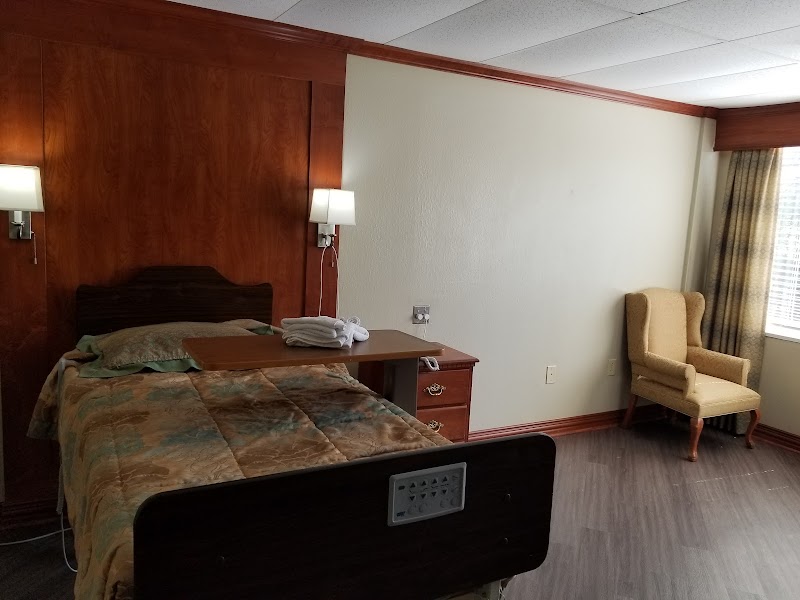
WALNUT PLACE

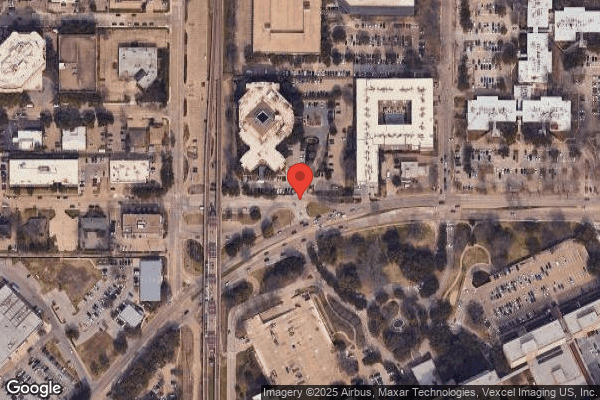
5515 GLEN LAKES DR, DALLAS, TX 75231 (214) 380-9615
For profit - Limited Liability company 208 Beds LIFE CARE SERVICES Data: November 2025 2 Immediate Jeopardy citations
Trust Grade
9/100
#885 of 1168 in TX
Last Inspection: October 2024

Within standard 12-15 month inspection cycle. Federal law requires annual inspections.

Overview

Walnut Place has a Trust Grade of F, which indicates significant concerns about the facility's quality and care. It ranks #885 out of 1168 nursing homes in Texas, placing it in the bottom half of facilities in the state, and #62 out of 83 in Dallas County, meaning there are only a few local options that are better. While the facility shows an improving trend, with issues decreasing from 11 in 2024 to 3 in 2025, it still has a below-average overall star rating of 2 out of 5. Staffing is rated 2 out of 5, with a turnover rate of 54%, which is average, suggesting that staff may not stay long enough to build strong relationships with residents. Unfortunately, there have been serious incidents, including a staff member physically confronting and hitting a resident, which raises alarms about resident safety. Additionally, there was a failure to promptly notify a physician about critical lab results, leading to a resident being hospitalized for sepsis. While Walnut Place is making strides in some areas, the presence of significant issues and the concerning incidents should be carefully considered by families.

Trust Score
F
9/100
In Texas
#885/1168
Bottom 25%
Safety Record
High Risk
Review needed
Inspections
Getting Better
11 → 3 violations
Staff Stability
⚠ Watch
54% turnover. Above average. Higher turnover means staff may not know residents' routines.
Penalties
✓ Good
$20,535 in fines. Lower than most Texas facilities. Relatively clean record.
Skilled Nurses
⚠ Watch
Each resident gets only 22 minutes of Registered Nurse (RN) attention daily — below average for Texas. Fewer RN minutes means fewer trained eyes watching for problems.
Violations
⚠ Watch
23 deficiencies on record. Higher than average. Multiple issues found across inspections.
★★☆☆☆
2.0
Overall Rating
★★☆☆☆
2.0
Staff Levels
★★★☆☆
3.0
Care Quality
★★☆☆☆
2.0
Inspection Score
Stable
2024: 11 issues
2025: 3 issues

The Good

  • Full Sprinkler Coverage · Fire safety systems throughout facility
  • No fines on record

Facility shows strength in fire safety.

The Bad

2-Star Overall Rating

Below Texas average (2.8)

Below average - review inspection findings carefully

Staff Turnover: 54%

Near Texas avg (46%)

Higher turnover may affect care consistency

Federal Fines: $20,535

Below median ($33,413)

Minor penalties assessed

Chain: LIFE CARE SERVICES

Part of a multi-facility chain

Ask about local staffing decisions and management

The Ugly 23 deficiencies on record

2 life-threatening
Jul 2025 1 deficiency 1 IJ
CRITICAL (J) 📢 Someone Reported This

A family member, employee, or ombudsman was alarmed enough to file a formal complaint

Immediate Jeopardy (IJ) - the most serious Medicare violation

Free from Abuse/Neglect (Tag F0600)

Someone could have died · This affected 1 resident

**NOTE- TERMS IN BRACKETS HAVE BEEN EDITED TO PROTECT CONFIDENTIALITY** Based on observation, interview and record review, the facility failed to ensure residents had the right to be free from abuse a...

Read full inspector narrative →
**NOTE- TERMS IN BRACKETS HAVE BEEN EDITED TO PROTECT CONFIDENTIALITY** Based on observation, interview and record review, the facility failed to ensure residents had the right to be free from abuse and neglect for 1 of 3 residents (Resident #1) reviewed for abuse.The facility failed to ensure that resident #1 was free of physical abuse when LVN A blocked the resident from propelling into the nurses' station. LVN A then initiated a confrontation with Resident #1 when she became physical with the resident after the resident wheeled away from the nurse's station. LVN A nudged a cell phone to the back of Resident #1's head, when the resident reacted and slapped LVN A's arm, LVN A grabbed the resident's arm firmly. LVN pointed her finger at the resident and left the area. LVN A returned and continued the confrontation and subsequently hit Resident #1 on top of the head with an open hand on 07/07/2025.The noncompliance was identified as PNC. The IJ started on 07/07/2025 at 10:30 AM and ended on 07/08/2025. The facility had corrected noncompliance before the investigation had begun.These failures could place residents at risk for emotional distress, fear, decreased quality of care, and further abuse.Findings included: Record review of Resident #1's face sheet, dated 07/24/2025, indicated an [AGE] year-old female who originally admitted to the facility on [DATE]. Resident #1 had diagnoses that included: Wernicke's Encephalopathy (Damage caused to the brain from poor nutrition or alcoholism), Depression, Psychotic Disorder with delusions due to known physiological condition, Alcohol dependence with alcohol-induced dementia, Restlessness and agitation.Record review of Resident #1's quarterly MDS assessment, dated 06/27/2025, indicated a BIMS score of 99 meaning that the interview was unable to be completed. Resident #1's cognitive skills were noted as moderately impaired (decisions poor; cues/supervision required). Resident #1 was noted to be able to recall Staff names and faces, and she could recall that she was in a nursing home/hospital swing bed.Record review of Resident #1's Care Plan, dated 06/24/2025 indicated Resident #1 had Behavior (verbal): Resident has made Verbally Abusive expressions, threats, or inappropriate verbiage towards self, staff other resident's or visitors. Behavior: [Resident #1 ]is at risk for injury related to resistance to care. the resident is at risk for adverse consequences related to receiving antipsychotic medication. Resident is on Lexapro Seroquel Wellbutrin.Record review of Resident #2's quarterly MDS, dated [DATE] indicated a BIMS score of 12 meaning Resident #2 had moderate cognitive impairment. Resident #1 was indicated to have no Potential Indicators of Psychosis.Record review of the Provider Investigation Report dated 07/08/2025, incident categorized as abuse and incident signed by the ADM on 07/08/2025. PIR indicated the incident occurred on 7/7/2025 at 7:00PM. The PIR indicated that LVN A had hit Resident #1 and it was witnessed by Resident #2 and recorded on facility video. Description of the Allegation: [Resident #1] stated at 6:30 PM on 7/7/2025 that a nurse had hit her. She stated where the incident took place. Security cameras were checked and it did not show the event stated by [Resident #1]. On 7/8/2025 another resident expressed to nurse management that she had witnessed the event stated by [Resident #1]. When cameras for the area were checked it was confirmed. [Resident #1 has a history of being verbally and physically aggressive with staff. The nurse [LVN A] and pushed it into [Resident #1's] head.No injuries noted from assessment conducted on 7/8/2025 at 1:30 PM.Investigation Findings Confirmed.Provider Action Taken Post Investigation, Safe Surveys were done. No other incidents were reported, in-services were held on Aggressive residents and Abuse and Neglect.Review of Resident #1's witness statement, dated 07/07/2025 indicated that Resident #1 expressed to the DON that LVN A had hit her on her head.Review of Resident #2's witness statement, dated 07/08/2025 indicated Resident #2 witnessed LVN A hit Resident #1 intentionally on the head while seated at a dining room table.Record Review of LVN A's personnel file revealed that LVN A had been terminated on 07/08/2025.In an interview on 07/24/2025 at 11:30 AM, CNA B revealed that she recently had in-services on Aggressive Residents and Abuse. She was able to identify the ADM as her ANE Coordinator and she was able to identify 5 types of abuse. She stated that if a resident were to become aggressive with her she would give the Resident some space to let them cool down, or she might offer a snack or activity to re-direct the resident. She stated that she had seen no change in Resident #1's behavior or manner.In an interview on 07/24/2025 at 12:15 PM the ADON revealed that Resident #1 had refused to participate in the BIMS scoring questions. She revealed that Resident #1 was able to recall very well, was alert and oriented to person, place, and time and was generally a very good historian. The ADON revealed that Resident #1 could be verbally aggressive to staff. She stated that when she interviewed LVN A about the incident, LVN A indicated that Resident #1 had kicked at her. The ADON further revealed that after viewing the video of the incident she could not see that Resident #1 had kicked at LVN A but the video clearly showed LVN A pushing a cell phone into Resident #1's head and hitting Resident #1 on top of the head with an open hand. The ADON further indicated that LVN A was immediately terminated before her next shift, safe surveys were conducted with all residents with no negative findings and that Resident #1 and Resident #2 were visited by a psychologist the next day with no negative findings. She stated that Resident #1 displayed no change in her behavior or mannerisms after the incident and that the facility was still continuing to monitor resident/staff interactions.An observation and interview on 07/24/2025 at 12:59 PM with the ADM while reviewing the video, time stamped and dated 07/07/2025 at 3:51 PM of the incident involving Resident #1 and LVN A, revealed the ADM identified LVN A on the phone seated behind the nursing station and identified Resident #1 seated in a wheelchair near the doorway of the same nursing station. Later in the video the ADM identified Resident #1 self-propelling herself to a dining room table in frame of the camera and identified Resident #2 was seated at the same table. She stated that Resident #2 was a good historian and had a BIMS score of 13. The ADM stated that Resident #1 had been assessed with no injuries found. The ADM revealed that LVN A was immediately terminated the next day before her shift started. Observation of the video footage during this time revealed the following:LVN A was observed on video footage at the nurses' station waiving Resident #1 away from coming behind the nurses' station, then LVN appears to use her feet to keep the resident from moving forward (lower extremities are out of view in the video) LVN A braces one hand on the door frame and the other hand, held a cellular phone. Resident #1's wheelchair jerks backwards suddenly when LVN A is holding on to the door frame. Resident #1 then backs out of the doorway and propels in front of the nurses' station, away from the nurse. LVN A then walks around to the front of nurses' station, as she walks behind Resident #1 she nudged/poked Resident #1 with the cellular phone into the back of the resident's head which caused the resident shoulders and head to jerk forward. LVN A continues to walk past Resident #1 and Resident #1 slaps at LVN A's right arm. LVN A turns back around and grabs the resident's arm/hand and leans in toward her. There is no sound to the video, Resident #1 can be seen talking. LVN A turns around and points her finger towards Resident #1 and speaks to her. LVN A then walks toward the dining room and out of the camera's view. Resident #1 then propelled to the dining area and went to a table with another resident. Less than a minute later the LVN A walks past Resident #1 while the resident is seated at the dining room table. LVN A walked behind Resident #1, reaches out and tapped/pushed Resident #1's head forward from the back with an open hand. Resident #1's head can be seen to jerk slightly. Resident #1 responded to the tap on the head and grabbed the back of her head and looked over at LVN A leaving the area. Resident was seen talking to resident at the table, turned slightly and pointing at LVN A.In an interview on 07/24/2025 at 1:24 PM, the DON revealed that Resident #1 told her about the incident with LVN A and that she had initially looked at video from another camera and that did not capture the incident. Later that evening, the DON stated that both Resident #1 and #2 approached her about the incident with LVN A and Resident #2 stated that she had witnessed LVN A hit Resident #1 on the head. The DON then revealed that, with the assistance of the ADON, she then found the correct camera footage and observed LVN A nudge a phone into the back of Resident #1's head and LVN A hitting Resident #1 on top of her head on the video. She stated that she immediately assessed Resident #1 and notified the ADM. The DON further revealed that she, the ADM, and the ADON conducted in-service training for all nursing staff on Abuse, Neglect and Exploitation and Aggressive Residents. She stated they had immediately conducted safe surveys of all residents with no negative findings and that they were actively monitoring staff/resident interactions for another week making 4 weeks of observations in response to the incident.Attempts to interview LVN A were made on 07/24/2025 at 10:00AM, 1:52 PM and 4:48 PM . There was no way to leave a message ,and LVN A never attempted to call back.In an interview on 07/25/2025 at 10:00 AM with CNA C, she revealed that she had received in-services on Abuse and Aggressive Residents. CNA C was able to identify the ADM as the ANE Coordinator and stated that if she suspected or saw abuse she would report to the ADM or her nurse immediately. She revealed that she had seen no change in Resident #1's behavior since the incident with LVN A and Resident #1. She stated that the ADON, DON and ADM had been monitoring staff/resident interactions and that she had not heard of or seen any other incidents about LVN A.In an interview on 07/25/2025 at 10:22 AM with LVN D, he reveled that he had received recent in-services on ANE and What to do with Aggressive Residents. He stated that he had worked with Resident #1 many times and that she was generally very nice. He stated that he had seen no change in her mannerisms or behavior since the incident with Resident #1 and that the ADON, DON and Administrator had been monitoring resident/staff interactions and asking residents about abuse. In an interview on 07/25/2025 at 10:36 AM with LVN E, she stated that she had worked with Resident #1 and had heard about the incident with Resident #1 and LVN A. She stated that she had no knowledge of any similar incidents involving LVN A or any other incidents of possible abuse. She stated that she had seen no changes in Resident #1's behavior or mannerisms since the incident. She stated that she had recently attended in-services on ANE and Aggressive Residents. In an interview on 07/25/2025 at 10:58 AM, CNA F revealed that she had worked with Resident #1 and LVN A many times. She stated that she had never seen LVN A treat any residents badly before. She stated that if she even thought there had been any abuse in the facility, she would report it immediately to the ADM or her nurse. She was able to identify 5 different types of abuse and she stated that she had recently attended in-services for ANE and Aggressive Residents. She stated that there are many ways to redirect residents, but with Resident #1, she would have just got what she had asked for because Resident #1 could be very focused on what she wanted.In an interview on 07/25/2025 at 11:09 AM, CNA G revealed that she had recently received in-services about ANE and Aggressive Residents. She stated that she would have offered an activity or a snack or brought the resident to another area if she wasn't able to do what the resident wanted immediately. She denied if she had seen or heard of any other instances of abuse in the facility. She identified the ADM as the Abuse Coordinator.In an interview on 07/25/2025 at 11:47 AM, with Resident #1 over the phone, she revealed that she had loved her time at the facility and that the Incident with LVN A was the only time that she had had any problems. She stated that the facility had a psychologist come and visit her the next day, but that she didn't feel she needed that. She stated that the facility was closing down soon or she would not have moved at all, but she liked the new facility she was at so far. She stated that LVN A had not hurt her and that she had been more surprised than anything and that she could take care of herself, and that all LVN A had to do was give her a bag to be able to pack some things because she had to move soon. She stated that she had not seen LVN A since that day but that she had heard she had been fired. She stated that staff had asked her all sorts of questions afterwords but she was just fine.In an interview on 07/25/2025 at 11:58 AM, over the phone, Resident #2 revealed that she had witnessed LVN A hit Resident #1 on top of the head while she was seated with Resident #1 at the dining room table. She stated that she had told the ADON and the DON about it and they had seen it on some video. She stated that even though she thought LVN A was nice she should not have done that. She stated that the psychologist had also come to see her the next day and she had told the psychologist she was just fine.Record Review found that LVN A had received in-services on Abuse and Neglect on 04/28/2025 and on 06/24/2025. The Administrator was notified a past non-compliance IJ situation had been identified due to the above failures.It was determined these failures placed residents in an IJ situation on 07/07/2025 through 07/08/2025.Through record review it was found that the facility had implemented the following interventions:-LVN A was immediately terminated before her next shift started.-Resident #1 was assessed on 07/08/2025 at 1:30 PM with no injuries noted.-Physician, Responsible Party, and Psych Services notified.-Resident #1 assessed by psychologist on 07/08/2025, with no adverse findings.-On 07/09/2025 in-services for all nursing staff were conducted by the ADON for What to do for Aggressive Residents and Abuse, neglect, and Exploitation.-DON, ADON and ADM conducted monitoring by observing resident/staff interactions and interviewing random residents about sign and symptoms of abuse everyday from 07/08/2025 until 07/25/2025 with one week of monitoring to continue.Record review found that on 07/09/2025, the ADON conducted in-services on What to do for Aggressive Residents and Abuse Neglect and Exploitation for 19 staff, 12 of which were direct nursing care staff. The facility had a low census and staffing due to a planned facility closure on 09/04/2025.Interview on 07/24/2025 at 12:59 PM with the ADM revealed LVN A was immediately terminated the next day before her shift started. The ADON and DON immediately started safe surveys, talking to residents to find out if any other instances had occurred, and then monitoring interactions for the next month. She stated she had never had anything like this occur in the facility before or since. The ADM stated Resident #1 was seen by the psychologist the next day, and the psychologist had found no mental harm. The ADM stated that CNAs and nursing staff reported no changes in behaviors after the incident.Interviews were conducted on 07/25/2025 from 10:00 AM to 07/08/2025 5:00 PM with the following staff through various shifts (6am-6PM and 6pm-6AM, via phone or in person) for the following personnel: ADM, ADON, DON, CNA B, CNA C, LVN D, LVN E, CNA F, and CNA G. All staff were able to report that they had received training on ANE and Aggressive Residents, who to report Abuse too, different types of abuse, and interventions to re-direct, de-escalate aggressive residents. All staff reported being observed for staff/resident interactions by management staff.The noncompliance was identified as PNC. The IJ began on 07/07/2025 and ended on 07/08/2025. The facility had corrected the noncompliance before the investigation began.
Feb 2025 2 deficiencies
CONCERN (D) 📢 Someone Reported This

A family member, employee, or ombudsman was alarmed enough to file a formal complaint

Potential for Harm - no one hurt, but risky conditions existed

Resident Rights (Tag F0550)

Could have caused harm · This affected 1 resident

**NOTE- TERMS IN BRACKETS HAVE BEEN EDITED TO PROTECT CONFIDENTIALITY** Based on interviews, and record review the facility failed to treat each resident with respect and dignity for 1 (Resident #1) o...

Read full inspector narrative →
**NOTE- TERMS IN BRACKETS HAVE BEEN EDITED TO PROTECT CONFIDENTIALITY** Based on interviews, and record review the facility failed to treat each resident with respect and dignity for 1 (Resident #1) of 5 residents reviewed for dignity. 1. CNA C tapped Resident #1 on the nose and told Resident #1 You we're being mean to me. The noncompliance was identified at PNC. The noncompliance began on 10/18/2024 and ended on 10/18/2024. The facility had corrected the noncompliance before the survey began. This failure could affect residents in the facility and could cause the residents to feel uncomfortable and disrespected. Findings included: Record review of Resident #1's face sheet dated 02/05/2025 reflected a [AGE] year-old female who admitted to the facility on [DATE] with diagnoses which included: acute respiratory failure with hypoxia (lungs unable to provide oxygen to the body), end stage heart failure, hypertension, unsteadiness on feet, and muscle weakness. Record review of Resident #1's MDS assessment dated [DATE] reflected a BIMS score of 13 which indicated Resident #1 was cognitively intact. Record review of the provider investigation report dated 10/18/2024 reflected interviews of CNA C and Resident #1 disclosed CNA C pushed Resident #1's nose and told Resident #1 You were being mean to me while assisting Resident #1 with her cell phone. Skin assessments were conducted, and no injuries or bruising were noted. Resident #1 denied any pain or discomfort. CNA C was removed from the schedule pending the facility's investigation and once the investigation was concluded CNA C was informed, she would not return to the facility. Further investigation, documentation, and evidence confirmed the allegation. Record review revealed a skin assessment performed on 10/23/2024 on Resident #1 with no found injuries and Resident #1 denied pain or discomfort . In an interview on 02/05/2025 at 12:00 pm the ADON stated Resident #1 discharged from the facility in December 2024. The ADON stated she did not witness the incident between Resident #1 and CNA C, but she conducted the interview with CNA C after the incident. She stated CNA C informed her that she responded to Resident #1's call light and assisted Resident #1 by grabbing her cell phone from the charger. She stated CNA C stated she provided care to Resident #1 earlier, and Resident #1 was mean to her. She stated CNA C stated after she handed Resident #1 her cell phone from the charger, CNA C stated she gently tapped Resident #1 on her nose and told her You were being mean to me earlier. She stated CNA C stated she told Resident #1 if she needed anything to call her and left the room. She stated per the skin assessment, no injuries or bruising were noted. She stated CNA C was removed from the schedule pending the facility's investigation. She stated once the investigation was concluded, CNA C would not return to the facility. She stated safe surveys were completed and staff were in serviced on abuse and neglect which including customer service. The ADON stated CNA C was an agency aide. In an interview on 02/05/2025 at 12:10pm the DON stated Resident #1 was admitted to the facility for ninety days and discharged from the facility to home in December 2024. The DON stated she did not witness the incident between Resident #1 and CNA C. She stated she was informed CNA C tapped Resident #1 on the nose and told her Resident #1 was being mean to her. She stated CNA C admitted to gently tapping the Resident #1 on the nose and stated Resident #1 was mean to her. She stated CNA C was removed from the schedule pending the facility's investigation. She stated once the facility concluded their investigation, CNA C was informed she would not return to the facility. She stated CNA C was an agency aide. She stated safe surveys were conducted and staff were in-serviced on abuse and neglect including customer service. In an interview on 02/05/2025 at 12:20pm CNA F stated she never observed staff being disrespectful to residents by hitting or pinching residents. She stated if she observed staff being abusive, neglectful, or disrespectful towards residents she would inform the abuse coordinator. She stated staff are in serviced on abuse, neglect, and customer service every month or when an incident take place. In an interview on 02/05/2025 at 1:20pm Rep stated Resident #1 was discharged from the facility before Christmas. She stated Resident #1 called her immediately after the incident with CNA C. She stated Resident #1 informed her that after CNA C assisted Resident #1 with her cell phone, CNA C pushed Resident #1's nose and told Resident #1 something, but she could not recall what was said by CNA C. She stated Resident #1 was upset and did not appreciate CNA C pushing her nose. She stated she immediately notified the facility and reported this to the SW. She stated Resident#1 did not disclose any injuries or bruising from the incident. She stated CNA C did not continue to care for Resident #1, she was informed CNA C was no longer working at the facility. In an attempted interview on 02/05/2025 at 1:25pm with Rep stated Resident #1 was admitted to the hospital and was unavailable to be interviewed. In an interview on 02/05/2025 at 2:24pm the SW stated Rep B contacted her and informed her Resident #1 was upset because CNA C told Resident #1, she was being mean to her and pushed her nose while assisting Resident #1 with her cell phone. She stated she interviewed Resident #1, and she told her what CNA C did to her and Resident #1 stated she felt CNA C pushing her nose was not done in a nice way. She stated she notified the ADM and was instructed to conduct safe surveys for residents assigned to the same hall as Resident #1. She stated all staff was in serviced on abuse and neglect and customer service following the incident. In an interview on 02/05/2025 at 3:52pm CNA G stated she never observed staff being disrespectful, abusive, or neglectful to residents because she would report staff immediately. She stated she never observed staff pinching or tapping residents. She stated if staff was observed being disrespectful, abusive, or neglectful, this should be reported to the ADM. She stated staff are in serviced on abuse and neglect or customer service every pay day or weekly. She stated staff failing to report abuse or neglect could cause continued abuse. In an interview on 02/05/2025 at 6:17pm the ADM stated she's been employed at facility for eight weeks. She stated she was not the ADM when the incident occurred with Resident #1 and CNA C. She stated abuse and neglect was not tolerated. She stated expectations of staff were to ensure they were following the facility's policy and procedure on abuse and neglect. She stated the incident between Resident #1 and CNA C was the result of staff not following the facility's policy and procedure. In an interview on 02/06/2025 at 8:25am CNA C stated she was an agency aide and she only worked one or two shifts at the facility prior to the incident. She stated earlier that day, she provided care to Resident #1, and she was mean to her while providing care. She stated later in the day, she responded to Resident #1's call light and assisted Resident #1 by removing Resident #1's cell phone from the charger and handing Resident #1 her cell phone. She stated she gently tapped Resident #1 on her nose and asked Resident #1 Why were you being mean to me earlier? She stated she then told Resident #1 if she needed anything call her and exited Resident #1's room. She stated the residents she was close with; she tapped them on their nose. She stated she did not hurt the residents, and she did not do anything to hurt Resident #1. She stated she's been a CNA for 19 years and never hurt anyone. She stated prior to working any shifts at the facility, she received training on abuse and neglect and customer service. Record review of in-service training record dated 10/18/2024 revealed all staff were in serviced by the ADM on abuse prohibition and protocol. Record review of safe surveys dated 10/18/2024 revealed the SW conducted safe surveys on verbal residents assigned to the same hall as Resident #1. No concerns noted. Record review of the facility's policy titled Policies on Abuse Prohibition and Protocol dated 09/07/2022; revised 01/23/2024, Policy Statement: To develop policies and procedures that prohibits abuse, neglect, involuntary seclusion, and misappropriation of property for all residents. 1. Abuse- the willful infliction of injury, unreasonable confinement, intimidation or punishment with resulting physical harm, pain, or mental anguish.
CONCERN (D) 📢 Someone Reported This

A family member, employee, or ombudsman was alarmed enough to file a formal complaint

Potential for Harm - no one hurt, but risky conditions existed

Accident Prevention (Tag F0689)

Could have caused harm · This affected 1 resident

**NOTE- TERMS IN BRACKETS HAVE BEEN EDITED TO PROTECT CONFIDENTIALITY** Based on interviews and record review, the facility failed to ensure each resident received assistance devices to prevent accide...

Read full inspector narrative →
**NOTE- TERMS IN BRACKETS HAVE BEEN EDITED TO PROTECT CONFIDENTIALITY** Based on interviews and record review, the facility failed to ensure each resident received assistance devices to prevent accidents for 1 (Resident #1) of 5 residents reviewed for accidents. 1. CNA A failed to apply a gait belt to Resident #1 prior to transferring the resident from the wheelchair to the bed. Resident #1 fell and suffered a bruise to the right armpit area with a small skin tear when CNA A was unable to secure Resident #1 to prevent the fall. This failure could place residents at risk for serious injury or harm, decline in health, and decreased quality of life. The noncompliance was identified at PNC. The noncompliance began on 11/25/2024 and ended on 11/25/2024. The facility had corrected the noncompliance before the survey began. Findings included: Record review of Resident #1's face sheet dated 02/05/2025 reflected a [AGE] year-old female who admitted to the facility on [DATE] with diagnoses which included: acute respiratory failure with hypoxia (lungs unable to provide oxygen to the body), end stage heart failure, hypertension, unsteadiness on feet, and muscle weakness. Record review of Resident #1's MDS assessment dated [DATE] reflected a BIMS score of 13 which indicated Resident #1 was cognitively intact. Record review of Resident #1's care plan dated 11/26/2024 reflected the resident was at risk for falls and 1 person assist for transfer and ambulation with a gait belt. Record review revealed a skin assessment performed on 11/25/2024 on Resident #1 with no found injuries, but Resident #1 complained of pain in the right armpit and the right side of rib cage. PRN medication was administered for pain relief and the physician was informed and x-ray ordered. Record review revealed a skin assessment performed 11/26/2024 on Resident #1 with a large bruise to the right arm near armpit with a small tear. X-ray results were negative. Record review of the provider investigation report dated 11/26/2024 reflected interviews of CNA A and Resident #1 disclosed CNA A failed to use a gait belt while transferring Resident #1 from the wheelchair to the bed. Skin assessments and x-rays were conducted and the skin assessment showed delayed bruising and she had negative x-ray results. CNA A was suspended pending the facility's investigation and once the investigation was concluded CNA A was separated from employment. Further investigation, documentation, and evidence confirmed the incident occured. In an interview on 02/05/2025 at 12:00 pm the ADON stated Resident #1 discharged from the facility in December 2024. The ADON stated she did not witness Resident #1's fall, however she completed the assessment and interviewed CNA A after the fall. The ADON stated CNA A informed her while assisting Resident #1 with a transfer, Resident #1 needed to be changed and requested to stand up as CNA A performed incontinence care. She stated CNA A stated as she briefly slid away from Resident #1 to throw the brief in the trashcan, Resident #1 was still standing near the bedside and lost her balance and fell. She stated Resident #1 had delayed pain and bruises. She stated she conducted an assessment and at the time of the fall she did not note any injuries. She stated an hour after the fall, Resident #1 complained of pain in the right armpit area and the right of the ribcage. The ADON stated PRN pain medications were administered and Resident #1's physician was notified, and x-rays were ordered. She stated during post fall follow up, it was noted Resident #1 had a bruise on her right arm near her armpit area and a small skin tear. She stated CNA A stated she had her gait belt but did not use the gait belt while transferring Resident #1. She stated staff performing incontinence care while a resident was standing was not typical and staff were expected to perform incontinence care while the resident was sitting. She stated safe surveys were conducted for all verbal residents on the same hall as Resident #1. She stated she educated staff on fall prevention including the use of gait belts during transfers and abuse. She stated her and the DON monitored transfers with gait belts daily for three weeks. She stated CNA A was suspended following the fall pending the facility's investigation. She stated once the investigation was concluded, CNA A was terminated. In an interview on 02/05/2025 at 12:10pm the DON stated Resident #1 was admitted to the facility for ninety days and discharged from the facility to home in December 2024. The DON stated she did not witness the fall that occurred with Resident #1. She stated she was informed Resident #1 fell during a transfer conducted by CNA A. She stated she was informed CNA A assisted Resident #1 with a transfer from the wheelchair to the bed but before doing so, CNA A performed incontinence on Resident #1 in a standing position. She stated she was informed Resident #1 requested CNA A to change her brief while standing. She stated she was informed CNA A moved away from Resident #1 while she was standing to throw the brief away, and Resident #1 fell. She stated she was informed Resident #1 was not wearing a gait belt during the transfer. She stated during the time of the fall, no injuries were noted, and Resident #1 had a delayed pain. She stated during post fall follow up, a bruise and skin tear was noted to Resident #1's right arm near her armpit. The DON stated staff were expected to use a gait during all transfers. She stated staff was expected to perform incontinence care while the resident was sitting as best practice. She stated safe surveys were conducted on all verbal residents that resided on the same hall as Resident #1. She stated staff was educated on abuse and neglect and fall prevention including the use of a gait belt. She stated her and the ADON monitored transfers with gait belts daily for about three weeks. She stated CNA A was suspended pending the facility's investigation, and once the investigation concluded CNA A was released from employment. In an interview on 02/05/2025 at 1:20pm with Rep B for Resident #1 stated Resident #1 was discharged from the facility before Christmas. She stated Resident #1 called her immediately after she fell. She stated Resident #1 informed her that CNA A lifted her out of the wheelchair to move her to the bed, and CNA A walked off to throw something in the trash and Resident #1 fell when CNA A walked away. She stated the facility notified her during the fall but did not inform her about any injuries. She stated she was informed two days later by the facility that Resident #1 had a bruise to her right arm from the fall. She stated the facility informed her that Resident #1's doctor was notified, and x-rays were ordered. She stated after this incident, Resident #1 did not have any additional falls. In an attempted interview on 02/05/2025 at 1:25pm with Rep stated Resident #1 was admitted to the hospital and was unavailable to be interviewed. In an interview on 02/05/2025 at 1:45pm with CNA A she stated she worked at the facility for no more than four months. CNA A stated she assisted Resident #1 with a transfer from the wheelchair to the bed. She stated before transferring Resident #1 she performed incontinent care by changing Resident #1's brief. She stated she wheeled the chair to Resident #1's bedside and instructed Resident #1 to grab the bedrail. She stated Resident #1 requested to stand while she changed her brief. She stated she did as Resident #1 requested and changed her brief while Resident #1 was in a standing position. She stated after she changed Resident #1's brief, she turned her body slightly away from Resident #1 to throw the brief in the trashcan. She stated as she turned away Resident #1 tried moving herself without any assistance which caused Resident #1 to fall. She stated she received assistance from the ADON or nurse to get Resident #1 up. She stated Resident #1 had delayed bruises and pain. She stated after the fall, Resident #1 did not complain of any pain and the nurse did not identify any bruises or injuries. She stated the next day, Resident #1 complained of pain, and had a bruise on her right arm near her underarm area. She stated she used a gait belt primarily with ambulatory residents. She stated when transferring Resident #1, she would sometimes use a gait belt. She stated on this day, she did not use a gait belt when transferring Resident #1. She stated the facility provided her a gait belt the third or fourth week after she was hired. She stated she did not receive education on transfers and how or when to use a gait belt. She stated the facility suspended her pending their investigation. CNA A stated once the facility concluded their investigation, she was informed using a gait belt during transfers was the facility's policy and due to her not using a gait belt during the transfer with Resident #1, the facility told her she was released from employment. In an interview on 02/05/2025 at 4:54pm with CNA D stated she is an agency CNA, and she was education transferring residents by using a gait prior to her interacting with residents. She stated the facility also provided her a gait belt. She stated before she transferred a resident, she asked the nurse because she only works in the facility occasionally. She stated the risk of staff not using a gait belt could hurt staff and the resident could fall. She stated when providing incontinence care, she ensured residents were sitting down and not standing because resident legs could get weak, and the resident could fall. In an interview on 02/05/2025 at 5:00pm with CNA E stated when providing incontinence care she did not change residents standing up, she changed residents sitting in the bed. She stated she did not know why staff would change a resident standing. She stated she always used a gait belt when transferring residents and the ADON did in services on lifting residents and using a gait belt. She stated she also demonstrated to the ADON a transfer while using a gait belt. She stated the ADON periodically checked staff to ensure all staff know how to use a gait belt. In an interview on 02/05/2025 at 6:17pm the ADM stated she's been employed at facility for eight weeks. She stated she was not the ADM when the incident occurred with Resident #1 and CNA A. She stated during transfers, her expectations of staff were to ensure they were following the facility's policy and procedure on fall prevention during transfers and following instructions given by the charge nurse. She stated the incident between Resident #1 and CNA A was the result of staff not following the facility's policy and procedure which caused Resident #1 to fall and have an injury. Record review of CNA A's employee file revealed CNA A was educated on fall prevention competency including the use of a gait belt dated 10/02/2024. Record review of in-service training record dated 11/25/2024 and 11/26/2024 revealed all nursing staff were in serviced by nursing management on fall prevention including the use of gait belt and policies on abuse prohibition and protocol . Record review of safe surveys dated 11/26/2024 revealed the SW conducted safe surveys on verbal residents assigned to the same hall as Resident #1. No concerns noted. Record review of the facility's policy titled Safe Lifting and Movement Rights dated July 2017, Policy Statement: In order to protect the safety and wellbeing of staff, residents, and to promote quality care, this facility uses appropriate techniques and devices to lift and move residents. 8. Enough slings, in the right sizes required by residents in need, will be available at all times. As an alternative, residents with lifting and movement needs will be provided with single- resident use disposable slings. 11. Safe lifting and movement of residents is part of an overall facility employee health and safety program.
Oct 2024 8 deficiencies 1 IJ
CRITICAL (J) 📢 Someone Reported This

A family member, employee, or ombudsman was alarmed enough to file a formal complaint

Immediate Jeopardy (IJ) - the most serious Medicare violation

Deficiency F0773 (Tag F0773)

Someone could have died · This affected 1 resident

**NOTE- TERMS IN BRACKETS HAVE BEEN EDITED TO PROTECT CONFIDENTIALITY** Based on interview and record review, the facility failed to promptly notify the physician of laboratory results in accordance w...

Read full inspector narrative →
**NOTE- TERMS IN BRACKETS HAVE BEEN EDITED TO PROTECT CONFIDENTIALITY** Based on interview and record review, the facility failed to promptly notify the physician of laboratory results in accordance with facility policy and procedures for notification for 1 of 18 residents (Resident #284) reviewed for laboratory services. The facility failed to promptly notify Resident #284's physician after the results from a UA C&S, which was ordered on 10/31/23, were received on 11/04/23 showing the resident had bacteria (Escherichia Coli (E.Coli) ESBL and Providencia Stuartii) in her urine. On 11/09/23, the resident experienced a change of condition with lethargy. She was sent to the hospital where she was admitted for sepsis due to a UTI. An Immediate Jeopardy (IJ) was determined to have existed from 10/31/23 to 11/09/23. The IJ was removed on 11/09/23 because there were no other residents affected or concerns with laboratory services. The facility remained out of compliance with a scope isolated and severity level of no actual harm with potential for more than minimal harm that is not immediate jeopardy. This deficient practice placed the residents at high risk of, or the likelihood of, serious injury or harm by not receiving treatment, developing complications, and the development of sepsis. Findings included: Record review of Resident #284's Quarterly MDS assessment dated [DATE] reflected the resident was a [AGE] year-old female admitted to the facility 06/10/20. Her diagnoses included heart failure, hypertension (high blood pressure), chronic respiratory failure, pressure ulcer of sacral region (a triangular-shaped bone located at the base of the spine, between the lumbar vertebrae (lower back) and the coccyx (tailbone), and presence of urogenital implants (A bulking agent is injected into the walls of the urethra to treat stress incontinence caused by a weak sphincter muscle). Resident #284 had a BIMS score of 11, meaning she had moderate impaired cognition. The resident required total dependence of two staff members for bed mobility, dressing, and transfers. The MDS further reflected the resident had a catheter and was always incontinent of bowel. Resident #284 did not return to the facility after she was sent out to the hospital on [DATE] and family transferred her to another nursing facility. Record review of Resident #284's care plan edited on 05/28/23 reflected the resident was at risk for UTI's related to the foley catheter used for the diagnosis of a wound to sacral area. Approaches included monitor for signs and symptoms of a UTI such as foul odor of urine, visible sediments in urine, fever, dysuria (blood in urine), complaints of abdominal pain and changes in mental status. Other approaches included to monitor labs and the medical doctor orders. Record review of Resident #284's progress note dated 10/31/23 documented by LVN A reflected the following: Resident's [Family] requested for [Resident #284]'s urine sample to be collected for lab due to its color, this nurse called [Physician] and he ordered urine to be collected and sent to lab. Urine sample is pending for lab pick up. Record review of Resident #284's progress note dated 11/05/23 documented by LVN B reflected the following: .upon assessment patient no c/o pain or discomfort. observed urine pink in color. Changed catheter bag today and emptied Record review of Resident #284's progress note dated 11/09/23 documented by LVN C reflected the following: 11/08/23 Resident was lethargic opening eyes for a short moment when aroused but not verbally responding. After a while resident was awake making eye contact and blinking when spoken to but still not speaking. Resident would not open her mouth to drink when offered or take HS medications. B/P-137/85, T-98.3 P-102, R-18 SpO2 95% NC 3Lpm. [Family] at bedside and requested resident be sent to hospital. [Doctor] notified. N/O to send to ER for further evaluation. 2230 Resident transported to [Hospital] via stretcher X2 [by two] EMT accompanied by [family]. Record review of Resident #284's UA results reflected they were collected on 10/31/23, ready to view on 11/03/23, and printed on 11/04/23. The results reflected there were 2 micro-organisms found in the resident's urine: Final: >100,000 CFU/ML of Escherichia Coli (E.Coli) ESBL isolated. (E.coli is a serious type of bacteria that can cause urinary tract infections that make them resistant to a wide range of antibiotics) <25,000 CFU/ML of Providencia Stuartii also isolated. (bacteria that can cause urinary tract infections) Record review of Resident #284's hospital records dated 11/09/23 reflected the following: .Severe sepsis gram negative bacteremia (a life-threatening bloodstream infection that occurs when bacteria enters the bloodstream) related to a UTI Patient is critically ill with sepsis due to gram negative bacteremia. At high risk for deterioration with one or more organ damage, including death Interview on 10/16/24 at 10:41 AM with LVN A revealed Resident #284's family requested a UA because she felt like the resident's urine was dark in color. LVN A said she collected the urine, had it sent to the lab and gave report to the oncoming nurse, LVN J, and she (LVN J) acknowledged she would follow-up. LVN A said she was off for about 4 days and upon returning, she realized the no one had obtained the UA results from the computer system. LVN A did not recall many details after that nor did she recall what was or was not done with Resident #284. LVN A did recall the DON made a big fuss and was upset and called her (LVN A) asking why Resident #284's urine had been collected and was asked to write a statement about what happened and it was turned into the DON. LVN A further stated Resident #284 had been sent to the hospital sometime after she had collected the resident's urine, but could not recall dates. LVN A did not recall if Resident #284 was ever put on antibiotics. LVN A said she spoke to LVN J to ask why she had not followed up on Resident #284's UA, but she did not recall the answer. Attempts to call LVN J on 10/17/24 were unsuccessful. Interview on 10/17/24 at 9:20 AM with LVN C revealed she vaguely recalled the circumstances around the time she sent Resident #284 out to the hospital other than the resident was not alert or as responsive as she usually was. LVN C said she recalled there was a conversation, did not recall with who , about the resident's UA being collected and later they were questioning the results but did not recall any other details. LVN C further stated they had received in-services on the lab processes and following up after Resident #284's incident. Interview on 10/17/24 at 1:29 PM with the DON revealed she did not know Resident #284 had been admitted to the hospital, 11/08/23, for a UTI. The DON said she did not recall much of what happened around the time Resident #284 was sent to the hospital. The DON said she had recently reviewed the resident's labs and the results showed the UA contained some micro-organisms but she was not able to find any evidence the resident was ever on any antibiotics around the time the labs were ordered and obtained and the resident was sent to the emergency room, 10/31/23 - 11/08/23. The DON further stated there were some in-services done on labs around the time Resident #284 was sent out to the hospital, but they were not related to the resident's incident and just general in-services. The DON did not recall having any staff write statements on the incident. Record review of the in-sevices dated 11/09/23 reflected staff were educated on lab procedures from obtaining the labs orders, calling the doctor with the results, documenting in the progress notes, and contacting the family with the results as well. Interview on 10/17/24 at 9:13 AM with the Administrator revealed she did not recall the circumstances around the time Resident #284 was sent to the hospital (11/08/23). The Administrator said it appeared Resident #284's doctor did not get the UA results so the nurses received education on how to order labs, and to call the doctor when the results came in. The Administrator excused herself and upon returning she stated she had misspoke and the lab in-services were not related to Resident #284's incident. The Administrator further stated risks of not following up on lab results could lead to other health issues. Interview on 10/16/24 at 1:14 PM with Resident #284's Physician revealed the resident had a lot of chronic UTI's and they would check her urine at any given time and the results were positive. The Physician said it was the facility staff's responsibility to follow-up on any lab orders but he stated he did not recall if he got UA results for Resident #284 and he would need to check his system and follow-up, but he never did. The Physician read Resident #284's UA results and he stated that most of the time he would have started the resident on an antibiotic and he also said he thought Resident #284 had been sent to the hospital for hypoxia (lack of enough oxygen). Record review of the facility's current, undated Lab and Diagnostic Test Results policy reflected the following: .1. When test results are reported to the facility, a nurse will first review the results. .3. A nurse will identify the urgency of communicating with the Attending Physician based on physician request, the seriousness of any abnormality, and the individual's current condition Options for Physician Notification .1. A physician can be notified by phone, fax, voicemail, e-mail, pager, or a telephone message .a. Facility staff should document information about when, how, and to whom the information was provided and the response. .b. Direct voice communication with the physician is the preferred means for presenting any results requiring immediate notification, especially when the resident's clinical status is unstable or current treatment needs review or clarification .
CONCERN (D)

Potential for Harm - no one hurt, but risky conditions existed

Deficiency F0657 (Tag F0657)

Could have caused harm · This affected 1 resident

**NOTE- TERMS IN BRACKETS HAVE BEEN EDITED TO PROTECT CONFIDENTIALITY** Based on observation, interview, and record review, the facility failed to revise and review the care plan for 1 of 5 residents ...

Read full inspector narrative →
**NOTE- TERMS IN BRACKETS HAVE BEEN EDITED TO PROTECT CONFIDENTIALITY** Based on observation, interview, and record review, the facility failed to revise and review the care plan for 1 of 5 residents (Resident #78) reviewed for comprehensive care plans. The facility failed to revise and review Resident #78's care plan for his use of a Foley catheter. This failure could lead to the residents not receiving the care they require, resulting in inadequate care. Findings included: Record review of Resident #78's admission face sheet reflected the resident was a [AGE] year-old male who was admitted to the facility on [DATE]. Record review of Resident #78's MDS assessment, dated 08/30/24, reflected Resident #78's cognition was intact with a BIMS score of 15. His diagnoses included sepsis (body's response to infection causing injury to its own tissues and organs), Type 2 diabetes (high blood sugar), and lack of coordination. The MDS reflected the resident required substantial/maximum assistance with toileting, and he required the use of an indwelling catheter. The MDS reflected the resident had a discharge goal to be independent. Record review of Resident #78's care plan, last reviewed/revised 10/09/24, did not indicate his use of a Foley catheter or need for catheter care. Observation and interview on 10/15/24 at 11:04 AM with Resident #78 revealed he was lying in his bed. His catheter was hanging in a low position on the bed facing the door with a blue protective cover. According to Resident #78, he came to the facility for rehabilitation due to a fall. Resident #78 stated he entered the facility with the catheter. Resident #78 stated he had been working with facility staff on taking the catheter in and out. Resident #78 stated today he practiced using a leg catheter. Observation and interview on 10/17/24 at 12:41 PM with Resident #78 revealed his catheter bag hanging in a low position on the side of the bed facing the door with a blue privacy cover. According to Resident #78, he was assessed during incontinence care to ensure the catheter was emptied and in place. Resident #78 stated he did not experience any pain during care. He stated he had no problems with the way staff assisted him during incontinence care. According to Resident #78, he was going to discharge soon, and he had been training to care for his catheter. Resident #78 stated he emptied the bag himself with the help of therapy. Interview on 10/17/24 at 12:50 PM with the Physical Therapist revealed she had been working with Resident #78 on catheter care. Physical Therapist stated she thought Resident #78 was going to discharge home with the catheter and wanted to ensure he was going to be able to know how to properly empty the bag and care for it. According to Physical Therapist, she was well aware the resident had the catheter bag because she worked with him during physical therapy. Interview on 10/17/24 at 1:20 PM with RN I revealed Resident #78 entered the facility a couple of months ago with use of Foley catheter. According to RN I, he had not noticed whether the care plan included the use of the Foley catheter. According to RN I, the admitting nurse was responsible for entering orders upon admission and this should have then triggered for the care plan to be updated. RN I stated there was no risk involved for Resident #78's catheter because he was receiving incontinent care checks every two hours by the aide assigned to him which included care for the catheter. RN I stated during incontinent care staff would observe Resident #78's catheter therefore provided care for it. RN I did not address if there was care required that only a nurse could do or how care was being documented by the aide. Interview on 10/17/24 at 1:59 PM with the ADON revealed she was aware Resident #78 had a catheter. The ADON stated she was not aware Resident #78's care plan did not show use of a catheter. The ADON stated Resident #78 was scheduled to discharge home on unknown date, so he recently went to the urologist to have the catheter removed . The ADON stated Resident #78 was not able to be seen and had to return to the facility with the catheter administered. The ADON stated she removed the orders and removed the catheter from the care plan because he was to have it removed. The ADON stated when Resident #78 was not able to have the catheter removed at the urologist, the catheter was removed by facility staff for 2 days, until it had to be readministered due to him having fluid retention and not able to void. The ADON stated she must have forgotten to add the catheter care back to the care plan. The ADON stated she was responsible for ensuring Resident #78's care plan was revised and updated. The ADON stated not updating and revising the care plan placed him at risk of not having everyone aware of his care needs. Interview on 10/17/24 at 2:45 PM with the DON revealed Resident #78 had a catheter at the hospital prior to entering the facility. The DON stated, we tried to remove the catheter by sending him to a urologist however that was unsuccessful. The DON stated, we then tried to remove it here but [Resident #78] was not able to retain his bladder, so we relaced it. The DON stated the ADON was responsible for updating Resident #78's care plan, I think she discontinued the care when he went to have it removed. The DON stated Resident #78's care plan should have been updated so it could be planned for care. Record review of facility policy revised March 2022 titled Care Plans, Comprehensive Person - Centered reflected A comprehensive, person-centered care plan that includes measurable objectives and timetables to meet the resident's physical, psychosocial and functional needs is developed and implemented for each resident . The comprehensive, person - centered care plan: a. Includes measurable objectives and timeframes. b. Describes the services that are to be furnished to attain or maintain the resident's highest practicable physical, mental, and psychosocial well-being, including: Assessments of residents are ongoing and care plans are revised as information about the residents and the residents' ongoing conditions change. The interdisciplinary team reviews and updates the care plan: a. When there has been a significant change in the resident's condition. b. When the desired outcome is not met. c. When the resident has been readmitted to the facility from a hospital stay; and d. At least quarterly, in conjunction with the required quarterly MDS assessment.
CONCERN (D) 📢 Someone Reported This

A family member, employee, or ombudsman was alarmed enough to file a formal complaint

Potential for Harm - no one hurt, but risky conditions existed

Deficiency F0688 (Tag F0688)

Could have caused harm · This affected 1 resident

**NOTE- TERMS IN BRACKETS HAVE BEEN EDITED TO PROTECT CONFIDENTIALITY** Based on observation, interview, and record review, the facility failed to ensure that the facility provided the services, care ...

Read full inspector narrative →
**NOTE- TERMS IN BRACKETS HAVE BEEN EDITED TO PROTECT CONFIDENTIALITY** Based on observation, interview, and record review, the facility failed to ensure that the facility provided the services, care and equipment to assure that a resident maintains, and/or improves to his/her highest level of range of motion and mobility for 1 of 5 residents (Resident #42) reviewed for rehabilitative services. The facility failed to provide Resident #42 with Restorative Nursing to maintain his current level of range of motion. This failure could place Resident #42 at risk of not being able to maintain his previous level of function. Findings included: Record review of Resident #42's face sheet dated 10/17/24 reflected the resident was a [AGE] year-old male who was admitted to the facility on [DATE] and readmitted on [DATE]. Record review of Resident #42's MDS assessment, dated 09/29/24, reflected Resident #42 had a BIMS score of 14 indicating his cognition was intact with diagnoses that included Stroke (poor blood flow to the brain), Heart Failure (impairment in the heart's ability to fill and pump blood), and Hemiplegia or Hemiparesis (weakness on one side of the body). His MDS indicated Resident #42 had functional limitation in range of motion for both upper and lower extremities on both sides of body. His MDS indicated Resident #42 was dependent on staff for shower/bathing and toileting hygiene; substantial/maximum assistance with upper and lower body dressing. His MDS indicated zero days for the provision of the restorative nursing program. Record review of Resident #42's care plan, last reviewed/revised 09/26/24, did not indicate his order or use for restorative therapy. Problem start date 08/22/24: ADLs Functional Status/Rehabilitation Potential: Specialized Rehabilitation Therapy (S): Resident Needs Physical Therapy R/T Diagnosis of Neuromuscular Re-Education and Therapeutic Modalities Prn for Pain. Goal: Resident will achieve maximum potential and goals as specified on his/her therapy/treatment plan. Interventions: Arrange therapy schedule so there is no conflict with activities the resident enjoys attending. Encourage resident to participate in therapy. Monitor progress. Therapist and nursing to collaborate care and services to maximize resident's accomplishments. Record review of Resident #42's Restorative Nursing Program Communication Form dated September 2024 reflected: AROM: BUE, BLE 20 reps X 3 sets Splint 3 X a week Bed Mobility: side to side 10 reps X 2 sets (primary purpose for bed mobility: prevent skin breakdown and respiratory) Communication: Lower extremity AROM Right Lower extremity 15-25 reps X sets Left Lower extremity AAROM/PROM Special Instructions: Bed positioning for postural alignment Signed by the Restorative Aide Record review of Resident #42's Restorative Nursing Program Communication Form dated November 2023 reflected: AROM: BUE, BLE 20 reps X 3 sets Other: Bed to wheelchair 2-3 times a week for 2-3 hours Bed Mobility: side to side 5-10 reps X 2 sets (primary purpose for bed mobility: prevent skin breakdown and respiratory) Signed by the Restorative Aide Record review of Resident #42's Restorative Nursing Documentation Tool dated July 2024 reflected: Plan of Care - Blank Documentation and Minutes - Blank Progress Notes and Review - Blank Interview on 10/15/24 at 10:55 AM with the Family Member revealed Resident #42 never got restorative care after he had surgery last fall. According to the Family Member, the Director of Rehabilitation kept saying he did, however, there was no documentation to prove otherwise. The Family Member stated Resident #42 had surgery in August 2023 and completed physical therapy for about 2-3 weeks. The Family stated he should have followed up with restorative therapy afterwards; however, the facility did not provide any. The Family Member stated, he still needs exercise, they did nothing, they wrote him off! According to the Family Member, Resident #42 just had another surgery and was cleared to start physical therapy last Friday, 10/11/24; however, he had not started as of yet. The Family Member stated she had a conversation with the Director of Rehabilitation and discussed documentation that showed Resident #42 could bear weight on his foot, but the facility required a physician order to start the therapy. The Family Member stated she was concerned that the facility wrote him off by indicating to providers that there was no improvement, leaving him without any exercise or therapy for six months. Observation and interview on 10/15/24 at 3:00 PM with Resident #42 revealed him sitting in bed, leaning to his right side. Resident #42 stated the only concern he had was that he recently had surgery and wanted to ensure he was going to have physical therapy. Resident #42 stated he recently spoke with the Director of Rehabilitation, and she required an order or documentation that he was allowed to bear weight. Resident #42 stated he had been in contact with the physician and was waiting to hear when he could start physical therapy. According to Resident #42 this was his second surgery, and he did not have restorative therapy services after the first surgery so he wanted to ensure the facility would follow his physical therapy with restorative therapy; it was important to him that he continued with an exercise plan. During interview with Resident #42 there was no observations of contractures, Resident #42 stated he currently took a neurotoxic protein therefore required the use of restorative therapy so that his muscles would not stiffen and he could benefit from the use. Interview on 10/16/24 10:52 AM with the Director of Rehabilitation revealed restorative therapy programs were typically for long-term residents, and once the resident ended with the therapy department, they are no longer seen by therapy. She stated the therapist would educate the resident's aide, the aide signs off on the restorative treatment, and the Restorative Aide would get a copy . The Director of Rehabilitation stated Resident #42 was discharged from physical therapy a couple of weeks ago. The Director of Rehabilitation stated Resident #42 was on restorative therapy for his upper arm, he was to have a splint for his hand. According to the Director of Rehabilitation, Resident #42 was currently on restorative therapy which was just to provide contracture management. The Director or Rehabilitation stated she had spoken with Resident #42 concerning current request for physical therapy, and had reached out to the physician for an order to confirm Resident #42 was weight bearing and could begin with physical therapy services. Interview and record review on 10/16/24 at 3:00 PM with the Restorative Aide revealed Resident #42 was currently on restorative therapy, however, she attempted a couple of times to administer his sling, but he would refuse. According to the Restorative Aide, once Resident #42 refused she alerted the therapy department and did not attempt again to provide the sling. When asked if she was educated by therapy staff on his restorative goals, she stated yes and that it was only to apply the sling. When asked when was the last time she attempted to complete restorative therapy with Resident #42 she replied, it was a long time ago and could not provide a date. The Restorative Aide stated she was responsible for providing restorative therapy to Resident #42. The Restorative Aide stated not providing the restorative therapy placed Resident #42 at risk of contractures and not maintaining his level of range in motion. The Restorative Aide provided a copy of Resident #42's forms from the therapy department. According to the Restorative Aide, she did not have a recent restorative request for Resident #42. Interview on 10/17/24 at 2:45 PM with the DON revealed she was aware of Resident #42 being on restorative therapy. The DON stated the facility had a restorative aide that worked with him on range of motion. According to the DON, Resident #42 was on restorative therapy until he recently returned from the hospital and services ended because he was going to be picked up for physical therapy. The DON stated an order was usually written by the therapy department and they provided her a copy so that she was aware of who was on restorative therapy and their goals. According to the DON, if a resident was refusing services, it was the responsibility of the Restorative Aide to let her know so that therapy department could visit with resident to understand why they were refusing services. The DON stated not providing restorative therapy services to Resident #42 placed him at risk of decreased mobility. Record review of the therapy orders by the DON for Resident #42's restorative therapy resulted in the DON stating she was not aware that Resident #42 had not been receiving restorative therapy services. She further stated his expectations were unreal, he thinks he can get up and walk again. The DON stated Resident #42 had her personal cell phone and could contact her at any time with his complaints. Record review of facility's Restorative Nursing Services policy, revised July 2017, reflected: Residents will receive restorative nursing care as needed to help promote optimal safety and independence. 1. Restorative nursing care consist of nursing interventions that may or may not be accomplished by formalized rehabilitative services. (physical, occupational or speech therapist) 2. Residents may be started on a restorative nursing program upon admission, during the course of stay or when discharged from rehabilitative care. 3. Restorative goals and objectives are individualized and resident-centered, and are outlined in the resident's plan of care. 4. The resident or representative will be included in determining goals and the plan of care. 5. Restorative goals may include, but are not limited to supporting and assisting the resident in: a. adjusting or adapting to change abilities; b. developing, maintaining or strengthening his/her physiological and psychological resources; c. maintaining his/her dignity, independence and self-esteem; and d. participating in the development and implementation of his/her plan of care.
CONCERN (D)

Potential for Harm - no one hurt, but risky conditions existed

Tube Feeding (Tag F0693)

Could have caused harm · This affected 1 resident

**NOTE- TERMS IN BRACKETS HAVE BEEN EDITED TO PROTECT CONFIDENTIALITY** Based on observation, interview, and record review, the facility failed to ensure a resident who is fed by enteral means receive...

Read full inspector narrative →
**NOTE- TERMS IN BRACKETS HAVE BEEN EDITED TO PROTECT CONFIDENTIALITY** Based on observation, interview, and record review, the facility failed to ensure a resident who is fed by enteral means receives the appropriate treatment and services to prevent complications of enteral feeding including but not limited to aspiration pneumonia, diarrhea, vomiting, dehydration, and metabolic abnormalities for 1 of 4 residents (Resident # 65) reviewed for tube feeding. The facility failed to ensure LVN E checked for g-tube placement and administered Resident #65's bolus feeding formula via gravity flow when she plunged 120 mL of formula via syringe through her g-tube. This failure could place residents with g-tubes at risk for complications, aspiration, and pneumonia. Findings included: Record review of Resident #65's admission face sheet reflected the resident was a [AGE] year-old female who admitted to the facility on [DATE] with a re-admission on [DATE]. Record review of Resident #65's quarterly MDS assessment, dated 09/14/24, reflected the resident's cognition was intact with a BIMS score was 15. The MDS reflected the resident's diagnoses included stroke, dysphagia (swallowing difficulty) following cerebral infarctio, dysarthria (speech sound disorder) following cerebral infarction, and hypertension (high blood pressure). The MDS also reflected the resident received a mechanically altered diet. The MDS did not reflect the resident had any recent surgeries or that she had a feeding tube. Record review of Resident #65's care plan, problem start date 09/30/24 reflected the resident was at risk for aspiration related to tube feeding secondary to oropharyngeal dysphagia. The care plan reflected: Currently on formula, give 120 cc via Gtube x 5 per day, free water flushes are 100 cc every 6 hours. Goal: Resident will have no aspiration related to tube feeding. Interventions: Enteral assessment prior to feeding and medication: Special Instructions: Assess tube placement and site condition prior to and after medication administration, apply dry dressing if needed, and documents findings four times a day. Enteral Feeding formula at 120 cc 5x per day. Enteral Free Water to 100 ml every 6 hours. Special Instructions: Head of bed at 45 degrees, 90 degrees for all meals. 100% supervision with all meals and medications every 6 hours. Enteral Tube Site Care Special Instructions: Cleanse tube insertion site (skin) with normal saline, pat dry, apply split sponge and dressing every shift. Record in and out Special Instructions: Record all intake of fluids and output under vital signs in clinical records. Record review of Resident #65's Physician Orders reflected the following orders: 1. Enteral Nutrition - Syringe (Bolus) via Gravity Special Instructions: Policy and Procedure for GI Feed Syringe (Bolus) via Gravity Check gastric residual volume (GRV) of 150 mL or less. If greater than 150 mL hold feeding, retest in 30 minutes. If GRV remains above 150 mL hold and notify Medical Doctor Four Times A Day 09:00, 13:00, 17:00, 21:00 09/30/2024 2. Enteral: Enteral Feeding: Formula: Bolus Feeding Give 120 mL 5 X Day Special Instructions: Record Formula, Strength, And Hours Per Day 5 Times Per Day 07:00, 10:00, 13:00, 16:00, 19:00 10/11/2024 Observation on 10/17/24 at 1:01 PM revealed LVN E did not check the g-tube placement before administering bolus feeding for Resident #65. LVN E then checked for residual which resulted in zero amount. Next, LVN E used a syringe to administer 50 cc of water in g-tube and allowed gravity to empty the syringe. LVN E then poured a full syringe of formula, as the flow of formula was slow to empty LVN E then used the syringe to plunge the feeding formula into the g-tube. LVN E then administered the remaining formula, which also flowed slowly by gravity. LVN E then used the syringe again to plunge the remaining formula. LVN E was then observed to use gravity flow for the remaining 50 cc of water after administering the formula. Interview on 10/17/24 at 1:05 PM, LVN E stated, We normally don't have this problem of the formula emptying slow. LVN E stated she became concerned when the flow of the formula was moving slowly through the syringe. LVN E stated she administered 10 cc of air and pulled back to check for residual and did not have any. LVN E stated Resident #65 was not in distress and the formula was not backing up, so she assisted because it did not seem like it was flowing at all. LVN E stated, I assisted the bolus with push, and I should not have, LVN E stated what I should have done was checked Resident #65's placement to hear the whoosh, then checked for residual, and I could have added water to loosen the flow. LVN E stated she was responsible for administering the bolus feeding properly, not doing so placed Resident #65 at risk for placing gas into the abdomen and potential aspiration. Interview on 10/17/24 at 1:59 PM with the ADON revealed Resident #65 was new to bolus feedings and was to receive five feedings per day. The ADON stated she was not notified about the bolus feeding with Resident #65. She stated she expected nursing staff to follow protocol when administering bolus feeding by first checking for placement, then residual, and allowing the feeding to flow via gravity. The ADON stated she could not recall the last time an in-service was completed regarding bolus feedings. The ADON stated the resident's nurse was responsible for administering the feeding and not doing so properly placed Resident #65 at risk for having air on the stomach and possibly aspiration. Interview on 10/17/24 at 2:45 PM with the DON revealed the nursing staff was responsible for administering bolus feedings. The DON stated she expected nursing staff to check for placement prior to administering the feeding. The DON stated nursing staff should allow the feeding to flow by gravity and not assist. The DON stated not doing so placed the resident at risk of having a tummy ache and having air on the stomach. Record review of the facility's Maintaining Patency of a Feeding Tube (Flushing) policy, revised November 2018, reflected: The purpose of this procedure is to maintain patency of a feeding tube. Steps in the Procedure: .Confirm placement of tube. Flush with 30 mL, or prescribed amount, of warm water after checking gastric residual volume. For intermittent feeding, flush with warm water before and after the feeding. Attach sixty (60) mL syringe with out plunger to tube. Unclamp tube and pour 30 mL (or amount ordered) warm water into syringe. Allow water to flow by gravity into feeding tube. If the feeding tube is clogged: a. check the tubing for kinks. b. Add 30 mL (or prescribed amount) warm water to the syringe. c. With water in the syringe, apply a gentle back and forth motion with the plunger to try to dislodge the clog.
CONCERN (E)

Potential for Harm - no one hurt, but risky conditions existed

PASARR Coordination (Tag F0644)

Could have caused harm · This affected multiple residents

**NOTE- TERMS IN BRACKETS HAVE BEEN EDITED TO PROTECT CONFIDENTIALITY** Based on interview and record review, the facility failed to coordinate assessments with the PASARR program for 2 of 5 residents...

Read full inspector narrative →
**NOTE- TERMS IN BRACKETS HAVE BEEN EDITED TO PROTECT CONFIDENTIALITY** Based on interview and record review, the facility failed to coordinate assessments with the PASARR program for 2 of 5 residents (Residents #13 and #69) reviewed for PASARR. The facility failed to ensure Resident #13 and Resident #69's PASARR Level One screening accurately reflected their diagnosis of mental illness. This failure placed the residents at risk of not receiving specialized services for their mental illness. Findings included: 1. Record review of Resident #13's admission Record reflected the resident was an [AGE] year-old female admitted to the facility on [DATE] and readmitted on [DATE]. Record review of Resident #13's comprehensive MDS assessment, dated 07/17/24, reflected her BIMS score was 5 which indicated cognition was moderately impaired. Diagnoses included Stroke, Hypertension (high blood pressure), Depression (low mood), and bipolar disorder (manic depression). Record review of Resident #13's care plan, problem edited 09/13/24 reflected she was at risk for adverse reactions to psychotropic medications related to major depressive disorder. Goal: Resident will have no signs or symptoms of adverse reactions related to psychotropic medications. Interventions: Administer psychotropic medications as ordered and monitor effectiveness. Evaluate quarterly and attempt to reduce medication to keep on lowest therapeutic dose. Monitor mood and behavior every shift. Try non pharmaceutical interventions prior to administering as needed psychotropics. Record review of Resident #13's Electronic Health Record reflected she had a PASRR Level I screening dated 06/06/24 that was negative for mental illness. There was no documentation of a new PASARR Level I screening conducted at the facility after admission, and there was also no PASRR II evaluation from the local authority. 2. Record review of Resident #69's admission Record reflected the resident was a [AGE] year-old female admitted to the facility on [DATE]. Record review of Resident #69's comprehensive MDS, dated [DATE] reflected her BIMS score was 8 which indicated cognition was moderately impaired. Diagnoses included End Stage Renal Disease (kidney failure), Hypertension (high blood pressure), Type II Diabetes (high blood sugar), bipolar disorder (manic depression). Record review of Resident #69's care plan, problem start date 09/22/24 reflected she was at risk for adverse reactions to psychotropic medications related to bipolar disorder, current episode, mild or moderate severity. Goal: Resident will have no signs or symptoms of adverse reactions related to psychotropic medications. Interventions: Administer psychotropic medications as ordered and monitor effectiveness. Evaluate quarterly and attempt to reduce medication to keep on lowest therapeutic dose. Monitor mood and behavior every shift. Try non pharmaceutical interventions prior to administering as needed psychotropics. Record review of Resident #69's Electronic Health Record reflected she had a PASRR Level I screening dated 09/20/24 that was negative for mental illness. There was no documentation of a new PASARR Level I screening conducted at the facility after admission, and there was also no PASRR II evaluation from the local authority. Interview on 10/16/24 2:30 PM, the MDS Coordinator stated she thought Resident #69 may have been discussed in a morning meeting that Resident #69 was misdiagnosed as having bipolar disorder. The MDS Coordinator stated she had recently been getting a lot of PASRRs from the hospital that were showing negative more often and she had to review both the diagnoses and Resident #69's PASRR. Observation and record review on 10/16/24 2:38 PM of Resident #69's PASRR Level I with the Social Worker revealed she had never completed a request for a new PASRR to have been completed. The Social Worker then stated Resident #69's PASRR was showing negative; however, the resident had a diagnosis for bipolar disorder. The Social Worker stated she had not heard that Resident #69's diagnosis for bipolar disorder was entered inaccurately. The Social Worker stated the MDS Coordinator was responsible for reviewing both the diagnoses and the PASRR upon admission for each resident to ensure they were accurate. The Social Worker stated if there was a discrepancy in the documents, The MDS Coordinator would alert her to complete a PASRR screening, if the screening was positive, she would then alert the local authority for an evaluation. The Social Worker stated if a diagnosis or screening was missed, such as this one, it would place residents at risk of not receiving services. Interview on 10/16/24 at 2:45 PM with the DON revealed she was not aware of Resident #13 and #69's PASRR was showing a negative reading. According to the DON, Resident #13 and #69 had a diagnosis of bipolar disorder. The DON stated both MDS Coordinator and the Social Worker were responsible for reviewing, having, and completing accurate PASRRs for residents upon admission so they can have the services they need. Interview and observation on 10/16/24 3:08 PM, the MDS Coordinator stated she was responsible to review and ensure PASRR screenings were updated and correct for both Resident #13 and Resident #69. The MDS Coordinator stated if there was a discrepancy in resident's diagnoses or the PASRR screenings, she was responsible to alert the Social Worker so a screening could be done in-house by the Social Worker. The MDS Coordinator stated by not reviewing and double checking resident PASRR screenings along with diagnoses, placed residents at risk of not receiving needed services. Interview on 10/17/24 at 4:57 PM, the Administrator stated the MDS Coordinator and the Social Worker was responsible for making sure diagnoses and PASRRs were accurate. The Administrator stated if there was a discrepancy on the PASRR, the facility needed to redo the PASRR and follow additional steps if the PASRR was negative. The Administrator stated the facility placed Resident #13 and Resident #69 at risk of not getting the proper services for their care. Record review of the facility's admission Criteria policy, revised March 2019, reflected: .Our facility admits only residents who's medical and nursing care needs can be met. .9. All new admissions and readmissions are screened for mental disorders, intellectual disabilities or related disorders per the Medicaid Pre-admission Screening and Resident Review (PASARR) process. a. The facility conducts a Level I PASARR screen for all potential admissions, regardless of payer source, to determine if the individual meets the criteria for a MD, ID, or RD. b. If the level I screen indicates that the individual may meet the criteria for a MD, ID, or RD, he or she is referred to the state PASARR representative for the Level II (evaluation and determination) screening process. (1) The admitting nurse notifies the social services department when a resident is identified as having a possible (or evident) MD, ID, or RD. (2) The social worker is responsible for making referrals to the appropriate state-designated authority.
CONCERN (E) 📢 Someone Reported This

A family member, employee, or ombudsman was alarmed enough to file a formal complaint

Potential for Harm - no one hurt, but risky conditions existed

Deficiency F0727 (Tag F0727)

Could have caused harm · This affected multiple residents

Based on interview and record review, the facility failed to use the service of a Registered Nurse (RN) for at least eight consecutive hours a day, seven days a week for 18 of 90 days (07/27/24, 07/28...

Read full inspector narrative →
Based on interview and record review, the facility failed to use the service of a Registered Nurse (RN) for at least eight consecutive hours a day, seven days a week for 18 of 90 days (07/27/24, 07/28/24, 08/03/24, 08/04/24, 08/10/24, 08/11/24, 08/17/24, 08/24/24, 08/31/24, 09/07/24, 09/08/24, 09/21/24, 09/22/24, 09/28/24, 10/05/24, 10/06/24, 10/12/24 and 10/13/24) reviewed during a look back period from 07/20/24 to 10/17/24 for weekend coverage. The facility failed to have RN coverage in the facility for eight consecutive hours on 07/27/24, 07/28/24, 08/03/24, 08/04/24, 08/10/24, 08/11/24, 08/17/24, 08/24/24, 08/31/24, 09/07/24, 09/08/24, 09/21/24, 09/22/24, 09/28/24, 10/05/24, 10/06/24, 10/12/24 and 10/13/24. This failure could place residents at risk for not having their nursing and medical needs met and improper care. Findings included: Record review of the facility's Timecard Reports from 07/20/24 to 10/17/24 reflected the following: - Saturday 07/27/24 - RN F worked a total of 6 hours and 3 minutes consecutively on Saturday from 5:56 PM to 11:59 PM; - Sunday 07/28/24 - RN H worked a total of 6 hours and 1 minute consecutively on Sunday from 5:58 PM to 11:59 PM; - Saturday 08/03/24 - RN F worked a total of 6 hours and 2 minutes consecutively on Saturday from 5:57 PM to 11:59 PM; - Sunday 08/04/24 - RN H worked a total of 6 hours consecutively on Sunday from 5:59 PM to 11:59 PM; - Saturday 08/10/24 - RN F worked at total of 6 hours and 3 minutes consecutively on Saturday from 5:56 PM to 11:59 PM; - Sunday 08/11/24 - RN H worked a total of 6 hours and 4 minutes consecutively on Sunday from 5:55 PM to 11:59 PM; - Saturday 08/17/24 - RN F worked a total of 6 hours and 3 minutes consecutively on Saturday from 5:56 PM to 11:59 PM; - Saturday 08/24/24 - RN F worked a total of 6 hours and 2 minutes consecutively on Saturday from 5:57 PM to 11:59 PM; - Saturday 08/31/24 - RN F worked a total of 6 hours and 1 minute consecutively on Saturday from 5:58 PM to 11:59 PM; - Saturday 09/07/24 - RN F worked a total of 5 hours and 59 minutes consecutively on Saturday from 6:00 PM to 11:59 PM; - Sunday 09/08/24 - RN H worked a total of 6 hours and 4 minutes consecutively on Sunday from 5:55 PM to 11:59 PM; - Saturday 09/21/24 - RN F worked a total of 6 hours and 1 minute consecutively on Saturday from 5:58 PM to 11:59 PM; - The Timecard Report reflected there was no RN coverage for Saturday 09/22/24; - The Timecard Report reflected there was no RN coverage for Saturday 09/28/24; - Saturday 10/05/24 - RN F worked a total of 6 hours and 2 minutes consecutively on Saturday from 5:57 PM to 11:59 PM; - Sunday 10/06/24 - RN H worked a total of 5 hours and 59 minutes consecutively on Sunday from 6:00 PM to 11:59 PM; - Saturday 10/12/24 - RN F worked a total of 6 hours and 1 minute consecutively on Saturday from 5:58 PM to 11:59 PM; and - Sunday 10/13/24 - RN H worked a total of 6 hours and 3 minutes consecutively on Sunday from 5:56 PM to 11:59 PM. Interview on 10/17/24 at 4:08 PM with the Staffing Coordinator revealed she was responsible for completing the nursing schedules. She stated she was unaware of the requirement for an RN to work 8 consecutive hours each day. She stated she thought she was covered since the facility RNs worked 12 hours shifts 6:00 AM-6:00 PM and 6:00 PM-6:00 AM. She stated she completed the nursing schedules weekly, and the DON would review the nursing hours. She stated she had not been told anything regarding RN coverage. She stated the times when they were short in RN hours, the DON would come in and help. She stated it was important to have an RN in the facility because they completed assessments. Interview on 10/17/24 at 4:15 PM with the DON revealed the Staffing Coordinator was responsible for completing the nursing schedules. She stated herself and the Administrator would review the nursing schedules during morning meetings, and she would be informed of what weekend she needed to come in and work. She stated she was aware of the 8 consecutive hours for RN coverage. She stated for the weekends when the facility did not have an RN working, she would come in and work. However, she was unsure what days she worked during the weekends. She stated the potential risk of not having an RN in the facility would be needing an RN to assist with assessments. Interview on 10/17/24 at 4:46 PM with the Administrator revealed the Staffing Coordinator was responsible for completing the nursing schedules. She stated the DON and other staff were responsible for reviewing them. She stated she was aware of the 8 consecutive hours for RN coverage. She stated she thought they had an RN for 8 hours, but they did not. She stated they missed it when reviewing the nursing schedules. She stated there was no risk for not having an RN in the building because they had LVNs, and the LVNS were aware of what to do. She stated RNs were a requirement and were needed to complete assessments and to be able to pronounce. Record review of the facility's Department Duty Hours, Nursing Services policy, revised May 2019, reflected the following: Our facility has developed and assigned duty hours for the nursing services department. .4. There will be eight hours of RN coverage provided 7 days/week.
CONCERN (E)

Potential for Harm - no one hurt, but risky conditions existed

Pharmacy Services (Tag F0755)

Could have caused harm · This affected multiple residents

**NOTE- TERMS IN BRACKETS HAVE BEEN EDITED TO PROTECT CONFIDENTIALITY** Based on observation, interview, and record review, the facility failed to provide pharmaceutical services (including procedures...

Read full inspector narrative →
**NOTE- TERMS IN BRACKETS HAVE BEEN EDITED TO PROTECT CONFIDENTIALITY** Based on observation, interview, and record review, the facility failed to provide pharmaceutical services (including procedures that assure the accurate acquiring, receiving, dispensing, and administering of all drugs and biologicals) to meet the needs of each resident on 1 of 3 medication carts (2 North Hall Nurses cart) and 3 of 3 residents (Residents #3, #134 and #136) reviewed for pharmacy services. The facility failed to ensure Hall 2North Hall nurses medication cart contained accurate narcotic logs for Residents #3, #134 and #136. The failure could place residents at risk for medication error, drug diversion, and delay in medication administration. Findings included: 1. Record review of Resident# 3's Entry MDS assessment, dated 10/17/24, reflected the resident was a [AGE] year-old female admitted to the facility on [DATE], with a diagnosis of pain. The resident had moderate cognitive impairment with a BIMS score of 12. Record review of Resident #3's physician's orders dated 08/14/24 reflected an order for the resident to received Lyrica (pregabalin) 100 mg 1 tablet by mouth two times a day for pain. 2. Record review of Resident# 134's Entry MDS Assessment, dated 10/13/24, reflected the resident was a [AGE] year-old male admitted to the facility on [DATE], with diagnoses that included pain and local infection of the skin. The resident had intact cognition with a BIMS score of 15. Record review of Resident #134's physician's orders dated 10/07/24 reflected orders for the resident to receive one tablet of Hydrocodone 5 mg acetaminophen 325 mg (pain medication) by mouth every six hours as needed for pain and Lyrica (pregabalin) 75 mg 1 tablet by mouth three times a day. 3. Record review of Resident# 136's comprehensive MDS assessment, dated 10/17/24, reflected the resident was a [AGE] year-old female admitted to the facility on [DATE], with a diagnosis of pain. The resident had moderate cognitive impairment with a BIMS score of 12. Record review of Resident #136's physician's orders dated 10/11/24 reflected orders for the resident to receive Tramadol 50 mg 1 tablet by mouth every 4 hours as needed for pain and Lorazepam 0.5 mg 1 tablet by mouth once daily as needed for anxiety. Observation and record review on 10/16/24 at 10:25 AM with LVN G of the 2 North Hall Nurses medication cart and the Narcotic Administration Records revealed the following: - Resident #3's Narcotic Administration Record for pregabalin 100 mg was last signed off on 10/15/24 for one-tablet dose given at 7:56 PM, for a total of 7 pills remaining, while the blister pack count was 6 pills. - Resident #134's Narcotic Administration Record for Hydrocodone 5 mg/acetaminophen 325 mg was last signed off on 10/15/24 for a one-tablet dose given at 8:14 PM for a total of 9 pills remaining while the blister pack count was 8 pills and pregabalin 75 mg was last signed off on 10/15/24 for one-tablet dose given at 8:00 PM, for a total of 7 pills remaining, while the blister pack count was 6 pills. - Resident #136's Narcotic Administration Record for lorazepam 0.5 mg was last signed off on 10/15/24 for a one-tablet dose given at 11:45 AM for a total of 26 pills remaining while the blister pack count was 25 pills and Tramadol 50 mg was last signed off on 10/16/24 for one-tablet dose given at 05:34 AM, for a total of 32 pills remaining, while the blister pack count was 31 pills. Interview with LVN G on 09/25/24 at 10:40 AM revealed she administered: - pregabalin 100 mg 1 tablet to Resident #3 at 8:00 AM; - pregabalin 75 mg 1 tablet and hydrocodone 10-235 mg one tablet to Resident #134 at 8:00 AM; and - Lorazepam 0.5 mg 1 tablet and tramadol 50 mg 1 tablet to Resident #136 at 8:00 AM. She stated she had administered these medications during the morning medication pass, but she had not signed off on the Narcotic Administration Record log that the drugs had been administered. She stated she gave the residents the medication, and she was supposed to sign off on the Narcotic Administration Record log when she was done with passing all the morning medications. She stated she knew she was supposed to sign-out on the Narcotic Count Sheet after administration and on the Medication Administration Record, but she did not. She stated failure to log off would cause the narcotic count to show less on the next count, and it could lead to medication error and drug diversion. She stated she had done an in-service on medication administration. Interview on 10/17/24 at 9:56 AM, the DON revealed her expectation was for staff administering narcotic medications to document the medications when they were given to the resident on the Medication Administration Record and to sign on the narcotic log to prevent discrepancies and to have proof the medications were administered. The DON stated failure to document could lead to discrepancy, drug diversion, and medication error. She stated it was her responsibility to perform checks on the medication cart. She stated she had checked Friday, as it was her routine, to ensure they had enough pills for the weekend. She stated she had done training of staffs on narcotic logs documentation and medication administration. Record review of the facility trainings reflected in-services on medications needed to be signed as staff gave them on 10/24/23. LVN G attended the training. Record review of the facility's current Medication Administration procedures policy, dated April 2019, reflected: .22.The individual administering the medication initials the resident's MAR on the appropriate line after giving each medication and before administering the next ones. 23.As required or indicated for a medication, the individual administering the medication records in the resident's medical record: a. The date and time the medication was administered. b. The dosage. c. The route of administration. g. The signature and title of the person administering the drug.
CONCERN (E)

Potential for Harm - no one hurt, but risky conditions existed

Infection Control (Tag F0880)

Could have caused harm · This affected multiple residents

**NOTE- TERMS IN BRACKETS HAVE BEEN EDITED TO PROTECT CONFIDENTIALITY** Based on observation, interview, and record review, the facility failed to establish and maintain an infection prevention and co...

Read full inspector narrative →
**NOTE- TERMS IN BRACKETS HAVE BEEN EDITED TO PROTECT CONFIDENTIALITY** Based on observation, interview, and record review, the facility failed to establish and maintain an infection prevention and control program designed to provide a safe, sanitary, and comfortable environment and to help prevent the development and transmission of communicable diseases and infections for 3 of 5 residents (Residents #15, #30 and #50) reviewed for infection control. 1. The facility failed to ensure LVN L put on appropriate PPE (gown) before entering Resident #50's room to administer medications via gastronomy tube to Resident #50, who was on enhanced barrier precautions. 2. The facility failed to ensure MA D disinfected the blood pressure cuff between blood pressure checks for Residents #15 and #30 during medication administration. These failures placed residents at risk of cross contamination and the spread of infection. Findings included: 1. Record review of Resident #50's Quarterly MDS assessment dated [DATE] reflected the resident was a [AGE] year-old female, who admitted to the facility on [DATE] with a re-admission on [DATE]. The resident had severe cognitive impairment with a BIMS score of 2, and her diagnoses included gastrostomy tube (a feeding tube placed through the skin and stomach wall), and the MDS reflected she had a feeding tube for nutrition. Record review of Resident #50's care plan dated 10/05/24 reflected: Focus: [Resident #50] requires an enhanced barrier precaution rule out feeding tube. Goal: [Resident #50] will remain infection-free with MDRO (multidrug-resistant organism) through the next review date. Interventions: Ensure PPE is available for use on the resident during care . Wear a gown and gloves during high-contact care activity. Record review of Resident #50's physician order dated 04/15/24 reflected: observe enhanced barrier precautions every shift. [Resident 50's] on enhanced barrier precautions. Observation on 10/16/24 at 7:25 AM revealed LVN L was preparing to provide Resident #50 medications. Resident #50's door had the following sign: Stop, enhanced barrier precautions -providers and staffs must also wear Gown and Gloves. There was PPE outside the room. LVN L performed hand hygiene and donned a pair of gloves. Without donning a gown, LVN L then provided Resident #50 medications via her gastrostomy tube. Interview on 10/16/24 at 7:58 AM, LVN L stated she was the nurse assigned to Resident #50. LVN L stated she saw the PPE at the door, and she was aware they were for enhanced barrier. She stated the PPE was supposed to be worn during care, at all times, but she forgot. She stated any resident who had a catheter, g-tube, or wound was on enhanced barrier precautions. She stated the risk of not donning PPE was that it could lead to the spread of infection. She stated she had done training on enhanced barrier precautions. 2. Record review of Resident #15's Quarterly MDS assessment dated [DATE] reflected the resident was an [AGE] year-old female who admitted to the facility on [DATE] with a re-admission on [DATE]. The resident's cognition was severely impaired, and she had a diagnosis of hypertension (high blood pressure). Record review of Resident #15's care plan dated 10/05/24 reflected: Focus: resident is at risk for elevated blood pressure greater than 200/100 rule out hypertension. Goal: resident will have no s/sx no episode of blood pressure greater than 200/100.Interventions: administer cardiac medication as ordered. Record review of Resident #15's October 2024 physician orders reflected an order for amlodipine besylate oral tablet 10 mg once a day, Carvedilol oral tablet 3.125 mg twice daily, and losartan oral tablet 25 mg tablet twice daily. 3. Record review of Resident #30's quarterly MDS assessment, dated 09/20/24, reflected the resident was a [AGE] year-old female who admitted to the facility on [DATE]. The resident was cognitively intact with a BIMS score of 15, and she had a diagnois of essential hypertension (elevated blood pressure). Record review of Resident #30's care plan dated 12/11/2023 reflected: Focus: resident is at risk for elevated blood pressure rule out hypertension. Goal: [Resident #30] will have no signs and symptoms, no episode of blood pressure. Interventions: administer medication as ordered. Record review of Resident #30's October 2024 Physician Orders reflected an order for propranolol oral tablet 10 mg 1 tablet by mouth one time a day. Hold for pulse less than 55, and spironolactone 50mg oral tablet once a day. Observation on 10/16/24 at 08:05 AM revealed MA D performing morning medication pass, during which time MA D checked Resident #15's blood pressure. MA D did not disinfect the blood pressure cuff after using it on Resident #15. MA D put the blood pressure cuff on top of the medication cart after use.MA D performed hand hygiene before administering the medications and after administering medications. Observation on 10/16/24 at 08:45 AM revealed MA D continued to perform morning medication pass, during which time she checked the blood pressure of Resident #30. MA D used the same blood pressure cuff after using it on Resident #15. MA D did not disinfect the blood pressure cuff before using it on Resident #30. She placed the blood pressure cuff on top of the cart. Interview on 10/16/24 at 09:09 AM with MA D revealed reusable equipment, like blood pressure cuffs, should be disinfected with wipes between each resident-use (before and after use on each resident) to prevent transmitting of infection from one resident to another.MA D stated she did not have any reason as to why she was not disinfecting the blood pressure cuff between residnets.MA D stated she had completed training on infection control, handwashing, and disinfection of reusable equipment. Interview on 10/17/2024 at 10:04 AM, the DON stated she expected staff to put on PPE when providing care to a resident who had a wound, catheter, or a g-tube. She stated residents who were on enhanced barrier precautions had signs on their doors to indicate the resident was on enhanced barrier precautions. The DON stated Resident #50 was on enhanced barrier precautions due to having a g-tube, and staff should put on PPE before providing any type of care. The DON stated it was her expectation for staff to disinfect the blood pressure cuffs between residents. She stated the potential risk of not putting on PPE and disinfecting the blood pressure cuffs between residents would be spread of infection. She stated the facility had done training on infection control and enhanced barrier precautions. Record review of training on enhanced barrier precautions dated 07/07/24, reflected LVN L attended. Record review of Training on Disinfecting Items Between Residents, dated 08/07/24, reflected MA D was not in attendance. Record review of the facility's Employee Training on Infection Control policy, revised December 2023, reflected: .5. The infection preventionist and administrator identify disciplines or individuals who need task- or job specific infection prevention and control training beyond that provided by initial orientation or policies and procedures, for example: .b. cleaning and disinfection of reusable medical equipment. Record review of the facility's Enhanced Barrier Precautions policy, dated 03/22/24, reflected: 1. Enhanced barrier precautions (EBP) are used as infection prevention and control intervention to reduce the spread of multi-drug resistant organism to residents.3. Examples of high contact resident care activities requiring the use of gown and gloves for EBPs include: a. Dressing b. Bathing /showering c. Providing hygiene. .g. Device care use ( .feeding tube)
Jul 2024 3 deficiencies
CONCERN (D) 📢 Someone Reported This

A family member, employee, or ombudsman was alarmed enough to file a formal complaint

Potential for Harm - no one hurt, but risky conditions existed

Accident Prevention (Tag F0689)

Could have caused harm · This affected 1 resident

**NOTE- TERMS IN BRACKETS HAVE BEEN EDITED TO PROTECT CONFIDENTIALITY** Based on observation, interview and record review, the facility failed to ensure each resident received adequate supervision and...

Read full inspector narrative →
**NOTE- TERMS IN BRACKETS HAVE BEEN EDITED TO PROTECT CONFIDENTIALITY** Based on observation, interview and record review, the facility failed to ensure each resident received adequate supervision and assistance devices to prevent accidents for 1 (Resident #1) of 5 resident reviewed for fall risk and injury. The facility failed to ensure Resident #1 had fall interventions in place, while in bed unattended. This failure could place residents at risk of falls, injuries, pain, and hospitalization. It was determined the noncompliance was identified as a past non-compliance. The facility had corrected the noncompliance before the survey began. Findings included: Record review of Resident #1's undated Face Sheet reflected she was a [AGE] year-old female admitted to the facility on [DATE] with diagnoses Unspecified dementia, psychotic disturbance, mood disturbance, and anxiety. Record review of Resident #1's Quarterly MDS dated [DATE] reflected resident could not complete the interview for BIMS. Her Functional Abilities and Goals revealed resident was total dependent on staff for eating, oral hygiene, toileting, showers/baths, dressing, and personal hygiene. Record review of the Care Plan for Resident #1 dated 07/07/24 reflected she was at risk for falls, impaired balance, impaired mobility, impaired strength, and poor safety awareness. Goal: Resident #1 will have no falls with injury through next review. Approach: Resident #1 will have a fall mat placed next for safety. Discipline: Nursing, Chartable task, No. Record review of the provider incident report dated 07/12/24, reflected staff in-services on fall precautions completed 07/09/24, fall prevention competency test for all staff, safe surveys completed 7/12/24, and progress notes to show monitoring from fall for three days. Record review of the provider incident report dated 07/12/24 Record review of neurological checks which were completed 7/10/2024. Record review of progress note dated 7/08/2024 which revealed Resident #1 was prescribed 50 mg of Tramadol twice a day which was tolerated with no complications. Observation on 07/30/2024 at 9:47 AM of Resident #1 revealed she was in bed. Bed was in lowest position. Fall mat on the floor. In an interview on 07/31/2024 at 12:53 AM, CNA D stated she dressed Resident #1, placed the Hoyer sling under her and left Resident #1 to go take another resident to the dining area. CNA D stated once in the dining area she saw the breakfast trays were there, so she washed her hands and started passing trays. CNA D stated she did not go back to get Resident #1. CNA D stated Resident #1 was left unattended, fall mat was pushed under bed. CNA D stated that upon completion of passing trays she observed few staff members running towards Resident #1's room she asked, what happened and another staff member told her Resident #1 had a fall. CNA D stated that she observed Resident #1 get assessed and then she was asked to make a statement and then was told she was suspended pending investigation and left the building. CNA D stated once investigation was completed, she was able to return to work, when she returned, she was reeducated on fall precautions before she was able to go on the floor. In an interview on 7/30/2024 at 1:13 PM with Resident #1's family member revealed Xray was complete and no fractures or broken bones. In an interview on 7/31/24 with 1:50 p.m., with ADON A she stated that RN B came running into her office to tell her that Resident #1 had fell. ADON A stated when she got to the room a medication aide was in the room with Resident #1. ADON A stated that she provided Resident #1 with a complete head to toe assessment, to include range of motion and pain levels and noted there was an abrasion on the left side of Resident #1's forehead which was bleeding. ADON A stated that the abrasion was cleaned, and Resident #1 was placed back in bed. ADON A called the physician and an order for x-ray was placed. ADON A called the hospice nurse and family to inform them of the accident with injury. ADON A stated she conducted a behavior change/written warning and suspended the CNA D. ADON A stated that the fall mat was not in place and that Resident #1's bed was high at the time of fall. ADON A stated that Resident #1 admitted to the facility a fall risk and the interventions that were in place prior to the fall were bed in lowest position and fall mat when Resident #1 was in bed. ADON A stated that they added more frequent rounds and quarter rails as additional interventions for Resident #1 to prevent falls and injuries. In an interview on 7/31/2024 at 7:00 p.m., with the DON she stated that at 9:45 a.m. on 07/07/24 she received a call from ADON A who stated that Resident #1 had fell. The DON stated that ADON A conducted the assessment, called the physician, notified the family and hospice nurse, started the investigation, and suspended CNA D. The DON revealed an x-ray of the skull was completed with no negative findings. The DON stated that CNA D had left the bed high and that there was no fall mat in place. The DON stated CNA D was suspended for a couple of days, and upon return CNA D was reeducated on fall risk/precautions. Record review of the facility's policy titled, Fall Prevention undated reflected, 5) Environmental factors to be considered in preventing falls include appropriate lighting, adhesive strips or non-skid mats on slippery floors, night lights, unobstructed walkways, handrails in hallways and bathrooms, electronic warning devices, and rest stops (a chair midway between bed and bathroom). Locking the wheels on beds, keeping beds low, increasing chair height to ease rising, and using wedge cushions can all help prevent falls from beds and chairs. It was determined the noncompliance was identified as a past non-compliance. The facility had corrected the noncompliance before the survey began.
CONCERN (D) 📢 Someone Reported This

A family member, employee, or ombudsman was alarmed enough to file a formal complaint

Potential for Harm - no one hurt, but risky conditions existed

Deficiency F0760 (Tag F0760)

Could have caused harm · This affected 1 resident

**NOTE- TERMS IN BRACKETS HAVE BEEN EDITED TO PROTECT CONFIDENTIALITY** Based on observation, interview, and record review the facility failed to ensure that residents are free of significant medicati...

Read full inspector narrative →
**NOTE- TERMS IN BRACKETS HAVE BEEN EDITED TO PROTECT CONFIDENTIALITY** Based on observation, interview, and record review the facility failed to ensure that residents are free of significant medications error for 1 (Resident #45) of 5 residents reviewed for medications errors. The facility failed to ensure Resident #45 received Vancomycin 750 mg every 12 hours on 1/23/24 as ordered by the physician. This failure placed all resident who received medications at risk of not getting their medications as ordered which could result in residents not receiving the therapeutic benefits of the antibiotic to treat and prevent bacterial infections that could result in decreased quality of life. The non-compliance was corrected prior to survey entry as evidenced by Resident #45 received the Vancomycin on 01/24/24, ADON A completed a medication error form, and RN E was re-educated. Findings included: Record review of Resident #45's admission face sheet dated 07/30/24 revealed he was a [AGE] year-old male admitted to the facility on [DATE] with diagnoses which included acute osteomyelitis (a serious bone infection that occurs when new bone tissue becomes infected), overactive bladder, dysphagia (difficulty swallowing), diarrhea, unsteadiness on feet, cognitive communication deficit, Dysarthria and anarthria (speech disorders), Parkinsonism (brain condition that cause slowed movements, rigidity (stiffness) and tremors) , Type 2 diabetes (body doesn't produce enough insulin or doesn't use insulin properly), Hyperlipidemia (abnormally high levels of lips in the blood), Bipolar disorder (mental health disorder that causes intense mood episodes), Major depressive disorder (serious mood disorder that can affect how people feel, think and function). Resident #45 discharged on 1/28/24. Record review of Resident #45's MDS, a Comprehensive Item Set, dated 01/27/24, revealed a BIMS score of 14, which indicated his cognitive skills for daily decision making were intact; and required 2 persons assist with mobility in bed. Record review of Resident #45's physician's order dated 1/23/2024 at 4:14 p.m. revealed: Vancomycin 750 mg for diagnosis of acute osteomyelitis, left ankle and foot every 12 hours to be started on 01/23/2024. First dose at 9:00 am and second dose at 9:00 pm Record review of Resident #45's medication administration history dated 1/23/24 through 1/29/24 revealed on 1/23/24 at 9:10 p.m. that vancomycin 750 mg was not administered due to drug unavailable. The medication administration history also revealed Resident #45 received his first dose of vancomycin 750 mg on 1/24/24 at 11:28 a.m. In an interview on 7/30/24 with 12:50 p.m., LPN C stated that the facility did not have a medication aide on the long-term care side of the facility and that the nurses conducted medication pass. LPN C stated that when a resident arrived at the facility, they were to pull orders for the resident, verify medications availability, if they were not available, nurses contact the physician and the physician provides new order. LPN C stated they placed the order with the pharmacy and followed orders as prescribed. LPN C stated that the pharmacy delivered medication to the facility within four hours. LPN C stated she was not aware of any resident who had not received medication in allotted timeframe of orders. In an interview on 7/31/24 with 1:50 p.m., ADON A, she stated that the expectation of the medication aides and nurses when residence admit to the facility was to make sure they pulled the residents orders and checked the statsafe (electronic emergency/stat-dose cabinet that allows long term care facilities to provide more responsive patient care) to ensure the facility had medication on-hand. ADON A stated that if the facility did not have the medication, then they were to call the physician and the physician would provide instructions/orders to either put in an order to the pharmacy or would change the prescription/order to something else. ADON A stated that the pharmacy was good, and the facility received items within two to six hours upon a resident admittance to the facility. ADON A stated the medication aides and nurses were to follow physician orders. ADON A stated that she did not recall any residents not receiving their medication on time, but stated if a resident were left unmedicated depending on what was being treated it could lead to infection. In an interview on 7/31/2024 at 7:00 p.m. the DON stated that the expectation of the medication aide and nurses was to order medication for residents within one hour of admittance to the facility. The DON stated that the pharmacy delivered medication to the facility twice per day and would make emergency runs if required. The DON stated that if the medication did not arrive at the facility, they were to notify her (the DON) so she could assist in obtaining the resident's required medication in the allotted time. The DON stated that the facility had not had any issues getting medication. The DON stated if their contracted pharmacy was out of a medication, staff could go to a local community pharmacy to see if they had the medication, if the community pharmacy did not have the medication, staff were to contact the physician and the physician would change the order to another medication. The DON stated that it would be a medication error if there were no medication in the statsafe, pharmacy did not provide medication and staff did not have the doctor change the order to something else and the resident went 24 hours without their ordered medication. The DON stated that as soon as there was a medication error, staff completed a medication error form, which was a written warning that provided the description of the error, if there were any adverse effects, interventions and signature of the person who made the error and who noticed the error. Record review of medication error form dated 1/24/24 reflected ADON A discovered the medication error and RN E was the staff member who made the error on 1/23/24. The medication error form reflected that vancomycin 750 mg was not administered to Resident #45 as directed and ADON A reeducated RN E on where to locate medication. Record review of the facility policy titled Administering Medications dated April 2019 reflected in part . Policy Statement: Medications are administered in a safe and timely manner, and as ordered. Policy Interpretation and Implementation: 6. Medications errors are documented, reports, and reviews by QAPI committee to inform process changes and or the need for additional staff training. 7. Medications are administered withing one hour of their prescribed time, unless otherwise specified (for example, before and after meal orders). The process of receiving and interpreting prescriber's order-dispensing, administering, and monitoring of all medications. The non-compliance was corrected prior to survey entry as evidenced by Resident #45 received the Vancomycin on 01/24/24, ADON A completed a medication error form, and RN E was re-educated.
CONCERN (D) 📢 Someone Reported This

A family member, employee, or ombudsman was alarmed enough to file a formal complaint

Potential for Harm - no one hurt, but risky conditions existed

Deficiency F0909 (Tag F0909)

Could have caused harm · This affected 1 resident

**NOTE- TERMS IN BRACKETS HAVE BEEN EDITED TO PROTECT CONFIDENTIALITY** Based on observation, interview and record review, the facility failed to conduct regular inspection of all bed frames, mattress...

Read full inspector narrative →
**NOTE- TERMS IN BRACKETS HAVE BEEN EDITED TO PROTECT CONFIDENTIALITY** Based on observation, interview and record review, the facility failed to conduct regular inspection of all bed frames, mattresses, and bed rails as part of a regular maintenance program to identify areas of concern for 1 (Resident #45) of 5 resident's beds for residents reviewed for bed inspection. The facility failed to conduct regular inspections of the beds to identify risks and problems. This failure could place residents at risk of skin irritation and dignity. The Findings Include: Record review of Resident #45's admission face sheet dated 07/30/24 revealed he was a [AGE] year-old male admitted to the facility on [DATE] with diagnoses which included acute osteomyelitis (a serious bone infection that occurs when new bone tissue becomes infected), overactive bladder, dysphagia (difficulty swallowing), diarrhea, unsteadiness on feet, cognitive communication deficit, Dysarthria and anarthria (speech disorders), Parkinsonism (brain condition that cause slowed movements, rigidity (stiffness) and tremors) , Type 2 diabetes (body doesn't produce enough insulin or doesn't use insulin properly), Hyperlipidemia (abnormally high levels of lips in the blood), Bipolar disorder (mental health disorder that causes intense mood episodes), Major depressive disorder (serious mood disorder that can affect how people feel, think and function). On 1/28/24, Resident #45 was discharged . Record review of Resident #45's MDS, a Comprehensive Item Set, dated 01/27/24, revealed a BIMS score of 14, which indicated his cognitive skills for daily decision-making were intact and required 2 people to assist with mobility in bed. In an interview on 7/30/24 at 11:00 a.m., the family member of Resident #45 stated on 1/23/2024 Resident #45 was placed on a mattress that looked worn out and she turned the resident on his side and observed the resident had blue peelings from the mattress that covered his entire back. Resident #45 family member stated there was not a flat sheet on the bed, just a disposable bed pad under the resident. In an interview on 7/31/24 at 1:50 p.m., ADON A stated she believed Resident #45 arrived at the facility on a Sunday (1/21/24), and while making rounds, she observed Resident #45 family upset and asked the family what was going on, and ADON A stated that Resident #45's family member showed her what happened with the bed. ADON A apologized and stated she would take care of it. ADON A called the equipment company to have them bring another mattress over as that mattress peeling was not acceptable. ADON A stated the mattress blue flakes/peeling of the mattress on the resident could cause skin irritation due to the company stating that the mattress breaks down due to the use of cleaning chemicals. ADON A stated that the resident was not on the mattress more than one day and that first time she had ever seen that, and it had not happened since. In an interview on 7/31/24 at 7:00 p.m., the DON stated she was informed of the mattress peeling after the company had been called. The company replaced the mattress; Resident #45 was not on the mattress more than one day. The DON stated that nurses are required to inspect mattresses to ensure the mattresses are in good condition.
Aug 2023 3 deficiencies
CONCERN (D)

Potential for Harm - no one hurt, but risky conditions existed

ADL Care (Tag F0677)

Could have caused harm · This affected 1 resident

**NOTE- TERMS IN BRACKETS HAVE BEEN EDITED TO PROTECT CONFIDENTIALITY** Based on observation, interview, and record review the facility failed to provide the necessary services for residents who are u...

Read full inspector narrative →
**NOTE- TERMS IN BRACKETS HAVE BEEN EDITED TO PROTECT CONFIDENTIALITY** Based on observation, interview, and record review the facility failed to provide the necessary services for residents who are unable to carry out activities of daily living to maintain good grooming and personal hygiene for 3 (Resident #47, Resident #57, and Resident #78) of 29 residents reviewed for ADLs. The facility failed to ensure: -Resident#47 had her fingernails cleaned and trimmed. -Resident#57 had her fingernails cleaned and trimmed. -Resident #78 had his facial hair and fingernails trimmed. These failures could place residents who were dependent on staff for ADL care at risk for loss of dignity, risk for infections and a decreased quality of life. Findings include: 1. A record review of Resident #47's Quarterly MDS assessment dated [DATE] reflected Resident #47 was a [AGE] year-old male originally admitted to facility on 09/01/2020 and readmitted to the facility on [DATE] with diagnoses included type 2 diabetes mellitus and dementia (loss of intellectual functioning, especially with impairment of memory and abstract thinking, and often with personality change, resulting from organic disease of the brain). Resident #47 was unable to complete the cognition assessment. Resident #47 required total dependence of one-person physical assistance with transfer, dressing, and personal hygiene. A record review of Resident #47's Comprehensive Care Plan, revised 08/17/23, reflected Problem: [Resident #47] has declined in ADL function r/t poor endurance, easily fatigued, poor mobility, Goal: [Resident #47] will improve in ADL function to prior level within next review date. Approach: Allow ample time with rest period to improve to most independent level of function. An observation on 08/22/23 at 11:53 AM revealed Resident #47 was lying in his bed, clean and groomed, and wearing daytime attire. The nails on both hands were approximately 0.3 centimeters in length extending from the tip of his fingers, and dirty with brown matter underneath. Resident # 47 was unable to answer questions. 2. A record review of Resident #57's Comprehensive MDS assessment, dated 06/12/2023, reflected Resident #57 was an [AGE] year-old male originally admitted to the facility on [DATE], and readmitted on [DATE] with diagnoses included hypertension, pneumonia, and dementia (loss of intellectual functioning, especially with impairment of memory and abstract thinking, and often with personality change, resulting from organic disease of the brain). Resident #57 was unable to complete the cognition assessment. Resident #57 required total dependence of one-person physical assistance with transfer, dressing, and personal hygiene. A record review of Resident #57's Comprehensive Care Plan dated 05/04/23 revealed it did not address personal hygiene and grooming. Observation on 08/22/23 at 12:02 PM, revealed Resident #57 was lying in bed wearing a yellow hospital gown, and covered with a blanket. Resident#57's fingernails on both hands were approximately 0.3 centimeters in length extending from the tip of his fingers, were discolored tan and dirty with black matter underneath. Resident #57 was unable to answer questions. Interview/observation on 08/24/23 at 08:52 AM CNA J stated had been working with the facility for more than 20 years. CNA J looked at both residents' hands and stated their fingernails are filthy. She stated the residents' nails were cleaned and trimmed by her two weeks ago before she went on vacation. She stated residents' fingernails needed cleaned daily, because they would eat with their hands, and the fingernails should be cleaned after each meal. CNA J stated the risk to residents if their fingernails are filthy cross contamination, especially if they scratched when they had bowl movement, picked their nose, and ate with their hands uncleaned. 3. A record review of Resident #78's Quarterly MDS assessment dated [DATE] reflected Resident #78 was an [AGE] year-old female admitted to the facility on [DATE] with diagnoses including hypertension, diabetes mellites, and dementia (loss of intellectual functioning, especially with impairment of memory and abstract thinking, and often with personality change, resulting from organic disease of the brain). Resident #78 had a BIMS of 3 indicating severe cognitive impairment. Resident #78 required total dependence of one-person physical assistance with transfer, dressing, and personal hygiene. A record review of Resident #78's Comprehensive Care Plan last revised 07/25/23 revealed it did not address personal hygiene, grooming, and ADLs. Observation on 08/22/23 at 11:08 AM revealed Resident#78 was in the dining area sitting up in a wheelchair by the table. Resident #78's right hand fingernails were approximately 0.4 centimeters in length extending from the tip of his fingers and dirty, and her left-hand fingernails were chipped, with traces of red nail polish over the free edges of nails. Resident #78 unable to answer questions about her fingernails, and just kept looking at them. Interview/observation on 08/24/23 09:15 AM LPN A stated she had been working in the facility for one month. LPN A looked at Resident#78's fingernails and stated they looked like no go needed to be cleaned. LPN A stated nurses and CNAs were responsible for keeping residents' fingernails clean and trimmed all the time. LPN A stated the nurses were responsible to make sure nondiabetic residents' nails were cleaned and trimmed by CNAs, and diabetic residents' nails should be trimmed by the nurses. She stated the risk to residents was the development of infection. Interview/observation on 08/24/23 at 09:17 AM the IP Nurse stated she had been with the facility for two years. The IP nurse looked at Resident#78's fingernails and stated they looked maybe dirty underneath. The IP nurse told Resident#78 her fingernails needed cleaning and asked a CNA to take Resident #78 to her room and clean her fingernails. The IP Nurse stated the risk to residents if their fingernails were dirty was the development of infection. The IP Nurse further stated they did residents' fingernail cleaning every Monday; if the residents were diabetic the nurses trimmed their fingernails, and for nondiabetic residents the CNAs could trim their fingernails. The IP nurse stated that the residents had BBQ for dinner yesterday (08/23/2023) and that may be the way their fingernails looked dirty. Interview on 08/24/23 at 10:06 AM reveled the DON acknowledge that the three residents' fingernails were dirty. She stated it was the responsible of the charge nurses, ADON, and DON to make sure residents' fingernail care was done on their shower day. She stated the supervisor on weekends made rounds and checked residents for fingernail care. She stated if the residents were diabetic the nurses trimmed their nails. She stated the staff were supposed to encourage the residents to get their fingernails cleaned and trimmed. She stated the risk to the residents was the development of infection; the residents may scratch their body, and could cause skin tears, and skin infection. Review of the facility's policy titled, Fingernails/Toenails, Care, revised February 2018, reflected, . The purposes of this procedure are to clean the nail bed, to keep nails trimmed, and to prevent infections. General Guidelines: 1. Nail care includes daily cleaning and regular trimming. 2. Proper nail care can aid in the prevention of skin problems around the nail bed . 4. Trimmed and smooth nails prevent the resident from accidentally scratching and injuring his or her skin
CONCERN (D)

Potential for Harm - no one hurt, but risky conditions existed

Medication Errors (Tag F0758)

Could have caused harm · This affected 1 resident

**NOTE- TERMS IN BRACKETS HAVE BEEN EDITED TO PROTECT CONFIDENTIALITY** Based on observation, interview and record review, the facility failed to ensure that PRN orders for psychotropic drugs were li...

Read full inspector narrative →
**NOTE- TERMS IN BRACKETS HAVE BEEN EDITED TO PROTECT CONFIDENTIALITY** Based on observation, interview and record review, the facility failed to ensure that PRN orders for psychotropic drugs were limited to 14 days and could not be renewed, unless the attending physician or prescribing practitioner evaluated the resident for the appropriateness of the medication for blank of blank residents on psychoactive medication's (Residents #20 and #83), in that: The facility failed to ensure that Residents #20 and #83 had orders for psychotropic medications lorazepam (brand name Ativan) that did not contain PRN orders beyond 14 days without an end date and reassessment. This failure could place residents at risk for receiving unnecessary medications and adverse drug reactions. The findings include: 1. Review of Resident #83's face sheet, dated 08/24/23, revealed she was an [AGE] year-old female who originally admitted to the facility on [DATE] and readmitted on [DATE]. Her diagnoses included Hypertension, diabetes mellitus, anxiety disorder, and dementia (loss of intellectual functioning, especially with impairment of memory and abstract thinking, and often with personality change, resulting from organic disease of the brain). Review of Resident #83's MDS Assessment, dated 06/29/23 revealed the Residen#83's BIMS score of 03 indicating severe cognitive impairment . MDS further stated Resident#83 had a diagnosis of anxiety disorder and no documentation of Resident#83 receiving anti anxiety medication. Review of Resident #83's care plan, date 03/29/23, reflected the following Problems: [Resident #83] at risk for adverse reactions to psychotropic medications. Resident#83 is on Lorazepam . Goal: Long Term Goal target by review date: Resident #83 will be monitored for s/s of adverse reaction from psychotropic medications. Approach: administer psychotropics as ordered and monitor effectiveness. Evaluate quarterly and attempt to reduce medications to keep on lowest therapeutic dosage. Review of Resident #83's orders on 08/24/2023 reflected an order of Lorazepam 2 mg, half tablets every 8 hours prn for anxiety. The order start date was 05/14/23 and it was still active, and the last time Resident#83 received Lorazepam 2 mg half tablet was Monday August 21, 2023, at 8:23 pm. Review of the MAR(Medications administration records)on 08/24/2023 for Resident #83 dated 08/01/23 to 08/24/23 revealed Resident#83 last received Lorazepam 2 mg half tablet on 08/21/23 at 08:23 PM and the order was still active until today (08/24/23). Observation on 08/23/23 at 12:32 PM Resident #83 up in her wheelchair, eating her lunch independently, no issues noticed. Interview on 08/24/23 at 12:50 PM with LPN A revealed she acknowledge that the order for Resident #38's Lorazepam 1 mg PRN had been in the MAR since May 2023.and the Resident#83 had been getting the medications until now as needed for anxiety. During the interview with LPN A the DON intervened and stated Resident #83's Lorazepam order was PRN for anxiety and related to Resident #83 had been on hospice . 2. Record review of Resident #20's face sheet dated 08/24/23reflected the resident was admitted on [DATE]. Admitting diagnoses included, dementia, anxiety, hypertensive, urinary tract infection, insomnia, asthma, lymphedema, and major depressive. Record review of the Annual MDS assessment for Resident #20 dated 07/01/23 revealed Resident #20's BIMS was not documented. Also, under medication it was not checked that the resident was on anxiety medication. Record review care plan for Resident #20 dated 08/10/23 reflected, RESIDENT AT RISK FOR ADVERSE REACTIONS TO PYSCHOTROPIC MEDICATIONS R/T Anxiety disorder, unspecified TAKES LORAZEPAM, Cymbalta, HALDOL. Goal, RESIDENT WILL HAVE NO S/S OF ADVERSE REACTION FROM PSYCHOTROPIC MEDICATIONS. Intervention, EVALUATE QUARTERLY AND ATTEMPT TO REDUCE MEDICATION TO KEEP ON LOWEST THERAPUETIC DOSAGE. Review of the physician's order for Resident #20reflected an order of Lorazepam 0.5 mg, 2 tablets every 6 hours prn. The order start date was 05/06/22 and it was still active. Review of MRR for Resident #20 dated 06/17/23 revealed a recommendation for a trial dose reduction of Lorazepam PRN and the recommendation had not been addressed until today (08/24/23). In an interview on 08/24/23 at 01:47 PM LVN E revealed she was the ADON, and she was in charge of the resident. LVN E stated Resident #20's medications were reviewed quarterly, and that the resident was on hospice. LVN E stated prn psychotropic medication was to be reviewed every 14 days and required a new order every 14 days. LVN E stated the resident's prn orders had not been reviewed because she was on hospice. LVN E stated psychotropic medications had to be reviewed to make sure they were effective and not cause negative health effects to the resident like delusions, lethargy. LVN E stated her and the DON were responsible to follow up on pharmacy recommendations and make sure they were completed timely. In an interview on 08/24/23 at 03:14 PM with the DON she stated Resident #20 had been assessed every 14 days. She stated she would provide the documentation for the assessment. On 08/24/23 at 03:45 PM the DON stated she did not have every 14 days Dr assessment with a rationale for Residents #20 and #83 to continue taking Lorazepam PRN. The DON stated per the facility policy, PRN psych orders were to be renewed every 14 days after the Dr assessment of the resident. The DON stated a PRN psychotropic review every 14 days was to be completed to prevent negative side effects like falls, weight loss or delusions. The DON stated the ADONs and her were responsible to make sure the pharmacy recommendations were addressed. The DON was to make sure the PRN psych medications were reviewed timely. Review of the facility's policy, revised July 2022, and titled Psychotropic Medication Use reflected: 1. A psychotropic medication is any medication that affects brain activity associated with mental processes and behavior .12. Psychotropic medications are NOT prescribed or given on a PRN basis unless that medication is necessary to treat a diagnosed specific condition that is documented in the clinical record. a. PRN orders for psychotropic medications are limited to 14 days. (1) For psychotropic medications that are not antipsychotics: If the prescriber or attending physician believes it is appropriate to extend the PRN order beyond 14 days, he or she will document the rationale for extending the use and include the duration for the PRN order. (2) For psychotropic medications that ARE antipsychotics: PRN orders cannot be renewed unless the attending physician or prescriber evaluates the resident and documents the appropriateness of the medication.
CONCERN (D)

Potential for Harm - no one hurt, but risky conditions existed

Infection Control (Tag F0880)

Could have caused harm · This affected 1 resident

**NOTE- TERMS IN BRACKETS HAVE BEEN EDITED TO PROTECT CONFIDENTIALITY** Based on observation, interview, and record review, the facility failed to maintain an infection control program designed to pre...

Read full inspector narrative →
**NOTE- TERMS IN BRACKETS HAVE BEEN EDITED TO PROTECT CONFIDENTIALITY** Based on observation, interview, and record review, the facility failed to maintain an infection control program designed to prevent the development and transmission of infection for 2 of 2 residents observed (Resident #22 and Resident #72) for infection control. The facility failed to ensure CNA G completed hand hygiene while performing incontinent care for Resident #22. The facility failed to ensure CNA H completed hand hygiene while performing incontinent care for Resident #72. These failures could place the residents at risk for infection. Findings include: 1. Review of Resident #22's face sheet, dated 08/24/2023, reflected she was a [AGE] year-old female originally admitted to the facility on [DATE], and readmitted on [DATE]. Her diagnoses included: Cerebral infarction ( an ischemic stroke occurs when the blood supply to part of the brain is interrupted or reduced, preventing brain tissue in the brain) due to embolism (a blood clot that blocks and stops blood to any artery inside a blood vessel) of right middle cerebral artery , dementia (loss of intellectual functioning, especially with impairment of memory and abstract thinking, and often with personality change, resulting from organic disease of the brain), muscle weakness, and pneumonia. Review of Resident #22's Comprehensive MDS dated [DATE] revealed severe cognitive impairment related to Alzheimer's dementia. Review of Resident #22's Care Plan dated 08/11/2023 reflected the following: .Problem: Category: ADLs, [Resident #22] requires extensive assistance with ADL's. Goal: The Resident #22 will have ADLs met thru next 90 days. Approach: . Allow ample time with rest periods for ADL task Problem: Resident #22 acquired in the facility UTI infection on 06/01/2023 Approach: teach and remind visitors to wash hands(inside) . up on entering and exiting the Resident #22's room. Observation on 08/23/23 at 12:51 PM of Resident#22's care revealed CNA G sanitized her hands and put on gloves. CNA G unfastened Resident#22's brief. CNA G cleaned Resident #22's front area with wipes, folded the wipes inside the front part of the brief and pushed both dirty brief and wipes between Resident#22 legs. CNA G turned the resident to her left side and cleaned Resident #22 buttocks area, removed the dirty brief and disposed of it in the trash can. Without changing her gloves, CNA G got the clean brief and put it under the resident. CNA G turned the resident onto her back and fastened the brief. CNA G put the dirty linens in a plastic bag, removed her gloves and put on clean gloves. CNA G got clean pants put them on Resident #22. CNA G straightened the resident's linens and lowered the bed to the lowest position. CNA G left the room, removed her gloves at the door, and called for help to pull the resident up in bed. CNA G came back right away, with another staff, and put on clean gloves without sanitizing her hands. Both staff pulled the resident up in bed and covered the resident. CNA G removed her gloves and took the trash, and linen bags and left the room. The aide disposed of the bags in the biohazard room. Interview on 08/23/23 at 01:24 PM CNA G stated had been working as a CNA with the agency for 5 years, and first time had been assigned to work in this facility . CNA G stated she was supposed to change her gloves and sanitize her hands after removing the dirty brief and before putting on the clean one on the Resident #22. CNA G stated she was supposed to clean her hands every time she removed her gloves and before putting on clean glove and pulled a small sanitizer bottle from her pocket. When the surveyor asked her if she forgot to use it during resident care, she replied that she did not know that she supposed to be part of this (meaning the survey in the facility), and that she was nervous, and her hands were sweating from the situation. CNA G stated the risk to residents if proper hand hygiene was not followed was residents may develop an infection. CNA G stated she received an in-service on hand washing, and the skills check off was done by her agency. 2. Review of Resident #72's face sheet, dated 08/24/2023, reflected he was [AGE] year-old male admitted to the facility on [DATE]. His diagnoses included hypertension, diabetes mellitus, heart failure, Human immunodeficiency virus. Record review of Resident #72's Comprehensive MDS dated [DATE] revealed the Resident #72's BIMS score of 9 indicating moderate cognitive impairment. Review of Resident #72's Care Plan dated 06/13/2023 reflected the following: .Problem: [Resident #72] is at risk for pressure ulcer related to .incontinent of bowl and bladder. Goal: The Resident #72 will have no pressure ulcer through the next review date Observation on 08/23/23 at 01:47 PM of Resident#72's care revealed CNA H got gloves and went inside the bathroom ; come out right way; then went to the resident's closet to get a clean brief. CNA H went outside of the room to get supplies and put them over the bed with the clean brief. CNA H washed her hands in the resident's bathroom and put on gloves. Resident #72 stood up holding onto the walker. CNA H unfastened Resident#72's brief. Using wash rag from a basin filled with water and soap CNA H cleaned Resident#72's front area, then with the same wet rag CNA H attempted to clean Resident #72 buttocks area. Resident#72 had a bowl movement. CNA H got a box of wipes from the TV stand and cleaned Resident #72's buttocks area taking the wipes directly from the box. CNA H got a clean brief and put it on Resident #72. CNA H fastened Resident#72's brief. CNA H removed her gloves and put clean gloves on without any form of hand hygiene. CNA H put the wipes box back over the TV stand. CNA H put on clean gloves and took the basin used to clean Resident#72 emptied it in the bathroom, removed her gloves, and put the trash and the linen bags together. CNA G put on clean gloves, put the rest of clean supplies in the drawer of the TV stand. CNA H removed her gloves, took the trash and linen bags, and left the room. CNA G disposed of the trash and linen bags in the biohazard room, and went back to Resident #72's room and washed her hands. Interview at 08/23/23 02:11 PM CNA H stated she had been with facility for 27 years. CNA H stated she was supposed to change her gloves after each episode meaning each step, during residents' care. She stated she was supposed to get the clean gloves after hand washing, and not before. CNA H stated she was supposed to clean her hands after removing her gloves and before putting on the clean gloves. She stated she was supposed to have wipes ready, and discard the wipes box, when she had to get the wipes from it (wipe box) with her gloved hands during Resident #72's incontinent care. She stated she received in-service monthly on hand hygiene during residents' incontinent care. She stated she was supposed to follow hand hygiene per the facility policy to prevent the development of infection, and UTIs for the residents. Interview on 08/24/23 at 09:17 AM the IP nurse stated she had been with the facility for two years. The IP nurse stated the aide, and nurses were supposed to wash their hands before going to resident's room to do direct care. The IP nurse stated the staff was supposed to change gloves and sanitize their hands and they were supposed to wash their hands with soap and water after the third time of using hand sanitizer. The IP nurse stated for the agency staff she did orientation with them (meaning the agency staff) up on coming to work in the facility and let them know her expectations. The IP nurse stated the agency CNA G just walked in the unit when she had to go and do Resident #22's incontinent care. The IP nurse stated the risk to residents was infection, and if the residents had something it could be transferred to staff and taken to other residents in the unit. The IP nurse stated she always encouraged the staff to wash the hands and use hand sanitizer after removing and before putting on clean gloves. The IP nurse stated the staff were supposed to change gloves and wash their hands after removing the dirty brief and disposing of it, and before putting a clean brief on the resident. Interview on 08/24/23 at 10:06 AM [NAME]: DON stated the staff was supposed to wash their hands, get the supplies, set everything on bedside table, put on clean glove, before starting direct care. She stated the staff was supposed to remove their gloves and do hand hygiene when taking of the dirty brief and dispose of it, before putting the clean brief on the resident. She stated if the staff got wipes from the box wipe while cleaning the resident, they were supposed to throw away the whole box because it was contaminated. She stated the agency staff usually had been sent to the facility from the agency with the skills check off done, and they supposed to do proper direct care. The DON stated the facility did not do in-service for the agency staff, because the skills check off were done by the agency and they sent a copy of the skills check off list to the facility. The DON stated the risk to residents was the development of UTIs and other infections. The DON stated the facility staff in-services were done every 90 days, and they just had a check off recently done . Review of the facility's policy titled Hand washing/Hand Hygiene revised in August 2019 reflected: .1. All personnel shall be trained and regularly in-serviced on the importance of hand hygiene in preventing the transmission of healthcare-associated infections. 2. All personnel shall follow the handwashing/hand hygiene procedures to help prevent the spread of infections to other personnel, residents, and visitors . 9. The use of gloves does not replace hand washing/hand hygiene. Integration of glove use along with routine hand hygiene is recognized as the best practice for preventing healthcare-associated infections.
Nov 2022 2 deficiencies
CONCERN (D) 📢 Someone Reported This

A family member, employee, or ombudsman was alarmed enough to file a formal complaint

Potential for Harm - no one hurt, but risky conditions existed

Resident Rights (Tag F0550)

Could have caused harm · This affected 1 resident

**NOTE- TERMS IN BRACKETS HAVE BEEN EDITED TO PROTECT CONFIDENTIALITY** Based on observation, interview and record review, the facility failed to ensure each resident was treated with respect and dign...

Read full inspector narrative →
**NOTE- TERMS IN BRACKETS HAVE BEEN EDITED TO PROTECT CONFIDENTIALITY** Based on observation, interview and record review, the facility failed to ensure each resident was treated with respect and dignity and care for each resident in a manner and in an environment that promotes maintenance or enhancement of his or her quality of life for one (Residents #1) of four residents reviewed for dignity. The facility failed to provide timely incontinent care and allowed feces-stained sheets to remain on Resident #1's bed over a prolonged period of time. - Resident #1 was observed receiving daily morning medications by LVN B while laying on soiled bed sheet. - LVN B checked Resident #1's morning blood sugar while he laid on soiled bed sheet. - CNA D served Resident #1's breakfast tray while he sat up in soiled bed. Theses failures could place all residents who are dependent upon staff for personal hygiene at risk for infections, skin breakdown, embarrassment, risk of social isolation, loss of dignity and self-worth. Findings included: A record review of Resident #1's undated face sheet reflected he was an [AGE] year-old male admitted on [DATE]. He had several diagnoses including disturbance of the brain function, confusion, heart failure, diabetes type II, diarrhea, urinary tract infection, lack of coordination, and history of stroke, and falls. A record review of Section C (Cognitive Patterns) of Resident #1's MDS asssessment dated 08/26/2022 revealed he scored 7 out 15, which indicated he was severely impaired. Section G (Functional Status) of Resident #1's MDS revealed he required extensive assistance for toilet use, including help with cleansing after elimination. Section H (Bladder and Bowel) of his MDS indicated Resident #1 was frequently incontinent (loss of control of a person urinary or stool occurrences). A record review of Resident #1's care plan assessment dated [DATE] revealed he was at risk for a decrease in activities of daily living related to functional impairment due to traumatic brain injury and the approaches to help with health goals were: -provide incontinence care after each incontinent episode -monitor for skin integrity daily with routine care Interview on 11/17/2022 at 10:00 am with CNA D revealed she does work with Resident #1 during the first shift and had been on vacation for a week. When she returned, was told to see the ADON who showed her a video which showed Resident #1's bed, unmade, and dirty linen that was left on the bed. She said the bed was soiled with feces and she stripped the bed of the linens and left them there because she was busy getting Resident #1 out of the bed to eat breakfast. CNA D said that she became busy with other chores, and forgot the linens on the bed, and said the resident left the dining area and put himself back in the bed and was laying on top of the dirty linen. CNA D said that she was not sure how long it took her to make the bed. She said she was suspended for a couple of days. CNA A said that upon her return, she was made to view resident care educational videos for two hours. Observation of an undated video provided by ADON on 11/17/2022 at 11:00 am revealed the following: -Resident #1 lying in bed. He had on a shirt but did not have any brief or pants, and he was lying in feces soiled linen. Observation revealed CNA D came in the room carrying clean linen and laid it on a chair across the room of to the resident's bed and CNA D was observed leaving the room. -Resident #1 was observed getting out of the bed on his own. There were feces on his buttocks. Some feces fell on the floor mat at the side of the bed. CNA D was observed calling in a nurse and pointing to the soiled bed sheet. She said while pointing to the bed, I hate to complain, but and the video ended. Resident #1 was standing next to the bed nude from the waist down at this time. -LVN B was observed holding Resident #1's hand. She was cleaning his right-hand middle finger with alcohol wipe and using a blood sugar lancet to prick his finger to check his blood sugar level. The resident was observed with eyes closed, lying in his unmade bed, on top of the soiled linen. The video ended at that. -Observation of Housekeeper F in Resident #1's room cleaning the floor mat and placing it back next to the bed. Resident #1 was observed wrapped through his waist with soiled linen. -Observation of LVN B who works the day shift giving Resident #1 insulin injection to his right-side abdomen while the resident was lying on soiled linen. -Observation of CNA D telling Resident #1 to sit on the side of the bed so that he can eat his breakfast. The resident attempted to get up and was observed with the dirty linen wrapped around his right leg and underneath him. -Observation of CNA D telling Resident #1 to eat slow. The resident was observed sitting up on the side of the bed. The bed side table was in front of him with his breakfast tray, and he was sitting on the soiled linen. Observation of an undated video provided by Resident #1 family member on 11/17/2022 at 3:30 pm revealed the following: -Observation of a family member sitting on Resident #1's unmade bed with the soiled linen wrapped up in a ball. -Observation of Resident #1 who was lying on in the unmade bed on the soiled linen with his call light in his right hand. CNA D came in the resident's room and asked who was calling, saying, who got light on? and Resident #1 was heard asking for help, CNA D told him to wait. The clean bed linen was observed to be in the same area as before, laying on a chair across the room of to the resident's bed. In an interview on 11/17/2022 at 11:25 am with LVN B revealed she always worked the 6-2 PM shift and was just starting her shift on October 2022 but is not sure on what day she heard CNA D was complaining about Resident #1 soiling the bed and the night shift CNA leaving the task for her that morning. LVN B denies knowing which night shift CNA was the alleged person who left Resident #1 soiled in his bed. CNA D wanted LVN B to come and observe the resident's bed, and she said that when she came in the room the resident was nude from the waist down and had feces on his buttocks and also on the bed sheets. LVN B said the aid did not ask for help, she just wanted a witness and was not sure why she would request for one because Resident #1 was having episodes where he wets the bed or soils it. LVN B said she left the room and assumed CNA D would get Resident #1 cleaned up. She was not aware that the bed had not been made for a while and admitted to administering medication to the resident on an unmade bed. LVN B said it becomes very hectic in the morning because of breakfast and medication administration. She said that it was an undignified way for the resident to be present with no brief pants or briefs. In an interview on 11/17/2022 12:45 pm with the ADON revealed that after viewing the videos of Resident #1, he believed that the resident had been subjected to an undignified incident caught on camera. He said CNA D had been suspended while there was an investigation but that the allegation of neglect had been unsubstantiated by administration. The ADON said that nursing staff should have been more concerned with the situation and helped CNA D to change the bed linens if the staff was overwhelmed. In an interview on 11/18/2022 at 01:40 PM with the DON revealed that she was unaware the Resident #1 had been laying on the unmade bed for some time. She said that she was made aware by the ADON of the videos of Resident #1. She said that CNA D had been working for the facility for many years and there were no concerns with her resident care. The DON said it was everyone's concern from the housekeeping, nursing, and administration to make sure the residents were treated in a dignified manner. The DON admitted that nursing administrators, the ADON and DON, are responsible to make daily rounds with residents to become informed on whether they are receiving proper hygiene assistance and mentioned that this area will need to be reviewed for proper monitoring of resident who require assistance for daily care activities. A record review of the facility's policy and procedure, Continence Management - Incontinence Care Protocol, dated June 2013, reflected: Goal: Maintain the Patient in a clean and dry state and prevent complications of incontinence by maintaining and providing incontinent care to the Patient at regular intervals. Definition: Scheduled monitoring and maintaining the Patient in a clean and dry state
CONCERN (D) 📢 Someone Reported This

A family member, employee, or ombudsman was alarmed enough to file a formal complaint

Potential for Harm - no one hurt, but risky conditions existed

Deficiency F0558 (Tag F0558)

Could have caused harm · This affected 1 resident

**NOTE- TERMS IN BRACKETS HAVE BEEN EDITED TO PROTECT CONFIDENTIALITY** Based on observation, interview and record review, the facility failed to ensure each resident had the right to reside and recei...

Read full inspector narrative →
**NOTE- TERMS IN BRACKETS HAVE BEEN EDITED TO PROTECT CONFIDENTIALITY** Based on observation, interview and record review, the facility failed to ensure each resident had the right to reside and receive services in the facility with reasonable accommodation of resident needs and preferences except when to do so would endanger the health or safety of the resident or other residents 2 (Resident #1, Resident #2) of 12 residents reviewed for assistance devices. The facility failed to ensure Resident #1 and #2 had call lights within their reach. Resident #2 was observed with out call light in place for approximately an hour. CNA A was observed via video taking away Resident #1's call light, preventing him from using the call light to request staff for assistance. These failures could place residents at risk of injury that could lead to possible falls, major injuries, hospitalization, and unmet needs. Findings included: A record review of Resident #1's undated face sheet reflected he was an [AGE] year-old male admitted [DATE], had several diagnoses including disturbance of the brain function, confusion, heart failure, diabetes type II, lack of coordination, and history of stroke, and falls. A record review of Section C (Cognitive Patterns) of Resident #1's MDS (Minimum Data set) assessment dated [DATE] revealed he scored 7 out 15, which suggesting his reasoning could be severe impaired. And section G (Functional Status) of Resident #1's MDS assessment revealed he required limited assistance with transfers from wheel chair to bed, and walking in the room. A record review of Resident #1's care plan assessment dated [DATE] revealed he was at risk for falls related to impaired balance and the approaches to keep him safe included: -assist with all transfers and mobility for safety -monitor frequently for safety -keep frequently used items and call light within reach while in room A record review of Resident #2's undated face sheet reflected he was an [AGE] year-old male admitted on [DATE]. He had several diagnoses including fracture of lumbar vertebra, weakness, difficulty walking, lack of coordination, and episodes of fainting. A record review of Section C (Cognitive Patterns) of Resident #2's MDS assessment dated [DATE] revealed he scored 7 out 15, which indicated he was severely impaired. section G (Functional Status) of Resident #2's MDS assessment revealed he required extensive assistance for transfers, walking and bed mobility. A record review of Resident #2's care plan assessment dated [DATE] revealed he was at risk for falls related to impaired balance and the approaches to keep him safe included: -encourage resident to ask for assistance -check frequently for safety -keep frequently used items and call light within reach while in room Interview and observation on 11/17/2022 at 10:00 am with Resident #2 revealed he was not sure where his call light was. He began looking all around both sides of his bed and found the white cord. He started to pull on it and it became lodged under the right-side bedside rail, he became visibly worried, and asked surveyor for help to free the cord. Surveyor assured Resident #2 that he would get help to free his call light. Interview and observation on 11/17/2022 at 11:30 am with LVN C revealed she was not aware Resident #2 was not able to reach his call light. She helped to remove it from under the bed side rail, and placed it on Resident #2's chest, apologized and exited the room. Once out in the hallway she admitted that the call light should always be accessible, and said if it was not, an accident could occur such as falls or emergency situations such as shortness of breath, or heart problems requiring rapid help. During an interview with Resident #1's family member on 11/17/2022 at 11:00 am, she revealed that Resident #1 had been neglected by night and day shift nursing staff for approximately two months. She installed a video camera to watch the care he was receiving. She said that one October2022 morning, Resident #1 was left on an unmade bed with soiled sheets where he was laying for many hours. Resident #1's family member also mentioned that twice during the night she had observed videos where a CNA had taken Resident #1's call light away and thrown it far away from his reach. The family member was not sure of the date, the videos provided were not dated. She said in her opinion the CNA had been verbally abusive to Resident #1when he used the call light for help but could not identify the CNA's name. Observation on 11/17/22 at 5:00 pm of Resident #1's videos provided via email sent by Resident #1's family member revealed CNA A was observed taking Resident #1's call light away from him twice, and CNA A heard telling Resident #1 not to call her for help. Record review of the facility's provider investigation report dated 10/19/2022, revealed the date of Resident #1's alleged abuse occurred on 10/18/2022 at 7:30 pm. CNA A was named as the alleged perpetrator, and stated CNA A had denied the abuse allegations. The investigation summary described the occurrence by stating Resident #1's family member had notified the facility ADON of the observed abuse on 10/19/2022 at 9:00 am, and sent the ADON videos of CNA A refusing to assist Resident #1 to the bedside commode. The investigation summary stated that after the administrator reviewed videos sent by Resident #1's family member, she wrote, the videos show Resident #1 sitting on his bed and asking for help and CNA A, telling him several times to get up, stand up on his own, and pulling the bedside commode near the bed. The administrator wrote that CNA A was interviewed about the incident and the aid told them that he usually gets up on his own and was encouraging him to try do so on his own., CNA A stated to the administrator that she felt there was nothing wrong with her actions. The provider took post investigations actions by stating that after interviewing CNA A and concluded that the abuse allegation was unfounded but stated the CNA A was terminated for not following proper procedure for transfers and customer service concerns with Resident #1. Interview attempt with CNA A on 11/17/2022 revealed the telephone calls at 11:10 am and 1:00 pm were sent to directly to voice mail. Voice messages were left for CNA A to return a call regarding the investigation. Interview on 11/18/2022 at 10:00 am with LVN E revealed she worked the night shift with CNA A and stated that she complained about being upset at several residents for using their call lights, including Resident #1, but denied observing CNA A taking the call lights away from any residents. LVN B said, If I saw someone taking away the call light I would tell them not to take away the call light because it is a matter of importance, the resident could be harmed and the nursing staff would not know of the need. If the staff member would continue to do so, I would tell them that I would report them to the supervisor, DON or ADON. Interview on 11/18/2022 at 1:00 pm with the Social Worker revealed that the ADON had informed her of Resident #1's abuse allegation of the call light being taken from him by CNA A, and she was aware of the videos. She said, I saw one video;, he was in bed and said CNA A took away Resident #1's call light and threw it on the opposite side of the bed near his feet. The Social Worker said, She is no longer working here due to the videos and poor customer service. Interview on 11/17/2022 at 12:30 pm with the ADON and observation of videos with surveyor presence revealed after viewing the videos, he stated that the CNA A was taking away Resident #1's call light and throwing it to the opposite side of the resident's bed. The ADON said that CNA A was heard being rude to the resident by telling the resident not to call her if he did not need her. The ADON revealed he viewed another video that showed the CNA yanking the call light away from the resident while he was sitting on the bedside commode and telling him that he did not need it if he was having a bowel movement. He said CNA A was observed throwing it far from the resident's reach, at the end of his bed. The ADON said that because of these videos and another one where she was heard being verbally abusive to Resident #1, she was dismissed from the facility. The ADON stated that it was unsafe to keep the call lights away from the residents, it could cause falls, or keep staff from tending to emergent resident care matters. He said he expected nursing staff to make sure they had complete access to the device for safety purposes, and that it was up to the whole nursing staff, aids, nurses and nursing directors to make rounds to ensure this is happening. Interview on 11/18/2022 at 2:00 pm with the DON revealed she had viewed all Resident #1's videos sent in by the family member. She stated, She has a video camera and sends numerous emails and videos she believes are neglectful practices from nursing staff. She stated the video that showeds CNA A taking the call light away from Resident #1 was a short video and did not show the aide giving back the call light once she finished helping the resident. The DON said the videos were incomplete and only showed part of the picture of what was occurring in Resident #1's room. She said that it was up to all nursing staff to prevent the call lights to be out of reach for all residents and was not aware that there were call lights on the floor or dangling from the sides of the beds for numerous residents. The DON said that CNA A had been trained in abuse and neglect education services but possessed poor customer service ideas and so she had been dismissed due to several videos that were provided by Resident #1's family member. Interview on 11/18/22 at 2:35 pm with Administrator revealed she was aware of Resident #1's videos. She said they were a constant stream into her email box. She was aware of the allegations regarding CNA A's resident care, and the abuse allegations that were brought up by the family member. A record review of the facility's policy titled Call Light Policy - Updated in July 27, 2022 reflected the following: Record review of the facility's policy and procedure titled Call Light/Bell revised on 5/2007 indicated . to provide the resident a means of communication with nursing staff . if the call light/bell is defective, immediately report this information to the unit supervisor . Purpose: To answer the call light promptly. Procedure: 1. Answer call light promptly. 2. Knock, announce yourself, and ask permission to enter room 3. Be courteous when responding or entering the room 4. Introduce your self 5. Staff is to ensure call light is within reach before leaving the room.
Jun 2022 4 deficiencies
CONCERN (D)

Potential for Harm - no one hurt, but risky conditions existed

Pharmacy Services (Tag F0755)

Could have caused harm · This affected 1 resident

**NOTE- TERMS IN BRACKETS HAVE BEEN EDITED TO PROTECT CONFIDENTIALITY** Based on observation, interview, and record review, the facility failed to provide pharmaceutical services to ensure the accurat...

Read full inspector narrative →
**NOTE- TERMS IN BRACKETS HAVE BEEN EDITED TO PROTECT CONFIDENTIALITY** Based on observation, interview, and record review, the facility failed to provide pharmaceutical services to ensure the accurate acquiring, receiving, dispensing, administering, and securing of medications for two (medication carts) of 4 medication carts reviewed and one (Resident #37) of seven residents observed for pharmacy services. 1. The facility failed to ensure prompt identification of a potential diversion of medications when LVN A did not report and discard medication according to facility policy 2. The facility failed to ensure prompt identification of a potential diversion of medications when LVN B did not report and discard medication according to facility policy: 3. LVN B did not report and failed to discard a medication timely labeled with a sticker to discard [DATE] after opening according to facility policy. 4. The facility failed to ensure LVN F accuratly administered medication for Resident #37. This failure could place residents at risk for adverse drug reactions to receiving a contaminated drug, an alternate drug to which they may be allergic, or resulting in the loss of their controlled medications due to possible drug diversion. Findings Included: 1. An observation on [DATE] at 2:51 PM of the nurse medication cart - 3 North 301 - 319 revealed: Two torn, punctured, or ripped foil seals on the backside of pill pockets (#8) exposing the individual tablet and (#18) {taped back into} blister card of Resident #111's Tramadol 50 mg tablets [Schedule IV Controlled Substance] - The drug has a low potential for abuse relative to the drugs in schedule III. One torn, punctured, or ripped foil seal on the backside of pill pocket (#4) exposing the individual tablet in a blister card of Resident #53's Lorazepam 1 mg tablets [Schedule IV controlled substance] One torn, punctured, or ripped foil seal on the backside of pill pocket (#6) with pill taped back into blister card of Resident #135's Tramadol 50 mg tablets [Schedule IV Controlled Substance] One torn, punctured, or ripped foil seal on the backside of pill pocket (#10) with pill taped back into blister card of Resident #60's Hydrocodone/Tylenol 5-325 mg tablets [Schedule III controlled substance] - The drug has a potential for abuse less than the drugs in schedules I and II that have a high potential for abuse. In an interview on [DATE] at 3:08 PM LVN A stated she was unaware when the blister pack seals became broken, and she was not aware who might have damaged the blisters. She said the risk of damaged blisters was giving a wrong medication to the resident. She said the nurses were responsible for checking the medication blister packs for broken seals during the count of narcotics. She said the count was done at shift change and the count was correct. Review of the narcotic count sheets indicated a correct count of all controlled medications. 2. An observation on [DATE] at 3:15 PM of the nurse medication cart - 3 North 321 - 341 revealed: Two damaged pill pockets in a blister card of Resident #103's Lorazepam 0.5 mg tablets [Schedule IV controlled substance] One damaged pill pocket with pill taped back into blister card of Resident #89's Lorazepam 1 mg tablets [Schedule IV controlled substance] Two damaged pill pockets in a blister card of Resident #122's Lorazepam 1 mg tablets [Schedule IV controlled substance] Three damaged pill pockets with a pill taped back into blister card of Resident #54's Tylenol/Codeine 300-30 mg tablets [Schedule III controlled substance] In an interview on [DATE] at 3:45 PM LVN B stated she did not realize the seal on the blister pack became broken, and she did not know who taped over it. She said that the foil seal can easily tear or open when handling the blister packs. When asked was the normal procedure to tape over the broken seal she stated no, the medication was supposed to be discarded if opened. When she was asked what the risk could be if medication were taped over, she said the pill can be contaminated or fall out the blister pack. 3. An observation on [DATE] at 3:15 PM of the nurse medication cart - 3 North 321 - 341 revealed: Seven individual 1.0 mL dosing syringes filled with a topical gel made from a combination of lorazepam (Ativan), diphenhydramine (Benadryl), and haloperidol (Haldol), known as ABH gel, stored in the original pharmacy packaging labeled Lorazepam Powder Apply 1 mL topically (applied to the skin) every 8 hours as needed [Schedule IV controlled substance] for R#65 had a sticker affixed to the packaging to discard [DATE] after opening. In an interview on [DATE] at 3:45 PM LVN B stated she did not know that the medication was expired because it was received on [DATE] and most medication labels state the medication expires in one year. The nurse pointed to the printed section of the label that read BUD: [DATE]. When asked what BUD means, she replied she did not know but it was like an expiration date. LVN B stated she did not notice the discard date on the sticker. She said the risk if you give expired medication is giving ineffective medication. Review of Resident #65's controlled substance count sheet for lorazepam (Ativan), diphenhydramine (Benadryl), and haloperidol (Haldol), known as ABH gel, revealed the medication was administered on [DATE] at 5:20 AM and on [DATE] at 6:30 AM after the discard date [DATE]. In an interview on [DATE] at 4:28 PM, the DON stated that a pill should never be taped back inside of the medication blister. She said that it is procedure if a blister pack medication seal was broken the pill should be wasted by two nurses and discarded into the red sharp container. The DON said it is unacceptable to keep a pill in a blister pack that was opened. The DON said the risk would be giving the wrong medication and a potential for a drug diversion. She said nurses were responsible for checking the medication blister packs for broken seals during the count at the beginning of each shift. She said she would in-service nursing staff to discard pills if the blister was opened. The DON said that BUD means beyond-use date, that it is the last date you can safely use a compounded medication (ABH gel). Observation on [DATE] at 10:45 AM Resident #37 was not in room when surveyor noticed a medication cup left on the resident's bed side table that contained medications. Interview on [DATE] at 10:51 AM, LVN F, agency nurse, said that she left the cup in the room so that the resident would take them. She said the resident was eating and trying to get ready for physical therapy and said that she forgot to check and see if the resident had swallowed the pills. She said that the medications should not be left in the persons room alone, and that she should have stayed in the room and watched the resident take all the medications. LVN F brought in her laptop and named off the medications that she said were in the cup. Review of In-service/Attendance sheets on [DATE] at 3:00 PM indicated in-services were presented to nursing staff on [DATE] and [DATE] on the topics Storage of Medication, Taping Medications, Medication expiration dates, Signing out Narcotics, and Controlled Substances. Relevant policies were attached to the in-service sheets and copies given to staff. 4. Review of Resident #37's MAR and blister cards reflected the following medications: amiodarone tablet; 200 mg; amt: 1 TAB; oral Special Instructions: HOLD FOR SBP LESS THAN 110 OR DBP 60 OR HR LESS THAN 55 Once A Day 09:00 aspirin [over the counter] tablet,delayed release (DR/EC); 81 mg; amt: 1 TAB; oral Special Instructions: DO NOT CHEW OR CRUSH Once A Day 09:00 hydroxyzine HCl tablet; 25 mg; amt: i tab; oral Three Times A Day Lactobacillus acidophilus tablet; 1 billion cell; amt: 1 TAB; oral Twice A Day 09:00, 17:00 lidocaine [OTC] adhesive patch,medicated; 4 %; amt: 3 PATCHES; topical Special Instructions: APPLY TO AFFECTED AREA, REMOVE OLD PATCH Once A Day 09:00 multivitamin tablet; - ; amt: 1 TAB; oral Once A Day 09:00 Reglan (metoclopramide hcl) tablet; 10 mg; amt: 1/2 TAB (5 MG); oral Before Meals 07:30, 11:30, 16:30 sertraline tablet; 50 mg; amt: 1.5 TABS (75 MG); oral Once A Day 09:00 Xanax (alprazolam) - Schedule IV tablet; 0.25 mg; amt: 1/2 TAB (0.125 MG); oral Once A Day 09:00 The narcotic count sheet reflected the correct count compared to the number of medications remaining in the blister card. An interview with the DON on [DATE] at 3:45 PM indicated she expects agency staff to follow facility policy and procedure when giving medications as ordered by the doctor and follow the Medication Rights (A medication safety, best practice standard). The DON stated that she oversees the nurses' adherence to safe medication administration. The DON indicated the following interventions to reduce the risk of medication errors: Monthly in-services skills check-offs every three months Pharmscript provides pharmacy services that include Review medication orders Medication Regimen Review Consultant audits medication carts and med passes monthly Educate staff on appropriate administration of medication 5. A review of the Medication Administration Policy and Procedure revised [DATE] provided by the DON on [DATE] indicated, Remain with the resident until all medications have been taken. Review of the Policy and Procedure Disposal of Medications and Medication-Related Supplies, revised [DATE], indicated . a dose of a controlled medication . not given for any reason, it is not placed back in the container. It is destroyed . Review of the facility's policy titled Storage of Medications, version 1.1, revised [DATE], indicated drugs and biologicals shall be secured in a locked compartment and should not be potentially available to others. Neither policy addressed the procedure of taping pills back into a blister card.
CONCERN (D)

Potential for Harm - no one hurt, but risky conditions existed

Deficiency F0761 (Tag F0761)

Could have caused harm · This affected 1 resident

Based on observation, interview, and record review, the facility failed to store all drugs and biologicals in locked compartments for one (Resident #37) of seven residents observed for medication stor...

Read full inspector narrative →
Based on observation, interview, and record review, the facility failed to store all drugs and biologicals in locked compartments for one (Resident #37) of seven residents observed for medication storage. The facility failed to ensure LVN F, stored medications Resident #37's medication appropriately. This failure could place the residents at risk of ingesting another resident's medications that were not secure and or medications not available for medication administration. Findings included: Observation on 06/21/2022 at 10:45 AM Resident #37 was not in room when surveyor noticed a medication cup left on the resident's bed side table that contained medications. Interview on 06/21/2022 at 10:51 AM, LVN F, agency nurse, said that she left the cup in the room so that the resident would take them. She said the resident was eating and trying to get ready for physical therapy and said that she forgot to check and see if the resident had swallowed the pills. She said that the medications should not be left in the persons room alone, and that she should have stayed in the room and watched the resident take all the medications. LVN F brought in her laptop and named off the medications that she said were in the cup. Review of Resident #37's MAR and blister cards reflected the following medications: amiodarone tablet; 200 mg; amt: 1 TAB; oral Special Instructions: HOLD FOR SBP LESS THAN 110 OR DBP 60 OR HR LESS THAN 55 Once A Day 09:00 aspirin [OTC] tablet,delayed release 81 mg; amt: 1 TAB; oral Special Instructions: DO NOT CHEW OR CRUSH Once A Day 09:00 hydroxyzine HCl tablet; 25 mg; amt: i tab; oral Three Times A Day Lactobacillus acidophilus tablet; 1 billion cell; amt: 1 TAB; oral Twice A Day 09:00, 17:00 lidocaine [OTC] adhesive patch,medicated; 4 %; amt: 3 PATCHES; topical Special Instructions: APPLY TO AFFECTED AREA, REMOVE OLD PATCH Once A Day 09:00 multivitamin tablet; - ; amt: 1 TAB; oral Once A Day 09:00 Reglan (metoclopramide hcl) tablet; 10 mg; amt: 1/2 TAB (5 MG); oral Before Meals 07:30, 11:30, 16:30 sertraline tablet; 50 mg; amt: 1.5 TABS (75 MG); oral Once A Day 09:00 Xanax (alprazolam) - Schedule IV tablet; 0.25 mg; amt: 1/2 TAB (0.125 MG); oral Once A Day 09:00 The narcotic count sheet reflected the correct count compared to the number of medications remaining in the blister card. An interview with the DON on 06/21/2022 at 3:45 PM indicated she expects agency staff to follow facility policy and procedure when giving medications as ordered by the doctor and follow the Medication Rights (A medication safety, best practice standard). The DON stated that she oversees the nurses' adherence to safe medication administration. The DON indicated the following interventions to reduce the risk of medication errors: Monthly in-services skills check-offs every three months Pharmscript provides pharmacy services that include Review medication orders Medication Regimen Review Consultant audits medication carts and med passes monthly Educate staff on appropriate administration of medication A review of the Medication Administration Policy and Procedure revised October 2010 provided by the DON on 06/22/2022 indicated, Remain with the resident until all medications have been taken.
CONCERN (E)

Potential for Harm - no one hurt, but risky conditions existed

Food Safety (Tag F0812)

Could have caused harm · This affected multiple residents

Based on observation, interview, and record review the facility failed to distribute, and serve food in accordance with professional standards for food safety in the facility's only kitchen. 1. The fa...

Read full inspector narrative →
Based on observation, interview, and record review the facility failed to distribute, and serve food in accordance with professional standards for food safety in the facility's only kitchen. 1. The facility failed to ensure that all food items were wrapped or covered to protect from possible cross-contamination as the food was being transported to the hall the food was to be delivered on. 2. The facility failed to ensure that individual food items were protected from possible contamination by transporting food to be delivered on a cart designated to transport already consumed trays from residents' rooms. These failures could place residents at risk for food-borne illness and cross contamination resulting in possible physical harm to residents receiving the food. Findings included: 1. Observation on 06/22/22 at 12:10 PM revealed CNA-A was about to deliver trays from an open food cart on the third floor to residents in their rooms. Trays in the food cart and the tray in CNA-A's hands appeared to have squares of cake and small bowls of fruit that were not covered either by plastic or any type of plastic durable dome leaving the items exposed to cross contamination while the cart was open or while being transported to the resident rooms. Interview with CNA-A on 06/22/22 at 12:15 PM revealed that CNA-A usually saw all items to be delivered on a food tray either covered by a plastic dome or individually wrapped in plastic wrap. CNA-A stated that she was not sure why the items were not covered with plastic wrap that day and she furthered offered to quickly wrap the items herself. CNA-A was told not to worry about the incident. CNA-A stated that all items should be covered or individually wrapped to keep items from possible contamination and to ensure that residents were not harmed by possibly contaminated food. Observation on 06/22/22 at 1:24 PM revealed ActDir was utilizing a three-tiered, plastic wheeled cart that was previously identified as the cart that was used to collect eaten-used trays to deliver a fresh tray to a resident's room. The bottom tier of the cart appeared to have an eaten-used breakfast tray on it. The middle tier appeared to have a fresh uneaten lunch tray on it to be delivered to the resident. On the lunch tray was observed an unwrapped square of what appeared to be cake, a small, uncovered bowl of fruit, and a glass of tea that was also uncovered. Interview with ActDir on 06/22/22 at 1:26 PM revealed ActDir was asked if the glass of tea and what appeared to be a square of cake and the small bowl of fruit were supposed to be covered? ActDir stated that: Yes, the items should have been covered and added Oh, we are in trouble now. Interview with LVN-C on 06/22/22 at 1:28 PM revealed that LVN-B usually saw all items on the food trays individually wrapped or covered and that he was unsure why the items were not all covered today. He stated that all food items need to be covered so that they don't become contaminated with anything and possibly make residents sick. Observation on 06/22/22 at 12:25PM revealed that a food cart had its double doors open revealing 3 fresh food trays to be delivered to resident's rooms had what appeared to be unwrapped squares of cake and uncovered small bowls of fruit on them. CNA-B was observed grabbing one of the trays from the food cart for delivery to a resident's room. Interview with CNA-B on 06/22/22 at 12:25 PM revealed CNA-B was not sure why some food items on the tray were not wrapped that day. She stated that all food items are usually covered or wrapped in saranwrap whenever they deliver the trays to resident rooms. She further stated that it was important to have all food items either covered or wrapped to protect the food from possibly becoming contaminated, and possibly making residents ill. Observation on 06/22/22 at 12:30 PM in the kitchen revealed a kitchen rack that appeared to contain numerous small plates of squares of cake, all of them were uncovered, observation of another kitchen rack contained fruit bowls with no plastic covering. Interview with the DM on 06/22/22 at 12:30 PM revealed that the DM said: It was ok to have the items go on a transport cart without having to be covered with plastic wrap because the cart was considered a covered cart and it went directly from the kitchen to the resident's floor, she said it was outlined in their policy. She will bring the policy. Interview with DM on 06/22/22 at 4:12 PM revealed that the DM said: It is a little unclear but our policy does state that all food items should be covered for transport and delivery. She further stated that: all food items should be wrapped or covered for transport and delivery to resident floor/rooms to protect food from possible cross contamination and to protect resident from possibly becoming sick or infected with a food borne illness. Interview with DON on 06/22/22 at 4:20 PM the DON said that: In our policy entitled In Room Dinning policy it does state that All foods should be covered and delivered as soon as possible after plating to maintain food quality, temperature and to protect against possible exposure to contamination. All food items on the tray should be covered or individually wrapped to protect from possible cross-contamination and to ensure that our residents do not become ill or infected with a food borne illness. Interview with ED on 06/22/22 at 4:30 PM the ED said that: Yes, our In Room Dining policy does state that All foods should be covered and delivered as soon as possible after plating to maintain food quality, temperature and to protect against possible exposure to contamination. All food items on the tray should be covered or individually wrapped to protect from possible cross-contamination and to ensure that our residents do not become ill or infected with a food borne illness. Review of dietary staff training showed that The DM and the five listed dietary staff had all completed 4- and 6-hour trainings for food safety/sanitation and that the DM was overall responsible for food sanitation practices at the facilities kitchen and for food delivery. Review of the facility's policy, In-Room Dining Chapter 2: Dining/Meal Service, dated 2019, reflected All foods should be covered and delivered as soon as possible after plating to maintain food quality, temperature and to protect against possible exposure to contamination.
MINOR (B)

Minor Issue - procedural, no safety impact

Staffing Information (Tag F0732)

Minor procedural issue · This affected multiple residents

Based on observation and interview, the facility failed to post the daily nurse staffing information at the beginning of each shift in a prominent place, readily accessible to residents and visitors t...

Read full inspector narrative →
Based on observation and interview, the facility failed to post the daily nurse staffing information at the beginning of each shift in a prominent place, readily accessible to residents and visitors that included the facility name; the total number of hours worked per shift by the registered nurses, the licensed vocational nurses, and the certified nurse aides directly responsible for resident care for the facility for 2 of 3 days reviewed for nursing staff information posting. The facility failed to post the required staffing with hours worked daily for the public and residents. This failure could place the residents, families, and visitors at risk of not knowing the daily nurse staffing information. Findings included: During an observation on 06/20/22 at 10:00 am, no daily nursing staff information was posted in the lobby, halls to resident's rooms, or at the nurse station with the facility name, number of staff for each category or actual hours worked by RNs, LVNs and CNAs, or the facility's current census. During an observation on 06/21/22 at 10:00 am, no daily nursing staff information was posted in the lobby, halls to resident's rooms, or at the nurse station with the facility name, number of staff for each category or actual hours worked by RNs, LVNs and CNAs, or the facility's current census. During an observation and interview on 06/20/22 at 3:40 PM, the DON stated the Staffing Coordinator had the duty to post the daily nurse staffing information at the front desk where the secretary sits. The DON was unable to produce a nursing schedule that should have been in a wall pocket near the secretary's desk. During an interview on 06/20/22 at 3:40 pm, the ADON stated she printed the nursing schedule daily and made it accessible to the staff by putting it in the wall pocket on the office door. Observation on 06//2220 at 3:40 pm of the front desk showed there was no nursing staffing schedule posted on the clear sleeve pocket that was adhered to the wall. During an interview on 06/21/22 at 12:00 pm, the staffing coordinator stated she was off on 6/20/22 and was not able to post the nursing schedule, she said the weekend supervisor is supposed to be her back up and that obviously she forgot to post the schedule for her. During an interview on 06/23/22 at 9:43 AM a request for a policy on daily nursing staff posting was made to the Administrator. She stated the facility did not have a written policy on posting nurse staffing daily. During an interview on 06/22/22 at 12:13 PM with the DON, Staffing Coordinator, and Admin, the DON stated if anyone wanted to know staffing information, she could access the information online but did state that not posting the information may lead to resident families wondering if there was enough staff to care for all the residents.
Understanding Severity Codes (click to expand)
Life-Threatening (Immediate Jeopardy)
J - Isolated K - Pattern L - Widespread
Actual Harm
G - Isolated H - Pattern I - Widespread
Potential for Harm
D - Isolated E - Pattern F - Widespread
No Harm (Minor)
A - Isolated B - Pattern C - Widespread

Questions to Ask on Your Visit

  • "What changes have you made since the serious inspection findings?"
  • "What safeguards are in place to prevent abuse and neglect?"
  • "Can I speak with families of current residents?"
  • "What's your RN coverage like on weekends and overnight?"

Our Honest Assessment

Strengths
  • • Licensed and certified facility. Meets minimum state requirements.
Concerns
  • • Multiple safety concerns identified: Federal abuse finding, 2 life-threatening violation(s). Review inspection reports carefully.
  • • 23 deficiencies on record, including 2 critical (life-threatening) violations. These warrant careful review before choosing this facility.
  • • $20,535 in fines. Higher than 94% of Texas facilities, suggesting repeated compliance issues.
  • • Grade F (9/100). Below average facility with significant concerns.
Bottom line: This facility has a substantiated abuse finding. Extreme caution advised. Explore alternatives.

About This Facility

What is Walnut Place's CMS Rating?

CMS assigns WALNUT PLACE an overall rating of 2 out of 5 stars, which is considered below average nationally. Within Texas, this rating places the facility higher than 0% of the state's 100 nursing homes. A rating at this level reflects concerns identified through health inspections, staffing assessments, or quality measures that families should carefully consider.

How is Walnut Place Staffed?

CMS rates WALNUT PLACE's staffing level at 2 out of 5 stars, which is below average compared to other nursing homes. Staff turnover is 54%, compared to the Texas average of 46%. RN turnover specifically is 67%, which is notably high. RNs provide skilled clinical oversight, so turnover in this role can affect medical care quality.

What Have Inspectors Found at Walnut Place?

State health inspectors documented 23 deficiencies at WALNUT PLACE during 2022 to 2025. These included: 2 Immediate Jeopardy (the most serious level, indicating potential for serious harm or death), 20 with potential for harm, and 1 minor or isolated issues. Immediate Jeopardy findings are rare and represent the most serious regulatory concerns. They require immediate corrective action.

Who Owns and Operates Walnut Place?

WALNUT PLACE is owned by a for-profit company. For-profit facilities operate as businesses with obligations to shareholders or private owners. The facility is operated by LIFE CARE SERVICES, a chain that manages multiple nursing homes. With 208 certified beds and approximately 61 residents (about 29% occupancy), it is a large facility located in DALLAS, Texas.

How Does Walnut Place Compare to Other Texas Nursing Homes?

Compared to the 100 nursing homes in Texas, WALNUT PLACE's overall rating (2 stars) is below the state average of 2.8, staff turnover (54%) is near the state average of 46%, and health inspection rating (2 stars) is below the national benchmark.

What Should Families Ask When Visiting Walnut Place?

Based on this facility's data, families visiting should ask: "What changes have been made since the serious inspection findings, and how are you preventing similar issues?" "What safeguards and monitoring systems are in place to protect residents from abuse or neglect?" "Can you walk me through typical staffing levels on day, evening, and night shifts?" "Can I visit during a mealtime to observe dining assistance and food quality?" These questions are particularly relevant given the facility's Immediate Jeopardy citations, the substantiated abuse finding on record, and the below-average staffing rating.

Is Walnut Place Safe?

Based on CMS inspection data, WALNUT PLACE has documented safety concerns. The facility has 1 substantiated abuse finding (meaning confirmed case of resident harm by staff or other residents). Inspectors have issued 2 Immediate Jeopardy citations (the most serious violation level indicating risk of serious injury or death). The facility has a 2-star overall rating and ranks #100 of 100 nursing homes in Texas. Families considering this facility should ask detailed questions about what corrective actions have been taken since these incidents.

Do Nurses at Walnut Place Stick Around?

WALNUT PLACE has a staff turnover rate of 54%, which is 8 percentage points above the Texas average of 46%. Moderate turnover is common in nursing homes, but families should still ask about staff tenure and how the facility maintains care continuity when employees leave.

Was Walnut Place Ever Fined?

WALNUT PLACE has been fined $20,535 across 3 penalty actions. This is below the Texas average of $33,284. While any fine indicates a compliance issue, fines under $50,000 are relatively common and typically reflect isolated problems that were subsequently corrected. Families should ask what specific issues led to these fines and confirm they've been resolved.

Is Walnut Place on Any Federal Watch List?

WALNUT PLACE is not on any federal watch list. The most significant is the Special Focus Facility (SFF) program, which identifies the bottom 1% of nursing homes nationally based on persistent, serious quality problems. Not being on this list means the facility has avoided the pattern of deficiencies that triggers enhanced federal oversight. This is a positive indicator, though families should still review the facility's inspection history directly.