DUNCANVILLE HEALTHCARE AND REHABILITATION CENTER
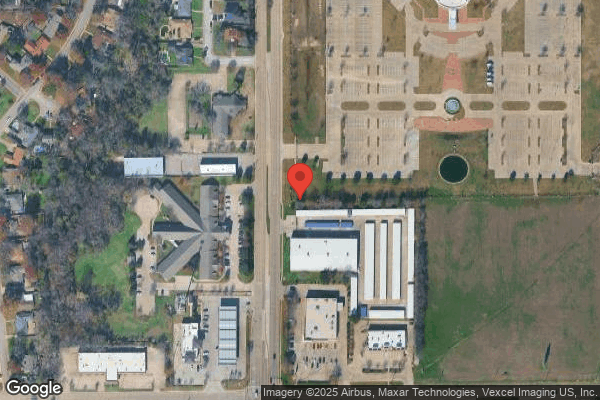
419 S COCKRELL HILL RD, DUNCANVILLE, TX 75116 (972) 708-8800
For profit - Corporation 124 Beds NEXION HEALTH Data: November 2025 8 Immediate Jeopardy citations
Trust Grade
0/100
#967 of 1168 in TX
Last Inspection: August 2025

Inspected within the last 6 months. Data reflects current conditions.

Overview

Duncanville Healthcare and Rehabilitation Center has a Trust Grade of F, which indicates significant concerns about the quality of care provided. It ranks #967 out of 1168 facilities in Texas, placing it in the bottom half, and #69 out of 83 in Dallas County, meaning there are only a few local options that are better. Although the facility is showing improvement in some areas, as the number of issues has decreased from 22 in 2024 to 16 in 2025, it still faces serious challenges. Staffing is a weakness here, with a low 1-star rating and a high turnover rate of 64%, which is above the state average, indicating that staff do not stay long enough to build relationships with residents. Additionally, the facility has incurred $116,171 in fines, which is concerning and suggests repeated compliance problems, and the RN coverage is average, potentially limiting oversight of care. Specific incidents from inspections reveal troubling issues, including a staff member failing to report verbal abuse witnessed against a resident, resulting in continued harm. Another critical finding noted that CPR was not provided to a resident who was unresponsive, which could have led to life-threatening consequences. Overall, while there are some signs of improvement, the facility has serious weaknesses that families should consider carefully.

Trust Score
F
0/100
In Texas
#967/1168
Bottom 18%
Safety Record
High Risk
Review needed
Inspections
Getting Better
22 → 16 violations
Staff Stability
⚠ Watch
64% turnover. Above average. Higher turnover means staff may not know residents' routines.
Penalties
○ Average
$116,171 in fines. Higher than 74% of Texas facilities. Some compliance issues.
Skilled Nurses
⚠ Watch
Each resident gets only 19 minutes of Registered Nurse (RN) attention daily — below average for Texas. Fewer RN minutes means fewer trained eyes watching for problems.
Violations
⚠ Watch
64 deficiencies on record. Higher than average. Multiple issues found across inspections.
★☆☆☆☆
1.0
Overall Rating
★☆☆☆☆
1.0
Staff Levels
★★★☆☆
3.0
Care Quality
★☆☆☆☆
1.0
Inspection Score
Stable
2024: 22 issues
2025: 16 issues

The Good

  • Full Sprinkler Coverage · Fire safety systems throughout facility
  • No fines on record

Facility shows strength in fire safety.

The Bad

1-Star Overall Rating

Below Texas average (2.8)

Significant quality concerns identified by CMS

Staff Turnover: 64%

18pts above Texas avg (46%)

Frequent staff changes - ask about care continuity

Federal Fines: $116,171

Well above median ($33,413)

Significant penalties indicating serious issues

Chain: NEXION HEALTH

Part of a multi-facility chain

Ask about local staffing decisions and management

Staff turnover is elevated (64%)

16 points above Texas average of 48%

The Ugly 64 deficiencies on record

8 life-threatening 3 actual harm
Sept 2025 1 deficiency
CONCERN (D) 📢 Someone Reported This

A family member, employee, or ombudsman was alarmed enough to file a formal complaint

Potential for Harm - no one hurt, but risky conditions existed

Report Alleged Abuse (Tag F0609)

Could have caused harm · This affected 1 resident

**NOTE- TERMS IN BRACKETS HAVE BEEN EDITED TO PROTECT CONFIDENTIALITY** Based on interview and record review, the facility failed to ensure that all allegations involving abuse, neglect, and misapprop...

Read full inspector narrative →
**NOTE- TERMS IN BRACKETS HAVE BEEN EDITED TO PROTECT CONFIDENTIALITY** Based on interview and record review, the facility failed to ensure that all allegations involving abuse, neglect, and misappropriation were reported immediately, but no later than 2 hours after the allegation was made to the State Survey Agency for 1 of 6 residents (Resident #1) reviewed for abuse and neglect.The facility did not report to the State Survey Agency (HHSC) an incident in which Resident #1 tied the call light cord around his neck.This failure could place residents at risk for abuse/neglect and could lead to a diminished quality of life and psychosocial harm. The findings included: Record review of Resident #1's face sheet, dated 09/18/2025, reflected an [AGE] year-old male with an initial admission date of 08/15/2025. Resident #1 had diagnoses which included chronic diastolic heart failure (a condition where the heart becomes stiff and cannot relax properly, making it difficult for the heart to fill with blood), severe intellectual disabilities (a condition characterized by significant limitations in cognitive functioning), and cognitive communication deficit (Communication difficulty stemming from an underlying problem with a person's thinking processes). Record review of Resident #1's admission MDS Assessment, dated 08/22/2025, reflected a BIMS score of 11, which indicated the resident was moderately impaired (a condition with a serious limitation in a specific area of functioning, requiring significant support or assistance to carry out daily tasks).Record review of Hospice Agreement dated and signed 09/09/25 reflected Resident #1 had been admitted to hospice. Record review of Resident #1's Progress Notes, dated 09/09/2025 written by the ADON, reflected, hospice mattress arrived res was very lethargic and very difficult to arouse for most of this shift. Family members arrived and expressed that it was [Resident #1's] wish to not eat - he is tired. family wants to keep meds on board to ease his discomfort [sic]. Record review of Resident #1's Care Plan, updated 09/09/25, reflected, [Resident #1] was admitted to Hospice with Terminal DX: CHF, DC all routine labs and radiological studies. Do not call 911 or send resident to hospital without calling Hospice. Call with any falls, occurrences or any change in condition. An interview on 09/18/25 at 2:37 PM with ADON revealed she had just talked to Resident #1 and his family prior to him tying the call light cord around his neck. She stated the family stated they had accepted that the resident was not going to get better and had placed him on hospice. She stated Resident #1 had not informed her of any suicidal plans and she had not seen any suicidal ideations when she visited his room that day or she would have reported it to the DON, the administrator, social services, and hospice. She stated the hospice representative was still in the building on 09/10/25 when Resident #1 tied the cord around his neck because she had just finished talking to him and his family.In a telephone interview on 09/18/25 at 3:13 PM with the NP revealed Resident #1 had never expressed to her that he wanted to harm himself. She stated she met with the dietitian, the family, and the previous DON regarding Resident #1 refusing to eat. She suggested Resident #1 received a feeding tube for nutrition, but the family refused. She stated hospice was suggested, and the family wanted to think about it for a few days. She stated after a few days the family decided to place Resident #1 on hospice on 09/07/25. In a telephone interview on 09/18/25 at 3:19 PM with previous DON revealed she and the dietitian met with the family of Resident #1 regarding him not eating. She stated she could not remember the exact date of the meeting but that it was around the beginning of the month. She stated the family stated Resident #1 was not eating because of recent dental work and he wanted to give up because of his sickness. She stated Resident #1 never stated he had suicidal ideations. She stated when the family stated he was giving up and not eating was not an indication to her that he would attempt suicide. She stated he had not attempted suicide prior to being admitted to the facility. She stated her assessments prior to admission nor during admission revealed any thoughts of suicide. An interview on 09/18/25 at 6:23 PM, the ADM stated Resident #1 tying the call light cord around his neck was not reported to the State Survey Agency because there was no indication in the Provider Letter that the incident should have been reported. He stated Resident #1 was found by one of the Medication Aides. He stated Resident #1 had not shown any evidence of suicidal ideations in any assessment completed during admission or when there was a change in condition when he was placed on hospice. He stated the only time Resident #1 made a statement that he wanted to harm himself was after he was found with the cord around his neck on 09/10/25. He stated the resident had no documented history of suicide attempts or wanted to harm himself. He stated when the statement was made by the resident that he wanted to kill himself, he was placed one to one until he was taken to the hospital for psychological evaluation, his family and hospice were notified. He stated Resident #1 passed away from his heart condition prior to the evaluation being completed. He stated the hospice staff were still in the building they had just finished talking to Resident #1. He stated he would have been responsible for reporting incidents to HHSC and conducting facility investigations. He stated there was no incident report completed and there was no investigation done. He stated not completing an incident report and investigation could have placed residents at harm if signs are not recognized and acted upon timely.In a telephone interview on 09/19/25at 8:40 AM, with the Administrator of Hospice, she stated Resident #1was placed with hospice on 09/07/25. She stated Mr. [NAME] was declining due to his heart condition and he was not wanting to eat, and the NP had suggested tube feeding but the family had refused and that was when hospice had been suggested. She stated the nurse, and social worker had gone to the facility to complete the assessment on 09/10/25. She stated they were leaving the building when they were notified of the incident.Attempted to contact Medication Aide who found Resident #1 on 9/181925 at 5:43 PM and again on 9/19/25 a message was left both times with no return phone call. Record review of TULIP did not reflect a facility reported incident that corresponded to the allegations in the incident described above.Record review of the facility policy's titled, Abuse Prohibition Policy, dated 5/01/01 and last reviewed 6/2/25, reflected, 2. The facility will conduct an investigation of alleged or suspected abuse, neglect, or misappropriation of property, and will provide notification of information to the proper authorities according to state and federal regulations.
Aug 2025 7 deficiencies
CONCERN (D)

Potential for Harm - no one hurt, but risky conditions existed

Deficiency F0628 (Tag F0628)

Could have caused harm · This affected 1 resident

Based on record reviews and interviews the facility failed to send a copy of the residents' discharge notice, prior to discharge, to the representative of the Office of the State Long-Term Care (LTC) ...

Read full inspector narrative →
Based on record reviews and interviews the facility failed to send a copy of the residents' discharge notice, prior to discharge, to the representative of the Office of the State Long-Term Care (LTC) Ombudsman of the residents' transfer or discharge and the reasons for the move, for 1 of 5 residents (Resident #8) reviewed for notifying the LTC Ombudsman of the residents' discharge.Resident #8 was discharged on 07/01/2025 without a notice to the LTC state ombudsman.This failure could place residents at risk of not knowing their rights or receiving the services of the state LTC Ombudsman.The findings included:A record review of Resident #8's admission record dated 7/3/2025 revealed diagnoses which included Secondary Parkinsonism (similar to Parkinson disease caused by certain medicines, a different nervous system disorder or another illness), Muscle Weakness, Unspecified Lack of Coordination, Calculus of Ureter (kidney stone that has traveled into the ureter, the tube connecting the kidney to the bladder), Calculus in Bladder (bladder stones), Unsteadiness on Feet, Abnormal Weight Loss, Post-Traumatic Stress Disorder (mental health condition), Protein-Calorie Malnutrition, Quadriplegia (paralysis of all four limbs and the torso).A record review of Resident #8's MDS quarterly assessment, dated 07/13/25, reflected a BIMS score of 15 which indicated cognitively intactA record review of Resident #8's medical record revealed no evidence of a discharge notice to the LTC ombudsman.During an interview on 8/13/2025 at 3:19 PM, the LTC Ombudsman stated she had no evidence the facility had notified her of Resident #8's discharge. The LTC Ombudsman stated she visited the facility and had not received discharge notice from the facility.During an interview on 8/14/2025 at 1:45 PM, the SW revealed she was not aware of any reports for discharges of residents were sent to the LTC Ombudsman. The SW stated a review of Resident #8's records could not evidence a notice to the LTC Ombudsman for Resident #8's discharge to hospital.During an interview on 8/14/2025 at 2:20 PM the Administrator stated he was unaware of the rule to notify the LTC Ombudsman of any resident discharges.A record review of the facility's Transfer or discharged Notices Policy Statement dated March 2025, revealed, Notice of Transfer or Discharge (Anticipated).4. A copy of the notice is sent to the Office of the State Long Term Care Ombudsman at the same time the notice of transfer of discharge is provided to the resident and representative. Notice of Transfer or Discharge (Emergency)'.2. Notice of Transfer is provided to the resident and representative as soon as practicable before the transfer and to the Long-Term Care (LTC) ombudsman when practicable (e.g., in a monthly list of residents that includes all notice content requirements).
CONCERN (D)

Potential for Harm - no one hurt, but risky conditions existed

Pharmacy Services (Tag F0755)

Could have caused harm · This affected 1 resident

**NOTE- TERMS IN BRACKETS HAVE BEEN EDITED TO PROTECT CONFIDENTIALITY** Based on observation, interview, and record review, the facility failed to provide pharmaceutical services (including procedures...

Read full inspector narrative →
**NOTE- TERMS IN BRACKETS HAVE BEEN EDITED TO PROTECT CONFIDENTIALITY** Based on observation, interview, and record review, the facility failed to provide pharmaceutical services (including procedures that assure the accurate acquiring, receiving, dispensing, and administering of all drugs and biologicals) to meet the needs residents for one (Resident #5) of three residents reviewed for medication review. LVN E failed to ensure Keppra (a medication given to prevent seizures) was administered to Resident #5 appropriately. LVN E did not hold the G-tube feeding an hour before and one hour after the medication was given. This failure could place residents at risk for not receiving medications as ordered by their physician and not receiving the intended therapeutic benefit of the medications.Findings included:Review of Resident #5's 30-day MDS assessment, dated 07/30/2025, reflected she was a [AGE] year-old female admitted to the facility on [DATE], with the following diagnoses: hypertension (high blood pressure), seizures (abnormal brain waves), diabetes (high blood sugar), and acute respiratory failure with hypoxia (unable to breath loss of oxygen). Resident #5 BIMs score of 99 indicated the resident had severe cognitive impairment and required assistance from two staff for activities of daily living. Review of Resident #5's the consolidated physician orders dated August 2025 reflected: order dated 08/13/2025, Keppra (for seizures) oral solution 100 mg/ml via G-tube two times a day one tab by mouth two times a day. Record review of Resident #5's care plan revised on 7/06/2025 revealed Resident #5 had a seizure disorder and medications should have been administered as ordered. Record review of Resident #5's August 2025 MAR revealed Keppra oral solution 100mg/ml give 10ml via G-tube two times a day for seizures was signed as administered each day from 08/01/205 until 08/12/2025. There was no guidance to the nurse to hold the G-tube feeding for one hour before or one hour after administering the medication. In an interview and observation on 8/12/2025 at 06:52 a.m., LVN E during a medication pass prepared to administer the Keppra, as well as other medications to Resident #5. LVN E entered the room and turned off the running G-tube pump, checked the tube for placement and administered eight medications, including the Keppra. Following each medication, LVN E administered 5mls of water. LVN E provided a flush before and after completion of the medications that were given, then the LVN restarted the feeding pump and left the. In an interview on 08/12/2025 at 7:15 a.m., LVN E stated she did not turn the pump off before or after the administering the Keppra because she did not recall that she was supposed to do that. LVN E said when she thinks about it she did recall something about that in nursing school but that had been a long time ago. LVN E stated after looking it up on the phone, that it was about an absorption problem, and she would have to start doing that so the resident received all the medication appropriately. LVN E thought maybe that should be added to the MAR, so other nurses would do the same thing. In an interview on 08/13/2025 at 2:00 p.m., the DON said the G-tube should be stopped for one hour before giving the Keppra and on hour after, that was basic nursing 101 and she was shocked the nurse did not know this and practice best practices. This could affect the absorption of the medication causing the levels to not be correct and the resident could have seizures form not having the medication absorbed correctly. In an interview on 08/13/2025 at 2:45 p.m., with the Medical Director revealed he did not know about the specifics of the administration of the Keppra in a G-tube, he just wanted his resident to have the right amount, at the right times, and the medication to have the best potential to work. If this was the recommendation of the research that had been done the nursing facility nurses should be giving it this way. Record review of facility policy titled Medication Administration, with a revision date of April 2019, revealed Medications are administered in a safe and timely manner, and as prescribed . Policy interpretation and Implementation. 4. Medications are administered as in accordance with prescribed orders. 5. Medication administration times are determined by resident need and benefit, not staff convenience, factors that are considered include: a. optimal therapeutic effect of the medication. 31. Each Nurses' station has a current Physician's Desk Reference (PDR) and/or other medication references.Record review of reference, Developing guidance for feeding tube administration of oral medications https://www.ncbi.nlm.nih.gov/ revealed: When administering Keppra (levetiracetam), it is generally recommended to hold the enteral nutrition (EN) infusion for one to two hours before and after the administration of the medication. This practice is aimed at minimizing the potential for interactions between the medication and the EN, which can affect the drug's absorption and efficacy.The exact timing and duration of EN withholding may vary depending on the specific drug and the patient's individual circumstances. It is crucial to consult with a healthcare provider to determine the best approach for each patient.
CONCERN (E)

Potential for Harm - no one hurt, but risky conditions existed

Deficiency F0761 (Tag F0761)

Could have caused harm · This affected multiple residents

Based on observation, interviews, and record review the facility failed to ensure that medications were secure and inaccessible to unauthorized staff and residents for three (one medication cart for H...

Read full inspector narrative →
Based on observation, interviews, and record review the facility failed to ensure that medications were secure and inaccessible to unauthorized staff and residents for three (one medication cart for Hall 400 and one medication cart for Hall 200, one medication cart for Hall 300) of seven medication carts reviewed for medication storage. The facility failed to ensure medication supplies were all stored in locked compartments and permit only authorized personnel to have keys, when LVN A's one medication cart for Hall 400 were left unlocked and unattended by LVN A. The facility failed to ensure medication supplies were all stored in locked compartments and permit only authorized personnel to have keys when LVN B's two medication carts for Hall 200 and one medication carts for Hall 300 were left unlocked and unattended by LVN B. This failure could result in resident access and ingestion of medications leading to a risk for harm and possible drug diversion. Findings included: An observation on 08/12/2025 at 4:30 a.m., revealed LVN B's one medication cart were left at the nursing station unlocked for Hall 400. LVN B was in the breakroom on Hall 300, and no other staff was at the nurse's station. The lock on the medication cart were popped out showing the red bottom indicating the carts were unlocked. An observation on 08/12/2025 at 4:30 a.m., revealed LVN A's two medication carts were left at the nursing station unlocked for Hall 200 and Hall 300. LVN A's whereabouts was unknown at this time and no other staff was at the nurse's station. The lock on the medication cart were popped out showing the red bottom indicating the carts were unlocked. An observation and interview on 08/12/2025 at 4:45 a.m., revealed LVN A coming back to the nurse's station and speaking with the investigator and then calling her supervisor on the phone. LVN A was leaning against one of the unlocked medication carts. LVN A stated she had been at the nurse's station the entire time, until the front doorbell rang and she left her carts unlocked. LVN A stated she was at the nurse's station, and she could see everything. LVN A walked the survey team down Hall 400 to the conference room out of the site of the nurse's station, with the medication cart unlocked at the nurse station and no one was at the nurse's station, except the surveyor. An observation on 08/12/2025 at 5:00 a.m., revealed no staff at the nurse's station, with one resident sitting in wheelchair around the nurse's station. One nursing medications cart for Hall 400 remained unlocked and not in direct site of the LVNs. In an interview on 08/18/2025 at 5:10 a.m., LVN B revealed she never left the medication cart unlocked, for Hall 400. LVN B stated she did not know how it was unlocked and wanted to know how the surveyor had gotten the drawers open to the cart. LVN B said she knew the cart was supposed to be locked each time. LVN B stated if the medication cart was left unlocked a resident or a staff member could get the medications, this could lead to medications being stolen or a resident taking something they should not have. In an interview on 08/12/2025 at 5:20 a.m., LVN A revealed she had her medication carts locked and showed the investigator that they were. LVN A was told the medication carts was observed earlier unlocked and the LVN just shrugged and stated, they were locked now. LVN A stated the medication carts that were unlocked were in her direct site. LVN A stated that if the medication carts were left unlocked and unattended the medications could be stolen or taken by a resident that could harm them. In an observation on 08/12/2025 at 9:00 a.m., with LVN D of the medication cart for Hall 200 revealed: Medications that could have been taken by staff or another resident for Resident #73 Multivitamin-minerals oral tablet (Supplement), Ascorbic Acid 500mg (Vitamin C), Diltiazem HCL 30mg tablet (Blood pressures med), and Coreg oral tablet 6.25mg (blood pressure). LVN D confirmed these were Resident #73's ordered medications and could have caused harm if taken by unauthorized person. In an observation on 08/12/2025 at 7:00 a.m. with LVN E of the medication cart for Hall 300 revealed: Medications that could have been taken by staff or another resident for Resident #5 Keppra oral solution 100mg (seizures), Insulin Glargine Solution 100 unit (diabetes), syringes, Robinul oral tablet 1mg (secretions), Furosemide oral tablet 20mg (edema), and metoprolol tartrate tablet 12.5mg (blood pressure). LVN E confirmed these were Resident #5's medications and could have caused harmed if taken by unauthorized person. In an observation and interview on 08/12/2025 at 11:15 a.m., with LVN E of the medication cart for Hall 400 revealed: for Resident #29 Mounjaro Subcutaneous Solution injector 5mg/0.5ml (diabetes), melatonin oral tablet 10mg (insomnia), apixaban oral tab 5mg (blood thinner), and protoxin tablet delayed release 40mg (for gastric acid reflux). LVN E confirmed that these were Resident #29's ordered medications. LVN E stated the medication carts should never be left unlocked, except when in use. LVN E stated this could be unsafe as medications could be taken form the cart by the residents or staff, which could result in harm. In an interview on 08/13/2025 at 3:00 p.m., the interim DON stated it was her expectation that medication carts should be locked when not in use. The interim DON said that the nurses were responsible to keep the medication carts locked when not in use. She stated if they were not locked, residents and unauthorized staff could get into the cart and there would be opportunities for harm and medication diversion. When the interim DON was asked who was responsible to monitor the carts to ensure they were locked she said that would be the staff that was using the carts. Review of the Policy and Procedure Medication Administration dated April 2019, reflected, Medications are administered in a safe and timely manner. 19. During administration of medications, the medication cart is kept closed and locked when out of sight of the medication nurse or aide.
CONCERN (E)

Potential for Harm - no one hurt, but risky conditions existed

Deficiency F0773 (Tag F0773)

Could have caused harm · This affected multiple residents

**NOTE- TERMS IN BRACKETS HAVE BEEN EDITED TO PROTECT CONFIDENTIALITY** Based on interview and record review, the facility failed to promptly notify the physician of laboratory results in accordance w...

Read full inspector narrative →
**NOTE- TERMS IN BRACKETS HAVE BEEN EDITED TO PROTECT CONFIDENTIALITY** Based on interview and record review, the facility failed to promptly notify the physician of laboratory results in accordance with facility policy and procedures for notification for 1 of 5 residents (Resident #306) reviewed for laboratory services.The facility failed to send Resident #306's weekly labs to the infectious disease doctor while the resident resided at the facility from 11/27/24 to 12/20/24.This deficient practice placed the residents at high risk of not receiving treatment, and/or developing complications.Findings included:Review of Resident 306's MDS dated [DATE] reflected the resident was [AGE] year-old female admitted to the facility on [DATE] and discharged on 12/20/24. Her diagnoses included diabetes and anxiety disorder. Resident #306 had a BIMS of 6 indicating her cognition was severely impaired. The MDS also reflected the resident had a stage 4 pressure ulcer.Review of Resident #306's care plan effective on 11/28/24 reflected the resident had pressure ulcers to her right heel, unstageable to right hip, and stage 4 to the left lateral ankle. Interventions included to obtain labs per physician orders.Review of Resident #306's discharge hospital records dated 11/27/24 reflected the following: Labs to be followed: weekly CRP (a blood test that measures the level of CRP, a protein produced by the liver in response to inflammation)/BMP (measures eight different substances in your blood and it provides important information about your body's fluid balance, your metabolism and how well your kidneys are working)/CBC (group of blood tests that measure the number and size of the different cells in your blood) faxed to the office of [Doctor] Review of Resident #306's facility clinical record revealed labs were obtained on 12/02/24, 12/09/24, and on 12/16/24.Interview on 05/15/25 at 12:13 PM with Resident #306's family revealed the resident was discharged from the facility on 12/20/24. The family said the infectious disease doctor had ordered for the resident to have weekly labs drawn and faxed over to his office and the doctor's clinic said they had never received any of the lab requested.Interview on 05/15/25 at 11:47 AM with the Infectious Disease Doctor's clinic revealed they had called the facility on 12/02/24, 12/18/25 and on 12/31/24 to try and obtain Resident #306's labs copies. The clinic said that on 12/31/24 the facility finally sent one set of labs that were dated for 12/02/24. The Infectious Disease Clinic further stated the doctor would have wanted to keep up with the resident's infection treatment.Interview on 05/15/25 at 2:42 with ADON N revealed he will send or fax labs when he was asked but he could not specifically recall if he had sent Resident #306's labs to the infectious disease clinic.Interview on 05/15/25 at 2:55 PM with the DON revealed she thought she was sure she had asked ADON N to fax Resident #306's labs results to the infectious disease clinic. The DON further stated she did not know what else could have happened with the labs during that time.Review of the facility's policy titled Lab and Diagnostic Test Results - Clinical Protocol revised on 09/2012 reflected the following:Assessment and Recognition1. The physician will identify and order diagnostic lab testing on diagnostic and monitoring needs.2. The staff will process test requisitions and arrange for tests.3. The laboratory, diagnostic radiology provider, or other testing source will report test results to the facility 1. A physician can be notified by phone, fax, voicemail, e-mail, mail, pager, or a telephone message to another person acting as the physician's agent a. Facility staff should document information about when, how, and to whom the information was provided and the response
CONCERN (E)

Potential for Harm - no one hurt, but risky conditions existed

Food Safety (Tag F0812)

Could have caused harm · This affected multiple residents

Based on observations, interviews, and record review the facility failed to store, prepare, distribute, and serve foods in accordance with the professional standards for food service safety in the fac...

Read full inspector narrative →
Based on observations, interviews, and record review the facility failed to store, prepare, distribute, and serve foods in accordance with the professional standards for food service safety in the facility's kitchen. 1. The facility failed to ensure food items in the refrigerator, freezer and dry storage room were labeled and stored in accordance with the professional standards for food service.2. The facility failed to ensure stored canned goods, had an uncompromised seal, free from dents.3. The facility failed to discard items stored in refrigerator, freezers or dry storage that were not properly labeled or past the 'best buy', consume by or expiration dates.These failures could place residents at risk for food-borne illness and cross contamination. Findings Included:Observation of the walk-in food storage room on 08/12/2025 at 5:15 a.m., revealed the following:- 1 Box of graham cracker crumbs in unsealed zip top bag. 5 lbs., date was written by facility 5.13.2025.- 12 slices of white bread in an unsealed, unlabeled bag.- 1 opened 24oz ketchup bottle, 1/2 full, BB date: 9.28.2026. date written by facility 8.8.2025. Manufacture label states, Refrigerate after opening.- 1 bag of cake mix - Icing in an unsealed manufacturers bag, 5 lbs. in an unsealed zip top bag, not dated.- 2 cans of Chunk Light skip jack tuna, 66.5 oz, facility dated both cans 7.25.2025. First can has 2 dents on upper seal, 1 dent approximately 2, the other dent is approximately 1. There is no best buy date or use by date on either can. 2nd can of Chunk Light skip jack tuna, 66.5 oz, dented on the bottom seal approximately 1. - 1 Can of pinto beans vegetarian 110 oz approximately 2 dent on bottom seal, dated by facility 8.5.2025. BB date June 2027.- 1 can Salad Sliced Beets 6 lbs. 8 oz, facility dated 10.01.2024. Rust around top and bottom of the seal, there is no BB date or expiration date. Observation of the walk-in refrigerator on 08/12/2025 at 6:20 a.m., revealed the following:- 3 large produce boxes were noted without any dates. One box contained approximately 15 cucumbers, the second box contained approximately 10 cantaloupes, and the third contained approximately 20 zucchinis. The produce in all three boxes was observed to be collapsing in areas, slimy to the touch, and exhibiting wrinkled and discolored skin with visible fuzzy mold growth. The boxes were noted to be soggy, stained, and wet from decomposing juices, with dark spots spreading across the cardboard. Observation of the walk-in freezer on 08/13/2025 at 11:46 a.m., revealed the following:- 1 large bag of meat patties, no label, and no date. - 1 box of chicken thighs was observed stored in a plastic bag that was opened and exposed to air, the bag was dated July 22nd. In in an interview with the DM on 08/12/2025 5:31 a.m., she said the dented cans go in her office and all staff is responsible for removing dented cans if they notice a dent. She said if there is no date on the can there is a code on the can that she can look up to see what the date is. DM said that residents could become ill if their food that is expired or improperly stored is consumed.Interview with DM on 08/12/2025 5:51 a.m., she said all kitchen staff who removes food items from the freezer, refrigerator or dry storage are responsible for putting the food item back labeled with open date and properly sealed.Record review of the facility's Refrigerator and Freezer Storage policy undated, states, 2. All items must be dated with the date that the food was delivered. 3. If a food is taken out of the original container what the manufacturer placed the product in it must be labeled and dated. 4. All left over foods should be labeled and dated with the date in and the date out (date the food is to be discarded) this date can be no more than 72 hours after it was put in the refrigerator. 9. If an item is opened, the food must be tightly sealed. It should be dated with the date that it was opened. If the product was removed from its original container, then the product should also have the name of the product. If using large bags to seal open items in their original packaging, the bag may be reused but needs to be re-dated. If the food is directly in the bag, the bag must be labeled and dated, and when the bag is emptied, it should be discarded. Bags must be sealed.Record review of the facility's Dry Storage policy undated, states, .3. Items must be dated with the date that the food was delivered. 4. If a food is taken out of the original container (what the manufacturer placed the product in) it must be labeled and dated. 5. Iron foods must be removed from the storeroom. 6. All dented cans must be removed from the storeroom or marked do not use until it is picked up. 9. If an eye opened, the food must be tightly sealed. It should be dated with the date that it was opened. If the product was removed from its original container, then the product should also have the name of the product. If using large bags to seal open items in their original packaging, the bag may be reused but needs to be redated. If the food is directly in the bag, the bag must be labeled and dated, and when the bag is emptied, it should be discarded. Bags must be sealed. 11. Bags of bread products should be closed and dated with the date that it was opened. Use the open product first.Review of the U.S. FDA Food Code 2022 reflected: Definitions 3. Food Receiving and Storage - When food, food products or beverages are delivered to the nursing home, facility staff must inspect these items for safe transport and quality upon receipt and ensure their proper storage, keeping track of when to discard perishable foods and covering, labeling, and dating all PHF/TCS foods stored in the refrigerator or freezer as indicated. Review of the U.S. FDA Food Code 2022, Chapter 3, 3-201.11 Compliance with Food Law FDA considers food in hermetically sealed containers that are swelled or leaking to be adulterated and actionable under the Federal Food, Drug, and Cosmetic Act. Depending on the circumstances, rusted and pitted or dented cans may also present a serious potential hazard.
CONCERN (E)

Potential for Harm - no one hurt, but risky conditions existed

Infection Control (Tag F0880)

Could have caused harm · This affected multiple residents

**NOTE- TERMS IN BRACKETS HAVE BEEN EDITED TO PROTECT CONFIDENTIALITY** Based on observation, interview and record review, the facility failed to maintain an Infection Prevention and Control Program d...

Read full inspector narrative →
**NOTE- TERMS IN BRACKETS HAVE BEEN EDITED TO PROTECT CONFIDENTIALITY** Based on observation, interview and record review, the facility failed to maintain an Infection Prevention and Control Program designed to provide a safe, sanitary, and comfortable environment and to help prevent the development and transmission of communicable diseases and infections for five (Resident #74, #46,#5, #73, and #29) of eight residents observed for infection control in that: CNA C failed to wear a gown, change her soiled gloves and wash hands during incontinent care to Resident #74. LVN D failed to clean off the overbed table prior to and after usage, while replacing tubing on Resident #46' G-tube. LVN E failed to disinfect the blood pressure cuff, in between vital sign checks for Resident #5, and Resident #73. LVN E failed to disinfect the glucometer (machine used to check blood sugar) in between usage on Resident # 29 and Resident #5. LVN E failed to change her soiled gloves and wash hands during tracheostomy care to Resident #5Findings included:1.Review of Resident #74's quarterly MDS assessment, dated 05/22/2025, reflected he was a [AGE] year-old male admitted to the facility on [DATE], with the following diagnoses: dependence on renal dialysis (the need of a machine to make kidneys clean the blood), and end stage renal failure (kidneys do not work well). Resident #74 BIMs score of 11 indicated the resident had moderate cognitive impairment and required assistance from one staff for activities of daily living. Review of Resident #74's Care Plan dated 08/11/2025 reflected, Focus: Resident requires Enhanced Barrier Precautions. dialysis catheter.Goal: to reduce the potential spread of Multidrug-resistant organism, (infections).interventions planned. Enhanced Barrier Precautions used during high-contact resident care activities. such as: dressing, transferring, changing briefs or assisting to toilet. Observation on 08/12/2025 at 4:45 a.m. revealed a sign outside of Resident #74's door: the sign gave instructions to the staff concerning EBP (Enhanced Barrier Precautions) the sign instructed the staff what type of PPE (Person Protection Equipment) to use when assisting the resident. There was a three drawer container holding gowns, gloves, and mask, with a face shield outside the doorway. Observation of incontinence care on 08/12/2025 at 4:50 a.m., revealed CNA C did not use hand gel or wash her hands she did not don a gown in the hallway before entering the room. Resident #74 was lying on his back. CNA C placed on gloves and unfastened the resident's brief tabs and wiped the pubic area with a disposable wipe, discarding the wipe in the trash bag. CNA C wiped the genitals, discarding the wipe in the trash bag. CNA C wiped the shaft of the penis and discarding the wipe in the trash bag, and then cleaned the head of the penis and discarded the wipe in the trash bag. CNA C positioned Resident #74 on his right side with the help of the resident. CNA C wiped the rectal area that was soiled with bowel movement and discarded the wipe, using another wipe CNA C completed cleaning the rectal area of bowel movement, and discarded the wipe. CNA C wiped the right buttocks, which was soiled with urine, discarded the wipe. CNA C repositioned Resident #74 with her soiled gloves to his left side, CNA C cleaned the left buttocks, which was soiled with urine, discarded the wipe. CNA C assisted, with her soiled gloves, with the help of the resident to reposition Resident #74 on his back. CNA C took off her soiled gloves, did not wash her hands or use hand sanitizer, left the room and obtained a clean brief. CNA C returned to the room placed on another pair of gloves, without washing her hands or using hand sanitizer, placed and pulled the clean brief up underneath him and fastened the brief, removing the soiled brief placing it in the trash. CNA C then pulled the pants up on the resident. CNA C removed her dirty gloves did not wash her hands or use hand sanitizer, placed on new gloves, and continued to assist the resident to adjust clothing. CNA C removed her gloves in the room and assisted Resident #74 into his wheelchair. CNA C stated the resident had to be ready for pick-up between 5:00 and 6:00 a.m. for dialysis pick-up. CNA C left the room, not washing her hands or using hand sanitizer. CNA C entered another resident's room, closing the door. During an interview on 08/12/2025 at 5:00 a.m., CNA C revealed she was in a hurry because he has the non-emergency pick-up for dialysis between 5:00 a.m. and 6:00 a.m. and if he is not ready the transport people get upset. CNA C stated she was supposed to place on a gown outside the doorway because he had a tube in his arm, where he receives dialysis. CNA C stated that anyone with a tube of any kind, or wounds, has a set of drawers outside their door and a sign on the door, explaining what you must wear, according to what you have to do for the resident. CNA C said this was more the protection of us and the resident. I just got in a hurry and forgot, the same with the washing of my hands and changing my gloves, I got into a hurry, because you came into the room with me and it made me nervous. CNA C said not washing her hands when changed her gloves could cause the spread of infection, she said she had recently had the in-service for infection control. 2.Review of Resident #46's quarterly MDS assessment, dated 05/14/2025, reflected she was a [AGE] year-old female admitted to the facility on [DATE], with the following diagnoses: hypertension (high blood pressure), peripheral vascular disease (poor blood circulation), diabetes (high blood sugar), and cardiovascular accident (stroke). Resident #46 BIMs score of 6 indicated the resident had severe cognitive impairment and required assistance from two staff for activities of daily living. Further review reflected Resident #46 had a feeding tube (nutritional tube placed in the stomach) that was present upon admission. The resident receives 51%vor more of nutrition and fluid delivered through the feeding tube. Observation on 08/12/2025 at 5:38 a.m., LVN D entered Resident #46's room to replace the tubing for the resident's tube feeding. LVN D washed her hands and placed on gloves, she laid all her supplies on the overbed table, she did not clean the table prior to laying supplies on it. The overbed table had dried dark sticky substance on it. LVN D completed the replacement of the tubing turned the pump back on after priming the tubing for the G-Tube (feeding tube), spilling formula on top of the overbed table. LVN D cleaned up the remaining old tubing, removed her gloves washed her hands and left the room taking her trash with her, but not cleaning the overbed tabletop. In an interview on 08/12/2025 at 5:45 a.m., LVN D said she knew the overbed tabletop should have been cleaned before placing clean supplies on the overbed tabletop. LVN D stated she noticed it was sticky, but thought it was dried formula, she said if the surface was not clean then it could cause the spread of germs to the new supplies. LVN D stated she had infection control in-service in the past couple of months. 3.Review of Resident #5's 30-day MDS assessment, dated 07/30/2025, reflected she was a [AGE] year-old female admitted to the facility on [DATE], with the following diagnoses: hypertension (high blood pressure), seizures (abnormal brain waves), diabetes (high blood sugar), and acute respiratory failure with hypoxia (unable to breath loss of oxygen). Resident #5 BIMs score of 99 indicated the resident had severe cognitive impairment and required assistance from two staff for activities of daily living. Review of Resident #5's the consolidated physician orders dated August 2025 reflected: order dated 08/13/2025, Keppra (for seizures) oral solution 100 mg/ml via G-tube two times a day one tab by mouth two times a day, Furosemide oral tablet (for increased fluid & swelling) 20mg give 20mg via G-tube two times a day, and metoprolol tartrate (for high blood pressure) tablet give 12.5mg [NAME] G-tube daily. Further review revealed physician orders to check blood pressure, every shift and to check blood sugar three times a day and inject Humalog (for diabetes) 100units/ml per sliding scale. Observation on 08/12/2025 at 6:52 a.m. revealed LVN E performed morning medication pass, during which time she checked the blood pressure of Resident #5. LVN E failed to sanitize the blood pressure cuff before or after using it on Resident #5. Observation on 08/12/2025 at 11:30 a.m. revealed LVN E performed a blood sugar test on Resident #5. LVN E failed to sanitize the glucometer machine (an instrument for measuring the concentration of glucose in the blood) before or after using it on Resident #5. Observation on 08/12/2025 at 11:35 a.m., revealed LVN E performed Tracheostomy Care (tube opening in the throat at the neck allowing resident to breath) LVN E entered the room with her supplies, placing on gloves without washing her hands or using hand sanitizer. LVN E cleaned the overbed table with Sani Wipes and then placed her supplies on the overbed table after the cleanser had dried. LVN E changed her gloves to the sterile gloves in the trach kit, not washing her hands or using hand sanitizer. LVN E performed [NAME] care, suctioning, and cannula replacement, removed her sterile gloves, placed on another pair of non-sterile gloves, without washing her hands or using hand sanitizer. LVN E adjusted the humidifier over the trach opening, made sure the blankets were strait on the bed, then performed mouth care for Resident #5. LVN E took off her gloves washed her hands and then left the room. 4.Review of Resident #73's 5-day MDS assessment, dated 07/31/2025, reflected he was a [AGE] year-old male admitted to the facility on [DATE], with the following diagnoses: hypertension (high blood pressure), end stage renal disease (kidneys do not work right), malnutrition (poor food intake), and infection of cardiovascular graph (heart surgery). Resident #73 BIMs score of 13 indicated the resident was cognitively intact and required assistance from one staff for activities of daily living. Review of Resident #73's the consolidated physician orders dated August 2025 reflected: order dated 08/08/2025, hydralazine (high blood pressure) tablet 100mg one tab by mouth three times a day, nifedipine ER (high blood pressure) 60mg by mouth two times a day, and coreg oral tab (high blood pressure) 60mg give one tablet by mouth two times a day. Further review revealed physician orders to check blood pressure, every shift. Observation on 08/12/2025 at 7:15 a.m. revealed LVN E performing morning medication pass, during which time she checked the blood pressure of Resident #73. LVN E failed to sanitize the blood pressure cuff before or after using it on Resident #73. 5.Review of Resident #29's quarterly MDS assessment, dated 06/26/2025, reflected she was a [AGE] year-old female admitted to the facility on [DATE], with the diagnosis of: diabetes (high blood sugar). Resident #73 BIMs score of 13 indicated the resident was cognitively intact and required assistance from one staff for activities of daily living. Review of Resident #29's the consolidated physician orders dated August 2025 reflected: order dated 08/08/2025, blood sugar checked three times a day prior to meals. Further review revealed physician orders to administer Humalog Kwik pen (for diabetes) 100units/ml per the sliding scale following blood sugar checks. Observation on 08/12/2025 at 11:15 a.m., revealed LVN E performed a blood sugar test on Resident #29. LVN E failed to sanitize the glucometer machine (an instrument for measuring the concentration of glucose in the blood) before or after using it on Resident #29. In an interview on 08/12/2025 at 11:55 a.m., LVN E said she thought that washing hands, then placing on gloves was the only time, she had forgotten you should wash your hands or use hand sanitizer between each glove change. LVN E stated the equipment such as the blood pressure cuff and the glucometers were the same, both should be cleaned with sanitizing wipes before and after each use and allowed to dry. She used hand sanitizer before using the equipment, but that was not enough. LVN E stated she had just gotten in a hurry and had not followed the infection control protocol. LVN E stated that by doing that she could be spreading infections to others, including herself. In an interview on 08/13/2025 at 9:30 a.m., the Administrator revealed in-services had been completed monthly since June and infection control had been discussed with all the staff, by himself after the recertification had begun on 08/12/2025. The staff should know what to do and the Administrator said he was surprised they had made mistakes. Interview on 08/14/2025 at 10:00, a.m. the interim DON revealed she expected all staff to use hand sanitizer, or wash their hands, prior to placing on gloves and between glove changes, when conducting any direct resident care. The DON stated the staff should also follow the EBP protocols that are placed outside the doorway, when caring for the residents. The interim DON stated the staff has had in-services on infection control for cleaning equipment, incontinent care, EBP, and tach care about changing gloves, handwashing and using hand sanitizer. Review of the in-services given in the past three months reflected an in-service dated June19th, 2025, July 7th, 2025, and August 12, 2025, for infection control and cleaning of equipment. CNA C, LVN D, and LVN E had attended the meetings. Review of the facility's policy Infection Control Plan revised dated June 2025, reflected, An infection prevention and control program is established and maintained to provide a safe, sanitary and comfortable environment and to help prevent the development and transmission of communicable disease and infections. Policy interpretations and Implementation. 3. The infection prevention and control program isa a facility-wide effort involving all disciplines and individual . ensure that reusable equipment is appropriately cleaned, disinfected, or reprocessed . 6. Resident care equipment. 3. Non-invasive resident care equipment is cleaned . as need between use. all reusable items and equipment requiring special cleaning, disinfection . shall be cleaned in accordance with our current procedures governing the cleaning. Review of the facility's policy Enhanced Barrier Precautions reviewed June 2025, reflected, Enhanced Barrier Precautions . designed to reduce transmission of multidrug-resistant organisms that monotargeted gown and glove use during high contact resident care activities. used in conjunction with standard precautions and donning of gloves and gown and gloves during high-contact resident care activities that provide opportunities for transfer of organisms to staff hands and clothing.EBP are indicated for residents with any of the following: .wounds and/or indwelling medical devices.Donning PPE for Residents on EBP based on activity provided/assistance while in resident room.changing briefs or assisting with toilting. Review of the facility's policy Handwashing-hand Hygiene revised dated October 2020 reflected, This facility considers hand hygiene the primary means to prevent the spread of infections. policy interpretation and implementation.6. Wash hands a. when hands are visible soiled. 7. Use alcohol-based hand rub.b. before and after direct contact with residents.f. before donning sterile gloves. m. after removing gloves. 9. The use of gloves does not replace hand washing/hand hygiene. 10. Hand hygiene is recognized as the best practice for preventing healthcare associated infections.Applying an Removing Gloves 1. Perform hand hygiene before and after applying non-sterile gloves.
MINOR (C)

Minor Issue - procedural, no safety impact

Staffing Information (Tag F0732)

Minor procedural issue · This affected most or all residents

Based on observation, interview, and record review the facility failed to ensure Nurse Staffing Information was posted daily for one of one building. The facility did not post and maintain the require...

Read full inspector narrative →
Based on observation, interview, and record review the facility failed to ensure Nurse Staffing Information was posted daily for one of one building. The facility did not post and maintain the required staffing information on August 12, 2025.This failure could place residents and visitors at risk of not knowing how many nursing staff were on duty and the actual hours worked per shift daily.findings included:During an observation on 08/12/25 at 04:35 AM, there was no Nursing Staffing Information posted up in the facility in an area visible to all residents and visitors.In an interview on 08/12/25 at 11:42 AM, The Staffing Coordinator state that she places the staffing sheets every morning when she arrives. She stated that she will adjust if there is a call out but the sheets are placed in the holder at on the wall near the Director of Nursing's office. She state that she also does the weekend sheets and they are accessible for the weekend supervisor or charge nurse to place and or update if needed. She stated that she placed it this morning but does not know who removed it. She stated that she has the actual sheet and brings it to the surveyor for proof. She stated some weekend s she may come in for other matters and she will make sure the information is posted.In an interview on 8/14/25 at 1:09 PM The Administrator stated they always have the information posted and the staffing coordinator updates that information. He reported he would provide a copy of the policy for posting staffing. Record review of facility policy Posting Direct Care Daily Staffing Numbers. Review 3-2023Page 1 Policy Statement: Our facility will post on a daily basis for each shift, the number of nursing personnel responsible for providing direct care to residents. Within two (2) hours of the beginning of each shift, the number of licensed nurses (RNs, LPNs and LVNs) and the number of unlicensed nursing personnel (CNAs) directly responsible for resident care will be posted in a prominent location (accessible to residents and visitors) and in a clear and readable format.
May 2025 2 deficiencies 1 IJ
CRITICAL (J) 📢 Someone Reported This

A family member, employee, or ombudsman was alarmed enough to file a formal complaint

Immediate Jeopardy (IJ) - the most serious Medicare violation

Deficiency F0678 (Tag F0678)

Someone could have died · This affected 1 resident

**NOTE- TERMS IN BRACKETS HAVE BEEN EDITED TO PROTECT CONFIDENTIALITY** Based on observation, interview, and record review, the facility failed to ensure personnel provided basic life support, which i...

Read full inspector narrative →
**NOTE- TERMS IN BRACKETS HAVE BEEN EDITED TO PROTECT CONFIDENTIALITY** Based on observation, interview, and record review, the facility failed to ensure personnel provided basic life support, which included CPR, to a resident requiring such emergency care prior to the arrival of emergency medical personnel and subject to related physician orders and the resident's advance directives for 1 of 7 residents (Resident #1) reviewed for cardio-pulmonary resuscitation. RN E failed initiate CPR when FM C told him Resident #1 was unresponsive on [DATE]. A Past Non-Compliance Immediate Jeopardy (PNC IJ) was identified and presented to the Administrator and DON on [DATE] at 4:04 PM at exit. The noncompliance began on [DATE] and ended on [DATE]. The facility corrected the noncompliance before the investigation began. This failure could place residents at risk of not receiving life-saving measures, medical complications, distress, and up to and including death. Findings included: Record review of Resident #1's face sheet dated [DATE] reflected she was an [AGE] year-old female that was admitted on [DATE]. DX (diagnosis) included: Unspecified Dementia (memory loss), Mood Disturbance (disruption in emotional state), Anxiety (feeling of worry), Other Symbolic Dysfunctions (affecting speech and memory). The face sheet did not reflect Resident #1's advance directive as it was left blank. Record review of Resident #1's quarterly MDS dated [DATE] reflected she had a Bims score of 3, indicating severe cognitive impairment; Section GG resident functional abilities reflected she required extensive assistance for bed mobility, transfers, eating, toilet, she was a hospice patient, and all medications and DX were addressed. Record review of Resident #1's care plan dated [DATE] reflected the staff and/or responsible party have been provided the information explaining the Advanced Directive process and following Date Initiated: [DATE]. interventions .Obtain a copy of my [full code] status physician order Family and staff are aware of my Full code status .Send the copy of my [full code] status with me on all transfer to physician appointments or hospital .Upon admission my family or I have received a copy of the Advanced Directive and Resident Rights. ADL care reflected Resident #1 required extensive assistance from staff with self-care, transfer, ADL, hygiene .The resident has a terminal prognosis r/t Alzheimer's Disease. (disease causing a decline in cognitive function) Record review of Resident #1's MD orders dated [DATE] reflected resident was a full code .Hospice to evaluate and treat as Indicated, [DATE] .Resident/Responsible Party is aware of Diagnosis: Yes. Record review of Resident #1's progress notes reflected the following: On [DATE] at 3:56 PM, by RN E This nurse was called into room [room number] at 1505 (3:05 PM) resident was not breathing, this nurse (RN E) assessed pulse and respiration and initiated [code blue] and CPR started on the resident and 911 EMS was called, Nurses were doing CPR on the patient when EMS staff arrived by 3:09 PM [EMS] started working on the resident till 4:00 PM. Pulse and BP noted on the resident and EMS staff took her to [hospital.] Resident left the facility with EMS exactly 4:00 PM signed [RN E] Nursing - Registered Nurse (RN) [e-signed.] RN E's note did not mention that the family was present in the room not that the family as the initial notification to him when Resident #1 became unresponsive. Record review of Resident #1's progress notes dated [DATE] at 9:17 PM by ADON reflected the following: Resident expired. An observation of Resident #1 was not conducted as she expired on [DATE] at the hospital. During an interview with ADM on [DATE] at 11:00 AM stated that he was notified by the ADON on of the incident [DATE] at 3:10 PM. ADM said he proceeded to the facility to meet with the corporate staff to investigate the incident. ADM stated that upon his arrival the investigation was initiated. ADM said that his investigation revealed that FM C notified RN E that Resident #1 was nonresponsive. ADM said the resident was a full code. ADM said the hospice nurse was contacted to ensure advance directive due to HLV leaving DNR documents for the family to sign on [DATE] at 10:00 AM. HLVN and ADON both confirmed that Resident #1 was a full code. ADM said a code blue was initiated by RN E. ADM said that RN A immediately assisted with the code blue on Resident #1 in her room until EMS arrived. ADM said there were family members present in the room. The family members were later identified as (FM C and FM T). ADM said he had not interviewed the family that was present, only the POA. ADM said on [DATE] and [DATE] all active staff were in-serviced on CPR protocol, Code Blue, and DNR protocol. After the education, the staff were required to take a test on their knowledge of the incident. All staff passed. ADM said the training and monitoring was ongoing and this was an isolated incident. He stated that RN E was immediately suspended pending investigation findings and terminated on [DATE]. During an interview with DON on [DATE] at 11:10 AM stated she was not working the day of the incident ([DATE]). The DON stated that she was in-service on [DATE] and she has been a monitoring, auditing, and educating staff on CPR (task conducted to save a life during cardiac arrest), code Blue (procedures of the facility), and DNR protocol. The DON stated that (RN E) failed to check code status for Resident #1 and follow administrative and MD orders to initiate CPR and call 911 when she was found unresponsive. The DON expects all nursing staff to review advance directives on assigned residents, know where to locate the information in the electronical files, initiate CPR, and call 911 immediately for residents that have an advanced code of full code. The DON said it was her expectation that the staff continue CPR until EMS arrived and take over. The DON stated the risk to residents when the advance directive was not followed included: failure to honor the resident's wishes and death if no CPR was initiated. DON said the facility initiated corrective actions immediately to ensure other resident's safety and this was an isolated incident. The DON said RN E was terminated on [DATE] at 9:22 AM via phone. During an interview with ED on [DATE] at 11:20 AM stated that he was notified of the incident with Resident #1. ADM said other corporate staff and ADM reported to the facility and investigated. ED said RN E failed to follow the care guidelines for all residents advance directives, initiate CPR immediately for residents that were full code, and notify 911 when a resident was fund non-responsive. The ED expects all staff to follow MD orders and leadership directives quickly to alleviate any delay in care or services for residents. The ED stated that he assisted with the investigation and training along with other corporate staff to ensure staff were trained immediately and residents were safe. The ED stated that RN E was immediately suspended on [DATE] pending the investigation findings, then terminated on [DATE] at 9:22 AM via phone. ED stated that he will be referring RN E nursing license. The ED stated the risk to residents when the advance directives for CPR/full code were not followed included failure to honor the resident's wishes and death if no CPR (task conducted to save a life during cardiac arrest) was initiated. During an interview with ADON on [DATE] at 11:25 AM who stated she received a call from the HLVN and CNA B at 2:45 PM stating that RN E was asked to conduct CPR (task conducted to save a life during cardiac arrest) for Resident #1, and he had not initiated the lifesaving actions for Resident #1. HLVN told the ADON that Resident #1's DNR form had not been signed by the POA or MD, so CPR should be the first course of action for the resident to save her life. ADON notified RN E and CNA B to activate a code blue and initiate CPR and call 911. The ADON headed to the facility along with ADM, ED, and other corporate staff to investigate, educate, monitor, audit staff knowledge and competency on trainings on CPR and code blue protocol. The ADON said all active staff were trained and evaluated on training protocol's and they all passed the test. The ADON said Resident #1 was sent out via ambulance and RN E was suspended pending investigation findings. The ADON said RN E was terminated on [DATE] after the investigation determined he did not follow advance directive protocol for Resident #1. ADON said she did not know if the facility ADM referred RN E to the BON. The ADON stated she expected all staff to be knowledgeable on resident's advance directive and act immediately by calling a code blue, initiating CPR, and notifying 911. The ADON said she expects the nursing staff to continue CPR until EMS arrive and take over care. The ADON said the risk to residents included failure to honor the resident's and families wishes and death if no CPR was initiated. During an interview with CNA B on [DATE] at 11:30 AM revealed she observed FM C telling RN E on [DATE] at 2:40 PM that Resident #1 was full code and he needed to conduct CPR. CNA B overheard FM C talking to RN E at the nursing station. CNA B said she intervened and spoke with FM C to address concerns that Resident #1 was full code and RN E had not initiated CPR. CNA B immediately checked the chart and notified the ADON via phone to report Resident #1's advance directive (full code). The ADON reviewed Resident #1's file and confirmed that Resident #1 was a full code requiring CPR. The ADON told RN E to initiate CPR immediately, call a code blue, and notify 911. CNA B observed RN E take the Crash Cart and head to resident room. CNA B stated she notified RN A of the code blue at the nursing station and LVN T to notify 911 and get Resident #1's files prepared for transport via EMS. CNA B was seeking additional staff to assist with the code blue. CNA B said RN E headed to the resident room with the crash cart to initiate CPR. CNA B stated that she told RN A to go and assist RN E with a code blue. CNA B said she then asked LVN T to contact 911 and gather medical documents for the transport with EMS. CNA B stated she did not enter the room, nor did she observe RN E initiate CPR. CNA B said the risk to residents included failure to honor the resident's and families rights and death if no CPR was initiated. CNA B said all nursing staff were required to know resident advance directive status and immediately conduct CPR for full code to residents until EMS arrives. CNA B said she was not in the room with RN E and RN A to confirm that CPR was initiated immediately. CNA B said she told RN A and LVN T of the code blue verbally at the nurse's station. CNA B said she did not make an announcement on the PA system notifying staff of a code blue on [DATE]. CNA B said that several family members were resident in the room with Resident #1. During an interview with [NAME] on [DATE] at 11:59 AM stated Resident #1 was on hospice and her advance directive on [DATE] at the time of the incident was full code. [NAME] said FM C called HLVN concerned that RN E had not initiated CPR on Resident #1. [NAME] said FM C told RN E several times that Resident #1 was full code, and he ignored her request for 10 to 15 minutes and returned to the nursing station. During an interview with HLVN G on [DATE] at 12:25 PM stated she visited the facility at 10:45 AM. HLVN G stated she received a call from a family member name (later identified as FM C) unknown inquiring about Resident #1's advance directive. HLVN G stated she spoke with RN E time unknown to confirm that the resident did not have a DNR for AD and he (RN E) should proceed with CPR. HLVN then contacted the ADON to report FM C's concerns about RN E not initiating CPR. HLVN told ADON that Resident #1 was full code indicating that the staff would administer CPR and call 911. During an interview with LVN T on [DATE] at 1:25 PM who stated that CNA B called her over to the nursing station on [DATE] at 3:00 PM and asked her to contact EMS for a code blue of a resident, and to gather face sheet, Medication list, and care plan to provide to the EMS when they arrive to transport Resident #1. LVN T said she called 911 at 3:00 PM and they arrived at 3:20 PM. LVN T said she waited at the front door for EMS and escorted them to the Resident #1's room and provided the transfer documents. LVN T said she did not enter the room and could not confirm if CPR was in progress on Resident #1 by RN E or RN A. LVN T family in the room and observed the EMS taking Resident #1 out on a stretcher (tall bed with wheels) while continuing to provide breathing support. LVN T stated she was trained on CPR protocol and code blue on [DATE]. She completed the testing was knew the location in the electronic files to access resident's advance Directives. LVN T stated that risk to residents included failure to honor the resident's choices and death if no CPR was initiated. LVN T did not remember if an announcement was conducted over the PA system notifying all staff of a code blue. During an interview with RN A on [DATE] at 1:57 PM revealed she was notified by CNA B on [DATE] at 3:00 PM that a code blue was activated and to go and assist RN E on the three hundred Hall with CPR protocol. RN A said upon arrival to Resident #1's room, she observed the facilities crash cart outside of Resident #1's room in the hallway. RN A entered Resident #1's room and observed RN E standing in the room talking with family and he had not initiated CPR on Resident #1. RN A said she had observed Resident #1 lying down on the bed unresponsive, assessed her pulse, and then RN E asked if the Resident #1 was a full code, and he (RN A) said yes and 911 had been called. RN A proceed to position Resident #1 and initiated CPR. RN A said the facility staff did not announce a code blue over the PA system. RN A stated she was notified by CNA B verbally at the nursing station. RN A said after she initiated CPR RN E left the room before EMS arrived, therefore he was not available to communicate with the EMS staff on specifics about the patient (Resident #1) and care. During an interview with the Administrator on [DATE] at 5:00 PM, he stated the IJ occurred on [DATE] after the charge nurse (RN E) failed to check code status, initiate code blue, call 911, and initiate CPR protocol for Resident #1 when she was found unresponsive. He stated the hospice company provided the DNR form, however despite directions from family member, hospice nurse, and the ADON he failed to ensure the POA and Resident #1's rights were represented. Resident #1's POA expressed her desire for a DNR order earlier in the day with HLVN. ADM stated the risk to residents not receiving immediate actions for full code status and CPR included failure to honor the resident's wishes, distress, and death if CPR was not initiated. ADM said the facility initiated corrective actions immediately on [DATE] when the failure was identified to ensure other resident's safety, and this was an isolated incident. A phone interview was attempted with RN E on [DATE] at 1:39 PM and a voicemail was left requesting a return call for an interview was left. RN E did not return the call, and he was not interviewed prior to exit on [DATE]. During an interview with Residents #1's POA on [DATE] at 3:32 PM, who stated that she was not present when Resident #1 became non-responsive on [DATE]. POA said she left to allow other family members (FM C and FM T) and others to visit the resident after she was notified by hospice HLVN G that Resident #1 was declining. POA stated that the HLVN discussed changing Resident #1's advance directive to a DNR early that morning and ordered morphine to keep Resident #1 comfortable. POA stated Resident #1 was declining in health and she did not want Resident #1 to be resuscitated. The POA said she had not signed the DNR documents for Resident #1 at the time of the incident ([DATE]). POA stated that the resident passed away before she could return to the facility and sign the DNR. The POA provided contact information for FM H who was present with others in the room when Resident #1 died. She did not have the phone number for FM C and others that were present on [DATE]. Review of RN E personnel file reflected a disciplinary action dated [DATE] reflecting Recommended Action: termination. Rule Infracted (violation): Failure to Follow [Facility] Policy .facts regarding incident: On [DATE], a [Resident #1] went into full code. The resident, although on hospice, did not have a DNR in place. At the time of the full code, you failed to perform CPR at that moment which is against [Facility] Policy and CPR had to be initiated by another nurse. This failure to follow policy which requires CPR with no DNR in place Expectations for [facility] associate's behavior: The follow [facility] Policy at all times when it comes to the health and welfare of our residents. Solutions & corrective action to be taken: Immediate termination of employment Associate's statement: was blank Note to Associate: Continued performance problems will result in further disciplinary action, up to and including termination. Associate's Signature verifies that (1) This Disciplinary Action has been presented to me; (2) the Associate does not necessarily agree with its content; and (3) the Associate has had an opportunity to respond to the counseling. Associate signature and date reflected Delivered by phone 9:22 AM. Supervisors signature and date [ED] [DATE] Copy to: Associate's Personnel file Witness (in the event Associate refuses to sign) Associate HR if suspend/terminated. An attempted phone interview with FM H on [DATE] at 3:47 PM a voicemail was left requesting a return call for an interview. FM H did not return call and the interview was not conducted. Record review of the facility's Inservice dated [DATE] policy titled CPR-AED Policy revised [DATE] reflected the following: Full Code/DNR by ADON and [facility) dated [DATE], titled QAPI reflected Immediately on [DATE] nurse who was responsible for resident was suspended pending investigation. Review of in-services on [DATE] reflected, corporate staff in-serviced Administrator and DON on CPR policy that included education on full code status and when to initiate a full code. In serviced on if verbal consent also given however if the DR has not signed the DNR form the resident will remain a full code until DNR paperwork has been signed and facility has copy. Competency was verified via quiz. Review of in-services dated [DATE] DON/Designee initiated in-services with the nursing staff on CPR policy that included education on full code status and when to initiate a full code. In serviced on if verbal consent also given to nursing staff however, if the DNR has not been signed the resident will remain a full code until DNR paperwork has been signed and facility has copy. Competency was verified via quiz. Nursing staff was not allowed to work until in servicing had been completed. the above content was incorporated into new hire orientation by Administrator effective [DATE]. Review of audit on [DATE], an audit was completed of all resident code status by DON/Designee. Medical Director was notified on [DATE] In order to monitor current residents for potential risk, SW/designee will audit the code status of all residents weekly x 4 weeks and monthly thereafter to ensure accuracy. Any negative findings will be corrected and reported to the QAPI committee to ensure continued compliance. The facility QA Committee will meet weekly for the next eight weeks to review compliance with the plan of action. If no further concerns are noted, will continue to monitor as per routine facility QA Committee. Record review of the facility's Full Code/DNR Quiz for staff dated [DATE] reflected the following information questions .1. An RP/POA for a resident communicates verbally that they would like the residents code status changed from CPR to a DNR. Prior to completion of DNR form and physicians order the resident codes you must .Initiate CPR Do nothing until the form is back 2. A patient is listed as a Full Code and becomes pulseless. What should you do first? Begin CPR immediately and call for help .3. A patient becomes unresponsive and pulseless. You are unsure of their code status. What is the first action you should take? Start CPR immediately Call the provider for clarification. Double check the medical record .4. Who is responsible for knowing a resident's code status? All members of the care team. Monitoring of the facility's Plan included record review of Resident #1, #2, #3, #4, #5, #6, and #7's medical charts for compliance with advance directives orders, and notifications. All resident's charts reflected active Advance Directives on the face sheet, MD orders, Care plan with specific interventions and communication with RP. Interviews were conducted with facility staff across all three shifts on [DATE] from 11:00 AM through 2:55 PM. The staff included, ADM, ADON, CNA B, CNA L, DON, ED, HR, LVN T, MA G, MA R, RN A, RN T, and SW. The interviews revealed they had all received in-service training and could accurately describe how to determine the resident's code status, how to determine whether DNR documentation was complete, how and when to initiate CPR, code blue, and how long they should continue CPR. Record review of facility policy titled CPR dated [DATE] reflected In the event of cardiopulmonary arrest of a resident/patient without DNR status, life support measures will be initiated according to either the American Heart Association/American Red Cross guidelines or per State Guidelines. According to the 2001 American Heart Association, BLS (Basic Life Support) for Healthcare Providers, prompt initiation of CPR remains the standard of care .Rescuers who initiate BLS should continue until one of the following occurs: Restoration of effective spontaneous circulation and ventilation; Transfer of care to emergency medical responders or other trained personnel who continue BLS or initiate advanced life support; Transfer of care to a physician who determines that resuscitation should be discontinued; Inability to continue resuscitation because of exhaustion, because environmental hazards endanger the rescuer, or because continued resuscitation would jeopardize the lives of others; Recognition of reliable criteria for determination of death; or Presentation of a valid no-CPR order to the rescuers. At least one person at the scene of the arrest will remain with the victim and initiate the Code Blue procedure Any clinical employee trained in Basic Life Support may initiate CPR .The Emergency Medical System (911 or local number) will be activated immediately. Advanced Life Support functions will be instituted by paramedics with the EMS system EMS will transport resident/patient to the emergency room of the transfer agreement hospital .Guidelines: Person Responsible in a Code Blue Situation: Person Responsible in a Code Blue Situation: Any physician in the facility, becomes Team Leader for directing a code This facility is not currently equipped with defibrillator or cardiac drugs to conduct ACLS measures. In the event a physician is in the facility at the time of the code and gives specific order for the treatment of the resident/patient within the capabilities of the facilities equipment and supplies, such orders will be carried out .Nurse manager/charge nurse - delegated code responsibility as part of shift assignment for nursing staff present person to record, persons to do CPR, person to call 911, (or appropriate local number) physician and family if social workers not present Resident's/Patient's assigned nurse - available to give report Director of Nursing if in facility - Dismisses unnecessary personnel .Assures the EMS has been contacted of transport if physician not present, supervises code activities, Observes performance of Code Team and makes recommendations on code review, Delegates contacting and providing emotional support to resident's/patient's family to administrative representative, social worker or recreational therapy Social Services, if in facility, to support family members Person who discovers arrest: Calls for help while placing resident/patient in flat position on back C. Nurses Responding: Establish a patent airway .Use lift, jaw lift technique, or nasal airway. Do not hyperextend neck of any resident/patient .remove dentures if they are obstructing the airway .Begin CPR - one person rate in accordance with current American Heart Association/American Red Cross standards use single use resuscitation mask mouth-to-mouth or mouth to nose until [NAME] bag is obtained . Documentation: Time arrest called, date and location-information must be complete on every Record .Ventilation-Note time started and stopped, types of ventilation and by whom .External massage-Chart time started and stopped and each person involved .Persons responding-Record names of people responding to the Code Blue .- if possible, give department name also .Time, Pulse, Pupils, Skin - The patient's/resident's condition at intervals should be recorded with regard to BP, pulse, pupils, and skin Pulse -weak, thready, slow, unobtainable, bounding, femoral only, etc. (further, similar). Pupils - pinpoint, dilated fixed, non-reactive, unequal, etc. (further, similar) . Skin - warm, dry, cold, clammy, cyanotic, pale, etc. (further, similar) . Time EMS called, arrived, and departed with resident/patient Condition of resident/patient on departure.
CONCERN (E) 📢 Someone Reported This

A family member, employee, or ombudsman was alarmed enough to file a formal complaint

Potential for Harm - no one hurt, but risky conditions existed

Deficiency F0839 (Tag F0839)

Could have caused harm · This affected multiple residents

**NOTE- TERMS IN BRACKETS HAVE BEEN EDITED TO PROTECT CONFIDENTIALITY** Based on interview and record review, the facility failed to ensure the nursing staff were licensed for 1 of 4 staff (RN E) revi...

Read full inspector narrative →
**NOTE- TERMS IN BRACKETS HAVE BEEN EDITED TO PROTECT CONFIDENTIALITY** Based on interview and record review, the facility failed to ensure the nursing staff were licensed for 1 of 4 staff (RN E) reviewed for competencies. The facility failed to ensure RN E was permitted to practice as a licensed vocational nurse. RN E registered nurse license was expired, the facility failed to ensure RN E was permitted to practice as a registered nurse. Confirmed through board of nursing RN E's nurse license was expired. The findings were: During an interview with the ADM on [DATE] at 10:00 AM requested license for RN E. During an attempted phone interview with (RN E) on [DATE] at 1:39 PM yielded no answer. A voicemail requesting return call was left. RN E did not return call for an interview. During a phone interview on [DATE] at 8:43 AM a request for RN E's nursing license verification was requested from the ADM. An email was sent to the ADM on [DATE] at 9:35 AM requesting RN E's nursing licensing verification for RN E. ADM did not respond to the email request. Record review of the website on [DATE] at 3:33 PM https://txbn.boardsofnursing.org/licenselookup revealed that RN E was listed on the board of nursing as having an expired license as of [DATE]. During an interview with HR on [DATE] at 8:58 AM, she has been working at the facility since [DATE]. HR said it was her role to conduct employee background checks annually, and verification of nursing license monthly. HR said she was not aware that RN E's license had expired until [DATE]. HR said she had not completed a nursing verification or background check on RN E this year. HR stated RN E's date of hire was on [DATE] as a full-time RN charge nurse. HR said RN E changed his employment status on [DATE] to PRN. HR said RN E was terminated on [DATE] after failing to administer CPR to a resident that was on hospice. During an interview with the ADM on [DATE] at 9:20 AM revealed HR responsibility to ensure all licenses for professional staff were run at the time of hire and annually. ADM said he was not aware that RN E license had expired. ADM said he thought RN E's license were current, and if he had known his nursing license were delinquent, he would have suspended RN E until his license was renewed. ADM said that he plans to monitor HR completion of background checks and license verification by checking upon hire and every three months to ensure staff are qualified and clear to work. The ADM said he did not know the risk of nursing staff practicing with an expired license I don't know maybe safety risk. The facility policy was not provided for review as the violations was determined after completing a nurse licensure check online [DATE] at 3:33 PM. Record review of the requirements for states and long-term care facilities staff qualifications reflected §483.70 (e) (1) The facility must employ on a full-time, part-time or consultant basis those professionals necessary to carry out the provisions of these requirements. §483.70 (e) (2) Professional staff must be licensed, certified, or registered in accordance with applicable State laws .§ 483.35 (a) (3) Nursing services .The facility must ensure that licensed nurses have the specific competencies and skill sets necessary to care for residents' needs, as identified through resident assessments, and described in the plan of care. Record review of the Texas Administrative Code, chapter 26 Code § 554.1905(b) - Staff Qualifications reflected (b) Professional staff must be licensed, certified or registered in accordance with applicable state laws.
May 2025 2 deficiencies
CONCERN (E) 📢 Someone Reported This

A family member, employee, or ombudsman was alarmed enough to file a formal complaint

Potential for Harm - no one hurt, but risky conditions existed

Safe Environment (Tag F0584)

Could have caused harm · This affected multiple residents

Based on observation, interview, and record review the facility failed to ensure a safe and decent living environment for one (Dining Hall) of one dining halls reviewed for decent living environment. ...

Read full inspector narrative →
Based on observation, interview, and record review the facility failed to ensure a safe and decent living environment for one (Dining Hall) of one dining halls reviewed for decent living environment. The facility failed to ensure ten dinner trays from 05/05/25 were removed from the dining hall before breakfast on 05/06/25. This failure could place residents at risk for diminished quality of life due to the lack of a well-kept environment. Findings included: In an observation on 05/06/25 at 7:45 AM, reflected ten dinner trays with food and trash on the tables and on a cart in the dining hall. There were about 8 residents observed as they sat in the dining hall awaiting breakfast. In an interview on 05/06/25 at 8:30 AM, Resident #1 stated he saw the dinner trays still out from last night when he walked into the dining hall. He stated the dinner trays from the night before were left out every now and then. Resident #1 stated he did not like clutter and stated clutter brought critters to the place like bugs and anything crawling. Resident #1 stated he did not like critters. In an interview on 05/06/25 at 11:06 AM, Dietary Aide B stated the evening staff were responsible for ensuring the trays were put in the kitchen. He stated sometimes the caregivers returned trays to the dining hall after the kitchen staff left for the night. Dietary Aide B stated if that occurred it was the responsibility of the morning kitchen staff to clear the trays from the dining hall. Dietary Aide B stated the risks of trays left in the dining hall overnight were not having enough dishes and the old trays still in the dining hall when the residents arrived in the morning for breakfast. In an interview on 05/06/25 at 11:25 AM, the Interim Dietary Manager stated the morning staff was supposed to clean those trays before they started the breakfast line. The Interim Dietary Manager stated those trays should have been cleaned to prevent not having enough trays for breakfast, cross contamination, and a risk for pests. In an interview on 05/06/25 at 1:33 PM, the Administrator stated the risk of the older dinner trays in the dining hall was that a resident could eat the old food on the trays which could be spoiled or contaminated. Record review of the facility's policy, titled, Resident Rights, with a revision date of 04/2017, reflected the following: In addition to the basic civil and legal rights enjoyed by other adults, residents shall have the rights listed below. Residents shall: e. Receive care and services that are adequate, appropriate, and in compliance with contractual terms of residency, relevant federal and state laws, rules and regulations
CONCERN (E) 📢 Someone Reported This

A family member, employee, or ombudsman was alarmed enough to file a formal complaint

Potential for Harm - no one hurt, but risky conditions existed

Food Safety (Tag F0812)

Could have caused harm · This affected multiple residents

Based on observation, interview, and record review the facility failed to store, prepare, distribute, and serve food in accordance with professional standards for food safety in the facility's only ki...

Read full inspector narrative →
Based on observation, interview, and record review the facility failed to store, prepare, distribute, and serve food in accordance with professional standards for food safety in the facility's only kitchen. 1. The facility failed to ensure food stored in the refrigerator, freezer, and pantry were labeled, dated, and sealed. 2. The facility failed to ensure there were no dented canned goods in the pantry. 3. The facility failed to ensure there were no spoiled foods in the refrigerator or freezer. These failures could place residents at risk for food contamination and food-borne illness. Findings included: Observation on 05/06/25 beginning at 7:46 AM reflected the following items: Refrigerator: 1. One box of about 20 sweet potatoes with green and white mold circles 2. One box of about 15 cucumbers with white, furry mold and mushy ends 3. Large, clear container of mixed fruit in juice, not labeled or dated, with loose-fitting plastic wrap, not fully covering the top 4. Chopped chicken pieces in a plastic storage bag, no labeled or dated, with a torn open hole in the plastic, not closed or covered 5. A white, substance/sauce in large metal bowl, not labeled, but dated 05/05/25, with a piece over parchment paper covering the middle of the bowl, not covering the entire bowl 6. Cheese slices wrapped in loose-fitting plastic wrap, inside a plastic storage bag, not labeled or dated 7. Small paper cups of dressing on a metal tray, not labeled or dated, with a piece of parchment paper on top of all the cups and a piece of plastic wrap going over the middle of the parchment paper. Some cups were still exposed. 8. Yellow pudding in a black bowl, with a plastic lid halfway covering the top of the bowl, not labeled, or dated Dry Storage Room: 1. One 6 LB, 12 OZ, dented can of black eye peas Freezer: 1. Single serve cup of orange sherbert, with foil top not attached or sealed In an interview on 05/06/25 at 8:05 AM, the Interim Dietary Manager stated she visited the facility about two times a week for about a month. She stated the [NAME] was the manager when she was not at the facility, and the Administrator assisted the dietary staff when she was not present. She stated she was not sure how the facility handled certain issues, because she mainly went to assist the facility with the paperwork side of the kitchen. The Interim Dietary Manager stated she was employed at a sister property. She stated she was not sure how often this staff cleaned and removed items from the pantry, refrigerator, and freezer. She stated the facility received new supplies every Tuesday. In an interview on 05/06/25 at 10:45 AM, Dietary Aide A stated all dietary staff were responsible for ensuring there were no molded or spoiled foods in the kitchen. She stated all dietary staff were responsible for ensuring all items were labeled, dated, and sealed. She stated the dented cans were set aside and returned to the supplier. Dietary Aide A stated the risk of not doing any of that was contamination. In an interview on 05/06/25 at 11:11 AM, the [NAME] stated everyone was responsible for labeling, dating, sealing, and checking for spoiled foods. The [NAME] stated any staff member that opened a product was to label, date, and properly seal it. He stated everyone was responsible for checking for dented cans. The [NAME] stated the risk of not labeling, dating, sealing, or checking for spoiled foods was cross-contamination. In a follow-up interview on 05/06/25 at 11:26 AM, the Interim Dietary Manager stated all dietary staff were trained to label, date, and seal food products. She stated all knew to remove dented cans. The Interim Dietary Manager stated the risk of not labeling, dating, sealing, or removing dented cans was cross-contamination. In an interview on 05/06/25 at 1:33 PM, the Administrator stated all dietary staff were responsible for labeling, dating, sealing, and removing spoiled food. The Administrator stated the risk was infection if food was not handled properly. Record review of the facility's undated policy titled, Food Preparation and Service, dated 10/2022, reflected the following: Food and nutrition service employees prepare and serve food in a manner that complies with safe food handling practices. 3. All items must be dated with the date that the food was delivered. 4. If a food is taken out of the original container it must be labeled and dated. 5. All expired foods must be removed from the store room. 6. All dented cans must be removed from the store room, or marked, do not use until it is picked 9. If an item is opened, the food must be tightly sealed. It should be dated with the date it was opened. If the product was removed from its original container, then the product should also have the name of the product. Bags must be sealed. Record review of the U.S Food and Drug Administration 2022 Food Code, revealed: 3-501.17 Ready -to-Eat, Time/Temperature Control for Safety Food, Date Marking. (B) Except as specified in (E) - (G) of this section, refrigerated, READY-TO-EAT TIME/TEMPERATURE CONTROL FOR SAFETY FOOD prepared and PACKAGED by a FOOD PROCESSING PLANT shall be clearly marked, at the time the original container is opened in a FOOD ESTABLISHMENT and if the FOOD is held for more than 24 hours, to indicate the date or day by which the FOOD shall be consumed on the PREMISES, sold, or discarded, based on the temperature and time combinations specified in (A) of this section and: (1) The day the original container is opened in the FOOD ESTABLISHMENT shall be counted as Day 1; and (2) The day or date marked by the FOOD ESTABLISHMENT may not exceed a manufacturer's use-by date if the manufacturer determined the use-by date based on FOOD safety.
May 2025 2 deficiencies
CONCERN (D) 📢 Someone Reported This

A family member, employee, or ombudsman was alarmed enough to file a formal complaint

Potential for Harm - no one hurt, but risky conditions existed

Deficiency F0602 (Tag F0602)

Could have caused harm · This affected 1 resident

**NOTE- TERMS IN BRACKETS HAVE BEEN EDITED TO PROTECT CONFIDENTIALITY** Based on interview, and record review, the facility failed to ensure the resident has the right to be free from abuse, neglect, ...

Read full inspector narrative →
**NOTE- TERMS IN BRACKETS HAVE BEEN EDITED TO PROTECT CONFIDENTIALITY** Based on interview, and record review, the facility failed to ensure the resident has the right to be free from abuse, neglect, misappropriation of resident property, and exploitation for one (Resident #3) of four resident reviewed for misappropriation. The facility failed to ensure Resident #3 was free from exploitation when Resident #3 reported that $611.00 was taken from her. This failure could place the residents at risk of unresolved and unreported allegations of misappropriation. Findings included: Record review of Resident #3 face sheet dated 04/30/2025 revealed a [AGE] year-old female readmitted to the facility on [DATE] with an initial admission on [DATE]. Resident #3 discharged from facility on 01/10/2025. Resident #3's Diagnosis included Atherosclerosis of Native Arteries of Other Extremities with Ulceration (a form of peripheral arterial disease (PAD), which affects the blood supply to the limbs); Type 2 Diabetes Mellitus without Complications (the blood sugar levels are being managed effectively, and there are no signs of damage to the body's organs or systems like heart, kidneys, eyes, or feet); Essential (Primary) Hypertension (high blood pressure where the cause is unknown). Record review of Resident #3's discharge MDS dated [DATE] noted BIMS Score to be 14/15 with memory intact. In an interview on 04/30/2025 at 11:45 am Resident #3 revealed when she was residing at the facility, MA A befriended her and wrote down her personal phone number she provided her. Resident #3 had conversations with MA A wanting to move out to her own apartment. In January, Resident #3 revealed she moved to an assisted living. Resident #3 received a call from MA A the beginning of February 2025 telling her she was going to rent an apartment for Resident #3 and MA A'a family member to live in. MA A spoke to Resident #3 over the phone from her job while MA A's family member drove her to the bank and had her withdraw $611.00 for the apartment. Resident #3 had MA A's family member sign a paper stating the $611.00 was for the deposit for the apartment, and then she handed over the money. On 03/05/2025, MA A contacted her saying the apartment fell through because the MA A had an eviction and could not rent the apartment. On 03/11/2025, she messaged MA A to return her money and did not hear back from her until 03/16/2025. MA A messaged Resident #3 back saying she was sorry, but the previous apartment that refused her application deposited the money and she could not get the money back yet. Resident #3 revealed that she contacted the police to report incident and the police recommended her to contact HHSC. Resident #3 spoke to ADM, who first stated he would call her back, but she did not receive a call back from ADM. Resident #3 called ADM back and informed him of the issues with MA A, her family member, and Resident #3's money they took for apartment deposit. The ADM advised Resident #3 to call him back if she didn't hear from him soon. In an interview on 04/30/2035 at 12:20 pm ADM revealed he was aware of the incident between Resident #3, MA A, and MA A's family member. ADM revealed Resident #3 had contacted him to report the incident, however since Resident #3 discharged from the facility on 01/10/2025 and did not feel the facility should be responsible for incident. The ADM revealed the incident happened after Resident #3 discharged to the other facility. This incident occurred between the staff member and the former resident. The ADM was asked if he could provide a policy r/t confidentiality of resident information involving staff members and ADM revealed that he did not believe so, but he would look. In an interview on 04/30/2025 at 3:39 pm MA A revealed she was familiar with Resident #3 who is a former resident of the facility. MA A and her family member became good friends with Resident #3. When asked why she introduced her family member to Resident #3, she stated that her family member had a stroke and needed someone to live with, too. Resident #3 wanted to move out to her own apartment and so did her family member. MA A said that Resident #3 wanted to get an apartment with her family member. MA A was asked where her family member was currently at and she stated her family member was not with Resident #3. MA A revealed that she did not know that Resident #3 gave money to her family member for the apartment. Resident #3 apparently had an eviction and could not get the apartment. MA A revealed she was not sure Resident #3 was in contact with her family member, but she had no recent contact with Resident #3. MA A and Resident #3 became friends, and her family member wanted an apartment and thought they could live together. When asked how did your family member get Resident #3's phone number? MA A revealed she gave her family member Resident #3's number. MA A stated that her family member was going to pay back the money to Resident #3. Requested a facility policy r/t Personal Privacy and Confidentiality of Records r/t employee violations and ADM was unable to produce a policy.
CONCERN (D) 📢 Someone Reported This

A family member, employee, or ombudsman was alarmed enough to file a formal complaint

Potential for Harm - no one hurt, but risky conditions existed

Report Alleged Abuse (Tag F0609)

Could have caused harm · This affected 1 resident

**NOTE- TERMS IN BRACKETS HAVE BEEN EDITED TO PROTECT CONFIDENTIALITY** Based on interview and record review, the facility in response to allegations of abuse, neglect, exploitation, or mistreatment, ...

Read full inspector narrative →
**NOTE- TERMS IN BRACKETS HAVE BEEN EDITED TO PROTECT CONFIDENTIALITY** Based on interview and record review, the facility in response to allegations of abuse, neglect, exploitation, or mistreatment, failed to report immediately to other officials (including to the State Survey Agency and adult protective services where state law provides for jurisdiction in long-term care facilities) in accordance with Texas law no later than two hours after the allegation is made, for 1 of 5 residents reviewed for abuse and neglect (Resident #1): The Administrator, who is the Abuse Coordinator, failed to immediately report (within 2 hours) an allegation of abuse that Resident #2 hit the arm of Resident #1. This failure could place residents at increased risk for abuse and neglect. Findings Include: Review of Resident #1's Quarterly MDS dated [DATE] reflected a [AGE] year-old female resident admitted to the facility on [DATE] with diagnoses in part including hemiplegia (paralysis on one side of the body) and cerebrovascular accident (stroke). The MDS reflected Resident #1 had a BIMS score of 15, suggesting no cognitive impairment. The Intake Investigation Worksheet reflected that the facility on 3/17/24 emailed a notification to ciicomplaints@hhs.texas.gov that Resident #1 reported being hit on the arm by Resident #2. An intake number was assigned with the date created of 03/17/25. The provider investigation report with fax cover sheet dated 3/20/25 was reviewed and indicated an incident occurred on 3-14-25 in which Resident #2 was witnessed grabbing the shirt of Resident #1. Upon investigation the facility confirmed physical abuse. Review of Resident #1's progress note dated 3/15/25 at 05:56 pm written by LVN A reflected the incident between Resident #1 and Resident #2 occurred on 3/15/25. Review of Resident #2's progress note created 4/11/25 at 12:41 pm written by the DON reflected the incident between Resident #1 and Resident #2 occurred on 3/15/25. In an interview on 5/01/25 at 09:20 am, the DON stated she witnessed the incident of physical aggression on Resident #1 by Resident #2 on 3/15/25 in which Resident #2 grabbed Resident #1 by the jacket around her shoulder, and that she reported it to the ADM within an hour. She stated that the ADM is responsible for filing notifications of abuse with the state. She reported that when there is an allegation of abuse, she believed it must be reported within 24 hours but that the ADM handled those things. She reported allegations of abuse were to be reported to ensure the residents are safe. In an interview on 5/1/25 at 09:53 am, the ADM reported he thought he reported the physical altercation between Resident #1 and Resident #2 in which Resident #2 grabbed Resident #1 by her jacket around her shoulder o n 3/15/25, but that he did not get an intake number at that time. He stated that in the report he had mistakenly reported the incident occurred on 3/14/25 but that it had actually occurred on 3/15/25. He stated he may have reported it by phone. He stated that because he did not get an intake number, he again reported the incident on 3/17/25. He stated he did not have any documentation of making the report on 3/15/25 other than texts between himself and facility staff. He stated he was the abuse coordinator and that he was responsible for reporting allegations of abuse to the state and that reports of abuse were made within two hours to assist in protecting residents from abuse. Facility policy titled, Abuse and Neglect, Abuse Prohibition Policy was reviewed with original date 05/01/01 and last revision 11/07/2023. The policy stated, The Abuse Coordinator will report such allegations to the state agency in accordance with state law. The Abuse Coordinator will report all allegations of abuse, neglect with serious bodily injury, mistreatment with serious bodily injury, exploitation with serious bodily injury, and injuries of unknown source with serious bodily injury within two hours of the allegation.
Jan 2025 2 deficiencies
CONCERN (E) 📢 Someone Reported This

A family member, employee, or ombudsman was alarmed enough to file a formal complaint

Potential for Harm - no one hurt, but risky conditions existed

Deficiency F0657 (Tag F0657)

Could have caused harm · This affected multiple residents

**NOTE- TERMS IN BRACKETS HAVE BEEN EDITED TO PROTECT CONFIDENTIALITY** Based on observations, record reviews and interviews, the facility failed to ensure the comprehensive care plan was reviewed and...

Read full inspector narrative →
**NOTE- TERMS IN BRACKETS HAVE BEEN EDITED TO PROTECT CONFIDENTIALITY** Based on observations, record reviews and interviews, the facility failed to ensure the comprehensive care plan was reviewed and revised by the interdisciplinary team after each assessment for one (Resident #5) of five residents reviewed for accidents. The facility failed to update interventions for falls or accidents on Resident #5's care plan from 10/31/24 to 12/03/24. Resident #5 had two falls on 11/10/24 and 11/23/24, no interventions were entered on Resident #5's care plan. This failure could place residents at risk of not addressing individualized needs and services. Findings included: Record review of Resident #5's face sheet dated 10/31/24 revealed Resident #5 was a [AGE] year-old male admitted to the facility on [DATE] with a diagnosis of Unsteadiness on Feet. Record review of Resident #5's MDS dated [DATE] revealed Resident #5 had a BIMS score of 15, indicating intact cognition. Resident #5 was required extensive assistance in toileting, transfers and bed mobility requiring the assistance of at least one staff member. Record review of Resident #5's care plan dated 1/22/25 revealed: The resident is a fall risk related to Poor Balance and unsteady gait, 11/10/24 Resident states he was self-transferring to wheelchair. No injury, 11/23/24 Resident states he was reaching for his pillow and slid to the floor. No injury, 12/8/24 Resident found on his knees between bed and wheelchair, stated he lowered himself to floor to get something. Date Initiated: 12/03/2024, Created on: 12/03/2024, Revision on 12/09/2024. Goal: The resident will resume usual activities without further incident through the review date. Date initiated 12/03/2024, Created on 12/03/2024, Target Date: 05/05/2025. Interventions/Tasks: Bed to be in lowest position while resident in bed with floor mat in place, Date initiated 12/03/2024, Created on 12/03/2024, Revision on 12/10/2024, Educate resident on using call light for assistance. Ensure call light is within reach at all times. Ensure that resident's belongings are within reach. For no apparent acute injury, determine and address the causative factors of the fall. Monitor/Document /report PRN x 72h[hours] to Medical Director for signs/symptoms: Pain, bruises, Change in mental status, New onset: confusion, sleepiness, inability to maintain posture, agitation. Staff to assist with all transfers. Date Initiated 12/03/2024, Created on 12/03/2024, Revision on 12/03/2024. Record review of the facility Incident/Accident report dated 11/01/2024 to 01/22/2025 revealed that Resident #5 had falls without injuries on 11/10/24, 11/23/24 and 12/08/24. In an interview on 1/22/25 at 10:54 AM Resident #5 stated that he did have a few falls at the facility. He stated that the first fall happened in his first two weeks at the facility and he did not consider them falls. He stated that one time he had been truing to transfer himself out of his wheelchair to his bed and had ended up kneeling on the floor and could not get up, and the second time he had ben reaching for a pillow and had ended up sliding out slowly from his bed to the floor. He stated that nothing that he noticed had particularly changed in his room like floor mats or keeping his bed low or anything after his falls, but he stated he had suffered no pain or injuries from the falls. In an interview on 1/23/25 at 10:38 AM CNA C stated the aides have a spot in the Electronic Health record system where they check on how many persons are needed to assist residents, if resident's have particular needs, or any other instructions. She stated that the instructions come from the resident's care plans and it was the nurses that usually update the care plans. She stated that it is important to follow the instructions in the care plans to be able to help residents better. In an interview on 1/23/25 at 10:46 AM CNA D stated that she follows what is on the care plan to be able to assist residents. She stated if e care plan says to reposition a resident every two hours, she will do that. She stated that if specific instructions are not in the care plan, then she wouldn't do specific things. She stated that if there were not orders for a fall mat or to lower a bed in a care plan then she would not know to do it unless a nurse told her directly. She stated that it is important to follow the instructions in care plans to make sure residents stay safe. In an interview on 1/23/25 at 12:05 PM the ADON revealed that interventions are used to prevent residents from having repeated falls. She stated that interventions include counseling he resident on the use of call lights, fall mats, and having the bed in the lowest position. She stated that after a fall the care plan should be updated within 24 to 48 hours to reflect new interventions and that both the family and the medical Director are to be notified especially if there is any injury. She stated that is important to have the care plan up to date to make sure the CNA's are doing the correct things to keep residents from having falls or accidents. In an interview on 1/23/25 at 12:09 PM Regional RN E stated that it is expected for resident care plans to be updated with new interventions within 24 to 48 hours after a fall or accident. She stated that not updating he care plans in a timely manner could leave residents at an elevated risk for falls or accidents. In an interview on 1/23/25 at 12:25 PM DON stated that when falls are found or discovered on the incident report the nurses are expected to update the resident care plan within 24 to 48 hours. If interventions are not immediately put into place it could cause residents to experience unnecessary falls, accidents, or injuries. Review of a facility Policy titled Care Plans, Comprehensive Person-Centered Dated [DATE] stated . Assessments of residents are ongoing and care plans are revised as information about the residents and the residents condition change.
CONCERN (E) 📢 Someone Reported This

A family member, employee, or ombudsman was alarmed enough to file a formal complaint

Potential for Harm - no one hurt, but risky conditions existed

Pharmacy Services (Tag F0755)

Could have caused harm · This affected multiple residents

**NOTE- TERMS IN BRACKETS HAVE BEEN EDITED TO PROTECT CONFIDENTIALITY** Based on observation, interview, and record review, the facility failed to provide pharmaceutical services including procedures ...

Read full inspector narrative →
**NOTE- TERMS IN BRACKETS HAVE BEEN EDITED TO PROTECT CONFIDENTIALITY** Based on observation, interview, and record review, the facility failed to provide pharmaceutical services including procedures that assure the accurate acquiring, receiving, dispensing, and administering of all drugs and biologicals to meet the needs of each resident for three (Resident #1, Resident #2, and Resident #3) of seven residents reviewed for pharmaceutical services. 1. LVN A failed to follow physician orders for administering medications (Carafate, amlodipine, aspirin, folic acid, losartan, pantoprazole DR, vitamin D3, finasteride, multivitamin, Potassium ER, and sertraline) by mouth to Resident #1 and administered the medications via Resident #1's gastrostomy tube (abdominal feeding tube). 2. LVN A failed to ensure proper placement of Resident #1's gastrostomy tube prior to administering medications. 3. LVN A failed to identify medications that should not be crushed for administration. LVN A crushed Potassium ER and pantoprazole DR and administered these medications to Resident #1. 4. LVN A administered insulin labeled with Resident #4's name to Resident #3. 5. MA B failed to ensure Resident #2 received the ordered amount of liquid Potassium Chloride. 6. MA B failed to ensure Resident #2 received Miralax powder that was mixed with the ordered amount of water. These failures could place residents at risk for not receiving the intended therapeutic benefits of their medications and for not receiving their medications as ordered. Findings included: Resident #1 Record review of Resident #1's Quarterly MDS dated [DATE] revealed Resident #1 was [AGE] year-old male admitted to the facility on [DATE] with diagnoses of dysphagia (difficulty swallowing), vitamin deficiency, and gastrostomy status (gastrostomy tube). BIMS score was 10 (suggested moderate cognitive impairment).Record review of Resident #1's care plan revised on 1/16/2025 revealed Resident #1 required tube gastrostomy related to dysphagia (difficulty swallowing) and would remain free of aspiration. The care plan also revealed Resident #1 was diagnosed with GERD and would receive Pantoprazole (GERD medication). Record review of Resident #1's physician orders revised 11/19/2024 revealed the following medications were to be given by mouth: sertraline 100mg one tablet by mouth multivitamin give one tablet by mouth finasteride 5 mg give one tablet by mouth vitamin D3 25 mcg give one tablet by mouth losartan 100mg give one tablet by mouth folic acid 1mg give one tablet by mouth aspirin 81mg give one tablet by mouth amlodipine 5 mg give one tablet by mouth Carafate 1 gram give one tablet by mouth pantoprazole DR 20 mg give one tablet by mouth Potassium ER 20 mEq give one tablet by mouth Further review revealed medications may be crushed. The Order did not specify which medications. Record review of Resident #1's MAR for January 2025 revealed the following medications were to be given by mouth: sertraline 100mg one tablet by mouth multivitamin give one tablet by mouth finasteride 5 mg give one tablet by mouth vitamin D3 25 mcg give one tablet by mouth losartan 100mg give one tablet by mouth folic acid 1mg give one tablet by mouth aspirin 81mg give one tablet by mouth amlodipine 5 mg give one tablet by mouth Carafate 1 gram give one tablet by mouth pantoprazole DR 20 mg give one tablet by mouth In an observation and interview on 1/22/2025 at 9:36 a.m., LVN A crushed Resident #1's medications which included Potassium ER, pantoprazole DR, Carafate, amlodipine, aspirin, folic acid, losartan, vitamin D3, finasteride, multivitamin, and sertraline. LVN A administered these medications via the gastrostomy tube and did not check for placement or check residuals (remaining gastric contents) prior to administering the medications. LVN A reported she had never checked for residuals (remaining gastric contents) prior to administering medications and would not check for gastrostomy tube placement as long as the gastrostomy tube was able to be flushed with water. LVN A reported she did not know what the risk to the residents were if the gastrostomy tube was not in place or if residuals were not checked. In an interview on 1/22/2025 at 11:49 a.m., LVN A reported if medications were not supposed to be crushed then it would be listed in the directions on the medication order and medications should be given as ordered. LVN A stated she knew she was not supposed to crush delayed release medications or extended-release medications. LVN A also stated potassium should not be crushed but she crushed the potassium ER and pantoprazole DR because Resident #1 could not swallow whole pills. LVN A stated administering crushed potassium could cause stomach irritation. Resident #2 Record review of Resident #2's Quarterly MDS dated [DATE] revealed Resident #2 was an [AGE] year-old-female admitted to the facility on [DATE] with diagnoses of dementia and malnutrition. BIMS score was 03 (suggested severe cognitive impairment). Record review of Resident #2's care plan revised on 9/06/2024 revealed Resident #2 was at risk for constipation and was at risk for adverse reactions related to polypharmacy (taking multiple medications). Record review of Resident #2's physician orders revised 4/25/2024 revealed: Potassium chloride oral solution 20mEq/15mL give 15mL by mouth Record review of Resident #2's physician orders revised 4/08/2024 revealed: Polyethylene Glycol Power (MiraLax) give 17 grams of power mixed with 4 to 8 ounces of water In an interview and observation on 1/22/2025 at 10:33 a.m., MA B measured 15mL of liquid potassium into a medicine cup. MA B spilled the medicine cup of potassium on her medication cart leaving a visible puddle of medicine that was approximately four inches wide and 2 inches long. MA B administered the remaining medication to Resident #2. MA B measured 17 grams of MiraLAX powder and poured the powder into a clear cup with no measurements. MA B then poured an unknown amount of water into the cup that had the powder. MA B stirred the water and powder mixture and administered the medication to Resident #2. MA B reported she did not know how much potassium spilled out of the medicine cup and did not know how much potassium Resident #2 was given since it spilled. MA B reported she did not know how much water was mixed with the MiraLAX powder, but the order stated to mix with 4 to 8 ounces of water. The order was visible on the computer screen and revealed 4 to 8 ounces of water should be mixed with the MiraLAX powder. MA B stated not administering the correct amount of medication or mixing the medication as ordered placed residents at risk for not receiving the correct amount of medicine. Resident #3 Record review of Resident #3's Quarterly MDS dated [DATE] revealed Resident #3 was a [AGE] year-old-male admitted to the facility on [DATE] with a diagnosis of diabetes. Section N revealed Resident #3 received insulin injections. BIMS score was 15 (suggested no cognitive impairment). Record review of Resident #3's care plan revised on 1/16/2025 revealed Resident #3 refused to take his medications at times and interventions included administering medications as ordered. Record review of Resident #3's physician order revised 9/11/2024 revealed Lispro insulin was ordered for Resident #3. In an observation and interview on 1/22/2025 at 11:49 a.m., LVN A administered 2 units of Humalog (name brand for Lispro) insulin to Resident #3 that was labeled with Resident #4's name. LVN A stated it was the same insulin ordered for Resident #3 and that she did not have a vial of insulin on her cart for Resident #3 . LVN A did not state if a vial for Resident #3 was available anywhere else. In an interview on interview on 1/22/2025 at 3:45 p.m., the DON stated a nurse consultant comes out and does medication training. The DON stated insulin should only be given to the patient it was prescribed to. The DON reported the risk to the resident was that it might not be the right medicine and it could harm them. The DON reported orders for medications via gastrostomy tube should indicate the route and potassium should be dissolved and never crushed. The DON stated she was unsure of the risk to the resident if medications were crushed that should not be, but there are pharmaceutical guidelines. The DON stated it was the same risks for ER and DR. The DON stated staff should not give spilled medications to residents and should get new medications because they may not be getting the right amount. The DON also reported nurses should check for placement of gastrostomy tubes and check for residuals anytime something was administered through it. The DON stated the risk to resident was that they could have too much residual and must notify the doctor. The DON stated the resident was also at risk for medications or feeding going to the wrong place. The DON also stated she expected nurses to follow the doctor's orders and clarify any orders that were not clear. In an interview on 1/23/25 at 9:17 a.m., the Pharmacist Consultant stated she was a pharmacist that reviewed MARs, psychotropic medications, and physician orders for the facility. The Pharmacist Consultant stated crushing potassium can cause gastrointestinal harm. The Pharmacist Consultant reported crushing pantoprazole DR may cause the medication not to work because it would break down in the stomach instead of the intestines. In an interview on 1/23/2025 at 9:30 a.m., the MD stated there was no harm if medications were given via gastrostomy tube, but he expected nurses to follow the physician's orders. The MD stated residents should not be given other residents' medications. The MD reported crushing potassium ER and pantoprazole DR does not cause any harm. The MD also reported there was no risk to the resident if their liquid potassium was spilled one time. The MD stated there could be risks to the resident if the wrong amount was given long-term. In an interview on 1/22/2025 at 3:45 p.m., the DON reported a nurse consultant came to the facility weekly and completed training for medication, gastrostomy tubes, checking blood sugars, and additional nursing training with the nursing staff. The DON reported she did not have documentation for those trainings. Record review of facility's policy titled Enteral Tube Medication Administration, with a revision date of 10/01/2019, revealed the physician's order must specify the route of administration of any medication via feeding tube, H. Check for proper tube placement using air and auscultation only. Never check with water, and check gastric content for residual feeding .report any residual greater than 100mL. Record review of facility's policy titled Medication Administration, with a reviewed date of 7/08/2024, revealed Medications are administered in accordance with prescriber orders, and The individual administering the medication checks the label THREE (3) times to verify the right resident, right medication, right dosage, right time and right method (route) of administration before giving the medication. This policy also revealed 26. Medications ordered for a particular resident may not be administered to another resident.
Nov 2024 1 deficiency
CONCERN (E) 📢 Someone Reported This

A family member, employee, or ombudsman was alarmed enough to file a formal complaint

Potential for Harm - no one hurt, but risky conditions existed

Infection Control (Tag F0880)

Could have caused harm · This affected multiple residents

**NOTE- TERMS IN BRACKETS HAVE BEEN EDITED TO PROTECT CONFIDENTIALITY** Based on observation, interview, and record review, the facility failed to establish and maintain an infection prevention and co...

Read full inspector narrative →
**NOTE- TERMS IN BRACKETS HAVE BEEN EDITED TO PROTECT CONFIDENTIALITY** Based on observation, interview, and record review, the facility failed to establish and maintain an infection prevention and control program designed to provide a safe, sanitary, and comfortable environment and to help prevent the development and transmission of communicable diseases and infections for four residents (Resident #1, #2, #3, and #4) reviewed for infection control procedures. The facility failed to ensure CNA A performed hand hygiene after direct contact with Residents #1, #2, #3, and #4 while serving meals on Hall 300. This failure could place residents at risk for healthcare associated cross contamination and infections. Findings included: Record review of Resident #1's 5-day [in progress] admission MDS assessment, dated 11/21/24, revealed a [AGE] year-old male who was admitted to the facility on [DATE]. Resident #1 had diagnoses which included: anemia (low iron levels), hypertension (high blood pressure), and heart failure (heart does not pump blood like it should). Resident #1's cognition was moderately impaired, he was unable to make decisions, and required assistance of one staff for activities of daily living. Record review of Resident #2's 5-day [in progress] admission MDS Assessment, dated 11/25/24, revealed a [AGE] year-old female who was admitted to the facility on [DATE]. Resident #2 had diagnoses which included: diabetes (high blood sugar), schizo-affective schizophrenia (mental illness), and hypertension (high blood pressure). Resident #2's cognition was severely impaired, she was unable to make decisions, and required one staff for assistance with activities of daily living. Record review of Resident #3's [in progress]5-day admission MDS Assessment, dated 08/09/24, revealed a [AGE] year-old female who was admitted to the facility on [DATE]. Resident #3 had diagnoses which included: Hypertension (high blood pressure), malnutrition (not normal body weight), and anemia (low iron in blood). Resident #2 was cognitive and able to make decisions and required one staff for assistance with activities of daily living. Record review of Resident #4's quarterly [in progress] MDS Assessment, dated 11/15/24, revealed a [AGE] year-old male who admitted to the facility on [DATE]. Resident #4 had diagnoses which included: Hypertension (increased blood pressure), dementia (confusion or forgetfulness), and muscle wasting (weakness). Resident #4 was severely cognitively impaired and unable to make decisions and required assistance of one staff for activities of daily living. Observation on 11/20/24 beginning at 12:10 p.m., revealed CNA A had walked down the hallway, did not use hand sanitizer, and served a lunch tray to Resident #1. CNA A touched and moved the overbed table in the resident's room, touched the hand and shoulder of Resident #1 assisting him to sit up, and prepared the meal tray for the resident to eat his lunch. CNA A did not have on gloves. CNA A was observed to not wash her hands or use hand sanitizer, available in the hallway, during this interaction. Observation on 11/20/24 beginning at 12:15 p.m., CNA A was observed to enter Resident #2's room. CNA A assisted the resident to sit up, set up the resident's lunch tray, adjusted the overbed table, unwrapped the utensils, and removed tops off drinks for the resident. CNA A did not have on gloves. She did not complete hand hygiene before going to the next resident. Observation on 11/20/24 beginning at 12:20 p.m., CNA A was observed to enter Resident #3's room. CNA A touched the resident on the shoulder and hand, set up the resident's lunch tray, adjusted the overbed table, unwrapped the utensils, and removed tops off the drinks for the resident. CNA A did not have on gloves. She did not complete hand hygiene before going to the next resident. Observation on 11/20/24 beginning at 12:27 p.m., CNA A was observed to enter Resident #4's room. CNA A set up the resident's lunch tray, adjusted the overbed table, unwrapped the utensils, removed tops off the drinks for the resident. She did not complete hand hygiene before going to the next resident. The CNA was not wearing gloves. During an interview on 11/20/24 at 1:30 p.m., CNA A stated she did not complete hand hygiene after having direct contact with the residents. CNA A stated she was supposed to use the hand sanitizer in between serving each tray or wash her hands. CNA A said she had been educated on completing hand hygiene. CNA A stated she did not sanitize her hands, after the first meal tray that was served because she was nervous and trying to get the lunch trays served, and she did not want the food to get cold. CNA A stated she knew she could spread germs if she did not clean her hands. An interview with the interim DON on 11/20/24 at 3:00 p.m., revealed that all staff must complete hand hygiene after having contact with residents. She stated CNAs were trained to wash their hands with soap and water prior to tray service, then use hand sanitizer between each tray service. The DON stated if the CNAs was not using appropriate hygiene, they could spread germs to the residents and themselves. The DON was the infection control preventionist and she stated they had completed competency training on the CNAs each year. She stated new CNAs were trained on handwashing, after they were hired, and return demonstration. Record review of an in-service dated October 2024 log revealed CNA A received handwashing and hand sanitizing training, to prevent the spread of infection. Further review of in-service logs revealed an in-service conducted October 2024 reflected: when passing trays in the hallways, sanitize after going in every room. Remember to wash your hands before starting meal service and use hand sanitizer between each tray served. Record review of the facility's policy titled Handwashing/Hand Hygiene revised March 2020 reflected: This facility considers hand hygiene the primary means to prevent the spread of infections . 1. All personnel shall be trained and regularly in-serviced on the importance of hand hygiene in preventing the transmission of healthcare-associated infections .2. All personnel shall follow the handwashing/hand hygiene procedure to help prevent the spread of infections to other personnel, residents, and visitors . 3. Hand hygiene products and supplies (sinks, soap, towels, alcohol-based hand rub etc.) shall be readily accessible and convenient for staff use to encourage compliance with hand hygiene policies .7. Use an alcohol-based hand rub containing at least 62% alcohol; or alternatively, soap (antimicrobial or non-antimicrobial) and water for the following situations: . b. before and after direct contact with residents; . p. before and after assisting a resident with meals
Oct 2024 1 deficiency
CONCERN (D) 📢 Someone Reported This

A family member, employee, or ombudsman was alarmed enough to file a formal complaint

Potential for Harm - no one hurt, but risky conditions existed

Quality of Care (Tag F0684)

Could have caused harm · This affected 1 resident

**NOTE- TERMS IN BRACKETS HAVE BEEN EDITED TO PROTECT CONFIDENTIALITY** Based on interview and record review, the facility failed to ensure that residents receive treatment and care in accordance with...

Read full inspector narrative →
**NOTE- TERMS IN BRACKETS HAVE BEEN EDITED TO PROTECT CONFIDENTIALITY** Based on interview and record review, the facility failed to ensure that residents receive treatment and care in accordance with professional standards of practice, the comprehensive person-centered care plan, and the residents' choices for one (Resident #1) of three residents reviewed. The facility failed to send Resident #1 to the hospital when he requested to be transported to the hospital. This failure could place residents at risk of a change in condition and not receiving proper treatment and care in a timely manner. Findings included: Record review of Resident #1's face sheet, dated 10/16/24, reflected a [AGE] year-old male with an admission date of 09/12/24. Resident #1 had a diagnosis of Hypertensive Heart and Kidney Disease with Heart Failure and with Stage 5 Chronic Kidney Disease (damage to heart and kidneys due to prolonged high blood pressure), End Stage Renal Disease (kidneys no longer function properly), Type 2 Diabetes (body cannot produce enough insulin or process it), Sepsis (body responds improperly to infection), Methicillin resistant Staphylococcus Aureus (germ that is resistant to some antibiotics), Schizoaffective Disorder (mood disorder), Depression (mood disorder), and Essential Hypertension (high blood pressure). Further record review of Resident #1's face sheet reflected he was his own responsible party and did not have a POA. Record review of Resident #1's MDS assessment, dated 10/02/24, reflected he had a BIMS score of 11, which indicated he was moderately impaired. Record review of the progress notes, completed by LPN A, on Resident #1's electronic record reflected the following: 10/04/24 8:34 (AM) Patient was getting dialysis when he stated that he wanted to discontinue dialysis. nurse went to the patient and how can her help, patient stated I feel sick and I wanted to go to the hospital. nurse asked the patient does he want something for n/v, patient decline. nurse told the adon weekend supervisor, and also contacted don and left message making them aware of the situation, nurse made multiple attempts to contacted np (NP Name, NP B) however there is no response. nurse contacted poa (Name), and made her aware of the situation. care ongoing. 10/04/24 8:48 (AM) nurse attempted to send the patient to the hospital, nurse was told by weekend supervisor to wait to send the patient to the hospital and wait on corporate to contact np (NP Name NP B) since the np did not answer the nurse. nurse will attempt again to explain the situation to the patient. (Name) Transport was contacted and place on hold to further notice. care ongoing 10/04/24 9:32 (AM) EMS did not pick up the patient due to the patient. due to management [FIC] stated that nurse had to get the okay with the corporate office. nurse contacted the POA of the patient and POA stated to wait an hour and see if the patient wanted to go to the hospital. patient, and dialysis nurse was made aware of the situation. EMS was contacted and nurse stated to not to transport the patient due to the situation. patient is in their room, irritable at this moment of time due to the situation, however he is in stable condition. care ongoing. Record review of Resident #1's electronic file reflected a virtual doctor's appointment: 10/04/24 18:15 (6:15 PM) Visit Type : Telemedicine Session Details : Subjective: Virtual rounding Objective: Was asked to evaluate the patient by the medical staff Assessment: Clinically stable per staff Plan: Continue current treatment plan ICD Code: I10 - Essential (primary) hypertension CPT Code: 99307 - Established patient, level 1 visit Provider : (Physician Name) Record review of Resident #1's electronic record blood sugar summary reflected the following: 10/04/24 7:18 (AM) 80.0 mg/dL 10/04/24 10:49 (AM) 72.0 mg/dL 10/04/24 16:21 (4:21 PM) 122.0 mg/dL 10/04/24 20:32 (8:32 PM) 107.0 mg/dL Record review of Resident #1's electronic record blood pressure summary reflected the following: 10/04/24 5:49 (AM) 130/76 10/04/24 8:10 (AM) 128/70 In an interview on 10/16/24 at 12:39 PM, Surveyor attempted to call NP B, but did not receive an [NAME] or a return call. In an interview on 10/16/24 at 12:45 PM, NP C stated usually the facility staff would contact her first before sending a resident out to see if there were any interventions that could be done at the facility first. NP C stated usually issues could be resolved at the facility without sending the resident to the hospital. NP C stated if the interventions did not work then she would order the resident be sent to the hospital. In an interview on 10/16/24 at 1:28 PM, LPN A stated she remembered the ADON told her not to send Resident #1 to the emergency room. She stated Resident #1 was 30-40 minutes into his dialysis session and he requested the dialysis nurse take him off the dialysis machine. LPN A stated Resident #1 stated he did not feel well. LPN A stated he did not say or could explain what was wrong, but he just stated he did not feel well. LPN A stated she tried to encourage him to stay on the dialysis machine and he did not want to continue. LPN A stated she notified her weekend supervisor which was the ADON. LPN A stated ADON told her to contact his doctor first, but she was not able to reach the doctor. She stated she attempted to call the doctor and the nurse practitioner and did not get an answer or a returned call. LPN A stated the ADON told her to reach out to the facility's corporate office to get an approval to send Resident #1 to the hospital. LPN A stated she felt Resident #1 was in his right mind and felt he could decide if he wanted to go to the hospital. LPN A stated she called Resident #1's family member and the family member told her to wait an hour to see if he still wanted to go. LPN A stated the family member was Resident #1's POA, and she said no and the ADON said no to him going to the hospital. LPN A stated she had to explain to Resident #1 why he was not going to the hospital, and he was not happy about it. LPN A stated she and the dialysis nurse continued to check his vitals and all vitals were normal. On 10/16/24 at 2:00 PM, Surveyor attempted to call Resident #1, but received no answer and no return call. In an interview on 10/16/24 at 2:44 PM, the DON stated she told her staff to send a resident to the hospital if the resident requested to be sent. She stated the facility's policy is to call the doctor first, but she felt the resident should be sent to the hospital if it was requested without having to wait on the doctor. The DON stated she would send the resident to the hospital if it was requested instead of trying to contact the doctor first to avoid a violation of a resident's rights. On 10/16/24 at 3:00 PM, Surveyor attempted to interview the ADON, but the ADON was already gone for the day. Surveyor called the ADON but did not receive an answer or return call. In an interview on 10/16/24 at 3:20 PM, the Executive Director stated a resident going to the hospital with emergency services was a traumatic event, and the facility tried to prevent traumatic events. He stated if the resident did not appear in distress and vitals were normal, the facility would try to contact the physician first, take preventative measures or do what the doctor suggested, and then send the resident to the hospital if that did not resolve the issue. The Executive Director stated the resident had a right to call 911, but they try to handle concerns in house first, because most issues can be resolved with their current medications or preventions already in place. He stated the facility's policy for this was a little vague, but the facility tried to assess residents and do interventions at the facility before sending them to the hospital. The Executive Director stated the recent situation was not handled appropriately, the staff were trying to go through the facility's process, but there will be a re-education on emergency services at the facility. The Executive Director stated the risk of not sending a resident to the hospital when requested was a risk to their resident rights. In an interivew on 10/28/24 at 12:49 PM, the ADON stated she did not recall LPN A asking her about sending Resident #1 to the hospital on [DATE]. She stated she was working that day, but LPN A did not speak to her often. The ADON stated LPN A would have known to send Resident #1 out if he requested to go to the hospital. The ADON stated she would send a resident to the hospital if that's what they requested and would not wait on an answer for the nurse practitioner or doctor. Record review of the facility's policy, titled, Guidelines Related to Calling 911 and dated 01/12/24, reflected the following: Guidelines Related to Calling 911 1. Initial Assessment Evaluate resident's condition: Stable: resident is conscious, responsive, and showing no immediate danger. Emergency: resident shows signs of severe distress (difficulty breathing, chest pain, loss of consciousness) Demanding Care: resident or family expresses concerns but does not indicate a life-threatening issue. 2. Determine the Action Stable Condition: Monitor the resident and inform nursing staff for further evaluation Document any symptoms and concerns expressed by the resident or family Emergency Situation Call 911 immediately Patient or Family Demanding to go: Calmly assess the situation and listen to their concerns. If no immediate danger is evident, explain the assessment and suggest monitoring the resident first. If the family insists and you believe it's not an emergency, inform them of the potential risk of delaying medical assessment. If necessary, consult with a physician for guidance. Demanding Situation: Continue to engage with the resident and family, ensuring they feel heard while waiting for nursing staff to address their concerns Follow up with the appropriate medical and administration staff regarding the incident.
Jul 2024 7 deficiencies
CONCERN (D) 📢 Someone Reported This

A family member, employee, or ombudsman was alarmed enough to file a formal complaint

Potential for Harm - no one hurt, but risky conditions existed

ADL Care (Tag F0677)

Could have caused harm · This affected 1 resident

**NOTE- TERMS IN BRACKETS HAVE BEEN EDITED TO PROTECT CONFIDENTIALITY** Based on observation, interview, and record review the facility failed to provide the necessary services for residents who are u...

Read full inspector narrative →
**NOTE- TERMS IN BRACKETS HAVE BEEN EDITED TO PROTECT CONFIDENTIALITY** Based on observation, interview, and record review the facility failed to provide the necessary services for residents who are unable to carry out activities of daily living to maintain good grooming and personal hygiene for 1 (Resident #19) of 5 residents reviewed for ADLs. On 07/08/24 at 9:47 AM the facility failed to ensure Resident #1 had his fingernails cleaned and trimmed. This failure could place residents who were dependent on staff for ADL care at risk for loss of dignity, risk for infections and a decreased quality of life. Findings included: A review of Resident # 19's face sheet dated 06/04/24 reflected a [AGE] year-old male who initially admitted to the facility on [DATE] and readmitted to the facility on [DATE], with the following diagnosis: Dementia (impaired ability to remember, think, or make decisions), and Anxiety. A review Resident #19's Quarterly Minimum Data Sheet (MDS), dated [DATE] reflected Resident #19 was assessed to with a Brief Interview for Mental Status (BIMS) score of 04 indicated that he had severe cognitive impairment. Rejection of Care - Presence and Frequency indicated a score of 0, indicating that the behavior was not exhibited. The MDS also indicate under Functional Status that Resident #19 requires extensive assistance with ADL's. A Review of Resident #19's Comprehensive Care Plan, dated 06/04/24 reflected a focus area of The resident has an ADL self-care performance deficit with and intervention area that reflected Personal hygiene: The resident requires total assistance by 1 staff with personal hygiene and oral care. Further review of Resident #19's Comprehensive Care Plan reflected a focus area of The resident is resistive to care refusing showers, change of clothing, change of linen and to allow staff to clean his room the care plan did not reflect that Resident was resistive to nail care. In an observation and interview on 07/08/24 at 9:47 AM Resident #19 was observed supine, covered in a sheet. The residents' nails were noted to be ½ inch to ¾ inch long and were yellowish in color with areas beneath the nails that appeared brown, black, and dark red. The resident was noted to have two superficial scratches to his forehead The scratches were approximately 2.5 inches long running in a vertical pattern with what appeared to be dried blood at the boarders of the scratches. The other scratch was approximately 1 in long and was orientated vertically with the other scratch at approximately a 30-degree angle intersecting with the longer scratch making a y symbol. The area where the scratches intersected appeared to have dried blood at that spot. The resident stated that he tries to get out of bed every day, but the staff must have been running late that day. When Resident #19 was asked where he got the scratches on his forehead from, he indicated with his right hand going towards his forehead and stated that he probably did it scratching his head. In an interview on 07/08/24 at 11:53 AM CNA M revealed that Resident #19 gets his showers regularly and that he is non-combative, and that Resident #19 sometimes does not like to get his nails trimmed, she agreed that the nails were long. In an observation and interview on 07/08/24 at 1:47 PM LVN H was observed pushing Resident #19 in a wheelchair towards his room. Resident #19 was dressed in clean clothes and wearing a ball cap, Resident #19's nails were observed to still be ½ to ¾ inches long on both hands, the nails were clearer and devoid of any black, brown, or dark red discolorations. LVN H revealed that there were several residents on her hall where Resident #19 lived but that Resident #19 was not one of them. In an observation on 07/09/24 05:31 PM Resident #19 was noted to have trimmed, clean nails on both hands. In an interview on 07/10/24 at 11:45 AM ADM revealed that he expects that residents are to have their ADL's attended too, with long fingernails they can scratch themselves and it is a dignity issue, the residents could feel bad about themselves and it could make them depressed. Details such as residents being resistive to particular care areas need to be reflected in the care plan. In an interview on 07/10/24 at 01:32 PM DON revealed that she expects nails to be trimmed and clean, but residents can also have their own preferences about their nails, but that should be documented in their care plans. Dirty long nails could also pose an infection control issue. There could also be a psychological issue if the resident did want to have their nails trimmed and clean but were not given those services. Review on 07/10/24 at 3:33 PM of the nail care policy was requested, and none was provided prior to exit.
CONCERN (D) 📢 Someone Reported This

A family member, employee, or ombudsman was alarmed enough to file a formal complaint

Potential for Harm - no one hurt, but risky conditions existed

Quality of Care (Tag F0684)

Could have caused harm · This affected 1 resident

**NOTE- TERMS IN BRACKETS HAVE BEEN EDITED TO PROTECT CONFIDENTIALITY** Based on interview and record review, the facility failed to ensure residents received treatment and care in accordance with pro...

Read full inspector narrative →
**NOTE- TERMS IN BRACKETS HAVE BEEN EDITED TO PROTECT CONFIDENTIALITY** Based on interview and record review, the facility failed to ensure residents received treatment and care in accordance with professional standards of practice for 1 of 5 residents (Resident #19) reviewed for quality of care when: A. On 07/08/24 at 9:47 AM CNA J failed to note that Resident #19 had superficial scratches to his forehead that had been observed earlier that day. B. On 07/08/24 at 1:47 PM LVN H failed to assess he superficial scratches to Resident #19's forehead after being notified about the superficial scratches. This failure placed facility residents at risk for worsening stasis and venous ulcers, Cellulitis (skin infection), Osteomyelitis (infection of the bone), Sepsis (infection of the blood) severe pain, and loss of limbs. Findings included: A review of Resident # 19's face sheet dated 06/04/24 reflected a [AGE] year-old male who initially admitted to the facility on [DATE] and readmitted to the facility on [DATE], with the following diagnosis: Dementia (impaired ability to remember, think, or make decisions), and Anxiety. A review Resident #19's Quarterly Minimum Data Sheet (MDS), dated [DATE] reflected Resident #19 was assessed to with a Brief Interview for Mental Status (BIMS) score of 04 indicated that he had severe cognitive impairment. Rejection of Care - Presence and Frequency indicated a score of 0, indicating that the behavior was not exhibited. The MDS also indicate under Functional Status that Resident #19 requires extensive assistance with ADL's. A review of Resident #19's Comprehensive Care Plan, dated 06/04/24 reflected a focus area of The resident has an ADL self-care performance deficit with and intervention area that reflected Personal hygiene: The resident requires total assistance by 1 staff with personal hygiene and oral care. Further review of Resident #19's Comprehensive Care Plan reflected a focus area of The resident is on anticoagulant therapy (aspirin) related to Disease process HTN/Hyperlipidemia (high blood pressure and too much fat in the blood), with and intervention area that reflected Daily skin inspection. Report Abnormalities to the nurse. In an observation and interview on 07/08/24 at 9:47 AM Resident #19 was observed supine, covered in a sheet. The resident's skin appeared mottled, and his face was covered in large whitish/yellow flakes covered his scalp line, were observed to be embedded in his beard and covered his cheeks. The residents' nails were noted to be ½ inch to ¾ inch long and were yellowish in color with areas beneath the nails that appeared brown, black, and dark red. The resident was noted to have two superficial scratches to his forehead The scratches were approximately 2.5 inches long running in a vertical pattern with what appeared to be dried blood at the boarders of the scratches. The other scratch was approximately 1 in long and was orientated vertically with the other scratch at approximately a 30-degree angle intersecting with the longer scratch making a y symbol. The area where the scratches intersected appeared to have dried blood at that spot. The resident stated that he tries to get out of bed every day, but the staff must have been running late that day. In an interview on 07/08/24 at 11:53 AM CNA M revealed that Resident #19 gets his showers regularly and that he was non-combative and that Resident #19's skin just pills up like that. She revealed that she had told LVN H about the flaking skin and the scratches on Resident #19's forehead. Review of Resident #19's progress notes on 07/08/24 at 1:35 PM from 06/08/24 to 07/08/24 revealed no notations of Resident #19's skin condition or scratches on his forehead. In an observation and interview on 07/08/24 at 1:47 PM LVN H was observed pushing Resident #19 in a wheelchair towards his room. Resident #19 was dressed in clean clothes and wearing a ball cap. No flakes were noted on Resident#19's face. LVN H revealed that Resident #19 had just had a shower, all of the dead skin had been washed off and his skin had been moisturized. She stated that [Resident #19] did not have any scratches on his head. In an observation and interview on 07/08/24 at 2:00 PM Resident #19 was observed seated in a wheelchair in his room watching TV. When asked if he still had the scratches on his forehead, he took off his ball cap and pointed to his forehead and stated Yes. The scratch was observed in the center of the resident's forehead, there was no dried blood, the shape was still in a y shape and the skin had been visibly moisturized. Resident #19 stated that he had felt much better after having a shower. In an interview on 07/08/24 at 2:05 PM LVN H revealed that CNA J was the staff that recently gave Resident #19 his shower. She revealed that she did not have time to see the scratches on Resident #19's forehead and that she had to finish her end of shift report with another nurse. Record review on 07/08/24 at 2:21 PM of the bath sheets for Resident #19's hall revealed a bath sheet signed by CNA J that did not note any scratches on Resident #19's forehead. Further record review of the facilities incident accident report from 07/07/24 to 07/08/24 revealed notation for Resident #19. Record review of the facility's 24-hour report revealed no notes regarding Resident #19. In an interview on 07/08/24 at 3:17 PM RN K revealed that the staff use the 24-hour reports to list any hospitalizations, transfers, new admissions, lab and X-Ray results and any change in condition. Scratches would be considered a change in condition. In an interview on 07/08/24 at 3:25 PM RN I revealed that if a resident had even a very small scratch that was not there before he would immediately assess it, consult a physician about it and carry out the orders of that physician to treat it. He stated that the scratches would be reported on the incident accident report and reflected in the 24-hour report to make sure that all nursing staff is aware. In an interview on 07/08/24 at 3:29 PM CNA L revealed that if she saw a scratch that hadn't been there before she would report it to a nurse immediately, she would bring a nurse directly to the resident. She stated that if she saw a scratch while giving a shower or care she would notate where the scratch was on the shower sheet. She stated that the staff do that to make sure that nursing staff are aware. In an interview on 07/08/24 at 4:12 PM DON revealed that if a CNA sees a change in condition either in the resident or the skin the staff are to report it to the charge nurse no matter the acuity of the wound or abrasion. Staff do have to note it on the shower sheet and tell the charge nurse. Once the charge nurse has been informed or made aware of the wound or change in condition the nurse needs to go observe and assess the wound and that needs to be logged in the 24-hour report either in the paper log or in the electronic health record system. The nurse was responsible for assessing any change in condition. If residents are not assessed promptly and properly it cause a possible risk to the residents' health and well-being. In an interview on 07/09/24 at 1:41 PM CNA J revealed that she had been the CNA that gave Resident #19 a shower the previous day and that had been the first time she had ever interacted with Resident #19. She stated that she had scrubbed Resident #19 very well and had applied lotion to his skin. She stated that she did not note any scratches on him. Review of the facility's policy Skin and Wound Care Assessment Protocol Dated 7/2018 reflected Facility Acquired Wounds or Skin Condition Discovery during Skin Checks, personal care or incident/injury .Report via incident report .Assess in Wound Module .Nurse's note performed and/or documentation added to note section in wound/rounds .to elaborate on new Dietary, Physician and RP contact and therapy referral per policy.
CONCERN (D)

Potential for Harm - no one hurt, but risky conditions existed

Deficiency F0761 (Tag F0761)

Could have caused harm · This affected 1 resident

**NOTE- TERMS IN BRACKETS HAVE BEEN EDITED TO PROTECT CONFIDENTIALITY** Based on observation, interview and record review, the facility failed to ensure all drugs and biologicals were stored in accord...

Read full inspector narrative →
**NOTE- TERMS IN BRACKETS HAVE BEEN EDITED TO PROTECT CONFIDENTIALITY** Based on observation, interview and record review, the facility failed to ensure all drugs and biologicals were stored in accordance with currently accepted professional principles in locked compartments and permit only authorized personnel to have access to the keys for 1 (Resident #28) of 3 reviewed for storage of drugs, in that: LVN A failed to lock unattended medication cart outside of a resident room. The facility failed to ensure Resident #28's medications were stored properly prior to administration by LVN A. This failure could place residents at risk of medication misuse and diversion. The findings included: Record review of Resident #28's undated face sheet reflected Resident #28 was initially admitted to the facility on [DATE] with diagnoses to include: Quadriplegia (paralyzed to lower body), anxiety, (anxious), constipation (inability to have a bowl movement), and Chronic pain (pain). Record review of Resident #28's quarterly MDS, dated [DATE], reflected a BIMs of 12 indicating the Resident #28 was alert, oriented and able to make decisions. Resident #28 required two staff assistance to complete activities of daily living. Record review of Resident #28's medication administration orders, dated 07/2024, reflected the following medication order for administration: 1. Cranberry tablet 450mg one time a day (for urinary tract infection prevention), 2. Cyanocobalamin 500 mcg each morning (vitamin B-12), 3. Duloxetine HCI 30mg mouth one time a day, 4. Ferrous Sulfate (stool softener) 325mg one time a day, 5. Oyster Shell Calcium/vitamin D (vitamin supplement) 500-200mg one time a day, 6. Zinc (supplement for skin healing) tablets 50mg one time a day, 7. Baclofen (muscle relaxant) 10mg one tab two times a day, 8. Docusate Sodium (laxative) 100mg two times a day, 9. Lyrica (pain relief) 150mg give two times a day, 10. Vitamin C ( vitamin supplement) 500mg give two times day An observation on 07/08/24 at 7:45 a.m., revealed a medication cart on Hall 100 sitting outside of a room unlocked and the door to the resident room was closed . The nurse came out of the room placed something on top of the cart, then went back in the room and closed the room door leaving the medication cart unlocked. An observation on 07/08/2024 at 11:00 a.m. at the nurse's station revealed LVN A was taking pills from medication cart and placing them in a medication cup preparing to administer the medication. The LVN signed out the control substance in her control book and then placed it in the medication cup with other pills. The LVN then placed the cup in the top drawer of the medication cart locked it and walked away. The LVN came back to the cart approximately 10 minutes later and opened up the medication cart and looked through each drawer of the cart and placed some stock on the cart, locked the cart and walked away. After 30 minutes LVN A had not dispensed the medication that was locked up in the top drawer to any resident. In an observation and interview on 07/08/24 at 11:40 a.m., with LVN A revealed the LVN A stated if the medication cart was not in your sigh t, it must be locked. LVN A stated the medication cart must have been in her sight that was why it was unlocked. LVN A stated that if the resident door was closed and the medication cart was unlocked, she had no explanation as to why she had done that. LVN A stated you should never take medications out for dispensing and then place them in a cup and lock them up on the medication cart, but the resident (Resident #28) who she was the charge nurse for on Hall 100, who was going to receive the medication and will get upset if they are not immediately ready when she gets up and she would start yelling and causing a problem. LVN A stated she had been trained as a nurse the three rules of dispensing medications, which included not presetting medications. , and LVN A did not know what the risk to the resident could be for presetting medications. An observation on 07/08/24 at 11:45 a.m. revealed LVN A administrating the medications from the medication cup that was preset for and were given to Resident #28 in the room. LVN A verified these were the medication that were prepared earlier for Resident #28 (preset medications from medication cup.) During an interview on 07/08/24 at 1:00 p.m., DON stated the medication carts should always be locked when not in direct sight or standing at the cart. The DON stated she expected the nursing staff not to leave a medication cart unlocked, especially with the resident door closed. The DON stated negative effects could occur to the residents if a medication cart were left unlocked, DON stated, anybody can get them and have access to them. The DON stated that the medications should never be preset and then placed in the medication cart, even locked, especially a narcotic. The DON stated the LVN could be at risk of the medication misappropriated or given incorrectly, that was something that any nurse knows they are not to do, presetting medications. Record review of the Facility's Policy titled Administering medications dated revised April 2019 reflected, Medications are administered in a safe and timely manner, as prescribed . medication administration are determined by resident need and benefit, not staff convenience5. 19. During administration of medications, the medication cart is kept closed and locked when out of sight of the medications nurse or aide .
CONCERN (D) 📢 Someone Reported This

A family member, employee, or ombudsman was alarmed enough to file a formal complaint

Potential for Harm - no one hurt, but risky conditions existed

Deficiency F0804 (Tag F0804)

Could have caused harm · This affected 1 resident

**NOTE- TERMS IN BRACKETS HAVE BEEN EDITED TO PROTECT CONFIDENTIALITY** Based on observations, interviews, and record reviews the facility failed to ensure Food and drink that is palatable, attractive...

Read full inspector narrative →
**NOTE- TERMS IN BRACKETS HAVE BEEN EDITED TO PROTECT CONFIDENTIALITY** Based on observations, interviews, and record reviews the facility failed to ensure Food and drink that is palatable, attractive, and appetizing temperature for 1 (Residents #14) of 6 residents reviewed for food and nutrition. The facility failed to serve the resident food that was the appropriate temperature and fully cooked. This failure could place residents at risk for decreased quality of life. Findings included: Review of Resident #14's undated face sheet revealed she was a [AGE] year-old-female admitted to the facility on [DATE] with diagnoses that included: Cardiovascular accident (stroke), seizures (nerve disorder), depression (mental illness), diabetes (increased blood sugar), and bipolar disorder (mental illness). Also listed on the face sheet was the following: Allergen Milk, Chocolate, & Tomato. Review of Resident #14's quarterly MDS assessment, dated 05/21/24, revealed she had a BIMs score of 14: cognitively intact. The resident had the ability to understand, with clear speech, and required extensive assistance of one staff member to complete activities of daily living. An interview and observation with Resident #14 on 07/08/24 at 8:30 a.m. revealed Resident #14's breakfast tray was on the hall cart covered. LVN D served the breakfast tray to Resident #14 and did not offer to get a warm meal or heat it up. Resident #14 tried to eat the eggs and cream of wheat, but he eggs were cold and the cream of wheat was a large cold clump. An interview on 07/08/24 at 11:00 a.m. with LVN D stated she had served the breakfast tray to Resident #14. LVN D stated she did not even think about offering to get some warm food for Resident #14, she does not eat well anyway. LVN D stated the resident said nothing to her about the food being cold or asked for anything else when she served it this morning. Observation on 07/08/24 at 12:10 p.m. revealed Resident #14 in the dining room. The resident had been served a baked potato that was half cooked. The resident had told the CNA that she could not eat that, the CNA offered to get her something else, but she stated no she had ordered a baked potato early this morning for lunch and the kitchen could not even cook it right. There was no milk on the table or offered to the resident. After the resident left the table, the potato was cut and it was hard on one end with various clumps of potato that was cooked (the resident had eaten). In a confidential group meeting on 07/08/24 at 1:00 p.m. with ten residents revealed the food was cold when served on the hall carts for all meals and the food was not as tasty as it used to be. An interview on 07/10/24 at 11:53 a.m. with the Administrator revealed the ordering of the food products was the dietary mangers responsibility to order the items that are needed. The Administrator stated if there was a grievance given to him by the resident like food, then it would be discussed with the department manager, and expectation that the manager would take care of the issue. The ADM did not necessarily follow-up with the manager I would make them responsible to correct the problem unless there was another complaint. The Administrator stated he had grievances concerning cold food and he has spoken to the dietary manager. The Administrator stated it was very important for the residents for socializing and keeping the spirit of the resident up. Review of the Nex. Grievance dated 06/20/24 (as the date the grievance was reported) revealed a grievance (effective date) 06/20/24 by Resident #14 concerning cold food being served at meals. A summary of the pertinent findings and conclusions revealed: the grievance was given to the dietary manager on 06/21/24. Further review revealed the corrective action will be taken to prevent recurrence: to have meeting with Resident #14. In an interview on 07/10/24 at 1:30 p.m. with Resident #14 revealed the food was very tasty, and the food was hot that was served at lunch time. That is the way all the meals should be. Record review of the facility's policy titled Resident Rights with a revised date of April 2017 revealed .c. Be assured choice opportunity to act autonomously e. Receive care and services that are adequate, appropriate, and in compliance with .relevant federal and state laws, rules and regulations I expect and receive a prompt response regarding request . from the director and/or staff .
CONCERN (D) 📢 Someone Reported This

A family member, employee, or ombudsman was alarmed enough to file a formal complaint

Potential for Harm - no one hurt, but risky conditions existed

Deficiency F0806 (Tag F0806)

Could have caused harm · This affected 1 resident

**NOTE- TERMS IN BRACKETS HAVE BEEN EDITED TO PROTECT CONFIDENTIALITY** Based on observations, interviews, and record reviews the facility failed to ensure each resident receives and the facility prov...

Read full inspector narrative →
**NOTE- TERMS IN BRACKETS HAVE BEEN EDITED TO PROTECT CONFIDENTIALITY** Based on observations, interviews, and record reviews the facility failed to ensure each resident receives and the facility provides food that accommodates resident allergies, intolerances, and preferencesfor 1 (Residents #14) of 6 residents reviewed for resident rights. The facility failed to facility's failure to provide lactose free milk to Resident #14. The resident had an allergy to milk products and the facility failed to keep the product in the facility. The facility failed to serve the resident food that was the appropriate temperature and fully cooked. This failure could place residents at risk for decreased quality of life. Findings included: Review of Resident #14's undated face sheet revealed she was a [AGE] year-old-female admitted to the facility on [DATE] with diagnoses that included: Cardiovascular accident (stroke), seizures (nerve disorder), depression (mental illness), diabetes (increased blood sugar), and bipolar disorder (mental illness). Also listed on the face sheet was the following: Allergen Milk, Chocolate, & Tomato. Review of Resident #14's quarterly MDS assessment, dated 05/21/24, revealed she had a BIMs score of 14: cognitively intact. The resident had the ability to understand, with clear speech, and required extensive assistance of one staff member to complete activities of daily living. Review of Resident #14's Plan of Care dated 07/03/24 reflected, 1. [Resident #14] Focus: 1. I AM AT RISK FOR COMPLICATIONS R/T: allergic to chocolate, milk and milk products, and tomato products. Goals: 1. I WILL NOT HAVE COMPLICATIONS SECONDARY TO ALLERGIES/SENSITIVITIES THROUGH NEXT REVIEW, Interventions: NOTIFY DIETARY AND ACTIVITIES OF FOOD ALLERGIES WHEN APPLICABLE 5. OBSERVE ME FOR S/S OF ADVERSE REACTION Review of the dietary meal ticket dated 07/08/24 for Resident #14 reflected: Diet: Regular thin liquids & Allergen Milk, Chocolate, & Tomato. This information was documented on the diet ticket and on the face sheet since admission [DATE]). An interview and observation with Resident #14 on 07/08/24 at 8:30 a.m. revealed Resident #14's breakfast tray was on the hall cart covered. There was no milk on the tray. Resident #14 stated she had problems with the dietary staff serving her the appropriate milk. Resident #14 stated that the dietary manager did not respond when she asked her about it, the dietary aides would tell her it had not been delivered on the truck. That has been going on for months. The kitchen has not offered me any other kind of lactose free milk. When the state was here about 2 months ago the administrator went out and got some lactose free milk. Resident #14 said she had an allergy to all milk and dairy products, regular milk gives me gas, indigestion, and a belly ache. The resident stated she has not had any milk since. The resident stated sometimes I do get so hungry for cereal, I will ask for regular milk , so I can have cereal, and I will pay the price by having a belly ache later. Resident #14 stated there are times I also eat ice cream because I'm just hungry for it and I will have belly ache later. The resident said the Administrator knows, he has been given grievances about the cold food and no lactose free milk available, but nothing has happened. An interview on 07/08/24 at 11:00 a.m. with LVN D stated she had served the breakfast tray to Resident #14. The LVN stated the resident had ask for lactaid milk in the past several times, but the kitchen always told us they did not have any. In a confidential group meeting on 07/08/24 at 1:00 p.m. with ten residents revealed they did get served what was on their meal ticket. One resident in the meeting stated they did not get what was on their meal ticket served most of the time, due to the allergy to milk products. An interview and observation on 07/10/24 at 9:15 a.m. Dietary Aide D stated the kitchen did have lactose free milk. Dietary Aide D opened the refrigerator and showed a gallon of lactaid milk. The Dietary aide stated Resident #14 ask for the lactose free milk all the time. We do not always have it and she get upset. We have some now because the administrator went and got some yesterday (07/09/24). Dietary aide D stated he had not seen any in the kitchen since he/she had been here. An interview on 07/10/24 at 11:53 a.m. with the Administrator revealed that he anticipated and expected the dietary manager to serve special requested needs for the residents such as if they are allergic to a certain food, they should always have it all available in the kitchen. Administrator stated the ordering of the food products was the dietary mangers responsibility to order the items that are needed. The Administrator stated if there was a grievance given to him by the resident like food, then it would be discussed with the department manager, and expectation that the manager would take care of the issue. The ADM did not necessarily follow-up with the manager I would make them responsible to correct the problem unless there was another complaint. Review of the Nex. Grievance dated 05/25/24 (as the date the grievance was reported) reflected a grievance (effective date) 05/25/24 by Resident #14 concerning no available lactose free milk to be served at meals. A summary of the pertinent findings and conclusions revealed: the grievance was given to the dietary manager on 05/25/24. Further review revealed the corrective action will be taken to prevent recurrence: to provide the product. In an interview on 07/10/24 at 1:30 p.m. with Resident #14 revealed the food was very tasty, and the food was hot that was served at lunch time. That is the way all the meals should be. Resident #14 stated she sure hope it stayed that way and she was very glad to have received lactose free milk at breakfast and lunch, it tastes so good. Record review of the facility's policy titled Resident Rights with a revised date of April 2017 revealed .c. Be assured choice opportunity to act autonomously e. Receive care and services that are adequate, appropriate, and in compliance with .relevant federal and state laws, rules and regulations I expect and receive a prompt response regarding request . from the director and/or staff .
CONCERN (D) 📢 Someone Reported This

A family member, employee, or ombudsman was alarmed enough to file a formal complaint

Potential for Harm - no one hurt, but risky conditions existed

Medical Records (Tag F0842)

Could have caused harm · This affected 1 resident

**NOTE- TERMS IN BRACKETS HAVE BEEN EDITED TO PROTECT CONFIDENTIALITY** Based on interviews and record review the facility failed to maintain clinical records on each resident that were complete and a...

Read full inspector narrative →
**NOTE- TERMS IN BRACKETS HAVE BEEN EDITED TO PROTECT CONFIDENTIALITY** Based on interviews and record review the facility failed to maintain clinical records on each resident that were complete and accurately documented in accordance with accepted professional standards and practices for 1 (Resident #19) of 5 residents reviewed for accuracy and completeness of clinical records. The facility failed to accurately document Resident #19 ' s superficial scratches on his forehead in his medical records. A. On 07/08/24 at 9:47 AM CNA J failed to note that Resident #19 had superficial scratches to his forehead that had been observed earlier that day. B. On 07/08/24 at 1:47 PM LVN H failed to assess he superficial scratches to Resident #19's forehead after being notified about the superficial scratches. C. On 07/09/24 at 1:41 PM CNA J revealed that she had been the CNA that gave Resident #19 a shower the previous day and that she that she had not noted any scratches on Resident #19. This failure placed facility residents at risk for worsening stasis and venous ulcers, Cellulitis (skin infection), Osteomyelitis (infection of the bone), Sepsis (infection of the blood) severe pain, and loss of limbs. Findings included: A review of Resident # 19's face sheet dated 06/04/24 reflected a [AGE] year-old male who initially admitted to the facility on [DATE] and readmitted to the facility on [DATE], with the following diagnosis: Dementia (impaired ability to remember, think, or make decisions), and Anxiety. A review Resident #19's Quarterly Minimum Data Sheet (MDS), dated [DATE] reflected Resident #19 was assessed to with a Brief Interview for Mental Status (BIMS) score of 04 indicated that he had severe cognitive impairment. Rejection of Care - Presence and Frequency indicated a score of 0, indicating that the behavior was not exhibited. The MDS also indicate under Functional Status that Resident #19 requires extensive assistance with ADL's. A review of Resident #19's Comprehensive Care Plan, dated 06/04/24 reflected a focus area of The resident has an ADL self-care performance deficit with and intervention area that reflected Personal hygiene: The resident requires total assistance by 1 staff with personal hygiene and oral care. Further review of Resident #19's Comprehensive Care Plan reflected a focus area of The resident is on anticoagulant therapy (aspirin) related to Disease process HTN/Hyperlipidemia (high blood pressure and too much fat in the blood), with and intervention area that reflected Daily skin inspection. Report Abnormalities to the nurse. In an observation and interview on 07/08/24 at 9:47 AM Resident #19 was observed supine, covered in a sheet. The resident's skin appeared mottled, and his face was covered in large whitish/yellow flakes covered his scalp line, were observed to be embedded in his beard and covered his cheeks. The residents' nails were noted to be ½ inch to ¾ inch long and were yellowish in color with areas beneath the nails that appeared brown, black, and dark red. The resident was noted to have two superficial scratches to his forehead The scratches were approximately 2.5 inches long running in a vertical pattern with what appeared to be dried blood at the boarders of the scratches. The other scratch was approximately 1 in long and was orientated vertically with the other scratch at approximately a 30-degree angle intersecting with the longer scratch making a y symbol. The area where the scratches intersected appeared to have dried blood at that spot. The resident stated that he tries to get out of bed every day, but the staff must have been running late that day. In an interview on 07/08/24 at 11:53 AM CNA M revealed that Resident #19 gets his showers regularly and that he was non-combative and that Resident #19's skin just pills up like that. She revealed that she had told LVN H about the flaking skin and the scratches on Resident #19's forehead. Review of Resident #19's progress notes on 07/08/24 at 1:35 PM from 06/08/24 to 07/08/24 revealed no notations of Resident #19's skin condition or scratches on his forehead. In an observation and interview on 07/08/24 at 1:47 PM LVN H was observed pushing Resident #19 in a wheelchair towards his room. Resident #19 was dressed in clean clothes and wearing a ball cap. No flakes were noted on Resident#19's face. LVN H revealed that Resident #19 had just had a shower, all of the dead skin had been washed off and his skin had been moisturized. She stated that [Resident #19] did not have any scratches on his head. In an observation and interview on 07/08/24 at 2:00 PM Resident #19 was observed seated in a wheelchair in his room watching TV. When asked if he still had the scratches on his forehead, he took off his ball cap and pointed to his forehead and stated Yes. The scratch was observed in the center of the resident's forehead, there was no dried blood, the shape was still in a y shape and the skin had been visibly moisturized. Resident #19 stated that he had felt much better after having a shower. In an interview on 07/08/24 at 2:05 PM LVN H revealed that CNA J was the staff that recently gave Resident #19 his shower. She revealed that she did not have time to see the scratches on Resident #19's forehead and that she had to finish her end of shift report with another nurse. Record review on 07/08/24 at 2:21 PM of the bath sheets for Resident #19's hall revealed a bath sheet signed by CNA J that did not note any scratches on Resident #19's forehead. Further record review of the facilities incident accident report from 07/07/24 to 07/08/24 revealed notation for Resident #19. Record review of the facility's 24-hour report revealed no notes regarding Resident #19. In an interview on 07/08/24 at 3:17 PM RN K revealed that the staff use the 24-hour reports to list any hospitalizations, transfers, new admissions, lab and X-Ray results and any change in condition. Scratches would be considered a change in condition. In an interview on 07/08/24 at 3:25 PM RN I revealed that if a resident had even a very small scratch that was not there before he would immediately assess it, consult a physician about it and carry out the orders of that physician to treat it. He stated that the scratches would be reported on the incident accident report and reflected in the 24-hour report to make sure that all nursing staff is aware. In an interview on 07/08/24 at 3:29 PM CNA L revealed that if she saw a scratch that hadn't been there before she would report it to a nurse immediately, she would bring a nurse directly to the resident. She stated that if she saw a scratch while giving a shower or care she would notate where the scratch was on the shower sheet. She stated that the staff do that to make sure that nursing staff are aware. In an interview on 07/08/24 at 4:12 PM DON revealed that if a CNA sees a change in condition either in the resident or the skin the staff are to report it to the charge nurse no matter the acuity of the wound or abrasion. Staff do have to note it on the shower sheet and tell the charge nurse. Once the charge nurse has been informed or made aware of the wound or change in condition the nurse needs to go observe and assess the wound and that needs to be logged in the 24-hour report either in the paper log or in the electronic health record system. The nurse was responsible for assessing any change in condition. If residents are not assessed promptly and properly it cause a possible risk to the residents' health and well-being. In an interview on 07/09/24 at 1:41 PM CNA J revealed that she had been the CNA that gave Resident #19 a shower the previous day and that had been the first time she had ever interacted with Resident #19. She stated that she had scrubbed Resident #19 very well and had applied lotion to his skin. She stated that she did not note any scratches on him. Review of the facility's policy Skin and Wound Care Assessment Protocol Dated 7/2018 reflected Facility Acquired Wounds or Skin Condition Discovery during Skin Checks, personal care or incident/injury .Report via incident report .Assess in Wound Module .Nurse's note performed and/or documentation added to note section in wound/rounds .to elaborate on new Dietary, Physician and RP contact and therapy referral per policy.
CONCERN (E) 📢 Someone Reported This

A family member, employee, or ombudsman was alarmed enough to file a formal complaint

Potential for Harm - no one hurt, but risky conditions existed

Food Safety (Tag F0812)

Could have caused harm · This affected multiple residents

Based on observation, interview, and record review the facility failed to store, prepare, distribute, and serve food in accordance with professional standards for food service safety in the facility's...

Read full inspector narrative →
Based on observation, interview, and record review the facility failed to store, prepare, distribute, and serve food in accordance with professional standards for food service safety in the facility's only kitchen, reviewed for food safety. 1. The facility failed to ensure the ice machine chute guard was clean. 2. The facility failed to ensure food items in the refrigerators, freezer and dry storage room were labeled with the item description (handwritten or manufacturer's label), had the received by date, the opened date and or the consume by or expiration by dates (if opened, 72 hours per the facility's policy or the manufacturer's expiration date); stored in accordance with the professional standards for food service. 3. The facility failed to discard opened items stored in refrigerator, freezers and dry storage that were not properly labeled with the opened or prepped by date and or past the 'best buy', consume by or manufacturer's expiration dates. 4. The facility failed to ensure multiple food items stored in a bin/container were each clearly identifiable. 5. The facility failed to ensure the staff were executing proper hand hygiene and use of PPE (masks and gloves). 6. The handwashing sink #1's garbage receptacle had items other than paper towels. 7. The facility failed to have a separate area for dented cans and housed dented cans with the undented cans. These failures could place residents at risk for food-borne illness and cross contamination. Findings included: Observation of the Kitchen on 07/08/24 at 08:12 AM revealed the following: - Handwashing sink #1 has a couple of gray smudges inside the back and left sides of the sink bowl as well as a few small food item particles in it. -The ice machine's ice chute guard had a light pink stain across the length of the bottom of the ice chute guard. -On prep table next to the reach-in refrigeration, had red liquid running off of the drink gun attachment and connector onto the prep table. Observations of the Reach-in refrigerator on 07/08/24 at 08:20 AM revealed the following: -Right side door: -On top shelf, approximately 12-4 oz. chocolate supplemental shakes in a box dated 07/01/24 and 07/15/24. The shake container did not have a manufacturer's expiration date and the two dates listed did not indicate if they were the received by, opened or consume by or expiration dates. -Bottom of refrigerator, 2 trays with a total of 15-4 oz. clear plastic cups with lids containing red liquid and 1-4 oz. clear plastic cup with lid containing clear liquid, all labeled N on the lids; there were no label of item description, no prep date and no consume by or expiration date. - Left side door: -On top shelf, -2 medium zip top bags containing sandwiches cut in-half, wrapped in plastic wrap, a pack of graham crackers, bottled water with no received by date, and a container of applesauce, plastic cutlery, napkin and some condiment packets: -1 bag was labeled Dialysis 07/01/24 and the other bag was labeled June 27, there was no label of item descriptions on or inside the bag, no name for the resident it was prepared for, no consume by or expiration date. -2 clear square plastic to-go containers with a sandwich & chips, there was no label of item description, no prep date, no consume by or expiration date. -1-46 oz. mildly thickened cranberry cocktail juice no receive by date, the manufacturer best by date was illegible. 1-46 oz moderately thickened cranberry cocktail juice, received by date 05/14/24, opened 06/25/24, manufacturer expiration 04/12/24. -Bottom: 2 trays with 35-4 oz. clear plastic cup with lids of various colored liquids, there was no label of item description, no prep date and no consume by or expiration date. Observations of the Walk-in refrigerator on 07/08/24 at 08:39 AM, revealed the following: -Left side: -1 Large zip top bag with tortillas dated 07/06/24 left open to air, there was no consume by or expiration date. -1-5 lbs. package (160 slices) of Swiss cheese manufacturer PKD 05/15/24, no received by date noted. -1 Large zip top bag with shredded Parmesan cheese, left opened to air, no opened date, no consumed by date or expiration date. - 1-5 lbs. plastic bag of shredded mozzarella, received by date illegible (had smudged off), manufacturer expiration date 09/26/24. -1 Large zip top bag with tortillas dated 07/06/24, no label of item description, no consume by or expiration date. 2-5 lbs. clear containers with lids of mustard potato salad, dated 06/27/24, manufacturer used by date 07/05/24. -1 Large clear cylindrical container with lid labeled Apple Jelly dated 07/02/24, no consume by expiration date. -1 Large clear cylindrical container with lid with shredded yellow cheese, labeled cheese dated 06/30/24 no consumed by or expiration date. Observations of the Dry Storage Room on 07/08/24 at 08:58 AM revealed the following: -Right front shelf: -4 Large zip top with approximately 10 envelopes, each dated 06/21/24, no consume by or expiration date. -1 Large zip top bag with grits dated 07/04/24, no consume by or expiration date. -1-28 oz. bag creamy wheat dated 07/04/24, no consume by or expiration date. -1-2.5 lbs. Chocolate cookie pieces, previously opened, dated 06/22/24 no consume by or expiration date. -1 Large zip top bag with approximately 50 small round cookies, previously opened packages, labeled cookies, dated 07/07/24, bag left open to air. -Right back shelf: -1-6 lbs. 6 oz. can of tomatoes & zucchini sliced in juice dented at top of can. -1-12 oz. can evaporated milk received by 06/20/24 dented at top back and bottom side. -Left back shelf: -1 -3 lbs. 2 oz. can cream of mushroom soup dated 06/20/24 manufacturer expiration date 04/04/25, dented at the bottom of the can. -1-6 lbs. 10 oz. can of pineapple tidbits in juice date 06/06/24, manufacturer expiration date 07/28/25, small dent at top side. -1-6 lbs. 10 oz. can of pineapple tidbits in juice, no received by date, large dent on bottom a top. -1-6 lbs. 9 oz. can of medium sliced carrots, dated 06/28/24, manufacturer expiration date 05/14/24, there was a large dent on front of can. -1 Large zip top bag with 5 lbs. of brownie mixed opened date illegible, received by date 05/30/24. Observations of the Reach-in refrigerator on 07/10/24 at 09:48 AM, revealed the following: -Vent, located at the bottom outside of the refrigerator, had dust and a small black stain/particle on it. Observation of the Kitchen on 07/10/24 at 09:50 AM, revealed the following: -Handwashing sink #1's garbage receptacle had other items in the trash. There was product boxes and red liquid noted amid paper towels. Observations of the Kitchen on 07/10/24 at 11:40 AM, revealed the following: -Cook F was wearing gloves and assisting [NAME] E behind the steam table in preparing meal trays for the hall carts. [NAME] F walked off from behind the steam table to the other side. He did something then came back behind the steam table without washing his hands or changing gloves. [NAME] F then left from behind the steam table wen to get some plastic wrap and came back to behind the steam table without changing his gloves or washing his hands. He left once more and went off to complete do something else and then return behind the steam table without changing his gloves or washing his hands. Observations of the Kitchen on 07/10/24 at 11:57 AM, revealed the following: -Dietary Aide D was wearing gloves, he opened the kitchen door touching the inside of the door, exiting the kitchen. He then came back into the kitchen without changing his gloves or washing his hands, -Dietary Aide D, still wearing the same gloves, went into the walk-in refrigerator and got a gallon of 2% milk. He took a cup and opened the milk as he was walking and started to pour the milk while moving toward the kitchen door again. He sat the cup down, opened the kitchen door, touching the inside of the door; standing at kitchen entryway he then reached back in and grabbed the cup of milk and took it out to the dining room. Observations of the Kitchen on 07/10/24 at 11:58 AM, revealed the following: -After survey intervention, [NAME] F came out of the dish room and washed his hands, went behind the steam table and picked up some gloves but as he was walking away, he grabbed his mask with his clean left hand and started to pull it up over his nose, he sneezed in his hand as he was pulling up the mask. He then walked over to the prep table next to the reach-in refrigerator and grabbed 3 zip top bags he had recently brought out of the walk-in refrigerator, without washing his hands or putting on the gloves in his right hand. Observation of the Kitchen on 07/10/24 at 12:10 PM, revealed the following: -Dietary Aide D was noted standing in the doorway, touching the inside of the kitchen door (it was ajar) with his bare hands. He then entered the kitchen, grabbed a clean clear plastic pitcher with lid, walked over to handwashing sink #1 and began filling up the pitcher with water. He did not wash his hands upon re-entering the kitchen, before picking up the pitcher or after to take out to the dining room nor did he put on gloves. In an interview on 07/08/24 at 08:58 AM with the DM, she stated the facility had a milk person that delivers to them and when he delivered, he brought some whole milk and 2% milk. The DM stated most of the recipes (provided by corporate) required 2% milk. She said, I don't have anyone with a gluten allergy but I had one resident who preferred lactaid (lactose free milk) but ate regular ice cream. She stated they had soy milk which was dairy-free. The DM stated she attempted to offer the soy milk to the resident but she did not like it. In an interview on 07/10/24 at 09:48 AM with the DM, she stated they keep opened/leftover items in the refrigerator for 72 hours and in the dry storage, they mark the opened date on the item then the opened items are kept until expiration date. The DM stated if there was no manufacturer's expiration date then they go by policy and if they are uncertain of a date they toss it. She stated food gets placed on the steam table about 1 hour prior to service. The DM stated to monitor routinely monitor temperature on steam table they calibrate the thermometer prior to service. When asked how food was tested for doneness, the DM said, for example chicken had to be 165 degrees [Fahrenheit], if it's not then they reheat until 135 degrees [Fahrenheit] then we know it's done. In an interview on 07/10/24 at 09:53 AM with the dietary staff, Dietary Aide G stated the harm to residents if food was raw or not cooked to doneness was food poison leading to illness. In an Observation and Interview on 07/10/24 at 11:42 AM with the DM, who attempted to turn on the metal plate charger (helps the meal plate stay warm) but it did not turn on. The metal plates were being placed under the meal plates, but they were not heated. The DM stated they have a new metal plate charger coming. In an interview on 07/10/24 at 01:41 PM with DM, she stated she did not notice the hand hygiene concerns the surveyor mentioned to her regarding the staff during meal service. She stated there would be some in-services given. Review of the facility's Nutrition Services Food Storage Policy, Date Revised December 2020, reflected Policy: Safe and sanitary conditions shall be maintained in storage, preparation, and distribution of food. Procedure: Storage: General Requirements: Staff shall be instructed to know where items belong and to know that any stored food must show an identifying label. Storage of Food Items: Items are immediately moved to the appropriate storage area designated for dry goods or the cooler/freezer items after they are received. All containers must be legibly and accurately labeled. All foods shall be dated with the month and year received and shall be rotated on the first in/first out basis upon receipt. Oldest items are to be moved to the front to be used first. Food shall be purchased in quantities which can be stored properly. Frozen products purchased in larger quantities than needed are divided into appropriate quantities, wrapped, and labeled with the description of the product, the date it was wrapped and placed in the freezer. Perishable foods such as meat, poultry, fish, and dairy products must be refrigerated to ensure nutritive value and quality. Appropriately store foods requiring refrigeration as follows: Place in freezer, refrigerator, or cooler immediately upon delivery. Cooked or prepared foods stored as leftovers shall be stored in covered containers or wrapped carefully and securely. Each item shall be clearly labeled and dated before being refrigerated. Leftover food shall not be kept in the refrigerator longer than three days and should be used, frozen, or discarded within that time. Review of the U.S. FDA Food Code 2022 reflected: Chapter 3 . section 3-201.11 Compliance and Food Law: . C. Packaged Food shall be labeled as specified in Law, including 21 CFR 101 Food Labeling [* .(b) A food which is subject to the requirements of section 403(k) of the act shall bear labeling, even though such food is not in package form. (c) A statement of artificial flavoring, artificial coloring, or chemical preservative shall be placed on the food or on its container or wrapper, or on any two or all three of these, as may be necessary to render such statement likely to be read by the ordinary person under customary conditions of purchase and use of such food. The specific artificial color used in a food shall be identified on the labeling when so required by regulation in part 74 of this chapter to assure safe conditions of use for the color additive.], 9 CFR 317 Labeling, [*(a) When, in an official establishment, any inspected and passed product is placed in any receptacle or covering constituting an immediate container, there shall be affixed to such container a label .Marking Devices, and Containers, and 9 CFR 381 Subpart N Labeling and Containers, and as specified under § 3-202.18. Section 3-302.12 Food Storage Containers, Identified with Common Name of Food: Except for containers holding FOOD that can be readily and unmistakably recognized such as dry pasta, working containers holding food or food ingredients that are removed from their original packages for use in the food establishment, such as cooking oils, flour, herbs, potato flakes, salt, spices, and sugar shall be identified with the common name of the food. Section 3-501.17 . Commercial processed food: Open and hold cold . B. 1. The day the original container is opened in the food establishment shall be counted as Day 1. 2. The day or date marked by the food establishment may not exceed a manufacturer's use-by date if the manufacturer determined the use-by date based on food safety. C. 2. Marking the date or day of preparation, with a procedure to discard the food on or before the last date or day by which the food must be consumed on the premises, sold, or discarded as specified under (A) of this section. 3. Marking the date or day the original container is opened in a food establishment, with a procedure to discard the food on or before the last date or day by which the food must be consumed on the premises, sold, or discarded as specified under (B) of this section. Definitions 3. Food Receiving and Storage - When food, food products or beverages are delivered to the nursing home, facility staff must inspect these items for safe transport and quality upon receipt and ensure their proper storage, keeping track of when to discard perishable foods and covering, labeling, and dating all PHF/TCS foods stored in the refrigerator or freezer as indicated. www.fda.gov eCFR- Code of Federal Regulations are indicating within the text by an *- www.ecfr.gov
Feb 2024 8 deficiencies 1 Harm
SERIOUS (G) 📢 Someone Reported This

A family member, employee, or ombudsman was alarmed enough to file a formal complaint

Actual Harm - a resident was hurt due to facility failures

Quality of Care (Tag F0684)

A resident was harmed · This affected 1 resident

**NOTE- TERMS IN BRACKETS HAVE BEEN EDITED TO PROTECT CONFIDENTIALITY** Based on observation, interviews, and record review, the facility failed to ensure that residents received treatment and care in...

Read full inspector narrative →
**NOTE- TERMS IN BRACKETS HAVE BEEN EDITED TO PROTECT CONFIDENTIALITY** Based on observation, interviews, and record review, the facility failed to ensure that residents received treatment and care in accordance with professional standards of practice, the comprehensive person-centered care plan, and the residents' choices for 1 (Resident #6) of 5 residents reviewed for quality of care in that:. 1) Resident #6 was observed to have moisture-related skin breakdown and chafing which had not been addressed by the nursing staff; and 2) The facility failed to conduct weekly skin assessments and ensure Resident #6 was accurately assessed and treated for her skin breakdown. This failure placed residents at risk of having unidentified skin conditions leading to delays in treatment and worsening of conditions. Findings included: Record review of Resident #6's admission Record dated 02/23/24 reflected she was a [AGE] year-old female originally admitted to the facility on [DATE] and readmitted to the facility on [DATE] with diagnoses including acute respiratory failure (lungs cannot release enough oxygen into the blood to allow organs to function properly); unspecified open wound of abdominal wall; Type 2 diabetes; pressure ulcer of right heel, Stage 4; pain in right shoulder, pain in left shoulder, lack of coordination and obesity. Record review of Resident #6's Annual MDS dated [DATE] revealed she had a BIMS score of 15 indicating she was cognitively intact; she required a wheelchair for mobility; she was dependent on staff for toileting, extensive assistance for bed mobility and transfers, and was incontinent of bowel and bladder; she was at risk for developing pressure ulcers and had 1 Stage 4 pressure ulcer Record review of Resident #6's Care Plan revealed a focus, initiated on 12/29/21 and last revised on 05//22/23, which indicated Resident #6 had an ADL self-care performance deficit with interventions to include: BED MOBILITY: [Resident #6] required extensive assistance by 2 staff to turn and reposition in bed as necessary. TOILETING: [Resident #6] required extensive assistance by 1-2 staff for toilet use. Record review of Resident #6's Care Plan revealed the following: A focus, initiated on 02/22/23 and last revised on 05/16/23, which indicated Resident #6 had a pressure ulcer on her right heel related to peripheral arterial disease wound and refusal to wear heel protection boots. Interventions included: Follow facility policies/protocols for the prevention/treatment of skin breakdown. A focus initiated on 07/18/23 which indicated Resident #6 had a behavior problem r/t hoarding and non-compliance with medication administration (self-administering OTC meds and ordering from online pharmacies). Interventions included, Anticipate and meet the residents needs; educate the resident/family/caregivers on successful coping and interaction strategies such as using the call light when she needs assistance, notifying the nurse of medical needs .If reasonable, discuss the resident's behavior. Explain/reinforce why behavior is inappropriate and/or unacceptable to the resident . Record review of Resident #6's Weekly Body Skin Check dates 02/01/24 revealed she had no skin issues. Record review of Resident #6's electronic medical record revealed the Evaluations screen included an area titled Next Evaluation Due: and included a list of evaluations along with due dates. The area included an entry that reflected: Nex.Weekly Body Skin Check Due Date: 2/8/2024. The same Evaluations screen on the electronic medical record revealed a list of completed evaluations which reflected her weekly wound assessments were being completed. Record review of Resident #6's Wound Weekly Observation Tool dated 2/22/24 at 11:39 AM reflected it contained only an assessment of her right great toe. Record review of Resident #6's monthly MAR/TAR for February 2024 reflected the following entries: Micatin cream 2% apply to vaginal area topically two times a day for vaginal irritation apply cream to vulva. Order date 0 9/21/23-Discontinued 02/18/24. The entries reflected she refused the cream 13 times between 02/01/24 and 02/17/24. Apply Triad paste in between incontinence care every shift for wound care prevent. Order date 08/02/23. The entry was signed as administered every shift from 02/01/24 through 02/23/24. Hydroxyzine HCL oral tablet 25 mg. Give one tablet my mouth every 8 hours as needed for itching. Order date 01/14/14. The entry reflected only 2 doses had been administered for the month: one dose on 02/06/24 and one dose on 02/21/24. Micatin cream 2% apply to labia topically as needed for irritation. Order date 02/18/24. No doses had been signed as administered. Record review of Resident #6's nursing progress notes dated 02/02/24 through 02/21/24 reflected no entries were made describing the condition of Resident #6's skin. Record review of Resident #6's Documentation Survey Report (reflecting the entries made by CNAs for ADL care) dated February 2024 reflected the following: Toileting Hygiene: The ability to maintain perineal hygiene, adjust clothes before and after voiding or having a bowel movement: No codes were entered to reflect resident refused the activity during any shift from 02-01022 through 02/22/24. Shower/Bathe Self M-W-F [Monday-Wednesday-Friday]: No codes were entered to reflect resident refused the activity during any shift from 02/01/24 through 02/22/24. Record review of an entry dated 02/22/24 at 1:14 PM (after surveyor inquiry) reflected the following: Skin assessment completed on patient, pt has a very large abdominal hernia to LLQ [left lower quadrant], multiple areas of scab/dry skin noted to area. No open areas noted. Right heel has a dry scab to area, surrounding skin wnl [within normal limits]. Moisture-associated skin damage noted to abdominal folds, peri area and left upper back/flank area with broken skin. Pt states, it itches, so I scratch all the time. Blanchable redness noted to ischial area and coccyx. Notified [NP B] of the above. New order obtained for air mattress, increase miconazole to twice a day and have wound MD assess on his next visit. Orders entered at this time. An observation and interview with Resident #6 on 02/22/24 at 7:40 AM revealed she was lying in bed on a large mattress. She was laying on a chux pad but had no sheet covering her bed. She stated they never put a sheet on her bed, and she did not know why. She stated she did not like to get out of bed due to multiple health conditions, issues with her back and both shoulders. She stated she was terribly itchy all over, all the time and was not sure why . She pointed out a shelf and her bedside table where she had multiple types of body washes, shampoos, and lotions she had tried . Resident #6 stated she bought them herself. She stated she had occasionally complained to staff about her itching and they use a cream on her or give her some medicine for itching. She was unable to say when she last complained to nursing staff. She stated she was wet at that time but wanted to wait until after breakfast to be changed. She described her history of bowel surgery that left her with a huge hernia that was inoperable. She lifted her gown and revealed a large mass protruding from her lower left abdomen. The area was noted to have multiple scabbed sores. Resident #6 stated, Those are my fault, I pick and scratch at it. In an interview on 02/22/24 at 9:18 AM, LVN C identified herself as Resident #6's charge nurse. She stated Resident #6 had wounds to her right foot that were being treated by the wound doctor. She stated the resident's bottom became red at times, but she had no other current skin conditions at that time. An observation on 02/22/24 at 9:40 AM revealed Resident #6 was lying in bed; she had no fitted sheet and was on a chux pad and wearing a brief. CNA K and CNA L entered and brought linens and supplies to provide incontinent care. No fitted sheet was observed among the supplies. When asked about the missing sheet, CNA K stated resident #6 had requested no sheets some time ago and told them they stick to her skin. Resident #6 stated that was when she had Shingles on her back several months ago but had since healed. CNA K offered to get her a sheet and she declined. During care, Resident #6's groin and perineal area was red, there was a red streak observed along the areas where her groin met her upper thighs that was approximately an inch wide. Resident #6 stated she thought that was chafing from her brief. Her buttocks area was also red and had a red streak on her upper left thigh beneath her left buttock. She stated it was sore when touched. The red areas on her buttocks blanched when touched. Resident #6 had a large area on her left back that was reddish/purple in color. There were small open areas observed in the area. Resident #6 stated that was where she previously had shingles and was still itchy at times, so she scratched a lot. A back scratcher was observed on her bedside table. A barrier cream was applied to all affected areas. When the CNAs moved on to clean her skin folds, the areas under her left abdominal fold and under her left breast were noted to be red. Resident #6 stated she got frequent yeast infections in her skin folds that came and went. CNA K stated the nurses were aware of the red areas. Resident #6's R foot was observed in a heel protector. She had two wounds to her right great toe and a healed wound to her left heel. She stated she was seen and treated by the wound care physician for her foot wounds but did not recall him assessing her other areas. Following care, CNAs K and L stated Resident #6 had a habit of clawing and scratching down there. She refused showers and only wanted bed baths. They stated they would go in and offer to clean her, she would tell them to come back later then complain she wasn't cleaned. The CNAs stated they reported any refusals to whatever charge nurse was on duty at the time. During an interview on 02/22/24 at 2:20 PM, CNA N stated he cared for Resident #6. He stated she never wanted sheets on her bed, he stated, she wants a brief, chux and a draw sheet, that's it. He stated he did not report her skin to the nurses after every care because the nurses already knew about her red skin and she was getting treatment. He stated she refused incontinent care at times and refused to get out of bed. He stated her bed and skin will never dry out if she doesn't get out of it. During an interview on 02/22/24 at 12:21 PM, the CCS stated the DON was home ill and she was covering the building. The observation of Resident #6's skin condition was discussed as well as the inability to locate any recent skin assessments in her electronic record other than the wound assessments for her foot. A request was made for any additional documentation that may have been missed. During an interview on 02/22/24 at 1:55 PM, LVN I stated weekly head-to-toe assessments should be completed by the nurses. She stated they were important because skin issues could get missed and become worse. She stated she could not recall when the last one was done for Resident #6 because she no longer worked on her hall. During an interview on 02/22/24 at 2:49 PM, LVN G stated he had been caring for Resident #6 and had cared for her the evening of 02/21/24. He stated the only skin conditions affecting Resident were her foot and abdomen. When asked about her weekly head-to-toe skin assessments, he stated, as a nurse, I can do it. He stated he had not done a skin assessment on her and was not sure when her last one was done. When asked if specific shifts were assigned to perform the head-to-toe assessment and how he knew if one was due, LVN G stated he was not aware if certain shifts were assigned. He stated the computer would indicate whether an assessment was due and any nurse could do them. During a follow-up interview with the CCS on 02/23/24 at 1:03 PM, she stated she had not located any other weekly head-to-toe assessments for Resident #6 in her record since 02/01/24 but would also need to check her nurses progress notes. She stated she assessed Resident #6, and felt the areas were due to tight briefs and moisture. She had staff place her on hourly checks overnight to make sure she was dry. She stated she ordered an air mattress for her that would be delivered that day that would hopefully allow more airflow for her and made sure she had larger briefs available. She stated she noted Resident #6 had frequent yeast infections and had creams ordered. She stated the charge nurses were responsible for completing the weekly head-to-toe skin assessments and should have known they were due because an alert pops up in the electronic record indicating the date when they are due . She stated the assessments could have been completed by any nurse on any shift. She stated the risk for failing to complete the assessments were missed skin breakdown. During a follow-up interview with CNA K on 02/23/24 at 1:33 PM, she stated she had previously informed LVN C and LVN I about Resident #6's skin condition but could not recall when she told them. She stated she was not sure about any treatments she was getting. She stated it was important to tell the nurses what she sees because resident'ss skin can get worse. She stated the nurses were usually very good at following-up when she reported issues to them. During an interview on 02/23/24 at 4:39 PM, CNA O and CNA P stated they both assisted with care for Resident #6. CNA O stated reporting skin conditions to the nurses was important because residents could develop pressure sores. CNA P stated Resident #6 was on her shower schedule but usually refused showers. She stated bed baths were offered but she would refuse those as well at times. CNA O stated her skin was always red in her creases and stated, she digs down there, always scratching herself. They said she never wanted sheets because she said they made her itch. She stated they tried to clean her and use creams, but she refused a lot. CNA P stated the resident was really nice but would sometimes refuse incontinent care on her shift then tell the night shift, 'no one touched me all day'. Both CNAs stated they reported it to the nurses including LVN G and RN F but were unsure when. CNA O stated they previously had a treatment nurse who would work with her. She used to say she thought it was the creams and lotions the resident would buy. She also worried about the different types of body wash she used including using her family member's. During a follow-up interview with LVN G on 02/23/24 at 5:29 PM, he stated he did not recall the CNAs telling him anything about Resident #6's skin condition. He stated the resident usually told him when she had issues such as under her abdomen and breast, and he applied her cream. He stated she had not complained to him about anything recently. He stated the risk of missing head-to-toe assessments was possibly missing skin conditions that needed to be addressed. When asked about the creams he had signed as administered on her TAR, he stated those were applied to her abdomen and under her breast. He stated he had not administered her medication for itching because she did not complain to him about it. During an interview with RN F on 02/23/24 at 5:34 PM, he stated he occasionally cared for Resident #6 and stated she had skin issues off and on. He stated she would refuse care for her at times, depending on her mood. He stated he last cared for Resident #6 on 02/19/24 and did not recall her having any skin issues. During an interview on 02/25/24 at 11:50 AM, the ADON stated she was new to the facility and had been there less than 2 weeks. She stated head-to-toe skin assessments should have been done once per week by the nurses and documented in the electronic medical record. She stated they were important to catch any skin conditions early. She stated she and the DON were responsible for monitoring the assessments to ensure they were completed. She stated she was still getting the facility's systems figured out and had not begun monitoring the assessments yet During a telephone interview on 02/25/24 at 12:31 PM, the DON stated head-to-toe skin assessments should have been conducted weekly by the nurses in order to detect any new skin conditions that may have developed. They were important to prevent skin conditions from worsening. She stated it was her responsibility to ensure the assessments were completed. She stated they recently had a treatment nurse that had been overseeing them, but she had left the facility. She stated she was interviewing for a new one and had been working on getting her new ADON trained to assist. She stated she had been unaware Resident #6 had not had her weekly skin assessments completed on time. During a follow-up interview with RN F on 02/25/24 at 3:02 PM, he stated head-to-toe skin assessments should be done weekly and he tried to do his on the residents' shower days. He stated he could check in the electronic medical record and tell when they were due. He stated, if any issues were found, they should call the physician and get orders. He stated skin assessments were important because they could have missed a new area of skin breakdown, for example a resident may have a stage 1 pressure area and worsen to a stage 3 if not caught. He did not know why he missed the skin assessment due for Resident #6. Record review of the facility's policy titled, Perineal Care dated Revised 7/21/18 and reviewed 10/09/2020 reflected the following: Purpose: The purposes of this procedure are to provide cleanliness and comfort to the resident, to prevent infections and skin irritation, and to observe the resident's skin condition. Preparation: 1. Review the resident's care plan to assess for any special needs of the resident .Steps in the procedure .15. Report any red or open areas to the nurse .Reporting: 1. Any discharge, odor, bleeding, skin care problems or irritation, complaints of pain or discomfort must be reported to the nurse .3. Notify the nurse if the resident refused the procedure, the reason(s) why and the intervention taken. 4. Report any other information I accordance with the facility policy and professional standards of practice. Record review of the facility's policy titled The [company name] Skin Integrity Prevention and Treatment Program dated Revised 2-2022 and Reviewed January 2023 reflected the following: [Company name] Skin Essentials Staff Education is completed via orientation in various methods such as but not limited to in person, virtual live and virtual recorded sessions . Weekly Skin Integrity Checks a. Weekly assessment looking for new wounds-completed by a licensed nurse. B. Document in/on Treatment Record. C. If new area found-if pressure injury-complete new wound evaluation/assessment-if non-pressure area-complete new wound evaluation/assessment. D. Notify MD-obtain treatment orders .g. update care plan
CONCERN (D) 📢 Someone Reported This

A family member, employee, or ombudsman was alarmed enough to file a formal complaint

Potential for Harm - no one hurt, but risky conditions existed

Deficiency F0558 (Tag F0558)

Could have caused harm · This affected 1 resident

**NOTE- TERMS IN BRACKETS HAVE BEEN EDITED TO PROTECT CONFIDENTIALITY** Based on observation, interview, and record review, the facility failed to ensure residents had the right to reside and receive ...

Read full inspector narrative →
**NOTE- TERMS IN BRACKETS HAVE BEEN EDITED TO PROTECT CONFIDENTIALITY** Based on observation, interview, and record review, the facility failed to ensure residents had the right to reside and receive services in the facility with reasonable accommodation of resident needs for 2 (Resident #5 and Resident #7) of 10 residents reviewed for accommodation of needs. The facility failed to ensure Resident #5's and Resident #7's call light was placed within their reach. This failure could place dependent residents at risk of unmet needs. Findings included: Record review of Resident #7's admission Record dated 02/24/24 revealed she was a [AGE] year-old female initially admitted to the facility on [DATE] and readmitted on [DATE] with diagnoses including other diseases of the biliary tract (organs and ducts that make and store bile); Type 2 diabetes; essential hypertension (high blood pressure); muscle weakness; lack of coordination; and abnormalities of gait and mobility (manner of walking). Record review of Resident #7's Quarterly MDS dated [DATE] revealed she had a BIMS score of 4 indicating severe cognitive impairment. She had a history of falls and required a wheelchair for mobility; she was dependent on staff for transfers and was always incontinent of bowel and bladder. Record review of Resident #7's Care Plan revealed a focus, initiated on 06/24/20 and last revised on 03/08/23, which indicated Resident #7 had an ADL self-care performance deficit with interventions to include: BED MOBILITY: [Resident #7] required extensive assistance by 1 staff to turn and reposition in bed as necessary. TRANSFER: [Resident #7] is totally dependent on 2 staff for transferring with Hoyer lift. Record review of Resident #5's admission Record dated 02/23/24 revealed she was a [AGE] year-old female originally admitted to the facility on [DATE] and readmitted on [DATE] with diagnoses including anemia (low blood count); history of falling; schizoaffective disorder; muscle weakness; lack of coordination, Type 2 diabetes; anxiety disorder and unsteadiness on feet. Record review of Resident #5's Quarterly MDS dated [DATE] revealed she had a BIMS score of 4 indicating severe cognitive impairment. She required a wheelchair for mobility; she was dependent on staff for transfers; was occasionally incontinent of bladder; and she was continent of bowel. Record review of Resident #5's Care Plan revealed a focus, initiated on 12/23/22 and last revised on 07/31/23, which indicated Resident #7 had an ADL self-care performance deficit with interventions to include: BED MOBILITY: [Resident #5] required extensive assistance by 2 staff to turn and reposition in bed as necessary. TRANSFER: [Resident #5] is totally dependent on 1 staff for transferring. An observation during rounds on the 200 Hall on 02/22/24 at 4:49 AM revealed Resident #7 was in a low bed. She appeared to be sleeping and did not respond to a knock on her door. Her call light and bed control remote were observed to be in the 2nd drawer of her nightstand and the drawer was closed. Her nightstand was out of reach. During the same observation, her roommate, Resident #5, was observed in her low bed with a mat on the floor alongside her bed. She was positioned at an angle and both her feet were on the mat on the floor. There was a recliner chair next to her bed and her call light was observed laying across the arm of the recliner, which was furthest away from her bed, placing it out of her reach. She appeared to be sleeping and did not respond to voice. An observation and interview on 02/22/24 at 5:25 AM revealed LVN D and RN E were in the 200 hallway standing at a medication cart. LVN D stated she was orienting RN E who was new. She stated call lights should be kept within the residents reach at all times because the residents might need something, be unable to call and sustain a fall. She stated it was everyone's responsibility to ensure call lights were in reach at all times and stated she conducted rounds on residents every two hours. When asked about Residents #5 and #7, LVN D stated Resident #7 had not had any falls that she was aware of, was unable to get out of bed on her own and required total assistance. She stated Resident #5 did have a history of falls and required assistance to get up to her chair. Both residents were observed in their room. Resident #7 was still sleeping, her call light remained in her nightstand. Resident #5's call light remained on her chair, out of her reach, and her feet were still on her floormat. LVN D stated sometimes the aides moved them while changing the residents and forget to put them back. During the conversation, Resident #5 began waking up and speaking to LVN D who was unable to understand what she was saying. Resident #5 motioned toward the bathroom and attempted to stand. LVN D stepped into the hallway and returned with CNA J. CNA J stated she did not know why the call lights were positioned like they were in the room. CNA J stated they should be in reach for the residents at all times or the residents could fall or be unable to make their needs known. During an interview on 02/24/24 at 10:59 AM, the Administrator stated call lights should always be in reach for the residents. He said it was everyone's responsibility to answer call lights and ensure the call lights were in reach. The Administrator stated residents could get injured and not have a means of communicating if they were unable to reach their call light. During an interview on 2/25/24 at 11:50 AM, the ADON stated call lights should be within a resident's arms reach at all times. She stated everyone was responsible for ensuring the call lights could be reached and primarily the CNAs and nurses. The ADON stated failing to leave the call light in reach for the residents placed them at risk of falls and injuries. . During an interview with the DON on 02/25/24 at 12:31 PM, she stated call lights should be always within a resident's reach, attached to the bed, wheelchair, or whatever was needed. She stated everyone was responsible for ensuring the proper placement of call lights. The DON stated if the resident's call light was left out of a resident's reach they may be unable to call for assistance during a medical emergency, when they need assistance, or lead to other problems such as falls. Record review of the facility's policy titled, Resident Call System dated 3/28/23 reflected the following: Policy Residents are provided with a means to call staff for assistance through a communication system that directly calls a staff member or a centralized workstation. Policy interpretation and Implementation 1. Each resident is provided with a means to call staff directly for assistance from his/her bed, from toileting/bathing facilities and from the floor . 6. Calls for assistance are answered as soon as possible. Urgent requests for assistance are addressed immediately.
CONCERN (D) 📢 Someone Reported This

A family member, employee, or ombudsman was alarmed enough to file a formal complaint

Potential for Harm - no one hurt, but risky conditions existed

ADL Care (Tag F0677)

Could have caused harm · This affected 1 resident

**NOTE- TERMS IN BRACKETS HAVE BEEN EDITED TO PROTECT CONFIDENTIALITY** Based on observation, interview, and record review the facility failed to ensure residents who were unable to carry out activiti...

Read full inspector narrative →
**NOTE- TERMS IN BRACKETS HAVE BEEN EDITED TO PROTECT CONFIDENTIALITY** Based on observation, interview, and record review the facility failed to ensure residents who were unable to carry out activities of daily living received necessary services to maintain grooming, and personal hygiene for 2 (Resident #3 and Resident #5) of 5 residents reviewed for ADLs in that: Residents #3 was observed soaked in urine and feces in her bed. The urine had soaked through to her mattress. Resident #5 was observed laying in a soaked incontinence brief in her bed. The urine had soaked through to her pajamas and sheets. This failure could put residents at risk of impaired skin integrity, and decreased feelings of self-worth and dignity. Findings included: Record review of Resident #3's admission Record dated 02/24/24 revealed she was a [AGE] year-old female originally admitted to the facility on [DATE] and readmitted on [DATE] with diagnoses including encephalopathy (disturbance of brain function), cerebral infarction (stroke), dementia with agitation, and hemiplegia (loss of motor function) affecting right dominant side. Record review of Resident #3's Quarterly MDS dated [DATE] revealed she had a BIMS score of 15 indicating she was cognitively intact; she required a wheelchair for mobility; she was dependent on staff for toileting, bed mobility and transfers, and was incontinent of bowel and bladder. The MDS defined Dependent as Helper does ALL of the effort. Resident does none of the effort to complete the activity. Or, the assistance of 2 or more helpers is required for the resident to complete the activity. Record review of Resident #3's Care Plan revealed a focus, initiated on 01/16/20 and last revised on 02/15/24, which indicated Resident #3 had an ADL self-care performance deficit with interventions to include: BED MOBILITY: [Resident #3] totally dependent on 2 staff to turn and reposition in bed as necessary. She used enablers while in bed to assist with and maximize independence with bed mobility. TOILETING: [Resident #3] required extensive assistance from staff for toileting. Record review of Resident #5's admission Record dated 02/23/24 revealed she was a [AGE] year-old female originally admitted to the facility on [DATE] and readmitted on [DATE] with diagnoses including anemia (low blood count); history of falling; schizoaffective disorder; muscle weakness; lack of coordination, Type 2 diabetes; anxiety disorder and unsteadiness on feet. Record review of Resident #5's Quarterly MDS dated [DATE] revealed she had a BIMS score of 4 indicating severe cognitive impairment, she required a wheelchair for mobility; she was dependent on staff for transfers; was occasionally incontinent of bladder; and she was continent of bowel. Record review of Resident #5's Care Plan revealed a focus, initiated on 12/23/22 and last revised on 07/31/23, which indicated Resident #5 had an ADL self-care performance deficit with interventions to include: BED MOBILITY: [Resident #5] required extensive assistance by 2 staff to turn and reposition in bed as necessary. TRANSFER: [Resident #5] is totally dependent on 1 staff for transferring. Observation and interview on 02/22/24 at 4:16 AM revealed CNA J was gathering supplies and stated she was heading in to change Resident #3. She stated she was making her rounds alone because another CNA had called in the night before. She stated CNAs on the other halls would come assist her when they had completed their rounds, but she needed to keep moving. Resident #3 was observed in her bed. She was laying on an air mattress, appeared sleepy and stated, I'm soaked. CNA J stated Resident #3 typically needed two aides, but the resident was able to help her turn. Resident #3 was wearing a brief that was bulging and appeared to be full. She was laying on a cloth chux pad (thick absorbent pad) and the sheet beneath her was soaked in urine. A brown ring was observed along the outside of a large circle of urine that extended from her knees to just below her armpits. Resident #3 was turned with difficulty onto her left side and was able to hold her right arm over siderail while CNA J cleaned her. Her right hand appeared to be partially contracted. Resident #3 stated she had had a stroke and was weak on her right side. When her sheet was removed and rolled beneath her, urine could be seen pooling within the creases in the center of the mattress. Resident #3 also had a small amount of stool noted in her soaked brief. CNA J had a small spray bottle with cleaner in it. She used it to clean the mattress and dried it with clean towels before placing her clean linens. Hand hygiene was used. Resident #3 had no skin breakdown. CNA J repeated the process after turning Resident #3 to her right side and completed her care. Resident #3 expressed her appreciation and stated she wanted to sleep a little more before breakfast. Immediately following the incontinent care, CNA J d escribed Resident #3 as a heavy wetter. She stated was last changed around 10:30 by the 2:00 PM-10:00 PM shift the evening before. She stated she checked her around 1:00 AM and she appeared dry and could not get back to her sooner. She stated she was responsible for 30 residents on her hall and had been rounding all evening. She stated she had several large residents on her hall, and they were difficult to do alone. She stated the nurses tried to help when they could but had medications to pass and other things they needed to do. CNA J stated the CNAs helped each other but everyone was rounding. An observation on 02/22/24 at 4:49 AM revealed Resident #5, was observed in her low bed with a mat on the floor alongside her bed. She was positioned at an angle and both her feet were on the mat on the floor. There was a recliner chair next to her bed and her call light was observed laying across the arm of the recliner, which was furthest away from her bed, placing it out of her reach. She appeared to be sleeping and did not respond to voice. An observation and interview on 02/22/24 at 5:25 AM revealed LVN D and RN E were in the 200 hallway standing at a medication cart. LVN D stated she was orienting RN E who was new. She stated she conducted rounds on residents every two hours. When asked about Residents #5, LVN D stated she did have a history of falls and required assistance to get up to her chair. Resident #5's was observed in her room with LVN D. During the conversation, Resident #5 began waking up and speaking to LVN D who was unable to understand what she was saying. LVN D stated she was not sure what time she had last checked on her. Resident #5 motioned toward the bathroom and attempted to stand. LVN D stepped into the hallway and returned with CNA J. CNA J entered and began putting slippers on Resident #5 and the nurses left the room. She stated that was her second time to round on Resident #5 that evening. She stated she normally checks her three times but was trying to handle 30 residents that evening and usually had around 18 residents. CNA J assisted Resident #5 to stand and pivot to her wheelchair and took her to the bathroom. Resident #5 was wearing pajama pants that appeared to be wet. The outline of her brief could be seen beneath her pajama pants and was noted to be sagging. She had a chux pad on her bed that was soaked with urine. The sheet beneath the chux pad as well as her top sheet were damp as well. CNA J assisted Resident #5 to stand and pivot to the toilet while the resident used the handrail. Her brief appeared to be heavy and soaked. CNA J cleaned Resident #5 and retrieved clean clothes for her. No skin breakdown was observed. CNA J pulled the call light in the bathroom and explained she wanted help putting her clothes on. The Activity Director arrived and offered to help, she stated she was also a CNA and tried to help out the other CNAs in the morning when she came in. The two assisted Resident #5 with dressing and positioned her in her wheelchair. The Activity Director stated she knew Resident #5 well and she liked to get out and about early in the morning. She wheeled the resident to the hallway toward the dining room. CNA J removed the soiled linen from Resident #5's bed and replaced them with fresh linen. She placed her call light on her bed. She stated the risk for residents remaining wet included skin breakdown, falls if they tried to get up, discomfort and being upset. She stated residents should be checked at least every two hours and she did her best to get to everyone that night. Observation and interview on 02/23/24 at 7:10 AM revealed Resident #3 was sitting up in bed. She smiled and stated she was dry today. She stated she was sometimes left wet a long time, it occurred mostly at night and sometimes during the day. She stated, it doesn't feel very good to lay like that. Resident #3 stated she had not reported the issue or complained because she knew the staff were very busy. She stated she did not want to get anyone in trouble. An observation on 02/23/24 at 7:15 AM revealed Resident #5 was wheeled out of the shower room by staff. She appeared clean and well groomed. Attempt to interview Resident #5 was unsuccessful as she seemed confused and unable to answer questions. During an interview on 02/24/24 at 10:59 AM, the Administrator stated staff should be rounding every two hours and as needed to ensure residents were clean and well cared for. He stated leaving residents soiled placed them at risk for skin breakdown. When asked about staffing concerns, the Administrator stated there were three nurses working that night on 02/21/24-02/22/24 and they should have been able to assist the CNAs. During an interview on 02/25/24 at 12:31 PM, the DON stated resident rounds should be conducted every two hours to check to see if they were soiled. She stated risks included leaving residents sitting in excrement causing skin breakdown or falls if they tried to get up. Record review of the facility's policy titled, Activities of Daily Living (ADLs), Supporting dated 2001 (Revised March 2018), reflected: Policy Statement Residents will be provided with care, treatment and services as appropriate to maintain or improve their ability to carry out activities of daily living (ADLs). Residents who are unable to carry out activities of daily living independently will receive the services necessary to maintain good nutrition, grooming and personal and oral hygiene. Policy Interpretation and Implementation .2. Appropriate care and services will be provided for residents who are unable to carry out ADLs independently, with the consent of the resident and in accordance with the plan of care, including appropriate support and assistance with: a. hygiene (bathing, dressing, grooming, and oral care); .c. elimination (toileting)
CONCERN (D) 📢 Someone Reported This

A family member, employee, or ombudsman was alarmed enough to file a formal complaint

Potential for Harm - no one hurt, but risky conditions existed

Pharmacy Services (Tag F0755)

Could have caused harm · This affected 1 resident

**NOTE- TERMS IN BRACKETS HAVE BEEN EDITED TO PROTECT CONFIDENTIALITY** Based on observation, interview and record review the facility failed to establish a system of records, receipts, and dispositio...

Read full inspector narrative →
**NOTE- TERMS IN BRACKETS HAVE BEEN EDITED TO PROTECT CONFIDENTIALITY** Based on observation, interview and record review the facility failed to establish a system of records, receipts, and disposition of all controlled drugs in sufficient detail to enable accurate reconciliation and account for all controlled drugs for one resident (Resident #4) of one resident reviewed for destruction of narcotic pain patches in that: LVN G failed to document the removal and destruction of Resident #4's fentanyl pain patch in a manner to prevent the misappropriation of, or accidental or intentional exposure to, narcotic medications. This failure could place residents at risk of not receiving medications due to drug diversion and could place residents or staff at risk for intentional or accidental exposure to used narcotic pain patches still containing active medication. Findings included: Review of Resident #4's admission record, dated 02/23/24, reflected Resident #4 was a [AGE] year-old female, admitted on [DATE], with diagnoses of stroke (Damage to the brain from interruption of its blood supply), joint disorder, hemiplegia and hemiparesis (paralysis and weakness) affecting her left and right sides, chronic pain, contractures in her left elbow and wrist, bipolar disorder (a disorder associated with episodes of mood swings ranging from depressive lows to manic highs), diabetes (a group of diseases that result in too much sugar in the blood, seizures (burst of uncontrolled electrical activity between brain cells), polyneuropathy (a nerve disorder), and muscle spasms in her back. Review of Resident #4's annual MDS assessment, dated 01/17/24, reflected the resident was able to understand others, and be understood by others. She had a BIMS of 15, indicating she was cognitively intact, and displayed no behavioral issues, or indicators of psychosis during the assessment period. Resident #4 had upper and lower functional impairment on one side of her body, and was able to eat independently, but required substantial to full staff assistance for hygiene, dressing, and toileting. Resident #4 received scheduled and PRN pain medications. She had frequent pain, which occasionally interfered with her sleep, but prevented her from participating in her therapy sessions or her day-to-day activities rarely or not at all. She rated her worst pain in the past five days of the assessment period a nine of ten. Review of a list of residents with prescriptions for fentanyl patches, dated 02/22/24, revealed Resident #4 was the only resident who received Fentanyl patches. Review of Resident #4's order summary report, dated 02/22/24, reflected an order for FentaNYL Patch 72 Hour 12 MCG/HR Apply 1 patch transdermally every 72 hours for pain and remove per schedule. Active 12/16/2023 Review of Resident #4's MAR for 02/01/24 through 02/22/24 reflected documentation that LVN G was the nurse who removed Resident #4's used Fentanyl pain patches and administered new ones on 02/02/24, 02/05/24, and 02/20/24. Review of Resident #4's progress notes for 02/02/24, 02/05/24, and 02/20/24 reflected no administration notes for Resident #4's Fentanyl patch. An interview on 02/22/24 at 11:31 AM with the Social Worker revealed she communicated regularly with Resident #4, and if the resident had even the slightest concern that she might have a problem, or that would later have a problem, she would literally call everyone. She said the resident had phone numbers for everyone (the Social Worker, the front desk, the Administrator, and the corporate office) and used them regularly. She said the resident had not complained to her about not getting pain medication. She said the resident had not ever complained about not getting it, but had called pre-emptively, anticipating who would be providing her medication or care, and sometimes wanted to know who was scheduled to work on her hall on any particular day. An interview and observation on 02/22/24 at 12:54 PM with Resident #4 revealed she had a lot of pain, and hospice had helped with it. She said her pain was to the degree that pain medication took the edge off but she would never be able to take enough medication to eliminate it completely, and her hospice doctor talked to her about all of that. She said she was concerned her Fentanyl patch was not being changed often enough though and believed she had been wearing the current patch for a week, instead of 72 hours. Resident #4 showed the surveyor the patch, to view the date, by reaching her hand into her shirt and removing it, but she was wearing a bare patch (appearing like a piece of tape with red lines on it) and it was not dated. She denied knowing if she had removed the part of the patch with the date and placed it back on her shoulder. An interview on 02/22/24 at 1:47 PM with LVN I revealed she had not changed any pain patches in the facility and was not aware of Resident #4 taking hers off. She said if a resident removed theirs, she would remove the patch from the room and notify the physician immediately, to find out what the options were for replacing it. She said if she did change a pain patch, she would remove the old one first, and place the new one on a different spot on the resident. An interview on 02/22/24 at 2:37 PM with LVN G revealed he had changed Resident #4's pain patch before and he confirmed that he changed it on 02/20/24. He said the resident usually came to ask him to change it before he even got to her. He described how he changed it, by first removing the old patch, and he made a gesture with his hands as if [NAME] up something and tossing it. He said to always take the old patch off before putting on a new one. He said he threw the old one in the trash, then placed the new one in a different position on her body, and initialed and dated the tape that went over it. He said they did not account for the used patch in the narcotic book, just threw the patch away in the regular trash. He said he was not aware of the resident removing her patch from her body at any time. An interview on 02/23/24 at 9:36 AM with LVN C revealed she had never changed Resident #4's pain patch and was not aware of her taking it off herself. She described how she would change a patch and said she would have another nurse there to witness the change and would dispose of the used patch in the sharps container, before placing the new patch. She said she had been trained, but not at this facility. An interview on 02/23/24 at 9:46 AM with LVN I revealed she did not know where she would dispose of a fentanyl patch, if she had to change one, and said she would find out. She said she had not had training on that specific thing at the facility but did know how to dispose of narcotics when residents refused them. An interview on 02/23/24 at 9:52 AM with LVN Q revealed she had not changed Resident #4's fentanyl patch and was not aware of her taking it off herself. She said she would remove the old patch first, fold it and into the glove she was wearing, and dispose of it in the sharps container, but if it was folded into two gloves, it could go into the regular biohazard trash. She said she had not been given training on handling used fentanyl patches at this facility, but had training at another, before she worked here. She said she would not throw it away in the normal trash, because it still had potency even after being used, and someone could get exposed to it. An interview on 02/23/24 at 10:09 AM with the ADON revealed she had only worked at the facility for five days, and had not had training on the specific facility policy for fentanyl patches, but she knew the procedure. She said she would remove the old patch, place the new patch on the opposite side of the body, date and initial it, and discard the used patch either in the sharps container, or a chemical drug destroyer. She said she would document the destruction and administration and check the patient response. She said she would never throw the used patch in the regular trash, because they could be easily accessed by residents or staff, and housekeeping could easily accidentally come into contact with it while doing their jobs. An interview on 02/23/24 at 10:31 AM with the Corporate RN revealed the procedure the nurses should follow to dispose of the fentanyl patches was for two nurses to be present for the process, including documentation of the destruction of the patch. She said the used patch would be disposed of in the chemical destroyer, of which they had two in the med room, and both nurses would sign off on it. She said that was a safety measure, because it was important that nobody picked up the used patches and was exposed to the active medication. An interview on 02/23/24 at 1:21 PM with the Administrator revealed the facility had provided the nurses with appropriate places to destroy used narcotic patches, and they should always be following that process. He said they got narcotics handling in-servicing as part of their orientation. He said the risk was of misappropriation or accidental contact with the medication. He said that he was confident that Resident #4 was getting her patches timely, because she frequently called him, and other staff, at any time of day or night, to tell them things, and she sometimes even called him when it was time for a medication, and it was not even late, to make sure she got it on time. He said that if a pain patch had not been changed every 72 hours, she would have been calling him until it was changed, and she had not done so. He said they had a new DON, and they would be working on the education process together, but it had not been one of the processes he had monitored closely. Documentation of orientation narcotics-handling in-servicing for nurses was requested on 02/23/24 but was not provided as of exit on 02/25/24. Review of the facility policy GUIDANCE FOR DISPOSAL OF FENTANYL (DURAGESIC®) PATCHES, Reviewed 1/18/2023, reflected: 1. All residents and their caregivers should be advised to avoid exposing the fentanyl application site to direct external heat sources, such as heating pads, electric blankets, saunas, hot tubs, and heated waterbeds while wearing the system. There is a potential for temperature-dependent increases in fentanyl released from the system resulting in possible overdose. 2. A considerable amount of active fentanyl remains in the patch even after used as directed. 3. Upon patch removal, fold patch over so the adhesive side of the patch adheres to itself. 4. Dispose of in receptacle so that used patch is inaccessible. 5. It is recommended and may be required per state regulations that two licensed nurses document proper disposal. Review of the facility policy Medication Storage and Disposal; Controlled Substance Destruction, Revised Date: 03/14/23, reflected: .Policy: Medications included in the Drug Enforcement Administration (DEA) classification as controlled substances are subject to special handling, storage, disposal, and recordkeeping in the facility in accordance with federal and state laws and regulations. Procedure: 1. The director of nursing, in collaboration with the consultant pharmacist, is responsible for the facility's compliance with federal and state laws and regulations in the handling of controlled medications. Only authorized licensed nursing and pharmacy personnel have access to controlled medications. 2. When a dose of a controlled medication is removed from the container for administration but refused by the resident or not given for any reason, it is not placed back in the container. It is destroyed in the presence of two licensed nurses, and the disposal is documented on the accountability record/book on the line representing that dose. The same process applies to the disposal of unused partial tablets and unused portions of single dose ampules and doses of controlled substances wasted for any reason. ( .) 8. Disposal of Fentanyl© Patches require: A. A used patch should be folded after removal from patient, witnessed by two licensed nurses (or a licensed nurse and CMA),documented on the patient's controlled substance record and/ or MAR. and disposed of per regulations in an approved container. Staff should dispose of Fentanyl© patches in the same manner as wasting of any other controlled substances, particularly because the active ingredient is still accessible. B. During drug destruction, unused patches must be opened by consultant pharmacist and/or Director of Nursing, cut in small pieces in order to render the drug unusable .
CONCERN (D) 📢 Someone Reported This

A family member, employee, or ombudsman was alarmed enough to file a formal complaint

Potential for Harm - no one hurt, but risky conditions existed

Deficiency F0800 (Tag F0800)

Could have caused harm · This affected 1 resident

**NOTE- TERMS IN BRACKETS HAVE BEEN EDITED TO PROTECT CONFIDENTIALITY** Based on observation, interview and record review, the facility failed to provide each resident with a diet that met his or her ...

Read full inspector narrative →
**NOTE- TERMS IN BRACKETS HAVE BEEN EDITED TO PROTECT CONFIDENTIALITY** Based on observation, interview and record review, the facility failed to provide each resident with a diet that met his or her daily nutritional and special dietary needs for one (Resident #8) of 5 residents reviewed for diet needs. The facility failed to provide Resident #8 with a NAS diet as ordered by the physician. This failure could place residents with special dietary needs at risk of disease exacerbation and/or inadequate nutrition. Findings included: Record review of Resident #8's face sheet, dated 2/25/24, revealed she was a [AGE] year-old woman who was admitted to the facility on [DATE]. Record review of Resident #8's baseline care plan, undated, revealed her dietary/nutritional status section reflected she received a 2gm NA, regular diet, and thin liquids. Record review of Resident #8's physician orders, dated 02/25/24, revealed her diagnoses were edema, insomnia, and hypertension. Her diet order (dated 02/20/24) reflected 2 gm NA diet, regular texture, and thin consistency. Observation and Interview on 02/22/243 at 12:24 pm with Resident #8 revealed she was served baked chicken, potato salad, green beans, bread, and cake for lunch. There was a salt packet on her tray. Resident #8 stated she was on a no added salt diet. Resident #8 stated she received a no added salt diet because she had edema. She stated she was provided salt with her lunch tray. She stated she did not add additional salt to her food. Resident #8 stated she only ate her baked chicken and a few green beans for lunch. She stated she did not consume her entire lunch because she did not know if the food contained added salt. Resident #8 stated she did not ask the nurse for a substitute meal because she was hungry and did not want to wait for another tray. Interview with the [NAME] on 02/22/24 at 12:58 PM revealed she used two different types of seasoning salt to cook the baked chicken for the residents' lunch. She stated the baked chicken recipe required salt. She stated Resident #8's meal ticket reflected NAS which meant no added salt. She stated Resident #8 could consume food prepared with salt but could not add any additional salt. Interview with the Dietary Manager on 02/22/24 at 1:08 PM revealed Resident #8's meal ticket reflected NAS which meant no added salt. She stated the dietary staff were responsible for placing salt packets on residents' meal trays. She stated she did not know Resident #8 was provided salt packets on her lunch tray. She stated Resident #8 was not supposed to be provided salt packets on her lunch tray. She stated she was responsible for observing the dietary staff preparing residents' meal trays. She stated nurses were responsible for checking the meal trays prior to delivering the trays to residents. She stated she did not know any potential risks to Resident #8 being provided salt packets with her lunch tray. Interview with LVN C on 02/22/243 at 1:49 PM revealed she was responsible for checking Resident #8's hall trays prior to delivery. She stated she checked the lunch meal trays to ensure residents' diets listed on their meal tickets matched the food on the tray. She stated residents were served baked chicken, green beans, potato salad, and cake for lunch. LVN C stated she was not sure if Resident #8's diet listed on the meal ticket matched the food served. She stated she might have overlooked Resident #8's lunch tray because she had lots of trays to check. She stated Resident #8 was prescribed a no added salt diet. She stated she was unaware Resident #8 was provided salt packets with her lunch tray. She stated Resident #8 should not have been provided salt on her lunch tray. LVN C stated the risks to Resident #8 were high blood pressure and edema. Interview with the Administrator on 02/22/24 at 10:30 am revealed the DON was sick and out on leave. Record review of the facility's policy titled, Therapeutic Diets, dated January 2023, reflected, Therapeutic diets are prescribed by the attending physician to support the resident's treatment and plan of care and in accordance with his or her goals and preferences. Record review of the facility's policy titled, Food and Nutrition Services, dated October 2022, reflected, Each resident is provided with a nourishing, palatable, well-balanced diet that meets his or her daily nutritional and special dietary needs, taking into consideration the preferences of each resident.
CONCERN (E) 📢 Someone Reported This

A family member, employee, or ombudsman was alarmed enough to file a formal complaint

Potential for Harm - no one hurt, but risky conditions existed

Resident Rights (Tag F0550)

Could have caused harm · This affected multiple residents

**NOTE- TERMS IN BRACKETS HAVE BEEN EDITED TO PROTECT CONFIDENTIALITY** Based on observation, interview and record review, the facility failed to ensure each resident was provided equal access to care...

Read full inspector narrative →
**NOTE- TERMS IN BRACKETS HAVE BEEN EDITED TO PROTECT CONFIDENTIALITY** Based on observation, interview and record review, the facility failed to ensure each resident was provided equal access to care regardless of diagnoses, severity of condition, or payor source for two (Residents #1 and Resident #2) of seven residents reviewed for resident rights. 1) The facility failed to ensure Resident #1 was rescheduled for his colonoscopy (a procedure that uses a flexible tube with a camera to view the inside of the intestines) consultation when his appointment was cancelled on [DATE] due to a lapse in his Medicaid coverage. 2) The facility failed to ensure Resident #2 was scheduled for a timely Obstetrics and Gynecology (OBGYN--physician who cares for pregnant women and women's reproductive organs) consultation as recommended by her emergency room provider on [DATE] due to difficulties locating one within her Medicaid plan. Her appointment was not scheduled until after surveyor intervention. These failures placed residents at risk of delayed diagnostic studies necessary for their care and treatment and could place residents at risk of not obtaining necessary care and treatment, missed diagnoses and deteriorating health. because of their payor source. Findings included: Record review of Resident #1's admission Record, dated [DATE], revealed he was a [AGE] year-old male originally admitted to the facility on [DATE] and re-admitted on [DATE]. His diagnoses included the following: Legal blindness, muscle weakness, hypothyroidism (thyroid gland does not produce enough thyroid hormone), benign prostatic hyperplasia without lower urinary tract symptoms (enlargement of the prostate gland), mild cognitive impairment, other megacolon (an abnormal dilation of the colon not caused by mechanical obstruction), constipation, major depressive disorder, general anxiety disorder, and essential primary hypertension (high blood pressure). Record review of Resident #1's Quarterly MDS assessment dated [DATE] revealed he had a BIMS score of 15 indicating he was cognitively intact, his vision was severely impaired, and he was always continent of bladder and bowel. Record review of Resident #1's Care Plan, initiated on [DATE], revealed Resident #1 was at risk for alteration in his bowel elimination related to constipation. Interventions included: Administer medications: Linzess, Miralax, Senna, Milk of Magnesia, Docusate Sodium, and Lactulose (all for constipation) as ordered; encourage increased activity; encourage intake of fluids; evaluate bowel sounds as indicated and report significant abnormalities to provider; and refer to dietitian for consultation as indicated for dietary interventions/restrictions. Record review of Resident #1's Care Plan Conference Summary dated [DATE] revealed he was present for the conference and reflected the following under the heading, Summary of Care Plan Conference Discussion: Patient mentioned that he needed to do colonoscopy. Record review of Resident #1's Order Summary Report dated [DATE] revealed it included the following orders: An order dated [DATE] which reflected resident needs colonoscopy scheduled. Order dates [DATE]: Docusate Sodium (colace) [laxative/stool softener-to stimulate bowel movement and soften stool] 100 mg-give 2 capsules by mouth two times per day related to constipation. Order dated [DATE]: Dulcolax suppository [laxative] insert one suppository rectally every 24 hours as needed for constipation. Order dated [DATE]: Lactulose [laxative] 20 GM/30 ML. Give 30 ml one time a day for constipation. Order dated [DATE]: Linzess [used to treat chronic constipation] Capsule 72 Mcg. Give 1 capsule by mouth 1 time a day for constipation. Order dated [DATE]: Miralax Powder [laxative] 17 GM/scoop. Give 1 scoop by mouth 1 time a day related to constipation. Order dated [DATE]: Milk of Magnesia [laxative] 400 mg//5 ml. Give 30 ml by mouth every 24 hours as needed for constipation. Order dated [DATE]: Senna [laxative] tablet 8.6 mg. Give one tablet by mouth one time per day related to constipation. Record review of resident #1's MAR dated February 2024 revealed he had been receiving his medications as ordered. Record review of Resident #1's progress notes dated [DATE] through [DATE] reflected the following entries related to his colonoscopy: [DATE] at 11:52 AM: Social Services note: Care plan meeting held with resident, Don, SW, Activities, and MDS Nurse. Resident is CPR and LTC. Medications, dietary, nursing and ancillary services reviewed. SW will continue to monitor and assess for needs. Please see chart for details. Entry signed by the Social Worker. [DATE] at 4:27 PM: Social Services note: SW called [phone number] and scheduled resident for colonoscopy consultation with [physician name]. Transportation scheduled with [transportation name and phone number] for [DATE]rd with appt time of 9:30 AM. Resident will require staff to accompany to appointment. SW informed resident of appointment date and time. No other notes referencing Resident #1's colonoscopy were located within the Progress Notes. Record review of Resident #1's Physician Progress Notes dated [DATE] and signed by NP B reflected the following entry related to his constipation: Comment: Abdomen/pelvis CT with and without oral and IV contrast showed diverticulosis, pt was evaluated by GI [gastroenterologist] and he is currently on Linzess 72 mcg daily, Colace 200 mg PO BID, Miralax 17 gm PO daily, Senna 8.6 mg PO daily, MOM 30 ml PO daily PRN, and Lactulose 20 gm PO daily PRN , plan for colonoscopy by GI, monitor Observation and interview on [DATE] at 9:04 AM revealed Resident #1 was lying in bed, dressed and groomed. He stated he had had issues with his bowels for a long time. He has been taking several medications for it but continued to have sporadic problem with constipation and difficulty having bowel movements. He stated his NP, [NP B] told him a few months ago he wanted him to get a colonoscopy as did the physician, Medical Director, who was over his NP. Resident #1 stated he went for the consultation appointment last month but was told something was messed up with his insurance so he was sent back to the facility without being seen. He stated ever since that time, whenever he asked about it, he was just told we're working on it. He stated NP B mentioned it every time he saw him and told him the same thing. He stated he had no idea when they were going to schedule it or work out the insurance issues. During an interview on [DATE] at 9:18 AM, LVN C stated she was Resident #1's charge nurse. She stated she thought Resident #1's colonoscopy had been set up but there had been some questions about his insurance coverage. She stated she was unaware if the issues had been resolved. She stated he had scheduled medications ordered for his constipation and could receive others as needed. She stated she had not heard him complain in past few days. During an interview with the SW on [DATE] at 11:55 AM, she stated she was aware of Resident #1's order for a colonoscopy and had previously scheduled the appointment and made transportation for his appointment on [DATE]. She stated Resident #1 had gone to his appointment, learned his Medicaid had lapsed, and was sent back without being seen. She stated he had Medicaid benefits when she scheduled the appointment on [DATE] and believed they had lapsed on [DATE]. She stated she planned to reschedule his appointment once his insurance was cleared by the Business Office but, to her knowledge, his benefits had not been restored yet and no appointment had been scheduled During an interview on [DATE] at 12:27 PM, the BOM was asked about Resident #1's colonoscopy appointment. The BOM stated the facility's corporation utilized a third-party company [third-party company name] to handle Medicaid recertifications. She stated, at the end of last year, they went through and learned about a number of residents whose Medicaid benefits had ended or were about to end and Resident #1 was among them. She stated she was not aware of it until his appointment came about. When asked if that meant residents who were in need of appointments or consultations just couldn't go, she stated, to my knowledge, that is correct. The BOM stated they had been working on the situation but he had not been reactivated yet. She stated she believed his Medicare benefits were still active. The BOM stated she believed Resident #1's NP was planning to wait for Resident #1's coverage to be reactivated before rescheduling his appointment. She could not recall when she last spoke with his NP but that it was sometime after his appointment. The BOM stated she had last spoken with the Medicaid representative on [DATE] and there had been no update. The BOM was asked for a list of the other residents whose Medicaid benefits had lapsed. The BOM stated the risk for residents unable to see a specialist due to lapsed coverage included worsening of conditions left untreated. During a follow-up interview with Resident #1 on [DATE] at 8:49 AM, he stated the issues with his bowels had been going on for a long time. He said he had some improvement with the medications he had been taking. He stated he was feeling generally ok but was frustrated, I don't know what's going on. I just keep hearing 'we're working on it.' Resident #1 stated he did not like not knowing what was going on or if he would ever get his test done. During a telephone interview on [DATE] at 11:53 AM with the Medical Director (Resident #1s attending physician), he stated he knew Resident #1 very well. He stated Resident #1 had a history of constipation as well as other bowel issues. The Medical Director stated he last saw Resident #1 about two weeks prior. He stated his NP, NP B had ordered a colonoscopy consult for him and he had previously been made aware of the delay. He stated he would have preferred it had been done in January. He said Resident #1 had not been exhibiting symptoms that may be concerning for cancer or indicate urgency, but the colonoscopy did need to be done. He stated it would be ok if it was done in February or March but they cannot not forget about it. [NP B] sees him often and is monitoring it. Resident #2 Record review of Resident #2's admission Record dated [DATE] revealed she was n [AGE] year-old female admitted to the facility on [DATE] with diagnoses including Vitamin D deficiency, dementia (impairment of brain function such as memory loss and judgement), transient ischemic attack (brief stroke-like attack), cerebral infarction (stroke) without residual effects, muscle weakness, major depressive disorder (mood disorder that causes persistent feelings of sadness), anxiety disorder (feelings of worry or fear), and estrogen (hormones that affect normal sexual and reproductive development) excess. Record review of Resident #2's Quarterly MDS dated [DATE] revealed she had a BIMS score of 7 indicating severe cognitive impairment. Record review of Resident #2's progress notes dated [DATE] through [DATE] reflected the following entries related to her vaginal bleeding: [DATE] 8:08 PM: This nurse was called to resident room that resident is bleeding from virginal area, this nurse went to her room with another female staff, drops of red fresh colored blood on her room floor and rest room. [NP B] was notified, new order to send her to ER for observations. Resident transfer to [hospital name]. The entry was signed by RN F. [DATE] 12:15 AM: Patient returned to facility via ambulance on stretcher. Patient awake, alert, color pale. Per discharge paperwork, no new orders. Appointment to be scheduled with [physician name] ASAP R/T vaginal bleeding. The entry was signed by RN H. [DATE] 1:12 AM: Received call back from [NP B]. He was updated on patient's return from the hospital, no new orders, need for appointment w/ [OBGYN physician name]. New order received for CBC, CMP today. The entry was signed by RN H. [DATE] 5:24 AM: Patient lying supine in bed with eyes closed, appears to be asleep. Resp even and unlabored. Skin warm and dry to touch, color pale. Patient continues to bleed vaginally, small amount bright red blood noted in underwear. The entry was signed by RN H. [DATE] 10:16 AM: Called Obstetrics and Gynecology to set up appointment for resident to see [OBGYN physician name], left message for scheduler to call facility back at her earliest convenience. The entry was signed by LVN C. [DATE] 2:52 PM: Resident came back from emergency room [at hospital name], no more bleeding, she needs appointment to see [OBGYN physician name] (gynecologist) phone number] The entry was signed by RN F. [DATE] 10:09 AM: Called [OBGYN physician name] office to set up appointment left message for scheduler to call facility back to set up appointment. The entry was signed by LVN C. [DATE] 4:00 PM: SW called [OBGYN physician name and phone number]. The office does not accept her insurance and they do not have her as a previous client. SW will update nursing. The entry was signed by SW. [DATE] 9:51 PM: Resident came to nurses station to ask for this nurse to unlock her bathroom door, when this nurse got to residents room this nurse noticed red spots on ground. This nurse went to get resident form hall way and asked her if she was bleeding, and resident showed this nurse that she was bleeding from her vaginal area. Notified NP, received order to DC aspirin, and send resident to ER. The entry was signed by LVN I. [DATE] 10:17 PM: Resident refused to go to hospital, notified [NP B] and received new order for STAT CBC. Notified RP [RP name], RP wishes to be notified with any changes. The entry was signed by LVN I. [DATE] 2:12 PM: SW unable to find a provider within the patients Medicaid plan for gynecology services. SW gave nursing the outside referral form needed to be completed for referral to [county hospital] gynecology. The entry was signed by SW. [DATE] 6:09 PM: SW sent fax to [name of hospital] for Gynecology referral. The entry was signed by SW. [DATE] 4:45 PM: SW followed up with [name of hospital] on referral. Insurance is verified, process will forward to a scheduler. Per [county hospital] give two weeks to follow up for on appointment for gynecologist. The entry was signed by SW. [DATE] 2:22 PM: SW spoke with [name of hospital] the appointment has been approved however there are no appointments available, and resident is on a waiting list. [name of hospital] will call or mail with an appointment date and time. The entry was signed by SW. No other entries were located within the progress notes related to Resident #2's appointment. Record review of Resident #2's hospital After Visit Summary dated [DATE] reflected: Reason for visit-vaginal bleeding. Diagnosis-Vaginal bleeding problems. Instructions: Schedules an appointment with [OBGYN physician name] as soon as possible. Record review of Resident #2's Order Summary Report dated [DATE] revealed the following: An order dated [DATE] that reflected: resident needs gynecologist appointment for diagnosis: vaginal bleeding. An order dated [DATE] that reflected: Folic Acid Oral Tablet give 1 mg by mouth in the morning for supplements. (a vitamin used to treat anemia-a condition in which the body does not have enough red blood cells to carry oxygen). Record review of Resident #2's Lab Results Reported dated [DATE] reflected the following results within her Complete Blood Count (CBC): [DATE]: RBC: (the number of red blood cells in the blood) 3.31 (low). Normal range 3.62-4.93 Hemoglobin: (the protein in red blood cells that carry oxygen): 10.8 (low). Normal range 10/9-14.3 Hematocrit: (the percentage of red blood cells by volume) 33.2 (normal) Normal range 31.2-41.9% MCV (measures the size and volume of red blood cells): 100.1 (high) Normal range 75.5-95.4 [DATE]: RBC: 3.47 low Hemoglobin:11.2 normal Hematocrit: 34.8 normal MCV:100.3 high [DATE]: RBC: 3.07 low Hemoglobin: 9.8 low Hematocrit: 30.9 low MCV: 100.8 high Record review of NP B's visit note for Resident #2 dated [DATE] reflected: .Abnormal vaginal bleeding Comment: pt has vaginal bleeding currently, she refused to be sent to ER. Pt was on Aspirin 81 mg PO daily, which was stopped. Last H/H at 9.8/30.9, no vaginal bleeding currently. Continue on current Rx, follow up with gynecology, monitor Anemia Comment: last H/H [hemoglobin/hematocrit] at 10.8/33.2 with high MCV at 100.1, vitamin B12 and Folate levels are ordered for Monday am. Continue on current Rx, monitor for signs of acute blood loss .Folate deficiency anemia Comment Last H/H at 9.8/30.9 with high MCV at 100.1, low folate level at 5.3, vitamin B12 is WNL at 544.0. Pt was started on Folic acid 1 mg PO daily, monitor for signs of acute blood loss . Record review of NP B's visit note for Resident #2 dated [DATE] reflected: .Abnormal vaginal bleeding Comment: pt has vaginal bleeding currently, she refused to be sent to ER. Pt was on Aspirin 81 mg PO daily, which was stopped, Last H/H at 9.8/30.9, no vaginal bleeding currently. Continue on current Rx, follow up with gynecology, monitor . Attempts to contact NP B on [DATE] at 7:42 AM and 10:20 AM were unsuccessful. An observation and interview on [DATE] at 9:35 AM revealed Resident #2 was in her room, in her bed, dressed and well-groomed. Resident #2 denied having any issues with vaginal bleeding and stated she never had. She did not recall ever going to the hospital and was unaware of any appointments pending for her. She laughed and stated, Oh no, that's not me, you must mean someone else. Resident #2 stated everything was fine and she had no complaints. During an interview with the Administrator on [DATE] at 11:27 AM, he stated the BOM was ultimately responsible for ensuring residents had ongoing Medicaid coverage and had no lapses in coverage. In an interview on [DATE] at 11:29 AM, the BOM stated she had worked at the facility almost 2 years. She stated the facility uses a third-party contractor, [third-party company name], when they process initial application, all paperwork was sent to them and they were responsible for initial, renewals, etc. She stated the facility did not get any notifications for that [third-party company name] received all the notifications of deadlines, etc. The BOM stated they were assigned a representative for the building and was told [third-party company name] said when they received the paperwork, it was uploaded into their system and went into her queue to be worked, if it was not in her queue she wouldn't know to work it. The BOM stated she had noticed the coverage was about to lapse for some of the residents or had been going through renewal process for a month or so, back in [DATE]. She stated she and the representative sat down and went through whole building, gathered a list of everyone [third-party company name] was responsible for. The BOM stated they had named out everyone to her and checked the system to see if they had their paperwork on file - the majority of the residents did need recertifications worked. Since then, [third-party company name] had been working the renewals and trying to get the residents active on Medicaid. The BOM stated every week on Tuesdays, she came in and they go over all the updates. She stated, ideally, the residents' coverage would not have ever lapsed because the paperwork should have been sent out 3 months before the term dates - that had not been done for the residents who lapsed because it wasn't put in her queue to work. The paperwork was sent from the facility, but [Company name] never put it in her queue to work like they should have. After Medicaid lapsed, BOM stated she was not sure how long it took to process because it's up to the State. She stated she had mentioned the issue to the Corporate/Regional person but when she brought it up last week, the Corporate/Regional person didn't seem to remember that there had been an issue. She stated she knew of Resident #1 who had needed services but didn't get them because his Medicaid lapsed. The Administrator would need to be notified if there was something to be done immediately medically, and then the facility would cover any immediate care needed outside of the facility. The colonoscopy was never identified as an emergency. The BOM stated she had talked to NP B after the missed appointment in January, and NP B had said the appointment could wait until he had coverage again. The BOM stated she had mentioned issues with Medicaid to the Administrator and DON but did not recall when. She stated Resident #2's Medicaid had lapsed in [DATE]. She stated there would continue to be residents who would lapse in Medicaid coverage, because [third-party company name] was working on the residents whose coverage lapsed late 2023. She stated unless the residents paid out of pocket for their outside services, they would not be able to be seen while their insurance was lapsed unless it was an emergency because the Administrator had agreed to pay out of pocket for this. In an interview with the Administrator on [DATE] at 2:40 PM, he stated if a resident needed an outside appointment or diagnostic studies and their insurance had lapsed, they should have contacted the ordering physician and received guidance. He stated if they had learned an appointment was needed before the insurance coverage could be cleared, they should have contacted the provider and arranged for payment to be made while sorting out the insurance situation. The Administrator was asked about Resident #1 who had been waiting for a colonoscopy. He was told about the interview with the BOM who had informed this surveyor there were a number of residents whose Medicaid coverage had not been renewed and additional residents had been identified as waiting for appointments. The Administrator stated he had not been made aware they were having issues with any residents, and no one had brought it to his attention. He stated there was a risk for injuries to residents who had their appointments and consultations cancelled. The Administrator stated whoever received the information that a resident could not be seen by an outside provider should have brought it to his attention. Record review of the facility's policy titled Resident Rights. Dated 2001, Revised February 2021, reflected: Policy Statement Employees shall treat all residents with kindness, respect, and dignity. Policy Interpretation and Implementation: Federal and state laws guarantee certain basic rights to all residents of this facility. These rights include the resident's right to: .e. self-determination; f. communication with and access to people and services, both inside and outside the facility; . jj. equal access to quality care, regardless of source of payment.
CONCERN (E) 📢 Someone Reported This

A family member, employee, or ombudsman was alarmed enough to file a formal complaint

Potential for Harm - no one hurt, but risky conditions existed

Food Safety (Tag F0812)

Could have caused harm · This affected multiple residents

Based on observation, interview, and record review, the facility failed to store, prepare, distribute, and serve food under sanitary conditions for 01 of 01 kitchen reviewed for food and nutrition ser...

Read full inspector narrative →
Based on observation, interview, and record review, the facility failed to store, prepare, distribute, and serve food under sanitary conditions for 01 of 01 kitchen reviewed for food and nutrition services. The facility did not check the temperature of the breakfast eggs on the holding table on 02/23/24 at 7:00 AM. The facility did not check and document the temperatures of breakfast, lunch, and dinner meals on 02/23/24. These failures could place residents who ate food from the kitchen at risk of foodborne illness. Findings included: In an observation in the kitchen on 02/23/24 at 7:00am revealed the cook did check the temperatures for boiled eggs, over easy eggs, and fried eggs before putting on the resident's plate. Record review of the temperature log for the month of February 2024 revealed, temperatures were not taken on 02/01/24, 02/02/24,02/03/24,02/05/24, 02/11/24, 02/12/24, 02/13/24, 02/14/24, 02/15/24, 02/16/24, 02/17/24, 02/18/24, 02/19/24, 02/20/24, 02/21/24 and 02/22/24 for breakfast, lunch, and dinner meals. Record review of food handlers certificates revealed that all active dietary staff food handler certificates were up to date. In an interview on 02/23/24 at 8:00 AM the Dietary Manager stated, temperatures were the cook's responsibility to check and document on the log sheet. The Dietary Manager stated the temperatures were checked on the holding table before the trays were plated. The Dietary Manager stated if the temperatures were not documented in the temperature log, then they were not taken. The Dietary Manager stated no residents had complained to her about the food temperatures. The Dietary Manager stated Residents could get sick to their stomach if the food was not at the correct temperature. In an interview on 02/23/24 at 9:00 AM the [NAME] stated she has been the cook for the last few months. The cook stated that she does not check the temperatures every day. The cook stated that she could look at the food and tell that it was cooked and ready to serve. In an interview on 02/23/24 at 1:10 PM the Administrator stated he expected the staff to follow the policy that was provided to the kitchen staff. The administer stated by not following policy the residents were at risk for food borne contamination. Record review of the facility policy titled Taking Food Temperatures (undated) revealed: Read the temperature while the thermometer is still in the food . If the temperature is in the safe zone, record the temperature in the book.
CONCERN (E) 📢 Someone Reported This

A family member, employee, or ombudsman was alarmed enough to file a formal complaint

Potential for Harm - no one hurt, but risky conditions existed

Administration (Tag F0835)

Could have caused harm · This affected multiple residents

**NOTE- TERMS IN BRACKETS HAVE BEEN EDITED TO PROTECT CONFIDENTIALITY** Based on observation, interview and record review, the facility failed to ensure the facility was administered in a manner that ...

Read full inspector narrative →
**NOTE- TERMS IN BRACKETS HAVE BEEN EDITED TO PROTECT CONFIDENTIALITY** Based on observation, interview and record review, the facility failed to ensure the facility was administered in a manner that enabled it to use its resources effectively and efficiently to attain or maintain the highest practicable physical, mental, and psychosocial well-being for 2 (Resident #1 and Resident #2) of 7 residents reviewed for resident rights. 1) The facility failed to ensure Resident #1 was rescheduled for his colonoscopy consultation when his was cancelled on [DATE] due to a lapse in his Medicaid coverage. No attempts were made by the facility staff to ascertain whether the Resident #1 had other payor sources available to him to proceed with his consultation. The Administrator was unaware Resident #1 was waiting for his Medicaid to be restored to proceed with his consultation. 2) The facility failed to ensure Resident #2 was scheduled for a timely Obstetric and Gynecology (OBGYN- physician who cares for pregnant women and women's reproductive organs) consultation as recommended by her emergency room provider on [DATE] due to difficulties locating one within her Medicaid plan. Her appointment was not scheduled until after surveyor intervention. These failures placed residents at risk of delayed diagnostic studies necessary for their care and treatment and could place residents at risk of not obtaining necessary care and treatment, missed diagnoses, and deteriorating health because of their payor source. Findings included: Record review of Resident #1's admission Record, dated [DATE], revealed he was a [AGE] year-old male originally admitted to the facility on [DATE] and re-admitted on [DATE]. His diagnoses included the following: Legal blindness, muscle weakness, hypothyroidism (thyroid gland does not produce enough thyroid hormone), benign prostatic hyperplasia without lower urinary tract symptoms (enlargement of the prostate gland), mild cognitive impairment, other megacolon (an abnormal dilation of the colon not caused by mechanical obstruction), constipation, major depressive disorder, general anxiety disorder, and essential primary hypertension (high blood pressure). Record review of Resident #1's Quarterly MDS assessment dated [DATE] revealed he had a BIMS score of 15 indicating he was cognitively intact, his vision was severely impaired, and he was always continent of bladder and bowel. Record review of resident #1's Care Plan, initiated on [DATE], revealed Resident #1 was at risk for alteration in his bowel elimination related to constipation. Interventions included: Administer medications: Linzess, Miralax, Senna, Milk of Magnesia, Docusate Sodium, and Lactulose (all for constipation) as ordered; encourage increased activity; encourage intake of fluids; evaluate bowel sounds as indicated and report significant abnormalities to provider; and refer to dietitian for consultation as indicated for dietary interventions/restrictions. Record review of Resident #1's Care Plan Conference Summary dated [DATE] revealed he was present for the conference and reflected the following under the heading, Summary of Care Plan Conference Discussion: Patient mentioned that he needed to do colonoscopy. Record review of Resident #1's Order Summary Report dated [DATE] revealed it included the following orders: An order dated [DATE] which reflected resident needs colonoscopy scheduled. Order dates [DATE]: Docusate Sodium (colace) [laxative/stool softener-to stimulate bowel movement and soften stool] 100 mg-give 2 capsules by mouth two times per day related to constipation. Order dated [DATE]: Dulcolax suppository [laxative] insert one suppository rectally every 24 hours as needed for constipation. Order dated [DATE]: Lactulose [laxative] 20 GM/30 ML. Give 30 ml one time a day for constipation. Order dated [DATE]: Linzess [used to treat chronic constipation] Capsule 72 Mcg. Give 1 capsule by mouth 1 time a day for constipation. Order dated [DATE]: Miralax Powder [laxative] 17 GM/scoop. Give 1 scoop by mouth 1 time a day related to constipation. Order dated [DATE]: Milk of Magnesia [laxative] 400 mg//5 ml. Give 30 ml by mouth every 24 hours as needed for constipation. Order dated [DATE]: Senna [laxative] tablet 8.6 mg. Give one tablet by mouth one time per day related to constipation. Record review of resident #1's MAR dated February 2024 revealed he had been receiving his medications as ordered. Record review of Resident #1's progress notes dated [DATE] through [DATE] reflected the following entries related to his colonoscopy: [DATE] at 11:52 AM: Social Services note: Care plan meeting held with resident, Don, SW, Activities, and MDS Nurse. Resident is CPR and LTC. Medications, dietary, nursing and ancillary services reviewed. SW will continue to monitor and assess for needs. Please see chart for details. Entry signed by the Social Worker. [DATE] at 4:27 PM: Social Services note: SW called [phone number] and scheduled resident for colonoscopy consultation with [physician name]. Transportation scheduled with [transportation name and phone number] for [DATE]rd with appt time of 9:30 AM. Resident will require staff to accompany to appointment. SW informed resident of appointment date and time. No other notes referencing Resident #1's colonoscopy were located within the Progress Notes. Record review of Resident #1's Physician Progress Notes dated [DATE] reflected the following entry related to his constipation: Comment: Abdomen/pelvis CT with and without oral and IV contrast showed diverticulosis, pt was evaluated by GI [gastroenterologist] and he is currently on Linzess 72 mcg daily, Colace 200 mg PO BID, Miralax 17 gm PO daily, Senna 8.6 mg PO daily, MOM 30 ml PO daily PRN, and Lactulose 20 gm PO daily PRN, plan for colonoscopy by GI, monitor. Observation and interview on [DATE] at 9:04 AM revealed Resident #1 was lying in bed, dressed and groomed. He stated he had had issues with his bowels for a long time. He has been taking several medications for it but continued to have sporadic problem with constipation and difficulty having bowel movements. He stated his NP, [NP B] told him a few months ago he wanted him to get a colonoscopy as did the physician, Medical Director, who was over his NP. Resident #1 stated he went for the consultation appointment last month but was told something was messed up with his insurance so he was sent back to the facility without being seen. He stated ever since that time, whenever he asked about it, he was just told we're working on it. He stated NP B mentioned it every time he saw him and told him the same thing. He stated he had no idea when they were going to schedule it or work out the insurance issues. During an interview on [DATE] at 9:18 AM, LVN C stated she was Resident #1's charge nurse. She stated she thought Resident #1's colonoscopy had been set up but there had been some questions about his insurance coverage. She stated she was unaware if the issues had been resolved. She stated he had scheduled medications ordered for his constipation and could receive others as needed. She stated she had not heard him complain in past few days. During an interview with the SW on [DATE] at 11:55 AM, she stated she was aware of Resident #1's order for a colonoscopy and had previously scheduled the appointment and made transportation for his appointment on [DATE]. She stated Resident #1 had gone to his appointment, learned his Medicaid had lapsed, and was sent back without being seen. She stated he had Medicaid benefits when she scheduled the appointment on [DATE] and believed they had lapsed on [DATE]. She stated she planned to reschedule his appointment once his insurance was cleared by the Business Office but, to her knowledge, his benefits had not been restored yet and no appointment had been scheduled During an interview on [DATE] at 12:27 PM, the BOM was asked about Resident #1's colonoscopy appointment. The BOM stated the facility's corporation utilized a third-party company [third-party company name] to handle Medicaid recertifications. She stated, at the end of last year, they went through and learned about a number of residents whose Medicaid benefits had ended or were about to end and Resident #1 was among them. She stated she was not aware of it until his appointment came about. When asked if that meant residents who were in need of appointments or consultations just couldn't go, she stated, to my knowledge, that is correct. The BOM stated they had been working on the situation but he had not been reactivated yet. She stated she believed his Medicare benefits were still active. The BOM stated she believed Resident #1's NP was planning to wait for Resident #1's coverage to be reactivated before rescheduling his appointment. She could not recall when she last spoke with his NP but that it was sometime after his appointment. The BOM stated she had last spoken with the Medicaid representative on [DATE] and there had been no update. The BOM was asked for a list of the other residents whose Medicaid benefits had lapsed. The BOM stated the risk for residents unable to see a specialist due to lapsed coverage included worsening of conditions left untreated. During a follow-up interview with Resident #1 on [DATE] at 8:49 AM, he stated the issues with his bowels had been going on for a long time. He said he had some improvement with the medications he had been taking. He stated he was feeling generally ok but was frustrated, I don't know what's going on. I just keep hearing 'we're working on it.' Resident #1 stated he did not like not knowing what was going on or if he would ever get his test done. During a telephone interview on [DATE] at 11:53 AM with the Medical Director (Resident #1s attending physician), he stated he knew Resident #1 very well. He stated Resident #1 had a history of constipation as well as other bowel issues. The Medical Director stated he last saw Resident #1 about two weeks prior. He stated his NP, NP B had ordered a colonoscopy consult for him and he had previously been made aware of the delay. He stated he would have preferred it had been done in January. He said Resident #1 had not been exhibiting symptoms that may be concerning for cancer or indicate urgency, but the colonoscopy did need to be done. He stated it would be ok if it was done in February or March but they cannot not forget about it. [NP B] sees him often and is monitoring it. Resident #2 Record review of Resident #2's admission Record dated [DATE] revealed she was n [AGE] year-old female admitted to the facility on [DATE] with diagnoses including Vitamin D deficiency, dementia (impairment of brain function such as memory loss and judgement), transient ischemic attack (brief stroke-like attack), cerebral infarction (stroke) without residual effects, muscle weakness, major depressive disorder (mood disorder that causes persistent feelings of sadness), anxiety disorder (feelings of worry or fear), and estrogen (hormones that affect normal sexual and reproductive development) excess. Record review of Resident #2's progress notes dated [DATE] through [DATE] reflected the following entries related to her vaginal bleeding: [DATE] 8:08 PM: This nurse was called to resident room that resident is bleeding from virginal area, this nurse went to her room with another female staff, drops of red fresh colored blood on her room floor and rest room. [NP B] was notified, new order to send her to ER for observations. Resident transfer to [hospital name]. The entry was signed by RN F. [DATE] 12:15 AM: Patient returned to facility via ambulance on stretcher. Patient awake, alert, color pale. Per discharge paperwork, no new orders. Appointment to be scheduled with [physician name] ASAP R/T vaginal bleeding. The entry was signed by RN H. [DATE] 1:12 AM: Received call back from [NP B]. He was updated on patient's return from the hospital, no new orders, need for appointment w/ [OBGYN physician name]. New order received for CBC, CMP today. The entry was signed by RN H. [DATE] 5:24 AM: Patient lying supine in bed with eyes closed, appears to be asleep. Resp even and unlabored. Skin warm and dry to touch, color pale. Patient continues to bleed vaginally, small amount bright red blood noted in underwear. The entry was signed by RN H. [DATE] 10:16 AM: Called Obstetrics and Gynecology to set up appointment for resident to see [OBGYN physician name], left message for scheduler to call facility back at her earliest convenience. The entry was signed by LVN C. [DATE] 2:52 PM: Resident came back from emergency room [at hospital name], no more bleeding, she needs appointment to see [OBGYN physician name] (gynecologist) phone number] The entry was signed by RN F. [DATE] 10:09 AM: Called [OBGYN physician name] office to set up appointment left message for scheduler to call facility back to set up appointment. The entry was signed by LVN C. [DATE] 4:00 PM: SW called [OBGYN physician name and phone number]. The office does not accept her insurance and they do not have her as a previous client. SW will update nursing. The entry was signed by SW. [DATE] 9:51 PM: Resident came to nurses station to ask for this nurse to unlock her bathroom door, when this nurse got to residents room this nurse noticed red spots on ground. This nurse went to get resident form hall way and asked her if she was bleeding, and resident showed this nurse that she was bleeding from her vaginal area. Notified NP, received order to DC aspirin, and send resident to ER. The entry was signed by LVN I. [DATE] 10:17 PM: Resident refused to go to hospital, notified [NP B] and received new order for STAT CBC. Notified RP [RP name], RP wishes to be notified with any changes. The entry was signed by LVN I. [DATE] 2:12 PM: SW unable to find a provider within the patients Medicaid plan for gynecology services. SW gave nursing the outside referral form needed to be completed for referral to [county hospital] gynecology. The entry was signed by SW. [DATE] 6:09 PM: SW sent fax to [name of hospital] for Gynecology referral. The entry was signed by SW. [DATE] 4:45 PM: SW followed up with [name of hospital] on referral. Insurance is verified, process will forward to a scheduler. Per [county hospital] give two weeks to follow up for on appointment for gynecologist. The entry was signed by SW. [DATE] 2:22 PM: SW spoke with [name of hospital] the appointment has been approved however there are no appointments available, and resident is on a waiting list. [name of hospital] will call or mail with an appointment date and time. The entry was signed by SW. No other entries were located within the progress notes related to Resident #2's appointment. Record review of Resident #2's hospital After Visit Summary dated [DATE] reflected: Reason for visit-vaginal bleeding. Diagnosis-Vaginal bleeding problems. Instructions: Schedules an appointment with [OBGYN physician name] as soon as possible. Record review of Resident #2's Order Summary Report dated [DATE] revealed the following: An order dated [DATE] that reflected: resident needs gynecologist appointment for diagnosis: vaginal bleeding. An order dated [DATE] that reflected: Folic Acid Oral Tablet give 1 mg by mouth in the morning for supplements. (a vitamin used to treat anemia-a condition in which the body does not have enough red blood cells to carry oxygen). Record review of Resident #2's Lab Results Reported dated [DATE] reflected the following results within her Complete Blood Count (CBC): [DATE]: RBC: (the number of red blood cells in the blood) 3.31 (low). Normal range 3.62-4.93 Hemoglobin: (the protein in red blood cells that carry oxygen): 10.8 (low). Normal range 10/9-14.3 Hematocrit: (the percentage of red blood cells by volume) 33.2 (normal) Normal range 31.2-41.9% MCV (measures the size and volume of red blood cells): 100.1 (high) Normal range 75.5-95.4 [DATE]: RBC: 3.47 low Hemoglobin:11.2 normal Hematocrit: 34.8 normal MCV:100.3 high [DATE]: RBC: 3.07 low Hemoglobin: 9.8 low Hematocrit: 30.9 low MCV: 100.8 high Record review of NP B's visit note for Resident #2 dated [DATE] reflected: .Abnormal vaginal bleeding Comment: pt has vaginal bleeding currently, she refused to be sent to ER. Pt was on Aspirin 81 mg PO daily, which was stopped. Last H/H at 9.8/30.9, no vaginal bleeding currently. Continue on current Rx, follow up with gynecology, monitor Anemia Comment: last H/H [hemoglobin/hematocrit] at 10.8/33.2 with high MCV at 100.1, vitamin B12 and Folate levels are ordered for Monday am. Continue on current Rx, monitor for signs of acute blood loss .Folate deficiency anemia Comment Last H/H at 9.8/30.9 with high MCV at 100.1, low folate level at 5.3, vitamin B12 is WNL at 544.0. Pt was started on Folic acid 1 mg PO daily, monitor for signs of acute blood loss . Record review of NP B's visit note for Resident #2 dated [DATE] reflected: .Abnormal vaginal bleeding Comment: pt has vaginal bleeding currently, she refused to be sent to ER. Pt was on Aspirin 81 mg PO daily, which was stopped, Last H/H at 9.8/30.9, no vaginal bleeding currently. Continue on current Rx, follow up with gynecology, monitor . Attempts to contact NP B on [DATE] at 7:42 AM and 10:20 AM were unsuccessful. An observation and interview on [DATE] at 9:35 AM revealed Resident #2 was in her room, in her bed, dressed and well-groomed. Resident #2 denied having any issues with vaginal bleeding and stated she never had. She did not recall ever going to the hospital and was unaware of any appointments pending for her. She laughed and stated, Oh no, that's not me, you must mean someone else. Resident #2 stated everything was fine and she had no complaints. During an interview with the Administrator on [DATE] at 11:27 AM, he stated the BOM was ultimately responsible for ensuring residents had ongoing Medicaid coverage and had no lapses in coverage. In an interview on [DATE] at 11:29 AM, the BOM stated she had worked at the facility almost 2 years. She stated the facility uses a third-party contractor, [third-party company name], when they process initial application, all paperwork was sent to them and they were responsible for initial, renewals, etc. She stated the facility did not get any notifications for that [third-party company name] received all the notifications of deadlines, etc. The BOM stated they were assigned a representative for the building and was told [third-party company name] said when they received the paperwork, it was uploaded into their system and went into her queue to be worked, if it was not in her queue she wouldn't know to work it. The BOM stated she had noticed the coverage was about to lapse for some of the residents or had been going through renewal process for a month or so, back in [DATE]. She stated she and the representative sat down and went through whole building, gathered a list of everyone [third-party company name] was responsible for. The BOM stated they had named out everyone to her and checked the system to see if they had their paperwork on file - the majority of the residents did need recertifications worked. Since then, [third-party company name] had been working the renewals and trying to get the residents active on Medicaid. The BOM stated every week on Tuesdays, she came in and they go over all the updates. She stated, ideally, the residents' coverage would not have ever lapsed because the paperwork should have been sent out 3 months before the term dates - that had not been done for the residents who lapsed because it wasn't put in her queue to work. The paperwork was sent from the facility, but [Company name] never put it in her queue to work like they should have. After Medicaid lapsed, BOM stated she was not sure how long it took to process because it's up to the State. She stated she had mentioned the issue to the Corporate/Regional person but when she brought it up last week, the Corporate/Regional person didn't seem to remember that there had been an issue. She stated she knew of Resident #1 who had needed services but didn't get them because his Medicaid lapsed. The Administrator would need to be notified if there was something to be done immediately medically, and then the facility would cover any immediate care needed outside of the facility. The colonoscopy was never identified as an emergency. The BOM stated she had talked to NP B after the missed appointment in January, and NP B had said the appointment could wait until he had coverage again. The BOM stated she had mentioned issues with Medicaid to the Administrator and DON but did not recall when. She stated Resident #2's Medicaid had lapsed in [DATE]. She stated there would continue to be residents who would lapse in Medicaid coverage, because [third-party company name] was working on the residents whose coverage lapsed late 2023. She stated unless the residents paid out of pocket for their outside services, they would not be able to be seen while their insurance was lapsed unless it was an emergency because the Administrator had agreed to pay out of pocket for this. In an interview with the Administrator on [DATE] at 2:40 PM, he stated if a resident needed an outside appointment or diagnostic studies and their insurance had lapsed, they should have contacted the ordering physician and received guidance. He stated if they had learned an appointment was needed before the insurance coverage could be cleared, they should have contacted the provider and arranged for payment to be made while sorting out the insurance situation. The Administrator was asked about Resident #1 who had been waiting for a colonoscopy. He was told about the interview with the BOM who had informed this surveyor there were a number of residents whose Medicaid coverage had not been renewed and additional residents had been identified as waiting for appointments. The Administrator stated he had not been made aware they were having issues with any residents and no one had brought it to his attention. He stated there was a risk for injuries to residents who had their appointments and consultations cancelled. The Administrator stated whoever received the information that a resident could not be seen by an outside provider should have brought it to his attention. Record review of the facility's policy titled Resident Rights. Dated 2001, Revised February 2021, reflected: Policy Statement Employees shall treat all residents with kindness, respect, and dignity. Policy Interpretation and Implementation: Federal and state laws guarantee certain basic rights to all residents of this facility. These rights include the resident's right to: .e. self-determination; f. communication with and access to people and services, both inside and outside the facility; . jj. equal access to quality care, regardless of source of payment.
Feb 2024 2 deficiencies
CONCERN (D) 📢 Someone Reported This

A family member, employee, or ombudsman was alarmed enough to file a formal complaint

Potential for Harm - no one hurt, but risky conditions existed

Deficiency F0655 (Tag F0655)

Could have caused harm · This affected 1 resident

**NOTE- TERMS IN BRACKETS HAVE BEEN EDITED TO PROTECT CONFIDENTIALITY** Based on interview and record review, the facility failed to develop and implement a baseline care plan for each resident that i...

Read full inspector narrative →
**NOTE- TERMS IN BRACKETS HAVE BEEN EDITED TO PROTECT CONFIDENTIALITY** Based on interview and record review, the facility failed to develop and implement a baseline care plan for each resident that included the instructions needed to provide effective and person-centered care of the resident, that meet professional standards of quality care for 1 (Resident #1) of 3 residents reviewed for care plans in that: The facility failed to ensure Resident #1 had a baseline care plan created within 48 hours after admission with goals and interventions. This deficient practice could affect residents who are newly admitted and could result in decreased quality of care. The findings included: Record review of Resident #1's face sheet, dated 02/07/24, reflected a [AGE] year-old male, with an admission date of 02/01/24. His diagnosis was not listed. Record review of Resident #1's baseline care plan dated 02/07/24, reflected an admission date of 02/01/24. The baseline care plan revealed the resident was not able to communicate well with staff, was dependent for eating, oral hygiene, toileting hygiene, showering/bathing, dressing, personal hygiene, mobility, sitting/standing, transferring, required a wheelchair, had a g-tube, was cognitively impaired, always incontinent, had an external catheter, required tube feeding, and required physical, occupational, and speech therapy. In an interview on 02/07/24 at 3:30 PM, DON A stated she was not sure why the baseline care plan was not completed within 48 hours. DON A stated the risk of not completing the baseline care plan within 48 hours was not knowing how to properly care for the resident. In an interview on 02/07/24 at 4:08 PM, Administrator B stated he was not sure why the nurses did not complete the baseline care plan within 48 hours of Resident #1's admission. He stated the baseline care plan was a simple document that you mainly had to check yes or no on, and not much else. He stated he could not understand why the baseline care plan was not completed. He stated the risk of not completing the baseline care plan within 48 hours was no documentation on what the resident needed. Record review of the facility's policy titled, Care Plans- Baseline, dated 10/23/23, reflected the following: Policy Statement A baseline plan of care to meet the resident's immediate health and safety needs is developed for each resident within forty-eight (48) hours of admission.
CONCERN (D) 📢 Someone Reported This

A family member, employee, or ombudsman was alarmed enough to file a formal complaint

Potential for Harm - no one hurt, but risky conditions existed

Deficiency F0761 (Tag F0761)

Could have caused harm · This affected 1 resident

**NOTE- TERMS IN BRACKETS HAVE BEEN EDITED TO PROTECT CONFIDENTIALITY** Based on observation, interview, and record review the facility failed to store all drugs and biologicals in locked compartments...

Read full inspector narrative →
**NOTE- TERMS IN BRACKETS HAVE BEEN EDITED TO PROTECT CONFIDENTIALITY** Based on observation, interview, and record review the facility failed to store all drugs and biologicals in locked compartments and permit only authorized personnel to have access for one of four (Medication Cart #1) medication carts reviewed for pharmacy services. The facility failed to ensure Medication Cart #1 was locked when unattended. This failure could place residents at risk of having access to unauthorized medications and/or lead to possible harm or drug diversion. Findings included: In an observation and interview on 02/07/24 at 10:22 AM, Medication Cart #1 was observed in the 100 hall between rooms [ROOM NUMBERS], unlocked and unattended. The medication cart was unlocked for an additional three minutes before Nurse C came out of the resident room. She stated she was unaware she left the medication cart unlocked, and stated she knew better than to leave it unlocked. Nurse C stated the risk of leaving the medication cart unlocked was someone could take the medications off the medication cart. In an interview on 02/07/24 at 3:30 PM, DON A stated the risk of leaving the medication cart unlocked was anyone could walk by and take the medications from the medication cart. Record review of the facility's policy titled, Storage of Medications, with a revised date of 11/2020, revealed the following: The facility store all drugs and biologicals in a safe, secure, and orderly manner. 1. Drugs and biologicals used in the facility are stored in locked compartments under proper temperature, light and humidity controls. Only persons authorized to prepare and administer medications have access to locked medications.
Jan 2024 3 deficiencies 3 IJ
CRITICAL (J) 📢 Someone Reported This

A family member, employee, or ombudsman was alarmed enough to file a formal complaint

Immediate Jeopardy (IJ) - the most serious Medicare violation

Notification of Changes (Tag F0580)

Someone could have died · This affected 1 resident

**NOTE- TERMS IN BRACKETS HAVE BEEN EDITED TO PROTECT CONFIDENTIALITY** Based on interview and record review the facility failed to consult with the resident's physician and notify the resident's repr...

Read full inspector narrative →
**NOTE- TERMS IN BRACKETS HAVE BEEN EDITED TO PROTECT CONFIDENTIALITY** Based on interview and record review the facility failed to consult with the resident's physician and notify the resident's representative when there was a significant change in the resident's physical, mental, or psychosocial status for 1 of 5 residents (Resident #1) reviewed for notification of changes. The facility failed to notify and consult with the Resident #1's physician and notify the resident's representative when Resident #1 was coughing up blood on 01/06/24 and her blood sugar level dropped to 52 mg/dl on 01/07/24. Resident #1 was hospitalized on [DATE] and expired on 01/08/24. An Immediate Jeopardy (IJ) was identified on 01/11/24 at 2:25 PM. While the IJ was removed on 01/12/23, the facility remained out of compliance at a severity level of actual harm and a scope of isolated due to the facility still monitoring the effectiveness of their Plan of Removal. This deficient practice could place residents at risks of a delay in medical treatment, which could lead to worsening of their condition, hospitalization, or death. Findings included: Record review of Resident #1's electronic Face Sheet, dated 01/10/24, revealed a [AGE] year-old female who originally admitted to the facility on [DATE] and last re-admitted on [DATE]. Resident #1 had diagnoses which included the following: diabetes, end stage renal disease (a medical condition in which a person's kidneys cease functioning on a permanent basis leading to the need for a regular course of long-term dialysis or a kidney transplant to maintain life), hypertension (blood pressure that is higher than normal), acute respiratory failure (often caused by a disease or injury that affects your breathing), acute kidney failure, gastro-esophageal reflux disease (a common condition in which the stomach contents move up into the esophagus), heart failure, and unspecified convulsions (rapid, involuntary muscle contractions that cause uncontrollable shaking and limb movement). Record review of Resident #1's Quarterly MDS, dated [DATE], revealed a BIMS score of 15, which indicated Resident #1's cognition was intact. The MDS revealed Resident #1 was diabetic but did not require insulin injections. Further review reflected Resident #1 required moderate to substantial assistance with mobility in rolling left and right, sit to lying, lying to sitting on side of bed, sit to stand, chair to bed transfer, toilet transfer, and shower transfer. Further review of the MDS revealed Resident #1 was occasionally incontinent of urine, and always incontinent of bowel. Record review of Resident #1's Care Plan, initiated on 03/12/20, reflected Resident #1 had congestive heart failure and the interventions included monitor vital signs every shift and notify MD of significant abnormalities, inform physician of any insomnia or anxiety, monitor/document/report PRN any s/sx of Congestive Heart Failure: . dry cough . wheezes upon auscultation (listening to sounds) of the lungs .lethargy. The Care Plan reflected Resident #1 had diabetes and the interventions included Notify MD if BS <60 or >300. The Care Plan reflected Resident #1 needed dialysis due to end stage renal disease and one of the interventions included monitor/document/report PRN for s/sx of the following: Bleeding, Hemorrhage, Bacteremia, septic shock. Further review reflected Resident #1 needed oxygen therapy and one of the interventions included Monitor for s/sx of respiratory distress and report to MD PRN: Respirations, Pulse oximetry, Increased heart rate (Tachycardia), Restlessness, Diaphoresis, Headaches, Lethargy, Confusion, Atelectasis, Hemoptysis (coughing up blood from some part of the lungs (respiratory tract)), Cough . Record review of Resident #1's electronic clinical record revealed a progress note by LVN A, dated 01/07/24 at 12:09 AM, reflected Patient c/o hemoptysis (coughing up blood from some part of the lungs (respiratory tract) and needing additional breathing treatment. Patient lung sound with some congestion. Patient noted to be laying supine at the foot of the bed without elevation of the head. Suggestion made to have her moved to head of bed so she could be elevated but patient declined. Assisted patient with propping her head up with a pillow and advised her that her next breathing treatment was due at 0200. Also advised that if the coughing persisted with blood tinged mucous, we would need to elevate her head more. Patient voiced agreement and understanding. Record review of Resident #1's electronic clinical record revealed a progress note by LVN B, dated 01/07/24 at 11:20 PM, reflected Resident blood sugar checked on or around 2050 (8:50 PM) resident reading 52, resident awake and responding to this nurse, gave resident snack and juice before also administering glucose gel, brought resident a sandwich and advised her to eat, rechecked blood sugar and received a reading of 72, resident refused to continue eating and this nurse to leave, gave the resident more juice and crackers and told her I would be back to check her reading gain shortly. Arrived back in residents room on or around 2130 (9:30 PM), resident awake but no longer verbalizing with the nurse, resident coughed at nurse, took finger stick and got a reading of 56, resident, left room to get glucagon inject, other hall nurses stepped in to assist this nurse, When arrived back in room resident was given glucagon. Assisting nurse unable to palpate pulse, code blue, CPR started on or around 2145 (9:45 PM). 911 called, 12 rounds of CPR performed, before EMS arrived approx. (approximately) 5 mins later and took over CPS (CPR). Resident transported to hospital by EMS. RP notified, NP notified, DON notified. Record review of Resident #1's hospital records, dated 01/07/24, reflected Resident #1 admitted into the ER on [DATE] at 10:18 PM. The records reflected Resident #1 was discharged from the ER and into Intensive Care unit on 01/08/24 at 1:05 AM. The ER notes dated 01/07/24, reflected [Resident #1] is a 68 y.o. female who present to the ED in cardiac arrest with CPR in progress. History is obtained from EMS personnel. Per report, the patient is a resident of a nursing facility, she was last seen around an hour prior to arrival where she was treated for hypoglycemia with glucagon. Around 40 minutes prior to arrival nursing staff stated they went to check on the patient and she was found unresponsive in bed, CPR was initiated at bedside and EMS was called. At the time of EMS arrival she was found to be in asystole. A king airway was placed and CPR was continued per ACLS protocols. EMS reports at least 30 minutes of CPR prior to arrival. She was persistently hypoglycemic and received 250cc D10 bolus (a single, large dose of insulin) prior to arrival. Resident #1's diagnosis included cardiac arrest, hypoglycemia, and end stage renal disease. The hospital records indicated Resident expired on 01/08/24 at 4:55 PM. In an interview on 01/10/24 at 11:59 AM, LVN A stated she worked on 01/06/24 from 10PM to 6AM and was assigned to Resident #1. LVN A stated Resident #1 had a breathing treatment scheduled per the MAR, so she went into her room to provide it. She stated Resident #1 was laying at the foot of the bed, and when she asked her why, Resident #1 said the mattress was more comfortable at the foot of the bed. LVN A stated Resident #1 did not have her nasal cannula in, so her O2 was low but not dangerously low. She stated she could not remember the exact number. LVN A stated she put the nasal cannula back in, and her vitals went back to normal. LVN A stated she provided Resident #1 her breathing treatment and she tolerated it well. LVN A stated Resident #1 said she was coughing up blood and showed her the tissue which had blood on it. LVN A stated she did not think to notify the MD because Resident #1 said she was coughing up blood at the hospital and they had just released her the same day (01/06/24), so she thought Resident #1 was ok. LVN A stated she was supposed to notify the MD if there were changes of condition, but she checked Resident #1's lungs and it was a little congested but was not severe. LVN A stated she did not notify Resident #1's family nor the DON. LVN A stated she told Resident #1 if she continued to cough up blood, then she would need to move her to the head of the bed and prop up her head, which would help with the congestion. LVN A stated she checked on Resident #1 a little later and saw she was at the top of the bed and was sleeping. She stated she notified LVN B of Resident #1's condition when she arrived to relieve her on 01/07/24 at 6:00 AM. In an interview on 01/10/24 at 1:35 PM, LVN B stated she worked a double on 01/07/24 from 6AM to 10PM and was assigned to Resident #1. LVN B stated when she started her shift at 6AM, LVN A told her that Resident #1 had been spitting up blood. She stated she was familiar with Resident #1 and that was not normal. LVN B stated she did not contact the MD or Resident #1's family. She stated she did not contact the MD because when she gave her, the breathing treatments, everything seemed fine, and she did not ever see Resident #1 coughing or spitting up blood. LVN B stated in hindsight, that was a change of condition, and she should have contacted the MD and Resident #1's family. LVN B stated she was doing evening BS and when she checked Resident #1's BS it was in the low 50's. She stated she could not recall the exact number. LVN B stated she gave Resident #1 food and glucose gel to ger her BS back up. LVN B stated she did not take Resident #1's vitals, so she was unaware of her BP or O2 level. She stated after applying the glucose gel and Resident #1 eating her BS was back up to the 70's. LVN B stated she was not for sure what a normal BS range was, but she believed it was between 70-80. LVN B stated she told Resident #1 to continue to eat the sandwich while she finished getting the other resident's BS. LVN B stated she did not contact the MD about the low BS because the normal procedures were to try interventions before contacting the MD. She stated she was able to get Resident #1's BS back to normal range after her interventions. LVN B stated a drop in BS was considered a change of condition, and even after getting the BS back to normal range, she did not notify the MD. LVN B stated once she finished getting the rest of the resident's evening BS, she returned to check on Resident #1. She stated Resident #1 she was not verbally responding but was coughing. LVN B stated she checked Resident #1's BS and it was back in the 50's. LVN B stated she got help from LVN C and gave Resident #1 a glucagon injection. She stated Resident #1 was not responding, so they started CPR and called EMS. LVN B stated when EMS arrived, they continued to give Resident #1 CPR and took her to the hospital. In an interview on 01/10/24 at 2:01 PM, the DON stated she had only been working at the facility for two weeks, so she was getting to know the residents. The DON stated she did not know a lot about Resident #1 or the situation that happened because LVN B did not contact her and called the ADMN instead. The DON stated the ADMN notified her that Resident #1 was found unresponsive by LVN B, who did CPR and called EMS. She stated Resident #1 was sent to the hospital. She stated she had not spoken to LVN B about the incident. The DON stated she had never heard that Resident #1 was spitting up blood. She stated that should have been reported to the MD right away, because it was considered a change of condition. The DON stated even if the resident reported to the nurse that she was spitting up blood in the hospital, she should have still contacted the MD. The DON stated she was not aware of the issue with Resident #1's BS. She stated when the BS drops, the expectation was to first take care of the resident. The DON stated the facility had standing orders for glucose gel and glucagon inject depending on if the resident was responsive. She stated after attending the to the resident with one of those interventions, then staff should notify the MD, DON, and family because there was a change of condition. In an interview on 01/11/24 at 10:50 AM, the ADMN stated on Sunday night (01/07/24) he received a call from LVN B that Resident #1 was found unresponsive. He stated LVN B told him that Resident #1's BS was low like 50 and she gave her glucose gel and was able to get it back up to 70. The ADMN stated LVN B reported when she went back into Resident #1's room to check on her, she was unresponsive. He stated LVN B reported she had performed CPR and called EMS, who transported Resident #1 to the hospital. The ADMN stated he was aware the previous night that LVN A reported Resident #1 was coughing up blood-tinged sputum. He stated LVN A reported it was pinkish in color and was not a lot. The ADMN stated both situations were a change of condition and should have been reported to the MD/NP. He stated they had started in-servicing the nurses on change of condition. An attempt to interview the MD was completed via phone on 01/11/24 at 11:51 AM and on 01/12/24 on 10:47 AM. The facility's MD had not returned the call. In an interview on 01/11/24 at 1:07 PM, the NP stated he was not notified about any issues with Resident #1, until 01/07/24, when they found her unresponsive. He stated he was on-call for the MD and the staff were supposed to call him if residents had change of conditions. The NP stated on 01/07/24 he received a text from LVN C that LVN B found Resident #1 unresponsive, and she was sent to the hospital. He stated he immediately called LVN C back, and it was informed that Resident #1 had been coughing up blood and her BS had dropped to 52. The NP stated those are considered critical conditions and staff should have notified him. He stated he would have ordered Resident #1 to be sent back to the hospital. In a phone interview on 01/12/24 at 10:36 AM, LVN C stated on 01/07/24 she was at the nurse's station and overheard LVN B telling Med Aide D that she did not know what to do because Resident #1's BS was 50 and she would not eat. LVN C stated she asked LVN B did she give Resident #1 glucose gel and she said no, she did not have any. LVN C stated she gave LVN B glucose gel, which LVN B administered to Resident #1. LVN C stated when she went to room to assess Resident #1, she was cold to touch and was not responding. She stated she started sternal rubs, while she was checking Resident #1's pulse. LVN C stated she could not get a pulse on Resident #1, so they started CPR and called EMS. She stated they did CPR for about ten minutes until EMS arrived. She stated while she was in the room with Resident #1, she was never able to get a pulse. LVN C stated once EMS arrived, they took over and continued CPR. LVN C stated she contacted the NP. She stated Resident #1 was transported to the hospital. LVN C stated she did not know if LVN B took Resident #1's vitals, but she should have when her BS dropped to 50. She stated they had standing orders for BS. LVN C stated when BS drops below 60, they were supposed to give glucose gel, but if the resident was unresponsive, they were supposed to give glucagon inject. LVN C stated once they have provided the gel or inject, they were supposed to notify MD/NP, DON, and family, and then check the BS again in 15 minutes after administering the gel/inject. LVN C stated LVN B told her the overnight nurse reported that Resident #1 had been spitting up blood. She stated they were supposed to notify the MD/NP right away for that. LVN C stated when the overnight nurse provided LVN B with that information, she should have told her she needed to contact the MD/NP. In a phone interview on 01/12/24 at 10:56 AM, Med Aide D stated about 8/9 PM she was at the nurse's station and LVN B told her that Resident #1's BS was like 50, she could not get her to eat, and did not know what to do. Med Aide D stated LVN C heard them talking and jumped in to help. She stated LVN C told LVN B to give Resident #1 the gel to get her BS up. She stated LVN B and LVN C went to Resident #1's room. Med Aide D stated she later went to Resident #1's room and heard LVN B and LVN C saying Resident #1 was not responding. She stated they were doing CPR on the resident. She stated they called EMS and Resident #1 was sent to the hospital. In a phone interview on 01/12/24 at 2:14 PM, RN E stated she worked the overnight shift on 01/06/24 but was not assigned to Resident #1. RN E stated she and LVN A were at the nurses' station and CNA F said Resident #1 was coughing up blood. She stated LVN A asked her what she should do, should she call EMS. RN E stated she told her to go assess Resident #1. She stated LVN A headed towards Resident #1's room. RN E stated she assumed Resident #1 was ok because she did not get sent the hospital. RN E stated she did not know if LVN A contacted the MD, but she assumed she did. She stated coughing up blood is a change of condition, so they were supposed to notify the MD/NP. In a phone interview on 01/12/24 at 6:01 PM, CNA F stated she worked overnight on 01/06/24 and was assigned to Resident #1. CNA F stated she got to work a little early and started doing rounds. She stated she saw Resident #1 was laying at the foot of the bed and was coughing. CNA F stated she asked Resident #1 if she was ok, and Resident #1 said she was coughing up blood and to get the nurse. She stated as Resident #1 pulled the tissue away from her mouth she saw the blood on the tissue. CNA F stated LVN A was at the nurse's station, and she told her that Resident #1 was coughing up blood. She stated LVN A asked RN E what was she supposed to do. She said RN E told her to go assess Resident #1. CNA F stated she walked away from the nurse's station and continued to do rounds. CNA F stated about 15 minutes later she passed by Resident #1's room and saw LVN A was checking Resident #1's chest with a stethoscope. CNA F stated throughout the night Resident #1 kept pressing her call light to be repositioned from the top to bottom of bed. She stated Resident #1 was coughing throughout the night and was spitting into tissues. CNA F stated it seemed as if she could not get comfortable and was restless, which was not normal for Resident #1. She stated she did report these things to LVN A, and she was surprised that Resident #1 was not sent back to the hospital. In a phone interview on 01/17/24 at 2:03 PM, Resident #1's FM stated she received a call from the facility on Sunday night (01/07/24) that Resident #1 was found unresponsive, the facility did CPR, and she was sent to the hospital. Resident #1's FM stated she was not notified that Resident #1's BS had dropped low, nor was she notified that Resident #1 was coughing up blood the previous night. The FM stated if the facility would have called her about Resident #1 coughing up blood, she would have told them to send her back to the hospital. A record review of the facility's policy titled Nursing Care of the Older Adult with Diabetes Mellitus, dated November 2020, reflected Purpose: To provide an overview of diabetes in the older adult, its symptoms and complications and principles of glucose monitoring . Glycemic Targets: 5. Manage hypoglycemia according to protocols and provider orders. 6. Establish provider notification protocols, for example: a. Call provider and DON/Designee immediately if resident is hypoglycemic (<70 mg/dl) . A record review of the facility's policy titled Change of Condition and Physician/Family Notification, dated January 2023, reflected Purpose: To ensure that resident's family and/or legal representative and physician are notified of resident changes that fall under the following categories: . A significant change in resident's physical, mental, or psychosocial status. (See below for examples). A need to significantly alter treatment. Transfer of the resident from the facility. Procedures: When any of the above situations exist, the licensed nurse will contact the resident's family and their physician . Each attempt will be charged as to time the call was made, who was spoken to, and what information was given to the physician . Examples of Significant Changes: . a sudden change in mental status including agitation, lethargy, sudden lack of responsiveness or manic behavior, bleeding .emesis . This failure resulted in an identification of an Immediate Jeopardy on 01/11/2024 at 2:25 PM. The Administrator was informed and provided the IJ template on 01/11/2024 at 2:26 PM and a Plan of Removal (POR) was requested. The Plan of Removal reflected: Immediately on January 10, 2024, CCS inserviced Administrator and DON on change of condition policy and procedure to include comprehensive assessments and notification of Physician/NP. Competency was verified via quiz. Immediately on January 11, 2024, CCS2024, CCS inserviced Administrator and DON on diabetic policy and procedures, and abuse and neglect policy and procedures in regards to change of condition. Competency was verified via quiz. On January 10, 2024, Administrator and DON initiated inservices with the licensed nurses on change of condition policy and procedure to include comprehensive assessments and notification of Physician/NP, diabetic policy and procedures, and abuse and neglect policy and procedures in regards to change of condition. Competency was verified via quiz. Nursing staff will not be allowed to work until inservicing has been completed. On January 11, 2024, Administrator and DON initiated inservices with staff on change of condition, abuse and neglect policy and procedures in regards to change of condition. Competency was verified via quiz. Staff will not be allowed to work until inservicing has been completed. On January 10, 2024 an audit was conducted by DON/Designee to identify other residents with potential change of condition. Via direct observation, staff interviews, and record review, no other residents were identified as having a change of condition. Medical Director was notified on January 10, 2024, by Administrator. Medical Director was notified on January 11, 2024 of the IJ situation by Administrator. On January 12, 2024 Social Services completed life satisfaction rounds with residents in regards to change of condition. In order to monitor current residents for potential risk, DON, and CCS will monitor residents for change of condition to include diabetic changes in blood sugar daily beginning January 11, 2024, for 30 days on all residents via Triage Log. The purpose of this log is to monitor residents with acute changes in condition. DON compliance will be monitored weekly by CCS for 90 days. Social Services/Designee will complete life satisfaction rounds weekly with residents in regards to change of condition for 90 days. Administrator will monitor compliance of Social Services Director/Designee. Thereafter, QA will monitor quarterly up to a year for compliance of change of condition, quality of care and abuse and neglect. If any issues are identified, the physician will be contacted for further medical management and family/POA of the same. The facility QA Committee will meet weekly for the next eight weeks to review compliance with the plan of action. If no further concerns are noted, will continue to monitor as per routine facility QA Committee. Monitoring of the plan of removal included: Interviews were conducted on 01/12/24 from 12:25 to 3:10 PM with 2 RNs, 7 LVN, 3 CMAs, 11 CNAs, 2 HK, the Staffing Coordinator, Activity Director, SW, ADON, DON and ADMN, who worked multiple shifts, revealed they had all been in-serviced on Abuse & Neglect policy, Change of Conditions policy, and nurses on Diabetes Mellitus policy. The staff were able to identify examples of abuse & neglect and changes in condition and were knowledgeable on who they should report to. The nursing staff were able to identify the ranges in BS levels that were not normal, and they were knowledgeable on protocols to follow and who they needed to report to. The staff reported verifying their competency via a quiz. In an interview on 01/12/24 at 2:37 PM, the CCS stated she had in serviced the ADMN and DON on the change of condition policy, abuse & neglect policy, and the diabetic policy. She stated their competency was verified via quizzes. The CCS stated for the next 30 days she and the DON would be monitoring BS levels for any changes of condition. She stated this would be documented on their log. The CSS stated if they identified any changes, they would contact the MD and family/POA immediately. A record review of the facility's documented titled Personnel Action Form, dated 01/10/24, reflected LVN A began suspension on 01/10/24. A record review of the facility's documented titled Personnel Action Form, dated 01/10/24, reflected LVN B began suspension on 01/10/24. A record review of in-services titled Change of Condition, Abuse & Neglect and Nursing Care of older Adult with Diabetes Mellitus, dated from 01/10/24 to 01/12/24, conducted by the ADON and DON, reflected all staff were educated on policy and procedures including assessments and notification to MD/NP regarding change of condition. All staff were in-serviced on policy and procedures regarding abuse and neglect including who to report to. The nursing staff were educated on diabetic policy and procedures which included parameters of BS levels and when to call the MD/NP. The records reflected the staff were quizzed on the competency of these policies. A record review of Life Satisfaction Rounds, dated 01/12/24 reflected the SW completed safety rounds with no negative responses on 20 residents from multiple halls asking 1. Do you feel you receive quality care from your nurse? 2. Are the nurses responsive to your care needs? 3. Do you feel safe at [facility]? 4. If you have a concern regarding the care you receive from a nurse, who would you speak with?. The Administrator were informed the Immediate Jeopardy was removed on 01/12/24 at 3:45 PM. The facility remained out of compliance at a severity level of no actual harm and a scope of isolated, due to the facility's need to evaluate the effectiveness of the corrective systems.
CRITICAL (J) 📢 Someone Reported This

A family member, employee, or ombudsman was alarmed enough to file a formal complaint

Immediate Jeopardy (IJ) - the most serious Medicare violation

Free from Abuse/Neglect (Tag F0600)

Someone could have died · This affected 1 resident

**NOTE- TERMS IN BRACKETS HAVE BEEN EDITED TO PROTECT CONFIDENTIALITY** Based on interview and record review, the facility failed to protect a resident's right to be free from deprivation of goods for...

Read full inspector narrative →
**NOTE- TERMS IN BRACKETS HAVE BEEN EDITED TO PROTECT CONFIDENTIALITY** Based on interview and record review, the facility failed to protect a resident's right to be free from deprivation of goods for 1 of 5 residents (Resident #1) reviewed for abuse. 1. The facility failed to provide Resident #1 with goods necessary to avoid physical harm, when the nurses did not report to the resident's MD/NP change of conditions including her coughing up blood on 01/06/24, her blood sugar reaching a level of 52 mg/dl on 01/07/24. 2. LVN B failed to take Resident #1's vitals when her BS dropped to 52 mg/dl. Resident #1 was found approximately 40 minutes later unresponsive with no pulse, which led to her being hospitalized on [DATE]. Resident #1 expired on 01/08/24. An Immediate Jeopardy (IJ) was identified on 01/11/24 at 2:25 PM. While the IJ was removed on 01/12/23, the facility remained out of compliance at a severity level of actual harm and a scope of isolated due to the facility still monitoring the effectiveness of their Plan of Removal. This deficient practice could place residents at risks of not obtaining the care that was needed, which could lead to worsening of their condition, hospitalization, or death. Findings included: Record review of Resident #1's electronic Face Sheet, dated 01/10/24, revealed a [AGE] year-old female who originally admitted to the facility on [DATE] and last re-admitted on [DATE]. Resident #1 had diagnoses which included the following: diabetes, end stage renal disease (a medical condition in which a person's kidneys cease functioning on a permanent basis leading to the need for a regular course of long-term dialysis or a kidney transplant to maintain life), hypertension (blood pressure that is higher than normal), acute respiratory failure (often caused by a disease or injury that affects your breathing), acute kidney failure, gastro-esophageal reflux disease (a common condition in which the stomach contents move up into the esophagus), heart failure, and unspecified convulsions (rapid, involuntary muscle contractions that cause uncontrollable shaking and limb movement). Record review of Resident #1's Quarterly MDS, dated [DATE], revealed a BIMS score of 15, which indicated Resident #1's cognition was intact. The MDS revealed Resident #1 was diabetic but did not require insulin injections. Further review reflected Resident #1 required moderate to substantial assistance with mobility in rolling left and right, sit to lying, lying to sitting on side of bed, sit to stand, chair to bed transfer, toilet transfer, and shower transfer. Further review of the MDS revealed Resident #1 was occasionally incontinent of urine, and always incontinent of bowel. Record review of Resident #1's Care Plan, initiated on 03/12/20, reflected Resident #1 had congestive heart failure and the interventions included monitor vital signs every shift and notify MD of significant abnormalities, inform physician of any insomnia or anxiety, monitor/document/report PRN any s/sx of Congestive Heart Failure: . dry cough . wheezes upon auscultation (listening to sounds) of the lungs .lethargy. The Care Plan reflected Resident #1 had diabetes and the interventions included Notify MD if BS <60 or >300. The Care Plan reflected Resident #1 needed dialysis due to end stage renal disease and one of the interventions included monitor/document/report PRN for s/sx of the following: Bleeding, Hemorrhage, Bacteremia, septic shock. Further review reflected Resident #1 needed oxygen therapy and one of the interventions included Monitor for s/sx of respiratory distress and report to MD PRN: Respirations, Pulse oximetry, Increased heart rate (Tachycardia), Restlessness, Diaphoresis, Headaches, Lethargy, Confusion, Atelectasis, Hemoptysis (coughing up blood from some part of the lungs (respiratory tract)), Cough . Record review of Resident #1's electronic clinical record revealed a progress note by LVN A, dated 01/07/24 at 12:09 AM, reflected Patient c/o hemoptysis (coughing up blood from some part of the lungs (respiratory tract)) and needing additional breathing treatment. Patient lung sound with some congestion. Patient noted to be laying supine at the foot of the bed without elevation of the head. Suggestion made to have her moved to head of bed so she could be elevated but patient declined. Assisted patient with propping her head up with a pillow and advised her that her next breathing treatment was due at 0200. Also advised that if the coughing persisted with blood tinged mucous, we would need to elevate her head more. Patient voiced agreement and understanding. Record review of Resident #1's electronic clinical record revealed a progress note by LVN B, dated 01/07/24 at 11:20 PM, reflected Resident blood sugar checked on or around 2050 (8:50 PM) resident reading 52, resident awake and responding to this nurse, gave resident snack and juice before also administering glucose gel, brought resident a sandwich and advised her to eat, rechecked blood sugar and received a reading of 72, resident refused to continue eating and this nurse to leave, gave the resident more juice and crackers and told her I would be back to check her reading gain shortly. Arrived back in residents room on or around 2130 (9:30 PM), resident awake but no longer verbalizing with the nurse, resident coughed at nurse, took finger stick and got a reading of 56, resident, left room to get glucagon inject, other hall nurses stepped in to assist this nurse, When arrived back in room resident was given glucagon. Assisting nurse unable to palpate pulse, code blue, CPR started on or around 2145 (9:45 PM). 911 called, 12 rounds of CPR performed, before EMS arrived approx. (approximately) 5 mins later and took over CPS (CPR). Resident transported to hospital by EMS. RP notified, NP notified, DON notified. Record review of Resident #1's hospital records, dated 01/07/24, reflected Resident #1 admitted into the ER on [DATE] at 10:18 PM. The records reflected Resident #1 was discharged from the ER and into Intensive Care unit on 01/08/24 at 1:05 AM. The ER notes dated 01/07/24, reflected [Resident #1] is a 68 y.o. female who present to the ED in cardiac arrest with CPR in progress. History is obtained from EMS personnel. Per report, the patient is a resident of a nursing facility, she was last seen around an hour prior to arrival where she was treated for hypoglycemia with glucagon. Around 40 minutes prior to arrival nursing staff stated they went to check on the patient and she was found unresponsive in bed, CPR was initiated at bedside and EMS was called. At the time of EMS arrival she was found to be in asystole. A king airway was placed and CPR was continued per ACLS protocols. EMS reports at least 30 minutes of CPR prior to arrival. She was persistently hypoglycemic and received 250cc D10 bolus (a single, large dose of insulin) prior to arrival. Resident #1's diagnosis included cardiac arrest, hypoglycemia, and end stage renal disease. The hospital records indicated Resident expired on 01/08/24 at 4:55 PM. In an interview on 01/10/24 at 11:59 AM, LVN A stated she worked on 01/06/24 from 10PM to 6AM and was assigned to Resident #1. LVN A stated Resident #1 had a breathing treatment scheduled per the MAR, so she went into her room to provide it. She stated Resident #1 was laying at the foot of the bed, and when she asked her why, Resident #1 said the mattress was more comfortable at the foot of the bed. LVN A stated Resident #1 did not have her nasal cannula in, so her O2 was low but not dangerously low. She stated she could not remember the exact number. LVN A stated she put the nasal cannula back in, and her vitals went back to normal. LVN A stated she provided Resident #1 her breathing treatment and she tolerated it well. LVN A stated Resident #1 said she was coughing up blood and showed her the tissue which had blood on it. LVN A stated she did not think to notify the MD because Resident #1 said she was coughing up blood at the hospital and they had just released her the same day (01/06/24), so she thought Resident #1 was ok. LVN A stated she was supposed to notify the MD if there were changes of condition, but she checked Resident #1's lungs and it was a little congested but was not severe. LVN A stated she did not notify Resident #1's family nor the DON. LVN A stated she told Resident #1 if she continued to cough up blood, then she would need to move her to the head of the bed and prop up her head, which would help with the congestion. LVN A stated she checked on Resident #1 a little later and saw she was at the top of the bed and was sleeping. She stated she notified LVN B of Resident #1's condition when she arrived to relieve her on 01/07/24 at 6:00 AM. In an interview on 01/10/24 at 1:35 PM, LVN B stated she worked a double on 01/07/24 from 6AM to 10PM and was assigned to Resident #1. LVN B stated when she started her shift at 6AM, LVN A told her that Resident #1 had been spitting up blood. She stated she was familiar with Resident #1 and that was not normal. LVN B stated she did not contact the MD or Resident #1's family. She stated she did not contact the MD because when she gave her, the breathing treatments, everything seemed fine, and she did not ever see Resident #1 coughing or spitting up blood. LVN B stated in hindsight, that was a change of condition, and she should have contacted the MD and Resident #1's family. LVN B stated she was doing evening BS and when she checked Resident #1's BS it was in the low 50's. She stated she could not recall the exact number. LVN B stated she gave Resident #1 food and glucose gel to ger her BS back up. LVN B stated she did not take Resident #1's vitals, so she was unaware of her BP or O2 level. She stated after applying the glucose gel and Resident #1 eating her BS was back up to the 70's. LVN B stated she was not for sure what a normal BS range was, but she believed it was between 70-80. LVN B stated she told Resident #1 to continue to eat the sandwich while she finished getting the other resident's BS. LVN B stated she did not contact the MD about the low BS because the normal procedures were to try interventions before contacting the MD. She stated she was able to get Resident #1's BS back to normal range after her interventions. LVN B stated a drop in BS was considered a change of condition, and even after getting the BS back to normal range, she did not notify the MD. LVN B stated once she finished getting the rest of the resident's evening BS, she returned to check on Resident #1. She stated Resident #1 she was not verbally responding but was coughing. LVN B stated she checked Resident #1's BS and it was back in the 50's. LVN B stated she got help from LVN C and gave Resident #1 a glucagon injection. She stated Resident #1 was not responding, so they started CPR and called EMS. LVN B stated when EMS arrived, they continued to give Resident #1 CPR and took her to the hospital. In an interview on 01/10/24 at 2:01 PM, the DON stated she had only been working at the facility for two weeks, so she was getting to know the residents. The DON stated she did not know a lot about Resident #1 or the situation that happened because LVN B did not contact her and called the ADMN instead. The DON stated the ADMN notified her that Resident #1 was found unresponsive by LVN B, who did CPR and called EMS. She stated Resident #1 was sent to the hospital. She stated she had not spoken to LVN B about the incident. The DON stated she had never heard that Resident #1 was spitting up blood. She stated that should have been reported to the MD right away, because it was considered a change of condition. The DON stated even if the resident reported to the nurse that she was spitting up blood in the hospital, she should have still contacted the MD. The DON stated she was not aware of the issue with Resident #1's BS. She stated when the BS drops, the expectation was to first take care of the resident. The DON stated the facility had standing orders for glucose gel and glucagon inject depending on if the resident was responsive. She stated after attending the to the resident with one of those interventions, then staff should notify the MD, DON, and family because there was a change of condition. In an interview on 01/11/24 at 10:50 AM, the ADMN stated on Sunday night (01/07/24) he received a call from LVN B that Resident #1 was found unresponsive. He stated LVN B told him that Resident #1's BS was low like 50 and she gave her glucose gel and was able to get it back up to 70. The ADMN stated LVN B reported when she went back into Resident #1's room to check on her, she was unresponsive. He stated LVN B reported she had performed CPR and called EMS, who transported Resident #1 to the hospital. The ADMN stated he was aware the previous night that LVN A reported Resident #1 was coughing up blood-tinged sputum. He stated LVN A reported it was pinkish in color and was not a lot. The ADMN stated both situations were a change of condition and should have been reported to the MD/NP. He stated they had started in-servicing the nurses on change of condition. An attempt to interview the MD was completed via phone on 01/11/24 at 11:51 AM and on 01/12/24 on 10:47 AM. The facility's MD had not returned the call. In an interview on 01/11/24 at 1:07 PM, the NP stated he was not notified about any issues with Resident #1, until 01/07/24, when they found her unresponsive. He stated he was on-call for the MD and the staff were supposed to call him if residents had change of conditions. The NP stated on 01/07/24 he received a text from LVN C that LVN B found Resident #1 unresponsive, and she was sent to the hospital. He stated he immediately called LVN C back, and it was informed that Resident #1 had been coughing up blood and her BS had dropped to 52. The NP stated those are considered critical conditions and staff should have notified him. He stated he would have ordered Resident #1 to be sent back to the hospital. In a phone interview on 01/12/24 at 10:36 AM, LVN C stated on 01/07/24 she was at the nurse's station and overheard LVN B telling Med Aide D that she did not know what to do because Resident #1's BS was 50 and she would not eat. LVN C stated she asked LVN B did she give Resident #1 glucose gel and she said no, she did not have any. LVN C stated she gave LVN B glucose gel, which LVN B administered to Resident #1. LVN C stated when she went to room to assess Resident #1, she was cold to touch and was not responding. She stated she started sternal rubs, while she was checking Resident #1's pulse. LVN C stated she could not get a pulse on Resident #1, so they started CPR and called EMS. She stated they did CPR for about ten minutes until EMS arrived. She stated while she was in the room with Resident #1, she was never able to get a pulse. LVN C stated once EMS arrived, they took over and continued CPR. LVN C stated she contacted the NP. She stated Resident #1 was transported to the hospital. LVN C stated she did not know if LVN B took Resident #1's vitals, but she should have when her BS dropped to 50. She stated they had standing orders for BS. LVN C stated when BS drops below 60, they were supposed to give glucose gel, but if the resident was unresponsive, they were supposed to give glucagon inject. LVN C stated once they have provided the gel or inject, they were supposed to notify MD/NP, DON, and family, and then check the BS again in 15 minutes after administering the gel/inject. LVN C stated LVN B told her the overnight nurse reported that Resident #1 had been spitting up blood. She stated they were supposed to notify the MD/NP right away for that. LVN C stated when the overnight nurse provided LVN B with that information, she should have told her she needed to contact the MD/NP. In a phone interview on 01/12/24 at 10:56 AM, Med Aide D stated about 8/9 PM she was at the nurse's station and LVN B told her that Resident #1's BS was like 50, she could not get her to eat, and did not know what to do. Med Aide D stated LVN C heard them talking and jumped in to help. She stated LVN C told LVN B to give Resident #1 the gel to get her BS up. She stated LVN B and LVN C went to Resident #1's room. Med Aide D stated she later went to Resident #1's room and heard LVN B and LVN C saying Resident #1 was not responding. She stated they were doing CPR on the resident. She stated they called EMS and Resident #1 was sent to the hospital. In a phone interview on 01/12/24 at 2:14 PM, RN E stated she worked the overnight shift on 01/06/24 but was not assigned to Resident #1. RN E stated she and LVN A were at the nurses' station and CNA F said Resident #1 was coughing up blood. She stated LVN A asked her what she should do, should she call EMS. RN E stated she told her to go assess Resident #1. She stated LVN A headed towards Resident #1's room. RN E stated she assumed Resident #1 was ok because she did not get sent the hospital. RN E stated she did not know if LVN A contacted the MD, but she assumed she did. She stated coughing up blood is a change of condition, so they were supposed to notify the MD/NP. In a phone interview on 01/12/24 at 6:01 PM, CNA F stated she worked overnight on 01/06/24 and was assigned to Resident #1. CNA F stated she got to work a little early and started doing rounds. She stated she saw Resident #1 was laying at the foot of the bed and was coughing. CNA F stated she asked Resident #1 if she was ok, and Resident #1 said she was coughing up blood and to get the nurse. She stated as Resident #1 pulled the tissue away from her mouth she saw the blood on the tissue. CNA F stated LVN A was at the nurse's station, and she told her that Resident #1 was coughing up blood. She stated LVN A asked RN E what was she supposed to do. She said RN E told her to go assess Resident #1. CNA F stated she walked away from the nurse's station and continued to do rounds. CNA F stated about 15 minutes later she passed by Resident #1's room and saw LVN A was checking Resident #1's chest with a stethoscope. CNA F stated throughout the night Resident #1 kept pressing her call light to be repositioned from the top to bottom of bed. She stated Resident #1 was coughing throughout the night and was spitting into tissues. CNA F stated it seemed as if she could not get comfortable and was restless, which was not normal for Resident #1. She stated she did report these things to LVN A, and she was surprised that Resident #1 was not sent back to the hospital. In a phone interview on 01/17/24 at 2:03 PM, Resident #1's FM stated she received a call from the facility on Sunday night (01/07/24) that Resident #1 was found unresponsive, the facility did CPR, and she was sent to the hospital. Resident #1's FM stated she was not notified that Resident #1's BS had dropped low, nor was she notified that Resident #1 was coughing up blood the previous night. The FM stated if the facility would have called her about Resident #1 coughing up blood, she would have told them to send her back to the hospital. A record review of the facility's policy titled Nursing Care of the Older Adult with Diabetes Mellitus, dated November 2020, reflected Purpose: To provide an overview of diabetes in the older adult, its symptoms and complications and principles of glucose monitoring . Glycemic Targets: 5. Manage hypoglycemia according to protocols and provider orders. 6. Establish provider notification protocols, for example: a. Call provider and DON/Designee immediately if resident is hypoglycemic (<70 mg/dl) . A record review of the facility's policy titled Change of Condition and Physician/Family Notification, dated January 2023, reflected Purpose: To ensure that resident's family and/or legal representative and physician are notified of resident changes that fall under the following categories: . A significant change in resident's physical, mental, or psychosocial status. (See below for examples). A need to significantly alter treatment. Transfer of the resident from the facility. Procedures: When any of the above situations exist, the licensed nurse will contact the resident's family and their physician . Each attempt will be charged as to time the call was made, who was spoken to, and what information was given to the physician . Examples of Significant Changes: . a sudden change in mental status including agitation, lethargy, sudden lack of responsiveness or manic behavior, bleeding .emesis . A record review of the facility's policy titled Abuse Prohibition Policy, dated 11/07/23, reflected Intent: This protocol was intended to assist in the prevention of abuse, neglect and misappropriation of property. Each resident has the right to be free from abuse, mistreatment, neglect . Policy: The facility will prohibit neglect, mental or physical abuse, including involuntary seclusion and the misappropriation of property or finances of residents . Definitions: Neglect is defined as the failure of the facility, its employees, or service providers to provide goods and services to a resident that are necessary to avoid physical harm, mental anguish, or emotional distress. Neglect occurs when the facility is aware of, or should have been aware of, good or services that a resident(s) requires but the facility fails to provide them to the resident(s), that has resulted in or may result in physical harm, pain, mental anguish, or emotional distress. Neglect incudes cases where the facility's indifference or disregard for resident care, comfort or safety, resulted in or could have resulted in physical harm, pain, mental anguish, or emotional distress. This failure resulted in an identification of an Immediate Jeopardy on 01/11/2024 at 2:25 PM. The Administrator was informed and provided the IJ template on 01/11/2024 at 2:26 PM and a Plan of Removal (POR) was requested. The Plan of Removal reflected: Immediately on January 10, 2024, CCS inserviced Administrator and DON on change of condition policy and procedure to include comprehensive assessments and notification of Physician/NP. Competency was verified via quiz. Immediately on January 11, 2024, CCS2024, CCS inserviced Administrator and DON on diabetic policy and procedures, and abuse and neglect policy and procedures in regards to change of condition. Competency was verified via quiz. On January 10, 2024, Administrator and DON initiated inservices with the licensed nurses on change of condition policy and procedure to include comprehensive assessments and notification of Physician/NP, diabetic policy and procedures, and abuse and neglect policy and procedures in regards to change of condition. Competency was verified via quiz. Nursing staff will not be allowed to work until inservicing has been completed. On January 11, 2024, Administrator and DON initiated inservices with staff on change of condition, abuse and neglect policy and procedures in regards to change of condition. Competency was verified via quiz. Staff will not be allowed to work until inservicing has been completed. On January 10, 2024 an audit was conducted by DON/Designee to identify other residents with potential change of condition. Via direct observation, staff interviews, and record review, no other residents were identified as having a change of condition. Medical Director was notified on January 10, 2024, by Administrator. Medical Director was notified on January 11, 2024 of the IJ situation by Administrator. On January 12, 2024 Social Services completed life satisfaction rounds with residents in regards to change of condition. In order to monitor current residents for potential risk, DON, and CCS will monitor residents for change of condition to include diabetic changes in blood sugar daily beginning January 11, 2024, for 30 days on all residents via Triage Log. The purpose of this log is to monitor residents with acute changes in condition. DON compliance will be monitored weekly by CCS for 90 days. Social Services/Designee will complete life satisfaction rounds weekly with residents in regards to change of condition for 90 days. Administrator will monitor compliance of Social Services Director/Designee. Thereafter, QA will monitor quarterly up to a year for compliance of change of condition, quality of care and abuse and neglect. If any issues are identified, the physician will be contacted for further medical management and family/POA of the same. The facility QA Committee will meet weekly for the next eight weeks to review compliance with the plan of action. If no further concerns are noted, will continue to monitor as per routine facility QA Committee. Monitoring of the plan of removal included: Interviews were conducted on 01/12/24 from 12:25 to 3:10 PM with 2 RNs, 7 LVN, 3 CMAs, 11 CNAs, 2 HK, the Staffing Coordinator, Activity Director, SW, ADON, DON and ADMN, who worked multiple shifts, revealed they had all been in-serviced on Abuse & Neglect policy, Change of Conditions policy, and nurses on Diabetes Mellitus policy. The staff were able to identify examples of abuse & neglect and changes in condition and were knowledgeable on who they should report to. The nursing staff were able to identify the ranges in BS levels that were not normal, and they were knowledgeable on protocols to follow and who they needed to report to. The staff reported verifying their competency via a quiz. In an interview on 01/12/24 at 2:37 PM, the CCS stated she had in serviced the ADMN and DON on the change of condition policy, abuse & neglect policy, and the diabetic policy. She stated their competency was verified via quizzes. The CCS stated for the next 30 days she and the DON would be monitoring BS levels for any changes of condition. She stated this would be documented on their log. The CSS stated if they identified any changes, they would contact the MD and family/POA immediately. A record review of the facility's documented titled Personnel Action Form, dated 01/10/24, reflected LVN A began suspension on 01/10/24. A record review of the facility's documented titled Personnel Action Form, dated 01/10/24, reflected LVN B began suspension on 01/10/24. A record review of in-services titled Change of Condition, Abuse & Neglect and Nursing Care of older Adult with Diabetes Mellitus, dated from 01/10/24 to 01/12/24, conducted by the ADON and DON, reflected all staff were educated on policy and procedures including assessments and notification to MD/NP regarding change of condition. All staff were in-serviced on policy and procedures regarding abuse and neglect including who to report to. The nursing staff were educated on diabetic policy and procedures which included parameters of BS levels and when to call the MD/NP. The records reflected the staff were quizzed on the competency of these policies. A record review of Life Satisfaction Rounds, dated 01/12/24 reflected the SW completed safety rounds with no negative responses on 20 residents from multiple halls asking 1. Do you feel you receive quality care from your nurse? 2. Are the nurses responsive to your care needs? 3. Do you feel safe at [facility]? 4. If you have a concern regarding the care you receive from a nurse, who would you speak with?. The Administrator were informed the Immediate Jeopardy was removed on 01/12/24 at 3:45 PM. The facility remained out of compliance at a severity level of no actual harm and a scope of isolated, due to the facility's need to evaluate the effectiveness of the corrective systems.
CRITICAL (J) 📢 Someone Reported This

A family member, employee, or ombudsman was alarmed enough to file a formal complaint

Immediate Jeopardy (IJ) - the most serious Medicare violation

Quality of Care (Tag F0684)

Someone could have died · This affected 1 resident

**NOTE- TERMS IN BRACKETS HAVE BEEN EDITED TO PROTECT CONFIDENTIALITY** Based on interview and record review, the facility failed to ensure residents received treatment and care in accordance with pro...

Read full inspector narrative →
**NOTE- TERMS IN BRACKETS HAVE BEEN EDITED TO PROTECT CONFIDENTIALITY** Based on interview and record review, the facility failed to ensure residents received treatment and care in accordance with professional standards of practice for 1 of 5 residents (Resident #1) reviewed for quality of care. The facility nurses failed to identify and report to Resident #1's MD/NP change of conditions, including her coughing up blood on 01/06/24 and her blood sugar reaching a level of 52 mg/dl on 01/07/24, which led to her not being provided with needed care and services. Resident #1 was hospitalized on [DATE] and expired on 01/08/24. An Immediate Jeopardy (IJ) was identified on 01/11/24 at 2:25 PM. While the IJ was removed on 01/12/23, the facility remained out of compliance at a severity level of actual harm and a scope of isolated due to the facility still monitoring the effectiveness of their Plan of Removal. This deficient practice could place residents at risks of not obtaining the care that was needed, which could lead to worsening of their condition, hospitalization, or death. Findings included: Record review of Resident #1's electronic Face Sheet, dated 01/10/24, revealed a [AGE] year-old female who originally admitted to the facility on [DATE] and last re-admitted on [DATE]. Resident #1 had diagnoses which included the following: diabetes, end stage renal disease (a medical condition in which a person's kidneys cease functioning on a permanent basis leading to the need for a regular course of long-term dialysis or a kidney transplant to maintain life), hypertension (blood pressure that is higher than normal), acute respiratory failure (often caused by a disease or injury that affects your breathing), acute kidney failure, gastro-esophageal reflux disease (a common condition in which the stomach contents move up into the esophagus), heart failure, and unspecified convulsions (rapid, involuntary muscle contractions that cause uncontrollable shaking and limb movement). Record review of Resident #1's Quarterly MDS, dated [DATE], revealed a BIMS score of 15, which indicated Resident #1's cognition was intact. The MDS revealed Resident #1 was diabetic but did not require insulin injections. Further review reflected Resident #1 required moderate to substantial assistance with mobility in rolling left and right, sit to lying, lying to sitting on side of bed, sit to stand, chair to bed transfer, toilet transfer, and shower transfer. Further review of the MDS revealed Resident #1 was occasionally incontinent of urine, and always incontinent of bowel. Record review of Resident #1's Care Plan, initiated on 03/12/20, reflected Resident #1 had congestive heart failure and the interventions included monitor vital signs every shift and notify MD of significant abnormalities, inform physician of any insomnia or anxiety, monitor/document/report PRN any s/sx of Congestive Heart Failure: . dry cough . wheezes upon auscultation (listening to sounds) of the lungs .lethargy. The Care Plan reflected Resident #1 had diabetes and the interventions included Notify MD if BS <60 or >300. The Care Plan reflected Resident #1 needed dialysis due to end stage renal disease and one of the interventions included monitor/document/report PRN for s/sx of the following: Bleeding, Hemorrhage, Bacteremia, septic shock. Further review reflected Resident #1 needed oxygen therapy and one of the interventions included Monitor for s/sx of respiratory distress and report to MD PRN: Respirations, Pulse oximetry, Increased heart rate (Tachycardia), Restlessness, Diaphoresis, Headaches, Lethargy, Confusion, Atelectasis, Hemoptysis (coughing up blood from some part of the lungs (respiratory tract)), Cough . Record review of Resident #1's electronic clinical record revealed a progress note by LVN A, dated 01/07/24 at 12:09 AM, reflected Patient c/o hemoptysis (coughing up blood from some part of the lungs (respiratory tract) and needing additional breathing treatment. Patient lung sound with some congestion. Patient noted to be laying supine at the foot of the bed without elevation of the head. Suggestion made to have her moved to head of bed so she could be elevated but patient declined. Assisted patient with propping her head up with a pillow and advised her that her next breathing treatment was due at 0200. Also advised that if the coughing persisted with blood tinged mucous, we would need to elevate her head more. Patient voiced agreement and understanding. Record review of Resident #1's electronic clinical record revealed a progress note by LVN B, dated 01/07/24 at 11:20 PM, reflected Resident blood sugar checked on or around 2050 (8:50 PM) resident reading 52, resident awake and responding to this nurse, gave resident snack and juice before also administering glucose gel, brought resident a sandwich and advised her to eat, rechecked blood sugar and received a reading of 72, resident refused to continue eating and this nurse to leave, gave the resident more juice and crackers and told her I would be back to check her reading gain shortly. Arrived back in residents room on or around 2130 (9:30 PM), resident awake but no longer verbalizing with the nurse, resident coughed at nurse, took finger stick and got a reading of 56, resident, left room to get glucagon inject, other hall nurses stepped in to assist this nurse, When arrived back in room resident was given glucagon. Assisting nurse unable to palpate pulse, code blue, CPR started on or around 2145 (9:45 PM). 911 called, 12 rounds of CPR performed, before EMS arrived approx. (approximately) 5 mins later and took over CPS (CPR). Resident transported to hospital by EMS. RP notified, NP notified, DON notified. Record review of Resident #1's hospital records, dated 01/07/24, reflected Resident #1 admitted into the ER on [DATE] at 10:18 PM. The records reflected Resident #1 was discharged from the ER and into Intensive Care unit on 01/08/24 at 1:05 AM. The ER notes dated 01/07/24, reflected [Resident #1] is a 68 y.o. female who present to the ED in cardiac arrest with CPR in progress. History is obtained from EMS personnel. Per report, the patient is a resident of a nursing facility, she was last seen around an hour prior to arrival where she was treated for hypoglycemia with glucagon. Around 40 minutes prior to arrival nursing staff stated they went to check on the patient and she was found unresponsive in bed, CPR was initiated at bedside and EMS was called. At the time of EMS arrival she was found to be in asystole. A king airway was placed and CPR was continued per ACLS protocols. EMS reports at least 30 minutes of CPR prior to arrival. She was persistently hypoglycemic and received 250cc D10 bolus (a single, large dose of insulin) prior to arrival. Resident #1's diagnosis included cardiac arrest, hypoglycemia, and end stage renal disease. The hospital records indicated Resident expired on 01/08/24 at 4:55 PM. In an interview on 01/10/24 at 11:59 AM, LVN A stated she worked on 01/06/24 from 10PM to 6AM and was assigned to Resident #1. LVN A stated Resident #1 had a breathing treatment scheduled per the MAR, so she went into her room to provide it. She stated Resident #1 was laying at the foot of the bed, and when she asked her why, Resident #1 said the mattress was more comfortable at the foot of the bed. LVN A stated Resident #1 did not have her nasal cannula in, so her O2 was low but not dangerously low. She stated she could not remember the exact number. LVN A stated she put the nasal cannula back in, and her vitals went back to normal. LVN A stated she provided Resident #1 her breathing treatment and she tolerated it well. LVN A stated Resident #1 said she was coughing up blood and showed her the tissue which had blood on it. LVN A stated she did not think to notify the MD because Resident #1 said she was coughing up blood at the hospital and they had just released her the same day (01/06/24), so she thought Resident #1 was ok. LVN A stated she was supposed to notify the MD if there were changes of condition, but she checked Resident #1's lungs and it was a little congested but was not severe. LVN A stated she did not notify Resident #1's family nor the DON. LVN A stated she told Resident #1 if she continued to cough up blood, then she would need to move her to the head of the bed and prop up her head, which would help with the congestion. LVN A stated she checked on Resident #1 a little later and saw she was at the top of the bed and was sleeping. She stated she notified LVN B of Resident #1's condition when she arrived to relieve her on 01/07/24 at 6:00 AM. In an interview on 01/10/24 at 1:35 PM, LVN B stated she worked a double on 01/07/24 from 6AM to 10PM and was assigned to Resident #1. LVN B stated when she started her shift at 6AM, LVN A told her that Resident #1 had been spitting up blood. She stated she was familiar with Resident #1 and that was not normal. LVN B stated she did not contact the MD or Resident #1's family. She stated she did not contact the MD because when she gave her, the breathing treatments, everything seemed fine, and she did not ever see Resident #1 coughing or spitting up blood. LVN B stated in hindsight, that was a change of condition, and she should have contacted the MD and Resident #1's family. LVN B stated she was doing evening BS and when she checked Resident #1's BS it was in the low 50's. She stated she could not recall the exact number. LVN B stated she gave Resident #1 food and glucose gel to ger her BS back up. LVN B stated she did not take Resident #1's vitals, so she was unaware of her BP or O2 level. She stated after applying the glucose gel and Resident #1 eating her BS was back up to the 70's. LVN B stated she was not for sure what a normal BS range was, but she believed it was between 70-80. LVN B stated she told Resident #1 to continue to eat the sandwich while she finished getting the other resident's BS. LVN B stated she did not contact the MD about the low BS because the normal procedures were to try interventions before contacting the MD. She stated she was able to get Resident #1's BS back to normal range after her interventions. LVN B stated a drop in BS was considered a change of condition, and even after getting the BS back to normal range, she did not notify the MD. LVN B stated once she finished getting the rest of the resident's evening BS, she returned to check on Resident #1. She stated Resident #1 she was not verbally responding but was coughing. LVN B stated she checked Resident #1's BS and it was back in the 50's. LVN B stated she got help from LVN C and gave Resident #1 a glucagon injection. She stated Resident #1 was not responding, so they started CPR and called EMS. LVN B stated when EMS arrived, they continued to give Resident #1 CPR and took her to the hospital. In an interview on 01/10/24 at 2:01 PM, the DON stated she had only been working at the facility for two weeks, so she was getting to know the residents. The DON stated she did not know a lot about Resident #1 or the situation that happened because LVN B did not contact her and called the ADMN instead. The DON stated the ADMN notified her that Resident #1 was found unresponsive by LVN B, who did CPR and called EMS. She stated Resident #1 was sent to the hospital. She stated she had not spoken to LVN B about the incident. The DON stated she had never heard that Resident #1 was spitting up blood. She stated that should have been reported to the MD right away, because it was considered a change of condition. The DON stated even if the resident reported to the nurse that she was spitting up blood in the hospital, she should have still contacted the MD. The DON stated she was not aware of the issue with Resident #1's BS. She stated when the BS drops, the expectation was to first take care of the resident. The DON stated the facility had standing orders for glucose gel and glucagon inject depending on if the resident was responsive. She stated after attending the to the resident with one of those interventions, then staff should notify the MD, DON, and family because there was a change of condition. In an interview on 01/11/24 at 10:50 AM, the ADMN stated on Sunday night (01/07/24) he received a call from LVN B that Resident #1 was found unresponsive. He stated LVN B told him that Resident #1's BS was low like 50 and she gave her glucose gel and was able to get it back up to 70. The ADMN stated LVN B reported when she went back into Resident #1's room to check on her, she was unresponsive. He stated LVN B reported she had performed CPR and called EMS, who transported Resident #1 to the hospital. The ADMN stated he was aware the previous night that LVN A reported Resident #1 was coughing up blood-tinged sputum. He stated LVN A reported it was pinkish in color and was not a lot. The ADMN stated both situations were a change of condition and should have been reported to the MD/NP. He stated they had started in-servicing the nurses on change of condition. An attempt to interview the MD was completed via phone on 01/11/24 at 11:51 AM and on 01/12/24 on 10:47 AM. The facility's MD had not returned the call. In an interview on 01/11/24 at 1:07 PM, the NP stated he was not notified about any issues with Resident #1, until 01/07/24, when they found her unresponsive. He stated he was on-call for the MD and the staff were supposed to call him if residents had change of conditions. The NP stated on 01/07/24 he received a text from LVN C that LVN B found Resident #1 unresponsive, and she was sent to the hospital. He stated he immediately called LVN C back, and it was informed that Resident #1 had been coughing up blood and her BS had dropped to 52. The NP stated those are considered critical conditions and staff should have notified him. He stated he would have ordered Resident #1 to be sent back to the hospital. In a phone interview on 01/12/24 at 10:36 AM, LVN C stated on 01/07/24 she was at the nurse's station and overheard LVN B telling Med Aide D that she did not know what to do because Resident #1's BS was 50 and she would not eat. LVN C stated she asked LVN B did she give Resident #1 glucose gel and she said no, she did not have any. LVN C stated she gave LVN B glucose gel, which LVN B administered to Resident #1. LVN C stated when she went to room to assess Resident #1, she was cold to touch and was not responding. She stated she started sternal rubs, while she was checking Resident #1's pulse. LVN C stated she could not get a pulse on Resident #1, so they started CPR and called EMS. She stated they did CPR for about ten minutes until EMS arrived. She stated while she was in the room with Resident #1, she was never able to get a pulse. LVN C stated once EMS arrived, they took over and continued CPR. LVN C stated she contacted the NP. She stated Resident #1 was transported to the hospital. LVN C stated she did not know if LVN B took Resident #1's vitals, but she should have when her BS dropped to 50. She stated they had standing orders for BS. LVN C stated when BS drops below 60, they were supposed to give glucose gel, but if the resident was unresponsive, they were supposed to give glucagon inject. LVN C stated once they have provided the gel or inject, they were supposed to notify MD/NP, DON, and family, and then check the BS again in 15 minutes after administering the gel/inject. LVN C stated LVN B told her the overnight nurse reported that Resident #1 had been spitting up blood. She stated they were supposed to notify the MD/NP right away for that. LVN C stated when the overnight nurse provided LVN B with that information, she should have told her she needed to contact the MD/NP. In a phone interview on 01/12/24 at 10:56 AM, Med Aide D stated about 8/9 PM she was at the nurse's station and LVN B told her that Resident #1's BS was like 50, she could not get her to eat, and did not know what to do. Med Aide D stated LVN C heard them talking and jumped in to help. She stated LVN C told LVN B to give Resident #1 the gel to get her BS up. She stated LVN B and LVN C went to Resident #1's room. Med Aide D stated she later went to Resident #1's room and heard LVN B and LVN C saying Resident #1 was not responding. She stated they were doing CPR on the resident. She stated they called EMS and Resident #1 was sent to the hospital. In a phone interview on 01/12/24 at 2:14 PM, RN E stated she worked the overnight shift on 01/06/24 but was not assigned to Resident #1. RN E stated she and LVN A were at the nurses' station and CNA F said Resident #1 was coughing up blood. She stated LVN A asked her what she should do, should she call EMS. RN E stated she told her to go assess Resident #1. She stated LVN A headed towards Resident #1's room. RN E stated she assumed Resident #1 was ok because she did not get sent the hospital. RN E stated she did not know if LVN A contacted the MD, but she assumed she did. She stated coughing up blood is a change of condition, so they were supposed to notify the MD/NP. In a phone interview on 01/12/24 at 6:01 PM, CNA F stated she worked overnight on 01/06/24 and was assigned to Resident #1. CNA F stated she got to work a little early and started doing rounds. She stated she saw Resident #1 was laying at the foot of the bed and was coughing. CNA F stated she asked Resident #1 if she was ok, and Resident #1 said she was coughing up blood and to get the nurse. She stated as Resident #1 pulled the tissue away from her mouth she saw the blood on the tissue. CNA F stated LVN A was at the nurse's station, and she told her that Resident #1 was coughing up blood. She stated LVN A asked RN E what was she supposed to do. She said RN E told her to go assess Resident #1. CNA F stated she walked away from the nurse's station and continued to do rounds. CNA F stated about 15 minutes later she passed by Resident #1's room and saw LVN A was checking Resident #1's chest with a stethoscope. CNA F stated throughout the night Resident #1 kept pressing her call light to be repositioned from the top to bottom of bed. She stated Resident #1 was coughing throughout the night and was spitting into tissues. CNA F stated it seemed as if she could not get comfortable and was restless, which was not normal for Resident #1. She stated she did report these things to LVN A, and she was surprised that Resident #1 was not sent back to the hospital. In a phone interview on 01/17/24 at 2:03 PM, Resident #1's FM stated she received a call from the facility on Sunday night (01/07/24) that Resident #1 was found unresponsive, the facility did CPR, and she was sent to the hospital. Resident #1's FM stated she was not notified that Resident #1's BS had dropped low, nor was she notified that Resident #1 was coughing up blood the previous night. The FM stated if the facility would have called her about Resident #1 coughing up blood, she would have told them to send her back to the hospital. A record review of the facility's policy titled Nursing Care of the Older Adult with Diabetes Mellitus, dated November 2020, reflected Purpose: To provide an overview of diabetes in the older adult, its symptoms and complications and principles of glucose monitoring . Glycemic Targets: 5. Manage hypoglycemia according to protocols and provider orders. 6. Establish provider notification protocols, for example: a. Call provider and DON/Designee immediately if resident is hypoglycemic (<70 mg/dl) . A record review of the facility's policy titled Change of Condition and Physician/Family Notification, dated January 2023, reflected Purpose: To ensure that resident's family and/or legal representative and physician are notified of resident changes that fall under the following categories: . A significant change in resident's physical, mental, or psychosocial status. (See below for examples). A need to significantly alter treatment. Transfer of the resident from the facility. Procedures: When any of the above situations exist, the licensed nurse will contact the resident's family and their physician . Each attempt will be charged as to time the call was made, who was spoken to, and what information was given to the physician . Examples of Significant Changes: . a sudden change in mental status including agitation, lethargy, sudden lack of responsiveness or manic behavior, bleeding .emesis . This failure resulted in an identification of an Immediate Jeopardy on 01/11/2024 at 2:25 PM. The Administrator was informed and provided the IJ template on 01/11/2024 at 2:26 PM and a Plan of Removal (POR) was requested. The Plan of Removal reflected: Immediately on January 10, 2024, CCS inserviced Administrator and DON on change of condition policy and procedure to include comprehensive assessments and notification of Physician/NP. Competency was verified via quiz. Immediately on January 11, 2024, CCS2024, CCS inserviced Administrator and DON on diabetic policy and procedures, and abuse and neglect policy and procedures in regards to change of condition. Competency was verified via quiz. On January 10, 2024, Administrator and DON initiated inservices with the licensed nurses on change of condition policy and procedure to include comprehensive assessments and notification of Physician/NP, diabetic policy and procedures, and abuse and neglect policy and procedures in regards to change of condition. Competency was verified via quiz. Nursing staff will not be allowed to work until inservicing has been completed. On January 11, 2024, Administrator and DON initiated inservices with staff on change of condition, abuse and neglect policy and procedures in regards to change of condition. Competency was verified via quiz. Staff will not be allowed to work until inservicing has been completed. On January 10, 2024 an audit was conducted by DON/Designee to identify other residents with potential change of condition. Via direct observation, staff interviews, and record review, no other residents were identified as having a change of condition. Medical Director was notified on January 10, 2024, by Administrator. Medical Director was notified on January 11, 2024 of the IJ situation by Administrator. On January 12, 2024 Social Services completed life satisfaction rounds with residents in regards to change of condition. In order to monitor current residents for potential risk, DON, and CCS will monitor residents for change of condition to include diabetic changes in blood sugar daily beginning January 11, 2024, for 30 days on all residents via Triage Log. The purpose of this log is to monitor residents with acute changes in condition. DON compliance will be monitored weekly by CCS for 90 days. Social Services/Designee will complete life satisfaction rounds weekly with residents in regards to change of condition for 90 days. Administrator will monitor compliance of Social Services Director/Designee. Thereafter, QA will monitor quarterly up to a year for compliance of change of condition, quality of care and abuse and neglect. If any issues are identified, the physician will be contacted for further medical management and family/POA of the same. The facility QA Committee will meet weekly for the next eight weeks to review compliance with the plan of action. If no further concerns are noted, will continue to monitor as per routine facility QA Committee. Monitoring of the plan of removal included: Interviews were conducted on 01/12/24 from 12:25 to 3:10 PM with 2 RNs, 7 LVN, 3 CMAs, 11 CNAs, 2 HK, the Staffing Coordinator, Activity Director, SW, ADON, DON and ADMN, who worked multiple shifts, revealed they had all been in-serviced on Abuse & Neglect policy, Change of Conditions policy, and nurses on Diabetes Mellitus policy. The staff were able to identify examples of abuse & neglect and changes in condition and were knowledgeable on who they should report to. The nursing staff were able to identify the ranges in BS levels that were not normal, and they were knowledgeable on protocols to follow and who they needed to report to. The staff reported verifying their competency via a quiz. In an interview on 01/12/24 at 2:37 PM, the CCS stated she had in serviced the ADMN and DON on the change of condition policy, abuse & neglect policy, and the diabetic policy. She stated their competency was verified via quizzes. The CCS stated for the next 30 days she and the DON would be monitoring BS levels for any changes of condition. She stated this would be documented on their log. The CSS stated if they identified any changes, they would contact the MD and family/POA immediately. A record review of the facility's documented titled Personnel Action Form, dated 01/10/24, reflected LVN A began suspension on 01/10/24. A record review of the facility's documented titled Personnel Action Form, dated 01/10/24, reflected LVN B began suspension on 01/10/24. A record review of in-services titled Change of Condition, Abuse & Neglect and Nursing Care of older Adult with Diabetes Mellitus, dated from 01/10/24 to 01/12/24, conducted by the ADON and DON, reflected all staff were educated on policy and procedures including assessments and notification to MD/NP regarding change of condition. All staff were in-serviced on policy and procedures regarding abuse and neglect including who to report to. The nursing staff were educated on diabetic policy and procedures which included parameters of BS levels and when to call the MD/NP. The records reflected the staff were quizzed on the competency of these policies. A record review of Life Satisfaction Rounds, dated 01/12/24 reflected the SW completed safety rounds with no negative responses on 20 residents from multiple halls asking 1. Do you feel you receive quality care from your nurse? 2. Are the nurses responsive to your care needs? 3. Do you feel safe at [facility]? 4. If you have a concern regarding the care you receive from a nurse, who would you speak with?. The Administrator were informed the Immediate Jeopardy was removed on 01/12/24 at 3:45 PM. The facility remained out of compliance at a severity level of no actual harm and a scope of isolated, due to the facility's need to evaluate the effectiveness of the corrective systems.
Sept 2023 5 deficiencies
CONCERN (D) 📢 Someone Reported This

A family member, employee, or ombudsman was alarmed enough to file a formal complaint

Potential for Harm - no one hurt, but risky conditions existed

Deficiency F0801 (Tag F0801)

Could have caused harm · This affected 1 resident

Based on interview and record review, the facility failed to employ sufficient staff with the appropriate competencies, and skills set to carry out the functions of the food and nutrition service for ...

Read full inspector narrative →
Based on interview and record review, the facility failed to employ sufficient staff with the appropriate competencies, and skills set to carry out the functions of the food and nutrition service for 1 (DM) of 1 reviewed for competencies: The facility failed to ensure the DM met the requirements for a certified dietary manager. This failure could place residents who consume food prepared in the facility kitchen at risk of foodborne illness due to being served by improperly trained staff. The findings included: Record review of Texas Food Manager Certification Program certificate provided for the DM, indicated the certificate had an effective date of 08/19/2018. The certificate indicated the expiration date was 5 years from the effective date, 08/19/2023. Review of the facility's active employee list indicated the DM had a hire date of 03/31/2010. On 09/27/23 at approximately 3:35 p.m., the ADMIN and DON were notified of the expired certifications provided to surveyor. The ADMIN stated all dietary staff should have valid certifications and he would double check to ensure the surveyor was provided accurate certificates. Surveyor requested a policy at time. In a telephone interview on 09/27/23 at 3:59 a.m., the DM stated she was unaware that her Food Managers Certification had expired. The DM acknowledged the expired certification and stated she normally monitored all certifications to ensure they were current at all times. The DM stated she would take another food managers course before she returned to work and would create a spreadsheet so she could easily monitor expiration dates moving forward. In an interview 09/27/23 at 5:33 p.m., the ADMIN stated it was the expectation for all dietary staff to keep their certifications current. The ADMIN stated it was the responsibility of the DM to ensure no certification expired. The ADMIN stated he would get with dietary staff immediately and have them complete food handler and manager courses and would work with the DM to ensure certifications did not expire moving forward. Facility policy was requested from the ADMIN and DON on 09/27/23 at 3:35 p.m. but was not provided prior to exit. Review of the U.S. Food and Drug Administration Food Code Chapter 2-102.12, accessed on 10/04/23 at https://www.fda.gov/media/164194/download?attachment, read in part: .2-102.12 Certified Food Protection Manager (A) The PERSON IN CHARGE shall be a certified FOOD protection manager who has shown proficiency of required information through passing a test that is part of an ACCREDITED PROGRAM .
CONCERN (E) 📢 Someone Reported This

A family member, employee, or ombudsman was alarmed enough to file a formal complaint

Potential for Harm - no one hurt, but risky conditions existed

Deficiency F0558 (Tag F0558)

Could have caused harm · This affected multiple residents

**NOTE- TERMS IN BRACKETS HAVE BEEN EDITED TO PROTECT CONFIDENTIALITY** Based on observation, interview, and record review, the facility failed to ensure residents had the right to reside and receive ...

Read full inspector narrative →
**NOTE- TERMS IN BRACKETS HAVE BEEN EDITED TO PROTECT CONFIDENTIALITY** Based on observation, interview, and record review, the facility failed to ensure residents had the right to reside and receive services in the facility with reasonable accommodation of resident needs were provided for 2 (Resident #1 and Resident #2) of 5 residents reviewed for accommodation of needs. The facility failed to ensure Resident #1's and Resident #2's call light was placed within his reach. This failure could place dependent residents at risk of injuries and unmet needs. The findings included: Record review of Resident #1's face sheet, printed on 09/27/23, revealed Resident #1 was an [AGE] year-old female who admitted to the facility on [DATE] with diagnoses of chronic kidney disease, muscle weakness, dysuria (painful urination), unspecified protein-calorie malnutrition, osteoarthritis, vascular dementia (changes in memory thinking and behavior that affect the blood vessels in the brain), glaucoma, age-related osteoporosis, and other abnormalities of gait and mobility. Record review of Resident #1's annual MDS assessment, dated 07/4/23, revealed Resident #1 had a BIMS score of 3, indicating Resident #1 had a severe cognitive impairment. Section g of the assessment indicated Resident #1 required extensive, one-person physical assistance with ADLs of bed mobility, transfers, dressing, toilet use, personal hygiene and bathing. Record review of Resident #1's Care Plan revealed a focus, initiated on 09/08/22 and revised on 10/04/22, which indicated Resident #1 had an ADL self-care performance deficit and interventions to include BED MOBILITY: [Resident #1] required extensive assistance by one staff to turn and reposition in bed every two hours and as necessary. Record review of Resident #2's face sheet, printed on 09/27/23, revealed a [AGE] year-old female who admitted to the facility on [DATE] with diagnoses of dysphagia following cerebral infarction (difficulties swallowing), dementia, aphasia (loss of ability to understand or express speech, caused by brain damage), left hand and wrist contractures, unspecified protein-calorie malnutrition and type 2 diabetes mellitus. Record review of Resident #2's quarterly MDS assessment, dated 08/24/23, revealed Resident #2 had a BIMS score of 7, indicating Resident #2 had a severe cognitive impairment. Section G of the assessment indicated Resident #2 required extensive, two-person assistance with ADLs of bed mobility, eating, toilet use and personal hygiene. Section G further indicated Resident #2 required total, two-person physical assistance with ADLs of transfers, dressing and bathing. Record review of Resident #2's Care Plan revealed a focus, initiated on 02/14/20 and revised on 10/07/20, which indicated Resident #2 had an ADL self-care performance deficit with interventions to include BED MOBILITY: [Resident #2] required extensive assistance by 2 staff to turn and reposition in bed as necessary. In an interview and observation on 09/27/23 at 12:06 p.m., Resident #1 stated she was thirsty and asked the surveyor to get her a cool drink of water. Surveyor then asked Resident #1 if she had pressed her call light to ask staff for water, Resident #1 shook her head no and began to look around the room. Resident #1 was observed laying in her bed, her call light was observed on the floor under the head of the bed. In an interview and observation on 09/27/23 at 12:11 p.m., Resident #2 stated she was well, but she often had trouble calling for assistance. Resident #2 stated she often caught the attention of the aides when they passed her room door to obtain needed assistance. Resident #2 was observed in her room, laying in her bed. Her call light was observed on the floor at the head of the bed. In an interview on 09/27/23 at 1:13 p.m., CNA F stated she was Resident #1's aide for the day and she had been employed at the facility for two years. CNA F stated it was mainly the responsibility of the aide to ensure residents call lights were in reach whenever residents were in their rooms. CNA F stated she occasionally had to find residents call light that had fallen because they did not have clips, but she had not noticed an issue with call light placement. CNA F stated she was unaware that Resident #1's call light was observed on the floor. CNA F stated Resident #1 like to have her call light at her side or near her pillow and she figured the call light had fallen from her bed to the floor. CNA F stated she checked on residents every two hours and she would check the placement of Resident #1's call light and place it in reach if needed. In an interview on 09/27/23 at 1:30 p.m., CNA G stated she was Resident #2's aide for the day and she worked in the facility for a year. CNA G stated it was everyone's responsibility to ensure residents call lights were in reach. CNA G stated she was unaware that Resident #2 did not have access to her call light, and stating the resident used her voice and hand gestures to call for assistance. CNA G stated another aide assisted Resident #2 back to bed for lunch and must have forgotten to replace the call light. CNA G stated she was not certain who placed Resident #2 back in her bed, as the aides help on all halls. In an interview on09/27/23 at 2:17 p.m., LVN H stated she was Resident #1's unit nurse and she had been employed at the facility for roughly 10 months. LVN H stated any facility staff that entered residents' rooms were to ensure call lights were in place. LVN H stated she was not notified of Resident #1's call light was observed out of reach and stated residents would receive a delay in care without their call lights. LVN H stated she would make sure Resident #1's call light was in place. In an interview on 09/27/23 at 2:29 p.m., LVN I stated everyone should ensure call lights were in residents reach and she had no knowledge that Resident #2's call light was not in reach. LVN I stated Resident #2 would get in and out of bed throughout the day. She stated she checked Resident #2's blood sugar prior to lunch and thought she saw her call light at that time. LVN I stated if a residents call light was not in reach, they could not call for help. In an interview on 09/27/23 at 5:04 p.m., the DON stated she was notified of Resident #1's and #2's call light placement by LVNs H and I prior to her interview with surveyor. The DON stated it was the expectation that call lights be in a resident reach at all times when in their rooms. The DON stated it was the responsibility of all facility staff who entered residents' room to ensure call lights were in reach. The DON stated if residents call lights were not in reach, it would negatively affect the residents ability to communicate their needs and receive assistance. The DON stated she would re-educate staff on call light placement and ensure all call lights have proper clips to prevent them from falling. In an interview on 09/27/23 at 5:33 p.m., the ADMIN stated call lights should be in residents reach at all times and they should be secured to ensure they do not fall, which was his expectation. The ADMIN stated out of reach call lights would affect the resident's ability to communicate their needs and residents could fall as they reach for the call lights. The ADMIN stated he would in-service nursing staff on call light placement and would monitor call light placement to ensure they are in reach at all times. Record review of the facility's policy entitled Answering the Call Light, revised in September 2022, read in part: Purpose: The purpose of this procedure is to ensure timely response to the resident's requests and needs. General Guidelines . 5. Ensure that the call light is accessible to the resident when in bed, from the toilet, from the shower or bathing facility and from the floor . Record review of the facility's policy entitled Answering the Call Light, revised in September 2022, read in part: Purpose: The purpose of this procedure is to ensure timely response to the resident's requests and needs. General Guidelines . 5. Ensure that the call light is accessible to the resident when in bed, from the toilet, from the shower or bathing facility and from the floor .
CONCERN (E) 📢 Someone Reported This

A family member, employee, or ombudsman was alarmed enough to file a formal complaint

Potential for Harm - no one hurt, but risky conditions existed

Safe Environment (Tag F0584)

Could have caused harm · This affected multiple residents

**NOTE- TERMS IN BRACKETS HAVE BEEN EDITED TO PROTECT CONFIDENTIALITY** Based on observation, interview, and record review the facility failed to provide Housekeeping and maintenance services necessar...

Read full inspector narrative →
**NOTE- TERMS IN BRACKETS HAVE BEEN EDITED TO PROTECT CONFIDENTIALITY** Based on observation, interview, and record review the facility failed to provide Housekeeping and maintenance services necessary to maintain a sanitary, orderly, and comfortable interior for 3 (Rooms #108, #113 and #308) of 6 bedrooms reviewed for environment, in that: - The facility failed to ensure room [ROOM NUMBER]'s in-wall night light had a cover, exposing metal fixtures and a light bulb. - The facility failed to ensure the air condition units in Rooms #113 and #308 were free of damage and debris. These failures could place residents at risk of living in an unsafe, unsanitary, and uncomfortable environment. The findings included: Observation on 09/27/23 at 12:13 p.m., revealed room [ROOM NUMBER]'s air conditioning unit s had several broken circulation flaps with white, brown and green debris in the air vent. Observation on 09/27/23 at 12:18 p.m., revealed room [ROOM NUMBER] had a rectangular hole in the wall, to the left of the door. The hole exposed drywall, metal plates and a singular light bulb that was affixed to a socket. Observation on 09/27/23 at 12:28 p.m., revealed room [ROOM NUMBER]'s air conditioning unit had several broken circulation flaps with white, brown and black debris in the air vent. In an interview and observation with the Maintenance Director on 09/27/23 at 4:50 p.m., the DOM stated he was unaware of items described by the surveyor. At 4:52 p.m., the DOM and surveyor visited room [ROOM NUMBER] to observe the hole in the wall. The DOM stated the hole was the night light for the room, which was missing a cover. The DOM stated the room was painted roughly a month ago and the painters misplaced the cover. The DOM and surveyor observed the debris in the air conditioning units in Rooms #113 and #308. The DOM confirmed the debris was present and stated he could have them cleaned in no time. The DOM stated he was solely responsible to ensure the facility was in good repair at all times. The DOM stated the facility used maintenance request forms to alert him of the maintenance needs of the facility. He stated he made a mental note of the missing light cover in room [ROOM NUMBER], but he must have forgotten about it. He stated residents could harm themselves on the metal and light bulb that were exposed and stated he would order a new cover to cover the area. The DOM stated he tried to check all air conditioning units monthly, but he missed the debris in rooms #113 and #308 in his last check. The DOM stated the debris observed could have been food particles and other matter, which could cause pests and unclean air quality. The DOM stated he would start weekly room sweeps, to include the air conditioning units, to ensure all rooms are in good repair. In an interview on 09/27/23 at 5:33 p.m., the ADMIN stated it was the expectation that the maintenance staff repaired items as they needed to be fixed and air conditioning units were clean and in good repair. The ADMIN stated the issues discussed would affec the resident's living environment and reiterated that everything should be in working order, repair and replaced when needed. The ADMIN stated he would in-service the DOM and conduct weekly or monthly environmental check to ensure all maintenance needs are met in the future. Record review of the facility's policy entitled Homelike Environment, revised in February 2021, read in part: Policy Statement: Residents are provided with safe, clean, comfortable and homelike environment and encouraged to use their personal belongings to the extent possible. Policy Interpretation and Implementation: . 2. The facility staff and management maximizes, to the extent possible, the characteristics of the facility that reflect a personalized, homelike setting. These characteristics include: a. clean, sanitary and orderly environment .
CONCERN (E) 📢 Someone Reported This

A family member, employee, or ombudsman was alarmed enough to file a formal complaint

Potential for Harm - no one hurt, but risky conditions existed

Deficiency F0802 (Tag F0802)

Could have caused harm · This affected multiple residents

Based on observation, record review and interview, the facility failed to employ staff with the appropriate competencies and skills sets to carry out the functions of the food and nutrition service fo...

Read full inspector narrative →
Based on observation, record review and interview, the facility failed to employ staff with the appropriate competencies and skills sets to carry out the functions of the food and nutrition service for 4 of 11 dietary support staff (DA B, DA C, DA D, and DA E) reviewed for competencies: The facility failed to ensure DA B, DA C, DA D, and DA E had a current Food Handling Certificate while working in the facility kitchen. This failure could place residents who consume food prepared in the facility kitchen at risk of foodborne illness due to being served by improperly trained staff. The findings included: Record review of the Food Handler certificate provided for DA B, indicated the certificate was issued on 08/24/2021 and was valid through 08/24/2023. Review of facility's active employee list indicated DA B had a hire date of 05/04/23. Record review of the Texas Food Handler Training certificate provided for DA C, indicated the certificate had a completion date of 06/25/2021 and indicated the certificate expired in two years (6/25/23). Review of the facility's active employee list indicated DA C had a hire date of 08/09/19. Record review of the Food Handler Essentials Course certificate provided for DA D, indicated the certificate had an issue date of 05/19/21 and indicated the certificate was valid for 2 years (5/19/23). Review of the facility's active employee list indicated DA D had a hire date of 12/11/13. Record review of the Food Handler Essentials Course certificate provided for DA E, indicated the certificate had an issue date of 05/19/21 and indicated the certificate was valid for 2 years (5/19/23). Review of the facility's active employee list indicated DA E had a hire date of 11/29/17. Record review of the facility's staffing schedule dated 09/15/23 to 09/30/23, indicated DA D and DA E had worked in the facility's kitchen five times each in that timeframe. Observation of the facility's kitchen on 09/27/23 at 9:59 a.m., revealed DA C was observed pouring tea into cups for the lunch meal and DA B was observed washing dishes. On 09/27/23 at approximately 3:35 p.m., the ADMIN and DON were notified of the expired certifications provided to surveyor. The ADMIN stated all dietary staff should have valid certifications and he would double check to ensure the surveyor was provided accurate certificates. Surveyor requested a relevant policy. In a telephone interview on 09/27/23 at 3:59 a.m., the DM stated she was unaware that the food handlers' certificates for DA B, DA C, DA D, and DA E were expired. Surveyor reviewed certifications provided and DM acknowledged the expired certifications. The DM stated she normally monitored the certifications to ensure staff were current at all times. The DM stated she would create a spreadsheet do she could easily monitor expiration dates moving forward. In an interview 09/27/23 at 5:33 p.m., the ADMIN stated it was the expectation for dietary staff keep their certifications current. The ADMIN stated it was the responsibility of the DM to ensure no certification expired. The ADMIN stated dietary staff not having current certifications could lead to improperly handled and prepared foods and he would get with dietary staff immediately and have them complete food handlers' courses and would work with the DM to ensure certifications did not expire moving forward. A relevant facility policy was requested from the ADMIN and DON on 09/27/23 at 3:35 p.m. but was not provided prior to exit. Review of the U.S. Food and Drug Administration Food Code Chapter 2-102.12, accessed on 10/04/23 at https://www.fda.gov/media/164194/download?attachment, read in part: .2-102.12 Certified Food Protection Manager (A) The PERSON IN CHARGE shall be a certified FOOD protection manager who has shown proficiency of required information through passing a test that is part of an ACCREDITED PROGRAM .
CONCERN (E) 📢 Someone Reported This

A family member, employee, or ombudsman was alarmed enough to file a formal complaint

Potential for Harm - no one hurt, but risky conditions existed

Food Safety (Tag F0812)

Could have caused harm · This affected multiple residents

Based on observation, interview, and record review, the facility failed to store, prepare, distribute, and serve food in accordance with professional standards for food service safety for 1 of 1 kitch...

Read full inspector narrative →
Based on observation, interview, and record review, the facility failed to store, prepare, distribute, and serve food in accordance with professional standards for food service safety for 1 of 1 kitchen, in that: - The facility failed to ensure food items stored in dry storage were labeled and dated. - The facility failed to ensure foods stored in the walk in cooler were stored in a sanitary manner. - The facility failed to ensure foods stored in the walk-in cooler were labeled and dated. - The facility failed to ensure cooler temperatures were monitored and recorded since 09/18/23 through 09/19/23 and 09/24/23 through 09/27/23. - The facility failed to ensure personal food items were not stored in the walk-in freezer. - The facility failed to ensure food stored in the walk-in cooler were not stored past the use by date. These failures could place residents who received meals and/or snacks from the kitchen at risk for food borne illness. The findings included: Observation of the facility's dry storage area, walk in cooler and walk in freezer on 09/27/23 from 9:59 a.m. to 10:09 a.m., revealed the following: - The cooler temperature log had no recorded temperatures for 09/18/23, 09/19/23 and 09/24/23 through 09/27/23. The temperature was read at 32 degrees Fahrenheit at the time of observation. - The cooler had a dried red substance, which appeared to be drippings spanning from the coolers' door to a larger dried area under a tray of thawing meat that was stored on the bottom shelf of a shelving unit. - On the shelving unit to the right of the meat was a clear plastic container which housed cut meat, with ham 9/18/23 written on the containers lid. - On the same shelving unit as the meat, was a box of produce containing cut red onion and cucumber, both items were wrapped in cling wrap and was undated. - On the shelving unit to the left of the cooler's door was a cut tomato and cut white onion, both items were wrapped in cling wrap and was undated. - The freezer had a medium RaceTrac cup with ice and frozen water on its top shelf. - The dry storage area had a Ziploc bag of a ground tan substance, which was not labeled or dated. In an interview and observation with the ADMIN on 09/27/23 at 10:20 a.m., the ADMIN stated the Dietary Manager had been on medical leave for the past two days, so he tried to go into the kitchen to ensure its cleanliness and operation in her absence. The ADMIN visited the kitchens walk-in cooler, freezer and dry storage areas with surveyor to confirm findings. Following the observations of the items found in the storage areas, the ADMIN stated he was unsure of why staff were saving half cut produce, were not labeling items and disposing them as required. When the ADMIN saw the cup of ice the freezer her stated staff definitely should not store personal food items in any of the facility's food storage areas. In a telephone interview on 09/27/23 at 3:59 p.m., the Dietary Manager stated she was made aware of the items found in the kitchen by staff prior to her interview with surveyor. The DM stated all foods should be labeled once it is received and dated for disposal upon opening. She stated food not stored in their original packaging should be labeled to identify the item. The DM stated staff were expected to complete the cooler temperature logs once per shift. The DM stated it was the responsibly of the cooks to ensure the temperature is checked and recorded daily. The DM sated it was the expectation for staff to clean all spills immediately. The DM stated no personal food items were to be stored in any of the facility's food storage areas. The DM stated she was responsible for training staff on kitchen policies and the items discussed could lead to cross contamination and food illnesses. She stated to ensure these issues do not occur in the future, she would re-educate staff on food storage, kitchen cleanliness and would monitor for accuracy. In a follow-up interview on 09/24/23 at 5:33 p.m., the ADMIN stated it was the expectation for dietary staff to adhere to all facility dietary policies. He stated the items discussed introduced a potential for improper food handling, which could lead to food poisoning for the residents. Record review of the facility's policy entitled Food Receiving and Storage, dated October 2022, read in part: Policy Statement: Food shall be received and stored in a manner that complies with safe food handling practices. Policy Interpretation and Implementation: 1. Food services, or other designated staff, will maintain clean food storage areas at all times . 7. Dry food that are stores in bins will be removed from the packaging, labeled and dated (use by date). 8. All food stored in the refrigerator or freezer will be covered, labeled and dated (use by date) . 12. Functioning of the refrigeration and food temperature will be monitored at designated intervals throughout the day by the food services manager or the designee according to state-specific requirements .
Sept 2023 2 deficiencies
CONCERN (D) 📢 Someone Reported This

A family member, employee, or ombudsman was alarmed enough to file a formal complaint

Potential for Harm - no one hurt, but risky conditions existed

Safe Environment (Tag F0584)

Could have caused harm · This affected 1 resident

Based on observation, interview, and record review the facility failed to provide a safe, functional, sanitary, and comfortable environment for residents, staff, and the public, for one of six residen...

Read full inspector narrative →
Based on observation, interview, and record review the facility failed to provide a safe, functional, sanitary, and comfortable environment for residents, staff, and the public, for one of six residents (Resident #1) reviewed for environment. 1. The facility failed to ensure Resident #1 had a sheet covering her bed. 2. The facility failed to ensure Resident #1 had a clean floor free of stains. These failures could place residents at risk of living in conditions that were not safe and decent. Findings include: In an observation and interview on 09/09/23 at 10:00 AM, revealed Resident #1 laid in her bed with no bed sheet that covered the mattress, and brown and tan, sticky stains on the floor and wall. The resident had a folded white sheet under her bottom. Resident #1's family member was in the room and stated she was not sure why the resident did not have a sheet that covered the mattress. She stated that she had an issue with no bed sheet in the past. The family member stated she had to bring full size sheet from home to cover the mattress at times. She stated one sheet was lost and the facility replaced it. The family member stated the replacement sheet was eventually lost as well. The family member stated she felt she had to bring sheets from home to cover Resident #1's bed. Resident #1 stated she did not like the absence of a sheet. Resident #1 stated she was not comfortable with the folded sheet under her bottom. Resident #1 stated she wished the facility would keep her room clean. Resident #1 stated the housekeepers did not clean well. Resident #1 stated there were stains on her floor, and she pointed to two small cups that were sat near her window. Resident #1 stated her room did not feel homelike. The family members were observed with their own cleaning supplies, which included a broom, mop, and bucket. The family member stated the facility did not clean well, so she brought her own supplies when she visited to clean. She stated the tannish brown stain on the wall was from a sticky fly trap the facility had put up to catch the gnats. The family member could not remember how long it had been since the trap was removed. In an interview on 09/09/23 at 10:05 AM, DON A stated the resident should have a sheet on her bed. She stated Resident #1 had a bariatric bed. DON A stated the family member of Resident #1 preferred to bring sheets from home. She stated the family member wanted Resident #1 to have pretty sheets. She stated she knew the risks of a resident not having a bed sheet but did not think there was a risk with Resident #1, because the family preferred to provide the sheets. She stated one risk was skin breakdown. DON A stated she believed the facility had sheets to fit the resient's larger bed. She stated housekeeping cleaned Resident #1's room, but the family would spread flower petals over the floor after the floor was cleaned. In an observation on 09/09/23 at 10:10 AM, revealed Administrator D could be heard speaking with DON A in which he stated the resident should have sheets on her bed and to have someone go to the store to get sheets if sheets were needed. In an interview on 09/11/23 at 9:50 AM, Housekeeping Director B stated he had eight housekeepers and 5 worked on weekdays, 4 on weekends. He stated he received some complaints about the housekeeper that worked on the hall where Resident #1 was. He stated the housekeeper's work ethic had gone down within the last two weeks. Housekeeping Director B also stated he housekeeper had special needs as well. He stated the housekeepers should mop the floors twice a day: once at the beginning of the shift and after lunch. Housekeeping Director B stated Resident #1, nor her family complained to him about the cleanliness of the room. He stated he noticed the family would bring their own cleaning supplies. He stated he and his staff knew the importance of cleaned rooms. He stated some of the risks of not keeping the facility clean were health, germs, and keeping the building up to code. He stated he was aware of the severity of keeping the resident's room cleaned. Record review of the facility's grievance log for the last month, did not reveal any grievances from Resident #1. Record review of the facility's policy titled, Resident Rights, dated February 2021 stated the following: Policy Statement Employees shall treat all residents with kindness, respect, and dignity. Policy Interpretation and Implementation: 1. Federal and state laws guarantee certain basic rights to all residents of this facility. These rights include the resident's right to: a. A dignified existence. b. Treated with respect, kindness, and dignity c. Free from abuse, neglect, misappropriation of property, and exploitation.
CONCERN (D) 📢 Someone Reported This

A family member, employee, or ombudsman was alarmed enough to file a formal complaint

Potential for Harm - no one hurt, but risky conditions existed

Deficiency F0761 (Tag F0761)

Could have caused harm · This affected 1 resident

Based on observation, interview, and record review the facility failed to ensure, in accordance with state and federal laws, all drugs and biologicals were stored in locked compartments under proper t...

Read full inspector narrative →
Based on observation, interview, and record review the facility failed to ensure, in accordance with state and federal laws, all drugs and biologicals were stored in locked compartments under proper temperature controls, and permitted only authorized personnel to have access to the medications for one of one (Nurse Station #1) reviewed for medication storage. The facility failed to ensure medication was on a locked cart or in a medication storage area and not in an unlocked, open area. This failure could place residents at risk of having access to unauthorized medications and/or lead to possible harm or drug diversion. Findings include: In an observation on 09/09/23 at 5:51 AM, eight bubble packs of prescription medication and one box of lidocaine patches were seen sitting on the nurse's station counter. There were 2 residents in the immediate area, and there was also staff walking near Nurse Station #1. The following medication was on the counter at Nurse Station #1: Atorvastatin Calcium 40 MG (14 pills) Oxybutynin 5 MG (2 full bubble packs) Nifedipine ER 60 MG (one full bubble pack) Trazodone HCL 50 MG (30 pills) Gabapentin 100 MG (2 bubble packs, one pack had 30 pills, the other had 12 pills) Potassium CL ER 20 MEQ TA (14 pills) Lidocaine Patch 5%- box In an interview on 09/09/23 at 6:00 AM, LVN C stated she left the medications on the counter, because the overflow on the medication cart was full, and she stated she did not know where else to put them. She stated the medications were sitting out for about one hour. She stated she would have locked the medications up if she knew another place to put the medications. LVN C stated she was going to wait until 6:00 AM when the next shift arrived to ask them where to put the overflow medications. She stated she did not think about putting the medications in the medication room. She stated she knew the risk of leaving the medications unlocked. LVN C stated residents with dementia or wandering residents could get the medications. In an interview on 09/09/23 at 7:00 AM, DON B stated the staff were trained on locking all medications. She stated LVN C should have known not to leave any medications unlocked and unattended. DON B stated if the overflow was full, the nurse should have put the medications in the medication room. She stated the medication techs and nurses were responsivle for ensuring medications were locked. DON B stated the staff know the risks of unlocked medications, which was giving someone the opportunity to pick up the medications.
Aug 2023 1 deficiency
CONCERN (D) 📢 Someone Reported This

A family member, employee, or ombudsman was alarmed enough to file a formal complaint

Potential for Harm - no one hurt, but risky conditions existed

Resident Rights (Tag F0550)

Could have caused harm · This affected 1 resident

**NOTE- TERMS IN BRACKETS HAVE BEEN EDITED TO PROTECT CONFIDENTIALITY** Based on interviews, and record reviews the facility failed to treat residents with respect and dignity and care for them in a m...

Read full inspector narrative →
**NOTE- TERMS IN BRACKETS HAVE BEEN EDITED TO PROTECT CONFIDENTIALITY** Based on interviews, and record reviews the facility failed to treat residents with respect and dignity and care for them in a manner and in an environment that promoted maintenance or enhancement of their quality of life for 4 (Residents #1, #2, #3, & #4) of 24 residents reviewed for resident rights. There was an allegation the facility staff failed to treat Residents #1, #2, #3, & #4, on the hallway with respect and dignity when they used inappropriate language (cussing) while walking down the hallway. This failure could place residents at risk for decreased quality of life, decreased self-esteem and increase anxiety. Findings included: Review of Resident #1's face sheet, dated 08/30/23, revealed she was a [AGE] year-old-female admitted to the facility on [DATE] with diagnoses that included: quadriplegia, seizures, depression, and anxiety. Review of Resident #1's quarterly MDS assessment, dated 08/09/23, revealed she had a BIMs score of 13: cognitively intact. The resident had the ability to understand, with clear speech, with no documented behaviors and required extensive assistance of two staff members to complete ADLs. Review of Resdient#1's Plan of Care dated 05/17/23 reflected, 1. [Resident #1] had potential to be verbally aggressive (screams at and uses vulgarity on staff) and refuses, care. Interventions included: if resident is agitated, let her know you will be back or ask another staff to take over to deescalate the situation. Assess resident's coping skills and support system. For her to call if she needs to. 2. [Resident #1] has a mood problems Anxiety D/O, resident lashes out at staff and kicks them out of the room refuses care. The Resident has been provided the phone numbers of both the Administrator and the assistant administrator. [Resident # 1] has told staff I will make everyone miserable because I am miserable Offered Psych services, declined. Interventions included: administer medications, monitor mood to determine if problems seem to be related to external causes medications, treatments, concern over diagnosis. [Resident #1] alleged staff said to her I can walk .you can't, I can wipe myself .you can't Also she does not like rounding in the hall in the morning-she alleged another resident was verbally abuse and the other resident denied allegation. Interventions included: Investigation initiated by Abuse Coordinator. An interview with Resident #1 on 08/29/23 at 12:00 p.m. revealed she did have problems with the staff being disrespectful, she did not feel abused or neglected, she was disrespected. Resident #1 said the staff were talking real loud in the hallways and she could overhear them cussing and talking about the residents. Resident #1 stated, she was not sure if the cussing had been directed towards her. Resident #1 said it happened all the time, but she could give an example. She stated the past Saturday on 08/26/23, she had to call the facility because it was taking a while for her call light to be answered. ADON A answered the phone, and the resident told her she needed her call light answered, it was not long after that she (resident) heard staff coming down the hallway and overheard the staff saying, I am tired of these lying ass residents. Resident #1 stated she was not sure if the statement was directed towards her and she did not feel abused, but it did make her mad to hear them say that. Resident #1 said she heard staff say things all the time in the hallways; they are always talking disrespectful. Resident #1 stated, there are other residents that live on the hallway and recommend the surveyor ask them what they heard when the staff was talking in the hallway. In an interview on 08/29/23 at 12:45 p.m. with ADON A revealed that she worked on Saturday the 26th of August, and she had helped Resident #1 fill out a grievance. The Social Worker had been at the facility, and ADON A gave her the grievance. ADON A said Resident #1 had complained because they had not answered her call light and she had called the facility and asked for the CNA to come to her room. ADON A said she went and found the CNA and told her. Resident #1 was at the nurse's station wanting the ADON to write a grievance. ADON A said that she did write down the statement I am tired of these lying ass residents and asked Resident #1 if she felt abused; she said no she did not, she just wanted staff to talk right around her and the other residents. ADON A said after she turned it over to the Social Worker, she spoke with Resident #1 and then she guessed she handled the situation. She stated she did not report to anyone. ADON A stated she did not know what the outcome of the grievance was, she stated you know it is [Resident #1] she is always complaining about something trying to seek attention. Review of Resident #4's face sheet, dated 08/30/23, revealed she was a [AGE] year-old-female admitted to the facility on [DATE] with diagnoses that included: diabetes, chronic kidney disease, chronic arterial fibrillation, & depressive disorder. Review of Resident #4's quarterly MDS assessment, dated 08/29/23, revealed she had a BIMs score of 11: moderately cognitively impaired for decision making. The resident had the ability to understand, with clear speech, with no documented behaviors and required extensive assistance of one staff member to complete ADLs. Review of Resident #4's comprehensive care plan dated 08/16/23 revealed the resident had goals and approaches set for activities of daily living and no behaviors noted. An interview on 08/29/23 with Resident #4 on 08/29/23 at 1:00 p.m. revealed she had heard staff cussing in the hallway, but she had not heard that complete statement she had heard on Saturday 26, 2023, someone talking about lying residents, but she was unsure which staff member it was as she was watching something on television, and she went back to watching that. Resident #4 stated she did not feel she was abused, but she did state it was disrespectful. Record review of Resident #2 face sheet date 08/29/23 revealed she was a [AGE] year-old-female who admitted to the facility on [DATE] with diagnoses that included: : Altered mood and behaviors, Diabetes, Anxiety & depression. Review of Resident #2's quarterly MDS assessment, dated 07/07/23, revealed she had a BIMs score of 12: cognitively intact. The resident had the ability to understand, with clear speech, and required extensive assistance of one staff member to complete ADLs. Review of Resident #2's Plan of Care dated 07/11/23 reflected, 1. [Resident #2] is at risk for changes in mood/behavior. Resident will have fewer episodes of behaviors [refusal of care, staff not showing attention to her, and refusal to get out of bed]. Interventions included: 1.Social Services and psych notified, provide emotional support. 2. Administered medications as ordered, monitor an document for side effects. 3. Anticipate and meet [Resident #2] needs. 3. Assist and the resident to develop and or appropriate method of coping and interacting, encourage to express feeling appropriately. 4. Caregivers to provide opportunity for positive interaction, attention. Stop and talk with [Resident #2] as passing by. 5. Educate this resident on successful coping and interaction strategies. The resident needs encouragement and active support by caregivers. An interview on 08/29/23 at 1:10 p.m. with Resident #2 revealed she did not hear the statement made about lying ass residents' but she did hear the staff cussing in the hallway all the time, and in other areas of the facility. She said she just did not pay any attention to it anymore. Resident #2 said she did not feel abused, but she did feel like it was disrespectful since they do not cuss. She stated that she would report it, but she did not think it would do any good, but since they had a new administrator maybe she would tell him. Record review of Resident #3 face sheet date 08/29/23 revealed she was a [AGE] year-old-male who admitted to the facility on [DATE]. Resident #3 with diagnosis that included: Congestive obstructive pulmonary disease and congestive heart failure. Review of Resident #3's quarterly MDS assessment, dated 08/23/23, revealed he had a BIMs score of 14: cognitively intact. The resident had the ability to understand, with clear speech, and required extensive assistance of one staff member to complete ADLs. Review of Resident #3's comprehensive care plan dated 08/11/23 revealed the resident had goals and approaches set for activities of daily living and no behaviors noted. An interview on 08/29/23 at 1:25 p.m. with Resident #3 revealed he was a pastor. Resident #3 said that he did not hear anyone in the hallway on Saturday cussing, but he spent a lot of time in common areas of the nursing facility. He stated that some of the staff did cuss, where the residents could overhear them. Resident #3 said they were young, but that was no excuse, and it was offensive to him. He did not feel abused. Resident #3 stated that the staff needed to learn how to communicate professionally. Resident #3 stated he had not report it to anyne, because the nurses were standing right there, and it was not like they could not hear them. An interview on 08/29/23 at 6:00 p.m. with the DON revealed she had been made aware of a grievance from Resident #1, when she called the facility on Sunday August 27th to see how things were going. The DON stated the ADON had not called her, and the new Social Worker had not called her. She stated she was aware that there had been some profanity used, but did not know what the statement was, until informed by the investigator. The DON stated that the staff should have informed her of the complete grievance that had been filled out by Resident #1. The DON had informed Resident #1 that she would handle everything on Monday, August the 28th, 2023, but was still addressing the situation today. The DON stated she could not understand that the staff still think after all the training she had done that they could speak that way where resident could overhear their comments. The DON was asked how grievances are supposed to be handled, and she said that the grievances are filled out by the resident or the staff and then given to the Social Worker, and they also had and Assistant Administrator that handled grievances; but if there is something that could be abuse or neglect the staff is supposed to report to her or the Administrator. In an interview on 08/30/2023 at 9:00 a.m. with the Social Worker revealed she was new and in training. The Social Worker stated that on Saturday August 26th she had come to the facility to place some items in her office; the Social Worker made it clear she was not on the clock. The Social Worker stated ADON A approached her and handed her a piece of paper and said it was a grievance letter from Resident #1. The Social worker stated she informed ADON A that she was not at the facility to work, but Resident #1 came down the hallway to the nurse's station and asked to speak with her, and she informed the resident she was not working, but agreed to speak with her anyway. The grievance letter that she had been given had multiple complaints on it, concerning cellphone usage, customer service, trays, and CNAs communication. Resident #1 told her that she felt it was disrespectful that the staff used profanity that could be overheard, and the staff should know better. She read the letter to Resident #1 including the statement that had been made and she said the information was correct. Resident #1 told her she was trying to stay calm and not call the state. She told Resident #1 that we could speak again on Monday, she agreed, she stated she did not feel abused. She came back to the nurse's station and told ADON A, and she got the indication from her (ADON A) she had already handled the situation, and she told ADON she would follow-up on Monday. The Social Worker stated that there was a process in the facility concerning grievances and she said that the Assistant Administrator was the grievance coordinator and somehow, she said that since ADON A had indicated to her that the situation was being handled, she had shredded the original letter that had been written. The Social Worker did recall that there was a statement on the original letter that reflected, I am tried of these lying ass residents. Review of the Nex. Grievance dated 08/26/23 (as the date the grievance was reported) revealed a grievance (effective date) 08/29/23. A summary of the pertinent findings and conclusions revealed: follow-up with staff and no profanity was used toward, regarding, about or related to resident. Further review revealed the corrective action will be taken to prevent recurrence: education to staff on conversation in the hallway ensuring that we are not discussing resident concerns that can be overheard. Review/interview on 08/29/23 at 10:30 a.m., of the in-service dated 08/29/23 that was in the sign-in book at the nurse's station revealed it instructed staff to have conversations concerning residents' concerns or personal feelings in the break room, not where the residents could hear them. An unknown staff member who was signing-in in the book, was also signing the in-service. She stated that sometimes the in-services would be in the book so that the staff that was not available could sign later. When ask had she had the in-service she was signing, she stated no but she read the title. In an interview on 08/30/23 with the Assistant Administrator revealed she was the grievance coordinator. She stated that when she was given the grievances, she logs them into the computer, and they are assigned to the department. She stated she did not personally follow-up on all the grievances unless the individual came to her. The Assistant Administrator stated she had received a grievance from the regional Social Worker yesterday (08/29/23) but had not received any letter from the new Social Worker, that had been written by the resident. The investigator confirmed that the grievance report that had been provided was the grievance, related to Resident #1. In an interview on 08/30/23 at 10:30 a.m. with the Administrator revealed all grievances were to be taken into consideration, investigated and have a plan to try and resolve the concern. He stated that was the way they operated in his old facility, but he was not sure what they did at this facility. He knew that the Assistant Administrator logs them into the system. He said, am not really clear on what happens after that, to tell you the truth. The Administrator stated he had been contacted by the DON on Sunday, August 26th, 2023, evening about concerns of Resident #1. He stated that he had been made aware Resident #1 had been offended by something she had overheard a CNA saying in the hallway. Resident #1 did make it clear she did not feel abused, just offended. He stated that whatever had been said should have been made in the breakroom not where the residents could possibly overhear it if it was inappropriate. The Administrator was provided the statement that had been made, as he was unaware of what it was, by the investigator and he stated, he had heard that statement a lot in the last day. He said his administrative staff had told him about it. He stated, he does not know what to think about it, he had only been here three weeks and some of those three weeks, has been a challenge, part of the time he was in training so he really do not know, he was unaware that had been said until yesterday. The Administrator sated the staff had not been made aware of his expectations. He said his expectations on the matter would be, be that we do not have conversations in the hallway that involve inappropriate language, we are to be professional, can communicate as such. These residents live here, and this is their home, they should not be disrespected, and they should be taken care of, if any resident had alleged abuse, he would have reported that immediately. In an additional interview on 08/30/23 at 11:58 a.m. with the Social Worker revealed she had returned from her training to the facility to make sure she did not have the original letter in her office. The Social worker looked but could not locate the letter and stated she had shredded the original letter, and she thought ADON A was taking care of the grievance. The Social Worker stated that she had taken the letter down to Resident #1's room on 08/26/2023 the same day she had been given the grievance, and read it to her, and Resident #1 agreed that was what she had told ADON A. The Social Worker stated that the statement concerning lying ass residents was written on the bottom of the original statement. Record review of the facility's policy titled Resident Rights with a revised date of February 2021 revealed . employees shall treat all residents with kindness, respect, and dignity federal and state laws guarantee certain basic rights to all residents of the facility rights include the resident's right to . a dignified existence . to be treated with respect, kindness, and dignity. V. have the facility respond to his or her grievances . 2. Copies of tour resident rights are posted throughout the facility, and a copy provided to each employee, provider, and contacted staff member. In addition, staff will have appropriate in-service training on resident rights prior to having direct-care responsibilities for residents . each resident shall be cared for in a manner that promotes and enhances his or her sense of well-being, level of satisfaction with life, and feelings of self-worth and self-esteem residents were treated with dignity and respect at all times .
Aug 2023 1 deficiency 1 IJ
CRITICAL (J) 📢 Someone Reported This

A family member, employee, or ombudsman was alarmed enough to file a formal complaint

Immediate Jeopardy (IJ) - the most serious Medicare violation

Accident Prevention (Tag F0689)

Someone could have died · This affected 1 resident

**NOTE- TERMS IN BRACKETS HAVE BEEN EDITED TO PROTECT CONFIDENTIALITY** Based on observation, interview, and record review the facility failed to ensure each resident receives adequate supervision and...

Read full inspector narrative →
**NOTE- TERMS IN BRACKETS HAVE BEEN EDITED TO PROTECT CONFIDENTIALITY** Based on observation, interview, and record review the facility failed to ensure each resident receives adequate supervision and assistance devices to prevent accidents for 1 of 5 residents (Resident #1) reviewed for adequate supervision. The facility failed to supervise and implement a wander guard device when Resident #1 set off the alarm on the door near the laundry area, in an attempt to exit the facility. Resident #1 was later successful in exiting the same door, because the RN Supervisor did not reset the alarm after the first attempt. The the outside temperature was approximately 100 degrees and Resident #1 was located on the facility's property near the gazebo. The noncompliance was identified as PNC. The IJ began on 07/30/23 and ended on 07/31/23. The facility had corrected the noncompliance before the survey began. This failure could place the residents with exit seeking behaviors at risk for injury. Findings included: Record review of Resident #1's electronic Face Sheet, dated 08/01/23, revealed a [AGE] year-old female who last admitted to the facility on [DATE]. Resident #1 had diagnoses which included the following: history of falling, schizoaffective disorder bipolar type (is a mental illness that can affect your thoughts, mood and behavior), muscle weakness, unspecified lack of coordination, unsteadiness on feet, and dementia (a condition characterized by progressive or persistent loss of intellectual functioning, especially with impairment of memory and abstract thinking, and often with personality change, resulting from organic disease of the brain). Record review of Resident #1's Comprehensive MDS, dated [DATE], revealed a BIMS score of 3, which indicated Resident #1's cognition was severely impaired. The MDS revealed Resident #1 exhibited the behavior of wandering daily, which placed the resident at significant risk of getting to a potentially dangerous pace (e.g., stairs, outside of the facility). Further review of the MDS revealed Resident #1 required extensive assistance by one-person for the following ADLs: bed mobility, locomotion on/off unit, dressing, eating, toilet use, and personal hygiene and extensive assistance by two-persons for transfers. Record review of Resident #1's care plan, last reviewed on 07/31/23, revealed Resident #1 had been evaluated as a wandering risk due to decreased safety awareness, confusion, wandering behavior (trying to exit building) saying she wants to go home date initiated on 02/16/23. The care plan reflected and updated on 07/30/23- Resident noted with increased exit seeking behaviors. Wander guard placed on resident. Physician and RP notified. Resident placed on 1:1 (one to one) monitoring. The interventions included check my location frequently, observe me for S/S of agitation, repetitive verbalizations of wanting to leave/go home, restlessness, report increased behaviors to nurses for further intervention, provide me re-orientation as needed, wandering alert bracelet to be checked by nurse for placement and function every shift and PRN, if bracelet is removed please replace or place on increase monitoring of my whereabouts. Record review of Resident #1's Wander Data Assessment, dated 07/27/23, reflected she scored a 23. The assessment reflected Wander Data Total Score: I. Total Score: 0-6-Low 7-11=Moderate 12 and above =High, and since Resident #1 scored a 23 she was categorized as High Risk for Wandering A record review of Resident #1's Progress Note, dated 07/30/23 at 3:04 PM, written by the RN Supervisor, reflected This Nurse was at the nurses desk and the alarm went off when it was dictated that it was the alarm for the laundry area, it was checked, and patient [Resident #1] was observed in that direction, and she was redirected. A record review of Resident #1's Progress Note, dated 07/30/23 at 4:26 PM, written by the RN Supervisor, reflected patient Physician notified of wander guard placement, Patient observed at the laundry exit door location. Patient [family member] informed. A record review of the Resident #1's Progress Note labeled Late Entry, dated 07/31/23 at 3:53 PM, written by LVN A, reflected Exited seeking noted with resident. Resident noted outdoors in grassy area toward the gazebo. Resident stated that she was just wanted to be outside. Resident assessed no injuries noted. Resident on monitoring system. Notified DON. Notified responsible party/ [family member]. Notified Nurse Practitioner. In an interview on 08/01/23 at 2:19 PM, LVN A stated on 07/30/23 she had exited a resident's room on the 200-hall and was headed towards the nurse's station. LVN A stated as she approached the nurse's station, Resident #2 came from the exit door near the laundry area, rushing towards her frantically saying Resident #1 was outside in the heat. LVN A stated she believed it was around 2:30 PM, because she remembered looking at the clock when she entered the resident's room on the 200-hall, and it was 1:35 PM. She stated she remembered looking at the clock again and it was a little after 2:00 PM, and she thought to herself that she had been in the resident's room for a long time. LVN A stated she left the room about 20-30 minutes after she last looked at the clock. LVN A stated she never heard an alarm going off while she was in the resident's room or as she was walking down the hall towards the nurse's station. She stated the RN Supervisor was sitting at the nurse's station when Resident #2 notified them that Resident #1 was outside. LVN A stated they went to get Resident #1 from outside. LVN A stated Resident #1 was in the grass area near the gazebo. She stated she did a head-to-toe assessment on Resident #1, and she did not have any injuries. LVN A stated she did not know how Resident #1 got out of the building because she did not think Resident #1 was strong enough to push open the exit door. She stated the wander guard device was put back on the resident after she exited the facility. When LVN A was asked about the RN Supervisor's documentation dated 07/30/23 at 3:04 PM, LVN A stated as she and the RN Supervisor was heading to get Resident #1, the RN Supervisor told her Resident #1 had set the alarm off earlier by that door and she had to tell her to get away from the door. In an interview on 08/01/23 at 3:39 PM, ADON C stated she completed Resident #1's Wander Data assessment on 07/27/23 after she readmitted from the hospital to the facility on [DATE]. She stated Resident #1 was a high risk for wandering, but she was not exit seeking. ADON C stated some behaviors that were exit seeking included residents going to the exit doors and trying to get out or verbalizing they wanted to leave he facility. She stated at the time Resident #1 re-admitted on [DATE] she did not exhibit any of those behaviors, so she was not requried to put the wander guard device on her. In a phone interview on 08/02/23 at 9:39 AM, the Investigator read the RN Supervisor's Progress Note dated 07/30/23 at 3:04 PM and asked the RN Supervisor where was Resident #1 observed when she went to respond to the alarm. The RN Supervisor stated Resident #1 was found in front of the vending machines by the door, but she had not exited. The RN Supervisor stated she redirected Resident #1 back into the hallway. She stated later Resident #2 came to the nurse's station and stated Resident #1 was outside. The RN Supervisor stated the alarm did not go off. She stated she and LVN A went to get Resident #1 from outside. She stated she was in the grass area near the exit door. The RN Supervisor stated she did not document the second incident because LVN A was the nurse for Resident #1, so she assessed her and documented that incident. The RN Supervisor stated Resident #1 had a wander guard device before she went to the hospital, but it was not put back on after she re-admitted on [DATE]. The RN Supervisor stated she placed the wander guard device back on Resident #1 after she exited the facility. When the RN Supervisor was asked why didn't she put it on when she was found the first time by the door, she stated she intervened by re-directing her away from the door. During an observation and interview on 08/02/23 at 10:40 AM, the Maintenance Director (MD) stated with the door by the laundry area, if someone pressed on the door for a few seconds the alarm would go off for 15 seconds and the door would unlock. The MD stated the door would not lock again, unless someone resets it by putting in the code. He stated the door had an emergency release to allow everyone to evacuate for fire hazards. The Investigator pressed on the door for approximately 3 to 4 seconds, and the alarm went off for approximately 15 seconds. After setting off the alarm, the Investigator observed the door was unlocked and would not latch on to the door frame. The door was partially opened and when the Investigator lightly touched the door, it completely opened. The MD was observed putting in the code and then the door latched back to the doorframe and locked. In a follow up phone interview on 08/02/23 at 10:54 AM, LVN A stated the RN Supervisor told her that Resident #1 was by that door earlier and had set the alarm off. She stated she did not specify what time this happened, she only stated it was earlier that day. LVN A stated she was not notified of this incident until they were on their way to get Resident #1 from outside. LVN A stated she did not hear the alarm go off earlier that day, but she was in and out of resident's room providing care. LVN A stated if the RN Supervisor would have told her that Resident #1 attempted to leave out of the door earlier, then she would have had the wander guard put back on. In an interview on 08/02/23 at 11:58 AM, the ADON B stated on 07/30/23 she was at the nurse's station with the RN Supervisor, and they heard the alarm going off . She stated they looked at the panel and saw it was coming from the 200 hall. The ADON B stated she told the RN Supervisor to be on the safe side she would check halls 100 and 400. She stated the RN Supervisor headed towards the 200 Hall. The ADON B stated she checked halls 100 and 400 and saw no issues, so she headed to the 300 Hall, where she was assigned because she had to do a resident's tube feeding. The ADON B said she did not know anything after that. She stated the RN Supervisor never reported to her that she found Resident #1 by the door. The ADON B said she did not witness Resident #2 coming to the nurse's station to let the RN Supervisor know Resident #1 was outside. The ADON B stated she did not see LVN A coming towards the nurse's station from the direction of the 200 hall. The ADON B stated this happened about 1pm on 07/30/23. She stated she knew it was about 1pm because it happened about one hour before shift change, which was at 2pm. In an interview on 08/02/23 at 12:29 PM, Resident #2 stated she did witness the incident with Resident #1 exiting the facility. Resident #2 stated she was coming into the building from outside, and she saw Resident #1 kick the door and it opened. She stated the door was not locked, so it just swung open, and the alarm did not go off. Resident #2 stated when she went outside the door was unlocked. Resident #2 stated Resident #1 did not have that thing on her leg to set off the alarm. Resident #2 stated she told Resident #1 that it was hot outside, and she shouldn't be outside. She said Resident #1 went around her and still went outside. Resident #2 stated she knew Resident #1 wore that thing on her leg, and should not be outside by herself, so she went inside to the nurse's station and told them that Resident #1 was outside. Resident #2 stated LVN A was standing in front of the nurse's station, and the RN Supervisor was sitting at the nurse's station. She stated they went outside to get Resident #1. She stated she knew who the ADON was, and she was not at the nurse's station. In an interview on 08/01/23 at 2:50 PM, the DON stated she was not working at the building on 07/30/23, when Resident #1 got out of the building. She stated she was filling in at a sister facility. The DON stated she was told that Resident #1 pushed the door open and got out of the facility. The DON stated Resident #1 had a wander guard device prior to her going to the hospital and when she re-admitted it was not put back on. She stated she believed the admitting nurse did not put the device back on because the resident wandered but was not exit seeking. The DON stated after this incident, they changed their policy, which required the wander guard device to be put on if residents were high risk for wandering or eloping, even if they were not exit seeking. She stated on 07/31/23 the staff was in-serviced regarding the elopement situation and monitoring the doors. A record review of the facility's policy titled Wanderer Management, Monitoring System & Resident Elopement Protocol, last reviewed date 01/2023 , reflected Purpose: To provide a system to alert staff that a resident may be attempting leave the facility. Policy: It is the policy of this facility that all residents are afforded adequate supervision to provide the safest environment possible . Procedures: 4. Residents identified as risk for elopement shall be provided one of the following: a. Door alarms on exit doors. b. A personal safety device that alerts staff of resident effort to leave the facility. c. Signaling device to the arm or angle or as permitted by the manufacturer . An Immediate Jeopardy (IJ) was identified to have existed from 07/30/23 through 07/31/23 on 08/02/23. The IJ was determined to be at past noncompliance as the facility had implemented actions that corrected the noncompliance prior to the beginning of the investigation. The facility took the following actions to correct the non-compliance prior to the investigation: An observation on 08/01/23 at 11:22 AM revealed Resident #1 had a wander guard device in place upon entrance to the facility. In interviews with the RN Supervisor on 08/02/23 at 9:39 AM and LVN A on 08/01/23 at 2:19 PM they stated the wander guard was put on Resident #1 on 07/30/23 after she exited the facility. A record review on 08/01/23 of Resident #1's progress notes revealed a wander guard device was put on Resident #1 when she exited the facility on 07/30/23. A record review of the facility's in-services dated 07/31/23 conducted by the DON, reflected all nursing staff were educated on wander guard devices and monitoring wandering behaviors. All staff were in-serviced that they should be doing rounds to ensure exit doors are closed and locked, in-putting codes to ensure doors had been reset after the alarm had gone off, and monitoring wandering residents and reporting if they witness exit seeking behaviors. Interviews were conducted from 08/01/23 to 08/04/23 at various times, with five nurses, six CNAs, three Med Aides, and two ADONs, from various shifts. The nursing staff were able to identify procedures of assessing and applying the wander guards to residents who were elopement risk. The staff were able to identify wandering and exit seeking behaviors and were knowledgeable on who exit seeking behaviors should be reported to. The staff were knowledgeable that exit doors required resetting by entering the code once the alarm had been activated.
Jul 2023 2 deficiencies
CONCERN (F) 📢 Someone Reported This

A family member, employee, or ombudsman was alarmed enough to file a formal complaint

Potential for Harm - no one hurt, but risky conditions existed

Deficiency F0761 (Tag F0761)

Could have caused harm · This affected most or all residents

Based on observation, interviews, and record review the facility failed to ensure that medications were secure and inaccessible to unauthorized staff and residents for all seven (one medication carts ...

Read full inspector narrative →
Based on observation, interviews, and record review the facility failed to ensure that medications were secure and inaccessible to unauthorized staff and residents for all seven (one medication carts for Hall 100 and two medication carts for Hall 400, two medication carts for Hall 200 and two medication carts for Hall 300) of seven medication carts reviewed for medication storage. The facility failed to ensure medication supplies were all stored in locked compartments and permit only authorized personnel to have keys, when LVN B's one medication carts for Hall 100 and two medication carts for Hall 400 were left unlocked and unattended by LVN B. The facility failed to ensure medication supplies were all stored in locked compartments and permit only authorized personnel to have keys when LVN C's two medication carts for Hall 200 and two medication carts for Hall 300 were left unlocked and unattended by LVN C. This failure could result in resident access and ingestion of medications leading to a risk for harm and possible drug diversion. Findings included: An observation on 07/18/23 at 4:30 a.m. revealed LVN B's three medication carts were left at the nursing station unlocked for Hall 100 and Hall 400. LVN B was on Hall 100 at the end of the hallway and no other staff was at the nurse's station. The lock on the medication carts were popped out showing the red bottom indicating the carts were unlocked. An observation on 07/18/23 at 4:30 a.m. revealed LVN C's four medication carts were left at the nursing station unlocked for Hall 200 and Hall 300. LVN C's whereabouts was unknown at this time and no other staff was at the nurse's station. The lock on the medication carts were popped out showing the red bottom indicating the carts were unlocked. An observation on 07/18/23 at 4:45 a.m. revealed LVN B coming back to the nurse's station and speaking with the investigator and then calling her supervisor on the phone. LVN B was leaning against one of the unlocked medication carts. After LVN B informed her supervisor of the investigator's presence, she left the nurses station and went back down hall 100. All the medication carts remained unlocked and not in direct site of the LVN. An observation on 07/18/23 at 5:20 a.m. revealed no staff at the nurse's station, with three residents sitting in wheelchairs around the nurse's station The medications carts remained unlocked and not in direct site of the LVNs. An observation on 07/18/23 at 5:55 a.m. revealed LVN B at one of the medications carts, she had the drawer open and then took out a medication card, looked at the card and placed it back in the cart, then locking the medication cart. All other carts had been locked as the push lock had been pushed in with no red showing. In an interview on 07/18/23 at 6:00 a.m. with LVN B revealed she never locked the cart. LVN B said it saved time to not lock the cart, that was too much time wasted and she would never get her medication pass completed. LVN B said she knew the cart was supposed to be locked each time, but the narcotic box was locked and if anyone wanted to get some of the controlled medications (narcotics, antibiotics, antianxiety medications) medications they could not, so she considered the medication cart safe. LVN B was asked did she not think that the other medications could harm a resident if taken inappropriately, and she said no because that would not be what they were looking for anyway if they wanted to steal something. In an interview on 07/18/23 at 6:05 a.m. with LVN C revealed she had her medication carts locked and showed the investigator that they were. LVN C was told the medication carts were observed earlier unlocked and the LVN just shrugged and stated, they were locked now. LVN C said that the narcotic boxes were locked on the cart so they could not steal narcotics and the other medications the residents probably wouldn't take. She stated if they did take them, it could cause harm to them. In an observation on 07/18/23 at 9:00 a.m. with LVN D of the medication cart for Hall 200 revealed: for Resident #1 Rimomidine Tartrate Ophthalmic Solution 0.2% (glaucoma), Lidoderm patch 5% (pain patch), Eliquis oral tablet 5mg (blood thinner), Aspirin 81 mg oral tablet chewable (blood thinner), Lactobacillus capsule (digestion), Escitalopram Oxalate Tablet 20mg (antidepressant), Multivitamin-minerals oral tablet (Supplement), Ascorbic Acid 500mg (Vitamin C), Diltiazem HCL 30mg tablet (Blood pressures med), Lyrica oral capsule 25mg (pain), and Coreg oral tablet 6.25mg (Hypertension). In an observation and interview on 07/18/23 at 9:20 a.m. with LVN D of the medication cart for Hall 200 revealed: for Resident #2 Ergocalciferol oral capsule 1.25mg (vitamin D deficiency), protein oral liquid (protein deficiency), Magnesium oxide oral tablet 400mg (magnesium deficiency), amlodipine Besylate tablet 10mg (blood pressure), multivitamin-minerals oral tablet (supplement), Omeprazole tablet delayed release 40mg ( for gas reflux), and Levothyroxine Sodium Tablet 25 mcg (thyroid). When LVN D was asked if these were the resident's ordered medications listed above, he said yes. In an interview on 07/18/23 at 9:20 a.m. with LVN D revealed the medication carts should never be left unlocked, medications could be taken from the cart by the residents or the staff, which could result in harm. In an interview on 07/18/23 at 6:045 a.m., the DON stated it was her expectation that medication carts should be locked when not in use. The DON said that the nurses were responsible to keep the medication carts locked when not in use. She stated if they were not locked, residents and unauthorized staff could get into the cart and there would be opportunities for harm and medication diversion. When the DON was asked who was responsible to monitor the carts to ensure they were locked she said that would be the staff that was using the carts. Review of the Policy and Procedure Medication Storage dated February 12, 2020, reflected, . Medications and biologicals are stored properly . the medication supply shall be accessible to only licensed nursing personnel, pharmacy personnel, or staff members lawfully authorized to administer medications .medications carts should remain locked when not in use or attended by person with authorized access.
CONCERN (F) 📢 Someone Reported This

A family member, employee, or ombudsman was alarmed enough to file a formal complaint

Potential for Harm - no one hurt, but risky conditions existed

Infection Control (Tag F0880)

Could have caused harm · This affected most or all residents

Based on observation, interview and record review, the facility failed to maintain an Infection Prevention and Control Program designed to provide a safe, sanitary and comfortable environment and to h...

Read full inspector narrative →
Based on observation, interview and record review, the facility failed to maintain an Infection Prevention and Control Program designed to provide a safe, sanitary and comfortable environment and to help prevent the development and transmission of communicable diseases and infections for one (CNA A) of two staff observed for infection control. CNA A failed to change their soiled gloves and wash hands during incontinent care to Resident #1. This failure could place residents at risk for spread of infection through cross-contamination. Findings included: Observation of incontinence care on 07/18/22 at 5:30 AM revealed CNA A used hand gel in the hallway and donned clean gloves. CNA A positioned Resident #1 on her back. CNA A unfastened the resident's brief tabs and wiped the pubic area with a disposable wipe, discarded the wipe, the resident asked CNA A to use her soup on the bedside table to clean her peri area and under abdominal folds. The CNA removed her gloves, went out of the room and got towels and came back in the room and did not wash her hands, placing on gloves. She then wiped the folds of Resident #1's abdomen and the folds of her groin inguinal (abdomen) area using towels. CNA A then proceeded with her soiled gloves and helped Resident #1 turn and held the resident on her left side. CNA A cleaned the buttocks area, which was soiled from urine, with a disposable wipe. CNA A then removed the soiled brief and discarded it into a trash bag. CNA A continued with care without discarding her soiled gloves. CNA A placed a clean brief under the resident's buttocks. CNA A fastened the clean brief. CNA A covered the resident and told Resident #1 she was going to get her a clean gown, while still wearing the soiled gloves. CNA A left the room, taking the bagged dirty laundry to the barrel, then removed her dirty gloves and then went to the linen cart to find a gown without washing her hands or using hand gel. In an interview on 07/18/23 at 5:40 AM, CNA A said she was to perform hand hygiene before and after the procedure and between changes of gloves. The glove changes should occur at the beginning and at the end of the incontinent care. She said she did not do it this time because she was nervous and talking. She stated the risk would be spread of infection. In an interview on 07/18/23 at 6:30 AM, the DON stated the expectation was to perform hand hygiene and glove changes before and after any care, and any time after removing dirty gloves. If hands are visibly soiled clean with soap and water, otherwise can use hand sanitizer. She stated the risk is not performing hand hygiene, would be cross contamination. The DON stated she would be doing proficiency skills testing again starting next week. Review of the facility's policy Infection Prevention and Control Program revised January 2023, revealed, . the facility: provide staff with appropriate information and instruction about infection control . infection control training topics will include at least: a. standard precautions, including hand hygiene. Review of the facility's policy Handwashing/Hand Hygiene revised August 2002 revealed . this facility considers hand hygiene the primary means to prevent the spread of infection Review of the facility's policy Incontinence Care revised August 2002 revealed . 1. Wash your hands thoroughly with soup and water at the following intervals: a. before procedure, b. before reusing the procedure after an interruption ,f. upon completion of your tasks or procedure., .maintain clean technique at all times Review of CDC guidance on Hand Hygiene in Healthcare Setting revealed, revised 01/25/2023 . When and How to Perform Hand Hygiene . Use an Alcohol-Based Hand Sanitizer or soap and water . Immediately after glove removal before the task and the completion of task
May 2023 3 deficiencies
CONCERN (D) 📢 Someone Reported This

A family member, employee, or ombudsman was alarmed enough to file a formal complaint

Potential for Harm - no one hurt, but risky conditions existed

Deficiency F0698 (Tag F0698)

Could have caused harm · This affected 1 resident

**NOTE- TERMS IN BRACKETS HAVE BEEN EDITED TO PROTECT CONFIDENTIALITY** Based on observation, interview, and record review the facility failed to ensure that residents who require dialysis receive suc...

Read full inspector narrative →
**NOTE- TERMS IN BRACKETS HAVE BEEN EDITED TO PROTECT CONFIDENTIALITY** Based on observation, interview, and record review the facility failed to ensure that residents who require dialysis receive such services, consistent with professional standards of practice for one (Resident #47) of six residents reviewed for nursing services. The facility failed to obtain a physician's order for Resident #47's dialysis treatment, AV shunt monitoring (permanent venous access site for dialysis to remove excess fluid), and AV shunt pressure dressing monitoring and change, after he was admitted to facility from the hospital on [DATE]. This failure could place residents at risk of not receiving dialysis treatment as ordered by their physician. Findings included: Record review of Resident #47's admission MDS dated [DATE] revealed the resident was a [AGE] year-old male admitted to the facility on [DATE] with a diagnosis of Coronary Artery Disease, Hypertension (high blood pressure), hyperlipidemia (high cholesterol), and End Stage Renal Disease (kidney failure). He had a BIMS score of 13 (no cognitive impairment). Record review of Rresidents #47's Care Plan dated 05/03/23 revealed a dialysis care plan with the following interventions check and change dressing daily at access site , resident receives dialysis on M/W/F (Monday, Wednesday, Friday), monitor and report signs and symptoms of infection, monitor and report signs and symptoms of bleeding and a goal of resident will be free from complications from dialysis. Record review of Residents #47's Clinical Summary dated 05/03/2023 revealed an active problem of ESRD (end stage renal disease), receives dialysis M/W/F (Monday, Wednesday, and Friday) since 12/30/2013. Record review of Resident #47's nurse's notes dated 05/03/2023 at 12:08 a.m. revealed dialysis on M/W/F (Monday, Wednesday, Friday) [Dialysis Center] with a chair time of 5:45 am. AV shunt in left upper arm with thrill felt and brui[t] heard (assessment conducted by nurse by listening to AV shunt with stethoscope and feeling with hands by nurse). Record review of Resident #47's Physician's Orders dated 05/03/23 revealed no active order for dialysis treatment, AV shunt monitoring, and AV shunt pressure dressing monitoring and change. Record review of Resident #47's Physician's Orders dated 05/23/23, with a start date of 05/23/23 revealed verbal orders for monitor AV shunt pressure dressing for excessive bleeding, monitor AV shunt site for s/s of infection, no blood pressure/IV in left arm, and resident to receive dialysis 3 days a week M/W/F (Monday, Wednesday, Friday) at [Dialysis Center]. After surveyors' intervention. Record review of residents Care Plan dated 05/03/23 revealed a dialysis care plan with the following interventions check and change dressing daily at access site, resident receives dialysis on M/W/F (Monday, Wednesday, Friday), monitor and report signs and symptoms of infection, monitor and report signs and symptoms of bleeding and a goal of resident will be free from complications from dialysis. Interview with the ADON on 05/23/23 at 04:02 p.m. revealed Resident #47's admission was completed by the nurse assigned to his hall . The ADON stated once admitted there was a batch of orders that need to be clicked by the admitting nurse to populate the dialysis orders. She stated all the nurses know he receives dialysis so there would be no risk to him not having orders for dialysis. She stated nurses and department heads work as a collaborative team to ensure residents orders are correctly reflected in their chart. She stated there should be an order and monitoring in place and nursing will double check Resident #47's dialysis related orders. Interview and observation with Resident #47 on 05/23/23 at 04:12 p.m. revealed he does not have any complications with missing dialysis. He stated he sometimes has issues with his dressing becoming bloody but the staff check his dressing and the site frequently and he received a new one at each dialysis visit. Resident #47's dressing appears saturated with a red liquid that covered all the pressure dressing on his left arm. Interview with the RN Supervisor on 05/23/23 at 04:18 p.m. revealed Resident #47's pressure dressing was checked once he returned from dialysis and then each shift. She stated it was documented in the TAR and there should be orders for nursing to check the dressing. The RN Supervisor asked to check the dressing. Resident #47 received interventions for the saturated dressing. Interview with LVN A on 05/23/23 at 04:33 p.m. revealed nursing staff were responsible to input orders for residents who are newly admitted . LVN A stated dialysis orders should be included in orders so that everyone can monitor the site and make sure they go. LVN A stated the risks of not having orders could be that not everyone knows they should go so they might miss dialysis. Interview with ADON B on 05/23/23 at 05:24 p.m. revealed Resident #47's hospital records included that he was on dialysis. She said she is not sure how the order was missed when he was admitted but they are currently working on getting orders put in. ADON B said the orders will include the chair time and date, monitoring of the AV shunt site, dressing changes, no BP or IVs on that arm. She stated education is being started with the staff regarding the importance of the dialysis communication sheets and following new orders. Record review of Resident #47's Physician's Orders dated 05/23/23, with a start date of 05/23/23 revealed verbal orders for monitor AV shunt pressure dressing for excessive bleeding, monitor AV shunt site for s/s of infection, no blood pressure/IV in left arm, and resident to receive dialysis 3 days a week M/W/F (Monday, Wednesday, Friday) at [Dialysis Center]. Record review of Resident #47's nurses notes on 5/23/2023 at 5:20 p.m. revealed he was sent to ER for further evaluation in stable condition. Record review of Resident #47's nurses notes on 5/23/2023 at 10:01 p.m. revealed he returned to facility with no new orders, and clearance to return to dialysis on the next scheduled day. Interview with the Administrator on 05/24/23 at 11:00 a.m. revealed she was not aware of Resident #47 not having orders for dialysis. The Administrator stated the process after admission was the ADON B and ADON C review the orders to ensure they are accurate, and nothing was missed. Administrator stated an in-service was initiated for all staff regarding the communication sheets with dialysis and order transcribing. The Administrator stated risks associated with missing those things could be missing their dialysis. She stated her expectation is that orders be put in immediately and the DON (ADONs B and C when DON is not present) is responsible for ensuring the residents medications are accurate for standard of care. Interview with ADON B on 05/24/23 at 11:08 a.m. revealed to ensure there was is no further issues with dialysis orders, an audit was run on the other dialysis residents. ADON B stated there were no other missing dialysis orders. She stated the nursing department heads will continue to run audits to check orders and continue in-service education. Attempted interview on 05/24/23 at 04:40 p.m. with Resident #47's physician. A message was left. Attempted interview on 05/24/23 at 04:45 p.m. with Resident #47's admitting nurse. She was no longer employed at facility. Record review of the facility's policy Charting and Documentation dated 2001, reflected the following information is to be documented in the residents medical record: treatment or services performed and progress towards or change in the care plan goals and objectives. Record review or facility's policy Physician's Order Sheet dated 2001, reflected the physicians order sheet shall be used to record medications and treatment orders prescribed by the residents attending physician Record review of facility's policy Dialysis Protocols dated/revised 01/8/2023 reflected, Auscultate shunt site for presence of absence of thrill and bruit, monitor site for signs and symptoms of infections, avoid taking BP, lab draws, IV punctures in arm with shunt and administer medications as ordered.
CONCERN (E)

Potential for Harm - no one hurt, but risky conditions existed

Food Safety (Tag F0812)

Could have caused harm · This affected multiple residents

**NOTE- TERMS IN BRACKETS HAVE BEEN EDITED TO PROTECT CONFIDENTIALITY** Based on observation, interview, and record review of the facility failed to store, prepare, distribute, and serve food in accor...

Read full inspector narrative →
**NOTE- TERMS IN BRACKETS HAVE BEEN EDITED TO PROTECT CONFIDENTIALITY** Based on observation, interview, and record review of the facility failed to store, prepare, distribute, and serve food in accordance with professional standards for food service safety in the facility's only kitchen. 1.The facility failed to ensure food items in the refrigerator, freezer and dry storage room were labeled and stored in accordance with the professional standards for food service. 2. The facility failed to discard items stored in refrigerator, freezers or dry storage that were not properly labeled or past the 'best buy', consume by or expiration dates. 3. The facility failed to ensure only paper towels were placed in the handwashing sink garbage receptacle instead of gloves, product boxes and other forms of trash. 4. The facility failed to secure closed food items that were previously opened and stored in the dry storage room, refrigerator and freezer. These failures could place residents at risk for food-borne illness and cross contamination. Findings Included: Observation of the reach-in refrigerator on 05/22/23 at 10:01 AM, revealed the following: -1-64 oz. Lactose Milk opened, with manufacturer best by date of 06/07/23. There was no received by date, no opened date and no consume by or discard by date. Observations of the walk-in refrigerator on 05/22/23 at 10:08 AM, revealed the following: *At the beginning of the observation the Dietary Manager was with the surveyor, and she began to remove items. -1- 8 oz. white plastic container with lid of beef base, previously opened, there was no received date, no opened date, no consume by or discard by date and no manufacturer best by or expiration date. -1- 5 lbs. bag of lettuce dated 05/12/23, previously opened, wrapped in plastic wrap; it was wilted with several areas of browned spots and pieces, there was no opened date noted and no consume by or discard by date. -1- 2 lbs. bag of carrots, previously opened, in a zip top bag and no dated 05/15/23; neither original packaging or zip top bag were unsecured closed (open to air), there was no received by date and no consume by or discard by date. -1- 2 qt. clear container, with a lid, of tuna salad dated 05/21/23, there was no consume by or discard by date reflected. -1- a half of a lemon wrapped in plastic wrap in the original product mesh bag with a whole lemon. The bag was dated 04/25/23. The half (1/2) lemon had no opened/prep. date, no consume by or discard by date. -1- a half of an onion in a large zip top bag with half (1/2) a green bell pepper. The items inside were not individually wrapped in plastic wrap. There was no label of the item description on the zip top bag, no prep date, consume by or discard by date. -1-2 lbs. clear plastic bag of scrambled egg mix, in the original packaging, with the upper right corner cut off, sitting in a metal graduated large cylindrical cup. The bag was left open to air, and there was no label of the item description, no opened date, no consume by or discard by date. *The Dietary Manager grabbed the scrambled egg mix and left the walk-in refrigerator. -1-5 lbs. block of yellow pasteurized American cheese, previously opened, wrapped in plastic wrap, dated 05/20/23 with a manufacturer best by date 04/20/23. There was no received by date, and no consume by or discard by date. -1 Large zip top bag with 5 lbs. of yellow pasteurized American cheese, and there was no opened date, no consume by or discard by date. There was a manufacturer best by date of 04/14/23. -1-2 qt. clear plastic container of chili, dated 05/16/23, there was no label of the item description, no consume by or discard by date. -1Large zip top bag with cooked ham slices, dated 05/21/23. There was no label of the item description, no consume by or discard by date. -1 small stack of turkey deli meat wrapped in plastic wrap. There was no label of the item description, no received by date, no opened date, no consume by or discard by date (this was also in a bag with cheeses). -1 Large zip top bag with white & yellow cheese slices, open to air. The was no label of the item description, no received by date, no opened date, no consume by or discard by date. The small stack of turkey deli meat was in the bag with the cheese slices. -1 Large zip top bag with breakfast sausage links dated 05/21/23, and no consume by or discard by date. -1 Large zip top bag with 5 boiled eggs, dated 05/21/23, and no label of the item of description, no consume by or discard by date. Observations of the walk-in freezer on 05/22/23 at 10:54 AM, revealed the following: -1 Large zip top bag with chopped ice dated 05/22/23, labeled with a person's name. The bag was open to air, and there was no consume by or discard by date. -1 Extra-large bag of crinkle fries, and there was no received by date, no label of the item description, or consume by date. -1 Large zip top bag with breaded squash, dated 05/06/23, and there was no label of the item description, no consume by or discard date. -1 Large zip tip bag with uncooked lasagna noodles, and there was no label of the item description. There was ice in the bag and the bag was dated 12/25/22. Observations of dry storage room on 05/22/23 at 10:58 AM, revealed the following: -1-2 lbs. 3 oz. bag of Crisp [NAME] Cereal and no received by date, no consume by or discard by date. -1 Large zip top bag with uncooked grits dated 05/22/23, and no opened date, no consume by or discard by date. -2 bowls of sugar frosted flakes cereal (dry) dated 05/22/23, and no label of the item description, no consume by or discard by date. -1 Large zip top bag with 5 lbs. bag of 5-minute grits, labeled grits. There was no received by date on the packaging, no open date, no consume by or discard by date. -1-5 lbs. bag of uncooked grits, previously opened, dated 05/02/23, open to air, there was no opened date, no consume by or discard by date. -1-1 lb. 12 oz. bag of enriched cream wheat Farina dated 05/02/23, previously opened, and no opened date, no consume by or discard date. -1-5 lbs. bag of Oreos cookies previously opened, not open to air. There was no opened date, no consume by or discard by date. -1 Large zip top bag of vanilla wafer cookies, dated 05/20/23, and the bag was labeled Dialysis Bag. There was no label of the item description, no consume by or discard date. -2-1 lbs. 8 oz bags of white sliced bread, previously opened. There was no opened date, no received by date, no manufacturer best by or expiration date, no consume by or discard date. -22- 1 lbs. 8 oz bags of white sliced bread, with no received date, no label of the item description, no consume by or discard date, no manufacturer best by or expiration date. -1 small bag of cookie mix in a box labeled red diced tomatoes in a can dated 04/19/23. The bag had a small hole on the bottom and was leaking its contents. There was no received by date, no consume by or discard by date on the bag. -2-16 oz boxes of cornstarch dated 08/17/22, 1 of the boxes was also dated 06/02/22 (it has two dates on it). Both boxes had a manufacturer best by date of 05/18/22. -1-4 lbs. 8 oz. jar of Maraschino Cherries dated 03/08/23, and there was no consume by, discard by date or no manufacturer best by date. -1-16 oz. box of baking soda dated 08/03/22, and a manufacturer best by date of 10/24/21. -1-12 oz. can of evaporated milk dated 04/01/23, and a manufacturer best by of 04/19/23. -1 Large zip top bag of uncooked macaroni noodles dated 05/10/23, and there was no consume by or discard by date. -2-2 lbs. 10 oz. cartons of dehydrated hash browns dated 05/10/23, previously opened, wrapped in plastic wrap. There was no opened date, no consume by or discard by date. -5-5 lbs. bags of corn bread mix dated 05/12/23, and no manufacturer best by date, no consume by or discard by date. -4-2 lbs. 10 oz. cartons of seasoned hash browns dated 05/10/23, and no manufacturer best by or expiration date. -2-16 oz. bags of [NAME] sauce mix dated 05/10/23, and a manufacturer best by or PG (product good by) date 01/23/23. -2-32 oz. bags cheese sauce mix dated 05/15/23, and a manufacturer best by or PG date 04/03/23. -1- 5 lbs. bag baking cocoa dated 11/02/22, previously opened, wrapped in plastic wrap. There was no open date, no consume by, discard by or manufacturer 'best by' or expiration date. In an interview on 05/22/23 at 10:09 AM with the Dietary Manager, she stated that leftovers are kept in the refrigerator 72 hours and that everyone is responsible for labeling, which included name of item, date received, and date opened. She asked this surveyor if the end date had to be on the label. The Dietary Manager stated the cooks handled labeling for items made/cooked in the kitchen and the Dietary Aides labeled everything else. When asked how long things were kept in the walk-in refrigerator the Dietary Manager stated 7 days if they produced it in house. She was unsure of how long things not produced in the kitchen were kept but said, 7 days. The Dietary Manager stated when they take items out of the freezer to place in fridge, the items were kept for 7 days. There was an 8 oz container of beef base that had previously been opened but it had no received by date, no open date, or manufacturer best by date. When asked how long they keep something like that in the refrigerator, after it is opened, the Dietary Manger stated 7 days. In an interview on 05/22/23 at 11:14 AM with the Dietary Manager, when asked how long opened items kept in dry storage, the Dietary Manager stated she did not know and would have to ask the dietitian, but they go by the expiration dates on the packages. She stated she did not know how long they kept canned goods without a manufacturer's expiration date. The Dietary Manager stated the cooks checked in new inventory and the dietary aides and dishwashers stock the refrigerators and freezer and sometimes cooks help with doing the dry storage. She stated that produce and cheeses are kept until expiration dates after they are opened. When asked how long they kept the cheese sauce mix noted in the dry storage that was passed its manufacturer's expiration date, the Dietary Manager stated they kept those items 30 days (after receipt). She stated they order based on demand of menu if when she looked at the menu and an item is coming up that required the cheese sauce mix, then she ordered it so that it was there when it was time to make that particular meal. In an interview on 05/23/23 at 02:30 PM with the Dietary Manager, she reported she had spoken with the Corporate Dietician and gotten the answer regarding the way they determined how long to keep canned good in dry storage that do not have a manufacturer's best by or expiration date on them. She stated they used the [NAME] Code. She left a piece of paper with the surveyor that had a statement of this, with an example that was unclear of how to arrive at a best by or expiration date using the [NAME] Code (the surveyor had to look up the [NAME] Calendar online then work out how to come to the date in the example given). There was no observation of the canned goods in the kitchen marked for the [NAME] Calendar and there was no posting for the code correlating to the current stock of canned goods posted in the office or the kitchen, without asking, one would not know. When asked, the Dietary Manager stated she would have to figure it out for each canned good but did not have that already figured out. She stated that the rest of the staff did not know this method and that it would have to be taught along with some other in-services. In an interview on 05/23/22 at 2:30 PM with the Administrator, she stated she knew that her DM has been with them for a long time. She stated the Dietary Manager was over the facility's kitchen and the Corporate Dietician was her (Dietary Manager) go to person. When some of the concerns for what observed in kitchen were brought to the attention the administrator and asked her expectations of dietary staff, she stated she expected the dietary staff to follow the policy and the practice good hygiene, keep the kitchen clean, label and date food according to the policy and best practices. *At this time the Food Labeling, Storage and or Procurement Policy was verbally requested. Review of the facility's Food Receiving and Storage Policy, October 2022, reflected Policy Statement: Foods shall be received and stored in a manner that complies with safe food handling practices. Policy Interpretation and Implementation: . 7. Dry food that are stored in bins will be removed from original packaging, labeled, and dated (use by date). Such food will be rotated using a first in-first out system. 8. All foods stored in the refrigerator or freezer will be covered, labeled, and dated (use by date). 14. b. All foods belonging to residents must be labeled with the resident's name, the item and the use by date. d. Beverages must be dated when opened and discarded after twenty-four (24) hours. e. Other opened containers must be dated and sealed or covered during storage. Review of FDA Food Code 2022 Food and Beverages: Retail Food Protection, Food & Beverage Safety, effective February 09, 2023, it reflected that 3-501.17 Ready-to-Eat, Time/Temperature Control for Safety Food, Date Marking. (A) Except when PACKAGING FOOD using a REDUCED OXYGEN PACKAGING method as specified under § 3-502.12, and except as specified in (E) and (F) of this section, refrigerated, READY-TO-EAT, TIME/TEMPERATURE CONTROL FOR SAFETY FOOD prepared and held in a FOOD ESTABLISHMENT for more than 24 hours shall be clearly marked to indicate the date or day by which the FOOD shall be consumed on the PREMISES, sold, or discarded when held at a temperature of 5ºC (41ºF) or less for a maximum of 7 days. The day of preparation shall be counted as Day 1. (C) A refrigerated, READY-TO-EAT TIME/TEMPERATURE CONTROL FOR SAFETY FOOD ingredient or a portion of a refrigerated, READY-TO-EAT, TIME/TEMPERATURE CONTROL FOR SAFETY FOOD that is subsequently combined with additional ingredients or portions of FOOD shall retain the date marking of the earliest prepared or first-prepared ingredient. (D) A date marking system that meets the criteria stated in (A) and (B) of this section may include: . (4) Using calendar dates, days of the week, color-coded marks, or other effective marking methods, provided that the marking system is disclosed to the REGULATORY AUTHORITY upon request. 3-501.18 Ready-to-Eat, Time/Temperature Control for Safety Food, Disposition. (A) A FOOD specified in 3-501.17(A) or (B) shall be discarded if it: (1) Exceeds the temperature and time combination specified in 3- 501.17(A), except time that the product is frozen; (2) Is in a container or PACKAGE that does not bear a date or day; or (3) Is inappropriately marked with a date or day that exceeds a temperature and time combination as specified in 3-501.17(A).
CONCERN (E)

Potential for Harm - no one hurt, but risky conditions existed

Infection Control (Tag F0880)

Could have caused harm · This affected multiple residents

**NOTE- TERMS IN BRACKETS HAVE BEEN EDITED TO PROTECT CONFIDENTIALITY** Based on observation, interview and record review, the facility failed to maintain an infection prevention and control program d...

Read full inspector narrative →
**NOTE- TERMS IN BRACKETS HAVE BEEN EDITED TO PROTECT CONFIDENTIALITY** Based on observation, interview and record review, the facility failed to maintain an infection prevention and control program designated to provide a safe, sanitary, and comfortable environment and to help prevent the development and transmission of communicable disease and infection for 3 (Resident #82, Resident #83, and Resident #240) of 6 residents reviewed for infection control. The facility failed to ensure the Med Aide disinfected the blood pressure cuff in between blood pressure checks for Resident #82, Resident #83, and Resident #240. The facility failed to ensure the Med Aide used hand hygiene before and after contact with Resident #82, Resident #83, and Resident #240. These failure could place residents at-risk of cross contamination which could result in infections or illness. Findings included: Record review of Resident #82's admission MDS dated [DATE] revealed the resident was a [AGE] year-old male admitted to the facility on [DATE] with diagnoses of Atrial Fibrillation (irregular heartbeat), Hypertension (high blood pressure), hyperlipidemia (high cholesterol), and respiratory failure. He had a BIMS of 05 (severely impaired cognition) and required extensive assistance with ADLs. Record review of resident #82's Physician's Orders dated 05/05/23 reflected check vitals every shift for monitoring. Record review of Resident #82's MAR dated 05/05/2023 revealed an order for Losartan Potassium oral tablet 25mg give 12.5mg by mouth in the morning for hypertension at 09:00am record BP and pulse. Record review of Resident #82's MAR dated 05/05/2023 revealed an order for Metoprolol Succinate oral tablet extended release 24 hour 25mg give 1 tablet by mouth in the morning for hypertension at 09:00am record BP and pulse. Record review of Resident #83's admission MDS dated [DATE] revealed the resident was a [AGE] year-old male admitted to the facility on [DATE] with diagnoses of Coronary Artery Disease, Heart Failure, Hypertension (high blood pressure), Diabetes Mellitus (high blood sugar) and osteomyelitis (infection of the tissue and bone). He had a BIMS of 13 (no cognitive impairments) and required extensive assistance with ADLs. Record review of Resident #83's Physician's Orders dated 04/24/23 reflected check vitals every shift for monitoring. Record review of Resident #83's MAR dated 05/01/23 revealed an order for amlodipine Besylate oral tablet give 1 tablet by mouth one time a day for hypertension at 08:00am record BP and pulse Record review of Resident 240's admission Record revealed she was a [AGE] year-old female admitted on to the facility on [DATE] with a diagnosis of Hypertension (high blood pressure), Gastro-esophageal Reflux Disease (heartburn) and Heart Failure. Record review of Resident #240's Baseline Care plan dated 05/18/23 revealed she is alert, oriented and cognitively intact. She requires minimal assistance with ADLs. Record review of Resident #240's MAR dated 05/18/23 revealed an order for Ramipril Capsule 10mg give 1 capsule by mouth one time a day for hypertension at 08:00am record BP and pulse Record review of Resident #240's MAR dated 05/18/23 revealed an order for Carvedilol tablet 6.25mg give 1 tablet by mouth two time a day for hypertension at 08:00am and 08:00pm record BP and pulse Observation on 05/23/2023 at 07:54 a.m. revealed the Med Aide removed a blood pressure cuff from the medication cart. She did not sanitize the blood pressure cuff. The Med Aide did not sanitize her hands before entering Resident #240's room. The Med Aide placed the blood pressure cuff on Resident #240's arm. After the blood pressure reading was completed, the Med Aide did not clean the blood pressure cuff by sanitizing it. The blood pressure cuff was placed on top of medication cart. The Med Aide did not perform hand hygiene when exiting Resident #240's room. Observation on 05/23/2023 at 08:03 a.m. revealed the Med Aide removed a blood pressure cuff from the medication cart. She did not sanitize the blood pressure cuff. The Med Aide did not sanitize her hands before entering Resident #83's room. The Med Aide placed the blood pressure cuff on Resident #83's arm. After the blood pressure reading was completed, the Med Aide did not clean the blood pressure cuff by sanitizing it. The blood pressure cuff was placed on top of medication cart. The Med Aide did not perform hand hygiene when exiting Resident #83's room. Observation on 05/23/2023 at 08:14 a.m. revealed the Med Aide removed a blood pressure cuff from the medication cart. She did not sanitize the blood pressure cuff. The Med Aide did not sanitize her hands before entering Resident #82's room. The Med Aide placed the blood pressure cuff on Resident #82's arm. After the blood pressure reading was completed, the Med Aide did not clean the blood pressure cuff by sanitizing it. The blood pressure cuff was placed on top of medication cart. The Med Aide did not perform hand hygiene when exiting Resident #82's room. Interview on 05/23/23 at 08:25 a.m. revealed, she cleaned her BP cuff once a shift or if she goes in an isolation room. She stated she use to have a protective plastic on the cuff that would prevent it from getting ruined by the sanitizing wipes. She stated since it has been removed, she does not clean it as often to protect the cuff from damage. She stated hand hygiene should be performed after contact with residents. She cannot recall if she performed hand hygiene during her medication pass. She stated the risks of not cleaning the cuff after each use and not performing hand hygiene could be passing germs to other residents . Interview on 05/23/23 at 08:35 a.m. with the ADON revealed all staff would be expected to follow the infection control policy when in the building, including pumping in and pumping out when entering/exiting residents' rooms. She stated all equipment should be cleaned between patient use according to the infection control policy and hand hygiene should be done according to policy as well . Record review of facility's policy Administering Medications dated 2001, reflected staff follow established facility infection control procedures applicable (e.g., handwashing, antiseptic technique, gloves, isolation precautions etc.) Record review of facility's policy Handwashing/Hand Hygiene dated 3/1/2020, reflected use an alcohol-based hand rub or soap and water before and after direct contact with residents, before preparing or handling medications, after contact with residents intact skin, after contact with objects in the immediate vicinity of the resident, and after removing gloves. Record review of facility's policy Cleaning and Disinfection of Resident-Care Items and Equipment dated 3/2023, reflected reusable items are cleaned and disinfected or sterilized between residents (e.g., stethoscopes, durable medical equipment).
May 2023 2 deficiencies 2 IJ (2 affecting multiple)
CRITICAL (K) 📢 Someone Reported This

A family member, employee, or ombudsman was alarmed enough to file a formal complaint

Immediate Jeopardy (IJ) - the most serious Medicare violation

Free from Abuse/Neglect (Tag F0600)

Someone could have died · This affected multiple residents

**NOTE- TERMS IN BRACKETS HAVE BEEN EDITED TO PROTECT CONFIDENTIALITY** Based on interview, and record review, the facility failed to ensure the resident was free from abuse for 1 (Residents #1) of 3 ...

Read full inspector narrative →
**NOTE- TERMS IN BRACKETS HAVE BEEN EDITED TO PROTECT CONFIDENTIALITY** Based on interview, and record review, the facility failed to ensure the resident was free from abuse for 1 (Residents #1) of 3 residents reviewed for abuse. 1. The facility failed to protect Resident #1 from continued abuse. Resident #1 was verbally abused twice by MA B. MA B told Resident #1 you need to shut up, CNA A witnessed the incident did not act, and MA B worked another 7 days and verbally abused Resident #1 again. An Immediate Jeopardy was identified on 05/18/23. The IJ Template was provided to the facility on [DATE] at 6:48 p.m. While the Immediate Jeopardy was removed on 05/19/22, the facility remained out of compliance at a scope of pattern and a severity level of no actual harm with the potential for more than minimal harm that is not Immediate Jeopardy, due to the facility's need of continuation of in-servicing and monitoring the plan of removal. This failure could cause actual harm and place all residents in the facility at risk for severe negative psychosocial outcomes which could prevent them from achieving their highest practicable physical, mental, and psychosocial well-being. Findings included: Review of Resident #1's face sheet, dated 05/19/23, revealed she was a [AGE] year-old-female admitted to the facility on [DATE] with diagnoses that included: quadriplegia, seizures, depression, and anxiety. Review of Resident #1's quarterly MDS assessment, dated 05/09/23, revealed she had a BIMs score of 12: mildly impaired for decision making. The resident had the ability to understand, with clear speech, with no documented behaviors and required extensive assistance of two staff members to complete ADLs. Review of Resdient#1's Plan of Care dated 05/17/23 reflected, 1. [Resident #1] had potential to be verbally aggressive (screams at and uses vulgarity on staff) and refuses, care. Interventions included: if resident is agitated, let her know you will be back or ask another staff to take over to deescalate the situation. Assess resident's coping skills and support system. For her to call if she needs to. 2. [Resident #1] has a mood problems Anxiety D/O, resident lashes out at staff and kicks them out of the room refuses care. The Resident has been provided the phone numbers of both the Administrator and the assistant administrator. [Resident # 1] has told staff I will make everyone miserable because I am miserable Offered Psych services, declined. Interventions included: administer medications, monitor mood to determine if problems seem to be related to external causes medications, treatments, concern over diagnosis. [Resident #1] alleged staff said to her I can walk .you can't, I can wipe myself .you can't Also she does not like rounding in the hall in the morning-she alleged another resident was verbally abuse and the other resident denied allegation. Interventions included: Investigation initiated by Abuse Coordinator. Review of MA B punch detail report reflected the MA B worked on 05/01/23 on the 6:00 a.m. to 2:00 p.m. shift (when incident occurred), then worked the 6:00 p.m. to 2:00 p.m. shift on the following dates: 05/02/23, 05/03/23, 05/08/23, 05/09/23, 05/10/23, 05/11/23, and on 05/12 23 from 6:00 a.m. to 9:52 a.m., when he was suspended. Review of the daily schedules reflected MA B worked on Hall 100 on 05/01/23, 05/02/23, 05/03/23, 05/08/23, 05/09/23, 05/10/23, 05/11/23, and 05/12/23. Interview on 05/18/23 at 12:00 p.m. with Resident #1 revealed she had reported that she had been verbally abused by MA B. Resident #1 said the first time it happened, on 05/01/23, she did not report to the Administrator, because she was tired that the previous administration did not listen to her and the day it happened a new administrator was supposed to come. During this interview the resident provided a name of a witness (CNA A) to the incident that occurred and then became upset and did not want to talk anymore. Interview on 05/18/23 at 12:35 p.m. with CNA A revealed she had been off the day (05/12/23) the second time the allegation of abuse was made by Resident #1. CNA A said there had been another time before that on 05/01/23. CNA A said she was on the hallway right by Resident #1's room around 7:00 a.m. in the morning and MA B came down the hallway talking loudly. CNA A said she told him to lower his voice, that residents were still sleeping, when Resident #1 said from her room, You need to be quiet; you are too loud. I am still trying to sleep. CNA A said MA B said to Resident #1 You need to shut your door then. CNA A said Resident #1 said This is my house and if I want my door open, I can have it. CNA A said she observed MA B to the doorway of Resident #1's room, tell her you need to shut up and then left her room. The CNA stated she knew she was supposed to report to the Administrator, but she did not report it to anyone because she was afraid of the previous administration retaliating against her and she would lose her job. The CNA said the previous administration did not seem to take concerns seriously. CNA A stated there was no other staff around and there were no other residents that were awake that said anything at that time. In a confidential interview on 05/18/23 at 12:45 p.m. with five residents revealed they did not have any problems with MA B. In an interview on 05/18/23 at 1:15 p.m. with Resident #1 revealed she was asleep around 7:00 a.m., and she heard someone talking loudly. She said she heard CNA A tell the person to lower their voice, I yelled out of my room that they I was trying to sleep and be quiet. [MA B] stood in my doorway and said you need to shut your door. Resident #1 stated, this is my house, and I can have my door open if I want. The resident said MA B came into her room and said then you need to shut up and he left her room When the resident was asked who she reported it to, she stated, I called the state because I got tired of telling the previous administration about my concerns and they never listened. Then when it happened again [MA B telling me to shut up], I told the new Administrator on the 12th of this month. In a later interview on 05/18/23 at 1:45 p.m. Resident #1 identified the day that this incident occurred was on 05/01/23. Resident #1 stated that [MA B] continued to work on her hallway, until he was suspended. Interview on 05/18/23 at 3:00 p.m. with the Administrator revealed she was the abuse prevention coordinator and was the person responsible for investigating and reporting incidents. She stated allegations of abuse were reported if there was injury within two hours. She stated if the cognitive level of the involved resident was low (BIMs) the incident was reported within eight hours, and if there was no injury it was reported within 24 hours. She stated she followed the provider letter related to reporting incidents to guide her when reporting. The Administrator stated she picked a sample of staff and residents when she was investigating. She stated she would try to interview the staff and the residents in the area where the incident was reported to occur. She stated that way she could get a random selection of what the residents and staff understanding was of the incident that may have occurred. She stated she did not interview all the staff. The Administrator said when Resident #1 reported the allegation of abuse on 05/12/23 of [MA B] telling her to shut up and [MA B] B told her to shut up the week before, she started her investigation, interviewing the staff members that were at the facility that day and suspending the staff that was alleged to be involved. She said she did not recall if she asked Resident #1 about any witnesses. The Administrator stated she had completed her investigation and was awaiting the state's visit before she decided concerning the staff, which had been suspended. Interview on 05/18/23 at 5:55 p.m. with the Administrator revealed she used the facility's policy and procedure for abuse investigations. She stated she went by the information that was provided to her by Resident #1. She stated, I placed everything she told me in the investigation report and then I begin my investigation. I start my investigation on the day the allegation occurred and then I start my in-service and in-service the staff that requires training. The Administrator stated she was not aware there was a witness to verbal abuse related Resident #1's allegation. Interview on 05/18/23 at 7:10 p.m. with the Administrator revealed the previous investigation for allegation on 05/12/23 had been completed, with the five-day period allowed, when the investigator had made her aware of the witness, she had found she started interviewing all the staff and had kept the two pervious employees [MA B and CNA MM] suspended and she would be suspending the employee [CNA A] that did not report the abuse. The Administrator stated the facility had a corporate hotline to call and Resident #1 had been previously provided the personal cell phone number of the Administrator, Regional [NAME] President, and Regional Nurse Consultant. Resident #1 had been instructed she could call those numbers any time of the day or night. The Administrator stated Resident #1 had not hesitated to call those numbers in the past. Interview on 05/19/23 at 1:52 p.m. with MA B revealed on 05/12/23 at 7:30 a.m. she was passing medications on the hallway that Resident #1 lived on. MA B stated Resident #1 started yelling and screaming at him, some horrible things. I have never had any problems with [Resident #1], we got along fine, until 05/12/23 when she started yelling and cussing me. In fact, she told me she was glad I was working here, it really hurt my feelings the things that she said to me. MA B said that was not the first time he had ever had any problems with [Resident #1], she had gotten upset with me the week before (MA B could not identify what day) saying [MA B] was too loud, [MA B] just gave [Resident #1] her space and she was fine. MA B stated he knew better then to tell any resident to shut up because that could be considered abuse. MA B said there was no other staff or residents on the hallway when the incident 05/12/23, occurred. MA B stated he was suspended on 05/12/23, after providing a statement to the Administrator and has not returned to work yet. Interview on 05/18/23 at 7:20 p.m. with the DON revealed staff to resident verbal abuse should be treated as an allegation of abuse and should be reported immediately. Review of the facility's Provider Investigation Report, incident date 05/12/23 at 7:30 a.m. and reported to HHSC on 05/12/23 at 4:45 p.m., reflected an incident category of abuse, staff to resident verbal altercation. The report's description of the allegation revealed, On last week, [Resident #1] alleged [MA B] told her to shut up. The report's description of injury revealed there were no injuries. The report's description of assessment revealed, .the ADON performed Head to Toe Assessment. No injuries or adv [adverse] reaction, no changes in resident behaviors noted. The report's provider response revealed upon investigation Resident #1 alleged that on 05/12/23 staff member MA B verbally abused her telling her to shut up. The Physician and Ombudsman were notified. Abuse/Neglect/Exploitation In-service. Employee interviews and statements were completed. Employees were in-serviced on Resident Abuse. Staff statements noted no further concerns or further witnesses to allegations made. The report indicated the findings were unconfirmed. Further review reflected the investigations focused on the allegation made on 05/12/23, not the previous week (05/01/23). Review of the in-service training reported dated 05/12/23-05/16/23 reflected Abuse/Neglect comments: -resident to resident, -Verbal abuse, -mental, --forms of abuse -misappropriation, -report immediately. CNA A was not listed on the training and MA B had been suspended. Review of the employee file for CNA A reflected in-service training dated 12/08/22 for abuse prohibition (prevention). Review of the employee file for MA B reflected in-service training dated 04/20/23 for abuse prohibition (prevention). Review of the facility Abuse Prohibition policy, revised dated 03/2023, reflected each resident has the right to be free from abuse, mistreatment . the facility will prohibit neglect, mental or physical abuse . the facility will conduct an investigation of alleged or suspected abuse, neglect, or misappropriation of property, and will provide notification of information to the proper authorities according to state and federal regulations . the policy definition of verbal abuse includes as the use of oral, written, or gestured language that willfully includes disparaging or derogatory terms to residents . or within their hearing distance regardless of their age, ability to comprehend, of disability .Investigation: The facility will thoroughly investigate all alleged violations and take appropriate actions . The Administrator and DON were notified of the Immediate Jeopardy on 05/18/23 at 6:48 p.m. The IJ template was provided. The Facility's Plan of Removal for Immediate Jeopardy was accepted on 05/19/23 at 4:56 p.m. and reflected the following: Immediately on May 18, 2023, at 5:30pm, [CNA A] was suspended for failure to report an allegation of abuse. Immediately on May 18, 2023, RN, CCS, RVP, and COO in serviced, Administrator and DON/RN on the policy and procedures of abuse policies and procedures to include reporting procedures on what to report, how to conduct a thorough investigation with the importance of interviewing all witnesses and development of a timeline of events. The Administrator and DON were able to verbalize the training material back to, RN, CCS, RVP, and COO and deemed competent in their knowledge. Training initiated on May 18, 2023 and completed on May 18, 2023. On 5/18/2023, the Administrator, DON, CCS' initiated in servicing of department heads and staff on the policy and procedures of abuse to include reporting any and all allegations of abuse/neglect, reporting if they witness any issues with abuse/neglect and/or customer service, to whom to report and in what timeframe to report, and location of posting that is available with numbers for whom to report. Comprehension of training will be validated by successful responses to verbal scenarios presented to each employee. Training initiated on May 18, 2023, and will be completed on May 19, 2023. (See attached Policy and Procedure regarding reporting). Staff will not be allowed to work their next scheduled shift until in servicing has been completed. This will be monitored by Administrator. Grievances will be audited by Administrator/Designee and completed on 5/19/2023. Life Satisfaction rounds will be completed by Social Services/Designee and completed on 5/19/2023. Medical Director was notified of IJ by, Administrator. The above training material will be incorporated into the new hire orientation by, Administrator/, RN, DON/designee effective May 19, 2023, and ongoing. Monthly quizzes will be completed with staff for 3 months. After 3 months, quarterly for 3 quarters. In order to monitor current residents for potential risk, IDT team will review and discuss all grievances and allegations daily for 30 days. The IDT team consists of Administrator, DON, ADONs, and Social Worker. RN, CCS and RVP will review all allegations and investigations for 30 days. After 30 days, the IDT will follow the above process monthly. Thereafter, QA will monitor quarterly up to a year. The facility QA Committee will meet weekly for the next eight weeks to review compliance with the plan of action. If no further concerns noted, will continue to monitor as per routine facility QA Committee. Monitoring of the facility's Plan of Removal to confirm the facility implemented their plan of removal sufficiently to remove the Immediate Jeopardy (IJ) included the following: Interviews were conducted on 05/19/23 starting at 5:00 p.m. and continued through 05/19/23 at 8:00 p.m. with 10 nurses, and 15 CNAs, 2 housekeepers, 3 kitchen staff, one van driver, and 4 MAs from various shifts regarding in-services with policy and procedures of abuse to include reporting any and all allegations of abuse/neglect, reporting if they witness any issues with abuse/neglect and/or customer service, to whom to report and in what timeframe to report, and location of postings that were available with numbers for whom to report. Comprehension of training would be validated by: The staff members were able to: Describe the correct process for reporting abuse and neglect. Describe the process for reporting if they witness abuse. Describe the process of customer service. Describe the process of whom to report to and timeframe to report. Describe the location of posting that are available with numbers for whom to report. Interviewed staff members and shifts were: LVN C -worked 10:00 p.m. to 6:00 a.m. LVN D-worked 6:00 a.m. to 2:00 p.m. LVN E- worked 6:00 a.m. to 2:00 p.m. LVN F- worked 6:00 a.m. to 2:00 p.m. RN G- worked 6:00 a.m. to 2:00 p.m. and 2:00 p.m. to 10:00 p.m. LVN H- worked all shifts ADON I- worked all shifts LVN J- worked 6:00 am to 2:00 p.m. LVN H - worked 10:00 p.m. to 2:00 p.m. RN I - worked 10:00 a.m. to 2:00 p.m. LVN J - worked 6:00 a.m. to 2:00 p.m. LVN K - worked 2:00 p.m. to 10:00 p.m. LVN L - worked 2:00 p.m. to 10:00 p.m. LVN M- worked the 10:00 p.m. to 6:00 a.m. MA N- worked 6:00 a.m. to 2:00 p.m. MA O- worked 2:00 p.m. to 10:00 p.m. MA P- worked 6:00 a.m. to 2:00 p.m. MA Q-worked 2:00 p.m. to 10:00 p.m. CNA R-worked 6:00 a.m. to 2:00 p.m. CNA S-worked 6:00 a.m. to 2:00 p.m. CNA T-worked 6:00 a.m. to 2:00 p.m. CNA U-worked 6:00 a.m. to 2:00 p.m. CNA V- worked 2:00 p.m. to 10:00 p.m. CNA W- worked 2:00 p.m. to 10:00 p.m. and 10:00 p.m. to 6:00 a.m. CNA X - worked 2:00 p.m. to 10:00 p.m. CNA Y - worked 2:00 p.m. to 10:00 p.m. CNA Z - worked 2:00 p.m. to 10:00 p.m. CNA AA -worked- 10:00 p.m. to 6:00 a.m. CNA BB - worked 10:00 p.m. to 6:00 a.m. CNA CC - worked all shifts CNA DD - worked 10:00 p.m. to 6:00 a.m. CNA EE - worked 6:00 a.m. to 2:00 p.m. CNA FF - worked 6:00 a.m. to 2:00 p.m. Housekeeper GG- worked 7: 00 a.m. to 3:00 p.m. Housekeeper HH - worked 7:00 a.m. to 3:00 p.m. KA II - worked 12:00 p.m. to 7: 00 p.m. Cook JJ - worked 6:00 p.m. to 2:00 p.m. KA KK- worked 11:00 a.m. to 7:00 p.m. VD LL - worked 8:00 a.m. to 5:00 p.m. An interview with the DON on 05/19/23 at 1:30 p.m. revealed going forward the facility would be following the policy and procedure for reporting abuse and neglect. She stated the staff would be monitored by the compliance testing that would be given on a month-by-month basis An interview with the Administrator on 05/19/23 at 2:00 p.m. revealed going forward the facility would be following the policy and procedure for reporting and investigating neglect. She stated she would ensure the facility completed and continued the proficiency training and testing for abuse and neglect. The Administrator was notified on 05/19/23 at 4:56 p.m., the Immediate Jeopardy was removed. While the immediacy was removed on 05/19/23, the facility remained out of compliance at a scope of pattern and a severity level of no actual harm with the potential for more than minimal harm that is not Immediate Jeopardy, due to the facility continuing in-servicing and monitoring the plan of removal.
CRITICAL (K) 📢 Someone Reported This

A family member, employee, or ombudsman was alarmed enough to file a formal complaint

Immediate Jeopardy (IJ) - the most serious Medicare violation

Report Alleged Abuse (Tag F0609)

Someone could have died · This affected multiple residents

**NOTE- TERMS IN BRACKETS HAVE BEEN EDITED TO PROTECT CONFIDENTIALITY** Based on interview and record review the facility failed to ensure all alleged violations involving abuse, neglect, exploitation...

Read full inspector narrative →
**NOTE- TERMS IN BRACKETS HAVE BEEN EDITED TO PROTECT CONFIDENTIALITY** Based on interview and record review the facility failed to ensure all alleged violations involving abuse, neglect, exploitation or mistreatment, which included injuries of unknown source and misappropriation of resident property, were reported immediately, but not later than 2 hours after the allegation was made, if the events caused the allegation involved abuse or resulted in serious bodily injury, or not later than 24 hours to the administrator or the facility and to other officials, which included the State Survey Agency, in accordance with State law through established procedures for one of 1 resident (Resident #1) reviewed for reporting incident allegations. 1. CNA A failed to report an observation on 05/01/23 of verbal abuse involving Resident #1 and MA B, who told Resident #1 to you need to shut up to the abuse coordinator (Administrator). MA B worked another 7 days before Resident #1 reported to the abuse coordinator on 05/12/23 that MA B had verbally abused her again. 2. CNA A witnessed MA B verbally abuse Resident #1. CNA A was aware she should have reported it and due to fear of retaliation did not report it, therefore; exposing the resident to another incident of verbal abuse by MA A. CNA A had multiple opportunities and days to tell the Administrator but did not. The Administrator was informed that CNA A was a witness per surveyor intervention during the investigation. CNA A's failure to report to the Administrator exposed Resident #1 to a repeated incident of verbal abuse. 3. The Administrator investigated the allegations made by Resident #1 on 05/12/23 but did not investigate the first allegation of abuse 05/01/23 provided by Resident #1 at the time she reported the abuse allegation that occurred on 05/01/23. The Administrator and did not discover CNA A had observed the verbal abuse by MA B, allowing MA B to be able to work another 7 days, which provided the potential for further abuse to Resident #1 as well as other residents. An Immediate Jeopardy was identified on 05/18/23. The IJ Template was provided to the facility on [DATE] at 6:48 p.m. While the Immediate Jeopardy was removed on 05/19/22, the facility remained out of compliance at a scope of pattern and a severity level of no actual harm with the potential for more than minimal harm that is not Immediate Jeopardy, due to the facility's need of continuation of in-servicing and monitoring the plan of removal. This failure could place residents at risk for abuse. Findings included: Review of Resident #1's face sheet, dated 05/19/23, revealed she was a [AGE] year-old-female admitted to the facility on [DATE] with diagnoses that included: quadriplegia, seizures, depression, and anxiety. Review of Resident #1's quarterly MDS assessment, dated 05/09/23, revealed she had a BIMs score of 12: mildly impaired for decision making. The resident had the ability to understand, with clear speech, with no documented behaviors and required extensive assistance of two staff members to complete ADLs. Review of Resdient#1's Plan of Care dated 05/17/23 reflected, 1. [Resident #1] had potential to be verbally aggressive (screams at and uses vulgarity on staff) and refuses, care. Interventions included: if resident is agitated, let her know you will be back or ask another staff to take over to deescalate the situation. Assess resident's coping skills and support system. For her to call if she needs to. 2. [Resident #1] has a mood problems Anxiety D/O, resident lashes out at staff and kicks them out of the room refuses care. The Resident has been provided the phone numbers of both the Administrator and the assistant administrator. [Resident # 1] has told staff I will make everyone miserable because I am miserable Offered Psych services, declined. Interventions included: administer medications, monitor mood to determine if problems seem to be related to external causes medications, treatments, concern over diagnosis. [Resident #1] alleged staff said to her I can walk .you can't, I can wipe myself .you can't Also she does not like rounding in the hall in the morning-she alleged another resident was verbally abuse and the other resident denied allegation. Interventions included: Investigation initiated by Abuse Coordinator. Review of MA B punch detail report reflected the MA B worked on 05/01/23 on the 6:00 a.m. to 2:00 p.m. shift (when incident occurred), then worked the 6:00 p.m. to 2:00 p.m. shift on the following dates: 05/02/23, 05/03/23, 05/08/23, 05/09/23, 05/10/23, 05/11/23, and on 05/12 23 from 6:00 a.m. to 9:52 a.m., when he was suspended. Review of the daily schedules reflected MA B worked on Hall 100 on 05/01/23, 05/02/23, 05/03/23, 05/08/23, 05/09/23, 05/10/23, 05/11/23, and 05/12/23. Interview on 05/18/23 at 12:00 p.m. with Resident #1 revealed she had reported that she had been verbally abused by MA B. Resident #1 said the first time it happened, on 05/01/23, she did not report to the Administrator, because she was tired that the previous administration did not listen to her and the day it happened a new administrator was supposed to come. During this interview, the resident provided a name of a witness (CNA A) to the incident that occurred and then became upset and did not want to talk anymore. Interview on 05/18/23 at 12:35 p.m. with CNA A revealed she had been off the day (05/12/23) the second time the allegation of abuse was made by Resident #1. CNA A said there had been another time before that on 05/01/23. CNA A said she was on the hallway right by Resident #1's room around 7:00 a.m. in the morning and MA B came down the hallway talking loudly. CNA A said she told him to lower his voice, that residents were still sleeping, when Resident #1 said from her room, You need to be quiet; you are too loud. I am still trying to sleep. CNA A said MA B said to Resident #1 You need to shut your door then. CNA A said Resident #1 said This is my house and if I want my door open, I can have it. CNA A said she observed MA B to the doorway of Resident #1's room, telling her you need to shut up and then left her room. The CNA stated she knew she was supposed to report to the Administrator, but she did not report it to anyone because she was afraid of the previous administration retaliating against her and she would lose her job. The CNA said the previous administration did not seem to take concerns seriously. CNA A stated there was no other staff around and there were no other residents that were awake that said anything at that time. In a confidential interview on 05/18/23 at 12:45 p.m. with five residents revealed they did not have any problems with MA B. In an interview on 05/18/23 at 1:15 p.m. with Resident #1 revealed she was asleep around 7:00 a.m., and she heard someone talking loudly. She said she heard CNA A tell the person to lower their voice, I yelled out of my room that they I was trying to sleep and be quiet. [MA B] stood in my doorway and said you need to shut your door. Resident #1 stated, this is my house, and I can have my door open if I want. The resident said MA B came into her room and said then you need to shut up and he left her room When the resident was asked who she reported it to, she stated, I called the state because I got tired of telling the previous administration about my concerns and they never listened. Then when it happened again [MA B telling me to shut up], I told the new Administrator on the 12th of this month. In a later interview on 05/18/23 at 1:45 p.m. Resident #1 identified the day that this incident occurred was on 05/01/23. Resident #1 stated that [MA B] continued to work on her hallway, until he was suspended. Interview on 05/18/23 at 3:00 p.m. with the Administrator revealed she was the abuse prevention coordinator and was the person responsible for investigating and reporting incidents. She stated allegations of abuse were reported if there was injury within two hours. She stated if the cognitive level of the involved resident was low (BIMs) the incident was reported within eight hours, and if there was no injury it was reported within 24 hours. She stated she followed the provider letter related to reporting incidents to guide her when reporting. The Administrator stated she picked a sample of staff and residents when she was investigating. She stated she would try to interview the staff and the residents in the area where the incident was reported to occur. She stated that way she could get a random selection of what the residents and staff understanding was of the incident that may have occurred. She stated she did not interview all the staff. The Administrator said when Resident #1 reported the allegation of abuse on 05/12/23 of [MA B] telling her to shut up and [MA B] B told her to shut up the week before, she started her investigation, interviewing the staff members that were at the facility that day and suspending the staff that was alleged to be involved. She said she did not recall if she asked Resident #1 about any witnesses. The Administrator stated she had completed her investigation and was awaiting the state's visit before she decided concerning the staff, which had been suspended. Interview on 05/18/23 at 5:55 p.m. with the Administrator revealed she used the facility's policy and procedure for abuse investigations. She stated she went by the information that was provided to her by Resident #1. She stated, I placed everything she told me in the investigation report and then I begin my investigation. I start my investigation on the day the allegation occurred and then I start my in-service and in-service the staff that requires training. The Administrator stated she was not aware there was a witness to verbal abuse related Resident #1's allegation. Interview on 05/18/23 at 7:10 p.m. with the Administrator revealed the previous investigation for allegation on 05/12/23 had been completed, with the five-day period allowed, when the investigator had made her aware of the witness, she had found she started interviewing all the staff and had kept the two pervious employees [MA B and CNA MM] suspended and she would be suspending the employee [CNA A] that did not report the abuse. The Administrator stated the facility had a corporate hotline to call and Resident #1 had been previously provided the personal cell phone number of the Administrator, Regional [NAME] President, and Regional Nurse Consultant. Resident #1 had been instructed she could call those numbers any time of the day or night. The Administrator stated Resident #1 had not hesitated to call those numbers in the past. Interview on 05/19/23 at 1:52 p.m. with MA B revealed on 05/12/23 at 7:30 a.m. she was passing medications on the hallway that Resident #1 lived on. MA B stated Resident #1 started yelling and screaming at him, some horrible things. I have never had any problems with [Resident #1], we got along fine, until 05/12/23 when she started yelling and cussing me. In fact, she told me she was glad I was working here, it really hurt my feelings the things that she said to me. MA B said that was not the first time he had ever had any problems with [Resident #1], she had gotten upset with me the week before (MA B could not identify what day) saying [MA B] was too loud, [MA B] just gave [Resident #1] her space and she was fine. MA B stated he knew better then to tell any resident to shut up because that could be considered abuse. MA B said there was no other staff or residents on the hallway when the incident 05/12/23, occurred. MA B stated he was suspended on 05/12/23, after providing a statement to the Administrator and has not returned to work yet. Interview on 05/18/23 at 7:20 p.m. with the DON revealed staff to resident verbal abuse should be treated as an allegation of abuse and should be reported immediately. Review of the facility's Provider Investigation Report, incident date 05/12/23 at 7:30 a.m. and reported to HHSC on 05/12/23 at 4:45 p.m., reflected an incident category of abuse, staff to resident verbal altercation. The report's description of the allegation revealed, On last week, [Resident #1] alleged [MA B] told her to shut up. The report's description of injury revealed there were no injuries. The report's description of assessment revealed, .the ADON performed Head to Toe Assessment. No injuries or adv [adverse] reaction, no changes in resident behaviors noted. The report's provider response revealed upon investigation Resident #1 alleged that on 05/12/23 staff member MA B verbally abused her telling her to shut up. The Physician and Ombudsman were notified. Abuse/Neglect/Exploitation In-service. Employee interviews and statements were completed. Employees were in-serviced on Resident Abuse. Staff statements noted no further concerns or further witnesses to allegations made. The report indicated the findings were unconfirmed. Further review reflected the investigations focused on the allegation made on 05/12/23, not the previous week (05/01/23). Review of the in-service training reported dated 05/12/23-05/16/23 reflected Abuse/Neglect comments: -resident to resident, -Verbal abuse, -mental, --forms of abuse -misappropriation, -report immediately. CNA A was not listed on the training and MA B had been suspended. Review of the employee file for CNA A reflected in-service training dated 12/08/22 for abuse prohibition (prevention). Review of the employee file for MA B reflected in-service training dated 04/20/23 for abuse prohibition (prevention). Review of the facility Abuse Prohibition policy, revised dated 03/2023, reflected each resident has the right to be free from abuse, mistreatment . the facility will prohibit neglect, mental or physical abuse . the facility will conduct an investigation of alleged or suspected abuse, neglect, or misappropriation of property, and will provide notification of information to the proper authorities according to state and federal regulations . the policy definition of verbal abuse includes as the use of oral, written, or gestured language that willfully includes disparaging or derogatory terms to residents . or within their hearing distance regardless of their age, ability to comprehend, of disability .Investigation: The facility will thoroughly investigate all alleged violations and take appropriate actions . The Administrator and DON were notified of the Immediate Jeopardy on 05/18/23 at 6:48 p.m. The IJ template was provided. The Facility's Plan of Removal for Immediate Jeopardy was accepted on 05/19/23 at 4:56 p.m. and reflected the following: Immediately on May 18, 2023, at 5:30pm, [CNA A] was suspended for failure to report an allegation of abuse. Immediately on May 18, 2023, RN, CCS, RVP, and COO in serviced, Administrator and DON/RN on the policy and procedures of abuse policies and procedures to include reporting procedures on what to report, how to conduct a thorough investigation with the importance of interviewing all witnesses and development of a timeline of events. The Administrator and DON were able to verbalize the training material back to, RN, CCS, RVP, and COO and deemed competent in their knowledge. Training initiated on May 18, 2023, and completed on May 18, 2023. On 5/18/2023, the Administrator, DON, CCS' initiated in servicing of department heads and staff on the policy and procedures of abuse to include reporting any and all allegations of abuse/neglect, reporting if they witness any issues with abuse/neglect and/or customer service, to whom to report and in what timeframe to report, and location of posting that is available with numbers for whom to report. Comprehension of training will be validated by successful responses to verbal scenarios presented to each employee. Training initiated on May 18, 2023 and will be completed on May 19, 2023. (See attached Policy and Procedure regarding reporting). Staff will not be allowed to work their next scheduled shift until in servicing has been completed. This will be monitored by Administrator. Grievances will be audited by Administrator/Designee and completed on 5/19/2023. Life Satisfaction rounds will be completed by Social Services/Designee and completed on 5/19/2023. Medical Director was notified of IJ by, Administrator. The above training material will be incorporated into the new hire orientation by, Administrator/, RN, DON/designee effective May 19, 2023, and ongoing. Monthly quizzes will be completed with staff for 3 months. After 3 months, quarterly for 3 quarters. In order to monitor current residents for potential risk, IDT team will review and discuss all grievances and allegations daily for 30 days. The IDT team consists of Administrator, DON, ADONs, and Social Worker. RN, CCS and RVP will review all allegations and investigations for 30 days. After 30 days, the IDT will follow the above process monthly. Thereafter, QA will monitor quarterly up to a year. The facility QA Committee will meet weekly for the next eight weeks to review compliance with the plan of action. If no further concerns noted, will continue to monitor as per routine facility QA Committee. Monitoring of the facility's Plan of Removal to confirm the facility implemented their plan of removal sufficiently to remove the Immediate Jeopardy (IJ) included the following: Interviews were conducted on 05/19/23 starting at 5:00 p.m. and continued through 05/19/23 at 8:00 p.m. with 10 nurses, and 15 CNAs, 2 housekeepers, 3 kitchen staff, one van driver, and 4 MAs from various shifts regarding in-services with policy and procedures of abuse to include reporting any and all allegations of abuse/neglect, reporting if they witness any issues with abuse/neglect and/or customer service, to whom to report and in what timeframe to report, and location of postings that were available with numbers for whom to report. Comprehension of training would be validated by: The staff members were able to: Describe the correct process for reporting abuse and neglect. Describe the process for reporting if they witness abuse. Describe the process of customer service. Describe the process of whom to report to and timeframe to report. Describe the location of posting that are available with numbers for whom to report. Interviewed staff members and shifts were: LVN C -worked 10:00 p.m. to 6:00 a.m. LVN D-worked 6:00 a.m. to 2:00 p.m. LVN E- worked 6:00 a.m. to 2:00 p.m. LVN F- worked 6:00 a.m. to 2:00 p.m. RN G- worked 6:00 a.m. to 2:00 p.m. and 2:00 p.m. to 10:00 p.m. LVN H- worked all shifts ADON I- worked all shifts LVN J- worked 6:00 am to 2:00 p.m. LVN H - worked 10:00 p.m. to 2:00 p.m. RN I - worked 10:00 a.m. to 2:00 p.m. LVN J - worked 6:00 a.m. to 2:00 p.m. LVN K - worked 2:00 p.m. to 10:00 p.m. LVN L - worked 2:00 p.m. to 10:00 p.m. LVN M- worked the 10:00 p.m. to 6:00 a.m. MA N- worked 6:00 a.m. to 2:00 p.m. MA O- worked 2:00 p.m. to 10:00 p.m. MA P- worked 6:00 a.m. to 2:00 p.m. MA Q-worked 2:00 p.m. to 10:00 p.m. CNA R-worked 6:00 a.m. to 2:00 p.m. CNA S-worked 6:00 a.m. to 2:00 p.m. CNA T-worked 6:00 a.m. to 2:00 p.m. CNA U-worked 6:00 a.m. to 2:00 p.m. CNA V- worked 2:00 p.m. to 10:00 p.m. CNA W- worked 2:00 p.m. to 10:00 p.m. and 10:00 p.m. to 6:00 a.m. CNA X - worked 2:00 p.m. to 10:00 p.m. CNA Y - worked 2:00 p.m. to 10:00 p.m. CNA Z - worked 2:00 p.m. to 10:00 p.m. CNA AA -worked- 10:00 p.m. to 6:00 a.m. CNA BB - worked 10:00 p.m. to 6:00 a.m. CNA CC - worked all shifts CNA DD - worked 10:00 p.m. to 6:00 a.m. CNA EE - worked 6:00 a.m. to 2:00 p.m. CNA FF - worked 6:00 a.m. to 2:00 p.m. Housekeeper GG- worked 7: 00 a.m. to 3:00 p.m. Housekeeper HH - worked 7:00 a.m. to 3:00 p.m. KA II - worked 12:00 p.m. to 7: 00 p.m. Cook JJ - worked 6:00 p.m. to 2:00 p.m. KA KK- worked 11:00 a.m. to 7:00 p.m. VD LL - worked 8:00 a.m. to 5:00 p.m. An interview with the DON on 05/19/23 at 1:30 p.m. revealed going forward the facility would be following the policy and procedure for reporting abuse and neglect. She stated the staff would be monitored by the compliance testing that would be given on a month-by-month basis An interview with the Administrator on 05/19/23 at 2:00 p.m. revealed going forward the facility would be following the policy and procedure for reporting and investigating neglect. She stated she would ensure the facility completed and continued the proficiency training and testing for abuse and neglect. The Administrator was notified on 05/19/23 at 4:56 p.m., the Immediate Jeopardy was removed. While the immediacy was removed on 05/19/23, the facility remained out of compliance at a scope of pattern and a severity level of no actual harm with the potential for more than minimal harm that is not Immediate Jeopardy, due to the facility continuing in-servicing and monitoring the plan of removal.
Mar 2023 3 deficiencies 2 Harm
SERIOUS (G) 📢 Someone Reported This

A family member, employee, or ombudsman was alarmed enough to file a formal complaint

Actual Harm - a resident was hurt due to facility failures

Deficiency F0697 (Tag F0697)

A resident was harmed · This affected 1 resident

**NOTE- TERMS IN BRACKETS HAVE BEEN EDITED TO PROTECT CONFIDENTIALITY** Based on observation, interview, and record review the facility failed to ensure that pain management is provided to residents w...

Read full inspector narrative →
**NOTE- TERMS IN BRACKETS HAVE BEEN EDITED TO PROTECT CONFIDENTIALITY** Based on observation, interview, and record review the facility failed to ensure that pain management is provided to residents who require such services, consistent with professional standards of practice, the comprehensive person-centered care plan, and the residents' goals and preferences for one (Resident #1) of five residents reviewed for pain medication. 1. The facility failed to reorder Resident #1's hydrocodone-acetaminophen 10-325 mg medication from the pharmacy in a timely fashion or after the last dose was administered on 03/27/23, causing Resident #1 to not receive PRN pain medications of choice on 03/28/23. 2. The facility failed to administer Resident #1 's hydrocodone-acetaminophen 10-325 mg medication that was in accordance with the resident's comprehensive care plan, and the resident's preference to manage Resident #1's pain level of 7 on 03/28/23 during the day and evening shifts. This failure placed residents at risk of not receiving timely pain management care. Findings included: A record review of Resident #1's admission MDS assessment dated [DATE] revealed an [AGE] year-old female admitted on [DATE]. Resident #1 had diagnoses of HF {when the heart cannot pump enough blood and oxygen to support other organs in your body}, HTN {High blood pressure that is higher than normal}, DM {a group of diseases that result in too much sugar in the blood}, CVA {a loss of blood flow caused by blood clots and broken blood vessels, which damages brain tissue in the brain}, CAD {a heart disease caused by plaque buildup in the wall of the arteries that supply blood to the heart}, hyperlipidemia (high cholesterol) {an excess of lipids or fats in the blood} and Bilateral {Right and Left} leg pain. Resident #1's BIMS score was 07, which suggested severe impairment. Resident #1 required one-person physical assist with ADLs, two persons assist with bed mobility and transfer, and used a wheelchair as a mobility device. A pain assessment interview indicated Resident #1 did not have pain or hurting at any time in the last 5 days during the admission MDS assessment. A record review of Resident #1's active physician orders indicated: Start date 02/17/23: Is this resident in pain? 0=no pain; 1-3=mild pain; 4-6=moderate pain; 7-10=severe pain every shift. Follow MD orders. Start date 02/17/23: Hydrocodone-Acetaminophen Oral Tablet 10-325 MG (Hydrocodone-Acetaminophen) every eight hours as needed for moderate pain. Give 1 tablet by mouth every six hours as needed for moderate pain. [Discontinued: 03/20/23 at 2:43 PM] Start date 03/20/23 at 2:43 PM: Hydrocodone-Acetaminophen Oral Tablet 10-325 MG (Hydrocodone-Acetaminophen). Give 1 tablet by mouth every six hours as needed for moderate pain. [Discontinued: 03/27/23 at 12:32 PM] Start date 03/27/23 at 12:32 PM: Hydrocodone-Acetaminophen Oral Tablet 10-325 MG (Hydrocodone-Acetaminophen). Give 1 tablet by mouth every six hours as needed for moderate pain. Start date 03/27/23: Biofreeze External Gel 4% (Menthol Topical Analgesic). Apply to lower spine/sacral area topically three times a day for pain. Start date 03/27/23: Lumbar/Sacral/Spine X-ray d/t pain Start date 03/29/23: Acetaminophen Oral Tablet 325 MG (Acetaminophen). Give 2 tablets by mouth every six hours as needed for mild pain. A record review of Resident #1's comprehensive care plan, initiated 03/29/23, entered by the MDS, reflected medical, nursing, mental, psychosocial needs as identified in the physician orders and problems/risks identified in the MDS admission assessment. Areas of focus in Resident #1's comprehensive care plan reflected: Allergy to Penicillin; Advanced Directives [Full Code]; ADL self-care performance deficit; altered cardiovascular status; HF; HTN; chest pain; CAD; DM; moderate Risk for Falls; risk of Constipation; hypnotic/sedative therapy - Melatonin; anticoagulant therapy - ASA (aspirin); pain medication therapy - Hydrocodone/Acetaminophen; Therapeutic Diet - CC/RCS; hemiplegia/hemiparesis; Chronic Pain; functional bladder incontinence; and altered respiratory status. An observation and interview on 03/29/23 at 12:50 PM revealed Resident #1 sitting up in bed received oxygen at 2L via NC by concentrator with call light in hand. Resident #1 was alert and oriented to self and surrounding; to time of day with prompts/cues. Resident #1 stated a pain level of 10 in her lower back and was tearful. Resident #1 was observed, guarding lower back, and attempting to reposition for comfort. Resident #1 said there are some things she may or may not remember, but she was sure she did not receive her pain pill today (03/29/23). When the MA entered the room to administer Resident #1's 1:00 PM medication, Resident #1 stated she needed something for pain. The MA returned after notifying the nurse and informed Resident #1 that the nurse [LVN F] said that pain medicine was given at 11:00 AM and it is too soon for more pain medicine. Resident #1 said that she had not received her pain medicine (hydrocodone-acetaminophen) and if she . would only receive Tylenol, she could have her family bring it from home Review of Resident #1's March 2023 MAR revealed she did not receive Hydrocodone-Acetaminophen 10-325 mg, 1 tablet Q6H, PRN for moderate pain on 03/28/23. The last tablet was administered on 03/27/23 at 9:41 PM. The pain level on 03/28/23 was documented at 7 (severe) on the day and evening shift. The pain level was documented at 0 on 03/28/23 during the 10PM - 6 AM (03/29/23) shift. The March 2023 MAR reflected no other pain medications were administered until 03/29/23. On 03/29/23 at 10:53 AM, LVN F charted Resident #1's pain level as a '5'. According to the physician's orders [start date: 02/17/23] and as indicated on the MAR, a pain level from four to six is considered moderate pain. LVN F administered Acetaminophen 325 mg, two tablets, that was ordered for mild pain to Resident #1 instead of Hydrocodone-Acetaminophen 10-325 mg, one tablet, as written PRN for moderate pain. The Hydrocodone-Acetaminophen (HC-APAP) was scheduled every six hours (last dose 03/27/23 at 9:41 PM) as needed. Between 03/28/23 at 3:41 AM to 03/29/23 at 9:41 AM, there were six opportunities to receive HC-APAP every 6 hours as needed. Based on Resident #1's last HC-APAP dose, she could receive HC-APAP on 03/29/23 at 12:50 PM when she told the MA she needed something for pain. The MAR did not reflect orders not to exceed a certain amount of acetaminophen within 4-, 6-, 8-, 12-, or 24 hrs. It is not likely Resident #1 would have exceeded the acetaminophen recommended dose between 650 mg - 1,000 mg within 6 hours or 3000 mg from all sources within 24 hours. LVN F administered Hydrocodone-Acetaminophen 10-325 mg, 1 tablet at 1:57 PM [verified by e-kit access and drug count]. Review of the 300 Hall narcotic book revealed Resident #1's narcotic count sheet for Hydrocodone-Acetaminophen 10-325 mg, 1 tablet Q6H, PRN for moderate pain folded in half. ADON A administered the two previous tablets on 03/27/23 at 7:58 AM and 2:06 PM. The last tablet was administered on 03/27/23 at 9:41 PM. An interview on 03/29/23 at 2:40 PM, LVN F stated she administered Tylenol 325 mg two tablets to Resident #1 around 10:45 AM. LVN F said that she saw the order for hydrocodone-acetaminophen 10-325 mg when the MA informed around 1 PM that Resident #1 was asking for pain medication. LVN F stated there were no hydrocodone-acetaminophen 10-325 mg tablets available for Resident #1. LVN F said that she called the pharmacy to notify that Resident #1 did not have hydrocodone-acetaminophen 10-325 mg tablets available. LVN F stated that the pharmacy staff told her that a triplicate prescription was needed to send the medication. LVN F said that she obtained an access code from the pharmacy to retrieve a Hydrocodone-Acetaminophen 10-325 mg tablet from the e-kit to administer to Resident #1 at approximately 1:50 PM on 03/29/23. An interview on 03/29/23 at 2:46 PM, ADON A said that she was the nurse assigned to Resident #1 on 03/27/23 from 6A - 2P. ADON A said that Resident #1 requested pain medication for a pain level of 10 during the morning start of shift rounds. ADON A stated that she administered a hydrocodone-acetaminophen 10-325 mg tablet per the MAR at 7:58 AM. ADON A said that when medication run low, 7 days before the last dose, the nurse is required to contact the pharmacy, write a note, and communicate on the 24-hour report. ADON A stated when narcotics require refill, the ADON or DON must be notified to contact the pharmacy for refills. An alternative to administer medications that have not been delivered yet is to call the pharmacy as a representative and obtain a code to access the medication from the e-kit. ADON A said that she was not informed that Resident #1's hydrocodone-acetaminophen 10-325 mg tablets needed to be refilled and that the ADON [ADON B] for the 300 Hall would have more information. An interview on 03/29/23 at 2:48 PM, ADON B said that the protocol is to notify leadership (ADON or DON) if a narcotic refill is needed. ADON B stated she was not informed on 03/27/23 that Resident #1 had only three hydrocodone-acetaminophen 10-325 mg tablets remaining and was not informed prior to 03/27/23 that a refill was needed. ADON B said that she did not come to work on 03/28/23 and was unaware that Resident #1 had no tablets available. An interview on 03/29/23 at 3:31 PM, the DON said if a Resident had seven or less days' worth of PRN controlled medications left or no tablets available, she would expect to be notified. The DON stated she was not aware Resident #1 had run out of Hydrocodone-Acetaminophen tablets. The DON said that she received the new order from the MD on 03/27/23 to increase the frequency of Hydrocodone-Acetaminophen 10-325 mg from Q8H to Q6H. The DON stated once the MD signed the triplicate and forwarded to the pharmacy the pharmacy would deliver the medication. The DON said when a narcotic needed to be reordered, the nurse would notify the ADON or DON and the ADON or DON would call the pharmacy for refill. Review of the facility's Pain Management Program Policy revised 01/2023, indicated the facility will ensure that residents receive the treatment and care in accordance with professional management. The Nurse will assess the resident q shift for pain, depending on the type of resident being assessed, using the PAINAD or [NAME] Pain Evaluation Scale as indicated on the MAR. If a resident is assessed as experiencing pain during that shift, then pain medication and or alternative therapies should be administered as ordered. Effectiveness of the intervention should be documented to determine if pain is reduced or alleviated appropriately.
SERIOUS (G) 📢 Someone Reported This

A family member, employee, or ombudsman was alarmed enough to file a formal complaint

Actual Harm - a resident was hurt due to facility failures

Pharmacy Services (Tag F0755)

A resident was harmed · This affected 1 resident

**NOTE- TERMS IN BRACKETS HAVE BEEN EDITED TO PROTECT CONFIDENTIALITY** Based on observation, interview, and record review the facility failed to provide pharmaceutical services (including procedures ...

Read full inspector narrative →
**NOTE- TERMS IN BRACKETS HAVE BEEN EDITED TO PROTECT CONFIDENTIALITY** Based on observation, interview, and record review the facility failed to provide pharmaceutical services (including procedures that assure the accurate acquiring, receiving, dispensing, and administering of all drugs and biologicals) to meet the needs of each resident for one (Resident #1) of five residents reviewed for pain medication. 1. The facility failed to reorder Resident #1's hydrocodone-acetaminophen 10-325 mg medication from the pharmacy in a timely fashion or after the last dose was administered on 03/27/23, causing Resident #1 to not receive PRN pain medications of choice on 03/28/23. 2. The facility failed to administer Resident #1 's hydrocodone-acetaminophen 10-325 mg medication that was in accordance with the resident's comprehensive care plan, and the resident's preference to manage Resident #1's pain level of 7 on 03/28/23 during the day and evening shifts. This failure placed residents at risk of not receiving timely pain management care. Findings included: A record review of Resident #1's admission MDS assessment dated [DATE] revealed an [AGE] year-old female admitted on [DATE]. Resident #1 had diagnoses of HF {when the heart cannot pump enough blood and oxygen to support other organs in your body}, HTN {High blood pressure that is higher than normal}, DM {a group of diseases that result in too much sugar in the blood}, CVA {a loss of blood flow caused by blood clots and broken blood vessels, which damages brain tissue in the brain}, CAD {a heart disease caused by plaque buildup in the wall of the arteries that supply blood to the heart}, hyperlipidemia (high cholesterol) {an excess of lipids or fats in the blood} and Bilateral {Right and Left} leg pain. Resident #1's BIMS score was 07, which suggested severe impairment. Resident #1 required one-person physical assist with ADLs, two persons assist with bed mobility and transfer, and used a wheelchair as a mobility device. A pain assessment interview indicated Resident #1 did not have pain or hurting at any time in the last 5 days during the admission MDS assessment. A record review of Resident #1's active physician orders indicated: Start date 02/17/23: Is this resident in pain? 0=no pain; 1-3=mild pain; 4-6=moderate pain; 7-10=severe pain every shift. Follow MD orders. Start date 02/17/23: Hydrocodone-Acetaminophen Oral Tablet 10-325 MG (Hydrocodone-Acetaminophen) every eight hours as needed for moderate pain. Give 1 tablet by mouth every six hours as needed for moderate pain. [Discontinued: 03/20/23 at 2:43 PM] Start date 03/20/23 at 2:43 PM: Hydrocodone-Acetaminophen Oral Tablet 10-325 MG (Hydrocodone-Acetaminophen). Give 1 tablet by mouth every six hours as needed for moderate pain. [Discontinued: 03/27/23 at 12:32 PM] Start date 03/27/23 at 12:32 PM: Hydrocodone-Acetaminophen Oral Tablet 10-325 MG (Hydrocodone-Acetaminophen). Give 1 tablet by mouth every six hours as needed for moderate pain. Start date 03/27/23: Biofreeze External Gel 4% (Menthol Topical Analgesic). Apply to lower spine/sacral area topically three times a day for pain. Start date 03/27/23: Lumbar/Sacral/Spine X-ray d/t pain Start date 03/29/23: Acetaminophen Oral Tablet 325 MG (Acetaminophen). Give 2 tablets by mouth every six hours as needed for mild pain. A record review of Resident #1's comprehensive care plan, initiated 03/29/23, entered by the MDS, reflected medical, nursing, mental, psychosocial needs as identified in the physician orders and problems/risks identified in the MDS admission assessment. Areas of focus in Resident #1's comprehensive care plan reflected: Allergy to Penicillin; Advanced Directives [Full Code]; ADL self-care performance deficit; altered cardiovascular status; HF; HTN; chest pain; CAD; DM; moderate Risk for Falls; risk of Constipation; hypnotic/sedative therapy - Melatonin; anticoagulant therapy - ASA (aspirin); pain medication therapy - Hydrocodone/Acetaminophen; Therapeutic Diet - CC/RCS; hemiplegia/hemiparesis; Chronic Pain; functional bladder incontinence; and altered respiratory status. An observation and interview on 03/29/23 at 12:50 PM revealed Resident #1 sitting up in bed received oxygen at 2L via NC by concentrator with call light in hand. Resident #1 was alert and oriented to self and surrounding; to time of day with prompts/cues. Resident #1 stated a pain level of 10 in her lower back and was tearful. Resident #1 was observed, guarding lower back, and attempting to reposition for comfort. Resident #1 said there are some things she may or may not remember, but she was sure she did not receive her pain pill today (03/29/23). When the MA entered the room to administer Resident #1's 1:00 PM medication, Resident #1 stated she needed something for pain. The MA returned after notifying the nurse and informed Resident #1 that the nurse [LVN F] said that pain medicine was given at 11:00 AM and it is too soon for more pain medicine. Resident #1 said that she had not received her pain medicine (hydrocodone-acetaminophen) and if she . would only receive Tylenol, she could have her family bring it from home Review of Resident #1's March 2023 MAR revealed she did not receive Hydrocodone-Acetaminophen 10-325 mg, 1 tablet Q6H, PRN for moderate pain on 03/28/23. The last tablet was administered on 03/27/23 at 9:41 PM. The pain level on 03/28/23 was documented at 7 (severe) on the day and evening shift. The pain level was documented at 0 on 03/28/23 during the 10PM - 6 AM (03/29/23) shift. The March 2023 MAR reflected no other pain medications were administered until 03/29/23. On 03/29/23 at 10:53 AM, LVN F charted Resident #1's pain level as a '5'. According to the physician's orders [start date: 02/17/23] and as indicated on the MAR, a pain level from four to six is considered moderate pain. LVN F administered Acetaminophen 325 mg, two tablets, that was ordered for mild pain to Resident #1 instead of Hydrocodone-Acetaminophen 10-325 mg, one tablet, as written PRN for moderate pain. The Hydrocodone-Acetaminophen (HC-APAP) was scheduled every six hours (last dose 03/27/23 at 9:41 PM) as needed. Between 03/28/23 at 3:41 AM to 03/29/23 at 9:41 AM, there were six opportunities to receive HC-APAP every 6 hours as needed. Based on Resident #1's last HC-APAP dose, she could receive HC-APAP on 03/29/23 at 12:50 PM when she told the MA she needed something for pain. The MAR did not reflect orders not to exceed a certain amount of acetaminophen within 4-, 6-, 8-, 12-, or 24 hrs. It is not likely Resident #1 would have exceeded the acetaminophen recommended dose between 650 mg - 1,000 mg within 6 hours or 3000 mg from all sources within 24 hours. LVN F administered Hydrocodone-Acetaminophen 10-325 mg, 1 tablet at 1:57 PM [verified by e-kit access and drug count]. Review of the 300 Hall narcotic book revealed Resident #1's narcotic count sheet for Hydrocodone-Acetaminophen 10-325 mg, 1 tablet Q6H, PRN for moderate pain folded in half. ADON A administered the two previous tablets on 03/27/23 at 7:58 AM and 2:06 PM. The last tablet was administered on 03/27/23 at 9:41 PM. An interview on 03/29/23 at 2:40 PM, LVN F stated she administered Tylenol 325 mg two tablets to Resident #1 around 10:45 AM. LVN F said that she saw the order for hydrocodone-acetaminophen 10-325 mg when the MA informed around 1 PM that Resident #1 was asking for pain medication. LVN F stated there were no hydrocodone-acetaminophen 10-325 mg tablets available for Resident #1. LVN F said that she called the pharmacy to notify that Resident #1 did not have hydrocodone-acetaminophen 10-325 mg tablets available. LVN F stated that the pharmacy staff told her that a triplicate prescription was needed to send the medication. LVN F said that she obtained an access code from the pharmacy to retrieve a Hydrocodone-Acetaminophen 10-325 mg tablet from the e-kit to administer to Resident #1 at approximately 1:50 PM on 03/29/23. An interview on 03/29/23 at 2:46 PM, ADON A said that she was the nurse assigned to Resident #1 on 03/27/23 from 6A - 2P. ADON A said that Resident #1 requested pain medication for a pain level of 10 during the morning start of shift rounds. ADON A stated that she administered a hydrocodone-acetaminophen 10-325 mg tablet per the MAR at 7:58 AM. ADON A said that when medication run low, 7 days before the last dose, the nurse is required to contact the pharmacy, write a note, and communicate on the 24-hour report. ADON A stated when narcotics require refill, the ADON or DON must be notified to contact the pharmacy for refills. An alternative to administer medications that have not been delivered yet is to call the pharmacy as a representative and obtain a code to access the medication from the e-kit. ADON A said that she was not informed that Resident #1's hydrocodone-acetaminophen 10-325 mg tablets needed to be refilled and that the ADON [ADON B] for the 300 Hall would have more information. An interview on 03/29/23 at 2:48 PM, ADON B said that the protocol is to notify leadership (ADON or DON) if a narcotic refill is needed. ADON B stated she was not informed on 03/27/23 that Resident #1 had only three hydrocodone-acetaminophen 10-325 mg tablets remaining and was not informed prior to 03/27/23 that a refill was needed. ADON B said that she did not come to work on 03/28/23 and was unaware that Resident #1 had no tablets available. An interview on 03/29/23 at 3:31 PM, the DON said if a Resident had seven or less days' worth of PRN controlled medications left or no tablets available, she would expect to be notified. The DON stated she was not aware Resident #1 had run out of Hydrocodone-Acetaminophen tablets. The DON said that she received the new order from the MD on 03/27/23 to increase the frequency of Hydrocodone-Acetaminophen 10-325 mg from Q8H to Q6H. The DON stated once the MD signed the triplicate and forwarded to the pharmacy the pharmacy would deliver the medication. The DON said when a narcotic needed to be reordered, the nurse would notify the ADON or DON and the ADON or DON would call the pharmacy for refill. Review of the facility's Policy for Controlled Substance Prescriptions dated and revised October 1, 2019, revealed, the pharmacy must receive a clear, signed prescription before dispensing a controlled drug and refills must be requested at least five days in advance for CII medications to assure an adequate supply is on hand.
CONCERN (D) 📢 Someone Reported This

A family member, employee, or ombudsman was alarmed enough to file a formal complaint

Potential for Harm - no one hurt, but risky conditions existed

Deficiency F0657 (Tag F0657)

Could have caused harm · This affected 1 resident

**NOTE- TERMS IN BRACKETS HAVE BEEN EDITED TO PROTECT CONFIDENTIALITY** Based on interview and record review the facility failed to develop a comprehensive care plan within 7 days after completion of ...

Read full inspector narrative →
**NOTE- TERMS IN BRACKETS HAVE BEEN EDITED TO PROTECT CONFIDENTIALITY** Based on interview and record review the facility failed to develop a comprehensive care plan within 7 days after completion of the comprehensive assessment for one (Resident #1) of five residents reviewed for care plans. 1) The facility failed to develop a comprehensive person-centered care plan within seven days after completion of the comprehensive assessment on 02/24/2023. This failure could negatively impact the resident's quality of life, as well as the quality of care and services received if care planning is not complete or is inadequate. Findings included: A record review of Resident #1's admission MDS assessment dated [DATE] revealed an [AGE] year-old female admitted on [DATE]. Resident #1 had diagnoses of HF {when the heart cannot pump enough blood and oxygen to support other organs in your body}, HTN {High blood pressure that is higher than normal}, DM {a group of diseases that result in too much sugar in the blood}, CVA {a loss of blood flow caused by blood clots and broken blood vessels, which damages brain tissue in the brain}, CAD {a heart disease caused by plaque buildup in the wall of the arteries that supply blood to the heart}, hyperlipidemia (high cholesterol) {an excess of lipids or fats in the blood} and Bilateral {Right and Left} leg pain. Resident #1's BIMS score was 07, which suggested severe impairment. Resident #1 required one-person physical assist with ADLs, two persons assist with bed mobility and transfer, and used a wheelchair as a mobility device. Resident #1's BIMS score was 07, which suggested severe impairment. Resident #1 required one-person physical assist with ADLs, two persons assist with bed mobility and transfer, and used a wheelchair as a mobility device. Review of Resident #1's baseline care plan dated 02/17/23 revealed medical, nursing, mental, and psychosocial needs as identified in the nurse admission evaluation. Resident #1's comprehensive care plan, initiated 03/29/23, entered by the MDS, reflected medical, nursing, mental, psychosocial needs as identified in the physician orders and problems/risks identified in the MDS admission assessment. Areas of focus in Resident #1's comprehensive care plan reflected: Allergy to Penicillin; Advanced Directives [Full Code]; ADL self-care performance deficit; altered cardiovascular status; HF; HTN; chest pain; CAD; DM; moderate Risk for Falls; risk of Constipation; hypnotic/sedative therapy - Melatonin; anticoagulant therapy - ASA (aspirin); pain medication therapy - Hydrocodone/Acetaminophen; Therapeutic Diet - CC/RCS; hemiplegia/hemiparesis; Chronic Pain; functional bladder incontinence; and altered respiratory status. In an interview on 03/29/23 at 4:50 PM, the MDS nurse said that she had been employed for about two weeks. The MDS nurse stated that she was still in training. The MDS nurse indicated responsibility for certain sections of the MDS that may trigger CAAs and require care planning decisions. The MDS nurse indicated that she gathered information from nursing documentation, MD progress notes, and clinical notes from transferring facility. The MDS nurse stated that she would be responsible for developing and updating the care plan based on discussions related to care planning during morning meetings. The MDS nurse stated she developed Resident #1's comprehensive care plan on 03/29/23 after reviewing PCC for past due care plans to update because the individual responsible for training her did not come in today (03/29/23). In an interview on 03/29/23 at 5:24 PM, the DON stated that it is a collaborative effort with the MDS nurse(s) to implement and update the comprehensive care plan. The DON said the facility must develop a plan of care to provide resident-centered treatment and services to stabilize active diagnoses, maintain, and correct the resident's current problem and attain the highest practicable mental and psychosocial well-being based on comprehensive and individual clinical assessments. The DON stated she was unaware that Resident #1's comprehensive care plan was not developed in a timely manner. Record review of the facility's Comprehensive Person-Centered Resident Care Planning, policy dated 10/2022, reviewed January 2023 reflected, The comprehensive, person-centered care plan is developed within seven (7) days of the completion of the required comprehensive assessment (MDS).
Mar 2023 1 deficiency 1 IJ
CRITICAL (J) 📢 Someone Reported This

A family member, employee, or ombudsman was alarmed enough to file a formal complaint

Immediate Jeopardy (IJ) - the most serious Medicare violation

Accident Prevention (Tag F0689)

Someone could have died · This affected 1 resident

**NOTE- TERMS IN BRACKETS HAVE BEEN EDITED TO PROTECT CONFIDENTIALITY** Based on observation, interview, and record review the facility failed to provide adequate supervision and devices to prevent ac...

Read full inspector narrative →
**NOTE- TERMS IN BRACKETS HAVE BEEN EDITED TO PROTECT CONFIDENTIALITY** Based on observation, interview, and record review the facility failed to provide adequate supervision and devices to prevent accidents for 1 (Resident #1) of 4 residents reviewed for accidents and supervision. The facility failed to ensure Resident #1 was provided with supervision resulting in him eloping from the facility on 03/18/23. Resident #1 was found approximately 5 miles away at a convenience store by Emergency Medical Services (EMS). The resident was taken to the hospital and required hospitalization for altered mental status and unknown infection. An Immediate Jeopardy IJ)was identified on 03/19/23 at 2:50 PM. While the (IJ) was removed on 03/22/23 at 1:30 PM, the facility remained out of compliance at a severity level of actual harm that was not Immediate Jeopardy and a scope of isolated due to the facility's need to evaluate the effectiveness of the corrective systems. This failure placed all residents that are an elopement risk at risk for serious injury, harm, and/or death. Findings included: Review of Resident #1's MDS assessment, dated 01/12/23, reflected he was a [AGE] year-old male admitted to the facility on [DATE]. His BIMs score was 9 meaning he had moderately impaired cognition. The resident required one staff assist for transferring. The resident required supervision for walking and locomotion on/off the unit. The resident required 1 person assist for toilet use and hygiene. The resident was occasionally incontinent of bowel and bladder. The resident did not have any behaviors. The resident's diagnoses included Wernicke's Encephalopathy (disease that leads to confusion, loss of mental activity, and loss of muscle coordination), Parkinson's Disease (brain disorder that causes unintended or uncontrollable movements, such as shaking, stiffness, and difficulty with balance and coordination), and a seizure disorder . Review of Resident #1's Care Plan reflected the following: 09/26/22 Resident is exhibiting exit seeking behaviors by stating he no longer wants to live at facility. Wander guard placed on right ankle. Facility interventions included: Check resident location frequently, wandering alert bracelet to be checked by nurse every shift. If bracelet is removed, replace or place on increased monitoring of whereabouts. Observe for verbalizations of wanting to leave/go home. Review of Resident #1's Physician Orders reflected the following: 09/26/22 Wander Bracelet related to wandering/exit seeking behaviors. Nurse to check placement and function every shift including skin check under bracelet. Location of bracelet on resident: right ankle Review of Resident #1's progress notes reflected the following: 03/18/23 at 2:25 AM Late Entry: Patient (Resident #1) was not observed in his room, and on investigation, his roommate stated that patient informed him that he would be going to South Dallas to visit a friend. Patient wears an ankle wander guard bracelet, and it was noted that he has taken it off and he wrapped it up and put on top of toilet roll paper and put it in his drawer. The DON, Administrator, Physician, and Police was notified. Staff Immediately did a search of the whole building, rooms and surrounding areas, called the hospital and business, drove the streets. Patient is his own responsible person. - Weekend Supervisor. Review of Risk Elopement Assessment for Resident #1 reflected: 12/19/22 High Risk for Wandering . Review of the Police Report for Resident #1 reflected: [AGE] year-old male diagnosed with Parkinson's left the location. Male listed as missing. Male found. Reported 03/18/23 6:59 PM. Cleared 03/20/23 10:52 AM An interview with the DON on 03/19/23 at 1:00 PM, the DON revealed Resident #1 eloped from the facility on 03/18/23 . She said the resident was oriented x2 and his own responsible party. The DON said the resident was found by EMS at a convenience store approximately 5 miles away from the facility. She said she had spoken to the resident, and he said he left the facility because he needed a break and was still in the hospital. The DON said the facility did not have a secure unit but did have a wander guard system in place. The DON said Resident #1 took off his wander guard bracelet before eloping from the facility. The DON said the resident wore the wander guard because he was at risk for wandering. The DON said a little after 2:00 PM on 03/18/23 the resident left the facility, and the security doors were working at that time. He was found sometime between 5:00-6:00 AM on 03/19/23 by EMS. She said she did not know how he eloped from the facility because all the doors required a security code to exit and enter the facility . An observation on 03/19/23 at 2:25 PM, of Hall 200 with CNA A revealed there were two sets of doors that had to be opened to go to the smoking area. The 2nd door had a security code pad and CNA A entered the code to open the door. The smoking area had sidewalks and a gazebo. There was no fence or barrier to prevent residents from walking to the front of the building. CNA A said on 03/18/23 construction painters were painting the interior area with the vending machines when she arrived for her shift at 2:00 PM. She said later she saw the painters had barricaded the first door with the vending machines to paint behind them. An observation and interview on 03/20/23 at 2:30 PM, with Resident #1 revealed he was still in the hospital. He was in bed awake and alert and was oriented x2. (He knew who he was and where he was, he did not know what day it was or why he was in the hospital.) The resident was unable to recall specific events of his elopement. He did not remember being found. He said he took of his bracelet and left the facility. He said he was able to push the door (on Hall 200) open and go out the door. He said he did not have to enter a security code. He said residents frequently used that door to go outside to smoke. He said when he left the facility he wanted to go to South Dallas, get his government money and get his own place, but did not know how to do it. He said he did not know where he was going when he left the hospital, but did not want to go back to the facility because he did not like it. An interview on 03/20/23 at 2:40 PM, the Hospital RN assigned to Resident #1 reflected the resident was in the hospital for altered mental status and an infection (the nurse did not say what the infection type was). She said she did not know when or where the resident was going to be discharged to. She said the resident was alert and oriented x2. An interview on 03/19/23 at 2:30 PM with Resident #2 revealed he was awake, alert, and oriented x4. He said he saw Resident #1 go out the Hall 200 door on 03/18/23 after lunch while he was sitting outside. He said there were no staff outside and no one let Resident #1 out of the facility and no one followed him out of the facility. He said Resident #1 exited the facility by himself. Resident #2 said he was able to go out of the Hall 200 door by entering a security code to leave and another security code to re-enter. He said he saw Resident #1 with his coat and hat on and knew he was not supposed to be outside. He said he saw him go around the edge of the facility in his wheelchair. Resident #2 said he was seated in the smoking area at the gazebo in front of the laundry department . Resident #2 said he did not tell anyone he saw the resident. An interview on 03/22/23 at 12:50 PM, CNA A revealed she was assigned to Resident #1 on the 2:00 PM - 10:00 PM shift on 03/18/23. She said she did rounds after starting her shift at 2:00 PM, but she did not see him. She said she thought the resident was in the front room of the facility. She said at dinner time (approximately 4:30 PM-5:00 PM), she put his tray in his room as she did every day. She said she went to pick up the tray and realized he had not eaten it. She notified LVN B at that time that she could not find Resident #1. She said staff started searching for him. An interview on 03/22/23 at 1:15 PM with LVN B revealed she was assigned to Resident #1 during the day and evening shift. She said she had checked his Wander guard and said it was in place before and after lunch (did not know exact times) on 03/18/23. She said the last time she saw the resident was after lunch. She said she identified he was missing when CNA A said he did not eat dinner (did not know exact time). LVN B said staff looked in all the rooms inside and outside the facility looking for the resident but could not find him. She said she notified the Weekend Supervisor. LVN B said Resident #1's roommate, unknown time, told him he was going to South Dallas to visit a friend. An interview on 03/19/23 at 1:45 PM with the Weekend Supervisor revealed on 03/18/23 she saw Resident #1 at around 10:00 AM and he was in his room. She said at lunch time (did not know exact time) she saw Resident #1 at the nurse's station. She said around 4:30-5:00 PM CNA A reported she went to pick up the residents tray and noticed the resident was gone. The Weekend Supervisor said staff started searching the facility for him. She said Resident #1 had a wander guard, and while searching his room, they found it in his drawer. She said when staff could not find him, they called the police. She said the resident did not have a history of removing his wander guard. She said someone might have let the resident out of the Hall 200 door when they were going out to smoke. She said smoking residents knew the code to enter and exit the facility to smoke. She said the smoking area was not fenced and anyone could walk around the building. She said he told his roommate and had told residents before he wanted to go to South Dallas. An interview on 03/20/23 at 11:25 AM, with the Administrator revealed she had video footage showing Resident #1 outside of the building on 03/18/23. The video did not have a time stamp. The video showed Resident #1 in the courtyard. She said she spoke to Resident #3 and said he let Resident #1 out even though Resident #2 said no one followed or opened the door for Resident #1. The camera footage showed Resident #3 was outside. She said she did not know how Resident #1 eloped. An interview on 03/20/23 at 11:35 AM, Resident #3 revealed he was awake, alert, and oriented x3. The resident said he did not let Resident #1 out of the door and did not know why facility staff said he did. An interview on 03/20/23 at 11:40 AM with the [NAME] reflected he said they did not prop the Hall 200 door open while painting. An interview on 03/22/23 at 10:00 AM, the Administrator and DON revealed Resident #1 was still in the hospital. They said the facility should not be held responsible for the actions of Resident #1 because even though he had a BIMs score of 9 and had moderately impaired cognition the resident made a plan and executed it when he removed his wander guard. Record review of the facility policy, Wanderer Management, Monitoring System, and Resident Elopement Protocol, dated 01/17/18, reflected: It is the policy of this facility that all residents are afforded adequate supervision to provide the safest environment possible . This failure resulted in an identification of an (IJ) Immediate Jeopardy on 03/19/23 at 2:50 PM, the administrator was notified The IJ template was provided to the Administrator on 03/19/23 at 3:00 PM and a Plan of Removal (POR) was requested. The Plan of Removal reflected: Resident #1 admitted to the facility on [DATE]. When he admitted , he made verbal statements about wishing to maintain his homeless lifestyle and go back to South Dallas (where he was from). As a result, a wander guard bracelet was provided as a precautionary measure. He willingly and knowingly created a plan to exit the building on 03/18/23. He intentionally cut his wander guard bracelet off, hid it in a toilet paper roll and placed it in the drawer to prevent it from being found. He also verbalized to his roommate that he planned to visit a friend in Dallas. In addition, he took a jacket and a hat to prepare for the weather. Our investigation also revealed that Resident #3 inadvertently let Resident #1 out while he was re-entering the facility. We have all our doors secured. Residents at elopement risk have wander guard bracelets which alarm when an elopement is attempted. The bracelet is checked every shift by nurses for placement and function. The door functions are checked weekly by the Maintenance Director. The Interdisciplinary team discusses our at-risk residents weekly to identify any changes in behavior that may be indicators of added risk . The Plan of Removal was accepted on 3/21/23 at 1:53 PM. Monitoring of the plan of removal included: Observations and interviews were conducted on 03/21/23 starting at 2:10 PM and continued through 03/22/23 at 1:15 PM with 9 staff from various shifts regarding in-services which included elopement and monitoring of residents with a wander guard. The staff members were able to: identify the residents with a wander guard, their responsibility for their monitoring, and what to do if they did have a resident who eloped. Interviewed staff members and shifts were: ADON C - worked all shifts ADON D - worked all shifts LVN E - worked 6:00 AM to 2:00 PM LVN F - worked 6:00 AM to 2:00 PM CNA A - worked 2:00 PM to 10:00 PM LVN B - worked 2:00 PM to 10:00 PM LVN G - worked 6:00 AM to 2:00 PM and worked 2:00 PM to 10:00 PM CNA H - worked 6:00 AM to 2:00 PM and worked 2:00 PM to 10:00 PM CNA I - worked 6:00 AM to 2:00 PM and worked 2:00 PM to 10:00 PM. Smoking signage observed in the smoking area said to notify staff to access the smoking area and to not share security codes. Three residents with wander guards were observed wearing them. An interview on 03/22/23 at 12:40 PM with the DON revealed there were three residents who wore a wander guard, and they were assessed every shift to make sure they were wearing the wander guard. The door codes had been changed, and the facility doors were routinely checked to make sure the wander guard system was working. She said the facility systems in place to prevent elopement were the Wander guard system and the facility doors required a passcode to enter and exit. The DON said Resident #1 was not returning to the facility. An interview on 03/22/23 at 12:55 PM with the Administrator revealed three residents who wore a Wander guard. He said there were multiple assessments completed by the different departments. He said the nurses checked residents every shift to make sure they were wearing the Wander guard ankle bracelet. He said maintenance performed weekly checks on the doors and that all doors required a security code to enter and exit. He said that on-going monitoring would include interdisciplinary team meetings and weekend supervision. The administrator was informed the Immediate Jeopardy was removed on 03/22/23 at 1:30 PM. While the IJ was removed the facility remained out of compliance at a severity level of actual harm that was not Immediate Jeopardy and a scope of isolated, due to the facility still monitoring the effectiveness of their Plan of Removal.
Jan 2023 1 deficiency
CONCERN (D) 📢 Someone Reported This

A family member, employee, or ombudsman was alarmed enough to file a formal complaint

Potential for Harm - no one hurt, but risky conditions existed

Deficiency F0773 (Tag F0773)

Could have caused harm · This affected 1 resident

**NOTE- TERMS IN BRACKETS HAVE BEEN EDITED TO PROTECT CONFIDENTIALITY** Based on interviews and record review, the facility failed to promptly notify the ordering physician, physician assistant, nurse...

Read full inspector narrative →
**NOTE- TERMS IN BRACKETS HAVE BEEN EDITED TO PROTECT CONFIDENTIALITY** Based on interviews and record review, the facility failed to promptly notify the ordering physician, physician assistant, nurse practitioner, or clinical nurse specialist of laboratory results that fall outside of clinical reference ranges for one (Resident #1) of six residents reviewed for Laboratory Services. 1) The facility staff failed to notify the ordering physician, physician assistant, or nurse practitioner with little or no delay of laboratory results that fall outside of clinical reference ranges for Resident #1 on 11/17/22, 11/25/22, 12/01/22, and 12/08/22. On 12/09/22, Resident #1 was hospitalized due to a hypoglycemic event and expired from sepsis and respiratory failure the same day. This deficient practice place residents at risk of not receiving treatment, developing sepsis, and a negative outcome to a resident's physical, mental, or psychosocial health or well-being. Findings included: A record review of Resident #1's Quarterly MDS assessment dated [DATE] revealed an [AGE] year-old male admitted on [DATE]. Resident #1 had diagnoses of Iron deficiency anemia {blood disorder that affects red blood cells that provide oxygen to body tissues}; Type 2 DM {a group of diseases that result in too much sugar in the blood}; ESRD dependent on dialysis {kidneys no longer function well enough to meet a body's needs}; HF {when the heart cannot pump enough blood and oxygen to support other organs in the body}; Dementia {a general term for the impaired ability to remember, think, or make decisions that interferes with doing everyday activities}; and a pressure area wound to Right Heel. Resident #1's BIMS score was 09, which indicated moderate cognitive impairment per brief interview for mental status. The Quarterly MDS reflected one-person physical assist with surface-to-surface transfer, dressing, and set up for meals. Resident #1 required one-person physical assist with bed mobility, transfer between surfaces, dressing, toilet use, personal hygiene, locomotion on and off the unit using a wheelchair as a mobility device and only able to stabilize with staff assistance. Resident #1 had no behavioral symptoms during the MDS review period. Resident #1's clinical physician orders reflected: - Verbal order. Start date 10/27/22: ESR {an indirect measure of the level of inflammation in the body} and CRP {a direct measure of inflammatory response - the presence of recurrent iron deficiency, infection, or a sudden reaction to injury} blood tests, one time a day every seven days, created on 10/26/22 by the ADON. There was no end date. - Phone order. Start date 04/13/22: Ferrous Sulfate Tablet 325 mg (65 mg Fe). Give 1 tablet by mouth one time a day related to Iron Deficiency Anemia. There were no other laboratory or diagnostic orders from admission on [DATE] through 12/09/22 to obtain Resident #1's baseline lab values. There were no orders in the same timeframe to monitor disease processes as needed, measure the average blood sugar levels over the past three months, or perform blood glucose monitoring using a blood glucose fingerstick meter. Review of lab results collected and reported revealed: - 11/17/22: CRP - 4.6 mg/dL [Range: 0.1 - 1.1] and ESR - 56 mm/Hr [Range: 0 - 15]. - 11/25/22: CRP - 5.2 mg/dL and ESR - 43 mm/Hr - 12/01/22: CRP - 5.7 mg/dL and ESR - 57 mm/Hr - 12/08/2022: CRP - 7.0 mg/dL; ESR - 75 mm/Hr. The elevated CRP and ESR lab results suggested Resident #1's anemia worsened, which can lead to heart failure or death. A review of Resident #1's comprehensive care plan initiated on 06/22/22 indicated: - FOCUS: The resident has anemia r/t Iron & Dietary Calcium Deficiency [Created by MDS K; Revision on 06/22/22 by MDS O] - GOAL: The resident will maintain lab values within acceptable parameters per MD through review date [Created by MDS K; Revision 12/03/22 by MDS O; Target: 03/01/23] - INTERVENTIONS: Encourage intake of foods high in iron, vitamin C. Give medications as ordered Monitor/document/report PRN s/sx of anemia Obtain and monitor lab/diagnostic work as ordered. Report results to MD and follow up as indicated. Review diet and make recommendations as required FOCUS [Created by MDS K]: The resident has Diabetes Mellitus GOAL [Created by MDS K; Revision 12/03/22 by MDS O; Target 03/01/23]: The resident will be free from any s/sx of hyperglycemia through the review date. GOAL [Created by MDS K; Revision 12/03/22 by MDS O; Target 03/01/23]: The resident will be free from any s/sx of hypoglycemia through the review date. INTERVENTIONS: Avoid exposure to extreme heat or cold. Diabetes medication as ordered by doctor. Monitor/document for side effects and effectiveness Dietary consult for nutritional regimen and ongoing monitoring Fasting Serum Blood Sugar as ordered by doctor Monitor/document/report PRN any psychosocial problem areas Monitor/document/report PRN any s/sx of hypoglycemia Monitor/document/report PRN any s/sx of infection to any open areas Monitor/document/report PRN compliance with diet Refer to podiatrist/foot care nurse to monitor/document foot care needs FOCUS [Date initiated 04/20/22; Created 06/22/22 by MDS K; Revision 12/03/22 by MDS O]: The resident admitted with a diabetic ulcer of the right heel. 11/09/22 - Bone tissue debridement performed. Dressing - Cleanse with Dakin's, apply honey calcium alginate, dry dressing. Doxycycline 100 mg PO BID for 2 weeks. Size - 2.1 cm x 3.3 cm x 1 cm. 11/02/22 - Wound size - 2.0 cm x 3.5 cm x 0.5 cm. Wound area 7.0 cm2 10/26/22 - Bone tissue debridement performed by surgical excision of devitalized muscle, fascia, tendon and bone tissue 2.1 cm x 3.6 cm x 0.5 cm (calcium alginate with honey, dry dressing) GOAL [Initiate 04/20/22; Created 06/22/22 by MDS K; Revision 12/03/22 by MDS O; Target 03/01/23]: The resident will have no complications related to ulcer through review date. INTERVENTIONS: Carefully dry between toes but do not apply lotion between toes Determine and treat cause: poor fitting shoes, poor blood sugar control, pressure area, infection Give Prostat for wound healing Monitor pressure areas for color, sensation, temperature Monitor/document wound size, depth, margins Monitor/document/report PRN any s/sx of infections Monitor/document/report PRN changes in wound color, temp, sensation, pain, or presence of drainage and odor Wound dressing: Diabetic ulcer of right heel. Observe dressing daily. Change dressing and record observation of site daily [Revision 11/08/22 by MDS O] FOCUS [Date initiated 12/01/22; Created by MDS K; Revision 12/03/22 by MDS O]: The resident has a facility acquired diabetic ulcer of the right 2nd toe r/t Diabetes GOAL [Date initiated 12/01/22; Created by MDS K; Revision 12/03/22 by MDS O; Target 03/01/23]: The resident will have no complications related to ulcer through review date. INTERVENTIONS: Administer Prostat as ordered for wound healing Apply betadine daily and LOTA Avoid exposure to temperature extremes Carefully dry between toes but do not apply lotion between toes Determine and treat cause: poor fitting shoes, poor blood sugar control, pressure area, infection Monitor blood sugar levels Monitor pressure areas for color, sensation, temperature Monitor/document wound size, depth, margins Document progress in wound healing on an ongoing basis Monitor/document/report PRN any s/sx of infections Monitor/document/report PRN changes in wound color, temp, sensation, pain, or presence of drainage and odor Pedal pulses Position resident off affected areas. Change position every 2 hours and PRN Weekly treatment documentation to include measurement of each area of skin breakdown Review of nurse progress notes for Resident #1 indicated: - On 12/07/22 at 2:39 PM, an agency nurse documented a call from the dialysis clinic. The staff member reported [Resident #1] was confused, not oriented to location/surroundings, complained of vision changes, and neuro checks appeared normal. The agency nurse wrote that [Resident #1] would be monitored for behavior upon return to the facility [SNF]. - On 12/09/22 at 7:47 AM, RN A wrote [Resident #1] found unresponsive at 5:30 AM. Blood sugar was 53 mg/dL and Glucagon 1mg was administered [by RN A]. RN A rechecked blood sugar and resulted 58 mg/dL. Vitals were BP- 111/61, T-98.1, O2sat- 95% on room air. No respirations were documented. CPR was not performed resident still had pulse. RN A called 911 and rechecked Resident #1's blood sugar before EMS arrived. It was 67 mg/dL. RN A wrote that the NP, Doctor, DON, and responsible party were notified. During a record review, no documentation indicated the facility reviewed or notified an MD/NP about Resident #1's lab results received on 11/17/22, 11/25/22, 12/01/22, & 12/01/22. The ADON's name appeared digitally as the reviewer dated 12/13/22 on each lab result obtained on 11/17/22, 11/25/22, 12/01/22, & 12/01/22 for Resident #1. A record review of Resident #1's vital signs reflected: - On 12/07/22 at 7:17 AM, measured by LVN P with a forehead thermometer - 97.5 degrees Fahrenheit. Oxygen saturation {measure of how much hemoglobin is currently bound to oxygen} 97% on room air {without supplemental oxygen or rescue ventilation}. - On 12/08/22 at 6:20 AM, measured by RN A with a forehead thermometer - 97.3 degrees Fahrenheit. Oxygen saturation 96% on room air. - On 12/08/22 at 6:58 AM, measured by an agency nurse with a forehead thermometer - 97.7 degrees Fahrenheit. Oxygen saturation 95% on room air. - On 12/09/22 at 7:03 AM, measured by RN A with a forehead thermometer - 97.8 degrees Fahrenheit. Oxygen saturation 95% on room air. The vital sign section (or the medication/treatment administration records) of the medical chart did not reflect blood sugar, blood pressure, respiration, or heart rate measurements on this day. A review of the EMS Run Report for Resident #1 dated 12/09/22 indicated a call from the SNF on 12/09/22 at 5:56 AM for an unresponsive person for 30 minutes. The caller's impression was CVA/Stroke. EMS arrived on the scene at 6:02 AM, made contact with Resident #1 at 6:03 AM, left at 6:28 AM, and arrived at the hospital at 6:40 AM. A review of hospital medical records for 12/09/22 reflected [Resident #1] arrived by EMS at the emergency department (ED) on 12/09/22 at 6:40 AM. ED triage notes indicated EMS administered glucagon and D10 in route to raise blood sugar from 47 mg/dL. Blood sugar improved to 190 mg/dL . no change in mental status, unresponsive to sternal rub, need for intubation. Resident #1 presented to the ED with a severely depressed level of consciousness and respiratory failure. Vital signs reflected temperature 100.5 degrees Fahrenheit; blood pressure 108/66; heart rate 86; respirations 6; and oxygen saturation 98% by bag valve mask {method for rapidly providing rescue ventilation}; oxygen saturation was 88% on room air. Resident #1 expired the same day from sepsis and acute respiratory failure. Review of stat blood labs collected in the ED on 12/09/22 at 6:47 AM resulted 12/09/22 at 6:49 AM in {*critical lab values}: WBC 19.1 (*) | Range: 4.5 - 11 RBC 2.72 (*) | Range: 4.0 - 5.9 Hgb 8.6 (*) | Range: 13.8 - 17.2 Hct 24.7 (*) | Range: 41% - 50% A higher-than-normal WBC count may be due to infections, most often caused by bacteria and inflammatory disease. Anemia is a decrease in red blood cells (RBC) that involve inflammation. Acute reduction in hemoglobin levels is frequently observed in patients with sepsis. A lower-than-normal hematocrit can indicate an insufficient supply of healthy red blood cells (anemia). A review of the ED physician assessment and plan dated 12/09/22 at 7:40 AM indicated [Resident #1] was found to have severe sepsis with a high WBC count, elevated Procalcitonin {a biomarker for inflammation/infection, and blood abnormalities in disorders like anemia}, and fever during evaluation. Also found to have an acute two units' hemoglobin drop with bright red blood per rectum. As of 01/03/23, there was no evidence the facility implemented protocols, completed nursing training, conducted in-service(s), or competency skills checkoff with nursing staff to meet the needs of residents regarding the quality and timeliness of reporting laboratory results after these dates. During an interview on 01/03/23 at 3:15 PM, the ADON said it is solely the assigned nurse responsibility to follow up on lab results and notify the MD. The ADON said that she wants to be informed and tries to stay involved when labs are collected to ensure the MD/NP is notified and care measures are taken. The ADON said that her involvement ensures the results are reviewed and reported to the physician promptly. The ADON stated that the facility recently implemented a startup protocol where the ADON briefly reviews orders and lab results for discussion during the daily morning stand up meetings with the NFA and DON. The ADON said that once she reviews the lab results, she informs the assigned nurse to notify the MD/NP. During a phone interview on 01/03/23 at 6:44 PM, RN A stated she was unaware of any lab results. RN A said that she was attempting to administer Resident #1 morning medication(s) when he was unarousable (to voice). RN A said that she asked LVN P to assess Resident #1. RN A said that she measured Resident #1's vital signs and after checking the chart discovered [Resident #1] was diabetic and that is when she checked his blood sugar. RN A recapped what she documented. During a phone interview on 01/03/23 at 7:46 PM, NP L said he did not order a CRP and ESR blood lab for Resident #1. NP L said he did not receive notification about the lab results [collected and resulted on 11/17/22, 11/25/22, 12/01/22, and 12/08/22]. NP L said a CRP and ESR blood lab reflects acute inflammation or infection biomarkers {a sign of a standard or abnormal process of a condition or disease} and are not stand-alone diagnostic tools. NP L stated if notified about the trending elevated lab values, he would decide whether to intervene or request additional diagnostic testing related to the resident-specific condition requiring immediate treatment attention. During a follow up interview on 01/04/23 at 10:59 AM, the ADON said that she reviewed labs every morning and informed the assigned nurse(s) to review, call the doctor, and document the response. The ADON stated she reviewed Resident #1's labs on 12/13/22 because the labs were still sitting in the queue that indicated the labs were not reviewed. The ADON said that she didn't notify the MD/NP about the lab results because [Resident #1] had passed away. The ADON said that she was not the ADON responsible for Resident #1 - that the assigned nurse is supposed to review labs, notify the MD/NP, and follow up with any orders received. The ADON said that she entered the order [to collect a CRP and ESR] when a regional nurse was at the facility and asked the ADON to place the order for them. The ADON said that nurses should receive orders from a physician, physician assistant, or nurse practitioner and learned her lesson for trying to help. During a phone interview on 01/04/23 at 12:09 PM, MD N said that he did not order, did not receive notification, and was not responsible for monitoring the CRP and ESR lab results [collected and resulted on 11/17/22, 11/25/22, 12/01/22, and 12/08/22]. MD N indicated that he followed Resident #1 for a diabetic wound to his right heel that was decreasing in size. MD N stated that he monitors labs that he ordered and still expects facility staff to notify of results upon receipt from the laboratory, if applicable, to make decisions about treatment if changes are needed. MD N stated he did not order the CRP and ESR labs and the values are not specific for any one disease as a stand-alone screening. MD N said he would only consider the CRP and ESR lab results to be a significant marked elevation if the CRP levels were above 10.0 mg/dL but would request additional diagnostic studies to determine the contributing factor and treatment options. During an interview on 01/04/23 at 5:22 PM, the DON said she interviewed RN A and LVN P during an internal investigation about Resident #1. The DON stated that a fingerstick was not ordered for Resident #1 because he was a controlled diabetic and not insulin dependent. The DON said there is no written P&P to collect CSR and ERP with concerns about the likelihood of an infected wound. The DON stated nurses should document when the nurse review lab results, notify the MD/NP, and if orders were received. The DON could not find written documentation or progress notes in the chart to report which nurse reviewed [Resident #1] lab results on 11/17/22, 11/25/22, 12/01/22, 0r 12/08/22 and notified the MD/NP. The DON indicated as each MD provide orders, the primary nurse complete a lab request. The DON said her expectations are for the nurse to review and notify the MD as soon as lab results are received and any new orders, recommendations, are transcribed, carried out and documented. Record review of the facility's Change of Condition and Physician/Family Notification policy, revised 03/25/21, reflected the purpose to ensure resident's family and physician are notified of changes that fall under: - an accident resulting in injury that has the potential for needed physician interventions - a significant change (example given: Abnormal lab results) - a need to significantly alter treatment - transfer of the resident from the facility During an interview with the NFA on 01/03/23 at 5:34 PM indicated there are no written policies about laboratory services or reporting lab results. The NFA provided undated written protocols. A review of the undated written protocol provided by the NFA on 01/03/23 Lab and Diagnostic Test Results - Clinical Protocol, indicated: - The physician will identify and order diagnostic and lab testing; staff will process test requisition and arrange for test; the laboratory, diagnostic provider will report results to facility - A nurse will review all results and report the finds to the physician/designee - A physician can be notified by phone, fax, voicemail, e-mail, mail, pager, or a telephone message to another person acting as the physician's agent (for example, office staff) - A physician will respond within an appropriate time frame, based on the request from the nursing staff and the clinical significance of the information. This response maybe by calling the facility or writing new orders. A review of an undated protocol provided by the NFA on 01/03/23 Protocol for Reporting Critical Labs, indicated nursing staff will identify situations that warrant immediate notification to physician concerning lab or diagnostic test results, if: - The physician requested to be notified as soon as a result is received - The resident's clinical status is unclear or worsening. - High or toxic drug levels. - Possible exceptions to immediate notification: it is documented that the individual is terminally ill, receiving palliative care, or comfort measures only; results are similar to known chronic abnormal results associated with chronic conditions (for example, chronic anemia or associated with chronic renal failure) and a physician has previously been aware of those chronic abnormal results; physician previously left specific guidance or orders (for example, a sliding scale of insulin for elevated finger stick glucose); or the results are the same as or better than previous ones, treatment has already been instituted for an acute condition change, and the individual is stable or improving.
Dec 2022 2 deficiencies
CONCERN (E) 📢 Someone Reported This

A family member, employee, or ombudsman was alarmed enough to file a formal complaint

Potential for Harm - no one hurt, but risky conditions existed

Deficiency F0697 (Tag F0697)

Could have caused harm · This affected multiple residents

**NOTE- TERMS IN BRACKETS HAVE BEEN EDITED TO PROTECT CONFIDENTIALITY** Based on observation, interview and record review the facility failed to ensure pain management was provided to residents who re...

Read full inspector narrative →
**NOTE- TERMS IN BRACKETS HAVE BEEN EDITED TO PROTECT CONFIDENTIALITY** Based on observation, interview and record review the facility failed to ensure pain management was provided to residents who required such services for one (Resident #1) of seven residents reviewed for pain. LVN A and the DON failed to assess Resident #1's pain prior to her sacral (lower back) wound dressing changes on 12/3/22 and 12/4/22. Resident #1 experienced pain both times as a result. This facility failure could place residents on pain management at risk for unnecessary pain, discomfort, and decreased quality of life. Findings include: A review of Resident #1's admission Record dated 12/06/22 revealed a [AGE] year-old female re-admitted on [DATE]. Resident #1 had diagnoses of multiple sclerosis, pressure ulcer of sacral region, severe sepsis with septic shock, pain and acute respiratory failure. Record review of Resident #1's MDS assessment, dated 11/18/22 revealed a BIMS score of 6, which indicated the resident was significantly impaired cognitively. The resident required total assistance with activities of daily living. The pain assessment reflected Resident #1 received scheduled pain medication regimen. Record review of Resident #1's care plan, dated 11/08/22, reflected the resident is on pain medication therapy. The goal reflected the resident will verbalize adequate relief of pain or ability to cope with incompletely relieved pain through the review date. Interventions included administer analgesia (pain medication), evaluate the effectiveness of pain interventions. Review of the Medication Review Report for Resident #1 dated 11/01/22/to 12/08/22 revealed: Acetaminophen ER Tablet Extended Release 650 MG Give 1 tablet by mouth every 6 hours as needed for Mild to Moderate Pain, related to Pain, Unspecified. It further revealed the following routine pain medications: Tramadol HCL Tablet 50 MG Give 1 by mouth two times a day for moderate to severe pain, and Tylenol 8 Hour Arthritis Pain Tablet Extended Release 650 MG (Acetaminophen ER) Give 1 tablet by mouth three times a day related to Pain, Unspecified. Record review of Resident #1's MAR for the month of December 2022, revealed on 12/03/22 and 12/04/22 Resident #1 received the Tramadol HCL Tablet at 8:00 AM. It further revealed she received the Tylenol 8 Hour Arthritis Pain Tablet Extended Release 650 MG (Acetaminophen ER) at 7:00 AM, 11:00 AM and 3:00 PM. An observation on 12/03/22 at 5:58 PM revealed LVN A failed to assess Resident #1's pain prior to providing her dressing change to her sacrum. Once LVN A completed the dressing change she asked her if she was having pain and Resident #1 said yes. LVN A asked her to rate it with a number between 1-10 and she said 9. LVN A said she would go get her some pain medication. An observation on 12/04/22 at 10:50 AM revealed the DON failed to assess Resident #1's pain prior to and after completion of her sacral dressing change. An interview on 12/04/22 at 11:15 AM with Resident #1's family member revealed they had been talking about pain to the MA and she had said she, the MA, would be back around lunch with more pain medication. An interview on 12/04/22 at 1:03 PM with the DON revealed she had spoken with MA E and she had told them she had given Resident #1 a Tylenol a little after 11:00 AM on 12/04/22. An interview on 12/04/22 at 1:06 PM with MA E revealed she had given Resident #1 her first Tylenol and her second one a little after 10:00 AM on 12/04/22 as she has an hour before and after the time listed to give the medicine. She stated she could not sign a medication out until one hour before and after it was due. When asked if she had rated the pain MA E stated she does not rate the pain because the medication is routine. An interview on 12/04/22 at 1:10 PM with Resident #1 when asked if she was hurting revealed yes, she was and rated it at a 10 out of 10. Resident #1 said she was hurting on the left side of her bottom. An observation on 12/04/22 at 1:20 PM Revealed LVN C brought back a Tylenol 650 MG crushed and gave it to Resident #1 followed with some thickened tea and thickened water. An interview with the DON, Corp. RN and LVN HR Director revealed the DON would call the physician about a stronger pain medication for Resident #1 after they learned she had rated her pain at a 10. Review of Resident #1's progress note dated 12/04/22 at 1:30 PM revealed she had complained of pain, so a Tylenol 650 MG had been given. Review of Resident #1's progress note dated 12/04/22 at 2:18 PM revealed Resident #1 still rated her pain at a 9 since she received the Tylenol. An observation on 12/04/22 at 3:30 PM revealed LVN A brought Resident #1 another Tylenol 650 MG for pain. An interview on 12/05/22 at 9:25 AM revealed the DON stated after Resident #1 yesterday had rated her pain at a 9 after receiving the Tylenol 650 MG, they had called the physician and increased Resident #1's Tramadol to three times a day and had ordered her to receive Ibuprofen 400 MG by mouth every 8 hours as needed for pain. An observation and interview on 12/06/22 at 10:48 AM revealed Resident #1 in her wheelchair, reclined, in the TV area of the facility. She had completed therapy and was taken there afterward. When the surveyor asked her how she was Resident #1 said she was not good, was in pain on her bottom and wanted to go back to bed, she rated the pain a 10 and stated she felt like she has been up too long. An interview on 12/06/22 at 5:18 PM revealed the DON said regarding assessing for pain, they should be doing that every time they round on the resident, and intermittently based on the resident. Related to dressing changes, it depended on the resident whether they assessed for pain medications prior to dressing change. She stated resident #1 does not like to say much, and that is the biggest problem they have with her. The DON also said, every time they turn or touch Resident #1 she curses or says something. If they ask her if she is in pain she will answer and sometimes she says yes, and sometimes no. Sometimes she does not say anything, but they can see it on her face, and they should offer it. If someone tells the nurse a resident is in pain, she expects them to assess for pain, and follow physician orders. Some residents cannot vocalize so they have to be assessed for pain without them asking for PRN pain meds. Review of the facility's Pain Management Program Policy revised October 2022 revealed: The facility and interdisciplinary team (IDT) will identify individuals who have pain or who are at risk for having pain 4. The facility will identify any situations or interventions where an increase in the resident's pain may be anticipated, for example, wound care, ambulation, or repositioning. It further revealed, Resident pain should be assessed prior to dressing changes (wound care) and properly medicated (typically 30 minutes or more before wound care) to reduce or alleviate pain appropriately. Review of the facility Skin Integrity Prevention and Treatment Program policy and procedure revised 07/2018; reviewed 10/8/2020; Rev 2-2022 indicated: Wound Care a. Will follow the Non-Sterile Dressing Change Competency Protocol b. Emphasizes resident comfort, expectations and pain, management c. Adheres to infection control best practices
CONCERN (E) 📢 Someone Reported This

A family member, employee, or ombudsman was alarmed enough to file a formal complaint

Potential for Harm - no one hurt, but risky conditions existed

Infection Control (Tag F0880)

Could have caused harm · This affected multiple residents

Based on observation, interview and record review, the facility failed to maintain an Infection Prevention and Control Program designed to provide a safe, sanitary, and comfortable environment and to ...

Read full inspector narrative →
Based on observation, interview and record review, the facility failed to maintain an Infection Prevention and Control Program designed to provide a safe, sanitary, and comfortable environment and to help prevent the development and transmission of communicable diseases and infections for two (LVN A and the DON) of three staff observed for infection control. LVN A and the DON failed to perform hand hygiene between glove changes during wound care for Resident #1. LVN A and the DON failed to clean or sanitize Resident #1's over bed table before placing wound care supplies on it. This failure could place residents at risk for spread of infection through cross-contamination. Findings included: An observation on 12/03/22 at 5:58 PM revealed LVN A, providing a dressing change for Resident #1. LVN A placed dressing supplies on paper on top of the treatment cart. She then took all supplies into Resident #1's room and placed them on her over bed table without cleaning or sanitizing it. She went to wash her hands, gloved and attempted to turn Resident #1 by herself. When CNA B came in to assist LVN A, they both washed their hands, put on gloves, assisted resident to turn on her left side after adjusting the HOB and bed height, took covers down and opened her brief. LVN A removed the old dressing, which was saturated with exudate (fluid that seeps out of a wound), and changed gloves but did not perform hand hygiene. LVN A cleaned the wound with gauze 4 X 4's sprayed with wound cleanser and without changing her gloves or performing hand hygiene, picked up the calcium alginate, tore it in half and placed half on the wound. LVN A then picked up the honey impregnated calcium alginate, removed the first calcium alginate she had placed in the wound, and placed the honey one on, got the rest of the plain calcium alginate and placed it over the honey one, followed by the 6 X 6 inch island dressing (a type of dressing). The wound appeared to be approximately 5 CM X 5 CM X 2.5-3 CM and the wound bed was 70 % slough (dead tissue) and 30% granulated tissue (new tissue that forms on a wound). Together without changing their gloves or performing hand hygiene they began to place pillows back under the resident and after getting her comfortable LVN A and CNA B washed their hands. LVN A also failed to clean or sanitize Resident #1's table at the conclusion of her wound care. An observation on 12/04/22 at 10:50 AM revealed the DON and CNA C providing wound care to Resident #1's sacral wound. Neither of them washed their hands, both of them put on gloves, and the dressing supplies were set up on paper on Resident's bedside table. CNA C adjusted the bed and removed the pillows, undid Resident #1's brief, andCNA C and the DON turned the resident to her left side. The DON removed the old dressing, and changed her gloves but did not sanitize or wash her hands. The DON cleaned the wound with NS soaked 4X4 gauze, and changed gloves without sanitizing or washing her hands. The DON realized she had forgotten the island dressing so she removed her gloves, went out of the room and came back in, put the island dressing on the table and without washing or sanitizing her hands, put gloves on. She poured out the medi-honey on to the calcium alginate then used the edge of the portion cup to spread the medi-honey, placed it in the wound bed, opened and placed the 6X6 island dressing on the wound, initialed and dated it. The DON then changed her gloves, and again without washing or sanitizing her hands put gloves on, and with CNA C, made sure Resident #1 was settled, then cleaned up the trash. The DON also did not wash or sanitize the table before placing the supplies on it or at the conclusion of the wound care. In an interview on 12/04/22 at 12:30 PM with the DON, when asked how she would do the set up and wound care the DON revealed, she would walk in, use sanitizer, knock on the door, and let the resident know what she was going to do. She would clean the table off and put the wound care supplies down, open everything up, position the resident, and wash her hands. She also said she had sanitized the over bed table. The DON said she had gone out of the room, got the dressing, came back in and had used sanitizer, when she went out and when she came back in. She said she had changed gloves when she came back in and after cleaning the wound and also, before she placed the honey on the calcium alginate and placed it in the wound then covered it with the island dressing. In an interview on 12/04/22 at 2:20 PM LVN A revealed she had changed Resident #1's dressing yesterday. LVN A said she washed her hands, went and got the wound cart, came back, put the supplies on the table, went to the bathroom and washed her hands, and got gloves. LVN A said she tried to turn Resident #1 herself, but needed some help and went to get another CNA to assist her. LVN A said the aide came in, and they both washed their hands and put on gloves. LVN A said she removed the old dressing, went and changed gloves, cleaned the wound, then went to wash her hands, re-gloved, opened the medi-honey impregnated alginate, then the alginate and covered with an island dressing. She said she knew to wash her hands after taking dirty dressing off and after cleaning the wound so you do not contaminate it or cause an infection. An interview on 12/06/22 at 5:18 PM the DON revealed she expected her nurses to clean the surface before they put their wound care supplies on it. She said they needed to assess the area they were going to use then go in clean it off, so they could sanitize it, then go get and put their supplies on it. She also said she expected her staff to wash or sanitize their hands during care, before they go in to start, wash or sanitize before and after each glove change. An interview on 12/06/22 at 6:06 PM the Admin. said LVN A , was an agency nurse. She said it was hard with agency staff and when she spoke with her, LVN A said she had done all the infection control stuff. Review of the facility's policy Dressings Dry and Clean dated as revised September 2013 revealed, Steps in the Procedure 1. Clean bedside stand 5. Wash and dry your hands thoroughly. 6. Put on clean gloves. Loosen tape and remove soiled dressing. 7. Pull glove over dressing and discard . 8. Wash and dry your hands thoroughly. 9. Open dry, clean dressing(s) . 10. Label tape or dressing with date, time and initials . 11. Using clean technique, open other products . 12. Wash and dry your hands thoroughly. 13. Put on clean gloves. 14. Assess the wound . Review of the facility's policy, Handwashing/Hand Hygiene dated revised August 2019, revealed: This facility considers hand hygiene the primary means to prevent the spread of infections.
Dec 2022 1 deficiency
CONCERN (E) 📢 Someone Reported This

A family member, employee, or ombudsman was alarmed enough to file a formal complaint

Potential for Harm - no one hurt, but risky conditions existed

Incontinence Care (Tag F0690)

Could have caused harm · This affected multiple residents

**NOTE- TERMS IN BRACKETS HAVE BEEN EDITED TO PROTECT CONFIDENTIALITY** Based on observation, interview, and record review, the facility failed to ensure that a resident with an indwelling catheter re...

Read full inspector narrative →
**NOTE- TERMS IN BRACKETS HAVE BEEN EDITED TO PROTECT CONFIDENTIALITY** Based on observation, interview, and record review, the facility failed to ensure that a resident with an indwelling catheter received appropriate care and services to prevent urinary tract infections to the extent possible for 2 (Resident #1 and Resident #2) of 4 residents reviewed for urinary catheters. The facility failed to ensure urinary catheter tubing was secured for Resident #1 and #2 and failed to ensure the correct sized catheter was used for Resident #1. This failure could place residents at risk for urethral tears, dislodgment of the catheter, leakage and/or infection. Findings included: 1. Review of Resident #1's undated admission Record revealed the resident was a [AGE] year-old female who admitted to the facility on [DATE]. Review of Resident #1's current physician orders dated 12/02/22 revealed diagnoses included neuromuscular dysfunction of bladder. The orders reflected the resident was to have a sized 16 FR catheter with a 10cc bulb. The orders did not address a leg strap or other device to secure the catheter tubing. Review of Resident #1's MDS assessment dated [DATE] revealed a BIMS of 14 indicating the resident was cognitively intact. The MDS assessment reflected the resident required extensive physical assistance of two or more staff for bed mobility, dressing, toilet use and personal hygiene. The MDS assessment further reflected the resident required limited physical assistance of one person for eating and utilized an indwelling urinary catheter. Review of Resident #1's current care plan dated 11/10/22 revealed the indwelling urinary catheter was addressed and goals included remaining free from catheter-related trauma and urinary infection. The care plan did not address anchoring or securing the catheter. Observation of Resident #1 on 12/01/22 at 11:28 a.m. with LVN A revealed the resident was awake in bed with an indwelling urinary catheter in place. The size of the catheter was a 14 FR with a 10cc bulb. The catheter tubing was not anchored or secured to the resident in any manner. Observation and interview of Resident #1 on 12/02/22 at 8:26 a.m. with LVN A revealed the resident's indwelling catheter tubing was twisted under her legs. The tubing was not anchored or secured to the resident in any manner. The resident stated at this time she wanted a leg strap in place to keep the tubing straight. Interview with LVN A on 12/02/22 at 8:33 a.m. she stated she did not know why the resident did not have a leg strap in place, but she would put one in place immediately. 2. Review of Resident #2's undated admission Record revealed the resident was a [AGE] year-old female who initially admitted to the facility 07/29/14 and readmitted [DATE]. Review of Resident #2's current physician's orders dated 12/02/22 revealed diagnoses included urine retention. The orders reflected the resident was to have a sized 20 FR catheter with a 10cc bulb. Review of Resident #2's MDS assessment dated [DATE] revealed a BIMS of 12 indicating moderately impaired cognition. The MDS assessment reflected the resident was totally dependent on staff for all activities of daily living and required the physical assistance of two or more staff for bed mobility, toileting, dressing and personal hygiene. The MDS assessment further reflected the resident required the physical assistance of one staff for eating. The MDS assessment did not reflect the resident utilized an indwelling urinary catheter. Review of Resident #2's current care plan dated 09/09/22 revealed the indwelling urinary catheter was addressed and goals included remaining free from catheter-related trauma and urinary infection. The care plan did not address securing the catheter. Observation of Resident #2 on 12/01/22 at 10:49 a.m. with the DON revealed the resident was awake in bed with an indwelling urinary catheter in place. The catheter tubing was not anchored or secured to the resident in any manner. Interview with Resident #2 on 12/02/22 at 8:20 a.m., the resident stated she did not have a leg strap in place to secure her catheter tubing. She stated sometimes a leg strap was in place and sometimes a leg strap was not in place. She further stated there was no leg strap in place on 12/01/22. Observation of Resident #2 on 12/02/22 at 8:49 a.m. with ADON B revealed the resident was awake in bed and the catheter tubing was not anchored or secured to the resident in any manner. Interviews with the DON on 12/02/22 at 4:15 p.m. and 6:39 p.m., she stated she was not aware Resident #1 had the incorrect sized urinary catheter in place and she did not know why the incorrect size was in place. She stated Nursing staff were responsible for ensuring leg straps were in place for all residents with indwelling urinary catheters. She stated a physician's order was not required to place a leg strap and it was important for all residents with indwelling urinary catheters to have a leg strap to secure the catheter tubing. She further stated not having a leg strap in place to secure the catheter tubing could cause trauma to the resident. The DON stated it was important to place the correct sized catheter as ordered because having the incorrect sized catheter in place could cause leakage or dislodgement of the catheter. Review of the facility's P/P entitled Catheter Care, Urinary dated revised September 2014 reflected the purpose of the of the procedure was to prevent catheter-associated urinary tract infections. The P/P further reflected the catheter should be secured with a leg strap to reduce friction, movement at the insertion site and the catheter tubing should be strapped to the resident's inner thigh. Review of the facility's P/P entitled Foley Catheter Insertion, Female Resident dated revised October 2010 reflected Verify that there is a physician's order for this procedure and equipment needed included an indwelling catheter tray with the size specified in the physician's order.
Nov 2022 2 deficiencies
CONCERN (E) 📢 Someone Reported This

A family member, employee, or ombudsman was alarmed enough to file a formal complaint

Potential for Harm - no one hurt, but risky conditions existed

Pressure Ulcer Prevention (Tag F0686)

Could have caused harm · This affected multiple residents

**NOTE- TERMS IN BRACKETS HAVE BEEN EDITED TO PROTECT CONFIDENTIALITY** Based on interviews, observations, and record reviews, the facility failed to ensure residents with pressure ulcers received nec...

Read full inspector narrative →
**NOTE- TERMS IN BRACKETS HAVE BEEN EDITED TO PROTECT CONFIDENTIALITY** Based on interviews, observations, and record reviews, the facility failed to ensure residents with pressure ulcers received necessary treatment and services, consistent with professional standards of practice, to promote healing, prevent infection and prevent new ulcers from developing for three (Resident #1, Resident #2, and Resident #4) of five residents reviewed for wound care, in that: 1) Resident #1 did not receive scheduled daily wound care treatment on 10/22/22, 10/23/22, and 11/11/22 2) Resident #2 did not receive scheduled daily wound care treatment on 10/22/22, 10/23/22, and 11/11/22 3) Resident #4 did not receive scheduled daily wound care treatment on 10/22/22, 11/05/22, 11/06/22, and 11/11/22 These failures could place residents with wounds at an increased and unnecessary risk of complications such as pain, acquiring new wounds, worsening of existing wounds, and infection. Findings included: 1. Record review of Resident #1's Quarterly MDS assessment dated [DATE] revealed an [AGE] year-old male admitted on [DATE]. Resident #1 had diagnoses of coronary artery disease, heart failure, diabetes mellitus, and hyperlipidemia. Resident #1's BIMS score was 09, which indicated moderate cognitive impairment per staff assessment. The Quarterly MDS reflected one-person physical assist with surface-to-surface transfer, dressing, and set up for meals. Resident #1 required one-person assist with locomotion on and off the unit using a wheelchair as a mobility device and only able to stabilize with staff assistance. Section M - Skin conditions revealed Resident #1 had a diabetic foot ulcer(s). A review of Resident #1's active wound care orders with a start date of 10/26/22 revealed an order for: Wound #1 Right Heel: Cleanse with NS, pat dry, apply Honey Calcium Alginate and dry dressing QD and PRN Dislodgement. A review of Resident #1's clinical physician orders reflected an order to start on 09/23/22 and discontinued on 10/26/22 for: Right Heel: Cleanse with NS, pat dry, apply Honey Calcium Alginate and dry dressing QD and PRN Dislodgement. A review of Resident #1's TAR for October 2022 revealed an order for Right Heel: Cleanse with NS, pat dry, apply Honey Calcium Alginate and dry dressing QD and PRN Dislodgement were blank, did not reflect the initials of a person providing treatment, 10/22/22 or 10/23/22. A review of Resident #1's TAR for November 2022 revealed an order for Wound #1 Right Heel: Cleanse with NS, pat dry, apply Honey Calcium ALGINATE and dry dressing QD and PRN Dislodgement reflected the initials of LVN C as the person providing treatment on 11/11/22. A review of Resident #1's care plan on 11/09/2022 indicated focus, goals, and interventions created by MDS F on 06/22/22 and date initiated: 04/20/22 [Revision on 11/08/22 by MDS G] for: - Focus: . diabetic ulcer of the right heel 11/2/22 - Wound size - 2.0 cm x 3.5 cm x 0.5 cm. Wound area 7.0 cm2 10/26/22 - Bone tissue debridement performed by surgical excision . (calcium alginate with honey, dry dressing) - Goal: The resident will have no complications . [Revision on 09/1/22; Target date: 11/30/22]. - Interventions: [created by MDS F on 06/22/22 and date initiated: 06/22/22] Carefully dry between toes, but do not lotion between toes Determine and treat cause . Give Prostat for wound healing [Order written 04/15/22]. Monitor pressure areas for color, sensation, and temperature Monitor/document wound: . Monitor/document/report PRN any s/sx of infection: . Wound dressing: Diabetic ulcer of right heel. Observe dressing daily. Change dressing and record observations of site daily. (11/2/22 calcium alginate with honey, dry dressing) [Revision on 11/8/22 by MDS G] A review of the WMD Surgical Note dated 11/09/2022 indicated: - The patient has a chronic wound which may or may not heal and may worsen as a result of chronic comorbidities and restricted mobility. - Offloading: continue offloading - The patient started undergoing antibiotic therapy on 11/9/2022 using 100mg BID of Doxycycline administered via PO and continued for 14 days. An interview and observation on 11/09/22 at 8:00 AM, Resident #1 was in the wheelchair, right foot resting on the foot plate, sitting up on a pressure relieving cushion, eating breakfast. Resident #1 said that he does not always receive wound care daily as he is supposed to. Resident #1 stated that the weekend of 11/5/22 and 11/6/22 he did not receive wound care and believed that last time he received wound care was the Friday before. Resident #1 stated that when he arrived at the dialysis clinic on Monday 11/7/22, staff called the SNF to inform that his right foot had an odor and needed his dressing changed. Resident #1 said that he had to eventually go to the nurses' station on Monday, 11/7/22 after returning from the dialysis clinic to ask the nurse to change his wound dressing. An interview and observation on 11/12/22 at 10:45 AM, revealed Resident #1 sitting upright in bed. Resident #1's right foot wrapped with rolled gauze, secured with tape, initialed, dated 11/10/2022, and not offloaded (not elevated on a pillow or offloading device). Resident #1 said that he did not receive wound care since Thursday, 11/10/22. During an interview on 11/09/22 at 4:30 PM, LVN C said that she works the 2 PM - 10 PM shift, Monday - Friday, and the assigned nurse is responsible for wound care since the treatment nurse quit about two and half weeks ago. LVN C said that she is assigned to Halls 300 - 400 and is responsible for 18 residents on a regular basis during her shift. LVN C said that nine of the eleven residents who required wound care reside on Halls 300 and 400. LVN C said that she does not have enough time to complete wound care in addition to required assignments each day. LVN C stated that not having enough time to provide treatments occurs daily when the 6 AM - 2 PM shift does not assist with providing wound care . LVN C described Resident #1's wound care needs as daily wound care to the right heel. During a phone interview on 11/12/22 at 1:20 PM, LVN C said she had to work a double shift, 2 PM - 10 PM and 10 PM to 6 AM on Friday, 11/11/22. LVN C stated she accidently signed Resident #1's TAR on 11/11/22 that acknowledged she performed wound care, but did not perform wound care on Friday, 11/11/22 because she was very busy with admitting a resident, checking blood sugars, administering sliding scale insulin injections, passing PRN medications, providing wound care, documentation and entering orders when the NP does rounds around 9:00 PM right before the end of shift . During an interview on 11/09/22 at 10:45 AM, ADON A indicated she worked as a direct care nurse on weekends due to being understaffed. ADON A said that she is responsible for direct care, required nursing assignments, wound care, and fulfilling the duties as an ADON, for instance resolving staffing issues. ADON A said that she is assigned to Halls 300 and 400 when she works the weekend, which is a heavy workload. ADON A indicated she worked as the floor nurse on the weekends (10/22/22 & 10/23/22), and it was challenging to perform wound care for all the residents. ADON A did not explain missing initials on the TARs on 10/22/22 & 10/23/22 (6 AM - 2 PM) and stated that she knows that she did wound care. Observation and interview on 11/12/22 at 10:45 AM, the weekend supervisor said that she had to work as a direct care nurse because of being understaffed on a lot of weekends. The weekend supervisor said she was responsible for direct care, required nursing assignments, and fulfilling the duties as a weekend supervisor , such as resident concerns, complaints/grievances, and staff call ins. The weekend supervisor became tearful and said that she was just informed by the DON that she needed to make sure all residents received wound care. Observation of the weekend supervisor performing Resident #1's wound care revealed wound care performed in accordance with accepted standards of treatment, physician's orders, care plan; and appropriate hand hygiene practices when providing wound/dressing care. 2) Record review of Resident #2's Comprehensive MDS assessment dated [DATE] revealed a [AGE] year-old male admitted on [DATE]. Resident #2 had diagnoses of Diabetes Type 2, Depression, Dementia, schizoaffective disorder, bipolar disorder, and a right AKA . Resident #2's BIMS score was 11, which indicated moderate cognitive impairment per staff assessment. Resident #2 had no behavioral symptoms or rejection of care during the MDS review period. The Comprehensive MDS reflected two+-person physical assistance in bed mobility and one-person physical assistance with dressing, toilet use, and personal hygiene, and required one-person assistance to set up meals. Resident #1 had functional limitation in range of motion related to lower extremity impairment on both sides. The Comprehensive MDS did not reflect mobility devices for locomotion on and off the unit but revealed the use of a manual wheelchair before admission to SNF. Section M - Skin conditions indicated Resident #2 had a PU/PI, a scar over the bony prominence, or a non-removable dressing/device; at risk of PU/PI; and an unhealed unstageable PU/DTI present at the time of admission. A review of Resident #2's wound care orders revealed active and discontinued treatments as follow: - Start 10/28/22: Cleanse Sacral Wound (#1) with normal saline using gauze, dry with gauze, apply Medihoney and Calcium Alginate then cover with dry dressing. - Start 10/19/22: Monitor dressing to Sacral-Buttocks every shift and PRN change if soiled or dislodged. - Start 10/26/22 (discontinued 10/28/22): Wound #1 - Sacrum - Cleanse with normal saline, pat dry with 4x4, apply Calcium Alginate with Honey then a dry dressing daily and PRN. - Start 10/19/22 (discontinued 10/26/22): Sacral-Buttocks: Cleanse with NS, pat dry, apply Dakins moistened and dry dressings. A review of Resident #2's TAR for October 2022 revealed an order started 10/19/22 Sacral-Buttocks: Cleanse with NS, pat dry, apply Dakins moistened and dry dressings daily on day shift were blank, did not reflect the initials of a person providing treatment for 10/22/22 and 10/23/22. A review of Resident #2's TAR for November 2022 revealed an order to Cleanse sacral wound (#1) with normal saline using gauze, pat dry with gauze, apply Medihoney and Calcium Alginate then cover with dry dressing every day shift related to Pressure Ulcer of Sacral Region, Unstageable. Order Date: 10/28/2022 reflected the initials of LVN C with a chart code, 2, that indicated the resident refused treatment on 11/11/22. A review of Resident #2's care plan on 11/09/2022 indicated focus, goals, and interventions created and initiated by MDS F on 08/03/22 [Revision on 11/10/22 by MDS G] for: - Focus: The resident has actual impairment to skin integrity of the sacrum extending to bilateral buttock (unstageable) r/t pressure. Clean with NS, apply calcium alginate with honey and dry dressing. 11/9/22 - Wound has decreased in size . Continue Honey, Calcium Alginate, Dry Dressing. 11/2/22 - Bone tissue debridement performed . Calcium Alginate with Honey, Dry Dressing. - Goal: The resident's skin impairment of the sacrum will show signs of healing by review date. [Revision on 11/08/22; Target date: 02/03/23]. - Interventions: - Encourage good nutrition and hydration . - Follow facility protocols for treatment of injury - Identify/document potential causative factors and eliminate/resolve where possible. - Monitor/document location, size and treatment of skin injury. Report abnormalities, failure to heal, s/sx of infection, maceration, etc. to MD. - Obtain blood work . blood cultures and C&S of any open wounds as ordered by Physician. - Use caution during transfers and bed mobility to prevent striking arms, legs, and hands against any sharp or hard surface. - Weekly treatment documentation to include measurement of each area of skin breakdown's width, length, depth, type of tissue and exudate and any other notable changes or observations. A review of the WMD Surgical Note dated 11/09/2022 indicated: - The patient has a chronic wound which may or may not heal and may worsen as a result of chronic comorbidities and restricted mobility. - Calcium Alginate with Honey and Dry Dressing were applied to the wound. An interview and observation on 11/09/22 at 8:17 AM, revealed Resident #2 with the cover pulled over his head, on a pressure redistribution mattress, laying on his left side. Resident #2 pulled the blanket down from over his head upon verbal acknowledgment and self-introduction by the surveyor. Resident #2 checked the position of the nephrostomy tube over his right side. A drainage bag was observed on the bed, draining clear, yellow urine. Resident #2 stated that staff only sometimes comes in to do wound care. Observation on 11/12/22 at 10:05 AM, revealed Resident #2 did not have a dressing in place when the weekend supervisor prepared Resident #2 for wound care. The weekend supervisor said that not monitoring resident's wound sites for soiled or dislodged dressings increased the risk of infection to the wound site. During an interview on 11/09/22 at 10:45 AM, ADON A indicated she worked as the floor nurse on the weekends (10/22/22 & 10/23/22), and it was challenging to perform wound care for all the residents. ADON A did not explain missing initials on the TARs on 10/22/22 & 10/23/22 (6 AM - 2 PM). ADON A stated she did the wound care and maybe forgot to initial the TAR. During a phone interview on 11/12/2022 at 1:20 PM, LVN C said that she worked the 2 PM - 10 PM and 10 PM to 6 AM on Friday, 11/11/22. LVN C said she was very busy and did not have time to follow up with Resident #2 to do wound care after he refused . LVN C said that she did not know that Resident #2 did not have a dressing covering his wound because no one told her. LVN C said that she did not monitor Resident #2's dressing to sacral buttocks if soiled or dislodged, although she initialed the MAR on 11/11/22, indicating that she did on the evening and night shifts. 3) Record review of Resident #4's Comprehensive MDS assessment dated [DATE] revealed an [AGE] year-old male admitted on [DATE]. The Comprehensive MDS assessment indicated Resident #4 had active diagnoses of CVA/Stroke, hemiplegia - right side weakness, malnutrition, neuropathy, BPH, and glaucoma. Resident #4's BIMS score was 12, which indicated moderate cognitive impairment per staff assessment. Resident #4 had no behavioral symptoms or rejection of care during the MDS review period. The Comprehensive MDS reflected two+-person physical assistance in bed mobility and toilet use - incontinent of bowel. Resident #4 required one-person physical assistance with surface-to-surface transfer, locomotion on and off the unit by wheelchair, and personal hygiene. Section M - Skin conditions indicated Resident #4 had a PU/PI, a scar over the bony prominence, or a non-removable dressing/device; at risk of PU/PI; and three unhealed unstageable PU/DTIs present at the time of admission. A review of Resident #4's wound care orders revealed active treatments as follow: - Start 10/25/22: Cleanse Left Buttocks wound (#2) with Dakins 1/2 strength using gauze, pat dry with gauze, apply Medihoney, loosely pack with calcium alginate, cover with dry dressing every day shift - Start 10/25/22: Cleanse Sacral Wound (#1) with Dakins 1/2 strength using gauze, pat dry with gauze, apply Medihoney, then loosely pack with calcium alginate, cover with dry dressing every day shift - Start 10/25/22: Cleanse Right Buttocks wound (#4) with Dakins 1/2 strength using gauze, pat dry with gauze, apply Medihoney, then loosely pack with Calcium Alginate, cover with dry dressing every day shift A review of Resident #4's TAR for October 2022 revealed a blank column that represented 10/22/2022; there were no initials of a person providing treatment, for the following orders: - Start 10/13/22 (discontinued on 10/25/22): Left buttock: Cleanse with Dakins pat dry apply honey calcium alginate and dry dressing every day shift - Start 10/13/22 (discontinued on 10/25/22): Right buttock: Cleanse with Dakins pat dry apply honey calcium alginate and dry dressing every day shift - Start 10/13/22 (discontinued on 10/25/22): Sacrum: Cleanse with Dakins pat dry apply honey Calcium Alginate and dry dressing every day shift A review of Resident #4's TAR for November 2022 reflected blank columns that represented 11/05/22 & 11/06/22; there were no initials of a person providing treatment, for the following orders: - Start 10/25/22: Cleanse Left Buttocks wound (#2) with Dakins 1/2 strength using gauze, pat dry with gauze, apply Medihoney, loosely pack with calcium alginate, cover with dry dressing every day shift - Start 10/25/22: Cleanse Sacral Wound (#1) with Dakins 1/2 strength using gauze, pat dry with gauze, apply Medihoney, then loosely pack with calcium alginate, cover with dry dressing every day shift - Start 10/25/22: Cleanse Right Buttocks wound (#4) with Dakins 1/2 strength using gauze, pat dry with gauze, apply Medihoney, then loosely pack with Calcium Alginate, cover with dry dressing every day shift A review of Resident #4's care plan on 11/09/2022 indicated a separate focus, goals, and interventions created and initiated on 09/01/2022 by the former treatment nurse for the sacrum, right and left buttocks: - Focus [Revision on 11/08/22 by MDS G]: The resident has unstageable pressure ulcer on {sacrum, right buttock, left buttock} and potential for pressure ulcer development r/t immobility 11/2/22 - Subcutaneous tissue debridement performed . Calcium Alginate with honey, Dry Dressing. - Goal: The resident's pressure ulcer will show signs of healing and remain free from infection by/through review date. Created and initiated by former treatment nurse on 09/01/22 [Revision on 09/21/22 by RN G; Target date: 12/02/22]. The resident will have intact skin, free of redness, blisters or discoloration by/through review date. Created and initiated by MDS F on 09/06/22 [Revision by MDS G on 09/21/22; Target date: 12/02/22] - Interventions: [created and initiated by the former treatment nurse on 09/01/22] The resident requires the bed as flat as possible to reduce shear Administer treatments as ordered and monitor for effectiveness. Cleanse with NS pat dry apply honey calcium alginate and dry dressing Educate the resident/family/caregivers as to causes of skin breakdown . Follow facility policies/protocols for the prevention/ treatment of skin . Monitor dressing daily to ensure it is intact and adhering . Monitor nutritional status . [created and initiated by MDS F on 09/06/22] Teach resident/family the importance of changing position . The resident requires pressure relieving/reducing device on bed . [created and initiated by MDS F on 09/06/22; Revision on 09/21/22 by MDS G] The resident requires supplemental protein . to promote wound healing [created and initiated by MDS F on 09/06/22; Revision on 09/21/22 by MDS G] Weekly treatment documentation to include measurement of each area of skin breakdown's width, length, depth, type of tissue and exudate and any other notable changes or observations A review of the WMD Surgical Note dated 11/09/2022 indicated: - WOUND PROGRESS: Wound has decreased in size - The patient has a chronic wound which may or may not heal and may worsen as a result of chronic comorbidities and restricted mobility. - Offloading: continue offloading: turn per facility protocol. Continue low air loss mattress. An interview and observation on 11/12/22 at 11:15 AM, revealed Resident #4 sitting upright in bed talking on the phone. Resident #4 said that he did not receive wound care the night before (11/11/22). Observation on 11/12/22 at 11:25 AM, revealed Resident #4 did not have a dressing in place when the weekend supervisor prepared Resident #4 for wound care. Resident #4 said he did not remove the dressing and that no one came in here to change my dressings. During an interview on 11/09/22 at 10:45 AM, ADON A indicated she worked as a direct care nurse on the weekends (10/22/22, 10/23/22, 11/5/22 & 11/6/22), and it was challenging to perform wound care for all the residents, but she was able to do wound care for every resident over two shifts when worked double shifts, 6 AM - 2 PM and 2 PM - 10 PM on 11/5/22 & 11/6/22. ADON A did not explain missing initials on the TARs on 10/22/22 (6 AM - 2 PM) and her initials on 11/5/22 & 11/6/22 (6 AM - 2 PM and 2 PM - 10 PM) when residents stated that staff did not perform wound care. During a follow up interview on 11/12/22 at 3:51 PM, ADON A said that she did all wound care, and maybe she missed signing off the wound care on those days. During a phone interview on 11/12/2022 ate 1:20 PM, LVN C said that she worked the 2 PM - 10 PM and 10 PM to 6 AM on Friday, 11/11/22. LVN C that she was very busy and did not have time to perform wound care for every resident. LVN C said that she did not know that Resident #4 did not have a dressing covering his wound because no one told her, and he refused wound care when she went to do it. LVN C said that she did not monitor Resident #4's dressing to wounds if soiled or dislodged, although she initialed the MAR on 11/11/22, indicating that she did on the evening and night shifts. During an interview on 11/10/22 at 12:18 PM, the WMD indicated if the facility does not provide wound care as ordered, offload pressure areas, turn or reposition residents, may contribute to a wound not healing or worsen. The WMD said that the facility typically notifies of wound concerns by phone and during rounds on Wednesdays. The WMD stated that he was not directly informed that wound care was not regularly performed. The WMD did not have current concerns about residents' wounds not healing or worsening because of staff consistency with standards of practice and monitoring residents' skin status. The WMD said that the residents with chronic wounds with diagnoses including (but not limited to) Diabetes, limited mobility, and Depression often contribute to further deterioration, wound chronicity, and delayed wound healing. During an interview on 11/10/22 at 11:35 AM, the DON said she just returned from vacation and was not informed of wound care not completed over the weekends (10/22/22, 10/23/22, 11/5/22 & 11/6/22). The DON indicated protocols in place to prevent missing skin issues, such as CNA documentation on shower sheets about skin issues and verbally notifying the resident's assigned nurse. The DON stated the nurses should complete wound care on their shift and if unable to complete, to notify the oncoming nurse of the treatments that were incomplete for completion by the nurse on the next shift. The DON stated not providing wound care as ordered could prevent the wounds from healing or possibly cause infection. Review of the facility Pressure Injury Prevention Program policy and procedure revised 07/2018; reviewed 10/8/2020; Rev 2-2022 indicated: 7. Wound Care - Will follow the Non-Sterile Dressing Change Competency Protocol (protocol was not provided by facility when requested Thursday, 11/10/22 or prior to exit on 11/12/22) - If a resident refuse dressing changes/treatments, administrative nursing is notified and intervenes with education. - Clinicians should document refusals, notification of administrative nursing, physician, and RP - Care Plan should be updated to reflect refusals and attempts to obtain compliance to care
CONCERN (E) 📢 Someone Reported This

A family member, employee, or ombudsman was alarmed enough to file a formal complaint

Potential for Harm - no one hurt, but risky conditions existed

Pharmacy Services (Tag F0755)

Could have caused harm · This affected multiple residents

**NOTE- TERMS IN BRACKETS HAVE BEEN EDITED TO PROTECT CONFIDENTIALITY** Based on interviews and records reviews, the facility failed to provide pharmaceutical services, which included procedures that ...

Read full inspector narrative →
**NOTE- TERMS IN BRACKETS HAVE BEEN EDITED TO PROTECT CONFIDENTIALITY** Based on interviews and records reviews, the facility failed to provide pharmaceutical services, which included procedures that assured the accurate acquiring, receiving, dispensing, and administering of all drugs and biologicals, to meet the needs of each resident for 3 of 5 residents (Residents #1, #2 and #6) reviewed for pharmaceutical services. The facility failed to ensure Residents #1, #2 and #6 received medications according to physician orders. These failures could place residents at risk of not receiving the appropriate amount of medication, as prescribed, to meet their physical, mental, and psychosocial needs. Findings include: Resident #1 Record review of Resident #1's electronic face sheet dated 11/08/22 revealed an 83- year- old male who admitted to the facility on [DATE]. He had diagnosis which included heart disease, iron deficiency anemia, dietary calcium deficiency, enterococcus, constipation, end stage renal disease, hyperlipidemia, bacterial infection, and mononeuropathy. Record review of Resident #1's Quarterly MDS, dated [DATE], revealed he had a BIMS score of 9, which indicated Resident #1's cognition was moderately impaired. Record review of Resident #1's care plan, dated 9/01/22, revealed the following: Resident #1 had congestive heart failure and the interventions included give cardiac medications as ordered; Resident #1 had gastroesophageal reflux disease and the interventions included give medications as ordered; and Resident #1 had anemia due to iron and dietary calcium deficiency and interventions included give medications as ordered. Record review of Resident #1's physician orders and MAR revealed the following: -Order dated 04/13/22- Culturelle Capsule 10 B Cell (Lactobacillus Rhamnoses). Give 1 capsule by mouth one time a day related to Enterococcus. The MAR revealed the medication was not provided on Sunday 10/09/22 and Saturday 10/15/22. -Order dated 04/13/22- Ferrous Sulfate Tablet 325 MG. Give 1 tablet by mouth one time a day related to iron deficiency anemia. The MAR revealed the medication was not provided on Sunday 10/09/22 and Saturday 10/15/22. - Order dated 04/13/22- Lactulose Solution 20GM/30ML. Give 30 ml by mouth one time a day related to constipation. The MAR revealed the medication was not provided on Sunday 10/09/22 and Saturday 10/15/22. -Order dated 04/18/22- Nepro one can at 10:00 AM, 2:00 PM, and 9:00 PM for renal insufficiency. The MAR revealed Nepro was not received on Saturday 10/15/22 at 2:00 PM and 9:00 PM. -Order dated 04/13/22- Plavix Tablet 75 MG. Give 1 tablet by mouth one time a day related to Heart disease. The MAR revealed the medication was not provided on Sunday 10/09/22 and Saturday 10/15/22. -Order dated 04/16/22- Renal multivitamin. Give 1 tablet by mouth one time a day for Renal insufficiency. The MAR revealed the medication was not provided on Sunday 10/09/22 and Saturday 10/15/22. -Order dated 04/18/22- Pregabalin Capsule 75 MG. Give 1 capsule by mouth two times a day at 9:00 AM and 9:00 PM related to mononeuropathy. The MAR revealed the medication was not provided on Sunday 10/09/22 at 9:00 AM and Saturday 10/15/22 at 9:00 AM and 9:00 PM. -Order dated 04/15/22- Prostate 30ML. Give two times a day at 9:00 AM and 5:00 PM for wound healing. The MAR revealed the medication was not provided on Sunday 10/09/22 at 9:00 AM and Saturday 10/15/22 at 9:00 AM and 5:00 PM. In an interview on 11/08/22 at 12:36 PM, Resident #1 stated a few weeks ago it was an issue with getting medications on weekends, especially at night. He stated when he asked the CNAs why he did not receive medications on the weekends, he was told because there was not enough nurses or med aides. He stated he did not recall the CNAs names. Resident #2 Record review of Resident #2's electronic face sheet, dated 11/08/22, revealed a 60- year- old male who admitted to the facility on [DATE]. He had diagnosis which included peripheral vascular disease, vitamin deficiency anemia, hypomagnesemia, vitamin D deficiency, iron deficiency, major depressive disorder, vitamin 8 deficiency, pain, gastro-esophageal reflux disease, and hyperplasia. Record review of Resident #2's Comprehensive MDS, dated [DATE] revealed he had a BIMS score of 11, which indicated Resident #2's cognition was moderately impaired. Record review of Resident #2's care plan, dated 11/08/22, revealed the following: Resident #2 had potential to be verbally aggressive due to schizoaffective and the interventions included administer medications (Seroquel); Resident #2 had gastroesophageal reflux disease and the interventions included give medications as ordered; and Resident #2 had anemia and the interventions included give medications as ordered; Resident #2 ion pain medication therapy (Lidoderm) due to low back pain and the interventions included administer analgesic medications as ordered by the physician; Resident #2 had depression and the intervention included administer medications; Resident #2 had nutritional problem due to vitamin deficiency and the interventions included administer medications (Ergocalciferol, Cyanocobalamin, MagOx, Multivitamin) as ordered; and Resident #2 had alteration in neurological status due to seizure disorder and the intervention included give medications as ordered; Record review of Resident #2's physician orders and MAR revealed the following: -Order dated 07/15/22- Calcitriol Capsule 0.5MCG. Give 1 capsule by mouth one time a day related to vitamin deficiency. The MAR revealed the medication was not provided on Sunday 10/09/22 and Saturday 10/15/22. -Order dated 10/07/22- Famotidine tablet 40 MG. Give 1 tablet by mouth one time a day related to gastroesophageal reflux disease. The MAR revealed the medication was not provided on Sunday 10/09/22 and Saturday 10/15/22. -Order dated 10/07/22- Ferrous Sulfate Tablet 325 MG. Give 1 tablet by mouth one time a day related to iron deficiency anemia. The MAR revealed the medication was not provided on Sunday 10/09/22 and Saturday 10/15/22. -Order dated 10/07/22- Finasteride Tablet 5 MG. Give 1 tablet by mouth one time a day related to benign prostatic hyperplasia with lower urinary tract symptoms. The MAR revealed the medication was not provided on Sunday 10/09/22 and Saturday 10/15/22. -Order dated 10/08/22- Lidocaine Patch. Apply to right above knee amputee topically one time a day for pain. The MAR revealed the medication was not provided on Sunday 10/09/22 and Saturday 10/15/22. -Order dated 10/07/22- Magnesium Oxide Tablet 400 MG. Give 1 tablet by mouth one time for supplement. The MAR revealed the medication was not provided on Sunday 10/09/22 and Saturday 10/15/22. -Order dated 10/07/22- Sertraline HCI Tablet 75 MG. Give 1 tablet by mouth one time for depression. The MAR revealed the medication was not provided on Sunday 10/09/22 and Saturday 10/15/22. -Order dated 10/07/22- Thera-M Plus Tablet. Give 1 tablet by mouth one time a day for vitamin supplement. The MAR revealed the medication was not provided on Sunday 10/09/22 and Saturday 10/15/22. -Order dated 10/07/22- Gabapentin Capsule 100 MG. Give 1 tablet by mouth two times per day at 8:00 and 4:00 PM for pain. The MAR revealed the medication was not provided on Sunday 10/09/22 at 8:00 AM and Saturday 10/15/22 at 8:00 AM and 04:00 PM. In an interview on 11/08/22 at 01:13 PM, Resident #2 stated he did not receive his medications on the weekends. He stated he would ask the CNAs why he did not receive medications on the weekends, he was told they did not have a Med Aide. Resident #6 Record review of Resident #6's electronic face sheet, dated 11/08/22, revealed a 63- year- old female who admitted to the facility on [DATE]. She had diagnoses which included diabetes mellitus, mononeuropathy of left lower limb, hypertension, muscle spasm of back. Muscle weakness, chronic pain, depressive episodes, seizures, polyneuropathy, vitamin deficiency, allergy, dysuria, and dissociative fugue. Record review of Resident #6's Quarterly MDS, dated [DATE], revealed he had a BIMS score of 11, which indicated Resident #6's cognition was moderately impaired. Record review of Resident #6's care plan, dated 9/14/22, revealed the following: Resident #6 was at risk for changes in mood/behavior due to dissociative fugue and the interventions included administer medications as ordered; Resident #6 had hypertension due to stroke and the interventions included give anti-hypertensive medications as ordered; Resident #6 required pain medication therapy and the interventions included administer analgesic medications as ordered by physician; Resident #6 had major depressive disorder and the interventions included administer medications as ordered; and Resident #6 had hemiplegia/hemiparesis due to stroke and the interventions included give medications as ordered. Record review of Resident #6's physician orders and MAR revealed the following: -Order dated 05/26/22- Amlodipine Besylate Tablet 10 MG. Give 1 tablet by mouth one time a day for hypertension. The MAR revealed the medication was not provided on Sunday 10/09/22 and Saturday 10/15/22. -Order dated 10/03/22- Atorvastatin Calcium Tablet 20 MG. Give 1 tablet by mouth one time a day for cholesterol. The MAR revealed the medication was not provided on Saturday 10/15/22. -Order dated 09/09/22- Calcium 600+D3 Tablet 600-400 MG-Unit. Give 1 tablet by mouth one time a day for mineral. The MAR revealed the medication was not provided on Sunday 10/09/22 and Saturday 10/15/22. -Order dated 05/26/22- Cholecalciferol Tablet 1000 UNIT. Give 1 tablet by mouth one time a day for vitamin deficiency. The MAR revealed the medication was not provided on Sunday 10/09/22 and Saturday 10/15/22. -Order dated 10/03/22- Clopidogrel Bisulfate Tablet 75 MG. Give 1 tablet by mouth one time a day for blood clot prevention. The MAR revealed the medication was not provided on Sunday 10/09/22 and Saturday 10/15/22. -Order dated 05/26/22- Coreg Tablet 12.5 MG. Give 1 tablet by mouth one time a day for hypertension. The MAR revealed the medication was not provided on Sunday 10/09/22 and Saturday 10/15/22. -Order dated 05/26/22- Keppra Tablet 500 MG. Give 2 tablet by mouth one time a day for seizures. The MAR revealed the medication was not provided on Sunday 10/09/22 and Saturday 10/15/22. -Order dated 05/26/22- Lasix Tablet 40 MG. Give 1 tablet by mouth one time a day for diuretic. The MAR revealed the medication was not provided on Sunday 10/09/22 and Saturday 10/15/22. -Order dated 05/25/22- Levetiracetam Tablet 500 MG. Give 1 tablet by mouth one time a day for seizures. The MAR revealed the medication was not provided on Saturday 10/15/22. -Order dated 05/26/22- Multiple Vitamin Tablet. Give 1 tablet by mouth one time a day for supplementation. The MAR revealed the medication was not provided on Sunday 10/09/22 and Saturday 10/15/22. -Order dated 09/08/22- Depakote Tablet Delayed Release 125 MG. Give 1 tablet by mouth two times a day (8:00 AM and 8:00 PM) for control disorder/conduct disorder. The MAR revealed the medication was not provided on Sunday 10/09/22 at 8:00 AM and Saturday 10/15/22 at 8:00 AM and 8:00 PM. -Order dated 06/08/22- Lyrica Capsule 150 MG. Give 1 capsule by mouth two times a day (9:00 AM and 09:00 PM) for pain. The MAR revealed the medication was not provided on Sunday 10/09/22 at 9:00 AM and Saturday 10/15/22 at 9:00 AM and 9:00 PM. -Order dated 05/26/22- Metformin HCI Tablet 500 MG. Give 1 tablet by mouth two times a day (8:00 AM and 4:00 PM) for diabetes mellitus. The MAR revealed the medication was not provided on Sunday 10/09/22 at 8:00 AM and Saturday 10/15/22 at 9:00 AM and 4:00 PM. -Order dated 05/26/22- Baclofen Tablet 10 MG. Give 1 tablet by mouth three times a day (8:00 AM, 12:00 PM, and 4:00 PM) for muscle spasms. The MAR revealed the medication was not provided on Sunday 10/09/22 at 8:00 AM and 12:00 PM and on Saturday 10/15/22 at 8:00 AM, 12:00 PM and 4:00 PM. In an interview on 11/08/22 at 3:52 PM, Resident #6 stated the facility was understaffed on weekends and sometimes they did not receive medications. She stated most weekends the CNAs call out of work, so they pull the Med Aides to work the floor, which caused the residents to not receive their medications. Resident #6 stated she knew this because the CNAs would tell her when they helped with ADLs. A record review of the facility's staff schedule dated 10/09/22 revealed Med Aide E was scheduled to work from 6:00 AM to 10:00 PM for 200 and 400 halls. The schedule reflected Med Aide E called out and nurse to pass meds. A record review of the facility's staff schedule dated 10/15/22 revealed Med Aide E was scheduled to work 6:00 AM to 10:00 PM for 200 and 400 halls. The staff schedule reflected Med Aide E signed in for her shifts. There was a note documented on the schedule that Med Aides were to assist CNAs. In an interview on 11/09/22 at 11:25 AM, ADON B stated she was aware there was an issue with residents not receiving medications on the weekends. ADON B stated it was pointed out by a previous state surveyor, so she reviewed the MARs and saw there were issues, specifically on weekends. ADON B stated she discussed this with staff and was told by staff they were giving medications and there were no issues. She stated she informed staff if nothing is documented on the MAR, then it meant the medications were not given. ADON B stated she was not aware of any issues on Sunday 10/09/22 or Saturday 10/15/22 with medications not being passed and she was not sure why the MAR reflected missing medications. In an observation and interview on 11/09/22 at 1:17 PM, Med Aide E stated she normally worked on the weekends. She stated there had been times on the weekends, in which the facility was short staffed on CNAs and asked the Med Aides to work the floor. Med Aide E stated she was unaware of times residents did not receive medications for the entire day. She stated if the Med Aide's had to work the floor, then the nurses would pass all medications. Med Aide E was observed reviewing the facility's schedules for 10/9/22 and 10/15/22 and reviewing the MARs for Resident #1 and #2. Med Aide E stated she called out on 10/9/22, so she did not work, but stated she did work on 10/15/22. Med Aide E stated according to the schedule she worked 200/400, which Resident #1, #2, and #6 resided. She stated she did not recall there being any issues with medications not being given on 10/15/22. Med Aide E stated that was a month ago, so she did not remember if she was asked to work the floor. Med Aide E stated if the MAR was blank, it indicated the medications were not provided to the resident. In an interview on 11/12/22 at 12:10 PM, the Weekend Supervisor stated she had not been told by residents they were not receiving medication on the weekends. She stated the nurses, nor the med aides informed her of any issues with administering medications. The Weekend Supervisor stated there were times on the weekends when CNAs would call out, so the med aides would have to work on the floor as CNAs. She stated when this happened the nurses were responsible for passing all medications. The Weekend Supervisor stated on days when the nurses were responsible for passing all meds, they are expected to let her know if they were unable to complete medication pass because she would help. The Weekend Supervisor reviewed the staffing schedule from 10/9/22, which reflected Med Aide E called out of work and nurses were responsible for medications on the 400 Hall. She stated she did not recall any Med Aide or Nurse telling her there were issues with administering medications on 10/9/22 or 10/15/22. In an interview on 11/12/22 at 5:30 PM, the DON stated her expectation is medications should be administered per the physician orders. She stated she was unaware there were issues with medications not being administered on the weekends. The DON stated she was unaware of any issues on 10/9/22 or 10/15/22 regarding medications not being administered. She stated if the MAR was blank, it meant the medication was not administered. The DON stated it was the ADON's responsibility to do chart audits on the MARs. She stated they audited at least every 72 hours. The ADON stated she would complete an in-service regarding medication administration. A record review of the facility policy titled Medication Administration General Guidelines, dated September 2018, revealed Medication are administered in accordance with written orders of the prescriber . The individual who administers the medication dose, records the administration on the resident's MAR immediately following the medication being given. If the dose of regularly scheduled mediation is withheld, refused, or given at other than the scheduled time, the space provided on the front of the MAR for that dosage administration is initialed and circled. An explanatory note is entered on the reverse side of the record provided for PRN documentation.
Understanding Severity Codes (click to expand)
Life-Threatening (Immediate Jeopardy)
J - Isolated K - Pattern L - Widespread
Actual Harm
G - Isolated H - Pattern I - Widespread
Potential for Harm
D - Isolated E - Pattern F - Widespread
No Harm (Minor)
A - Isolated B - Pattern C - Widespread

Questions to Ask on Your Visit

  • "What changes have you made since the serious inspection findings?"
  • "What safeguards are in place to prevent abuse and neglect?"
  • "Why is there high staff turnover? How do you retain staff?"
  • "Can I speak with families of current residents?"
  • "What's your RN coverage like on weekends and overnight?"

Our Honest Assessment

Strengths
  • • Licensed and certified facility. Meets minimum state requirements.
Concerns
  • • Multiple safety concerns identified: Federal abuse finding, 8 life-threatening violation(s), 3 harm violation(s), $116,171 in fines, Payment denial on record. Review inspection reports carefully.
  • • 64 deficiencies on record, including 8 critical (life-threatening) violations. These warrant careful review before choosing this facility.
  • • $116,171 in fines. Extremely high, among the most fined facilities in Texas. Major compliance failures.
  • • Grade F (0/100). Below average facility with significant concerns.
Bottom line: This facility has a substantiated abuse finding. Extreme caution advised. Explore alternatives.

About This Facility

What is Duncanville Healthcare And Rehabilitation Center's CMS Rating?

CMS assigns DUNCANVILLE HEALTHCARE AND REHABILITATION CENTER an overall rating of 1 out of 5 stars, which is considered much below average nationally. Within Texas, this rating places the facility higher than 0% of the state's 100 nursing homes. A rating at this level reflects concerns identified through health inspections, staffing assessments, or quality measures that families should carefully consider.
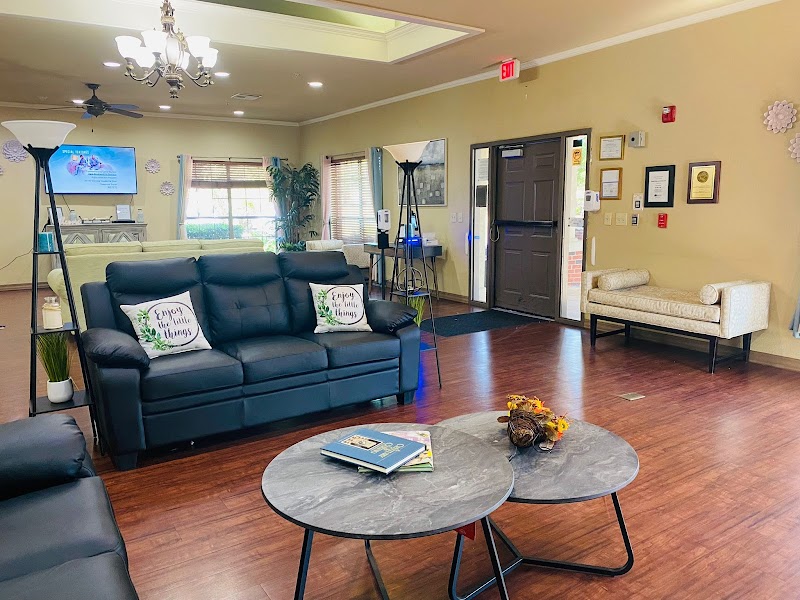
How is Duncanville Healthcare And Rehabilitation Center Staffed?

CMS rates DUNCANVILLE HEALTHCARE AND REHABILITATION CENTER's staffing level at 1 out of 5 stars, which is much below average compared to other nursing homes. Staff turnover is 64%, which is 18 percentage points above the Texas average of 46%. High turnover can affect care consistency as new staff learn residents' individual needs. RN turnover specifically is 80%, which is notably high. RNs provide skilled clinical oversight, so turnover in this role can affect medical care quality.

What Have Inspectors Found at Duncanville Healthcare And Rehabilitation Center?

State health inspectors documented 64 deficiencies at DUNCANVILLE HEALTHCARE AND REHABILITATION CENTER during 2022 to 2025. These included: 8 Immediate Jeopardy (the most serious level, indicating potential for serious harm or death), 3 that caused actual resident harm, 52 with potential for harm, and 1 minor or isolated issues. Immediate Jeopardy findings are rare and represent the most serious regulatory concerns. They require immediate corrective action.
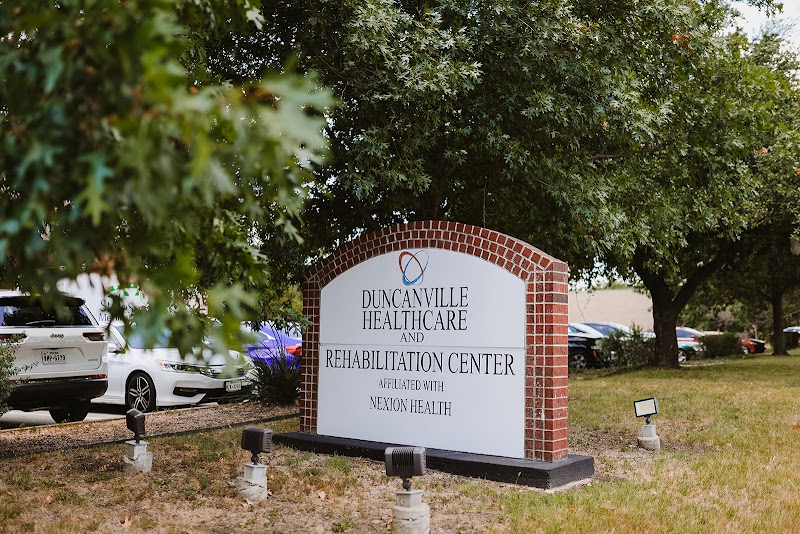
Who Owns and Operates Duncanville Healthcare And Rehabilitation Center?

DUNCANVILLE HEALTHCARE AND REHABILITATION CENTER is owned by a for-profit company. For-profit facilities operate as businesses with obligations to shareholders or private owners. The facility is operated by NEXION HEALTH, a chain that manages multiple nursing homes. With 124 certified beds and approximately 81 residents (about 65% occupancy), it is a mid-sized facility located in DUNCANVILLE, Texas.
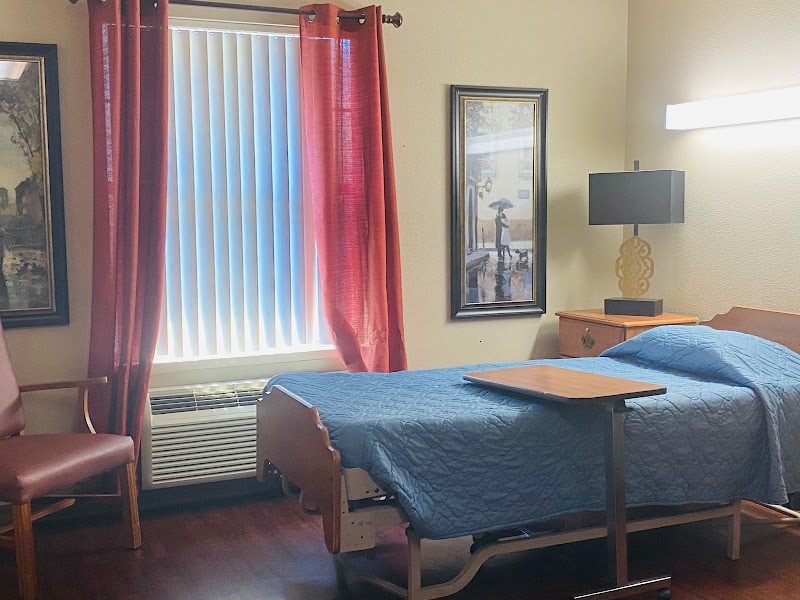
How Does Duncanville Healthcare And Rehabilitation Center Compare to Other Texas Nursing Homes?

Compared to the 100 nursing homes in Texas, DUNCANVILLE HEALTHCARE AND REHABILITATION CENTER's overall rating (1 stars) is below the state average of 2.8, staff turnover (64%) is significantly higher than the state average of 46%, and health inspection rating (1 stars) is much below the national benchmark.

What Should Families Ask When Visiting Duncanville Healthcare And Rehabilitation Center?

Based on this facility's data, families visiting should ask: "What changes have been made since the serious inspection findings, and how are you preventing similar issues?" "What safeguards and monitoring systems are in place to protect residents from abuse or neglect?" "How do you ensure continuity of care given staff turnover, and what is your staff retention strategy?" "Can you walk me through typical staffing levels on day, evening, and night shifts?" These questions are particularly relevant given the facility's Immediate Jeopardy citations, the substantiated abuse finding on record, the facility's high staff turnover rate, and the below-average staffing rating.

Is Duncanville Healthcare And Rehabilitation Center Safe?

Based on CMS inspection data, DUNCANVILLE HEALTHCARE AND REHABILITATION CENTER has documented safety concerns. The facility has 1 substantiated abuse finding (meaning confirmed case of resident harm by staff or other residents). Inspectors have issued 8 Immediate Jeopardy citations (the most serious violation level indicating risk of serious injury or death). The facility has a 1-star overall rating and ranks #100 of 100 nursing homes in Texas. Families considering this facility should ask detailed questions about what corrective actions have been taken since these incidents.

Do Nurses at Duncanville Healthcare And Rehabilitation Center Stick Around?

Staff turnover at DUNCANVILLE HEALTHCARE AND REHABILITATION CENTER is high. At 64%, the facility is 18 percentage points above the Texas average of 46%. Registered Nurse turnover is particularly concerning at 80%. RNs handle complex medical decisions and coordinate care — frequent RN changes can directly impact care quality. High turnover means new staff may not know residents' individual needs, medications, or preferences. It can also be disorienting for residents, especially those with dementia who rely on familiar faces. Families should ask: What is causing the turnover? What retention programs are in place? How do you ensure care continuity during staff transitions?

Was Duncanville Healthcare And Rehabilitation Center Ever Fined?

DUNCANVILLE HEALTHCARE AND REHABILITATION CENTER has been fined $116,171 across 7 penalty actions. This is 3.4x the Texas average of $34,241. Fines at this level are uncommon and typically indicate a pattern of serious deficiencies, repeated violations, or failure to correct problems promptly. CMS reserves penalties of this magnitude for facilities that pose significant, documented risk to resident health or safety. Families should request specific documentation of what issues led to these fines and what systemic changes have been implemented.

Is Duncanville Healthcare And Rehabilitation Center on Any Federal Watch List?

DUNCANVILLE HEALTHCARE AND REHABILITATION CENTER is not on any federal watch list. The most significant is the Special Focus Facility (SFF) program, which identifies the bottom 1% of nursing homes nationally based on persistent, serious quality problems. Not being on this list means the facility has avoided the pattern of deficiencies that triggers enhanced federal oversight. This is a positive indicator, though families should still review the facility's inspection history directly.