AMBROSIO GUILLEN TEXAS STATE VETERANS HOME

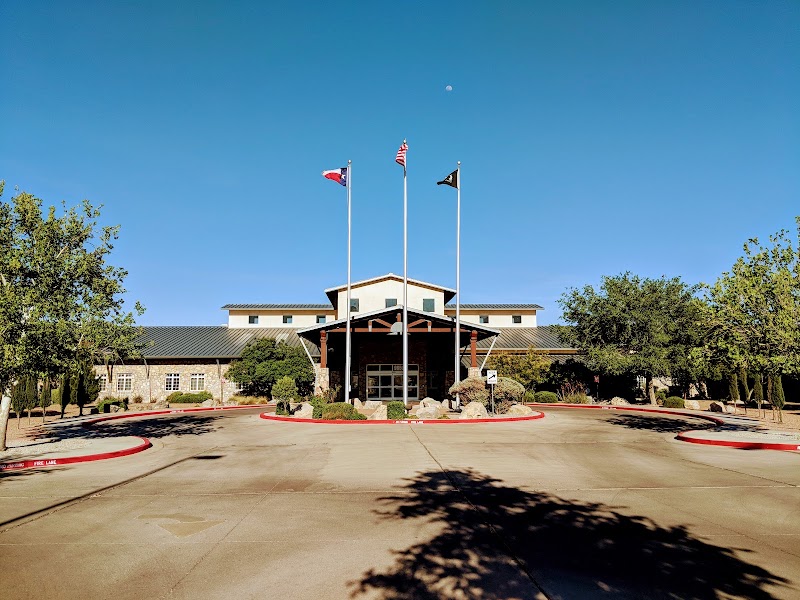
9650 KENWORTHY ST, EL PASO, TX 79924 (915) 751-0967
Government - State 160 Beds TEXVET Data: November 2025
Trust Grade
70/100
#179 of 1168 in TX
Last Inspection: January 2025

Within standard 12-15 month inspection cycle. Federal law requires annual inspections.

Overview

The Ambrosio Guillen Texas State Veterans Home has a Trust Grade of B, indicating it is a good choice among nursing homes, though not without some concerns. It ranks #179 out of 1,168 facilities in Texas, placing it in the top half of the state, and #2 out of 22 in El Paso County, suggesting only one local option is better. However, the facility is experiencing a worsening trend, with issues increasing from 7 in 2024 to 8 in 2025. Staffing is relatively stable with a turnover rate of 39%, which is below the Texas average, though RN coverage is rated as average. There have been no fines, which is a positive sign. Specific incidents of concern include delays in meal service for residents, which can affect their dignity, and failures to inform residents about the grievance process, potentially impacting their quality of life. Additionally, there were issues with not having proper oxygen signage for residents who require respiratory care, which raises safety concerns. Overall, while there are strengths in staffing and no fines, the facility has notable weaknesses that families should consider carefully.

Trust Score
B
70/100
In Texas
#179/1168
Top 15%
Safety Record
Low Risk
No red flags
Inspections
Getting Worse
7 → 8 violations
Staff Stability
○ Average
39% turnover. Near Texas's 48% average. Typical for the industry.
Penalties
✓ Good
No fines on record. Clean compliance history, better than most Texas facilities.
Skilled Nurses
⚠ Watch
Each resident gets only 21 minutes of Registered Nurse (RN) attention daily — below average for Texas. Fewer RN minutes means fewer trained eyes watching for problems.
Violations
⚠ Watch
38 deficiencies on record. Higher than average. Multiple issues found across inspections.
★★★★☆
4.0
Overall Rating
★★★☆☆
3.0
Staff Levels
★★★★★
5.0
Care Quality
★★★☆☆
3.0
Inspection Score
Stable
2024: 7 issues
2025: 8 issues

The Good

  • 5-Star Quality Measures · Strong clinical quality outcomes
  • Full Sprinkler Coverage · Fire safety systems throughout facility
  • No fines on record
  • Staff turnover below average (39%)

    9 points below Texas average of 48%

Facility shows strength in quality measures, fire safety.

The Bad

Staff Turnover: 39%

Near Texas avg (46%)

Typical for the industry

Chain: TEXVET

Part of a multi-facility chain

Ask about local staffing decisions and management

The Ugly 38 deficiencies on record

Apr 2025 1 deficiency
CONCERN (D) 📢 Someone Reported This

A family member, employee, or ombudsman was alarmed enough to file a formal complaint

Potential for Harm - no one hurt, but risky conditions existed

Report Alleged Abuse (Tag F0609)

Could have caused harm · This affected 1 resident

**NOTE- TERMS IN BRACKETS HAVE BEEN EDITED TO PROTECT CONFIDENTIALITY** Based on interview and record review the facility failed to ensure all alleged violations involving abuse, neglect, exploitation...

Read full inspector narrative →
**NOTE- TERMS IN BRACKETS HAVE BEEN EDITED TO PROTECT CONFIDENTIALITY** Based on interview and record review the facility failed to ensure all alleged violations involving abuse, neglect, exploitation or mistreatment, including injuries of unknown source and misappropriation of resident property, were reported immediately, but no later than 2 hours after the allegation was made, if the events that caused the allegation involved abuse or resulted in serious bodily injury, or not later than 24 hours if the events that caused the allegation did not involve abuse and did not result in serious bodily injury, to the administrator of the facility and to other officials, which included the state survey agency, in accordance with State law through established procedures for 1 of 3 residents (Residents #10) reviewed for misappropriation of property. The facility failed to report to the State Survey Agency when Resident #10 reported to the facility that his wallet that had his SS card, ID, approximately $180, and a check book was missing on 3/28/25. This failure could place residents at risk of vulnerability for unauthorized financial transactions, potential identity theft, and emotional distress. Findings include: 1. Record review of Resident #10's face sheet, dated 4/1/25, revealed an [AGE] year-old male who was admitted to the facility on [DATE]. He was documented as his own RP. Record review of Resident #10's history and physical, dated 8/5/24, revealed diagnoses which included: DM: A condition that causes high blood sugar levels; HLD: High levels of fats (like cholesterol) in the blood; HTN: High blood pressure; GERD:A condition where stomach acid frequently flows back into the tube connecting the mouth and stomach, causing heartburn and other symptoms. Record review of Resident #10's quarterly MDS assessment, dated 1/1/25, revealed a BIMS score of 15, which indicated his cognition was intact. Record review of progress note, dated 3/21/25, written by LVN B, revealed: [Resident #10] the CNA reported that spouse (Resident #11) had misplaced his wallet with his ID and social security card. Searched their room and unable to locate items. Missing items paper filled out and left under social workers door. RN supervisor aware. Record review of Resident #10's grievance, dated 3/21/25, revealed missing items which included the ID and Social Security card, which were marked as lost that morning. The items were later found with a note that read: SW found in residents (Resident #10's) second drawer of dresser, and was signed by the Social Worker (SW), Administrator, and OSR. The second page of the grievance, dated 3/28/25, documented additional missing items reported by Resident #10, including a brown soft leather wallet, checkbook, ID, healthcare card, Social Security card, Medicare card, and approximately $180, all in $20 bills. These items were marked as not found and the form was signed by the SW, Administrator, and OSR. Additional information read: Resident reports to social worker, his spouse misplaced his wallet. Social worker searched the room for his items, could not locate. Social worker and CNA A also searched the 500 Hall unit. Resident's rooms for missing items, could not locate. Social worker searched laundry, lost and found. Aide advised the missing item was not found in linen or laundry today. Social worker updated him and advised administrator to above. Social worker requested staff to keep eye open for missing item. Wallet has not been located. Resident aware staff will continue to keep an eye out for resident's wallet. Resident did advise there has been no activity on cards, one transaction in his bank and did alert and closed accounts. 2. Record review of Resident #11's face sheet, dated 4/1/25, revealed a [AGE] year-old female who was admitted to the facility on [DATE]. She was documented as her own responsible party (RP). Record review of Resident #11's history and physical, dated 3/18/25, revealed a diagnosis which included unspecified dementia, which is a condition that affects memory, thinking, and behavior. It causes confusion, forgetfulness, and difficulty in communication or daily functioning, and it worsens over time. Record review of Resident #11's admission MDS assessment, dated 3/24/25, revealed a BIMS score of 3, which indicated her cognition was severely impaired. Record review of Resident #11's care plan, dated 3/21/25, revealed a focus area for wanders aimlessly about the facility with interventions that included: observe whereabouts frequently when out of bed, redirect as needed, observe appropriate footwear. Record review of Resident #11's progress note, dated 3/24/25, written by the Social Worker, revealed: SW advised resident will be moving to memory care unit. SW met with [Resident #10] and agreed to room change. During an interview on 4/1/25 at 10:39 AM, the Social Worker stated Resident #10's grievance was reported by staff on 3/21/25, although no description of the wallet was included in the initial report. The SW stated the wallet contained an ID, a Social Security card, and a checkbook. The SW stated when she followed up with Resident #10, he was reportedly in the bathroom at the time. The SW stated she asked Resident #11 (his wife), who was his roommate at the time, for permission to search for the wallet in which it was consented to and found in the drawer on Resident #10's side and informed him through the door. The SW stated she later followed up with Resident #10 (3/28/25) after staff continued to report the wallet as missing and obtained a proper description. The SW stated she and CNA A searched the 500 hall with resident's permission, but did not locate the wallet. She stated she followed up with laundry and the med carts where it had not been located. The SW stated she reported this to Resident #10 and he was understanding of the situation. The SW stated Resident #10 had been monitoring his bank account and had already closed the account and begun replacing his cards. The SW reported the matter to the Administrator and Onsite Representative, the VA representative, provided the final signature for the grievance. The SW stated the risk of the wallet not been located was a concern that someone could potentially use the lost items. The SW stated they had been following up daily with Resident #10 for any activity on his account, but none was reported. The SW stated she also searched Resident #11 room (she had been moved to memory care) and found nothing. As of today, the wallet and checkbook had still not been found. During an interview on 4/1/25 at 10:45 AM, The Administrator stated according to the provider letter , any allegation involving a missing item must be reported to State Operations. He reported Resident #10's wallet was reported missing a second time on 3/28/25, which contained identification, a Social Security card, money, and a checkbook. The Administrator stated medication carts and the laundry area were checked, but nothing had been found. He stated since there was no alleged perpetrator identified by Resident #10, the incident did not meet the criteria for misappropriation of property. He referenced the provider letter, which indicated deliberate misplacement must be present to consider it misappropriation and reiterated the resident did not accuse anyone of taking the wallet. During an interview on 4/1/25 at 1:23 PM, CNA A stated the Social Worker approached her and asked for assistance in locating Resident #10's missing wallet on 3/28/25. CNA A reported, prior to Resident #11, Resident #10's wife, being placed with him, he had not reported any missing items. CNA A stated she received a report which indicated Resident #11 had been taking Resident #10's belongings and placing them in different locations. CNA A stated Resident #11 was subsequently moved to the memory care unit. CNA A stated when she followed up with Resident #11 regarding the wallet, she did not recall taking it. CNA A reported even Resident #10 asked Resident #11where she had left the wallet, and the wife responded she did not know. CNA A recalled Resident #10 describing the wallet as being able to open 180 degrees and long enough to fit a checkbook. CNA A stated she assisted the SW in searching all the rooms in the 500 hall, with the resident's permission, and the wallet was not located. CNA A reported the SW also followed up with the laundry department, but the wallet was not found. During an interview on 4/1/25 at 1:46 PM, Resident #10 stated his wallet had been missing since last Friday (3/28/25). Resident #10 stated he suspected Resident #11, whom he identified as his wife, may had taken it without his consent, as she had recently become his roommate and had a history of wandering behavior, particularly at night. Resident #10 stated he recalled his shoes had been found in another resident's room on the day of Resident #11's arrival, which reinforced his concern. Resident #10 stated his wallet contained the following items: Identification Card, Social Security card, Medicare card, VA card, shot record, MasterCard, debit card, checkbook, and approximately $180 in $20 bills. Resident #10 stated he did not give Resident #11 permission to take the wallet and is uncertain if she is even aware that she took it. Resident #10 stated he had been monitoring his bank accounts daily and reported no abnormal activity. Resident #10 stated he canceled both his MasterCard and debit card two days ago after confirming a check written to his daughter had cleared. Resident #10 stated he experienced significant stress due to concerns about unauthorized use of his financial information. Resident #10 stated the facility informed him all resident rooms in the hallway, laundry areas, and other common locations were searched, but the wallet had not been found. Resident #10 stated he was offered assistance in replacing his identification documents but was currently struggling with the process due to having no identification in his possession. During an interview on 4/1/25 at 2:35 PM, Resident #11 was alert and oriented to person only and did not answer questions asked. During a follow up interview on 4/1/25 at 3:41 PM, the Administrator stated the situation which involved Resident #10's missing wallet was complex due to Resident #11, whom Resident #10 identified as his wife, having a low BIMS score and not being cognitively intact or capable of meaningful communication. The Administrator stated, because of this, Resident #11 was not considered interviewable and may not have fully understood or recalled her actions. The Administrator stated, based on how the allegation was presented, specifically the wallet was described as misplaced rather than definitively taken, it did not meet the threshold for misappropriation in his judgment. The Administrator stated if Resident #10 had clearly reported Resident #11 took his belongings and refused to return them, it would have warranted a report to State Operations. The Administrator stated the available information reflected uncertainty and shared living arrangements, which complicated the interpretation of the situation. The Administrator also stated Resident #10 and Resident #11 shared a room and possibly shared belongings, adding another layer of difficulty in determining intent or ownership boundaries . Record review of the facility's Abuse, Neglect, and Exploitation, dated 2024, read in part Definition: Misappropriation of Resident Property (Page 1) Defined as the deliberate misplacement, exploitation, or wrongful, temporary or permanent use of a resident's belongings or money without the resident's consent. Policy Expectations on Investigation and Reporting (Page 4-5) V. Investigation of Alleged Abuse, Neglect, and Exploitation An immediate investigation is required when there is suspicion or a report of: Abuse, Neglect, Exploitation, Misappropriation of resident property. VII. Reporting / Response (Page 4-5) Written procedures must include: Reporting of all alleged violations to the Administrator, State agency, Adult Protective Services, and other required agencies.
Jan 2025 7 deficiencies
CONCERN (D)

Potential for Harm - no one hurt, but risky conditions existed

Deficiency F0558 (Tag F0558)

Could have caused harm · This affected 1 resident

**NOTE- TERMS IN BRACKETS HAVE BEEN EDITED TO PROTECT CONFIDENTIALITY** Based on observation, interview and record review the facility failed to ensure residents were provided services with reasonable...

Read full inspector narrative →
**NOTE- TERMS IN BRACKETS HAVE BEEN EDITED TO PROTECT CONFIDENTIALITY** Based on observation, interview and record review the facility failed to ensure residents were provided services with reasonable accommodation of needs and preferences for 1 of 13 residents (Resident #24). Resident call lights were not kept within reach for 1 resident (Resident #24). This failure placed residents at risk of having needs unmet when they are unable to contact staff. Findings included: Record review of Resident #24's face sheet dated 01/29/25 revealed Resident #24 was admitted on [DATE] to the facility. Record review of Resident #24's History and physical dated 05/08/24 revealed an [AGE] year-old female diagnosed with generalized muscle weakness, unspecified abnormalities of gait and mobility, lack of coordination and failure to thrive. Record review of Resident #24's quarterly MDS dated [DATE] revealed an [AGE] year-old female diagnosed with coronary artery disease (a type of heart disease involving the reduction of blood flow to the cardiac muscle), hypertension, renal insufficiency (a condition in which the kidneys are damaged and cannot effectively filter waste products from the blood), obstructive uropathy a condition where urine flow is blocked somewhere along the urinary tract), and generalized muscle weakness . Resident #24's cognition of understanding was a score of 12 indicating the resident was cognitively intact. Record review of Resident #24's care plan reviewed on 11/29/24 revealed she was at risk for injuries related to falls and indicated that the call light was to be within reach when she was in bed. In an observation on 01/27/25 at 10:17 AM, Resident# 24 was laying on her bed at this time. Her call light cord was tangled in between the drawers of her nightstand and the call light was laying on the floor. When she was asked if she would be able to reach for her call light if she needed help, she replied she would not be able to, and said she would have to wait until a staff member walked by her room to call for help. In an interview on 01/29/2025 at 1:29 PM with CNA A, she stated that she had been trained that resident call lights must remain within their reach at all times. CNA A explained that if a call light was on the floor, it posed a significant fall risk for residents. She emphasized that some residents lack the ability to bend over or walk independently, and if their call light was out of reach, they might attempt to retrieve it themselves, leading to a potential fall and injury. CNA A said all staff were responsible for making sure the residents had their call light within reach . In an interview on 01/29/2025 at 1:38 PM with CNA B, she stated she had received training on proper call light placement. She was instructed to place the device within the resident's reach by clipping it to their bed sheets or clothing. She emphasized that call lights on the floor were not considered accessible, posing a fall risk if residents attempted to retrieve them. CNA B stated that inaccessible call lights could delay assistance for immobile residents, potentially creating an emergency. In an interview on 01/30/2025 at 9:06 AM RN C stated that checks and rounds were made every two hours to ensure residents had their call lights within reach. RN C indicated that if a resident did not have their call light accessible, the potential outcome was that they would not receive necessary assistance and would be unable to call for help. RN C said that all staff were responsible for checking for call light placement when they conduct rounds and that it was stated in the facility's policy that it had to be placed within the residents' reach. In an interview on 1/30/25 at 11:25 AM with the Activities Director, she stated the call light needed to be within reach of the resident and staff had to check that the call light was not wrapped on bed rails or anywhere else. She said the facility needed to test that the call light system was in working order. The Activities Director stated if a call light was on the floor and not within reach, accidents could happen, and residents could be at risk of not receiving help such as staying soiled for a long period of time or not receiving assistance with oxygen. In an interview on 1/30/2025 at 2:15 PM with LVN D, stated the call light needed to be within the residents reach at all times so the resident could have access to it. LVN D said if the resident was in bed, the call light needed to be clipped to the bed sheets. LVN D said there was a potential outcome for the resident to try to reach for it to request assistance and the resident could have fallen and injured themselves. In an interview on 01/30/25 03:36 PM with the DON she said the policy for call lights stated they needed to be within reach of the residents. DON said it was every staff's responsibility to check that the call lights were within reach. The DON said the call light for Resident #24 was not within reach. The DON said the potential outcome could be the resident not being able to reach a staff member to get assistance for their medical need in a timely manner. In an interview on 01/31/2025 at 8:35 AM with the Administrator, he stated the call light needs to be placed within reach of the residents. The administrator stated the potential outcome could be that the resident was not able to ask for assistance if the call light was not within reach . Record review of the facility's policy titled Call Light System dated October 2019 read in part: The facility will be equipped with a functioning call light at each resident's bedside, toilet, and bathing areas to allow residents to call for assistance. Call lights will directly relate to a staff member or centralized location to ensure an appropriate response.
CONCERN (E)

Potential for Harm - no one hurt, but risky conditions existed

Resident Rights (Tag F0550)

Could have caused harm · This affected multiple residents

Based on observation, interview, and record review the facility failed to treat each resident with respect and dignity and care for each resident in a manner and in an environment that promotes mainte...

Read full inspector narrative →
Based on observation, interview, and record review the facility failed to treat each resident with respect and dignity and care for each resident in a manner and in an environment that promotes maintenance or enhancement of his or her quality of life, recognizing each resident's individuality for 7 of 15 residents reviewed for residents' rights, in that: -In the memory care unit, facility failed to serve 7 of 15 residents their meals at the same time as their tablemates, causing them to watch their tablemates eat while they waited up to 30 minutes for their meal. This failure could affect residents' self-esteem and dignity. The findings include: During an Observation on 1/27/25 at 11:30 AM, residents were observed sitting in dining area located in the memory care unit. The first meal cart containing the resident's lunch trays arrived at the memory care unit at 12:19 PM. The second meal cart containing the resident's lunch trays is observed to arrive to the unit at 12:27 PM. There are 2 of 4 residents observed in the first table not served while the other residents in table are eating their meal with 50% of meal observed eaten. The third meal cart containing the resident's lunch tray is observed to arrive to the unit at 12:41 PM. The fourth meal cart containing the resident's lunch tray arrived at 12:46 PM. At 12:47 PM, a second table observed with 1 of 4 residents ate his meal at 100% while the 3 of 4 at same table have not yet been served. At 12:48 PM, observation of the third table with 1 of 3 residents was eating meal with more than 25% of meal consumed, and the 2 of 3 residents at the same table were not served. During an interview with DON on 1/30/25 at 3:24 PM, she stated the nursing team needs to check the meal carts and observe who is in the dining room. She stated, The CNA's or the nurse hands the kitchen staff the tickets of the residents who are present in the dining room, so they are served at the same time. DON states The concern with the residents not eating at the same time is unfair to stare at someone else eating while they are not. The DON also stated, It shouldn't happen. The DON stated the nursing staff is responsible for notifying the kitchen for any pending trays, so all residents are served at the same time at the same table. During an interview on 1/30/25 at 04:24 PM with Pharmacy Nurse LN she states there is a seating chart for the dining room in the memory care unit that is updated with admissions, discharges, need for assistance, or preference. She states that residents unfortunately come back and forth from the dining area when waiting for their meal. She states the responsibility to ensure residents are all served at the same time at the same table is whoever is passing the trays such as nursing staff. Pharmacy Nurse LN states that the nursing staff also get assistance from the administrative staff to pass trays, so they are also responsible if they assist. During an interview with Interim CDM on 1/30/25 at 4:43 PM, he states the CNA's or nurses are responsible for ensuring that residents at the same table should be served and eat at the same time. He states nursing staff and kitchen staff work together to ensure residents are served their meals together. He states the risks of residents not being served at the same time include a personal attack or the resident may feel singled out. He denies having concerns regarding residents in the dining room not being served at the same time being reported to him . Record Review of the facility's policy named Resident Rights dated February 2020 read in part: The resident has the right to be treated with respect and dignity, including: The right to reside and receive services in the facility with reasonable accommodation of resident needs and preferences, except when to do so would endanger the health or safety of the resident or other residents.
CONCERN (E)

Potential for Harm - no one hurt, but risky conditions existed

Grievances (Tag F0585)

Could have caused harm · This affected multiple residents

Based on interview and record review, the facility failed to ensure residents were made aware of the grievance process for 5 of 12 Residents who were reviewed for their knowledge of the facility's gri...

Read full inspector narrative →
Based on interview and record review, the facility failed to ensure residents were made aware of the grievance process for 5 of 12 Residents who were reviewed for their knowledge of the facility's grievance procedures and grievance resolutions during resident council meeting. The facility did not ensure residents or staff were aware of the facility's formalized grievance process. This deficient practice could place the residents at risk for decreased quality of life and feelings of hopelessness. Findings include: A confidential interview with the Resident Council Group revealed the residents did not know how to file a grievance with the facility or who was responsible for receiving, reviewing and attempting to resolve grievances voiced by the residents. Five residents who were in attendance stated they had not been explained the process on how to file a grievance during their admission. Record review of the Resident Council Minutes dated from August 2024 to January 2025 demonstrated they had not discussed grievances Policies and Procedures or resident rights for 6 months. During a confidential interview conducted on 01/29/2025, at a resident's room at 1:20 PM, both residents stated they had not been informed about the grievance filing process. They explained that while they would typically discuss any concerns with facility staff, they lacked specific instructions on how to formally file a grievance or whom to submit it to. During a confidential interview conducted on 01/29/2025 at 1:32 PM at a resident's room, the resident stated that he had not received instructions on how to file a grievance or where to obtain the necessary forms. He further indicated that this information was not discussed with him during his admission process. In an interview on 1/30/25 at 11:25 AM with the Activities Director, she stated the residents met once a month and usually on the first Wednesday of the month. In November they met twice because the administrator wanted the residents to meet the new administration and to discuss the issues with mealtimes. Also, to discuss who were the department heads, who they were and their roles. The Activities Director said she had been present in most of their meetings with the residents' permission and she took notes of their grievances and then passed them on to the social worker. The Activities Director said she knew there was a policy for the facility to follow up and close grievances within five days and after that, the facility needed to follow up with the result of the investigation of any grievances and let the residents know the result. She stated that every month it was discussed with the residents their rights and she provided copies to those in attendance. The Activities Director reviewed the resident council minutes with the surveyor, and they revealed there was no discussion recorded on how to file a grievance in their minutes. She stated she failed to note it in the concerns or recommendations. She stated she was not sure who would be responsible for letting the residents know about their rights and how to file a grievance upon admission. In an interview on 1/30/2025 at 12:21 PM with the Social Worker, he stated the admissions coordinator gives the residents a copy of the resident's rights upon their admission and during their care plan meeting process. He said as an IDT they discussed their rights and made sure for them to understand them. The Social Worker said he had reviewed with the residents how to file a grievance. He stated he had assisted residents who had grievances, but he did not have records of it. The Social Worker said that a way to improve and make sure the residents knew who to contact and how to file a grievance was by educating and discussing with the residents the process instead of the facility personnel doing it for them. In an interview on 1/30/2025 at 2:15 PM with LVN D, she stated the residents were constantly reminded that they had the right to file a complaint or grievance and that she had offered assistance in the past to file a grievance for a resident but said she did not know how the facility ensured the residents knew how to do it on their own. LVN D said it would be good for the facility to implement a procedure to make sure the residents could file grievances on their own instead of staff doing it for them. In an interview on 1/30/25 at 2:44 PM with the Director of Admissions, she said the admission packet included the residents' rights. During the admission process, she said she talked to the residents and family members about their rights in the facility. The Director of Admissions said the facility offered their services to the family to assist them to file a grievance and they explained the facility would try to help them resolve any issue they had. The Director of Admissions stated she did not know how the facility made sure the resident knew and understood the process to file a grievance or how to fill out a form and said whenever a resident or family member had come to her with a grievance, she would refer them to the social worker so the facility could help resolve any issue they might have. In an interview on 01/30/25 03:36 PM with the DON , she stated the residents were informed through admissions, social service assessment and by the nursing team about their rights The DON said it was the responsibility of all departments to provide reminders and education to the residents about their rights and on how to file a grievance, and administration would be responsible for educating the family members how to file a grievance. The DON said the potential outcome for a resident not knowing how to file a grievance is that their concerns would not be addressed or corrected and for the facility potentially not being able to meet the residents' needs and not doing their due diligence to address their concerns. The DON said she recognized there was room for improvement on how the residents had to be educated on how to file grievances, so their concerns were met in a prompt and effective manner. In an interview on 01/31/2025 at 8:35 AM with the Administrator, he stated he did not know who was mentioned in the policy who was responsible for addressing how to file a complaint in the facility. The Administrator said there were multiple people involved in admitting a resident. He stated that he believed the facility had a robust system for the residents to voice their concerns but stated he did understand the importance for residents to know how to file a grievance on their own and anonymously, and who to contact when they needed to voice a formal complaint. The Administrator said the possible outcome for residents not knowing how to file a grievance was they might not get assistance with whichever issue they were having . Record Review of the facility's policy named Resident Rights dated February 2020 read in part: The resident and/or resident representative will be notified individually or through postings in a prominent location of the right to file grievances orally, meaning spoken, or in writing. The contact information of independent entities with whom a grievance may be filed is posted in the facility and provided in the admission packet.
CONCERN (E)

Potential for Harm - no one hurt, but risky conditions existed

Respiratory Care (Tag F0695)

Could have caused harm · This affected multiple residents

**NOTE- TERMS IN BRACKETS HAVE BEEN EDITED TO PROTECT CONFIDENTIALITY** Based on observation, interview, and record review the facility failed to ensure that a resident who needs respiratory care is p...

Read full inspector narrative →
**NOTE- TERMS IN BRACKETS HAVE BEEN EDITED TO PROTECT CONFIDENTIALITY** Based on observation, interview, and record review the facility failed to ensure that a resident who needs respiratory care is provided such care, consistent with professional standards of practice for 2 (Resident #68 and Resident #142) of 2 residents observed for oxygen management. -Resident #68 utilized oxygen in his room and did not have an oxygen sign posted outside of the room. -Resident #142 utilized oxygen in her room and did not have an oxygen sign posted outside of the room. These failures could place residents on oxygen therapy at risk of receiving incorrect or inadequate oxygen support and decline in health and at risk of fire hazards by not posting oxygen signs outside the residents' rooms. Findings include: Resident #68 Record review of Resident #68's face sheet dated 01/31/25 revealed Resident #68 was admitted on [DATE] to the facility. Record review of Resident #68's History and physical dated 08/27/24 revealed an [AGE] year-old male diagnosed with unspecified dementia with unspecified severity, pulmonary embolism (a blockage in one of the pulmonary arteries in your lungs), major depressive disorder, heart failure and asthma. Record review of Resident #68's quarterly MDS dated [DATE] revealed an [AGE] year-old male diagnosed with anxiety disorder, depression, asthma, pulmonary disease (a condition that affects the lungs and other parts of the respiratory system) and unspecified dementia . His BIMS score was a 9 reflecting he was moderately impaired. Record review of Resident #68's care plan reviewed on 11/29/24 indicated oxygen therapy and use of oxygen with an order of continuous and humidified when on concentrator. Resident# 142 Record review of Resident #142's face sheet dated 01/29/25 revealed Resident #142 was admitted on [DATE] to the facility. Record review of Resident #142's History and physical dated 10/07/24 revealed an [AGE] year-old female diagnosed with psychotic disturbance, anxiety, seizures, depressive disorders, insomnia, and muscle wasting and atrophy. Record review of Resident #142's quarterly MDS dated [DATE] revealed an [AGE] year-old female diagnosed with Non-Alzheimer's Dementia, seizure disorder or epilepsy, malnutrition, anxiety disorder, and depression . Her BIMS score was 3 reflecting she was severely impaired. Record review of Resident #142's care plan reviewed on 01/23/25 did not indicate an oxygen therapy or initial revision for updated oxygen therapy use for Resident #142. During observation on 01/27/25 at 09:47 AM Resident#142 was asleep in bed. The bed was positioned to the lowest position and fall mats were observed to both sides of her bed. There was an oxygen concentrator in the room next to her bed and there was no oxygen sign posted outside of her room. In an interview on 01/27/25 at 11:19 AM with LVN E, she stated the facility's policy stated the residents needed to have oxygen signs posted at the entrance of their room. LVN E said Resident# 142 needed an oxygen sign posted outside their room and that she would check on the order. LVN E stated the potential outcome for not having an oxygen sign posted could result in Resident# 142 not being checked for her oxygen levels by staff and there was a potential for fire hazards as well. During observation on 01/28/25 at 2:40 PM in Resident #68 room, there was an oxygen concentrator inside the room next to his bed and there was no oxygen sign posted. In an interview on 01/29/2025 at 1:22 PM with CNA F, she said an oxygen sign had to be posted outside of a Resident# 68's door if there was an oxygen concentrator in the room. CNA F said the potential risk for not having an oxygen sign posted outside the room was that a resident could go out of oxygen and staff would not be able to check on them or if a resident opened the oxygen tank the room could fill with oxygen making it a fire hazard, especially with this Resident #68 because he was a smoker. In an interview on 01/29/2025 at 1:29 PM with CNA A, she stated she had received training on the proper posting of oxygen signs by watching training videos. CNA A explained that residents with oxygen concentrators in their rooms must have an oxygen sign displayed outside their door. This sign serves as a warning to other residents and visitors not to smoke in the room, which could pose a significant fire hazard. CNA A said the absence of an oxygen sign could result in the resident not being checked regularly for oxygen levels, potentially leading to a situation where the resident runs out of oxygen. CNA A said all staff were responsible for making sure oxygen signs were posted outside of the residents' room if they had a concentrator in their room. In an interview on 01/29/2025 at 1:38 PM with CNA B, stated that she had received training requiring the posting of oxygen signs outside resident rooms equipped with oxygen concentrators. She explained that the absence of such signs could lead to unchecked oxygen levels in residents, potentially causing health issues. CNA B highlighted the fire hazard posed by the presence of oxygen in the room, particularly if other residents, unaware of the oxygen, entered with lighters, pipes, or electronic cigarettes. CNA B stated this could endanger both the residents and the facility staff and visitors. In an interview on 01/30/2025 at 9:06 AM with the RN Supervisor, stated that, per policy, an oxygen sign should have been posted outside a resident's room if they had an oxygen concentrator. She explained that the absence of such a sign could have presented a potential fire hazard. In an interview on 01/30/25 at 11:25 AM with the Activities Director she stated that the residents who have oxygen in their room need to have an oxygen sign posted outside their door as a warning sign for fire hazards. The Activities Director said if there were no oxygen signs there was a potential outcome of not checking oxygen for residents. She stated there could also be potential fire hazard. In an interview on 01/30/2025 at 2:15 PM with LVN D, she stated that if there was an oxygen concentrator inside a resident's room, an oxygen sign must be posted outside of their room. LVN D said the potential outcome of not having an oxygen sign posted outside of a resident room could pose a risk of a fire hazard. In an interview on 01/30/25 at 03:36 PM with the DON, she said the oxygen sign was meant to alert everyone in the vicinity to take precaution and to let them know there was oxygen in use. The DON said whenever a concentrator was inside of a room, an oxygen sign needed to be posted outside the resident's room. The DON stated the potential outcome could be a safety hazard, increased the risk for an accident or incident by a resident being left unchecked for oxygen levels. The DON said there were potential fire hazards as well. In an interview on 01/31/2025 at 8:35 AM with the Administrator, he stated if there was oxygen being administered in a resident's room, it was required that an oxygen sign was posted outside of their room to alert staff to check for the residents' oxygen level. The Administrator said if there was a spark near an oxygen concentrator, there could be a fire hazard . Record review of the facility's Oxygen Administration Policy dated February 2015 under infection control and standard precautions read in part: Place a non-smoking sign outside the residence room.
CONCERN (E)

Potential for Harm - no one hurt, but risky conditions existed

Pharmacy Services (Tag F0755)

Could have caused harm · This affected multiple residents

**NOTE- TERMS IN BRACKETS HAVE BEEN EDITED TO PROTECT CONFIDENTIALITY** Based on observation, interview and record review, the facility failed to provide pharmaceutical services (including procedures ...

Read full inspector narrative →
**NOTE- TERMS IN BRACKETS HAVE BEEN EDITED TO PROTECT CONFIDENTIALITY** Based on observation, interview and record review, the facility failed to provide pharmaceutical services (including procedures that assure the accurate acquiring, receiving, dispensing, and administering of all drugs and biologicals) to meet the needs of each resident for 1 (Resident #26) of 4 reviewed for medication administration; 4 (Halls 400-800) of 7medication carts reviewed for controlled substances; 1 of 2 medication room reviewed for storage of medications. 1. -The facility failed to ensure Licensed Staff H signed the Controlled Drugs-Audit Record form after counting and verifying that all controlled substances in the medication cart had been accounted for with the off- going nurse at the change of shift. 2.- -The facility failed to ensure Licensed Staff G signed the individual control drug record for resident #26 after administering controlled medication. 3. The facility failed to ensure licensed staff (6 am -2pm) signed the temperature log for vaccines/ medications after verifying correct refrigerator temperature. These failures could place residents at risk for not receiving the intended therapeutic response of prescribed medications and drug diversion of controlled substances. The findings include: Medication carts -800 Hall An observation and interview on 01/29/25 at 11:35 PM with LVN G, revealed an Individual control drug record for one resident (#26) revealed the wrong remaining amount of medication when compared to blister packet. Per LVN G she iwas to adjust the medication count as soon as she administers medication to the resident to prevent drug diversion. Resident #26 Review of Resident #26 ' s admission Record dated 01/30/25 revealed [AGE] year-old male was admitted on [DATE]. Review of Resident #26 's Diagnoses dated 01/16/2025 revealed Other Chronic Pain (any type of persistent pain lasting beyond the normal healing period). Review of Resident #26 's Quarterly MDS (Minimum Data Set) assessment dated [DATE] revealed a BIMS (Brief interview of mental status) of 15 indicating that residents cognitive function is considered intact. Review of Resident #26 's Care Plan dateds 1/16/25 revealed at risk for complications R/T receiving opioid medication. Interventions included: Administer medication as ordered, monthly pharmacy review for possible interactions, notify physician as needed, observe for increased drowsiness, and observe pain level daily. ADL self careself-care performance deficit r/t impaired balance, pain. Review of Resident #26's Medication Administration Record (MAR) dated January 2025 revealed Tramadol HCL tablet 50 MG give 2 tablets by mouth every 8 hours as needed for pain severe. An observation on 01/29/25 at 11:35 PM revealed resident 26's individual control drug record for medication Tramadol to reflect an inaccurate count of medication ( 14 tablets of tramadol remaining in blister packet, but count of 16 tablets reflected on individual control drug record). In an interview on 01/29/25 at 11:35 PM with LVN G, revealed that she had administered two tablets of medication to Resident #26 during morning medication pass and had not updated the individual control drug record. She stated that she has been trained to fill it out immediately after administering medication to resident. She stated that risk of not signing drug records in a timely manner can lead to a wrong medication count and reconciliation. An interview with DON, on 01/30/25 at 4:00 PM, revealed that nurses were trained to look at residents' orders, make sure it was the right medication for the right resident and administer medication, and sign the individual control drug record it as soon as they are done administering medication. She stated that the purpose of the individual control drug record is for tacking medication, ensuring accurate count and preventing drug diversion. Record Review of facility's Pharmacy Policy and Procedure Manual titled Controlled Medication Storage dated 11/30/2018 stated Medications included in the drug enforcement administration classification as a controlled substances are subject to special handling, storage, disposal, and record keeping in the facility in accordance with A controlled medication accountability record is prepared when receiving inventory of a schedule II medication. Accountability record necessity for scheduled III, IV or V medications will depend on state regulations or a decision of the facility. The Following information is completed: Name of resident, prescription number, Name strength (if designated), and dosage form of medication, date received, quantity received, name of person receiving medication. -700 hall During an observation and interview on 01/29/25 at 12:02 PM with LVN H revealed, controlled medication monthly log was not signed for date 01/29/25 for morning hift. Per LVN H, he is to count and sign the controlled medication monthly log daily when oncoming with the off going shift. Medication Room During an observation and interview on 01/29/25 2:19 PM with LVN G, a tour of medication room in hallway between memory care unit and 800 hall revealed a temperature log for vaccines/ medications to not be signed in the morning shift slot for date 01/29/25. Per LVN G, temperature log was supposed to be done on a daily basis in the morning by morning nurse and in the evening by afternoon nurse. Record Review of facility's Pharmacy Policy and Procedure Manual titled Controlled Medication Storage dated 11/30/2018 revealed at each shift change or when keys are rendered, a physical inventory of all Schedule II-V controlled medication, including the emergency supply, is conducted by two licensed nurses or per state regulation and is documented on the controlled substances accountability record or verification of controlled substances count report.
CONCERN (E)

Potential for Harm - no one hurt, but risky conditions existed

Deficiency F0761 (Tag F0761)

Could have caused harm · This affected multiple residents

Based on observation, interview, and record review, the facility failed to provide pharmaceutical services that assured the accurate acquiring, receiving, dispensing, safe and secure storage of medica...

Read full inspector narrative →
Based on observation, interview, and record review, the facility failed to provide pharmaceutical services that assured the accurate acquiring, receiving, dispensing, safe and secure storage of medications for 4 of 7 nurse carts checked for medication storage; 1 of 1 treatment carts checked for storage of supplies. -The facility failed to ensure liquid medication stored in medication carts on three halls (300, 700 and 800) did not have dried drippings on the sides of the bottles. - The facility failed to ensure bottle of Betadine stored in the treatment cart was free of dried drippings. These failures could affect residents that received medications at the facility by placing them at of risk cross contamination. The findings include: Medication cart 800 Hall In an observation and interview on 01/29/25 11:35 AM with LVN G revealed the medication cart to have a bottle of ProStat with dried drippings on side of bottle. Per LVN H she states that she was trained to have bottles clean after each time she pours out medication. She stated the risk of having dirty bottles in the cart is cross contamination. 700 Hall In an observation and interview on 01/29/25 at 12:02 PM with LVN H, revealed medication cart with a bottle of pro-stat with drippings on the side of bottle. Per LVN H, he was to have all bottles clean and free from drippings to prevent contamination. 300 Hall In an observation and interview with LVN I on 01/29/25 at 12:16 medication cart between 300 and 400 hall, revealed a pro-stat medication bottle and Valporic acid medication bottle with dry drippings on side of bottle. Per LVN I she stated that she was trained to keep medication bottle clean to prevent any cross contamination. Treatment cart In an observation and interview with LVN J on 01/29/25 at 1:14PM of the treatment cart revealed a bottle of povidone iodine with dry drippings on side of bottle. Per LVN J, she cleans bottles after every use. Risk of not cleaning bottle after use can lead to contamination. In an interview with DON on 01/30/25 03:45 PM interview with DON revealed that nurses were trained to keep medication carts clean and stored by route. Medication liquid bottles are to be kept clean and upright. The risk of having dirty dripping bottles in the medication cart was a potential for bacteria to manifest. Review of facility's policy and procedure on Storage and Expiration Dating of Medications and Biologicals dated 2025, revealed no specific instructions on keeping bottles clean and free of dried drippings.
CONCERN (E)

Potential for Harm - no one hurt, but risky conditions existed

Deficiency F0804 (Tag F0804)

Could have caused harm · This affected multiple residents

Based on observation, interview, and record review the facility failed to provide foods which were palatable, attractive, and at an appetizing temperature for 1 of 1 meal observed for food preparation...

Read full inspector narrative →
Based on observation, interview, and record review the facility failed to provide foods which were palatable, attractive, and at an appetizing temperature for 1 of 1 meal observed for food preparation. (lunch 01/28/25) The facility did not serve food at an appetizing temperature for the lunch pureed, regular, and mechanical soft meals. The pureed diet fried zucchini and Albondiga (meatball) soup were below acceptable hot food temperature of 135 F or higher. The regular diet fried zucchini was below acceptable hot food temperature of 135 F or higher. The mechanical soft diet fried zucchini and Albondiga (meatball) soup were below acceptable hot food temperature of 135 F or higher. This failure could place residents who consumed food prepared in the kitchen at risk for reduced meal satisfaction and diminished nutritional intake. Findings included: During an observation and interview on 1/28/25 at 1:35 PM the CDM Interim stated he forgot his thermometer for temperature readings of sampling trays. At 1:38 PM CDM returned to conference room with thermometer and stated he forgot the alcohol swabs needed for sanitation for thermometer for in-between sampling of entrees. He returned at 1:42 PM for temperature readings. During an observation and interview on 1/28/25 at 1:43 p.m., the CDM Interim participated in sampling a regular diet, pureed diet, and mechanical soft diet tray. The pureed diet tray consisted of pureed fried zucchini, pureed bread roll, and pureed Albondiga (meatball) soup. The pureed fried zucchini was cold with a temperature reading of 131 F and the pureed Albondiga soup was cold at 131.2 F. The regular diet consisted of Albondiga soup, a bread roll, and fried zucchini. The regular diet fried zucchini was cold with a temperature reading of 123 F. The mechanical soft tray contained Albondiga soup, fried zucchini and bread. The fried zucchini was cold with a temperature reading 126.1 F. During an Interview with the CDM Interim on 1/28/25 at 1:43 PM, he stated he recalls lowest temperature of the sample trays were low 130's F. He states the sample trays did not meet serving temperature per their policy Food Holding and Service dated October 2018 of hot foods at a temperature of 135 F. He states, I believe it was in the cart between 15 minutes which lowered the temperature. Kitchen staff takes the temperatures of the food before serving. CDM Interim stated the risks of foods below the temperature of 135 F are abused by the temperature depending how long they are in the danger zone. He stated risks for hot food below the temperature of 135 F are at risk for salmonella or other food pathogens. He stated he has reviewed the Food Holding and Service policy and stated, the time given, I do not think we are in that abuse since it is being served within a 30-minute time frame. He stated the residents are already a high risk for illnesses and they were more susceptible to the food borne illness. Record Review of facility's policy Food Holding and Service dated October 2018, read in part: 1. Serve all hot foods at a temperature of 135 F or greater and all cold food at 41 F or less.
Nov 2024 1 deficiency
CONCERN (D) 📢 Someone Reported This

A family member, employee, or ombudsman was alarmed enough to file a formal complaint

Potential for Harm - no one hurt, but risky conditions existed

Medical Records (Tag F0842)

Could have caused harm · This affected 1 resident

**NOTE- TERMS IN BRACKETS HAVE BEEN EDITED TO PROTECT CONFIDENTIALITY** Based on interview and record review, the facility failed to ensure medical records were maintained on each resident that were c...

Read full inspector narrative →
**NOTE- TERMS IN BRACKETS HAVE BEEN EDITED TO PROTECT CONFIDENTIALITY** Based on interview and record review, the facility failed to ensure medical records were maintained on each resident that were complete and accurately documented for 2 (Resident #3 and Resident #12) of 14 residents reviewed for administration. -The facility failed to document in Resident #3's MAR/TAR medical records, a behavioral incident that was being tracked on the MAR/TAR. - The facility failed to document in Resident #12's MAR/TAR medical records, a behavioral incident that was being tracked on the MAR/TAR. These failures could place residents at risk of not receiving needed services or errors in treatment based on incorrect information. Findings included: Resident #3: Review of Resident #3's admission Record dated 11/18/2024, revealed a [AGE] year-old female who was admitted to the facility on [DATE]. Review of Resident #3's H&P dated 02/09/2024, revealed diagnoses of dementia (impaired ability to remember, think, or make decisions that interferes with doing everyday activities), mood affective disorder (mental health condition that involves extreme shifts in a person's emotional state), major depressive disorder (mental health disorder characterized by persistently depressed mood or loss of interest in activities, causing significant impairment in daily life), and anxiety disorder (feeling of worry, nervousness, or unease, typically about an imminent event or something with an uncertain outcome). Review of Resident #3's quarterly MDS assessment dated [DATE], revealed resident had a BIMS score of 04 indicating severe cognitive impairment. Section E - Behavior indicated that resident had verbal behavioral symptoms directed towards others and other behavioral symptoms not directed toward others. Review of Resident #3's progress notes dated 11/04/2024, revealed that on 11/04/2024 at 8:20 p.m., Resident #3 pulled on roommates blanket and slapped the roommate on the abdomen saying, get out of my house. CNAs immediately separated the residents. No injuries sustained. Review of Resident #3's care plan dated 11/18/2024, revealed target area of behavior of resident exhibiting mood/behavior problems and having physical contact with peer. Part of the intervention reads Observe and document behavior as needed. Review of Resident #3's MAR/TAR for November 2024, revealed a specific behavior tracking for target behavior of irritability/aggression towards others every shift. Document specific behavior observed. Review of 11/04/2024 revealed no behaviors identified during the evening shift. Resident #12 Review of Resident #12's admission Record dated 11/18/2024, revealed an [AGE] year-old male who was admitted to the facility on [DATE]. Review of Resident #12's H&P dated 02/05/2024, revealed diagnoses of delusional disorders (serious mental illness that causes people to have trouble distinguishing reality from imagination), impulse disorders (mental health condition that makes it difficult to control actions or reactions), and dementia (impaired ability to remember, think, or make decisions that interferes with doing everyday activities). Review of Resident #12's quarterly MDS assessment dated [DATE], revealed resident had a BIMS score of 10 indicating moderate cognitive impairment. Section E - Behavior indicated had not had any physical, verbal, or other behavioral symptoms during the MDS look back of seven days. Review of Resident #12's progress notes dated 09/20/2024, revealed on 09/20/2024 at 7:48 a.m., Resident #12 hit another resident on the leg using his walker. Residents were immediately separated. No injuries sustained. Review of Resident #12's care plan dated 11/18/2024, revealed target area of behavior Resident #12 exhibits hitting another resident with his walker on 09/20/2024. Part of the intervention reads Monitor and document target behaviors. Review of Resident #12's MAR/TAR for September 2024, revealed a specific behavior tracking for target behavior of anger, aggressive behavior related to delusional disorders and other impulse disorders. Review of 09/20/2024 revealed no behaviors during the morning shift. During an interview on 11/18/2024 at 11:22 a.m., the DON said the purpose of the MAR/TAR was to provide medication and treatment to residents. The DON said there are some behaviors that are monitored on the MAR/TAR related to the medications taken for the behaviors. The DON said nursing staff were responsible for ensuring records are entered and Unit Managers and DON were responsible for accuracy of documentation. The DON said MAR/TAR was used to make decisions regarding resident care planning. The DON said there was a risk of residents not getting appropriate treatment or others who review the MAR/TARs not getting accurate information. The DON said the incidents with Resident #3 and Resident #12 should have been documented accurately in the MAR/TAR. The DON said for the incidents involving Resident #3 and Resident #12, could have been problematic if the MAR/TAR records were the only documentation to capture the incidents. The DON said the incidents were reported and documented in risk management documentation and both incidents were investigated, and care plans reviewed and revised as needed. Review of Medical Record Documentation policy dated October 2021, reads in part that the medical record shall contain a representation of the experiences of the resident and include information to provide a picture of the resident's status through complete documentation. Documentation shall be completed at the time of service, but no later than the shift in which the observation or care service occurred. Documentation shall be factual, objective, and resident centered.
Jul 2024 3 deficiencies
CONCERN (D) 📢 Someone Reported This

A family member, employee, or ombudsman was alarmed enough to file a formal complaint

Potential for Harm - no one hurt, but risky conditions existed

Incontinence Care (Tag F0690)

Could have caused harm · This affected 1 resident

**NOTE- TERMS IN BRACKETS HAVE BEEN EDITED TO PROTECT CONFIDENTIALITY** Based on observation, interviews and record reviews, the facility failed to provide appropriate treatment and services to preven...

Read full inspector narrative →
**NOTE- TERMS IN BRACKETS HAVE BEEN EDITED TO PROTECT CONFIDENTIALITY** Based on observation, interviews and record reviews, the facility failed to provide appropriate treatment and services to prevent urinary tract infections for one resident (Resident #3) of three residents reviewed for catheter care. -Resident #3's catheter drainage collection bag was lying on the floor. This deficient practice could affect residents with catheters and could result in cross contamination of germs and could result in a urinary tract infection (an infection in any part of the urinary system). The findings included: Review of Resident #3's admission Record dated 07/25/2024, revealed an [AGE] year-old male who was admitted to the facility on [DATE]. Resident #3's diagnoses included: obstructive and reflux uropathy (disorder of the urinary tract that occurs due to obstructed urinary flow and can be either structural or functional), and benign prostatic hyperplasia with lower urinary tract symptoms (needing to urinate frequently, a weak urine stream, and leaking or dribbling of urine). Review of Resident #3's quarterly MDS dated [DATE], revealed resident was rarely/never understood. Section H Bladder and Bowel indicated the resident had an indwelling catheter. Review of Resident #3's care plan dated 07/25/2024, reflected in part, (Resident #3) has Suprapubic Catheter: Obstructive and reflux uropathy. Pulling on his suprapubic. Part of the intervention steps reflected, Foley bag off the floor. Observation and interview on 07/25/2024 at 9:10 a.m., revealed the HHS Investigator walked by an open door of room [ROOM NUMBER] and observed Resident #3 lying on a bed with the Foley drainage bag on the floor next to the bed. Resident #3 was observed to be asleep at the time. During an interview on 07/25/2024 at 9:13 a.m., LVN F entered Resident #3's bedroom and observed the drainage bag on the floor. LVN F said the drainage collection bag should have been attached to the bedframe below Resident #3's bladder level. LVN F said the CNAs had just changed Resident #3 about 15-20 minutes ago and didn't reattach the drainage bag back onto the frame of the bed. LVN F said the risk of the bag being on the floor was infection control and a possible spill. LVN F said she did not know why the CNAs did not attach the drainage bag and said she would immediately address it with the CNAs. LVN F said Resident #3 did not have a urinary tract infection. During an interview on 07/25/2024 at 9:20 a.m., ADON D said that staff put Resident #3's bed in the lowest position and when hanging the drainage bag, it may fall to the floor. The ADON D said there was a way to place the drainage bag that allowed the bed to be in lowest position without risk of bag falling to the floor and that was by clipping the drainage bag to the fitted sheet which allows gravity drainage. ADON D said it was the nurse's and CNAs responsibility to make sure the drainage bag was off the floor. The ADON D said that he would address the issue with staff. The ADON D said the risk of the bag being on the floor was infection. The ADON D said Resident #3 had not had a urinary tract infection. During an interview on 07/25/2024 at 10:30 a.m., the DON said it was common practice to keep the drainage bag off the floor. The DON said the purpose of keeping the bag off the floor was to prevent any infection or bacteria as standard precaution. The DON said nursing staff including CNAs in the hall were responsible to ensure the bag is off the floor and below bladder level of the resident. Review of facility Catheter Care policy dated 06/2024, reflected in part. It is the policy of the facility to ensure residents with indwelling catheters receive appropriate catheter care suing proper technique while maintaining the resident's privacy and dignity Responsible staff include licensed and certified staff.
CONCERN (D) 📢 Someone Reported This

A family member, employee, or ombudsman was alarmed enough to file a formal complaint

Potential for Harm - no one hurt, but risky conditions existed

Respiratory Care (Tag F0695)

Could have caused harm · This affected 1 resident

**NOTE- TERMS IN BRACKETS HAVE BEEN EDITED TO PROTECT CONFIDENTIALITY** Based on observation, interview, and record review the facility failed to ensure that a resident who needs respiratory care is p...

Read full inspector narrative →
**NOTE- TERMS IN BRACKETS HAVE BEEN EDITED TO PROTECT CONFIDENTIALITY** Based on observation, interview, and record review the facility failed to ensure that a resident who needs respiratory care is provided such care, consistent with professional standards of practice for 1 (Resident #3) of 4 residents observed for oxygen management. Resident #3 was on oxygen and did not have oxygen signs posted outside his bedroom. This failure could place residents on oxygen therapy at risk of receiving incorrect or inadequate oxygen support and decline in health; and place them at risk of an unsafe environment which could lead to accidents and injuries. Findings included: Review of Resident #3's admission Record dated 07/25/2024, revealed an [AGE] year-old male who was admitted to the facility on [DATE]. Resident #3's diagnoses included: acute upper respiratory infection (contagious infection of upper respiratory tract), and obstructive sleep apnea (intermittent airflow blockage during sleep). Review of Resident #3's quarterly MDS dated [DATE], revealed the resident was rarely/never understood. Review of Resident #3's Order Summary Report dated 07/25/2024, reflected in part and order with a start date of 07/24/2024, for oxygen at 2-3 liters per nasal cannula PRN for signs or symptoms of shortness of breath/comfort. Review of Resident #3's care plan dated 07/25/2024, reflected in part, (Resident #3) is receiving oxygen related to low oxygen saturation. Part of the intervention steps reflected, Place a No Smoking sign on resident's door while oxygen is in use. During an observation on 07/25/2024 at 9:15 a.m., revealed Resident #3 was lying on a bed and had on a nasal cannula with the oxygen concentrator running at 3 LPM. Outside of the bedroom entrance door revealed there was not a sign indicating oxygen in use/no smoking. During an interview on 07/25/2024 at 9:20 a.m., ADON D said there should have been an Oxygen in Use sign on the door to show that oxygen is being used in the room. The ADON D said it was his and the floor nurse's responsibility to put up the signs. The ADON D said he does not know why a sign was not on the door of the resident who was using oxygen. The ADON D said the purpose of the sign was to let others know that oxygen was being used inside the room. The ADON D said the risk was minimal as the facility is a smoke free facility. Review of facility provided Oxygen Therapy policy dated 10/2012, reflected in part, Purpose: to administer oxygen per physician's order. Part of the Procedure steps included, Place Oxygen in Use signs outside of resident's room.
CONCERN (D) 📢 Someone Reported This

A family member, employee, or ombudsman was alarmed enough to file a formal complaint

Potential for Harm - no one hurt, but risky conditions existed

Medical Records (Tag F0842)

Could have caused harm · This affected 1 resident

**NOTE- TERMS IN BRACKETS HAVE BEEN EDITED TO PROTECT CONFIDENTIALITY** Based on, interview and record review the facility failed to ensure medical records, in accordance with accepted professional st...

Read full inspector narrative →
**NOTE- TERMS IN BRACKETS HAVE BEEN EDITED TO PROTECT CONFIDENTIALITY** Based on, interview and record review the facility failed to ensure medical records, in accordance with accepted professional standards and practices, were maintained on each resident that were accurately documented for 1 (Resident #3) of 8 residents reviewed for medical records. -The facility failed to ensure a physician's order for PRN oxygen for Resident #3 was documented. This failure could lead to errors in treatment based on incorrect information. Findings included: Review of Resident #3's admission Record dated 07/25/2024, revealed an [AGE] year-old male who was admitted to the facility on [DATE]. Resident #3's diagnoses included: acute upper respiratory infection (contagious infection of upper respiratory tract), and obstructive sleep apnea (intermittent airflow blockage during sleep). Review of Resident #3's quarterly MDS dated [DATE], revealed resident was rarely/never understood. Review of Resident 3's progress notes dated 7/14/2024 at 5:35 a.m., written by LVN H reflected in part, chest x-ray completed at approximately 0430 pending results. Re-assessed resident 86%@ RA (room air. Started resident on oxygen @ 2L via nasal cannula and 02 went up to 90% then dropped between 88-86%. Notified RN Supervisor and increased oxygen to 3 L via nasal cannula. 02 at the time 92% @ 3Ls. Updated NP on the status of resident. Review of Resident #3's progress notes dated 7/16/2024 at 12:42 a.m., written by LVN I, reflected in part, Resident is on continuous oxygen at 3 LPM via nasal cannula, no shortness of breath noted. Review of Resident #3's Order Summary Report dated 07/25/2024, reflected in part and order with a start date of 07/24/2024, for oxygen at 2-3 liters per nasal cannula PRN for signs or symptoms of shortness of breath/comfort. There were no orders found from 07/14/2024 to 07/23/2024 for PRN oxygen use. During an interview on 07/26/2024 at 10:10 a.m., the DON said she reviewed the current and discontinued physician's orders and was unable to find a PRN order for oxygen for the date of 07/14/2024 as indicated on the progress notes. The DON said there should have been an order when received. The DON said she spoke with Nurse Practitioner (NP) who informed the DON that oxygen was ordered on 7/14/2024 for Resident #3, and that an order should have been written but was not. The DON said the process was the NP gave the orders and nurse who got the orders needed to enter the orders into the physician's orders system. The DON said she spoke with LVN H and was informed that they were busy stabilizing Resident #3 and forgot to put in the PRN O2 order into the system on 7/14/24. The DON said the good thing was that the O2 was kept on Resident #3 continuously until a new order was entered on 7/24/2024. The DON said if there was not an order there was a risk that other staff might not know if the patient needed oxygen or not. The DON said in this event the resident had continuous oxygen at all times. The DON said this was a failure on the part of nursing staff to document the physician order for oxygen. The DON said there was no negative outcome to the resident. During an interview on 07/26/2024 at 10:34 a.m., the NP said she was notified of Resident #3's O2 dropping below 90%. The NP said on 07/14/2024, she gave a verbal phone order for PRN oxygen via nasal cannula to maintain saturations above 90%. The NP said the nurses were responsible to document the orders and ensure it was entered into the system. The NP said she did not know if the order was entered on 07/14/2024. Review of facility policy titled Medical Record Documentation dated 10/2021, reflected in part, The medical record shall contain a representation of the experiences of the resident and include information to provide a picture of the resident's status through complete documentation. Documentation shall be completed at the time of service, but no later than the shift in which the observation or care service occurred. Documentation shall be accurate, relevant, and complete containing sufficient details about the resident's care and responses to care.
May 2024 2 deficiencies
CONCERN (D) 📢 Someone Reported This

A family member, employee, or ombudsman was alarmed enough to file a formal complaint

Potential for Harm - no one hurt, but risky conditions existed

Assessment Accuracy (Tag F0641)

Could have caused harm · This affected 1 resident

**NOTE- TERMS IN BRACKETS HAVE BEEN EDITED TO PROTECT CONFIDENTIALITY** Based on observations, interviews, and record review the facility failed to ensure assessments accurately reflected the resident...

Read full inspector narrative →
**NOTE- TERMS IN BRACKETS HAVE BEEN EDITED TO PROTECT CONFIDENTIALITY** Based on observations, interviews, and record review the facility failed to ensure assessments accurately reflected the resident's status for 2 of 16 residents (Resident #8 and Resident #16) reviewed for accuracy of assessments. The facility failed to ensure Resident #8's MDS accurately reflected his g-tube status. The facility failed to ensure Resident #16's MDS accurately reflected his behaviors. These failures could place residents at risk for not receiving care and services to meet their physical needs and promote feelings of well-being and quality of life. Findings included: Record review of Resident #8's face sheet dated 05/29/24 revealed a [AGE] year-old male who was admitted to the facility on [DATE] with diagnosis of altered mental status (change to your average mental function). Record review of Resident #8's quarterly MDS assessment dated [DATE] revealed a BIMS score of 11, indicating he was cognitively intact. The assessment did not account for enteral feeding. Record review of Resident #8's care plan revealed focus area for requires feeding related to dysphagia with goal will maintain adequate nutritional and hydration status. Record review of Resident #16's face sheet dated 05/31/24 revealed a [AGE] year-old male who was admitted on [DATE] with diagnoses of Parkinson's disease (type of brain disorder that causes problems with memory, thinking, and behavior) with dyskinesia (involuntary, erratic movements of different body parts, such as the face, arms, legs, or trunk), and anxiety (a feeling of dread, fear, or apprehension, often with no clear justification). Record review of Resident #16's quarterly MDS assessment dated [DATE] revealed a BIMS score of 15, indicating h he was cognitively intact. His behavior of false accusations was not accounted for under the behavior section of assessment. Record review of Resident #16's care plan revealed a focus area for behavior expresses repeated criticism of staff. During an interview on 05/31/24 at 9:16 am, the Unit Manager stated Resident #8 did have a g-tube in place since admission. The Unit Manager referenced Resident #8's electronic records and stated his MDS was inaccurate due to enteral feeding section being marked no. The Unit Manager stated the facility was aware of Resident #16's behaviors. The Unit Manager stated staff were to always provide care with 2 people to avoid any false accusations and/or have witnesses always present. The Unit Manager referenced Resident #16's electronic record and stated his MDS assessment was accurate due to the behaviors section being marked as no. The Unit Manager stated MDS Nurses were responsible of reviewing MDS assessments quarterly, annually, and yearly . During an interview on 05/31/24 at 11:24 am, the MDS Nurse stated she was responsible for Resident #8 and Resident #16's MDS assessments. The MDS Nurse stated she was familiar with both of their conditions. The MDS Nurse stated Resident #8 did have a g-tube in place and it should have been accounted for on his most recent MDS assessment. The MDS Nurse stated she was aware of Resident #16's behaviors towards staff and his most recent MDS assessment should have included these behaviors. The MDS Nurse stated the only risk was that the State Office would not know of Resident #16's behavior and/or Resident #8's g-tube status. The MDS Nurse stated it was missed. Record review of the Resident Assessment policy dated 02/2015 read in part it is the policy of this facility in the long-term care facility resident assessment instrument user's manual 3.0 completion of assessments. Purpose: to gather definitive information on a resident's strengths and needs, which must be addressed in an individualized care plan and to assist the staff with evaluating goal achievement and revising care plans accordingly by enabling the nursing facility to track changes in the resident's status.
CONCERN (D) 📢 Someone Reported This

A family member, employee, or ombudsman was alarmed enough to file a formal complaint

Potential for Harm - no one hurt, but risky conditions existed

Comprehensive Care Plan (Tag F0656)

Could have caused harm · This affected 1 resident

**NOTE- TERMS IN BRACKETS HAVE BEEN EDITED TO PROTECT CONFIDENTIALITY** Based on interviews and record review the facility failed to implement care interventions in accordance with each resident's wri...

Read full inspector narrative →
**NOTE- TERMS IN BRACKETS HAVE BEEN EDITED TO PROTECT CONFIDENTIALITY** Based on interviews and record review the facility failed to implement care interventions in accordance with each resident's written plan of care for 1 of 16 residents (Resident #8) whose care was reviewed. The facility failed to implement behavior focused area and interventions for Resident #8's pulling on drainage. This failure could affect residents monitoring that could result in injury. Findings included: Record review of Resident #8's face sheet dated 05/29/24 revealed a [AGE] year-old male who was admitted to the facility on [DATE] with diagnoses of altered mental status (change to your average mental function). Record review of Resident #8's quarterly MDS assessment dated [DATE] revealed a BIMS score of 11, indicating he was cognitively intact. Record review of Resident #8's care plan did not address behavior of pulling accordion drain. Record review of Resident #8's progress notes dated 04/21/24 read in part returned from being out on pass with [RP], reported resident was pulling on accordion drain, upon assessment was intact dressing was slightly removed, reinforced, draining with no difficulty. Record review of Resident #8's progress note dated 04/28/24 read in part resident noted disconnecting g tube from abdomen multiple times this shift, informed [RP] when he arrived,. Record review of Resident #8's physician order dated 05/28/24 revealed refer to surgeon post accordion drain removal and wound care nurse to assess right flank area due to removal of accordion drain. Record review of Resident #8's local hospital record dated 05/27/24 revealed diagnosis of accidental removal of percutaneous cholecystostomy tube with discharge instructions to follow up with PCP within 2-4 days. Record review of Resident #8's progress note dated 05/24/24 revealed resident came to this facility at 1830 (6:30 pm) via ambulance AAOx1 name only. DC accordion drain bag to right flank. During an interview on 5/29/24 at 11:28 am, Resident #8 was hard of hearing and had difficulty answering questions. Resident #8's RP was at bedside and stated Resident #8 was sent out to the hospital Monday (05/27/24) because he's drainage was dislodged and was removed. During an interview on 05/29/24 at 1:46 pm, LVN A stated she was notified by CNA' s that Resident #8's drainage had been dislodged. LVN A stated she went to see Resident #8 and there was no blood noted and some pain voice. LVN A stated she notified the MD who gave orders to be transferred to the hospital for further evaluation. LVN A stated Resident #8 had tendency of pulling on the drainage and required a lot of redirecting. She stated he was moved to a room closer to the nurse's station to have him closer to round on. LVN A stated staff were aware of the behavior and would round on him frequently and his family visited everyday which helped in keeping eyes on him . During an interview on 05/31/24 at 9:16 am, CNA B stated she had worked with Resident #8 and was familiar with his care. CNA B stated Resident #8 had a history of pulling on the drainage bag, he required a lot of redirection, and he would comply. CNA B stated Resident #8's family visited every day and was very helpful with notifying them of the behavior and would redirect him as well. CNA B stated after the family left, they would put Resident #8 in the common area so more staff could keep an eye on him as they passed by . During an interview on 05/31/24 at 10:37 am, the Unit Manager stated he was aware of Resident #8's behavior of pulling the drainage. The Unit Manager stated the nurses and CNAs would round on him frequently and a lock was placed to prevent from dislodging. The Unit Manager stated Resident #8 was almost moved to a room closer to the nurse's station to keep a closer eye on him. The Unit Manager stated Resident #8's family was aware of behavior and would visit every day to assist as much as they could. The Unit Manager stated the MDS nurses were responsible of overseeing the care plans and to ensure they were updated as needed. The Unit Manager stated Resident #8's history of pulling on the drainage was a behavior that should had been reflected on his care plan for monitoring. The Unit Manager stated there was no risk for pulling on behavior not being implemented because the staff had interventions in place to prevent Resident #8 from pulling on his drainage. The Unit Manager stated MDS nurses were aware of Resident #8's behavior because it had been a topic of discussion during their daily morning meetings. During an interview on 05/31/24 at 11:24 am, the MDS Nurse stated she was responsible for Resident #8's care plan and was familiar with his care. The MDS Nurse stated she was not aware of Resident #8's history of pulling on his drainage. The MDS Nurse stated she was part of the daily mornings and she had not heard the part of Resident #8 pulling on his drainage. The MDS Nurse stated she would reference progress notes and ask staff about resident's condition/behavior when completing the quarterly, annually, and/or change in condition MDS assessments. The MDS Nurse referenced Resident #8's electronic records and stated there was documentation regarding him pulling on the drainage. The MDS Nurse stated Resident #8's behavior should have been implemented in his care plan for staff to be aware and monitor the behavior . Record review of Care Plan policy dated June 2019 read in part to develop a comprehensive resident/person centered care plan. The resident's comprehensive care plan has been designed to: A. identify care needs that include resident's strengths, history, and preferences. D. include individualized approaches to meet resident's goals.
Apr 2024 1 deficiency
CONCERN (D) 📢 Someone Reported This

A family member, employee, or ombudsman was alarmed enough to file a formal complaint

Potential for Harm - no one hurt, but risky conditions existed

Abuse Prevention Policies (Tag F0607)

Could have caused harm · This affected 1 resident

**NOTE- TERMS IN BRACKETS HAVE BEEN EDITED TO PROTECT CONFIDENTIALITY** Based on observation, interview and record review the facility failed to implement their written policies and procedures to proh...

Read full inspector narrative →
**NOTE- TERMS IN BRACKETS HAVE BEEN EDITED TO PROTECT CONFIDENTIALITY** Based on observation, interview and record review the facility failed to implement their written policies and procedures to prohibit and prevent abuse, neglect, and exploitation of residents and misappropriation of resident property for 1 of 7 (Resident #1) residents reviewed for abuse. The facility failed to immediately suspend CNA B after CNA A reported suspected roughness when CNA B was providing care to Resident #1. This failure could place residents at risk of abuse, physical harm, mental anguish, and emotional distress. Findings included: Record review of Resident #1's face sheet dated 4/23/24 revealed an [AGE] year-old female who was admitted to the facility 08/07/2020 with diagnoses of dementia, Alzheimer's, acute pain due to trauma, and anxiety. Record review of Resident #1's quarterly MDS assessment dated [DATE] revealed her cognitive level was severely impaired and had behavior symptoms like verbal/vocal symptoms like screaming, disruptive sounds. Record review of Resident #1's care plan revealed exhibit continuous low, feeble expressive sounds during ADL care with interventions of staff explain the care that would be providing, do not rush, reinforce positive behavior, provide safe environment. Record review of Resident #1's progress note dated 03/07/24 written by RN C at 12:34 pm revealed, head to toe assessment was done, no skin issues, open areas or irritated noted. Record review of Resident #1's progress note dated 03/07/24 written by LVN D at 4:22 pm revealed POA was called and notified of alleged allegations and POA voiced [Resident #1} cries when being woken up that's her normal behavior, I hope this misunderstanding gets resolved POA was notified of body audit being completed and no skin issues noted, no distress noted to [Resident #1]. POA voiced no concerns. Record review of CNA B's time sheet dated 03/07/24 revealed she worked from 6:15 am- 2:13 pm. Record review of CNA A's written statement dated 03/07/24 revealed in part To administrator, I am reporting a abuse. This morning [CNA B] was in the room of Resident #1. When I go in the room, I saw [CNA B] grab [Resident #1 from her arms and pull her very strong towards her. During an interview and observation on 04/16/24 at 9:52 am, Resident #1 was in the lobby area watching television, no reaction when approached and greeted by the surveyor and did not answer any questions. Resident #1 did not show signs of distress. During an interview on 04/16/24 at 11:13 am, the DON stated Unit Manager had reported that CNA A had made an allegation of CNA B was rough , she had forcefully sat her down on her wheelchair, when providing care to Resident #1 on 03/07/24. The DON stated he made the self-report to HHSC, PD was notified, and MD was notified. The DON stated him, and the Administrator gathered statements from staff who worked that day. The DON stated he did not remember the time the allegation was made. The DON stated CNA B was suspended and was not sure at what time. The DON stated the Administrator was the one who suspended CNA B and he was the lead investigator of the allegation made. During an interview on 4/23/24 at 8:45 am, the Administrator stated CNA A had reported to him that she was concerned CNA B had rushed ADL care for Resident #1 and had not provided proper care on 03/07/24 at around lunch time. The Administrator stated him, and the DON went to the memory unit and started interviewing staff on the floor that day at around lunch time and no concerns were identified. The Administrator stated they requested written statements from CNA A, CNA B and potential witnesses and no concerns were identified. The Administrator stated at the end of shift CNA A had provided a second statement in which she included allegations of verbal aggression from CNA B and roughness towards Resident #1. The Administrator stated he then called CNA B and notified her of suspension pending investigation, she had finished her shift at that point. The Administrator stated he had conducted an investigation and results were unsubstantiated due to CNA A inconsistency in statements, history of problems with CNA A, no other witnesses with similar concerns related to CNA B, and Resident #1 was noted with no injuries. During an interview on 4/23/24 at 11:22 am, CNA B stated she had worked the day of the allegation was made (03/07/24) and was assigned to Resident #1. CNA B stated Resident #1 had history of making crying like noises when she was provided any type of care. CNA B stated she was made aware of the allegations that were made against her on 03/07/24 at around lunch time (being verbally aggressive and being rough during care) which was at around 11:40 am. CNA B stated she was approached by the DON and Administrator who had questioned her interaction with Resident #1. CNA B stated she was asked if she had been verbally and/or rough when providing care, due to CNA A making an allegation against her, and she had stated no . CNA B stated she was asked to write a statement and continued to work until her shift was over. CNA B stated she was not placed in a different hallway when asked about Resident #1 and was eventually suspended after her shift was over. During an interview on 4/24/24 at 8:47 am, RN C stated she had worked the day the allegation was made on 03/07/24. RN C stated every time the staff received a complaint of any type of suspected roughness, they were required to conduct a head-to-toe assessment and required to report to DON and Administrator immediately. RN C stated she had not witnessed CNA B being rough with Resident #1 and/or any other resident the day in question. RN C stated she was approached by LVN D who reported they needed to conduct a head-to-toe assessment on Resident #1 due to some allegations of roughness reported around lunch time approximately 12:00 pm. RN C stated she conducted Resident #1's head to toe assessment on 03/07/24 and no findings were noted related to physical and/or emotional distress. RN C stated she was asked to write a statement regarding her observations on 03/07/24 by the DON and the Administrator at around lunch time, approximately 11:30 am. During an interview on 4/24/24 at 9:21 am, LVN D stated she worked the day the allegation was made on 03/07/24 and was the charge nurse assigned to Resident #1. LVN D stated she was questioned about CNA B's interaction with Resident #1 at around 11:30 am on 03/07/24. LVN D stated she had not witnessed CNA B be rough and/or verbally aggressive with Resident #1 and/or any other residents. LVN D stated usually when a staff was named as an alleged perpetrator the facility immediately suspended the staff. LVN D stated she was not sure why CNA B was allowed to finish her shift on 03/07/24. LVN D stated RN C had completed Resident #1's head to toe assessment and no findings were identified. LVN D stated there had not been a change in Resident #1 demeanor post allegation. Record review of the Abuse Investigation policy dated October 2022 read in part an immediate investigation is warranted when abuse is suspected or reported, and a thorough investigation result will be documented. If an alleged person is identified, obtain a written statement from this individual and suspend pending results of the investigation. The policy does not address timeframe of alleged perpetrator to be suspended.
Dec 2023 10 deficiencies
CONCERN (D) 📢 Someone Reported This

A family member, employee, or ombudsman was alarmed enough to file a formal complaint

Potential for Harm - no one hurt, but risky conditions existed

Tube Feeding (Tag F0693)

Could have caused harm · This affected 1 resident

**NOTE- TERMS IN BRACKETS HAVE BEEN EDITED TO PROTECT CONFIDENTIALITY** Based on observation, interview, and record review, the facility failed to ensure that a resident who is fed by enteral means re...

Read full inspector narrative →
**NOTE- TERMS IN BRACKETS HAVE BEEN EDITED TO PROTECT CONFIDENTIALITY** Based on observation, interview, and record review, the facility failed to ensure that a resident who is fed by enteral means receives the appropriate treatment and services for 1 (Resident #43) of 2 residents reviewed for enteral feeding. -The facility failed to ensure that Resident #43 ' s HOB was maintained according to physician orders. This failure could place residents receiving enteral feedings at risk of aspiration (when food or liquid goes into the lungs or airway). Findings include: Record review of Resident #43 ' s face sheet dated 11/30/2023 revealed an [AGE] year-old male with an admission date to the facility of 03/12/2016. Record review of Resident #43 ' s History and Physical dated 11/06/2023 revealed a diagnosis of dysphagia (difficulty swallowing) with PEG (feeding tube) in place. Record review of Resident #43 ' s Quarterly MDS assessment dated [DATE] revealed the BIMS score could not be assessed due to Resident #43 not understanding the assessment. It also revealed a feeding tube was in place and confirmed the diagnosis of dysphagia. Record review of Resident #43 ' s comprehensive care plan last revised on 08/21/2023 revealed Resident #43 required tube feeding related to dysphagia. The goal was to maintain adequate nutritional and hydration status and stable weight with no signs and symptoms of malnutrition or dehydration. Interventions included keeping the HOB elevated 30-45 degrees during and thirty minutes after tube feed. The care plan was also revised on 11/29/2023 to include intervention of bed at 45-degree angle to prevent complications while feeding running. Record review of Resident #43 physician order dated 08/27/2019 revealed Every shift Head of bed to be elevated at least 30-45 degrees. Record review of nursing progress note dated 11/29/2023 revealed [Resident #43] noted to be laying flat with feeding running. Head of bed elevated to 45 degrees. Lung sounds clear to all lobes upon auscultation. No signs or symptoms of emesis noted upon assessment. Bowel sounds active to all quadrants, abdomen is soft without distention or tenderness. [NP] notified, new order to monitor lungs sounds every shift for 72 hours, if lung sounds are abnormal or resident begins coughing order a 2 view chest x-ray. DON notified. Spouse/POA notified. An observation on 11/29/23 at 9:19 AM revealed Resident #43 laying on bed with the head of the bed being at an angle of 20 degrees. Tube feeding was being administered through a feeding tube. In an interview on 11/29/23 at 9:20 AM with LVN F, she stated that the head of the bed was flat and not at 45 degrees where it should have been. She stated the nursing staff was responsible for ensuring that the head of bed was at the appropriate level. She revealed if Resident #43 was not raised, then he could aspirate and get aspiration pneumonia. She stated she did not know how long Resident #43 had been at that elevation. An interview on 12/01/23 at 5:29 PM with the DON revealed Resident #43 ' s HOB should have been at 30-45 degrees, to prevent the risk of aspiration. He revealed the nurses had been trained and they knew what to do. Record review of facility policy titled Gastrostomy Tube Bolus Feeding dated October 2012 read in part .Leave the resident in the semi-Fowler's position for at least an hour .
CONCERN (D) 📢 Someone Reported This

A family member, employee, or ombudsman was alarmed enough to file a formal complaint

Potential for Harm - no one hurt, but risky conditions existed

Deficiency F0761 (Tag F0761)

Could have caused harm · This affected 1 resident

Based on observation, interview, and record review, the facility failed to ensure all drugs and biological were stored in locked storage area and to limit access to authorized personnel for 1 of 1 med...

Read full inspector narrative →
Based on observation, interview, and record review, the facility failed to ensure all drugs and biological were stored in locked storage area and to limit access to authorized personnel for 1 of 1 medication rooms reviewed for medication storage;and 1of 4 medication carts reviewed for medication storage and handling of medications in accordance with manufacturers' specifications. -The facility failed to ensure nurses did not store their personal belongings in the medication room. -The facility failed to date Glucometer Normal/High Control Solutions and Glucose Test Strips when opened according to manufacturer recommendations in the 600 Hall. These failures could affect residents that received medications from the facility. The findings include: 600 Hall An observation and interview on 11/30/23 at 5:29 PM with LVN L revealed Glucometer Normal/High Control Solutions and Glucose Test Strips were not dated when opened according to manufacturer recommendations. The manufacturer box that contained Glucometer Normal/High Control Solutions revealed manufacturer's specifications on side of box documented Use within 90 days after first opening. The manufacturer bottle that contained Glucose Test Strips revealed manufacturer's specifications on back of container documented,Use within 90 days (3 months) of first opening. LVN L stated, they had been trained to store medications in the medication cart according to routes of administration and date testing solutions and test strips when opened to dispose according to manufacturer's directions. -Medication Room Memory Care Unit During an observation on 11/30/23 at 6:06 PM with LVN Pharmacy Nurse revealed lockers in medication room. Nurse stated, Those lockers are for the nurses to store their purses and personal belongings. During an interview with the DON on 12/01/23 7:42 PM, revealed the nurse's lockers had been in the medication room since he started working in the facility. DON reported the pharmacy nurse checked the medication carts on a daily basis to ensure all medications were sent with resident when transferred to another unit. DON stated, The nurses have been trained to take all of the resident's medications that included prn medication when a resident is transferred to another unit to ensure all prescribed medication are on hand to administer as ordered. Review of undated Vendor Pharmacy policy on Medication Storage provided by DON 11/30/23 revealed Medication Room Guidance: Personal items are not stored in the medication room (e.g., drinks, phones, purses, coats).
CONCERN (D) 📢 Someone Reported This

A family member, employee, or ombudsman was alarmed enough to file a formal complaint

Potential for Harm - no one hurt, but risky conditions existed

Deficiency F0805 (Tag F0805)

Could have caused harm · This affected 1 resident

**NOTE- TERMS IN BRACKETS HAVE BEEN EDITED TO PROTECT CONFIDENTIALITY** Based on observation, interview, and record review, the facility failed to provide chopped meat for one (Resident #69) of 26 res...

Read full inspector narrative →
**NOTE- TERMS IN BRACKETS HAVE BEEN EDITED TO PROTECT CONFIDENTIALITY** Based on observation, interview, and record review, the facility failed to provide chopped meat for one (Resident #69) of 26 residents reviewed food prepared in a form to meet individual needs. 1. The facility failed to ensure Resident #69 was served chicken nuggets of the prescribed consistency. 2. The facility failed to ensure Resident #69 was assessed quarterly for changes in chewing and swallowing ability. These failures placed residents who received chopped foods at risk of inadequate nutrition and weight loss. Findings include: Resident #69 Record review of Resident # 69 ' s face sheet dated 12/01/2023 revealed he was [AGE] years old and was admitted to the facility on [DATE] and was residing in the Memory Support unit of the facility. Record review of Resident # ' 69 ' s history and physical dated 09/20/2023 revealed he had diagnoses including Alzheimer ' s disease, and legal blindness. He was 68 inches tall and weighed 159 pounds and appeared frail and cachectic (having loss of weight and muscle mass). Record review of Resident # 69 ' s quarterly MDS assessment dated [DATE] revealed he had a BIMS of 5 (severe cognitive impairment). He required supervision with setup help only for eating. Weight loss was not documented. He was to receive a mechanically altered diet. Record review of Resident #69 ' s Care Plan revised 11/02/2023 revealed he was below his ideal body weight. Interventions included diet as ordered, and a dietary consultation to determine his preferred food. Resident #69 ' s care plan revised 01/04/2023 revealed he had oral/dental health problems, was missing teeth, and refused to wear dentures. Interventions included that he was to have a regular diet with chopped meat texture. Resident #69 ' s care plan revised 01/04/2023 revealed Resident #69 had nutritional problems or potential nutritional problems and had been downgraded to chopped meats due to difficulties and not wearing dentures. The registered dietitian was to evaluate and make diet change recommendations as needed. Record review of Resident #69 ' s Interdisciplinary Therapy Screen dated 01/03/2023 revealed his diet consistency was regular/thin and evaluation was not recommended. Record review of Resident #69 ' s weight summary in his electronic medical record revealed that on 10/06/2023 he weighed 158.1 pounds and on 11/13/2023 he weighed 147.8 pounds. The electronic medical record noted -5.0% change [Comparison Weight 10/6/2023,158.1 Lbs, -6.5% ,-10.3 Lbs ]. Observation and record review on 11/28/2023 at 12:27 PM in the dining room of two resident's plates revealed Resident #69 ' s plate contained 4 breaded chicken nuggets measuring 2 inches by 1.5 inches, each cut in half. Record review of the resident ' s meal slip sitting to the right of the plate revealed he was to have chopped meats. Observation and record review on 11/28/2023 at 12:41 PM of another resident ' s plate revealed he also had a meal ticket indicating chopped meats, but his chicken nuggets had been cut into fourths or smaller. Photographs of the resident ' s plates and meal tickets were taken. In an interview on 12/01/2023 at 04:52 PM, the Dietitian revealed chopping food made it easier to eat. She said chopped meats could be in a variety of sizes and depended on the entrée. She said the cook on the tray line cut up the meat. The Dietitian was not aware of a policy regarding chopped meat. She stated that Speech Therapy would be involved in upgrading or downgrading the texture of a resident's food. She said chopped meats should be around bite-size and there should be consistency of the size of the chopped meats from plate to plate. She said improperly sized chopped meats could cause choking or difficulty chewing and swallowing. She said that bite-sized was the standard size for chopped meats as far as she was aware. In an interview on 12/01/2023 at 05:31 PM, the Speech Therapist revealed that the goal of a chopped meat diet was to make it easier for a resident to chew up food to form a bolus (a chewed bite of food ready to be swallowed). She said there was no protocol for the size but that chopped meats should be consistent from plate to plate. She said pieces should be around the size of a quarter. The photograph of Resident #69 ' s plate including chicken nuggets taken on 12/01/2023 was forwarded to the Speech Therapist. She said that the pieces of chicken nuggets on Resident # 69 ' s plate were not chopped and could pose a choking hazard. The Speech Therapist revealed Resident #69 had not been screened for changes every 90 days as was the practice of the Therapy Department. She said his last full speech evaluation was over two years ago (date not provided). In an interview on 12/01/23 at 05:44 PM, the Therapy Director said the disciplines in the Therapy Department including speech Therapy, screened all residents every quarter. The goal of screening was to see if residents had a decline in functioning. She said that due to a computer problem Resident #69 has not been screened by speech therapy for the last three cycles and that his last screening was on 01/03/2023. She said since Speech Therapy had not screened him there was a risk of him having undetected increase with swallowing issues and this could result in weight loss issues. In an interview on12/01/2023 at 7:41 PM the DON said there was no policy on frequency of therapy screening.
CONCERN (D)

Potential for Harm - no one hurt, but risky conditions existed

Safe Environment (Tag F0921)

Could have caused harm · This affected 1 resident

**NOTE- TERMS IN BRACKETS HAVE BEEN EDITED TO PROTECT CONFIDENTIALITY** Based on observation, interview, and record review, the facility failed to provide a safe, functional, sanitary, and comfortable...

Read full inspector narrative →
**NOTE- TERMS IN BRACKETS HAVE BEEN EDITED TO PROTECT CONFIDENTIALITY** Based on observation, interview, and record review, the facility failed to provide a safe, functional, sanitary, and comfortable environment for 2 (Resident #301 and Resident# 33) of 2 residents observed for environment. The facility failed to ensure Resident #301 and Resident #33, who were on oxygen in Rooms 808 & 409, had oxygen signs posted outside of their bedrooms. This failure could place residents on oxygen therapy at risk of harm and exposed to a fire hazard if staff and visitors are not aware of oxygen present. Findings include: Resident #301 Record review of Resident #301 ' s face sheet dated 11/30/23 revealed admission on [DATE] to the facility. Record review of Resident #301 ' s hospital history and physical dated 11/10/23 revealed a [AGE] year-old male diagnosed with chronic obstructive pulmonary disease (a group of diseases that cause airflow blockage and breathing-related problems), and shortness of breath. Record review of Resident #301 ' s admission MDS assessment dated [DATE] revealed intact cognition based on his BIMS score of 15. The resident was diagnosed with asthma/ chronic obstructive pulmonary disease. Record review of Resident #301 ' s care plan dated 11/09/23 revealed he was at risk for respiratory distress history diagnosed of Chronic obstructive pulmonary disease. Intervention included to administer medications as ordered. Record review of Resident #301 ' s physician order dated 11/06/23 revealed an order for continuous oxygen at 2 liters per minute via nasal cannula at bedtime every shift. Observation and interview on 11/28/23 at 9:45 AM with Resident #301 Revealed a blue concentrator in his room next to Resident #301 ' s bed. Resident #301 stated he only used the oxygen at night. Resident #301 was not struggling for air or look like he was in respiratory distress. Outside of Resident #301 ' s room there was no oxygen sign posted. Observation and interview on 11/28/23 at 10:40 AM with LVN D revealed Resident #301 was on as-needed oxygen at night. LVN D stated Resident #1 was on 2 liters per minute continuous oxygen at bedtime. LVN D stated room [ROOM NUMBER] which was Resident #301 ' s room, no oxygen sign was posted. LVN D stated Resident #1 needed to have an oxygen sign posted. LVN D stated the oxygen sign let people know there was a concentrator in the room and so people were careful in the room. LVN D stated there was a risk of not having the oxygen sign posted. LVN D stated the risk could be a fire. During an interview on 12/01/23 at 9:06 AM, the DON stated if the resident was on continuous oxygen or had a concentrator in the room, then there should have been an oxygen sign posted outside of the resident ' s room. The DON stated the oxygen signs identify that a resident was on oxygen. The DON stated there was no negative outcome from not having an oxygen sign posted. The DON stated the charge nurses were responsible for putting up the oxygen signs with residents who are on oxygen. During an interview on 12/01/23 at 10:22 AM, ADON A stated residents on oxygen would need to have oxygen signs posted outside of their bedrooms. ADON A stated the oxygen sign ' s purpose was for people to be more aware of oxygen use and to prevent sparks or fire. ADON A stated the nurses were responsible for ensuring the oxygen signs were posted outside of the resident ' s room if oxygen was in use in their room. Resident #33 Record review of Resident #33 ' s face sheet dated 11/30/23 revealed admission on [DATE] to the facility. Record review of Resident #33 ' s hospital history and physical dated 10/30/23 revealed a [AGE] year-old male diagnosed with hypoxic (a state in which oxygen is not available in sufficient amounts at the tissue level to maintain adequate homeostasis), respiratory failure, and chronic obstructive pulmonary disease. Record review of Resident #33 ' s admission MDS dated [DATE] revealed intact cognition based on the BIMS score of 14. The resident was diagnosed with asthma/ chronic obstructive pulmonary disease. Oxygen therapy was marked. Record review of Resident #33 ' s care plan dated 10/27/23 revealed the resident was at risk for respiratory distress history diagnosis of Chronic obstructive pulmonary disease. Intervention included to administer medications as ordered. Record review of Resident #33 ' s order recap dated 10/26/23 revealed an order for continuous oxygen at 6 liter per minute via nasal cannula every shift. Observation on 11/28/23 at 11:08 AM revealed Resident #33 was receiving oxygen at 6 liters per minute and there was no oxygen posting on the door. Observation on 11/28/23 at 11:20 AM revealed an oxygen sign posted on Resident #33 ' s door. During an interview on 12/01/23 at 9:59 AM with LVN F revealed if a resident was on oxygen, a sign needed to be placed on the door because it served as a way to alert staff that there was oxygen in the room and that it was highly flammable. During an interview on 12/01/23 at 10:27 AM with LVN G revealed Resident #33 had an oxygen sign at some point but a resident had removed it. She stated when she noticed it was missing, she placed one on the door. She stated it was important for the sign to be posted because staff had to know of oxygen being there in case of a fire. Record review of the facility ' s Oxygen Administration policy dated 02/2015 revealed, place a No Smoking sign outside the resident ' s room.
CONCERN (E) 📢 Someone Reported This

A family member, employee, or ombudsman was alarmed enough to file a formal complaint

Potential for Harm - no one hurt, but risky conditions existed

Deficiency F0558 (Tag F0558)

Could have caused harm · This affected multiple residents

**NOTE- TERMS IN BRACKETS HAVE BEEN EDITED TO PROTECT CONFIDENTIALITY** Based on observation, interview and record review the facility failed ensure residents the right to reside and receive services ...

Read full inspector narrative →
**NOTE- TERMS IN BRACKETS HAVE BEEN EDITED TO PROTECT CONFIDENTIALITY** Based on observation, interview and record review the facility failed ensure residents the right to reside and receive services in the facility with reasonable accommodation of resident needs and preferences for 3 (Residents #72, #200, and #54) of 26 residents reviewed for reasonable accommodation of resident needs. The facility failed to ensure that Residents #72, #200 and #54's call lights were where they could be reached by the resident. This failure put residents at increased risk of not having their needs met on a timely basis and at increased risk of falls. Findings included: Resident #72 Record review of Resident #72 ' s face sheet dated 12/01/2023 revealed he was [AGE] years old and was admitted to the facility on [DATE]. He was in the Memory Support unit. Record review of Resident #72 ' s history and physical dated 05/11/2023 revealed he had diagnoses including dementia, major depressive disorder, and history of malignant neoplasm of prostate (prostate cancer). Record review of Resident #72 ' s quarterly MDS assessment dated [DATE] revealed his BIMS score was 3 (severe cognitive impairment). He used a wheelchair. He required partial to moderate assistance for toileting, toilet transfers, upper body dressing, transferring between bed and chair, and personal hygiene. Record review of Resident #72 ' s care plan revised 04/01/2022 revealed he was at risk of injury and falls because of decreased balance and mobility. An intervention specified he was to have his call light within reach when in bed. Observation and interview on 11/28/2023 at 9:21 AM revealed that Resident #72 was lying in bed. He reported no concerns regarding his care. The cord for his call light was looped over the enabler bar of his bed and so was hanging off the side of his bed. When asked how he called the nurse, he said he used his call light. When asked where the call light was, Resident #72 turned on his side leaning beyond the side of the bed to try to reach the call light cord. He was able to reach the call light cord but was not able to pull the call light up onto the bed because it was stuck in the enabler bar. In observation and interview on 11/28/23 09:26 AM LVN H observed the Resident #72's call light cord looped over the enabler bar of his bed and hanging off the side of his bed. The LVN said the call light was not reachable by the resident. She said she had to check Resident #72's call light frequently because he tended to unclip it from the bed. She said it was important to keep the call light within the resident ' s reach in case he needed something. Resident #200 Record review of Resident #200 ' s face sheet dated 12/01/2023 revealed he was [AGE] years old and was initially admitted to the facility on [DATE] and readmitted on [DATE]. Record review of Resident #200's history and physical dated 07/13/2022 revealed he had diagnoses including generalized weakness, lack of coordination, and stage 4 (severe) kidney disease. Record review of Resident #200's annual MDS dated [DATE] revealed his BIMS score was 11 (Moderate cognitive impairment). He used a wheelchair. He was dependent on staff for upper and lower body dressing, toileting, showering, and required substantial assistance for personal hygiene. He was dependent on staff for movement in bed, sitting, standing and transferring. He had a urinary catheter and was frequently incontinent of bowel. Record review of Resident #200's Care plan dated 09/11/2021 revealed he was at risk for falls and injury due to impaired balance, limited mobility, use of diuretics and impaired vision. Interventions included to be sure the resident's call light was within reach and to encourage the resident to use it for assistance. Interventions included that the resident needed prompt responses to all requests for assistance. Interventions included that the resident needed a safe environment including a working and reachable call light. An observation on 11/28/2023 at 2:38 PM revealed that Resident #200's was in bed and his call light was lying on the floor behind the head of his bed. In an interview and observation on 11/28/23 at 02:42 PM, LVN I revealed that Resident #200 ' s call light should not have been behind the bed and should have been in his reach. The LVN was observed to pick up the call light from behind the bed and examine it. She stated that the clip on the call light cord was broken so it could not be clipped to the bed to make it accessible to the resident. In an interview on 12/01/23 at 03:22 PM, LVN J revealed that call lights should be clipped to resident ' s beds. He stated that the facility had been changing call light clips recently by using zip ties, but that the zip ties were also breaking. Resident #54 Record review of Resident #54 ' s face sheet dated 12/02/2023 revealed an [AGE] year-old male with an admission date to the facility of 08/22/2022. Record review of History and Physical dated 08/28/2023 revealed a diagnosis of a Hemiplegia (paralysis to the body) and hemiparesis (weakness) following cerebral infarction (stroke). Record review of Resident #54 ' s Quarterly MDS assessment dated [DATE] revealed a BIMS score of 3 indicating severe cognitive impairment. The assessment also documented a diagnosis of hemiplegia and hemiparesis. Record review of Resident# 54 ' s comprehensive care plan revised on 09/24/2023 revealed Resident #54 had an ADL self-care performance deficit related to dementia, and cerebral infarction. The goal was to maintain current level of function. Intervention included to encourage the resident to use bell to call for assistance and keep call light within reach. Observation on 11/29/23 at 08:23 AM of Resident # 54 revealed he was lying in bed with a touch call light sitting on his pillow on the right side. Resident #54 was asked if he could reach over and touch his light, he attempted to do it, but the call light was too far. Resident #54 was not able to take the call light and use it because it was out of reach. An interview on 11/29/23 at 8:52 AM with LVN F revealed she usually placed the call light on Resident #54 ' s stomach or palm. She stated he was able to press the light using his palm. She stated the call light had to be placed near the resident in order for him to use it when he needed something. She could not state why the call light had not been in reach but stated it should have been. An interview on 12/01/23 at 5:29 PM with the DON revealed the call light had to always be within reach of the residents. She said the reason was because if the residents needed assistance, they would be able to press the call light. He stated the facility had morning rounds where managers and staff checked in on every resident to make sure they were good, including ensuring the call light was in reach.
CONCERN (E) 📢 Someone Reported This

A family member, employee, or ombudsman was alarmed enough to file a formal complaint

Potential for Harm - no one hurt, but risky conditions existed

Comprehensive Care Plan (Tag F0656)

Could have caused harm · This affected multiple residents

**NOTE- TERMS IN BRACKETS HAVE BEEN EDITED TO PROTECT CONFIDENTIALITY** Based on interview, and record review, the facility failed to develop and implement comprehensive person-centered care plan that...

Read full inspector narrative →
**NOTE- TERMS IN BRACKETS HAVE BEEN EDITED TO PROTECT CONFIDENTIALITY** Based on interview, and record review, the facility failed to develop and implement comprehensive person-centered care plan that includes measurable objectives and time frames to meet a resident medical and nursing needs to be furnished to attain or maintain the residents highest practicable physical, mental, and psychosocial well-being for 3 of 6 residents (Resident #18, Resident #106, and Resident #118) reviewed for care plans. - The facility failed to implement an accurate code status in Resident #18 ' s care plan. -The facility failed to implement COVID diagnosis protocols in Resident #106 ' s care plan. -The facility failed to develop and implement a comprehensive person-centered care plan for Resident #118 ' s behaviors of going into other residents' rooms and take their personal belongings. This deficient practice could place residents in the facility at risk of not receiving the necessary care or services and having personalized plans developed to address their needs. Findings included: Resident #18 Record review of Resident #18 ' s face sheet dated [DATE] revealed a [AGE] year-old male with an admission date to the facility of [DATE]. It also revealed DNR as the advanced directive. Record review of Resident #18 ' s History and Physical dated [DATE] revealed a diagnosis of cerebral infarction and chronic kidney disease (gradual loss of kidney function). Record review of Resident #18 ' s Comprehensive MDS assessment dated [DATE] revealed a BIMS score of 14, indicating intact cognition. The assessment also revealed he had a diagnosis of cerebral infarct (when supply of oxygen to brain is blocked). Record review of Resident #18 ' s care plan dated [DATE] revealed Resident #18 and family elected for an order for full code status. The goal was to honor Resident #18 ' s wishes through interventions such as calling EMS, immediately starting CPR/BLS as needed, and remain with resident and continue CPR/BLS as needed until responders arrived. Record review of Resident #18 ' s physician order dated [DATE] revealed DNR. Record review of Resident #18 ' s DNR consent signed on [DATE] by Resident #18, two witnesses and the physician. In an interview on [DATE] at 9:45 AM with Resident # 18, he stated he signed a DNR and did not want any resuscitation. He revealed it would be too hard on his body to have a code blue. An interview on [DATE] at 9:57 AM with LVN F revealed Resident #18 ' s code status should have been on the care plan because the facility had to respect his wishes. She stated the care plan had to be updated because anybody with access could see what the plan for end of life was. An interview on [DATE] at 5:40 PM with the DON revealed Resident #18 ' s code status had to be on the care plan, even after the care plan meeting had occurred. He revealed the MDS nurses were responsible for updating the care plans. An interview on [DATE] at 6:38 PM with MDS Coordinator B revealed the SW was responsible for updating the code status on the care plans. An interview on [DATE] at 6:49 PM with the SW revealed she had been the social worker since [DATE]. She stated Resident #18 wanted to change his code status from full code to DNR. After the SW had obtained consent for DNR the nurse obtained the DNR order. She stated she thought she had changed the care plan because that was the process. She revealed as soon as she obtained consent and notified the nurse, she would update the care plan. She was not able to state why the care plan had not been updated and thought it might have slipped through the cracks. She revealed the care plan had to be updated with the correct code status because the staff had to know the accurate code status of a resident. Resident #106 Record review of Resident #106 ' s face sheet dated [DATE] revealed a [AGE] year-old male with an admission date to the facility of [DATE]. Record review of Resident #106 ' s History and Physical dated [DATE] revealed a diagnosis of COVID-19. Record review of Resident #106 ' s Quarterly MDS assessment dated [DATE] revealed a BIMS score of 13 indicating he was cognitively intact. Record review of Resident #106 ' s comprehensive care plan last revised on [DATE] revealed there had been no documentation of Resident #106 ' s COVID positive status. Record review of Resident #106 ' s nursing progress note dated [DATE] 5:00 AM revealed [Resident #106] continues with Covid signs and symptoms. [Resident#106] re-tested for Covid, resulted Positive. [Resident#106] moved to isolated room [ROOM NUMBER] B. Tylenol 650mg administered PRN at 0500. 94/66, 102.6, 111,18, 90% RA. [NP] informed. [Resident#106] placed on oxygen 2L per nasal cannula. In an interview on [DATE] at 2:59 PM, the IP revealed Resident #106 ' s positive COVID status would be on his care plan, but she was not sure why it had not been. Resident #118 Record review of Resident #118 ' s face sheet dated [DATE] revealed admission on [DATE] and readmission on [DATE] to the facility. Record review of Resident #118 ' s hospital history and physical dated [DATE] revealed an [AGE] year-old male diagnosed with dementia without behavioral disturbance (a person is presenting signs and symptoms of dementia and has a dementia diagnosis, but they lack any symptoms of behavioral disturbances). Record review of Resident #118 ' s quarterly MDS dated [DATE] revealed no indication of a severity for cognitive impairment BIMS score for resident. Resident #118 was marked for physical behavioral symptoms directed towards other such as grabbing. Diagnosed with non-Alzheimer ' s dementia. Record review of Resident Care plan dated [DATE] revealed a severe cognitive impairment BIMS score of 4. Resident #118 was aggressive towards peers and staff due to dementia. He would also wander into other residents ' room/areas, rummage through their belongings, and take other residents ' personal belongings. The care plan did not address these issues of Resident #118 in the care plan. During an interview on [DATE] at 9:06 AM, the DON stated Resident #118wanderedand saw items thinking they were his. The DON stated they did not care plan Resident #118 taking other residents belongings. The DON stated he would have to look at the policy to determine if there would be a negative outcome not addressing Resident #118 taking items from other residents. During an interview on [DATE] at 9:46 AM, ADON A stated Resident #118 would gointo other residents ' rooms thinking his stuff was in the other residents ' rooms. ADON A stated Resident #118 has taken other residents ' items and nursing staff have to make sure it was Resident #118 ' s personal belongings. ADON A stated Resident #118 had collected 24 television remotes from other residents ' rooms. ADON A stated Resident #118 taking other residents personal belongings would have to be care planned, but had not beencare planned. During an interview on [DATE] at 9:59 AM, CNA K stated Resident #118 wandered into other residents ' rooms. CNA K stated Resident #118 was known to take personal belongings from other residents. CNA K stated Resident #118 had taken remote controllers, caps, glasses, and other resident items. During an interview on [DATE] at 6:38 PM with MDS Coordinator B and MDS Coordinator C. MDS Coordinator B stated Resident #118 was known to rummage and take personal belongings from other residents when wandering into their rooms. MDS Coordinator C stated it was not care planned in Resident 118 ' s care plan of him taking personal belongings from other residents. MDS Coordinator B stated the risk of not care planning Resident 118 taking personal belongings from other residents could result in not receiving or providing the appropriate services. Record review of the facility policy titled Care Plan Comprehensive revised [DATE] read in part .The comprehensive care plan has been designed to: identify care needs that include resident ' s strengths, history, and preferences; include individualized approaches to meet resident ' s goals .
CONCERN (E) 📢 Someone Reported This

A family member, employee, or ombudsman was alarmed enough to file a formal complaint

Potential for Harm - no one hurt, but risky conditions existed

Pharmacy Services (Tag F0755)

Could have caused harm · This affected multiple residents

**NOTE- TERMS IN BRACKETS HAVE BEEN EDITED TO PROTECT CONFIDENTIALITY** Based on observation, interview, and record review the facility failed to provide pharmaceutical services that assured the accur...

Read full inspector narrative →
**NOTE- TERMS IN BRACKETS HAVE BEEN EDITED TO PROTECT CONFIDENTIALITY** Based on observation, interview, and record review the facility failed to provide pharmaceutical services that assured the accurate acquiring, receiving, dispensing, safe and secure storage of medications for 3 of 4 medications carts (Hall 300, 400 and 600) reviewed for medication storage and 1 (#59) of 6 resident reviewed for medication administration . -The facility failed to keep medication drawer free of dust and paper particles in the 400 Hall. -The facility failed to store medications separately according to routes of administration in the 400 and 600 halls. -The facility failed to ensure liquid medication stored in medication cart did not have dried drippings on the sides of the bottles in the 300 Hall. -The facility failed to accurately document the prescribed dose in physician orders and medication administration for resident #59. The findings include: Medication Carts: 600 Hall An observation and interview on 11/30/23 at 5:29 PM with LVN L revealed a bottle of thickener was stored with external medications in the medication cart. -400 Hall During an observation on 11/30/23 at 5:44 PM with Medication Aide Q revealed the 2nd drawer in medication cart where medication blister packets are stored was dusty and had paper particles on the bottom of the drawer. A bottle of Nasal Spray was stored together in drawer with Lidocaine patches. Med Aide stated, This drawer is missing a divider, to separate the drugs by route of administration. We have been trained to store medications separately by routes of administration. -300 Hall During an observation on 11/30/23 at 5:53 PM, with LVN O revealed a bottle of Lactulose Solution that had dried drippings on the side of the bottle. Review of undated Vendor Pharmacy policy on Medication Carts provided by DON dated 11/30/23 revealed Medication Carts are clean, stocked, and organized. Medications should be stored separately according to route of administration. External medications, Internal medications, further separate routes in medications (e.g., oral, injectables, liquids, eyes, ears, nose, inhalers). Resident #59 Review of Resident #59 ' s admission Record dated 12/01/23 revealed [AGE] year-old male was admitted on [DATE]. Review of Resident #59 's annual History & Physical dated 11/17/2023 revealed Dementia (the impaired ability to remember, think, or make decisions that interferes with doing everyday activities), Vitamin D deficiency (do not have enough vitamin D in your body), Metabolic Encephalopathy (is a problem with the brain caused by a chemical imbalance in the blood), Hypertension (blood is pumping with more force than normal through your arteries), Peripheral Vascular Disease (is a slow and progressive circulation disorder), Diverticulitis (small bulging sacs or pouches that form on the inner wall of the intestine), Acute Kidney Failure (kidneys suddenly stop working properly), Carcinoma of lip (type of oral cancer). Review of Resident #59 's Quarterly MDS (Minimum Data Set) assessment dated [DATE] revealed hearing minimal difficulty; clear speech, BIMS score of 4 (cognition severely impaired); Active Diagnoses: Anemia, cancer, Non-Alzheimer's Dementia, Vitamin D deficiency. Review of Resident #59 's undated Care Plan revealed Vitamin B12 Deficiency. Approaches: Give medications as ordered. At risk of Vitamin D deficiency. Review of Resident #59 's Physician Order Summary report dated 11/30/23 revealed Fish Oil Capsule 1000 mg give 2 capsules by mouth two times a day for supplement. Review of Resident #59 s Medication Administration Record (MAR) dated November 2023 revealed Fish Oil Capsule 1000 mg Give 2 capsules by mouth two times a day for supplement at morning and evening. An observation 11/28/23 at 11/28/23 8:43 AM, during the medication pass revealed Medication Aide R administered Fish Oil two of the 500 mg capsules by mouth to Resident #59 at 8:52 AM. Medication Aide stated, Resident gets two of the 500 mg capsules to equal 1000 mg as ordered by the physician. During an interview and record review 11/30/23 at 4:46 PM, with the DON revealed the Physician Order Summary dated 11/30/23 for Resident #59 had an order for Fish Oil Capsule 1000 mg give 2 capsules by mouth two times a day. Review of Medication Administration Record dated 11/01/23 - 11/30/23 revealed an order for Fish Oil Capsule 1000 mg give 2 capsules by mouth two times a day for supplement. The DON stated The physician's order should document to give two of the 500 mg tablets of Fish Oil to administer 1000 mg two times a day. The DON stated, The Pharmacy Consultant Reports dated September 2023 through November 2023 do not document any concerns related to Fish Oil order. Policy on documentation was requested by surveyor and was not provided prior to exit.
CONCERN (E) 📢 Someone Reported This

A family member, employee, or ombudsman was alarmed enough to file a formal complaint

Potential for Harm - no one hurt, but risky conditions existed

Deficiency F0804 (Tag F0804)

Could have caused harm · This affected multiple residents

Based on observation, interview, and record review, the facility failed to ensure food was prepared in a form designed to meet individual needs for 8 of 8 residents reviewed with diet orders for puree...

Read full inspector narrative →
Based on observation, interview, and record review, the facility failed to ensure food was prepared in a form designed to meet individual needs for 8 of 8 residents reviewed with diet orders for pureed texture. -Cook #2 did not follow established facility recipes when preparing pureed foods. These failures placed residents who received pureed diets at risk of inadequate nutrition and weight loss. Findings include: During an observation and interview on 11/30/23 at 12:53 PM through 1:26 PM with [NAME] #2 revealed he was going to prepare pureed Food for 8 residents that were getting pureed Diets. The [NAME] did not measure eight portions of French Fries according to recipe. He poured 5 ½ cups of French Fries into blender, added heavy cream and hot water. [NAME] stated I just eyeball the amount of French Fries and liquid that I put into the blender to get an ice-cream texture. The [NAME] poured the French fries into a metal container, covered with saran wrap and foil paper and placed in the oven at 200 degrees Fahrenheit. The [NAME] had the recipe book opened but was not following the recipe. Review of facility's undated recipe for Pureed Potatoes Crispy Waffle Fries revealed: Prepare according to regular recipe. Measure desired # of servings into food processor. Blend until smooth. Add water if the product needs thinning. Add commercial thickener if product needs to be thickened. CCP: Hold or serve hot food at or above 135-degree F. Note: Liquid measure is approximate and slightly more or less may be required to achieve pureed consistency. The [NAME] placed 5 slices of bread into the blender, added fat free milk, hot water, and thickener. [NAME] used a 12 oz styrofoam cup to scoop thickener from the storage bin and poured approximately ½ into the bread mixture. [NAME] #2 stated, The mixture will expand with the liquid so that is why I only used 5 slices of bread instead of 8 slices as written on the recipe, so we do not have too much left over. I just eyeball the amount of liquid and add 6 ounces of thickener in the blender to get a pudding like consistency. The [NAME] had the recipe book opened but was not following the recipe. Review of facility's undated recipe for Pureed Bread Wheat revealed: Prepare according to regular recipe. Measure desired # of servings into food processor. Blend until smooth. Add milk if the product needs thinning. Add commercial thickener if product needs to be thickened. Note: Liquid measure is approximate and slightly more or less may be required to achieve pureed consistency. CCP: Hold or serve hot food at or above 135-degree F. The [NAME] #2 placed 8 meat patties in blender and added Beef Base liquid and added small amount of thickener. The [NAME] stated, The recipe states to use broth or gravy but I use Beef Base to give it more flavor. I just eyeball the amount of liquid and add 6 ounces of thickener in the blender to get a pudding like consistency. The [NAME] had the recipe book opened but was not following the recipe. Review of facility's undated recipe for Pureed Sandwich Hamburger revealed: Refer to regular recipe information. Measure desired # of servings into food processor. Blend until smooth. Add broth or gravy if product needs thinning. Add commercial thickener if product needs to be thickened. Note: Liquid measure is approximate and slightly more or less may be required to achieve pureed consistency. CCP: Hold or serve hot food at or above 135-degree F. The [NAME] #2 pulled squared metal pan from oven that contained approximately 2 inches of cooked bell peppers and onions. The [NAME] stated they eyeball the amount of peppers and onions to equal 8 servings. The [NAME] poured the cooked vegetables in the blender. The [NAME] revealed I will add 1 1/2 cups of hot water and added 3 teaspoons of thickener to get ice-cream consistency. The mixture will thicken in the oven. Mixture was poured back into metal pan that was filled 1/2 of 4.1 qt. metal pan, was covered with saran wrap and placed in the oven. Review of facility's undated recipe for Pureed Peppers & Onions Sauteed revealed: Prepare according to regular recipe. Measure desired # of servings into food processor. Blend until smooth. Add water if the product needs thinning. Add commercial thickener if product needs to be thickened. CCP: Hold or serve hot food at or above 135-degree F. The [NAME] had the recipe book opened but was not following the recipe. During a telephone interview on 11/30/23 at 8:28 A with Dietary Director revealed Cooks must follow the recipes and should prepare recipes based on the number of portions needed. We only have 8 residents on Pureed Diets so he should have prepared 8 portions for each recipe. The Cooks have been trained not to use water to blend the food to get a pudding like consistency. Bread should only be pureed with milk. The [NAME] should have used broth to puree the meat patties and not beef base. The beef base is only used to give flavor to the food. The metal pan that contained bell peppers and onions should have been filled half ways and served using # 10 Scoop that equaled 3 ounces of vegetables. The pureed food should be placed in the oven at 165 degrees F. The Dietary Director stated, The [NAME] failed to prepare foods according to recipes.
CONCERN (E) 📢 Someone Reported This

A family member, employee, or ombudsman was alarmed enough to file a formal complaint

Potential for Harm - no one hurt, but risky conditions existed

Food Safety (Tag F0812)

Could have caused harm · This affected multiple residents

Based on observations, interviews, and record reviews, the facility failed to store, prepare, distribute, and serve food in accordance with professional standards for food service safety in 1 of 1 kit...

Read full inspector narrative →
Based on observations, interviews, and record reviews, the facility failed to store, prepare, distribute, and serve food in accordance with professional standards for food service safety in 1 of 1 kitchen reviewed for kitchen sanitation and food storage. -The facility failed to store foods in walk-in refrigerator in sealed containers. -The facility failed to ensure pureed food were not prepared at 8:00 AM and kept in oven until meal service started. -The facility failed to maintain 3 large ingredient storage bins free of white powder residual, food particles and grease build-up. -The facility failed to keep the kitchen equipment clean and free of food particles. -The facility failed to ensure the three-compartment sink sanitizing chemicals were within acceptable range. -The facility failed to ensure the Dishwashing Machine ' s temperature was within acceptable range. These failures could affect residents by placing them at risk of food borne illnesses. Findings include: Walk-in Refrigerator: During an observation and interview on 11/28/23 at 8:12 AM with Dietary Director revealed a large plastic container that contained tomato paste dated 11/28/23 was covered with plastic wrap and was not completely sealed; A large plastic bag of chopped lettuce was opened and wrapped in plastic wrap that was not completely sealed.; Five sheet pans stored in sheet pan rack in walk-in refrigerator had dessert plates with slices of pie that were not wrapped in plastic wrap. Dietary Manager stated, We did not wrap the dessert plates with plastic wrap, because they will serve today with the lunch meal. Two large plastic zip lock bags that contained peanut butter sandwiches in sandwich bags were opened and not sealed; An opened pint of lactose free thick cream was wrapped in plastic wrap that was not completely sealed. The Dietary Manager stated staff had been trained to store food in sealed containers in the refrigerators to prevent food-borne illnesses. Food Preparation area: During An observation and interview on 11/28/23 at 10:22 AM with the Dietary Director revealed 3 large storage bins stored under the metal food preparation table that contained thickener, sugar, and floor had white powder residual, grease, and small food particles on the lids. He stated storage bins should be cleaned daily. The heavy Duty Blender base and rubber pad had dried white stains and food particles. He stated, the blender should have been cleaned after each use. An opened box of corn starch stored under metal table was covered with plastic wrap that was not completely sealed. An opened bottle of hot sauce had dried drippings on side of bottle. The metal container that contained multiple spice shakers, bottle of ketchup, and bottle of mustard, had brown and white powdery substance on bottom of pan. A large plastic container that contained paprika was greasy and had food crumbs on lid. Multiple metal food containers were soaking in water in the three-compartment sink. It was observed the Sign Holder by the three-compartment was empty. The Dietary Manager stated, We have not been checking the chlorine levels in the three-compartment sink. I am in the process of implementing the three-compartment sink cleaning & sanitizing log. I will post one today as soon as possible. He stated the Dietary Consultant had pointed this out during her last visit, I need to review her notes to give you the exact date of the last visit. He stated it was important to have the chlorine levels within acceptable range in the rinse water to ensure pans were sanitized to prevent food borne illnesses. Dishwashing: An observation and interview on 11/29/23 at 12:49 PM with [NAME] #1 revealed We just started to document the test results when we check the chloride level in the three-compartment sink 2-3 days ago on the three-compartment cleaning & sanitizing log that is posted on the wall by the three-compartment sink. During an interview and record review on 11/30/23 at 12:28 PM, the Dietary Director revealed Kitchen/Food Service Observations completed by Consultant Dietitian revealed the following: -09/06/23 Section 3: Dishwashing, tableware sanitation and storage-Three compartment sanitizing chemicals within acceptable range. Sanitizing solution and test kit available. General Guidelines: Chemical: Chlorine: 50-100 ppm. Check chemical labels for manufacture instructions. No. Three-compartment sink logs complete, and accurate. No. No Three-compartment sink log. - 10/11/23 Section 3: Dishwashing, tableware sanitation and storage-Comments: No three-compartment sink log. We were checking the chloride level in the three-compartment sink but were not documenting the results on a log. - 11/15/23 Section 3: Dishwashing, tableware sanitation and storage-Comments: DM (Dietary Manager) waiting on high temperature sanitation test strips-unable to assess. The Dietary Manager stated, the kitchen was out of test strips for the dish washing machine for several weeks, due to order being on back order by the vendor. Observation at 10:14 AM, revealed staff were washing dishes. Water temperature was checked by Dietary Manager using Dishwasher Temperature Test Strip. Water temperature was at 180 degrees Fahrenheit. Dietary Manager stated hot water was at the appropriate temperature. During a telephone interview on 12/01/23 at 4:52 PM with the Dietary Consultant revealed that during her monthly visits in September 2023 and October 2023, she noted dietary staff were not documenting they were checking the chloride levels in the three-compartment sink. She stated, The risk of not checking the chloride levels in the three-compartment sink could result in dishes not being sanitized and could cause food-borne illnesses and/or affect the residents if the chloride levels are too high, depending on the amount of chemical that is consumed by the residents, it can affect the residents by causing nausea and diarrhea. Review of Food Storage policy approved October 01, 2018, revealed: Policy: To ensure that all foods served by the facility is of good quality and safe for consumption, all foods will be stored according to the the state, federal and US Food Codes and HACCP guidelines. Procedure: Refrigerators: Date, label and tightly seal all refrigerated foods using clean, nonabsorbent, covered containers that are approved for food storage. Dry Storage Rooms - To ensure freshness, store opened and bulk items in tightly covered containers. All containers must be labeled and dated. Where possible, leave items in the original cartons placed with the date visible. Review of Mechanical Cleaning and Sanitizing of Utensils and Portable Equipment approved October 01, 2018, revealed: Policy: The facility will follow the cleaning and sanitizing requirements to the state and US Food Codes for mechanical cleaning to ensure that all utensils and equipment are thoroughly cleaned and sanitized to minimize the risk of food hazards. Procedure: Uses a three-compartment sink with running hot and cold water for cleaning, rinsing and sanitizing. In the first sink, immerse the equipment or utensils in a hot, clean detergent solution at a temperature of no less than 120 degrees Fahrenheit. Rinse in the second sink using clear, clean water between 120 degrees Fahrenheit and 140 degrees Fahrenheit to remove all traces of food, debris and detergent. Sanitize all multi-use eating and drinking utensils and the food-contact surfaces of other equipment in the third compartment by one of the following methods: Immerse for at least 60 seconds in a clean sanitizing solution containing: A minimum of 50 parts per million of available chlorine at a temperature not less than 75 degrees Fahrenheit. Test and record the parts per million concentrations of the solution. If a machine that uses hot water for sanitizing is in use, follow these guidelines: Water must be maintained at not less than the temperatures stated below, depending on the type of machine: Multi-tank conveyor machines: Wash temperature 140 degrees Fahrenheit, Pumped rinse temperature 160 degrees Fahrenheit, Final rinse temperature 180 degrees Fahrenheit. Temperatures must be monitored and recorded during each wash/rinse cycle. A sampled Dish Machine Temperature and Sanitizing Log follows this policy. Review of Food Code 2022 revealed (C) PACKAGED FOOD shall be labeled as specified in LAW, including 21 CFR 101 FOOD Labeling, 9 CFR 317 Labeling, Marking Devices, and Containers, and 9 CFR 381 Subpart N Labeling and Containers, and as specified under § 3-202.18. 3-202.15 Package Integrity. FOOD packages shall be in good condition and protect the integrity of the contents so that the FOOD is not exposed to ADULTERATION or potential contaminants.
CONCERN (E) 📢 Someone Reported This

A family member, employee, or ombudsman was alarmed enough to file a formal complaint

Potential for Harm - no one hurt, but risky conditions existed

Infection Control (Tag F0880)

Could have caused harm · This affected multiple residents

**NOTE- TERMS IN BRACKETS HAVE BEEN EDITED TO PROTECT CONFIDENTIALITY** Based on observation, interview, and record review ,the facility failed to maintain an infection prevention and control program ...

Read full inspector narrative →
**NOTE- TERMS IN BRACKETS HAVE BEEN EDITED TO PROTECT CONFIDENTIALITY** Based on observation, interview, and record review ,the facility failed to maintain an infection prevention and control program designed to provide a safe, sanitary and comfortable environment and to help prevent the development and transmission of communicable disease and infection in 1 of 6 (500 Hall) hallways,1 soiled container (800 Hall) of 2 containers, and for 3 (Resident #74, #200 and Resident #128) of 29 reviewed for infection control. - The facility failed to ensure staff followed infection control practices when passing out meal trays during dining service. - The facility failed to ensure a soiled linen container was properly closed. - The facility failed to ensure that Resident #74 ' s urinary catheter was not touching the floor. - The facility failed to ensure that Resident #200 ' s urinary catheter was not touching the floor. -The facility failed to follow Standard Precautions related to use of personal protective equipment when administering nebulizer medication These deficient practices could place residents at risk for infection due to improper care practices. Findings included: Observation on 11/28/23 at 12:00 PM of a posting in the dining room revealed Hand Sanitizing: Hand sanitizer between every tray, wash hands in between 3 trays . Observation on 11/28/23 at 12:18 PM of the 500 hall revealed CNA M was passing out meal trays. She took a meal tray out of the meal cart and passed it out to resident. She came out of the room and without using hand sanitizer. She opened the meal cart and took another tray to deliver. Observation on 11/28/23 at 12:19 PM revealed CNA M came out of the room and then proceeded to make coffee for the resident. In the process, she dropped the packets of creamer on the ground. She picked up the packets of creamer and continued to prepare the coffee. CNA M then delivered the coffee and did not perform hand hygiene. Observation on 11/28/23 at 12:22 PM revealed CNA M proceeded to deliver 3 more meal trays without performing hand hygiene. In an interview on 11/28/23 at 12:34 PM with CNA M revealed she had worked at the facility for 7 months. She stated she had been taught to wash her hands before passing out the meal trays, however she could not remember if she had to perform hand hygiene or wash her hands during each tray. She revealed she had only washed her hands in the beginning. She revealed the risk of not performing hand hygiene was that bacteria could be transmitted through the trays and unto the residents. In an interview on 12/01/23 at 10:41 AM with CNA N revealed staff had to use hand sanitizer after each tray that was passed out during mealtime. She revealed after 3 or 4 trays the staff had to wash their hands. She revealed it was important to do in order to not contaminate and to keep hands clean when dealing with food. In an interview on 12/01/23 at 2:59 PM with the IP revealed hand hygiene with sanitizer had to be done between trays when passing out meals and hand washing after 3 trays. She stated there was no policy on hand hygiene requirements because it was universal knowledge. She stated the importance of hand hygiene was because the staff was handling and touching food, staff had to make sure they were clean in between trays. In an interview on 12/01/23 at 5:29 PM with the DON revealed staff had to use alcohol rub in between trays, and hand washing in between 3-4 trays. He stated that was important to do because of infection control. Soiled Linen Container Observation on 11/29/23 at 9:23 AM of the 800 hall revealed a yellow soiled linen container with the lid open exposing a sheet(s) and bags. The sheet was sticking out of the yellow container. During an interview on 12/01/23 at 10:22 AM with ADON A stated the yellow solid linen containers were to be closed properly. ADON A stated all staff, CNAs, and housekeeping were responsible for ensuring the soiled linen containers were closed properly. ADON A stated not having the soiled linen containers closed properly could be an infection control risk. Resident #74 Record review of Resident #74 ' s face sheet dated 11/20/23 revealed admission on [DATE] to the facility. Record review of Resident #74 ' s hospital history and physical dated 11/17/23 revealed an [AGE] year-old male diagnosed with personal history of urinary tract infections, benign prostatic hyperplasia (is a condition in men in which the prostate gland is enlarged and not cancerous), and obstructive reflux uropathy (occurs when urine cannot drain through the urinary tract). Record review of Resident #74 ' s annual MDS assessment dated [DATE] revealed no cognitive impairment BIMS score. Resident #74 had an indwelling catheter. Resident #74 was diagnosed with benign prostatic hyperplasia and obstructive uropathy. Record review of Resident #74 ' s care plan dated 10/20/22 revealed the resident was at risk for complications secondary to the use of the indwelling catheter due to history of BPH, uropathy, and history of UTIs. Position catheter bag and tubing properly. Observation on 11/28/23 at 3:21 PM revealed the catheter bag was touching the ground. During an interview on 11/28/23 at 3:30 PM, LVN L stated the catheter bag was touching the ground. LVN L stated the catheter bag touching the ground was an infection control issue. LVN L stated it was the nursing staff responsibility to ensure the catheter bags were positioned correctly and off the ground. During an interview on 12/01/23 at 9:46 AM with the DON. The DON stated the aides were responsible for ensuring the catheter bags were off the ground. The DON stated the catheter bags were to be hung on the bed or wheelchair but are not to be touching the ground. The DON stated he did not know if there was a risk or negative outcome of the catheter bag touching the ground. During an interview on 12/01/23 at 10:22 AM with ADON A stated catheter bags were not to be touching the ground because of infection. ADON A stated all nurses and staff were responsible for ensuring the catheter bags were off the ground and secured properly. Resident #200 Record review of Resident #200 ' s face sheet dated 12/01/2023 revealed he was [AGE] years old and was initially admitted to the facility on [DATE] and readmitted on [DATE]. Record review of Resident #200 ' s history and physical dated 07/13/2022 revealed he had diagnoses including generalized weakness, lack of coordination, and stage 4 (severe) kidney disease. Record review of Resident #200 ' s annual MDS dated [DATE] revealed his BIMS was 11 (Moderate cognitive impairment). He used a wheelchair. He was dependent on staff for upper and lower body dressing, toileting, showering, and required substantial assistance for personal hygiene. He was dependent on staff for movement in bed, sitting, standing, and transferring. He had a urinary catheter and was frequently incontinent of bowel. Record review of Resident #200 ' s Care plan dated 09/27/2023 revealed staff were to check his indwelling catheter for proper functioning to make sure it was draining correctly. Staff were to monitor, record and report signs, and symptoms of urinary tract infections. Record review of Resident #200 ' s medication recap for order dates from 12/01/2022 through 12/31/2023 revealed he had received antibiotics (Cefuroxime Axetil Oral Tablet 250 MG) from 07/11/2023 to 07/15/2023 to treat a urinary tract infection. He had received antibiotics (Ciprofloxacin HCl Oral Tablet 500 MG) from 07/25/2023 to 08/01/2023 for a urinary tract infection. In observation and interview on 11/28/2023 at 2:38 PM, it was observed that a portion of Resident #200 ' s urinary catheter tubing was lying on the floor. In an interview on 11/28/23 at 02:42 PM, LVN I revealed that Resident #200 ' s catheter tubing should not be on the floor because of an increased risk of contamination and to protect the resident ' s privacy. She stated Resident #200 had recently been in the hospital for sepsis. In an interview on 12/01/23 at 03:22 PM, LVN J said that facility administration was concerned about catheter tubing not being on the floor due to infection control concerns. He said that urinary tract infections could cause pain. Resident #128 Review of Resident #128 admission Record dated 12/01/23 revealed [AGE] year-old male was admitted on [DATE]. Review of Resident #128 admission History & Physical dated 11/08/2023 revealed Diabetes Mellitus Type 2 (a condition that happens because of a problem in the way the body regulates and uses sugar as a fuel), Atherosclerotic Heart Disease (develops slowly as cholesterol, fat, blood cells and other substances in your blood form plaque), Urinary Tract Infection (an infection in any part of the urinary system), Kidney Disease stage 3 (kidneys are damaged, but they still work well enough that you do not need dialysis or a kidney transplant). Review of Resident #1285-day PPS (prospective payment system reimbursement under Medicare Part A skilled services) MDS dated [DATE] revealed Medicare stay start day 10/12/2023. Active Diagnoses 13-Medically Complex Conditions. Active Diagnoses-Coronary Artery Disease, Neurogenic Bladder, UTI, Diabetes Mellitus, IV medications, Antibiotics; Medications-Antibiotics. Review of Resident #128 undated Care Plan provided by DON revealed: At risk for complications r/t (related to) bronchitis. Interventions: Nebulizer treatment as ordered. Observe standard precautions. Review of Resident #128 Physician Order Summary Report dated 11/29/23 23 Albuterol Sulfate Inhalation Nebulization Solution 0.63 mg/ml inhale via nebulizer every 6 hours as needed for SOB/Coughing/Wheezing x 7 days. Review of Resident #128 Medication Administration Record (MAR) dated November 2023 revealed Albuterol Sulfate Inhalation Nebulization Solution 0.63 mg/ml inhale via nebulizer every 6 hours as needed for SOB/Coughing/Wheezing x 7 days. During an observation and interview on 11/29/23 at 4:19 PM, during the medication pass observation revealed LVN P was going to administer Albuterol Sulfate 0.63 mg/ml one vial inhalation solution by nebulizer treatment. The nurse reported the resident had a diagnosis of pneumonia. The nurse put gloves on and cleaned Pulse Oximeter and stethoscope with Sani cloth wipe. The nurse knocked on door, entered the room and explained the procedure to the resident. He checked oxygen level that was at 94, and pulse was 76. He checked the breath sounds prior to administering nebulizer treatment. The nurse poured medication into nebulizer cup, placed nebulizer mask and administered breathing treatment x 15 minutes. The nurse removed gloves and stayed in the room until treatment was completed. The nurse did not use hand sanitizer or wash hands after gloves were removed. After treatment was completed at 4:41 PM, the nurse removed the nebulizer mask without using gloves, re-checked breath sounds, oxygen level and pulse. The nurse rinsed the nebulizer cup without gloves and placed it on a paper towel on nightstand to air dry. The nurse revealed they had been trained to use gloves when administering nebulizer treatment. He stated, I did not put gloves on when I removed the nebulizer mask because I only had one glove in my pocket and did not want to leave the room to go and get another glove. It is important that we use gloves to prevent the spread of infection. An interview 11/30/23 at 4:52 PM with DON revealed facility Policy & Procedure on Nebulizer revised September 2019, documented Responsibility: Licensed Nurse. Infection Control: Standard Precaution. DON stated, The policy does not document the use of gloves when administering medications via nebulizer. We have not trained the nurses to use gloves when administering Enteral Medications or Nebulizer treatments because it is not part of the policies. They have been trained to perform hand hygiene after administering medications; immediately before touching a resident; before performing an aseptic task (a method used to prevent contamination with microorganisms); after touching a resident or the resident's immediate environment; after contact with blood, body fluids, or contaminated surfaces. Record review of facility policy titled Hand Hygiene dated February 2020 read in part .It is the policy of this facility that staff will perform hand hygiene to aide in the prevention of the transmission of infections . Review of facility's policy on Nebulizer provided by DON on 11/30/23 revealed: Policy: Nebulizer. Infection Control: Standard Precautions. Purpose: To allow for safe, accurate, and effective administration of medication using a small volume nebulizer. Procedure: Wash hands or use sanitizer. In an interview on 12/01/23 at 7:23 PM, the DON stated there was no facility policy for urinary catheter positioning. Interview and record review on 12/01/23 at 2:59 PM with the Infection Preventionist revealed Standard Precautions related to use of PPE required staff to use gloves when providing nebulizer treatment to prevent cross contamination. Record review of the facility linen and personal laundry policy dated 09/2012 revealed, All contaminated linen and personal laundry will be handled appropriately to prevent cross contamination. All potentially contaminated linen and personal laundry must be handled and moved through the facility with appropriate measures (Standard Precautions) to prevent cross contamination. All soiled linen must be transported through the facility in closed bags or closed bags in covered carts.
Oct 2022 13 deficiencies
CONCERN (D)

Potential for Harm - no one hurt, but risky conditions existed

Assessment Accuracy (Tag F0641)

Could have caused harm · This affected 1 resident

**NOTE- TERMS IN BRACKETS HAVE BEEN EDITED TO PROTECT CONFIDENTIALITY** Based on observation, interview, and record review the facility failed to ensure the residents assessment accurately reflect the...

Read full inspector narrative →
**NOTE- TERMS IN BRACKETS HAVE BEEN EDITED TO PROTECT CONFIDENTIALITY** Based on observation, interview, and record review the facility failed to ensure the residents assessment accurately reflect the resident's status for 1 (Resident #64) of 6 reviewed for MDS assessment. The facility failed to ensure Resident #64's history of falls was reflected on his quarterly MDS assessment. This failure could have placed resident at risk for inaccurate assessments. Findings included: Record review of Resident #64's face sheet dated 10/5/22 revealed a [AGE] year-old male admitted on [DATE]. Record review of Resident #64's history and physical dated 4/20/21 revealed a diagnosis of syncope (fainting or passing out), muscle weakness, and history of falling. Record review of Resident #64's quarterly MDS dated [DATE] revealed BIMS score of 15 indicating cognitive intact; section J1900: number of falls since admission revealed one. Record review of Resident #64's fall assessment post fall dated 7/30/22 revealed a score of 10 indicating high risk; fall assessment post fall dated 6/30/22 revealed a score of 3 indicating low risk. These 2 assessments indicate Resident #64 had more than one fall in the last 90 days. Observation and interview on 10/3/22 at 9:13 AM revealed Resident #64 was siting in his wheelchair in his room., The resident was noted with yellow/ green bruise noted on right side of his and his right eye. Resident #64 stated he had a fall several days ago, he was leaning over to pick up something from the floor and wheelchair tipped over and fell. Interview on 10/6/22 at 2:41 PM, the DON stated he reviewed Resident #64's quarterly MDS dated [DATE] and stated that his history of falls (post fall assessment on 6/30/22 and 7/30/22) was not accurately reflected under the section of numbers of falls . The DON stated MDS nurse was the one in charge of ensuring quarterly and annual MDS were accurately completed. The DON stated the MDS Nurse had recently started working at the facility and did not have answer for inaccurate MDS for Resident #64. The DON stated the MDS Nurse received training on accurate MDS completion upon hire. Observation and interview on 10/6/22 at 4:05 PM, the MDS Nurse stated she was trained upon hire to use physician orders, history and physical, risk management sheet, and other pertinent documents to assist her when conducting quarterly and annual MDS assessment. The MDS Nurse referred to Resident #64 resident fall assessments post fall dated 7/30/22 and 6/30/22 and compared them to his quarterly assessment dated [DATE], stated the quarterly MDS should have been marked 2-3 falls under J1900 section. Based on Resident #64 post fall assessments his quarterly MDS was inaccurate. The MDS Nurse stated she recently started working at the facility and had not worked on his quarterly MDS. The MDS Nurse did not have reason for Resident #64's inaccurate fall documentation of quarterly MDS. Interview on 10/6/22 at 3:41 PM, the Administrator stated he would refer all MDS questions to the DON. The DON stated MDS Nurse received training on MDS accurate assessments upon hire. The Administrator did not have reason for the inaccurate MDS assessment. The Administrator stated nursing management were the ones in charge of ensuring fall assessments were accurately completed. Record review of the Resident Assessment policy dated February 2015 revealed it is the policy of this facility to follow the guidelines in the long-term care facility resident assessment instrument manual 3.0 for completion of assessment. Purpose: to gather definitive information on a resident's strength and needs, which must be addressed in an individualized care plan and to assist the staff with evaluating goal achievement and revising care plans accordingly by enabling the nursing facility to track changes in the resident's status. Record review of Medical Record Documentation policy dated October 2021 revealed the medical record shall contain a representation of the experiences of the resident and include information to provide a picture of the residents status through complete documentation.4. Documentation shall be factual, objective, and resident centered. 5.documentation shall be accurate, relevant, and complete containing sufficient details about the residents care and responses to care.
CONCERN (D)

Potential for Harm - no one hurt, but risky conditions existed

Tube Feeding (Tag F0693)

Could have caused harm · This affected 1 resident

**NOTE- TERMS IN BRACKETS HAVE BEEN EDITED TO PROTECT CONFIDENTIALITY** Based on observation, interview and record review the facility failed to ensure a resident receiving enteral feeding received ap...

Read full inspector narrative →
**NOTE- TERMS IN BRACKETS HAVE BEEN EDITED TO PROTECT CONFIDENTIALITY** Based on observation, interview and record review the facility failed to ensure a resident receiving enteral feeding received appropriate care and services to prevent complications of enteral feeding for 1 (Resident #99) in 2 residents reviewed for tube feeding management. The facility failed to manage Resident #99's tube feeding properly, leaving him disconnected from the feeding tube with a continuous feeding order resulting in the resident not receiving the calculated amount of tube feeding. This failure could place residents at risk for potential harm of dehydration, significant weight loss, and metabolic abnormalities. Findings included: Record review of Resident #99's face sheet dated 10/4/22 revealed an [AGE] year-old male admitted to the facility on [DATE]. Record review of Resident #99's physician order dated 8/27/19 revealed: Enteral Feed every shift Fiber source continuous at 60ml per hour for 22hrs per day. Enteral Feed order every day shift start feeding at 0700. Ordered dated on 02/25/21 revealed Enteral Feed order every night shift stop feeding at 0500. Flush with 40ml of water and disconnect tubing. Observation on 10/5/22 at 10:10 AM revealed Resident #99 was in his room laying on his bed with enteral feeding disconnected and tubing placed over the feeding pump. Further observation on 10/05/22 at 10:40 AM revealed that the resident remained disconnected from continuous feeding and the feeding pump still remained turn off. Interview on 10/6/22 at 4:27 PM, LVN F stated enteral feedings were regularly hung up for administration by the night nurse. He said he just checks when rounding that everything was running appropriately and reconnects resident enteral feeding at 07:00 AM. LVN F could not recall if the residents #99 feeding was disconnected during his shift stated it should have been connected, only the nurse on shift should disconnect the residents feeding. He verbalized the only time he disconnects resident was when administering medication. When the CNA was going to give the resident a bath and or at times when the CNA needs to perform pericare. LVN F stated, Resident #99 is an evening shower. LVN F stated when the resident was disconnected, I connect it as soon as possible to prevent the resident from not getting the correct amount of feeding order because it can cause weight lost. Interview on 10/6/22 at 3:34 PM the DON stated the enteral continuous feeding should only be disconnected when the resident was receiving a bath/care or to check for residuals according to the resident's order. DON could not answer why resident #99 was disconnected from enteral feeding stated usually the nurse in charge of the resident monitors the enteral feeding. Requested Enteral Feeding policy from the DON and was only provided policies on Gastrostomy Tube Bolus Feeding and Enteral Feeding Pump with Flushing Mode Operation policy which did not address continuous feeding other than how to operate the feeding pump.
CONCERN (D)

Potential for Harm - no one hurt, but risky conditions existed

Deficiency F0744 (Tag F0744)

Could have caused harm · This affected 1 resident

**NOTE- TERMS IN BRACKETS HAVE BEEN EDITED TO PROTECT CONFIDENTIALITY** Based on observation, interview and record review the facility failed to provide appropriate treatment and services to attain or...

Read full inspector narrative →
**NOTE- TERMS IN BRACKETS HAVE BEEN EDITED TO PROTECT CONFIDENTIALITY** Based on observation, interview and record review the facility failed to provide appropriate treatment and services to attain or maintain his or her highest practicable physical, mental, and psychosocial well-being for 1 (Resident #19) of 3 residents reviewed for appropriate treatment and services for residents with dementia in that: Resident #19 wandering behaviors were not addressed by the facility although they put her at risk of harm. This failure could place residents with dementia at risk of harm from wandering into rooms of other residents. Finding included: Record review of Resident #19's face sheet dated 11/06/2022 revealed that she was [AGE] years old and was admitted to the facility on [DATE]. Her diagnosis included Alzheimer's Disease. Record review of Resident #19's History and Physical dated 04/15/2022 revealed diagnoses including delusional disorders, depression and mood disorder. She was pleasantly confused and oriented to person only. She had a steady gait and was able to walk without any device [like walker or wheelchair]. She was unable to carry a conversation or follow commands. Plans included to redirect and reassure her. Record review of Resident #19's electronic care plan accessed on 09/30/2022 documented that Resident 19 was targeted by another resident to engage in socially inappropriate behaviors. Interventions were to not act condemning or uncomfortable, notify physician and redirect the resident when she had inappropriate behavior. The care plan indicated that she had severely impaired cognitive function due to Alzheimer's dementia. The care plan did not address Resident #19's wandering behaviors. Record review of Resident #19's quarterly MDS dated [DATE] revealed in part that she was unable to participate in the BIMS assessment because she was rarely or never understood. Staff assessed her as having short- and long-term memory problems. No behavioral symptoms were documented including wandering. She was able to walk with limited assistance and could move between her room and locations in the hall with supervision. Record review of Resident #19's Social Services Progress Note dated 9/28/2022 revealed that the resident encountered sexually inappropriate behavior from Resident 718-A the night of 09/27/2022. Record review of Resident #19's Annual MDS dated [DATE] showed no wandering behaviors. Observation and interview of Resident #19 on 10/3/2022 at 8:30 AM revealed that she was residing in the locked memory support unit of the facility. She was observed walking unassisted up and down the 700 hall of the locked unit, into one other residents' room, and standing at the end of the 700 hall outside the rooms where the incidents of inappropriate sexual behavior had occurred. The resident did not respond to questions about how she was, what her name was, or other attempts to speak with her. Staff members were not seen intervening at any time during this observation. Observation of Resident #19 on 10/04/22 at 9:44 AM revealed that she was walking unassisted up and down the two halls of locked unit, and into unoccupied room [ROOM NUMBER] at the end of the 700 hallway. No staff intervention was observed. In an interview and observation on 10/05/22 at 09:10 AM, CNA B identified Resident #19 as one of several residents who wandered. Part of her duties as a CNA was to check rooms to make sure no one had wandered into rooms that were not theirs. If there was a problem with a wandering resident the CNA would advise the nurse. CNA B said there was no way to record wandering behavior in the computer system where other resident information was entered. CNA B was not aware of any behavioral issues related to Resident #19's wandering. During the interview Resident #19 was observed walking to the end of the 700 Hall, standing and looking into room [ROOM NUMBER], and walking back. In an interview on 10/05/2022 at 3:37 PM LVN E stated that an incident involving Resident #19 had happened in the early evening in mid-March 2022. He described watching a male resident who had a history of preying on Resident #19. He said that the male resident would put his hand on her, throw her into rooms, undress her and interact sexually with her. LVN E stated that the history of this behavior went back a few months. The male resident had been removed from the Memory Care unit because of these behaviors but was back in late September 2022 when he engaged in similar behavior. LVN E said that in late September, he (the LVN) saw the same male resident go to room [ROOM NUMBER] where the LVN found him in the doorway with his pants down and shirt pulled up shaking his pelvis as Resident #19 was wandering down the hall in his direction. The LVN redirected Resident #19 away from the room (719) and told the male resident to pull up his pants. Observation on 10/05/22 at 9:29 AM revealed Resident #19 walking down the hall of the Memory Care unit and entering a vacant room (718) where an incident (inappropriate sexual activity) with another resident had taken place. This room was directly across from another room (719) where the incident in mid-March 2022 (inappropriate sexual activity) had taken place. Resident #19 was observed walking out of the room and back down the hallway toward the television area. No staff intervention was noted. Observation on 10/05/22 at 10:08 AM revealed Resident #19 walking down the 700 hall to the end, looking in room [ROOM NUMBER] and coming back down the hall. No staff intervention was noted. In an interview on 10/05/22 at 10:25 AM with LVN C said that she was responsible for the 600 hall. She said that some residents pace - that the facility did not use the word wander. She said that staff would redirect residents if they went to the wrong room. She said if a resident went into a room that was not theirs, they would be redirected. She identified Resident #19 as a pacer who might go into other resident's rooms. In an interview on 10/05/22 at 10:40 AM LVN D who worked in the locked Memory Care unit did not identify Resident #19 as being a pacer or as wandering into rooms that were not her own. In an interview on 10/06/22 at 05:06 PM with the DON, when asked about assessment and care planning for Resident #19's wandering behavior, said that staff can redirect the resident if they saw her going into the wrong room. Record review of the Resident Rights policy dated February 2020 documented the resident had the right to a dignified existence. The resident has the right to a safe environment.
CONCERN (D)

Potential for Harm - no one hurt, but risky conditions existed

Pharmacy Services (Tag F0755)

Could have caused harm · This affected 1 resident

Based on observation, interview and record review the facility failed to assure accurate disposition of medications in 1 (Hallway 500) of 4 med carts reviewed for medication storage in that: Medicatio...

Read full inspector narrative →
Based on observation, interview and record review the facility failed to assure accurate disposition of medications in 1 (Hallway 500) of 4 med carts reviewed for medication storage in that: Medication cart in 500 hall contained expired medication This failure could place residents at risk of receiving expired medication which would be ineffective. Findings included: Observations on 10/03/22 at 09:30 AM revealed an 8 oz container of Beneprotein protein powder with an expiration date of 07/28/22 inside the medication cart of 500 hall. In an interview on 10/03/22 at 10:59 AM with LVN F, he said that the protein powder was used as a supplement. He said it had an expiration date of July 28th and it should had been in the back room with all the expired medications and not been in cart. He said every nurse was responsible for ensuring there were no expired medications in their cart. He said the risks for residents if they were to receive it would be that the powder would not be effective and work as it should . In an interview on 10/03/22 at 11:51 AM with LVN E, she said if the expired protein powder would have been given, there could be effects such as nausea, vomiting, and diarrhea. She said it should not be given since it was expired. In an interview on 10/06/22 at 4:34 PM with the Unit Manager, she said the protein powder had an expiration date of 07/28/22. She said the powder should had not been in the cart. She said the risks of administering the medication could be nausea or vomiting. She said it would be bad because it is expired and it would be a med error. She said the nurses were in charge of checking their own med cart. She said, it is on us to make sure it is correct. She said the pharmacy nurse would also check on the cart and dispose of expired meds. Record review of facility policy titled Storage and Expiration of Medications, Biologicals, Syringes and Needles dated 12/01/07 read in part .Facility should ensure that medications and biologicals that have an expired date on the label .are stored separate from other medications until destroyed or returned to the pharmacy or supplier .
CONCERN (D)

Potential for Harm - no one hurt, but risky conditions existed

Medication Errors (Tag F0758)

Could have caused harm · This affected 1 resident

**NOTE- TERMS IN BRACKETS HAVE BEEN EDITED TO PROTECT CONFIDENTIALITY** Based on interview and record review the facility failed to ensure that residents are not given psychotropic drugs unless the me...

Read full inspector narrative →
**NOTE- TERMS IN BRACKETS HAVE BEEN EDITED TO PROTECT CONFIDENTIALITY** Based on interview and record review the facility failed to ensure that residents are not given psychotropic drugs unless the medication is necessary to treat a specific condition as diagnosed and documented in the clinical record for one (Resident #126) of seven residents reviewed for unnecessary psychotropic drugs. Resident #126 was receiving an antipsychotic medication for a diagnosis of dementia. This failure could place residents at risk of receiving unnecessary medications that pose a potential danger to their health. Findings included: Record review of Resident's #126's face sheet revealed that he was [AGE] years old and was admitted to the facility on [DATE]. His diagnoses included dementia, depression, and restlessness and agitation. Record review of Resident #126's History and Physical dated 05/26/2015 revealed his admitting diagnoses was dementia with mood disorder. He had a history of mood disorder and depression. A plan for treatment for dementia was noted. No symptoms or plan for treatment of a mood disorder were included in the history and physical. Record review of Resident #126's physician's order dated 11/08/2021 revealed an order that a 25 MG tablet of Seroquel (an anti-psychotic drug also known as quetiapine fumarate) be administered at bedtime for a diagnosis of unspecified dementia with behavioral disturbance. Record review of Resident #126's physician's order dated 05/12/2022 revealed that ½ of a 25 MG tablet of quetiapine fumarate (an anti-psychotic drug) be administered at bedtime for a diagnosis of unspecified dementia with behavioral disturbance. Record review of Resident #126's care plan dated 06/02/2022 revealed care plans for dementia and depressive disorder. A care plan was in place stating that the resident received Seroquel in relation to agitation toward staff and others. A care plan for psychosis was not in place. Record review of Resident #126's quarterly MDS dated [DATE] revealed that he had a diagnosis of non-Alzheimer's dementia. Depression was noted as a diagnosis but no other psychiatric or mood disorder were noted. Anti-psychotic medications were administered seven out of the seven look back days. Per the MDS gradual dose reduction had been attempted on 5/12/2022. Record review of Resident #126's physician's follow up note dated 10/06/2022 revealed diagnoses including dementia, and unspecified psychosis. Record review for Resident #126's electronic diagnosis listing on 10/03/2022 at 3:57 PM revealed diagnoses of dementia, recurrent depressive disorders but no diagnoses of psychosis. Record review of Resident #126's MAR for September 2022 revealed that staff on every shift had observed his behavior and had seen no agitation towards staff or residents. This was the target behavior for Seroquel. It was documented that Resident #126 received ½ of a 25 MG tablet of Quetiapine Fumarate Tablet at bedtime for unspecified dementia with behavioral disturbance (prescription start date 05/13/2022). In an interview on 10/06/22 at 05:12 PM, the DON said that Resident #126 was getting Seroquel for dementia, and that Seroquel was an antipsychotic drug and so should not be used for dementia. The DON did not know if there were risks to residents when administering antipsychotics for dementia. He said he did not know the side effects of antipsychotics. He said he did not know what the black box warnings were for Seroquel/Quetiapine. He said that the facility had a psychiatrist and a nurse practitioner who were responsible for monitoring the psychiatric medication. Review on 10/6/2022 of the website Quetiapine: Uses, Dosage, Side Effects, Warnings - Drugs.com at said that Quetiapine (Seroquel, Seroquel XR) is an antipsychotic used to treat schizophrenia, bipolar disorder and depression. It said that Quetiapine may cause serious side effects, including risk of death in the elderly with dementia. Medicines like this one can increase the risk of death in elderly people who have memory loss (dementia). This medication is not for treating psychosis in the elderly with dementia. Record review of the facility policy Antipsychotic Drugs dated June 2016 revealed in part that each resident's drug regimen would be free from unnecessary antipsychotic drugs. The facility would follow guidelines related to antipsychotic drug use in the elderly and related to adverse drug reactions.
CONCERN (D)

Potential for Harm - no one hurt, but risky conditions existed

Medical Records (Tag F0842)

Could have caused harm · This affected 1 resident

**NOTE- TERMS IN BRACKETS HAVE BEEN EDITED TO PROTECT CONFIDENTIALITY** Based on observation, interview, and record review the facility failed to maintain medical records on each resident that are acc...

Read full inspector narrative →
**NOTE- TERMS IN BRACKETS HAVE BEEN EDITED TO PROTECT CONFIDENTIALITY** Based on observation, interview, and record review the facility failed to maintain medical records on each resident that are accurately documented for 1 (Resident #64) of 6 residents reviewed for fall assessments. The facility failed to ensure Resident #64's fall assessment were accurately completed. This failure could have placed residents at risk for inaccurate medical records. Findings included: Record review of Resident #64's face sheet dated 10/5/22 revealed a [AGE] year-old male admitted on [DATE]. Record review of Resident #64 history and physical dated 4/20/21 revealed a diagnosis of syncope (fainting or passing out), muscle weakness, and history of falling. Record review of Resident #64's quarterly MDS dated [DATE] revealed BIMS score of 15 indicating cognitively intact. Record review of Resident #64 Admission- Fall Risk Screen dated 9/14/22 revealed 2. History of falls (past 3 months) B. 1-2 falls in past 3 months. This post fall assessment was inaccurate due to post fall documented on 8/9/22, 7/30/22, and 6/30/22. Record review of Resident #64 Post Fall- Fall Risk Screen dated 8/9/22 revealed 2. History of falls (past 3 months) A. No falls in last 3 months. This post fall assessment was inaccurate due to post fall documented on 7/30/22. Record review of Resident #64 Post Fall- Fall Risk Screen dated 7/30/22 revealed 2. History of falls (past 3 months) B. 1-2 falls in past 3 months. This post fall assessment was inaccurate due to post falls documented for 6/23/22, 5/6/22, and 4/26/22. Record review of Resident #64 Post Fall- Fall Risk Screen dated 6/23/22 revealed 2. History of falls (past 3 months) A. No falls in last 3 months. This post fall assessment was inaccurate due to post fall documented on 5/6/22. Record review of Resident #64 Quarterly Fall- Fall Risk Screen dated 5/6/22 revealed 2. History of falls (past 3 months) A. No falls in last 3 months. This quarterly assessment was inaccurate due to post fall on 4/26/22. Record review of Resident #64 Post Fall- Fall- Fall Risk Screen dated 4/26/22 revealed 2. History of falls (past 3 months) A. No falls in last 3 months. Interview on 10/6/22 at 2:41 PM, the DON stated he reviewed Resident #64's fall assessments and stated his assessments should had not been marked no falls or 1-2 falls in the past 3 months due to his history of falls. The DON stated Resident #64's fall assessments were inaccurate. The DON stated floor nurses were the ones in charge of completing a fall assessment post fall. The DON did not have answer for inaccurate fall assessment for Resident #64. Record review of the Medical Record Documentation policy dated October 2021 revealed the medical record shall contain a representation of the experiences of the resident and include information to provide a picture of the residents status through complete documentation.4. Documentation shall be factual, objective, and resident centered. 5.dosumnetation shall be accurate, relevant, and complete containing sufficient details about the residents care and responses to care.
CONCERN (E)

Potential for Harm - no one hurt, but risky conditions existed

Deficiency F0557 (Tag F0557)

Could have caused harm · This affected multiple residents

**NOTE- TERMS IN BRACKETS HAVE BEEN EDITED TO PROTECT CONFIDENTIALITY** Based on observation, interview, and record review the facility failed to ensure the resident had a right to be treated with res...

Read full inspector narrative →
**NOTE- TERMS IN BRACKETS HAVE BEEN EDITED TO PROTECT CONFIDENTIALITY** Based on observation, interview, and record review the facility failed to ensure the resident had a right to be treated with respect and dignity for 1 (Resident #91) of 2 residents reviewed for urinary catheter care. A. Resident #91 urinary catheter was not placed in a privacy bag. This failure could have compromised residents' dignity for those who require urinary catheter care. Findings included: Record review of Resident # 91's face sheet dated 10/5/22 revealed a Resident # 91 was an [AGE] year-old male admitted on [DATE]. Record review of Resident # 91's H&P dated 11/3/21 revealed diagnosis of obstructive uropathy (occurs when urine cannot drain through the urinary tract). Record review of Resident # 91's quarterly MDS dated [DATE] revealed a BIMS score of 05 indicating severe cognitive impairment. Section H: Bladder and Bowel revealed indwelling catheter was in place. Record review of Resident # 91's quarterly care plan dated 9/7/22 revealed Resident # 91 has Indwelling Catheter r/t Obstructive Uropathy, Neurogenic Bladder; Interventions: catheter care per facility protocol, catheter securement device and privacy bag in place. Observation and interview on 10/03/22 at 08:42 AM revealed Resident #91 was in bed watching tv., Resident #91's urinary catheter was not placed in a privacy bag. Resident #91 was not able to recall when the last time he saw a privacy bag on his urinary catheter bag. Observation on 10/05/22 at 09:02 AM revealed Resident #91 was in bed., The urinary catheter bag was not placed in a privacy bag. Observation on 10/06/22 at 09:57 AM revealed Resident #91 was in bed., The urinary catheter bag was not placed in a privacy bag. Interview on 10/6/22 at 10:21 AM, the Unit Manager stated urinary catheter bags were required to be placed below the bladder and in a privacy bag. She stated all nursing staff were in charge of ensuring urinary catheter bags were placed in privacy bags. She stated she received urinary catheter care training upon hire and as needed. The Unit Manager stated she had not noticed Resident #91's urinary catheter bag was not placed in a privacy bag. She stated by not having a privacy bag on urinary catheter bag could expose resident to infection control and dignity issues. The Unit Manager stated she did not have answers for urinary catheter bag in a privacy bag. Interview on 10/6/22 at 11:42 AM, the DON stated urinary catheter bags were required to be placed below the bladder and in a privacy bag. The DON stated all nursing staff had received training regarding urinary catheter care upon hire, annually, and as needed. The DON stated all nursing staff were in charge of ensuring urinary catheter bags were below the bladder, off the floor and placed in a privacy bag. The DON did not have reason for urinary catheter bag not placed in privacy bag. Interview on 10/6/22 at 3:41 PM, the Administrator stated CNA's, floor nurses, and nursing leadership were the ones in charge of ensuring urinary catheters were placed in privacy bags. The Administrator stated nursing staff received training regarding urinary catheter placement and care upon hire. The Administrator stated by not having urinary catheters in privacy bags was a dignity concern and possible infection control if bag would become punctured. The Administrator did not have answer for urinary catheter bags not placed inside privacy bags.
CONCERN (E)

Potential for Harm - no one hurt, but risky conditions existed

Deficiency F0645 (Tag F0645)

Could have caused harm · This affected multiple residents

**NOTE- TERMS IN BRACKETS HAVE BEEN EDITED TO PROTECT CONFIDENTIALITY** Based on interview and record review, the facility failed to ensure the Pre-admission Screening and Resident Review (PASRR) Leve...

Read full inspector narrative →
**NOTE- TERMS IN BRACKETS HAVE BEEN EDITED TO PROTECT CONFIDENTIALITY** Based on interview and record review, the facility failed to ensure the Pre-admission Screening and Resident Review (PASRR) Level I assessment accurately reflected the resident's status for three (Resident's #4, #53 and #100) of seven residents reviewed for PASRR Screenings in that: No PASARR screening was done when Resident #4 was readmitted to the facility with new psychiatric diagnosis. Resident #53's PASARR Level 1 screening showed he had evidence of mental illness, but no PASARR Evaluation was done. Resident #100's PASARR Level 1 screening showed he had evidence of mental illness, but no PASARR Evaluation was done. These failures could place residents at risk of not receiving services needed to address mental illness. Findings included: Resident #4 Record review of Resident #4's Face Sheet dated 10/04/2022 revealed that he was [AGE] years old, was originally admitted on [DATE] and again on 12/07/2021. The diagnosis of Post-Traumatic Stress Disorder was documented as having an on-set date of 09/19/2018. Record review Resident #4's PASRR Level 1 Screening dated 10/16/2017 documented that there was no evidence that he had a mental illness. Record review of Resident #4's Form 1012 (Mental Illness/Dementia Resident Review) dated 09/19/2018 documented that the resident had a diagnosis of Major Depressive Disorder as of 09/19/2018 and a co-occurring primary diagnosis of dementia. Record review of Resident #4's MDS discharge assessment dated [DATE] revealed that he was being discharged from the facility and that return was not anticipated. Record review of Resident #4's MDS admission assessment dated [DATE] revealed that his admission date was 12/07/2021. Record review of Resident #4's history and physical dated 12/17/2021 documented that the resident had been readmitted to the facility after staying with his family for a while. His diagnoses included post-traumatic stress disorder; Major depressive disorder, recurrent, severe with psychotic symptoms; anxiety disorder; and dementia. In an interview on 10/06/2022 at 10:06 AM, MDS Nurse A said that she was responsible for checking the PASRR status of residents at admission and would check the status of residents who were readmitting after being out of the facility. She said that a new PASRR I screen should have been done when Resident #4's was readmitted on [DATE] but did not know why Resident #4's PASSR status was not checked when he was readmitted . Resident #53 Record review of Resident #53's face sheet dated 10/06/2022 revealed that he was [AGE] years old, was admitted to the facility on [DATE] and had diagnoses including dementia and unspecified psychosis. Record review of Resident #53's PASRR Level 1 Screening dated 04/12/2021 documented that there was no evidence or indicator that he had mental illness. Record review of Resident #53's nursing progress notes dated 04/07/2022 revealed that he had spread feces on the floor of his shared restroom. Record review of Resident #53's nursing progress notes dated 04/17/2022 documented that he hit an unnamed CNA in the chest but did not remember having done so. Record review of Resident #53's Annual MDS dated [DATE] revealed that he had physical and verbal behaviors directed toward others and rejected care on 1 to 3 of the seven days prior to the assessment. It was documented that his behavior was worse than in prior assessments. His diagnoses included psychotic disorder other than schizophrenia. He had received antipsychotic medications 7 of the 7 days prior to the assessment. Record review of Resident #53's nursing progress notes dated 04/21/2022 revealed that he grabbed a CNA and bit her on the arm. Record review of Resident #53's nursing progress notes dated 04/22/2022 revealed he had new or worsened delusions or hallucinations and physical aggression and was transferred to a behavioral health unit for because of his aggressive behavior. Record review of Resident #53's PASRR Level 1 Screening dated 05/09/2022 revealed that there was evidence that he had a mental illness. Record review of Resident #53's Care Plan dated 07/08/2022 documented that he was receiving psychotropic medications for delusions and that staff were to monitor for target behaviors such as violence/aggression towards staff and others. In an interview on 10/06/2022 at 10:09 AM, MDS Nurse A said that there was no documentation for Resident #53 indicting that a PASRR evaluation was done. Resident #100 Record review of Resident #100's face sheet dated 10/04/22, stated resident was a 75 yr. old male with diagnoses of unspecified dementia with behavior disturbances, major depressive disorder recurrent, severe with psychotic symptoms and other recurrent depressive disorder, unspecified psychosis not due to a substance or known psychological condition with onset dated of 06/04/21 and post-traumatic stress disorder acute with onset dated 01/02/22. Record review of Resident #100's MDS assessment dated [DATE] indicated resident had an active diagnosis of anxiety, depression, psychotic disorder, and post-traumatic stress disorder. It also had documented resident was currently receiving medication for active mental diagnoses. Record review of Resident #100's PASRR Level 1 Screening dated 06/04/2021 revealed that there was evidence that he had a mental illness. Record review indicated there was no PASRR evaluation available in resident's chart and facility was unable to provide a PASRR evaluation. In an interview on 10/06/2022 at 10:09 AM, MDS Nurse A said that she had not contacted the local authority to arrange a PASRR Evaluation for Resident #53 or Resident #100 because she was not the MDS nurse at that time these PASRR Level 1 screens were received. She said it was her understanding that when a resident had a positive PASRR Level 1 screen, a notice went automatically to the local authority notifying them that a PASSR Evaluation was needed. She said that in her training she was told that it was automatic that the local authority would come out to do the required evaluation. The MDS nurse said that there was no evidence that a PASSR Evaluation had been done for Residents #53 or #100. In an interview on 10/06/22 at 5:03 PM, the DON said that the MDS nurse was responsible for the PASSR review process. He stated he wasn't very familiar with PASSR or the process the MDS nurse had to follow. DON stated he was fairly new to the facility and was unsure how this was monitored or handled. He said that the review process could trigger an evaluation of the resident to see if they qualified for services and what their needs might be. He said that if this evaluation did not occur a resident might not receive needed services. In an interview on 10/06/2022 at 8:06 AM, the DON said that the facility did not have PASSR policies.
CONCERN (E)

Potential for Harm - no one hurt, but risky conditions existed

Staffing Information (Tag F0732)

Could have caused harm · This affected multiple residents

Based on observation, interview and record review the facility failed to post the following information on a daily basis: (1) Facility name. (2) Current date. (3) The total number and the actual hours...

Read full inspector narrative →
Based on observation, interview and record review the facility failed to post the following information on a daily basis: (1) Facility name. (2) Current date. (3) The total number and the actual hours worked by Register nurses, Licensed practical nurses or license vocational nurses, Certified nurse's aides and Resident census at the beginning of each shift in a prominent place readily accessible to residents and visitors and maintaining the posted daily nurse staffing data for a minimum of 18 months. The facility did not post and maintain the required staffing information from the months of January until October 2022. This failure could place residents and visitors at risk of not knowing how many nursing staff were on duty and the actual hours worked per each shift daily. Findings included: During observation on 10/04/22 at 10:38 AM in the main entrance lobby of the facility revealed posted Nursing Staffing Information for 10/03/22. Record Review of documents provided for Nursing Staffing Information revealed a gap from current date (10/4/22) back to January of 2022. Each Nursing Staffing sheet represents a 24 hour period, which is divided into their (3) eight hour shifts. The months record review indicated as follow, 6 sheets for January, 8 sheets for February, 12 sheets for March, 12 sheets for April, 12 sheets for May, 13 sheets for June 9 sheet for July, none for August, 14 sheets for September and the one posted when audit was made October. Each month had gaps in between with the dates varying for the month. In an interview on 10/06/22 at 04:00 PM, the DON stated the Nursing Staffing Information was usually posted by the night charge nurse and if not by nursing management. The DON stated that the Nursing Staffing Sheets needed to be posted daily and usually were. When asked to provide a record of the Nursing staffing sheets, he brought back a folder with Nursing Staffing Sheets and stated that was all that was available for review. The night charge nurses are the ones in charge of maintaining the Nursing Staffing Sheets. The DON said he didn't have any sheet for review for the month of October and reiterated all that was provided was all they had available for review.
CONCERN (E)

Potential for Harm - no one hurt, but risky conditions existed

Unnecessary Medications (Tag F0759)

Could have caused harm · This affected multiple residents

**NOTE- TERMS IN BRACKETS HAVE BEEN EDITED TO PROTECT CONFIDENTIALITY** Based on observations, interviews and record review the facility failed to ensure that its medication error rate was not 5 perce...

Read full inspector narrative →
**NOTE- TERMS IN BRACKETS HAVE BEEN EDITED TO PROTECT CONFIDENTIALITY** Based on observations, interviews and record review the facility failed to ensure that its medication error rate was not 5 percent or greater. The facility had a medication error rate of 6.06 % based on 2 errors out of 33 opportunities, which involved 2 of 24 residents (Resident #64 and Resident #14) and 1 of 4 staff (LVN D) reviewed for medication errors, in that: LVN D administered insulin while Resident #64 and Resident #14 were already consuming a meal. This failure could place residents at risk of medication errors that could cause a decline in health Findings included: Record review of the face sheet indicated Resident #64 was admitted to the facility on [DATE] with diagnosis of diabetes and kidney disease. Record review of the Quarterly MDS dated [DATE], category I listed diabetes as a diagnosis. Category N revealed Resident # 64 had been receiving insulin the last 7 days at the time of the assessment. Resident #64 had a BIMS score of 15. Record review of the care plan dated 8/10/22 revealed Resident #64 had Diabetes Mellitus. The goal for the care plan was that he would have no complications related to diabetes. Interventions included: Administer diabetes medication as ordered by doctor and monitor/document for side effects and effectiveness. Record review of the physician orders dated 08/11/22 indicated Resident #64 was to receive HumaLOG Solution (Insulin Lispro). Inject as per sliding scale: if 70 - 149 = 0 units;150 -199 = 2 units;200 - 249 = 3 units; 250 - 299 = 4 units;300 - 349 = 5 units; 350 -400 = 6 units MORE THAN 349 GIVE 6 UNITS ANDCALL PHYSICIAN, subcutaneously before meals and at bedtime for diabetes. Record review of the progress notes dated 9/14/22 indicated Resident # 64 would continue to receive insulin medication, have blood sugars monitored and avoid hypoglycemia. Record review of the face sheet indicated Resident #14 was admitted to the facility on [DATE] with a diagnosis of diabetes and Alzheimer's. Record review of the Quarterly MDS dated [DATE] category I listed diabetes as a diagnosis. Category N revealed Resident # 14 had been receiving insulin the last 7 days at the time of the assessment. Resident #14 had a BIMS score of 11. Record review of the care plan dated 9/21/22 revealed Resident #14 was at risk for hyperglycemia (elevated blood sugar) and hypoglycemia (decreased low blood sugar) related to diagnosis of diabetes mellitus. The goal for the care plan was that he would not exhibit signs and symptoms of hyperglycemia and hypoglycemia. Interventions included: Administer medication as ordered and observe for signs and symptoms of hyper/hypoglycemia. Record review of the physician orders dated 3/8/2022 indicated Resident #14 was to receive NovoLOG Solution 100 UNIT/ML (Insulin Aspart) Inject as per sliding scale: if 0 - 99 = 0 Units If less than70 initiate hypoglycemic protocol If <60 notify NP/MD; 100 - 400 = 5 Units Or greater than 400 notify NP/MD, subcutaneously before meals related to TYPE 2 DIABETES MELLITUS WITH UNSPECIFIED COMPLICATIONS. Record review of the progress notes dated 10/05/22 indicated Resident # 14 would continue to receive insulin medication, have blood sugars monitored and avoid hypoglycemia. Observation and interview on 10/04/22 at 11:50 AM, revealed LVN D went into Resident #64's room to check his blood sugar. Observation revealed that Resident #64 was already consuming his lunch. LVN D proceeded to check his blood sugar, the blood sugar was 192. LVN D checked the order and drew up 2 units of Insulin Lispro in a syringe. She said based on the sliding scale, she would be administering 2 units of insulin, since his sugar was 192. At 11:53 AM, she proceeded to administer the insulin to the right upper arm of the resident. Observation and interview on 10/04/22 at 12:00 PM, revealed LVN D walked into Resident #14's room to check his blood sugar. Observation revealed that Resident #14 had already started eating his lunch. LVN D proceeded to check his blood sugar, the blood sugar was 191. LVD D checked the order and drew up 5 units of Insulin Aspart in a syringe. She said based on the order, she would be administering 5 units of insulin. At 12:03 PM, she administered the insulin to his left lower quadrant. In an interview on 10/04/22 at 12:15 PM with LVN D, she said the blood sugar check and insulin administration should had been done before Resident #64 and Resident #14 had started eating. She said she was running behind schedule and that trays were always given after the insulin was administered . She said the risk of administering the insulin after or while the resident was eating was the resident could have an artificial high sugar. She said the blood sugar level higher than it is which could cause too much insulin to be given, causing a drop in blood sugar. In an interview on 10/05/22 at 09:13 AM with LVN E, she said the CNAs would ask if the residents had their blood sugar checked and if insulin had already been given before passing out the trays. She said the CNAs were good about waiting and not passing out the tray. She said the effect on the residents could be low blood sugar due to more insulin being given. In an interview on 10/06/22 at 10:53 AM with CNA G, she said the process for passing out meal trays was to wait for the nurses to check blood sugar on residents. She said after that, she would pass out the food trays. She said, we always ask the nurse if she has checked the sugar. In an interview on 10/06/22 at 12:21 PM with CNA H, he said he had worked on 10/04/22 in 300 hall, where Resident #14 and Resident #64 resided. He said the process for passing out food trays was to wait for food tray cart. Then he would pass out the food per room to every resident. He said that day, they got the cart at 11:45 AM. He said he passed out the food and did not ask the nurse if it was okay. He said Honestly, no I did not ask, and the nurse did not tell me because we got busy, and we were nervous that you guys were here. He said the facility had done an in-service about when to pass out meal trays for diabetic residents. He said it also addressed talking to nurses before passing out medication. In an interview on 10/6/22 at 3:29 PM with the DON, he said the insulin should had been given before the residents' started eating. He said he had trained the CNAs to pass out the trays when they had been cleared by the nurses. He said they should have asked the nurses if the blood sugar had been checked. He said he did not know the risk to the resident because it would depend on the sugar level of the resident. He said he did not know how to answer. Record review of the facility policy titled Medication Administered through Certain Routes of Administration dated 01/01/22 read in part .Verify medication order on MAR. Check against physician order .
CONCERN (E)

Potential for Harm - no one hurt, but risky conditions existed

Deficiency F0761 (Tag F0761)

Could have caused harm · This affected multiple residents

**NOTE- TERMS IN BRACKETS HAVE BEEN EDITED TO PROTECT CONFIDENTIALITY** Based on observation, interview, and record review the facility failed to ensure drugs and biologicals used in the facility were...

Read full inspector narrative →
**NOTE- TERMS IN BRACKETS HAVE BEEN EDITED TO PROTECT CONFIDENTIALITY** Based on observation, interview, and record review the facility failed to ensure drugs and biologicals used in the facility were labeled in accordance with currently accepted professional principles for 1 (Resident #7) of 2 residents reviewed for IV administration. A. The facility failed to ensure Resident #71's ABT IV bag was labeled with date and time of administration, initials of person administering medication. Findings included: Record review of Resident #71's face sheet dated 10/6/22 revealed a [AGE] year-old female admitted to facility on 8/2/22. Record review of Resident #71's physician order dated 9/26/22 revealed Meropenem Solution Reconstituted 1 Gram, use 1 gram intravenously every 8 hours for Escherichia Coli ESBL positive related to urinary tract infection,. Observation and interview on 10/6/22 at 11:32 revealed Resident #71 was in her room on her wheelchair receiving an IV antibiotic medication. The IV bag did not have time and date it had been administered and did not have initials of person who administered the medication. Resident #71 stated Unit Manager had hung the IV antibiotic around 11 AM . Resident #71 stated the IV antibiotic tends to run at least over 30 min. Interview on 10/6/22 at 11:35 AM, the Unit Manager stated she had hung Resident #71's IV antibiotic . The Unit Manager stated she forgot to put the date, time and her initials at the time she administered the IV antibiotic. The Unit Manager stated she received training regarding IV medication administration upon hire and annually. The Unit Manager stated she had been trained to date, time, and put her initials on the IV medication when administered . The Unit Manager stated by not putting a time, date, and her initials could potentially result in a medication error. Interview on 10/6/22 at 11:42 AM, the DON stated the IV bag medication were delivered by pharmacy with IV medication bag already labeled with resident's name, medication name, route of medication, and dosage of medication. The DON stated the nurses accounted for IV medication administration on electronic MARS (medication administration record sheet) therefore they did not have to write date, time, and initials on IV bag when administering the IV medication . The DON stated nurses received training regarding IV medication administration upon hire and annually. Interview on 10/6/22 at 3:41 PM, the Administrator stated he would refer all IV medication administration to the DON. The Administrator stated nurses received training regarding IV medication administration upon hire and annually. The Administrator did not have answer for IV medication not been accurately labeled with date, time, and initials of nurse administering the medication. Record review of Labeling Infusions policy dated 6/1/21 revealed 3. Labeled should include, but not limited to:to patients name, IV solution/volume/diluent, medication added, medication dose, route and rate, directions for administration, date and time medication added, date and time of administration, expiration date and time, initials of nurse preparing/ administering medication.
CONCERN (E)

Potential for Harm - no one hurt, but risky conditions existed

Food Safety (Tag F0812)

Could have caused harm · This affected multiple residents

**NOTE- TERMS IN BRACKETS HAVE BEEN EDITED TO PROTECT CONFIDENTIALITY** Based on observation, interview, and record review the facility failed to store, prepare, distribute and serve food in accordanc...

Read full inspector narrative →
**NOTE- TERMS IN BRACKETS HAVE BEEN EDITED TO PROTECT CONFIDENTIALITY** Based on observation, interview, and record review the facility failed to store, prepare, distribute and serve food in accordance with professional standards for food service safety for 1 of 1 kitchen reviewed for dietary services in that: A. Food in the Freezer were open and unsealed properly. B. Food in the refrigerator were open and unsealed properly. C. Foods in the Dry Food Storage were open and unsealed properly. D. Dry Food Storage had items with accumulation of dust, encrusted grease deposits and other soiled accumulations. E. Food prep areas had items with accumulation of dust, encrusted grease deposits and other souled accumulations. These failures could place residents who ate food prepared by the facility at risk of foodborne illnesses. Findings included: During the initial observation on 10/03/22 at 08:36 AM during initial round with the Assistant Director of food and nutrition revealed: In the freezer there were some breaded chicken patties, pork rib patties, steak burgers and veggie burgers that were not properly sealed. In the dry food storage, there were a loaf of rye bread, pasta, and lentils not properly sealed. In the refrigerator there was a container with parmesan cheese labeled with preparation date of 9/21/22 with use buy date of 9/23/22. In the refrigerator there were sliced individual white cheese, tray with defrosted bacon and individual slices of pie not properly sealed. The Metal Rack on the top of the food preparation table revealed the following: Opened 11oz bottle of Parsley flakes with residual in the cap, grease build up on top and side of the bottle. Opened 1-gallon bottle of paprika seasoning with seasoning residual and grease build-up on the top of the bottle. Opened 2 (18oz) spice bottles with residual on the top of the bottle. Opened 2 (16oz) spice bottles with residual on the top of the bottle. Opened 2 (21oz) spice bottles with residual on top and grease buildup on the top and side of the bottle. Opened 2 (16oz) spice bottles with residual on the top of the bottle. Opened 26 oz spice bottles with grease build-up around the bottle and top. Opened 20 oz spice bottles with residual on the top of the bottle. Opened 48oz kosher salt box not properly sealed with salt and residual build up on top of box. Opened bag of buttermilk pancake mix not properly sealed. Opened 1 gallon of distilled vinegar with residual and grease build up on top and side of container. Sticky grease build-up on top and side and of fryer and food residual on side of the fryer. White residual and grease build up on the side of the portable oven. Ice machine had white residual inside the lid, dust build-up, and white-water residual on the side of the ice machine. Interview on 10/06/22 at 04:25 PM with the Assistant Director of food and nutrition, stated the staff cleaned every day and weekly for fryers. He stated after inspection any food that I found that was expired or unproperly sealed was thrown away. Assistant Director of food and nutrition stated, food is properly stored, sealed and cooked for resident safety and to prevent contamination. Interview on 10/06/22 at 02:47 PM with the Director of food and nutrition, stated the findings from observation got fixed as they identified them. She stated, it's important to keep a clean kitchen, and properly stored foods to prevent the elderly from getting sick since their immune system is lower than ours. Director of food and nutrition stated that she and the assistant director of food and nutrition are in charge of overseeing the cleaning, the director of food and nutrition provided me with the cleaning schedules for the kitchen. Record review of the facility's policy titled Food Storage 2012 (Nutrition & Foodservice Policies & Procedures Manual 2018) Policy Number: 03.003. The policy stated, procedure: Dry storage room [ROOM NUMBER] (d) to ensure freshness, store opened and bulk items in tightly covered containers. All containers must be labeled and dated. Refrigerator 2(d) Date, label and tightly seal all refrigerated foods using clean, nonabsorbent, covered containers that are approved for food storage. Freezers 3 () Store frozen foods in moisture-proof wrap or containers that are labeled and dated
CONCERN (E)

Potential for Harm - no one hurt, but risky conditions existed

Room Equipment (Tag F0908)

Could have caused harm · This affected multiple residents

**NOTE- TERMS IN BRACKETS HAVE BEEN EDITED TO PROTECT CONFIDENTIALITY** Based on observation, interview and record review the facility failed to maintain all mechanical, electrical, and patient care e...

Read full inspector narrative →
**NOTE- TERMS IN BRACKETS HAVE BEEN EDITED TO PROTECT CONFIDENTIALITY** Based on observation, interview and record review the facility failed to maintain all mechanical, electrical, and patient care equipment in safe operating condition for 4 (Residents #70, 92, 119 and 129) of 31 residents reviewed for safe operating conditions in the facility. Resident's #70, #92, #119 and #129 were at risk for falls and had fall mats in their rooms that were torn and frayed. This failure could place residents at increased risk of falling. Findings included: Resident #70 Record review of Resident #70's Face Sheet dated 10/06/2022 revealed that he was [AGE] years old and was admitted to the facility on [DATE]. His diagnoses included dementia, stroke, depression and insomnia. Record review of Resident #70's annual MDS dated [DATE] revealed that he had a BIMS of 4 (severe cognitive impairment). He required extensive assistance with transfers, locomotion around the facility, and using the toilet. He was frequently incontinent of bowel and bladder. He had fallen once since his previous MDS assessment. Record review of Resident #70's Care Plan dated 08/26/2022 revealed that he was at risk for falls because of a stroke, history of falls, poor balance, unsteady gait, and dementia with poor safety awareness. Record review of Resident #70's Fall Risk Screen dated 09/25/2022 revealed that he had fallen 1-2 times in the past three months. He was at risk for falls in part because he was disoriented at all times, was chair-bound and needed help going to the bathroom and had poor eyesight. He had other conditions that predisposed him to falls. His overall fall risk was 12, with a score of 10 or more indicating high risk for falls. Observation on 10/03/22 at 03:26 PM revealed that the Fall mat next to Resident #70's bed was cracked and torn. Resident #92 Record review of Resident #92's3 Face sheet dated 10/06/2022 revealed that she was [AGE] years old and was admitted to the facility on [DATE]. Her diagnoses included Alzheimer's Disease, Depressive disorder, insomnia, osteoporosis, muscle weakness, abnormalities of gait and mobility, lack of coordination and anxiety disorder. Record review of Resident #92's five-day MDS dated [DATE] revealed that her BIMS was 3 (severe cognitive impairment). She required extensive assistance with transfers, locomotion around the facility, and using the toilet. She was frequently incontinent of bladder and always incontinent of bowel. She had fallen once since her previous MDS assessment. Record review of Resident #92's Care Plan (undated) revealed that she was at risk for falls due to having an unsteady gait, Alzheimer's disease, a history of falling, and osteoporosis. Record review of Resident #92's Fall assessment dated [DATE] revealed that that she had fallen 1-2 times in the past three months. She was at risk for falls in part because she was disoriented at all times and had poor eyesight. She had other conditions that predisposed her to falls including fracture and recent surgical intervention. Her overall fall risk was 14, with a score of 10 or more indicating high risk for falls. Observation on 10/05/22 at 10: 20 AM of Resident #92's and Resident #129's shared room revealed that one of two fall mats had cracked and frayed covers. Resident #119 Record review of Resident #119's Face sheet dated 10/06/2022 revealed that he was [AGE] years old and admitted to the facility on [DATE]. His diagnoses included Alzheimer's Disease, depression, anxiety, lack of coordination and muscle weakness. Record review of Resident #119's admission MDS dated [DATE] revealed that he had a BIMS of 2 (severe cognitive impairment). He required extensive assistance with transfers, locomotion around the facility, and using the toilet. He was frequently incontinent of bowel and bladder. He had fallen twice since the previous MDS assessment. Record review of Resident # 119's Care Plan dated 09/20/2022 revealed that he was at risk for falls because of Alzheimer's Disease and decreased mobility. Record review of Resident #119's Fall Risk Screen dated 09/29/2022 documented that he had fallen 1-2 times in the past three months. He was at risk for falls in part because he was disoriented at all times, was chair-bound and needed help going to the bathroom. He had other conditions that predisposed him to falls. His overall fall risk was 10, with a score of 10 or more indicating high risk for falls. Observation on 10/05/22 at 10:13 AM revealed that there were two fall mats in Resident #119's room, both of which had torn covers. Resident #129 Record review of Resident #129's Face sheet dated 10/06/2022 revealed that she was [AGE] years old and was admitted to the facility on [DATE]. Her diagnoses included dementia and insomnia. Record review of Resident #129's annual MDS dated [DATE] revealed that she had a BIMS of 1 (Severe cognitive impairment). She required extensive assistance with transfers, locomotion around the facility, and toilet use. She was frequently incontinent of bowel and bladder. She had fallen once since the last MDS had been conducted. Record review of Resident #129's Care Plan (undated) revealed that she was at risk for falls because of dementia and walking ad lib (without previous preparation or as much and as often as desired). Record review of Resident # 129's Fall assessment dated [DATE] revealed that she had fallen 1-2 times in the past three months. She was at risk for falls in part because she was disoriented at all times, was chair-bound and needed help going to the bathroom. She had other conditions that predisposed her to falls. Her overall fall risk was 10, with a score of 10 or more indicating high risk for falls. Observation on 10/05/22 at 10: 20 AM of Resident #92's and Resident #129's shared room revealed that one of two fall mats had cracked and frayed covers. In an interview on 10/05/22 at 10:25 AM, LVN C said that Resident #119 was at risk for falls and that the fall mats in the room were both for him. She said that since the fall mat was damaged, she would have them removed from the room and would do a work order to have them replaced. She said that her concern was that the damaged mats put people at risk for injury from falling In an interview on 10/06/22 at 05:00 PM, the DON said that no one was assigned to monitor the condition of fall mats. He said he had talked to Central Supply to have the mats replaced. He said he was not concerned that they might be a fall hazard or an infection control issue but that he was more concerned about the cosmetic aspect. Record review of the facility policy Resident Rights dated February of 2020 documented in part that residents had the right to a safe and clean environment.
Understanding Severity Codes (click to expand)
Life-Threatening (Immediate Jeopardy)
J - Isolated K - Pattern L - Widespread
Actual Harm
G - Isolated H - Pattern I - Widespread
Potential for Harm
D - Isolated E - Pattern F - Widespread
No Harm (Minor)
A - Isolated B - Pattern C - Widespread

Questions to Ask on Your Visit

  • "Can I speak with families of current residents?"
  • "What's your RN coverage like on weekends and overnight?"

Our Honest Assessment

Strengths
  • • No major safety red flags. No abuse findings, life-threatening violations, or SFF status.
  • • No fines on record. Clean compliance history, better than most Texas facilities.
  • • 39% turnover. Below Texas's 48% average. Good staff retention means consistent care.
Concerns
  • • 38 deficiencies on record. Higher than average. Multiple issues found across inspections.
Bottom line: Mixed indicators with Trust Score of 70/100. Visit in person and ask pointed questions.

About This Facility

What is Ambrosio Guillen Texas State Veterans Home's CMS Rating?

CMS assigns AMBROSIO GUILLEN TEXAS STATE VETERANS HOME an overall rating of 4 out of 5 stars, which is considered above average nationally. Within Texas, this rating places the facility higher than 99% of the state's 100 nursing homes. This rating reflects solid performance across the metrics CMS uses to evaluate nursing home quality.
How is Ambrosio Guillen Texas State Veterans Home Staffed?

CMS rates AMBROSIO GUILLEN TEXAS STATE VETERANS HOME's staffing level at 3 out of 5 stars, which is average compared to other nursing homes. Staff turnover is 39%, compared to the Texas average of 46%. This relatively stable workforce can support continuity of care.

What Have Inspectors Found at Ambrosio Guillen Texas State Veterans Home?

State health inspectors documented 38 deficiencies at AMBROSIO GUILLEN TEXAS STATE VETERANS HOME during 2022 to 2025. These included: 38 with potential for harm.

Who Owns and Operates Ambrosio Guillen Texas State Veterans Home?

AMBROSIO GUILLEN TEXAS STATE VETERANS HOME is owned by a government entity. Government-operated facilities are typically run by state, county, or municipal agencies. The facility is operated by TEXVET, a chain that manages multiple nursing homes. With 160 certified beds and approximately 155 residents (about 97% occupancy), it is a mid-sized facility located in EL PASO, Texas.
How Does Ambrosio Guillen Texas State Veterans Home Compare to Other Texas Nursing Homes?

Compared to the 100 nursing homes in Texas, AMBROSIO GUILLEN TEXAS STATE VETERANS HOME's overall rating (4 stars) is above the state average of 2.8, staff turnover (39%) is near the state average of 46%, and health inspection rating (3 stars) is at the national benchmark.

What Should Families Ask When Visiting Ambrosio Guillen Texas State Veterans Home?

Based on this facility's data, families visiting should ask: "Can I visit during a mealtime to observe dining assistance and food quality?" "How do you handle medical emergencies, and what is your hospital transfer rate?" "Can I speak with family members of current residents about their experience?"

Is Ambrosio Guillen Texas State Veterans Home Safe?

Based on CMS inspection data, AMBROSIO GUILLEN TEXAS STATE VETERANS HOME has a clean safety record: no substantiated abuse findings (meaning no confirmed cases of resident harm), no Immediate Jeopardy citations (the most serious violation level indicating risk of serious injury or death), and is not on the Special Focus Facility watch list (a federal program monitoring the lowest-performing 1% of nursing homes). The facility has a 4-star overall rating and ranks #1 of 100 nursing homes in Texas. While no facility is perfect, families should still ask about staff-to-resident ratios and recent inspection results during their visit.

Do Nurses at Ambrosio Guillen Texas State Veterans Home Stick Around?

AMBROSIO GUILLEN TEXAS STATE VETERANS HOME has a staff turnover rate of 39%, which is about average for Texas nursing homes (state average: 46%). Moderate turnover is common in nursing homes, but families should still ask about staff tenure and how the facility maintains care continuity when employees leave.

Was Ambrosio Guillen Texas State Veterans Home Ever Fined?

AMBROSIO GUILLEN TEXAS STATE VETERANS HOME has no federal fines on record. CMS issues fines when nursing homes fail to meet care standards or don't correct problems found during inspections. The absence of fines suggests the facility has either maintained compliance or corrected any issues before penalties were assessed. This is a positive indicator, though families should still review recent inspection reports for the full picture.

Is Ambrosio Guillen Texas State Veterans Home on Any Federal Watch List?

AMBROSIO GUILLEN TEXAS STATE VETERANS HOME is not on any federal watch list. The most significant is the Special Focus Facility (SFF) program, which identifies the bottom 1% of nursing homes nationally based on persistent, serious quality problems. Not being on this list means the facility has avoided the pattern of deficiencies that triggers enhanced federal oversight. This is a positive indicator, though families should still review the facility's inspection history directly.