NAZARETH LIVING CARE CENTER

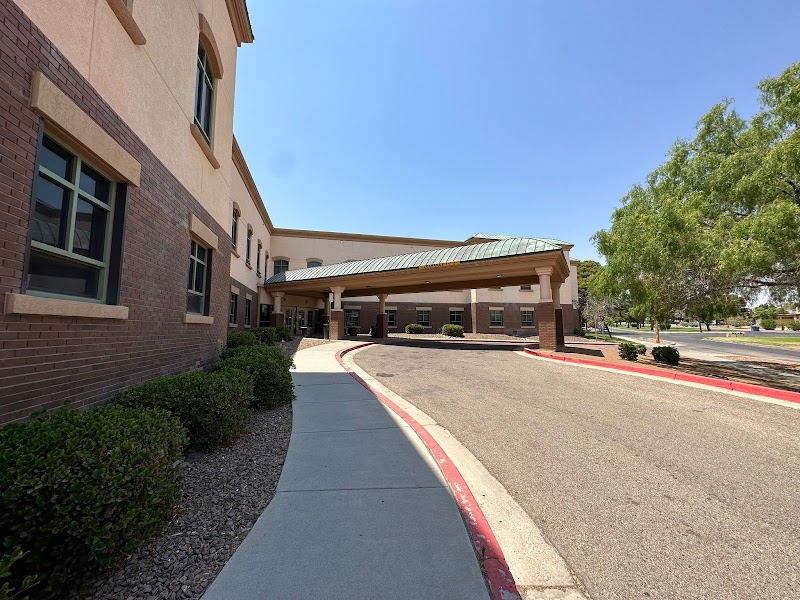
1475 RAYNOLDS ST, EL PASO, TX 79903 (915) 565-4677
For profit - Limited Liability company 74 Beds PARADIGM HEALTHCARE Data: November 2025
Trust Grade
60/100
#530 of 1168 in TX
Last Inspection: October 2024

Within standard 12-15 month inspection cycle. Federal law requires annual inspections.

Overview

Nazareth Living Care Center in El Paso, Texas, has a Trust Grade of C+, indicating it is slightly above average but still has room for improvement. It ranks #530 out of 1168 facilities in Texas, placing it in the top half, and #6 out of 22 in El Paso County, meaning only five local options are better. The facility is showing a positive trend, having decreased its reported issues from 19 in 2024 to just 3 in 2025. Staffing is a concern with a rating of 2 out of 5 stars and less RN coverage than 92% of Texas facilities, although its 42% staff turnover is below the state average of 50%. Notably, there have been no fines recorded, which is a positive sign. However, recent inspections revealed some troubling incidents, including failing to ensure residents could access the facility's survey results and not meeting professional standards while administering respiratory care, which could pose risks for residents’ health. Overall, while there are commendable aspects, such as the lack of fines and a decent trend in improving issues, families should be aware of the staffing challenges and specific care deficiencies highlighted in the inspections.

Trust Score
C+
60/100
In Texas
#530/1168
Top 45%
Safety Record
Low Risk
No red flags
Inspections
Getting Better
19 → 3 violations
Staff Stability
○ Average
42% turnover. Near Texas's 48% average. Typical for the industry.
Penalties
✓ Good
No fines on record. Clean compliance history, better than most Texas facilities.
Skilled Nurses
⚠ Watch
Each resident gets only 11 minutes of Registered Nurse (RN) attention daily — below average for Texas. Fewer RN minutes means fewer trained eyes watching for problems.
Violations
⚠ Watch
56 deficiencies on record. Higher than average. Multiple issues found across inspections.
★★★☆☆
3.0
Overall Rating
★★☆☆☆
2.0
Staff Levels
★★★★★
5.0
Care Quality
★★☆☆☆
2.0
Inspection Score
Stable
2024: 19 issues
2025: 3 issues

The Good

  • 5-Star Quality Measures · Strong clinical quality outcomes
  • Full Sprinkler Coverage · Fire safety systems throughout facility
  • No fines on record
  • Staff turnover below average (42%)

    6 points below Texas average of 48%

Facility shows strength in quality measures, fire safety.

The Bad

3-Star Overall Rating

Near Texas average (2.8)

Meets federal standards, typical of most facilities

Staff Turnover: 42%

Near Texas avg (46%)

Typical for the industry

Chain: PARADIGM HEALTHCARE

Part of a multi-facility chain

Ask about local staffing decisions and management

The Ugly 56 deficiencies on record

Jun 2025 3 deficiencies
CONCERN (D) 📢 Someone Reported This

A family member, employee, or ombudsman was alarmed enough to file a formal complaint

Potential for Harm - no one hurt, but risky conditions existed

Resident Rights (Tag F0550)

Could have caused harm · This affected 1 resident

**NOTE- TERMS IN BRACKETS HAVE BEEN EDITED TO PROTECT CONFIDENTIALITY** Based on observation, interview and record review the facility failed to treat each resident with respect and dignity and care f...

Read full inspector narrative →
**NOTE- TERMS IN BRACKETS HAVE BEEN EDITED TO PROTECT CONFIDENTIALITY** Based on observation, interview and record review the facility failed to treat each resident with respect and dignity and care for each resident in a manner and in an environment that promotes maintenance or enhancement of his or her quality of life, recognizing each resident's individuality for 2 of 6 residents (Resident #12 and Resident #13) reviewed for dignity with meal assistance. The facility failed to ensure that Residents #13 and #14 were assisted with eating while staff were seated at eye level. This failure posed a risk of inadequate monitoring during feeding, which could result in, reduce dignity during mealtime, and hinder the ability to respond promptly to signs of distress. Findings included: Record review of Resident #12's face sheet dated 6/18/25 revealed an [AGE] year-old male was admitted to the facility on [DATE] with diagnoses of COPD (long term lung condition that makes it hard to breathe), dementia, (condition that affects the brain and makes it harder for a person to remember things, think clearly, make decisions, or take care of themselves) and altered mental status. Record review of Resident #12's quarterly MDS dated [DATE] revealed a BIMS 03, indicating his cognition was severely impaired. Functional abilities revealed he required set-up or clean-up assistance for eating and did not trigger any swallowing concerns. Record review of Resident #12's care plan dated 6/17/25 revealed a focus area for ADL self-care deficits with interventions that included EATING: Supervision with set up help staff assist. During an observation on 6/17/25 at 12:05 pm, Resident #12 was observed needing assistance with feeding. CNA B was assisting while standing and was not at eye level. Record review of Resident #13's face sheet dated 6/18/25 revealed an [AGE] year-old female that was admitted [DATE] with diagnoses of cognitive communication deficit, adult failure to thrive (usually an older adult experiences a noticeable decline in their overall health that isn't cause by just one specific illness) and stiffness of right shoulder. Record review of Resident #13's quarterly MDS dated [DATE] revealed a BIMS score of 04, indicating his cognition was severely impaired. The functional abilities section revealed she was independent for eating and did not trigger swallowing concerns. Record review of Resident #13's care plan dated 5/6/25 revealed a focus area for ADL Self Care Performance Deficit r/t generalized weakness with interventions that included requires supervision from staff participation to eat. During an observation on 6/17/25 at 12:01 pm, the SP was observed assisting Resident #13 with eating while standing up. The SP was not at eye level with Resident #13. During an interview on 6/17/25 at 12:06 pm, CNA C was observed bringing a chair to both the SP and CNA B so they could sit while assisting residents. During an interview on 6/17/25 at 12:39 pm, CNA C stated it was her third day in training. She stated she had received training on assistance with feeding and was informed that staff were expected to be seated at eye level. CNA C stated she observed both the SP and CNA B standing, so she brought them chairs. She stated staff were expected to sit at the resident's side and maintain eye level. She stated the risks of not doing so included an inability to properly monitor chewing and causing discomfort to the resident by requiring them to lift their head. During an interview on 6/17/25 at 3:36 pm, the DON stated that sitting while assisting with feeding was part of staff competencies. The DON stated that all staff assisting during meals were expected to sit in order to be at eye level with the resident, allowing them to observe if the resident was struggling with eating. The DON stated that this position was more comfortable for the resident and helped avoid neck extension. The DON stated that CNAs received training on dining assistance upon hire and annually. During an interview on 06/18/25 at 10:25 AM, with NP, she stated anybody giving feeding assistance needed to be trained. The NP stated the staff assisting with feeding needed to sit down while providing the food to the resident. The NP stated this was so that the staff assisting, and the resident were at the same level and the resident could feel relaxed and not rushed. The NP stated this was also for the staff assisting to monitor the resident by seeing them. During an interview on 6/18/25 at 2:06 pm, CNA B stated she recalled assisting Resident #12 with lunch the previous day. She stated the resident required cues and reminders, as he frequently fell asleep. CNA B stated she was aware she was standing during the assistance and that she was not supposed to be. She stated she received periodic training on dining assistance and that risks of not being seated included not being able to monitor and provide dignity. During an interview on 6/18/25 at 2:26 pm, the SP stated that Resident #13 had recently returned from the hospital. The resident had been on a regular diet but came back with a downgrade to mechanical soft. The SP stated she wanted to observe for any mastication (the process of chewing food) issues and stated she did not observe any swallowing or chewing difficulties. She stated the resident had a reduced appetite related to her surgery and expressed nausea when eating too much. The SP stated she needed to continue monitoring the resident and that staff assisting with feeding should be seated at eye level. The SP stated she was primarily observing rather than feeding, and at the time there was no additional chair available. She stated that when helping or assessing, being at eye level was best. She stated that in most cases staff were seated, but when passing by, they try to get at eye level if offering assistance. No specific risks were stated, but she emphasized the importance of monitoring for swallowing concerns. Record review of the facility's Feeding- Assistance with eating dated 06/2019 read in part The qualified nursing staff will assist the patient/ resident who is unable to feed self in order to promote adequate nutrition and help the patient/resident enjoy a satisfying meal. Procedures: 10- sit down.
CONCERN (D) 📢 Someone Reported This

A family member, employee, or ombudsman was alarmed enough to file a formal complaint

Potential for Harm - no one hurt, but risky conditions existed

Comprehensive Care Plan (Tag F0656)

Could have caused harm · This affected 1 resident

**NOTE- TERMS IN BRACKETS HAVE BEEN EDITED TO PROTECT CONFIDENTIALITY** Based on interview, and record review the facility failed to develop and implement comprehensive person-centered care plan that ...

Read full inspector narrative →
**NOTE- TERMS IN BRACKETS HAVE BEEN EDITED TO PROTECT CONFIDENTIALITY** Based on interview, and record review the facility failed to develop and implement comprehensive person-centered care plan that includes measurable objectives and time frames to meet a resident medical and nursing needs to be furnished to attain or maintain the residents highest practicable physical, mental, and psychosocial well-being for 1 of 4 residents (Resident #14) reviewed for care plans. The facility failed to the implement a comprehensive person-centered care plan that addressed Resident #14's history of wandering. This deficient practice could place residents in the facility at risk of not receiving the necessary care or services and having personalized plans developed to address their needs. Findings included: Record review of Resident #14's face sheet dated 06/18/25, revealed, admission on [DATE] to the facility. Record review of Resident #14's facility history and physical dated 02/12/25, revealed, an [AGE] year-old female diagnosed with altered mental status and UTI. There was no diagnoses of history of wandering. Record review of Resident #14's Clinical Risk Assessment generated by the DON dated 05/12/25, revealed, in section #3 - Predisposing Factors: was not coded for section F - History of Wandering. Record review of Resident #14's quarterly MDS dated [DATE], revealed, a severely impaired cognition BIMS score of 3 to be able to recall and make daily decisions. Mood was not coded. Behaviors section E - Behavior was coded 0 for wandering -presence & frequency as behavior not exhibited. Record review of the facility Resident List of Wanders dated 06/18/25, revealed, Resident #14 to be on the list of wanders. Record review of Resident #14's Care Plan reviewed on 06/18/25, reviewed, there was no focus, goal, and intervention section for Resident #14 history of wandering. During an interview on 06/18/25 at 1:45 PM, with the DON, she stated she had provided a list of residents who resided in the facility that were wanderers. The DON stated her definition of wandering was a resident going from here to there without a specific point to include going into resident rooms. The DON stated Resident #14 did not have a wandering care plan in her care plan. The DON stated it should have been care planned because it was part of the resident's behavior and needed to be documented. The DON stated the MDS department was responsible for ensuring that it was care planned. The DON stated the purpose of the care plan was to provide the care for the resident and for everyone to know what the resident needed. The DON stated that was necessary for the care of the resident. During an interview on 06/18/25 at 2:29 PM, with the MDS, she stated it was the responsibility of the MDS department to ensure the care plans were correct. The MDS stated there was no wandering care planned for Resident #14 as she was not told that she had a behavior of wandering. The MDS stated it should have been care planned for Resident #14's wandering to be able to keep an eye on her. The MDS stated the purpose of the care plan was to notify the staff of Resident #14's wandering behaviors. The MDS stated the risk could be injury. During an interview on 06/18/25 at 2:46 PM, with the Administrator, he stated the facility had some residents who did wander the facility. The Administrator stated any resident who had a history of wandering or are displaying behaviors should be care planned. The Administrator stated the MDS department was responsible for ensuring the care plans were correct. The Administrator stated the purpose of the care plan was to identify areas that staff need to know of the resident information to be able to provide proper care for that resident. The Administrator stated the negative outcome of not care planning wandering could be missing something and not placing the interventions to provide the best care. Record review of the facility Care Planning dated 06/2019, revealed, Policy: It was the policy of this facility that the interdisciplinary team (IDT) shall develop a comprehensive care plan for each resident.
CONCERN (D) 📢 Someone Reported This

A family member, employee, or ombudsman was alarmed enough to file a formal complaint

Potential for Harm - no one hurt, but risky conditions existed

Medical Records (Tag F0842)

Could have caused harm · This affected 1 resident

**NOTE- TERMS IN BRACKETS HAVE BEEN EDITED TO PROTECT CONFIDENTIALITY** Based on interview and record review the facility failed to ensure records were maintained that were complete and accurately doc...

Read full inspector narrative →
**NOTE- TERMS IN BRACKETS HAVE BEEN EDITED TO PROTECT CONFIDENTIALITY** Based on interview and record review the facility failed to ensure records were maintained that were complete and accurately documented for 1 of 6 residents (Resident #1) reviewed for accuracy of records. The facility failed to ensure that LVN A completed a personal inventory sheet for Resident #1 upon admission. This failure posed a risk of loss, misplacement, or unaccounted personal belongings, which could lead to resident dissatisfaction, grievances, and limited the facility's ability to verify personal items during the resident's stay or upon discharge. Finding included: Record review of Resident #1's face sheet dated 6/18/25 revealed an [AGE] year-old female who was admitted to the facility on [DATE] with diagnoses of age-related cognitive decline. Record review of Resident #1's admission MDS assessment dated [DATE] revealed a BIMS score of 02, her cognition was severely impaired. Record review of Resident #1's admission packet dated 2/13/25 revealed page 8: The Resident/Responsible Party shall complete an inventory form listing the Resident's personal items at the time of admission. Additions and deletions to the inventory shall be brought to the attention of the Facility's administration so that records are current. The Facility may ask the Resident to accept Resident's personal items for safekeeping. The Facility assumes no liability for the security of personal items retained by Resident or kept in the Resident's room. The Resident declines to authorize the Facility to hold Resident's funds in the Resident Trust Fund. The document was signed by Resident #1. Record review of Resident #1's admission inventory dated 2/13/25 revealed it was blank. No items were accounted for upon admission and/or was updated after admission. During an interview on 6/18/25 at 2:01 pm, the DON stated she could not locate an inventory sheet for Resident #1. She stated the first step during admission was completion of an admission assessment, and that most residents arriving from the hospital do not bring many belongings. She stated that if items such as purses or chargers were brought in after admission, a paper inventory should have been created. She stated she was unable to locate a paper inventory and that the nurses were responsible for completing it. The DON stated she reviewed the facility's policy and that she, along with the Assistant Directors of Nursing (ADONs), is responsible for overseeing inventory procedures. She stated she had not previously noticed the inventory sheet was missing and that failure to complete one poses a risk of being unable to account for resident belongings. During an interview on 6/18/25 at 2:42 pm, the Administrator stated the inventory process is shared between the DON and the ADON, with assistance from a staff member in the laundry department. He stated he did not know Resident #1 and had not received any reports regarding missing money. The Administrator stated the BOM typically asks residents if they want valuables to be stored for safekeeping and that some residents prefer to keep their belongings on hand. He stated this conversation should be documented and that not securing belongings increases the risk of misplacement or loss. Record review of the facility admission - Documentation Guidelines Policy dated 06/2019, revealed, Guidelines - 1.) The assessment begins on the day the resident arrives. A. The record should show that a careful evaluation of the resident was made. 5.) It was the responsibility of the facility to account for all the personal belongings of the resident. A personal inventory list should be completed on admission and was part of the medical record.
Nov 2024 3 deficiencies
CONCERN (D) 📢 Someone Reported This

A family member, employee, or ombudsman was alarmed enough to file a formal complaint

Potential for Harm - no one hurt, but risky conditions existed

Quality of Care (Tag F0684)

Could have caused harm · This affected 1 resident

**NOTE- TERMS IN BRACKETS HAVE BEEN EDITED TO PROTECT CONFIDENTIALITY** Based on observations, interviews, and record review the facility failed to provide treatment and care based on the comprehensiv...

Read full inspector narrative →
**NOTE- TERMS IN BRACKETS HAVE BEEN EDITED TO PROTECT CONFIDENTIALITY** Based on observations, interviews, and record review the facility failed to provide treatment and care based on the comprehensive plan of care for 1 (Resident #1) of 5 residents reviewed for pressure ulcers. The facility failed to provide and assess care on 11/01/24 for Resident #1's Arterial ulcer to her right foot big toe. This deficient practice could place residents at risk for worsening pressure injuries, pain, and a decline in health. Findings included: Resident #1 Record review of Resident #1's face sheet dated 11/22/24, revealed, admission on [DATE] to the facility. Record review of Resident #1's facility history and physical dated 10/30/24, revealed, a [AGE] year-old female diagnosed with Peripheral Artery Disease, Gastric ulcer, and pain to the right foot. Record review of Resident #1's quarterly MDS dated [DATE], revealed, a moderately impaired cognition, BIMS score of 12, and was able to recall and make daily decisions. Record review of Resident #1's Orders dated 10/30/24, revealed, Arterial ulcer to big toe right foot. Cleanse with WC/NS, pat dry, apply Medi-honey, cover with ABD pad, and wrap with kerlix. Record review of Resident #1's care plan dated 11/02/24, revealed, non-pressure/surgical skin condition to right great toe with open area under the nail, with necrotic tissue. Assess the wound bed and surrounding skin for signs of infection or other complications. Record review of Resident #1's Administration Report dated 11/01/24-11/30/24, revealed, wound care was not coded and the box was blank for Resident #1 on 11/01/24 to her arterial ulcer to big toe on the right foot. During an interview on 11/20/24 at 2:11 PM, LVN E stated Resident #1 had a right big toe wound. LVN E stated he did not perform would care on 11/01/24 as he was the assign nurse for that shift (6AM-2PM on 11/01/24). LVN E stated the Wound Care Nurse was doing wound care. LVN E stated that wound care could be done anytime during the day and normally the wound care nurse did it, but he was able to do it if he needed too. Record review of Resident #1's grievance dated 10/30/24, revealed, Concern that Resident #1's toe was not given wound care. Resolution was changing of the charge nurse and reporting to the state. During an interview on 11/20/24 at 11:51 AM, the DON stated Resident #1 had complained that the Wound Care Nurse had not done the wound care on her toe. The DON stated her orders revealed that she was to be having wound care on Mondays, Wednesdays, and Fridays. The DON stated the toe was assessed and her wound did not get worse nor better. During an interview on 11/20/24 at 3:10 PM, ADON A stated she normally does wound care for Resident #1 but on 11/01/24 she did not as she was not working that day. ADON A stated any nurse could perform wound care in case she was out. ADON A stated she did not know who did wound care on 11/01/24 when she was out of the facility. During an interview on 11/22/24 at 9:14 AM, the SW stated a grievance was filed by Resident #1 indicating that wound care was not performed on 11/01/24. The SW stated she spoke to Resident #1 and was informed that it was resolved but she was not happy. During an interview on 11/22/24 at 11:18 AM, LVN E stated if the Wound Care Nurse was not going to be in the facility that the DON/ADONs usually let them know so that they could do the wound care. LVN E stated he usually did not do wound care, so he did not check to see if he needed to do wound care on Resident #1. LVN E stated the importance of doing wound care would be the risk of infection. During an interview on 11/22/24 at 11:47 AM, CNA G stated Resident #1 had a wound on her foot. CNA G stated Resident #1 was complaining that wound care was not done for the days she was scheduled for. CNA G stated the nurse was told of wound care for Resident #1 and the nurse did not show up to do it. During an interview on 11/22/24 at 2:17 PM, LVN D stated wound care for Resident #1 was done in the morning but could be done anytime of the day. LVN D stated upper management would let her know if she would need to do wound care. LVN D stated the orders indicated that wound care for Resident #1 was to be done in the day shift (6AM-2PM) and she was the evening shift (2PM-10PM). LVN D stated she did not do wound care on 11/01/24 as the orders stated it was to be done in the day shift (6AM-2PM). LVN D stated they would want to do wound care for Resident #1 as ordered so that her wound could heal. LVN D stated the negative outcome could be the wound worsening or getting infected. During an interview via text message with Physician C on 11/11/24/24 at 3:57 PM, Physician C stated Resident #1 had an arterial ulcer to right great toe. Physician C stated the order was to continue wound care 3 times a week. Physician C stated there was one missed wound care treatment that Resident #1 did not get. Physician C stated there was no negative outcome from the missed day. During an interview on 11/20/24 at 3:10 PM, ADON A stated any nurse could conduct wound care. ADON A stated wound care was to be done as per orders. ADON A stated the wound could worsen if not done. Record review of the facility Dressing Change: Wound policy dated 06/19, revealed, It was the policy of this facility that dressing changes will follow specific manufacture's guidelines and general infection control principles.
CONCERN (D) 📢 Someone Reported This

A family member, employee, or ombudsman was alarmed enough to file a formal complaint

Potential for Harm - no one hurt, but risky conditions existed

Accident Prevention (Tag F0689)

Could have caused harm · This affected 1 resident

**NOTE- TERMS IN BRACKETS HAVE BEEN EDITED TO PROTECT CONFIDENTIALITY** Based on the observations, interviews, and record review the facility failed to ensure that the residents environment remains fr...

Read full inspector narrative →
**NOTE- TERMS IN BRACKETS HAVE BEEN EDITED TO PROTECT CONFIDENTIALITY** Based on the observations, interviews, and record review the facility failed to ensure that the residents environment remains free of accidents hazards as was possible and each resident received adequate supervision to prevent accidents for 1 (Resident #4) of 4 residents reviewed for accidents. The facility failed to make sure the fall mat for Resident #4 was in good condition and not torn or ripped apart. This failure could place residents at risk of falling and injuries. Findings included: Record review of Resident #4's face sheet dated 11/22/24, revealed, admission on [DATE] to the facility. Record review of Resident #4's facility history and physical dated 11/06/24, revealed, an [AGE] year-old female diagnosed with dementia, bipolar, and a fall. The plan was to place Resident #4 on fall precautions. Record review of Resident #4's orders dated 11/20/24, revealed, there were no orders for a fall mat. Record review of Resident #4's care plan dated 11/15/24, revealed, was at risk for falls and injuries. Encourage resident to ask for assistance of staff. Encourage resident to dangle at bedside for 1 min prior to transfer/standing. Assure lighting was adequate and areas were free of clutter. Resident #4 had impaired cognition and was at risk for further decline and injury. ADLs with transfers, was extensive assistance, from the help of one staff and depended on one staff for walking. Observation and interview on 11/20/24 at 9:53 AM, with ADON A. It was observed Resident #4 to be lying down in bed covered up on her right side. Resident #4 had a blue fall mat placed on her side of the bed. The blue mat was torn straight down the middle of the foldable part. Exposing the yellow foam, white and blue strings, and pieces of the blue material were torn. ADON A stated she had not noticed the fall mat being torn like it was. ADON A stated it was inappropriate being torn and did not look right. ADON A stated there could be a risk if the fall mat was torn such as a fall. ADON A stated it was the responsibility of whoever sees the fall mat torn to report and replace it. During an interview on 11/20/24 at 10:20 AM, LVN E stated he did not know the fall mat was torn. LVN E stated when Resident #4 entered the facility two weeks ago that one of the facilities ADONs had placed that blue mat. LVN E stated it was ADON F who was working that night. LVN E stated the fall mat being torn was not right. LVN E stated the nurses were responsible for replacing the torn fall mat. LVN E stated if someone or Resident #4 were to step on the torn fall mat it could possibly go one way while the other piece goes the other way. LVN E stated it was a risk for Resident #4 who was a fall risk. During an interview on 11/20/24 at 11:51 AM, the DON stated torn or ripped fall mats were to be reported to maintenance. The DON stated the risk could be another fall or someone being injured. In an interview on 11/20/24 at 2:39 PM, the Maintenance Director stated the DOR took care of broken and damaged equipment and that was not his department. In an interview on 11/20/24 at 2:54 PM, the DOR stated that his department received reports of damaged therapy devices such as wheelchairs, walkers, and canes, which they fix or replace. The DOR stated if they could not fix something right away then they let maintenance know. The DOR stated the fall mat would be more of an intervention coming from nursing. The DOR stated there would be a risk if the fall mat was compromised and the resident was a fall risk which would be more of a risk. The DOR stated Resident #4 was a fall risk and the negative outcome could be a fall. The DOR stated the blue fall mat being torn was compromised and needed to be replaced. In an interview on 11/22/24 at 11:04 AM, the DON stated the facility did not have any policy regarding accidents/hazards. During an interview on 11/22/24 at 2:28 PM, LVN D stated Resident #4 was a fall risk and part of her interventions were to place her near the nurse's station, have her bed low, and a fall mat placed. LVN D stated she did not see Resident #4's fall mat being torn the way it was. LVN D stated she would have changed it right away. LVN D stated the risk was the resident or anybody stepping on the fall mat and it moving.
CONCERN (D) 📢 Someone Reported This

A family member, employee, or ombudsman was alarmed enough to file a formal complaint

Potential for Harm - no one hurt, but risky conditions existed

Respiratory Care (Tag F0695)

Could have caused harm · This affected 1 resident

**NOTE- TERMS IN BRACKETS HAVE BEEN EDITED TO PROTECT CONFIDENTIALITY** Based on observations, interviews, and record review the facility failed to ensure that a resident who needed respiratory care w...

Read full inspector narrative →
**NOTE- TERMS IN BRACKETS HAVE BEEN EDITED TO PROTECT CONFIDENTIALITY** Based on observations, interviews, and record review the facility failed to ensure that a resident who needed respiratory care was provided such care, consistent with professional standards of practice for 1 (Resident #5) of 4 residents observed for oxygen management. Resident #5 was being given oxygen without physician orders from 10/20/24-10/25/24. This failure could place residents on oxygen therapy at risk of receiving incorrect or inadequate oxygen support and decline in health. Findings included: Record review of Resident #5's face sheet dated 11/20/24, revealed, admission on [DATE] to the facility. Record review of Resident #5's facility history and physical dated 10/07/24, revealed, a [AGE] year-old female not diagnosed with anything at the time that would warrant oxygen use. Indicated Resident #5 denied any SOB or wheezing. The plan was to monitor oxygen and maintain adequate oxygen saturation. Keep saturation above 90 percent. Record review of Resident #5's admission MDS dated [DATE], revealed, a severely impaired cognition, BIMS score of 05, she was to be able to recall and make daily decisions. Was not coded for oxygen therapy use. Record review of Resident #5's orders dated 11/20/24, revealed, there were no orders for oxygen. Record review of Resident #5's care plan dated 11/20/24, revealed, there was no mention of oxygen therapy use for Resident #5. Resident was not at the facility at the time of investigation. During an observation and interview on 11/22/24 at 3:04 PM, CNA E stated Resident #5 was on oxygen and observed Resident #5 with a nasal cannula on which was positioned correctly on her face. During an interview on 11/20/24 at 3:29 PM, ADON A stated Resident #5 had acquired Covid-19 from a visit from a family member. ADON A stated Resident #5 had tested positive for Covid and was getting breathing treatments. ADON A stated Resident #5 had orders for oxygen. During an interview on 11/22/24 at 9:14 AM, the SW stated Resident #5 had pneumonia when she came into the facility but later acquired Covid from a family member who came to visit her. The SW stated Resident #5 was wheezing from her lungs and an x-ray was taken. The SW stated there were orders given for Resident #5 to start nebulizer treatments. During an interview on 11/22/24 at 11:09 AM, the DON stated for any medications the facility would need an order for them. The DON stated oxygen was a medication. The DON stated you would need an order for oxygen use. The DON stated Resident #5 did not have orders for oxygen. The DON stated Resident #5 did enter the facility with oxygen from the hospital. The DON stated she reviewed the vitals for oxygen revealing Resident #5 was on oxygen at 4 liters per minute via nasal cannula. The DON did not indicate what the risk would be if there were no orders for oxygen and it was being given. The DON stated the nurses were responsible for ensuring the orders were in the system. During an interview via text message sent by Physician C on 11/24/24 at 3:57 PM, stated, if a resident was going to continue to be on oxygen, then the facility would have had to have gotten an order for the oxygen use. During an interview on 11/22/24 at 2:28 PM, LVN D stated when she started working at the facility, she did not remember seeing Resident #5 having a nasal cannula on or using oxygen. LVN D stated Resident #5 did have a concentrator in her room. LVN D stated you would need a physician order for the use of oxygen. LVN D stated you would need to notify the physician because you would want the resident to be above 90 percent saturation. LVN D stated the negative outcome would be the resident not getting the proper oxygen which could lead to something else going on. Record review of the facility Physician Orders policy dated 06/19, revealed, Policy: It was policy of this facility that qualified licensed nurses will obtain and transcribe orders according to Facility Practice Guidelines. Record review of the facility Oxygen Therapy: General Administration & Care policy dated 08/19, revealed, Policy: It was the policy of this facility that the facility will provide oxygen therapy by means of various administration devices. Review physician's order on the chart for completeness. Document initiation of therapy in the medical record, per documentation standards.
Oct 2024 15 deficiencies
CONCERN (D)

Potential for Harm - no one hurt, but risky conditions existed

Comprehensive Care Plan (Tag F0656)

Could have caused harm · This affected 1 resident

**NOTE- TERMS IN BRACKETS HAVE BEEN EDITED TO PROTECT CONFIDENTIALITY** Based on observations, interviews, and record review, the facility failed to implement a comprehensive person-centered plan of c...

Read full inspector narrative →
**NOTE- TERMS IN BRACKETS HAVE BEEN EDITED TO PROTECT CONFIDENTIALITY** Based on observations, interviews, and record review, the facility failed to implement a comprehensive person-centered plan of care for 2 (Residents #41, and #48) of 10 residents reviewed for drug regimens. -The facility failed to ensure Resident #41 and Resident #48 were administered medication with meals according to physician's orders. These failures placed residents at risk of not receiving medications according to manufacturer specifications placing them at increased risk of adverse drug effects and decline in their health status. The findings included: 1. Record review of Resident #41's admission Record, dated 10/30/24, reflected 47-year-female who was admitted on [DATE]. Record review of Resident #41's Physician's Follow Up Visit, dated 10/23/24, reflected she had diagnoses which included cerebral arteritis. Record review of Resident #41's admission MDS, dated [DATE], reflected Active Diagnosis cerebral arteritis. Record review of Resident #41's Care Plan, dated 10/25/24, reflected, Resident #41 had Self Care Deficit r/t cerebral arteritis. Record review of Resident #41's Physician's Order Summary, dated 10/30/24, reflected Order Date: 04/09/21 Pentoxifylline ER 400 mg give 1 tablet by mouth daily for cerebral arteritis. Give with food. Record review of the Medication Administration Record dated October 2024, for Resident #41 reflected Order Date: 04/09/21 Pentoxifylline ER 400 mg give 1 tablet by mouth daily for cerebral arteritis. Give with food at 4:00 PM. Observation on 10/28/24 at 3:51 PM, during medication pass revealed LVN A, administered medication to Resident #41, while resident was participating in group activity and did not have anything to eat. Interview and record review 10/28/24 at 3:54 PM, of Medication Administration Record with LVN A said, Pentoxifylline ER 400 mg is ordered be given with food at 4:00 PM. I can administer medications one hour before and one hour after the scheduled time, that is why I gave it to her because, she is always eating something. In an interview on 10/29/24 at 10:30 AM with the DON said licensed staff had been trained to administer medications according to physician's orders. The DON said, LVN A should have administered the medication with food as ordered by the physician. The nurse can give the resident a snack or wait until the resident is eating her meal. 2. Record review of Resident #48's admission Record, dated 10/30/24, reflected 67-year-male who was admitted on [DATE]. Record review of Resident #48' History & Physical, dated 05/13/24, reflected he had diagnosis which included end stage renal disease. Record review of Resident #48's Quarterly MDS, dated [DATE], reflected Active Diagnosis: end stage renal disease. Record review of Resident #48's Care Plan, dated 08/19/24, reflected, Resident #4 8 had chronic renal failure. Interventions: Administer medications as ordered. Record review of Resident #48's Physician's Order Summary, dated 10/30/24, reflected Order Date: 05/10/24 Calcium Acetate give 1334 mg by mouth with meals for chronic disease at 12:00 Noon; Order Date: 05/11/24 Sevelamer Carbonate 800 mg give 2 tablets by mouth with meals for CKD at 12:00 Noon. Record review of the Medication Administration Record dated October 2024, for Resident #48 reflected Order Date: Order Date: 05/10/24 Calcium Acetate give 1334 mg by mouth with meals for chronic disease at 12:00 Noon; Order Date: 05/11/24 Sevelamer Carbonate 800 mg give 2 tablets by mouth with meals for CKD at 12:00 Noon. Observation 10/28/24 at 12:14 PM, of the Mealtimes posted in the dining room area on the second-floor revealed meals were served as follows: Breakfast 7:30 AM - 8:30 AM, Lunch 11:30 AM - 12:30 PM, and Dinner 4:30 PM - 5:30 PM. Interview on 10/29/24 at 10:30 AM, with the DON, said medications ordered to be given with meals must be administered according to physician's orders. The DON said licensed staff had been trained to administer medications with meals according to physician's orders. The DON said Licensed Staff should check the medication cart prior to starting medication pass to ensure that they have all the necessary medications to administer medications as ordered. Telephone interview on 10/31/24 at 10:12 AM, with the attending physician, in the presence of the ADON, said he expected the licensed staff to follow his physician's orders to administer medications with food or with meals to prevent untoward drug effects. The Physician said if the order was to give medication with food, it can be given with a snack, and if the order was to be give medication with meals, it should be given when the resident was eating their meal to prevent untoward effects of the medication. Review of the facility's policies and procedure on Medication Administration and Management revised: on 8/2024 revealed, Policy: It is a policy of this facility that the facility will implement a medication management program that incorporate systems with established goals to meet each resident's needs as well as the regulatory requirements. Procedures: The facility's medical director will have an active role in the oversight of the medication management. Step 1: Preparing for the Medication Pass. Medication Cart preparation: Medications should be arranged in the same sequence as on the MAR. Authorize license or certified. medication aide must understand the 8 Rights for administering medications: The Right Resident, The Right Drug, The Right Dose, The Right Time, The Right Route, The Right Charting, The Right Results. Medications are administered no more than one hour before or one hour after the designated medication pastime. Control substances are accounted for on individual resident control substance record. Controlled substances are counted by the authorized. License or certified medication aide, or by state regulatory guidelines, staff member at each shift change.
CONCERN (E)

Potential for Harm - no one hurt, but risky conditions existed

Deficiency F0658 (Tag F0658)

Could have caused harm · This affected multiple residents

**NOTE- TERMS IN BRACKETS HAVE BEEN EDITED TO PROTECT CONFIDENTIALITY** Based on observation, interview, and record review the facility failed to ensure services were provided or arranged by the facil...

Read full inspector narrative →
**NOTE- TERMS IN BRACKETS HAVE BEEN EDITED TO PROTECT CONFIDENTIALITY** Based on observation, interview, and record review the facility failed to ensure services were provided or arranged by the facility, as outlined by the comprehensive care plan, that met professional standards of for 1 of 10 resident (Resident #6) reviewed for services that met professional standards. -The facility failed to ensure licensed staff administered medications via nebulizer according to accepted standards of clinical practice by not assessing the respiratory status for Resident #6 before and after treatment. -The facility failed to ensure LVN B performed hand hygiene and/or used PPE while administering medications via nebulizer. This failure could place residents at risk for inaccurate drug administration, not receiving the care and services to meet their individual needs, and the spread of infection. Findings included: Record review of Resident #6's admission Record, dated 10/30/24, reflected 94-year-female who was admitted on [DATE]. Record review of Resident #6's Physician's Follow Up Visit, dated 10/28/24, revealed no pulmonary diagnosis. Physical Examination documented no shortness of breath. Lungs sounds are clear in all [NAME] bilaterally without rales, rhonchi, or wheezes. Record review of Resident #6's Quarterly MDS, dated [DATE], revealed Active Diagnoses: did not document resident had pulmonary diseases. No shortness of breath. Respiratory Treatments: Oxygen therapy. Record review of Resident #6's Care Plan dated 03/08/2022 revealed Resident was on oxygen therapy for shortness of breath. Interventions: Administer medications as ordered by physician. Monitor for signs or symptoms of respiratory distress and report to MD PRN. Record review of Resident #6's Physician's Order Summary, dated 10/30/24, reflected Order Date: 06/02/23 Pulmicort (Budesonide) inhalation suspension 0.5 mg/2 ml 1 dose vial via mask two times a day for low oxygen saturations via Nebulizer. Record review of the Medication Administration Record dated October 2024, for Resident #6 revealed Pulmicort (Budesonide) inhalation suspension 0.5 mg/2 ml 1 dose vial via mask two times a day for low oxygen saturations via Nebulizer at 7:30 AM and 4:00 PM. There was no documentation on the MAR or electronic nurse's notes licensed staff were assessing the resident's respiratory condition pre-treatment and post-treatment according to facility's policy and procedure on Nebulizer therapy. Record review of the Medication Administration Record dated October 2024, for Resident #6 revealed new physician's order dated 10/29/24 Observation Pre-Nebulizer Treatment: Document Respirations and oxygen saturation pre-nebulizer treatment. Assess lung sounds and document Correct Code: 1-clear, 2-Rhonchi, 3-Rales, 4-Wheezing two times a day. Record review of the Medication Administration Record dated October 2024, for Resident #6 revealed new physician's order dated 10/29/24 written after the interview with the surveyor documented Observation Post-Nebulizer Treatment: Document Respirations and oxygen saturation post nebulizer treatment. Assess lung sounds and document Correct Code: 1-clear, 2-Rhonchi, 3-Rales, 4-Wheezing two times a day. Observation and interview 10/29/24 at 9:04 AM, with LVN B during the medication pass observation revealed he was going to administer Budesonide Inhalation solution by nebulizer treatment to Resident #6. LVN checked oxygen saturation and pulse and did not assess respiratory rate, and breath sounds prior to administering nebulizer treatment. LVN did not assess pulse, respiratory rate, oxygen saturation, and breath sounds after nebulizer treatment was completed. LVN did not use gloves when setting up nebulizer medication or when he removed the nebulizer mask after treatment was completed. The LVN did not wash hands prior to leaving the room. The nurse used hand sanitizer and proceeded with the medication pass. LVN B stated he did not know he needed to assess the resident's respiratory rate, breath sounds, and pulse prior to administering nebulizer treatment and/or after nebulizer treatment was completed. He said he had not been trained at the facility on how to administer medications via nebulizer treatment. When the surveyor asked him how he had been trained in nursing school to administer medication via nebulizer. LVN B stated, I don't remember. Interview on 10/29/24 at 10:35 AM, with DON stated LVN B should have also assessed the resident's pulse, respiratory rate, breath sounds, prior to administering nebulizer treatment and should have re-assessed the resident's oxygen saturation, pulse, respiratory rate, breath sounds, after the nebulizer treatment was completed. He should have used gloves to prepare the nebulizer treatment and when he removed the nebulizer mask after the treatment was completed to prevent cross-contamination. He should have rinsed the medication chamber with water and allowed it to dry prior to placing it in the plastic bag. Interview and record review on 10/31/24 at 8:36 AM, with the ADON revealed Resident #6 Physician's Order documented to administer Pulmicort (Budesonide) inhalation solution 0.5 mg/2 ml 1 dose via mask two times a day for low oxygen saturation via Nebulizer. The ADON said, they added a new physician's order to assess the resident's respirations, oxygen saturation, lung sounds before and after administration of nebulizer treatment. Interview on 10/31/24 at 11:30 AM with the DON and ADON revealed they did not know why the facility did not have documentation on the Medication Administration Record the nurses were assessing the resident's respiratory condition pre-treatment and post-treatment according to facility's policy and procedure on Nebulizer therapy. The DON and ADON did not know when the last time nurses had been in-service on how to administer medication via nebulizer. The DON said the nurses should assess the resident's respiratory status before and after administering the nebulizer treatment to assess for potential side effects of the medications and/or assess effectiveness of nebulizer treatment. The DON said the pharmacy consultant, and nursing administration were responsible for randomly checking licensed staff were adhering to best practices and resident care when administering medications via nebulizer treatment to ensure they were assessing the resident before and after administering nebulizer treatment and document their assessment on the Medication Administration Record. Review of facility's Policies and Procedures on Nebulizer Aerosol Therapy revised 8/2024 revealed, Policy: The facility will provide nebulizer treatments safely and effectively, adhering to best practices for infection control and resident care. Procedure: Preparation - Verify the physician's order for nebulizer treatment, including medication type dosage and frequency. Adhere to appropriate hand hygiene and apply appropriate personal protective equipment. (PPE). General Monitoring: Check on the resident periodically during the treatment to ensure they are comfortable and not experiencing any adverse reactions. Observe for signs of distress such as difficulty breathing, dizziness or allergic reactions, and respond promptly if any issues arise. Pre-Treatment Monitoring: Assess the resident's baseline respiratory condition, including respiratory rate, lung sounds, oxygen saturation, and any signs of distress. Document baseline respiratory assessment findings in the resident's medical clinical record. Post-Treatment Monitoring: Assess the resident's respiratory condition after the treatment, noting any changes in respiratory rate, lung sounds or oxygen saturation. Document post treatment respiratory assessment findings and any changes observed in the residence medical record.
CONCERN (E)

Potential for Harm - no one hurt, but risky conditions existed

Respiratory Care (Tag F0695)

Could have caused harm · This affected multiple residents

**NOTE- TERMS IN BRACKETS HAVE BEEN EDITED TO PROTECT CONFIDENTIALITY** Based on observation, interview, and record review the facility failed to ensure that a resident who needs respiratory care is p...

Read full inspector narrative →
**NOTE- TERMS IN BRACKETS HAVE BEEN EDITED TO PROTECT CONFIDENTIALITY** Based on observation, interview, and record review the facility failed to ensure that a resident who needs respiratory care is provided such care, consistent with professional standards of practice for 2 (Resident #8 and Resident #6) of 2 residents observed for oxygen management. -The facility failed to keep the oxygen machine and filters clean for Resident #6. --The facility failed to ensure licensed staff administered medications via nebulizer according to accepted standards of clinical practice by not assessing the respiratory status for Resident #6 before and after treatment. -The facility failed to post oxygen sign on in Resident #8's door. These failures could place residents at risk of a significant reduction in the quality of oxygen being delivered, inadequate oxygen support, decline in health, and expose them to oxygen hazards without oxygen signs being posted outside of their rooms. Findings included: Resident #6 Record review of Resident #6's admission Record, dated 10/30/24, reflected 94-year-female who was admitted on [DATE]. Record review of Resident #6's Physician's Follow Up Visit, dated 10/28/24, revealed diagnoses: unspecified dementia, anemia, hypothyroidism, major depression, seizures, and hypertension. There was documentation no of a pulmonary diagnosis. Physical Examination documented no shortness of breath. Lungs sounds are clear in all [NAME] bilaterally without rales, rhonchi, or wheezes. Record review of Resident #6 's Quarterly MDS dated [DATE] revealed severe cognitive impairment to recall or make daily decisions, BIMS (a brief cognitive screening measure that focuses on orientation and short-term word recall) score of 7. Active Diagnoses: did not document resident had pulmonary diseases. No shortness of breath. Respiratory Treatments: Oxygen therapy. Record review of Resident #6's Care Plan dated 03/08/2022 revealed Resident was on oxygen therapy for shortness of breath. The goal is for resident #6 to not have signs or symptoms of poor oxygen absorption. Interventions: Administer medications as ordered by physician. Monitor for signs or symptoms of respiratory distress and report to MD PRN. Oxygen setting at 2 LPM continuously. Position resident #6 to facilitate ventilation perfusion. Record review of Resident #6 's order recap dated 03/08/2022 revealed . Record review of Resident #6's Physician's Order Summary, dated 10/30/24, revealed Order Date: 03/08/24 Oxygen Care: To change oxygen equipment and clean filter weekly on Sunday nights and PRN (as needed); Order Date: 06/02/23 Pulmicort (Budesonide) inhalation suspension 0.5 mg/2 ml 1 dose vial via mask two times a day for low oxygen saturations via Nebulizer. Observation on 10/28/2024 at 9:16 AM revealed Resident #6's oxygen at a level of 2 LPM with the filter behind the machine dirty with multiple layers of dirt stuck on the filter. Observation on 10/29/2024 at 10:11 AM revealed Resident #6's oxygen level was still at 2 LPM with the filter behind the machine dirty with multiple layers of dirt stuck on the filter. Looks as if it has not been cleaned for months. During an interview on 10/29/2024 at 2:50 PM with CNA E revealed that it was the responsibility of the nurses to clean and check on the oxygen machines, CNA E was not sure when or who exactly was responsible for checking the machine filters. During an interview on 10/29/2024 at 3:03 PM with the DON revealed that an RN, any RN, on any shifts, are responsible for the floor checks which include documentation in resident's electronic record that this has been completed and checking/cleaning of the oxygen filters weekly. The DON stated the dirty filter would not be a risk to the resident because the dirt was going into the oxygen the resident is breathing. The DON stated she is going to swap out the oxygen machine for a new one and advised the resident that she was going to give her a new oxygen machine. The only bad thing that can happen is the machine can malfunction but then it will beep, and the nurse will be alerted with the beeping of the machine and then nurse would have to change it out. Observation on 10/30/24 at 1:49 PM revealed Residents #6 oxygen machine had been changed and had a new machine going. During an interview on 10/30/2024 at 11:56 AM with Regional Respiratory Therapist, stated there was no effect in the resident. As long as the unit was running, and the green light is green it was still running at its proficiency and in a sufficient manner. Regional Respiratory Therapist viewed picture of filter provided by state surveyor and stated It is a dirty filter and I spoke with the charge nurse and is having the unit pulled and advised her and to do an in-service and making it a weekly obligation by making those filters be cleaned and replaced, but as long as the green light is on it should be okay for the resident to use. There won't be a risk to the resident but there could have been if the machine malfunctions. Resident #6 Nebulizer Treatment: Record review of the Medication Administration Record dated October 2024, for Resident #6 revealed Pulmicort (Budesonide) inhalation suspension 0.5 mg/2 ml 1 dose vial via mask two times a day for low oxygen saturations via Nebulizer at 7:30 AM and 4:00 PM. There was no documentation on the MAR or electronic nurse's notes licensed staff were assessing the resident's respiratory condition pre-treatment and post-treatment according to facility's policy and procedure on Nebulizer therapy. Record review of the Medication Administration Record dated October 2024, for Resident #6 revealed new physician's order dated 10/29/24 Observation Pre-Nebulizer Treatment: Document Respirations and oxygen saturation pre-nebulizer treatment. Assess lung sounds and document Correct Code: 1-clear, 2-Rhonchi, 3-Rales, 4-Wheezing two times a day. Record review of the Medication Administration Record dated October 2024, for Resident #6 revealed new physician's order dated 10/29/24 written after the interview with the surveyor documented Observation Post-Nebulizer Treatment: Document Respirations and oxygen saturation post nebulizer treatment. Assess lung sounds and document Correct Code: 1-clear, 2-Rhonchi, 3-Rales, 4-Wheezing two times a day. Observation and interview 10/29/24 at 9:04 AM, with LVN B during the medication pass observation revealed he was going to administer Budesonide Inhalation solution by nebulizer treatment to Resident #6. LVN checked oxygen saturation and pulse and did not assess respiratory rate, and breath sounds prior to administering nebulizer treatment. LVN did not assess pulse, respiratory rate, oxygen saturation, and breath sounds after nebulizer treatment was completed. LVN did not use gloves when setting up nebulizer medication or when he removed the nebulizer mask after treatment was completed. The LVN did not wash hands prior to leaving the room. The nurse used hand sanitizer and proceeded with the medication pass. LVN B stated he did not know he needed to assess the resident's respiratory rate, breath sounds, and pulse prior to administering nebulizer treatment and/or after nebulizer treatment was completed. He said he had not been trained at the facility on how to administer medications via nebulizer treatment. When the surveyor asked him how he had been trained in nursing school to administer medication via nebulizer. LVN B stated, I don't remember. Interview on 10/29/24 at 10:35 AM, with DON stated LVN B should have also assessed the resident's pulse, respiratory rate, breath sounds, prior to administering nebulizer treatment and should have re-assessed the resident's oxygen saturation, pulse, respiratory rate, breath sounds, after the nebulizer treatment was completed. He should have used gloves to prepare the nebulizer treatment and when he removed the nebulizer mask after the treatment was completed to prevent cross-contamination. He should have rinsed the medication chamber with water and allowed it to dry prior to placing it in the plastic bag. Interview and record review on 10/31/24 at 8:36 AM, with the ADON revealed Resident #6 Physician's Order documented to administer Pulmicort (Budesonide) inhalation solution 0.5 mg/2 ml 1 dose via mask two times a day for low oxygen saturation via Nebulizer. The ADON said, they added a new physician's order to assess the resident's respirations, oxygen saturation, lung sounds before and after administration of nebulizer treatment. Interview on 10/31/24 at 11:30 AM with the DON and ADON revealed they did not know why the facility did not have documentation on the Medication Administration Record the nurses were assessing the resident's respiratory condition pre-treatment and post-treatment according to facility's policy and procedure on Nebulizer therapy. The DON and ADON did not know when the last time nurses had been in-service on how to administer medication via nebulizer. The DON said the nurses should assess the resident's respiratory status before and after administering the nebulizer treatment to assess for potential side effects of the medications and/or assess effectiveness of nebulizer treatment. The DON said the pharmacy consultant, and nursing administration were responsible for randomly checking licensed staff were adhering to best practices and resident care when administering medications via nebulizer treatment to ensure they were assessing the resident before and after administering nebulizer treatment and document their assessment on the Medication Administration Record. Review of facility's Policies and Procedures on Nebulizer Aerosol Therapy revised 8/2024 revealed, Policy: The facility will provide nebulizer treatments safely and effectively, adhering to best practices for infection control and resident care. Procedure: Preparation - Verify the physician's order for nebulizer treatment, including medication type dosage and frequency. Adhere to appropriate hand hygiene and apply appropriate personal protective equipment. (PPE). General Monitoring: Check on the resident periodically during the treatment to ensure they are comfortable and not experiencing any adverse reactions. Observe for signs of distress such as difficulty breathing, dizziness or allergic reactions, and respond promptly if any issues arise. Pre-Treatment Monitoring: Assess the resident's baseline respiratory condition, including respiratory rate, lung sounds, oxygen saturation, and any signs of distress. Document baseline respiratory assessment findings in the resident's medical clinical record. Post-Treatment Monitoring: Assess the resident's respiratory condition after the treatment, noting any changes in respiratory rate, lung sounds or oxygen saturation. Document post treatment respiratory assessment findings and any changes observed in the residence medical record. Resident #8 Record review of Resident #8's admission Record dated 10/31/2024 revealed she was 78-years old female and was admitted to the facility on [DATE]. Record review of Resident #8's MDS admission , dated 10/15/2024 revealed she had diagnoses chronic respiratory failure, unspecified whether with hypoxia (low levels of oxygen in the body tissue which causes difficulty breathing) or hypercapnia (having high levels of carbon dioxide in the blood). She was receiving supplemental oxygen. Record review of Resident #8's baseline care plan dated 10/11/2024 revealed she needed supplemental oxygen via nasal cannula, related to shortness of breath, COPD (chronic obstructive pulmonary disease), and low saturation on right atrium (the upper right chamber of the heart that receives oxygen). During an observation on 10/28/2024 at 10:46 AM revealed Resident #8 was using a nasal cannula and had an oxygen concentrator in her room. There was no oxygen sign posted outside of the resident's room indicating that oxygen was in use inside of the room. In an interview on 10/29/2024 at 2:35 PM with the Unit Manager, stated that if they don't have signs posted outside of the doors of a resident indicating there was oxygen in use inside the room, the staff members could forget or not know to check the resident's oxygen levels and their oxygen tanks. She stated that there's a hazard for the resident if a family member brings in something that can be flammable. She said that even though the facility was a smoke free facility, someone from the outside could bring a lighter or something that could create a fire hazard. The Unit Manager stated that the CNA's had been trained to keep an eye on the rooms for any residents who have oxygen, and that the expectation was for them to report it to the LVNs if they noticed that signs were missing. She said that it was all the staff members' responsibility to make sure that signs are posted outside the rooms of those residents who have oxygen in their rooms. In an interview on 10/30/2024 at 9:10 AM with the ADON, said the expectation was that whenever a resident has oxygen in their room, there needs to be a sign outside on the door stating that there was oxygen in use. She said that the potential outcome of not having a sign outside of the room could result on the resident going without oxygen because the staff could overlook the room and not change oxygen tanks, or if the resident goes out their room and they don't take their oxygen with them and staff doesn't notice they have to have oxygen with them, the potential outcome could be that they go out without oxygen and lead to health complications. She also said that if a family member brings a lighter in the facility, there was a potential hazard of accidents related with the oxygen such as fires. Review of facility policy and procedure on Oxygen Therapy: General Administration and Care dated 8/2019 revealed, Post oxygen in use sign on the patient/resident's room door. It is the policy of the facility that the facility will provide oxygen therapy by means of various administration devices with procedures to review physicians order on the chart for completeness.
CONCERN (E)

Potential for Harm - no one hurt, but risky conditions existed

Pharmacy Services (Tag F0755)

Could have caused harm · This affected multiple residents

**NOTE- TERMS IN BRACKETS HAVE BEEN EDITED TO PROTECT CONFIDENTIALITY** Based on observations, interviews, and record review the facility failed to provide pharmaceutical services that assured the acc...

Read full inspector narrative →
**NOTE- TERMS IN BRACKETS HAVE BEEN EDITED TO PROTECT CONFIDENTIALITY** Based on observations, interviews, and record review the facility failed to provide pharmaceutical services that assured the accurate acquiring, receiving, dispensing, safe and secure storage of medications for 1 (2nd Floor) of 2 medication rooms reviewed for medication storage and 32(Residents #1, and #48) of 10 residents reviewed for medication administration. -The facility failed to administer Resident #1 Gabapentin according to physician's order. - The facility failed to dispose medications for Resident #48 when medication was not administered as ordered. - The facility failed to ensure LVN B signed off on the Controlled Drugs-Count Record after verifying all controlled substances in the medication cart were accounted for with the on-coming nurse at the change of shift. These failures could place residents at risk for not receiving the intended therapeutic response of prescribed medications and drug diversion of controlled substances. Findings included: 1. Record review of Resident #1's admission Record, dated 10/30/24, reflected 90-year-female who was admitted on [DATE] and re-admitted on [DATE]. Record review of Resident #1's Physician's Follow Up Visit, dated 10/28/24, reflected she had diagnoses which included diabetes mellitus with diabetic polyneuropathy. Record review of Resident #1's Quarterly MDS, dated [DATE], reflected Active Diagnoses: diabetes mellitus with diabetic polyneuropathy. Record review of Resident #1's Care Plan, dated 08/20/24, reflected, Resident #1 had chronic pain related to neuropathy. Interventions: Administer medications as ordered. Record review of Resident #1's Physician's Order Summary, dated 10/30/24, reflected Order Date: 08/22/23 Gabapentin 100 mg give 2 tablets by mouth three times a day for Diabetic polyneuropathy. (Give 2 capsules of 100 mg to =200 mg). Record review of the Medication Administration Record dated October 2024, for Resident #1 reflected Order Date: 08/22/23 Gabapentin 100 mg give 2 tablets by mouth three times a day for Diabetic polyneuropathy. (Give 2 capsules of 100 mg to =200 mg) at 4:00 PM. Observation and interview on 10/28/24 at 3:45 PM, with LVN A, revealed she only poured 1 capsule of the Gabapentin instead of two capsules. LVN A entered the room to administer medications. The surveyor stopped LVN A to point out she had only poured one capsule of the Gabapentin 100 mg instead of two capsules as ordered by the physician. LVN A said, It's that I only had 1 capsule of the Gabapentin in the medication blister packet that was in the medication cart and will later go and get another blister packet of the Gabapentin from the medication room, so I can give the resident the other capsule. Let me go to the Medication Room to get a new blister packet of Gabapentin. LVN A poured another capsule of the Gabapentin 100 mg into the medication cup to administer 2 capsules as ordered. In an interview on 10/29/24 at 10:30 AM, the DON said licensed staff had been trained to administer medications according to physician's orders. The licensed staff should check the medication cart prior to starting the medication pass to ensure they have all the necessary medications to administer the medications according to physician's orders. 2. Record review of Resident #48's admission Record, dated 10/30/24, reflected 67-year-male who was admitted on [DATE]. Record review of Resident #48's History & Physical, dated 05/13/24, reflected he had diagnoses which included end stage renal disease. Record review of Resident #48's Quarterly MDS, dated [DATE], reflected Active Diagnoses: end stage renal disease. Record review of Resident #48's Care Plan, dated 08/19/24, reflected, Resident #48 had chronic renal failure. Interventions: Administer medications as ordered. Record review of Resident #48's Physician's Order Summary, dated 10/30/24, reflected Order Date: 05/13/24 Docusate Sodium 100 give one capsule by mouth two times a day for Constipation; Order Date: 05/10/24 Gabapentin 100 mg give one capsule by mouth two times a day for Pain. Record review of the Medication Administration Record dated October 2024, for Resident #48 reflected Order Date: 05/13/24 Docusate Sodium 100 give one capsule by mouth two times a day for Constipation at 7:30 AM and 4:00 PM. Order Date: 05/10/24 Gabapentin 100 mg give one capsule by mouth two times a day for Pain at 7:30 AM and 4:00 PM. Observation on 10/28/24 at 4:02 PM, revealed LVN A poured docusate sodium 100 mg one tablet and Gabapentin 100 mg one capsule to administer to Resident #48. LVN A informed surveyor Resident #48 was not in his room. LVN A said, I think he's at dialysis center. It was observed LVN A wrote the room number on the medication cup and placed it in the top drawer of the medication cart. LVN A stated, I made a little note on the MAR to explain the resident was not here and will administer medications when he returns from dialysis. No one can get the medication cup from the medication cart. LVN A said she had been trained to administer medications according to physician's orders and the facility's policy and procedures on medication administration. Interview 10/29/24 at 10:30 AM, with the DON, said licensed staff and medication aides had been trained, to check the room to see if the Resident was there, prior to preparing medications for administration. The license staff and medication aides had been trained to waste the medication if for whatever reason the medication was not administered as ordered and not store the medication in the medication cart. DON said licensed staff had been trained to administer medications according to physician's orders and the facility's policy and procedures on medication administration. 3. Observation and record review on 10/29/24 at 9:04 AM, with LVN B said he had counted controlled substances at the change of shift with the oncoming nurse and forgot to sign the Controlled Medication Count Records Sheet after he had verified the counts were correct. LVN B said he had been trained to count controlled substance at the change of shift the nurse coming on duty and the nurse going off duty to verify controlled medication counts were correct and to immediately sign the Controlled Medication Count Sheet after both nurses verified that the controlled substance counts were correct. It was observed that LVN B signed the Controlled Medication Sheet after he finished talking to the surveyor. Review of the facility's policies and procedure on Medication Administration and Management revised: on 6/2019 revealed, Policy: It is a policy of this facility that the facility will implement a medication management program that incorporate systems with established goals to meet each resident's needs as well as the regulatory requirements. Procedures: The facility's medical director will have an active role in the oversight of the medication management. Step 1: Preparing for the Medication Pass. Medication Cart preparation: Medications should be arranged in the same sequence as on the MAR. Authorize license or certified. medication aide must understand the 8 Rights for administering medications: The Right Resident, The Right Drug, The Right Dose, The Right Time, The Right Route, The Right Charting, The Right Results. Medications are administered no more than one hour before or one hour after the designated medication pastime. Control substances are accounted for on individual resident control substance record. Controlled substances are counted by the authorized. License or certified medication aide, or by state regulatory guidelines, staff member at each shift change. Review of facility's Policies and Procedures on Nebulizer Aerosol Therapy revised 8/2024 revealed, Policy: The facility will provide nebulizer treatments safely and effectively, adhering to best practices for infection control and resident care. Procedure: Preparation - Verify the physician's order for nebulizer treatment, including medication type dosage and frequency. Adhere to appropriate hand hygiene and apply appropriate personal protective equipment. (PPE). General Monitoring: Check on the resident periodically during the treatment to ensure they are comfortable and not experiencing any adverse reactions. Observe for signs of distress such as difficulty breathing, dizziness or allergic reactions, and respond promptly if any issues arise. Pre-Treatment Monitoring: Assess the resident's baseline respiratory condition, including respiratory rate, lung sounds, oxygen saturation, and any signs of distress. Document baseline respiratory assessment findings in the resident's medical clinical record. Post-Treatment Monitoring: Assess the resident's respiratory condition after the treatment, noting any changes in respiratory rate, lung sounds or oxygen saturation. Document post treatment respiratory assessment findings and any changes observed in the residence medical record. Review of facility's Policies and Procedures on Controlled Drug Count revised: 6/2019 revealed, Subject: Controlled Drug Count Policy: The control Substance Count and Inventory: Control Substances will be counted every shift by a licensed nurse reporting on duty with a licensed nurse reporting off duty. The inventory of the Controlled Substance drugs will be recorded on each Controlled Substance Inventory Record and validated for correctness of count by signature, for each shift. A Controlled Substance Shift Change Sheet will be signed by both the nurse coming on duty and the nurse going off duty, to verify that the count of all Controlled Substance drugs is correct and that the count of all controlled substance medication cards and/or medication packages is also correct. Procedures: At the end of every shift the authorized member reporting on duty and the authorized staff member reporting off duty meet at the designated medication cart or storage area to count all Controlled Substance drugs. Both nurses (off going and oncoming) sign the Controlled Substance Shift Change Sheet with the date and time of the shift change. By doing so, both nurses are verifying that (1) the medication counts for all Controlled Substances and (2) that the counts of the number of Controlled Substance cards and/or packages are accurate at the time of shift change.
CONCERN (E)

Potential for Harm - no one hurt, but risky conditions existed

Unnecessary Medications (Tag F0759)

Could have caused harm · This affected multiple residents

**NOTE- TERMS IN BRACKETS HAVE BEEN EDITED TO PROTECT CONFIDENTIALITY** Based on observation, interview, and record review, the facility failed to ensure the medication error rate was not five percent...

Read full inspector narrative →
**NOTE- TERMS IN BRACKETS HAVE BEEN EDITED TO PROTECT CONFIDENTIALITY** Based on observation, interview, and record review, the facility failed to ensure the medication error rate was not five percent or greater. The facility had a medication error rate of 14% based on 4 errors out of 27 opportunities, for three residents (Resident #1, Resident #41, and Resident #48) of ten residents observed for medication administration, by two (LVN A and LVN B) of seven staff reviewed for medication errors. -The facility failed to ensure LVN A administered medication to Resident #1 according to physician's orders. -The facility failed to ensure LVN A administered medication to Resident #41 according to physician's orders. -The facility failed to ensure LVN C administered medications to Resident #48 according to physician's orders. These failures had the potential to affect facility residents by placing them at risk of not achieving the therapeutic effects of ordered medications to manage their medical conditions and decline in health. Findings include: 1. Record review of Resident #1's admission Record, dated 10/30/24, reflected 90-year-female who was admitted on [DATE] and re-admitted on [DATE]. Record review of Resident #1's Physician's Follow Up Visit, dated 10/28/24, reflected she had diagnoses which included diabetes mellitus with diabetic polyneuropathy. Record review of Resident #1's Quarterly MDS, dated [DATE], reflected Active Diagnosis:e's: diabetes mellitus with diabetic polyneuropathy. Record review of Resident #1's Care Plan, dated 08/20/24, reflected, Resident #1 had chronic pain related to neuropathy. Interventions: Administer medications as ordered. Record review of Resident #1's Physician's Order Summary, dated 10/30/24, reflected Order Date: 08/22/23 Gabapentin 100 mg give 2 tablets by mouth three times a day for Diabetic polyneuropathy. (Give 2 capsules of 100 mg to =200 mg). Record review of the Medication Administration Record dated October 2024, for Resident #1 reflected Order Date: 08/22/23 Gabapentin 100 mg give 2 tablets by mouth three times a day for Diabetic polyneuropathy. (Give 2 capsules of 100 mg to =200 mg) at 4:00 PM. Observation and interview on 10/28/24 at 3:45 PM, with LVN A, revealed she only poured 1 capsule of the Gabapentin instead of two capsules. LVN A entered the room to administer medications. The surveyor stopped LVN A to point out she had only poured one capsule of the Gabapentin 100 mg instead of two capsules as ordered by the physician. LVN A said, It's that I only had 1 capsule of the Gabapentin in the medication blister packet that was in the medication cart and will later go and get another blister packet of the Gabapentin from the medication room, so I can give the resident the other capsule. Let me go to the Medication Room to get a new blister packet of Gabapentin. LVN A poured another capsule of the Gabapentin 100 mg into the medication cup to administer 2 capsules as ordered. In an interview on 10/29/24 at 10:30 AM, the DON said licensed staff had been trained to administer medications according to physician's orders. The licensed staff should check the medication cart prior to starting the medication pass to ensure they have all the necessary medications to administer the medications according to physician's orders. 2. Record review of Resident #41's admission Record, dated 10/30/24, reflected 47-year-female who was admitted on [DATE]. Record review of Resident #41's Physician's Follow Up Visit, dated 10/23/24, reflected she had diagnosis which included cerebral arteritis. Record review of Resident #41's admission MDS, dated [DATE], reflected Active Diagnosis: cerebral arteritis. Record review of Resident #41's Care Plan, dated 10/25/24, reflected, Resident #41 had Self Care Deficit r/t cerebral arteritis. Record review of Resident #41's Physician's Order Summary, dated 10/30/24, reflected Order Date: 04/09/21 Pentoxifylline ER 400 mg give 1 tablet by mouth daily for cerebral arteritis. Give with food. Record review of the Medication Administration Record dated October 2024, for Resident #41 reflected Order Date: 04/09/21 Pentoxifylline ER 400 mg give 1 tablet by mouth daily for cerebral arteritis. Give with food at 4:00 PM. Observation on 10/28/24 at 3:51 PM, during medication pass revealed LVN A, administered medication to Resident #41, while resident was participating in group activity and did not have anything to eat. Interview and record review 10/28/24 at 3:54 PM, of Medication Administration Record with LVN A said, Pentoxifylline ER 400 mg is ordered be given with food at 4:00 PM. I can administer medications one hour before and one hour after the scheduled time, that is why I gave it to her because, she is always eating something. In an interview on 10/30/24 at 10:30 AM with the DON said licensed staff had been trained to administer medications according to physician's orders. The DON said, LVN A should have administered the medication with food as ordered by the physician. The nurse can give the resident a snack or wait until the resident is eating her meal. 3. Record review of Resident #48's admission Record, dated 10/30/24, reflected 67-year-male who was admitted on [DATE]. Record review of Resident #48's History & Physical, dated 05/13/24, reflected he had diagnoses which included end stage renal disease. Record review of Resident #48's Quarterly MDS, dated [DATE], reflected Active Diagnosis: end stage renal disease. Record review of Resident #48's Care Plan, dated 08/19/24, reflected, Resident #41 had chronic renal failure. Interventions: Administer medications as ordered. Record review of Resident #48's Physician's Order Summary, dated 10/30/24, reflected Order Date: 05/10/24 Calcium Acetate give 1334 mg by mouth with meals for chronic disease at 12:00 Noon; Order Date: 05/11/24 Sevelamer Carbonate 800 mg give 2 tablets by mouth with meals for CKD at 12:00 Noon. Record review of the Medication Administration Record dated October 2024, for Resident #48 reflected Order Date: Order Date: 05/10/24 Calcium Acetate give 1334 mg by mouth with meals for chronic disease at 12:00 Noon; Order Date: 05/11/24 Sevelamer Carbonate 800 mg give 2 tablets by mouth with meals for CKD at 12:00 Noon. Observation at 12:14 PM, of the Mealtimes posted in the dining room area on the second-floor revealed meals were served as follows: Breakfast 7:30 AM - 8:30 AM, Lunch 11:30 AM - 12:30 PM, and Dinner 4:30 PM - 5:30 PM. Interview 10/29/24 at 10:30 AM, with the DON, said medications ordered to be given with meals must be administered according to physician's orders. The DON said licensed staff had been trained to administer medications with meals according to physician's orders. The DON said Licensed Staff should check the medication cart prior to starting medication pass to ensure that they have all the necessary medications to administer medications as ordered. The DON said the pharmacy consultant, ADON, and Unit Manager were responsible for randomly checking the nurses during medication pass at least once a month to ensure medications were administered according to physician's orders. Telephone interview on 10/31/24 at 10:12 AM, with the attending physician, in the presence of the ADON, said he expected the licensed staff to follow his physician's orders to administer medications with food or with meals to prevent untoward drug effects. The Physician said if the order was to give medication with food, it can be given with a snack, and if the order is to be give medication with meals, it should be given when the resident is eating their meal to prevent untoward effects of the medication. Review of the facility's policies and procedure on Medication Administration and Management revised: on 6/2019 revealed, Policy: It is a policy of this facility that the facility will implement a medication management program that incorporate systems with established goals to meet each resident's needs as well as the regulatory requirements. Procedures: The facility's medical director will have an active role in the oversight of the medication management. Step 1: Preparing for the Medication Pass. Medication Cart preparation: Medications should be arranged in the same sequence as on the MAR. Authorize license or certified. medication aide must understand the 8 Rights for administering medications: The Right Resident, The Right Drug, The Right Dose, The Right Time, The Right Route, The Right Charting, The Right Results. Medications are administered no more than one hour before or one hour after the designated medication pastime. Control substances are accounted for on individual resident control substance record. Controlled substances are counted by the authorized. License or certified medication aide, or by state regulatory guidelines, staff member at each shift change.
CONCERN (E)

Potential for Harm - no one hurt, but risky conditions existed

Deficiency F0761 (Tag F0761)

Could have caused harm · This affected multiple residents

**NOTE- TERMS IN BRACKETS HAVE BEEN EDITED TO PROTECT CONFIDENTIALITY** Based on observation, interview, and record review, the facility failed to ensure all drugs and biologicals were stored in accor...

Read full inspector narrative →
**NOTE- TERMS IN BRACKETS HAVE BEEN EDITED TO PROTECT CONFIDENTIALITY** Based on observation, interview, and record review, the facility failed to ensure all drugs and biologicals were stored in accordance with manufacturer's specifications for of 2 of 3 medication carts (Hall 101-124 and Hall 210-244) reviewed for medication storage and handling of medications; 1 (Hall 245-276) of 5 medication carts reviewed for controlled substances; 1 of 1 medication room reviewed for storage of medications. -The facility failed to ensure licensed staff did not store medications after they had been poured in medication cart. -The facility failed to ensure Licensed Staff signed the form after counting and verifying that all controlled substances in the medication cart had been accounted for with the on-coming nurse at the change of shift. -The facility failed to date Glucometer Normal/High Control Solutions and Glucose Test Strips when opened according to manufacturer recommendations. - The facility failed to keep the tile floor in the medication room free of full of dust, dried brown stains, and particles. - The facility failed to store plastic container used to store IV bags off the floor. - The facility failed to ensure OTC drugs were stored in medication room according to routes of administration. These failures could affect residents that received medications from the facility. The findings include: 1. Record review of Resident #48's admission Record, dated 10/30/24, reflected 67-year-male who was admitted on [DATE]. Record review of Resident #48's History & Physical, dated 05/13/24, reflected he had diagnosis which included end stage renal disease. Record review of Resident #48's Quarterly MDS, dated [DATE], reflected Active Diagnosis: end stage renal disease. Record review of Resident #48's Care Plan, dated 08/19/24, reflected, Resident #48 had chronic renal failure. Interventions: Administer medications as ordered. Record review of Resident #48's Physician's Order Summary, dated 10/30/24, reflected Order Date: 05/13/24 Docusate Sodium 100 give one capsule by mouth two times a day for Constipation; Order Date: 05/10/24 Gabapentin 100 mg give one capsule by mouth two times a day for Pain. Record review of the Medication Administration Record dated October 2024, for Resident #48 reflected Order Date: 05/13/24 Docusate Sodium 100 give one capsule by mouth two times a day for Constipation at 7:30 AM and 4:00 PM. Order Date: 05/10/24 Gabapentin 100 mg give one capsule by mouth two times a day for Pain at 7:30 AM and 4:00 PM. Observation on 10/28/24 at 4:02 PM, revealed LVN A poured docusate sodium 100 mg one tablet and Gabapentin 100 mg one capsule to administer to Resident #48. LVN A stated Resident #48 was not in his room. LVN A said, I think he's at dialysis center. It was observed LVN A wrote the room number on the medication cup and placed it in the top drawer of the medication cart. LVN A said, I made a little note on the MAR to explain the resident was not here and will administer medications when he returns from dialysis. one can get the medication cut from the medication cart. Interview on 10/29/24 at 10:30 AM, with the DON, said licensed staff and medication aides had been trained, to check the room to see if the Resident was there, prior to preparing medications for administration. The license staff and medication aides had been trained to waste the medication if for whatever reason the medication was not administered as ordered and not store the medication in the medication cart. 2. Observation and record review on 10/29/24 at 9:04 AM, with LVN B said he had counted controlled substances at the change of shift with the oncoming nurse and forgot to sign the Controlled Medication Count Records Sheet after he had verified the counts were correct. LVN B said he had been trained to count controlled substance at the change of shift the nurse coming on duty and the nurse going off duty to verify controlled medication counts were correct and to immediately sign the Controlled Medication Count Sheet after both nurses verified that the controlled substance counts were correct. It was observed that LVN B signed the Controlled Medication Sheet after he finished talking to the surveyor. Interview on 10/30/24 at 10:40 AM, with the DON stated licensed staff and medication aides had been trained to reconcile all controlled substances at the change of shift with the on-coming nurse and to immediately sign the Controlled Medication Count Sheet after the count was completed. 3. Observation on 10/29/24 at 10:24 AM with LVN C in Medication Room revealed the tile floor was full of dust, dried brown stains, and particles on the floor. There was a large black plastic container used to store IV bags on the floor next to the cabinet. OTC drugs stored in cabinet revealed box medications were not stored according to routes of administration. Saline enemas, 1 small box of Earwax Softener Drops, and 1 box Nicotine Transdermal Patches were stored together in the lower shelf of the cabinet. Interview 10/29/24 at 10:55 AM with the DON, said licensed staff had been trained to store medications separately according to routes. The IV box should not be stored on the floor to prevent cross contamination. 4. Observation on 10/31/24 at 12:30 PM with LVN J revealed there was only one set of Glucometer control solutions on the first floor, and they were stored in the medication cart on the south side. The bottles of Control Solutions were opened and not dated. LVN J said the night nurses used the control solutions to check the Glucometer to ensure it was working properly and he was not aware of the manufacturer's specifications on when to discard testing solutions after first opening. LVN J confirmed that the manufacturers specifications on the glucose control solution bottles documented discard testing solutions three months after first opening. Observation on 10/31/24 at 1:01 PM, with the DON and ADON confirmed Control solutions on the first floor were open and not dated. The DON confirmed the manufacturers specifications on the glucose solution bottles documented discard testing solutions three months after first opening. The DON stated that she was not aware of the first floor having only one set of testing solutions. Observation on 10/31/24 at 1:13 PM, with LVN C On the second floor in the presence of the DON and ADON revealed the Glucometer control solutions were opened and the dates written on the bottle with green ink were partially erased and could not tell when the solutions were opened. LVN C said she was not aware of the manufacturer's specifications on the glucose solution bottles documented discard testing solutions three months after first opening. Review of the facility's policies and procedure on Medication Administration and Management revised: on 6/2019 revealed, Policy: It is a policy of this facility that the facility will implement a medication management program that incorporate systems with established goals to meet each resident's needs as well as the regulatory requirements. Procedures: The facility's medical director will have an active role in the oversight of the medication management. Step 1: Preparing for the Medication Pass. Medication Cart preparation: Medications should be arranged in the same sequence as on the MAR. Authorize license or certified. medication aide must understand the 8 Rights for administering medications: The Right Resident, The Right Drug, The Right Dose, The Right Time, The Right Route, The Right Charting, The Right Results. Medications are administered no more than one hour before or one hour after the designated medication pastime. Control substances are accounted for on individual resident control substance record. Controlled substances are counted by the authorized. License or certified medication aide, or by state regulatory guidelines, staff member at each shift change. Review of the facility's policies and procedure on Controlled Drug Count revised: 6/ 2019 revealed, Policy: The control substance count and inventory. Control substances will be counted every shift by a licensed nurse reporting on duty, with a licensed nurse reporting off duty. Inventory of the controlled substance drugs will be recorded on each controlled substance Inventory record and validated for correctness of count by signature for each shift. A controlled substance shift change sheet will be signed by both the nurse coming on duty and the nurse going off duty, to verify that the count of all controlled substance drugs is correct and that the count of all controlled substance medication cards and/or are also correct. Procedures: At the end of every shift, the authorized member reporting on duty and the authorized staff member reporting off duty meet at the designated medication card or storage area to count all controlled substances. Both nurses (off going and oncoming) sign the control substance sheet with the date and time of the shift change. By doing so, both nurses are verifying that medication counts for all controlled substances and the count of number of controlled substance cards and packages are accurate at the time of shift change. Review of the facility's policies and procedure on Policies and Procedures Storage of Medications revised 08-2020 revealed, Policy: medications and biologicals are stored safely, securely, and properly, Following manufacturers recommendations or those of the supplier. Procedures: Orally, administered medications are stored separately from externally used medications and treatment such as suppositories, ointments, creams, vaginal products, etc. Eye medications are stored separately per facility policy. Medication storage areas are kept clean, well lit, and free of clutter, extreme temperatures, and humidity. Medication storage conditions are monitored on a regular basis by the consultant pharmacist and correction corrective action is taken if problems are identified. Review of the facility's policies and procedure on Blood Glucose Monitoring Quality Control revised on 6/2019 revealed, Policy: Quality Control monitoring will be performed per manufactures guidance. Procedures: Quality control testing for both high and low ranges is done on a daily basis during the designated shift. Once open, glucose control solution are stable for the number of months designated by the manufacturer or until the expiration date, whichever comes first. All glucose control solutions will expire 28 days after initial opening or until the expiration date, whichever comes first. The date opened will be labeled on the vial. Immediately discard outdated vials.
CONCERN (E)

Potential for Harm - no one hurt, but risky conditions existed

Deficiency F0804 (Tag F0804)

Could have caused harm · This affected multiple residents

Based on observation, interview, and record review, the facility failed to provide food that was palatable and served at an appetizing temperature for 3 of 3 diet test trays reviewed for food temperat...

Read full inspector narrative →
Based on observation, interview, and record review, the facility failed to provide food that was palatable and served at an appetizing temperature for 3 of 3 diet test trays reviewed for food temperatures. -The facility failed to maintain food hot on diet serve test trays. -This failure could place residents who ate food from the kitchen at risk of weight loss, altered nutritional status, and diminished quality of life. The findings included: Observation on 10/28/24 at 12:08 PM on the first floor of the facility, revealed that the CNAs were leaving the doors open to the insulated meal cart while they were distributing the trays and assisting residents with tray set-up. It was observed that the CNAs wheeled the insulated meal cart down the hallway without closing the doors until it was time for them to go to the other hallway at the other side of the facility to pass meal trays to the residents. It was observed that the doors to the insulated meal cart were left open for a total of seven minutes in the first hallway until all resident trays had been passed out which left the 3 test trays stored in the insulated meal cart. In a group interview on 10/29/2024 at 10:00 AM with 11 of 11 anonymous residents revealed the meals were being delivered cold to those residents who ate their meals in their rooms. Residents reported that this was an on-going problem, and nothing was being done to address their concerns. In an observation and interview with the Dietary Manager on 10/29/2024 at 12:30 PM revealed, the insulated meal cart was left open when food trays were being distributed on the second floor. She said the CNAs had been trained to keep the doors close to the insulated meal cart so that the residents receive their meals warm. The Dietary Manager said failure to keep the door closed to the insulated cart caused the food to get cold. Sampling of the test trays on 10/29/24 at 12:52 PM in the conference room, with the Dietary Manager revealed: The Regular Diet Tray: Tamale Pie was 125 degrees Fahrenheit. The Mechanical Diet Tray: Tamale Pie was 125 degrees Fahrenheit, and corn was 135 degrees Fahrenheit. The Pureed Diet Tray: Tamale Pie was 125 degrees Fahrenheit. The Dietary Manager stated several of the temperatures on the test trays were cold. She said food was below the required temperature, will be reheated for 15 seconds in the microwave or until the food was reheated to 165 degrees Fahrenheit. Interview on 10/29/24 at 12:50 PM, with the Administrator, ADON, Dietary Manager and Maintenance Director revealed they had discussed in the morning department head meetings concerns voiced by the residents regarding menus and cold food. The administrator said, we do not keep minutes of the morning meetings to show you what we have done to address food temperatures and menus. The Administrator stated, I am going to be honest with you, we do not have any written information in the QAPI minutes regarding complaints of menus and cold foods because I thought that these issues had been addressed. We got a Food Warmer to keep the food hot until it's placed on the steam table. I am not aware of any other concerns regarding cold food. The administrator said he was not aware that CNAs were leaving the insulated meal cart opened when they were passing trays, and the food was cold. He said he was not aware food temperatures on test trays were cold. The Dietary Manager stated she had only bought food with her money on two occasions, because the shipment of eggs was rotten, and they needed the eggs for the breakfast meal. The Dietary Manager denied, saying there was not enough money in the budget to serve foods according to the menu. The Dietary Manager provided copies of Menu Substitutions Approval Form dated 05/21/24 through 10/29/24, revealed a total of 33 food substitution were made due to foods items were not delivered and/or not available to serve according to menus. Emergency Menu was served on 08/24/24 and 08/25/24 because the power was cut off in the kitchen due to the construction. She said that the corporate office had recently changed the menus, so they can serve more Hispanic foods to the residents. The Dietary Manager stated, facility did not have a system in place to check that the insulated cart was not left open when meals were being served to the residents in their rooms. The Dietary Manager did not provide any documentation of the dietitian's recommendations to conduct monthly test tray audits to identify temperature concerns prior to exit. Record review of Quality Assurance Monitor IV: Meal Satisfaction Survey dated 07/25/25 and signed by dietitian and dietary manager revealed Score: 82. Residents had voiced concerns regarding hot foods were not warm enough, cold foods were not cold enough, food does not taste good, not getting enough food, no choices for alternates or always available items, food does not look appetizing and attractively served. For scores below 85%. Check the recommendations that apply and create a corrective action plan: Review tray service and trade delivery system to identify temperature concerns. Registered Dietitian and dietary manager to conduct monthly test tray audits to identify temperature concerns. A new insulated food card was just ordered. Surveyors requested facility policies and procedures on food preparation and distribution of meal trays from the Dietary Manager and were not provide the policies prior to exit. Record review of facility's policy and Procedures on Operations Policies and Procedures Revised 6/2019 revealed, Subject: Quality assurance. Performance improvement. - (QAPI) Purpose: The Facility Quality Assessment and Assurance (QAA) Committee reports to the Facility Governing Body or designated person who functions as a Governing Body, regarding activities including implementation of the Quality Assurance and Performance Improvement program. The QAPI Program will gather data, analyze in various methods, track and trend patterns, implement process improvement and plans to improve care and resident services. Policy: Quality assurance and Performance Improvement. (QAPI) Process is a comprehensive data-driven and proactive approach to focus on indicators of the outcome of care, to improve resident quality of life, safety care and services. The. QAPI Team is involved at all levels of the organization and functions to identify opportunities to improve, correct quality deficiencies address systems of care and management practices gaps or causes of systemic concerns, develop, and implement improvement plans and continually monitor effectiveness and will provide clinical care, quality of life and resident choice. The QAA Committee will meet at least monthly to meet the demands of identified facility needs based on the facility assessment, which is conducted annually and with changes to facility services. Procedures: The QAA committee is chaired by the facility Administrator, who will designate an alternate to lead in the event of his/her absence. Responsibilities of the QAA Committee but are not limited to: Identifying and responding to quality deficiencies throughout the facility, and oversight of the QAPI program. Develop and implement corrective action and monitor to ensure performance goals or targets are achieved and revising corrective action when necessary. Identify and correct quality deficiencies effectively. Determine what performance data will be monitored and the schedule or frequency for monitoring this data. Data from QAPI Indicators, including data from drug regimens. Will be systemically collected and reported monthly to identify areas for improvement. Once a quality deficiency is identified, The QAA committee is responsible to oversee development of appropriate corrective action. An appropriate Corrective action. Is one that appears to address. The underlying causes of the issue comprehensively, At the systems level. Develop a corrective action plan. (PI) That includes: A definition of the problem. Measurable goals or targets; Step by step interventions to correct the problem and achieve established goals. A description of how the QAA Committee will monitor to ensure changes yield the expected results. Develop feedback mechanisms for monitoring improvement and making changes to the PIP when desired outcomes are not achieved. Establish benchmarks for measuring improvement. Assign persons responsible for the collection, reporting and analyze for each performance improvement project (PIP). Once established, the Facility will use the established benchmarks as a living document that will be used to ensure that quality care and quality of life practices are achieving expectations. Surveyors requested facility policies and procedures on food preparation and distribution of meal trays from the Dietary Manager and were not provide the policies prior to exit.
CONCERN (E)

Potential for Harm - no one hurt, but risky conditions existed

Food Safety (Tag F0812)

Could have caused harm · This affected multiple residents

Based on observations, interviews, and record review the facility failed to store, prepare, distribute, and serve food in accordance with professional standards for food service safety in 1 of 1 kitch...

Read full inspector narrative →
Based on observations, interviews, and record review the facility failed to store, prepare, distribute, and serve food in accordance with professional standards for food service safety in 1 of 1 kitchen reviewed for kitchen sanitation and food storage. 1. - The facility failed to keep the tile floors free of dust, dried stains, and disposable cups on the floor. 2. - The facility failed to keep the refrigerator shelve free of dried food particles. 3. - The facility failed to keep food containers stored in the kitchen free of dust and food particles. 4. - The facility failed to discard perishable foods stored in the walk-in refrigerator. The multiple Jalapeno peppers had wrinkles, and one Jalapeno pepper had a black substance; Cabbage was mushy, and the edges of the leaves were brown. 5. - The facility failed to keep the kitchen equipment free of grease build-up and food particles. 6. - The facility failed to keep spice bottles, and a shaker free of residual and grease build-up. 7. - The facility failed to keep plastic bottles free of grease build-up and free of dried drippings. 8. - The facility failed to store opened food containers in the food preparation in sealed containers. 9. -The facility failed to keep food preparation tables and equipment free of dust. 10. - The facility failed to keep a deep fryer free of dust and food particles. 11. - The facility failed to keep vents free of dust and grease build-up. 12. - The facility failed to keep hand sinks free of dust and dried white stains. 13. - The facility failed to keep the eye wash station free of dust and grease build-up. 14. - The facility failed to keep a portable fan in the food preparation area free of dust and lint. 15. - The facility failed to place lids on pots and pans that contained food to prevent dust from getting into the food. 16. -The facility failed to label and date foods stored in the refrigerator. 17. -The facility failed to keep the metal shelving in the food preparation area free of dust. 18. -The facility failed to keep the kitchen walls free of holes by the food preparation area. 19. - The facility failed to keep essential equipment in working order. 20. - The facility failed to keep the walls in the dishwashing room free of holes and missing tiles. 21. - The facility failed to keep dish racks free of grease build up and dark black stains. 22. - The facility failed to keep the serving kitchen clean and free of dust. 23. - The facility failed to keep the countertop in the serving kitchen in good condition. 24. - The facility failed to keep the food on the steam table at the appropriate temperature and prevent cross contamination. 25. The facility failed to post the current menus in the dining room. 26. The facility failed to ensure the kitchen staff used hair nets and beard guards to prevent food contamination. These failures could place residents at risk of food borne illnesses. Findings included: 1. Observation on 10/28/24 at 8:40 AM, with the Dietary Manager in the Dry Storage Rooms, revealed there was dust and small black particles on the top of the cornstarch boxes; large cans of food stored on metal shelving had dust on the top of the cans; clear plastic container labeled Flour had dust and dried white stains on the cover; metal shelving had dust build-up on shelves; three disposable serving cups were on the floor under the metal shelving behind the door to the entrance to dry storage room; and tile floor by entrance to dry storage room was full of dust and black marks. The Dietary Manager said they were not able to keep the food stored on the metal shelving free of dust due to the on-going construction. 2. Observation on 10/28/24 at 8:42 AM, with the Dietary Manager revealed the refrigerator had dried food particles on the bottom shelf. The Dietary Manager said the refrigerator should be cleaned by the Dietary Aides according to cleaning schedules. 3. Observation on 10/28/24 at 8:55 AM, with the Dietary Manager revealed Robot Coupe (Food Processor) dried food particles on the sides and grease build-up on the control knobs; multiple spice bottles had grease build-up and residual on the tops and on the sides of the containers; shaker lid that contained powdered sugar was full of powdered sugar; opened box of cream of wheat was stored on top of food preparation table, next to spice bottles; plastic containers stored under the stainless steel table had grease build-up and were full of dust; large plastic bottle of cooking oil had dripping around the cover and sides of the bottle; opened box of pancake mixed was opened and full of dust; deep fryer had food particles; stove was missing three control knobs. The Dietary manager stated the knobs kept falling off so they kept them on the shelf on top of the stove; oven doors were missing the handles; multiple control knobs on the stove were cracked, had grease build-up and were dusty; The control knobs on the stove and Food warmer were full of dust and had grease build-up; hand sink was full of dust and dried white stains; eye wash was full of dust and had grease build-up; vents directly above the stoves, and fryer were full of dust and grease build-up. There was a portable fan that was on and was full of dust and lint. The ceiling by food preparation had a large hole, electrical cover was missing on a kitchen light; The Dietary Manager reported water pipes had ruptured and water was dripping from the ceiling to the kitchen floor by the food preparation area a couple of days ago and the plumbers had to remove part of the ceiling to replace several water pipes; ice machine was dusty and scoop stored of side of ice machine were full of dust; large trash can had a lid full of dust; spoons and ladle spoons hung on the wall were full of dust; metal pots that contained food were uncovered on top of stove; and doors had chipped paint and were full of dust. The Dietary Manager stated, there is a lot of dust throughout the kitchen from the construction and we do not have enough lids to cover the pans on the stove. The Dietary Manager said dietary staff had been trained to clean all the equipment prior to preparing and serving meals. 4. Observation on 10/28/24 at 9:04 AM, with the Dietary Manager in the walk-in refrigerator revealed a plastic container had multiple jalapeño peppers that were wrinkled, and one jalapeno pepper had black mold; plastic bag that contained cabbages, had one cabbage that was mushy and dried brown edges on the leaves. 5. Interview on 10/28/24 at 9:05 with the Dietary Manager revealed Robot Coupe's blade broke a couple of days ago, and they were using the blender to prepare purée foods. She said the maintenance man had re-ordered the blade and should be delivered in a couple of days. 6. Observation on 10/28/24 at 11:05 AM, with the Dietary Manager in the dining room where construction workers were working revealed counters, coffee machine, tea dispenser, meal carts, sheet pan racks, and salad bar were full of dust. The Dietary Manager said they placed the clean equipment there for the next meal. 7. Observation and interview on 10/28/24 at 11:21 AM, with the Dietary Manager and [NAME] in the serving kitchen on the second floor revealed the countertop by the sink had significant sections missing, revealing large gaps where pieces of the countertop material were missing, creating an uneven and damaged appearance; countertop was full of dust; kitchen cabinets, tables, equipment and tile floor were full of dust; a portable air conditioner; mop, dust pan, chemical bottle were stored by the sink; portable fan was full of dust, lint and dried white stains; The Dietary Manager said they kept the mop in case they had a spill and did not have a mop pail; tile floor was full of dust, dried brown stains, and black grease build-up on edges of base board; The [NAME] was holding food thermometer with bare hands when checking food temperatures and did not place the thermometer on the holder to check food temperatures; The [NAME] and Dietary Manager said they had been trained to use gloves when checking food temps. The [NAME] dropped a stainless- steel pan on the floor by the serving line, picked up the pan, and did not wash hands prior to removing the metal pans from the food warmer to place on the serving line. She placed the stainless-steel pan under the steam table on top of the metal lids that were stored on the rack under the steam table. She did not wash her hands and continued to remove the steam table pans from the food warmer to place them on the steam table. The [NAME] checked food temperatures without using gloves or the thermometer holder. The Dietary Manager and [NAME] said dietary staff had been trained to use gloves when checking food temperatures. The Dietary Manager and [NAME] did not know how to place the food thermometer in the thermometer holder. 8. Observation on 10/28/24 at 11:43 AM, with the Dietary Manager revealed pureed rice temperature was at 134 degrees Fahrenheit and could not be served because the temperature was below 135 degrees Fahrenheit. The Dietary Manager noted that the knob at the end of the steam table was turned on where the metal pan that contained the pureed rice was placed in the steam table. She said, that is why the pureed rice is cold, we need to cover it and let it get hot before it is served. She pulled a steam table pan cover from beneath the steam table and covered the steam table pan that contained the pureed rice. 9. Observation on 10/28/24 at 12:05 PM revealed today's menu was not posted. The menus posted in the dining room were dated October 21, 2024, and October 28, 2024. 10. Observation on 10/28/24 at 12:22 PM revealed the Dietary Manager was in the serving kitchen without a hair net. The Dietary Manager demonstrated to the state surveyor her hair net was stuck to the tape on the edge of the plastic barrier by the serving kitchen. She placed the hair net on her head and entered the serving kitchen. The dietary Manager said, staff had been trained to ensure the hair net completely covered their hair. 11. Interview on 10/28/24 at 12:27 PM, with the Dietary Manager confirmed current menus were not posted in the dining room. She said, I printed them this morning, they are on top of my desk. 12. Interview on 10/28/24 at 5:00 PM, with the Maintenance Director in the presence of the Administrator, they reported the Robot Coupe's blade and lid were ordered and would be delivered on 11/22/24. 13. Interview on 10/30/24 at 9:00 AM, revealed the Dietary Manager was in the kitchen in front of the food preparation area and her hair net was not completely covering her hair. When the state surveyor informed the Dietary Manager that her hair was not completely covered with her hair net, she immediately adjusted the hair to ensure that her hair was completely covered by the hair net. 14. Observation on 10/30/24 at 9:38 AM, with the Dietary Manager in the dishwashing room revealed the hand sink was full of dust and dried white stains; wall under stainless steel table was missing half the sheet rock and there was a black substance, holes on the wall, and dried brown water stains; multiple dishwasher racks stored by the dishwashing machine had grease build-up, dust, and dried black stains throughout the dish racks. 15. Observation and interview on 10/30/24 at 9:24 AM with the Maintenance Director in the presence of the Administrator and the Dietary Manager, stated the construction workers had started to sand the cement floor by the kitchen and down the hallway that connected to the other side of the facility were to place a new tile floor. He said, that is why we placed the plastic barriers by the kitchen and dining area on the second floor to keep the dust from getting into the food preparation areas and the resident unit. It was observed that the plastic barriers were not completely sealed. 16. Observation on 10/30/24 at 10:30 AM, revealed the Maintenance Director was in the kitchen without a beard net making rounds with the state surveyor. When the state surveyor asked him why he was not using a beard net. He said he was going to go get a beard net and return right away. Record review of the Food Code 2022 reflected the following: (C) Packaged Food shall be labeled as specified in law, including 21 CFR 101 Food Labeling, 9 CFR 317 Labeling, Marking Devices, and Containers, and 9 CFR 381 Subpart N Labeling and Containers, and as specified under § 3-202.18. 3-202.15 Package Integrity. Food packages shall be in good condition and protect the integrity of the contents so that the FOOD is not exposed to ADULTERATION or potential contaminants. The surveyor requested policies and procedures on Food Procurement, Store/Prepare/Serve - Sanitary conditions, and Food Temperatures from the Dietary Manager and were not provided prior to exit.
CONCERN (E)

Potential for Harm - no one hurt, but risky conditions existed

Medical Records (Tag F0842)

Could have caused harm · This affected multiple residents

**NOTE- TERMS IN BRACKETS HAVE BEEN EDITED TO PROTECT CONFIDENTIALITY** Based on observations, interviews, and record review the facility failed to maintain accurate medical records on each resident i...

Read full inspector narrative →
**NOTE- TERMS IN BRACKETS HAVE BEEN EDITED TO PROTECT CONFIDENTIALITY** Based on observations, interviews, and record review the facility failed to maintain accurate medical records on each resident in accordance with accepted professional standards and practices that were: Complete; Accurately documented; Readily accessible; and systematically organized for 2 (resident #55 and #60) of 3 residents. The facility had incomplete documentation for the treatment of Resident #55 and #60's restorative therapy care. This failure could delay identification of problems with the restorative therapy, resulting in a delay in treatment. The findings included: Resident #60 Record review of Resident #60 History and Physical (H&P) dated 10/31/2024 revealed an [AGE] year-old male with diagnoses of PE (Pulmonary Embolism) on anticoagulation and Lewy body dementia. (Lewy Body Dementia is when protein deposits called Lewy bodies develop in nerve cells in the brain, where it affects brain regions such as thinking, memory, and movement.) Record Review of Resident #60 Care plan dated August 2024 revealed no documentation for restorative therapy was documented with a goal patient will continue to perform range of motion to facilitate/prevent further contractors to facilitate ADLs. Patient will continue to perform/maintain static sitting balance and postural to facilitate ADLS. Interventions to include patient will continue to perform eating task to facilitate the ability to live in environment with least amount of assistance. Dated by therapy director on 09/03/2024 with no restorative notes of completion dates. Resident #55 Record Review of Resident #55 History & Physical dated 10/31/2024 revealed a [AGE] year-old male with diagnoses of fracture of shaft of humerus, right arm, muscle wasting and atrophy. (Muscle atrophy is the wasting or thinning of muscle mass.) During an observation and interview on 10/30/2024 at 10:30 am the resident was observed in bed at a low position, resident was nonverbal, and could not acknowledge yes or no questions. The resident's family was in the room and stated that they did not see any progression on the resident's condition involving his therapy or if he has even received therapy as his arms, were contracting more than before, and it's getting harder for him to move his wrists. During an interview on 10/30/2024 at 02:27 PM the ADON stated that Resident #60 was a VA (Veterans Assistance) patient and stated with the VA residents, they do an evaluation for therapy and then it gets sent off to see if they get approved, by the VA. The ADON did not know if the resident had gotten approved or had a pending therapy treatment and she will check if they have anything regarding physical therapy. During an interview on 10/30/24 at 02:36 PM the Director of Therapy stated that he was approved for two months when he first got admitted into the facility. The Director of Therapy stated that the resident was recently put on restorative therapy because he had seen an increase on his mobility. There was a recommendation for hand rolls, but Resident #60 was in a lot of pain and was not responding to them. The risk to the resident could put the resident behind or back from the progress he has already accomplished. During an interview on 10/30/2024 at 02:59 PM the Director of therapy provided all the information on the therapy resident #60 was receiving. Resident #60 was admitted on [DATE], and then was discharged on 8/23/24 for therapy and was put right on restorative therapy. Resident #60 had been on restorative therapy since and now was recently showing improvement as before he was not and was resisting. The family had to come in to assist the Resident to complete his therapy sessions. Director of therapy stated, There should have been a care plan documented with all this plus it was addressed in the IDT meetings, so yes, I believe there should be documentation of care plan. Paper documentation was provided with a care plan but was not filled out. It was revealed that CNA F was the therapy/CNA restorative aid that helped provide restorative care. Resident #60 was in too much pain when he was given the hand rolls, so the resident was not able to tolerate it. During an interview on 10/30/2024 at 03:31 PM the DON was not able to find documentation of care plans that were kept by CNA F in the restorative binder. The DON stated that progress notes were to be completed daily and accurate as possible. Progress notes should be documented with any treatments, changes in condition, and anything out of the normal daily living of the resident. The person responsible for overlooking the restorative therapy notes and making sure the restorative notes were completed daily and as accurate as possible was the ADON. Policy was not obtained for accurate documenting.
CONCERN (E)

Potential for Harm - no one hurt, but risky conditions existed

Deficiency F0865 (Tag F0865)

Could have caused harm · This affected multiple residents

Based on interviews and records review, the facility's Quality Assurance and Performance Improvement (QAPI) committee failed to take actions aimed at performance improvement and after implementing tho...

Read full inspector narrative →
Based on interviews and records review, the facility's Quality Assurance and Performance Improvement (QAPI) committee failed to take actions aimed at performance improvement and after implementing those actions, measure its success, and track performance to ensure that improvements were realized and sustained. The facility failed to address concerns regarding foods that were not kept hot when served to the residents. This failure could place residents at risk of weight loss and unresolved dietary concerns. Findings included: Observation on 10/28/24 at 12:08 PM on the first floor of the facility, revealed that the CNAs were leaving the doors open to the insulated meal cart while they were distributing the trays and assisting residents with tray set-up. It was observed that the CNAs wheeled the insulated meal cart down the hallway without closing the doors until it was time for them to go to the other hallway at the other side of the facility to pass meal trays to the residents. It was observed that the doors to the insulated meal cart were left open for a total of seven minutes in the first hallway until all resident trays had been passed out, which left the 3 test trays stored in the insulated meal cart. In a group interview on 10/29/2024 at 10:00 AM with 11 of 11 anonymous residents revealed the meals were being delivered cold to those residents who ate their meals in their rooms. Residents reported that this was an on-going problem, and nothing was being done to address their concerns. In an observation and interview with the Dietary Manager on 10/29/2024 at 12:30 PM revealed, the insulated meal cart was left open when food trays were being distributed on the second floor. She said the CNAs had been trained to keep the doors closed to the insulated meal cart so that the residents received their meals warm. The Dietary Manager said failure to keep the door closed to the insulated cart caused the food to get cold. Sampling of the test trays on 10/29/24 at 12:52 PM in the conference room, with the Dietary Manager revealed: The Regular Diet Tray: Tamale Pie was 125 degrees Fahrenheit. The Mechanical Diet Tray: Tamale Pie was 125 degrees Fahrenheit, and corn was 135 degrees Fahrenheit. The Pureed Diet Tray: Tamale Pie was 125 degrees Fahrenheit. The Dietary Manager stated several of the temperatures on the test trays were cold. She said food was below the required temperature, it will be reheated for 15 seconds in the microwave, or until the food was reheated to 165 degrees Fahrenheit. Interview on 10/29/24 at 12:50 PM, with Administrator, the ADON, the Dietary Manager, and the Maintenance Director revealed they had discussed in the morning department head meetings concerns voiced by the residents regarding menus and cold food. The Administrator said, we do not keep minutes of the morning meetings to show you what we have done to address food temperatures and menus. The Administrator stated, I am going to be honest with you, we do not have any written information in the QAPI minutes regarding complaints of menus and cold foods because I thought that these issues had been addressed. We got a food warmer to keep the food hot until it was placed on the steam table. I am not aware of any other concerns regarding cold food. The administrator said he was not aware that CNAs were leaving the insulated meal cart opened when they were passing trays, and the food was cold. He said he was not aware food temperatures on test trays were cold. The Dietary Manager stated, the facility did not have a system in place to check that the insulated cart was not left open when meals were being served to the residents in their rooms. The Dietary Manager did not provide any documentation of the dietitian's recommendations to conduct monthly test tray audits to identify temperature concerns. Record review of Quality Assurance Monitor IV: Meal Satisfaction Survey dated 07/25/25 and signed by dietitian and dietary manager revealed Score: 82. Residents had voiced concerns regarding hot foods were not warm enough, cold foods were not cold enough, food does not taste good, not getting enough food, no choices for alternates or always available items, and food does not look appetizing and attractively served. For scores below 85%. Check the recommendations that apply and create a corrective action plan: Review tray service and trade delivery system to identify temperature concerns. Registered Dietitian and dietary manager to conduct monthly test tray audits to identify temperature concerns. A new insulated food cart was just ordered. Review of facility's Policy and Procedures on Operations Policies and Procedures Revised 6/2019 revealed, Subject: Quality assurance. Performance improvement. - (QAPI) Purpose: The Facility Quality Assessment and Assurance (QAA) Committee reports to the Facility Governing Body or designated person who functions as a Governing Body, regarding activities including implementation of the Quality Assurance and Performance Improvement program. The QAPI Program will gather data, analyze in various methods, track and trend patterns, implement process improvement and plans to improve care and resident services. Policy: Quality assurance and Performance Improvement. (QAPI) Process is a comprehensive data-driven and proactive approach to focus on indicators of the outcome of care, to improve resident quality of life, safety care and services. The. QAPI Team is involved at all levels of the organization and functions to identify opportunities to improve, correct quality deficiencies address systems of care and management practices gaps or causes of systemic concerns, develop, and implement improvement plans and continually monitor effectiveness and will provide clinical care, quality of life and resident choice. The QAA Committee will meet at least monthly to meet the demands of identified facility needs based on the facility assessment, which is conducted annually and with changes to facility services. Procedures: The QAA committee is chaired by the facility Administrator, who will designate an alternate to lead in the event of his/her absence. Responsibilities of the QAA Committee but are not limited to: Identifying and responding to quality deficiencies throughout the facility, and oversight of the QAPI program. Develop and implement corrective action and monitor to ensure performance goals or targets are achieved and revising corrective action when necessary. Identify and correct quality deficiencies effectively. Determine what performance data will be monitored and the schedule or frequency for monitoring this data. Data from QAPI Indicators, including data from drug regimens. Will be systemically collected and reported monthly to identify areas for improvement. Once a quality deficiency is identified, The QAA committee is responsible to oversee development of appropriate corrective action. An appropriate Corrective action. Is one that appears to address. The underlying causes of the issue comprehensively, At the systems level. Develop a corrective action plan. (PI) That includes: A definition of the problem. Measurable goals or targets; Step by step interventions to correct the problem and achieve established goals. A description of how the QAA Committee will monitor to ensure changes yield the expected results. Develop feedback mechanisms for monitoring improvement and making changes to the PIP when desired outcomes are not achieved. Establish benchmarks for measuring improvement. Assign persons responsible for the collection, reporting and analyze for each performance improvement project (PIP). Once established, the Facility will use the established benchmarks as a living document that will be used to ensure that quality care and quality of life practices are achieving expectations. Surveyors requested facility policies and procedures on food preparation and distribution of meal trays from the Dietary Manager and were not provide the policies prior to exit.
CONCERN (E)

Potential for Harm - no one hurt, but risky conditions existed

QAPI Program (Tag F0867)

Could have caused harm · This affected multiple residents

Based on interviews and record review, the facility failed to ensure the QA committee developed and implemented appropriate plans of action to correct identified dietary concerns reported in the group...

Read full inspector narrative →
Based on interviews and record review, the facility failed to ensure the QA committee developed and implemented appropriate plans of action to correct identified dietary concerns reported in the group interviews and Satisfaction Survey completed by the consultant dietitian. The facility failed to ensure that the QA committee developed a plan of action to ensure the food complaints or grievances were addressed and resolved. This failure could place residents at risk of weight loss and unresolved dietary concerns. Findings included: Observation on 10/28/24 at 12:08 PM on the first floor of the facility, revealed that the CNAs were leaving the doors open to the insulated meal cart while they were distributing the trays and assisting residents with tray set-up. It was observed that the CNAs wheeled the insulated meal cart down the hallway without closing the doors until it was time for them to go to the other hallway at the other side of the facility to pass meal trays to the residents. It was observed that the doors to the insulated meal cart were left open for a total of seven minutes in the first hallway until all the resident trays had been passed out, which left the 3 test trays stored in the insulated meal cart. In a group interview on 10/29/2024 at 10:00 AM with 11 of 11 anonymous residents revealed the meals were being delivered cold to those residents who ate their meals in their rooms. Residents reported that this was an on-going problem, and nothing was being done to address their concerns. In an observation and interview with the Dietary Manager on 10/29/2024 at 12:30 PM revealed, the insulated meal cart was left open when food trays were being distributed on the second floor. She said the CNAs had been trained to keep the doors close to the insulated meal cart so that the residents receive their meals warm. The Dietary Manager said failure to keep the door closed to the insulated cart caused the food to get cold. Sampling of the test trays on 10/29/24 at 12:52 PM in the conference room, with the Dietary Manager revealed: The Regular Diet Tray: Tamale Pie was 125 degrees Fahrenheit. The Mechanical Diet Tray: Tamale Pie was 125 degrees Fahrenheit, and corn was 135 degrees Fahrenheit. The Pureed Diet Tray: Tamale Pie was 125 degrees Fahrenheit. The Dietary Manager stated several of the temperatures on the test trays were cold. She said food is below the required temperature, will be reheated for 15 seconds in the microwave or until the food is reheated to 165 degrees Fahrenheit. Interview on 10/29/24 at 12:50 PM, with Administrator, ADON, Dietary Manager and Maintenance Director revealed they had discussed in the morning department head meetings concerns voiced by the residents regarding menus and cold food. The administrator said, we do not keep minutes of the morning meetings to show you what we have done to address food temperatures and menus. The Administrator stated, I am going to be honest with you, we do not have any written information in the QAPI minutes regarding complaints of menus and cold foods because I thought that these issues had been addressed. We got a Food Warmer to keep the food hot until it's placed on the steam table. I am not aware of any other concerns regarding cold food. The administrator said he was not aware that CNAs were leaving the insulated meal cart opened when they were passing trays, and the food was cold. He said he was not aware food temperatures on test trays were cold. The Dietary Manager stated she had only bought food with her money on two occasions, because the shipment of eggs was rotten, and they needed the eggs for the breakfast meal. The Dietary Manager denied, saying there was not enough money in the budget to serve foods according to the menu. Dietary Manager provided copies of Menu Substitutions Approval Form dated 05/21/24 through 10/29/24, revealed a total of 33 food substitution were made due to foods items were not delivered and/or not available to serve according to menus. Emergency Menu was served on 08/24/24 and 08/25/24 because the power was cut off in the kitchen due to the construction. She said that the corporate office had recently changed the menus, so they can serve more Hispanic foods to the residents. The Dietary Manager stated, facility did not have a system in place to check that the insulated cart was not left open when meals were being served to the residents in their rooms. The Dietary Manager did not provide any documentation of the dietitian's recommendations to conduct monthly test tray audits to identify temperature concerns. The Administrator and Dietary Manager confirmed they did not have a system in place to check food temperature and meal service to ensure food was not served cold to the residents. Record review of Quality Assurance Monitor IV: Meal Satisfaction Survey dated 07/25/25 and signed by dietitian and dietary manager revealed Score: 82. Residents had voiced concerns regarding hot foods were not warm enough, cold foods were not cold enough, food does not taste good, not getting enough food, no choices for alternates or always available items, food does not look appetizing and attractively served. For scores below 85%. Check the recommendations that apply and create a corrective action plan: Review tray service and trade delivery system to identify temperature concerns. Registered Dietitian and dietary manager to conduct monthly test tray audits to identify temperature concerns. A new insulated food card was just ordered. Review of facility's Policy and Procedures on Operations Policies and Procedures Revised 6/2019 revealed, Subject: Quality assurance. Performance improvement. - (QAPI) Purpose: The Facility Quality Assessment and Assurance (QAA) Committee reports to the Facility Governing Body or designated person who functions as a Governing Body, regarding activities including implementation of the Quality Assurance and Performance Improvement program. The QAPI Program will gather data, analyze in various methods, track and trend patterns, implement process improvement and plans to improve care and resident services. Policy: Quality assurance and Performance Improvement. (QAPI) Process is a comprehensive data-driven and proactive approach to focus on indicators of the outcome of care, to improve resident quality of life, safety care and services. The. QAPI Team is involved at all levels of the organization and functions to identify opportunities to improve, correct quality deficiencies address systems of care and management practices gaps or causes of systemic concerns, develop, and implement improvement plans and continually monitor effectiveness and will provide clinical care, quality of life and resident choice. The QAA Committee will meet at least monthly to meet the demands of identified facility needs based on the facility assessment, which is conducted annually and with changes to facility services. Procedures: The QAA committee is chaired by the facility Administrator, who will designate an alternate to lead in the event of his/her absence. Responsibilities of the QAA Committee but are not limited to: Identifying and responding to quality deficiencies throughout the facility, and oversight of the QAPI program. Develop and implement corrective action and monitor to ensure performance goals or targets are achieved and revising corrective action when necessary. Identify and correct quality deficiencies effectively. Determine what performance data will be monitored and the schedule or frequency for monitoring this data. Data from QAPI Indicators, including data from drug regimens. Will be systemically collected and reported monthly to identify areas for improvement. Once a quality deficiency is identified, The QAA committee is responsible to oversee development of appropriate corrective action. An appropriate Corrective action. Is one that appears to address. The underlying causes of the issue comprehensively, At the systems level. Develop a corrective action plan. (PI) That includes: A definition of the problem. Measurable goals or targets; Step by step interventions to correct the problem and achieve established goals. A description of how the QAA Committee will monitor to ensure changes yield the expected results. Develop feedback mechanisms for monitoring improvement and making changes to the PIP when desired outcomes are not achieved. Establish benchmarks for measuring improvement. Assign persons responsible for the collection, reporting and analyze for each performance improvement project (PIP). Once established, the Facility will use the established benchmarks as a living document that will be used to ensure that quality care and quality of life practices are achieving expectations. Surveyors requested facility policies and procedures on food preparation and distribution of meal trays from the Dietary Manger and were not provide the policies prior to exit.
CONCERN (E)

Potential for Harm - no one hurt, but risky conditions existed

Infection Control (Tag F0880)

Could have caused harm · This affected multiple residents

**NOTE- TERMS IN BRACKETS HAVE BEEN EDITED TO PROTECT CONFIDENTIALITY** Based observations, interviews, and record review, the facility failed to maintain an Infection Prevention and Control Program d...

Read full inspector narrative →
**NOTE- TERMS IN BRACKETS HAVE BEEN EDITED TO PROTECT CONFIDENTIALITY** Based observations, interviews, and record review, the facility failed to maintain an Infection Prevention and Control Program designed to provide a safe, sanitary, and comfortable environment and to help prevent the development and transmission of communicable diseases and infections for three (Resident #60, Resident #55, and Resident #6) of fifteen residents observed for Infection Control. -CNA D failed to perform hand hygiene between passing out food trays in between residents. - CNA D failed to perform hand hygiene between helping a Resident #60 out of bed to sit and eat and providing feeding assistance to Resident #55. -The facility failed to ensure licensed staff washed hands between residents when administering medication. -The facility failed to ensure LVN B performed hand hygiene and/or used PPE while administering medications via nebulizer treatment. -The facility failed to store a plastic container off the floor in the medication room. -The facility failed to ensure opened packages of gauze non-sterile sponges were stored in sealed plastic bags. -The facility failed to keep crash carts free of dust. - The facility failed to keep linen cart covers in the resident units free of tears. This failure could place residents at risk for cross contamination and the spread of infection. Findings included: Dining: In an observation and interview on 10/31/2024 at 8:58 AM CNA D went into Resident #60's and Resident # 55's room to help Resident #60 out of bed to sit to eat and then sat in a chair to start feeding Resident #55 his food. CNA D was stopped before proceeding with feeding and asked how she was taught to hand out trays and feed residents. CNA D stated, I needed to wash or sanitize my hands right, I'm sorry I did something wrong, but sometimes there isn't any sanitizer. As we walked over to sanitizer, there indeed was hand sanitizer where she then apologized and stated, she knew better and just forgot, I'm sorry . In an interview on 10/31/2024 at 12:44 PM the DON revealed that staff were trained to close the door stand in front of the resident give them and make sure it's the right resident and look at the diet and set up the food for them to eat and then walk out of the room and sanitize up 3 residents and then sanitize again. She should have cleaned their hands if they [NAME] with one patient, they need to finish washing their hands or sanitize and then continue with one patient. The risk [NAME] cross contamination. She stated, I will do an in-service with her. Resident #6: Record review of Resident #6's admission Record, dated 10/30/24, reflected a [AGE] year-old female who was admitted on [DATE]. Record review of Resident #6's Physician's Follow Up Visit, dated 10/28/24, revealed no pulmonary diagnosis. Physical Examination documented no shortness of breath. Lungs sounds were clear in all lobes bilaterally without rales, rhonchi, or wheezes. Record review of Resident #6's Quarterly MDS, dated [DATE], revealed Active Diagnoses: did not document resident had pulmonary diseases. No shortness of breath. Respiratory Treatments: Oxygen therapy. Record review of Resident #6's Care Plan dated 03/08/2022 revealed Resident was on oxygen therapy for shortness of breath. Interventions: Administer medications as ordered by physician. Monitor for signs or symptoms of respiratory distress and report to MD PRN. Record review of Resident #6's Physician's Order Summary, dated 10/30/24, reflected Order Date: 06/02/23 Pulmicort (Budesonide) inhalation suspension 0.5 mg/2 ml 1 dose vial via mask two times a day for low oxygen saturations via Nebulizer. Record review of the Medication Administration Record dated October 2024, for Resident #6 revealed Pulmicort (Budesonide) inhalation suspension 0.5 mg/2 ml 1 dose vial via mask two times a day for low oxygen saturations via Nebulizer at 7:30 AM and 4:00 PM. Observation and interview 10/29/24 at 9:04 AM, with LVN B during the medication pass observation revealed he was going to administer Budesonide Inhalation solution by nebulizer treatment. LVN B checked oxygen saturation and pulse and did not assess respiratory rate, and breath sounds prior to administering nebulizer treatment. LVN B did not assess pulse, respiratory rate, oxygen saturation, and breath sounds after nebulizer treatment was completed. LVN did not use gloves when setting up nebulizer medication or when he removed the nebulizer mask after treatment was completed. The LVN did not wash hands prior to leaving the room. The nurse used hand sanitizer and proceeded with the medication pass. In an interview on 10/29/24 at 10:35 AM, the DON stated LVN B should have used gloves to prepare the nebulizer treatment and when he removed the nebulizer mask after the treatment was completed to prevent cross-contamination. Linen Cart: Observation on 10/28/24 at 3:13 PM on the first floor revealed the clean linen cart by the medication room that contained clean linen had a torn plastic cover. Medication Pass: Observation on 10/28/24 at 4:20 PM revealed LVN A was not changing gloves between residents during the medication pass. LVN A said she had been trained to change gloves and use hand sanitizer between residents to prevent cross contamination. LVN A stated, However, sometimes we are short of gloves, so I use hand sanitizer and rub it all over the gloves before I go to the next resident. We have gloves today, but sometimes we don't . Interview on 10/29/24 at 10:30 AM, with DON stated licensed staff have been trained to wash hands as needed. If they touch the residence mouth to prevent cross contamination. The staff had also been trained to use hand sanitizer x 3 consecutive times and after that they should wash hands with soap and water. The DON said nursing staff should not be reusing gloves and should not be using hand sanitizer on the gloves. The nursing staff should be changing gloves between residents and washing hands as needed to prevent cross contamination. The DON said the facility did not have a shortage of gloves. Medication Room: Observation on 10/29/24 at 10:24 AM with LVN C revealed there was a large black plastic container used to store IV bags and supplies that was stored on the floor next to the cabinet. LVN C said she was not aware the IV container could not be stored on the floor because it was cross contamination. Review of the facility's Policies and Procedures on Nebulizer Aerosol Therapy revised 8/2024 revealed, Policy: The facility will provide nebulizer treatments safely and effectively, adhering to best practice for infection control and resident care. Procedure: Preparation - Verify the physician's order for nebulizer treatment, including medication type dosage and frequency. Adhere to appropriate hand hygiene and apply appropriate personal protective equipment (PPE). Review of the facility policy, Nursing Policies and procedures: Infection control program, dated 02/2022 revealed A. Decrease the risk of infections and communicable diseases to residents. D. Maintain compliance with state and federal regulations relating to infection prevention. Review of the facilities Nursing policies and procedures revised 2/2022 revealed Subject: Infection Control Program. Policy: Evidence-based policies and procedures are the foundation of a facilities infection control and prevention program. Goals: Identify and correct problems relating to infection prevention and control practices. The goals of the infection control program are to maintain compliance with state and federal regulations relating to infection prevention and control. To provide a healthy living environment with respect for the health and well-being of each resident, staff member, and visitor. The plan will be implemented and enforced through the infection control program. Review of the facilities Nursing policies and procedures revised 6/2019 revealed Policy: It is the policy of this facility that proper hand hygiene/hand washing technique will be accomplished at all times that hand washing is indicated. Hand hygiene/ Hand washing is the most important component for preventing the spread of infection. Procedures: Hand Hygiene. Hand washing is done before resident contact, eating, or handling food, starting work, and before taking part in a medical procedure. After contact. with soiled or contaminated articles such as articles that are contaminated with body fluids. After resident contact. After contact with a contaminated object or source where there is a concentration of microorganisms, such as, mucous membranes., non-intact skin, body fluids or wounds. After removal of gloves.
CONCERN (E)

Potential for Harm - no one hurt, but risky conditions existed

Room Equipment (Tag F0908)

Could have caused harm · This affected multiple residents

Based on observations, and interviewsthe facility failed to maintain all mechanical, electrical, and patient care equipment in safe operating condition for 1 of 1 kitchen reviewed for safe operating e...

Read full inspector narrative →
Based on observations, and interviewsthe facility failed to maintain all mechanical, electrical, and patient care equipment in safe operating condition for 1 of 1 kitchen reviewed for safe operating equipment; and 1 of 1 laundry room reviewed for safe operating equipment. -The facility failed to maintain the stove in operational condition. -The facility failed to maintain washers and dryers in operational condition. This failure could place residents at risk of foodborne illnesses. Findings included: Kitchen: Observation and interview 10/28/24 at 8:55 AM, with the Dietary Manager revealed Robot Coupe's blade broke; stove was missing three control knobs. The Dietary manager stated the knobs kept falling off, so they kept them on the shelf on top of the stove; oven doors were missing the handles; multiple control knobs on the stove were cracked, had grease build-up and were dusty since she started working at the facility a couple of months ago. Laundry Room: Observation and interview on 10/30/24 at 10:19 AM, with the Maintenance Director revealed Dryer #1 was missing the metal cover on the top and was missing the cover to the control panel. Dryer #2 was missing the cover to the control panel. Two laundry workers reported the two washers were leaking water. The washers had white substance build-up and rust on the base of the washers. There was rust and black substance on the cement floor directly in front of the washers. There was water on the floor and on the side by the wall next to the washers. The Maintenance Director stated that he had started working at the facility in April 2024 and was trying to fix things as fast as possible. He said that he was not aware of any policy or procedures related to maintenance of essential equipment. He said he was new and started working at the facility on April 2024, and was doing his best to address the issues with the equipment in the laundry as soon as possible.
CONCERN (E)

Potential for Harm - no one hurt, but risky conditions existed

Safe Environment (Tag F0921)

Could have caused harm · This affected multiple residents

Based on observations, and interviews, the facility failed to provide a safe, functional, sanitary, and comfortable environment for residents, staff, and the public in three of five halls and 1 of 1 k...

Read full inspector narrative →
Based on observations, and interviews, the facility failed to provide a safe, functional, sanitary, and comfortable environment for residents, staff, and the public in three of five halls and 1 of 1 kitchen and 1 of 2 medication rooms reviewed for environmental conditions. - The facility failed to maintain resident halls and kitchen free of dust. --The facility failed to ensure there were paper towels in the towel dispenser in the medication room. This deficient practice could place residents at risk of not living in a safe, functional, sanitary, and comfortable environment Findings included: Kitchen: Observation and interview on 10/28/24 at 8:55 AM, with the Dietary Manager revealed kitchen equipment vents in the food preparation were full of dust. The ceiling by food preparation had a large hole, electrical cover was missing on kitchen light. The Dietary Manager reported water pipes had ruptured, and water was dripping from the ceiling to the kitchen floor by the food preparation area a couple of days ago and the plumbers had to remove part of the ceiling to replace several water pipes. Metal pots that contained food were uncovered on top of stove; doors had chipped paint and were full of dust. The Dietary Manager stated, there is a lot of dust throughout the kitchen from the construction and we do not have enough lids to cover the pans on the stove. The Dietary Manager said dietary staff had been trained to clean all the equipment prior to preparing and serving meals. Interview on 10/28/24 at 11:30 AM with CNA G stated that the problem with the dust coming from the construction had started on Saturday 10/26/24, it was all over the tile floor and dining room tables and chairs. The plastic barriers do not keep the dust from getting to the resident unit. Interview on 10/28/24 at 11:35 AM with CNA E stated that the problem with the dust coming from the construction had started on Saturday 10/26/24. She said, the dust is all over the tile floors, dining room, and nurse's stations. The plastic barriers do not keep the dust from getting to the resident unit. Observation and interview on 10/29/24 at 9:24 AM with the Maintenance Director in the presence of the Administrator and the Dietary Manager, stated that construction workers had started to sand the concrete floor by the main kitchen and that was why they placed the plastic barriers by the serving kitchen and in dining room area by the main kitchen to keep the dust from getting into the food preparation areas. It was observed that the plastic barriers were not completely sealed. It was observed that the plastic barrier by the main kitchen had been removed and was on the floor. The Dietary Manager demonstrated to the state surveyor the clean equipment that was stored in the dining room to use for the next meal were dusty. The Administrator stated that they were doing their best to contain dust by placing the plastic barriers. Medication Room: Observation on 10/29/24 at 10:24 AM with LVN C in Medication Room revealed there were no paper towels in the dispenser by the hand sink. Interview 10/29/24 at 10:55 AM with the DON, said the medication room should be cleaned daily, and housekeeping should check paper towels are in the dispenser.
CONCERN (F)

Potential for Harm - no one hurt, but risky conditions existed

Deficiency F0577 (Tag F0577)

Could have caused harm · This affected most or all residents

Based on observations, interviews, and record reviews the facility failed to ensure that resident had the right to examine the results of the most recent survey of the facility conducted by Federal or...

Read full inspector narrative →
Based on observations, interviews, and record reviews the facility failed to ensure that resident had the right to examine the results of the most recent survey of the facility conducted by Federal or State surveyors and any plan of correction in effect with respect to the facility for all facility residents (65) and their families. -The facility failed to make the results of the most recent survey of the facility available to residents, and family members and legal representatives of residents. This failure placed residents and family members and legal representatives of residents at risk of not being able to fully exercise their rights to be informed of the facility's survey citation history. Findings included: During observations and interview on 10/29/24 at 11:08 AM revealed that at the right side of the receptionist's desk, there was an empty clear storage bin mounted on the wall and above it, there was a sign that said, State Survey Inspections. The surveyor asked the receptionist if there was supposed to be a document in the clear plastic storage bin and she stated that a binder with the last survey inspection results should be inside the plastic container along with any previous investigations conducted by state surveyors. The surveyor requested to see the binder since it was not inside the container and the receptionist started to look for the documents without being able to find it. The receptionist stated that she did not know where the binder was and that she would look for it and provide it to the surveyor once she was able to locate it. In a group interview on 10/29/24 at 10:16 AM eleven of eleven anonymous residents did not know they could review past survey reports or where these survey reports could be found. Interview on 10/29/24 at 12:08 PM with the receptionist stated the administrator had survey binder in his office. In an observation and interview on 10/29/24 at 2:45 PM with the Unit Manager, stated she did not know where the survey binder was located. The Surveyor requested policy and procedure on posting previous surveys and was not provided prior to exit.
Aug 2024 1 deficiency
CONCERN (D) 📢 Someone Reported This

A family member, employee, or ombudsman was alarmed enough to file a formal complaint

Potential for Harm - no one hurt, but risky conditions existed

Incontinence Care (Tag F0690)

Could have caused harm · This affected 1 resident

**NOTE- TERMS IN BRACKETS HAVE BEEN EDITED TO PROTECT CONFIDENTIALITY** Based on observation, interview, and record review, the facility failed to ensure residents with Urinary Incontinence received a...

Read full inspector narrative →
**NOTE- TERMS IN BRACKETS HAVE BEEN EDITED TO PROTECT CONFIDENTIALITY** Based on observation, interview, and record review, the facility failed to ensure residents with Urinary Incontinence received appropriate treatment and services to prevent Urinary tract infections for 1 (Resident #5) out of 3 residents reviewed for quality of care. 1. The facility failed to ensure Resident #5's indwelling catheter tubing was not laying on the floor and he had a privacy bag on 08/07/2024 . 2. The facility failed to ensure Resident #5's subpubic catheter was properly secured to a leg strap on 08/08/2024 . This failure could place residents at risk of a Urinary Tract Infection and injury. Findings include: Record Review of Resident #5's Face Sheet dated 08/08/2024 revealed he was an [AGE] year-old male, admitted to the facility on [DATE] with a readmission on [DATE]. Record review of Resident #5's history and physical dated 02/01/2022, type 2 diabetes mellitus with unspecified complications, benign prostatic hyperplasia without lower urinary tract symptoms (enlarged prostate). Record review of Resident #5's quarterly MDS assessment dated [DATE], revealed a severe impairment cognition BIMS score of 7. Record review of Resident #5's care plan dated 07/17/2024, revealed Resident #5 had a focus of an indwelling Foley 16fr with a 10cc N/S balloon. Resident #5 had a goal Resident will be/remain free from catheter-related trauma, with interventions to monitor and document intake and output as per facility policy, monitor of discomfort on urination and frequency, monitor/document for pain/discomfort due to catheter, monitor/record/report to MD for s/sx UTI: pain, burning, blood tinged urine, cloudiness, no output, deepening of urine color, increased pulse, increased temp, urinary frequency, foul smelling urine, fever, chills, altered mental status, change in behavior, change in eating patterns. During an observation on 08/07/2024 at 10:04 AM, Resident #5 was sitting on his wheelchair in his bedroom. Resident #5 had catheter tubing rolled up and placed next to his leg side. His catheter bag was not placed in the blue privacy bag, but was hanging on the left side of the wheelchair touching the left wheel of the wheelchair. During an observation on 08/08/2024 at 10:00 AM, Resident #5 was observed lying in bed asleep. His catheter tubing was not secured onto resident's leg with a leg strap. In an interview on 08/07/2024 at 10:11 AM, CNA A stated that Resident #5 liked to place the bag on the left side of the wheelchair and did not have a leg strap and placed the tubing like that all the time. CNA A stated the tubing was wrong and should not be placed like that and the catheter bag should be placed at the front of the wheelchair in the bluebag. The risk would be that the urine did not flow down as it should and would not allow urine to flow properly and could cause a UTI for the patient. CNA A confirmed Resident #5 did not have a leg anchor for his catheter. In an interview on 08/08/2024 at 12:55 PM, LVN C said CNAs were reminded, as a second look, to ensure the tubing was not leaking and placed corrected on the leg strap . All catheters required a leg strap, there would be the risk if a resident did not have a leg strap, a risk of it coming out and injuring their urethra. In an interview on 08/08/2024 at 03:00 PM, the DON stated residents should have a leg strap, a stabilizer, or a band, but it was always the patches placed on for them . The nurses are the ones responsible for making sure they are put into place and secured correctly. The CNAs would notify nurses if anything is wrong, or the foley was scheduled every month to be changed. The foley should be checked daily by nurses, CNAs, or even the DON that saw it needed attention and would be fixed right away. DON and Surveyor went to confirm if Resident #5 a leg strap as DON stated all CNAs should know residents need the leg strap or at least let the RNs know residents do not have one on. DON stated that the resident did not have a leg strap. Resident was alert and oriented and trying to get out of bed. The Resident stated his foley did not hurt, but he did feel it tugging and was afraid it was going to come out. So to avoid him feeling that he placed the tubing under his leg and then moved so it did not pull. DON verified that resident should have had a leg strap on. In an interview on 08/09/2024 at 03:35 PM, the Administrator stated that he did not know how often they train for catheter care, and he would rather those questions be referred to his DON because he had no idea. In an interview on 08/08/2024 at 03:18 pm, RN B stated that catheters should be checked on every shift by the nurses and CNAs would advise if they need further attention. The risk of not having a leg strap on the resident or the tubing secured could be that it was pulled out of place and can cause skin breakdown to urethra and pain. RN B stated she did not receive any training from the facility regarding catheter care but knows from school. Record review of the facilities Catheter Care revised June 2019, and Perineal Care revised in December 2023 revealed policies did not state anything regarding leg straps. No other policy was brought forth prior to exit.
Sept 2023 3 deficiencies
CONCERN (D) 📢 Someone Reported This

A family member, employee, or ombudsman was alarmed enough to file a formal complaint

Potential for Harm - no one hurt, but risky conditions existed

Medical Records (Tag F0842)

Could have caused harm · This affected 1 resident

**NOTE- TERMS IN BRACKETS HAVE BEEN EDITED TO PROTECT CONFIDENTIALITY** Based on interview and record review, the facility failed to maintain clinical records that were complete and accurately documen...

Read full inspector narrative →
**NOTE- TERMS IN BRACKETS HAVE BEEN EDITED TO PROTECT CONFIDENTIALITY** Based on interview and record review, the facility failed to maintain clinical records that were complete and accurately documented for 1 (Resident #1) of 5 residents reviewed for clinical records. -The facility failed to document vital signs in Resident #1's clinical record for several shifts. Vital signs were blank on his vitals signs data sheet and TARs. This failure could cause a decline in health in residents if vital information is not being documented accurately. Findings included: Closed record review of Resident #1's face sheet dated 09/29/2023 revealed an [AGE] year-old female with an admission date to the facility of 09/21/2023. Record review of Resident #1's medical diagnosis list accessed on 09/28/2023 revealed she had medical diagnoses to include Hypertension (high blood pressure), Hypokalemia (low potassium) and dizziness. Record review of Resident #1's History and Physical dated 09/25/2023 revealed Resident #1 had been admitted to the facility from a local hospital after suffering a fall at home. It confirmed her medical diagnoses included high blood pressure, hypokalemia, and dizziness. Record review of Resident #1's baseline care plan dated 09/22/2023 revealed Resident #1's goal was to return to the community after receiving therapies at the facility. Record review of Resident #1's admission MDS assessment dated [DATE] revealed a BIMS score of 8, indicating a moderate cognitive impairment. BIMS assessment is used to determine cognition through a variety of questions. The MDS assessment also confirmed the diagnosis of hypertension, hypokalemia and dizziness. Record review of Resident #1's physician order dated 09/21/2023 revealed Vital Signs Q Shift. Record review of Resident #1's vital signs data sheet during her stay of 09/21/2023-09/25/2023 revealed blood pressure documentation was blank in documentation for the following dates and shifts: 09/22/2023 2PM-10PM and 10PM-6AM; 09/23/2023 2PM-10PM and 10PM-6AM; 09/24/2023 2PM-10 PM and 10PM to 6AM. Record review of Resident #1's vital sign data sheet during her stay of 09/21/2023-09/25/2023 revealed heart rate documentation was blank in documentation for the following dates and shifts: 09/22/2023 2PM-10PM and 10PM-6AM; 09/23/2023 2PM-10PM and 10PM-6AM; 09/24/2023 2PM-10 PM and 10PM to 6AM. Record review of Resident #1's vital signs data sheet during her stay of 09/21/2023-09/25/2023 revealed respirations documentation was blank in documentation for the following dates and shifts: 09/22/2023 2PM-10PM and 10PM-6AM; 09/23/2023 6AM-2 PM, 2PM-10PM and 10PM-6AM; 09/24/2023 6AM-2 PM, 2PM-10 PM and 10PM to 6AM. Record review of Resident #1's vital signs data sheet during her stay of 09/21/2023-09/25/2023 revealed oxygen saturation (measurement used to determine how much oxygen is in the blood) documentation was blank in documentation for the following dates and shifts: 09/22/2023 10PM-6AM; 09/23/2023 2PM-10PM and 10PM-6AM. Record review of Resident #1's TAR for September 2023 revealed Vital Signs every shift -Start Date- 09/21/2023 2200. There were no entries with vital signs for any shifts during Resident #1's stay. In an interview on 09/28/2023 at 4:28 PM with LVN D revealed she had been working at the facility for a month and a half and worked evening shift from 2PM-10PM. She confirmed she had admitted Resident #1 on 09/21/2023 and was her nurse again on 09/22/2023 during the evening shift. She could not say why the vital signs had not been documented on the evening of 09/22/2023. She said if the order vital signs every shift did not appear on the MAR, then it was likely she did not document them. She stated, I don't know what to tell you because this system is still new to me and I'm trying to know it better. She stated it was important to follow physician orders and document vitals to keep track of how residents were doing. She stated she had been taught to follow physician orders and document vital signs on a resident's medical record. In an interview on 09/29/2023 at 12:08 PM with the DON revealed she did not have an answer as to why vital signs had not been documented for Resident #1. She stated if they were not documented, it did not mean that they were not done. She stated the nursing staff needed to know to take vital signs according to physician orders and should not rely on the computer system to prompt them to check vital signs. In a telephone interview on 09/29/2023 at 4:54 PM with LVN E revealed he worked night shift 10PM-6AM and confirmed was assigned to Resident #1 on 09/23/2023. He stated since he was away from the facility he would not remember if he had documented vital signs but was sure that he had taken them. He stated he usually wrote them down on paper but could not remember if he had transferred them unto the electronic record. He stated if a nurse was to rely on previous vital signs it could not be accurate, since they were not documented. He stated he had been taught to document on electronic record but could not give reason as to why the vital signs had not been documented for his shift. In a telephone interview on 09/29/2023 at 5:01 PM with LVN F revealed she had worked the day shift on the weekend of 09/23-09/24 and was assigned to Resident #1. She stated she could not remember if she took vital signs specifically for Resident #1 on her shifts, but stated they were probably done and just not documented. She stated that at times, she would write the vitals down on a sheet of paper and would not always place them unto the electronic record. She revealed vital signs were important document as it served as a reference and something to look back to. In a telephone interview on 09/29/2023 at 5:12 PM with Medical Director revealed he remembered Resident #1 and assessing her on 09/25/2023. He stated if there was an order that he had placed to check vital signs once a shift, he expected staff to do what a prudent nurse would do. He said the expectation was not any different and when an order was given, he expected it to be carried out. He stated there might be certain circumstances as to why it was not done as required by the state, but it had to be done. Could not state a risk to the resident if orders were not followed. In a telephone interview on 09/29/2023 at 5:20 PM with the Weekend Supervisor revealed she worked on 09/23- and 09/24-day shift and provided over-sight supervision to nursing staff. She stated she ensured charting was being done correctly on the weekends and had not checked if vital signs were being done according to physician's orders. She stated if there was an order for vital signs to be done every shift, then that had to be followed. She stated nurses were to take vital signs every shift to monitor the residents' condition. She said once that was done, then it should be documented in the electronic clinical record to keep record and note of what was occurring during the shift. In a telephone interview on 09/29/2023 at 5:25 PM with RN G revealed she was assigned to Resident #1 on 09/23/2023 on the evening shift 2PM-10PM. She stated she thought she had taken vital signs for Resident #1 but could not be sure. She said if the computer prompted for her to do them, then she must have. She said it was important to obtain and document the vital signs to know how the resident was doing and to know the condition they were in compared to their baseline. She stated of course there was a risk to the resident but could not state what it was. In a follow-up interview on 09/29/2023 at 5:37 PM with the DON confirmed she provided over-sight supervision to the nurses and ensured they were following orders by reviewing the MAR but stated she did not check that vital signs are done according to physician's orders and documented in the electronic record. She said she expected the nurses to follow physician's orders checking vitals. She stated it was important to document vital signs to know the baseline of the resident and know how they were doing. Review of facility policy titled Documentation-Licensed Nurse dated 6/2019 revealed It is the policy of this facility that documentation pertaining to the resident will be recorded in accordance with regulatory requirements .The nursing staff will be responsible for recording care and treatment, observations and assessments and other appropriate entries in the resident clinical record .Temperature, Pulse, Blood Pressure and Respiration are charted in the PCC vital signs tab or the E-MAR as ordered .Documentation guidelines pertinent to good clinical record practice will be followed by all individuals who document in the medical record .
CONCERN (E) 📢 Someone Reported This

A family member, employee, or ombudsman was alarmed enough to file a formal complaint

Potential for Harm - no one hurt, but risky conditions existed

Quality of Care (Tag F0684)

Could have caused harm · This affected multiple residents

**NOTE- TERMS IN BRACKETS HAVE BEEN EDITED TO PROTECT CONFIDENTIALITY** Based on interviews, and record reviews the facility failed to ensure that resident receive treatment and care in accordance wit...

Read full inspector narrative →
**NOTE- TERMS IN BRACKETS HAVE BEEN EDITED TO PROTECT CONFIDENTIALITY** Based on interviews, and record reviews the facility failed to ensure that resident receive treatment and care in accordance with professional standards of practice of 1 (Resident #1) of 5 reviewed for quality of care: -The facility failed to follow physician orders to assess vital signs every shift for Resident #1 for several shifts. This failure could cause a decline in residents' health if vital signs are not being monitored as ordered. Findings included: Closed record review of Resident #1's face sheet dated 09/29/2023 revealed an [AGE] year-old female with an admission date to the facility of 09/21/2023. Record review of Resident #1's medical diagnosis list accessed on 09/28/2023 revealed she had medical diagnoses to include Hypertension (high blood pressure), Hypokalemia (low potassium) and dizziness. Record review of Resident #1's History and Physical dated 09/25/2023 revealed Resident #1 had been admitted to the facility from a local hospital after suffering a fall at home. It confirmed her medical diagnoses included high blood pressure, hypokalemia, and dizziness. Record review of Resident #1's baseline care plan dated 09/22/2023 revealed Resident #1's goal was to return to the community after receiving therapies at the facility. Record review of Resident #1's admission MDS assessment dated [DATE] revealed a BIMS score of 8, indicating a moderate cognitive impairment. BIMS assessment is used to determine cognition through a variety of questions. The MDS assessment also confirmed the diagnosis of hypertension, hypokalemia (low levels of potassium) and dizziness. Record review of Resident #1's physician order dated 09/21/2023 revealed Vital Signs Q Shift. Record review of Resident #1's vital signs data sheet during her stay of 09/21/2023-09/25/2023 revealed blood pressure documentation was blank in documentation for the following dates and shifts: 09/22/2023 2PM-10PM and 10PM-6AM; 09/23/2023 2PM-10PM and 10PM-6AM; 09/24/2023 2PM-10 PM and 10PM to 6AM. Record review of Resident #1's vital signs data sheet during her stay of 09/21/2023-09/25/2023 revealed heart rate documentation was blank in documentation for the following dates and shifts: 09/22/2023 2PM-10PM and 10PM-6AM; 09/23/2023 2PM-10PM and 10PM-6AM; 09/24/2023 2PM-10 PM and 10PM to 6AM. Record review of Resident #1's vital signs data sheet during her stay of 09/21/2023-09/25/2023 revealed respirations documentation was blank in documentation for the following dates and shifts: 09/22/2023 2PM-10PM and 10PM-6AM; 09/23/2023 6AM-2 PM, 2PM-10PM and 10PM-6AM; 09/24/2023 6AM-2 PM, 2PM-10 PM and 10PM to 6AM. Record review of Resident #1's vital signs data sheet during her stay of 09/21/2023-09/25/2023 revealed oxygen saturation (measurement used to determine how much oxygen is in the blood) documentation was blank in documentation for the following dates and shifts: 09/22/2023 10PM-6AM; 09/23/2023 2PM-10PM and 10PM-6AM. In an interview on 09/27/2023 at 3:52 PM Resident #1's Family representative revealed vital signs were only being taken during the morning shift. In an interview on 09/28/2023 at 8:38 AM with LVN A revealed she worked day shift from 6AM-2PM. She stated vital signs had to be taken daily before medication pass and as needed for change of condition such as pain. She said the vitals had to be taken more often if there was a physician's order for it. In an interview on 09/28/2023 at 9:11 AM with LVN B revealed he worked day shift from 6AM-2PM. He stated vitals needed to be done every shift to track of any changes in the residents. In an interview on 09/28/2023 at 2:46 PM with LVN C revealed she worked day shift from 6AM-2 PM. She stated vital signs were important to take every shift to monitor any side effects of medications, or any changes of condition in the residents. She stated the vitals had to be documented in the electronic record under vitals. She confirmed she was assigned to Resident #1 on 09/22/2023 and 09/25/2023. She stated she had taken Resident #1's vital signs in the morning during her shift and before the medication were administered. She could not confirm if the vital signs were not found in the medical record, they were not done. In an interview on 09/28/2023 at 4:28 PM with LVN D revealed she had been working at the facility for a month and a half and worked evening shift from 2PM-10PM. She confirmed she had admitted Resident #1 on 09/21/2023 and was her nurse again on 09/22/2023 during the evening shift. She stated she took vital signs when Resident #1 was first admitted on the evening of 09/21/2023 and thought she took vital signs on the evening of 09/22/2023. She stated she could not say why the vital signs had not been documented on the evening of 09/22/2023. She said if the order vital signs every shift did not appear on the MAR, then it was likely she did not document them. She stated, I don't know what to tell you because this system is still new to me and I'm trying to know it better. She stated she thought she remembered taking vitals on 9/22/2023 but could not be sure. She stated it was important to follow physician orders and take vitals to know how the residents were doing. She stated she did not know why she would not have taken them. She stated she had checked on Resident#1 several times during her shift, and Resident #1 did not display any changes of condition (change in mentation, looking weak, confused, etc.). She revealed she had been taught to follow physician orders and document vital signs on a resident's medical record. In an interview on 09/29/2023 at 12:08 PM with the DON revealed she did not have an answer as to why vital signs had not been documented or done for Resident #1. She stated if they were not documented, it did not mean that they were not done. She stated the nursing staff needed to know to take vital signs according to physician orders and should not rely on the computer system to prompt them to check vital signs. In a telephone interview on 09/29/2023 at 4:54 PM with LVN E revealed he worked night shift 10PM-6AM and confirmed was assigned to resident #1 on 09/23/2023.He stated since he was away from the facility he would not remember if he had documented vital signs but was sure that he had taken them. He stated he usually wrote them down on paper but could not remember if he had transferred them unto the electronic record. He stated he could not remember specifically if he had taken vital signs for Resident #1 since he took a lot of vitals that night. He stated it was very important to check vital signs for any residents because vitals had a lot of implications. He stated if a nurse was to rely on previous vital signs it could not be accurate. He stated he always preferred to do vital signs in the moment. He stated he had been taught to document on electronic record but could not give reason as to why the vital signs had not been documented for his shift. In a telephone interview on 09/29/2023 at 5:01 PM with LVN F revealed she had worked the day shift on the weekend of 09/23-09/24 and was assigned to Resident #1. She said she would check vital signs for her assigned residents every shift unless they were not feeling well, then she would check vital signs more often. She stated she could not remember if she took vital signs specifically for Resident #1 on her shifts, but that is what she accustomed in doing with all residents. She stated she probably did them, but they were not documented. She stated that at times, she would write the vitals down on a sheet of paper and would not record them in the electronic record. LVN F stated vital signs were important to establish a baseline for the resident and have something to go off in case there was a change of condition. It allowed for her to reference and look back to. In a telephone interview on 09/29/2023 at 5:12 PM with Medical Director revealed he remembered Resident #1 and assessing her on 09/25/2023. He stated if there was an order that he had placed to check vital signs once a shift, he expected staff to do what a prudent nurse would do. He said the expectation was not any different and when an order was given, he expected it to be carried out. He stated there might be certain circumstances as to why it was not done as required by the state, but it had to be done. Could not state a risk to the resident if orders were not followed. In a telephone interview on 09/29/2023 at 5:20 PM with the Weekend Supervisor revealed she worked on 09/23- and 09/24-day shift and provided over-sight supervision to the nursing staff. She stated she ensured charting was being done correctly on the weekends and had not checked if vital signs were being done according to physician's orders. She stated if there was an order for vital signs to be done every shift, then that had to be followed. She stated nurses were to take vital signs every shift to monitor the residents' condition. She said once that was done, then it should have been documented it should be documented in the electronic clinical record to keep record and note of what was occurring during the shift. In a telephone interview on 09/29/2023 at 5:25 PM with RN G revealed she assigned to Resident #1 on 09/23/2023 on the evening shift 2PM-10PM. She said she remembered Resident #1and stated the previous nurse had taken vital signs before she left for her shift; could not state at what time. She stated she thought she had taken vital signs for her but could not be sure. She said if the computer prompted for her to do them, then she must have. She said it was important to obtain the vital signs to know how the resident was doing and to know the condition they were in compared to their baseline. She stated of course there was a risk to the resident but could not state what it was. She stated it was also important to document the vital signs after they were done. In a follow-up interview on 09/29/2023 at 5:37 PM with the DON confirmed she provided over-sight supervision to the nurses and ensured they were following orders by reviewing the MAR but stated she did not look specifically check that vital signs are done according to physician's orders and documented in the electronic record. She said she expected the nurses to follow physician's orders for checking vital signs. She stated it was important to take vital signs to know the baseline of the resident and know how they were doing. Review of facility policy titled Documentation-Licensed Nurse dated 6/2019 revealed in part .Temperature, Pulse, Blood Pressure and Respiration are charted in the electronic clinical record vital signs tab or the E-MAR as ordered .
CONCERN (E) 📢 Someone Reported This

A family member, employee, or ombudsman was alarmed enough to file a formal complaint

Potential for Harm - no one hurt, but risky conditions existed

Pharmacy Services (Tag F0755)

Could have caused harm · This affected multiple residents

**NOTE- TERMS IN BRACKETS HAVE BEEN EDITED TO PROTECT CONFIDENTIALITY** Based on interviews and record reviews the facility failed to provide pharmaceutical services (including procedures that assure ...

Read full inspector narrative →
**NOTE- TERMS IN BRACKETS HAVE BEEN EDITED TO PROTECT CONFIDENTIALITY** Based on interviews and record reviews the facility failed to provide pharmaceutical services (including procedures that assure the accurate acquiring, receiving, dispensing, and administering of all drugs and biologicals) to meet the needs of 1 resident (Resident #1) of 5 reviewed for medication orders. The facility failed to administer 3 medications to Resident#1 per physician orders on several shifts. This failure could affect residents and cause a decline in health if medications are not given as ordered. Findings included: Closed record review of Resident #1's face sheet dated 09/29/2023 revealed an [AGE] year-old female with an admission date to the facility of 09/21/2023. Record review of Resident #1's medical diagnosis list accessed on 09/28/2023 revealed she had medical diagnoses to include Hypertension (high blood pressure), Hypokalemia (low potassium) and dizziness. Record review of Resident #1's History and Physical dated 09/25/2023 revealed Resident #1 had been admitted to the facility from a local hospital after suffering a fall at home. Medical diagnoses included high blood pressure, hypokalemia, and dizziness. Record review of Resident #1's baseline care plan dated 09/22/2023 revealed Resident #1's goal was to return to the community after receiving therapies at the facility. Record review of Resident #1's admission MDS assessment dated [DATE] revealed a BIMS score of 8, indicating a moderate cognitive impairment. BIMS assessment is used to determine cognition through a variety of questions. The MDS assessment also confirmed the diagnosis of hypertension, hypokalemia, and dizziness. Record review of Resident #1's physician's orders dated 09/21/2023 revealed the following Potassium Chloride Oral Tablet Extended Release 20 MEQ give 1 tablet by mouth two times a day for supplement for 30 Days, Systane Complete Ophthalmic Solution Propylene Glycol instill 1 drop in both eyes every 4 hours for dry eye and Meclizine HCl Oral Tablet 12.5 MG give 1 tablet by mouth two times a day for dizziness. Record review of Resident #1's MAR for September 2023 revealed blanks in documentation for Potassium Chloride on 09/22/2023 at 07:30 AM and on 09/23/2023 at 4:00 PM. It also revealed Systane Complete Ophthalmic Solution eye drops had blanks in documentation on 09/22/2023 at 10:00 AM and 2:00 PM, and again on 09/25/2023 at 10:00 AM and 2:00 PM. Lastly, it revealed Meclizine HCl Oral Tablet 12.5 MG had blanks in documentation on 09/23/2023 at 4:00 PM. In an interview on 09/28/2023 at 8:35 AM with LVN A revealed medications had to be given per physician orders. She said if the medications were not given to residents, it could affect the residents such as blood pressure getting higher, or blood sugars could be harder to control. In an interview on 09/29/2023 at 10:47 AM with LVN C revealed she had worked on 09/22/2023 during the day shift 6 AM- 2PM. She stated she had not given Resident #1 her potassium tablet at 07:30 AM because the medication had not been delivered from the pharmacy and she had not seen potassium chloride in her medication cart. She stated when a medication was pending delivery, she normally checked the automated medication dispensing system, but she did not think of doing so on 09/22/2023 for the 7:30 AM dose. She stated she had not pulled the medication from the automated medication dispensing system on that day. She also stated the eyedrops had not been administered and she did not see them in the cart. She stated the risk of not administering the mediations was causing harm to the resident and affecting their laboratory work. She could not remember if she notified ADON/DON of her not administering the medications. In an interview on 09/29/2023 at 12:12 PM with DON revealed if medications were to not be given to residents such as a medication for dizziness, the resident could feel dizzy and get worse. She also stated that if eyedrops did not get administered, could cause irritation to the eyes and could cause them to be in discomfort. In a follow-up interview on 09/29/2023 at 2:55 PM with LVN C revealed she had not seen the bottle of eye drops for Resident #1 in the medication cart. She stated she wished she would have seen them because then she would have given them to the resident. She stated the eye drops were probably behind another residents' box. She stated by not administering the eye drops, the residents' eyes could get dry and cause discomfort. She stated Resident #1 had not complained of discomfort or itchy eyes. In a telephone interview on 09/29/2023 at 5:12 PM with MD revealed there could be certain circumstances as to why medications might not be provided, however he stated that he expected his orders to be followed. He could not state a risk to the residents if they were to not have medications administered to them. In a telephone interview 09/29/2023 at 5:25 PM with RN G, revealed she had worked on 09/23/2023 during evening shift 2PM-10 PM. She stated she had not administered some of the medications to Resident #1because she had not seen them in the medication cart. She stated it was important to administer the medications because Potassium Chloride was for the heart and Meclizine was for dizziness and was important because Resident #1 could have had a fall. In a follow-up interview on 09/29/2023 at 5:37 PM with the DON revealed the nurses knew to pull medications from the medication dispenser if it was not available in the cart. She revealed all medications should have been given due to the fact that they were available either in the medication cart or at the facility. She stated it was important to do so to ensure residents' safety and to prevent a delay in the healing of the residents. Review of facility policy titled Medication Administration and Management dated 6/2019 reviewed in part .It is the policy of this facility will implement a Medication Management Program that incorporates systems with established goals to meet each resident's needs .The authorized licensed or certified/permitted medication aide or by the state regulatory guidelines staff member seeks assistance from the nursing supervisor/designee and consulting pharmacist when any aspect of medication administration is in question .
Sept 2023 13 deficiencies
CONCERN (D) 📢 Someone Reported This

A family member, employee, or ombudsman was alarmed enough to file a formal complaint

Potential for Harm - no one hurt, but risky conditions existed

Notification of Changes (Tag F0580)

Could have caused harm · This affected 1 resident

**NOTE- TERMS IN BRACKETS HAVE BEEN EDITED TO PROTECT CONFIDENTIALITY** Based on interview and record review the facility failed to consult with the resident's physician when there was a significant c...

Read full inspector narrative →
**NOTE- TERMS IN BRACKETS HAVE BEEN EDITED TO PROTECT CONFIDENTIALITY** Based on interview and record review the facility failed to consult with the resident's physician when there was a significant change in the resident's physical status for one (Resident #214) of eight residents reviewed for physician notification. The physician was not notified that Resident #214 had a fall on 08/25/23 and complained of pain to the left hip. This failure put residents at risk of delayed medical treatment. Findings include: Record review Resident #214's face sheet dated 08/08/2023 documented a [AGE] year-old female with an initial admission date of 12/29/2022, and a re-admission date of 08/30/2023 to the facility. Record review Quarterly MDS dated [DATE] for Resident #214 documented she had a BIMS of 7 (severe cognitive impairment). Required extensive assistance of two persons with bed mobility, transfers, and toilet use; requires extensive assistance of one person with locomotion on and off unit. Received scheduled and PRN pain medication. Pain presence - yes; Pain Frequency - occasional. Section I documented Resident #214 had diagnosis of Anxiety, non-Alzheimer's dementia, and unspecified fall. Review of Resident #214's Care Plan dated revised 05/05/23 for Resident #214 revealed family gives her Tic Tac as Placebo for pain. Rt. Reports effective. Goal: Rt will be comfortable and not experience pain. Interventions: Administer pain medications if RT has pain. Tic Tac are breath mints. Review of Resident #214's Care Plan revised on 07/13/23 revealed Resident #214 is at high risk for falls r/t Gait/balance problems, unaware of safety needs and history of falls. Interventions: Anticipate needs. Be sure call light is within reach. Follow Fall protocol. Review of Resident #214's Care Plan initiated on 07/13/23 and revised on 08/31/23 for Resident #214 revealed, Unwitnessed fall on 07/06/23. 8/20/23 no injuries sustained. Unwitnessed fall 8/25 with left hip fracture. Interventions: Bed at lowest position when in bed. Continue interventions on the at-risk-plan. For no apparent acute injury, determine and address causative factors of the fall. Monitor/document/report PRN x 72 hours to DM for signs & symptoms of pain, bruises, change in mental status, new onset: confusion, sleepiness, inability to maintain posture, agitation. Record review of Resident #214's History and Physical dated 9/03/23 documented readmission from hospital 91-year- old female with past medical history of hypertension, dementia, insomnia, anxiety who was transferred to the hospital after sustaining a recent fall at skilled nursing facility. X-ray at the nursing home was positive for acute intertrochanteric fracture of the left femoral head (hip fracture). Underwent and left hip hemiarthroplasty (a surgical procedure where half of the hip is replaced) on 8/27/23. Past Medical History: Displaced intertrochanteric fracture of right femur (a partial or complete break of the femur thigh bone). Abnormalities of gait and mobility. Cognitive communication deficit. Plan: Lt. Hemiarthroplasty-Acetaminophen tablet 325 mg give 2 tablets by mouth every six hours as needed for pain. Tramadol HCL (hydrochloride) oral tablet 50 mg one tablet by mouth every 12 hours as needed. Anxiety-hydroxyzine HCL oral tablet 25 mg give 1 tablet my mouth twice daily. Record Review of Residents #214's incident report dated 08/25/23 at 5:39 PM written by LVN U documented Unwitnessed Fall This nurse was alerted to the nurse's station. Resident was noted laying on her (L) left side. Head to toe assessment performed resident PROM (passive range of motion) to BLE (both lower extremities), no redness noted, no other skin concerns noted V/S (vital signs) obtained and noted. Resident was then transferred to bed. Resident medicated for pain. Resident Description: Resident unable to give description. Injuries Observed at Time of Incident: No injures observed at time of incident. Mobility: Wheelchair bound. Mental Status: Oriented to person. Injuries Report Post Incident: No injuries observed post incident. Level of Pain: (no information was documented). Predisposing Physiological Factors: Impaired Memory, Gait Imbalance, Incontinent, and Recent Illness. Predisposing Situation Factors: Ambulating without Assist. Other Info: Poor safety awareness, resident self-transfers, does not ask for assistance, poor cognition. Overestimates safety awareness. Witnesses: No witnesses found. Physician notified 08/26/23 at 10:54 AM. DON notified 08/25/23 at 10:53 AM. Responsible Party were notified 08/26/23 at 10:54 AM. Incident report completed by LVN U. Review of SBAR (Change of Condition) dated 08/26/23 at 06:20 AM written by LVN V documented, Pain to left hip. Increased confusion, and new or worsening behaviors. Functional Capacity Review: Fall, decreased mobility, increase in ADL assistance. Weakness. Stat (order should be prioritized first as it's needed urgently) hip x-ray ordered. Assessment: Injured in fall. Recommendations: X-Ray, Transfer to hospital. Physician notified 08/26/23 at 6:22 AM. Responsible Party notified 08/26/23 at 10:00 AM. Review of x-ray report dated 08/26/23 9:53 AM, Resident #214 revealed Findings: There is osteoporosis. Acute fracture of the left femoral neck. No metal fracture or hip dislocation noted at this time. Impression: Acute left femoral fracture. Fixated right intertrochanteric hip fracture with intact hardware. Record review of #214's nurse's progress note documented on 08/26/23 at 12:46 PM written by LVN V Data: rounded on Patient at 06:20 upon arrival to shift. Pt. observed to be crying out in pain and holding Left hip. CNAs reported resident unable to walk. Asked nurse giving report and she stated patient had a fall yesterday night at approximately 2000 (8 PM). Action: Contacted DON and Dr. 6:27 AM. Received order for x-ray bilat. hips and pelvis. Called x-ray company and placed stat x-ray order. Response: Received order for x-ray bilat hips and pelvis. X-ray staff arrived at 9:55 AM to complete. Received call from DON that x-ray was positive for fx (fracture) of left hip. 11:50 AM contacted Dr. on call. 11:58 AM received orders to send patient to ER via 911. 12:32 PM, patient left in ambulance. Record review of Medication Administration Record (MAR) dated August 2023 for Resident #214 revealed Acetaminophen 325 mg two tablets were administered on 08/26/23 at 2:24 AM by LVN W for pain level of 8 and 08/26/23 at 7:03 AM by LVN V for pain level of 10. Pain level of 1 to 10, 10 being the worst pain. The MAR did not document LVN U had administered acetaminophen to Resident #214 on 8/25/23 on the 2-10 shift. Telephone interview on 09/06/2023 at 12:38 PM with LVN U revealed reported that she was assigned to Resident #214 on 08/25/23 on the evening when resident sustained an unwitnessed in front of the nurse's station after dinner. LVN U stated she had assessed Resident #214 and did not have any apparent injures at the time of the assessment and placed resident in bed. LVN U reported that resident had complained of generalized pain and medicated the resident with acetaminophen. LVN U stated, Resident #214 always complained of pain and did not note any change on that day after the fall. LVN U stated she made a decision based on her nursing judgment Resident #214 did not require any medical intervention or further monitoring and pain management. LVN U stated she had not notified the resident's responsible party that resident had sustained a fall on that day. LVN U, verbalized notifying doctor and DON. LVN U stated she had documented providing acetaminophen for pain management, LVN U verbalized including pain management in her incident report. LVN U denied noticing any difference in Resident #214. Telephone interview on 09/06/23 at 01:08 PM with Resident #214 family member revealed LVN U had notified her Resident #214 had sustained a fall on 8/25/23 in the evening and nurse had administered acetaminophen for general pain. Family member stated she felt no concern since she knew Resident #214 had fallen before and they had taken all the precautions to ensure Resident #214 had no injury and report to physician. Telephone interview on 09/08/23 at 02:21 PM, LVN V revealed she worked the morning shift on 08/26/23. LVN V stated, Resident #214 is usually up and in the halls when I arrive. The night nurse reported resident had sustained a fall on the evening shift and had complained of pain during the night and was medicated with acetaminophen and slept most of the night. LVN V reported that after report at approximately 6:20 AM, she went to Resident #214's room and noted resident was lying in bed, crying out in pain, and touching her left hip. CNAs reported resident unable to walk. LVN V reported that she immediately notified the physician and gave orders for x-rays of the hips and pelvis. LVN V stated that she had medicated Resident #214 with acetaminophen as ordered for pain. Interview on 09/08/23 at 03:19 PM with DON revealed LVN V had called her on 08/26/23 to report Resident #214 had sustained fall on 08/25/23 during the evening shift and was complaining of pain to the left hip. LVN V immediately reported to physician and gave orders for x-rays that revealed resident had a left hip fracture and was sent by EMS (emergency medical services) to emergency room per doctor's orders. DON stated LVN U failed to notify her and the physician on 8/25/23 that Resident #214 had sustained a fall and was complaining of pain. After investigation was completed the DON stated it was concluded Resident #214 pain was controlled after the fall no further harm resulted from the delay in notification to the physician and the resident staying in the facility until the following morning. The DON stated LVN U was given a disciplinary action for failure to report Resident #214's fall to the physician and to administrative staff, since failure to notify physician of change in condition can lead to residents not receiving the proper and/or delay in care, and can affect resident quality of life. Record review of the facility policy Change in Condition Communication revised date 06/2019 documented Policy: To improve communication between physician and nursing staff to promote optimal patient/resident care, provided nursing staff with guidelines making decisions regarding appropriate and timely notifications of medical staff regarding changes in patient/residence condition, and provide guidance for the notification of residents and their responsible party regarding changes in condition. Procedures: Notify the physician of the change. (The physician notification grid may be used as a reference tool regarding acceptable notification timeframe's.) in medical condition. The nurse will document all assessments and changes in the resident's condition. The resident's legal representative will be notified of any change in medical condition or treatment plan. Physician Communication Grid documented in part: Falls; Treatment required within 1 hour, falls with hip or leg pain. These guidelines are not intended to substitute for good nursing judgment. If the nurse feels uncomfortable with a situation, he/she should not delay contacting the physician or call 911 if it appears to be life-threating event. The above applies 24 hours a day 7 days a week!
CONCERN (D)

Potential for Harm - no one hurt, but risky conditions existed

Tube Feeding (Tag F0693)

Could have caused harm · This affected 1 resident

**NOTE- TERMS IN BRACKETS HAVE BEEN EDITED TO PROTECT CONFIDENTIALITY** Based on observation, interview and record review the facility failed to ensure that a resident who is fed by enteral means rece...

Read full inspector narrative →
**NOTE- TERMS IN BRACKETS HAVE BEEN EDITED TO PROTECT CONFIDENTIALITY** Based on observation, interview and record review the facility failed to ensure that a resident who is fed by enteral means receives the appropriate treatment and services for 1 of 8 residents (Resident # 165) reviewed for enteral feeding. -Resident #165's enteral feeding formula was not labeled with time of administration, date it was hung, and rate that formula was given. This failure could place residents receiving enteral feedings at risk of malnutrition if feedings were to be given incorrectly. Findings include: Record review of Resident #165's face sheet dated [DATE] documented a [AGE] year-old female with an admission date to the facility of [DATE]. Record review of Resident #165's History and Physical dated [DATE] documented she had a diagnosis of protein caloric malnutrition and had a PEG tube in place. It also documented that tube feedings were to be given. Record review of comprehensive care plan dated [DATE] documented Resident #165 had tube feedings at night with a goal of remaining free of side effects or complications related to tube feeding. Interventions included providing local care to G-tube site and checking for tube placement and gastric contents/residual volume per facility protocol . Record review of physician order dated [DATE] documented Enteral feeding-Jevity 1.2 @ 45 mL/hr from 7pm-6am. Observations on [DATE] at 10:01 AM, of Resident #165's tube feeding formula revealed a Jevity 1.2 bottle that was unlabeled with date, time of administration, and rate at which it had run at. The formula was currently not running or connected to Resident #165. In an observation and interview on [DATE] at 10:02 AM, with LVN O revealed Resident #165 received nocturnal feedings. He observed the tube feeding for Resident #165 and revealed it was not labeled and was missing information. He stated the feeding should be labeled with the name of the resident, date and time it was hung, and the amount the formula was running at. In an interview on [DATE] at 9:20 AM, with LVN P revealed she worked 6AM to 2PM shift. She stated the tube feeding should have been labeled with name of resident, date it was hung, time it was hung, and the rate of how fast formula was running. She stated it was important to do so to ensure the correct rate was being given and to know when the formula expired since it was no longer good after 24 hours. In an interview on [DATE] at 11:20 AM, with LVN Q revealed she worked 6AM to 2 PM shift. She stated the tube feeding formula should be labeled with time it was hung, date it was hung, name of resident and rate it was being given. She stated the formula was only good for 24 hours, and it was important to ensure it was labeled to know if the formula was being given correctly. In an interview on [DATE] at 3:13 PM, with the DON revealed the tube feeding had to be labeled with residents' name, formula type, rate of formula being given, time it was hung and the date it was given. She stated it was important to do that to make sure that the correct formula was given. She stated there could be a risk to the residents if the tube feeding was not labeled correctly. In a follow-up interview on [DATE] at 6:01 PM, with the DON [DATE] she stated there was no policy on tube feeding labeling.
CONCERN (D)

Potential for Harm - no one hurt, but risky conditions existed

Deficiency F0694 (Tag F0694)

Could have caused harm · This affected 1 resident

**NOTE- TERMS IN BRACKETS HAVE BEEN EDITED TO PROTECT CONFIDENTIALITY** Based on observation, interviews, and record review the facility failed to ensure residents received parenteral fluids must be a...

Read full inspector narrative →
**NOTE- TERMS IN BRACKETS HAVE BEEN EDITED TO PROTECT CONFIDENTIALITY** Based on observation, interviews, and record review the facility failed to ensure residents received parenteral fluids must be administered consistent with professional standards of practice and in accordance with physician orders for 1 (Resident #28) of 2 residents reviewed for peripheral intravenous care. - The facility failed to date the intravenous dressing site of Resident #28's central line when it was changed. This failure placed residents at risk of developing an infection. Findings included: Record review of Resident #28's face sheet dated 09/08/2023 documented a [AGE] year-old male with an admission date to the facility of 08/10/2023. Record review of Resident #28's History and Physical dated 08/11/2023 documented a diagnosis of chronic back pain and was status-post back surgery. He was receiving IV antibiotics for his wound and was to continue to do so while at the facility. Record review of Resident #28's MDS comprehensive assessment dated [DATE] documented a BIMS score of 8, indicating a moderate cognitive impairment. It also documented that Resident #28 was receiving IV medications while at the facility. Record review of Resident #28's comprehensive care plan dated 08/21/2023 documented Resident #28 was on IV Medications and the goal was to not have any complications related to IV therapy. Interventions included to check dressing site daily and monitor for signs and symptoms of infection. Record review of Resident #28's physician order dated 09/03/2023 documented Change Central Line dressing every 5 days and as needed. Record review of Resident #28's physician order dated 08/30/2023 documented Central Line Site Observation: Monitor Central Line to Right Chest Wall site each shift. Observation on 09/06/23 at 09:27 AM, of Resident #28 revealed a central line dressing that was not dated. The dressing appeared clean and intact but was missing the date it was changed and the initials of who had changed it. Observation on 09/08/23 at 10:35 AM, of Resident #28 revealed the central line dressing was dated for 09/06/2023. The dressing appeared clean and intact. In an interview on 09/07/23 at 11:20 AM, with LVN Q revealed the dressing changes for central lines were to be done per physicians' orders but should be labeled with date and time it was changed. She said it had to be labeled due to it being an infection control issue for the residents. In an interview on 09/07/23 at 3:13 PM, with the DON revealed nurses knew to change and label the dressings on all intravenous lines. She stated the dressing had to be labeled with the date it was changed, and the initials of the individual who changed it. She revealed it was important to do so to prevent infections and to know when the dressing would have to be changed. In an interview on 09/08/23 at 10:36 AM with LVN O, revealed the central line dressing had been changed on 09/06/2023. He stated the dressing needed to have the date and time it was changed, as well as the initials of the person who had changed it. He revealed he had not noticed that the dressing before the current one had not had the date, time or initials. He stated the importance of labeling a dressing correctly would be to know when it was last changed and ensure it was not over-due. In an interview on 09/08/23 at 10:37 AM, with WC LVN revealed she had changed the central line dressing for Resident #28 on 09/06/2023, and the previous line dressing as well. She stated she had not noticed that the previous dressing was not labeled. She stated the dressings had to be labeled with the time and date it was changed, and with initials of who had changed it. She stated the importance of doing so was to keep track of when the dressing was changed and to ensure if it was changed as ordered. She stated if it was not done, the nurses could lose track of when it had to be changed and could be a risk for infection. Record review of facility policy titled Central Venous Access dated 02-2009 read in part .Label dressing with nurse date and your initials .
CONCERN (E)

Potential for Harm - no one hurt, but risky conditions existed

Safe Environment (Tag F0584)

Could have caused harm · This affected multiple residents

**NOTE- TERMS IN BRACKETS HAVE BEEN EDITED TO PROTECT CONFIDENTIALITY** Based on observation, interview and record review the facility failed to ensure that residents had clean bath linens for 2 (Resi...

Read full inspector narrative →
**NOTE- TERMS IN BRACKETS HAVE BEEN EDITED TO PROTECT CONFIDENTIALITY** Based on observation, interview and record review the facility failed to ensure that residents had clean bath linens for 2 (Resident #41 and Resident #24) of 16 residents reviewed for bath linens. The facility failed to ensure that Residents #41 and #24 had bath towels available to dry off with when bathed. This failure could put residents at increased risk of discomfort and embarrassment due to not having bath towels to dry off with after bathing. Findings included: Resident #41 Record review of Resident #41's face sheet date 09/08/23 revealed resident was a [AGE] year-old female admitted to the facility on [DATE]. Record review of Resident #41's History and Physical dated 06/21/22 documented a diagnosis of anxiety and depression. Record review of Resident #41's quarterly MDS dated [DATE] documented resident had a BIMS score of 15 indicating her cognitive status was intact. The MDS assessment documented Resident #41 was able to make her needs understood and could understand others. In section G was documented Resident #41 needed extensive assistance with one-person assistance for showers. In an interview on 09/07/23 at 08:46 AM, Resident #41 stated she was scheduled to receive 3 showers a week on Monday, Wednesday, and Friday in the morning and the shower scheduled was not followed by staff due to shortage of towels. Resident #41 stated having to continuously be asking staff on her scheduled shower day for her to receive a shower?and would at times be provided with a wash clothes to dry herself since the facility had no towels. Resident #41 stated staff at times are not able to provide showers to all the residents due to not having enough towels. In an interview on 09/08/23 at 6:30 PM with Resident #41 revealed she had been at the facility for one year. She stated there was always an issue with towels. She stated when she would take showers, the staff would give her a small towel to dry herself with. She said she was unable to dry herself. She stated at times, the staff would give her towels that belonged to other residents for her to be able to dry herself. She stated she told the staff Well how am I supposed to dry myself with no towel. She revealed it happened once a week. She stated the staff would say there were not enough towels for all residents. She stated she did not like it but put up with it since there was nothing she could do. Resident #24 Record review of Resident #24's face sheet dated 09/08/23 revealed resident was an [AGE] year-old female with an initial admission date of 09/22/2014 and re-admitted of 03/01/23 to the facility. Record review of Resident #24's History and Physical dated 06/13/23 documented a diagnosis of CVA with left sided hemiparesis, and Parkinson. Record review of Resident #24's quarterly MDS dated [DATE] documented resident could make her needs understood and understand others. Resident #24 had a BIMS score of 14 indicating she was cognitively intact. Interview on 09/06/23 at 09:32 AM, Resident #24 revealed she was scheduled to receive baths 3 times a week and would not be provided the 3 scheduled baths due to shortage of towels. Resident # 24 stated the staff would offer to provide the bath and dry her with bed linen, but she did not like that because it irritated her skin. In an interview on 09/08/23 at 06:36 PM, Resident #24 revealed staff would tell her that there were no towels when it was time to take a shower. Resident #24 stated it happened often, but not all the time. Resident #24 stated staff would give her a bed sheet or whatever they had for her to dry herself. She said at times she did not shower because towels were unavailable. She stated she felt there was nothing she could do, but that showering with no towel was better than nothing. Observations on 09/08/23 at 07:50 AM of the laundry department with Laundry Worker S revealed washing machine #2 was not washing clothes and not in working condition. Dryer #1 and Dryer #2 were not drying clothes and not in working condition. In a group interview on 09/07/2023 at 10:00 AM, Resident #41 said the facility sometimes ran out of bath towels. She said that on one occasion (could not give a date) she was given a hand towel or wash cloth with which to dry off after a bath.She said this was not enough to dry her big body and was embarrassed because it was not big enough for her to cover herself, indicating her chest and pelvic areas. In a group interview on 09/07/2023 at 10:00 AM Resident #24 said there had been times when the CNAs did not have bath towels when it was time for her shower. In interview and observation on 09/07/2023 at 8:11 AM, with ADON B, three of three linen closets on the second floor were observed to have no towels in them. ADON B stated that bathing was finished for the morning so the towels were used up, but that Housekeeping would bring more towels onto the floor later in the morning. He said that on some occasions when there were no towels, staff had used a heavy sheet/light blanket to dry residents and pointed these out in one of the linen closets. He said sometimes if towels were not available CNAs would delay showers until towels were available. In an interview on 09/07/2023 at 8:15 AM, CNA R said they ran out of towels about once a week. She said that she was usually able to bathe residents when desired, but she might have to delay showers due to running out of towels.When told that there were no towels in the linen closet that morning, she said towels would probably be delivered to the floor by around 9:30 AM. She said that if there were no towels available when needed, she would go to the laundry to get some, although sometimes the laundry worker was still folding towels when she got there, so showers might be delayed. In an interview on 09/07/23 at 3:21 PM, with the DON revealed the laundry workers would be at the facility from 4 AM-4 PM. The DON stated she was not aware if there was a washing or drying machine that was not working. She stated the laundry staff would wash all linen and towels, and then they would wash the resident's clothes. She stated there was no decrease in towels because of the washing machines being down. She stated if CNAs needed towels, they could go to the other floor and get them. In an interview on 09/07/2023 at 5:02 PM, the Maintenance Supervisor said the one washer and one dryer that were currently broken had been broken since he had started working at the facility [5/30/23]. He said the other dryer that was currently broken had broken shortly after he started working at the facility. He said he had recently been in touch with the vendor who supplied the machines to ask that they be repaired, and that repairs were pending receipt of parts. Documentation of his contact with the vendor was requested. In an interview on 09/08/23 at 07:55 AM, with Laundry Worker S revealed she had been working at the facility for one month. She stated her shift started when she arrived at the facility at 5 AM and ended at 2 PM. Laundry Worker S revealed since she started working, the machines had been down (1 washing and 2 dryers). She stated at times, the facility would be short on towels because of the machines not functioning, or because the CNAs would throw them away if soiled. She stated the laundry staff had been sending 10 towels in the linen cart, when it should have been 15-20 towels. She stated if the CNAs needed more towels, they would go to laundry and grab some for the morning showers. She stated there had been a laundry machine technician that had checked on the machines when she first started working. She said the parts had been ordered and were pending delivery. In an interview on 09/08/2023 at 10:37 AM, the Maintenance Supervisor said the laundry equipment vendor who was to repair the washer and dryers was in Mexico and would not be able to get back to repair the machines until 09/09/2023. He said he had not been aware that the machines being broken had caused a problem with the availability of towels, and only decided to repair them because of problems with other equipment in the laundry. In an interview on 09/08/23 at 02:25 PM, Laundry Worker S said clean towels were delivered to the floor six times between 6:00 AM and 5:15 PM. She said CNAs came to the laundry to pick up towels about twice a week. The Housekeeping Supervisor would also sometimes call the laundry to ask for towels. She said that during a normal week CNAs had to wait for towels about three times. She said she heard that all the machines were working there would not be a problem with running out of towels. In an interview on 09/08/23 at 02:42 PM, the House Keeping Supervisor said CNAs asked for towels most often in the mornings. She said this happened once or twice since she started working (June 30, 2023). She said she heard they were getting ready to run out of towels about 5 times, and that at times she had to tell the CNAs the towels were about ready to come out of the dryer. She said when she started working two out of 4 of the dryers were broken and that shortly after her hire, one of three washing machines had broken down. She said there would be fewer issues with running low on towels if the washer and dryers were not broken. In an interview on 09/08/23 at 06:20 PM, the DON said the facility had no policy regarding availability of linens. In an interview on 09/08/23 at 09:04 PM, the Administrator said he was not aware that there were concerns about the availability of the towels. He said he became aware that there were two dryers and washers down a few days ago. He said this could affect the timing of showers for residents but had never been told it was an issue. He said he ensured that equipment was functioning properly by hearing about problems from the Maintenance Supervisor. He said the Maintenance Supervisor said the vendor servicing the machines in the laundry had been called and that they would be at the facility the next day to service the washer and dryers.
CONCERN (E)

Potential for Harm - no one hurt, but risky conditions existed

Comprehensive Care Plan (Tag F0656)

Could have caused harm · This affected multiple residents

**NOTE- TERMS IN BRACKETS HAVE BEEN EDITED TO PROTECT CONFIDENTIALITY** Based on observation, interview, and record review, the faciality failed to develop and implement a comprehensive, person-center...

Read full inspector narrative →
**NOTE- TERMS IN BRACKETS HAVE BEEN EDITED TO PROTECT CONFIDENTIALITY** Based on observation, interview, and record review, the faciality failed to develop and implement a comprehensive, person-centered care plan for each resident that included measurable objectives and time frames to meet, attain and/or maintain the resident's highest practicable physical, mental and psychosocial well-being for 1 (Resident #19) of out 8 residents reviewed for care plans. The facility failed to develop and implement a comprehensive person-centered care plan for Resident #19 preferences of showers. This failure could place residents at risk of decreased quality of life due to not having their treatment and preferences met. Findings include: Record review of Resident #19's face sheet dated 09/08/23revealed resident was an [AGE] year-old female with an initial admission date of 03/17/2023 and re-admitted on [DATE] to the facility. Record review of Resident #19's History and Physical dated 06/13/23 documented a diagnosis of right femoral vein DVT s/p ivc filter, (filter placed in vein in leg to treat blood clots) seizure disorder and severe physical deconditioning. Record review of Resident #19's Quarterly MDS dated [DATE] revealed Resident #19 had a BIMS score of 10 indicating residents moderately cognitively impaired. Resident #19 was able to understand others and make her needs understood. In section G of the MDS documented Resident #19 utilized a wheelchair, required extensive assistance with one person assist for personal hygiene and two-person assistance with transfers. Record review of Resident #19's Care plan dated last reviewed date on 07/10/23 documented ADL self-care performance deficit related to limited mobility. Interventions: Personal Hygiene Resident #19 requires x1 staff participation with personal hygiene. In an interview on 09/07/23 at 08:28 AM, with Resident #19 revealed resident would receive bed baths 3 times a week. Resident #19 stated she preferred receiving showers and does not like bed baths. The resident said she had told CNAs that she wanted showers but they said they said they could not because they were short on staff. In an interview and record review on 09/08/2023 at 11:44 AM, LVN T revealed Resident #19 would at times get both bed baths and other times would be placed in a shower chair with a Hoyer and received assistance with a shower by the CNAs. LVN T stated it was based on request and it would be documented in the resident's care plan that would transfer into the Kiosk for the CNAs. LVN T stated there was no specific order that indicated how Resident #19 should be showered or bathed after reviewing Residents #19's chart. LVN T stated Resident #19 does have 2 CNA's always assist her however does not know the resident's preference. LVN T stated if the resident's preferences are not followed it could negatively affect Resident #19's self-esteem. Interview on 09/08/23 at 04:20 PM, with the DON revealed that there is no specific order or indication how a resident can receive their bath it would be more on the resident's preference, if there is no physical limitation resident can receive a shower. The DON verbalized that she was not aware of Resident #19's preference of a shower instead of a bed bath and stated that she was under the impression she was receiving a shower. The shower/bath task does not indicate how the resident receives their bath for the day. In an interview on 09/08/2023 at 8:37 PM the MDS Nurse revealed she used physician's orders, MDS diagnoses and incident reports to customize the care plan. The MDS Nurse said resident bathing preferences should be care planned. The MDS nurse said she had not done an audit of resident bathing preferences so bathing preferences were not in care plans. Record review of the facility policy Care Plans, Comprehensive Person-Centered dated 12/2016 documented that a comprehensive person-centered care plan will: included measurable objectives and timeframes. The care plan would describe services to be furnished to attain or maintain the resident's highest practicable physical, mental, and psychosocial wellbeing, would incorporate identified problem areas, and risk factors associated with identified problems to build on the residents' strengths. Describe the services that would otherwise be provided for the above but are not provided due to the resident exercising his or her rights including the right to refuse treatment.
CONCERN (E)

Potential for Harm - no one hurt, but risky conditions existed

Pharmacy Services (Tag F0755)

Could have caused harm · This affected multiple residents

Based on observation, interviews, and record review, the facility failed to provide pharmaceutical services, including procedures that assure the accurate administering of all drugs to meet the needs ...

Read full inspector narrative →
Based on observation, interviews, and record review, the facility failed to provide pharmaceutical services, including procedures that assure the accurate administering of all drugs to meet the needs of the residents for 1(2nd floor) of 2 medication storage rooms and 1(1st floor) of 3 medication carts. -1st floor medication cart had expired medications. -2nd floor medication room had expired medications. This failure could cause a decline in health in residents if expired medications were to be given. Findings included: Observations on 09/07/23 at 9:19 AM with LVN P in the medication room on the second floor revealed one unopened bottle of multivitamins with iron with an expiration date of 4/23 located on one of the shelves. Inside the refrigerator was a package of Acetaminophen suppositories 650 mg dated 06/2023. Observations on 09/07/23 at 11:20 AM with LVN Q of 1st floor medication cart revealed one bottle of multivitamins with minerals with an expiration date of 08/23. One bottle of multivitamins with iron with an expiration date of 04/23 and one bottle of multivitamins dietary supplement with an expiration date of 08/23. In an interview on 09/07/23 at 9:21 AM with LVN P revealed the supply personnel was responsible for checking the medications and ensuring they were within date of expiration. She stated the medication should not have been in the medication room because it was expired, and it could affect the residents if it were to be given to them. In an interview on 09/07/23 at 11:20 AM with LVN Q revealed she tried to go through the medications and check expiration dates once a month in her medication cart (1st floor).? She stated the medications should not have been in the medication cart because they were expired. She stated the risk to the residents could be that they would get expired medications because of them being in the cart. In an interview on 09/07/23 at 3:16 PM with DON revealed nurses would frequently try to check their supply in the medication room and ensure that they were not expired. She stated central supply would check the medications in the medication room as well as nurses. She revealed nurses had to ensure no expired medications were in the medication room because it could be a risk to the residents. No specific risk was stated. In an interview on 09/08/23 at 5:36 PM with Central Supply Coordinator revealed she would restock the medication in the medication rooms. She said the first thing she did was see what medication had to be stocked. She stated she would focus on how much medication was needed, but not the expiration date. She revealed she was not in charge of that. She stated there could be side effects if residents were to take expired medications. Record review of facility policy titled Storage of Medications undated read in part .Outdated, contaminated or deteriorated medications .are immediately removed from inventory, disposed of according to procedures for medication disposal and reordered from the pharmacy .All expired medications will be removed from the active supply and destroyed in the facility, regardless of amount remaining .
CONCERN (E)

Potential for Harm - no one hurt, but risky conditions existed

Medication Errors (Tag F0758)

Could have caused harm · This affected multiple residents

**NOTE- TERMS IN BRACKETS HAVE BEEN EDITED TO PROTECT CONFIDENTIALITY** Based on interviews and record review the facility failed to ensure that residents who use psychotropic drugs receive gradual do...

Read full inspector narrative →
**NOTE- TERMS IN BRACKETS HAVE BEEN EDITED TO PROTECT CONFIDENTIALITY** Based on interviews and record review the facility failed to ensure that residents who use psychotropic drugs receive gradual dose reductions for 1 (Residents #52) of 6 residents whose drug regimens were reviewed. Resident #52 was receiving an antipsychotic for which no gradual drug reduction had been attempted. This failure puts residents at increased risk of experiencing side effects as a result of taking unnecessary medications. Findings include: Record review of Resident 52's Face Sheet dated 09/07/2023 documented that she was [AGE] years old and was admitted to the facility on [DATE]. Record review of Resident #52's Psychiatric Subsequent Assessment note dated 08/31/2023 documented she had a past psychiatric diagnoses including Anxiety, Bipolar disorder, Dementia and Schizophrenia. Record review of Resident 52's electronic diagnosis listing dated 09/07/2023 documented she had diagnoses including dementia, anxiety disorder, bipolar disorder and schizophrenia. Record review of Resident 52's quarterly Minimum Data Set, dated [DATE] documented she had a BIMS of 8 (Moderate cognitive impairment). She had no potential indicators of psychosis and no behavioral symptoms during the look-back period. She had diagnoses of Non-Alzheimer's Dementia, Anxiety, bipolar disorder and Schizophrenia. She received antipsychotics on a regular basis and had received antipsychotic medication on 7 of the past 7 days. Gradual dose reduction was documented to not have been attempted. Record review of Resident #52's physician's order dated 12/13/2022 documented she was to receive 0.5 mg of Risperidone twice a day to treat schizophrenia (an antipsychotic medicine used to treat schizophrenia). Record review of Resident #52's Pharmacy Recommendation dated 02/27/2023 documented that the resident was receiving 0.5 mg of Risperdal (an antipsychotic medication) twice a day, and that the pharmacist recommended a gradual dose reduction to 0.25 mg twice a day. A follow-through note on the Pharmacy Recommendation stated, note written to secondary provider. Record review of Resident #52's March 2023 MAR showed that the resident was administered 0.5 mg of Risperdal twice daily on 31 of 31 days of the month. Record review of Resident #52's April 2023 MAR showed that the resident was administered 0.5 mg of Risperdal twice daily on 30 of 30 days of the month. Record review of Resident #52's May 2023 MAR showed that the resident was administered 0.5 mg of Risperdal twice daily on 31 of 31 days of the month. Record review of Resident #52's June 2023 MAR showed that the resident was administered 0.5 mg of Risperdal twice daily on 30 of 30 days of the month. Record review of Resident #52's July 2023 MAR showed that the resident was administered 0.5 mg of Risperdal twice daily on 31 of 31 days of the month. Record review of Resident #52's August 2023 MAR showed that the resident was administered 0.5 mg of Risperdal twice daily on 31 of 31 days of the month. In an interview on 09/08/23 at 12:13 PM, ?ADON A said regarding Resident #52 that the facility medical director did not feel comfortable ordering a GDR for Resident #52 so referred the pharmacy recommendation to a psychiatrist. The ADON said at the time of the Medical Director's referral, the facility did not have a psychiatrist. She said that the facility now had a Psychiatric Nurse [Practitioner] who started working in July 2023 and was handling the facility's psychiatric cases. She did not know if the pharmacy recommendation from 02/27/2023 had been passed along to the Psychiatric Nurse [Practitioner]. Documentation of the Medical Director's communication of the pharmacy recommendation to a psychiatrist?was requested. Record review of Resident #52's Physician Progress Note dated 02/21/2023, written by the Medical Director's FNP and signed by the Medical Director on 02/28/2023 documented in part Bipolar Risperidone - referral to psychiatrist . In a telephone interview on 09/08/23 at 12:23 PM regarding Resident #52, the Psychiatric Nurse Practitioner said he had seen Resident #52 as a client but had no record of having received a pharmacy recommendation regarding gradual dose reduction for Risperidone. He said that he was not sure she had a diagnosis of schizophrenia but that her actual diagnosis might be bipolar disorder, and that he needed more contact with the resident to determine this. In a telephone interview on 09/08/23 at 12:55 PM regarding Resident #52, the Psychiatric Nurse Practitioner said he confirmed in his records that he had not received or signed a GDR for Risperidone for Resident #52. He said GDRs for antipsychotics were important for geriatric patients because antipsychotics come with a black box warning indicating they could result in sudden death in geriatric residents with dementia-related psychosis and posed other health risks for elderly patients. He said having Resident #52 on this medication might put her at risk of these side effects. In an interview on 09/08/23 at 08:08 PM the DON said Resident #52 did not have a GDR for Risperidone because the facility did not have a psychiatrist and the resident's insurance would not cover having her go out to a provider. The DON said the FNP for the facility Medical Director told the DON not to mess with the resident's psychiatric medications. The DON said Risperidone had a Black Box warning because it could increase suicidal ideation and put residents at risk of extrapyramidal effects, so Resident #52 might be at risk of these side effects. Record review of the facility's policy Psychotropic Drug Use dated 6/2019 documented residents were to receive gradual dose reductions in an effort to discontinue these drugs. Dose reductions for antipsychotics were to be attempted twice a year. Record review of the website https://www.drugs.com/risperidone.html accessed on 09/11/2023 at 3:35 PM documented in part Risperidone is not approved for use in older adults with dementia-related psychosis.
CONCERN (E)

Potential for Harm - no one hurt, but risky conditions existed

Food Safety (Tag F0812)

Could have caused harm · This affected multiple residents

Based on observation, interview, and record review the facility failed to store, prepare, distribute and serve food in accordance with professional standards for food service safety for 1 of 1 kitchen...

Read full inspector narrative →
Based on observation, interview, and record review the facility failed to store, prepare, distribute and serve food in accordance with professional standards for food service safety for 1 of 1 kitchen reviewed for dietary services. The facility failed to properly seal and date food in the freezer, refrigerator and dry food storage. The facility failed to dispose of expired items in the food prep areas. This failure places residents who eat food prepared by the facility at risk of foodborne illnesses. Findings include: During the initial observation on 09/06/23 at 08:59 AM during initial round with [NAME] and the Dietary manager reveal: Observed in the freezer individual cut rolls dough, frozen sliced carrots, frozen cut green beans, frozen green sweet peas, frozen broccoli cuts, and frozen golden corn?in a box container improperly sealed or labeled with open date. Observed in the refrigerator an improperly label with open date gallon of Worcestershire sauce. Observed in the refrigerator an improperly sealed container with cheese. Observed in the refrigerator a side garden salad without a label. Observed in the refrigerator found an opened quart size container of thickened lemon-flavored water unlabeled. Observed in the refrigerator found a container containing multiple individualized expired salsas labeled preparation dated 08/19/23, use by 08/16/23. Observed in the refrigerator an unlabeled tray containing resident's drinks sealed. Observed in the refrigerator two unlabeled sealed 8 oz. foam cups containing resident's drinks. Observed in the refrigerator an unlabeled with open date gallon jar of dill pickle chips. Observed in the refrigerator a tray with sealed container labeled Italian mix dated prep date 08/28/23 and use by date 08/30/23. Observed in the storage area an unlabeled with open date gallon of apple cider vinegar. Observed in the storage area an unlabeled with open date gallon of red wine vinegar. The top of the food preparation table revealed the following: A 22oz. bottle of Cajun with expiration date of 12/15/22, 16 oz bottle of ground nutmeg with expiration date of 3/27/23, an opened 16oz bottle of crush chili pepper flakes with residual in the cap, grease build up on top and side of the bottle and a unlabeled opened 36 oz thicker container. Interview on 09/08/23 at 07:20 PM, with the Dietary manager revealed food is required to be labeled upon when delivered to the facility and when opened. The Dietary manager stated food was expected to be used before the expiration date if not food needed to be disposed of. The Dietary manager stated findings were being addressed got fixed as we identified them during the kitchen observation. The Dietary manager stated it was important to follow guidelines to prevent cross-contamination, food born illnesses and objects falling into the food. Record review of the facility provided policy titled Food Safety in receiving and storage revised dated 08/12/2019 Documented in part food will be received and stored by method to minimize contamination and bacterial growth. Refrigerate ready to eat time/temperature control safety foods are properly covered, labeled, dated with a use-by date and refrigerated immediately. [NAME] them clearly to indicate the use by which the food shall be consumed or discarded. The day of preparation or day original container is open shall be considered day one discard after three days unless otherwise indicated. Refer to cold storage chart. In case of commercially processed food the date marked by the facility may not exceed the manufacturer used by date. Refrigerated condiments and salad dressings are properly covered labeled and clearly marked to indicate use by date two months from the date opened.
CONCERN (E)

Potential for Harm - no one hurt, but risky conditions existed

Garbage Disposal (Tag F0814)

Could have caused harm · This affected multiple residents

Based on observation, interview and record review the facility failed to dispose of garbage and refuse properly for 1 out of 1 trash containers reviewed for food safety requirements. The facility fail...

Read full inspector narrative →
Based on observation, interview and record review the facility failed to dispose of garbage and refuse properly for 1 out of 1 trash containers reviewed for food safety requirements. The facility failed to have garbage cans without a lid in the kitchen. This failure could affect residents by placing them at risk of food born illness, illnesses, or be provided with an unsafe, unsanitary and uncomfortable environment. Findings included: Observation on 09/06/23 at 08:59 AM during initial kitchen observation revealed the facility used garbage can containers without lids in the kitchen area and in the area where the dishwasher is located. During an interview on 09/08/23 at 07:20 PM, the Dietary Manager confirmed they were using garbage receptacles without lids in the kitchen and area with the dishwasher. The Dietary Manager stated he wasn't aware the staff were utilizing trash containers that did not have a trash lid, this was not allowed practice and will be correcting it. The Dietary Manager stated this practice can lead to cross-contamination. The facility provided a policy & procedure titled Waste Disposal dated 8/1/20. The policy states, waste will be disposed of in a manner to prevent transmission of disease, nuisance or breeding place for insects, and feeding places for rodents and other mammals. (1) Waste is not disposed of by garbage disposals. It is kept in leakproof non-absorbent containers with close fitting lids. (5) Always cover waste containers and close dumpsters.
CONCERN (E)

Potential for Harm - no one hurt, but risky conditions existed

Room Equipment (Tag F0908)

Could have caused harm · This affected multiple residents

Based on observation and interview the facility failed to maintain all mechanical equipment in safe operating condition for one of three washing machines and two of four dryers reviewed for being in o...

Read full inspector narrative →
Based on observation and interview the facility failed to maintain all mechanical equipment in safe operating condition for one of three washing machines and two of four dryers reviewed for being in operating condition. The facility failed to repair one washing machine and two dryers for a period of one month. This failure placed residents at risk of not having enough towels to dry?with after showers. Findings included. Observations on 09/08/23 at 07:50 AM of the laundry department revealed washing machine #2 was not in working condition. Dryer #1 and Dryer #2 were not in working condition. In an interview on 09/07/2023 at 5:02 PM, the Maintenance Supervisor said the one washer and one dryer that were currently broken had been broken since he had started working at the facility [5/30/23]. He said the other dryer that was currently broken had broken shortly after he started working at the facility. He said he had recently been in touch with the vendor who supplied the machines to ask that they repaired, and that repairs were pending receipt of parts. Documentation of his contact with the vendor was requested. In an interview on 09/08/23 at 07:55 AM, with Laundry Worker S, she revealed she had been working at the facility for one month. She revealed since she started working, in July, the machines had been down (1 washing and 2 dryers). She stated there had been a laundry machine technician that had checked on the machines when she first started working. She said the parts had been ordered and were pending delivery. In an interview on 09/08/2023 at 10:37 AM, the Maintenance Supervisor said the laundry equipment vendor was in Mexico and would not be able to get back to repair the machines until 09/09/2023. He said he had not been aware that the machines being broken had caused a problem with the availability of towels, and only decided to repair them because of problems with other equipment in the laundry. In an interview on 09/08/23 at 02:42 PM, the Housekeeping Supervisor said when she started working [06/30/2023] two out of 4 of the dryers were broken and shortly after her hire, one of three washing machines broke down. In an interview on 09/08/23 at 09:04 PM, the Administrator said he became aware that there were two dryers and washers down a few days ago. He said he ensured that equipment was functioning properly by hearing about problems from the Maintenance Supervisor.? He said the Maintenance Supervisor had said the vendor servicing the machines in the laundry had been called and that they would be at the facility the next day to service the washer and dryers. In an interview on 09/08/23 at 06:20 PM, the DON said there was no policy regarding maintenance of equipment.
CONCERN (E)

Potential for Harm - no one hurt, but risky conditions existed

Deficiency F0941 (Tag F0941)

Could have caused harm · This affected multiple residents

Based on interview and record review the facility failed to include effective communications as mandatory training for direct care staff for 11 (DON, ADON A, LVN C, LVN D, CNA H, CNA I, CNA J, Social ...

Read full inspector narrative →
Based on interview and record review the facility failed to include effective communications as mandatory training for direct care staff for 11 (DON, ADON A, LVN C, LVN D, CNA H, CNA I, CNA J, Social Worker, SLP L, O.T. M, and P.T. N) of 17 direct care staff reviewed for training on effective communication The facility failed to ensure direct care staff received training on effective communication?for the DON, ADON A, LVN C, LVN D, CNA H, CNA I, CNA J, the Social Worker, SLP L, OT M, and PT N. This failure could put residents at increased risk of not having a way to effectively communicate their wants or needs. Findings include: In an interview and record review on 09/08/2023 at 8:42 AM, the HR Director revealed the following employees had not completed training on effective communication: the DON hired 12/19/2022, ADON A hired 12/19/2022, LVN C hired 08/26/2023, LVN D hired 05/16/2022, CNA H hired 05/16/2022, CNA I hired 10/01/2022, CNA J hired 05/16/2022, the Social Worker hired on 11/14/2022,? SLP L hired on 08/15/2022, OT M hired on 06/27/2022, and PT N hired on 06/01/2022. He said it was important employees were trained to ensure the safety of the residents. He said the risk to residents was that they would be getting treatment from untrained personnel. Record review of the facility All Staff Education Calendar dated 2023 documented training on effective communications was offered in May of 2023. In an interview on 09/08/2023 at 09:10 PM, the Administrator said he was not aware that training in effective communications was required. He said the risk to residents was that they might not be able to get their needs met. In an interview on 09/08/2023 at 6:00 PM, with the DON, policies regarding required staff training were requested, but were not received before exit.
CONCERN (E)

Potential for Harm - no one hurt, but risky conditions existed

Deficiency F0942 (Tag F0942)

Could have caused harm · This affected multiple residents

Based on interview and record review the facility failed to ensure that all staff members are educated on the rights of the resident and the responsibilities of a facility to properly care for its res...

Read full inspector narrative →
Based on interview and record review the facility failed to ensure that all staff members are educated on the rights of the resident and the responsibilities of a facility to properly care for its residents for 10 (DON, ADON A, ADON B, LVN D, CNA F, CNA J, the Activity Director, the Maintenance Supervisor, O.T. M, and P.T. N) of 21 employees reviewed for training on the rights of the resident and the responsibilities of a facility to properly care for its residents The facility failed to ensure theDON, ADON A, ADON B, LVN? D, CNA F, CNA J, the Activity Director, the Maintenance Supervisor, O.T. M, and P.T. N received training on the rights of the resident and the responsibilities of a facility to properly care for its residents This failure could put residents at increased risk of not having their rights respected or not receiving proper care. Findings include: In an interview and record on 09/08/2023 at 8:42 AM, the HR Director said that following employees did not receive training on the rights of the resident and the responsibilities of a facility to properly care for its residents: the DON hired on 12/19/2022, ADON? A hired on 12/19/2022, ADON B hired on 12/09/2022, LVN? D hired on 05/16/2022, CNA F hired on 05/16/2022, CNA J hired on 05/16/2022, the Activity Director hired on 05/16/2022, the Maintenance Supervisor hired on 05/30/2023, O.T. M hired on 06/27/2022, and P.T. N hired on 06/01/2022. He said it was important employees were trained to ensure the safety of the residents. He said the risk to residents was that they would be getting treatment from untrained personnel. Record review of facility All Staff Education Calendar dated 2023 documented in part training on resident rights was offered in April 2023. In an interview on 09/08/2023 at 09:10 PM, the Administrator said he was not aware that training on the rights of the resident and the responsibilities of a facility to properly care for its residents was required.? He said the risk to residents was of receiving services from staff who were not aware of resident rights. In an interview on 09/08/2023 at 6:00 PM with the DON, policies regarding required staff training were requested, but were not received before exit.
CONCERN (E)

Potential for Harm - no one hurt, but risky conditions existed

Deficiency F0943 (Tag F0943)

Could have caused harm · This affected multiple residents

Based on interview and record review the facility failed to ensure that training was provided regarding dementia management for 9 (Administrator, DON, ADON A, ADON B, LVN C, LVN D, CNA G, CNA H, and C...

Read full inspector narrative →
Based on interview and record review the facility failed to ensure that training was provided regarding dementia management for 9 (Administrator, DON, ADON A, ADON B, LVN C, LVN D, CNA G, CNA H, and CNA J) of 12 employees reviewed for training on dementia management. The facility failed to ensure the Administrator, DON, ADON A, ADON B, LVN C, LVN D, CNA G, CNA H, and CNA J received training on dementia management. This failure could put residents at increased risk of improper management of dementia-related issues. Findings include: In an interview and record review on 09/08/2023 at 8:42 AM, the HR Director said that following employees did not receive training on dementia management: the Administrator hired on 05/23/2023, the DON hired on 12/19/2022, ADON A hired on 12/19/2022, ADON B hired on 12/09/2022, LVN C hired on 08/6/2023, LVN D hired on 05/16/2022, CNA G hired on 04/24/2023, CNA H hired on 05/16/2022, and CNA J hired on 05/16/2022. He said it was important employees were trained to ensure the safety of the residents. He said the risk to residents was that they would be getting treatment from untrained personnel. Record review of facility All Staff Education Calendar dated 2023 documented in part training on dementia management was provided in August 2023. In an interview on 09/08/2023 at 09:10 PM, the Administrator said he was not aware that training on dementia management was not completed for some employees. He said the risk to residents was that residents with dementia might not get appropriate treatment. In an interview on 09/08/2023 at 6:00 PM with the DON, policies regarding required staff training were requested, but were not received before exit.
Jul 2023 4 deficiencies
CONCERN (E) 📢 Someone Reported This

A family member, employee, or ombudsman was alarmed enough to file a formal complaint

Potential for Harm - no one hurt, but risky conditions existed

Menu Adequacy (Tag F0803)

Could have caused harm · This affected multiple residents

Based on observation, interview, and record review, the facility failed to serve food that followed the facility menu for two of three meals (lunch 07/07/2023 and breakfast 07/08/2023) reviewed for ad...

Read full inspector narrative →
Based on observation, interview, and record review, the facility failed to serve food that followed the facility menu for two of three meals (lunch 07/07/2023 and breakfast 07/08/2023) reviewed for adherence to menus. -The facility failed to ensure the menu was followed for lunch meal on 07/07/2023. -The facility failed to ensure the menu was followed for breakfast meal on 07/08/2023. These deficient practices could affect residents who received meals from the kitchen by contributing to dissatisfaction, poor intake, and/or weight loss. Findings included: Review of the facility provided Menu for 2023, revealed: -07/07/2023 lunch menu included: Chicken Bacon Ranch Sandwich (1 portion=3ounce), baked beans (1/2 cup), coleslaw (1/2 cup), blushing pineapple (1/2 cup), hamburger bun (1 bun), coffee/hot tea (6 oz), and condiments. -07/08/2023 breakfast menu included: Choice of juice (6 oz), choice of hot or cold cereal (1/2 cup or ¾ cup), egg of choice (1 oz), muffin (1 each), jelly (1 each), margarine (1 teaspoon), whole milk (8 ounce), coffee/hot tea (6 ounce), condiments. Observation on 07/07/2023 from 12:05 p.m. to 12:30 p.m., revealed most residents were served chicken mole, peas mixed with corn, Spanish rice, gelatin, and tea or juice with no condiments. The resident diet cards revealed an individualized diet order but did not list the food items served. Observation on 07/08/2023 at 6:55 a.m., revealed dietary staff members were preparing breakfast meal of scrambled eggs mixed with tomatoes and peppers, several fried eggs, breakfast sausages, and pancakes. Pureed and mechanical chopped food items prepared. During an interview on 07/08/2023 at 7:10 a.m., [NAME] G said he prepared breakfast for residents based on food items they had available at the facility. [NAME] G said he was not following a menu as there was no menu to follow. [NAME] G said the Dietary Manager orders the food items and communicates the menu for the day and [NAME] G prepares the food according to the facility census for the day with some extra for residents who want more. [NAME] G said that other items such as cereals, sandwiches, and quesadillas are also prepared for residents who do not want to eat the meal served. During an interview on 07/08/2023 at 7:20 a.m., the Administrator said the previous food service manager quit on him, due to burn out and the quality was not good. The Administrator said he had several staff members walk out on him. The Administrator said he hired new dietary manager who had been working about two weeks. The Administrator stated there are great challenges with dietary services and he was prioritizing on improvements in dietary services. The Administrator said his expectations would be dietary services would have menus and follow the menus when preparing meals. During an interview on 07/10/2023 at 10:46 a.m., the Dietary Manager said he had been working in his current position for about two weeks. The Dietary Manager said he was aware there are meal quality issues that he was working on. He said prior dietary services staff walked out on the facility and that he had to come in a week earlier than his hire date to help prepare meals. The Dietary Manager said he started with two left over staff and himself and now was staffed with eight. He said the previous dietary services staff most likely took the menu with them, so he was preparing and serving meals based on his previous nursing facility experience. He said he did have all the facility resident diet orders, recipe book, and allergies list but did not have a menu to follow. He said he used food items that he found at the facility to prepare meals. During a telephone interview on 07/10/2023 at 1:40 p.m., the Dietician said she had been the facility dietician for about seven years. She said the facility menus come from the distributor and are already planned. She said she had some concerns of the adjustment of the new dietary manager transitioning into the role. She said she visited the facility weekly and had received one complaint about food being served cold. Review of facility Nutrition Services Policies and Procedures: Food Preparation dated 06/2019, reads in part, the cook is responsible for food preparation. Menu items are prepared according to production count sheet.
CONCERN (E) 📢 Someone Reported This

A family member, employee, or ombudsman was alarmed enough to file a formal complaint

Potential for Harm - no one hurt, but risky conditions existed

Deficiency F0804 (Tag F0804)

Could have caused harm · This affected multiple residents

**NOTE- TERMS IN BRACKETS HAVE BEEN EDITED TO PROTECT CONFIDENTIALITY** Based on observation, interview, and record review the facility failed to provide residents with food and drink that was palatab...

Read full inspector narrative →
**NOTE- TERMS IN BRACKETS HAVE BEEN EDITED TO PROTECT CONFIDENTIALITY** Based on observation, interview, and record review the facility failed to provide residents with food and drink that was palatable, attractive, and at a safe and appetizing temperature for four of eight residents (Residents #1, #2, #3, and #10) reviewed for palatable food, in that: The facility failed to provide palatable food served at an appetizing temperature or taste to Resident #1, Resident #2, Resident #3, and Resident #10, who complained the food was served cold and/or did not taste good. This failure could place residents at risk of decreased food intake, weight loss, altered nutritional status, and a diminished quality of life. Findings included: Resident #1 Record review of Resident #1's face sheet dated 07/10/2023, revealed an [AGE] year-old male who was admitted to the facility on [DATE]. Resident# 1's diagnoses included dysphagia (difficulty or discomfort in swallowing), protein-calorie malnutrition (state of inadequate intake of food), and gastro-esophageal reflux disease (occurs when stomach acid repeatedly flows back into the tube connecting your mouth and stomach). Record review of Resident #1's quarterly MDS dated [DATE], revealed Resident #1 with BIMS score of 12 indicating moderate cognitive impairment. Record review of Resident #1's orders dated 07/10/2023 revealed resident on a regular diet, mechanical soft texture, regular/thin consistency. During an interview on 07/07/2023 at 2:15 p.m., Resident #1 said that there have been several times that the food he received was cold. He said sometimes the food was good with flavor and sometimes it was not. Resident #2 Record review of Resident #2's face sheet dated 07/10/2023, revealed an [AGE] year-old female who was admitted to the facility on [DATE] and originally admitted on [DATE]. Resident 2's diagnoses included chronic kidney disease (longstanding disease of the kidneys leading to renal failure), deficiency of other vitamins, gastro-esophageal reflux (occurs when stomach acid repeatedly flows back into the tube connecting your mouth and stomach), and protein-calorie malnutrition (state of inadequate intake of food). Record review of Resident #2's quarterly MDS dated [DATE], revealed Resident #2 with BIMS score of 14 indicating the resident is intact cognitively. Record review of Resident #2's orders dated 07/10/2023 revealed resident on a regular diet with regular texture, thin liquids consistency. During an interview on 07/07/2023 at 2:36 p.m., Resident #2 said the food served at the facility is not good. She said she has been at the facility for about nine years and has seen a decrease in the quality of food served. She said she the food lack flavor and is often served cold. She said the food is worse on the weekends and usually served cold. Resident #3 Record review of Resident #3's face sheet dated 07/10/2023, revealed a [AGE] year-old male who was admitted to the facility on [DATE]. Resident 3's diagnoses included type-2 diabetes mellitus (body does not use insulin properly), protein-calorie malnutrition (state of inadequate intake of food), and gastro-esophageal reflux (occurs when stomach acid repeatedly flows back into the tube connecting your mouth and stomach). Record review of Resident #3's quarterly MDS dated [DATE], revealed Resident #3 with BIMS score of 15 indicating the resident is intact cognitively. Record review of Resident #3's orders dated 07/10/2023 revealed resident on a CCD NAS (carbohydrate controlled) diet, mechanical soft texture, regular/thin consistency, no concentrated sweets /double portions related to unspecified protein-calorie malnutrition. During an interview on 07/07/2023 at 12:20 p.m., Resident #3 said the food lacks flavor and it seems that foods are not seasoned. He said he is not provided any seasonings for his food. Resident #3 said that portions are small and often had to ask for seconds, which he does receive. Resident #3 said there have been times his hot meals are served cold for an unknown reason. Resident #10 Record review of Resident #10's face sheet dated 07/10/2023, revealed a [AGE] year-old female who was admitted to the facility on [DATE]. Resident 10's diagnoses included dysphagia (difficulty or discomfort in swallowing). Record review of Resident #10's quarterly MDS dated [DATE], revealed Resident #10 with BIMS score of 11 indicating moderate cognitive impairment. Record review of Resident #10's orders dated 07/10/2023 revealed resident on regular diet, regular texture, clear liquids consistency. During an interview on 07/07/2023 at 2:06 p.m., Resident #10 said that her food is often served cold. She said she believes it is served cold because of construction going on at the campus and the distance the food had to travel to get to the residential building. She said she received cold noodles last night for dinner and at times uncooked vegetables that are cold. She said there is no flavor to the food and portion sizes have decreased. She said she had not received salt or pepper with her food tray. She said she noticed the quality of the food served had gone down in the last month or so. She said that she can request more food and/or substitutes which she does receive but the problem is the food is not palatable. Observation and interview on 07/08/2023 from 6:55 a.m. to 8:15 a.m., revealed breakfast food items were prepared without a menu. Scrambled eggs with chopped tomatoes and peppers were prepared without any seasoning. Food temperatures were taken while food was placed in a steaming table. Pancakes were served and no syrup included for pancakes. Trays placed in the food cart individually with some plates had plate warmers others did not. [NAME] G said they use as many plates warmer as available but only have approximately forty working warmers for over 60 plates. Observed [NAME] G pull ed a beverage cart and pushed the food tray cart out of the kitchen building and down a sidewalk leading to the residential building. The building was located approximately a block away from the kitchen. During the transport, one food tray at the bottom fell out of the cart while going over tiled sidewalk area delaying the transport. It took approximately 18 minutes for plates to arrive at residential floor from the kitchen, and approximately five minutes for the plates to be served to residents. During an interview on 07/08/2023 at 7:05 a.m., the Administrator said he has been at the facility for less than two months and has experienced several challenges with dietary services. He said the previous food service manager quit on him. He said he had received complaints from residents regarding food service quality. He said there have been several dietary service staff members who had walked out of the job. He said he recently hired a new Dietary Manager who had to come in and immediately start preparing meals with only two other staff members. He said in the last few weeks he has hired kitchen staff to help with dietary services. He said the new Dietary Manager has identified issues in the kitchen that need to be addressed. He said there are still areas where they need improvement such as in serving food that is appetizing and they are working to improve the quality of services. During an observation on 07/08/2023 at 7:45 a.m., a test tray was sampled by State Surveyor. The eggs were bland with no condiments available, and the pancake was dry without syrup. The food was warm but not hot. During an interview on 7/10/2023 at 10:46 a.m., the Dietary Manager said he had received reports of residents being served cold food. The Dietary Manager said that food is prepared in the kitchen and food temperatures are taken and recorded. He said food is placed in the food steaming line and temperatures are taken right before serving the plates. The Dietary Manager said that he started about two weeks ago and learned that several of the plate warmers at the facility were not working. He said approximately forty plate warmers are working but at least thirty more are needed. He said the reason plate warmers are needed is because the facility dietary staff must prepare the food in the kitchen located about a block away from the residential building, and then carefully transport the food down a walkway with some bumps and cracks in the sidewalk to deliver the food. He said that the process of delivering the food can be time consuming and understand why some residents would say their food is cold when it is served. The Dietary Manager said he is in the process of trying to get new equipment to help alleviate the issue related to the duration it takes for the food to be transported warm and being served at an appetizing temperature for the residents. The Dietary Manager said condiments should be part of resident trays served and would follow-up to see where the breakdown is occurring. Review of facility policy Nutrition Services Policies and Procedures: Food Preparation and Safe Food Temperatures dated 06/2019, reads in part Food will be prepared and attractively served using methods that conserve nutritive value, flavor, and appearance. Season the foods served to those on regular diets appropriately according to each recipe. Safe Food Temperatures: It is the policy of this facility that food temperatures will be maintained at acceptable levels during food storage, preparation, holding, serving, delivery, cooling, and reheating. Monitor food temperatures at point of service to the patient/resident.
CONCERN (E) 📢 Someone Reported This

A family member, employee, or ombudsman was alarmed enough to file a formal complaint

Potential for Harm - no one hurt, but risky conditions existed

Food Safety (Tag F0812)

Could have caused harm · This affected multiple residents

Based on observation, interview, and record review the facility failed to store, prepare, distribute, and serve food in accordance with professional standards for food service safety in 1 of 1 kitchen...

Read full inspector narrative →
Based on observation, interview, and record review the facility failed to store, prepare, distribute, and serve food in accordance with professional standards for food service safety in 1 of 1 kitchen reviewed for professional standards for food service safety in that: - Temperature logs for refrigerator and freezers were not updated (had June 2023 information). - Dirty vents noted in dishwashing area. - 1 stalk of wilted celery found in walk-in refrigerator that was loosely wrapped in a plastic wrap and not sealed or labeled. - 1 gallon size bag of chopped lettuce that appeared brown in the walk-in refrigerator with best used by date of 6/23/2023. - 1 green bell pepper that appeared to be cut open sitting on a shelf in the walk-in refrigerator that was not sealed or labeled. These failures could place residents at risk of food-borne illness. Findings included: Observation of kitchen area on 07/07/2023 at 3:00 p.m., kitchen dishwashing area with vents that had dust and debris. Vents were located over the area where dishes are stored. Observation of area outside of walk-in refrigerator and walk-in freezer on 07/07/2023 at 3:05 p.m., revealed temperature logs on posted clipboards with information from June 2023. Observation of walk-in refrigerator on 07/07/2023 at 3:08 p.m., revealed a stalk of celery on top shelf that was loosely wrapped in a plastic wrap with exposed ends. The celery appeared to be wilted. The celery was not labeled with a date. Observed a gallon sized bag of chopped lettuce that appeared to have brownish lettuce. The bag was sealed and read best used by date of 6/23/2023. Observed one green bell pepper on the top shelf that appeared to have been cut into. The bell pepper was outside of its original container and was not packaged, sealed, or dated. During an interview on 07/07/2023 at 3:15 p.m., the Dietary Manager said there were several items in the walk-in refrigerator that should have been thrown out including the celery, bell pepper, and bag of brownish lettuce. The Dietary Manager said he had been working at the facility for about two weeks and when he first started, he had to throw out several food items that were expired. He said he was aware there are meal quality issues that he was working on. He said there should have been current refrigerator and freezer temperature logs on the clipboards located outside of the freezer and refrigerator. He said he was responsible to ensure logs are posted and current. He said he had been working on reorganizing inventory and ordering the correct food items needed for meals. He said the risk of food items not being labeled was residents could get sick from food borne illness. He said the risk of not keeping a temperature log for the refrigerator and freezer was not maintaining correct temperature for food to be fresh and safe. Review of facility policy Nutrition Services Policies and Procedures: Safe Food Temperatures, undated, reads in part It is the policy of this facility that food temperatures will be maintained at acceptable levels during food storage, preparation, holding, serving, delivery, cooling, and reheating. Review of facility policy Nutrition Services Policies and Procedures: Food Safety in Receiving and Storage dated 8/12/2019, reads in part It is the policy of this facility that food will be received and stored by methods to minimize contamination ad bacterial growth. General Food Storage Guidelines: store food in its original packaging as long as the packaging is clean, dry, and intact. Place food that is repackaged in a leak-proof, pest-proof, non-absorbent, sanitary container with a tight-fitting lid. Label both the container and its lid with the common name of the contents and the date it was transferred to the new container. Check and record refrigerator temperatures at least 2 times per day. Refrigerated, ready to eat Time/Temperature Control for Safety Foods are properly covered, labeled, dated with a use-by date and refrigerated immediately.
CONCERN (E) 📢 Someone Reported This

A family member, employee, or ombudsman was alarmed enough to file a formal complaint

Potential for Harm - no one hurt, but risky conditions existed

Safe Environment (Tag F0921)

Could have caused harm · This affected multiple residents

**NOTE- TERMS IN BRACKETS HAVE BEEN EDITED TO PROTECT CONFIDENTIALITY** Based on observation, interview, and record review the facility failed to provide a safe, functional, sanitary, and comfortable ...

Read full inspector narrative →
**NOTE- TERMS IN BRACKETS HAVE BEEN EDITED TO PROTECT CONFIDENTIALITY** Based on observation, interview, and record review the facility failed to provide a safe, functional, sanitary, and comfortable environment for residents, staff, and the public for one kitchen, one hallway, and two bedrooms (rooms #214 and #249) reviewed for environment, in that: -Kitchen with an approximate 8-foot hole in the ceiling between cooking area and serving line. Noted water slow drip on floor where staff walk by. -There was a large roach observed room running in resident occupied room [ROOM NUMBER]. -Approximately 2-foot area of blistering paint due to water damage on wall leading into 1st floor South wing. -Resident occupied room [ROOM NUMBER] had a portable air conditioning unit hose attached to a window panel with duct tape. These failures could place residents and staff at risk of living or working in an unsafe, unsanitary, and uncomfortable environment Findings include: Observation on 07/07/2023 at 12:15 p.m., first floor wall above bulletin board leading into South hallway had areas of blistering paint, two approximately two feet long due to apparent water damage. Observation on 07/07/2023 at 3:00 p.m., the kitchen area had an approximately 8-foot opening in the ceiling with exposed pipes located between the food preparation area and the food serving line. Drops of water noted falling to the tiled floor in an area where staff walk through. Observation on 07/10/2023 at 8:30 a.m., a large roach ran in room [ROOM NUMBER] from the closet and under a resident bed. Resident was not in the room at the time of the observation. Observation on 07/10/2023 at 8:45 a.m., room [ROOM NUMBER] portable air conditioning unit hose was attached to a window panel with duct tape. During an interview on 07/10/2023 at 10:22 a.m., the Director of Support Services (DSS) said he had been working at the facility for about a week and half with start date of 6/30/23. The DSS said he was the only maintenance person at the facility. He said he had repaired several water leak damage issues on the second floor. He said the blistering paint issue noted on the wall above the bulletin board on the first floor was from water condensation coming from the air conditioning units. He said each room had an individual air conditioning unit and two rooms are having trouble with their units right now. He said room [ROOM NUMBER] was one of the rooms that was occupied. He said a portable air conditioning unit was placed in the room to keep it cool. He said he believed the resident's family member duct taped the window panel with the hose attached to the portable unit to hold it in place. He said he was going to work on that room today as part of his duties. He said he was made aware of maintenance issues at the facility through work orders. He said he was aware of several areas that need work especially in the kitchen. He said he was getting a contractor to come and work on things that would take longer than an hour to fix. He said pest control comes every two weeks to address any problem areas. Record review on 07/10/2023 at 10:45 a.m., revealed pest control binder on floors one and two. Last entry shows that pest control visited the facility on 07/05/2023 due to reported roaches. During an interview on 07/10/2023 at 11:30 a.m., the Administrator said he had just hired the Director of Support Services as the facility had been without a maintenance worker since the Administrator started on 05/23/2023. He said the DSS had addressed several maintenance issues since starting. The Administrator said the facility procedure when there was a maintenance issue, was for staff to place a work order in a binder located on each floor of the facility. He said the DSS then reviewed the work orders daily and repairs. Review of facility provided Work Order Policy undated, reads in part a binder is placed at nursing station with work orders. The facility Director of Support Services reviews work orders daily for repairs and maintenance. The facility Director of Support signs work orders after repairs have been made and places back in the Maintenance work order book. The facility Support Services Director reviews work orders daily during the facility morning start-up meetings. On 07/10/2023 at 1:45 p.m., the Administrator said he was not able to locate any other facility maintenance policies.
Feb 2023 3 deficiencies
CONCERN (D) 📢 Someone Reported This

A family member, employee, or ombudsman was alarmed enough to file a formal complaint

Potential for Harm - no one hurt, but risky conditions existed

Report Alleged Abuse (Tag F0609)

Could have caused harm · This affected 1 resident

**NOTE- TERMS IN BRACKETS HAVE BEEN EDITED TO PROTECT CONFIDENTIALITY** Based on interview and record review, the facility failed to ensure that all alleged violations involving abuse, neglect, exploi...

Read full inspector narrative →
**NOTE- TERMS IN BRACKETS HAVE BEEN EDITED TO PROTECT CONFIDENTIALITY** Based on interview and record review, the facility failed to ensure that all alleged violations involving abuse, neglect, exploitation or mistreatment, including injuries of unknown source and misappropriation of resident property, are reported immediately, but not later than 2 hours after the allegation is made, to the administrator of the facility for 1 of 6 (Resident #1) reviewed for abuse. The SW and LVN A failed to notify the Administrator of allegation of abuse within 2 hours as directed by the regulation. This failure could place residents at risk for further endangerment if abuse allegations are not thoroughly investigated. Findings Included: Closed record review of Resident #1 face sheet dated 02/21/23 documented Resident #1 was admitted on [DATE]. Record review of Resident #1 hospital history and physical dated 12/29/22 revealed [AGE] year old female with past medical history of dementia with depression and anxiety has been more lethargy for the past week and loss of appetite. Record review of Resident #1 hospital swallow evaluation dated 11/30/22 revealed oral dysphagia (Difficulty Swallowing) likely related to Dementia. Recommended diet was pureed/thin liquid diet with the following compensatory strategies slow-paced feeding, alternate puree/liquids, head of the bed elevated, and avoid forced feeding. Record review of Resident #1 progress note dated 12/27/22 at 2:26 PM written by LVN A reflected Resident had been uncooperative with feeding and taking medications. Resident has a caregiver with her during day shift. During lunch time resident had a scratch to her upper right cheek and red marks around mouth and lips I asked caregiver and caregiver said She did it all on her own because she if fighting me not to feed her. Notified DON. Record review of Resident #1 progress note dated 12/28/22 at 11:05 AM, written by social worker reflected, spoke with (LVN A) nurse on floor. She stated noticing cut on resident's cheek, inside mouth and redness on lower jaw. She reported Resident #1 always has caregiver at bedside. Son and caregiver have been seen trying to force feed resident. Speech Therapy and Nursing staff noticed resident pocketed food in her mouth and could not remember to swallow. Social Worker reported to APS caregiver and family member were asked to leave the facility because they were yelling at resident when they were attempting to force feed and resident was fighting back. Interview with Social Worker on 02/24/23 at 11:00 AM revealed LVN A had reported to her on 12/27/22 that she had seen the care giver forcing Resident #1 to eat causing a scratch to her upper right cheek and red marks around mouth and lips. The Social Worker reported that she talked to the family member about not raising tone of voice and the dangers of force feeding the resident. The family member was adamant to continue the same behavior and she had warned family member that if they continued to yell and force feed the resident she would notify Adult Protective Services. Social worker stated, she had not reported this to anyone in the facility because they did not have an administrator at the time of the incident. Social Worker stated she had reported to Adult Protective Service care giver and family member yelled at the resident when they attempted to force feed. Social Worker stated she recently started working in nursing homes and was not aware of what process to follow for reporting abuse at the facility. The resident was discharged to the hospital on [DATE] for G-Tube placement. Interview and record review with DON on 02/24/23 at 2:00 PM, progress note dated 12/27/22 at 2:26 PM written by LVN A, revealed Resident #1 had a scratch to her upper right cheek and red marks around mouth and lips caused by the care giver when she was forcing her to eat. DON denied LVN A had notified her of the incident on 12/27/22 as documented on the progress note. DON, stated that the social worker had not reported to her or the interim administrator the allegation of abuse for Resident #1 on 12/27/22. DON reported facility staff had been trained to immediately report allegations of abuse, neglect and mistreatment to the charge nurse, DON, and administrator. The administrator or the DON are responsible for immediately reporting all allegation of abuse, neglect, and mistreatment to State Survey Agency. Record review of abuse, neglect, and exploitation prevention policy and procedure documented an incident or suspected incident of resident abuse, mistreatment, neglect, or injury of an unknown source be reported the administrator, or his designee The facility will immediately remove any alleged perpetrator from any further contact with the residents pending investigation. The notification of law enforcement should be done timely and can be implemented by the charge nurse or other employee if necessary. It is the responsibility of all individuals who witness, or have knowledge of, an event regarding the abuse, neglect, and/or exploitation of any resident, regardless of the length of time between the actual event and his or her coming to knowledge of it, to immediately reported it to the facility Administrator and/or Director of Nursing. If the Administrator or Director of Nursing is not present in the facility at the time he or she should be contacted regardless of the time or day and made known of the event. The administrator, director of nursing, or his or her designee shall report all alleged violations and all substantiated incidents to the state agency and to all other agencies as required and take all necessary corrective actions depending on the result of the investigation. The administrator, director of nursing or designee shall report all reasonable suspicions of a crime against an individual to local law enforcement within two hours if the left violation involves serious bodily injury, within 24 hours if the alleged violation does not involve serious bodily injury.
CONCERN (D) 📢 Someone Reported This

A family member, employee, or ombudsman was alarmed enough to file a formal complaint

Potential for Harm - no one hurt, but risky conditions existed

Deficiency F0655 (Tag F0655)

Could have caused harm · This affected 1 resident

**NOTE- TERMS IN BRACKETS HAVE BEEN EDITED TO PROTECT CONFIDENTIALITY** Based on interview, and record review the facility failed to develop and implement a baseline care plan for residents that inclu...

Read full inspector narrative →
**NOTE- TERMS IN BRACKETS HAVE BEEN EDITED TO PROTECT CONFIDENTIALITY** Based on interview, and record review the facility failed to develop and implement a baseline care plan for residents that includes the instructions needed to provide effective and person-centered care of the resident that meets professional standards of quality care for 1 of 6 resident reviewed for baseline care plans. (Resident #1) The facility failed to have a baseline care plan to address person-centered care for Resident #1 to address her dysphasia (Difficulty Swallowing). This failure could place recently admitted residents at risk of not receiving care and services to meet their needs. Findings included: Resident #1 Closed record review of Resident #1 face sheet dated 02/21/23 documented Resident #1 was admitted on [DATE]. Record review of Resident #1 hospital history and physical dated 12/29/22 revealed [AGE] year old female with past medical history of dementia with depression and anxiety has been more lethargy for the past week and loss of appetite. Record review of Resident #1 hospital swallow evaluation dated 11/30/22 revealed oral dysphagia (Difficulty Swallowing) likely related to Dementia. Recommended diet was pureed/thin liquid diet with the following compensatory strategies slow-paced feeding, alternate puree/liquids, head of the bed elevated, and avoid forced feeding. Review of Resident #1's physician orders dated 02/24/23 revealed Regular diet Puree texture, Nectar/Mildly Thick consistency. Record review of Resident #1's care plan dated 2/24/23 and created on 12/21/22 reflected it had nothing implemented to cover her diet or related to dysphasia. Interview with the MDS nurse at 02/27/23 at 3:15 PM revealed he was not employed at the time when the Resident #1 was admitted . He stated he could cannot answer why the dysphagia was not addressed in the baseline care plan by the previous MDS nurse. MDS nurse stated it was the responsibility of the MDS nurse to complete the base line care plan. Interview on 02/27/23 at 3:15 PM, MDS Nurse reported that the only policy that the facility was for comprehensive care plan.
CONCERN (E) 📢 Someone Reported This

A family member, employee, or ombudsman was alarmed enough to file a formal complaint

Potential for Harm - no one hurt, but risky conditions existed

Infection Control (Tag F0880)

Could have caused harm · This affected multiple residents

**NOTE- TERMS IN BRACKETS HAVE BEEN EDITED TO PROTECT CONFIDENTIALITY** Based on observation, interview and record review the facility failed to establish and maintain an infection prevention and cont...

Read full inspector narrative →
**NOTE- TERMS IN BRACKETS HAVE BEEN EDITED TO PROTECT CONFIDENTIALITY** Based on observation, interview and record review the facility failed to establish and maintain an infection prevention and control program designed to provide a safe, sanitary, comfortable environment to prevent the spread of infection in 3 out of 3 residents reviewed for incontinence. CNA D provided Resident #3's perineal care and standard precautions were not followed. CNA E provided Resident #4's perineal care and standard precautions were not followed. CNA F provided Resident #5's perineal care and standard precautions were not followed. This failure can place residents at risk for increased infections and cross-contamination between staff and residents. Findings included: Resident #3- Record review of Resident #3's face sheet dated 2/27/23 documented Resident#3 was admitted on [DATE]. Record review of Resident #3 Physician Progress Notes dated 02/23/23 documented Resident #3 is a [AGE] year old female who is bowel and bladder incontinent, has full range of motion on all extremities with 3/5 bilaterally muscle strength on upper and lower extremities. Observation and interview of CNA D on 02/27/23 at 10:15 am revealed CNA D performing perineal care on resident #3. During the procedure CNA D used one pair of gloves. She went from soiled to clean without ever changing her gloves. CNA D also cleaned the resident using wash cloths and water with perineal cleanser, used one wash cloth and scrubbed in a top to bottom motion going from pubic area to anal area several times. Then CNA D pat dry the resident with a clean towel. She turned around the resident and used the same washcloth that was used for the perineal area to clean her anal area and buttocks again in a repetitive motion up and down. Then CNA D pat dry the resident with the same towel she used to pat dry her vaginal area. CNA D applied the brief and assisted the resident into her chair. After CNA D finished pericare on Resident #3 she pick up after herself by throwing away the water from the containers she used for the pericare, and the soiled brief and linen. CNA D did not change her gloves and stated she should have changed gloves, because of contamination. Resident #4 Record review of Resident #4's face sheet dated 2/27/23 documented Resident #4 was admitted on [DATE]. Record review of Resident #4 Physician Progress Notes dated 02/23/23 revealed a [AGE] year-old female who is wheelchair bound complained of lower extremities pain and is bowel and bladder incontinent. Observation and interview of CNA E on 02/27/23 at 3:05 PM revealed CNA E performing perineal care on resident #4. While providing care for Resident #4 CNA E used one pair of gloves. She went from soiled to clean without ever changing her gloves. CNA E had 2 containers with water: 1 with cleanser and 1 with clean water. She used plastic cups to pour water with perineal cleanser over Resident #4's perineal area. CNA E used one wash cloth to scrub Resident #4's perineal area in a top to bottom repetitive motion going from pubic area to anal area several times. CNA E then used clean water to clean the resident and pat dry with a washcloth. CNA E turned around Resident #4 and Resident #4 had a bowel movement. CNA E removed excess fecal matter with wipes. Then she used a cup with soapy water to pour water with perineal cleanser on the resident's buttocks area. Then CNA E used another washcloth to clean the resident's anal and buttocks area with a repetitive motion from top to bottom. CNA E then used another clean washcloth with clean water and pat dry. Then CNA E applied the resident's brief. CNA E removed the soiled brief along with the soiled linen from Resident #4's room and then changed her gloves. CNA E started changing the resident's linen. CNA E stated if she were to change her gloves in between perineal care she wouldn't have enough gloves, pointing to the box over the resident's bed which had about 4 to 5 pairs of gloves. CNA E stated she can see how she is cross-contaminating and will try and correct what she is doing incorrectly. Resident #5 Record review of Resident #5's face sheet dated 2/27/23 document Resident #5 was admitted on [DATE] and re-admitted on [DATE]. Record review of Resident #5 history and physical dated 2/23/23 revealed 79 yr. female with diagnosis of urinary infection associated with foley catheter and pelvic fracture. Observation and interview of CNA F on 02/27/23 at 03:30 PM revealed CNA F performing perineal care on resident #5. During perineal care, CNA F only changed her gloves after performing perineal care, left the resident room went down the hall to get a gown and sheets from the clean linen without washing her hands. CNA F gathered supplies and put gloves on. Resident #5 had a loose bowel movement Resident #5 was soiled with urine and fecal matter on her gown and linen. CNA F started by turning Resident #5 to her side and cleaning her bowel movement. She removed as much fecal matter as possible and rolled the brief and linen under the resident. Then CNA F placed a clean brief on the resident buttocks then turned Resident #5 back on a her back, and continued cleaning with wipes. CNA F used wipes going from perineal area to anal area. CNA F did clean inside Resident #5's labia using a dirty soiled wipe used and upward motion from anal to perineal area, removing fecal matter from resident labia area. CNA F did not have a container for linen or trash nearby. CNA F walked down the hall to discard items, change gloves, and obtain new linen. CNA F stated she had never received any type of in-service or proper training for perineal care. Stated she understood where cross-contamination occurred and how it can cause other infections. Interview on 2/27/23 at 03:25 PM with DON and Administrator as for policy and procedure for infection control related to cross-contamination or hand hygiene. Informed them that during observation staff was not changing gloves and cross-contamination was occurring stated understanding and stated the only policy available to cover is perineal/incontinent care. Record review of perineal /incontinent care policies and procedures dated 6/2019 reflected the facility and staff will perform peritoneal/ incontinent care with each bath and after each incontinent episode. Wash hands. Assemble equipment: disposable incontinent wipes or peritoneal cleansing product, moisture barrier, towels and clean incontinent brief. [NAME] gloves. Wash Labia Majora, separate Labia to expose urethra meatus and vaginal orifice. Apply cleanser as directed. Wash downward from pubic area towards the rectum in one smooth stroke. You separate sections of washcloth for each stroke. Retract labia from thigh, washing carefully in skin folds from perineum to rectum. Repeat on opposite side using separate section of washcloth. If perineal cleanser used, then pat dry. Clean anal area by first wiping off excess fecal material with toilet paper or disposable wipes (for females wash by wiping from vagina towards anus with one stroke). Discard soiled wipes. Cleanse skin with incontinent wipes or perineal cleanser and cloths until skin is clear of fecal material. Wash hands and down gloves. Apply moisture barrier if needed. Reapply appropriate incontinent brief.
Jan 2023 1 deficiency
CONCERN (E) 📢 Someone Reported This

A family member, employee, or ombudsman was alarmed enough to file a formal complaint

Potential for Harm - no one hurt, but risky conditions existed

Deficiency F0558 (Tag F0558)

Could have caused harm · This affected multiple residents

**NOTE- TERMS IN BRACKETS HAVE BEEN EDITED TO PROTECT CONFIDENTIALITY** Based on observations, interviews, and record review, the facility failed to ensure/ prevent residents received services in the ...

Read full inspector narrative →
**NOTE- TERMS IN BRACKETS HAVE BEEN EDITED TO PROTECT CONFIDENTIALITY** Based on observations, interviews, and record review, the facility failed to ensure/ prevent residents received services in the facility with reasonable accommodation of resident needs for 2 (Resident #1 and Resident#2) of 4 residents reviewed for reasonable accommodations of needs/preferences , in that: A. Call lights were out of reach for Resident #1 and #2 This deficient practice could place residents at risk for not receiving timely care and nursing interventions. Findings included: Record review of Resident #1 face sheet dated 1/2/23 . Resident#1 (female ,92) diagnosis included Type 2 diabetes mellitus with unspecified complications, muscle weakness, age related physical debility, dysphagia(difficulty swallowing) cognitive communication deficit, unspecified dementia, hypo-osmolality(condition where the levels of electrolytes, proteins and nutrients in the blood are lower than normal) and hyponatremia (condition that occurs when the level of sodium in the blood is too low) unspecified fracture of left femur and need for assistance with personal care. Record review of Resident #1 of quarterly assessment Minimum Data Set (MDS) dated for 11/4/22 reflected a BIMS score of 8, indicating moderate cognitive impairment. Resident #1 required extensive assistance with bed mobility, transfers, locomotion off unit, dressing, eating, toilet use, and personal hygiene. Record review Resident #1 care plan dated 11/4/2022 revealed Resident #1 required assistance with ADL'S and at risk for deterioration in ADL's. Resident #1 functional status was extensive assist x 1 person. Per interventions on page 3 of CP Instruct me to call for help before getting out of bed or chair, demonstrate the use of call light, keep call light in reach at all times, and visible. Inform me of its location and use. Answer promptly''. Record review of Resident #2 face sheet dated 1/2/23 (female, 86) with diagnosis that include chronic kidney disease, stage 5, dependence on renal dialysis, urinary tract infection, muscle wasting and atrophy, , unspecified abnormalities of gait and mobility, lack of coordination, chronic kidney disease, constipation, disorders of unspecified acoustic nerve ,(commons examples are cochear neuritis and acoustic neuroma) central corneal open sore on the cornea)ulcer, left eye, Parkinson's disease, malignant neoplasm of cerebellum (tumor in the lower part of the brain that control coordination), gastro-esophageal reflux disease without esophagitis (occurs when stomach acid repeatedly flows back into the tube connecting your mouth and stomach)heart failure, and hypothyroidism (condition which thyroid gland doesn't produce enough thyroid hormone). Record review of Resident #2's for care plan dated 1/2/23 revealed Resident #2 At risk for immobility and incontinence. Self-care performance fluctuates R/T(related to): Parkinson's disease(a disorder of the central nervous system that affects movement), Sicca syndrome( an immune system disorder characterized by dry eyes and dry mouth), COPD( a group of lung diseases that block airflow and make it difficult to breathe), Depression (a group of conditions associated with the elevation or lowering of a person's mood), Malignant neoplasm of cerebellum( a cancerous brain tumor that starts in the lower part of the brain), Schwannomatosis(a type of rare genetic disorder that results in multiple tumors that grow on the coverings of peripheral nerves throughout the body), CVA with left sided hemiparesis (on one side of the body both arm and leg and face can be affected); Eating ADL (activities of daily living): Limited to extensive assist with one-person physical assist. Record review of Resident #2's functional status Minimum Data Set (MDS) dated [DATE] revealed Resident #2 had a BIMS score of 14 indicating moderately impaired cognition. Resident #2 requires extensive assistance for bed mobility, transfer, dressing, toilet use and personal hygiene. An observation on 1/2/23 at 10:35 am of Resident #1 revealed there was no call light, no cord or switch was observed to be connected to wall call light system Resident was observed to be bed bound and sleeping. LVN A walked in as she was doing her rounds. LVN-A was not able to find a call light near the resident or in resident's personal space. LVN-A was asked what the risk would be of resident not having a call light and LVN-A reported resident would not be able to call for help if anything was needed. Reviewed maintenance book which was placed on nurses' station undated for call light order for Resident #1 and no order was found. An interview with LVN-A on 1/2/23 at 10:55am revealed LVN-A reported the risk of resident's not having call lights would be residents not having the ability to ask for help if anything was needed in their room. An observation on 1/2/23 at 11:00 AM revealed Resident #2's call light was tucked away in resident's nightstand outside of the resident's reach by approximately two feet. Resident #2 was observed to be bed bound and was unable to be interviewed as she was not responding to questions. An interview with the ADON conducted on 1/2/23 at 11:27 am, revealed she said she started with the facility on 12/27/22. She said the risk of residents not having would be residents not being able to notify staff when help is needed. An interview with DON was conducted 1/2/23 at 11:38am, revealed the DON reported being employed by the facility since 12/19/22. She said the risk of residents not having call lights would be not knowing if residents needed anything. Reviewed call light policy titled '' Call Lights-Answering of'' undated which states, '' it is the policy of the facility staff will provide an environment of meeting the resident's needs: Procedures would be responding to resident's call lights in a timely manner.
Aug 2022 10 deficiencies
CONCERN (D)

Potential for Harm - no one hurt, but risky conditions existed

Resident Rights (Tag F0550)

Could have caused harm · This affected 1 resident

**NOTE- TERMS IN BRACKETS HAVE BEEN EDITED TO PROTECT CONFIDENTIALITY** Based on observation, interview and record review the facility failed to treat each resident with respect and dignity and care f...

Read full inspector narrative →
**NOTE- TERMS IN BRACKETS HAVE BEEN EDITED TO PROTECT CONFIDENTIALITY** Based on observation, interview and record review the facility failed to treat each resident with respect and dignity and care for each resident in a manner and in an environment that promoted maintenance or enhancement of his or her quality of life, recognizing each resident's individuality for one of 15 residents (Resident #3) reviewed for dignity and respect. The facility failed to ensure CNA C did not clean food off Resident #3's mouth with the edge of a spoon instead of using a napkin. This failure could place residents at risk of a decreased sense of self-worth and dignity . Finding include: Record review of Resident #3's electronic document titled admission Record, dated 08/09/2022, documented in part a [AGE] year old female who was first admitted to the facility on [DATE] and readmitted on [DATE]. She had diagnoses which included unspecified dementia with behavioral disturbance (symptoms that affects memory, thinking and interfere with daily life); senile degeneration of the brain (loss of intellectual ability associated with old age), hypothyroidism (decreased hormones from the thyroid gland), Myasthenia Gravis (weakness and rapid fatigue of voluntary muscles), recurrent depressive disorders, osteoarthritis, and COVID-19. Record review of Resident #3's quarterly MDS, dated [DATE], documented in part that she was unable to complete the BIMs interview because she did not speak and was rarely understood. She was unable to participate in the assessment of her cognitive status; staff assessed her as having severely impaired cognitive skills for daily decision making. She required extensive assistance from one staff member for bed mobility, transfers, locomotion, dressing, personal hygiene and eating. She was totally dependent on one staff member for toileting. Record review of Resident #3's Care Plan, dated 05/09/2018, documented in part she received a pureed diet with thick liquids. Her care plan for ADLs, dated 05/27/2018, documented she needed extensive assistance with eating from one person. In observation and interview on 08/08/22 at 12:14 PM, Resident #3 was seen sitting up in bed. CNA C was feeding her lunch which was in puree form. After giving Resident #3 a large bite of food, CNA C was observed scraping excess food off of the resident's mouth. CNA C was observed scraping food off the resident's mouth three times. CNA C said based on her training she was not supposed to clean resident's mouths with the side of the spoon because it might damage the resident's skin, and she should use a napkin, but the napkin was already dirty. CNA C then went into the resident's bathroom and came back with a hand-full of paper towels. CNA C gave Resident #3 another bite of food and wiped her mouth with a paper towel. CNA C was then observed to feed Resident #3 several more bites of food, and scraped the excess food off Resident #3's mouth with the edge of the spoon several more times. In an interview on 08/08/2022 at 12: 30 PM, LVN C stated staff were supposed to wipe the resident's mouths with a damp wash cloth and they were not supposed to remove excess food from the resident's mouths using a spoon. Record review of the facility policy Assistance with Meals, dated 07/2021, documented in part residents would receive assistance with meals in manner that met their individual needs. Residents who cannot feed themselves would be fed with attention to dignity. Record review of the facility policy Quality of Life -Dignity, dated 08/2009, documented in part residents would be cared for in a manner that promoted and enhanced their dignity.
CONCERN (D)

Potential for Harm - no one hurt, but risky conditions existed

Deficiency F0578 (Tag F0578)

Could have caused harm · This affected 1 resident

**NOTE- TERMS IN BRACKETS HAVE BEEN EDITED TO PROTECT CONFIDENTIALITY** Based on interview and record review the facility failed to ensure the right to request, refuse and/or discontinue treatment to ...

Read full inspector narrative →
**NOTE- TERMS IN BRACKETS HAVE BEEN EDITED TO PROTECT CONFIDENTIALITY** Based on interview and record review the facility failed to ensure the right to request, refuse and/or discontinue treatment to participate in or refuse to participate in experimental research, and to formulation an advance directive for one of 15 residents (Resident #20) reviewed for advance directives. The facility failed to ensure Resident #20's Out of Hospital Do Not Resuscitate order was completed correctly. This failure could place residents at risk of not having their health care wishes honored. Findings include: Record review of Resident #20's Electronic document called admission Record, dated 08/10/2022, documented in part that she was a [AGE] year old female who was initially admitted to the facility on [DATE] and readmitted on [DATE]. She had diagnoses which included Gastroparesis (problems with the normal muscle movements of the stomach) , hemiplegia and hemiparesis (Paralysis of one side of the body) following unspecified cerebrovascular disease affecting left dominant side, Chronic Obstructive Pulmonary disease, Type 2 diabetes, Major Depressive Disorder, Other Alzheimer's disease, and Anxiety disorder. Her Code Status was DNR (Do not resuscitate). Record review of Resident #20's quarterly MDS, dated [DATE], documented her BIMS was 12, which indicated moderate cognitive impairment. She had moderate symptoms of depression. She required extensive assistance for most activities of daily living. Record review of Resident #20's Medication Recap, for 08/02/2021 through 08/31/2022, documented in part physician's orders for a DNR were in place from 08/14/2019 through 05/02/2022. Beginning on 05/03/2022 a new order for DNR was put in place and was still in force. Record review of Resident #20's care plan, dated 05/09/2022, documented in part her code status was DNR. Record review of Resident #20's Out of Hospital Do-Not-Resuscitate Order, dated 10/17/2014 and 10/20/2014, documented in part no dates on which the resident's qualified relative signed the DNR, and no dates in the acknowledgement that the document had been properly completed. The instructions on the reverse of the DNR stated, in part, in Section C for residents who were incompetent or otherwise incapable of communication the DNR could be enacted by a qualified person by signing and dating the DNR. In an interview on 08/10/2022 at 3:38 PM, the DON said she had temporarily taken over social work duties in mid-May of 2022 and part of her duties were to review Advance Directives for completeness. She said if a Do Not Resuscitate order was not filled out properly, she would notify the physician in order to get it completed properly. She was not aware the DNR for Resident #20 was not completed properly and said it was important to have Advance Directive filled out correctly so the resident or family wishes were carried out. Record review of the facility policy Advance Directives, dated 12/2016, documented in part Advance Directives would be respected in accordance with state law.
CONCERN (D)

Potential for Harm - no one hurt, but risky conditions existed

Assessment Accuracy (Tag F0641)

Could have caused harm · This affected 1 resident

**NOTE- TERMS IN BRACKETS HAVE BEEN EDITED TO PROTECT CONFIDENTIALITY** Based on interview and record review the facility failed to ensure assessments accurately reflected the resident's status for 1 ...

Read full inspector narrative →
**NOTE- TERMS IN BRACKETS HAVE BEEN EDITED TO PROTECT CONFIDENTIALITY** Based on interview and record review the facility failed to ensure assessments accurately reflected the resident's status for 1 of 4 residents (Resident #31) reviewed for MDS records. The facility failed to ensure Resident #31's MDS reflected anticoagulant use on her most current MDS assessment. This deficient practice could place residents at risk by not having accurate and complete assessments which could cause them to not receive appropriate care. Findings include: Record review of Resident #31's face sheet revealed an [AGE] year-old female who was admitted to the facility on [DATE]. She had diagnoses which included peripheral vascular disease and an internal pacemaker . Peripheral vascular disease is a condition that causes narrowing of blood vessels, which can lead to blood flow blockage. An internal pacemaker helps regulate the heart rate. Record review of Resident #31's History and Physical, dated 07/11/22, reflected she took an anticoagulant due to having an internal pacemaker. Record review of Resident #31's physician orders revealed Rivaroxaban Tablet 15 MG. Give 1 tablet by mouth one time a day for thromboembolism/stroke prophylaxis with dinner. Medication was ordered on 7/8/22. The order listed the medication under the anticoagulant category. Record review of physician progress notes dated 8/8/22, revealed Resident #31 was to continue with Deep Vein Thrombosis prophylaxis. Record review of care plan dated 7/15/22, revealed Resident #31 had Peripheral Vascular Disease related to heart disease. The goal for the diagnosis was to be free of symptoms from the Peripheral Vascular Disease. Interventions included giving anticoagulant medications as ordered to improve blood flow. Record review of the MAR revealed Resident #31 received Rivaroxaban every day starting on 7/9/22 and would continue to receive it. Record review of the admission MDS, dated [DATE], revealed in category N (medications) Resident #31 did not have anticoagulant medication listed under ''Medications Received.'' In an interview with the MDS nurse on 08/10/22 at 11:30 AM, he said his job was to ensure the MDS assessments were completed as well as the care plans. He said he participated in the care plan meetings and discharge process. He said if there was ever a change in a residents' condition then it would qualify it for a change in the MDS. He said if the resident had an anticoagulant, then more things would have to qualify it for it to be on the MDS ; such as when the medication was ordered and if the resident had been taking the medication. He said for Resident # 31, the anticoagulant section on MDS change would have to depend on the time frame from when the medication was ordered. He said, for [Resident #31] the original MDS was done on 7/12/22 and it was not coded for the anticoagulant because it was not given then. He looked at Resident #31's MAR and said he was wrong about the medication not being administered. He said Resident #31 got her first dose of anticoagulant on 7/9/22 and the MDS was done on 7/12/22. He said he was the one who completed her MDS. He said the anticoagulant section should have been marked under medications. He said I'm busy and sometimes I'm pulled in different directions. I did not notice the date of the medication. He said he did not know if the nurses used the MDS as their only source of information for resident care. He said, I can't speak for them. He said if the information on the MDS was incorrect, then it could put the resident at risk. He said, The resident can be put at risk, any risk really. I don't know In an interview on 8/10/22 at 2:16 PM with LVN C, she said she used MDS assessments as part of her job. She said they were used for care planning. She said she used the information from the MDS at times and had never encountered problems with the MDS being inaccurate. She said we have care plan meetings and the DON, ADON, and MDS nurse is there too. They see all the things that have been changed and are updated on the residents' condition. She said, I don't know what risk can happen with the MDS not being right. Record review of the facility's policy titled MDS Assessment Coordinator, revised in February 2008, read in part .each individual who completes a portion of the assessment (MDS) must certify the accuracy of that portion of the assessment .
CONCERN (D)

Potential for Harm - no one hurt, but risky conditions existed

Deficiency F0657 (Tag F0657)

Could have caused harm · This affected 1 resident

**NOTE- TERMS IN BRACKETS HAVE BEEN EDITED TO PROTECT CONFIDENTIALITY** Based on observation, interview and record review the facility failed to ensure assessments, including both the comprehensive an...

Read full inspector narrative →
**NOTE- TERMS IN BRACKETS HAVE BEEN EDITED TO PROTECT CONFIDENTIALITY** Based on observation, interview and record review the facility failed to ensure assessments, including both the comprehensive and quarterly review assessments were reviewed and revised by the interdisciplinary team after each assessment for 4 of 6 residents (Resident #18, Resident #21, Resident #7, Resident #154) reviewed for assessments. 1. The facility failed to ensure Resident #18, Resident #21 and Resident #7's comprehensive care plan reflected they required a Hoyer lift transfer x2 people. 2. The facility failed to ensure Resident #154 comprehensive care plan reflected the resident had diabetes and lactose intolerance. These failures could place residents at risk of fall with potential injury, and at risk of not receiving necessary treatment for their diagnoses. Findings include: 1. Record review of Resident # 18's admission Record, dated 8/8/22, revealed an [AGE] year-old female admitted to the facility on [DATE] and re-admitted on [DATE]. Record review of Resident # 18's History and Physical, dated 3/2/22, revealed diagnoses which included muscle wasting and atrophy, abnormalities of gait and mobility, lack of coordination, and stiffness of left shoulder. Record review of Resident # 18's Quarterly MDS assessment, dated 6/2/22, revealed a BIMS score of 08, which indicated she had moderate cognitive impairment. Section G. ADLs revealed B. Transfer: extensive assistance with two-person physical assist. Record review of Resident # 18's Care Plan, dated 4/4/22, revealed a focus ADL self-performance deficit related to generalized weakness with interventions for transfer indicated she required extensive assistance (x2) staff participation with transfers. The care plan did not address a Hoyer lift. 2. Record review of Resident #21's admission record, dated 8/9/22, revealed a [AGE] year-old female admitted to the facility on [DATE]. Record review of Resident # 21's History and Physical, dated 12/29/21, revealed she had a diagnosis which included Osteoarthritis (the wearing down of the protective tissue at the ends of bones (cartilage) occurs gradually and worsens over time). Record review of Resident # 21's Annual MDS Assessment, dated 6/22/22, revealed a BIMS score of 08, which indicated moderate cognitive impairment. The ADL section revealed she was an extensive assistance with two-person physical assist for transfers. Record review of Resident # 21's care plan, dated 6/23/22, revealed she has an ADL Self Care Performance Deficit related to generalized weakness with interventions for transfer: requires extensive assistance (X2) staff participation with transfers. The Care plan did not address a Hoyer lift. 3. Record review of Resident #7's admission record, dated 8/9/22, revealed a [AGE] year-old female admitted to the facility on [DATE]. Record review of Resident #7's History and Physical, dated 3/8/22, revealed diagnoses which included low back pain and physical debility. Record review of Resident #7's quarterly MDS assessment, dated 5/9/22, revealed a BIMS score of 5, which indicated severe cognitive impairment. The ADL section revealed she was an extensive assistance with two-person physical assist for transfers. Record review of Resident #7's care plan, dated 6/22/22, revealed she requires extensive assistance (X2) staff participation with transfers. The care plan did not address a Hoyer lift. Interview on 08/08/22 at 10:15 AM CNA A, stated Resident #18 required a Hoyer lift during transfer. CNA A stated charge nurses would notify them of the type of transfer a resident was upon their admission or if any changes to the condition regarding their transfer. CNA A stated they knew who required a Hoyer lift transfer by noticing a sling in the room and through verbal report from the charge nurse. CNA A stated if she did not know what type of transfer a resident was, she would ask a nurse, therapy of another CNA. CNA A stated they had access to [NAME] on the computer but only stated some residents were 2 two-person physical assist transfer and it does not specify whether they needed a Hoyer lift. Interview on 08/09/22 at 2:45 PM, the ADON stated residents who required a Hoyer lift should reflect on their comprehensive care plan. The ADON stated the MDS Nurse was the one in charge of updating care plans. Observation and interview on 08/09/22 at 3:01 PM, the MDS Nurse stated he was the one in charge of reviewing and revising comprehensive care plans. The MDS Nurse stated care plans were required to be reviewed and updated quarterly, annual, and on any change on condition. The MDS Nurse stated Resident #18 and Resident #21 required Hoyer lift transfers. The MDS Nurse looked at Resident #18 and Resident #21's electronic care plan and stated their care plans did not specify they required a two-person Hoyer lift transfer. The MDS Nurse stated a two-person physical assist transfer and two-person physical assist with Hoyer lift transfer were different types of transfers. The MDS Nurse stated by not having Hoyer lift included in their care plan could affect residents who required a Hoyer lift transfers; increase in accidents and injuries by not providing proper transfers. The MDS Nurse stated their care plans were not individualized and centered to the needs they required. The MDS Nurse did not have a reason for Hoyer lift transfers not being included in the care plans. Interview on 08/10/22 at 2:05 PM, the DON stated care plans were reviewed and revised by the MDS Nurse quarterly, annually, and as needed if any change in condition occurred. The DON stated Hoyer lift transfers were expected to be included in residents care plans because CNAs referred to them when caring for residents to see the type of assistance and care they received. The DON stated comprehensive care plans should be individualized to resident's needs, for example if a resident required a Hoyer lift transfer, it was something required to be in their comprehensive care plan. The DON stated by not having Hoyer lift transfer specified on the comprehensive care plans for those residents who required it, could increase potential of injury, falls, or the wrong transfer. The DON did not have a reason for Hoyer lift transfer not being included in care plans. Interview on 08/10/22 at 04:01 PM, the Administrator stated the MDS Nurse was in charge of reviewing and updating care plans quarterly, annually, and as needed if any changes occurred. The Administrator stated all care plans should be individualized addressing each resident's specific care needs. The Administrator stated Hoyer lift transfers were required to be included in their care plan to avoid any confusion on the type of transfer a resident required that could potentially result in some type of injury. The Administrator did not have reason for Hoyer lift transfers not being included in care plans. 4. Record review of Resident #154's face sheet, dated 08/10/2022, documented an 88- year-old female who was admitted to the facility on [DATE] and readmitted on [DATE]. She had diagnoses which included unilateral inguinal hernia with obstruction without gangrene, recurrent; Peritonitis, unspecified (inflammation of the lining of the abdominal wall); enterocolitis (inflammation of the small intestine and colon) due to clostridium difficile (infection in the large intestine); and other postprocedural complications and disorders of digestive system. Record review of Resident #154's admission MDS, dated [DATE], documented in part she had a BIMS of 10, which indicated moderate cognitive impairment. Record review of Resident #154's laboratory report, dated 06/15/2022 documented she had a glucose test and her estimated mean blood glucose was out of normal range. Record review of Resident #154's Order Recap Report, for 08/31/2021 through 08/10/2022, documented in part she was lactose intolerant (inability to digest a type sugar found in milk). It documented a physician's order, dated 06/21/2022, she was to begin receiving 5 MG of Farxiga (diabetic medication) one time a day for a diagnosis of Diabetes Mellitus Type 2. Record review of Resident #154's nursing progress notes, dated 06/21/2022 at 11:27 AM, documented an order was received to start resident on Farxiga 5 mg daily, and to check blood glucose daily and document, for a diagnosis of diabetes type 2. In an interview on 08/08/22 at 03:22 PM, Resident #154 said her doctor had told her she was lactose intolerant. Record review of Resident #154's care plan, dated 06/13/2022, did not document she was lactose intoleranant or she was diabetic. In an interview on 08/10/2022 at 3:38 PM, the DON said diabetes and lactose intolerance should be on Resident #154's care plan. Record review of the Care Plans, Comprehensive Person- Centered policy, dated December 2016, revealed A comprehensive, person- centered care plan that includes measurable objectives and timetables to meet the resident's physical, psychosocial and functional needs is developed and implemented for each resident. The comprehensive, person-centered care plan will: B. describe services that are to be furnished to attain or maintain the residents highest practicable physical, mental, and psychosocial well-being. G. Incorporate identified problem areas. H. incorporate risk factors associated with identified problems. Based on observation, interview and record review the facility failed to ensure assessments, including both the comprehensive and quarterly review assessments were reviewed and revised by the interdisciplinary team after each assessment for 4 of 6 residents (Resident #18, Resident #21, Resident #7, Resident #154) reviewed for assessments. 1. The facility failed to ensure Resident #18, Resident #21 and Resident #7's comprehensive care plan reflected they required a Hoyer lift transfer x2 people. 2. The facility failed to ensure Resident #154 comprehensive care plan reflected the resident had diabetes and lactose intolerance. These failures could place residents at risk of fall with potential injury, and at risk of not receiving necessary treatment for their diagnoses. Findings include: 1. Record review of Resident # 18's admission Record, dated 8/8/22, revealed an [AGE] year-old female admitted to the facility on [DATE] and re-admitted on [DATE]. Record review of Resident # 18's History and Physical, dated 3/2/22, revealed diagnoses which included muscle wasting and atrophy, abnormalities of gait and mobility, lack of coordination, and stiffness of left shoulder. Record review of Resident # 18's Quarterly MDS assessment, dated 6/2/22, revealed a BIMS score of 08, which indicated she had moderate cognitive impairment. Section G. ADLs revealed B. Transfer: extensive assistance with two-person physical assist. Record review of Resident # 18's Care Plan, dated 4/4/22, revealed a focus ADL self-performance deficit related to generalized weakness with interventions for transfer indicated she required extensive assistance (x2) staff participation with transfers. The care plan did not address a Hoyer lift. Observation and Interview on 08/08/22 at 10:31 AM, Resident # 18 was sat in her wheelchair. Resident # 18 stated in the past 2 people would always do a Hoyer transfer. Resident # 18 stated CNA's have been transferred her using a Hoyer lift for a while now. Resident # 18 stated often times CNAs would transfer her with a Hoyer lift alone, rare times would they ask for help or do a two person Hoyer lift transfer. 2. Record review of Resident #21's admission record, dated 8/9/22, revealed a [AGE] year-old female admitted to the facility on [DATE]. Record review of Resident # 21's History and Physical, dated 12/29/21, revealed she had a diagnosis which included Osteoarthritis (the wearing down of the protective tissue at the ends of bones (cartilage) occurs gradually and worsens over time). Record review of Resident # 21's Annual MDS Assessment, dated 6/22/22, revealed a BIMS score of 08, which indicated moderate cognitive impairment. The ADL section revealed she was an extensive assistance with two-person physical assist for transfers. Record review of Resident # 21's care plan, dated 6/23/22, revealed she has an ADL Self Care Performance Deficit related to generalized weakness with interventions for transfer: requires extensive assistance (X2) staff participation with transfers. The Care plan did not address a Hoyer lift. Observation and interview on 08/08/22 at 9:30 AM revealed Resident #21, was sat in her wheelchair and the Hoyer sling was placed on a chair at the bedside. Resident # 21 stated the sling was used for when staff transferred her to and from the wheelchair and bed. Resident # 21 stated staff used a machine during transfers. Resident # 21 stated most of the transfers by Hoyer lift were done by one person. Resident # 21 stated it was very rare when staff would conduct a Hoyer lift transfer with two people when they assisted her. 3. Record review of Resident #7's admission record, dated 8/9/22, revealed a [AGE] year-old female admitted to the facility on [DATE]. Record review of Resident #7's History and Physical, dated 3/8/22, revealed diagnoses which included low back pain and physical debility. Record review of Resident #7's quarterly MDS assessment, dated 5/9/22, revealed a BIMS score of 5, which indicated severe cognitive impairment. The ADL section revealed she was an extensive assistance with two-person physical assist for transfers. Record review of Resident #7's care plan, dated 6/22/22, revealed she requires extensive assistance (X2) staff participation with transfers. The care plan did not address a Hoyer lift. Interview on 08/08/22 at 10:15 AM CNA A, stated Resident #18 required a Hoyer lift during transfer. CNA A stated charge nurses would notify them of the type of transfer a resident was upon their admission or if any changes to the condition regarding their transfer. CNA A stated they knew who required a Hoyer lift transfer by noticing a sling in the room and through verbal report from the charge nurse. CNA A stated if she did not know what type of transfer a resident was, she would ask a nurse, therapy of another CNA. CNA A stated they had access to [NAME] on the computer but only stated some residents were 2 two-person physical assist transfer and it does not specify whether they needed a Hoyer lift. Interview on 08/09/22 at 2:45 PM, the ADON stated residents who required a Hoyer lift should reflect on their comprehensive care plan. The ADON stated the MDS Nurse was the one in charge of updating care plans. Observation and interview on 08/09/22 at 3:01 PM, the MDS Nurse stated he was the one in charge of reviewing and revising comprehensive care plans. The MDS Nurse stated care plans were required to be reviewed and updated quarterly, annual, and on any change on condition. The MDS Nurse stated Resident #18 and Resident #27 required Hoyer lift transfers. The MDS Nurse looked at Resident #18 and Resident #27's electronic care plan and stated their care plans did not specify they required a two-person Hoyer lift transfer. The MDS Nurse stated a two-person physical assist transfer and two-person physical assist with Hoyer lift transfer were different types of transfers. The MDS Nurse stated by not having Hoyer lift included in their care plan could affect residents who required a Hoyer lift transfers; increase in accidents and injuries by not providing proper transfers. The MDS Nurse stated their care plans were not individualized and centered to the needs they required. The MDS Nurse did not have a reason for Hoyer lift transfers not being included in the care plans. Interview on 08/10/22 at 2:05 PM, the DON stated care plans were reviewed and revised by the MDS Nurse quarterly, annually, and as needed if any change in condition occurred. The DON stated Hoyer lift transfers were expected to be included in residents care plans because CNAs referred to them when caring for residents to see the type of assistance and care they received. The DON stated comprehensive care plans should be individualized to resident's needs, for example if a resident required a Hoyer lift transfer, it was something required to be in their comprehensive care plan. The DON stated by not having Hoyer lift transfer specified on the comprehensive care plans for those residents who required it, could increase potential of injury, falls, or the wrong transfer. The DON did not have a reason for Hoyer lift transfer not being included in care plans. Interview on 08/10/22 at 04:01 PM, the Administrator stated the MDS Nurse was in charge of reviewing and updating care plans quarterly, annually, and as needed if any changes occurred. The Administrator stated all care plans should be individualized addressing each resident's specific care needs. The Administrator stated Hoyer lift transfers were required to be included in their care plan to avoid any confusion on the type of transfer a resident required that could potentially result in some type of injury. The Administrator did not have reason for Hoyer lift transfers not being included in care plans. 4. Record review of Resident #154's face sheet, dated 08/10/2022, documented an 88- year-old female who was admitted to the facility on [DATE] and readmitted on [DATE]. She had diagnoses which included unilateral inguinal hernia with obstruction without gangrene, recurrent; Peritonitis, unspecified (inflammation of the lining of the abdominal wall); enterocolitis (inflammation of the small intestine and colon) due to clostridium difficile (infection in the large intestine); and other postprocedural complications and disorders of digestive system. Record review of Resident #154's admission MDS, dated [DATE], documented in part she had a BIMS of 10, which indicated moderate cognitive impairment. Record review of Resident #154's laboratory report, dated 06/15/2022 documented she had a glucose test and her estimated mean blood glucose was out of normal range. Record review of Resident #154's Order Recap Report, for 08/31/2021 through 08/10/2022, documented in part she was lactose intolerant (inability to digest a type sugar found in milk). It documented a physician's order, dated 06/21/2022, she was to begin receiving 5 MG of Farxiga (diabetic medication) one time a day for a diagnosis of Diabetes Mellitus Type 2. Record review of Resident #154's nursing progress notes, dated 06/21/2022 at 11:27 AM, documented an order was received to start resident on Farxiga 5 mg daily, and to check blood glucose daily and document, for a diagnosis of diabetes type 2. In an interview on 08/08/22 at 03:22 PM, Resident #154 said her doctor had told her she was lactose intolerant. Record review of Resident #154's care plan, dated 06/13/2022, did not document she was lactose intoleranant or she was diabetic. In an interview on 08/10/2022 at 3:38 PM, the DON said diabetes and lactose intolerance should be on Resident #154's care plan. Record review of the Care Plans, Comprehensive Person- Centered policy, dated December 2016, revealed A comprehensive, person- centered care plan that includes measurable objectives and timetables to meet the resident's physical, psychosocial and functional needs is developed and implemented for each resident. The comprehensive, person-centered care plan will: B. describe services that are to be furnished to attain or maintain the residents highest practicable physical, mental, and psychosocial well-being. G. Incorporate identified problem areas. H. incorporate risk factors associated with identified problems.
CONCERN (D)

Potential for Harm - no one hurt, but risky conditions existed

Accident Prevention (Tag F0689)

Could have caused harm · This affected 1 resident

**NOTE- TERMS IN BRACKETS HAVE BEEN EDITED TO PROTECT CONFIDENTIALITY** Based on observation, interview, and record review the facility failed to ensure the resident environment remained as free of ac...

Read full inspector narrative →
**NOTE- TERMS IN BRACKETS HAVE BEEN EDITED TO PROTECT CONFIDENTIALITY** Based on observation, interview, and record review the facility failed to ensure the resident environment remained as free of accident hazards as possible and each resident received adequate supervision and assistance devices to prevent accidents for 2 of 5 (Resident #18 and Resident #21) reviewed for transfers. A. The facility failed to ensure CNA A did not transfer Resident #18 and #21 alone using a Hoyer lift. This failure could place residents at risk for falls or injury. Findings include: 1. Record review of Resident # 18's Face sheet dated 8/8/22, revealed an [AGE] year-old female admitted to the facility on [DATE] and re-admitted on [DATE]. Record review of Resident # 18's History and Physical, dated 3/2/22, revealed diagnoses which included muscle wasting and atrophy, abnormalities of gait and mobility, lack of coordination, stiffness of left shoulder. Record review of Resident # 18's Quarterly MDS assessment, dated 6/2/22, revealed a BIMS score of 08, which indicated she had moderate cognitive impairment. Section G. ADLs revealed B. Transfer: extensive assistance with two-person physical assist. Record review of Resident # 18's Care Plan, dated 4/4/22, revealed a focus ADL self-performance deficit related to generalized weakness with interventions for transfer indicated she required extensive assistance (x2) staff participation with transfers. The care plan did not address a Hoyer lift. Interview on 08/08/22 at 10:19 AM, LVN B stated CNA A assisted Resident # 18 with a bed bath in her room. LVN B stated CNA A was the CNA in charge of Resident # 18 care for the day. Observation and Interview on 08/08/22 at 10:22 AM revealed CNA A walked out of Resident #18 room with the Hoyer lift. CNA A stated she had finished assisting Resident # 18 with her bath and transferred her to her wheelchair. CNA A stated she transferred Resident # 18 from bed to wheelchair using the Hoyer lift. CNA A stated she did the Hoyer transfer alone. CNA A stated she did not receive any Hoyer lift transfer training upon hire because she already knew how to do transfers using a Hoyer lift. CNA A stated she did not ask any other staff for help to conduct a Hoyer transfer with Resident # 18 because the resident was small, and she was able to do transfer alone. CNA A stated she always did one person transfer using Hoyer lifts unless a resident was more on the heavy side and she would need additional help. CNA A stated Resident # 18 was not at any risk of injury or fall because she was able to do transfers using Hoyer lifts alone due to her petite size. Interview on 08/08/22 at 10:27 AM, LVN B stated all Hoyer lift transfers required two people. LVN B stated CNA A should have asked for help prior to transferring Resident # 18 alone with a Hoyer lift. LVN B stated all nurses staff were trained with Hoyer transfer upon hire. LVN B stated floor nurses were in charge of overseeing CNA 's conduct transfers properly. LVN B stated other CNA's worked as a team and would ask each other for help for transfers that required 2 people. LVN B stated she had been asked several times before from CNAs for help with Hoyer lift transfers. LVN B stated CNA A did not ask her for help when she transferred Resident # 18 from bed to wheelchair. Observation and Interview on 08/08/22 at 10:31 AM, Resident # 18 was sat in her wheelchair. Resident # 18 stated in the past 2 people would always do a Hoyer transfer. Resident # 18 stated CNA's have been transferred her using a Hoyer lift for a while now. Resident # 18 stated often times CNAs would transfer her with a Hoyer lift alone, rare times would they ask for help or do a two person Hoyer lift transfer. Resident # 18 stated this concern did not affect her because the CNA's who would do a one person Hoyer lift transfer were more experienced and she trusted they would not drop her during the process. Resident # 18 stated she has never sustained an injury related to transfers. 2. Record review of Resident # 21's Face sheet dated 8/9/22, revealed a [AGE] year-old female admitted to the facility on [DATE]. Record review of Resident # 21's History and Physical, dated 12/29/21, revealed she had a diagnosis which included Osteoarthritis (the wearing down of the protective tissue at the ends of bones [(cartilage]) occurs gradually and worsens over time). Record review of Resident # 21's Annual MDS Assessment, dated 6/22/22, revealed a BIMS score of 08, which indicated moderate cognitive impairment. The ADL section revealed she was an extensive assistance with two-person physical assist for transfers. Record review of Resident # 21's Care plan, dated 6/23/22, revealed she has an ADL Self Care Performance Deficit related to generalized weakness with interventions for transfer: requires extensive assistance (X2) staff participation with transfers. The Care plan did not address Hoyer lift. Observation and interview on 08/08/22 at 9:30 AM revealed Resident #21, was sat in her wheelchair and the Hoyer sling was placed on a chair at the bedside. Resident # 21 stated the sling was used for when staff transferred her to and from the wheelchair and bed. Resident # 21 stated staff used a machine during transfers. Resident # 21 stated most of the transfers by Hoyer lift were done by one person. Resident # 21 stated it was very rare when staff would conduct a Hoyer lift transfer with two people when they assisted her. Resident # 21 stated she has not sustained any injuries during a transfer. Interview on 08/09/22 at 2:45 PM, the ADON stated Resident #18, and Resident #21 were both Hoyer lift transfers. The ADON stated Hoyer lift transfers required 2-person physical assist. The ADON stated all nursing staff were trained upon hire and at least annually by the therapy department. The ADON stated CNA's had been trained to ask for help when they conducted a Hoyer lift transfer, they were able to call another CNA, nurse on the floor and herself. The ADON stated all nursing staff had her personal phone number to call her if they needed assistance with Hoyer lift and no one else was available. The ADON stated she would get called or CNAs would come find her in the office to ask for help with Hoyer lift transfers. The ADON stated by not conducting a proper Hoyer lift transfer with two-person physical assist the risk for fall and/or injury would increase for the resident. The ADON did not have a reason for staff conducting a one person Hoyer lift transfer. Interview on 08/09/22 at 03:15 PM, OTA stated the therapy department was in charge of conducting transfer training for new staff. The OTA stated all staff were trained with Hoyer lift transfers in which it had been instructed and repetitively told that a Hoyer lift required two people at all times. The OTA reported staff on the first floor would come and ask them for help when no other nursing staff was available to assist with a Hoyer transfer. The OTA did not know when the last time an in-service regarding Hoyer transfers was completed. The OTA stated by not conducting a proper Hoyer lift transfer with two-person physical assist put the resident at risk for potential injury due to a possible fall. The OTA did not have a reason for staff conducting a one person Hoyer lift transfer. Interview on 08/10/22 at 02:05 PM, the DON stated all nursing staff were trained on how to do Hoyer lift transfer upon hire and at least annually through competency check list. The DON stated Hoyer lift transfers always required two-person physical assist. The DON stated it was expected from staff to ask for help when needed, they were able to ask any other CNA, LVN, therapy, ADON and DON. The DON stated by not doing a 2 person Hoyer transfer, the possibility of injury or accidents increased. The DON did not have reason for staff conducting one person Hoyer lift transfer. Interview on 08/10/22 at 04:01 PM, the Administrator stated all Hoyer lift transfers required a two-person physical assist. The Administrator stated since the company took over, he did not know how often staff received training regarding Hoyer lift transfer. The Administrator stated it was expected for staff to ask for help if/ when needed when conducting a Hoyer lift transfer. The Administrator stated therapy was in charge of conducting transfer training. The Administrator stated by not doing a 2 person Hoyer transfer, the possibility of injury or accidents increased. The Administrator did not have reason for staff conducting one person Hoyer lift transfer. Record review of Lifting Machina, Using a Mechanical policy, dated July 2017, revealed the purpose of this procedure is to establish the general principles of safe lifting using a mechanical lifting device. 1. At least two nursing assistance are needed to safely move a resident with mechanical lift.
CONCERN (D)

Potential for Harm - no one hurt, but risky conditions existed

Medical Records (Tag F0842)

Could have caused harm · This affected 1 resident

**NOTE- TERMS IN BRACKETS HAVE BEEN EDITED TO PROTECT CONFIDENTIALITY** Based on interview and record review the facility failed to maintain medical records that were complete for 1 of 3 residents (Re...

Read full inspector narrative →
**NOTE- TERMS IN BRACKETS HAVE BEEN EDITED TO PROTECT CONFIDENTIALITY** Based on interview and record review the facility failed to maintain medical records that were complete for 1 of 3 residents (Resident #1) reviewed for clinical records. The facility failed to ensure Resident #1's clinical record included documentation of skin excoriation while being treated and assessed for it. This deficient practice could place residents at risk of not receiving the appropriate care by not having complete information in their record. Findings include: Record review of Resident #1's face sheet revealed a [AGE] year-old female who was admitted to the facility on of 5/17/22 and readmitted on [DATE]. Resident #1 had diagnoses which included of C.diff (C.diff is an infection that causes frequent episodes of diarrhea) and muscle weakness. Record review of Resident #1's history and physical, dated 6/16/2022, revealed she had a history of C.diff and had no skin rash. She was initially diagnosed with C.diff on 6/5/22, and received antibiotics to treat. Record review of Resident #1's total body skin assessment, dated 6/15/22, revealed normal and warm skin. There were no skin alterations. There was no other skin assessment documented. Record review of Resident 1#'s admission MDS , dated 6/21/22, revealed no Moisture Associated Skin Damage. Under category H, (bladder and bowel) it showed Resident #1 was incontinent of bowel and bladder. Record review of progress notes, dated 6/26/22, revealed Resident #1 had 4 episodes of diarrhea and would be tested for C.diff that day. MD was aware of change in condition. He ordered for resident to be monitored since she had been treated with C.diff on 6/5/22. Record review of progress notes dated 6/28/22, revealed Resident #1 continued to have episodes of diarrhea. She was diagnosed with C.diff that day. MD progress notes showed wound care would treat and evaluate. Record review of progress notes, dated 7/1/22, revealed Resident #1 continued to have episodes of diarrhea. Record review of the care plan dated 6/15/22, revealed Resident #1 had an ADL self-care deficit related to weakness. Interventions included helping her with toileting, bathing, and personal hygiene through 1-person extensive assistance. Record review of Resident #1's TAR for the month of June and July 2022 revealed no interventions or treatments were documented for any skin rash or excoriation. Record review of 24-hr reports for the month of July revealed Resident #1 had a diagnosis of C.diff and she was on antibiotics and probiotics. She was on contact precautions and had frequent loose stools. There was no note or documentation of Resident #1 having a skin rash or excoriation in progress notes or assessments. In an interview with Resident #1's family representative on 8/09/22 at 8:22 AM, she said Resident #1 had developed a rash from the diarrhea . She said the facility had applied cream on her and given her antibiotics. She said the staff knew she had a rash from the diarrhea because she wore briefs and they changed her. In an interview with LVN D on 8/9/22 at 2:12 PM, she said Resident #1 had C.diff and was treated with antibiotics and probiotics. She said she was super excoriated because of the diarrhea. We were putting cream on her. She said the doctor would recommend using barrier cream for the irritated areas. She did skin assessments daily, any time she would help change the resident. She said the excoriation would be documented on the progress notes or the 24-hour report . The 24-hour report was a document where nurses would note any changes or updates to the residents' condition. It was used during bed side report at change of shift. In an interview with LVN E on 8/10/22 at 9:09 AM, he said Resident #1 had C.diff and with the frequent episodes of diarrhea she would get a pink reddish skin color. He said the diarrhea caused the redness. He said her skin was treated with barrier cream. He said the skin redness would be documented in the progress notes. He said he did not know why it was not documented. He said it should have been documented on the TAR by the nurse. In an interview with CNA B on 8/10/22 at 10:52 AM, he said he took care of Resident #1 during both of her stays at the facility. He said she had C.diff and was incontinent of bowel and bladder. He said he noticed she had excoriation during perineal care and told LVN D about it. He said LVN D would tell him to use the barrier cream to help Resident #1 heal. He said he never wrote anything down but would tell LVN D verbally . He said he did not know if the nurses documented it on the computer. Record review of the facility's policy titled Charting and Documentation, revised in July 2017, read in part .All services provided to the resident, progress towards the care plan goals or any changes in the resident's medical, physical, functional, or psychosocial condition, shall be documented in the resident's medical record .The following information is to be documented in the resident's medical record: objective observations, treatments performed; changes in the resident's condition. Documentation of procedures and treatments will include care-specific details including the date and time the treatment was provided .
CONCERN (E)

Potential for Harm - no one hurt, but risky conditions existed

Safe Environment (Tag F0584)

Could have caused harm · This affected multiple residents

**NOTE- TERMS IN BRACKETS HAVE BEEN EDITED TO PROTECT CONFIDENTIALITY** Based on observation, interview and record review the facility failed to ensure residents had a safe, clean, comfortable and hom...

Read full inspector narrative →
**NOTE- TERMS IN BRACKETS HAVE BEEN EDITED TO PROTECT CONFIDENTIALITY** Based on observation, interview and record review the facility failed to ensure residents had a safe, clean, comfortable and homelike environment, which included but not limited to clean bed and bath linens that were in good condition for three halls (Second floor halls) of five halls reviewed for sufficient bath towels. The facility failed to ensure towels were available on the second floor when residents were scheduled to be bathed. This failure could place residents at risk of decreased quality of life due to not having clean towels to dry off with after bathing. Findings include: Record review of Resident #44's electronic document titled admission Record, dated 08/10/2022, documented in part an [AGE] year-old female who was first admitted to the facility on [DATE] and readmitted on [DATE]. Her diagnoses included chronic obstructive pulmonary disease, asthma, chronic kidney disease, vascular dementia without behavioral disturbance, anxiety disorder, Parkinson's disease and hypertension (high blood pressure). Record review of Resident 44's quarterly MDS, dated [DATE], documented in part her BIMS was 10, which indicated moderate cognitive impairment. She required extensive assistance from one person to move around in bed, transfer between surfaces, move around the facility, eat, use the toilet and for personal hygiene. She needed physical help from one person in order to bathe. Record review of Resident #44's care plan, dated 03/29/2019, documented in part she required assistance with ADLs which included bathing to assist in maintaining a sense of dignity by being clean, dry, odor free, and well-groomed. This would be accomplished by providing physical help in part of bathing activity by one person. She preferred to get up at 06:30 AM and be ready for the morning meal. In an interview on 08/08/22 at 09:05 AM Resident #44 said her baths were scheduled for Tuesday, Thursday and Saturday mornings, but there were no towels available in the mornings. Staff had to use flannel sheets to dry her off, which she did not like. She said she heard from other residents that there was only one worker in the laundry so the laundry was behind in getting the towels washed in time. 2. Record review of Resident # 28's quarterly MDS, dated [DATE], documented in part her BIMS was 5, which indicated severe cognitive impairment. She required extensive assistance from one person to move around in bed, transfer between surfaces, move around the facility, use the toilet and for personal hygiene. She was totally dependent on one staff member for bathing. Record review of the facility floor plan documented there were three halls on the second floor labeled South, East and North, three of five halls reviewed for availability of clean towels. Observation on 08/08/22 at 09:45 AM of the linen closet in the East Hall revealed there were no towels in the linen closet. Observation on 08/10/22 at 08:13 AM of the linen closet on the South Hall revealed it contained no towels. Observation on 08/10/22 at 08:16 AM of the linen closet in the East Hall revealed it contained no towels. In an interview on 08/08/22 at 09:53 AM Resident #28 said sometimes there were no towels when it was time for her bath, which she said reflected poor planning on the part of the facility. In interview and observation on 08/10/22 at 08:16 AM, CNA C was seen looking in the East Hall linen closet. She said she was looking for bath towels. She said she had towels to bathe one resident but had two more to bathe that morning. CNA C was observed going to the North Hall linen closet and looking there for towels, but none were found. She was observed going to the South Hall linen closet where she found no towels. She said this was the first time she did not find towels, but when this happened, she would use a poncho to dry the resident. She pointed out flannel sheets in the linen closet. She said when there were no towels the lady from laundry would bring more. In an interview on 08/10/22 at 08:54 AM, CNA D said she looked for towels to bathe residents. CNA D said she thought the facility did not have enough towels. She said two or three times a week when she came to work in the mornings they were still washing and drying the towels. She said she thought this was because there were not enough laundry workers. She said when she arrived to work on 08/10/2022 there were no towels in the linen closets. She said some mornings there were a few towels in the closets and some residents had their own towels. More towels were put in the closets later in the morning, but many residents had their showers in the early morning before breakfast. In an interview on 8/10/2022 at 9:26 AM, Laundry Staff E said she was scheduled to work from 5:00 AM to 3:00 PM. When she arrived in the mornings, she gathered all the dirty linen and clothing from the first and second floors and washed them starting first with towels, washcloths, and sheets. After drying and folding, linens were distributed to the floor around 7:30 or 8:00 AM. She said the facility was most frequently short on towels and sheets, and sometimes she had to throw away heavily soiled or stained towels. She advised her manager (Housekeeping Manager) when she was short on linens, and it usually took a week to get more. She said that the Housekeeping Manager was no longer working at the facility. In an interview on 08/10/2022 at 3:13 PM, the Director of Support Services said he oversaw the Housekeeping Department, which over saw the Laundry, but the position of Housekeeping Manager was currently vacant and had been for 1.5 weeks. He said based on his understanding the facility had only been short on towels once. He said laundry workers picked up dirty linens throughout the day and clean linens were delivered to the floor about every 30 minutes or so. CNAs could advise anyone if they were short on linens and linens would be made available. New linens were ordered by Central Supply. In an interview on 08/10/2022 at 3:25 PM, the Central Supply Manager said she ordered new linens every 2-3 months. She heard that morning (08/10/2022) there was a shortage of towels, but she had already placed an order on 08/08/2022 for 180 washcloths and 2 dozen towels. In observation and interview on 08/10/2022 at 3:35 PM the Director of Support Services said the facility had received the towels ordered 08/08/2022 and showed the surveyor a box containing packaged towels and washcloths. Record review of the facility policy, Laundry and Bedding, Soiled, dated 07/2009, did not address shortages of linens.
CONCERN (E)

Potential for Harm - no one hurt, but risky conditions existed

ADL Care (Tag F0677)

Could have caused harm · This affected multiple residents

**NOTE- TERMS IN BRACKETS HAVE BEEN EDITED TO PROTECT CONFIDENTIALITY** Based on interview and record review the facility failed to ensure a resident who was unable to carry out activities of daily li...

Read full inspector narrative →
**NOTE- TERMS IN BRACKETS HAVE BEEN EDITED TO PROTECT CONFIDENTIALITY** Based on interview and record review the facility failed to ensure a resident who was unable to carry out activities of daily living received the necessary services to maintain good nutrition, grooming, and personal and oral hygiene for one of 15 residents (Resident #44) reviewed for activities of daily living. The facility failed to ensure Resident #44 received showers/baths as scheduled. This failure could place residents at risk of skin issues, hygiene-related concerns, and decreased sense of self-worth. Findings include: Record review of Resident #44's electronic document titled admission Record, dated 08/10/2022, documented in part an [AGE] year-old female who was first admitted to the facility on [DATE] and readmitted on [DATE]. Her diagnoses included chronic obstructive pulmonary disease, asthma, chronic kidney disease, vascular dementia without behavioral disturbance, anxiety disorder, Parkinson's disease and hypertension. Record review of Resident 44's quarterly MDS, dated [DATE], documented in part her BIMS was 10, which indicated moderate cognitive impairment. She required extensive assistance from one person to move around in bed, transfer between surfaces, move around the facility, eat, use the toilet and for personal hygiene. She needed physical help from one person in order to bathe. Record review of Resident #44's care plan, dated 03/29/2019, documented in part she required assistance with ADLs which included bathing to assist in maintaining a sense of dignity by being clean, dry, odor free, and well-groomed. This would be accomplished by providing physical help in bathing from a staff member. Record Review of Resident #44's POC (Point of Care) Response History, dated 08/10/2022, with a look-back of 30 days documented in part she received showers on five dates: 07/16/2022, 07/19/2022, 07/23/22, 08/02/2022 and 08/09/2022. No refusals of help with bathing or of the resident being unavailable for bathing were documented. In an interview on 08/08/22 at 09:05 AM, Resident #44 said her baths were scheduled for Tuesday, Thursday and Saturday mornings but sometimes her baths were skipped because the facility was short on staff. She said she was told by CNAs (unnamed) that if there were only two CNAs for the second floor instead of three, the CNAs would not be able to bathe her. In an interview on 08/10/22 at 08:28 AM, CNA C said there were times resident baths were skipped because there were not enough CNAs to help. She said if they were short of staff the DON or ADON would be notified and the time of resident baths would be changed so the resident could be bathed. In an interview on 08/10/2022 at 3:49 PM, the DON said she was aware that because of changes in staffing some residents did not receive help with baths at the time they were scheduled, but schedule changes were made so the residents did not go without a bath. She said missing baths could result in loss of dignity, poor hygiene, and skin issues for residents. Record review of the facility policy titled Activities of Dailly Living, revised 03/2019, documented in part the facility was responsible to provide necessary care to all residents who were unable to carry out activities of daily living on their own to ensure they maintained proper grooming ad hygiene. This included tasks related to personal care which included bathing. Procedures included reviewing the resident's MDS to identify an inability to perform ADLs. Interventions would be developed and implemented in accordance with the resident's needs and preferences
CONCERN (E)

Potential for Harm - no one hurt, but risky conditions existed

Staffing Information (Tag F0732)

Could have caused harm · This affected multiple residents

Based on observation, interview and record review the facility failed to post the total number and the actual hours worked by registered nurses, licensed practical nurses or licensed vocational nurses...

Read full inspector narrative →
Based on observation, interview and record review the facility failed to post the total number and the actual hours worked by registered nurses, licensed practical nurses or licensed vocational nurses, certified nurse aides and resident census the licensed and unlicensed nursing staff directly responsible for direct resident care onfor 2 of 2 postings (Floor 1 and Floor 2 Nurse's stations) reviewed. The facility failed to ensure The daily nursing staffing information was posted but did not include the total numbers of actual hours worked for RNs, LVNs, CNAs, and RNAs was posted. The facility'sThis failure could place residents, visitors, and staff at risk of not having accurate facility staffing information. The findings included: Observation on 08/08/22 at 10: 00 AM revealed, 1 of 2 forms titled, Nurse Staffing Information and posted at floor 1 main entrance counter. Observation on 08/08/22 at 10: 10 AM revealed, 2 of 2 forms titled, Nurse Staffing Information and posted at floor 2 Nurse's station. Record review of the Facility's Nurse Staffing Information form, dated 8/8/22 at 10:00 AM, and posted on floor 1 at the main entrance counter Did not include the actual resident census or the actual hours worked each shift for the following employees, 6 AM - 2 PM, RN - 1, RN Hrs. 8 LVN - 2, LVN Hrs.- 16, CNA - 2, CNA Hrs. - 15, 2 PM - 10 PM Shift RN - 0, RN Hrs.- 0, LVN - 2, LVN Hrs. - 16, CNA - 2, CNA Hrs.- 15, 10 PM - 6 AM, RN - 0, RN Hrs. - 0, LVN - 1 LVN Hrs.- 8, CNA - 1, CAN CNA Hrs.- -7.5. Record review of the Facility's Nurse Staffing Information form, dated 8/8/22 at 10:10 AM, and posted on floor 2 at the Nurse's station Did not include the actual resident census or the actual hours worked each shift for the following employees, 6 AM - 2 PM, RN - 1, RN Hrs. 8 LVN - 2, LVN Hrs.- 16, CNA - 3, CNA Hrs. - 22.5, Restorative - 0, Restorative Hrs. - 0, Med aide - 0, Med aide Hrs. - 0, 2 PM - 10 PM Shift RN - 0, RN Hrs.- 0, LVN - 2, LVN Hrs. - 16, CNA - 3, CNA Hrs.- 22.5, Restorative - 1, Restorative Hrs. - 8, Med aide - 0, Med aide Hrs. - 0, 10 PM - 6 AM, RN - 0, RN Hrs. - 0, LVN - 1 LVN Hrs.- 8, CNA - 2, CNA Hrs.- -15, Restorative - 0, Restorative Hrs. - 0, Med aide - 0, Med aide Hrs. - 0. Record review of the Facility's Nurse Staffing Information form, dated 8/9/22 at 10:15 AM, and posted on floor 1 at the main entrance counter Did not include the actual resident census or the actual hours worked each shift for the following employees, 6 AM - 2 PM, RN - 1, RN Hrs. 8 LVN - 2, LVN Hrs.- 16, CNA - 2, CNA Hrs. - 15, 2 PM - 10 PM Shift RN - 0, RN Hrs.- 0, LVN - 2, LVN Hrs. - 16, CNA - 2, CNA Hrs.- 15, 10 PM - 6 AM, RN - 0, RN Hrs. - 0, LVN - 1 LVN Hrs.- 8, CNA - 1, CAN CNA Hrs.- -7.5. Record review of the Facility's Nurse Staffing Information form, dated 8/9/22 at 10:20 AM, and posted on floor 2 at the Nurse's station Did not include the actual resident census or the actual hours worked each shift for the following employees 6 AM - 2 PM, RN - 1, RN Hrs. 8 LVN - 2, LVN Hrs.- 16, CNA - 3, CNA Hrs. - 22.5, Restorative - 0, Restorative Hrs. - 0, Med aide - 0, Med aide Hrs. - 0, 2 PM - 10 PM Shift RN - 0, RN Hrs.- 0, LVN - 2, LVN Hrs. - 16, CNA - 3, CNA Hrs.- 22.5, Restorative - 1, Restorative Hrs. - 8, Med aide - 0, Med aide Hrs. - 0, 10 PM - 6 AM, RN - 0, RN Hrs. - 0, LVN - 1 LVN Hrs.- 8, CNA - 2, CNA Hrs.- -15, Restorative - 0, Restorative Hrs. - 0, Med aide - 0, Med aide Hrs. - 0. Record review of the Facility's Nurse Staffing Information form, dated 8/10/22 at 11:00 AM, and posted on floor 1 at the main entrance counter revealed Did not include the actual resident census or the actual hours worked each shift for the following employees 6 AM - 2 PM, RN - 1, RN Hrs. 8 LVN - 2, LVN Hrs.- 16, CNA - 2, CNA Hrs. - 15, 2 PM - 10 PM Shift RN - 0, RN Hrs.- 0, LVN - 2, LVN Hrs. - 16, CNA - 2, CNA Hrs.- 15, 10 PM - 6 AM, RN - 0, RN Hrs. - 0, LVN - 1 LVN Hrs.- 8, CNA - 1, CAN CNA Hrs.- -7.5. Record review of the Facility's Nurse Staffing Information form, dated 8/10/22 at 11:30 AM, and posted on floor 2 at the Nurse's station revealed, Did not include the actual resident census or the actual hours worked each shift for the following employees 6 AM - 2 PM, RN - 1, RN Hrs. 8 LVN - 2, LVN Hrs.- 16, CNA - 3, CNA Hrs. - 22.5, Restorative - 0, Restorative Hrs. - 0, Med aide - 0, Med aide Hrs. - 0, 2 PM - 10 PM Shift RN - 0, RN Hrs.- 0, LVN - 2, LVN Hrs. - 16, CNA - 3, CNA Hrs.- 22.5, Restorative - 1, Restorative Hrs. - 8, Med aide - 0, Med aide Hrs. - 0, 10 PM - 6 AM, RN - 0, RN Hrs. - 0, LVN - 1 LVN Hrs.- 8, CNA - 2, CNA Hrs.- -15, Restorative - 0, Restorative Hrs. - 0, Med aide - 0, Med aide Hrs. - 0. Observation on 8/10/22 at 11:40 AM revealed the daily nursing staff posted hours and resident census had not been modified to reflect the actual staff present on each shift nor a change in the resident census from 8/8/22 - 8/10/22. In an interview on 8/10/22 at 1:50 PM, the DON stated she completed the daily staffing sheets every morning for floors 1 and 2 and all three shifts, morning 6 AM - 2 PM, evening 2 PM - 10 PM, and night 10 PM - 6 AM. According to the scheduled staff, not the actual staff and posts posted it outside her door. She further stated she was not aware the staffing sheets were supposed to be completed at the beginning of each shift and reflect the actual number of staff on the floor. And She stated this could negatively affect resident care and give anyone inquiring about the number of staff present inaccurate information. In an interview on 8/10/22 at 2:00 PM, the Administrator stated, the DON was responsible for posting the daily nursing staffing hours. and the posting of the actual staff present is a new one on me. The Administrator further stated, not having the actual hours posted could negatively affect resident care and give anyone inquiring about the number of staff present inaccurate information. Record review of the facility policy titled Posting Direct Care Daily Staffing Numbers, revised July 2016, showed: Policy Interpretation and Implementation 1. Within two (2) hours of the beginning of each shift .will be posted in a prominent location (accessible to residents and visitors) and in a clear and readable format . 3 .The information recorded on the form shall include: a. The name of the facility. b. The date for which the information is posted. c. The resident census at the beginning of the shift for which the information is posted. d. Twenty-four (24)-hour shift schedule operated by the facility. e. The shift for which the information is posted. f. Type (RN [registered Nurse], LPN [Licensed Practical Nurse], LVN [Licensed Vocational Nurse], or CNA [Certified Nursing Assistant]) and category (licensed or non-licensed) of nursing staff working during that shift. g. The actual time worked during that shift for each category and type of nursing staff. h. Total number of licensed and non-licensed nursing staff working for the posted shift
CONCERN (E)

Potential for Harm - no one hurt, but risky conditions existed

Food Safety (Tag F0812)

Could have caused harm · This affected multiple residents

FACILITY Based on observation and interview the facility failed to store, prepare, distribute and serve food in accordance with professional standards for food service safety in one of one kitchen rev...

Read full inspector narrative →
FACILITY Based on observation and interview the facility failed to store, prepare, distribute and serve food in accordance with professional standards for food service safety in one of one kitchen reviewed for storage of food in accordance with professional standards. 1. The facility failed to label and date and to ensure Lettuce was properly stored and did not show signs of spoilage. 2. The facility failed to ensure expired foods were disposed. These failures could place residents at risk of food-borne illness. Findings include: In an interview on 08/08/2022 at 7:58 AM, the Dietary Manager said food items were marked with a received date and an opened date and they should be disposed of seven days after the opened date. Items with manufacturer Use By dates would be disposed of on or before the use by date. In observation and interview on 08/08/2022 at 8:11 AM, with the Dietary Manager, in the walk-in refrigerator a wrapped partial head of lettuce was observed without any dates marked on the packaging. The lettuce was red along the margins where it had been previously cut. The Dietary Manager said the lettuce was brown where it had been cut and ''it would be tossed right away'' and he would dispose of it. Three heads of lettuce in an open package were observed to have some brown slimy leaf edges. The Dietary Manager said they should not be exposed to the refrigerator air and wrapped them up, closing the open packaging. In observation and interview on 08/08/2022 at 8:22 AM, with the Dietary Manager revealed a one gallon jar of ranch dressing with 1.5 inches of dressing in the bottom and it did not have a manufacturer date. An opened date of 05/16/2022 was observed on the lid of the container. The Dietary Manager said kitchen staff checked for expiration dates on Wednesdays and staff members must have seen the date on the top of the container and left it anyway. He did not know why the jar had not been disposed of and said residents could get an upset stomach from eating expired ranch dressing. A policy regarding food storage and disposal of expired foods was requested but was not received prior to exit.
Understanding Severity Codes (click to expand)
Life-Threatening (Immediate Jeopardy)
J - Isolated K - Pattern L - Widespread
Actual Harm
G - Isolated H - Pattern I - Widespread
Potential for Harm
D - Isolated E - Pattern F - Widespread
No Harm (Minor)
A - Isolated B - Pattern C - Widespread

Questions to Ask on Your Visit

  • "Can I speak with families of current residents?"
  • "What's your RN coverage like on weekends and overnight?"

Our Honest Assessment

Strengths
  • • No major safety red flags. No abuse findings, life-threatening violations, or SFF status.
  • • No fines on record. Clean compliance history, better than most Texas facilities.
  • • 42% turnover. Below Texas's 48% average. Good staff retention means consistent care.
Concerns
  • • 56 deficiencies on record. Higher than average. Multiple issues found across inspections.
Bottom line: Mixed indicators with Trust Score of 60/100. Visit in person and ask pointed questions.

About This Facility

What is Nazareth Living's CMS Rating?

CMS assigns NAZARETH LIVING CARE CENTER an overall rating of 3 out of 5 stars, which is considered average nationally. Within Texas, this rating places the facility higher than 99% of the state's 100 nursing homes. This mid-range rating indicates the facility meets federal standards but may have areas for improvement.
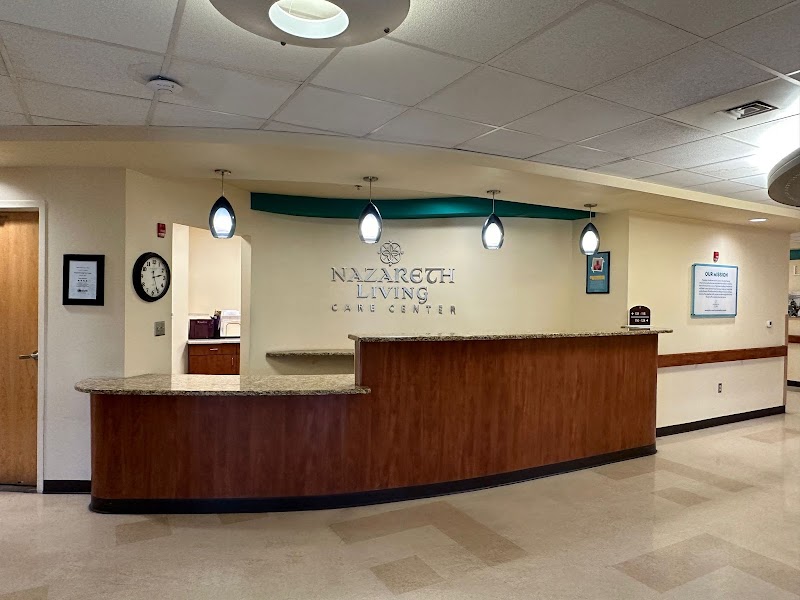
How is Nazareth Living Staffed?

CMS rates NAZARETH LIVING CARE CENTER's staffing level at 2 out of 5 stars, which is below average compared to other nursing homes. Staff turnover is 42%, compared to the Texas average of 46%. This relatively stable workforce can support continuity of care. RN turnover specifically is 57%, which is notably high. RNs provide skilled clinical oversight, so turnover in this role can affect medical care quality.

What Have Inspectors Found at Nazareth Living?

State health inspectors documented 56 deficiencies at NAZARETH LIVING CARE CENTER during 2022 to 2025. These included: 56 with potential for harm. While no single deficiency reached the most serious levels, the total volume warrants attention from prospective families.
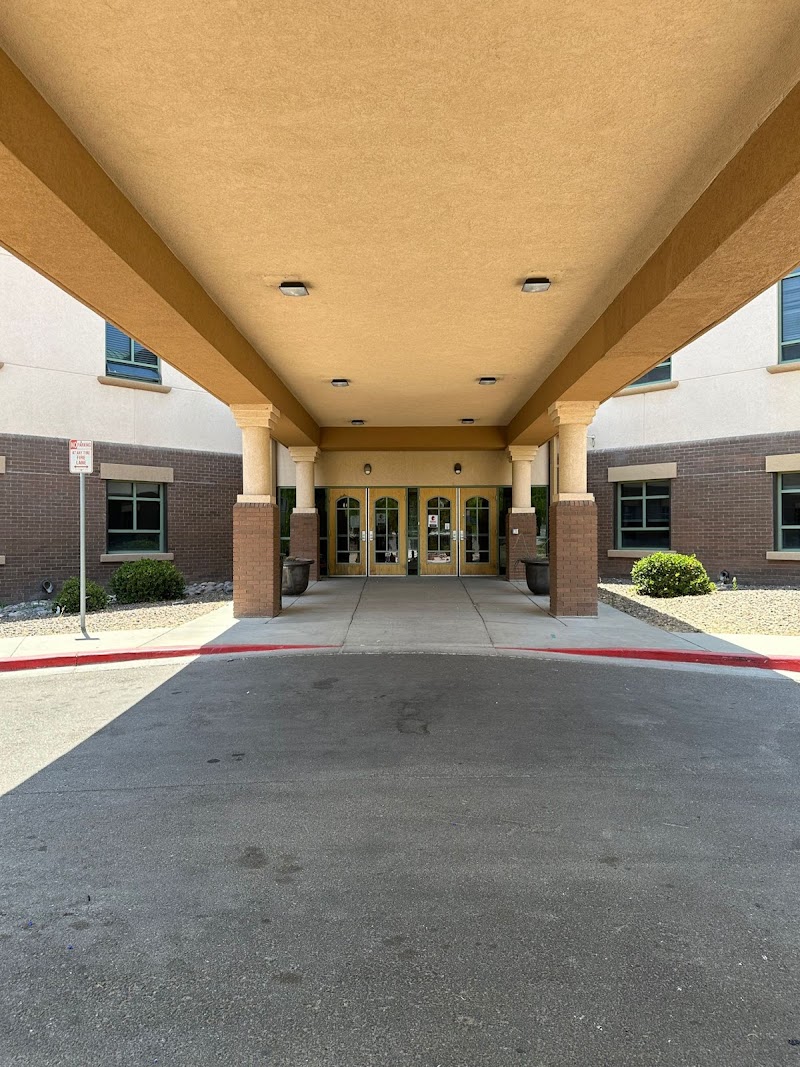
Who Owns and Operates Nazareth Living?

NAZARETH LIVING CARE CENTER is owned by a for-profit company. For-profit facilities operate as businesses with obligations to shareholders or private owners. The facility is operated by PARADIGM HEALTHCARE, a chain that manages multiple nursing homes. With 74 certified beds and approximately 67 residents (about 91% occupancy), it is a smaller facility located in EL PASO, Texas.

How Does Nazareth Living Compare to Other Texas Nursing Homes?

Compared to the 100 nursing homes in Texas, NAZARETH LIVING CARE CENTER's overall rating (3 stars) is above the state average of 2.8, staff turnover (42%) is near the state average of 46%, and health inspection rating (2 stars) is below the national benchmark.

What Should Families Ask When Visiting Nazareth Living?

Based on this facility's data, families visiting should ask: "Can you walk me through typical staffing levels on day, evening, and night shifts?" "Can I visit during a mealtime to observe dining assistance and food quality?" "How do you handle medical emergencies, and what is your hospital transfer rate?" "Can I speak with family members of current residents about their experience?" These questions are particularly relevant given the below-average staffing rating.

Is Nazareth Living Safe?

Based on CMS inspection data, NAZARETH LIVING CARE CENTER has a clean safety record: no substantiated abuse findings (meaning no confirmed cases of resident harm), no Immediate Jeopardy citations (the most serious violation level indicating risk of serious injury or death), and is not on the Special Focus Facility watch list (a federal program monitoring the lowest-performing 1% of nursing homes). The facility has a 3-star overall rating and ranks #1 of 100 nursing homes in Texas. While no facility is perfect, families should still ask about staff-to-resident ratios and recent inspection results during their visit.

Do Nurses at Nazareth Living Stick Around?

NAZARETH LIVING CARE CENTER has a staff turnover rate of 42%, which is about average for Texas nursing homes (state average: 46%). Moderate turnover is common in nursing homes, but families should still ask about staff tenure and how the facility maintains care continuity when employees leave.

Was Nazareth Living Ever Fined?

NAZARETH LIVING CARE CENTER has no federal fines on record. CMS issues fines when nursing homes fail to meet care standards or don't correct problems found during inspections. The absence of fines suggests the facility has either maintained compliance or corrected any issues before penalties were assessed. This is a positive indicator, though families should still review recent inspection reports for the full picture.

Is Nazareth Living on Any Federal Watch List?

NAZARETH LIVING CARE CENTER is not on any federal watch list. The most significant is the Special Focus Facility (SFF) program, which identifies the bottom 1% of nursing homes nationally based on persistent, serious quality problems. Not being on this list means the facility has avoided the pattern of deficiencies that triggers enhanced federal oversight. This is a positive indicator, though families should still review the facility's inspection history directly.