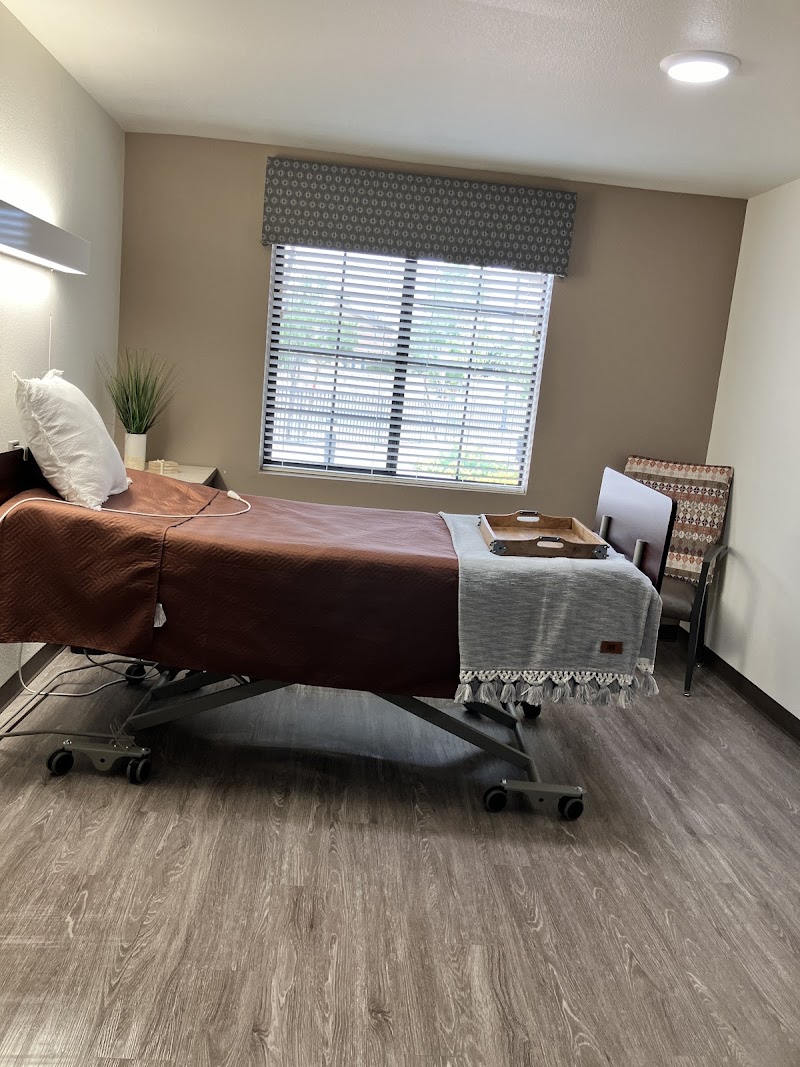
Avir at Tierra Este

14300 PEBBLE HILLS BLVD, EL PASO, TX 79938 (915) 955-9998
For profit - Limited Liability company 120 Beds AVIR HEALTH GROUP Data: November 2025
Trust Grade
30/100
#934 of 1168 in TX
Last Inspection: September 2025

Inspected within the last 6 months. Data reflects current conditions.

Overview

Avir at Tierra Este has a Trust Grade of F, indicating significant concerns about the facility's quality of care. With a state rank of #934 out of 1168 in Texas, they are in the bottom half of nursing homes, and #17 out of 22 in El Paso County, suggesting that there are many better local options. Although the facility is improving-reducing issues from 33 in 2024 to 10 in 2025-its staffing situation is concerning, with a poor rating of 1/5 stars and a high turnover rate of 68%, significantly above the state average of 50%. Families should note that there have been specific incidents, such as the facility being without a Director of Nursing for over a week, and failure to maintain a clean environment, which included dirty floors and unsanitary food preparation practices. While there are efforts to improve, the high number of deficiencies and low staffing quality raise red flags for potential residents.

Trust Score
F
30/100
In Texas
#934/1168
Bottom 21%
Safety Record
Low Risk
No red flags
Inspections
Getting Better
33 → 10 violations
Staff Stability
⚠ Watch
68% turnover. Above average. Higher turnover means staff may not know residents' routines.
Penalties
⚠ Watch
$31,752 in fines. Higher than 99% of Texas facilities. Major compliance failures.
Skilled Nurses
⚠ Watch
Each resident gets only 5 minutes of Registered Nurse (RN) attention daily — below average for Texas. Fewer RN minutes means fewer trained eyes watching for problems.
Violations
⚠ Watch
54 deficiencies on record. Higher than average. Multiple issues found across inspections.
★☆☆☆☆
1.0
Overall Rating
★☆☆☆☆
1.0
Staff Levels
★★★☆☆
3.0
Care Quality
★★☆☆☆
2.0
Inspection Score
Stable
2024: 33 issues
2025: 10 issues

The Good

  • Full Sprinkler Coverage · Fire safety systems throughout facility
  • No fines on record

Facility shows strength in fire safety.

The Bad

1-Star Overall Rating

Below Texas average (2.8)

Significant quality concerns identified by CMS

Staff Turnover: 68%

22pts above Texas avg (46%)

Frequent staff changes - ask about care continuity

Federal Fines: $31,752

Below median ($33,413)

Moderate penalties - review what triggered them

Chain: AVIR HEALTH GROUP

Part of a multi-facility chain

Ask about local staffing decisions and management

Staff turnover is elevated (68%)

20 points above Texas average of 48%

The Ugly 54 deficiencies on record

Sept 2025 8 deficiencies
CONCERN (D)

Potential for Harm - no one hurt, but risky conditions existed

Deficiency F0558 (Tag F0558)

Could have caused harm · This affected 1 resident

**NOTE- TERMS IN BRACKETS HAVE BEEN EDITED TO PROTECT CONFIDENTIALITY** Based on observation, interview and record review the facility failed to ensure residents were provided services with reasonable...

Read full inspector narrative →
**NOTE- TERMS IN BRACKETS HAVE BEEN EDITED TO PROTECT CONFIDENTIALITY** Based on observation, interview and record review the facility failed to ensure residents were provided services with reasonable accommodation of needs and preferences for 2 of 6 residents (Residents #1, and #21) reviewed for call lights. The facility failed to ensure resident call lights were within reach for 2 Residents #1, and #21. This failure placed residents at risk of having their needs unmet when they are unable to contact staff. Findings included: Resident #1 Record review of Resident #1's admission record dated 09/05/2025 revealed a 74- year-old female with an original admission date of 10/17/2024 and a readmission date of 05/04/2025. Record review of Resident #1's history and physical dated 8/18/2025 revealed diagnoses of dementia and seizure disorder. Record review of Resident #1's annual MDS dated [DATE] revealed a BIMS score of 03 indicating severe cognitive impairment. Record review of Resident # 1's care plan revised on 11/08/2024 revealed resident was at risk for injury related to seizure disorder, she was receiving anti-convulsant medications and was at risk for side effects, adverse reactions and toxicity of medication. Nursing intervention included keeping call light within reach. In an observation and interview on 09/02/2025 at 2:36 p.m., during initial screening, call light was observed on the floor while resident was asleep in the bed. At 2:58PM CNA D entered the room briefly and located resident asleep and proceeded to leave room. CNA D was asked about call light placement for Resident #1. Upon entering the room, call light was still found on the floor. CNA D confirmed this was not appropriate and the call light should've been within the resident's reach. CNA D confirmed when she initially checked on the resident, she did not ensure call light was within reach before exiting room. Resident # 21 Record review of Resident #21's admission record dated 09/05/2025 revealed an 80- year-old female with an original admission date of 12/29/2023 and a readmission dated of 06/27/2025. Record review of Resident #21's history and physical dated 07/28/2025 revealed diagnoses of hemiparesis (partial paralysis of one side of the body), and acute right sided weakness. Record review of Resident #21's quarterly MDS dated [DATE] revealed a BIMS of 02 indicating severe cognitive impairment. Record review of Resident # 21's care plan revised on 01/21/2025 revealed resident had a potential for selfcare deficit in ADLs related to history of cerebral vascular accident with right sided hemiparesis. Nursing interventions included keeping pad call light within reach. An observation and interview on 09/02/2025 at 2:04 PM revealed Resident #21 required a touch pad call light for communication purposes which was out of reach for the resident during initial observation. Call light pad was attached to the top right of the bed clipped to the bedliner. Resident had limited range of motion on right side and could not reach call light if needed. Interview with CNA D, revealed the call light was out of reach for the resident, based on condition. In an interview on 09/04/2025 at 11:33 AM with LVN C revealed Call lights were used for residents to communicate needs. He stated that the call light was supposed to be kept within reach of the resident without them having to extend their arms. A risk of the call light not being within reach would be needs could go unanswered, they could fall trying to get the call light, they could feel distress and feel abandoned. He stated that call lights were answered as soon as possible and nurses and CNA's were to round every 2 hours or sooner. He stated that angel rounds were done every morning by supervisors to ensure call lights were within reach. In an interview on 09/05/2025 at 11:25 AM with the ADON revealed call light was used to notify staff that a resident needed help or was in need of something. It was used as a form of communication. She stated that any staff member could respond to a call light and notify specialized staff to address resident's needs. Nursing staff and CNAs were required to reposition call light if found out of reach of resident. She stated that angel rounds were done between 8-9AM conducted by department heads as a way to provide an extra set of eyes to residents. The ADON stated charge nurse, ADON, DON were responsible for ensuring call lights were being responded to. She stated that pad call lights were used as intervention for individuals with limited range of motion and varied on individuals with their care plan, range of motion and severity of paralysis. She reported August 2025 was the last in-service done on call lights. She stated that residents could be in danger if they did not have access to the call light, especially in nonverbal residents because it was a vital form of communication. She stated that it was a potential for residents to be neglected. The ADON stated the resident could feel anxious, anger, embarrassment dependent on situation. In an interview on 09/05/2025 at 11:51 AM with the DON she stated a call light was a device used for a patient to request assistance. She stated that call lights were supposed to be placed within residents' reach meaning as long as it was within arm reach. She stated that everybody was responsible for ensuring call lights were within reach. All staff were capable of positioning call lights in reach. She stated rounds were made every two hours, allowing more frequent opportunities to ensure call light is within reach, review environment. Residents with severe contractors and limited ranges of motion. Residents with call pads should have it within their reach. The DON educate staff on call lights on clipping call lights to residents' bed. In both photos call light is not in reach. Residents could feel anxious, potential for neglect if a resident doesn't have call light in reach. In an interview with the Administrator on 09/05/2025 at 12:15 PM revealed, the call light was used to notify staff that the resident needed something, it was used for an array of things to substantiate communication. She stated that call lights should be within easy reach of the residents. She stated that as long as the arm extremity can reach it without torso movement it was considered within reach. She stated that all staff were responsible for answering call lights to include the varying departments. All staff and department head's that conducted angel rounds were responsible for ensuring the call light was within reach. She reported rounds were done every two hours by nursing staff. She stated that call lights not being with reach could pose a risk for residents needs to not be met in a timely manner. This could lead to skin issues, feeling anxious, mad, and feeling of helplessness. She stated that last Inservice for all light was done two weeks ago. Record review of facility policy titled Call System, Residents updated 01/2025 read in part Residents are provided with a means to call staff for assistance through a communication system that directly calls a staff member or a centralized workstation.
CONCERN (D)

Potential for Harm - no one hurt, but risky conditions existed

Comprehensive Care Plan (Tag F0656)

Could have caused harm · This affected 1 resident

**NOTE- TERMS IN BRACKETS HAVE BEEN EDITED TO PROTECT CONFIDENTIALITY** Based on observation, interview and record review, the facility failed to develop and implement a comprehensive person-centered ...

Read full inspector narrative →
**NOTE- TERMS IN BRACKETS HAVE BEEN EDITED TO PROTECT CONFIDENTIALITY** Based on observation, interview and record review, the facility failed to develop and implement a comprehensive person-centered care plan that includes measurable objectives and timeframes to meet a resident's medical and nursing needs for one (Resident #13) of six residents reviewed for care plans.The facility failed to have a comprehensive person-centered care plan for Resident #13 to address Resident's urinary indwelling foley catheter.This failure could place residents at risk for unmet care needs, complications with urinary catheter use, and a decline in their overall health and quality of life. Findings Include:Record review of Resident #13's face sheet dated 09/03/25 revealed resident was an [AGE] year-old female with an admission date 06/02/25.Record review of Resident #13's Quarterly MDS dated [DATE] revealed a BIMS score of 1, indicating severe cognitive impairment. The Quarterly MDS, under Section H-Bladder and Bowel, revealed Resident #13 had an indwelling catheter.Record review of Resident #13's history and physical dated 08/11/25 revealed a medical history of: Acute Urinary retention (sudden involuntary inability to completely empty the bladder causing discomfort and can lead to complications) postoperatively requiring Foley catheter placement (a flexible and sterile tube through the urethra, helps continuously drain urine from the bladder), AKI (Acute Kidney Injury, a decline in kidney function causing a decline in the kidney's function of filtering waste from blood), and Dementia.Record review of Resident #13's care plan [SP1] did not include or address the resident's indwelling foley catheter.During an observation on 09/02/25 at 10:45 AM, Resident #13 was in bed with her foley catheter placed on the side of bed. In an interview on 09/05/25 at 11:12 AM with LVN F, she stated MDS nursing were responsible for the care plan. She stated care plans were evaluated quarterly, and as needed. She stated the residents having care plans without information addressing the residents' conditions such as a foley catheter meant the staff would not be able to provide care specific to the catheter.In an interview on 09/05/25 at 12:05 PM with the MDS Nurse, she stated nursing was responsible for compiling the resident's care plan regarding their medical needs such as a foley catheter. She stated MDS Nursing staff monitored the residents' care plans every 3 months, or quarterly. The MDS Nurse stated residents' foley catheters needed to be included in the care plan because it was the plan of care centered to the resident including their conditions. She stated there was a risk resident would get improper care if their conditions were not care-planned.In an interview on 09/05/25 at 01:01 PM with the DON, she stated care plan's purpose was for staff to provide the resident's plan of care specific to the resident. The DON stated resident conditions, such as resident's having an indwelling foley catheter, needed to be included in residents' care plan. She stated MDS nursing were responsible for care plans, which were reviewed upon admission and every 3 months or as needed. The DON stated the risks for the residents of their conditions such as indwelling catheters included in their care plan, was potential for incomplete patient care.In an interview on 09/05/25 at 02:11 PM with the Administrator revealed care plans were the responsibility of all departments such as nursing, social services, therapy, and dietary departments all include their plans of care for the resident. The Administrator stated IDT (interdisciplinary team) meetings were conducted weekly and they evaluated residents' care plans. She stated the risks of incomplete care plans included inaccurate care for residents such as staff being unaware of monitoring for symptoms of infection, for example for foley care.Record review of the facility's policy titled Care Plans, Comprehensive Person-Centered, with no date read in part: Policy Statement- A comprehensive, person-centered care plan that includes measurable objectives and timetables to meet the resident's physical, psychosocial and functional needs is developed and implemented for each resident. It also noted, The comprehensive, person-centered care plan: c. includes the resident's stated goals upon admission and desired outcomes; e. reflects currently recognized standards of practice for problem areas and conditions.
CONCERN (D)

Potential for Harm - no one hurt, but risky conditions existed

Pharmacy Services (Tag F0755)

Could have caused harm · This affected 1 resident

**NOTE- TERMS IN BRACKETS HAVE BEEN EDITED TO PROTECT CONFIDENTIALITY** Based on interview and record review, the facility failed to provide pharmaceutical services (including procedures that assure t...

Read full inspector narrative →
**NOTE- TERMS IN BRACKETS HAVE BEEN EDITED TO PROTECT CONFIDENTIALITY** Based on interview and record review, the facility failed to provide pharmaceutical services (including procedures that assure the accurate acquiring, receiving, dispensing, and administering of all drugs and biologicals) to meet the needs of each resident for 1 (Resident # 51) of 6 reviewed for medication administration. The facility failed to ensure Licensed Staff signed the individual control drug record for Resident #51's after administering controlled medication on 09/02/2025 and 09/03/2025. This failure could place residents at risk for not receiving the intended therapeutic response of prescribed medications and drug diversion of controlled substances. The findings include: Resident # 51Review of Resident #51' s admission Record dated 09/04/2025 revealed [AGE] year-old male with an initial admission date of 02/14/2025 and readmission date of 07/05/2025. Review of Resident #51's Diagnoses dated 09/04/2025 revealed a diagnosis of insomnia (persistent problems falling asleep and staying asleep). Review of Resident #51 's 5-day MDS (Minimum Data Set) assessment dated [DATE] revealed a BIMS score of 10 indicating moderate cognitive impairment. Review of Resident #51 's Care Plan revised 08/21/2025 revealed resident was on sedative/ hypnotic therapy (Temazepam) related to insomnia. Review of Resident #51's Medication Administration Record (MAR) dated September 2025 revealed Temazepam Oral Capsule 7.5 MG (Temazepam) Give 1 capsule by mouth at bedtime for insomnia. Review of Resident #51's individual control drug record for medication Temazepam on 09/04/25 at 11:35 am revealed two missing nurse signatures on 09/02/2025 and 09/03/2025. An interview on 09/05/2025 at 1:30PM with the DON, revealed that nurses were trained to look at residents' orders, make sure it was the right medication for the right resident and administer medication, and sign the individual control drug record it as soon as the nurse was done administering medication. She stated that this was done to create a clear record of who administered the medication, when and to whom, allowing tracking of controlled medication. She stated that she did not know the risks of not signing the individual narcotic sheet. She stated that the ADON's and herself were responsible for ensuring that all narcotic records were adequately completed. She stated that the ADON's and herself completed random audits throughout the week to ensure they were filled out correctly. She stated that there had been an in-service to staff regarding this recently in August. In an interview on 09/05/2025 at 1:50 PM with RN J, she stated that the purpose of the individual narcotic record was to have a count of narcotic medications, to know that it was the right resident, right dose and to make sure that the correct medication of resident was being given. She stated that she was trained to look in the book, locate the individual narcotic record for the resident and to ensure the count matched the sheet before being given. Nurses were to sign and document as soon as the medication was pulled. She stated that signing the narcotic sheet was a form of acknowledging that the medication was given at the right time and the correct amount was given. She stated that narcotic sheets should be filled out in their entirety to avoid drug diversion. She stated that the facility did provide an in-service regarding this, she could not recall the date. An interview with the Administrator on 09/05/25 at 2:39 PM, revealed that the purpose of an individual narcotic sheet was to keep track of the narcotics being administered and to ensure that drug diversion was not happening. She stated that it kept track of the times they were given, and who was administering them. She stated that it was important for the nurses to sign the sheet when administering the medication, because if there was an issue with the medication, they knew what nurse last gave it. She stated that diversion of medications was the risk because it would not be known who had access to it last. She stated that she did not recall if an in-service was done regarding this. Record Review of the facility's policy titled Controlled Substances dated 01/2025 read in part When a controlled medication is administered, the licensed nurse administering the medication immediately enters the following information on the accountability record when removing dose from controlled storage . Date and time of administration, amount administered and the signature of the nurse administering the dose.
CONCERN (D)

Potential for Harm - no one hurt, but risky conditions existed

Infection Control (Tag F0880)

Could have caused harm · This affected 1 resident

**NOTE- TERMS IN BRACKETS HAVE BEEN EDITED TO PROTECT CONFIDENTIALITY** Based on observations, interviews, and record review, the facility failed to establish and maintain an infection control program...

Read full inspector narrative →
**NOTE- TERMS IN BRACKETS HAVE BEEN EDITED TO PROTECT CONFIDENTIALITY** Based on observations, interviews, and record review, the facility failed to establish and maintain an infection control program designed to provide a safe, sanitary, and comfortable environment and to help prevent the development and transmission of communicable diseases and infections for one (Resident # 63) of fourteen residents observed for infection control in that: Resident #63's catheter drainage collection bag was left on the floor, and the wheel of her side table was on top of the bag. This deficient practice could result in cross contamination, spread of infection and could result in a urinary tract infection.The findings included:Record review of Resident #63's admission record dated 09/03/2025, revealed the resident was admitted on [DATE].Record review of Resident #63's history and physical revealed the resident was an [AGE] year-old female with a past medical history of significant dementia (a decline in memory and other thinking skills), chronic kidney disease (long-term loss of kidney function), atrial fibrillation (an irregular and often rapid heart rate), coronary artery disease (a buildup of plaque in the arteries that supply blood to the heart). Record review of Resident #63's admission MDS assessment dated [DATE] revealed the resident had a BIMS score of 0 indicating the resident's cognition was severely impaired. The MDS revealed under section GG, for functional abilities, the resident needed maximal assistance (where the helper does more than half the effort) with eating, oral, toileting, showering and dressing. Under section H, for Bladder and Bowel, MDS indicated under urinary continence, the resident was occasionally incontinent, and under bowel continence, the resident was always incontinent. The MDS revealed for the care area assessment (CAA) summary, the resident triggered for urinary incontinence and indwelling catheter (a thin, flexible tube that is inserted into a person's body and left in place for a period of time to drain fluids, such as urine from the bladder, or to deliver medication).Record review of Resident #63's care plan dated 08/01/2025 revealed the resident was at risk of urinary tract infections related to incontinent bladder and bowel and stated the goal was for the resident to be in a clean, dry state to prevent complications of incontinence by checking and changing the resident at regular intervals. It revealed that Resident #63 was at risk for edema (swelling caused by excess fluid in the body's tissues), SOB (shortness of breath), fluid volume overload (a condition where the body has too much water and sodium), related to a diagnosis of renal failure (a condition in which the kidneys lose the ability to remove waste and balance fluids).In an observation and interview on 09/02/2025 at 10:35 AM with the CMA, Resident #63's catheter drainage collection bag was observed on the floor, and the wheel of her side table was on top of the bag. CMA stated the side table's wheel was dangerously clamping the bag, posing a risk for it to tear and spill. The CMA stated this would create an infection control issue, and if someone stepped on the spilled contents, they could slip and sustain a fall or injury. The CMA explained that the resident could contract an infection because the bag was on the floor, risking contamination. In an interview on 09/02/2025 at 10:45 AM with LVN C, he stated the bag was improperly touching the floor, and the side table's wheel shouldn't be on top of the foley bag. LVN C said the bag could tear, spilling its contents and creating an infection risk for the resident, staff and visitors in the facility due to contamination.In an interview on 09/03/2025 at 2:53 PM with the DON, she stated it was unacceptable for the foley bag to be on the floor, where it was being pinched by the wheel from the resident's side table. The DON said this created a pathway for bacteria to enter, which could cause an infection to the resident. The DON stated the spilled contents could also lead to a potential fall hazard to anyone in the facility who entered the room and would create an infection hazard if the resident had infections that could be transmitted to other residents.In an interview on 09/03/2025 at 3:03 PM with the IP, she stated the foley bag was not supposed to be touching the floor. She said the wheel on top of the bag could tear it and spill its contents creating an infection control issue. The IP said foley bags should never touch the floor because germs could get in or out, causing an infection and potentially leading to the resident becoming septic. In an interview on 09/04/2025 at 1:23 PM with CNA A, she stated the foley bag was touching the floor, creating a risk of contamination to the resident. She said the wheel of the side table was on top of the bag and could tear it, spilling the contents. CNA A explained this could create a cross-contamination risk, as staff move throughout the facility and could carry infections to other places. In an interview on 09/04/2025 at 2:21 PM with CNA B, she stated the foley bag was directly on the floor, creating a risk for infection control. She said foley bags should never touch the floor because of the risk of infection to the resident. She also stated that with the wheel on top of the bag, if the resident was repositioned, staff might not notice the bag was underneath the wheel, which could be very painful for the resident if the tubing was pulled. CNA B said there was a risk of the bag being torn by the wheel, spilling its contents and creating an infection control issue. She said the floors could become contaminated, and staff could transport bacteria to the entire facility, and even to their families' homes on their shoes if the resident had an infection. In an interview on 09/05/2025 at 2:10 PM with the Administrator, she stated that the foley bag should never touch the floor because of the risk of infection to the resident from bacteria on the floor, which could worsen their condition. She also stated there was a risk of infection to other residents, staff, and visitors if the bag was torn by the side table wheel, and its contents spilled. The Administrator said there was also a fall risk if the contents spilled, and someone walked through it.Record review of the facility's policy and procedure updated in July 2024 titled Catheter Care, Urinary, read in part: PurposeThe purpose of this procedure is to prevent catheter-associated urinary tract infections.Infection Controlb. Be sure the catheter tubing and drainage bag are kept off the floor.
CONCERN (E)

Potential for Harm - no one hurt, but risky conditions existed

Resident Rights (Tag F0550)

Could have caused harm · This affected multiple residents

**NOTE- TERMS IN BRACKETS HAVE BEEN EDITED TO PROTECT CONFIDENTIALITY** Based on observation, interview, and record review, the facility failed to treat each resident with respect and dignity and care...

Read full inspector narrative →
**NOTE- TERMS IN BRACKETS HAVE BEEN EDITED TO PROTECT CONFIDENTIALITY** Based on observation, interview, and record review, the facility failed to treat each resident with respect and dignity and care for each resident in a manner and in an environment that promotes maintenance or enhancement quality of life for two (Residents #7, and #9) of eight residents who were reviewed for dignity.The facility failed to provide adequate access to disposable briefs, and wipes for Resident #9.The facility failed to provide mechanical lift nets to their assigned resident within a reasonable timeframe causing the resident to stay in bed for prolonged period of time.The facility failed to promote dignity while dining when staff did not serve Resident #7 lunch almost 15 minutes after their tablemates were served during initial dining room observation on 09/02/25.These is failures could placed the residents at risk of poor self-esteem and decreased self-worth.Findings included:Briefs & WipesRecord review of Resident #9's face-sheet dated 09/02/25, revealed a [AGE] year-old female with an admission date 07/18/24, and re-admission date of 01/30/25.Record review of Resident #9's Quarterly MDS dated [DATE], revealed a BIMS score of 15, indicating resident was cognitively intact.Record review of Resident #9's history and physical dated 06/25/25, revealed a medical diagnosis of: Chronic Obstructive Pulmonary Disease (a lung and airway disease that restrict your breathing), schizophrenia, congestive heart failure, depressive disorder, anxiety disorder, and fibromyalgia (a chronic condition causing pain throughout your muscles and soft tissues).Record review of Resident #9's care plan with revised date 06/21/25, included resident was at risk for UTI's and skin breakdown, which noted interventions for staff including using incontinent briefs as needed. In an interview on 09/02/25 at 10:46 AM with Resident #9, she stated there was a limit of briefs provided to residents for every shift. She stated staff were always looking in other resident rooms looking for briefs or wipes on a daily basis because they do not have access to supplies. Resident #9 stated the nursing facility should be sufficiently supplied due to briefs and wipes being basic rights. She stated it was harder for the weekend staff to gain access to supplies, so the delay in care was longer. Resident #9 stated she felt the delay in care was a dignity issue.An observation on 09/05/25 with the ADON was conducted of the Central Supply room. A surplus of wipes, briefs, and supplies were observed.In an interview on 09/04/25 at 11:40AM with LVN E, they stated that wipes and briefs had been harder to obtain for approximately 3 months, and exceptional difficulties occurred over the past month. LVN E confirms residents who are not provided adequate supplies or have trouble obtaining them infringes on the resident's rights. LVN E denies any history of resident's stock piling supplies in the past to set on this new policy.In an interview on 09/04/25 at 01:41 PM with CNA A, she stated if supplies finished, they were to request more with Central Supply because they would only provide certain amounts of briefs and wipes on the floor for each shift. She stated the concern had been rising since approximately 3 months, and it was reported to the ADON's and the DON before. She stated the Administrator was also aware but there had been no resolution or change. CNA A stated the administration were responsible for ensuring staff were well supplied and stocked for the shift. She stated it was for patient care, and supplies being secured in the Central Supply closet was delaying care for residents.In an interview on 09/04/25 at 02:09 PM with CNA B, she stated there were not enough briefs which was reported to the nursing supervisor. She stated Central Supply was responsible for supplying floor staff with materials such as briefs and wipes. She stated the administration were responsible for monitoring the supplies and its' amount. She stated the risk of residents not having their briefs or wipes readily available were skin breakdown, or a dignity issue.In an interview on 09/05/25 at 10:50 AM with LVN H, she stated there was a daily issue with nursing staff having wipes and briefs on the floor. She stated this could be a risk for residents, by contributing to an increase in Urinary Tract Infections. LVN H stated there were briefs and wipes secured in Central Supply, which only limited staff had access. She stated Central Supply provided a certain number of briefs and wipes to each hall. She stated the facility did not take into account the residents with conditions that caused increase in urination, or accidents, such as dementia. She stated this was a dignity issue for residents as the residents had to wait prolonged time during change which can cause skin irritation.In an interview on 09/05/25 at 01:09 PM with the DON, she stated she provided the code to the supply closet where all briefs and wipes were located to supervisor staff of each shift. She stated the last call for access from staff was approximately 2-3 weeks ago. She stated there were risks for residents if their needs were not met, such as basic needs, which included a dignity issue.In an interview on 09/05/25 at 11:33 AM with Central Supply, he stated the facility placed orders for supplies on Mondays or Tuesday, which is authorized by the Administrator. He stated the Administrator reviewed all his supply order requests before submitting, and the Administrator would add or subtract supplies. He stated he was advised by the Administrator of corporate's weekly budget for supplies was strict, which was to not exceed $1,500 for briefs and wipes. He stated the order then went through corporate for final review before the supply request was submitted. He stated the corporate office also added or subtracted supplies. He stated he was notified by various staff of their concern of not being provided enough supplies. He stated these concerns were reported to the Administrator, and if he could request more, he would ensure the residents have the sufficient number of briefs and wipes on the floor. He stated he provided a certain amount of briefs and wipes on the floor by placing them in a cabinet in each hall. He stated he stocked them in the morning when he started his shift, which was approximately 6:30 AM, and again at 3:00 PM. He stated the staff could call him for access to the Central Supply room and the last time was 1 month ago. He stated the risks for residents included a dignity issue.Mechanical Lift NetIn an interview on 09/02/25 at 10:55 AM with Resident #9, she stated she was told the week before, unsure of exact date, by an unknown person of being advised to wait to be transferred out of her bed until the staff could find a mechanical lift net. Resident #9 stated it was prolonged waiting, which was upsetting to her.In an interview on 09/04/25 at 01:34 PM with CNA A, she stated the nursing facility bought and assigned a mechanical lift net for each resident that required them. She stated if the resident's mechanical lift net became soiled, it would need to be washed through the laundry services which should only take a few hours. She stated if residents were to be in bed for prolonged periods of time, it could pose a risk for pressure ulcers, or depression. She stated there was an issue with having enough supplies on the floor which had been reported to the DON and the Administration, but there were no reported changes in supply amount.In an interview on 09/05/25 at 11:53 AM with the Housekeeping Supervisor, he stated the process for washing Mechanical Lift Net included using the washing machine, but the nets required to be air dried. He stated he was aware of reports by staff that dirty Mechanical Lift Nets were being left in the rooms when protocol called for nursing staff to immediately place them in dirty linen to expedite the cleaning process. He stated he reported this issue with the Administrator which she ordered more nets one month ago. He stated staff were in-serviced on process to dispose dirty Mechanical Lift Nets to Laundry. He stated the risks of Mechanical Lift Nets not being readily available for the residents included bed sores, and delay of care since residents could not be transferred without the net.In an interview on 09/05/25 at 01:21 PM with the DON, she stated she was not currently aware of a mechanical lift net shortage issue. She stated there were risks for not transferring residents within their scheduled times, such as isolation for the resident, or skin integrity issues. She stated the CNA's and nurses were responsible for monitoring their residents throughout their shift and transferring the residents in and out of bed.In an interview on 09/05/25 at 02:13 PM with the Administrator, she revealed she had ordered mechanical lift nets at the end of July 2025. She stated, if the issue was that mechanical lift nets were not being washed immediately, or placed in laundry for it to be washed, then it could delay the washing process. She stated this could delay the residents' care by delaying them getting transferred out of bed. The Administrator stated the risks for residents not being transferred in or out of bed as ordered, included the risks for pressure sores, or weakening of the muscles which can contribute to risk for falls. She stated nursing was responsible for ensuring mechanical lift nets were getting to laundry so the nets could get washed, and the Laundry department was responsible for washing/drying resident belongings, including the Mechanical lift net, in a timely manner.Dining roomRecord review of Resident #7's face-sheet dated 09/02/25 revealed resident was a [AGE] year-old male with an admission date 11/03/23.Record review of Resident #7's Quarterly MDS dated [DATE], revealed a BIMS score of 3, indicating severe cognitive impairment.Record review of Resident #7's history and physical dated 08/07/25, revealed a medical history of bipolar disorder (a chronic mental condition that is characterized by extreme highs and extreme lows), dementia (cognitive decline that can affect activities of daily living such as behaviors, thinking, and memory), and cognitive communication deficit.Observation on 09/02/25 of initial lunch meal serving to residents, revealed 3 of 4 residents were served at 12:30 PM. Resident #7, one of the four residents at the table, was observed waiting for his lunch tray and stated he would like a tray. This surveyor informed staff and Resident #7 was served his lunch tray at 12:43 PM. 2 of 3 of his tablemates were observed finished with their meal when Resident #7 was served.In an interview on 09/04/25 at 01:28 PM with CNA A, she stated the nurses were responsible for confirming all residents in the dining room were served during mealtimes. CNA A stated the nurses confirm which residents were in the dining room to be served during mealtimes, versus residents whose trays were sent to their rooms. She stated the risk for the resident being served after his tablemates was a self-esteem issue as it could make them feel bad to eat last.In an interview on 09/05/25 at 11:09 AM with LVN F, she stated all nursing staff were responsible for ensuring residents had their trays during mealtimes. LVN F stated CNA's pass out trays to residents while nurses confirm trays for residents. She stated the risk for residents being served at different times could affect the resident's self-esteem.In an interview on 09/05/25 at 01:05 PM with the DON, she stated the nurses and CNA's were responsible for ensuring trays were served to residents in a timely manner. She stated that herself, and the ADON's, or the charge nurses, assisted with serving trays as needed. The DON stated the risk for the resident included a dignity issue.In an interview on 09/05/25 at 02/07/25 with the Administrator, she stated there were multiple staff members responsible for ensuring all residents were served their meal tray. She stated that included the charge nurse, and herself. She stated it was important for residents to be served within a small timeframe because it can cause the resident not eating, to be uncomfortable watching other residents eating.Record review of Nursing Facility's policy ‘Resident Rights' read in part: 1. Federal and state laws guarantee certain basic rights to all residents of this facility. These rights include the resident's right to: A. a dignified existence; B. be treated with respect, kindness, and dignity; C. be free from abuse, neglect, misappropriation of property, and exploitation.
CONCERN (E)

Potential for Harm - no one hurt, but risky conditions existed

ADL Care (Tag F0677)

Could have caused harm · This affected multiple residents

**NOTE- TERMS IN BRACKETS HAVE BEEN EDITED TO PROTECT CONFIDENTIALITY** Based on observation, interview and record review, the facility failed to provide ADL care for 2 (Resident # 94 and Resident #97...

Read full inspector narrative →
**NOTE- TERMS IN BRACKETS HAVE BEEN EDITED TO PROTECT CONFIDENTIALITY** Based on observation, interview and record review, the facility failed to provide ADL care for 2 (Resident # 94 and Resident #97) of 12 residents reviewed for ADLs. The facility failed to maintain Resident # 94 and Resident #97's fingernails clean and free from debris.This failure could place residents who required assistance with ADL's and resided on secure units of unmet care needs. Findings included:Resident #94 Record review of Resident #94's admission Record dated 09/05/2025 revealed a 63- year-old female with an initial admission date of 07/28/2023 and a readmission date of 12/09/2024. Record review of Resident #94's Diagnosis Information dated 09/05/2025 revealed diagnosis of hemiparesis to right side due to cerebral vascular accident. Record review of Resident #94's Quarterly MDS dated [DATE] revealed a BIMS of 11 indicating moderate cognitive impairment. Section GG indicated resident was dependent meaning helper does all of the effort when preforming personal hygiene. Record review of Resident # 94's Care Plan revised on 08/21/2025 revealed resident had an ADL self-care deficit related to disease process and hemiparesis to right side due to previous cerebral vascular accident. An observation and interview on 09/02/2025 at 11:47am with Resident # 94 in Resident # 94's room revealed resident with long dirty fingernails to left hand. She stated that she wanted them cleaned and trimmed. Resident #97 Record review of Resident # 97's admission Record dated 09/04/2025 revealed a [AGE] year-old male with an admission date of 08/19/2025. Record review of Resident #97's Diagnosis Information dated 09/04/2025 revealed diagnoses of unspecified dementia. Record review of Resident # 97's admission MDS dated [DATE] revealed a BIMS score of 05 indicating severe cognitive impairment. Section GG indicated that resident needed set up or clean up assistance meaning helper provides verbal cues and/or touching/ steadying and/ or contact guard assistance as resident completes activity. Assistance may be provided throughout the activity or intermittently when preforming personal hygiene. Record review of Resident #97's care plan dated 08/20/2025 revealed resident had a self-care performance deficit related to dementia. An observation on 09/02/2025 at 10:14am in Resident # 97's room revealed residents' fingernails to be long, about one inch off of nail bed on hands bilaterallyIn an interview on 09/04/2025 at 11:13 AM with CNA G reported that CNAs were responsible for cleaning and trimming the nails of residents who were not diabetic. CNA G stated that if a resident was diabetic nursing was responsible for cutting their nails due to adverse risks to the resident's health. CNA G reported that CNAs were still responsible for maintaining the cleanliness and filing nails down no matter a resident's diagnosis. CNA G stated that if a resident denies having their nails clipped, nurses must talk to the resident and document the conversation. CNA G reported that the ADON and DON were responsible for ensuring staff were tending to residents' nail care. In an interview on 09/05/2025 at 9:39 AM, with LVN H, reported CNAs were responsible for filing, cleaning, clipping nails for nondiabetic residents. LVN H stated this task should be completed daily and reviewed by all nursing and CNA staff. LVN H confirmed the last in service for nail care was three months prior. LVN H reported potential outcomes for residents could result in resident breaking their skin and becoming infected from dirty nails. LVN H added that long nails could pose a threat to staff and other residents as well. LVN H closed that from a dignity perspective, residents could feel unheard and neglected if staff did not cut their nails after prompting. In an interview on 09/05/2026 at 1:30 p.m., with DON, she stated that residents' fingernails were trimmed as needed., she stated that CNA's would check if nails needed trimming when residents were showered. She stated that CNAs could trim residents' fingernails if they were not diabetic. She stated that it was CNA's and nurses' responsibility to ensure residents fingernails were kept trimmed and clean. She stated that risks of long fingernails included poor hygiene and infection since residents touch their faces and mouths. Record review of facility policy and procedure titled Fingernails/Toenails, Care of revised on 02/2018 read in part Nail care includes daily cleaning and regular trimming. Proper nail care can aid in prevention of skin problems around the nail bed. Trimmed and smooth nails prevent the resident from accidentally scratching and injuring his or her skin.
CONCERN (E)

Potential for Harm - no one hurt, but risky conditions existed

Respiratory Care (Tag F0695)

Could have caused harm · This affected multiple residents

**NOTE- TERMS IN BRACKETS HAVE BEEN EDITED TO PROTECT CONFIDENTIALITY** Based on observation, interview and record review, the facility failed to ensure residents who needed respiratory care were prov...

Read full inspector narrative →
**NOTE- TERMS IN BRACKETS HAVE BEEN EDITED TO PROTECT CONFIDENTIALITY** Based on observation, interview and record review, the facility failed to ensure residents who needed respiratory care were provided such care, consistent with professional standards of practice, for 3 (Residents #5, 29, and 58) of 6 residents reviewed for oxygen use. The facility failed to maintain Resident # 5, 29 and 58's oxygen concentrator filter free from lint and dust on 09/02/2025 This failure could place residents who receive continuous oxygen at risk for not having their air properly filtered. Findings Include: Resident #5 Record Review of Resident # 5's admission Record dated 09/05/25 revealed a [AGE] year-old male with an original admission date of 07/10/2025 and a readmission date of 06/23/2025. Record Review of Resident # 5's Medical Diagnosis record dated 09/05/2025 revealed medical diagnosis of Acute respiratory failure with hypoxia (lungs fail to adequately provide oxygen to the body, resulting in low blood oxygen levels). Record Review of Resident #5's Quarterly MDS dated [DATE] revealed Section O special treatments, procedures and programs noted resident on oxygen therapy. Record Review of Resident #5's Care Plan revised on 07/17/2025 revealed the resident was receiving oxygen therapy. An observation on 09/02/2025 at 9:58am, in Resident #5's room revealed resident lying in bed receiving oxygen via a nasal canula at 2 liters per minute. The oxygen concentrator air filter was observed with dust and lint. Resident #29 Record Review of Resident # 29's admission Record dated 09/05/2025 revealed an [AGE] year-old male with an admission date of 08/24/25. Record Review of Resident # 29's History and Physical dated 08/25/2025 revealed medical diagnosis of Acute respiratory failure with hypoxia (lungs fail to adequately provide oxygen to the body, resulting in low blood oxygen levels).Record Review of Resident # 29's 5-day MDS dated [DATE] revealed a BIMS score of 00, indicating a severe cognitive impairment. Section O special treatments, procedures and programs noted resident on oxygen therapy.Record Review of Resident #29's care plan revised 08/27/2025 revealed the resident was receiving oxygen therapy.An observation on 09/02/2025 at 10:14am, in Resident #29's room revealed resident lying in bed receiving oxygen via a nasal canula. The oxygen concentrator air filter was observed with dust and lint. Resident #58 Record Review of Resident # 58's admission Record dated 09/05/2025 revealed an [AGE] year-old female with an original admission date of 02/05/2025 and a readmission date of 06/20/2025. Record Review of Resident #58's History and Physical dated 06/19/2025 revealed a medical diagnosis of history of pneumonia (infection that inflames air sacs in one or both lungs, which may fill with fluid). Record Review of Resident #58's Quarterly MDS dated [DATE] revealed Section O Special treatments, Procedures, and Programs revealed Resident # 58 was receiving oxygen therapy. Record Review of Resident #58's care plan revised 07/17/2025 revealed resident had a potential for altered respiratory status/difficulty breathing related to chronic pulmonary edema and history of pneumonia. Interventions included administration of oxygen as per doctor's orders. An observation on 09/02/2025 at 11:15 am in Resident #58's room revealed resident lying in bed receiving oxygen via a nasal canula. The oxygen concentrator air filter was observed with dust and lint.In an interview on 09/04/2025 at 11:30 am with LVN F revealed that any nurse can check the oxygen concentrator air filter especially if it starts to beep, the air filter is the first thing that is checked to ensure there was no obstruction. She stated that air filters were checked on and cleaned every Sunday night on the 10pm - 6am shift. She stated that the risks of having dirty air filters was that the oxygen was not delivered the way it is supposed to be delivered. She stated that there was an Inservice on keeping oxygen filters clean approximately a couple of months ago. In an interview on 09/05/2025 at 1:30 pm with DON revealed that she was not sure who was responsible for cleaning the oxygen concentrator filters. She stated that she believed that the central supply person was the person that would monitor the air filters along with the nurses on the floor. She stated that dirty air filters interfere with the function of the machine itself. She stated that the noise of the concentrator could get loud, which could be uncomfortable for residents. She stated that it also affects the quality of oxygen being delivered to residents. She stated that there had been no Inservice to staff regarding clean air filters. Record Review of the Oxygen Concentrator Manual provided by the facility, revealed in part Cleaning of outer cabinet recommended interval of 7 days. Cleaning of air filter recommended cleaning interval of 7 days.
CONCERN (E)

Potential for Harm - no one hurt, but risky conditions existed

Deficiency F0761 (Tag F0761)

Could have caused harm · This affected multiple residents

**NOTE- TERMS IN BRACKETS HAVE BEEN EDITED TO PROTECT CONFIDENTIALITY** Based on observation, interview, and record review, the facility failed to label drugs and biologicals in accordance with curren...

Read full inspector narrative →
**NOTE- TERMS IN BRACKETS HAVE BEEN EDITED TO PROTECT CONFIDENTIALITY** Based on observation, interview, and record review, the facility failed to label drugs and biologicals in accordance with currently accepted professional principles, and include the appropriate accessory and cautionary instructions, and the expiration date when applicable for 2 of 14 residents (Resident #38 and Resident #72) reviewed for pharmacy services.Resident #38 and Resident #72 had an unlabeled clear plastic cup at bed side with Zinc Oxide pomade (skin ointment) and a tongue depressor in it, exposed, and within reach of other residents.This failure could place residents at risk of inaccurate drug administration and not having appropriate therapeutic effects. Findings included:Record review of Resident #38's admission record dated 09/03/25 revealed she was admitted on [DATE].Record review of Resident #38's history and physical dated 08/12/25 revealed a [AGE] year-old female diagnosed with primary osteoarthritis (a chronic degenerative joint disease referred to as wear-and-tear arthritis, as it typically develops over time due to the breakdown of the protective cartilage that cushions the ends of bones in a joint) to right ankle and foot, pain in joints, chronic kidney disease, difficulty walking, wheelchair bound and bilateral foot drop (a medical condition characterized by the inability to lift the front part of both feet).Record review of Resident #38's admission MDS assessment dated [DATE] revealed she had a BIMS score of 15 indicating his cognition was intact. The MDS indicated under section GG, for Functional Abilities, the resident required moderate assistance with toileting hygiene, shower, lower body dressing, and putting on footwear, sit to stand and transfers to toilet and shower. Record review of Resident #38's care plan dated 08/28/25 revealed Resident # 38 was allergic to Latex and the care plan called for interventions on recording other allergies in the resident records. Record review of Resident # 72's admission record dated 09/02/25 revealed she admitted on [DATE].Record review of Resident # 72's history and physical dated 07/13/25 revealed a [AGE] year-old female diagnosed with urinary tract infection, severe obesity, Parkinson's disease (a chronic, progressive neurological disorder that primarily affects the nervous system and motor functions), and hypertension. Record review of Resident # 72's admission MDS dated [DATE] revealed he had a BIMS score of 15 indicating her cognition was intact. The MDS under section GG, for functional abilities, revealed the resident required moderate assistance with upper body dressing. She required substantial assistance with toileting hygiene, lower body dressing and putting on footwear, and she was dependent on staff for bathing. Record review of Resident # 72's care plan, dated 07/18/25, revealed Resident # 72 had a potential for decreasing ADLs related to increased tremors due to Parkinson's disease. The care plan indicated interventions to assist with ADLs as needed which included maintaining her current level of functioning in bed mobility, transfers, eating, dressing, toilet use and personal hygiene. In an observation and interview on 09/02/2025 at 9:44 AM with Resident #72, the resident was working on a puzzle while sitting on her wheelchair. Behind the resident, there was a nightstand and on top of the nightstand, there was a clear and unlabeled cup; the cup contained white cream with a tong depressor inside. The resident stated that the cup contained a cream that was applied to her by the CNAs to help with a rash she had for wearing her briefs. Resident #72 stated that usually staff would leave the cream like that to reuse whenever she was assisted with changing her briefs through the day. In an observation and interview on 09/02/2025 at 9:57 AM with Resident #38, the resident was in bed watching TV. To the right side of the resident on her nightstand, there was a clear plastic cup with white cream residues and a tong depressor inside. Resident #38 stated that the cream was applied to her earlier that morning while being changed to treat a rash she developed on her skin due to wearing her briefs. Resident #38 stated she did not know how long the cup had been there, but that CNAs left cups with the cream on top of her nightstand regularly. In an interview on 09/02/2025 at 10:35 AM with the CMA, she stated the contents of the plastic cup was antifungal cream which was applied to the residents to treat or prevent skin rash. CMA said staff should not leave any medication or cream at the resident's side table uncovered and unlabeled. The CMA stated that staff were expected to throw the cup containing any residual cream into the trash. The CMA stated there could be a risk of infection if the medication gets contaminated because it was left uncovered and if it was then used or applied onto a resident. She stated there was also a risk for another resident who was confused and wandered into that room and ate the cream which would make them sick to their stomach or spread infection. In an interview on 09/02/2025 at 10:45 AM with LVN C, he stated that the contents of the clear and unlabeled cup was zinc oxide which was for preventing brief rash on those residents who wore them. LVN C said staff were expected to dispose of any cream left in the cup once it was applied to the resident. LVN C explained the cup and medication was supposed to be covered to prevent contamination and said that if the contents of the cup were used on the resident, and it had been contaminated either with dust or debris, there was a risk of infection and contamination. LVN C stated if the oxide zinc was contaminated, and it was applied to a resident's rash; it could make it worse and cause more discomfort to the residents. In an interview on 09/03/2025 at 2:49 PM with the DON, she stated the contents of the clear and unlabeled cup was oxide zinc to treat rashes and for skin protection which was applied to residents when the residents are changed from briefs. The DON stated It was not correct to leave any medications at bed side because it was within reach of the residents, and anyone could get their hands on it. The DON stated there was a risk for the medication to get contaminated, and if it was applied to the resident, the rash could get worse, and it could evolve into major infection affecting a resident's health and well-being. In an interview on 09/03/2025 at 2:58 PM with the IP, she stated the cream should not be left at bedside because it was unlabeled and there was no way of knowing what it was. The IP said there was a risk of particles falling into the cream or medication which could contaminate it, and if the resident had a rash and they applied it to the affected area, it could potentially make it worse. The IP explained there was also a risk for another resident to wander into the room and confuse the content of the cup with food and they could ingest the contents which could result in residents getting sick from their stomach. In an interview on 09/04/2025 1:51 PM CNA A, she stated the cup was more than likely containing zinc oxide which was used to prevent and treat rashes on residents. She stated it was not acceptable to leave the cup at bed side because the medication was exposed and not labeled. She stated there was a risk of the cream being contaminated for being exposed, and if it was used on a resident, there was a risk of infection or making the rash worse. In an interview on 09/04/2025 at 2:16 PM with CNA B, she stated the clear cup contained [NAME] oxide and explained it should not be exposed or uncovered and unlabeled. CNA B stated the medication should be a smaller portion to prevent wasting the medication and if there was any left in the cup, it should be thrown into the trash. CNA B stated if the medication was left open and exposed, it could be confused as food and a resident could ingest it which could make them sick. CNA B stated that there was a risk of contamination of the contents of the cup and if it was applied to a resident, the rash could get infected or worsen. In an interview on 09/05/2025 at 2:03 PM with the Administrator, she stated that medications should never be left at bedside of the residents. She stated there was a potential risk for the medication to be contaminated if anything was to fall inside of the cup and if applied to the resident having a rash, the rash could potentially get worse. She stated there were also confused residents within the facility who could wander into the room and if the medication was within reach, they could potentially put it into their mouth, and it could lead to infection or sickness to their stomach. In an interview on 09/03/25 at 10:15 AM with the DON revealed the facility did not have any policies addressing leaving medications at residents' bedside.
Apr 2025 1 deficiency
CONCERN (F) 📢 Someone Reported This

A family member, employee, or ombudsman was alarmed enough to file a formal complaint

Potential for Harm - no one hurt, but risky conditions existed

Deficiency F0727 (Tag F0727)

Could have caused harm · This affected most or all residents

Based on interview and record review the facility failed to designate a registered nurse to serve as the director of nursing on a full-time basis for 1 of 1 DON reviewed for DON coverage. The facility...

Read full inspector narrative →
Based on interview and record review the facility failed to designate a registered nurse to serve as the director of nursing on a full-time basis for 1 of 1 DON reviewed for DON coverage. The facility failed to have a full-time DON as of 03/23/25. This failure could place residents at risk of lack or nursing oversight and a higher level of care. Findings include: Record review of staff hours Employee Timecard Report, from 03/16/25 through 03/31/25, indicated there was no DON in the facility from 03/20/25 through 03/31/25. On 04/01/25 there was no DON. Record review of the DON's Letter of Resignation, dated 03/23/25, revealed the DON submitted his letter of resignation on 03/23/25 to immediate resignation on 03/24/25. In an interview on 03/31/25 at 2:23 PM with the ADON, he stated they did not have a DON anymore. The ADON stated they had one when the state agency entered the facility on 03/22/25 and was out on a personal matter but later resigned. The ADON stated the last day the DON worked at the facility was on 03/23/25. The ADON stated since then they had been without a DON. In an interview on 03/31/25 at 3:09 PM with HR, she stated the facility did not have a full time DON nor an interim DON. HR stated the last day the DON was employed with the facility was on 03/23/25 which left the facility 8 days without a DON. In an interview on 03/31/25 at 4:11 PM with the Administrator, she stated the facility did not have a DON Coverage policy and followed state guidelines. In an interview on 03/31/25 at 4:16 PM with the Administrator, she stated the last time the facility had a full time DON was on 04/01/25. The Administrator thought about it and remarked she received the DON's letter of resignation on 03/23/25 and his last official day was on 03/24/25. The Administrator stated they had the ADON (who was an LVN), a PRN RN, and the Regional Clinical Support Specialist (who was also an LVN) to cover in the meantime. The Administrator stated the facility was supposed to have a DON to manage the nursing part of the building. The Administrator stated they were using indeed and Facebook to try to hire a DON . The Administrator stated the negative outcome of not having a full time DON in the facility was having issues with policies and regulations .
Feb 2025 1 deficiency
CONCERN (D) 📢 Someone Reported This

A family member, employee, or ombudsman was alarmed enough to file a formal complaint

Potential for Harm - no one hurt, but risky conditions existed

Pressure Ulcer Prevention (Tag F0686)

Could have caused harm · This affected 1 resident

**NOTE- TERMS IN BRACKETS HAVE BEEN EDITED TO PROTECT CONFIDENTIALITY** Based on observation, interviews, and record review, the facility failed to ensure that a resident with pressure ulcers received...

Read full inspector narrative →
**NOTE- TERMS IN BRACKETS HAVE BEEN EDITED TO PROTECT CONFIDENTIALITY** Based on observation, interviews, and record review, the facility failed to ensure that a resident with pressure ulcers received necessary treatment and services consistent with professional standards of practice to promote healing and prevent infections for 1 of 2 (Resident #2) residents reviewed for quality of care. The facility failed to ensure Resident #2's wound vac setting was set at 115mmhg as ordered by the physician. This deficient practice could affect residents who receive wound care treatments by placing them at risk for receiving inadequate treatments resulting in the worsening of the wounds. The findings included: Record review of Resident #2's face sheet dated 12/21/24 revealed a [AGE] year-old male with diagnoses of sepsis (life-threatening emergency that happens when your body's response to an infection damages vital organs and, often, causes death), pressure ulcer to sacrum, and hemiplegia (paralysis on one side of the body). Record review of Resident #2's quarterly MDS assessment dated [DATE] revealed a BIMS score of 4, indicating his cognition was severely impaired and had pressure ulcers. Record review of Resident #2's physician order dated 2/11/25 revealed wound care to sacrum stage 4 pressure cleanse with Dakin's with normal saline pat dry apply wound vac with granulated foam secure with Tegaderm and set negative pressure continuously at 115mmhg every Monday, Wednesday, and Fridays. Record review of Resident #2's care plan dated 2/19/25 revealed a focus area for pressure ulcer stage 4 to sacrum with interventions that included administer treatments as ordered and monitor effectiveness. During an observation and interview on 2/19/25 at 11:23 am, Resident #2 was in bed facing the door with wedges under his right torso, he was alert and oriented to person and event. Resident #2 denied any concerns with his wound care and denied any discomfort. Resident #2's wound vac was set at 125mmhg . Resident #2 stated he did get wound care treatment and stated it was almost every day. During an observation and interview on 2/19/25 at 3:35 pm, Resident #2 was in bed facing the window with pillows under his left torso and denied any discomfort to wound. The DON stated Resident's wound vac was set at 125mmhg. The DON stated local supply store delivered the wound vac on 2/11/25 and set the rate settings. The DON stated it was expected for the nurses to check the wound vac during wound care to ensure the settings were as ordered. The DON stated she was the nurse who had provided wound care to Resident #2 in the morning (2/19/25) and did not check the wound vac settings. The DON stated the wound vac was supposed to be set at 115mmhg. The DON stated the risk included increased bleeding from suction . During an observation and interview on 2/20/25 at 9:30 am, Resident #2 denied and pain/discomfort to his wound. The ADON assisted him in repositioning to his right side to face the window. The wound vac dressing was slightly lifting on one edge and was dated 2/19/25. ADON noted less necrotic tissue, granulation present, minimal drainage, some slough around the area, and no signs of infection. During an interview on 2/20/25 at 3:16 pm, The Doctor stated that there were no concerns regarding Resident #2's sacral wound at that time. T The Doctor stated there had been no indication of increased drainage or infection. The Doctor stated that the nursing staff was expected to follow the treatment orders as written. The Doctor stated that for not setting the wound vac settings as ordered were increased drainage, discomfort, and pain. During interview on 2/20/25 at 4:46 pm, the Administrator stated she would refer the wound care treatment to the DON. Record review of the facility's policy Wound Treatment Management dated 07/2022 read in part wound treatments will be provided in accordance with physicians orders, including the cleansing method, type of dressing, and frequency of dressing change . The facility did not have a policy specifically for the wound vac management.
Nov 2024 1 deficiency
CONCERN (D) 📢 Someone Reported This

A family member, employee, or ombudsman was alarmed enough to file a formal complaint

Potential for Harm - no one hurt, but risky conditions existed

Incontinence Care (Tag F0690)

Could have caused harm · This affected 1 resident

**NOTE- TERMS IN BRACKETS HAVE BEEN EDITED TO PROTECT CONFIDENTIALITY** Based on observation, interview and record review the facility failed to ensure that a resident who was incontinent of bladder r...

Read full inspector narrative →
**NOTE- TERMS IN BRACKETS HAVE BEEN EDITED TO PROTECT CONFIDENTIALITY** Based on observation, interview and record review the facility failed to ensure that a resident who was incontinent of bladder received appropriate treatment and services to prevent urinary tract infections and to restore continence to the extent possible for 1 of 4 residents (Resident #4) reviewed for indwelling catheter. The facility failed to ensure Resident #4's indwelling catheter bag was kept from touching the floor. This deficient practice could place residents with indwelling catheters at risk of disease and infection. Findings include: Record review of Resident # 4's face sheet, dated 11/27/24, revealed a [AGE] year-old male who was admitted to the facility on [DATE]. Resident #4 had diagnoses which included urinary tract infection (a bacterial infection that affects the urinary tract, which includes the bladder, ureters, and kidneys) and retention of urine (a condition that occurs when a person is unable to empty their bladder completely). Record review of Resident # 4's quarterly MDS, dated [DATE], revealed an intact cognition BIMS score of 14 to be able to recall and make daily decisions. Resident #4 was diagnosed with Neurogenic Bladder (condition that occurs when the nerves and muscles in the bladder don't communicate properly with the brain, resulting in loss of bladder control) and retention of urine. Record review of Resident #4's care plan, dated 06/03/24, revealed indwelling catheter related to infection. Check tubing for kinks each shift. Monitor and document intake and output as per family policy. Resident #4 was coded for indwelling catheter. Record review of Resident #4's order recap, dated 06/02/24, revealed Foley catheter: Change drainage bag as needed for leaking/obstruction. Privacy Bag for urinary drainage bag at all times while in bed, while walking or in wheelchair every shift. Record review of Resident # 4's care plan, dated 06/02/24, revealed bladder incontinence with the presence of catheter: Indwelling. Assess resident for bowel and bladder training. Change catheter/drainage bag/tubing per MD orders. Ensure staff aware of correct placement of catheter gravity drainage bag and tubing. Keep tubing/bag below the bladder, do not kink tubing. Observation and interview on 11/19/24 at 10:13 AM, with Resident #4 revealed Resident #4 was on his bed lying down and watching television. A nurse's tray table was positioned towards Resident #4's left side. It was observed Resident #4's catheter bag was hanging off the left side touching the floor and the leg of the nurse's tray table. Resident #4 stated he did not notice his catheter bag was on the floor. Resident #4 stated it could have been when the nurse or CNA was in the room where they did not hang it on the side of the bed. Resident #4 stated he could not remember when the last time they had gone into the room. During an interview on 11/26/24 at 10:32 AM, LVN B stated catheter bags were to be hooked on the resident's bed with a privacy bag on it. LVN B stated the bags were hung so as not to pull on the resident's private parts which could hurt them or cause injury. LVN B stated the catheter bag was to be off the floor and not touching the floor. LVN B stated it was the nursing staff's responsibility to ensure the catheter bags like Resident #4's was off the floor and hung. LVN B stated the risk would be contamination and hygiene purposes. During an interview on 11/26/24 at 11:11 AM, , the DON stated residents who had catheter bags were to have them hooked on the side of the residents' bed. The DON stated the catheter bags were not to be on the floor due to the risk of infection. The DON stated Resident #4's catheter bag should have been hung and not on the floor. The DON stated everyone was responsible for ensuring the catheter bag(s) were hung on the bed or the wheelchair depending on where the resident was at. During an interview on 11/26/24 at 10:16 AM, CNA A stated residents were to have the catheter bags next to the resident. CNA A stated when the resident was in the wheelchair then it would be hung underneath. CNA A stated if the resident was on the bed, then it would be hung on the side of the bed. CNA A stated the catheter bag could not be on the floor due to contamination. Record review of the facility's Indwelling Catheter Use and Removal, dated 07/20, revealed Policy: It was the policy of the facility to ensure that indwelling urinary catheters that are inserted or remain in place area justified or removed according to regulations and current standards of practice . The use of indwelling catheters increase the risk of urinary tract infections. If an indwelling catheter was in use, the facility will provide appropriate care for the catheter in accordance with current professional standards of practice and resident care policies and procedures. Record review of the facility's Infection Prevention and Control Program policy, dated 03/2022, revealed The facility has established and maintains an infection prevention control program designed to provide a safe, sanitary, and comfortable environment and to help prevent the development and transmission of communicable diseases and infections.
Aug 2024 19 deficiencies
CONCERN (D)

Potential for Harm - no one hurt, but risky conditions existed

Resident Rights (Tag F0550)

Could have caused harm · This affected 1 resident

**NOTE- TERMS IN BRACKETS HAVE BEEN EDITED TO PROTECT CONFIDENTIALITY** Based on observations, interviews, and record reviews, the facility failed to ensure that the resident had the right to a dignif...

Read full inspector narrative →
**NOTE- TERMS IN BRACKETS HAVE BEEN EDITED TO PROTECT CONFIDENTIALITY** Based on observations, interviews, and record reviews, the facility failed to ensure that the resident had the right to a dignified existence, self-determination, and communication with and access to persons and services inside and outside the facility for 1 of 12 residents (Resident # 298) reviewed for resident rights, in that: Resident #298's indwelling urinary catheter bag was not covered. The deficient practice could affect residents by contributing to poor self-esteem, and dignity issues. The findings included: Record review of Resident #298 ' s face sheet dated 08/01/2024 documented he was [AGE] years old and was admitted to the facility on [DATE]. Record review of Resident #298 ' s MDS dated [DATE] revealed he had a BIMS score of 11 (Moderate Cognitive impairment). He had a diagnosis of neuromuscular dysfunction of bladder (the nerves and muscles do not work together well and as a result the bladder may not fill or empty correctly), urinary tract infection and benign prostatic hyperplasia without lower urinary tract symptoms (needing to urinate frequently during the day and night, with a weak urine stream and leaking or dribbling of urine). Record review of Resident # 298 ' s care plan initiated on 07/22/2024 revealed that he had an indwelling suprapubic catheter (a type of catheter that is left in place), and the position of the catheter bag and tubing needed to be below the level of bladder and away from the entrance door. He required extensive assistance from a care member. During an observation on 07/29/2024 at 11:23 AM it was revealed that Resident #298 ' s foley bag was hanging by the side of his bed facing the door of the bedroom and it was not covered with a privacy bag. In an interview on 7/30/2024 at 2:29 pm, RN A said the foley bag should not be exposed because it violates the resident ' s privacy. She said the potential outcome of having his foley bag exposed could be that he felt ashamed if someone saw the bag and its contents. RN A said all staff were responsible for checking that foley bags are covered by a privacy bag and they were supposed to monitor throughout their shift. In an interview on 7/30/2024 at 2:44 pm, the DON said the foley bag being covered by a privacy bag relates to quality of care and that it should not be exposed because it violated the resident ' s privacy. She said the potential outcome could be that the resident felt bad for having his foley bag exposed and it could have made him feel ashamed. DON stated that staff responsible for checking for privacy bags included the CNAs, LVNs, RNs and herself. Record review of the facility policy titled Catheter Care dated 07/2022 reads in part: Privacy bags will be available and catheter drainage bags will be covered at all times while in use.
CONCERN (D)

Potential for Harm - no one hurt, but risky conditions existed

Deficiency F0558 (Tag F0558)

Could have caused harm · This affected 1 resident

**NOTE- TERMS IN BRACKETS HAVE BEEN EDITED TO PROTECT CONFIDENTIALITY** Based on observation, interviews and record review, the facility failed to ensure residents the right to reside and receive serv...

Read full inspector narrative →
**NOTE- TERMS IN BRACKETS HAVE BEEN EDITED TO PROTECT CONFIDENTIALITY** Based on observation, interviews and record review, the facility failed to ensure residents the right to reside and receive services in the facility with reasonable accommodation of resident needs and preferences for one (Resident #15) of 15 residents reviewed for accommodation of needs. The facility failed to ensure that Resident #15's electronic monitoring camera was not obstructed when care was being provided as requested by the family. This failure could put residents at increased risk of not having their rights/preferences honored. Findings included: Record review of Resident #15's face sheet dated 08/02/2024 revealed she was [AGE] years old and was admitted to the facility on [DATE]. The face sheet identified Family Member Z as the resident's responsible party and Power of Attorney. Record review of Resident #15's quarterly MDS dated [DATE] revealed she had a BIMS score of 5 (severe cognitive impairment). She required substantial to moderate assistance to use the toilet, shower or bathe, dress her upper or lower body, and with personal hygiene. She was frequently incontinent of bowel and bladder. Her diagnoses included a hip fracture and other fractures, non-Alzheimer's dementia, anxiety disorder, and repeated falls. Record review of Resident #15's care plan last revised on 08/18/2023 revealed she had a self-care deficit. She required assistance moving around in bed, bathing, with her personal hygiene, transferring, dressing, eating and using the toilet. In an interview and observation on 07/29/24 at 02:50 PM Resident #15's Family Member Z revealed that the family member had placed a camera in the resident's room so the family member could monitor the care that was being provided to the resident. Family Member Z said that facility staff regularly placed items in front of the camera, purposely blocking the view of the care being provided to the resident. Family Member Z stated s/he had spoken to some of the staff members about this practice and was told that staff were instructed by the Director of Nurses to block the camera to protect the resident's privacy. The family member stated s/he had spoken to both the nursing facility Administrator and the Director of Nurses and was told that staff were to block the camera during incontinent care to protect the resident's privacy. Family Member Z showed where the camera was and how staff placed items in front of it to block the view of the resident in bed. In an interview on 08/01/24 at 03:07 PM the DON revealed that the family member of Resident #15 had expressed concern because staff members were blocking the camera view of resident care during incontinent care. She stated that she had instructed staff to cover the camera during incontinent care to protect the resident's dignity. The DON said Family Member Z wanted the camera uncovered to always watch the resident but that the family member could not identify a specific concern or reason s/he wanted to observe care provided. A policy regarding electronic monitoring was requested. In an interview on 08/01/2024 at 5:05 PM the Administrator revealed that it was facility practice to cover cameras in resident's rooms during incontinent care to preserve resident's dignity, and that was why the family member's request was not honored. The Administrator stated that some family members wanted to see every last detail. She stated that Resident #15's family member wanted to observe resident care although the family member was not able to voice any particular concern about the care being provided. Record review of the undated facility policy Texas Department of Human Services (DHS) Information Regarding Authorized Electronic Monitoring revealed in part that a person who intentionally hampers or obstructs an electronic monitoring device installed in a resident's room in accordance with state regulations commits a misdemeanor. Record review of Resident #15's Spanish language document Información sobre el monitoreo electrónico autorizado para centros para convalecientes (Information about authorized electronic monitoring for centers for convalescents) signed 09/08/2023 by Resident # 15's family member revealed a Spanish translation of the facility policy Texas Department of Human Services (DHS) Information Regarding Authorized Electronic Monitoring including that a person who intentionally hampers or obstructs an electronic monitoring device installed in a resident's room in accordance with state regulations commits a misdemeanor.
CONCERN (D)

Potential for Harm - no one hurt, but risky conditions existed

Notification of Changes (Tag F0580)

Could have caused harm · This affected 1 resident

**NOTE- TERMS IN BRACKETS HAVE BEEN EDITED TO PROTECT CONFIDENTIALITY** Based on observation, interview, and record review the facility failed to consult with the resident's physician when there was a...

Read full inspector narrative →
**NOTE- TERMS IN BRACKETS HAVE BEEN EDITED TO PROTECT CONFIDENTIALITY** Based on observation, interview, and record review the facility failed to consult with the resident's physician when there was a significant change in the resident's physical status for 2 (Resident #295 and Resident #6) of 6 residents reviewed for physician notification. -The facility failed to consult with physician and/or Nurse Practitioner when the facility did not have Famotidine 20 mg, Amiodarone HCL 200 mg, Budesonide Inhalation Solution, and Cholestyramine Oral Pkt to administer as ordered on 07/29/24 during the morning medication pass. -The facility failed to consult with physician and/or Nurse Practitioner when the facility did not have a dosage for the Voltaren Gel for Resident #6 ordered 02/24/24. This failure could place residents at risk of delayed medical treatment. Findings include: Resident #295 Record review of Resident #295's admission Record dated 08/01/24 revealed she was [AGE] years old and was admitted to the facility on [DATE]. Record review of Resident #295's Hospital History & Physical dated 07/30/24 revealed she a diagnosis of gastrointestinal bleed, atrial fibrillation (An irregular heartbeat that occurs when the electrical signals in the two upper chambers of the heart fire rapidly at the same time), pneumonia (is an infection of the lungs that may be caused by bacteria), hypertension, shortness of breath, and asthma. Record review of Resident #295's Entry MDS dated [DATE] revealed entry date 07/28/24. Record review of Resident #295's Care Plan revised 07/29/24 revealed she was at risk for increased abdominal distress, weight loss and GI Bleed r/t GERD (gastroesophageal reflux disease), administer medications per order, monitor for effectiveness and report to MD if resident c/o of increased abdominal discomfort and discomfort. She had asthma, give medication as ordered, monitor and document side effects and effectiveness. Record review of Resident #295's active physician's orders initiated 07/28/24 revealed Budesonide Inhalation suspension (helps prevent the symptoms of asthma) 0.5 mg/2 ml 1 IUD[sic} Inhale orally every 12 hours for asthma, Famotidine (used to treat stomach Ulcers) 20 mg give 0.5 tablet by mouth one time a day for GERD (a condition in which stomach acid repeatedly flows back up into the tube connecting the mouth in the stomach, called the esophagus), Cholestyramine Oral Packet (used to lower cholesterol levels in the blood) 4 GM give 1 packet by mouth two times a day for hyperlipidemia. Amiodarone HCL (helps keep heart rhythm normal) 200 mg give daily was not listed on physician's orders. Record review of Resident #295's Hospital Patient Discharge Instructions dated 07/28/24, revealed Medication Instructions: Amiodarone HCL 200 mg 0.5 tablet oral daily, Famotidine 20 mg 0.5 tablet oral daily, Budesonide 0.5 mg/2 ml suspension via nebulized inhalation, and Cholestyramine 4 GM/5 GM oral twice daily. Record review Resident #295's Physician's Orders dated 07/28/24 with DON revealed there was not an order for Amiodarone 200 mg give 0.5 mg by mouth daily. Record review of Resident #295's Medication Administration Record date July 2024 revealed, Amiodarone HCL 200 mg give 0.5 tablet by mouth one time a day for atrial fibrillation, Famotidine 20 mg give 0.5 tablet my mouth one time a day for GERD, Cholestyramine Oral Packet 4 GM give 1 packet by mouth two times a day for hyperlipidemia, and Budesonide Inhalation suspension 0.5 mg/2 ml 1 IUD [sic] inhale orally every 12 hours for asthma. Record review of an email written by DON to the vendor pharmacy dated 08/02/24 at 11:38 AM, revealed medication removal from automated medication dispensing system for Resident #295 on 7/29/24 Metoprolol Tartrate 25 mg one tablet, Amox/Clav (Augmentin antibiotic used to treat bacterial infections) 500/125 one tablet and Hydralazine 25 mg one tablet. The DON stated, the other prescribed medications was not stocked in the automated medication dispensing system to administer the scheduled doses in the morning. In an interview and observation on 07/29/24 at 9:12 AM, during medication pass observation with RN A, revealed Resident #295 was admitted to the facility on [DATE] on the 2-10 shift. RN A said licensed staff had been trained to fax physician's orders to the vendor pharmacy after hours, so medications were sent to the facility on the next business day. RN A said they did not have the Amiodarone HCL, Famotidine 20 mg, Cholestyramine Oral Packet, Budesonide Inhalation suspension in the automated medication dispensing system to administer the scheduled doses in the morning. In an interview and observation and interview on 07/29/24 at 10:00 AM, during medication pass observation with Med Aide E revealed RN A obtained Metoprolol Tartrate 25 mg one tablet and Hydralazine 25 mg one tablet from the automated medication dispensing system. Med Aide E said the Famotidine 20 mg, Amiodarone HCL 200 mg, Budesonide Inhaler, and Cholestyramine Oral Pkt were not stocked in the automated medication dispensing system to administer the scheduled doses in the morning . Med Aide E said they had been trained to immediately notify the nurse when medications are not available to administer according to physician's orders. In an interview on 08/02/24 at 1:00 PM, with DON said NP was at the facility on 07/29/24 and did not know if the nurses had informed him Resident #295's medications were not available on that day to administer the scheduled doses in the morning. She said the resident was admitted [DATE] late on the evening shift. She said when the nurses enter the physician orders in the electronic record, the orders are automatically transmitted to the vendor pharmacy. She said she called the vendor pharmacy today and was informed physician orders received after 5:00 PM, would not be filled until the next business day. She said the nurses needed to call the local contracted pharmacy after 5:00 PM, and fax them a copy of the physician's orders, so the prescribed medications were delivered on the day physician's orders were received. She said, We were not aware of this process. That is why we were not getting the medications delivered on the same day that the orders were given by the physician and/or NP. The vendor pharmacy was closed, and they were not aware that new orders had been faxed after business hours. This resulted in not having the necessary medications on hand to administer as ordered. DON stated she was going to provide training to the licensed staff as soon as possible to prevent this from reoccurring. In a telephone Interview on 08/02/24 at 12:17 PM, with FNP F revealed licensed staff notified him most of the time when medications were not available to administer as ordered. He said he expected the nurses to continue to administer medications according to hospital discharge orders until resident was assessed by the physician and/or FNP after admission to determine if they would continue with the same medications or make changes as needed. FNP said We would not want to make changes to the medications if the resident has been stabled with the current medication regime from the hospital. Failure to administer prescribed medication could affect the resident depending on the number of missed doses and the type of medication. FNP said he was not notified, on 07/29/24 that the Famotidine 20 mg, Cholestyramine, Budesonide and Amiodarone HCL on 07/29/28 had not been administered as ordered. FNP said he expected the nurses notify him right away when medications were not on hand to administer as ordered. Resident #6 Record review of Resident #6's admission Record dated 08/01/24 revealed she was [AGE] years old and was admitted on [DATE]. Review of Resident #6's Hospital History & Physical dated 02/13/24 revealed she had a diagnosis of Diabetes Mellitus, Pulmonary embolism, Hypertension, and Dementia. Record review of Resident #6's Quarterly MDS dated [DATE] revealed she had a diagnosis of Diabetes Mellitus, and non-Alzheimer's dementia. She received PRN pain medication in the last five days. Record review of Resident #6's Care Plan revised 07/29/24 revealed, her care Plan did not address pain to right shoulder. Record review of Resident #6's physician's order initiated 02/29/24 revealed Order Start Date 02/29/24 Voltaren Eternal Gel 1% did not have a dosage. Record review of Resident #6's Medication Administration Record date July 2024 revealed Start Date: 02/29/24 Voltaren Eternal Gel 1% did not have a dosage to apply to right shoulder topically two times a day for pain for shoulder pain at 7:30 AM and 7:30 PM. Fluticasone Proplonate Nasal Suspension 50 mcg/ACT two applications in both nostrils in the morning for allergies at 7:00 AM. Record review of the manufacturer's User Guide revealed, before using Fluticasone Propionate nasal spray blow your nose to clear nostril. Close one nostril. Tilt your head forward slightly. And, Keeping the bottle upright, carefully insert the nasal applicator into the other nostril. Start to breathe in through your nose, and while breathing in, press firmly and quick down one time on the applicator to release the spray period to get the full dose, use your fourth finger and middle finger to spray while supporting the base. For the bottle with your thumb. Avoid spraying in your arm in your eyes. If a second spray is required in that nostril, repeat the same steps for the other nostril. Wipe the nasal applicator with a clean tissue and replace the dust cover. In an observation on 07/29/24 at 9:47 AM, during medication pass observation with Med Aide G, revealed the physician's order for Voltaren Gel 1% did not specify a dosage. Med Aide G said he was going to apply Voltaren Gel for Arthritis Pain 2.25 inches, using the dosing card to measure the amount according to the directions on the medication box. Med Aide G applied Voltaren Gel to the tip of the shoulder joint and rubbed most of the medication to the deltoid area (upper arm). Med Aide G stated, The Voltaren Gel is ordered for the shoulder, but I also apply the Voltaren Gel to the upper arm to help with the pain. Med Aide administered Fluticasone Propionate nasal spray one spray to each nostril without asking the resident to blow her nose prior to use and did not close one of the nostrils while administering the medication. In an interview on 08/01/24 at 2:36 PM, with Med Aide G revealed, she had not been trained in school and was not familiar with the instructions on how to administer Fluticasone Propionate nasal spray. In a telephone interview on 08/02/24 at 2:44 PM with Nurse Practitioner (NP) H, revealed the nurses had not reported to him Voltaren External Gel did not have a dosage. Nurse practitioner said, he expected the nurses to call him to get a dosage to ensure that the medication was effective in treating the resident's pain. Nurse Practitioner said the negative effect of not having a dosage for use of Voltaren External Gel was minimal but could affect the resident if the correct dose of medication was not applied to the affected area to relieve pain. In an interview and record review on 08/02/24 at 3:00 PM, with DON, revealed that she was not aware that the order for Voltaren External Gel did not have a dosage. DON said that all physician's orders must specify the dosage for all prescribed medications. She said the Med Aides had been trained to immediately report to the nurses if medication orders did not have a dosage. The nurses had been trained to immediately notify the physician when medication orders did document the prescribed dosage of the medication. Failure to have a dosage on medications orders could result in the resident getting too much or too little medication to address the medical needs of the resident. Review of facility's policy & procedure on Notification of Changes dated 07/22/24, revealed Policy: The purpose of this policy is to ensure the facility promptly consults the resident's physician; and notifies, consistent with his or her authority when there is a change requiring notification. Compliance Guide: Circumstances that require a need to alter treatment. This may include discontinuation of current treatment due to: Adverse consequences. Review of facility's policy & procedure on Unavailable Medications dated 07/2022 revealed, Policy: This facility shall use uniform guidelines for unavailable medications. Policy Explanation and Compliance Guide: Medications may be unavailable for a number of reasons. Staff shall take immediate action when it is known that the medication is unavailable: Determine reason for unavailability, length of time medication is unavailable, and what efforts have been attempted by the facility or pharmacy provider to obtain the medication. Notify physician of inability to obtain medication upon notification or awareness that medication is not available. Obtain alternative treatment orders and/or specific orders for monitoring the resident while the medication is held. If a resident misses a scheduled dose of the medication, stall shall follow procedures for medication errors, including physician/family notification, completion of a medication error report, and monitoring the resident for adverse reactions to omission of the medication.
CONCERN (D)

Potential for Harm - no one hurt, but risky conditions existed

Deficiency F0583 (Tag F0583)

Could have caused harm · This affected 1 resident

**NOTE- TERMS IN BRACKETS HAVE BEEN EDITED TO PROTECT CONFIDENTIALITY** Resident #15 Privacy 07/29/24 03:19 PM camera [NAME], [NAME], Santa - putting the pillow over the camera - they says it for her ...

Read full inspector narrative →
**NOTE- TERMS IN BRACKETS HAVE BEEN EDITED TO PROTECT CONFIDENTIALITY** Resident #15 Privacy 07/29/24 03:19 PM camera [NAME], [NAME], Santa - putting the pillow over the camera - they says it for her privacy- went on administrator . Aracelli DON is telling [NAME] to cover block the cameras. Leave TV and light on during the night - does not know if this is her or the other resident's TV or liResident ght. 7/30/24 - 1:40 PM - COnsurla [NAME] DTEs [NAME] - Moved camera from head of bed to sid [NAME] now cover it Cant give instructions. over the camera. 08/01/24 03:07 PM DON - policies related to cameras - has had concerns about this Homes - reason that they cover if for dignity - want to see Mom - Says to keep an eye on her - Daughters says she is is not sure of the care. Says dignity and privacy concern. question of balance between resident and family rights. [NAME] moves the camera around - hatdit by the lght fixutre but a fire dcncern. Mr [NAME] has not said anything . He does have a camera - no concerns expessed. will ask for set up help. Plocy - provied regulation - regulation is her policy.
CONCERN (D)

Potential for Harm - no one hurt, but risky conditions existed

PASARR Coordination (Tag F0644)

Could have caused harm · This affected 1 resident

**NOTE- TERMS IN BRACKETS HAVE BEEN EDITED TO PROTECT CONFIDENTIALITY** Based on interview and record review the facility failed to coordinate assessments with the pre-admission screening and resident...

Read full inspector narrative →
**NOTE- TERMS IN BRACKETS HAVE BEEN EDITED TO PROTECT CONFIDENTIALITY** Based on interview and record review the facility failed to coordinate assessments with the pre-admission screening and resident review program for one (Resident #50) of 2 residents reviewed for compliance with PASARR regulations. The facility failed to screen Resident #50 for PASARR when she received a new diagnosis of Schizophrenia. This failure could put residents eligible for PASSR services at risk of not receiving PASSR-recommended specialized services. Findings included: Record review of Resident #50's face sheet dated revealed she was [AGE] years old and was admitted to the facility on [DATE]. Her principal diagnosis was Encounter for attention to gastrostomy (attention to a feeding tube). Record review of Resident #50's physician's progress note dated 07/28/2013 revealed she had diagnoses including dementia, delusional disorders and recurrent major depressive disorder. She had attention seeking behaviors and was prescribed Sertraline (a medication for depression, panic disorder, obsessive-compulsive disorder, social anxiety disorder). Record review of Resident #50's PASRR Level 1 Screening dated 06/16/2023 revealed dementia was her primary diagnosis and there was no evidence that she had a mental illness. Record review of Resident #50's electronic diagnoses listing accessed 7/31/2024 revealed she had a diagnosis of schizophrenia, added to her diagnoses on 07/05/2023. Record review of Resident #50's annual MDS assessment dated [DATE] revealed she had a BIMS of 0 (severe cognitive impairment). She had no signs or symptoms of delirium, mild symptoms of depression, no symptoms of psychosis and no behavioral symptoms. Her diagnoses included non-Alzheimer's dementia, anxiety disorder, depression, psychotic disorder and Schizophrenia. During the seven days before the MDS assessment, she was given antipsychotics, antianxiety medications and antidepressants. Record review of Resident #50's care plan last revised 08/17/2023 revealed she used psychotropic medication related to diagnoses including schizophrenia. Her care plans revised 07/29/2024 stated she used an antidepressant and anti-anxiety medication related to her diagnosis of Schizophrenia. Record review of Resident #50's Psychiatric Subsequent assessment dated [DATE] revealed she had diagnoses including Schizophrenia and per nursing staff met the criteria for Schizophrenia because she had visual hallucinations, delusions, and other symptoms over the previous 6 months. In an interview on 08/01/24 at 01:58 PM MDS Nurse B revealed that Resident #50's new diagnosis of schizophrenia should have triggered a new Level 1 Screening. She said she had no evidence that a new Level 1 Screening was triggered or performed for Resident #50 when the new diagnosis was discovered. She said new diagnoses were discussed in morning meeting and should appear daily on the resident's dashboard. She said rescreening for Resident #50 should have been done even if it turned out she did not meet criteria for PASSR services. She said rescreening residents with new diagnoses was important to ensure that residents with qualifying conditions would get the services to which they were entitled. For residents with diagnoses of mental illness these included receiving case management services from the local mental health services provider. In an interview on 08/01/24 at 02:29 PM the DON revealed that when Resident #50 received the new diagnosis of schizophrenia she should have been rescreened for PASSR eligibility. She said that MDS nurses were responsible for monitoring residents for changes in PASSR status. She said that when there was a new diagnosis the resident's change in the status would be discussed and referred to the physician to request a reassessment for PASSR eligibility. Record review of the facility titled PASSR dated 06/2022 revealed it was the facility's policy to meet federal requirements and State of Texas guidelines to complete a PASSR evaluation of residents to determine if a PASSR level II evaluation was required. If a resident was assessed as positive for Mental Illness this would indicate the need for further assessment by the state designated authority. Serious mental illness included schizophrenia. The policy did not address what should be done if a resident received a new diagnosis indicating mental illness.
CONCERN (D)

Potential for Harm - no one hurt, but risky conditions existed

Quality of Care (Tag F0684)

Could have caused harm · This affected 1 resident

**NOTE- TERMS IN BRACKETS HAVE BEEN EDITED TO PROTECT CONFIDENTIALITY** Resident #39 General 07/29/24 09:53 AM [NAME], LVN - - wound draining - sent out culture - dressing is not dated - states for h...

Read full inspector narrative →
**NOTE- TERMS IN BRACKETS HAVE BEEN EDITED TO PROTECT CONFIDENTIALITY** Resident #39 General 07/29/24 09:53 AM [NAME], LVN - - wound draining - sent out culture - dressing is not dated - states for hygiene and should be changed - this would be PRN change. - no date. Care Plan - Resident has and LVAD. At risk for complications. Date Initiated: 07/28/2023 Revision on: 08/21/2023 08/01/24 02:20 PM DON - wound care is [NAME] and if she is not avavile and needs to be changes will be done by nursing. Whena wound dressing in schanged it should be dated. shoud be dated so nikno w wound change date and prevent infections. LVAC [NAME] infoemed her - it was soiled. Nurses monitor it as they do their rounds. 3xQ24 hours - condition of dressing should have been caught during rounds. Trigger woudl be how soiled it is - dressing not intact. Risk for infection from the draininge. Tested postive - Was tested in APril, June, negative, last one Monday colledted cam positve. started on amoxicilliin and infections disease and drew labs this AM to see changes. Based on observation, interview and record review the facility failed to ensure that must ensure that residents received treatment and care in accordance with professional standards of practice for one (Resident #39) of 20 residents reviewed for quality of care. The facility failed to ensure that Resident #39's dressing to her external cardiac pacemaker was dated when changed and was not draining onto her gown and skin. This failure put the resident at increased risk of infection and not receiving the necessary care and services. Findings included: Record review of Resident #39's dated 08/01/2024 revealed she was [AGE] years old, initially admitted to the facility on [DATE] and readmitted on [DATE]. Record review of Resident #39's history and physical dated 07/25/2024 revealed she had a diagnosis of combined systolic and diastolic heart failure (when the chambers of the heart do not pump or relax enough to send enough blood to the body) with LVAD implantation (a mechanical pump implanted in the chest to help the heart pump blood to the rest of the body). Record review of Resident #39's quarterly MDS assessment dated [DATE] revealed she had a BIMS score of 9 (moderate cognitive impairment). She had no symptoms of delirium, depression, psychosis and no symptomatic behaviors. She required substantial assistance for oral hygiene, toileting, upper body dressing, moving in bed and for transfers. She was dependent on staff for bathing, lower body dressing and personal hygiene. Her diagnoses included heart failure, cardiomyopathy (disease of the heart muscle), kidney failure, multi-drug-resistant organism (a type of infection resistant to antibiotics), diabetes, stroke, hemiplegia or hemiparesis (paralysis on half of the body), and depression. Record review of Resident #39's care plan revised 08/21/2023 revealed she had a LVAD and was at risk for complications. Record review of Resident #39's physician's order initiated 06/12/2024 and discontinued 07/31/2024 revealed that the resident's dressing for the LVAD driveline exit (where the wires for the LVAD exit the chest and go to the power source) was to be changed on Tuesdays during the day shift. Record review of Resident #39's physician's order initiated 07/29/2024 and discontinued 08/01/2024 revealed that she would receive Bactrim DS 800-160 MG (an antibiotic) twice a day for 7 days for LVAD driveline exit drainage. Record review of Resident #39's active physician's order initiated 08/01/2024 revealed that wound care to her LVAD drive line exit side was to be done during the morning shift on Tuesdays and as needed. Record review of Resident #39's active physician's order initiated 08/01/2024 revealed she was to receive Amoxicillin-Pot Clavulanate Oral Tablet 875-125 MG (an antibiotic) twice a day for 7 days for an LVAD infection. In an interview and observation on 07/29/24 at 09:47 AM Resident #39 was lying in bed. A white machine sat on her bedside table with several electrical cords running from the machine and under her blanket. Resident #39 said the white machine [LVAD] was like a pacemaker for her heart and the cords went into her body. As she pulled back her blanket to show where the cords entered her body [the LVAD driveline insertion site] it was observed that there was a dried reddish-brown spot measuring 2 by 3 inches on the gown she was wearing. She said staff changed the dressing on her LVAD insertion site once a week. In an interview and observation on 07/29/24 09:53 AM LVN C uncovered Resident #39's LVAD driveline insertion site. The LVN stated that the resident's gown should not have dried drainage on it. The LVAD driveline insertion site was covered with a transparent wound dressing through which could be seen brownish-red drainage. It was noted that there was no date on the dressing. The LVN said the wound dressing was not dated but should be. She said the dressing was dated so staff knew when it was last changed. She said she should have noticed the condition of the dressing when she did her morning rounds. She said there was an increased risk of infection if the dressing was not changed as ordered. She said that the dressing should not be draining, that she would change the dressing and that it would be a PRN dressing change. In an interview on 08/01/24 at 02:20 PM the DON revealed that when a wound dressing was changed it should be dated. She said the dressing should be dated so staff would know when wound care was provided and this would help prevent infections. She said wound care for Resident #39's LVAD driveline was done by the wound care nurse, and the dressing would be changed by the charge nurse if needed when the wound care nurse was not in the facility. She said she had been informed by LVN C that Resident #39's LVAD dressing had been found soiled and not intact. She said the condition of the dressing should have been identified and addressed by the nurse during morning rounds, and the dressing should have been changed at that point.
CONCERN (D)

Potential for Harm - no one hurt, but risky conditions existed

Respiratory Care (Tag F0695)

Could have caused harm · This affected 1 resident

**NOTE- TERMS IN BRACKETS HAVE BEEN EDITED TO PROTECT CONFIDENTIALITY** Resident #192 Respiratory Care 302 - 07/29/24 07:23 AM [NAME], [NAME] - oxygen forgot to put it back on her - and cannula is no...

Read full inspector narrative →
**NOTE- TERMS IN BRACKETS HAVE BEEN EDITED TO PROTECT CONFIDENTIALITY** Resident #192 Respiratory Care 302 - 07/29/24 07:23 AM [NAME], [NAME] - oxygen forgot to put it back on her - and cannula is not covered. [NAME] - 07/29/24 07:27 AM he is not sure if continuous - oxygen is 91 - Cannula should no be uncovered because of infection control. She states does not normally use oxygen -but has been continuous here. Baseline care plan states thresident usus oxygen Dx of ACUTE RESPIRATORY FAILURE WITHHYPOXIA Resident too new to require completed MDS. 08/01/24 02:14 PM DON - CNA takes cannula off CNA should put it back on if continuos - Does not thingk this is a cmpetency but have reviewed wit during all staff but propably no documenttioan. Oxygen cannula shoul be pt in a ziploic bag. Put in a zip lock bag because of infection risk, - nures should be notified because thenw ill noted [NAME] reprlce. - [NAME] reported to her and cannula and it was chagned. Requested policy on oxygen cannula management. Based on observation, interview, and record review the facility failed to ensure that a resident who needed respiratory care was provided such care consistent with the comprehensive person-centered care plan, the resident's goals and preferences for one (Resident #192) of seven residents reviewed for respiratory care and 1 of 1 oxygen storage room observed for oxygen management. -The facility failed to ensure Resident #192 had her nasal cannula on per physicians' orders and that the nasal cannula was covered when not in use. -The facility failed to ensure 4 oxygen metal cylinders were stored in the oxygen storage room. -The facility failed to ensure an oxygen sign was posted outside of the scale room where oxygen was stored. This failure could put the resident at increased risk of receiving insufficient oxygen and of infection. These failures could place residents on oxygen therapy at risk of not receiving oxygen support due to improper storage. The findings included: Record review of Resident #192's face sheet dated 07/31/2024 revealed she was [AGE] years old and was admitted to the facility on [DATE]. Record review of Resident #192's history and physical dated 12/31/2023 revealed she had diagnoses including dementia and pneumonia. She was receiving supplemental oxygen. Record review of Resident #192's physician's orders dated 07/27/2024 revealed she was to receive oxygen continuously at 2 liters per minute by way of a nasal canula to keep her pulse oximetry reading (amount of oxygen in the blood) at greater than 90 percent. Record review of Resident #192's electronic diagnoses listing accessed on 07/31/2024 revealed she had diagnoses including acute respiratory failure with hypoxia (a condition where there is not enough oxygen getting into the body). Resident #192 was too new to require a completed MDS. Record review of Resident #192's baseline care plan dated 07/30/2024 revealed she needed set-up assistance for eating and oral hygiene. She needed substantial assistance with bathing and toileting. She was dependent on staff for personal hygiene. She was receiving oxygen therapy. In observation and interview on 07/29/24 at 07:23 AM Resident #192 was lying in bed awake. She did not have oxygen tubing on. She said she was supposed to wear it all the time but that staff members had forgotten to put it back on her after her bath. It was observed that a nasal canula attached to the concentrator next to Resident #192's bed was laying uncovered on top of the small chest beside her bed. In an interview on 07/29/24 at 07:27 AM LVN D revealed that if Resident #192 had an order for continuous oxygen she should have the nasal cannula on at all times. He said not always having the oxygen cannula could put the resident at risk of decreased oxygen. He said the cannula should not be uncovered because the cannula might get dirty, and the resident might breathe in dust or germs, and it was an infection control issue. He said he needed to get Resident #192 a new cannula and detached the tubing from the oxygen concentrator. In an interview on 08/01/24 at 02:14 PM the DON revealed that if a CNA took a resident's oxygen cannula off the CNA should put it back if the resident had an order for continuous oxygen. She said the oxygen cannula should be put in a zip-lock baggie when not in use and that if it was discovered uncovered, the nurse should be notified to replace the cannula. She said the uncovered oxygen cannula was an infection risk. Record review of the facility policy Oxygen Administration dated 03/2012 revealed that oxygen was administered to the resident consistent with professional standards of practice. Oxygen was administered under orders from a physician. Staff would keep delivery devices covered in a plastic bag when not in use. Oxygen Storage: In an observation on 08/02/24 at 8:36 AM, with central supply clerk K revealed there were 4 metal oxygen cylinders stored in the scale room. There was no oxygen sign posted on the door. The central supply clerk stated oxygen cylinders should only be stored in the oxygen storage room. He said he and the nursing staff were responsible for posting the oxygen signs on the door. In an interview on 08/02/24 at 8:40 AM, with DON revealed oxygen metal cylinders should not be stored in the scale room. She said staff had been trained on only storing oxygen cylinders in the oxygen storage room. The Surveyor asked for policy and procedure on oxygen administration and was not provided prior to exit.
CONCERN (D)

Potential for Harm - no one hurt, but risky conditions existed

Drug Regimen Review (Tag F0756)

Could have caused harm · This affected 1 resident

**NOTE- TERMS IN BRACKETS HAVE BEEN EDITED TO PROTECT CONFIDENTIALITY** Resident #18 Unnecessary Meds, Psychotropic Meds, and Med Regimen Review 07/31/24 02:49 PM Antipsychotic: Order Summary: Aripi...

Read full inspector narrative →
**NOTE- TERMS IN BRACKETS HAVE BEEN EDITED TO PROTECT CONFIDENTIALITY** Resident #18 Unnecessary Meds, Psychotropic Meds, and Med Regimen Review 07/31/24 02:49 PM Antipsychotic: Order Summary: Aripiprazole Oral Tablet 10 MG (Aripiprazole) Give 1 tablet by mouth at bedtime related to DEPRESSION, UNSPECIFIED (F32.A) Opioid: tramadol HCl Oral Tablet 50 MG (Tramadol HCl) *Controlled Drug* Give 1 tablet by mouth every 4 hours as needed for Pain - Moderate. Antidepressant: trazodone HCl Oral Tablet 50 MG (Trazodone HCl). Give 1 tablet by mouth at bedtime related to INSOMNIA, UNSPECIFIED (G47.00). Wellbutrin XL Oral Tablet Extended Release 24 Hour 150 MG (Bupropion HCl). Give 1 tablet by mouth one time a day for SMOKING CESSATION AID. Diuretics: acetazolamide Oral Tablet 250 MG (Acetazolamide). Give 1 tablet by mouth two times a day related to EDEMA, UNSPECIFIED (R60.9) Based on interviews and record review, the facility failed to ensure drug regimen irregularities reported by the Pharmacist Consultant were acted upon by the physician for 1 (Resident #21 ) of 6 residents reviewed for physician response to medication regimen review. The facility failed to ensure that the physician responded timely to Pharmacist Consultant recommendations for Resident #21 to evaluate the continued need for iron sulfate beyond 8 weeks of therapy as per CMS Guidelines. These failures could place residents at risk for unnecessary medications. Findings included: Record review of Resident #21's admission Record dated 07/30/24 revealed she [AGE] years old and was initially admitted on [DATE] and re-admitted on [DATE]. Record review of Resident #21's Hospital History & Physical dated 02/01/24 for revealed had a diagnosis of anxiety, depression, hyperlipidemia (in condition where there are high levels of fats, or lipids in the blood), hypertension (a condition where the pressure in your blood vessels is consistently too high), hypothyroidism (a condition that occurs when the thyroid gland doesn't produce enough thyroid hormones), vitamin D deficiency, cough, seasonal allergies, overactive bladder, and GERD (Gastroesophageal Reflux Disease is a digestive disorder that occurs when stomach acid flows back up into the esophagus, the tube that connects the mouth to the stomach). Record review of Resident #21's Quarterly MDS dated [DATE] revealed she had diagnosis of vitamin D deficiency, and gastroesophageal reflux disease. Record review of Resident #21's Care Plan revised 07/31/24 revealed, she at risk for increased abdominal distress, weight loss, and GI bleed r/t GERD. Administer medications as ordered. Record review of Resident #21's Physician's Order dated July 2024 revealed, Ferrous sulfate (FeroSul) 325 mg give one tablet by mouth one time a day for supplement. Record review of Resident #21's the Medication Administration Record dated 07/29/24 Ferrous sulfate (FeroSul) 325 mg give one tablet by mouth one time a day for supplement. Record review of Pharmacy Consultant recommendation dated 06/30/24 for Resident #21 revealed Please evaluate the continued need for iron sulfate 325 mg QD beyond eight weeks of therapy as per CMS guidelines. Physician/Prescriber Response revealed medication was discontinued on 08/01/24. In an interview on 08/01/24 3:00 PM, the DON said she did not know why the pharmacy consultant recommendation had not been acted on since 06/30/24. She said there was not a system in place for ensuring the recommendations were promptly acted upon by the physician and that recommendation changes were completed in the medical record. She stated by not having a system in place for medication regimen reviews and recommendations a negative outcome could occur. She stated going forward she would be responsible for following up that all recommendations were completed timely and followed through. In an interview on 08/02/24 at 12:37 PM, administrator stated she was not aware that the pharmacy recommendations were not completed timely. She stated the physician should act upon the recommendation with 3 days but not later than the next review date. She stated pharmacy recommendations should be acted upon before the next monthly pharmacy review to prevent use of unnecessary drugs. Review of Medication Regime Review policy & procedure dated 07/2022 revealed, Policy: The drug regimen of each resident is reviewed at least once a month by licensed pharmacist and includes a review of the resident's medical chart. Procedure Explanation and Compliance Guidelines: Medication Regime Review (MRR), is a thorough evaluation of the medication regiment of a resident, With the gold of promoting positive outcomes and minimizing adverse consequences. And potential risks associated with medications. The MRR includes: Review of the medical record in order to prevent, identify, report, and resolve medication related problems, medication errors or other irregularities. The pharmacist shall document, either manually or electronically, that each medication regiment review has been completed. The pharmacist shall document, either that no irregularity was identified or the nature of any identified irregularities. The pharmacist shall communicate any irregularities to the facility by written communication to the attending physician, the facility's Medical Director, and the Director of Nursing. Timelines and responsibilities for Medication Regime Review: Consultant pharmacist show schedule at least one monthly visit to the facility and shall allow sufficient time to complete all required activities. Facility staff shall act upon all recommendations according to procedures for addressing medication regimen review irregularities.
CONCERN (E)

Potential for Harm - no one hurt, but risky conditions existed

Safe Environment (Tag F0584)

Could have caused harm · This affected multiple residents

**NOTE- TERMS IN BRACKETS HAVE BEEN EDITED TO PROTECT CONFIDENTIALITY** FACILITY Environment Observation on 07/29/24 at 6:30 AM, revealed tile floors by the entrance of the facility and resident halls...

Read full inspector narrative →
**NOTE- TERMS IN BRACKETS HAVE BEEN EDITED TO PROTECT CONFIDENTIALITY** FACILITY Environment Observation on 07/29/24 at 6:30 AM, revealed tile floors by the entrance of the facility and resident halls were full of dust, dried black stains, and paper particles. There was a white tablet on the floor by the decentralized nurse's station in the 300 Hall. Observation on 07/29/24 at 7:34 AM, revealed there was a white sheet on the floor soaked with water and caution sign directly in front of Janitor's Closet. Observation on 07/29/24 at 8:05 AM, revealed water was leaking from the condensation pipe in the Mechanical Room, the drain was full of water and water was leaking into the hallway and Janitor Room next to the Mechanical Room. Observation on 07/29/24 at 8:05 AM, revealed water was leaking through the floor base into the Janitor room from the Mechanical Room. It was observed the the floor was full of dust and a piece of paper and plastic were on the floor. Observation and interview on 07/29/24 at 8:10 AM, revealed with Maintenance Supervisor, revealed the flapper rusted, and the edges were cracked and edges were missing on half of the flapper seal, round tube connected to the flapper was cracked. The maintenance Director stated, If no water is dripping from the condensation pipe, the flapper dries and will get stuck on the drain and will not allow the water to drain into the drain. That why the water was over flowing to the floor and was leaking into the wall of the Janitor's room and to the hallway. Maintenance Supervisor reported that on had called him to report that water was leaking to the hallway from the Mechanical Room. Maintenance Supervisor reported that he checked the drain once a week. Observation at 8:39 AM, revealed that housekeeper had mopped 3/4 of one side of the hallway and placed caution signs. Housekeeper stated, that is how she had been trained to mop 3/4 of one side of the hallway and placed caution signs. Observation and interview on 07/29/24 at 8:43 AM, revealed revealed that housekeeper had mopped 3/4 of the floor on the 200 Hall. It was observed that the Social Social Worker disregarded the Caution Sign, and was observed walking on the wet floor towards the resident rooms. The Social Worker stated, she was going to get residents from their rooms to take them to the dining room. Observation on 07/29/24 at 8:58 revealed that [NAME] housekeeper was mopping the floor on the side of the nurses station by the director of nurses office and only had one caution sign, alerting others that the floor was wet. The housekeeper reported they had been trained to mop a small area of the floor and to place two caution signs Until the floor was dry. The housekeeper stated that since she only had one caution sign in her housekeeping card she had placed her housekeeping card on the other end to block the area and keep people from walking on the floor because she did not have another caution sign to place. Observation on 07/29/24 at 7:58 AM, in the 200 Hall revealed a dead cricket was on the floor in the hallway. Observation on 07/29/24 at 9:05 AM revealed that in the 400 hall there was a white tablet on the floor. The surveyor confirmed the findings with [NAME] LVN assigned to work on the 400 Hall.
CONCERN (E)

Potential for Harm - no one hurt, but risky conditions existed

Pharmacy Services (Tag F0755)

Could have caused harm · This affected multiple residents

**NOTE- TERMS IN BRACKETS HAVE BEEN EDITED TO PROTECT CONFIDENTIALITY** Based on observation, interview and record review, the facility failed to provide pharmaceutical services (including procedures ...

Read full inspector narrative →
**NOTE- TERMS IN BRACKETS HAVE BEEN EDITED TO PROTECT CONFIDENTIALITY** Based on observation, interview and record review, the facility failed to provide pharmaceutical services (including procedures that assure the accurate acquiring, receiving, dispensing, and administering of all drugs and biologicals) to meet the needs of each resident for 3 (Resident #6, #296 and Resident #80) of 6 reviewed for pharmacy services. -The facility failed ensure physician order dated 02/24/24 for Resident #6 had a dosage for the Voltaren Gel ordered for shoulder pain. -The facility failed to ensure Med Aide I notified the nurse when Resident #296 refused to take Lactulose on 07/29/24 according to physician's orders. -The facility failed to administer Resident #80 Zinc Sulfate 220 mg on 07/29/24 according to physician's orders. -The facility failed to ensure Licensed Staff (LVN J, and LVN D) did not sign off on the Controlled Drugs-Audit Record form prior to counting and verifying that all controlled substances in the medication cart had been accounted for with the on-coming nurse at the change of shift. -The facility failed to ensure Licensed Staff (RN A and LVN C) signed the Controlled Drugs-Audit Record form after counting and verifying that all controlled substances in the medication cart had been accounted for with the on-coming nurse at the change of shift. These failures could place residents at risk of delayed medical treatment. Findings include: Resident #6 Record review of Resident #6's admission Record dated 08/01/24 revealed she was [AGE] years old and was admitted on [DATE]. Review of Resident #6's Hospital History & Physical dated 02/13/24 revealed she had a diagnosis of Diabetes Mellitus, Pulmonary embolism (is a life-threating medical emergency that occurs when a blood clot blocks an artery in the lung), Hypertension, and Dementia. Record review of Resident #6's Quarterly MDS dated [DATE] revealed she had a diagnosis of Diabetes Mellitus, and non-Alzheimer's dementia. She received PRN pain medication in the last five days. Record review of Resident #6's Care Plan revised 07/29/24 revealed, her care Plan did not address pain to right shoulder. Record review of Resident #6's physician's order initiated 02/29/24 revealed Voltaren Eternal Gel 1% did not have a dosage. Review of the Medication Administration Record date July 2024 for Resident #6 revealed, Voltaren Eternal Gel 1% did not have a dosage apply to the right shoulder topically two times a day for pain for shoulder pain at 7:30 AM and 7:30 PM. Review of the manufacturer's User Guide revealed, use the dosing card to measure the correct dose. Gently rub into the skin using your hand to the affected area. Observation on 07/29/24 at 9:29 AM, during medication pass observation with Med Aide G revealed that she was going to apply Voltaren Gel for Arthritis Pain 1%, 2.25 inches using the dosing card to measure the amount to apply to the right shoulder according to the directions on the dosing card and instructions on the medication box. It was observed at 9:46 AM, that Med Aide applied the Voltaren Gel to the tip of the shoulder joint and applied most of the medication to the deltoid area (upper arm). Med Aide G stated, I also apply on the arm to help with the pain In an interview on 07/31/24 at 11:41 AM, with DON, revealed the nurses should immediately notify the physician and/or NP if a physician's order is missing a dosage. In a telephone interview on 08/02/24 at 2:44 PM with Nurse Practitioner H, revealed the nurses had not reported to him the order for the Voltaren External Gel did not have a dosage. Nurse practitioner H said, he expected the nurses to call him to get a dosage. Nurse Practitioner H said that the negative effect of not having a dosage for use of Voltaren External Gel was minimal unless they applied the whole tube of medication it could have a negative effect on the resident. In an interview 08/02/24 at 3:00 PM, with DON, revealed that she was not aware that the order for Voltaren External Gel for Resident #6 did not have a dosage. DON said that all physician's orders must specify the dosage for all prescribed medications. She said the Med Aides had been trained to immediately report to the nurses if medication orders did not have a dosage. The nurses had been trained to immediately notify the physician when medication orders did document the prescribed dosage of the medication. Failure to have a dosage on medications orders could result in the resident getting too much or too little medication to address the medical needs of the resident. Resident #296 Record review of Resident #296's admission Record dated 08/01/24 revealed she was [AGE] years old and was admitted to the facility on [DATE]. Record review of Resident #296's Hospital History & Physical dated 07/30/24 revealed she a diagnosis of chronic pain, and hypothyroidism. Record review of Resident #296's admission MDS dated [DATE] revealed she had a diagnosis of arthritis, and hypothyroidism. Record review of Resident #296's Care Plan revised 07/29/24 revealed she had a diagnosis of hypothyroidism. Administer medications as ordered. Record review of Resident #296's active physician's orders initiated 07/18/24 revealed Lactulose give 10 GM/15 ml give 30 ml by mouth every 8 hours for constipation. Record review of Resident #296's Medication Administration Record date July 2024 revealed Lactulose give 10 GM/15 ml give 30 ml by mouth every 8 hours for constipation was refused by the resident. Observation on 07/30/24 at 7:29 AM, during medication pass observation with Med Aide I, revealed Resident #296 refused to take Lactulose 10 GM/15 ml. Resident said she did not want to take the Lactulose because she would have diarrhea and did not want to soil herself. In an interview and record review on 08/01/24 at 10:31 AM, LVN J said she did not remember if Med Aide I had reported to her that Resident #296 had refused the Lactulose on 07/29/24 at 7:30 AM. Review of the MAR revealed Lactulose was not administered as ordered on 07/29/24 due to resident refusing to take medication as ordered. LVN J said Med Aides had been trained to report to the nurses when medications were held or refused. In an interview on 08/01/24 at 10:33 AM, with Med Aide I said that she did not remember if she had reported to LVN J when Resident #296 had refused to take the Lactulose on 07/29/24 at 7:30 AM. Med Aide I said Med Aides had been trained to report to the nurses when medications were held or refused. Resident #80 Record review of Resident #80's admission Record dated 07/31/24 revealed he was [AGE] years old and was admitted to the facility on [DATE]. Record review of Resident #80's Hospital History & Physical dated 05/14/24 revealed he a diagnosis of Atrial Fibrillation (is an irregular heartbeat that causes a heart to beat faster and more irregularly than normal), Hypertension, Cerebral Vascular Accident (a medical emergency that occurs when blood flow to the brain is suddenly cut off), Dysphagia (difficulty swallowing), Stage 4 Decubitus Ulcer (is a type of pressure injury that occurs when skin is damaged by constant pressure for a long time). Record review of Resident #80's admission MDS dated [DATE] revealed he had a diagnosis of Vitamin Deficiency. Record review of Resident #80's Care Plan revised 07/29/24 revealed he had the potential for nutritional problem r/t diet restrictions. Administer medications as ordered. Monitor/document for side effects and effectiveness. Record review of physician's orders, revealed LVN D had not administered the Zinc Sulfate Oral tablet 220 mg one tablet during the medication pass observation on 07/29/24. In an interview and record review on 07/31/24 at 9:36 AM LVN D revealed he had not administered the Zinc Sulfate 220 mg on 07/29/24 during the med pass observation, due to not having the medication to administer as ordered. In an Observation and interview on 07/31/24 at 9:41 AM, Central Supply Clerk said he ordered over the Counter Medications (OTC) on a weekly basis. He said that he was responsible for checking the back-up supply of OTC medications stored in the Medication Prep room, on a weekly basis to ensure OTC medications were reordered before they ran out of medications. Central Supply Clerk said, let's go check to see if we have a backup supply of Zinc Sulfate 220 mg in the Medication Prep Room. He said they had run out of Zinc Sulfate 220 mg and was going to place an order today. Review of facility's policy & procedure on Medication Administration dated 07/22/22 revealed, Policy: Medications are administered by licensed nurse, or other staff who are legally authorized to do so in this state, as ordered by the physician in accordance with professional standards of practice, in a manner to prevent contamination or infection. Policy explanation and compliance guidelines: Administer medications as ordered in accordance with manufacturer specifications. Crush medications as ordered. Review of facility's policy & procedure on Medication Ordering and Receiving from Pharmacy Provider dated 01/23, revealed, Policy: Penetrations and related products are received. From the provider on a timely basis. The Nursing Care Center maintains accurate records of medication order and receipt. Procedures: All new medication orders are transmitted to the pharmacy. New medications, Except for emergency or stat medications, are ordered as follows: If the first dose of medication is scheduled to be given before the next regularly scheduled pharmacy delivery. If the first dose of medication is scheduled to be given before the next regularly scheduled pharmacy delivery, please telephone or transmit the medication orders to the pharmacy immediately upon receipt. Inform the pharmacy of the need for the prompt delivery. Timely delivery of new orders is required so that medication administration is not delayed. If available, the emergency kit is used when the resident needs non-controlled medication prior to pharmacy delivery. A medication order form is also used to notify the provider of changes in dosage, directions for use this continuation, etc. of current medications. Review of facility's policy & procedure on Medications Orders dated 07/2022 revealed, Policy: This facility will use uniform guidelines for the ordering of medications. Policy Explanation and Compliance Guide: Elements of the Medication Order: Dosage-strength of medication is included. Review of facility's policy & procedure on Unavailable Medications dated 07/2022 revealed, Policy: This facility shall use uniform guidelines for unavailable medications. Policy Explanation and Compliance Guide: Medications may be unavailable for a number of reasons. Staff shall take immediate action when it is known that the medication is unavailable: Determine reason for unavailability, length of time medicatoin is unavailable, and what efforts have been attempted by the facility or pharmacy provider to obtain the medication. Notify physician of inability to obtain medication upon notification or awareness that medication is not available. Obtain alternative treatment orders and/or specific orders for monitoring the resident while the medication is held. If a resident misses a scheduled dose of the medication, stall shall follow procedures for medication errors, including physician/family notification, completion of a medication error report, and monitoring the resident for adverse reactions to omission of the medication. Controlled Drugs: 100 Hall: Record review on 07/29/24 of the Controlled Drugs - Audit Record in Hall 100 revealed LVN had signed off on the Controlled Drugs - Audit Record prior to counting narcotics with on-coming nurse. Interview on 07/29/24 at 3:13 PM, with LVN said she had signed the Controlled Drugs - Audit Record before counting Controlled Substances with the on-coming nurse. Record review on 07/30/24 of the Controlled Drugs - Audit Record in Hall 100 revealed LVN J had signed off on the Controlled Drugs - Audit Record prior to counting narcotics with on-coming nurse. In an interview on 08/02/24 at 8:39 with LVN revealed licensed staff had been trained to count controlled substances at change of shift with the on-coming nurse and sign the Controlled Drugs - Audit Record after the count had been completed. 200 Hall: Interview and record review on 07/29/24 at 9:12 AM, RN A said she had counted controlled substances at the change of shift and had forgot to sign the Controlled Drugs - Audit Record after the count had been completed. RN A licensed staff had been trained to count controlled substances at change of shift with the on-coming nurse and sign the Controlled Drugs - Audit Record after the count had been completed. 300 Hall: Interview and record review on 07/29/24 at 3:10 PM, with LVN D revealed, he had signed off on the Controlled Drugs - Audit Record prior to counting narcotics with on-coming nurse. LVN D said licensed staff had been trained to count controlled substances at change of shift with the on-coming nurse and sign the Controlled Drugs - Audit Record after the count had been completed. Interview and record review on 07/29/24 at 3:21 PM, with RN L revealed licensed staff had been trained to count controlled substances at change of shift with the on-coming nurse and sign the Controlled Drugs - Audit Record after the count had been completed. 400 Hall: Interview and record review on 07/29/24 at 9:43 AM, with LVN C said, she had counted controlled substances at the change of shift and had forgot to sign the Controlled Drugs - Audit Record after the count had been completed. LVN C licensed staff had been trained to count controlled substances at change of shift with the on-coming nurse and sign the Controlled Drugs - Audit Record after the count had been completed. Review of facility's policy & procedure dated 07/2022 on Controlled Substance Administration & Accountability revealed, Policy: It is a policy of this Facility to promote safe, high quality patient care, Compliant with state and federal regulations regarding monitoring the use of controlled substances. The facility will have safeguards in place in order to prevent loss, diversion, or accidental exposure. Policy Explanation and Compliance Guidelines: The charge nurse or other designee conducts daily visual audit of the required documentation of controlled substances.
CONCERN (E)

Potential for Harm - no one hurt, but risky conditions existed

Medication Errors (Tag F0758)

Could have caused harm · This affected multiple residents

**NOTE- TERMS IN BRACKETS HAVE BEEN EDITED TO PROTECT CONFIDENTIALITY** Resident #18 Unnecessary Meds, Psychotropic Meds, and Med Regimen Review 07/31/24 02:49 PM Antipsychotic: Order Summary: Aripi...

Read full inspector narrative →
**NOTE- TERMS IN BRACKETS HAVE BEEN EDITED TO PROTECT CONFIDENTIALITY** Resident #18 Unnecessary Meds, Psychotropic Meds, and Med Regimen Review 07/31/24 02:49 PM Antipsychotic: Order Summary: Aripiprazole Oral Tablet 10 MG (Aripiprazole) Give 1 tablet by mouth at bedtime related to DEPRESSION, UNSPECIFIED (F32.A) Opioid: tramadol HCl Oral Tablet 50 MG (Tramadol HCl) *Controlled Drug* Give 1 tablet by mouth every 4 hours as needed for Pain - Moderate. Antidepressant: trazodone HCl Oral Tablet 50 MG (Trazodone HCl). Give 1 tablet by mouth at bedtime related to INSOMNIA, UNSPECIFIED (G47.00). Wellbutrin XL Oral Tablet Extended Release 24 Hour 150 MG (Bupropion HCl). Give 1 tablet by mouth one time a day for SMOKING CESSATION AID. Diuretics: acetazolamide Oral Tablet 250 MG (Acetazolamide). Give 1 tablet by mouth two times a day related to EDEMA, UNSPECIFIED (R60.9) Resident #44 Unnecessary Meds, Psychotropic Meds, and Med Regimen Review 07/31/24 02:23 PM Hydroxyzine was supervised to the resident with a starting date of 6/18/24 and was supervised Based on interviews and record review the facility failed to ensure that residents who have not use psychotropic drugs were not given these drugs unless the medication was necessary to treat a specific condition as diagnosed and documented in the clinical record for 5 (Resident #6, Resident #18, Resident #32, Resident #44, and Resident #45) of 6 residents reviewed for unnecessary medications. - The facility failed to ensure that Resident #6 did not receive the anti-psychotic Risperidone for agitation. - The facility failed to ensure that Resident #18 did not receive the anti-psychotic Aripiprazole for depression. - The facility failed to ensure that Resident #32 did not receive the anti-psychotic Olanzapine for dementia with behavioral disturbances. - The facility failed to ensure that Resident #44 had a 14-day stop date on his prescription for Quetiapine. - The facility failed to ensure that Resident #45 had a 14-day stop date on his prescription for Alprazolam. These failures could place residents at risk of being administered mediations that were not medically necessary. Findings included: Resident #6 Record review of Resident #6's face sheet dated 08/01/2024 revealed she was [AGE] years old and admitted to the facility on [DATE]. Record review of Resident #6's quarterly MDS dated [DATE] revealed she had a BIMS score of 8 (Moderate cognitive impairment). She had no symptoms of delirium, depression, or psychosis and no behavioral symptoms. Her diagnoses included Non-Alzheimer's Dementia and Depression. She was being administered an antipsychotic medication on a routine basis, no GDR had been attempted and the physician had not documented GDR as clinically contraindicated. Record review of Resident #6's care plan dated 05/26/2024 revealed she was receiving risperidone [an antipsychotic] for behavior management of agitation. Record review of Resident #6's physician's order dated 02/13/2024 and discontinued 07/29/2024 revealed she was to be administered 0.25 MG of risperidone at bedtime for agitation. Record review of Resident #6's pharmacist recommendation to the attending physician dated 05/01/2024 revealed the resident was receiving the antipsychotic risperidone which should only be used for specific conditions/diagnoses. The undated prescriber response indicated that the resident's diagnosis for risperidone should be changed to a mood disorder. Record review of Resident #6's physician's order dated 07/29/2024 revealed she was to be administered 0.25 MG of risperidone at bedtime for major depressive disorder. In an interview on 08/01/24 03:04 PM the DON revealed that Risperidone for agitation was not an appropriate diagnosis. Resident #18 Record review of Resident #18's face sheet dated 08/01/2024, reflected a [AGE] year-old resident initially admitted on [DATE] with diagnosis including schizoaffective disorder (a combination of symptoms including mood disorders such as depression or bipolar disorders), and major depressive disorder. Record review of Resident #18's quarterly MDS Assessment, dated 05/14/2024, reflected Resident #18 was taking antidepressants. Record review of Resident #18's Care Plan, dated 02/20/2024, reflected that Resident #18 was on antidepressant medication due to a diagnosis of depression. Record review of Resident #18 ' s Orders, dated 02/05/2024, reflected that Resident # 18 was on Aripiprazole oral table 10 MG (Aripiprazole) and ordered to administer 1 tablet by mouth at bedtime related to depression, unspecified. Record review of Resident #18 ' s Medical Administration Record, ranging from dates 07/01/2024 to 07/31/2024 reflected that Resident # 18 was on Aripiprazole oral table 10 MG for the 31 days of the month. Record review of Drugs.com on 08/15/2024 revealed that Aripiprazole is an antipsychotic used to treat schizophrenia. Aripiprazole is not approved for use in older adults with dementia-related psychosis. Resident #32 Record review of Resident #32's face sheet dated 07/31/2024 revealed she was [AGE] years old and was admitted to the facility on [DATE]. Record review of Resident #32's admission MDS assessment dated [DATE] revealed she had a BIMS score of 1 (Severe cognitive impairment). She had no symptoms of delirium or depression. She had signs of psychosis including delusions (misconceptions or beliefs that are firmly held, contrary to reality). She had no symptomatic behavior. Her diagnoses included cerebrovascular accident (stroke), non-Alzheimer's dementia, depression and psychotic disorder. She was receiving antidepressants and antipsychotic medications. Record review of Resident #32's care plan dated 06/25/2024 revealed she had a history of delusional disorder and was to receive medications as ordered. Her care plan dated 07/29/2024 revealed she used psychotropic medication for delirium and was to receive medications as ordered. Record review of Resident #32's physicians order dated 06/22/2024 and discontinued 07/29/2024 revealed she was to receive 2.5 MG of olanzapine (an antipsychotic) at bedtime for dementia with psychosis. Record review of Resident #32's physicians order dated 07/29/2024 revealed she was to receive 2.5 MG of olanzapine (an antipsychotic) at bedtime for delusional disorder. Record review of Resident #32's MAR for June of 2024 revealed she received 2.5 MG of olanzapine daily beginning on 06/23/2024 through the end of the month for a diagnosis of dementia with psychosis. Record review on 07/30/2024 of Resident #32's MAR for July of 2024 revealed she received 2.5 MG of olanzapine daily beginning on 07/01/2024 through 07/29/2024 for a diagnosis of dementia with psychosis. In an interview on 08/01/24 at 02:57 PM the DON revealed Resident #32's diagnosis of dementia with psychosis was not an appropriate diagnosis for olanzapine, an antipsychotic medication. She stated that the diagnosis had been changed to delusional disorder and she was trying to find out from the physician if this was a tenable diagnosis for use of olanzapine. Resident #44 Record review of Resident #44's face sheet dated 08/01/2024, reflected a [AGE] year-old resident initially admitted on [DATE] with diagnosis including bipolar disorder (a disorder associated with episodes of mood swings ranging from depressive lows to manic highs), and post-traumatic stress disorder. Record review of Resident #44's quarterly MDS Assessment, dated 06/06/2024, reflected Resident #44 was taking antidepressants and antipsychotics. Record review of Resident #44's Care Plan, dated 06/02/2024, reflected that Resident #44 was on antidepressant medication due to a diagnosis of depression and anxiety. Record review of Resident #44 ' s Orders, dated 06/02/2024, reflected that Resident #44 was on hydroxyzine oral tablet 25 MG (an antianxiety medication) and ordered to administer 25 mg by mouth every 8 hours as needed for anxiety. No stop date or number of days the order was to be in effect were included in the order. Record review of Resident #44 ' s Medical Administration Record, ranging from dates 07/01/2024 to 07/31/2024 reflected that Resident #44 was administered one hydroxyzine 25 MG daily 13 times, and two hydroxyzine 25 MG daily 14 times. During an interview on 7/31/2024 at 3:30 pm the DON revealed that there should be a 14-day stop date on any psychotropic medication. She said the nurses had not been trained on the 14-day stop of medication, and that she discovered issued with psychotropic and antipsychotic medication early July 2024 and had been working to resolve them. The DON said the risk of not stopping psychotropic medications after 14 days could result in side effects to the residents such as Tardive Dyskinesia (a condition affecting the nervous system, often caused by long-term use of some psychiatric drug) for taking medications they are not supposed to be taking. The DON revealed the receiving nurse was responsible for talking to the doctor for clarifications on medication administration. The DON said that progress notes should be entered of the receiving nurse communicating with the doctor if there are discrepancies with a resident ' s medications. The DON said that if after talking with the doctor and the doctor determines there are no changes in medication, there should be a progress note saying there are no changes being made. Resident #45 Record review of Resident #45's face sheet dated 07/31/2024 revealed he was [AGE] years old, was initially admitted to the facility on [DATE] and readmitted on [DATE]. Record review of Resident #45's quarterly MDS assessment dated [DATE] revealed he had a BIMS score of 11 (Moderate cognitive impairment). He had no symptoms of delirium, depression, psychosis and no symptomatic behaviors. He had diagnoses including anxiety disorder. He had received antianxiety medications. Record review of Resident #45's Care Plan dated 05/16/2024 revealed he used anti-anxiety medications related to his diagnosis of anxiety disorder. Record review of Resident #45's physician's order dated 05/07/2024 revealed he was to receive 0.25 MG of alprazolam (an antianxiety medication) every six hours as needed for anxiety. No stop date or number of days the order was to be in effect were included in the order. Record review of Resident #45's MAR for May 2024 revealed he was administered Alprazolam 0.25 on 05/08, 05/20, 05/22, 05/27 and 05/30/2024. Record review of Resident #45's MAR for June 2024 revealed he was administered Alprazolam 0.25 on 06/26/2024. Record review of Resident #45's MAR for July 2024 revealed he was administered Alprazolam 0.25 on 07/12/2024. During an interview with on 7/31/2024 at 3:30 pm the DON revealed she was the one responsible for talking to the doctor for clarifications on medication administration was the receiving nurse. The DON said that progress notes should be entered of the receiving nurse communicating with the doctor if there are discrepancies with a resident's medications. The DON said that if after talking with the doctor and the doctor determines there are no changes in medication, there should be a progress note saying there are no changes being made. The DON said for psychotropics they had to document it. The DON said the nurses had not been trained on the 14-day stop of medication. The DON said she discovered this issue in early July 2024. The DON said the risk of not stopping psychotropic medications after 14 days could result in side effects to the residents such as Tardive Dyskinesia (a condition affecting the nervous system, often caused by long-term use of some psychiatric drug) for taking medications they are not supposed to be taking. Record review of the facility policy Use of Psychotropic Medication dated 7/2022 revealed residents were not given psychotropic drugs unless they were necessary to treat a specific condition as diagnosed and documented in the resident's clinical record. PRN orders for all psychotropic drugs shall be used for a limited duration of 14 days.
CONCERN (E)

Potential for Harm - no one hurt, but risky conditions existed

Unnecessary Medications (Tag F0759)

Could have caused harm · This affected multiple residents

**NOTE- TERMS IN BRACKETS HAVE BEEN EDITED TO PROTECT CONFIDENTIALITY** Based on observation, interview, and record review, the facility failed to ensure the medication error rate was not five percent...

Read full inspector narrative →
**NOTE- TERMS IN BRACKETS HAVE BEEN EDITED TO PROTECT CONFIDENTIALITY** Based on observation, interview, and record review, the facility failed to ensure the medication error rate was not five percent or greater. The facility had a medication error rate of 22% based on 12 errors out of 53 opportunities, for two residents (Resident #21, Resident #295) of six residents observed for medication administration, by one (Med Aide E) of four staff reviewed for medication errors. -The facility failed to ensure Med Aide E administered eight morning medications to Resident #21 on 07/29/24. - The facility Med Aide E failed to administer Resident #295 Famotidine 20 mg, Amiodarone HCL 200 mg, Budesonide Inhalation Solution, and Cholestyramine Oral Pkt on 07/29/24 according to physician's orders for the scheduled morning medication pass. These failures had the potential to affect facility residents by placing them at risk of not achieving the therapeutic effects of ordered medications to manage their medical conditions and decline in health. Findings include: Resident #21 Record review of Resident #21's admission Record dated 07/30/24 revealed she [AGE] years old and was initially admitted on [DATE] and re-admitted on [DATE]. Record review of Resident #21's Hospital History & Physical dated 02/01/24 for revealed had a diagnosis of anxiety, depression, hyperlipidemia (in condition where there are high levels of fats, or lipids in the blood), hypertension (a condition where the pressure in your blood vessels is consistently too high), hypothyroidism (a condition that occurs when the thyroid gland doesn't produce enough thyroid hormones), vitamin D deficiency, cough, seasonal allergies, overactive bladder, and GERD (Gastroesophageal Reflux Disease is a digestive disorder that occurs when stomach acid flows back up into the esophagus, the tube that connects the mouth to the stomach). Review of History and physical date 02/01/24 written by NP F for Resident #21, revealed past medical history of anxiety, depression, hypertension, hyperlipidemia, hypothyroidism. She was initially transferred to the hospital for evaluation of nausea and vomiting. Had been transferred to the hospital for nausea and vomiting. She was found to have a small amount obstruction. Resident has a history of right knee replacement, several years ago and is requesting pain management. Review of Resident #21's Quarterly MDS dated [DATE] revealed she had diagnosis of hypertension, renal insufficiency, multi-drug resistant organisms, hyperlipidemia, anxiety disorder, hypothyroidism, vitamin D deficiency, and gastroesophageal reflux disease. Review of Resident #21's Care Plan revised 07/31/24 revealed, she was at Risk for coughing, sneezing, watery, dry, red eyes, runny nose, related to diagnosis of Allergic. Rhinitis. Administer medications is ordered. Resident had depression and was at risk of fluctuation in moods, little interest, or pleasure in doing things, and decrease socialization. Administer medications as ordered. Resident was at risk for increased abdominal distress, weight loss, and GI bleed r/t GERD. Administer medications as ordered. The Care Plan did not have any information related to crushed meds. Review of Resident #21's Physician's Order dated July 2024 revealed, Acidophilus (Probiotic) one capsule by mouth once a day for digestive support. Fish Oil 1000 mg 1 soft gel my mouth for Dyslipidemia. Lidocaine patch 5% apply to right knee two times a day for pain. Ferrous sulfate (FeroSul) 325 mg give one tablet by mouth one time a day for supplement. Docusate Sodium. 100 mg give one tablet by mouth two times a day for constipation. Myrbetriq ER give one tablet by mouth one time a day for overactive bladder. Loratadine give one tablet by mouth one time a day for allergic rhinitis. Pantoprazole Sodium (Protonix) give one tablet by mouth one time a day for GERD. Escitalopram Oxalate 20 mg Give one tablet by mouth one time a day for depression. She did not have an order to crush medication. Observation 07/29/24 at 8:07 AM, revealed Med Aide E entered room to administer medications to Resident #21 and handed the medication cup to the resident. The Resident placed the Fish Oil Softgel capsule, it in her mouth, took a sip of water and started coughing. Resident told Med Aide E the capsule was stuck in her throat and could not spit out or swallow the capsule. The resident's face was red, was coughing and was anxious. Resident kept saying she was not able to spit out the capsule and was stuck in her throat. Surveyor immediately went to get the nurse. The nurse immediately went to resident's room. The Resident kept saying the capsule was stuck in her throat and could not swallow the capsule and kept coughing. The Nurse gave the resident 4 hard pats on the back and was able to spit out the capsule. The nurse left the room. The Resident continued to clear her throat and spitting phlegm. Med Aide did not ask the resident if she wanted to take the rest of her medications and did not apply the Lidocaine Patch to the right knee as ordered. The Med Aide disposed the rest of the tablets in the red sharp container. In an Interview and record review on 07/29/24 at 8:17 AM Med Aide E revealed she only worked PRN and did not know the residents very well. She said she had made a list in the morning prior to starting the medication pass of those resident that needed to have crushed medications and demonstrated to the surveyor Resident #21 was on her list. Med Aide E said, It was my fault, because I did not crush her mediations as noted on my list and on the Special Instructions in the electronic medication record. Med Aide demonstrated to surveyor the Special Instructions written on the MAR documented CRUSHED MEDICATIONS Interview on 07/29/24 at 8:12 AM, revealed Resident #21 was oriented to person, place, and situation. Resident reported that she had been having problems with swallowing for approximately two weeks. Resident reported that the Med Aides always crush all her medication except for the one that was working today. Review of Resident #21's the Medication Administration Record dated 07/29/24 documented Chart Codes of 8 (not administered due to nauseated/vomiting), for the Escitalopram Oxalate 20 mg Give one tablet by mouth one time a day for depression, Ferrous sulfate (FeroSul) 325 mg give one tablet by mouth one time a day for supplement, Loratadine give one tablet by mouth one time a day for allergic rhinitis, Myrbetriq ER give one tablet by mouth one time a day for overactive bladder, Acidophilus (probiotic) one capsule by mouth once a day for digestive support, Pantoprazole Sodium (Protonix) give one tablet by mouth one time a day for GERD, Docusate Sodium. 100 mg give one tablet by mouth two times a day for constipation, and Lidocaine patch 4% apply to right knee two times a day for pain. Interview on 07/31/24 at 10:50 AM, with LVN J revealed, Med Aide E had not reported to her she had not administered the morning medications Resident #21 on 07/29/24. LVN J said Med Aides had been trained to report to the nurses when medications were held or refused. Observation and interview on 07/31/24 at 11:20 AM, with RN A and Med Aide I, revealed they did not have Lidocaine Patches for Resident #21, in the nurse's and Med Aide Carts. Observation on 07/31/24 at 11:24 AM, with RN A, revealed they did not have Lidocaine Patches for Resident #21 in the Medication Prep Room. Interview and record review on 07/31/24 at 11:41 AM, with DON revealed, that training was in progress since April 2024, when she was hired to address medications not re-ordered timely resulting is missed doses of prescribed medications. DON said medications should be re-ordered 7 days before they run out of medications. DON said, Lidocaine 4% was an over-the counter medication, and Med Aide E had not reported to her that the last patch had been used on 07/30/24. DON said she would have the central supply clerk buy the Lidocaine 4% patches at the local store as soon as possible. In a telephone interview with Med Aide E on 07/31/24 at 1:14 PM, confirmed she had not reported to LVN J when she had not administered the medications on 07/29/24 to Resident #21 during the morning med pass and had not applied the Lidocaine patch to the right knee as ordered. Med Aide E said they had been trained to report to the nurses when medications were refused or when medications are not available to administer as ordered. Med Aide reported she had not reported to LVN J on 07/29/24, that Escitalopram Oxalate 20 mg was not on hand to administer the dose scheduled at 7:30 AM. Interview and record review on 07/31/24 at 2:00 PM, with DON confirmed physician's orders for Resident #21, did not document a physician's order to discontinue the Lidocaine patch 5%. Resident #295 Record review of Resident #295's admission Record dated 08/01/24 revealed she was [AGE] years old and was admitted to the facility on [DATE]. Record review of Resident #295's Hospital History & Physical dated 07/30/24 revealed she a diagnosis of gastrointestinal bleed, atrial fibrillation (An irregular heartbeat that occurs when the electrical signals in the two upper chambers of the heart fire rapidly at the same time), pneumonia (is an infection of the lungs that may be caused by bacteria), hypertension, shortness of breath, and asthma. Record review of Resident #295's Entry MDS dated [DATE] revealed entry date 07/28/24. In a telephone Interview on 08/02/24 at 12:17 PM, with FNP F revealed licensed staff notified him most of the time when medications were not available to administer as ordered. He said he expected the nurses to continue to administer medications according to hospital discharge orders until resident was assessed by the physician and/or FNP after admission to determine if they would continue with the same medications or make changes as needed. FNP said We would not want to make changes to the medications if the resident has been stabled with the current medication regime from the hospital. Failure to administer prescribed medication could affect the resident depending on the number of missed doses and the type of medication. FNP said he was not notified, on 07/29/24 that the Famotidine 20 mg, Cholestyramine, Budesonide and Amiodarone HCL on 07/29/28 had not been administered as ordered. FNP said he expected the nurses notify him right away when medications were not on hand to administer as ordered. Record review of Resident #295's Care Plan revised 07/29/24 revealed she was at risk for increased abdominal distress, weight loss and GI Bleed r/t GERD (gastroesophageal reflux disease), administer medications per order, monitor for effectiveness and report to MD if resident c/o of increased abdominal discomfort and discomfort. She had asthma, give medication as ordered, monitor and document side effects and effectiveness. Record review of Resident #295's active physician's orders initiated 07/28/24 revealed Budesonide Inhalation suspension (helps prevent the symptoms of asthma) 0.5 mg/2 ml 1 IUD[sic} Inhale orally every 12 hours for asthma, Famotidine (used to treat stomach Ulcers) 20 mg give 0.5 tablet by mouth one time a day for GERD (a condition in which stomach acid repeatedly flows back up into the tube connecting the mouth in the stomach, called the esophagus), Cholestyramine Oral Packet (used to lower cholesterol levels in the blood) 4 GM give 1 packet by mouth two times a day for hyperlipidemia. Amiodarone HCL (helps keep heart rhythm normal) 200 mg give daily was not listed on physician's orders. Record review of Resident #295's Hospital Patient Discharge Instructions dated 07/28/24, revealed Medication Instructions: Amiodarone HCL 200 mg 0.5 tablet oral daily, Famotidine 20 mg 0.5 tablet oral daily, Budesonide 0.5 mg/2 ml suspension via nebulized inhalation, and Cholestyramine 4 GM/5 GM oral twice daily. Record review of Resident #295's Medication Administration Record date July 2024 revealed, Amiodarone HCL 200 mg give 0.5 tablet by mouth one time a day for atrial fibrillation, Famotidine 20 mg give 0.5 tablet my mouth one time a day for GERD, Cholestyramine Oral Packet 4 GM give 1 packet by mouth two times a day for hyperlipidemia, and Budesonide Inhalation suspension 0.5 mg/2 ml 1 IUD [sic] inhale orally every 12 hours for asthma were not administered on 07/29/24 (Chart Code 9 See Progress Notes). In an interview and record review on Resident #295's Physician's Orders dated 07/28/24 with DON revealed there was not an order for Amiodarone 200 mg give 0.5 mg by mouth daily. In an interview on 08/02/24 at 12:37 PM, with the Administrator revealed, Central Supply Clerk must notify the DON, if OTC are not on hand to administer. The Administrator said, I will give him money to go and buy the OTC that are needed at one of the local stores. Administer said she was aware of issues with timely delivery of medications from the vendor pharmacy. The nurses should call the pharmacy local on call pharmacy after hours, not just fax the orders to the pharmacy vendor pharmacy because the local on call pharmacy is not connected to the portal. So they do not received the faxes that are sent to the vendor pharmacy after hours. She said Med Aides had been trained to immediately report to the nurse assigned to the resident if medications were held or refused. The nurse should assess the resident and follow up to determine why the medication was held or refused. The nurse have been trained to documented the assessment in the resident's electronic nurses progress notes. Record review of an email written by DON to the vendor pharmacy dated 08/02/24 at 11:38 AM, revealed medication removal from automated medication dispensing system for Resident #295 on 7/29/24 Metoprolol Tartrate 25 mg one tablet, Amox/Clav (Augmentin antibiotic used to treat bacterial infections) 500/125 one tablet and Hydralazine 25 mg one tablet. The DON stated, the other prescribed medications (Amiodarone HCL, Budesonide, Famotidine, Cholestyramine) was not stocked in the automated medication dispensing system to administer the scheduled doses in the morning. In an interview and observation and interview on 07/29/24 at 9:12 AM, during medication pass observation with RN A, revealed Resident #295 was admitted to the facility on [DATE] on the 2-10 shift. RN A said licensed staff had been trained to fax physician's orders to the vendor pharmacy after hours, so medications were sent to the facility on the next business day. RN A said they did not have the Amiodarone HCL, Famotidine 20 mg, Cholestyramine Oral Packet, Budesonide Inhalation suspension in the automated medication dispensing system to administer the scheduled doses in the morning. In an interview and observation and interview on 07/29/24 at 10:00 AM, during medication pass observation with Med Aide E revealed RN A obtained Metoprolol Tartrate 25 mg one tablet and Hydralazine 25 mg one tablet from the automated medication dispensing system. Med Aide E said the Famotidine 20 mg, Amiodarone HCL 200 mg, Budesonide Inhaler, and Cholestyramine Oral Pkt were not stocked in the automated medication dispensing system to administer the scheduled doses in the morning. In an interview on 08/02/24 at 1:00 PM, with DON said NP was at the facility on 07/29/24 and did not know if the nurses had informed him Resident #295's medications were not available on that day to administer the scheduled doses in the morning. She said resident was admitted [DATE] late on the evening shift. She said when the nurses enter the physician orders in the electronic record, the orders are automatically transmitted to the vendor pharmacy. She said she called the vendor pharmacy today and was informed physician orders received after 5:00 PM, would not be filled until the next business day. She said the nurses needed to call the local contracted pharmacy after 5:00 PM, and fax them a copy of the physician's orders, so the prescribed medications were delivered on the day physician's orders were received. She said, We were not aware of this process. So, I will be providing training to the licensed staff as soon as possible. Review of facility's policy & procedure on Medication Administration dated 07/22/22 revealed, Policy: Medications are administered by licensed nurse, or other staff who are legally authorized to do so in this state, as ordered by the physician in accordance with professional standards of practice, in a manner to prevent contamination or infection. Policy explanation and compliance guidelines: Keep medication cart clean, organized, and stocked with adequate supplies. Administer medications as ordered in accordance with manufacturer specifications. Crush medications as ordered. Report and document any adverse side effects or refusals. Correct any discrepancies and report to nurse manager. Review of facility's policy & procedure on Unavailable Medications dated 07/2022 revealed, Policy: This facility shall use uniform guidelines for unavailable medications. Policy Explanation and Compliance Guide: Medications may be unavailable for a number of reasons. Staff shall take immediate action when it is known that the medication is unavailable: Determine reason for unavailability, length of time medication is unavailable, and what efforts have been attempted by the facility or pharmacy provider to obtain the medication. Notify physician of inability to obtain medication upon notification or awareness that medication is not available. Obtain alternative treatment orders and/or specific orders for monitoring the resident while the medication is held. If a resident misses a scheduled dose of the medication, stall shall follow procedures for medication errors, including physician/family notification, completion of a medication error report, and monitoring the resident for adverse reactions to omission of the medication.
CONCERN (E)

Potential for Harm - no one hurt, but risky conditions existed

Deficiency F0761 (Tag F0761)

Could have caused harm · This affected multiple residents

Based on observation, interview, and record review, the facility failed to provide pharmaceutical services that assured the accurate acquiring, receiving, dispensing, safe and secure storage of medica...

Read full inspector narrative →
Based on observation, interview, and record review, the facility failed to provide pharmaceutical services that assured the accurate acquiring, receiving, dispensing, safe and secure storage of medications for 4 of 4 nurse carts checked for controlled substances; 2 of 2 Med Aide carts checked for storage of medications. -The facility failed to ensure liquid medication stored in medication carts on three halls (200, 300 and 400) did not have dried drippings on the sides of the bottles. -The facility failed to ensure medications were stored according to routes of administration. -The facility failed to ensure 1 of 7 medication carts was locked when not in use. The facility failed to ensure bottle of Betadine stored in the treatment cart was free of dried drippings. -The facility failed to ensure opened bottles of Acidophilus Probiotic Dietary Supplement were refrigerated after opening in 7 of 7 medication carts. This failure could result in drug diversion of controlled substances. These failures could affect residents that received medications at the facility by placing them at risk of not having prescribed medications and cross contamination. Medication Cart: In an observation and interview on 07/29/24 at 7:27 AM, with Med Aide E revealed Medication Cart for Hall 100 and Hall 200 Hall revealed oral medications were stored with nasal medications. MED E said staff had been trained to stored medications separately in medication cart according to routes of administration. In an observation on July 29, 2024, at 7:30 AM reveal nurse's medication cart the 100 Hall 100 was unlocked and unattended. In an interview on 08/02/24 at 8:39 with LVN J revealed licensed staff had been trained to keep medications carts locked when not in use. In an observation and interview at 07/29/24 at 8:46 AM, with Treatment Nurse revealed bottle of Povidone iodine (Betadine) had dried drippings around the cap and the sides of bottle. Hall 100: In an observation and interview on 08/02/24 at 9:52 with DON, revealed bottle of Acidophilus Probiotic Dietary Supplement was dated as opened on 07/30/24. DON confirmed the manufacture's label on the bottle said to Refrigerate after opening. DON immediately removed the medication bottle from the medication cart. Hall 400: In an observation and interview on 08/02/24 at 9:49 AM with Med Aide G, revealed bottle of Acidophilus Probiotic Dietary Supplement was dated as opened on 07/30/24. Med Aide G confirmed the manufacture's label on the bottle said to Refrigerate after opening. Med Aide G said she was not aware medication needed to be refrigerated after opening. Hall 300: In an Observation and interview on 08/02/24 at 10:03 with LVN D, revealed bottle of Acidophilus Probiotic Dietary Supplement was dated as opened on 07/16/24. LVN D confirmed the manufacture's label on the bottle revealed said to Refrigerate after opening. LVN D said I know Acidophilus Probiotic Dietary Supplement needs to be refrigerated after opening. I don't know why it's in the medication cart. Review of facility's policy & procedure dated 07/2022 on Medication Storage revealed, Policy: It is a policy of this facility to ensure all medications housed on our premises will be stored in the pharmacy or medication rooms according to manufacturer's recommendations and sufficient to ensure proper sanitation, temperature, light, ventilation, moisture control, segregation, and security. Policy Explanation and Compliance Guidelines: All right from biologicals will be stored in locked compartments. Such as medication cards. Under proper temperature controls. Only authorized personnel will have access to the key to lock the compartments. During the medication, past medications must be under the direct observation of the person. Administering medications are locked in the medication storage area/cart. Medications should be stored so that various routes of administrations are separated. Medications requiring refrigeration are kept in the refrigerator.
CONCERN (E)

Potential for Harm - no one hurt, but risky conditions existed

Deficiency F0804 (Tag F0804)

Could have caused harm · This affected multiple residents

Based on observations, interviews, and record reviews the facility failed to prepare food by methods that conserve nutritive value in 1 of 1 kitchen reviewed for food preparation. The facility [NAME]...

Read full inspector narrative →
Based on observations, interviews, and record reviews the facility failed to prepare food by methods that conserve nutritive value in 1 of 1 kitchen reviewed for food preparation. The facility [NAME] N failed to prepare instant mashed potatoes according to manufacturer's serving chart. These failures could could impact the nutritional value of the meal. Findings included: In an observation and interview on 07/29/24 with [NAME] N revealed they had 16 residents on Pureed Food and was going to prepare 20 servings for the lunch meal. He said he was going to prepare Mashed Potatoes and was going to 2 lbs. of potato flakes to 4 quarts of water. He said I just eyeball the amount of water and potato flakes to get the correct consistency and amount of potato flakes to get 20 servings. I don't go by the serving chart on the container. In an interview and record review on 08/01/24 at 1:58 PM, with Dietary Manager revealed, Recipe for Mashed Potatoes documented Instructions: Follow manufacturer directions for exact amounts. The Dietary Supervisor stated, I don't understand why you are concerned about the [NAME] not following the manufacturer directions if the consistency of the potato was adequate.
CONCERN (E)

Potential for Harm - no one hurt, but risky conditions existed

Food Safety (Tag F0812)

Could have caused harm · This affected multiple residents

Based on observations, interviews, and record reviews the facility failed to store, prepare, distribute, and serve food in accordance with professional standards for food service safety in 1 of 1 kitc...

Read full inspector narrative →
Based on observations, interviews, and record reviews the facility failed to store, prepare, distribute, and serve food in accordance with professional standards for food service safety in 1 of 1 kitchen reviewed for kitchen sanitation and food storage. -The facility failed to ensure the shelf in the food preparation area used to store spices was free of food particles. -The facility failed to keep food preparation tables and equipment free of white stains, and food particles. -The facility failed to keep the tiles floors free of black grease build-up. - The facility failed to keep food coloring bottle free of dried drippings. The facility failed to keep trash can covered in the food preparation area. -The facility failed to store foods in the refrigerators and freezers in sealed containers. - The facility failed to keep food containers free of grease build up, and dried stains in the dry storage room. -The facility failed to store foods stored on metal racks in the dry storage room in sealed containers. -The facility failed to store foods in the refrigerators and freezers in sealed containers. -The facility failed to label food containers stored in the refrigerators. -The facility failed to store boxes of food and frozen foods promptly after delivery. -The facility failed to discard perishable foods stored, in the dry storage area and refrigerator. [NAME] onions were soft to touch, mushy, and a had black mold. Large bag of cold slaw mixed had liquid substance in the bag and cabbage was mushy. Large packet of lettuce stored in the refrigerator was mushy and had black substance. -The facility failed maintain drain covers free of black stains and cracks. -The facility failed to wash dishes in the three-compartment sink according to poster that specified procedure to sanitize pots and pans. These failures could affect residents by placing them at risk of food borne illnesses. Findings included: Observation on 07/29/24 at 6:38 AM during the initial tour in the kitchen revealed: Food Preparation Area: -The shelf directly above the food preparation table by the stove where spice bottles were stored was full of food particles. -Stainless steel tables had dried white stains under the steamer and sides of the table. -Steamer had white calcium build-up on the sides. -Deep Fryer was full of crumbs and pieces of chicken were in the oil pan. -Tile floor between the deep fryer and steamer had dried black stains and there was a piece of chicken on the floor. -The sides of the stove had dried brown stains and grease build-up. -Broken toaster was full of dust and food particles. -Storage shelves under stainless steel table had dried white stains and food particles. -Tile floor throughout the kitchen had black grease build-up and food particles. -Multiple Spice bottles were opened, grease build-up on lids and sides of bottles. -Small bottle of food color stored with spice bottles had dried drippings on the cap and sides of bottle. -Stainless steel shelf in the dish washing room had food particles and dried white stains. -Large Trash can in food preparation area was uncovered. -Hand Sink had dried white stains. -Mobile Dish [NAME] had dust and food particles on the bottom of storage columns. -Stainless steel table directly below spice rack was dusty, had dried food stains, and pieces of paper on top of table. -Stainless steel table where blender was stored had dried red liquid stains, and grease build up. -Ice Scoop was stored in a zip-lock bag that was not sealed on top of ice machine. The top of the ice machine was full of dust. -3 cardboard boxes labeled keep frozen that contained Super-crisp Regular Fries and Mighty Shakes were on the floor by the Dietary Manager's office. -6 boxes of 2% Reduced Fat Milk and two other boxes of frozen foods were on the floor in the dry storage room by the refrigerator; The [NAME] stated food delivery had come early this morning and they had not had time to put the food away because they busy were preparing the breakfast meal. Interview and review of photos taken during initial tour of the kitchen on 08/01/24 at 2:04 PM, with the Dietary Manager revealed, he did not have written assignments to clean the kitchen, due to each worker being responsible for cleaning their own works areas. He said the kitchen was cleaned after each meal. He said the Deep Fryer should be cleaned after each use. He said the commercial toaster was not in use because it was broken. Dry Storage Area: - Large plastic container with a white lid was stored on the metal rack in the Dry Storage Room, had grease built up and food particles around the top of the lid. -Large white plastic container that contained onions had several onions that had black mold and mushy. -Three Mobile Ingredient Bins had dried white stains and food residual on the lids. -6 boxes of 2% Reduced Fat Milk were on the floor next to the refrigerator. Foods Stored in Refrigerators: - A bowl of cornflakes covered with Saran wrap was stored in the refrigerator and was not dated. -A red opened container of Whipped Light Cream was uncovered. -Large stainless steel food pan that contained cooked broccoli was covered with Saran wrap and was not dated. -Large stainless steel food pan contained Chile with meat dated 07/26/24 was partially covered with Saran wrap and was not sealed. -Small disposable plate that contained a peanut butter and Jelly sandwich was covered with Saran wrap and was not dated. -Large plastic container with a red covered that contained a red liquid was not labeled or dated. The lid had a white powdery substance and small food particles on the lid. -Large stainless steel food pan dated 07/02/24 that contained Picadillo (stewed meat) was partially covered with Saran Wrap was not completely sealed. -Large zip lock bag stored that contained chicken strips was not dated. -Sliced cheese wrapped in Saran wrap was not dated. -Large meal tray that had glasses of milk were not dated. -Large plastic bag that contained coleslaw dice mix had a lot of liquid in the bag and contents was mushy. -Large opened cardboard box stored on the bottom shelf of the refrigerator had dried light red liquid stains on the front and side of the box. -Bottom shelf of Refrigerator # 2 had a large piece of dried lettuce and food particles on the bottom shelf. -Packet of lettuce wrapped in Saran wrap dated 07/27/24 had black mold and was mushy. -Refrigerator #1 had dried white stains and food particles on the edges of the refrigerator. -Large opened cardboard box that contained beef patties was opened on 07/11/24 was not sealed. -Large opened cardboard box that contained frozen Pork Egg Rolls was not sealed. -large opened cardboard box that contained diced Chicken Meat was not sealed. -Refrigerator#3 had dried white stains and food particles. -Large opened cardboard box that contained frozen Cheese Omelets was not sealed. -Large opened cardboard box that contained Sopapilla Dough was not sealed. -large, opened box of frozen muffins was opened and was partially wrapped with Saran wrap was not sealed. -10 cardboard boxes of can goods were on the floor next to the metal rack in the Dry Storage Room. -Fire extinguisher by hand sink was full of dust and had dried white stains. -Tile floor is dish washing room was full of food particles and dried food stains. Record review of Dietitian Consultant Sanitation Audit Dated March 2024 revealed Directions: Place an X under the. NA column if item is not applicable. Under the Y column, enter 1 if the line item is acceptable, Otherwise, enter a 0. Equipment: Can Opener-0. Refrigerator: Items dated and labeled- 0. Leftovers dated < than 7 days- 0. Items sealed & covered- 0. No expired foods- 0. Maintenance: chemical closet- 0. Pots & Pans: Dirty & Clean items stored separately- 0. Record review of Dietitian Consultant Sanitation Audit Dated May 2024 revealed Directions: Place an X under the. NA column if item is not applicable. Under the Y column, enter 1 if the line item is acceptable, Otherwise, enter a 0. Equipment: Juice Machine-0. Food Prep Area: No staff beverages or food 0. Refrigerator: Items dated and labeled- 0. Leftovers dated < than 7 days- 0. Items sealed & covered- 0. No expired foods- 0. Confidential interview 07/31/24 at 1:30 PM, revealed the facility did not have a Dietary Manager for two months. The kitchen staff do not do their work due to lack of over-sight supervision, that is why the kitchen is not clean, foods are not properly stored in the refrigerator and/or freezer, foods are not promptly stored after deliveries and frozen foods are left on the floor for long periods of time. It was reported that the dietary staff spend a lot of time on their cell phones instead of doing their jobs. These concerns have been reported to the dietary manager and no efforts have been made to address these areas of concerns. It was reported that the dietary staff had been trained to store food in sealed containers and dating food prior to storing them in the refrigerators and freezers. That is not being done, this is an on-going problem. In an interview on 07/31/24 at 2:00 PM, with [NAME] O revealed the cooks were responsible for cleaning the fryers and equipment after each use. She said a cook had quit on Sunday and that is why the fryer was not clean after use and was full of crumbs and pieces of chicken in the oil pan. She said, dietary aides use their cell phones a lot during meal preparation and do not clean their work areas. She said dietary staff had been trained to store food in sealed containers or plastic bags, and to date the containers prior to placing them in the refrigerators or in the freezer. She said the black stains on the tile floors could not be removed with the chemicals that were used in the kitchen. In an interview on 07/31/24 at 2:41 PM, with Dietary Manager dietary staff are responsible for cleaning their own working areas. He said the dietary aids assist with dishes and cleaning. He said the number of dietary staff varies based on resident census. He said, I give them verbal order. I do not have written assignments. He said he addressed concerns voiced by the staff as soon as possible. He said the Dietary Consultant conducted monthly inspections of the kitchen and the last inspection was completed less than two weeks ago. The surveyor requested copies of the Dietician Consultants monthly visits. Dish washroom: In an observation on 08/01/24 at 1:36 PM, with Dietary Manager revealed Drain cover in dish washroom was broken and had black stains. Three compartment Sink: In an observation and interview on 08/02/24 at 1:27 PM, with dietary supervisor revealed [NAME] M, was washing pots and pans in the three-compartment sink. The Surveyor requested that he check the chemical level in the sanitize compartment in the three-compartment sink. He said he had just started working at facility and did not know which strips to use to check the chemical level. He said that he was not aware of the Three -Compartment sink procedures posted directly above the three-compartment sink written in English and Spanish. In an observation and record review on 08/02/24 at 1:31 PM, revealed the dietary manager took a test strip from the Precision QAC QR5 container strip to check the Chorine level in the sanitize compartment of the 3-compartment sink. When the Dietary Manage verified the chemical level on color chart on the container it revealed the chemical level was 0ppm (parts per million is a unit used to describe very small concentrations of a substance in a large solution). The Manager kept insisting test strip was showing the chemical level was at 100ppm. The Manufacturer label stated Use dry fingers to remove strip vial. Remove one strip and dip strip for one second into solution to be tested. Allow five seconds to develop, then compared to color chart below. The Dietary Manager reached down under the sink and tighten the dispensing hose connected to 2.5 Gal of Auto-Chlor Solution QA Sanitizer. The Dietary Manager pulled the container and confirmed that the container was empty. The Manufacturer label on the container revealed active ingredient: dimethyl benzyl ammonium chloride. The Dietary Supervisor said failure to properly sanitize pots and pans could cause food borne illnesses. Food Code 2022 (C) PACKAGED FOOD shall be labeled as specified in LAW, including 21 CFR 101 FOOD Labeling, 9 CFR 317 Labeling, Marking Devices, and Containers, and 9 CFR 381 Subpart N Labeling and Containers, and as specified under § 3-202.18. 3-202.15 Package Integrity. FOOD packages shall be in good condition and protect the integrity of the contents so that the FOOD is not exposed to ADULTERATION or potential contaminants. Review of facility's undated policy & procedure on Sanitation Inspection revealed, Policy: It is the policy of this facility, as part of the department's sanitation program, to conduct inspections to ensure food service areas are clean, sanitary and in compliance with applicable state and federal requirements. Policy Explanation and Compliance Guidelines: The department shall establish a sanitation program for food services based on applicable state and federal requirements. The sanitation program will provide for inspections to be conducted of the food service areas. Sanitation inspections will be conducted in the following manner: Daily: Food service staff shall inspect refrigerators. Freezer, storage area temperatures, and dishwasher temperatures daily. Weekly: The dietary manager shall inspect all food service areas weekly to ensure the areas are clean and comply with sanitation and food service regulations. The dietary manager shall develop and provide food service personnel with standard operating procedures for sanitation and daily inspections. Manager may familiarize staff with these procedures through various means such as monthly meetings, posted memorandums, training session and orientation of new personnel. The dietary manager as part of the department's QAPI program, will perform an in-depth analysis of the data obtained during the inspection. Review of facility's undated policy & procedure on Date Marking for Food Safety revealed, Policy: The facility adheres to a date marking system to ensure the safety of ready-to-eat, time/temperature control for safety food. Policy Explanation and Compliance Guidelines for Staffing: The food should be clearly marked to indicate the date or date by which the food shall be consumed or discarded. The individual opening or preparing a food shall be responsible for date marking the food at the time the food is opened or prepared. The head cook or designee shall be responsible for checking the refrigerator daily for food items that are expiring, and shall discard accordingly. The dietary manager, or designee shall spot check refrigerators weekly for compliance and document accordingly. Corrective action should be taken as needed.
CONCERN (E)

Potential for Harm - no one hurt, but risky conditions existed

Garbage Disposal (Tag F0814)

Could have caused harm · This affected multiple residents

**NOTE- TERMS IN BRACKETS HAVE BEEN EDITED TO PROTECT CONFIDENTIALITY** FACILITY Kitchen Observation on 07/29/24 at 6:38 AM during the initial tour in the kitchen revealed: Food Preparation Area: -The...

Read full inspector narrative →
**NOTE- TERMS IN BRACKETS HAVE BEEN EDITED TO PROTECT CONFIDENTIALITY** FACILITY Kitchen Observation on 07/29/24 at 6:38 AM during the initial tour in the kitchen revealed: Food Preparation Area: -The shelf directly above the food preparation table by the stove where spice bottles are stored was full of particles food particles. -Stainless steel tables had dried white stains under the steamer and sides of the table -Steamer had white dried stains on the sides -Deep Fryer was full of crumbs and pieces of chicken strips were in the oil -Tile floor between the deep fryer and steamer had dried black stains and there was a piece of chicken on the floor. The sides of the stove had dried stains and grease build-up -broken toaster was full of dust and food particles -storage shelve under stainless steel table had dried white stains and food particles -tile floor throughout the kitchen had black grease build-up and food particles -Multiple Spice bottles were opened, bottles had grease build-up on lids and sides of bottles -small bottle of food color had dried drippings on cap and sides of bottle -Stainless steel shelf in dish washing room had food particles and dried white stains -Large Trash can in food preparation area was uncovered -Hand Sink had dried white stains -Mobile Dish [NAME] had dust and food particles on the bottom of storge columns -Stainless steel table directly below spice rack was dusty, dried food stains, and pieces of paper on top of table -Stainless steel table where blender as stored had dried red liquid stains, and grease build up -Ice Scoop was stored in a zip-lock bag that was not sealed on top of ice machine. The top of the ice machine was full of dust -3 card board boxes labeled keep frozen that contained Super-crisp Regular Fries and Mighty Shakes were on the floor by the Dietary Manager's office -6 boxes of 2% Reduced Fat Milk and two other boxes of frozen foods were on the floor in the dry storage room by the refrigerator; The [NAME] reported that the food delivery had come this morning and they had not had time to put the food away because they were preparing the breakfast meal. Interview and review of photos taken during initial tour of the kitchen on 08/01/24 at 2:04 PM, with the Dietary Manager revealed, that he did not have written assignments to clean the kitchen, because each worker was responsible for cleaning their own area were they worked. It was reported that the kitchen was cleaned after each meal. The Dietary Manager reported that the Deep Fryer should be cleaned after each use. It was reported that the commercial toaster was not broken. Dry Storage Area: - large plastic container with a white lid that was stored on the metal rack in the Dry Storage Room had grease built up and food particles around the top of the lid. -large white plastic container that contained onions had several onions that had black mold and were mushy. -three Mobile Ingredient Bins had dried white stains and food residual on the lids. -6 boxes of 2% Reduced Fat Milk were on the floor next to the refrigerator Foods Stored in Refrigerators: - bowl of cornflakes covered with Saran wrap stored in the refrigerator that was not dated. -a red open container of Whipped Light Cream that opened and did not have a cover was stored in the refrigerator -large stainless steel food pan contained cooked broccoli was stored in refrigerator was covered with Saran wrap and was not dated -large stainless steel food pan contained Chile with meat dated 07/26/24 Saran wrap was not completely sealed -small disposable plate that contained a peanut butter and Jelly sandwich was covered with Saran wrap was not dated -large plastic container with a red covered that contain a red liquid was stored in the refrigerator and the container was not labeled or dated. The lid had a white powder substance and small food particles on the lid. -large stainless steel food pan dated 07/02/24 contained Picadillo was covered with Saran Wrap was not completely sealed -large zip lock bag stored that contained chicken strips was not dated -sliced cheese wrapped in Saran wrap was not dated -large meal tray that had glasses of milk were not dated -large plastic bag that contained coleslaw dice mix had a lot of liquid in the bag and contents was mushy -large opened cardboard box stored on the bottom shelf of the refrigerator had dried light red liquid stains on the front and side of the box -bottom shelve of Refrigerator # had large piece of dried lettuce and food particles -packet of lettuce wrapped in Saran wrap dated 07/27/24 had black mold and was mushy -large metal container that contain two large rolls of ground meat that were defrosting on the bottom shelf, revealed there were dried white stains and food particles on the edges of the refrigerator -large opened cardboard box that contained beef patties that was opened and dated 07/11/24 was not sealed. -large opened cardboard box that contained frozen Pork Egg Rolls was not sealed -large opened cardboard box that contained diced Chicken Meat white and dark was not sealed -The bottom shelves of the refrigerators had dried white stains and food particles -large opened cardboard box that contained frozen Cheese Omelets was not sealed -large opened cardboard box that contained Sopapilla Dough was not sealed. -large opened box of frozen muffins was opened and was partially wrapped with Saran wrap was not sealed -10 cardboard boxes of can goods were on the floor next to the metal rack in the Dry Storage Room -fire extinguisher by hand sink was full of dust and had dried white stains -Tile floor is dish washing room was full of food particles and dried food stains Pureed Food Preparation: Observation on 07/29/24 with Cesar [NAME] revealed facility had 16 residents on Pureed Food and was going to prepare 20 servings. Beef Patties-Placed 20 patties in Food Processor and added 4 cups of broth Mixed Vegetables-3 lbs. of vegetables and added 1 cup of thickener Bread-add a loaf of sliced bread and added 3 cups of chicken broth Mashed Potatoes-used potato flakes added 2 lbs. of potato flakes to 4 quarts of water. [NAME] stated, I just eye ball the amount of water and potato flakes to get the correct consistency and amount of potato flakes to get 20 servings. Interview and record review on 08/01/24 at 1:58 PM, with Jesus Pina Dietary Manager revealed, the following: Pureed Country Fried Steak Serving Size: #8 Scoop. Instructions-To get the actual serving size, puree the number of portions needed. Add liquid, if needed broth, to assist with pureeing. Puree with a blender or food processor until smooth. If needed, gradually add thickener. The desired thickness should be mashed potato or pudding. There should be no large lumps or particles. Pureed Mixed Vegetables Serving Size: #10 Scoop. Instructions-To get the actual serving size, puree the number of portions needed, adding adequate liquid needed to achieve desired consistency as appropriate for resident, then divide the total amount equally by the number of portions pureed. Measure number of servings using the regular prepared recipe portion. Drain well to minimize the use of thickener to obtain appropriate consistency. Place in a blender or food processor. Add liquid, if needed, to assist with pureeing. Water should not be used as a liquid to puree foods. The desired thickness should be mashed potato or pudding. There should be no large lumps or particles. Pureed Sliced Bread Instructions-To get the actual serving size, puree the number of portions needed, adding adequate liquid needed to achieve desired consistency as appropriate for resident, then divide the total amount equally by the number of portions pureed. Pureed Mashed Potatoes Instructions-Follow manufacturer directions for exact amounts. The Dietary Supervisor stated, I don't understand why you are concerned about the [NAME] not following the manufacturer directions if the consistency of the potato was adequate. Interview and record review on 08/01/24 at 1:54 PM, with Jesus Pina Dietary Supervisor revealed, [NAME] had not followed manufacturer directions. Review of the instructions on the Mashed Potatoes container of Serving Chart revealed 1/4 Carton Potatoes, 1/2 Gallon of Boiling Water, 1 1/2 teaspoon Salt, 4 oz servings 19. 08/01/24 Surveyor requested copy of Pureed Bread Recipe. Food Temperatures and Serving Size checked before Lunch Meal at 11:53 AM revealed: Bread-will be using #15 scoop Meat-will be using #8 scoop Mashed Potatoes-will be using #1 scoop Mechanical Consistency-will be using #6 scoop Green ladle-4 oz Red ladle-2 oz Pureed Food Temps: Bread-168 degrees Fahrenheit Mashed Potatoes-181 degrees Fahrenheit Mixed Vegetables-175 degrees Fahrenheit Mechanical Meet-177 degrees Fahrenheit Regular Meat-174 degrees Fahrenheit Regular Mixed Vegetables-189 degrees Fahrenheit Carrot Soup-169 degrees Fahrenheit Gravy-178 degrees Fahrenheit Refried Beans-180 degrees Fahrenheit Dish Washing Area: -Drain cover in dish wash room was broken and had black stains 07/31/24 12:22 PM Test Tray requested to check food temperatures. Food temperatures were checked by Dietary Manager using facility thermometer. Beans 150 degrees Fahrenheit Rice 153 degrees Fahrenheit Chicken 149 degrees Fahrenheit Mixed Vegetables 140 degrees Fahrenheit
CONCERN (E)

Potential for Harm - no one hurt, but risky conditions existed

Deficiency F0868 (Tag F0868)

Could have caused harm · This affected multiple residents

Based on interviews and record review, the facility failed to maintain a quality assessment and assurance committee consisting at a minimum the required committee members for 5 of 9 meetings reviewed ...

Read full inspector narrative →
Based on interviews and record review, the facility failed to maintain a quality assessment and assurance committee consisting at a minimum the required committee members for 5 of 9 meetings reviewed for QAPI. The facility did not ensure the MD, or a representative attended QAPI meetings. This failure could place residents at risk for quality deficiencies being unidentified, no appropriate plans of action developed and implemented, and no appropriate guidance developed. Findings included: Interview on 08/02/24 at 12:27 AM, with the Administrator revealed the facility held monthly QAPI meetings. The DON stated all department heads, and the Medical Director attended the QAPI meetings. The DON stated the Medical Director had only attended one QAPI meeting in 2023 and none in 2024. Record review on 08/02/24 12:50 AM with the Administrator of QAPI Signature Sheets for 2023 and 2024 revealed the following: 07/13/23 Medical Director and/or designee did not attend QAPI meeting. 08/23/23 Medical Director and/or designee did not attend QAPI meeting. 04/24/24 Medical Director and/or designee did not attend QAPI meeting. 05/22/24 Medical Director and/or designee did not attend QAPI meeting. 07/24/24 Medical Director and/or designee did not attend QAPI meeting. Review of facility's policy & procedure on Quality Assurance and Performance Improvement (QAPI) dated 07/2022 revealed: Policy: It is a policy of this facility to develop, implement and maintain an effective, comprehensive, data-driven QAPI program that focuses on indicators of the outcome of care and quality of life and addresses all the care and unique services the facility provides. Policy Explanation and Compliance Guidelines: The QAA Committee shall be interdisciplinary and shall: Consist at a minimum of: The Director of Nursing Services, Medical Director, at least three other members of the facility's staff, at least one of which must be the Administrator and Infection Preventionist. Meet at least quarterly and as needed to coordinate and evaluate activities under QAPI program, such as identifying issues with respect to which quality assessment and assurance activities, including performance improvement projects under the QAPI program, are necessary.
CONCERN (E)

Potential for Harm - no one hurt, but risky conditions existed

Infection Control (Tag F0880)

Could have caused harm · This affected multiple residents

Based on observations, interviews, and record review, the facility failed to maintain an infection prevention and control program, designed to provide a safe, sanitary, and comfortable environment, an...

Read full inspector narrative →
Based on observations, interviews, and record review, the facility failed to maintain an infection prevention and control program, designed to provide a safe, sanitary, and comfortable environment, and to help prevent the development and transmission of communicable diseases and infections, for 1 of 1 treatment car; and 3 of 4 resident halls reviewed for infection control practices. -The facility failed to ensure dirty linen hampers were covered. -The facility failed to ensure opened packages of gauze non-sterile sponges were stored in sealed plastic bags. -The facility failed to store mattress off the floor in storage. -The facility failed ensure facility staff did not store personal belongings in clean linen closet. This failure could place residents at risk for cross contamination and the spread of infection. Findings included: Hall 300: In an observation on 07/29/24 at 7:16 AM, in the 300 Hall revealed dirty linen hamper was full and cover was not sealed. Treatment Cart: In an observation and interview on 07/29/24 at 8:46 AM, with Treatment Nurse revealed there was an opened bag of Gauze Sponges non-sterile stored in the drawer of the treatment cart. Treatment Nurse said opened bags of Gauze Sponges non-sterile should be stored in a sealed plastic bag to prevent cross contamination. Storage Room Hall 100: In an observation on 08/01/24 at 3:34 PM, with Central Supply Clerk K revealed 6 Mattresses were stored on the floor in storage room where they stored the oxygen concentrators. He said, the mattresses should not be stored on the floor to prevent cross contamination. Hall 400 Linen Closet: In an observation on 08/01/24 at 3:37 PM with Housekeeper P revealed there was a backpack stored in the clean closet room in the 400 Hall. Housekeeper P stated facility staff had been trained not to store their personal belongings in the clean linen closets to prevent cross contamination. Hall 200 Medication Cart: In an observation at 08/02/24 at 10:22 AM with DON reveal an opened paper package of 4 x 4 non-Woven sponges was stored in one of the drawers in the medication cart. DON said opened package should be stored in a sealed plastic bag to prevent cross contamination. Review of facility's policy and procedure on Standard Precautions Infection Control dated 07/200 revealed, Policy: All staff are to assume that all residents are potentially infected or colonized with an Organism. That could be transmitted during the course of providing resident care services. Therefore, all staff shall adhere to standard precautions to prevent the spread of infections to residents, staff and visitors. Policy Explanation and Compliance Guidelines: Storage of medications in accordance in accordance with manufacturer's recommendations. Resident-Care Equipment: Policies and procedures have been established for handling and storage of resident equipment. Care of the Environment: Policies and procedures have been established for routine cleaning of environmental surfaces as indicated by the level of resident contact and degree of soiling.
CONCERN (F)

Potential for Harm - no one hurt, but risky conditions existed

Safe Environment (Tag F0921)

Could have caused harm · This affected most or all residents

**NOTE- TERMS IN BRACKETS HAVE BEEN EDITED TO PROTECT CONFIDENTIALITY** Based on observations, interviews, and record reviews, the facility failed to provide a safe, functional, sanitary, and comforta...

Read full inspector narrative →
**NOTE- TERMS IN BRACKETS HAVE BEEN EDITED TO PROTECT CONFIDENTIALITY** Based on observations, interviews, and record reviews, the facility failed to provide a safe, functional, sanitary, and comfortable environment for residents, staff, and the public in four of four halls reviewed for environmental conditions. -The facility failed to clean facility over the weekend of 07/28/24 due to not having sufficient personal to clean the resident rooms and common areas. -The facility failed to maintain the environment free of accident hazards. This deficient practice could place residents at risk of not living in a safe, functional, sanitary, and comfortable environment. Findings included: Hall 100: In an observation on 07/29/24 at 6:30 AM, revealed tile floors by the entrance of the facility and resident halls were full of dust, dried black stains, and paper particles. There was a white tablet on the floor by the decentralized nurse's station in the 300 Hall. Observation on 07/29/24 at 7:26 AM, in room [ROOM NUMBER] revealed, floor was covered with food particles .There was toothette oral swab under the side of Bed B. In an observation and interview on 07/29/24 at 7:45 AM, with Med Aide E, revealed sharp container on the side of medication cart in Hall 100 was full. There was a blue glove above the black marker on the sharps container that indicate the container was full. Med Aide E said, she did not know who was responsible for checking if the sharps containers needed to be replaced. In an observation on 07/29/24 at 7:34 AM, revealed there was a white sheet on the floor soaked with water and caution sign directly in front of Janitor's Closet. In an observation on 07/29/24 at 8:05 AM, revealed water was leaking from the condensation pipe in the Mechanical Room, the drain was full of water and water was leaking into the hallway and Janitor Room next to the Mechanical Room. In an observation on 07/29/24 at 8:05 AM, revealed water was leaking through the floor base into the Janitor room from the Mechanical Room. It was observed the floor was full of dust and a piece of paper and piece of clear plastic were on the floor. In an observation and interview on 07/29/24 at 8:10 AM, with Maintenance Supervisor revealed, the flapper in the drain in the mechanical room was rusted, the edges were cracked, edges were missing on half of the flapper seal, round tube connected to the flapper was cracked. The maintenance Director said, If no water was dripping from the condensation pipe, the flapper dried and would get stuck on the drain and will not allow the water to drain into the drain. That why the water was overflowing to the floor, was leaking into the wall of the Janitor's room and into the hallway. He said no one had had called him to report water was leaking to the hallway from the Mechanical Room. He said he checked the drain once a week and had not noted any problems with the drain. Observation on 07/29/24 at 10:00 AM, revealed Central Supply Clerk K, was replacing the sharp container in the Hall 100. In an interview on 08/02/24 at 12:37 PM, with the Administrator, revealed, the facility was short two housekeepers on the weekend on 07/27/24 and 07/28/24. Administrator stated, It was a perfect storm, that is why the facility was not cleaned on the weekend. Hall 200: In an observation at 8:39 AM, revealed housekeeper had mopped 3/4 of one side of the hallway and placed caution signs. In an observation and interview on 07/29/24 at 8:43 AM, revealed Social Worker had disregarded the Caution Signs, and was observed walking on the wet floor towards the resident rooms. The Social Worker said she was going to get residents from their rooms to take them to the dining room. In an observation and interview on 07/29/24 at 8:58 AM, with Housekeeper Q revealed she had been trained to mopped 3/4 and to place two caution signs to alert the residents and staff that the floor was wet. Observation on 07/29/24 at 8:58 revealed that Housekeeper T was mopping the floor on the side of the nurse's station by the director of nurse's office and only had one caution sign, alerting others that the floor was wet. The housekeeper said they had been trained to mop a small area of the floor and to place two caution signs until the floor was dry. She said she only found one caution sign and that is why she had placed her housekeeping card on the other end, to block the area and keep people from walking on the floor. Observation on 07/29/24 at 7:58 AM, in the 200 Hall revealed was a dead cricket was on the floor in the hallway. Observation on 07/29/24 at 9:05 AM revealed in the 400 hall there was a white tablet on the floor. The surveyor confirmed the findings with LVN D who was assigned to work on the 300 Hall. Laundry Room: Observation and interview on 08/01/24 at 3:43 PM, with Housekeeper P revealed, the chemical dispensers connected to the washing machines was squirting solution on the walls and floors. There were dried white stains on the walls and on the floor by the washing machines. The Hand sink had white calcium buildup around the edges of the sink and there were light gray stains in the sink around the drain. Oxygen Storage Room: Observation and interview on 08/02/24 at 8:38 AM, with central supply clerk K revealed oxygen tanks were stored in storage racks. The floor was full of dust, paper particles, hair, and plastic seals. He said he had not noticed that oxygen needed to be cleaned.
Jun 2024 7 deficiencies
CONCERN (D) 📢 Someone Reported This

A family member, employee, or ombudsman was alarmed enough to file a formal complaint

Potential for Harm - no one hurt, but risky conditions existed

Abuse Prevention Policies (Tag F0607)

Could have caused harm · This affected 1 resident

Based on interview and record review, the facility failed to implement written policies that prohibit and prevent abuse for 1 of 9 employees (the Administrator) reviewed for criminal back ground check...

Read full inspector narrative →
Based on interview and record review, the facility failed to implement written policies that prohibit and prevent abuse for 1 of 9 employees (the Administrator) reviewed for criminal back ground checks. The facility failed to run the Administrator's criminal background check prior to her starting her duties on 12/04/23. This failure could place residents at risk of potential abuse. The facility completed the following corrective actions to address the non-compliance after the incident occurred but prior to the surveyor entering: Findings included: Record review of the Administrators undated New User Access Approval revealed a start date of 12/04/23. During an observation and record review of the employee background checks on 06/27/24 at 9:44 am, HR stated the Administrator had started working for the company on 12/04/23 and the criminal background check was completed on 12/14/23 . HR stated all administrative positions' criminal background checks were completed by corporate. HR stated she had just received a call notifying her about the Administrator start date on 12/04/23. HR stated during one of her audits in December 2023 she had noticed the Administrator did not have a criminal background check copy on her file and ran one on 12/14/23. HR stated she did not ask the corporate about it and just completed it to have it on record. HR stated she had reached out to corporate to ask for proof that they had completed a criminal background check on the Administrator prior to her start date and had not yet received anything. HR stated by not completing criminal background checks on potential staff before their start date could place residents at risk of possible abuse and neglect. During an interview on 06/27/24 at 10:40 am, the Retail HR stated she was the one who ran the DON and the Administrator background checks. The Retail HR stated she ran the Administrator's background check on 12/01/23. The Retail HR stated the facility could not have people working on the floor if the background check had not been completed prior to them starting their shift. The Retail HR stated the criminal background checks were important to ensure the facility did not hire felons and/or non-rehire-able personnel. During an interview on 06/28/24 at 8:44 am, HR stated she was notified yesterday (06/27/24) that corporate did not have copy of the Administrators criminal background check that was allegedly ran on 12/01/23. Record review of Abuse, Neglect and Exploitation policy dated 03/04/24 read in part It is the policy of this facility to provide protections for the health, welfare and rights of each resident by developing and implementing written policies and procedures that prohibit and prevent abuse, neglect, and exploitation and misappropriation of resident property .The components of the facility abuse prohibition plan are discussed herein: I. Screening- A. potential employees will be screened for a history of abuse, neglect, exploitation, or misappropriation of resident property. 1- background, reference, and credentials' checks shall be conducted on potential employees, contracted temporary staff, students affiliated with academic institutions, volunteers, and consultants. 2- screenings may be conducted by the facility itself, third-party agency or academic institution. 3- the facility will maintain documentation of proof that the screening occurred.
CONCERN (D) 📢 Someone Reported This

A family member, employee, or ombudsman was alarmed enough to file a formal complaint

Potential for Harm - no one hurt, but risky conditions existed

Report Alleged Abuse (Tag F0609)

Could have caused harm · This affected 1 resident

**NOTE- TERMS IN BRACKETS HAVE BEEN EDITED TO PROTECT CONFIDENTIALITY** Based on interview and record review, the facility failed to ensure that all alleged violations involving abuse were reported im...

Read full inspector narrative →
**NOTE- TERMS IN BRACKETS HAVE BEEN EDITED TO PROTECT CONFIDENTIALITY** Based on interview and record review, the facility failed to ensure that all alleged violations involving abuse were reported immediately, but no later than 2 hours after the allegation is made, if the events that cause the allegation involve abuse or result in serious bodily injury, or no later than 24 hours if the events that cause the allegation do not involve abuse and do not result in serious bodily injury to other officials (including State Survey Agency and adult protective services where state law provides for jurisdiction in long-term care facilities) in accordance with state law for 2 of 7 residents (Resident #1 and Resident #4 ) reviewed for abuse. The facility failed to report resident to resident altercation to HHSC involving Resident 31 and Resident #4. This failure could place residents at risk of continued abuse. Findings included: 1. Record review of Resident #1's face sheet dated 06/25/24 revealed a [AGE] year-old male who was admitted to the facility on [DATE]. Record review of Resident #1's progress note dated 06/23/24 written by LVN A revealed Nurse responded to call from resident [Resident #1]. He claims his neighbor bumped him with his WC. When this nurse went to assess the situation, [Resident #4] stated that resident [Resident #1] hit him with a pole. Inspection of [Resident #4] was negative for bruising or redness. [Resident #4] stated that he was trying to pass by [Resident #1's ] bed. He stated the pass way was blocked by [Resident #1] WC and accidently bumped the WC, The WC then bumped into [Resident #1] side. As a result. [Resident #1] struck [Resident #4] with a pole. Resident [Resident #4] denies and pain or discomfort. Nurse called ADON and informed her of situation. ADON advised to move [Resident #4] to room [ROOM NUMBER]B for safety precautions. Record review of Resident #1's progress note dated 06/24/24 written by DON revealed Spoke to resident (Resident #1) regarding last night incident with roommate. resident state he only tapped resident with cane to get his attention since roommate was moving his wheelchair. Educated resident on not using cane or any other equipment to get any residents attention. Canes removed from room for safety. resident in understanding. Emergence Caseworker will be in to speak to resident as well. Record review of Resident #1's progress note dated 06/24/24 revealed resident [Resident #1]picked up at 1640 (4:40 pm) for transport to local behavior unit. Complaint with transfer onto stretcher and all paperwork sent with EMT's. Signed consent with paper work. 2. Record review of Resident #4's face sheet dated 06/25/24 revealed an [AGE] year-old male who was admitted to the facility on [DATE]. Record review of Resident #4's BIMS assessment dated [DATE] revealed a BIMS score of 1, indicating his cognition was severely impaired. Record review of Resident #4's progress notes dated 06/23/24 revealed no assessment documented regarding the resident-to-resident altercation (Resident #1 and Resident #4). Record review of Resident #4's assessments dated June 2024 revealed no skin assessment completed on 06/23/24 for the resident-to-resident altercation. 3. Review of Tulip on 06/25/24 at 11:06 am, revealed no self-repot from the facility found regarding resident-to-resident altercation involving Resident #1 and Resident #4. During an interview on 06/25/24 at 9:39 am, Resident #4 was alert and oriented to person only. Resident #4 denied any concerns with roommate and denied any resident-to-resident altercation. Resident #4 did not show signs of distress. Resident #4 stated he felt safe in the facility. During an interview on 6/25/24 at 10:05 am, a call was placed to Resident #1's listed number. There was no answer and left VM to return the call. The call was not returned before date and time of exit on 6/28/24. During an interview on 06/25/24 at 10:07 am, a call was placed to Resident #1 second listed phone number listed. The voice mail was not set up, and Surveyor was not able to leave voicemail. During an interview on 06/25/24 at 10:08 am, the Case Manager stated he was aware of the incident that occurred on 06/23/24. The Case Manager stated he had been notified by a nurse that Resident #1 had become upset and hit Resident #4 with a cane. The Case Manager stated he visited Resident #1 on Monday 06/24/24 and spoke to Resident #1 in which he denied hitting Resident #4 and stated he had only tapped Resident #4 with the cane. Case Manager stated he had asked Resident #1 for permission to review the camera footage . The Case Manager stated in the video footage, the Social Worker, DON, and himself were able to see that Resident #4 had passed by to get to the restroom and on his way back to his bed, Resident #1's wheelchair was in the way. Resident #4 was seen trying to move the wheelchair in attempts to get to his side of the room and Resident #1 became upset. Resident #1 then grabbed his cane and swung at Resident #4 because of the placement of the camera and the privacy curtains they were unable to determine if Resident #1 had hit Resident #4. The Case Manager stated Resident #1 was seen swinging and aimed the cane towards Resident #4 in attempts to hit him. The Case Manager stated Resident #1 had been transferred to local behavioral unit for further evaluation and hopefully medication adjustment. The Case Manager stated it was the first time he had known Resident #1 to have a physical aggression outburst. During an interview on 06/25/24 at 11:14 am, LVN E stated he had worked on 06/23/24 and was the nurse that responded to Resident #1 and Resident #4's altercation. LVN E stated he heard Resident #1 call out for him for assistance. LVN E stated when he arrived at Resident #1 room, Resident #1 told him Resident #4 had been bumping into his wheelchair and Resident #4 had stated he had been hit with a pole. LVN E stated Resident #4 stated he had been hit on his upper right extremity. LVN E stated he separated both residents to provide Resident #4 safety. LVN E stated he reported the incident to the ADON. During an interview on 06/25/24 at 11:32 am, a call was placed to Resident #4's RP. There was no answer, and a voicemail was left with information to return the call. The call was not returned by date and time of exit on 6/28/24. During an interview on 06/25/24 at 2:30 pm, the ADON stated she had been notified of Resident #1 and Resident #4 altercation by LVN E and gave instructions to remove Resident #4 from the room for safety. ADON stated she reported the incident to DON that same night (06/23/24). During an interview on 06/25/24 at 2:30 pm, the DON stated she had been notified of Resident #1 and Resident #4 altercation. The DON stated on 06/25/24 when she followed up with Resident #1, she noticed the cane was still in his room and kindly told Resident #1 she needed to remove it for safety concerns. The DON stated her, and the Administrator discovered the nature of the details of the incident in the morning when they were reviewing the 24-hour report. The DON stated she initiated the investigation and was not sure if the Administrator reported it to HHSC Agency. The DON stated the Administrator was the one responsible for reporting any abuse allegations to HHSC Agency. The DON stated she reported to Resident #4's RP and MD . The DON stated no new orders were provided for Resident #4 and Resident #1 had been transferred to local behavioral unit for further evaluation. During an interview on 06/25/24 at 3:12 pm, a call was placed to Resident #4's RP. There was no answer, and a voicemail was left with information to return the call. The call was not returned by date and time of exit on 6/28/24. During an interview on 06/26/24 at 8:41 am, the Administrator stated she had reported the incident to corporate and they stated that based on findings, they did not have sufficient evidence to show that Resident #1 had hit Resident #4 with a cane and therefore they decided it was not reportable to HHSC. Record review of Abuse, Neglect and Exploitation policy dated 03/04/24 read in part It is the policy of this facility to provide protections for the health, welfare and rights of each resident by developing and implementing written policies and procedures that prohibit and prevent abuse, neglect, and exploitation and misappropriation of resident property.VII Reporting/ Response: A. The facility will have written procedures that include: 1. A- reporting of all alleged violations to the Administrator, state agency, adult protective services and all other required agencies within specified timeframes. Immediately, but no later than 2 hours after the allegation was made, if the events that cause the allegation involve abuse or result in serious bodily injury.
CONCERN (D) 📢 Someone Reported This

A family member, employee, or ombudsman was alarmed enough to file a formal complaint

Potential for Harm - no one hurt, but risky conditions existed

Quality of Care (Tag F0684)

Could have caused harm · This affected 1 resident

**NOTE- TERMS IN BRACKETS HAVE BEEN EDITED TO PROTECT CONFIDENTIALITY** Based on observations, interviews, and record reviews, the facility failed to provide the necessary treatment and services based...

Read full inspector narrative →
**NOTE- TERMS IN BRACKETS HAVE BEEN EDITED TO PROTECT CONFIDENTIALITY** Based on observations, interviews, and record reviews, the facility failed to provide the necessary treatment and services based on the comprehensive assessment and consistent with professional standards of practice for 1 (Resident #3) of 7 resident reviewed for quality of care. The facility failed to date/initial Resident #3's dressings after treatment was done. This deficient practice could place residents at risk for worsening venous injuries, pain, and a decline in health. The findings include: Record review of Resident #3's face sheet dated 06/27/24, revealed, admission on [DATE] and re-admission on [DATE] to the facility. Record review of Resident #3's facility history and physical dated 02/07/24, revealed, a [AGE] year-old male diagnosed with lymphedema, chronic venous hypertension, leg wound, and elephantiasis (It is caused by infection with parasites classified as nematodes (roundworms) that are transmitted through the bites of infected mosquitos). Record review of Resident #3's quarterly MDS dated [DATE], revealed, an independently intact cognition IBMS score of 15 to be able to recall and make daily decisions. Resident #3 was diagnosed with wound infection, lymphedema, elephantiasis, and cellulitis (a deep infection of the skin caused by bacteria). Resident #3 was marked for infection of the foot. Treatment was pressure ulcer/injury care, application of nonsurgical dressings, and ointments/medications. Record review of Resident #3's care plan dated 03/05/24, revealed, venous ulcers to his left posterior shin due to history of ulcers, vascular insufficiency. Lymphedema (tissue swelling caused by an accumulation of protein-rich fluid that's usually drained through the body's lymphatic system), venous hypertension to lower extremity anemia (a condition that develops when your blood produces a lower-than-normal amount of healthy red blood cells). Observe/document/report as needed any signs of infection such as: drainage, odor, redness, swelling to the nurse. Wound/dressing: observe dressing. Change dressing and record observations. Record review of Resident #3's order recap dated 05/30/24, revealed, Wound care to left dorsal foot venous ulcer. Cleanse with normal saline, pat dry, apply Medi-honey and dry protective dressing one time a day every Tuesday, Thursday, and Saturday. Observation on 06/25/24 at 10:21 AM, revealed, Resident #3 was in his room standing up next to a tray table. Resident #3's left foot had a dressing that was not dated or initialed. A yellowish substance could be seen through the dressing. The edges of the dressing were peeling off exposing the gauze and wound. To the outer side of the left leg was another dressing with a yellowish substance. There was no date or initials. Right above the foot dressing was another dressing wrapping around the shin with no date/initials. Behind the left foot, the wrapped around dressing had no date/initials. Resident #3's right leg, behind the right leg was a dressing towards the bottom of the foot. Yellowish substance was towards the bottom of the dressing and on the edges of the dressing. Right above is a dressing wrapped around the leg with no date or initials. Right front and outside of the leg with the dressing did not show any date or initial. Observation on 06/27/24 at 2:14 PM, revealed, the left foot dressing was dated and initialed. The dressing had a bright yellow substance on it. The dressing above was not dated or initialed. During an interview on 06/25/24 at 10:19 AM, with Resident #3, he stated he had his wound dressing changed once a week by the nurses. Administration Report revealed Resident #3 was receiving his wound care as ordered 3 times a week. During an interview on 06/26/24 at 10:33 AM, with the DON, she stated the facility's Wound Care Nurse would conduct the wound care for the residents during the weekdays. The DON stated if the Wound Care Nurse was not there, then the floor nurses could change the dressings. The DON went through the steps of providing wound care and mentioned that once the dressing was wrapped it had to be dated and initialed by the nurse providing that care treatment. The DON stated you put the date the wound care was done and initial it by the whoever did the wound care. The DON stated it was standard procedures nurses should follow. The DON stated the risk would be infection. During an interview on 06/27/24 at 1:55 PM, with RN C, she stated if the Wound Care Nurse was not at the facility, the floor nurses were responsible for providing wound care. RN C stated she worked on 06/25/24 from 6AM-2PM. RN C stated she provided wound care for Resident #3 later in the day. RN C stated the edges of the dressing were coming undone and was not dated or initialed. RN C stated the nurses were trained on providing wound care for the residents. RN C stated she did not see the bandages earlier in the day and if she had, she would have provided wound care on Resident #3. RN C stated the risk of the edges coming off would be bacteria getting in. RN C stated the initialing would be for accountability and show when wound care was last provided. During an interview on 06/27/24 at 2:00 PM, with Resident #3, he stated RN C provided wound care on 06/25/24. During an interview on 06/27/24 at 2:05 PM, with the Wound Care Nurse, she stated the dressings had to be dated and initialed. The Wound Care Nurse stated the dressing having the edges coming off and having a yellowish substance would require them be changed. The Wound Care Nurse stated the risk would be infection or the wound worsening. During an interview on 06/28/24 at 9:43 AM, with RN C, she stated the Wound Care Nurse was responsible for changing the dressings on residents with venous ulcers. RN C stated the floor nurses were to change the dressing if there was no Wound Care Nurse present in the facility. RN C stated Resident #3's tape around the dressing was peeling off and there was no initial of who had changed it. RN C stated the CNAs did not notify her of the way the dressing looked with the dressing peeling off and the dressing having a yellowish substance on it. RN C stated if she would have seen it, she would have either called the Wound Care Nurse to come and change it or she would have done it herself. RN C stated the risk would have been infection. Record review of the facility's wound Treatment Management policy dated 06/2022, revealed, Policy-To promote wound healing of various types of wounds, it was the policy of this facility to provide evidence-based treatments in accordance with current standards of practice and physician orders. Dressing changes may be provided outside the frequency parameters in certain situations:
CONCERN (E) 📢 Someone Reported This

A family member, employee, or ombudsman was alarmed enough to file a formal complaint

Potential for Harm - no one hurt, but risky conditions existed

Deficiency F0698 (Tag F0698)

Could have caused harm · This affected multiple residents

**NOTE- TERMS IN BRACKETS HAVE BEEN EDITED TO PROTECT CONFIDENTIALITY** Based on interview and record review, the facility failed to ensure that residents who required dialysis received such services,...

Read full inspector narrative →
**NOTE- TERMS IN BRACKETS HAVE BEEN EDITED TO PROTECT CONFIDENTIALITY** Based on interview and record review, the facility failed to ensure that residents who required dialysis received such services, consistent with professional standards of practice for 1 of 3 (Resident #5) residents reviewed for quality of care, in that: The facility failed to maintain communication, coordination, and collaboration with the dialysis facility for Resident #5. This failure could place residents who received dialysis treatments at risk for complications and not receiving proper care and treatment to meet their needs. Findings included: Record review of Resident #5's face sheet dated 06/26/24 revealed a [AGE] year-old male who was admitted to the facility on [DATE]. Record review of Resident #5's history and physical dated 11/10/23 revealed a diagnosis of end stage renal failure on hemodialysis [Monday, Wednesday, and Friday]. Record review of Resident #5's quarterly MDS assessment dated [DATE] revealed a BIMS score of 12, indicating his cognitive was moderately impaired. Record review of Resident #5's care plan dated 05/17/24 revealed a focus area for renal failure requiring dialysis with goal of will have no signs and symptoms complications from dialysis and interventions of check access site for bruit and thrill, coordinate medication schedule with MD to prevent medications from being flushed during dialysis, observe and report to Nurse &/or MD PRN any signs/symptoms of infection to access site, observe/document and report to Nurse/MD PRN for signs and symptoms of renal insufficiency. The care plan did not include maintaining communication with dialysis center. Record review of Resident #5's dialysis communication forms for month of April 2024 revealed: 4/26/24 - dialysis center information which included: vital signs, pre-weight, post weight, dialysis start time, dialysis end time, fluid removed, meal/snack intake, shunt location/status, new MD orders/recommendations, and additional information was left blank. Record review of Resident #5's dialysis communication forms for month of March 2024 revealed: 5/6/24 - dialysis center information which included: vital signs, pre-weight, post weight, dialysis start time, dialysis end time, fluid removed, meal/snack intake, shunt location/status, new MD orders/recommendations, and additional information was left blank. Post dialysis information which included: date, time, vital signs, shunt location/status, bruit/thrill present, bleeding, general condition of resident and nurse signature, was left blank. 5/8/24- dialysis center information which included: vital signs, pre-weight, post weight, dialysis start time, dialysis end time, fluid removed, meal/snack intake, shunt location/status, new MD orders/recommendations, and additional information was left blank. Post dialysis information which included: date, time, vital signs, shunt location/status, bruit/thrill present, bleeding, general condition of resident and nurse signature, was left blank. 5/13/24- dialysis center information which included: vital signs, pre-weight, post weight, dialysis start time, dialysis end time, fluid removed, meal/snack intake, shunt location/status, new MD orders/recommendations, and additional information was left blank. Post dialysis information which included: date, time, vital signs, shunt location/status, bruit/thrill present, bleeding, general condition of resident and nurse signature, was left blank. 5/15/24- dialysis center information which included: vital signs, pre-weight, post weight, dialysis start time, dialysis end time, fluid removed, meal/snack intake, shunt location/status, new MD orders/recommendations, and additional information was left blank. Post dialysis information which included: date, time, vital signs, shunt location/status, bruit/thrill present, bleeding, general condition of resident and nurse signature, was left blank. 5/20/24- dialysis center information which included: vital signs, pre-weight, post weight, dialysis start time, dialysis end time, fluid removed, meal/snack intake, shunt location/status, new MD orders/recommendations, and additional information was left blank. Post dialysis information which included: date, time, vital signs, shunt location/status, bruit/thrill present, bleeding, general condition of resident and nurse signature, was left blank. 5/27/24- Post dialysis information which included: date, time, vital signs, shunt location/status, bruit/thrill present, bleeding, general condition of resident and nurse signature, was left blank. Record review of Resident #5's dialysis communication forms for month of June 2024 revealed: 6/3/24- Post dialysis information which included: date, time, vital signs, shunt location/status, bruit/thrill present, bleeding, general condition of resident and nurse signature, was left blank. 6/14/24- Post dialysis information which included: date, time, vital signs, shunt location/status, bruit/thrill present, bleeding, general condition of resident and nurse signature, was left blank. 6/17/24- Post dialysis information which included: date, time, vital signs, shunt location/status, bruit/thrill present, bleeding, general condition of resident and nurse signature, was left blank. 6/19/24- Post dialysis information which included: vital signs, shunt location/status, bruit/thrill present, bleeding, general condition of resident and nurse signature, was left blank. During an interview on 6/26/24 at 1:38 pm, LVN E stated she was the charge nurse responsible for Resident #5 and stated he had dialysis scheduled 3 times a week on Mondays, Wednesdays, and Fridays. LVN E stated she was responsible for initiating the dialysis form for residents to take with them to their appointments which included Resident #5's last set of vitals taken prior to departure, date and time, medication list attached, physician name, meal/snack sent with him, location of shunt, and her signature. LVN E stated the dialysis communication form was the source of communication between facility and dialysis center. LVN E stated the afternoon charge nurse was responsible for ensuring the communication form was completed by the dialysis center and complete the post dialysis information. LVN E stated it was expected for the dialysis center to complete their section and if not completed, they were trained to report to the DON and/or call dialysis to follow up. LVN E stated she could not recall if the facility had provided training regarding dialysis care in general, but it was part of their nursing school training. LVN E stated she was not aware Resident #5's dialysis forms had not been properly completed on several occasions due to her working the morning shift. During an interview on 6/26/24 at 2:11 pm, Dialysis RN stated the dialysis communication form was the source of communication between the facility and dialysis center. The Dialysis RN stated the intent for the communication form was to maintain communication and monitor the resident's status from beginning to end of treatment to when they returned to the facility. The Dialysis RN stated the dialysis center tried their best to keep up with the forms but it was difficult at times. The Dialysis RN stated the center had not received any calls from the facility following up on lack of documentation on their end. The Dialysis RN stated by the dialysis center not filling out their portion in the communication form, the possibility of the facility missing a change in condition. The Dialysis RN stated when a resident had a significant change in condition that required hospital evaluation, the dialysis center would call the facility to notify them. During an interview on 6/26/24 at 2:40 pm, LVN F stated she recently started working the afternoon shift 2p-10p. LVN F stated she was the charge nurse for Resident #5 in the afternoon shift. LVN F stated Resident #5 had the late shift dialysis appointment due to his exposure to Covid-19. LVN F said she received training regarding dialysis care upon hire, including completing the dialysis communication form. LVN F stated she had not noticed discrepancies in the dialysis forms she had seen. LVN F stated if she noticed the dialysis center part of the communication was not filled out, she would reported to the DON and called the dialysis center to follow up. LVN F said the risk of the form being completed accurately could miss a change in condition. During an interview on 6/26/24 at 2:48 pm, the DON stated she had not noticed the discrepancies with dialysis communication forms until she had submitted them to Surveyor. The DON stated she had started with the facility about 2 months ago and nobody had reported issues with the dialysis communication forms. The DON stated it was expected for the afternoon nurse to ensure the communication form was accurately completed by the dialysis center and complete the post dialysis portion. The DON stated the risk could be lack of monitoring and possible miss a change in condition. The DON stated she did not know the training the previous nursing administration had provided and stated the current staff were practically new. Record review of hemodialysis policy dated 06/2022 read in part This facility will provide care and treatment, consistent with professional standards of practice, physician orders, the comprehensive person-centered care plan, and the resident's goals and preferences, to meet the special medical, nursing, mental, and psychosocial needs of receiving hemodialysis. Compliance guidelines: the licensed nurse will communicate to the dialysis facility via telephone communication or written format, such as dialysis communication form or other form, that will include, but not limit itself to: B- physician/ treatment orders, laboratory values, and vital signs; D- nutritional/ fluid management including documentation of weights, resident compliance with food/fluid restrictions or the provision of meals, during and/or after dialysis and monitoring intake and output measures as ordered; F- dialysis adverse reactions/complications and/or recommendations for follow up observations and monitoring, and/or concerns related to the vascular site.
CONCERN (E) 📢 Someone Reported This

A family member, employee, or ombudsman was alarmed enough to file a formal complaint

Potential for Harm - no one hurt, but risky conditions existed

Medical Records (Tag F0842)

Could have caused harm · This affected multiple residents

**NOTE- TERMS IN BRACKETS HAVE BEEN EDITED TO PROTECT CONFIDENTIALITY** Based on interview and record review, the facility failed to ensure medical records were maintained on each resident that were c...

Read full inspector narrative →
**NOTE- TERMS IN BRACKETS HAVE BEEN EDITED TO PROTECT CONFIDENTIALITY** Based on interview and record review, the facility failed to ensure medical records were maintained on each resident that were complete and accurately documented for 3 of 5 (Resident #1, #4 and Resident #2) reviewed for accuracy and completeness of medical records. 1. The facility failed to document the event of Resident #2's allegation of being called stupid and handled rough when ADLs were being performed in the facility progress notes and conduct an incident report. 2. The facility failed to have complete and accurate documentation for a resident to resident altercation between Residents #1 and #4 on 06/23/24. These failures could place residents at risk of not receiving needed service. Findings included: Record review of Resident #2's face sheet dated 06/25/24, revealed, admission on [DATE] and re-admission on [DATE] to the facility. Record review of Resident #2's facility history and physical dated 09/28/23, revealed, a [AGE] year-old female diagnosed with Diabetes Mellitus, kidney disease stage 2, COPD (a chronic inflammatory lung disease that causes obstructed airflow from the lungs), respiratory failure, right hemiplegia (paralysis to one side of the body), quadriplegia (paralysis of all four limbs), Cerebrovascular accidents (an interruption in the flow of blood to cells in the brain), and osteoarthritis (a degenerative joint disease, in which the tissues in the joint break down over time). Record review of Resident #2's quarterly MDS dated [DATE], revealed, a moderate impairment of cognition BIMS score of 11 to be able to recall or make daily decisions. Resident #2's ADLs for toileting and baths were dependent on nursing staff for assistance. Dressing and putting on footwear required substantial/maximal assistance from staff (staff does more than half the effort to help). Resident #1 was dependent (Staff do all the effort while assisting) on staff for toilet transfer, chair/bed-to-chair transfer, tub/shower transfer. Lying to sitting on side of bed, sit to stand, and sit to lying required substantial/maximal assistance from staff. Record review of Resident #2's care plan dated 09/28/23, revealed, Resident #2 had the potential for self-care deficit and decline in ADLs due to history of Cerebrovascular accidents (an interruption in the flow of blood to cells in the brain) with functional quadriplegia and Aspasia (loss of ability to understand or express speech, caused by brain damage). Provide assistance for mobility, dressing, eating, toileting, personal hygiene, oral care, bathing as needed. During an interview on 06/26/24 at 9:00 AM, with the Administrator, she stated Resident #2 had reported that the nurse that CNA B had been a little rough when getting her up and had called her stupid. The Administrator stated that CNA B was suspended pending the outcome of the investigation. The Administrator stated it should have been documented in the progress notes and an incident report done and none were done for Resident #2's incident. Record review of Resident #2's progress notes dated 01/25/24-02/13/24, revealed there was no indication of a report by Resident #2 indicating that CNA B had called her stupid or been rough during ADLs. Record review of Resident #1's face sheet dated 06/25/24 revealed a [AGE] year-old male who was admitted to the facility on [DATE]. Record review of Resident #1's progress note dated 06/23/24 written by LVN A revealed Nurse responded to call from resident [Resident #1]. He claims his neighbor bumped him with his WC. When this nurse went to assess the situation, [Resident #4] stated that resident [Resident #1] hit him with a pole. Inspection of [Resident #4] was negative for bruising or redness. [Resident #4] stated that he was trying to pass by [Resident #'1s] bed. He stated the pass way was blocked by [Resident #1] WC and accidently bumped the WC, The WC then bumped into [Resident #1] side. As a result. [Resident #1] struck [Resident #4] with a pole. Resident [Resident #4] denies and pain or discomfort. Nurse called ADON and informed her of situation. ADON advised to move [Resident #4] to room [ROOM NUMBER]B for safety precautions. Record review of Resident #1's progress note dated 06/24/24 written by DON revealed Spoke to resident [Resident #1] regarding last night incident with roommate. resident state he only tapped resident with cane to get his attention since roommate was moving his wheelchair. Educated resident on not using cane or any other equipment to get any residents attention. Canes removed from room for safety. resident in understanding. Emergence Caseworker will be in to speak to resident as well. Record review of Resident #1's progress note dated 06/24/24 revealed resident picked up at 1640 (4:40 pm) for transport to local behavioral unit. Complaint with transfer onto stretcher and all paperwork sent with EMT's. Signed consent with paper work. Record review of Resident #4's face sheet dated 06/25/24 revealed an [AGE] year-old male who was admitted to the facility on [DATE]. Record review of Resident #4's BIMS assessment dated [DATE] revealed a BIMS score of 1, indicating his cognitive was severely impaired. Record review of Resident #4's progress notes dated 06/23/24 revealed no assessment documented regarding resident-to-resident altercation. Record review of Resident #4's assessments dated June 2024 revealed no skin assessment completed on 06/23/24 for resident-to-resident altercation. During an interview on 06/25/24 at 9:39 am, Resident #4 was alert and oriented to person only. Resident #4 denied any concerns with roommate and denied any resident-to-resident altercation. Resident #4 did not show signs of distress. Resident #4 stated he felt safe in the facility. During an interview on 6/25/24 at 10:05 am, a call was placed to Resident #1 listed number. There was no answer and left VM to return the call. The call was not returned by date and time of exit on 6/28/24. During an interview on 06/25/24 at 10:07 am, a call was placed to Resident #1 second listed phone number listed. A voice mail was not set up and Surveyor was not able to leave voicemail. During an interview on 06/25/24 at 10:08 am, Case Manager stated he was aware of the incident that occurred on 06/23/24. The Case Manager stated he had been notified by a nurse that Resident #1 had become upset and hit Resident #4 with a cane. The Case Manager stated he visited Resident #1 on Monday 06/24/24 and spoke to Resident #1 in which he had denied hitting Resident #4 and had stated he had only tapped Resident #4 with the cane. Case Manager stated he had asked Resident #1 for permission to review the camera footage. The Case Manager stated in the video footage the Social Worker, DON and himself were able to see that Resident #4 had passed by to get to the restroom and on his way back to his bed, Resident #1's wheelchair was in the way. Resident #4 was seen trying to move the wheelchair in attempts to get to his side of the room and Resident 31 became upset. Resident #1 then grabbed his cane and swung at Resident #4 because of the placement of the camera and the privacy curtains they were unable to determine if Resident #1 had hit Resident #4. The Case Manager stated Resident #1 was seen swinging and aimed the cane towards Resident #4 in attempts to hit him. The Case Manager stated Resident #1 had been transferred to local behavioral unit for further evaluation and hopefully medication adjustment. The Case Manager stated it was the first time he had known Resident #1 to have a physical aggression outburst. During an interview on 06/25/24 at 11:14 am, LVN E stated he had worked on 06/23/24 and was the nurse that had responded to Resident #1 and Resident #4 altercation. LVN E stated he heard Resident #1 call out for him for assistance. LVN E stated when he arrived at Resident #1 room, Resident #1 had told him Resident #4 had been bumping into his wheelchair and Resident #4 had stated he had been hit with a pole. LVN E stated Resident #4 stated he had been hit on his upper right extremity. LVN E stated he separated both residents to provide Resident #4 safety. LVN E stated he reported the incident to ADON. LVN E stated he documented the incident in progress notes but did not complete an incident report. LVN E stated he did not complete an incident report because he was not told to do so. During an interview on 06/25/24 at 11:32 am, a call was placed to Resident #4's RP. There was no answer, and a voicemail was left with information to return the call. The call was not returned by date and time of exit on 6/28/24. During an interview on 06/25/24 at 1:54 pm, ADON stated she had been notified by LVN E on 06/23/24 late night regarding Resdient #1 and Resident #4 altercation. ADON stated she had instructed LVN E to separate both residents to provide safety to Resident #4 and continue to monitor. ADON stated LVN E had completed an assessment for the facility to continue to monitor. ADON looked for alleged assessments completed by LVN E and could not locate them on the electronic records. ADON stated the risk for not competing incident report per policy was inaccurate details of incident, lack of monitoring, lack of people notified i.e., RP and NP/MD. ADON stated an incident report should had been completed for Resident #1 and Resident #4. During an interview on 06/25/24 at 2:30 pm, the DON stated an incident report had not been completed by LVN E. The DON stated nursing administration were responsible for ensuring incident reports were completed in a timely manner by the charge nurse who witnessed and/or attended to the alleged incident. The DON stated by not completing the incident reports the facility could not prove the alleged actions taken took place and lack of monitoring. Record review of Incidents and Accidents policy dated 07/2022 read in part It is the policy of this facility for staff to utilize Risk Management in PCC to report, investigate, and review any accidents or incidents that occur or allegedly occur, on facility property and may involve or allegedly involve a resident. Compliance guidelines: 1- incident/accident reports are part of the facility's performance improvement process and are confidential quality assurance information. 5- the following incidents/accidents require an incident/accident report but are not limited to: resident to resident altercations. Record review of Documentation in Medical Record policy dated 12/2022 read in part each resient's medical record shall contain an accurate representation of the actual experiences of the resident and include enough information to provide a picture of the resident's progress through complete, accurate, and timely documentation.
CONCERN (E) 📢 Someone Reported This

A family member, employee, or ombudsman was alarmed enough to file a formal complaint

Potential for Harm - no one hurt, but risky conditions existed

Safe Environment (Tag F0921)

Could have caused harm · This affected multiple residents

**NOTE- TERMS IN BRACKETS HAVE BEEN EDITED TO PROTECT CONFIDENTIALITY** Based on observation, interview, and record review the facility failed to provide a safe, functional, sanitary and comfortable e...

Read full inspector narrative →
**NOTE- TERMS IN BRACKETS HAVE BEEN EDITED TO PROTECT CONFIDENTIALITY** Based on observation, interview, and record review the facility failed to provide a safe, functional, sanitary and comfortable environment for residents, staff and the public for 1 of 5 resident rooms reviewed for environment. The facility failed to ensure the broken window in room [ROOM NUMBER] was fixed. This failure could place residents at risk of living in an unsafe environment which may create a potential for a cut, insect bites, or respiratory problems. Findings included: Record review of Resident #7's vitals for oxygen dated 06/02/24-06/25/24, revealed, oxygen saturation to be between 92 percent to 97 percent saturation. Record review of Maintenance Director text message that was provided dated 01/26/24, stated the following: Maintenance Director - Good afternoon, President we need a window replacement asap please. Text message dated 01/30/24 - Maintenance Director - Good morning, President any news for window replacement yet? Text message dated 01/31/24 - President - Ok they are working on getting the order placed and I will update you as I get information on it. During an interview on 06/25/24 at 9:07 AM, with the Ombudsman, he stated in hallway 100 there was a broken window that was covered up with cardboard. The Ombudsman stated it was a concern of the Resident #4. The Ombudsman stated he noticed it last month (June 2024) when he went to visit the residents of the facility but was not sure if had been fixed. Observation and interview on 06/25/24 at 1:23 PM, with Resident #7 revealed, in room [ROOM NUMBER] - there was a broken double-sided window with cardboard placed on the broken window (interior window that was broken) and had been taped to the window. A big whole could be seen with cracks on its bottom left-hand and upper right-hand sides of the window. There was a trash bag placed on the outside of the broken window but on the inside of the seconded unbroken window. Resident #7 was placed closet to the window. Resident #7 was on oxygen and had a nasal cannula on with the concentrator on. Resident #7 stated the air and dust goes into the room from the broken window. Resident #7 stated when it does go in, he has trouble breathing and sneezes a lot more. Resident #7 has a roommate was always on oxygen as Resident #8 was asleep in his bed with the nasal cannula on and the concentrator on. During an interview on 06/25/24 at 1:23 PM, with the DON, she stated she had heard the window was broken in room [ROOM NUMBER]. The DON stated that was before she had started working (May 2024) for the facility. The DON stated she did not know who broke the window but had seen it. The DON stated there was a risk to the residents depending on the weather such as dust, wind, insects coming into the room/facility. Observation and interview on 06/25/24 at 1:57 PM, with Maintenance Director, he stated a resident had punched the window and broke it. The Maintenance Director stated the interior window was broken but not the exterior window was not. The Maintenance Director stated he contacted the builder of the facility to try to get the window fixed as it still had warrant. The Maintenance Director was told that it was going to be special ordered. The Maintenance Director stated the builder had told him once they receive the window that he would send someone to go and install the new window. The Maintenance Director stated the builder keeps telling him he was waiting for the window to come. The Maintenance Director stated it was reported to the President of the facility to try and get the window. The Maintenance Director stated he notified the Administrator and then the Administrator notifies the President. The Maintenance Director stated the interior window was covered with cardboard and plastic. The Maintenance Director stated the risk to the residents would be cutting themselves on the window. The Maintenance Director revealed text messages from the builder to the Maintenance Director dated 01/26/24, revealing, that the window had been broken. Observation and interview on 06/27/24 at 1:54 PM, with Resident #7, he stated to much dirt comes into the room and feels the dust. Resident #7 stated when the wind blows hard you can feel it. Window had cardboard and plastic bag taped to the interior window. Window was not replaced and still broken. During an interview on 06/28/24 at 2:03 PM, with the Administrator, she stated the window had been reported serval months ago that it had been broken. The Administrator stated the outside window (exterior window) was not broken only the inside window. The Administrator stated the inside of the broken window had been cleaned out and she had verified that it had been done. The Administrator was shown a photo taken on 06/25/24, of the broken window with glass still in the window seal. The Administrator stated there was a work order placed for the broken window. The Administrator stated the builder was called and a quote was given for the replacement window. The Administrator stated to go ahead and fix the window. The Administrator stated she had talked to the builder the day before yesterday (06/26/24) and were told we had to make arrangements to have it ordered. The Administrator stated the facility not knowing they had to make arrangements to have it ordered prolonged the broken window from being fixed for months. The Administrator stated there was one resident who she could not remember the name had complaint about the broken window. The Administrator stated he did not like the cardboard, the dust and wind coming in, and was moved from the room. The Administrator stated no other resident had complained since then. The Administrator stated the risk was leaking air or sand, cool air or hot air, into the room, a resident cutting themselves. Record review of the facility Safe and Homelike Environment policy not dated, revealed, Policy-It accordance with residents' rights, the facility will provide a safe, clean, comfortable and homelike environment, allowing the resident to use his or her personal belongings to the extent possible. This includes ensuring that the residents can receive care and services safely and that the physical layout of the facility maximizes resident independence and does not pose s safety risk. Record review of the facility in-voice dated 02/08/24, revealed, Horizontal slider window quoted for President.
MINOR (C) 📢 Someone Reported This

A family member, employee, or ombudsman was alarmed enough to file a formal complaint

Minor Issue - procedural, no safety impact

Deficiency F0838 (Tag F0838)

Minor procedural issue · This affected most or all residents

Based on interview and record review, the facility failed to ensure the facility assessments were documented and facility-wide assessments determined what resources were necessary to care for resident...

Read full inspector narrative →
Based on interview and record review, the facility failed to ensure the facility assessments were documented and facility-wide assessments determined what resources were necessary to care for residents competently during both day-today operations and emergencies for 1 of 1 facility reviewed for facility assessment. The facility failed to ensure the assessment contained information about the level of staff needed to meet each resident's needs. This failure could place residents at risk of inadequate care of treatment. Findings included: Record review of facility's assessment was dated 04/24/23 and the facility budget staffing plan was blank. During an interview on 06/28/24 at 9:13 am, the DON stated she received an email about 2 weeks ago from the Administrator regarding completion of the facility assessment. The DON stated she was aware that facility assessment was overdue and was currently still working on completing her section (staffing). The DON stated the Administrator was the person responsible for ensuring the facility assessment was completed in the month that the year was up. The DON stated she did not know why the facility assessment had not been completed yet. During an interview on 06/28/24 at 2:03 pm, the Administrator stated the facility assessment should be completed annually. The Administrator stated based on facility assessment policy she was out of compliance. The Administrator stated she used to have a corporate interim DON who was completely worthless, and it was not completed. She opted to wait to bring on new the DON. The Administrator stated she did not remember if she notified corporate of concerns related to previous corporate interim DON that resulted in delay of facility assessment completion. The Administrator stated the only risk was that the facility did not have, in writing, their plan for the staffing ratio. Record review of the Administrator E-mail sent out to the department heads dated 06/18/24, revealed, I am sharing the annual facility assessment template that we are required to conduct on a yearly basis. Please review and fill out any areas pertaining to your department date. Record review of Facility assessment policy dated 07/2022 read in part This facility conducts and documents a facility-wide assessment to determine what resources are necessary to care for our residents completely during both day to day operations (including nights and weekends) and emergencies. The purpose of this policy is to establish responsibilities and procedures for the facility assessment process. The facility assessment will be reviewed and updated as necessary and at least annually, whenever there is, or the facility plans for any changes that would require a substantial modification to any part of the assessment. Additionally, the facility will consider specific needs for each shift and for each resident unit in the facility based on changes to resident population. Any changes to the assessments will be documented, along with a revision history
Feb 2024 3 deficiencies
CONCERN (D) 📢 Someone Reported This

A family member, employee, or ombudsman was alarmed enough to file a formal complaint

Potential for Harm - no one hurt, but risky conditions existed

Tube Feeding (Tag F0693)

Could have caused harm · This affected 1 resident

**NOTE- TERMS IN BRACKETS HAVE BEEN EDITED TO PROTECT CONFIDENTIALITY** Based on observation, interview, and record review the facility failed to assure that one (Resident #10) of five residents revie...

Read full inspector narrative →
**NOTE- TERMS IN BRACKETS HAVE BEEN EDITED TO PROTECT CONFIDENTIALITY** Based on observation, interview, and record review the facility failed to assure that one (Resident #10) of five residents reviewed for enteral feeding, received appropriate treatment and services to prevent complications of enteral feeding. -The facility failed to ensure that Resident #10's feeding tube bags were labeled with name of resident, date, and time the administration began to ensure residents maintain nutritional status within optimal parameters. This failure could place residents receiving enteral feedings at risk of not being provided the correct enteral feeding and not receiving feeding care in a timely manner to prevent complications. Findings included: Record review of Resident #10's face sheet dated 02/09/2024, revealed an [AGE] year-old male who was admitted on [DATE]. Diagnosis included Ileus (intolerance of oral intake due to inhibition of the gastrointestinal propulsion without signs of mechanical obstruction), gastrostomy status (presence of artificial opening to stomach), and dysphagia (swallowing difficulties). Record review of Resident #10's quarterly MDS assessment dated [DATE], revealed a BIMS of 06 which indicates severe cognitive impairment. The Swallowing/Nutritional Status section revealed a feeding tube was in place and the resident had not had weight loss or gain of 5% in the last month or 10% or more in the last 6 months. Record review of Resident #10's comprehensive care plan dated 02/09/2024 revealed Resident #10 required enteral feedings and maintains nutritional status via peg/gastrostomy tube feeding related to diagnosis of dysphagia. Interventions in place included administer peg/gastrostomy/enteral feedings/flushes per MD order. Record review of Resident #10's physician order dated 10/26/2023 revealed Enteral Feed Order every shift Isosource 1.5 at 65cc/hr via G-tube stationary pump. Observation on 02/09/2024 at 12:33 p.m., of Resident #10 revealed the tube feeding container was infusing via pump and into the resident. The formula container was Isosource 1.5, and the feeding pump was running at 65 ml/hour. The feeding container had a used by date of March 8th, 2024. The feeding container was not labeled with the resident's name, the date, the time it was hung, the initials of who had hung it, and tube feeding order information. Observation and interview on 02/09/2024 at 1:20 p.m. with ADON C, observed the feeding formula was not labeled. The ADON C stated the tube feeding formula had to be labeled in order to ensure it was the correct patient and the right formula for the resident. The ADON C said she did not know who started the formula or when it was started. Record review of facility policy titled Care and Treatment of Feeding Tubes dated 2023, reads in part It is a policy of the facility to utilize feeding tubes in accordance with current clinical standards of practice, with interventions to prevent complications to the extent possible.
CONCERN (D) 📢 Someone Reported This

A family member, employee, or ombudsman was alarmed enough to file a formal complaint

Potential for Harm - no one hurt, but risky conditions existed

Infection Control (Tag F0880)

Could have caused harm · This affected 1 resident

**NOTE- TERMS IN BRACKETS HAVE BEEN EDITED TO PROTECT CONFIDENTIALITY** Based on observation, interview, and record review, the facility failed to maintain an infection prevention and control program ...

Read full inspector narrative →
**NOTE- TERMS IN BRACKETS HAVE BEEN EDITED TO PROTECT CONFIDENTIALITY** Based on observation, interview, and record review, the facility failed to maintain an infection prevention and control program designed to provide a safe, sanitary, and comfortable environment and to help prevent the development and transmission of communicable disease and infection for 1 (Residents #12) of 10 residents reviewed for infection control. - The facility failed to ensure staff followed infection control practices of washing hands after glove use during patient care. These deficient practices could place residents at risk for infection due to improper care practices. Findings included: Record review of Resident #12's face sheet dated 02/09/2024, revealed a [AGE] year-old female, with an admission date of 01/02/2024. Resident 12's diagnoses included: quadriplegia (paralysis of all four limbs), and history of urinary tract infections. Record review of Resident #12's quarterly MDS assessment dated [DATE] revealed a BIMS score of 11 indicating moderate cognitive impairment. Review of Resident #12's Functional Abilities and Goals revealed resident was dependent on staff for all transfers. Observation on 02/09/2024 at 1:28 p.m., revealed Restorative Aide I and CNA J performed a mechanical lift transfer of Resident #12. Both staff members wore gloves during the process that involved patient contact. Following procedure CNA J was observed taking off disposable gloves and tossing them in the restroom trash can. CNA J then proceeded to pick up the trash can and take the can to a cleaning closet to toss out the contents. CNA J returned the trash can to the restroom in Resident #12's restroom. CNA J then went to Resident #12's bedroom without performing any type of hand hygiene and touched Resident #12 on the shoulder and repositioned the resident who was seated on a wheelchair. CNA J put on disposable gloves prior to performing a mechanical lift of Resident #12. Following mechanical lift process of Resident #12, CNA J was observed taking off and throwing disposable gloves away and using hand sanitizer. During an interview on 02/12/2024 at 10:55 a.m., the Regional Director of Clinical Operations (RDCO) said staff are trained on hand hygiene including the need to wash hands before and after glove use. The RDCO said the risk of not performing hand hygiene between glove use was infection control. Review of facility provided policy titled Infection Prevention and Control Program dated 2023, reads in part Standard Precautions: all staff shall assume that all residents are potentially infected or colonized with an organism that could be transmitted during the course of providing resident care services. Hand hygiene shall be performed in accordance with facility's established hand hygiene procedures.
CONCERN (F) 📢 Someone Reported This

A family member, employee, or ombudsman was alarmed enough to file a formal complaint

Potential for Harm - no one hurt, but risky conditions existed

Food Safety (Tag F0812)

Could have caused harm · This affected most or all residents

Based on observation, interview, and record review the facility failed to store, prepare, distribute, and serve food in accordance with professional standards for food service safety in 1 of 1 kitchen...

Read full inspector narrative →
Based on observation, interview, and record review the facility failed to store, prepare, distribute, and serve food in accordance with professional standards for food service safety in 1 of 1 kitchen reviewed for professional standards for food service safety. -On 02/09/2024 at 11:51 a.m., [NAME] L and [NAME] M had beards and were not wearing beard nets while preparing food in the kitchen. This failure could affect residents by placing them at risk of food borne illness. Findings included: Observation on 02/09/2024 at 11:50 a.m., revealed a sign posted on the kitchen entrance door that reads Hairnets must be worn upon entering. Observation and interview on 02/09/2024 at 11:51 a.m., revealed Cooks L and M with beards. [NAME] L was preparing plates for lunch. [NAME] M was preparing dessert for lunch trays. [NAME] L said the DM recently stopped working at the facility and they did not have a DM at the time of the visit. [NAME] L said that no one had said anything about needing to wear a beard net. [NAME] M said no one had told him anything about needing to wear a beard net. During an interview on 02/09/2024 at 1:30 p.m. the Administrator said she was in the process of hiring a new dietary manager for the kitchen. The Administrator said dietary staff are to wear hair nets to include beard nets whenever they are in the kitchen and working with food. The Administrator said the risk was hair could fall into the food contaminating the food. The Administrator said wearing hair nets was part of the facility dietary policy for personal hygiene. The Administrator said she was overseeing the dietary staff while waiting for new DM to start working at the facility. The Administrator said she was in the process of in-servicing all kitchen staff on personal hygiene policy. During an interview on 02/12/2024 at 10:55 a.m., the RDCO said the kitchen should be a sanitary area. The RDCO said all staff in the kitchen need to wear hair nets and staff with facial hair should wear beard nets. The RDCO said the risk of not wearing hair nets accordingly is hair could fall into food and contaminate the food. Review of facility provided policy Dietary Employee Personal Hygiene dated 2023, reads in part It is the policy of the facility to utilize the following as guidelines for employee personal hygiene to prevent contamination of food, by food service employees. Hair Restraints: All dietary staff must wear hair restraints (e.g., hairnet and/or beard restraint) to prevent hair from contacting food. Review of Food Code 2022 revealed: 2-402 Hair Restraints. FOOD EMPLOYEES shall wear hair restraints such as hats, hair coverings or nets, beard restraints, and clothing that covers body hair, that are designed and worn to effectively keep their hair from contacting exposed FOOD; clean EQUIPMENT, UTENSILS, and LINENS; and unwrapped SINGLE-SERVICE and SINGLE-USE ARTICLES.
Jan 2024 1 deficiency
CONCERN (E) 📢 Someone Reported This

A family member, employee, or ombudsman was alarmed enough to file a formal complaint

Potential for Harm - no one hurt, but risky conditions existed

Quality of Care (Tag F0684)

Could have caused harm · This affected multiple residents

**NOTE- TERMS IN BRACKETS HAVE BEEN EDITED TO PROTECT CONFIDENTIALITY** Based on observation, interview, and record review the facility failed to ensure that residents receive treatment and care in ac...

Read full inspector narrative →
**NOTE- TERMS IN BRACKETS HAVE BEEN EDITED TO PROTECT CONFIDENTIALITY** Based on observation, interview, and record review the facility failed to ensure that residents receive treatment and care in accordance with professional standards of practice and the comprehensive person-centered care plan for 2 (Resident #3 and Resident #4) of 6 residents reviewed for repositioning. The facility failed to ensure Resident #3 and Resident #4 were repositioned every 2 hours. This failure could affect others by placing them at risk of potential medical complications related to changes in condition. Findings included: Resident #3 Record review of Resident #3's face sheet dated 1/23/24 revealed a [AGE] year-old female who was admitted on [DATE] with diagnoses of obesity, memory deficit following cerebral infraction, muscle weakness, difficulty in walking, pain, adult failure to thrive. Record review of Resident #3's significant change MDS assessment dated [DATE] revealed a BIMS score of 12, she was cognitive intact. She required partial/ moderate assistance was able to do more than half the effort. Skin condition reflected she had no pressure ulcers. Record review of Resident #3's care plan dated 11/07/23 revealed a focus area for potential for impaired skin integrity related to decreased mobility, incontinence, and low protein intake with interventions of apply barrier cream as needed, position with pillows to relieve pressure, pressure relief mattress, and turn and reposition as needed while in bed. During observation and interview on 1/23/24 at 8:37 am, Resident #3 was alert and oriented to person, place, and event. Resident #3 was in bed with head of bed elevated at approximately 45 degrees, pillows placed under both arms, air mattress was in place. Resident #3 stated she was last repositioned early morning but does not recall time. Resident #3 denied any pain at the moment. Resident #3 stated the staff sometimes do reposition her but could not give timeframes of when it was or when it was not done. During observation and interview on 1/23/24 at 9:45 am, Resident #3 was in bed with head of bed elevated at approximately 45 degrees, pillows placed under both arms, air mattress was in place. Resident #3 stated staff had not repositioned still. During observation and interview on 1/23/24 at 10:55 am, round conducted with the ADON and Resident #3 was in bed with head of bed elevated at approximately 45 degrees, pillows placed under both arms, air mattress was in place. Resident #3 stated she still had not been repositioned and stated she had discomfort to her back and voiced pain that rated 9/10 (10 being the worse). The ADON called CNA A to assist with reposition. The ADON assessed Resident #3's back and stated she did not have redness noted to back and/or coccyx area. The ADON touched Resident #3's coccyx area and asked if it was pain was located and Resident #3 stated yes. CNA A stated she had last repositioned Resident #3 around 9:15 am, she stated she added pillows under both arms due to only having one pillow under left side arm. Resident #4 Record review of Resident #4's face sheet dated 1/23/24 revealed a [AGE] year-old female who was admitted on [DATE] with diagnoses of osteoarthritis, difficulty in walking and lack of coordination. Record review of Resident #4's quarterly MDS assessment dated [DATE] revealed a BIMS score of 9, she was moderate cognitively impaired. She required partial/ moderate assistance was able to do more than half the effort. Skin condition reflected she had no pressure ulcers. Record review of Resident #4's care plan last reviewed on 11/14/23 revealed a focus area for at risk for developing skin breakdown and pressure ulcers due to decreased mobility with interventions of follow facility policies/protocols for the prevention of skin breakdown and turn and reposition as needed while in bed. During observation and interview on 1/23/24 at 8:42 am, Resident #4 was alert and oriented to person. Resident #4 was in bed, lying on her back with 2 pillows bilaterally next to arms (not offloading). Resident #4 could state when last time she was repositioned. Resident #4 denied any pain. During observation on 1/23/24 at 9:46 am, Resident #4 was in bed, lying on her back with 2 pillows bilaterally next to arms (not offloading). She was resting with eyes closed. No signs of distress were noted. During interview on 1/23/24 at 10:37 am, the ADON stated residents should be repositioned at least every 2 hours during rounds. The ADON stated CNAs were responsible of ensuring residents were reportioned at least every 2 hours and/or as needed when providing brief changes. The ADON stated charge nurses were responsible of ensuring CNAs were repositioning the residents when they did their rounds at least every 2 hours. During observation and interview on 1/23/24 at 11:00 am, round conducted with ADON and Resident #4. Resident #4 was in bed, lying on her back with 2 pillows bilaterally next to arms (not offloading). Resident #4 voiced discomfort and pain to her back and rated 7/10 (10 being the worse). ADON asked Resident #4 to assist her with repositioning by holding on to siderail bar for her to assess her back. ADON stated there was some redness to Resident #4coccyx area and stated there was good blood flow. ADON pressed on redness on coccyx area and white was noted that returned to normal pink color. During interview on 1/23/24 at 11:06 am, CNA A stated she had last repositioned Resident #4 around 9:15 am after breakfast and had placed 2 pillows on her back and placed her on her right side. During interview on 1/23/24 at 11:18 am, ADON stated based on observation and interviews conducted with Surveyor, it did not appear Resident #3 and Resident #4 had been repositioned. ADON stated she reported to floor nurse to follow up and assess pain and administer pain medication. ADON stated staff had been trained to reposition residents to prevent pressure ulcers and/or skin breakdown upon hire and as needed. ADON stated risks for not repositioning as needed and/or at least every 2 hours could result in skin breakdown and/or pressure ulcer. During interview on 1/23/24 at 1:41 pm, CNA A stated she had assisted and provided brief changes for Resident #3 and Resident #4 at beginning of shift and after breakfast around 9:15 am but had not repositioned them. CNA A stated she had received training on repositioning residents upon hire. CNA A stated she did not have an answer to justify not repositioning the residents. CNA A stated Resident #3 and Resident #4 could have been at risk of bed sores. During interview on 1/23/24 at 2:34 pm, Regional Director of Clinical Operations stated CNAs and nurses were expected to reposition residents at least every 2 hours and as needed when providing care. Regional Director of Clinical Operations stated nurses were responsible of ensuring CNAs were reporting during their daily rounds. Regional Director of Clinical Operations stated staff were trained on pressure ulcer prevention that included importance of repositioning upon hire and annually. Regional Director of Clinical Operations stated risk included pressure ulcers. Record review of Pressure Injury Prevention Guidelines policy not dated rad in part To prevent the formation of avoidable pressure injuries and to promote healing of existing pressure injuries, it is the policy of this facility to implement evidence-based interventions for all residents who are assessed at risk or who have a pressure injury present. 5- prevention devices will be utilized in accordance with manufacturer recommendations (heel flotation devices, cushions, mattresses). 7- interventions will be documented in the care plan and communicated to all relevant staff.
Jan 2024 2 deficiencies
CONCERN (D) 📢 Someone Reported This

A family member, employee, or ombudsman was alarmed enough to file a formal complaint

Potential for Harm - no one hurt, but risky conditions existed

Deficiency F0558 (Tag F0558)

Could have caused harm · This affected 1 resident

**NOTE- TERMS IN BRACKETS HAVE BEEN EDITED TO PROTECT CONFIDENTIALITY** Based on observation, interview, and record review, the facility failed to provide reasonable accommodation of needs for 2 (Resi...

Read full inspector narrative →
**NOTE- TERMS IN BRACKETS HAVE BEEN EDITED TO PROTECT CONFIDENTIALITY** Based on observation, interview, and record review, the facility failed to provide reasonable accommodation of needs for 2 (Residents #9 and #16) of 12 residents reviewed for reviewed for call light button placement.: -The facility failed to ensure that Residents #9's and #16's call lights were within their reach. This failure could place residents at risk of not being able to have their needs met. Findings included: Resident #9: Record review of Resident #9's face sheet dated 01/19/2024, revealed an [AGE] year-old female, with an initial admission date of 07/03/2023 and readmission date of 01/14/2024. Resident #9's diagnoses included: anxiety disorder (persistent and excessive worry that interferes with daily activities), seizures (sudden uncontrolled burst of electrical activity in the brain), osteoporosis (bone disease that develops when bone mineral density and bone mass decreases or when the quality or structure of bone changes), acute kidney failure (condition in which the kidneys suddenly can't filter waste from the blood), dementia (loss of cognitive functioning - thinking, remembering, and reasoning- to such an extent that it interferes with a person's daily life and activities), major depressive disorder (mental health condition that causes a persistently low or depressed mood and a loss of interest in activities that once brought joy), hypertension (high blood pressure), muscle weakness, and history of falling. Record review of Resident #9's MDS assessment dated [DATE] revealed BIMS score of 06, indicating severe cognitive impairment. The Functional Abilities and Goals section revealed Resident #9 needed some help with self-care, mobility, and functional cognition. Resident #9 required partial/moderate assistance with oral hygiene, toileting hygiene, shower/bathing, dressing, and personal hygiene. Record review of Resident #9's care plan dated 01/19/2024, revealed Resident #9 had focus area that included: Focused area Resident #9 was at risk for injury related to seizure disorder, receives anti-convulsant medications and is at risk for side effects, adverse reactions, and toxicity. Part of the interventions included: Keep call light in reach. Another focus area was Resident #9 had history of falls and continues to be at risk due to muscle weakness and impaired cognition. Part of the interventions included: Be sure call light is withing reach and encourage and to use it for assistance as needed. Observation on 01/17/2024 at 2:52 p.m., in Resident #9's room revealed the call light button was not visible. Further observation revealed Resident #9's call button was attached to a light cord at the foot end of the resident's bed and out of reach of Resident #9. Resident #9 was asleep in their bed. Observation and interview on 01/17/2024 at 3:54 p.m., in Resident #9's room revealed the call button was attached to the light cord on the opposite side of Resident #9. Resident #9 was asleep. CNA H entered the room and observed the call button hanging from the light cord. CNA H said that the call button was out of reach of Resident #9. CNA H said she did not know why the call button was clipped to the light cord on the foot end of Resident #9. CNA H said she did not know how long the call button was out of reach. CNA H said that Resident #9 would be unable to call for assistance if she needed something. CNA H said Resident #9 was able to use the call button when it was within her reach. Resident #16: Record review of Resident #16's face sheet dated 01/19/2024, revealed a [AGE] year-old male, with an admission date of 06/12/2023. Resident 16's diagnoses included: dementia (loss of cognitive functioning - thinking, remembering, and reasoning- to such an extent that it interferes with a person's daily life and activities), major depressive disorder (mental health condition that causes a persistently low or depressed mood and a loss of interest in activities that once brought joy), anxiety disorder (persistent and excessive worry that interferes with daily activities), hypertension (high blood pressure), and muscle weakness. Record review of Resident #16's MDS quarterly assessment dated [DATE] revealed BIMS score of 99 as resident was unable to complete the interview. The Functional Abilities and Goals section revealed Resident #16 required maximal assistance with bathing, toileting, dressing and personal hygiene. Resident #15 required moderate assistance with transferring. Record review of Resident #16's care plan dated 01/19/2024, revealed Resident #16 had focus area that included: Focused area Resident #16 was risk for falls related to confusion, impaired vision, and muscle weakness. Part of the interventions included: Be sure the resident's call light is within reach and encourage the resident to use it for assistance as needed. The resident needs prompt response to all requests for assistance. Observation on 01/19/2024 at 1:45 p.m., in Resident #16's room revealed the call light button was not visible. Further observation revealed Resident #16's call button was behind the headboard of the bed. Resident #16 was lying on the bed in the room asleep. Observation and interview on 01/19/2024 at 1:47 p.m., revealed CNA I entered Resident #16's bedroom. CNA I observed that the call button was behind the headboard of Resident #16's bed. CNA I said the call button was out of Resident #16's reach. CNA I said she did not know why the button was behind the headboard of the resident. CNA I said the risk of Resident #16 not having the button within reach was resident's needs might not be met. CNA I said Resident #16 was able to use the call button when it was within his reach. During an interview on 01/19/2024 at 3:30 p.m., the Administrator said all residents should have a call button within reach when in the bedroom or restroom. The Administrator said the risk was if a resident has an emergency, they would not be able to call for help. Also, residents may not have their needs met. Review of facility provided policy titled Call Lights: Accessibility and Timely Response dated 2023, reflected in part, Staff will ensure the call light is within reach of resident and secured, as needed. The call system will be accessible to residents while in their bed or other sleeping accommodations within the resident's room.
CONCERN (D) 📢 Someone Reported This

A family member, employee, or ombudsman was alarmed enough to file a formal complaint

Potential for Harm - no one hurt, but risky conditions existed

Infection Control (Tag F0880)

Could have caused harm · This affected 1 resident

**NOTE- TERMS IN BRACKETS HAVE BEEN EDITED TO PROTECT CONFIDENTIALITY** Based on observation, interview, and record review, the facility failed to maintain an infection prevention and control program ...

Read full inspector narrative →
**NOTE- TERMS IN BRACKETS HAVE BEEN EDITED TO PROTECT CONFIDENTIALITY** Based on observation, interview, and record review, the facility failed to maintain an infection prevention and control program designed to provide a safe, sanitary, and comfortable environment and to help prevent the development and transmission of communicable disease and infection for 1 resident (Residents #14) of 12 residents reviewed for infection control. - The facility failed to ensure staff followed infection control practices of washing hands after glove use after assisting a resident with toileting. These deficient practices could place residents at risk for infection due to improper care practices. Findings included: Resident #8: Record review of Resident #8's face sheet dated 01/19/2024, revealed a [AGE] year-old male, with an initial admission date of 07/21/2023 and readmission date of 11/25/2023. Resident #8's diagnoses included: convulsions (sudden, violent, irregular movement of a limb or of the body), Parkinsonism (disorder of the central nervous system that affects movement, often including tremors), major depressive disorder (mental health condition that causes a persistently low or depressed mood and a loss of interest in activities that once brought joy), anxiety disorder (persistent and excessive worry that interferes with daily activities), irritable bowel syndrome (widespread condition involving recurrent abdominal pain and diarrhea or constipation, often associated with stress, depression, anxiety or previous intestinal infection), muscle weakness, and dysphagia (swallowing difficulties). Record review of Resident #8's MDS quarterly assessment dated [DATE] revealed BIMS score of 11, indicating moderate cognitive impairment. The Functional Abilities and Goals section revealed Resident #8 requires partial/moderate assistance with toileting. Resident #14 Record review of Resident #14's face sheet dated 01/19/2024, revealed a [AGE] year-old male, with an admission date of 11/03/2023. Resident #14's diagnoses included: dementia (loss of cognitive functioning - thinking, remembering, and reasoning- to such an extent that it interferes with a person's daily life and activities), bipolar disorder (serious mental illness that causes unusual shifts in mood, ranging from extreme highs to lows), and hypertension (high blood pressure). Observation on 01/17/2024 at 3:35 p.m. revealed CNA H exited Resident #8's bedroom restroom carrying a bag of trash and wearing disposable gloves. CNA H opened a closet door and threw the trash bag away and took off the disposable gloves she was wearing. CNA H did not wash her hands or use any hand sanitizer. CNA H then walked down the hall and responded to a call light by entering Resident #14's room. CNA H made physical contact with Resident #14 by helping to check Resident 14's clothing and pulling the sheets. CNA H then walked out of the room carrying a tumbler. CNA H said that Resident #14 requested some water. CNA H entered another hallway to fill the tumbler with water and returned to Resident #14's room. During an interview on 01/17/2024 at 3:40 p.m., CNA H said she had been working at the facility for about a month. CNA H said that she assisted Resident #8 with toileting and cleaning him up. CNA H said she wore disposable gloves while assisting Resident #8. CNA H said that she did not wash her hands after throwing out the trash from Resident #8's restroom. CNA H said she forgot to wash her hands or use sanitizer because she saw the call light on in Resident #14's bedroom and went to assist the resident. CNA H said that she had been trained when she was hired to wash her hands before putting on gloves and after taking off gloves to prevent the spread of infection. During an interview on 01/19/2024 at 3:15 p.m., the ADON said washing hands after using disposable gloves was part of infection control hand hygiene which includes washing hands with soap and water or using hand sanitizer. The ADON said the risk of not washing hands after glove use was possible cross contamination which may affect other residents. Review of facility provided policy titled Infection Prevention and Control Program dated 2023, reflected in part all staff are responsible for following all policies and procedures related to the program. Under Standard Precautions reads in part, Hand hygiene shall be performed in accordance with our facility's established hand hygiene procedures. Review of facility provided policy titled Hand Hygiene dated 2023, reflected in part, All staff will perform proper hand hygiene procedures to prevent the spread of infection to other personnel, residents, and visitors. This applies to all staff working in all locations within the facility. The use of gloves does not replace hand hygiene. If your task requires gloves, perform hand hygiene prior to donning gloves, and immediately after removing gloves.
Sept 2023 7 deficiencies
CONCERN (D) 📢 Someone Reported This

A family member, employee, or ombudsman was alarmed enough to file a formal complaint

Potential for Harm - no one hurt, but risky conditions existed

Quality of Care (Tag F0684)

Could have caused harm · This affected 1 resident

**NOTE- TERMS IN BRACKETS HAVE BEEN EDITED TO PROTECT CONFIDENTIALITY** Based on interview and record review the facility failed to ensure based on the comprehensive assessment of a resident, that res...

Read full inspector narrative →
**NOTE- TERMS IN BRACKETS HAVE BEEN EDITED TO PROTECT CONFIDENTIALITY** Based on interview and record review the facility failed to ensure based on the comprehensive assessment of a resident, that residents received treatment and care in accordance with professional standards of practice, the comprehensive person-centered care plan and the residents choices for 1 of 2 residents (Resident #1) reviewed for neurological checks. The facility failed to ensure Resident #1 who had a fall received neuro-checks (a physical examination to identify signs of disorders affecting your brain, spinal cord and nerves [nervous system]). This failure could place residents at risk of potential medical complications related to changes in condition. Findings include: Record review of Resident #1's progress notes, dated 09/09/23, indicated LVN A was notified of resident being on the floor at approximately 7PM. This nurse (LVN A) had resident in close proximity to staff at the nursing station. Resident #1 had poor safety awareness, poor cognition, and fall history. Neuro-checks began. Record review of Resident #1's Neuro-check assessment, dated 09/09/23, indicated the initial, every 15, every 30, every hour were the only neuro-checks that were completed. The rest of the every neuro-check(s) for a 72-hour period were not completed. Record review of Resident #1's face sheet, dated 09/27/23, revealed an admission on [DATE] and readmission on [DATE] to the facility. Record review of Resident #1's history and physical, dated 09/12/23, revealed a [AGE] year-old female with a diagnosis which included with dementia (the loss of cognitive functioning - thinking, remembering, and reasoning - to such an extent that it interferes with a person's daily life and activities). Record review of Resident #1's admissions MDS, dated [DATE], revealed a diagnosis which included with Non-Alzheimer's Disease (Impairment of episodic memory and other cognitive functions, muscle weakness, difficult walking, lack of coordination, cognitive communication deficit. Resident #1's cognitive understanding interview was not documented as there was no brief mental interview score. Resident #1 did have memory problems and severely impaired for daily decision making. Record review of Resident #1's care plan, dated 08/08/23, indicated Resident #1 had impaired cognition due to dementia. Allow time for tasks and responses. Interview on 09/27/23 at 11:34 AM, LVN B stated anytime residents had a fall they needed to have vitals and neuro- done. LVN B stated neuro-checks were taken to monitor to see if a resident had head trauma after the fall. LVN B stated neuro-checks were to be done every 15 (each, every minutes/hour), every 30, and so far for three days. LVN B stated the nurses were responsible for conducting the neuro-checks. LVN B stated she reviewed Resident #1's neuro-checks and they were incomplete. LVN B stated there was a risk to Resident #1 of altered mental status or bleed in her brain. Interview on 09/28/23 at 2:17 PM, the DON stated when residents had a fall or a head incident it was expected for nursing staff to conduct neuro-checks. The DON stated neuro-checks identify if there was a change in condition and change of mental state. The DON stated neuro-checks were conducted for 72-hours and the risk of not doing them could be bleeding, an injury, or altered mental state. Interview on 09/28/23 at 9:34 PM, LVN D stated neuro-checks were done if a resident had a fall to monitor if there was any bleeding from their head and their normal limits. LVN D stated not doing the neuro-checks could result in altered mental status or bleeding. LVN D stated nurses were responsible for doing the neuro-checks. Interview on 09/29/23 at 9:34 AM, LVN A stated Resident #1 had a fall on 09/09/23. LVN A stated he started neuro-checks indicated everything was normal with Resident #1. LVN A stated neuro-checks should be conducted for 72 hours to monitor any changes of condition with mental altered status. LVN A stated neuro-checks needed to be documented especially since it's a part of vitals which notified nursing staff of changes of condition. LVN A stated he did not know why they were not completed for the 72-hour period. Interview on 09/29/23 at 10:00 AM, the DON stated the facility did not have a neuro-checks policy. Record review of the facility fall prevention program policy, dated 2022, revealed monitor for changes in residents' cognition, gait, ability to rise/sit, and balance.
CONCERN (D) 📢 Someone Reported This

A family member, employee, or ombudsman was alarmed enough to file a formal complaint

Potential for Harm - no one hurt, but risky conditions existed

Respiratory Care (Tag F0695)

Could have caused harm · This affected 1 resident

**NOTE- TERMS IN BRACKETS HAVE BEEN EDITED TO PROTECT CONFIDENTIALITY** Based on observation, interview and record review the facility failed to ensure a resident who needed respiratory care was provi...

Read full inspector narrative →
**NOTE- TERMS IN BRACKETS HAVE BEEN EDITED TO PROTECT CONFIDENTIALITY** Based on observation, interview and record review the facility failed to ensure a resident who needed respiratory care was provided such care, consistent with professional standards of practice, the comprehensive person-centered care plan and the residents' goals and preferences for 1 of 2 residents (Resident #4) observed for respiratory therapy. The facility failed to ensure Resident #4 did not have an empty oxygen tank. This failure could place residents at risk of receiving incorrect or inadequate oxygen support and decline in health. Findings include: Record review of Resident #4's face sheet, dated 09/29/23, revealed admission on [DATE] to the facility. Record review of Resident #4's order recap, dated 08/25/23, revealed oxygen continuously via nasal cannula. May titrate between 2-5 liters per minute for shortness of breath or pulse oximetry greater than 90 percent, every shift for shortness of breath and to maintain pulse oxygen greater than 90 percent. Observation and interview on 09/28/23 at 1:25 PM with the DON and Resident #4 revealed Resident #4 was near the DON's office sitting in her wheelchair with her back towards the DON's office. Resident #4 had a nasal cannula on, which was hooked up to an oxygen tank. At 1:26 PM Resident #4's oxygen tank, in the back of her wheelchair read on red indicating no oxygen. The DON checked and inspected the oxygen tank and tubing to ensure the resident was receiving oxygen. The DON stated there was no oxygen coming out of the tank and the tank was empty. The DON checked the resident's oxygen stats which read 86, 74, 84. The DON stated normal would be at 90 or above but for some resident it would depend on their condition and diagnosis. Resident #4 was observed not to have purple or blue lips or fingertips, shortness of breath, or grasping for air. At 1:30 PM, Resident #4 stated she felt fine and was not having trouble breathing. The DON stated depending on the residents' diagnoses that could be her new normal baseline. The DON did not indicate if this was her new baseline normal. The DON stated it was the nurse's responsibility to ensure the oxygen tanks had oxygen. The DON stated the risk could be respiratory distress. Resident #4 was taken to her room to be hooked up to the oxygen concentrator at 1:35 PM and the DON went to go replace the oxygen tank. The DON stated the nurses was responsible for ensuring the oxygen tanks were full. Observation and interview on 09/28/23 at 1:37 PM with the DON revealed oxygen stats were retaken for Resident #4 which indicated oxygen saturation of 84. The DON stated a physical assessment of the resident was conducted showing no signs of respiratory distress for Resident #4. Interview on 09/29/23 at 9:10 AM with the Physician stated Resident #4 was diagnosed with COPD (Chronic Obstructive Pulmonary Disease). The Physician stated for Resident #4 it was okay if the oxygen saturation was at 88 and above. The Physician stated anything below oxygen saturation of 88 was not appropriate and not standard. The Physician stated it had to be taken also on her evaluation and just not the oxygen saturation number. Record review of the facility's oxygen administration policy, dated 2023, revealed oxygen was administered to residents who need it consistent with professional standards of practice.
CONCERN (D) 📢 Someone Reported This

A family member, employee, or ombudsman was alarmed enough to file a formal complaint

Potential for Harm - no one hurt, but risky conditions existed

Deficiency F0838 (Tag F0838)

Could have caused harm · This affected 1 resident

Based on interview and record review the facility failed to ensure the facility assessments were documented and facility-wide assessments determined what resources were necessary to care for residents...

Read full inspector narrative →
Based on interview and record review the facility failed to ensure the facility assessments were documented and facility-wide assessments determined what resources were necessary to care for residents competently during both day-to-day operations and emergencies for 1 of 1 facility (Facility) reviewed for facility assessment. The facility failed to ensure the facility assessment contained information regarding the level of staff needed to meet the needs of each resident. This failure could place residents at risk of inadequate care of treatment. Findings include: Record review of the facility assessment, dated 08/23/23, did not include information regarding the level of staff needed to meet the needs of each resident. Interview on 09/29/23 at 11:34 AM, the Interim Administrator stated he was not aware there was a facility assessment and did not know what that was. Interview on 09/29/23 at 1:20 PM, the Regional Nurse stated the Administrator and other department heads were responsible for creating the facility assessment before the facility was opened. Record review of the facility assessment policy, dated 2023, revealed the administrator was responsible for ensuring the completion of the facility assessment and maintaining all documents that pertain to the assessment. Staffing data will be analyzed in order to determine the adequacy of staffing patterns.
CONCERN (D) 📢 Someone Reported This

A family member, employee, or ombudsman was alarmed enough to file a formal complaint

Potential for Harm - no one hurt, but risky conditions existed

Safe Environment (Tag F0921)

Could have caused harm · This affected 1 resident

Based on observation, interview and record review the facility failed to provide a safe, functional, sanitary and comfortable environment for residents, staff and the public for __1__ of __5___ halls ...

Read full inspector narrative →
Based on observation, interview and record review the facility failed to provide a safe, functional, sanitary and comfortable environment for residents, staff and the public for __1__ of __5___ halls reviewed for environment. The facility failed to ensure wet floor signs were posted when the facility floor was mopped. This failure could place residents at risk of living in an unsafe environment which may create a potential for a fall. Findings include: Observation on 09/27/23 at 3:21 PM revealed 3 unknown residents and family members walking through and sitting on the couches in the hallway near the front entrance. The floor did not appear wet. Observation and interview on 09/28/23 at 8:32 AM with the DON, in the hallway near the front entrance, revealed the long hallway was wet. There was no wet floor sign posted up on the floor. The DON stated there needed to be a wet sign posted. The DON stated anytime they mopped the floor, a wet floor sign needed to be placed. The DON stated there was a risk of falls to the residents, visitors, and staff. Observation on 09/29/23 at 8:46 AM revealed Resident #4 walking up and down the hall near the front entrance using a walker. At 8:48 AM Resident #5 was observed in a wheelchair, was up near the receptionist area talking to the Social Worker. The floors did not appear wet. Interview on 09/28/23 at 9:08 AM, Maintenance Director stated housekeeping staff were trained in housekeeping duties. The Maintenance Director stated Housekeeper E was already talked to before for not posting wet floor signs. The Maintenance Director stated all housekeeping carts had only one wet floor sign and the housekeeping staff must wait until the wet floor was dry in order to move to another section to mop. The Maintenance Director stated the risk of not putting a wet floor sign was the risk for falls or a slip. The Maintenance Director stated everyone was responsible for ensuring wet floors signs were posted. Interview on 09/28/23 at 9:33 AM, Housekeeper E stated she had received training in housekeeping duties. Housekeeper E stated wet floor signs needed to be up. Housekeeper E stated before moving onto another area staff had to let the wet floor dry and then they could move to another area. Housekeeper E stated she was responsible for ensuring the wet floor sign was posted. Housekeeper E stated she did not know why she did that. Record review of the facility housekeeping proficiency audit, dated 08/2023, revealed the areas of skills housekeeping staff were reviewed such as floor stripping and floor finish application, Regulatory inspection expectations. Record review of the facility routine cleaning and disinfection policy, dated 2023, revealed cautionary signs such as wet floor signs will be utilized and posted prior to cleaning. Record review of the facility accidents and supervision policy, dated 2022, revealed the resident environment will remain as free of accident hazards as was possible. Each resident will receive adequate supervision and assistive devices to prevent accidents. - Identification of Hazards and risk - the process through which the facility becomes aware of potential hazards in the resident's environment and the risk of a resident having an avoidable accident. - Implementation of Interventions - using specific interventions to try to reduce a resident's risk from hazards in the environment. Communicating the interventions to all relevant staff. Providing training as needed. Ensuring the interventions are put into action.
CONCERN (E) 📢 Someone Reported This

A family member, employee, or ombudsman was alarmed enough to file a formal complaint

Potential for Harm - no one hurt, but risky conditions existed

Accident Prevention (Tag F0689)

Could have caused harm · This affected multiple residents

**NOTE- TERMS IN BRACKETS HAVE BEEN EDITED TO PROTECT CONFIDENTIALITY** Based on the observation, interview and record review the facility failed to ensure the resident environment remained free of ac...

Read full inspector narrative →
**NOTE- TERMS IN BRACKETS HAVE BEEN EDITED TO PROTECT CONFIDENTIALITY** Based on the observation, interview and record review the facility failed to ensure the resident environment remained free of accidents hazards as was possible and each resident received adequate supervision and assistance devices to prevent accidents for 1 of 2 residents (Resident #2) and 1 of 5 hallways (hall #1) reviewed for accidents and supervision. 1. The facility failed to ensure CNA C used a gait belt when transferring Resident #2, which resulted in a resident fall. 2. Housekeeper E failed to place a wet floor sign after mopping a hallway in the front entrance. These failures could place residents at risk of falls. Findings include: 1. Record review of Resident #2's face sheet, dated 09/27/23, revealed admission on [DATE] and readmission on [DATE] to the facility. Record review of Resident #2's history and physical, dated 08/06/23, revealed an [AGE] year-old female with a diagnosis which included osteoarthritis (a degenerative joint disease, in which the tissues in the joint break down over time). Record review of Resident #2's admission MDS, dated [DATE], revealed a diagnoses which included osteoporosis (a bone disease that develops when bone mineral density and bone mass decreases, or when the quality or structure of bone changes), arthritis (inflammation or swelling of one or more joints), and other fracture. Resident #2's ADLs for transfers was limited assistance with one person assistance. Resident #2 used a walker. Record review of Resident #2's care plan, dated 09/15/23, revealed Resident #2 was at risk for falls due to muscle weakness, lack of coordination, difficulty walking and osteoporosis. Follow facility fall protocol and Physical Therapy evaluate and treat as ordered or as needed. Resident #2's ADLs, dated 08/06/23, indicated resident was one person assist for transfers. Interview on 09/27/23 at 10:07 AM, the Director of Rehabilitation stated anytime physical therapy did therapy with Resident #2 they used a gait belt in which they hold onto the gait belt since she was minimal assistance (indicated that the patient can actively participate in the transfer but required minimal physical help from the caregiver. This assistance might involve some lifting or steadying but relied on the patient's effort as much as possible). The Director of Rehabilitation stated Resident #2 was very disoriented and needed assistance with walking. The Director of Rehabilitation stated the interventions that were placed for her fall was being put on the star program (a facility program where there was a yellow star placed on the outside door of the resident and wheelchair which indicated the resident was a fall risk and needed assistance with transfers). The Director of Rehabilitation stated Resident #2 needed supervision with transfers for risk of falls. Interview on 09/27/23 at 11:34 AM, LVN B stated when Resident #2 went to the restroom the resident needed assistance form staff. LVN B stated it was reported to her by LVN F who stated CNA C left Resident #2 to go and uncover and rearrange the blankets on the bed while Resident #2 was falling backwards. LVN B stated CNA C leaving Resident #2 was inappropriate because she left the resident unattended. LVN B stated leaving the resident could be a risk of falls. LVN B stated Resident #2 was very weak and would have transferred the Resident #2 in her wheelchair. LVN B stated when transferring Resident #2 you had to use the gait belt. Observation and interview on 09/27/23 at 1:22 PM with CNA G and CNA H as they transferred Resident #3 in his room. The CNAs conducted a two person transfer with the resident being in his wheelchair. CNA G grabbed a gait belt that was hanging off the back of the room's door. CNA G stated anytime they transferred residents they needed to use the gait belt. CNA G commented instructions of what she was going to do to Resident #3 and placed the gait belt around the resident's waist. The wheelchair brakes where locked; each CNA took a side of the resident and placed there arms underneath Resident #3's arms. With their other free hand, they grabbed the gait belt from behind and assisted Resident #3 upwards and over to the bed. CNA H stated they were trained on transfers. Interview on 09/27/23 at 3:09 PM, LVN F stated she was passing by Resident #2's room and clearly saw Resident #2 already falling backwards with her walker in front of her and the CNA (CNA C) by the bed in front of Resident #2 and the walker. LVN F stated CNA C was orientating and was by herself. LVN F stated CNA C could have done a better job of providing assistance with Resident #2. LVN F stated CNA C was making the resident's bed and was not able to intervene to prevent the fall. LVN F stated residents in the facility needed to be assisted with a gait belt when transferring. LVN F stated the therapy department trained the staff on transfers and the use of the gait belt. LVN F stated not using the gait belt would be a risk but did not know what it was. Interview on 09/28/23 at 2:17 PM, the DON stated it was reported to her by CNA C that she was assisting Resident #2 and was in front of the resident and her walker. The DON stated CNA C grabbed the walker and moved it, but by the time the resident fell backwards. The DON stated the CNA (CNA C) being in front of the resident was not correct and the transfer was inappropriate because the staff needed to be standing next to the resident. The DON stated any transfer done inappropriately could result in injury to the resident. Interview on 09/28/23 at 3:54 PM, the Interim Administrator stated Resident #2 was being transferred to the restroom and back to her bed when CNA C was moving something off the bed and Resident #2 fell backwards. The Interim Administrator stated there was a witness (LVN F) who saw the incident. The Interim Administrator stated it was an appropriate transfer because the CNA (CNA C) was right there with the resident. Interview on 09/28/23 at 4:35 PM, CNA C stated she was a new staff on day two and needed to have her trainer be there when she was transferring. CNA C stated the trainer was aware CNA C was doing the transfer alone. CNA C stated she did not know why the trainer left her by herself. CNA C stated Resident #2 was walking back with assistance from the CNA (C) from the restroom and her walker got stuck in between the foot of the bed and a tray table. CNA C stated she was by her side as if she was hugging her CNA C stated she was standing on the right side of the resident and with her right hand she let go of the resident to move the tray table. CNA C stated she was using her left hand to make sure the resident did not fall. CNA C stated she moved the tray table and Resident #2 fell. CNA C stated LVN F was outside of the resident's room. CNA C stated there could be a risk with not receiving training on transfers for the residents resulting in a fall. Observation and interview on 09/29/23 at 10:51 AM, the Director of Rehabilitation and COTA I (Certified Occupational Therapy Assistant) demonstrated a one-to-one transfer that was provided in training to facility staff. The Director of Rehabilitation stated the therapy department recommended all residents wore the gait belt because it did not matter if the resident was strong or not. The Director of Rehabilitation stated it was because we never knew when the resident would give out and might have a fall. The Director of Rehabilitation stated all facility residents had to use the gait belt. COTA I was sitting in a chair and the gait belt was placed around her waist. The walker was placed in front of her and was given instructions to place one hand on the chair and the other hand on the walker. The Director of Rehabilitation stood next to the staff and gave instructions while holding the walker with one hand and used the other hand to grab the gait belt from behind. The staff with assistance from the Director of Rehabilitation stood up. The Director of Rehabilitation stated staff needed to be standing next to the residents when assisting. The Director of Rehabilitation stated Resident #2 was minimal assistance which required staff had their hands grabbing onto the gait belt from behind. The Director of Rehabilitation stated they gave all nursing staff a pamphlet in regard to gait belt use, transfers, and safety measures to prevent falls. Interview on 09/29/23 at 1:20 PM, the Regional Nurse stated during the creation of the facility assessment any recommendations from the department heads were considered and implemented in the facility as standard protocol. The Regional Nurse stated it was observed the Director of Rehabilitation was a part of the creation of the facility assessment as she signed the assessment. The Regional Nurse stated gait belts were an intervention to prevent falls and assist residents with walking/transfers. The Regional Nurse stated it would be best practice to use the gait belt when transferring a resident. The Regional Nurse stated she did not know and was unaware the Therapy department had recommended the use of gait belt at all times. The Regional Nurse stated negative outcomes of not using the gait belt would be on a case-by-case bases. Wet Floor Interview on 09/28/23 at 2:17 PM, the DON stated the facility did not have a one person transfer or two-person transfer policy. Observation on 09/27/23 at 3:21 PM revealed unknown residents and family members walking through and sitting on the couches in the hallway near the front entrance. Observation and interview on 09/28/23 at 8:32 AM with the DON, in the hallway near the front entrance, revealed the long hallway was wet. There was no wet floor sign posted up on the floor. The DON stated there needed to be a wet sign posted. The DON stated anytime they mopped the floor, a wet floor sign needed to be placed. The DON stated there was a risk of falls to the residents, visitors, and staff. Observation on 09/29/23 at 8:46 AM revealed Resident #4 walking up and down the hall near the front entrance using a walker. At 8:48 AM Resident #5 was observed in a wheelchair, was up near the receptionist area talking to the Social Worker. Interview on 09/28/23 at 9:08 AM, Maintenance Director stated housekeeping staff were trained in housekeeping duties. The Maintenance Director stated Housekeeper E was already talked to before for not posting wet floor signs. The Maintenance Director stated all housekeeping carts had only one wet floor sign and the housekeeping staff must wait until the wet floor was dry in order to move to another section to mop. The Maintenance Director stated the risk of not putting a wet floor sign was the risk for falls or a slip. The Maintenance Director stated everyone was responsible for ensuring wet floors signs were posted. Interview on 09/28/23 at 9:33 AM, Housekeeper E stated she had received training in housekeeping duties. Housekeeper E stated wet floor signs needed to be up. Housekeeper E stated before moving onto another area staff had to let the wet floor dry and then they could move to another area. Housekeeper E stated she was responsible for ensuring the wet floor sign was posted. Record review of the facility housekeeping proficiency audit, dated 08/2023, revealed the areas of skills housekeeping staff were reviewed such as floor stripping and floor finish application, Regulatory inspection expectations. Record review of the facility routine cleaning and disinfection policy, dated 2023, revealed cautionary signs such as wet floor signs will be utilized and posted prior to cleaning. Record review of the facility accidents and supervision policy, dated 2022, revealed the resident environment will remain as free of accident hazards as was possible. Each resident will receive adequate supervision and assistive devices to prevent accidents. - Identification of Hazards and risk - the process through which the facility becomes aware of potential hazards in the resident's environment and the risk of a resident having an avoidable accident. - Implementation of Interventions - using specific interventions to try to reduce a resident's risk from hazards in the environment. Communicating the interventions to all relevant staff. Providing training as needed. Ensuring the interventions are put into action. Record review of the facility's fall prevention program policy, dated 2022, revealed high risk protocols - provide additional interventions as directed by the resident's assessment, including but not limited to assistive devices. Record review of the facility preventive measures in skilled nursing facilities pamphlet not dated indicated gait belt application. - To properly apply a gait belt for transferring patients, first ensure that patient was wearing appropriate clothing that allows easy access to the waist. - Place gait belt around the patient's waist ensuring it was snug but not uncomfortably tight. The bet should sit over their clothing, not directly on the skin. - When assisting the patient to stand or move maintain a firm grip on the gait belt and use proper body mechanics to prevent injury. Record review of the facility accidents and supervision policy, dated 2022, revealed the resident environment will remain as free of accident hazards as was possible. Each resident will receive adequate supervision and assistive devices to prevent accidents. - Identification of Hazards and risk - the process through which the facility becomes aware of potential hazards in the resident's environment and the risk of a resident having an avoidable accident. - Implementation of Interventions - using specific interventions to try to reduce a resident's risk from hazards in the environment. Communicating the interventions to all relevant staff. Providing training as needed. Ensuring the interventions are put into action.
CONCERN (E) 📢 Someone Reported This

A family member, employee, or ombudsman was alarmed enough to file a formal complaint

Potential for Harm - no one hurt, but risky conditions existed

Medical Records (Tag F0842)

Could have caused harm · This affected multiple residents

**NOTE- TERMS IN BRACKETS HAVE BEEN EDITED TO PROTECT CONFIDENTIALITY** Based on interview and record review the facility failed to ensure, in accordance with accepted professional standards and pract...

Read full inspector narrative →
**NOTE- TERMS IN BRACKETS HAVE BEEN EDITED TO PROTECT CONFIDENTIALITY** Based on interview and record review the facility failed to ensure, in accordance with accepted professional standards and practices, medical records were maintained on each resident that were complete and accurately documented for 2 of 6 residents (Resident #1 and Resident #5) reviewed for accuracy and completeness of medical records. 1. The facility failed to completely and accurately document neurological checks for Resident #1 after an unwitnessed fall. 2. The facility failed to ensure Resident #5's peer to peer incident was documented. These failures could place residents at risk of not receiving needed services. Findings include: 1. Record review of Resident #1's face sheet, dated 09/27/23, revealed admission on [DATE] and readmission on [DATE] to the facility. Record review of Resident #1's history and physical, dated 09/12/23, revealed an [AGE] year-old female with a diagnosis which included dementia. Record review of Resident #1's admissions MDS, dated [DATE], revealed an [AGE] year-old female diagnosed with Non-Alzheimer's Disease, muscle weakness, difficult walking, lack of coordination, cognitive communication deficit. Resident #1's cognitive understanding interview was not documented as there was no brief mental interview score. Resident #1 did have memory problems and was severely impaired for daily decision making. Record review of Resident #1's care plan, dated 08/08/23, indicated Resident #1 had impaired cognition due to dementia. Interview on 09/27/23 at 11:34 AM, LVN B stated anytime residents had a fall they needed to have vitals and neuro-checks done. LVN B stated neuro-checks were taken to monitor to see if a resident had head trauma after the fall. LVN B stated neuro-checks were done Q 15 (each, every minutes/hour), Q 30, and so far for three days. LVN B stated she reviewed Resident #1's neuro-checks and they were incomplete. LVN B stated there was a risk to Resident #1 of altered mental status or bleed in her brain. Interview on 09/28/23 at 2:17 PM, the DON stated when residents had a fall or a head incident it was expected for nursing staff to conduct neuro-checks. The DON stated neuro-checks identified if there was a change in condition and change of mental state. The DON stated neuro-checks were conducted for 72-hours and the risk of not doing them could be bleeding, an injury, or altered mental state. The DON stated she noticed the neurological checks for Resident #1 had not been completed for 72 hours. Interview on 09/28/23 at 9:34 PM with LVN D stated neuro-checks were done if a resident had a fall to monitor if there was any bleeding from there head and their normal limits. LVN D stated not doing the neuro-checks could result in altered mental status or bleeding. LVN D stated nurses were responsible for doing the neuro-checks and documenting them. Interview on 09/29/23 at 9:34 AM, LVN A stated Resident #1 had a fall on 09/09/23. LVN A stated neuro- indicated everything was normal with Resident #1. LVN A stated neuro-checks had to be conducted for 72 hours to monitor any changes of condition with mental altered status. LVN A stated neuro-checks needed to be documented especially since it's a part of vitals which notified nursing staff of changes of condition. 2. Record review of Resident #5's face sheet, dated 09/28/23, revealed admission on [DATE] to the facility. Record review of Resident #5's history and physical, dated 08/29/23, revealed a [AGE] year-old male with diagnoses which included with dementia and psychotic disturbances. Record review of Resident #5's admission MDS, dated [DATE], revealed a [AGE] year-old male with diagnoses which included Non-Alzheimer's Dementia and Parkinson's. Resident #5 had a cognition of understanding score of 7. Record review of Resident #5's care plan, dated 08/25/23, revealed the resident was physically/verbally aggressive towards staff and had poor impulse control due to dementia. Analyze triggers and what to de-escalate behaviors and document. Record review of Resident #5's progress notes, dated 09/22/23, revealed no indication of Resident #5 having an altercation with another resident during lunch time. Interview on 09/28/23 at 9:33 AM, the Hospitality Aide stated Resident #5 was playing cards with another resident when they were told it was time for lunch. The Hospitality Aide stated Resident #6 hit Resident #5 on the chest as Resident #6 had reached over due to being upset about going to lunch. The Hospitality Aide stated the residents were quickly separated and assessed by nursing. The Hospitality Aide stated Resident #5 was cursing at Resident #6 but did not retaliate. Interview on 09/28/23 at 1:41 PM, LVN J stated any incident a resident had needed to be documented to know what happened to a resident. LVN J stated the consequences of not documenting accurately could result in the resident suffering with care. Interview on 09/28/23 at 2:17 PM, the DON stated she reviewed the progress notes for Resident #5 and noted the incident information had not been entered into the system in which Resident #5 had a resident-to-resident altercation. The DON stated she did an in-service with her staff after identifying it had not been in the progress notes. The DON stated there was a risk of not recording and entering the information accurate of information being lost which could lead to poor care for the residents. The DON stated it was expected for the nurses to document accurately. Interview on 09/29/23 at 9:34 AM, LVN A stated nursing staff should be documenting everything that happened to a resident. LVN A stated the documentation needed to be accurate to describe the event and injuries. Record review of the facility documentation in medical record policy, dated 2023, revealed each resident's medical record shall contain an accurate representation of the actual experiences of the residents and include enough information to provide a picture of the resident's progress through complete, accurate, and timely documentation.
CONCERN (E) 📢 Someone Reported This

A family member, employee, or ombudsman was alarmed enough to file a formal complaint

Potential for Harm - no one hurt, but risky conditions existed

Infection Control (Tag F0880)

Could have caused harm · This affected multiple residents

Based on observation, interview and record review the facility failed to maintain an infection prevention and control program designed to provide a safe, sanitary and comfortable environment and to he...

Read full inspector narrative →
Based on observation, interview and record review the facility failed to maintain an infection prevention and control program designed to provide a safe, sanitary and comfortable environment and to help prevent the development and transmission of communicable disease and infections for 2 of 6 closets (Clean Linen Closet and Soiled Linen Closet) reviewed for infection control. The facility failed to ensure one clean linen closet and one soiled closest door remained closed to prevent facility residents from going inside. This deficient practice could place residents at risk for infection due to improper care practices. Findings include: Observation on 09/26/23 at 3:57 PM revealed in hallway one hundred to have had a soiled linen closet that had the door open. Inside the closet was a yellow container with a gown sticking out. Next to the yellow container was a gray container with the lid cracked open. On the floor was a used clear glove. Across from the soiled clothes was a linen closet that was open. Serval shelves had towels, gowns, and Hoyer slings. Observation and interview on 09/26/23 at 4:10 PM with the Interim Administrator revealed the soiled and clean linen closet could be left open. The Interim Administrator stated facility staff had to keep an eye on them because they did not have enough keys to be able to unlock the linen closet. The Interim Administrator stated they ordered keypads and were waiting for them. The Interim Administrator stated leaving or having the soiled and clean linen closet doors open was a risk of infection control if the residents were to go into the container bins full of soiled linen. The Interim Administrator stated he was responsible for ensuring the soiled and clean linen closet doors were closed. Interview on 09/27/23 at 3:58 PM, LVN B stated the soiled linen and clean linen closet doors needed to be closed. LVN B stated this was to prevent residents from going inside and preventing cross contamination and residents from wondering in. LVN B stated all staff were responsible for ensuring the soiled and clean linen closet doors were closed. Interview on 09/28/23 at 1:41 PM, LVN J stated soiled and clean linen closet doors were to be closed to prevent infection and from having resident go inside. LVN J stated it was everyone's responsibility for ensuing they were closed. Record review of the facility infection prevention and control program, dated 2023, revealed laundry and direct care staff shall handle, store, process, and transport linens to prevent spread of infection.
May 2023 4 deficiencies
CONCERN (D)

Potential for Harm - no one hurt, but risky conditions existed

Incontinence Care (Tag F0690)

Could have caused harm · This affected 1 resident

**NOTE- TERMS IN BRACKETS HAVE BEEN EDITED TO PROTECT CONFIDENTIALITY** Based on observation, interview, and record review the facility failed to ensure that a resident who is incontinent of bladder r...

Read full inspector narrative →
**NOTE- TERMS IN BRACKETS HAVE BEEN EDITED TO PROTECT CONFIDENTIALITY** Based on observation, interview, and record review the facility failed to ensure that a resident who is incontinent of bladder receives appropriate treatment and services to prevent urinary tract infections for 1 (Resident #53) of 2 residents reviewed for indwelling catheter. The facility failed to ensure Resident #53 indwelling catheter strap was properly secured on her leg and failed to ensure indwelling catheter was hanging below the bladder preventing urine backflow. These deficient practices could affect residents with indwelling catheters at risk of disease and infections. Findings include: Record review of Resident #53's face sheet dated 5/19/23 revealed [AGE] year-old female admitted on [DATE]. Record review of Resident #53's history and physical dated 5/11/23 revealed diagnoses of dementia and was started on Macrobid (an antibiotic that can treat urinary tract infections) for urinary tract infection. Record review of Resident #53's MDS admission assessment dated [DATE] revealed a BIMS score of 3, indicated severe cognitive impairment. MDS documented resident had a indwelling catheter. Record review of Resident #53's baseline care plan dated 4/27/23 revealed resident has indwelling catheter related to neurogenic bladder with interventions that included to check tubing for kinks each shift and position catheter bag and tubing below the level of the bladder. Record review of Resident #54's physician order dated 4/28/23 revealed check foley catheter tubing secure device placement every shift. Observation on 5/19/23 at 8:19 AM Resident #53 was in bed watching tv, unable to answer questions. The bed was noted to be lowered all the way down to the floor, urinary catheter bag was under the bed , touching the floor, was not in a privacy bag, was folded and noted urine noted on in the catheter tubing. Observation and interview on 5/19/23 at 8:56 AM LVN A stated Resident #53 confirmed the bed was very low and urinary catheter was under the bed folded not allowing urine to flow properly, LVN A stated the urinary catheter placement was causing backflow of urine into the bladder . LVN A stated the bed was usually lowered due to Resident #53 history of falls. LVN A stated the urinary catheter was required to be placed below the bladder hanging from bed frame to allow urine to flow into bag properly and prevent backflow of urine to the bladder. LVN A uncovered Resident #53 legs and stated her leg strap was not properly secured, the strap was noted above the knee and was very lose. LVN A stated the leg strap was required to be around thigh area and secured with adjustable Velcro strap to prevent from urinary catheter from pulling and causing discomfort. LVN A stated nursing staff were responsible of ensuring urinary catheter was properly placed below bladder, hanging off bed frame to prevent urine backflow that could result in urinary tract infection and in privacy bag not touching the floor to prevent cross contamination. LVN A stated with the low census herself and CNA B were conducting rounds at least every hour. LVN A stated she received training on urinary catheter care and monitoring upon hire. LVN A stated Resident #53's urinary catheter was not in privacy bag and was touching the floor which was a cross contamination concern, and the urinary bag was under the bed folded not allowing urine flow and leg strap was lose not secured on Resident #53 leg that could place her at risk of injury. Interview on 5/19/23 at 9:48 AM CNA B stated she received training on urinary catheter care and monitoring upon hire. CNA B stated urinary catheter was supposed to be hanging off the bed to allow urine flow and off the floor to prevent cross contamination. CNA B stated with low census they are doing rounds at least every hour if not more times. CNA B stated nursing staff were responsible of properly urinary catheter placement and these failures placed Resident #53 at risk for infection. CNA B stated it was something that she may haved overlooked by accident. Interview on 5/19/23 at 10:40 AM DON stated all nursing staff received urinary catheter care and monitoring training upon hire. DON stated the urinary catheter was required to be below the resident's bladder, hanging from the bedframe, cannot be touching the floor due to increase of infection. DON stated all nursing staff were responsible of ensuring the urinary catheter was properly placed. DON stated urinary catheter strap was to be properly secured on residents' leg, around thigh area to prevent from urinary catheter to be pulling causing discomfort. DON did not have answers to urinary catheter placement under the bed, not bagged touching the floor, and not properly secured. Interview on 5/19/23 at 4:23 PM Administrator referred all nursing questions to DON. Record review of Indwelling Catheter Use and Removal Policy dated 03/2022 revealed It is the policy of this facility to ensure that indwelling urinary catheters that are inserted or remain in place are justified or removed according to regulations and current standards of practice. Indwelling urinary catheters are catheters that remain in the bladder to assist with urinary elimination. The use of indwelling catheters for managing incontinence is not appropriate and increase the risk of urinary tract infections. Compliance Guidelines: 7. Additional care practices include: d. Keeping the catheter anchored to prevent excessive tension on the catheter, which can lead to urethral tears or dislodgement of the catheter; and e. Securement of the catheter to facilitate flow of urine, prevention of kinks in the tubing and positioning below the level of the bladder. Policy did not address urinary catheter to be bagged or kept off the floor. Record review of Infection Prevention and Control Program policy dated 03/2022 revealed The facility has established and maintains an infection prevention control program designed to provide a safe, sanitary, and comfortable environment and to help prevent the development and transmission of communicable diseases and infections.
CONCERN (D)

Potential for Harm - no one hurt, but risky conditions existed

Staffing Information (Tag F0732)

Could have caused harm · This affected 1 resident

Based on observation and interview the facility failed to ensure that the daily nurse staffing was posted as required. The facility failed to update the daily staffing information posting. This failu...

Read full inspector narrative →
Based on observation and interview the facility failed to ensure that the daily nurse staffing was posted as required. The facility failed to update the daily staffing information posting. This failure could affect residents, their families, and facility visitors by placing them at risk of not having access to information regarding staffing data and facility census. Findings include: Observation on 5/19/23 at 8:28 AM revealed Direct Care Posting dated 5/17/23 was posted on postings wall. Interview on 5/19/23 at 9:15 AM LVN A stated DON had been the person responsible of updating and posting nursing staffing sheet. LVN A stated the purpose of the posting was to give visitors information on census and staffing ratio. Interview on 5/19/23 at 9:17 AM DON stated she was responsible of posting the daily direct care posting. DON stated she had the records in her binder and got ahead of herself due to yesterdays opening party overlooked it. DON stated she tends to update the direct care posting shortly after arriving and today she was granted permission to work little later due to facility's grand opening party last night that ended kind of late. Interview on 5/19/23 at 4:23 PM Administrator referred all nursing questions to DON. Record review of Facility Required Postings Policy dated 10/2022 revealed The facility will post required postings in area that is accessible to all staff and residents. The facility must also post the following: A. staffing information.
CONCERN (D)

Potential for Harm - no one hurt, but risky conditions existed

Food Safety (Tag F0812)

Could have caused harm · This affected 1 resident

Based on observations, interviews, and record review the facility failed to store, prepare, distribute, and serve food in accordance with professional standards for food service safety in 1 of 1 kitch...

Read full inspector narrative →
Based on observations, interviews, and record review the facility failed to store, prepare, distribute, and serve food in accordance with professional standards for food service safety in 1 of 1 kitchen reviewed for residents. 1. Food temperature was not recorded for dinner on 5/18/23. This failure could affect residents by placing them at risk of food borne illness. Findings include: Record review of Temperature Record of Food on Standard Menu dated May 2023 revealed food temperatures for dinner meal on 5/18/23 were not recorded. Interview on 5/19/23 at 8:08 AM Dietary Manager stated food temperatures were required to be taken before serving and documented on food temperature log. Dietary Manager stated the facility had a grand opening party yesterday evening and forgot to record the dinner temperatures on log. Dietary Manager stated by not recording food temperatures could reflect that task was not completed. Dietary Manager stated he received training on taking food temperatures and documenting upon hire. Dietary Manager stated by not recording meal temperatures taken prior to serving could put residents at risk of food borne illness due to not verifying on paper that food was served at appropriate temperatures. Interview on 5/19/23 at 04:23 PM Administrator stated Dietary Manager received training on all kitchen duties upon hire with sister facility. Administrator referred kitchen questions to Dietary Manager. Record review of Record of Food Temperatures policy dated February 2023 revealed It is the policy of this facility to record food temperatures daily to ensure food is at the proper serving temperature(s) before trays are assembled. 6- Measure and record the temperatures for each food product and milk at all meals. Record temperature on temperature log.
CONCERN (E)

Potential for Harm - no one hurt, but risky conditions existed

Deficiency F0679 (Tag F0679)

Could have caused harm · This affected multiple residents

**NOTE- TERMS IN BRACKETS HAVE BEEN EDITED TO PROTECT CONFIDENTIALITY** Based on observation, interview, and record review, the facility failed to provide ongoing program to support residents in their...

Read full inspector narrative →
**NOTE- TERMS IN BRACKETS HAVE BEEN EDITED TO PROTECT CONFIDENTIALITY** Based on observation, interview, and record review, the facility failed to provide ongoing program to support residents in their choice of activities, both facility-sponsored group and individual activities and independent activities, designed to meet the interests of and support the physical, mental, and psychosocial well-being of each resident, encouraging both independence and interaction in the community for 3 (Resident #51, Resident #52, Resident #53) of 3 residents reviewed for activities. The facility failed to provide morning activities for Resident #54, #55, and #56. This failure placed the residents at risk of boredom, loneliness, social isolation, and decline in quality of life. Findings included: Resident #5 2 Record review of Resident #52's face sheet dated 5/19/23 revealed a [AGE] year-old female was admitted on [DATE]. Record review of Resident #52's1 history and physical dated 5/11/23 revealed diagnoses of cervical and thoracic laminectomy Resident #52 Record review of Resident #52's face sheet dated 5/19/23 revealed [AGE] year-old male admitted on [DATE] Record review of Resident #52's history and physical dated 5/10/23 diagnoses of altered mental status, dementia with parkinsonism. Record review of Resident #52's MDS admission assessment dated [DATE] revealed BIMS score of 99, resident could not complete interview. Resident #53 Record review of Resident #53's face sheet dated 5/19/23 revealed [AGE] year-old female admitted on [DATE]. Record review of Resident #53's history and physical dated 5/11/23 revealed diagnosis of dementia. Record review of Resident #53's MDS admission assessment dated [DATE] revealed a BIMS score of 3, indicated severe cognitive impairment. Record review of activities calendar dated May 2023 revealed on the third Friday of the month (5/19/23) the facility had crochet work scheduled at 10:00 AM. Observation on 5/19/23 at 10:40 AM Resident #53 was in bed watching TV, was not able to answer questions due to being extremely hard of hearing. Observation on 5/19/23 at 10:47 AM Resident #52 was awake in bed receiving perineal care from LVN and CNA , Resident #52 was not verbal. Observation on 5/19/23 at 11:51 AM Resident #51 was in bed watching TV. Interview on 5/19/23 at 11:05 AM DON stated the lady that was in the front in the receptionist area was the Activity Director. Observations throughout the morning of 5/19/23 revealed Activity Director was in the receptionist area working on some arts and crafts and answering phone call. Activities Director was observed in the receptionist desk from time of entrance at 8:00 AM until concerns were brought up to Administrator at 11:10 AM (continual time). Interview on 5/19/23 at 11:10 AM Administrator stated a monthly calendar was in place and posted by the activity room. Administrator stated it was the facility's expectations for the Activity Director to follow the activity calendar as scheduled. Administrator stated she had not noticed whether residents had received activities this morning. Interview on 5/19/23 at 12:27 PM Resident #51 was alert and oriented to person, place, time, and event stated she did not get offered activities this morning. Resident #51 stated she usually will get offered to play Loteria, Bingo, or something to do in the room. Resident #51 stated she was in bed all morning watching tv and was bored. Resident #51 stated she enjoyed doing activities because it gave her the opportunity to socialize. Observation and interview on 5/19/23 at 12:40 PM Activity Director was in the activity room with Resident #53, there was music playing and some art craft materials placed on the table. Resident #53 was not interview-able. Activity Director stated she had not provided morning activities due to being busy running around getting things done, she could not name what things were completed. Activity Director stated she had gone to see Resident #51 but was waiting on therapy, Resident #52 was sleeping, and Resident #53 was receiving her shower, she did not give a timeframe. Activity Director could not give a timeframe of when she offered activities. Activity Director stated she should had gone back to offer activities a second time but did not and could not reason why. Activity Director stated by not proving activities as scheduled could affect the resident's quality of life by being bored and not showing any more interest in participating. Interview on 5/19/23 at 12:52 PM Administrator stated facility did not have an activities policy.
Understanding Severity Codes (click to expand)
Life-Threatening (Immediate Jeopardy)
J - Isolated K - Pattern L - Widespread
Actual Harm
G - Isolated H - Pattern I - Widespread
Potential for Harm
D - Isolated E - Pattern F - Widespread
No Harm (Minor)
A - Isolated B - Pattern C - Widespread

Questions to Ask on Your Visit

  • "Why is there high staff turnover? How do you retain staff?"
  • "Can I speak with families of current residents?"
  • "What's your RN coverage like on weekends and overnight?"

Our Honest Assessment

Strengths
  • • No major safety red flags. No abuse findings, life-threatening violations, or SFF status.
Concerns
  • • 54 deficiencies on record. Higher than average. Multiple issues found across inspections.
  • • $31,752 in fines. Higher than 94% of Texas facilities, suggesting repeated compliance issues.
  • • Grade F (30/100). Below average facility with significant concerns.
  • • 68% turnover. Above average. Higher turnover means staff may not know residents' routines.
Bottom line: Trust Score of 30/100 indicates significant concerns. Thoroughly evaluate alternatives.

About This Facility

What is Avir At Tierra Este's CMS Rating?

CMS assigns Avir at Tierra Este an overall rating of 1 out of 5 stars, which is considered much below average nationally. Within Texas, this rating places the facility higher than 0% of the state's 100 nursing homes. A rating at this level reflects concerns identified through health inspections, staffing assessments, or quality measures that families should carefully consider.

How is Avir At Tierra Este Staffed?

CMS rates Avir at Tierra Este's staffing level at 1 out of 5 stars, which is much below average compared to other nursing homes. Staff turnover is 68%, which is 22 percentage points above the Texas average of 46%. High turnover can affect care consistency as new staff learn residents' individual needs. RN turnover specifically is 100%, which is notably high. RNs provide skilled clinical oversight, so turnover in this role can affect medical care quality.

What Have Inspectors Found at Avir At Tierra Este?

State health inspectors documented 54 deficiencies at Avir at Tierra Este during 2023 to 2025. These included: 53 with potential for harm and 1 minor or isolated issues. While no single deficiency reached the most serious levels, the total volume warrants attention from prospective families.

Who Owns and Operates Avir At Tierra Este?

Avir at Tierra Este is owned by a for-profit company. For-profit facilities operate as businesses with obligations to shareholders or private owners. The facility is operated by AVIR HEALTH GROUP, a chain that manages multiple nursing homes. With 120 certified beds and approximately 91 residents (about 76% occupancy), it is a mid-sized facility located in EL PASO, Texas.

How Does Avir At Tierra Este Compare to Other Texas Nursing Homes?

Compared to the 100 nursing homes in Texas, Avir at Tierra Este's overall rating (1 stars) is below the state average of 2.8, staff turnover (68%) is significantly higher than the state average of 46%, and health inspection rating (2 stars) is below the national benchmark.

What Should Families Ask When Visiting Avir At Tierra Este?

Based on this facility's data, families visiting should ask: "How do you ensure continuity of care given staff turnover, and what is your staff retention strategy?" "Can you walk me through typical staffing levels on day, evening, and night shifts?" "Can I visit during a mealtime to observe dining assistance and food quality?" "How do you handle medical emergencies, and what is your hospital transfer rate?" These questions are particularly relevant given the facility's high staff turnover rate and the below-average staffing rating.

Is Avir At Tierra Este Safe?

Based on CMS inspection data, Avir at Tierra Este has a clean safety record: no substantiated abuse findings (meaning no confirmed cases of resident harm), no Immediate Jeopardy citations (the most serious violation level indicating risk of serious injury or death), and is not on the Special Focus Facility watch list (a federal program monitoring the lowest-performing 1% of nursing homes). The facility has a 1-star overall rating and ranks #100 of 100 nursing homes in Texas. While no facility is perfect, families should still ask about staff-to-resident ratios and recent inspection results during their visit.

Do Nurses at Avir At Tierra Este Stick Around?

Staff turnover at Avir at Tierra Este is high. At 68%, the facility is 22 percentage points above the Texas average of 46%. Registered Nurse turnover is particularly concerning at 100%. RNs handle complex medical decisions and coordinate care — frequent RN changes can directly impact care quality. High turnover means new staff may not know residents' individual needs, medications, or preferences. It can also be disorienting for residents, especially those with dementia who rely on familiar faces. Families should ask: What is causing the turnover? What retention programs are in place? How do you ensure care continuity during staff transitions?

Was Avir At Tierra Este Ever Fined?

Avir at Tierra Este has been fined $31,752 across 7 penalty actions. This is below the Texas average of $33,396. While any fine indicates a compliance issue, fines under $50,000 are relatively common and typically reflect isolated problems that were subsequently corrected. Families should ask what specific issues led to these fines and confirm they've been resolved.

Is Avir At Tierra Este on Any Federal Watch List?

Avir at Tierra Este is not on any federal watch list. The most significant is the Special Focus Facility (SFF) program, which identifies the bottom 1% of nursing homes nationally based on persistent, serious quality problems. Not being on this list means the facility has avoided the pattern of deficiencies that triggers enhanced federal oversight. This is a positive indicator, though families should still review the facility's inspection history directly.