MOUNTAIN VIEW HEALTH & REHABILITATION

1600 MURCHISON RD, EL PASO, TX 79902 (915) 544-2002
For profit - Individual 187 Beds CREATIVE SOLUTIONS IN HEALTHCARE Data: November 2025 3 Immediate Jeopardy citations
Trust Grade
0/100
#788 of 1168 in TX
Last Inspection: December 2024

Within standard 12-15 month inspection cycle. Federal law requires annual inspections.

Overview

Mountain View Health & Rehabilitation has received a Trust Grade of F, indicating significant concerns about the facility's overall quality and care. They rank #788 out of 1168 nursing homes in Texas, placing them in the bottom half of facilities statewide, and #12 out of 22 in El Paso County, meaning only one local option is worse. While the facility is improving, having reduced issues from 15 in 2024 to 14 in 2025, they still reported 67 deficiencies, including critical incidents that involved neglect and inadequate supervision, which resulted in a resident sustaining serious injuries from a fall. Staffing is a relative strength with a 35% turnover rate, well below the Texas average, but the facility has incurred $173,545 in fines, which is concerning and indicates repeated compliance problems. Despite the issues, the facility has strong quality measures, earning a 5/5 star rating in that area, but families should weigh both the strengths and weaknesses carefully.

Trust Score
F
0/100
In Texas
#788/1168
Bottom 33%
Safety Record
High Risk
Review needed
Inspections
Getting Better
15 → 14 violations
Staff Stability
○ Average
35% turnover. Near Texas's 48% average. Typical for the industry.
Penalties
✓ Good
$173,545 in fines. Lower than most Texas facilities. Relatively clean record.
Skilled Nurses
⚠ Watch
Each resident gets only 19 minutes of Registered Nurse (RN) attention daily — below average for Texas. Fewer RN minutes means fewer trained eyes watching for problems.
Violations
⚠ Watch
67 deficiencies on record. Higher than average. Multiple issues found across inspections.
★★☆☆☆
2.0
Overall Rating
★★☆☆☆
2.0
Staff Levels
★★★★★
5.0
Care Quality
★☆☆☆☆
1.0
Inspection Score
Stable
2024: 15 issues
2025: 14 issues

The Good

  • 5-Star Quality Measures · Strong clinical quality outcomes
  • Full Sprinkler Coverage · Fire safety systems throughout facility
  • No fines on record
  • Staff turnover below average (35%)

    13 points below Texas average of 48%

Facility shows strength in quality measures, fire safety.

The Bad

2-Star Overall Rating

Below Texas average (2.8)

Below average - review inspection findings carefully

Staff Turnover: 35%

11pts below Texas avg (46%)

Typical for the industry

Federal Fines: $173,545

Well above median ($33,413)

Significant penalties indicating serious issues

Chain: CREATIVE SOLUTIONS IN HEALTHCARE

Part of a multi-facility chain

Ask about local staffing decisions and management

The Ugly 67 deficiencies on record

3 life-threatening
Sept 2025 6 deficiencies
CONCERN (D) 📢 Someone Reported This

A family member, employee, or ombudsman was alarmed enough to file a formal complaint

Potential for Harm - no one hurt, but risky conditions existed

Deficiency F0572 (Tag F0572)

Could have caused harm · This affected 1 resident

**NOTE- TERMS IN BRACKETS HAVE BEEN EDITED TO PROTECT CONFIDENTIALITY** Based on interview and record review the facility failed to ensure a notice of rights and services were provided to residents pr...

Read full inspector narrative →
**NOTE- TERMS IN BRACKETS HAVE BEEN EDITED TO PROTECT CONFIDENTIALITY** Based on interview and record review the facility failed to ensure a notice of rights and services were provided to residents prior to or upon admission and during the resident's stay and ensure receipt of such information, and amendments to it were acknowledged in writing for 1 of 3 Residents (Resident #1) reviewed for Resident Rights. The facility failed to provide Resident #1 with an admission packet and notice of Resident Rights upon admission. This deficient practice could place residents at risk of not being aware of their rights, responsibilities, and the facility's policies.The findings were:Record review of Resident #1's face sheet, dated 09/03/25, revealed [AGE] year-old male who was admitted to the facility on [DATE] and re-admitted on [DATE]. Resident #1 was diagnosed with psychoactive substance abuse (the harmful or excessive use of substances that alter brain function and affect mood, behavior, and cognition), traumatic brain injury (an injury to the brain caused by an external physical force, such as a blow, hit, fall, or car accident), traumatic subarachnoid hemorrhage (bleeding within the protective layers covering the brain, caused by an injury, which leads to a sudden and severe headache, a severe head injury, and loss of awareness or consciousness) with loss of consciousness. Record review of Resident #1's admission MDS, dated [DATE], revealed there were no BIMS conducted for Resident #1. Was coded for acute onset mental status change of inattention and disorganization thinking. Record review of Resident #1's physician orders, dated 08/08/25, revealed I hereby certify that this resident requires/continues to require nursing facility care for 180 days with an end date of 02/04/26. During a confidential interview on undisclosed date and time, revealed Resident #1 had a TBI two months prior to being admitted into the facility and was accepted into the facility on [DATE]. The Autonomous Person stated Resident #1 was sent to the local hospital for suicidal ideations and placed under an emergency dentation order. The Autonomous Person stated Resident #1 was released from the local hospital as the psych evaluation came back negative and sent back to the facility who accepted him back. The Autonomous Person stated the local police officer and her called the Administrator and placed him on speaker phone and let him know there was no other place for Resident #1 to go and he had already been accepted back into the facility. The Autonomous Person stated the Administrator commented they did not have the security and were not equipped to take care of Resident #1. The Autonomous Person stated she did not understand why they accepted Resident #1 back to the facility after being cleared from the hospital and then wanting to discharge him. During an interview on 09/03/25 at 1:30 PM, with the Family Member, she stated Resident #1 was only at the facility for one day. The Family Member stated the resident was referred to the facility for therapy as he had an accident. The Family Member stated Resident #1 had behaviors according to what the facility told her. The Family Member stated Resident #1 went out of the facility window, was hitting staff, wanted to kill himself, and talked about his gun that she had sold. The Family Member stated the local police was called to the facility and later sent to the hospital. The Family Member stated the hospital cleared Resident #1 and was later accepted back to the facility. The Family Member stated later she received a call from the facility informed her she needed to go to the facility to pick up Resident #1 and take him with her. The Family Member stated the Administrator blamed her for not staying with Resident #1. The Family Member stated she was not given an incident report, and the facility refused to tell her what was going on. The Family Member stated she was told by the Administrator Resident #1 had to be out of the facility by the end of the day on 08/10/25. The Family Member stated she had not received any admission packet nor the resident rights information. The Family Member stated nothing was given to her and did not know what to do. During an interview on 09/04/25 at 3:34 PM with the Administrator, he stated Resident #1 was admitted to the facility late in the evening on 08/08/25. The Administrator stated Resident #1's behaviors did not start until 08/09/25 in the early morning. The Administrator stated he was present the day of all of Resident #1's incidents on 08/09/25. The Administrator stated Resident #1 was screaming and was moved from his room and placed into another room where he was by himself as he was disturbing the other resident that was in the room. The Administrator stated Resident #1 was sent to the local hospital and then returned sometime in the afternoon. The Administrator stated during admission the resident and or the Family Members were not given the admission packet. The Administrator stated because of the behavioral issues that Resident #1 was having it was chaotic that was why the Family Member was not given the admission packet. The Administrator stated the purpose of an admission packet was a packet that had all the information the resident or the families needed to know when residing at the facility. The Administrator stated the admission Coordinator was responsible for providing the packets during the weekdays and on the weekend the receptionist was responsible for providing the admission packet. The Administrator stated Resident #1 nor the Family Member(s) received the admission packet because of everything that was going on. The Administrator stated she had a conversation with the Family Member in which he told her Resident #1 needed specialty services. The Administrator stated he suggested Resident #1 could be better off in a secured unit which they did not have. The Administrator stated the Family Member decided to go ahead and take Resident #1 home. During an interview on 09/05/25 at 8:21 AM with the NP, he stated the facility called him on 08/09/25 and informed him Resident #1 was being aggressive and impulsive as he was confused. The NP stated the facility sent Resident #1 out to the hospital on [DATE] and then later cleared him to go back to the facility. The NP stated later on in the day, he received another call from the facility being notified that the Family Member who was the RP requested to discharge Resident #1. The NP stated he did not want to discharge Resident #1 as he felt the facility was the best fit for him as the facility had the resources to care for him. The NP stated he was trying to figure out what was happening but could not. The NP stated he was unaware the admission packet was not given to the resident or the RP/Family Member. The NP stated at the hospital where he was at, they gave the admission packet because it had the resident rights policy and other important information the resident or RP/Family Member needed so they could know what they were going to do next. The NP stated if he was informed, they were not given the admission packet and resident rights then his decision to discharge would have been different from signing the okay to discharge. The NP stated they expected when they received information regarding a resident from the facility, the facility was following their internal processes. The NP stated when they received the information, they would hope they were interpreting it appropriately to make informed decisions. During an interview on 09/05/25 at 12:47 PM with the admission Coordinator, she stated when residents arrived to the facility they were given the admission packet. The admission Coordinator stated the purpose of the admission packet was to let the resident or RP/Family Member know what services were being offered, the permission to bill, insurance information, consent to treat, resident rights information which all have to be signed. The admission Coordinator stated once the resident or RP/Family Member signed the admission packet, it let the facility and Resident/Family Member(s) know they understood the services being given. The admission Coordinator stated during the weekdays she was responsible for ensuring newly arrived residents received the admission packet. The admission Coordinator stated on the weekend it was the receptionist who provided the resident or RP/Family Member with the admission packet. The admission Coordinator stated the negative outcome of not receiving the admission packet could be not knowing their rights and the policies. During an interview on 09/05/25 at 1:27 PM with the Receptionist, she stated she worked on the weekend of 08/09/25-08/10/25. The Receptionist stated Resident #1 was having behaviors as she saw facility staff bringing Resident #1 back into the building in a wheelchair on 08/09/25. The Receptionist stated the Family Member arrived on 08/09/25, later to the facility. The Receptionist stated she did provide the admission packets on the weekends if she was given instruction by the admission Coordinator. The Receptionist stated the weekend she did not have any instructions which indicated she needed to give Resident #1 or the Family Member, who was the RP, the admission packet. The Receptionist stated the purpose of the admission packet was to let the resident or RP/Family Member know the resident rights and the way the facility worked as well as the times of everything. The Receptionist stated the admission packet gave the resident or the RP/Family Member all the information they needed to know and that was where the facility acquired their signatures acknowledging understanding. The Receptionist stated there would be a risk if the admission packet was not given being there was a reason that the resident/Family Member(s) were given but did not know. During an interview on 09/05/25 at 1:35 PM with the DON, she stated Resident #1 was at the facility for therapy, because he was involved in an accident. The DON stated during her admission process she found Resident #1 to be appropriate for the facility. The DON stated the only behaviors she noted from the hospital was refusing hospital food. The DON stated based on the admission on [DATE], Resident #1 was not showing any signs of behaviors until later that early morning on 08/09/25. The DON stated Resident #1 was being physically aggressive by spitting at staff and trying to hit them as well as screaming for his kids. The DON stated Resident #1 was sent to the hospital for the aggressive behaviors and then the hospital sent him right back the same day on 08/09/25. The DON stated she was unsure if the Family or Resident received an admission packet which also included the Resident Rights policy. The DON stated after the behavioral issues they deemed Resident #1 as unsafe to be at the facility and it was in the best interest Resident #1 was discharged from the facility. The DON stated the Family Member received discharge instructions and set them up with home health to ensure a safe discharge. The DON stated the Family Member did not agree with the discharge and took Resident #1 home. The DON stated she was unaware of the Family Member was provided with the information for appealing a discharge. Record review of the facility's, undated, Resident Rights Policy, revealed The resident has a right to a dignified existence, self-determination and communication with and access to persons and services inside and outside the facility, including those specified in this policy. The facility will provide the Resident Rights to each newly admitted resident and upon any revision to the Resident Rights to each resident and/or resident representatives.Exercise of Rights - The resident has the right to exercise his or her rights as a resident of the facility. The facility must ensure that the resident can exercise his or her rights without interference, coercion, discrimination, or reprisal from the facility. Planning and implementing care - The right to be informed, in advance, of the care to be furnished and the type of care given or professional that will furnish care. The right to be informed in advance, by the physician or other practitioner or professional of the risks and benefits of proposed care, of treatment alternative or treatments options and to choose the alternative or option he or she prefers.Respect and Dignity - The right to reside and receive services in the facility with reasonable accommodation of resident needs and preferences.Information and communication - The resident has the right to be informed of his or her rights and of all rules and regulations governing resident conduct and responsibilities during his or her stay in the facility. Required notices as specified in this section. The facility must furnish to each resident a written description of legal rights which includes - list of names and telephone numbers to all pertinent state regulatory and informational agencies, such as advocacy groups as the State Survey Agency, the State Licensure office, the Ste Long Term Care Ombudsman program, the protection and advocacy agency. The facility must inform each resident before, or at the time of admission, and periodically during the resident's stay, of services available in the facility. Record review of the facility's Health Care Center Policies, Information, and required Notices Policy, revealed, Acknowledgement of Receipt of Policies, Information, & required Notices - Items Not Allowed in Residents Room, Privacy Notice, Statement of Resident Rights, Self-Determination End of Life Measures and Advance Directive, Policy for Raising and Addressing Concerns - Grievances Procedure, Connected Care Center Information, Emergency Communication Policy, Resident Group and Family Council Information and etc.The parties here to (parties or individual party) agree as set forth herein as of blank. All Parties identified and signing below as Co-Responsible Parties shall also be deemed to be a Party to this Agreement and hereby agree to all its terms and provisions. The Responsible Party and Co-Responsible Parties are hereinafter singularly and collectively referred to as ‘Responsible Party' and Facility was hereinafter referred to as ‘facility.' The Resident and Responsible Party understand that they have choices and options other than placement of the Resident in this facility and that this Agreement contains several provisions intended to reduce the cost of items such as legal fees, settlement costs, administrative time and similar costs to all the Health Care Center to spend more money in other areas which may be of benefit to the Resident. Accordingly, the Resident and/or Responsible Party hereby freely choose this Health Care Center understanding their rights, obligations, and remedies as set forth herein and the future implications thereof. Record review of the facility's, undated, Admission/readmission Policy revealed, Inform of visiting time and private space for visiting. Provide written policies regarding services available and payment requirements.Obtain admission packet and perform interview for admission history and complete the admission or readmission assessment.Provide the resident and family member with a copy of resident rights. Explain the resident's rights in a language they understand and answer any questions about the rights.Obtain a signature of receipt from the resident and/or family member and place a signed copy of the rights on the clinical record. Provide the resident with a copy of the signed form.
CONCERN (D) 📢 Someone Reported This

A family member, employee, or ombudsman was alarmed enough to file a formal complaint

Potential for Harm - no one hurt, but risky conditions existed

Deficiency F0620 (Tag F0620)

Could have caused harm · This affected 1 resident

**NOTE- TERMS IN BRACKETS HAVE BEEN EDITED TO PROTECT CONFIDENTIALITY** Based on interview and record review the facility failed to establish and implement admission policies for 1 of 3 residents (Res...

Read full inspector narrative →
**NOTE- TERMS IN BRACKETS HAVE BEEN EDITED TO PROTECT CONFIDENTIALITY** Based on interview and record review the facility failed to establish and implement admission policies for 1 of 3 residents (Resident#1) reviewed for admission. The facility failed to ensure Resident #1 and/or Resident #1's family members completed a signed admission agreement upon admission to the facility on [DATE]. This deficient practice could place residents at risk of not being made aware of their rights, the facility characteristics and services provided by the facility or policies of the facility. The findings include:Record review of Resident #1's face sheet, dated 09/03/25, revealed a [AGE] year-old male who was admitted to the facility on [DATE] and re-admitted on [DATE]. Resident #1 had diagnoses which included psychoactive substance abuse (the harmful or excessive use of substances that alter brain function and affect mood, behavior, and cognition), traumatic brain injury ( an injury to the brain caused by an external physical force, such as a blow, hit, fall, or car accident), traumatic subarachnoid hemorrhage (bleeding within the protective layers covering the brain, caused by an injury, which leads to a sudden and severe headache, a severe head injury, and loss of awareness or consciousness) with loss of consciousness. Record review of Resident #1's admission MDS dated [DATE], revealed there was no BIMS conducted for Resident #1. Resident #1 was coded for acute onset mental status change of inattention and disorganization thinking. Coded for mood as little interest or pleasure in doing things, feeling or appearing down, depressed, or hopeless, trouble falling or staying asleep, moving or speaking slowly that other people have noticed or the opposite of being so fidgety or restless, stated as life was worth living, wishing death, or attempts to harm self, and being short tempered and easily annoyed. Record review of Resident #1's orders, dated 08/08/25, revealed, I hereby certify that this resident requires/continues to require nursing facility care for 180 days with an end date of 02/04/26. During a confidential interview on an undisclosed date and time, revealed Resident #1 had a TBI two months prior to being admitted into the facility and then was accepted into the facility on [DATE]. The Autonomous Person stated Resident #1 was sent to the local hospital for suicidal ideations and placed under an emergency dentation order. The Autonomous Person stated Resident #1 was released from the local hospital as the psych evaluation came back negative and sent back to the facility, who accepted him back. The Autonomous Person stated the local police officer and her called the Administrator and placed him on speaker and let him know there was no other place for Resident #1 to go and he already was accepted back into the facility. The Autonomous Person stated the Administrator commented they did not have the security and were not equipped to take care of Resident #1. The Autonomous Person stated she did not understand why they accepted Resident #1 back to the facility after being cleared from the hospital and then wanted to discharge him. During an interview on 09/03/25 at 1:30 PM, with the Family Member, she stated Resident #1 was only at the facility for one day. The Family Member stated he was referred to the facility for therapy as he had an accident. The Family Member stated Resident #1 was having behaviors according to what the facility told her. The Family Member stated Resident #1 went out of the facility window, was hitting staff, wanted to kill himself, and talked about his gun, that she had sold. The Family Member stated the local police were called to the facility and later sent to the hospital. The Family Member stated the hospital cleared Resident #1 and was later accepted back to the facility. The Family Member stated later she received a call from the facility informing her she needed to go to the facility to pick up Resident #1 and take him with her. The Family Member stated the Administrator blamed her for not staying with Resident #1. The Family Member stated she was not given an incident report, and the facility refused to tell her what was going on. The Family Member stated she was told by the Administrator Resident #1 had to be out of the facility by the end of the day on 08/10/25. The Family Member stated she had not received an admission packet nor the resident rights information. The Family Member stated nothing was given to her and she did not know what to do. During an interview on 09/04/25 at 3:34 PM with the Administrator, he stated Resident #1 was admitted late in the evening on 08/08/25. The Administrator stated Resident #1 was sent to the local hospital and then returned sometime in the afternoon. The Administrator stated during admission the resident and or the Family Members were not given the admission packet. The Administrator stated it was chaotic with Resident #1's behaviors that the Family Member was not given the admission packet. The Administrator stated the purpose of an admission packet was a packet that had all the information the resident or the families needed to know when residing at the facility. The Administrator stated the admission Coordinator was responsible for providing the packets during the weekdays and on the weekend the receptionist was responsible for providing the admission packet. The Administrator stated Resident #1, nor the Family Member(s) received the admission packet because of everything that was going on. The Administrator stated she had a conversation with the Family Member in which he told her Resident #1 needed specialty services. The Administrator stated he suggested Resident #1 could be better off in a secured unit which they did not have. The Administrator stated the Family Member decided to go ahead and take Resident #1 home. During an interview on 09/05/25 at 8:21 AM with the NP, he stated the facility called him on 08/09/25 and informed him Resident #1 was being aggressive and impulsive as he was confused. The NP stated the facility sent Resident #1 out to the hospital on [DATE] and then later he cleared to go back to the facility. The NP stated later on in the day he received another call from the facility being notified that the Family Member who was the RP requested to discharge Resident #1. The NP stated he did not want to discharge Resident #1 as he felt the facility was the best fit for him as the facility had the resources to care for him. The NP stated he was trying to figure what was happening could not as the Family Member was trying to discharge Resident #1 from the facility. The NP stated he was unaware the admission packet was not given to the resident or the RP/Family Member. The NP stated at the hospital where he was at, they gave the admission packet because it had the resident rights policy and other important information that the resident or RP/Family Member needed so they could be able to know what they were going to do next. The NP stated he would expect the facility to have given the resident or the RP/Family Member the admission packet. The NP stated they expected when they received information regarding a resident from the facility that the facility followed their internal processes or facility policies as they were interpreting the information they were given that the facility followed it at their end with their procedures to be able to make informed decisions. During an interview on 09/05/25 at 12:47 PM with the admission Coordinator, she stated when residents arrived to the facility they were given the admission packet. The admission Coordinator stated the purpose of the admission packet was to let the resident or RP/Family Member know what services were being offered, the permission to bill, insurance information, consent to treat, resident rights information which all have to be signed. The admission Coordinator stated once the resident or RP/Family Member signed the admission packet it let the facility and them know they understood the services being given. The admission Coordinator stated during the weekdays she was responsible for ensuring that newly arrived residents received the admission packet. The admission Coordinator stated on the weekend it was the receptionist who provided the resident or RP/Family Member with the admission packet. The admission Coordinator stated the negative outcome of not receiving the admission packet could be not knowing their rights and the policies. During an interview on 09/05/25 at 1:27 PM with the Receptionist, she stated she was working on the weekend of 08/09/25-08/10/25. The Receptionist stated Resident #1 was having behaviors as she saw facility staff bringing Resident #1 back into the building in a wheelchair on 08/09/25. The Receptionist stated the Family Member arrived to the facility on [DATE]. The Receptionist stated she provided the admission packets on the weekends if she was given instruction to by the admission Coordinator. The Receptionist stated that weekend she did not have any instructions which indicated she needed to give Resident #1 or the Family Member who was the RP the admission packet. The Receptionist stated the purpose of the admission packet was to let the resident or RP/Family Member know the resident rights and the way the facility worked as well as the times of everything. The Receptionist stated the admission packet gave the resident or the RP/Family Member all the information they needed to know and that was where the facility acquired their signatures acknowledging understanding. The Receptionist stated there would be a risk if the admission packet was given being there was a reason that they were given. During an interview on 09/05/25 at 1:35 PM with the DON, she stated Resident #1 was at the facility for therapy as he was involved in an accident. The DON stated during her admission process she found Resident #1 to be appropriate for the facility. The DON stated based on the admission, on 08/08/25, Resident #1 was not showing any signs of behaviors until later that early morning on 08/09/25. The DON stated Resident #1 was physically aggressive by spitting at staff and trying to hit them as well as screaming for his kids. The DON stated Resident #1 was sent to the hospital for aggressive behaviors and then the hospital sent him right back the same day on 08/09/25. The DON stated she was unsure if the family or resident received an admission packet which also included the Resident Rights policy. The DON stated after the behavioral issues they deemed Resident #1 as unsafe to be at the facility and it was in the best interest that Resident #1 discharged from the facility. The DON stated the Family Member received discharge instructions and had set them up with home health to ensure a safe discharge. The DON stated the Family Member did not agree with the discharge and took Resident #1 home. Record review of the facility's, undated, Admission/readmission Policy revealed, -Obtain admission packet and perform interview for admission history and complete the admission or readmission assessment.-Provide the resident and family member with a copy of resident rights. Explain the resident's rights in a language they understand and answer any questions about the rights.-Obtain a signature of receipt from the resident and/or family member and place a signed copy of the rights on the clinical record. Provide the resident with a copy of the signed form.Record review of the facility's Health Care Center Policies, Information, and required Notices Policy, revealed on 09/05/25, revealed, Acknowledgement of Receipt of Policies, Information, & required Notices - Items Not Allowed in Residents Room, Privacy Notice, Statement of Resident Rights, Self-Determination End of Life Measures and Advance Directive, Policy for Raising and Addressing Concerns - Grievances Procedure, Connected Care Center Information, Emergency Communication Policy, Resident Group and Family Council Information and etc.
CONCERN (D) 📢 Someone Reported This

A family member, employee, or ombudsman was alarmed enough to file a formal complaint

Potential for Harm - no one hurt, but risky conditions existed

Deficiency F0628 (Tag F0628)

Could have caused harm · This affected 1 resident

**NOTE- TERMS IN BRACKETS HAVE BEEN EDITED TO PROTECT CONFIDENTIALITY** Based on interview and record review the facility failed to ensure the resident and the resident's representative(s) of the a tr...

Read full inspector narrative →
**NOTE- TERMS IN BRACKETS HAVE BEEN EDITED TO PROTECT CONFIDENTIALITY** Based on interview and record review the facility failed to ensure the resident and the resident's representative(s) of the a transfer or discharge were notified and the reasons for the move were in writing and in a language and manner they understood and a copy of the notice was sent to the a representative of the Office of the State Long-Term Ombudsman and the notice of transfer or discharge required was made by the facility at least 30 days before the resident was transferred or discharged for 1 of 3 residents (Resident #1) reviewed for discharges. 1. The facility failed to provide a 30-day written discharge notice to Resident #1 and/or Resident #1's Responsible Party when he was discharged on 08/10/25. 2. The facility failed to provide the Ombudsman with a notification of Resident #1's discharge on [DATE]. This failure could place residents at risk of improper discharges which could result in experiencing psychosocial harm due to inappropriate discharges and place residents at risk of being discharged without alternate placement and not having access to available advocacy services, discharge/transfer options, and denying them their rights in the appeal process.Findings include:Record review of Resident #1's face sheet, dated 09/03/25, revealed a [AGE] year-old male who was admitted to the facility on [DATE] and re-admitted on [DATE]. Resident #1 had diagnoses which included psychoactive substance abuse (the harmful or excessive use of substances that alter brain function and affect mood, behavior, and cognition), traumatic brain injury (an injury to the brain caused by an external physical force, such as a blow, hit, fall, or car accident), traumatic subarachnoid hemorrhage (bleeding within the protective layers covering the brain, caused by an injury, which leads to a sudden and severe headache, a severe head injury, and loss of awareness or consciousness) with loss of consciousness. Record review of Resident #1's admission MDS, dated [DATE], revealed there was no BIMS conducted. Resident #1 was coded for acute onset mental status change of inattention and disorganization thinking. Resident #1 was coded for mood as little interest or pleasure in doing things, feeling or appearing down, depressed, or hopeless, trouble falling or staying asleep, moving or speaking slowly that other people have noticed or the opposite of being so fidgety or restless, stated as life was worth living, wishing death, or attempts to harm self, and being short tempered and easily annoyed. Record review of Resident #1's Care Plan, dated 08/09/25, revealed Resident #1 had impaired cognitive function/dementia or impaired thought processes. Discuss concerns about confusion, disease process, and NH placement. Engage resident in simple structed activities that avoid overly demanding tasks. Monitor and document and report to MD any changes in cognitive function, in decision making, difficulty expressing self, difficulty understanding others. Used antianxiety medications. Document, monitor, and report occurrences of target behavior (pacing, wandering, disrobing, inappropriate response to verbal communication, violence/aggression towards staff/others, etc. (et cetera, which translates to and other things or and the rest in English). Record review of Resident #1's orders, dated 08/08/25, revealed I hereby certify that this resident requires/continues to require nursing facility care for 180 days with and end date of 02/04/26. Record review of Resident #1's Progress Notes, dated 08/10/25, revealed [Resident #1] was discharged home. Medications provided for tonight and tomorrow morning. Pharmacy will deliver his medications tomorrow evening. Family member will come and pick them up. Discharge instructions given including medication administration. Education with list of scheduled meds. Questions were answered. SW tomorrow will arrange home health and will try to get Resident #1 his own wheelchair, with cushion and footrest. 3 in 1 and a hospital bed. Family member was educated on getting a PCP appointment ASAP. Facility number was provided for any questions and to assist in any other need family can have. Record review of Resident #1's Discharge to Home Instructions. dated 08/10/25, revealed the Family Member refused to sign the Discharge to Home Instructions. The following was noted, Instructions given to Family Member, and she refused to sign documentation. Family Member - I did not agree with this. It was their choice. During a confidential interview on an undisclosed date and time, with an Autonomous Person, revealed Resident #1 had a TBI two months prior to being admitted to the facility and then was accepted into the facility on [DATE]. The Autonomous Person stated Resident #1 was sent to the local hospital for suicidal ideations and placed under an emergency dentation order. The Autonomous Person stated Resident #1 was released from the local hospital as the psych evaluation came back negative and sent back to the facility who accepted him back. The Autonomous Person stated the local police officer and had called the Administrator and placed him on speaker, and were letting him know there was no other place for Resident #1 to go and he had already been accepted back into the facility. The Autonomous Person stated the Administrator commented they did not have the security and were not equipped to take care of Resident #1. The Autonomous Person stated she did not understand why they accepted Resident #1 back to the facility after being cleared from the hospital and then wanting to discharge him. During an interview on 09/03/25 at 1:30 PM with the Family Member, she stated Resident #1 was only at the facility for one day. The Family Member stated he was referred to the facility for therapy as he had an accident. The Family Member stated Resident #1 was having behaviors according to what the facility told her. The Family Member stated Resident #1 had gone out the facility window, was hitting staff, wanted to kill himself, and talking about his gun that she had sold. The Family Member stated the local police was called to the facility and later sent to the hospital. The Family Member stated the hospital cleared Resident #1 and was later accepted back to the facility. The Family Member stated later she received a call from the facility informing her she needed to go to the facility to pick up Resident #1 and take him with her. The Family Member stated the Administrator blamed her for not staying with Resident #1. The Family Member stated she was not given an incident report, and the facility had refused to tell her what was going on. The Family Member stated she was told by the Administrator Resident #1 had to be out of the facility by the end of the day on 08/10/25. The Family Member stated she was not given a written 30-day notice of discharge. The Family Member stated nothing was given to her and she did not know what to do. During an interview on 09/03/25 at 2:15 PM with LVN D, she stated she was working the day of the incident on 08/09/25. LVN D stated the facility did not want to take Resident #1 back when he came back from the hospital LVN D stated normally residents or Family Member(s) were given a 30-day notice and did not know why one was not given. During an interview on 09/04/25 at 11:08 AM with the Ombudsman, he stated he was not notified of discharge. The Ombudsman stated he was to be notified of any discharges especially any that were emergencies, immediately. The Ombudsman stated the purposes of notifying him was so in case the resident or the RP/Family Member did not want to discharge, he could advocate/intervene for them. The Ombudsman stated he also needed to ensure Resident #1 or residents were being discharged properly. The Ombudsman stated ensuring they had a safe discharge and ensure all their needs were going to be met. The Ombudsman stated not letting him know and letting him know once a month could be a risk to the resident especially if the incident happened in the beginning of the month and he was only finding out the next month. The Ombudsman stated the risk would be improper and unsafe discharge and services not being met. During an interview on 09/04/25 at 3:34 PM with the Administrator, he stated Resident #1 was admitted late into the evening to the facility on [DATE]. The Administrator stated Resident #1's behaviors did not start until 08/09/25 in the early morning. The Administrator stated he was present the day of all of Resident #1's incidents on 08/09/25. The Administrator stated Resident #1 was screaming and was moved from his room and placed into another room where he was by himself as he was disturbing the other resident that was in the room. The Administrator stated Resident #1 was sent to the local hospital and then returned sometime in the afternoon. The Administrator stated he had a conversation on 08/09/25, with the Family Member in which he told her Resident #1 needed specialty services. The Administrator stated he suggested Resident #1 could be better off in a secured unit which they did not have. The Administrator stated the Family Member decided to go ahead and take Resident #1 home. The Administrator stated a 30-day notice was not given and the list of discharges to the Ombudsman was going to be sent out as the facility sent it out once a month. The Administrator stated there was no risk of no notification to the Ombudsman, as he was still going to be notified as per their facility policy where they were going to send out the list at the end of the month by the SW. revealed .Notification of Discharges - For a facility initiated non-emergent transfer or discharge of a resident, the facility will notify the resident and the resident's representative(s) of the transfer or discharge and the reasons for the move in writing and in a language and manner they understand with at least 30 days' notice prior to discharge. Additionally, the facility will send a copy of the notice of transfer or discharge to the representative of the Office of the State LTC Ombudsman.Written notice will be given to Resident/Responsible Party for all planned discharges and transfers. Unless waived by the Resident/Responsible Party, thirty (30) days written notice will be given for discharge and transfers planned.
CONCERN (D) 📢 Someone Reported This

A family member, employee, or ombudsman was alarmed enough to file a formal complaint

Potential for Harm - no one hurt, but risky conditions existed

Incontinence Care (Tag F0690)

Could have caused harm · This affected 1 resident

**NOTE- TERMS IN BRACKETS HAVE BEEN EDITED TO PROTECT CONFIDENTIALITY** Based on observation interview, and record review the facility failed to ensure a resident who is incontinent of bladder receive...

Read full inspector narrative →
**NOTE- TERMS IN BRACKETS HAVE BEEN EDITED TO PROTECT CONFIDENTIALITY** Based on observation interview, and record review the facility failed to ensure a resident who is incontinent of bladder receives appropriate treatment and services to prevent urinary tract infections and to restore continence to the extent possible for 1 (Resident #5) of 3 residents reviewed for foley catheter. The facility failed ensure Resident #5's indwelling catheter bag was kept from touching the floor. This deficient practice could place residents with indwelling catheters at risk of disease and infection. Findings included:The facility failed to ensure on Resident #5's catheter bag was hooked on his bed instead of lying on the facility floor, on 09/03/25.Record review of Resident #5's face sheet, dated 09/03/25, revealed an admission date of 04/09/25 to the facility. Record review of Resident #5's facility history and physical, dated 04/09/25, revealed a [AGE] year-old male. Resident #5 had diagnoses which included Diabetes Mellitus (a disease in which the body's ability to produce or respond to the hormone insulin is impaired) and Cerebrovascular accident (a stroke). Record review of Resident #5's quarterly MDS, dated [DATE], revealed a moderately impaired cognition, with a BIMS score of 9. Resident #5 was able to recall or make daily decisions. Resident #5 was coded for indwelling catheter. Record review of Resident #5's Care Plan, dated 04/09/25, revealed the resident was on enhanced barrier precautions. Posting at the resident room entrance indicating the resident was on enhanced barrier precautions. Gloves and gown should be donned if any of the following activities are to occur linen change, resident hygiene, transfer, dressing, toileting/incontinent care, bed mobility, wound care, enteral feeding care, catheter care, trach care, bathing, or other high-contact activity. Had indwelling catheter. Position catheter bag and tubing below the level of the bladder and in a privacy bag. Ensure tubing was anchored to the resident's leg or linens so the tubing was not pulling on the urethra. Record review of Resident #5's orders, dated 06/08/25, revealed change foley catheter using 18 fr. (French, a unit of measurement from the French scale [or Charriere system] used to indicate the external diameter of the catheter tube) and 10 ml bulb as needed. Ensure catheter strap in place and holding. Ensure foley bag was in privacy bag while in bed or wheelchair every shift. Observation on 09/03/25 at 9:03 AM of Resident #5, revealed Resident #5 was in bed covered and lying on his back. On the floor on the right side of the bed was Resident #5's catheter bag. It was noted LVN L was heard looking into Resident #5's room and said, Oh the bag and walked in. LVN L was observed picking up the catheter bag and hooking it to Resident #5's bed. During an interview on 09/03/25 at 2:45 PM with LVN D, she stated it was not okay for catheter bags to be touching the floor as it was cross contamination and not sanitary. LVN D stated it needed to be hooked on to the bed. LVN D stated it was everyone's responsibility to ensure the catheter bags were hung on the bed or wheelchair. During an interview on 09/03/25 at 3:14 PM with RN E, he stated catheter bags were never to be on the floor. RN E stated it was contamination and it needed to be hung on the bed or wheelchair properly. RN E stated it was everyone's responsibly to ensure they were properly hung. During an interview on 09/04/25 at 8:57 AM with ADON B, she stated catheter bags were to be anchored to the bed or wheelchair and not on the floor. ADON B stated it was an infection control issue as well as a dignity thing. ADON B stated she would not want her catheter bag to be on the floor. ADON B stated it was everyone's reasonability to ensure the catheter bags were off the floor and hung on the bed or wheelchair. During an interview on 09/04/25 at 9:54 AM with ADON F, she stated Resident #5 had a habit of always unhooking his catheter bag when he turned or repositioned himself in bed, and it fell onto the floor. ADON F stated Resident #5 was educated on it. ADON F stated the catheter bag should not be on the floor as it was an infection control issue. ADON F stated it was the nurse's responsibility to ensure it was hooked on the bed. During an interview on 09/04/25 at 10:53 AM with NP I, she stated the catheter bags should not be on the floor as it was an infection control issue. NP I stated it was the nurses responsibility to ensure they were hooked onto the bed or wheelchair appropriately and not on the floor. During an interview on 09/05/25 at 9:51 AM with the DON, she stated the catheter bags were not meant to be on the floor and could be a risk of infection. The DON stated it was everyone's responsibly to ensure the catheter bags were placed on the bed or wheelchair correctly.
CONCERN (D) 📢 Someone Reported This

A family member, employee, or ombudsman was alarmed enough to file a formal complaint

Potential for Harm - no one hurt, but risky conditions existed

Deficiency F0740 (Tag F0740)

Could have caused harm · This affected 1 resident

**NOTE- TERMS IN BRACKETS HAVE BEEN EDITED TO PROTECT CONFIDENTIALITY** Based on interview and record review the facility failed provide each resident with the necessary behavioral health care and ser...

Read full inspector narrative →
**NOTE- TERMS IN BRACKETS HAVE BEEN EDITED TO PROTECT CONFIDENTIALITY** Based on interview and record review the facility failed provide each resident with the necessary behavioral health care and services to attain or maintain the highest practicable physical, mental and psychosocial well-being in accordance with the comprehensive assessment and plan of care for 1 of 3 residents (Resident #1) reviewed for behavioral health services.The facility failed to use the on-call psychiatric service on 08/09/25 to refer Resident #1 for psychiatric services/evaluation after showing increasing signs of behaviors, verbalized suicidal ideation, physical aggression, and agitation on 08/09/25. This deficient practice could place residents at risk of not maintaining a sense of well-being that could affect their health. The findings were:Record review of Resident #1's face sheet, dated 09/03/25, revealed a [AGE] year-old male who was admitted to the facility on [DATE] and re-admitted on [DATE]. Resident #1 had diagnoses which included psychoactive substance abuse (the harmful or excessive use of substances that alter brain function and affect mood, behavior, and cognition), traumatic brain injury ( an injury to the brain caused by an external physical force, such as a blow, hit, fall, or car accident), traumatic subarachnoid hemorrhage (bleeding within the protective layers covering the brain, caused by an injury, which leads to a sudden and severe headache, a severe head injury, and loss of awareness or consciousness) with loss of consciousness. Record review of Resident #1's admission MDS, dated [DATE], revealed there was no BIMS conducted for Resident #1.Resident #1 was coded for acute onset mental status change of inattention and disorganization thinking. Resident #1 was coded for mood as little interest or pleasure in doing things, feeling or appearing down, depressed, or hopeless, trouble falling or staying asleep, moving or speaking slowly that other people noticed or the opposite of being so fidgety or restless, stated as life was worth living, wishing death, or attempts to harm self, and being short tempered and easily annoyed. Record review of Resident #1's Care Plan, dated 08/09/25, revealed Resident #1 had impaired cognitive function/dementia or impaired thought processes. Resident #1 wanders. Identify patterns of wandering. Anxiety and depression with poor adjustment to the facility. At risk for elopement. Intervene as appropriate. Discuss concerns about confusion, disease process, and NH placement. Engage resident in simple structed activities that avoid overly demanding tasks. Monitor and document and report to MD any changes in cognitive function, in decision making, difficulty expressing self, difficulty understanding others. Used antianxiety medications. Document, monitor, and report occurrences of target behavior (pacing, wandering, disrobing, inappropriate response to verbal communication, violence/aggression towards staff/others, etc. (et cetera, which translates to and other things or and the rest in English). During an anonymous interview on an undisclosed date and time, with an Autonomous Person, revealed Resident #1 had a TBI two months prior to being admitted to the facility and then was accepted into the facility on [DATE]. The Autonomous Person stated Resident #1 was sent to the local hospital for suicidal ideations and placed under an emergency dentation order. The Autonomous Person stated Resident #1 was released from the local hospital as the psych evaluation came back negative and sent back to the facility who accepted him back. The Autonomous Person stated the local police officer and her had called the Administrator and placed him on speaker and let him know there was no other place for Resident #1 to go and he had already been accepted back into the facility. The Autonomous Person stated the Administrator commented that they did not have the security and were not equipped to take care of Resident #1. During an interview on 09/03/25 at 1:30 PM with the Family Member, she stated Resident #1 was only at the facility for one day. The Family Member stated he was referred to the facility for therapy as he had an accident. The Family Member stated Resident #1 was having behaviors according to what the facility told her. The Family Member stated Resident #1 went out of the facility window, was hitting staff, wanted to kill himself, and talking about his gun that she had sold. The Family Member stated the local police were called to the facility and later sent to the hospital. The Family Member stated the hospital cleared Resident #1 and was later accepted back to the facility. The Family Member stated later she received a call from the facility informing her she needed to go to the facility to pick up Resident #1 and take him with her. The Family Member stated the Administrator blamed her for not staying with Resident #1. The Family Member stated she was not given an incident report, and the facility refused to tell her what was going on. During an interview on 09/03/25 at 2:15 PM with LVN D, she stated Resident #1 was being very aggressive on 08/09/25 by kicking staff. LVN D stated Resident #1 was being re-directed but it was not always easy to do. LVN D stated other residents were scared of Resident #1 due to him lying underneath their beds. LVN D stated they were re-directing Resident #1. LVN D stated he was not physically aggressive towards the residents, only the staff. LVN D stated all facility staff were trained on how to deal with behaviors. LVN D stated if Resident #1 was having behaviors she would have him with her to keep eyes on him and be able to re-direct him. During an interview on 09/03/25 at 2:55 PM with RN E, he stated Resident #1 was restless and was placed on 1:1 on 08/09/25. RN E stated Resident #1 was awake all night and getting out of bed multiple times. RN E stated Resident #1 was yelling for his kids and was moved to another room by himself as he was disrupting the other resident. RN E stated Resident #1 was going into other resident rooms but was being re-directed a lot before being placed 1:1. RN E stated he did not call the on-call MH nor did he know if anybody else called. During an interview on 09/04/25 at 3:34 PM with the Administrator, he stated Resident #1 was admitted late into the evening to the facility on [DATE]. The Administrator stated Resident #1's behaviors did not start until 08/09/25 in the early morning. The Administrator stated he was present the day of all of Resident #1's incidents on 08/09/25. The Administrator stated Resident #1 was screaming and was moved from his room and placed into another room where he was by himself as he was disturbing the other resident. The Administrator stated Resident #1 was seen spinning on the facility chair and being restless. The Administrator stated he did not see Resident #1 being physically aggressive. The Administrator stated Resident #1 was sent to the local hospital to get a psych evaluation and then returned sometime in the afternoon. The Administrator stated he had a conversation with the Family Member in which he told her Resident #1 needed specialty services. The Administrator stated they were re-directing Resident #1. The Administrator stated they did not utilize the on-call services of the mental health company as an intervention for psych med management or other behavioral services that they provide. The Administrator stated he suggested Resident #1 could be better off in a secured unit which they did not have. The Administrator stated he did not think to inform the Family Member that they had a sister facility with a secure unit they could have considered. The Administrator stated the Family Member decided to take Resident #1 home. During an interview on 09/05/25 at 8:17 AM with the MH NP G, he stated they had an on-call service on the weekends that facilities could utilize when residents were having behavioral issues. The MH NP G stated he was aware of facilities having standing orders of interventions regarding what facilities were to do when residents harmed themselves or others. The MH NP G stated there was no call made to the Mental Health Company on 08/09/25 as he saw no calls made in their system. The MH NP G stated if Resident #1 was having behavioral issues, then the facility should have called the MH so they could have tried to de-escalate the situation. The MH NP G stated they would have also assessed the resident and the situation to see if any psychiatric medication management was needed, any referrals, or other interventions. The MH NP G stated there was a negative outcome of not utilizing the on-call of having that resource as to assist in keeping the resident safe. During an interview on 09/05/25 at 8:21 AM with the NP, he stated the facility called him on 08/09/25 and informed him Resident #1 was being aggressive and impulsive as he was confused. The NP stated he already placed an order for psychiatric referral upon admission to the facility. The NP stated the facility sent Resident #1 out to the hospital on [DATE], and then later was cleared to go back to the facility. The NP stated he was trying to figure out what was happening at the facility with Resident #1, but could not figure it out. The NP stated Resident #1 would have benefited from using the MH if the facility would have used the on-call. The NP stated using the MH could have helped Resident #1 with psych medication management and other services related to mental health regarding his behavioral issues as interventions. During an interview on 09/05/25 at 1:35 PM with the DON, she stated Resident #1 was at the facility for therapy as he was involved in an accident before being admitted to the facility. The DON stated during her admission process she found Resident #1 to be appropriate for the facility. The DON stated the only behaviors she noted from the hospital was refusing hospital food. The DON stated based on the admission on [DATE] Resident #1 was not showing any signs of behaviors until the early morning on 08/09/25. The DON stated Resident #1 was being physically aggressive by spitting at staff and trying to hit them as well as screaming for his kids. The DON stated they were re-directing the resident and also why he was sent out to the hospital. The DON stated Resident #1 was sent to the hospital for the aggressive behaviors and then the hospital sent him right back the same day on 08/09/25. The DON stated after the behavioral issues they deemed Resident #1 as unsafe to be at the facility and it was in the best interest for Resident #1 to discharge from the facility. Record review of the facility's, undated, Behavior Management Policy revealed, Policy- Behavior management includes the management of anger, confusion, hallucinations, and other behavior by utilizing techniques such as area limitations, self-responsibility, group interactions, limit setting, and behavior modifications depending on individual needs. Behavior changes can be attributed to dementia disorders or psychological conflicts resulting from loss of control over the body, environment, and unmet needs. This may include combativeness, arguing, agitation, and aggressiveness.
CONCERN (E) 📢 Someone Reported This

A family member, employee, or ombudsman was alarmed enough to file a formal complaint

Potential for Harm - no one hurt, but risky conditions existed

Infection Control (Tag F0880)

Could have caused harm · This affected multiple residents

**NOTE- TERMS IN BRACKETS HAVE BEEN EDITED TO PROTECT CONFIDENTIALITY** Based on observation, interview and record review the facility failed to establish and maintain an infection prevention and cont...

Read full inspector narrative →
**NOTE- TERMS IN BRACKETS HAVE BEEN EDITED TO PROTECT CONFIDENTIALITY** Based on observation, interview and record review the facility failed to establish and maintain an infection prevention and control program designed to provide a safe, sanitary and comfortable environment and to help prevent the development and transmission of communicable diseases and infections for 1 of 10 residents (Resident #4) reviewed for infection prevention and control. 1. The facility failed to implement precautions and interventions after Resident #4 was sent out to the hospital for isolation due to a positive AFB (a type of bacteria causing tuberculosis) to ensure there was no spread of infection or disease. These failures could place residents at risk for infections, secondary infections, communicable diseases due to improper care practices.Findings include: Record review of Resident #4's face sheet, dated 09/03/25, revealed an admission date of 07/15/24 and re-admission on [DATE] to the facility. Record review of Resident #4's hospital history and physical. dated 08/18/25, revealed a [AGE] year-old female. Resident #4 had diagnoses which included cavitation PNA (a severe, destructive lung infection where the infection destroys lung tissue, leading to the formation of one or more air-filled cavities), End Stage Renewal Disease (the final stage of chronic kidney disease (CKD), where the kidneys have severely deteriorated and can no longer function adequately to filter waste products and excess fluid from the blood), and Diabetes Mellitus (a disease in which the body's ability to produce or respond to the hormone insulin is impaired). Lung abscess/hospital acquired pneumonia/chest tuberculosis. Concern for TB/lung abscess and also possible HA pneumonia (a lung infection that develops in hospitalized patients at least 48 hours after admission). The resident was in and out of healthcare facilities. Tuberculosis PCR (a rapid molecular test that detects DNA from the Mycobacterium tuberculosis complex, which causes TB) not detected. Sputum AFB negative x3, no indication for airborne precautions or concerns for TB at this time. Record review of Resident #4's annual MDS, dated [DATE], revealed an intact cognition with a BIMS score of 14. Resident #4 was able to recall information or make daily decisions. Coded for Dialysis. Record review of Resident #4's Care Plan, dated 12/02/24, revealed dialysis to be done three times a week. Monitor labs and report to doctor as needed. Obtain vital signs and weights per protocol. Resident #4 had Diabetes Mellitus and identify areas of non-compliance or other difficulties in resident diabetic management. Diagnosed with pneumonia. Assess rhythm, rate, and depth of respiration. Maintain universal precautions when providing resident care. Record review of Resident #4's Hospital Microbiology, dated 08/28/25, revealed on 08/13/25, there was no AFB noted. On 08/28/25, Preliminary: it was noted AFB - isolated on liquid media only. Record review of Resident #4's Progress Notes, dated 08/29/25, revealed [Resident #4] was transferred to a hospital on [DATE] at 5:00 PM. Related to receiving fax from hospital for microbiology preliminary AFB. This was intended to serve as notice of an emergency transfer. Record review of Resident #4's Vitals for Temperature, dated 08/20/25 to 08/29/25, revealed temperature to be between 97-98 degrees Fahrenheit. There was no fever noted. Record review of NP K's text messages to physician, dated 08/19/25 at 11:30 AM, revealed NP K - Hi, Are isolation precautions needed for MSSA infections. Physician - No. There was no mention of isolation for any other infection disease asked in the text message as Resident #4 was still at the facility. Record review of Resident #4's Orders dated 08/26/25, revealed, Follow up with physician in 14 days follow up on 09/30/25 at 1:00 PM. Every shift related to MSSR infection as the cause of disease. Observation on 09/03/25-09/09/05/25 ranging from 8:00 AM to 5:00 PM on 2 floors, revealed, there were no residents noted to be coughing, sneezing, sweaty, pale, or having trouble with breathing. No facility were observed wearing N95 masks. During an interview on 09/03/25 at 11:15 AM with NP J, she stated there were no issues with any of her residents regarding signs or symptoms of TB. NP J stated any resident who had a positive TB needed to be isolated for droplet precautions. NP J stated the facility was not equipped with a negative pressure room (a specially designed room, also known as an airborne infection isolation room) and would have to be sent out to a facility or hospital that had one. During an interview on 09/03/25 at 1:41 AM with LVN M, she stated Resident #4 was sent to the hospital and was not at the facility. LVN M stated she was unsure if Resident #4 had a positive TB. LVN M stated all staff were trained on infection prevention control. LVN M stated she worked that Monday (09/01/25) and noticed there was PPE placed outside of Resident #4's room. LVN M stated seeing the PPE outside of her room gave her the indication there might have been something with an infection. LVN M stated since Resident #4 returned to the facility from the hospital, she had been at activities and in the dining room for mealtimes with other residents. During an interview on 09/03/25 at 1:48 PM with NP K, she stated Resident #4 was her resident. NP K stated Resident #4 was sent out to the hospital on [DATE], as the facility received an urgent notification of a positive TB. NP K stated TB required isolation and the facility did not have a negative pressure room. NP K stated Resident #4 had originally gone to have a veins procedure done and then was admitted to the hospital. NP K stated the hospital did labs on her. NP K stated Resident #4 tested positive for MSSA (a strain of staph bacteria that is treatable with antibiotics, though it can cause various skin and more severe infections) but negative for TB on 08/19/25. NP K stated Resident #4 was released from the hospital to return to the facility. NP K stated it was not until 08/29/25 the facility received another notification from the hospital that Resident #4 was positive for TB. NP K stated the labs 1st wave of cultures, Resident #4 was negative for TB and on the 2nd wave of cultures she was positive which took days later to come out. NP K stated she was unsure what the facility protocol was regarding the situation to ensure that it was done correctly NP K stated she was not sure if any of that was done at this facility. NP K stated since Resident #4 was out of the hospital from [DATE] to 08/29/25, she could have potentially exposed residents and staff. NP K stated on 08/19/25, she asked the physician if they were to isolate Resident #4 after coming out of the hospital and was told No. There was no mention of isolation for any other infection disease asked in the text message. During an interview on 09/03/25 at 2:37 PM with LVN D, she stated Resident #4 was sent out to the hospital, but it was not clear if Resident #4 was positive for TB as the test from the sputum was still pending to see what caused AFB. LVN D stated Resident #4 was not in isolation since she returned from the hospital. LVN D stated Resident #4 needed to be in isolation and especially if it was suspected she might have TB for risk of infection. LVN D stated Resident #4 was in the dining area doing activities with other residents since she had come back from the hospital. LVN D stated if Resident #4 was positive the staff would need to be wearing a helmet/face shield and PPE. During an interview on 09/04/25 at 8:57 AM with RN E, he stated Resident #4 was at the hospital and then came back from the hospital with an infection in which she was taking anti-biotics and then sent back to the hospital. RN E stated he did not know why she was sent to the hospital on [DATE]. RN E stated Resident #4 was not supposed to be at the facility because they did not have the proper isolation room for her. RN E stated once they became aware of a positive TB then they were to send the resident out for the correct isolation room, notify the DON, take the next steps to prevent the spread to everyone. RN E stated the health department would be notified, and everyone would need to be checked for exposure. RN E stated there were not post interventions placed to check for exposure or prevent the spread of infection. RN E stated so far, the residents had not been sick. During an interview on 09/04/25 at 8:57 AM with ADON B, she stated Resident #4 was at the hospital because a sputum result came back as positive for AFB on 08/29/25 which required the facility to send her to the hospital. ADON B stated the result was not a positive TB. ADON B stated Resident #4, since her return from the hospital, had been attending activities and going to the dining room. ADON B stated Resident #4 would require to be in an isolation room. ADON B stated there were no chest x-rays done for any of the exposure residents. ADON B stated the DON spoke to the local health department immediately after finding out. ADON B stated the health department informed them they had not yet received a positive TB on their end. ADON B stated the health department had commented it was not truly infectious as it was not yet confirmed that it was a positive TB, and a positive AFB did not always mean a positive TB as it could be any disease. ADON B stated there were no preventive measures put in place post incident to prevent the spread of infection. ADON B stated the facility should have placed interventions to protect the residents and all those exposed. ADON B stated the risk was putting the residents at harm if it was active TB. During an interview on 09/04/25 at 10:25 AM, with the Health Department, she stated any suspected or active cases of TB were reported to her as she was the PCP Office Manager for the TB Program. The Health Department stated when Resident #4 was admitted to the hospital earlier in August 2025, she tested negative for the TB. The Health Department stated Resident #4 was originally admitted to the hospital in early August 2025, for pneumonia and that was why she was tested because TB mimics pneumonia. The Health Department stated the local hospital sent a fax which indicated Resident #4 was positive for AFB on 08/29/25, but there was no identification of what the disease was that caused the AFB. The Health Department stated it would take six to eight weeks to find out what the cultures were. The Health Department stated she would recommend placing the resident on isolation until the results were in to confirm what bacteria was growing. The Health Department stated since they did not know what was growing she recommended to the facility for the staff to wear an N95 mask until there was confirmation of what was growing to be on the cautious side and for the facility to follow their protocols. The Health Department stated TB was slow growing and one would have to have consistent contact with Resident #4 to have acquired it. The Health Department stated staff would not have to be tested as they did not know what to test for as they had not yet identified what was growing. The Health Department stated if Resident #4 had TB, then she would have fevers, weight loss, and her vitals would be evaluated. The Health Department stated when it came to TB it would depend on the persons immune system. The Health Department would not answer when asked what the risk would be. During an interview on 09/04/25 at 10:28 AM with the Infectious Disease NP, she stated when Resident #4 was at the hospital she tested negative for TB. The Infectious Disease NP stated on 08/29/25, Resident #4 tested positive for AFB, but they did not know what disease caused the AFB. The Infectious Disease stated it was unknown what disease was growing and could not confirm it was a positive TB, as they were awaiting the pending results of labs to confirm. The Infectious Disease NP stated it would take around a week or two from now (09/04/25) to find out what was growing in the culture. The Infectious Disease NP stated the facility should always be in preventative measures and maybe the residents at the facility should have been tested but since the facility did not know what it was it would be hard to know what to test for. The Infectious Disease NP stated the facility should have tested the residents to have it on record, but there was no negative outcome. The Infectious Disease NP stated acquiring TB could cause death. During an interview on 09/05/25 at 10:57 AM with the Regional Clinical Nurse, she stated all the facility received back from the hospital were negative results and a 3rd result was pending. The Regional Clinical Nurse stated there weren't any case of the facility residents getting sick since Resident #4 left the facility. During an interview on 09/05/25 at 3:26 PM with the DON, she stated she was the ICP of the facility. The DON stated the facility was not equipped with the correct isolation room as AFB was airborne. The DON stated when Resident #4 was at the hospital she had labs done and was then cleared to come back to the facility. The DON stated once the facility got the notification of a positive AFB for Resident #4, they went ahead and sent her back out to the hospital on [DATE]. The DON stated they called the Health Department and was told Resident #4 had a negative PCR, and the hospital would have not released her if she had a positive TB. The DON stated she asked the Health Department what they needed to do, if they had to test everyone and the Health Department told her not until it was a confirmed as positive TB. The DON stated the Health Department mentioned it would create unnecessary panic and in order for someone to get it they would have had to been with Resident #4 for at least 8 hours. The DON stated the Health Department recommended placing Resident #4 in an isolation room to be on the safe side and wear N95 masks. The DON stated during that time from 08/19/25 when she returned from the hospital, she was around the facility doing activities. The DON stated Resident #4 had a little cough and was told by NP K she was already on anti-biotics and there was no need for her to be in isolation. The DON stated they gathered the nursing staff and let them know of a possible exposure. The DON stated they recommended to the nursing staff they were able to wear an N95 mask if they wanted but it was not mandatory. The DON stated exposed residents/staff were not monitored for signs or symptoms of exposure. The DON stated no interventions other than sending Resident #4 out to the hospital and informing the nursing staff were put in place after the facility found out Resident #4 was positive for AFB. The DON stated the negative outcome of not implementing interventions would be someone testing positive for something infectious and it could spread. During an interview on 09/05/25 at 4:20 PM with the Administrator, he stated Resident #4 was transported to the hospital on [DATE]. The Administrator stated Resident #4 was at dialysis and was having shortness of breath and was transferred from there to the hospital. The Administrator stated Resident #4 was released from the hospital and sent back to the facility. The Administrator stated Resident #4 tested positive for MSSA (a type of bacterial infection that is susceptible to methicillin and other antibiotics.). The Administrator stated he was not notified Resident #4 had tested positive for AFB. The Administrator stated some pending results were sent to the facility and the outcome of those results was why the facility sent her back to the hospital, on 08/29/25. The Administrator stated the facility called the Health Department and was told there was nothing the facility could do. The Administrator stated there were not any sick residents related to Resident #4 since she left the faciity on [DATE]. The Administrator stated he would not know if there was a risk as it was out of his scope. Record review of the facility's, undated, Resident Tuberculosis Program Policy revealed, Those facilities who are not equipped with a negative acute care facility equipped to treat and appropriately isolate the resident. Any resident who exhibits symptoms will generate a referral to the ICP, attending physician, and nursing administrator or designee by the charge nurse. The charge nurse will place the resident in respiratory isolation immediately upon consultation with the nursing administrator or designee and the ICP. The physician may transfer the resident to an acute care facility if the nursing home was not equipped with a negative air flow room. At a minimum, the resident will be provided with and asked to wear a surgical mask, instructed to cover the mouth and nose with a tissue when coughing or sneezing and separated as much as possible from other residents. To prevent further like hood of exposure to others, the resident will remain in an unoccupied room until ready to be transport.All employees of the facility will comply with the respiratory isolation protocol. The isolation room will be a negative pressure isolation room. The door will remain closed at all times. Residents who must leave the room or employees caring for the resident will always wear a NIOSH approved N95 (respirator designed to filter at least 95% of airborne particles) respirator.Upon confirmation of active TB disease, the facility will notify all appropriate state and local health agencies as per protocol.Record review of the facility's, undated, Fundamentals of Infection Control Precautions revealed, Resident Placement - Appropriate resident placement was a significant component of isolation precautions. A private room with appropriate air handling and ventilation was particularly important for reducing the risk of transmission of microorganisms from a source resident to susceptible residents and other persons in hospitals when the microorganism was spread by airborne transmission. Record review of the facility's Infection Control Plan: Overview Policy, dated 10/2022, revealed, Infection Control - The facility will establish and maintain an Infection Control Program designed to provide a safe, sanitary, and comfortable environment and to help prevent the development and transmission of disease and infection.Investigates, controls, and prevents infections in the facility. Decides what procedures, such as isolation, should be applied to an individual resident, and maintains a record of incidents and corrective actions related to infections. Preventing Spread of Infection - When the Infection Control Program determines that a resident needs isolation to prevent the spread of infection, the facility will isolate the resident. The facility will prohibit employees with a communicable disease or infected skin lesions from direct contact with residents or their food, if direct contact will transmit the disease. The facility will require staff to wash their hands after each direct resident contact for which hand washing is indicated by accepted professional practice. The facility will require staff to Donn (put on or wear an item of clothing) and Doff (process of removing) PPE (Personal Protective Equipment) before and after contact with resident who needs isolation to prevent the spread of infection to others in the facility.
Aug 2025 1 deficiency
CONCERN (D) 📢 Someone Reported This

A family member, employee, or ombudsman was alarmed enough to file a formal complaint

Potential for Harm - no one hurt, but risky conditions existed

Smoking Policies (Tag F0926)

Could have caused harm · This affected 1 resident

**NOTE- TERMS IN BRACKETS HAVE BEEN EDITED TO PROTECT CONFIDENTIALITY** Based on observation, interviews and record reviews, the facility failed to implement policies, in accordance with applicable Fe...

Read full inspector narrative →
**NOTE- TERMS IN BRACKETS HAVE BEEN EDITED TO PROTECT CONFIDENTIALITY** Based on observation, interviews and record reviews, the facility failed to implement policies, in accordance with applicable Federal, State, and local laws and regulations, regarding smoking, smoking areas, and smoking safety for 4 (Resident #1, Resident #2, Resident #3 and Resident #4) out of 10 residents reviewed for smoking.The facility failed to implement their smoking policy by allowing Resident #1, #2, #3, and #4, to smoke indoors in an undesignated smoking area on 08/07/25.This failure could place residents who smoke at risk of physical harm and lead to an unsafe smoking environment.Findings include:Resident #1Record review of Resident #1's face sheet dated 08/11/25 revealed resident was a [AGE] year-old female with an original admission date 01/30/25, and re-admission date 05/10/25.Record review of Resident #1's admission MDS dated [DATE], revealed a BIMS score of 12, which indicated moderate cognitive impairment. MDS revealed resident used tobacco.Record review of Resident #1's care plan revealed resident smokes. The care plan notated the staff were to ensure smoking occurred in designated smoking areas. Record review of Resident #1's history and physical dated 07/29/25 revealed resident had medical history of alcohol use disorder, MDD (Major Depressive Disorder, a chronic mental health condition that causes a persistently low or depressed mood and a loss of interest in activities that you enjoyed), and GAD (Generalized Anxiety Disorder, a mental condition that is characterized by persistent and excessive worry about a number of different things). Resident #2 Review of Resident #2's Face Sheet dated 08/11/25 reflected a [AGE] year-old male who was admitted on [DATE]. Review of Resident #2's Quarterly MDS dated [DATE] reflected a BIMS score of 12, which indicated moderate cognitive impairment. MDS revealed Resident #2 used tobacco.Review of Resident #2's Care Plan with a review date of 04/16/25 reflected he was a smoker, and his goal was to smoke in designated smoking areas without occurrence of injury over the next 90 days. The interventions included for staff to explain/show where designated smoking areas are, and smoking times as needed.Record review of Resident #2's history and physical dated 07/24/25 revealed resident had medical history of recurrent falls, tobacco use disorder, hypertension (high blood pressure), schizophrenia (a chronic mental health condition that affects how individuals think, feel, and behave), and bipolar disorder (a mental health condition characterized by periods of depression and periods of abnormally elevated moods that lasts days to weeks).Resident #3Record review of Resident #3's face sheet dated 08/11/25 revealed a [AGE] year-old male with an original admission date 08/02/23, and re-admission date 05/21/25. Record review of Resident #3's admission MDS dated [DATE] revealed a BIMS score of 15, indicating intact cognitive function. MDS revealed Resident #3 used tobacco. Record review of Resident #3's care plan dated 08/12/25 revealed he was a smoker, and his goal was to smoke in designated smoking areas without occurrence of injury over the next 90 days. The interventions included for staff to explain/show where designated smoking areas are, and smoking times as needed.Record review of Resident #3's history and physical dated 06/13/25 revealed medical history of Hepatitis C ( a viral infection that causes liver swelling, called inflammation), generalized anxiety, cognitive communication deficit, and generalized weakness.Resident #4Record review of Resident #4's face sheet dated 08/11/25 revealed a [AGE] year-old female with an original admission date 05/20/22, and re-admission date 04/09/24. Record review of Resident #4's Quarterly MDS dated [DATE] revealed a BIMS score of 14, indicating intact cognitive function. MDS revealed Resident #4 was a tobacco user. Record review of Resident #4's care plan revealed resident was a smoker. Interventions notated included staff to explain/show where the designated smoke areas were, and smoking times as needed.Record review of Resident #4's history and physical dated 07/22/25 revealed medical diagnoses of bipolar disorder (a mental health condition characterized by periods of depression and periods of abnormally elevated moods that lasts days to weeks), PTSD (Post Traumatic Stress Disorder, a mental health condition that could result from experiencing or witnessing a traumatic event which causes symptoms of fear and anxiety), and Peripheral Vascular Disease (a circulation disorder that is characterized by narrowing, blocking, or spasms in blood vessels that reduce blood flow). Interview on 08/08/25 at 12:25 PM with Resident #1, she stated she had not heard or seen anyone smoking inside the building. Interview on 08/08/25 at 2:55 PM with Resident #2, he stated he did smoke in the conference room yesterday evening. He stated the facility staff gave the residents the option to smoke inside because the elevators were broken that afternoon. He stated the Activity Assistant supervised the 6 PM smoking break in the conference room, with a fire extinguisher at hand. He stated both entry doors were closed, and the 2 windows were open. He stated the 4 residents smoked next to the window for the smoke to blow out. He stated it was the only time this happened. He stated everything was disposed of by the Activity Assistant and the room was cleaned after their smoking break. He stated the staff transferred him down via slide stretcher in the morning after, on 08/08/25, so Resident #2 could smoke in the designated smoking area for that day.Interview on 08/08/25 at 3:05 PM with Resident #3, he stated he smoked one cigarette in the conference room on 08/07/25 for the 6 PM scheduled smoke break. He stated the staff closed the 2 doors that were an entry to the conference room and opened the 2 big windows across from the doors. He stated the residents there smoked by the windows for ventilation. He stated the Activity Assistant supervised the whole smoke break and assisted with lighting cigarettes as needed. He stated she also had the fire extinguisher immediately available. He stated the Activity Assistant disposed of all smoking materials. He stated the facility accommodated for the residents on the second floor on 08/08/25 by transferring residents who smoked on the second floor to the first floor. He stated they were provided the option to stay on the first floor that day or until the elevator was fixed. Interview on 08/08/25 at 3:10 PM with Resident #4, she stated she smoked in the conference room on the second floor during the 6 PM smoke break on 08/07/25. She stated there were 4 residents and were permitted to smoke in the conference room on the second floor since the elevator was broken and the designated smoke area was a patio outside by the dining room. She stated the Activity Assistant monitored the 6 PM smoke break, and the residents smoked by the 2 opened windows. She stated both entry doors into the conference room were closed. She stated the room was cleaned after the smoking break. She stated the Activity Assistant disposed of all smoking materials.Interview on 08/08/25 at 1:55 PM with the Activity Director, she stated that Activity Assistant notified her the last scheduled smoking break occurred indoors, in a conference room located on the second floor, and away from resident care areas and oxygen. She stated the Activity Assistant received permission for residents to smoke in the conference room located on the second floor. She stated the Administrator gave the Activity Assistant permission to supervise a smoke break in the conference room. She stated it was approximately 4 residents involved and occurred because the elevators were not working that evening, 08/07/25. She stated the conference room was not a designated smoke area. She stated nursing was responsible for smoking safety assessments and adding smoking to residents' care plans. The Activity Director stated the Activities department assisted the Nursing staff by supervising smoke breaks and securing resident smoking belongings such as lighters and cigarettes. She stated the risks of residents smoking indoors and not in designated smoke areas, were a risk for fire, or smell of tobacco smoke intolerance by other residents living on the affected floor.Interview on 08/08/25 at 2:25 PM with the Activity Assistant, she stated she was requested by LVN A to assist with supervising the last scheduled smoke break on 08/07/25. She stated LVN A stated supervisor, the Administrator, was aware and gave permission for the smoke break to occur in the conference room on the second floor since the elevator was not working that evening 08/07/25. She stated LVN A stated the smoke break was to occur in the conference room located on the second floor, with closed doors, ventilation on, windows open, and a fire extinguisher on hand. She stated she supervised 4 residents that evening which were Resident #1, #2, #3, and #4. She stated the room was cleaned and disinfected before and after the smoke session, which was a one-time incident. The Activity Assistant stated the conference room was not a designated smoke area. She stated there were no labels nor did she label the conference room as a smoke area. She stated risks of residents smoking in non-designated smoking area included accidents. She stated nursing staff were responsible for residents' smoking program, and Activities department helped with monitoring residents designated smoke breaks, assisting with lighting cigarettes, and keeping the residents' smoking belongings secured as residents were not allowed to keep them in their room or person. Interview on 08/08/25 at 2:45 PM with the Administrator, he stated he gave the residents on the second floor the option to smoke in the conference room that evening of 08/07/25, since the elevators were not working that day. He stated it was his poor judgement and mistake to give the residents permission to smoke in the conference room on the second floor. He stated staff disinfected the conference room before and after the smoking session. He stated the room had 2 large windows that had proper ventilation, and the doors were closed during the smoking session. He stated the hall where the conference room was located did not have any oxygen or resident-areas. He stated it was closets and offices. He stated there were approximately 3 residents that were involved in the one-time indoor smoking session. He stated he gave LVN A the directive and clearance for residents on the second floor to smoke.Observation on 08/08/25 at 2:50PM of the conference room revealed an open room with approximately 4 tables, and 1 table put away on it's side leaning on the wall. There were chairs around the tables. There were 2 vents and 2 windows away from both entrance doors into the room. Two trashcans were observed by the wall and one of the exits. No issues were identified in the room. The room did not have any foul or smoke odor. There were no oxygen tanks or supplies stored in the conference room. The wing where the conference room was located did not house any residents. There were 3 closets, and an office observed in that wing. There was no oxygen supplies stored within the hall and there were no issues identified. Interview on 08/11/25 at 2:15 PM with Maintenance Director, he stated he was aware of residents from the second floor were given the chance to smoke in the conference room since the elevator was not working from Thursday afternoon to Friday afternoon. He stated he provided the Activity Assistant a fire extinguisher before she monitored the smoke break in the conference room. He stated he did not label the conference room as a smoke area.Interview on 08/11/25 at 3:33 PM with LVN A, she stated the elevators were not working Thursday 08/07/25 at approximately 5 or 6 PM. She stated the Administrator gave the okay for residents on the second floor to smoke in the conference room on 08/07/25 since the elevators were not working. She stated she instructed the Activity Assistant to monitor the 6PM scheduled smoke break in the conference room on the second floor. She stated it was 4 residents involved. LVN A said she did not see or notice any postings regarding smoking in the conference room. LVN A stated nursing was responsible for residents' smoking assessments. She stated the Activities department were responsible for the smoke breaks, times, and holding residents' smoking materials. She stated risks of smoking in non-designated smoke areas included possible fires that could harm residents. Interview on 08/12/25 at 2:10 PM with the DON, she stated she was notified of the residents smoking in the conference room on the morning after the incident, on 08/08/25. She stated she was not sure what the policy states regarding indoor smoking but thought of the possible risks to open flames such as oxygen. She stated that oxygen was flammable, but the steps implemented that day decreased risks. She stated these included the doors were closed, and the windows were opened in the conference room during the indoor smoking break.Record review of the facility's policy titled Smoking Policy with revised date 11/01/17, read in part: - Smoking is only allowed in designated smoke areas.- Residents and employees are prohibited from smoking in any part of the facility or grounds except in the designated smoke areas.- If located indoors, the designated smoking areas will be environmentally separate from all resident care areas and equipped with exhaust fans. The restrictions are intended to reduce risks to residents who don't smoke, including possible adverse effects on treatment; reduce risks of passive smoking for others; and reduce risk of fire. Designated smoking areas will be labeled as such. Indoor smoking areas will be secured when not in use.Local City Ordinance9.50.030 - Prohibition of smoking in public places. A. Smoking shall be prohibited in all enclosed areas of public places within the city, and within twenty feet of the entrance of such places, including, but not limited to, the following (except for certain outdoor areas specifically designated as smoking areas by city manager or designee for certain city facilities):.11. Every room, chamber, place of meeting or public assembly, including school buildings under the control of any board, council, commission, committee, including joint committees, or agencies of the city, to the extent such place is subject to the jurisdiction of the city;12. Health care facilities;13. Lobbies, hallways, and other common areas in apartment buildings, condominiums, trailer parks, retirement facilities, nursing homes, and other multiple-unit residential facilities.
May 2025 5 deficiencies 3 IJ
CRITICAL (J) 📢 Someone Reported This

A family member, employee, or ombudsman was alarmed enough to file a formal complaint

Immediate Jeopardy (IJ) - the most serious Medicare violation

Free from Abuse/Neglect (Tag F0600)

Someone could have died · This affected 1 resident

**NOTE- TERMS IN BRACKETS HAVE BEEN EDITED TO PROTECT CONFIDENTIALITY** Based on observation, interview, and record review the facility failed to ensure residents had the right to be free from abuse, ...

Read full inspector narrative →
**NOTE- TERMS IN BRACKETS HAVE BEEN EDITED TO PROTECT CONFIDENTIALITY** Based on observation, interview, and record review the facility failed to ensure residents had the right to be free from abuse, neglect, misappropriation of resident property, and exploitation for 1 of 9 residents (Residents #1) reviewed for neglect. The facility failed to coordinate care and services with the hospice provider to ensure the written plans of care included both the most recent hospice plan of care and a description of the services furnished by the nursing facility to prevent neglect. The Hospice Aide failed to transfer Resident # 1 on 04/23/25 with a Mechanical lift and two-person assistance that resulted in a fall. The resident sustained a 2 cm laceration to the right side of the forehead and a dense fracture of C1 and C2 (a broken bone in the neck, specifically on second vertebra, breaks at its base). An Immediate Jeopardy (IJ) situation was identified on 05/02/25. While the IJ was removed on 05/05/25, the facility remained out of compliance at a scope of isolated with a potential for more than minimal harm, due to the facility need to evaluate the effectiveness of the corrective systems. This failure could place residents at risk for falls, injury, or death. Findings include: Record review of Resident #1's admission Record, dated 04/29/2025, revealed a [AGE] year-old male who was admitted to the facility on [DATE] and re-admitted on [DATE]. Resident #1 had diagnoses which included: cerebral infraction (a condition where blood flow to the brain is interrupted, causing brain cell to die), altered mental status (there's a change in how your brain is working affecting your ability to think, be aware of your surroundings, and react normally), abnormal gait and mobility (issues with how someone walks or moves, often due to underlying medical conditions or injuries), Alzheimer's disease (is a brain disorder that leads to memory loss and other cognitive decline, eventually impacting a person's ability to perform daily tasks), history of falling, anxiety disorder (mental health conditions characterized by excessive and persistent worry and fear, often leading to physical symptoms and difficulties in daily life), atrial fibrillation (an irregular and often rapid heartbeat that occurs when the electrical signals in the heart's upper chambers (atrial) fire out at the same speed). Review of Hospital ED notes dated 04/26/25 at 8:20 a.m., for Resident #1 revealed, Chief Complaint: Pt. presents to the ED s/p fall sustained on Wednesday with head strike per EMS. Patient was being showered by hospice nurse when he fell. Patient is bedbound, left-sided hemiparesis (impairment on the left side of the body). Presented from nursing home apparently had fallen out of bed on Wednesday, did not seek any attention till today. Was brought in today complaining of pain. Patient is non-verbal and does not follow commands. Contracture (a permanent tightening of the muscle, tendons, skin, and nearby tissues that cause the joints shorten and become very stiff) to left upper extremity and contractures of both lower extremities. Physical Exam: 2 cm laceration with steri-strips to forehead. Impression and Plan: Neurosurgeon reported he will not operate and wants to keep the patient at the hospital to treat conservatively. Patient in ICU under trauma services. Medical Decision Making: Patient very cachectic (weakness and wasting of the body) and would not withstand any kind of surgical intervention and place in a hard collar for life. Assessment: C2 dens type II fracture displacement nonoperative. Record review of Resident #1's Hospital Discharge summary dated [DATE], revealed admission date 04/26/25 and discharge date [DATE]. Resident was admitted to the hospital on [DATE] at 11:36 a.m. History of Present Illness: [AGE] year-old male that resident at nursing home. On 04/23/25 he sustained a fall while being showered when he fell forward from the shower chair causing a laceration to the right side of his forehead requiring steri- strips. CT cervical spine revealed an acute unstable type II dens fracture of C1 on C2. Discharge Diagnosis 04/28/25: Type II dens fracture of second cervical vertebra, atrial fibrillation, advanced dementia. Record review of Resident #1's History & Physical dated 01/14/25 for Resident #1 revealed, Patient readmitted under hospice care after a massive cerebrovascular accident. Hemiplegia to left side, dementia, comfort care under Hospice, repeated falls. Neurological: Non-ambulatory, terminally demented, unable to follow commands. Unable to stand or walk. Record review of Physician's Progress Noted dated 04/24/25 written by attending physician revealed, resident seen today due to charge nurse reporting a fall. Recent fall from shower chair and sustained a laceration to the right side of forehead requiring steri-stips. Skull x-ray was obtained which was negative for fracture. Continue comfort care and pain management. Record review of Resident #1's Quarterly MDS, dated [DATE], revealed BIMS was not conducted due to Resident #1's inability to answer questions. Short-term and Long-term Memory Problems. Section C1000. Cognitive Skills for Daily Decision Making - Severely Impaired. Section GG - Functional Abilities revealed Resident #1 required substantial/maximal assistance with toileting hygiene, shower/bathing, sit to stand and chair/bed transfer; partial/moderate assistance with upper body dressing and personal hygiene. Wheelchair for mobility. Functional Limitation in Range of Motion - Impairment on one side to upper extremity; incontinent of bowel & bladder. Active diagnoses - Alzheimer's disease, stroke, cerebral infarction, altered mental status, unsteadiness on feet, abnormal gait, and mobility. Record review of Resident #1's Care Plan, dated 03/17/2025, revealed Resident #1 had an ADL self-care performance deficit. Part of the interventions reads in part, Transfer: The resident requires total assistance with transfer. Mechanical lift for all transfers with 2 staff for assistance. Contractures to all extremities. Risk for falls. Mechanical lift for all transfers with 2 staff for assistance. Resident has a terminal prognosis and is receiving hospice services. Work cooperatively with hospice team to ensure the resident's spiritual, emotional, intellectual, physical, and social needs are met. Hospice staff (nurse, CNA, SW, Chaplin) to assist with resident care. Record review of Hospice Plan of Care Effective 4/02/25 for Resident #1 revealed, Last Updated: 04/01/25. Problem: Patient at risk for experiencing inability to perform care related to cognitive deficits, functional limitations, weakness, debility, deconditioning, altered mental status, environmental/logistical limitations, lack of supervision. Problem: Patient at risk for/experiencing falls with injury related to deconditioning, altered mental status cognitive decline, neurological deficit, altered gait or balance, medication effects/side effects, functional alterations, other. Goal: Patient will have no fall with injury. Interventions: RN and/or SN will assess fall risk on admission, at recertification, change in level or location of care. SN will identify appropriate DME and collaborate with MD to order as indicated and will train/model how to safely use assistive devices during visits. The Hospice Care Plan did not document resident #1 needed a Mechanical lift and two-person assistance with transfers. Review of Physician's Order dated 02/16/2025 for Resident #1 revealed, Resident a Mechanical Lift with 2-person transfer. Review of Physician Order Summary undated for Resident #1 revealed, Hospice Mechanical Lift for all transfers. Review of Hospice admission Orders revealed Resident #1 was admitted to Hospice on 01/14/25, and did not document resident needed a Mechanical Lift with two-person assist for transfers. Review of the Nursing Progress Note dated 04/23/25 at 12:28 p.m., written by LVN A revealed, Resident #1 had a fall in his room. Hospice CNA gave a shower to resident, and during the transfer back to bed the resident fell on the floor and hit his head. Fall information: Hit head, bending over. The fall caused a laceration to right side of the head 3 cm with bleeding. Physician and responsible party were notified. Ordered skull x-rays. Review of the facility's Event Report dated 04/23/25 at 11:00 a.m., revealed, Incident Location: Resident #1's Room. Incident Description: Hospice CNA gave a shower to resident, and during transfer back to bed, the CNA could not hold the resident strongly and fell to the floor. Resident has a laceration on right side of the forehead. Immediate Action Taken: Ordered skull x-rays. Pending results. Interventions in place prior to fall: Floor mat, Low bed. Record review of Resident #1's Event Nurses' Note - Fall dated 04/23/25, revealed, Unwitnessed fall in resident's room. Bending over. Laceration to right side of forehead measuring 3 cm. Nursing description of the event: Hospice CNA gave a shower to resident, and during transfer back to bed the resident fell to the floor. Record review of Hospice Note dated 04/23/25 at 1:50 p.m., written by Hospice Case Manager RN F revealed, Received a call from LVN A from nursing facility, patient sustained a fall while getting showered. Resident sustained a laceration on right side of head. Record review of Resident #1's x-ray report dated 04/23/25 revealed, exam of skull. Unremarkable skull series without obvious evidence of fracture. Record review of Nursing Progress Notes dated 04/26/25 at 7:30 a.m., for Resident #1 revealed Head CT scan pending. Record review of Nursing Progress Notes dated 04/26/25 at 7:36 a.m., revealed Resident #1 was picked up by transport ambulance and taken to hospital. Family member at bedside. Record review of Nursing Progress Notes dated 04/26/25 at 9:45 p.m., for Resident #1 revealed, placed a telephone call to follow up on resident and was informed by hospital RN, the resident had been admitted for cervical fx and would be discharged back to nursing home pending discharge orders from physician. Record review of Nursing Progress Notes dated 04/28/25 at 9:19 p.m., for Resident #1 revealed, admission Note: Arrived by EMS via stretcher. Current diagnoses/conditions: Dementia/Alzheimer's, Cervical Fx. Lethargic, unclear speech, sometimes understood, sometimes understands. Wheelchair. No balance issues. Assistance required for the following ADLs: Bed Mobility: 2 persons assist. Transferring: Mechanical lift. Toileting assistance. Briefs/pads one person assist. Hygiene/bathing: one person assist. Record review of Hospice Physician Telephone Order dated 04/28/25 for Resident #1 revealed, admit to Hospice. DX: Cerebral infarction, unspecified. Record review of Bedside Kardex dated 04/28/25 for Resident #1 revealed, Transferring: The resident required total assistance with transfers. Mechanical lift for all transfers with 2 staff for assistance. Mobility: Bed Mobility requires extensive assist x 2 staff to reposition and turn in bed. Review of Witness Statement dated 05/05/25, written by LVN A revealed, he was sitting at the nurses' station working on documentation, when suddenly hospice CNA C, was standing by the entrance to the room, waving and calling him. He went to Resident #1's room and found the resident on the floor. The shower chair was positioned directly in front of the middle to the bed facing the wall and the resident was next to the chair, with his face on the floor. The CNA C said she could not hold him, and he fell. She did not call for assistance. They were not aware that she was at the facility providing care to the resident. She had been instructed prior to the incident to ask for help with all transfers. Review of Hospice Care Services Agreement dated 09/05/2024, revealed Plans of Care means a written care plan established, maintained, reviewed, and modified, as necessary, at regular intervals, by the IDG. The Plan of Care should reflect the participation of the Hospice, Facility, to the extent possible, which includes identification of the Hospice Services, including interventions and identification of the services to be provided by Facility; and coordinating the Plan of Care to meet the needs of the Hospice patient; and the IDG's documentation of Hospice representative's level of understanding, involvement, and agreement with the Plan of Care. During a telephone interview on 04/30/25 at 8:45 a.m., with Resident #1's family member, revealed LVN A had called on 04/23/25 to report that resident had sustained a fall in the shower. The family member reported that two days after the incident, family member had requested to have resident transferred to the hospital to get an MRI, to see what was wrong with him since he was declining and was no longer was eating, and no longer was able to talk because he was just sleeping. During an interview on 04/30/25 at 10:16 a.m., with LVN A, revealed, Hospice CNA C had not asked the facility staff for assistance on 04/23/25 to transfer Resident #1 from the bed to the shower chair to bathe the resident or after the shower was completed. He said CNA C had transferred the resident from the shower chair to the bed without assistance and had not used the Mechanical lift. He said the resident required a two-person assistance and a Mechanical lift for all transfers. He said that the nurses and the CNAs were always available to help the Hospice CNAs with transfers and use of the Mechanical Lifts as needed. He said that on the day of the incident the Hospice CNA C was standing by the entrance to the resident's room and had called him to the room. He said, When I got to the resident's room, CNA C said that she needed assistance because Resident #1 had fallen off the bed when she had turned to get a diaper. Upon entering the resident's room, the resident was lying on the floor on his left side and his face was planted on the floor and blood was coming out of resident's right side of his head. He said he had assisted CNA C to pick up the resident from the floor and put the resident in bed. He said the attending physician was notified and gave an order for an x-ray of the skull. He said the skull x-ray results were negative for fractures. During a telephone interview on 04/30/25 at 11:15 a.m., with RN B Hospice Director of Clinical Services, revealed the Hospice CNAs had been trained to always ask for help if they could not transfer the patient alone. She said that CNA C had reported to them, that LVN A had helped her on 04/23/25 to do a two-person transfer to sit the resident on the shower chair to bathe him without using the Mechanical lift. She said CNA C, did report that once the resident was bathe, she had not asked LVN A again for assistance to put the resident back in bed and had transferred the resident without assistance. CNA C reported that when she had laid down the resident in the bed, she had turned her back to get a diaper and that is when the resident had rolled off from the bed and fell on the floor. CNA C said that she had asked LVN A for assistance to put the resident in bed, after resident had fallen to the floor. CNA C, reported that sometimes she did not use the Mechanical lift and would ask the CNAs for assistance do a two-person transfer to move the resident from the bed to the shower chair to give him a shower. RN B said, Either way Resident #1 required a two-patient transfer. She said CNA C had not explained to them why she had not asked her help to transfer the resident to the bed on that day. During a telephone interview on 04/30/25 at 1:24 p.m., with Nurse Practitioner D, revealed that she was notified on 04/23/25 that Resident #1 had sustained a fall on 04/23/25 and had come to the facility the next day, to assess the resident. She said that she was not aware that the resident had been transferred without a Mechanical Lift and a two-person transfer. She said that she could not recall the resident's diagnosis but did remember that the resident was [AGE] year-old male and was very fragile. She stated that the cervical fractures could have been related to the fall. During an interview on 04/30/25 at 3:12 p.m., with the DON revealed, I believed that we found out on Sunday 04/27/25, from the hospital paperwork that Resident #1 had a cervical fracture. He had a diagnosis of osteoporosis, so his injuries could have resulted from the fall on 04/23/25. During an interview on 04/30/25 at 4:00 p.m., with the Administrator revealed that he did not know that Resident #1 had sustained a cervical fracture until 04/28/25, when they had received the hospital paperwork upon resident's readmission to the nursing facility. During a telephone interview on 04/30/25 at 4:25 p.m., with Hospice CNA C revealed, that she had asked LVN A on 04/23/25 to assist her to transfer Resident #1 from the bed to the shower chair without using a Mechanical lift. She said that after the shower was completed LVN A had assisted her to transfer the resident from the shower chair to the bed without using the Mechanical lift. She said, the resident was lying in bed, and I turned to grab a diaper from a drawer that was approximately 6 feet from the bed and that is when resident fell off the bed. She said that she had called LVN A to help her put the resident on the bed. She said that she had reported the accident to the hospice nurse. She said, I didn't mean it, it just happened so fast. She said that she was aware that Resident #1 needed a Mechanical lift and required a two-person transfer. She said, It was my fault for not using the Mechanical lift. On that day, I could not find the sling to use the Mechanical lift. When I informed LVN A that I could not find the sling to use the Mechanical lift, he said that it was okay, and he would help me to transfer Resident #1. Sometimes I do transfer him without assistance because I cannot find anyone to help me with the two-person transfer. She said that she had been re-trained on 04/28/25 by the hospice staff on how to use of the Mechanical lift and with a two-person transfer. Observation on 04/30/25 at 4:50 p.m., revealed Resident #1's bed was approximately 7 feet from the drawer where the disposable briefs were stored. The resident had a high/low bed and floor mat by the side of the bed. During an interview on 04/30/25 at 5:20 p.m., with CNA G revealed, the facility had provided an in-service training on 04/28/25 on how to use the Mechanical lifts with a two-person transfer. During a second telephone interview on 04/30/25 at 5:29 PM, with LVN A revealed that he had only assisted the hospice CNA C, to lift Resident #1 from the floor after he fell, to put him in bed. LVN A denied assisting CNA C to transfer resident on 04/23/25. He said that when he entered the resident's room, to put the resident in bed, he had not seen the Mechanical lift in the room. He said staff had been trained to always use a Mechanical lift with two-person assistance to transfer Resident #1. During an interview on 04/30/25 at 5:30 p.m., with ADON revealed, that she had done an in-service training on 04/29/25 for all facility nursing staff and Hospice staff on the use of a Mechanical lift with a two-person transfer. During an interview on 05/01/25 at 11:24 a.m., with the Administrator revealed the facility did not have a Fall Prevention policy & procedure. During a second telephone interview on 05/01/25 at 12:07 p.m., with RN B Hospice Director of Clinical Services, revealed, that CNA C had reported to hospice staff in the past, that the facility did not always have the Mechanical sling available, so the facility staff would assist her to do a two-person transfer to move Resident #1 from the bed to the shower chair. She said that CNA C, had reported that on the day of the incident on 04/23/25, it was close to lunch time, and no one had come to help her to transfer Resident #1 from the shower chair to the bed, so she had transferred Resident #1 on her own without using the Mechanical lift. CNA C also reported that the bed was on the lowest position when the resident had rolled off the bed. She said that after the incident involving Resident #1, the hospice staff had been retrained including CNA C on the use of the mechanical lift with two-person assistance and had also completed a competence skills checklist on CNA C. She said that the hospice staff did not attend the facility's care plan meetings because they were never invited. During an interview on 05/01/25 at 12:18 p.m., with RN F Hospice Case Manager who was assigned to Resident #1 revealed that the Hospice CNAs were expected to follow the Hospice care plans, and that he verified that the care plan was being followed by the Hospice CNAs when he went to see the resident. He said, after the fall, they would be working with the nursing home to compare their care plans to make sure that everyone is on the same page because the hospice and the nursing facility have their own care plans. We keep a copy of the hospice care plan in the hospice binder that is provided to the nursing facility. I was aware that Resident #1 required a two-person transfer because when the resident was admitted to hospice, he was bedbound and automatically that will require a two-person transfer. I did not know that Resident #1 required a lift for transfers, because it was not on the hospice care plan. During an interview on 05/01/25 at 12:45 p.m., with the Administrator, DON, and ADON revealed, that prior to the incident with Resident #1, the facility and the hospice staff did not share a copy of the care plans to coordinate the care and services provided to the resident. The DON said, the hospice staff would give a verbal report to the facility staff of what care was provided to the resident when they came to see the resident at the facility. During an interview on 05/01/25 at 5:05 p.m., with the Administrator revealed, he was not aware that the hospice aide had transferred Resident #1 on 04/23/25 without using a Mechanical lift and a two-person transfer, until the hospice staff came to the facility on [DATE] to apologize for not using the Mechanical lift. He said, I did not know hospice had made a mistake until they came. He said that he knew about the fall but did not start the investigation process to determine what had caused the fall. Review of In-Service Training Attendance Roster dated 04/29/25 revealed, all facility staff were trained on Reporting Abuse, Neglect, Exploitation Review of In-Service Training Attendance Roster dated 04/30/25 revealed, all facility staff were trained on Abuse, Neglect, and Exploitation or Sexual Abuse immediately to the Abuse Coordinator - Facility Administrator. Review of the facility's Policy & Procedure on Abuse/Neglect revised on 09/09/24 revealed, the resident has the right to be free from abuse, neglect, misappropriation of property and exploitation. Residents should not be subjected to abuse by anyone, including but not limited to facility staff, other residents, consultants or volunteers, staff of other agencies serving the resident, family members and legal guardians, friends, and other individuals. The facility will provide an ensure their promotion and protection of resident rights. Definitions: Neglect: Is the failure of the facility, its employees, or service providers to provide goods and services to a resident that are necessary to avoid physical harm, pain, mental anguish, or emotional distress. Training: The facility will train through orientation and ongoing in-services on issues related to abuse, neglect, prohibition practices regularly. Prevention.: The facility will provide the residents, families, and staff an environment free from abuse and neglect. All reports of abuse or suspicion of abuse/neglect will be investigated as per facility protocol. The facility will be responsible to identify, correct and intervene in situations of possible abuse/neglect. Protection.: The facility will take necessary measures to protect residents and employees from harm during and following an abuse, neglect, exploitation, mistreatment of residents, or misappropriation of a resident's property. Review of the facility's policy on Resident Rights dated 11/28/26 revealed, The right to exercise his or her rights as a resident of the Facility and as a citizen or resident of the United States. Patient has a right to a safe, clean, comfortable, and home like environment including but not limited to receiving treatment and supports for daily living safely. The right to reside and receive services in the facility with reasonable accommodations and resident needs and preferences, except. When to do so would endanger the health or safety of the resident or other residents. This was determined to be an Immediate Jeopardy (IJ) on 05/02/2025 at 3:55 p.m. The Administrator was notified. The Administrator was provided with the IJ template on 05/02/2025 at 3:55 p.m. The following Plan of Removal submitted by the facility was accepted on 5/03/2025 at 8:29 p.m.: Interventions: -The alleged perpetrator will not be returning to the facility. Completed on 4/23/2025. -Out of cycle QAPI including this plan was presented to the Medical Director by the facility administrator. The medical director did not request changes to the plan. Completed 5/2/2025. -The Nursing staff/ current hospice agencies CNAs were in-serviced by facility DON/ADON and Regional Compliance Nurse on how to find the level of assistance required in the for transfer and mechanical devices required in the kiosk. Completed on 5/2/2025. -Mechanical lifts were tagged with bright colored sign stating, two people required to operate the lift. This was done by the Maintenance Director. This will give a second opportunity for staff to be reminded prior to using the equipment. Completed on 5/1/2025. -Facility Charge Nurses were in-serviced by the facility DON on how to read the facility Kardex. Completed on 5/2/2025. -Current hospice agencies CNAs/facility nursing staff providing services to residents at the facility were in-serviced by the facility DON on how to review the residents Kardex located in the kiosk with the Charge Nurse prior to providing direct care to the residents to ensure that the staff is aware of the number of people required for transfers and use of any mechanical lifts. This will be randomly monitored by DON/ADON/Admin. To prevent the recurrence of falls and injuries. Completed on 5/2/2025. -The facility Social Worker will be sending reminder emails to contracted hospice agencies to attend the required mandatory care plan meetings at the facility as scheduled. To ensure the coordination of services. This will be randomly monitored by Admin/DON/ADON. Completed on 5/2/2025. -100% of residents' records were reviewed to ensure that the information reflected in the Kardex/Care plans for any residents requiring assistance with transfer to include any assistive devices. This was done by DON/ADON and the Regional Compliance Team. This was completed on 5/2/2025. In-services: -Facility staff and current hospice agencies were in-serviced by the DON/ADON and compliance nurse on Abuse and neglect No facility staff member or contract hospice agency staff will be allowed to provide care until receiving the in-service mentioned above. Completed on 5/3/2025. -05/03/25 Subject: Hospice sign-in and Kardex review process; Summary: Hospice CNAs must sign in upon arrival and review the Kardex with the charge nurse to ensure the plan of care and level of assistance are understood before providing care. Education is posted at the nurse's station. -Inservice dated 5/3/2025 revealed, Subject: All hospice staff must report to charge nurse and review Kardex; Summary: All hospice staff must report to the charge nurse upon arrival and review the Kardex before providing care. They must sign off that they have reviewed and understood the Kardex. -Inservice dated 5/3/2025 revealed, Subject: Hospice staff - Abuse, Neglect and Exploitation; Summary: In-service training on identifying and reporting abuse, neglect, and exploitation for hospice staff. -Inservice dated 5/4/2025 revealed, Subject: Abuse, neglect, and exploitation; Summary: Training addressed recognizing signs of abuse, neglect, and exploitation and the importance of timely reporting. Monitoring of the facility's plan of removal included the following: During an interview on 05/04/25 at 11:42 a.m., with CNA H assigned to the second floor revealed, she had been trained on 05/02/25 on how to use the lift with two-person assist. She said, The hospice staff report to the charge nurse who is assigned to the hospice resident, and they will review the hospice binder that is kept at the nurses' station to review the Kardex and the facility's care plan to verify if the resident needs a Mechanical lift with a two-person transfer. The charge nurse will assign a CNA to help the hospice aide with transfers as needed. She said that the charge nurses are also available to assist the CNAs with transfers. She said the Mechanical lifts have a bright orange sign posted on the Mechanical lift to remind staff that all Mechanical lift transfers require a two-person to transfer the resident. The CNAs were also trained to remind the hospice CNAs to sign in at the nurses' station and get report from the charge nurse prior to providing care to the hospice resident. She said that this process was implemented to communicate with the hospice staff on an on-going basis to ensure that hospice residents receive the necessary care and services according to the facility's care plan approaches. During an interview on 05/04/25 at 11:43 a.m., with CNA I assigned to the first floor in hall 500, revealed the facility staff and hospice staff had been trained on 05/02/25, on the new process for the hospice staff to report to the charge nurse to review the Kardex before providing care to the resident to ensure that hospice staff are following the care plan approaches related to the use of mechanical lifts and two-person transfers. She said there is a binder at the nurses' station that contains the Kardex and copy of facility care plan to verify if the resident needs to be transferred with a Mechanical lift and two-person transfer. The charge nurse will assign a CNA to help the hospice aide with transfers as needed. She said that the charge nurses are also available to assist the CNAs with transfers. She said the Mechanical lifts have a bright orange sign posted on the Mechanical lift to remind staff that all Mechanical lift transfers require a two-person to transfer the resident. The CNAs were also trained to remind the hospice CNAs to sign in at the nurses' station and get report from the charge nurse prior to providing care to the hospice resident. She said that this process was implemented to communicate with the hospice staff on an on-going basis to ensure that hospice residents receive the necessary care and services according to the facility's care plan approaches. During a telephone interview on 05/04/25 at 12:56 p.m., with Hospice Liaison J revealed, the facility had provided in-service training on 05/02/25. She said, the whole team assigned to the nursing facility attended the training. We were informed by the nursing facility staff, that without this training the hospice staff would not be able to enter the facility to perform any clinical duties with their contracted residents. The Hospice Liaison was not able to provide any other specifics regarding the training and advised the state surveyor to contact the hospice Director of Clinical Services RN B who could tell her who had attended the training. During a telephone interview on 05/04/25 at 12:58 p.m., with Hospice Care Consultant/Director of Admissions K revealed, hospice staff had attended an in-service training at the nursing facility on proper use of a Mechanical lift. It was explained that when hospice staff arrives to the facility they are to report and be cleared by the charge nurse before any care is provided [TRUNCATED]
CRITICAL (J) 📢 Someone Reported This

A family member, employee, or ombudsman was alarmed enough to file a formal complaint

Immediate Jeopardy (IJ) - the most serious Medicare violation

Accident Prevention (Tag F0689)

Someone could have died · This affected 1 resident

**NOTE- TERMS IN BRACKETS HAVE BEEN EDITED TO PROTECT CONFIDENTIALITY** Based on observation, interview, and record review the facility failed to ensure each resident receives adequate supervision and...

Read full inspector narrative →
**NOTE- TERMS IN BRACKETS HAVE BEEN EDITED TO PROTECT CONFIDENTIALITY** Based on observation, interview, and record review the facility failed to ensure each resident receives adequate supervision and assistance devices to prevent for 1 of 9 residents (Residents #1) reviewed for accidents. The facility failed to ensure the Hospice Aide failed to transfer Resident # 1 on 04/23/25 with a Mechanical lift and two-person assistance that resulted in a fall. The resident sustained a 2 cm laceration to the right side of the forehead and a dense fracture of C1 and C2 (a broken bone in the neck, specifically on second vertebra, breaks at its base). An Immediate Jeopardy (IJ) situation was identified on 05/02/25. While the IJ was removed on 05/05/25, the facility remained out of compliance at a scope of isolated with a potential for more than minimal harm, due to the facility need to evaluate the effectiveness of the corrective systems. This failure could place residents at risk for falls, injury, or death. Findings include: Record review of Resident #1's admission Record, dated 04/29/2025, revealed a [AGE] year-old male who was admitted to the facility on [DATE] and re-admitted on [DATE]. Resident #1 had diagnoses which included: cerebral infraction (a condition where blood flow to the brain is interrupted, causing brain cell to die), altered mental status (there's a change in how your brain is working affecting your ability to think, be aware of your surroundings, and react normally), abnormal gait and mobility (issues with how someone walks or moves, often due to underlying medical conditions or injuries), Alzheimer's disease (is a brain disorder that leads to memory loss and other cognitive decline, eventually impacting a person's ability to perform daily tasks), history of falling, anxiety disorder (mental health conditions characterized by excessive and persistent worry and fear, often leading to physical symptoms and difficulties in daily life), atrial fibrillation (an irregular and often rapid heartbeat that occurs when the electrical signals in the heart's upper chambers (atrial) fire out at the same speed). Review of Hospital ED notes dated 04/26/25 at 8:20 a.m., for Resident #1 revealed, Chief Complaint: Pt. presents to the ED s/p fall sustained on Wednesday with head strike per EMS. Patient was being showered by hospice nurse when he fell. Patient is bedbound, left-sided hemiparesis (impairment on the left side of the body). Presented from nursing home apparently had fallen out of bed on Wednesday, did not seek any attention till today. Was brought in today complaining of pain. Patient is non-verbal and does not follow commands. Contracture (a permanent tightening of the muscle, tendons, skin, and nearby tissues that cause the joints shorten and become very stiff) to left upper extremity and contractures of both lower extremities. Physical Exam: 2 cm laceration with steri-strips to forehead. Impression and Plan: Neurosurgeon reported he will not operate and wants to keep the patient at the hospital to treat conservatively. Patient in ICU under trauma services. Medical Decision Making: Patient very cachectic (weakness and wasting of the body) and would not withstand any kind of surgical intervention and place in a hard collar for life. Assessment: C2 dens type II fracture displacement nonoperative. Record review of Resident #1's Hospital Discharge summary dated [DATE], revealed admission date 04/26/25 and discharge date [DATE]. Resident was admitted to the hospital on [DATE] at 11:36 a.m. History of Present Illness: [AGE] year-old male that resident at nursing home. On 04/23/25 he sustained a fall while being showered when he fell forward from the shower chair causing a laceration to the right side of his forehead requiring steri- strips. CT cervical spine revealed an acute unstable type II dens fracture of C1 on C2. Discharge Diagnosis 04/28/25: Type II dens fracture of second cervical vertebra, atrial fibrillation, advanced dementia. Record review of Resident #1's History & Physical dated 01/14/25 for Resident #1 revealed, Patient readmitted under hospice care after a massive cerebrovascular accident. Hemiplegia to left side, dementia, comfort care under Hospice, repeated falls. Neurological: Non-ambulatory, terminally demented, unable to follow commands. Unable to stand or walk. Record review of Physician's Progress Noted dated 04/24/25 written by attending physician revealed, resident seen today due to charge nurse reporting a fall. Recent fall from shower chair and sustained a laceration to the right side of forehead requiring steri-stips. Skull x-ray was obtained which was negative for fracture. Continue comfort care and pain management. Record review of Resident #1's Quarterly MDS, dated [DATE], revealed BIMS was not conducted due to Resident #1's inability to answer questions. Short-term and Long-term Memory Problems. Section C1000. Cognitive Skills for Daily Decision Making - Severely Impaired. Section GG - Functional Abilities revealed Resident #1 required substantial/maximal assistance with toileting hygiene, shower/bathing, sit to stand and chair/bed transfer; partial/moderate assistance with upper body dressing and personal hygiene. Wheelchair for mobility. Functional Limitation in Range of Motion - Impairment on one side to upper extremity; incontinent of bowel & bladder. Active diagnoses - Alzheimer's disease, stroke, cerebral infarction, altered mental status, unsteadiness on feet, abnormal gait, and mobility. Record review of Resident #1's Care Plan, dated 03/17/2025, revealed Resident #1 had an ADL self-care performance deficit. Part of the interventions reads in part, Transfer: The resident requires total assistance with transfer. Mechanical lift for all transfers with 2 staff for assistance. Contractures to all extremities. Risk for falls. Mechanical lift for all transfers with 2 staff for assistance. Resident has a terminal prognosis and is receiving hospice services. Work cooperatively with hospice team to ensure the resident's spiritual, emotional, intellectual, physical, and social needs are met. Hospice staff (nurse, CNA, SW, Chaplin) to assist with resident care. Record review of Hospice Plan of Care Effective 4/02/25 for Resident #1 revealed, Last Updated: 04/01/25. Problem: Patient at risk for experiencing inability to perform care related to cognitive deficits, functional limitations, weakness, debility, deconditioning, altered mental status, environmental/logistical limitations, lack of supervision. Problem: Patient at risk for/experiencing falls with injury related to deconditioning, altered mental status cognitive decline, neurological deficit, altered gait or balance, medication effects/side effects, functional alterations, other. Goal: Patient will have no fall with injury. Interventions: RN and/or SN will assess fall risk on admission, at recertification, change in level or location of care. SN will identify appropriate DME and collaborate with MD to order as indicated and will train/model how to safely use assistive devices during visits. The Hospice Care Plan did not document resident #1 needed a Mechanical lift and two-person assistance with transfers. Review of Physician's Order dated 02/16/2025 for Resident #1 revealed, Resident a Mechanical Lift with 2-person transfer. Review of Physician Order Summary undated for Resident #1 revealed, Hospice Mechanical Lift for all transfers. Review of Hospice admission Orders revealed Resident #1 was admitted to Hospice on 01/14/25, and did not document resident needed a Mechanical Lift with two-person assist for transfers. Review of the Nursing Progress Note dated 04/23/25 at 12:28 p.m., written by LVN A revealed, Resident #1 had a fall in his room. Hospice CNA gave a shower to resident, and during the transfer back to bed the resident fell on the floor and hit his head. Fall information: Hit head, bending over. The fall caused a laceration to right side of the head 3 cm with bleeding. Physician and responsible party were notified. Ordered skull x-rays. Review of the facility's Event Report dated 04/23/25 at 11:00 a.m., revealed, Incident Location: Resident #1's Room. Incident Description: Hospice CNA gave a shower to resident, and during transfer back to bed, the CNA could not hold the resident strongly and fell to the floor. Resident has a laceration on right side of the forehead. Immediate Action Taken: Ordered skull x-rays. Pending results. Interventions in place prior to fall: Floor mat, Low bed. Record review of Resident #1's Event Nurses' Note - Fall dated 04/23/25, revealed, Unwitnessed fall in resident's room. Bending over. Laceration to right side of forehead measuring 3 cm. Nursing description of the event: Hospice CNA gave a shower to resident, and during transfer back to bed the resident fell to the floor. Record review of Hospice Note dated 04/23/25 at 1:50 p.m., written by Hospice Case Manager RN F revealed, Received a call from LVN A from nursing facility, patient sustained a fall while getting showered. Resident sustained a laceration on right side of head. Record review of Resident #1's x-ray report dated 04/23/25 revealed, exam of skull. Unremarkable skull series without obvious evidence of fracture. Record review of Nursing Progress Notes dated 04/26/25 at 7:30 a.m., for Resident #1 revealed Head CT scan pending. Record review of Nursing Progress Notes dated 04/26/25 at 7:36 a.m., revealed Resident #1 was picked up by transport ambulance and taken to hospital. Family member at bedside. Record review of Nursing Progress Notes dated 04/26/25 at 9:45 p.m., for Resident #1 revealed, placed a telephone call to follow up on resident and was informed by hospital RN, the resident had been admitted for cervical fx and would be discharged back to nursing home pending discharge orders from physician. Record review of Nursing Progress Notes dated 04/28/25 at 9:19 p.m., for Resident #1 revealed, admission Note: Arrived by EMS via stretcher. Current diagnoses/conditions: Dementia/Alzheimer's, Cervical Fx. Lethargic, unclear speech, sometimes understood, sometimes understands. Wheelchair. No balance issues. Assistance required for the following ADLs: Bed Mobility: 2 persons assist. Transferring: Mechanical lift. Toileting assistance. Briefs/pads one person assist. Hygiene/bathing: one person assist. Record review of Hospice Physician Telephone Order dated 04/28/25 for Resident #1 revealed, admit to Hospice. DX: Cerebral infarction, unspecified. Record review of Bedside Kardex dated 04/28/25 for Resident #1 revealed, Transferring: The resident required total assistance with transfers. Mechanical lift for all transfers with 2 staff for assistance. Mobility: Bed Mobility requires extensive assist x 2 staff to reposition and turn in bed. Review of Witness Statement dated 05/05/25, written by LVN A revealed, he was sitting at the nurses' station working on documentation, when suddenly hospice CNA C, was standing by the entrance to the room, waving and calling him. He went to Resident #1's room and found the resident on the floor. The shower chair was positioned directly in front of the middle to the bed facing the wall and the resident was next to the chair, with his face on the floor. The CNA C said she could not hold him, and he fell. She did not call for assistance. They were not aware that she was at the facility providing care to the resident. She had been instructed prior to the incident to ask for help with all transfers. During a telephone interview on 04/30/25 at 8:45 a.m., with Resident #1's family member, revealed LVN A had called on 04/23/25 to report that resident had sustained a fall in the shower. The family member reported that two days after the incident, family member had requested to have resident transferred to the hospital to get an MRI, to see what was wrong with him since he was declining and was no longer was eating, and no longer was able to talk because he was just sleeping. During an interview on 04/30/25 at 10:16 a.m., with LVN A, revealed, Hospice CNA C had not asked the facility staff for assistance on 04/23/25 to transfer Resident #1 from the bed to the shower chair to bathe the resident or after the shower was completed. He said CNA C had transferred the resident from the shower chair to the bed without assistance and had not used the Mechanical lift. He said the resident required a two-person assistance and a Mechanical lift for all transfers. He said that the nurses and the CNAs were always available to help the Hospice CNAs with transfers and use of the Mechanical Lifts as needed. He said that on the day of the incident the Hospice CNA C was standing by the entrance to the resident's room and had called him to the room. He said, When I got to the resident's room, CNA C said that she needed assistance because Resident #1 had fallen off the bed when she had turned to get a diaper. Upon entering the resident's room, the resident was lying on the floor on his left side and his face was planted on the floor and blood was coming out of resident's right side of his head. He said he had assisted CNA C to pick up the resident from the floor and put the resident in bed. He said the attending physician was notified and gave an order for an x-ray of the skull. He said the skull x-ray results were negative for fractures. During a telephone interview on 04/30/25 at 11:15 a.m., with RN B Hospice Director of Clinical Services, revealed the Hospice CNAs had been trained to always ask for help if they could not transfer the patient alone. She said that CNA C had reported to them, that LVN A had helped her on 04/23/25 to do a two-person transfer to sit the resident on the shower chair to bathe him without using the Mechanical lift. She said CNA C, did report that once the resident was bathe, she had not asked LVN A again for assistance to put the resident back in bed and had transferred the resident without assistance. CNA C reported that when she had laid down the resident in the bed, she had turned her back to get a diaper and that is when the resident had rolled off from the bed and fell on the floor. CNA C said that she had asked LVN A for assistance to put the resident in bed, after resident had fallen to the floor. CNA C, reported that sometimes she did not use the Mechanical lift and would ask the CNAs for assistance do a two-person transfer to move the resident from the bed to the shower chair to give him a shower. RN B said, Either way Resident #1 required a two-patient transfer. She said CNA C had not explained to them why she had not asked her help to transfer the resident to the bed on that day. During a telephone interview on 04/30/25 at 1:24 p.m., with Nurse Practitioner D, revealed that she was notified on 04/23/25 that Resident #1 had sustained a fall on 04/23/25 and had come to the facility the next day, to assess the resident. She said that she was not aware that the resident had been transferred without a Mechanical Lift and a two-person transfer. She said that she could not recall the resident's diagnosis but did remember that the resident was [AGE] year-old male and was very fragile. She stated that the cervical fractures could have been related to the fall. During an interview on 04/30/25 at 3:12 p.m., with the DON revealed, I believed that we found out on Sunday 04/27/25, from the hospital paperwork that Resident #1 had a cervical fracture. He had a diagnosis of osteoporosis, so his injuries could have resulted from the fall on 04/23/25. During an interview on 04/30/25 at 4:00 p.m., with the Administrator revealed that he did not know that Resident #1 had sustained a cervical fracture until 04/28/25, when they had received the hospital paperwork upon resident's readmission to the nursing facility. During a telephone interview on 04/30/25 at 4:25 p.m., with Hospice CNA C revealed, that she had asked LVN A on 04/23/25 to assist her to transfer Resident #1 from the bed to the shower chair without using a Mechanical lift. She said that after the shower was completed LVN A had assisted her to transfer the resident from the shower chair to the bed without using the Mechanical lift. She said, the resident was lying in bed, and I turned to grab a diaper from a drawer that was approximately 6 feet from the bed and that is when resident fell off the bed. She said that she had called LVN A to help her put the resident on the bed. She said that she had reported the accident to the hospice nurse. She said, I didn't mean it, it just happened so fast. She said that she was aware that Resident #1 needed a Mechanical lift and required a two-person transfer. She said, It was my fault for not using the Mechanical lift. On that day, I could not find the sling to use the Mechanical lift. When I informed LVN A that I could not find the sling to use the Mechanical lift, he said that it was okay, and he would help me to transfer Resident #1. Sometimes I do transfer him without assistance because I cannot find anyone to help me with the two-person transfer. She said that she had been re-trained on 04/28/25 by the hospice staff on how to use of the Mechanical lift and with a two-person transfer. Observation on 04/30/25 at 4:50 p.m., revealed Resident #1's bed was approximately 7 feet from the drawer where the disposable briefs were stored. The resident had a high/low bed and floor mat by the side of the bed. During an interview on 04/30/25 at 5:20 p.m., with CNA G revealed, the facility had provided an in-service training on 04/28/25 on how to use the Mechanical lifts with a two-person transfer. During a second telephone interview on 04/30/25 at 5:29 PM, with LVN A revealed that he had only assisted the hospice CNA C, to lift Resident #1 from the floor after he fell, to put him in bed. LVN A denied assisting CNA C to transfer resident on 04/23/25. He said that when he entered the resident's room, to put the resident in bed, he had not seen the Mechanical lift in the room. He said staff had been trained to always use a Mechanical lift with two-person assistance to transfer Resident #1. During an interview on 04/30/25 at 5:30 p.m., with ADON revealed, that she had done an in-service training on 04/29/25 for all facility nursing staff and Hospice staff on the use of a Mechanical lift with a two-person transfer. During an interview on 05/01/25 at 11:24 a.m., with the Administrator revealed the facility did not have a Fall Prevention policy & procedure. During a second telephone interview on 05/01/25 at 12:07 p.m., with RN B Hospice Director of Clinical Services, revealed, that CNA C had reported to hospice staff in the past, that the facility did not always have the Mechanical sling available, so the facility staff would assist her to do a two-person transfer to move Resident #1 from the bed to the shower chair. She said that CNA C, had reported that on the day of the incident on 04/23/25, it was close to lunch time, and no one had come to help her to transfer Resident #1 from the shower chair to the bed, so she had transferred Resident #1 on her own without using the Mechanical lift. CNA C also reported that the bed was on the lowest position when the resident had rolled off the bed. She said that after the incident involving Resident #1, the hospice staff had been retrained including CNA C on the use of the mechanical lift with two-person assistance and had also completed a competence skills checklist on CNA C. She said that the hospice staff did not attend the facility's care plan meetings because they were never invited. During an interview on 05/01/25 at 12:18 p.m., with RN F Hospice Case Manager who was assigned to Resident #1 revealed that the Hospice CNAs were expected to follow the Hospice care plans, and that he verified that the care plan was being followed by the Hospice CNAs when he went to see the resident. He said, after the fall, they would be working with the nursing home to compare their care plans to make sure that everyone is on the same page because the hospice and the nursing facility have their own care plans. We keep a copy of the hospice care plan in the hospice binder that is provided to the nursing facility. I was aware that Resident #1 required a two-person transfer because when the resident was admitted to hospice, he was bedbound and automatically that will require a two-person transfer. I did not know that Resident #1 required a lift for transfers, because it was not on the hospice care plan. During an interview on 05/01/25 at 12:45 p.m., with the Administrator, DON, and ADON revealed, that prior to the incident with Resident #1, the facility and the hospice staff did not share a copy of the care plans to coordinate the care and services provided to the resident. The DON said, the hospice staff would give a verbal report to the facility staff of what care was provided to the resident when they came to see the resident at the facility. During an interview on 05/01/25 at 5:05 p.m., with the Administrator revealed, he was not aware that the hospice aide had transferred Resident #1 on 04/23/25 without using a Mechanical lift and a two-person transfer, until the hospice staff came to the facility on [DATE] to apologize for not using the Mechanical lift. He said, I did not know hospice had made a mistake until they came. He said that he knew about the fall but did not start the investigation process to determine what had caused the fall. This was determined to be an Immediate Jeopardy (IJ) on 05/02/2025 at 3:55 p.m. The Administrator was notified. The Administrator was provided with the IJ template on 05/02/2025 at 3:55 p.m. The following Plan of Removal submitted by the facility was accepted on 5/03/2025 at 8:29 p.m.: Interventions: -The alleged perpetrator will not be returning to the facility. Completed on 4/23/2025. -Out of cycle QAPI including this plan was presented to the Medical Director by the facility administrator. The medical director did not request changes to the plan. Completed 5/2/2025. -The Nursing staff/ current hospice agencies CNAs were in-serviced by facility DON/ADON and Regional Compliance Nurse on how to find the level of assistance required in the for transfer and mechanical devices required in the kiosk. Completed on 5/2/2025. -Mechanical lifts were tagged with bright colored sign stating, two people required to operate the lift. This was done by the Maintenance Director. This will give a second opportunity for staff to be reminded prior to using the equipment. Completed on 5/1/2025. -Facility Charge Nurses were in-serviced by the facility DON on how to read the facility Kardex. Completed on 5/2/2025. -Current hospice agencies CNAs/facility nursing staff providing services to residents at the facility were in-serviced by the facility DON on how to review the residents Kardex located in the kiosk with the Charge Nurse prior to providing direct care to the residents to ensure that the staff is aware of the number of people required for transfers and use of any mechanical lifts. This will be randomly monitored by DON/ADON/Admin. To prevent the recurrence of falls and injuries. Completed on 5/2/2025. -The facility Social Worker will be sending reminder emails to contracted hospice agencies to attend the required mandatory care plan meetings at the facility as scheduled. To ensure the coordination of services. This will be randomly monitored by Admin/DON/ADON. Completed on 5/2/2025. -100% of residents' records were reviewed to ensure that the information reflected in the Kardex/Care plans for any residents requiring assistance with transfer to include any assistive devices. This was done by DON/ADON and the Regional Compliance Team. This was completed on 5/2/2025. In-services: -Facility staff and current hospice agencies were in-serviced by the DON/ADON and compliance nurse on Abuse and neglect No facility staff member or contract hospice agency staff will be allowed to provide care until receiving the in-service mentioned above. Completed on 5/3/2025. -05/03/25 Subject: Hospice sign-in and Kardex review process; Summary: Hospice CNAs must sign in upon arrival and review the Kardex with the charge nurse to ensure the plan of care and level of assistance are understood before providing care. Education is posted at the nurse's station. -Inservice dated 5/3/2025 revealed, Subject: All hospice staff must report to charge nurse and review Kardex; Summary: All hospice staff must report to the charge nurse upon arrival and review the Kardex before providing care. They must sign off that they have reviewed and understood the Kardex. -Inservice dated 5/3/2025 revealed, Subject: Hospice staff - Abuse, Neglect and Exploitation; Summary: In-service training on identifying and reporting abuse, neglect, and exploitation for hospice staff. -Inservice dated 5/4/2025 revealed, Subject: Abuse, neglect, and exploitation; Summary: Training addressed recognizing signs of abuse, neglect, and exploitation and the importance of timely reporting. Monitoring of the facility's plan of removal included the following: During an interview on 05/04/25 at 11:42 a.m., with CNA H assigned to the second floor revealed, she had been trained on 05/02/25 on how to use the lift with two-person assist. She said, The hospice staff report to the charge nurse who is assigned to the hospice resident, and they will review the hospice binder that is kept at the nurses' station to review the Kardex and the facility's care plan to verify if the resident needs a Mechanical lift with a two-person transfer. The charge nurse will assign a CNA to help the hospice aide with transfers as needed. She said that the charge nurses are also available to assist the CNAs with transfers. She said the Mechanical lifts have a bright orange sign posted on the Mechanical lift to remind staff that all Mechanical lift transfers require a two-person to transfer the resident. The CNAs were also trained to remind the hospice CNAs to sign in at the nurses' station and get report from the charge nurse prior to providing care to the hospice resident. She said that this process was implemented to communicate with the hospice staff on an on-going basis to ensure that hospice residents receive the necessary care and services according to the facility's care plan approaches. During an interview on 05/04/25 at 11:43 a.m., with CNA I assigned to the first floor in hall 500, revealed the facility staff and hospice staff had been trained on 05/02/25, on the new process for the hospice staff to report to the charge nurse to review the Kardex before providing care to the resident to ensure that hospice staff are following the care plan approaches related to the use of mechanical lifts and two-person transfers. She said there is a binder at the nurses' station that contains the Kardex and copy of facility care plan to verify if the resident needs to be transferred with a Mechanical lift and two-person transfer. The charge nurse will assign a CNA to help the hospice aide with transfers as needed. She said that the charge nurses are also available to assist the CNAs with transfers. She said the Mechanical lifts have a bright orange sign posted on the Mechanical lift to remind staff that all Mechanical lift transfers require a two-person to transfer the resident. The CNAs were also trained to remind the hospice CNAs to sign in at the nurses' station and get report from the charge nurse prior to providing care to the hospice resident. She said that this process was implemented to communicate with the hospice staff on an on-going basis to ensure that hospice residents receive the necessary care and services according to the facility's care plan approaches. During a telephone interview on 05/04/25 at 12:56 p.m., with Hospice Liaison J revealed, the facility had provided in-service training on 05/02/25. She said, the whole team assigned to the nursing facility attended the training. We were informed by the nursing facility staff, that without this training the hospice staff would not be able to enter the facility to perform any clinical duties with their contracted residents. The Hospice Liaison was not able to provide any other specifics regarding the training and advised the state surveyor to contact the hospice Director of Clinical Services RN B who could tell her who had attended the training. During a telephone interview on 05/04/25 at 12:58 p.m., with Hospice Care Consultant/Director of Admissions K revealed, hospice staff had attended an in-service training at the nursing facility on proper use of a Mechanical lift. It was explained that when hospice staff arrives to the facility they are to report and be cleared by the charge nurse before any care is provided to the resident and sign the form in acknowledgment that care plans and Kardex have been reviewed. She said that the hospice staff were scheduled to attend and IDT care plan meeting at the nursing facility to review the care plan approaches and coordinate the care and services provided to the resident. During an interview on 05/04/25 at 1:00 p.m., with family member revealed that she was visiting a resident. She stated that she has never had any issues with the care that is provided to the resident. The family member reported that transfers were always done with two-persons. Observation on 05/04/25 at 1:15 p.m., revealed that the Mechanical lifts were tagged with a bright orange sign that stated, Two-people required to operate the lift. During an interview on 05/04/25 at 1:15 p.m., with the Administrator revealed there was always at least eight CNAs available in the facility to help with transfers as well as the charge nurses and the activities director who is also a CNA. Observation and interview on 05/04/25 at 1:15 PM, revealed CNA M and CNA I were transferring Resident #7 with a Mechanical lift from the bed to the wheelchair. Resident #7 said that the CNAs always completed two-persons when they transferred him with the Mechanical lift. CNAs reported that they had checked the Kardex prior to transfer and had confirmed that Resident #7 required a Mechanical lift with two-persons transfer. Record Review on 05/04/25 at 1:30 p.m., revealed Hospice binders were kept at the nurses' stations on the first and second floor that had the Kardex, copy of facility care plan, Kardex and Sign-In Sheets for hospice staff to acknowledge if the resident required a Mechanical lift and two-person transfer. During an interview on 05/04/25 at 1:55 p.m., with the facility's Social Worker V revealed that she had been in-serviced by the Administrator, DON, and ADON to invite the hospice providers to the IDT care plan meetings. During a telephone interview on 05/04/25 at 3:00 p.m., with RN L Hospice Administrator of Operations revealed that she was present on 05/02/25 to observe the training on how to complete a Mechanical lift transfer with two-persons. The staff were also trained to check in with the charge nurse prior to providing care to the hospice resident to review the Kardex and facility care plan to verify if the resident needed a Mechanical lift transfer with two-persons. Observation and interview on 05/04/25 at 3:35 p.m., revealed CNA H and CNA N were preparing to transfer Resident #9 with a Mechanical lift from the bed to the wheelchair. The CNAs said that they always checked the Kardex prior to transfer to verify if Resident #9 still required a Mechanical lift transfer with two-persons assistance. Observation and interview on 05/04/25 at 3:58 p.m., revealed Hospice CNA P was being assisted by the CNA O to transfer Resident #9, from the wheelchair to the bed using a Mechanical lift. Both CNAs said that checked the Kardex prior to transfer to verify if Resident #9 still required a Mechanical lift transfer with two-persons assistance. The CNA S said they would get the Hospice binder to check the Kardex and facility care plan with the charge nurse and then signed the Kardex Sign-In Sheet to acknowledge if the resident required a Mechanical lift
CRITICAL (J) 📢 Someone Reported This

A family member, employee, or ombudsman was alarmed enough to file a formal complaint

Immediate Jeopardy (IJ) - the most serious Medicare violation

Deficiency F0849 (Tag F0849)

Someone could have died · This affected 1 resident

**NOTE- TERMS IN BRACKETS HAVE BEEN EDITED TO PROTECT CONFIDENTIALITY** Based on observation, interview, and record review the facility failed to ensure coordination of care to ensure hospice services...

Read full inspector narrative →
**NOTE- TERMS IN BRACKETS HAVE BEEN EDITED TO PROTECT CONFIDENTIALITY** Based on observation, interview, and record review the facility failed to ensure coordination of care to ensure hospice services were provided according to the services the LTC facility provided based on resident's care plan for 1 of 9 residents (Residents #1) reviewed for hospice services. The facility failed to coordinate with hospice interdiciplinary team to coordinate care to the resident provided by facility staff and hospice staff for those residents receiving these services. The Hospice Aide failed to transfer Resident # 1 on 04/23/25 with a Mechanical lift and two-person assistance that resulted in a fall. The resident sustained a 2 cm laceration to the right side of the forehead and a dense fracture of C1 and C2 (a broken bone in the neck, specifically on second vertebra, breaks at its base) resulting in placement in the hospital ICU. An Immediate Jeopardy (IJ) situation was identified on 05/02/25. While the IJ was removed on 05/05/25, the facility remained out of compliance at a scope of isolated with a potential for more than minimal harm, due to the facility need to evaluate the effectiveness of the corrective systems. This failure could place residents at risk for falls, injury, or death. Findings include: Record review of Resident #1's admission Record, dated 04/29/2025, revealed a [AGE] year-old male who was admitted to the facility on [DATE] and re-admitted on [DATE]. Resident #1 had diagnoses which included: cerebral infraction (a condition where blood flow to the brain is interrupted, causing brain cell to die), altered mental status (there's a change in how your brain is working affecting your ability to think, be aware of your surroundings, and react normally), abnormal gait and mobility (issues with how someone walks or moves, often due to underlying medical conditions or injuries), Alzheimer's disease (is a brain disorder that leads to memory loss and other cognitive decline, eventually impacting a person's ability to perform daily tasks), history of falling, anxiety disorder (mental health conditions characterized by excessive and persistent worry and fear, often leading to physical symptoms and difficulties in daily life), atrial fibrillation (an irregular and often rapid heartbeat that occurs when the electrical signals in the heart's upper chambers (atrial) fire out at the same speed). Review of Hospital ED notes dated 04/26/25 at 8:20 a.m., for Resident #1 revealed, Chief Complaint: Pt. presents to the ED s/p fall sustained on Wednesday with head strike per EMS. Patient was being showered by hospice nurse when he fell. Patient is bedbound, left-sided hemiparesis (impairment on the left side of the body). Presented from nursing home apparently had fallen out of bed on Wednesday, did not seek any attention till today. Was brought in today complaining of pain. Patient is non-verbal and does not follow commands. Contracture (a permanent tightening of the muscle, tendons, skin, and nearby tissues that cause the joints shorten and become very stiff) to left upper extremity and contractures of both lower extremities. Physical Exam: 2 cm laceration with steri-strips to forehead. Impression and Plan: Neurosurgeon reported he will not operate and wants to keep the patient at the hospital to treat conservatively. Patient in ICU under trauma services. Medical Decision Making: Patient very cachectic (weakness and wasting of the body) and would not withstand any kind of surgical intervention and place in a hard collar for life. Assessment: C2 dens type II fracture displacement nonoperative. Record review of Resident #1's Hospital Discharge summary dated [DATE], revealed admission date 04/26/25 and discharge date [DATE]. Resident was admitted to the hospital on [DATE] at 11:36 a.m. History of Present Illness: [AGE] year-old male that resident at nursing home. On 04/23/25 he sustained a fall while being showered when he fell forward from the shower chair causing a laceration to the right side of his forehead requiring steri- strips. CT cervical spine revealed an acute unstable type II dens fracture of C1 on C2. Discharge Diagnosis 04/28/25: Type II dens fracture of second cervical vertebra, atrial fibrillation, advanced dementia. Record review of Resident #1's History & Physical dated 01/14/25 for Resident #1 revealed, Patient readmitted under hospice care after a massive cerebrovascular accident. Hemiplegia to left side, dementia, comfort care under Hospice, repeated falls. Neurological: Non-ambulatory, terminally demented, unable to follow commands. Unable to stand or walk. Record review of Physician's Progress Noted dated 04/24/25 written by attending physician revealed, resident seen today due to charge nurse reporting a fall. Recent fall from shower chair and sustained a laceration to the right side of forehead requiring steri-stips. Skull x-ray was obtained which was negative for fracture. Continue comfort care and pain management. Record review of Resident #1's Quarterly MDS, dated [DATE], revealed BIMS was not conducted due to Resident #1's inability to answer questions. Short-term and Long-term Memory Problems. Section C1000. Cognitive Skills for Daily Decision Making - Severely Impaired. Section GG - Functional Abilities revealed Resident #1 required substantial/maximal assistance with toileting hygiene, shower/bathing, sit to stand and chair/bed transfer; partial/moderate assistance with upper body dressing and personal hygiene. Wheelchair for mobility. Functional Limitation in Range of Motion - Impairment on one side to upper extremity; incontinent of bowel & bladder. Active diagnoses - Alzheimer's disease, stroke, cerebral infarction, altered mental status, unsteadiness on feet, abnormal gait, and mobility. Record review of Resident #1's Care Plan, dated 03/17/2025, revealed Resident #1 had an ADL self-care performance deficit. Part of the interventions reads in part, Transfer: The resident requires total assistance with transfer. Mechanical lift for all transfers with 2 staff for assistance. Contractures to all extremities. Risk for falls. Mechanical lift for all transfers with 2 staff for assistance. Resident has a terminal prognosis and is receiving hospice services. Work cooperatively with hospice team to ensure the resident's spiritual, emotional, intellectual, physical, and social needs are met. Hospice staff (nurse, CNA, SW, Chaplin) to assist with resident care. Record review of Hospice Plan of Care Effective 4/02/25 for Resident #1 revealed, Last Updated: 04/01/25. Problem: Patient at risk for experiencing inability to perform care related to cognitive deficits, functional limitations, weakness, debility, deconditioning, altered mental status, environmental/logistical limitations, lack of supervision. Problem: Patient at risk for/experiencing falls with injury related to deconditioning, altered mental status cognitive decline, neurological deficit, altered gait or balance, medication effects/side effects, functional alterations, other. Goal: Patient will have no fall with injury. Interventions: RN and/or SN will assess fall risk on admission, at recertification, change in level or location of care. SN will identify appropriate DME and collaborate with MD to order as indicated and will train/model how to safely use assistive devices during visits. The Hospice Care Plan did not document resident #1 needed a Mechanical lift and two-person assistance with transfers. Review of Physician's Order dated 02/16/2025 for Resident #1 revealed, Resident a Mechanical Lift with 2-person transfer. Review of Physician Order Summary undated for Resident #1 revealed, Hospice Mechanical Lift for all transfers. Review of Hospice admission Orders revealed Resident #1 was admitted to Hospice on 01/14/25, and did not document resident needed a Mechanical Lift with two-person assist for transfers. Review of the Nursing Progress Note dated 04/23/25 at 12:28 p.m., written by LVN A revealed, Resident #1 had a fall in his room. Hospice CNA gave a shower to resident, and during the transfer back to bed the resident fell on the floor and hit his head. Fall information: Hit head, bending over. The fall caused a laceration to right side of the head 3 cm with bleeding. Physician and responsible party were notified. Ordered skull x-rays. Review of the facility's Event Report dated 04/23/25 at 11:00 a.m., revealed, Incident Location: Resident #1's Room. Incident Description: Hospice CNA gave a shower to resident, and during transfer back to bed, the CNA could not hold the resident strongly and fell to the floor. Resident has a laceration on right side of the forehead. Immediate Action Taken: Ordered skull x-rays. Pending results. Interventions in place prior to fall: Floor mat, Low bed. Record review of Resident #1's Event Nurses' Note - Fall dated 04/23/25, revealed, Unwitnessed fall in resident's room. Bending over. Laceration to right side of forehead measuring 3 cm. Nursing description of the event: Hospice CNA gave a shower to resident, and during transfer back to bed the resident fell to the floor. Record review of Hospice Note dated 04/23/25 at 1:50 p.m., written by Hospice Case Manager RN F revealed, Received a call from LVN A from nursing facility, patient sustained a fall while getting showered. Resident sustained a laceration on right side of head. Record review of Resident #1's x-ray report dated 04/23/25 revealed, exam of skull. Unremarkable skull series without obvious evidence of fracture. Record review of Nursing Progress Notes dated 04/26/25 at 7:30 a.m., for Resident #1 revealed Head CT scan pending. Record review of Nursing Progress Notes dated 04/26/25 at 7:36 a.m., revealed Resident #1 was picked up by transport ambulance and taken to hospital. Family member at bedside. Record review of Nursing Progress Notes dated 04/26/25 at 9:45 p.m., for Resident #1 revealed, placed a telephone call to follow up on resident and was informed by hospital RN, the resident had been admitted for cervical fx and would be discharged back to nursing home pending discharge orders from physician. Record review of Nursing Progress Notes dated 04/28/25 at 9:19 p.m., for Resident #1 revealed, admission Note: Arrived by EMS via stretcher. Current diagnoses/conditions: Dementia/Alzheimer's, Cervical Fx. Lethargic, unclear speech, sometimes understood, sometimes understands. Wheelchair. No balance issues. Assistance required for the following ADLs: Bed Mobility: 2 persons assist. Transferring: Mechanical lift. Toileting assistance. Briefs/pads one person assist. Hygiene/bathing: one person assist. Record review of Hospice Physician Telephone Order dated 04/28/25 for Resident #1 revealed, admit to Hospice. DX: Cerebral infarction, unspecified. Review of Witness Statement dated 05/05/25, written by LVN A revealed, he was sitting at the nurses' station working on documentation, when suddenly hospice CNA C, was standing by the entrance to the room, waving and calling him. He went to Resident #1's room and found the resident on the floor. The shower chair was positioned directly in front of the middle to the bed facing the wall and the resident was next to the chair, with his face on the floor. The CNA C said she could not hold him, and he fell. She did not call for assistance. They were not aware that she was at the facility providing care to the resident. She had been instructed prior to the incident to ask for help with all transfers. Review of Hospice Care Services Agreement dated 09/05/2024, revealed Plans of Care means a written care plan established, maintained, reviewed, and modified, as necessary, at regular intervals, by the IDG. The Plan of Care should reflect the participation of the Hospice, Facility, to the extent possible, which includes identification of the Hospice Services, including interventions and identification of the services to be provided by Facility; and coordinating the Plan of Care to meet the needs of the Hospice patient; and the IDG's documentation of Hospice representative's level of understanding, involvement, and agreement with the Plan of Care. During an interview on 04/30/25 at 10:16 a.m., with LVN A, revealed, Hospice CNA C had not asked the facility staff for assistance on 04/23/25 to transfer Resident #1 from the bed to the shower chair to bathe the resident or after the shower was completed. He said CNA C had transferred the resident from the shower chair to the bed without assistance and had not used the Mechanical lift. He said the resident required a two-person assistance and a Mechanical lift for all transfers. He said that the nurses and the CNAs were always available to help the Hospice CNAs with transfers and use of the Mechanical Lifts as needed. He said that on the day of the incident the Hospice CNA C was standing by the entrance to the resident's room and had called him to the room. He said, When I got to the resident's room, CNA C said that she needed assistance because Resident #1 had fallen off the bed when she had turned to get a diaper. Upon entering the resident's room, the resident was lying on the floor on his left side and his face was planted on the floor and blood was coming out of resident's right side of his head. He said he had assisted CNA C to pick up the resident from the floor and put the resident in bed. He said the attending physician was notified and gave an order for an x-ray of the skull. He said the skull x-ray results were negative for fractures. During a telephone interview on 04/30/25 at 11:15 a.m., with RN B Hospice Director of Clinical Services, revealed the Hospice CNAs had been trained to always ask for help if they could not transfer the patient alone. She said that CNA C had reported to them, that LVN A had helped her on 04/23/25 to do a two-person transfer to sit the resident on the shower chair to bathe him without using the Mechanical lift. She said CNA C, did report that once the resident was bathe, she had not asked LVN A again for assistance to put the resident back in bed and had transferred the resident without assistance. CNA C reported that when she had laid down the resident in the bed, she had turned her back to get a diaper and that is when the resident had rolled off from the bed and fell on the floor. CNA C said that she had asked LVN A for assistance to put the resident in bed, after resident had fallen to the floor. CNA C, reported that sometimes she did not use the Mechanical lift and would ask the CNAs for assistance do a two-person transfer to move the resident from the bed to the shower chair to give him a shower. RN B said, Either way Resident #1 required a two-patient transfer. She said CNA C had not explained to them why she had not asked her help to transfer the resident to the bed on that day. During a telephone interview on 04/30/25 at 4:25 p.m., with Hospice CNA C revealed, that she had asked LVN A on 04/23/25 to assist her to transfer Resident #1 from the bed to the shower chair without using a Mechanical lift. She said that after the shower was completed LVN A had assisted her to transfer the resident from the shower chair to the bed without using the Mechanical lift. She said, the resident was lying in bed, and I turned to grab a diaper from a drawer that was approximately 6 feet from the bed and that is when resident fell off the bed. She said that she had called LVN A to help her put the resident on the bed. She said that she had reported the accident to the hospice nurse. She said, I didn't mean it, it just happened so fast. She said that she was aware that Resident #1 needed a Mechanical lift and required a two-person transfer. She said, It was my fault for not using the Mechanical lift. On that day, I could not find the sling to use the Mechanical lift. When I informed LVN A that I could not find the sling to use the Mechanical lift, he said that it was okay, and he would help me to transfer Resident #1. Sometimes I do transfer him without assistance because I cannot find anyone to help me with the two-person transfer. She said that she had been re-trained on 04/28/25 by the hospice staff on how to use of the Mechanical lift and with a two-person transfer. During a second telephone interview on 05/01/25 at 12:07 p.m., with RN B Hospice Director of Clinical Services, revealed, that CNA C had reported to hospice staff in the past, that the facility did not always have the Mechanical sling available, so the facility staff would assist her to do a two-person transfer to move Resident #1 from the bed to the shower chair. She said that CNA C, had reported that on the day of the incident on 04/23/25, it was close to lunch time, and no one had come to help her to transfer Resident #1 from the shower chair to the bed, so she had transferred Resident #1 on her own without using the Mechanical lift. CNA C also reported that the bed was on the lowest position when the resident had rolled off the bed. She said that after the incident involving Resident #1, the hospice staff had been retrained including CNA C on the use of the mechanical lift with two-person assistance and had also completed a competence skills checklist on CNA C. She said that the hospice staff did not attend the facility's care plan meetings because they were never invited. During an interview on 05/01/25 at 12:18 p.m., with RN F Hospice Case Manager who was assigned to Resident #1 revealed that the Hospice CNAs were expected to follow the Hospice care plans, and that he verified that the care plan was being followed by the Hospice CNAs when he went to see the resident. He said, after the fall, they would be working with the nursing home to compare their care plans to make sure that everyone is on the same page because the hospice and the nursing facility have their own care plans. We keep a copy of the hospice care plan in the hospice binder that is provided to the nursing facility. I was aware that Resident #1 required a two-person transfer because when the resident was admitted to hospice, he was bedbound and automatically that will require a two-person transfer. I did not know that Resident #1 required a lift for transfers, because it was not on the hospice care plan. During an interview on 05/01/25 at 12:45 p.m., with the Administrator, DON, and ADON revealed, that prior to the incident with Resident #1, the facility and the hospice staff did not share a copy of the care plans to coordinate the care and services provided to the resident. The DON said, the hospice staff would give a verbal report to the facility staff of what care was provided to the resident when they came to see the resident at the facility. During an interview on 05/01/25 at 1:40 p.m., with the DON revealed the hospice providers did not attend the IDT care plan meetings at the facility and did not know if the facility's Social Worker was inviting the hospice providers to attend the IDT care plan meetings, since the Social Worker was responsible for scheduling the IDT care plan meetings. During an interview on 05/01/25 at 1:44 p.m., with the facility's Social Worker V revealed that she was not aware that she needed to invite the hospice providers to the facility's IDT care plan meetings. During an interview on 05/01/25 at 5:05 p.m., with the Administrator revealed, he was not aware that the hospice aide had transferred Resident #1 on 04/23/25 without using a Hoyer lift, until the hospice staff came to the facility on [DATE] to apologize for not using the Hoyer lift. He said, I did not know hospice had made a mistake until they came. He said that he knew about the fall but did not start the investigation process to determine what had caused the fall. Review of the facility's on Hospice Services dated 02/13/2007, revealed, As an end-of-life measure. The resident or responsible family member may choose to use Hospice services within the facility. Procedures: The facility may have a legally binding written agreement with the provision of arranged services with a recognized Hospice provider. Authorized representatives of the nursing facility and Hospice provider must sign the agreement. A copy of the agreement will be maintained by the facility. The identification of the services to be provided. The manner in which the contracted services are coordinated, supervised and evaluated by the hospice and nursing facility. The delineation of the roles of the hospice and the nursing facility in the admission process, recipient and family assessment and the interdisciplinary team case conferences. The hospice facility will be responsible for appropriately training healthcare personnel to care for the resident is outlined in the State Practice Act. The hospice employees will be responsible for complying with the standards of care for environmental, safety, and infection control practices while employed under contract in the nursing facility. The nursing facility and hospice provider must ensure that a coordinated plan of care reflects the participation of hospice, nursing facility, the recipient, and the legal representative to the extent possible. This was determined to be an Immediate Jeopardy (IJ) on 05/02/2025 at 3:55 p.m. The Administrator was notified. The Administrator was provided with the IJ template on 05/02/2025 at 3:55 p.m. The following Plan of Removal submitted by the facility was accepted on 5/03/2025 at 8:29 p.m.: Interventions: -The alleged perpetrator will not be returning to the facility. Completed on 4/23/2025. -Out of cycle QAPI including this plan was presented to the Medical Director by the facility administrator. The medical director did not request changes to the plan. Completed 5/2/2025. -The Nursing staff/ current hospice agencies CNAs were in-serviced by facility DON/ADON and Regional Compliance Nurse on how to find the level of assistance required in the for transfer and mechanical devices required in the kiosk. Completed on 5/2/2025. -Mechanical lifts were tagged with bright colored sign stating, two people required to operate the lift. This was done by the Maintenance Director. This will give a second opportunity for staff to be reminded prior to using the equipment. Completed on 5/1/2025. -Facility Charge Nurses were in-serviced by the facility DON on how to read the facility Kardex. Completed on 5/2/2025. -Current hospice agencies CNAs/facility nursing staff providing services to residents at the facility were in-serviced by the facility DON on how to review the residents Kardex located in the kiosk with the Charge Nurse prior to providing direct care to the residents to ensure that the staff is aware of the number of people required for transfers and use of any mechanical lifts. This will be randomly monitored by DON/ADON/Admin. To prevent the recurrence of falls and injuries. Completed on 5/2/2025. -The facility Social Worker will be sending reminder emails to contracted hospice agencies to attend the required mandatory care plan meetings at the facility as scheduled. To ensure the coordination of services. This will be randomly monitored by Admin/DON/ADON. Completed on 5/2/2025. -100% of residents' records were reviewed to ensure that the information reflected in the Kardex/Care plans for any residents requiring assistance with transfer to include any assistive devices. This was done by DON/ADON and the Regional Compliance Team. This was completed on 5/2/2025. In-services: -Facility staff and current hospice agencies were in-serviced by the DON/ADON and compliance nurse on Abuse and neglect No facility staff member or contract hospice agency staff will be allowed to provide care until receiving the in-service mentioned above. Completed on 5/3/2025. -05/03/25 Subject: Hospice sign-in and Kardex review process; Summary: Hospice CNAs must sign in upon arrival and review the Kardex with the charge nurse to ensure the plan of care and level of assistance are understood before providing care. Education is posted at the nurse's station. -Inservice dated 5/3/2025 revealed, Subject: All hospice staff must report to charge nurse and review Kardex; Summary: All hospice staff must report to the charge nurse upon arrival and review the Kardex before providing care. They must sign off that they have reviewed and understood the Kardex. -Inservice dated 5/3/2025 revealed, Subject: Hospice staff - Abuse, Neglect and Exploitation; Summary: In-service training on identifying and reporting abuse, neglect, and exploitation for hospice staff. -Inservice dated 5/4/2025 revealed, Subject: Abuse, neglect, and exploitation; Summary: Training addressed recognizing signs of abuse, neglect, and exploitation and the importance of timely reporting. Monitoring of the facility's plan of removal included the following: During an interview on 05/04/25 at 11:42 a.m., with CNA H assigned to the second floor revealed, she had been trained on 05/02/25 on how to use the lift with two-person assist. She said, The hospice staff report to the charge nurse who is assigned to the hospice resident, and they will review the hospice binder that is kept at the nurses' station to review the Kardex and the facility's care plan to verify if the resident needs a Mechanical lift with a two-person transfer. The charge nurse will assign a CNA to help the hospice aide with transfers as needed. She said that the charge nurses are also available to assist the CNAs with transfers. She said the Mechanical lifts have a bright orange sign posted on the Mechanical lift to remind staff that all Mechanical lift transfers require a two-person to transfer the resident. The CNAs were also trained to remind the hospice CNAs to sign in at the nurses' station and get report from the charge nurse prior to providing care to the hospice resident. She said that this process was implemented to communicate with the hospice staff on an on-going basis to ensure that hospice residents receive the necessary care and services according to the facility's care plan approaches. During an interview on 05/04/25 at 11:43 a.m., with CNA I assigned to the first floor in hall 500, revealed the facility staff and hospice staff had been trained on 05/02/25, on the new process for the hospice staff to report to the charge nurse to review the Kardex before providing care to the resident to ensure that hospice staff are following the care plan approaches related to the use of mechanical lifts and two-person transfers. She said there is a binder at the nurses' station that contains the Kardex and copy of facility care plan to verify if the resident needs to be transferred with a Mechanical lift and two-person transfer. The charge nurse will assign a CNA to help the hospice aide with transfers as needed. She said that the charge nurses are also available to assist the CNAs with transfers. She said the Mechanical lifts have a bright orange sign posted on the Mechanical lift to remind staff that all Mechanical lift transfers require a two-person to transfer the resident. The CNAs were also trained to remind the hospice CNAs to sign in at the nurses' station and get report from the charge nurse prior to providing care to the hospice resident. She said that this process was implemented to communicate with the hospice staff on an on-going basis to ensure that hospice residents receive the necessary care and services according to the facility's care plan approaches. During a telephone interview on 05/04/25 at 12:56 p.m., with Hospice Liaison J revealed, the facility had provided in-service training on 05/02/25. She said, the whole team assigned to the nursing facility attended the training. We were informed by the nursing facility staff, that without this training the hospice staff would not be able to enter the facility to perform any clinical duties with their contracted residents. The Hospice Liaison was not able to provide any other specifics regarding the training and advised the state surveyor to contact the hospice Director of Clinical Services RN B who could tell her who had attended the training. During a telephone interview on 05/04/25 at 12:58 p.m., with Hospice Care Consultant/Director of Admissions K revealed, hospice staff had attended an in-service training at the nursing facility on proper use of a Mechanical lift. It was explained that when hospice staff arrives to the facility they are to report and be cleared by the charge nurse before any care is provided to the resident and sign the form in acknowledgment that care plans and Kardex have been reviewed. She said that the hospice staff were scheduled to attend and IDT care plan meeting at the nursing facility to review the care plan approaches and coordinate the care and services provided to the resident. During an interview on 05/04/25 at 1:00 p.m., with family member revealed that she was visiting a resident. She stated that she has never had any issues with the care that is provided to the resident. The family member reported that transfers were always done with two-persons. Observation on 05/04/25 at 1:15 p.m., revealed that the Mechanical lifts were tagged with a bright orange sign that stated, Two-people required to operate the lift. During an interview on 05/04/25 at 1:15 p.m., with the Administrator revealed there was always at least eight CNAs available in the facility to help with transfers as well as the charge nurses and the activities director who is also a CNA. Observation and interview on 05/04/25 at 1:15 PM, revealed CNA M and CNA I were transferring Resident #7 with a Mechanical lift from the bed to the wheelchair. Resident #7 said that the CNAs always completed two-persons when they transferred him with the Mechanical lift. CNAs reported that they had checked the Kardex prior to transfer and had confirmed that Resident #7 required a Mechanical lift with two-persons transfer. Record Review on 05/04/25 at 1:30 p.m., revealed Hospice binders were kept at the nurses' stations on the first and second floor that had the Kardex, copy of facility care plan, Kardex and Sign-In Sheets for hospice staff to acknowledge if the resident required a Mechanical lift and two-person transfer. During an interview on 05/04/25 at 1:55 p.m., with the facility's Social Worker V revealed that she had been in-serviced by the Administrator, DON, and ADON to invite the hospice providers to the IDT care plan meetings. During a telephone interview on 05/04/25 at 3:00 p.m., with RN L Hospice Administrator of Operations revealed that she was present on 05/02/25 to observe the training on how to complete a Mechanical lift transfer with two-persons. The staff were also trained to check in with the charge nurse prior to providing care to the hospice resident to review the Kardex and facility care plan to verify if the resident needed a Mechanical lift transfer with two-persons. Observation and interview on 05/04/25 at 3:35 p.m., revealed CNA H and CNA N were preparing to transfer Resident #9 with a Mechanical lift from the bed to the wheelchair. The CNAs said that they always checked the Kardex prior to transfer to verify if Resident #9 still required a Mechanical lift transfer with two-persons assistance. Observation and interview on 05/04/25 at 3:58 p.m., revealed Hospice CNA P was being assisted by the CNA O to transfer Resident #9, from the wheelchair to the bed using a Mechanical lift. Both CNAs said that checked the Kardex prior to transfer to verify if Resident #9 still required a Mechanical lift transfer with two-persons assistance. The CNA S said they would get the Hospice binder to check the Kardex and facility care plan with the charge nurse and then signed the Kardex Sign-In Sheet to acknowledge if the resident required a Mechanical lift and two-person transfer. During a telephone interview on 05/04/25 at 5:06 p.m., with RN L Hospice Administrator of Operations revealed, in-service training had been provided on 05/02/25, to all the hospice staff by the facility's administrative staff on complete a transfer with a Mechanical lift with two-persons assistance. The hospice staff will review t[TRUNCATED]
CONCERN (D) 📢 Someone Reported This

A family member, employee, or ombudsman was alarmed enough to file a formal complaint

Potential for Harm - no one hurt, but risky conditions existed

Abuse Prevention Policies (Tag F0607)

Could have caused harm · This affected 1 resident

**NOTE- TERMS IN BRACKETS HAVE BEEN EDITED TO PROTECT CONFIDENTIALITY** Based on observation, interview and record review the facility failed to implement written policies and procedures that prohibit...

Read full inspector narrative →
**NOTE- TERMS IN BRACKETS HAVE BEEN EDITED TO PROTECT CONFIDENTIALITY** Based on observation, interview and record review the facility failed to implement written policies and procedures that prohibit and prevent neglect of residents, and failed to establish policies and procedures to investigate such allegation for 1 of 9 residents (Residents #1) reviewed for neglect. The facility failed to ensure the Administrator followed the facility's abuse/neglect policy, by not completing an investigation and reporting an allegation of neglect involving Resident #1. The Hospice Aide failed to transfer Resident # 1 on 04/23/25 with a Mechanical lift and two-person assistance that resulted in a fall. The resident sustained a 2 cm laceration to the right side of the forehead and a dense fracture of C1 and C2 (a broken bone in the neck, specifically on second vertebra, breaks at its base). These failures could place residents at risk of not being provided services to meet their needs. Findings include: Record review of Resident #1's admission Record, dated 04/29/2025, revealed a [AGE] year-old male who was admitted to the facility on [DATE] and re-admitted on [DATE]. Resident #1 had diagnoses which included: cerebral infraction (a condition where blood flow to the brain is interrupted, causing brain cell to die), altered mental status (there's a change in how your brain is working affecting your ability to think, be aware of your surroundings, and react normally), abnormal gait and mobility (issues with how someone walks or moves, often due to underlying medical conditions or injuries), Alzheimer's disease (is a brain disorder that leads to memory loss and other cognitive decline, eventually impacting a person's ability to perform daily tasks), history of falling, anxiety disorder (mental health conditions characterized by excessive and persistent worry and fear, often leading to physical symptoms and difficulties in daily life), atrial fibrillation (an irregular and often rapid heartbeat that occurs when the electrical signals in the heart's upper chambers (atrial) fire out at the same speed). Review of Hospital ED notes dated 04/26/25 at 8:20 a.m., for Resident #1 revealed, Chief Complaint: Pt. presents to the ED s/p fall sustained on Wednesday with head strike per EMS. Patient was being showered by hospice nurse when he fell. Patient is bedbound, left-sided hemiparesis (impairment on the left side of the body). Presented from nursing home apparently had fallen out of bed on Wednesday, did not seek any attention till today. Was brought in today complaining of pain. Patient is non-verbal and does not follow commands. Contracture (a permanent tightening of the muscle, tendons, skin, and nearby tissues that cause the joints shorten and become very stiff) to left upper extremity and contractures of both lower extremities. Physical Exam: 2 cm laceration with steri-strips to forehead. Impression and Plan: Neurosurgeon reported he will not operate and wants to keep the patient at the hospital to treat conservatively. Patient in ICU under trauma services. Medical Decision Making: Patient very cachectic (weakness and wasting of the body) and would not withstand any kind of surgical intervention and place in a hard collar for life. Assessment: C2 dens type II fracture displacement nonoperative. Record review of Resident #1's Hospital Discharge summary dated [DATE], revealed admission date 04/26/25 and discharge date [DATE]. Resident was admitted to the hospital on [DATE] at 11:36 a.m. History of Present Illness: [AGE] year-old male that resident at nursing home. On 04/23/25 he sustained a fall while being showered when he fell forward from the shower chair causing a laceration to the right side of his forehead requiring steri- strips. CT cervical spine revealed an acute unstable type II dens fracture of C1 on C2. Discharge Diagnosis 04/28/25: Type II dens fracture of second cervical vertebra, atrial fibrillation, advanced dementia. Record review of Resident #1's History & Physical dated 01/14/25 for Resident #1 revealed, Patient readmitted under hospice care after a massive cerebrovascular accident. Hemiplegia to left side, dementia, comfort care under Hospice, repeated falls. Neurological: Non-ambulatory, terminally demented, unable to follow commands. Unable to stand or walk. Record review of Physician's Progress Noted dated 04/24/25 written by attending physician revealed, resident seen today due to charge nurse reporting a fall. Recent fall from shower chair and sustained a laceration to the right side of forehead requiring steri-stips. Skull x-ray was obtained which was negative for fracture. Continue comfort care and pain management. Record review of Resident #1's Quarterly MDS, dated [DATE], revealed BIMS was not conducted due to Resident #1's inability to answer questions. Short-term and Long-term Memory Problems. Section C1000. Cognitive Skills for Daily Decision Making - Severely Impaired. Section GG - Functional Abilities revealed Resident #1 required substantial/maximal assistance with toileting hygiene, shower/bathing, sit to stand and chair/bed transfer; partial/moderate assistance with upper body dressing and personal hygiene. Wheelchair for mobility. Functional Limitation in Range of Motion - Impairment on one side to upper extremity; incontinent of bowel & bladder. Active diagnoses - Alzheimer's disease, stroke, cerebral infarction, altered mental status, unsteadiness on feet, abnormal gait, and mobility. Record review of Resident #1's Care Plan, dated 03/17/2025, revealed Resident #1 had an ADL self-care performance deficit. Part of the interventions reads in part, Transfer: The resident requires total assistance with transfer. Mechanical lift for all transfers with 2 staff for assistance. Contractures to all extremities. Risk for falls. Mechanical lift for all transfers with 2 staff for assistance. Resident has a terminal prognosis and is receiving hospice services. Work cooperatively with hospice team to ensure the resident's spiritual, emotional, intellectual, physical, and social needs are met. Hospice staff (nurse, CNA, SW, Chaplin) to assist with resident care. Record review of Hospice Plan of Care Effective 4/02/25 for Resident #1 revealed, Last Updated: 04/01/25. Problem: Patient at risk for experiencing inability to perform care related to cognitive deficits, functional limitations, weakness, debility, deconditioning, altered mental status, environmental/logistical limitations, lack of supervision. Problem: Patient at risk for/experiencing falls with injury related to deconditioning, altered mental status cognitive decline, neurological deficit, altered gait or balance, medication effects/side effects, functional alterations, other. Goal: Patient will have no fall with injury. Interventions: RN and/or SN will assess fall risk on admission, at recertification, change in level or location of care. SN will identify appropriate DME and collaborate with MD to order as indicated and will train/model how to safely use assistive devices during visits. The Hospice Care Plan did not document resident #1 needed a Mechanical lift and two-person assistance with transfers. Review of Physician's Order dated 02/16/2025 for Resident #1 revealed, Resident a Mechanical Lift with 2-person transfer. Review of Physician Order Summary undated for Resident #1 revealed, Hospice Mechanical Lift for all transfers. Review of Hospice admission Orders revealed Resident #1 was admitted to Hospice on 01/14/25, and did not document resident needed a Mechanical Lift with two-person assist for transfers. Review of the Nursing Progress Note dated 04/23/25 at 12:28 p.m., written by LVN A revealed, Resident #1 had a fall in his room. Hospice CNA gave a shower to resident, and during the transfer back to bed the resident fell on the floor and hit his head. Fall information: Hit head, bending over. The fall caused a laceration to right side of the head 3 cm with bleeding. Physician and responsible party were notified. Ordered skull x-rays. Review of the facility's Event Report dated 04/23/25 at 11:00 a.m., revealed, Incident Location: Resident #1's Room. Incident Description: Hospice CNA gave a shower to resident, and during transfer back to bed, the CNA could not hold the resident strongly and fell to the floor. Resident has a laceration on right side of the forehead. Immediate Action Taken: Ordered skull x-rays. Pending results. Interventions in place prior to fall: Floor mat, Low bed. Record review of Resident #1's Event Nurses' Note - Fall dated 04/23/25, revealed, Unwitnessed fall in resident's room. Bending over. Laceration to right side of forehead measuring 3 cm. Nursing description of the event: Hospice CNA gave a shower to resident, and during transfer back to bed the resident fell to the floor. Record review of Hospice Note dated 04/23/25 at 1:50 p.m., written by Hospice Case Manager RN F revealed, Received a call from LVN A from nursing facility, patient sustained a fall while getting showered. Resident sustained a laceration on right side of head. Record review of Resident #1's x-ray report dated 04/23/25 revealed, exam of skull. Unremarkable skull series without obvious evidence of fracture. Record review of Nursing Progress Notes dated 04/26/25 at 7:30 a.m., for Resident #1 revealed Head CT scan pending. Record review of Nursing Progress Notes dated 04/26/25 at 7:36 a.m., revealed Resident #1 was picked up by transport ambulance and taken to hospital. Family member at bedside. Record review of Nursing Progress Notes dated 04/26/25 at 9:45 p.m., for Resident #1 revealed, placed a telephone call to follow up on resident and was informed by hospital RN, the resident had been admitted for cervical fx and would be discharged back to nursing home pending discharge orders from physician. Record review of Nursing Progress Notes dated 04/28/25 at 9:19 p.m., for Resident #1 revealed, admission Note: Arrived by EMS via stretcher. Current diagnoses/conditions: Dementia/Alzheimer's, Cervical Fx. Lethargic, unclear speech, sometimes understood, sometimes understands. Wheelchair. No balance issues. Assistance required for the following ADLs: Bed Mobility: 2 persons assist. Transferring: Mechanical lift. Toileting assistance. Briefs/pads one person assist. Hygiene/bathing: one person assist. Record review of Hospice Physician Telephone Order dated 04/28/25 for Resident #1 revealed, admit to Hospice. DX: Cerebral infarction, unspecified. Record review of Bedside [NAME] dated 04/28/25 for Resident #1 revealed, Transferring: The resident required total assistance with transfers. Mechanical lift for all transfers with 2 staff for assistance. Mobility: Bed Mobility requires extensive assist x 2 staff to reposition and turn in bed. Review of Witness Statement dated 05/05/25, written by LVN A revealed, he was sitting at the nurses' station working on documentation, when suddenly hospice CNA C, was standing by the entrance to the room, waving and calling him. He went to Resident #1's room and found the resident on the floor. The shower chair was positioned directly in front of the middle to the bed facing the wall and the resident was next to the chair, with his face on the floor. The CNA C said she could not hold him, and he fell. She did not call for assistance. They were not aware that she was at the facility providing care to the resident. She had been instructed prior to the incident to ask for help with all transfers. Review of Hospice Care Services Agreement dated 09/05/2024, revealed Plans of Care means a written care plan established, maintained, reviewed, and modified, as necessary, at regular intervals, by the IDG. The Plan of Care should reflect the participation of the Hospice, Facility, to the extent possible, which includes identification of the Hospice Services, including interventions and identification of the services to be provided by Facility; and coordinating the Plan of Care to meet the needs of the Hospice patient; and the IDG's documentation of Hospice representative's level of understanding, involvement, and agreement with the Plan of Care. During a telephone interview on 04/30/25 at 8:45 a.m., with Resident #1's family member, revealed LVN A had called on 04/23/25 to report that resident had sustained a fall in the shower. The family member reported that two days after the incident, family member had requested to have resident transferred to the hospital to get an MRI, to see what was wrong with him since he was declining and was no longer was eating, and no longer was able to talk because he was just sleeping. During an interview on 04/30/25 at 10:16 a.m., with LVN A, revealed, Hospice CNA C had not asked the facility staff for assistance on 04/23/25 to transfer Resident #1 from the bed to the shower chair to bathe the resident or after the shower was completed. He said CNA C had transferred the resident from the shower chair to the bed without assistance and had not used the Mechanical lift. He said the resident required a two-person assistance and a Mechanical lift for all transfers. He said that the nurses and the CNAs were always available to help the Hospice CNAs with transfers and use of the Mechanical Lifts as needed. He said that on the day of the incident the Hospice CNA C was standing by the entrance to the resident's room and had called him to the room. He said, When I got to the resident's room, CNA C said that she needed assistance because Resident #1 had fallen off the bed when she had turned to get a diaper. Upon entering the resident's room, the resident was lying on the floor on his left side and his face was planted on the floor and blood was coming out of resident's right side of his head. He said he had assisted CNA C to pick up the resident from the floor and put the resident in bed. He said the attending physician was notified and gave an order for an x-ray of the skull. He said the skull x-ray results were negative for fractures. During a telephone interview on 04/30/25 at 11:15 a.m., with RN B Hospice Director of Clinical Services, revealed the Hospice CNAs had been trained to always ask for help if they could not transfer the patient alone. She said that CNA C had reported to them, that LVN A had helped her on 04/23/25 to do a two-person transfer to sit the resident on the shower chair to bathe him without using the Mechanical lift. She said CNA C, did report that once the resident was bathe, she had not asked LVN A again for assistance to put the resident back in bed and had transferred the resident without assistance. CNA C reported that when she had laid down the resident in the bed, she had turned her back to get a diaper and that is when the resident had rolled off from the bed and fell on the floor. CNA C said that she had asked LVN A for assistance to put the resident in bed, after resident had fallen to the floor. CNA C, reported that sometimes she did not use the Mechanical lift and would ask the CNAs for assistance do a two-person transfer to move the resident from the bed to the shower chair to give him a shower. RN B said, Either way Resident #1 required a two-patient transfer. She said CNA C had not explained to them why she had not asked her help to transfer the resident to the bed on that day. During a telephone interview on 04/30/25 at 1:24 p.m., with Nurse Practitioner D, revealed that she was notified on 04/23/25 that Resident #1 had sustained a fall on 04/23/25 and had come to the facility the next day, to assess the resident. She said that she was not aware that the resident had been transferred without a Mechanical Lift and a two-person transfer. She said that she could not recall the resident's diagnosis but did remember that the resident was [AGE] year-old male and was very fragile. She stated that the cervical fractures could have been related to the fall. During an interview on 04/30/25 at 3:12 p.m., with the DON revealed, I believed that we found out on Sunday 04/27/25, from the hospital paperwork that Resident #1 had a cervical fracture. He had a diagnosis of osteoporosis, so his injuries could have resulted from the fall on 04/23/25. During an interview on 04/30/25 at 4:00 p.m., with the Administrator revealed that he did not know that Resident #1 had sustained a cervical fracture until 04/28/25, when they had received the hospital paperwork upon resident's readmission to the nursing facility. During a telephone interview on 04/30/25 at 4:25 p.m., with Hospice CNA C revealed, that she had asked LVN A on 04/23/25 to assist her to transfer Resident #1 from the bed to the shower chair without using a Mechanical lift. She said that after the shower was completed LVN A had assisted her to transfer the resident from the shower chair to the bed without using the Mechanical lift. She said, the resident was lying in bed, and I turned to grab a diaper from a drawer that was approximately 6 feet from the bed and that is when resident fell off the bed. She said that she had called LVN A to help her put the resident on the bed. She said that she had reported the accident to the hospice nurse. She said, I didn't mean it, it just happened so fast. She said that she was aware that Resident #1 needed a Mechanical lift and required a two-person transfer. She said, It was my fault for not using the Mechanical lift. On that day, I could not find the sling to use the Mechanical lift. When I informed LVN A that I could not find the sling to use the Mechanical lift, he said that it was okay, and he would help me to transfer Resident #1. Sometimes I do transfer him without assistance because I cannot find anyone to help me with the two-person transfer. She said that she had been re-trained on 04/28/25 by the hospice staff on how to use of the Mechanical lift and with a two-person transfer. During an interview on 05/01/25 at 12:45 p.m., with the Administrator, DON, and ADON revealed, that prior to the incident with Resident #1, the facility and the hospice staff did not share a copy of the care plans to coordinate the care and services provided to the resident. The DON said, the hospice staff would give a verbal report to the facility staff of what care was provided to the resident when they came to see the resident at the facility. During an interview on 05/01/25 at 1:40 p.m., with the DON revealed the hospice providers did not attend the IDT care plan meetings at the facility and did not know if the facility's Social Worker was inviting the hospice providers to attend the IDT care plan meetings, since the Social Worker was responsible for scheduling the IDT care plan meetings. During an interview on 05/01/25 at 1:44 p.m., with the facility's Social Worker V revealed that she was not aware that she needed to invite the hospice providers to the facility's IDT care plan meetings. During an interview on 05/01/25 at 5:05 p.m., with the Administrator revealed, he was not aware that the hospice aide had transferred Resident #1 on 04/23/25 without using a Mechanical lift and a two-person transfer, until the hospice staff came to the facility on [DATE] to apologize for not using the Mechanical lift. He said, I did not know hospice had made a mistake until they came. He said that he knew about the fall but did not start the investigation process to determine what had caused the fall. He said that he did not know who monitored that residents were transferred according to each resident care plan approaches to ensure that residents received the necessay care and services to prevent neglect. Review of the facility's Policy & Procedure on Abuse/Neglect revised on 09/09/24 revealed, the resident has the right to be free from abuse, neglect, misappropriation of property and exploitation. Residents should not be subjected to abuse by anyone, including but not limited to facility staff, other residents, consultants or volunteers, staff of other agencies serving the resident, family members and legal guardians, friends, and other individuals. The facility will provide an ensure their promotion and protection of resident rights. Definitions: Neglect: Is the failure of the facility, its employees, or service providers to provide goods and services to a resident that are necessary to avoid physical harm, pain, mental anguish, or emotional distress. Training: The facility will train through orientation and ongoing in-services on issues related to abuse, neglect, prohibition practices regularly. Prevention.: The facility will provide the residents, families, and staff an environment free from abuse and neglect. All reports of abuse or suspicion of abuse/neglect will be investigated as per facility protocol. The facility will be responsible to identify, correct and intervene in situations of possible abuse/neglect. Protection.: The facility will take necessary measures to protect residents and employees from harm during and following an abuse, neglect, exploitation, mistreatment of residents, or misappropriation of a resident's property. Record review of the facility's document titled In-Service Training Attendance Roster, dated 5/03/2025 In-Service Training Topic: Abuse, Neglect, and Exploitation. The state surveyor requested policies and procedures on Administration, and were not provided prior to exit.
CONCERN (D) 📢 Someone Reported This

A family member, employee, or ombudsman was alarmed enough to file a formal complaint

Potential for Harm - no one hurt, but risky conditions existed

Investigate Abuse (Tag F0610)

Could have caused harm · This affected 1 resident

**NOTE- TERMS IN BRACKETS HAVE BEEN EDITED TO PROTECT CONFIDENTIALITY** Based on observation, interview and record review the facility failed to have evidence that all alleged violations of abuse, neg...

Read full inspector narrative →
**NOTE- TERMS IN BRACKETS HAVE BEEN EDITED TO PROTECT CONFIDENTIALITY** Based on observation, interview and record review the facility failed to have evidence that all alleged violations of abuse, neglect, exploitation, or mistreatment are throughly investigated to prevent further potential while the investigation is in progress for 1 of 9 residents (Residents #1) reviewed for neglect. The facility failed to ensure the Administrator followed the facility's abuse/neglect policy, by not completing an investigation and reporting an allegation of neglect involving Resident #1. The Hospice Aide failed to transfer Resident # 1 on 04/23/25 with a Mechanical lift and two-person assistance that resulted in a fall. The resident sustained a 2 cm laceration to the right side of the forehead and a dense fracture of C1 and C2 (a broken bone in the neck, specifically on second vertebra, breaks at its base). These failures could place residents at risk of not being provided services to meet their needs. Findings include: Record review of Resident #1's admission Record, dated 04/29/2025, revealed a [AGE] year-old male who was admitted to the facility on [DATE] and re-admitted on [DATE]. Resident #1 had diagnoses which included: cerebral infraction (a condition where blood flow to the brain is interrupted, causing brain cell to die), altered mental status (there's a change in how your brain is working affecting your ability to think, be aware of your surroundings, and react normally), abnormal gait and mobility (issues with how someone walks or moves, often due to underlying medical conditions or injuries), Alzheimer's disease (is a brain disorder that leads to memory loss and other cognitive decline, eventually impacting a person's ability to perform daily tasks), history of falling, anxiety disorder (mental health conditions characterized by excessive and persistent worry and fear, often leading to physical symptoms and difficulties in daily life), atrial fibrillation (an irregular and often rapid heartbeat that occurs when the electrical signals in the heart's upper chambers (atrial) fire out at the same speed). Review of Hospital ED notes dated 04/26/25 at 8:20 a.m., for Resident #1 revealed, Chief Complaint: Pt. presents to the ED s/p fall sustained on Wednesday with head strike per EMS. Patient was being showered by hospice nurse when he fell. Patient is bedbound, left-sided hemiparesis (impairment on the left side of the body). Presented from nursing home apparently had fallen out of bed on Wednesday, did not seek any attention till today. Was brought in today complaining of pain. Patient is non-verbal and does not follow commands. Contracture (a permanent tightening of the muscle, tendons, skin, and nearby tissues that cause the joints shorten and become very stiff) to left upper extremity and contractures of both lower extremities. Physical Exam: 2 cm laceration with steri-strips to forehead. Impression and Plan: Neurosurgeon reported he will not operate and wants to keep the patient at the hospital to treat conservatively. Patient in ICU under trauma services. Medical Decision Making: Patient very cachectic (weakness and wasting of the body) and would not withstand any kind of surgical intervention and place in a hard collar for life. Assessment: C2 dens type II fracture displacement nonoperative. Record review of Resident #1's Hospital Discharge summary dated [DATE], revealed admission date 04/26/25 and discharge date [DATE]. Resident was admitted to the hospital on [DATE] at 11:36 a.m. History of Present Illness: [AGE] year-old male that resident at nursing home. On 04/23/25 he sustained a fall while being showered when he fell forward from the shower chair causing a laceration to the right side of his forehead requiring steri- strips. CT cervical spine revealed an acute unstable type II dens fracture of C1 on C2. Discharge Diagnosis 04/28/25: Type II dens fracture of second cervical vertebra, atrial fibrillation, advanced dementia. Record review of Resident #1's History & Physical dated 01/14/25 for Resident #1 revealed, Patient readmitted under hospice care after a massive cerebrovascular accident. Hemiplegia to left side, dementia, comfort care under Hospice, repeated falls. Neurological: Non-ambulatory, terminally demented, unable to follow commands. Unable to stand or walk. Record review of Physician's Progress Noted dated 04/24/25 written by attending physician revealed, resident seen today due to charge nurse reporting a fall. Recent fall from shower chair and sustained a laceration to the right side of forehead requiring steri-stips. Skull x-ray was obtained which was negative for fracture. Continue comfort care and pain management. Record review of Resident #1's Quarterly MDS, dated [DATE], revealed BIMS was not conducted due to Resident #1's inability to answer questions. Short-term and Long-term Memory Problems. Section C1000. Cognitive Skills for Daily Decision Making - Severely Impaired. Section GG - Functional Abilities revealed Resident #1 required substantial/maximal assistance with toileting hygiene, shower/bathing, sit to stand and chair/bed transfer; partial/moderate assistance with upper body dressing and personal hygiene. Wheelchair for mobility. Functional Limitation in Range of Motion - Impairment on one side to upper extremity; incontinent of bowel & bladder. Active diagnoses - Alzheimer's disease, stroke, cerebral infarction, altered mental status, unsteadiness on feet, abnormal gait, and mobility. Record review of Resident #1's Care Plan, dated 03/17/2025, revealed Resident #1 had an ADL self-care performance deficit. Part of the interventions reads in part, Transfer: The resident requires total assistance with transfer. Mechanical lift for all transfers with 2 staff for assistance. Contractures to all extremities. Risk for falls. Mechanical lift for all transfers with 2 staff for assistance. Resident has a terminal prognosis and is receiving hospice services. Work cooperatively with hospice team to ensure the resident's spiritual, emotional, intellectual, physical, and social needs are met. Hospice staff (nurse, CNA, SW, Chaplin) to assist with resident care. Record review of Hospice Plan of Care Effective 4/02/25 for Resident #1 revealed, Last Updated: 04/01/25. Problem: Patient at risk for experiencing inability to perform care related to cognitive deficits, functional limitations, weakness, debility, deconditioning, altered mental status, environmental/logistical limitations, lack of supervision. Problem: Patient at risk for/experiencing falls with injury related to deconditioning, altered mental status cognitive decline, neurological deficit, altered gait or balance, medication effects/side effects, functional alterations, other. Goal: Patient will have no fall with injury. Interventions: RN and/or SN will assess fall risk on admission, at recertification, change in level or location of care. SN will identify appropriate DME and collaborate with MD to order as indicated and will train/model how to safely use assistive devices during visits. The Hospice Care Plan did not document resident #1 needed a Mechanical lift and two-person assistance with transfers. Review of Physician's Order dated 02/16/2025 for Resident #1 revealed, Resident a Mechanical Lift with 2-person transfer. Review of Physician Order Summary undated for Resident #1 revealed, Hospice Mechanical Lift for all transfers. Review of Hospice admission Orders revealed Resident #1 was admitted to Hospice on 01/14/25, and did not document resident needed a Mechanical Lift with two-person assist for transfers. Review of the Nursing Progress Note dated 04/23/25 at 12:28 p.m., written by LVN A revealed, Resident #1 had a fall in his room. Hospice CNA gave a shower to resident, and during the transfer back to bed the resident fell on the floor and hit his head. Fall information: Hit head, bending over. The fall caused a laceration to right side of the head 3 cm with bleeding. Physician and responsible party were notified. Ordered skull x-rays. Review of the facility's Event Report dated 04/23/25 at 11:00 a.m., revealed, Incident Location: Resident #1's Room. Incident Description: Hospice CNA gave a shower to resident, and during transfer back to bed, the CNA could not hold the resident strongly and fell to the floor. Resident has a laceration on right side of the forehead. Immediate Action Taken: Ordered skull x-rays. Pending results. Interventions in place prior to fall: Floor mat, Low bed. Record review of Resident #1's Event Nurses' Note - Fall dated 04/23/25, revealed, Unwitnessed fall in resident's room. Bending over. Laceration to right side of forehead measuring 3 cm. Nursing description of the event: Hospice CNA gave a shower to resident, and during transfer back to bed the resident fell to the floor. Record review of Hospice Note dated 04/23/25 at 1:50 p.m., written by Hospice Case Manager RN F revealed, Received a call from LVN A from nursing facility, patient sustained a fall while getting showered. Resident sustained a laceration on right side of head. Record review of Resident #1's x-ray report dated 04/23/25 revealed, exam of skull. Unremarkable skull series without obvious evidence of fracture. Record review of Nursing Progress Notes dated 04/26/25 at 7:30 a.m., for Resident #1 revealed Head CT scan pending. Record review of Nursing Progress Notes dated 04/26/25 at 7:36 a.m., revealed Resident #1 was picked up by transport ambulance and taken to hospital. Family member at bedside. Record review of Nursing Progress Notes dated 04/26/25 at 9:45 p.m., for Resident #1 revealed, placed a telephone call to follow up on resident and was informed by hospital RN, the resident had been admitted for cervical fx and would be discharged back to nursing home pending discharge orders from physician. Record review of Nursing Progress Notes dated 04/28/25 at 9:19 p.m., for Resident #1 revealed, admission Note: Arrived by EMS via stretcher. Current diagnoses/conditions: Dementia/Alzheimer's, Cervical Fx. Lethargic, unclear speech, sometimes understood, sometimes understands. Wheelchair. No balance issues. Assistance required for the following ADLs: Bed Mobility: 2 persons assist. Transferring: Mechanical lift. Toileting assistance. Briefs/pads one person assist. Hygiene/bathing: one person assist. Record review of Hospice Physician Telephone Order dated 04/28/25 for Resident #1 revealed, admit to Hospice. DX: Cerebral infarction, unspecified. Record review of Bedside [NAME] dated 04/28/25 for Resident #1 revealed, Transferring: The resident required total assistance with transfers. Mechanical lift for all transfers with 2 staff for assistance. Mobility: Bed Mobility requires extensive assist x 2 staff to reposition and turn in bed. Review of Witness Statement dated 05/05/25, written by LVN A revealed, he was sitting at the nurses' station working on documentation, when suddenly hospice CNA C, was standing by the entrance to the room, waving and calling him. He went to Resident #1's room and found the resident on the floor. The shower chair was positioned directly in front of the middle to the bed facing the wall and the resident was next to the chair, with his face on the floor. The CNA C said she could not hold him, and he fell. She did not call for assistance. They were not aware that she was at the facility providing care to the resident. She had been instructed prior to the incident to ask for help with all transfers. Review of Hospice Care Services Agreement dated 09/05/2024, revealed Plans of Care means a written care plan established, maintained, reviewed, and modified, as necessary, at regular intervals, by the IDG. The Plan of Care should reflect the participation of the Hospice, Facility, to the extent possible, which includes identification of the Hospice Services, including interventions and identification of the services to be provided by Facility; and coordinating the Plan of Care to meet the needs of the Hospice patient; and the IDG's documentation of Hospice representative's level of understanding, involvement, and agreement with the Plan of Care. During a telephone interview on 04/30/25 at 8:45 a.m., with Resident #1's family member, revealed LVN A had called on 04/23/25 to report that resident had sustained a fall in the shower. The family member reported that two days after the incident, family member had requested to have resident transferred to the hospital to get an MRI, to see what was wrong with him since he was declining and was no longer was eating, and no longer was able to talk because he was just sleeping. During an interview on 04/30/25 at 10:16 a.m., with LVN A, revealed, Hospice CNA C had not asked the facility staff for assistance on 04/23/25 to transfer Resident #1 from the bed to the shower chair to bathe the resident or after the shower was completed. He said CNA C had transferred the resident from the shower chair to the bed without assistance and had not used the Mechanical lift. He said the resident required a two-person assistance and a Mechanical lift for all transfers. He said that the nurses and the CNAs were always available to help the Hospice CNAs with transfers and use of the Mechanical Lifts as needed. He said that on the day of the incident the Hospice CNA C was standing by the entrance to the resident's room and had called him to the room. He said, When I got to the resident's room, CNA C said that she needed assistance because Resident #1 had fallen off the bed when she had turned to get a diaper. Upon entering the resident's room, the resident was lying on the floor on his left side and his face was planted on the floor and blood was coming out of resident's right side of his head. He said he had assisted CNA C to pick up the resident from the floor and put the resident in bed. He said the attending physician was notified and gave an order for an x-ray of the skull. He said the skull x-ray results were negative for fractures. During a telephone interview on 04/30/25 at 11:15 a.m., with RN B Hospice Director of Clinical Services, revealed the Hospice CNAs had been trained to always ask for help if they could not transfer the patient alone. She said that CNA C had reported to them, that LVN A had helped her on 04/23/25 to do a two-person transfer to sit the resident on the shower chair to bathe him without using the Mechanical lift. She said CNA C, did report that once the resident was bathe, she had not asked LVN A again for assistance to put the resident back in bed and had transferred the resident without assistance. CNA C reported that when she had laid down the resident in the bed, she had turned her back to get a diaper and that is when the resident had rolled off from the bed and fell on the floor. CNA C said that she had asked LVN A for assistance to put the resident in bed, after resident had fallen to the floor. CNA C, reported that sometimes she did not use the Mechanical lift and would ask the CNAs for assistance do a two-person transfer to move the resident from the bed to the shower chair to give him a shower. RN B said, Either way Resident #1 required a two-patient transfer. She said CNA C had not explained to them why she had not asked her help to transfer the resident to the bed on that day. During a telephone interview on 04/30/25 at 1:24 p.m., with Nurse Practitioner D, revealed that she was notified on 04/23/25 that Resident #1 had sustained a fall on 04/23/25 and had come to the facility the next day, to assess the resident. She said that she was not aware that the resident had been transferred without a Mechanical Lift and a two-person transfer. She said that she could not recall the resident's diagnosis but did remember that the resident was [AGE] year-old male and was very fragile. She stated that the cervical fractures could have been related to the fall. During an interview on 04/30/25 at 3:12 p.m., with the DON revealed, I believed that we found out on Sunday 04/27/25, from the hospital paperwork that Resident #1 had a cervical fracture. He had a diagnosis of osteoporosis, so his injuries could have resulted from the fall on 04/23/25. During an interview on 04/30/25 at 4:00 p.m., with the Administrator revealed that he did not know that Resident #1 had sustained a cervical fracture until 04/28/25, when they had received the hospital paperwork upon resident's readmission to the nursing facility. During a telephone interview on 04/30/25 at 4:25 p.m., with Hospice CNA C revealed, that she had asked LVN A on 04/23/25 to assist her to transfer Resident #1 from the bed to the shower chair without using a Mechanical lift. She said that after the shower was completed LVN A had assisted her to transfer the resident from the shower chair to the bed without using the Mechanical lift. She said, the resident was lying in bed, and I turned to grab a diaper from a drawer that was approximately 6 feet from the bed and that is when resident fell off the bed. She said that she had called LVN A to help her put the resident on the bed. She said that she had reported the accident to the hospice nurse. She said, I didn't mean it, it just happened so fast. She said that she was aware that Resident #1 needed a Mechanical lift and required a two-person transfer. She said, It was my fault for not using the Mechanical lift. On that day, I could not find the sling to use the Mechanical lift. When I informed LVN A that I could not find the sling to use the Mechanical lift, he said that it was okay, and he would help me to transfer Resident #1. Sometimes I do transfer him without assistance because I cannot find anyone to help me with the two-person transfer. She said that she had been re-trained on 04/28/25 by the hospice staff on how to use of the Mechanical lift and with a two-person transfer. During an interview on 05/01/25 at 12:45 p.m., with the Administrator, DON, and ADON revealed, that prior to the incident with Resident #1, the facility and the hospice staff did not share a copy of the care plans to coordinate the care and services provided to the resident. The DON said, the hospice staff would give a verbal report to the facility staff of what care was provided to the resident when they came to see the resident at the facility. During an interview on 05/01/25 at 1:40 p.m., with the DON revealed the hospice providers did not attend the IDT care plan meetings at the facility and did not know if the facility's Social Worker was inviting the hospice providers to attend the IDT care plan meetings, since the Social Worker was responsible for scheduling the IDT care plan meetings. During an interview on 05/01/25 at 1:44 p.m., with the facility's Social Worker V revealed that she was not aware that she needed to invite the hospice providers to the facility's IDT care plan meetings. During an interview on 05/01/25 at 5:05 p.m., with the Administrator revealed, he was not aware that the hospice aide had transferred Resident #1 on 04/23/25 without using a Mechanical lift and a two-person transfer, until the hospice staff came to the facility on [DATE] to apologize for not using the Mechanical lift. He said, I did not know hospice had made a mistake until they came. He said that he knew about the fall but did not start the investigation process to determine what had caused the fall. He said that he did not know who monitored that residents were transferred according to each resident care plan approaches to ensure that residents received the necessay care and services to prevent neglect. Review of the facility's Policy & Procedure on Abuse/Neglect revised on 09/09/24 revealed, the resident has the right to be free from abuse, neglect, misappropriation of property and exploitation. Residents should not be subjected to abuse by anyone, including but not limited to facility staff, other residents, consultants or volunteers, staff of other agencies serving the resident, family members and legal guardians, friends, and other individuals. The facility will provide an ensure their promotion and protection of resident rights. Definitions: Neglect: Is the failure of the facility, its employees, or service providers to provide goods and services to a resident that are necessary to avoid physical harm, pain, mental anguish, or emotional distress. Training: The facility will train through orientation and ongoing in-services on issues related to abuse, neglect, prohibition practices regularly. Prevention.: The facility will provide the residents, families, and staff an environment free from abuse and neglect. All reports of abuse or suspicion of abuse/neglect will be investigated as per facility protocol. The facility will be responsible to identify, correct and intervene in situations of possible abuse/neglect. Protection.: The facility will take necessary measures to protect residents and employees from harm during and following an abuse, neglect, exploitation, mistreatment of residents, or misappropriation of a resident's property. Record review of the facility's document titled In-Service Training Attendance Roster, dated 5/03/2025 In-Service Training Topic: Abuse, Neglect, and Exploitation. The state surveyor requested policies and procedures on Administration, and were not provided prior to exit.
Apr 2025 2 deficiencies
CONCERN (D) 📢 Someone Reported This

A family member, employee, or ombudsman was alarmed enough to file a formal complaint

Potential for Harm - no one hurt, but risky conditions existed

Abuse Prevention Policies (Tag F0607)

Could have caused harm · This affected 1 resident

**NOTE- TERMS IN BRACKETS HAVE BEEN EDITED TO PROTECT CONFIDENTIALITY** Based on observation, interview, and record review the facility failed to implement their written policies and procedures to pro...

Read full inspector narrative →
**NOTE- TERMS IN BRACKETS HAVE BEEN EDITED TO PROTECT CONFIDENTIALITY** Based on observation, interview, and record review the facility failed to implement their written policies and procedures to prohibit and prevent abuse, neglect, and exploitation of residents for 1 of 7 (Resident #2) residents reviewed for abuse. The facility failed to immediately suspend LVN A after Resident #2 reported that one nurse matched the description provided by the Resident #2. This failure could place residents at risk of abuse by not immediately following the facility abuse policy and procedure manual of taking the necessary measures to protect residents from harm during and following an abuse, neglect, exploitation, mistreatment of resident's investigation. Findings included: Record review of Resident #2's face sheet dated 04/24/25, revealed, admission on [DATE] and re-admission on [DATE] to the facility. Resident #2 was a [AGE] year-old male diagnosed with pulmonary hypertension (high blood pressure that affects the arteries in the lungs and the right side of the heart) and Cor Pulmonale (right-side heart failure that occurs when a lung condition forces the right side of your heart to work harder to pump blood into the lungs), and Syncope and collapse (terms that refer to a sudden loss of consciousness). Record review of Resident #2's admission MDS dated [DATE], revealed, a moderately impaired cognition BIMS score of 11 to be able to recall or make daily decisions. Activities of daily living noted to be dependent on toileting, shower, putting on footwear, and lower dressing. Record review of Resident #2's care plan dated 01/03/25, revealed, congestive heart failure. Report to the charge nurse any new or increased swelling, breathing problems, change in skin color, or increased difficulty performing tasks. Had a history of being resistive to care. Allow the resident to make decisions about treatment regime, to provide sense of control. Record review of Resident #2's Progress Notes dated 01/02/25 to 01/21/25, revealed, there was no mention of Resident #2 being unresponsive and a sternum rub being given to Resident #2. It was mentioned in the progress note, Allegation of abuse-alleged that one week ago, a night nurse hit him on his chest and was aggressive. Resident #2 described this person as a fat and chubby Hispanic male with a beard and hat. Claims he complained to someone last week but doesn't remember to whom. Resident #2 did not allow a skin assessment and stated he had nothing and does not want nothing. Record review of Resident #2's Grievance generated by Ex-Administrator dated 01/14/25, revealed, Allegation of abuse - alleged that one week ago, a night nurse hit him on his chest and was aggressive. He described this person as a fat, chubby, Hispanic male with a beard and hat. Record review of facility State Report dated 01/21/25, revealed, Description of the Allegation, Alleged that one week ago a night nurse hit him on his chest and was aggressive. He described this person as fat and chubby Hispanic male with a beard and hat. Investigation Summary - There was no nurses who fit the description mentioned. Provider Action Taken Post-Investigation - LVN A was removed from his care to avoid any issues. During an interview on 04/23/25 at 1:13 PM, with CNA C, she stated she had gone with the DON to question Resident #2 with unrelated questions to the incident. CNA C stated that was when she first heard of the night male nurse hitting him on his chest. CNA C stated LVN A does have a beard, was [NAME], did wear caps, and was a male night nurse. During an interview on 04/23/25 at 1:56 PM, with RN B, he stated there was a male nurse that was chubby, wore hats, and had a beard who was LVN A. RN B stated he had been trained on abuse, neglect, and exploitation. RN B stated if there was an alleged perpetrator that AP would have to be suspended until the investigation was over. During an interview on 04/23/25 at 3:38 PM, with the DON, she stated on 01/14/25, she was questioning Resident #2 regarding a different matter unrelated to the incident when Resident #2 mentioned to her that a male night nurse that was chubby, had beard, and wears a hat had hit him a week ago in the night. The DON stated LVN A did have a beard, sometimes wear a hat, was Hispanic, and was not chubby but [NAME]. The DON stated the previous Ex-Administrator had conducted the investigation and did not know why she did not suspend LVN A. The DON stated LVN A had claimed that when he was conducting his rounds, he noted Resident #2 to be unresponsive and did a sternum rub (a painful stimulus technique used to assess a patient's responsiveness when they are unresponsive to verbal or other stimuli) in which Resident #2 responded. The DON stated Resident #2 had a history of singable episodes (distinct periods or incidents of a patient's health experience that are significant enough to be marked or identified separately) of being unresponsive and it was within LVN A's scope to use the sternum rub to get a response. The DON stated on the state report submitted to state agency she did not know it was mentioned why LVN A was removed from Resident #2's care to avoid any issues. The DON stated on the grievance and on the state report it did not mention LVN A being identified as the alleged perpetrator and suspended pending investigation. The DON stated if there was an incident with an alleged perpetrator it would be expected for the facility to follow its procedures and protocols to suspend the employee pending the outcome of the investigation. The DON stated this was to protect the resident and prevent any further abuse. During an investigation on 04/23/25 at 11:21 PM, with LVN D, she stated LVN A does have beard, was [NAME], and used surgical caps. LVN D stated LVN A had used a sternum rub on Resident #2 because he was unresponsive. LVN D stated the purpose of the sternum rub was to wake up the resident(s) or make them respond. During an interview on 04/24/25 at 9:37 AM, with LVN A, he stated Resident #2 had a history of passing out. LVN A stated he went into Resident #2's room and tapped his shoulder and was calling out to him and did not respond. LVN A stated as per his nursing training he used the sternum rub on Resident #2. LVN A stated Resident #2 was asking him why he hit him and explained to him he did not and educated him on why he used a sternum rub because he was unresponsive. LVN A stated he did have a beard, does wear surgical hat(s) and sometimes a regular cap to work. LVN A stated he was suspended for approximately 3 days until he received a phone call (did not recall who called him) letting him know the outcome of the investigation but did not remember what days. LVN A stated when went back to work he was told he could not work with Resident #2 and was given another resident. Observation and interview on 04/24/25 at 10:30 AM, with HR, who was observed going through LVN A's employee hard copy file and then going over to her computer looking through her e-mails and records for LVA A. HR stated LVN A was suspended due to the incident of Resident #2 claiming there was a male night nurse that had hit him on his chest. HR stated she had looked at LVN A's employee hard copy file and did not see any suspension letter for 01/01/25-01/31/25 nor could not find an e-mail or records submitted to corporate that LVN A was on suspension pending investigation. HR stated LVN A worked every day and only had one day off a week and does not show him been out for 3 days for suspension on the timesheets. HR stated she had been trained on abuse and neglect and knew that they had to remove LVN A and place him on suspension for the safety of the resident(s). HR stated the risk would depend on the allegation. During an interview on 04/24/25 at 3:17 PM, with the Ex-Administrator, she stated it was reported to her that Resident #2 alleged that a Hispanic male night nurse with a beard, who was chubby, and wore hats had hit him on the chest. The Ex-Administrator stated Resident #2 was having episodes of fainting and being non-responsive. The Ex-Administrator stated she had identified LVN A as matching the description of the alleged perpetrator and removed him. The Ex-Administrator stated she did not remember if LVN A was suspended but did not work the whole week (01/14/24-01/17/25) because he was the weekend nurse. The Ex-Administrator stated HR would have the documentation of suspension as they are to report it up to corporate. The Ex-Administrator stated during the course of the investigation a committee making up corporate and facility staff recommended not to suspend LVN A due to him doing a medical intervention on Resident #2. The Ex-Administrator stated post-investigation LVN A was not allowed to provide care for Resident #2. The Ex-Administrator stated as soon as she received report of alleged abuse as per facility protocol upon identifying the alleged perpetrator; the alleged perpetrator should have been suspended and in this case LVN A should have been suspended immediately. The Ex-Administrator stated the risk on not suspending the alleged perpetrator could be continued perpetrators if they intended to keep hurting residents. During an interview on 04/25/25 at 2:51 PM, with the Administrator, he stated if there was an incident with an alleged perpetrator then the process would be to suspend the alleged perpetrator if it was an employee pending the outcome of the investigation. The Administrator stated not suspending the alleged perpetrator could be the employee still coming into work and affecting the resident(s). The Administrator stated risk could be harm of the resident(s) and the abuse could still be happening. Record review of the facility Abuse/Neglect Policy dated 09/09/24, revealed, The resident had the right to be free from abuse, neglect, misappropriation of resident property, and exploitation. The facility will provide and ensure the promotion and protection of resident rights. It was each individual's responsibility to recognize, report, and promptly investigate actual or alleged abuse and situations that may constitute abuse or neglect to any resident in the facility. Investigation - with an allegation of abuse, neglect, exploitation, mistreatment of residents or misappropriation of resident property, the employee(s) will immediately be suspended pending an investigation. The employee will have an opportunity to present a written statement to answer the allegation(s) of abuse, neglect, exploitation, mistreatment of residents or misappropriation of resident property. The employee will have the opportunity to be advised of the outcome of the investigation in the determination of disciplinary action and or reinstatement. Protection - The facility will take necessary measure to protect residents and employees from harm during and following an abuse, neglect, and exploitation, mistreatment of residents or misappropriation of residents property investigation.
CONCERN (D) 📢 Someone Reported This

A family member, employee, or ombudsman was alarmed enough to file a formal complaint

Potential for Harm - no one hurt, but risky conditions existed

Report Alleged Abuse (Tag F0609)

Could have caused harm · This affected 1 resident

**NOTE- TERMS IN BRACKETS HAVE BEEN EDITED TO PROTECT CONFIDENTIALITY** Based on interview and record review the facility failed to ensure alleged violations involving abuse, neglect, exploitation, or...

Read full inspector narrative →
**NOTE- TERMS IN BRACKETS HAVE BEEN EDITED TO PROTECT CONFIDENTIALITY** Based on interview and record review the facility failed to ensure alleged violations involving abuse, neglect, exploitation, or mistreatment, including misappropriation were reported immediately, but not later than 2 hours after the allegation was made, if the events that cause the allegation involve abuse or result in serious bodily injury, or not later than 24 hours if the events that cause the allegation do not involve abuse and do not result in serious bodily injury, to the administrator of the facility, and to other officials (including to the State Survey Agency and adult protective services where state law provides for jurisdiction in long-term care facilities) in accordance with State law through established procedures for 2 (DON & ADON) of 2 staff reviewed for reporting. The DON and ADON failed to immediately report to the Administrator that Resident #9 was missing $50 so that the Administrator could report it to the state agency. This failure could place residents at risk for exploitation and/or misappropriation of property. Findings included: Record review of Resident # 9's face sheet dated 04/24/25, revealed, admission on [DATE] to the facility. Record review of Resident #9's facility history and physical dated 05/30/24, revealed, a [AGE] year-old male diagnosed with being legally blind, anxiety, and major depressive disorder. Record review of Resident #9's annual MDS dated [DATE], revealed, a moderate impaired cognition BIMS score of 8 to be able to recall and make daily decisions. Resident #9 had acute mental status changes to disorganized thinking and altered level of consciousness behavior that fluctuates (comes and goes). Resident #9's activities of daily living have him dependent (nursing staff does all the work to assist) on roll left/right in bed, sit to lying, lying to sitting on the bed, sit to stand, and chair/bed to chair transfers. Record review of Resident #9's care plan dated 06/25/24, positive for MI and PASRR positive. LA will be invited annually to the care plan meeting for the review of Specialized Services. Had impaired visual function. Resident #9 prefers to have their room and things arranged to their needs. During an interview on 04/24/25 at 11:46 AM, CNA F stated that last week on 01/17/25, Resident #9 told her he had $115 in his wallet. CNA F stated that they both counted the money together and it was only $84. CNA F stated that Resident #9 thought he had more but did not. CNA F stated she reported what happened to LVN E. CNA F stated she was off and did not come back to work till 04/22/25, and she then re-counted the money revealing only $34 left. CNA F stated she went to report it to LVN E once again and the $34 was given to LVN E. During an interview on 04/24/25 at 1:04 PM, with LVN E, she stated on 04/17/25, it was reported to her by CNA F that Resident #9 was alleging that he had $115 in his wallet. LVN E stated that CNA F counted it with Resident #9 together and only had $84 in total. LVN E stated on 04/22/25, CNA F came back to her and let her know that Resident #9 only had $34. LVN E stated it was reported to the DON and ADON regarding the situation of missing money. During an interview on 04/24/24 at 1:43 PM, with SW, she stated she had seen Resident #9 and was informed that he had money in his drawer. The SW stated she spoke with CNA F who mentioned that Resident #9 had $84. The SW stated LVN E had given the BOM Resident #9's money to keep it safe. The SW stated it had been reported to the DON and then DON informed her of the incident. The SW stated if any kind of abuse was reported to her she would immediately report it to her supervisor and the Administrator who was the Abuse Coordinator. The SW stated the risk of not reporting would be money continuing to be missing and the resident would lose trust in the facility. During an interview on 04/24/25 at 2:08 PM, with the DON, she stated the incident with Resident #9's missing money was reported to the ADON who then reported it to her last week (01/13/25-01/19/25) but could not remember the exact date. The DON stated she told the ADON to pass it along to the SW. The DON stated she reported it to the Administrator as well. The DON stated CNA F brought a statement that indicated that Resident #9 had 3 $20s, 1 $10, 2 $5, and 4 $4 equaling $84 that he kept in his top dresser drawer. The DON stated it was not reported to the state agency and based on the facility Abuse Neglect policy it should have been reported to the state agency. The DON stated the purpose of reporting abuse, neglect, exploration, and misappropriation of property was very clear that one had to report any abuse, neglect, exploitation, or misappropriation of property to the Administrator and state agency. The DON stated this was to protect the resident(s) and not reporting abuse, neglect, exploitation, and misappropriation of property did not protect the resident(s). The DON stated the SW was conducting the investigation and looking into the matter. During an interview on 04/24/25 at 2:37 PM, with the ADON, she stated it was reported to her last week on 01/17/25 by CNA F that Resident #9 was claiming to have $115 and when counted by CNA F he only had $84. The ADON stated CNA F counted the money this week (01/20/25-01/24/25) with Resident #9 and he had $34 in his 1st drawer. The ADON stated this alleged allegation was reported by CNA F and was reported to both her and the DON. The ADON stated the SW was already conducting the investigation but was not sure if it was reported to the state agency. The ADON stated as per facility abuse policy it should have been reported to the state agency. During an interview on 04/24/25 at 2:57 PM, with the Administrator he stated, he had just received the report of the missing money for Resident #9. The Administrator stated no one had reported to him that money was missing and if he had been notified, he would have immediately followed the facility abuse protocols and procedures. The Administrator stated it was expected for the DON and ADON to have reported it to him immediately. The Administrator stated when they did report it to him on 04/24/25, they had given him the wrong name of the alleged victim. The Administrator stated it should have been reported to the state agency. The Administrator stated the purpose of reporting was for resident rights in which they have the right to be free from abuse, neglect, and exploitation and to protect the resident(s) from abuse. The Administrator stated the risk could be further abuse or exploited and the facility follow the resident rights which it could be harmful to the residents. The Administrator stated he was going to re-in-service the staff on abuse, neglect, and exploitation. During an interview on 04/24/25 at 3:14 PM, with Resident #9, he stated, what state agency wanted. Resident #9 stated that state agency did not need to worry about it. Resident #9 stated he had already taken care of it. Resident #9 was hostile and verbally aggressive during the interview and interview was terminated. Record review of the facility Abuse/Neglect Policy dated 09/09/24, revealed, The resident had the right to be free from abuse, neglect, misappropriation of resident property, and exploitation. The facility will provide and ensure the promotion and protection of resident rights. It was each individual's responsibility to recognize, report, and promptly investigate actual or alleged abuse and situations that may constitute abuse or neglect to any resident in the facility. Reporting - Any person having reasonable cause to believe an elderly or incapacitated adult was suffering from abuse, neglect or exploitation must report this to the DON, Administrator, state and or adult protective services. State law mandates that citizens report all suspected cases of abuse, neglect or financial exploitation of the elderly and incapacitated persons. Facility employees must report all allegations of abuse, neglect, exploitation, mistreatment of residents, misappropriation of resident property or injury of unknown source to the facility administrator. The facility administrator or designee will report to state agency all incidents. If the allegations involve abuse or result in serious bodily injury, the report was to be made within 2 hours of the allegation. If the allegation does not involve abuse or serious bodily injury, the report must be made within 24 hours of the allegation.
Dec 2024 9 deficiencies
CONCERN (D)

Potential for Harm - no one hurt, but risky conditions existed

Deficiency F0694 (Tag F0694)

Could have caused harm · This affected 1 resident

**NOTE- TERMS IN BRACKETS HAVE BEEN EDITED TO PROTECT CONFIDENTIALITY** Based on observations, interviews and record reviews, the facility failed to ensure they followed professional standards of prac...

Read full inspector narrative →
**NOTE- TERMS IN BRACKETS HAVE BEEN EDITED TO PROTECT CONFIDENTIALITY** Based on observations, interviews and record reviews, the facility failed to ensure they followed professional standards of practice in accordance with physician orders and facility policy for care of midline for 1 (Residents #27) of 4 residents reviewed for parenteral and intravenous care. The facility failed to change Resident #27's PICC line dressing as ordered. This failure placed the residents at risk of complications with their midlines needed for infusion therapy. Findings included: Record review of Resident #27's face sheet dated 12/17/24 revealed an [AGE] year-old male who was admitted to the facility on [DATE] with diagnoses of sepsis (an infection of the blood stream resulting in a cluster of symptoms such as drop in a blood pressure, increase in heart rate and fever), hemiplegia (paralysis that affects only one side of your body) muscle weakness, and cognitive communication deficit. Record review of Resident #27's admission MDS assessment dated [DATE] revealed BIMS of 12, his cognition was moderately impaired. Record review of Resident #27's care plan dated 11/20/24 revealed focus area for intravenous access with interventions of change dressing every 7 days and as needed. Record review of Resident #27's physician order dated 11/20/24 revealed PICC line dressing, change every 7 days one time a day every Wednesday infection control. During an observation and interview on 12/17/24 at 10:31 am, Resident #27 was alert and oriented to person, place, and event. Resident #27 had a PICC line on his right arm and the transparent dressing was dated 12/08/24. Resident #27 stated he had been waiting for the nurse to change his PICC line dressing because it had been bothering him. Resident #27 denied any pain or discomfort to the PICC line site. No redness, swelling, drainage was noted to the PICC line site. In an interview on 12/17/24 at 2:53 pm, RN C explained that PICC line dressings were required to be changed weekly, with charge nurses responsible for the task. RN C stated Resident #27's dressing was last dated 12/8/24 and had been due for a change on 12/15/24. RN C stated there was a risk of infection if the dressing was not changed as ordered, but stated there were no signs of infection, such as swelling, redness, or drainage at the site. RN C stated he had intended to change the dressing earlier that morning and confirmed they would do so shortly. RN C stated all nurses were responsible for changing PICC line dressings as ordered. In an interview on 12/18/24 at 11:41 am, Resident #27 stated the PICC line was removed yesterday. In an interview on 12/19/24 at 2:19 pm, ADON E explained that PICC line dressing changes were performed weekly and as needed, typically under the responsibility of the charge nurse on the floor. ADON E stated staff were expected to follow a physician's order, which included verifying the date of the last dressing change. ADON E stated when flushing the line, nurses assessed the site for cleanliness, redness, skin breakdown, and signs of infection. ADON E stated that failure to change the dressing as required could pose a potential risk of infection. In an interview on 12/19/24 at 3:18 pm, the DON stated PICC line dressings were changed every seven days or as needed (PRN) if the dressing became soiled or dislodged. The DON stated licensed nurses were responsible for completing that task. The DON stated the schedule was outlined in the TAR, with orders prompting nurses to sign off once completed. The DON stated documentation was auto populated, and the performing nurse was expected to check the dressing during rounds. The DON stated dressings were labeled with the date and the nurse's initials. The DON stated leadership and management were also involved, conducting checks to ensure compliance. The DON stated annual evaluations were completed to assess adherence to protocols. The DON stated the primary risk identified was infection if proper care and monitoring were not maintained. During an attempted interview on 12/19/24 at 3:46 pm, the Administrator referred the questions to the DON. Record review of the facility's Central Venous Catheters policy dated 2003 read in part CVC (central venous catheter) maintenance procedures: PICC lines dressing change 24 hours after insertion, then transparent dressing every 7 days and as needed.
CONCERN (D)

Potential for Harm - no one hurt, but risky conditions existed

Pharmacy Services (Tag F0755)

Could have caused harm · This affected 1 resident

**NOTE- TERMS IN BRACKETS HAVE BEEN EDITED TO PROTECT CONFIDENTIALITY** Based on observation, interview, and record review, the facility failed to provide pharmaceutical services (including procedures...

Read full inspector narrative →
**NOTE- TERMS IN BRACKETS HAVE BEEN EDITED TO PROTECT CONFIDENTIALITY** Based on observation, interview, and record review, the facility failed to provide pharmaceutical services (including procedures that assure the accurate acquiring, receiving, dispensing, and administering of all drugs and biologicals) to meet the needs of each resident for 1 of 8 residents (Resident #27) reviewed for pharmacy services. Resident #27 had an over the counter Selenium 200 mcg bottle and an over the counter Aspirin 81 mg bottle at his bedside. This failure could place residents at risk of inaccurate drug administration and not having appropriate therapeutic effects. Findings included: Record review of Resident #27's face sheet dated 12/17/24 revealed an [AGE] year-old male who was admitted to the facility on [DATE] with diagnoses of sepsis (an infection of the blood stream resulting in a cluster of symptoms such as drop in a blood pressure, increase in heart rate and fever), hemiplegia (paralysis that affects only one side of your body), muscle weakness, and cognitive communication deficit. Record review of Resident #27's admission MDS assessment dated [DATE] revealed BIMS of 12 indicating his cognition was moderately impaired. Record review of Resident #27's medical records revealed no assessment was completed for self-administration of medication. Record review of Resident #27's care plan dated 11/20/24 revealed no focus area addressing self-medication administration. Record review of Resident #27's December 2024 MARS revealed no orders for Aspirin 81 mg and Selenium 200 mcg. During an observation and interview on 12/17/24 at 10:31 am, Resident #27 had over the counter Selenium 200 mcg bottle and over the counter Aspirin 81 mg bottle at his bedside. Resident #27 was unable to verbalize the purpose of the medication used, and stated he would self-administer when he felt he needed them. Resident #27 was not able to recall when he last administered either of the mediations. In an interview on 12/18/24 at 2:23 pm, RN C stated that Resident #27 had a history of possessing unauthorized over-the-counter medications and supplements. RN C stated he provided previous redirection and education to Resident #27 on importance of not having unauthorized over the counter medication/supplement in his possession. RN C stated he did not inform upper management until the previous night. RN C stated that a self-medication administration assessment had not been completed for Resident #27 and expressed uncertainty about the resident's cognitive ability to adhere to prescribed medication schedules. RN C stated he monitored Resident #27's environment during rounds to ensure no unauthorized medications were present. RN C stated there was a risk of overmedication. In an interview on 12/19/24 at 2:19 pm, ADON E stated that residents were not permitted to keep OTC medication at their bedside unless an assessment had been conducted to determine their ability to self-administer safely. ADON E stated staff needed to report concerns related to residents having OTC at bedside to ensure proper monitoring was implemented. ADON E stated failure to report OTC medication at bedside posed risks, including potential overdose, misuse of medication, and lack of reporting due to insufficient monitoring. ADON E stated nurses were responsible to ensure no OTC medications were at bedside when conducting their rounds at least every 2 hours or as needed. In an interview on 12/19/24 at 3:18 pm, the DON stated that over-the-counter medications were not allowed at a resident's bedside without an assessment. The DON stated an assessment was required to evaluate the resident's cognitive ability to safely handle medications. The DON stated staff were expected to remove any unauthorized medications, conduct the necessary assessment, lock the medications away, and store them in the medication cart. The DON stated if issues or concerns arose with removing medications, staff were expected to report them, especially if the issue occurred more than once. The DON stated staff were trained to assist with proper assessment and storage to ensure medication safety. The DON stated risks identified included improper management of medication intake, and overall medication safety. The DON stated training was provided through Relias on an annual basis and every three months for different medications. The DON stated staff were required to check for medications left at the bedside during rounds, conducted every two hours, and during walking rounds at shift changes. The DON stated leadership was also responsible for conducting daily rounds to monitor compliance. The DON stated she had not received reports of Resident #27's noncompliance with OTC medication at bedside. In an interview on 12/19/24 at 3:46 pm, the Administrator stated an assessment was required before allowing over-the-counter medications at the bedside, which included ensuring the medications were locked, secured, and administered at appropriate times. The Administrator stated nurses were responsible for checking compliance during their rounds. The Administrator stated if there was a pattern of noncompliance, it was expected to be reported to the DON, followed by a meeting to address the issue, and provide education on compliance. Record review of the facility's Self Administration of Drugs policy dated 01/09/2006 read in part The facility acknowledges the right of each resident to self-administer medications unless the interdisciplinary team has evaluated the resident and judged that self-administration would present a danger to the resident or others. 1- Only medications permitted (ordered) for self-administration shall be left in the resident's room. 2- Failure of a resident to comply with these policies must be promptly reported to the DON/designee and the resident's attending physician.
CONCERN (D)

Potential for Harm - no one hurt, but risky conditions existed

Deficiency F0761 (Tag F0761)

Could have caused harm · This affected 1 resident

Based on observation, interview, and record review, the facility failed to store all drugs and biologicals in locked compartments for 1 of 1 (treatment cart) reviewed for medication storage and securi...

Read full inspector narrative →
Based on observation, interview, and record review, the facility failed to store all drugs and biologicals in locked compartments for 1 of 1 (treatment cart) reviewed for medication storage and security. The facility failed to ensure LVN A secured the facility's only treatment cart when it was left unattended. This failure could place residents at risk for drug diversion or accidental ingestion. Findings included: During an observation and an interview on 12/17/24 at 07:59 AM, the treatment cart was noted to be unlocked and unsupervised on hall 200. Inside the cart were several needles, dressings, and medicated ointments. Approximately 10 minutes later LVN A came out of a residents' room, and said she had stepped away and had forgotten to lock the cart. LVN A said she normally locked the cart whenever she stepped away, but that time, she had forgotten because she had to check on a resident with the doctor present. The LVN said leaving the cart open could pose a hazard to residents and leave access to other staff. During an interview on 12/19/24 at 02:24 PM, the DON was made aware of the observation of the unlocked and unattended treatment cart seen on hall 200. The DON said it was expected for any medication or treatment cart to be locked if left unattended. The DON said the nurse that was in charge of that cart stepped away to assist the doctor that was doing rounds at the facility, but forgot to lock her cart. The DON said she knew that was no excuse to leave the cart unlocked, and the nurse should have locked it. The DON said if the carts were left unlocked and unattended that could lead to staff, family members, or other residents having access to the items in the cart. During an interview on 12/19/24 at 02:44 PM, the Administrator was made aware of the observation of the unlocked and unattended treatment cart seen on hall 200. The Administrator said it was expected for the carts to be locked if the staff walked away from the carts. The Administrator said if the carts were left unlocked and unattended, then unauthorized staff, guests, or residents could have access to the stuff in the cart. The Administrator said she believed the failure occurred because the nurse left to assist the doctor and forgot to lock the cart when she walked away. Record review of the facility's policy Medication Carts dated 2003 indicated in part: The carts are to be locked when not in use or under the direct supervision of the designated nurse. Carts must be secured.
CONCERN (D)

Potential for Harm - no one hurt, but risky conditions existed

Medical Records (Tag F0842)

Could have caused harm · This affected 1 resident

**NOTE- TERMS IN BRACKETS HAVE BEEN EDITED TO PROTECT CONFIDENTIALITY** Based on interview, and record review, the facility failed to ensure in accordance with professional standards of practices, the...

Read full inspector narrative →
**NOTE- TERMS IN BRACKETS HAVE BEEN EDITED TO PROTECT CONFIDENTIALITY** Based on interview, and record review, the facility failed to ensure in accordance with professional standards of practices, the medical records on each resident were accurately documented for 1 of 8 (Resident #27) residents reviewed for accurate medical records. RN C documented he had changed Resident #27's PICC line when the task had not completed. This failure could place residents at risk for of having incomplete or inaccurate records and inadequate care. Findings included: Record review of Resident #27's face sheet dated 12/17/24 revealed an [AGE] year-old male who was admitted to the facility on [DATE] with diagnoses of sepsis (an infection of the blood stream resulting in a cluster of symptoms such as drop in a blood pressure, increase in heart rate and fever), hemiplegia (paralysis that affects only one side of your body), muscle weakness, and cognitive communication deficit. Record review of Resident #27's admission MDS assessment dated [DATE] revealed BIMS of 12, his cognition was moderately impaired and had a PICC line Record review of Resident #27's care plan dated 11/20/24 revealed a focus area for intravenous access with interventions of change dressing every 7 days and as needed. Record review of Resident #27's physician order dated 11/20/24 revealed PICC line dressing, change every 7 days one time a day every Wednesday infection control. Record review of Resident #27's December 2024 MAR revealed his PICC line dressing change was marked as completed on 12/11/24 by RN C. During an observation and interview on 12/17/24 at 10:31 am, Resident #27 was alert and oriented to person, place, and event. Resident #27 had a PICC line on his right arm, and the transparent dressing was dated 12/08/24. Resident #27 stated he had been waiting for the nurse to change his PICC line dressing because it had been bothering him. Resident #27 denied any pain or discomfort to the PICC line site. No redness, swelling, drainage was noted to the PICC line site. In an interview on 12/18/24 at 2:23 pm, RN C stated he had signed off that he had changed Resident #27's PICC line dressing on 12/11/2024, despite not performing the task. RN C stated he had received training on accurate documentation and stated he should not have signed off on a task he had not completed. RN C did not state a potential risk associated with documenting care that was not provided. RN C stated Resident #27's TAR documentation was not accurate. Interview on 12/19/24 at 2:19 pm, ADON E explained that nurses were trained not to sign off on tasks they had not personally completed. ADON E stated training on this practice was provided through annual Relias (electronic training), and frequent checks were conducted on medication carts and during med passes. ADON E stated nurses also participated in in-service training and were observed to ensure compliance during annual competencies. ADON E stated a risk identified was that tasks could be mistakenly assumed completed based on documentation, leading to actions being taken-or not taken-under the false assumption the task had already been addressed. Interview on 12/19/24 at 3:18 pm, the DON that the TAR should not be signed off unless the task was fully completed. The DON stated there were concerns about discrepancies in documentation, as dates were not aligning, and one RN was unable to recall the date of the last PICC line dressing change. The DON stated nurses received frequent training due to the volume of assessments they performed and were expected to double-check their documentation for accuracy. The DON stated leadership conducted random spot checks weekly, reviewing orders, SBARs, event notes, and other documentation. The DON stated it was emphasized that if a PICC line required a PRN dressing change, a progress note and a sign-off on the TAR were mandatory. The DON stated the primary risk identified was infection, stemming from inadequate monitoring or lapses in IV management safety. Interview on 12/19/24 at 3:46 pm, the Administrator stated that staff should never document tasks that were not completed. The Administrator stated training on proper documentation practices was provided through Relias (electronic training). The Administrator stated the risk identified was the inconsistency in documentation, which could lead to increased errors. Record review of the facility's Documentation policy dated May 2015 read in part Documentation is the recording of all information, both objective and subjective, in the clinical record of an individual resident. It includes observations, investigations, and communications of the resident involving care and treatments. Goal: The facility will maintain complete and accurate documentation for each resident on all appropriate clinical record sheets.
CONCERN (E)

Potential for Harm - no one hurt, but risky conditions existed

Deficiency F0558 (Tag F0558)

Could have caused harm · This affected multiple residents

**NOTE- TERMS IN BRACKETS HAVE BEEN EDITED TO PROTECT CONFIDENTIALITY** Based on observation, interviews, and record review, the facility failed to ensure residents the right to reside and receive ser...

Read full inspector narrative →
**NOTE- TERMS IN BRACKETS HAVE BEEN EDITED TO PROTECT CONFIDENTIALITY** Based on observation, interviews, and record review, the facility failed to ensure residents the right to reside and receive services in the facility with reasonable accommodation of resident needs and preferences for 2 residents (Resident #49 and #68) of 22 residents reviewed for call light placement. The facility failed to ensure call light was placed within reach for Resident #49 and Resident #68 This failure places residents at risk of having needs unmet when they are unable to contact staff. Findings included: Record review of Resident #49's admission Record, dated 12/18/2024, reflected a [AGE] year-old female admitted on [DATE]. Record review of Resident # #49's Hospital History and Physical dated 11/14/23, revealed diagnoses of traumatic brain injury resulting in cognitive impairment, schizoaffective disorder, delusions, hypertension, and cognitive communication deficit. Record review of Resident #49's Annual MDS assessment dated [DATE], revealed a BIMS score of 3 demonstrating she was cognitively impaired. Record review of Resident # #49's care plan dated 1/8/24 revealed she had a communication problem related to not understanding things, being forgetful, and impaired in condition . It stated the call light should be with in reach at all times. In an intervie w and observation on 12/17/24 at 09:05 AM, Resident #49 was in bed facing the window. There was no call light connected to the wall to the right side of the residents' bed. She was alert and oriented to person only. Resident #49 stated she did not know what a call light was or what it was used for. Record review of Resident #68's admission Record dated 12/19/24 reflected a [AGE] year-old male admitted on [DATE]. Record review of Resident # 68's Hospital History and Physical dated 6/11/24 revealed the resident had a past medical history of Huntington's chorea (a hereditary disease marked by degeneration of the brain cells and causing progressive dementia), PEG tube placement (a procedure in which a tube is passed into a patient's stomach through the abdominal wall to provide means of feeding) and unknown right groin drain. Record review of Resident #68's quarterly MDS dated [DATE] revealed he had a BIMS of 3, indicating he was cognitively impaired. Record review of Resident # 68's care plan dated 1/17/24 revealed Resident #68 needed to always have a call light within reach. Resident #68 was impaired cognitively and functionally with dementia or impaired thought. He had a communication problem related to an impaired ability to make himself understood and to understand others, and had Huntington's disease. In an observation on 12/17/24 at 11:07 AM, Resident #68 was in bed and the call light was on the floor to his left side, out of reach. The resident was nonverbal. In an Interview and Observation on 12/17/24 at 11:15 AM with CNA J, the light turned on for the room and she explained Resident #68 tended to drop the call light from his bed to the floor, which caused the light to turn on. CNA J said that he used to have a call light that staff could clip on his bedsheet, but he was not able to press the button for that call light, so it was changed to the pad call light. CNA J stated that LVNs and CNAs made constant rounds to make sure the call light was within reach of the resident. She stated that the risk for a resident not having a call light within reach, was that the resident would not be able to call for help or assistance and if the call light was far from reach, they could try and reach for it and possibly fall from the bed causing injuries. In an Interview and Observation 12/18/24 at 03:00 PM with the DON in Resident #49's bedroom, she stated that the call light cord had been reinstalled. In an interview on 12/19/24 at 4:00 PM, The Administrator and the DON stated the facility did not have policies addressing call-light services for the residents.
CONCERN (E)

Potential for Harm - no one hurt, but risky conditions existed

Deficiency F0576 (Tag F0576)

Could have caused harm · This affected multiple residents

**NOTE- TERMS IN BRACKETS HAVE BEEN EDITED TO PROTECT CONFIDENTIALITY** Based on observation, interview, and record review, the facility failed to ensure residents had the right to have reasonable acc...

Read full inspector narrative →
**NOTE- TERMS IN BRACKETS HAVE BEEN EDITED TO PROTECT CONFIDENTIALITY** Based on observation, interview, and record review, the facility failed to ensure residents had the right to have reasonable access to the use of a telephone and a place in the facility where calls can be made without being overheard for 2 of 22 (Resident #63 and #94) residents reviewed for telephone use. The facility failed to provide a place for Resident #63 and Resident #94 to make telephone calls without being overhead. This failure could place residents at risk of conversations being overheard and privacy rights not being respected. The findings included: Record review of Resident #63's admission Record, dated 12/18/2024, reflected a [AGE] year-old female admitted on [DATE] and re-admitted on [DATE]. Record review of Resident # 63's Hospital History and Physical dated 4/11/24, revealed diagnoses of Type 2 diabetes, hypertension, schizoaffective disorder. Record review of Resident # 63's Quarterly MDS assessment dated [DATE], revealed a BIMS score of 14 demonstrating she was cognitively intact. Record review of Resident #94's admission Record, dated 12/18/2024, reflected a [AGE] year-old male admitted on [DATE]. Record review of Resident # 94's Hospital History and Physical dated 11/11/23, revealed diagnoses of Parkinson's disease, bipolar disorder, and sleep apnea. Record review of Resident # 94's Quarterly MDS dated [DATE], revealed a BIMS score of 13 demonstrating he was cognitively intact. In an observation on 12/17/24 at 09:01 AM: Resident #63 was observed at hallway 2200 on the second floor in the facility, making a private phone call with a relative talking about money. Another resident was at arm's length sitting on her wheelchair, 3 staff members were observed at about 6 and 8 feet away from the resident. In an observation on 12/17/24 at 10:30 AM: Resident #94 was standing by the front entrance of the facility at the nurses' station making a phone call to his relatives. There were 2 staff members sitting inside the nursing station three to four feet away from the resident. There were multiple residents sitting on their wheelchairs around the nursing station and all of them were in the near proximity of Resident #94 In an interview on 12/17/24 at 10:01 AM with Resident #63, she said that she needed to have a phone call because she was dealing with issues with her pension check. Resident #63 said she did not like that there was no private place to make phone calls and that it had been that way almost since the time she was admitted . Resident #63 stated the facility used to have a private place to make phone calls, before, on the first floor, but since it was a cordless phone, it used to get lost all the time and residents were not able to make calls when needed. She said it bothered her to make phone calls when there were nurses or other residents around and that it could also be embarrassing, but that it was the only way for her to communicate outside the facility. In an interview with on 12/18/24 at 09:39 AM with LVN H, he stated that there was no designated private area in the facility for the residents to make a phone call. LVN H said that if a resident needed to make a call, they would usually use the nurses' station, or they could use the phones located in the hallways of the facility. LVN H stated that they could also request the Social Worker for assistance, and she would lend them a cell phone so they could talk in private in their rooms. LVN H said he believed all the residents who are alert and oriented knew they could request the phone from the Social Worker. LVN H said he considered the hallway a private area where the residents can have a conversation comfortably. In an interview on 12/18/24 at 9:43 AM with Resident #94, he stated he used the phone from the facility regularly, and he made phone calls in the nurses' station at the front lobby. Resident #94 said, for the most part, he was all right with using the phone in that area, but he would prefer if there was a place, he could do it more privately because sometimes he had a hard time hearing the conversations over the phone with so many people walking by in the lobby area. In an interview on 12/17/24 at 09:08 AM with CNA I, she said she had been trained last in Resident Rights about a month ago. CNA I stated that the residents had a right to make personal phone calls in the facility when they request it. CNA I said in the past there was a phone on the first floor that had privacy for the Residents, but the space was converted into a chapel and there was no phone there any longer. CNA I said that there was a possibility that other residents may hear their conversation and misinterpret what was being discussed over the phone. She also said that residents talked amongst each other, and they could start making rumors about what was overheard. She said the residents' right to privacy was not being respected for the residents at the facility if they did not have a place to make calls in private. In an interview and observation on 12/18/24 at 03:00 PM with the DON, she stated she believed that a private area with a cordless phone was designated for residents on 12/18/24 inside of the copying room . It was observed that there was a sign that stated the area, and the phone was for residents' use only. The DON said it was expected for a staff member to redirect a resident either to their room or to their designated private area to make the phone call if they saw a resident trying to make a call in a public area such as the nurses' station or in a hallway from the facility. The DON said if a staff did not redirect a resident to a private area, it could result in a resident being overheard by other residents or staff members on their personal affairs, possibly violating their right to privacy. The DON said the residents could also feel embarrassed discussing something with their relatives if there were people around, or if they needed to complain they could feel they can't discuss it with their family because staff or residents were present and around them. In an interview on 12/18/24 at 03:44 PM with the Administrator and the Maintenance Director, they explained to the state surveyor the facility had been trying to find a private area for the residents to use so they could make calls in private. The Administrator stated the facility had tried to connect a phone by the chapel but a line that worked could not be found to connect a phone. The Maintenance Director stated the solution they found was to purchase a VOIP (voice over the internet) phone for the residents to use in private either in their room or in the copy machine office. They both stated that the phone had been operational since Monday 12/16/24. The Administrator said she did not believe the residents' privacy was violated because the staff working in the hallway of the second floor and at the nurses' station on the first floor, were busy and could not be paying attention to the residents' conversations. Record review of the facility's policy titled Resident Rights, Social Services Manual 2003 revised 11/28/16, revealed, the resident has the right to have reasonable access to the use of a telephone, including TTY and TDD services and a place in the facility where calls can be made without being overheard. This includes the right to retain and use a cellular phone at the president's own expense.
CONCERN (E)

Potential for Harm - no one hurt, but risky conditions existed

Deficiency F0583 (Tag F0583)

Could have caused harm · This affected multiple residents

Resident #63 Privacy 12/18/24 09:55 AM Record Review of the facility's P&P 5. The resident has the right to have reasonable access to the use of a telephone, including TTY and TDD services, and a pla...

Read full inspector narrative →
Resident #63 Privacy 12/18/24 09:55 AM Record Review of the facility's P&P 5. The resident has the right to have reasonable access to the use of a telephone, including TTY and TDD services, and a place in the facility where calls can be made without being overheard. This includes the right to retain and use a cellular phone at the resident’s own expense. Resident #94 Privacy
CONCERN (E)

Potential for Harm - no one hurt, but risky conditions existed

Food Safety (Tag F0812)

Could have caused harm · This affected multiple residents

Based on observation, interview, and record review, the facility failed to store, prepare, distribute, and serve food in accordance with professional standards for food service safety for 1 of 1 kitch...

Read full inspector narrative →
Based on observation, interview, and record review, the facility failed to store, prepare, distribute, and serve food in accordance with professional standards for food service safety for 1 of 1 kitchen, in that: Dietary Aide G used a pitcher that had been placed in an uncleaned black cart and proceeded to refill it with tea by using the pitcher to scoop tea from the tea container before pouring it into cups. This failure could place residents who received drinks from the kitchen at risk for food borne illness. Findings included: Observation on 12/18/24 at 9:31 am revealed Dietary Aide G used a pitcher to serve tea by placing it inside the premade tea container to fill it with tea, and then poured the tea into cups. Dietary Aide G then placed the pitcher on the clean prepping table. Observation on 12/18/24 at am, Dietary Aide G placed the pitcher on a black cart next to the prepping table. Observation on 12/18/24 at 9:41 am, Dietary Aide G grabbed the pitcher from the black cart and proceeded to refill it with tea by using the pitcher to scoop tea from the tea container before pouring it into cups. In an interview on 12/18/24 at 9:51 am, the Kitchen Director stated the pitcher should not have been placed on the black cart as it had not been sanitized before use. The Kitchen Director stated there was a risk of cross-contamination. The Kitchen Director stated training had been provided on cross contamination during hire and annually. During an observation and interview on 12/18/24 at 9:54 am, Dietary Aide G stated the black cart had white sugar-like dirt particles and stains. Dietary Aide G stated she had received training on cross-contamination risks and stated failure to sanitize the cart could lead to cross-contamination and potential illness for residents. In an interview on 12/19/24 at 3:46 pm, the Administrator stated the Dietary Manager conducted annual competencies for staff, while the dietitian and dietary consultant monitored for cross-contamination practices alongside Infection Prevention (IP) measures. The Administrator stated staff were expected to avoid cross-contaminating clean and dirty items. The Administrator stated training in these practices was provided twice a year. The Administrator stated the primary risks identified included foodborne illnesses and bacterial infections, potentially stemming from improper handling or contamination, such as bacteria transferred from the cart. Record review of Dietary Food Service Personnel Policy and Procedures dated 2012 read in part Sanitation and Food Handling: 8- work surfaces must be kept as neat and clean as possible during preparation and service.
CONCERN (E)

Potential for Harm - no one hurt, but risky conditions existed

Infection Control (Tag F0880)

Could have caused harm · This affected multiple residents

**NOTE- TERMS IN BRACKETS HAVE BEEN EDITED TO PROTECT CONFIDENTIALITY** Based on observation, interview, and record review the facility failed to establish and maintain an infection prevention and con...

Read full inspector narrative →
**NOTE- TERMS IN BRACKETS HAVE BEEN EDITED TO PROTECT CONFIDENTIALITY** Based on observation, interview, and record review the facility failed to establish and maintain an infection prevention and control program designed to provide a safe, sanitary, and comfortable environment and to help prevent the development and transmission of communicable diseases and infections for 2 (Resident #19 and Resident #62) of 16 residents reviewed for infection prevention and control. 1. CNA B failed to change her gloves when going from dirty to clean during Resident #19's incontinent care. 2. LVN D and ADON E failed to use PPE (special equipment that protect the wearer's body from infection) during PEG (tube passed into a patient's stomach through the abdominal wall, most commonly to provide a means of feeding) medication administration performed for Resident #62 as the resident was on EBP precautions These failures could place residents at risk of infections, secondary infections, tissue breakdown, and communicable diseases. Finding include: Record review of Resident #19's admission record dated 12/18/24 indicated she was admitted to the facility on [DATE] with diagnoses of Alzheimer's disease, muscle weakness, and dementia. She was [AGE] years of age. Record review of Resident #19's quarterly MDS assessment dated [DATE] indicated: the resident's Cognitive Skills for Daily Decision-Making Skills was severely impaired and she never/rarely made decisions. She was always incontinent of bowel and bladder . Record review of Resident #19's care plan dated 09/27/2024 indicated in part: Focus: Resident has bowel & bladder incontinence Dementia. Requires limited assistance with toileting needs. Goal: Resident will remain free from skin breakdown due to incontinence and brief use through the review date. Interventions/Tasks: Provide incontinent care as needed and apply moisture barrier after each episode as needed. During an observation on 12/17/24 at 11:20 AM, CNA B performed incontinent care for Resident #19. CNA B entered the room, sanitized her hands, then put on some clean gloves. CNA B undid the resident's soiled brief and wiped the vaginal and rectal area with some wet wipes. During the wiping, the CNA's gloved hands came in contact with the resident's vaginal and rectal area. Resident #19 was noted to be wet with urine. While still wearing the same gloves, CNA B took a clean draw sheet and the clean brief and rolled it under the resident. While still wearing the same gloves, CNA B fastened the new brief and then covered the resident with the bed sheets, then finally removed the soiled gloves. During an interview on 12/19/24 at 08:37 AM, CNA B said that when she believed her gloves were contaminated, she would change them and sanitize her hands prior to putting a new pair of gloves on. CNA B was made aware that she kept the same gloves with which she had used to wipe the resident's vaginal and rectal area and then to apply the new brief and cover the resident. CNA B said she understood that she had made a mistake, and should have changed her gloves and sanitized her hands. CNA B said if she did not change her gloves and sanitize her hands, that could lead to cross contamination. During an interview on 12/19/24 at 02:20 PM, the DON was made aware of the observation of the incontinent care performed by CNA B on Resident #19. The DON said it was expected for the CNA to change her gloves and sanitize her hands before touching the clean items. The DON said if the staff did not change their gloves or sanitize their hands, that could lead to cross contamination and infections. The DON said she believed the failure occurred because the CNA got nervous and forgot her steps because she knew the CNA did know the correct steps. The DON said the CNAs received in-services and computer training on proper infection control and when to change gloves and wash or sanitize their hands. During an interview on 12/19/24 at 02:40 PM, the Administrator was made aware of the observation of the incontinent care performed by CNA B on Resident #19. The Administrator said the CNA should have changed her gloves and washed her hands prior to applying the new brief and covering the resident with the blankets. The Administrator said if the CNA did not do that, it could possibly lead to the spread of infections. The Administrator said the failure probably occurred because the CNA got nervous and forgot her steps. The Administrator said the DON was responsible for training the nursing staff on infection control and the staff also received in-services and computer training on proper glove changing and hand sanitizing. Record review of Resident #62's admission record dated 12/18/24 indicated he was admitted to the facility on [DATE] with diagnoses of dementia and dysphagia (difficulty swallowing). He was [AGE] years of age. Record review of Resident #62's quarterly MDS assessment dated [DATE] indicated the resident's Cognitive Skills for Daily Decision-Making Skills was moderately impaired. Resident received nutrition via a feeding tube (e.g., nasogastric or abdominal (PEG). Record review of Resident #62's care plan dated 10/27/2024 indicated in part: Focus : Resident has a swallowing problem related to Dysphagia. Resident requires tube Feeding. Goal: The resident will maintain weight and nutritional balance through the review date. Resident insertion site will be free of signs and symptoms of infection through the review date. Tasks/Interventions: Diet to be followed as prescribed. Clean insertion site daily as ordered, monitoring for signs and symptoms of infection or breakdown such as redness, pain, drainage, swelling, and/or ulceration and report to MD if symptoms arise. Record review of Resident #62's order summary report dated 12/18/24 indicated in part: Order summary - Enteral Feed Order every shift Check residual before medications and feedings; return contents after each check. Order date 04/17/2024. Start date - 04/17/2024. During an observation on 12/18/24 at 04:12 PM, LVN D and ADON E performed medication administration via the PEG tube for Resident #62. LVN D and ADON E entered the resident's room, sanitized their hands, put gloves on, and proceeded to perform the care for the resident. Neither of the nurses put on a gown and face mask prior to performing the medication administration on Resident #62. There was a plastic drawer container at the entrance of the room that contained several PPE items such as gowns, gloves, face masks and also a sign posted that indicated Stop Enhanced Barrier Precautions, Everyone must clean their hands, including before entering and when leaving the room. Providers and staff must also: Wear gloves and a gown for the following high contact resident care activities. Device care or use: Feeding tube. During an interview on 12/19/24 at 08:30 AM, ADON E said she had just plain forgotten to use EBP during the PEG tube medication administration yesterday 12/18/24. The ADON said it was probably due to being nervous, and it caused her to forget to use the PPE such as the gowns and face masks. ADON E said if she did not use EBP during Resident #62's PEG care that could place the resident at risk of infections. During an interview on 12/19/24 at 12:03 PM, LVN D said she was aware that she had messed up yesterday 12/18/24 when she had assisted Resident #62 with the PEG medication administration. LVN D said she was not normally Resident #62's nurse, so she was not used to the EBP procedures, plus she was nervous. LVN D said she felt very bad that she had forgotten to wear PPE such as the gown because she placed the resident at risk for infections. During an interview on 12/19/24 at 02:22 PM, the DON was made aware of the observation of the PEG medication administered by LVN D and ADON E to Resident #62. The DON said both nurses should have put on PPE as Resident #62 was in EBP precautions. The DON said she was not sure why the failure occurred other than that the nurses forgot to put on the PPE. The DON said due to the nurses not using PPE on a resident with EBP precautions, that could lead to the spread of infections. During an interview on 12/19/24 at 02:42 PM, the Administrator was made aware of the PEG medication administered by LVN D and ADON E to Resident #62. The Administrator said the nurses should have used PPE when they assisted Resident #62 due to him being on EBP precautions. The Administrator thought that the failure occurred because the nurses simply failed to use PPE. The Administrator said the risk of the nurses not using PPE could lead to the spread of infections. The Administrator said the nurses received training regarding EBP and when to use the PPE plus all the rooms had postings by the entrance to the resident's room to remind staff that the resident in that room were under EBP precautions. Record review of the facility's policy titled Fundamentals of infection control precautions and dated 03/2024 indicated in part: A variety of infection control measures are used for decreasing the risk of transmission of microorganisms in the facility. These measures make up the fundamentals of infection control precautions. Hand hygiene continues to be the primary mean of preventing the transmission of infection. The following is a list of some situations that require hand hygiene. Before and after direct resident contact (for which hand hygiene is indicated by acceptable professional practice). Before and after assisting a resident with personal care(e.g. bathing). After removing gloves and aprons and after completing duty. Gloves are worn for three important reasons. To provide protective barrier and prevent cross contamination of the hands when touching blood body fluids secretions excretions mucous membranes and non-intact skin the wearing of in specified circumstances were reduced the risk of exposure to blood borne pathogens and is mandatory for all employees. Wearing gloves does not replace the need for hand washing because gloves may have small and apparent defects or be torn during use and hands can become contaminated during removal of gloves failure to change gloves between Residents and contacts is an infection control hazard. Record review of the facility's policy titled Enhanced Barrier Precautions and dated 04/01/2024 indicated in part: Multi-drug resistant organisms (MDROs) transmission is common in long term care (LTC) facilities. Many residents in nursing homes are at increased risk of becoming colonized and developing infections with MDROs. Enhanced Barrier Precautions (EBPs) refer to an infection control intervention designed to reduce transmission of multidrug-resistant organisms that employ targeted gown and glove use during high contact resident care activities. EBP are sued in conjunction with standard precautions and expand the use of PPE to donning of gown and gloves during high-contact resident care activities that provide opportunities for transfer of MDROs to staff hands and clothing. Donning PPE for residents on EBP based on activity provided/assistance while in resident room - resident activity/assistance don gown and gloves when device care or use: . feeding tube FACILITY Infection Control Resident # 9 [NAME] TB 2 Step Mantoux Skin Test - Step 2 05/14/2021 Negative (0 mm) System. SARS-COV-2 (COVID-19) - Dose 1 208 06/01/2022 Complete System RSV 306 12/19/2023 Complete System PPSV23 33 12/05/2023 Complete System Fluzone High-Dose 135 Not Eligible System FLUAD QUADRIVALENT 205 09/30/2024 Complete System Covid-19 Spikevax (Historical Use Only) 207 01/10/2024 Complete System Resident # 22 [NAME]: PPSV23 Refused System COVID-19 Pfizer Booster (Historical Use Only) 208 10/30/2024 Historical System FLUAD QUADRIVALENT 205 09/30/2024 Complete System Other Vaccine 216 03/04/2024 Complete System SARS-COV-2 (COVID-19) - Dose 1 208 06/01/2022 Complete System Fluzone Quadrivalent 205 09/04/2021 Complete System Influenza 197 10/05/2019 Complete System TB 2 Step Mantoux Skin Test - Step 1 98 11/02/2018 Positive System Chest X-Ray 11/02/2018 Complete System Resident # 94 [NAME] PPSV23 33 Refused System FLUAD QUADRIVALENT 205 Not Eligible System COVID-19 Pfizer Booster (Historical Use Only) 208 10/30/2024 Complete System Prevnar 20 216 06/12/2024 Complete System Resident # 72 [NAME] Covid-19 Spikevax (Historical Use Only) 207 Refused System FLUAD QUADRIVALENT 205 Not Eligible System TB 2 Step Mantoux Skin Test - Step 1 98 02/16/2022 Pending Results System PPSV23 33 01/20/2021 Historical System Resident # 13 [NAME] Covid-19 Spikevax (Historical Use Only) 207 Refused System Prevnar 20 216 Refused System TB 1 Step Mantoux (PPD) 98 Refused System Fluzone High-Dose 197 Refused System COVID-19 Pfizer Booster (Historical Use Only) 208 10/30/2024 Historical System FLUAD QUADRIVALENT 205 09/19/2023 Complete System During an observation on 12/17/24 at 11:20 AM CNA [NAME] performed incontinent care for Resident #19 [NAME]. CNA [NAME] entered the room sanitized her hands then put on some clean gloves. CNA [NAME] undid the residents soiled brief and wiped the vaginal and rectal area with some wet wipes. During the wiping the CNA's gloved hands came in contact with the resident's vaginal and rectal area. Resident #19 was noted to be wet with urine. While still wearing the same gloves, CNA [NAME] took a clean draw sheet and the clean brief and rolled it under the resident. While still wearing the same gloves, CNA [NAME] fastened the new brief and then covered the resident with with the bed sheets then finally removed the soiled gloves. During an interview on 12/19/24 at 08:37 AM CNA [NAME] said that usually when she believed her gloves were contaminated she would change them and sanitize her hands prior to putting a new pair of gloves on. CNA [NAME] was made aware that she had kept the same gloves with which she had used to wipe the resident's vaginal and rectal area and then to apply the new brief and cover the resident. CNA [NAME] said she understood that she had made a mistake and should have changed her gloves and sanitized her hands. CNA [NAME] said if she did not change her gloves and sanitize her hands that could lead to cross contamination. Conducted record review of the facility's infection control binder/log: The book contained CDC certificates of Completion for nursing home infection preventionist training course-WB4448R which certified the DON [NAME] completed on 09/23/2024. Also contained CDC certificates of Completion for nursing home infection preventionist (IP) training course-WB4448R which certified the ADON [NAME] completed on 04/24/2024. The book also contained policy's/procedures for infection control in general, IP, Flu and pneumonia, EBP, Antibiotic stewardship, policy on legionella water management, COVID, list of reportable diseases also kept a tracking and trending infection logs for all months of this year from 01/2024 until present. 12/19/24 12:10 PM observation and inspection of the laundry was conducted, the laundry attendant was [NAME], there were 3 working commercial size dryers, [NAME] said he cleaned the lint traps every 2 hours at this time inspected the lint traps and they appeared fairly clean, there were 3 commercial size washers but only 2 of them were working, [NAME] said the non-working washer was needing a part or something but that he could keep up with the 2 washers, said whenever they had COVID or anybody in isolation the staff would deliver that linen/clothing in red bags so that he would know that clothing was from isolation room, said he would don PPE whenever he washed that clothing and he would wash it alone and 2 times, said facility provided sufficient PPE, inspected the chemicals for the washers which were self dispensing and the containers contained chemicals and not empty, at this time the attendant was washing some clothes, the linen appeared to be in good condition and not noticed any yellowish or stained linen, the laundry room was separated between clean and dirty. There was a small restroom for staff which contained a sink/faucet/soap and paper towel dispenser and trash can. There were no concerns noted during this observation. Resident #62 Tube Feeding During an observation on 12/18/24 at 04:12 PM LVN [NAME] (D) and ADON [NAME] (E) performed medication administration via PEG tube for Resident #62 [NAME]. LVN D and ADON E entered the resident's room sanitized their hands and put some gloves on the proceeded to perform the care for the resident. Neither of the nurses put on PPE prior to performing the medication administration on Resident #62. There was a plastic drawer container at the entrance of the room that contained several PPE items and also a sign posted that indicated Stop Enhanced Barrier Precautions, Everyone must clean their hands, including before entering and when leaving the room. Providers and staff must also: Wear gloves and a gown for the following high contact resident care activities. Device care or use: Feeding tube. During an interview on 12/19/24 at 08:30 AM ADON [NAME] (E) said she had just plain forgotten to use EBP during the PEG tube medication administrator yesterday 12/18/24. The ADON said it was probably due to being nervous and caused her to forget to use the PPE. ADON E said is she did not use EBP during Resident #62's PEG care that could place the resident at risk of infections. During an interview on 12/19/24 at 12:03 PM LVN [NAME] (D) said she was aware that she had messed up yesterday 12/18/24 when she had assisted Resident #62 with the PEG medication administration. LVN D said she was not normally Resident #62's nurse so she was not used to the EBP procedures plus she was nervous. LVN D said she felt very bad that she had forgotten to wear PPE because she placed t he resident at risk for infections.
Sept 2024 2 deficiencies
CONCERN (D) 📢 Someone Reported This

A family member, employee, or ombudsman was alarmed enough to file a formal complaint

Potential for Harm - no one hurt, but risky conditions existed

Comprehensive Care Plan (Tag F0656)

Could have caused harm · This affected 1 resident

**NOTE- TERMS IN BRACKETS HAVE BEEN EDITED TO PROTECT CONFIDENTIALITY** Based on observations, interviews, and record review the facility failed to develop and implement comprehensive person-centered ...

Read full inspector narrative →
**NOTE- TERMS IN BRACKETS HAVE BEEN EDITED TO PROTECT CONFIDENTIALITY** Based on observations, interviews, and record review the facility failed to develop and implement comprehensive person-centered care plan that included measurable objectives and time frames to meet a resident medical and nursing needs to be furnished to attain or maintain the residents highest practicable physical, mental, and psychosocial well-being for 1 of 5 residents (Resident #5) reviewed for care plans. The facility failed to develop and implement a comprehensive person-centered care plan for Resident #5 who had two different transfers (two-person transfer with mechanical lift and transfer 1 person transfer) implemented at the same time. This deficient practice could place residents in the facility at risk of not receiving the necessary care or services and having personalized plans developed to address their needs. Findings included: Record review of Resident #5's face sheet dated 09/05/24, revealed, admission on [DATE] and re-admission on [DATE] to the facility. Resident #5 was a [AGE] year-old male diagnosed with history of other (healed) physical injury and trauma (a serious injury to the body), repeated falls, lack of coordination (due to a muscle control problem that causes an inability to coordinate movements), abnormalities of gait (change to your walking pattern) and mobility (a person is having difficulty walking and moving as they normally would), muscle wasting (decrease in size and wasting of muscle tissue), muscle weakness (difficulty rising from a chair, brushing your hair, lifting an object off a high shelf, or dropping thing), cervical disc degeneration (neck pain), and intervertebral disc degeneration (spinal disks wear down). Record review of Resident #5's quarterly MDS dated [DATE], revealed, a BIMS score of 10 which indicated a moderate cognition to be able to recall and make daily decisions. Resident #5's ADLs revealed a substantial/maximal assistance (the nursing staff does more than half the effort to assist the resident) for toileting, shower/bathe, and dressing lowering body. Resident #5 was partial/moderate assistance (nursing staff does less than half the work when assisting the resident) for sit to stand, chair/bed-to-chair transfer, and toilet transfer. Resident #5 was diagnosed with traumatic brain injury, schizophrenia, intervertebral disc degeneration in the lumbar region, low back pain, muscle wasting, muscle weakness, lack of coordination, repeated falls, and abnormalities of gait and mobility. Record review of Resident #5's Physical Therapy Evaluation dated 05/01/24 - 06/29/24, revealed, baseline on 05/01/24 of max assistance with functional transfers. Patient referred to PT due to new onset of decreased in strength, decreased in functional mobility, decreased in transfers, reduced ability to safely ambulate, reduced balance, and decreased coordination indicating the need for physical therapy. Bed mobility was max, and transfers was max assistances (total dependence for nursing staff help). Impressions - presents with deficits in balance, truck control, right upper extremity weakness, and needs assistance for all bed mobility and transfers. Resident #5 was non-ambulatory and presents with poor safety awareness. Record review of Resident #5's Care Plan dated 06/05/24, revealed, ADLs self-care performance - transferring: requiring 2 staff, Hoyer (machine/device used to lift residents) for assistance. Care Plan dated 06/05/24, revealed, risk for falls - 1 staff to assist with transfers. The care plan had conflicting transfers. Record review of Resident #5's Fall-Risk assessment dated [DATE], revealed, has not had any falls within the last 3 months. Required use of an assistive device (i.e., cane, wheelchair, walker, furniture). Resident #5 had a score of 5. Record review of Resident #5's Event Note - Fall dated 06/24/24, revealed, Resident #5 had a fall in his room. It was coded for assisted. Resident #5 was not having any cognitive/behaviors at the time of the event. Resident #5 reported a fall to LVN B that happened the day prior (06/23/24). Resident statement related to event stated, Resident #5 was being transferred from the wheelchair to the bed and I had a fall to the floor when CNA C was helping me. Today my leg was really killing me. Record review of Resident #5's Progress Notes on 06/05/24, revealed there was no progress note on 06/23/24, for a fall for Resident #5. During an interview on 09/05/24 at 9:40 AM, with CNA E, she stated she had worked with Resident #5 but was moved to the 1st floor. CNA E stated Resident #5 was partial assistance and she would use the gait belt when transferring him. CNA E stated Resident #5 was at the facility for a fracture he had from a fall at home. CNA E stated since 05/2024 staff had been transferring him using the gait belt and used other forms of transfer. CNA E stated Resident #5 in the [NAME] was a hoyer transfer. CNA E stated that LVN B, had told her that Resident #5 did not require the 2-person Hoyer lift anymore . During an interview on 09/05/24 at 9:59 AM, with the Regional MDS, she stated acute care plans were done and/or revised by the DON and the ADONs as needed. The Regional MDS stated Resident #5's care plan dated 06/05/24, before the incident on 06/23/24, revealed that Resident #5 was a 2-person hoyer transfer. Regional MDS stated the nursing staff should have and were expected to be doing a 2-person hoyer transfer for Resident #5. The Regional MDS stated it was expected for the nursing staff to be following the care plan. The Regional MDS stated the purpose of a care plan was to know how to take care of the resident. The Regional MDS stated the risk of not following the care plan could be a fall or fracture, especially for ADLs. During an interview on 09/05/24 at 10:53 AM, with LVN B, she stated the DON or the ADONs would put the mode of transfer if it was updated in the care plan. LVN B stated if she were to update the mode of transfer, she would have placed it on the progress notes, MAR, and on the communication report. LVN B stated she had seen Resident #5 as a 2-person Hoyer transfer. LVN B stated the nursing staff was expected to be following the care plan if it stated Resident #5 was a 2-person Hoyer transfer. LVN B stated it was important because each care plan was personalized to meet the needs of each individual resident. LVN B stated the risk could be injury or death. LVN B stated changes on a resident should reflect what the new outcome would be for that resident. Observation and interview on 09/05/24 at 11:19 AM, the Regional MDS observed that there were two different modes of transfer for Resident #5. The Regional MDS stated that having two different transfers on a care plan would contradict itself and be a risk of injury. During an interview on 09/05/24 at 11:35 AM, with the DON, she stated the IDT, and the DON would catch any acute information and be placed in the care plan to ensure that the care plans were correct for the residents. The DON stated there could have been a risk as the care plan drives the care of the resident . The DON stated the risk would be injury to the resident. During an interview over the telephone on 09/05/24 at 1:13 PM, with LVN A, he stated he was not sure of Resident #5's mode of transfer but thought Resident #5 was a 2-person Hoyer lift transfer. LVN A stated if a care plan had two different transfers, then it would be conflicting. LVN A stated that nursing and therapy would be responsible for updating the care plan as needed. LVN A stated there could be a risk of injury. Record review of the facility comprehensive care planning policy not dated revealed, The facility will develop and implement a comprehensive person-centered care plan for each resident, consistent with the resident rights that includes measurable objectives and timeframes to meet a resident's medical, nursing, and mental and psychosocial needs that are identified in the comprehensive assessment. - The services that are to be furnished to attain or maintain the resident's highest practicable physical, mental, and psychosocial well-being. Record review of the facility Preventive Strategies to Reduce Fall Risk Policy dated 10/05/16, revealed, Policy: The goal of fall prevention strategies was to design interventions that minimize fall risk by eliminating or managing contributing factors while maintaining or improving the resident's mobility. After risk was assessed, individualized nursing care plans will be implemented to prevent falls.
CONCERN (D) 📢 Someone Reported This

A family member, employee, or ombudsman was alarmed enough to file a formal complaint

Potential for Harm - no one hurt, but risky conditions existed

Accident Prevention (Tag F0689)

Could have caused harm · This affected 1 resident

**NOTE- TERMS IN BRACKETS HAVE BEEN EDITED TO PROTECT CONFIDENTIALITY** Based on interviews and record review the facility failed to ensure that the residents environment remained free of accidents an...

Read full inspector narrative →
**NOTE- TERMS IN BRACKETS HAVE BEEN EDITED TO PROTECT CONFIDENTIALITY** Based on interviews and record review the facility failed to ensure that the residents environment remained free of accidents and hazards as was possible and each resident received adequate supervision to prevent accidents for 1 (Resident #5) of 5 residents reviewed for accidents. The facility failed to ensure that Resident #5 who was a two-person transfer was transferred as a two-person transfer with mechanical lift instead of a one-person transfer . CNA C failed to report Resident #5 had a fall resulting in pain to nursing when Resident #5 was guided down to the floor hitting his right knee and having his left leg extended. This failure could place residents at risk of falls or injuries. Findings included: Record review of Resident #5's face sheet dated 09/05/24, revealed, admission on [DATE] and re-admission on [DATE] to the facility. Resident #5 was a [AGE] year-old male diagnosed with history of other (healed) physical injury and trauma (a serious injury to the body), repeated falls, lack of coordination (due to a muscle control problem that causes an inability to coordinate movements), abnormalities of gait (change to your walking pattern) and mobility (a person is having difficulty walking and moving as they normally would), muscle wasting (decrease in size and wasting of muscle tissue), muscle weakness (difficulty rising from a chair, brushing your hair, lifting an object off a high shelf, or dropping thing), cervical disc degeneration (neck pain), and intervertebral disc degeneration (spinal disks wear down). Record review of Resident #5's quarterly MDS dated [DATE], revealed, a moderate cognition to be able to recall and make daily decisions BIMS score of 10. Resident #5's ADLs revealed a substantial/maximal assistance (the nursing staff does more than half the effort to assist the resident) for toileting, shower/bathe, and dressing lowering body. Resident #5 was partial/moderate assistance (nursing staff does less than half the work when assisting the resident) for sit to stand, chair/bed-to-chair transfer, and toilet transfer. Resident #5 was diagnosed with Traumatic Brain Injury, Schizophrenia, intervertebral disc degeneration in the lumbar region, low back pain, muscle wasting, muscle weakness, lack of coordination, repeated falls, and abnormalities of gait and mobility. Record review of Resident #5's Physical Therapy Evaluation dated 05/01/24-06/29/24, revealed, Baseline on 05/01/24 of Max assistance with functional transfers. Patient referred to PT due to new onset of decreased in strength, decreased in functional mobility, decreased in transfers, reduced ability to safely ambulate, reduced balance and decreased coordination indicating the need for physical therapy. Bed Mobility was Max and Transfers was Max assistances (total dependence for nursing staff help). Impressions - presents with deficits in balance, truck control, right upper extremity weakness and needs assistance for all bed mobility and transfers. Resident #5 was non-ambulatory and presents with poor safety awareness. Record review of Resident #5's Treatment Encounter Note dated 06/21/24, revealed, transfer with minimum assistance. Record review of Resident #5's Care Plan dated 06/05/24, revealed, ADLs self-care performance - transferring: requiring 2 staff, hoyer (machine/device used to lift residents) for assistance. Care Plan dated 06/05/24, revealed, risk for falls - 1 staff to assist with transfers. The care plan had conflicting transfers. Record review of Resident #5's Fall-Risk assessment dated [DATE], revealed, has not had any falls within the last 3 months. Required use of an assistive device (i.e., cane, wheelchair, walker, furniture). Resident #5 had a score of 5. Record review of Resident #5's Event Note - Fall dated 06/24/24, revealed, Resident #5 had a fall in his room. It was coded for assisted. Resident #5 was not having any cognitive/behaviors at the time of the event. Resident #5 reported a fall to the LVN B that happened the day prior (06/23/24). Resident statement related to event stated, Resident #5 was being transferred from the wheelchair to the bed and I had a fall to the floor when CNA C was helping me. Today my leg was really killing me. Record review of Resident #5's Progress Notes on 06/05/24, revealed there was no progress note on 06/23/24, for a fall for Resident #5. Record review of the Administrator Statement dated 06/25/24 at 1:11 PM, revealed, Employee (CNA C) recalls on Sunday (06/23/24) at approximately 11 am CNA C assisted this resident (Resident #5) with transfers from bed to wheelchair as he was preparing to go on a smoke break. CNA C noted he was assistance with transfers. When attempting to transfer Resident #5 using the gait belt, his right leg accidentally got caught between the wheelchair and bed. CNA C was able to break the fall by holding onto him with the gait belt and transferred him back to bed. CNA C repositioned the wheelchair to the opposite direction and reattempted to transfer him from bed to the wheelchair. At no time did Resident #5 complain of pain or that he had fallen or hit himself. This was the reason the CNA C claimed she did not inform the nurse since there was no fall or incident to report. CNA C claimed that for the duration of the shift she decided to use the Hoyer instead just as a precaution and assisted the help of CNA D. Record review of Resident #5's hospital report dated 06/25/24, revealed, Patient arrived to emergency room on [DATE]. Resident #5 stated being dropped from transition from bed to wheelchair at facility on 06/23/24. Complains of hip pain and knee pain of a score of 6 out of 10. History of Present Illness: Subacute (Rather recent onset or somewhat rapid change) to chronic (persisting for a long time or constantly recurring) appearing ununited fracture of Basi-cervical (a fracture through the base of femoral neck at its junction with the intertrochanteric region), intertrochanteric (between the trochanters - which are bony protrusions on the femur (thighbone)) fracture of right femoral neck with mild distraction and angulation (an angular position, formation or shape). Old, healed fractures of superior and inferior right pubic rami. There was mild remodeling suggesting subacute to chronic age of the fracture and this may represent nonunion (When a broken bone fails to heal). Correlation (the statistical relationship between two entities or how two variables move in relation to one another) with age of injury/traumatic event was recommended. Bones are osteoporotic (a bone disease that develops when bone mineral density and bone mass decreases, or when the quality or structure of bone changes). During an interview on 09/05/24 at 9:40 AM, with CNA E, she stated she had worked with Resident #5 but was moved to the 1st floor. CNA E stated Resident #5 was partial assistance and she would use the gait belt when transferring him. CNA E stated Resident #5 was at the facility for a fracture he had from a fall at home. CNA E stated since 05/2024 staff had been transferring him using the gait belt and used other forms of transfer. CNA E stated Resident #5 in the [NAME] was a Hoyer transfer. CNA E stated that LVN B, had told her that Resident #5 did not require the 2-person Hoyer lift anymore. During an interview on 09/05/24 at 9:59 AM, with the Regional MDS, she stated Resident #5 was to be a 2-person Hoyer transfer and based on the documentation it would be considered an improper transfer. During an interview on 09/05/24 at 10:53 AM, with LVN B, she stated Resident #5 was sent out to the hospital (06/25/24) for a fracture that happened on the weekend (06/23/24). LVN B stated Resident #5 had a fall on 06/23/24 and was sent out on 06/25/24. LVN B stated she thought one of the CNAs might have accidently dropped him or sat him down too hard on the bed. LVN B stated she would not be able to answer how the CNAs transferred him and was not always there. LVN B stated if the CNAs did not know how to transfer Resident #5 then they could always go to her. LVN B stated she did not remember telling anyone how Resident #5 was to be transferred. LVN B stated the CNAs had the [NAME] (a nursing worksheet that includes a summary of patient information, such as prescribed medications, clinical follow-ups, and daily care schedules) to tell them the mode of transfer of a resident. LVN B stated she had not had any nursing staff come up to her and ask her what Resident #5's mode of transfer was. LVN B stated she was unaware how Resident #5 was being transferred as a 1-person transfer. LVN B stated not following the residents transfer or doing an improper transfer could be a risk of injury. During an interview on 09/05/24 at 11:35 AM, with the DON, she stated it was reported by CNA C that Resident #5 got hooked on the wheelchair at the front. The DON stated CNA C and Resident #5 lost their balance and Resident #5 went down to the floor and hit his bottom. The DON stated as Resident #5's foot got caught on the wheelchair he was being lowered to the ground and was complaining of leg pain. The DON stated LVN A should have assessed for any injury and level of pain, but it was not reported to him. The DON stated CNA C should have reported the fall to LVN A immediately. The DON stated the risk of not reporting was the facility could not do anything to assess the resident. The DON stated Resident #5 was assessed upon learning of the incident and sent out to the hospital. The DON stated CNA C was suspended pending the outcome of the investigation and all CNAs were given an in-service on reporting, abuse, neglect, and exploitation, and transfers. The DON stated CNA C had done an improper transfer and placed Resident #5 at risk of injury or pain. During an interview on 09/05/24 at 1:13 PM, with LVN A, he stated he had worked the day of the incident (06/23/24) with CNA C. LVN A stated he had received a call from the DON asking about what had happened on Sunday (06/23/24) with Resident #5 having a fall. LVN A stated the DON had told him Resident #5 had voiced out that he had a fall when CNA C was transferring him. LVN A stated he was complaining of pain. LVN A stated he was unaware of a fall as CNA C nor other staff had mentioned that Resident #5 had a fall. LVN A stated it was expected of the facility staff to be reporting any falls that resident(s) might have. LVN A stated if someone falls that they were not to be picked up and a nurse needed to check the resident out before any lifting happened. LVN A stated there could be a risk of not doing the correct transfer on a resident and that could be injury. During an investigation on 09/05/24 at 1:40 PM - Resident #5 stated he always has pain. Resident#5 he stated he was transferred from the bed to the wheelchair. Resident #5 stated CNA C lost her grip and so did he. Resident #5 stated he fell with his left leg straight and his right knee bent and hit the floor. Resident #5 stated he had pain when he hit the floor. Resident #5 stated he had no history of falls and was told he had a right hip fracture. Resident #5 stated CNA C placed him back on the wheelchair. Resident #5 stated he had no more pain once on the wheelchair. Resident #5 stated he let the CNA C know that he was in pain. Resident #5 stated he had no futher pain until the following day on 06/24/24. Resident #5 stated he told the nurse the following day that he fell and had pain. Resident #5 stated he was given pain medication and felt a lot better. During an interview over telephone on 09/06/24 at 8:30 AM, with CNA C, she stated she tried transferring Resident #5 from his bed on 06/23/24 to the wheelchair so he could go on his smoke break. CNA C stated she lifted Resident #5 the 1st time without a gait belt and his right leg got stuck on the wheelchair. CNA C stated during the transfer Resident #5 was complaining about being in pain and she told him she would leave him on the bed. CNA C stated she placed Resident #5 back on the bed in which he stated he was fine. CNA C stated the 2nd time she was going to transfer Resident #5 she used the gait belt on him. CNA C stated she felt bad for not reporting the incident to LVN A. CNA C stated she had to report the incident and also because he complained of pain. CNA C stated not reporting could have been a risk of physical injury to the resident. CNA C stated in the facility [NAME] system it showed the mode of transfer for Resident #5. CNA C stated Resident #5 was a 2-person Hoyer transfer. CNA C stated she had not done the correct transfer for Resident #5 as she needed another staff member and the Hoyer to transfer Resident #5. CNA C stated she had to transfer Resident #5 with two staff because he had a hurt leg and could hurt himself again. Record review of the facility Event reporting policy not dated provided by the DON on 09/06/24, revealed, that the facility accidents policy was the Event reporting policy. The policy did not relate to accidents and hazards. No other policy was brought forth prior to exit. The facility will complete an event report on variances that occur within the facility. Variances include falls, skin tears, bruises, lacerations, fractures, choking, burns, elopement, or behaviors that affect others. Interventions: Include and care plan any required interventions or supervision to help prevent further occurrence of the event. Record review of the facility Hydraulic Lift Policy not dated, revealed, The hydraulic lift was a mechanical device used to transfer a resident from and to the bed and chair. It was reserved for those who are paralyzed, obese, or too weak to transfer without complete assistance. The resident will achieve safe transfer to bed or chair via mechanical lift device. The caregiver will demonstrate safe and correct transfer of the resident to the bed or chair via the hydraulic lift. Record review of the facility Moving a Resident, Bed to Chair/chair to bed policy dated 2003, revealed, Purpose: The purpose of this procedure are to allow the resident to be out of his or her bed as much as possible and to provide for safe transferring of the resident. This procedure may require two person. If moving a resident from bed to chair: Position a gait belt around the resident's waist and clasp it. Make sure it was tight enough that only a slight hand movement will guide the patient, but not so tight that you cannot firmly grasp the belt without making the patient uncomfortable. Support the resident by placing a gait belt around the resident's waist for you to hold and steady the resident. Record review of the facility Preventive Strategies to Reduce Fall Risk Policy dated 10/05/16, revealed, Policy: The goal of fall prevention strategies was to design interventions that minimize fall risk by eliminating or managing contributing factors while maintaining or improving the resident's mobility. Incident Reporting: Reported falls will be thoroughly investigated to assess fall risk factors and contributing factors in order to provide a safe environment for the resident(s).
May 2024 3 deficiencies
CONCERN (D) 📢 Someone Reported This

A family member, employee, or ombudsman was alarmed enough to file a formal complaint

Potential for Harm - no one hurt, but risky conditions existed

Incontinence Care (Tag F0690)

Could have caused harm · This affected 1 resident

**NOTE- TERMS IN BRACKETS HAVE BEEN EDITED TO PROTECT CONFIDENTIALITY** Based on observation, interview, and record review, the facility failed to ensure residents who are incontinent of bladder recei...

Read full inspector narrative →
**NOTE- TERMS IN BRACKETS HAVE BEEN EDITED TO PROTECT CONFIDENTIALITY** Based on observation, interview, and record review, the facility failed to ensure residents who are incontinent of bladder receives appropriate treatment and services to prevent urinary tract infections and to restore continence to the extent possible for 2 (Resident #16, and Resident #17) of 5 residents reviewed for quality of care. 1. The facility failed to ensure Residents #16's and #17's catheter leg strap was in place to secure the catheter. 2. The facility failed to ensure Resident #17's drainage bag was off the floor. This failure could place residents with foley catheters at risk of catheter pulling causing pain and/or infection and risk for infection due to improper care practices and cross contamination. Findings include: Resident #16: Record review of Resident #16's admission record dated 05/06/2024, revealed a [AGE] year-old female admitted to the facility 03/22/2024. Record review of Resident #16's H&P dated 03/28/2024, revealed a [AGE] year-old female with a past medical history of atrial fibrillation (an irregular, often rapid heart rate that commonly causes poor blood flow), CVA (an interruption in the flow of blood to cells in the brain) with right-sided deficits, dementia (impaired ability to remember, think, or make decisions that interferes with doing everyday activities), depression (mood disorder that causes a persistent feeling of sadness and loss of interest), and seizures (burst of uncontrolled electrical activity between brain cells that causes temporary abnormalities in muscle tone or movement, behaviors, sensations or states of awareness). Record review of Resident #16's initial MDS, dated [DATE], revealed a BIMS score of 01 indicating the resident had severe cognitive impairment. Further review revealed Section H - Bladder and Bowel revealed Resident #16 had an indwelling catheter. Record review of Resident #16's Care Plan initiated on 03/22/2024, reflected Resident #16 had an Indwelling Catheter. Intervention step includes: Ensure tubing is anchored to the resident's leg or linens so that tubing is not pulling on the urethra. Record review of Resident #16's Order Summary dated 05/06/2024, reflected orders to Urinary Catheter to gravity drainage every shift for neurogenic bladder. Ensure catheter strap in place and holding every shift change as needed. During observation and interview on 05/06/2024 at 2:32 p.m., visited Resident #16 with RN C revealed resident did not have a catheter strap on to her leg or linen. RN C said she did not know how long Resident #16 did not have a catheter strap on. RN C said the risk of not having the catheter strap in place was the catheter being pulled out that may cause pain and discomfort. Resident #17: Record review of Resident #17's admission record dated 05/06/2024, revealed a [AGE] year-old male admitted to the facility 04/23/2021. Record review of Resident #17's H&P dated 06/06/2023, revealed diagnoses that included acute kidney injury, unknown baseline. Record review of Resident #17's quarterly MDS, dated [DATE], revealed a BIMS score of 00 indicating the resident had severe cognitive impairment. Further review revealed Section H - Bladder and Bowel revealed Resident #17 had an indwelling catheter. Record review of Resident #17's Care Plan initiated on 04/23/2021, reflected Resident #17 had a indwelling catheter: neuromuscular dysfunction of bladder. Intervention steps included: Check tubing for kinks and maintain the drainage bag off the floor. Record review of Resident #17's Order Summary dated 05/06/2024, reflected orders to Ensure catheter strap in place and holding every shift change as needed. Observation on 05/06/2024 at 11:27 a.m., revealed Resident #17 lying in bed with catheter drainage bag lying on the floor. During observation and interview on 05/06/2024 at 2:38 p.m., visited Resident #17 with RN C which revealed resident did not have a catheter strap in place. RN C said she did not know how long Resident #17 was without the catheter strap. RN C said the risk of not having the catheter strap in place was the catheter being pulled out that may cause pain and discomfort. RN C said Resident #17 had not had any issues with UTIs. Observation on 05/08/2024 at 9:35 a.m., revealed Resident #17 lying in bed with catheter drainage bag lying flat on a bed side floor mat. Interview on 5/9/24 at 11:30 a.m., the DON stated indwelling catheter there were orders that secure disk is there and peri-care is done. The DON stated if CNA sees disk is not the notified a nurse to replace. The DON stated foley care done during annual competencies and as needed. The DON stated Relias also generated. The DON stated Facility nursing and CNAs would have completed recently I think within the last three months. The DON stated If on the bed the foley is lower than the patient to drain adequately. The DON stated the drainage bag should not be on the ground. The DON stated the risk of contamination of foley and infection. The DON stated the risk of not having disk not in place is tugging and trauma . Review of the facility policy Catheter Care dated 02/13/2007, reads in part, Check the resident frequently to be sure he or she is not lying on the catheter and to keep the catheter and tubing free of kinks. Keep tubing off floor and minimize friction or movement at insertion site. Review the resident's plan of care daily for changes. Be sure the catheter tubing and drainage bag are kept off the floor.
CONCERN (E) 📢 Someone Reported This

A family member, employee, or ombudsman was alarmed enough to file a formal complaint

Potential for Harm - no one hurt, but risky conditions existed

Deficiency F0604 (Tag F0604)

Could have caused harm · This affected multiple residents

**NOTE- TERMS IN BRACKETS HAVE BEEN EDITED TO PROTECT CONFIDENTIALITY** Based on observation, interview and record review the facility failed to ensure residents were free from physical or chemical re...

Read full inspector narrative →
**NOTE- TERMS IN BRACKETS HAVE BEEN EDITED TO PROTECT CONFIDENTIALITY** Based on observation, interview and record review the facility failed to ensure residents were free from physical or chemical restraints imposed for purposes of discipline or convenience, and not required to treat the resident's medical symptoms for 1 of 5 residents (Resident #16) reviewed for freedom from physical restraints. -The facility failed to obtain consent, physician's order, and care plan for Resident #16's full bed rails in which the resident movements were restricted and there was no documentation the restraints were required to treat her medical symptoms. This failure could put residents at risk of unnecessary restriction of their freedom of movement (any change in place or position for the body or any part of the body that the person is physically able to control). Findings included: Record review of Resident #16's admission record dated 05/06/2024, revealed a [AGE] year-old female admitted to the facility 03/22/2024. Record review of Resident #16's H&P dated 03/28/2024, revealed a [AGE] year-old female with a past medical history of atrial fibrillation (an irregular, often rapid heart rate that commonly causes poor blood flow), CVA (an interruption in the flow of blood to cells in the brain) with right-sided deficits, dementia (impaired ability to remember, think, or make decisions that interferes with doing everyday activities), depression (mood disorder that causes a persistent feeling of sadness and loss of interest), and seizures (burst of uncontrolled electrical activity between brain cells that causes temporary abnormalities in muscle tone or movement, behaviors, sensations or states of awareness). Record review of Resident #16's initial MDS, dated [DATE], revealed a BIMS score of 01 indicating the resident had severe cognitive impairment. Further review revealed Section GG - Functional Abilities and Goals revealed Resident #16 had impairment to one side of upper and lower body. She was dependent with bed mobility and transfers. Section P - Restraints and Alarms revealed that bed rails were not used in bed. Record review of Resident #16's Care Plan initiated 03/22/2024, reflected no information regarding the use of full bed rails. Record review of Resident #16's Order Summary dated 05/06/2024, reflected no information related to the use of bed rails. Observation and interview on 05/06/2024 at 2:29 p.m., revealed Resident #16 lying on a bed with raised full side bed rails. Resident #16 was greeted and asked questions to which Resident#16 did not offer any response. During an interview on 05/06/2024 at 2:32 p.m., RN C said Resident #16 was a Hospice patient. RN C said resident was not oriented and unable to respond to questions by any means. RN C said Resident #16 required total assistance with bed mobility and transfers. RN C said the bed was brought to the facility by Hospice. RN C said she did not think there was a need for an order for bedrails since the bed came from Hospice. RN C said she did not know why Resident #16 needed full side bed rails as she does not get up and was bedbound. RN C said since the facility allowed the bed to be at the facility, she thought the bed with rails was allowed. RN C said Resident #16 had been at the facility for a little over a month and she had used the bed with full side rails up throughout that time. During an interview on 05/06/2024 at 3:25 p.m., the DON said she was not aware that Resident #16 had full side bed rails. The DON said the facility does not use bed rails as this may be a restraint. The DON said she needed to find out more information regarding the bed rails. During an interview on 05/06/2024 at 4:07 p.m., the Administrator said that the bed rails on Resident #16's bed were removed. The Administrator said Resident #16 was receiving Hospice services and the bed appeared to have been provided by Hospice. The Administrator said she was reaching out to Hospice to gather more information. The Administrator said full bed rails were not used at the facility as they may be considered a restraint. During an interview on 05/07/2024 at 10:43 a.m., the Administrator said the DON shared with her that full side bed rails were in place for Resident #16. The Administrator said the facility does not use full side bed rails. The Administrator said she called Hospice, and they said it was an error by their DME company. The Administrator said upon learning of the bed rails on 05/06/2024, they immediately removed the side rails. The Administrator said the DME company delivered Resident #16 the bed on 04/01/2024. The Administrator said they did not have orders for the bed rails. The Administrator said no one had brought this issue to her attention prior to 05/06/2024. The Administrator said facility staff had been in-serviced on restraints after receiving a citation on restraints on a recent survey visit. Record review of Resident #16's incidents since admission on [DATE], revealed no falls or any other incident/injuries. During an interview on 05/09/2024 at 11:30 a.m., the DON said full side rails were not allowed at the facility. The DON said that would be considered a restraint. The DON said all staff were trained to identified and report any issues with restraints. The DON said specifically staff were to tell the nurse if they find any concerns. The DON said they were a restraint free facility. The DON said Resident #16 does not get up on her own and requires total assistance. The DON said risk of using bed rails was resident would be restrained from movement, attempt to climb over the rails or become entangled in the rails. The DON said Resident #16 does not move without staff assistance which minimizes the risk for her but still she should not have had the full side bed rails. The DON said the bed was in place for about three weeks to almost a month. Record review of the facility policy Restraints dated 02/01/2007, reads in part, It is the policy of this facility to maintain an environment that prohibits the use of restraints for discipline or convenience. Restraints will only be applied after it has been determined that a medical symptom requiring restraint usage exist, and only after other alternatives have been tried unsuccessfully. A physician's order shall be necessary to begin a restraint assessment/evaluation for the resident. Facility staff will develop a care plan for the alternate method identified and/or the restraint usage. Restraints will only be used with informed consent from the resident and/or the resident's representative or responsible party and the residents' physician. Practices that are not to be used: Using bed rails to keep a resident from voluntarily getting out of bed as opposed to enhancing mobility while in bed.
CONCERN (E) 📢 Someone Reported This

A family member, employee, or ombudsman was alarmed enough to file a formal complaint

Potential for Harm - no one hurt, but risky conditions existed

Infection Control (Tag F0880)

Could have caused harm · This affected multiple residents

**NOTE- TERMS IN BRACKETS HAVE BEEN EDITED TO PROTECT CONFIDENTIALITY** Based on observation, interview, and record review the facility failed to maintain an infection prevention and control program d...

Read full inspector narrative →
**NOTE- TERMS IN BRACKETS HAVE BEEN EDITED TO PROTECT CONFIDENTIALITY** Based on observation, interview, and record review the facility failed to maintain an infection prevention and control program designed to provide a safe, sanitary, and comfortable environment and to help prevent the development and transmission of communicable diseases and infections for 1 of 7 (Resident #7) residents reviewed for Covid-19. The facility failed to ensure Resident #7's, who was isolated for Covid-19, door was kept closed. This failure could put residents at risk of exposure to Covid-19. The findings included: Record review of Resident #7's face sheet dated 5/7/24 revealed a [AGE] year-old female with diagnoses of COPD, asthma, and schizoaffective disorder. Record review of Resident #7's quarterly MDS assessment dated [DATE] revealed a BIMS score of 4, indicating her cognitive was severely impaired. Record review of Resident #7's progress note dated 5/1/24 read in part [Resident #7] tested positive for Covid-19. Room change for Covid-19 precautions. Observation on 5/6/24 at 10:11 am, revealed Resident #7's door was wide open, red tape by the door, and sign that stated doors to be closed. Interview on 5/6/24 at 10:16 am, CNA D stated she had received training on Covid-19 precautions that included in part to keep Covid-19 isolated rooms doors always closed. CNA D stated all staff were responsible of ensuring Covid-19 isolated rooms were kept closed. CNA D stated the facility was able to identify positive Covid-19 isolated rooms by the red tape that was placed by their entrance door, PPE bin available by entrance and the signs to warn it was a hot zone. CNA D stated by failing to maintain positive Covid-19 isolated rooms doors closed, there was risk of cross contamination and risk of quired infection. Observation on 5/7/24 at 9:31 am, revealed Resident #7's door was wide open, red tape by the door, and sign that stated doors to be closed. Observation on 5/7/24 at 10:03 am, revealed Resident #7's door was wide open, red tape by the door, and sign that stated doors to be closed. Interview on 5/7/24 at 2:18 pm, CNA E stated she had received training on Covid-19 precautions that included in part to keep Covid-19 isolated rooms doors always closed. CNA E stated all staff were responsible of ensuring Covid-19 isolated rooms were kept closed. CNA E stated the facility was able to identify positive Covid-19 isolated rooms by the red tape that was placed by their entrance door, PPE bin available by entrance and the signs to warn it was a hot zone. CNA E stated by failing to maintain positive Covid-19 isolated rooms doors closed, there was risk of cross contamination and risk of quired infection. Interview on 5/7/24 at 2:32 pm, CNA F stated she had received training on Covid-19 precautions that included in part to keep Covid-19 isolated rooms doors always closed. CNA F stated all staff were responsible of ensuring Covid-19 isolated rooms were kept closed. CNA F stated the facility was able to identify positive Covid-19 isolated rooms by the red tape that was placed by their entrance door, PPE bin available by entrance and the signs to warn it was a hot zone. CNA F stated by failing to maintain positive Covid-19 isolated rooms doors closed, there was risk of cross contamination and risk of quired infection. Interview on 5/7/24 at 2:40 pm, Med Tech G stated she had received training on Covid-19 precautions that included in part to keep Covid-19 isolated rooms doors always closed. Med Tech G stated all staff were responsible of ensuring Covid-19 isolated rooms were kept closed. Med Tech G stated the facility was able to identify positive Covid-19 isolated rooms by the red tape that was placed by their entrance door, PPE bin available by entrance and the signs to warn it was a hot zone. Med Tech G stated by failing to maintain positive Covid-19 isolated rooms doors closed, there was risk of cross contamination and risk of quired infection. Interview on 5/9/24 at 11:39 am, the DON stated the facility staff had received training on Covid-19 precautions that included in part to keep Covid-19 isolated rooms doors always closed. The DON stated all staff were responsible of ensuring Covid-19 isolated rooms were kept closed. The DON stated the facility was able to identify positive Covid-19 isolated rooms by the red tape that was placed by their entrance door, PPE bin available by entrance and the signs to warn it was a hot zone. The DON stated by failing to maintain positive Covid-19 isolated rooms doors closed, there was risk of cross contamination and risk of quired infection. Record review of Interim Infection Prevention and Control Recommendation for Healthcare personnel During the Coronavirus Diseases 2019 pandemic policy dated 5/8/23 read in part .Patient Placement: place patient with suspected or confirmed SARS-CoV-2 infection in a single-person room. the door should be kept closed.
Jan 2024 1 deficiency
CONCERN (D) 📢 Someone Reported This

A family member, employee, or ombudsman was alarmed enough to file a formal complaint

Potential for Harm - no one hurt, but risky conditions existed

Infection Control (Tag F0880)

Could have caused harm · This affected 1 resident

**NOTE- TERMS IN BRACKETS HAVE BEEN EDITED TO PROTECT CONFIDENTIALITY** Based on observation, interview, and record review, the facility failed to maintain an infection prevention and control program ...

Read full inspector narrative →
**NOTE- TERMS IN BRACKETS HAVE BEEN EDITED TO PROTECT CONFIDENTIALITY** Based on observation, interview, and record review, the facility failed to maintain an infection prevention and control program designed to provide a safe, sanitary, and comfortable environment and to help prevent the development and transmission of communicable disease and infection for 1 resident (Residents #9) of 10 residents reviewed for infection control. - The facility failed to ensure staff followed infection control practices of washing hands after glove use during medication administration. These deficient practices could place residents at risk for infection due to improper care practices. Findings included: Record review of Resident #8's face sheet dated 01/29/2024, revealed a [AGE] year-old female, with an admission date of 03/04/2022. Resident #8's diagnoses included: Alzheimer's disease (brain disorder that slowly destroys memory and thinking skills and eventually the ability to carry out the simplest tasks), major depressive disorder (mood disorder that causes a persistent feeling of sadness and loss of interest), muscle weakness, lack of coordination, and cognitive communication deficit (impairment in organization/thought organization, sequencing, attention, memory, planning, problem-solving, and safety awareness). Record review of Resident #8's quarterly MDS assessment dated [DATE] revealed BIMS score of 05, indicating severe cognitive impairment. Record review of Resident #9's face sheet dated 01/29/2024, revealed a [AGE] year-old male, with an admission date of 01/15/2020. Resident #9's diagnoses included: type 2 diabetes (cells don't respond normally to insulin), anemia (condition in which the body does not have enough health red blood cells), need for assistance with personal care, and muscle weakness. Record review of Resident #9's quarterly MDS assessment dated [DATE] revealed a BIMS score of 09, indicating moderate cognitive impairment. Observation and interview on 01/26/2024 at 12:26 p.m. revealed Med Aide I put on disposable gloves at a medication cart and then went to Resident #8 at a dining room table and administered eye drops to the resident. Med Aide I used her hands to touch Resident #8's face. Med Aide I returned to the medication cart and removed the disposable gloves and threw them into a medication cart trash can. Med Aide I did not wash her hands or use any hand sanitizer. Med Aide I then put away the eye drops in a drawer. Med Aide I reviewed the resident MAR on the computer on the medication cart and pulled out a bottle of Lactulose from another drawer and poured liquid into a cup while reviewing orders. Med Aide I stirred the liquid in the cup. Med Aide I was asked about the medication, and she confirmed that the medication she was mixing into a small cup was Lactulose for Resident #9. Med Aide I proceeded to put on another set of disposable gloves and took the cup down the hall to Resident #9 to be administered. Med Aide I then exited the room and took off her gloves and threw the cup away. Med Aide I was observed using hand sanitizer walking down the hall. During an interview on 01/29/2024 at 2:16 p.m., the DON said Med Aide I should have washed her hands or used hand sanitizer after taking off her gloves. The DON said the risk was infection for failing to perform proper hand hygiene. Review of facility provided policy titled Infection Control Plan: Overview dated 2021, under Fundamentals of Infection Control Precautions, reads in part, Hand hygiene continues to be the primary means of preventing the transmission of infection. The following is a list of some situations that require hand hygiene: After removing gloves or aprons. Wearing gloves does not replace the need for hand washing because gloves may have small inapparent defects or be torn during use, and hands can become contaminated during removal of gloves. Failure to change gloves between resident contacts is an infection control hazard.
Dec 2023 1 deficiency
CONCERN (E) 📢 Someone Reported This

A family member, employee, or ombudsman was alarmed enough to file a formal complaint

Potential for Harm - no one hurt, but risky conditions existed

Quality of Care (Tag F0684)

Could have caused harm · This affected multiple residents

**NOTE- TERMS IN BRACKETS HAVE BEEN EDITED TO PROTECT CONFIDENTIALITY** Based on interview and record review the facility failed to ensure that residents receive treatment and care in accordance with ...

Read full inspector narrative →
**NOTE- TERMS IN BRACKETS HAVE BEEN EDITED TO PROTECT CONFIDENTIALITY** Based on interview and record review the facility failed to ensure that residents receive treatment and care in accordance with professional standards of practice, and the comprehensive person-centered care plan for 1 (Resident #1) of 4 residents reviewed for quality of care. 1. The facility failed to ensure Resident #1 had neurological checks done for 3 unwitnessed falls of 5 unwitnssed falls experienced by Resident #1 (2 falls on 11/29/23 and 1 on 12/11/23). 2. The facility failed to ensure Resident #1 had weekly skin assessments done for 1 of 4 weeks and failed to identify Resident #1 had scars, marks, or scabs. These failures could affect residents by placing them at risk of potential medical complications related to changes in condition. Findings included: Record review of Resident #1's face sheet, dated 12/21/23, revealed admission on [DATE], to the facility. Record review of Resident #1's facility history and physical, dated 12/01/23, revealed a [AGE] year-old male diagnosed with vascular dementia (problems with reasoning, planning, judgment, memory and other thought processes caused by brain damage from impaired blood flow to your brain), history of falls, and stroke. Record review of Resident #1's quarterly MDS assessment, dated 12/11/23, revealed Resident #1 had a BIMS (test is used to get a quick snapshot of how well you are functioning cognitively at the moment) score of 3, indicating severely impaired cognitive status. Resident #1 was marked for fluctuating inattention (difficulty with focusing attention, being easily distracted or having difficulty keeping track of what was being said). Activities for daily livening revealed toileting, showering, dressing, and personal hygiene required substantial or maximal (staff does more than half the effort to assist resident) assistance from nursing staff. Resident #1 was dependent on toilet transfers, shower transfers, and sit to stand (ability to come to a standing position while being on a chair) transfers. Resident #1 was diagnosed with Non-Alzheimer's Dementia, hemiplegia (paralysis of one side of the body), muscle weakness (lack of muscle strength), and history of falling. Record review of Resident #1's care plan, dated 11/30/23, revealed risk for falls. Interventions included placing the call light within reach, anticipating and meeting needs, wearing appropriate footwear when ambulating or mobilizing, physical therapy to evaluate and treat as ordered or as needed. The care plan did not reveal any informaiton that Resident #1 needed to have weekly skin assessments completed. Record review of Resident #1's initial skin assessment, dated 11/29/23, revealed Resident #1 had no skin tears, abrasions, lacerations, rash, or moisture associated skin damage. In the other skin findings, it was not noted that Resident #1 had any marks, scars, or scabs from scratching. Record review of Resident #1's weekly skin assessments dated 12/08/23 and 12/20/23 did not indicate Resident #1 had any marks, scars, or scabs. Record review of Resident #1's Event Notes for unwitnessed falls, dated 11/29/23 Resident #1 had two unwitnessed falls, 12/05/23 one unwitnessed fall, 12/10/23 an unwitnessed fall, and 12/11/23 an unwitnessed fall (total of 5 unwitnessed falls). The notes did not indicate that Resident #1 had marks to both his legs or scabs for boxes 5 (skin tear or laceration), 6 (bruise) ,7 (Abrasion), or on any of the boxes to indicate Resident #1 already had marks, scars, and scabs from scratching. Record review of Resident #1's neurological assessments, dated 12/05/23 and 12/06/23, did not indicate in the post two fall that neurological checks every 15 minutes for 1 hour, 30 minutes for 1 hour, 1 hour for 4 hours, 4 hours for 24 hours, up to 72 hours were completed for Resident #1. Unwitnessed falls for 11/29/23 which resident #1 had two unwitnessed falls on this day and 12/11/23 in which resident #1 had one unwintessed fall on this day did not have a neurological assessment completed. Observation and interview on 12/21/23 at 3:58 PM with Resident #1, he stated he had scratched his legs but did not remember when and already had the marks/scars on his legs from back when he was a kid Resident #1 had no bruises to his legs but did have marks or scars on his legs. One or two tiny scabs were seen on his right front chin and on his leg, his hip had a scratch a little above the brief line. Resident #1 stated the facility staff cut his nails regularly. Nails were observed to be trimmed and short. Resident #1 did not remember his falls when asked. During an interview on 12/21/23, at 2:00 PM, with LVN A, he stated Resident #1 had two unwitnessed falls on that day Resident #1 was admitted (11/29/23). LVN A stated he assessed Resident #1 and he denied hitting his head. LVN A stated Resident #1 was alert and orientated. LVN A stated when this information was put into the system, it did not populate neurological checks. LVN A stated he did not know why the system did not populate the neurological checks. When asked if neurological checks were to be done anytime a resident had an unwitnessed fall, LVN A stated Resident #1 was alert and oriented and the system did not populate the neurological checks. LVN A stated Resident #1 had no injuries or marks, scars, or scabs when he had his two unwitnessed falls. During an interview on 12/21/23, at 2:56 PM with LVN B, she stated Resident #1 had a fall when she was working the unit but did not remember which day it was. LVN B stated Resident #1 had no injuries from the unwitnessed fall. LVN B stated she should have started neurological checks on Resident #1 since it was an unwitnessed fall; which she did not do. LVN B stated neurological checks are always initiated in case the resident hit their head. LVN B stated the risk of not initiating the neurological checks could be the resident having brain bleeding or a change of condition. During an interview on 12/21/23, at 4:15 PM with the DON, she stated anytime a resident had an unwitnessed fall, neurological checks had to be initiated. The DON stated if Resident #1 had 5 unwintssed falls, then 5 neurological assessments had to be started for Resident #1. The DON stated not starting the neurological checks could be a risk to Resident #1. The DON stated the resident could have had a head injury. The DON stated the neurological checks have to be every 15 minutes for 1 hour, every 30 minutes for 1 hour, and so forth up to 72 hours. The DON stated the facility's system should have triggered the neurological checks, but it did not and she was going to find out why it did not. The DON stated the skin assessments had to be done weekly to ensure there had not been any skin changes to the resident. The DON stated she had observed Resident #1's marks or scars and stated it needed to be in the weekly skin assessment for any changes or in the event report(s). The DON stated the marks or scars should have already been captured in one of the assessments. The DON stated the nurses were to be reporting the assessments properly, completely, and accurately. During an interview on 12/21/23, at 3:32, PM with CNA C, she stated Resident #1 has his nails cut regularly. CNA C stated Resident #1 she even cuts them sometimes. CNA C stated she saw Resident #1 scratching himself. CNA C stated Resident #1 will tell you himself that he scratches, and the marks or scars are from childhood. CNA C stated 1 since being admitted to the facility, Resident #1 had already come to the facility with the marks or scars. Record review of the facility neurologic checks policy dated 05/2016 revealed, Neurologic checks are a combination of objective observations and measurements done to evaluate neurologic status. The results of the checks assist to determine nervous system damage and or deterioration. - The caregiver will identify changes indicating progressive improvement or deterioration in neurologic status. - All deterioration in neurologic status will be immediately reported to the physician. The nurse will document assessment and the time of physician notification in the clinical record. Record review of the facility skin assessment policy dated 08/15/16 revealed, It was the policy of this facility to establish a method whereby nursing can assess a resident's skin integrity to ensure appropriate intervention are initiated in a timely manner. - The charge nurse will then notify the treatment Nurse/designee of any skin concerns noted and complete the appropriate attachments/assessments. - Any altercations in the skin integrity will be treated according to physician orders. Documentation will then be entered into the resident's chart with the following information. - All residents should have a skin assessment in a weekly basis completed in the system. Record review of the facility documentation policy dated 2003 revealed, Documentation was the recording of all information, both objective and subjective, in the clinical record of an individual resident. It includes observations, investigations, and communications of the resident involving care and treatments. It has legal requirements regarding the accuracy and completeness, legibility, and timing. Special forms in the clinical record are utilized in nursing documentation, such as assessments, care plan, nursing progress notes, flow sheets, medication sheets, incident reports, and summary sheet (daily, weekly, monthly, discharge). - The facility will maintain complete and accurate documentation for each resident on all appropriate clinical record sheets. - Document completed assessments in a timely manner and per policy. - Document during and following an acute episode, following an event, and during physiologic, mental, or emotional changes or instability.
Dec 2023 5 deficiencies
CONCERN (D) 📢 Someone Reported This

A family member, employee, or ombudsman was alarmed enough to file a formal complaint

Potential for Harm - no one hurt, but risky conditions existed

Assessment Accuracy (Tag F0641)

Could have caused harm · This affected 1 resident

**NOTE- TERMS IN BRACKETS HAVE BEEN EDITED TO PROTECT CONFIDENTIALITY** Based on interviews and record review, the facility failed to ensure that the assessment accurately reflected the resident's sta...

Read full inspector narrative →
**NOTE- TERMS IN BRACKETS HAVE BEEN EDITED TO PROTECT CONFIDENTIALITY** Based on interviews and record review, the facility failed to ensure that the assessment accurately reflected the resident's status for 1 (Resident #1) of 5 residents reviewed for accuracy of the MDS assessment. Resident #1's quarterly MDS did not accurately reflect the residents' need for the use of a mechanical lift. This deficient practice could place residents at risk of inadequate care. Findings included: Record review of Resident #1's face sheet dated 12/12/23 revealed admission on [DATE] and readmission on [DATE] to the facility. Resident #1 was a [AGE] year old female diagnosed with the presence of a left artificial hip joint, spinal stenosis (happens when the space inside the backbone is too small, , Parkinson's Disease (a progressive disorder that affects the nervous system and the parts of the body controlled by the nerves), lack of coordination (poor muscle control that causes clumsy voluntary movements), and abnormalities of gait and mobility (weakness of the hip and lower extremity muscles commonly cause gait disturbances). Record review of Resident #1's quarterly MDS assessment dated [DATE] revealed a minimal cognitive impairment with a BIMS score (brief cognitive screening measure that focuses on orientation and short-term word recall) of 11. Resident #1's activities of daily living revealed transfer to be two-person extensive assistance. Resident #1 was not marked for mechanical lift for prior devices used. Record review of Resident #1's care plan dated 04/06/20 revealed activities of daily living required extensive assistance. Transfers were initiated on 07/14/23 - the resident required Mechanical aid x2 person transfers. Record review of Resident #1's physical therapy evaluation dated 02/13/23-03/14/23 revealed transfer to be MAX assist (when the assisting person(s) or device(s) are required to perform approximately 75 percent of the work of a mobility task while you perform 25 percent of the work) with total dependence with attempts to initiate. During an interview on 12/12/23 at 1:30 PM with MDS Coordinator E and MDS Coordinator F. MDS Coordinator F stated if a resident was a two-person Hoyer Lift transfer then on the MDS it would need to be marked. MDS Coordinator E stated it would need to be marked, use mechanical lift, for Resident #1 as it indicated a higher level of care that the resident needs. MDS Coordinator E stated the risk of not having the mechanical lift marked could be an improper transfer for Resident #1 potentially causing a fall. MDS Coordinator F stated the MDS department was responsible for ensuring the mechanical lift was marked. During an interview on 12/13/23 at 9:03 AM with Director of Rehab stated before the incident with Resident #1, Resident #1 was not a two-person hoyer transfer. Director of Rehab stated she was a two person and did not know why it was indicated in the care plan and [NAME] as a two person transfer with hoyer lift. Director of Rehab stated Resident #1 after the fall became a two person transfer with hoyer lift. Director of Rehab state there would be a negative outcome because facility staff should have noticed the transfer with two persons hoyer lift. Director of Rehab stated the risk would have been an improper transfer resulted in a fall. During an interview on 12/13/23 at 11:42 AM with the DON, the DON stated she would not be able to answer any MDS questions as she was not familiar with how the MDS department works to be able to answer the questions appropriately. Record review of the facility Resident Assessment policy dated 2003 revealed, The facility will examine each resident and review the minimum data set expanded core elements specified in the Resident Assessment Instrument no less than once every three months and as appropriate. Results must be recorded to assure continued accuracy of the assessment. - Each resident will be reassessed at regular intervals related to the course of treatment or when the resident's physical, psychosocial, functional, or nutritional status significantly changes. Reassessment will occur quarterly thereafter or in response to a change in the resident's condition. Documentation reflecting assessment and changes in the plan of care will be reflected in the resident's medical record and/or plan of care.
CONCERN (D) 📢 Someone Reported This

A family member, employee, or ombudsman was alarmed enough to file a formal complaint

Potential for Harm - no one hurt, but risky conditions existed

Comprehensive Care Plan (Tag F0656)

Could have caused harm · This affected 1 resident

**NOTE- TERMS IN BRACKETS HAVE BEEN EDITED TO PROTECT CONFIDENTIALITY** Based on observation, interview, and record review the facility failed to develop and implement comprehensive person-centered ca...

Read full inspector narrative →
**NOTE- TERMS IN BRACKETS HAVE BEEN EDITED TO PROTECT CONFIDENTIALITY** Based on observation, interview, and record review the facility failed to develop and implement comprehensive person-centered care plan that includes measurable objectives and time frames to meet a resident medical and nursing needs to be furnished to attain or maintain the residents highest practicable physical, mental, and psychosocial well-being for 1 of 5 residents (Resident #1) reviewed for care plans. The facility failed to develop and implement a comprehensive person-centered care plan for Resident #1 who had two different transfers (two person transfer with mechanical lift and transfer 1-2 person as needed) implemented at the same time. This deficient practice could place residents in the facility at risk of not receiving the necessary care or services and having personalized plans developed to address their needs. Findings included: Record review of Resident #1's face sheet dated 12/12/23 revealed admission on [DATE] and readmission on [DATE] to the facility. Resident #1 was a [AGE] year old female diagnosed with the presence of a left artificial hip joint, spinal stenosis (happens when the space inside the backbone is too small, Parkinson's Disease (a progressive disorder that affects the nervous system and the parts of the body controlled by the nerves), lack of coordination (poor muscle control that causes clumsy voluntary movements), and abnormalities of gait and mobility (weakness of the hip and lower extremity muscles commonly cause gait disturbances). Record review of Resident #1's quarterly MDS assessment dated [DATE] revealed a minimal cognitive impairment with a BIMS score (brief cognitive screening measure that focuses on orientation and short-term word recall) of 11. Resident #1's activities of daily living revealed transfer to be two-person extensive assistance. Resident #1 was not marked for mechanical lift for prior devices used. Record review of Resident #1's care plan dated 04/06/20 revealed activities of daily living required extensive assistance. Transfers were initiated on 07/14/23 - the resident required Mechanical aid x2 person transfers. Record review of Resident #1's physical therapy evaluation dated 02/13/23-03/14/23 revealed transfer to be MAX assist (when the assisting person(s) or device(s) are required to perform approximately 75 percent of the work of a mobility task while you perform 25 percent of the work) with total dependence with attempts to initiate. Record review of the facility [NAME] dated 11/13/23 revealed, Transferring - the resident requires mechanical aid x 2-person transfer. Transferring - 1-2 PRN (as needed) assistance. Record review of the facility [NAME] dated 12/12/23 revealed, Transferring - the resident requires mechanical aid x2 person transfer. During an interview on 12/12/23 at 1:30 PM with MDS Coordinator E, MDS Coordinator F, and MDS Coordinator G, MDS Coordinator F stated if a resident was a two-person Hoyer Lift transfer then the resident would have to be transferred as indicated. MDS Coordinator F stated not transferring the resident as indicated could result in a fall. MDS Coordinator G stated Resident #1 was a two person transfer with a Hoyer Lift. MDS Coordinator G stated transferring Resident #1 as a one-person transfer was an improper transfer. MDS Coordinator G stated the [NAME] automatically would update if the residents care plan was updated. MDS Coordinator G stated that the MDS department and the nursing staff have the ability to update the care plans. MDS Coordinator G stated the care plan for the residents were reviewed quarterly, annually, and as needed. MDS Coordinator G stated Resident #1's care plan was reviewed by the MDS department, but it was missed that Resident #1 had two different types of transfers (two person transfer with mechanical lift and transfer 1-2 person as needed). MDS Coordinator G stated that after the incident Resident #1 was updated to indicate two person assist with mechanical lift transfer. MDS Coordinator G stated the risk of not accurately updating the care plan could result in injury. MDS Coordinator F stated the MDS department was responsible for the care plans. During an interview on 12/12/23 at 2:22 PM with ADON H, ADON H stated the [NAME] was updated by the care plan. ADON H stated the nursing staff, the administration, and the MDS department were all responsible for updating the care plans. ADON H stated she did not feel comfortable answering what the negative outcome would be not updating or having the care plans accurate as she was not part of the MDS department, so she was unable to answer. During an interview on 12/13/23 at 11:42 AM with the DON, the DON stated she would not be able to answer any MDS questions as she was not familiar with how the MDS department works to be able to answer the questions appropriately Record review of the facility comprehensive care planning policy not dated revealed, The facility will develop and implement a comprehensive person-centered care plan for each resident, consistent with the resident rights that includes measurable objectives and timeframes to meet a resident's medical, nursing, and mental and psychosocial needs that are identified in the comprehensive assessment. - The services that are to be furnished to attain or maintain the resident's highest practicable physical, mental, and psychosocial well-being.
CONCERN (D) 📢 Someone Reported This

A family member, employee, or ombudsman was alarmed enough to file a formal complaint

Potential for Harm - no one hurt, but risky conditions existed

Accident Prevention (Tag F0689)

Could have caused harm · This affected 1 resident

**NOTE- TERMS IN BRACKETS HAVE BEEN EDITED TO PROTECT CONFIDENTIALITY** Based on interviews and record review the facility failed to ensure that the residents environment remained free of accidents an...

Read full inspector narrative →
**NOTE- TERMS IN BRACKETS HAVE BEEN EDITED TO PROTECT CONFIDENTIALITY** Based on interviews and record review the facility failed to ensure that the residents environment remained free of accidents and hazards as is possible and each resident received adequate supervision to prevent accidents for 1 (Resident #1) of 5 residents reviewed for accidents. The facility failed to ensure that Resident #1 who was a two-person transfer was transferred as a two person transfer instead of a one-person transfer. This failure could place residents at risk of falls or injuries. Findings included: Record review of Resident #1's face sheet dated 12/12/23 revealed admission on [DATE] and readmission on [DATE] to the facility. Resident #1 was a [AGE] year old female diagnosed with presence of left artificial hip joint, spinal stenosis (happens when the space inside the backbone is too small, Parkinson's Disease (a progressive disorder that affects the nervous system and the parts of the body controlled by the nerves), lack of coordination (poor muscle control that causes clumsy voluntary movements), and abnormalities of gait and mobility (weakness of the hip and lower extremity muscles commonly cause gait disturbances). Record review of Resident #1's quarterly MDS dated [DATE] revealed a minimal cognitive impairment with a BIMS score (brief cognitive screening measure that focuses on orientation and short-term word recall) of 11. Resident #1's activities of daily living revealed transfer to be two-person extensive assistance. Resident #1 was not marked for mechanical lift for prior devices used. Record review of Resident #1's care plan dated 04/06/20 revealed activities of daily living to be extensive assistance with activities of daily living. Transfers was initiated on 07/14/23 - the resident requires Mechanical aid x2 person transfers. Record review of Resident #1's physical therapy evaluation dated 02/13/23-03/14/23 revealed transfer to be MAX assist (when the assisting person(s) or device(s) are required to perform approximately 75 percent of the work of a mobility task while you perform 25 percent of the work) with total dependence with attempts to initiate. Record review of the facility [NAME] dated 11/13/23 revealed, Transferring - the resident requires mechanical aid x 2-person transfer. Transferring - 1-2 PRN (as needed) assistance. Record review of Resident #1's fall assessment dated [DATE] revealed, Score of 8 on fall risk. During an interview on 12/12/23 at 9:31 AM with CNA C, she stated before the two transfer had been initiated Resident #1 had voiced out that she did not want the assistance of CNA D. CNA C stated she did not call nor did CNA D call for another nursing member to assist and began the transfer by herself. CNA C stated she knew Resident #1 was a two-person transfer but was told by Resident #1 that she would help in the transfer. CNA C stated she began the transfer when Resident #1 lost balance and began to fall towards and on CNA C. CNA C stated she did not use a gait belt when picking up Resident #1. CNA C stated she had been trained to use the gait belt. CNA C stated upon falling Resident #1 did not hit any of her body during the fall. CNA C stated she knows what kind of transfer Resident #1 was by the [NAME] system, which reflected Resident #1 had been a two person transfer for about a year. CNA C stated if the resident was a two person transfer with Hoyer Lift or two-person transfer, then doing a one-person transfer would be considered an improper transfer. CNA C stated the risk would be a fall like the one Resident #1 had. During an interview on 12/12/23 at 10:26 AM with CNA D, she stated that Resident #1 did not want her to assist her in the transfer. CNA D stated Resident #1 was a two-person transfer. CNA D stated that in the [NAME] it did not indicate that Resident #1 was a two person transfer with Hoyer Lift, it only stated she was a two-person transfer. CNA D stated she stayed in the room with CNA C and CNA C transferred Resident #1 on her own. CNA D stated it was expected for the CNAs to use the gait belt on Resident #1 but it was not used. CNA D stated CNA C did not use a gait belt when transferring Resident #1. CNA D stated once Resident #1 was being transferred that was when Resident #1 began to fall forward towards CNA C. CNA D stated that Resident #1 fell onto CNA C. CNA D stated Resident #1 did not hit herself on anything as she fell and landed on the CNA C. CNA D stated after the fall incident that was when Resident #1 was placed on Hoyer Lift transfers. CNA D stated if a resident was a two-person transfer then the nursing staff could not do a one-person transfer. CNA D stated the risk could be a fall like what happened to Resident #1. During an interview on 12/12/23 at 1:30 PM with MDS Coordinator F, and MDS Coordinator G, MDS Coordinator F stated if a resident was a two person Hoyer Lift transfer, then the resident would have to be transfer as indicated. MDS Coordinator F stated not transferring the resident as indicated could result in a fall. MDS Coordinator G stated Resident #1 was a two person transfer with Hoyer Lift. MDS Coordinator G stated transferring Resident #1 as a one-person transfer was an improper transfer. During an interview on 12/12/23 at 2:22 PM with the ADON H, she stated Resident #1 was a two-person transfer with hoyer lift after the fall and before was as needed transfer of 1-2-person transfer. ADON H was unsure as to the specifics of what happened but stated doing an improper transfer could result in a negative outcome. ADON H would not answer what that outcome would be. ADON H stated if it says mechanical lift on the resident care plan then the nursing staff should be using the mechanical lift. During an interview on 12/12/23 at 3:09 PM with CNA J, she stated the CNAs check a resident's activities of daily living and the [NAME] system to see what kind of transfer a resident was. CNA J stated a resident being a two-person transfer may not be transferred using a one-person transfer. CNA J stated it always had to be two people. CNA J stated something bad could happen to the resident or staff if the transfer was done improperly. During an interview on 12/12/23 at 3:31 PM with CNA K, she stated in the facility [NAME] system it shows the type of transfer a resident was. CNA K stated if a resident was a two person transfer then it could not be done with a one-person transfer. CNA K stated there was a risk doing it as a one person transfer and the risk would be the resident or staff getting hurt. During an interview on 12/12/23 at 4:09 PM with Resident #1, Resident #1 stated she wanted to lay down on the bed. Resident #1 stated CNA C was transferring her and fell with her. Resident #1 stated CNA C was transferring her as a one-person transfer, but it should have been a two-person transfer. Resident #1 stated she gave CNA C and CNA D time to go get someone to help CNA C transfer her. Resident #1 stated she forgot a lot of things from the fall. During an interview on 12/13/23 at 9:03 AM with Director of Rehab, she stated Resident #1 was evaluated by a physical therapist. The Director of Rehab stated that Resident #1 was a MAX (when the assisting person(s) or device(s) are required to perform approximately 75 percent of the work of a mobility task while you perform 25 percent of the work) assist and did not require a Hoyer Lift. The Director of Rehab stated Resident #1 was a two person transfer and doing a one-person transfer would be considered an improper transfer. The Director of Rehab stated the risk could be a fall or injury. During an interview on 12/13/23 at 11:42 AM with the DON, she stated staff are trained on transfers. The DON stated Resident #1 had behaviors and CNA C and CNA D were transferring Resident #1 and in the middle of the transfer Resident #1 did not want CNA D to assist her. The DON stated that if Resident #1 did not want CNA D to assist her before the transfer was initiated then the CNAs would have had to call for someone else to assist in the transfer of Resident #1. The DON stated from what was investigated the CNAs did a two person transfer with no indications that it was done as a one-person transfer. The DON stated it was a proper transfer. E-mail from Regional Nurse on 12/12/23 at 1:30 PM indicated that the facility accidents policy was the Event reporting policy. Record review of the facility event reporting policy not dated revealed, The facility will complete an event report on variances that occur within the facility. Variances include falls, skin tears, bruises, lacerations, fractures, choking, burns, elopement, or behaviors that affect others. - Interventions: Include and care plan any required interventions or supervision to help prevent further occurrence of the event.
CONCERN (D) 📢 Someone Reported This

A family member, employee, or ombudsman was alarmed enough to file a formal complaint

Potential for Harm - no one hurt, but risky conditions existed

Respiratory Care (Tag F0695)

Could have caused harm · This affected 1 resident

**NOTE- TERMS IN BRACKETS HAVE BEEN EDITED TO PROTECT CONFIDENTIALITY** Based on observation, interview, and record review the facility failed to ensure that a resident who needs respiratory care is p...

Read full inspector narrative →
**NOTE- TERMS IN BRACKETS HAVE BEEN EDITED TO PROTECT CONFIDENTIALITY** Based on observation, interview, and record review the facility failed to ensure that a resident who needs respiratory care is provided such care, consistent with professional standards of practice for 1 (Resident #2) of 5 residents observed for oxygen management. 1. Resident #2 was receiving oxygen, as needed, without a physician's orders. 2. Resident #2's oxygen tank was empty as it was marked red. This failure could place residents on oxygen therapy at risk of receiving incorrect or inadequate oxygen support and decline in health. Findings included: Record review of Resident #2's face sheet dated 12/12/23 revealed admission on [DATE] to the facility. Record review of Resident #2's hospital history and physical dated 01/29/23 revealed an [AGE] year-old female diagnosed with coronary artery disease (plaque buildup in the wall of the arteries that supply blood to the heart), hypertension (when the pressure in your blood vessels is too high), and deep vein thrombosis (A blood clot in a deep vein of the leg, pelvis, and sometimes arm). Record review of Resident #2's annual MDS assessment dated [DATE] revealed a severely cognitive impairment with a BIMS score (brief cognitive screening measure that focuses on orientation and short-term word recall) of 8. Resident #2's diagnosed with coronary artery disease (plaque buildup in the wall of the arteries that supply blood to the heart), hypertension (when the pressure in your blood vessels is too high), hypertension (when the pressure in your blood vessels is too high), and muscle weakness (a lack of strength in the muscles). Resident #2 was not marked for oxygen therapy. Record review of Resident #2's order recap dated 12/13/23 did not indicate that Resident #2 had orders for oxygen use, continuous, or as needed use. Last known orders by Physician were discontinued orders for oxygen use at 1-5 liters per minute via nasal canula every shift on 02/03/23. Record review of Resident #2's care plan dated 12/13/23 did not indicate on Resident #2's focus care areas, goals, or interventions of Resident #2 being on oxygen therapy and how to care for Resident #2 while being on oxygen therapy. Record review of Resident #2's vitals for oxygen dated 12/08/23 at 2 liters per minute, 11/25/23, 11/24/23, 11/22/23, 11/21/23 at 3 liters per minute indicated oxygen use via nasal cannula. Observation and interview on 12/11/23 at 3:02 PM with RN I revealed, Resident #2's oxygen tank was marked in the red. RN I stated Resident #2 was on oxygen as needed. RN I stated the oxygen tank was on empty and needed to be changed. Resident #2 was not breathing heavily or gasping for air as she sat in her wheelchair in the dining area. RN I stated Resident #2 did not have any physician orders and needed to have orders for oxygen use. RN I stated not having physician orders could result in Resident #2 not receiving oxygen as needed. During an interview on 12/12/23 at 1:30 PM with MDS Coordinator E, MDS Coordinator F, and MDS Coordinator G, MDS Coordinator G stated Resident #2 was on oxygen, two liters per minute as per the vitals. MDS Coordinator G stated Resident #2 was not marked for oxygen therapy in the annual MDS. MDS Coordinator F stated if there were orders for Resident #2 then in the MDS it would have to be marked. MDS Coordinator E stated not having physician orders could result in Resident #2 having hyperoxygenation (breathing oxygen at higher-than-normal partial pressure leads to hyperoxia (a state of excess supply of O2 in tissues and organs) and can cause oxygen toxicity or oxygen poisoning). During an interview on 12/12/23 at 2:22 PM with the ADON H, she stated if a resident was on oxygen, then they would need a physician order. ADON H stated Resident #2 was on oxygen at 2 liters per minute with an oxygen saturation of 94%. ADON H stated she did not see the orders for Resident #2 in the facility system. ADON H stated Resident #2 did need physician orders as it was considered a medication. ADON H stated she did not think there was a negative of not placing the physician orders for oxygen use. ADON H stated oxygen tanks marked in the red need to be changed as the tank was out of oxygen. ADON H stated the risk could be not receiving oxygen if the oxygen tank was empty. ADON H stated the nurses were responsible for ensuring there were orders for oxygen for Resident #2. During an interview on 12/13/23 at 9:40 AM with LVN B, LVN B stated the residents who are on oxygen need to have a physician order. LVN B stated oxygen was considered a medication and what was administrated or given to a resident needs an order. LVN B stated there could be a risk to the resident, it depended on the resident, but it could lead to hyperoxygenation. LVN B stated oxygen tanks marked in the red indicator meant it was empty. LVN B stated nursing was responsible for ensuring physician orders were placed and oxygen tanks were filled. During an interview on 12/13/23 at 11:42 AM with the DON, the DON stated any resident on oxygen, continuous or as needed, had to have a physician's order as it was considered a medication. The DON stated oxygen marked red indicates that the tank was close to running out of oxygen and there would be not much time left before the tank was out of oxygen. The DON stated that the nurses were responsible for ensuring that physician's orders were placed for oxygen use and oxygen tanks are full of oxygen. Record review of facility oxygen administrator policy dated 02/13/07 revealed, Oxygen therapy includes the administration of oxygen in liters per minute by canula or face mask to treat hypoxemic conditions caused by pulmonary or cardiac diseases. Oxygen therapy was also prescribed to ensure oxygenation of all body organs and systems. The amount of oxygen by percent of concentration or liter per minute and the method of administration was ordered by the physician. - The resident will maintain oxygenation with safe and effective delivery of prescribed oxygen. - Become familiar with the type of oxygen administration, medical diagnoses and reason for oxygen, intermittent or continuous use of oxygen, amount to be delivered.
CONCERN (D) 📢 Someone Reported This

A family member, employee, or ombudsman was alarmed enough to file a formal complaint

Potential for Harm - no one hurt, but risky conditions existed

Infection Control (Tag F0880)

Could have caused harm · This affected 1 resident

**NOTE- TERMS IN BRACKETS HAVE BEEN EDITED TO PROTECT CONFIDENTIALITY** Based on observation, interview, and record review the facility failed to maintain an infection prevention and control program d...

Read full inspector narrative →
**NOTE- TERMS IN BRACKETS HAVE BEEN EDITED TO PROTECT CONFIDENTIALITY** Based on observation, interview, and record review the facility failed to maintain an infection prevention and control program designed to provide a safe, sanitary, and comfortable environment and to help prevent the development and transmission of communicable disease and infection for 1 of 5 residents (Resident #2) reviewed for infection control. Resident #2's nasal cannula was hanging on the back of her wheelchair unbagged. These deficient practices could place residents at risk for infection due to improper care practices. Findings included: Record review of Resident #2's face sheet dated 12/12/23 revealed admission on [DATE] to the facility. Record review of Resident #2's hospital history and physical dated 01/29/23 revealed an [AGE] year-old female diagnosed with coronary artery disease (plaque buildup in the wall of the arteries that supply blood to the heart), hypertension (when the pressure in your blood vessels is too high), and deep vein thrombosis (A blood clot in a deep vein of the leg, pelvis, and sometimes arm). Record review of Resident #2's annual MDS dated [DATE] revealed a severely cognitive impairment with a BIMS score (brief cognitive screening measure that focuses on orientation and short-term word recall) of 8. Resident #2's diagnosed with coronary artery disease (plaque buildup in the wall of the arteries that supply blood to the heart), hypertension (when the pressure in your blood vessels is too high), hypertension (when the pressure in your blood vessels is too high), and muscle weakness (a lack of strength in the muscles). Resident #2 was not marked for oxygen therapy. Record review of Resident #2's order recap dated 12/13/23 did not indicate that Resident #2 had orders for oxygen use, continuous, or as needed use. Last known orders by Physician were discontinued orders for oxygen use at 1-5 liters per minute via nasal canula every shift on 02/03/23. Record review of Resident #2's care plan dated 12/13/23 did not indicate on Resident #2's focus care areas, goals, or interventions of Resident #2 being on oxygen therapy and how to care for Resident #2 while being on oxygen therapy. Record review of Resident #2's vital for oxygen dated 12/08/23 at 2 liters per minute, 11/25/23, 11/24/23, 11/22/23, 11/21/23 at 3 liters per minute indicated oxygen use via nasal cannula. Observation and interview on 12/11/23 at 3:02 PM with RN I revealed, Resident #2 had her nasal cannula unbagged hanging from the back of her wheelchair. RN I stated the nasal cannula should be placed in a bag to prevent contamination. RN I stated it was everyone's responsibility to ensure when the nasal cannula was not in use it was placed into a bag. During an interview on 12/12/23 at 2:22 PM with the ADON H, she stated the nasal cannulas, when not in use, have to be stored in a bag to prevent infection. ADON H stated the nurses were responsible for placing the nasal cannulas in the bags. During an interview on 12/13/23 at 9:40 AM with LVN B, she stated residents on oxygen and that use nasal cannulas, needed to bag and label the nasal canula with the resident's name and date. LVN B stated the risk of not bagging the nasal cannula could be that the nasal cannula gets dirt on or in it and this could cause an infection when the resident uses the nasal cannula. LVN B stated the nurses and CNAs were responsible for placing the nasal cannula in the bag. During an interview on 12/13/23 at 11:42 AM with the DON, the DON stated the nasal cannulas of residents need to be bagged when not in use. The DON stated that storing the nasal cannula would ensure that the nasal cannula was clean. The DON stated the nurses were responsible for placing the nasal cannula in the bag when not in use. Record review of facility infection control plan: overview policy dated 10/22 revealed, The facility will establish and maintain an infection control program designed to provide a safe, sanitary, and comfortable environment and to help prevent the development and transmission of disease and infection. Record review of facility oxygen administrator policy dated 02/13/07 revealed, The resident will be free from infection.
Nov 2023 10 deficiencies
CONCERN (D)

Potential for Harm - no one hurt, but risky conditions existed

Deficiency F0551 (Tag F0551)

Could have caused harm · This affected 1 resident

**NOTE- TERMS IN BRACKETS HAVE BEEN EDITED TO PROTECT CONFIDENTIALITY** Based on observation, interview, and record review that facility failed to extend to the resident representative ' s the right t...

Read full inspector narrative →
**NOTE- TERMS IN BRACKETS HAVE BEEN EDITED TO PROTECT CONFIDENTIALITY** Based on observation, interview, and record review that facility failed to extend to the resident representative ' s the right to make decisions on behalf of the resident for 1 of 10 (Resident #20) residents reviewed for resident rights in that: The facility failed to inform Resident #20 ' s RP before cutting her hair. This failure could place residents at risk of receiving services without consent. Findings include: Record review of Resident #20 ' s face sheet dated 11/08/23 revealed a [AGE] year-old female who was re-admitted on [DATE], initial admission was 01/19/2022. Resident #20 had RP designated and listed as Emergency contact #1. Record review of Resident #20 ' s history and physical dated 10/12/23 revealed a diagnosis of dementia (impaired ability to remember, think, or make decisions that interferes with doing everyday activities). Record review of Resident #20 ' s quarterly MDS assessment dated [DATE] revealed a BIMS score of 05, she had severe cognitive impairment. Record review of facility's free beauty shop pass for November 2023 revealed Resident #20 received a haircut on 11/01/23 and was signed by Activities Director, Hairstylist and Resident #20 whose signature was a plus sign. During observation and interview on 11/06/23 at 9:15 am, Resident #20 was in bed, awake, alert and oriented to person only. Family Member at bedside. Resident #20 was pleasantly confused and all questions that were asked her response was No. Resident #20 was asked if she wanted a haircut, and if she had requested a haircut in which her response was No. Resident #20 ' s Family Member stated he had not questioned anyone at the facility regarding the haircut due to not changing the outcome (hair cut short already) and magically growing her hair. Resident #20 ' s Family Member called Resident #20 ' s RP via phone who stated he had not requested and/or paid for haircut service either and had not been notified of haircut. Resident #20 ' s Family Member stated he would have rather respected Resident #20 ' s wishes regarding not cutting her hair, stated her hair was medium length below her shoulders. Resident #20 ' s haircut resembled a pixie cut (generally short on the back and sides of the head and slightly longer on the top). Interview on 11/08/23 at 8:59 am, Activities Director stated she was responsible of coordinating haircut services with residents, resident's' family members, and Hair Stylist. The Activities Director stated herself and her 2 assistants would go around the facility throughout the week and ask residents and their family members if they would like a haircut and add them to the list. The Activities Director stated a Hair Stylist would go once a week on Wednesdays to provide services to the residents. The Activities Director stated if residents did not have funds, the facility would start a beauty shop coupon upon any admission and re-admission they could use at no charge. Activities Director stated she had been notified by CNA A that Resident #20 ' s family members had requested a haircut and was placed on the list. Interview on 11/08/23 at 3:31 pm, the Hair Stylist stated he would provide hair services once a week at the facility on Wednesday ' s. The Hair Stylist stated he remembered cutting Resident #20 ' s hair last week in her room. The Hair Stylist stated Activities Directors had assisted and was present when she had asked Resident #20 if she wanted a haircut and had said yes. The Hair Stylist stated Activities Director then proceeded to explain he would be cutting her hair and had agreed and signed the service coupon the best she could. The Hair Stylist stated during the haircut when asked how short she wanted her hair, Resident #20 stated she wanted it really short. The Hair Stylist stated during the haircut Resident #20 did not appear sad or upset. The Hair Stylist stated he does not provide any services without the residents or family members' consent witnessed by him and facility staff at the time the service is provided and signed the form. Interview on 11/08/23 at 4:46 pm, CNA A stated she had worked with Resident #20 the weekend before the haircut both Saturday (10/28/23) and Sunday (10/29/23). CNA A stated Resident #20 had received a family member visit on both days and minimal conversation was made regarding Resident #20 status. CNA A denied asking Resident #20s family members about haircut services and the subject was never touched. Interview on 11/08/23 at 5:00 pm, the Activities Director stated she was present during Resident #20 haircut last week on 11/01/23 and stated Resident #20 appeared pleasantly happy during the haircut and was directing the Hairstylist on how short she wanted her hair to be. The Activities Director stated when she had residents who required haircuts in their room, she would accompany the Hairstylist and ask the residents if they still wanted the haircut. The Activities Director stated she would ask the residents to sign the coupon acknowledging they wanted the haircut. The Activities Director stated she did not know which residents were cognitively intact to sign for services and had not questioned the nurses on the capability of signing and had not informed Resident #20 ' s family. The Activities Director stated she was under the impression that as long the resident was able to physically sign, they were capable of doing so. Interview on 11/08/23 at 7:32 pm, the Administrator stated usually either the residents or residents' families would be the ones requesting haircut services. The Administrator stated in the event that residents did not have any funds the facility started providing beauty shop coupons for free service upon admission and readmissions, as well as when it was needed it, she would not hesitate to pay for them. The Administrator stated for residents were not their own responsible party the Activities Director was responsible of asking the family/ RP for consent and/or at least give a courtesy call to notify the family that resident requested a haircut. The Administrator stated it was expected for staff to get consent and/or notify of services to provide as soon as possible/. The Administrator stated risk included providing services against resident's family wishes. Record review of Beautician Services policy not dated revealed in part The beautician will be responsible for obtaining the residents signatures and/or two witnesses as needed. Two witnesses will be required if the resident cannot sign their full name. Record review of Resident Rights policy dated 11/28/2016 read in part The resident has the right to exercise his or her rights as a resident of the facility and as a citizen or resident of the United States. In the case of a resident who has not been adjudged incompetent by the state court, the resident has the right to design a representative.
CONCERN (D)

Potential for Harm - no one hurt, but risky conditions existed

Deficiency F0558 (Tag F0558)

Could have caused harm · This affected 1 resident

**NOTE- TERMS IN BRACKETS HAVE BEEN EDITED TO PROTECT CONFIDENTIALITY** Based on observation, interview and record review the facility failed to ensure that residents had the right to reside and recei...

Read full inspector narrative →
**NOTE- TERMS IN BRACKETS HAVE BEEN EDITED TO PROTECT CONFIDENTIALITY** Based on observation, interview and record review the facility failed to ensure that residents had the right to reside and receive services in the facility with reasonable accommodation of resident needs and preferences for 1 (Resident #183) of 39 residents reviewed for accommodation of needs. The facility failed to ensure that Resident #183's call light was within reach and could be used by her. This failure could place residents at risk of not being able to call staff when assistance was needed. Findings included: Record review of Resident #183's face sheet dated 11/08/2023 revealed she was [AGE] years old and was admitted to the facility on [DATE]. Record review of?Resident #183's electronic diagnoses listing accessed 11/08/2023 revealed diagnoses of Unspecified Visual Loss, cerebral infarction (blood clot in the brain), Catatonic Schizophrenia (a mental illness that may result in lack of movement or hyperactivity and agitation), a history of falling, and unspecified convulsions. Record review of Resident #183's admission Nurse Note for admission dated 02/03/2021 revealed she had severely impaired ability to see in adequate light. She required one person to help her with moving in bed, transferring, toileting, eating, dressing and bathing. She verbalized/demonstrated use of the call system. She had memory problems. Record review of Resident #183's History and Physical dated 11/22/2022 revealed she had a CVA (blood clot in the brain) with residual weakness and needed assistance with all ADLs. Record review of Resident #183's annual MDS dated [DATE] revealed she had moderately impaired vision, was not able to see newspaper headlines but could identify objects. She had a BIMS of four (severe cognitive impairment). She required extensive assistance from two people to move around in bed, transfer between surfaces, dress and for toileting. She required extensive assistance from one person for eating and personal hygiene. Record review of Resident #183's quarterly MDS dated [DATE] revealed she had moderately impaired vision, was not able to see newspaper headlines but could identify objects. She had a BIMS of four (severe cognitive impairment). She did not have symptoms of delirium or psychosis, and no symptomatic behaviors. She required extensive assistance from two people to move around in bed, transfer between surfaces, dress and for toileting. She required extensive assistance from one person for eating and personal hygiene. Record review of Resident #183's Care Plan dated 01/29/2021 revealed she had impaired visual function related to natural aging. Her Care Plan revised 01/24/2023 revealed she had an ADL self-care performance deficit. She required assistance from two people to move around in bed, dressing and for toileting. She required two people with a mechanical lift to transfer between surfaces. She required extensive assistance from one person for eating and personal hygiene. Her care plan dated 01/15/2021 revealed she was at risk of falling due to weakness? Her call light was to be within reach. In observation and interview on 11/06/2023 at 9:38 AM Resident #183 was heard calling out for help. Upon entering the room, she was observed lying in bed. The call light was clipped onto the upper left-hand corner of the bed, above and to the left of the resident's head. When asked if she could reach the call light Resident #183 said she did not know where it was because she was blind. When given the call light the resident was not able to see where the button on the end of the call light was in order to press the button. When told the call button was at the end of the call light it was observed that she had her thumb on the button but was not able to press it down. In an interview and observation on 11/06/2023 at 9:40 AM with Resident #183 and CNA C revealed she had changed the resident's bed that morning and must have clipped the call light to the upper left corner of the bed. The CNA said the resident should have a call light available. Resident #183 said she did not remember getting instructions on how to use the call light. It was observed that when the resident was provided the call light and instructed where the button was to press, the resident was not able to depress the call light button. CNA C revealed the facility did have circle pads (large flat circular call lights) but did not remember if Resident #183 ever had one. In an interview on 11/07/2023 at 9:00 AM with LVN B and Resident #183 the LVN said the resident was visually impaired and required help with activities of daily living. In an e-mail sent on 11/09/2023 at 2:31 PM to the Administrator, policies regarding Call light placement and Call light System were requested. In an e-mail received on 11/09/2023 at 3:15 PM the DON revealed that the facility did not have policies regarding call lights.
CONCERN (D)

Potential for Harm - no one hurt, but risky conditions existed

Deficiency F0761 (Tag F0761)

Could have caused harm · This affected 1 resident

Based on observation, interviews, and record review, the facility failed to label drugs and biologicals in accordance with currently accepted professional principles, and include the appropriate acces...

Read full inspector narrative →
Based on observation, interviews, and record review, the facility failed to label drugs and biologicals in accordance with currently accepted professional principles, and include the appropriate accessory and cautionary instructions, and the expiration date when applicable for 1 (300 Hall) of 4 medication carts reviewed for medication storage. -300 Hall medication cart had expired medication. This deficient practice could cause a decline in health in residents if expired medication was to be given. Findings included: Observations on 11/07/2023 at 8:54 AM of 300 Hall medication cart with LVN D revealed an opened bottle of UTI-Stat (concentrate of nutrients for urinary tract health) with an expiration date of June/2023. In an interview on 11/07/2023 at 8:56 AM with LVN D revealed she had not noticed the bottle was expired. She said that the nurses were supposed to check and monitor the cart daily, but she had not noticed the bottle being there. I apologize for that. She said the risks could be that if the resident was given the medication, they could get sick and could be affected in a negative way. In an interview on 11/08/23 at 4:45 PM with the DON revealed the medication cart audits were done weekly by herself and the ADONs. She said training for nurses to check their medication was ongoing. She revealed she did not know how the expired medication could have been in the cart, since they checked the carts weekly. She said the risks of expired medications being given to the residents could be that the medication would not be as effective. She stated the medications expired for a reason. She revealed the facility did not have a policy for expired medication or for medication cart storage.
CONCERN (E)

Potential for Harm - no one hurt, but risky conditions existed

Deficiency F0604 (Tag F0604)

Could have caused harm · This affected multiple residents

**NOTE- TERMS IN BRACKETS HAVE BEEN EDITED TO PROTECT CONFIDENTIALITY** Based on observation, interview, and record review the facility failed to ensure residents had the right to be treated with resp...

Read full inspector narrative →
**NOTE- TERMS IN BRACKETS HAVE BEEN EDITED TO PROTECT CONFIDENTIALITY** Based on observation, interview, and record review the facility failed to ensure residents had the right to be treated with respect and dignity, including the right to be free from any physical restraints imposed for purpose of discipline or convenience, and not required to treat the resident ' s medical symptoms for 6 (Resident #63, Resident #86, Resident #21 Resident #183, Resident #20, and Resident #53) of 6 reviewed for physical restraints in that: The facility failed to obtain consent for Resident #63, Resident #86, or Resident #20 to have bolsters placed on the bed. The facility failed to obtain a physician ' s order with medical indications for bolsters to be placed on the bed for Resident #63, Resident #20 or Resident #21. The facility failed to assess Resident #86 for the need for bolsters. The facility failed to obtain physician ' s order for Resident #183 to have bolsters. The facility failed to obtain physician order for Resident #53 to have bolsters. This failure placed residents at risk of unnecessary restriction of their freedom of movement and diminished quality of life. Findings include: Resident #63 Record review of Resident #63 ' s face sheet dated 11/06/2023 revealed a [AGE] year-old female who was admitted to the facility on [DATE]. Record review of Resident #63 ' s history and physical dated 06/16/2023 revealed a diagnosis of dementia (group of thinking and social symptoms that interferes with daily functioning), hypothyroidism (thyroid gland doesn't produce enough thyroid hormone), and hypertension (when the pressure in your blood vessels is too high (140/90 mmHg or higher). Record review of Resident #63 ' s quarterly MDS assessment dated [DATE] revealed a BIMS score of 00, indicating she was severely cognitively impaired. Bed mobility and transfer she required extensive assistance with two-person physical assist. The section Restraints and Alarms revealed no restraints were used while she was in bed. Record review of Resident #63 ' s Physician orders dated November 2023 revealed active orders for bolsters. The orders did not document why bolsters were needed. Record review of Resident #63 ' s fall risk assessment dated [DATE] revealed a score of 12 (high risk). She was marked as having intermittent confusion, was chair bound, required assist with elimination, was unable to stand, and had 1-2 predisposing conditions (mild tremors, generalized weakness) Record review of Resident #63 ' s fall risk assessment dated [DATE] revealed a score of 8, which did not trigger high risk for falls. She was always marked as disoriented x3, 1-2 falls in past 3 months, chair bound required assist with elimination, unable to stand, and no predisposing conditions. Record review of Resident #63 ' s care plan last revised on 07/13/2023 revealed a focus area for falls with goal of [Resident #63] will not sustain serious injury through the review date and interventions that included: call light is within reach and encourage the resident to use it for assistance as needed, keep furniture in locked position and, keep needed items, water, etc, in reach. There was no documentation reflecting the use of bolsters. During an interview on 11/05/2023 at 9:50 am, CNA J stated the bolsters that were in place for a few residents like Resident #63 were meant to prevent her from getting out of bed to avoid a fall. CNA J stated Resident #63 had the bolsters on both sides for several weeks due to history of falls, she had history of getting out of bed without assistance. During an interview on 11/05/23 at 9:54 am, LVN K stated the bolsters were not considered restraints, they were utilized as an assistive device that prevents them from getting out of bed to assist with a low impact fall. LVN K stated he was not sure if the bolsters required a physician order but would be found on the resident's care plan. LVN K stated bolsters did not require assessment due to not being considered a restraint. During observation on 11/05/2023 at 10:00am, Resident #63 was in bed sleeping. Bolsters (9 to 10 tall) were observed on both sides of the bed in midsection. Bed was at lowest position and floor mats were noted at both sides of bed. During observation on 11/06/23 at 9:09 am, Resident #63 was in bed sleeping. Bolsters (9 to 10 tall) were observed on both sides of the bed in midsection. Bed was at least waist high off the floor and floor mats were noted at both sides of bed. During observation on 11/07/2023 at 10:04 am, Resident #63 was in bed, pleasantly confused and could not answer questions. Bolsters (9 to 10 tall) were observed on both sides of the bed in midsection. Bed was at lowest position and floor mats were noted at both sides of bed. During observation on 11/08/23 at 8:53 am, Resident #63 was in bed sleeping. Bolsters (9 to 10 tall) were observed on both sides of the bed in midsection. Bed was at lowest position and floor mats were noted at both sides of bed. Resident #86 Record review of Resident #86 ' s face sheet dated 11/07/2023 revealed a [AGE] year-old male who was admitted on [DATE] and re-admitted on [DATE]. Record review of Resident #86 ' s history and physical dated 08/15/2023 revealed a diagnosis of anoxic brain injury (is caused by a complete lack of oxygen to the brain, which results in the death of brain cells after approximately four minutes of oxygen deprivation) and seizure disorder (sudden, uncontrolled burst of electrical activity in the brain that can cause changes in behavior, movements, feelings and levels of consciousness) with surgical history of tracheostomy (an incision in the windpipe made to relieve an obstruction to breathing). Record review of Resident #86 ' s quarterly MDS dated [DATE] revealed a BIMS score was not completed. Bed mobility and transfer he required total dependence with 2-person physical assist. The section Restraints and Alarms revealed no restraints were used while he was in bed. Record review of Resident #86 ' s care plan last revised on 07/13/2023 revealed a focus area for seizure disorder with goal of [Resident #86 will remain free from injury related to seizure activity with interventions that included: Bolsters for safety secondary to resident being bed ridden and having convulsions that was initiated on 11/02/2021. Record review of Resident #86 ' s physician orders dated November 2023 revealed Boosters for safety secondary to seizure disorder with order date of 05/12/2021. Record review of Resident #86 ' s last completed fall assessment dated [DATE] revealed he was disoriented with no falls in the past 3 months, was chair bound and required assist with elimination, was unable to stand and had predisposing conditions (seizures). Was marked as high risk for falls. Record review of Resident #86 ' s electronic records from May 2023- November 2023 revealed no documentation to reflect recent seizure activity. During observation on 11/05/2023 at 11:11 am, Resident #86 was in bed sleeping. Bolsters (9 to 10 tall) were observed on both sides of the bed in midsection. Bed was at lowest position and floor mats were noted at both sides of bed. During observation and interview on 11/07/2023 at 10:34 am, with LVN D revealed Resident #86 was in bed sleeping. Bolsters (9 to 10 tall) were observed on both sides of the bed in midsection. Bed was at lowest position and floor mats were noted at both sides of bed. LVN D stated she was not sure why Resident #86 had bolsters at bedside since he does not move. LVN D stated Resident #86 was in a vegetive state and would not be able to get out of bed. LVN D stated she was not sure who was responsible for the assessment to determine the need of bolsters and the re-evaluation. LVN D stated Resident #86 has had the bolsters in place as long as she can remember. LVN D stated she was not sure what benefit Resident #86 had from having the bolsters at bedside. LVN D stated all restraints required physician order then stated it was a device to protect them from falling over. During observation on 11/08/2023 at 9:16 am, Resident #86 was in bed sleeping. Bolsters (9 to 10 tall) were observed on both sides of the bed in midsection. Bed was at lowest position and floor mats were noted at both sides of bed. During interview on 11/08/2023 at 3:07 pm, Resident #86 ' s RP stated he had the bolsters for a long time now to prevent him from falling off the bed. Resident #86 ' s RP stated he had falls in the past and at some point, was told by facility staff that they would be placing bolsters. Resident #86 ' s RP stated she does not remember who notified her of the bolsters at the time and does not recall a timeframe of when they were put in place. Resident #86 ' s RP stated she could not recall if they had asked for consent. Resident #21 Record review of Resident #21 ' s face sheet dated 11/09/2023 revealed he was [AGE] years old and was admitted to the facility on [DATE]. Record review of Resident #21 ' s electronic diagnosis listing accessed 11/09/2023 revealed he had diagnoses including Alzheimer ' s Disease, age related physical debility, generalized muscle weakness, unspecified lack of coordination, history of falling and insomnia. Record review of Resident #21 ' s Annual MDS dated [DATE] revealed he had a BIMS of 3 (Severe cognitive impairment). He had symptoms of delirium including ongoing disorganized thinking. He had no symptomatic behaviors. He required extensive assistance from two people to move around in bed, transfer between surfaces, and for toileting. He had not walked during the 7 days before the assessment and had required extensive assistance from one person to move around the facility. He used a wheelchair. No restraints were documented on the MDS. Record review of Resident #21 ' s Care Plan revised 07/13/2023 revealed he was at risk for falls and so had bolsters applied to his bed. There were no interventions or tasks specific to the bolsters in the care plan. Record review of Resident #21 ' s active physician order dated 02/13/2023 revealed that bolsters were to be on the resident ' s bed on every shift. The order did not indicate the medical indications for bolsters to be placed on the bed. Observation on 11/05/23 at 09:42 AM revealed that bolsters (9 to 10 tall) were on both sides of Resident #21 ' s bed and covered ¾ of each side of the bed. In an interview on 11/06/23 at 8:45 AM LVN B revealed Resident #21 needed help to get up because he was really weak and was a fall risk. She said he was confused and tried to get up on his own so fall precautions were in place. Observation on 11/08/2023 at 5:05 PM revealed that bolsters (9 to 10 tall) were on both sides of Resident #21 ' s bed and covered ¾ of each side of the bed. In an interview on 11/08/2023 at 5:05 PM CNA L revealed that Resident #21 was not able to bear weight and tended to roll when he was in bed, so there were bolsters on his bed. Resident #183 Record review of Resident #183 ' s face sheet dated 11/08/2023 revealed she was [AGE] years old and was admitted to the facility on [DATE]. Record review of Resident #183 ' s electronic diagnoses listing accessed 11/08/2023 revealed diagnoses of Unspecified Visual Loss, cerebral infarction (blood clot in the brain), Catatonic Schizophrenia (a mental illness that may result in lack of movement or hyperactivity and agitation), history of falling, and unspecified convulsions. Record review of Resident #183 ' s admission Nurse Note for admission dated 02/03/2021 revealed she did not have hemiplegia (paralysis on one side of the body), hemiparesis (weakness on one side), quadriplegia or paraplegia (paralysis of legs and/or arms). She required one person to help her with moving in bed, transferring, toileting, eating, dressing and bathing. Record review of Resident #183 ' s electronic record of fall risk assessments accessed 11/08/2023 revealed she was last assessed on 12/30/2021. She was at high risk of falling. Record review of Resident #183 ' s History and Physical dated 11/22/2022 revealed she was receiving physical therapy. She had normal range of motion and muscle tone, and strength to her legs of 4/5 (a measure of muscle strength where 5/5 is strongest). Record review of Resident #183 ' s annual MDS dated [DATE] revealed she had a BIMS of four (severe cognitive impairment). She did not have symptoms of delirium or psychosis, and no symptomatic behaviors. She required extensive assistance from two people to move around in bed, transfer between surfaces, dress and for toileting. She required extensive assistance from one person for eating and personal hygiene. Walking or moving around her room or around the facility did not occur during the 7 days before the MDS assessment. The section Restraints and Alarms revealed no restraints were used while she was in bed. Record review of Resident #183 ' s physician ' s Progress Note dated 09/15/2023 revealed she had normal range of motion in the lower extremities (legs) and normal muscle tone. Use of bolsters on the bed was not noted. Record review of Resident #183 ' s Care Plan dated 01/15/2021 revealed she was at risk for fall due to weakness. Her call light was to be within reach, floor mat was to be placed at bedside, and needed items within reach. No care plan addressed the use of bolsters on the bed. In observation on 11/06/2023 at 9:38 AM Resident #183 was lying in bed. The bed was lowered and there were floor mats on both sides of the bed. The head of the bed was raised. Bolsters (9 to 10 tall) were observed on both sides of the bed which extended from the resident ' s upper chest to mid-calf. In an interview on 11/08/23 at 05:05 PM CNA L revealed that Resident #183 was easy to transfer because the resident was able to bear weight on her legs. The CNA states the resident was able to lift her hips and legs. The CNA said the resident did not grab the bolsters to help her turn in bed. She said the resident had fall mats because she might roll off the bed. The CNA said that the resident might put her elbows against the bolsters but would not be able to remove them on her own. Resident #20 Record review of Resident #20 ' s face sheet dated 11/08/2023 revealed a [AGE] year-old female who was admitted to the facility on [DATE] and was re-admitted on [DATE]. Record review of Resident #20 ' s history and physical dated 10/12/2023 revealed diagnoses of dementia (impaired ability to remember, think, or make decisions that interferes with doing everyday activities), osteoporosis (condition in which bones become weak and brittle), recurrent falls, left hip fracture with surgical repair, impaired mobility, and debility(physical weakness, especially as a result of illness). Record review of Resident #20 ' s quarterly MDS assessment dated [DATE] revealed a BIMS score of 05, indicating she was severely cognitively impaired. For bed mobility and transfer required extensive assistance with 2-person physical assist. The section Restraints and Alarms revealed no restraints were used while she was in bed. Record review of Resident #20 ' s care plan last reviewed/ revised on 11/07/2023 revealed a focus area for risk for falls related to weakness and impaired cognitive status and goal was to be free of falls with interventions that included: Ensure bolsters and floor pads are in place both sides of bed when resident is in bed. Record review of Resident #20 ' s physician orders for November 2023 revealed Bed bolsters while in bed and no medical indication noted. During observation and interview on 11/05/2023 at 10:59 am, Resident #20 was in bed watching TV and stated she was sleepy and just wanted to watch TV, she refused to answer questions. Bolsters (9 to 10 tall) were observed on both sides of the bed in midsection. Bed was at lowest position and floor mats were noted at both sides of bed. During observation and interview on 11/06/2023 at 9:15 am, Resident #20 was in bed resting with Family Member at bedside. Bolsters (9 to 10 tall) were observed on both sides of the bed in midsection. Bed was at lowest position and floor mats were noted at both sides of bed. Resident #20 ' s Family Member stated he had not received any notification regarding the bolsters at bedside. Resident #20 ' s Family Member stated they did not get asked about bolsters placement or asked to sign any type of consent. Resident #20 ' s Family Member stated they were told the bolsters were put in place to prevent any falls, was not able to recall who notified him and when the bolsters were put in place. Resident #53 Record review of Resident #53 ' s face sheet dated 11/08/2023 revealed a [AGE] year-old male with an initial admission date to the facility of 09/24/2019 and a re-admission date of 04/16/2020. Record review of Resident #53 ' s History and Physical dated 06/06/2023 revealed a diagnosis of Parkinson ' s disease (disorder that affects the nervous system and the parts of the body causing tremors and stiffness). Record review of Resident #53 ' s Quarterly MDS assessment dated [DATE] revealed a BIMS score of 14; indicating he was cognitively intact. Record review of Resident #53 ' s comprehensive care plan dated 11/06/2023 revealed Resident #53 had Parkinson ' s Disease. The goal was that he would remain free of further discomfort or complications related to Parkinson ' s disease with interventions of giving medications as ordered and monitoring for signs of Parkinson ' s. The care plan also included Resident #53 was at risk for falls related to gait and balance problems. The goal was for Resident #53 to not sustain serious injury with interventions such as anticipating and meeting the resident ' s needs and keeping resident needed items in reach. Record review of Resident #53 ' s physician orders for October 2023 revealed there was no order for bolsters to be used. Record review of Resident #53 electronic medical record revealed an incident dated 10/31/2023 that documented Responding to [Resident#53] tapping cup onto his bedside table, this nurse noted [Resident#53] on his knees beside his bed. [Resident#53] was kneeling on his bedside mat holding himself up with his left arm on his bed and right arm/hand tapping cup on bedside table. Upon seeing [Resident#53] placed cup on bedside table and rested his upper body onto bed. When asked what happened [Resident#53] responded with Help get up I asked again what had happened [Resident#53] responded again with the same help get up. Record review of Resident #53 ' s fall event note dated 10/31/2023 revealed interventions in place were floor mat, low bed and mattress bolster. Observation and interview on 11/06/23 at 10:05 AM revealed Resident # 53 observed in room, sitting on walker. Bolsters were observed on both sides of the bed. Resident #53 revealed the cushions were placed on the bed in order for him to not fall since he fell a couple of weeks prior. He revealed while in bed, it required a lot of ability to get out of bed and would ask the nurse for assistance at times for help. An interview on 11/06/23 at 10:17 AM with LVN F revealed the bolsters were being used as protection for Resident #53 while he was moving in bed due to his Parkinson ' s and because he had falls in the past. She revealed for Resident #53 they could be considered a restraint because it would probably be difficult for him to get out of bed, when the bolsters were in place. She stated it would obstruct Resident #53 from sitting out of bed and going to the bathroom. She stated although Resident #53 had a urinal by his bedside, if he wanted to go the bathroom on his own, he would not be able to. She stated she did not know who had placed the bolsters. An interview on 11/08/2023 at 2:04 PM with CNA N revealed the bolsters had been removed on 11/07/2023 in the afternoon. She stated he had fallen at some point in the last couple of weeks and had the bolsters placed. She stated resident was able to get out of bed with the bolsters. CNA N stated resident, did not need the bolsters, because it could be a restraint. A follow-up interview on 11/08/2023 at 2:08 PM with Resident #53, revealed the bolsters had been removed after the nurse told him It was an order from the state. He was asked what he meant by that statement, but he could not explain. He stated he did not want the bolsters and it was better that they had been removed. A follow-up interview on 11/08/2023 at 2:13 PM with LVN F, revealed the bolsters had been removed after the ADON instructed her to do so. She stated that there should have been an order for the bolsters. She stated the bolsters had been placed as a preventative measure for Resident #53 to not fall. She stated while Resident #53 was in bed, he would have to climb over them to get out of bed. She revealed he had been surprised that he had the bolsters on but denied assessing the need for them. She stated the risk of a resident having the bolsters if they could move could be that they could trip over them when trying to get out of bed. An interview on 11/08/2023 at 2:20 PM with ADON G revealed after Resident #53 had a fall, the nurse had placed the bolsters. She stated if the nurse felt the proper intervention was to place the bolsters, they would do so. She also revealed the use of bolsters did not require a physician ' s order. She stated that on 11/07/2023 she went to Resident #53 and assessed the use of bolsters. She asked him if he wanted them and he said no, therefore they were discontinued. She denied the bolsters being assessed by the nurses prior to her assessment. During interview on 11/08/2023 at 4:06 pm, DON stated every time a resident sustained a fall the charge nurses were responsible for assessing the situation and selecting the appropriate intervention to put in place. The DON stated that due to charge nurses ' judgement on interventions they were the ones responsible to re-evaluate the effectiveness of the interventions. The DON stated per corporate instructions bolsters were not considered restraints and therefore the facility had not treated them as restraints in reference to obtaining consents, re-evaluation of use of bolsters, and obtaining physician orders with medical indication would be lacking for residents in question. The DON stated after reading the restraint policy the bolsters did fit the physical restraint description. During interview on 11/08/23 at 5:56 pm, Regional Compliance Nurse stated per the restraint policy provided for reference, the bolsters were a manual material and/or equipment that was placed adjacent to the residents. Regional Compliance Nurse stated the bolsters were intended to assist residents with identifying the edge of the bed to prevent a fall. Regional Compliance Nurse stated the bolsters would limit the movement while in bed. Regional Compliance Nurse stated the least restrictive interventions would be low bed, floor mats at bedside and pillows instead of bolsters. Regional Compliance Nurse stated falls were not considered a medical indication. Record review of Restraints policy dated 02/01/2027 revealed in part It is the policy of this facility to maintain an environment that prohibits the use of restraints for discipline or convenience. Restraint usage shall be limited to circumstances in which the resident has medical symptoms that warrant the use of restraints. Physical restraint- any manual method or physical/ mechanical device, material, or equipment attached or adjacent to the resident body that the resident cannot remove easily, which restricts freedom of movement or normal access to the one ' s body. Procedure: 1- restraints will only be applied after it has been determined that a medical symptom requiring restraint usage exist, and only after other alternatives have been tried unsuccessfully. 2- a physician ' s order shall be necessary to begin a restraint assessment/ evaluation for the resident. 4- the restraint assessment committee will: contact the resident and/or family member/ responsible party, to discuss the plan of care and obtain informed consent; obtain a physician ' s order for the restraint, to specify type of restraints, and lengths of time the resident is to be in the restraint. 15- residents using any type of restraint will be re-evaluated for continued need for the restraint each quarter.
CONCERN (E)

Potential for Harm - no one hurt, but risky conditions existed

Assessment Accuracy (Tag F0641)

Could have caused harm · This affected multiple residents

**NOTE- TERMS IN BRACKETS HAVE BEEN EDITED TO PROTECT CONFIDENTIALITY** Based on observations, interviews and record reviews, the facility failed to ensure the assessment accurately reflected the resi...

Read full inspector narrative →
**NOTE- TERMS IN BRACKETS HAVE BEEN EDITED TO PROTECT CONFIDENTIALITY** Based on observations, interviews and record reviews, the facility failed to ensure the assessment accurately reflected the resident ' s status for 7 (Resident #20, #31, #63, #86,#21 and #183) of 39 residents reviewed for accuracy of MDS assessments. -The facility failed to ensure Resident #20, Resident #63, Resident #86, Resident #21 ' s and Resident #183 ' s MDS assessments documented the use of restraints. - The facility failed to ensure Resident #31 ' s Quarterly MDS assessment documented her significant weight loss. - The facility failed to ensure Resident #183 ' s MDS assessment adequately documented the resident ' s impaired vision. This failure could put residents at increased risk of not having their treatment needs identified and met. Findings included: Resident #20 Record review of Resident #20 ' s face sheet dated 11/08/2023 revealed a [AGE] year-old female who was admitted to the facility on [DATE] and was re-admitted on [DATE]. Record review of Resident #20 ' s history and physical dated 10/12/2023 revealed diagnoses of dementia (impaired ability to remember, think, or make decisions that interferes with doing everyday activities), osteoporosis (condition in which bones become weak and brittle), recurrent falls, left hip fracture with surgical repair, impaired mobility, and debility (physical weakness, especially as a result of illness ) Record review of Resident #20 ' s quarterly MDS assessment dated [DATE] revealed a BIMS score of 05, indicating she was severely cognitively impaired. For bed mobility and transfer required extensive assistance with 2-person physical assist. The section Restraints and Alarms revealed no restraints were used while she was in bed. Record review of Resident #20 ' s care plan last reviewed/ revised on 11/07/2023 revealed a focus area for risk for falls related to weakness and impaired cognitive status and goal was to be free of falls with interventions that included: Ensure bolsters and floor pads are in place both sides of bed when resident is in bed. Record review of Resident #20 ' s physician orders for November 2023 revealed Bed bolsters while in bed with order date of 08/20/2023 and no medical indication noted. During observation and interview on 11/05/2023 at 10:59 am, Resident #20 was in bed watching TV and stated she was sleepy and just wanted to watch TV, she refused to answer questions. Bolsters (9 to 10 tall) were observed on both sides of the bed in midsection. Bed was at lowest position and floor mats were noted at both sides of bed. During observation and interview on 11/06/2023 at 9:15 am, Resident #20 was in bed resting with Family Member at bedside. Bolsters (9 to 10 tall) were observed on both sides of the bed in midsection. Bed was at lowest position and floor mats were noted at both sides of bed. Resident #20 ' s Family Member stated they were told the bolsters were put in place to prevent any falls. Resident #21 Record review of Resident #21 ' s face sheet dated 11/09/2023 revealed he was [AGE] years old and was admitted to the facility on [DATE]. Record review of Resident #21 ' s electronic diagnosis listing accessed 11/09/2023 revealed he had diagnoses including Alzheimer ' s Disease, age related physical debility, generalized muscle weakness, unspecified lack of coordination, history of falling and insomnia. Record review of Resident #21 ' s Annual MDS dated [DATE] revealed he had a BIMS of 3 (Severe cognitive impairment). He had symptoms of delirium including ongoing disorganized thinking. He had no symptomatic behaviors. He required extensive assistance from two people to move around in bed, transfer between surfaces, and for toileting. He had not walked during the 7 days before the assessment and had required extensive assistance from one person to move around the facility. He used a wheelchair. No restraints were documented on the MDS. Record review of Resident #21 ' s Care Plan revised 07/13/2023 revealed he was at risk for falls and so had bolsters applied to his bed. There were no interventions or tasks specific to bolsters in the care plan. Record review of Resident #21 ' s active physician order dated 02/13/2023 revealed that bolsters were to be on the resident ' s bed on every shift. The order did not indicate the medical indications for bolsters to be placed on the bed. Observation on 11/05/23 at 09:42 AM revealed that bolsters (9 to 10 tall) were on both sides of Resident #21 ' s bed and covered ¾ of each side of the bed. In an interview on 11/06/23 at 8:45 AM LVN B revealed Resident #21 needed help to get up because he was really weak and was a fall risk. She said he was confused and tried to get up on his own so fall precautions were in place. Observation on 11/08/2023 at 5:05 PM revealed that bolsters (9 to 10 tall) were on both sides of Resident #21 ' s bed and covered ¾ of each side of the bed. In an interview on 11/08/2023 at 5:05 PM CNA L revealed that Resident #21 was not able to bear weight and tended to roll when he was in bed, so there were bolsters on his bed to prevent him from falling out of bed. Resident #31 Record review of Resident #31 ' s face sheet dated 11/08/2023 revealed a [AGE] year-old female with an admission date to the facility of 01/18/2023. Record review of Resident #31 ' s History and Physical dated 01/19/2023 revealed a diagnosis of cerebral palsy and unhealing pressure wounds. Record review of Resident #31 ' s Quarterly MDS assessment dated [DATE] revealed Resident #31 weighed 82 pounds at the time of the assessment. It also revealed she had not lost 5% or more in the last month or lost 10% or more in the last 6 months. Record review of Resident #31 ' s comprehensive care plan dated 02/03/2023 revealed Resident #31 was at risk for malnutrition and was at risk for unplanned weight loss or gain. The goal was to maintain ideal weight and nutritional parameters. Interventions included to monitor resident weights and provide diet as ordered. Record review of Resident #31 ' s weights revealed on 06/02/2023, the resident weighed 116.6 lbs. On 08/07/2023, the resident weighed 83.5 pounds making it a -28.39 % of weight loss in two months. An interview on 11/08/23 at 5:17 PM with MDS Nurse H revealed she had started her job in June 2023 and had just started as an MDS nurse. She revealed she was responsible for completing the MDS assessments for Resident #31. She stated she looked at progress notes from both nurses and physician to complete the assessment, as well as diagnosis, orders and weights. She stated when she completed the quarterly MDS assessment for Resident #31 in August, she looked at her current weights and the ones prior to that one. She stated she must have missed the weight loss because it was her first assessment that she had completed. An interview on 11/08/23 at 5:20 PM with MDS Nurse I revealed the purpose of the MDS assessments were to paint an accurate picture of residents. He said since the comprehensive care plan pulled information from the assessment, it had to be accurate and include all the information needed to describe the resident. Resident #63 Record review of Resident #63 ' s face sheet dated 11/06/2023 revealed a [AGE] year-old female who was admitted to the facility on [DATE]. Record review of Resident #63 ' s history and physical dated 06/16/2023 revealed a diagnosis of dementia (group of thinking and social symptoms that interferes with daily functioning), hypothyroidism (thyroid gland doesn't produce enough thyroid hormone), and hypertension (when the pressure in your blood vessels is too high (140/90 mmHg or higher). Record review of Resident #63 ' s quarterly MDS assessment dated [DATE] revealed a BIMS score of 00, indicating she was severely cognitively impaired. Bed mobility and transfer she required extensive assistance with two-person physical assist. The section Restraints and Alarms revealed no restraints were used while she was in bed. Record review of Resident #63 ' s Physician orders dated November 2023 revealed no active orders for bolsters. Record review of Resident #63 ' s fall risk assessment dated [DATE] revealed a score of 12 (high risk). She was marked as having intermittent confusion, was chair bound, required assist with elimination, was unable to stand, and had 1-2 predisposing conditions. Record review of Resident #63 ' s fall risk assessment dated [DATE] revealed a score of 8, did not trigger high risk. She was always marked as disoriented x3, 1-2 falls in past 3 months, chair bound required assist with elimination, unable to stand, and no predisposing conditions. Record review of Resident #63 ' s care plan last revised on 07/13/2023 revealed a focus area for falls with goal of [Resident #63] will not sustain serious injury through the review date and interventions that included: call light is within reach and encourage the resident to use it for assistance as needed, keep furniture in locked position and, keep needed items, water, etc, in reach. There was no documentation reflecting the use of bolsters. During an interview on 11/05/2023 at 9:50 am, CNA J stated the bolsters that were in place for a few residents like Resident #63 were meant to prevent her from getting out of bed to avoid a fall. CNA J stated Resident #63 had the bolsters on both sides for several weeks due to history of falls. During an interview on 11/05/23 at 9:54 am, LVN K stated the bolsters were not considered restraints, they were utilized as an assistive device that prevents them from getting out of bed to assist with a low impact fall. LVN K stated he was not sure if the bolsters required a physician order but would be found on the resident ' s care plan. LVN K stated bolsters did not require assessment due to not being considered a restraint. During observation on 11/05/2023 at 10:00am, Resident #63 was in bed sleeping. Bolsters (9 to 10 tall) were observed on both sides of the bed in midsection. Bed was at lowest position and floor mats were noted at both sides of bed. During observation on 11/06/23 at 9:09 am, Resident #63 was in bed sleeping. Bolsters (9 to 10 tall) were observed on both sides of the bed in midsection. Bed was at least waist high off the floor and floor mats were noted at both sides of bed. During observation on 11/07/2023 at 10:04 am, Resident #63 was in bed, pleasantly confused and could not answer questions. Bolsters (9 to 10 tall) were observed on both sides of the bed in midsection. Bed was at lowest position and floor mats were noted at both sides of bed. During observation on 11/08/23 at 8:53 am, Resident #63 was in bed sleeping. Bolsters (9 to 10 tall) were observed on both sides of the bed in midsection. Bed was at lowest position and floor mats were noted at both sides of bed. Resident #86 Record review of Resident #86 ' s face sheet dated 11/07/2023 revealed a [AGE] year-old male who was admitted on [DATE] and re-admitted on [DATE]. Record review of Resident #86 ' s history and physical dated 08/15/2023 revealed a diagnosis of anoxic brain injury (is caused by a complete lack of oxygen to the brain, which results in the death of brain cells after approximately four minutes of oxygen deprivation) and seizure disorder (sudden, uncontrolled burst of electrical activity in the brain that can cause changes in behavior, movements, feelings and levels of consciousness) with surgical history of tracheostomy (an incision in the windpipe made to relieve an obstruction to breathing). Record review of Resident #86 ' s quarterly MDS dated [DATE] revealed a BIMS score was not completed. Bed mobility and transfer he required total dependence with 2-person physical assist. The section Restraints and Alarms revealed no restraints were used while he was in bed. Record review of Resident #86 ' s care plan last revised on 07/13/2023 revealed a focus area for seizure disorder with goal of [Resident #86 will remain free from injury related to seizure activity with interventions that included: Bolsters for safety secondary to resident being bed ridden and having convulsions that was initiated on 11/02/2021. Record review of Resident #86 ' s physician orders dated November 2023 revealed Boosters for safety secondary to seizure disorder with order date of 05/12/2021. Record review of Resident #86 ' s last completed fall assessment dated [DATE] revealed he was disoriented with no falls in the past 3 months, was chair bound and required assist with elimination, was unable to stand and had predisposing conditions (seizures). Was marked as high risk for falls. Record review of Resident #86 ' s electronic records from May 2023- November 2023 revealed no documentation to reflect recent seizure activity. During observation on 11/05/2023 at 11:11 am, Resident #86 was in bed sleeping. Bolsters (9 to 10 tall) were observed on both sides of the bed in midsection. Bed was at lowest position and floor mats were noted at both sides of bed. During observation and interview on 11/07/2023 at 10:34 am, Resident #86 was in bed sleeping. Bolsters (9 to 10 tall) were observed on both sides of the bed in midsection. Bed was at lowest position and floor mats were noted at both sides of bed. LVN D stated she was not sure why Resident #86 had bolsters at bedside since he does not move. LVN D stated Resident #86 was in a vegetive state and would not be able to get out of bed. LVN D stated Resident #86 has had the bolsters in place as long as she can remember. LVN D stated she was not sure what benefit Resident #86 had from having the bolsters at bedside. LVN D stated all restraints required physician order then refrained back and stated it was a device to protect them from falling over. During observation on 11/08/2023 at 9:16 am, Resident #86 was in bed sleeping. Bolsters (9 to 10 tall) were observed on both sides of the bed in midsection. Bed was at lowest position and floor mats were noted at both sides of bed. During interview on 11/08/2023 at 3:07 pm, Resident #86 ' s RP stated he had the bolsters for a long time now to prevent him from falling off the bed. Resident #86 ' s RP stated he had falls in the past and at some point, was told by facility staff that they would be placing bolsters. Resident #86 ' s RP stated she does not remember who notified her of the bolsters at the time and does not recall a timeframe of when they were put in place. Resident #183 Record review of Resident #183 ' s face sheet dated 11/08/2023 revealed she was [AGE] years old and was admitted to the facility on [DATE]. Record review of Resident #183 ' s electronic diagnoses listing accessed 11/08/2023 revealed diagnoses of Unspecified Visual Loss, Catatonic Schizophrenia (a mental illness that may result in lack of movement or hyperactivity and agitation), history of falling, and unspecified convulsions. Record review of Resident #183 ' s admission Nurse Note for admission dated 02/03/2021 revealed she had severely impaired ability to see in adequate light. She required one person to help her with moving in bed, transferring, toileting, eating, dressing and bathing. Record review of Resident #183 ' s History and Physical dated 11/22/2022 revealed she had a CVA (blood clot in the brain) with residual weakness, schizophrenia with catatonia, Recurrent falls, unspecified convulsions and needed assistance with all ADLs. There were no changes in her vision. Record review of Resident #183 ' s physician ' s Progress Note dated 09/15/2023 documented she kept her eyes closed. She had a diagnosis of dry eye syndrome. She had normal range of motion in the lower extremities (legs) and normal muscle tone. Use of bolsters on the bed was not noted. Record review of Resident #183 ' s annual MDS dated [DATE] revealed she had moderately impaired vision. She was not able to see newspaper headlines but could identify objects. She required extensive assistance from two people to move around in bed, transfer between surfaces, dress and for toileting. She required extensive assistance from one person for eating and personal hygiene. Walking or moving around her room or around the facility did not occur during the 7 days before the MDS assessment. The section Restraints and Alarms revealed no restraints were used while she was in bed. Record review of Resident #183 ' s Care Plan dated 01/29/2021 revealed she had impaired visual function related to natural aging. Interventions included consultation with eye care practitioner as required and to identify and record factors affecting visual function. Her care plan dated 01/15/2021 revealed she was at risk of falling due to weakness. Use of bolsters on the bed was not mentioned in the care plan. In observation and interview on 11/06/2023 at 9:38 AM Resident #183 was observed lying in bed. Bolsters (9 to 10 tall) were observed on both sides of the bed which extended from the resident ' s upper chest to mid-calf. When Resident #183 was asked about the use of the call light she stated she did not know where it was because she was blind. When given the call light the resident was not able to see where the button on the end of the call light was in order to press the button. In an interview on 11/07/2023 at 9:00 AM with LVN B and Resident #183 the LVN said the resident was visually impaired and so needed assistance with dining. The resident said she could not eat on her own because she was blind. In a telephone interview on 11/09/23 at 09:31 AM the Social Worker revealed she was responsible for completing the section of the MDS concerning residents ' vision. She said she assessed residents ' vision by asking them about their vision and history of vision function. The Social Worker said she was familiar with Resident #183 and was aware of her history of blindness. She stated regardless of a residents ' statements about their vision she would document that visual impairment was moderate unless there was documentation of a specific history or diagnosis of blindness. During interview on 11/08/23 at 5:31 pm, MDS Nurse I stated MDS assessments were updated quarterly and as needed after a significant change. MDS Nurse I stated they would use physician orders, care plans, progress notes, and PT/OT notes to assist with updating the quarterly MDS assessments. MDS Nurse I stated he had noticed the bolsters in different residents under physician orders and/or care plans and had been told the facility was restraint free. MDS Nurse I stated he did not it question the bolsters and therefore did not account for bolsters under restraint section of MDS. Record review of the facility policy Resident Assessment (undated) revealed that the comprehensive assessment of the resident would include, in part, assessment of medically defined conditions and prior medical history, sensory and physical impairments, and special treatments or procedures. The facility would examine each resident and record results to ensure the accuracy of the assessment.
CONCERN (E)

Potential for Harm - no one hurt, but risky conditions existed

Comprehensive Care Plan (Tag F0656)

Could have caused harm · This affected multiple residents

**NOTE- TERMS IN BRACKETS HAVE BEEN EDITED TO PROTECT CONFIDENTIALITY** Based on observation, interview and record review the facility failed to develop and implement a comprehensive person-centered c...

Read full inspector narrative →
**NOTE- TERMS IN BRACKETS HAVE BEEN EDITED TO PROTECT CONFIDENTIALITY** Based on observation, interview and record review the facility failed to develop and implement a comprehensive person-centered care plan for each resident that includes measurable objectives and timeframes to meet a resident ' s medical, nursing, and mental and psychosocial needs that are identified in the comprehensive assessment for 5 (Resident #21, #63, #86, #124, and #183) of 39 residents reviewed for comprehensive care plans The facility failed to ensure the care plan for Resident #21 addressed his use of psychotropic medications. The facility failed to ensure the care plan for Resident #63 addressed the use of bolsters. The facility failed to ensure the care plan for Resident #86 addressed the re-assessment for use of bolsters. The facility failed to ensure the care plan for Resident #124 addressed her nutritional needs The facility failed to ensure the care plan for Resident #183 addressed her use of bolsters. This failure put residents at increased risk of not having their medical, nursing, and mental and psychosocial needs met. Findings included: Resident #21 Record review of Resident #21 ' s face sheet dated 11/09/2023 revealed he was [AGE] years old and was admitted to the facility on [DATE]. Record review of Resident #21 ' s electronic diagnosis listing accessed 11/09/2023 revealed he had diagnoses including Alzheimer ' s Disease, anxiety disorder and insomnia. Record review of Resident #21 ' s Annual MDS dated [DATE] revealed he had a BIMS of 3 (Severe cognitive impairment). He had symptoms of delirium including ongoing disorganized thinking. He had no symptomatic behaviors. He had received an antidepressant seven of the seven days prior to the assessment. Record review of Resident #21 ' s physician order dated 05/12/2023 revealed he had an order to receive 50 MG of trazodone (an antidepressant) at bedtime for insomnia. Record review of Resident #21 ' s Care Plan revised 11/03/2023 revealed no care plan to address his diagnosis of insomnia or for the use of the antidepressant trazodone. During an interview on 11/09/23 at 12:18 PM ADON P revealed that updates to care plans would be done when orders for new medications were received, such as for antidepressants. She stated that Resident #21 should have a care plan for the use of an antidepressant for insomnia. She stated that the purpose of care plans was to make sure the facility was providing proper care for residents. She said all staff have access to care plans and would look at care plans to assure proper care is provided. Resident #63 Record review of Resident #63 ' s face sheet dated 11/06/2023 revealed a [AGE] year-old female who was admitted to the facility on [DATE]. Record review of Resident #63 ' s history and physical dated 06/16/2023 revealed a diagnosis of dementia (group of thinking and social symptoms that interferes with daily functioning), hypothyroidism (thyroid gland does not produce enough thyroid hormone), and hypertension (when the pressure in your blood vessels is too high (140/90 mmHg or higher). Record review of Resident #63 ' s quarterly MDS assessment dated [DATE] revealed a BIMS score of 00, indicating she was severely cognitively impaired. Bed mobility and transfer she required extensive assistance with two-person physical assist. The section Restraints and Alarms revealed no restraints were used while she was in bed. Record review of Resident #63 ' s Physician orders dated November 2023 revealed no active orders for bolsters. Record review of Resident #63 ' s fall risk assessment dated [DATE] revealed a score of 12 (high risk). She was marked as having intermittent confusion, was chair bound, required assist with elimination, was unable to stand, and had 1-2 predisposing conditions. Record review of Resident #63 ' s fall risk assessment dated [DATE] revealed a score of 8, did not trigger high risk. She was always marked as disoriented x3, 1-2 falls in past 3 months, chair bound required assist with elimination, unable to stand, and no predisposing conditions. Record review of Resident #63 ' s care plan last revised on 07/13/2023 revealed a focus area for falls with goal of [Resident #63] will not sustain serious injury through the review date and interventions that included: call light is within reach and encourage the resident to use it for assistance as needed, keep furniture in locked position and, keep needed items, water, etc, in reach. There was no documentation reflecting the use of bolsters. During an interview on 11/05/2023 at 9:50 am, CNA J stated the bolsters that were in place for a few residents like Resident #63 were meant to prevent her from getting out of bed to avoid a fall. CNA J stated Resident #63 had the bolsters on both sides for several weeks due to history of falls. During an interview on 11/05/23 at 9:54 am, LVN K stated the bolsters were not considered restraints, they were utilized as an assistive device that prevents them from getting out of bed to assist with a low impact fall. LVN K stated he was not sure if the bolsters required a physician order but would be found on the resident's care plan. LVN K stated bolsters did not require assessment due to not being considered a restraint. During observation on 11/05/2023 at 10:00am, Resident #63 was in bed sleeping. Bolsters (9 to 10 tall) were observed on both sides of the bed in midsection. Bed was at lowest position and floor mats were noted at both sides of bed. During observation on 11/06/23 at 9:09 am, Resident #63 was in bed sleeping. Bolsters (9 to 10 tall) were observed on both sides of the bed in midsection. Bed was at least waist high off the floor and floor mats were noted at both sides of bed. During observation on 11/07/2023 at 10:04 am, Resident #63 was in bed, pleasantly confused and could not answer questions. Bolsters (9 to 10 tall) were observed on both sides of the bed in midsection. Bed was at lowest position and floor mats were noted at both sides of bed. During observation on 11/08/23 at 8:53 am, Resident #63 was in bed sleeping. Bolsters (9 to 10 tall) were observed on both sides of the bed in midsection. Bed was at lowest position and floor mats were noted at both sides of bed. Resident #86 Record review of Resident #86 ' s face sheet dated 11/07/2023 revealed a [AGE] year-old male who was admitted on [DATE] and re-admitted on [DATE]. Record review of Resident #86 ' s history and physical dated 08/15/2023 revealed a diagnosis of anoxic brain injury (is caused by a complete lack of oxygen to the brain, which results in the death of brain cells after approximately four minutes of oxygen deprivation) and seizure disorder (sudden, uncontrolled burst of electrical activity in the brain that can cause changes in behavior, movements, feelings and levels of consciousness) with surgical history of tracheostomy (an incision in the windpipe made to relieve an obstruction to breathing). Record review of Resident #86 ' s quarterly MDS dated [DATE] revealed a BIMS score was not completed. Bed mobility and transfer he required total dependence with 2-person physical assist. The section Restraints and Alarms revealed no restraints were used while she was in bed. Record review of Resident #86 ' s care plan last revised on 07/13/2023 revealed a focus area for seizure disorder with goal of [Resident #86 will remain free from injury related to seizure activity with interventions that included: Bolsters for safety secondary to resident being bed ridden and having convulsions that was initiated on 11/02/2021. Record review of Resident #86 ' s physician orders dated November 2023 revealed Boosters for safety secondary to seizure disorder with order date of 05/12/2021. Record review of Resident #86 ' s last completed fall assessment dated [DATE] revealed he was disoriented with no falls in the past 3 months, was chair bound and required assist with elimination, was unable to stand and had predisposing conditions (seizures). Was marked as high risk for falls. Record review of Resident #86 ' s electronic records from May 2023- November 2023 revealed no documentation to reflect recent seizure activity. During observation on 11/05/2023 at 11:11 am, Resident #86 was in bed sleeping. Bolsters (9 to 10 tall) were observed on both sides of the bed in midsection. Bed was at lowest position and floor mats were noted at both sides of bed. During observation and interview on 11/07/2023 at 10:34 am, Resident #86 was in bed sleeping. Bolsters (9 to 10 tall) were observed on both sides of the bed in midsection. Bed was at lowest position and floor mats were noted at both sides of bed. LVN D stated she was not sure why Resident #86 had bolsters at bedside since he does not move. LVN D stated Resident #86 was in a vegetive state and would not be able to get out of bed. LVN D stated she was not sure who was responsible for the assessment to determine the need of bolsters and the re-evaluation. LVN D stated Resident #86 has had the bolsters in place as long as she can remember. LVN D stated she was not sure what benefit Resident #86 had from having the bolsters at bedside. LVN D stated all restraints required physician order then refrained back and stated it was a device to protect them from falling over. During observation on 11/08/2023 at 9:16 am, Resident #86 was in bed sleeping. Bolsters (9 to 10 tall) were observed on both sides of the bed in midsection. Bed was at lowest position and floor mats were noted at both sides of bed. During interview on 11/08/2023 at 3:07 pm, Resident #86 ' s RP stated he had the bolsters for a long time now to prevent him from falling off the bed. Resident #86 ' s RP stated he had falls in the past and at some point, was told by facility staff that they would be placing bolsters. Resident #86 ' s RP stated she does not remember who notified her of the bolsters at the time and does not recall a timeframe of when they were put in place. Resident #124 Record review of Resident #124 ' s face sheet dated 11/09/2023 revealed she was [AGE] years old and was admitted to the facility 08/26/2023. Record review of Resident #124 ' s History and Physical dated 08/26/2023 revealed she had diagnoses including heart failure with reduced ejection fraction (decreased ability of the heart to pump blood), and coronary artery disease (heart disease involving blockage of the heart ' s arteries). Record review of Resident #124 ' s admission MDS dated [DATE] revealed she had a BIMS of 10 (Moderate cognitive impairment). She required supervision with help to set up her meals. She weighed 133 pounds. Record review of Resident #124 ' s Dietary Note dated 10/26/2023 revealed the resident weighed 109 pounds, a decrease of 18% over the course of 60 days. She was eating 75-100% of most meals. She was taking Lasix [a medication to reduce the fluids in the body] which was likely to contribute to some of her weight loss. She was to start receiving Health shakes [a nutritional drink] three times a day for the next 30 days and was to be placed on the facility ' s weight monitoring program for four weeks or until stable. Record review of a facility census dated 11/05/2023 with highlights indicating which residents had significant weight losses, revealed that Resident #124 had significant weight loss. Record review of Resident #124 ' s care plans revealed that a care plan to address unplanned weight changes was put into place on 11/06/2023, after concerns about the resident ' s weight had been brought to the attention of the facility. In an interview on 11/09/23 at 12:05 PM MDS Nurse I revealed that the nursing department was responsible for changes to care plans related to resident weights and could be input by nursing between scheduled quarterly updates. He said if the nurse is on the floor and notices a need for a change in the care plan it should be reported to DON or ADON. In an interview on 11/09/23 at 12:18 PM ADON P revealed that nurses do updates to care plans between quarterly updates. Changes in weight would be reported to ADON for care plan updates. Also, in weekly Standards of Care Meetings information about weight loss would trigger a care plan update which should show up the resident ' s care plan in a week or two. She stated that Resident 124 ' s weight loss should have been on the care plan within a week or two after it occurred. Resident #183 Record review of Resident #183 ' s face sheet dated 11/08/2023 revealed she was [AGE] years old and was admitted to the facility on [DATE]. Record review of Resident #183 ' s electronic diagnoses listing accessed 11/08/2023 revealed diagnoses of Unspecified Visual Loss, Catatonic Schizophrenia (a mental illness that may result in lack of movement or hyperactivity and agitation), history of falling, and unspecified convulsions. Record review of Resident #183 ' s admission Nurse Note for admission dated 02/03/2021 revealed she required one person to help her with moving in bed, transferring, toileting, eating, dressing and bathing. Record review of Resident #183 ' s History and Physical dated 11/22/2022 revealed she had a CVA (blood clot in the brain) with residual weakness and needed assistance with all ADLs. Record review of Resident #183 ' s physician ' s Progress Note dated 09/15/2023 documented she had normal range of motion in the lower extremities (legs) and normal muscle tone.nUse of bolsters on the bed was not noted. Record review of Resident #183 ' s annual MDS dated [DATE] revealed she required extensive assistance from two people to move around in bed, transfer between surfaces, dress and for toileting. She required extensive assistance from one person for eating and personal hygiene. Walking or moving around her room or around the facility did not occur during the 7 days before the MDS assessment. The section Restraints and Alarms revealed no restraints were used while she was in bed. Record review of Resident #183 ' s Care Plan dated 01/29/2021 revealed use of bolsters on the bed was not mentioned. In observation on 11/06/2023 at 9:38 AM Resident #183 was observed lying in bed. Bolsters (9 to 10 tall) were observed on both sides of the bed which extended from the resident ' s upper chest to mid-calf. Record review of the facility policy Comprehensive Care Planning (undated) revealed the comprehensive person-centered care plan would address the resident ' s medical, nursing and mental and psychosocial needs as identified in the comprehensive assessment. The comprehensive care plan would describe services to be furnished to attain or maintain the resident ' s highest practicable physical, mental and psychosocial well-being. Care plans would establish, document and implement the care and services to be provided to the resident and drive the type of care and services the resident received.
CONCERN (E)

Potential for Harm - no one hurt, but risky conditions existed

Deficiency F0692 (Tag F0692)

Could have caused harm · This affected multiple residents

**NOTE- TERMS IN BRACKETS HAVE BEEN EDITED TO PROTECT CONFIDENTIALITY** Based on interview and record review the facility failed to ensure that residents maintained their usual body weight for 2 (Resi...

Read full inspector narrative →
**NOTE- TERMS IN BRACKETS HAVE BEEN EDITED TO PROTECT CONFIDENTIALITY** Based on interview and record review the facility failed to ensure that residents maintained their usual body weight for 2 (Resident #31 and #183) of 12 residents reviewed for maintenance of usual body weight. -The facility failed to ensure that Resident #31 did not have unplanned weight loss of less than 5% in a month, or less than 10% in a 6-month period. -The facility failed to ensure that Resident #183 was administered bolus feeding when less than 50% of a meal was eaten. This failure could result in residents experiencing unplanned weight loss, decreased energy and increased risk of loss of skin integrity. Findings included: Resident #31 Record review of Resident #31 ' s face sheet dated 11/08/2023 revealed a [AGE] year-old female with an admission date to the facility of 01/18/2023. Record review of Resident #31 ' s History and Physical dated 01/19/2023 revealed a diagnosis of cerebral palsy and unhealing pressure wounds. Record review of Resident #31 ' s Quarterly MDS assessment dated [DATE] revealed Resident #31 weighed 82 pounds at the time of the assessment. It also revealed she had a mechanically altered diet without loss of liquids, coughing or difficulty swallowing while eating. Record review of Resident #31 ' s comprehensive care plan dated 02/03/2023 revealed Resident #31 was at risk for malnutrition and had a diet order other than regular and was at risk for unplanned weight loss or gain. The goal was to maintain ideal weight and nutritional parameters. Interventions included monitoring resident weights, providing diet as ordered, and dietician to assess per facility protocol. Record review of Resident #31 ' s weights revealed on 06/02/2023 she weighed 116.6 pounds and on 08/07/2023 she weighed 83.5 pounds which was a significant weight loss of 28.39 %. Resident #31 was weighed every week after 08/07/2023. The most current weight was 80 pounds. Record review of Resident #31 ' s physician order dated 08/25/2023 to end on 09/24/2023 revealed Health Shakes three times a day for weight loss for 30 Days Red glass. Record review of Resident #31 ' s physician order dated 10/19/2023 revealed Regular diet, Regular texture, Regular consistency: red glass. Record review of Resident #31 ' s physician order dated 10/27/2023 revealed RD evaluation and recommendations and Health Shake three times a day for Supplement. Record review of Physician progress note dated 08/15/2023 revealed Resident #31 has been losing weight from 115 to 85 pounds. Recommended to maximize nutrition. Record review of Resident #31 ' s Point of Care flow sheet for 10/10/2023 – 11/08/2023 revealed she had eaten less than 50% for 8 meals, 51%-75% for 28 meals, and 76%-100% for 45 meals. She refused to eat 6 meals, and a supplement was provided for those meals as well as the meals that she ate less than 50%. Record review of Resident #31 ' s dietary note dated 10/26/2023 revealed Resident weight is currently 79# pounds, which is overall down (30.7%) x 180 days, though the majority of that weight loss occurred between June and August 2023. Suspect the initial weights of 110-116 were incorrect. She is on a Regular diet with thin liquids and eating 75-100% for most meals. She requires assistance with meals. She was placed on Health shakes TID when that weight loss occurred and those have expired now .She has had multiple courses of Prostat, Vit C, Zinc, and Juven for that. Intervention: Will restart the Health shakes TID with meals x 90 days and continue to monitor intake and weekly/monthly weights. Record review of Resident #31 ' s weight watchers assessment (an assessment that monitors all factors associated with risk of weight loss) dated 10/29/2023 revealed it was the first assessment done due to weight change. The assessment revealed RD recommendations would be followed along with Resident #31 being on red glass, and health shakes. An interview on 11/07/23 at 4:12 PM with RD revealed the weight drop in Resident #31 should have been brought to her attention earlier. However, she also denied looking at Resident #31 ' s weight records when she was at the facility. She revealed if she was aware, she would have re-weighed the resident to ensure accuracy, then decide interventions such as health shakes. She stated Resident #31 had orders for health shakes in August and September 2023, and revealed nurses were able to place those interventions and let her know about them. She stated that Resident #31 was stable and had been maintaining in the 80-pound range. She revealed that 80 pounds was probably her baseline as the weight before August 2023 was probably inaccurate. She revealed she should have been notified right away of the change in weight. She stated the risks of not doing so could be an effect in wound healing or the development of new wounds, continued weight loss and overall debility of the resident. An interview on 11/08/23 at 3:49 PM with the DON revealed she had noticed Resident #31 had a drop in weight in August 2023, but she had no indication that it was accurate. She revealed there had been a delay in interventions because of lack of communication between the facility and the dietician. She stated there had to be better communication and it should have been communicated directly to the dietician. She revealed it was important for a dietician evaluation order to be placed for the amount of weight loss in Resident #31. She could not state why there had been a delay in communication. Resident #138 Record review of Resident #183 ' s face sheet dated 11/08/2023 revealed she was [AGE] years old and was admitted to the facility on [DATE]. Record review of Resident #183 ' s electronic diagnoses listing accessed 11/08/2023 revealed diagnoses of Dysphagia (difficulty swallowing), gastrostomy status (a tube into the stomach for feeding). Record review of Resident #183 ' s admission Nurse Note for admission of 02/03/2021 revealed she had severely impaired ability to see in adequate light. She did not have hemiplegia (paralysis on one side of the body), hemiparesis (weakness on one side), quadriplegia or paraplegia (paralysis of legs and/or arms). She required one person to help her with moving in bed, transferring, toileting, eating, dressing and bathing. Record review of Resident #183 ' s History and Physical dated 11/22/2022 revealed she had dysphagia because of a CVA (blood clot in the brain) and so had a feeding tube. She was able to take some food by mouth and was receiving water via the feeding tube. Record review of Resident #183 ' s Care Plan revised 12/12/2022 revealed she required bolus tube feeding (a large amount of feeding given all at once through the feeding tube) if she ate less than 50% of a meal. The goal of the care plan was that she would maintain adequate nutritional and hydration status as evidenced by stable weight. She was to receive 1 can of Diabetisource (a brand of tube feeding formula) if she ate less than 50 % of a meal. Record review of Resident #183 ' s annual MDS dated [DATE] revealed she required extensive assistance from one person for eating and personal hygiene. She weighed 174 pounds. The MDS documented that it was unknown if she had gained or lost weight. She had a feeding tube and received a mechanically altered diet. Record review of Resident #183 ' s Dietary Note dated 10/31/2023 revealed she was receiving a regular pureed diet with thin liquids and was eating 75-100% for most meals. She had a feeding tube with orders to bolus one can of Diabetasource three times a day if she ate less than 50% of a meal. In an interview and observation on 11/07/2023 at 9:00 AM with LVN B and Resident #183 the LVN said the resident was visually impaired and so needed assistance with dining. She said that the resident refused to be helped to eat. While talking with the resident about accepting help with eating breakfast the resident stated she did not want to be helped to eat. A large syringe was lying on the chest to the left of her bed. The LVN confirmed that Resident #183 received bolus feedings using the syringe when she refused a meal. Record review of Resident #183 ' s weight records revealed that on 05/07/2023 she weighed 199.0 pounds, and on 11/03/2023 she weighed 174.2 pounds, a significant weight loss of 12.46% in 6 months. Record review of Resident #183 ' s physician order discontinued 11/08/2023 revealed an enteral feed order (tube feeding order) that she was to receive a can of Diabetisource at meals when she ate less than 50% of the meal. Record review of Resident #183 ' s Point of Care flow sheet for 10/10/2023 – 11/08/2023 revealed she had eaten less than 50% of the AM meal on 10/11/23, 10/17/2023, 10/20/2023, and 11/3/2023, less than 50% of the midday meal on 11/07/20233, and less that 50% of the morning and midday meals on 10/31/2023. She refused to eat the morning of 10/22/2023, midday on 10/23/2023, morning of 10/26/2023, morning of 10/28/23, and midday meal of 10/29/2023. Record review of Resident #183 ' s MAR/TAR for October 2023 revealed she was administered a bolus feeding of a can of Diabetisource on 10/24/2023. Record review of Resident #183 ' s MAR/TAR for November 2023 revealed she was administered a bolus feeding of a can of Diabetisource on 11/07/2023. Record review of Resident #183 ' s nursing progress notes dated 11/03/2023 revealed she refused breakfast and lunch and 1 can of Diabetisource was administered via g-tube at breakfast and 1 at lunch. Record review of Resident #183 ' s nursing progress notes dated 11/07/2023 revealed she refused breakfast and Diabetisource was administered via g-tube. In an interview on 11/08/23 at 04:49 PM the DON revealed that Resident #183 was to receive a can of Diabetisource if she at less than 50% of a meal. She stated that the percentage eaten documented on the point of care flow sheet would reflect everything the resident ate, including any alternative offered and snacks. CNAs were to notify the nurse if the resident ate less than 50% of a meal, including any alternative, so the nurse could administer the bolus feeding as ordered. She stated that on the occasions when Resident #183 was documented to have eaten less than 50% of a meal the nurse should have administered a bolus feeding. When asked about the potential negative impact on the resident the DON revealed that in response to inquiries about Resident #138 ' s weight, the resident ' s blood sugar had been checked and it was 72. In an interview on 11/07/23 at 10:42 AM the DON revealed that in June or July 2023 issues with how residents were being weighed were detected. It was discovered that a former restorative aide had not been deducting the weight of wheelchairs from the resident weights reported to the dietary manager. As a result of this discovery staff were educated regarding the correct process for weighting residents, and since July residents were being weighed correctly. The DON said the facility continued to have issues with residents' ' weights.
CONCERN (E)

Potential for Harm - no one hurt, but risky conditions existed

Respiratory Care (Tag F0695)

Could have caused harm · This affected multiple residents

**NOTE- TERMS IN BRACKETS HAVE BEEN EDITED TO PROTECT CONFIDENTIALITY** Based on observations, interviews and record reviews the facility failed to ensure that a resident who needs respiratory care is...

Read full inspector narrative →
**NOTE- TERMS IN BRACKETS HAVE BEEN EDITED TO PROTECT CONFIDENTIALITY** Based on observations, interviews and record reviews the facility failed to ensure that a resident who needs respiratory care is provided such care, consistent with professional standards of practice for 2 (Resident # and Resident #245) of 3 residents observed for oxygen management. - Resident #86 did not have extra tracheostomy cannula at bedside. - Resident # 245 was receiving oxygen therapy inappropriately and not according to facility policy. This failure could cause a decline in health in residents receiving oxygen therapy if the necessary equipment was not available and if oxygen therapy was not administered correctly. Findings included: Resident #86 Record review of Resident #86 ' s face sheet dated 11/07/2023 revealed a [AGE] year-old male who was admitted to the facility on [DATE] with re-admission on [DATE]. Record review of Resident #86 ' s history and physical dated 08/15/2023 revealed a diagnosis of anoxic brain injury (is caused by a complete lack of oxygen to the brain, which results in the death of brain cells after approximately four minutes of oxygen deprivation) and seizure disorder (sudden, uncontrolled burst of electrical activity in the brain that can cause changes in behavior, movements, feelings and levels of consciousness) with surgical history of tracheostomy (an incision in the windpipe made to relieve an obstruction to breathing). Record review of Resident #86 ' s quarterly MDS dated [DATE] revealed a BIMS score was not completed. Special treatments section had tracheostomy and suctioning checked off. Record review of Resident #86 ' s care plan last revised on 07/13/2023 revealed a focus area for tracheostomy with goal of no signs and symptoms of infection through the review date and interventions that included: Tracheostomy care every day, evening shift and as needed and use universal precautions, assist with coughing as needed. The care plan did not include extra tracheostomy to be kept at bedside. Record review of Resident #86 ' s physician orders dated November 2023 revealed Same size trach and a smaller size (4) at bedside for emergency replacement Collar trach size 6. During observation and interview on 11/05/2023 at 11:11 am, Resident #86 was in bed sleeping. LVN E stated she was Resident #86 charge nurse for the weekend. LVN E stated Resident #86 required an extra tracheostomy cannula at bedside in case of an emergency. LVN E checked Resident #86 bedside dresser drawers and bedside medical supply on the right side and stated she could not find the extra tracheostomy cannula. LVN E stated she had not checked for the extra tracheostomy cannula when she started her shift at 6 am. LVN E stated since she started her shift, she had been going into Resident #86 to provide suctioning on tracheotomy at least every 2 hours and/or as needed and had not noticed he did not have the extra tracheostomy cannula at bedside until now. LVN E stated she was trained to check tracheostomy supplies upon arriving to shift to ensure all supplies were at bedside including the extra tracheostomy cannula for easy access in case of an emergency. LVN E stated risks included possible respiratory distress and did not have answer to not checking Resident #86 tracheostomy supplies at bedside. During observation and interview on 11/07/2023 at 10:34 am, LVN F stated she was the nurse responsible for Resident #86 and showed his extra tracheostomy cannula at bedside located on the g-tube feeding pole along with ambu bag. LVN F stated all charge nurses working with tracheotomy residents were required to check tracheostomy supplies upon shift arrival and ensure supplies were stocked before ending the shift. LVN F stated if supplies were not available at bedside they could call/notify either medical supply or ADON/DON. LVN F stated by not having extra tracheostomy cannula at bedside the risks were possible respiratory distress. During interview on 11/08/2023 at 9:27 am, DON stated she expected the charge nurses to keep tracheostomy supplies available at bedside at all times and were required to be checking upon starting shift and before end of shift. The DON stated nursing administration were responsible for doing spot checks daily during rounds to ensure they had tracheostomy cannula at bedside in case of an emergency. The DON stated risks included respiratory distress and stated the facility did not have a policy that reflected extra tracheostomy cannula needed to be kept at bedside. The DON stated the facility had physician orders to follow for the extra tracheostomy cannula to be kept at bedside at all times. Resident #245 Record review of Resident #245 ' s face sheet dated 11/08/2023 revealed a [AGE] year-old male with an admission date to the facility of 10/26/2023. Record review of Resident #245 ' s History and Physical dated 10/31/2023 revealed a diagnosis of pneumonitis (inflammation of the lung) with a history of respiratory failure and tracheostomy (breathing device inserted in the trachea). Record of Resident #245 ' s medical record revealed MDS was in progress. Record review of Resident #245 ' s baseline care plan dated 10/27/2023 revealed Resident #245 had a tracheostomy and oxygen therapy. The goal was for Resident #245 to have no signs and symptoms of poor oxygen or infection. Interventions included to monitor/document for signs of respiratory distress, and to give medications as ordered per physician orders. Record review of physician order dated 11/05/2023 revealed May use oxygen @ 8 liters/minute via Nasal Cannula. Observation on 11/05/23 at 11:34 AM revealed Resident # 245 was receiving 8.5 liters of oxygen through a nasal cannula that was connected to an oxygen concentrator. In an interview on 11/05/23 at 11:42 AM with ADON G she confirmed Resident #245 was receiving a little over 8 liters of oxygen. She stated she was not sure if that the method of him receiving the oxygen through the nasal cannula was correct and stated she would check with the DON. She stated she did not know if that much oxygen could be given through the nasal cannula. In an interview on 11/05/23 at 12:00 PM with the DON, she revealed she checked, and the nasal cannula could be used to administer 8 liters of oxygen. At this time, she also provided the oxygen policy. In a follow-up interview on 11/08/23 at 4:44 PM with the DON, she revealed that according to the facility policy, the administration of oxygen for Resident #245 had not been correct. She revealed the nasal cannula would need to have wider prongs and wider tubing, for the oxygen to be effective. She stated the risk to the resident could be that it might not be as effective. Review of facility policy titled Oxygen Administration dated February 13 2007, read in part .Place nasal cannula, usually used for flow rate under 6L/min .
CONCERN (E)

Potential for Harm - no one hurt, but risky conditions existed

Deficiency F0804 (Tag F0804)

Could have caused harm · This affected multiple residents

Based on observation, interview, and record review the facility failed to provide food that was palatable and served at an appetizing temperature 2 of 2 meals reviewed for palatability and temperature...

Read full inspector narrative →
Based on observation, interview, and record review the facility failed to provide food that was palatable and served at an appetizing temperature 2 of 2 meals reviewed for palatability and temperature. -The facility failed to ensure food was served at appropriate temperature. -The facility failed to ensure the puree food served has appetizing flavor. This failure could place residents who ate food from the kitchen at risk of weight loss, altered nutritional status, and diminished quality of life. The findings include: Record review of weekly diet spreadsheet dated 11/07/023 revealed breakfast consisted of hot cereal, scrambled egg, Mexican red chilaquiles (a dish served heated, consisting of fried corn tortillas mixed with a red chili sauce) , warm tortilla, and whole milk. During observation and interview on 11/06/2023 at 8:20 am, food trays were placed at the beginning of the hallway on the hallway that was last served. 2 staff were seen distributing meal trays to residents' ' rooms. During observation and interview on 11/06/2023 at 8:31 am, the last meal tray was served, and the sample tray was tested for temperatures by the Director of Food and Nutrition. Regular scrambled eggs was 118 degrees Fahrenheit, regular sausage was 107.4 degrees Fahrenheit, fries were 102.0 degrees Fahrenheit, cream of wheat was 115.3 degrees Fahrenheit, milk was 57.6 degrees. The Director of Food and Nutrition stated the ideal serving temperatures on the serving line were to be maintained above 135 degrees Fahrenheit and serving trays temperatures should be near to that temperature. The Director of Food and Nutrition stated not serving food at its ideal food temperature could expose residents to foodborne illness. During a confidential group meeting on 11/06/2023 at 10:00 am, the residents who attended stated breakfast was served cold. During observation on 11/06/23 at 11:18 AM, two sample lunch trays were provided to surveyors. One test tray contained regular consistency pork chop, yams and a tomato-squash dish. The puree test tray consisted of pureed pork chop, yams, a pureed green vegetable and bread. The pureed pork chops tasted much less like pork in comparison with the regular consistency pork chop and the pureed yams tasted very sweet and had less yam flavor in comparison with the regular consistency yams. The bread also tasted watered down as the flavor was lacking. During observation on 11/07/2023 at 8:14 AM, sampled breakfast was provided to surveyors to taste. The tray contained pureed beans, pureed scrambled eggs, and pureed chilaquiles (a dish served heated, consisting of fried corn tortillas mixed with a red chili sauce). The pureed foods were sampled by three surveyors. The pureed scrambled eggs had a very little egg taste, and an after-taste of used cooking oil. The chilaquiles tasted like pureed uncooked corn tortillas and had a grainy texture. There was almost no flavor of red chili sauce to the chilaquiles. During observation and interview on 11/07/2023 at 8:36 am, Administrator stated she had not received any complaints regarding cold food and no complaints on puree food. The administrator tasted the puree chilaquiles and stated she tasted oatmeal, stated the beans tasted like beans and the eggs did taste like eggs. The Administrator asked what was served for breakfast and stated the chilaquiles did not have the red chili taste that it should have. The Administrator stated the puree breakfast did lack flavor. The Administrator stated she periodically tries the food served to ensure the food is good and had not had any problems before. During observation and interview on 11/07/2023 at 8:48 am, the Director of Food and Nutrition tasted the puree breakfast and stated the eggs had a roasted-like flavor and did taste like eggs, tasted the chilaquiles and stated there was more tortilla flavor and no spice flavor, tried the beans and stated they tasted like beans. The Director of Food and Nutrition stated the puree breakfast did lack flavor. Record review of Dietary Services: Infection Control dated 2012 revealed in part We will ensure that all employees practice infection control in the Food and Nutrition Services Department and maintain sanitary food precaution. Potentially hazardous food shall be maintained at 45 F degrees or less and 140 degrees or above.
CONCERN (E)

Potential for Harm - no one hurt, but risky conditions existed

Food Safety (Tag F0812)

Could have caused harm · This affected multiple residents

Based on observation, interview, and record review the facility failed to store, prepare, distribute, and serve food in accordance with professional standers for food services for 1 of 2 kitchen revie...

Read full inspector narrative →
Based on observation, interview, and record review the facility failed to store, prepare, distribute, and serve food in accordance with professional standers for food services for 1 of 2 kitchen reviewed for dietary sanitation in that: The facility failed to ensure Kitchen Aide O was wearing hairnet while in the kitchen. The facility failed to dispose of expired food in the refrigerator. The facility failed to ensure milk stored in refrigerator was labeled. These failures could place residents at risk for foodborne illness. Findings include: During observation and interview on 11/05/2023 at 7:53 am, an initial kitchen tour was conducted with Kitchen Supervisor. 3 female and 1 male staff were noted in the kitchen downstairs. Kitchen Aide O was inside the kitchen without a hairnet. The Kitchen Supervisor stated he was required to wear a hairnet when inside the kitchen at all times, she then asked him to step outside and place a hairnet. The Kitchen Supervisor opened a refrigerator and stated the cups of milk that were pre-served should have a date of when they were prepared and the jalapeños that were dated 10/31/23 should had been disposed of already due to exceeding the 7-day window. The Kitchen Supervisor stated all kitchen staff were responsible for wearing hairnets while inside the kitchen and any pre-served drinks required to have a date of when prepared, and expired food should be disposed of as soon as possible. The Kitchen Supervisor stated all kitchen staff were responsible for checking refrigerator goods daily. The Kitchen Supervisor stated she was responsible of checking refrigerator goods daily and had not noticed the milk unlabeled and expired jalapenos. The Kitchen Supervisor stated risks included foodborne illness. Record review of Dietary Services: Infection Control dated 2012 revealed in part We will ensure that all employees practice infection control in the Food and Nutrition Services Department and maintain sanitary food precaution. All dietary services will follow Infection control policies as established and approved by the infection control committee. Personal cleanliness is required in sanitary food preparation. Clean hair is required, it is to be covered with an effective hair restraint. Facial hair is to be closely trimmed and is to be covered with a hair restraint. Record review of Dietary Services: Food Safety dated 2012 revealed in part We will ensure all food purchased shall be wholesome and manufactured, processed, and prepared in compliance with all State, Federal, and local laws and regulations. Food shall be handled in a safe manner. Food is to be wrapped or sealed and covered in clean containers. Opened food shall be labeled, dated and stored properly. Perishable opened foods shall be used within 7 days or less. Do not keep potentially hazardous food in refrigerator past the labeled expiration.
Sept 2023 3 deficiencies
CONCERN (D) 📢 Someone Reported This

A family member, employee, or ombudsman was alarmed enough to file a formal complaint

Potential for Harm - no one hurt, but risky conditions existed

Deficiency F0551 (Tag F0551)

Could have caused harm · This affected 1 resident

**NOTE- TERMS IN BRACKETS HAVE BEEN EDITED TO PROTECT CONFIDENTIALITY** Based on observation, interview, and record review, the facility failed to ensure the resident's responsible party has the right...

Read full inspector narrative →
**NOTE- TERMS IN BRACKETS HAVE BEEN EDITED TO PROTECT CONFIDENTIALITY** Based on observation, interview, and record review, the facility failed to ensure the resident's responsible party has the right to exercise the resident's rights for one (Resident #4) of seven residents reviewed for resident rights. The facility failed to ensure Resident #4's RP was involved in the decision making to discharge resident from facility. This failure could place residents at risk of not having their preferred responsible party represent them in a medical and care decisions. Findings included: Record review of Resident #4's face sheet dated 09/06/2023 revealed a [AGE] year-old female, admitted on [DATE] with diagnosis of nicotine dependance. The FM was designated as RP/POA for medical and was her #1 emergency contact. Record review of Resident #4's history and physical dated 08/24/2023 had diagnoses of Chronic Obstructive Pulmonary Disease (COPD) lung diseases that block airflow and make it difficult to breathe) and dementia. Record review of Resident #4's MDS quarterly assessment dated [DATE] revealed a BIMS score of 04, indicating she was cognitively impaired no behaviors marked Record review of Resident #4's care plan dated 03/31/2023 revealed Resident#4 had a focus area for remain in facility long term as she required 24-hour licensed nursing care with interventions for discharge plan will be reviewed quarterly and as needed; focus area for oxygen therapy with interventions for Oxygen at 2 lpm per nasal canula and position resident to facilitate ventilation/perfusion matching. Recent revision dated 08/26/2023 revealed Resident #4 is noncompliant with keeping smoking materials in her room and in her pockets of her house dress. Resident #4 was caught smoking in her bathroom. Resident #4 provided patch for smoking cessation. Record review of Resident #4's dated 03/29/2023 revealed order for oxygen 2L/M via nasal cannula continuous. Record review of Resident #4's physician order dated 08/24/2023 revealed nicotine transdermal patch 24 hour, apply 1 patch transdermal one time a day for decrease smoking craving and remove per schedule. Record review of Resident #4's discharge notification dated 08/25/2023 revealed section of What are the specific needs the facility cannot meet reflected Resident #4 violated the smoking policy on 08/23/2023 and 08/24/2023. Resident #4 was found smoking in her room where there are 2 tanks of oxygen inside it on 08/23/2023 and then she was found with 2 cigarettes on her 08/24/2023. Section were the facility efforts to meet those needs reflected Resident #4 signed the smoking policy admission and was recently educated about it on 8/7/23. Section what are the specific services the new facility will provide to meet the needs of the resident which cannot be met at the current facility reflected Resident #4 will be discharged to a facility that permits smokers or home with the family who can monitor her closely. Record review of Resident #4's MD progress note dated 08/29/2023 revealed [Resident #4] seen secondary to severe concerns about smoking in the room with oxygen present . [Resident #4] with underlying most likely Alzheimer's and forgetful. Discussed with Administrator and review patient chart and condition. At this point [Resident #4] was started on nicotine patch with no evidence of side effects and no cigarettes will be provided. A letter of 30 days' notice has been provided and agreeable. Record review of Resident #4's smoking policy acknowledged was signed by Resident #4 on 03/30/2023. Record review of Resident #4's progress note written by SW dated 08/31/2023 revealed [Resident#4] was issued a 30-day discharge letter for breaking the smoking policy one time but twice. discharge letter was printed and issued to resident as instructed by administrator. Letter was also mailed out to RP. RP was contacted via telephone by this SW in order to verify the address and give her a heads up that the discharge letter was officially issued stating resident must be discharged by 9/29/23. Per [family member] no family member is able to take her in at this point therefore resident is to transition to foster home care. [NAME] home finder has contacted in attempt to assist them in locating needed foster home. Resident Medicaid pending status so alternate placement under her Medicaid benefit is not possible. Record review of Resident #4's progress notes for August 2023 revealed no incident noted related to smoking in room or having cigarettes in her room. Interview on 09/05/2023 at 2:01 pm, Resident #4 was in her room and was alert and oriented to person only. Resident #4 stated she enjoyed smoking and denied smoking in her room. Resident #4 did admit to having cigarettes in her room and hiding them in her pocket. Interview on 09/06/2023 at 9:01 am, the Administrator stated Resident #4 was given a 30-day notice for discharge due to her breaking smoking policy rules. The Administrator stated the facility contacted Resident #4 RP and notified her of discharge notice that would be mailing to her to sign. The Administrator stated there was no meeting held to discuss concerns and discharge options. The Administrator stated SW just provided the RP with Resident #4's discharge notice on 08/31/2023 due to smoking in room on 08/23/23 and cigarrettes found in room on 08/24/2023. The Administrator stated she did not know risks for not including Resident #4 RP in discharge planning. The Administrator stated she was in the process of interviewing Restorative Aides to assist Activity Director with smoking schedule supervision. The Administrator stated she had a meeting with all residents who smoked to review smoking policy and emphasize any rules of smoking policy broken would result in eviction. Interview on 09/06/2023 at 9:22 am, Resident #7 was alert and oriented to person, place, time, and event. Resident #7 stated the facility had a meeting with the group of residents who smoked to review the rules of smoking that included no cigarettes in room, no smoking inside the facility, and Activity Director would be lighting cigarettes for them at all times. Resident #7 stated it was explained to them if any of the rules were broken, it would be cause for the facility to discharge them home. Resident #7 stated Activity Director would stand next to Resident #4 during smoking breaks and before entering the facility after smoking break was over, she would check Resident #4's pockets. Interview on 09/06/2023 at 9:44 am, Resident #4 RP stated she had not been notified of incidents related to Resident #4 smoking in her room when it occurred. The RP stated she was notified by SW via phone call that Resident #4 needed to be discharged due to her breaking the smoking policy. The RP stated she was not given a choice and since she could not care for her at home, the facility decided it was best for Resident #4 to be discharged to a foster home. The RP stated there was no meeting held and she preferred for Resident #4 to stay in NF due to her needing 24/7 care and had stopped sending Resident #4 cigarettes to avoid future problems related smoking policy rules. Resident #4 RP stated she notified facility that she would no longer be sending Resident #4 cigarettes. Interview on 09/06/2023 at 11:09 am, the SW stated she had issued a 30-day discharge notice to Resident #4 and RP per Administrator request. The SW stated there was no meeting held to discuss, she just called Resident #4's RP to notify of 30-day notice so she could be aware and for her to sign. Interview on 09/06/2023 at 10:35 am, Activity Director stated Resident #4 had history of pretending to finish a cigarette, she would put the cigarette out for staff (including herself) to see and make it look like she was done and hide the rest of her cigarettes bud in her pocket. Activity Director stated she had seen her in the past and would ask her to hand over cigarettes and Resident #4 would become very upset and start cursing at staff. Activity Director stated she had reported this behavior to charge nurses to ensure they were aware of the incidents. Activity Director stated she prepared cigarettes beforehand for each resident who smoked in a small box with 2 cigarettes, and she would light a cigarette one by one. Activity Director stated residents do not have access to lighters. Record review of the Comprehensive Care Planning dated not dated revealed in part In situations where a resident's choice to decline care or treatment (e.g., due to preferences, maintain autonomy, etc.) poses a risk to the resident's health or safety, the comprehensive care plan will identify the care or service being declined, the risk the declination poses to the resident, and efforts by the interdisciplinary team to educate the resident and the representative, as appropriate. The facility's attempts to find alternative means to address the identified risk/need should be documented in the care plan. Prepared and/or contributed to by an interdisciplinary team, that includes but is not limited to: To the extent practicable, the participation of the resident and the resident's representative(s). An explanation will be included in a resident's medical record if the participation of the resident and their resident representative is determined not practicable for the development of the resident's care plan.
CONCERN (D) 📢 Someone Reported This

A family member, employee, or ombudsman was alarmed enough to file a formal complaint

Potential for Harm - no one hurt, but risky conditions existed

Medical Records (Tag F0842)

Could have caused harm · This affected 1 resident

**NOTE- TERMS IN BRACKETS HAVE BEEN EDITED TO PROTECT CONFIDENTIALITY** Based on interview, and record review the facility failed to maintain clinical records on each resident that were complete and a...

Read full inspector narrative →
**NOTE- TERMS IN BRACKETS HAVE BEEN EDITED TO PROTECT CONFIDENTIALITY** Based on interview, and record review the facility failed to maintain clinical records on each resident that were complete and accurately documented in accordance with accepted professional standards and practices for 1 of 7 (Resident #4) residents reviewed for accuracy. The facility failed to document Resident #4's alleged smoking in room incident on 08/23/2023 and having cigarettes in room on 08/24/2023. Findings include: Record review of Resident #4's face sheet revealed [AGE] year-old female was admitted on [DATE] with diagnosis nicotine dependance. Record review of Resident #4's history and physical dated 08/24/2023 had diagnoses of Chronic Obstructive Pulmonary Disease ((COPD) lung diseases that block airflow and make it difficult to breathe) and dementia. Record review of Resident #4's MDS quarterly assessment dated [DATE] revealed a BIMS score of 04, she was cognitively impaired. Record review of Resident #4's care plan dated 03/31/2023 revealed Resident#4 had a focus area for remain in facility long term as she required 24-hour licensed nursing care with interventions for discharge plan will be reviewed quarterly and as needed; focus area for oxygen therapy with interventions for Oxygen at 2 lpm per nasal canula and position resident to facilitate ventilation/perfusion matching Recent revision dated 08/26/2023 revealed Resident #4 is noncompliant with keeping smoking materials in her room and in her pockets of her house dress. Resident #4 was caught smoking in her bathroom. Resident #4 provided patch for smoking cessation. Record review of Resident #4's progress note written by SW dated 08/31/2023 revealed [Resident#4] was issued a 30-daydischarge letter for breaking the smoking policy one time but twice. discharge letter was printed and issued to resident as instructed by administrator. Letter was also mailed out to RP. RP was contacted via telephone by this SW in order to verify the address and give her a heads up that the discharge letter was officially issued stating resident must be discharged by 9/29/23. Per sister no family member is able to take her in at this point therefore resident is to transition to foster home care. [NAME] home finder has contacted in attempt to assist them in locating needed foster home. Resident Medicaid pending status so alternate placement under her Medicaid benefit is not possible. Record review of Resident #4's dated 03/29/2023 revealed order for oxygen 2L/M via nasal cannula continuous. Record review of Resident #4's physician order dated 08/24/2023 revealed nicotine transdermal patch 24 hour, apply 1 patch transdermal one time a day for decrease smoking craving and remove per schedule. Record review of Resident #4's discharge notification dated 08/25/2023 revealed section of What are the specific needs the facility cannot meet reflected Resident #4 violated the smoking policy on 08/23/2023 and 08/24/2023. Resident #4 was found smoking in her room where there are 2 tanks of oxygen inside it on 08/23/2023 and then she was found with 2 cigarettes on her 08/24/2023. Section were the facility efforts to meet those needs reflected Resident #4 signed the smoking policy admission and was recently educated about it on 8/7/23. Section what are the specific services the new facility will provide to meet the needs of the resident which cannot be met at the current facility reflected Resident #4 will be discharged to a facility that permits smokers or home with the family who can monitor her closely. Record review of Resident #4's progress notes dated August 2023 revealed no documentation related to Resident #4 alleged smoking in room on 08/23/2023 and cigarettes in room on 08/24/2023. Record review of Resident #4's electronic records revealed no incident report for Resident #4 alleged smoking in room on 08/23/2023. Interview on 09/05/2023 at 2:01 pm, Resident #4 was in her room and was alert and oriented to person only. Resident #4 stated she enjoyed smoking and denied smoking in her room. Resident #4 did admit to having cigarettes in her room and hiding them in her pocket. Interview on 09/06/2023 at 10:35 am, the Activity Director stated Resident #4 had a history of pretending to finish a cigarette, she would put the cigarette out for staff (including herself) to see and make it look like she was done and hide the rest of her cigarette bud in her pocket . The Activity Director stated she had seen her in the past and would ask her to hand over cigarettes and Resident #4 would become very upset and start curing at staff. The Activity Director stated she had reported this behavior to charge nurses to ensure they were aware of the incidents . The Activity Director stated she prepared cigarettes beforehand for each resident who smoked in a small box with 2 cigarettes, and she would light a cigarette one by one. The Activity Director stated residents do not have access to lighters. The Activity Director stated she does not have access to electronic records to document. Interview on 09/06/2023 at 11:09 am, the SW stated she had smelled smoke in her office and Resident #4 was few doors down from her office in late August and reported to Administrator. The SW sated her office was up the hallway and close to Resident #4's room. The SW stated she did document the smoking incident regarding Resident #4 related to 30-day notice discharge due to violating smoking policy. The SW stated she did not document Resident #4 smoking in the room the day she noticed the smell of smoke but should have had documented. The SW was defensive and did not answer other questions, only answers she gave was as per Administrators instructions and she reported to Administrator. Interview on 09/06/2023 at 1:29 pm, the Administrator stated he expected for staff to document Resident #4's smoking in room incident and DON/ ADON were responsible for overseeing documentation The Administrator stated Resident #4's electronic records were not accurate, and risks included lack of monitoring related to smoking behaviors. Record review of Documentation policy not dated read in part Documentation is the recording of all information, both objective and subjective, in the clinical record of an individual resident. It includes observations, investigations, and communications of the resident involving care and treatments. It has legal requirements regarding accuracy and completeness, legibility and timing. 1. The facility will maintain complete and accurate documentation for each resident on all appropriate clinical record sheets. 2. The facility will ensure that information is comprehensive and timely and properly signed.
MINOR (C) 📢 Someone Reported This

A family member, employee, or ombudsman was alarmed enough to file a formal complaint

Minor Issue - procedural, no safety impact

Staffing Information (Tag F0732)

Minor procedural issue · This affected most or all residents

Based on observation, interview, and record review the facility failed to ensure nurse staffing data was posted and readily accessible to residents and visitors for three of thirty-eight days reviewed...

Read full inspector narrative →
Based on observation, interview, and record review the facility failed to ensure nurse staffing data was posted and readily accessible to residents and visitors for three of thirty-eight days reviewed for nurse staffing information. The facility failed to post the required staffing information for September 09/06/2023. The facility failed to have staffing information for 09/04/2023 and 09/05/2023. This failure could place residents, their families, and facility visitors at risk of not having access to information regarding staffing data and facility census. Findings included: Record review of the daily posting for August 2023 and September 2023 revealed missing information (census and staffing ratio) for 09/04/2023 and 09/05/2023. During observation on 9/06/23 at 10:14 am, the public access area wall located in the center of nursing station area revealed daily staffing sheet posting information was dated 09/03/23. The current date and information on staff scheduled and total hours worked were not posted. Interview on 09/06/2023 at 11:38 am, the ADON stated she was responsible for posting daily staffing information. She stated she was off on 09/04/2023 and on 09/05/2023 and 09/06/2023 she got busy with morning meetings and forgot to update them. The ADON stated risks were not having accurate staffing information for residents and visitors. Interview on 09/06/2023 at 1:29 pm, the Administrator stated ADONs were responsible for posting daily staffing information at the beginning of shift. The Administrator stated she did not know what the risks were for not having daily staffing posting were. The Administrator stated the facility did not have a staffing posting policy.
Jun 2023 1 deficiency
CONCERN (E) 📢 Someone Reported This

A family member, employee, or ombudsman was alarmed enough to file a formal complaint

Potential for Harm - no one hurt, but risky conditions existed

Deficiency F0563 (Tag F0563)

Could have caused harm · This affected multiple residents

**NOTE- TERMS IN BRACKETS HAVE BEEN EDITED TO PROTECT CONFIDENTIALITY** Based on interviews and record reviews, the facility failed to allow a resident the right to receive visitors of his or her choo...

Read full inspector narrative →
**NOTE- TERMS IN BRACKETS HAVE BEEN EDITED TO PROTECT CONFIDENTIALITY** Based on interviews and record reviews, the facility failed to allow a resident the right to receive visitors of his or her choosing at the time of his or her choosing, subject to the resident's right to deny visitation when applicable, for 1 of 4 (Resident #1) residents reviewed for visitors. The facility failed to ensure Resident #1 was allowed visitors in the facility at the time of her choosing. This failure could affect residents and place them at risk of loss of dignity and diminished quality of life. Findings included: Review of Resident #1's face sheet dated 05/31/2023, revealed a [AGE] year-old female admitted on [DATE]. Diagnoses included anxiety disorder (a condition in which a person has excessive worry and feelings of fear, dread, and uneasiness), Alzheimer's Disease (a progressive disease that destroys memory and other important mental functions), and major depressive disorder (mental condition characterized by a persistently depressed mood and long-term loss of pleasure or interest in life). Review of Resident #1's quarterly MDS assessment, dated 05/12/2023, revealed a Brief Interview for Mental Status (BIMS) score of 2, which means the person is severely impaired cognitively. Section G reads that Resident #1 is not steady when moving from seated to standing position and is only able to stabilize with staff assistance. Resident #1 uses a wheelchair and requires extensive assistance to transfer and locomotion. Review of Resident #1's care plan dated 5/31/2023 did not include any information related to visitor restrictions or limitations. The care plan revealed Resident #1 was a risk for falls related to weakness and unsteady gait. During a phone interview on 5/31/2023 at 9:40 a.m., the Ombudsman said he was aware there are issues with visitation of Resident #1. He said that FM 2 is POA of Resident #1. He said the issue between FM 1 and FM 2 is not new and he had suggested to the facility administrator and the social worker to have supervised visitations if they felt concerned about FM 1 visits with Resident #1. The Ombudsman said he previously spoke with Resident #1, and she wanted to have visits from FM 1. During a phone interview on 05/31/2023 at 10:00 a.m., FM 1 said she had concerns about visitation of Resident #1. She stated that she usually visits Resident #1 on Sundays and is not allowed to visit with Resident #1 inside the facility. FM 1 said she visits with Resident #1 either through a window visit or outside in the front porch of the facility. She said FM 2 has POA for Resident #2 and she had told the facility in the past to not give FM 1 information and not to let FM 1 visit Resident #1 inside the facility. FM 1 said this had been happening starting when Resident #1 was first admitted to the facility in 2021 to the present. FM 1 said that staff at the facility like nurses have told her in person that inside the building visitation was not allowed for her. FM 1 said that there are times when it is cold or hot outside, and it makes it difficult to visit Resident #1. FM 1 said the reason she cannot visit Resident #1 inside is because FM 2 told the facility not to let FM 1 in. FM 1 said nothing had happened to Resident #1 during visitation. FM 1 said she had not been educated on why she could not visit inside. FM 1 said she had not signed anything showing the reason she could not visit Resident #1 inside the facility. FM 1 said she believes this violates Resident #1's rights to have visitors without limits. During an interview on 5/31/2023 at 10:15 a.m., Resident #1 refused to be interviewed by HHSC Investigator by yelling out and attempting to reach out towards Investigator. LVN D entered the room and explained the purpose of the visit by HHSC Investigator. Resident #1 said she did not want to speak to HHSC Investigator. During an interview on 5/31/2023 at 11:40 a.m., the SW said Resident #1's FM 2 was the financial and medical POA of Resident #1. The SW said according to facility reports, FM 1 would visit Resident #1 and put her at risk of a fall by trying to get Resident #1 to stand up and walk. The SW said according to the progress notes, this occurred in 2021. The SW said Resident #1 cannot walk and uses a wheelchair. The SW said the progress note reads that facility staff brought their concern up to FM 1 and asked her not to do that. The SW said that FM 2 was informed and met with FM 1. The SW said an altercation occurred between FM 1 and FM 2 by the reception desk outside of resident care area. Following the altercation, FM 2 told facility staff that FM 1 could not have any more unsupervised visits with Resident #1. The SW said FM 2's request was honored, and FM 1 was allowed to make window visits and visits on the outside patio but not enter the facility to visit resident in her room. The SW said there is no other documentation to show that FM 1 was educated on the limitations to her visit. The SW said Resident #1 has a right to refuse visitors and as far as she knows FM 1 had been visiting with Resident #1 outside in the patio. During a phone interview on 5/31/2023 at 12:52 p.m., FM 2 said she was the power of attorney for Resident #1. She said FM 1 is allowed to visit Resident #1, but not inside the facility. FM 2 said she placed the restriction because FM 1 had placed Resident #1 at risk of a fall. FM 2 said when Resident #1 was admitted to the facility, FM 1 told Resident 1 to stand up and walk to the restroom when Resident 1 cannot walk. FM 2 said that facility staff intervened, and Resident 1 was not injured and did not fall. FM 2 said at other visits FM 1 had argued with facility staff requesting information about Resident 1. FM 2 said she told the facility to not allow FM 1 to visit Resident #1 inside the facility. FM 2 said no other visitors had been given any restrictions other than FM 1. During an interview on 6/1/2023 at 8:35 a.m., the Administrator said the issues with FM 1 and FM 2 had started around the time Resident #1 was admitted to the facility. The Administrator said that FM 1 is not restricted from visiting Resident #1, but she is not allowed to come inside the building at the request of POA FM 2 because FM 1 has placed Resident #1 at risk of harm by trying to get her to walk on her own. The Administrator said the incident occurred back in 2021. The Administrator stated she believed the previous DON had addressed the fall risk issue with FM 1 but does not know if anything was documented. The Administrator said she does not believe anything was signed by FM 1 regarding limits on visitations. The Administrator said FM 1 can visit the resident outside under the covered patio. The Administrator said there were no formal plans regarding FM 1 visitation limits. The Administrator stated that the visitation issue has not been revisited at the facility since the incident that triggered the POA requested restriction happened back in 2021. During an interview on 6/1/2023 at 9:00 a.m., Resident #1 refused to be interviewed by HHSC Investigator. Resident #1 said she had nothing to say and wanted to be left alone. Record review of Resident #1's Progress Notes, revealed the following: Note written by LVN J on 04/24/2021 - FM 1 kept insisting to facility staff that Resident #1 could walk and stand up and transfer herself. Facility staff explained Resident #1 if a one-two person assist with her ADLs except for eating. FM 1 tried to get Resident #1 to stand up and walk to the bathroom on her own placing the resident at risk of falling. Staff again explained that Resident #1 could not stand, walk, or transfer on her own. Resident #1 was assisted by facility staff to the restroom, and she stated that she could not stand up on her own. Note written by SW on 5/05/2021 - FM 2 requested the facility to deny access for visitation to Resident #1, as POA concluded FM 2 placed Resident #1 at risk of falling; Request will be granted. Note written by LVN K on 1/8/2023 - FM 2 has specific instruction to not let FM 1 visit with Resident #1 inside the facility. Resident may go outside if weather permits and if resident would like to. Review of facility Resident Rights policy dated 11/28/16, reads in part The resident has a right to receive visitors of his or her choosing at the time of his or her choosing, subject to resident's right to deny visitation when applicable, and in a manner that does not impose on the rights of another resident. Review of facility's Visitation Policy dated 11/14/2016, reads in part The resident has a right, subject to his or her consent, to receive the visitors whom he or she designates including another family member. The facility will provide immediate access to a resident by immediate family and other relatives of the resident, subject to the resident's right to deny or withdraw consent at any time.
Apr 2023 1 deficiency
CONCERN (D) 📢 Someone Reported This

A family member, employee, or ombudsman was alarmed enough to file a formal complaint

Potential for Harm - no one hurt, but risky conditions existed

Medical Records (Tag F0842)

Could have caused harm · This affected 1 resident

**NOTE- TERMS IN BRACKETS HAVE BEEN EDITED TO PROTECT CONFIDENTIALITY** Based on interview, and record review the facility failed to maintain clinical records on each resident that were complete and a...

Read full inspector narrative →
**NOTE- TERMS IN BRACKETS HAVE BEEN EDITED TO PROTECT CONFIDENTIALITY** Based on interview, and record review the facility failed to maintain clinical records on each resident that were complete and accurately documented in accordance with accepted professional standards and practices for 1 (Resident #1) of 6 residents reviewed for accuracy and completeness. A. The facility failed to completely and accurately document interventions provided to Resident #1 during choking on emesis incident. This deficient practice could put residents at risk of not receiving needed services although services are documented as having been provided. Findings include: Record review of Resident #1's face sheet dated 4/18/23 revealed an [AGE] year-old female who was admitted to the facility on [DATE]. Record review of Resident #1's history and physical dated 2/7/22 revealed Resident #1 hit her head and while obtaining a CT of her head and neck she developed nausea and emesis and became unresponsive. Her diagnoses included subdural hematoma (caused by a head injury strong enough to burst blood vessels, this can cause pooled blood to push on the brain), and dementia (impaired ability to remember, think, or make decisions that interferes with doing everyday activities), vertigo (the sensation that you, or the environment around you, is moving or spinning), diabetes mellitus type two (a chronic condition that affects the way the body processes blood sugar), hypertension (high blood pressure), obesity (a disorder involving excessive body fat that increases the risk of health problems) History and physical did not include anything about DNR status. Record review of Resident #1's DNR dated 2/24/22 revealed it was signed by RP, MD and a second witness. Record review of Resident #1's nurse progress note dated 3/29/2023 at 15:15 PM written by LVN C revealed Noted pain when abdomen was touched but no rebound .Bowel sound sluggish . Stated BM was today but facial expression showed she is not sure . vital signs taken . Call placed to NP of DR to obtain an order for KUB (kidney, uereter, and bladder x-ray) Record review of Resident #1's KUB x-ray results for pain and emesis dated 3/29/23 revealed mildy dialated bowel loops in middle obdomen, the findings could represent early bowel obstruction. Stool filled with large bowel loops due to constipation. was reviewed and signed by MD on 3/29/23 at 7:15 PM. Resident #1 was started on Lactulose (medication to treat constipation). Record review of Resident #1's nurse progress note dated 3/31/2023 at 5:30 AM written by LVN A revealed [CNA B] assigned to resident found her in her room throwing up coffee ground emesis and notified the charged nurse, was assisted her with a bowl, elevated the bedhead, noted choking with her vomit, turned purple, pt was DNR so little or no efforts was made to resuscitate her against her wish. A call was placed to 911 and upon their arrival confirmed and pronounced resident dead. This progress note did not include inteventions provided to Resident #1 which included assistance to reposition upright and was turned to her side to open her airway. Interview on 4/18/23 at 11:31 AM CNA B stated she worked 3/31/23 the night shift and was the aide responsible for Resident #1. CNA B stated she saw her to change her brief and was ok, stated Resident #1 assisted her with repositioning herself in bed to the sides. CNA B stated after she got done changing her brief, Resident #1 started vomiting a lot and was coffee ground in color. CNA B stated she yelled out for help and LVN A came in to the room and both of them assisted her upright and turned her to the side because she appeared to be choking on her vomit. CNA B stated after she was repositioned, she appeared calm and was breathing ok. CNA B stated LVN A then stepped out to call 911 and when he was calling, Resident #1 had lost consciousness and it appeared she was not breathing. CNA B stated she yelled out for help again and LVN A came in with phone in hand, stated the ambulance was on the way. CNA B stated ambulance got there within minutes and they pronounced her dead at the scene. Interview on 4/18/23 at 1:54 PM LVN A stated he had worked the night of 3/31/23 night shift and was the nurse responsible for Resident #1. LVN A stated when he did initial rounds a little after 10 PM, on that day, Resident #1 was in bed asleep and had not seen any signs of distress. LVN A stated CNA B yelled out for him a little before 5 AM, and when he arrived at Resident #1's room, Resident #1 was seen choking on her vomit. LVN A stated he asked CNA B to assist Resident #1 to an upright position and they turned her to her left side. LVN A stated Resident #1 had a vomited a lot and the vomit was coffee ground color. LVN A stated when Resident #1 appeared stable and was breathing fine, he asked CNA B to stay at bedside while he called 911. LVN A stated he went to the nurses' station and when he was on the phone with 911 a little after 5 AM, he heard CNA B yelling out for him again; when he arrived at the room Resident #1 was found unresponsive. LVN A stated EMS arrived minutes after, and Resident #1 was pronounced dead at the scene by EMS. LVN A stated he should had documented the interventions that were done in his progress note but was trying to be straight, direct to the point. LVN A stated by not including the interventions that were done it appeared as if he did not do anything at the time Resident #1 was choking on her vomit. LVN A stated he received training regarding accuracy in documentation upon hire and few months ago. LVN A stated Resident #1 was taking lactulose (medication to treat constipation). Interview on 4/19/23 at 2:00 PM the DON and Administrator stated nurses received training regarding nursing documentation accuracy upon hire, after their last survey and daily verbal reminders. The DON stated nursing administration was responsible for spot-checking clinical records at random and significant incidents to ensure all documentation was complete and accurate. The DON stated she was notified of the incident later that day via cell phone and stated she had not seen LVN A's progress note related to Resident #1's death in the facility because she was out of town at the time. The DON and Administrator did not have a reason for LVN A's progress note not being accurate and complete. The DON stated the way LVN A chose to write his progress note it appeared that he did not take any action at the time of the incident . Record review of local fire department hospital care report dated 3/31/23 revealed call from facility was received at 5:13 AM. The dispatched unit arrived at facility at 5:23 AM and was with patient at 5:24 AM. Call type revealed it was a sick person with immediate urgency. Disposition revealed Resident #1 was dead at scene- no resuscitation. Record review of Documentation Policy dated 2003 revealed Documentation is the recording of all information, both objective and subjective, in the clinical record of an individual resident. It includes observations, investigations, and communications of the resident involving care and treatments. Special forms in the clinical record are utilized in nursing documentation, such as assessment, care plan, nursing progress notes, flow sheets, medication sheets, incident reports, and summary sheets (daily, weekly, monthly, discharge). Goal: 1. The facility will maintain complete and accurate documentation for each resident on all appropriate clinical record sheets.
Mar 2023 2 deficiencies
CONCERN (D) 📢 Someone Reported This

A family member, employee, or ombudsman was alarmed enough to file a formal complaint

Potential for Harm - no one hurt, but risky conditions existed

Pharmacy Services (Tag F0755)

Could have caused harm · This affected 1 resident

**NOTE- TERMS IN BRACKETS HAVE BEEN EDITED TO PROTECT CONFIDENTIALITY** Based on interview and record review, the facility failed to provide pharmaceutical services (including procedures that assure t...

Read full inspector narrative →
**NOTE- TERMS IN BRACKETS HAVE BEEN EDITED TO PROTECT CONFIDENTIALITY** Based on interview and record review, the facility failed to provide pharmaceutical services (including procedures that assure the accurate acquiring, receiving, dispensing, and administering of all drugs and biologicals) to meet the needs of each resident for 1 resident (Residents #2) of 2 reviewed for medication administration in that: The facility failed to ensure Resident #2 had an order for Amiodarone 200 mg after medication reconciliation was done. This deficient practice could cause a decline in health of residents due to missing medication orders. Findings included: Review of Resident #2's face sheet dated 03/08/23 revealed an [AGE] year-old female with an admission date of 11/11/22. Resident #2 was discharged to the hospital on [DATE]. Review of the 5-day MDS assessment dated [DATE] revealed Resident #1 had a diagnosis of tachycardia and Atrial Fibrillation. Review of comprehensive care plan dated 11/12/23 revealed Resident #2 had altered cardiovascular status r/t Hypertension, Tachycardia and Atrial Fibrillation. Goal was to be free from signs of complications of cardiac problems through interventions such as monitoring for changes and symptoms of chest pain and taking vital signs. Review of Resident #2's History and Physical dated 11/11/22 revealed a diagnosis of Atrial Fibrillation (irregular fast heart rhythm) and supraventricular tachycardia (irregularly fast heartbeat). Review of Resident #2's hospital Discharge summary dated [DATE] revealed Resident #2 had atrial fibrillation and was getting Amiodarone 200 mg twice a day. It revealed that the Amiodarone 200 mg bid was to continue after discharge. Review of Resident #2's physician orders for November and December 2022 revealed there was no order for Amiodarone 200 mg tablet. Review of progress note dated 12/19/22 revealed Resident #2 had been transferred to the emergency room at Family Members' request due to fever and vomiting. An interview on 03/07/23 at 11:46 AM with the Family Member, revealed that when Resident #2 was transferred to the emergency room hospital staff asked why Resident #2 was no longer on her heart medication. The Family Member stated he was not aware the nursing home staff had stopped the Amiodarone. In a telephone interview on 03/08/23 at 10:02 AM with LVN A, she said she admitted Resident #2 on 11/11/22 and verified the orders upon admission with NP. LVN A said she could not remember if she had seen the Amiodarone medication listed in the hospital transfer paperwork. She stated the process for medication reconciliation for new admissions was to review the orders from the hospital and then verify with the medications with the physician upon admission to determine which medications are going to be continued to be administered or discontinued. LVN A stated it was important to ensure that the medications were ordered correctly because it would affect the resident if their medication were not given according to physician's orders. An interview on 03/08/23 at 9:43 AM with DON, revealed the process for medication reconciliation was for the nurse to put the orders into the system and verify them with the physician. DON said the nurse would go medication by medication and read it to the physician over the phone. DON said the admitting nurse would be the one to verify the medications. She said it was important to ensure the orders were reconciled correctly because they were physician orders and were there for a reason. She said for example If you have a medication that is for blood pressure, want to make sure it's on there, in order for the residents blood pressure not to rise. She said it was important to have their medicine in order because it is what they needed. She said the nurses were trained annually on medication reconciliation. Record review of facility policy titled Reconciliation of Medications on Admission dated July 2017 read in part .Gather the information needed to reconcile the medication list: Discharge summary from referring facility .medication reconciliation reduces medication errors and enhances resident safety by ensuring that the medications the resident needs and has been taking continue to be administered without interruption .
CONCERN (D) 📢 Someone Reported This

A family member, employee, or ombudsman was alarmed enough to file a formal complaint

Potential for Harm - no one hurt, but risky conditions existed

Deficiency F0761 (Tag F0761)

Could have caused harm · This affected 1 resident

**NOTE- TERMS IN BRACKETS HAVE BEEN EDITED TO PROTECT CONFIDENTIALITY** Based on observation, interviews, and record review, the facility failed to label drugs and biologicals in accordance with curre...

Read full inspector narrative →
**NOTE- TERMS IN BRACKETS HAVE BEEN EDITED TO PROTECT CONFIDENTIALITY** Based on observation, interviews, and record review, the facility failed to label drugs and biologicals in accordance with currently accepted professional principles, and include the appropriate accessory and cautionary instructions, and the expiration date when applicable for 1 of 2 drugs/biologicals reviewed for labeling in that: The facility failed to ensure Resident #1's tube feeding formula was labeled with feeding rate, the time it was hung, and by who it was hung. This deficient practice could cause a decline in health in residents. Findings included: Review of Resident#1's face sheet dated 03/08/23 revealed a [AGE] year-old male with an admission date of 08/29/21. Review of Resident #1's Quarterly MDS assessment dated [DATE] revealed he had a feeding tube. Review of comprehensive care plan dated 05/23/22 revealed Resident #1 required PEG feeding tube (a tube inserted through the wall of the abdomen directly into the stomach. It is used to give drugs, and liquids, including liquid food, to the patient.) IsoSource 1.5 @ 60 mL/hr. Goal was for Resident #10 to remain free of aspiration through interventions such as providing enteral feed order as needed and change tubing with each enteral feeding Review of Resident #1's History and Physical dated 08/23/22 revealed he had a PEG tube and had a diagnosis of dysphagia (difficulty swallowing). Review of physician orders for Resident #1 dated 01/30/23 revealed tube feeding formula of Isosource 1.5 cal via GT Feeding 50 ml/ Hour continuous. Observation on 03/07/23 at 2:08 PM revealed tube feeding formula was not labeled with time, date it was hung, and by who it had been hung. It was also missing the rate that the formula was running at per physician order. In an interview on 03/08/23 at 8:20 AM with LVN B, she said she had been trained on tube feed labeling. She said the process for hanging a new tube feeding formula was to take the formula, and label it with the time and date that it was hung. She said it was then signed. She said the importance of labeling it correctly was to know who hung the formula, and to know when the formula expired. She said the formula usually ran for 24 hours and said she would change it in the morning. She said that she forgot to label the formula on 03/07/23 after she had hung it. In an interview on 03/08/23 at 9:43 AM with the DON, she said the nurses were trained annually on tube feeding labeling and would complete trainings throughout the year online. DON said the nurses knew to label the feeding formula with date, time, rate and signature of whoever hung it. DON said it was important to ensure it was the correct formula for the resident and correct rate. DON said the tube feeding formula had to be labeled to know how long it had been hung and ensure it was not hung too long. Review of Isosource 1.5 Manufacturer information dated 2020 read in part .Once opened .consume within 24 hours . Review of facility policy titled Gastrostomy Tube Care dated February 13, 2007, read in part .formula and or feedings should be labeled with at least the date and time the administration begun .
Nov 2022 1 deficiency
CONCERN (D) 📢 Someone Reported This

A family member, employee, or ombudsman was alarmed enough to file a formal complaint

Potential for Harm - no one hurt, but risky conditions existed

Accident Prevention (Tag F0689)

Could have caused harm · This affected 1 resident

**NOTE- TERMS IN BRACKETS HAVE BEEN EDITED TO PROTECT CONFIDENTIALITY** Based on interview, and record review the facility failed to ensure each resident receives adequate supervision and assistance d...

Read full inspector narrative →
**NOTE- TERMS IN BRACKETS HAVE BEEN EDITED TO PROTECT CONFIDENTIALITY** Based on interview, and record review the facility failed to ensure each resident receives adequate supervision and assistance devices to prevent accidents for 1 (Resident #1) of 5 residents reviewed for wandering. Receptionist A failed to ensure Resident #1 was not a resident when she unlocked the door and let the resident out of the facility. This failure could have placed residents with wandering behaviors at risk of elopement. The findings included: Review of Resident #1 face sheet dated 11/22/22 revealed an [AGE] year-old female admitted on [DATE]. Review of Resident #1 history and physical dated 10/13/22 revealed diagnosis of hyperlipidemia (A condition in which there are high levels of fat particles (lipids) in the blood.), hypertension (high blood pressure) and depression (Depression is a mood disorder that causes a persistent feeling of sadness and loss of interest). Review of Resident #1's MDS (minimum data set) dated 10/19/22 admission assessment revealed a BIMS (brief interview for mental status) score of 08, indicating she had moderate cognitive impairment. No indication of wandering behavior. No history of wandering/ elopement prior to incident. Review of Resident #1 admission Elopement Risk assessment dated [DATE] revealed Section C: adjustment to facility- understands and verbalizes acceptance of need for nursing home care; section E: history- no attempts to leave own residency; section F: behavior- no restlessness or anxiety. Interview on 11/21/22 at 12:01 PM Administrator stated she was notified on 11/6/22 around noon by the weekend supervisor that Resident #1 was not in the facility. Administrator stated charge nurse could not find Resident #1 for her noon medication and code orange (missing person) was activated. Adminstrator stated weekend supervisor had notified Resident #1 family member. Administrator stated Resident #1's family member had reported he had dropped off Resident #1 at a local police station when he picked her up from location she called from. Administrator stated the weekend supervisor then went to the police station and had found Resident #1 there. Administrator stated upon her internal investigation, she discovered Resident #1 had walked out through the front door. Administrator stated weekend receptionist told her that she thought Resident #1 was a visitor and let Resident #1 out. The whereabout of Resident #1 were unknown due to inconsistencies in Resident #1 family member's statement. Interview on 11/21/22 at 12:21 PM Resident #1 was alert to person, could not remember the name of the facility, what day it was, and room number she was in. Resident #1 stated she remembered when she left the facility but could not remember the day. Resident #1 stated she did not want to be in the facility that day and walked out with a group of people. Resident #1 stated someone who worked at the facility had asked her if she was visiting to which she answered yes, and the front door was unlocked for her to leave the facility. Resident #1 stated she did not remember where she was going, she had just started walking. Interview on 11/21/21 at 3:12 PM Receptionist A stated she had let Resident #1 out of the facility because she thought she was a visitor. Receptionist A stated she had seen Resident #1 in the lobby area. Receptionist A stated she had asked Resident #1 if she was visiting to which she had answered yes and opened the door for her. Receptionist A stated she was not aware of the visitor tags that were given to visitors to wear upon screening at entrance. Receptionist A stated she did not remember receiving training in regard to providing visitor tags for visitors prior to the incident. Receptionist A stated she would see visitors when they arrived upon their arrival because she had to open the door for them to come in. Receptionist A stated she did not remember seeing Resident #1 before which prompted her to ask if she had visited someone in the facility. Receptionist A stated she had been working weekends as a receptionist for over 1 year. Interview on 11/22/22 at 8:30 AM Administrator stated all receptionists had been in-serviced on providing visitor tags for visitors upon arrival to be able to differentiate visitors from residents. Administrator stated receptionists had been trained upon hire in regard to providing a visitor tag for visitors when they arrived. Administrator stated weekend receptionist may had forgotten to provide visitors tags. Administrator stated by not providing a visitor tag to visitors upon arrival, could potentially put residents at risk for elopement due to not being able to tell the difference from visitors and residents. Interview on 11/22/22 at 2:31 PM Receptionist B stated she worked Monday-Friday. Receptionist B stated she had been trained to give a visitor tag for all visitors upon their screening in the lobby. Receptionist stated the reason for the visitor tag was to be able to tell the difference from residents and visitors. Receptionist B stated she had trained Receptionist A on the screening process when allowing visitors in. Receptionist B stated she had mentioned the visitors tag method and Receptionist A may have forgotten. Review of the facility Wandering policy dated 2/1/07 revealed every effort will be made to prevent wandering episodes while maintaining the least restrictive environment for residents who are at risk for elopement. There was nothing specific to visitor's tags required upon entering the facility. There was no policy specific to visitor tags required.
Sept 2022 14 deficiencies
CONCERN (D)

Potential for Harm - no one hurt, but risky conditions existed

Comprehensive Care Plan (Tag F0656)

Could have caused harm · This affected 1 resident

**NOTE- TERMS IN BRACKETS HAVE BEEN EDITED TO PROTECT CONFIDENTIALITY** Based on interview and record review the facility failed to develop and implement a comprehensive person-centered care plan for ...

Read full inspector narrative →
**NOTE- TERMS IN BRACKETS HAVE BEEN EDITED TO PROTECT CONFIDENTIALITY** Based on interview and record review the facility failed to develop and implement a comprehensive person-centered care plan for each resident, that described the services to be furnished to attain or maintain the resident's highest practicable physical, mental, and psychosocial well-being for 1 (Resident #120) of 24 residents reviewed for comprehensive care plans. Resident #120's diagnoses of depression was not included on his comprehensive care plan. This failure could put residents at risk of not having their care needs addressed. Findings include: Record review of Resident #120's Face Sheet dated 09/15/2022 documented in part that he was [AGE] years old. He was first admitted to the facility on [DATE], again on 06/22/2022 and most recently on 08/02/2022. His diagnoses included stroke, hemiplegia (paralysis on one side), dysphagia (difficulty swallowing), kidney disease, diabetes, dementia, and liver failure. The face sheet did not include a diagnosis of depression or any psychiatric diagnoses. Record review of Resident #120's history and physical dated 08/02/2022 documented that he had diagnoses including stroke, kidney failure, diabetes, an organic mental disorder (reduced brain function - not psychiatric), acute encephalopathy (a problem with the functioning of the brain), and cognitive disorder (a disorder that affects the function of the brain). The history and physical included no diagnosis of depression or psychiatric diagnoses. Record review of Resident #120's quarterly MDS dated [DATE] documented his BIMS was 14 (cognitively intact). He had no symptoms of delirium. He had mild symptoms of depression. He had no indicators of psychosis and no symptomatic behaviors. The MDS did not list a diagnosis of depression and listed no psychiatric diagnoses. Record review of Resident #120's care plans initiated on 09/20/2019 and last reviewed 09/13/2022 documented no care plan for depression or any psychiatric diagnoses. Record review of Resident #120's Physician Order dated 08/02/2022 documented that on 08/02/2022 he was to begin receiving 25 MG of Quetiapine Fumarate daily for depression. Record review of Resident #120's medication recap for 05/04/2022 through 09/13/2022 documented in part that beginning on 08/02/2022 he began receiving 25 MG of Quetiapine Fumarate daily for depression. Review of Resident #120's MAR for August 2022 documented that he received 25 MG of Quetiapine 26 of 30 days for which it was prescribed. Review of Resident #120's MAR for 9/01/2022 through 09/14/2022 documented he received 25 MG of Quetiapine 12 of 14 days for which it was prescribed. In an interview on 09/15/22 at 03:34 PM, ADON P stated there was no care plan for depression for Resident #120. She stated the purpose of care plans was to make sure residents received treatment according to their needs. The risk of not having a care plan was the resident might not get proper care. She said nursing staff created a care plan at admission and the MDS nurses then updated the care plan. Record review of the facility policy Comprehensive Care Planning dated 03/18 documented that the care plan would include measurable objectives and timeframes to meet a resident's medical, nursing and mental and psychosocial needs that are identified in the comprehensive assessment. The comprehensive care plan would describe the services that are to be furnished to attain or maintain the resident's highest practicable physical, mental and psychosocial well-being.
CONCERN (D)

Potential for Harm - no one hurt, but risky conditions existed

Pharmacy Services (Tag F0755)

Could have caused harm · This affected 1 resident

Based on interviews and record review, the facility failed to keep drug records to account of all controlled drugs to be maintained and periodically reconciled for 1 out of 6 (200 hall) narcotic count...

Read full inspector narrative →
Based on interviews and record review, the facility failed to keep drug records to account of all controlled drugs to be maintained and periodically reconciled for 1 out of 6 (200 hall) narcotic count sheets reviewed for controlled medications in that: -Narcotic count sheet was not completed and signed by nursing staff on 200 hall for two shifts The deficient practice could result in inaccurate count of controlled medications which could lead to a decline in health to residents receiving controlled medications. Findings included: Observations on 09/12/22 at 08:15 AM revealed narcotic count sheet in Hallway 200 of the first floor was missing nurse-on and nurse-off signatures for shifts 6-2, 2-10, and 10-6 for September 11th, 2022. In an interview with LVN B on 9/12/22 at 8:21 AM, she said nurses were responsible for checking narcotic medication count and had to sign off on the narcotic count sheet. She said the reason the narcotic sheet was signed was to ensure the count was correct and that it was important to do it every shift. She said, if the nurses' signature is not complete it does not mean it was not done, maybe the nurse forgot. She said the DON was in charge of collecting the narcotic sheets every month. In an interview with the DON on 09/14/22 at 11:27 AM, she said the narcotic sheet for September on hallway 200 should have been up to date. She said the narcotic count should be done every shift. She explained the process was for the oncoming nurse to count narcotics with the nurse leaving for the day. The medications would be counted and both nurses would sign on the sheet as a way of taking accountability that the count was correct. She said if the sheet was not signed, the nurses would not know if the narcotics in the cart were correct . In an interview with LVN E on 09/14/22 at 2:30 PM, he said the importance of filling out narcotic sheets was to ensure the count was correct. He said the sheet would be signed during report by the nurse leaving for the day and by the oncoming nurse. In an interview with LVN F on 09/15/22 at 2:54 PM, he said he worked on 09/11/22 from 6am-10pm on the 200 hall. He said when he would start a new shift, one of the duties was to do report with the ongoing nurse. He said part of report was to count the narcotics and sign the narcotic count sheet. He said he did not sign on 09/11/22 because he forgot and made a mistake. He said he did check the narcotic count but did not sign. He said there could be risks for not verifying and signing on the sheet such as having a miscount of medications, not knowing how many medications were in the cart and the possibility of falsifications . Record review of the facility's policy titled Controlled Drugs Audit and Accountability dated in 2003 read in part .The change of shift audit sheets is where nursing staff will sign to indicate that the controlled drugs were audited and that the responsibility of accountability of the controlled drug is being changed to a different nursing staff.
CONCERN (D)

Potential for Harm - no one hurt, but risky conditions existed

Medication Errors (Tag F0758)

Could have caused harm · This affected 1 resident

**NOTE- TERMS IN BRACKETS HAVE BEEN EDITED TO PROTECT CONFIDENTIALITY** Based on interview and record review the facility failed to ensure that residents are not given psychotropic drugs unless the me...

Read full inspector narrative →
**NOTE- TERMS IN BRACKETS HAVE BEEN EDITED TO PROTECT CONFIDENTIALITY** Based on interview and record review the facility failed to ensure that residents are not given psychotropic drugs unless the medication is necessary to treat a specific condition as diagnosed and documented in the clinical record for 1 (Resident #120) of 24 residents reviewed for unnecessary psychotropic drugs. Resident #120 was receiving Quetiapine Fumarate 25mg (an antipsychotic medication) for a diagnosis of depression which was not identified in his clinical record. This failure could put residents at risk of receiving unnecessary psychotropic medications. Findings include: Record review of Resident #120's Face Sheet dated 09/15/2022 documented in part he was [AGE] years old. He was first admitted to the facility on [DATE], again on 06/22/2022 and most recently on 08/02/2022. His diagnoses included stroke, hemiplegia (paralysis on one side), dysphagia (difficulty swallowing), kidney disease, diabetes, dementia, and liver failure. The face sheet did not include a diagnosis of depression or psychiatric diagnoses. Record review of Resident #120's history and physical dated 08/02/2022 documented he had diagnoses including stroke, kidney failure, diabetes, an organic mental disorder (reduced brain function - not psychiatric), acute encephalopathy (a problem with the functioning of the brain), and cognitive disorder (a disorder that affects the function of the brain). The history and physical included no diagnosis of depression or psychiatric diagnoses. Record review of Resident #120's quarterly MDS dated [DATE] documented his BIMS was 14 (cognitively intact). He had no symptoms of delirium. He had mild symptoms of depression. He had no indicators of psychosis and no symptomatic behaviors. The MDS did not list a diagnosis of depression and listed no psychiatric diagnoses. Record review of Resident #120's care plans initiated on 09/20/2019 and last reviewed 09/13/2022 documented no care plan for depression or any psychiatric diagnoses. Record review of Resident #120's Physician Order dated 08/02/2022 documented on 08/02/2022 he was to begin receiving 25 MG of Quetiapine Fumarate daily for depression. Record review of Resident #120's medication recap for 05/04/2022 through 09/13/2022 documented in part beginning on 08/02/2022 he began receiving 25 MG of Quetiapine Fumarate daily for depression. Review of Resident #120's MAR for August 2022 documented he received 25 MG of Quetiapine 26 of 30 days for which it was prescribed. Review of Resident #120's MAR for 9/01/2022 through 09/14/2022 documented he received 25 MG of Quetiapine 12 of 14 days for which it was prescribed. In an interview on 09/15/22 at 03:34 PM, ADON P stated Quetiapine was an antipsychotic not an antidepressant. She said that depression was not a proper diagnosis for administration of an antipsychotic. She was not aware of any risks associated with administering antipsychotics to older adults with dementia but was aware that Quetiapine did have a black box warning.
CONCERN (D)

Potential for Harm - no one hurt, but risky conditions existed

Deficiency F0761 (Tag F0761)

Could have caused harm · This affected 1 resident

Based on observation, interview and record review, the facility failed to store drugs under proper temperature controls for 1 of 2 medication refrigerators (Hall 200) reviewed for medication storage i...

Read full inspector narrative →
Based on observation, interview and record review, the facility failed to store drugs under proper temperature controls for 1 of 2 medication refrigerators (Hall 200) reviewed for medication storage in that: -There were two antibiotic bags in the refrigerator with manufacturer instructions indicating to not refrigerate. This deficient practice would affect the medication's mechanism of action which could affect the well-being of any residents who were to receive the medication. Findings included: Observations on 09/14/22 at 3:30 PM revealed two antibiotic IV medications were inside the refrigerator of the medication room. The medication bags had instructions in front of bag that read DO NOT REFRIGERATE. In an interview with ADON on 09/14/22 at 3:40PM, she said the medications were not supposed to be in the refrigerator and did not know why the medication was there. She said by placing the medication in the refrigerator, it could affect its effect on the residents; by not working like it was supposed to. In an interview with LVN G on 09/14/22 at 09:25 AM, she said medication that need to be refrigerated would be inside the fridge. She said every nurse was responsible for obtaining their own medication for each of their residents and placing them either in their medication cart as needed or ensuring they are in the fridge for storage. She said central supply did not stock medications in the refrigerator. She said medication that was not supposed to be refrigerated would not be inside the fridge. She said she did not know who placed it there and did not have any resident taking that antibiotic. In an interview with DON on 09/14/22 at 11:27 AM, she said when the pharmacy delivered medication that needed to be refrigerated, she would be the one to place it in the refrigerator in the medication room. She said if the medication did not have be refrigerated then it would go into the medication stock room. She said if the medication was refrigerated and the manufacture stated not to, the resident could be put at risk. She said the medication would lose its potency and would not work as well. She said if the medication did not work then it would not be helpful for the resident to receive the medication. In an interview with RN J on 09/14/22 at 1:57 PM, she said if a medication were to not be stored at the appropriate temperature, it would be affected and would not work as it should. For the antibiotics that were stored in the refrigerator, she said they would not help the infection since it was not stored properly. Record review of the facility's policy titled INFUSION THERAPY SOLUTION STORAGE dated in 2003, it read in part .Infusion therapy products and supplies are stored separately from other medications and biologicals, under appropriate temperature and sterility conditions, and following the manufacture's recommendations or those of the supplier .
CONCERN (D)

Potential for Harm - no one hurt, but risky conditions existed

Medical Records (Tag F0842)

Could have caused harm · This affected 1 resident

**NOTE- TERMS IN BRACKETS HAVE BEEN EDITED TO PROTECT CONFIDENTIALITY** Based on observation, interview, and record review the facility failed to maintain clinical records on each resident that were c...

Read full inspector narrative →
**NOTE- TERMS IN BRACKETS HAVE BEEN EDITED TO PROTECT CONFIDENTIALITY** Based on observation, interview, and record review the facility failed to maintain clinical records on each resident that were complete and accurately documented in accordance with accepted professional standards and practices for 2 (Resident #10 and Resident #78) of 18 residents reviewed for accuracy and completeness. A. The facility failed to completely and accurately document Resident #10's combative behavior and nurses progress notes did not reflect refusal of showers. B. CNAs were accessing and documenting in Resident #78's record from their personal cell phones. C. CNAs were documenting services in Resident #78's medical record that had not been provided. These failures could have placed residents at risk for of having incomplete and inaccurate records, and unauthorized disclosure of their medical records. Findings include: Record review of Resident #10's Face sheet dated 9/14/22 revealed a [AGE] year-old male admitted on [DATE]. Record review of Resident #10's History and Physical dated 6/14/22 revealed diagnoses of altered mental status secondary to hypoglycemia and Huntington's chorea. Record review of Resident #10's Quarterly MDS assessment dated [DATE] revealed a BIMS score of 0 indicating severe cognitive deficit. Section G: ADL Assistance revealed personal hygiene required extensive assistance with two-person physical assist and bathing: self-performance marked as total dependance with two-person physical assist. Record review of Resident #10's nurses progress notes for the months of July 2022, August 2022 and September 1st- 13th revealed no documentation of Resident #10 having combative behavior and refusing showers. Interview on 09/14/22 at 9:55 AM, LVN B stated she had not received any report regarding Resident #10 refusing showers and was aware of his combative behavior. LVN B stated part of her daily assessment was to observe his hygiene and stated she had not addressed or followed up with staff with his current appearance. LVN B stated she should have documented on her nursing progress notes Resident #10's poor hygiene. LVN B stated Resident #10 frequently becomes combatitive during medicaation administration. LVN B stated if CNAs would report any type of refusal and noticed a pattern of behavior and refusal in showers from any resident, she was required to document and report to ADON and DON. LVN B stated it was important to document any pertinent information related to the resident to be able to monitor any progress or change in condition. LVN B did not have reason for not documenting combative behavior that resulted in refusing showers for several days in a row. Interview on 09/15/22 at 10:57 AM, the DON stated she had not received any reports of shower refusal or combative behavior regarding Resident #10. The DON stated nurses received training on proper, complete and accurate documentation upon hire. The DON stated it was expected for nurses to be documenting anything that is abnormal in reference to a resident's baseline. The DON stated a pattern of combative behavior that resulted in pattern of shower refusal was something that definitely was required to be documented. The DON stated by completing accurate documentation could have something to back track and see if there had been any progress. The DON stated nurses were required to document who they had notified about the concern/ issue. The DON did not have reason for inaccurate documentation for Resident #10. Interview on 09/15/22 at 2:14 PM, ADON D stated charge nurses were the ones in charge of ensuring the residents received proper hygiene assistance and ways they were able to oversee was by assessing the resident's appearance during their daily rounds. ADON D stated any shower refusal or combative behavior was something that required to be documented to be able to tract its progress. ADON D did not have an answer for Resident #10's clinical records not reflecting combative behavior and/or pattern in shower refusal. Observation and interview on 09/15/22 at 3:05 PM, the Administrator stated any pertinent information regarding a resident's care was required to be documented in the residents' files. The Administrator stated nurses are required to document any pattern with behavior or issues, intervention that was attempted and people they had notify. The Administrator stated the importance of complete and accurate documentation was for accountability, it reflects that they were aware of the issue/ concern, and something was done about it. Record review of Resident #78's Face Sheet dated 09/15/2022 documented she was [AGE] years old and was admitted to the facility on [DATE]. Her diagnoses included Alzheimer's disease, dementia, psychosis, neoplasm of skin (skin cancer), mood disorder, delusional disorders, depressive disorder and need for assistance with personal care. Record review of Resident #78's quarterly MDS dated [DATE] documented in part that her BIMS was 0 (severe cognitive impairment). She required extensive assistance from one staff member to move around in bed, transfer between surfaces, dress, eat and use the toilet. She was frequently incontinent of bowel and bladder. Record review of Resident #78's care plan dated 05/21/2021 documented that she was incontinent of bowel and bladder and that staff was to provide incontinent care as needed. In an observation and interview on 09/14/22 at 10:55 AM, Resident #78 was sitting up in bed was observed to have feces on her sheets, and the back of her pants were wet. When asked how she called the nurse if she needed help, she did not respond. Her call bell was not in reach, and she did not use the call bell when it was provided to her. Record review of Resident #78's bowel continence flow sheet accessed on 09/14/2022 at 11:13 AM, documented she had been provided incontinent care on 09/14/2022 at 12:02 PM by CNA R. In interview and observation on 09/14/22 at 11:18 AM, CNA R said he had not provided Resident #78 with incontinent care at any point that morning. He said that CNA T was assigned to Resident #78 and that she (CNA T) had provided incontinent care to the resident that morning (09/14/2022). When asked why documentation showed that he (CNA T) had provided incontinent care at 12:02 PM on 09/14/2022 he said that the computer system allowed them to change the dates and times at which services were provided. He was observed opening fields in the computer software that allowed selection of dates and times associated with Resident #78's incontinent care. He could not explain why it was documented that he provided incontinent care for her at a point in time in the future (09/14/2022 at 12:02 PM). He denied documenting this himself. In interview and observation on 09/14/22 at 11:54 AM, LVN C stated that the documentation of provision of incontinent care for Resident #78 on 09/14/2022 at 12:02 PM should say 11:02 AM because the computer always put in times an hour ahead. Observation of Resident #78 revealed that she had bowel movement on her sheets. Her soiled pants were lying on a chair beside her bed. LVN C said that it was typical for Resident #78 to not ask for help and to take off her wet or soiled clothes herself. In an interview and observation on 09/14/22 at 12:07 PM, CNA T said that she had been assigned to Resident #78 during the night (10:00 PM - 6:00 AM shift) and in the morning (09/14/2022 6:00 AM- 2:00 PM) shifts. CNA T said she provided incontinent care to Resident #78 at about 3:30 AM that morning (09/14/2022) and denied providing incontinent care for Resident #78 at any other time that morning. She said that CNAs are to check residents every two hours and that the last time she checked to see if Resident #78 needed help with incontinent care was at 10:30 AM. CNA T said that she asked Resident #78 if she needed to be changed and that the resident said she did not. When asked about the documentation indicating that incontinent care had been provided, she was not sure why that was documented, but that CNA R sometimes documented for her (CNA T) because there might be problems with the computer. She said that CNAs could borrow each other passwords and log in under other people's names if they had problems logging on under their own names. CNA T said that she could also document from her phone and showed the surveyor Resident #78's care record on her personal cellular phone. She said that she did not think there was any reason she shouldn't document resident care from her cell phone. In an interview and observation on 09/15/22 at 11:08 AM, CNA U said that the computer software for CNA documentation contained a table with the CNAs user identification codes, and that if desired, a CNA could save their password. She said that it was possible to go into the computer and document under another CNAs name. CNA U demonstrated going into another CNAs documentation screen using a computer kiosk in the hall where she was working. CNA U stated that she had not saved her own password in the computer system because she usually documented from her private cellphone. CNA U demonstrated accessing Resident #78's ADL provision screen from a cell phone and confirmed that it was her personal cell phone. In an interview on 09/15/22 at 03:18 PM, ADON P said she did not know that CNAs could save their passwords in the computer documentation system allowing others to sign in and document under their name. She said that she had noticed that times automatically generated by the computer software were one hour ahead, and that the software allowed times and dates to be changed. She said that staff members should not be signing in under anyone else's name and should not be putting in times and dates that were not correct. She was not aware that CNAs were signing in and documenting in resident's records from their personal cell phones. She said that doing this could be a HIPPA violation and that records could be incorrect as a result. In an interview on 09/15/22 at 03:56 PM, the Administrator said that she was not aware that times automatically generated by the computer software were one hour ahead, or that the software allowed times and dates to be changed. She said that this software feature might result in computer entries being back dated and opened the possibility of falsifying records and so might not accurately reflect which services were provided to a resident. She was not aware that CNAs could get into the documentation software using another person's usernames and passwords. She said that this opened the possibility of falsification of resident records. The Administrator said she was not aware that CNAs could sign into the computer documentation system from their personal cell phones. She said staff signing into the computer documentation system from their personal call phones created a risk for violation of resident's confidentiality and threatened the safety of resident's records. She said that nurses reviewed 24-hour reports and could identify anything that was outside of normal ranges. She said that nurses monitored CNAs to make sure that resident care tasks were being completed, and that nurses and nurse supervisors monitored the accuracy of staff documentation. Record review of the facility policy Documentation dated 2003 documented that there are legal requirements regarding accuracy and completeness, legibility and timing. Document can occur in the clinical software. The facility will maintain complete and accurate documentation for each resident and ensure that information is comprehensive and timely and properly signed. If computerized documentation is used, safeguards and controls to protect the data from changes should be present; each authorized person must have a personal identifier and electronic signature based on qualification to access and enter data. Record review of the facility policy HIPAA Notice of Privacy Practices (Undated) documented that the facility was required by law to protect the privacy of health information. Record review of the facility Employee Handbook dated 09/20/2019 documented in part that use of personal communication devices during scheduled work hours was not permitted at the facility. Record review of the facility policy Privacy Acknowledgement and Non-Disclosure Agreement (undated) documented in part that the employee would not knowingly include or cause to be included in any record or report, a false, inaccurate, or misleading entry. The employee would prevent unauthorized use of any information in files and would not use anyone else's authentication code or device in order to access any facility's system. Record review of the facility policy Rules of Behavior for General Users (undated) documented in part that the employee agreed to never use personally owned equipment to access the facility's assets. Record review of the facility General Employee Orientation Training Inventory dated 03/27/2015 documented that employees would be oriented to resident's rights to confidentiality of resident information. Record review of Documentation Policy dated 2003 revealed Documentation is the recording of all information, both objective and subjective, in the clinical record of an individual resident. It includes observations, investigations, and communications of the resident involving care and treatments. Special forms in the clinical record are utilized in nursing documentation, such as assessment, care plan, nursing progress notes, flow sheets, medication sheets, incident reports, and summary sheets (daily, weekly, monthly, discharge). Goal: 1. The facility will maintain complete and accurate documentation for each resident on all appropriate clinical record sheets.
CONCERN (E)

Potential for Harm - no one hurt, but risky conditions existed

Deficiency F0558 (Tag F0558)

Could have caused harm · This affected multiple residents

**NOTE- TERMS IN BRACKETS HAVE BEEN EDITED TO PROTECT CONFIDENTIALITY** Based on observation, interview, and record review the facility failed to meet the reasonable accommodation of resident's needs ...

Read full inspector narrative →
**NOTE- TERMS IN BRACKETS HAVE BEEN EDITED TO PROTECT CONFIDENTIALITY** Based on observation, interview, and record review the facility failed to meet the reasonable accommodation of resident's needs by not leaving call light within resident's reach for six (Residents #3, #50, #67, #70, #124 and #329) of 24 residents reviewed for call light placement. A. Resident #3's call light was hanging on the wall draped over a sharps container and so was out of his reach. B. Resident #50's call light was on the floor behind his bed where he could not reach it. C. Resident #67's call light was on the floor behind his bed where he could not reach it. D. Resident #70's call light was on the floor behind his bed where he could not reach it. E. Resident #124's call light was on the floor behind his bed where he could not reach it F. Resident #329 call light was placed behind her pillow. This failure diminishes residents' ability to maintain their independence and prevents them from requesting assistance when needed leaving them vulnerable to not having their needs met. Findings included: Resident #3 Record review of Resident #3's Face Sheet dated 09/15/2022 documented that he was [AGE] years old and was admitted to the facility on [DATE]. His diagnoses included Dementia, Schizoaffective disorder, Alzheimer's disease, difficulty walking, lack of coordination, anxiety disorder, and generalized muscle weakness. Record review of Resident #3's History and Physical dated 06/14/2022 documented that he was able to propel himself around the facility in his wheelchair. He was alert and oriented to person, place and time. Record review of Resident #3's quarterly MDS dated [DATE] documented that his BIMS was 14 (cognitively intact). He had not had any behavioral issues during the seven-day look back period. He required supervision from one staff member for all ADLs except for personal hygiene, for which he needed limited assistance from one staff member. Record review of Resident #3's Care Plan dated 04/19/2022 documented care plans to address impaired visual function due to cataracts. He had an ADL Self Care Performance Deficit and needed staff member's help to use the toilet and to transfer from one surface to another. He was at risk for falls so his call light was to be within reach and he was to be encouraged to use it to call for help when needed. In interview and observation on 09/13/2022 at 8:55 AM Resident #3's call light was observed hanging on the wall draped over a sharps container. The sharps container was attached to the wall about four feet above and behind his bed and so was not within his reach. Resident #3 said he could not reach the call light but that it didn't matter because the staff did not answer the call light anyway. He was not able to say how often staff did not answer the call light or for how long he had to wait for staff response if he activated the call light. CNA O entered room and when asked said that the call light should be clipped to the bed where the resident can reach it. She moved the call light from its position and clipped it to the side of the bed closest to the resident. Resident #50 Record review of Resident #50's Face Sheet dated 09/15/2022 documented that he was [AGE] years old and was admitted to the facility on [DATE]. His diagnoses included dementia, osteoporosis, muscle weakness, lack of coordination, and acquired absence of left leg below knee. Record review of Resident #50's quarterly MDS dated [DATE] documented that his BIMS was 99 (severe cognitive impairment). He required extensive assistance from two staff members to move around in bed, to transfer from one surface to another, to dress and to use the toilet. He required extensive assistance from one person to move around in his wheelchair and for personal hygiene. He required limited assistance from one person to eat. Record review of Resident #50's Care Plan dated 09/28/2018 documented that he was at risk of falling because he was weak and unsteady on his feed. His call light was to be kept within reach, and staff were to encourage him to use his call light when he needed help. In observation and interview on 09/13/22 at 08:26 AM Resident #50 was observed in bed awake. When asked about his call light he was not able to locate it. It was found on the ground behind his bed and out of his reach. Resident #67 Record review of Resident #67's Face Sheet dated 09/15/2022 documented that he was [AGE] years old. He was admitted to the facility on [DATE]. His diagnoses included dementia, depression, anxiety, and need for assistance with personal care. Record review of Resident #67's admission MDS dated [DATE] documented in part that his BIMS was 9 (moderate cognitive impairment). He required supervision from one person to move around in bed, transfer between surfaces, walk in is room, dress, eat use the toilet and for personal care. Record review of Resident #67's Care Plan dated 07/14/2022 documented in part that he was at risk for falls because of dementia. His call light was to be kept within reach, and staff were to encourage him to use his call light when he needed help. In observation and interview on 09/13/22 at 08:34 AM Resident #67 was in his wheel chair in his room. When asked how he called the nurse if he needed something he said he used the call light. When asked where the call light was, he did not know. The call light was found on the floor behind the head of his bed and was out of his reach. Resident #70 Record review of Resident #70's face sheet dated 09/15/2022 documented he was [AGE] years old and was admitted to the facility on [DATE]. He had diagnoses including depression, muscle weakness, and history of falling. Record review of Resident #70's Annual MDS dated [DATE] documented that he had a BIMS of 3 (severe cognitive impairment). He required extensive assistance from one staff member to move around in bed, transfer between surfaces, dress, and use the toilet. He required limited assistance to move around the facility in his wheel chair, to eat and for personal hygiene. Record review of Resident #70's Care Plan dated 02/02/2022 documented that he was at risk for falls. His call light was to be kept within reach, and staff were to encourage him to use his call light when he needed help. In observation and interview on 09/13/2022 at 8:35 AM Resident #70 was seated in his wheel chair. He said he wanted something to drink. When asked how he called the nurse it was observed that his call bell was on the floor at the head of his bed where he was unable to reach it. Resident #124 Record review of Resident #124's Face sheet dated 09/15/2022 documented that he was [AGE] years old. He was admitted to the facility on [DATE]. His diagnoses included hip fracture, weakness, unsteadiness on feet, insomnia, dementia and anxiety. Record review of Resident #124's quarterly MDS dated [DATE] documented that his BIMS was 7 (severe cognitive impairment). He required extensive assistance form one person to move around in bed, transfer between surfaces, dress, eat, use the toilet and for personal hygiene. He required limited assistance from one person to move around the facility in his wheelchair. Record review of Resident #124's Care Plan dated 08/14/2019 documented that he was at risk for falls and had fallen several times. His call light was to be kept within reach, and staff were to encourage him to use his call light when he needed help. In interview and observation on 09/13/22 at 08:26 AM Resident #124 was observed asleep in his wheelchair in his room. Resident #124 woke up and said that he was cold and wanted to get into bed. When asked how he called for help he did not respond. It was observed that his call light was on the floor behind his bed. Resident #329 Record review of Resident #329 face sheet, undated, revealed an [AGE] year-old female admitted to the facility on [DATE]. Record review of Resident #329 History and Physical dated 8/24/22 revealed diagnoses of Dementia and Anxiety. Record review of Resident #329 MDS dated [DATE] revealed a BIMS score of 10 indicating she is moderately cognitively impaired. Section I: Diagnoses revealed the additional active diagnosis of need for assistance with personal care. Observation and interview on 09/12/22 09:35 AM Resident 329 call light was placed behind her pillow, not within her reach. The resident does have full ROM in the upper extremities making her capable of using call light when needing assistance with personal care. During an interview with the family at bedside, they stated this is a reoccurring issue. In interview and observation on 09/13/2022 at 8:43 AM with LVN N and CNA O Residents #124 and #50 were both in their shared room in wheel chairs. The call light for Resident #124 was observed hanging over elevated bed with head raised which CNA O was preparing for Resident #124. When told that the call light for Resident #124 had been on the floor and shown that the call light for Resident #50 was still on the floor, CNA O said that the call lights should never be on the floor. LVN N instructed CNA O to disinfect the call lights. CNA O said that the residents were at risk for falls because they might try to get up and fall, have an accident. LVN N said that she though the fall lights might have fallen on the floor when CNAs were transferring the residents after breakfast. LVN N stated that she checked on placement of resident's call lights when she did rounds about every two or three hours. She said that CNAs had training on call light placement. In observation and interview on 09/13/2022 at 8:49 AM with LVN N and CNA O in Resident's #67 and #70's room both residents were in wheel chairs. The call lights for both residents were observed to be on the floor. LVN N said that their call lights should not be on the floor In an interview on 09/15/22 at 03:43 PM ADON P said that residents should not have to reach for a call light on the floor. She said that having call lights on the floor put residents at risk of not having their needs met and at increased risk for falling. She said that CNAs and charge nurses were responsible for making sure call lights were accessible to residents. A policy regarding call light placement was requested on 09/14/2022 at 3:45 PM. A note indicating that the facility did not have a policy on call light placement was received on 09/15 2022 at 8:45 AM.
CONCERN (E)

Potential for Harm - no one hurt, but risky conditions existed

Deficiency F0575 (Tag F0575)

Could have caused harm · This affected multiple residents

Based on observation and interview the facility failed to post, in a form and manner accessible and understandable to residents, resident representatives: (i) A list of names, addresses (mailing and e...

Read full inspector narrative →
Based on observation and interview the facility failed to post, in a form and manner accessible and understandable to residents, resident representatives: (i) A list of names, addresses (mailing and email), and telephone numbers of all pertinent State agencies and advocacy groups, State Survey Agency and the Office of the State Long-Term Care Ombudsman program for 2 of 2 floor reviewed for posting of required information. The facility failed to post a written description of a resident's legal rights in an accessible area for the residents, including information about pertinent state client advocacy groups such as the State Survey Agency and the Ombudsman. This failure put residents at risk of lack of knowledge of who to contact should they require advocacy, investigation, and not knowing their rights or how to exercise their rights. Findings included: In a confidential resident group interview on 09/13/2022 at 2:00 PM, seven residents said they did not know where to find information about how to contact the ombudsman or the state offices in order to address concerns about services received in the facility. Observation on 09/15/22 from 8:44 AM to 9:05 AM, revealed that information regarding resident rights, including contact information for state agencies and advocacy groups, was available only in the facility lobby, which was not accessible to residents without staff assistance. Access to the facility lobby was only accessible to residents if a staff member entered a code on a key pad to open a door into the lobby. In an interview on 09/15/22 at 9:05 AM, the Administrator said information about resident rights [including contact information for state agencies and advocacy groups] was not posted anywhere but in the facility lobby. In an interview on 09/15/22 at 04:19 PM, the Administrator stated residents would be able to access information about their rights if they came into the lobby but that the doors from the facility into the lobby area were accessible only if a staff member opened the door for residents. She said that this put residents at risk of not knowing their rights or of knowing if their rights were being honored. Record review of facility Resident Rights dated 11/28/2016 documented in part that residents had the right to be informed of his or her rights. The facility must not prohibit or in any way discourage a resident from communicating with federal, state or local officials.
CONCERN (E)

Potential for Harm - no one hurt, but risky conditions existed

ADL Care (Tag F0677)

Could have caused harm · This affected multiple residents

**NOTE- TERMS IN BRACKETS HAVE BEEN EDITED TO PROTECT CONFIDENTIALITY** Based on observation, interview, and record review the facility failed to ensure a resident who is unable to carry out activitie...

Read full inspector narrative →
**NOTE- TERMS IN BRACKETS HAVE BEEN EDITED TO PROTECT CONFIDENTIALITY** Based on observation, interview, and record review the facility failed to ensure a resident who is unable to carry out activities of daily living receives the necessary services to maintain good nutrition, grooming, and personal and oral hygiene for 1 (Resident #10) of 9 residents observed for assistance with ADL's. A. Resident #10 hair appeared disheveled, long fingernails, had body odor, hair was not combed, and not shaved. This deficient practice could affect residents who were dependent on assistance with ADL's and could result in poor care, skin breakdown, feelings of poor self-esteem, and lack of dignity. Findings include: Record review of Resident #10's Face sheet dated 9/14/22 revealed a [AGE] year-old male admitted on [DATE]. Record review of Resident #10's History and Physical dated 6/14/22 revealed diagnoses of altered mental status secondary to hypoglycemia and Huntington's chorea. Record review of Resident #10's Quarterly MDS assessment dated [DATE] revealed a BIMS score of 0 indicating severe cognitive deficit. Section G: ADL Assistance revealed personal hygiene required extensive assistance with two-person physical assist and bathing: self-performance marked as total dependance with two-person physical assist. Record review of Resident #10's Plan of Care for bathing task revealed the following dates marked as refused: 8/17/22, 8/19/22, 8/22/22, 8/24/22, 8/26/22, 8/29/22, 8/31/22, 9/2/22, 9/5/22, 9/7/22, 9/9/22, 9/12/22, and 9/14/22. Observation on 09/12/22 at 10:29 AM, Resident #10 was in in bed and appeared disheveled. Resident #10's fingernails were long, was not shaved, hair was not combed and greasy, and had foul body odor. Resident #10 was not able to answer questions. Observation on 09/13/22 at 04:26 PM, Resident #10 was in in bed and appeared disheveled. Resident #10's fingernails were long, was not shaved, hair was not combed and very greasy, and had foul odor. Observation on 09/14/22 at 9:40 AM, Resident #10 was in bed and appeared disheveled. Resident #10's fingernails were long, was not shaved, hair was not combed and greasy, and had foul body odor. Interview on 09/14/22 at 9:50 AM, CNA A stated she could not remember when the last time Resident #10 received a shower. CNA A stated Resident #10 was on a scheduled shower every morning on Monday, Wednesday, and Fridays. CNA A stated Resident #10 had a history of refusing showers and would become very combative towards staff when attempting any type of care. CNA A stated she had reported his refusal to a charge nurse and that nurses were aware of his combative behavior. CNA A stated the CNAs were required to report any refusal to charge nurse and document on their plan of care. Interview on 09/14/22 at 9:55 AM, LVN B stated she could not recall the last time Resident #10 had received a shower. LVN B stated she had not noticed how unkept Resident #10 appeared to be. LVN B stated she had not received any report regarding Resident #10 refusing showers and was aware of his combative behavior. LVN B stated part of her daily assessment was to observe his hygiene and stated she had not addressed or followed up with staff with his current appearance. LVN B stated if CNAs would report any type of refusal and noticed a pattern of behavior and refusal in showers from any resident, she was required to report to ADON and DON. LVN B stated she had not reported to ADON or DON regarding any pattern of showers refused by Resident #10 because it had not been brought up to her attention and had not reported the combative behavior to ADON or DON either. LVN B stated charge nurse was the one in charge of ensuring residents received proper ADL assistance including shower. LVN B stated she did not have answer for Resident #10 not receiving a shower for several days. Observation and interview on 09/15/22 at 10:30 AM, the Administrator referred to copy of Resident #10's plan of care regarding bathing task and stated that according to paper documentation it reflected that Resident #10 had not received a shower in a month. The Administrator stated she was not aware of any pattern in shower refusal, and no one had reported there was an issue with Resident #10 constantly refusing. The Administrator stated that when there was a pattern noticed the nurses are required to report to ADON, DON and Administrator. Observation and interview on 09/15/22 at 10:37 AM, the Administrator stated Resident #10 looked unkept. Interview on 09/15/22 at 10:57 AM, the DON stated residents were offered a shower every other day on either Monday, Wednesday, Friday or Tuesday, Thursday, Saturday and as the resident requested. The DON stated if a resident refused more than once and appeared to be a pattern in their refusal staff were required to notify the responsible party and Administration personnel. The DON stated there was no reason for a resident to go with a shower for more than 1-week, different options and approaches would be discussed with disciplinary team to figure out what works with the resident. The DON stated she had not received any reports of shower refusal regarding Resident #10. The DON stated she did not have a reason for Resident #10 not receiving a shower for the documented refusal dates. Interview on 09/15/22 at 2:14 PM, ADON D stated all residents have the right and option to shower every other day or as they requested upon admission. ADON D stated when a resident refuses a shower the CNAs are required to notify the charge nurse. She stated if the refusal was noted to become a pattern the nurse was required to notify the responsible party, ADON, and the DON. ADON D stated she had not received any reports regarding concerns with Resident #10's pattern in refusing showers and did not get report on how long it had been since he last received a shower. ADON D stated charge nurses were the ones in charge of ensuring the residents received proper hygiene assistance and ways they were able to oversee was by assessing the resident's appearance during their daily rounds. ADON did not have an answer for Resident #10 not receiving a shower in several days. Record review of Bath, Tub/ Shower policy dated 2003 revealed Bathing by tub bath or shower is done to remove soil, dead epithelial cells, microorganisms from the skin, and body odor to promote comfort cleanliness, circulation, and relaxation. The frequency and type of bathing depends on resident preference, skin condition, tolerance and energy level. Although a daily bath or shower is preferred and necessary for some, the aging skin can be maintained by bathing every two days or with partial bathing as needed. Goal:3 The resident will be free from soil, odor, dryness, and pruritus following bath.
CONCERN (E)

Potential for Harm - no one hurt, but risky conditions existed

Quality of Care (Tag F0684)

Could have caused harm · This affected multiple residents

**NOTE- TERMS IN BRACKETS HAVE BEEN EDITED TO PROTECT CONFIDENTIALITY** Based on observations, interviews and record review the facility failed to provide treatment and care in accordance with profess...

Read full inspector narrative →
**NOTE- TERMS IN BRACKETS HAVE BEEN EDITED TO PROTECT CONFIDENTIALITY** Based on observations, interviews and record review the facility failed to provide treatment and care in accordance with professional standards of practice and the plan of care for 2 of 2 residents (Resident#332 and #116) assessed for infection control in that: -Resident #332 had a PICC line dressing that was past due for a dressing change -Resident #116 had a central line venous dressing that was not dated This deficient practice could place residents at risk for development of infection and cross-contamination Findings included: Observations on 09/13/22 at 09:08 AM revealed, Resident # 332 was administered an intravenous medication through a PICC line on her left arm. The dressing on the PICC line was dated for 9/3/22. Review of Resident #332's face sheet revealed an age of 74 with an admission date of 9/2/2022. Her primary diagnosis was gangrene to her right foot. Gangrene is an infection that affects the tissues of a particular body part. Review of Resident #332's orders dated 09/13/22 revealed order to change PICC line dressing every 7 days and as needed. Review of Resident #332's progress notes dated 9/10/22 revealed PICC line dressing was assessed and documented as patent, clean, dry and intact. Interview with LVN H on 09/13/22 at 09:20 AM, she said the date on the dressing was 9/3/22. She said the dressing change should have been done every 7 days per their policy. She said the dressing change was overdue, but only an RN could change it. In an interview with LVN I on 09/13/22 at 11:40 AM, she said she had noticed that the dressing was dated for 9/3/22. She said the risks for not changing a PICC line dressing were infection and clotting for the resident. She said she was not allowed to change the dressing because she was an LVN and did not have training. She said the process was to tell her supervisor, and the supervisor would then tell the RN to perform the dressing change. Observation on 09/14/22 revealed Resident # 332's dressing continued to have the date of 9/3/22. In an interview with DON on 9/14/22 at 11:27 AM, she said any nurses who had been trained to handle IV medications and line dressings were able to change the dressing. She said she did not know why the nurses did not change the dressing. She said the risk for residents who do not receive dressing changes within the time frame was infection. She said the policy indicated dressing changes must be done withing 7 days or as needed. In an interview with RN J on 09/14/22 at 4:00 PM, she said she had noticed on 9/14/22 that the dressing was past the 7 days. She said the dressing changes were done every 7 days per their facility policy. She said the facility worked with a company called EPIC where the company would come to the facility and change dressings for PICC lines. She said she was able to perform dressing changes since she was an RN, but when she saw the order had been placed for the company to come by, she decided to wait. She said the company was able to go to the facility as often as needed if there was an order. She indicated the order had been placed on 9/13/22 at 12:00 PM. She said there was an infection risk for the resident if the dressing was not changed as indicated. In a follow-up interview witth DON on 9/14/22 at 4:30 PM, she said EPIC would only be used to insert IV catheters and PICC lines. She said EPIC would rarely peform dressing changes. Record review of Resident #116 face sheet, undated, revealed a [AGE] year-old female admitted to the facility on [DATE]. Record review of Resident #116 History and Physical from the hospital dated 7/29/22 revealed diagnoses of osteomyelitis of the right foot. Record review of Resident #116 MDS dated [DATE] revealed a BIMS score of 02 indicating she was severely cognitively impaired. Section I: Diagnoses revealed acute osteomyelitis to the right ankle and foot. Section O: Special treatments revealed resident was receiving IV medications while in the hospital and during her current stay. Record review of Resident #116 Care plan dated 7/29/22 revealed the resident had a central line for IV access. Goal: Resident #116 will have any complications related to IV therapy through the review date. Interventions included to check dressing site daily: monitor for s/s of infection, drainage, inflammation, swelling, redness, warmth. Another intervention was to change the Tegaderm dressing every 7 days and prn. Observation on 09/12/22 at 03:47 PM revealed Resident #116 had a central line. The dressing was clean, dry, and intact covered with a clear Tegaderm and was undated. In an interview with Resident #116 on 09/12/22 at 03:47 PM, she stated she had an amputation on her right foot and was receiving antibiotics for it. She stated it was changed today (9/12/22) because it got wet when she received her bath. In follow-up interview on 09/15/22 at 02:32 PM, Resident#116's central line remained undated and was peeling around the edges. She stated it had not been checked since our last interview. Record review of the facility's policy titled Central Venous Catheters dated in 2003 read in part .PICC line dressings 24hrs after insertion, then transparent dressing every 7 days and prn .when the nurse is not qualified to perform routine procedures for the CVC, it is her/his responsibility to notify the DON in order to receive appropriate training, and to arrange for appropriate and timely care for the CVC .
CONCERN (E)

Potential for Harm - no one hurt, but risky conditions existed

Menu Adequacy (Tag F0803)

Could have caused harm · This affected multiple residents

Based on observation, interview and record review the facility failed to ensure food was prepared in a form designed to meet individual's needs for 1 of 1 meal (lunch) reviewed for residents with a di...

Read full inspector narrative →
Based on observation, interview and record review the facility failed to ensure food was prepared in a form designed to meet individual's needs for 1 of 1 meal (lunch) reviewed for residents with a diet order for pureed texture. The facility failed to ensure [NAME] Q prepared enough food by not following established facility recipes when preparing pureed food to feed 16 residents that had orders for pureed diets. This places residents who received pureed diets at risk of inadequate nutrients and weight loss. Findings include: Puree Diet Preparation: Observation and interview on 09/14/22 at 09:07 AM revealed: Macaroni and cheese: [NAME] Q started at 09:07 AM he poured fourteen slotted serving spoons of prepared macaroni and cheese and four 6 OZ ladles of Milk into the blender; macaroni and cheese were pureed and poured into two metal containers. [NAME] Q stated, I have 8 servings in one container that will go to the upstairs dining area and 4 servings in another container that will be served downstairs. The pureed food was covered and labeled and placed in the oven at 09:15 AM on a low heat setting. The pureed texture was nectar thick consistency. Broccoli: [NAME] Q started at 09:16 AM he poured fourteen slotted serving spoons of boiled broccoli and one 8 OZ ladle of chicken broth into the blender; broccoli was pureed and poured into two metal containers. [NAME] Q stated, I have 8 servings in one container that will go to the upstairs dining area and 4 servings in another container that will be served downstairs. The pureed food was covered and labeled and placed in the oven at 09:20 AM on a low heat setting. The pureed texture was honey-thick consistency. Corn Bread: [NAME] Q started at 09:22 AM he placed 1 quarter of the tray he stated measured 16X30 into the food processor with ten 6 OZ ladles of milk; cornbread was pureed and poured into two metal containers. [NAME] Q stated, I have 8 servings in one container that will go to the upstairs dining area and 4 servings in another container that will be served downstairs. The pureed food was covered and labeled and placed in the oven at 09:28 AM on a low heat setting. The pureed texture was nectar-thick consistency. Meatloaf: [NAME] Q started at 09:30 AM he placed pieces of the meatloaf into the blender, approximately 2lbs of ground meat as per [NAME] Q. He poured five 8 OZ ladles of chicken broth into the blender; meatloaf was pureed and poured into two metal containers. [NAME] Q stated, I have 8 servings in one container that will go to the upstairs dining area and 4 servings in another container that will be served downstairs. The pureed food was covered and labeled and placed in the oven at 09:39 AM on a low heat setting. The Pureed texture was honey-thick consistency. Record Review of the Pureed Meatloaf Recipe Number: 86178 e-Menu Manage indicated: Number of servings needed:15 Serving size:1 #6 Scoop (5 1/3oz) To get the actual serving size, puree the number of portions needed, adding adequate liquid needed to achieve desired consistency as appropriated for resident, then divide the total amount equally by the number of portions pureed. Measure number of servings using the regular prepared recipe portion. Drain well to minimize the use of thickener to obtain appropriate consistency. Place in a blender or food processor. Add liquid, if need (ex: reserved liquid, broth, juice, milk, gravy, or sauce), to assist with pureeing. Puree with a bleeder or food processor until smooth. In needed, gradually add thickener. The desired thickness should be mashed potatoes, pudding or applesauce texture. There should not be any large lumps or particles. Record Review Meatloaf Recipe Number: e-Menu Manage Number of servings needed:117 Serving size:4 oz Ingredients Garlic Powder Premium 3/8 C Salt Iodized Table 3 ¼ oz Pepper black ground fine 1 2/3 fl oz Breadcrumbs Japanese Panko 1 3/8 gal Milk Homo Gallon 2 1/3 qt. Eggs fresh shell lg usda aa 28 3/8 Onion Yellow Jumbo 1 2/3 qt Beef Ground fine 81/19 38 1/8 lbs Ketchup fancy 33% solid 2 1/3 qt. Instructions 1. Wash hands before preparation. Combine milk and breadcrumbs and allow to sit until softened. Add eggs and seasoning to the breadcrumbs mixture and mix until combined. 2. Add ground beef and diced onions to the breadcrumb mixture. Mix until just blended. Do not overmix. 3. Shape loaves in 12X20X4 steam table pans. Divided and spread ketchup other the top of each meatloaf. Bake 125 degrees F. for 1 Hr. 4. Drain fat and portion into 3oz servings each. Interview and record review on 09/15/22 at 09:53 AM, with the Director of food and nutrition, confirmed the pureed diet needed to be smooth no lumps and can't be running with each other. He confirmed the pureed diet they served was running into each other. In a review of the recipe provided he stated the meatloaf recipe required a scoop number 6 which equals 3oz as the portion required. The Director of food and nutrition confirmed scales are not used to weigh the meat prior to cooking, they know based on the scoops when they serve it. We usually don't have much left over. Interview and record review on 09/15/22 at 10:34 AM, [NAME] Q confirmed the consistency of pureed diet had to be of applesauce or mashed potatoes. Stated the purpose of this is for it can look presentable and can taste better since they won't be running together with each other. [NAME] confirmed the meal that was observed served was running together. [NAME] N confirmed in the observation of pureed diet he used 2lbs. of ground meat that was used to feed 16 residents on a pureed diet. When asked how he confirmed the residents were getting the 3oz of meatloaf for the lunch portion and stated it was based on the size of the scoop used. [NAME] Q stated, I didn't observe the staff serve so I don't know what was used to serve, I am not responsible for that. Telephone interview and record review on 09/15/22 at 11:07 AM, with Dietitian Consultant, confirmed the consistency of the pureed diet had to be thick enough to hold its shape. Dietitian stated placing pureed diet in the oven depending on the food item might not be appropriate, for example any food that is starchy might not be appropriate since it will become too thick. Dietitian was informed of the number of residents on a pureed diet and the recipe used. Dietitian stated, If the cook used 2lbs of ground meat he would not have enough meatloaf for the 16 servings. The Dietitian Consultant stated she couldn't answer if the rest of the meal was sufficient for the servings, she would need to see recipes and calculated the serving. The dietitian Consultant confirmed that [NAME] Q needs to be following the recipe to ensure all residents get the appropriated serving size. Review of the facility provided policy/procedure titled Consistency Modification date 2012 (Dietary Service Policy & Procedure Manual 2012). The policy stated, we will adequately meet nutritional needs of the residents and provided food in a consistency that the resident can tolerate. The pureed diet is given to residents with chewing, swallowing or choking problems. The desired consistency for blended foods is that of applesauce to mashed potatoes. Guidelines for pureed diets: when therapeutic diets are blended, the menu for the day, diet and portion are used.
CONCERN (E)

Potential for Harm - no one hurt, but risky conditions existed

Deficiency F0804 (Tag F0804)

Could have caused harm · This affected multiple residents

Based on observation, interview and record review the facility failed to ensure food was prepared by methods that conserve nutritive value, flavor, and appearance for 1 of 1 meal (lunch) for residents...

Read full inspector narrative →
Based on observation, interview and record review the facility failed to ensure food was prepared by methods that conserve nutritive value, flavor, and appearance for 1 of 1 meal (lunch) for residents with pureed texture diet. The facility failed to ensure the pureed diet prepared on 9/13/22 met the correct consistency causing food to mix with each other. This failure could place residents on puree diets at risk of decreased meal satisfaction, weight loss and a choking hazard. Findings included: Observation on 09/13/22 at 12:05 PM during the lunch meal prep noted pureed diet not having the appropriate texture/consistency. The meal served was mixed with each other, and the consistency of the food did not maintain a shape. This made the meal appear unappetizing and makes it difficult to distinguish the taste between the Spanish rice, soft beef taco and soft cook vegetables on the plate. Interview on 09/15/22 at 09:53 AM, with the Director of food and nutrition, confirmed the pureed diet needed to be smooth no lumps like applesauce and can't be running with each other. He confirmed the pureed diet they served was running into each other. The cook Q is responsible for the food prepared. Interview on 09/15/22 at 10:34 AM, [NAME] Q confirmed the consistency of pureed diet had to be of applesauce or mashed potatoes. He stated the purpose of this is for it can look presentable and can taste better since they won't be running together with each other. [NAME] Q confirmed the meal that was observed served was running together. Telephone Interview on 09/15/22 at 11:07 AM, the Dietitian Consultant, confirmed the consistency of the pureed diet had to be thick enough to hold its shape to prevent choking in the residents. Review of policy/procedure titled Consistency Modification dated 2012 (Dietary Service Policy & Procedure Manual 2012), stated we will adequately meet nutritional needs of the residents and provided food in a consistency that the resident can tolerate. The pureed diet is given to residents with chewing, swallowing or choking problems. The desired consistency for blended foods is that of applesauce to mashed potatoes. Small grains may be present in some foods, but these are acceptable as long as they are no larger than the grains present in applesauce and of a consistent size. Guidelines for pureed diets: eye appeal is important. Items are served attractively on the plate with appropriate garnishes. Sauces and gravies are used to improve flavor and ease of eating.
CONCERN (E)

Potential for Harm - no one hurt, but risky conditions existed

Deficiency F0805 (Tag F0805)

Could have caused harm · This affected multiple residents

Based on observation, interview and record review the facility failed to ensure food was prepared in a form designed to meet individual's needs for 1 of 1 meal (lunch) reviewed for residents with a di...

Read full inspector narrative →
Based on observation, interview and record review the facility failed to ensure food was prepared in a form designed to meet individual's needs for 1 of 1 meal (lunch) reviewed for residents with a diet order for pureed texture. The facility failed to ensure [NAME] Q prepared enough food by following established facility recipes when preparing pureed food to feed 16 residents that had orders for pureed diets. This places residents who received pureed diets at risk of inadequate nutrients and weight loss. Findings include: Puree Diet Preparation: Observation and interview on 09/14/22 at 09:07 AM revealed: Macaroni and cheese: [NAME] Q started at 09:07 AM he poured fourteen slotted serving spoons of prepared macaroni and cheese and four 6 OZ ladles of Milk into the blender; macaroni and cheese were pureed and poured into two metal containers. [NAME] Q stated, I have 8 servings in one container that will go to the upstairs dining area and 4 servings in another container that will be served downstairs. The pureed food was covered and labeled and placed in the oven at 09:15 AM on a low heat setting. The pureed texture was nectar thick consistency. Broccoli: [NAME] Q started at 09:16 AM he poured fourteen slotted serving spoons of boiled broccoli and one 8 OZ ladle of chicken broth into the blender; broccoli was pureed and poured into two metal containers. [NAME] Q stated, I have 8 servings in one container that will go to the upstairs dining area and 4 servings in another container that will be served downstairs. The pureed food was covered and labeled and placed in the oven at 09:20 AM on a low heat setting. The pureed texture was honey-thick consistency. Corn Bread: [NAME] Q started at 09:22 AM he placed 1 quarter of the tray he stated measured 16X30 into the food processor with ten 6 OZ ladles of milk; cornbread was pureed and poured into two metal containers. [NAME] Q stated, I have 8 servings in one container that will go to the upstairs dining area and 4 servings in another container that will be served downstairs. The pureed food was covered and labeled and placed in the oven at 09:28 AM on a low heat setting. The pureed texture was nectar-thick consistency. Meatloaf: [NAME] Q started at 09:30 AM he placed pieces of the meatloaf into the blender, approximately 2lbs of ground meat as per [NAME] Q. He poured five 8 OZ ladles of chicken broth into the blender; meatloaf was pureed and poured into two metal containers. [NAME] Q stated, I have 8 servings in one container that will go to the upstairs dining area and 4 servings in another container that will be served downstairs. The pureed food was covered and labeled and placed in the oven at 09:39 AM on a low heat setting. The Pureed texture was honey-thick consistency. Record Review of the Pureed Meatloaf Recipe Number: 86178 e-Menu Manage indicated: Number of servings needed:15 Serving size:1 #6 Scoop (5 1/3oz) To get the actual serving size, puree the number of portions needed, adding adequate liquid needed to achieve desired consistency as appropriated for resident, then divide the total amount equally by the number of portions pureed. Measure number of servings using the regular prepared recipe portion. Drain well to minimize the use of thickener to obtain appropriate consistency. Place in a blender or food processor. Add liquid, if need (ex: reserved liquid, broth, juice, milk, gravy, or sauce), to assist with pureeing. Puree with a bleeder or food processor until smooth. In needed, gradually add thickener. The desired thickness should be mashed potatoes, pudding or applesauce texture. There should not be any large lumps or particles. Record Review Meatloaf Recipe Number: e-Menu Manage Number of servings needed:117 Serving size:4 oz Ingredients Garlic Powder Premium 3/8 C Salt Iodized Table 3 ¼ oz Pepper black ground fine 1 2/3 fl oz Breadcrumbs Japanese Panko 1 3/8 gal Milk Homo Gallon 2 1/3 qt. Eggs fresh shell lg usda aa 28 3/8 Onion Yellow Jumbo 1 2/3 qt Beef Ground fine 81/19 38 1/8 lbs Ketchup fancy 33% solid 2 1/3 qt. Instructions 1. Wash hands before preparation. Combine milk and breadcrumbs and allow to sit until softened. Add eggs and seasoning to the breadcrumbs mixture and mix until combined. 2. Add ground beef and diced onions to the breadcrumb mixture. Mix until just blended. Do not overmix. 3. Shape loaves in 12X20X4 steam table pans. Divided and spread ketchup other the top of each meatloaf. Bake 125 degrees F. for 1 Hr. 4. Drain fat and portion into 3oz servings each. Interview and record review on 09/15/22 at 09:53 AM, with the Director of food and nutrition, confirmed the pureed diet needed to be smooth no lumps and can't be running with each other. He confirmed the pureed diet they served was running into each other. In a review of the recipe provided he stated the meatloaf recipe required a scoop number 6 which equals 3oz as the portion required. The Director of food and nutrition confirmed scales are not used to weigh the meat prior to cooking, they know based on the scoops when they serve it. We usually don't have much left over. Interview and record review on 09/15/22 at 10:34 AM, [NAME] Q confirmed the consistency of pureed diet had to be of applesauce or mashed potatoes. Stated the purpose of this is for it can look presentable and can taste better since they won't be running together with each other. [NAME] confirmed the meal that was observed served was running together. [NAME] N confirmed in the observation of pureed diet he used 2lbs. of ground meat that was used to feed 16 residents on a pureed diet. When asked how he confirmed the residents were getting the 3oz of meatloaf for the lunch portion and stated it was based on the size of the scoop used. [NAME] Q stated, I didn't observe the staff serve so I don't know what was used to serve, I am not responsible for that. Telephone interview and record review on 09/15/22 at 11:07 AM, with Dietitian Consultant, confirmed the consistency of the pureed diet had to be thick enough to hold its shape. Dietitian stated placing pureed diet in the oven depending on the food item might not be appropriate, for example any food that is starchy might not be appropriate since it will become too thick. Dietitian was informed of the number of residents on a pureed diet and the recipe used. Dietitian stated, If the cook used 2lbs of ground meat he would not have enough meatloaf for the 16 servings. The Dietitian Consultant stated she couldn't answer if the rest of the meal was sufficient for the servings, she would need to see recipes and calculated the serving. The dietitian Consultant confirmed that [NAME] Q needs to be following the recipe to ensure all residents get the appropriated serving size. Review of the facility provided policy/procedure titled Consistency Modification date 2012 (Dietary Service Policy & Procedure Manual 2012). The policy stated, we will adequately meet nutritional needs of the residents and provided food in a consistency that the resident can tolerate. The pureed diet is given to residents with chewing, swallowing or choking problems. The desired consistency for blended foods is that of applesauce to mashed potatoes. Guidelines for pureed diets: when therapeutic diets are blended, the menu for the day, diet and portion are used.
CONCERN (F)

Potential for Harm - no one hurt, but risky conditions existed

Food Safety (Tag F0812)

Could have caused harm · This affected most or all residents

**NOTE- TERMS IN BRACKETS HAVE BEEN EDITED TO PROTECT CONFIDENTIALITY** Based on observation, interview, and record review the facility failed to store, prepare, distribute and serve food in accordanc...

Read full inspector narrative →
**NOTE- TERMS IN BRACKETS HAVE BEEN EDITED TO PROTECT CONFIDENTIALITY** Based on observation, interview, and record review the facility failed to store, prepare, distribute and serve food in accordance with professional standards for food service safety for 1 of 1 kitchen reviewed for dietary services. The facility failed to ensure: A. Hairnets were worn appropriately in the kitchen area. B. Food in the Freezer were opened and unsealed. C. Foods in the Dry Food Storage were opened and unsealed. D. Dry Food Storage and Food prep areas had food containers with accumulation of dust, encrusted grease deposits and other soiled accumulations. E. Cold foods were maintained at less than 41 degrees F. This failure places residents who eat food prepared by the facility at risk of foodborne illnesses. Findings include: Observation on 09/12/22 at 08:47 AM during initial round with Director of Food and Nutrition observed kitchen aided preparing food, not wearing a hairnet that only covered the top of her hair that was in a bun and the rest of her hair was not covered. During an observation on 09/13/22 at 05:08 PM, dietary aide W assisting with serving meals entered the kitchen with no hairnet on and placed the hairnet on inside the kitchen area. During an interview with the Director of food and nutrition on 09/12/22 at 09:14 AM, he stated staff are trained to wear hairnets at all times when inside the kitchen and the hairnet should cover all hair. He stated he would address that with the staff member to ensure they are worn correctly and prevent contamination of the food. During the initial observation on 09/12/22 at 08:26 AM with the Director of food and nutrition revealed: In the freezer a pan of frozen biscuits not properly sealed. Bag of ground coffee not-sealed or labeled in the kitchen cabinet. Opened 25 oz. plastic spice bottle of granulated garlic and 26 oz smokey mesquite seasoning that weren't sealed properly. Observation on 09/13/22 at 09:10 AM with Director of food and nutrition revealed: The Metal Rack on the top of the food preparation table revealed the following Opened 1gallon bottle of Worcestershire sauce that had sticky greasy substance on the sides and bottom of the bottle. Opened 11oz bottle of Parsley flakes with residual in the cap, grease build up on top and side of the bottle. Opened 1-gallon bottle of Browning & seasoning sauce that had residual buildup inside the bottle, dripping of brown residual on the side of the bottle, top of the bottle is stained with brown residual and has grease build-up. Opened 1-gallon bottle of paprika seasoning with seasoning residual and grease build-up on the top of the bottle. Opened 5 (16oz) spice bottles with residual and grease buildup on the top and side of the bottle. Opened 3 (12oz) spice bottles with grease build-up on residual on side and top of the spice bottle. Opened 4 (6oz) spice bottles with spice residual on the top and grease build-up on the side of the bottle. Opened 4(15oz) spice bottles with grease build-up and residual on the side and top of the bottle. Opened 3 (22oz) spice bottles with residual on top and grease buildup on the top and side of the bottle. Opened 2 (17oz) spice bottles with grease build-up around the bottle and top. Opened 2 (5oz) spiced bottles with spice residual on top of the container and grease buildup on the side of the bottle. Opened 2.5lbs black sea salt spice bottle with grease and residual on the top, sticky grease build-up on the side of the bottle. Opened 4(25.4fl oz) bottles of flavor syrup with grease build up all over sides of bottle and 3 with no opened date. 1 closed 25.4 Fl oz bottle of orange syrup with residual and grease build-up on top and side of bottles. Opened 2 (16fl oz) bottles with white residual and grease build-up on top and side of bottles. Grease build-up on fryer and stovetop Sticky grease build-up on top of the metal rack over the food preparation area where spices are stored. Opened box of buttermilk biscuit mix open on 08/09/22 not properly seal 2 bars of opened single slide cheese not properly sealed White residual, dust and grease build-up on large thickener container, director of food and nutrition stated, must have gotten residual when it was used this morning. Dried Onion [NAME], dust and a screwdriver were under the thickener container. The director of food and nutrition stated they must have missed that when they cleaned. Dried onion [NAME], dust and stains under metal racks #2 & #3 where supplies are stored Black residual build-up on metal rack #1, dirt/dust and stains on the floor under the metal rack. Sticky bug/rat trap under metal rack with dead bugs inside. Syrup drip stains on the shelf in metal rack #4 and used boxing tape on the shelf in metal rack #5 Opened large bag of breadcrumbs inside a gray bin that doesn't properly seal. Open large and small bag of popcorn seeds with no opened date, Styrofoam cups and plastic sandwich bags in a gray bin mixed together. Sticky grease build-up and old drip stains on top and side of 3 sealed gallon size bottles of pancake and waffle syrup and sticky residual on bottom of bottles. Opened 1-gallon bottle of corn syrup with sticky residual around the bottle, drip stains and not properly closed with no open date. Sunflower seeds wrap in clear plastic food wrap not properly sealed or labeled with an open dated. 2 bags of peanut topping not properly sealed. Gray bin with sunflower seed in the bottom of container mix with individually packaged mustard and salad dressing. Gallon size bag with cereal not properly sealed 4 bags of variety kinds of pasta opened and not properly sealed Gaps around outlet connector and air conditioning thermostat, crack in one tile, dusk build up in 2 of the ac vents, chip paint. Grease build-up and residual on the rice, sugar, beans and flour containers kept in the kitchen. Brown grease build-up on the side and edges of the ovens. Grease build-up on 2 cereal containers. One large clear plastic container inside the refrigerator that contained residents' snacks had grease build up on the lid. White residual build-up on the floor around the ice machine and white dripping residual on the side of the ice machine. Ice machine has dripping residual inside lid, dust build-up on inside the top and bottom of the lid and brown residual where the ice drops. Interview on 09/13/22 at 10:30 AM with the director of food and nutrition after kitchen observation stated everything that was open would be thrown away. The Director of food and nutrition confirmed the findings and stated the kitchen staff cleaned every day, cleaning scheduled requested. Record review indicated the facility only had a weekly cleaning scheduled available. Upon reviewing the weekly cleaning schedule provided showed staff was already signing for the following week (09/18/22) and only had one missing signature in the 09/11/22 column. Record review of the facility provided policy/procedure titled Cleaning Schedules date 2012 (Dietary Service Policy & Procedure Manual 2012). The policy stated it is the responsibility of the dietary service manager to prepare the daily, weekly and monthly cleaning schedules. Cleaning schedules are to be individualized to the facility, and it is the responsibility of the dietary service manager to ensure that the assigned task were completed when assigned, and in a thorough manner. The cleaning schedules should be updated routinely to include areas that are noted as needing additional cleaning by the white glove inspection checklist, the RD sanitation check, dietary service manager or administrator walk-through inspections, as well as the CMS kitchen observation audit form that is performed monthly by the dietary manager. During meal observation on 09/13/22 at 11:43 AM in the kitchen, the kitchen aid took temperatures prior to serving the meal. The meal included tomato juice, which had a temperature of 65.21 degrees F. The tomato juice was observed on a tray with no ice. After the surveyor asked if that is best practice, the kitchen aid said the tomato juice needed to be maintained cold and placed them in an ice bath. During meal observation on 09/13/22 at 04:45 PM on the second-floor diner serving area was two salads left without ice. During an interview on 09/13/22 at 05:00 PM kitchen staff V started bringing the remainder of the meal. The Kitchen staff V stated they usually start bringing up items between 04:30 PM to 04:45 PM. [NAME] Q started taking temperatures prior to serving the meal, the temperature of the salad was 49.3-degrees F. During an interview on 09/13/22 at 05:08 PM with [NAME] Q, he stated cold food needs to be at 41 degrees F or lower. After the surveyor asked about the temperature, [NAME] Q confirmed the salad was not maintained at the appropriate temperature. Am going to go throw it away and ask for a new one, residents can't eat that they will get sick. [NAME] Q stated the items needed to be placed in ice and ask for another staff member to bring ice for the serving area. During an interview on 09/15/22 at 11:32 AM, the Director of food and nutrition, stated he was aware of the salad not being maintained at the appropriate temperature and it was disposed of. The Director of food and nutrition stated cold food should be maintained cold by placing them in ice or an ice bath. The purpose of this to prevent bacteria from growing and getting residents' sick. Policy & Procedures: The facility provided policy/procedure titled Daily Food Temperature Control dated 2012 (Dietary Service Policy & Procedure Manual 2012). The policy stated, we will assure that food is served at a safe temperature. Temperature of all hot and cold food shall be taken prior to every meal serve and recorded on the Temperature Log. This is done to help ensure that food is safe and is served within acceptable ranges. Cold food shall be less than 41 degrees F. The facility provided policy/procedure titled Sanitation and Food Handling dated 2012 (Dietary service Policy & Procedure Manual 2012). The policy stated all food must be kept at its safest temperature. Room temperature is never acceptable for potentially hazardous foods. If more than 15 minutes holding is necessary, the food must be in a refrigerator at less than 41 degrees or kept hot, above 140 degrees.
MINOR (C)

Minor Issue - procedural, no safety impact

Staffing Information (Tag F0732)

Minor procedural issue · This affected most or all residents

Based on observation, interview and record review the facility failed to post the following information on a daily basis: (1) Facility name. (2) Current date. (3) The total number and the actual hours...

Read full inspector narrative →
Based on observation, interview and record review the facility failed to post the following information on a daily basis: (1) Facility name. (2) Current date. (3) The total number and the actual hours worked by Register nurses, Licensed practical nurses or license vocational nurses, Certified nurse's aides and Resident census at the beginning of each shift in a prominent place readily accessible to residents and visitors and maintaining the posted daily nurse staffing data for a minimum of 18 months. The facility did not post and maintain the required staffing information from the month of June until September 2022. This failure could place residents and visitors at risk of not knowing how many nursing staff were on duty and the actual hours worked per each shift daily. Findings include: During observation on 09/15/22 at 09:12 AM of all public and resident access areas in the facility revealed no posted documentation available of the Nursing Staffing Information. Record Review of documents provided for Nursing Staffing Information revealed a gap from current date (09/15/22) that was inserted after a walk-through facility with Administrator to 08/04/22. The month of July only had 13 Nursing staffing Information and the month of June had several dates missing as well. In an interview on 09/15/22 at 04:00 PM, the Regional Compliance Nurse stated the Nursing Staffing Information is usually posted by the ADONs if they are not available nursing management is responsible. She stated, Nursing staffing is posted in the clear glass case across from the nurses' station on the first floor. The Regional Compliance Nurse said she already posted the daily Nursing staffing sheet for today (9/15/22) after the walk-through with the Administrator. Confirmed the Nursing Staffing information needed to be posted daily, stated there were gaps due to recent change in nursing management within the building.
Understanding Severity Codes (click to expand)
Life-Threatening (Immediate Jeopardy)
J - Isolated K - Pattern L - Widespread
Actual Harm
G - Isolated H - Pattern I - Widespread
Potential for Harm
D - Isolated E - Pattern F - Widespread
No Harm (Minor)
A - Isolated B - Pattern C - Widespread

Questions to Ask on Your Visit

  • "What changes have you made since the serious inspection findings?"
  • "What safeguards are in place to prevent abuse and neglect?"
  • "Can I speak with families of current residents?"
  • "What's your RN coverage like on weekends and overnight?"

Our Honest Assessment

Strengths
  • • 35% turnover. Below Texas's 48% average. Good staff retention means consistent care.
Concerns
  • • Multiple safety concerns identified: Federal abuse finding, 3 life-threatening violation(s), $173,545 in fines, Payment denial on record. Review inspection reports carefully.
  • • 67 deficiencies on record, including 3 critical (life-threatening) violations. These warrant careful review before choosing this facility.
  • • $173,545 in fines. Extremely high, among the most fined facilities in Texas. Major compliance failures.
  • • Grade F (0/100). Below average facility with significant concerns.
Bottom line: This facility has a substantiated abuse finding. Extreme caution advised. Explore alternatives.

About This Facility

What is Mountain View Health & Rehabilitation's CMS Rating?

CMS assigns MOUNTAIN VIEW HEALTH & REHABILITATION an overall rating of 2 out of 5 stars, which is considered below average nationally. Within Texas, this rating places the facility higher than 0% of the state's 100 nursing homes. A rating at this level reflects concerns identified through health inspections, staffing assessments, or quality measures that families should carefully consider.

How is Mountain View Health & Rehabilitation Staffed?

CMS rates MOUNTAIN VIEW HEALTH & REHABILITATION's staffing level at 2 out of 5 stars, which is below average compared to other nursing homes. Staff turnover is 35%, compared to the Texas average of 46%. This relatively stable workforce can support continuity of care.

What Have Inspectors Found at Mountain View Health & Rehabilitation?

State health inspectors documented 67 deficiencies at MOUNTAIN VIEW HEALTH & REHABILITATION during 2022 to 2025. These included: 3 Immediate Jeopardy (the most serious level, indicating potential for serious harm or death), 62 with potential for harm, and 2 minor or isolated issues. Immediate Jeopardy findings are rare and represent the most serious regulatory concerns. They require immediate corrective action.
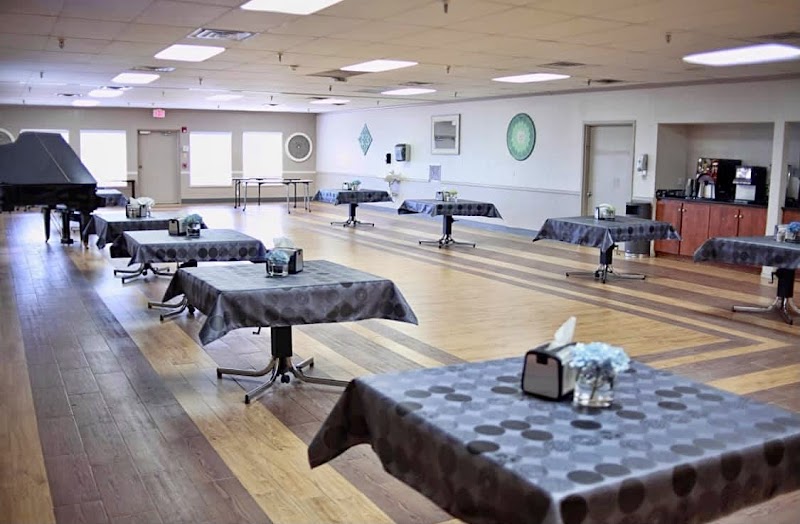
Who Owns and Operates Mountain View Health & Rehabilitation?

MOUNTAIN VIEW HEALTH & REHABILITATION is owned by a for-profit company. For-profit facilities operate as businesses with obligations to shareholders or private owners. The facility is operated by CREATIVE SOLUTIONS IN HEALTHCARE, a chain that manages multiple nursing homes. With 187 certified beds and approximately 123 residents (about 66% occupancy), it is a mid-sized facility located in EL PASO, Texas.
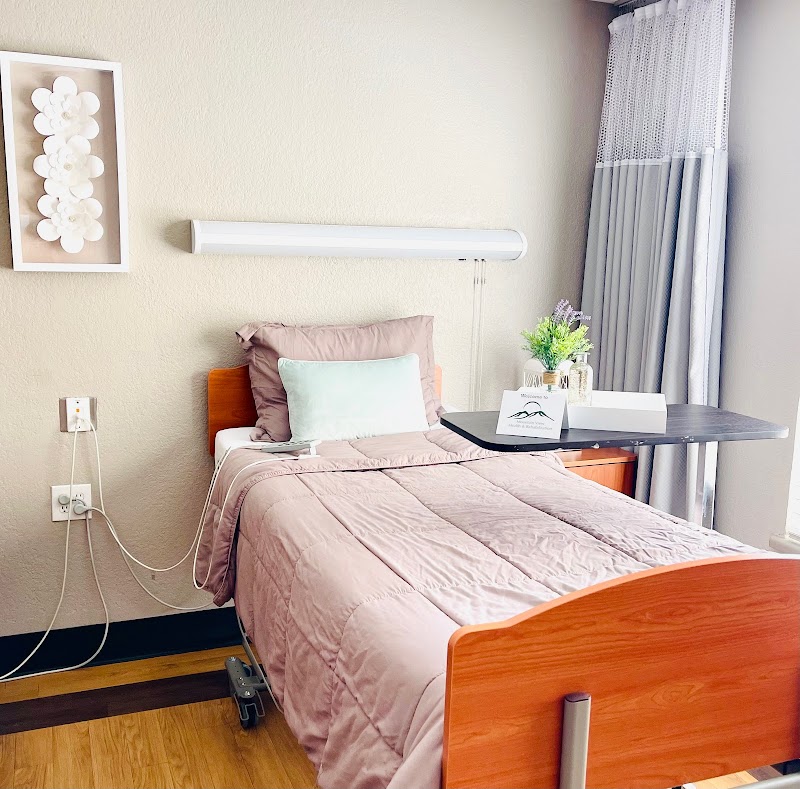
How Does Mountain View Health & Rehabilitation Compare to Other Texas Nursing Homes?

Compared to the 100 nursing homes in Texas, MOUNTAIN VIEW HEALTH & REHABILITATION's overall rating (2 stars) is below the state average of 2.8, staff turnover (35%) is significantly lower than the state average of 46%, and health inspection rating (1 stars) is much below the national benchmark.

What Should Families Ask When Visiting Mountain View Health & Rehabilitation?

Based on this facility's data, families visiting should ask: "What changes have been made since the serious inspection findings, and how are you preventing similar issues?" "What safeguards and monitoring systems are in place to protect residents from abuse or neglect?" "Can you walk me through typical staffing levels on day, evening, and night shifts?" "Can I visit during a mealtime to observe dining assistance and food quality?" These questions are particularly relevant given the facility's Immediate Jeopardy citations, the substantiated abuse finding on record, and the below-average staffing rating.

Is Mountain View Health & Rehabilitation Safe?

Based on CMS inspection data, MOUNTAIN VIEW HEALTH & REHABILITATION has documented safety concerns. The facility has 1 substantiated abuse finding (meaning confirmed case of resident harm by staff or other residents). Inspectors have issued 3 Immediate Jeopardy citations (the most serious violation level indicating risk of serious injury or death). The facility has a 2-star overall rating and ranks #100 of 100 nursing homes in Texas. Families considering this facility should ask detailed questions about what corrective actions have been taken since these incidents.

Do Nurses at Mountain View Health & Rehabilitation Stick Around?

MOUNTAIN VIEW HEALTH & REHABILITATION has a staff turnover rate of 35%, which is about average for Texas nursing homes (state average: 46%). Moderate turnover is common in nursing homes, but families should still ask about staff tenure and how the facility maintains care continuity when employees leave.

Was Mountain View Health & Rehabilitation Ever Fined?

MOUNTAIN VIEW HEALTH & REHABILITATION has been fined $173,545 across 2 penalty actions. This is 5.0x the Texas average of $34,814. Fines at this level are uncommon and typically indicate a pattern of serious deficiencies, repeated violations, or failure to correct problems promptly. CMS reserves penalties of this magnitude for facilities that pose significant, documented risk to resident health or safety. Families should request specific documentation of what issues led to these fines and what systemic changes have been implemented.

Is Mountain View Health & Rehabilitation on Any Federal Watch List?

MOUNTAIN VIEW HEALTH & REHABILITATION is not on any federal watch list. The most significant is the Special Focus Facility (SFF) program, which identifies the bottom 1% of nursing homes nationally based on persistent, serious quality problems. Not being on this list means the facility has avoided the pattern of deficiencies that triggers enhanced federal oversight. This is a positive indicator, though families should still review the facility's inspection history directly.