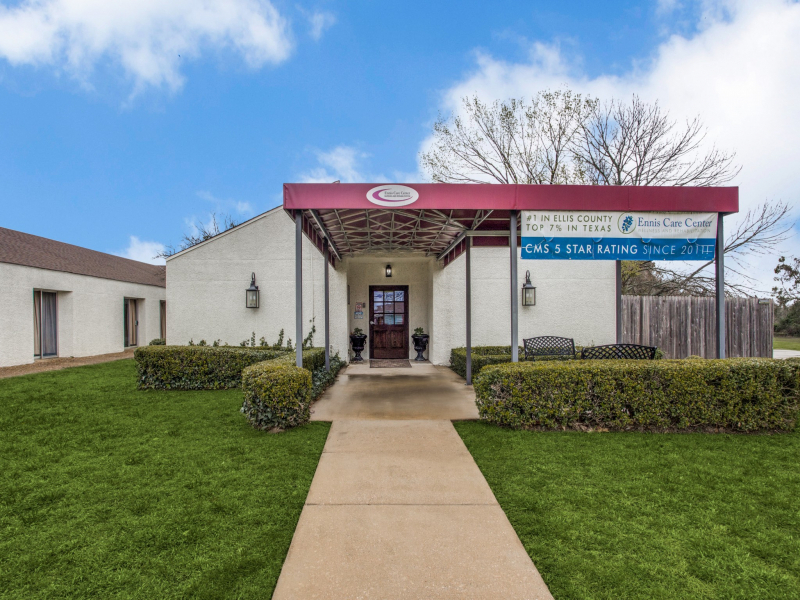
Ennis Care Center

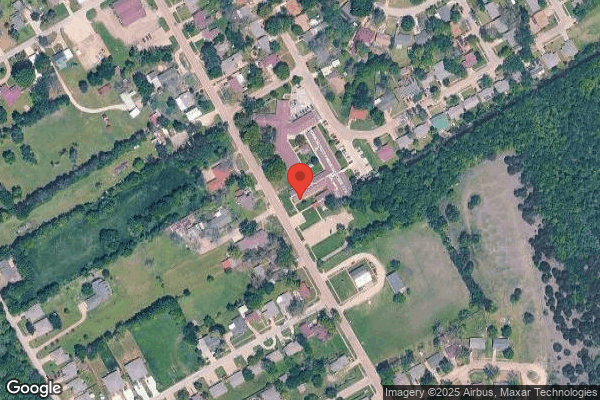
1200 S Hall St, Ennis, TX 75119 (972) 875-9051
For profit - Corporation 155 Beds EDURO HEALTHCARE Data: November 2025 3 Immediate Jeopardy citations
Trust Grade
0/100
#970 of 1168 in TX
Last Inspection: March 2025

Within standard 12-15 month inspection cycle. Federal law requires annual inspections.

Overview

Ennis Care Center has received a Trust Grade of F, indicating significant concerns about the facility's quality of care. Ranked #970 out of 1168 nursing homes in Texas, it falls in the bottom half, and #8 out of 10 in Ellis County, meaning only one local option is worse. The facility is showing signs of improvement, with issues decreasing from 9 in 2024 to 7 in 2025, but it still reported 20 total issues, including three critical incidents. Staffing is rated poorly with a turnover of 50%, which is concerning, and there have been substantial fines totaling $190,573, higher than 86% of Texas facilities, suggesting ongoing compliance problems. Notably, residents have faced critical issues, such as a failure to provide adequate supervision, leading to hazardous environmental conditions, and a serious medication error where a resident went without chemotherapy for 17 days, risking severe health complications.

Trust Score
F
0/100
In Texas
#970/1168
Bottom 17%
Safety Record
High Risk
Review needed
Inspections
Getting Better
9 → 7 violations
Staff Stability
⚠ Watch
50% turnover. Above average. Higher turnover means staff may not know residents' routines.
Penalties
✓ Good
$190,573 in fines. Lower than most Texas facilities. Relatively clean record.
Skilled Nurses
⚠ Watch
Each resident gets only 23 minutes of Registered Nurse (RN) attention daily — below average for Texas. Fewer RN minutes means fewer trained eyes watching for problems.
Violations
⚠ Watch
20 deficiencies on record. Higher than average. Multiple issues found across inspections.
★☆☆☆☆
1.0
Overall Rating
★☆☆☆☆
1.0
Staff Levels
★★★☆☆
3.0
Care Quality
★★☆☆☆
2.0
Inspection Score
Stable
2024: 9 issues
2025: 7 issues

The Good

  • Full Sprinkler Coverage · Fire safety systems throughout facility
  • No fines on record

Facility shows strength in fire safety.

The Bad

1-Star Overall Rating

Below Texas average (2.8)

Significant quality concerns identified by CMS

Staff Turnover: 50%

Near Texas avg (46%)

Higher turnover may affect care consistency

Federal Fines: $190,573

Well above median ($33,413)

Significant penalties indicating serious issues

Chain: EDURO HEALTHCARE

Part of a multi-facility chain

Ask about local staffing decisions and management

The Ugly 20 deficiencies on record

3 life-threatening
May 2025 1 deficiency
CONCERN (D) 📢 Someone Reported This

A family member, employee, or ombudsman was alarmed enough to file a formal complaint

Potential for Harm - no one hurt, but risky conditions existed

Deficiency F0627 (Tag F0627)

Could have caused harm · This affected 1 resident

**NOTE- TERMS IN BRACKETS HAVE BEEN EDITED TO PROTECT CONFIDENTIALITY** Based on record review and interviews the facility failed to ensure that two (2) residents (Resident #1 and Resident #2) of six ...

Read full inspector narrative →
**NOTE- TERMS IN BRACKETS HAVE BEEN EDITED TO PROTECT CONFIDENTIALITY** Based on record review and interviews the facility failed to ensure that two (2) residents (Resident #1 and Resident #2) of six residents reviewed for transfer or discharge had the required documentation in the resident's medical record made by the physician for a safe and effective transition of care. The facility discharged Resident #1 on 3/20/2025 and Resident #2 on 3/19/2025 without physician documentation in the EMR. This failure could put residents at risk for inappropriate discharge from the facility and cause psychological harm due to feelings of anger and sadness. The findings included: Review of Resident #1's face sheet date 5/16/2025 revealed he was a [AGE] year-old male admitted on [DATE] with diagnoses that included seizures (abnormal electrical activity in the brain), dementia (progressive memory loss disorder) Epilepsy (seizure disorder), congestive heart failure, (chronic condition in which the heart does pump blood as well as it should), mood disorder and chronic obstructive pulmonary disease (group of breathing disorders). Review of Resident #1' s annual MDS assessment dated [DATE] reflected he had a BIMS of 15 suggesting he was cognitively intact. Review of Resident #1's closed care plan dated 3/27/2025 reflected he had a problem [Resident #1] sometimes have behaviors which include: cursing at staff/other resident refuses care at times, [Resident #1] hit another resident.' Review of Resident #1's progress notes dated 3/18/2025 at 12:15 pm revealed: Resident [#1] was attempting to walk past the nurses station but was unable to move past freely due to another resident [#2] sitting in front of the nurses station in a wheelchair. Resident became frustrated; the two male residents exchanged words. Then [Resident #1] struck the other male resident [Resident #2] in the shoulder/upper arm area. The other resident responded by swinging at [Resident #1]. Review of Resident #1's progress notes dated 5/19/2025 reflected a late MD note dated 5/19/2025 with an effective date of 3/20/2025 that stated, Late entry - Resident discharged secondary to life threatening aggressive behaviors affecting the safety of other residents. Review of Resident #1's discharge notice dated 3/20/2025 related medical reason for discharge due to aggressive behaviors. Notice was signed by MD on 3/20/2025. Review of Resident #2's face sheet dated 5/16/2025 reflected he was a [AGE] year-old male admitted on [DATE] with diagnoses that included: cerebral infarction (occurs when blood flow to the brain is blocked), dementia (progressive memory loss disorder), hemiplegia (paralysis affecting one side), a cognitive social or emotional deficit following cerebral infarction, major depressive disorder, and anxiety disorder. Review of Resident #2' s quarterly MDS assessment dated [DATE] reflected he had a BIMS of 14 suggesting he was cognitively intact. Review of Resident #2's closed care plan dated 4/2/2025 reflected he had a problem [Resident #2] sometimes has behaviors which include inappropriate verbalizations and behaviors towards staff and other residents, making sexual remarks [to] staff/residents, taking other residents belongings without permission, refuses care including showers/grooming, urinates on floor and pours urine from urinal on floor invades personal space of other residents that are [cognitively] impaired, blocks hallways so others cannot pass, giving other residents food outside their diet, [Resident #2] hit another resident. Review of progress note dated 3/18/2025 at 11:00 am s for Resident #2 revealed: [Resident #2] was seated in his wheelchair at the nurses station. He was obstructing another resident's pathway around the nurses station. The two residents exchanged words not heard by this nurse. The other resident [Resident #1] was observed striking [Resident #2] in the right upper arm. [Resident #2] was noted striking back at the other resident [Resident #1] with his right arm. Review of Resident #2's progress notes dated 5/19/2025 reflected a late MD note dated 5/19/2025 with an effective date of 3/20/2025 that stated, Late entry - Resident discharged secondary to life threatening aggressive behaviors affecting the safety of other residents. Review of Resident #2's discharge notice dated 3/19/2025 related medical reason for discharge due to aggressive behaviors. Notice was signed by MD on 3/19/2025. During an interview on 5/19/2025 at 11:24 am, FM of Resident #1 stated Resident #1 was not happy with the transfer to another facility. They stated Resident #1 enjoyed being at the facility and was his own RP. FM stated she believes Resident #1 was treated unfairly and it broke his heart to be discharged . She stated he was so sad, had tears in his eyes and was visibly upset as he liked his roommate and had a relative in the building. She stated she had gone to see him at the other facility, and he is still very sad and angry. FM of Resident #1 stated he was at another facility but did not have a phone for the surveyor to contact him. She stated they were not aware of the appeal process for the discharge and wasn't sure if Resident #1 knew he could appeal. During an interview on 5/19/2025 at 1:07 pm, FM of Resident #2 stated the facility told her they were taking Resident #2 to the hospital after the incident with Resident #1. She stated the facility sent him to a local hospital and then discharged him - she stated she asked the facility to keep him until they could find another place, but he is still at the same hospital two months later, as the hospital has not been able to find placement and the facility refuses to take him back. She stated the hospital called yesterday and is stating they are going to discharge him to a homeless shelter. FM of Resident #2 stated he is very quiet and depressed and worried because the hospital is telling him they are sending him to a homeless shelter. She stated he has vision problems since his stroke and cannot do any of his own business - FM of Resident #2 stated they handle all his paperwork, bills - any business and is worried about him being in shelter. FM for Resident #2 stated they were not aware there was an appeal process and wasn't sure Resident #2 could even navigate the appeal process if he was aware. FM of Resident #2 stated resident was still at the local hospital and did not have a phone for the surveyor to contact him. During an interview on 5/16/2025 at 1:30 pm, DON stated Resident #1 and Resident #2 had a history of going back and forth verbally, but it escalated on 5/18/2025 so both residents were issued discharge notices. She stated Resident #1 was accepted and transferred to another nursing facility but Resident #2 was taken to a local hospital. She stated after the incident, residents were separated, assessed and put on 1:1 supervision. During an interview with the ADM on 5/16/2025 at 5:15 pm he stated he checked but did not see any documentation in the EMR from the MD regarding the facility-initiated discharges of Resident #1 and Resident #2. He stated they were both discharged due to the incident on 3/18/2025. He stated he was unaware the MD had to put in a progress note regarding the reason for the discharge since they both posed a threat of harm to other residents. During an interview on 5/19/2025 at 12:13 pm, the MD stated she was aware of the incident on 3/18/2025 and approved of the discharges for both Resident #1 and #2. She stated she did not put any progress notes concerning the reason for the discharges for either resident in the EMR I failed to write a note, I apologize. She further stated, I didn't know I had to do this - I am sorry, I apologize. The MD stated she will revisit this and put this in our education slide deck for our meeting on 5/22/2025. She stated she was notified of the discharges but failed to write a note in the EMR. Review of facility incident report dated 5/16/2025 reflected Resident #1 and Resident #2 were listed under Resident to Resident Incidents with the date 3/18/2025. Review of facility self-report revealed there was a resident-to-resident incident on 3/18/2025 involving Resident #1 and Resident #2 and immediate discharged notices were issued to both residents. Resident #1 was discharged to another nursing facility and Resident #2 was discharged to a local hospital. Review of facility policy dated October 2022 entitled Transfer or Discharge, Facility-Initiated reflected: Once admitted to the facility, residents have the right to remain in the facility. Facility-initiated transfers and discharges, when necessary, must meet specific criteria and require resident/representative notification and orientation, and documentation as specified in this policy. 1. Each resident will be permitted to remain in the facility, and not be transferred or discharged unless: c. the safety of individuals in the facility is endangered due to the clinical or behavioral status of the resident; d. the health of individuals in the facility would otherwise be endangered; Facility-Initiated Transfer or Discharge 1. Facility-initiated transfer or discharge means a transfer or discharge which the resident objects to, or did not originate through a resident's verbal or written request, and/or is not in alignment with the resident's stated goals for care and preferences. 2. Documentation of Facility-Initiated Transfer or Discharge 1. When a resident is transferred or discharged from the facility, the following information is documented in the medical record: a. The basis for the transfer or discharge; (1) If the resident is being transferred or discharged because his or her needs cannot be met at the facility, documentation will include: a) the specific resident needs that cannot be met; b) this facility's attempt to meet those needs; and c) the receiving facility's service(s) that are available to meet those needs; 3. Should the resident be transferred or discharged for any of the following reasons, the basis for the transfer or discharge will be documented in the resident's clinical record: a. The safety of individuals in the facility is endangered due to the clinical or behavioral status of the resident; or b. The health of individuals in the facility would otherwise be endangered.
Mar 2025 6 deficiencies
CONCERN (D) 📢 Someone Reported This

A family member, employee, or ombudsman was alarmed enough to file a formal complaint

Potential for Harm - no one hurt, but risky conditions existed

Free from Abuse/Neglect (Tag F0600)

Could have caused harm · This affected 1 resident

**NOTE- TERMS IN BRACKETS HAVE BEEN EDITED TO PROTECT CONFIDENTIALITY** Based on observations, interviews and record reviews, the facility failed to ensure that residents were free from abuse for one ...

Read full inspector narrative →
**NOTE- TERMS IN BRACKETS HAVE BEEN EDITED TO PROTECT CONFIDENTIALITY** Based on observations, interviews and record reviews, the facility failed to ensure that residents were free from abuse for one (Resident #29) of three residents reviewed for abuse and neglect. The facility failed to protect Resident #29 from abuse on 01/05/2025 when CNA E was witnessed calling Resident #29 an asshole. The noncompliance was identified as Past non-compliance. The noncompliance began on 1/5/25 and ended on 1/7/25. The failure placed residents at risk for abuse, neglect, and emotional and psychological harm. Findings included: Review of Resident #29's Face Sheet, dated 03/12/25, reflected he was a [AGE] year-old male who originally admitted to the facility on [DATE] and a subsequent admission date following a hospital stay on 09/30/2024, with diagnoses including: anxiety disorder (a mental health disorder characterized by feelings of worry, anxiety, or fear that are strong enough to interfere with one's daily activities), and post-traumatic stress disorder (is a mental health condition that can develop after exposure to a traumatic event. It is characterized by symptoms such as: distressing memories or flashbacks of the trauma, feelings of hopelessness or negative thoughts about oneself or others). Review of Resident #29 ' s MDS reflects a BIM ' s (Brief Interview of Mental Status) score of 10. A score of 10 indicates moderate cognitive impairment. Review of Resident #29 ' s Comprehensive Care Plan dated 07/05/2024 reflected he had an ADL (Activities of Daily Living) self-care performance deficit due to dementia and limited mobility. The plan also reflected Resident #29 was at risk of falls, and elopement. The plan does not indicate any areas of concerns for behavioral issues or concerns. Review of Resident #29 ' s nurses notes reflect RN F entered a note on 01/05/2025 that stated resident had an altercation with staff; resident verbally abused staff and attempted to assault staff member. Resident was redirected and is now calm. Administration notified. Review of Resident #29 ' s nurses note reflect a note entered on 01/06/2025 that stated Don alerted that CNA E asked resident to stop being an a##hole due to resident attempting to hit CNA E as well as cursing and yelling at CNA E. Director of Operations made aware of event. DON to contact physician and make medical doctor aware as well as psychiatry. DON to ask that resident been seen my provider at next visit. Psychiatrist states that she saw resident yesterday and thought resident was doing better. DON to inform of resident behaviors. Psychiatrist states she will see resident at next visit. DON to ask that charge nurse alert Reporting Party of concern. Facility social worker also made aware of everything. Resident was asked about the event and resident did not recall this happened. At current time no concerns noted with resident nor voiced by resident. Review of Resident #29 ' s nurses note reflect a note entered on 1/6/2025 that stated Reporting Party notified of incident involving a CNA E over the weekend of 1/4 - 1/5. RP was informed of the disciplinary action taken to ensure this type of incident would not happen again. Reporting Party was in agreement of action taken and had no further complaints at this time. Review of Resident #29 ' s nurses note reflected a note entered on 1/6/2025 that stated Director of operations to call and speak with charge nurse as well as CNA E in 2 separate calls regarding occurrence with resident over the weekend. CNA E as well as charge nurse both state that resident was being very aggressive with male CNA D and was accusing male CNA D of abusing other residents. Both CNA E as well as charge nurse state that this never occurred and that no one was abused, and that resident was having a moment of paranoia/confusion/and possibly sundowning. Per charge nurse resident was hitting CNA E with clip board cursing CNA E out and had stood up and was very aggressive with CNA E to where charge nurse had to intervene. Charge nurse states that CNA E did slip up and tell resident to please stop being an as*hole but states that CNA E was also being hit. Per charge nurse resident was eventually redirected from nurse station with no further occurrence. Charge nurse states that when CNA E checked on resident shortly thereafter that resident didn ' t even seem to know anything had even occurred. Observation of Resident #29 on 03/11/25 at 1:35PM revealed he was clean, well-groomed, and appropriately dressed. He was free from any odors. There were no visible marks or bruises noted on his person. Resident #29 was alert and oriented; he was resting in his bed. During an interview with Resident #29 on 03/11/25 at 1:35PM, he stated facility staff treated him well and he felt safe at the facility. He had no concerns regarding the facility, or the care received; he reported he just returned from his mother ' s funeral today and was feeling sad. Resident #29 could not recall the specific incident between him and CNA E but said that CNA E talks to people rudely. During an interview with CNA E on 3/11/25 at 11:45AM he revealed he was gathering people to have coffee and snacks before dinner. He stated there was one resident that was combative during care, and she was amped up already. He stated hours at a time she will sit there crying. He stated he brought her to dining and Resident #29 went over to try to console her. CNA E stated Resident #29 then rolled down the hall to the nurse ' s station accusing CNA E of hurting the female resident. He stated Resident #29 stood up and started coming toward him while he was in med room (behind nurse station). CNA E stated he closed the door and Resident #29 was trying to get in the room and then Resident #29 put his weight on the door so CNA E could not get out and this lasted a few seconds. CNA E said he asked RN F for help and to make sure other residents are not around for their safety. CNA E said this happened for about an hour that Resident #29 was following him around and saying he would call the cops. CNA E stated Resident #29 was cussing at him, and CNA E said he told Resident #29 to stop acting like an asshole. CNA E said it was very heated in the moment he said that to Resident #29. CNA E said he realized he should not have said that and could have used another word or term. CNA E said Resident #29 came back and apologized about the incident. During an interview with RN F on 3/12/25 at 5:46 PM she revealed she was at the nurse desk during the incident. She stated CNA E was prepping snacks for residents and Resident #29 rolled up to the desk and was upset. She stated Resident #29 thought CNA E was abusing the residents. RN F stated Resident #29 stood up and he and CNA E were yelling at each other, and CNA E told Resident #29 to stop being an asshole. She stated they were arguing back and forth. She stated Resident #29 lunged forward pushing the door shut locking CNA E in the med room. RN F stated CNA E and Resident #29 continued going back and forth and she tried to deescalate the situation. RN F stated Resident #29 tried to hit CNA E with a clipboard. RN F stated Resident #29 tried hitting CNA E again and CNA E grabbed Resident #29 ' s hand and pushed it away. She stated Resident #29 left the nurse station and later came back and tried to call 911 to report CNA E and they took the phone away from him. RN F stated prior to this incident she had not seen signs of aggression in Resident #29 before, possibly just depression. RN F stated she immediately reported the incident to the ADON. During an interview with the social worker 01/13/25 at 10:30 AM, she revealed she completed Safe Surveys after the incident. She reported she spoke to Resident #29 who told her Oh that is the way he (CNA E) talks. She stated Resident #29 said he did not like the tone that CNA E used toward him. She said she did not know what CNA E said to the resident exactly. She said after the incident she ensured the resident was on psych services. During an interview with LVN G on 3/12/25 at 11:00 AM, she reported she had worked at the facility for 7 days and had worked with CNA E twice. She reported she had heard CNA E cussing in general conversation and to where residents were able to hear him swearing. During an interview with the Operations Manager on 1/13/25 at 2:00 PM, he stated he was informed by RN F about the incident involving Resident #29. He stated the results of his investigation were confirmed. He stated there were consistent stories given by individuals interviewed. He stated CNA E was suspended and required to take assigned trainings regarding abuse/neglect prevention, etc. prior to returning to work. The Operations Manager stated he had a one-on-one staffing with CNA E who was given a written warning. The Operations Manager reported there have been no complaints since about CNA E prior to the incident that he is aware of. The Operations Manager stated he sees CNA E often in the hallways and people have said good things about him. He stated Safe Surveys were completed throughout the entire facility. He stated Resident #29 was back to himself after the incident. The Operations Manager did not have any concerns for CNA E to continue to provide care to Resident #29 or other Residents in the facility. Review of Facility Provider Investigation Report dated 01/06/2025 reflected the following: Incident date occurred on 01/05/2025 at 3:45 p.m. At approximately 3:30 p.m. RN [NAME] witnessed CNA [NAME] using inappropriate language towards resident [NAME]. Resident [NAME] is routinely seen by psych services. Facility immediately launched investigation into the matter. Residents MD, RP, and VA notified. Alleged Perpetrator suspended pending investigation. Safe Surveys initiated. Staff in service on abuse and neglect initiated. Should be noted that the alleged victim has a diagnosis of cognitive communication deficit, altered mental status, unspecified, depressive disorder, recurrent, mild, dementia in other diseases classified elsewhere, mild, with other 07/02/2024 other diagnosis behavioral disturbance, bipolar disorder, unspecified, major depressive disorder, single episode, unspecified mild cognitive impairment of uncertain or unknown etiology. It should also be noted that alleged victim resides on the facility ' s memory care unit. In an interview with Operations Manager [NAME] and Director of Nursing [NAME] on 1/7/25, witness [NAME] (RN) was able to provide the same details of the event that the alleged perpetrator [NAME] (CNA) provided. Resident safe surveys brought forth no further concerns. (surveys attached). It is my reasonable conclusion that the allegation was confirmed. The alleged perpetrator has been consistent with his story on what happened, and the witness as well. As a result, the alleged perpetrator was suspended and assigned several healthcare academy modules (E-learning) (Certs are attached). Staff in-service completed on abuse and neglect. Alleged perpetrator was educated on appropriate topics and issued final written warning from supervisor before returning to work. Review of the following E-learning courses completed by CNA E: Completion date of 01/07/25 titled Abuse Prevention in Persons with Dementia. Completion date of 01/07/25 titled Abuse, Neglect, and Exploitation: Mandatory Reporter Completion date of 01/07/25 titled Residents ' Rights Completion date of 01/07/25 titled Mental Health: Caring for the Older Adult in Long Term Care Review of In-Service Training Report dated 01/07/2025, of all staff and departments, topic of Abuse Neglect Resident Rights. The report indicates 5 types of abuse, the abuse coordinator, and reporting abuse protocols. Review of 5 Safe Survey ' s indicated one resident responded to question #4 Have you ever heard a staff member yell at another resident? The resident responded No not really, just correction. Not abusive. Everything is being addressed the right way. Resident #29 ' s response to question #4 on the safe survey stated, just me, me and CNA E had a couple of words, but it was a misunderstanding. Review of the facilities Abuse and Neglect - Clinical Protocol, Revised March 2018, reflected Abuse is defined at §483.5 as the willful infliction of injury, unreasonable confinement, intimidation, or punishment with resulting physical harm, pain or mental anguish. Abuse also includes the deprivation by an individual, including a caretaker, of goods or services that are necessary to attain or maintain physical, mental, and psychosocial well-being. Instances of abuse of all residents, irrespective of any mental or physical condition, cause physical harm, pain or mental anguish. It includes verbal abuse, sexual abuse, physical abuse, and mental abuse including abuse facilitated or enabled through the use of technology.
CONCERN (D)

Potential for Harm - no one hurt, but risky conditions existed

Deficiency F0645 (Tag F0645)

Could have caused harm · This affected 1 resident

**NOTE- TERMS IN BRACKETS HAVE BEEN EDITED TO PROTECT CONFIDENTIALITY** Based on observation, interview, and record review, the facility failed to ensure individuals with mental disorders were evaluat...

Read full inspector narrative →
**NOTE- TERMS IN BRACKETS HAVE BEEN EDITED TO PROTECT CONFIDENTIALITY** Based on observation, interview, and record review, the facility failed to ensure individuals with mental disorders were evaluated and received care and services in the most integrated setting appropriate to their needs for 1 of 3 residents (Resident #29) reviewed for Preadmission Screening and Resident Review Level I screenings. The facility failed to ensure Resident #29's Preadmission Screening and Resident Review Level One screening completed 07/02/24 and 02/11/25 on accurately reflected his diagnosis of mental illness. There was no evidence that Resident #29 was referred to a Level Two Preadmission Screening and Resident Review Screening. This failure could affect residents by placing them at risk for not receiving needed treatments and services. Findings included: Review of Resident #29's Face Sheet, dated 03/12/25, reflected he was a [AGE] year-old male who originally admitted to the facility on [DATE] and a subsequent admission date following a hospital stay on 09/30/2024, with diagnoses including: unspecified head injury, depressive disorder (a mental health disorder characterized by persistently depressed mood or loss of interest in activities, causing significant impairment in daily life), bipolar disorder (a disorder associated with episodes of mood swings ranging from depressive lows to manic highs), anxiety disorder (a mental health disorder characterized by feelings of worry, anxiety, or fear that are strong enough to interfere with one's daily activities), and post-traumatic stress disorder (is a mental health condition that can develop after exposure to a traumatic event. It is characterized by symptoms such as: distressing memories or flashbacks of the trauma, feelings of hopelessness or negative thoughts about oneself or others). Review of Resident #29's MDS Assessment, dated 02/21/24, also reflected he had diagnoses including anxiety disorder, depression, bipolar disorder, and post traumatic stress disorder. Review of Resident #29's Preadmission Screening and Resident Review Level I Screening, dated 07/02/24, reflected there was no evidence that Resident #29 had indicators of a mental illness. Review of Resident #29's Preadmission Screening and Resident Review Level I Screening, dated 11/20/24, reflected there was evidence that Resident #29 had indicators of a mental illness. Review of Resident #29's Preadmission Screening and Resident Review Level I Screening, dated 02/11/25, reflected there was no evidence that Resident #29 had indicators of a mental illness. Review of Resident #29's Behavioral health diagnostic assessment dated [DATE], reflected Resident #29 had a long history of post-traumatic stress disorder secondary to the service in the Coast Guard. The assessment also reflects that Resident #29 had a long history of depression and alcohol abuse. The report also reflects that Resident #29 reported despite past treatments including inpatient care, he continues to have difficulties with nightmares and depression. The report reflects that Resident #29 was diagnosed with Major depressive disorder and Post-traumatic stress disorder. Review of Resident #29's New admission Worksheet dated 07/02/24 with attached hospital medical records dated 06/28/24 reflect Medical Problems list include: major depressive disorder, bipolar disorder, post-traumatic stress disorder and anxiety. Review of Resident #29's Diagnosis Report reflected he was diagnosed with Dementia on 7/2/24. Review of Resident #29's Mental/Illness/Dementia Review, Form 1012, reflected that resident does not have any mental illness. Observation of Resident #29 on 03/11/25 at 1:35PM revealed he was clean, well-groomed, and appropriately dressed. He was free from any odors. There were no visible marks or bruises noted on his person. Resident #29 was alert and oriented; he was resting in his bed. During an interview with Resident #29 on 03/11/25 at 1:35PM, he stated facility staff treated him well and he felt safe at the facility. He had no concerns regarding the facility, or the care received; he reported he just returned from his mother's funeral today and was feeling sad. He reported his wife is also at the facility and often sees her. During an interview with the MDS Coordinator on 03/12/25 at 2:03PM, she stated Resident #29's Preadmission Screening and Resident Review Level I was completed and does not indicate a mental illness because his primary diagnosis is Dementia. She reported that if a resident has a diagnosis of dementia, then they do not qualify for a level 2. She reported that Resident #29's physician signed a paper stating Resident has a primary diagnosis of Dementia (see record review of Form 1012, Mental Illness/Dementia Review) Review of the Facilities admission Policies and Procedures, Revised March 2019, states 9. a. The facility conducts a Level I Preadmission Screening and Resident Review screen for all potential admissions, regardless of payer source to determine if the individual meets the criteria for a MD, ID, or RD. b. if the Level I screen indicates that the individual may meet the criteria for a MD, ID, or RD, he or she is referred to the state Preadmission Screening and Resident Review representitive for the Level II (evaluation and determination) screening process.
CONCERN (D)

Potential for Harm - no one hurt, but risky conditions existed

Comprehensive Care Plan (Tag F0656)

Could have caused harm · This affected 1 resident

**NOTE- TERMS IN BRACKETS HAVE BEEN EDITED TO PROTECT CONFIDENTIALITY** Based on interview and record review, the facility failed to develop and implement a comprehensive person-centered care plan tha...

Read full inspector narrative →
**NOTE- TERMS IN BRACKETS HAVE BEEN EDITED TO PROTECT CONFIDENTIALITY** Based on interview and record review, the facility failed to develop and implement a comprehensive person-centered care plan that described the services that are to be furnished to attain or maintain the resident's highest practicable physical, mental, and psychosocial well-being for one (Resident #11) of 3 residents reviewed for care plans. The facility failed to develop interventions to address the goal on Resident #11's care plan to maintain nephrostomy tube care through the next review date. This failure could affect the facility's residents who were occasionally or frequently incontinent of bladder and/or with catheter or nephrostomy tube placement by placing them at risk of not receiving the necessary care and services to meet their needs. Findings included: 1.) Review of Resident #11's Face Sheet, dated 3/13/25, reflected she was an [AGE] year-old female who was admitted to the facility on [DATE], with diagnoses including Metabolic Encephalopathy, unspecified hydronephrosis (a condition characterized by excess fluid in a kidney due to a backup of urine), urinary tract infection, other mechanical complication of other urinary catheter, initial encounter, type II diabetes, and dementia. Review of Resident #11's Care Plan, completed on 08/11/2023, reflected she had the potential for or presence of altered nutrition and hydration due to protein calorie malnutrition, history of infections: UTI. She requires a therapeutic diet low of concentrated sweets, diet, minced and moist texture, thin (regular) 1 consistency. The goal stated Resident #1 nutrition needs will be met thru next review date. The plan also reflected a focus area station Alteration in elimination of bowel and bladder due to incontinence. Resident #11 will be free of UTI daily through next review. The plan also reflected another focus area stating, Resident #11 has potential for complications due to incontinence, frequently incontinent. Review of Resident #11's Physician Progress Note dated 03/11/2025 reflected the following: History of present illness: [AGE] year-old lady admitted to facility [NAME] on 08/08/2022 as status post admission she tried to walk a little and fell and hit her left hip. She sustained a closed displaced fracture of the femoral neck and subsequently underwent a left hip hemiarthroplasty. The patient has a past medical history significant for dementia and diabetes mellitus 2. 09/26/2023 patient returned from the ER after due to abnormal outpatient x-ray result. Patient noted to have a new left sacral fracture nondisplaced. Patient was prescribed with acetaminophen 500 mg 2 tablets twice daily and can have a dose in between as well as every 6 hours. Patient was ordered to ambulate as tolerated, follow-up with clinic or Orthopedic as needed. On October 29 (unknown year) patient was treated with Macrobid 100 mg twice daily for 10 days for ESBL E. Coli. S/P hospitalization 1/12/24 to 1/15/24 for pneumonia S/P hospitalization from 10/29/24 to 11/3/24 due to pneumonia and urinary tract infection. Imaging showed kidney stones with placement of left nephrostomy tube. Returned to facility with IV Invanz to be completed on 11/19/24. 12/27/2024 - patient readmitted after being treated at hospital [NAME] - status post left nephrostomy tube exchange, acute metabolic encephalopathy secondary to urinary tract infection, acute complicated urinary tract infection-ESBL E coli. readmission from hospital [NAME] for blocked nephrostomy tube and discovered infection and stayed for IV antibiotics. During an observation and interview on 3/13/25 at 9:26 AM, Resident #11 was observed outside her room in her wheelchair. She was clean and well groomed. The MDS Coordinator washed her hands, donned a gown and assisted Resident #11 to bed using a gait belt. MDS Coordinator stated Resident #11 understood some English but mostly spoke Spanish. The MDS Coordinator communicated to Resident #11 using Spanish and was able to translate. LVN G washed her hands, gathered supplies and donned a gown and gloves. She stated Resident #11 had pulled the dressing off her nephrostomy tube and she was there to replace it. Resident #11's nephrostomy tube was intact and capped. It was light pink at the insertion site with no drainage or swelling. LVN G cleaned the site and replaced the dressing using sterile technique. The MDS Coordinator stated Resident #11 had a history of urinary tract infections and was found to have kidney stones, so the nephrostomy tube had been placed. She stated the resident was seen by a specialist and was expecting to have the tube removed sometime soon. During an interview with the Director of Nursing (DON) on 3/13/2025 at 1:25 p.m., she reported resident #11 has a nephrostomy tube and cannot recall the exact date she received it. She reported she checked and it is not included in Resident #11's care of plan and was not sure why. She stated she added it today after becoming aware that it was not included. After checking her notes, she reported Resident #11 went to the hospital on [DATE] and came back on 11/2/2024 with the tube. She reported Resident care plans are updated anytime they go to the hospital and come back so she was not sure how that happened. The DON stated there is no risk to the residents because the orders are still there, this was just missed. The DON stated the only people that see the care plan or reference it is management nurses. She stated the orders are there to treat the resident, the care plan was just missed.
CONCERN (D)

Potential for Harm - no one hurt, but risky conditions existed

Unnecessary Medications (Tag F0759)

Could have caused harm · This affected 1 resident

**NOTE- TERMS IN BRACKETS HAVE BEEN EDITED TO PROTECT CONFIDENTIALITY** Based on observation and interview, and record review, the facility failed to ensure a medication error rate less than 5 percent...

Read full inspector narrative →
**NOTE- TERMS IN BRACKETS HAVE BEEN EDITED TO PROTECT CONFIDENTIALITY** Based on observation and interview, and record review, the facility failed to ensure a medication error rate less than 5 percent. There were 9 errors out of 25 opportunities which resulted in a 36% percent medication error rate for 1 (Resident #28) of 4 residents reviewed for medication errors. On 3/12/25, RN C administered 9 individual medications via Gtube (surgically placed tube used to administer nutrition, fluids, and medications) to Resident #28 by pushing the medications through a syringe without an order rather than by gravity as noted in their policy. This failure placed the resident at risk of Gtube complications, aspiration pneumonia, and not receiving the therapeutic effects of medications. Findings included: Record review of Resident #28's admission Record dated 3/12/25 reflected a [AGE] year-old male originally admitted to the facility on [DATE]. Record review of Resident #28's Quarterly MDS assessment dated [DATE] reflected he was rarely understood and rarely understood others and had severely impaired cognitive skills for daily decision making. His diagnoses included stroke; aphasia (impaired ability to communicate verbally); hemiplegia (weakness or paralysis on one side of the body); dysphagia (inability to swallow safely); non-Alzheimer's dementia; and seizure disorder. He received his calories and hydration from a feeding tube. Record review of Resident #28's Care Plan reflected the following: [Resident #28] requires tube feeding for complete nutritional needs r/t Dysphagia NPO Status. Relies solely on licensed nurse to administer all medications, nutrition and hydration needs via peg tube. Date initiated 5/18/23, Revision on 7/26/23. Interventions included: .Flush Gtube with 30 ml tap water before and after each med .Licensed nurse to crush medications and administer via Gtube; medications per order; Monitor/document/report PRN any s/sx of: Aspiration- fever, SOB, Tube dislodged, Infection at tube site, Self-extubation, Tube dysfunction or malfunction, Abnormal breath/lung sounds, Abnormal lab values, Abdominal pain, distension, tenderness, Constipation or fecal impaction, Diarrhea, Nausea/vomiting, Dehydration . Record review of Resident #28's Order Summary Report dated 3/12/25 at 10:51 AM reflected the following: Enteral: if enteral feeding tube becomes dislodged, clogged or unusable for any reason and the tube is the primary source of nutrition and/or hydration contact the physician immediately to determine if iv fluids are needed every shift for dislodged clogged feeding tube. Order date 2/27/24. Flush g-tube with 30 ml tap water between each med. Order date 1/31/25. Medication orders included the following: Tricor oral tablet 124 mg give 1 tablet via G-tube one time a day Eliquis oral tablet 5 mg give 1 tablet via G-tube every 12 hours Aspirin tablet 81 mg give 1 tablet via G-tube one time a day Simethicone tablet 80 mg give 1 tablet via G-tube two times a day Furosemide solution 10 mg/ml give 4 mls via G-tube one time a day Multivitamin liquid give 15 mls via G-tube one time a day Potassium Chloride oral solution 20 mEq/15 ml give 15 mls via G-tube one time a day Keppra solution 500mg/5 mls give 5 mls via G-tube one time a day Hyoscyamine Sulfate elixir 0.125 mg/5 mls give 5 mls via G-tube one time a day Record review of Resident #28's Order Summary Report dated 3/12/25 at 3:52 PM reflected the following order had been added: Nurse may gently or slowly push the plunger into the barrel of syringe to administer medicines via G-tube. Order date 3/12/25. During an observation and interview on 3/12/25 at 7:52 AM, Resident #28 was observed in his bed. The head of his bed was elevated 30 degrees, he was awake and nodded in response to greeting and request to observe care. RN C washed her hands, put on gloves and prepared the following medications and placing them in individual medication cups: Tricor oral tablet 124 mg-crushed; Eliquis oral tablet 5 mg-crushed; Aspirin tablet 81 mg-crushed; Simethicone tablet 80 mg-crushed; Furosemide solution 10 mg/ml 4 mls poured; Multivitamin liquid 15 mls poured; Potassium Chloride oral solution 20 mEq/15 ml 15 ml poured; Keppra solution 500mg/5 mls 5 mls poured; and Hyoscyamine Sulfate elixir 0.125 mg/5 mls 5 mls poured. The medications were mixed with water to dissolve. RN C washed her hands and donned PPE. She disconnected Resident #28's tube feeding and checked for residual. Resident #28 was observed to have a large bulge in his upper right abdomen which RN C identified as a hernia (bulging of an organ or tissue through an abnormal opening). She flushed the residents Gtube with approximately 30 ml of water using the plunger of the syringe. RN C was asked about the use of a plunger and stated, they've never had us doing any by gravity here. She proceeded to slowly administer all nine medications, one at a time flushing between each medication with 30 ml of water. RN C utilized the plunger for all medications and flushes. Resident #28 was noted to cough during the medication administration. RN C stated he had a history of coughing and a large amount of secretions. She stated he was receiving medications for the secretions including the Hyoscyamine as well as a medication patch placed every three days. She elevated the head of the resident's bed higher after he began to cough. She completed the medication pass and washed her hands. During an interview on 3/12/25 at 2:53 PM, RN C stated she spoke with Resident #28's physician after the medication pass and received the order. She stated she should have gotten an order prior to using the plunger as the facility policy was to administer medications using gravity. She stated had previously spoken with the physician about Resident #28 because she had previously had difficulty passing his medications by gravity because of his hernia. She stated he would cough during the medication pass using gravity it would cause the medications to come up out of the syringe and go everywhere. She stated she had been approved to use the plunger previously but had failed to enter the order. She stated the risks of using a plunger included rupturing the tube or causing problems at the stoma (surgically created opening) site and she always went very slow when administering the medication. During an interview on 3/12/25 at 3:18 PM, the DON stated RN C had told her that morning she had used aa plunger on Resident #28's Gtube. She stated Resident #28 had a hernia and sometimes coughed during medication administration because the tube did not always flow well. She stated RN C had called the physician and obtained the order. She stated RN C should have called the physician prior to using the plunger because it was the facility's policy to use gravity for medication administration unless the physician ordered otherwise. The DON stated resident #28 had a long history of having trouble with his gtubes and was being treated by a GI specialist. She stated none of his issues were related to the use of a plunger. The DON stated the risk for using a plunger during medication administration included damage to the tube and aspiration pneumonia (an infection that occurs when something other than air is inhaled into the lungs). In an interview on 3/13/25 at 8:00 AM, LVN D stated she occasionally cared for Resident #28 and was his Charge Nurse on 3/11/25. She stated she passed his medications using gravity and had not encountered any difficulties. She stated Resident #28 had just had his gtube replace a few weeks earlier and had an upcoming follow-up appointment with his specialist in April 2025. LVN D stated the risk of using a plunger was it could be administered too fast and too much air could be inserted into his stomach. She stated the facility's policy was to use gravity unless they had a physician order. During an interview on 3/13/25 at 1:42 PM, the Medical Director stated she had spoken with RN C regarding Resident #28's Gtube medications on 3/12/25 and approved the use of a plunger for his medication administration. She stated she believed RN C had previously discussed the issue with another physician in their group on an earlier date. The Medical Director stated medications were typically administered using gravity and there were risks involves with using a plunger such as administering the medication too quickly. She stated the risk of missing the medications due to clogging or other complications was much higher than the risk of using the plunger for administration and she had approved the use. She stated she was not aware of any issues with the use of the plunger and facility staff should call her anytime they had concerns with a Gtube. Record review of the facility's policy titled, Administering Medications through an Enteral Tube, dated, Revised September 2024 reflected: Purpose The purpose of this procedure is to provide guidelines for the safe administration of medications through an enteral tube .Steps in the Procedure .9. Dilute medication: a. Remove plunger from syringe. Add medication and appropriate amount of water to dilute. b. Dilute crushed (powdered) medication with at least 30 mL clean water (or prescribed amount). c. Dilute liquid medication with 30 mL or more (depending on viscosity) clean water. 10. Administer each medication separately. 11. Reattach syringe (without plunger) to the end of the tubing. 12. Administer medication by gravity flow, or per physician order. a. Pour diluted medication into the barrel of the syringe while holding the tubing slightly above the level of insertion. b. Open the clamp ·and deliver medication slowly. c. Begin flush before the tubing drains completely. 13. If administering more than one medication, flush with 15 mL warm clean water (or prescribed amount) between medications. 14. When the last of the medication begins to drain from the tubing, flush the tubing with 15 mL of warm clean water (or prescribed amount). 15. Quickly clamp the tubing when the flush is complete. Remove syringe .
CONCERN (E)

Potential for Harm - no one hurt, but risky conditions existed

Safe Environment (Tag F0584)

Could have caused harm · This affected multiple residents

**NOTE- TERMS IN BRACKETS HAVE BEEN EDITED TO PROTECT CONFIDENTIALITY** Based on observation, interview, and record review, the facility failed to provide maintenance services necessary to maintain a ...

Read full inspector narrative →
**NOTE- TERMS IN BRACKETS HAVE BEEN EDITED TO PROTECT CONFIDENTIALITY** Based on observation, interview, and record review, the facility failed to provide maintenance services necessary to maintain a safe, sanitary, orderly, and comfortable interior of three (Residents #32, #37, #48) of five residents reviewed for safe, clean, homelike environment. 1.The facility failed to ensure the ceiling A/C vent for Resident #32's room was clean and not dusty on 03/11/25. The facility failed to ensure the leaking pipe underneath Resident #32's sink was repaired on 03/11/25 instead of the resident using a trash can to catch the water. The facility failed to ensure that the dark gray container underneath Resident #32's sink was empty on 03/11/25 that was full of water from a leaking pipe. 2. The facility failed to ensure Resident #37's fluorescent lights had a cover, exposing metal fixtures and 2 light bulbs on 03/11/2025 that was located over his bed. 3. The facility failed to ensure the hole on the bathroom wall near the toilet in Resident # 48's bathroom was sealed on 03/11/25. These failures could affect residents and place them at risk for a diminished quality of life and a diminished clean, homelike environment. Findings included: 1. Record review of Resident #32's Face Sheet, dated 03/13/25, revealed the resident was an [AGE] year-old male admitted to the facility on [DATE]. The resident's diagnoses included dementia, polyneuropathy, unspecified, a condition where multiple peripheral nerves (nerves outside the brain and spinal cord) are damaged, but the specific cause is unknown, spinal stenosis is a condition where the spinal canal, the bony tunnel that protects the spinal cord and nerve roots, becomes narrowed, malignant neoplasm of the prostate (a prostate cancer, a type of cancer that starts in the prostate gland, a small gland in the male reproductive system), joint pain, and abnormalities with gait and mobility. Record review of Resident #32's Quarterly MDS assessment, dated 02/07/25, revealed the resident had a BIMS score of 15 indicating his cognition was intact. Record review of Resident #32's Care Plan, dated 02/21/25, revealed the following: Focus: Resident #32 has an ADL Self Care Performance Deficit r/t Dementia, Pain . Resident #32 is at risk for falls related to: History of falls, muscle wasting/atrophy, lack of coordination, spinal stenosis, wedge compression fracture of vertebra. Date Initiated: 02/16/2024 Revision on: 02/16/2024 Goal: Resident #32 will have no fall related injuries through the review date. Date Initiated: 02/16/2024 Revision on: 02/29/2024 Target Date: 02/26/2025 Resident #32 will have a reduced number of falls through the review date. Date Initiated: 02/16/2024 Revision on: 02/29/2024 Target Date: 02/26/2025 Resident #32 is at risk for falls related to: History of falls, Muscle Wasting/Atrophy, Lack of Coordination, Spinal Stenosis, Wedge Compression Fracture of Vertebra . During an observation and interview on 03/11/25 at 10:40 AM with Resident #32 in his room revealed the resident was alert and standing up looking at television. The A/C vent in Resident#32's bed was dusty and uncleaned. Resident #32 stated that he did not remember the last time the A/C vent in his room was cleaned by staff. He stated that he was not aware that the A/C vent in his room was dusty and not cleaned. He stated that he has been at the facility for one year. During the observation of Resident #32's room, he stated that there was a water leak in the sink in his room. He opened the 2 cabinet doors underneath the sink and pointed to a dark gray plastic container that was filled to the top with water. He stated that the white pipe underneath his sink was leaking and causing water to drip, and he decided to place the dark gray plastic container underneath his sink to hold the water from the leaking pipe. Resident #32 stated when the dark gray plastic container was filled with water, he would bend down and retrieve the container and dump the water into the toilet in his bathroom. Resident #32 stated that he has told staff and maintenance about the leaking pipe underneath his sink, but no one has repaired the leaking pipe since he has been at the facility. 2. Record review of Resident #37's Face Sheet, dated 03/13/25 revealed the resident was a [AGE] year-old male admitted to the facility on [DATE] and readmitted to the facility on [DATE]. The resident's diagnoses included Parkinson's disease (a chronic and progressive neurodegenerative disorder that affects movement and other functions), history of repeated falls, unsteadiness on feet, polyneuropathy unspecified (a condition where multiple peripheral nerves (nerves outside the brain and spinal cord) are damaged, but the specific cause is unknown), heart disease, heart failure, and paranoid schizophrenia (a mental health condition characterized by persistent delusions and hallucinations). Record review of Resident #37's Quarterly MDS assessment, dated 02/18/25, revealed the resident had a BIMS score of 15 indicating his cognition was intact. During an observation and interview on 03/11/25 at 11:10 AM with Resident #37 in his room revealed the resident was alert and laying on his bed. Resident #37 stated that he's been at the facility for several years. Resident #37 stated that he was unaware how long he had been in his current room. During the observation of Resident #37's room, there was no cover for the fluorescent lights above his bed. Resident #37 stated that he was he did not notice that the cover for the fluorescent lights above his head was not covering the light fixture. Resident #37 stated that no staff have mentioned to him that the light cover was missing. He stated that there have not been any repairs made to the light fixture above his bed. 3. Review of Resident #48's face sheet, dated 03/13/25, revealed the resident was a [AGE] year-old female admitted to the facility on [DATE] and readmitted to the facility on [DATE]. Resident #48's diagnoses included bipolar disorder (a mental illness that causes unusual shifts in a person's mood, energy, activity levels, and concentration) and borderline personality disorder (a mental health condition characterized by intense and unstable emotions, impulsive behaviors, and difficulties in relationships), osteoarthritis (a degenerative joint disease characterized by the breakdown of cartilage, the protective tissue that cushions the ends of bones within a joint, leading to pain, stiffness, and reduced movement), and Type 2 diabetes mellitus with hyperglycemia (means a person with type 2 diabetes has persistently high blood sugar levels (hyperglycemia) due to insulin resistance and/or insufficient insulin production). Record review of Resident #48's Quarterly MDS assessment, dated 02/12/25, revealed the resident had a BIMS score of 13 indicating her cognition was intact. During an observation and interview and on 03/11/25 at 11:47 AM with Resident #48 in her room revealed that she was alert and sitting in her wheelchair and was looking at television. Resident #48 stated that she had been at the facility for 1 year. During the observation of Resident #48's bathroom, the bathroom was a shared bathroom with Resident #48, her roommate and 2 residents in the room beside Resident #48 shared the same bathroom . The bathroom observation revealed there was a large sized hole in the bathroom wall behind the toilet. During interviews with Resident #48 and the other residents that share the same bathroom revealed they were unaware that there was a whole in the bathroom wall behind the toilet. All parties revealed that maintenance or staff have mentioned to them the presence of a large sized hole on the wall behind the toilet. Record Review of the facility's Maintenance Request Log at the 100 Hall's Nurses Station, revealed there was no entries regarding repairs for the rooms or bathrooms of Resident #32, Resident #37 and Resident #48. In an interview with Maintenance Supervisor on 03/13/25 at 11:07 AM, he stated that he had been employed at the facility for 1 month. He stated that he remembers an unknown staff member informing him that the pipe underneath the sink in Resident #32's room was leaking. He stated that he gave the work order for the repair for the leaking pipe in Resident #32's room to his worker, Maintenance Staff B. He stated that he assumed that Maintenance Staff B completed the work order in Resident #32's room. He stated that he did not hear anything else regarding the leaking pipe underneath Resident #32's sink, and no one has complained about the anything, therefore he assumed that the work order was done, and the repair was completed and closed. He stated that he did not follow-up on work orders that were given to Maintenance Staff B. He stated that he was unaware that the A/C vent in Resident #37's room was dusty and uncleaned. The Maintenance Supervisor stated that he was unaware that there was a hole in the wall behind the toilet in Resident #48's bathroom. He stated that it is his responsibility for ensure that the repairs are done in the facility including the exterior and interior areas within the facility, such as the residents' rooms and bathrooms including the A/C vents, and light fixtures. He stated that the risk of there being a large size hole in the wall behind the toilet in Resident #48's bathroom are that critters, such as snakes and rodents can enter from the exterior of the building into any openings or holes such as the hole in Resident's 48's bathroom wall. He stated that that residents that use that bathroom can get their foot caught in the hole, which could harm them and cause some serious injuries because of the contained area in the bathroom. He said that risk walls. The Maintenance Director stated that the risk of the leaking pipe under Resident #32's sink can cause there being stagnant water in the dark gray container underneath the sink in the resident's room which can cause some harm if the resident has any allergy issues. He stated that he has drank water from a [AGE] year old water well and he has not become sick. He stated that the light cover not being over the fluorescent lights above Resident #37's bed can become hot and can explode or pop, which can lead to the resident being harmed by being cut by the shard glass from the broken florescent lights above his head. In an interview with Maintenance Staff B on 03/13/25 at 12:25 PM, who stated that he had been employed as the Maintenance Assistant at the facility for almost 13 years. He stated that staff are required to complete any Maintenance Requests in the Maintenance Log in the facility's software program, such as any issues such as dusty A/C vents, repairs such as walls, leaking pipes, and light fixtures. He stated that he has not seen any requests in the Maintenance Log regarding the A/C vents, wall repair or leaking pipes, and light fixture repairs on the 100 Hallway for Resident #32, Resident #37, and Resident #48. He stated that it is the responsibility of the Nursing Staff to notify the Maintenance Departments if there is something like dust on the A/C vents, repairs such as walls and leaking pipes, wall repairs and light fixture issues/concerns in a resident's room. He stated that staff are required to complete any Maintenance Requests in the Maintenance Log in the facility's software program, such as any issues such as dusty A/C vents, repairs such as walls, leaking pipes, and light fixtures. He stated that he was unaware that the A/C vent in Resident #32's room was dusty and unclean until it was brought to his attention. He reported that the Maintenance Supervisor will give him a sheet with the open Work Orders, and he will complete the Work Orders as they are completed. Maintenance Staff B stated that the Maintenance Supervisor has never given him a Work Order for repairs for Resident #32's room. He stated the risk of the ceiling vents being unclean is that if the dust blew onto residents they could be affected and have issues breathing. He stated that he was unaware that Resident #32 had a leaking pipe underneath his sink and there was a dark gray plastic container underneath the sink to hold the water from the leaking pipe. He stated that he did not know that Resident #32 was emptying the dark gray plastic container underneath the sink for approximately 1 year according to the resident. He stated that Resident #32 can be at risk for falling trying to bend down to pick up the heavy dark gray plastic container of water and he could hurt his back and spill the water in the container and slip and fall and harm himself and be seriously injured. Maintenance Staff B stated that he was unaware that the 2 fluorescent light bulbs above Resident #37's bed did not have a halogen cover. He stated that if the fluorescent lights were to get hot and bust, it can harm Resident #37 by him being cut by broken class, which can cause injuries to different areas of the body. Maintenance Staff B stated that he was unaware that there was a large sized hole in the wall behind the toilet in Resident #48's bathroom. He stated that if there is a large hole in the wall near the toilet, it can cause rodents, snakes and other animals to enter the facility through the hole in the wall, which is nasty. He stated that the large sized hole in the wall in Resident #48's bathroom could cause harm if a snake enters the hole and anyone in the facility can be bitten by the snake. In an interview with the Operations Manager on 03/13/25 at 1:31 PM revealed that he had been employed at the facility since November 2024. He stated that he was unaware that the A/C vent cover in Resident #32's room was not dusty and unclean. Log at the Nurses Station on the 100 Hallway would be used for something such as dusty A/C vents. He stated that the responsibility of the A/C vents being cleaned falls upon the Maintenance and Housekeeping departments, not his nursing staff. DON stated that the A/C vents in a resident's room were not a risk for infection and everyone's vents in their homes, including new build homes and the State Surveyors homes were probably not dusty and clean. He stated that there was a potential for harm due to the A/C vents being harmful, but dust was in everyone's vents any place you go. He stated that going forward, he would have his staff put in any work orders regarding the cleaning or the A/C vents. He stated, he will relay to his staff, if it doesn't seem right, fix it. He stated that his expectation was that staff notify himself, management or maintenance if they observe something like the A/C vent covers needing to be cleaned or any repairs, such as repairs to pipes and walls that need to be done. He stated that the Maintenance Department uses a software system to report repairs. The Operations Manager stated that he visits with Resident #32 in his room at least once a week and he has never mentioned to him anything about having a leaking pipe underneath his sink and there being a dark gray plastic container underneath the sink that contains water that was being dumped by Resident #32 on a regular basis. He was advised that on 03/12/25 during the Resident Council Meeting, Resident #32 mentioned the issue with the leaking pipe to another State Surveyor. He stated that if Resident #32 were to spill water from the dark gray plastic container, he could slip and have falls. He stated that he did not feel that there could be any harm to a resident if there is water on the floor. He stated that he was unaware of the dusty and uncleaned A/C vent in Resident #32's room. He stated that the Maintenance Department is responsible for ensuring that the A/C vents in the residents' room are cleaned a regular basis. He stated that he felt that the dusty and unclean are vent can cause respiratory and breathing issues to anyone who is exposed to the allergens from the A/C vents. He stated that he was unaware that the halogen cover was not on the light fixture above Resident #37's bed in his room. He stated that if a light bulb gets too hot, it will burst and can hurt anyone who has access to the broken glass shards. In an interview with CNA A on 03/13/25 at 2:39 PM revealed that she stated that he had been employed at the facility for 3 years. She stated that her primary assignment was the 100 Hallway. She reported that she has not noticed that the A/C vent cover in Resident #32's room were dusty and not clean. She stated that if she was to observe the A/C vents in a resident's room not clean, she would notify Maintenance and her Charge Nurse so that the need for repair could be documented. She stated that if the A/C vents in resident's room are not cleaned on a regular basis, residents can be at risk for respiratory issues from the dust being on the A/C vent. She stated that dusty and unclean A/C vents can cause harm to anyone who has access to them breath properly. She stated that she was unaware that Resident #32 had a leaking pipe underneath his sink and there was a dark gray plastic container full of water underneath the sink. She stated that she was unaware that Resident #32 stated that he had emptied the dark gray plastic container of water out on a regular basis. She stated that Resident #32 should use his Call Light to request assistance from staff with emptying the dark gray plastic container of water. CNA A stated that Resident #32 has unsteadiness of his feet and the risk of him bending down to remove the full dark gray plastic container of water in the sink could cause harm, which can include Resident #32 slipping, and falling on any water spilled on the floor. She stated that if Resident #32 drank the stagnant water in the dark gray plastic container he can risk drinking contaminated water, which is not safe. She stated that the water in the dark gray plastic container may be brown, which is not good and can cause some health issues or concerns for the resident. CNA A stated that she was unaware that the fluorescent lights above Resident #37's bed did not have a cover over the light. She stated that without there being a halogen light cover over the fluorescent lights above Resident #37's bed, there is a risk that the fluorescent lights can get too hot and explode. She stated that without the prescience of a halogen light cover over the fluorescent lights above Resident #37's bed, he can be harms by broken glass, step on the broken glass, touch the broken glass and receive cuts. CNA A stated that she was unaware of the large sized hole in the bathroom wall behind Resident #48's toilet. She stated that the risk of there being a large sized hole in any wall could lead to any rodents or insects entering the building through the hole in the wall. She stated that harm can be cause by there being a large sized home can include rodents biting anyone in the building, which can lead to infections and illnesses. Record review of the facility's Maintenance Service policy dated 2001, revised December 2009 revealed, Policy Statement Maintenance service shall be provided to all areas of the building, grounds, and equipment. Policy Interpretation and Implementation 1. The Maintenance Department is responsible for maintaining the buildings, grounds, and equipment in a safe and operable manner at all times. 2. Functions of maintenance personnel include, but are not limited to: a. Maintaining the building in compliance with current federal, state, and local laws, regulations, and guidelines. b. Maintaining the building in good repair and free from hazards . d. Maintaining the heat/cooling system, plumbing fixtures, wiring, etc., in good working order. e. Maintaining lighting levels that are comfortable, and assuring that exit lights are in good working order. f. Establishing priorities in providing repair service . h. Maintaining the grounds, sidewalks, parking lots, etc., in good order. i. Providing routinely scheduled maintenance service to all areas. j. Others that may become necessary or appropriate. 3. The Maintenance Director is responsible for developing and maintaining a schedule of maintenance service to assure that the buildings, grounds, and equipment are maintained in a safe and operable manner . 5. Maintenance personnel shall follow the manufacturer's recommended maintenance schedule . 7. Maintenance personnel shall follow established infection control precautions in the performance of their daily work assignments. 8. The Maintenance Director is responsible for maintaining the following records/ reports. k. Inspection of building; l. Work order requests; m. Maintenance schedules; . o. Warranties and guarantees. 9. Records shall be maintained in the Maintenance Director's office. 10. Maintenance personnel shall follow established safety regulations to ensure the safety and well-being of all concerned.
CONCERN (E)

Potential for Harm - no one hurt, but risky conditions existed

Food Safety (Tag F0812)

Could have caused harm · This affected multiple residents

Based on observations, interviews, and record review, the facility failed to store, prepare, distribute, and serve food in accordance with professional standards for food service safety for 1 of 1 kit...

Read full inspector narrative →
Based on observations, interviews, and record review, the facility failed to store, prepare, distribute, and serve food in accordance with professional standards for food service safety for 1 of 1 kitchen reviewed for kitchen safety. 1. The facility failed to ensure food in the facility's dry storage, refrigerator, and freezer areas were labeled and dated according to guidelines on 3/11/2025. 2. The facility failed to seal open items in plastic bags in the dry storage pantry, refrigerator, and freezer areas on 3/11/2025. 3. The facility failed to ensure that expired items in the dry storage pantry, refrigerator and freezer areas were removed on 3/11/2025. These deficient practices could affect residents who received meals and/or snacks from the main kitchen and place them at risk for cross contamination and other air-borne illnesses. Findings Included: Observation of the kitchen during the brief initial tour of the kitchen on 03/11/2025 at 9:15 AM, revealed the following: Dry storage area *One bag of Oreo Cookie Pieces with an expiration date, 12/01/23 * One bag of opened Pistachio Instant Pudding Mix * Ziploc bag dated 11/26 with an open bag of Quaker grits with no use by date * A plastic bin of what appears to be sugar not labeled * One 28oz bag of Creamy Wheat not sealed * 2 opened packs of brown gravy mix in plastic Ziploc bag not sealed * Plastic container of what appears to be Fruit Loops cereal not labeled or sealed * Plastic bin with crackers not labeled * 5 packs of instant oatmeal in a black bowl sitting on a shelf Refrigerator area *One box labeled Homestyle Fried Eggs with Cracked Black Pepper dated 2/4/25 contained an unsealed plastic bag of what appears to be eggs had an odor and no use by date *Jimmy Dean Turkey Sausage Patties in a plastic bag opened and not sealed Freezer area *Plastic container with frozen ground beef and other frozen meats has dried blood on the container * French Fries dated 2/18 with no expiration date *Once clear Ziploc bag with French fries dated 3/4 and 3/10 with no use by date In an interview with the Dietary Manager J on 3/11/2025 at 9:45 AM, manager stated all staff are scheduled to ensure items in the kitchen's dry pantry, refrigerator, and freezer areas are not expired and unsealed. DM stated she would check everything in the kitchen to ensure there were not any unopened and expired items in the dry pantry, refrigerator and freezer areas. DM stated she would throw away all expired items and unsealed items in the kitchen. She stated her expectation was for staff to throw away any items that are expired or opened in the kitchen's dry pantry, refrigerator and freezer areas and notify herself of what they found. She stated staff have received several in-services relating to food preparation, storage, and labeling and to immediately remove any expired items. She stated staff have been trained and educated when they are restocking to place the items already on the shelf in the front and the new items behind the items that were already shelved. She stated she would throw away the expired items in the kitchen and retrain and reeducate the staff via in-service trainings. In an interview with [NAME] S on 03/11/24 at 10:20 AM, she stated that she had been employed at the facility for 3 years. She stated that she was unaware that there were expired and unsealed items in the dry storage, refrigerator, and freezer areas. She stated that all the staff were responsible for storing the items on the shelf and checking the expiration dates on everything in the kitchen. She stated that she had taken in-service trainings on food preparation and storage and her last in-service training was about a year ago. She stated that if a staff member sees an item(s) that are expired, the staff member was to throw the item away in the trash can and then inform the Dietary Manager or Dietary Aide what they threw away. She stated that everything in the dry storage, freezer and refrigerator should be labeled and dated. [NAME] S stated that if someone ingested food that had been cross-contaminated, there was a risk that someone could die. She stated that with food in the dry pantry, refrigerator and freezer areas being unsealed and expired items can cause anyone who ingests the food to have an airborne illness and become sick which can cause them harm. In an interview with the Dietary Aide S on 03/11/25 at 10:28 PM, she stated that she had been employed at the facility for 1 year. She stated that she was unaware that there were expired and unsealed items in the dry storage and freezer areas. She stated that all the staff were responsible for storing the items on the shelf and checking the expiration dates on everything in the kitchen. She stated that her expectations for all staff in the kitchen is to use the First In, First Out Method, which means that kitchen staff should label the food with the dates they store them, and when staff are restocking the shelves, they are to put the older foods in front or on top so they can be used first. She stated that this system allowed the kitchen staff to find the food quickly and use it more efficiently. She stated the Dietary Manager In-Services staff on food storage, labeling and dating and removing expired items from the shelves in the dry pantry, freezer, and refrigerator areas. She stated that there are risks of airborne illness anytime someone that ingest food items from the kitchen any items that have not been label and stored properly. Record review of the facility's policy titled Food Receiving and Storage dated, November 2022 reflected, Foods shall be received and stored in a manner that complies with safe food handling practices. Procedure: Dry Food Storage: 1. Dry foods and goods are handled and stored in a manner that maintains the integrity of the packaging until they are ready to use. 2. Dry foods that are stored in bins are removed from original packaging, labeled, and dated (use by date). Such foods are rotated using a first in -first out'' system. Refrigerated/Freezer Storage: 1. All foods stored in the refrigerator or freezer are covered, labeled, and dated (use by date). 7. Refrigerated foods are labeled, dated, and monitored so they are used by their use-by'' date, frozen, or discarded. 9. Uncooked and raw animal products and fish are stored separately in drip-proof containers and below fruits, vegetables, and other ready-to-eat foods to prevent meat juices from dripping onto these foods. Record review of the U.S. Food and Drug Administration (FDA) Code (2022) revealed, PACKAGED FOOD shall be labeled as specified in LAW, including 21 CFR 101 FOOD Labeling, 9 CFR 317 Labeling, Marking Devices, and Containers, and 9 CFR 381 Subpart N Labeling and Containers, and as specified under § 3-202.18. FOOD shall be protected from contamination that may result from a factor or source not specified under Subparts 3-301 - 3-306.
Dec 2024 3 deficiencies
CONCERN (D) 📢 Someone Reported This

A family member, employee, or ombudsman was alarmed enough to file a formal complaint

Potential for Harm - no one hurt, but risky conditions existed

Transfer Notice (Tag F0623)

Could have caused harm · This affected 1 resident

**NOTE- TERMS IN BRACKETS HAVE BEEN EDITED TO PROTECT CONFIDENTIALITY** Based on interview and record review, the facility failed to notify a representative of the Office of the State Long-Term Care O...

Read full inspector narrative →
**NOTE- TERMS IN BRACKETS HAVE BEEN EDITED TO PROTECT CONFIDENTIALITY** Based on interview and record review, the facility failed to notify a representative of the Office of the State Long-Term Care Ombudsman, for 1 of 1 resident (Resident #1) reviewed for discharge. The facility initiated a 30-day discharge for Resident #1 on 12/10/2024 and did not notify the State Long-Term Care Ombudsman by phone or in writing. This failure could place residents at risk of improper discharge planning and diminished quality of life. Findings included: A record review of Resident #1's face sheet undated reflected a [AGE] year-old female who was admitted to the facility on [DATE]. Resident #1's diagnosesis was were Alzheimer's disease (type of dementia that affects memory, thinking, and behavior), dementia (memory loss), and major depressive disorder (loss of interest in activities). A record review of Resident #1's Quarterly MDS assessment, dated 09/26/2024, reflected the resident had a BIMS score of 3, which indicated severe cognitive impairment. Review of Resident #1's 30-day discharge letter dated 12/10/2024, revealed Resident #1 was given the 30-day discharge letter on the same date (12/10/2024) she was discharged to the hospital. Review of Resident #1's Discharge Planning and Summary date 12/10/2024, revealed Resident #1 was sent to the hospital for behaviors. Attempted an interview on 12/27/2024 at 10:49 a.m. left message for the local ombudsman to return call. Record review of Resident #1's chart did not reveal any notification to the Ombudsman. Record review of Resident #1's progress notes, dated 12/10/24, charted by DON reflected, discharged to hospital. During an interview on 12/27/2024 at 4:56 p.m., the SW stated she was aware a resident is given a 30 days notice prior to discharge, The SW stated she was not made aware Resident # 1 was being discharged on 12/10/2024 until she was sent out to the hospital. The SW stated if she would have been made aware of the discharge she would have assisted in finding safe placement for Resident # 1. The SW stated she did not assist with the immediate discharge and she did not have any knowledge of. During an interview on 12/27/2024 at 6:00 p.m., the OM stated he did not contact the local ombudsman of the immediate discharge. The OM did not give a reason to why the local ombudsman was not contacted. The OM stated he thought he could issue a 30 days discharge immediately when it was behavior related. The OM stated he know to follow the provider letter when issuing 30 day discharges. Review of long-term care regulation provider letter dated 12/29/2022 reflected If a NF initiates a resident discharge, the facility must provide written notification of the discharge-in a language and manner the resident can understand-to the resident, the resident representative (if applicable), and a representative of the Long-Term Care Ombudsman Program, at least 30 days before the intended discharge date . A NF is required to provide a resident with enough preparation regarding his or her discharge so that it may be safe and orderly.
CONCERN (D) 📢 Someone Reported This

A family member, employee, or ombudsman was alarmed enough to file a formal complaint

Potential for Harm - no one hurt, but risky conditions existed

Deficiency F0624 (Tag F0624)

Could have caused harm · This affected 1 resident

**NOTE- TERMS IN BRACKETS HAVE BEEN EDITED TO PROTECT CONFIDENTIALITY** Based on record review and interviews, the facility failed to provide and document sufficient preparation and orientation to res...

Read full inspector narrative →
**NOTE- TERMS IN BRACKETS HAVE BEEN EDITED TO PROTECT CONFIDENTIALITY** Based on record review and interviews, the facility failed to provide and document sufficient preparation and orientation to residents to ensure safe and orderly transfer or discharge from the facility for one (1) of one resident reviewed for transfer and discharge rights. (Resident #1) The facility failed to make arrangements for a safe discharge for Resident #1. This failure could place residents at risk for not receiving care and services to meet their needs upon discharge. Findings included: A record review of Resident #1's face sheet undated reflected a [AGE] year-old female who was admitted to the facility on [DATE]. Resident #1's diagnosesis were Alzheimer's disease (type of dementia that affects memory, thinking, and behavior), dementia (memory loss), and major depressive disorder (loss of interest in activities). A record review of Resident #1's Quarterly MDS assessment, dated 09/26/2024, reflected the resident had a BIMS score of 3, which indicated severe cognitive impairment. Review of Resident #1's 30-day discharge letter dated 12/10/2024, revealed Resident #1 was given the 30-day discharge letter on the same date (12/10/2024) she was discharged to the hospital. Review of Resident #1's Discharge Planning and Summary date 12/10/2024, revealed Resident #1 was sent to the hospital for behaviors. Attempted an interview on 12/27/2024 at 10:49 a.m. left message for the local ombudsman to return call. During an interview on 12/27/2024 at 12:45 p.m., the FM stated she or the RP never received a call that the resident was being transferred out of the facility and was not able to return. The FM stated on 12/10/2024 at 2:00 p.m., The OM had left a voice message stating Resident #1 was sent out to the hospital for behaviors. The FM stated Resident # 1 had dementia and was not able to understand. The FM stated Resident # 1 was admitted to the hospital 12/10/2024 and was released on 12/13/2024. The FM stated the OM stated Resident #1 was not allowed back at the facility due to her behaviors. The FM stated that Resident # 1 was safe and was admitted to another nursing facility on 12/13/2024. The FM stated that it was very unacceptable to not notify the family and let them know Resident # 1 was not able to return to the facility after being sent out to the hospital. During an interview on 12/27/2024 at 4:56 p.m., The SW stated that Resident # 1 had a history of behaviors but she did not know Resident # 1 was being discharged on 12/10/2024 to the hospital. The SW stated if she had been made aware of Resident #1 being discharged , she would have assisted with finding a safe place for Resident #1. The SW stated the OM was responsible for distributing the 30-day notice and notifying Resident # 1 and her RP. The SW stated it was expected to give a 30-day notice to make the family aware of Resident #1 being discharged . The SW stated not providing a 30-day's notice does not give time to find the resident placement. During an interview on 12/27/2024 at 5:20 p.m., The BOM stated she was notified on 12/10/2024 through teams 'application that Resident #1 was going to be discharged to the hospital. The BOM stated she was aware Resident #1 was not returning to the facility due to behaviors. The BOM stated a 30-day discharge was given prior to Resident # 1 leaving for the hospital. During an interview on 12/27/2024 at 5:45 p.m., The DON stated that Resident # 1 did not have a medical emergency but was sent out to the hospital for behaviors. The DON stated Resident # 1 was issued an immediate discharge on [DATE] the same day she had left for the hospital. The DON stated Resident # 1's behaviors were a risk to residents and she was not able to return to the facility. During an interview on 12/27/2024 at 6:00 p.m., The OM stated that Resident #1 was sent out to the hospital for behaviors and no medical emergency. The OM stated Resident # 1 was given a 30-day notice when she left for the hospital on [DATE]. The OM stated Resident # 1 was not allowed to come back due to her behaviors. The OM stated it was expected to give a 30-days' notice and he had followed the provider letter. The OM stated he thought he could use an immediate discharge when there is a behavior with a resident, and you want to be able to keep all residents safe. The OM stated he tried to reach the RP by phone but was unable to reach the RP, and he left a message to advise Resident #1 had been sent out to the hospital. The OM stated when a 30-day's notice was not given you would not have time to find safe placement for a resident. Review of long-term care regulation provider letter dated 12/29/2022 reflected If a NF initiates a resident discharge, the facility must provide written notification of the discharge-in a language and manner the resident can understand-to the resident, the resident representative (if applicable), and a representative of the Long-Term Care Ombudsman Program, at least 30 days before the intended discharge date .
CONCERN (D) 📢 Someone Reported This

A family member, employee, or ombudsman was alarmed enough to file a formal complaint

Potential for Harm - no one hurt, but risky conditions existed

Comprehensive Care Plan (Tag F0656)

Could have caused harm · This affected 1 resident

**NOTE- TERMS IN BRACKETS HAVE BEEN EDITED TO PROTECT CONFIDENTIALITY** Based on interviews and record review the facility failed to ensure the comprehensive care plan described the services that were...

Read full inspector narrative →
**NOTE- TERMS IN BRACKETS HAVE BEEN EDITED TO PROTECT CONFIDENTIALITY** Based on interviews and record review the facility failed to ensure the comprehensive care plan described the services that were to be furnished to attain or maintain the residents' highest practicable physical, mental, and psychosocial well-being for 1 of 5 residents (Resident #1) reviewed for comprehensive care plans. The facility failed to ensure Resident #1's comprehensive care reflected Resident #1's resolved at risk for elopement goal of the date initiated, revised, and target. Resident # 1's goal was left blank on the comprehensive care plan. This deficient practice could place residents at risk for not reaching their goals due to inaccurate care plans. Findings included: A record review of Resident #1 's face sheet undated reflected a [AGE] year-old female who was admitted to the facility on [DATE]. Resident #1's diagnosesis were Alzheimer's disease (type of dementia that affects memory, thinking, and behavior), dementia (memory loss), and major depressive disorder (loss of interest in activities). A record review of Resident #1's Quarterly MDS assessment, dated 09/26/2024, reflected the resident had a BIMS score of 3, which indicated severe cognitive impairment. A record review of Resident #1's care plan, dated 12/27/2024, did not reflect the resolved at risk for elopement related to or the goal. Resident #1's goal did not reflect the date initiated, revised, or target date of when the at risk for elopement was resolved. During an interview on 12/27/2024 at 12:45 p.m., the FM stated Resident # 1 was discharged from the facility 12/10/2024 when she was sent out to the hospital. Resident # 1 was discharged from the hospital on [DATE] to another nursing facility the same day she was released from the hospital. During an interview with the DON on 12/27/2024 at 5:45pm, The DON stated that she was responsible for making sure the care plan was accurate. The DON stated there may had been a glitch that she was not aware of with the PCC . The DON stated the goals dates automatically update when updates are made to the care plan and when they are resolved . The DON stated the goals on the care plan should include the date initiated, revised, and target date. The DON stated when the care plans are not accurate the resident's needs and goals are not met. During an interview with the OM on 12/27/2024 at 6:00 pm, The OM stated that it was the DON's responsibility to make sure the care plans are accurate. The OM stated it was expected for the care plan focus , goals, and interventions to be updated when there was a change to the care plan. The OM stated when the care plans are not updated the need of the resident would not be met. A record review of the facility's Care Plans, Comprehensive Person-Centered policy, revised 2022, reflected A comprehensive, person-centered care plan that includes measurable objectives and timetables to meet the resident's physical, psychosocial and functional needs is developed and implemented for each resident.
Feb 2024 6 deficiencies 1 IJ (1 affecting multiple)
CRITICAL (K)

Immediate Jeopardy (IJ) - the most serious Medicare violation

Accident Prevention (Tag F0689)

Someone could have died · This affected multiple residents

**NOTE- TERMS IN BRACKETS HAVE BEEN EDITED TO PROTECT CONFIDENTIALITY** Based on observation, interview and record review the facility failed to ensure residents received adequate supervision and assi...

Read full inspector narrative →
**NOTE- TERMS IN BRACKETS HAVE BEEN EDITED TO PROTECT CONFIDENTIALITY** Based on observation, interview and record review the facility failed to ensure residents received adequate supervision and assistance devices to prevent accidents for three of three residents (Residents #23, #34, #41, #61, #65, #66 and #179) reviewed for supervision. The resident environment did not remain free of accident hazards in addition to the supervision failure because the courtyard contained mud-filled trenches approximately 40 feet long and 3-4 feet deep, mounds of dirt and debris that contained rocks and sharp shards of plastic piping, there were no fencing or warning signs around the affected construction areas. The courtyard also contained a laundry facility that was unlocked, with the door observed to be frequently open and lacking a self-closing mechanism. The laundry facility contained numerous laundry chemicals that could cause serious injury if placed on exposed skin, eyes or ingested. 1. The facility failed to ensure Resident #23, and Resident #34 were adequately supervised to prevent them from leaving the secured unit unsupervised. Residents #23 and #34 had moderate/severe cognitive impairment, wandering behavior, and lacked safety awareness. On 01/29/24 at or around 3:30 PM, Residents #23 and #34 gained access to a courtyard that was currently under construction, leaving the secure unit unsupervised. The courtyard contained mud-filled trenches approximately 40 feet long and 3-4 feet deep, mounds of dirt and debris that contained rocks and sharp shards of plastic piping, there were no fencing or warning signs around the affected construction areas. The courtyard also contained a laundry facility that was unlocked, with the door observed to be frequently open and lacking a self-closing mechanism. The laundry facility contained numerous laundry chemicals that could cause serious injury if placed on exposed skin, eyes or ingested. 2. The facility failed to ensure Resident #179 was adequately supervised to prevent him from leaving the secured unit unsupervised. Resident #179 had severe cognitive impairment, wandering behavior, and lacked safety awareness. On 01/14/24 at or around 3:30 PM and on 01/15/24 at or around 10:25 PM, Resident #179 gained access to a courtyard under construction, leaving the secure unit unsupervised. The courtyard contained mud-filled trenches approximately 40 feet long and 3-4 feet deep, mounds of dirt and debris that contained rocks and sharp shards of plastic piping there were no fencing or warning signs around the affected construction areas. The courtyard also contained a laundry facility that was unlocked, with the door observed to be frequently open and lacking a self-closing mechanism. The laundry facility contained numerous laundry chemicals that could cause serious injury if placed on exposed skin, eyes or ingested. 3. The facility failed to ensure that doors on the secure unit with magnetic locking mechanisms were functioning properly allowing secure unit residents unsupervised access to a courtyard that was under construction for several weeks. An IJ was identified on 01/30/24. The IJ template was provided to the facility on [DATE] at 2:07 PM. While the IJ was removed on 02/01/24 at 4:00 PM, the facility remained out of compliance at a scope of a pattern with no actual harm with a potential for more than minimal harm that is not immediate jeopardy, due to the facility's need to evaluate the effectiveness of the corrective systems, and lack of safety precautions for an adjoining courtyard under a current state of construction. 4.The facility failed to properly maintain wheelchairs for Residents #41, #61, #65, and #66. These failures could place residents at risk for injury and/or death from eloping, falls, exposure to sharp debris, and possible exposure to harmful chemicals. Findings included: 1. Record review of Resident #23's quarterly MDS assessment, dated 11/13/23, revealed an [AGE] year-old female admitted to the facility on [DATE]. Her diagnoses included Alzheimer's Disease, Dementia, Insomnia, Muscle Weakness, Unsteadiness on Feet, Difficulty Walking, and Other Lack of Coordination. The cognitive section C1000 of the MDS indicated Resident #23 had moderate cognitive impairment. She had symptoms which included continuous disorganized thinking, incoherent rambling, unclear flow of ideas, and unpredictable switching from subject to subject, no psychosis, and wandering behavior. She had an unsteady gait and required a walker for mobility. Record review of Resident #23's care plan dated 01/25/24, reflected a problem identified as risk for elopement .requires secured unit related to: Wandering Risk, Alzheimer's Disease initiated on 10/10/23 which reflected, [Resident #23] will remain safe during placement at Living Center on secured unit through review date target date 04/29/24. Interventions on the care plan, dated 10/10/23 reflected Assess for risk of elopement per living center policy and Redirect [Resident #23] from doors. Record review of Resident #23's Wandering Assessment, dated 10/10/23, completed by an unknown nurse, reflected Resident #23 was admitted for High Risk for Wandering, was disorientated, does not understand surroundings, independent with aid (cane/walker), Alzheimer's disease, known wanderer/history of wandering, Wander/elopement alarm not indicated. Record review of Resident #23's Quarterly Wandering assessment dated [DATE], completed by Licensed Wound Nurse, reflected Resident #23 was disorientated, Forgetful/short attention span, does not understand surroundings, independent with aid (cane/walker), Alzheimer's disease, Early dementia, known wanderer/history of wandering, Wander/elopement alarm is indicated. Record review of Resident #34's quarterly MDS assessment, dated 01/10/24, revealed a [AGE] year-old female admitted to the facility on [DATE]. Her diagnoses included Alzheimer's Disease, Dementia, Neurocognitive Disorder with Lewy Bodies (protein growths in brain), Muscle Wasting, Hallucinations, Unsteadiness on Feet, and Other Lack of Coordination. The cognitive section of the MDS indicated Resident #34 had severe cognitive impairment. She had symptoms which included continuous disorganized thinking, incoherent rambling, unclear flow of ideas, and unpredictable switching from subject to subject, psychosis, and wandering behavior. Record review of Resident #34's care plan dated 01/22/24, reflected a problem identified as risk for elopement .related to: attempts to leave living center .wandering initiated on 06/22/23 which reflected, [Resident #34] will remain safe during placement at Living Center on secured unit through review date target date 12/20/23. Interventions on the care plan, dated 10/10/23 reflected Assess for risk of elopement per living center policy and Redirect [Resident #34] from doors. Record review of Resident #34's Wandering Assessment, dated 11/03/23, completed by ADON bb, reflected Resident #34 was admitted for High Risk for Wandering, could walk independently, was disorientated, does not understand surroundings, independent with aid (cane/walker), Alzheimer's disease, known wanderer/history of wandering. Record review of Resident #34's Quarterly Wandering assessment dated [DATE], completed by LVN cc, reflected Resident #34 was disorientated, Forgetful/short attention span, combative, expresses fear and anxiety, does not understand surroundings, ambulates with one assist/Independent (no assist), Alzheimer's disease, dementia with psychosis, known wanderer/history of wandering, Wander/elopement alarm is indicated. In an interview on 01/29/24 at 10:00 a.m. with the Administrator revealed the facility had plumbing problems that had been addressed sometime the end of December, the Administrator stated that the construction had begun then and the trenches had been dug. The Administrator stated that would have been 4-6 weeks prior to today (01/29/24), but with he ice and the rain they had been unable to continue to correct the plumbing problems. He stated that the facility maintenance staff had covered the ditches with the plywood to make the area safer. In an interview on 01/29/24 at 4:51 PM, LVN L revealed that earlier that day Residents #23 and #34 had left the secure unit through a door that leads to the courtyard under construction. She stated that she must have had not been on that end of the hallway when Residents #23 and #34 went through the door. She stated that CNA PP had spotted the two residents in the courtyard and brought Residents #23 and #34 back to the secure unit. In an interview on 01/30/24 at 7:40 AM, CNA PP revealed she used to work on the secure unit and knows all the residents on the secure unit. She stated that sometimes the door on the secure unit (leading to the courtyard under construction) sticks and does not latch. She stated that she had just entered the courtyard from another building and saw Resident #34 holding the door open for Resident #23 so that Resident #23 could bring her walker through the door. She stated that the staff sometimes puts med carts or chairs in front of the door leading to the courtyard to deter residents on the secure unit getting outside of the unit. In an interview on 01/30/24 at 9:08 AM, with the Administrator revealed that he was aware that a couple of residents had managed to get out of the secure unit unobserved. He stated that it was his fault because he had not made sure that the door was secure as he entered the secure unit (from the courtyard entrance). He stated that he had notified all staff to be more mindful of the door not latching. He stated that the two residents (Resident #23 and #34) were found by another CNA right away. In an interview on 01/30/24 at 9:10 AM, the Maintenance Supervisor revealed that he had just found out about the door, he stated that it is not the door frame, but the door that is not hung right. In an observation on 01/29/24 at 10:45 a.m. the laundry room door was open and there was no one in the laundry. In and observation on 01/29/24 at 11:45 a.m. the laundry room door was open there was no one in the laundry. In an observation on 01/30/ 24 at 1:00 p.m. the laundry door was open and there was no one in the laundry. On 01/30/24 at 1:30 p.m. pictures were obtained of the courtyard of the ditches approximately 40 ft long and 3-4 feet deep, mounds of dirt broken pipes, debris that contained sharp edges of broken plastic pipe, broken fencing, barrels marked as hazard materials, and no protective fencing or signs indicating the hazards. In an observation and interview on 01/30/24 at 3:17 PM, it was observed that the laundry facility was located within the courtyard that was under construction courtyard that was currently under construction. The courtyard contained mud-filled trenches approximately 40 feet long and 3-4 feet deep, mounds of dirt and debris that contained rocks and sharp shards of plastic piping, there were no fencing or warning signs around the affected construction areas. The door to the laundry facility was propped open with no automated door closing device was observed to be attached to the door. Directly inside the door to the left were numerous containers of laundry chemicals including All-purpose cleaner and degreaser, Neutralizing Sour, Chemical Alkaline Booster, Laundry Detergent and Laundry De-Stainer. All containers were observed to have warnings that denoted serious harm or injury if digested or continuous contact with exposed skin/eyes. Housekeeper EE stated that the housekeeping staff liked to keep the door open to the laundry facility because it gets very warm inside. 2. Record review of Resident #179's quarterly MDS assessment, dated 01/17/24, revealed a [AGE] year-old male admitted to the facility on [DATE]. His diagnoses included Alzheimer's Disease, Vascular Dementia, and sleep disorder. The cognitive section C1000 of the MDS indicated Resident #179 had severe cognitive impairment. He had symptoms which included continuous inattentiveness, continuous trouble falling asleep, continuous wandering and rejection of care behaviors. Record review of Resident #179's care plan dated 01/15/24, reflected a problem identified as [Resident #179] has realized that holding the memory unit locked door for 15 seconds will release the emergency egress function of door and door will open [Resident #179] has ambulated from memory unit into courtyard X 2 but has been redirected back to memory locked unit initiated on 01/16/24. Interventions on care plan, dated 01/16/24 reflected [Resident 179] to remain 1:1 until discharge. Care Plan dated 1/15/24, reflected a problem identified as risk for elopement and required a more secured unit to ambulate safely and freely related to: Attempts to leave living center, initiated on 01/16/24. Interventions on care plan dated 01/16/24 reflected, [Resident #179] Assess for risk of elopement per living center policy and Assess for secure unit. Record review of Resident #179's Elopement Risk Assessment, dated 01/12/24, completed by an unknown nurse, reflected Resident #179 was admitted with High Risk for Elopement, could walk independently, exhibited wandering behavior, was cognitively impaired and had poor decision-making skills, had verbalized a desire to go home and had eloped/wandered from his home without supervision prior to his admission to the facility. No quarterly Elopement assessment was available as the resident was at the facility for respite care x 5 days. Record review of Progress notes from 1/14/24 at 3:30 PM and written by LVN L revealed that Charge nurse was notified resident [Resident#179] was outside of exit door. Charge nurse noted resident on the sidewalk and immediately redirected resident back to unit. Resident was calm with some confusion noted. No injuries noted. Record review of Progress notes from 1/15/24 at 10:25 PM written by LVN K revealed that .this nurse hears the door rattle from res(ident)[Resident #179] pushing it once, then followed by quiet this nurse walks out of nurses station to see res [Resident #179] running on sidewalk toward 200 hall side building, this nurse try's to follow but has to put code in door as it is locked, this nurse runs outside and catches res as res is knocking on window of other building, this nurse turns res and takes res back inside locked unit where this nurse has to put code in again to get in, res is taken to nurses station and socks are changed and DON (Director of Nursing) is notified, this nurse blocks door while waiting on staff to come and look at door as res is put on 1 on 1 monitoring as well as Q(every)15 min checks. In an interview on 01/29/24 at 3:00 PM, with LVN L revealed that Resident #179 was a very busy resident, he would only sleep for 20 minutes at a time, and he constantly wandered and checked all the exit doors all day and all night. In an interview on 01/29/24 at 4:16 PM, CNA D revealed that the door next to the nurse's station (that leads to the courtyard under construction) sometimes does not latch and that it sometimes sticks open, so the staff must make sure that they check it every time they use the door . She stated that she had reported it to a nurse a couple of months back ago. An observation on 01/29/24 at 4:20 PM, revealed that the exit door from the secure unit to the courtyard under construction was intentionally left unlatched for 1 minute, no alarm sounded to indicate the door was open. In an interview on 1/30/24 at 4:50 AM, RN V revealed that she had heard of a few instances lately of residents getting out of the secure unit and that the door leading from the secure unit to the courtyard does not close very well. She stated that it would be very helpful to have some type of alarm that goes off on the doors on the secure unit. She stated that when the facility has fire drills that the staff in the secure unit would sometimes put barriers up in front of the doors on the secure unit because the fire alarm automatically unlatches the doors. In an interview on 01/30/24 at 5:00 AM, CNA M revealed that if a resident were to get out of the secure unit unsupervised, she would immediately bring the resident back to the secure unit and inform the Charge nurse or the Administrator. In an interview on 01/30/24 at 5:11 AM, LVN GGG revealed that the door next to the nurse's station on the secure unit (leading to the courtyard) sometimes sticks open and does not latch, she stated that she had reported it a while ago but could not remember when. In an interview on 01/30/24 at 7:40 AM, CNA PP revealed that the staff working on the secure unit would sometimes put med carts or chairs in front of the exit (leading to the courtyard) next to the nurse's station on the secure unit to deter residents from getting outside of eh unit. In an interview on 01/30/24 at 7:47 AM, LVN K revealed that she had been the nurse on the night that Resident #179 got out of the secure unit. She stated that there are no alarms on the door (leading to the courtyard) but that may be a good idea. She stated that the door (leading to the courtyard) would stick open and not latch from time to time. She stated that the door did latch after Resident #179 got out of the secure unit and that delayed her getting out to him, she stated that he had made it all the way to the 200 building. She stated that she brought the resident back to the secure unit and informed the DON that the door was not working well and that she did put some chairs in front of the door until other staff arrived to fix the door. In an interview on 01/30/24 at 8:58 AM, the Administrator revealed he was aware of the door (on the secure unit leading to the courtyard) not closing properly and that the facility had put a new automatic door closer on the door to fix the problem. He stated the staff and visitors had been advised to make sure to check the door after they enter/exit to make sure that the door had latched properly. In an observation and interview on 01/30/24 at 4:08 PM, Maintenance Assistant DD toured the under construction courtyard with the Investigator. He stated the trenches in the courtyard had been started by the Administrators son the same week as Christmas around the 19th or the 20th of December, he was not exactly sure. He stated the trenches had to be dug around 3-4 feet deep to get all of the pipe out of them and put in new pipe. He stated the trenches had been dug up and then there was a freeze aound Christmas so the ground had frozen and then it rained a lot after that, that was why the trenches were still there. He identified the trenches as being 3-4 feet deep with mud at the bottom. He identified the pIles of dirt anD debris next to the trenches as being 2-3 feet tall and containing large rocks, shards of broken pipe and other debris. In an interview and observation on 01/30/24 at 6:20 PM, the Maintenance Supervisor stated that he placed a new automatic door closer on the secure unit door (leading to the courtyard) a few weeks ago. He stated he thought that Resident #179 must have got out because he had pushed on the release on the door for more than 15 seconds to disengage the lock. Maintenance Supervisor then pushed on the exit bar to the door on the secure unit leading to the courtyard for a full minute, the magnetic door latch was observed to not disengage. He then stated that the door seemed not to be seated right in the door frame and that maybe that stopped the door from latching properly sometimes. In an observation on 01/31/24 at 8:30 a.m. revealed alarms had been placed on all the exit doors of the secured unit. In an interview on 01/31/24 at 9:10 a.m. with the Administrator revealed he had the Maintenance Supervisor purchase the alarms the evening before and place them on all the exit doors, so that an alarm would sound if the doors were opened. In an interview on 01/31/24 at 12:54 PM, the Administrator revealed that he and the DON had been trained by the Regional RN for elopement, wandering and safety concerns at the facility, and that all staff had been trained. He stated that he had designated the Housekeeping Supervisor and the Maintenance Supervisor to monitor the courtyard area. In an interview on 02/01/24 at 12:55 PM, the DON revealed that the staff were educated by in-services, hands on training and on-line training and that all training was currently up to date. She stated that she thought the IJ was caused by the courtyard being dug up for several weeks and not having the trenches blocked off and marked. Secure Unit residents may have injured themselves if they got out of the secure unit unsupervised. She stated that the facility now had alarms on the doors of the secure unit and the courtyard trenches were being filled in and the debris removed. She also stated that a self-closer mechanism was going to be installed on the laundry facility door to deter residents from having access to the chemicals stored there. In an interview on 02/01/24 at 3:00 PM, the Administrator and Maintenance Supervisor revealed that they made sure that the facility would do in-servicing and education and when and how to report and identify that there may be discrepancies. The Admininstrator stated that he supervised through daily clinical meetings with the nursing department, have daily stand-up meetings with all the department heads including Maintenance and do daily advocacy rounds. I think the IJ occurred through an increase of hazards in the courtyard due to repairs. There was a missed opportunity for staff and visitors to make sure that the entrance to the secure was closed. To prevent another recurrence, the facility verified that the locks worked, the facility added alarms to the doors, staff were re-educated, to make sure that the door was checked and that the door was closed. They also stated that the facility was making sure that there were no debris or trenches in the courtyard that could (present) a hazard to residents. 4. Review of Resident #41's quarterly MDS assessment, dated 11/25/23, reflected she was a [AGE] year-old female admitted to the facility on [DATE] with diagnoses of schizoaffective disorder bipolar type (Mental illness), general weakness (weakness lower limbs), and abnormalities of gait and mobility (abilities to mobilizes safely ). Further review of the MDS reflected the resident was cognitively severely impaired and unable to make decisions for themselves. Review of the Resident #41's plan of care dated 11/25/23 with updates reflected goals and approaches to include wheelchair mobility for locomotion. Observation on 01/29/24 at 9:30 a.m., revealed Resident #41 was sitting in her wheelchair, in the secured unit activity room and had no skin problems. The wheelchair's right armrest was cracked with foam exposed. Review of Resident #61's quarterly MDS assessment, dated 01/06/24, reflected he was an [AGE] year-old male admitted to the facility on [DATE], with diagnoses of Schizoaffective disorder (mental illness), muscle wasting (muscle deterioration), abnormalities of gait and mobility (unable to mobilize safely), and unsteadiness on feet (instability to walk ). Further review of the MDS reflected the resident was cognitively severely impaired and unable to make decisions for themselves. Review of the Resident #61's plan of care dated 01/06/24 with updates reflected goals and approaches to include wheelchair mobility. in the secure unit activity room Observation on 01/29/24 at 9:31 a.m., revealed Resident #61 was sitting in his wheelchair in the secured unit activity room and the wheelchair's left and right armrests were cracked with exposed foam. There were no skin tears on arms. Review of Resident #65's annual MDS assessment, dated 01/28/24, reflected she was a [AGE] year-old female admitted to the facility on [DATE], with diagnoses of Dementia (brain dysfunction) pulmonary embolism (clot in the lung), abnormalities of gait and mobility (unable to mobilize safety), difficulty in walking, and muscle weakness . Further review of the MDS reflected the resident was cognitively severely impaired and unable to make decisions for themselves. Review of the Resident #65's updated plan of care dated 01/28/24 with updates reflected goals and approaches to include wheelchair mobility. Observation on 01/09/24 at 9:32 a.m., revealed Resident #65 was in her wheelchair in the secured unit activity room, and the wheelchair's right armrests were cracked with the foam exposed. There were no skin tears on arms. Review of Resident #66's annual MDS assessment, dated 01/23/24, reflected he was an [AGE] year-old male admitted to the facility on [DATE], with diagnoses of Dementia (brain disorder confusion & forgetfulness), unsteadiness on feet, and lack of coordination and weakness. Further review of the MDS reflected the resident was cognitively severely impaired and unable to make decisions for themselves. Review of the Resident #66's updated plan of care dated 01/23/24 with updates reflected goals and approaches to include wheelchair mobility. Observation on 01/09/24 at 9:35 a.m., revealed Resident #66 was in his wheelchair, wheeling in the hallway and with no skin problems. The wheelchair's right armrest was cracked with dried food in the cracks. Review of Resident #47's quarterly MDS assessment, dated 11/12/23, reflected he was a [AGE] year-old male admitted to the facility on [DATE], with diagnoses of epilepsy (seizures), abnormality of gait and mobility, and instability of left knee. Further review of the MDS reflected the resident was cognitively severely impaired and unable to make decisions for themselves. Review of the Resident #47's updated plan of care dated 10/08/23 with updates reflected goals and approaches to include wheelchair mobility and skin not being in contact with hard surfaces since she has thin skin and a history of skin tears on her hands. Observation on 01/29/24 at 1:45 p.m., revealed Resident #47 was in her wheelchair and had no skin problems. The wheelchair's left and right armrests were cracked with the foam exposed. Resident #47 was unable to be interviewed. In an interview on 01/29/24 at 11:00 a.m., CNA D stated when a resident's wheelchair needed repair the staff were to tell the maintenance supervisor. CNA D stated she had not reported any wheelchairs that needed repair to the maintenance supervisor. In an interview on 01/29/24 at 11:05 a.m., LVN A stated when a resident's wheelchair needed repair the staff were to report it to the maintenance supervisor, LVN A stated she thought there was maintenance log at the nurses station in the other building but there was not one at this nurse's station. In an interview on 01/30/24 at 5:00 a.m., the with Maintenance Supervisor revealed the staff tells him if equipment needs to be fixed or if a room needs repair. He stated they are supposed to use the electronic reporting system, but they do not use it. He stated to his knowledge the staff had not been trained to use the electronic reporting system, he just fixes things when he knows about it. In an in interview on 01/30/24 at 9:15 a.m., the with Administrator and Maintenance Supervisor revealed neither of them were aware of any wheelchairs that required repair on the unit. The Administrator state the staff is supposed to use the electronic reporting system. The Administrator stated he did not know when or if the staff had been in-serviced on how to use the system, the staff just usually tells them, if the wheelchairs needed to be fixed. The Maintenance Supervisor agreed with the Administrator. A review of the electronic maintenance system with the Maintenance Supervisor on 01/30/24 reflected there were no entries that indicated residents' wheelchairs needed the armrest repaired for the October-January 2024. In an interview on 02/01/24 at 1:32 PM, the Medical Director revealed that she had been informed of the IJ on 01/30/24. Record review of the facility's Policy Statement Grounds dated 05/2018 version 1.1 (H5MAPL0360) reflected 1. Maintenance shall be responsible for keeping grounds free of litter .3. Areas around buildings (i.e., sidewalks, patio, gardens, etc.) shall be maintained in a safe and orderly manner at all times. Record Review of the facility's Policy Wandering and Elopements, dated 03/2019 version 1.2 (H5MAPL0944) reflected The facility will identify residents who are at risk of unsafe wandering and strive to prevent harm while harm while maintaining the least restrictive environment for residents .1. If identified as at risk for wandering, elopement or other safety issues .to maintain the resident's safety .483.25(d)(1) The resident environment remains as free of accident hazards as is possible; and 483.25(d)(2) Each resident receives adequate supervision and assistance devices to prevent accidents . A review of the facility's policy and procedure Maintenance dated July 2018 reflected It is the policy of this community to maintain all equipment provided by the facility, in good working order to ensure the safety and wellbeing of all residents and staff Equipment provided by the community will be: 1. Maintained in working order. A review for the facility's policy and procedure Assist devices and Equipment dated January 2020 reflected: Our facility maintains and supervises the use of assistive devices and equipment for residents device conation. 1. certain devices and equipment that assist with resident mobility, safety, and independence are provided for residents. These may include but limited to: .c. mobility devices wheelchairs, walkers, and canes) . 6.c. Device condition-devices and equipment are maintained on schedule and according to manufacture's instructions. Defective or worn devices are discarded or repaired . This was determined to be an Immediate Jeopardy on 01/30/24 at 2:07 PM. The Administrator was notified. The Administrator was provided with the IJ template on 01/30/24 at 2:07 PM The following plan of removal submitted by the facility was accepted on 02/01/24 at 9:52 AM and indicated the following: Plan of Removal: Immediate Corrections Implemented for Removal of Immediate Jeopardy. On January 30, 2024 at approximately 3:30 pm the following immediately corrective actions were taken: Resident #179 discharged to home (1/17) Director of Nursing and ADONs and MDSC, completed updated wander risk assessment on resident #23 and Resident #34 on (1/30). IDT reviewed interventions initiated and care plan updated r/t elopement risk (1/30). Maintenance Director installed (1/30) temporary magnet-activated alarms/chimes on all exit doors on Secure Unit until permanent alarm system can be installed by professional contractor (Contractor site survey completed 1/30 to provide quote by end of week). Maintenance Director physically inspected all Secure Unit doors/locks and tested each to make sure they're working correctly (closing properly without impediment, locking and unlocking with keypad only) - completed 1/30. Administrator verified that already existing padlocks on courtyard gates, and mag-locks on halls adjoining Secure Unit, were securely locked and functioning properly to prevent elopement from facility via this route (1/31). Life Safety team alerted Admin that trench required orange construction fencing per OSHA regulations. Fence materials were immediately purchased and installed around trench area (1/31). IDENTIFICATION OF OTHER AFFECTED: All residents on Secure Unit have the potential to be affected. Director of Nursing /designee (ADON's and MDSC) completed Wander Assessment for all 20 residents on Secure Unit in Point Click Care on 1/30/2024, and all Secure Unit residents will be reassessed Quarterly by ADON (Ongoing for duration of Secure Unit stay) Director of nursing/designee validated all residents at high risk of elopement (17 of 20 residents on Secure Unit), (score of 11 or[TRUNCATED]
CONCERN (E)

Potential for Harm - no one hurt, but risky conditions existed

Deficiency F0727 (Tag F0727)

Could have caused harm · This affected multiple residents

Based on interview and record review, the facility failed to use the services of a registered nurse for at least 8 consecutive hours a day, 7 days a week for 17 of 31 days reviewed for RN coverage. Th...

Read full inspector narrative →
Based on interview and record review, the facility failed to use the services of a registered nurse for at least 8 consecutive hours a day, 7 days a week for 17 of 31 days reviewed for RN coverage. The facility failed to ensure they had an RN on duty on. 10/01/23 (SA); 10/02/23 (SU); 10/09/23 (SU); 10/22/23 (SA); 10/23/23 (SU); 10/29/23 (SA); 10/30/23 (SU); 11/05/23 (SA); 11/12/23 (SA); 11/13/23 (SU); 11/20/23 (SU); 11/26/23 (SA); 11/27/23 (SU); 12/18/23 (SU); 12/24/23 (SA); 12/25/23 (SU); 12/31/23 (SA) This failure placed residents at risk of missed nursing assessments, interventions, care, and treatment. Findings included: Review of RN staffing hours for October, 1st 2023 to December, 31st 2023 reflected zero hours worked by an RN on 10/01/23 (SA); 10/02/23 (SU); 10/09/23 (SU); 10/22/23 (SA); 10/23/23 (SU); 10/29/23 (SA); 10/30/23 (SU); 11/05/23 (SA); 11/12/23 (SA); 11/13/23 (SU); 11/20/23 (SU); 11/26/23 (SA); 11/27/23 (SU); 12/18/23 (SU); 12/24/23 (SA); 12/25/23 (SU); 12/31/23 (SA) In an interview on 01/29/24 at 9:10 AM the Administrator stated there was some time that the DON was not available for work due to medical problems. He stated that he was aware that there may have been some missed RN hours and that the facility did have access to a nurse available during those times via a video interface, but that there may have been no RN during the missed hours reported to CMS. He stated that he did not think there were any missed nursing assessments, interventions, care, or treatments during that time, but not having an RN in the facility for those times maybe the possibility existed that some could have been missed. In an interview on 01/29/24 at 9:18 AM the DON stated she had been out on medical leave for a few weeks and that while there may have been a few days that there was not an RN in the building, they did have a RN available via video teleconference for those times that there was not an RN physically the building. She stated that she was sure there no missed nursing assessments, interventions, care, or treatments but without an RN in the building there was a possibility that a resident could have missed nursing assessments, interventions, care, or treatments. She stated that she was aware that there was supposed to be a RN in the building at least 8 consecutive hours a day, 7 days a week. Record review of facility policy dated August 2018 reflected the following, Policy Statement: The nursing services department shall be under the direct supervision of a registered or licensed practical/vocational nurse at all times. Policy Interpretation and Implementation: 1. A registered or licensed practical/vocational nurse (RN/LPN/LVN) is on duty 24 hours per day, seven days per week, to supervise the nursing services activities in accordance with physician orders and facility policy. 2. A registered nurse (RN) is employed as the Director of Nursing Services. The DNS is on duty during the day shift Monday through Friday. During the absence of the DNS, a nurse supervisor/charge nurse is responsible for the supervision of all nursing department activities, including the supervision of direct care staff. 3. The nurse supervisor/charge nurses are registered nurses (RN) or licensed practical vocational nurses (LPN/LVN), and are duly licensed by the state. 4. The Director of Nursing Services and/or the nurse supervisor/charge nurse, as a minimum, is responsible for: a. making daily resident visits to observe and evaluate the residence, physical and emotional status; b. reviewing medication, cards for completeness of information, accuracy in the transcription of physician orders, and adherence to stop order policies; c. reviewing individual, resident care, plans for appropriate goals, problems, approaches, and revisions, based on nursing needs; d. Assuring that the residence plan of care is being followed; e. arranging schedule to allow time for supervision and evaluation of performance of nursing personnel, and paid feeding assistants; f. informing attending physicians and resident families of changes in the residence, medical condition; g. charting and documenting medical records as necessary; h. keeping Nursing Service Personnel, informed of status of residence, and other related matters through written reports and verbal communication; i. Assigning work schedules and staffing to meet the needs of residence; providing direct resident care as necessary or appropriate; j. and other tasks and functions, that may become necessary.
CONCERN (E)

Potential for Harm - no one hurt, but risky conditions existed

Food Safety (Tag F0812)

Could have caused harm · This affected multiple residents

Based on observation, interviews and record reviews the facility failed to ensure food was stored, prepared, distributed, and served in accordance with professional standards for food service safety f...

Read full inspector narrative →
Based on observation, interviews and record reviews the facility failed to ensure food was stored, prepared, distributed, and served in accordance with professional standards for food service safety for the facility's only kitchen reviewed for kitchen sanitation. The facility failed to ensure the ice machine's filter was free from dust. The facility failed to ensure expired foods were discarded. The facility failed to discard items stored in the dry storage that were not properly labeled or past the best used by, consume by or expiration dates. The facility failed to ensure food preparation area was free from splash, dust, and other airborne contaminants. This failure could place all residents who receive food prepared in the facility's only kitchen at an increased risk of exposure to food-borne illnesses. Findings included: Observation of the kitchen on 01/29/24 at 09:19 AM revealed the following: -Ice Machine plastic vent, located on the front of the machine, the vent slats had dust on them. Ice Machine: filter behind the front vent had a lot of dust. In an interview on 01/29/24 at12:12 PM with the Dietary Supervisor, answered and said, cross contamination was the harm to resident regarding dust on the vent of the ice machine and any other items, could lead to sickness and death of the residents. Observation of the Dry Storage on 1/29/24 at 9:20 AM revealed the following: -Back wall on left side: 2nd row from top - 6 bags of Tostitos received date was 01/09/24, best used by; consumed by; of expiration date was October 2023 In an interview on 01/29/24 at12:12 PM the Dietary Supervisor stated she would have to check the policy to see how long they kept canned goods with no expiration date. Observations of refrigerator in storage area back wall on right side on 01/30/243 at 10:49 AM revealed the following: -Right side: 2nd row from top - three boiled eggs in clear sandwich bag dated 1/30/24, no item of description, no consume by or discard by date. In an interview on 10/30/24 at 10:52 AM with [NAME] J, when asked about no dates written on the outside of the bag, she stated it could be kept for four days. She stated dating the new products received with both received date and discard date once opened would let staff know how long you can keep the products. Observation of the Kitchen on 01/30/24 at 11:30 AM revealed the following: -Box fan sitting on top of freezer blowing in the direction of the food preparation area. The fan was clean and free of dust, but at the food preparation level. In an interview on 10/30/24 at 12:45 PM with Nutritionist, when asked what the expectations were for discard dates, she said food items not in their original packaging needed to be dated to ensure freshness. Asked nutritionist, about the fan being placed at food level and she responded that there is the possibility for dust particles that can cross contaminate the food and could potentially place residents at risk of food-borne illness. Stated she would inform the Dietary Manager and cooks. Record review of the Sanitization policy reflected ice machines and ice storage containers are drained, cleaned and sanitized per manufacturer's instructions. Record review of the food receiving and storage policy it reflected When food is delivered to the facility it is inspected for safe transport and quality before being accepted. Dry foods are labeled and dated (use by date). All foods stored in the refrigerator are covered, labeled and dated (used by date). Review of the U.S. FDA Food Code 2022 reflected: Chapter 3 . section 3-201.11 Compliance and Food Law: . C. Packaged Food shall be labeled as specified in Law, including 21 CFR 101 Food Labeling [* .(b) A food which is subject to the requirements of section 403(k) of the act shall bear labeling, even though such food is not in package form. Section 3-501.17 . Commercial processed food: Open and hold cold . B. 1. The day the original container is opened in the food establishment shall be counted as Day 1. 2. The day or date marked by the food establishment may not exceed a manufacturer's use-by date if the manufacturer determined the use-by date based on food safety. C. 2. Marking the date or day of preparation, with a procedure to discard the food on or before the last date or day by which the food must be consumed on the premises, sold, or discarded as specified under (A) of this section. 3. Marking the date or day the original container is opened in a food establishment, with a procedure to discard the food on or before the last date or day by which the food must be consumed on the premises, sold, or discarded as specified under (B) of this section. Definitions 3. Food Receiving and Storage - When food, food products or beverages are delivered to the nursing home, facility staff must inspect these items for safe transport and quality upon receipt and ensure their proper storage, keeping track of when to discard perishable foods and covering, labeling, and dating all PHF/TCS foods stored in the refrigerator or freezer as indicated. www.fda.gov eCFR- Code of Federal Regulations are indicating within the text by an *- www.ecfr.gov
CONCERN (E)

Potential for Harm - no one hurt, but risky conditions existed

Infection Control (Tag F0880)

Could have caused harm · This affected multiple residents

**NOTE- TERMS IN BRACKETS HAVE BEEN EDITED TO PROTECT CONFIDENTIALITY** Based on observation, interview and record review, the facility failed to maintain an infection prevention and control program d...

Read full inspector narrative →
**NOTE- TERMS IN BRACKETS HAVE BEEN EDITED TO PROTECT CONFIDENTIALITY** Based on observation, interview and record review, the facility failed to maintain an infection prevention and control program designated to provide a safe, sanitary, and comfortable environment and to help prevent the development and transmission of communicable disease and infection for 3 (Residents #3, #5, and #6) of 6 residents reviewed for infection control in that: 1. LVN A failed to disinfect her hands between glove changes while providing wound care for Resident #64. 2. CNA B failed to change their soiled gloves and wash hands during incontinent care for Resident #3. 3. MA C failed to disinfect her hands while servicing food trays to the residents on Hall 200. 4. LVN H and LPN I failed to disinfect hands between assistance with feedings in the Dining Hall. These failures could place residents at-risk of cross contamination which could result in infections or illness. Findings included: Review of Resident #3's EHR on 02/01/24 revealed the resident was a [AGE] year-old female that was admitted to the facility on [DATE] with diagnoses including Alzheimer's disease (cognitive loss disease), Diabetes (high blood sugar), and dementia (loss of memory and confusion). Review of Resident #3's quarterly MDS assessment, dated 12/12/23, reflected a BIMs score of 0, indicating the resident was severely impaired cognitively, unable to make decisions. Her functional status indicate he needed one staff to complete her activities of daily living, to include incontinent of bowel and bladder. Review of Resident #64's EHR on 02/01/24 revealed the resident was a [AGE] year-old female that was admitted to the facility on [DATE] with diagnoses including Dementia, (loss of memory and confusion), chronic obtrusive pulmonary disease (shortness of breath), pressure areas right and left buttocks( breakdown of tissues on buttocks, bedsore), and protein-calorie malnutrition (does not eat well). Review of Resident #64's quarterly MDS, dated [DATE] revealed a BIMs score of 3, indicating she was severely impaired, unable to make decisions. Her functional status indicate he needed one staff to complete her activities of daily living, to include incontinent of bowel and bladder. Further review revealed that the resident had stage two chronic pressure areas on the right and left buttocks. Review of Resident #64's physician orders dated 01/03/24 reflected, alginate calcium apply once daily, with gauze island with border as secondary dressing. Review of Resident #5's EHR her on 02/01/24 revealed the resident was a [AGE] year-old female that was admitted to the facility on [DATE], with diagnosis including dementia, epilepsy, (seizures) and obsessive-compulsive disorder. Review of Resident #5's quarterly MDS, dated [DATE] revealed a BIMs score of 15, indicating she was alert and oriented and able to make decision. Her functional status indicated she needed assist of one staff with her ADLs. Observation on 01/29/24 at 10:45 a.m., revealed CNA B donned clean gloves CNA B positioned Resident #3 on her back. CNA B unfastened the resident's brief tabs and wiped the pubic area with a disposable wipe, discarded the wipe, then she wiped her the folds of the groin inguinal (abdomen) area using wipes. CNA B proceeded to reposition Resident #3 on her left side and cleans her buttocks area, which was soiled with urine, then removed the brief and placed in a trash bag. CNA B placed a clean brief on Resident #3 and fastened it. CNA B continued with care for Resident #3 without discarding her soiled gloves, she pulled the resident's pants up and her shirt down and pulled the cover up over the resident. CNA B then removed her dirty gloves disposing of them in the trash bag, leaving the room after washing her hands. Interview on 01/29/24 at 10:50 a.m., CNA B stated she always changed her gloves between dirty and clean, but she was nervous and just did not do it after performing incontinent care on Resident #3. CNA B stated by not changing her gloves and sanitizing her hands you could spread germs to other residents. Observation on 01/29/24 at 10:53 a.m., the wound treatment nurse performed a wound care for Resident #64's right buttocks wound. The treatment nurse changed her gloves multiple times, but failed to sanitize/wash her hands or use the hand gel she had brought into the room between glove changes. Interview on 01/29/24 at 11:45 a.m., the wound care nurse said, she knew better than to not wash her hands or use wound hand gel between glove changes, but for some reason she did not remember. The wound care nurse said if her hands were not cleaned correctly, she could cross contaminant and spread infections to other residents. Observation on 01/29/24 at 11:40 a.m., LVN H was feeding Resident #55 got up to assist another resident, Resident #35 to the table. While wheeling resident #35 to table LVN H repositioned resident #35 in chair. LVN H went back to feeding resident #55 without sanitizing. Observation on 01/29/24 at 11:50 a.m., LVN I was assisting Resident #21 with eating lunch, she got up and went into office space, LPN I returned to the table sat down and started feeding Resident #21 again without sanitizing. Observation on 01/29/24 at 12:10 p.m., revealed MA C placing her medication cart out of the way, not sanitizing her hands, then taking a lunch tray and serving the tray to Resident #5, touched and moved the overbed table in the resident's room, touched the hand and shoulder of Resident #5., MA C walked out of the room, she was observed to not wash her hands or use hand sanitizer available in the hallway. MA C got another tray serving the tray to Resident #4, took the control and repositioned the resident's bed, touched the overbed table, moved it closer to the resident, placed the adult clothing protector on Resident #5. MA C prepared the tray, opened all the containers and placed a fork in the hand of the resident. MA C left the resident's room without washing her hands or using hand sanitizer until the charge nurse grabbed the bottle and stated, here use this. Interview on 01/23/24 at 12:40 p.m., LVN C on policy expectations on sanitation during feedings, LVN C revealed that she has been in-serviced on hand hygiene while assisting with feedings, aware if they you get up from the table, they must re-sanitize before feeding again. An interview on 01/23/24 at 1:00 p.m., with MA C revealed she had not completed hand hygiene after having direct contact with residents. MA C stated she was supposed to use the hand sanitizer in between serving each tray from the hall cart. MA C said she had been educated on appropriate hand hygiene. MA C said she had not sanitized her hands because she just jumped in to help the nurse served the hall carts. Interview on 01/30/24 at 4:45 p.m., the DON, she stated that her expectation was that staff would sanitize their hands prior to putting on and taking off gloves. She stated the staff should be changing their gloves from dirt to clean and sanitizing in between. If the staff changes gloves multiple times, they must sanitize their hands with soap and water or hand gel between each time. The DON stated that the staff had been trained on infection control, including appropriately sanitizing your hands while serving trays at meals. The DON sated she thought she would have to do some further training. Review of facility's Policies and Procedure titled: Infection Prevention and control Program, dated November 2023, reflected the following: The infection control prevention and control program is a facility -wide effort involving all disciplines and individuals and is an integral part of the quality assurance and performance improvement program . The program will be carried out by the facility infection control preventionist Policies/Procedures 1. The objectives of our infection control policies and practices are to: a. prevent, detect, investigate, and control infections in the community . b. maintain a safe, sanitary , and comfortable environment for personnel, residents, visitors, and the general public .e. provide guidelines for the safe cleaning and reprocessing of reusable resident-care equipment Review of facility's Policy and Procedure titled: Personal Protective Equipment-Gloves, dated July 2009 , reflected the following . wash your hands after removing gloves .
CONCERN (E)

Potential for Harm - no one hurt, but risky conditions existed

Safe Environment (Tag F0921)

Could have caused harm · This affected multiple residents

**NOTE- TERMS IN BRACKETS HAVE BEEN EDITED TO PROTECT CONFIDENTIALITY** Based on observation, interview, and record review, the facility failed to provide a safe, functional, sanitary, and comfortable...

Read full inspector narrative →
**NOTE- TERMS IN BRACKETS HAVE BEEN EDITED TO PROTECT CONFIDENTIALITY** Based on observation, interview, and record review, the facility failed to provide a safe, functional, sanitary, and comfortable environment for residents for one (Hall 600) of three halls observed for environment, in that: The facility failed to ensure rooms, activity room, and shared bathrooms on Hall 600, were clean, safe, and in good repair for Rooms 615, 614, 613, 611, 612, 610, 608, 607, 605, 604, 606, and 609. These failures could place residents at risk for diminished quality of life due to the lack of a well-kept environment. Findings included: An observation on 01/29/24 at 11:07 a.m. of the activity room on the memory care unit revealed the sink water faucet was crusted green. An observation on 01/29/24 at 11:08 a.m. revealed in room [ROOM NUMBER] the floor was sticky and the floor in the bathroom was ere sticky and smelled of urine, there was a hole behind the toilet the size of a golf ball. The blinds in the room had five to six slats missing. The wooden wall protector, next to Bed B had been removed with exposed screw heads sticking out of the wall. An observation on 01/29/24 at 11:08 a.m., revealed in room [ROOM NUMBER] the handwashing sink, in the resident's room, the brackets were loose to the wall, allowed the sink to rock on the wall, Thethe floor under the sink was black with built up wax and loose dirt. The baseboard was missing from the wall under the sink. There was a hole in the baseboard in the corner next to the closet, the size of a golf ball that was as deep as a writing pen. The shared bathroom with room [ROOM NUMBER]'s bathroom revealed the toilet bowl was stained dark red and yellow dripping down inside the toilet bowel. The toilet base was black with built up dirt and grime, with the grouting missing from around the entire base of the toilet. The back of the toilet tank had a large plastic, ill-fitting cover. An observation on 01/29/24 at 11:10 a.m., revealed rooms [ROOM NUMBERS]'s shared bathroom revealed the floor was sticky and smelled of urine. In room [ROOM NUMBER] the baseboard was missing from the wall under the handwashing sink. The floor under the sink was black with built up wax and loose food particles. An observation on 01/29/24 at 11:17 a.m., revealed in rooms [ROOM NUMBERS]''s shared bathroom revealed the bathroom floor was sticky, with built up black wax and loose food and hair behind the toilet. The toilet bowel was stained black on the inside of the entire bowel. An observation on 01/29/24 at 11:30 a.m., reveealed in rooms [ROOM NUMBERS]'s shared bathroom revealed, the top to the toilet's ill-fitting cover was hanging off the side of the toilet. The baseboards beside the toilet were falling off, exposing an open wall. In room [ROOM NUMBER] the window screen was bent and was not attached to one side of the window, there were blankets piled up in the window seal, to keep the wind from coming through. The handwashing sink, in room [ROOM NUMBER] the brackets were loose and the sink was rocking on the wall. An observation on 01/29/24 at 11:40 a.m., revealed in rooms [ROOM NUMBERS]'s shared bathroom revealed the floor is sticky and there was an unbagged urinal on the back of the toilet with a dried black substance in the bottom. The baseboard was missing from the right wall next to the toilet. room [ROOM NUMBER]'s bathroom entrance revealed the bathroom tiles were all cracked at the entrance to the bathroom with dirt and food stuck to the exposed glue. An observation on 01/29/24 at 11:45 a.m., revealed rooms [ROOM NUMBERS]'s shared bathroom revealed there was two floor tiles partially cracked left side of toilet base. The ill-fitting cover on the back of the toilet is too big and falling off to one side exposing the water and mechanics of the toilet. In room [ROOM NUMBER] the wooden protective railing was missing on the entire wall, next to bed B, there were holes in the plaster of the wall with screw heads sticking out. The window next to bed B has black tape surrounding the windowpane top and bottom. There are blankets in the window seal, wind is felt coming through the window seal. In an interview on 01/29/24 at 11:50 a.m., Housekeeper E revealed she had been assigned to the memory care unit for today and she started at the front and worked her way down to the nurse's station, sweeping and mopping each room and bathroom. Housekeeper E said she thought the housekeeping supervisor knew about the condition of the bathrooms and some of the rooms . In an interview on 01/29/24 at 11:00 a.m., CNA D stated when a resident's room's needed repair the staff were to tell the maintenance supervisor. CNA D stated she had not reported any room's that needed repair to the maintenance supervisor . In an interview on 01/29/24 at 11:05 a.m., LVN A stated when a resident's room or bathroom needed repair or cleaning the staff were to report it to the maintenance supervisor and housekeeper, LVN A stated she thought there was maintenance log at the nurses station in the other building but there was not one at this nurse's station. In an interview on 01/30/24 at 5:00 a.m., the Maintenance Supervisor revealed the staff tells him if equipment needs to be fixed or if a room needs repair. He stated they are supposed to use the electronic reporting system, but they do not use it. He stated to his knowledge the staff had not been trained to use the electronic reporting system, he just fixes things when he knows about it. In an in interview on 01/30/24 at 9:15 a.m., the Administrator and Maintenance Supervisor revealed neither of them were aware of any rooms that required repair on the unit. The investigator started giving examples of the rooms and bathrooms requiring repair, the maintenance supervisor stated those too large plastic toilet covers are supposed to be there, I was told that the ceramic tops should all be replaced by the plastic tops because the ceramic tops can be used a weapon. The Administrator state the staff is supposed to use the electronic reporting system. The Administrator stated he did not know when or if the staff had been in-serviced on how to use the system, the staff just usually tells them, if the wheelchairs needed to be fixed. The Maintenance Supervisor agreed with the Administrator. In an interview on 01/31/24 at 10:19 a.m., the Housekeeping Supervisor revealed if she had been made aware of the condition of the memory care unit's bathrooms and rooms, that required cleaning. The Housekeeping Supervisor stated she had lost one housekeeper and she was working herself, but that was no excuse for the nasty areas, she found over on the unit. The Housekeeping supervisor stated the staff and her housekeeper that is working over there should have informed her, because she was unaware. Review of the Policy and Procedure Maintenance Services dated revised December 2009 reflected Maintenance service shall be provided to all areas of the building . and equipment .1. The maintenance Department is responsible for maintaining the buildings in a safe and operating manner at all times .2. Maintaining the building in compliance with current federal, state, and local laws, regulations, and guidelines .maintaining the building in good repair and free from hazards .establishing priorities in providing repair services .providing routinely scheduled maintenance service to all areas .3 the Maintenance Director is responsible for developing and maintaining a schedule of maintenance service to assure that the building . are maintained in a safe and operable manner .maintenance .shall follow established safety regulations to ensure the safety and well-being of all concerned .
CONCERN (E)

Potential for Harm - no one hurt, but risky conditions existed

Deficiency F0925 (Tag F0925)

Could have caused harm · This affected multiple residents

Based on observation, interview and record review, the facility failed to maintain an effective pest control program so that the facility was free of pests for three (Halls 100, 200, 600, nurse's stat...

Read full inspector narrative →
Based on observation, interview and record review, the facility failed to maintain an effective pest control program so that the facility was free of pests for three (Halls 100, 200, 600, nurse's station, and the main dining rooms), of three halls reviewed for pest control program. The facility had live water bugs (tree roaches) and gnats in areas of the facility including the nurse's station, Halls 100, 200, and 600, and the dining room. This failure could place residents at risk for spread of infection, cross-contamination, and decreased quality of life. Findings Include: Observation and interview 01/29/24 at 11:00 a.m., revealed 1-3 live gnats flying in the television room on Hall 600, the secured unit. There were six residents in the television room and one staff member. The residents did not seem to notice the gnats, but the CNA was swatting at the gnats. CNA D stated the gnats and flies can be bad at times, it just depends on the season, she stated she would tell the maintenance man about them. Observation on 01/29/24 at 11:15 a.m. two gnats in the private activity room next to the television room on the secured unit. Observation on 1/29/24 at 11:20 a.m., revealed four gnats crawling on the wall next to the door in the sensory room on the secured unit. Observation on 01/29/24 at 11:22 a.m. three gnats crawling on the medication cart next to the nurse's station on the secured unit. Observation on 01/29/24 at 11:30 a.m. revealed two gnats crawling on the top of an overbed table in the dining area on the secured unit. Observation and interview on 01/29/24 at 12:20 p.m., in the main dining room, in the main building revealed a gnat on the glass the resident had been drinking out of and a gnat on the table crawling around the place of her table mate. Residents appeared to be alert, did not seem to notice the gnats. One resident did not want to speak with the surveyor, and the other resident only stated, yeah they are here during mealtimes, most of the time. The resident did not want to comment on any other question asked. Observation on 01/30/24 at 4:30 a.m., revealed a large water bug crawling down Hall 200 by the nurses station. Observation on 01/30/23 at 4:45 a.m. revealed a large water bug at the end of Hall 100. Interview on 01/30/24 at 5:05 a.m. CNA D revealed she had seen the water bugs before but had not told anyone. She said she would tell her nurse, but she had not told her. Observation on 01/30/24 at 5:30 a.m. revealed a large water bug by the nurse's station next to the door of therapy as a resident in a wheelchair wheeled to the kitchen and smashed the water bug. Observation at 01/30/24 at 5:45 a.m. the smashed water bug was still there. In a confidential group interview on 01/30/24 at 10:30 a.m., 8 residents revealed there was a gnat problem. The residents stated the facility staff and Administrator had been told, but the gnats continued to be a problem. The residents stated they had seen the pest control provider at the facility but whatever the pest control provider was using to treat the gnats was not making a difference. One resident stated that he kept a fly swatter to swat the gnats away. Interview and observation on 02/01/24 at 2:35 p.m. with LVN F revealed she thought there was pest log at the nurse's station, but she had never written anything in it. LVN F looked but could not find a pest control book, she opened another door, for storage and found the book in there. LVN A stated she would just tell the maintenance man if she saw pest. An interview on 02/01/24 at 12:00 p.m. with the Administrator revealed the facility had routine pest control visits during each month, if there was problem with gnats and flies, he was not aware. He stated the staff was supposed to use the logbook at the nurses station to document pest sightings, because then the pest control company would know what they had seen, between each visit. He stated he would probably be changing that to documenting in the electronic reporting system so her could monitor. Record review of the Facility's Pest Sighting Log revealed: dated 01/21 through the last entry 10/22 mentioned no water bugs or gnats. There were no current pest control logs filled out for 2023 or 2024. Record review of the pest control provider service information dated 11/01/23 through 01/22/24 revealed the following regarding the technician comments, There were entries for doors not closing correctly to the outside and standing water, promoting cockroaches. On 12/08/23 and 01/10/24 was the last visit from the pest control provider, checked specifically for gnats for fruit flies/gnats dusted drains and sprayed same shared responsibilities to the facility gaps in the doors when closed and standing water . Record review of the facility's policy dated May 2008, and titled Pest control reflected Our facility shall maintain an effective pest control program . 1. This facility maintains an on-going pest control program to ensure that the building is kept free of insects and rodents
Aug 2023 2 deficiencies 2 IJ (2 affecting multiple)
CRITICAL (K) 📢 Someone Reported This

A family member, employee, or ombudsman was alarmed enough to file a formal complaint

Immediate Jeopardy (IJ) - the most serious Medicare violation

Pharmacy Services (Tag F0755)

Someone could have died · This affected multiple residents

**NOTE- TERMS IN BRACKETS HAVE BEEN EDITED TO PROTECT CONFIDENTIALITY** Based on interview and record review, the facility failed to provide pharmaceutical services, including procedures that assure t...

Read full inspector narrative →
**NOTE- TERMS IN BRACKETS HAVE BEEN EDITED TO PROTECT CONFIDENTIALITY** Based on interview and record review, the facility failed to provide pharmaceutical services, including procedures that assure the accurate acquiring and administering of all drugs to meet the needs of the residents , for one (Resident #1) of 9 residents reviewed for medication use using medications that are brought in by outside pharmacies or families, in that: 1. The facility failed to ensure Resident #1 received his chemotherapy medication for 17 days (07/07/23 to 07/23/23) after medication was delivered to the facility (between 06/29/23 and 07/07/23) for 1 of 9 residents reviewed for medication administration. Resident #1 should have restarted medication on 07/07/23. Medication error was discovered when FAM called to see if medication needed to be replenished and medication was started again on 07/24/23, which Resident #1 to not receive medication as ordered for 17 days. 2. The facility failed to have a system or policy in place with guidance for staff to check in and follow up on orders for medications brought to the facility from an outside pharmacy or family. An IJ was identified on 08/10/23. The IJ template was provided to the facility on [DATE] at 10:37 AM. While the IJ was removed on 08/11/23, the facility remained out of compliance at a severity level of no actual harm with the potential for more than minimal harm that is not IJ scoped at a pattern, due to staff needing more time to monitor the plan of removal for effectiveness. These failures placed resident at risk of deterioration in health, worsening of cancer, extended recoveries, hospitalizations. Findings included: Record review of Resident #1's admission record dated 08/09/23 revealed a [AGE] year-old male who was admitted to the facility on [DATE] with diagnoses which included, multiple myeloma not having achieved remission (a cancer of plasma cells, a type of white blood cell, that normally produces antibodies), dysphagia (difficulty in swallowing food or liquid), anxiety disorder (feeling nervous, restless or tense or having a sense of impending danger, panic or doom), cognitive communication deficit (difficulty with thinking or how someone uses language), diabetes (a group of diseases that result in too much sugar in the blood), and PTSD (post-traumatic stress disorder)(a mental and behavioral disorder that develops from experiencing a traumatic event, such as sexual assault, warfare, traffic collisions, child abuse, domestic violence, or other threats on a person's life or well-being). Record review of Resident #1's quarterly MDS, dated [DATE], revealed a BIMS of 13, which indicated he was cognitively intact and required supervision and set-up help only with all activities except bathing which revealed he was independent with and required no setup or physical help from staff. Record review of Resident #1's physician orders dated 08/09/23 revealed order for Revlimid Oral Capsule 25 MG (Lenalidomide) Give 1 capsule by mouth at bedtime for RECEIVED FROM OUTSIDE PHARMACY related to MULTIPLE MYELOMA NOT HAVING ACHIEVED REMISSION (C90.00) until 08/14/2023 23:59 wear gloves with med administration/ do not given if broken--- NOTIFY ADON/DON WHEN 7 PILLS REMAIN-- SO ORDER CAN BE DONE******** Record review of Resident #1's Nursing Progress Note, dated 7/23/2023 21:56 (9:56 PM) revealed the following: Residents son asked this nurse how many capsules does resident have left Revlimid 25mg. This nurse noted bottle sealed and has not been opened. RP upset d/t resident has not been getting his Revlimid medication and next dosage of 21 days is soon to come up again. This nurse noted residents last dose of Revlimid was around 6/30/23. NP notified of missed medication video call this nurse via spruce new order to restart Revlimid 25mg as ordered and notify VA DR. ADON, RP, VA notified. Revlimid ID'd at 2000 (8:00 PM) with narn. vs: 117/75, 74, 18, 97.5, SPO2 96% RA. Record review of Resident #1's MAR for June 2023 revealed Revlimid Oral Capsule 25 MG was administered on June 1st and 2nd and then June 9th through 29th at 6:00 PM. Record review of Resident #1's MAR for July 2023 revealed Revlimid Oral Capsule 25 MG was administered on July 24th at 6:00 PM. Record review of Resident #1's TAR for July 2023 revealed Revlimid Oral Capsule 25 MG was administered on July 25th through 31st at 6:00 PM. Record review of Resident #1's TAR for August 2023 revealed Revlimid Oral Capsule 25 MG was administered on August 1st through 8th at 6:00 PM. Revlimid Oral Capsule 25 MG (Lenalidomide) 1 capsule by mouth at bedtime. This medication is a chemotherapy and is used to treat multiple myeloma not having achieved remission, which is a cancer of plasma cells, a type of white blood cell, that normally produces antibodies per Google. Record review of Resident #1's care plan dated 07/25/2023 revealed resident takes cancer medication Revlimid. Cycles on medication for 21 days and off for 7 days- (Medication supplied by the VA Pharmacy/ resident's FAM brings medication to facility) Goals: Staff to assure medication is administered per orders through review period. Interventions: Monitor for adverse reactions- which include- hypersensitivity, angioedema (an area of swelling of the lower layer of skin and tissue just under the skin or mucous membranes), [NAME]-[NAME] syndrome (a rare, serious disorder of the skin and mucous membranes that is often a reaction to medication or an infection), toxic epidermal necrolysis (a life threatening skin disorder characterized by a blistering or peeling of the skin), Tumor Lysis Syndrome (a group of metabolic abnormalities that can occur as a complication from the treatment of cancer), hepatotoxicity (injury or impairment of the liver function caused by exposure to xenobiotics such as drugs, food additives, alcohol, chlorinated solvents, peroxidized fatty acids, fungal toxins, radioactive isotopes, environmental toxicants, and even some medicinal plants), thrombocytopenia (a low number of platelets in the blood), neutropenia, pruritis (itching), rash, fatigue, constipation, nausea. Staff to assure that medication is swallowed whole and not chewed. Staff to wear gloves with administration of this medication. Record review of facility policy titled Medications brought to the facility by the resident/family dated 2001 (revised April 2007) revealed Policy Statement: The facility shall ordinarily not permit residents and families to bring medication into the facility. Policy Interpretation and Implementation: 3. If a medication is not otherwise available and/or it is determined to be essential to the resident's life, health, safety, or well-being to be able to take a medication brought in from outside, the Director of Nursing Services and nursing staff, with support of the Attending Physician, and Consultant Pharmacist, shall check to ensure that: b. The medications have been ordered by the resident's Attending Physician and documented on the physician's order sheet. During an interview on 08/09/2023 11:16 AM with MA E, she stated medications should be given to residents as ordered by the physician. She stated if a resident was not given medications correctly, it could potentially cause major side effects. She stated a blood pressure medication could cause a blood pressure to rise or fall, aspirin could cause heart problems, and Depakote could cause agitation, and missing a medication could even cause death depending on the medication. She stated she was in-serviced regularly on abuse/neglect and medication administration. During an interview on 08/09/2023 11:44 AM with LVN A, he stated medications should be given to residents as ordered by the physician. He stated if a resident was not given medications correctly, it could potentially cause adverse reactions. He stated he was in-serviced regularly on abuse/neglect and medication administration. During an interview on 08/09/2023 11:55 AM with LVN B, she stated she was in-serviced regularly on abuse/neglect and medication administration. She stated medications should be given to residents as ordered by the physician. She stated if a resident was not given medications correctly, it could potentially cause adverse side effects, delayed action of medication for whatever it was supposed to cure, or if it's for a preventative measure, whatever it was supposed to prevent could occur. She stated Resident # 1's medication came from the VA. She stated the son picked the medication up and dropped it off at the facility. She stated the medication did not come from their pharmacy, and they did not order it. She stated Resident #1 took the medication for 21 days and was off of the medication for 7 days and it continuously cycled that way. She stated she was not sure where the disconnect was, where the medication was brought in and the order was not put in the system to be administered, or if the nurse that the FAM gave it to just forgot or what, but the resident did not get his medication started back up this last time on time. She stated she did not know exactly how many days the medication had been missed. During an interview on 08/09/2023 12:13 PM with MA F, she stated she was in-serviced regularly on abuse/neglect and medication administration. She stated medications should be given to residents as ordered by the physician. She stated if a resident was not given medications correctly, it could potentially cause a change in residents body or it could potentially cause harm. During an interview on 08/09/2023 at 1:16 PM with ADM and DON, they stated they were in-servicing staff regularly on medication administration. They stated medications should be given to residents as ordered by the physician. They stated if a resident was not given medications correctly, it would depend on the medication being given as to what reactions could occur. They stated if it was discovered that a medication was not given properly, the nurse should do an assessment on the resident and follow up with notifying the family and doctor. They stated Resident #1 received the chemotherapy medication from the FAM picking it up from the VA and bringing it to the facility. They stated the FAM called facility on 07/23/23 at 21:56 (9:56 PM) and spoke to a nurse and asked how many pills were left to see if he needed to re-order the medication, and that was how it was discovered Resident #1 was not currently receiving the medication. They stated that was when staff realized there was a full bottle of the medication on the medication cart. They stated Resident #1 took the medication for 21 days and off for 7 days, then it started back up and cycled routinely with that order. They stated when the FAM brought the most recent bottle of medication, resident had still not completed previous cycle of medication so nurse could not put the new cycle into the administration record. They stated they could not put the medication into the system to stop and restart the way the medication was ordered. They stated if a resident did not receive this type of medication, it could cause their blood count to be off. They stated they had in-serviced their staff on medication administration and receiving and accepting medications. They stated they had put the medication on a management board, and they discussed this medication every morning now to ensure that the dates were aligned, and the medication was available and being administered as ordered. They stated they had their clinical resource person to look into the system to see if there was any way to put it in the system with no resolution, and they had the pharmacy consultant to check for this as well. They stated if a resident did not receive this medication, it could cause his blood count to be off. They stated the VA informed them that they ran all of residents labs to check for any off blood counts and to make sure that everything looked ok or there was no changes from previous status. They stated resident went to the ONC at the VA every week and has done this throughout the time he was not receiving the medication and there were no adverse reactions. During an interview on 08/09/2023 1:47 PM with PA, she stated there was always a potential for harm or adverse reaction with any medication that is missed or not taken. She stated any medication being missed could certainly cause side effects. 08/09/2023 1:56 PM Call placed to ONC, doctor was not available to speak to surveyor. During an interview on 08/09/2023 at 1:58 PM with PHARM, he stated the only potential thing that could have occurred would have been the progression of cancer. During an interview on 08/09/2023 at 2:14 PM with Resident #1, he stated he just got back from the VA, and he goes to the VA every week because he has cancer. He stated liked it here and the staff all treated him well. He stated he was told about missing his cancer medication and his son talked to him about it also. He stated he has not had any problems or issues due to the medication being missed. He stated he did not realize he was missing any medication and he would not have known it if they didn't tell him. He stated he feels safe here in the facility and he has no complaints about nothing. He stated he uses a cane or walker for mobility, and he always gets to his appointments. During an interview on 08/09/2023 3:09 PM with LVN C, she stated they only received the chemotherapy medication orders from the new bottles of medication when the residents family brought it to them. She stated the only order they had for the medication is what the medication bottle says and from the original paperwork when resident first started the medication. 08/09/2023 Record reviewed of physician orders dated 04/07/23 and 07/26/23 and signed by ONC, received by LVN C which revealed Lenalidomide 25 mg po daily x 21 days then, 1 week off (next cycle to start once completed prior 21 day supply and 1 week off). During an interview on 08/09/2023 5:30 PM with ADM, he stated there was only one resident in the facility which receives Chemotherapy. He stated there may have been others before and there were residents with a diagnosis of cancer, but none received chemotherapy now except the one in incident. 08/09/23 Record review of facility policy titled Administering Medications dated 2001 (Revised December 2012) revealed in policy statement: Medications should be given in a safe and timely manner, and as prescribed. Record review of staff in-service training report dated 07/25/2023 revealed nurses and medication aides were in-serviced on medication administration and medication orders. 08/09/23 4:31 PM Record review of facility policy titled Accepting Delivery of Medications which is not dated revealed Policy heading: 1. All staff follow a consistent procedure in accepting medications. Policy Interpretation and Implementation 4. A nurse signs the delivery ticket, indicating review and acceptance of the delivery, and keeps a copy of the delivery ticket. Both the nurse and the delivery agent must sign any notations about errors. 5. The delivery ticket is archived in a designated location. An immediate Jeopardy (IJ) was identified on 08/10/2023 at 10:15 AM, due to the above failures. The Administrator was notified of the IJ and the IJ template was provided. The Administrator verbalized understanding of the IJ and a Plan of Removal was requested. The Survey team monitored the plan of removal as follows: The Plan of Removal was accepted on 08/11/2023 at 1:50 PM and is as follows: DON assessed resident #1 on 8/9/2023 for new or worsening symptoms associated with his multiple myeloma or adverse side effects of the missed medication including increased pain or neurological symptoms. The attending physician and ONC were notified of medication error and no new orders were given with the exception of restarting medication immediately. The assessment did not reveal any obvious adverse effects related to the deficient practice. The Corporate Clinical Consultant provided education to the DON on 8/10/2023 regarding the administration of medication in a safe manner according to physician orders and per policy. DON/Designee completed education with all licensed nursing staff on 8/10/2023 regarding the administration of medication in a safe manner according to physician orders and per policy. All licensed nurses and medication aides were in-serviced. Facility used a staff roster meeting with all available staff in person and contacting each PRN and Agency staff member via phone to ensure all required staff were educated. New staff, will be in-serviced during orientation period prior to working a shift. The DON/Designee completed an audit of all residents to establish which residents receive medications from outside pharmacies on 8/10/2023. 8 residents were identified through this audit. The DON/designee then conducted an audit of medication storage areas to validate that none of these residents' medications were missing and the administration record was reviewed for each resident to validate that there were no missed doses within the last 90 days on 8/10/2023. Care plans updated with directions of receiving from outside pharmacy, also initiated instructions RECEIVED FROM OUTSIDE PHARMACY No issues were identified related to missed doses or missing medication. DON/Designee completed education with all licensed nurses and medication aides were in-serviced. Facility used a staff roster meeting with all available staff in person and contacting each PRN and Agency staff member via phone to ensure all required licensed staff were educated on 8/10/2023 on entering orders correctly in Point Click Care for proper and error-free medication administration, and to include instructions 'RECEIVED FROM OUTSIDE PHARMACY as identification when medication is brought in from outside pharmacy, this education will be ongoing for all newly hired nurses. Sr [NAME] President of Clinical Services revised policy titled Medications Brought to the Facility by Resident/Family to having a signed receipt of accepting of the medication by licensed staff only, on 8/10/23. Director of Clinical Operations educated DON in regard to policy change. DON/Designee completed education with all licensed nursing staff informing this of this policy change. All licensed nurses and medication aides were in-serviced. Facility used a staff roster meeting with all available staff in person and contacting each PRN and Agency staff member via phone to ensure all required staff were educated. New nursing staff and agency staff will be educated upon or upon initial shift at facility, ongoing. Education completed on 8/10/23. DON/designee completed a review of all residents to validate the availability of all medications on 8/9/2023. There were no concerns identified related to the availability of medications through this review. Director of Nursing/designee completed review of all residents to identify which medication are provided by outside pharmacy. 8 residents were identified. This review was completed on 8/9/2023. No concerns were identified related to missing medications or missed doses in the last 90 days for any of the 8 residents. The orders for the 8 residents identified were updated to reflect that meds are received from an outside Pharmacy to alert nursing staff that refills should not be requested from the house pharmacy on 8/9/2023. Corporate Clinical Consultant completed a review of the following policies on 8/10/2023: Pharmacy Services Overview, Administering Medications, Medications Brought into the Facility by Resident/Family, Accepting Delivery of Medications. Medications Brought into the Facility by Resident/Family policy was revised by Sr [NAME] President of Clinical Services to include signed acceptance receipt of medication, no other policy changes were made. Licensed nurses will communicate via 24 hour report and shift hand off of medications that were ordered and not received during shift. The Corporate Clinical Consultant completed education with the DON on 8/10/2023 on these policies and the procedure for receiving, ordering, and administering medications brought in by family or received from an outside pharmacy. The procedure is to include receipt of medication by a licensed nurse, notification of DON/designee, verification of order from the attending physician, verification of proper order entry in PCC to include notation that medication is received from and outside pharmacy, verification of proper labeling of medication container with medication and resident information, verification of quantity and type medication being delivered from outside pharmacy. The receiving nurse will be responsible for conducting the first check verification as medications are received and orders are entered and the DON/designee, will conduct the second check verification Monday-Friday in the morning clinical meeting to include needed medications for upcoming weekend, and any changes/needs from prior weekend. For after hours or weekends, the receiving nurse will contact on-call nurse manager and physician for any concerns related to supply of medications. The DON/designee completed education with licensed nurses on 8/10/2023 regarding the procedure to ensure that medications are received and administered according to ordered date, time, and frequency for residents whose medications are dispensed from an outside pharmacy. All licensed nurses and medication aides were in-serviced. Facility used a staff roster meeting with all available staff in person and contacting each PRN and Agency staff member via phone to ensure all licensed nursing staff were educated. Medications that are received from outside pharmacies will be entered with an additional note in the instruction section indicating that meds are 'RECEIVED FROM OUTSIDE PHARMACY with any additional information on the pharmacy name and/or who delivers the medication and how to obtain a refill. Communication will be shift to shift via 24 hour report, when medications are ordered or needed for licensed nurses to assure timely delivery. Education will be provided to all newly hired nurses prior to their first shift and all current staff have been educated as of 8/10/2023. DON/designee added orders with skipped days through end of calendar year, also added onto daily monitoring for review of ongoing order, on 8/10/2023. The DON/designee will conduct monitoring of new medication orders and medications stocked in medication carts/rooms/refrigerators to validate that medications received from outside pharmacies have orders entered appropriately in Point Click Care, that they are received and administered according to ordered date, time and frequency and that there is adequate stock remaining or that refill request has been initiated. Any concerns identified will be reported to the physician immediately upon identification with corrections made according to physician orders. Monitoring will occur, starting on 8/10/23, 3 times per week for 4 weeks then weekly for 2 months. Any trends identified will be reported to the QAPI Committee monthly and as needed until a lessor frequency until substantial compliance is achieved. QAPI meeting was held on 8/10/23 with the Medical Director, ADM, DON, and Nurse Management to review newly revised policy on medication brought in by family, and review and validate the plan of removal. The Administrator will be responsible for the implementation of ensuring the adequate process regarding Safe Medication Administration. The new processes/system was initiated, and all licensed nursing staff had completed education by 8/10/2023. This new process will be ongoing for new hires and agency staff prior to working a shift at the facility. All licensed nurses and medication aides were in-serviced. DON/designee used a staff roster meeting with all available staff in person and contacting each PRN and Agency staff member via phone to ensure all required staff were educated, completed on 8/10/23. Monitoring was conducted from 08/10/2023 through 08/11/2023. During an interview on 08/10/2023 at 12:47 PM with the ADM and DON, they stated the facility had a QAPI meeting the morning of 08/10/2023 with the medical director included addressing the medication error in incident but they had not had a meeting regarding medication errors in the past 3 months prior to surveyor entrance. During an interview on 08/10/2023 at 12:58 PM with LVN A, he stated he had recently been in-serviced by management regarding medication administration, receiving medications, how to put the medication in the system, and when medications come in from an outside pharmacy or family. He stated the in-service taught him if the medicine comes in from an outside pharmacy or the family delivered it, to specifically make a progress note to say that the medication came in. He stated he would write that additional note in the system and label the bottle or card that comes from the pharmacy. He stated he was informed on and had reviewed the policies for medication administration, receiving medications, and receiving medications from an outside pharmacy. He stated he had never been given medication from hospice from an outside pharmacy but that always had an order prior to medication being delivered and he had to sign a receipt of delivery. During an interview on 08/10/2023 at 1:15 PM with LVN D, she stated she had recently been in-serviced by management that morning regarding medication administration, pharmacy protocols, medication coming in from the pharmacy and outside pharmacy or families protocol, and basically everything that had to do with medications coming into the facility. She stated there was a sheet that they will be signing and documenting on when receiving a medication from an outside pharmacy or family member. She stated the in-service taught her to document and double check everything and leave it in the book to refer to. She stated she would sign in any medications received from an outside pharmacy or family member and document that she received it. She stated would also check to make sure there are orders for the medications and verify that the orders have been transcribed into the MAR's or TAR's. She stated she was informed on and had reviewed the policies for incoming medications, medication administration, and signing in medications and checking orders. She stated she had not been given medication that was brought in from an outside pharmacy or family member that she can recall. During an interview on 08/10/23 at 1:31 PM with MA F, she stated she had recently been in-serviced by management regarding medications that are coming in from outside of the facility pharmacy or family members. She stated the in-service taught her that any medication given to her will go directly to the nurse and that it should be noted on the MAR's if the medication came from their pharmacy, an outside pharmacy, or family. She stated she would re-direct whoever is bringing the medication to the nurse so the nurse could sign the medications in. She stated she was informed on and had reviewed the policies for medications coming from family or other pharmacies and to check and make sure everything was correct on their MAR's. She stated she had not been given medication that was brought in from an outside pharmacy or family before. During an interview on 08/10/2023 at 1:36 PM with MA E, she stated she had recently been in-serviced by management this morning regarding family bringing in medication and pharmacy bringing in medication. She stated the in-service taught her that if a family member brings in medication that she was to re-direct them to take the medication from the nurse and if the medication comes from an outside pharmacy there was to be a note put in the system to show the medication was received. She stated she would direct family to give any medication to the nurses if they try to bring it to her. She stated she was informed on and had reviewed the policies for receiving medication from families or outside pharmacies. She stated there were 3 in-services, but she could not remember all of the exact names of the policies. She stated she had not been given medication that was brought in from an outside pharmacy or family before. She stated she had family and pharmacies try to give her medications, but she had been taught from the beginning to not accept or sign for any medications and to re-direct them to the nurse. Record review of Resident #1's TAR for August 2023 revealed Revlimid Oral Capsule 25 MG was administered on August 9th at 6:00 PM. Medication was administered correctly during this time. On 08/11/23 at 9:30am - Monitoring visit conducted in facility. 08/11/23 Reviewed facility in-servicing for staff that covered Medications Brought to the Facility by the Residents/Family, Receiving Medication from Outside Pharmacy and Pharmacy Services Overview dated 08/10/2023. Reviewed MAR's for the sampled residents: All reviewed residents have a note added with the medication order stating the order comes from an outside pharmacy. Interview on 08/11/23 at 10:30am - DON stated that nurses and MA's are being in-serviced on the Medications Brought to the Facility by the Residents/Family policy, the procedure for Receiving Medication from Outside Pharmacy and Pharmacy Services Overview. DON stated that the facility's nurses and MA's are receiving the services prior to working their shift. DON stated some staff are receiving the training verbally and some in person to ensure all staff were trained immediately. DON stated that she asked all staff if they understood the training, and all replied yes. DON stated the facility implemented a receipt of medication brought in by the resident/family. Nurse reviewing and family member bringing medication in had to be signed and dated. DON stated there is a sticker placed on the medication that states it is from another pharmacy and a note entered with the order from other pharmacy or provided by family. DON stated that there was an alert added the facility's clinical white board for Resident #1 chemotherapy medication to be re-added to PCC. DON stated that PCC will not allow medication to be added more than 3 months at a time. DON stated that the white board is reviewed daily by the facility's clinical team Administrator, ADONs, DON, Therapy, Social Worker. Record review of Resident #1's TAR for August 2023 revealed Revlimid Oral Capsule 25 MG was administered on August 10th at 6:00 PM. Medication was administered as ordered. Reviewed change to Medications Brought to the Facility by the Residents/Family policy. The facility added Signed receipt of medication, listing medication brought in to acknowledge delivery from family or RP, and receiving staff member is completed. Reviewed care plans for Resident #'s 1-9, care plans were updated to reveal medications were brought in from outside sources such as family or other pharmacies. On 08/11/23 at 11:45am - MA E stated she has been trained on Medications Brought to the Facility by the Residents/Family policy. The facility added Signed receipt of medication, listing medication brought in to acknowledge delivery from family or RP, and receiving staff member is completed. MA E stated she understood the training and has no issues or concerns. On 08/11/23 at 12:15pm - MA F stated she has been trained on Medications Brought to the Facility by the Residents/Family policy. The facility added Signed receipt of medication, listing medication brought in to acknowledge delivery from family or RP, and receiving staff member is completed. MA F stated she understood the training and has no issues or concerns. On 08/11/23 at 12:30pm - LVN G stated she has been trained on Medications Brought to the Facility by the Residents/Family policy. The facility added Signed receipt of medication, listing medication brought in to acknowledge delivery from family or RP, and receiving staff member is completed. LVN G stated she understood the training and has no issues or concer[TRUNCATED]
CRITICAL (K) 📢 Someone Reported This

A family member, employee, or ombudsman was alarmed enough to file a formal complaint

Immediate Jeopardy (IJ) - the most serious Medicare violation

Deficiency F0760 (Tag F0760)

Someone could have died · This affected multiple residents

**NOTE- TERMS IN BRACKETS HAVE BEEN EDITED TO PROTECT CONFIDENTIALITY** Based on interview and record review the facility failed to ensure residents were free of any significant medication errors for ...

Read full inspector narrative →
**NOTE- TERMS IN BRACKETS HAVE BEEN EDITED TO PROTECT CONFIDENTIALITY** Based on interview and record review the facility failed to ensure residents were free of any significant medication errors for 1 of 8 residents (Resident #1) reviewed for significant medication errors. The facility failed to ensure Resident #1 received his chemotherapy medication for 17 days (07/07/23 to 07/23/23) after medication was delivered to the facility (between 06/29/23 and 07/07/23) for 1 of 9 residents reviewed for medication administration. Resident #1 should have restarted medication on 07/07/23. Medication error was discovered when FAM called to see if medication needed to be replenished and medication was started again on 07/24/23, which Resident #1 to not receive medication as ordered for 17 days. An IJ was identified on 08/09/23 at 3:30 PM. The IJ template was provided to the facility on [DATE] at 5:36 PM. While the IJ was removed on 08/11/23, the facility remained out of compliance at a severity level of no actual harm with the potential for more than minimal harm that is not IJ scoped at a pattern, due to staff needing more time to monitor the plan of removal for effectiveness. This failure could place residents at risk of complications from deterioration in health, worsening of cancer, extended recoveries, and hospitalizations. Findings included: Record review of Resident #1's admission record dated 08/09/23 revealed a [AGE] year-old male who was admitted to the facility on [DATE] with diagnoses which included, multiple myeloma not having achieved remission (a cancer of plasma cells, a type of white blood cell, that normally produces antibodies), dysphagia (difficulty in swallowing food or liquid), anxiety disorder (feeling nervous, restless or tense or having a sense of impending danger, panic or doom), cognitive communication deficit (difficulty with thinking or how someone uses language), diabetes (a group of diseases that result in too much sugar in the blood), and PTSD (post-traumatic stress disorder)(a mental and behavioral disorder that develops from experiencing a traumatic event, such as sexual assault, warfare, traffic collisions, child abuse, domestic violence, or other threats on a person's life or well-being). Record review of Resident #1's quarterly MDS assessment, dated 06/06/23, revealed a BIMS of 13, which indicated he was cognitively intact and required supervision and set-up help only with all activities except bathing which revealed he was independent with and required no setup or physical help from staff. Record review of Resident #1's physician orders dated 04/07/23 and signed by ONC, received by LVN C which revealed Lenalidomide 25 mg po daily x 21 days, then 1 week off (next cycle to start once completed prior 21 day supply and 1 week off). Record review of Resident #1's Nursing Progress Note, dated 7/23/2023 at 21:56 (9:56 PM) revealed the following: Resident's family member asked this nurse how many capsules does resident have left Revlimid 25mg. This nurse noted bottle sealed and has not been opened. RP upset d/t resident has not been getting his Revlimid medication and next dosage of 21 days is soon to come up again. This nurse noted resident's last dose of Revlimid was around 6/30/23. NP notified of missed medication video call this nurse via spruce (communication platform) new order to restart Revlimid 25mg as ordered and notify VA DR. ADON, RP, VA notified. Revlimid ID'd at 2000 (8:00 PM) with narn. Record review of Resident #1's physician orders dated 07/26/23 and signed by ONC, received by LVN C which revealed Lenalidomide 25 mg po daily x 21 days, then 1 week off (next cycle to start once completed prior 21 day supply and 1 week off). Record review of Resident #1's physician orders dated 08/09/23 revealed order for Revlimid Oral Capsule 25 MG (Lenalidomide) Give 1 capsule by mouth at bedtime for RECEIVED FROM OUTSIDE PHARMACY related to MULTIPLE MYELOMA NOT HAVING ACHIEVED REMISSION until 08/14/2023 at 23:59 (11:59 PM) wear gloves with medication administration/ do not give if broken--- NOTIFY ADON/DON WHEN 7 PILLS REMAIN-- SO ORDER CAN BE DONE******** Record review of Resident #1's MAR for June 2023 revealed Revlimid Oral Capsule 25 MG was administered on June 1st and 2nd and then June 9th through 29th at 6:00 PM. Medication was administered correctly for the month of June. Record review of Resident #1's MAR for July 2023 revealed Revlimid Oral Capsule 25 MG was administered on July 24th at 6:00 PM. Medication should have restarted on 07/07/23 through 07/27/23. Medication was missed on the days from 07/07/23 to 07/23/23 when medication error was discovered. Medication was restarted on 07/24/23 after physician was notified of error and the order was given to restart medication immediately. Record review of Resident #1's TAR for July 2023 revealed Revlimid Oral Capsule 25 MG was administered on July 25th through 31st at 6:00 PM. Medication was continued correctly. Record review of Resident #1's TAR for August 2023 revealed Revlimid Oral Capsule 25 MG was administered on August 1st through 8th at 6:00 PM. Medication was administered during this time. Revlimid Oral Capsule 25 MG (Lenalidomide) 1 capsule by mouth at bedtime. This medication is a chemotherapy and is used to treat multiple myeloma not having achieved remission, which is a cancer of plasma cells, a type of white blood cell, that normally produces antibodies per Google. Record review of Resident #1's care plan dated 07/25/2023 revealed resident takes cancer medication Revlimid. Cycles on medication for 21 days and off for 7 days- (Medication supplied by the VA Pharmacy/ resident's FAM brings medication to facility) Goals: Staff to assure medication is administered per orders through review period. Interventions: Monitor for adverse reactions- which include- hypersensitivity, angioedema (an area of swelling of the lower layer of skin and tissue just under the skin or mucous membranes), [NAME]-[NAME] syndrome (a rare, serious disorder of the skin and mucous membranes that is often a reaction to medication or an infection), toxic epidermal necrolysis (a life threatening skin disorder characterized by a blistering or peeling of the skin), Tumor Lysis Syndrome (a group of metabolic abnormalities that can occur as a complication from the treatment of cancer), hepatotoxicity (injury or impairment of the liver function caused by exposure to xenobiotics such as drugs, food additives, alcohol, chlorinated solvents, peroxidized fatty acids, fungal toxins, radioactive isotopes, environmental toxicants, and even some medicinal plants), thrombocytopenia (a low number of platelets in the blood), neutropenia, pruritis (itching), rash, fatigue, constipation, nausea. Staff to assure that medication is swallowed whole and not chewed. Staff to wear gloves with administration of this medication. During an interview on 08/09/2023 at 11:16 AM with MA E, she stated medications should be given to residents as ordered by the physician. She stated if a resident was not given medications correctly, it could potentially cause major side effects. She stated a blood pressure medication could cause a blood pressure to rise or fall, aspirin could cause heart problems, and Depakote could cause agitation, and missing a medication could even cause death depending on the medication. She stated she was in-serviced 07/25/23 on medication administration. During an interview on 08/09/2023 at 11:44 AM with LVN A, he stated medications should be given to residents as ordered by the physician. He stated if a resident was not given medications correctly, it could potentially cause adverse reactions. He stated he was in-serviced 07/25/23 on medication administration. During an interview on 08/09/2023 at 11:55 AM with LVN B, she stated she was in-serviced 07/25/23 on medication administration. She stated medications should be given to residents as ordered by the physician. She stated if a resident was not given medications correctly, it could potentially cause adverse side effects, delayed action of medication for whatever it was supposed to cure, or if it was for a preventative measure, whatever it was supposed to prevent could occur. She stated Resident # 1's medication came from the VA. She stated the FAM picked the medication up and dropped it off at the facility. She stated the medication did not come from their pharmacy, and they did not order it. She stated Resident #1 took the medication for 21 days and was off of the medication for 7 days and it continuously cycled that way. She stated she was not sure where the disconnect was or if the nurse that the FAM gave it to just forgot or what, but the resident did not get his medication started back up this last time on time. She stated she did not know exactly how many days the medication had been missed. During an interview on 08/09/2023 at 12:13 PM with MA F, she stated she was in-serviced 07/25/23 on medication administration. She stated medications should be given to residents as ordered by the physician. She stated if a resident was not given medications correctly, it could potentially cause a change in resident's body or it could potentially cause harm. During an interview on 08/09/2023 at 1:16 PM with ADM and DON, they stated they had in-serviced staff 07/25/23 on medication administration. They stated medications should be given to residents as ordered by the physician. They stated if a resident was not given medications correctly, it would depend on the medication being given as to what reactions could occur. They stated if it was discovered that a medication was not given properly, the nurse should do an assessment on the resident and follow up with notifying the family and doctor. They stated Resident #1 received the chemotherapy medication from the FAM picking it up from the VA and bringing it to the facility. They stated the FAM called facility on 07/23/23 at 21:56 (9:56 PM) and spoke to a nurse and asked how many pills were left to see if he needed to re-order the medication, and that was how it was discovered Resident #1 was not currently receiving the medication. They stated that was when staff realized there was a full bottle of the medication on the medication cart. They stated Resident #1 took the medication for 21 days and off for 7 days, then it started back up and cycled routinely with that order. They stated when the FAM brought the most recent bottle of medication, resident had still not completed previous cycle of medication so nurse could not put the new cycle into the administration record. They stated they could not put the medication into the system to stop and restart the way the medication was ordered. They stated if a resident did not receive this type of medication, it could cause their blood count to be off. They stated they had in-serviced their staff on medication administration and receiving and accepting medications. They stated they had put the medication on a management board, and they discussed this medication every morning now to ensure that the dates were aligned, and the medication was available and being administered as ordered. They stated they had their clinical resource person to look into the system to see if there was any way to put it in the system with no resolution, and they had the pharmacy consultant to check for this as well. They stated if a resident did not receive this medication, it could cause his blood count to be off. They stated the VA informed them that they ran all of residents labs to check for any off blood counts and to make sure that everything looked ok or there was no changes from previous status. They stated resident went to the ONC at the VA every week and has done this throughout the time he was not receiving the medication and there were no adverse reactions. 08/09/2023 at 1:44 PM Attempted to reach the FAM, no answer, left message for return call. During an interview on 08/09/2023 at 1:47 PM with the PA, she stated there was always a potential for harm or adverse reaction with any medication that is missed or not taken. She stated any medication being missed could certainly cause side effects. 08/09/2023 at 1:56 PM Call placed to the ONC, doctor was not available to speak to surveyor. During an interview on 08/09/2023 at 1:58 PM with the PHARM, she stated the only potential thing that could have occurred would have been the progression of cancer. During an interview on 08/09/2023 at 2:14 PM with Resident #1, he stated he just got back from the VA, and he goes to the VA every week because he has cancer. He stated he liked it here and the staff all treated him well. He stated he was told about missing his cancer medication and his FAM talked to him about it also. He stated he has not had any problems or issues due to the medication being missed. He stated he did not realize he was missing any medication and he would not have known it if they did not tell him. He stated he feels safe here in the facility and he has no complaints about anything. He stated he uses a cane or walker for mobility, and he always gets to his appointments. During an interview on 08/09/2023 at 3:09 PM with LVN C, she stated they only received the chemotherapy medication orders from the new bottles of medication when Resident #'s family brought it to them. She stated the only order they had for the medication is what the medication bottle says and from the original paperwork when the resident first started the medication. An immediate Jeopardy (IJ) was identified on 08/09/2023 at 3:30 PM, due to the above failures. The Administrator was notified of the IJ and the IJ template was provided. The Administrator verbalized understanding of the IJ and a Plan of Removal was requested. The Survey team monitored the plan of removal as follows: The Plan of Removal was accepted on 08/11/2023 at 1:50 PM and is as follows: DON assessed resident #1 on 8/9/2023 for new or worsening symptoms associated with his multiple myeloma or adverse side effects of the missed medication including increased pain or neurological symptoms. The attending physician and ONC were notified of medication error and no new orders were given with the exception of restarting medication immediately. The assessment did not reveal any obvious adverse effects related to the deficient practice. The Corporate Clinical Consultant provided education to the DON on 8/10/2023 regarding the administration of medication in a safe manner according to physician orders and per policy. DON/Designee completed education with all licensed nursing staff on 8/10/2023 regarding the administration of medication in a safe manner according to physician orders and per policy. All licensed nurses and medication aides were in-serviced. Facility used a staff roster meeting with all available staff in person and contacting each PRN and Agency staff member via phone to ensure all required staff were educated. New staff, will be in-serviced during orientation period prior to working a shift. The DON/Designee completed an audit of all residents to establish which residents receive medications from outside pharmacies on 8/10/2023. 8 residents were identified through this audit. The DON/designee then conducted an audit of medication storage areas to validate that none of these residents' medications were missing and the administration record was reviewed for each resident to validate that there were no missed doses within the last 90 days on 8/10/2023. Care plans updated with directions of receiving from outside pharmacy, also initiated instructions RECEIVED FROM OUTSIDE PHARMACY No issues were identified related to missed doses or missing medication. DON/Designee completed education with all licensed nurses and medication aides were in-serviced. Facility used a staff roster meeting with all available staff in person and contacting each PRN and Agency staff member via phone to ensure all required licensed staff were educated on 8/10/2023 on entering orders correctly in Point Click Care for proper and error-free medication administration, and to include instructions 'RECEIVED FROM OUTSIDE PHARMACY as identification when medication is brought in from outside pharmacy, this education will be ongoing for all newly hired nurses. Sr [NAME] President of Clinical Services revised policy titled Medications Brought to the Facility by Resident/Family to having a signed receipt of accepting of the medication by licensed staff only, on 8/10/23. Director of Clinical Operations educated DON in regard to policy change. DON/Designee completed education with all licensed nursing staff informing this of this policy change. All licensed nurses and medication aides were in-serviced. Facility used a staff roster meeting with all available staff in person and contacting each PRN and Agency staff member via phone to ensure all required staff were educated. New nursing staff and agency staff will be educated upon or upon initial shift at facility, ongoing. Education completed on 8/10/23. DON/designee completed a review of all residents to validate the availability of all medications on 8/9/2023. There were no concerns identified related to the availability of medications through this review. Director of Nursing/designee completed review of all residents to identify which medication are provided by outside pharmacy. 8 residents were identified. This review was completed on 8/9/2023. No concerns were identified related to missing medications or missed doses in the last 90 days for any of the 8 residents. The orders for the 8 residents identified were updated to reflect that meds are received from an outside Pharmacy to alert nursing staff that refills should not be requested from the house pharmacy on 8/9/2023. Corporate Clinical Consultant completed a review of the following policies on 8/10/2023: Pharmacy Services Overview, Administering Medications, Medications Brought into the Facility by Resident/Family, Accepting Delivery of Medications. Medications Brought into the Facility by Resident/Family policy was revised by Sr [NAME] President of Clinical Services to include signed acceptance receipt of medication, no other policy changes were made. Licensed nurses will communicate via 24 hour report and shift hand off of medications that were ordered and not received during shift. The Corporate Clinical Consultant completed education with the DON on 8/10/2023 on these policies and the procedure for receiving, ordering, and administering medications brought in by family or received from an outside pharmacy. The procedure is to include receipt of medication by a licensed nurse, notification of DON/designee, verification of order from the attending physician, verification of proper order entry in PCC to include notation that medication is received from and outside pharmacy, verification of proper labeling of medication container with medication and resident information, verification of quantity and type medication being delivered from outside pharmacy. The receiving nurse will be responsible for conducting the first check verification as medications are received and orders are entered and the DON/designee, will conduct the second check verification Monday-Friday in the morning clinical meeting to include needed medications for upcoming weekend, and any changes/needs from prior weekend. For after hours or weekends, the receiving nurse will contact on-call nurse manager and physician for any concerns related to supply of medications. The DON/designee completed education with licensed nurses on 8/10/2023 regarding the procedure to ensure that medications are received and administered according to ordered date, time, and frequency for residents whose medications are dispensed from an outside pharmacy. All licensed nurses and medication aides were in-serviced. Facility used a staff roster meeting with all available staff in person and contacting each PRN and Agency staff member via phone to ensure all licensed nursing staff were educated. Medications that are received from outside pharmacies will be entered with an additional note in the instruction section indicating that meds are 'RECEIVED FROM OUTSIDE PHARMACY with any additional information on the pharmacy name and/or who delivers the medication and how to obtain a refill. Communication will be shift to shift via 24 hour report, when medications are ordered or needed for licensed nurses to assure timely delivery. Education will be provided to all newly hired nurses prior to their first shift and all current staff have been educated as of 8/10/2023. DON/designee added orders with skipped days through end of calendar year, also added onto daily monitoring for review of ongoing order, on 8/10/2023. The DON/designee will conduct monitoring of new medication orders and medications stocked in medication carts/rooms/refrigerators to validate that medications received from outside pharmacies have orders entered appropriately in Point Click Care, that they are received and administered according to ordered date, time and frequency and that there is adequate stock remaining or that refill request has been initiated. Any concerns identified will be reported to the physician immediately upon identification with corrections made according to physician orders. Monitoring will occur, starting on 8/10/23, 3 times per week for 4 weeks then weekly for 2 months. Any trends identified will be reported to the QAPI Committee monthly and as needed until a lessor frequency until substantial compliance is achieved. QAPI meeting was held on 8/10/23 with the Medical Director, ADM, DON, and Nurse Management to review newly revised policy on medication brought in by family, and review and validate the plan of removal. The Administrator will be responsible for the implementation of ensuring the adequate process regarding Safe Medication Administration. The new processes/system was initiated, and all licensed nursing staff had completed education by 8/10/2023. This new process will be ongoing for new hires and agency staff prior to working a shift at the facility. All licensed nurses and medication aides were in-serviced. DON/designee used a staff roster meeting with all available staff in person and contacting each PRN and Agency staff member via phone to ensure all required staff were educated, completed on 8/10/23. During an interview on 08/09/2023 at 5:30 PM with the ADM, he stated there was only one resident in the facility who receives Chemotherapy. He stated there may have been others before and there were residents with a diagnosis of cancer, but none received chemotherapy now except Resident #1. On 08/09/23 at 5:36 PM Notified ADM of past non-compliance immediate jeopardy and provided ADM with immediate jeopardy template. During an interview on 08/10/2023 12:47 PM with ADM and DON, they stated the facility had a QAPI meeting the morning of 08/10/2023 with the medical director that addressed the medication error in incident but they had not had a meeting regarding medication errors in the past 3 months prior to surveyor entrance. Record review of staff in-service training report dated 07/25/2023 revealed nurses and medication aides were in-serviced on medication administration and medication orders. Record review of facility policy titled Administering Medications dated 2001 (Revised December 2012) revealed in policy statement: Medications should be given in a safe and timely manner, and as prescribed. Record review of facility policy titled Medications brought to the facility by the resident/family dated 2001 (revised April 2007) revealed Policy Statement: The facility shall ordinarily permit residents and families to bring medication into the facility. Policy Interpretation and Implementation: 3. If a medication is not otherwise available and/or it is determined to be essential to the resident's life, health, safety, or well-being to be able to take a medication brought in from outside, the Director of Nursing Services and nursing staff, with support of the Attending Physician, and Consultant Pharmacist, shall check to ensure that: b. The medications have been ordered by the resident's Attending Physician and documented on the physician's order sheet. Record review of facility policy titled Pharmacy Services Overview dated 2001 (revised April 2019) revealed Policy Statement: The facility shall accurately and safely provide or obtain pharmaceutical services, including the provision of routine and emergency medication and biologicals and the services of a licensed pharmacy consultant pharmacist. Policy Interpretation and Implementation: 4. Residents have sufficient supply of their prescribed medication and receive medications (routine, emergency or as needed) in a timely manner. 7. Medications are received, labeled, stored, administered and disposed of according to applicable state and federal laws and consistent with standards of practice. 9. The consultant pharmacist , in collaboration with the dispensing pharmacy and the facility, oversees the development of procedures related to pharmacy services, including, (but not limited to): a. Acquisition and availability of medications: (4) Facility staff roles and responsibilities during the receipt and storage of medications; b. Medication packaging and dispensing systems; c. Administration of medication; d. Disposition of medications; e. Authorization, training, and competency of personnel; and f. Documentation of processes, as applicable. 08/11/23 10:30am DON stated that on 07/25/23, that there was an alert added to the facility's clinical white board for Resident #1's chemotherapy medication to be re-added to the facility electronic recording system. DON stated that the white board was reviewed daily by the facility's clinical team Administrator, ADON's, DON, Therapy, Social Worker). On 08/11/2023 at 1:50 PM at exit, the facility was notified that the IJ was lowered. However, the facility remained out of compliance at a severity level no actual harm with the potential for more than minimal harm that is not immediate jeopardy with a scope of pattern due to the facility requiring time to train all staff and monitor their plan of removal.
Nov 2022 2 deficiencies
CONCERN (E)

Potential for Harm - no one hurt, but risky conditions existed

Deficiency F0761 (Tag F0761)

Could have caused harm · This affected multiple residents

Based on observation, interview, and record review the facility failed to assure Labeling of Drugs and Biologicals Drugs and biologicals used in the facility were labeled in accordance with currently ...

Read full inspector narrative →
Based on observation, interview, and record review the facility failed to assure Labeling of Drugs and Biologicals Drugs and biologicals used in the facility were labeled in accordance with currently accepted professional principles, and expiration date -In primary medication room, one Novolog insulin pen was with expiration date 11/19/22, one albuterol nebulizer solution 0/083% was with expiration date 11/17/22, and one Novolog insulin pen without prescription label was with expiration date 5/22. -In the memory care nurse cart one Triamcinolone 0.1% ointment was with expiration date 1/28/20, one ondansetron 4mg was with expiration date 9/23/22, one ipratropium/albuterol nebulizer solution was with expiration date of 10/26/22, and one packet containing 32 povidone iodine swab sticks was with expiration date of 8/10/21. -In the memory care medication aide cart was one Lantus Solostar pen without a prescription label. This deficient practice could place, 69 residents who receive medications from the medication room and medication carts at risk for not receiving the intended therapeutic benefit of their medications. The findings were: In an observation on 11/20/22 at 9:00AM in the primary medication room inside the refrigerator there was one Novolog insulin pen with a prescription label that showed an expiration date of 11/19/22 belonging to Resident #and one Novolog insulin pen without a prescription label and the manufacturer label stated the expiration date 5/22. There was one albuterol nebulizer solution 0.083% with a prescription label that showed an expiration date 11/17/22 belonging to Resident #64 sitting on the counter with other nebulizer solutions. In an observation on 11/20/22 at 9:15AM in the memory care nurse's medication cart there was one Triamcinolone 0.1% ointment with a prescription label that showed an expiration date 1/28/20. There was one ondansetron 4mg with a prescription label that showed an expiration date 9/23/22 that belonged to Resident #59. There was one ipratropium/albuterol nebulizer solution with a prescription label that showed an expiration date of 10/26/22 that belonged to Resident #59. There was one box that contained 32 povidone iodine swab sticks that the manufacturer's label showed an expiration date of 8/10/21. In an observation on 11/20/22 at 9:25AM in the medication aide's medication cart there was a Lantus Solostar pen without a prescription label. During an interview with MA-A on 11/20/22 at 9:00AM she stated once medications are expired, they should be taken out of regular stock and placed in the locked cabinet in medication room for all expired medications. She said she had not checked carts for expired medications only medications she had personally given. She said she was new and did not know who was responsible for auditing carts for expired or discontinued medications. During an interview with MA-B on 11/21/22 at 8:52AM she stated the locked cabinet in medication room is where all expired or discontinued medications should be placed by anyone passing medications. She said she had not checked carts for expired medications only medications she had personally given. She said she did not know who was responsible for auditing carts for expired or discontinued medications. During an interview with the DON and ADM on 11/22/22 at 11:05AM, they said expired medications and medications without a pharmacy label should be removed from active medication stock and placed inside locked cabinet in either medication room. They stated giving an expired medication despite route could cause harm or have less than therapeutic effects on a resident. They stated there was not a policy in place for medication carts or rooms to be audited routinely for expired or improper labeling. They said there was a policy that stated whoever was passing medications should check the expiration prior to administration but said if someone was in a hurry or distracted than an expiration date could be overlooked. In record review of Administering Medications Policy Statement stated insulin pens should be properly labeled with resident name and whoever was passing medications should check expiration date on label prior to passing medication. There was no policy in place that stated medication carts should be checked for expired medications on a regular basis.
CONCERN (F)

Potential for Harm - no one hurt, but risky conditions existed

Food Safety (Tag F0812)

Could have caused harm · This affected most or all residents

Based on observation, interview, and record review the facility failed to store, prepare, distribute, and serve food in accordance with professional standards for food service safety in the facility's...

Read full inspector narrative →
Based on observation, interview, and record review the facility failed to store, prepare, distribute, and serve food in accordance with professional standards for food service safety in the facility's only kitchen. 1) The facility failed to ensure food and beverage items were properly labeled with product's name and expiration dates. 2) The facility failed to ensure food and beverage items were properly sealed when not in use. 3) The facility failed to keep staff's personal food and beverage items separate from the residents. These failures could place the residents at risk for food-borne illness and food contamination. Findings included: An observation on 11/20/2022 at 8:47 AM upon entering the kitchen, revealed an uncovered ice scooper placed on a tray on top of the ice machine. An observation on 11/20/2022 at 8:51 AM revealed in the upright refrigerator, pre-poured cups of various colored beverages and milk on one tray that was not labeled with the product type or dated. There were individual containers of Ready Care Vanilla Shakes that did not have a manufacturer's expiration or use by date. There was a salad in a small plastic container with what appeared to be a breaded pork chop placed inside of a plastic grocery store bag. There were small cubes of orange cheese that was not labeled or dated. There was a plastic cup containing Nectar Chocolate Milk that was not labeled or dated. An observation on 11/20/2022 at 9:00 AM inside of the dry pantry revealed a box of baking soda and iodized salt where the openings were not properly covered. An observation on 11/20/2022 at 9:05 AM revealed on the top shelf a plastic container containing individual condiment packets of apple and grape jelly and syrup without an expiration date. An observation on 11/20/2022 at 9:10 AM revealed in the small refrigerator, two cooked eggs on a small plate covered with plastic, and a metal container containing cooked beans and sausages not labeled or dated. There was also a box of smoked sausage links inside of the manufacturer's box not properly stored or dated. An observation on 11/20/2022 at 9:15 AM revealed in the large refrigerator, a large stock pot containing a condensed mixture not labeled or dated. An observation on 11/20/2022 at 9:25 AM revealed in the small freezer, a bag of individual pieces of bread not labeled or dated. An observation on 11/20/2022 at 9:30 AM revealed in the large freezer, two bags of breaded meat not properly stored, labeled or dated. In an interview on 11/20/2022 at 9:40 AM, DA A stated she had just placed the drinks in the upright refrigerator this morning. She stated the Nectar Chocolate Milk was opened this morning to be used that day. She stated if the residents were given the wrong beverage, it could make them sick. She stated if she had an emergency and had to leave work, the next worker would not know when the items had been placed there. In an interview on 11/20/2022 at 9:45 AM, [NAME] A stated the entire staff was responsible for labeling and dating opened containers and packages. [NAME] A stated the boss is in charge of overseeing the kitchen and she told them to label everything. In an interview on 11/21/2022 at 9:05 AM, the DMGR stated she orders the Vanilla Shakes once a week due to them being consumed quickly. She said the expiration date was on the manufacturer's box. She stated if they did not get used, and got mixed up with the new ones, the residents could possibly become ill. She stated all staff members were responsible for labeling and dating. She stated she told them every day not to store their personal food and drinks in the refrigerator or freezer with the food for the residents. She stated she believed the large stock pot with a condensed consistency was Broccoli Cheddar Soup. Regarding the high temperature of the foods, she stated it could make the food dry, not be edible and kill the nutrients. If the vegetables remain at a high temperature, they will become mushy. In an interview on 11/22/2022 at 12:05 PM, the DON stated serving residents expired food could cause the residents to have food poisoning, diarrhea, GI-upsets, and electrolytes imbalances. If they cannot manage the residents' symptoms, the residents could possibly have to be sent out to the hospital. She stated she was not familiar with the policy, but everywhere she has previously worked, you must label and date everything so that you were up to date with the items being used and served. In an interview on 11/22/2022 at 12:20 PM, the ADM stated they were supposed to label and date everything in storage, opened or unopened. He stated this was their policy and procedure. He said not doing so, can cause illnesses. He said it was not a sanitary kitchen practice in his opinion. They should know when food was made and what it was being used for at the time. Record review of Policy & Procedure Manual - Food Storage with a copyright of 2019 states: 8. All containers must be legible and accurately labeled and dated. 9. Scoops are.kept covered in a protected area near the containers. 11. Leftover food will be stored in covered containers or wrapped carefully and securely. Each item will be clearly labeled and dated before being refrigerated. 12. Refrigerated food storage (f) All foods should be covered, labeled and dated. 13. Frozen Foods (c) All foods should be covered, labeled and dated Record review on 11/22/2022 of Policy & Procedure Manual - Use of Leftovers with a copyright of 2019 states: 2. Leftovers will be covered, labeled, and dated; then stored appropriately (refrigerated or frozen if necessary) immediately after the end of the meal service. Record review on 11/22/2022 of Policy & Procedure Manual - Resource: Food Safety for Your Loved One with a copyright of 2019 states: Food or beverage items without a manufacturer's expiration date should be dated upon arrival in the facility and thrown away 7 days after the date marked.
Understanding Severity Codes (click to expand)
Life-Threatening (Immediate Jeopardy)
J - Isolated K - Pattern L - Widespread
Actual Harm
G - Isolated H - Pattern I - Widespread
Potential for Harm
D - Isolated E - Pattern F - Widespread
No Harm (Minor)
A - Isolated B - Pattern C - Widespread

Questions to Ask on Your Visit

  • "What changes have you made since the serious inspection findings?"
  • "Can I speak with families of current residents?"
  • "What's your RN coverage like on weekends and overnight?"

Our Honest Assessment

Strengths
  • • Licensed and certified facility. Meets minimum state requirements.
Concerns
  • • Multiple safety concerns identified: 3 life-threatening violation(s), $190,573 in fines, Payment denial on record. Review inspection reports carefully.
  • • 20 deficiencies on record, including 3 critical (life-threatening) violations. These warrant careful review before choosing this facility.
  • • $190,573 in fines. Extremely high, among the most fined facilities in Texas. Major compliance failures.
  • • Grade F (0/100). Below average facility with significant concerns.
Bottom line: This facility has 3 Immediate Jeopardy findings. Serious concerns require careful evaluation.

About This Facility

What is Ennis Care Center's CMS Rating?

CMS assigns Ennis Care Center an overall rating of 1 out of 5 stars, which is considered much below average nationally. Within Texas, this rating places the facility higher than 0% of the state's 100 nursing homes. A rating at this level reflects concerns identified through health inspections, staffing assessments, or quality measures that families should carefully consider.

How is Ennis Care Center Staffed?

CMS rates Ennis Care Center's staffing level at 1 out of 5 stars, which is much below average compared to other nursing homes. Staff turnover is 50%, compared to the Texas average of 46%.

What Have Inspectors Found at Ennis Care Center?

State health inspectors documented 20 deficiencies at Ennis Care Center during 2022 to 2025. These included: 3 Immediate Jeopardy (the most serious level, indicating potential for serious harm or death) and 17 with potential for harm. Immediate Jeopardy findings are rare and represent the most serious regulatory concerns. They require immediate corrective action.

Who Owns and Operates Ennis Care Center?

Ennis Care Center is owned by a for-profit company. For-profit facilities operate as businesses with obligations to shareholders or private owners. The facility is operated by EDURO HEALTHCARE, a chain that manages multiple nursing homes. With 155 certified beds and approximately 64 residents (about 41% occupancy), it is a mid-sized facility located in Ennis, Texas.

How Does Ennis Care Center Compare to Other Texas Nursing Homes?

Compared to the 100 nursing homes in Texas, Ennis Care Center's overall rating (1 stars) is below the state average of 2.8, staff turnover (50%) is near the state average of 46%, and health inspection rating (2 stars) is below the national benchmark.

What Should Families Ask When Visiting Ennis Care Center?

Based on this facility's data, families visiting should ask: "What changes have been made since the serious inspection findings, and how are you preventing similar issues?" "Can you walk me through typical staffing levels on day, evening, and night shifts?" "Can I visit during a mealtime to observe dining assistance and food quality?" "How do you handle medical emergencies, and what is your hospital transfer rate?" These questions are particularly relevant given the facility's Immediate Jeopardy citations and the below-average staffing rating.

Is Ennis Care Center Safe?

Based on CMS inspection data, Ennis Care Center has documented safety concerns. Inspectors have issued 3 Immediate Jeopardy citations (the most serious violation level indicating risk of serious injury or death). The facility has a 1-star overall rating and ranks #100 of 100 nursing homes in Texas. Families considering this facility should ask detailed questions about what corrective actions have been taken since these incidents.

Do Nurses at Ennis Care Center Stick Around?

Ennis Care Center has a staff turnover rate of 50%, which is about average for Texas nursing homes (state average: 46%). Moderate turnover is common in nursing homes, but families should still ask about staff tenure and how the facility maintains care continuity when employees leave.

Was Ennis Care Center Ever Fined?

Ennis Care Center has been fined $190,573 across 3 penalty actions. This is 5.4x the Texas average of $34,985. Fines at this level are uncommon and typically indicate a pattern of serious deficiencies, repeated violations, or failure to correct problems promptly. CMS reserves penalties of this magnitude for facilities that pose significant, documented risk to resident health or safety. Families should request specific documentation of what issues led to these fines and what systemic changes have been implemented.

Is Ennis Care Center on Any Federal Watch List?

Ennis Care Center is not on any federal watch list. The most significant is the Special Focus Facility (SFF) program, which identifies the bottom 1% of nursing homes nationally based on persistent, serious quality problems. Not being on this list means the facility has avoided the pattern of deficiencies that triggers enhanced federal oversight. This is a positive indicator, though families should still review the facility's inspection history directly.