FRANK M TEJEDA TEXAS STATE VETERANS HOME

200 VETERANS DR, FLORESVILLE, TX 78114 (830) 216-9456
Government - State 160 Beds TEXVET Data: November 2025
Trust Grade
80/100
#52 of 1168 in TX
Last Inspection: January 2025

Within standard 12-15 month inspection cycle. Federal law requires annual inspections.

Overview

Frank M Tejeda Texas State Veterans Home in Floresville, Texas, has a Trust Grade of B+, indicating it is above average and recommended for families considering care options. It ranks #52 out of 1,168 facilities in Texas, placing it in the top half, and is #1 out of 4 in Wilson County, which means it is the best option locally. The facility's trend is stable, with 7 issues reported in both 2023 and 2025, suggesting consistent performance over time. While staffing is average with a 3/5 rating and a turnover rate of 44%, which is below the Texas average of 50%, it's important to note that there were no fines reported, indicating compliance with regulations. However, there are some concerns, including failures in infection control practices during wound care and medication administration, and issues with food safety and cleanliness in the kitchen, which could pose risks to residents’ health. Overall, the facility has strengths in its strong overall rating and lack of fines, but families should be aware of the specific incidents that indicate areas needing improvement.

Trust Score
B+
80/100
In Texas
#52/1168
Top 4%
Safety Record
Low Risk
No red flags
Inspections
Holding Steady
7 → 7 violations
Staff Stability
○ Average
44% turnover. Near Texas's 48% average. Typical for the industry.
Penalties
✓ Good
No fines on record. Clean compliance history, better than most Texas facilities.
Skilled Nurses
⚠ Watch
Each resident gets only 24 minutes of Registered Nurse (RN) attention daily — below average for Texas. Fewer RN minutes means fewer trained eyes watching for problems.
Violations
⚠ Watch
22 deficiencies on record. Higher than average. Multiple issues found across inspections.
★★★★★
5.0
Overall Rating
★★★☆☆
3.0
Staff Levels
★★★★★
5.0
Care Quality
★★★★☆
4.0
Inspection Score
Stable
2023: 7 issues
2025: 7 issues

The Good

  • 5-Star Quality Measures · Strong clinical quality outcomes
  • Full Sprinkler Coverage · Fire safety systems throughout facility
  • No fines on record
  • Staff turnover below average (44%)

    4 points below Texas average of 48%

Facility shows strength in quality measures, fire safety.

The Bad

Staff Turnover: 44%

Near Texas avg (46%)

Typical for the industry

Chain: TEXVET

Part of a multi-facility chain

Ask about local staffing decisions and management

The Ugly 22 deficiencies on record

Jul 2025 2 deficiencies
CONCERN (D) 📢 Someone Reported This

A family member, employee, or ombudsman was alarmed enough to file a formal complaint

Potential for Harm - no one hurt, but risky conditions existed

Free from Abuse/Neglect (Tag F0600)

Could have caused harm · This affected 1 resident

**NOTE- TERMS IN BRACKETS HAVE BEEN EDITED TO PROTECT CONFIDENTIALITY** Based on interview and record review, the facility failed to ensure residents have the right to be free from abuse, neglect, mis...

Read full inspector narrative →
**NOTE- TERMS IN BRACKETS HAVE BEEN EDITED TO PROTECT CONFIDENTIALITY** Based on interview and record review, the facility failed to ensure residents have the right to be free from abuse, neglect, misappropriation of resident property, and exploitation as defined in this subpart. This includes but is not limited to freedom from corporal punishment, involuntary seclusion and any physical or chemical restraint not required to treat the resident's medical symptoms for 2 of 8 residents (Resident #2 and Resident #3) reviewed for abuse and neglect. The facility did not ensure it protected residents from abuse when Resident #1 threw lukewarm coffee, yelled, and cussed at Resident #2 and Resident #3 on 07/07/2025. This failure could place residents at risk for abuse/neglect and could lead to a diminished quality of life and psychosocial harm. The findings included: Record review of Resident #1's admission Record, dated 06/08/25, reflected a [AGE] year-old man admitted [DATE] with diagnoses to include dementia (loss of cognitive functioning-such as thinking, remembering, and reasoning-to the extent that it interferes with a person's daily life and activities) and anxiety disorder (feeling apprehensive, uneasy, or nervous about something). Record review of Resident #1's quarterly MDS assessment, dated 04/22/25, reflected Resident #1 had not exhibited wandering behavior and had a BIMS score of 13/15, indicating intact cognition. Resident #1 did not have physical behavioral symptoms directed toward others. Record review of Resident #1's care plan, undated, reflected At risk for psycho-social issues: emotional distress or behaviors r/t: dementia w/agitation dx, exposure to war. 7/5/25 Resident to staff and resident to resident physical aggression, yelled/cursed out loud, pushed LVN and threw warm/cool coffee at staff and two residents. With interventions 7/5/25- Increased monitoring when in common areas and around other residents. And 7/5/25- Senior Psych Med Intervention., Administer Medications as ordered., Calm and re-assure resident/patient is safe, Keep environment calm, quiet and avoid loud noises as much as possible., Redirect/educate/intervene as needed., Refer to Mental Health Providers as indicated. Referred to [Psych Services]., Refer to social service as indicated., and Separate away from other resident as needed. Record review of Resident #2's admission Record, dated 06/08/25, reflected an [AGE] year-old male admitted [DATE] with diagnoses to include dementia (loss of cognitive functioning-such as thinking, remembering, and reasoning-to the extent that it interferes with a person's daily life and activities), Alzheimer's disease (most common form of dementia), anxiety (feeling apprehensive, uneasy, or nervous about something), and depressive episodes. Record review of Resident #2's admission MDS assessment, dated 06/30/25, reflected Resident #2 had not exhibited wandering behavior and had a BIMS score of 10/15, indicating moderate impaired cognition. Record review of Resident #2's care plan, undated, reflected Psycho-social/Behavioral Risk: Depressive Episodes, Hx of Childhood Abuse. Loneliness at times., dated 06/26/25 with interventions RISK-BEHAVIORS MONITORING-Calm and re-assure resident/patient is safe. Record review of Resident #3's admission Record, dated 06/10/25, reflected an [AGE] year-old female admitted [DATE] with diagnoses to include major depressive disorder and cognitive communication deficit. Record review of Resident #3's quarterly MDS assessment, dated 05/15/25, reflected Resident #3 had a BIMS score of 6/15, indicating severe impaired cognition. Record review of Resident #3's care plan, undated, reflected I have mood/behavior problems-feels tired, trouble concentrating on things, sad mood/depressed. Record review of Resident #1's Nursing Progress Note, dated 07/05/25 at 08:05 AM and authored by LVN A, reflected During breakfast [Resident #1] was sitting next to [Resident #3] and [Resident #2]. [Resident #3] was talking with [Resident #2] when [Resident #1] became upset and started yelling and cussing at [Resident #2]. Staff attempted to redirected, [Resident #1] then stood up, continuing to yell/cuss. Stating no one in here cares if I'm yelling. I can do what I want, what are you going to do about it. [Resident #1] then pushed [LVN A], and threw lukewarm/cool coffee across staff, [Resident #3] and [Resident #2]. Able to redirect resident to bedroom at this time, while [Resident #1] continued yelling down hallway. [Resident #1] states He is the one that started it by talking to my lady. [Resident #1] assessed. No injuries noted. [Psych] notified and [medications prescribed]. Continue to monitor behaviors. PCP/RN Supervisor/Administrator/DON notified. [Resident #1] consented to medication at this time. Record review of Resident #2's Nursing Progress Note, dated 07/05/25 at 08:05 AM and authored by LVN A, reflected, During breakfast [Resident #2] was sitting at a table with [Resident #3] and [Resident #1]. [Resident #1] became upset and started yelling/cussing at [Resident #2]. Staff attempted to redirect [Resident #1]. [Resident #2] stayed seated, while [Resident #1] continued yelling/cursing, then threw luke warm/cool coffee on [Resident #2]/[Resident #3]/staff. [Resident #2] was redirected to bedroom at this time. Resident #2 was assessed. No injuries noted r/t coffee. [Resident #2] was calm and sitting at bedside. PCP/RN Supervisor/Administrator/DON notified. No new orders. Record review of Resident #3's Nursing Progress Note, dated 07/05/25 at 08:05 AM and authored by LVN A, reflected, During breakfast [Resident #3] was sitting at table with [Resident #1] and [Resident #2]. [Resident #1] became upset with [Resident #2] and started yelling/cussing. Staff attempted to redirect [Resident #1]. [Resident #3] stayed seated in wheelchair, while [Resident #1] continued yelling/cursing, then threw luke warm/cool coffee on [Resident #3]/[Resident #2]/staff. [Resident #3] was redirected to bedroom at this time. [Resident #3 assessed. No injuries noted r/t coffee. [Resident #3] calm and sitting at bedside. PCP/RN Supervisor/Administrator/DON notified. No new orders at this time. RP notified. Interview on 07/10/25 at 10:24 AM, LVN A revealed Resident #3 was a little confused. She revealed Resident #2 was talking to Resident #3 and Resident #2 said to Resident #3: you're talking to Resident #2 now. LVN A revealed Resident #1 was yelling at Resident #2, while Resident #2 and Resident #3 remained quiet. LVN A revealed she moved Resident #2 and Resident #3 away from Resident #1 and told Resident #1 to not yell because he was scaring the residents. She revealed Resident #1 got coffee and while LVN A stood in between Resident #1 and Resident #2 and Resident #3, LVN A revealed Resident #1 pushed her and threw his coffee (the coffee was cool) on Resident #2 and Resident #3. LVN A revealed they had to get their clothes changed. LVN A revealed Resident #1 denied the incident and he always said nothing is his fault. LVN A revealed she interviewed Resident #3 and Resident #3 seemed unaffected because she was still wanting to sit with Resident #1 at mealtimes. LVN A further revealed Resident #1 did not typically behave this way with other residents. Interview on 07/10/25 at 11AM, Resident #1 revealed he liked to try to get along with all the residents, but he felt he made it known with his demeanor for others to not mess with him or he thought so. He revealed sometimes he did yell at others but not unless someone messed with him. He revealed he did not intentionally throw coffee on someone. He revealed he held his cup of coffee and then a staff member grabbed him, which spilled the coffee out of his cup and onto the individuals. Interview on 07/10/25 at 01:35 PM, Resident #2 revealed there was a resident walking around and kissing every girl. He was unable to identify the resident's name. Resident #2 revealed he stopped this resident and then this resident threw coffee on him. He revealed he did not like this and said, how would you like it if someone threw coffee on you? He revealed it was hot coffee (clarified that he felt it was hot to him), but he was okay physically. He revealed he had not seen this resident since this incident but if he saw him, he would get upset. He revealed he did not tell the staff about his feelings. Interview on 07/10/25 at 02:01 PM, Resident #3 revealed she did not recall this incident on 07/05/25, however, she felt safe with Resident #1. Interview on 07/10/25 at 02:22 PM, the DON revealed Resident #1 never had any physical interaction with other residents. She revealed he would have more verbal interactions. Interview on 07/10/25 at 02:50 PM, Social Worker B revealed she interviewed Resident #2 and Resident #3, and they were fine after the 07/05/25 incident. She revealed she interviewed them on the Monday she came back to work (2 days after the incident occurred), because the incident occurred on a Saturday. She revealed Resident #2 did not have a problem with Resident #1 and Resident #3 liked spending time with Resident #1. Interview on 07/10/25 at 03:30 PM, Social Worker C (who was Resident #2's new Social Worker as he moved to the secured unit) revealed she interviewed Resident #2 today and he had to be reminded about the incident on 07/05/25 and that he didn't seem affected by the incident as he said he felt okay after that incident. Interview on 07/11/25 at 11:50 AM, the DON revealed LVN A did not grab Resident #1 during 07/05/25 incident, and the DON revealed she would not allow a staff member grab any resident (as was stated by Resident #1 in his interview) and staff were trained to not grab any resident. Interview 07/11/25 at 11:52 AM, the Psych Doctor revealed Resident #1 did get agitated and had a short fuse (meaning he was quick to react). He revealed Resident #1 had no aggressive behaviors around others and his aggression happened with cause. He revealed he was aware of all incidents involving Resident #1's behaviors so he had been working on improving Resident #1's behaviors and was not just relying on medications. Interview on 07/11/25 at 4:11PM. the ADM revealed she did not think this incident on 07/05/25 was abuse otherwise she would have reported it. She revealed this incident was not reportable per the Long-Term Care Provider Letter. She revealed Resident #1 threw his coffee out of frustration and did not aim it towards any one. Record review of facility policy titled, Abuse Guidance: Preventing, Identifying, and Reporting, revised January 2024, reflected, If anyone harms or threatens to harm a resident/patient, neglect their care, takes their property, or violates their dignity, the resident, has the right to file a complaint. Identification- It is the responsibility of our team members, consultants, attending physicians, family members, visitor, etc. to promptly report any incident of suspected neglect or resident abuse. Reporting/Response- All alleged/suspected violations and all substantiated incidents of abuse will be promptly reported to appropriate state agencies.
CONCERN (D) 📢 Someone Reported This

A family member, employee, or ombudsman was alarmed enough to file a formal complaint

Potential for Harm - no one hurt, but risky conditions existed

Report Alleged Abuse (Tag F0609)

Could have caused harm · This affected 1 resident

**NOTE- TERMS IN BRACKETS HAVE BEEN EDITED TO PROTECT CONFIDENTIALITY** Based on interview and record review, the facility failed to ensure that all allegations involving abuse, neglect, and misapprop...

Read full inspector narrative →
**NOTE- TERMS IN BRACKETS HAVE BEEN EDITED TO PROTECT CONFIDENTIALITY** Based on interview and record review, the facility failed to ensure that all allegations involving abuse, neglect, and misappropriation were reported immediately, but no later than 2 hours after the allegation was made to the State Survey Agency for 2 of 8 residents (Resident #2 and Resident #3) reviewed for abuse and neglect. The facility did not report to the State Survey Agency (HHSC) an incident that occurred on 07/05/2025 in which Resident #1 threw lukewarm coffee, yelled, and cussed at Resident #2 and Resident #3. This incident has still not been reported in TULIP. This failure could place residents at risk for abuse/neglect and could lead to a diminished quality of life and psychosocial harm. The findings included:Record review of Resident #1's admission Record, dated 06/08/25, reflected a [AGE] year-old man admitted [DATE] with diagnoses to include dementia (loss of cognitive functioning-such as thinking, remembering, and reasoning-to the extent that it interferes with a person's daily life and activities) and anxiety disorder (feeling apprehensive, uneasy, or nervous about something). Record review of Resident #1's quarterly MDS assessment, dated 04/22/25, reflected Resident #1 had not exhibited wandering behavior and had a BIMS score of 13/15, indicating intact cognition. Resident #1 did not have physical behavioral symptoms directed toward others. Record review of Resident #1's care plan, undated, reflected At risk for psycho-social issues: emotional distress or behaviors r/t: dementia w/agitation dx, exposure to war. 7/5/25 Resident to staff and resident to resident physical aggression, yelled/cursed out loud, pushed LVN and threw warm/cool coffee at staff and two residents. With interventions 7/5/25- Increased monitoring when in common areas and around other residents. And 7/5/25- Senior Psych Med Intervention., Administer Medications as ordered., Calm and re-assure resident/patient is safe, Keep environment calm, quiet and avoid loud noises as much as possible., Redirect/educate/intervene as needed., Refer to Mental Health Providers as indicated. Referred to [Psych Services]., Refer to social service as indicated., and Separate away from other resident as needed. Record review of Resident #2's admission Record, dated 06/08/25, reflected an [AGE] year-old male admitted [DATE] with diagnoses to include dementia (loss of cognitive functioning-such as thinking, remembering, and reasoning-to the extent that it interferes with a person's daily life and activities), Alzheimer's disease (most common form of dementia), anxiety (feeling apprehensive, uneasy, or nervous about something), and depressive episodes. Record review of Resident #2's admission MDS assessment, dated 06/30/25, reflected Resident #2 had not exhibited wandering behavior and had a BIMS score of 10/15, indicating moderate impaired cognition. Record review of Resident #2's care plan, undated, reflected Psycho-social/Behavioral Risk: Depressive Episodes, Hx of Childhood Abuse. Loneliness at times., dated 06/26/25 with interventions RISK-BEHAVIORS MONITORING-Calm and re-assure resident/patient is safe. Record review of Resident #3's admission Record, dated 06/10/25, reflected an [AGE] year-old female admitted [DATE] with diagnoses to include major depressive disorder and cognitive communication deficit. Record review of Resident #3's quarterly MDS assessment, dated 05/15/25, reflected Resident #3 had a BIMS score of 6/15, indicating severe impaired cognition. Record review of Resident #3's care plan, undated, reflected I have mood/behavior problems-feels tired, trouble concentrating on things, sad mood/depressed. Record review of Resident #1's Nursing Progress Note, dated 07/05/25 at 08:05 AM and authored by LVN A, reflected During breakfast [Resident #1] was sitting next to [Resident #3] and [Resident #2]. [Resident #3] was talking with [Resident #2] when [Resident #1] became upset and started yelling and cussing at [Resident #2]. Staff attempted to redirected, [Resident #1] then stood up, continuing to yell/cuss. Stating no one in here cares if I'm yelling. I can do what I want, what are you going to do about it. [Resident #1] then pushed [LVN A], and threw lukewarm/cool coffee across staff, [Resident #3] and [Resident #2]. Able to redirect resident to bedroom at this time, while [Resident #1] continued yelling down hallway. [Resident #1] states He is the one that started it by talking to my lady. [Resident #1] assessed. No injuries noted. [Psych] notified and [medications prescribed]. Continue to monitor behaviors. PCP/RN Supervisor/Administrator/DON notified. [Resident #1] consented to medication at this time. Record review of Resident #2's Nursing Progress Note, dated 07/05/25 at 08:05 AM and authored by LVN A, reflected, During breakfast [Resident #2] was sitting at a table with [Resident #3] and [Resident #1]. [Resident #1] became upset and started yelling/cussing at [Resident #2]. Staff attempted to redirect [Resident #1]. [Resident #2] stayed seated, while [Resident #1] continued yelling/cursing, then threw luke warm/cool coffee on [Resident #2]/[Resident #3]/staff. [Resident #2] was redirected to bedroom at this time. Resident #2 was assessed. No injuries noted r/t coffee. [Resident #2] was calm and sitting at bedside. PCP/RN Supervisor/Administrator/DON notified. No new orders. Record review of Resident #3's Nursing Progress Note, dated 07/05/25 at 08:05 AM and authored by LVN A, reflected, During breakfast [Resident #3] was sitting at table with [Resident #1] and [Resident #2]. [Resident #1] became upset with [Resident #2] and started yelling/cussing. Staff attempted to redirect [Resident #1]. [Resident #3] stayed seated in wheelchair, while [Resident #1] continued yelling/cursing, then threw luke warm/cool coffee on [Resident #3]/[Resident #2]/staff. [Resident #3] was redirected to bedroom at this time. [Resident #3 assessed. No injuries noted r/t coffee. [Resident #3] calm and sitting at bedside. PCP/RN Supervisor/Administrator/DON notified. No new orders at this time. RP notified. Interview on 07/10/25 at 10:24 AM, LVN A revealed Resident #3 was a little confused. She revealed Resident #2 was talking to Resident #3 and Resident #2 said to Resident #3: you're talking to Resident #2 now. LVN A revealed Resident #1 was yelling at Resident #2, while Resident #2 and Resident #3 remained quiet. LVN A revealed she moved Resident #2 and Resident #3 away from Resident #1 and told Resident #1 to not yell because he was scaring the residents. She revealed Resident #1 got coffee and while LVN A stood in between Resident #1 and Resident #2 and Resident #3, LVN A revealed Resident #1 pushed her and threw his coffee (the coffee was cool) on Resident #2 and Resident #3. LVN A revealed they had to get their clothes changed. LVN A revealed Resident #1 denied the incident and he always said nothing is his fault. LVN A revealed she interviewed Resident #3 and Resident #3 seemed unaffected because she was still wanting to sit with Resident #1 at mealtimes. LVN A further revealed Resident #1 did not typically behave this way with other residents. Interview on 07/10/25 at 11AM, Resident #1 revealed he liked to try to get along with all the residents, but he felt he made it known with his demeanor for others to not mess with him or he thought so. He revealed sometimes he did yell at others but not unless someone messed with him. He revealed he did not intentionally throw coffee on someone. He revealed he held his cup of coffee and then a staff member grabbed him, which spilled the coffee out of his cup and onto the individuals. Interview on 07/10/25 at 01:35 PM, Resident #2 revealed there was a resident walking around and kissing every girl. He was unable to identify the resident's name. Resident #2 revealed he stopped this resident and then this resident threw coffee on him. He revealed he did not like this and said, how would you like it if someone threw coffee on you? He revealed it was hot coffee (clarified that he felt it was hot to him), but he was okay physically. He revealed he had not seen this resident since this incident but if he saw him, he would get upset. He revealed he did not tell the staff about his feelings. Interview on 07/10/25 at 02:01 PM, Resident #3 revealed she did not recall this incident on 07/05/25, however, she felt safe with Resident #1. Interview on 07/10/25 at 02:22 PM, the DON revealed Resident #1 never had any physical interaction with other residents. She revealed he would have more verbal interactions. Interview on 07/10/25 at 02:50 PM, Social Worker B revealed she interviewed Resident #2 and Resident #3, and they were fine after the 07/05/25 incident. She revealed she interviewed them on the Monday she came back to work (2 days after the incident occurred), because the incident occurred on a Saturday. She revealed Resident #2 did not have a problem with Resident #1 and Resident #3 liked spending time with Resident #1. Interview on 07/10/25 at 03:30 PM, Social Worker C (who was Resident #2's new Social Worker as he moved to the secured unit) revealed she interviewed Resident #2 today and he had to be reminded about the incident on 07/05/25 and that he didn't seem affected by the incident as he said he felt okay after that incident. Interview on 07/11/25 at 11:50 AM, the DON revealed LVN A did not grab Resident #1 during 07/05/25 incident, and the DON revealed she would not allow a staff member grab any resident (as was stated by Resident #1 in his interview) and staff were trained to not grab any resident. Interview 07/11/25 at 11:52 AM, the Psych Doctor revealed Resident #1 did get agitated and had a short fuse (meaning he was quick to react). He revealed Resident #1 had no aggressive behaviors around others and his aggression happened with cause. He revealed he was aware of all incidents involving Resident #1's behaviors so he had been working on improving Resident #1's behaviors and was not just relying on medications. Interview on 07/11/25 at 4:11PM. the ADM revealed she did not think this incident on 07/05/25 was abuse otherwise she would have reported it. She revealed this incident was not reportable per the Long-Term Care Provider Letter. She revealed Resident #1 threw his coffee out of frustration and did not aim it towards any one. Record review of TULIP did not reflect a facility reported incident that corresponded to the allegations in the incident described above. Record review of facility policy titled, Abuse Guidance: Preventing, Identifying, and Reporting, revised January 2024, reflected, If anyone harms or threatens to harm a resident/patient, neglect their care, takes their property, or violates their dignity, the resident, has the right to file a complaint. Identification- It is the responsibility of our team members, consultants, attending physicians, family members, visitor, etc. to promptly report any incident of suspected neglect or resident abuse. Reporting/Response- All alleged/suspected violations and all substantiated incidents of abuse will be promptly reported to appropriate state agencies.
Jan 2025 5 deficiencies
CONCERN (D) 📢 Someone Reported This

A family member, employee, or ombudsman was alarmed enough to file a formal complaint

Potential for Harm - no one hurt, but risky conditions existed

Assessment Accuracy (Tag F0641)

Could have caused harm · This affected 1 resident

**NOTE- TERMS IN BRACKETS HAVE BEEN EDITED TO PROTECT CONFIDENTIALITY** Based on interview and record review, the facility failed to ensure the assessment accurately reflected the resident's status fo...

Read full inspector narrative →
**NOTE- TERMS IN BRACKETS HAVE BEEN EDITED TO PROTECT CONFIDENTIALITY** Based on interview and record review, the facility failed to ensure the assessment accurately reflected the resident's status for 1 of 32 residents (Resident #50) whose assessments were reviewed: Resident #50's use of tobacco was not identified on the resident's annual MDS assessment with an ARD of 02/23/2024. This failure could place residents at risk for inadequate care due to inaccurate assessments. The findings were: Record review of Resident #50's face sheet, dated 01/10/2025, revealed an admission date of 04/06/2018 with diagnoses that included hyperlipidemia (a condition where the blood has too many fats such as cholesterol or triglycerides), hypothyroidism (when the thyroid gland doesn't make enough thyroid hormone), anxiety disorder (intense, excessive and persistent worry and fear about everyday situations) and post-traumatic stress disorder (mental health condition that develops following a traumatic event characterized by intrusive thoughts about the incident, recurrent distress/anxiety, flashback and avoidance of similar situations). Record review of Resident #50's comprehensive care plan dated 11/29/2024 revealed a focus are stating, I am a smoker (vapor cigarette) and also dip tobacco. The goal was for the resident to be allowed to smoke safely and independently and interventions included several safe smoking procedures. Record review of Resident #50's Annual MDS dated [DATE] revealed the resident had a BIMS score of 15, which indicated the resident was cognitively intact. Section J - Health Conditions, J1300. Current Tobacco Use, revealed Code 0 was checked (0 indicated No). During an interview on 01/10/2025 at 2:15 PM, RN H stated Resident #50's annual MDS with an ARD of 02/23/2024 was coded incorrectly in Section J, as it indicated the resident did not use tobacco when Resident #50 used dip tobacco regularly. She was responsible for completing the MDS and the error was an oversight, since the resident had once used a vape cigarette and quit that method of tobacco use two years prior. She had been in the position for approximately 18 months and had been trained by her predecessor and the corporate MDS coordinator. It was important to complete the assessment accurately to ensure it captured all the resident's health conditions for the provision of proper care. During an interview on 01/10/2025 at 2:30 PM, the DON she stated she had seen Resident #50 use smokeless tobacco in the smoking area of the facility, and she was unaware his annual assessment did not reflect his use of tobacco. During an interview on 01/10/2025 at 2:45 PM, RN I stated the facility used the RAI manual as their policy for MDS and Care plan updating. Staff had the manual available digitally. Record review of the CMS RAI Version 3.0 Manual J1300 Current Tobacco Use revealed, Coding Instructions: Code 0, no: if there are no indications that the resident used any form of tobacco. Code 1, yes: if the resident or any other source indicates that the resident used tobacco in some form during the look-back period.
CONCERN (D) 📢 Someone Reported This

A family member, employee, or ombudsman was alarmed enough to file a formal complaint

Potential for Harm - no one hurt, but risky conditions existed

Comprehensive Care Plan (Tag F0656)

Could have caused harm · This affected 1 resident

**NOTE- TERMS IN BRACKETS HAVE BEEN EDITED TO PROTECT CONFIDENTIALITY** Based on interview and record review, the facility failed to develop and implement a comprehensive person-centered care plan for...

Read full inspector narrative →
**NOTE- TERMS IN BRACKETS HAVE BEEN EDITED TO PROTECT CONFIDENTIALITY** Based on interview and record review, the facility failed to develop and implement a comprehensive person-centered care plan for each resident, consistent with resident rights, that included measurable objectives and time frames to meet residents' mental, nursing, and mental and psychosocial needs that were identified in the comprehensive assessment and to ensure that the comprehensive care plan described the services that were to be furnished to attain or maintain the resident's highest practicable physical, mental, and psychosocial well-being, including the right to refuse treatment for 1 of 32 residents (Resident #50) reviewed for care plans, in that: The facility failed to update Resident #50's comprehensive care plan to remove the focus area indicating the resident smoked tobacco. This failure could affect residents who have care areas not addressed by the care plans by not having their needs met and putting them at risk of not receiving appropriate care. The findings included: Record review of Resident #50's face sheet, dated 01/10/2025, revealed an admission date of 04/06/2018 with diagnoses that included hyperlipidemia (a condition where the blood has too many fats such as cholesterol or triglycerides), hypothyroidism (when the thyroid gland doesn't make enough thyroid hormone), anxiety disorder (intense, excessive and persistent worry and fear about everyday situations) and post-traumatic stress disorder (mental health condition that develops following a traumatic event characterized by intrusive thoughts about the incident, recurrent distress/anxiety, flashback and avoidance of similar situations). Record review of Resident #50's quarterly MDS dated [DATE] revealed a BIMS of 15, which indicated the resident was cognitively intact. Record review of Resident #50's comprehensive care plan dated 11/29/2024, revealed a focus are stating, I am a smoker (vapor cigarette) and also dip tobacco. The goal was for the resident to be allowed to smoke safely and independently and interventions included several safe smoking procedures. During an interview on 01/10/2024 at 1:55, the DON stated Resident #50 had quit smoking a while ago and the focus area of smoking in the comprehensive care plan should have been updated to indicate he used dip tobacco but did not smoke or use a vape cigarette. She had seen the resident use smokeless tobacco in the smoking area of the facility. The MDS LVN was responsible for updating care plans. During an interview on 01/10/2025 at 2:07, RN H stated comprehensive care plans were updated every three months or as needed. She had received training from the facility's previous MDS coordinator and the corporate MDS coordinator. She should have removed the smoking part of the focus area of Resident #50's care plan; she had only seen the section indicating he used dip tobacco and missed it. It was important to update the comprehensive care plan to ensure it reflected all the resident's health conditions for the provision of proper care. During an interview on 01/10/2025 at 2:45 PM, RN I stated the facility used the RAI manual as their policy for MDS and Care plan updating. Staff had the manual available digitally.
CONCERN (D) 📢 Someone Reported This

A family member, employee, or ombudsman was alarmed enough to file a formal complaint

Potential for Harm - no one hurt, but risky conditions existed

Incontinence Care (Tag F0690)

Could have caused harm · This affected 1 resident

Based on observations, interviews, and record review, the facility failed to ensure a resident who was incontinent of bladder received appropriate treatment and services to prevent urinary tract infec...

Read full inspector narrative →
Based on observations, interviews, and record review, the facility failed to ensure a resident who was incontinent of bladder received appropriate treatment and services to prevent urinary tract infections for 1 of 3 residents (Resident #13) reviewed for incontinent care. The facility failed to ensure CNA A and CNA B thoroughly cleaned Resident #13 while providing incontinent care. This deficient practice could place residents at-risk for infection and skin break down due to improper care practices. The findings were: Record review of Resident #13's face sheet, dated 01/09/2025, revealed an admission date of 01/10/2022, with diagnoses which included: Type 2 diabetes mellitus (high level of sugar in the blood), Hypothyroidism (under active thyroid), Hypertension (High blood pressure), Chronic kidney disease (gradual loss of kidney function) and, Guillain-Barre syndrome (condition in which the body's immune system attacks the nerves. It can cause weakness, numbness or paralysis). Record review of Resident #13's Quarterly MDS assessment, dated 12/19/2024, revealed Resident #13 had a BIMS score of 12, which indicated mild to moderate cognitive impairment. Further review revealed Resident #13 required extensive assistance to total care with ADLs and was indicated to frequently be incontinent of bladder and bowel. Record review of Resident #13's care plan, dated 12/12/2024, revealed a problem of At risk for infection or recurrent/chronic infection related to compromised medical condition, with a goal of I will not experience any complications or adverse reactions throughout the course of treatment and the illness/infection will resolve. Observation on 01/09/25 at 10:44 a.m. revealed, while providing incontinent care for Resident #13, CNA A did not clean between the labia of the resident and did not clean the urinary meatus (urinary opening). Further observation revealed, while being turned on her side, the resident urinated and CNA A and CNA B did not clean her genital area a second time before placing a clean brief on the resident. During an interview on 01/09/2025 at 10:55 a.m. CNA A and CNA B stated she did not clean between the resident's labia because she did not want to be too invasive. CNA B stated she should have cleaned the urinary opening. The two CNAs confirmed not cleaning the resident a second time after she urinated. They had no explanation. CNA A stated she had received training for infection control and incontinent care within the last year from the RN in charge of infection control. During an interview with the DON on 01/09/2025 at 3:45 p.m., the DON stated the urinary meatus area had to be cleaned. The DON stated the staff should have cleaned the resident a second time if she had urinated after being cleaned. The DON stated the infection preventionist was responsible for training the staff in infection control and incontinent care and that performance skills checks were completed annually and as needed by the ADON, the Infection Preventionist and herself. Record review of facility policy, titled Competency Assessment Perineal Care , February 2018, revealed [ .] Separate labia and wash are downward from front to back.
CONCERN (D) 📢 Someone Reported This

A family member, employee, or ombudsman was alarmed enough to file a formal complaint

Potential for Harm - no one hurt, but risky conditions existed

Deficiency F0761 (Tag F0761)

Could have caused harm · This affected 1 resident

**NOTE- TERMS IN BRACKETS HAVE BEEN EDITED TO PROTECT CONFIDENTIALITY** Based on observations, interviews and record review, the facility failed to ensure drugs and biologicals used in the facility we...

Read full inspector narrative →
**NOTE- TERMS IN BRACKETS HAVE BEEN EDITED TO PROTECT CONFIDENTIALITY** Based on observations, interviews and record review, the facility failed to ensure drugs and biologicals used in the facility were labeled in accordance with currently accepted professional principles and included the appropriate accessory and cautionary instructions for 1 of 6 medication carts (Hall 500 Medication Aide carts) reviewed for medication labeling and storage. The facility failed to ensure a bottle of Ciprofloxacin 0.3% ophthalmological solution for Resident #135, which had been previously opened was labeled with an open date. This failure could place residents at risk of receiving expired medications. Findings included: Record review of Resident #135's face sheet dated 01/09/2025 revealed he was a [AGE] year old man with an admission date of 08/22/2024 and diagnosis which included: Asthma (condition where airways swell, causing extra mucus, making it difficult to breathe), abnormalities of gait and mobility, and chronic allergic conjunctivitis (infection of the outer membrane of the eyeball and inner eyelid). Record review of Resident #135's order summary dated 01/09/2025 revealed an order for Ciprofloxacin HCL Ophthalmic Solution 0.3% instill 2 drop in both eyes two times a day for conjunctivitis for 7 days supervised self-administration. Observation on 01/09/2025 at 8:13 a.m. of the Hall 500 Medication Aide cart revealed one opened bottle of Ciprofloxacin 0.3% Ophthalmological solution labeled with Resident #135's name, but without an open date written on the bottle. During an interview with MA C on 01/09/2025 at 08:32 a.m., MA C confirmed there was no open date written on the bottle of Ciprofloxacin eye drops for Resident #135, and that it had been previously opened. MA C noted the fill date on the pharmacy label showed the medication was filled on 01/07/2025, and that eye medications were good for 30 days after opening, so the eye drops could not be expired. However, MA C further stated that each medication should be marked with an open date, so that Nurse's will know when the medication does expire. MA C stated that it was the responsibility of the Nurse who opened the medication to label the medication with the open date. Interview on 01/10/2025 at 11:40 p.m. with the DON revealed that the expectation was for all Nurse's and Medication Aides to label each medication with its open date, since medications such as eye drops, were good for only 30 days past the open date, and without an open date, nurse's could not determine the expiration date of the medication. The DON noted that some eye medications could start to lose effectiveness 30 days after opening. Record review of the facility policy titled Pharmacy Services revised January 2023 revealed Medications and biologicals are labeled in accordance with currently accepted professional standards and with local and state drug-labeling regulations and The critical elements of the drug label include: .expiration dates.
CONCERN (E) 📢 Someone Reported This

A family member, employee, or ombudsman was alarmed enough to file a formal complaint

Potential for Harm - no one hurt, but risky conditions existed

Infection Control (Tag F0880)

Could have caused harm · This affected multiple residents

**NOTE- TERMS IN BRACKETS HAVE BEEN EDITED TO PROTECT CONFIDENTIALITY** Based on observations, interviews, and record review the facility failed to maintain an infection prevention and control program...

Read full inspector narrative →
**NOTE- TERMS IN BRACKETS HAVE BEEN EDITED TO PROTECT CONFIDENTIALITY** Based on observations, interviews, and record review the facility failed to maintain an infection prevention and control program designed to provide a safe, sanitary, and comfortable environment and to help prevent the development and transmission of communicable diseases and infections for 3 of 5 residents (Residents #23, #90 and #135), reviewed for infection control. 1. The facility failed to implement contact precautions for Resident #23 after it was ordered by the physician. 2. The facility failed to ensure proper infection control practices during wound care for Resident #23, when LVN D did not change gloves or sanitize their hands after cleansing the resident's wound, and before picking up and placing a new dressing on the resident's wound. 3. The facility failed to use proper infection control practices during medication administration for Resident #90, when MA G grabbed the cup of water with a pinching movement between her thumb and forefinger, with her forefinger inside the cup, thumb on outside of cup and her hand resting on the top lip of the cup to take it into the resident's room. 4. The facility failed to ensure proper infection control practices during supervised self-medication administration of eyedrops for Resident #135, MA C failed instruct the resident to sanitize their hands prior to self-applying the eyedrops, and failed to observe the resident as they self-applied eyedrops and then proceeded to wipe excess medication that had leaked down the resident's face with both hands and used their soiled hands to replace the cap on the bottle of eyedrops. These deficient practices could place residents at risk for infection and decline in health. Findings included: 1. Record review of Resident #23's face sheet dated 01/08/2025 revealed she was a [AGE] year-old woman who was admitted on [DATE] with diagnoses which included: Dementia (a general term for loss of memory, language, problem-solving and other thinking ability severe enough to interfere with daily life), Type 2 Diabetes Mellitus (a long-term condition in which the body has trouble controlling blood sugar), and Resistance to Vancomycin related antibiotics. Record review of Resident #23's Quarterly MDS, dated [DATE], revealed a BIMS score of 08, indicating moderate cognitive impairment. Record review of Resident #23's Order Summary, dated 01/08/2025, revealed orders for: - Contact isolation precautions: Isolate in place required in which all care, therapy and other services are provided in room r/t an active infection dated 01/07/2025. - Tx [treatment] to right lateral foot Cleanse with normal saline, pat dry. Apply 10% iodine solution to wound bed. Cover with 4x4 gauze and abd pad, wrap with kerlix, secure with tape or ace wrap. Wrap foot with moisture wicking pad and apply heel protector. Change twice daily and as needed. Observation on 01/08/2025 at 11:32 a.m. revealed Resident #23 was sitting in her wheelchair in the day room watching TV, with 2 other residents sitting on both sides of her. Further observation of the outside of Resident #23's room revealed an Enhanced Barrier Precautions sign on the wall to the right of the door, and a yellow Contact Isolation Sign posted on the front of her door. The door was in the open position and the Contact Isolation sign was not immediately visible when looking straight at the room. There was PPE supply available outside the door. During an Interview with LVN E on 01/08/2025 at 11:41 a.m., LVN E stated she was not aware of the order for Contact Isolation for Resident #23, and immediately checked to verify. LVN E stated Resident #23 had a wound on her foot and therefore had been on Enhanced Barrier Precautions but was not aware of the change in orders to Contact Isolation. LVN E stated that the order for contact isolation was not provided to her during shift change this morning and was not included in the 24-hour report. LVN E stated Resident #23 should not be in the day room in close contact with other residents while under contact isolation, and immediately asked one of the CNA's to assist Resident #23 back into her room. LVN E stated that not implementing and following contact isolation procedures when ordered could result in spread of infection. During an interview with LVN F on 01/08/2025 at 11:46 a.m., LVN F stated he was the Infection Control Nurse and confirmed the order for Contact Isolation for Resident #23 was given the day before (01/07/2025) due to an MDRO (multi-drug resistant organism) found in Resident #23's urine culture. LVN F stated he verbally told the Nurse on duty yesterday about the order for Contact Isolation for Resident #23 and placed the contact isolation sign on her door. LVN F stated he did not know why that information was not passed to the next shift and stated it should have been put it on the 24-hour report as well. LVN F stated that not implementing Contact Isolation procedures when ordered could result in spread of infection and noted that the Enhanced Barrier Precautions sign should have been removed when Resident #23 was placed on contact isolation, as having both the EBP sign and Contact Isolation sign up could be confusing for staff. Observation of wound care for Resident #23 on 01/09/2025 starting at 11:54 a.m. revealed LVN D cleansed the wound on the right lateral foot with saline, patted dry with gauze, and then without changing gloves and sanitizing hands, picked up and placed a new clean gauze padding covered with Betadine on top of the wound, and completed wrapping as per physician order. During an interview with LVN D on 01/09/2025 at 12:10 p.m., LVN D stated yea, I guess I should have when asked if she should have changed her gloves and sanitized her hands after cleansing the wound, and before picking up and applying clean dressing to wound. LVN D stated gloves should be changed whenever going from dirty to clean. LVN D stated that by not changing her gloves and sanitizing in between cleaning the wound and placing a clean dressing, it could spread infection. Record review of the Licensed Nurse Competencies Checklist dated 02/19/2024 for LVN D revealed she was checked off as being competent in demonstrates understanding and competency of Dressing Change Clean & Sterile. 2. Record review of Resident #90's face sheet dated 01/10/2025 revealed he was an [AGE] year-old man, admitted [DATE] with diagnoses which included: Alzheimer's Disease (a progressive disease that destroys memory and other important mental functions); Parkinsonism (movement disorder), and Diabetes Mellitus Type 2 (a long-term condition in which the body has trouble controlling blood sugar). Record review of Resident #90's MDS Quarterly dated 11/06/2024 revealed a BIMS score of 03, indicating severe cognitive impairment. Observation on 01/09/2025 at 07:37 a.m. of Resident #90's medication pass, revealed MA G, while preparing medications for Resident #90, filled a plastic cup with water. MA G then grabbed the cup of water with a pinching movement between her thumb and forefinger, with her forefinger inside the cup, thumb on outside of cup and her hand resting on the top lip of the cup to take it into the resident's room. During an interview with MA G on 01/09/2025 at 09:29 a.m., MA G stated she should not have touched the inside or top lip of the water cup with her hands/finger for Resident #90, as this could result in cross-contamination. MA G stated she knew better, and has received training in infection control, but just forgot while trying to carry all the medications and supplies into Resident #90's room at the same time. During an interview with the DON on 01/10/2025 at 01:56 p.m., the DON stated staff should not touch the inside or lip of resident's drinking cups as this could lead to cross contamination. The DON stated MA G has received training in infection control. Record review of MA G's Competency Checklist dated 01/10/2024 revealed she was checked off as meeting competency in infection control. 3. Record review of Resident #135's face sheet dated 01/09/2025 revealed he was a [AGE] year old man with an admission date of 08/22/2024 and diagnoses which included: Asthma (condition where airways swell, causing extra mucus, making it difficult to breathe), abnormalities of gait and mobility, and chronic allergic conjunctivitis (infection of the outer membrane of the eyeball and inner eyelid). Record review of Resident #135's Quarterly MDS dated [DATE] revealed a BIMS score of 15 indicating intact cognition. Record review of Resident #135's Care Plan initiated 08/22/2024 revealed focus areas which included: - At risk for infection or recurrent/chronic infection r/t compromised medical condition: 9/24/24: Conjunctivitis (infection of the outer membrane of the eyeball and inner lid) and 01/07/2025: Conjunctivitis; and - I am at risk for vision loss/impairment: Conjunctivitis - 11/20/2024. Record review of Resident #135's order summary dated 01/09/2025 revealed an order for Ciprofloxacin HCL Ophthalmic Solution 0.3% instill 2 drops in both eyes two times a day for conjunctivitis for 7 days supervised self-administration with a start date of 01/07/2025. Record review of Resident #135's Self-Administration of Medication assessment dated [DATE] revealed Resident #135 was checked as having basic competency to identify his medications, state what the medication was used for and to administer eye drops or eye ointments with Approval by IDT for self-administration of medications. Observation on 01/09/2025 at 08:13 a.m. of Resident #135's medication administration pass by MA C revealed MA C administered all of Resident #135's oral medications to him, however, she provided the container of Ciprofloxacin HCL Ophthalmic Solution 0.3% directly to Resident #135 for him to self-administer, noting he wanted to administer his own eye drops. Resident #135 was not prompted by MA C to wash or sanitize his hands prior to administration of the eye drops and was observed to administer the drops in his eyes, resulting in excess fluid running down his cheeks from both eyes. Resident #135 was then observed to wipe the excess fluid off his cheeks with both hands. He then grabbed the bottle of Ciprofloxacin with the same hand that had wiped off excess fluid from his eyes and handed it back to MA C, who replaced the bottle of Ciprofloxacin into its box container and then into the medication cart, without cleaning the outside of the bottle, or prompting Resident #135 to wash his hands. Interview on 01/10/2025 at 11:40 p.m. with the DON revealed that the expectation for supervised self-administration of medication was that the Nurse or Medication Aide would observe the self-administration to ensure the correct number of drops and correct technique was used by the resident, including infection control procedures such as hand washing. If correct procedure or infection control procedure was not followed by the resident, she would expect the supervising medication aide to intervene and educate the resident on correct procedure. The DON stated that by not having the resident wash his hands prior to and after administration of eyedrops and after touching the excess fluid from his eyes could result in cross contamination, leading to further incidents of conjunctivitis. The DON further stated the Medication Aide should have sanitized the outside of the Ciprofloxacin bottle after the resident had grabbed it with hands that had wiped fluid from his eyes, to prevent spread of infection. Record review of CDC Guidelines at https://www.cdc.gov/conjunctivitis/prevention/index.html, dated 04/15/2024 for prevention of conjunctivitis revealed recommendations which included: 1) Wash your hands before and after cleaning or applying eye drops or ointment to your infected eye; 2) If soap and water are not available, use an alcohol-based hand sanitizer that contains at least 60% alcohol to clean hands: 3) Avoid touching or rubbing your eyes with your fingers; 4) With clean hands, wash any discharge from around your eyes several times a day using a clean, wet washcloth or fresh cotton ball - throw away cotton balls after use and wash used washcloths with hot water and detergent then wash your hands again. Record review of facility policy titled Infection Prevention and Control revised April 2024 revealed under section titled Important facets of infection prevention include: .implementing appropriate isolation precautions when necessary. Continued review revealed Contact Precautions may be implemented for a resident known or suspected to be infected with microorganisms that can be transmitted by direct contact with the resident or indirect contact with environmental surface or patient-care items in the resident's environment. Under section Implementation of Isolation and/or Precautions: Post clear signage .on the door or wall outside of the resident room indicating the type of Precautions and required PPE (e.g. gown and gloves).
Dec 2023 5 deficiencies
CONCERN (D) 📢 Someone Reported This

A family member, employee, or ombudsman was alarmed enough to file a formal complaint

Potential for Harm - no one hurt, but risky conditions existed

Deficiency F0561 (Tag F0561)

Could have caused harm · This affected 1 resident

**NOTE- TERMS IN BRACKETS HAVE BEEN EDITED TO PROTECT CONFIDENTIALITY** Based on observation, interview and record review, the facility to ensure that the residents had the right to and that the facil...

Read full inspector narrative →
**NOTE- TERMS IN BRACKETS HAVE BEEN EDITED TO PROTECT CONFIDENTIALITY** Based on observation, interview and record review, the facility to ensure that the residents had the right to and that the facility promoted and facilitated resident self-determination through support of resident choice for 1 of 1 resident (Resident #61) whose care was reviewed, in that: Resident #61's preference was to have a shower on the shower bed instead of a bed bath but the resident did not receive showers because the shower bed was damaged. This deficient practice could place residents with the ability to make choices at risk of having their rights violated, diminished quality of life and unmet needs. The finding were: Record review of Resident #61's face sheet, dated 12/15/2023, revealed the resident was initially admitted on [DATE] and readmitted on [DATE], with diagnoses that included: Quadriplegia, C1-C4 incomplete, acute kidney failure, major depressive disorder, recurrent; insomnia, colostomy status, dry eye syndrome. Record review of Resident #61's Quarterly MDS, dated [DATE], revealed the resident had a BIMS score of 15, which indicated the resident was cognitively intact. Interview on 12/13/2023 at 3:45 PM with Resident #61 stated he had received bed baths for his last 5 scheduled showers and possibly more. Resident #61 stated the shower schedule he had been given was every Tuesday, Thursday and Saturday. Resident #61 stated CNA C told him the shower bed was broken therefore the resident would be given a bed bath. The resident stated he supposed to get a shower as that was his preference and he had made that known to the facility staff. Resident #61 stated, if I do not get a shower I itch all over and the only part of my body I can really move are my hands from the neck down due to my condition, I asked [CNA C] when the shower bed was going to be fixed and she said she did not know she had reported it to the nurse but that nurse does not work here anymore; I need showers and not bed baths, I do not want to itch all over, my skin stays dry and I will get sores that I can't scratch because my condition does not allow me to scratch. Observation and interview on 12/14/2023 at 4:25 PM with CNA C stated the CNA had given Resident #61 a bed bath for the last 5 scheduled shower times as Resident #61 had stated. CNA C stated the shower bed had been broken and walked to the shower room for an observation of the shower bed. CNA C said, He does prefer a bed on the shower bed but the gurney is torn and that could hurt him if we put him on it the way it does now because it is not safe for him to use. He does have a shower chair but I cannot use that with him safely either and he prefers the shower bed. CNA C stated she had reported the shower bed as broken to her charge nurse at the time and she was sure the nurse put the information in the facility work order database. CNA C stated, CNAs do not put work orders in the facility work order database. Interview with the DON on 12/20/2023 at 4:41 PM, the DON stated they were aware Resident #61's preferred a shower and not a bed bath. The DON stated, Resident #61 should get a shower, I am not aware of any shower bed being broken. He is a reliable reporter and if he said he did not get a shower than he didn't. I don't know of any skin condition he has but I can understand him not being able to scratch himself being frustrating. The DON further stated Resident #61 should have gotten a shower if that was what he wanted because it was his preference. Interview with the MS on 12/14/2023 at 5:05 PM, the MS stated he did not have any reports of a shower bed in the facility being broken currently through the facility work order database or through verbal report. The MS stated if he would have known he would have purchased a new one. The MS stated in this case the equipment was not working so the resident did not get what they wanted and the residents should. Interview with the Administrator on 12/14/2023 at 5:30 PM, the Administrator stated she was unaware of any shower beds in the facility being broken or any resident not receiving their preferred method of a bath or shower. The Administrator stated all work orders or requests were put in through the facility work order database, there was no policy for the use of the facility work order database, it was the system they used to track needed services and/or equipment. The Administrator further stated the, Maintenance Supervisor and I have run reports to see if the broken shower bed had been reported by any nurse and we could not find where it had been, in this case I think the nurse who no longer works here may have just forgotten to put it in, she could have told someone but we have not been able to identify any maintenance staff that were aware of a broken shower bed in the facility at this time. The Administrator further stated that in this case Resident #61 did not receive his preferred method of bathing and should have because it was his right. Record review of the facility's policy titled, Statement of Resident Rights, revised 10/2022, revealed, Resident/Patient Rights include: 1. To all care necessary for them to have the highest possible level of health; 4. To be treated with courtesy, consideration and respect.
CONCERN (D) 📢 Someone Reported This

A family member, employee, or ombudsman was alarmed enough to file a formal complaint

Potential for Harm - no one hurt, but risky conditions existed

ADL Care (Tag F0677)

Could have caused harm · This affected 1 resident

**NOTE- TERMS IN BRACKETS HAVE BEEN EDITED TO PROTECT CONFIDENTIALITY** Based on observation, interview, and record review the facility failed to provide the necessary services for residents who are u...

Read full inspector narrative →
**NOTE- TERMS IN BRACKETS HAVE BEEN EDITED TO PROTECT CONFIDENTIALITY** Based on observation, interview, and record review the facility failed to provide the necessary services for residents who are unable to carry out activities of daily living to maintain good grooming and personal hygiene for 1 (Resident #124) of 8 residents reviewed for ADLs. The facility failed to ensure staff provided consistent showers/baths and grooming for Resident #124. These failures could place residents who were dependent on staff for ADL care at risk for loss of dignity, risk for infections, and a diminished quality of life. The findings included: Record review of Resident #124's admission Record revealed he was a [AGE] year-old male admitted on [DATE]. Record review of Resident #124's comprehensive MDS assessment dated [DATE], revealed Resident #124's primary reason for admission was traumatic spinal cord dysfunction. Resident #124 had a BIMS summary score of 15, indicative of intact cognition. Resident #124 was coded as needed some help with self - care in prior functioning; functional abilities at admission were coded as substantial/maximal assistance for shower/bathe self. Resident #124 had upon admission a Stage 4 pressure injury. Record review of Resident #124's care plan revealed a focus area of self-care deficit, with associated interventions/tasks of: .showered 2-3 times weekly 2 or 3 days of week, with one person assistance, initiated on 11/30/2023, and revised on 12/12/2023. Record review of facility census revealed Resident #124 resided in an even numbered room. Record review of 30 day look back of Task related to bathing revealed Resident #124's first shower was 5 days after admission on [DATE]. Resident #124 did not receive scheduled showers on 12/01/2023, 12/04/2023, 12/08/2023. Resident #124 did not receive a shower for 4 days between 12/6/2023 and 12/11/2023. In an observation on 12/12/2023 at 11:39 AM Resident #124 was sitting up at the edge of the bed, awake and conversing with his roommate. Resident #124 was wearing pajama pants and a T-shirt. Resident #124 presented with uncombed and greasy hair. In an interview on 12/14/2023 at 8:49 AM, Resident #124 stated he had received a bath yesterday [12/13/2023] but that it had been nearly a week since the last one. Resident #124 stated that it was nearly a week after he checked in before he got bath. Resident #124 stated he needs at least one person to help him with baths due to his mobility and flexibility issues. Resident #124 stated he felt like he had been forgotten. In an interview on 12/15/2023 at 4:19 PM, CNA I stated she had worked at this facility for the previous four years. CNA I stated she normally worked the hallway where Resident #124 resided but had frequently been pulled to other areas in the facility halfway through her shift in the recent past. CNA I stated that Resident #124 had told her on 12/11/2023 that it had been a long time since his last bath. CNA I stated she did not think it was his regular scheduled bath day, but she made sure to get him a bath that day. CNA I stated there were several residents, who no longer reside on C hall, who insisted that she was the aide that provided a bath. CNA I stated that many of the facility residents had expressed that they would prefer her, or other facility staff provided care over agency staff. CNA I stated she believed this was why she was pulled to work other areas after the start of her shift. CNA I stated that bathing was documented in the point of care system for the EHR. CNA I stated that there was a check mark to indicate if the resident was out of the building or if they refused. CNA I stated, agency staff were expected to provide baths and document it, but they do not care the way we do. CNA I stated Resident #124 was not the type of resident to refuse, and he asserted his needs and wants in other areas. CNA I stated, I believed Resident #124 when he said he was forgotten and did not get a bath. In an interview on 12/15/2023 at 4:41 PM, the ADON stated the bathing schedule was all even numbered rooms both bed A and bed B were Mondays, Wednesdays, Fridays; all odd numbered rooms both bed A and bed B were Tuesdays, Thursdays, Saturdays. ADON stated she had assisted Resident #124 multiple times in settling into his room since his admission. ADON stated he had not mentioned his concern to her at any point about missing or wanting a bath. ADON stated that there were some issues with the new system of documenting, and it was possible that Resident #124 received a bath as scheduled but it went undocumented by mistake. Record review of Statement of Resident Rights revised October 2022, revealed statements that the Resident had a right to all care necessary for them to have the highest possible level of health.
CONCERN (D) 📢 Someone Reported This

A family member, employee, or ombudsman was alarmed enough to file a formal complaint

Potential for Harm - no one hurt, but risky conditions existed

Quality of Care (Tag F0684)

Could have caused harm · This affected 1 resident

**NOTE- TERMS IN BRACKETS HAVE BEEN EDITED TO PROTECT CONFIDENTIALITY** Based on observations, interviews and record reviews the facility failed to ensure that residents receive treatment and care in ...

Read full inspector narrative →
**NOTE- TERMS IN BRACKETS HAVE BEEN EDITED TO PROTECT CONFIDENTIALITY** Based on observations, interviews and record reviews the facility failed to ensure that residents receive treatment and care in accordance with professional standards of practice, the comprehensive person-centered care plan, and the residents' choices for 1 of 8 (Resident #56) residents in that: Resident #56's compression socks were not on as ordered. This could affect all residents with compression socks ordered and could result in swelling. The findings were: Record review of Resident #56's admission Record dated 12/14/2023 revealed he was admitted on [DATE], readmitted on [DATE] with diagnoses of congestive heart failure (chronic condition in which the heart doesn't pump blood as well as it should), disorder of peripheral nervous system (the nervous system outside the brain and spinal cord), edema, (swelling caused by too much fluid trapped in the body's tissues) and diabetes II. (can cause swelling). Record review of Resident #56's consolidated orders for December 2023 revealed compression socks on when out of bed and off when in bed at bedtime, every shift for edema. Record review of Resident #56's Quarterly MDS assessment dated [DATE] revealed his cognition was 15/15 (cognition intact). Record review of Resident #56's care plan dated 11/14/2023 revealed he had altered cardiovascular status related to hypertension, VA and hyperlipidemia. The interventions were notify MD for sign or symptoms edema-compression socks. Observation on 12/13/2023 at 3:54 PM in Resident #56's room revealed he was sitting in his wheelchair and watching television. Resident #56 was not wearing compression socks on either leg. Observation on 12/13/2023 at 4:02 PM with LVN B in Resident #56's room revealed he had no compression socks on either leg. Interview on 12/13/2023 at 3:55 PM with Resident #56 stated he was not sure if he had compression socks and lifted his pants up, showing no compression socks on. Interview on 12/13/2023 at 3:59 PM with CNA A, stated she had not seen Resident #56's compression socks or placed them on him. CNA A stated she was not sure he had an order for compression socks and had not been in his room. Interview on 12/13/2023 at 4 PM with LVN B stated he did not know Resident #56 still had orders for compression socks. LVN B stated he recalled Resident #56 did have compression socks when he was a CNA. Interview on at 12/14/23 04:18 PM DON was not aware Resident #56 did not have compression socks and would investigate. Record review of the policy Standards of Nursing practice observations and Data Collections dated January 2023 revealed Our community espouses the use of the nursing proceed in order to deliver appropriate care and services for each resident. The delivery of nursing care in the community is based on an assessment of the resident to identify his or her care needs.
CONCERN (D) 📢 Someone Reported This

A family member, employee, or ombudsman was alarmed enough to file a formal complaint

Potential for Harm - no one hurt, but risky conditions existed

Deficiency F0761 (Tag F0761)

Could have caused harm · This affected 1 resident

Based on observations, interviews, and record reviews, the facility failed to store all drugs and biologicals in locked compartments under proper temperature controls and permit only authorized person...

Read full inspector narrative →
Based on observations, interviews, and record reviews, the facility failed to store all drugs and biologicals in locked compartments under proper temperature controls and permit only authorized personnel to have access to the keys, for 1 of 6 medication carts (nurses medication cart for the 200 hall) reviewed for security, in that; The facility failed to ensure the narcotic box was separately locked inside the nurses medication cart for the 200 hall. This failure could place residents at risk of having access to unauthorized narcotic medications and/or lead to possible harm, drug overdose, or drug diversions. The findings included: In an observation and interview on 12/15/2023 at 10:48 AM, with RN F present, the nurses medication cart for the 200 hall was approached for inspection related to medication storage and labeling. The cart was not in use at the time and was unattended. The cart required key access, however the narcotic box, an internal bin for controlled substances, was unlatched and unlocked. RN F stated the bin was not closed inside the drawer. LVN G stated the cart was her responsibility. LVN G stated, sometimes the lid [to the controlled substances bin] does not close all the way; you have to press it down until it pops in. In an interview on 12/15/2023 at 1:51 PM, the DON stated her expectation for nurses and certified medication aides is to keep the medication cart locked when not in active use. The DON stated the certified medication aides do not administer narcotics and narcotics are not kept in the medication aide carts. The DON stated her expectation was that the narcotic box should be locked when not being used. The DON stated narcotic security is Nursing 101, but it is trained during the on-boarding process at new hire orientation, during annual competency, and on an as needed basis in in-servicing training sessions. The DON stated she thought the risk of harm to residents would be low, since the cart required keyed entry to first access the drawer where the narcotic box was. Record review of Medication Cart Use & Storage policy dated 3/15/2019; revealed under Guidelines, 1.) Security: The medication cart and its storage bins are kept locked until the specified time of medication administration. Review of Lippincott procedures, Medication Delivery Acceptance: Long Term Care, revised 5/21/2023, accessed 12/24/2023, https://procedures.lww.com/lnp/view.do?pId=4420028&hits=delivery,drug,deliveries&a=true&ad=false&q=drug%20delivery, revealed under the heading Implementation: Ordering and receiving controlled substances, immediately place the accepted medications into your facilities-controlled substance management system.
CONCERN (D) 📢 Someone Reported This

A family member, employee, or ombudsman was alarmed enough to file a formal complaint

Potential for Harm - no one hurt, but risky conditions existed

Medical Records (Tag F0842)

Could have caused harm · This affected 1 resident

**NOTE- TERMS IN BRACKETS HAVE BEEN EDITED TO PROTECT CONFIDENTIALITY** Based on observation, interviews, and record reviews the facility failed to maintain medical records on each resident, in accord...

Read full inspector narrative →
**NOTE- TERMS IN BRACKETS HAVE BEEN EDITED TO PROTECT CONFIDENTIALITY** Based on observation, interviews, and record reviews the facility failed to maintain medical records on each resident, in accordance with accepted professional standards and practices, that were complete and accurate for 1 (Resident #74) of 13 residents reviewed for resident records. The facility failed to ensure Resident #74's Medication Administration Record (MAR) reflected documentation of all administered doses of Morphine [an opioid medication to treat pain] in his Electronic Health Record (EHR). This failure could place all residents who receive medications at risk of having errors in care and treatment. The findings included: Record review of Resident #74's admission Record revealed he was an [AGE] year-old male admitted on [DATE]. Record review of Resident #74's quarterly MDS assessment dated [DATE], revealed Resident #74 primary reason for admission was medically complex condition related to chronic kidney disease. Resident #74 had a BIMS summary score of 5, indicative of severely impaired cognition. Resident #74's active diagnoses included end stage kidney disease. Resident #74's received scheduled and as needed pain medications in the 5-day-look-back period, assessed as almost constantly, affecting sleep, limited therapy sessions. Resident #74's Care plan included a focus area for scheduled and as need pain [medication] for end-of-life care, initiated 5/16/2023. Record review of Resident #74's Order Summary sheet, printed 12/15/2023 at 1:47 PM revealed Resident #74 had four active orders for Morphine Solution 20 mg/ml with a start date of 12/12/2023: 1.) Give 0.25 ml by mouth every 1 hours as needed for Pain/SOB [shortness of breath]. 2.) Give 0.5 ml by mouth every 1 hours as needed for Pain/SOB. 3.) Give 0.75 ml by mouth every 1 hours as needed for Pain/SOB. 4.) Give 1 ml by mouth every 1 hours as needed for Pain/SOB. Record review comparing the EHR MAR for December 2023 to the Narcotic Control Sheet [not considered part of a residents' medical record] for Morphine Solution 20 mg/ml received 12/8/2023 revealed the following undocumented doses in the EHR: 1.) 12/08/2023 9:15 PM 0.5 ml; administered by LVN H 2.) 12/09/2023 4:45 PM 0.75 ml; administered by LVN D. 3.) 12/09/2023 8:45 PM 0.75 ml; administered by LVN D. 4.) 12/10/2023 12:00 AM 0.75 ml; administered by LVN D. 5.) 12/10/2023 3:00 AM 0.75 ml; administered by LVN D. 6.) 12/10/2023 4:00 AM 0.5 ml; administered by LVN D. 7.) 12/10/2023 8:00 PM 1 ml; administered by LVN D. 8.) 12/10/2023 10:00 PM 1 ml; administered by LVN D. 9.) 12/10/2023 [incorrect date, should be 12/11/2023] 12:00 AM 0.5 ml; administered by LVN D. 10.) 12/11/2023 2:00 AM 0.5 ml; administered by LVN D. 11.) 12/11/2023 5:00 AM 0.5 ml; administered by LVN D. In an observation on 12/12/2023 at 11:30 AM, at the C Wing nurses medication cart, the Morphine Solution 20 milligram per milliliter [mg/ml] Narcotic Control Sheet for Resident #74 revealed documentation of a future dose of the Morphine Solution as 12/12/2023 at 11:40 AM. The Narcotic Control Sheet revealed there should be 10.5 ml in the Morphine Solution 20 mg/ml container. In an observation and interview on 12/12/2023 at 11:49 AM, LVN E exited Resident #74's room. LVN E stated she had been in the room for the previous 10-15 minutes by her best guess. LVN E stated she had just administered 0.5 ml of Morphine to Resident #74, and stated she believed he seemed much more comfortable with the increased frequency of the medication. LVN E unlocked the cart, and then unlocked the separately locked narcotic box, an internal bin for controlled substances. LVN E stated the amount in the morphine solution should be equal or above the graduation mark for 10.5 milliliters at this time. The observed amount in the bottle was 10.5 milliliters. LVN E stated she had logged out the dosage on the Narcotic Control Sheet prior to administration of the medication. LVN E stated she would now need to access the MAR to complete the entry in Resident #74's EHR. In an interview on 12/14/23 at1:06 PM, the DON stated staffing was adequate for C Wing. The DON stated the nurse, LVN D, covering C Wing had not normally worked that hall but normally worked another area of the facility. The DON stated LVN D was probably familiar with facility policy but maybe not as familiar with specific residents on C Wing. The DON stated the pharmacy nurse, RN F, does spot checks about every other week to check accuracy, which included accuracy of narcotic count, and comparing the Control Sheets with the MARs. In an interview on 12/15/2023 at 1:51 PM, the DON stated she had spoken to LVN D, and understood that the Resident #74 required extensive time by LVN D when his condition worsened and needed nearly hourly dosing of Morphine to remain comfortable. [Attempted several interviews with LVN D and LVN H but did not receive a phone call back prior to exit.] The DON stated she understood that LVN D administered the medication, documented on the associated Control Sheet, but failed to document in the EHR MAR. The DON stated in-servicing with LVN D and LVN H would be mandatory prior to either of them providing care to residents. The DON stated all nursing staff would be in-serviced on this topic. Record review of Cart Use & Storage, implemented 3/15/2019, revealed in Procedure step 7.) Document administration in the e[HR] MAR record and update the individual control record for controlled drugs. Review of Lippincott procedures, Oral drug administration, revised 5/21/2023, accessed 12/24/2023, https://procedures.lww.com/lnp/view.do?pId=4420477&hits=oral,administration,drug,drugs&a=true&ad=false&q=oral%20drug%20administration, revealed under Implementation: Verify the order on the patient's MAR by checking it against the practitioner's order. Additionally, reconcile the patient's medication at each care transition .
Feb 2023 2 deficiencies
CONCERN (D) 📢 Someone Reported This

A family member, employee, or ombudsman was alarmed enough to file a formal complaint

Potential for Harm - no one hurt, but risky conditions existed

Deficiency F0603 (Tag F0603)

Could have caused harm · This affected 1 resident

**NOTE- TERMS IN BRACKETS HAVE BEEN EDITED TO PROTECT CONFIDENTIALITY** Based on observations, interviews, and record reviews, the facility failed to ensure residents were free from involuntary seclus...

Read full inspector narrative →
**NOTE- TERMS IN BRACKETS HAVE BEEN EDITED TO PROTECT CONFIDENTIALITY** Based on observations, interviews, and record reviews, the facility failed to ensure residents were free from involuntary seclusion for 1 of 5 residents (Resident #3) reviewed for involuntary seclusion, in that: Resident #3 was on isolation for COVID-19 longer than the recommended timeframe. Resident #3's Day 0 was 1/25/23, the day he presented with symptoms. Per CDC guidelines, the facility could have released Resident #3 from isolation on Day 10, 2/5/23, but he remained on isolation until 2/9/23. This failure could place residents at risk of feeling isolated and decreased ADLs, and quality of life. The findings were: Record review of Resident #3's face sheet, dated 2/7/23, revealed Resident #3 was admitted to the facility on [DATE] with diagnoses of other frontotemporal neurocognitive disorder [group of brain disorders that primarily affect the frontal and temporal lobes of the brain], major depressive disorder, recurrent, unspecified, anxiety disorder, other osteoporosis [brittle and fragile bones] without current pathological fracture [a broken bone caused by disease], other seasonal allergic rhinitis, and COVID-19. Further record review of this document revealed Resident #3's designated Resident Representative was RP I. Record review of Resident #3's quarterly MDS, dated [DATE], revealed Resident #3 had a BIMS score of 2, signifying severe cognitive impairment. Further record review of this document revealed Resident #3 required Partial/moderate assistance . helper does less than half the effort. Helper lifts, holds, or supports trunk or limbs, but provides less than half the effort for the following Functional Abilities and Goals: Roll left and right, sit to lying, lying to sitting on side of bed, sit to stand, chair/bed-to-chair transfer, and toilet transfer. Record review of Resident #3's physician orders, dated 2/7/23, revealed the following order dated 1/30/23: Place resident in isolation use contact and droplet precautions for positive COVID-19. Further record review of these physician orders revealed the following order dated on 1/25/23: Zyrtec Allergy [an medication for seasonal allergies] Oral Tablet 10 MG (Cetirizine HCl), Give 1 tablet by mouth one time a day for allergies. Record review of Resident #3's care plan , obtained 2/7/23, revealed the following: Focus area last revised on 1/30/23: Potential for alterations in well-being: Resident is at risk for infection & emotional distress r/t [related to] measures in place to minimize exposure & associated risks AEB [as evidenced by]: communicable disease response COVID 19 . COVID positive 1/29/23. This focus area had the following associated interventions: Administer medications, care & treatments as per MD orders . Observe isolation precautions as clinically indicated. Focus area initiated on 1/26/23: Restorative Improved functioning. This focus area had the following associated interventions: restorative transfers . repeat x10 . restorative AROM . 6 days a week x15 minutes per day. Focus area last revised on 2/6/23: I am at risk for falls r/t confusion, dx [diagnosis]: dementia, and vision impairment . Actual fall 2/4/23 @ 17:13 [at 5:13 p.m.] This focus area was associated with the following interventions: will continue with restorative. Record review of Resident #3's February 2023 MAR and TAR, dated 2/8/23, revealed Resident #3 did not have a fever from 2/1/23 - 2/7/23. Further record review revealed Resident #3 had not received his as-needed APAP [Tylenol] Extra Strength Tablet 500 MG (Acetaminophen) .for fever/pain at any time from 2/1/23 - 2/7/23. Record review of an electronic document titled, Post Fall Review, dated 2/4/23, revealed the following: Date and time of Fall: 02/04/2023 17:15 [5:15 p.m.] . wife states [Resident #3] lost his balance and stumbled back. Record review of a photograph provided to this surveyor by RP I and taken on 2/4/23, revealed Resident #3 was tested negative for COVID-19 using the facility's COVID-19 antigen test on 2/4/23. Record review of Resident #3's progress notes from 12/1/22 - 2/8/23 and obtained on 2/8/23 revealed: A progress note dated 1/25/23 and read: [resident] noted with nasal drip. Per wife he has a hx [history] of rhinitis and season allergies. Another progress note dated 1/29/23 read: Resident tested positive on rapid COVID-19 test. Another progress note dated 1/30/23 read: Resident resting in room with non-productive cough noted. No other s/s [signs and symptoms] of Covid at this time. Another progress note dated 2/2/23 and written by LVN G read: Resident continues on isolation for Covid + [positive] status. No cough/congestion noted at this time. No elevation in temperature. Another progress note dated on 2/3/23 and written by LVN E read: remains on COVID Precautions . no cough or congestion, remains afrebrile [afebrile, meaning without fever.] Another progress note dated 2/4/23 and written by LVN E read: Remains on Covid Precautions, remains asymptomatic [without symptoms], no cough or congestion, no fever. Another progress note dated 2/6/23 and written by LVN G read: Resident continues on isolation precautions for Covid + status . no cough/congestion noted at this time. Another progress note dated 2/7/23 and written by LVN H read: Resident resting in bed, no s/s distress noted. Resident continues on covid isolation precautions. Another progress note dated 2/8/23 and written by LVN E read: small abrasion noted to left side of face where resident is scratching face. There was no progress note that showed Resident #3 was tested for COVID-19 on 1/25/23 after presenting with a nasal drip. Aside from the progress note on 1/25/23, there were no progress notes from 12/1/22 - 2/8/23 that detailed any other respiratory symptoms related to Resident #3's seasonal allergies. Record review of an undated, typed paper document, which was provided to this surveyor on 2/7/23 by the Administrator, revealed Resident #3 tested positive for COVID-19 on 1/29/23. There was no documentation that Resident #3 was tested again after 1/29/23. Record review of an email sent from RPI I to the Administrator, the DON, and IP C on 2/7/23 (prior to the beginning of this investigation) revealed the following: When quarantine, the following is guidance from both sources above: Residents with mild to moderate illness who are not moderately to severely immunocompromised: At least 10 days have passed since symptoms first appeared (for [Resident #3] this was 1/24 as discussed with [the DON] - sinus drainage and cough developing making day 10 2/4 which was also the day of the 2nd negative antigen test) and At least 24 hours have passed since last fever without the use of fever reducing medications ([Resident #3] did not develop a fever) and Symptoms (e.g. cough, shortness of breath) have improved (sinus drainage and cough have improved) Further record review of this email revealed RP I continued to write: I sit powerlessly and I see clearly what this unnecessary, ongoing isolation and limit to the bed room is causing in [Resident #3's] deteriorating condition and the rapidness of decline in physical abilities . It is cruel to drag on any unnecessary isolation of a human being and due to the elongation of the time of this isolation(s) I dare say, I consider this to be neglectful and abusive! Record review of a text message from RP I to this surveyor, dated 2/8/23 at 2:37 p.m., revealed RP I wrote: No one has responded to that email [on 2/7/23.] During an interview on 2/6/23 at 11:40 a.m., RP I stated Resident #3 fell on 2/4/23 while she was assisting Resident #3 to the restroom. RP I stated Resident #3 lost his balance and fell. RP I stated Resident #3 was getting weaker. RP I stated Resident had a nasal drip around 1/25/23 and at the time she thought Resident #3 had allergies. RP I stated she now believed the nasal drip was a symptom of COVID-19. RP I stated RA F used to visit Resident #3 Mondays through Fridays for restorative therapy but Resident #3 had not been receiving any restorative therapy since his isolation for COVID-19 on 1/30/23. RP I stated she spoke to IP C on 2/3/23 and the Administrator on 2/6/23 about her concerns of Resident #3's isolation. RP I stated she sent a follow-up email to the Administrator, the DON, and IP C reiterating to her concerns about Resident #3's isolation and the negative effects of Resident #3's isolation. During an interview on 2/7/23 at 9:08 a.m., this surveyor requested from the Administrator all positive and negative test results for all residents from 1/29/23 to present and a policy regarding seclusion. During an interview on 2/7/23 at 12:08 p.m., the DON stated the facility had no policies regarding seclusion. Observation on 2/7/23 at 2:00 p.m., revealed Resident #3 was on isolation precautions for COVID-19. During an observation and interview on 2/7/23 at 2:04 p.m., an interview was attempted with Resident #3. Resident #3 was awake and alert, but was not verbally responding to this surveyor's questions. Resident #3 had small, reddened area to the left side of his forehead. RP I was at bedside and RP I stated on 1/24/23, Resident #3 had a cough, runny nose and was clearing his throat. RP I stated Resident #3 was tested for COVID-19 the following Sunday on 1/29/23. RP I stated an unknown nurse tested Resident #3 tested for COVID-19 on 1/31/23 again and Resident #3 was negative. RP I stated Resident #3 also tested negative for COVID-19 on Saturday, 2/4/23. RP I stated LVN E performed the COVID-19 test on 2/4/23. RP I stated because Resident #3 was isolated in his room, Resident #3 exhibited behaviors such as attempting to eat the Styrofoam package which contained his meals and scratching and rubbing his head against the pillow which caused an abrasion [an area where the skin had been rubbed or torn off] to the left side of his forehead. During an interview on 2/7/23 at 3:07 p.m., RA F stated Resident #3 had sit-to-stand and active range of motion in his restorative therapy plan of care. RA F stated Resident #3 was scheduled for restorative therapy on Mondays through Fridays. RA F stated she had not performed restorative therapy on Resident #3 since he was on isolation on 1/29/23. Observation on 2/8/23 at 10:05 a.m. revealed Resident #3 was on isolation precautions for COVID-19. During an interview on 2/8/23 at 10:08 a.m., LVN E stated Resident #3 presented with nasal drip and cough on 1/25/23. LVN E stated Resident #3 tested positive for COVID-19 on 1/29/23. LVN E stated she had not seen the restorative aide visit Resident #3 for restorative therapy. LVN E stated Resident #3 fell during the weekend of 2/4/23. LVN E stated Resident #3 was negative for COVID-19 on 2/4/23 and the negative COVID-19 test on 2/4/23 was Resident #3's second negative test. LVN E stated she reported Resident #3's negative COVID-19 result to RN Supervisor J and RN Supervisor J stated infection control was going to log it in. But I don't know where they log it in. LVN E stated, I could have sworn [RN Supervisor J] stated [Resident #3] got tested on Tuesday [1/31/23] and [Resident #3] was negative. During an interview on 2/8/23 at 12:26 p.m., MD K stated Resident #3 was one of his patients and he saw Resident #3 on 1/3/23, 1/24/23, and 1/31/23. MD K stated, because [Resident #3] was isolated, he started being somehow aggressive and combative. But unfortunately this is the policy. If you have COVID-19, you're isolated. You don't blame the [family] and you don't blame the facility. And the family look at their beloved and see that they decline. Some people stayed for weeks in isolation and it did have a negative impact on those residents. MD K stated he was notified of Resident #3's fall. MD K stated It [the isolation] could have affected his mental health because he's demented and he is confused and you don't know how these people behave with this. Did it contribute to the fall? the physical part of being kept in the room and keeping him in the room and not doing what he used to do. It could have contributed to the fall. As far as their balance gets worse as well. During an interview on 2/8/23 at 2:00 p.m., IP C stated Resident #3 was never tested again after he was positive on 1/29/23. IP C stated the typed paper document provided to this surveyor on 2/7/23 noted all positive and negative COVID-19 tests conducted on residents since 1/29/23. IP C stated Resident #3 was never tested for COVID-19 2/4/23. In a record review and follow-up interview on 2/8/23 at 2:39 p.m., this surveyor presented the photograph of Resident #3's negative COVID-19 antigen test to LVN E. LVN E stated the negative COVID-19 antigen test in the photograph was Resident #3's test which she performed on 2/4/23. LVN E stated she was instructed by RN Supervisor J to test all of the residents for COVID-19 in the unit on 2/4/23. During an interview on 2/8/23 at 4:25 p.m., IP C stated signs and symptoms of COVID-19 included cough, sore throat, runny nose, fever. When asked how she ensured residents were removed from isolation as recommended, IP C stated I go off the guidelines, talk with the doctor, get the orders to put them [the residents] on and take them off. IP C stated she spoke to RP I in regards to discontinuing Resident #3's isolation. IP C stated, I talked to [RP I] on Friday . [RP I] said that it was making him weak and isolating him, that it wasn't fair. I don't know. I don't make the rules for it. That's just what they are. IP C stated residents with COVID-19 are isolated for 10 days and then they're done. When asked if the isolation affected Resident #3, IP C stated, I don't know if the fall necessarily had anything to do with the isolation. But I don't know how it's affected him. I'd have to go and assess him right now and see. IP C stated she was not sure when Resident #3's signs and symptoms started. IP C stated, I'd have to see what the exact date was, but it was just the runny nose or drainage or something like that. When asked if Resident #3 was immunocompromised, IP C stated, I would have to look. When asked if Resident #3 had mild, moderate, or severe COVID-19 symptoms, the IP C stated, I can't recall. IP C stated she can't say for certain if Resident #3's nasal drip noted on 1/25/23 were signs and symptoms of COVID-19. IP C stated, My understanding is that the nasal dripping is a chronic sign and symptom. If that's the case it's a chronic sign and symptom and not COVID-19. During an interview on 2/8/23 at 8:01 p.m., VP of Clinical Operations L stated the facility followed CDC guidelines which stated that isolation can be discontinued 10 days after the since symptoms first appeared and at least 24 hours have passed since last fever. During an interview on 2/9/23 at 9:43 a.m., RP I stated Resident #3 was removed from isolation on 2/9/23. Record review of Resident #3's signed admission agreement, not dated, revealed the following: By law, every Texas nursing facility resident has the right . to be treated with dignity and respect . be free from abuse, neglect and exploitation. Record review of a facility policy titled, RESIDENT: TBP [Transmission Based Precautions] QUARANTINE & EXPOSURE GUIDANCE, dated 11-2022, revealed the following, SARS-CoV-2 POSITIVE RECOVERY: SARS-CoV-2 Illness Severity Criteria will be reviewed to determine discontinuation in accordance with recommendations of the CDC. Symptom-Based Strategy for Discontinuing Transmission-Based Precautions. Residents/Patients & Veterans with mild to moderate illness who are not severely immunocompromised . at least 10 days have passed since symptoms first appeared and at least 24 hours have passed since last fever without use of fever-reducing medications and symptoms (e.g. cough, shortness of breath) have improved. Record review of CDC web page titled, Symptoms of COVID-19, updated 10/26/2022, revealed the following: People with COVID-19 have had a wide range of symptoms reported . Possibly symptoms include: congestion or runny nose. Record review of a print-out of CDC guidelines provided to this surveyor on 2/9/23 by VP of Clinical Operations L revealed the following: Duration of Transmission-Based Precautions for Patients with SARS-CoV-2 Infection .Patients with mild to moderate illness who are not moderately to severely immunocompromised: at least 10 days have passed since symptoms first appeared and at least 24 hours have passed since last fever without the use of fever-reducing medications and symptoms (e.g. cough, shortness of breath) have improved.
CONCERN (D) 📢 Someone Reported This

A family member, employee, or ombudsman was alarmed enough to file a formal complaint

Potential for Harm - no one hurt, but risky conditions existed

Deficiency F0676 (Tag F0676)

Could have caused harm · This affected 1 resident

**NOTE- TERMS IN BRACKETS HAVE BEEN EDITED TO PROTECT CONFIDENTIALITY** Based on interview and record review, the facility failed to provide the necessary care and services to ensure that a resident's...

Read full inspector narrative →
**NOTE- TERMS IN BRACKETS HAVE BEEN EDITED TO PROTECT CONFIDENTIALITY** Based on interview and record review, the facility failed to provide the necessary care and services to ensure that a resident's abilities in activities of daily living do not diminish unless circumstances of the individual's clinical condition demonstrate that such diminution was unavoidable by ensuring 1 of 5 residents (Resident #3) reviewed for activities of daily living, in that: While on isolation for COVID-19, Resident #3 did not receive restorative therapy services as noted in their care plans. This failure could affect all residents on restorative therapy and place them at risk for contractures, diminished quality of life and loss of range of motion. The findings were: Record review of Resident #3's face sheet, dated 2/7/23, revealed Resident #3 was admitted to the facility on [DATE] with diagnoses of other frontotemporal neurocognitive disorder [group of brain disorders that primarily affect the frontal and temporal lobes of the brain], major depressive disorder, recurrent, unspecified, anxiety disorder, other osteoporosis [brittle and fragile bones] without current pathological fracture [a broken bone caused by disease], other seasonal allergic rhinitis, and COVID-19. Further record review of this document revealed Resident #3's designated Resident Representative was RP I. Record review of Resident #3's quarterly MDS, dated [DATE], revealed Resident #3 had a BIMS score of 2, signifying severe cognitive impairment. Further record review of this document revealed Resident #3 required Partial/moderate assistance . helper does less than half the effort. Helper lifts, holds, or supports trunk or limbs, but provides less than half the effort for the following Functional Abilities and Goals: Roll left and right, sit to lying, lying to sitting on side of bed, sit to stand, chair/bed-to-chair transfer, and toilet transfer. Record review of Resident #3's physician orders, dated 2/7/23, revealed the following order dated 1/30/23: Place resident in isolation use contact and droplet precautions for positive COVID-19. Record review of Resident #3's restorative AROM document, obtained on 2/7/23, revealed that Resident #3's restorative was documented as Resident Not Available four times within the last 30 days: once on 1/27/23, twice on 2/4/23, and once on 2/5/23. This document did not detail who documented on these days. There was no documentation for 1/28/23, 1/29/23, 1/30/23, 1/31/23, 2/1/23, 2/2/23, 2/3/23, 2/6/23, and 2/7/23. Record review of Resident #3's restorative transfers, obtained on 2/7/23, revealed Resident #3 was documented as Resident Not available three times within the last 30 days: once on 1/27/23, once on 2/4/23 and once on 2/5/23. 15 minutes of transfer was documented once on 2/4/23. This document did not detail who documented on these days. There was no documentation for 1/28/23, 1/29/23, 1/30/23, 1/31/23, 2/1/23, 2/2/23, 2/3/23, 2/6/23, and 2/7/23. Record review of Resident #3's care plan, obtained 2/7/23, revealed the following: Focus area initiated on 1/26/23: Restorative Improved functioning. This focus area had the following associated interventions: restorative transfers . repeat x10 . restorative AROM . 6 days a week x15 minutes per day. Focus area last revised on 2/6/23: I am at risk for falls r/t confusion, dx [diagnosis]: dementia, and vision impairment . Actual fall 2/4/23 @ 17:13 [at 5:13 p.m.] This focus area was associated with the following interventions: will continue with restorative. Record review of an electronic document titled, Post Fall Review, dated 2/4/23, revealed the following: Date and time of Fall: 02/04/2023 17:15 [5:15 p.m.] . wife states [Resident #3] lost his balance and stumbled back. Record review of an email sent from RPI I to the Administrator, the DON, and IP C on 2/7/23 (prior to the beginning of this investigation) revealed the following: Medical research has proven that muscle atrophy begins 2 to 3 weeks of non-use. We are well beyond 2-3 weeks and there is no doubt this is affecting [Resident #3.] I sit powerlessly and I see clearly what this unnecessary, ongoing isolation and limit to the bed room is causing in [Resident #3's] deteriorating condition and the rapidness of decline in physical abilities . It is cruel to drag on any unnecessary isolation of a human being and due to the elongation of the time of this isolation(s) I dare say, I consider this to be neglectful and abusive! .He needs to be put back on the exercise program before it's too late! Record review of a text message from RP I to this surveyor, dated 2/8/23 at 2:37 p.m., revealed RP I wrote: No one has responded to that email [on 2/7/23.] During an interview on 2/6/23 at 11:40 a.m., RP I stated Resident #3 fell on 2/4/23 while she was assisting Resident #3 to the restroom. RP I stated Resident #3 lost his balance and fell. RP I stated Resident #3 was getting weaker. RP I stated RA F used to visit Resident #3 Mondays through Fridays for restorative therapy but Resident #3 had not been receiving any restorative therapy since his isolation for COVID-19 on 1/30/23. RP I stated she spoke to IP C on 2/3/23 and the Administrator on 2/6/23 about her concerns of Resident #3's isolation. RP I stated she sent a follow-up email to the Administrator, the DON, and IP C reiterating to her concerns about Resident #3's isolation and the negative effects of Resident #3's isolation. Observation on 2/7/23 at 2:00 p.m., revealed Resident #3 was on isolation precautions for COVID-19. During an interview and record review on 2/7/23 at 3:07 p.m., RA F stated the residents are set up for restorative therapy by the MDS nurses, who then communicate to RA F which exercises to do and the scheduled times. RA F stated Resident #3 had sit-to-stand and active range of motion in his restorative therapy plan of care. RA F stated Resident #3 was scheduled for restorative therapy on Mondays through Fridays. RA F stated she had not performed restorative therapy on Resident #3 since he was on isolation on 1/30/23. RA F stated she documented her restorative care sessions in the facility's electronic health record and only when she performed restorative care sessions. Resident #3's restorative transfers and restorative AROM documents were reviewed with RA F at this time. RA F stated the lack of documentation of restorative therapy on Resident #3's restorative transfers and restorative AROM documents was because she did not do restorative therapy and therefore did not document it. RA F stated the documentation the restorative therapy document may be from RA M. RA F stated, [RA M] will typically go and see [Resident #3.] If she didn't do the restorative care, then she should not have documented at all. 2/4/23 and 2/5/23 are a Saturday and Sunday, and I only work Monday to Friday. RA F stated she would inform MDS Coordinator D whenever she stopped restorative therapy due to isolation. RA F stated she did not inform MDS Coordinator D when she stopped Resident #3's restorative therapy because she [RA F] was doing direct care work as a CNA last week. RA F stated, I was super busy and working the floor and I just didn't communicate with her. During an interview on 2/8/23 at 12:55 p.m., MDS Coordinator D stated she was formally an ADON but had recently moved to an MDS Coordinator position. MDS Coordinator D stated she was responsible for the unit where Resident #3 resided. MDS Coordinator D stated restorative therapy was initiated either by family request or by therapy services request. MDS Coordinator D stated the restorative therapy plan was in the care plan and under the assessments. When asked if there were any circumstances in which a restorative therapy was stopped, MDS Coordinator D stated I would have to say, no, unless the resident is not here or the resident is at the hospital or at a doctor's appointment. MDS Coordinator D stated she was not aware restorative services were not being performed for Resident #3. MDS Coordinator D stated she should have been notified. MDS Coordinator D stated, it should continue regardless of the resident's isolation status. It should be at the end of the day. When asked if the facility had a quality assurance process that ensured residents who are on restorative therapy receive restorative therapy, MDS Coordinator D stated, we have morning meetings and if somebody is going on restorative care or coming off we talk about it with therapy.I see RA F multiple times a day and this isn't working. We communicate daily. I was assuming she was seeing them. When asked what sort of negative effects could occur if residents did not receive their restorative therapy, MDS Coordinator D stated, they could have a slight decline. Record review of facility policy titled Activities of Daily Living, dated February 2017, revealed the following: each resident's ability to perform activities will not diminish unless the individual's clinical condition demonstrates that diminution [meaning: the reduction in size, extend, or importance of something] was unavoidable.
Oct 2022 8 deficiencies
CONCERN (D)

Potential for Harm - no one hurt, but risky conditions existed

Deficiency F0558 (Tag F0558)

Could have caused harm · This affected 1 resident

**NOTE- TERMS IN BRACKETS HAVE BEEN EDITED TO PROTECT CONFIDENTIALITY** Based on observation, interview, and record review, the facility failed to ensure residents had the right to reside and receive ...

Read full inspector narrative →
**NOTE- TERMS IN BRACKETS HAVE BEEN EDITED TO PROTECT CONFIDENTIALITY** Based on observation, interview, and record review, the facility failed to ensure residents had the right to reside and receive services in the facility with reasonable accommodation of resident needs and preferences for 2 of 79 residents (Residents #76 and #77) reviewed for resident preferences, in that: 1. The facility failed to ensure (Resident #76) had a call light within reach. 2. The facility failed to ensure (Resident #77) had a call light within reach. This failure could have placed residents at risk of being unable to obtain assistance when needed. The findings were: 1. A record review of Resident #76's face sheet, dated 10/26/22, revealed an admission date of 06/22/2018, with diagnoses that included: Parkinson's disease- a progressive disorder that affects the nervous system and the parts of the body controlled by the nerves, Essential hypertension - A condition in which the force of the blood against the artery walls is too high, and Restless legs syndrome - A condition characterized by a nearly irresistible urge to move the legs, typically in the evenings. Review of Resident #76's baseline care plan dated 10/26/2022 revealed the resident is at risk for falls and to keep call light within reach. Record review of resident #76's Quarterly MDS, dated [DATE], revealed the resident had a BIMS score of 13, which indicatex the patient was cognitively intact. Observation and interview on 10/26/2022 at 11:45 am revealed a call light hanging over the call box in the patient's room, not at arm's length, while Resident #76 was in his wheelchair. CNA E confirmed she was the assigned nursing assistant and that the call light was not within reach of the resident. CNA E stated the potential harm to the resident was not being able to call for assistance with needed. Interview with ADON A on 10/26/22 at 11:50 am, revealed she confirmed that the call light for resident # 76 was not at arm's length. ADON A stated the potential for harm to residents was they could need something and could not ask for it. Interview with the DON on 10/27/2022 at 09: 30 AM, revealed she stated a call light should always be within the patient's reach. The DON stated Resident #76 suffered no harm by not having a call light within reach but risked needing assistance and not having means of letting anyone know. Interview with Resident #76 on 10/26/2022 at 11:40 am revealed the resident stated, I don't know why they leave my call light so far from me; I would have to scream for help! 2. A record review of Resident #77's face sheet, dated 10/26/22, revealed an admission date of 10/24/2018, with diagnoses which included: Alzheimer's disease (is a brain disorder that slowly destroys memory and thinking skills, and, eventually, the ability to carry out the simplest tasks), Major Depressive Disorder Single Episode (a mental health disorder characterized by persistently depressed mood or loss of interest in activities, causing significant impairment in daily life), Post Traumatic Stress Disorder (PTSD) (is a mental health condition that's triggered by a terrifying event, either experiencing it or witnessing it. Symptoms may include flashbacks, nightmares and severe anxiety, as well as uncontrollable thoughts about the event), mood disorder (can be feelings of distress, sadness or symptoms of depression, and anxiety), anxiety disorder (a normal reaction to stress an intense, excessive, and persistent worry and fear about everyday situations), Dementia (impaired ability to remember, think, or make decisions that interferes with doing everyday activities), and osteoporosis (causes bones to become weak and brittle), hypertension (a common condition in which the long-term force of the blood against your artery walls is high enough that it may eventually cause health problems, such as heart disease),. Review of Resident #77's care plan, with a revision date of 07/18/2022, revealed the resident was at risk for falls related to unsteady gait with one of the interventions being to provide a safe environment and place a working and reachable call light. Record review of Resident #77's most recent MDS Quarterly Assessment, dated 09/15/2022, revealed the resident had a BIMS score of 06 (severe cognitive impaired) and for ADLs Resident #77 required supervision with setup help only and with dressing and personal hygiene Resident #77 required extensive assistance with the assistance of 1 person. Observations on 10/25/2022 at 11:20 a.m. during initial observations revealed Resident #77's call light was behind the bedside dresser. Resident # 77 was observed lying in bed asleep so, the call light was not accessible or within reach. Observation on 10/25/2022 at 03:48 p.m. revealed Resident #77's call light remained behind the bedside dresser and was not accessible or within reach if Resident #77 needed to use the call light. Observation and interview on 10/25/2022 at 03:50 p.m. with LVN I revealed she confirmed the call light for Resident #77 was behind the bedside dresser and not within Resident #77's reach. LVN I had to move the bedside dresser to get to the light. LVN stated by the call light not being accessible the resident risked needing some thing and could possibly fall while trying to reach for item . Interview on 10/28/2022 at 2:30 p.m. with the DON revealed concerning Resident #77's call light, she stated potentially not being able to get to the call light is a safety concern. We want to try and make all call lights within reach of the resident. Interview on 10/26/2022 at 08:30 a.m. with Resident #77 was attempted but, he did not understand what the surveyor was saying. Record review of the facility's policy titled Accommodation Needs, revised 5-19-15, revealed, The community attempts to adapt schedules, call systems, and room arrangements to accommodate residents' preferences, desires, and unique needs.
CONCERN (D)

Potential for Harm - no one hurt, but risky conditions existed

Comprehensive Care Plan (Tag F0656)

Could have caused harm · This affected 1 resident

**NOTE- TERMS IN BRACKETS HAVE BEEN EDITED TO PROTECT CONFIDENTIALITY** Based on observation, interview, and record review, the facility failed to implement a comprehensive person-centered care plan f...

Read full inspector narrative →
**NOTE- TERMS IN BRACKETS HAVE BEEN EDITED TO PROTECT CONFIDENTIALITY** Based on observation, interview, and record review, the facility failed to implement a comprehensive person-centered care plan for each resident, consistent with resident rights, that include measurable objectives and time frames to meet residents' physical, mental, and psychosocial needs that are identified in the comprehensive assessment and to ensure that the comprehensive care plan described the services that were to be furnished to attain or maintain the resident's highest practicable physical, mental, and psychosocial well-being, including the right to refuse treatment for 1 of 36 residents (Resident #6) reviewed for care plans, in that: 1. The facility failed to implement a comprehensive person-centered care plan to address Resident #6's diagnosis of hypertension. These failures could affect residents who have care areas not addressed by the care plan by not having their needs met and putting them at risk of not receiving appropriate care. The findings were: 1. Record review of Resident #6's face sheet, dated 10/28/2022, revealed an admission date of 08/19/2020 with diagnoses that included: Chronic obstructive pulmonary disease (a group of diseases that cause airflow blockage and breathing-related problems), dysphagia (swallowing problems occurring in the mouth and/or the throat) essential hypertension (high blood pressure with no secondary cause identified), and peripheral vascular disease (disease or disorder of the circulatory system outside of the brain and heart). Record review of Resident #6's annual MDS, dated [DATE], revealed the resident had a BIMS score of 15, which indicated the resident was intact cognitively. Further review revealed in Section I, Active Diagnoses, under the category Heart/Circulation that 10700. Hypertension was checked. Record review of Resident #6's Report of Active Diagnoses in his electronic health record revealed the diagnosis of Essential (Primary) Hypertension, dated 08/19/2020. Under the heading Classification it stated, Admission. Record review of Resident #6's Care Plan, last revision date 06/01/2022, revealed no focus area related to depression, monitoring for signs or symptoms of hypertension, goals or interventions related to the management of hypertension. During an interview on 10/28/2022 at 2:30 p.m. with the MDS Coordinator, the MDS Coordinator stated that she is responsible for updating care plans. They are done on a quarterly basis, or after the morning meeting when she finds out that changes need to be made, such as with diet orders or information that should be discontinued. When asked about Resident #6's care plan missing the diagnosis of hypertension, the MDS coordinator stated that, Hypertension is one of the big ones I always put in, but I don't see it either. It's not like me, but I'm human. During an interview on 10/28/2022 at 3:00 p.m. with the DON, the DON confirmed that the focus area of Hypertension was a diagnosis listed as one of Resident #6's diagnoses, was indicated in the resident's MDS dated [DATE], and was not addressed in Resident #6's care plan and should have been. The DON stated that it is the MDS nurse's responsibility to update care plans. The DON added that up until recently there had been only one MDS nurse at the facility responsible for the care plans of all the residents with a census that was routinely over 125 residents. They had just hired another individual; however, this was her first week and she was still in training. Record review of the facility's policy titled, Care Plans, implemented February 2017, revealed, The community develops a comprehensive care plan for each resident that includes measurable objectives and timetables to meet a resident's medical nursing, mental, and psychosocial needs that are identified in the comprehensive assessment. The care plan will describe: the services to be furnished to attain or maintain the resident's highest practicable physical, mental, and psychosocial well-being.
CONCERN (D)

Potential for Harm - no one hurt, but risky conditions existed

Quality of Care (Tag F0684)

Could have caused harm · This affected 1 resident

**NOTE- TERMS IN BRACKETS HAVE BEEN EDITED TO PROTECT CONFIDENTIALITY** Based on observation, interview, and record review the facility failed to ensure that residents received treatment and care in a...

Read full inspector narrative →
**NOTE- TERMS IN BRACKETS HAVE BEEN EDITED TO PROTECT CONFIDENTIALITY** Based on observation, interview, and record review the facility failed to ensure that residents received treatment and care in accordance with professional standards of practice, the comprehensive person-centered care plan, and the residents' choices for 1 of 36 residents (Resident #79) reviewed for treatment and services, in that: The facility failed to ensure Resident#79's physician was called if the residents' systolic blood pressure (SBP) exceeded 160 after checking manually per the physician's order. This failure could affect residents with high blood pressure and place them at risk for a delay in treatment, a decline in health, hospitalization and/or death. The findings included: Record review of Resident #79's face sheet, dated 10/25/2022, revealed he was admitted to the facility on [DATE] with diagnoses that included: atherosclerotic heart disease (the buildup of fats, cholesterol and other substances in and on the artery walls), Type II diabetes with diabetic neuropathy (high blood sugar that includes nerve damage, most common in the hands and feet), gastroesophageal reflux disease (a chronic digestive disease where the liquid content of the stomach refluxes into the esophagus), the tube connecting the mouth and stomach, and anxiety disorder (fear characterized by behavioral disturbances) and pain, unspecified. Record review of Resident #79's quarterly MDS dated [DATE] revealed a BIMS of 15, indicating the resident was cognitively intact. Further review revealed in Section I, Active Diagnoses, under the category Heart/Circulation that 10700. Hypertension was checked. Record review of Resident #79's Report of Active Diagnoses in his electronic health record revealed the diagnosis of Essential (Primary) Hypertension, dated 04/06/2018. Under the heading Classification it stated, Admission. Record review of Resident #79's Order Summary Report for the month of October 2022 revealed orders for Coreg Tablet, 25 mg (Carvedilol). Give 1 tablet by mouth every morning and at bedtime related to essential (primary) hypertension. Hold if SBP is less than 110 or pulse less than 60. Call MD is SBP greater than 160 after checking manually (start date 7/11/2022); Doxazosin Mesylate Tablet 2 mg - Give 1 tablet by mouth at bedtime related to essential hypertension. Hold if SBP is less than 110 or pulse less than 60. Call MD is SBP greater than 160 after checking manually (start date 7/11/2022); and Lisinopril tablet 10 mg - Give 10 mg by mouth one time a day related to essential (primary) hypertension. Hold if SBP is less than 110 or pulse less than 60. Call MD is SBP greater than 160 after checking manually (start date 8/31/2022). Record review of Resident #79's Medication Administration Record (MAR) for the month of October revealed that the same instructions to Hold if SBP is less than 110 or pulse less than 60. Call MD is SBP greater than 160 after checking manually was present with each of Resident #79's three medications for essential hypertension - Coreg, Doxazosin Mesylate and Lisinopril. Further review of this MAR revealed that on 10/23/2022, Resident #79's blood pressure, as recorded next to each of these medications, was 178/85. Record review of Resident #79's electronic health record (EHR) revealed there was no progress note written by any staff member on 10/23/2022 and there was no record of any communication with the resident's physician for that date anywhere in the EHR. During an interview 10/25/2022 at 3:30 p.m. with Resident #79, Resident #79 stated that on 10/23/2022, his morning medications were delivered particularly late - 2 hours later than they should have been. The resident stated that the regular nurses have been out, and when he finally got his blood pressure medications it was around 10:45 a.m. and his blood pressure was around 178/80s. The resident stated that he usually gets his medications around 8:00 AM. During an interview on 10/28/2022 at 10:30 a.m. with the Administrator, the Administrator confirmed that there was no communication between the facility and Resident #79's physician regarding his elevated systolic blood pressure. The Administrator stated that the facility used three companies for agency nurses, and they all provided licensed nurses. The agencies were responsible for the training and verification of competence of the nurses, and there was a staff RN supervisor on duty 24-hours to orient the nurses to the facility. During an interview on 10/28/2022 at 10:35 a.m. with the DON, the DON confirmed that there was no communication between the facility and Resident #79's physician regarding his elevated systolic blood pressure. The DON stated that agency nurses whose performance has been found to be substandard in any manner were flagged so that they are blocked from seeing available shifts at the facility, and therefore, do not return to work at the facility. During a telephone interview with LVN L on 10/28/2022 at 11:04 a.m., LVN L stated that, Sunday (10/23/2022) was pretty stressful. I passed out meds late without a med aide. I tried to keep up but it wasn't working out. I just had to get it done. I couldn't follow-up. I know I took notes. I called some doctors. If I called the doctor, I put a note in the chart. If there's no note, I didn't call. Record review of facility policy, Medication Administration dated March 2019 revealed, Resident medications are administered in an accurate, safe, timely, and sanitary manner. 2. a. The nurse/medication aide shall be responsible to read and follow precautionary or instructions on prescription labels. 6. Administer medications as ordered by the physician.
CONCERN (D)

Potential for Harm - no one hurt, but risky conditions existed

Respiratory Care (Tag F0695)

Could have caused harm · This affected 1 resident

**NOTE- TERMS IN BRACKETS HAVE BEEN EDITED TO PROTECT CONFIDENTIALITY** Based on observation, interviews, and record review, the facility failed to provide respiratory care consistent with professiona...

Read full inspector narrative →
**NOTE- TERMS IN BRACKETS HAVE BEEN EDITED TO PROTECT CONFIDENTIALITY** Based on observation, interviews, and record review, the facility failed to provide respiratory care consistent with professional standards of practice for 1 of 36 residents (Resident #46) reviewed for respiratory care in that: Resident #66's oxygen canister on the back of the electric wheelchair, with the nasal cannula, did not have a date written on it. This failure could place residents who receive oxygen at risk of infection and respiratory compromise. The findings included: Record review of Resident #66's face sheet, dated 10/26/22, revealed an admission date of 08/25/2022, with a diagnosis that consists of Radiculopathy, Cervical Region-occurs when a nerve in the neck is compressed or irritated at the point where it leaves the spinal cord. (This can result in pain in the shoulders and muscle weakness and numbness that travels down the arm into the hand). Type 2 Diabetes Mellitus -occurs when your body's cells resist the normal effect of insulin, which is to drive glucose in the blood into the inside of the cells. Malignant Neoplasm of Lung- malignant cancer that originates in the bronchi, bronchioles, or other parts of the lung. Record review of Resident #66's admission MDS dated [DATE] revealed Resident #66's BIMS of 15, which indicates the patient is cognitively intact A record review of resident # 66's admission MDS dated [DATE] Revealed in Section O of MDS revealed documentation of yes for Oxygen usage. Record review of Resident #66's care plan dated 10/26/2022 revealed: That resident #66 has oxygen therapy I am at risk for experiencing shortness of Breath, provide oxygen as ordered . Record review of Resident #66's, Medication order report dated 10/26/2022 revealed that Continuous Oxygen 2-3 Liters per nasal cannula every shift for Hypoxia. Observation and interview on 10/26/2022 at 10:05 a.m. revealed Resident #66's oxygen canister on the back of the electric wheelchair, with the nasal cannula, did not have a date written on it. During an interview and observation on 10/26/2022 at 10:00 a.m. LVN C confirmed Resident #66's disposable nasal cannula did not have a date on it, indicating it was unknown when it was placed. LVN C stated the oxygen and nasal cannulas should have a date written on them to indicate when they are opened. LVN C further revealed night shift is supposed to change the oxygen bottles and nasal cannulas weekly on Sundays or when dirty, and the date was to be written on the nasal cannulas. LVN C further revealed this was to prevent infection or bacteria build-up. LVN C stated no harm had come to the resident by nasal canula not dated as Resident #66 only uses the electric wheelchair when he goes to medical appointments, the last one being one week ago. During an interview on 10/27/2022 at 12:00 p.m. the DON stated the oxygen nasal cannulas were to be dated when opened by the nurse on duty. She further revealed that the night shift changes the nasal cannulas weekly and as needed. She stated it was her expectation that the charge nurses on duty do this. The DON stated all the nurses should date nasal cannulas with dates on them. Record Review of Policy dated 03/12/2018, revised 01/2022, Titled Oxygen Respiratory tubing/equipment management revealed, replace tubing set up, weekly.
CONCERN (D)

Potential for Harm - no one hurt, but risky conditions existed

Pharmacy Services (Tag F0755)

Could have caused harm · This affected 1 resident

**NOTE- TERMS IN BRACKETS HAVE BEEN EDITED TO PROTECT CONFIDENTIALITY** Based on observations, interviews, and record reviews the facility failed to provide pharmaceutical services (including procedur...

Read full inspector narrative →
**NOTE- TERMS IN BRACKETS HAVE BEEN EDITED TO PROTECT CONFIDENTIALITY** Based on observations, interviews, and record reviews the facility failed to provide pharmaceutical services (including procedures that assure the accurate acquiring, receiving, dispensing, and administering of all drugs and biologicals) to meet the needs of each Resident, for 1 of 2 residents (# 40) reviewed for accurate insulin administration. Resident #40's physician order for Humalog insulin subcutaneously (injection), (used to treat people with type 1 or type 2 diabetes for the control of high blood sugar.) was inaccurately transcribed thus prescribing a dose for after meals (PC) instead of before meals (AC). This failure could have placed Residents receiving insulin at the wrong time at risk for adverse reactions, to include inaccurate dosing causing hypoglycemia (low blood sugar) The findings include: Observation on 10/27/2022 at 9:20 a.m. during the Medication Administration task, revealed after LVN J, had taken Resident #40's blood sugar (results 252), LVN J drew up 40 units of Humalog insulin and administered the insulin subcutaneously into Resident #40's abdomen on his left side. Record review of Resident #40's electronic admission face sheet dated 10/27/2022 revealed the resident was admitted on [DATE] with diagnoses which included Cerebral infarction (occurs as a result of disrupted blood flow to the brain due to problems with the blood vessels that supply it), Chronic kidney disease stage 3 (your kidneys have mild to moderate damage, and they are less able to filter waste and fluid out of your blood), Bipolar disorder (a disorder associated with episodes of mood swings ranging from depressive lows to manic highs), Type 2 Diabetes mellitus (a chronic (long-lasting) health condition that affects how your body turns food into energy, major depression (recurrent) (a disorder characterized by repeated episodes of depression, the current episode being of moderate severity), anemia (a condition in which you lack enough healthy red blood cells to carry adequate oxygen to your body's tissues), right bundle branch block (right bundle branch block is a problem with your right bundle branch that keeps your heart's electrical signal from moving at the same time as the left bundle branch), hypertension- (a common condition in which the long-term force of the blood against your artery walls is high enough that it may eventually cause health problems, such as heart disease). Record review of Resident #40's electronic clinical physician orders dated 10/27/2022 revealed an order for Humalog Solution 100 unit/ml, inject 40 units subcutaneously after meals . Hold if BS (blood sugar) < (less than) 100. The order was documented to start on 10/26/2022 at 09:00 a.m. Record review of a hand-written physician order dated 10/25/2022 for Resident #40 stated in part Humalog 40u (units) SQ (subcutaneous) TID (three times a day) (AC meals (before meals)) hold if BS (blood sugar) < (less than) 100. Record review on 10/27/2022 of the physician order summary report dated 10/27/2022 revealed an order for Humalog Solution 100 units/ml inject 40 units subcutaneously after meals and hold if BS, < (less than) 100. Order date 10/25/2022 and start date 10/26/2022. Record review of Resident #40's Medication Administration record dated 10/01/2022 to 10/31/2022 revealed Humalog insulin 40 units was given to Resident #40 was given the insulin 4 times. Three times on 10.26/2022 three times and once on 10/27/2022. Resident #40's BS ranged from 140 to 252. When this surveyor on 10/27/2022 at 9:40 a.m., questioned LVN J about giving the Humalog insulin after meals, LVN J stated, that was the orders Resident #40 came in with (return from the hospital). Interview on 10/27/2022 at 02:30 p.m. with LVN J revealed the orders used to go to the ADON to review and now she had no idea who checks them to make sure they are correct. Interview on 10/28/2022 at 02:30 p.m. with the DON (director of nursing) reviewed the order for Resident #40's Humalog insulin which was in the computer dated 10/28/2022 stating to give Humalog after (PC) meals. When this surveyor asked if the order for Resident #40 was wrong, the DON would not answer. When this surveyor asked if it was transcribed wrong, the DON would not answer. When this surveyor asked her, where the order came from, the DON revealed the order for Resident #40's Humalog insulin was from a telephone order and the physician signed the orders electronically (electronic signatures are valid in all U.S. states and are granted the same legal status as handwritten signatures under state laws), and the charge nurse inputs the order into the computer. On 10/28/2022 at 3:00 p.m. with the DON revealed she had talked with the physician and stated it was alright to give the insulin after meals. When asked about what could happen if not given was it is not good. On 10/28/2022 at 2:03 p.m. an attempt was made to call the physician and the call went directly to voice mail. On 10/28/2022 at 5:00 p.m. when the Administrator was asked for a policy concerning transcribing orders the facility did not have one. On 11/03/2022 at 10:37 a.m. another attempt was made, and a message was left with the receptionist at the physician's office to have the physician or his nurse to call this surveyor. On 11/03/2022 at 12:12 p.m. the physician returned the call and stated, it was ok to give the Humalog insulin after (PC) Resident #40's meals since there has been no harm and the insulin is given right after Resident #40's meals.
CONCERN (D)

Potential for Harm - no one hurt, but risky conditions existed

Deficiency F0849 (Tag F0849)

Could have caused harm · This affected 1 resident

**NOTE- TERMS IN BRACKETS HAVE BEEN EDITED TO PROTECT CONFIDENTIALITY** Based on observation, interview, and record review, the facility failed to collaborate with hospice representatives and coordina...

Read full inspector narrative →
**NOTE- TERMS IN BRACKETS HAVE BEEN EDITED TO PROTECT CONFIDENTIALITY** Based on observation, interview, and record review, the facility failed to collaborate with hospice representatives and coordinate the hospice care planning process for each resident receiving hospice services to ensure the quality of care for the resident, ensuring communication with the hospice medical director, the resident's attending physician, and others participating in the provision of care for 1 of 36 resident (Resident #25) reviewed for hospice services, in that: The facility did not have Resident #25's most recent hospice Plan of Care, Hospice Consent and Election Form, Physician Certification of Terminal Illness, names and contact information for hospice personnel involved in hospice care of each resident, documentation by specific interdisciplinary hospice staff providing services to the resident, and hospice medication information specific to each resident. This deficient practice could place residents who receive hospice services at-risk of receiving inadequate end-of-life care due to a lack of documentation, coordination of care, and communication of resident needs. The findings were: Record review of Resident #25's face sheet, dated 10/25/2022, revealed the resident was admitted to the facility on [DATE] with diagnoses that included: Major Depressive Disorder - mental health disorder characterized by persistently depressed mood or loss of interest in activities, causing significant impairment in daily life. Post-Traumatic Stress Disorder - a condition of persistent mental and emotional stress occurring as a result of injury or severe psychological shock, typically involving disturbance of sleep and constant vivid recall of the experience, with dulled responses to others and the outside world. Hypertension Heart Disease - The pressure inside the blood vessels (called arteries) is too high. As a result, the heart pumps against this pressure, and it must work harder. Over time, this causes the heart muscle to thicken. Record review of Resident #25's Significant change in status MDS, dated [DATE], revealed the resident had a BIMS score of 99, which indicated the resident was unable to complete the interview. Further review revealed the resident had a life expectancy of fewer than 6 months and had received hospice care while a resident at the facility. Record review of Resident #25's electronic medical record Physician Orders, dated 10/20/2022, revealed orders for: Admit to [Hospice Company]. Record review of Resident #25's electronic medical record revealed the following information was not in the resident's record: - Most recent hospice Plan of Care - Hospice Consent and Election Form - Physician Certification of Terminal Illness - Names and contact information for hospice personnel involved in hospice care of the resident - Documentation by specific interdisciplinary hospice staff providing services to the resident - Hospice medication information specific to the resident. Observation on 10/26/2022 at 1:25 p.m. revealed Resident #25's hospice binder could not be located at the nurses' station. During an interview with LVN D on 10/26/2022 at 1:25 p.m., at the same time as the observation, LVN D confirmed Resident #25 did not have a hospice binder at the nurse's station with the required documentation. LVN D stated, they haven't brought it yet; possibly tomorrow, it will be here. During an interview with the DON on 10/26/2022 at 01:40 p.m., the DON stated, they usually have them here the following day. During a follow-up interview with the DON at 2:30 p.m., the DON stated the hospice agency informed her they had been waiting for binders to come in. The DON stated that by not having the Hospice Binders in the facility, the residents risked not coordinating with the hospice company. Record review of the facility's policy titled, End of Life Care type care & coordination, 3/13/2019, revealed, The IDT should complete a systematic review of residents' palliative care needs and document goals for care and advance directives. Record review of the facility's hospice services agreement with [Hospice Company], effective 04/03/2020, revealed, Services to be provided by hospice, Section 2.14, Hospice shall promote open and frequent communication with facility and shall provide the facility with sufficient information to ensure that the provision of facility services under this agreement is in accordance with the Hospice plan of care, assessments, treatment planning, and care coordination At a minimum Hospice shall provide the following information to facility for each hospice patient residing in the facility: (A) Hospice plan of care, medications, and orders. The most recent Hospice Plan of Care, medication information, and physician orders specify to each to each Hospice patient residing in the facility; (B) Election Form. The Hospice Election form and any advanced directives ;(C) Certifications. Physician certifications and recertification of terminal illness ;(D) Contact information. Name and contact information for hospice personnel involved in providing Hospice Services, and (E) On-call information. Instructions on how to access the Hospice 24-hour on-call system.
CONCERN (E)

Potential for Harm - no one hurt, but risky conditions existed

Food Safety (Tag F0812)

Could have caused harm · This affected multiple residents

Based on observation, interview, and record review, the facility failed to store, prepare, distribute, and serve food in accordance with professional standards for food service safety for 1 of 1 kitch...

Read full inspector narrative →
Based on observation, interview, and record review, the facility failed to store, prepare, distribute, and serve food in accordance with professional standards for food service safety for 1 of 1 kitchen, in that: 1. There was an opened commercially prepared container of pimiento cheese spread in the walk-in cooler stamped with a use-by date of 10/08/2022. 2. There was a gallon-sized zip-locked bag of chili dated 10/15/2022. These deficient practices can place residents who ate food from the kitchen at risk for food borne illness. The findings were: 1. An observation on 10/25/2022 at 10:08 a.m. in the walk-in cooler revealed an opened 5-lb. plastic tub of commercially-prepared pimiento cheese spread that had been opened and had approximately 75% of the contents remaining in the container. The stamp on the container indicated that the use-by date of the spread was 10/08/2022. 2. An observation on 10/25/2022 at 10:13 a.m. in the walk-in cooler revealed a gallon-sized bag that contained facility-prepared chili. The date on the bag read 10/15/2022. During an interview with the DM, the DM indicated that the other markings on the container indicated that the container was received by the facility on 8/05/2022 and was opened on 09/10/2022, and should have been discarded before the use-by date. The DM stated that it was the facility's policy to discard food prepared by the facility within 7 days, and that the chili should have been discarded not later than 10/22/2022. The DM stated that any dietary staff member that stores food in the coolers and freezer are responsible for labeling and dating food items, and that she, the regional dietary manager, and the consultant dietitian provide training on food labeling and dating and other dietary subjects to all dietary employees at least monthly. Record review of facility policy dated 03.03.003 , Food Storage, approved 12/01/11, revealed, e. All refrigerated foods are dated, labeled and tightly sealed, including leftovers, using clean, nonabsorbent covered containers that are approved for food storage. Al leftovers are used within 48 hours. Items that are over 48 hours old are discarded. Record review of the Food Code, U.S. Public Health Service, U.S. FDA, 2017, U.S. Department of H&HS , revealed 3-501.17 Ready-to-Eat/Time Temperature Control for Safety Food, Date Marking. (A) Except as specified in (E) -(G) of this section, refrigerated, ready-to-eat, time/temperature control for safety food prepared held in a food establishment for more than 24 hours shall be clearly marked to indicate the date or day by which the food shall be consumed on the premises, sold, or discarded when held at a temperature of 5ºC (41ºF) or less for a maximum of 7 days. The day of preparation shall be counted as Day 1. Review of the Food Code, U.S. Public Health Service, U.S. FDA, 2017, U.S. Department of H&HS, 3-501.17, revealed: Ready-to-Eat, Time/Temperature Control for Safety Food, Date Marking. (B) Except as specified in (E) -(G) of this section, refrigerated, ready-to-eat time/temperature control for safety food prepared and packaged by a food processing plant shall be clearly marked, at the time the original container is opened in a food establishment and if the food is held for more than 24 hours, to indicate the date or day by which the food shall be consumed on the premises, sold, or discarded, based on the temperature and time combinations specified in (A) of this section and: (1) The day the original container is opened in the food establishment shall be counted as Day 1; and (2) The day or date marked by the food establishment may not exceed a manufacturer ' s use-by date if the manufacturer determined the use-by date based on food safety.
CONCERN (E)

Potential for Harm - no one hurt, but risky conditions existed

Safe Environment (Tag F0921)

Could have caused harm · This affected multiple residents

**NOTE- TERMS IN BRACKETS HAVE BEEN EDITED TO PROTECT CONFIDENTIALITY** Based on observation, interview, and record review; the facility failed to provide a safe, functional, sanitary, and comfortable...

Read full inspector narrative →
**NOTE- TERMS IN BRACKETS HAVE BEEN EDITED TO PROTECT CONFIDENTIALITY** Based on observation, interview, and record review; the facility failed to provide a safe, functional, sanitary, and comfortable environment for residents, staff, and the public for 2 of 2 residents (Residents #130 and #121) and 1 of 4 halls (D Hall) reviewed for environment, in that: 1. The facility did not ensure Resident #130's wheelchair was clean. 2. A medication in the form of a capsule was observed on the ground in the hallway of the D Hall of the facility. 3. The Facility failed to ensure Resident #121's grab bar in the restroom was sturdy on the wall. This deficient practice could place the resident at risk of infection and other health conditions caused by an unsanitary environment. The findings include: 1. Record review of Resident #130's face sheet, dated 10/25/2022, revealed the resident was admitted to the facility on [DATE] with diagnoses that included: chronic obstructive pulmonary disease (a group of diseases that cause airflow blockage and breathing-related problems), cerebral infarction, essential hypertension essential hypertension (high blood pressure with no secondary cause identified), anxiety disorder (fear characterized by behavioral disturbances), peripheral vascular disease (disease or disorder of the circulatory system outside of the brain and heart) and gout (a form of arthritis characterized by severe pain, redness, and tenderness in joints). Record review of Resident #130's admission MDS, dated [DATE], revealed the resident had a BIMS score of 07, which indicated the resident had severely impaired cognition. Record review of Resident #130's care plan, created on 10/06/2022, revealed that the resident used a wheelchair and that the resident would be referred for strength/mobility and coordination. Observation on 10/25/2022 at 1:30 p.m. revealed there was a cap missing on right side of the base of Resident #130's wheelchair, exposing a rough surface in close proximity to the resident's leg. There was rust accumulation around every screw on the chair, and there was visible dirt on the spokes and tires of the wheelchair that was easily removed when rubbing a finger over it. The cushion on the wheelchair was smaller than the seat of the chair and did not reach the full length of the seat by approximately 3- 4. During an interview on 10/25/2022 at 1:35 p.m. with Resident #130's family member, the family member expressed concern that the cushion on the wheelchair did not extend to the end of the seat on the chair, and that the chair was dirty. The family member stated, He's in it all the time. Resident #130 was sitting in the wheelchair at the time of this interview. When asked if he would like his wheelchair cleaned, Resident #130 nodded his head up and down, indicating an affirmative answer. During an interview on 10/26/2022 at 10:56 a.m. with the Environmental Services Director (ESD), the ESD stated that if wheelchairs need to be cleaned, Nursing will prepare a schedule, provide the Maintenance Department with the schedule, and Maintenance will do pressure washing. The ESD further stated that it had been 3-4 months since they pressure washed wheelchairs. During an interview on 10/27/2022 at 12:38 p.m. with Speech Therapist (ST), the ST stated that the Rehabilitation department usually provides the wheelchairs. When asked about the condition of Resident #130's wheelchair, the ST stated, I can see that it's dirty. Wheelchairs are hard to come by here. But we'll get a better cushion and clean it up. During an interview on 10/27/2022 at 1:15 p.m. with the DON, the DON stated that when residents come in, if they don't have their own wheelchair, the facility will provide one of their own until the Department of Veteran's Affairs (abbreviated, VA) can outfit them with one, though that can take a while. The DON further stated that the Nursing department is responsible for providing residents with wheelchairs, though the Therapy department provides assistance. The DON confirmed that Resident #130's wheelchair had a cushion that did not extend to the end of the chair, there was a cap missing on right side of the base of the wheelchair exposing a rough surface in close proximity to the resident's leg, there was rust accumulation around ever screw on the chair and there was visible dirt on the spokes and tires of the wheelchair. The DON stated she was unaware that Resident #130's wheelchair was in that condition, that someone probably grabbed the first one they saw in the storage room, and that she would get Resident #130 a new wheelchair. 2. An observation on 10/25/2022 at 11:25 a.m. revealed a capsule on the ground on the D Hall of the facility. The capsule was close to the wall, in close proximity to room [ROOM NUMBER]. During an interview 10/25/2022 at 11:32 a.m. with the pharmacy consultant RN, upon observing the capsule, the RN stated, That's Gabapentin, and it should not be there. Record review of the residents in room [ROOM NUMBER] revealed that this resident was not prescribed this medication. Further review of all the residents in the rooms in close proximity to the location of the medication (#611, #612 and #614) revealed that the only resident who was prescribed this medication was Resident #79 in room [ROOM NUMBER]. Record review of Resident #79's face sheet, dated 10/25/2022, revealed he was admitted to the facility on [DATE] with diagnoses that included: atherosclerotic heart disease (the buildup of fats, cholesterol and other substances in and on the artery walls), Type II diabetes with diabetic neuropathy (high blood sugar that includes nerve damage, most common in the hands and feet), gastroesophageal reflux disease (a chronic digestive disease where the liquid content of the stomach refluxes into the esophagus), the tube connecting the mouth and stomach, and anxiety disorder (fear characterized by behavioral disturbances) and pain, unspecified. Record review of Resident #79's quarterly MDS dated [DATE] revealed a BIMS of 15, indicating the resident was cognitively intact. Record review of Resident #79's Order Summary Report for October 2022 revealed the resident had orders for: Gabapentin Capsule, 300 mg - Give 1 capsule by mouth one time a day related to Type II Diabetes Mellitus with Diabetic Neuropathy. Give this dose at Mid-day. Start date: 03/22/2021. Gabapentin Capsule, 400 mg. Give 1 capsule by mouth one time a day related to pain, unspecified, in the morning. Start date: 03/29/2022. Gabapentin tablet 600 mg - Give 1 tablet by mouth one time a day related to pain, unspecified, at bedtime. Start date: 03/28/2022. During an interview with with Resident #79 on 10/25/2022 at 3:30 p.m., Resident #79 stated, I take Gabapentin 3x/day, 400 mg in the morning, 300 mg in the afternoon and 600 at night. It really makes a difference. I was given all my medication. If I was missing my gabapentin, I would notice. During a later interview on 10/26/2022 at 9:00 a.m. with the pharmacy consultant RN, the RN stated that she had spoken with the med aide (MA) K, who had worked the previous day, and that MA K told her that when she popped the 400 mg capsule of Gabapentin out of the blister pack, it had rolled off the cart. MA K subsequently assumed it had rolled into the trash bin adjacent to the cart, because she could not find it after searching for it. MA K proceeded to dispense another capsule to Resident #79. During an interview with the DON on 10/26/2022 at 9:30 a.m., the DON confirmed that a medication in the form of a capsule was found on the ground on the D hall on 10/25/2022 at 11:25 a.m. and it should not have been there, as it presented a hazard to residents who could find it, possibly consume it, and suffer negative consequences as a result of this consumption. 3. Record review of Resident 121's face sheet, dated 10/28/2022, revealed the resident was admitted on [DATE] with diagnoses that included: heart failure (heart muscle unable to pump enough blood to meet the body's need), dementia (disorder that causes memory, personality changes and impaired thinking), osteoporosis (bones become brittle), paranoid schizophrenia (paranoia experiences that feed into delusions and hallucinations), anxiety, and secondary Parkinsonism (symptoms like Parkinson's but caused from medications) Record review of Resident #121's quarterly MDS, dated [DATE], revealed the resident had a BIMS score of 3, which indicated severe cognitive impairment. Observation on 10/25/2022 at 11:54 am revealed the grab bar by the toilet in Resident #121's bathroom was not sturdy and very loose on both sides that attached to the wall. Observation on 10/28/2022 at 11:59 am revealed the grab bar by the toilet in Resident #121's bathroom was still not sturdy. During an interview and observation on 10/28/2022 at 12:02 p.m., CNA G confirmed the grab bar was not sturdy. She stated she was not aware of the grab bar being loose. CNA G further stated the potential harm for a resident was getting hurt. CNA G stated when she saw something needed fixed, she tells her supervisor, which is the charge nurse. During an interview and observation on 10/28/2022 at 12:04 p.m., LVN H confirmed the grab bar was not sturdy and needed to be fixed. She stated she was not aware of the grab bar being loose. LVN H further stated the resident could potentially get hurt by pulling on it and falling. She stated anytime something needed to be fixed she entered it into the online maintenance log. But if it is an emergency, like this was, she would call her supervisor for maintenance to come fix it as soon as possible. LVN H stated Resident #121 did use the bathroom as well. During an interview on 10/28/2022 at 3:24 p.m., The ESD stated he was not aware that Resident #121's grab bar in his bathroom was loose and not sturdy to the wall. He stated the potential for harm was the resident could fall and hurt themselves. The ESD also stated that everyone was responsible for ensuring a resident's room is safe and not potential accident hazards, when doing angel rounds for their assigned residents. The ESD further stated that the (Name of Stete) Land board did room rounds last week and wrote down each item that needed to be fixed, prior to the next quarter review. Record review of (Name of State) Land Board's, undated, submitted list of items needed fixing revealed Resident #121's loose grab bar was not listed as an item needed to be fixed. During an interview on 10/28/22 at 3:34 p.m., the Administrator stated it depended on how loose the grab bar was to determine if Resident #121's was considered to be an emergency fix or if it just needed to be inputted into the online maintenance log system. She stated if the item was an emergency type fix than it is done verbally through a supervisor. The Administrator also stated that when items are listed in the online maintenance log system all the maintenance personnel are notified as soon as it was submitted. She further stated, as a result the maintenance personnel are good about getting items fixed fairly quickly. Record review of facility policy, Accident Prevention dated February 2017 revealed, The community ensures that the resident environment remains as free of accident hazards as possible. Accident hazards are defined as physical features in the environment that can endanger a resident's safety. Hazards may include, but are not limited to, the following: Equipment or devices that are defective, poorly maintained, or not in use with manufacturer's specifications. A requested policy on 10/28/2022 regarding the cleaning of wheelchairs was not provided by the facility.
Understanding Severity Codes (click to expand)
Life-Threatening (Immediate Jeopardy)
J - Isolated K - Pattern L - Widespread
Actual Harm
G - Isolated H - Pattern I - Widespread
Potential for Harm
D - Isolated E - Pattern F - Widespread
No Harm (Minor)
A - Isolated B - Pattern C - Widespread

Questions to Ask on Your Visit

  • "Can I speak with families of current residents?"
  • "What's your RN coverage like on weekends and overnight?"

Our Honest Assessment

Strengths
  • • Grade B+ (80/100). Above average facility, better than most options in Texas.
  • • No major safety red flags. No abuse findings, life-threatening violations, or SFF status.
  • • No fines on record. Clean compliance history, better than most Texas facilities.
  • • 44% turnover. Below Texas's 48% average. Good staff retention means consistent care.
Concerns
  • • 22 deficiencies on record. Higher than average. Multiple issues found across inspections.
Bottom line: Generally positive indicators. Standard due diligence and a personal visit recommended.

About This Facility

What is Frank M Tejeda Texas State Veterans Home's CMS Rating?

CMS assigns FRANK M TEJEDA TEXAS STATE VETERANS HOME an overall rating of 5 out of 5 stars, which is considered much above average nationally. Within Texas, this rating places the facility higher than 99% of the state's 100 nursing homes. This rating reflects solid performance across the metrics CMS uses to evaluate nursing home quality.
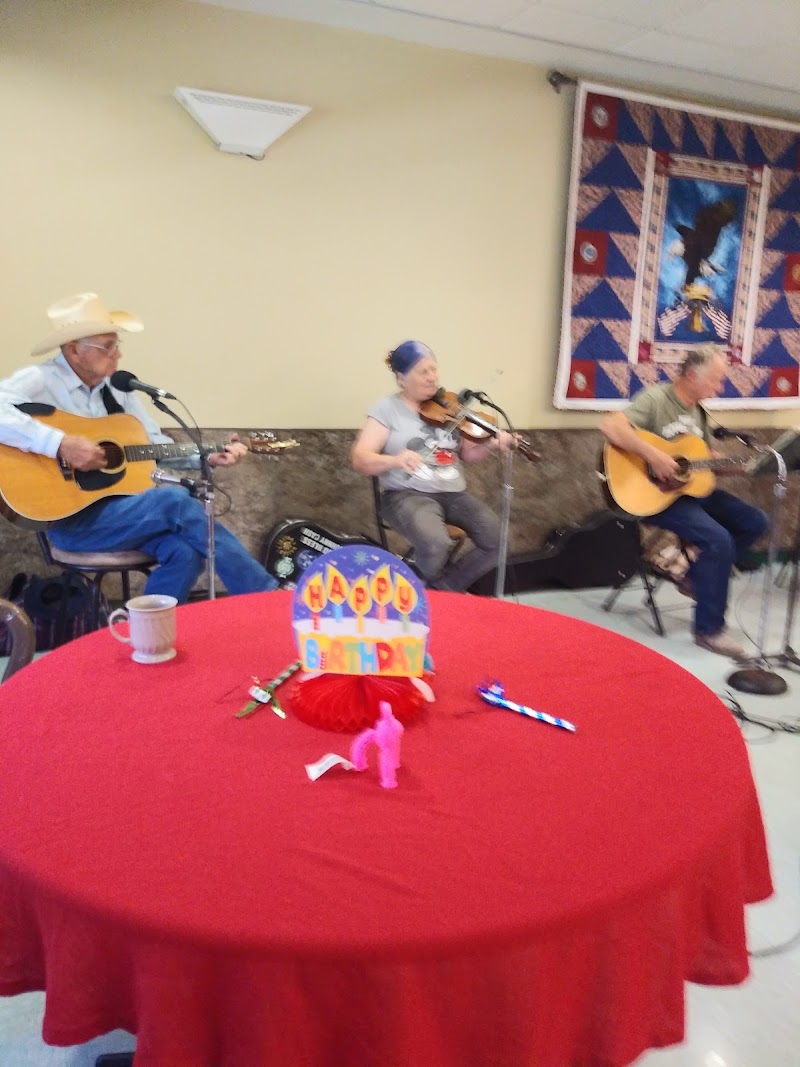
How is Frank M Tejeda Texas State Veterans Home Staffed?

CMS rates FRANK M TEJEDA TEXAS STATE VETERANS HOME's staffing level at 3 out of 5 stars, which is average compared to other nursing homes. Staff turnover is 44%, compared to the Texas average of 46%. This relatively stable workforce can support continuity of care.

What Have Inspectors Found at Frank M Tejeda Texas State Veterans Home?

State health inspectors documented 22 deficiencies at FRANK M TEJEDA TEXAS STATE VETERANS HOME during 2022 to 2025. These included: 22 with potential for harm.
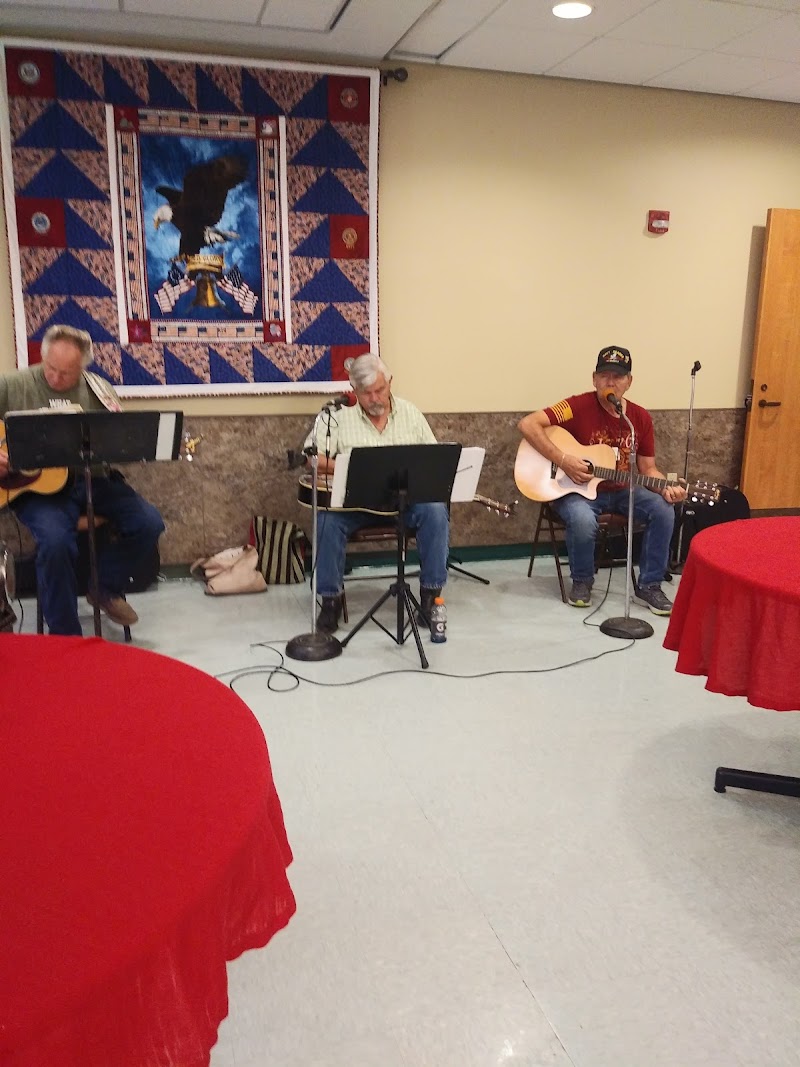
Who Owns and Operates Frank M Tejeda Texas State Veterans Home?

FRANK M TEJEDA TEXAS STATE VETERANS HOME is owned by a government entity. Government-operated facilities are typically run by state, county, or municipal agencies. The facility is operated by TEXVET, a chain that manages multiple nursing homes. With 160 certified beds and approximately 155 residents (about 97% occupancy), it is a mid-sized facility located in FLORESVILLE, Texas.
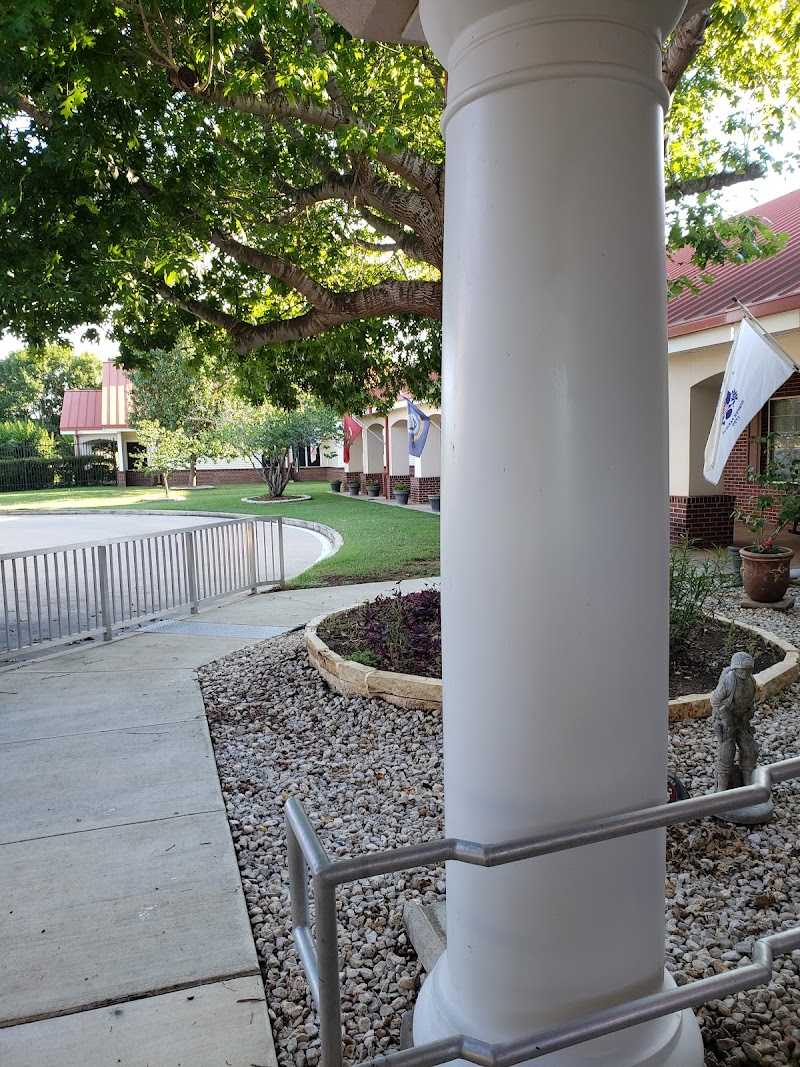
How Does Frank M Tejeda Texas State Veterans Home Compare to Other Texas Nursing Homes?

Compared to the 100 nursing homes in Texas, FRANK M TEJEDA TEXAS STATE VETERANS HOME's overall rating (5 stars) is above the state average of 2.8, staff turnover (44%) is near the state average of 46%, and health inspection rating (4 stars) is above the national benchmark.

What Should Families Ask When Visiting Frank M Tejeda Texas State Veterans Home?

Based on this facility's data, families visiting should ask: "Can I visit during a mealtime to observe dining assistance and food quality?" "How do you handle medical emergencies, and what is your hospital transfer rate?" "Can I speak with family members of current residents about their experience?"

Is Frank M Tejeda Texas State Veterans Home Safe?

Based on CMS inspection data, FRANK M TEJEDA TEXAS STATE VETERANS HOME has a clean safety record: no substantiated abuse findings (meaning no confirmed cases of resident harm), no Immediate Jeopardy citations (the most serious violation level indicating risk of serious injury or death), and is not on the Special Focus Facility watch list (a federal program monitoring the lowest-performing 1% of nursing homes). The facility has a 5-star overall rating and ranks #1 of 100 nursing homes in Texas. While no facility is perfect, families should still ask about staff-to-resident ratios and recent inspection results during their visit.

Do Nurses at Frank M Tejeda Texas State Veterans Home Stick Around?

FRANK M TEJEDA TEXAS STATE VETERANS HOME has a staff turnover rate of 44%, which is about average for Texas nursing homes (state average: 46%). Moderate turnover is common in nursing homes, but families should still ask about staff tenure and how the facility maintains care continuity when employees leave.

Was Frank M Tejeda Texas State Veterans Home Ever Fined?

FRANK M TEJEDA TEXAS STATE VETERANS HOME has no federal fines on record. CMS issues fines when nursing homes fail to meet care standards or don't correct problems found during inspections. The absence of fines suggests the facility has either maintained compliance or corrected any issues before penalties were assessed. This is a positive indicator, though families should still review recent inspection reports for the full picture.

Is Frank M Tejeda Texas State Veterans Home on Any Federal Watch List?

FRANK M TEJEDA TEXAS STATE VETERANS HOME is not on any federal watch list. The most significant is the Special Focus Facility (SFF) program, which identifies the bottom 1% of nursing homes nationally based on persistent, serious quality problems. Not being on this list means the facility has avoided the pattern of deficiencies that triggers enhanced federal oversight. This is a positive indicator, though families should still review the facility's inspection history directly.