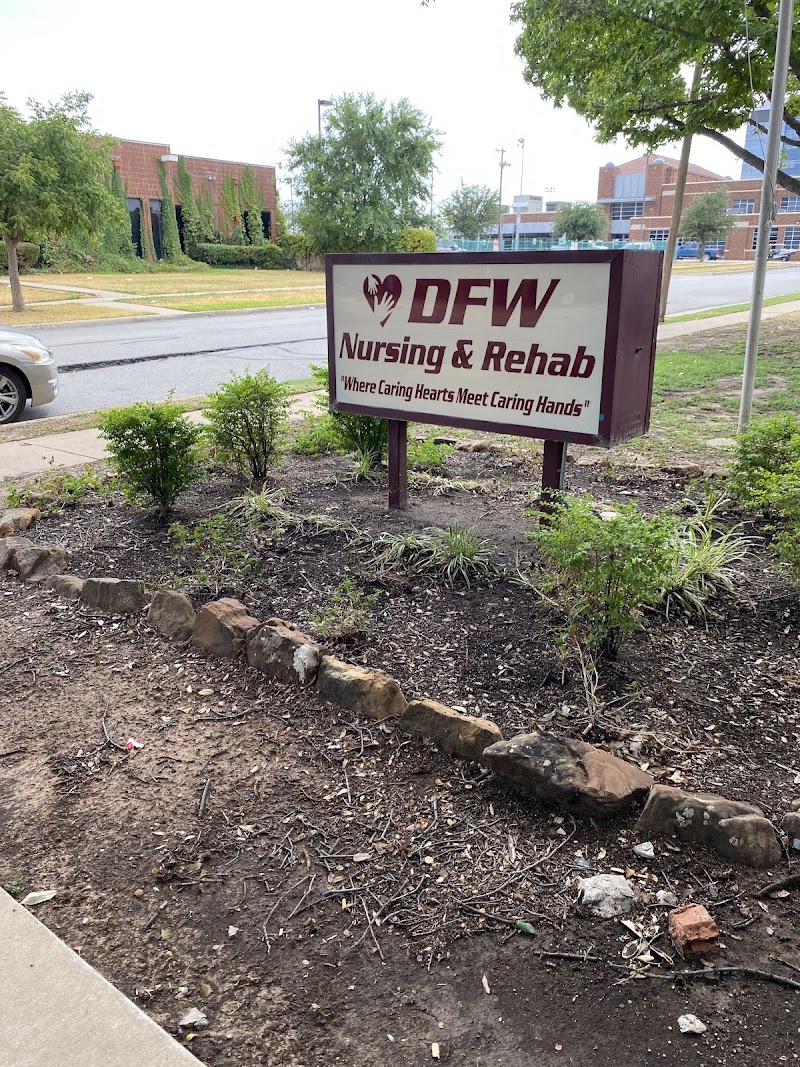
DFW Nursing & Rehab

900 W Leuda St, Fort Worth, TX 76104 (817) 332-7003
For profit - Limited Liability company 98 Beds CHARLESTON HEALTHCARE GROUP Data: November 2025 10 Immediate Jeopardy citations
Trust Grade
0/100
#965 of 1168 in TX
Last Inspection: August 2025

Inspected within the last 6 months. Data reflects current conditions.

Overview

DFW Nursing & Rehab has received a Trust Grade of F, indicating significant concerns about the facility's care and operations. With a state ranking of #965 out of 1168 in Texas and #58 out of 69 in Tarrant County, they are in the bottom half of both measures, which is alarming for potential residents. The facility is worsening, as the number of reported issues has increased from 17 in 2024 to 20 in 2025. While staffing is rated as average with a turnover rate of 23%, which is better than the Texas average, the facility faces serious issues, including $584,697 in fines, which is higher than 99% of Texas facilities, indicating ongoing compliance problems. Recent inspections revealed critical incidents, such as failing to protect a resident from abuse and neglect and not developing comprehensive care plans for residents, which could significantly jeopardize their health and safety. Overall, while there are some strengths in staffing, the weaknesses related to safety and compliance are concerning.

Trust Score
F
0/100
In Texas
#965/1168
Bottom 18%
Safety Record
High Risk
Review needed
Inspections
Getting Worse
17 → 20 violations
Staff Stability
✓ Good
23% annual turnover. Excellent stability, 25 points below Texas's 48% average. Staff who stay learn residents' needs.
Penalties
✓ Good
$584,697 in fines. Lower than most Texas facilities. Relatively clean record.
Skilled Nurses
⚠ Watch
Each resident gets only 18 minutes of Registered Nurse (RN) attention daily — below average for Texas. Fewer RN minutes means fewer trained eyes watching for problems.
Violations
⚠ Watch
46 deficiencies on record. Higher than average. Multiple issues found across inspections.
★☆☆☆☆
1.0
Overall Rating
★★★☆☆
3.0
Staff Levels
★★★☆☆
3.0
Care Quality
★☆☆☆☆
1.0
Inspection Score
Stable
2024: 17 issues
2025: 20 issues

The Good

  • Low Staff Turnover (23%) · Staff stability means consistent care
  • Full Sprinkler Coverage · Fire safety systems throughout facility
  • No fines on record
  • Staff turnover is low (23%)

    25 points below Texas average of 48%

Facility shows strength in staff retention, fire safety.

The Bad

1-Star Overall Rating

Below Texas average (2.8)

Significant quality concerns identified by CMS

Federal Fines: $584,697

Well above median ($33,413)

Significant penalties indicating serious issues

Chain: CHARLESTON HEALTHCARE GROUP

Part of a multi-facility chain

Ask about local staffing decisions and management

The Ugly 46 deficiencies on record

10 life-threatening 1 actual harm
Sept 2025 3 deficiencies 1 IJ
CRITICAL (J) 📢 Someone Reported This

A family member, employee, or ombudsman was alarmed enough to file a formal complaint

Immediate Jeopardy (IJ) - the most serious Medicare violation

Free from Abuse/Neglect (Tag F0600)

Someone could have died · This affected 1 resident

**NOTE- TERMS IN BRACKETS HAVE BEEN EDITED TO PROTECT CONFIDENTIALITY** Based on observation, interview, and record review the facility to protect the resident's right to be free of sexual abuse by a ...

Read full inspector narrative →
**NOTE- TERMS IN BRACKETS HAVE BEEN EDITED TO PROTECT CONFIDENTIALITY** Based on observation, interview, and record review the facility to protect the resident's right to be free of sexual abuse by a resident for one (Resident #2) of twelve residents reviewed for abuse. The facility failed to protect Resident #2 from sexual abuse by another resident when Resident #1 led Resident #2 into his room on 09/07/2025 and sexually assaulted her. An IJ was identified on 09/08/2025. The IJ template was provided to the facility on [DATE] at 1:54 PM. While the IJ was removed on 09/10/2025, the facility remained out of compliance at a scope of Isolated and a severity level potential for more than minimal harm that is not Immediate Jeopardy, due to the facility's need to implement corrective systems. This failure placed residents at risk of subsequent abuse resulting in potential mental anguish, emotional distress, and physical harm. Findings included: Review of Resident #1's admission Record, dated 09/08/25, reflected he was a [AGE] year-old male, admitted on [DATE], with diagnoses of paraplegia (loss of voluntary movement and sensation in the lower half of the body), depression, anxiety, cerebral infarction (stroke), and traumatic brain injury (sudden injury to the brain usually caused by a blow or jolt to the head.) Resident #1 was his own responsible party. Review of Resident #1's MDS, dated [DATE], reflected Resident #1 was able to understand others, and be understood by others, and had a BIMS score of 14, indicating he was cognitively intact. He exhibited no signs of delirium or psychosis, and was not depressed, but did sometimes feel socially isolated. He had no behaviors during the assessment period. Resident #1 used a wheelchair for locomotion, and needed little assistance with his ADLs. Resident #1 required partial to moderate (helper does less than half the effort) assistance with toileting, showering, and lower body dressing. He required only supervision or touching assistance with personal hygiene and upper body dressing. Resident #1 was able to move himself around in bed, and sit and lie down with no assistance. Review of Resident #1's care plans reflected the following care plans:- 07/24/25 for impaired comprehension related to his history of traumatic brain injury- 08/22/25 for potential for disruption of continuity of care related to signing himself out of the facility to gather off the facility property with other residents to smoke and socialize-08/25/25 for a psychosocial well-being problem related to a history of drug and alcohol use- 09/07/25 for sexually inappropriate behavior with another resident. This careplan had a goal of the resident not displaying any sexually inappropriate behavior through the target date of 10/23/25, and had interventions which included trauma assessment, not arguing with resident, monitoring and documenting behavior, notifying psych services when inappropriate behavior is noted, notifying Medical Director when inappropriate sexual behaviors occurred, and speaking in a calm voice when behavior was disruptive. The care plans did not include any other care plan for sexual behavior, or care plan for drug use which had occurred while he was a resident in the facility. Review of Resident #1's psychological services note, dated 09/05/25 reflected he was seen for hallucinations and delusions. The document noted that Resident #1 told the counselor that he had been served with a 30-day discharge notice due to alleged drug use, but denied using drugs. The document also noted that he provided inconsistent information and had difficulty articulating or focusing. Under Risk Factors the note included Sexual Acting Out: None. Review of Resident #1's progress notes reflected the following:- A note on 09/05/25 at 11:30 PM by LVN C reflected Resident was in A hall knocking at a female resident's room (female resident not identified). Resident was informed that the female resident was asleep. This resident was insisting that the female resident needs to come out, but the female resident told this writer with the A hall nurse and a female CNA that she does not want to be disturbed. When this resident was told what the female resident said, he did not want to move away from the hallway to his hall. He then came to the front lobby and sad [sic] he was waiting for a female visitor. Resident was informed that visitation time ends at 8 pm. He then said, I am a [AGE] year-old man, I can go out whenever I want. He then went to the patio. - A note on 09/06/25 at 12:35 PM by LVN B reflected Resident in room door closed, staff member open door togive lunch tray to resident strong drug order [sic] in room. DON and Ad min [sic] notified - A note on 09/06/25 at 2:59 AM by LVN C reflected (.) Resident noncompliant to instructions. Earlier on the shift, resident was knocking at the female residents rooms (identities of female residents unknown) and refused being redirected to his room. - A note on 09/06/25 at 10:26 PM by LVN C reflected, Resident outside (female resident #13's) knocking at the door. Resident redirected back to his room but non-compliant with instructions, refused to go and started talking to a female resident (identity unknown) inquiring her room number. - A note on 09/07/25 at 4:30 AM by RN A reflected This writer and another nurse were at A hall nurses' stationand saw resident trying to get into (male resident's room). We redirected him to go to his room and stop going into other residents' rooms because they are still sleeping. - A note on 09/07/25 at 7:00 AM by LVN B, reflected Resident refused to answer question on how resident (#2) was in the room. Resident refused skin observation - A note on 09/07/25 at 7:07 AM by LVN B reflected Notified DON and ADMIN (Administrator's name) for possible sexual abuse from resident - A note on 09/07/25 at 11:45 AM by the DON reflected This nurse spoke with (name of worker) from (name of group home) which is part of a home community based service for adult mental health, a placement agency; she will come out tomorrow to evaluate him for placement. Resident currently on 1 :1 observation, will continue until placement is found. - A note on 09/07/25 at 12:44 PM by the DON reflected the PCP and Psych Nurse were made aware of the incident. Review of Resident #2's admission Record, dated 09/07/25 reflected she was a [AGE] year-old female, with diagnoses of Alzheimer's disease, dementia in other disease (dementia caused by another health condition), stroke, major depressive disorder, and presence of a cerebrospinal fluid drainage device (stent for draining excess fluid from around the brain). A family member (Resident #2's POA) was her responsible party. Review of Resident #2's MDS, dated [DATE], reflected she was only sometimes able to be understood, and to understand others. She had a BIMS score of three, indicating severely impaired cognition. Resident #2 had fluctuating inattention and disorganized thinking, and the staff mood assessment reflected she had little interest or pleasure in doing things and felt tired from two to six days of a fourteen-day lookback period, and that she had trouble concentrating every day or nearly every day. She exhibited no behavioral symptoms during the assessment period. Review of Resident #2's care plans reflected the following:- 08/19/22 has difficulty making decisions- 03/15/23 Intrudes on other residents' privacy with a goal of not intruding on resident privacy during the quarter, and interventions (all dated 03/15/23) of monitoring and documenting behavior, placing her in an area where frequent observation is possible, and redirecting her when wandering into other resident rooms.- 07/01/23 h/o physically aggressive behavior with staff and other residents, which included 07/01/23 - was physically aggressive with a staff and resident and on 08/17/25 - physically aggressive with another resident, who hit her and caused her to fall- 01/14/24 displays socially inappropriate/ disruptive of taking items not belonging to her, and when confronted curses, calls people names, and refuses to listen, due to her cognitive diagnosis- 07/12/24 refuses to shower or change clothing for 2-3 days and goes home with family member to shower- 08/12/24 has periods of forgetfulness The care plans did not include any care plan for sexual behavior, or drug use. Review of Resident #2's psych services note, dated 08/13/25, reflected the staff reported signs of cognitive impairment (confusion, word-finding difficulties and difficulties with ADLs) but no behavioral concerns. Resident #2 had no history of alcohol or drug use. Resident #2's thought process was impoverished (resident was unable to think well, leading to minimal speech, lack of detail in conversations, and difficulty sustaining topics), flat (unexpressive) affect, poor eye contact, no risk of aggression, poor attention span, fair judgment, and severely impaired long and short term memory. The document reflected the resident had been in several group homes prior to her admission, but wandered away. Review of Resident #2's progress notes reflected the following: - A note on 09/07/25 at 4:40 AM by RN A Resident resting in bed, door open and lights on. No c/o pain and nos/s of acute distress noted. ADLs provided, safety precautions maintained, will continue to monitor. - A note on 09/07/25 at 6:45 AM by LVN B Resident not in room, this writer went to check blood sugar, resident not in room. This writer then being [sic] to search the B hall area, outside patio, dining area and was unable to find resident - A note on 09/07/25 at 6:55 AM by LVN B Resident notified by over head page to staff missing resident location, (Resident #2's name and room location). Staff member went room to room. Resident was found by (LVN C) in (Resident #1's room number). - A note on 09/07/25 at 7:01 AM by LVN B Resident was in (Resident #1's room number) wear and [sic] black top with no underwear facing the wall and the back toward the door. her under [sic] and pants in the bed with her. This writer assist with sup. (supervisor ADON) to room gait unsteady she was confused and could not walk. This writer went to get wheelchair and resident was taken to her room - A note on 09/07/25 at 7:01 AM by LVN B Resident in room very unsteady bp 122/76 heart rate 112 temp 96.8.Resident refused head to toe assessment from this writer. No signs of bleeding or bruising to arms or legs andface. - A note on 09/07/25 at 7:01 AM by LVN B This writer stay with resident and staff until EMT arrived. Residentasked several times what's happening to me. This writer told help is on the way. Resident in bed some what alert calm no signs or symptom of pain - A note on 09/07/25 at 7:07 AM by LVN B Notified PCP - A note on 09/07/25 at 7:07 AM by LVN B Notified DON and Admin of situation - A note on 09/07/25 at 7:10 AM by LVN B Notified the police and requested EMT - A note on 09/07/25 at 7:15 AM by LVN B Police on the scene. This writer inform the police that resident wasin another resident room undress and resident has Alzheimer's and Dementia confusion sometime can't make decisionon her on [sic]. - A note on 09/07/25 at 7:17 AM by LVN B EMT on the scene to take resident to hospital for evaluation. Resident refused to go. - A note on 09/07/25 at 7:27 AM by LVN B Notified (Resident #2's family member's name) of the situation and (Resident #2's family member's name) (Resident #2's (Resident #2's family member's name) spoke to resident and resident was sent to (name of hospital). - A note on 09/07/25 at 8:26 AM by LVN B sent to ER - A note on 09/07/25 at 9:00 AM by LVN B (Resident #2's family membe4) and (Resident #2's POA) arrived asking what happened and how did I let this happen. This writer explained the event between 6:45 and 7:00 am. (Resident #2's family member) crying asking why did you let this happen. This writer listen to family member and assured her that Admin (Administrator's name) and DON (DON's name) was working on the situation as we speak - A note on 09/07/25 at 9:30 AM by ADON This nurse was at A-hall nurse's station after huddle (a meeting at shift change, for communication) this morning, when I heard overhead page by B-hall charge nurse that she cannot locate one of her residents and she need help to look for her. Other staff members started looking, while this nurse headstraight [sic] to Shall [sic]. Charge nurse reported to this nurse that (Resident #2) was observed lying in bed in room (Resident #1's room number). This nurse entered room (Resident #1's room number) and saw the male resident in room (Resident #1's room number) sitting across his bed facing the door and (Resident #2) was lying on the bed facing the wall and her back to the door. I asked the male resident what's going on? Why is she lying on your bed? He did not respond. He just looked down. I saw his pants and underwear were down to his thighs, and he tried pulling his pants up to cover his pubic area from being exposed. I turned to (Resident #2) and asked her what are you doing on the male resident's bed?. She replied, nothing. I asked her to get out of bed and let me take her back to her room. She tried to get up but couldn't. I noticed when she moved that she didn't have any underwear or pants on. She had a blouse, and sweater on. She also appeared weak and unstable. I asked the male resident to transfer to his w/c x3 while I try to get the female resident out of the bed, but he didn't move. I pulled the bed away from the wall, with both residents sitting on it, then I assisted the female resident to get out of bed and hold her hand while leading her to her room . She stopped and leaned against the wall outside the door because she was staggering. We finally made it to her room with my assistance. Male resident finally got out of bed to his w/c. Charge nurse had notified the DON, Administrator, and police. DON came into the building to start investigation. Marketing director also notified and came into the building to assist. This nurse took resident's vital signs: BP=122/76, P=112, Resp=28-30. Temp=96.8. She denied pain/discomfort from her vagina. She refused to have this nurse do a complete assessment of virginal [sic] area, stating I'm ok, I don't need that. Ambulance with EMT arrived and took over. Police also arrived and spoke with the male resident, charge nurse, and this nurse. Resident was transferred to [name] hosp for further eval and treatment if indicated. - A note on 09/07/25 at 12:56 PM by LVN B Notified resident [sic] of possible abuse by another resident - A note on 09/07/25 at 7:37 PM by LVN B Resident return from hospital alert bruising to rt eye swollen [sic] to top lip. voiced no to pain, gait unsteady some confusion noted - A note on 09/08/25 at 6:47 AM by LVN C Resident's upper lip remains swollen, denies pain or discomfort. - A note on 09/08/25 at 7:21 AM by LVN I resident awake and alert sitting on side of bed at this time. (.) Resident denies any pain/discomfort at this time. Upper lip remains slightly swollen, no c/o pain or discomfort. No signs ofdifficulty swallowing or chewing. Resident eating snack in room at this time. (.) - A note on 09/08/25 at 9:32 AM by the ADON This nurse saw resident being escorted by cna to smoke patio. CNA was holding her arm to assist her while ambulating from her room on B-hall to smoke patio. CNA reported to this nurse that resident is unstable on her feet on that's why she's holding on [NAME] [sic] arm while walking. Noted upper lip swollen. Resident denied pain at this time. Resident unable to verbalized what happen to her upper lip d/t dx of dementia/alzheimers. Charge nurse notified. DON aware. - A note on 09/08/25 at 10:22 AM by LVN I vitals assessed by this writer at 9:53am. 108/77 p97, 98% RA, 97.1 . Resident c/o pain to upper lip at this time. No order [sic] pain. Requested prn pain med at this time. - A note on 09/08/25 at 11:35 AM by LVN I resident oof to hospital with EMT per (Resident #2's family member) phone call to EMT for resident to get CT Scan. Resident sent with face sheet and med list. (Medical Director's name) and admin staff notified - A note on 09/08/25 at 5:43 PM by Agency LVN K the writer of this note made aware that resident was going to pend [sic] the night at her family home - A note on 09/08/25 at 6:00 PM by Agency LVN K Resident during the AM shift for a hospital appointment at (5:00 PM) family member came to the facility and informed the writer of this note that resident was going to pend [sic] the night at home. Evening and HS meds prepped and given to (Resident #2's family member). - A note on 09/09/25 at 11:35 AM by LVN I resident returned back to facility with (Resident #2's family member) and (Resident #2's family member CC) . (Nurse Practitioner's name) in facility and will assess resident per (Resident #2's family member's) request. Will continue with plan of care. Hospital records for Resident #2 were not reviewed. An observation on 09/07/25 at 12:22 PM revealed that Resident #2 was not in her room but a name plate with her first initial and last name was on the door. An interview and observation on 09/07/25 at 12:24 PM revealed Resident #1 outside his room, wheeling back and forth a short distance, and turning around in a circle and ranting. The ADON was standing next to his door, watching him. Resident #1 agreed to speak privately with the surveyor in his room, and the ADON said she would be right outside the door. Resident #1's speech was hard to understand at times, somewhat slurred, and he jumped from one unfinished sentence to another at times. He was speaking without stopping unless the surveyor interrupted him to ask questions. He said they (the facility staff) were talking this stuff about him, for no reason, and they didn't know anything. He said she (Resident #2) had autism and he didn't know that but they were friends and he talked to her all the time and she made decisions as well as him. He said she thinks good thoughts. When the surveyor asked the name of the lady he was talking about, he gave an incorrect first name starting with the same initial as Resident #2's, and the correct last name. He said They are saying a whole lot of whatever it is. They don't know that me and her have whole, decent conversations. He said he had not talked to her about sex, but he went into her room and told her he was going to his room, and she said she was coming over to get weed. When asked if he normally kept drugs in his room, he said no but when the surveyor asked about Resident #2 saying she was coming over to get marijuana, he said that he just kept a little weed in his room. He said that when they were in his room she I'm ready and he said no because them people are going to come in here but she pulled her clothes off. He said the door to his room just opened, he could not lock it, and people came in all the time. He said they both fit in his (twin) bed, and they watched TV first, then she wanted to have sex. He repeated that she was his friend, and just a friend, and that they (facility staff) know better than I am fixin' to rape. He said it was just like 10 minutes and he didn't even finish and he repeated this, and that the staff were makin' a big deal about it, and that they did not understand, repeatedly throughout this conversation. He said Resident #2's shoe was on the floor, and his money fell in her shoe. When the surveyor tried to talk about the allegation again, he continued to talk about the money, which was over $300, but when asked what kind of decisions he had ever seen Resident #2 make, he denied that she had any problem making her mind up about anything including sex or anything else. He said she was able to say yes or no and that she was happy while they were together, not upset. He said someone came in and saw them sitting there, and looked all over and got upset. He said a nurse came in and he was sitting upright in the bed. He then backtracked to how Resident #2 was his friend, and said she said naw then she said yes. When the surveyor asked if she said no to sex before she said yes, he said no, she never said no and that she wanted to get together with him. He said that when they were looking at the TV she told him to put on this song she liked, and he started looking for a song on his phone, and humming. He said when she said that he wasn't even thinkin' like that but he did it because she wanted to. He talked more about his money, the amount, and that she (pointed at the door) took the money and counted it and he wanted his money back. Several times during this interview the surveyor had to ask him to re-state things, and when he did, his speech was noticeably more clear and easy to understand. In his demeanor he seemed to be more emotional about his money and did not express any concern for Resident #2. Constantly throughout the interview he put his hands on his head and shook his head, while he denied there was any problem with his actions toward Resident #2. An interview on 09/07/25 at 12:36 PM with the ADON revealed she was the person designated to watch Resident #2 at this time. She said there was some question about who the money belonged to, because it was found in another resident's room, and it was being held until they were certain of who it belonged to. The resident was inside his room and loudly said they knew it was his money and he wanted it back. A telephone interview on 09/07/25 at 12:44 PM with Resident #2's Family Member said the facility called at about 7:30 that morning (09/07/25) to tell her they needed the resident to go to the hospital, and she would not go, because she did not understand why. She talked to Resident #2 so she would go, and when she was at the facility she saw the man who did it. She said there was nothing wrong with him, except his was in a wheelchair, and he said the night nurse knew they had been doing it (he and Resident #2 having sexual contact) for a while, and told them it was OK. During the conversation, Resident #2's family member was crying and said that earlier another man had jumped on Resident #2 and hit her on the head. She said the resident had a stent in her head and they sent her to the hospital because she was worried that the man might have done something to her stent. She said Resident #2 had dementia and she was very concerned, because she thought the staff were supposed to protect Resident #2, and check her at least every two hours, and she wanted to know how nobody noticed she was in a man's room. She said her dementia was getting worse, and she was not able to decide to go to a man's bed. She said she did not believe there was any way Resident #2 would be thinking to look for that (sex) and she would not be looking for drugs. She was worried the facility would lie about it and say Resident #2 meant to be in the man's room. She did not know how the resident was doing, because she was still at the hospital. Once she was released her family meant to take her home for a while. A telephone interview on 09/07/25 at 12:59 PM with Resident #2's POA said he had been told that Resident #2 had been found in a man's room with no clothes on, around 6:50-7:00AM that morning, and she appeared to have no recollection that anything happened. He said she did not seem agitated or upset because she was completely unaware of what happened. He said he was at the hospital during this conversation and they were waiting for them to do a rape kit on the resident. He said she had never talked about being involved with a man at the facility and no staff had ever told them she showed any interest in that, and he would not expect her to, because she could not remember anything from one minute to the next. Resident #2's POA said they were feeling very bad about the facility after another man assaulted her by hitting her, twice, for no reason and he wanted to find a better place for her because of that. He said the other assaults had been in the last couple of months, he thought. He said that on top of that, now this has happened and they (her family) were very, very upset. An interview on 09/07/25 at 2:10 PM with LVN B revealed the staff were having huddle at about 6:30 or 6:40 and she noticed Resident #2's door was open and she was not in there. She said she made a round to look for her, and she was not in any of her normal places. She said she went from room to room on her hall and checked the rooms again, in case they had missed each other in passing. When she was not able to find Resident #2 she asked another nurse if they had seen her, and did a page overhead to call for help. RN A and LVN C found Resident #2 in Resident #1's room and told her. The ADON was also searching and she went into Resident #2's room with her. She said Resident #2 was in the bed, facing the wall, and her underwear and pants were off, and her shirt was pulled part-way up her back. She said the ADON asked Resident #1 to pull his clothes up and get in the wheelchair so they could get Resident #2 off the bed. LVN B said she called the Administrator and the DON because this was abuse, and she called 911 for police and EMTs. She said Resident #2 seemed loopy and could not get out of the bed, so they helped her to a chair. She said normally Resident #2 was able to walk very well, and she walked all the time, but she was having trouble walking. She said Resident #2 was hugging herself and shaking when the ADON got her back into her own bed, and the ADON stayed with her. She said the DON stayed on her cell phone with her while she called the police, and that Resident #1 would not allow them into his room or talk to them. The police came and spoke with Resident #1, then with her, and she gave them her version of what happened. LVN B said Resident #2 was not able to make decisions about things like that for herself, but she was very passive, and easily influenced, and if she needed her to be somewhere she just said Come on (Resident #2's name), let's go and she would go right along with her. She did not believe Resident #2 would ever be seeking out drugs or sex, and she had never shown any idea of those things, in the time she had known her. She had never had any sort of sexually related behaviors. She said Resident #1 had a history of going on pass and doing drugs and Resident #2 never left the building except with her family, and never went out to the tree to be with other residents. She mostly just kept to herself. She said that Resident #1 was a sick person and on the night of 09/06/25 he was hanging his entire torso out his window, and smoking something that made his room and the hall smell terrible. When she told him to stop, he swore at her. She said he did that a lot, and was very threatening. She reported it to the Administrator and the night staff. The Administrator told her to call the police. She had been told that Resident #1 had earlier gone into a men's room, looking for a female friend and when RN A and LVN C told him no, it was a men's room, he said it was her (identity of her unknown) room. RN A and LVN C redirected him back to his room after that, and they watched him go all the way to his room. She reiterated that she felt Resident #1 was a sick person and that something was very wrong with him, and he was very perverted. She said when she notified Resident #2's family member, because she was able to get her to do things, she talked to her and got her to go to the hospital. Later Resident #2's family member and Resident #2's POA came to the facility and they had Resident #1's phone with them, and wanted to know where Resident #2's phone and wallet was. Resident #1 was there and told Resident #2's POA Give me my phone and the POA asked Resident #1 how Resident #2 even had his phone. Resident #1's response when Resident #2's POA asked him if he did that (sex) to Resident #1 was it lasted maybe 10 minutes and it's not a big deal and everyone is making a big deal about it. LVN B said Resident #1 said they (he and Resident #2) went in the room and it didn't last long and that everyone was acting like they didn't know what a man and woman being together was. She said Resident #2's POA called the police and her family member was in tears. She said she explained to Resident #1 that Resident #2 was not mentally equal to him, and he responded that she was older than him, and she explained it was not about age, it was about her mind. She said she did not know why someone did not go watch Resident #1 after he tried to go into rooms in the middle of the night. She said she had been so stressed over Resident #1's behavior that she had to take some time off. She said Resident #1 had talked about a lot of things that made her uncomfortable, and been very threatening toward her. She had asked him to turn his loud music down once, and close his door, because it was night, and people were sleeping, and he said he was going to get somebody's cousin to fuck her up. She said she talked to the Administrator about it, but he just said they could call the police but they probably would not do anything. She told the DON she did not feel safe there, and took some time off. She said they moved her to a different nurses station, but it did not help. She said Resident #2's only real behavior problem was that she was a little bit of a klepto and would go into rooms and pick up other people's things, and she collected the water pitchers, and things like that. The only time she ever heard of her going into a man's room was because she wanted to take something she saw, not because it was a man's room. She said the resident probably had no idea whose room it even was. She said Resident #2 probably did not even know Resident #1's name. She said she felt like Resident #1 was really bad, and the Administrative staff should have taken him more seriously before this. An interview on 09/07/25 at 4:58 PM with the Hospital SANE revealed she had just seen Resident #2, and examined her for possible sexual assault. She said the resident could not remember what happened or answer any questions about it, so the information she got came mostly from her family. She said she did a full head-to-toe assessment, taking pictures of anything she found, and swabbed her for DNA. She said the only injury she found was some redness on her face , which her family said was not normal for her, but that lack of injury did not necessarily mean lack of assault. She said Resident #2 did not remember at all what happened, and did not seem particularly upset. An interview on 09/07/25 at 6:38 PM with RN A revealed Resident #1 was trying to go into a man's room on the night of 09/06/25, and he and the other nurse (LVN C) told him to stop trying to go into rooms because it was late and people wanted to rest. He said he was aware of Resident #1 and another resident who had recently been discharged having a consensual sexual relationship, and he had reported it to the DON and Administrator. He said both residents were fully alert and oriented and able to consent. He said he was not aware of Resident #1 trying to have sex with any other resident. He said they were near the nurses station at the front door (at the opposite of a hall from Resident #1 and Resident #2's rooms) at the time, and watched Resident #1 go all the way down the hall, and into his room. He said it was about 4:00 AM on 09/07/25 when that happened. He said around 4:45 AM Resident #2 was in bed, with the light on, which was normal for her. He said at that time, Resident #1 was in his room, sitting in his wheelchair, watching TV. He said Resident #2 had never had any sexual behaviors, or shown any interest in drugs, that he was aware of. He said they had done training on abuse and neglect, including sexual abuse, and what consent meant, and he did not know if Resident #2 would be able to give consent, but Resident #1 was able to consent. He said Resident #2 could remember bits and pieces of things that happened years ago, but was not able to remember recent things because her short-term memory was very poor. He said he did not think someone with poor short-term memory would be able to give informed consent, which meant a person was able to understand the implications of their decisions. An interview on 09/07/25 at 7:03 PM with LVN C revealed he was working at the station by the front door, on admitting a resident, when he heard the call on the intercom that there was a missing resident, so he went to the other nurses station. He said he checked in Resident #2's room, and she was not there so he went room to room and found Res[TRUNCATED]
CONCERN (D) 📢 Someone Reported This

A family member, employee, or ombudsman was alarmed enough to file a formal complaint

Potential for Harm - no one hurt, but risky conditions existed

Report Alleged Abuse (Tag F0609)

Could have caused harm · This affected 1 resident

**NOTE- TERMS IN BRACKETS HAVE BEEN EDITED TO PROTECT CONFIDENTIALITY** Based on interview and record review, the facility failed to ensure that an allegation of abuse was reported immediately but not...

Read full inspector narrative →
**NOTE- TERMS IN BRACKETS HAVE BEEN EDITED TO PROTECT CONFIDENTIALITY** Based on interview and record review, the facility failed to ensure that an allegation of abuse was reported immediately but not later than 2 hours after the allegation was made if the events that caused the allegation involved abuse to Health and Human Services for one (Resident #3) of twelve residents reviewed for abuse and neglect. The facility failed to report an allegation by Resident #3 (a discharged resident) that Resident #1 put drugs in a beer he gave her on 08/31/25 or 09/01/25. This failure could place residents at risk of being abused and lack of oversight by a state agency. Findings included: Review of Resident #1's admission Record, dated 09/08/25, reflected he was a [AGE] year-old male, admitted on [DATE], with diagnoses of paraplegia (loss of voluntary movement and sensation in the lower half of the body), depression, anxiety, cerebral infarction (stroke), and traumatic brain injury (sudden injury to the brain usually caused by a blow or jolt to the head.) Resident #1 was his own responsible party. Review of Resident #1's MDS, dated [DATE], reflected Resident #1 was able to understand others, and be understood by others, and had a BIMS score of 14, indicating he was cognitively intact. He exhibited no signs of delirium or psychosis, and was not depressed, but did sometimes felt socially isolated. He had no behaviors during the assessment period. Resident #1 used a wheelchair for locomotion, and needed little assistance with his ADLs. Resident #1 required partial to moderate (helper does less than half the effort) assistance with toileting, showering, and lower body dressing. He required only supervision or touching assistance with personal hygiene and upper body dressing. Resident #1 was able to move himself around in bed, and sit and lie down with no assistance. Review of Resident #1's Careplans reflected the following care plans:- 07/24/25 for impaired comprehension related to his history of traumatic brain injury- 08/22/25 for potential for disruption of continuity of care related to signing himself out of the facility to gather off the facility property with other residents to smoke and socialize-08/25/25 for a psychosocial well-being problem related to a history of drug and alcohol use Review of Resident #1's psychological services note, dated 09/05/25 reflected he was seen for hallucinations and delusions. The document noted that Resident #1 told the counselor that he had been served with a 30-day discharge notice due to alleged drug use, but denied using drugs. The document also noted that he provided inconsistent information and had difficulty articulating or focusing. Review of a note on 08/31/25 at 1:10 AM by RN A reflected At about 12am, this writer and another nurse were doing nurse's rounds and observed that resident was in his room with another female resident with door slightly opened. Resident stated that we are just watching a movie. Shortly after, his door was closed and this writer and another nurse went to check on patient. When we knocked on patient's door, he answered and stated that i am enjoying myself. We observed both residents lying in bed having sex. We provided privacy. (Medical Director), Administrator and DON notified. Review of Resident #3's admission Record, dated 09/10/25 , reflected the resident was a [AGE] year-old female with diagnoses of bipolar disorder, anxiety disorder, COPD (a condition which makes it difficult to breathe) and post-traumatic stress disorder. Review of Resident #3's MDS assessment, dated 09/01/25, reflected Resident #3 was usually understood, and usually able to understand others. She had diagnoses of depression, mild cognitive impairment, and personal history of suicidal behavior. She had a BIMS score of 11, which indicated moderate cognitive impairment. During the assessment period she showed no signs of delirium, psychosis, or behavioral problems. She had one-sided impairment of her upper extremity, and was able to use her wheelchair with only supervision or touching assistance. Review of Resident #3's careplans reflected the following:- 03/15/25 a history of suicidal ideation (thoughts of killing oneself)- 03/15/25 impaired cognitive function- 03/17/25 impaired comprehension- 05/12/25 a history of verbal aggression with staff, residents and transport drivers, and socially in appropriate/ disruptive behavior, sexually inappropriate behavior, cursing, and throwing things.- 05/21/25 puts herself in dangerous situations, and rolling walker inside and outside, and wandering into unsafe situations re: cognitive status- 05/21/25 After discovering (Resident #3) was sexually [sic] she disclosed her triggers were men, and aggressive people. She also said that constant stares triggers her. An 08/31/25 note added to this careplan that on that date she was observed by a nurse having sexual relations with another resident. - 08/21/25 potential for disrupting continuity of care due to signing out and sitting outside socializing with other residents.08/25/25 history of alcohol and drug used, and goes out on pass regularly. A note added to this careplan on 09/01/25 reflected the resident called 911 and requested to go to the hospital as a result of another resident putting drugs in her beer when they were outside. Review of Resident #3's progress notes reflected the following: - A note on 08/31/25 at 3:10 AM by LVN C This resident was in room (Resident #1's room number) saying that she waswatching a movie with the resident who stays in room (Resident #1's room number). Shortly after, the door closed and when this writer and another nurse went there and knocked at the door, the two residents were in bed having sex. Then the resident who lives in room (Resident #1's room number) said, I am enjoying myself'. The residents were accorded [sic] privacy. (Medical Director's name), administrator and DoN notified. - A nurses note on 08/31/25 at 11:50 PM, writer unknown, reflected Resident returns from hospital for chest pain of uncertain cause. Patient is in stable condition BP: 118/76, HR: 65, SATS: 96% on room air, Temp: 98.1, no c/o pain and no s/s of acute distress (Medical Director's name) notified, will continue to monitor. - A note on 09/01/25 at 3:10 AM by RN A At about 2:00am, this writer and the nurse on C. hall knocked on resident's door. She stated go away (Resident #1) is here. The door was barricaded with their wheelchairs and trash can. (Medical Director's name), DON, and Administrator notified. Male resident finally cameout [sic] of her (Resident #3's room number) at about 2:30am. - A note on 09/01/25 at 6:29 AM, writer unknown, reflected CNA answered this resident's call light at this time andresident asked for a refill of Ice and stated to CNA I have the ambulance coming. The CNA notified this nurse and at that time a police officer walked into the facility. The officer stated So l'mhere [sic] for a (Resident #3's name). The officer went to speak with resident in her room. This nurse notified the Administrator and DON. The officer came outof the room stating to this nurse So she is saying the resident in room (Resident #1's room number) gave her a steel reserve last night and it didn't taste like normal beer. She said it tasted like some other chemicals were in it as wellmaking her chest hurt. The Administrator and DON notified of this information at this time. 0637am At this time (name of ambulance company) personnel walked into facility setting resident up for transport. (.) - A note on 09/01/25 at 1:18 PM by LVN E This nurse called (name of hospital) ER and spoke to (name of hospital nurse) who stated All of the patient's labs were normal, so she was given tramadol and ASA , and discharged back to (name of facility). - A note on 09/02/25 at 12:29 AM by LVN D resident remains awake up in w/c sitting in room. states I filed a police report against male in (Resident #1's room number) for putting drugs in my drink the hospital did a urine screen and said i could get my records for the police tomorrow. im pressing charges and i want him arrested resident stated it all happened over the weekend i felt funny after I drank the drink but the hospital said i was ok and sent me back denies pain or distress at this time denies sob or discomfort im fine now this was yesterday nad [sic] noted tolerating snacks and po fluids well prn for pain effective. cont poc - A note on 09/08/25 at 7:00 AM by LVN E This former resident called at this time stating Y'all think it's a joke I'm filing a lawsuit against y'all nursing home. I was drugged by (Resident #1's name) and every since I been feeling like I was dying. I been in the hospital ever since I discharged . Tell the administrator and DON to give me a call please. The administrator and DON notified of this information. Review of change in condition documentation for Resident #3, dated 08/31/25 at 4:01 PM, reflected the resident had sharp musculoskeletal pain at a level 5 and tightness in her chest, with no shortness of breath, which started on the afternoon of 08/31/25, but resident was otherwise normal. Her blood pressure was 147/92, pulse 97, respirations 20, temperature 98.1, oxygen 96% on room air. It was noted that the symptoms stayed the same since the change in condition occurred. Resident #3 was sent to the ER. An interview on 09/09/25 at 1:17 PM with the ADON revealed she was aware that Resident #1 and Resident #3 had a consensual sexual relationship, and the staff had notified her that they observed them in bed having sex. She said she was also aware of the allegation that Resident #1 drugged her, and she was sent to the hospital for stomach pain and her body did not feel right since he put something in her drink. She did not know any more details, and was not aware of whether it had been reported to the state or not. She said whenever a staff member reported something to her that should also be reported to the DON and Administrator, she asked them if they reported it to the DON and Administrator, and the answer they gave was always Yes. An interview on 09/09/25 at 4:01 PM with the DON revealed she was aware that Resident #3 had made an allegation that Resident #1 put something in her drink. She said Resident #3 went to the hospital, and came back shortly after. She said her nurse called the hospital to find out results, and was told that they found nothing, and everything was clear, so they sent her back with some tramadol (a narcotic pain reliever.) She thinks that she and the Administrator did not report it, because there were no drugs in her system, and it did not happen. She said that Resident #3 called her on 09/08/25, and she could tell by the way she sounded that she was recording the call, and she said that they put her out and she was mad about Resident #1. The DON said she reminded Resident #3 that she wanted the discharge and they tested her at the hospital and she had no drugs in her system, and the resident hung up on her. An interview on 09/12/25 (post-exit) at 9:53 AM with the Administrator revealed he heard about Resident #3 making an allegation that Resident #1 drugged her third party . He did not say who told him, or when he heard about it. He said he heard that it happened off-site, when both residents had signed out of the facility. He did not know if it was under the tree where the residents hung out, or somewhere else. He did not report it, because it happened off-site, and there was no proof. He said that whether he reported something that happened off-site would depend on the situation. He gave an example of an incident from a previous building he worked in, where a resident returned and said that their family member had left them in the car by themselves. He said something like that, they would probably look at reporting. He said if the resident had spoken to him directly, he would have talked to his advisors and found out whether it needed to be reported. He said he attempted to talk to her about it, and she swore at him, flipped him off, and told him he was no kind of manager and come the third (of September) she would be gone, and that was going to be it. He did not document that he attempted to speak with her. He said some days she would be pleasant and speak to him, but most of the time she made it well known that one of her big triggers was talking to men in authority, and she did not like talking to them. He said the police came, and wanted to talk to someone named (name not belonging to any residents or staff at the facility) , and he told them there was nobody there by that name. He said somehow it was determined it was Resident #3, and they went out under the tree and spoke to her, and left. The police did not ask him anything, or speak with him about anything, so he did not know what the conversation was about. He said he was not notified of her call on 09/08/25. Review of the policy Abuse Prevention Program, revised December 2016, reflected Policy Interpretation and Implementation: As part of the resident abuse prevention, the administration will: (.) 7. (.) and report any allegations of abuse within timeframes as required by federal requirements;(.)
CONCERN (E) 📢 Someone Reported This

A family member, employee, or ombudsman was alarmed enough to file a formal complaint

Potential for Harm - no one hurt, but risky conditions existed

Comprehensive Care Plan (Tag F0656)

Could have caused harm · This affected multiple residents

**NOTE- TERMS IN BRACKETS HAVE BEEN EDITED TO PROTECT CONFIDENTIALITY** Based on observation, interviews and record review, the facility failed to develop and implement a comprehensive person-centered...

Read full inspector narrative →
**NOTE- TERMS IN BRACKETS HAVE BEEN EDITED TO PROTECT CONFIDENTIALITY** Based on observation, interviews and record review, the facility failed to develop and implement a comprehensive person-centered care plan for each resident that includes measurable objectives and timeframes to meet a resident's medical, nursing, and mental and psychosocial needs and describes the services that are to be furnished in order attain or maintain the resident's highest practicable physical, mental, and psychosocial well-being for five (Residents #1, #8, #9, #11, and #12) of eight residents reviewed for care plans related to sexual activity with other residents. The facility failed to create care plans addressing known sexual relationships between residents for Residents #1, #8, #9, #11, and #12. This failure could affect residents by placing them at risk for not receiving care and services to meet their needs. Findings included: Review of Resident #1's admission Record, dated 09/08/25, reflected he was a [AGE] year-old male, admitted on [DATE], with diagnoses of paraplegia (loss of voluntary movement and sensation in the lower half of the body), depression, anxiety, cerebral infarction (stroke), and traumatic brain injury (sudden injury to the brain usually caused by a blow or jolt to the head.) Resident #1 was his own responsible party. Review of Resident #1's MDS, dated [DATE], reflected Resident #1 was able to understand others, and be understood by others, and had a BIMS score of 14, indicating he was cognitively intact. He exhibited no signs of delirium or psychosis, and was not depressed, but did sometimes feel socially isolated. He had no behaviors during the assessment period. Resident #1 used a wheelchair for locomotion, and needed little assistance with his ADLs. Resident #1 required partial to moderate (helper does less than half the effort) assistance with toileting, showering, and lower body dressing. He required only supervision or touching assistance with personal hygiene and upper body dressing. Resident #1 was able to move himself around in bed, and sit and lie down with no assistance. Review of Resident #1's Careplans reflected the following care plans:- 09/07/25 for sexually inappropriate behavior with another resident.- The care plans did not include any other care plan related to sexual behavior or relationships. Review of Resident #8's admission Record, dated 09/10/25, reflected the resident was a [AGE] year-old male admitted on [DATE], with diagnoses of epilepsy, depression, and mild cognitive impairment. Resident #8's family member was listed as his responsible party. Review of Resident #8's quarterly MDS assessment, dated 09/01/25, reflected the resident had a BIMS score of 11, which indicated moderate cognitive impairment. He was usually understood by others, and usually understood others. Resident #8 exhibited no signs of delirium or psychosis during the assessment period, and had no behavioral problems. Review of Resident #8's care plans, dated 09/03/25, reflected the following:- Resident was at risk for altered status due to a traumatic life experience, due to being raped as a young child.- Resident was a registered sex offender and must be supervised when he goes out on pass in a child safety zone.- The care plans did not include any other care plan related to sexual behavior or relationships. Review of Resident #9's admission Record, dated 09/10/25, reflected the resident was a [AGE] year-old male admitted on [DATE], with diagnoses of schizoaffective disorder (a mental health condition having symptoms of schizophrenia and a mood disorder), major depressive disorder, and generalized anxiety disorder. Resident #9 was listed as his own Responsible Party. Review of Resident #9's quarterly MDS assessment, dated 08/29/25, reflected the resident had a BIMS score of 10, which indicated moderate cognitive impairment. Resident #9 was usually understood by others, and usually able to understand others. Resident #9 had fluctuating inattention and disorganized thinking during the assessment period, and no behavioral problems. Review of Resident #9's care plan, dated 09/04/25, reflected the following:- Resident has a history of frequently accusing other male residents that he is fixated on and (who he doesn't like) of raping his female companion, even though his female companion clearly states that I never told him that. That has never happened to me.- (Resident #9) experiences disorganized thinking due to Schizophrenia. He frequently makes false accusations againstothers. If he does not get his way he becomes angry and curses at others. He tries to manipulate staff into getting hisway. He recently has begun to say that people are beating the crap out of my girlfriend.- The care plans did not include any plan related to sexual behavior or relationships. Review of Resident #11's face sheet, dated 09/10/25, reflected the resident was a [AGE] year-old male, admitted on [DATE], with diagnoses of diffuse traumatic brain injury with loss of consciousness of unspecified duration (a type of traumatic brain injury that results from blunt injury to the brain which can lead to loss of consciousness), major depressive disorder, and bipolar disorder. Resident #11 was listed as his own Responsible Party. Review of Resident #11's quarterly MDS assessment, dated 07/01/25, reflected the resident had a BIMS score of 11, which indicated moderate cognitive impairment. Resident #11 was usually able to be understood by others, and usually able to understand others. Resident #11 had fluctuating disorganized thinking and no behavioral problems during the assessment period. Review of Resident #11's care plans reflected no care plans related to sexual behavior or relationships. Review of Resident #12's face sheet, dated 09/10/25, reflected the resident was an [AGE] year-old female admitted on [DATE], with diagnoses of chronic kidney disease, mood disorder, and bipolar disorder. She was listed as her own Responsible Party. Review of Resident #12's quarterly MDS assessment, dated 08/07/25, reflected the resident had a BIMS score of 08, which indicated moderate cognitive impairment. Resident #12 was usually able to understand others, and usually able to be understood by others. Resident #12 exhibited no indicators of psychosis or delirium and had no behavioral problems during the assessment period. Review of Resident #12's care plans reflected no care plans related to sexual behavior or relationships. An interview on 09/07/25 at 6:38 PM with RN A revealed Resident #1, and Resident #3 (a resident who was discharged on 09/03/25) had a consensual sexual relationship, and that both of them were alert and oriented, and able to give or refuse consent. An interview on 09/07/25 at 7:03 PM with LVN C revealed he witnessed Resident #1 and Resident #3 in Resident #1's room, having sex, and that he believed they had a consensual relationship. An interview on 09/08/25 at 10:14 AM with Resident #7 revealed she had a boyfriend in the facility who had moved out of town, and now Resident #8 was her boyfriend. She said they were sexually active together, and the nurses talked to them about condoms and how to be safe and all that. An interview and observation on 09/08/25 at 10:20 AM revealed Resident #9 and Resident #10 seated next to each other. Resident #9 said This is my lady, my girlfriend. This alerted Resident #10 to wake up from her apparent nap, and say Yes, this is my boyfriend. An interview on 09/08/25 at 11:10 AM with the DON revealed she was aware of Resident #1 and Resident #3 having a consensual sexual relationship before Resident #3 discharged . She said if residents were both in their right minds, and consenting, the staff provided privacy. She said she thought it was careplanned, and she knew it was for Resident #7, who had a boyfriend who was transferred to another facility, before she was with Resident #8. She said they provided condoms for those residents, and when they had a younger female resident having sex, they talked about sexual health and safety (birth control, diseases, etc.) She said their residents were adults, and did not ask permission to do it, they just decided in the privacy of their rooms to do it, and they did it. She said when staff learned they were sexually involved with each other, and if they were both consenting adults, they offered them condoms, and privacy. An interview on 09/08/25 at 11:25 AM with the Administrator revealed he was aware of Resident #1 and Resident #3 having a sexual relationship. He said it was consensual, and they both had private rooms, and he talked with both of them. He said he thought the staff talked to residents about consent and safe sex. A telephone interview on 09/09/25 at 9:43 AM with Resident #3 revealed she denied having any relationship with Resident #1, and when asked about the staff witnessing them having sexual contact, she said the staff were lying. When asked if the staff talked to them about consent and safe sex, she said they did not, because they were not having sex. An interview on 09/09/25 at 1:17 PM with the ADON revealed she was aware of some of the residents having sexual relations with each other. She said aside from Resident #1 and Resident #3, they had Residents #9 and #10 who had originally asked to be in a room together, but at some time were moved to separate rooms, but she did not know if they requested that, or it was some other reason. She said Resident #11 actually brought Resident #12 from another facility because she was his girlfriend, and they used to room together, and are still a couple, though they do not room together any more. She said Resident #7 and Resident #8 were a recent couple. She said she heard about it from staff who told her they go out on dates, and sometimes come back drunk. She said Residents #7 and #8 were signing out once for overnight, and she asked when they expected to return, and Resident #8 said in the morning, when the room they had arranged closed. She told them she did not feel it was a good idea for them to be gone overnight, because of his health condition, but he just asked What are you going to do when we get married? She notified his responsible party, and the responsible party said she hoped they did get married so they could take her name off the contact list. She did not know of any official assessment, but she thought the management team was aware of all of the relationships. She thought there were probably care plans in place for them, but she was not sure. An interview on 09/09/25 at 2:45 PM with the MDS Coordinator revealed he had been told to do acute careplans about resident relationships, but it had been a long time ago. He said the ADON and DON did most of the acute careplans about things like sexual activity. He said that even though he had not done careplans for all of them, he had been requested to do a quick BIMS assessment on residents before, as part of an assessment of them to decide if they were competent to make the decision to be in a sexual relationship. An interview on 09/09/25 at 4:01 PM with the DON revealed she had done careplans on residents for relationships before. She said the careplans for relationships, if she knew about them, would probably fall to her, and the Social Worker could also do them, but she never thought to care plan the couples having sex. She said she would have to take a look at the individual careplans, and that the careplans were important because the staff would know how to care for residents, and what the interventions were for helping them reach their goals. Review of the policy Care Planning - Interdisciplinary Team, revised September 2013, reflected Policy StatementOur facility's Care Planning/Interdisciplinary Team is responsible for the development of an individualized comprehensive care plan for each resident. 2. The care plan is based on the resident's comprehensive assessment and is developed by a Care Planning/Interdisciplinary Team (.) 3. The resident, the resident's family and/or the resident's legal representative/guardian or surrogate are encouraged to participate in the development of and revisions to the resident's care plan. (.) The policy did not directly address acute careplans for issues not covered by the resident's comprehensive assessment.
Aug 2025 2 deficiencies 2 IJ (1 affecting multiple)
CRITICAL (J) 📢 Someone Reported This

A family member, employee, or ombudsman was alarmed enough to file a formal complaint

Immediate Jeopardy (IJ) - the most serious Medicare violation

Accident Prevention (Tag F0689)

Someone could have died · This affected 1 resident

**NOTE- TERMS IN BRACKETS HAVE BEEN EDITED TO PROTECT CONFIDENTIALITY** Based on interview, observations and record review, the facility failed to ensure 1 (Resident#1) out of 4 received adequate supe...

Read full inspector narrative →
**NOTE- TERMS IN BRACKETS HAVE BEEN EDITED TO PROTECT CONFIDENTIALITY** Based on interview, observations and record review, the facility failed to ensure 1 (Resident#1) out of 4 received adequate supervision when reviewed for accidents. The facility failed to provide Resident#1 with adequate supervision on 08/01/25 when Resident#1 left the unsupervised for 3 day's The facility was not made aware until 08/04/25 that Resident#1 had been admitted the hospital. An IJ was identified on 08/21/15. The IJ template was provided to the facility on [DATE] at 4:45 pm. While the IJ was removed on 08/22/25, the facility remained out of compliance at a scope of potential for more than minimal harm that is not Immediate Jeopardy and a severity level of isolated because all staff had not been trained on 08/22/25. Thia failure could affect all resident's health, safety and possible death. Findings included:Record review of Resident#1's face sheet, dated 08/30/25 reflected, he was a [AGE] year old male who was originally admitted on [DATE] and readmitted on [DATE] and diagnosed with Paraplegia (symptom of paralysis that mainly affects your legs (though it can sometimes affect your lower body and some of your arm abilities, too), Anemia ( a problem of not having enough healthy red blood cells or hemoglobin to carry oxygen to the body's tissues), Hyperlipidemia (have high lipid levels), Depression (a mood disorder that causes a persistent feeling of sadness and loss of interest), Anxiety disorder (frequently have intense, excessive and persistent worry and fear about everyday situations), Cerebral infarction ( an ischemic stroke, it is the most common form of stroke) personal history of traumatic brain injury (a brain injury that is caused by an outside force), chronic pain( lasts months or years and can affect any part of your body), essential hypertension (abnormally high blood pressure), pressure ulcer (forms on an area of the skin with prolonged pressure due to immobility) of right buttock, stage 4 (Full-thickness tissue loss with exposed bone, tendon, ligament, fascia, cartilage, or muscle)-onset 07/23/25, and Sepsis (potentially life-threatening condition that arises when the body's response to infection causes injury to its own tissues and organs) -unspecified organism-08/08/25 onset. Record review of Resident#1's MDS, dated [DATE] reflected his BIMS score was 14 which indicated cognitive intact. Record review reflected no behaviors noted on the MDS. Record review of Resident#1 care plan, dated 07/14/25 reflected, no documentation of resident leaving the facility unsupervised. Record review of Resident#1's progress notes dated, 07/25/25 to 08/20/25 reflected in part:On 08/01/25 Nurse noted reflected. Resident signed out on pass at 2145. Still out of the facility. Completed by LVN A. On 08/02/25 Nurse notes reflected, Resident still out on pass. Completed by LVN G On 08/03/25 Nurse note reflected, out on pass. Completed by LVN I On 08/04/25 Administration notes reflected, Resident on leave. Completed by LVN G On 08/07/25 communication with physician noted reflected, Spoke with nurse he is doing fine. Vitals are fine he is still on IV antibiotics for an infection once he has completed his antibiotics, he should be ready to discharge. Completed by nursing. Record review on 08/20/25 of sign out/in sheet from sign out/in booklet from the receptionist desk reflected, Resident#1 did not sign out on 08/01/25.Record review of hospital records dated 08/21/25 reflected Resident#1 arrived at the hospital on [DATE] at 12:35 pm. Resident#1 chief complaint reflected Resident#1 checked himself out, been sitting out in the rain and heat for 3 days. Record review of hospital record did not detail how Resident#1 arrived at the hospital.Diagnosed reflected:*Sepsis (serious condition in which the body responds improperly to an infection) due to Pseudomonas aeruginosa (severe infections, particularly in immunocompromised individuals) and Beta hemolytic streptococci group C infected decubitus ulcer (Bedsores are injuries to the skin and the tissue below the skin that are due to pressure on the skin for a long time)* Fever 101.2 (fever is defined as a temperature above 100.4 F )*Tachycardia (heart rate over 100 beats a minute)*Leukocytosis (high white blood cell count, can indicate a range of conditions, including infections, inflammation, injury and immune system disorders.)*Foul drainage from woundPolysubstance use disorder reflected, a history of methamphetamine ( a potent central nervous system (CNS) stimulant that is mainly used as a recreational), cannabis (which can also be called marijuana, weed, pot, or bud, refers to the dried flowers, leaves, stems, and seeds of the cannabis plant) and opiate (are natural or synthetic chemicals that bind to receptors in your brain or body to reduce the intensity of pain signals reaching the brain) abuse.*Repeated drug toxic screened positive for amphetamines, benzodiazepines (benzos, are a class of central nervous system (CNS) depressant drugs), cannabinoids and cocaine (Central nervous system stimulant and tropane alkaloid derived primarily from the leaves of two coca species.Requested EMS report online from city on 08/22/25 and have not received at this time. Record review of progress notes dated 08/01/25 to 08/04/25 reflected no documentation of emergency contact was called before 08/04/25. No documentation of active search for Resident#1 before 08/04/25. Record review of Resident#1 sign out and in sheet reflected, sign out and sign in sheet not completed. Review reflected dates, times, signatures and destination information missing. In an interview on 08/20/25 at 10:00 am the Admin and the DON stated the incident with Resident#1 would not be considered an elopement because Resident#1 signed out before he left the facility. The Admin stated the Representative adds a new sheet to the sign out sheet when the page was full and he kept the completed sign in/out sheets in his office in a separate binder. Admin stated Resident#1 signed out on his own and would sign himself back in. In an interview on 08/20/25 at 10:45 am Resident#1 stated he did not want to talk about why he left the facility, where he went, who he was with and about his hospital stay. Resident#1 stated he was ok and did not have any concerns. Resident#1 stated that he signs himself in and out when he left the facility. In an interview on 08/20/25 at 11:00 am the Front desk Representative stated she was told to encourage the residents to sign in/ sign out but do not complete the sign out sheet for them. Front desk Representative stated Resident#1 was one of the residents did not sign out every time he left and would get upset when staff asked him to sign out. In an interview on 08/20/25 at 11:45 am the admission Director stated Resident#1 called her on 08/02 cussing her out and saying he saw her having sex with another man and that she stole his money. The admission Director stated she knew he had to be on an unknown substance because he was not acting that way the day before. The admission Director stated Resident#1 was found down [name of street] Street and transported to the hospital. In an interview on 08/21/25 at 4:30 am over the phone with LVN A who stated Resident#1 was already gone when he arrived at the facility at 10pm. LVN A stated he was told that Resident#1 had signed out and went to [NAME] and the box. LVN A did not recall who told him about Resident# 1 leaving. In an interview on 08/21/25 at 12:30 pm with the Marketer stated he started calling around to the local hospitals for Resident#1 after he was gone for 24 hours. The marketer stated he was not able to find Resident#1. The Marketer stated a discharge planner informed him that Resident#1 was in the hospital. The Marketer stated the discharge planner stated Resident #1 was denied admission to other facilities. The Marketer stated the facility did not want to get in trouble for dumping Resident#1 and he returned to the facility on [DATE]. In an interview on 08/21/25 at 1:50 pm LVN G stated she was Resident#1 day nurse, and the resident leaves the facility throughout the day. Resident#1 knows that he needs to sign in and out in the front before he leaves. In an interview on 08/21/25 at 2:20 pm LVN H stated she was Resident#1's night nurse and he left the facility often out on pass and returns the same day. LVN H stated he goes out by the tree with the other residents for 30 minutes or so and returned. In an interview on 08/22/25 at 8:00am with Resident#1 emergency contact stated she was notified on Monday 08/04/25 that Resident#1 had signed himself out and was in the hospital. Resident#1 emergency contact stated he was not able to stay with her and the facility had asked her about Resident#1 being discharged to her home and she said no. Resident#1 emergency contact stated she could not remember who called her. On 08/21/25 at 4:45PM the IJ was called. The template was provided to the Admin and DON, POR was approved on 08/22/25. Identification of Residents Affected or Likely to be Affected:The facility took the following actions to address the citation and prevent any additional residents from suffering an adverse outcome. (Completion Date: ____8/22/2025__________) The Administrator and DON were in-serviced at 6:45pm on 8/22/25 by the Corporate Consulting Nurse on residents signing out and what to do if they do not return within the expected timeframe. The Administrator/DON provided education to staff on resident's signing out of facility on 8/21/2025. Resident # 1 returned to facility on 8/8/2025. Nurse assessed head to toe. Medical director and family notified of resident return on 8/8/25 Census checks to be completed on 8/21/2025 by DON/designee The Care Plan Coordinator/designee ensured all residents who sign out of facility have their care plan updated to reflect the education provided on returning to the facility, the dangers of using illegal substances, and providing an estimated return time. The DON/designee checked for any residents that have signed out at the current time to determine if any have been out on pass for over 24 hours, no other residents were identified as being out of the facility without the staff aware. 1. The facility took the following actions to prevent an adverse outcome from reoccurring.(Completion Date: 8/22/2025) The charge nurses will conduct census checks twice a shift for two weeks and then they system will be re-evaluated. A resident council meeting was held on 8/22/25 to discuss drug usage, signing in and out of facility. Each resident was notified they will be provided to give an anticipated return time. The residents will be notified that if they do not return within the anticipated return timeframe the police will be notified, and the facility will start an investigation of their whereabouts. The DON or designee educated all staff that any resident that does not return within 2 hours of time frame we will notify MD and family and start to look for residents, The Corporate Nurse/Consultant Nurse In-serviced the administrator/don on the updated policy for residents signing out on 8/21/2025. All new staff and agency staff will be in-serviced upon hire or before working the shift. All findings from the PIP will be presented at the monthly QAA meeting. Monitoring/auditing and reporting will continue for a minimum of three months. Record review of the facility's policy titled Wandering and Elopements revised 03/2019 reflected: 3. If a resident is missing, initiate the elopement/missing resident emergency procedure:b. If the resident was not authorized to leave, initiate a search of the building(s) and premises.c. If the resident is not located, notify the Administrator and the Director of Nursing, the resident's legal representative, the attending physician, law enforcement officials.4. When the resident returns to the facility, the Director of Nursing services or charge Nurse shall:A. Examine the resident for injuries.E. Complete and file an incident reportF. Document relevant information in the resident's medical records. Record review of the facility policy titled signing Residents out revised 08/2006 reflected: Policy statement: All residents leaving the premises must be signed out.1. Each resident leaving the premises (excluding transfers/discharges) must be signed out 9. Resident must be signed in upon return to the facility. Record review of sign in and sign out sheet provided by the admin after the IJ was identified reflected, different handwriting, printed signature, missing dates, times and no destination information. Review of the sign out and in sheet reflected, Resident#1 signed out at 9:45pm on 08/01/25 and showed Resident#1 signed back in on 08/08/25 at 3:55 pm. Review of dates from 07/24 to 08/01/25 reflected Resident#1 did not stay gone more then then 3 hours at a time on the slots that were filled out. Review of sign out sheet reflected cted the sheet was not completely full. In an interview on 08/22/25 at 2:53 pm with the corporate consulting nurse at 11:00 am she was able to verbalize everything that the facility had implemented. In an interview on 08/22/25 between 1:00 pm to 3:30 pm, the ADON, DON, Admin, LVN B, CNA C, CNA D, CNA E, CNA F, LVN G, LVN H, LVN I, RN J, Front desk representative, over the phone interviews RN A, stated they had been in-serviced on when a resident refused to sign out let the charge nurse know, and residents need to document the approximate time they plan on being back. If a resident stays out longer than 2 hours of the approximate time they will be back the facility will start calling around for the resident and then report to the police. If a resident returns to the facility and they appear to be under a substance the police will be called. The facility will complete census check twice a shift to ensure residents are accounted for. In an interview on 08/22/25 at 3:30 pm the DON and Admin verbalized everything the facility had implemented. Record review of Resident#1 revised, care plan initiated on 08/21/25 reflected, Potential for disrupting continuity of care due to the resident will sign himself out of the facility and sits outside with a group of other residents and socializes . Goal reflected, The resident will understand the risk associated with signing out of the facility.The resident was educated to provide an expected time of return upon signing out of the facility. If the resident does not return within 2 hours of the expected timeframe,Attempt to contact the resident, the family members, the police, the MD, the DON and Administrator. The resident was educated on the risk of being outside during extreme heat and heat related illnesses and the potential for harm. The resident was educated on the risk of using illegal substances while out on pass. The resident will be encouraged to sign out each time they leave the facility and to give the expected time of return. During an observation on 08/22/25 at 3:45pm, residents were gathered for a special resident council meeting. The DON talking to residents about signing in and out of the facility log. The DON stated residents must put an approximate time they will return to the facility and if they did not return in 2 hours, the facility would start a search for them. Record review of revised sign in/out sheet reflected, a return time was added to the sign out section and the destination/phone number information was deleted. An IJ was identified on 08/21/15. The IT template was provided to the facility on [DATE] at 4:45 pm. While the IT was removed on 08/22/25, the facility remained out of compliance at a scope of potential for more than minimal harm that is not Immediate Threat and a severity level of isolated because all staff had not been trained on 08/22/25.
CRITICAL (K) 📢 Someone Reported This

A family member, employee, or ombudsman was alarmed enough to file a formal complaint

Immediate Jeopardy (IJ) - the most serious Medicare violation

Comprehensive Care Plan (Tag F0656)

Someone could have died · This affected multiple residents

**NOTE- TERMS IN BRACKETS HAVE BEEN EDITED TO PROTECT CONFIDENTIALITY** Based on interview, and record review, the facility failed to develop and implement a comprehensive person-centered care plan fo...

Read full inspector narrative →
**NOTE- TERMS IN BRACKETS HAVE BEEN EDITED TO PROTECT CONFIDENTIALITY** Based on interview, and record review, the facility failed to develop and implement a comprehensive person-centered care plan for each resident, consistent with the resident rights that includes measurable objectives and timeframes to meet a resident's medical, nursing, and mental and psychosocial needs that are identified in the comprehensive assessment for4 (Res#1, Res#2, Res#3 and Res#4) of 5 residents reviewed for updated care plans. The facility failed to provide Resident#1,2,3,4 with updated care plans to reflected concerns for health and safety when leaving the facility unsupervised. An IJ was identified on 08/21/25. The IJ template was provided to the facility on [DATE] at 5:53 pm While the IJ was removed on 08/22/25, the facility remained out of compliance at a scope of potential for more than minimal harm that is not Immediate Jeopardy and a severity level of pattern because all staff had not been trained on 08/22/25. This failure can affect residents health, safety and possible death.Findings included:Record review of Resident#1's face sheet dated 08/20/25 reflected, he was a [AGE] year old male who was originally admitted on [DATE] and readmitted on [DATE] and diagnosed with Paraplegia (symptom of paralysis that mainly affects your legs (though it can sometimes affect your lower body and some of your arm abilities, too), Anemia ( a problem of not having enough healthy red blood cells or hemoglobin to carry oxygen to the body's tissues), Hyperlipidemia (have high lipid levels), Depression (a mood disorder that causes a persistent feeling of sadness and loss of interest), Anxiety disorder (frequently have intense, excessive and persistent worry and fear about everyday situations), Cerebral infarction ( an ischemic stroke, it is the most common form of stroke) personal history of traumatic brain injury (a brain injury that is caused by an outside force), chronic pain( lasts months or years and can affect any part of your body), essential hypertension (abnormally high blood pressure), pressure ulcer (forms on an area of the skin with prolonged pressure due to immobility) of right buttock, stage 4 (Full-thickness tissue loss with exposed bone, tendon, ligament, fascia, cartilage, or muscle)-onset 07/23/25, and Sepsis (potentially life-threatening condition that arises when the body's response to infection causes injury to its own tissues and organs) -unspecified organism-08/08/25 onset. Record review of Resident#1's MDS, dated [DATE] reflected his BIMS score was 14 which indicated cognitive intact. Record review of Resident#1 care plan, dated 07/14/25 reflected, no documentation of resident health and safety being addressed when leaving the facility unsupervised. Record review of Resident#2's face sheet, dated 08/22/25 reflected, he was a [AGE] year-old male who or was originally admitted on [DATE] and readmitted on [DATE] and diagnosed with Epilepsy (neurological disorder characterized by recurrent, unprovoked seizures), depression, mid cognitive impairment of uncertain unknown etiology (cognitive issues like memory and thinking problems are present but the specific underlying cause hasn't been identified), depression, unspecified convulsions, hyperlipidemia (a condition characterized by high levels of lipids (fats) in the blood, including cholesterol and triglycerides), hypothyroidism (happens when your thyroid gland doesn't make enough thyroid hormones to meet your body's needs), and tracheostomy (a surgical procedure that creates an opening in the trachea (windpipe) to provide an airway and facilitate breathing.) Record review of Resident#2's MDS, dated [DATE] reflected his BIMS score was 14 which indicated cognitive intact. Record review of Resident#2 care plan, dated 08/18/25 reflected, no documentation of resident health and safety being addressed when leaving the facility unsupervised. Record review of Resident#3 s face sheet, 08/21/25 reflected, she was a [AGE] year-old female who was originally admitted on [DATE] and diagnosed with unspecified Dementia (a condition where cognitive decline is present, but the specific underlying cause cannot be identified), bipolar disorder, anxiety disorder and cerebral infraction (occurs when blood flow to the brain is interrupted, leading to cell death and brain damage), unspecified. Record review of Resident#3's MDS, date reflected her BIMS score was 13 which indicated cognitive intact. Record review of Resident#3 care plan, dated 07/14/25 reflected, no documentation of resident health and safety being addressed when leaving the facility unsupervised. Record review of Resident#4 face sheet, dated 08/22/25 reflected, he was a [AGE] year-old male who was originally admitted [DATE] and readmitted [DATE] and diagnosed with major depressive disorder, diffuse traumatic brain injury (a type of brain injury that occurs when the brain experiences rapid acceleration or deceleration forces, causing widespread damage to the white matter tracts) with loss of consciousness of unspecified, conversion disorders with seizures or convulsions (involves real physical symptoms that resemble epileptic seizures but result from psychological factors),Epileptic seizures related to external causes not intractable (seizures triggered by an external factor that are not the chronic, difficult-to-manage form of epilepsy). Record review of Resident#4's MDS, date reflected his BIMS score was 14 which indicated cognitive intact. Record review of Resident#4 care plan, dated 08/01/25 reflected, no documentation of resident health and safety being addressed when leaving the facility unsupervised. In an interview on 08/20/25 at 10:45 am Resident#1 stated he did not want to talk about why he left the facility, where he went, who he was with and about his hospital stay. Resident#1 stated he was ok and did not have any concerns. Resident#1 stated that he signs himself in and out when he left the facility. In an interview on 08/20/25 at 10:52 am Resident# 4 stated he signed himself in and out. Resident#4 stated that he comes back to the facility every day. Resident#4 stated he did not have any concerns. In an interview on 08/21/24 at 12:48 pm resident#3 stated he signed himself in and out. Resident#3 stated he came back the same day that he left. Resident#3 stated he did not have any concerns. In an interview on 08/22/25 at 11:30 am the DON stated she was responsible for updating the care plans. The DON stated she was not sure why those residents care plans were not updated to reflect that they did not follow the facility policy on signing in and out. Those residents care plans do not mention they can leave unsupervised. The DON stated she has been working the floor a lot. The DON stated not updating the care plan could leave residents needs not being met. Record review od facility policy dated, revised 12/2016, titled Care plans, comprehensive person centered reflected in part: C. Describe services that would otherwise be provided for the above, but are not provided due to residents exercising his or her right, including the right to refuse treatment.G, incorporate identified problem areas.13. Assessments of residents are ongoing, and care plans are revised as information about the residents and the residents condition changes. On 08/21/25 at 5:53 PM the IJ was called. The template was provided to the Admin and DON, POR was approved on 08/22/25. 1. Identification of Residents Affected or Likely to be Affected:The facility took the following actions to address the citation and prevent any additional residents from suffering an adverse outcome. (Completion Date: 8/21/2025 [Residnet#1] returned to the facility on 8/8/2025 [Resident#1] care plan was updated by don/designee on 8/21/2025 2. Actions to Prevent Occurrence/Recurrence:The facility took the following actions to prevent an adverse outcome from reoccurring. (Completion Date: 8/21/2025) Care plans will be reviewed for all residents that sign themselves out. The IDT team will be in-serviced on revising the care plans for each resident that signs out by the corporate nurse/DON by 8/22/2025. The administrator/director of nursing were in-serviced by corporate team on 8/21/2025 at 6:54 on updating care plans A Quality Assurance Performance Improvement (QAPI) Performance Improvement Project (PIP) was implemented to review and interpret all audit findings. All findings will be discussed at the monthly QAA meeting for a minimum of three months or until the pattern of compliance is maintained. QAPI will be completed by corporate nurse by 8/21/25. New staff will be educated and trained on resident signing in and out, with timely returning Agency staff will be educated and trained on residents signing in and out, with timely returning prior to starting shift. Care plan, drugs, and signing out policies always made available for review.Record review of Resident#1 revised 08/22/25, care plan initiated on 08/21/25 reflected Potential for disrupting continuity of care due to the resident will sign himself out of the facility and sits outside with a group of other residents and socializes . Goal reflected, The resident will understand the risk associated with signing out of the facility.The resident was educated to provide an expected time of return upon signing out of the facility. If the resident does not return within 2 hours of the expected timeframe, Attempt to contact the resident, the family members, the police, the MD, the DON and Administrator. The resident was educated on the risk of being outside during extreme heat and heat related illnesses and the potential for harm. The resident was educated on the risk of using illegal substances while out on pass The resident will be encouraged to sign out each time they leave the facility and to give the expected time of return. Record review of Resident#2 revised care plan initiated on 08/21/25 reflected, Potential for disrupting continuity of care due to the resident will sign himself out of the facility and sits outside with a group of other residents and socializes . Goal reflected, Referral to psyche services as needed. The resident will understand the risk associated with signing out of the facility.The resident was educated to provide an expected time of return upon signing out of the facility. If the resident does not return within 2 hours of the expected timeframe, attempt to contact the resident, the family members, the police, the MD, the DON and Administrator. The resident was educated on the risk of being outside during extreme heat and heat related illnesses and the potential for harm. The resident was educated on the risk of using illegal substances while out on pass The resident will be encouraged to sign out each time they leave the facility and to give the expected time of return. Record review of Resident#3 revised care plan initiated on 08/21/25 reflected, Potential for disrupting continuity of care due to the resident will sign herself out of the facility and sits outside with a group of other s . Goal reflected, The resident will understand the risk associated with signing out of the facility.The resident was educated to provide an expected time of return upon signing out of the facility. If the resident does not return within 2 hours of the expected timeframe, attempt to contact the resident, the family members, the police, the MD, the DON and Administrator. The resident was educated on the risk of being outside during extreme heat and heat related illnesses and the potential for harm. The resident was educated on the risk of using illegal substances while out on pass The resident will be encouraged to sign out each time they leave the facility and to give the expected time of return. In an interview on 08/22/25 at 2:53 pm with the corporate consulting nurse at 11:00 am she was able to verbalize everything that the facility had implemented. In an interview on 08/23/25 between 1:00 pm to 3:30 pm, the ADON, DON, RN J, LVN G, LVN H, LVN I stated the care plans needed to be updated as needed and acute changes . The DON stated after QAPI meetings and morning minutes Residents care plans needed to be updated so that concerns or issues that need to have interventions could be addressed. RN J stated the care plans needed to reflect the Residents current conditions and concerns. RN J stated measurable interventions and goals need to be put in place to address corns for residents' health and safety. All residents care plans were audit who signed themselves out. The DON was responsible for updating care plans daily after IDT meetings if needed and monthly after QAA meetings and as needed. In an interview on 08/22/25 at 3:30 pm the DON and Admin verbalized everything the facility had implemented. An IJ was identified on 08/21/25. The IJ template was provided to the facility on [DATE] at 5:53 pm While the IJ was removed on 08/22/25, the facility remained out of compliance at a scope of potential for more than minimal harm that is not Immediate Jeopardy and a severity level of pattern because all staff had not been trained on 08/22/25.
Jun 2025 1 deficiency
CONCERN (E) 📢 Someone Reported This

A family member, employee, or ombudsman was alarmed enough to file a formal complaint

Potential for Harm - no one hurt, but risky conditions existed

Deficiency F0773 (Tag F0773)

Could have caused harm · This affected multiple residents

**NOTE- TERMS IN BRACKETS HAVE BEEN EDITED TO PROTECT CONFIDENTIALITY** Based on interviews and record review the facility failed to provide or obtain laboratory services only when ordered by the phys...

Read full inspector narrative →
**NOTE- TERMS IN BRACKETS HAVE BEEN EDITED TO PROTECT CONFIDENTIALITY** Based on interviews and record review the facility failed to provide or obtain laboratory services only when ordered by the physician; physician assistant; nurse practitioner or clinical nurse specialist in accordance with State Law, including scope of practice laws and promptly notify the ordering physician of the results for one (Resident #1) of two residents reviewed for labs. 1. Nursing staff did not ensure that labs (CBC, CMP, lipid, Valproic acid) were drawn every six months for Resident #1. 2. Nursing staff did not ensure that labs (Hgb and A1C) were drawn every three months for Resident #1. These failures could place residents at risk of a delay in receiving the necessary interventions to treat their medical condition. Findings included: Review of Resident #1's face sheet dated 06/18/25 revealed a [AGE] year-old male with an admission date of 12/15/2023. Diagnoses included: metabolic encephalopathy (condition when brain dysfunction occurs), severe protein-calorie malnutrition (condition of inadequate intake of both protein and calories), anemia (blood doesn't have enough healthy red blood cells), type 2 diabetes mellitus (the body has trouble controlling blood sugar and using energy), dipolar disorder (episodes of mood swings ranging from depressive lows to manic highs) and paranoid disorder (unrealistic distrust of others). Review of an MDS assessment dated [DATE] revealed Resident #1 had a BIMS (Brief Interview for Mental Status) score of 3 indicating severe cognitive impairment. Review of Resident #1's care plan with date initiated of 12/16/23 with a target date of 08/23/25 revealed Focus: Anemia, Goal: Lab work will be within normal limits during this quarter, Interventions/Tasks: Obtain lab as ordered, report abnormal values to physician . Review of Resident #1's electronic physician orders for June 2025 revealed an ordered dated 10/17/24 for CBC (measures varies components of your blood), CMP (blood test that measures fourteen different substances in the blood), lipid (broad group of organic compounds which include fats, waxes, sterols, fat-soluble vitamins, monoglycerides, diglycerides, phospholipids, and others), and Valproic acid (is a blood test to measure the concentration of valproic acid in the bloodstream) every six months and Hgb (a protein in red blood cells) and A1C (is a blood test that provides an average of blood sugar levels over the past 2-3 months) every three months. Review of Resident #1's electronic clinical record from June 1 - June 30, 2025 revealed there were no labs results for April 2025 for the CBC, CMP, lipid and Valproic acid and no lab results for January 2025 or April 2025 for the Hgb and A1C. Interview on 06/18/25 at 12:00 PM with the DON revealed after searching she did not find the lab results ordered for Resident #1 for January 2025 or April 2025. The DON stated Resident #1 has a history of refusing care and will become combative with staff however in this case I don't have documentation to support that the blood draw completed or was refused by Resident #1. The DON stated all physician orders including labs should be completed as ordered. The DON stated if a lab was refused it should be documented. The DON stated the risk of not doing the labs as ordered could result in not having a clear picture of the resident. Interview on 06/18/25 with the Administrator was not obtained since he was out of the facility that day. Review of the facility policy titled Lab and Diagnostic Test Results-Clinical Protocol, revised November 2018 revealed The physician will identify, and order diagnostic lab testing based on diagnostic and monitoring needs. The staff will process test requisitions and arrange for tests. Review of the facility policy titled Medication and Treatment Orders, revision date of July 2016 revealed Orders for medications and treatments will be consistent with principles of safe and effective order writing .
May 2025 6 deficiencies 3 IJ (3 affecting multiple)
CRITICAL (K) 📢 Someone Reported This

A family member, employee, or ombudsman was alarmed enough to file a formal complaint

Immediate Jeopardy (IJ) - the most serious Medicare violation

Free from Abuse/Neglect (Tag F0600)

Someone could have died · This affected multiple residents

**NOTE- TERMS IN BRACKETS HAVE BEEN EDITED TO PROTECT CONFIDENTIALITY** Based on observation, interview and record review, the facility failed to ensure the resident had the right to be free from abus...

Read full inspector narrative →
**NOTE- TERMS IN BRACKETS HAVE BEEN EDITED TO PROTECT CONFIDENTIALITY** Based on observation, interview and record review, the facility failed to ensure the resident had the right to be free from abuse, neglect, misappropriation of resident property, and exploitation for one of eleven residents (Resident #1) reviewed for abuse, neglect, and exploitation. -The facility failed to ensure Resident #1 was free from deprivation of services and goods abuse when the facility failed to have effective interventions and services in place to address the resident's inappropriate sexual behaviors and prevent him from sexually abusing others, which could lead to harm to himself and others. An Immediate Jeopardy (IJ) situation was identified on 5/19/25. While the IJ was removed on 5/20/25, the facility remained out of compliance at a scope of pattern with a potential for more than minimal harm that was not immediate jeopardy due to the facility's need to evaluate the effectiveness of the corrective systems . This failure could place residents at risk for abuse or neglect that could lead to serious harm. Findings include: Record review of Resident #1's face sheet, dated 5/20/25, reflected a [AGE] year-old male who was admitted to the facility on [DATE]. Resident #1 had diagnoses which included: dementia (brain disorder that affects memory, thinking, and behavior), metabolic encephalopathy (brain disorder that causes confusion) COPD (lung disease), type II diabetes (inability to regulate blood sugar levels), chronic respiratory failure (lack of oxygen), end-stage renal failure (kidney disease), and hypertension (high blood pressure). Record review of Resident #1's admission MDS assessment, dated 4/08/25, reflected his BIMS score was 10, which indicated moderate cognitive impairment. The MDS Assessment under Section GG-Functional Abilities, reflected Resident #1 required partial to moderate assistance with most ADLs, used a walker, and was independent with most mobility tasks. The MDS Assessment under Section E-Behaviors, reflected Resident #1 did not have any physical or verbal behaviors. Record review of Resident #1's care plan, revised 4/23/25, reflected the resident had a history of socially inappropriate behaviors: sexually inappropriate behavior. Interventions included: administering medication as ordered, eliciting family input for best approaches, praising the resident for demonstrating desired behavior, providing all care with another staff member, and removing the resident from public area when behavior was disruptive and/or unacceptable. Further review of this document reflected Resident #1 was not care planned for sexually inappropriate behaviors upon admission. Record review of Resident #1's clinical notes, dated 3/21/25 and signed by the MD, from previous nursing facility reflected in part the following: HPI: LTC on therapy Today: . [Resident #1] has had multiple complaints and issues regarding inappropriate sexual behavior with staff and residents, He currently has a sitter, Psychiatry also following, Vitals stable. I believe patient is no longer safe to remain at the facility given sexual aggression towards other residents. I believe patient would be more appropriate to reside in a male only locked unit given behaviors Record review of Resident #1's progress note, dated 4/23/25 at 9:34 AM by the SSD, reflected the following: [SSD] contacted [RP] to make her aware of [Resident #1's] behavior and what all took place during the activity with the high school students. [RP] shared that [Resident #1] had already told her he spanked a high [NAME] on the butt. Record review of Resident #1's progress note, dated 4/23/25 at 9:53 AM by the DON, reflected the following: [DON] was notified by [Activity Director] that [Resident #1] has 'inappropriately touched' a student that was in facility for a activity. [Activity Director] stated that another student told him but didn't say who the student was. [DON] asked if police was made aware, was told that they have already gone, [DON] told director to notify abuse coordinator. Nursing placed [Resident #1] on Q15 min monitoring, until alternate placement can be made, immediate discharge to be given, MD made aware. Record review of Resident #1's progress note, dated 4/23/25 at 10:12 AM by the SSD, reflected the following: [Resident #1's] [RP] reached out and shared that she won't be able to properly care for [Resident #1]so she is not able to pick him up. [SSD] informed [RP] that she will be sending over clinical information to several nursing homes and facilities. Record review of documents provided by the DON titled Resident 15 Minute Checks, dated 4/23/25-5/04/25, reflected Resident #1 remained on Q15 monitoring during this time. Record review of documents provided by the DON titled [Nursing Facility] Resident Safe Survey Questionnaire for Staff, dated 4/23/25, reflected 30 residents were surveyed regarding abuse and neglected from staff with no concerns. Further review of this document reflected there were no questions directly regarding concerns for sexual abuse by staff or other residents. Attempted interview on 5/16/25 at 10:30 AM with Resident #1 was unsuccessful due to the resident being away from the facility at the dialysis clinic. In an interview on 5/16/25 at 12:35 PM with the DON and Administrator, the DON denied knowing Resident #1 had a history of exhibiting sexually inappropriate behaviors. The Administrator stated the facility did not have a policy that required the facility to check a resident's background or the sex offender registry prior to admission. The DON stated per regional managers, the facility did not discriminate against residents regarding criminal background. The Administrator and DON failed to mention Resident #1 was involved in an incident on 4/23/25 where he exhibited sexually inappropriate behavior by touching a student visitor during this interview. In an interview on 5/16/25 at 1:35 PM, Resident #3 stated she felt uncomfortable around Resident #1, who she called a sex offender, because he always stared at her while making sexual gestures. Resident #3 stated a lot of female residents were uncomfortable around Resident #1 and it was reported to the Administrator and the DON, and they never did anything about it. Resident #3 stated students from the local high school used to visit and paint the female residents' fingernails; however, they stopped after Resident #1 touched one of the students inappropriately last month. She denied ever being touched by Resident #1. In an interview on 5/16/25 at 2:15 PM, Resident #11 stated Resident #1 was creepy because he would come up to her room door and stick his tongue out, wink, and blow kisses at her. Resident #11 stated Resident #1 did that to a lot of other female residents, and they were all uncomfortable around him. Resident #11 stated she reported this to her nurse ; however, Resident #1's behavior did not stop. Resident #11 denied ever being touched by Resident #1 but stated he touched a student while they were visiting the facility to participate in activities with the residents. Resident #11 stated after the incident Resident #1 had 1 to 1 supervision and that stopped the behaviors, but he was not on it long. Record review of Resident #1's active consolidated physician orders, dated 5/20/25, reflected in part the following: -Estradiol Oral Tablet 2 mg; give 1 tablet by mouth one time a day for hypersexuality. Start Date: 5/15/25. Further review of this document reflected Resident #1 did not have an order for psychological/psychiatric services. In an interview on 5/16/25 at 4:20 PM with the Administrator and DON, the DON stated she was aware of Resident #1 touching a student visitor inappropriately. The DON stated she did not know the state surveyor was referring to that incident during the earlier interview. The DON stated the Activity Director reported to her the students were in the dining room areas doing an activity with the residents when one of the students ran out upset and another student reported she was touched inappropriately by Resident #1. The DON stated Resident #1 was placed on Q 15-minute supervision and issued an immediate discharge notice; however, they were unable to find placement and Resident #1's RP stated she could not care for the resident. The DON stated she was responsible for reviewing clinical notes before admitting a resident; however, she did not remember seeing in Resident #1's clinical notes that he had a history of exhibiting sexually inappropriate behaviors or that it was recommended he be placed on an all-male secured unit. The DON stated if she saw the recommendation, she probably would not have admitted Resident #1, or she would have put appropriate interventions in place. The DON stated the MD recently placed Resident #1 on medication for his hypersexual behaviors and he was care planned to have 2 staff when care was being provided. The Administrator stated he was aware of the incident and after reviewing the camera footage he was unable to determine exactly what happened due to a pole blocking the view. He stated he only saw the student jump back then get up and run from the area. The Administrator stated since he could not determine what happened from the footage, he did not proceed with a full investigation, report it to the state agency, or notify law enforcement. The Administrator stated it was the facility's policy to investigate and report abuse and neglect; however, he did not think he needed to investigate or report the incident based on the information he had. He stated the risk of not investigating and reporting incidents of alleged abuse or neglect could place the residents at risk of being harmed. In an interview on 5/16/25 at 4:40 PM, the Ombudsman stated she had an open case for Resident #1 regarding the resident being sexually inappropriate with a student who was visiting the facility. The Ombudsman stated Resident #1's RP called her because the facility was trying to discharge the resident to a group home which was inappropriate for his level of care. The Ombudsman stated the RP informed that Resident #1 was unaware of his actions and the consequences of it due to his dementia and did not feel it was right for him to be punished. The Ombudsman stated she never received a discharge notice Resident #1. She stated she visited the facility to investigate and felt the facility should have reported the incident to the state agency. The Ombudsman stated she reviewed Resident #1's clinical notes from the previous facility and found that it was recommended the resident be placed on a male secured unit. The Ombudsman stated Resident #1 should not have been admitted to the current nursing facility if they could not accommodate his care needs as they did not have a male secured unit. The Ombudsman expressed deep concerns that the incident was not reported, and the facility had considered discharging the resident to a group home. In an interview on 5/19/25 at 9:26 AM, the Activity Director stated students from the local high school would come to the facility twice a month to do activities with the residents. The Activity Director stated on 4/23/25, the students were at the facility doing an activity with the residents in the dining area. He stated a student came up to him visibly upset then pointed at Resident #1 and stated he grabbed one of the student's thighs. The Activity Director stated he saw the student run out of the area but did not know her name and the other students refused to identify her. The Activity Director stated he immediately removed Resident #1 from the area until the students left the facility. He stated he reported the incident to the Administrator and the DON. The Activity Director stated Resident #1 was placed on 1 to 1 supervision for some time, but he was not sure what else was done. He stated the Administrator did not ban the students from the facility because he was still expecting them to show up; however, they never returned. The Activity Director stated he heard Resident #1 was sexually inappropriate with the aides, but he never heard of Resident #1 doing anything to other residents. Further interview on 5/19/25 at 3:00 PM with the Administrator and DON, the DON stated after the incident she did not in-service the staff on abuse/neglect and sexually inappropriate behaviors. The DON stated the staff received routine trainings and in-services as needed on abuse and neglect, but she did not know if they received trainings specifically regarding sexual behaviors other than upon hire. The DON stated staff knew to document daily on Resident #1 and the staff who were assigned to do Q 15-miute checks were informed about the incident and knew what to monitor for; however, this was not documented as an in-service. The Administrator stated he had a meeting with management regarding the incident, but it was not documented. The Administrator stated he had a memo typed up that had not been sent out yet because he was waiting to see if the students would return to the facility. He did not state what information was included in the memo . The DON stated not having effective interventions in place, placed residents and visitors at risk of being sexually abused. She stated this also placed Resident #1 at risk of being harmed because he could be sexually inappropriate towards someone who could hurt him. In an interview on 5/19/25 at 4:36 PM, Resident #1's RP stated the facility notified her sometime last month to inform her the resident was being discharged to a group home for being sexually inappropriate with a student that was visiting the facility. The RP stated she was aware Resident #1 exhibited sexually inappropriate behaviors from his previous facility; however, he could not help it due to his dementia. The RP stated the last thing she heard from the facility was Resident #1 was placed on 1 to 1 supervision and was told she would have to pay for it to continue. The RP stated she was informed she could not afford to pay, and she also could not bring Resident #1 home with her, and that was the last time she heard from them. In an observation and interview on 5/19/25 at 4:52 PM, revealed Resident #1 was sitting in a wheelchair in his room. He was dressed and well-groomed . Resident #1 stated he had just returned to the facility from dialysis and was tired. Resident #1 stated he was fine then refused to answer any other questions. This state surveyor was unable to obtain any information from Resident #1 regarding the incident. In an interview on 5/20/25 at 1:25 PM, CNA C stated she worked with Resident #1 and he was always sexually inappropriate with staff. She stated Resident #1 would grab at her breast and thighs while she was showering him, and it made her very uncomfortable. CNA C stated she reported this to the DON, and she placed the resident on 2-person assist with care but there was not always an extra staff to help when needed. CNA C stated she was aware of the incident that happened on 4/23/25 when Resident #1 touched a student inappropriately. CNA C stated later that evening, a man who said he was the student's father came to the facility and asked to speak to someone about the incident. CNA C stated that made the staff concerned for the safety of everyone in the facility. CNA C stated it was reported to the Administrator and DON . Record review of the facility's policy titled Abuse Prevention Program, revised January 2011, reflected in part the following: Policy Statement: Our residents have the right to be free from abuse, neglect, misappropriation of resident property and exploitation. This includes but is not limited to freedom from corporal punishment, involuntary seclusion, verbal, mental, sexual, or physical abuse, and physical or chemical restraint not required to treat the resident's symptoms. Policy Interpretation and Implementation: As part of the resident abuse prevention, the administration will: 1. Protect our residents from abuse by anyone including, but not necessarily limited to: facility staff, other residents, consultants, volunteers, staff from other agencies, family members, legal representatives, friends, visitors, or any other individual. . 3. Develop and implement policies and procedures to aid our facility in preventing abuse, neglect, or mistreatment of our residents. 4. Require staff training/orientation programs that include such topics as abuse prevention, identification and reporting of abuse, stress management, and handling verbally or physically aggressive resident behavior. 5. Implement measures to address factors that may lead to abusive situations, for example: a. Provide staff with opportunities to express challenges related to their job and work environment without reprimand or retaliation. b. Instruct staff regarding appropriate ways to address interpersonal conflicts; and c. Help staff understand how cultural, religious and ethnic differences can lead to misunderstanding and conflicts. 6. Identify and assess all possible incidents of abuse; 7. Investigate and report any allegations of abuse within timeframes as required by federal requirements; 8. Protect residents during abuse investigations; 9. Establish and implement a QAPI review and analysis of abuse incidents; and implement changes to prevent future occurrences of abuse; and 10. Involve the resident council in monitoring and evaluating the facility's abuse prevention program . This was determined to be an Immediate Jeopardy (IJ) on 05/19/25 at 3:22 PM. The Administrator and DON were notified. The Administrator was provided with the template on 05/19/25 at 3:25 PM. The following Plan of Removal submitted by the facility was accepted on 05/20/25 at 1:32 PM: [Nursing Facility] 1. F600 | Free from Neglect - The facility failed to ensure Resident #1 was free from neglect when he was not provided appropriate good or services to prevent his sexually inappropriate behaviors to potentially cause harm to himself and to others. 2. Identification of Residents Affected or Likely to be Affected: The DON, Social Services Director, and designee(s) interviewed/assessed residents all residents for potential abuse by conducting safe surveys on each resident. Concerns were identified. Concerns identified were resident keeps staring at them and touching his privates-3 residents). (Completion Date: 4/23/2025): The following actions were taken to prevent Resident # 1 from perpetrating additional abusive behaviors. Resident evaluated by primary care provider on 5/14/25 and provided a medication update. Resident will have a psych consult, medication adjustment, and follow-up as needed. Psych referral has been submitted on 5/20/2025. Psych consult provided (5/23/2025). Resident will not be seated near female resident(s) at activities, dining, etc . when at all possible. IDT reviewed and revised care plan to identify patterns in resident's behaviors and implement interventions. Care plan revisions and interventions communicated to front line staff caring for resident. 3. Actions to Prevent Occurrence/Recurrence: The facility took the following actions to prevent an adverse outcome from reoccurring. (Completion Date: 5/20/2025) Abuse policies were reviewed/updated to include all sources of abuse, including resident to resident. Abuse investigation procedure and documentation process were reviewed and revised. Administrator and DON educated all staff on changes. Social Services Director, DON, and Administrator re-educated all staff on facility abuse policies. Social Services Director, DON and Administrator re-education all staff on abuse prevention and reporting. Corporate will in-service Director of Nursing, Social, Administrator, and ADON on abuse and neglect, by 5/20/2025. Started 5/19/2025. DON and designee educated Nurse Aides and Licensed Nurses on documenting behaviors. Behavior documentation will be monitored by the Social Services Director or designee and care plans will be updated as indicated. Staff will be educated on new interventions either verbally or in written form by the Care Plan Coordinator or designee. Started 5/19/2025 Process will be on going. In the event of any future allegation of sexual abuse, the perpetrating resident will immediately be placed on 1:1 supervision until primary care, nursing, and psych evaluations can be complete. Outcomes of these evaluations will result in continued 1:1 supervision or the initiation of discharge planning to a facility with a focus on behavior management. Started 5/19/2025. Process will be on going . The DON and/or administrator will in-service the staff on proper interventions of misconduct and abuse and neglect. Started 5/19/2025 In-service will be on going. QAPI meeting will be held monthly, and findings discussed. The DON will monitor the effectiveness of interventions will be ongoing. A pre/posttest on abuse and neglect will be on going starting 5/20/2025. Started 5/20/2025. The facility is still looking for proper placement of resident . Trainings and in-service will be provided to staff before the start of their shift, and ongoing for any PRN, new staff, or staff that has not participated in training. Review the following: Regulation: F-600 §483.12 Freedom from Abuse, Neglect, and Exploitation The resident has the right to be free from abuse, neglect, misappropriation of resident property, and exploitation as defined in this subpart. This includes but is not limited to freedom from corporal punishment, involuntary seclusion and any physical or chemical restraint not required to treat the resident's medical symptoms. Intent §483.12(a)(1) Each resident has the right to be free from abuse, neglect and corporal punishment of any type by anyone. Highlight the deficient practice and specifics of the citation. Facility Policy and Practice Facility's Action Plan regarding the deficiency. Facility's Policies and Procedures related to the deficiency. Facility's Checklists and Monitoring tools used to verify compliance. Facility's Abuse investigation procedure and documentation process. Record of Training Complete Record of In-service Training and Attendance Form. Be sure that all participants sign in. Monitoring of the POR included the following: Interviews on 5/08/25at 1:20 PM-2:35 PM, conducted with the Administrator, DON, ADON, SSD, MDS Nurse, nurses, CMAs, and CNAs : LVN B (2nd shift), CNC C (1st shift/rotating), LVN E (1st shift), LVN F (1st shift), CNA G (1st shift/rotating), LVN H (3rd shift), RN I (2nd shift), CMA J (2nd shift), CNA K (3rd shift/rotating), LVN L (2nd shift), CNA M (2nd shift), CNA N (2nd shift), and RN O (3rd shift/weekends) indicated they all participated in in-service trainings regarding the facility's policy on abuse/sexual abuse, neglect, and exploitation starting on 5/19/25-5/20/25. All staff were able to identify abuse/sexual abuse, neglect, and exploitation, state when to report it, and who to report it to. All staff were able to state the updated procedure for sexual abuse which included removing any residents who exhibited inappropriate sexual behaviors from the area, placing them on 1 to 1 supervision until further advised, immediately reporting the behaviors to the MD, DON, and family, and following any new orders. The nurses were able to state all behaviors had to be documented and reported to the DON. The SSD was able to state she was responsible for monitoring documentation for any changes in residents' behaviors and ensure the care plans were updated and assist in the discharge process as necessary. The Administrator and DON were able to state it was the facility's expectation to identify, report, and investigate any suspected or alleged abuse/sexual abuse, neglect, and exploitation. The Administrator and DON understood it was their responsibility to implement and monitor the effectiveness of interventions put in place. Observation, interview and record review on 5/20/25 at 3:00 PM-4:00 PM, of Residents #1, #2, #3, #4, #5, #6, #7, #8, #9, #10 and #11, who were all at risk for abuse, neglect, and exploitation , revealed no further concerns. Record review of residents' EHRs reflected no concerns for changes in physical, mental, or psychosocial status or a lack in necessary goods and services. Observation of the residents revealed no signs of abuse or neglect. Interviews with residents and/or RPs revealed no concerns for abuse, neglect, or exploitation. Record review of an in-service titled Abuse and Neglect, dated 5/19/25, reflected all staff were educated on the facility's policy on recognizing and reporting abuse and neglect. Record review of an in-service titled Abuse and Neglect, dated 5/19/25, reflected the Administrator, DON, and SSD were educated on implementing the facility's policy to assess, investigate, and report any alleged abuse and neglect. Record review of an in-service titled Sexual Assault, dated 5/20/25, reflected all staff were educated on recognizing and reporting any signs of sexual abuse and inappropriate sexual behaviors. Record review of documents provided by the Regional Nurse Consultant titled Abuse, Neglect, and Exploitation-Pre/Post Test, dated 5/20/25, reflected the DON tested all staff over their knowledge on recognizing and reporting abuse, neglect, and exploitation. Record review of a progress note, dated 5/20/25 at 11:25 AM, reflected Resident #1 was connected to psychiatric services to address sexual behaviors . Record review of documents provided by the Regional Nurse Consultant titled [Nursing Facility] QAPI/Corrective Action Pla Meeting, dated 5/20/25, reflected a QAPI meeting was held regarding the correction plan for the facility's deficiency in neglect. The Administrator was informed the Immediate Jeopardy was removed on 05/20/25 at 4:34 PM. The facility remained out of compliance at a scope of pattern and severity level of no actual harm with the potential for more than minimal harm that was not immediate jeopardy due to the facility's need to evaluate the effectiveness of the corrective systems that were put into place.
CRITICAL (K) 📢 Someone Reported This

A family member, employee, or ombudsman was alarmed enough to file a formal complaint

Immediate Jeopardy (IJ) - the most serious Medicare violation

Abuse Prevention Policies (Tag F0607)

Someone could have died · This affected multiple residents

**NOTE- TERMS IN BRACKETS HAVE BEEN EDITED TO PROTECT CONFIDENTIALITY** Based on observation, interview, and record review the facility failed to develop and implement written policies and procedures ...

Read full inspector narrative →
**NOTE- TERMS IN BRACKETS HAVE BEEN EDITED TO PROTECT CONFIDENTIALITY** Based on observation, interview, and record review the facility failed to develop and implement written policies and procedures that prohibited and prevented abuse, neglect, and exploitation of residents and misappropriation of resident property for one of eleven residents (Resident #1) reviewed for abuse, neglect, and exploitation. -The facility failed to implement policies and procedures to ensure Resident #1 was free from deprivation of goods and services abuse when the facility failed to have effective interventions and services in place to address the resident's inappropriate sexual behaviors and in-service staff on measures to properly handle the behaviors to prevent Resident #1 from sexually abusing others. An Immediate Jeopardy (IJ) situation was identified on 5/19/25. While the IJ was removed on 5/20/25, the facility remained out of compliance at a scope of pattern with the potential for more than minimal harm that was not immediate jeopardy due to the facility's need to evaluate the effectiveness of the corrective systems . These failures could place residents at an increased risk for abuse and neglect. Findings include: Record review of Resident #1's face sheet, dated 5/20/25, reflected a [AGE] year-old male who was admitted to the facility on [DATE]. Resident #1 had diagnoses which included: dementia (brain disorder that affects memory, thinking, and behavior), metabolic encephalopathy (brain disorder that causes confusion) COPD (lung disease), type II diabetes (inability to regulate blood sugar levels, chronic respiratory failure (lack of oxygen), end-stage renal failure (kidney disease), and hypertension (high blood pressure). Record review of Resident #1's admission MDS assessment, dated 4/08/25, reflected his BIMS score was 10, which indicated moderate cognitive impairment. The MDS Assessment under Section GG-Functional Abilities, reflected Resident #1 required partial to moderate assistance with most ADLs, used a walker, and was independent with most mobility tasks. The MDS Assessment under Section E-Behaviors, reflected Resident #1 did not have any physical or verbal behaviors. Record review of Resident #1's care plan, revised 4/23/25, reflected the resident had a history of socially inappropriate behaviors: sexually inappropriate behavior. Interventions included: administering medication as ordered, eliciting family input for best approaches, praising the resident for demonstrating desired behavior, providing all care with another staff member, and removing the resident from public area when behavior was disruptive and/or unacceptable. Further review of this document reflected Resident #1 was not care planned for sexually inappropriate behaviors upon admission. Record review of Resident #1's clinical notes, dated 3/21/25 and signed by the MD, from previous nursing facility reflected in part the following: HPI: LTC on therapy Today: . [Resident #1] has had multiple complaints and issues regarding inappropriate sexual behavior with staff and residents, He currently has a sitter, Psychiatry also following, Vitals stable. I believe patient is no longer safe to remain at the facility given sexual aggression towards other residents. I believe patient would be more appropriate to reside in a male only locked unit given behaviors. . Record review of Resident #1's progress note, dated 4/23/25 at 9:34 AM by the SSD, reflected the following: [SSD] contacted [RP] to make her aware of [Resident #1's] behavior and what all took place during the activity with the high school students. [RP] shared that [Resident #1] had already told her he spanked a high [NAME] on the butt. Record review of Resident #1's progress note, dated 4/23/25 at 9:53 AM by the DON, reflected the following: [DON] was notified by [Activity Director] that [Resident #1] has 'inappropriately touched' a student that was in facility for a activity. [Activity Director] stated that another student told him but didn't say who the student was. [DON] asked if police was made aware, was told that they have already gone, [DON] told director to notify abuse coordinator. Nursing placed [Resident #1] on Q15 min monitoring, until alternate placement can be made, immediate discharge to be given, MD made aware. Record review of Resident #1's progress note, dated 4/23/25 at 10:12 AM by the SSD, reflected the following: [Resident #1's] [RP] reached out and shared that she won't be able to properly care for [Resident #1]so she is not able to pick him up. [SSD] informed [RP] that she will be sending over clinical information to several nursing homes and facilities. Record review of documents provided by the DON titled Resident 15 Minute Checks, dated 4/23/25-5/04/25, reflected Resident #1 remained on Q15 monitoring during this time. Record review of documents provided by the DON titled [Nursing Facility] Resident Safe Survey Questionnaire for Staff, dated 4/23/25, reflected 30 residents were surveyed regarding abuse and neglected from staff with no concerns. Further review of this document reflected there were no questions directly regarding concerns for sexual abuse by staff or other residents. Attempted interview on 5/16/25 at 10:30 AM with Resident #1 was unsuccessful due to the resident being away from the facility at the dialysis clinic. Record review of Resident #1's active consolidated physician orders, dated 5/20/25, reflected in part the following: -Estradiol Oral Tablet 2 mg; give 1 tablet by mouth one time a day for hypersexuality. Start Date: 5/15/25. Further review of this document reflected Resident #1 did not have an order for psychological/psychiatric services. In an interview on 5/16/25 at 12:35 PM with the DON and Administrator, the DON denied knowing Resident #1 had a history of exhibiting sexually inappropriate behaviors. The Administrator stated the facility did not have a policy that required the facility to check a resident's background or the sex offender registry prior to admission. The DON stated per regional managers, the facility did not discriminate against residents regarding criminal background. The Administrator and the DON failed to mention Resident #1 was involved in an incident on 4/23/25 where he exhibited sexually inappropriate behavior by touching a student visitor during this interview. In an interview on 5/16/25 at 1:35 PM, Resident #3 stated she felt uncomfortable around Resident #1, who she called a sex offender, because he always stared at her while making sexual gestures. Resident #3 stated a lot of female residents were uncomfortable around Resident #1 and it was reported to the Administrator and the DON, and they never did anything about it. Resident #3 stated students from the local high school used to visit and paint the female residents' fingernails; however, they stopped after Resident #1 touched one of the students inappropriately last month. She denied ever being touched by Resident #1. In an interview on 5/16/25 at 2:15 PM, Resident #11 stated Resident #1 was creepy because he would come up to her room door and stick his tongue out, wink, and blow kisses at her. Resident #11 stated Resident #1 did that to a lot of other female residents, and they were all uncomfortable around him. Resident #11 stated she reported this to her nurse ; however, Resident #1's behavior did not stop. Resident #11 denied ever being touched by Resident #1 but stated he touched a student while they were visiting the facility to participate in activities with the residents. Resident #11 stated after the incident Resident #1 had 1 to 1 supervision and that stopped the behaviors, but he was not on it long. In an interview on 5/16/25 at 4:20 PM with the Administrator and DON, the DON stated she was aware of Resident #1 touching a student visitor inappropriately. The DON stated she did not know the state surveyor was referring to that incident during the earlier interview. The DON stated the Activity Director reported to her the students were in the dining room areas doing an activity with the residents when one of the students ran out upset and another student reported she was touched inappropriately by Resident #1. The DON stated Resident #1 was placed on Q 15-minute supervision and issued an immediate discharge notice; however, they were unable to find placement and Resident #1's RP stated she could not care for the resident. The DON stated she was responsible for reviewing clinical notes before admitting a resident; however, she did not remember seeing in Resident #1's clinical notes that he had a history of exhibiting sexually inappropriate behaviors or that it was recommended he be placed on an all-male secured unit. The DON stated if she saw the recommendation, she probably would not have admitted Resident #1, or she would have put appropriate interventions in place. The DON stated the MD recently placed Resident #1 on medication for his hypersexual behaviors and he was care planned to have 2 staff when care was being provided. The Administrator stated he was aware of the incident and after reviewing the camera footage he was unable to determine exactly what happened due to a pole blocking the view. He stated he only saw the student jump back then get up and run from the area. The Administrator stated since he could not determine what happened from the footage, he did not proceed with a full investigation, report it to the state agency, or notify law enforcement. The Administrator stated it was the facility's policy to investigate and report abuse and neglect; however, he did not think he needed to investigate or report the incident based on the information he had. He stated the risk of not investigating and reporting incidents of alleged abuse or neglect could place the residents at risk of being harmed. In an interview on 5/16/25 at 4:40 PM, the Ombudsman stated she had an open case for Resident #1 regarding the resident being sexually inappropriate with a student who was visiting the facility. The Ombudsman stated Resident #1's RP called her because the facility was trying to discharge the resident to a group home which was inappropriate for his level of care. The Ombudsman stated the RP informed that Resident #1 was unaware of his actions and the consequences of it due to his dementia and did not feel it was right for him to be punished. The Ombudsman stated she never received a discharge notice Resident #1. She stated she visited the facility to investigate and felt the facility should have reported the incident to the state agency. The Ombudsman stated she reviewed Resident #1's clinical notes from the previous facility and found that it was recommended the resident be placed on a male secured unit. The Ombudsman stated Resident #1 should not have been admitted to the current nursing facility if they could not accommodate his care needs as they did not have a male secured unit. The Ombudsman expressed deep concerns that the incident was not reported, and the facility had considered discharging the resident to a group home. In an interview on 5/19/25 at 9:26 AM, the Activity Director stated students from the local high school would come to the facility twice a month to do activities with the residents. The Activity Director stated on 4/23/25, the students were at the facility doing an activity with the residents in the dining area. He stated a student came up to him visibly upset then pointed at Resident #1 and stated he grabbed one of the student's thighs. The Activity Director stated he saw the student run out of the area but did not know her name and the other students refused to identify her. The Activity Director stated he immediately removed Resident #1 from the area until the students left the facility. He stated he reported the incident to the Administrator and the DON. The Activity Director stated Resident #1 was placed on 1 to 1 supervision for some time, but he was not sure what else was done. He stated the Administrator did not ban the students from the facility because he was still expecting them to show up; however, they never returned. The Activity Director stated he heard Resident #1 was sexually inappropriate with the aides, but he never heard of Resident #1 doing anything to other residents. Further interview on 5/19/25 at 3:00 PM with the Administrator and DON, the DON stated after the incident she did not in-service the staff on abuse/neglect and sexually inappropriate behaviors. The DON stated the staff received routine trainings and in-services as needed on abuse and neglect, but she did not know if they received trainings specifically regarding sexual behaviors other than upon hire. The DON stated staff knew to document daily on Resident #1 and the staff who were assigned to do Q 15-miute checks were informed about the incident and knew what to monitor for; however, this was not documented as an in-service. The Administrator stated he had a meeting with management regarding the incident, but it was not documented. The Administrator stated he had a memo typed up that had not been sent out yet because he was waiting to see if the students would return to the facility. He did not state what information was included in the memo . The DON stated not having effective interventions in place, placed residents and visitors at risk of being sexually abused. She stated this also placed Resident #1 at risk of being harmed because he could be sexually inappropriate towards someone who could hurt him. In an interview on 5/19/25 at 4:36 PM, Resident #1's RP stated the facility notified her sometime last month to inform her the resident was being discharged to a group home for being sexually inappropriate with a student that was visiting the facility. The RP stated she was aware Resident #1 exhibited sexually inappropriate behaviors from his previous facility; however, he could not help it due to his dementia. The RP stated the last thing she heard from the facility was Resident #1 was placed on 1 to 1 supervision and was told she would have to pay for it to continue. The RP stated she was informed she could not afford to pay, and she also could not bring Resident #1 home with her, and that was the last time she heard from them. In an observation and interview on 5/19/25 at 4:52 PM, revealed Resident #1 was sitting in a wheelchair in his room. He was dressed and well-groomed . Resident #1 stated he had just returned to the facility from dialysis and was tired. Resident #1 stated he was fine then refused to answer any other questions. This state surveyor was unable to obtain any information from Resident #1 regarding the incident. In an interview on 5/20/25 at 1:25 PM, CNA C stated she worked with Resident #1 and he was always sexually inappropriate with staff. She stated Resident #1 would grab at her breast and thighs while she was showering him, and it made her very uncomfortable. CNA C stated she reported this to the DON, and she placed the resident on 2-person assist with care but there was not always an extra staff to help when needed. CNA C stated she was aware of the incident that happened on 4/23/25 when Resident #1 touched a student inappropriately. CNA C stated later that evening, a man who said he was the student's father came to the facility and asked to speak to someone about the incident. CNA C stated that made the staff concerned for the safety of everyone in the facility. CNA C stated it was reported to the Administrator and DON . Record review of the facility's policy titled Abuse Prevention Program, revised January 2011, reflected in part the following: Policy Statement: Our residents have the right to be free from abuse, neglect, misappropriation of resident property and exploitation. This includes but is not limited to freedom from corporal punishment, involuntary seclusion, verbal, mental, sexual, or physical abuse, and physical or chemical restraint not required to treat the resident's symptoms. Policy Interpretation and Implementation: As part of the resident abuse prevention, the administration will: 1. Protect our residents from abuse by anyone including, but not necessarily limited to: facility staff, other residents, consultants, volunteers, staff from other agencies, family members, legal representatives, friends, visitors, or any other individual. . 3. Develop and implement policies and procedures to aid our facility in preventing abuse, neglect, or mistreatment of our residents. 4. Require staff training/orientation programs that include such topics as abuse prevention, identification and reporting of abuse, stress management, and handling verbally or physically aggressive resident behavior. 5. Implement measures to address factors that may lead to abusive situations, for example: a. Provide staff with opportunities to express challenges related to their job and work environment without reprimand or retaliation. b. Instruct staff regarding appropriate ways to address interpersonal conflicts; and c. Help staff understand how cultural, religious and ethnic differences can lead to misunderstanding and conflicts. 6. Identify and assess all possible incidents of abuse; 7. Investigate and report any allegations of abuse within timeframes as required by federal requirements; 8. Protect residents during abuse investigations; 9. Establish and implement a QAPI review and analysis of abuse incidents; and implement changes to prevent future occurrences of abuse; and 10. Involve the resident council in monitoring and evaluating the facility's abuse prevention program. This was determined to be an Immediate Jeopardy (IJ) on 05/19/25 at 3:22 PM. The Administrator and DON were notified. The Administrator was provided with the IJ template on 05/19/25 at 3:25 PM The following Plan of Removal submitted by the facility was accepted on 05/20/25 at 1:32 PM: [Nursing Facility] 1. F600 (F607)| Free from Neglect - The facility failed to ensure Resident #1 was free from neglect when he was not provided appropriate good or services to prevent his sexually inappropriate behaviors to potentially cause harm to himself and to others. 2. Identification of Residents Affected or Likely to be Affected: The DON, Social Services Director, and designee(s) interviewed/assessed residents all residents for potential abuse by conducting safe surveys on each resident. Concerns were identified. Concerns identified were resident keeps staring at them and touching his privates-3 residents). (Completion Date: 4/23/2025): The following actions were taken to prevent Resident # 1 from perpetrating additional abusive behaviors. Resident evaluated by primary care provider on 5/14/25 and provided a medication update. Resident will have a psych consult, medication adjustment, and follow-up as needed. Psych referral has been submitted on 5/20/2025. Psyche consult provided (5/23/2025). Resident will not be seated near female resident(s) at activities, dining, etc. when at all possible. IDT reviewed and revised care plan to identify patterns in resident's behaviors and implement interventions. Care plan revisions and interventions communicated to front line staff caring for resident. 3. Actions to Prevent Occurrence/Recurrence: The facility took the following actions to prevent an adverse outcome from reoccurring. (Completion Date: 5/20/2025) Abuse policies were reviewed/updated to include all sources of abuse, including resident to resident. Abuse investigation procedure and documentation process were reviewed and revised. Administrator and DON educated all staff on changes. Social Services Director, DON, and Administrator re-educated all staff on facility abuse policies. Social Services Director, DON and Administrator re-education all staff on abuse prevention and reporting. Corporate will in-service Director of Nursing, Social, Administrator, and ADON on abuse and neglect, by 5/20/2025. Started 5/19/2025. DON and designee educated Nurse Aides and Licensed Nurses on documenting behaviors. Behavior documentation will be monitored by the Social Services Director or designee and care plans will be updated as indicated. Staff will be educated on new interventions either verbally or in written form by the Care Plan Coordinator or designee. Started 5/19/2025 Process will be on going. In the event of any future allegation of sexual abuse, the perpetrating resident will immediately be placed on 1:1 supervision until primary care, nursing, and psych evaluations can be complete. Outcomes of these evaluations will result in continued 1:1 supervision or the initiation of discharge planning to a facility with a focus on behavior management. Started 5/19/2025 Process will be on going. The DON and/or administrator will in-service the staff on proper interventions of misconduct and abuse and neglect Started 5/19/2025 In-service will be on going. QAPI meeting will be held monthly, and findings discussed. The DON will monitor the effectiveness of interventions will be ongoing. A pre/posttest on abuse and neglect will be on going starting 5/20/2025. Started 5/20/2025. The facility is still looking for proper placement of resident. Trainings and in-service will be provided to staff before the start of their shift, and ongoing for any PRN, new staff, or staff that has not participated in training. Review the following: Regulation: F-600 (F607) §483.12 Freedom from Abuse, Neglect, and Exploitation The resident has the right to be free from abuse, neglect, misappropriation of resident property, and exploitation as defined in this subpart. This includes but is not limited to freedom from corporal punishment, involuntary seclusion and any physical or chemical restraint not required to treat the resident's medical symptoms. Intent §483.12(a)(1) Each resident has the right to be free from abuse, neglect and corporal punishment of any type by anyone. Highlight the deficient practice and specifics of the citation. Facility Policy and Practice Facility's Action Plan regarding the deficiency. Facility's Policies and Procedures related to the deficiency. Facility's Checklists and Monitoring tools used to verify compliance. Facility's Abuse investigation procedure and documentation process. Record of Training Complete Record of In-service Training and Attendance Form. Be sure that all participants sign in. Monitoring of the POR included the following: Interviews on 5/08/25, 1:20 PM-2:35 PM, conducted with the Administrator, DON, ADON, SSD, MDS Nurse, nurses, CMAs, and CNAs: LVN B (2nd shift), CNC C (1st shift/rotating), LVN E (1st shift), LVN F (1st shift), CNA G (1st shift/rotating), LVN H (3rd shift), RN I (2nd shift), CMA J (2nd shift), CNA K (3rd shift/rotating), LVN L (2nd shift), CNA M (2nd shift), CNA N (2nd shift), and RN O (3rd shift/weekends) indicated they all participated in in-service trainings regarding the facility's policy on abuse/sexual abuse, neglect, and exploitation starting on 5/19/25-5/20/25. All staff were able to identify abuse/sexual abuse, neglect, and exploitation, state when to report it, and who to report it to. All staff were able to state the updated procedure for sexual abuse which included removing any residents who exhibited inappropriate sexual behaviors from the area, placing them on 1 to 1 supervision until further advised, immediately reporting the behaviors to the MD, DON, and family, and following any new orders. The nurses were able to state that all behaviors had to be documented and reported to the DON. The SSD was able to state that she was responsible for monitoring documentation for any changes in residents' behaviors and ensure the care plans were updated and assist in the discharge process as necessary. The Administrator and DON were able to state it was the facility's expectation to identify, report, and investigation any suspected or alleged abuse/sexual abuse, neglect, and exploitation. The Administrator and DON understood it was their responsibility to implement and monitor the effectiveness of interventions put in place. Observation, interview, and record review on 5/20/25, 3:00 PM-4:00 PM, of Residents #1, #2, #3, #4, #5, #6, #7, #8, #9, #10, and #11, who were all at risk for abuse, neglect, and exploitation, revealed no further concerns. Record review of residents' EHRs reflected no concerns for changes in physical, mental, or psychosocial status or a lack in necessary goods and services. Observation of the residents revealed no signs of abuse or neglect. Interviews with residents and/or RPs revealed no concerns for abuse, neglect, or exploitation. Record review of an in-service titled Abuse and Neglect, dated 5/19/25, reflected all staff were educated on the facility's policy on recognizing and reporting abuse and neglect. Record review of an in-service titled Abuse and Neglect, dated 5/19/25, reflected the Administrator, DON, and SSD were educated on implementing the facility's policy to assess, investigate, and report any alleged abuse and neglect. Record review of an in-service titled Sexual Assault, dated 5/20/25, reflected all staff were educated on recognizing and reporting any signs of sexual abuse and inappropriate sexual behaviors. Record review of documents provided by the Regional Nurse Consultant titled Abuse, Neglect, and Exploitation-Pre/Post Test dated 5/20/25, reflected the DON tested all staff over their knowledge on recognizing and reporting abuse, neglect, and exploitation. Record review of a progress note, dated 5/20/25 at 11:25 AM, reflected Resident #1 was connected to psychiatric services to address sexual behaviors. Record review of documents provided by the Regional Nurse Consultant titled [Nursing Facility] QAPI/Corrective Action Pla Meeting, dated 5/20/25, reflected a QAPI meeting was held regarding the correction plan for the facility's deficiency in neglect. Record review of the facility's policy titled Abuse Prevention Program, revised January 2011, reflected in part the following: Policy Statement: Our residents have the right to be free from abuse, neglect, misappropriation of resident property and exploitation. This includes but is not limited to freedom from corporal punishment, involuntary seclusion, verbal, mental, sexual, or physical abuse, and physical or chemical restraint not required to treat the resident's symptoms. As part of the resident abuse prevention, the administration will: . 3. Develop and implement policies and procedures to aid our facility in preventing abuse, neglect, or mistreatment of our residents. The Administrator was informed the Immediate Jeopardy was removed on 05/20/25 at 4:34 PM. The facility remained out of compliance at a scope of pattern and severity level of no actual harm with the potential for more than minimal harm that was not immediate jeopardy due to the facility's need to evaluate the effectiveness of the corrective systems that were put into place.
CRITICAL (K) 📢 Someone Reported This

A family member, employee, or ombudsman was alarmed enough to file a formal complaint

Immediate Jeopardy (IJ) - the most serious Medicare violation

Accident Prevention (Tag F0689)

Someone could have died · This affected multiple residents

**NOTE- TERMS IN BRACKETS HAVE BEEN EDITED TO PROTECT CONFIDENTIALITY** Based on observation, interview and record review the facility failed to ensure that each resident received adequate supervision...

Read full inspector narrative →
**NOTE- TERMS IN BRACKETS HAVE BEEN EDITED TO PROTECT CONFIDENTIALITY** Based on observation, interview and record review the facility failed to ensure that each resident received adequate supervision and assistance devices to prevent accidents for one of five residents (Resident #2) reviewed for accidents. -The facility failed to ensure Resident #2 was provided with adequate supervision to prevent the resident from using nonprescription drugs at the facility. On 2/15/25 Resident #2 was found exhibiting signs of an overdose and was transported to the local hospital where he tested positive for marijuana. An Immediate Jeopardy (IJ) situation was identified on 5/19/25. While the IJ was removed on 5/20/25, the facility remained out of compliance at a scope of pattern with a potential for more than minimal harm that was not immediate jeopardy due to the facility's need to evaluate the effectiveness of the corrective systems. This failure could place residents at risk for accidents that could lead to serious injury or harm. Findings include: Record review of Resident 2's face sheet, dated 5/16/25, reflected the resident was a [AGE] year-old male who was admitted to the facility on [DATE]. Resident #2 had diagnoses which included: COPD (lung disease), multiple sclerosis (nerve disorder), bipolar disorder (mood disorder) and legal blindness. Record review of Resident #2's Quarterly MDS assessment, dated 5/02/25, reflected he had a BIMS score of 11, which indicated moderate cognitive impairment. The MDS Assessment under Section GG-Functional Abilities, reflected Resident #2 required partial to moderate assistance with most ADLs. The MDS Assessment under Section N-Medications, reflected Resident #2 was prescribed medication under the high-risk drug class which included an antidepressant, diuretic, and anticonvulsant. Record review of Resident #2's progress notes, dated 2/06/25 at 10:01 AM by the SSD, reflected the following: [Social Worker] reached out to [Resident #2's] Parole Officer to inform her that he is bringing drugs into the building to sell to other residents. Record review of Resident #2's progress notes, dated 2/11/25 at 2:36 PM by the SSD reflected the following: [Resident #2] 30-day discharge notice was issued and signed due to lack of facility compliance. Record review of Resident #2's progress notes, dated 2/13/25 at 3:01 PM by the SSD reflected the following: [SSD] spoke with [Resident #2's] [PO]. [PO] shared she would be help to his discharge process and help him look for housing. Record review of Resident #2's progress notes, dated 2/15/25 at 8:00 AM by LVN A, reflected the following: [LVN A] was notified by staff that [Resident #2] is not acting like himself. This nurse assessed [Resident #2] and observed resident with the following symptoms: Weakness abnormal from baseline with moments of limpness noted to both sides of body, pinpoint pupils, Confusion, difficulty talking and supporting self on the side of the bed. [Resident #2] asked by staff if he's taken any new medications or anything not prescribed by current MD, resident shook his head no. MD notified new order to send resident out to ER for further evaluation. This nurse attempted to contact RP and LVM [sic]. [Resident #2] transferred to [local hospital] MD aware. Record review of Resident #2's hospital records, dated 2/15/25, reflected in part the following: Today's Visit (continued) Reason for Visit: Drug / Alcohol Assessment Diagnosis: Bladder infection . Labs: Marijuana (Cannabinoid)- Positive . Record review of Resident #2's progress notes, dated 2/17/25 at 9:57 AM by the SSD, reflected the following: [SSD] reached out to [Resident #2's] [PO] to inform her of his resent [sic] drug overdose hospital visit. Record review of Resident #2's care plan, dated 2/20/25 , did not reflect a care plan for the resident's behavior related to substance abuse. Record review of Resident #2's consolidated physician orders, dated 5/20/25, reflected in part the following: -Gabapentin Capsule 300 mg-give 3 capsule by mouth three times a day for nerve pain give (3) 300 mg caps to equal 90 mg. Start date: 5/16/25. -Hydrocodone-Acetaminophen Tablet 7.5-325 mg-give 1 tablet by mouth three times a day for pain. Start date: 5/15/25. -Tylenol Oral Tablet 325 mg (Acetaminophen)-give 2 tablets by mouth three times a day for pain. Further review of this document reflected Resident #2 did not have an order for medical marijuana. Interview on 5/16/25 at 11:45 AM, Resident #10 stated he was the Resident Council President at the facility. He stated there was a lot of talk going around the facility about residents bringing in drugs to use and give to other residents. Resident #10 stated it was never said which resident was bringing drugs into the facility. Resident #10 stated he often smelled marijuana in the facility. He stated the Administrator and DON were aware of this problem. In an interview on 5/16/25 at 12:35 PM with the Administrator and DON, they both stated being aware of concerns the residents were using drugs in the facility. The Administrator stated during a smoke break about a week ago there was a smell of marijuana, and he gave staff permission to stop the smoke break that day, and there had been other reports of marijuana being smelled . The Administrator stated he had never seen marijuana in the facility and the smell could be coming from anywhere in the area. The DON stated there was a day a package arrived at the facility for Resident #3 that had to be signed for, and Resident #3 admitted there was THC in the package, but it was for her family. The DON stated the package was not accepted at the facility and it was not opened to confirm if it was THC. The Administrator stated Resident #3 used a vape that she was very protective of and would become verbally aggressive towards staff when questioned about it. The Administrator stated he did not know what was in the vape and could not violate Resident #3's rights by searching her belongings . The Administrator and DON both stated they were not aware of any concerns for staff using or bringing illegal drugs into the facility. The Administrator stated all staff were drug tested upon hire. They stated if there were drugs in the facility, they were unsure how it was getting in. The Administrator stated they had several residents who went out into the community. The DON stated if residents showed any obvious s/sx of drug use they would be sent out to the hospital for a drug screening. The Administrator stated he did not initiate an investigation or report to the state agency when marijuana was smelled during the smoke break or when Resident #3 admitted to having THC delivered to the facility. He could not state why he did not investigate or report these incidents. In an interview on 5/16/25 at 1:35 PM, Resident #3 stated she had concerns about residents using drugs in the facility that was being brought in by staff and other residents. She stated the Administrator and DON were aware and were not doing anything about it. Resident #3 stated she had a meeting with the Administrator, DON, and SSD on 5/12/25 where she expressed all her concerns, which included the drugs in the facility, and nothing had been done yet. She stated she had a package delivered to the facility that contained THC that she ordered from a local smoke shop, but it was not for her. Resident #3 stated she was going to visit family and was going to give it to them, but the facility did not allow her to get the package. She stated she knew it was wrong to have the package delivered to the facility, but they allowed everything else. She stated she would not order THC to the facility again. In an interview on 5/16/25 at 2:09 PM, the SSD stated to her knowledge, the DON addressed the drug issue that was brought to their attention by other residents. The SSD stated there were residents in the facility who were on parole and must complete drug screenings. She stated Resident #2 was on parole for a sex offense and drug use. The SSD stated the parole officers informed the facility of any failed drug screenings. The SSD stated Resident #2 failed a drug screening on 2/11/25 and his PO was informed he would be discharged from the facility for bringing drugs into the facility. She stated Resident #2 had already failed a drug screening that was positive for marijuana on 2/06/25. The SSD stated the facility was trying to find a facility for Resident #2 to transfer to, but it was difficult due to his background. In an interview on 5/16/25 at 2:15 PM, Resident #11 stated there was always the smell of marijuana in the facility and residents would do other drugs like methamphetamines. Resident #11 stated she could tell by the smell what type of drug was being used. Resident #11 stated it mostly happened during smoke breaks and sometimes in resident rooms, and she just tried to stay away from it. Resident #11 stated she reported her concerns to the DON; however, it was still going on. She stated the residents were supposed to be drug tested if they were suspected of using, but they would refuse, and the nurses would not force them to do it and would just let it go. Attempted interview on 5/16/25 at 4:32 PM with LVN A, who worked with Resident #2 when he was sent out to the hospital on 2/15/25, was unsuccessful due to no response to call. Callback information was left on the voicemail. In an observation and interview on 5/19/25 at 9:14 AM, Resident #2 was well-groomed, alert and oriented, and showed no s/sx of drug use or intoxication. Resident #2 stated he ended up at the local hospital on 2/15/25 due to his stupid ways of using drugs. Resident #2 admitted to using marijuana. Resident #2 stated he had a long history of heavy drug use but stopped and had only been using marijuana sometimes. Resident #2 stated he had been clean since because his PO found out about the incident, and it risked him going back to prison and it caused the MD to take him off his pain medication temporarily. Resident #2 stated residents were always bringing drugs into the facility, but he did not state who. He stated the staff were also aware drugs were being brought into the facility. Further interview on 5/19/25 at 3:00 PM with the Administrator and DON, the DON stated she was aware of Resident #2 being sent out to the local hospital after showing signs of drug use and failing his drug screening. The DON stated the MD discontinued all of Resident #2's pain medication and put in a standing order to drug screen any resident who exhibited s/sx of drug use. The DON stated she did not drug test any residents the day it smelled like marijuana during the smoke break and could not state why. She also stated staff were not in-serviced on recognizing s/sx of drug use and reporting it after the incidents. The Administrator stated the facility was waiting on Resident #2's PO to find placement for him. He stated the PO informed he was either going to find another facility or Resident #2 would go back to jail. The Administrator stated the facility was waiting on the PO to find something since the incident happened on 2/15/25. The Administrator stated not addressing the concerns for drug use at the facility or implementing effective interventions could place residents at risk of being able to obtain and use drugs at the facility that could cause serious harm . Record review of the facility's, undated, policy titled Illegal Drug Use, reflected in part the following: Policy: This facility is an illegal drug-free facility. Illegal drugs are defined for the purpose of this policy as the use, possession or distribution of any substance which is unlawful under the Controlled Substances Act. This facility reserves the right to inspect staff only areas, conduct staff alcohol and drug testing, and terminate staff employment for violation of this policy. Policy Explanation and Compliance Guidelines: 1. No one is allowed to possess, be under the influence of, or use any of said illegal drugs on the premises of this facility. 2. No one is allowed to sell, buy, transfer, distribute or use said illegal drugs on the premises of this facility. 3. No one is allowed to sell, buy, transfer, distribute or use any drug paraphernalia on the premises of this facility. 4. Anyone that is under a physician's care and requires the use of prescription or over-the-counter drugs must follow these rules: a. Use prescription drugs only if a licensed health care provider has prescribed them within the last year. b. Directions must be followed as written by the physician. c. Prescribed drugs must be in the original container. 5. The facility reserves the right to consult with said physician if prescription or over-the counter drugs create risk. 6. All facility staff that enter the facility may be subject to an investigation of substance abuse to include tests that detect the use of alcohol or any substance which is unlawful under the Controlled Substance Act . This was determined to be an Immediate Jeopardy (IJ) on 05/19/25 at 3:22 PM. The Administrator and DON were notified. The Administrator was provided with the IJ template on 05/19/25 at 3:25 PM The following Plan of Removal submitted by the facility was accepted on 05/20/25 at 1:32 PM: [Nursing Facility] F689 IJ plan of removal The facility failed to ensure Resident #2 received adequate supervision to prevent a serious accident when the resident went to the hospital on 2/15/25 and was found to have marijuana in his system, after the facility was made aware that he was bringing nonprescription drugs into the facility. 1. Resident #2 was assessed and found to not have any signs or symptoms of current drug use. Date completed 5/19/25. MD was notified of the use of illegal drugs related to the past incident. Resident was drug tested on [DATE]. Drug test was negative. 2. All residents have the potential to be affected although no other residents have been affected. 3. All residents will be in-serviced on the facility policy regarding illegal drug use. (5/20/2025). All residents will be assessed upon return from any leave from the facility to look for signs and symptoms of illegal drug use to include limpness on both sides of body, pinpoint pupils, confusion, and difficulty talking. All nursing staff will be in-serviced to perform and document the assessment upon return and if any signs and symptoms are noted the Administrator and DON will be notified, and the facility will follow the illegal drug use policy. 5/20/2025 4. The DON/designee will monitor the documentation for each resident return to ensure the assessments are complete. This will be completed on 5/20/25. 5. Resident is still being discharged pending acceptance. 6. The DON/designee will monitor the effectiveness of assessments completed of residents . 7. QAPI meeting will be held monthly, and findings will be discussed. 8. A pre/posttest will be completed by staff on signs/symptoms of drug use Completion 5/20/2025 and ongoing. 9. Trainings and in-service will be provided to staff before the start of their shift, and ongoing for any PRN, new staff, or staff that has not participated in training. Monitoring of the POR included the following: Interviews on 5/08/25, 1:20 PM-2:35 PM, conducted with the Administrator, DON, ADON, SSD, nurses, CMAs, and CNAs : LVN B (2nd shift), CNC C (1st shift/rotating), LVN E (1st shift), LVN F (1st shift), CNA G (1st shift/rotating), LVN H (3rd shift), RN I (2nd shift), CMA J (2nd shift), CNA K (3rd shift/rotating), LVN L (2nd shift), CNA M (2nd shift), CNA N (2nd shift), and RN O (3rd shift/weekends) indicated they all participated in in-service trainings regarding the facility's drug policy and recognizing and reporting any s/sx of drug use in residents and staff starting on 5/19/25-5/20/25. All staff were able to state drugs were not tolerated at the facility by staff or residents, and residents could only have drugs and alcohol if ordered by the MD and administered by a nurse. All staff were able to state residents would be monitored for s/sx of drug use in general and when they went out into the community and returned to the facility. All staff were able to provide s/sx of drug use and stated if residents exhibited any of the s/sx it would be reported to the charge nurse and administration immediately. The nurses were able to state s/sx of drug use and residents who exhibited any s/sx would be assessed and the MD, DON, Administrator, and family would be notified, and any new orders followed. The nurses were able to state all assessments and incidents would be documented . The DON stated there was a town hall meeting held with the residents to educate them on the facility's drug policy. The Administrator and DON understood it was their responsibility to implement and monitor the effectiveness of all interventions put in place. Observation, interview and record review on 5/20/25 from 3:00 PM-4:00 PM, of Residents #2, #3, #4, #6, and #7, who were all at risk for accidents due to inadequate supervision. Record review of residents' EHRs reflected no concerns for changes in physical, mental, or psychosocial status or concerns for the potential of accidents that could cause serious injury. Observation of the residents revealed no s/sx of drug use, intoxication, or harm from inadequate supervision. Interviews with residents and/or RPs revealed no concerns for inadequate supervision or harm. Further interview with the residents revealed they were aware of the facility's drug policy and understood illegal and nonprescription drugs were not allowed at the facility. Record review of an in-service titled Illegal Drug Use, dated 5/19/25, reflected all staff were educated on the facility's drug policy and on recognizing and reporting any s/sx of drug use in residents and staff. Record review of an in-service titled Assessment of signs and symptoms of drugs, dated 5/20/25, reflected the DON, ADON, and all nurses were educated on recognizing, assessing for, and reporting any s/sx of drug use. Record review of documents provided by the Regional Nurse Consultant, titled F689-Pre/Post Test, dated 5/20/25, reflected all staff were tested over their knowledge on recognizing and reporting s/sx of drug use. Record review of documents provided by the Regional Nurse Consultant titled [Nursing Facility] QAPI/Corrective Action Plan Meeting, dated 5/20/25, reflected a QAPI meeting was held regarding the correction plan for the facility's deficiency in quality of care. Record review of document provided by the Regional Nurse Consultant, dated 5/20/25, reflected Resident #2 had a negative drug screening. The Administrator was informed the Immediate Jeopardy was removed on 05/20/25 at 4:34 PM. The facility remained out of compliance at a scope of pattern and severity level of no actual harm with the potential for more than minimal harm that was not immediate jeopardy due to the facility's need to evaluate the effectiveness of the corrective systems that were put into place.
CONCERN (D) 📢 Someone Reported This

A family member, employee, or ombudsman was alarmed enough to file a formal complaint

Potential for Harm - no one hurt, but risky conditions existed

Report Alleged Abuse (Tag F0609)

Could have caused harm · This affected 1 resident

**NOTE- TERMS IN BRACKETS HAVE BEEN EDITED TO PROTECT CONFIDENTIALITY** Based on observation, interview and record review the facility failed to ensure that all alleged violations involving abuse, neg...

Read full inspector narrative →
**NOTE- TERMS IN BRACKETS HAVE BEEN EDITED TO PROTECT CONFIDENTIALITY** Based on observation, interview and record review the facility failed to ensure that all alleged violations involving abuse, neglect, exploitation, or mistreatment, including injuries of unknown source and misappropriation of resident property, were reported immediately, but no later than 2 hours after the allegation was made, if the events that caused the allegation involved abuse or resulted in serious bodily injury to the administrator of the facility and to other officials including to the State Agency in accordance with State law through established procedures, for two of eleven residents (Resident #1 and Resident #2) reviewed for abuse, neglect and exploitation . 1. The facility failed to report to the state agency when Resident #1 exhibited sexually inappropriate behaviors to prevent further abuse or neglect towards Resident #1 and others. 2. The facility failed to report to a law enforcement entity and the state agency when Resident #2 obtained and used nonprescription drugs at the facility, was found exhibiting signs of an overdose, and was transported to the local hospital where he tested positive for marijuana. These failures could place residents at risk for continued abuse due to unreported allegations of abuse. Findings include: 1. Record review of Resident #1's face sheet, dated 5/20/25, reflected a [AGE] year-old male who was admitted to the facility on [DATE]. Resident #1 had diagnoses which included: dementia (brain disorder that affects memory, thinking, and behavior), metabolic encephalopathy (brain disorder that causes confusion), COPD (lung disease), type II diabetes (inability to regulate blood sugar levels), chronic respiratory failure (lack of oxygen), end-stage renal failure (kidney disease), and hypertension (high blood pressure). Record review of Resident #1's admission MDS assessment, dated 4/08/25, reflected his BIMS score was 10, which indicated moderate cognitive impairment. The MDS Assessment under Section GG-Functional Abilities, reflected Resident #1 required partial to moderate assistance with most ADLs, used a walker, and was independent with most mobility tasks. The MDS Assessment under Section E-Behaviors, reflected Resident #1 did not have any physical or verbal behaviors. Record review of Resident #1's care plan, revised 4/23/25, reflected the resident had a history of socially inappropriate behaviors: sexually inappropriate behavior. Interventions included: administering medication as ordered, eliciting family input for best approaches, praising the resident for demonstrating desired behavior, providing all care with another staff member, and removing the resident from public area when behavior was disruptive and/or unacceptable. Further review of this document reflected Resident #1 was not care planned for sexually inappropriate behaviors upon admission. Record review of Resident #1's clinical notes, dated 3/21/25 and signed by the MD, from previous nursing facility reflected in part the following: HPI: LTC on therapy Today: . [Resident #1] has had multiple complaints and issues regarding inappropriate sexual behavior with staff and residents, He currently has a sitter, Psychiatry also following, Vitals stable. I believe patient is no longer safe to remain at the facility given sexual aggression towards other residents. I believe patient would be more appropriate to reside in a male only locked unit given behaviors. Record review of Resident #1's progress note, dated 4/23/25 at 9:34 AM by the SSD, reflected the following: [SSD] contacted [RP] to make her aware of [Resident #1's] behavior and what all took place during the activity with the high school students. [RP] shared that [Resident #1] had already told her he spanked a high [NAME] on the butt. Record review of Resident #1's progress note, dated 4/23/25 at 9:53 AM by the DON, reflected the following: [DON] was notified by [Activity Director] that [Resident #1] has inappropriately touched a student that was in facility for a activity . [Activity Director] stated that another student told him but didn't say who the student was. [DON] asked if police was made aware, was told that they have already gone, [DON] told director to notify abuse coordinator. Nursing placed [Resident #1] on Q15 min monitoring, until alternate placement can be made, immediate discharge to be given, MD made aware . Record review of Resident #1's progress note, dated 4/23/25 at 10:12 AM by the SSD, reflected the following: [Resident #1's] [RP] reached out and shared that she won't be able to properly care for [Resident #1] so she is not able to pick him up. [SSD] informed [RP] that she will be sending over clinical information to several nursing homes and facilities. Record review of documents provided by the DON titled Resident 15 Minute Checks, dated 4/23/25-5/04/25, reflected Resident #1 remained on Q15 monitoring during this time. Record review of documents provided by the DON titled [Nursing Facility] Resident Safe Survey Questionnaire for Staff, dated 4/23/25, reflected 30 residents were surveyed regarding abuse and neglected from staff with no concerns. Further review of this document reflected there were no questions directly regarding concerns for sexual abuse by staff or other residents. Record review of Resident #1's active consolidated physician orders, dated 5/20/25, reflected in part the following: -Estradiol Oral Tablet 2 mg; give 1 tablet by mouth one time a day for hypersexuality. Start Date: 5/15/25. Further review of this document reflected Resident #1 did not have an order for psychological/psychiatric services. Attempted interview on 5/16/25 at 10:30 AM with Resident #1 was unsuccessful due to the resident being away from the facility at the dialysis clinic. In an interview on 5/16/25 at 12:35 PM with the DON and Administrator, the DON denied knowing Resident #1 had a history of exhibiting sexually inappropriate behaviors. The Administrator stated the facility did not have a policy that required the facility to check a resident's background or the sex offender registry prior to admission. The DON stated per regional managers, the facility did not discriminate against residents regarding criminal background. The Administrator and DON failed to mention Resident #1 was involved in an incident on 4/23/25 where he exhibited sexually inappropriate behavior by touching a student visitor during this interview. In an interview on 5/16/25 at 1:35 PM, Resident #3 stated she felt uncomfortable around Resident #1, who she called a sex offender, because he always stared at her while making sexual gestures. Resident #3 stated a lot of female residents were uncomfortable around Resident #1 and it was reported to the Administrator and the DON, and they never did anything about it. Resident #3 stated students from the local high school used to visit and paint the female residents' fingernails; however, they stopped after Resident #1 touched one of the students inappropriately last month. She denied ever being touched by Resident #1. In an interview on 5/16/25 at 2:15 PM, Resident #11 stated Resident #1 was creepy because he would come up to her room door and stick his tongue out, wink, and blow kisses at her. Resident #11 stated Resident #1 did that to a lot of other female residents, and they were all uncomfortable around him. Resident #11 stated she reported this to her nurse ; however, Resident #1's behavior did not stop. Resident #11 denied ever being touched by Resident #1 but stated he touched a student while they were visiting the facility to participate in activities with the residents. Resident #11 stated after the incident Resident #1 had 1 to 1 supervision and that stopped the behaviors, but he was not on it long. In an interview on 5/16/25 at 4:20 PM with the Administrator and DON, the DON stated she was aware of Resident #1 touching a student visitor inappropriately. The DON stated she did not know the state surveyor was referring to that incident during the earlier interview. The DON stated the Activity Director reported to her the students were in the dining room areas doing an activity with the residents when one of the students ran out upset and another student reported she was touched inappropriately by Resident #1. The DON stated Resident #1 was placed on Q 15-minute supervision and issued an immediate discharge notice; however, they were unable to find placement and Resident #1's RP stated she could not care for the resident. The DON stated she was responsible for reviewing clinical notes before admitting a resident; however, she did not remember seeing in Resident #1's clinical notes that he had a history of exhibiting sexually inappropriate behaviors or that it was recommended he be placed on an all-male secured unit. The DON stated if she saw the recommendation, she probably would not have admitted Resident #1, or she would have put appropriate interventions in place. The DON stated the MD recently placed Resident #1 on medication for his hypersexual behaviors and he was care planned to have 2 staff when care was being provided. The Administrator stated he was aware of the incident and after reviewing the camera footage he was unable to determine exactly what happened due to a pole blocking the view. He stated he only saw the student jump back then get up and run from the area. The Administrator stated since he could not determine what happened from the footage, he did not proceed with a full investigation or report it to the state agency. The Administrator stated it was the facility's policy to investigate and report abuse and neglect; however, he did not think he needed to investigate or report the incident based on the information he had. He stated the risk of not investigating and reporting incidents of alleged abuse or neglect could place the residents at risk of being harmed. In an interview on 5/16/25 at 4:40 PM, the Ombudsman stated she had an open case for Resident #1 regarding the resident being sexually inappropriate with a student who was visiting the facility. The Ombudsman stated Resident #1's RP called her because the facility was trying to discharge the resident to a group home which was inappropriate for his level of care. The Ombudsman stated the RP informed that Resident #1 was unaware of his actions and the consequences of it due to his dementia and did not feel it was right for him to be punished. The Ombudsman stated she never received a discharge notice Resident #1. She stated she visited the facility to investigate and felt the facility should have reported the incident to the state agency. The Ombudsman stated she reviewed Resident #1's clinical notes from the previous facility and found that it was recommended the resident be placed on a male secured unit. The Ombudsman stated Resident #1 should not have been admitted to the current nursing facility if they could not accommodate his care needs as they did not have a male secured unit. The Ombudsman expressed deep concerns that the incident was not reported, and the facility had considered discharging the resident to a group home. In an interview on 5/20/25 at 1:25 PM, CNA C stated she worked with Resident #1 and he was always sexually inappropriate with staff. She stated Resident #1 would grab at her breast and thighs while she was showering him, and it made her very uncomfortable. CNA C stated she reported this to the DON, and she placed the resident on 2-person assist with care but there was not always an extra staff to help when needed. CNA C stated she was aware of the incident that happened on 4/23/25 when Resident #1 touched a student inappropriately. CNA C stated later that evening, a man who said he was the student's father came to the facility and asked to speak to someone about the incident. CNA C stated that made the staff concerned for the safety of everyone in the facility. CNA C stated it was reported to the Administrator and DON . 2. Record review of Resident 2's face sheet, dated 5/16/25, reflected a [AGE] year-old male who was admitted to the facility on [DATE]. Resident # 2 had diagnoses which included: COPD (lung disease), multiple sclerosis (nerve disorder), bipolar disorder (mood disorder), and legal blindness. Record review of Resident #2's Quarterly Minimum Data Set (MDS) assessment, dated 5/02/25, reflected he had a BIMS score of 11, which indicated moderate cognitive impairment. The MDS Assessment under Section GG-Functional Abilities, reflected Resident #2 required partial to moderate assistance with most ADLs. The MDS Assessment under Section N-Medications, reflected Resident #2 was prescribed medication under the high-risk drug class that included an antidepressant, diuretic, and anticonvulsant. Record review of Resident #2's care plan, dated 2/20/25, did not reflect a care plan for the resident's behavior related to substance abuse. Record review of Resident #2's progress notes, dated 2/06/25 at 10:01 AM by the SSD, reflected the following: [Social Worker] reached out to [Resident #2's] Parole Officer to inform her that he is bringing drugs into the building to sell to other residents. Record review of Resident #2's progress notes, dated 2/11/25 at 2:36 PM by the SSD reflected the following: [Resident #2] 30-day discharge notice was issued and signed due to lack of facility compliance. Record review of Resident #2's progress notes, dated 2/13/25 at 3:01 PM by the SSD, reflected the following: [SSD] spoke with [Resident #2's] [PO]. [PO] shared she would be help to his discharge process and help him look for housing. Record review of Resident #2's progress notes on 2/15/25 at 8:00 AM by LVN A, reflected the following: [LVN A] was notified by staff that [Resident #2] is not acting like himself. This nurse assessed [Resident #2] and observed resident with the following symptoms: Weakness abnormal from baseline with moments of limpness noted to both sides of body, pinpoint pupils, Confusion, difficulty talking and supporting self on the side of the bed. [Resident #2] asked by staff if he's taken any new medications or anything not prescribed by current MD, resident shook his head no. MD notified new order to send resident out to ER for further evaluation. This nurse attempted to contact RP and LVM [sic]. [Resident #2] transferred to [local hospital] MD aware. Record review of Resident #2's hospital records, dated 2/15/25, reflected in part the following: Today's Visit (continued) Reason for Visit: Drug / Alcohol Assessment Diagnosis: Bladder infection . Labs: Marijuana (Cannabinoid)- Positive . Record review of Resident #2's progress notes, dated 2/17/25 at 9:57 AM by the SSD, reflected the following: [SSD] reached out to [Resident #2's] [PO] to inform her of his resent [sic] drug overdose hospital visit. Record review of Resident #2's consolidated physician orders, dated 5/20/25, reflected in part the following: -Gabapentin Capsule 300 mg-give 3 capsule by mouth three times a day for nerve pain give (3) 300 mg caps to equal 90 mg. Start date: 5/16/25. -Hydrocodone-Acetaminophen Tablet 7.5-325 mg-give 1 tablet by mouth three times a day for pain. Start date: 5/15/25. -Tylenol Oral Tablet 325 mg (Acetaminophen)-give 2 tablets by mouth three times a day for pain. Further review of this document reflected Resident #2 did not have an order for medical marijuana. Interview on 5/16/25 at 11:45 AM, Resident #10 stated he was the Resident Council President at the facility. He stated there was a lot of talk going around the facility about residents bringing in drugs to use and give to other residents. Resident #10 stated it was never said which resident was bringing drugs into the facility. Resident #10 stated he often smelled marijuana in the facility. He stated the Administrator and DON were aware of this problem. In an interview on 5/16/25 at 12:35 PM with the Administrator and DON, they both stated being aware of concerns the residents were using drugs in the facility. The Administrator stated during a smoke break about a week ago there was a smell of marijuana, and he gave staff permission to stop the smoke break that day, and there had been other reports of marijuana being smelled . The Administrator stated he had never seen marijuana in the facility and the smell could be coming from anywhere in the area. The DON stated there was a day a package arrived at the facility for Resident #3 that had to be signed for, and Resident #3 admitted there was THC in the package, but it was for her family. The DON stated the package was not accepted at the facility and it was not opened to confirm if it was THC. The Administrator stated Resident #3 used a vape that she was very protective of and would become verbally aggressive towards staff when questioned about it. The Administrator stated he did not know what was in the vape and could not violate Resident #3's rights by searching her belongings . The Administrator and DON both stated they were not aware of any concerns for staff using or bringing illegal drugs into the facility. The Administrator stated all staff were drug tested upon hire. They stated if there were drugs in the facility, they were unsure how it was getting in. The Administrator stated they had several residents who went out into the community. The DON stated if residents showed any obvious s/sx of drug use they would be sent out to the hospital for a drug screening. The Administrator stated he did not initiate an investigation or report to the state agency when marijuana was smelled during the smoke break or when Resident #3 admitted to having THC delivered to the facility. He could not state why he did not investigate or report these incidents. In an interview on 5/16/25 at 1:35 PM, Resident #3 stated she had concerns about residents using drugs in the facility that was being brought in by staff and other residents. She stated the Administrator and DON were aware and were not doing anything about it. Resident #3 stated she had a meeting with the Administrator, DON, and SSD on 5/12/25 where she expressed all her concerns, which included the drugs in the facility, and nothing had been done yet. She stated she had a package delivered to the facility that contained THC that she ordered from a local smoke shop, but it was not for her. Resident #3 stated she was going to visit family and was going to give it to them, but the facility did not allow her to get the package. She stated she knew it was wrong to have the package delivered to the facility, but they allowed everything else. She stated she would not order THC to the facility again. In an interview on 5/16/25 at 2:15 PM, Resident #11 stated there was always the smell of marijuana in the facility and residents would do other drugs like methamphetamines. Resident #11 stated she could tell by the smell what type of drug was being used. Resident #11 stated it mostly happened during smoke breaks and sometimes in resident rooms, and she just tried to stay away from it. Resident #11 stated she reported her concerns to the DON; however, it was still going on. She stated the residents were supposed to be drug tested if they were suspected of using, but they would refuse, and the nurses would not force them to do it and would just let it go. Further interview on 5/19/25 at 3:00 PM with the Administrator and DON, the DON stated she was aware of Resident #2 being sent out to the local hospital after showing signs of drug use and failing his drug screening. The DON stated the MD discontinued all of Resident #2's pain medication and put in a standing order to drug screen any resident who exhibited s/sx of drug use. The DON stated she did not drug test any residents the day it smelled like marijuana during the smoke break and could not state why. She also stated staff were not in-serviced on recognizing s/sx of drug use and reporting it after the incidents. The Administrator stated the facility was waiting on Resident #2's PO to find placement for him. He stated the PO informed he was either going to find another facility or Resident #2 would go back to jail. The Administrator stated the facility was waiting on the PO to find something since the incident happened on 2/15/25. The Administrator stated not addressing the concerns for drug use at the facility or implementing effective interventions could place residents at risk of being able to obtain and use drugs at the facility that could cause serious harm . Record review of the facility's policy titled Abuse Prevention Program, revised January 2011, reflected in part the following: Policy Statement: Our residents have the right to be free from abuse, neglect, misappropriation of resident property and exploitation. This includes but is not limited to freedom from corporal punishment, involuntary seclusion, verbal, mental, sexual, or physical abuse, and physical or chemical restraint not required to treat the resident's symptoms. .15. Investigate and report any allegations of abuse within timeframes as required by federal requirements
CONCERN (D) 📢 Someone Reported This

A family member, employee, or ombudsman was alarmed enough to file a formal complaint

Potential for Harm - no one hurt, but risky conditions existed

Investigate Abuse (Tag F0610)

Could have caused harm · This affected 1 resident

**NOTE- TERMS IN BRACKETS HAVE BEEN EDITED TO PROTECT CONFIDENTIALITY** Based on observation, interview and record review the facility failed to ensure in response to allegations of abuse, neglect, ex...

Read full inspector narrative →
**NOTE- TERMS IN BRACKETS HAVE BEEN EDITED TO PROTECT CONFIDENTIALITY** Based on observation, interview and record review the facility failed to ensure in response to allegations of abuse, neglect, exploitation or mistreatment have evidence that all alleged violations were thoroughly investigated and prevent further potential abuse, neglect, exploitation, or mistreatment while the investigation was in progress for two of eleven residents (Resident #1 and Resident #2) reviewed for abuse, neglect and exploitation. 1. The facility failed to investigate an alleged violation when Resident #1 exhibited sexually inappropriate behaviors to prevent further abuse or neglect towards Resident #1 and others. 2. The facility failed to investigate when Resident #2 obtained and used nonprescription drugs at the facility, was found exhibiting signs of an overdose, and was transported to the local hospital where he tested positive for marijuana . This failure could place all residents at an increased risk for abuse and neglect. Findings included: 1. Record review of Resident #1's face sheet, dated 5/20/25, reflected a [AGE] year-old male who was admitted to the facility on [DATE] with diagnoses that included: dementia (brain disorder that affects memory, thinking, and behavior), metabolic encephalopathy (brain disorder that causes confusion) COPD (lung disease), type II diabetes (inability to regulate blood sugar levels), chronic respiratory failure (lack of oxygen), end-stage renal failure (kidney disease), and hypertension (high blood pressure). Record review of Resident #1's admission MDS assessment, dated 4/08/25, reflected his BIMS score was 10, which indicated moderate cognitive impairment. The MDS Assessment under Section GG-Functional Abilities, reflected Resident #1 required partial to moderate assistance with most ADLs, used a walker, and was independent with most mobility tasks. The MDS Assessment under Section E-Behaviors, reflected Resident #1 did not have any physical or verbal behaviors. Record review of Resident #1's care plan, revised 4/23/25, reflected the resident had a history of socially inappropriate behaviors: sexually inappropriate behavior. Interventions included: administering medication as ordered, eliciting family input for best approaches, praising the resident for demonstrating desired behavior, providing all care with another staff member, and removing the resident from public area when behavior was disruptive and/or unacceptable. Further review of this document reflected Resident #1 was not care planned for sexually inappropriate behaviors upon admission. Record review of Resident #1's clinical notes, dated 3/21/25 and signed by the MD, from previous nursing facility reflected in part the following: HPI: LTC on therapy Today: . [Resident #1] has had multiple complaints and issues regarding inappropriate sexual behavior with staff and residents, He currently has a sitter, Psychiatry also following, Vitals stable. I believe patient is no longer safe to remain at the facility given sexual aggression towards other residents. I believe patient would be more appropriate to reside in a male only locked unit given behaviors. . Record review of Resident #1's progress note, dated 4/23/25 at 9:34 AM by the SSD, reflected the following: [SSD] contacted [RP] to make her aware of [Resident #1's] behavior and what all took place during the activity with the high school students. [RP] shared that [Resident #1] had already told her he spanked a high [NAME] on the butt. Record review of Resident #1's progress note, dated 4/23/25 at 9:53 AM by the DON, reflected the following: [DON] was notified by [Activity Director] that [Resident #1] has inappropriately touched a student that was in facility for a activity. [Activity Director] stated that another student told him but didn't say who the student was. [DON] asked if police was made aware, was told that they have already gone, [DON] told director to notify abuse coordinator. Nursing placed [Resident #1] on Q15 min monitoring, until alternate placement can be made, immediate discharge to be given, MD made aware. Record review of Resident #1's progress note, dated 4/23/25 at 10:12 AM by the SSD, reflected the following: [Resident #1's] [RP] reached out and shared that she won't be able to properly care for [Resident #1]so she is not able to pick him up. [SSD] informed [RP] that she will be sending over clinical information to several nursing homes and facilities. Record review of documents provided by the DON titled Resident 15 Minute Checks, dated 4/23/25-5/04/25, reflected Resident #1 remained on Q15 monitoring during this time. Record review of documents provided by the DON titled [Nursing Facility] Resident Safe Survey Questionnaire for Staff, dated 4/23/25, reflected 30 residents were surveyed regarding abuse and neglected from staff with no concerns. Further review of this document reflected there were no questions directly regarding concerns for sexual abuse by staff or other residents. Record review of Resident #1's active consolidated physician orders, dated 5/20/25, reflected in part the following: -Estradiol Oral Tablet 2 mg; give 1 tablet by mouth one time a day for hypersexuality. Start Date: 5/15/25. Further review of this document reflected Resident #1 did not have an order for psychological/psychiatric services. Attempted interview on 5/16/25 at 10:30 AM with Resident #1 was unsuccessful due to the resident being away from the facility at the dialysis clinic. In an interview on 5/16/25 at 12:35 PM with the DON and Administrator, the DON denied knowing Resident #1 had a history of exhibiting sexually inappropriate behaviors. The Administrator stated the facility did not have a policy that required the facility to check a resident's background or the sex offender registry prior to admission. The DON stated per regional managers, the facility did not discriminate against residents regarding criminal background. The Administrator and DON failed to mention Resident #1 was involved in an incident on 4/23/25 where he exhibited sexually inappropriate behavior by touching a student visitor during this interview. In an interview on 5/16/25 at 1:35 PM, Resident #3 stated she felt uncomfortable around Resident #1, who she called a sex offender, because he always stared at her while making sexual gestures. Resident #3 stated a lot of female residents were uncomfortable around Resident #1 and it was reported to the Administrator and the DON, and they never did anything about it. Resident #3 stated students from the local high school used to visit and paint the female residents' fingernails; however, they stopped after Resident #1 touched one of the students inappropriately last month. She denied ever being touched by Resident #1. In an interview on 5/16/25 at 2:15 PM, Resident #11 stated Resident #1 was creepy because he would come up to her room door and stick his tongue out, wink, and blow kisses at her. Resident #11 stated Resident #1 did that to a lot of other female residents, and they were all uncomfortable around him. Resident #11 stated she reported this to her nurse ; however, Resident #1's behavior did not stop. Resident #11 denied ever being touched by Resident #1 but stated he touched a student while they were visiting the facility to participate in activities with the residents. Resident #11 stated after the incident Resident #1 had 1 to 1 supervision and that stopped the behaviors, but he was not on it long. In an interview on 5/16/25 at 4:20 PM with the Administrator and DON, the DON stated she was aware of Resident #1 touching a student visitor inappropriately. The DON stated she did not know the state surveyor was referring to that incident during the earlier interview. The DON stated the Activity Director reported to her the students were in the dining room areas doing an activity with the residents when one of the students ran out upset and another student reported she was touched inappropriately by Resident #1. The DON stated Resident #1 was placed on Q 15-minute supervision and issued an immediate discharge notice; however, they were unable to find placement and Resident #1's RP stated she could not care for the resident. The DON stated she was responsible for reviewing clinical notes before admitting a resident; however, she did not remember seeing in Resident #1's clinical notes that he had a history of exhibiting sexually inappropriate behaviors or that it was recommended he be placed on an all-male secured unit. The DON stated if she saw the recommendation, she probably would not have admitted Resident #1, or she would have put appropriate interventions in place. The DON stated the MD recently placed Resident #1 on medication for his hypersexual behaviors and he was care planned to have 2 staff when care was being provided. The Administrator stated he was aware of the incident and after reviewing the camera footage he was unable to determine exactly what happened due to a pole blocking the view. He stated he only saw the student jump back then get up and run from the area. The Administrator stated since he could not determine what happened from the footage, he did not proceed with a full investigation or report it to the state agency. The Administrator stated it was the facility's policy to investigate and report abuse and neglect; however, he did not think he needed to investigate or report the incident based on the information he had. He stated the risk of not investigating and reporting incidents of alleged abuse or neglect could place the residents at risk of being harmed. In an interview on 5/16/25 at 4:40 PM, the Ombudsman stated she had an open case for Resident #1 regarding the resident being sexually inappropriate with a student who was visiting the facility. The Ombudsman stated Resident #1's RP called her because the facility was trying to discharge the resident to a group home which was inappropriate for his level of care. The Ombudsman stated the RP informed that Resident #1 was unaware of his actions and the consequences of it due to his dementia and did not feel it was right for him to be punished. The Ombudsman stated she never received a discharge notice Resident #1. She stated she visited the facility to investigate and felt the facility should have reported the incident to the state agency. The Ombudsman stated she reviewed Resident #1's clinical notes from the previous facility and found that it was recommended the resident be placed on a male secured unit. The Ombudsman stated Resident #1 should not have been admitted to the current nursing facility if they could not accommodate his care needs as they did not have a male secured unit. The Ombudsman expressed deep concerns that the incident was not reported, and the facility had considered discharging the resident to a group home. In an interview on 5/20/25 at 1:25 PM, CNA C stated she worked with Resident #1 and he was always sexually inappropriate with staff. She stated Resident #1 would grab at her breast and thighs while she was showering him, and it made her very uncomfortable. CNA C stated she reported this to the DON, and she placed the resident on 2-person assist with care but there was not always an extra staff to help when needed. CNA C stated she was aware of the incident that happened on 4/23/25 when Resident #1 touched a student inappropriately. CNA C stated later that evening, a man who said he was the student's father came to the facility and asked to speak to someone about the incident. CNA C stated that made the staff concerned for the safety of everyone in the facility. CNA C stated it was reported to the Administrator and DON . 2. Record review of Resident 2's face sheet, dated 5/16/25, reflected the resident was a [AGE] year-old male admitted to the facility on [DATE] with diagnoses that included: COPD (lung disease), multiple sclerosis (nerve disorder), bipolar disorder (mood disorder), and legal blindness. Record review of Resident #2's Quarterly Minimum Data Set (MDS) assessment, dated 5/02/25, reflected he had a BIMS score of 11, which indicated moderate cognitive impairment. The MDS Assessment under Section GG-Functional Abilities, reflected Resident #2 required partial to moderate assistance with most ADLs. The MDS Assessment under Section N-Medications, reflected Resident #2 was prescribed medication under the high-risk drug class that included an antidepressant, diuretic, and anticonvulsant. Record review of Resident #2's care plan, dated 2/20/25, did not reflect a care plan for the resident's behavior related to substance abuse. Record review of Resident #2's progress notes, dated 2/06/25 at 10:01 AM by the SSD reflected the following: [Social Worker] reached out to [Resident #2's] Parole Officer to inform her that he is bringing drugs into the building to sell to other residents. Record review of Resident #2's progress notes, dated 2/11/25 at 2:36 PM by the SSD reflected the following: [Resident #2] 30 day discharge notice was issued and signed due to lack of facility compliance. Record review of Resident #2's progress notes, dated 2/13/25 at 3:01 PM by the SSD reflected the following: [SSD] spoke with [Resident #2's] [PO]. [PO] shared she would be help to his discharge process and help him look for housing. Record review of Resident #2's progress notes, dated 2/15/25 at 8:00 AM by LVN A reflected the following: [LVN A] was notified by staff that [Resident #2] is not acting like himself. This nurse assessed [Resident #2] and observed resident with the following symptoms: Weakness abnormal from baseline with moments of limpness noted to both sides of body, pinpoint pupils, Confusion, difficulty talking and supporting self on the side of the bed. [Resident #2] asked by staff if he's taken any new medications or anything not prescribed by current MD, resident shook his head no. MD notified new order to send resident out to ER for further evaluation. This nurse attempted to contact RP and LVM [sic]. [Resident #2] transferred to [local hospital] MD aware. Record review of Resident #2's hospital records, dated 2/15/25, reflected in part the following: Today's Visit (continued) Reason for Visit: Drug / Alcohol Assessment Diagnosis: Bladder infection . Labs: Marijuana (Cannabinoid)- Positive . Record review of Resident #2's progress notes, dated 2/17/25 at 9:57 AM by the SSD reflected the following: [SSD] reached out to [Resident #2's] [PO] to inform her of his resent drug overdose hospital visit. Record review of Resident #2's consolidated physician orders, dated 5/20/25, reflected in part the following: -Gabapentin Capsule 300 mg-give 3 capsule by mouth three times a day for nerve pain give (3) 300 mg caps to equal 90 mg. Start date: 5/16/25. -Hydrocodone-Acetaminophen Tablet 7.5-325 mg-give 1 tablet by mouth three times a day for pain. Start date: 5/15/25. -Tylenol Oral Tablet 325 mg (Acetaminophen)-give 2 tablets by mouth three times a day for pain. Further review of this document reflected Resident #2 did not have an order for medical marijuana. Interview on 5/16/25 at 11:45 AM, Resident #10 stated he was the Resident Council President at the facility. He stated there was a lot of talk going around the facility about residents bringing in drugs to use and give to other residents. Resident #10 stated it was never said which resident was bringing drugs into the facility. Resident #10 stated he often smelled marijuana in the facility. He stated the Administrator and DON were aware of this problem. In an interview on 5/16/25 at 12:35 PM with the Administrator and DON, they both stated being aware of concerns the residents were using drugs in the facility. The Administrator stated during a smoke break about a week ago there was a smell of marijuana, and he gave staff permission to stop the smoke break that day, and there had been other reports of marijuana being smelled . The Administrator stated he had never seen marijuana in the facility and the smell could be coming from anywhere in the area. The DON stated there was a day a package arrived at the facility for Resident #3 that had to be signed for, and Resident #3 admitted there was THC in the package, but it was for her family. The DON stated the package was not accepted at the facility and it was not opened to confirm if it was THC. The Administrator stated Resident #3 used a vape that she was very protective of and would become verbally aggressive towards staff when questioned about it. The Administrator stated he did not know what was in the vape and could not violate Resident #3's rights by searching her belongings . The Administrator and DON both stated they were not aware of any concerns for staff using or bringing illegal drugs into the facility. The Administrator stated all staff were drug tested upon hire. They stated if there were drugs in the facility, they were unsure how it was getting in. The Administrator stated they had several residents who went out into the community. The DON stated if residents showed any obvious s/sx of drug use they would be sent out to the hospital for a drug screening. The Administrator stated he did not initiate an investigation or report to the state agency when marijuana was smelled during the smoke break or when Resident #3 admitted to having THC delivered to the facility. He could not state why he did not investigate or report these incidents. In an interview on 5/16/25 at 1:35 PM, Resident #3 stated she had concerns about residents using drugs in the facility that was being brought in by staff and other residents. She stated the Administrator and DON were aware and were not doing anything about it. Resident #3 stated she had a meeting with the Administrator, DON, and SSD on 5/12/25 where she expressed all her concerns, which included the drugs in the facility, and nothing had been done yet. She stated she had a package delivered to the facility that contained THC that she ordered from a local smoke shop, but it was not for her. Resident #3 stated she was going to visit family and was going to give it to them, but the facility did not allow her to get the package. She stated she knew it was wrong to have the package delivered to the facility, but they allowed everything else. She stated she would not order THC to the facility again. In an interview on 5/16/25 at 2:15 PM, Resident #11 stated there was always the smell of marijuana in the facility and residents would do other drugs like methamphetamines. Resident #11 stated she could tell by the smell what type of drug was being used. Resident #11 stated it mostly happened during smoke breaks and sometimes in resident rooms, and she just tried to stay away from it. Resident #11 stated she reported her concerns to the DON; however, it was still going on. She stated the residents were supposed to be drug tested if they were suspected of using, but they would refuse, and the nurses would not force them to do it and would just let it go. Further interview on 5/19/25 at 3:00 PM with the Administrator and DON, the DON stated she was aware of Resident #2 being sent out to the local hospital after showing signs of drug use and failing his drug screening. The DON stated the MD discontinued all of Resident #2's pain medication and put in a standing order to drug screen any resident who exhibited s/sx of drug use. The DON stated she did not drug test any residents the day it smelled like marijuana during the smoke break and could not state why. She also stated staff were not in-serviced on recognizing s/sx of drug use and reporting it after the incidents. The Administrator stated the facility was waiting on Resident #2's PO to find placement for him. He stated the PO informed he was either going to find another facility or Resident #2 would go back to jail. The Administrator stated the facility was waiting on the PO to find something since the incident happened on 2/15/25. The Administrator stated not addressing the concerns for drug use at the facility or implementing effective interventions could place residents at risk of being able to obtain and use drugs at the facility that could cause serious harm . Record review of the facility's policy titled Abuse Prevention Program, revised January 2011, reflected in part the following: Policy Statement: Our residents have the right to be free from abuse, neglect, misappropriation of resident property and exploitation. This includes but is not limited to freedom from corporal punishment, involuntary seclusion, verbal, mental, sexual, or physical abuse, and physical or chemical restraint not required to treat the resident's symptoms. .15. Investigate and report any allegations of abuse within timeframes as required by federal requirements
CONCERN (E) 📢 Someone Reported This

A family member, employee, or ombudsman was alarmed enough to file a formal complaint

Potential for Harm - no one hurt, but risky conditions existed

Comprehensive Care Plan (Tag F0656)

Could have caused harm · This affected multiple residents

**NOTE- TERMS IN BRACKETS HAVE BEEN EDITED TO PROTECT CONFIDENTIALITY** Based on interview and record review the facility failed to develop and implement a comprehensive person-centered care plan for ...

Read full inspector narrative →
**NOTE- TERMS IN BRACKETS HAVE BEEN EDITED TO PROTECT CONFIDENTIALITY** Based on interview and record review the facility failed to develop and implement a comprehensive person-centered care plan for each resident, consistent with the resident rights set forth that included measurable objectives and timeframes to meet a resident's medical, nursing, and mental and psychosocial needs that were identified in the comprehensive assessment for two of six residents (Resident #1 and Resident #2) reviewed for care plans. 1. The facility failed to identify Resident #1 had physical and/or verbal behaviors on his admission MDS assessment dated [DATE] or develop a care plan to address the behavior. 2. The facility failed to develop a care plan to address Resident #2's substance abuse . This failure could place residents at risk of not receiving appropriate care and services. Findings include: 1. Record review of Resident #1's face sheet, dated 5/20/25, reflected a [AGE] year-old male who was admitted to the facility on [DATE]. Resident #1 had diagnoses which included: dementia (brain disorder that affects memory, thinking, and behavior), metabolic encephalopathy (brain disorder that causes confusion) COPD (lung disease), type II diabetes (inability to regulate blood sugar levels), chronic respiratory failure (lack of oxygen), end-stage renal failure (kidney disease), and hypertension (high blood pressure). Record review of Resident #1's admission MDS assessment, dated 4/08/25, reflected his BIMS score was 10, which indicated moderate cognitive impairment. The MDS Assessment under Section GG-Functional Abilities, reflected Resident #1 required partial to moderate assistance with most ADLs, used a walker, and was independent with most mobility tasks. The MDS Assessment under Section E-Behaviors, reflected Resident #1 did not have any physical or verbal behaviors. Record review of Resident #1's care plan, revised 4/23/25, reflected the resident had a history of socially inappropriate behaviors: sexually inappropriate behavior. Interventions included: administering medication as ordered, eliciting family input for best approaches, praising the resident for demonstrating desired behavior, providing all care with another staff member, and removing the resident from public area when behavior was disruptive and/or unacceptable. Further review of this document reflected Resident #1 was not care planned for sexually inappropriate behaviors upon admission. In an interview on 5/20/25 at 11:20 AM, the DON stated the MDS Nurse was ultimately responsible for updating care plans after every care plan conference and as needed if there were any significant changes. The DON stated she assisted with creating and updating care plans. The DON stated she was aware of Resident #2's history of drug use and the incident that occurred on 2/15/25 when he was transported to the ER after exhibiting signs of drug use. She stated she did not know why Resident #2 was not care planned for his behavior regarding drug use; however, he should have been. She stated it was important to keep care plans updated to include any new incidents and changes in condition so staff would be aware of all the resident's care needs and interventions in place. In an interview on 5/20/25 at 12:24 PM, the MDS Nurse stated some of his responsibilities included timely completion of MDS Assessments and to ensure triggers on corresponding MDS had a care plan to address it. The MDS Nurse stated he updated care plans during comprehensive MDS Assessments and when there were any changes in the residents' condition; however, updating the care plans were the responsibility of the entire IDT. The MDS Nurse stated not updating care plans could place the residents at risk of not getting their care needs met by the facility . 2. Record review of Resident 2's face sheet, dated 5/16/25, reflected the resident was a [AGE] year-old male who was admitted to the facility on [DATE]. Resident #2 had diagnoses which included: COPD (lung disease), multiple sclerosis (nerve disorder), bipolar disorder (mood disorder) and legal blindness. Record review of Resident #2's Quarterly MDS Assessment, dated 5/02/25, reflected he had a BIMS score of 11, which indicated moderate cognitive impairment. The MDS Assessment under Section GG-Functional Abilities, reflected Resident #2 required partial to moderate assistance with most ADLs. The MDS Assessment under Section N-Medications, reflected Resident #2 was prescribed medication under the high-risk drug class that included an antidepressant, diuretic and anticonvulsant. Record review of Resident #2's care plan, dated 2/20/25 , did not reflect a care plan for the resident's behavior related to substance abuse. Record review of Resident #2's progress notes, dated 2/06/25 at 10:01 AM by the SSD, reflected the following: [Social Worker] reached out to [Resident #2's] Parole Officer to inform her that he is bringing drugs into the building to sell to other residents. Record review of Resident #2's progress notes on 2/15/25 at 8:00 AM by LVN A, reflected the following: [LVN A] was notified by staff that [Resident #2] is not acting like himself. This nurse assessed [Resident #2] and observed resident with the following symptoms: Weakness abnormal from baseline with moments of limpness noted to both sides of body, pinpoint pupils, Confusion, difficulty talking and supporting self on the side of the bed. [Resident #2] asked by staff if he's taken any new medications or anything not prescribed by current MD, resident shook his head no. MD notified new order to send resident out to ER for further evaluation. This nurse attempted to contact RP and LVM [sic]. [Resident #2] transferred to [local hospital] MD aware. In an observation and interview on 5/19/25 at 9:14 AM, Resident #2 was well-groomed, alert and oriented, and showed no s/sx of drug use or intoxication. Resident #2 stated he ended up at the local hospital on 2/15/25 due to his stupid ways of using drugs. Resident #2 admitted to using marijuana. Resident #2 stated he had a long history of heavy drug use but stopped and had only been using marijuana sometimes. Resident #2 stated he had been clean since, because his PO found out about the incident, and it risked him going back to prison and it caused the MD to take him off his pain medication temporarily. Resident #2 stated residents were always bringing drugs into the facility, but he did not state who. He stated the staff were also aware that drugs were being brought into the facility . In an interview on 5/20/25 at 11:20 AM, the DON stated the MDS Nurse was ultimately responsible for updating care plans after every care plan conference and as needed if there were any significant changes. The DON stated she assisted with creating and updating care plans. The DON stated she was aware of Resident #2's history of drug use and the incident that occurred on 2/15/25 when he was transported to the ER after exhibiting signs of drug use. She stated she did not know why Resident #2 was not care planned for his behavior regarding drug use; however, he should have been. She stated it was important to keep care plans updated to include any new incidents and changes in condition so staff would be aware of all the resident's care needs and interventions in place. In an interview on 5/20/25 at 12:24 PM, the MDS Nurse stated some of his responsibilities included timely completion of MDS Assessments and to ensure triggers on corresponding MDS had a care plan to address it. The MDS Nurse stated he updated care plans during comprehensive MDS Assessments and when there were any changes in the residents' condition; however, updating the care plans were the responsibility of the entire IDT. The MDS Nurse stated not updating care plans could place the residents at risk of not getting their care needs met by the facility . Record review of the facility's policy titled, Resident Assessments revised on 11/2019, reflected in part the following: Policy Statement: A comprehensive assessment of every resident's needs is made at intervals designated by OBRA and PPS requirements. Policy Interpretation and Implementation: 1. The Resident Assessment Coordinator is responsible for ensuring that the Interdisciplinary Team conducts timely and appropriate resident assessments and reviews according to the following requirements: a. OBRA required assessments - conducted for all residents in the facility: (1) Initial Assessment (Comprehensive) - Conducted within fourteen (14) days of the resident's admission to the facility . (3) Significant Change in Status Assessment (Comprehensive) - Conducted when there has been a significant change in the resident's condition. 2. A 'comprehensive assessment' includes: a. Completion of the Minimum Data Set (MDS); b. Completion of the Care Area Assessment (CAA) Process; and c. Development of the comprehensive care plan. 3. A Significant Change in Status Assessment (SCSA) is completed within 14 days of the interdisciplinary team determining that the resident meets the guidelines for major improvement or decline . 5. A SCSA is required when a resident . d . (9) Emergence of a condition/disease in which a resident is judged to be unstable. Record review of the CMS's RAI Version 3.0 Manual dated October 2024, reflected in part the following: Section E-Behaviors E0200: Behavioral Symptom-Presence & Frequency Note presence of symptoms and their frequency- Coding: 0. Behavior not exhibited 1. Behavior of this type occurred 1 to 3 days 2. Behavior of this type occurred 4 to 6 days, but less than daily 3. Behavior of this type occurred daily A. Physical behavioral symptoms directed toward others (e.g., hitting, kicking, pushing, scratching, grabbing, abusing others sexually) B. Verbal behavioral symptoms directed toward others (e.g., threatening others, screaming at others, cursing at others) C. Other behavioral symptoms not directed toward others (e.g., physical symptoms such as hitting or scratching self, pacing, rummaging, public sexual acts, disrobing in public, throwing, or smearing food or bodily wastes, or verbal/vocal symptoms like screaming, disruptive sounds) .
Apr 2025 1 deficiency
CONCERN (D) 📢 Someone Reported This

A family member, employee, or ombudsman was alarmed enough to file a formal complaint

Potential for Harm - no one hurt, but risky conditions existed

Free from Abuse/Neglect (Tag F0600)

Could have caused harm · This affected 1 resident

**NOTE- TERMS IN BRACKETS HAVE BEEN EDITED TO PROTECT CONFIDENTIALITY** Based on interviews and record reviews the facility failed to ensure the facility did not use verbal, mental, sexual, or physica...

Read full inspector narrative →
**NOTE- TERMS IN BRACKETS HAVE BEEN EDITED TO PROTECT CONFIDENTIALITY** Based on interviews and record reviews the facility failed to ensure the facility did not use verbal, mental, sexual, or physical abuse, corporal punishment, or involuntary seclusion for 2 of 3 residents (Resident #1 and #2) reviewed for abuse, neglect, and or exploitation. for 2 of 3 residents reviewed for abuse. (Resident #1 and Resident #2) 1. The facility failed ensure Resident #1 and #2's were free from resident-to-resident abuse, which occurred on 04/05/25. These failures could place residents at risk for decreased quality of life, decreased self-esteem and increase anxiety. Findings included: Record review of an undated admission Record revealed Resident #1 was a [AGE] year-old female admitted to the facility on [DATE] and re-admitted on [DATE] with the diagnoses of Encephalopathy (broad term for any brain disease that alters brain function or structure), Bipolar Disorder and Unspecified Dementia, Unspecified Severity, with Agitation. Record review of Optional State Assessment Minimum Data Set, dated [DATE] revealed Resident #1 had a BIMS score of 11, which indicated mild cognitive deficit. Behavioral Symptoms reflected: Physical behavioral symptoms directed towards others, 0 Behavior not exhibited. Record review of a care plan dated 03/13/2025 revealed; Focus: Resident #1 had a history of being physically aggressive with staff. Interventions/Tasks: On 10/12/2024 Resident #1 hit a staff member who was attempting to make the bed in the room so she could get a roommate. Record review of an undated admission Record revealed Resident #2 was a [AGE] year-old female admitted to the facility on [DATE] with a diagnosis of Unspecified Dementia, Unspecified Severity, without behavior disturbance, psychotic disturbance, mood disturbance, and anxiety. Record review of Optional State Assessment Minimum Data Set, dated [DATE] revealed; Resident #2 has a BIMS score of 11, which indicated mild cognitive deficit. Behavioral Symptoms reflected: Physical behavioral symptoms directed towards others, 0 Behavior not exhibited. Record review of care plan dated 04/11/2025 revealed; Focus: Resident #2 has a male companion in the facility and both have expressed the desire to have a sexual relationship. Interventions/Tasks: Resident #2 will notify staff and schedule time for private physical contact. Resident #2's roommate will be asked if she was willing to leave the room during those times. Record review of the Provider Investigation Report dated 04/05/2025 revealed, these two residents were roommates and as one resident was coming out of the bathroom, the other resident was trying to go in. The residents stated that words were exchanged and then the residents grabbed each other on the arms and hands and tried to push their way past each other. The residents resolved the issue themselves and did not say anything to anyone until two days later. Once the Administrator was notified, the residents were separated and moved to different rooms and report was made. Record review of the electronic medical record revealed no skin assessments for Resident #1 or #2. Review of Incident and Accident Report for March 2025, revealed Resident #2 had the following incidents: - 03/15/25 verbal altercation with another resident - 03/29/25 physical aggression (report did not mention if it was towards another resident or staff member). Observation and interview on 04/23/2025 at 11:57 a.m. with Resident #1 revealed on an unknown date (unable to recall the day and time of incident) she was in the shared restroom when Resident #2 knocked on the door and told Resident #1 to get out; I will knock your ass out. Resident #1 stated that she attempted to move past Resident #2 who was standing in the doorway of the restroom. Then Resident #2 grabbed Resident #1's arm and wrist. Resident #1 stated Resident #2 released the hold and Resident #1 was able to walk out of the restroom. Resident #1 stated Resident #3 came into the room and then notified LVN A. LVN A notified local police. Resident #1's skin did not have any visible signs of bruising on the hands or forearms. Interview on 04/23/2025 at 12:04 p.m. revealed, Resident #3 stated she heard Resident #1 hollering for help in her room so she went to Resident #1's room . Resident #3 stated, they (Residents #1 and #2) were fighting. Resident #3 did not recall the exact date. She stated she witnessed Resident #2 grab Resident #1's arm and Resident #2 called Resident #1 a bitch. Resident #3 stated she then went to get the nurse. She stated that LVN A called the police and she gave a witness statement to the police. She stated the problem was the roommates were a bad match up because one was older than the other and the younger roommate went in and out of the room and had a boyfriend. That was the worst thing they did at the facility was not match people for roommates. Interview on 04/23/2025 at 1:00 p.m. with Resident #2 revealed she was not used to having a roommate so she entered the restroom unaware that Resident #1 was in the restroom. Resident #2 stated Resident #1 cussed at her calling her a bitch. Resident #2 stated Resident #1was standing up blocking the doorway when Resident #2 bumped Resident #1's stomach area with her stomach area. Resident #2 denied grabbing Resident #1. Resident #2 stated that after the bump she left the room. She stated that later the police interviewed her regarding the incident. She moved rooms on 04/05/2025. Attempted phone interview with LVN A on 04/23/2025 at 2:56 p.m. no answer. A message with call back number was left for LVN A. Interview on 04/23/2025 at 12:43 p.m. with Administrator revealed, he was notified of the alleged physical altercation between Residents #1 and #2 on 04/05/2025 by LVN A and he began the abuse investigation. He stated that all parties were notified and Resident #2 was moved to a new room. He stated the risk was that the residents were not in a safe environment. Review of the police report from the [City] Police Department, dated 04/05/25, revealed there were no visible injuries on Resident #1. There were no supported findings. Review of facility policy Resident Rights, revised December 2016 revealed; Federal and state laws guarantee certain basic rights to all residents of this facility. These rights include the resident's right to; C. be free from abuse, neglect, misappropriation of property, and exploitation.
Apr 2025 2 deficiencies
CONCERN (E) 📢 Someone Reported This

A family member, employee, or ombudsman was alarmed enough to file a formal complaint

Potential for Harm - no one hurt, but risky conditions existed

Safe Environment (Tag F0921)

Could have caused harm · This affected multiple residents

Based on observation, interview, and record review, the facility failed to provide a safe, functional, sanitary, and comfortable environment for residents in one of one kitchen reviewed for a clean en...

Read full inspector narrative →
Based on observation, interview, and record review, the facility failed to provide a safe, functional, sanitary, and comfortable environment for residents in one of one kitchen reviewed for a clean environment. The facility failed to keep a safe and sanitary kitchen environment (leaking sinks, dirt towels and open hole outside the kitchen that was not covered to control kitchen contamination). This failure could place the residents at risk of exposure to infectious material. Findings included: Observation and interview on 04/09/25 at 8:30 AM, the MD and AMD went outside behind the kitchen to view the hole the plumber dug two weeks ago to start repairs on the pipes for the kitchen. The MD stated the plumber will need to do the tunnel from outside to follow the piping under the building and will need to replace the PVC piping. Surveyor observed a large, uncovered hole behind the kitchen wall. Attempted to interview plumber on 04/09/25 at 9:00 AM, he stated to contact the MD at the facility, and he will be able to go over the details of the repair. Interview on 04/09/25 at 2:11 PM, the MD stated he was not disturbing the hole behind the kitchen because the plumber would be back with the digging team to complete the work. The MD stated the plumber came out 2 weeks ago and dug the hole himself and was supposed to come back last week but they had another job to do before coming back to the facility. MD stated at this time the kitchen was not being affected and did not anticipate the meal services being infected by the plumbing services. Record review of plumber estimate sheet reflected plumber did an investigation of the kitchen on 01/20/25. Assessment reflected the sewer in kitchen floods the floor when 3 compartment sink is drained .Tunnel from outside of the building following plumbing pipe to where connection is to be made (approx. - 20 ft) .BEST OPTION TO PREVENT CONTAMINATION OF KITCHEN 1. All dirt left on site, hole to be covered when nobody is working and all dirt to be put back, if not hauled away.
CONCERN (F) 📢 Someone Reported This

A family member, employee, or ombudsman was alarmed enough to file a formal complaint

Potential for Harm - no one hurt, but risky conditions existed

Food Safety (Tag F0812)

Could have caused harm · This affected most or all residents

Based on observations, interviews, and record review, the facility failed to store, prepare, distribute, and serve food in accordance with professional standards for food service safety for one of one...

Read full inspector narrative →
Based on observations, interviews, and record review, the facility failed to store, prepare, distribute, and serve food in accordance with professional standards for food service safety for one of one kitchen reviewed for food and nutrition services. The facility failed to ensure food items were kept away from potential airborne contaminants (leaking sinks, dust particle and grease). This failure could place residents at risk for food contamination and foodborne illness. Findings included: Observation on 04/08/25 at 8:00 AM, revealed behind the air fryer area had white and brown grease on the wall. Observation of the floor revealed brown grease behind the equipment that ran from the air fryer to the stove. Observation on 04/08/25 at 8:30 AM, revealed one white towel that had turned brown was wrapped around a pipe. Under the towel was a hole that the piping did not fit into, and water was running to the hole. Observation on 04/08/25 at 8:35 AM, revealed another white towel that had turned brown underneath the pots and pans sink. Interview on 04/08/25 at 9:00 AM, CK stated the pipes had been leaking for a while and maintence worked with a plumber who put that extra pipe in for the water to flow but, the pipe was the wrong size and does not cover that hole. The towel was wrapped around the pipe to stop the water from splashing everywhere. The CK stated the pots and pans sink had a leak and Interview on 04/08/25 at 9:30 AM, DM stated she was not exactly sure how long the pipes had been leaking. The DM stated the MD had work with a plumber and they keep saying they will be out to the facility every week and have not shown up again. The DM stated all staff are responsible for keeping the kitchen clean. The DM stated she writes down in her planner who cleaned what equipment in the kitchen. The DM said she does not think residents are at risk for cross contamination because their food are not near the sinks or air fryer. On 04/08/25 at 9:40 AM, this Surveyor requested from the DM the cleaning schedule, and photocopy of planner on which staff completed kitchen -up. Surveyor did not receive documentation before exiting. Interview on 04/08/25 at 9:58 AM, the MD stated he had worked with a plumber who gave an estimate of $50,000 to complete the necessary work for the kitchen. The MD stated the plumber that he is currently working with had cut the cost to more than half of the original estimate. The MD stated the plumbers' teams had to push back the work for the facility for another job. The MD stated the facility is working on getting the plumbing fixed in the kitchen. Attempted to interview plumber on 04/09/25 at 9:00 AM, he stated to contact the MD at the facility, and he will be able to go over the details of the repair. Record review of facility policy, undated, Sanitization reflected the food service area shall be maintained in a clean and sanitary manner. 1. All kitchen, kitchen areas and dining area shall be kept clean, free from litter and rubbish . 17. The food service manager will be responsible for scheduling staff for regular cleaning of kitchen and dining areas. Food service staff will be trained to maintain cleanliness throughout their work area during all tasks, and to clean after each task before proceeding to the next assignment. Record review of plumber estimate sheet reflected plumber did an investigation of the kitchen on 01/20/25. Investigation reflected the sewer in kitchen floods the floor when 3 compartment sink is drained.
Feb 2025 1 deficiency
CONCERN (D) 📢 Someone Reported This

A family member, employee, or ombudsman was alarmed enough to file a formal complaint

Potential for Harm - no one hurt, but risky conditions existed

Transfer Notice (Tag F0623)

Could have caused harm · This affected 1 resident

**NOTE- TERMS IN BRACKETS HAVE BEEN EDITED TO PROTECT CONFIDENTIALITY** Based on interviews and record review the facility failed to notify the resident's representative and ombudsman of the transfer ...

Read full inspector narrative →
**NOTE- TERMS IN BRACKETS HAVE BEEN EDITED TO PROTECT CONFIDENTIALITY** Based on interviews and record review the facility failed to notify the resident's representative and ombudsman of the transfer or discharge and the reasons for the move in writing and in a language and manner they understood for 1 of 2 resident (Resident #1) reviewed for Discharge Rights. The facility failed to notify Resident #1's resident representative in writing of the transfer/ discharge of the resident to a behavioral hospital, the reason for the transfer/discharge, and the right to appeal. This failure could affect the residents at the facility by placing them at risk of being discharged and not having access to available advocacy services, discharge/transfer options, and appeal processes. Findings included: Resident #1's face sheet (undated) reflected she was a [AGE] year-old female readmitted to the facility on [DATE] with an initial admission on [DATE]. Resident #1 discharged to hospital for a behavioral evaluation on 02/10/2025. Resident#1 was transferred to the Behavioral hospital on [DATE] for psychological care. Resident's diagnosis is Unspecified Dementia, Unspecified Severity, Without Behavioral Disturbance, Psychotic Disturbance (severe mental health disorder characterized by a collection of psychotic symptoms), Mood Disturbance, and Anxiety (Less mild and less aggressive with impaired concentration, apathy, anxiety, and agitation); Schizoaffective Disorder (mental health condition that combines aspects of schizophrenia and mood disorder), Bipolar Type (people with this condition experience both manic episodes and depressive episodes); Chronic Kidney Disease, Stage 3, Unspecified (kidneys do not work as well as they should to filter waste and extra fluid out of the blood). Resident #1's family member was the responsible party. Resident #1's MDS assessment dated [DATE], noted BIMS Score to be 10/15 which reflected moderate cognitive impairment. Resident #1 had short-term and long-term memory problems, moderately impaired decision-making skills, no mood issues, physical and verbal behaviors. Resident #1's progress notes reflected that on 02/10/2025, the social worker initiated a referral to transfer/discharge the resident to a behavioral health hospital due to the resident having an increase in her verbal, physical, and violent behaviors. Review of Resident #1's clinical chart revealed a discharge or transfer notification was completed and given to Resident #1 before she was sent to a behavioral hospital on [DATE]. Resident did not have the mental capacity due to her dementia diagnosis to understand what the letter meant. A telephone interview with the Ombudsman on 02/25,2025 at 4:04 p.m. revealed she did not receive a copy of the discharge notification for Resident #1 of the facility's intent to discharge until 02/14/2025. The Ombudsman stated she knew the Administrator was aware of the proper procedures for discharging a resident who is a threat to themselves and others. At the time the Ombudsman spoke with the Administrator, no notice had been provided to Resident #1 or to family member. The Ombudsman did receive a verbal notification of Resident #1's discharge from the Administrator on 02/10/2025 and the written notification on 02/14/2025. The Ombudsman requested that the resident and family member must receive written notice and at the time of the conversation, had not received notice at the time of the conversation on 02/10/2025. An attempted interview with Resident #1's resident representative was made via telephone on 03/02/2025 at 03:59 PM with Surveyor contact information left on voice mail. In an interview with the Administrator and DON on 02/25/2025 at 4:50 p.m. it was revealed the Administrator consulted with the DON and together they decided the facility could no longer meet Resident #1's needs. This would be the third incident involving Resident #1 r/t her behaviors. Resident #1 was a threat to herself and to the staff and residents. She would refuse to take her medications and would constantly try to elope from the facility. The Administrator issued the notice to the resident that she had to discharge to the hospital. The Administrator stated he notified the Ombudsman of the discharge and did send her a copy of the discharge. The Administrator and Social Worker have been unable to successfully get in touch with Resident #1's family member. The Social Worker was in the process of locating a place for Resident #1 to move to. The plans are for Resident #1 to return to a group home she once lived at. Review of the facility's Admission, Transfer, and Discharge Register Policy dated June 2008, reflected, Our facility maintains an Admission, Transfer, and Discharge Register. (h) The date the resident was transferred or discharged . (i) The reason for the transfer/discharge. (j) The place to which the resident was transferred/discharged (i.e., hospital, home, room, etc.) The policy did not include the requirement to provide written notification of the transfer/discharge to the resident and/or their legally authorized representative. Review of the facility's Unmanageable Residents Policy dated April 2010, reflected, Each resident will be provided with a safe place or residence. (5) Unmanageable resident may not be retained by the facility. Discharge proceedings will be implemented as instructed by the Attending Physician or Medical director in accordance with current laws and regulations governing such discharges. The policy did not include the requirement to provide written notification of the transfer/discharge to the resident and/or their legally authorized representative.
Feb 2025 4 deficiencies 2 IJ
CRITICAL (J) 📢 Someone Reported This

A family member, employee, or ombudsman was alarmed enough to file a formal complaint

Immediate Jeopardy (IJ) - the most serious Medicare violation

Free from Abuse/Neglect (Tag F0600)

Someone could have died · This affected 1 resident

**NOTE- TERMS IN BRACKETS HAVE BEEN EDITED TO PROTECT CONFIDENTIALITY** Based on observation, interview, and record review the facility failed to ensure residents had the right to be from abuse for 1 ...

Read full inspector narrative →
**NOTE- TERMS IN BRACKETS HAVE BEEN EDITED TO PROTECT CONFIDENTIALITY** Based on observation, interview, and record review the facility failed to ensure residents had the right to be from abuse for 1 of 4 residents (Residents #1) reviewed for abuse. The facility failed to protect Residents #1 from a physical and verbal altercation on 01/22/25 with the Administrator. The Administrator pushed Resident#1, causing Resident#1 to fall. The incident was not reported or documented until after surveyor intervention on 01/23/25.The Administrator was not suspended until 01/23/25 at approximately 11:30 AM. An IJ was identified on 01/23/25. The IJ template was provided to the facility on [DATE] at 5:15 PM. While the IJ was removed on 01/25/25, the facility remained out of compliance at a scope of Isolated and a severity level potential for more than minimal harm that is not Immediate Jeopardy, due to the facility's need to implement corrective systems . This failure placed residents at risk of subsequent abuse, mental anguish, and emotional distress. Findings included: Record review of Resident #1's face sheet, dated 01/23/25, revealed the resident was a [AGE] year-old male admitted to the facility on [DATE] with diagnoses which included Schizophrenia (Serious mental health condition that affects how people think, feel and behave), Type 2 Diabetes Mellitus with Diabetic, Unspecified Psychosis not due to substance or known major depressive disorder. Record review of Resident #1's Quarterly MDS assessment, dated 10/28/24, reflected Resident #1 had a BIMS of 12, which indicated cognition moderate impaired. Record review of Resident #1's care plan, revised 09/20/24, revealed the resident at risk for altered status due to a traumatic life experience while at a previous group home or [Nursing Facility]. Certain male figures in authority positions, with similar physical attributes or appearance at times trigger him. Interventions in place included: Administer medication as ordered, approach resident from the front and speak in a calm, unhurried manner .Identify cause/trigger for behavior and reduce factors that may provoke resident .Call [Family Member#1] if need to calm down or get him to comprehend the situation] . Record review of Record review of Psychological Services Progress Note, dated 10/08/24and completed by Psy services reflected, Resident#1 was negative for Trauma Informed Care. Record review revealed no incident/accident report was completed about the incident on 01/22/25. Record review of Resident#1 progress noted dated, 11/01/23 to 01/22/25 reflected: Resident#1 had other incidents with other staff but not the Administrator. Record review of Resident#1 progress notes revealed no documentation about the incident on 01/22/25. Record review of Resident#1 assessments revealed no documentation about incident on 01/22/25. Record review of Resident#1 incident provided to surveyor on 01/25/25 reflected: it was initiated on 01/22/25 with no completed/ locked date on the incident report. Incident description section reflected: This [LVN K] was notified by staff after the incident that [Resident#1] slapped [MA N] and physically attacked Administrator and [Resident#1] fell to the floor. Resident description reflected: [Resident#1] stated he was approached by Administrator, in what he felt was an aggressive manner so I just swung on his . Immediate action taken section reflected: [Resident#1] assessed for injuries. None noted, denied pain or any discomfort. Physician notified, In the agencies/people notified section reflected: no notification found, An interview on 01/23/25 at 10:20 AM Family Member#1 approached surveyor at the facility and stated the Administrator fought [Resident#1] last night. Family Member#1 stated that was wrong and he is elderly. Family Member#1 stated the Administrator was always picking on him when Resident#1 wanted to play his piano. Resident#1 did not speak to the Administrator when the Administrator would try to speak to him An in-person interview on 01/23/25 at 10:45 AM, the Administrator and MA N entered the conference room to explain the incident on 01/22/25. The administrator stated Resident#1 assaulted a medication aide around 7pm on 01/22/25. The Administrator stated the medication aide and himself went to Resident#1s room. Resident#1 was asked why he hit the medication aide. The Administrator stated Resident#1 started punching and kicking the Administrator and made threats. The Administrator stated he put his hands up to protect himself. The Administrator stated Resident#1 tripped over his own leg and fell. The Administrator stated [CNA J], [CNA L] and [LVN P] intervened and pulled Resident#1 away. The Administrator stated he was told by Resident#1 and Family member that he reminded Resident#1 of males from his past that made fun of him and were aggressive towards him because he was gay. The Administrator stated it did not have to be reported because it was an altercation between staff and a resident. An interview on 01/23/25 at 10:45 AM, MA N stated Resident#1 took snacks off the snack tray and hit MA N's face when she asked him what he was doing. MA N immediately reported to the Administrator who went to Resident#1 to ask what happened and Resident#1 hit the Administrator. An interview on 01/23/25 at 11:00 AM, the DON stated she was not made aware of the incident until after 10:15 AM on 01/23/25 when Resident#1 family member came into her office. The DON immediately called her nurse consultant and informed her of the situation. An interview and observation on 01/23/25 at 11:05 AM of the camera in the Administrator office with the PD revealed, Resident was punching and kicking the Administrator. The Administrator open hand pushed Resident#1 face area and caused Resident#1 to fall. Observed a linen cart pushed between the Administrator and Resident#1. Observation of additional staff stepped in between Resident#1 and Administrator. Staff were observed holding the Administrator back and grabbing Resident#1. PD stated an incident would be put on file but no arrest or charges because the resident started the altercation. Surveyor did not recall observing a date and time on the footage. An interview on 01/23/25 at 11:30 AM, Ombudsmen stated she had not been notified about the physical altercation between the Administrator and Resident#1. An over the phone interview on 01/23/25 at 1:30 PM the Corporate Operations Manager and Nurse Consultant stated they were not made aware of the abuse allegation until 1/23/25 at approximately 10:30 AM. The Administrator (Abuse coordinator) was asked to go home until the investigation was completed. Both stated it did not have to be reported to State since there was not an allegation of abuse at the time of the incident. Operations Manager stated that is the company policy for all that when an investigation of abuse had been reported the staff member would be suspended until the investigation was completed. Corporate Operations Manager and Nurse Consultant both stated the Administrator was suspended until the investigation was completed. Both stated there was no risk to residents, as soon as they found out about the incident the facility took immediate action. An interview with Resident#1 on 01/23/25 at 2:15 PM he stated he would not feel safe in the facility if the Administrator returned. Resident#1 stated the Administrator hit him and he hit him back. An interview on 01/23/25 at 4:11PM CNA J stated it was chaos in the hallway and he did not see how the incident started. CNA J stated he saw Resident#1 kicking and hitting the Administrator. CNA J stated he tried to intervene but did not want to get hit by Resident#1 so, he pushed a linen cart between them. CNA J stated he did not see how the resident fell. CNA J stated he grabbed Resident#1 and took him outside to smoke. An interview on 01/23/25 at 4:20 PM LVN P stated he witnessed Resident#1 swinging both of his arms towards the Administrator LVN P stated they separated Resident#1 and the Administrator. An interview on 01/24/25 at 4:30 PM CNA L stated Resident#1 was kicking and hitting the Administrator in the hallway. CNA L stated he did not see how Resident#1 fell but, he jumped back up and continued to attack the Administrator. CNA L stated the Administrator and Resident#1 were separated. An interview on 01/24/25 at 4:50 PM DON stated the Administrator who is the abuse coordinator is responsible for completing and reporting investigation to corporate and State office. DON stated while the Administrator was suspended, she would be responsible. Record review of facility policy titled; Usual Occurrence Reporting revised 12/07 reflected: H. Other occurrences that interfere with facility operations band affect welfare, safety, or health of residents, employees or vistors.2. Unusual occurrences shall be reported via telephone to appropriate agencies as required by current law and/or regulations within twenty-four (24) hours of such incident or as otherwise required by federal and state regulations. 3. A written report detailing the incident and actions taken by the facility after the event shall be sent or delivered to the state agency (and other appropriate agencies as required by law) within forty-eight (48) hours of reporting the event or as required by federal and state regulations. Record review of facility policy titled; Abuse, Neglect, Exploitation or Misappropriation-Reporting and investigating revised 09/22 reflected: All reports of resident abuse . Are reported to local state and federal agencies add (current regulations) is thoroughly investigated by facility management . findings of all investigations are documented and reported . Policy interpretation and inflammation reporting allegations to the administrator and authorities upon receiving any allegations of abuse the administrator is responsible for determining what actions (if any) are needed for protection of residents . Investigation allegations 1. all allegations are thoroughly investigated the administrative initiates investigations any employee who has been accused of resident abuse is placed on leave with no resident contact until the investigation is complete . 9. the investigator notifies the ombudsman that in abuse investigation is being conducted the ombudsman is invited to participate in the review process B. the ombudsman is notified of the result of the investigations as well as any corrective measures taken . follow up report #1 within 5 business days of the incident the administrator will provide a follow-up investigation report direct action number one all relevant professional and licensing boards are notified when an employee is found to have committed abuse #2 if the investigation reveals that the allegations of abuse are founded the employee is terminated #3 any allegations of its view in our files in the huge employees personal records along with any statement by the employee disputing the allegation if the employee chose make one . The Director of Nursing was notified that an Immediate Jeopardy situation was identified and record review request of ANE policy due to the above failure and provided with the Immediate Jeopardy template on 1/23/25 at 5:15 PM. A Plan of Removal was requested. The facility's Plan of Removal was accepted on 1/24/2025 at 1:50 PM and included: Plan of Removal: 1. Immediate action(s) taken for the resident(s) found to have been affected include: Resident # 1 was assessed by the Nurse on 1/22/25 . A thorough investigation was initiated by the Corporate Office and Director of Nursing Services. The Medical Director was notified by the DON at 3:33pm and The DON called and left a message for the Ombudsman 1/23/25, at 5:30PM. The RP was notified on 1/22/25 by the Administrator. The accused Team Member was placed on Administrative Leave pending investigation. The Police Department was called and arrived at the facility. The Incident Report was completed on 1/23/25. The SIMS was initiated on 1/23/25 at 2:30pm. In-services have been done by the DON for: Completing Incident reports, Notifications to MD/Ombudsman, Reporting Abuse/Neglect, Abuse Policy including timeline for reporting and What to do When a Team Member is accused (investigation requires for Team Member to be placed on Administrative Leave until the investigation is concluded). De-escalation of aggressive behaviors and resident to staff altercations. The Post Test will be administered by the DON/designee after education is completed. Staff are required to pass at least 80%. Staff who do not achieve 80% passing rate will be re-educated and will retake the test. TEXAS Abuse hotline number, [PHONE NUMBER] posted in strategic areas within the facility, staff made aware of postings. 2. Identification of other residents having the potential to be affected was accomplished by: The facility has determined that all residents have the potential to be affected. Supervisor Rounds have been started and will be completed by 1/24/25 to interview residents for issues related to care, respect and dignity. The rounding will be done by the Supervisors and the monitoring will be completed on the Supervisor Daily Rounds form. 3. Actions taken/systems put into place to reduce the risk of future occurrence include: An in-service education program was conducted by the Director of Nursing Services and the Assistant Director of Nursing with all staff addressing circumstances that require reporting including appropriate timeframes, reporting to the Corporate Office, reporting to the Ombudsman, timely completion of Incident Reports and SIMS reports and policy regarding Team Member involvement will be completed by 1/24/25. The Corporate Nurse Team will conduct a Zoom meeting at 10 am on 1/24/25 with [Facility] Director of Nursing. The purpose of the in-service is to provide education for the following areas: Our Abuse/Neglect Policy as it relates to Reporting Timelines to Corporate/State/Law Enforcement/Ombudsman/Medical Director Steps to take when a Team Member is involved or is allegedly involved-Contact Corporate HR and place on Administrative Leave pending investigation of Abuse. Conducting Education and Training with all Departments Follow up and Monitoring that is required such as Rounding on Halls, Talking with Residents and Staff, Re-education with Staff to help Ensure There is No Breakdown in Communication Five day follow up with the State Office 4. How the corrective action(s) will be monitored to ensure the practice will not reoccur: The Director of Nursing Services, or designee, will conduct a random audit of five (5) residents weekly for four (4) consecutive weeks. These residents will be assessed and interviewed to ensure that any incidents or injuries are identified, properly investigated and reported to the appropriate entities. Findings of this audit will be reviewed in the Resident Council meetings. This plan of correction will be monitored at the monthly Quality Assurance meeting until such time the IDT determines consistent substantial compliance has been met. On 1/25/25 beginning at 3:00 PM the surveyor confirmed the facility implemented their plan of removal sufficiently to remove the Immediate Jeopardy (IJ) by: Record review of pre/posttest had been completed by1st, 2nd and 3rd shift nursing staff on ANE. Record review of Director of Nursing in-services by the Nurse on ANE Record review of the Administrator profile reflected, the Administrator was hired on 11/27/23 and terminated on 01/24/25. An observation of the facility on 01/25/25 at 2:00 PM revealed 1-800 HHSC hotline number for abuse was posted at the entry of the facility, social workers door, display board in hallway and employees break room. All staff were able to provide competency regarding in-service over ANE. All staff were able to provide policy, procedure, protocols, appropriate interventions, and when and who to report abuse to. All staff were to provide an example of ANE. Staff interviewed on 01/24/25 between 9:00 AM to 2:00 PM CNA A, CNA B, LVN C (overnight shift) and CNA G, CNA H, LVN I (1st shift) and CNA J, CNA L LVN K, RN O, LVN P (2nd shift). Staff interviewed on 01/25/25 3:40 AM to 3:00 PM: CNA D, CNA E, LVN F, RN N (Weekend shift) and laundry aide M. An interview on 01/25/25 at 3:45PM the Director of Nursing stated she was in-serviced by the Corporate Nurse on 01/24/25 at 10:00 AM. The Director of Nursing stated she is currently the abuse coordinator. The Director of Nursing stated staff have been in-service and pre/posttest have been completed. The Director of Nursing was informed the Immediate Jeopardy was removed on 01/25/25 at 3:00 PM the facility remained out of compliance at a scope of potential of minimum harm and a severity level of isolated, due to the facility's need to evaluation the effectiveness of the corrective systems. An interview on 02/12/25 at 9:30 AM, Resident#1 stated that he was doing good and did not have any concerns and wanted to stay at the facility. An over the phone interview on 02/12/24 at 9:52 AM Family member stated she was going by what [Resident#1] told her (Previous admin would tell him to stop playing his piano and pick on him that way.). Family member stated the previous Administrator [Current facility] favored someone from [Resident#1] past, but the sister did not know exactly who and people in general would make fun of [Resident#1] because he was gay. Family member stated he was previously, in a group home and wanted to stay there but, he could not care for himself. Since, previous admin is gone there has not been any more issues. Family Member stated he came from a group home, and he was happy there and did not want to leave. Attempted to call PCP on 02/13/24 at 9:27 AM Attempted to call Psy services on 02/13/24 at 9:52 AM An observation and interview on 02/13/25 at 11:30 AM Resident#1 stated [Name] the Administrator hit him last week and he did not know why. Surveyor asked Resident#1 if he knew the previous Administrator name at the current facility that he stayed at and he said that was [Name] Resident#1 stated he felt safe and did not have any concerns. Record review of Psy Subsequent assessment dated [DATE] and completed by Psy services reflected, The provider asked the patient to tell him what transpired since the last few days. The patient replied nothing happened. The provider reframed the question and asked the patient if he had any altercation with anyone in the facility a few days ago. He replied someone pushed me. The provider asked the patient how the incident happened or what prompted the altercation. He replied, I do not know . Record review of Psychological Services Progress notes dated ,01/30/25 on Resident#1 completed by Psy services reflected, Resident#1 was negative for Trauma Informed Care. The Director of Nursing was informed the Immediate Jeopardy was removed on 01/25/25. The facility remained out of compliance at a scope of actual harm and a severity level of isolated, due to the facility's need to evaluation the effectiveness of the corrective systems.
CRITICAL (J) 📢 Someone Reported This

A family member, employee, or ombudsman was alarmed enough to file a formal complaint

Immediate Jeopardy (IJ) - the most serious Medicare violation

Accident Prevention (Tag F0689)

Someone could have died · This affected 1 resident

**NOTE- TERMS IN BRACKETS HAVE BEEN EDITED TO PROTECT CONFIDENTIALITY** Based on interview, observations and record review, the facility failed to ensure 1 (Resident#3) of 4 residents received adequat...

Read full inspector narrative →
**NOTE- TERMS IN BRACKETS HAVE BEEN EDITED TO PROTECT CONFIDENTIALITY** Based on interview, observations and record review, the facility failed to ensure 1 (Resident#3) of 4 residents received adequate supervision and assistance devices to prevent accidents. The facility failed to provide Resident#3 with adequate supervision on 01/20/25 when he eloped from the facility. The non-compliance was identified as past non-compliance (PNC). The IJ began on 01/20/25 and ended on 01/20/25. The facility had corrected the non-compliance before the state's investigation began. These failures could affect all residents at risk of elopement. Findings included: Record review of Resident #3's face sheet dated 01/23/25 reflected Resident #3 was a [AGE] year-old male and was originally admitted to the facility on [DATE]. Resident #3 was readmitted to the facility on [DATE]. Resident #3 was diagnosed with Hyperlipidemia (high levels of lipoproteins in the blood), Schizophrenia (Serious mental health condition that affects how people think, feel and behave) -unspecified, Depression (mood disorder that cause persistent feeling of sadness and loss of interest) -unspecified, anxiety disorder(Repeat episodes of sudden feelings of intense anxiety and fear) (-unspecified, Parkinsonism-unspecified, Epilepsy (A neurological disorder that causes seizures or unusual sensations )and behaviors unspecified. Record review of Resident #3's quarterly MDS assessment, dated 01/03/25, reflected his BIMS score was 08, which indicated moderate cognitive impairment. Record review of Resident #3's care plan, dated 05/09/24, reflected no wandering behaviors. Record review of Resident#3 incident report dated 01/20/25 reflected: night [CNA A] noticed the resident is not in building, notify the nurse. The nurse called code yellow and all staffs in the building looking for resident inside the building and in the smoke patio. Unable to locate resident. Notify Administrator, DON, and all management directors. Call 911 and notify PD of missing resident. Notify [Family Member] of resident. Instructed some of the staff to go outside and look in the surrounding area. Police came to the building to talk to the staff. One of the [CNA A] found resident and brought him back to the building. Resident was shivering and skin very cold to touch .Police immediately called 911 .transfer resident to ER. Record review of Hospital records dated, 01/20/25, reflected: Resident#3 was coughing, sneezing, shivering and had an oral temperature of 99.7 [Resident #3] blood pressure was elevated. [Resident#3] was diagnosed with a viral upper respiratory infection. In an interview on 01/24/25 at 12:55 PM ADON stated she had clocked in 5 minutes to 6:00 AM. She overheard the overnight [CNA A] state he could not find a resident. ADON asked who? and when was the last time he was seen? [CNA A] stated to ADON that Resident#3 was coming in and out of his room and the last time he saw him was at 5:10 AM. The ADON stated she called a yellow code. Staff started looking everywhere inside and around the building and he could not be located. The ADON sent out a text to management team, she called 911, called the Resident#1 family members. The ADON talked with DON over the phone. [CNA A] found Resident#1 outside not too far from the facility. The ADON stated Resident#3 looked very cold, was shivering and he would not talk. ADON Instructed staff to put blankets on him. The DON was in the facility and was on the phone with the Administrator. The police arrived at the facility and called 911. The EMT transported Resident#3 to the ER. The ADON stated when she came in, she did not hear any alarms going off. Record review of temperatures on January 20, 2025, reflected: Temperatures at 6:00 AM range from 23 to 21 degrees. In an interview over the phone on 01/25/24 at 3:50 AM CNA A and CNA B stated Resident#3 was up walking around at 4:30 AM. Resident#3 tried to urinate in the trash at the nursing station and they walked him back to his room to use the bathroom. He did not want to go and continued to walk around. CNA's started last rounds at 5:10 AM. CNA B stated she could not find Resident#3. CNA A and CNA B searched the building for Resident#3. CNA A stated about 5:45 AM the ADON was made aware that Resident#3 was missing. CNA B stated staff searched outside and got in their cars to look for Resident#3. CNA A stated he was concerned for Resident#3 because he was barefoot, did not have a jacket on and it was cold. CNA A had to leave the facility at 6:45 AM. CNA A found Resident#3 three blocks from the facility. CNA A stated Resident#3 did not have any aggressive behaviors when he was asked to come back to the facility. CNA A transported Resident#3 to the facility. In an observation on 01/24/25 at 4:30 PM all exits doors were checked to ensure they were working properly. Three random residents with wander guards and Resident#3 wander guard was checked to ensure they worked properly. The non-compliance was identified as past non-compliance (PNC). The IJ began on 01/24/25 and ended on 01/25/25. The facility had corrected the non-compliance before the state's investigation began. The facility took the following actions to correct the non-compliance prior to the survey: Record review of incident/accident reports, from 11/01/24-01/23/25, reflected no other elopements. Record review of in-service titled Elopement, dated 01/20/25, reflected all staff were educated by the DON on elopement protocol and code yellow. Record review of Residents #3, EHR revealed his care plans and TAR were updated and had interventions to address all care needs. Record review of service invoice dated, 01/20/25 reflected: both side exits, and back exit was operating fine and egressing a timely manner. The front door, however, would stop annunciating after the egress had been activated .adjusted the dip switches in lock and tested to verify that it was annunciating after egressed. All systems are normal. Record review of Resident #1's care plan, revised 01/20/25, reflected Resident#3 had an elopement on 01/20/25. Interventions included: alert staff to wandering behaviors, check wander guard was properly working every shift by taking to the door if not properly working notify DON and replace the wander guard, in-service staff elopement risk, monitor and document behavior, send to ER for evaluation, skin check every shift to area wander guard is in place and wander guard in place when [Resident#3] returns from ER (wander guard to right ankle). Staff interviewed on 01/24/25 between 9:00 AM to 2:00 PM CNA A, CNA B, LVN C (overnight shift) and CNA G, CNA H, LVN I (1st shift) and CNA J, CNA L LVN K, RN O (2nd shift). Staff interviewed on 01/25/25 3:40 AM to 3:00 PM: CNA D, CNA E, LVN F, RN N (Weekend shift) and laundry aide M. All staff were able to provide competency regarding in-service over elopement. All staff were able to provide policy, procedure, protocols, appropriate interventions, and when and who to report elopements to. All staff were to provide an example on what to do if a resident eloped. Record review of the facility's policy titled Wandering and Elopements revised 03/2019 reflected: 3. If a resident is missing, initiate the elopement/missing resident emergency procedure: b. If the resident was not authorized to leave, initiate a search of the building(s) and premises. c. If the resident is not located, notify the Administrator and the Director of Nursing, the resident's legal representative, the attending physician, law enforcement officials. 4. When the resident returns to the facility, the Director of Nursing services or charge Nurse shall: A. Examine the resident for injuries. E. Complete and file an incident report F. Document relevant information in the resident's medical records.
CONCERN (D) 📢 Someone Reported This

A family member, employee, or ombudsman was alarmed enough to file a formal complaint

Potential for Harm - no one hurt, but risky conditions existed

Report Alleged Abuse (Tag F0609)

Could have caused harm · This affected 1 resident

**NOTE- TERMS IN BRACKETS HAVE BEEN EDITED TO PROTECT CONFIDENTIALITY** Based on observation, record review and interview, the facility failed to immediately report failed to report abuse, neglect, ex...

Read full inspector narrative →
**NOTE- TERMS IN BRACKETS HAVE BEEN EDITED TO PROTECT CONFIDENTIALITY** Based on observation, record review and interview, the facility failed to immediately report failed to report abuse, neglect, exploitation, or critical incidents for 1 of 4 resident (Resident #1) reviewed for reporting. The facility failed to report an incident of resident to staff physical aggression/assault to HHSC. This failure could place residents at risk for abuse, neglect and incidents. Findings included: Record review of Resident #1's face sheet, dated 01/23/25, revealed the resident was a [AGE] year-old male admitted to the facility on [DATE] with diagnoses which included Schizophrenia (serious mental condition that affects how people think, feel and behave. It may result in a mix of hallucinations, delusions, and disorganized thinking and behavior) Type 2 Diabetes Mellitus with Diabetic, Unspecified Psychosis not due to substance or known major depressive disorder. Record review of Resident #1's Quarterly MDS assessment, dated 10/28/24, reflected Resident #1 had a BIMS of 12, which indicated cognition moderate impaired. Record review of Resident #1's care plan, revised 09/20/24, revealed the resident at risk for altered status due to a traumatic life experience while at a previous group home or [Nursing Facility]. Certain male figures in authority positions, with similar physical attributes or appearance at times trigger him. Interventions in place included: Administer medication as ordered, approach resident from the front and speak in a calm, unhurried manner .Identify cause/trigger for behavior and reduce factors that may provoke resident .Call [Family Member#1] if need to calm down or get him to comprehend the situation] . Record review revealed no incident/accident report was completed about Resident#1 incident on 01/22/25. Record review of Resident#1 progress notes revealed no documentation about the incident on 01/22/25. Record review of Texas Unified Licensing Information Portal on 01/23/25 at 12:00 PM reflected, the verbal and physical altercation between Resident#1 and Administrator was not uploaded. Record review of Resident#1 incident provided to surveyor on 01/25/25 reflected: it was initiated on 01/22/25 with no completed/ locked date on the incident report. Incident description section reflected: This [LVN K] was notified by staff after the incident that [Resident#1] slapped [MA N] and physically attacked Administrator and [Resident#1] fell to the floor. Resident description reflected: [Resident#1] stated he was approached by Administrator, in what he felt was an aggressive manner so I just swung on his . Immediate action taken section reflected: [Resident#1] assessed for injuries. None noted, denied pain or any discomfort. Physician notified, In the agencies/people notified section reflected: no notification found, In an interview on at DON stated she did not find out about the incident until Resident#1 family member came into her office on 01/23/25 at 10:00 AM and stated the Administrator hit Resident#1. DON stated she called the Nurse Consultant to be advised on what to do. An interview over the phone on 01/23/25 at 1:30 PM, Nurse Consultant and Operation Manager stated they were not made aware of the incident between Resident#1 and the Administrator until 10:30 AM by the DON. An interview on 01/23/25 at 1:15 PM DON stated that she does not do the incident and reports, upload the information in Tulip or contact HHSC. DON stated the Administrator was responsible for doing the incident and accident reports. DON stated no incident or accident report for the incident on 01/22/25 between Resident#1 and the Administrator had been completed. DON stated by this information not do not know what interventions need to be put in place to prevent further abuse. An over the phone interview on 01/23/35 at 1:30 PM Nurse Consultant E and Operation Manager stated the Administrator had been suspended pending the investigation. Nurse Consultant stated she will work and trained the DON on how to do the incident reports. An observation on 01/23/25 at 7am revealed the Administrator was in the building at 7AM and did not leave the building until 12:00 PM. Record review of Administrator profile reflected: Administrator was hired on 11/27/23 and terminated on 01/24/25. Record review of the facility policy titled Unusual Occurrence Reports revised 12/07, reflected: Other occurrences that interfere with facility operations and affects the welfare, safety, or health of residents, employees .2. Unusual occurrences shall reported via telephone to appropriate agencies as required by current law and/ or regulations within twenty-four (24) hours of such incidents or as otherwise required by federal and state regulations.
CONCERN (D) 📢 Someone Reported This

A family member, employee, or ombudsman was alarmed enough to file a formal complaint

Potential for Harm - no one hurt, but risky conditions existed

Medical Records (Tag F0842)

Could have caused harm · This affected 1 resident

**NOTE- TERMS IN BRACKETS HAVE BEEN EDITED TO PROTECT CONFIDENTIALITY** Based on interview and record review, the facility failed to ensure complete and accurate incident/accident report for 1 (Reside...

Read full inspector narrative →
**NOTE- TERMS IN BRACKETS HAVE BEEN EDITED TO PROTECT CONFIDENTIALITY** Based on interview and record review, the facility failed to ensure complete and accurate incident/accident report for 1 (Resident#1) of 4 residents reviewed for incident reports. The facility failed to ensure Resident#1's incident report was completed on 01/22/25, which involved a verbal and physical altercation between Resident#1 and Administrator by LVN C. This failure could place residents at risk of inaccurate or incomplete information, resulting in the risk of abuse or neglect by staff. Findings include: Record review of Resident #1's face sheet, dated 01/23/25, revealed the resident was a [AGE] year-old male admitted to the facility on [DATE] with diagnoses which included Schizophrenia (serious mental condition that affects how people think, feel and behave. It may result in a mix of hallucinations, delusions, and disorganized thinking and behavior) Type 2 Diabetes Mellitus with Diabetic, Unspecified Psychosis not due to substance or known major depressive disorder. Record review of Resident #1's Quarterly MDS assessment, dated 10/28/24, reflected Resident #1 had a BIMS of 12, which indicated cognition moderate impaired. Record review of Resident #1's care plan, revised 09/20/24, revealed the resident at risk for altered status due to a traumatic life experience while at a previous group home or [Nursing Facility]. Certain male figures in authority positions, with similar physical attributes or appearance at times trigger him. Interventions in place included: Administer medication as ordered, approach resident from the front and speak in a calm, unhurried manner .Identify cause/trigger for behavior and reduce factors that may provoke resident .Call [Family Member#1] if need to calm down or get him to comprehend the situation] . Record review revealed no incident/accident report was completed about Resident#1 incident on 01/22/25. Record review of Resident#1 progress notes revealed no documentation about the incident on 01/22/25. Record review of Resident#1 assessments revealed no documentation of completed assessment on 01/22/25. Record review of Resident#1 incident provided to surveyor on 01/25/25 reflected: it was initiated on 01/22/25 with no completed/ locked date on the incident report. Incident description section reflected: This [LVN K] was notified by staff after the incident that [Resident#1] slapped [MA N] and physically attacked Administrator and [Resident#1] fell to the floor. Resident description reflected: [Resident#1] stated he was approached by Administrator, in what he felt was an aggressive manner so I just swung on his . In the agencies/people notified section no notification found, An interview on 12/23/24 at 2:30 PM, LVN K stated she did not witness the incident between the Administrator and the Resident#1 that happened on 01/22/25 at 7:00 PM. LVN K stated she was told about the incident after it happened. LVN K stated she did the incident report on 01/23/25 after the DON D told her to complete it. LVN K stated the incident and accident report should have been completed in the EHR under the resident's name the same day of the incident before she left for the day. An interview on 12/23/24 at 3:30 PM, the DON stated the nurse who is over the resident was responsible for doing the incident/accident report. The DON stated the incident and accident report should be completed immediately after the incident or before staff leaves for the day. DON stated Resident could have delay treatment if there were injuries and/or abuse. DON stated no specific policy on documentation of incident reports in residents 'medical records.
Oct 2024 1 deficiency
CONCERN (E) 📢 Someone Reported This

A family member, employee, or ombudsman was alarmed enough to file a formal complaint

Potential for Harm - no one hurt, but risky conditions existed

Assessment Accuracy (Tag F0641)

Could have caused harm · This affected multiple residents

**NOTE- TERMS IN BRACKETS HAVE BEEN EDITED TO PROTECT CONFIDENTIALITY** Based on interviews and record reviews, the facility failed to ensure each resident received an accurate assessment, reflective ...

Read full inspector narrative →
**NOTE- TERMS IN BRACKETS HAVE BEEN EDITED TO PROTECT CONFIDENTIALITY** Based on interviews and record reviews, the facility failed to ensure each resident received an accurate assessment, reflective of the resident's status for 2 of 7 residents (Resident #1 and Resident #5) reviewed for Accuracy of Assessments. 1. Resident #1's discharge MDS assessment dated [DATE] did not accurately reflect his current and MD order for Hemodialysis treatment in Section O. 2. Resident #5's quarterly MDS assessment dated [DATE] did not accurately reflect his current MD order for continuous oxygen treatment in Section O. These failures could place residents at risk for not receiving care and services to meet their needs, diminished function of health, and regressions in their overall health. Findings included: Resident #1 Record review of Resident #1's face sheet dated 10/28/24 reflected he was a [AGE] year-old-male, admitted on [DATE] and readmission on [DATE]. Resident #1's DX included: Chronic Kidney Disease Stage 3 convulsions dependent on dialysis (kidney failure). Record review of Resident #1's MD orders, dated 01/26/24 reflected an order for Dialysis on (Tuesday, Thursday, and Saturday) at 6:00 AM. Record review of Resident # 1's October 2024 TAR and progress notes reflected that Resident was transported and received Dialysis treatment on Tuesday,10/01/24; Thursday, 10/03/24; Sunday, 10/06/24; Tuesday, 10/08/24; Thursday, 10/10/24; Saturday, 10/12/24; Tuesday, 10/15/24; Thursday, 10/17/24; Saturday, 10/19/24; and Tuesday 10/22/24. Record review of Resident #1's discharge MDS dated [DATE] reflected he had a BIMS score of 11 indicating he was moderately impaired cognitively. Resident #1's treatment of dialysis after discharge to a new facility was not addressed in his MDS. Record review of Resident #1's Care Plans dated 07/29/24 revealed Resident #1 a Focus area Resident has the potential for complications related to ESRD (End Stage Renal Disease, kidney failure) Dialysis on Tuesday, Thursday, and Saturday chair time . Communicate with Dialysis as needed re: medication, diet, lab results. Enhanced barrier precautions, monitor dialysis site q (every) shift for s/s infections, bleeding, swelling & other abnormalities, notify physician if noted &/or as needed .Free Transportation. Resident will remain free from discomfort or further complications related to ESRD through next review in 90 days. Administer related medication as ordered observing for effectiveness &/or side effects. Notify physician as needed. Check dialysis fistula (surgical connection between artery and vein for dialysis) to (right chest) for thrill & bruit q shift. Notify dialysis & physician if not thrill/bruit (a vibration/ sound in the skin caused by irregular blood flow) noted. Communicate with dialysis as needed re: medication, diet, lab results. In an interview with Resident #1 on 10/22/24 at 12:45 PM revealed he was transported to dialysis every Tuesday, Thursday, and Saturday morning for treatment by his insurance transporter. He denied missing any appointments or that his MD orders had been discontinued. Resident #5 Record review of Resident #5's face sheet dated 10/28/24 reflected he was a [AGE] year-old male, admitted on [DATE] with DX: COPD (Continuous obstructive pulmonary disease lung disease), Asthma (a disease affecting the flow of air to the lungs, CHF (Congestive Heart Failure.) Record review of Resident #5's quarterly MDS dated [DATE] reflected a BIMS score of 11 indicating he was moderately impaired cognitively. The MDS reflected active diagnosis: Asthma, Chronic Obstructive Pulmonary Disease (COPD), or Chronic Lung Disease (e.g., chronic bronchitis and restrictive lung diseases). The MDS did not address Resident #5's MD orders for continuous use of oxygen treatments. Record review of Resident#5's care plan dated 09/05/24 reflected Resident requires oxygen therapy r/t COPD . please document refusals every evening and night shift .Resident will have no signs and symptoms of poor oxygen absorption during this quarter. Assure call light always within reach so if assistance needed when having respiratory distress .Give medications as ordered, monitor/document side effects and effectiveness .Monitor for signs and symptoms of respiratory distress such as respirations, pulse oximetry device that monitors blood oxygen, increased heart rate, restlessness confusion, skin color Obtain O2 saturation (oxygen in the blood) q shift. Potential for respiratory difficulty/complications related to CHF .Related medication will be effective as evidenced by no s/s exacerbation of CHF. Review in 90 days . Lung sounds prn. Notify physician abnormalities noted &/or as needed. Monitor for changes in/development of s/s of breathing difficulty re: SOB, productive or non-productive cough, fever, chills, difficulty speaking, bluish skin color, changes in cognitive. Notify physician if noted .Monitor for edema & SOB q shift. Notify physician as needed abnormalities noted monitor for edema (fluid retention) q shift every shift for edema weekly weights .Give medications as ordered. Monitor/document side effects and effectiveness Monitor for s/sx of impending asthma attack: coughing spells, decreased energy, rapid breathing, complaint of chest tightness or hurting, wheezing (whistle sound in the lungs), shortness of breath, tightness of neck or chest muscles, fatigue .Monitor vital signs as ordered, skin color, pulse oximetry, airway functioning and degree of restlessness which may indicate hypoxia (area deprived from oxygen). O2 sats Q shift. Oxygen at 3L continuous shortness of breath Record review of Resident #5's MD orders dated 04/19/24 reflected Check O2 sat every shift every shift .Oxygen at 3L continuous. every shift. Resident review of Resident #5's August 2024 TAR reflected he was administered oxygen treatment continuously per MD orders 08/01/24 to 08/31/24. Resident review of Resident #5's September 2024 TAR reflected continuous oxygen treatment he was administered oxygen treatment continuously per MD orders from 09/01/24 to 09/30/24. Resident review of Resident #5's October TAR reflected he was administered oxygen treatment continuously per MD orders from 10/01/24 to 10/28/24. In an observation on 10/22/24 at 11:10 AM of Resident #5 revealed the resident with his nasal cannula in his nose and the oxygen concentrator powered on and in use. In an interview on 10/22/24 at 11:13 AM with Resident #5 he stated that he received oxygen treatment daily. Resident #5 stated that he had not missed any oxygen treatments while residing at the facility. In an interview on 10/28/24 at 1:14 PM with the MDS/LVN he stated he had worked at the facility for 6 years. He stated that he completed the MDS assessments for Resident #1 on 10/23/24 and Resident #5 on 08/29/24. The MDS/LVN stated that he missed documenting Resident #1's dialysis on his discharge MDS assessment. The MDS/LVN said that he missed documenting Resident #5's oxygen use on his quarterly MDS. The MDS/LVN said there was not a risk to the residents for MDSs being incorrect. The MDS LVN said he reviews the MDS, and the assessment was for state agency's audits and resident billing. The MDS/LVN said it was important for the MDS to be comprehensive of the resident's treatment and accurate for all residents at the facility. In an interview on 10/28/24 at 1:44 PM with the DON revealed that Resident #1 had an active order for dialysis treatment and Resident #5 has an MD order for continuous oxygen use to addressed related diagnosis. She stated that the MDS should reflect all treatments ordered by the MD for accuracy of care and consistent records to prevent the residents from missing care and treatments. In an interview on 10/28/24 at 1:49 PM with the ADM revealed that he was not sure if there was a risk to the residents when the comprehensive MDSs was not accurate and reflected needed treatments ordered by the MD. He provided no additional information when asked. Record review of the CMS's RAI Version 3.0 Manual dated 10/01/24 reflected The RAI-related processes help staff identify key information about residents as a basis for identifying resident-specific issues and objectives. In accordance with 42 CFR 483.21(b) the facility must develop a comprehensive care plan for each resident that includes measurable objectives and timetables to meet a resident's medical, nursing, and mental and psychosocial needs that are identified in the comprehensive assessment. The Minimum Data Set (MDS) is a standardized instrument used to assess nursing home residents. It is a collection of basic physical (e.g., medical conditions, mood, and vision), functional (e.g., activities of daily living, behavior), and psychosocial (e.g., preferences, goals, and interests) information about residents. The information in the MDS constitutes the core of the required CMS-specified Resident Assessment Instrument (RAI). Based on assessing the resident, the MDS identifies actual or potential areas of concern. The remainder of the RAI process supports the efforts of nursing home staff, health professionals, and practitioners to further assess these triggered areas of concern in order to identify, to the extent possible, whether the findings represent a problem or risk requiring further intervention, as well as the causes and risk factors related to the triggered care area under assessment. These conclusions then provide the basis for developing an individualized care plan for each resident.
Jun 2024 5 deficiencies
CONCERN (D)

Potential for Harm - no one hurt, but risky conditions existed

Accident Prevention (Tag F0689)

Could have caused harm · This affected 1 resident

Based on observation, interview and record review the facility failed to ensure the resident environment remained free of accident hazards as was possible for 1 of 1 smoking areas reviewed for acciden...

Read full inspector narrative →
Based on observation, interview and record review the facility failed to ensure the resident environment remained free of accident hazards as was possible for 1 of 1 smoking areas reviewed for accidents and hazards. The facility failed to ensure smoking residents were free of fire hazards, when a propane grill was stored on the smoker's court. The facility failed to ensure the smoking area was free of fire hazards. Findings include: Observation on 06/23/2024 at 1:00 PM of the resident smoking courtyard revealed residents sitting in patio chairs through the courtyard. Through the conference room window reflected a grill on the smoking court near the building . Observation on 06/23/24 at 1:13 PM, on the smoking courtyard, revealed a grill with 2 gas tanks outside in the courtyard one propane tank was attached to the grill and one was positioned behind the grill . Interview on 06/23/24 at 1:23 PM with the Activity Director revealed the residents sat all the way in the chairs in the courtyard. He said he did not do any cooking on the grill. He stated the maintenance man did the grilling for the facility . Interview on 06/23/24 at 01:40 PM with the Maintenance Director revealed, he arrived on the smoker's courtyard and immediately disconnected the propane tank from the gas line on the grill. He then picked up the second tank located behind the grill. He stated the tanks were empty. He was told to reconnect the tank to verify his statement that the tanks were empty. He connected the tank to the grill's gas line and pushed the ignite button. The grill immediately produced a flame. He then turned off the grill and again disconnect the tank from the grill's gas line where there was an audible sound of gas releasing from the line. He stated he felt the questions were leading and did not answer. He walked off the courtyard with both propane tanks. Interview with CNA C on 06/23/2024 at 3:13 PM revealed the facility had a cookout on 06/19/2024 to celebrate nurse's week, the Maintenance Director grilled wienies . She stated the risk to the residents was it could blowup. Interview on 06/23/2024 at 3:08 PM with the Activity Assistant revealed she assisted the smoking residents. She stated she handed out cigarettes to the residents, then gave them a light. She stated there was only one lighter. Residents were allowed to walk and sit anywhere on the courtyard. She stated the risk was residents were not as cautious and they could ash it wrong and not put out the cigarette and it could cause a fire. Interview on 06/23/2024 at 3:22 PM with the Administrator revealed he was not sure when the grill was last used. He stated there was a facility event on Juneteenth, and it was possible the Maintenance Director grilled some hot dogs for residents. He stated the Maintenance Director would need permission to grill and the facility was aware of the grill being used. The risk to the facility and residents was a fire hazard. Interview on 06/23/24 at 3:33 PM with the DON revealed on the last day of CNA week the Maintenance Director was in charge of the grill. She stated it was the facility's grill. It was usually stored in the courtyard, but she didn't think the propane remained connected. The risk of the propane being connected to the grill was that it could explode . Record review of the facility's policy titled Fire Safety and Prevention, dated revised May 2011, reflected Flammable items: f. Store flammable liquids in a locked metal cabinet.
CONCERN (D)

Potential for Harm - no one hurt, but risky conditions existed

Pharmacy Services (Tag F0755)

Could have caused harm · This affected 1 resident

**NOTE- TERMS IN BRACKETS HAVE BEEN EDITED TO PROTECT CONFIDENTIALITY** Based on record review and interview the facility failed to provide pharmaceutical services (including procedures that assure th...

Read full inspector narrative →
**NOTE- TERMS IN BRACKETS HAVE BEEN EDITED TO PROTECT CONFIDENTIALITY** Based on record review and interview the facility failed to provide pharmaceutical services (including procedures that assure the accurate acquiring, receiving, dispensing, and administering of all drugs and biologicals to meet the needs of each resident for one (Resident#19) of five residents reviewed for pharmaceutical services. The facility failed to specify blood pressure (BP) perimeters for Resident #19's order for Nifedipine 30 mg ER and Carvedilol 6.25 mg [both medications used to treat high blood pressure] when Resident #19's blood pressure reading was 105/72. MA A administered Nifedipine 30 mg and held Carvedilol 6.25 mg. These failures could place residents at risk of inadequate therapeutic outcomes, increased negative side effects, and a decline in health. Findings Included: Record review of Resident #19's face sheet, dated 06/25/24, reflected a [AGE] year-old female who was admitted to the facility on [DATE]. Her diagnoses included generalized anxiety disorder a condition of severe, ongoing anxiety that interferes with daily activities, breast cancer, depression, low vision in right eye, high blood pressure, high cholesterol, and a fracture of the lower legs. Resident #19 was her own responsible party. Record review of Resident #19's quarterly MDS, dated [DATE], reflected Resident #19 had a BIMS of 15out of 15, which indicated she was cognitively intact. Resident #19 could understand others and others could understand her. Record review of resident #19's order summary, dated 06/24/24, reflected Nifedipine ER Oral Tablet Extended Release 24 Hour 30 MG (Nifedipine). Give 1 tablet by mouth one time a day related To Essential (Primary) Hypertension (I10) Do Not Crush. Coreg Oral Tablet 6.25 MG (Carvedilol) Give 1 tablet by mouth two times a day related to essential (primary) hypertension (I10). During medication observation and interview with MA A on 06/24/24 at 08:19 AM revealed MA A dispensed six medications in a medication cup for Resident #19. He then handed over the medications bubble packs to be recorded. Among the medications was the 30 mg Nifedipine tablet and the 6.25 mg Coreg tablet bot medications were documented on the med card as r/t high blood pressure (BP). The medication bubble card did not reflect a perimeter to hold medication. MA A then stated he needed to check Resident #19's blood BP. He locked the cup with the six medications in the med cart and went into Resident #19's room and checked her BP. The BP reading was 105/72 with a heart rate of 69 BPM. He returned to the med cart and retrieved the medication cup, and some eye drops for Resident #19. He then took the Coreg 6.25 MG tablet out of the medication cup and stated he would not administer it due to Resident #19's BP reading. He left the Nifedipine ER 30 mg in the cup, [which was also used to treat high blood pressure]. After administering the five medications to Resident #19, he stated he held the Coreg 6.25 MG tablet because the MAR on of Resident #19's noted BP parameters was to hold the medication if the BP was below 110. He stated he forgot that Nifedipine ER 30 mg was also a blood pressure medication. He stated the Nifedipine ER 30 mg should not have been administered to Resident #19 either because it could lower her blood pressure even more. MA A stated he should have verified the BP parameters with his nurse to be sure, but he did not. He stated not following medication parameters could cause adverse effects to the resident. He said he and the nurse would monitor Resident #19 to make sure her BP did not bottom out. In an interview with LVN C on 06/24/24 at 10:06 AM, she stated MA A informed her he administered Nifedipine 30 mg tablet and held the Coreg 6.25 MG tablet to Resident #19. She stated he should have asked her if he had any questions about any medications. She stated both blood pressure medications did not have any parameters to hold. LVN C stated she reached out to the physician and told him about missing blood pressure parameters. LVN C stated the nurse was responsible for inputting parameters in the MAR when they got an order for blood pressure medication and if they did not have the parameters then to reach out to the physician for clarification. She said the risk to the resident not having clear BP parameters was their BP could drop significantly. She stated she was monitoring Resident #19's BP and HR for any significant adverse effects. In an interview with the DON on 06/25/24 at 04:58 PM, she stated MA A should have administered both BP medications. She stated the 110 that MA A was referring to and he thought was a BP parameter, was the ICD number capital letter I and #10 which was the number for hypertension on the MAR. She stated it was the physician's preference to add parameters to blood pressure medications. She stated the physician did not add nor did not require the nursing staff to have BP parameters to administer BP medications to residents. The DON stated the pharmacists had also told her they do not need to check BP and HR before medication administration because residents did not even check their own BP at home before taking these medications. She stated had the physician added parameters to the orders, then she would expect the nursing staff to follow the physician parameters for BP and HR medication administrations. She did not state risk to resident. In an interview with the Medical Director on 06/27/24 at 03:18 PM, he stated the facility notified him of the missing parameters for BP medications. He stated he put in place a standing blanket order with parameters for all BP medications as of Wednesday 06/26/24 [after surveyor intervention]. He stated he expected the nursing staff to add parameters when he gave them verbal orders and to ask him if the parameters were missing on orders. He stated it was best nursing practice to always check vital signs before administering medications that altered BP or HR. He stated residents who came back from the hospital with new BP medications may have missing parameters, however, he expected the nursing staff to notify him for clarification. He stated not checking vital signs before administering blood pressure or heart medication could cause adverse effects to the patient because you did not know the current vital signs whether it was too high or too low. He stated moving forward, he expected to be notified of missing parameters on orders. In an interview with the ADM on 06/25/24 at 06:05 PM, he stated he expected all staff to follow the medication administration policy when administering medications. Record review of the facility's Administering Medications, dated April 2019, read in part, . Medications shall be administered in a safe and timely manner, and as prescribed . Policy Interpretation and Implementation .eight. if a dosage is believed to be inappropriate or excessive for a resident or the medication has been identified as having potential adverse consequences for the resident or is suspected of being associated with adverse consequences the person preparing or administering the medication will contact the prescriber, the residents attending physician or the facility's medical director to discuss the concerns .10. The individual administering the medication checks the label three times to verify the right residence, right medication, right dose, right time, right method, before giving the medication. 11. the following information is checked/verified for each resident prior to administering medication; allergies to medication and vital signs if necessary
CONCERN (D)

Potential for Harm - no one hurt, but risky conditions existed

Deficiency F0761 (Tag F0761)

Could have caused harm · This affected 1 resident

**NOTE- TERMS IN BRACKETS HAVE BEEN EDITED TO PROTECT CONFIDENTIALITY** Based on observation, interview, and record review, the facility failed to ensure that all drugs and biologicals used in the fac...

Read full inspector narrative →
**NOTE- TERMS IN BRACKETS HAVE BEEN EDITED TO PROTECT CONFIDENTIALITY** Based on observation, interview, and record review, the facility failed to ensure that all drugs and biologicals used in the facility are labeled in accordance with professional standards, including expiration dates and with appropriate accessory and cautionary instructions for one (Resident #38) of five residents reviewed for storage of drugs and Biologicals. The facility failed to ensure MA B administered Amiodarone 200 mg (a medication used to regulate and lower heat rate) without checking vital signs or heart rate for Resident # 38 even with warning reflected on the medication bubble card to hold if heart rate was less than 60 BPM. These failure could place residents at risk of inadequate therapeutic outcomes, increased negative side effects, and a decline in health. Record review of Resident #38's face sheet, dated 06/24/24, reflected an [AGE] year-old female who was admitted to the facility on [DATE]. Her diagnoses included metabolic encephalopathy (a condition of brain confusion due to chemical imbalance in the blood), left tibia (lower leg) fracture, left hip fracture, vision loss in both eyes, muscle wasting and dying muscle (atrophy), atrial fibrillation (an irregular heartbeat), type 2 diabetes (a condition of uncontrolled blood sugar), high blood pressure (hypertension), cataract in both eyes (an eye disease that causes vision loss) and kidney failure. Record review of Resident #38's quarterly MDS, dated [DATE], reflected a BIMS of 3 out of 15, which indicated severe cognitive impairment. Record review of Resident #38's order summary, dated 06/24/24, reflected Amiodarone HCl Oral Tablet 200 MG (Amiodarone HCl) Give 1 tablet by mouth in the morning for heart disease. During medication observation and interview with MA B on 06/24/24 at 09:20 AM, revealed MA B took the medication bubble pack which contained medication Amiodarone 200 mg, she popped 1 pill out and placed it in a medication cup with other medications. She then handed over the medication bubble packs to be recorded by surveyor. The medication bubble pack read Amiodarone TAB 200MG. Give 1 tablet by mouth one time a day for atrial rhythm abnormality. Hold if HR<60. Expiration 04/17/25. MA B administered all medications to Resident #38 without checking her BP and Heart Rate (HR). MA B said she did not know she had to check Resident #38's heart rate before administration of the Amiodarone 200 mg. She stated the bubble pack contained parameters from an old prescription given to Resident #38 before she went to the hospital. She stated she did not know the heart rate for Resident #38 prior to administering medication. She stated administration of heart medications without checking the heart rate could cause Resident #38's heart rate to drop lower and cause adverse effects. In an interview with LVN D on 06/24/24 at 09:54 AM, he stated MA B should have checked Resident #38's vital signs. He said he expected MA B to not just follow the MAR but also to remember when administering any blood pressure or heart medications to check vital signs. He stated MA B should have looked at the bubble pack and saw the parameters to hold medication when or if heart rate was less than 60. He stated the risk to the resident was an adverse effect of a low heart rate or even low blood pressure. He stated he checked Resident #38's vitals and notified the physician and RP. He stated the physician gave orders to hold all of Resident #38's blood pressure medications for the day. He stated he would continue to monitor Resident #38 and notify the physician. In an interview with the DON on 06/25/24 at 04:58 PM, she stated it was the physician's preference to add parameters to blood pressure medications. She stated the physician did not add nor did not require the nursing staff to have BP parameters to administer BP medications to residents. The DON stated the pharmacists had also told her they do not need to check BP and HR before medication administration because residents did not even check their own BP at home before taking these medications. She stated had the physician added parameters to the orders, then she would expect the nursing staff to follow the physician parameters for BP and HR medication administrations. She did not state risk to resident. In an interview with the Medical Director on 06/27/24 at 03:18 PM, he stated the facility notified him of the missing parameters for BP medications. He stated he put in place a standing blanket order with parameters for all BP medications as of Wednesday 06/26/24 [after surveyor intervention]. He stated he expected the nursing staff to add parameters when he gave them verbal orders and to ask him if the parameters were missing on orders. He stated it was best nursing practice to always check vital signs before administering medications that altered BP or HR. He stated residents who came back from the hospital with new BP medications may have missing parameters, however, he expected the nursing staff to notify him for clarification. He stated not checking vital signs before administering blood pressure or heart medication could cause adverse effects to the patient because you did not know the current vital signs whether it was too high or too low. He stated moving forward, he expected to be notified of missing parameters on orders. In an interview with the ADM on 06/25/24 at 06:05 PM, he stated he expected all staff to follow the medication administration policy when administering medications. Record review of the facility's Administering Medications, dated April 2019, read in part, . Medications shall be administered in a safe and timely manner, and as prescribed . Policy Interpretation and Implementation .eight. if a dosage is believed to be inappropriate or excessive for a resident or the medication has been identified as having potential adverse consequences for the resident or is suspected of being associated with adverse consequences the person preparing or administering the medication will contact the prescriber, the residents attending physician or the facility's medical director to discuss the concerns .10. The individual administering the medication checks the label three times to verify the right residence, right medication, right dose, right time, right method, before giving the medication. 11. the following information is checked/verified for each resident prior to administering medication; allergies to medication and vital signs if necessary
CONCERN (E)

Potential for Harm - no one hurt, but risky conditions existed

Food Safety (Tag F0812)

Could have caused harm · This affected multiple residents

Based on observation, interview and record review, the facility failed to store, prepare, distribute and serve food in accordance with professional standards for food service safety in the facility's ...

Read full inspector narrative →
Based on observation, interview and record review, the facility failed to store, prepare, distribute and serve food in accordance with professional standards for food service safety in the facility's only kitchen . The facility failed to ensure items found in the reach-in refrigerator, were labeled with the name of container contents and the use by date, expired by date in the facility's only kitchen. The facility failed to ensure items found in the reach-in refrigerator was covered, tabled and dated. This failure could place residents at risk for food-borne illness and food contamination. Findings include: Observation on 06/23/2024 at 9:01 AM revealed in the facility's only reach-in refrigerator the following items were not labeled or dated: Metal pot with shredded cheese covered with a ceramic plate. Styrofoam plate which contained potato chips and two sandwiches. Block of cheese covered in plastic wrap. Metal pan which contained meat pies covered with plastic wrap. Metal pan which contained sliced ham had no covering. Interview on 06/25/2024 at 03:42 PM with the Dietary Manager revealed staff's outside food should not be stored in the facility refrigerator. She stated the shredded cheese in the pot was brought into the facility because of the nurse appreciation celebration. She stated food should be labeled and dated as soon as they got through with it so staff knew when it was opened and when it would expire. She stated the risk for storing outside food in the refrigerator was the staff didn't know where it came from. She stated the risk of not labeling and dating food was food borne illnesses . Interview on 06/25/2024 at 4:58 PM with the DON revealed the expectation for dietary staff was that food stored in the reach in refrigerator was that all food would be labeled and dated, and properly covered . The risk to residents is food contamination or food poisoning. Interview on 06/25/2024 at 6:14 PM with the Administrator revealed, per policy and procedure food should be labeled and dated. He stated procedures were missed because the kitchen staff was having trouble retaining staff. He stated when staff were disciplined about mistakes they would quit. The risk was infinite for resident safety . Record review of the facility's policy titled Food Receiving and Storage, dated 2017, reflected 8. All foods stored in the refrigerator or freezer will be covered, labeled and dated (use by date ).
CONCERN (E)

Potential for Harm - no one hurt, but risky conditions existed

Infection Control (Tag F0880)

Could have caused harm · This affected multiple residents

**NOTE- TERMS IN BRACKETS HAVE BEEN EDITED TO PROTECT CONFIDENTIALITY** Based on observation, interview and record review the facility failed to establish and maintain an infection prevention and cont...

Read full inspector narrative →
**NOTE- TERMS IN BRACKETS HAVE BEEN EDITED TO PROTECT CONFIDENTIALITY** Based on observation, interview and record review the facility failed to establish and maintain an infection prevention and control program designed to provide a safe, sanitary, and comfortable environment and to help prevent the development and transmission of communicable diseases and infections for one of ten residents (Residents #19) reviewed for infection control. 1. The facility failed to ensure MA A performed hand hygiene and wore gloves when administering eye medication to Resident #19. 2. The facility failed to ensure MA A did not use his bare finger to remove Coreg 6.25 MG tablet out of Resident #19's. medication cup before administering her medications. These failures could place residents at risk of infectious diseases and cross contamination. Findings include: 1. Record review of Resident #19's face sheet, dated 06/25/24, reflected a [AGE] year-old female who was admitted to the facility on [DATE]. Her diagnoses included generalized anxiety disorder a condition of severe, ongoing anxiety that interferes with daily activities, breast cancer, depression, low vision in right eye, high blood pressure, high cholesterol, and a fracture of the lower legs. Resident #19 was her own responsible party. Record review of Resident #19's quarterly MDS, dated [DATE], reflected Resident #19 had a BIMS of 15 out of 15, which indicated she was cognitively intact. Resident #19 could understand others and others could understand her. Record review of Resident #19's order summary, dated 06/24/24, reflected: 1.Coreg Oral Tablet 6.25 MG (Carvedilol). Give 1 tablet by mouth two times a day related to essential (primary) hypertension. 2. Artificial Tears Ophthalmic Solution (Artificial Tear Solution) Instill 2 drop in both eyes two times a day for dry eyes. During medication observation and interview with MA A on 06/24/24 at 08:19 AM, revealed MA A performed hand hygiene with hand sanitizer, he dispensed six medications in a medication cup for Resident #19. Then he stated he needed to check Resident #19 BP and he took the medication cup and locked it in the med cart. He took the BP cuff and went into Resident #19's room to check her BP. The reading was 105/72 with a pulse rate of 69 BPM. He returned to med cart, placed the soiled BP cuff on top of med cart. He got the keys out of his pocket and unlocked the med cart. No hand hygiene was performed after checking the BP. He picked up the medication cup and retrieved the Artificial Tears Ophthalmic Solution medication box for Resident #19. He placed both items on top of med cart. With no hand hygiene performed and no gloves on his right hand, MA A reached into Resident #19's medication cup, and he took the Coreg 6.25 MG tablet out of the medication cup with his pointer finger. He placed the pill in the sharps, and he stated he would notify the nurse for holding the BP medication due to the vital sign reading. No hand hygiene was performed after touching the pill with his bare hand. MA A picked up the eye drops, medication cup and a soft tissue paper and went into Resident #19's room. He handed Resident #19 her pills and she took them. He then put two eye drops in each eye and wiped the excess with the soft tissue then he handed Resident #19 the soft paper tissue to wipe herself. He went back to the med cart, took keys out of his pocket, and unlocked the med cart and placed the eye drops back inside the med cart. MA A performed hand hygiene and he pushed the med cart to the next room. MA A stated he performed hand hygiene, and it was missed by the observer. He stated he was not aware he could not touch the pill with his bare finger. He stated he forgot to wear gloves when administering the eye drops to Resident #19. He stated the risk to the resident was to spread infection. In an interview with the DON on 06/25/24 at 04:58 PM, she stated MA A should have used a spoon or gloved hand to remove the pill from Resident #19's cup. She stated she expected all staff to perform hand hygiene before and after medication administration. She stated she expected staff to wear gloves when administering eye drops to residents. In an interview with the ADM on 06/25/24 at 06:05 PM, he stated he expected all staff to follow the facility policies of hand hygiene when administering medication and before and after resident care. Record review of the facility's Administering Medications, revision date April 2019, read in part, .24. Staff should follow established facility infection control procedures (e.g., handwashing, antiseptic techniques, gloves, isolation precautions, etc.) for administration of medication as applicable. Record review of the facility's policy titled Standard Precautions, revision date October 2028, read in part .the facility's infection control policies and practices are intended to facilitate maintaining a safe, a sanitary and comfortable environment and to help prevent and manage transmission of diseases and infections . Policy Interpretation and Implementation . 4. All personnel will be trained on our infection control policies and practices upon hire and periodically thereafter including where and how to find and use pertinent procedures and equipment related to infection control. The depth of employee training shall be appropriate to the degree of direct resident contact and job responsibilities
May 2024 1 deficiency
CONCERN (D) 📢 Someone Reported This

A family member, employee, or ombudsman was alarmed enough to file a formal complaint

Potential for Harm - no one hurt, but risky conditions existed

ADL Care (Tag F0677)

Could have caused harm · This affected 1 resident

**NOTE- TERMS IN BRACKETS HAVE BEEN EDITED TO PROTECT CONFIDENTIALITY** Based on observation, interview, and record review the facility failed to ensure residents who were unable to carry out activiti...

Read full inspector narrative →
**NOTE- TERMS IN BRACKETS HAVE BEEN EDITED TO PROTECT CONFIDENTIALITY** Based on observation, interview, and record review the facility failed to ensure residents who were unable to carry out activities of daily living received necessary services to maintain grooming, and personal hygiene for 1 (Resident #1) of 5 residents reviewed for ADLs in that: The facility failed for provide Resident #1 with timely incontinent care. This failure could put residents at risk of impaired skin integrity, and decreased feelings of self-worth and dignity. Findings included: Record review of Resident #1's admission Record dated 05/30/24 revealed he was a [AGE] year-old male originally admitted to the facility on [DATE] and readmitted on [DATE] with diagnoses including Insomnia (Disorder can make it hard to fall asleep and hard to stay asleep), major depressive disorder (mental disorder characterized by a persistent depressed mood-causing significant impairment in daily living), recurrent, Pseudobulbar affect (inappropriate involuntary laughing and crying due to a nervous system disorder), mild cognitive impairment (a condition were people have more memory or thinking problems than other people their age) of uncertain, , Type 2 Diabetes Mellitus (The body has trouble controlling blood sugar and using it for energy), Hypertension (Pressure in the blood vessels is too high), Atherosclerotic heart disease of native coronary artery(Fats, cholesterols and other substances collect on the inner walls of the heart arteries), Atherosclerosis (thickening or hardening of the arteries caused by plaque buildup) of native arteries of left leg with ulceration of heel and mid foot. Record review of Resident #3's Quarterly MDS dated [DATE] revealed he had a BIMS score of 11 indicating he was moderate cognitive impaired; he required a wheelchair for mobility; he required substantial/maximal assistance from staff for toileting, bed mobility and transfers, and was incontinent of bowel and bladder. The MDS defined substantial/maximal assistance as Helper does MORE THAN HALF of the effort. Helper lifts or holds trunk or limbs and provides more than half the effort. Record review of Resident #1's Care Plan revealed a focus, initiated on 02/27/20 and last revised on 06/30/23, which indicated Resident #3 required extensive assists with ADLs with interventions to include: Visually check at random intervals throughout the shift for assistance needed [Resident#1] unable to use call light Record review of Resident #1's Care Plan revealed a focus, initiated on 02/27/20 and last revised on 02/27/23, which indicated Resident #1 was incontinent of urine and bowels with interventions to include: Incontinent care AS NEEDED Inspect skin daily/weekly as needed Record review of Resident #1's Care Plan revealed a focus, initiated on 04/13/21 and last revised on 02/28/22, which indicated Resident #1 was at risk for skin break down due to poor mobility with intervention to include: Check Resident #1 EVERY 2 Hours and AS NEEDED for incontinence and provide incontinent care. Keep Resident#1 DRY and CLEAN Record review of progress notes dated 05/29/24 to 05/30/24 for Resident #1 revealed no refusals for incontinent care. Observation and interview on 05/30/24 at 7:20 AM, revealed a strong smell of urine and BM protruded from Resident #1's room into the hallway. Resident #1 was up and watching television. Observed dark yellow and brown soaked sheets to the mattress. Resident #1 revealed that the overnight staff had checked on him once throughout the night. Resident#1 revealed he had not asked the staff to change him. Resident #1 revealed that he does not know how it makes him feel not being changed . An interview on 05/30/24 at 7:30 AM, CNA H revealed she was PRN and was in the middle of doing a round. CNA H revealed Resident #1 is the top heavy wetter that she would be working with today and he needed to be checked on every hour instead of every 2 hours. CNA H revealed Resident #1 was at risk for skin break down. An interview on 05/30/24 at 7:35 AM, the DON revealed Resident #1 had not been changed for hours clearly. The DON said residents are supposed to be checked and changed every 2 hours and as needed. The DON revealed residents are at risk for skin break down, UTI's, other infections and dignity issues. An interview on 05/30/24 at 1:50 PM, the Corporate Nurse revealed residents were to be checked on every 2 hours and as needed. Residents were at risk for skin break down, UTI and other infections. An interview on 05/30/24 at 2:00 PM, the Administrator revealed staff should have rounded every 2 hours and as needed to ensure residents were clean and well cared for. He stated leaving residents soiled placed them at risk for skin breakdown. When asked about staffing concerns, the Administrator stated there were 2 nurses working that night on 05/29/24-05/30/24 and they should have been able to assist the 3 CNAs. Attempted call to CNA T was made on 05/31/24 at 2:53 PM and voicemail was left. CNA T was identified by the DON as the overnight CNA for Resident #1. Record review of the facility's policy titled, Activities of Daily Living (ADLs), Supporting dated 2001 (Revised March 2018), reflected: Policy Statement Residents will be provided with care, treatment and services as appropriate to maintain or improve their ability to carry out activities of daily living (ADLs). Residents who are unable to carry out activities of daily living independently will receive the services necessary to maintain good nutrition, grooming and personal and oral hygiene. Policy Interpretation and Implementation .2. Appropriate care and services will be provided for residents who are unable to carry out ADLs independently, with the consent of the resident and in accordance with the plan of care, including appropriate support and assistance with: a. hygiene (bathing, dressing, grooming, and oral care); .c. elimination (toileting)
Apr 2024 1 deficiency 1 IJ
CRITICAL (J) 📢 Someone Reported This

A family member, employee, or ombudsman was alarmed enough to file a formal complaint

Immediate Jeopardy (IJ) - the most serious Medicare violation

Notification of Changes (Tag F0580)

Someone could have died · This affected 1 resident

**NOTE- TERMS IN BRACKETS HAVE BEEN EDITED TO PROTECT CONFIDENTIALITY** Based on interviews and record reviews, the facility failed to immediately consult with the resident's physician and notify the ...

Read full inspector narrative →
**NOTE- TERMS IN BRACKETS HAVE BEEN EDITED TO PROTECT CONFIDENTIALITY** Based on interviews and record reviews, the facility failed to immediately consult with the resident's physician and notify the resident representative when there was a significant change in the resident's condition or need to alter treatment significantly for one (Resident #1) of five residents reviewed for change of condition. -The facility failed to notify Resident #1's physician and responsible party when the resident had a fall on 3/27/24 and when the resident showed signs of increased lethargy and altered mental status as the week progressed. An Immediate Jeopardy (IJ) was identified on 04/22/24. An IJ Template was provided to the facility on [DATE] at 1:28 PM. While the Immediate Jeopardy was removed on 04/23/24 at 02:02 PM, the facility remained out of compliance at a scope of isolated and a severity level of no actual harm with potential for more than minimal harm that is not immediate jeopardy due to the facility continuing to monitor the implementation and effectiveness of their plan of removal. This failure could place all residents at risk of not receiving immediate medical attention when there is a change in their condition. Findings included : Record review of Resident #1's face sheet, dated, 04/02/24, revealed the resident was a [AGE] year-old female admitted to the facility on [DATE] with diagnoses that included: encephalopathy (change in brain function), sickle cell (blood disorder), type II diabetes, cerebral infarction (stroke), and cirrhosis of liver (chronic liver damage). Record review of Resident #1's EHR revealed she did not have a completed admission MDS assessment. Further review revealed Resident #1 had a BIMs of 11 which indicated moderate cognitive impairment. Record review of Resident #1's baseline care plan, dated, 03/27/24, revealed the resident's level of consciousness was lethargic and she was cognitively impaired. Record review of Resident #1's consolidated admitting orders, dated 3/25/24, reflected an order to make the family/resident/responsible party aware of the resident's conditions. Further review reflected a lack of documentation of an order to make the MD aware of Resident #1's conditions, besides new onset symptoms of COVID-19. Record review of Resident #1's discharge hospital records (prior to admitting to [nursing facility]), dated 3/11/24-3/25/24, reflected the following: Progress note at 3/14/24 1:30 PM: . Assessment/Plan: . -Place NGT if [Resident #1] is lethargic and is unable to take PO. . Discharge Summary at 03/25/24 7:06 PM: Principle Final Diagnosis: Acute hepatic encephalopathy . Test results pending at discharge: none. Follow-up appointments: none Summary of hospital course: Hepatic encephalopathy Known history of cirrhosis secondary to alcohol abuse . Physical therapy and occupational therapy consulted, recommending SNF. [Resident #1] was improving but 03/19/24 worsening in mental status; oriented to person only. Repeat ammonia on 03/20/24 up to 178. . Mental status has now returned to [Resident #1] baseline. . Therapeutic diet, encourage PO intake. . Further review of discharge hospital records reflected no documentation that ammonia levels were rechecked on 03/20/24 or prior to discharge. Record review of Resident #1's hospital records, dated 3/31/24, reflected the following: [Resident #1 is a [AGE] year-old female with history of CKD, cirrhosis (liver damage), encephalopathy (change in brain function), CVA (stroke), diabetes, hypertension (high blood pressure), who presents via EMS from nursing home due to altered mental status and facial droop. Per EMS, [Resident #1] is GCS (scale that assesses consciousness) 15 (mild brain injury) at baseline and able to speak and follow commands. Last known normal was 2 days ago per EMS until noticing change in neurological status today. [Resident #1] was recently admitted on [DATE] for hepatic encephalopathy (loss of brain function due to liver damage). . Laboratory Results: . Ammonia, plasma-205 umol/L (severely elevated) . Imaging results (CT head): 1. No acute intracranial abnormality. Chronic atrophic and chronic ischemic changes (brain damage), similar to the prior. In an interview on 04/02/24 at 9:48 AM, Resident #1's family member stated Resident #1 admitted to the facility after being in the hospital for about two weeks where she was being treated for complications related to her diabetes to her knowledge. The family member stated Resident #1 was visited at the facility on 03/30/24 by another family member and they were upset because Resident #1 did not look good, and staff reported she had been sleeping a lot more. The family member stated she had not been informed of a change in Resident #1's condition by the facility. The family member stated Resident #1 had a fall on 03/27/24 and they were informed of that by the roommate. In an interview on 04/02/24 at 10:48 AM, RN A, who worked at the local hospital, stated Resident #1 was previously admitted to the hospital from [DATE]-[DATE] for altered mental status and hyperglycemia (high blood sugar), and returned to the hospital on [DATE] with similar symptoms. RN A stated Resident #1 returned with altered mental status, encephalopathy (change in brain function), and critically high levels of ammonia from liver failure. RN A stated Resident #1 has been sleeping and nonverbal since admitting and had to get a nasogastric tube placed to receive nutrition and medication. RN A stated Resident #1's CT scans only showed evidence of past stroke with no new changes. In an interview on 04/02/24 at 10:48 AM, LVN B stated she worked at the facility since 02/2024. She stated she worked weekdays, 6am-2pm, and worked with Resident #1. LVN B stated she worked with Resident #1 on the day she was admitted , and Resident #1 was alert x 2 (only aware of person and place) and could respond to her name and answer yes/no questions. LVN B stated Resident #1 was confused and required assistance with eating as she would not initiate eating or drinking on her own. LVN B stated Resident #1 always seemed to have low energy and did not speak most of the time, but one morning during rounds she heard Resident #1 saying she was hungry and wanted a hotdog. LVN B stated she was the nurse who received report from the hospital before Resident #1 admitted to the facility, and they reported that Resident #1 had an altered mental status, hyperglycemia, and encephalopathy (change in brain function). LVN B stated she last worked with Resident #1 on the morning of 03/29/24 and the resident seemed to be less responsive than she had been and now required touch for response; however, before she would respond to her name. LVN B denied that Resident #1 showed signs of a stroke. LVN B stated she was responsible for checking Resident #1's blood sugar every morning and she was a little more responsive during previous mornings. LVN B stated a resident being less responsive was something that would be reported to the MD. LVN B stated she did not notify the MD of the change because she thought Resident #1 could have been sleepy due to it being early in the morning. In an interview on 04/02/24 at 10:48 AM, CNA C stated she worked at the facility for 3 years. CNA C stated she worked 6am-2pm on different halls, but she worked with Resident #1 on 03/28/24 and 03/31/24. CNA C stated on 03/28/24, Resident #1 was alert and eating but was not talking. CNA C stated she worked with Resident #1 again on 03/31/24 and there was a significant change. CNA C stated Resident #1 would not eat and required total assistance with care. CNA C stated before, Resident #1 could help move herself slightly during incontinent care. CNA C stated Resident #1 was weaker and less responsive. She stated she reported it to LVN F on 3/31/24. In an interview on 04/02/24 at 10:48 AM, CNA D stated she worked at the facility for 4 weeks. She stated she worked 6am-2pm on weekdays and worked with Resident #1 on 03/26/24, 03/27/24, and 03/28/24. CNA D stated earlier in the week, Resident #1 was talkative and very feisty. CNA D stated as the week went on, Resident #1 started talking less and was sleeping more. CNA D stated on the last day she worked with Resident #1 she was still sleeping more and had to be woken up for meals. She stated she was able to get Resident #1 to eat some of her food, but she was eating less. CNA D stated this was reported to the nurse; however, staff were still learning Resident #1's baseline and she was not sure what to think about the change. In an interview on 04/02/24 at 01:19 PM, the DON stated she was not at the facility when Resident #1 admitted ; however, she was there the next day and poked her head in to speak to Resident #1 and she responded. The DON stated there were no reports of a significant change in Resident #1 until 03/26/24 when LVN E reported the resident being nonresponsive with a blood glucose level of 50. The DON stated the MD was notified on 03/26/24 regarding the resident's low blood glucose, and after giving Resident #1 emergency Glucagon (medication to regulate blood glucose) and juice, her blood glucose stabilized. The DON stated EMS had already been called out to the facility, but the DON and MD decided not to transport Resident #1 to the hospital since her vitals were stable. The DON stated she did not receive any other report of a significant change in Resident #1 until 03/31/24 when it was reported that the resident was not waking up, eating, or responding. The DON stated staff reported Resident #1 had not eaten a lot in a day or so. The DON stated she went to assess Resident #1 and she was sleeping. The DON stated she pinched Resident #1's skin and she appeared to be dehydrated. The DON stated she told LVN G to call the MD and he gave an order to send Resident #1 to the hospital. The DON stated Resident #1 admitted to the hospital with hyperglycemia and was always lethargic with little response from the beginning. The DON stated the staff were still getting familiar with Resident #1's baseline as she had only been at the facility for a week; however, if there was any change from the day she admitted , the expectation was for the staff to report it to the DON and MD. In an interview on 04/02/24 at 02:05 PM, LVN E stated she admitted Resident #1 to the facility on [DATE]. LVN E stated Resident #1 was unarousable and would not speak or open her eyes when she admitted . LVN E stated Resident #1's baseline remained the same throughout the week and she never saw the resident feisty or very alert. LVN E stated on 03/26/24 she had to call the MD after Resident #1's blood glucose dropped, and she received an order to give the resident Glucagon (medication to regulate blood glucose). LVN E stated Resident #1 then had a fall on 03/27/24 with no injuries and she did not notify the MD although it was protocol. LVN E stated she would normally notify the MD of falls; however, she just forgot to do so for this incident. In an interview on 04/02/24 at 02:53 PM, the MD stated he visited the facility every Wednesday; however, he did not see Resident #1 when he visited on 03/27/24. The MD stated he had been notified of Resident #1's low blood sugar the day prior (3/26/24), but no one reported any other significant change or brought it to his attention that Resident #1 needed to be seen that day. The MD stated he was also not notified that Resident #1 had a fall on 03/27/24. The MD stated it was the expectation for staff to notify him of falls, but if it was late at night with no injury or change of condition, they could report it the following morning. The MD stated with Resident #1 being a new resident and due to her condition, he would have expected staff to notify him of her fall and any other changes. In an interview on 04/02/24 at 03:30 PM, LVN F stated she worked at the facility for 2 weeks. She stated she worked with Resident #1 on 03/30/24 and 03/31/24. LVN F stated Resident #1 was sleeping most of the time and not eating much during both shifts. LVN F stated on 03/31/24 the aide reported Resident #1 did not look like she was going to make it. LVN F stated she went to assess Resident #1 and she was very weak and lethargic, but the resident would open her eyes when spoken to, respond to sternum rub, and her vitals were normal. LVN F stated Resident #1's face was not drooping, and she did not have any other signs of a stroke. LVN F stated she notified the MD on 3/31/24 that Resident #1 had been sleeping more the past two days, was unarousable, and eating less, and the MD ordered Resident #1 to be sent out to the hospital. In an interview on 04/02/24 at 04:00PM, Resident #2 stated Resident #1 was her roommate for about a week. Resident #2 stated Resident #1 would sleep most of the time and only wake up for medication and to eat. Resident #2 stated Resident #1 was not able to converse with her but would sometimes pick up words from the television and repeat them over and over. In an interview on 04/02/24 at 05:05 PM with the DON and the Administrator, the DON stated she expected staff to notify her and the MD of any significant change in a resident's condition. The DON stated the MD wanted to make it clear to Investigator that the facility received a resident who was not stable enough to leave the hospital. The Administrator stated reporting a change of condition was easier said than done, especially with a new resident when staff were not familiar with their baseline. In an attempt to further interview about expectations and risks to the resident, the Administrator stated, no comment. In an interview on 04/23/24 at 10:08 AM with the Regional Nurse revealed she understood the facility failed to notify the physician of significant changes in Resident #1 after multiple opportunities presented, including a fall and other changes in mental and physical status that indicated a decline in health. The Regional Nurse stated her expectation and the facility's policy for any significant incidents and change in condition to be reported immediately. The Regional Nurse stated the risk of not notifying the MD of significant incidents and change of condition could result in a resident having serious harm or death. Review of the facility's policy titled Notification of Change, undated, revealed in part the following: Policy: The purpose of this policy is to ensure the facility promptly informs the resident, consults the resident's physician; and notifies, consistent with his or her authority, the resident's representative when there is a change requiring notification. . Compliance Guidelines: The facility must inform the resident, consult with the resident's physician and/or notify the resident's family member or legal representative when there is a change requiring such notification. Circumstances requiring notification include: . 2. Significant change in the resident's physical, mental, or psychosocial condition such as deterioration in health mental. Or psychosocial status [sic]. This may include: a. Life-threatening conditions, or b. Clinical complications An Immediate Jeopardy (IJ) was identified on 04/22/24 at 11:45 AM. On 04/22/24 at 12:35 PM, the Administrator and the DON were notified of the IJ. The IJ template was provided to the Administrator and a plan of removal (POR) was requested at that time. The POR was accepted on 04/23/24 at 10:11 AM. The POR reflected the following: Issue Cited: Failure to Notify the Physician of a Significant Change of Condition Preparation and/or execution of this plan do not constitute admission or agreement by the provider that immediate jeopardy exists. This response is also not to be construed as an admission of fault by the facility, its employees, agents, or other individuals who draft or may be discussed in this response and immediate jeopardy removal plan. This immediate jeopardy removal plan is submitted as the facility's immediate actionable plan to remove the likelihood that serious harm to a resident will occur or recur. 1. Identification of Residents Affected or Likely to be Affected: The facility took the following actions to address the citation and prevent any additional residents from suffering an adverse outcome. (Completion Date: 4/22/24) o The DON or designee notified the facility Medical Director of the incident. o Nursing supervisors/designees completed physical assessments on all residents to identify any changes in condition and notification was made to the physician of any noted changes. Concerns were/were not identified. (Provide details if concerns were identified from the physical assessments). 2. Actions to Prevent Occurrence/Recurrence: The facility took, the following actions to prevent an adverse outcome from reoccurring. (Completion Date: 4/23/24) o All licensed nurses will be educated by the DON/designee on change of condition and physician notification regulations, as well as facility policy and procedure. o Nurse aides will be educated by the DON/designee on change of condition regulations to promote their situational understanding and facilitate communication with licensed nurses. o Staff members are not permitted to work a shift until education was completed. o New hires (licensed nurses and nurse aides) will be educated on change of condition and physician notification regulations, as well as facility policy and procedure, accordingly in orientation by human resources/designee. o The DON implemented a Quality Assurance Performance Improvement (QAPI) Performance Improvement Project (PIP) with a focus on physician notification of significant changes. o The PIP resulted in implementation of daily DON/designee audits of the 24-hour report to monitor for change in resident condition. o The DON/designee will also complete chart audits/health document assessment as follows: o Three residents weekly for four weeks then; o Two residents weekly for two weeks then; o Two residents a month for two months. o The regional/corporate/consultant nurse will visit the facility monthly to provide general oversight and monitoring of the PIP. Monitoring 04/23/24 (10:15 AM-1:45 PM): Record review of Residents #2, #3, #4, #5, #6, #7, #8, #9 and #10's, who were all at risk of having a physical, mental, or psychosocial change in condition based on diagnoses, electronic health records reflected no documented incidents or change of condition. Record review of in-service on 04/22/24, conducted by the Regional Nurse, reflected the DON and ADON were trained on their responsibility to monitor resident charting for any changes in resident status and follow up accordingly. Record review of in-services on 04/22/24-04/23/24, conducted by the DON, reflected all staff were trained during or prior to their shift on guidelines for notifying the physician of clinical problems, incidents, and change of condition. Record review of a document provided by the DON reflected a Quality Assurance Performance Improvement (QAPI) Performance Improvement Project (PIP) was implemented for the DON and/or designees to audit 24-hour reports to monitor for change of condition of residents and audit resident charts. Record review of a document provided by the DON reflected a fax form for non-emergent notification to ensure the physician is aware of all incidents and residents' conditions. Interview on 4/22/24 at 3:00 PM with the Administrator and the DON revealed the MD was notified of the facility's failure to report a resident's change of condition. Interviews on 4/22/24-4/23/24 (various times) with Residents #2, #3, #4, #5, #6, #7, #8, #9 and #10's, who were all at risk of having a physical, mental, or psychosocial change in condition, revealed they had not experienced any signs or symptoms of a change in their condition. Interviews on 04/23/24 (10:08 AM-1:43 PM) were conducted with DON, ADON, LVN B (1st shift), LVN E (2nd shift), LVN G (1st shift), LVN H (1st shift), CNA I (1st shift), MA J (1st shift), CNA K (1st shift), CNA L (2nd shift), LVN M (2nd shift), CNA N (3rd shift), LVN O (3rd shift), LVN P (double weekends). All interviewed aides were able to provide competency regarding in-services over monitoring for and reporting change of condition to the charge nurse. The aides stated they knew to monitor residents for any changes to skin, behavior, mental/physical status while performing care and to immediately report it to the charge nurse and/or DON. All interviewed licensed staff were able to provide competency regarding monitoring for and acknowledging reports of change of condition and reporting to the physician. The licensed staff stated they were responsible for monitoring resident for any signs of change in condition, assessing a resident after receiving reports of change in condition from the aides, and immediately reporting any concerns to the DON/MD/family. An Immediate Jeopardy (IJ) was identified on 04/22/24. An IJ Template was provided to the facility on [DATE] at 1:28 PM. While the Immediate Jeopardy was removed on 04/23/24 at 02:02 PM, the facility remained out of compliance at a scope of isolated and a severity level of no actual harm with potential for more than minimal harm that is not immediate jeopardy due to the facility continuing to monitor the implementation and effectiveness of their plan of removal.
Mar 2024 4 deficiencies
CONCERN (D) 📢 Someone Reported This

A family member, employee, or ombudsman was alarmed enough to file a formal complaint

Potential for Harm - no one hurt, but risky conditions existed

Deficiency F0558 (Tag F0558)

Could have caused harm · This affected 1 resident

**NOTE- TERMS IN BRACKETS HAVE BEEN EDITED TO PROTECT CONFIDENTIALITY** Based on observation, interview, and record review the facility failed to provide services to residents with reasonable accommod...

Read full inspector narrative →
**NOTE- TERMS IN BRACKETS HAVE BEEN EDITED TO PROTECT CONFIDENTIALITY** Based on observation, interview, and record review the facility failed to provide services to residents with reasonable accommodation of resident needs and preferences except when to do so would endanger the health or safety of the resident or other residents by not providing a call light system within reach for 1 of 25 (Resident #2) observed for call lights. The facility failed to ensure Resident #2 had a call light within reach so Resident #2 could communicate to staff he needed assistance. This failure affected residents by placing them at risk for not getting their needs met and diminishing their quality of life. Findings include: Record review of Resident's #2s Face Sheet dated 3-5-2024 indicated a [AGE] year-old male admitted to the facility on [DATE]. Resident #2 had a primary diagnosis of Hemiplegia (paralysis) and Hemiparesis (loss of strength in limbs) following a cerebrovascular disease (condition affecting blood flow to the brain) affecting the right dominant side, unspecified visual loss, seizures, and dysarthria (difficult or unclear articulation of speech) following cerebral infarction (stroke). Record Review of Resident #2s medical record dated 3-1-2024, indicated a Brief Interview Mental Status (BIMS) Score of 10, indicating moderate mental impairment. Record Review of Resident #2s Care Plan, dated 2-26-2024, revealed Resident #2 was at risk for falls. Resident #2s Care Plan stated interventions were to assure call light is within reach and encourage Resident #2 to call for assistance as needed. In an observation/interview, on 3-5-2024 at 2:20 PM, Resident #2 was observed to be lying on his bed. Resident #2 was observed to be a right leg amputee. Resident #2 was observed to not have a call light within reach. Resident #2s call light was observed to be underneath his bed, on the floor, and out of the reach of the resident. Resident #2 stated he used his call light and could not see well. Resident #2 stated he did not know where his call light was, and the call light was not within his reach. Resident #2 stated that the aides were not very attentive to resident's needs at the facility. In an observation on 3-5-2024, at 4:15 PM, Resident #2 was observed to still not have his call light within reach and it was on the floor underneath his bed. On 3-5-2024, at 4:17 PM, CNA-E was informed of Resident #2 not having a call light within reach. CNA-E got on the floor, found the call light, put the call light within reach, and attached it to Resident #2s bed. In an interview with LVN-A, on 3-9-2024, at 1:00 PM, it was revealed if a resident does not have a call light within reach, it is considered neglect. LVN-A stated she did not know Resident #2's call light was not within reach. LVN-A stated, in her opinion, staff answer call lights timely. The concern, if a resident cannot reach his call light, is the resident may need help and staff will not know it. In an interview with the DON, on 3-9-2024 at 3:49 PM, it was revealed that CNAs are responsible for ensuring resident's call light are within reach, especially those with needs of ADL assistance. CNAs should make rounds every 2 hours to ensure this expectation is met. CNAs should also check when they first come onto their shifts and when they are leaving their shifts, to ensure residents have their call lights within reach. In an interview with the Administrator, on 3-9-2024, at 4:10 PM, revealed that his expectations for residents who need ADL assistance, were for call lights to be placed within reach and keep them close to the nurse's station as possible. The Administrator stated he has high expectations that care plans be followed by staff. The Administrator stated that the DON is responsible to ensure call lights remain within reach to ADL dependent residents and to ensure care plans are followed. Review of the facility's call light policy, dated 9-2022, revealed under general guidelines: #5) Ensure that the call light is accessible to the resident when in bed, from the toilet, from the shower or bathing facility and from the floor.
CONCERN (D) 📢 Someone Reported This

A family member, employee, or ombudsman was alarmed enough to file a formal complaint

Potential for Harm - no one hurt, but risky conditions existed

Comprehensive Care Plan (Tag F0656)

Could have caused harm · This affected 1 resident

**NOTE- TERMS IN BRACKETS HAVE BEEN EDITED TO PROTECT CONFIDENTIALITY** Based on observation, interview and record review, the facility failed to develop and implement a comprehensive person-centered ...

Read full inspector narrative →
**NOTE- TERMS IN BRACKETS HAVE BEEN EDITED TO PROTECT CONFIDENTIALITY** Based on observation, interview and record review, the facility failed to develop and implement a comprehensive person-centered care plan that includes measurable objectives and timeframes to meet a resident's medical, nursing, and mental and psychosocial needs that are identified in the comprehensive assessment for one of 5 residents (Resident #2) reviewed for comprehensive resident centered care plans. The facility failed to ensure the comprehensive resident centered care plan for Resident #2 was implemented by not putting a fall mat in Resident #2's room. This failure could place residents, that are at risk for falls, to be injured by not putting interventions listed in resident's care plan. Findings include: Record review of Resident's #2s Face Sheet dated 3-5-2024 indicated a [AGE] year-old male admitted to the facility on [DATE]. Resident #2 had a primary diagnosis of Hemiplegia (paralysis) and Hemiparesis (loss of strength in limbs) following a cerebrovascular disease (condition affecting blood flow to the brain) affecting the right dominant side, unspecified visual loss, seizures, and dysarthria (difficult or unclear articulation of speech) following cerebral infarction (stroke). Record Review of Resident #2's medical record, in Resident #2's MDS, dated [DATE], indicated a Brief Interview Mental Status (BIMS) Score of 10, indicating moderate mental impairment. Record Review of Resident #2s Care Plan, dated 2-26-2024, revealed Resident #2 was at risk for falls and at risk for injury due to having a seizure disorder. The care plan stated Resident #2 had a fall on 2-26-2024. Resident #2s care plan revealed that Resident #2 have a fall mat, in his room, while in bed. Record Review of Nursing notes for Resident #2, dated 2-24-2024 thru 3-5-2024, indicated Resident#2 was not offered a fall mat before 3-5-2024. In an observation/interview, on 3-5-2024 at 2:20 PM, Resident #2 was observed to be lying on his bed. Resident #2 was observed to be a right leg amputee above the knee. Resident #2 stated he had poor vison and had never been offered a fall mat nor has he ever had a fall mat in his room. In an interview on 3-9-2024, with LVN-A, at 1:00 PM, who was the charge nurse for Resident#2s hall, revealed she did not know why Resident #2 did not have a fall mat. In an interview with the DON on 3-9-2024, at 3:4 PM, revealed her expectation was for Resident #2 to have what his care plan called for. The DON stated if Resident #2's care plan indicated he should have a fall mat, while in bed, then she expected Resident #2 to have had it in place. The DON did not know why Resident #2 did not have a fall mat in his room. In an interview with the Administrator, on 3-9-2024, at 4:10 PM, revealed that he had high expectations that care plans be followed by staff and that the DON is ultimately responsible that care plans are implemented. Record Review of the facility's care plan policy dated 12-2016, revealed: A comprehensive, person-centered care plan that includes measurable objectives and timetable to meet the resident's physical, psychosocial and functional needs is developed and implemented for each resident .#8 the comprehensive, person-centered care plan will (b) describe the services that are to be furnished to attain or maintain the resident's highest practicable physical, mental, and psychosocial well-being.
CONCERN (D) 📢 Someone Reported This

A family member, employee, or ombudsman was alarmed enough to file a formal complaint

Potential for Harm - no one hurt, but risky conditions existed

ADL Care (Tag F0677)

Could have caused harm · This affected 1 resident

**NOTE- TERMS IN BRACKETS HAVE BEEN EDITED TO PROTECT CONFIDENTIALITY** Based on observation, interview, and record review the facility failed to provide residents who were unable to carry out ADLs th...

Read full inspector narrative →
**NOTE- TERMS IN BRACKETS HAVE BEEN EDITED TO PROTECT CONFIDENTIALITY** Based on observation, interview, and record review the facility failed to provide residents who were unable to carry out ADLs the necessary services to maintain good personal hygiene for 1 of 25 residents (Resident #1) reviewed for showers. The facility failed to ensure Resent #1 received showers/baths on scheduled shower/bath days. This failure affected residents by putting them at risk for a diminished quality of life, hygiene, and self-esteem. Findings include: Record review of Resident's #1 Face Sheet dated 3-5-2024, indicated a [AGE] year-old male, who was admitted to the facility on [DATE]. Resident #1 had a primary diagnosis of type 2 diabetes mellitus, morbid obesity due to excess calories, cerebral infarction (stroke), and osteoarthritis. Record review of Resident's #1 care plan dated 6-21-2023, revealed he required extensive/total assist with ADL's due to morbid obesity and late effect CVA (an interruption in the flow of blood to cells in the brain) with hemiplegia (Muscle weakness or partial paralysis on one side of the body that can affect the arms, legs, and facial muscle). CNAs were to provide incontinence care in PAIRS, d/t resident's sexually inappropriate behaviors. Resident #1 had impaired cognitive function needing staff to sometimes use yes/no questions to determine Resident #1's needs. Resident #1 had impaired comprehension which required staff to speak distinctly and slowly while communicating. Resident #1 required checks every two hours for total care with toileting with disposable briefs. Resident #1 required cleansing of the right buttock shear with normal saline/wound cleanser and pat dry. Apply triad to the area daily and as needed for soiling. In an observation of Resident #1, on 3-5-2024 at 11:25 AM, in his bedroom, revealed a strong smell of feces coming from Resident #1s bed. In an interview with Resident #1, on 3/5/2024, at 12:20 PM, Resident #1 stated his problem was getting a bed-bath on a regular basis. Resident #1 stated he cannot get showers. Resident #1 stated he is supposed to get a bath on Mondays, Wednesdays, and Fridays. Resident #1 said sometimes he goes a week at a time without getting a bed-bath by staff. Resident #1 stated that sometimes CNAs will walk in the doorway of his room and tell him you're not getting a bath today. Resident #1 stated he does not always get bathed on scheduled days since he was admitted to the facility, and he has never refused a bed-bath. Resident #1 stated he uses a bed pan to have bowel movement in bed as he cannot get to the bathroom to use it. Resident #1 stated he is totally dependent on staff to clean/wipe him when he has a bowel movement or urinates. Resident #1 stated female staff have made fun of him before because of his obese size. This made him feel disrespected. In an interview with CNA-D, on 3-5-2024 at 1:20 PM, CNA-D stated working with Resident #1 has been difficult as he would be disrespectful, curse staff, and yell at them - if he does not get help instantly. CNA-D stated her work hours were 6:00 AM - 2:00 PM. CNA-D said, when she came to work on Sunday (3-3-2024), there was a shift meeting indicating a call light had been left on, for a long time, with no response on Saturday. CNA-D stated, for the facility to be fully staffed, there should be 4 CNAs and 1 shower aide. CNA-D stated that today, 3-5-2024, there was only 3 CNAs working and no shower aide. CNA-D stated Resident #1 used a bed pan for restroom use and today (3-5-2024) he received a bed-bath. In an interview with LVN-A on 3-9-2024 at 1:00 PM, LVN-A stated she has only worked at the facility for a month and worked in Hall B where Resident #1 was residing. LVN-A stated that the facility had a shower aide that gives the showers for the facility. The showers were documented in the shower logbook and not documented in the Point Care Click Electronic Medical Record System. LVN-A stated, as for as she knew, the shower aide, gives the showers to all the residents in Hall B. LVN-A stated she has not witnessed aides being rude to Resident #1. LVN-A stated that the nurse signs off on the shower log ensuring showers are given but the shower aide is responsible for giving the showers. In an interview with CNA-F, on 3-9-2024, at 2:35 PM, it was revealed CNA has worked at facility for 25 years. CNA-F stated that when a resident received a shower, it is documented in the shower logbook for each hall. Resident #1 is in Hall-B. Resident #1s shower sheets are in Hall-B's shower logbook. CNA-F stated the PCC may not be used when staffing is short. CNA-F stated that if a resident refused a shower/bath, it would have been documented in the shower logbook. CNA-F stated, because of Resident #1's sexual inuendoes, new CNAs might not have wanted to bath Resident #1. Record Review of the shower log, on 3-5-2024, for the B-Hall area, for Resident #1 revealed the last time Resident #1 took a shower was 2-28-2024. This shower log indicated it had been 6 days since Resident #1 had received a bed-bath or shower. The shower log for Hall B indicated that even number of resident's rooms were bathed or showered on Monday, Wednesday, and Friday. Resident #1s room was room [ROOM NUMBER]. There was no indication where Resident #1 ever refused a shower/bed-bath. In an interview with the DON on 3-9-2024, at 3:49 PM, it was disclosed that the DON is responsible for ensuring showers/baths are completed for residents. The DON stated that the CNAs gave the showers and sometimes they could have a shower aide who gave their showers. The shower sheets were where the shower/baths were documented when showers were given or refused. The DON revealed in Hall-B, showers were given in the evening time. The DON stated the CNAs were responsible for ensuring residents who needed ADL assistance get bathed/showered. In an interview with the Administrator on 3-9-2024, at 4:10 PM, it was disclosed that showers and baths were an issue at every nursing home. The Administrator stated the worst thing was for a resident to say the facility was not up to date on his/her showers. The Administrator stated residents should be offered a shower every other day and residents could tell him if they were not getting a shower. The Administrator stated he had zero tolerance for a resident not getting his/her shower or bath. The Administrator stated it is every staff member's responsibility to ensure residents get showers. Record Review of the facility's shower policy, not dated, on the shower log, indicated A-bed residents shower on 6 AM to 2 PM shift and B-bed residents will receive showers on the 2 PM to 10 PM Shift. The policy further revealed even numbered rooms will shower/bath Monday, Wednesday, Fridays, and odd number rooms will shower on Tuesday, Thursday, and Friday. The policy revealed every resident is offered a shower 3 times a week and are encouraged to take their shower on their scheduled day and time. Bed baths are an acceptable option, but the best practice is a full warm shower, so all areas of skin are cleaned .bed baths are good, but not as good or beneficial as a nice invigorating shower. Record Review of the facility's call light policy dated 3-2018, shows the purpose and guidelines are: .to ensure timely responses to the resident's request and needs.
CONCERN (D) 📢 Someone Reported This

A family member, employee, or ombudsman was alarmed enough to file a formal complaint

Potential for Harm - no one hurt, but risky conditions existed

Accident Prevention (Tag F0689)

Could have caused harm · This affected 1 resident

**NOTE- TERMS IN BRACKETS HAVE BEEN EDITED TO PROTECT CONFIDENTIALITY** Based on observation, interview, and record review the facility failed to must ensure that the resident's environment remains as...

Read full inspector narrative →
**NOTE- TERMS IN BRACKETS HAVE BEEN EDITED TO PROTECT CONFIDENTIALITY** Based on observation, interview, and record review the facility failed to must ensure that the resident's environment remains as free of accident hazards as is possible; and each resident receives adequate supervision and assistance devices to prevent accidents for 1 of 25 (Resident #2) observed for call lights. The facility failed to ensure Resident #2 had a call light within reach so Resident #2 could communicate to staff he needed assistance. The facility failed to enure Resident #2 had a fall mat next to the bed as indicated in Resident #2's care plan. This failure affected residents by placing them at risk for not getting their needs met and diminishing their quality of life. Findings include: Record review of Resident's #2's Face Sheet dated 3-5-2024 indicated a [AGE] year-old male admitted to the facility on [DATE]. Resident #2 had a primary diagnosis of Hemiplegia (paralysis) and Hemiparesis (loss of strength in limbs) following a cerebrovascular disease (condition affecting blood flow to the brain) affecting the right dominant side, unspecified visual loss, seizures, and dysarthria (difficult or unclear articulation of speech) following cerebral infarction (stroke). Record Review of Resident #2's medical record dated 3-1-2024, indicated a Brief Interview Mental Status (BIMS) Score of 10, indicating moderate mental impairment. Record Review of Resident #2s Care Plan, dated 2-26-2024, revealed Resident #2 was at risk for falls and at risk for injury due to having a seizure disorder. The care plan stated Resident #2 had a fall on 2-26-2024. Resident #2s care plan revealed that Resident #2 have a fall mat, in his room, while in bed. Resident #2's Care Plan stated interventions were to assure call light is within reach and encourage Resident #2 to call for assistance as needed. Record Review of Nursing notes for Resident #2, dated 2-24-2024 thru 3-5-2024, indicated Resident #2 was not offered a fall mat before 3-5-2024. In an observation/interview, on 3-5-2024 at 2:20 PM, Resident #2 was observed to be lying on his bed. Resident #2 was observed to be a right leg amputee. Resident #2 was observed to not have a call light within reach. Resident #2's call light was observed to be underneath his bed, on the floor, and out of the reach of the resident. Resident #2 stated he used his call light and could not see well. Resident #2 stated he did not know where his call light was, and the call light was not within his reach. Resident #2 stated that the aides were not very attentive to resident's needs at the facility. In an observation/interview, on 3-5-2024 at 2:20 PM, Resident #2 was observed to be lying on his bed. Resident #2 was observed to be a right leg amputee above the knee. Resident #2 stated he had poor vison and had never been offered a fall mat nor has he ever had a fall mat in his room. In an observation on 3-5-2024, at 4:15 PM, Resident #2 was observed to still not have his call light within reach and it was on the floor underneath his bed. On 3-5-2024, at 4:17 PM, CNA-E was informed of Resident #2 not having a call light within reach. CNA-E got on the floor, found the call light, put the call light within reach, and attached it to Resident #2s bed. In an interview on 3-9-2024, with LVN-A, at 1:00 PM, who was the charge nurse for Resident#2s hall, revealed she did not know why Resident #2 did not have a fall mat. She stated if a resident does not have a call light within reach, it is considered neglect. LVN-A stated she did not know Resident #2's call light was not within reach. LVN-A stated, in her opinion, staff answer call lights timely. The concern, if a resident cannot reach his call light, is the resident may need help and staff will not know it. In an interview with the DON on 3-9-2024, at 3:40 PM, revealed her expectation was for Resident #2 to have what his care plan called for. The DON stated if Resident #2's care plan indicated he should have a fall mat, while in bed, then she expected Resident #2 to have had it in place. The DON did not know why Resident #2 did not have a fall mat in his room. In an interview with the DON, on 3-9-2024 at 3:49 PM, it was revealed that CNAs are responsible for ensuring resident's call light are within reach, especially those with needs of ADL assistance. CNAs should make rounds every 2 hours to ensure this expectation is met. CNAs should also check when they first come onto their shifts and when they are leaving their shifts, to ensure residents have their call lights within reach. In an interview with the Administrator, on 3-9-2024, at 4:10 PM, revealed that he had high expectations that care plans be followed by staff and that the DON is ultimately responsible that care plans are implemented. He stated his expectations for residents who need ADL assistance, were for call lights to be placed within reach and keep them close to the nurse's station as possible. The Administrator stated he has high expectations that care plans be followed by staff. The Administrator stated that the DON is responsible to ensure call lights remain within reach to ADL dependent residents and to ensure care plans are followed. Review of the facility's call light policy, dated 9-2022, revealed under general guidelines: #5) Ensure that the call light is accessible to the resident when in bed, from the toilet, from the shower or bathing facility and from the floor. Record Review of the facility's care plan policy dated 12-2016, revealed: A comprehensive, person-centered care plan that includes measurable objectives and timetable to meet the resident's physical, psychosocial and functional needs is developed and implemented for each resident .#8 the comprehensive, person-centered care plan will (b) describe the services that are to be furnished to attain or maintain the resident's highest practicable physical, mental, and psychosocial well-being.
Feb 2024 1 deficiency
CONCERN (E) 📢 Someone Reported This

A family member, employee, or ombudsman was alarmed enough to file a formal complaint

Potential for Harm - no one hurt, but risky conditions existed

Incontinence Care (Tag F0690)

Could have caused harm · This affected multiple residents

**NOTE- TERMS IN BRACKETS HAVE BEEN EDITED TO PROTECT CONFIDENTIALITY** Based on interview, observations and record review, the facility failed to ensure incontinent care was provided in accordance wi...

Read full inspector narrative →
**NOTE- TERMS IN BRACKETS HAVE BEEN EDITED TO PROTECT CONFIDENTIALITY** Based on interview, observations and record review, the facility failed to ensure incontinent care was provided in accordance with appropriate treatment and service practices to prevent urinary tract infections and to restore continence to the extent possible for three (Residents #1, #2, and #3) of six residents reviewed for incontinent care and catheter care, in that: Residents #1, #2, and #3 had an indwelling urinary catheter (a catheter which is inserted into the bladder, via the urethra and remains in to drain urine) without a physician's order, regarding a valid rationale for the placement of an indwelling urinary catheter. This deficient practice could place residents at-risk for infection due to improper care practice. The findings included: Record Review of resident #1's face sheet, printed on 02/29/24, indicated Resident #1 was a [AGE] year-old male who admitted to the facility on [DATE]. Resident #1 had diagnosis of tracheostomy status (a procedure to help air and oxygen reach the lungs by creating an opening into the trachea (windpipe) from outside the neck), depression, anxiety disorder, adjustment disorder (excessive reactions to stress that involve negative thoughts, strong emotions and changes in behavior), mild cognitive impairment of uncertain or unknown etiology (problems with memory, language or judgment.), epileptic seizures, essential (primary) hypertension (abnormally high blood pressure ), chronic obstructive pulmonary disease (a lung disease causing restricted airflow and breathing problems), chronic respiratory failure (a serious condition that makes it difficult to breathe), obstructive and reflux uropathy (a disorder of the urinary tract that occurs due to obstructed urinary flow and can be either structural or functional). Record review of Resident #1's quarterly MDS assessment, dated 01/24/24, reflected Resident #1 had a BIMS score of 08, which indicated Resident #1 had moderate cognitive impairment. Section GG - Functional Abilities and Goals, question GG0130. Self-Care indicated Resident #1 required maximal assistance with ADLs of oral hygiene, toileting, bathing, dressing and personal hygiene. Section H - Bladder and Bowel, question H0100. Appliances indicated Resident #1 had an indwelling catheter. Record review of Resident #1's Care Plan, initiated on 01/16/24, reflected . indwelling catheter due to diagnosis of obstructive uropathy . Interventions - Catheter care every shift, change catheter tubing and bag as facility protocol, encourage fluid intake, keep fresh water within reach . Record review of Resident #1's physician orders tab of his electronic health record indicated the following orders, with a start date of 01/17/24: - foley [catheter] (soft, plastic or rubber tube that is inserted into the bladder to drain the urine)care with soap and water q shift every shift. - foley [catheter] output q shift every shift. The physician orders tab revealed no other order for an indwelling urinary catheter. In an observation and interview on 02/29/24 at 11:45 a.m., Resident #1 was observed in his room sitting in a wheelchair, with a catheter bag hung below his chair. Resident #1 stated he had no issues with his catheter or care provided. Record review of Resident #2's face sheet, printed on 02/29/24, indicated Resident #2 was an [AGE] year-old male who admitted to the facility on [DATE]. Resident #2 had diagnoses of paraplegia (paralysis that affects the legs), sepsis (a serious condition that happens when the body's immune system has an extreme response to an infection), chronic obstructive pulmonary disease (a lung disease causing restricted airflow and breathing problems) , chronic respiratory failure (a serious condition that makes it difficult to breathe), hypercapnia (high levels of carbon dioxide in the blood), flaccid neuropathic bladder (bladder doesn't contract enough), type 2 diabetes mellitus (insulin resistance), essential (primary) hypertension (abnormally high blood pressure ),, other speech and language deficits following cerebral infarction, low back pain, obstructive and reflux uropathy (a disorder of the urinary tract that occurs due to obstructed urinary flow and can be either structural or functional), cerebral infarction (stroke). Record review of Resident #2's quarterly MDS assessment, dated 12/18/23, reflected Resident #2 had a BIMS score of 11, which indicated he had moderate cognitive impairment. Section GG - Functional Abilities and Goals, question GG0130. Self-Care indicated Resident #2 required moderate assistance with ADLs of bathing, toileting, dressing, and required touching assistance with personal hygiene, and oral hygiene. Section H - Bladder and Bowel, question H0100. Appliances indicated Resident #2 had an indwelling catheter. Record review of Resident #2's Care Plan, initiated on 08/26/23, reflected . indwelling catheter due to diagnosis of obstructive uropathy . Interventions - Catheter care every shift, encourage fluid intake, keep fresh water within reach. Ongoing assessment of color, clarity and character of urine . Record review of Resident #2's physician orders tab of his electronic health record indicated RECORD URINARY OUTPUT FROM FOLEY CATHETER Q SHIFT., with a start date of 12/06/23. The physician orders tab revealed no other order for an indwelling urinary catheter. In an observation and interview on 02/29/24 at 9:45 a.m. at a local hospital, revealed Resident #2 was observed with a catheter, but decline to speak with the surveyor. Record review of Resident #3's face sheet, printed on 02/29/24, reflected Resident #3 was a [AGE] year-old male who admitted to the facility on [DATE]. Resident #3 had diagnoses of unspecified psychosis not due to a substance or known physiological condition ( collection of symptoms that affect the mind), encephalopathy (disease that affects the brain), anemia(low red blood cell count), type 2 diabetes mellitus (insulin resistance), bipolar disorder (a serious mental illness that causes unusual shifts in mood), paranoid personality disorder (a mental health condition marked by a long-term pattern of distrust and suspicion of others without adequate reason to be suspicious), obstructive and reflux uropathy (a disorder of the urinary tract that occurs due to obstructed urinary flow and can be either structural or functional). Record review of Resident #3's quarterly MDS assessment, dated 02/11/24, reflected Resident #3 had a BIMS of 05, which indicated Resident #3 had severe cognitive impairment. Section GG - Functional Abilities and Goals, question GG0130. Self-Care indicated Resident #3 required maximal assistance with ADLs of toileting, bathing, dressing, and personal hygiene. Section H - Bladder and Bowel, question H0100. Appliances indicated Resident #3 had an indwelling catheter. Record review of Resident #3's Care Plan, initiated on 01/22/24, reflected . indwelling catheter due to diagnosis of obstructive uropathy . Interventions - Catheter care every shift, change catheter tubing and bag as facility protocol, observe for acute behavioral changes that may indicate UTI . Record review of Resident #3's physician orders tab of his electronic health record indicated Foley catheter care every shift and PRN with soap and water, with a start date of 01/20/24. The physician orders tab revealed no other order for an indwelling urinary catheter. In an observation on 02/29/24 at 11:50 a.m., Resident #3 was observed laying in his bed asleep, with a catheter bag hung from his bedside. In an interview on 02/29/24 at 5:20 p.m., the ADON stated she was unaware that Residents #1, #2 and #3 did not have foley catheter physician orders. The ADON stated when a resident admits to the facility with a catheter, it is the responsibility of the admitting nurse to review the resident's admittance orders and notify the residents physician of the catheter. The ADON stated the order for the catheter, catheter care and as needed reinsertion would be written by the physician. The ADON stated residents who had catheters without orders could introduce an infection control issue. The ADON stated the facility would in-service staff on catheter orders, care and monitoring. The ADON stated an audit would be heal on all residents to ensure all orders were written and in residents electronic health record as needed. In an interview on 02/29/24 at 5:32 p.m. with the ADMIN and CM revealed it was the facilities expectation that catheter orders be placed in the electronic health record of every resident with a catheter and catheter care would be provided per physician orders. The CM stated nurses ADON and DON were to ensure catheter orders were in residents health records as needed and not having the orders in their health records would make the resident susceptible to infection. The CM stated an in-service on catheter orders and care would be started. The CM and ADMIN stated the facility would review residents' health records to ensure orders were entered appropriately. Record review of a facility policy titled, Catheter Care, Urinary, revised in August 2022, revealed no verbiage regarding a valid rationale for the placement of an indwelling urinary catheter.
Jan 2024 4 deficiencies
CONCERN (E) 📢 Someone Reported This

A family member, employee, or ombudsman was alarmed enough to file a formal complaint

Potential for Harm - no one hurt, but risky conditions existed

Safe Environment (Tag F0584)

Could have caused harm · This affected multiple residents

**NOTE- TERMS IN BRACKETS HAVE BEEN EDITED TO PROTECT CONFIDENTIALITY** Based on observation and record review, the facility failed to provide a safe, clean, comfortable, and homelike environment, for...

Read full inspector narrative →
**NOTE- TERMS IN BRACKETS HAVE BEEN EDITED TO PROTECT CONFIDENTIALITY** Based on observation and record review, the facility failed to provide a safe, clean, comfortable, and homelike environment, for daily living for four of six residents (Resident #1, #2, #3, and #4) review for environmental concerns. The facility failed to clean restrooms in Resident #1, #2, #3 and #4's room. This failure could affect residents by exposing them to an unsanitary and unsafe environment. Findings included: In an observation and interview on 01/11/2024 at 12:36 p.m., revealed the door to shower room [ROOM NUMBER] was ajar, an attempt to open the door revealed the door and bathroom floor made contact requiring door to be opened with force. Observation reflected drag marks on the floor reflecting contact with the door and floor. The shower was clean. Observation reflected there was not an out of order sign on the door. Interview with the DON on 01/11/2024 at 12:37 p.m., reflected the shower is not working because of the door. We have someone coming out to repair the bathroom. The DON said all residents are using shower 1 located on hall A. Interview with Nurse Aide A on 01/11/2024 at 12:39 p.m., reflected that shower 2 is currently being used by residents. She stated that you can open the door you gotta use your hip. To force open the door. In an interview on 01/11/2024 at 12:54 p.m., Resident # 3 stated he uses a wheelchair to ambulate he is unable to use his restroom if he had a bowel movement. He will go the shower room (shower room [ROOM NUMBER] on hall A) to use the bathroom but sometimes he had to wait because it was occupied. He stated that the restroom in his room is not clean. Observation on 01/11/2024 at 12:54 p.m., revealed Resident #3's restroom had a continuous drip of water from the bathtub faucet, the spigots have been removed leaving the metal pipes exposed,there was yellowish liquid in the toilet, and the floors in front and on both sides of the the toiled had dark stains . Observation revealed a hole in the wall where an item was removed from the wall (light fixture). There are missing wall tiles next to the soap dispenser. Observation on 01/11/2024 at 1:11 p.m., revealed the window in Resident #1 and #2's room located next to Resident #1's bed revealed window with six window panels. The middle window panel on the right side revealed a plastic window panel with a strip of brown tape. The left bottom window panel revealed a crack from the distance of top corner to bottom of panel. Observation on 01/11/2024 at 1:14 p.m., revealed Resident #2's nightstand in his room next to bed A was missing the knob leaving an exposed screw. The resident's belongings were observed inside the nightstand. Observation on 01/11/2024 at 1:15 p.m., revealed Resident #1 and #2's restroom a wooden covering over the area of the bathtub. There was a strong, foul odor in the restroom. There was a brownish material smeared on the walls. A roll of toilet paper was observed on the back of the toilet with brownish stains. Interview with Resident #1 on 01/11/2024 at 1:11 p.m. reflected Resident #1 stated that he is not sure how long the window has been broken but that the maintenance man attempted to repair the broken window by placing the plastic panel but then the panel broke. He stated that it was cold in his room. Interview with the Maintenance Director on 01/11/2024 at 1:29 p.m., reflected about 2-3 weeks ago he attempted to replace the broken window panel with a temporary plastic window panel when it broke during install. He stated that he applied tape to the crack as a temporary fix. He stated that the running water in Resident #3 and #4's room can not be turned off because the water source to the building would have to be turned off. He stated that he could not replace the missing wall tiles in Resident #3 and #4's room because they don't have anymore in the store. Record Review of Maintenance Log dated 11/01-12/01/23 reflected handwritten entry on 12/06/2023 window duct tape loose. Status: Completed. Policy for Homelike Environment dated revised May, 2027 reflected the Facility staff and management shall maximize, to the extent possible, the characteristics of the facility that reflect a personalized, home setting. These characteristics include: a. Clean, sanitary and orderly environment f. Pleasant, neutral scents.
CONCERN (E) 📢 Someone Reported This

A family member, employee, or ombudsman was alarmed enough to file a formal complaint

Potential for Harm - no one hurt, but risky conditions existed

Accident Prevention (Tag F0689)

Could have caused harm · This affected multiple residents

**NOTE- TERMS IN BRACKETS HAVE BEEN EDITED TO PROTECT CONFIDENTIALITY** Based on interview and record review, the facility failed to ensure that each resident received adequate supervision and interve...

Read full inspector narrative →
**NOTE- TERMS IN BRACKETS HAVE BEEN EDITED TO PROTECT CONFIDENTIALITY** Based on interview and record review, the facility failed to ensure that each resident received adequate supervision and interventions for 3 of 6 residents (Resident #1, Resident #3, and Resident #5) reviewed for supervision and interventions. 1.The facility failed to use a Hoyer sling that was in good condition for Resident #1. 2. The facility failed to ensure Resident #3's wheelchair was in good condition. 3. The facility failed to safely supervise and transport Resident #5 to the facility at admission. These failures could place residents at risk for accidents and injury. Findings included: 1. Record review of Resident #1's admission record, dated 01/12/2024, revealed a [AGE] year-old male who originally admitted to the facility on [DATE] and readmitted on [DATE]. Resident #1's diagnoses included cerebral infarction (stroke), vascular dementia, mixed receptive-expressive language disorder (difficulty understanding and using language) and hemiplegia (one sided paralysis) and hemiparesis (one sided weakness) affecting right dominant side. Record review of Resident #1's annual MDS, dated [DATE], revealed BIMS was not conducted and Resident #1 had moderate impaired cognitive skills for daily decision making. Record review of Resident #1's care plan, dated 08/16/2016 and revised on 11/02/2021, revealed Resident #1 required extensive/total assist with ADL's, r/t hx of CVA, right flaccid with intervention of transfers with support x2 (Hoyer lift). Observation on 01/11/2024 at 1:17 p.m., revealed Resident #1 sitting in his wheelchair, with a Hoyer sling underneath him. The green middle loops on both upper straps were broken and the purple and blue loops appeared undamaged. Interview on 01/11/2024 at 1:17 p.m., LVN D stated he assisted the aides to get Resident #1 up and they used the purple or blue loops on the sling. He stated the green loops were broken and the straps looked worn. LVN D stated the sling should be inspected before each use for safety. He said residents could fall or worse. He stated the DON just ordered 12 new slings so each resident that required a Hoyer lift will have a personal sling. He said on his side 6 or 7 residents needed to use the Hoyer lift and about 12-13 residents for the whole building. Interview on 01/12/2024 at 1:45 pm, the DON stated they just ordered slings earlier in the week. She stated she did not know the loops were broken on Resident #1's sling. She said the staff did not use the green loop but should not have used that sling at all because they had other slings. The DON stated the plan was for each resident to have their own sling [that required one], and two extra slings at the nurse's station. She said the night shift will wash and distribute them. The DON stated the slings must be inspected before use, and if frayed or broken, they would not be used. She stated the CNA should look at the sling to see if it was broken. She said she did not expect laundry to inspect the slings, but if the sling was falling apart, they would let them know because they have done that before. She said if slings were not inspected the resident could be injured. Record review of census list dated 01/12/2024, provided by the facility revealed 13 residents required the use of Hoyer lift for transfers. Record review of invoice dated 01/10/2024 revealed a purchase order for 11 large sized lift slings and 2 bariatric sized lift slings. Observation on 01/12/2024 at 1:16 pm, revealed 12 residents had slings that appeared to be in good condition or new. 2. Record review of Resident #3's admission record, dated 01/12/2023, revealed a [AGE] year-old male who admitted to the facility on [DATE] with diagnosis of metabolic encephalopathy (brain dysfunction). Record review of Resident #3's admission MDS, dated [DATE], revealed a BIMS of 9, indicating moderate cognitive impairment. Observation and interview on 01/11/2024 at 12:56 p.m., revealed the backrest upholstery of the wheelchair appeared torn on Resident #3's left side. Resident #3 said the backing of his wheelchair came off and has been that way for about a week. He stated it was going to get replaced next week. Resident #1 stated he thought it was because of a bag he used on the back of the wheelchair to carry his belongings. Interview on 01/12/2024 at 1:45 p.m., the DON stated Resident #3's wheelchair was not safe at all. She said she thought the wheelchair was brought with him and he was very protective of his wheelchair. The DON stated she did not know the wheelchair looked like that and said Resident #3 could fall out, the chair could flip over, and he could be injured. The DON stated Resident #3 was on therapy caseload and would ensure the wheelchair was functioning. 3. Record review of Resident #5's admission record, dated 01/12/2024, revealed an [AGE] year-old male who admitted on [DATE] with a diagnosis of dementia. Record review of Resident #5's Nurse's Note, dated 11/2/2023 at 2:00 p.m., revealed Resident received in room [number], MD notified of new admission, medications verified, and placed on EMAR. Record review of Resident #5's Discharge summary, dated [DATE] at 11:20 p.m., revealed Family wanted to take [him] home as they said that they did not approve for the resident to be in this facility. Interview on 01/12/2024 at 9:31 a.m., with the Marketer revealed he and the Housekeeping Supervisor brought Resident #5 over because he was just across the street and the other facility's van was busy. He stated Resident #5 was in a wheelchair and had just one bag. Interview on 01/12/2024 at 12:13 p.m., the Administrator stated the SW had just briefed him about Resident #5. He stated [facility name] was their next-door neighbor and he was not here at that time, or aware of how Resident #5 was transported. He stated the previous Administrator only came in on the weekends and that was a time when they did not have a daily administrator. He said that the Housekeeping Supervisor was not normally involved in the admission process that way. He stated the facility did not have its own facility van. He said Resident #5 should have been transported by facility van or transport should have been set up with outside companies the facility has a contract with. Interview on 01/12/2024 at 1:45 p.m., the DON stated before a resident admits and they come from the hospital, the Marketer gives them the list of contracted transportation companies. If a resident came from another facility, he would give them the name of the company they contract with and tell that facility to contact them to schedule transportation. The DON stated she did not know why the staff members went over to get Resident #5 and expected that transportation be arranged or have the proper personnel from the transferring facility bring the resident. She stated it could have been potential harm, anything could have happened to Resident #5. Record review of the facility's policy titled Assistive Devices and Equipment revised July 2017, reflected, in part: Our facility provides, maintains, trains and supervises the use of assistive devices and equipment for residents .1. Devices and equipment that assist with resident mobility, safety and independence are provided for residents. These include but are not limited to: a. Wheelchairs (manual and powered); b. Walkers; and c. Canes .5. The following factors will be addressed to the extent possible to decrease the risk of avoidable accidents associated with devices and equipment .c. Device condition - devices and equipment will be maintained on schedule and according to manufacturer's instructions. Defective or worn devices will be discarded or repaired. Record review of the facility's policy titled Admissions Policies, revised 2006, reflected, in part: 1. The primary purpose of our admission policies is to establish uniform guidelines for personnel to follow in admitting residents to the facility. The policy did not reflect guidelines for resident transportation.
CONCERN (E) 📢 Someone Reported This

A family member, employee, or ombudsman was alarmed enough to file a formal complaint

Potential for Harm - no one hurt, but risky conditions existed

Safe Environment (Tag F0921)

Could have caused harm · This affected multiple residents

**NOTE- TERMS IN BRACKETS HAVE BEEN EDITED TO PROTECT CONFIDENTIALITY** Based on observation and interview, the facility failed to provide a safe, functional, sanitary and comfortable environment for ...

Read full inspector narrative →
**NOTE- TERMS IN BRACKETS HAVE BEEN EDITED TO PROTECT CONFIDENTIALITY** Based on observation and interview, the facility failed to provide a safe, functional, sanitary and comfortable environment for 1 of 2 shower rooms reviewed for environmental concerns. The facility failed to ensure shower room [ROOM NUMBER] was functional. This failure could place residents at risk of not receiving showers and living in an unsafe and uncomfortable environment. Findings included: Observation and interview on 01/11/2024 at 10:45 a.m., of shower room [ROOM NUMBER], revealed the metal threshold of the shower room was loose and appeared dirty. The door did not open fully, and no signage was posted on the door. RN C stated residents did get showers in the room and RN C had to force open the door. Interview on 01/11/2023 at 12:39 p.m., CNA A stated the door to shower room [ROOM NUMBER] was hard to open. Interview on 01/11/2024 at 1:42 p.m., the Administrator stated residents do not use the tubs in their rooms, they go to the shower room. He stated the shower room on B Hall (shower room [ROOM NUMBER]) was the only one they were actively using. He said the door was broken on the one in the back hall (shower room [ROOM NUMBER]) and vendors had come in two days ago and will be back next week to fix it. Observation and interview on 01/11/2024 at 1:50 p.m., revealed shower room [ROOM NUMBER] had an out of order sign posted on the door. Blue tape was on the wall next to the trim and outlet near the bottom right of the door frame. The Administrator stated the vendor was there on Monday and they deemed the shower not usable. He said when the door opens, the wall was open, they took off the brown trim to look behind there and put blue tape over the part they looked at. He stated all nurses were aware the shower was not in order, and they put a sign up today. He stated they intended to get it fixed much sooner and the vendor would get started on the door next week. He said he spoke with the shower aide, and they primarily use the other shower, and he would talk to whoever has been using shower room [ROOM NUMBER] to remind them not to use it. He said if no sign was posted, residents could get hurt if they tried to go in and the door did not open. Interview on 01/11/2024 at 2:48 p.m., the Administrator stated he talked with the shower aide and all residents were up to date with their bathing and the shower aide knew not to use the shower on the back hall for the last 2-3 weeks at least. Record review of Maintenance request log for November 2023 through December 2023 did not indicate the shower room door needed to be repaired. Record review of facility policy titled Quality of Life - Homelike Environment revised May 2017, reflected in part: Residents are provided with a safe, clean, comfortable and homelike environment and encourage to use their personal belongings to the extent possible .2. The facility staff and management shall maximize, to the extent possible, the characteristics of the facility that reflect a personalized, homelike setting. The characteristics include: a. Clean, sanitary and orderly environment .
CONCERN (E) 📢 Someone Reported This

A family member, employee, or ombudsman was alarmed enough to file a formal complaint

Potential for Harm - no one hurt, but risky conditions existed

Deficiency F0925 (Tag F0925)

Could have caused harm · This affected multiple residents

Based on observation, interview and record review, the facility failed to maintain and effective pest control program to ensure the facility was free of pests for 1 of 2 resident rooms (Resident #3's ...

Read full inspector narrative →
Based on observation, interview and record review, the facility failed to maintain and effective pest control program to ensure the facility was free of pests for 1 of 2 resident rooms (Resident #3's room) reviewed for pests. The facility failed to ensure an effective pest control program was implemented to prevent gnats in resident rooms. This could place residents at risk of foodborne illness and/or disease spread by pests. Findings included: Observation and interview on 01/11/2024 at 12:56 pm in Resident #3's bathroom and bedroom revealed about 3-4 gnats flying around. Resident #3 stated he noticed the gnats and does swat at them. Interview on 01/11/2024 at 1:29 pm, the Maintenance Director stated he only goes into the resident bathrooms if the staff put something on the log that needs to be fixed. He stated if they put gnats, he logs that in the pest control book. Interview on 01/11/2024 at 1:50 pm, the Administrator stated he had been there since November and in the time here has no complaints about pest issues. He stated he had not actually seen with his own eyes any issues with flies or gnats. Interview on 01/11/2024 at 2:28 pm, the Administrator stated he checked with the SW and DOR and no issues or complaints from residents on pest issues. Interview and record review on 01/11/2024 at 2:48 pm, the Administrator stated the pest control company comes every month. He stated when they get here, they check in with the Director of Housekeeping and he goes over any items they need for the months. The Administrator stated they could always make a request for service. He said the pest control company should sign in when they arrive at the front desk, but found they were not, so now the Maintenance Director will shadow and make sure they sign the logbook. Record review of the Maintenance Request log reflected: on 12/1/23 in the O2 room A Hall that sink plumbing leaking and gnats in room and on 12/5/23 on A Hall O2 room/Ice chest room gnats in O2 room. Record review of pest control invoices from September 2023 through December 2023 revealed treatment for flies on 10/27/23 and 11/27/23, but no treatment for gnats. Record review of facility policy titled Pest Control revised 2008, reflected Our facility shall maintain an effective pest control program .1. This facility maintains an ongoing pest control program to ensure that the building is kept free of insects and rodents.
Nov 2023 1 deficiency 1 IJ
CRITICAL (J) 📢 Someone Reported This

A family member, employee, or ombudsman was alarmed enough to file a formal complaint

Immediate Jeopardy (IJ) - the most serious Medicare violation

Accident Prevention (Tag F0689)

Someone could have died · This affected 1 resident

**NOTE- TERMS IN BRACKETS HAVE BEEN EDITED TO PROTECT CONFIDENTIALITY** Based on observation, interview and record review the facility failed to ensure the resident environment remains as free of acci...

Read full inspector narrative →
**NOTE- TERMS IN BRACKETS HAVE BEEN EDITED TO PROTECT CONFIDENTIALITY** Based on observation, interview and record review the facility failed to ensure the resident environment remains as free of accident hazards as is possible; and that each resident receives adequate supervision and assistance devices to prevent accidents for 1 of 5 (Resident #1) residents reviewed for supervision. The facility failed to adequately supervise Resident #1 and to ensure the back door by the kitchen was secured or monitored while getting groceries delivered. Resident #1, who had dementia and a history of wandering, eloped from the facility through the propped open door at unknown time on 10/10/23. The facility was unaware of Resident #1's elopement until another facility notified them Resident was at their facility. The facility failed to ensure adequate interventions were implemented to prevent residents with a high risk of wandering/elopement from eloping through the same door. An IJ was identified on 11/09/2023. The IJ template was provided to the facility on [DATE] at 2:45pm. While the IJ was removed on 11/10/23 the facility remained out of compliance at a scope of potential for more than minimal harm and severity level of isolated due to the need for the facility to monitor it corrective action for effectiveness. This failure could place residents at risk of not being properly supervised resulting in injury or death. Findings included : Record Review of Resident #1's face sheet dated 11/10/2023 revealed he was a [AGE] year-old male admitted to the facility on [DATE] with diagnoses of dementia, hypertension (high blood pressure), bipolar disorder, and metabolic encephalopathy (brain imbalance). Record review of Resident #1's quarterly MDS assessment dated [DATE] revealed a BIMS score of 03, indicating he was severely cognitive impaired . Record review of Resident #1's admission wandering risk scale assessment dated [DATE] revealed he was high risk. Resident #1 didn't have a wander guard placed at this time of assessment. Observation/interview on 11/09/2023 at 12:30PM revealed Resident #1 sitting in the dining area. Unable to interview resident. Attempted to interview and Resident #1 wasn't able to answer questions. Resident #1 was observed wearing a wander guard on his right foot. Record review of Resident #1's Care Plan dated 09/24/23 revealed he wandered into unsafe situations, cognitive status: dementia. The care plan was updated the day of the incident (elopement) on 10/10/23 to reflect the resident was noted on the porch of a neighbor facility. Interventions included: alert staff to wandering behavior, approach positively and in a calm manner, monitor and document behavior, observe wander guard placement and function every shift and provide diversional activities. Wander Guard placed on right foot. Record review of Resident #1's incident report dated 10/10/2023 revealed at approximately 9:31 AM the administrator was notified by telephone of Resident #1 being at the nursing home behind the facility. Resident #1 was last seen on 10/10/2023 at 9:00 AM walking the halls as normal. Resident #1 was not exit seeking when last observed in the building. Record review of the nursing schedule and staff timecards for 10/10/23 revealed 4 CNAs, 1 LVNs, 2 med-aides, and 2 RNs were working the 6 AM-2 PM shift. Interview at 11/09/2023 at 8:50 AM with the DON revealed on the date of the incident on 10/10/23 groceries were being delivered to the kitchen and the door was left open when Resident #1 eloped from the facility. The nursing home across the street called and stated Resident #1 was at their facility. The DON stated she and the Administrator looked back at the cameras during the investigation and saw Resident #1 going through the delivery doors that lead to outside. Staff were told to put a wander guard on Resident #1 after his return and to complete skin assessments every 15 min and then to move to hourly assessments. Resident #1 had never attempted to go to doors or exit seek at the facility and he was very redirectable but also hads bad dementia. Resident #1 usually would sit at the nursing station with the staff. Thatis was the first time an incident like this has occurred. Interview at 11/09/2023 AM at 10:20 AM with the DON revealed wander guards were not placed on every wanderer until they actually saw the resident trying to elope or saw residents constantly going close to doors all the time. The DON then stated they were now making sure the door was secure and hadve changed the code on the keypad. In-services hadve been done to educate staff on residents who wandered. The biggest thing was making sure the door wasn't propped open, but she stated she couldn't guarantee someone was supervising the door at all times. Interview on 11/09/2023 at 10:35 AM with the Dietary Manager stated most of the time the grocery truck would be gone by the time she comes came to work in the morning during the days grocery delivery came. She also stated she and the kitchen staff triedy to have someone watch the door and the delivery staff usually closed it when they wereget done with delivery. The Dietary Manager stated she and the Administrator have told staff and the delivery staff not to leave the door open. Usually, the kitchen staff triedy to have someone supervise the door, but it was hard since the delivery truck would come at different times. Interview on 11/09/2023 at 12:00 PM with CMA P revealed staff have been in-serviced on elopement and wanderers. The DON and Admin have told staff what signs to look for regarding residents with elopement risks and what to do when it happens. The signs included: resident wandered towards the door and if they were to go in and out of rooms; There is a book at every nursing station to identify the wanderers in the building and where the wander guard was placed on the resident. Interview on 11/09/2023 at 12:20 PM with the DON revealed her definition of a wanderer was a resident who would walk around aimlessly with no direction. She stated elopement is defined as when a resident is actively seeking direction or getting out of the facility. She stated elopement means they left the facility. She stated PCC didn't have an elopement assessment. If the resident had a history of elopement at their last facility or where they were coming from prior to admission, then the facility would place a wander guard on them when they arrived. She stated if a resident scored high on the wander guard scale, then staff knew to monitor those residents to make sure they weren't exhibiting elopement behavior or try to open doors to exit. The DON stated they currently don't have anyone posted at the door because the dietary staff were aware of the wanderers by knowing each resident. Even though the door wasn't supervised, the DON stated they have staff in the hallway. The DON stated she and the Admin were trying to get the delivery truck company to deliver the groceries to the front door, but theis process hadn't been put in place. She then revealed stated that all the residents with wander guards were an elopement risk. She also stated elopement drills have been done for staff so they were aware of what to do when if an elopement ever occurred. Interview on 11/09/2023 at 1:56 PM with the Admin revealed he received a phone call around 9:20 AM that Resident #1 was found at a facility behind the facility. As soon he was aware, he walked over to get Resident #1 and returned around 9:30 AM, approximately. The Admin stated he told the grocery delivery staff they had to close the door and that it couldn't be propped opened or left opened. The door must stay closed at all times. There was a laundry room near where staff were, and they could see the back door (door where Resident #1 eloped) and the staff were there from 6 AM-8 PMpm. The Administrator stated he had educated staff . He stated he had tried to get the groceries delivered to the front door, but the delivery company hadn't been following the instructions. The Admin then revealed the back door should only be used for emergencies. The Admin then stated usually the kitchen was notified via a computer the time the delivery truck would show up. The truck used to come early and the dietary staff would help bring the groceries in but after the situation he talked with staff and educated them that the groceries had to be delivered to the front door. Interview on 11/09/2023 at 2:12 PM with [NAME] K revealed the staff had been educated on not letting groceries come through the back door but the grocery provider was still delivering at the back door. He stated he wasn't sure why they still allowed them to come through the back door. He revealed the risk factors of allowing them to use the back door could cause another elopement that occur red . Interview on 11/09/2023 at 2:20 PM with Dietary Aide Q revealed she has been working at the facility since February 2023 and she had been educated on groceries coming through the back door. She then stated the dietary staff try to have someone watch the door or switch out if they were busy, but they also try to tell the grocery provider to deliver through the front door if possible . Record review of the Elopement and Wandering Residents policy dated March 2019 revealed, The facility will identify residents who are at risk for unsafe wandering and strive to prevent harm while maintaining the least restrictive environment for residents. 1. If identified as a risk for wandering, elopement, or other safety issues, the resident care plan will include strategies and interventions to maintain the resident's safety. The administrator was informed on 11/109/2023 at 3:45 PM that an Immediate Jeopardy (IJ) existed on 10/10/2023, and a copy of the IJ Template was provided and requested a POR at this time. The following Plan of Removal was accepted on 11/10/2023 at 3:20pm: F689 Plan of Removal 1) The identified failure was due to an exit not being supervised by staff and a resident eloped from the building 2) The action that has been taken to remove the immediacy of this issue was 1) all deliveries must come through the front door as this entrance has been monitored and supervised during all hours. This was implemented on 11/09/2023 2) The back door will remain locked with a secure code. 3) The laundry room will have a sign posted Employees only. 3) The in-service that was provided was done by both the [DON] and the [Dietary Manager]. The date that all the in-service will be completed will be by 11/10/2023. This in-service will include all current staff, and the team from the food delivery group. The back door will be used as an exit only. 4) The Policy and Procedures will have an addendum added to them that will state that all deliveries must come through the front door at all times. Policy reviewed on 11/10/2023 and verified of addendum. 5) The way that this will be monitored is the delivery driver will have to sign in and out upon the delivery of what is being delivered. This will be implemented 11/10/23. The DON/designee will monitor the sign in sheet to ensure all signing in and out of the facility and that no delivery is entered through the back door 3 times a week for one week, then weekly for one month and then monthly for 3 months. All findings will be reported to the QAPI team monthly. 2. The back door will be monitored for usage. A sign out sheet will be placed by the back door for employees to sign out when using. This will be monitored by the don/designee 3 times a week for one week, then weekly for one month, and then monthly for three months. 6) Fire Safety will come out today (11/10/23) to secure the laundry room door so that it's not assessable accessible to any residents 7) Maintenance Director, [Maintenance Director], will continue to do weekly audit/checks on alarmed doors and security keypads to ensure proper functioning 8) Dietary and laundry staff will monitor laundry door in 30-minute increments until laundry door is secured with latch or locking mechanism, nursing will monitor on off shifts 9) Once the laundry doors are secured/ locked, all staff will have access to security key pad codes. Monitoring of the POR included: A 100% elopement audit was conducted by the DON; starting 11/09/2023 and was completed by 11/10/2023. - In-service dated 11/09/2023 topic: delivery effective immediately will be made through the front door. If not and the side door is used a dietary staff will stay at the door until they are finished with the delivery. This was confirmed with an observations on 11/10/2023 at 9:25AM of the grocery staff being redirected to go through the front door instead of the back door for grocery delivery. Interview with Receptionist R on 11/10/2023 10:17AM revealed the receptionist was able to verbalize that they now used a sign-in book as well as the computer check in for all guests and vendors. Review of in-services dated 11/09/2023 revealed they were completed on deliveries coming through the front door was also confirmed with observation of deliveries being brought through the front door on 11/10/2023 at 9:20 AM and interviews with staff confirmed by verbalizing expectations. Interviews on 11/10/2023 from 10:14 AM to 3:00 PM with ( Nurse A id A, Nurse Aid B, Dietary G, [NAME] F, [NAME] K, Housekeeper E, Housekeeper O, the Receptionist R, Dietary Manager , RN C, LVN D, MA H, MA I, MA N, MA P, Dietary Aid Q, and Laundry Aid L revealed they were in-serviced on using the front door for deliveries for the facility as well and expressed understanding on the new delivery policies and procedures as well as elopement education from the in-service. Interview and observation on 11/10/2023 at 2:00 PM with the DON revealed until the facility was able to get the door locked properly leading to the outside door, they will have staff switch off to supervise the door. Interview on 11/10/2023 at 2:00 PM the DON stated all staff had been in-serviced on the new delivery process and completed by 11/10/2023. Interview on 11/10/2023 at 3:34 PM with the DON revealed the incident was an IJ because of what could have happened to Resident #1 when he eloped. She also stated the risk factors of not making sure all the doors are secure could lead to death or injury to a resident. The DON stated her expectations of staff are to make sure all doors are secured at all times as well as know who the wandering residents are as well as identify them upon admission An IJ was identified on 11/09/2023. The IJ template was provided to the facility on [DATE] at 2:45pm. While the IJ was removed on 11/10/23 the facility remained out of compliance at a scope of potential for more than minimal harm and severity level of isolated due to the need for the facility to monitor it corrective action for effectiveness.
Sept 2023 1 deficiency
CONCERN (D) 📢 Someone Reported This

A family member, employee, or ombudsman was alarmed enough to file a formal complaint

Potential for Harm - no one hurt, but risky conditions existed

Report Alleged Abuse (Tag F0609)

Could have caused harm · This affected 1 resident

Based on observations, interviews, and record reviews the facility failed to ensure that all alleged violations involving abuse, neglect, exploitation, or mistreatment, including injuries of unknown s...

Read full inspector narrative →
Based on observations, interviews, and record reviews the facility failed to ensure that all alleged violations involving abuse, neglect, exploitation, or mistreatment, including injuries of unknown source and misappropriation of resident property, are reported immediately, but not later than 24 hours after the allegation is made for one (Resident #1) of 2 residents reviewed for reporting of allegations. The facility failed to report Resident #1's unwitnessed falls timely as required. This failure could place residents at risk of not having incidents reported as/when required. Findings included: Record review of Face Sheet for Resident # 1 revealed the resident initially admitted to facility on 04/10/2009 for long term care and enrolled with hospice on 01/06/2023 with admitting diagnosis of CVA (cerebrovascular accident; stroke). Resident #1 has an advanced directive on file with DNR. Resident #1 admission diagnoses information included essential (primary) hypertension; other encephalopathy (any disease that affects the whole brain and alters its structure or how it works, and causes changes in mental function); hyperlipidemia (blood has too many lipids (or fats)); anxiety disorder, unspecified; unspecified psychosis not due to a substance or unknown physiological condition; anemia, unspecified; encounter for attention to gastrostomy; unspecified glaucoma; insomnia, unspecified; overactive bladder; dysphagia, oropharyngeal phase; other symptoms and signs involving cognitive functions and awareness. Diagnosis information added during stay at facility included cervicalgia (neck pain); pain in right shoulder; gastro-esophageal reflux disease without esophagitis; deficiency of other vitamins. Diagnosis information classified as historical included hypokalemia. Unclassified diagnosis information included epilepsy (brain disorder that causes recurring, unprovoked seizures), unspecified, intractable (uncontrolled or drug resistant), with status epilepticus (a seizure that lasts at least 30 minutes, or a prolonged seizure); edema (swelling caused by too much fluid trapped in the body's tissues), unspecified; other bacterial infections of unspecified site; anorexia; aphasia. Newly added diagnosis information included unspecified fracture of right wrist and hand, subsequent encounter for fracture with routine healing; unspecified intracapsular fracture of right femur (fracture of the femoral head and femoral neck in the hip), subsequent encounter for closed fracture with routine healing. Record review of Care Plan for Resident #1dated 09/05/2023 revealed Resident #1 has a history of frequent falls. Interventions include bed to be kept in lowered position, encourage Resident #1 not to attempt transfers without assistance, explain to Resident #1 not to ambulate without assistance, keep Resident #1 in visible area when out of bed, floor mat at bedside (double mat), check on Resident #1 every 2 hours and as needed for assistance, keep call light in reach and encourage to call for assistance, take Resident #1 to restroom when he climbs out of bed or is up in room, place non-slip shoes on or non-slip socks on ensure worn when up. Record review on 09/14/2023 of facility Incident Log showed Resident #1 had falls on 08/20/2023 at 2:30 PM, 08/22/2023 at 10:23 PM, and 08/25/2023 at 2:45 PM. Record review of Intake report 446675 on 8/25/2023 indicated fall with injury on 08/21/2023 at 1:20 PM. PIR completed by Administrator indicated Date/Time you first learned of incident: 08/24/2023. Resident noted to have cognition WNL, not requiring special supervision, and having no prior history of similar or prior incidents. Pertinent medical diagnosis listed as Resident #1 on hospice care.Resident complained of pain to right arm and wrist after being found on the floor of his room on 8/20/2023. Facility requested x-rays of wrist that were ordered on 8/20/23 that revealed fracture of wrist and atherosclerotic vascular calcifications (calcification is a collection of calcium in arteries; this happens after you've had plaque (fat and cholesterol) forming in your arteries (atherosclerosis)). Resultsof x-rays received 8/21/2023 and uploaded to resident chart in PCC on 8/24/2023. Record review of Resident #1 Orders revealed order on 08/20/2023 for 4 view skull x-ray, x-ray right elbow, x-ray right wrist stat per hospice C/N:39789365 Record review of Intake report 447582 on 8/30/2023 indicated fall with injury on 08/25/2023. PIR completed by the Administrator revealed Resident #1 was found sitting on floor of his room on 08/28/2023 and sent to hospital as a result of fall and x-rays. Administrator indicated in report that Date/Time you first learned of incident: 08/30/2023 however attached ADON Nurse's Note dated 08/27/2023 at 3:31 PM revealed Received x-ray result of skull and right hip. Skull shows old left temporal bony defect with metallic fragments. Acute right hip fracture. Fracture involving the right medial acetabulum (the acetabulum is the socket of the ball-and-socket hip joint) with minimal displacement. Hospice and pt's [Responsible Party] notified. No new orders at this time. [Physician] notified and he said to notify hospice. [Responsible Party] said he will contact hospice and see what they recommend to be done. No distress noted. Pt. denies pain at this time. Resting comfortably in bed. Will continue to monitor. DON and administrator notified. Record review of facility Admit and Discharge Report for dates 08/01/2023 to 09/14.2023 printed on 09/14/2023 revealed Resident #1 discharged from facility on 08/27/20233 to acute care hospital and readmitted to facility on 08/29/2023. Observation of Resident #1 on 09/14/2023 at 1:08 PM revealed resident in bed, asleep. Resident was covered with blanket with legs up, bent at the knees. There was a trash can at the side of the bed. Fall mat was seen folded and stored vertically between the foot of the bed and the dresser. Resident's TV was on. Resident #1 was not available for interview. Observation of Resident #1 revealed no concerns related to abuse or neglect and facility have Resident #1 in room with most visibility to nurse's station for safety monitoring. Resident was not able to confirm he fell or give accounting of what occurred. Resident was not interviewable at the time of investigation due to cognitive decline from a stroke. Interview with RN A on 9/14/2023 at 1:48 PM revealed that Resident #1 is a known fall risk, is impulsive and not safety aware resulting in placement in a room directly across from the nurse's station. RN A stated that Resident #1 is known to be limited in English speaking, on hospice, and with cognitive decline. RN A stated staff have implemented cognitive assessments, an open door, and frequent monitoring for the resident. RN A stated that residents who are at risk for falls are moved as close to a nurse's station as possible, are monitored more frequently, and assessed for fall mats being used. When discovering a resident who has fallen, RN A stated they will assess the resident from head to toe, check for changes in range of motion, question about pain and location of pain, evaluate if emergent transfer to hospital is needed, begin 72-hour neurological assessments for signs or symptoms out of the norm for the resident as indicated in the facility protocol on the wall at the nurse's station. RN A stated after assessing resident and determining if emergent hospitalization or return to bed, they would then notify the Administrator, DON, physician, and family member or responsible party of the fall incident. In an interview with RN B on 09/14/2023 at 1:58 PM, the RN stated Resident #1wanted to get up to use the bathroom on own volition and did not alert staff for assistance resulting in falls. RN B stated that the staff implemented interventions of watching resident carefully, assisting when resident attempts to get out of bed. RN B stated they have recommended using a bed alarm for the resident as he often forgets to ask for assistance to get up but was told the facility will not use bed alarms. RN B stated when a resident is found on the floor they perform a neurological check, assess for injuries or new limitations in motion, call an ambulance, if necessary, assist the resident in getting to where they need to be, then notify the Administrator and DON of the incident for facility investigation to begin. In an interview with CNA C, the CNA stated that residents who are known to be a fall risk or have had repeated falls have fall mats placed by their beds, are kept a close eye on, and assisted to get out of bed or ambulate. CNA C stated that interventions used for residents at risk of falls are fall mats, open room doors, keep a close eye on the resident, reminded resident to use call lights, and ensure call lights placed close by residents. CNA C stated when she encounters a resident who has fallen, they will call out for a nurse, offer to place a pillow under the resident's head if resident is alert and not bleeding, and stay until nurse arrives and assist as directed by the nurse. In an interview with the Administrator on 09/14/2023 at 11:21 AM, the Administrator stated he did not report the fall timely due to not being sure about a fall and he was waiting for conclusive results that there was a fall with an injury that was confirmed. The Administrator stated had conversations with staff and was waiting on more definitive information before reporting. The Administrator stated did not see the report on 08/21/2023 but had spoken with staff and did not see the progress note until 08/24/2023 when he then reported the fall with injury. The Administrator could not name which staff he had spoken with about this incident. In a second interview with the Administrator on 09/14/2023 at 2:35 PM, the Administrator was asked again about the date discrepancies in the Intakes and PIR for reports 446675 and 447582. The Administrator had no answer for the date discrepancy and stated he didn't think he was that late in reporting. Intake report 446675 was made on 08/25/2023 stating fall was on 08/21/23 was date of the incident and 08/24/23 was date the admin learned of the incident however x-rays were ordered on 08/20/2023 for the wrist with results received on 8/21/2023. Actual date of fall was 08/20/2023 with date of report on 08/25/2023. Intake report 447582 was made on 8/30/2023 stating fall was on 08/28/2023. Hip x-ray was ordered on 8/25/23. Results were received on 8/27/23. Resident #1was sent to hospital on 8/27/23 after discussion with doctor and hospice; Resident #1 came back from hospital on 8/29/23. Actual date of fall was 08/25/2023 with date of report on 08/30/2023. In an interview with the DON on 09/12/2023 at 2:42 PM, the DON stated that staff were given in-services verbally after each fall incident during huddles (brief beginning of shift information sessions with staff members) each shift. Huddles also are utilized to address different topics, each shift, and falls have been addressed at least monthly, The DON stated that interventions used after falls may include closely monitoring resident, placing beds in a low position, using fall mats, ensuring privacy curtains do not block view of resident, moving resident to a room closer to the nurses station, updating care plans, and if a fracture occurred increased charting will happen when resident returns from the hospital. The DON states the facility does not use bed alarms. The DON stated that fall assessments for the resident were done by the facility, not hospice agency, and should be located in the EHR under assessments or may be found in progress notes; fall assessments are also a part of the neurological assessments. MDS will also perform a quarterly assessment of residents, however when a repeat or frequent repeat of an incident such as a fall then a fall assessment will not be conducted if recently completed. Record review of facility policy on Fall and Fall Risk, Managing , stated Based on previous evaluations and current data, the staff will identify interventions related to the resident's specific risks and causes to try to prevent the resident from falling and to try to minimize complications from falling. The policy defined a fall as Unintentionally coming to a rest on the ground, floor or other low level, but not as a result of an overwhelming external force (e.g., a resident pushes another resident). An episode where a resident lost his/her balance, and would have fallen, if not for another person or if he or she had not caught him/herself, is considered a fall. A fall without injury is still a fall. Unless there is evidence suggesting otherwise, when a resident is found on the floor, a fall is considered to have occurred. Facility policy review on Abuse and Neglect, Clinical Protocol, revealed policy was followed in providing care for Resident #1, notifying Responsible Party, hospice agency, and medical provider.
Aug 2023 1 deficiency
CONCERN (D) 📢 Someone Reported This

A family member, employee, or ombudsman was alarmed enough to file a formal complaint

Potential for Harm - no one hurt, but risky conditions existed

Medical Records (Tag F0842)

Could have caused harm · This affected 1 resident

**NOTE- TERMS IN BRACKETS HAVE BEEN EDITED TO PROTECT CONFIDENTIALITY** Based on interview and record review, the facility failed to ensure that medical records were accurately documented for one (Res...

Read full inspector narrative →
**NOTE- TERMS IN BRACKETS HAVE BEEN EDITED TO PROTECT CONFIDENTIALITY** Based on interview and record review, the facility failed to ensure that medical records were accurately documented for one (Resident #5) of three residents reviewed for accurate medical records, in that: The facility failed to ensure Resident #5's medical chart reflected nursing documentation of Resident #5 signing out of the facility and being pushed back into the facility by the local police because Resident #5's electronic wheelchair battery died. This deficient practice could result in errors in care and treatment. Findings included: A review of Resident #5's electronic face sheet reflected a [AGE] year-old male admitted to the facility on [DATE]. His diagnoses included Major depressive disorder (mental disorder[9] characterized by at least two weeks of pervasive low mood, low self-esteem, and loss of interest or pleasure in normally enjoyable activities), Cerebral Infarction (occurs as a result of disrupted blood flow to the brain due to problems with the blood vessels that supply it), and Morbid obesity( a complex chronic disease in which a person has a body mass index (BMI) of 40 or higher or a BMI of 35 or higher and is experiencing obesity-related health conditions). A review of Resident #5's Brief Interview for mental status assessment revealed a score of 11, indicating moderately impaired cognition. A review of Resident #5's care plan last revised on [DATE] revealed [Resident #5] goes out on pass despite warnings from the facility about extreme heat outside. The interventions include asking [Resident #5]to wait until the temperature is cooler before going out. Educate [Resident #5] on the risk for and signs and symptoms of heat exhaustion. Offer water before [Resident #5] goes out on pass . A review of Resident #5's current Physician orders for [DATE] reflected an order May go out on Leave of absence or therapeutic pass and visits with medication order date of [DATE]. A review of Resident #5's progress notes/Nurses' notes revealed from [DATE] to [DATE] that on [DATE] at 1:37 pm, resident signed out at this time to go the store. The resident was encouraged to drink water due to 3-digit temperatures. The resident was encouraged to stay inside the facility and the staff member social worker/activity director will do a store run to get what the resident needs, but he declined stating I can go the store myself. There was no additional information regarding when the resident arrived back at the facility. There was no information about Resident #5 being pushed into the facility by the local police because the battery of the wheelchair battery had no charge. An interview with Resident # 5 on [DATE] at 10:09 am revealed on Friday [DATE], he signed out of the facility to go to the store. On the way back to the facility, his electronic wheelchair battery charger died. Resident #5 stated he was not far from the facility. He contacted the local police, the local police pushed Resident #5 into the facility. He was not harmed. Resident #5 stated the wheelchair battery is charged overnight by the nursing staff. An interview with the DON on [DATE] at 10:59 am revealed Resident #5 had 2-3 other incidents when the electric wheelchair battery had malfunctioned. Resident #5 required the facility staff's assistance to return to the facility and the Administrator helped the resident back to the facility. Resident #5's wheelchair was repaired on [DATE]. She was called by the nurse on [DATE] revealing Resident #5 had signed out of the facility and Resident #5's wheelchair battery had been charged. Resident #5 contacted the local police department. The police responded and helped pushed Resident #5 into the facility. The DON stated she reviewed Resident #5's clinical chart, there was evidence of the incident occurring on [DATE]. The DON stated there was no incident report completed. There was no progress/nurses documenting the details of Resident #5 battery dying and was unable to return to the facility. An interview with LVN D on [DATE] at 1:12 pm revealed Resident #5 signed out of the facility on [DATE]. Resident #5 was pushed back into the facility on [DATE] by the local police officer. Resident #5 informed her the battery in his electronic wheelchair had died. He was unable to make it back to the facility. She contacted the supervising nurses. LVN D did not document the incident in the progress notes, or nursing notes or did not complete an incident report. Review of the facility's Charting and documentation policy dated 07/17 reflected 2. The following information is to be documented in the resident medical record e. Events incidents or accidents involving the resident.
Jun 2023 1 deficiency
CONCERN (D) 📢 Someone Reported This

A family member, employee, or ombudsman was alarmed enough to file a formal complaint

Potential for Harm - no one hurt, but risky conditions existed

Deficiency F0620 (Tag F0620)

Could have caused harm · This affected 1 resident

**NOTE- TERMS IN BRACKETS HAVE BEEN EDITED TO PROTECT CONFIDENTIALITY** Based on observation, interview and record review the facility failed to ensure they did not request or require residents to wai...

Read full inspector narrative →
**NOTE- TERMS IN BRACKETS HAVE BEEN EDITED TO PROTECT CONFIDENTIALITY** Based on observation, interview and record review the facility failed to ensure they did not request or require residents to waive potential facility liability for losses of personal property for 1 of 4 Residents (Resident #1) reviewed for misappropriation. The facility had Resident #1 sign a waiver indicating the facility would not be responsible for losses of personal property. This deficient practice could place residents at risk for signing documents that waive facility liability for personal losses. The findings included: Review of Resident #1's MDS admission assessment, dated 03/24/23, revealed he was a [AGE] year-old male admitted on [DATE] with diagnoses including cerebral palsy (group of disorders that affect a person's ability to move and maintain balance and posture) . The MDS assessment did not show his BIMs score. Review of Resident #1's face sheet dated 06/22/23 reflected he was his own responsible party. Review of Resident #1's Cash on Hand form, dated 04/04/23, reflected: Resident #1 admitted to facility with $890. The form advised the resident to open up a trust fund account or to have the money locked up to keep it safe. The form indicated the facility was not responsible for lost or misplaced property. The form contained the resident's signature. An observation of a video provided by the Administrator on 06/22/23 at 11:00 AM showed Agency CNA A entered Resident #1's room and then exited from his room. When she exited, she put her hand on her pocket. The video does not show Agency CNA A taking the wallet or money. Interviews with Resident #1 on 06/21/23 at 1:00 PM and 3:55 PM revealed he was awake, alert, and oriented. He said he had money stolen by an agency CNA ($904) a few months prior. He said the police were involved, but he had not heard from the police in months. He said the facility had not reimbursed him for his loss. He said he was broke and could not buy anything but the issue had not affected him mentally. An interview on 06/21/23 at 12:30 PM with the Administrator revealed Resident #1's money (unknown amount) was identified as missing on 04/20/23. He said he reviewed the camera footage and saw Agency CNA A go into his room and she put something in her pocket that was long and hanging out. She left the room and came back. The Administrator said he talked to her, and she denied taking the wallet, but that on the video he could definitely see that she had something long and black in her pocket. He said he made a report with the police department and gave them the copy of the video. The Administrator said he was not going to reimburse the resident because he refused to put the money in safe keeping as requested by the facility. The Administrator said he did not know the true amount that was in the wallet, because the resident never let anyone count it. The Administrator said they did not allow Agency CNA A to return to the facility. An interview on 6/22/23 at 1:30 PM with Agency CNA A revealed she said she did not steal anything from Resident #1. She said she helped him to bed, and he told her the wallet was stolen. She said the Administrator called her and asked if she carried a phone in her pocket and she said she actually carried a lot of things in her pockets. She said the Administrator did not say she was accused of stealing. An interview was attempted with the police department on 06/22/23 at 11:20 AM but they did not answer the phone. Review of facility policy, Investigating Incidents of Theft and/or Misappropriation of Resident Property, dated April 2017 reflected, 1. Residents have the right to be free from theft and/or misappropriation of property . 4. Residents are not required or requested to waive facility liability for loss or misappropriation of personal property .
May 2023 1 deficiency 1 Harm
SERIOUS (G) 📢 Someone Reported This

A family member, employee, or ombudsman was alarmed enough to file a formal complaint

Actual Harm - a resident was hurt due to facility failures

Quality of Care (Tag F0684)

A resident was harmed · This affected 1 resident

**NOTE- TERMS IN BRACKETS HAVE BEEN EDITED TO PROTECT CONFIDENTIALITY** Based on observation, interview, and record review, the facility failed to ensure that residents received treatment and care in ...

Read full inspector narrative →
**NOTE- TERMS IN BRACKETS HAVE BEEN EDITED TO PROTECT CONFIDENTIALITY** Based on observation, interview, and record review, the facility failed to ensure that residents received treatment and care in accordance with professional standards of practice, the comprehensive person-centered care plan, and the residents' choices for 1 of 6 (Resident #2) residents reviewed for quality of care, in that: The facility failed to provide wound care services for Resident #2 on the dates of 05/04, 05/07, 05/08 and 05/09 as ordered by the resident's wound care physician. This failure could lead to an increased and unnecessary risk of complications including worsening of existing wounds, development of new wounds, and infection. Findings Included: A review of Resident #2's electronic face sheet revealed a [AGE] year-old male, was initially admitted to the facility on [DATE] and readmitted to the facility on [DATE]. Resident #2 was discharged from the facility on 05/21/23. Resident#2's diagnoses included Diabetes, Schizophrenia, and Chronic viral Hepatitis C. Resident #2 was his responsible party. A review of Resident #2's quarterly MDS assessment dated [DATE] revealed a BIMS of 09, indicating moderate cognitive impairment. The MDS for Resident#2 revealed no rejection of care. Resident#2 had no behaviors noted on the MDS. Resident #2 required supervision with setup help only with ADLs. The MDS revealed Resident #2 had no ulcers, wounds, or skin problems noted. The MDS noted Resident#2 received skin and ulcer/injury treatment that included, the application of nonsurgical dressings and the application of ointments/medications. A review of Resident #2's care plan dated 04/22/23 revealed Resident was at risk for skin breakdown due to incontinence and poor mobility later revised on 04/07/23. Resident #2 had an alteration in skin integrity due to a diabetic ulcer to the posterior neck last revised on 09/11/22. Resident #2 was at risk for infection to a neck wound due to refusing wound care initiated on 04/15/23. The interventions included attempting wound care as ordered, psyche services as needed, and when Resident #2 refuses wound care attempt again at a later time. An interview and observation with Resident #2 on 05/23/23 beginning at 9:17 am while at the local hospital, revealed he had called emergency services while at the facility on 05/21/23 because he was not receiving wound care treatment at the nursing facility. He had not refused wound care at the facility. Resident #2 believed the wound had gotten worse at the nursing facility. A review of the local hospital record dated 05/23/23 for Resident #2 revealed the resident was admitted to the facility for a wound check, his Chronic wound to his neck/upper back, reports recently got worse with a foul odor. A review of Resident #2 skin revealed an assessment of a Significant open wound to the posterior neck and upper thoracic spine concerning a possible active versus chronic cellulitis process, there is also some ulceration concerning for possible malignant process. A review of the Treatment Administration Record (TAR) for Resident #2 for May 2023, revealed he did not receive wound care treatment on the dates of 05/04, 05/07, 05/08, and 05/09 as ordered. A review of the physician order for Resident #2 for May 2023, revealed an order of Cleanse posterior neck, wound with NS or wound cleanser, pat dry, apply gentamicin then Santyl, then Calcium Alginate to fit wound, and then cover with dry dressing daily and prn, with the start date of 04/19/23 and discharge date [DATE]. A review of the physician order for Resident #2 for May 2023, revealed an active order of Cleanse posterior neck, wound with NS or wound cleanser, pat dry, apply Santyl, then Calcium Alginate to fit wound, and then cover with dry dressing daily and prn, with the start date of 05/10/23. A review of the progress notes for Resident #2 for May 2023, revealed no evidence of Resident #2 receiving wound care treatment for 05/04, 05/07, 05/08, and 05/09 as ordered. Review of Resident #2 weekly wound evaluation completed by the wound care physician on the following dates reflected: 04/25/23-Current Treatment plan: Cleanse posterior neck, wound with NS or wound cleanser, pat dry, apply gentamicin then Santyl, then Calcium Alginate to fit wound, and then cover with dry dressing daily and prn. Wound progress: continue current tx as ordered 05/04/23- Current Treatment plan: gentamicin, Santyl, calcium alginate, cover with a dry dressing Wound progress: Unchanged Continue with gentamicin, Santyl, and calcium alginate, and cover with a dry dressing. 05/09/23- Current Treatment plan: Cleanse posterior neck, wound with NS or wound cleanser, pat dry, apply Santyl, then Calcium Alginate to fit wound, and then cover with dry dressing daily and prn. Wound progress: Unchanged, DC gentamicin, Continue with Santyl, and calcium alginate, and cover with dry dressing. 05/16/23- Current Treatment plan: Santyl, calcium, alginate, and dry dressing daily and prn. Wound progress: worsening, continue with current tx as ordered. An interview with the wound care physician on 05/23/23 at 10:05 am revealed he completed wound care treatment rounds weekly on Resident #2. The most recent evaluation on 05/16/23 reflected the neck wound has worsen. He had not been made aware Resident #2 had not received wound care on the dates of 05/04, 05/07, 05/08, and 05/09 as ordered. He was also not informed Resident #2 TAR reflected he refused wound care on 05/10, 05/11, 05/15, and 05/17. Resident #2 was noncompliant with his diabetic food options. Resident #2 would often it unhealthy snacks and juices, which could have affected the wound from healing properly. An interview with the DON on 05/23/23 at 11:41 am revealed she was not aware the TAR for May 2023 reflected Resident #2 had not received wound care on the dates of 05/04, 05/07, 05/08, and 05/09 as ordered. The DON did not know why the resident had called 9-1-1 to be taken to the hospital on [DATE]. The nurses were required to notify her when the resident did not get wound care at the scheduled times. The DON stated the wound care was to be completed by each floor (hallway) nurse, before the end of the first shift. A review of the facility's Wound care policy dated 10/10 revealed Documentiation:8. Any problems or complaints made by the resident related to the procedure.9. If the resident refused the treatment and the reason why. 10. The signature and titles of the person recording the data. Reporting. 1. Notify the supervisor if the resident refuses the wound care.
Mar 2023 4 deficiencies
CONCERN (D) 📢 Someone Reported This

A family member, employee, or ombudsman was alarmed enough to file a formal complaint

Potential for Harm - no one hurt, but risky conditions existed

Pharmacy Services (Tag F0755)

Could have caused harm · This affected 1 resident

**NOTE- TERMS IN BRACKETS HAVE BEEN EDITED TO PROTECT CONFIDENTIALITY** Based on interview and record review, the facility failed to provide pharmaceutical services (including procedures that assured ...

Read full inspector narrative →
**NOTE- TERMS IN BRACKETS HAVE BEEN EDITED TO PROTECT CONFIDENTIALITY** Based on interview and record review, the facility failed to provide pharmaceutical services (including procedures that assured the accurate acquiring, receiving, dispensing, and administering of all drugs and biologicals) to meet the needs of each resident for 1 (Resident #54) of five residents reviewed for pharmacy services. 1. The facility failed to ensure the MAR and TAR for Resident #54 was initialed immediately after administering their narcotic medication. This failure placed residents at risk of not having their MARs/TARs signed after receiving their medication which could lead to overdose of the medication. Findings included: Review of Resident #54's Face sheet, not dated, reflected the resident was a [AGE] year-old male admitted to the facility on [DATE] with a diagnosis of low back pain. Record Review of Resident #54's Order Summary Report, dated March 2023, reflected: Norco 5/325mg every 6 hours as needed for pain. Record review of Resident #54's narcotic count sheet, dated March 2023, reflected the resident received a dose of Norco 5/325mg on 03/27/23 at 10:00 AM and 9:30 PM by LVN A. Record review of Resident #54's MARs/TARs, dated March 2023, reflected no documented evidence the resident received Norco 5/325mg on 03/27/23. An interview on 03/29/23 at 1:15 PM with LVN A reflected he administered Norco 5/325mg to Resident #54 on 03/27/23 two times. He said he forgot to sign out the doses on the MAR/TAR. He said there was a risk to the resident of receiving a double dose of medication if it was not documented as given. An interview on 03/30/23 at 9:37 AM with the DON revealed the nurse was supposed to document on the MAR/TAR after a medication was given to a resident. The DON said she periodically checked MARs/TARs for missed initials. She said if a dose of medication was not documented the resident could be overmedicated. Record Review of the facility policy, Medication Administration, dated 2022 reflected: 17. Sign MAR after administered
CONCERN (E)

Potential for Harm - no one hurt, but risky conditions existed

Deficiency F0565 (Tag F0565)

Could have caused harm · This affected multiple residents

Based on observation, interview, the failed to provide a private meeting space for residents' monthly Resident Council Meeting for 7 of 10 confidential residents reviewed Resident Council. The facilit...

Read full inspector narrative →
Based on observation, interview, the failed to provide a private meeting space for residents' monthly Resident Council Meeting for 7 of 10 confidential residents reviewed Resident Council. The facility failed to provide a private space area for the monthly Resident Council Meetings. This failure could place residents who attend the monthly Resident Council Meetings at risk of not being able to voice their concerns due to a lack of privacy. Findings included: In an interview on 03/29/2023 at 12:06 PM, the Activity Director revealed the monthly Resident Council Meetings were always held in the Dining Hall. The Activity Director revealed the Dining Hall was not closed for privacy and was open on one side. In an Interview on 03/29/23 at 1:57 PM, the Activities Director revealed the Resident Council Meeting on 03/29/203 would be held in a private area with a door. In an interview on 03/29/2023 at 2:00 PM during a confidential Resident Council Group Meeting with 7 residents present, each resident revealed in the meeting that their monthly Resident Council Meetings were held in the Dining Hall. The 7 residents revealed the Dining Room had 2 doors that were closed on one hallway, but the other hallway was s open and did not have any doors. The residents in the Resident Council Meeting were informed that the meeting on 03/11/2023 was changed from the Dining Hall to an empty resident room due to privacy. The residents reported that they did not have any concerns regarding their privacy regarding their monthly meetings being held in the Dining Room. The residents were advised that the their monthly Resident Council Meetings would not be held in the Dining Room due to privacy and they stated that they understood. Observation of the Dining Hall on 03/29/2023 at 2:50 PM revealed there were two doors on the hallway adjacent to the A Hall can be closed. The adjacent hallway, C Hall is open and did not have any doors. In an interview on 03/29/2023 at 3:06 PM, the Activity Director stated he had been employed at the facility since 10/13/2020. He stated the Resident Council meets once a month on the last Thursday of every month and reported that up to 17 residents attend the monthly meetings. He stated prior to the beginning of the monthly Resident Council meetings, he will close the double doors on A Hall and post signs on the double doors advising Do Not Disturb due to Meeting in Progress. He stated that during previous Resident Council Meetings, he had been unable to close off the hallway near the Dining Hall that has access to C Hall due to the hallway being exposed and there not being any doors on the hallway. He stated that in the past, he has been present during the Resident Council Meetings and occasionally, there have been staff members and other residents entering the C Hall and he has to redirect and have them exit the meeting. The Activity Director revealed during the spring, he sometimes has the monthly Resident Council Meeting outside in the enclosed patio area depending on the weather. The Activity Director revealed he understands that the residents that attend the monthly Resident Council Meetings should feel free to express their opinions about what they need to discuss amongst each other. He revealed that harm could be caused to the residents during monthly Resident Council Meetings if there was a chance for the subject matter being discussed was overheard by another resident or staff member, which can cause retaliation and an unsafe environment for the staff and residents. The Activity Director reported that he had not received any concerns from the residents in Resident Council regarding their privacy during their monthly meetings. In an interview on 03/29/2023 at 3:22 PM, the Administrator revealed been he had been employed at the facility since 10/13/2022. He revealed the residents have their monthly Resident Council Meetings in the Dining Hall. He stated that he was unaware the location of Resident Council Meeting needed to be in a private setting. He stated that he understood the need for residents to feel safe and secure while at the facility and not have to worry about the potential of retaliation from staff and residents. In an interview on 03/29/2023 at 3:30 PM, the Administrator revealed the facility did not have a policy regarding Resident Council Meetings.
CONCERN (E) 📢 Someone Reported This

A family member, employee, or ombudsman was alarmed enough to file a formal complaint

Potential for Harm - no one hurt, but risky conditions existed

Accident Prevention (Tag F0689)

Could have caused harm · This affected multiple residents

Based on observation and interview, the facility failed to ensure each resident's environment remains as free of accident hazards as is possible reviewed for accidents and hazards three sharps (used t...

Read full inspector narrative →
Based on observation and interview, the facility failed to ensure each resident's environment remains as free of accident hazards as is possible reviewed for accidents and hazards three sharps (used to store sharp medical instruments) containers (shower rooms on Hall B and C and the treatment cart on Hall C) of 5 sharps containers observed for safe storage of sharps. The facility failed to ensure the storage of contaminated sharps in the shower rooms on Halls B and C and the treatment cart on Hall C were secured and safe. These failures placed residents at risk of being exposed to contaminated sharps and possible bloodborne pathogens. Findings included: An observation and interview on 03/29/2023 at 2:22PM revealed the sharps compartment attached to the treatment cart on Hall C was unlocked and half open. There was not a plastic sharps deposit bin inside the compartment but rather 4 razors. The treatment cart was parked in the hall accessible to residents. Residents were observed ambulating up and down the hall. The plastic insert containing sharps was on top of the treatment cart approximately half full and not secured. In an interview, RN B stated the compartment on the treatment cart meant to secure the sharps bin did not lock. She stated the plastic sharps insert was always on the top of the cart. She said the razors in the unlocked compartment should not be accessible to residents and therefore was a safety concern. She stated the sharps bin should be secured as residents could take the bin containing used sharps or get stuck by a used sharp in the bin. She said it was a safety hazard for residents. An interview on 03/30/2023 at 7:45AM with the DON / Infection Preventionist and Corporate Nurse revealed there was not a key for the sharps compartment on the treatment cart. The DON stated the sharps bin on top of the treatment card should be secured in the compartment and locked to ensure it did not spill. She said the unsecured and accessible bin containing sharps and the razors left in the unlocked sharps compartment in the treatment cart placed all residents at risk of harm and were a safety hazard. The Corporate Nurse stated she agreed. An observation and interview on 03/30/2023 at 7:55AM with the DON revealed the sharps bin attached to the wall in the locked shower room on Hall B to be unlocked. The DON stated there was not a lock for the compartment. She said there should be a lock to ensure the sharps bin did not spill causing a hazard. An observation with the DON of the sharps compartment in the shower room on Hall C revealed the compartment attached to the wall but unlocked. There was not a lock on the compartment at all. The plastic bin approximately 1/2 full of sharps did not have a top on it exposing the used sharps. She stated the open top on the plastic insert was a safety hazards and the sharps should be secured. The plastic insert in the unlocked bin was accessible to anyone in the shower room. The DON stated although both shower rooms were kept locked, the sharps compartments should be locked to ensure the safety of residents and staff. She stated there were occasions where residents were able to shower without assistance and unsupervised. She said she was responsible for ensuring the safety of residents and was not made aware of the unlockable sharps bins. Record Review of the facility's policy titled Sharps Disposal, revised January 2012 reflected, Contaminated sharps will be discarded into containers that are: closable; puncture resistant; leakproof on sides and bottom; labeled or color-coded in accordance with our established labeling system; and impermeable and capable of maintaining impermeability through final waste disposal. Whoever observes incorrect disposal or handling of contaminated sharps should report the information to the Infection Preventionist (or designee).
CONCERN (F)

Potential for Harm - no one hurt, but risky conditions existed

Safe Environment (Tag F0921)

Could have caused harm · This affected most or all residents

**NOTE- TERMS IN BRACKETS HAVE BEEN EDITED TO PROTECT CONFIDENTIALITY** Based on observation, interview, and record review, the facility failed to provide a safe, functional, sanitary, and comfortable...

Read full inspector narrative →
**NOTE- TERMS IN BRACKETS HAVE BEEN EDITED TO PROTECT CONFIDENTIALITY** Based on observation, interview, and record review, the facility failed to provide a safe, functional, sanitary, and comfortable environment for residents in 24 of 51 (1, 2, 5, 9, 10, 11, 15, 16, 17,18, 19, 21, 23, 24, 25, 26, 27, 38, 39, 40, 42, 43, 45, and 49 and four of four (North, South, East and West) corridors reviewed for environment. The facility failed to maintain all displaced, cracked, broken, and missing wall, floor, and ceiling tiles. The facility failed to repair rusted, worn, scraped, peeling and gouged paint on doors and door frames of the room bathrooms and corridors. The facility failed to maintain the buckled flooring in the therapy room in a safe manner. This deficient practice could place residents at risk of a diminished quality of life due to an unsafe and unmaintained environment. The findings were: Observations and interview with the Maintenance Assistant on 03/29/2023 between 1:18PM and 3:07PM revealed the ceramic tile walls of residents' bathrooms in bedrooms 1, 2, 9, 10, 11, 15, 16, 17, 24, 25, 27, 38, 39, 40, 42, 43, 45, and 49 were displaced, cracked, broken, and missing. The wall ceramic tiles were cracked, broken, and had sharp corners and edges. The doors and door frames of the rooms' bathrooms were rusted, and paint was worn, gouged, and scraped off. Floors, walls, and ceilings in residents' bathrooms in bedrooms 1, 2, 9, 10, 11, 15, 16, 17, 24, 25, 27, 38, 39, 40, 42, 43, 45, and 49 had peeling paint. The suspended tile ceiling of the bathroom inside Bedroom [ROOM NUMBER] was being held up with duct tape. The ceiling was bowed downward. The duct tape surrounded the exhaust fan. The Maintenance Assistant said the exhaust fan was damaged and had been like that for two months. He stated he placed used duct tape on the ceiling tiles to keep them from falling until the ordered parts for repairs arrived. Observations and interview with the Maintenance Assistant on 03/29/2023 between 1:18PM and 3:07PM revealed the walls and ceilings in all four (North, South, East and West) corridors, and in residents' bedrooms 1, 5, 9, 11, 15, 17, 18, 19 and 42 to were missing paint and cleanable finishes. The doors and door frames along the corridors and inside the resident bedrooms were not maintained. The floor tiles inside residents' bedrooms 21, 23, 25 and 26 were stained a rust color. The paint and finish on all the corridor doors and door frames were rusted, marred, chipped, and scrapped off. The paint on the walls were scraped, missing, and gouged. Some walls had holes and some windowsills were water damage and missing paint. Throughout the facility (corridors, resident bedrooms, and bathrooms) floors along the base boards were soiled and stained with a buildup of black grime and dirt. This included along the corridors, resident bedrooms, and toilet rooms. The Maintenance Assistant stated the missing paint and wall holes were where previous over the bed light fixtures had been removed and the walls had not been repainted because he had been busy with other maintenance jobs. Observations with the Maintenance Assistant on 03/29/2023 between 1:18PM and 3:07PM revealed a 4 foot long by 2-foot-wide section of the floor in the physical therapy room (near the front entrance) was buckled and covered over with duct tape to hold the planks in place. An interview on 03/29/2023 at 9:20AM, the Maintenance Assistant said he was responsible for building maintenance. He said he had no training on the regulations. He said he was aware of the condition of the doors, door frames and handrails and informed the Administrator. He said he checked sections of the building every two weeks. He stated maintenance issues came to him in the maintenance log. He stated staff would write in the log and he checked it daily then signed off on tasks he completed. He stated he was kept busy with small fixes and could not keep up with everything that needed to be fixed. He said the condition of the facility could impact residents health and safety. An interview with on 03/29/2023 at 2:15PM with Housekeeper C revealed she was aware of the poor condition of the residents' rooms and bathrooms. She stated it was difficult to clean and sanitize because of the disrepair. An interview on 03/30/23 at 1:56PM with the Administrator revealed all the maintenance issues should be recorded in the maintenance log then the Maintenance Assistant check it daily and signed off the tasks he had completed. He stated they were constantly working on the facility and there was a plan to begin renovations on Hall C but a lot of things happened and the schedule was not implemented. He stated the facility did need some upgrades and the management team needed to do more rounding to ensure issues were identified and addressed. He stated the condition of the facility could make negatively impact resident's quality of life and place them at risk of harm. Review of the Maintenance Log for December 2022 - March 2023 revealed no entries related to painting, flooring, or ceiling tiles. Review of the facility's policy titled, Quality of Life - Homelike Environment, revised May 2017 revealed the following: Residents are provided with a safe, clean, comfortable environment .facility staff and management shall maximize, to the extent possible, the characteristics of the facility that reflect a personalized, homelike setting. These characteristics include clean, sanitary and orderly environment
Understanding Severity Codes (click to expand)
Life-Threatening (Immediate Jeopardy)
J - Isolated K - Pattern L - Widespread
Actual Harm
G - Isolated H - Pattern I - Widespread
Potential for Harm
D - Isolated E - Pattern F - Widespread
No Harm (Minor)
A - Isolated B - Pattern C - Widespread

Questions to Ask on Your Visit

  • "What changes have you made since the serious inspection findings?"
  • "What safeguards are in place to prevent abuse and neglect?"
  • "Can I speak with families of current residents?"
  • "What's your RN coverage like on weekends and overnight?"

Our Honest Assessment

Strengths
  • • 23% annual turnover. Excellent stability, 25 points below Texas's 48% average. Staff who stay learn residents' needs.
Concerns
  • • Multiple safety concerns identified: Federal abuse finding, 10 life-threatening violation(s), Special Focus Facility, 1 harm violation(s), $584,697 in fines, Payment denial on record. Review inspection reports carefully.
  • • 46 deficiencies on record, including 10 critical (life-threatening) violations. These warrant careful review before choosing this facility.
  • • $584,697 in fines. Extremely high, among the most fined facilities in Texas. Major compliance failures.
  • • Grade F (0/100). Below average facility with significant concerns.
Bottom line: This facility has a substantiated abuse finding. Extreme caution advised. Explore alternatives.

About This Facility

What is Dfw Nursing & Rehab's CMS Rating?

CMS assigns DFW Nursing & Rehab an overall rating of 1 out of 5 stars, which is considered much below average nationally. Within Texas, this rating places the facility higher than 0% of the state's 100 nursing homes. A rating at this level reflects concerns identified through health inspections, staffing assessments, or quality measures that families should carefully consider.

How is Dfw Nursing & Rehab Staffed?

CMS rates DFW Nursing & Rehab's staffing level at 3 out of 5 stars, which is average compared to other nursing homes. Staff turnover is 23%, compared to the Texas average of 46%. This relatively stable workforce can support continuity of care.

What Have Inspectors Found at Dfw Nursing & Rehab?

State health inspectors documented 46 deficiencies at DFW Nursing & Rehab during 2023 to 2025. These included: 10 Immediate Jeopardy (the most serious level, indicating potential for serious harm or death), 1 that caused actual resident harm, and 35 with potential for harm. Immediate Jeopardy findings are rare and represent the most serious regulatory concerns. They require immediate corrective action.

Who Owns and Operates Dfw Nursing & Rehab?

DFW Nursing & Rehab is owned by a for-profit company. For-profit facilities operate as businesses with obligations to shareholders or private owners. The facility is operated by CHARLESTON HEALTHCARE GROUP, a chain that manages multiple nursing homes. With 98 certified beds and approximately 74 residents (about 76% occupancy), it is a smaller facility located in Fort Worth, Texas.

How Does Dfw Nursing & Rehab Compare to Other Texas Nursing Homes?

Compared to the 100 nursing homes in Texas, DFW Nursing & Rehab's overall rating (1 stars) is below the state average of 2.8, staff turnover (23%) is significantly lower than the state average of 46%, and health inspection rating (1 stars) is much below the national benchmark.

What Should Families Ask When Visiting Dfw Nursing & Rehab?

Based on this facility's data, families visiting should ask: "What changes have been made since the serious inspection findings, and how are you preventing similar issues?" "What safeguards and monitoring systems are in place to protect residents from abuse or neglect?" "Can I visit during a mealtime to observe dining assistance and food quality?" "How do you handle medical emergencies, and what is your hospital transfer rate?" These questions are particularly relevant given the facility's Immediate Jeopardy citations and the substantiated abuse finding on record.

Is Dfw Nursing & Rehab Safe?

Based on CMS inspection data, DFW Nursing & Rehab has documented safety concerns. The facility has 1 substantiated abuse finding (meaning confirmed case of resident harm by staff or other residents). Inspectors have issued 10 Immediate Jeopardy citations (the most serious violation level indicating risk of serious injury or death). The facility is currently on the Special Focus Facility watch list (a federal program monitoring the lowest-performing 1% of nursing homes nationwide). The facility has a 1-star overall rating and ranks #100 of 100 nursing homes in Texas. Families considering this facility should ask detailed questions about what corrective actions have been taken since these incidents.

Do Nurses at Dfw Nursing & Rehab Stick Around?

Staff at DFW Nursing & Rehab tend to stick around. With a turnover rate of 23%, the facility is 23 percentage points below the Texas average of 46%. Low turnover is a positive sign. It means caregivers have time to learn each resident's needs, medications, and personal preferences. Consistent staff also notice subtle changes in a resident's condition more quickly.

Was Dfw Nursing & Rehab Ever Fined?

DFW Nursing & Rehab has been fined $584,697 across 7 penalty actions. This is 15.0x the Texas average of $38,926. Fines at this level are uncommon and typically indicate a pattern of serious deficiencies, repeated violations, or failure to correct problems promptly. CMS reserves penalties of this magnitude for facilities that pose significant, documented risk to resident health or safety. Families should request specific documentation of what issues led to these fines and what systemic changes have been implemented.

Is Dfw Nursing & Rehab on Any Federal Watch List?

DFW Nursing & Rehab is currently an SFF Candidate, meaning CMS has identified it as potentially qualifying for the Special Focus Facility watch list. SFF Candidates have a history of serious deficiencies but haven't yet reached the threshold for full SFF designation. The facility is being monitored more closely — if problems continue, it may be added to the official watch list. Families should ask what the facility is doing to address the issues that led to this status.