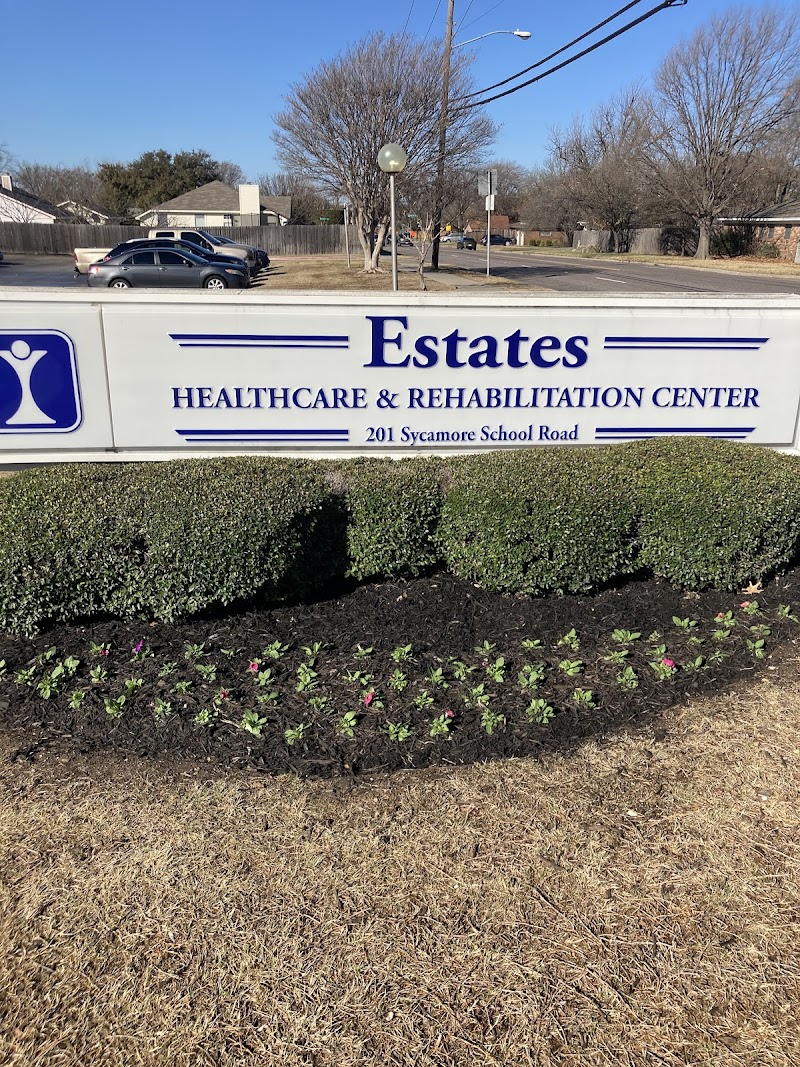
ESTATES HEALTHCARE AND REHABILITATION CENTER

201 SYCAMORE SCHOOL RD, FORT WORTH, TX 76134 (817) 293-7610
For profit - Individual 141 Beds CREATIVE SOLUTIONS IN HEALTHCARE Data: November 2025 7 Immediate Jeopardy citations
Trust Grade
0/100
#701 of 1168 in TX
Last Inspection: February 2025

Within standard 12-15 month inspection cycle. Federal law requires annual inspections.

Overview

Estates Healthcare and Rehabilitation Center in Fort Worth, Texas, has a Trust Grade of F, indicating significant concerns about the quality of care provided. They rank #701 out of 1168 facilities in Texas, placing them in the bottom half, and #38 out of 69 in Tarrant County, meaning only a few local options are better. The facility is worsening, with issues increasing from 16 in 2024 to 18 in 2025. Staffing is a major concern, receiving a 1-star rating and a turnover rate of 65%, which is notably higher than the Texas average of 50%. Additionally, the facility has accumulated $143,968 in fines, indicating serious compliance issues, and they have less RN coverage than 84% of Texas facilities, which may affect the quality of care and monitoring of residents. There have been alarming incidents reported, including cases of physical abuse among residents where inadequate supervision allowed one resident to punch another multiple times, causing injuries. Another resident with cognitive impairments was able to elope from the facility, highlighting severe lapses in supervision. While the facility has some strong quality measures rated at 5 stars, the overall picture reveals significant weaknesses that families should carefully consider.

Trust Score
F
0/100
In Texas
#701/1168
Bottom 40%
Safety Record
High Risk
Review needed
Inspections
Getting Worse
16 → 18 violations
Staff Stability
⚠ Watch
65% turnover. Above average. Higher turnover means staff may not know residents' routines.
Penalties
✓ Good
$143,968 in fines. Lower than most Texas facilities. Relatively clean record.
Skilled Nurses
⚠ Watch
Each resident gets only 13 minutes of Registered Nurse (RN) attention daily — below average for Texas. Fewer RN minutes means fewer trained eyes watching for problems.
Violations
⚠ Watch
41 deficiencies on record. Higher than average. Multiple issues found across inspections.
★★☆☆☆
2.0
Overall Rating
★☆☆☆☆
1.0
Staff Levels
★★★★★
5.0
Care Quality
★☆☆☆☆
1.0
Inspection Score
Stable
2024: 16 issues
2025: 18 issues

The Good

  • 5-Star Quality Measures · Strong clinical quality outcomes
  • Full Sprinkler Coverage · Fire safety systems throughout facility
  • No fines on record

Facility shows strength in quality measures, fire safety.

The Bad

2-Star Overall Rating

Below Texas average (2.8)

Below average - review inspection findings carefully

Staff Turnover: 65%

19pts above Texas avg (46%)

Frequent staff changes - ask about care continuity

Federal Fines: $143,968

Well above median ($33,413)

Significant penalties indicating serious issues

Chain: CREATIVE SOLUTIONS IN HEALTHCARE

Part of a multi-facility chain

Ask about local staffing decisions and management

Staff turnover is elevated (65%)

17 points above Texas average of 48%

The Ugly 41 deficiencies on record

7 life-threatening 3 actual harm
Sept 2025 4 deficiencies 2 IJ (1 affecting multiple)
CRITICAL (J) 📢 Someone Reported This

A family member, employee, or ombudsman was alarmed enough to file a formal complaint

Immediate Jeopardy (IJ) - the most serious Medicare violation

Accident Prevention (Tag F0689)

Someone could have died · This affected 1 resident

**NOTE- TERMS IN BRACKETS HAVE BEEN EDITED TO PROTECT CONFIDENTIALITY** Based on observation, interview, and record review, the facility failed to ensure that the resident environment remained as free...

Read full inspector narrative →
**NOTE- TERMS IN BRACKETS HAVE BEEN EDITED TO PROTECT CONFIDENTIALITY** Based on observation, interview, and record review, the facility failed to ensure that the resident environment remained as free of accident hazards as is possible and each resident received adequate supervision and assistive devices to prevent accidents for 2 of 5 residents (Resident #8 and Resident #9) reviewed for supervision. The facility failed to ensure adequate supervision was provided to prevent a physical altercation between Residents #8 and #9 on the facility's memory care unit on 06/17/25 and failed to ensure the nurse on the unit, RN K, had visual access to the residents to be able to intervene timely. Resident #9 punched Resident #8 approximately eight times in the face/head resulting in Resident #8 having an abrasion and swelling on the left side of his face. The noncompliance was identified as a past non-compliance. The Immediate Jeopardy (IJ) began on 06/17/25 and ended on 06/19/25. The facility had corrected the noncompliance before the abbreviated survey began. This failure placed residents at risk of harm and/or serious injury. Findings included: Record review of Resident #8's most recent Quarterly MDS Assessment, dated 04/06/25, reflected the resident was a [AGE] year-old male, who admitted to the facility on [DATE]. Resident #8's cognition was moderately impaired with a BIMS score of 6. The resident's diagnoses included: non-Alzheimer's dementia (various types of dementia), unspecified dementia, unspecified severity, with other behavioral disturbances, coronary artery disease (general decline in cognitive abilities that affect a person's ability to perform everyday activities) and high blood pressure. Resident #8's MDS indicated he had shown no signs of behavior or mood swings. Record review of Resident #8's undated care plan reflected the following care plans that had been developed:- Resident #8 had a history of trauma that may have a negative impact related to physical aggression from another resident. The care plan goals included: maintain resident's safety and integrity during post trauma episode, using appropriate interventions. The care plan interventions included consult with family regarding the resident's condition as appropriate. Identify situation/event/images that trigger recollections of the traumatic event and limit the resident's exposure to these as much as possible. These triggers could include physical aggression from others. - Resident #8 had delirium or an acute confusional episode related to change in condition. The care plan goal reflected: Resident will be free of signs and symptoms of delirium (changes in behavior, mood, cognitive function, communication, level of consciousness, restlessness. The care plan interventions included to consult with family and interdisciplinary team, review chart to establish baseline level of functioning. Educate resident/family/caregivers to observe for and report any signs or symptoms of delirium. Ensure fluid intake of at least 1500 cc /24 hours. - Resident #8's had potential to demonstrate physical behaviors Dementia, History of harm to other, poor impulse control. The care plan goals included: The resident will demonstrate effective coping skills. The care plan interventions included: analyze [sic] of key times, places, circumstances, triggers, and what deescalates behaviors and document. Assess and address for contributing sensory deficits. Assess and anticipate resident's needs: food, thirst, toileting needs, comfort level, body positioning, pain. If resident has physical behaviors toward another resident, immediately intervene to protect the residents involved and call for assistance. If intervening would be unsafe, call out for staff assistance immediately. Resident to be 1:1 for 24 hours, every 15minutes for 24 hours, every 30 minutes for 24 hours, every 1 hour for 24 hours, every 8 hours for 24 hours. When resident becomes agitated: intervene before agitation escalates; Guide away from the source of distress; engage calmly in conversation; if response is aggressive, staff to walk calmly away; and approach later. - Resident #8 resided in the Secure Care Unit, related to diagnosis of dementia and risk for elopement. Disease Process, Disoriented to place, Memory loss. Goal: Resident will not have feelings of isolation and will feel safe and secure in the care received while on the Secure Care Unit. Interventions included: Admit to Secure Care unit per physician orders, Engage resident in group activities and provide them with individualized meaningful projects that they will accomplish throughout the day, Involve resident in daily activities designed for Secure Care Unit, Monitor for S/S of depression, withdrawal from usual activities, Notify MD of any changes, Psych services per MD orders.Record review of Resident #8's progress notes written by RN K on 06/17/25 at 12:00 PM revealed Writer heard yelling, saw patients Resident #8 and Resident #9 hitting one another and rolling on the dry floor. RN K went out and grabbed Resident #8's arm to prevent him from hitting and telling him to let go of Resident #9's shirt. After he let go then I pulled him away. Resident #9 then sat on the couch. Resident #8 laid on the floor. Vitals were taken. Neuros taken. All withing normal limits. Resident #8 complaint of face hurting. Resident #9 complaint of right-hand hurting. RN K notified ADON C. RN K placed ice pack on Resident #8's left side of face and assisted him to chair. Record review of Resident #8's progress note Initial Skin Assessment written by ADON C on 06/17/25 at 12:30 PM revealed Skin Color: Normal; Temperature of skin: Warm; Bruise present: Yes. Location, measurements of bruising: left facial abrasion; Skin Tear Present: No; Abrasion present: Yes. Location, measurements of abrasion: left side facial abrasion; Laceration present: No; Surgical incision present: No; Rash present: No; Moisture Associated Skin Damage present: No; Pressure, venous, arterial, or diabetic ulcer present: No; Other skin findings: Left facial abrasion / swollen. Record review of Resident #8 progress note Transfer Notification written by ADON C on 06/17/25 at 1:00 PM revealed Resident #8 was transferred to a hospital on [DATE] 1:00 PM related to Unresponsive. This is intended to serve as notice of an emergency transfer. Record review of Resident #8's progress note Activity Note written by LVN L on 06/17/25 at 8:32 PM revealed resident returned from emergency room with no new orders. Resident remains alert and confused, resident at baseline. resident neuros restarted as per facility protocol. Resident assessed, resident noted with left facial swelling with bruising noted, abrasion to left lower leg. Physician notified of return new order to increase tramadol 50mg one po daily to bid. Resident's Responsible Party made aware of return, made aware of resident overall condition and any new findings and new orders. Responsible Party had no questions or concerns at this time. Record review of Resident #9's most recent Quarterly MDS (Minimum Data Set) Assessment, dated 05/22/25, reflected a [AGE] year-old male admitted to the facility on [DATE]. Resident #6 had BIMS of 06 indicating moderate cognitive impairment. Diagnosis included Unspecified Dementia (various types of dementia), Unspecified severity, without behavioral/psychotic/mood/anxiety disturbances (general decline in cognitive abilities that affect a person's ability to perform everyday activities). Depression (persistent feeling of sadness and loss of interest), and high blood pressure. Resident #'s MDS indicated he had shown mood signs of little interest or pleasure in doing things and feeling down, depressed, or hopeless with no signs of behaviors. Record review of Resident #9's care plan last revised 06/17/25 revealed Resident #9 had been identified as having Resident at risk to exhibit physical aggression. Goal: Resident to not have any episodes of physical aggression. Intervention include resident to remain 1:1 related to physical aggression. Care Plan revealed: Resident #9 has potential to demonstrate physical behaviors Anger, Dementia, Poor impulse control was put on by another resident and responded by pushing leading to altercation. Goal: The resident will demonstrate effective coping skills. Interventions included: 1:1 supervision prn physical aggression or other aggressive behavior. Analyze [sic] of key times, places, circumstances, triggers, and what de-escalates. Assess and address for contributing sensory deficits. Assess and anticipate resident's needs: food, thirst. toileting needs, comfort level, body positioning, pain etc. COMMUNICATION: provide physical and verbal cues to alleviate anxiety; give positive feedback, assist verbalization of source of agitation, assist to set goals for more pleasant behavior, encourage seeking out of staff member when agitated. If the resident has physical behaviors toward another resident, immediately intervene to protect the residents involved and call for assistance. If intervening would be unsafe, call out for staff assistance immediately. Secure care consult for behavior management. Send to emergency room for psychiatric evaluation as needed. When the resident becomes agitated: Intervene before agitation escalates; Guide away from source of distress; Engage calmly in conversation; If response is aggressive, staff to walk calmly away, and approach later. Care Plan revealed: Resident #9 resides in the Secure Care Unit, related to diagnosis of dementia (or related diagnosis) and risk for elopement. Goal: Resident will not have feelings of isolation and will feel safe and secure in the care received while on the Secure Care Unit. Interventions include: Admit to Secure Care unit per physician orders. Engage resident in group activities and provide them with individualized meaningful projects that they will accomplish throughout the day. Involve resident in daily activities designed for Secure Care Unit. Monitor for signs and symptoms of depression, withdrawal from usual activities. Notify physician of any changes. Psych services as doctor orders. Record review of Resident #'s progress note Neuro Assessment written by ADON C on 06/17/25 at 12:02 PM revealed the physician was notified of a negative change. Comments and/or new orders: Transfer to the hospital. Record review of Resident #9's progress note written by RN K on 06/17/25 at 12:11 PM revealed Writer heard yelling and saw Resident #8 and Resident #9 on the dry floor rolling and hitting one another. I held Resident #8 arm and told him to let go of Resident #9's shirt. After several minutes he let go and Resident #9 got up and sat on the couch. Resident #9 then went to his room and changed his shirt. Vital signs, neuros, blood sugar done. Resident #9 to be transferred to hospital. Record review of Resident #9's progress note written by Social Services Director on 0617/25 at 3:06 PM reflected: Social Services Director met with the resident to assess any trauma after an incident between he and another resident. Resident denies any trauma. Social Services Director did not observe any trauma symptoms or behaviors. Resident continues to state he feels safe in the facility and not fearful of the other resident. Resident will be transported to the hospital for further assessment. Observation of the facility's surveillance video dated 06/17/25 at 11:42 AM revealed the nurse office door was closed and both Resident #8 and Resident #9 were in the television room within feet of each other, Resident #8 stood between a female resident in her wheelchair sitting next to the exit door and a credenza in front the television wall. As Resident #9 headed towards the exit he passed Resident #8 and pushed him in the back. As Resident #8 stumbled a couple of feet he went after Resident #9 almost tripping over the wheelchair. Both residents stepped out of the camera, within seconds they returned back in the frame tussling at each other. Resident #9 began punching Resident #8 eight times in the face. This continued until they both fell onto the floor holding onto each other's shirts. At 11:43.25 the door opened, however, RN K did not exit the office to assist until 11:43.51, at this time she walked over to Resident #8 and placed her hand on his wrist. The video ended. Record review of the provider investigator report revealed on 06/17/25 at 11:45 AM Residents were in the secure unit living area when they began to have a verbal altercation. Resident #9 pushed Resident #8 in the back and then proceeded to punch Resident #8 in the face several times before both residents went to the ground and continued to hold each other by the clothing before Charge Nurse, RN K, separated residents. Resident #8 was sent to the emergency room for further evaluation due to facial swelling - no further injuries noted. Immediate discharge notice delivered to Resident #9 at hospital due to aggression and unable to be redirected during altercation. Staff interviews completed. In-services regarding abuse/neglect, resident rights, how to deal with residents aggressive behavior, behavior management. Record review of hospital records for Resident #8 reflected on 06/17/25 Resident #8 presented with a fall after an assault at the nursing home. The resident was punched in the face at least 10 times per Emergency Medical Service. It reflected the resident was assaulted at 11:00 AM. The resident then walked to the dining room on his own, had lunch, fell, and was then unresponsive. Emergency Medical Service stated the resident was found down supine, no blood thinners, and the resident's blood sugar was 375. The hospital findings reflected Resident #8 had no fractures, no acute intracranial abnormality (no immediate or urgent issues detected in the brain), no acute osseous cervical spine abnormality (no severe bone issues). Record review of facility log 15 Minute Monitoring revealed Resident #9 was placed on 15-minute monitoring starting at 12:30 PM until he exited the building to hospital for further evaluation at 2:30 PM . Record review of RN K statement dated 06/17/25 I [RN K] was sitting in the office when [Resident #8 and Resident #9] were heard making a lot of commotion. I had the door partially open. As I began to open the door to see what was going on the I noticed the two residents were rolling on the floor. I felt I was in shock at what I was seeing and thinking to myself what was going on and what was I going to do? I then thought of separating the two of them. I tried to separate them, but it was hard. I did not think to yell for help. Record review of Employee Disciplinary Report dated 06/17/25 revealed Investigation Suspension: [RN K] will be placed on an investigatory suspension pending an investigation into allegations of failing to meet their job duty/responsibility expectations. Corrective plan of Action: Due to the allegations, [RN K] will be placed on unpaid investigatory suspension. [RN K] will remain on investigatory suspension until the investigation is completed into the above allegation. [RN K] will be notified when the investigation is completed. [RN K] may provide a written statement. Employee comments: I think I tried to remain calm during the action of the residents. Interview on 09/09/25 on 11:28 AM with CNA I revealed during the time of the incident she was in the shower room with another resident leaving RN on the floor and charting in the nurse office. CNA I stated when she finished in the shower she was informed there had been an altercation between Resident #8 and Resident #9. CNA I stated she saw Resident #8 after the fight and observed swelling on Resident #8's face while in the dining room, he ate well, however soon after lunch he became nonresponsive and was sent out to the hospital. Resident #9 was also sent to the hospital for evaluation and had not returned. According to CNA I, she was inserviced over resident-to-resident altercations, resident confrontations, ensure to separate residents immediately and report. CNA I stated not monitoring residents and separating immediately during an altercation placed residents at risk for injuries or hospitalization. Attempted interview on 09/09/25 at 1:30 PM with RN K was unsuccessful. Attempted interview on 09/09/25 at 1:32 PM with LVN L was unsuccessful. Interview on 09/09/25 at 2:25 PM with ADON C revealed on video, Resident #9 was offering Resident #8 a chair to sit but Resident #8 was spitting on Resident #9, as they passed each other Resident #9 pushed Resident #8. Resident #8 then turned and started hitting Resident #9, both residents ended up on the floor. ADON C stated RN K was in the office when she heard commotion and stepped out. ADON C stated RN K was slow to react to the commotion and in separating the residents. ADON C stated emergency serivces was called, Resident #9 was placed on one-on-one monitoring until he was sent to the hospital for evaluation due to his aggressive behavior, punching Resident #8 causing a scratch and swelling to the left side of Resident #8's face. According to ADON C Resident #8 was also placed on one-to-one monitoring, assessed and injuries cleaned, and started neuro checks. ADON C further stated after the altercation there were no further signs or symptoms of injury, after lunch RN K called her to say Resident #8 was unresponsive, emergency services was called to send him to the hospital. ADON C stated in-service trainings were completed over abuse and neglect and staff surveys to ensure staff were knowledgeable about what to do during resident-to-resident altercations. ADON C stated all staff including CNAs and Nurses were responsible for monitoring and engaging with residents, not reacting quickly to altercations placed residents at risk of harm. Interview on 09/10/25 at 11:32 AM with the DON revealed she was not in the facility during the time of the incident however when she returned she followed up on the incident. The DON stated she reviewed the video revealing both residents ended up on the floor hitting each other. The DON stated the video also revealed RN K in the nurse office with the door closed and her slow to respond to the altercation. The DON stated RN K was suspended immediately and terminated due to the evolvement of the incident. The DON stated she expected staff on the secure unit to be out in the open and engaged with residents, not behind closed doors. The DON stated resident safety is top priority, so getting residents separated during altercations are immediate and to follow up with assessments. The DON stated Resident #8 was placed one on one, and Resident #9 was sent to the hospital with an immediate discharge. The DON stated staff were provided in-service training on abuse, neglect, resident rights, residents with dementia and aggressive behavior, separate during altercations, and one to one and behavior management. The DON stated nurses were responsible for always having eyes on residents especially on the secure unit, along with the one or two aides on duty. The DON further stated not doing so placed residents at risk of their safety, someone could fall and hit their head and possibly die. Interview on 09/10/25 at 11:56 AM with the Administrator revealed she was notified by ADON C of resident-to-resident altercation on the memory care unit, upon return she was able to review the video which showed the altercation between Resident #8 and Resident #9. The Administrator stated Resident #9 was sent to the hospital for further evaluation and immediate discharge. The Administrator stated Resident #8 was placed on one-on-one monitoring and neuro checks, he had lunch with no further signs of injury or distress, until he started showing signs of being non-responsive and altered status. The Administrator stated Resident #8 was sent to the hospital by emergency medical services and returned with no findings or new orders. The Administrator stated upon review of the video it showed RN K was slow to respond to the altercation between the two residents, RN K was in the office behind closed door allowing residents altercation to last close to 2 minutes before she slowly exited the office to separate them. The Administrator stated the nurses should be out of the office as much as possible; both nurses and aides were responsible for always having eyes on residents. The Administrator further stated not having a clear sightline of residents placed them at risk of abuse and harm. The facility took the following actions to correct the non-compliance prior to the investigation: Record review of an in-service, dated 06/17/25, reflected 29 staff including nurses, CNAs, housekeepers, medication aide, Business Office Manager, dietary aides were provided with training on resident-to-resident altercations. The in-service training covered: abuse and neglect; resident rights; how to deal with residents with dementia and aggressive behaviors; immediately separating residents from physical or verbal altercations; placing the aggressor on one-to-one supervision for resident safety; and behavior management Record review of an in-service, dated 06/17/25, reflected 29 staff that included nurses, nurse's aides, housekeeping, medication aide, Business Office Manager, dietary aides were in-serviced regarding: Abuse/Neglect Policy Record review of Resident #8's 15 minute checks dated 06/17/25 revealed monitoring from 12:30 PM until 06/19/25. Record review of Resident #9's 15 minute checks dated 06/17/25 revealed monitoring on 06/17/25 12:30 PM until 06/17/25 12:30 PM. Record review of Resident #9's clinical records revealed Resident #9 was placed one-on-one supervision on 06/17/25 12:30 PM until 06/17/25 2:30 PM until he was sent to the hospital for further evaluation and issued immediate discharge . Record review of Resident #8 and Resident #9's care plans were updated. Record review of Resident #8's clinical records revealed Resident #8 was assessed and transported to the emergency room for further evaluation with no findings or new orders. Record review of Resident #8's clinical records revealed Resident #8 was being monitored for behaviors throughout each shift upon his return from the hospital on [DATE] 8:30 PM until 06/19/25 at 6:00 PM until with no further signs of aggression or agitation. Record review of Staff Surveys were conducted on 06/17/25 - 06/18/25 by 24 staff over what signs and symptoms to look for when resident had a change in condition, how to respond when witnessed a resident-to-resident altercation, who do you report abuse/neglect allegations to? All with the understanding to immediately separate residents during resident-to-resident altercation and report to the nurse and the abuse coordinator which was the Administrator. Observation on 09/09/25 10:00 AM - 09/10/25 4:00 PM throughout investigation revealed the door to the office on the memory care unit has been removed. Both nurse and aide were making constant rounds to visibly check on each resident on the unit. Staff were engaging with residents and not seen in the nurse's office. Interviews on 09/09/25 from 11:22 AM through 09/10/25 3:30 PM with MDS Coordinator, CNA A, LVN B, ADON C, ADON D, LVN E, MA F, LVN G, LVN H, CNA I, CNA J, Social Services Director, Director of Rehabilitation, DON, and the Administrator, Activity Director, Housekeeping Supervisor, The facility staff were able to verify education was provided to them. Facility staff were able to accurately summarize abuse and neglect, how to work with residents with behaviors, immediately separate residents in altercations and report. Facility staff stated they monitor residents throughout the shifts, if behaviors were identified staff stated they were trained to redirect residents or placed them on 1:1 or q15 checks depending on the behavior. Staff stated for residents who have had altercations or incidents they monitor closely, keep them separated to prevent any further incidents. Staff stated they provide activities to keep them engaged and provide snacks throughout the day. Staff stated upon shift change they will notify the incoming staff of any incidents or behaviors. On 09/10/25 at 3:30 PM, the Administrator and DON stated they were working with corporate to locate a policy on accident and hazards, supervision or quality of care; however, the policies were not provided prior to exit. The noncompliance was identified as PNC. The IJ began on 06/17/25 and ended on 06/19/25. The facility had corrected the noncompliance before the abbreviated survey began.
CRITICAL (K) 📢 Someone Reported This

A family member, employee, or ombudsman was alarmed enough to file a formal complaint

Immediate Jeopardy (IJ) - the most serious Medicare violation

Free from Abuse/Neglect (Tag F0600)

Someone could have died · This affected multiple residents

**NOTE- TERMS IN BRACKETS HAVE BEEN EDITED TO PROTECT CONFIDENTIALITY** Based on observation, interview, and record review, the facility failed to ensure residents were free from abuse for 5 of 6 resi...

Read full inspector narrative →
**NOTE- TERMS IN BRACKETS HAVE BEEN EDITED TO PROTECT CONFIDENTIALITY** Based on observation, interview, and record review, the facility failed to ensure residents were free from abuse for 5 of 6 residents (Residents #1, #2, #3, #8, and #9) reviewed for abuse. 1. The facility failed to ensure adequate supervision was provided to prevent a physical altercation between Residents #8 and #9 on the facility's memory care unit on 06/17/25 and failed to ensure the nurse on the unit, RN K, had visual access to the residents to be able to intervene timely. Resident #9 punched Resident #8 approximately eight times in the face/head resulting in Resident #8 having an abrasion and swelling on the left side of his face. 2. The facility failed to ensure Resident #1 was free from verbal abuse when he was verbally abused by CNA #1 on 09/04/25. 3. The facility failed to ensure Resident #3 were free from abuse on 05/13/25 when Resident #2 punched him in the face. The noncompliance was identified as a past non-compliance. The Immediate Jeopardy (IJ) began on 05/13/25 and ended on 09/05/25. The facility had corrected the noncompliance before the abbreviated survey began. These failures could place residents at risk of abuse, trauma, and psychological harm. Findings included:1. Record review of Resident #8's most recent Quarterly MDS Assessment, dated 04/06/25, reflected the resident was a [AGE] year-old male, who admitted to the facility on [DATE]. Resident #8's cognition was moderately impaired with a BIMS score of 6. The resident's diagnoses included: non-Alzheimer's dementia (various types of dementia), unspecified dementia, unspecified severity, with other behavioral disturbances, coronary artery disease (general decline in cognitive abilities that affect a person's ability to perform everyday activities) and high blood pressure. Resident #8's MDS indicated he had shown no signs of behavior or mood swings. Record review of Resident #8's undated care plan reflected the following care plans that had been developed:- Resident #8 had a history of trauma that may have a negative impact related to physical aggression from another resident. The care plan goals included: maintain resident's safety and integrity during post trauma episode, using appropriate interventions. The care plan interventions included consult with family regarding the resident's condition as appropriate. Identify situation/event/images that trigger recollections of the traumatic event and limit the resident's exposure to these as much as possible. These triggers could include physical aggression from others. - Resident #8 had delirium or an acute confusional episode related to change in condition. The care plan goal reflected: Resident will be free of signs and symptoms of delirium (changes in behavior, mood, cognitive function, communication, level of consciousness, restlessness. The care plan interventions included to consult with family and interdisciplinary team, review chart to establish baseline level of functioning. Educate resident/family/caregivers to observe for and report any signs or symptoms of delirium. Ensure fluid intake of at least 1500 cc /24 hours. - Resident #8's had potential to demonstrate physical behaviors Dementia, History of harm to other, poor impulse control. The care plan goals included: The resident will demonstrate effective coping skills. The care plan interventions included: analyze [sic] of key times, places, circumstances, triggers, and what deescalates behaviors and document. Assess and address for contributing sensory deficits. Assess and anticipate resident's needs: food, thirst, toileting needs, comfort level, body positioning, pain. If resident has physical behaviors toward another resident, immediately intervene to protect the residents involved and call for assistance. If intervening would be unsafe, call out for staff assistance immediately. Resident to be 1:1 for 24 hours, every 15minutes for 24 hours, every 30 minutes for 24 hours, every 1 hour for 24 hours, every 8 hours for 24 hours. When resident becomes agitated: intervene before agitation escalates; Guide away from the source of distress; engage calmly in conversation; if response is aggressive, staff to walk calmly away; and approach later. - Resident #8 resided in the Secure Care Unit, related to diagnosis of dementia and risk for elopement. Disease Process, Disoriented to place, Memory loss. Goal: Resident will not have feelings of isolation and will feel safe and secure in the care received while on the Secure Care Unit. Interventions included: Admit to Secure Care unit per physician orders, Engage resident in group activities and provide them with individualized meaningful projects that they will accomplish throughout the day, Involve resident in daily activities designed for Secure Care Unit, Monitor for S/S of depression, withdrawal from usual activities, Notify MD of any changes, Psych services per MD orders. Record review of Resident #8's progress notes written by RN K on 06/17/25 at 12:00 PM reflected: Writer heard yelling, saw patients Resident #8 and Resident #9 hitting one another and rolling on the dry floor. RN K went out and grabbed Resident #8's arm to prevent him from hitting and telling him to let go of Resident #9's shirt. After he let go then I pulled him away. Resident #9 then sat on the couch. Resident #8 laid on the floor. Vitals were taken. Neuros taken. All withing normal limits. Resident #8 complaint of face hurting. Resident #9 complaint of right-hand hurting. RN K notified ADON C. RN K placed ice pack on Resident #8's left side of face and assisted him to chair. Record review of Resident #8's progress note Initial Skin Assessment written by ADON C on 06/17/25 at 12:30 PM revealed Skin Color: Normal; Temperature of skin: Warm; Bruise present: Yes. Location, measurements of bruising: left facial abrasion; Skin Tear Present: No; Abrasion present: Yes. Location, measurements of abrasion: left side facial abrasion; Laceration present: No; Surgical incision present: No; Rash present: No; Moisture Associated Skin Damage present: No; Pressure, venous, arterial, or diabetic ulcer present: No; Other skin findings: Left facial abrasion / swollen. Record review of Resident #8 progress note Transfer Notification written by ADON C on 06/17/25 at 1:00 PM revealed Resident #8 was transferred to a hospital on [DATE] 1:00 PM related to Unresponsive. This is intended to serve as notice of an emergency transfer. Record review of Resident #8's progress note Activity Note written by LVN L on 06/17/25 at 8:32 PM revealed resident returned from emergency room with no new orders. Resident remains alert and confused, resident at baseline. resident neuros restarted as per facility protocol. Resident assessed, resident noted with left facial swelling with bruising noted, abrasion to left lower leg. Physician notified of return new order to increase tramadol 50mg one po daily to bid. Resident's Responsible Party made aware of return, made aware of resident overall condition and any new findings and new orders. Responsible Party had no questions or concerns at this time. Record review of Resident #9's most recent Quarterly MDS (Minimum Data Set) Assessment, dated 05/22/25, reflected a [AGE] year-old male admitted to the facility on [DATE]. Resident #6 had BIMS of 06 indicating moderate cognitive impairment. Diagnosis included Unspecified Dementia (various types of dementia), Unspecified severity, without behavioral/psychotic/mood/anxiety disturbances (general decline in cognitive abilities that affect a person's ability to perform everyday activities). Depression (persistent feeling of sadness and loss of interest), and high blood pressure. Resident #'s MDS indicated he had shown mood signs of little interest or pleasure in doing things and feeling down, depressed, or hopeless with no signs of behaviors. Record review of Resident #9's care plan last revised 06/17/25 revealed Resident #9 had been identified as having Resident at risk to exhibit physical aggression. Goal: Resident to not have any episodes of physical aggression. Intervention include resident to remain 1:1 related to physical aggression. Care Plan revealed: Resident #9 has potential to demonstrate physical behaviors Anger, Dementia, Poor impulse control was put on by another resident and responded by pushing leading to altercation. Goal: The resident will demonstrate effective coping skills. Interventions included: 1:1 supervision prn physical aggression or other aggressive behavior. Analyze [sic] of key times, places, circumstances, triggers, and what de-escalates. Assess and address for contributing sensory deficits. Assess and anticipate resident's needs: food, thirst. toileting needs, comfort level, body positioning, pain etc. COMMUNICATION: provide physical and verbal cues to alleviate anxiety; give positive feedback, assist verbalization of source of agitation, assist to set goals for more pleasant behavior, encourage seeking out of staff member when agitated. If the resident has physical behaviors toward another resident, immediately intervene to protect the residents involved and call for assistance. If intervening would be unsafe, call out for staff assistance immediately. Secure care consult for behavior management. Send to emergency room for psychiatric evaluation as needed. When the resident becomes agitated: Intervene before agitation escalates; Guide away from source of distress; Engage calmly in conversation; If response is aggressive, staff to walk calmly away, and approach later. Care Plan revealed: Resident #9 resides in the Secure Care Unit, related to diagnosis of dementia (or related diagnosis) and risk for elopement. Goal: Resident will not have feelings of isolation and will feel safe and secure in the care received while on the Secure Care Unit. Interventions include: Admit to Secure Care unit per physician orders. Engage resident in group activities and provide them with individualized meaningful projects that they will accomplish throughout the day. Involve resident in daily activities designed for Secure Care Unit. Monitor for signs and symptoms of depression, withdrawal from usual activities. Notify physician of any changes. Psych services as doctor orders. Record review of Resident #'s progress note Neuro Assessment written by ADON C on 06/17/25 at 12:02 PM revealed the physician was notified of a negative change. Comments and/or new orders: Transfer to the hospital. Record review of Resident #9's progress note written by RN K on 06/17/25 at 12:11 PM revealed Writer heard yelling and saw Resident #8 and Resident #9 on the dry floor rolling and hitting one another. I held Resident #8 arm and told him to let go of Resident #9's shirt. After several minutes he let go and Resident #9 got up and sat on the couch. Resident #9 then went to his room and changed his shirt. Vital signs, neuros, blood sugar done. Resident #9 to be transferred to hospital. Record review of Resident #9's progress note written by Social Services Director on 0617/25 at 3:06 PM reflected: Social Services Director met with the resident to assess any trauma after an incident between he and another resident. Resident denies any trauma. Social Services Director did not observe any trauma symptoms or behaviors. Resident continues to state he feels safe in the facility and not fearful of the other resident. Resident will be transported to the hospital for further assessment. Observation of the facility's surveillance video dated 06/17/25 at 11:42 AM revealed the nurse office door was closed and both Resident #8 and Resident #9 were in the television room within feet of each other, Resident #8 stood between a female resident in her wheelchair sitting next to the exit door and a credenza in front the television wall. As Resident #9 headed towards the exit he passed Resident #8 and pushed him in the back. As Resident #8 stumbled a couple of feet he went after Resident #9 almost tripping over the wheelchair. Both residents stepped out of the camera, within seconds they returned back in the frame tussling at each other. Resident #9 began punching Resident #8 eight times in the face. This continued until they both fell onto the floor holding onto each other's shirts. At 11:43.25 the door opened, however, RN K did not exit the office to assist until 11:43.51, at this time she walked over to Resident #8 and placed her hand on his wrist. The video ended. Record review of the provider investigator report revealed on 06/17/25 at 11:45 AM Residents were in the secure unit living area when they began to have a verbal altercation. Resident #9 pushed Resident #8 in the back and then proceeded to punch Resident #8 in the face several times before both residents went to the ground and continued to hold each other by the clothing before Charge Nurse, RN K, separated residents. Resident #8 was sent to the emergency room for further evaluation due to facial swelling - no further injuries noted. Immediate discharge notice delivered to Resident #9 at hospital due to aggression and unable to be redirected during altercation. Staff interviews completed. In-services regarding abuse/neglect, resident rights, how to deal with residents aggressive behavior, behavior management. Record review of hospital records for Resident #8 reflected on 06/17/25 Resident #8 presented with a fall after an assault at the nursing home. The resident was punched in the face at least 10 times per Emergency Medical Service. It reflected the resident was assaulted at 11:00 AM. The resident then walked to the dining room on his own, had lunch, fell, and was then unresponsive. Emergency Medical Service stated the resident was found down supine, no blood thinners, and the resident's blood sugar was 375. The hospital findings reflected Resident #8 had no fractures, no acute intracranial abnormality (no immediate or urgent issues detected in the brain), no acute osseous cervical spine abnormality (no severe bone issues). Record review of facility log 15 Minute Monitoring revealed Resident #9 was placed on 15-minute monitoring starting at 12:30 PM until he exited the building to hospital for further evaluation at 2:30 PM . Record review of RN K statement dated 06/17/25 I [RN K] was sitting in the office when [Resident #8 and Resident #9] were heard making a lot of commotion. I had the door partially open. As I began to open the door to see what was going on the I noticed the two residents were rolling on the floor. I felt I was in shock at what I was seeing and thinking to myself what was going on and what was I going to do? I then thought of separating the two of them. I tried to separate them, but it was hard. I did not think to yell for help. Record review of Employee Disciplinary Report dated 06/17/25 revealed Investigation Suspension: [RN K] will be placed on an investigatory suspension pending an investigation into allegations of failing to meet their job duty/responsibility expectations. Corrective plan of Action: Due to the allegations, [RN K] will be placed on unpaid investigatory suspension. [RN K] will remain on investigatory suspension until the investigation is completed into the above allegation. [RN K] will be notified when the investigation is completed. [RN K] may provide a written statement. Employee comments: I think I tried to remain calm during the action of the residents. Interview on 09/09/25 on 11:28 AM with CNA I revealed during the time of the incident she was in the shower room with another resident leaving RN on the floor and charting in the nurse office. CNA I stated when she finished in the shower she was informed there had been an altercation between Resident #8 and Resident #9. CNA I stated she saw Resident #8 after the fight and observed swelling on Resident #8's face while in the dining room, he ate well, however soon after lunch he became nonresponsive and was sent out to the hospital. Resident #9 was also sent to the hospital for evaluation and had not returned. According to CNA I, she was inserviced over resident-to-resident altercations, resident confrontations, ensure to separate residents immediately and report. CNA I stated not monitoring residents and separating immediately during an altercation placed residents at risk for injuries or hospitalization. Attempted interview on 09/09/25 at 1:30 PM with RN K was unsuccessful. Attempted interview on 09/09/25 at 1:32 PM with LVN L was unsuccessful. Interview on 09/09/25 at 2:25 PM with ADON C revealed on video, Resident #9 was offering Resident #8 a chair to sit but Resident #8 was spitting on Resident #9, as they passed each other Resident #9 pushed Resident #8. Resident #8 then turned and started hitting Resident #9, both residents ended up on the floor. ADON C stated RN K was in the office when she heard commotion and stepped out. ADON C stated RN K was slow to react to the commotion and in separating the residents. ADON C stated emergency services was called, Resident #9 was placed on one-on-one monitoring until he was sent to the hospital for evaluation due to his aggressive behavior, punching Resident #8 causing a scratch and swelling to the left side of Resident #8's face. According to ADON C Resident #8 was also placed on one-to-one monitoring, assessed and injuries cleaned, and started neuro checks. ADON C further stated after the altercation there were no further signs or symptoms of injury, after lunch RN K called her to say Resident #8 was unresponsive, emergency services was called to send him to the hospital. ADON C stated in-service trainings were completed over abuse and neglect and staff surveys to ensure staff were knowledgeable about what to do during resident-to-resident altercations. ADON C stated all staff including CNAs and Nurses were responsible for monitoring and engaging with residents, not reacting quickly to altercations placed residents at risk of harm. Interview on 09/10/25 at 11:32 AM with the DON revealed she was not in the facility during the time of the incident however when she returned she followed up on the incident. The DON stated she reviewed the video revealing both residents ended up on the floor hitting each other. The DON stated the video also revealed RN K in the nurse office with the door closed and her slow to respond to the altercation. The DON stated RN K was suspended immediately and terminated due to the evolvement of the incident. The DON stated she expected staff on the secure unit to be out in the open and engaged with residents, not behind closed doors. The DON stated resident safety is top priority, so getting residents separated during altercations are immediate and to follow up with assessments. The DON stated Resident #8 was placed one on one, and Resident #9 was sent to the hospital with an immediate discharge. The DON stated staff were provided in-service training on abuse, neglect, resident rights, residents with dementia and aggressive behavior, separate during altercations, and one to one and behavior management. The DON stated nurses were responsible for always having eyes on residents especially on the secure unit, along with the one or two aides on duty. The DON further stated not doing so placed residents at risk of their safety, someone could fall and hit their head and possibly die. Interview on 09/10/25 at 11:56 AM with the Administrator revealed she was notified by ADON C of resident-to-resident altercation on the memory care unit, upon return she was able to review the video which showed the altercation between Resident #8 and Resident #9. The Administrator stated Resident #9 was sent to the hospital for further evaluation and immediate discharge. The Administrator stated Resident #8 was placed on one-on-one monitoring and neuro checks, he had lunch with no further signs of injury or distress, until he started showing signs of being non-responsive and altered status. The Administrator stated Resident #8 was sent to the hospital by emergency medical services and returned with no findings or new orders. The Administrator stated upon review of the video it showed RN K was slow to respond to the altercation between the two residents, RN K was in the office behind closed door allowing residents altercation to last close to 2 minutes before she slowly exited the office to separate them. The Administrator stated the nurses should be out of the office as much as possible; both nurses and aides were responsible for always having eyes on residents. The Administrator further stated not having a clear sightline of residents placed them at risk of abuse and harm. The facility took the following actions to correct the non-compliance prior to the investigation: Record review of an in-service, dated 06/17/25, reflected 29 staff including nurses, CNAs, housekeepers, medication aide, Business Office Manager, dietary aides were provided with training on resident-to-resident altercations. The in-service training covered: abuse and neglect; resident rights; how to deal with residents with dementia and aggressive behaviors; immediately separating residents from physical or verbal altercations; placing the aggressor on one-to-one supervision for resident safety; and behavior management Record review of an in-service, dated 06/17/25, reflected 29 staff that included nurses, nurse's aides, housekeeping, medication aide, Business Office Manager, dietary aides were in-serviced regarding: Abuse/Neglect Policy Record review of Resident #8's 15 minute checks dated 06/17/25 revealed monitoring from 12:30 PM until 06/19/25. Record review of Resident #9's 15 minute checks dated 06/17/25 revealed monitoring on 06/17/25 12:30 PM until 06/17/25 12:30 PM. Record review of Resident #9's clinical records revealed Resident #9 was placed one-on-one supervision on 06/17/25 12:30 PM until 06/17/25 2:30 PM until he was sent to the hospital for further evaluation and issued immediate discharge . Record review of Resident #8 and Resident #9's care plans were updated. Record review of Resident #8's clinical records revealed Resident #8 was assessed and transported to the emergency room for further evaluation with no findings or new orders. Record review of Resident #8's clinical records revealed Resident #8 was being monitored for behaviors throughout each shift upon his return from the hospital on [DATE] 8:30 PM until 06/19/25 at 6:00 PM until with no further signs of aggression or agitation. Record review of Staff Surveys were conducted on 06/17/25 - 06/18/25 by 24 staff over what signs and symptoms to look for when resident had a change in condition, how to respond when witnessed a resident-to-resident altercation, who do you report abuse/neglect allegations to? All with the understanding to immediately separate residents during resident-to-resident altercation and report to the nurse and the abuse coordinator which was the Administrator. Observation on 09/09/25 10:00 AM - 09/10/25 4:00 PM throughout investigation revealed the door to the office on the memory care unit has been removed. Both nurse and aide were making constant rounds to visibly check on each resident on the unit. Staff were engaging with residents and not seen in the nurse's office. Interviews on 09/09/25 from 11:22 AM through 09/10/25 3:30 PM with MDS Coordinator, CNA A, LVN B, ADON C, ADON D, LVN E, MA F, LVN G, LVN H, CNA I, CNA J, Social Services Director, Director of Rehabilitation, DON, and the Administrator, Activity Director, Housekeeping Supervisor, The facility staff were able to verify education was provided to them. Facility staff were able to accurately summarize abuse and neglect, how to work with residents with behaviors, immediately separate residents in altercations and report. Facility staff stated they monitor residents throughout the shifts, if behaviors were identified staff stated they were trained to redirect residents or placed them on 1:1 or q15 checks depending on the behavior. Staff stated for residents who have had altercations or incidents they monitor closely, keep them separated to prevent any further incidents. Staff stated they provide activities to keep them engaged and provide snacks throughout the day. Staff stated upon shift change they will notify the incoming staff of any incidents or behaviors. 2. Record review of Resident #1's Annual MDS, dated [DATE], reflected the resident was a [AGE] year-old male, who admitted to the facility on [DATE]. Th resident was cognitively intact with a BIMS (mental status assessment) score of 15. His diagnoses included Type 2 diabetes mellitus (metabolic disorder marked my insulin resistance and impaired insulin secretion); chronic pain syndrome (multifactorial condition characterized by persistent pain lasting longer than 3-6 months, often accompanied by psychological and functional impairment); and cognitive communication deficit (impaired communication due to deficits in attention, memory, or executive function). The MDS reflected Resident #1 did not have any physical or verbal behaviors towards others. The MDS also reflected Resident #1 was dependent upon staff for assistance with ADLs. Record review of Resident #1's Care Plan, initiated on 11/15/24 and revised on 09/05/25, reflected: Focus: Resident has a history of making false accusations, related to but not limited to: the staff, showers, activities of daily living, and preferences. Resident instigates staff by cursing at them and calling them derogatory names. Goal: Reductions or absence or false accusation. Interventions: Anticipate and meet the resident's needs. Assist the resident to develop more appropriate methods of coping and interacting with staff. Encourage the resident to express feelings appropriately. Monitor behavior episodes and attempt to determine underlying cause. Consider location, time of day, persons involved, and situations. Document behavior and potential causes. Interview on 09/09/25 at 9:48 AM with Resident #1 revealed on 09/04/25, his roommate called CNA A to his room. Resident #1 said CNA A walked into the room asked who had called her, to which he responded with none ya. Resident #1 said he heard CNA A say fuck you to him, and she immediately walked out of the room. Resident #1 said CNA A saying that made him cry, feel put down, and made him feel uncomfortable. Resident #1 said right after it happened, he told his nurse (LVN B). Resident #1 revealed LVN B switched aides, so CNA A no longer cared for him. Interview on 09/09/25 at 10:17 AM with Resident #4 revealed he was Resident #1's roommate. Resident #4 reported on 09/04/25 CNA A came into the room and was helping Resident #1 get ready for bed. Resident #4 said Resident #1 was cussing and fighting with CNA A when CNA A told Resident #1, Fuck you. Resident #4 stated after it was said, CNA A walked out of the room and another aide came to help Resident #1 finish getting ready. Resident #4 stated CNA A appeared calm when she cussed at Resident #1. Resident #4 revealed he had no issues with CNA A or any other staff members. Interview on 09/09/25 at 2:23 PM with LVN B revealed Resident #1 came to her after the incident with CNA A on 09/04/25. LVN B stated Resident #1 and CNA A used the F word to each other. LVN B said when Resident #1 reported it to her, he appeared visibly upset by it. LVN B said she switched the aides out, so CNA A was no longer caring for Resident #1. LVN B stated she had to calm Resident #1 down, and she went to the Administrator because it was verbal abuse to Resident #1. Interview on 09/09/25 at 2:38 PM with CNA A revealed she was called into Resident#1's room. CNA A asked Resident #1 to turn the call light off twice, and he replied to CNA A by saying, Fuck you. CNA A stated she said Fuck you back to Resident #1. CNA A stated she knew it was not right to say that to any resident, but it slipped out. CNA A confirmed it was verbal abuse. Interview on 09/10/25 at 3:10 PM with the Social Worker revealed on 09/05/25, Resident #1 came and told her that a CNA last night had cussed him out by saying fuck you. The Social Worker reported that Resident #1 was visibly upset when he described what had happened. The Social Worker stated she immediately reported it to the Administrator who was the Abuse Coordinator due to it being verbal abuse. Interview on 09/10/25 at 11:31 AM with the DON revealed she was told about the incident between Resident #1 and CNA A on 09/05/25 by the Social Worker right after he reported it to her. The DON stated it was reported to her that Resident #1 was baiting CNA A by saying, Fuck you first, but then CNA A said it back. The DON stated CNA A admitted it was wrong to say that to a resident. The DON revealed they suspended and then terminated CNA on 09/05/25. The DON stated telling a resident Fuck you was considered verbal abuse which was why CNA A had to be terminated. The DON stated her expectation was for staff to keep all residents safe and free from abuse. Interview on 09/10/25 at 11:56 AM with the Administrator revealed CNA A told Resident #1 Fuck you the previous night (09/04/25) around 6:00 PM. During her interview with Resident #1, he told her that CNA A cursed at him unprovoked. Resident #1's roommate also confirmed that CNA A did say that to Resident #1. The Administrator stated this was considered verbal abuse, and CNA A was terminated after admitting to the allegation. The Administrator reported that verbal abuse could put residents at risk of psychological harm. The Administrator stated she expected her staff to treat residents with respect and to report any abuse immediately. The Administrator stated her number was posted throughout the building, and she wants to be notified at any time if abuse occurs or is suspected. Observation on 09/10/25 at 3:15 PM revealed the Administrator's phone number was posted in multiple locations, including at the nurses' station and in the hallway. Record review of CNA A's personnel file reflected CNA A was suspended and terminated on 09/05/25. Record review of facility's current, undated Abuse/Neglect Policy reflected the following: The resident has the right to be free from abuse, neglect, misappropriation of resident property, and exploitation as defined in this subpart. This includes but is not limited to freedom from corporal punishment, involuntary seclusion and any physical or chemical restraint not required to treat the resident's medical symptoms. Residents should not be subjected to abuse by anyone, including, but not limited to, facility staff, other residents, consultants or volunteers, staff of other agencies serving the resident, family members or legal guardians, friends, or other individuals. The facility will provide and ensure the promotion and protection of resident rights. It is each individual's responsibility to recognize, report, and promptly investigate actual or alleged abuse, neglect, exploitation, mistreatment of residents or misappropriation of resident property abuse and situations that may constitute abuse or neglect to any resident in the facility . Verbal abuse: Any use of oral, written or gestured language that willfully includes disparaging and derogatory terms to residents, or within their hearing distance, regardless of their age, ability to comprehend or disability . Prior to the HHSC investigation, the facility took the following actions to correct the noncompliance: Record review of Resident #1's Trauma Informed PRN Assessment had been completed on 09/05/25 with no concerns identified. Record review of the facility's Skin Monitoring: Comprehensive CNA Shower Record review had been completed on seven residents on 09/05/25. Record review of safe surveys completed on 09/05/25 showed that nine residents had been interviewed by the facility with no issues noted. Record review of In-Service Training record reflected 41 staff had been provided in-service training on abuse/neglect, resident rights, and behavior management on 09/05/25. Interviews between 09/09/25 from 9:30 AM through 09/10/25 3:15 PM with the Social Worker, LVN B, LVN E, ADON C, ADON D, Housekeeper M, MA F, LVN G, Speech and Language Therapist, LVN H, CNA I, and CNA J revealed the facility staff were able to verify education was provided to them. The staff stated they were educated on different types of abuse and neglect. Staff stated they would intervene if they witnessed any type of abuse and immediately report to the Abuse Coordinator. 3. Record review of Resident #2's Annual MDS, dated [DATE], reflected the resident was a [AGE] year-old male, who admitted to the facility on [DATE]. The resident's diagnoses included hemi[TRUNCATED]
CONCERN (D) 📢 Someone Reported This

A family member, employee, or ombudsman was alarmed enough to file a formal complaint

Potential for Harm - no one hurt, but risky conditions existed

Report Alleged Abuse (Tag F0609)

Could have caused harm · This affected 1 resident

**NOTE- TERMS IN BRACKETS HAVE BEEN EDITED TO PROTECT CONFIDENTIALITY** Based on observation, interview, and record review, the facility failed to ensure that all alleged violations involving abuse we...

Read full inspector narrative →
**NOTE- TERMS IN BRACKETS HAVE BEEN EDITED TO PROTECT CONFIDENTIALITY** Based on observation, interview, and record review, the facility failed to ensure that all alleged violations involving abuse were reported immediately to the Administrator of the facility for 1 of 3 residents (Resident #1) reviewed for reporting abuse and neglect. LVN B failed to report an allegation of verbal abuse to the Administrator, on 09/05/25 when CNA used profanity towards Resident #1. This failure could have resulted in psychological harm to residents. Findings included: Record review of resident #1's face sheet dated 09/09/25, revealed the resident was a [AGE] year-old male with an admission date of 09/04/21 and readmitted on [DATE]. Record review of Resident #1's Annual MDS, dated [DATE], reflected he had a BIMS score of 15, indicating no cognitive impairment. His diagnoses included Type 2 Diabetes Mellitus (A long-term condition in which the body has trouble controlling blood sugar), Chronic Pain Syndrome (Condition characterized by persistent pain lasting longer than 3-6 months, often accompanied by psychological and functional impairment), and Cognitive Communication Deficit (Impaired communication due to deficits in attention, memory, or executive function). The MDS reflected Resident #1 did not have any physical or verbal behaviors towards others. The MDS also reflected Resident #1 was dependent on staff to assist with ADLs. Record review of Resident #1's Care Plan Initiated 11/15/24 and revised on 09/05/25, reflected, Focus: Resident has a history of making false accusations, related to but not limited to: the staff, showers, activities of daily living, and preferences. Resident instigates staff by cursing at them and calling them derogatory names. Goal: Reductions or absence or false accusation. Interventions: Anticipate and meet the resident's needs. Assist the resident to develop more appropriate methods of coping and interacting with staff. Encourage the resident to express feelings appropriately. Monitor behavior episodes and attempt to determine underlying cause. Consider location, time of day, persons involved, and situations. Document behavior and potential causes. Interview on 09/09/25 at 9:48 AM with Resident #1 revealed on 09/04/25, his roommate called CNA A to his room. Resident #1 said CNA A walked into the room asked who had called her, to which he responded with none ya. Resident #1 said he heard CNA A say fuck you to him and then immediately walk out of the room. Resident #1 said that CNA A saying that made him cry, feel put down, and uncomfortable. Resident #1 said that right after it happened, he told his nurse (LVN B). Resident #1 revealed LVN B removed CNA A from his hallway and provided Resident #1 with a different aide, so CNA A no longer cared for him. Interview on 09/09/25 at 2:23 PM with LVN B revealed Resident #1 came to her after the incident with CNA A on 09/04/25. LVN B stated that Resident #1 and CNA A used the F word to each other. LVN B said when Resident #1 reported it to her, he appeared visibly upset by it. LVN B said she switched the aides out, so CNA A was no longer caring for Resident #1. LVN B reported that she had to calm Resident #1 down and reported it to the administrator and DON because it was verbal abuse to Resident #1. Interview on 09/10/25 at 1:06 PM with LVN B revealed while she originally did say yesterday, she had reported the abuse allegation to the Administrator and DON, she remembered that she might not have because she thought CNA A had done that. LVN B stated she was expected to report the abuse immediately to the Administrator who was the Abuse Coordinator Interview on 09/10/25 at 11:31 AM with the DON revealed she was told about the incident between Resident #1 and CNA A on 09/05/25 by the Social Worker right after he reported it to her. The DON stated that it was reported to her that Resident #1 was bating CNA A and said Fuck you first, but then CNA A said it back. The DON stated that CNA A admitted it was wrong to say that to a resident. The DON revealed they suspended and terminated CNA A on 09/05/25. The DON reported that telling a resident Fuck you was considered verbal abuse. The DON stated she was unaware of LVN B being told about the situation on 09/04/25. The DON reported that all staff were expected to notify the Administrator immediately after the allegation was reported. The DON reported that residents have the right to be free from abuse and that if abuse is not reported immediately, problem resolution may be delayed, and residents may be harmed further. The DON stated her expectations were for staff to keep all residents safe and free from abuse. Interview on 09/10/25 at 11:56 AM with the Administrator revealed CNA A told Resident #1 Fuck you the previous night (09/04/25) around 6 pm. The Administrator said during her interview with Resident #1, he told her that CNA A cursing at him was unprovoked. The Administrator said Resident #1's roommate also confirmed that CNA A did say fuck you to Resident #1 on the night of 09/04/25. The Administrator stated that the Social Worker notified the Administrator on 09/05/25 of the abuse allegation after Resident #1 notified the Social Worker. The Administrator stated on 09/05/25 is when the facility had begun their investigation. The Administrator reported being unaware that LVN B was aware of the situation the previous night on 09/04/25. The Administrator revealed she expected her staff to treat residents with respect and to report any abuse immediately. The Administrator reported that verbal abuse can put residents at risk of psychological harm and not notifying the Administrator immediately can delay interventions and may cause the abuse to continue happening. The Administrator revealed her number is posted throughout the building, and she wants to be notified at any time if abuse occurs or is suspected. Observation on 09/10/25 at 3:15 PM revealed the Administrator's phone number was posted in multiple locations, including at the nurses' station and in the hallway. Record review of the facility's current, undated Abuse/Neglect policy reflected: .E. Reporting. When a suspected abused, neglected, exploited, mistreated or potential victim of misappropriation of property comes to the attention of an employee, that employee will make an immediate verbal report to the Abuse Preventionist or designee. If the discovery occurs outside of normal business hours, the Abuse Preventionist or designee will be called. Facility employees must report all allegations of: abuse, neglect, exploitation, mistreatment of residents, misappropriation of resident property of injury of unknown source to the facility administrator.
CONCERN (E) 📢 Someone Reported This

A family member, employee, or ombudsman was alarmed enough to file a formal complaint

Potential for Harm - no one hurt, but risky conditions existed

PASARR Coordination (Tag F0644)

Could have caused harm · This affected multiple residents

**NOTE- TERMS IN BRACKETS HAVE BEEN EDITED TO PROTECT CONFIDENTIALITY** Based on observation, interview, and record review, the facility failed to incorporate the recommendations from the PASRR Level ...

Read full inspector narrative →
**NOTE- TERMS IN BRACKETS HAVE BEEN EDITED TO PROTECT CONFIDENTIALITY** Based on observation, interview, and record review, the facility failed to incorporate the recommendations from the PASRR Level II determination and the PASRR evaluation report into a resident's assessment, care planning, and transitions of care for 2 of 4 residents reviewed (Residents #2 and #5) for PASRR assessments.1.The facility failed to submit a NFSS form, used to request specialized services for residents, request within 20 from interdisciplinary team meeting dated 03/18/25 for Resident #2. 2. The facility failed to submit a completed a NFSS in the LTC Online Portal within 20 business days of Resident #5's IDT meeting. This failure could place residents at risk of not receiving or benefiting from recommendations for services they may require. Findings included:1. Record review of Resident #2's most recent Quarterly MDS, dated [DATE], reflected the resident was a [AGE] year-old male admitted to the facility on [DATE]. Resident #2 had moderate cognitive impairment with a BIMS score of 8. The resident's diagnoses included anxiety disorder (condition that cause significant and uncontrollable feelings of anxiety and fear), depression (persistent feeling of sadness and loss of interest), and schizophrenia (severe mental disorder), bipolar disorder (mental health condition with extreme mood swings), unspecified intellectual disabilities (condition that limits intelligence and disrupts abilities necessary for living independently). Resident #2's MDS indicated he received Speech Therapy 3 days beginning 12/22/24, Occupational Therapy 2 days beginning 12/10/24, and Physical Therapy 3 days beginning 12/09/24. Resident #2 had impairment on both side of his lower extremities and utilized a wheelchair. Supervision or touching assistance with lower body dressing, partial/moderate assistance with showers, oral, personal, and toileting hygiene, with set up assistance with eating. Record review of Resident #2's care plan, undated revealed he has been identified as having PASRR positive status related to Mental Illness and Intellectual Disabilities. Goal: Resident #2 will have the specialized services recommended by local authority according to PASRR Specialized Services program as needed. Interventions included the Local Authority would be invited annually to the care plan meeting for review of Specialized Services. Record review of Active Residents with PASRR Positive PE reflected Resident #2 on the list. The list indicated Resident #2 status date was 12/14/24 due to mental illness and developmental disabilities and had special services. Record review of Resident #2's PASRR Level 1 Screening completed 12/05/24 indicated Yes to Mental Illness and Intellectual Disability. Record review of Resident #2's PASRR Evaluation completed 12/13/24 indicated Yes to Intellectual Disability and Development Disability. Record review of Resident #2's PASRR Comprehensive Service Plan Form dated 03/18/25 revealed recommended Nursing Facility Specialized Services included new: Customized Manual Wheelchair, Specialized Assessment Occupational Therapy, Specialized Assessment Physical Therapy, Specialized Assessment Speech Therapy, Specialized Occupational Therapy, Specialized Physical Therapy, Specialized Speech Therapy, Day Habilitation, Habilitation Coordination, Independent Living Skills Training. The above services have been accepted by Resident #2. Record review of Resident #2's PASRR Comprehensive Service Plan Form dated 06/19/25 reflected the recommended Nursing Facility Specialized Services included ongoing: Customized Manual Wheelchair, Specialized Assessment Occupational Therapy, Specialized Assessment Physical Therapy, Specialized Assessment Speech Therapy, Specialized Occupational Therapy, Specialized Physical Therapy, Specialized Speech Therapy, Habilitation Coordination. The above services have been accepted by Resident #2 except CMWC. Interview on 09/09/25 at 9:30 AM with Resident #2 revealed he had a wheelchair which he used daily. Resident #2 stated he received physical therapy, but he did not know if he received occupational or speech therapy. Interview on 09/09/25 at 12:00 PM with PASRR representative revealed there was an interdisciplinary team meeting on 03/18/25. The facility was required to have uploaded documentation from the meeting into the portal within 20 business days from the meeting. According to the PASRR representative, she saw Resident #2 during his Occupational Therapy and he was doing fine, however when she looked in the portal for the documents, they had not been uploaded from the 03/18/25 meeting. The PASRR representative stated she spoke with the Social Worker about the missing documents in the hopes of having the documents uploaded. Interview on 09/09/25 at 3:32 PM with the Social Services Director revealed she was not an employee during the 03/18/25 visit and was not aware of missing documents for Resident #2 until she spoke with PASRR representative on 09/08/25. The Social Services Director stated she just recently started getting the invite to PASRR meetings, and would pass the invitation to the Director of Rehabilitation along with letting the Director of Rehabilitation. Interview on 09/09/25 at 3:45 PM with the Director of Rehabilitation revealed she began working in the facility in November 2024 as the Director of Rehabilitation and coming to the nursing home the system was different from where she was before. The Director of Rehabilitation stated she only knew of two residents that were PASRR positive until recently when she began getting invites to the interdisciplinary team meetings. The Director of Rehabilitation stated she also recently started being notified by the MDS Coordinators that there were 8 PASRR positive residents in the facility . The Director of Rehabilitation stated all PASRR residents were receiving services, but she needed to upload all the documents such as the signature pages from the physician. The Director of Rehabilitation stated over time she had uploaded the required PASRR documents into the portal, but they were disappearing, so she reached out to her regional help. According to the Director of Rehabilitation, she and her regional help contacted the help line of the portal and were told there was a glitch in the system which would not allow them up successfully upload into the portal . The Director of Rehabilitation stated the incident was not documented, and further stated eventually the glitch was fixed and she was able to upload. The Director of Rehabilitation stated at this time there was such a back log due to her having to get new physician signature pages to upload. The Director of Rehabilitation revealed for Resident #2 she was currently waiting on the physician to sign off on the services so that she could upload the form. The Director of Rehabilitation stated she was responsible for ensuring the NFSS form and other documents were uploaded in a timely manner. According to the Director of Rehabilitation, PASRR positive residents were not at risk because residents were provided services once they admit to the facility, if they were not covered by their insurance or PASRR the facility will pay to ensure services are continued, so there was never a gap in services. Record review of Resident #2's NFSS forms for Occupational, Physical and Speech therapies revealed as of 09/10/25 - NFSS Form from interdisciplinary meeting completed on 03/18/25 was not submitted within 30 calendar days of the IDT meeting. Interview on 09/10/25 at 11:25 AM with the Administrator revealed she could not recall the exact date she was notified by the PASRR Coordinator resident's NFSS document had not been uploaded within 20 business days of their last interdisciplinary team meetings. The Administrator stated she was told by the Director of Rehabilitation there was glitch in the system which would not allow documents to be uploaded in the portal. The Administrator stated there were several people involved to ensure the issues were resolved. According to the Administrator the Director of Rehabilitation was responsible for ensuring all required documents were uploaded to the portal within an adequate time frame, not doing so placed residents at risk of delay in services. 2. Record review of Resident #5's Nursing Home Comprehensive MDS, dated , 09/07/25, reflected he was a [AGE] year-old male with an original admission date of 04/12/23 and re-admission date of 03/26/25. Record review of the MDS also reflected diagnoses that included cerebral palsy (a group of conditions that affect movement and posture caused by damage that occurs to the developing brain, most often before birth), scoliosis (side to side curve of the spine), and benign prostatic hyperplasia (nonmalignant growth of prostate tissue). Record review of Resident #5's Care Plan, dated 09/09/25, reflected: Focus: Resident has Mental Illness , ID, or DD and is PASRR positive Date initiated: 02/12/25 Goal: Resident will have the specialized services recommended by local authority per PASRR Specialized Services program as needed. Date initiated: 02/12/25 Revision 08/31/25 Target Date 08/31/25. Interventions: The LA will be invited Annually to the care plan meeting for review of Specialized Services. Date initiated: 02/12/25.Record review of Resident #5's initial IDT meeting revealed it was held on 04/23/25, and a customized wheelchair was recommended by the Habilitation Coordinator.Record review of Resident #5's PASRR evaluation on 04/23/25 revealed the resident was PASRR level II positive related to his diagnoses of development disability other than an intellectual disability that manifested before the age on 22. Interview with Resident #5 on 09/09/25 at 11:22 AM revealed interview was attempted. However, Resident #5 was unable to communicate verbally. Interview on 09/09/25 at 3:57 PM with the facility Social Services Director revealed she gets a calendar invite from the resident's case manager. The Social Services Director said that she could not recall if Resident #5 was eligible for specialized services. The Social Services Director stated that she made referrals for ancillary services for vision, dental, and podiatry. The Social Services Director said that she was not involved in any other part of the resident's PASRR or referral services. Interview on 09/10/25 at 10:30 AM with the MDS Coordinator revealed she was responsible for uploading the meeting notes into Simple. The MDS Coordinator stated there was a meeting on 04/24/25 that determined Resident #5 would be placed on physical and occupational therapy serviced as well as receive a customized wheelchair. The MDS Coordinator said that the Director of Rehabilitation was responsible for submitting the nursing facility specialized services forms after the meetings. Interview on 09/10/25 at 11:00 AM with the Director of Rehabilitation revealed she was responsible for submitting the nursing facility specialized services forms for Resident #5 for physical and occupational therapy as well as the customized wheelchair after the meeting on 04/23/25. The Director of Rehabilitation stated there was a period in which the forms in Simple would disappear after they were input. The Director of Rehabilitation said that she reached out to her regional leadership and asked for assistance with the issue, and they eventually reached out to the Simple information technology department to resolve the issue. The Director of Rehabilitation stated that Resident #5 still received physical and occupational services. The Director of Rehabilitation said that they attempted to set up an appointment with the third-party company for the customized wheelchair, but he did not state the date this was attempted. However, the company did not show up for the appointment, so they had to start the process over again. The Director of Rehabilitation revealed they are now waiting for another company to come and assess the resident for a customized wheelchair. The Director of Rehabilitation stated that after the 07/10/25 meeting, she submitted and received approval for the nursing facility specialized services form approved on 07/25/25 and on 08/01/25. The Director of Rehabilitation said that Resident #1 was only waiting on his customized wheelchair that would be molded to his contractures. The Director of Rehabilitation stated that the resident has a regular wheelchair. The Director of Rehabilitation said that she knew the nursing facility specialized services forms were supposed to be submitted within 20 days after the meeting date and that she was responsible for submitting them. The Director of Rehabilitation revealed if she did not submit the forms timely then the facility would be responsible for paying for the services. Interview on 09/10/25 at 12:05 PM with the Administrator revealed the facility had an issue with forms disappearing on the Simple website. The Administrator stated she was notified by the state that the form had not been uploaded into the state's system, so they attempted that same day on 06/20/25. The Administrator also stated that the Director of Rehabilitation's regional director assisted the Director of Rehabilitation by uploading the Simple forms and resolved the technical issue. The Administrator revealed it was the Director of Rehabilitation's responsibility to upload the forms in a timely manner because it created a risk of delay in care to residents when forms were not uploaded time. Record review of facility's PASRR Nursing Specialized Services Policy and Procedure, revised 03/06/19, reflected: Policy: It is the policy of Creative solutions in Healthcare facilities to ensure NFSS Forms are submitted timely and accurately. Procedure: .8. Therapy, CMWC DME or DME is notified ASAP after the IDT meeting. (You only have 3 days to enter PCSP Form after the PCSP meeting). 9. The facility only has 20 business days from the Date of the PCSP meeting to submit a completed and accurate NFSS Form.
May 2025 3 deficiencies 2 Harm
SERIOUS (G) 📢 Someone Reported This

A family member, employee, or ombudsman was alarmed enough to file a formal complaint

Actual Harm - a resident was hurt due to facility failures

Free from Abuse/Neglect (Tag F0600)

A resident was harmed · This affected 1 resident

**NOTE- TERMS IN BRACKETS HAVE BEEN EDITED TO PROTECT CONFIDENTIALITY** Based on interview and record review, the facility failed to ensure residents were free from abuse for 3 of 6 residents (Residen...

Read full inspector narrative →
**NOTE- TERMS IN BRACKETS HAVE BEEN EDITED TO PROTECT CONFIDENTIALITY** Based on interview and record review, the facility failed to ensure residents were free from abuse for 3 of 6 residents (Resident #4, Resident #6, and Resident #7) reviewed for abuse. 1. The facility failed to ensure Resident #4 was free from emotional and mental abuse. Video footage identified CNA A antagonizing Resident #4 when she went to check on him on 02/18/25 . The noncompliance was identified as past noncompliance (PNC). The noncompliance began on 02/18/25 and ended on 02/19/25. The facility had corrected the noncompliance before the investigation began. 2. The facility failed to ensure Resident #6, and Resident #7 were free from abuse on 03/11/25 when Resident #6 verbally abused Resident #7 which cause Resident #7 to physically abuse Resident #6 by hitting him on the face. The noncompliance was identified as past noncompliance (PNC). The noncompliance began on 03/11/25 and ended on 03/14/25. The facility had corrected the noncompliance before the investigation began. These failures could place residents at risk of abuse, humiliation, intimidation, fear, shame, agitation, and psychological harm. Findings included: 1. Record review of Resident #4's Face sheet dated 05/01/25, revealed the resident was a [AGE] year-old male with an admission date of 04/15/24 and readmitted on [DATE]. Record review of Resident #4's quarterly MDS, dated [DATE], reflected his diagnoses included anxiety disorder, vascular dementia, and mild cognitive impairment. Resident #4's BIMS score was 04 which indicated his cognition was severely impaired. The MDS Section E - Behaviors reflected Resident #4 did not exhibit any physical or verbal behaviors towards others. The MDS Section GG - Functional Abilities also reflected Resident #4 was dependent of staff to assist with ADLs. Record review of Resident #4's Care Plan revised date 03/11/25, reflected Focus: The resident has a behavior problem r/t hx of stroke, resident will become difficult to manage. Resident yells out loudly and will use cursive language. Resident is very adament toward care, sports, etc and will yell out at staff and curse. Goal: The resident will have fewer episode by review date. Interventions: Anticipate and meet the resident's needs. Caregivers to provided opportunity for positive interaction, attention. Stop and talk with him/her as passing by. Redirection techniques will include offering alternatives to the current activity. Record review of the Provider Investigation Report dated 02/25/25 reflected, Resident responsible party had address to [Administrator] a concern of a staff member being rough with the resident when trying to readjust on the bed. When [Responsible party name], the resident's responsible party, entered [Administrator] office and informed [Administrator] of an incident that occurred the previous night, [Administrator] contacted the CNA [CNA A] to discuss the matter. [Administrator] informed her about the responsible party reported aggressive behavior toward the resident [Resident #4] and confirmed that she had indeed acted aggressively toward [Resident #4] due to [Resident #4] cussing at him and she was trying to correct him. [Administrator] informed her that she would be suspended until further notice. Safe surveys conducted no noted concern. Skin assessment completed and no noticed concerns, pain assessment no noted concerns, Trauma assessment no concerns noted. The Provider Investigation Report also reflected that the result of the investigation was inconclusive, but CNA A was terminated. Record review of CNA A's Statement dated 02/29/25, reflected Went to resident's room cause he was hanging off the bed and yelling. [CNA A] told the resident to put his legs back in the bed before he ended up on the floor. That's when the resident call me a bitch and to leave him alone. [CNA A] told him not till he in bed right that if keeps hanging out the bed like that he was going to be on the floor and the floor hursts and wins every time. He then proceeded to call me a bitch again. [CNA A] told him to don't be disrespectful to me cause [CNA A] wouldn't do him like that and that I'm someone sister daughter and mother and that he wouldn't like it if [CNA A] called the women in his family that name. [CNA A] also asked him what was wrong with him. Observation of Video Footage time stamped 02/18/2025 05:44:24 CST [5:44 AM] revealed: Resident #4 sitting at the edge of the bed. CNA A (who was a tall, heavy-set woman) entered Resident #4's room stating, What are you doing [Resident #4's name]. Resident #4 states What are you talking about bitch. CNA A stated what. Resident #4 stated What are you talking. CNA A standing in front of Resident #4. CNA A then proceed to tell Resident #4 twice to put those legs back in the bed. Resident #4 asked CNA A Why?''. CNA A tells Resident #4 you can't walk [you] will end up on the floor. Resident #4 tells her No I won't. CNA A responded, Okay bet, but I am going to put your legs back on the bed. Resident #4 asked why again. CNA A responded, I don't have to explain why. Resident #4 asked CNA A why are [you] going too and CNA A stated, because I am going too. Resident #4 stated you not going too. CNA A observed leaning forward and grabbed the control for the bed. Resident #4 stated Get your fucking hands of me bitch, I will fuck you up. CNA A asked resident What did [you] say? and Resident #4 stated, I will fuck you up, get your fucking hands off of me. CNA A observed to lean forward put her right hand on Resident #4's right knee. CNA A then stated My hand is on you. What are [you] going to do? Nothing, and [you] better quit calling me out of my name because [you] wouldn't like if [I] called your momma, sister, or anybody in your family out of their name, don't be disrespectful to [me] because I am not being disrespectful to [you], [you] understand. Resident #4 agreed with CNA A and CNA A removed her hand from Resident #4's knee. CNA A states I don't know where you get that being disrespectful from, that [ain't] going to get you nothing , that [ain't] going to get you no help, that is going to get you talk ed about, don't be disrespectful, and you wait until someone comes in here to help you, you got me? CNA A proceed to adjust Resident #4's legs on the bed. Resident #4 stated I hear that CNA A states Alright then, I am not about to play with you, cause you end up on the floor, you end up on the floor and the floor hurts and it wins every time. Resident #4 stated yeah right. CNA A states Yeah right, you got a real smart mouth, what is wrong with you, what is your problem tonight. Resident state I got a problem with you. CNA response No, I [ain't] your problem, Resident stated oh yeah. CNA A stated, I just came in here to help you. CNA A proceeded to walk out the room and stated, you better act like you got some sense. Video was about 2 minutes long. CNA A hand was on Resident #4's knee for about 32 second. Interview on 04/30/25 at 11:14 AM, Resident #4 revealed he was doing well and feeling safe at the facility. Resident #4 was not a good historian; resident could not recall incident with CNA A. Interview on 04/30/25 at 12:46 PM, Resident #4 Family Member revealed she reviewed the video footage a day after the incident and notified the Administrator. She stated the incident happened on 02/18/25, Resident #4 was sitting on his bed and the staff was observed entering the room. She stated on the video footage it was observed Resident #4 being disrespectful toward the staff; however, the staff was rude and antagonizing the situation. She stated on the video it was observed Resident #4 saying keep your hands off of me and then staff proceed to put her hand on his knee. Family Member stated she agreed with the staff redirecting and telling Resident #4 to stop cursing at her; however, the staff putting her hand on him was what concerned her. She stated the staff was antagonizing the situation by putting her hand on Resident #4. Family Member stated after the Administrator was notified, the facility investigated the incident and terminated the staff. Interview by phone on 05/01/25 at 9:27 AM, CNA A revealed she was doing her last round, when she heard Resident #4 screaming. She stated she entered the room and observed Resident #4 was hanging on the side of the bed. She stated she asked Resident #4 what he was doing, and Resident #4 started to curse at her and got mad because she told him to get back in bed. CNA A stated Resident #4 was calling her a bitch and being disrespectful to her. She stated she told Resident #4 to stop, to not called her like that because he would not like for someone to call his mom, sister or daughter that. She stated Resident #4 stated he would not like that. She stated she only touched Resident #4 when repositioning him back to bed. CNA A stated she was not supposed to correct Resident #4. She stated she was wrong for telling him to stop being disrespectful because they were told residents were always right. CNA A stated she never touched the resident or disrespected the resident. CNA A stated she was suspended and then let go. Interview on 05/01/25 at 2:16 PM, Corporate Compliance RN revealed she reviewed the video footage regarding CNA A and Resident #4. She stated CNA A should lose her license. She stated CNA A was verbally abusive towards Resident #4, she stated when CNA A put her hand on Resident #4' she was antagonizing the situation. She stated CNA A should had stepped away. Regional Compliance stated Resident #4 had no adverse effects from the incident. She stated CNA A was terminated. Interview on 05/01/25 at 2:36 PM, the Administrator revealed Resident #4 family informed him about the incident and he immediately suspended CNA A. He stated skin assessment was completed on Resident #4 with no injuries, safe surveys and quality of life checks were completed with no concerns. The Administrator stated after reviewing the video footage it was determined CNA A was considered being verbally abusive and was terminated for abuse. He stated CNA A admitted to what she did wrong. He stated his expectations were for his staff to respect residents, care for them and to report any abuse and neglect allegations to him to protect the residents. Record Review of CNA A's personnel file, reflected CNA A was suspended and terminated on 02/19/25. Record review of facility Abuse/Neglect policy, revised 09/09/24, reflected the following: The resident has the right to be free from abuse, neglect, misappropriation of resident property, and exploitation as defined in this subpart. This includes but is not limited to freedom from corporal punishment, involuntary seclusion and any physical or chemical restraint not required to treat the resident's medical symptoms. Residents should not be subjected to abuse by anyone, including, but not limited to, facility staff, other residents, consultants or volunteers, staff of other agencies serving the resident, family members or legal guardians, friends, or other individuals. The facility will provide and ensure the promotion and protection of resident rights. It is each individual's responsibility to recognize, report, and promptly investigate actual or alleged abuse, neglect, exploitation, mistreatment of residents or misappropriation of resident property abuse and situations that may constitute abuse or neglect to any resident in the facility. Prior to the HHSC investigation, the facility took the following actions to correct the noncompliance: Record review of Resident #4's Skin assessment, Pain assessment and Trauma Assessment completed on 02/19/25, no concerns noted. Record review of Safe surveys were completed on 02/19/25 with five residents with no issues noted. Record review of facility In Service Training dated 02/19/25, provided by Administrator and Corporate Compliance RN reflected staff were In Serviced on Abuse and Neglect Policy to include - Arguing with, antagonizing, and touching a resident against their will is considered Abuse. If [you] see a staff member or resident engaging in this activity, the Administrator must be notified immediately. The Administrator is the abuse coordinator. If [you] can't get a hold of the administrator, notify the DON or ADON immediately. Staff should not continue to work their shift, they must be suspended immediately, Resident Rights Record review of facility In Service Training dated 02/19/25, provided by Corporate Compliance RN reflected staff were In Serviced on Abuse and Neglect, Resident Rights. Interviews on 04/30/25 from 1:21 PM through 05/01/25 to 3:45 PM with ADON Y, ADON U, BOM, FM, CNA B, LVN C, CNA D, CNA F, CNA H, CNA E, Van Driver, CNA I, CNA F, LVN G, LVN K, LVN L, CNA V, LVN X revealed the facility staff were able to verify education was provided to them. The nursing staff stated they were educated on different types of abuse/neglect and resident rights. Staff provided the types of abuse were physical, mental, financial, and verbal. Staff stated the three signs of abuse occur when the resident avoids eye contact, bruises, and the resident withdraws from care. Staff stated they would intervene if witness any type of abuse from a staff. Staff revealed they would report these and other signs to the Abuse Coordinator, the Administrator, immediately if they witness or observed any of these signs. 2. Record review of Resident #6's Face sheet dated 05/01/25, revealed the resident was a [AGE] year-old male with an admission date of 04/28/21 and readmitted on [DATE]. Record review of Resident #6's quarterly MDS, dated [DATE], reflected his diagnoses included bipolar disorder, dementia, and cognitive communication deficit. Resident #6's BIMS score was 12 which indicated his cognition was moderately impaired. The MDS Section E - Behaviors reflected Resident #6 did not exhibit any physical or verbal behaviors towards others. The MDS Section GG - Functional Abilities also reflected Resident #6 needed substantial/maximal assistance with ADLs. Record review of Resident #6's care plan, revised 03/11/25, reflected Focus: The resident has a history of trauma that may have a negative impact. The trauma is r/t: Resident with hx of physical altercation with another resident. Goal: Maintain resident's safety and integrity post trauma episode, using appropriate interventions. Interventions: Perform the following de escalation techniques as required: redirection, and deep breathing. Psychiatric services adjusted medication. Record review of Resident #7's face sheet dated 05/01/25, revealed the resident was a [AGE] year-old male with an admission date of 12/24/21 and readmitted on [DATE]. Record review of Resident #7's admission MDS, dated [DATE], reflected his diagnoses included anxiety disorder, major depressive disorder, schizoaffective disorder, restlessness and agitation and cognitive communication deficit. Resident #6's BIMS score was 13 which indicated his cognition was cognitively intact. The MDS Section E - Behaviors reflected Resident #7 did not exhibit any physical or verbal behaviors towards others. The MDS Section GG - Functional Abilities also reflected Resident #7 was independent for ADLs. Record review of Resident #7's care plan, revised 04/14/25, reflected Focus: The resident has potential to demonstrate physical behaviors related to paranoid schizophrenia, schizoaffective disorder as evidence by: Physical aggression demonstration due to being provoke when cussed at. Goal: The resident will seek out staff/caregiver when agitation occurs through the review date. Interventions: If the resident has physical behaviors toward another resident, immediately intervene to protect the residents involved and call for assistance. If intervening would be unsafe, call out for staff assistance immediately. Record review of the Provider Investigation Report dated 03/18/25 reflected, [Speech and Language Therapist] witness [Resident #7] hit [Resident #6] due to an altercation they were having an immediately separate them both. During investigation, Resident #7 reported that Resident #6 was using inappropriate language to him and repeatedly told him to stop. When Resident #6 continued, Resident #7 became frustrated and end up hitting him. Upon witnessing the incident, [Speech Therapy] quickly intervene to separate the two residents and called for assistance. Both residents were promptly separated, and a 1:1 supervision was implemented until a psychiatric evaluation could be performed. Record review of Witness Statement from Speech and Language Therapist dated 03/11/25 reflected, My name is [Name]. [Speech and Language Therapist ] am an employee at the [Facility Name]. [Speech and Language Therapist] am the speech language pathologist. At approximately 10:15 a.m., [Speech and Language Therapist] witnessed two residents [Resident #6 and Resident #7] in a physical altercation in the dining room. [Speech and Language Therapist] heard [Resident #7] say to [Resident #6] call me a bitch one more time. [Resident #6] responded and then [Resident #7] struck [Resident #6] about two times. Immediately, [Speech and Language Therapist] intervened to ensure both men were safe. [Resident #7] left the dining room. Once [Resident #7] left the dining room, [Speech and Language Therapist] asked [Resident #6] if he was okay and if he could tell me what happened. [Resident #6] replied, he's just mad because [Speech and Language Therapist] wouldn't give him a cigarette. Once both individuals were safe, [Speech and Language Therapist] immediately told [Administrator]. Interview on 04/30/25 at 10:45 AM, Resident #6 stated he was doing well. Resident #6 stated he had an incident with Resident #7. Resident #6 stated Resident #7 got frustrated with him, and Resident #7 kept telling him to not say anything to him. Resident #6 stated he told Resident #7 that he was coming in and needed him to get out of the way, he stated Resident #7 got more frustrated and hit him on the side of the face. Resident #6 stated the police was called but he did not pressed charges. Resident #6 stated he was only hit once on the side of his face. Resident #6 stated he was not hurt. Resident #6 stated he never called Resident #7 any names. Interview on 04/30/25 at 12:26 PM, Resident #7 stated he was doing well. Resident #7 stated he got into an altercation with Resident #6. Resident #7 stated for a week Resident #6 was messing with him and calling him out of his name. Resident #7 stated he never told anyone about it. Resident #7 stated on the day of the altercation Resident #6 called him a bitch and he asked Resident #6 to stop but he continued to call him a bitch. Resident #7 stated he got mad, and he hit him on the face once. Resident #7 stated he was tired of Resident #6 calling him a bitch. Resident #7 stated after the altercation, he keeps his distance from Resident #6. Interview on 05/01/25 at 9:49 AM, the Administrator revealed Speech and Language Therapist was out on leave. Interview on 05/01/25 at 1:38P PM, ADON Y stated Resident #6 and Resident #7 had an altercation in the dining room on 3/11/25. She stated it was a witnessed altercation by Speech Therapy. She stated she was not sure what started the altercation, but Resident #7 got upset and hit Resident #6 in the face. She stated there had been no previous incidents between them. She stated both residents were assessed with no injuries and placed on 1:1 monitoring until psych services consult. She stated the incident was considered abuse from Resident #7 hitting Resident #6. Interview on 05/01/25 at 2:16 PM, Corporate Compliance RN revealed she was made aware of the incident between Resident #6 and Resident #7. She stated she was informed Resident #7 slapped Resident #6 on the face. She stated she was unsure what started the argument. She stated the incident was considered abuse from Resident #7 to Resident #6. She stated Resident #7 was placed 1:1 supervision, a psych services consult was completed, medications were adjusted, and Resident #7 was moved to another hall. Resident #6 had no injures to him and also received a psych service consult. Interview on 05/01/25 at 2:36 PM, the Administrator revealed Speech and Language Therapist observed Resident #6 and Resident #7 talking and then observed Resident #7 slapped Resident #6 on the face. He stated the Speech and Language Therapist intervene and separated both residents. The Administrator stated the police was called, skin assessment, trauma and pain assessment completed on both residents with no concerns. He stated families were notified of the incidents. The Administrator stated Resident #7 was placed on 1:1 monitoring, and then Resident #7 requested to go home after the incident. He stated two weeks later Resident #7 returned to the facility and he got a new room in a different hall. The Administrator stated both residents used to get along and joke with each other, he stated he was not sure what happened between them. The Administrator stated a resident-to-resident altercation was considered abuse, and every resident had the right to be free from abuse and neglect. Record review of facility Abuse/Neglect policy, revised 09/09/24, reflected the following: The resident has the right to be free from abuse, neglect, misappropriation of resident property, and exploitation as defined in this subpart. This includes but is not limited to freedom from corporal punishment, involuntary seclusion and any physical or chemical restraint not required to treat the resident's medical symptoms. Residents should not be subjected to abuse by anyone, including, but not limited to, facility staff, other residents, consultants or volunteers, staff of other agencies serving the resident, family members or legal guardians, friends, or other individuals. The facility will provide and ensure the promotion and protection of resident rights. It is each individual's responsibility to recognize, report, and promptly investigate actual or alleged abuse, neglect, exploitation, mistreatment of residents or misappropriation of resident property abuse and situations that may constitute abuse or neglect to any resident in the facility. Resident to Resident - The above policy will apply to potential resident-to-resident abuse. Prior to the HHSC investigation, the facility took the following actions to correct the noncompliance: Record review Resident #6 progress notes dated 03/11/25 14:58 [2:58 PM] new order for busPirone HCL Oral tablet 15 mg (Buspirone HCl) Give 1 tablet by mouth every 12 hours for anxiety. Record review of facility 15 Minute Monitoring dated 3/11/15, reflected Resident #7 was being monitored every 15 minutes starting at 10:15AM and ended at 11:45 AM. Record review Resident #7 progress notes dated 03/11/25 15:24 [3:24 PM] Psych NP [Resident #7] telehealth with the resident. New order obtained for HydroXizne HLC tablet 25 MG give 1 tablet by mouth every 8 hours as needed for anxiety x 14 days and to monitor behaviors q shift. Record review Resident #7 progress notes dated 03/11/25 15:55 [3:55 PM] reflected, [Resident #7] the Psych NP discontinued 1:1 resident stable with no behavior issues exhibited at the moment. Record review of Resident #6 and Resident #7 Trauma Informed PRN Assessment, Skin Assessment and Pain Assessment completed on 03/11/25 with no concerns. Record review of Safe surveys were completed with 10 residents with no issues noted. Record review of facility In Service Training dated 03/11/25 and 3/13/25, provided by Administrator reflected staff were In Serviced on Abuse and Neglect, Resident Rights, Safe environment and De-escalation methods for residents with behaviors. Record review of facility In Service Training dated 3/14/25, provided by Corporate Compliance RN reflected staff were In Serviced on Abuse and Neglect, Resident Rights, Notification of Changes. Interviews on 04/30/25 from 1:21 PM through 05/01/25 to 3:45 PM with ADON Y, ADON U, BOM, FM, CNA B, LVN C, CNA D, CNA F, CNA H, CNA E, Van Driver, CNA I, CNA F, LVN G, LVN K, LVN L, CNA V, LVN X revealed the facility staff were able to verify education was provided to them. The nursing staff stated they were educated on different types of abuse/neglect, resident rights, notification of changes and de-escalation methods. Staff stated they monitor behaviors. Staff provided the types of abuse were physical, mental, financial, and verbal. Staff stated the three signs of abuse occur when the resident avoids eye contact, bruises, and the resident withdraws from care. Staff revealed they would report these and other signs to the Abuse Coordinator, the Administrator, immediately if they witness or observed any of these signs.
SERIOUS (G) 📢 Someone Reported This

A family member, employee, or ombudsman was alarmed enough to file a formal complaint

Actual Harm - a resident was hurt due to facility failures

Accident Prevention (Tag F0689)

A resident was harmed · This affected 1 resident

**NOTE- TERMS IN BRACKETS HAVE BEEN EDITED TO PROTECT CONFIDENTIALITY** Based on observation, interview, and record review, the facility failed to ensure that the resident environment remained as free...

Read full inspector narrative →
**NOTE- TERMS IN BRACKETS HAVE BEEN EDITED TO PROTECT CONFIDENTIALITY** Based on observation, interview, and record review, the facility failed to ensure that the resident environment remained as free of accident hazards as possible and provide supervision to prevent avoidable accidents for 1 (Resident #5) of 3 residents reviewed for accidents. The facility failed to keep Resident #5 free of accidents after his anti-tippers were removed from his wheelchair during his dialysis treatment on 04/01/25 when he was on the van's lift and fell backwards, hitting his head on the grate of the lift and sustaining an injury. The noncompliance was identified as PNC. The noncompliance began on 04/01/25 and ended on 04/02/25. The facility had corrected the noncompliance before the survey began. This failure could place residents at risk of severe injury, hospitalization, and decline in quality of life. Findings included: Record review of Resident #5's admission Record, dated 05/01/25, reflected the resident was a [AGE] year-old male who was originally admitted to the facility on [DATE], readmitted on [DATE], and discharged on 04/28/25. Record review of Resident #5's Quarterly MDS Assessment, dated 04/12/25, reflected he had a BIMS of 15, indicating he did not have cognitive impairment. His active diagnoses included depression (mental disorder characterized by sadness, loss of interest or pleasure in activities, and persistent symptoms), obstructive uropathy (a condition characterized by a blockage that prevents normal urine flow), and diabetes (a chronic disease that affects how the body uses insulin and glucose). The assessment revealed he had not had any falls prior to 04/12/25. Further review revealed Resident #5 used a manual wheelchair, had no limitation to his range of motion on his upper extremities but did have limitation to his range of motion on his lower extremities. Record review of Resident #5's physician's orders, dated 05/01/25, reflected the following: -skull series 3 views r/t fall on 04/01/25. -Aspririn Oral Tablet Chewable 81 MG (Asprin), Give 1 tablet by mouth one time a day for Chest Pain -Eliquis Oral Tablet 2.5 MG (Apixaban), Give 1 tablet by mouth two times a day for Anticoagulant Record review of Resident #5's care plan, revised on 04/02/25, reflected the following: Focus: The resident is risk [sic] for falls r/t unsteady gait upon transition, decreased mobility. weakness. [sic] .Interventions: Anti-tip device to w/c .therapy to drop w/c. Record review of Resident #5's progress notes reflected the following: -Details: Chief complaint: Fall with injury Abrasion/Avulsion Occipital region / Abrasion to Right Elbow [sic] Fell at Dialysis- Refused to go to acute Care Facility/ER .Notified by DON that patient fell outside of Dialysis clinic and refused to be transforted [sic] to ER for imaging (most likely CT Scan). Patient is on ASA and eliquis anticogulants [sic] and is advisable to have imaging to check brain injury or bleeding. DON and administrator tried to convience [sic] to reconsider came back [sic] to the facility. Ordered Skull series/ . Right [sic] arm xray. Hold ASA/ Eliquis [sic] x 2 days. Neuro checks per facility protocol. Patient is alert and oriented to baseline mentation and vital signs are normal. Nursing to monitor for problemswith [sic] mentation or sleepiness, nausea or vomiting. Patient advised he needed a CT of his head but refused. [Physician Z] aware. Nursing instructed to notify his [family member] of his refusal to go to acute care after his fall. Patient had a circular skin abrasion/Avulsion [sic] on occiptal [sic] region of the back of his head. Treatment nurse to clease [sic] and dress wounds on head and right elbow. Written on 04/01/25 at by Physician Z at 12:00 AM. -Resident had a fall. Location: Outside [sic] Fall information: Hit Head, . [sic] .Resident statement: ' I [sic] told dialysis center to remove tippers. I tried to put myself on life and fell over. I did it.' Interventions in place prior to fall: anti-tippers to back of w/c. Interventions initiated in response to fall: Therapy request to drop w/c, Anti-tippers re-applied. Facility education is ongoing, area maintenance director to inspect w/c. Written on 04/01/25 by the previous Interim DON at 3:45 PM -New order obtained for Skull [sic] series 3 views, results received indicating no evidence of displaced fracture or dislocation. The overlying soft tissues are unremarkable. Negative skull bones study. Limited single lateral view. Rp [sic] and the resident made aware of the results expressed gratitude. Written by ADON Y on 04/01/25 at 7:12 PM -Pt continues on Neuro checks. Pt able to answer questions with correct answers. Pt denies pain to the back of skull and elbows. [Physician Z] informed of results of Xray of skull 4 views with no evidence of displaced FX or dislocation Care ongoing. Written by LVN X on 04/02/25 Record review of Resident #5's electronic health record, specifically the assessments portion of his chart reflected neuro assessments and post fall assessments were completed from 04/01/25 to 04/04/25. Record review of Resident #5's Negotiated Risk Assessment, dated 04/01/25, reflected the following: Resident refused to be transported to ER for further evaluation post fall with head injury .Resident wishes to remain in facility and not seek further treatment .Head injury leading to further mobility and health deficits, infection, concussion, and death .Facility contacted residents [sic] [family member] to persuade resident to seek further treatment at ER. NP informed resident of recommendations for CT of head .Resident will remain in facility. Nurse to continue neuro checks per facility protocol. Treatment for abrasion to be provided by facility staff. Record review of Resident #5's fall risk assessment, dated 03/14/25, reflected a score of 6 (this was not indicated in the electronic health chart as being high risk). Record review of Resident #5's Incident Report, dated 04/01/25, reflected the following: CONCLUSION: Received call from facility transport driver stating that resident has sustained fall [sic]. Van driver facetimed DON. Resident noted on van lift with w/c tipped over. van [sic] is flushed with ground. DON instructed van driver to contact EMS to evaluate resident. Upon EMS arrival Resident [sic] refused to be transported to ER multiple times (times 4 attempts). Resident transported back to facility and neuro checks initiated upon arrival .INTERVENTION: Anti-tip device re-applied to w/c. Therapy to drop w/c. Neuro checks are ongoing. Admin to speak to dialysis center regarding servicing our equipment. Area Maintenance director [sic] inspected w/c upon resident's return to facility and found no defect. Skull series x-ray preformed [sic]. Record review of Resident #5's skin assessment, dated 04/01/25, reflected he had an abrasion described as RT LOWER LEG, back of head 6cm x 3.5cm [sic]. Record review of Resident #5's pain assessment, dated 04/01/25, reflected he had no complaints of pain. Record review of a provider investigation report, dated 04/08/25, reflected the following: Description of the Allegation: Resident had fallen when staff [the Van Driver] was attempting to assist the resident to be lifted in the facility van .Investigation Summary: Resident sustained fall while transferring to facility van lift. Per resident statement, resident was trying to place self on van lift with his back facing the driver seat. Facility van driver was present and instructed resident that she could not place him in the van in that direction. Resident continued to attempt to place self on lift in this manner. During this action resident tipped his wheelchair over sustaining fall on van lift. Lift was flush with ground at time of fall. Facility van driver called [ADON Y] and initiated face-time call with [ADON Y], Admin, and DON. DON instructed van driver to call 911 to evaluate resident. At time of EMS arrival resident refused to be transported to ER for further evaluation. Resident further stated that he had the dialysis center remove the anti-tip device on the back of his wheelchair because he did not like them. Resident returned to facility and neuro check initiated. Neuros are intact at this time. Abrasion noted to back of head measuring 6cm x 3.5cm. bright red blood noted, site cleared and dressed. Resident remains alert and oriented x4 and answers questions appropriately. No complaints of pain at any site reported at this time. BIMs=15. Resident remains able to recall details of incident .Facility Investigation Findings: Confirmed .Provider Action Taken Post-Investigation: Wheelchair evaluated: Ant [sic] Tip device placed back on the wheelchair Staff in-service: abuse and neglect, residents rights, Fall Prevention Transport Driver re educated on van. Safe Surveys conducted: No concerns noted. Record review of a witness statement, dated 04/01/25, signed by Resident #5 reflected the following: I [Resident #5] was wheeling back on the lift plate of the van as it was on the ground. [The Van Driver] had told me to stop 3 times, but I continued to back my wheelchair on to the ramp and fell backward. The paramedics were called, and I refused to go to the hospital as I just wanted to go home. I am perfectly fine and do not want any medical attention I just wanted to go home at the time. I did have tilt bars on my wheelchair but I did not want them any more so I had asked the Dialysis [sic] staff to remove them and I placed on [sic] the side of my wheelchair. Phone interview on 04/30/25 at 2:25 PM and 2:37 PM with Resident #5's POA revealed the resident was in the hospital and not at the facility at the time. Resident #5's POA said the resident told him that he had tried to go down the ramp to the van at the dialysis center. Resident #5's POA said he flipped over backwards and hit his head, but that it was the resident's fault. Resident #5's POA said that's all the information he had about the situation from Resident #5. Interview on 04/30/25 at 2:41 PM with the Van Driver revealed Resident #5 came to the van, turned his wheelchair around with his back turned towards the van instead of facing it, and wheeled himself onto the ramp to the van. The Van Driver said she asked him to turn around multiple times but he refused. The Van Driver said Resident #5 made a motion in his wheelchair where he extended his arms on his armrests and then his wheelchair flipped backwards. The Van Driver said Resident #5 hit his head on the back of the ramp that was in an up position. The Van Driver said she asked Resident #5 if he was okay and called 911. The Van Driver said she then called the facility to let them know what happened as well. The Van Driver said the ambulance came and Resident #5 refused to leave with them or receive any treatment by them. The Van Driver said Resident #5 was stable and the EMT's picked the resident up and put him back in his wheelchair. The Van Driver said she transported Resident #5 back to the facility. The Van Driver said it depended on the day, but some times Resident #5 wheeled himself to the lift of the van and sometimes she would wheel him onto the lift of the van. The Van Driver said residents needed to be facing the van in order to be strapped in and safe to transport, and Resident #5 knew that. The Van Driver said Resident #5 appeared to be upset when he was approaching the van and she thought that was why he faced himself the opposite way when getting on the lift. The Van Driver said normally, Resident #5 had anti-tippers on his wheelchair but when he left the dialysis center he did not have them on his wheelchair. The Van Driver said Resident #5 told her that he had the dialysis center staff take off anti-tippers while he was there. The Van Driver said she did not notice the anti-tippers were not on his wheelchair when he came out of the dialysis center. The Van Driver said she noticed his anti-tippers were in his personal bag that he carried to the dialysis center each time he went. The Van Driver said she made sure that Resident #5's anti-tippers were on his wheelchair when she dropped him off for dialysis. The Van Driver said she was in-serviced after the incident occurred and knew to always check to ensure Resident #5's anti-tippers were on his wheelchair at all times. Phone interview on 04/30/25 at 2:55 PM with the Dialysis Center's Receptionist revealed the nurse for Resident #5 had left for the day but would be back tomorrow to discuss what happened on 04/01/25. The Dialysis Center's Receptionist said she saw what happened that day (04/01/25) from the inside of the building after Resident #5 had already fallen. The Dialysis Center's Receptionist said she noticed there was a commotion outside the center, saw the van was parked, and saw Resident #5 was tipped backwards on the ground with his head on the ground. The Dialysis Center's Receptionist said Resident #5's head was towards the van near the bumper area and his feet were in the air. The Dialysis Center's Receptionist said once the resident passed the door of the lobby to go outside they do not monitor them or have anything to do with them. The Dialysis Center's Receptionist said Resident #5 liked to wait outside for the facility van, although they preferred the resident to wait inside the lobby area. The Dialysis Center's Receptionist said typically, the center would not take off a resident's anti-tippers and she was not sure who would have done that. Phone interview on 05/01/25 at 9:44 AM with Resident #5's Dialysis Nurse revealed he did not remove any parts from Resident #5's wheelchair. Resident #5's Dialysis Nurse said he never touched anything on Resident #5's wheelchair and the only thing he would touch would be the brakes to unlock/lock the wheelchair. Resident #5's Dialysis Nurse said he would not modify or take off a resident's anti-tippers from his wheelchair. Resident #5's Dialysis Nurse said he did not know what anti-tippers were. Interview on 05/01/25 at 9:52 AM with the DOR revealed Resident #5 had anti-tippers on his wheelchair for as long as he's had a wheelchair that she knew of. The DOR said she started working at the facility in October and he had them since then at least. The DOR said she took Resident #5's anti-tippers off the van when he returned to the facility from dialysis on 04/01/25. The DOR said she talked to Resident #5 and he seemed upset that day but he told her that he had the dialysis staff take off his anti-tippers. The DOR said she was not sure why Resident #5 would have someone remove them from his wheelchair. The DOR said Resident #5's anti-tippers were easy to take off but the resident would not have been able to do it himself. The DOR said it was not a normal thing for dialysis staff to take off Resident #5's anti-tippers. The DOR said the purpose of the anti-tippers was to keep the resident from tipping backwards. The DOR said Resident #5 had them on his wheelchair because he was a high fall risk and since he was a double amputee his balance could be off at any time. The DOR said if the anti-tippers were removed, then Resident #5 would be able to flip his wheelchair fully backwards. The DOR said Resident #5's wheelchair was still in the facility and had the anti-tippers still on them. Observation on 05/01/25 at 10:00 AM with the DOR of four random residents in the facility revealed they all had anti-tip devices on the backs of their wheelchairs. Observation on 05/01/25 at 10:05 AM with the DOR of Resident #5's wheelchair in his empty room revealed his wheelchair had both anti-tip devices on the back of it. Interview on 05/01/25 at 11:20 AM with CNA V revealed she cared for Resident #5 every day and he used anti-tippers on his wheelchair. CNA V said she was not there the day the incident happened (04/01/25) but heard that Resident #5 fell back and hit his head. Interview on 05/01/25 at 11:52 AM with ADON U revealed she heard that Resident #5's fall happened outside of the dialysis center and when he returned to the facility she looked at his head but did not know how he fell. ADON U said Resident #5 refused to go to the hospital so they started neuro checks on him. ADON U said she saw he had 2 abrasions to the back of his head, so they watched him for four days and they resolved on their own. ADON U said she was newer to the facility and was not sure if Resident #5 used anti-tippers prior to this incident. Phone interview on 05/01/25 at 1:01 PM with the previous Interim DON revealed she received a call from the Van Driver saying Resident #5 had a fall on 04/01/25. The previous Interim DON said they initiated a video call so she could see the resident. The previous Interim DON said the Van Driver told her that Resident #5 was upset when he came out of the dialysis center and he was trying to put himself on the van lift improperly when she told him multiple times to let her assist him but he refused. The previous Interim DON said the Van Driver said Resident #5 was able to get his wheelchair over the ramp on the van lift that was flushed with the ground, and he flipped backwards sustaining an abrasion to the back of his head. The previous Interim DON said the Van Driver called 911 but Resident #5 refused any treatment from the EMT's and refused to go to the hospital. The previous Interim DON said Resident #5 returned to the facility and a head-to-toe assessment was done and his wounds were dressed. The previous Interim DON said the facility notified Resident #5's Family Member and they also tried to convince him to go to the hospital but he still refused. The previous Interim DON said the x-ray company was currently in the facility at the time and they were asked to complete the skull series x-rays on Resident #5. The previous Interim DON said the results came back and were negative. The previous Interim DON said when he talked to Resident #5, he told her it was his fault and that the Van Driver told him not to get on the van that way but he was mad and he did it anyway and fell. The previous Interim DON said Resident #5 was supposed to have anti-tippers on his wheelchair as an intervention and he reported that he requested the dialysis center staff to take them off. The previous Interim DON said when she found that out, the facility immediately went to put them back on Resident #5's wheelchair. The previous Interim DON said the Maintenance Director also checked Resident #5's wheelchair to make sure that it was functioning properly and it was. The previous Interim DON said someone reached out to the dialysis center to request they not alter any resident's wheelchair and if they do, they need to communicate with the facility about it. Interview on 05/01/25 at 1:50 PM with ADON Y revealed she understood that the dialysis center removed Resident #5's anti-tippers from his wheelchair. ADON Y said Resident #5 was getting into the van in his wheelchair and according to the Van Driver, he tilted himself on purpose because he wanted attention and fell backwards. ADON Y said Resident #5 refused to go to the hospital to be checked out further. ADON Y said Resident #5 sustained a laceration to the back of his head. ADON Y said Resident #5 always had anti-tippers on his wheelchair and she was not sure why the dialysis center would take them off. ADON Y said she was not sure if that was normal for the dialysis center staff to take off a resident's anti-tippers. ADON Y said since Resident #5 was a double amputee it was easy for him to fall back in his wheelchair. ADON Y said when Resident #5 got back to the facility, staff complete neuro checks and monitored him for three days. ADON Y said a skull series was ordered and everything was negative. Interview on 05/01/25 at 2:35 PM with the Administrator revealed Resident #5 went to dialysis and was upset because they made him wait for something while he was there. The Administrator said he was told when Resident #5 came out of the dialysis center, he wheeled himself backwards onto the van lift and when he rolled back his chair tilted back and he fell. The Administrator said Resident #5 had tilt assists on his wheelchair but he asked the dialysis staff to take them off because he did not want them. The Administrator said when Resident #5 came back to the facility, trauma and skin assessments were completed and staff had encouraged him to go to the hospital but he kept refusing. The Administrator said staff monitored him, completed neuro checks, and ordered for a skull series to be done which was negative. The Administrator said Resident #5 did have an abrasion to his head which was treated while at the facility. The Administrator said he also called Resident #5's dialysis center to talk to the staff about not touching their resident's equipment because all of it was there for a reason. The Administrator said in theory if Resident #5 had the anti-tippers on his wheelchair on 04/01/25 he would not have fallen because they would have prevented him from being able to lean all the way back. The Administrator said the Van Driver would have been responsible for making sure Resident #5's anti-tippers were on his wheelchair before she dropped him off, which she did. The Administrator said afterwards, the Van Driver completed trainings and in-services about safe transfers in the van. The Administrator said the Van Driver would have been responsible for assisting Resident #5 to get on and off the van and for keeping him safe. The Administrator said he did not document any communication with the dialysis center staff about removing the anti-tippers from his wheelchair. Record review of an abuse and neglect in-service, dated 04/01/25, reflected 24 staff had been in-serviced. Record review of a resident rights in-service, dated 04/01/25, reflected 24 staff had been in-serviced. Record review of a fall prevention in-service, dated 04/01/25, reflected 24 staff had been in-serviced. Record review of an Employee Auto Training Handbook reflected the Van Driver had a road test completed on 04/01/25. An acknowledgement form was signed by the Van Driver on 04/02/25 regarding the Employee Auto Training Handbook. Record review of the facility's policy, revised 10/05/16, and titled Preventive Strategies to Reduce Fall Risk reflected: Procedure: 3. Residents at risk will be care planned for fall prevention. 4. After risk is assessed, individualized nursing care plans will be implemented to prevent falls. The resident and family members will be educated on methods to prevent falls. Interventions will focus on manipulating the environment, educating the resident/family, implementing rehabilitation programs to improve functional ability, and care monitoring of the medication side effects.
CONCERN (E) 📢 Someone Reported This

A family member, employee, or ombudsman was alarmed enough to file a formal complaint

Potential for Harm - no one hurt, but risky conditions existed

Pharmacy Services (Tag F0755)

Could have caused harm · This affected multiple residents

**NOTE- TERMS IN BRACKETS HAVE BEEN EDITED TO PROTECT CONFIDENTIALITY** Based on observation, interview, and record review, the facility failed to provide pharmaceutical services including procedures ...

Read full inspector narrative →
**NOTE- TERMS IN BRACKETS HAVE BEEN EDITED TO PROTECT CONFIDENTIALITY** Based on observation, interview, and record review, the facility failed to provide pharmaceutical services including procedures that assure the accurate dispensing and administering of all drugs, to meet the needs of each resident for 2 of 3 residents (Residents #2 and #3) reviewed for pharmacy services. The facility failed to maintain accurate documentation regarding the administration of Resident #2 and Resident #3's PRN pain medication and failed to ensure LVN C checked the current physician's orders before administering the PRN pain medication, Hydrocodone/acetaminophen 10/325 mg, to Resident #2 on 01/06/25 when the resident had opioid restrictions. The failure placed residents at risk for possible drug overdose and complications. Findings included: Record review of Resident #2's Quarterly MDS Assessment, dated 03/25/25, reflected the resident was a [AGE] year-old female who was initially admitted to the facility on [DATE] and readmission on [DATE] with a BIMS score of 09 revealing her cognation was moderately impaired. Her active diagnoses included metabolic encephalopathy (a progressive brain disorder that slowly destroys memory and thinking skills), other toxic encephalopathy (a neurological disorder caused by exposure to toxic substances, leading to brain dysfunction) and she received as needed pain medication. Record review of Resident #2's care plan, initiated on 03/04/25, did not reflect her use of as needed pain medication. Record review of Resident #2's Order Summary Report, dated 05/01/25, reflected the following: Norco Oral Tablet 10-325 mg (Hydrocodone-Acetaminophen) by mouth every 6 hours as needed with a start date of 04/10/24. Record review of the January 2025 MAR and NAR reflected the NAR had one dose of hydrocodone signed off, and the MAR had no documentation indicating when the Norco 10/325 mg was administered to Resident #2. An interview was attempted with Resident #2's family member on 05/01/25 and 11:19 AM via telephone; however, the attempt was not successful. A voicemail message was left, but the family did not return the call. Record review of Resident #2's Order Summary Report, dated 05/01/25, reflected the following: Record review of Resident #2's hospital discharge orders dated 01/03/25 reflected: Please do not give patient an opioid's medication she was just discharged from the hospital for opioid overdose. This includes hydrocodone. Record review on Resident #2's hospital discharge orders dated 01/03/25 reflected an order for Norco Oral Tablet 5-325 mg (Hydrocodone-Acetaminophen). Record review of a physician's verbal order dated 05/01/25 reflected: Norco oral tablet 10/325 mg (hydrocodone-acetaminophen). Give 1 tablet by mouth every 6 hours as needed for chronic pain. Hold 01/05/2025 -01/06/2025. Hold reason: medicine intoxication Record review of Resident #2's January 2025 MAR reflected there was no documentation she received Norco Oral Tablet 10-325 mg (Hydrocodone-Acetaminophen) on 01/06/25. Record review of Resident #2's Progress Notes from 01/03/25 to 01/06/25 did not reflect any information related to her receiving the Norco Oral Tablet10-325 mg (Hydrocodone-Acetaminophen) on 1/6/25. Record review of Resident #2's NAR reflected: Norco Oral Tablet 10-325 mg (Hydrocodone-Acetaminophen) Date: 1/6/25 ; Time: [07:00PM]; Amount Given: 1; Amount Left: 42; Signature: [LVN C] Interview on 04/30/25 at 07:43 PM with LVN C revealed she normally worked with Resident #2. LVN C revealed Resident#2 was only supposed to take Tylenol for pain.LVN C stated she could recall she was on Norco Oral Tablet10-325 MG(Hydrocodone-Acetaminophen), but she could not recall giving her after discharge form hospital. She stated she was off, and she was not in a position to go through the record to clarify why she administered Resident#2 pain pill. She stated she had done training once she administer narcotic she was supposed to document on the medication administration record and also on the narcotic administration record She stated the risk of administering Norco oral tablet 10-325 MG(Hydrocodone-Acetaminophen) would be medication error since they were not supposed to administer any opioids. Interview with responsible party for resident #2 on 05/01/25 and 11:19AM via phone was not successful voice mail was left. Interview on 05/01/25 at 12:47 PM with LVN G revealed she was the one that admitted the resident back from hospital . She revealed the hospital orders were not to administer opioids due to a diagnosis of opioid overdose . She stated she reconciled the medication list with doctor on admission and she put down on progress notes not to administer Resident#2 any opioid medication. She denied knowing Resident#2 was administered Norco 10/325mg. She stated failure to follow doctor's orders would lead to medication error and medication overdose. Interview with ADON Y on 05/01/25 at 1:15PM revealed her expectation was staff were not supposed to administer residnet#2 any opioids after being diagnosed with opioids overdose on 1/2/25. She stated when the surveyor brought the issue to her Attention she noticed Norco 10/325mg was administered ,while the hospital discharge order was Norco 5/325mgs.She stated she was responsible of following up the discharge orders and she missed the Norco 5/325mg order and also Norco 10/325mg was not discontinued after she came with new orders . She stated if she could have caught it she could have clarified with the doctor since they had specific orders from hospital not to administer opioids. She stated facility had done in-service on medication administration. In-service record given dated 01/08/24 revealed LVN C was not in attendance. Interview on 05/01/25 at 01:53 PM with the Corporate compliance RN revealed, she noted when it was brought to her attention by the ADON that Resident#2 received Norco 10/325 mgs on 1/6/25.She stated her expectation was the staff to follow up with the doctor after resident was discharged with restriction of opioid use before administering. She said LVN C should have confirmed the PRN Norco 10/325mgs order before she administered it to Resident #2. The Corporate Compliance RN said she was not sure why LVN C did not check her orders first and she was trying to call her, but she had not succeeded. She said as far as she knew, Resident #2 did not have any adverse effects from the medication. The corporate compliance RN said this situation was considered a medication error. She stated the risk was Resident#2 would have had side effects and be sent back to hospital. Interview on 05/01/25 at 3:42PM via phone with Physician Z it was revealed his expectation was nurses to follow the orders . He stated he was called, when Resident#2 was readmitted , and medication list was reconciled. He said he was far from his computer he could not recall the orders for Residnet#2.He stated he was aware of opioids overdose but he could not recall her discharge orders and stated sometimes the hospital orders are contradicting, and that was why the nurses should always call for clarification because he is always available. He stated giving the wrong dose could lead to medication error and readmission to hospital .He stated he will check the orders and call back, but he did not. Record review of the facility's policy medication administration procedures , revised 10/25/17, reflected: .7. All PRN medication orders must specify the reason and frequency for use . PRN medications are to be Charted on the medication administration record. Explanation as to symptoms prior to administration and results are to be documented. Complete documentation of prn administration is to be noted in nurse's notes ,or in the area provided for prn documentation on the medication administration record. Record review of Resident #3's Quarterly MDS Assessment, dated 03/14/25, reflected the resident was a [AGE] year-old male who was initially admitted to the facility on [DATE] and readmission on [DATE] with a BIMS score of 15 revealing his cognation was intact .His active diagnoses included pain and pressure ulcer of unspecified Buttocks. Record review of Resident #3's care plan, initiated on 04/01/24, reflected: Focus: [Resident #19] has a potential for uncontrolled pain. Goal: Resident#3 will not have an interruption in normal activities due to pain through the review date. Interventions: Anticipate the resident's need for pain relief and respond immediately to any complaint of pain. Evaluate the effectiveness of pain interventions . Review for compliance, alleviating of symptoms, dosing schedules and resident satisfaction with results, impact on functional ability and impact on cognition Identify, record, and treat the resident's existing conditions which may increase pain and or discomfort. Record review of Resident #3's Order Summary Report, dated 05/01/25, reflected the following: Hydrocodone-Acetaminophen Oral Tablet 10-325 MG (Hydrocodone-Acetaminophen) Give 1 tablet by mouth every 6 hours as needed for pain with a start date of 03/08/25. Review of Resident#3 NAR revealed on the month of April 2025 Resident #3 received pain medications on 4/3/25, 4/4/25, 4/5/25,4/6/25,4/7/25,4/10/25,4/11/25,4/12/25,4/15/25,4/17/25,4/18/25 ,4/19/25 ,4/20/25,4/21/25,4/23/25 ,4/25/25 and 4/26/25. Review of the of Resident #3 Medication administration record revealed nurses only documented him receiving prn medication on 3/4/25, 4/4/25 ,4/19/25 ,4/20/25 and 4/21/25 had no documentation for 4/5/25,4/6/25,4/7/25,4/10/25,4/11/25,4/12/25,4/15/25,4/17,25,4/18/25,4/23/25 ,4/25/25 and 4/26/25 on when the Norco 10/325mgs was administered to Resident#3 as indicated on the narcotic administration log. Interview with the family member for Resident#3 on 4/30/25 at 11:08 AM, it was revealed the staff were documenting as giving norco 10/325mgs as needed while he was not getting the medication. She stated Resident # 3 pain was being managed he had other scheduled pain medication and he only neeeded the norco 10/325 mgs as needed. Interview on 04/30/25 at 07:43 PM, LVN C stated when nurses administer as needed medication they supposed to ensure they document on both the NAR and the MAR. LVN C stated failure to document accurately it could lead to medication errors. Interview on 05/01/23 at 09:28 AM, ADON U who worked as a floor nurse for Residnet#3 stated the NAR and the MAR should always match up. Failing to document what had been given could lead to medication errors and double dosing. She stated it could also indicate a possible drug diversion. Interview on 05/01/25 at 12:47 PM, LVN G stated both the NAR and the MAR should match up. She stated nurses are supposed to log off on NAR, document on MAR, and follow up for on MAR for effectiveness. LVN G stated failure to document accurately it could lead to medication errors. Interview on 05/01/25 at 1:15 PM, the ADON Y she stated her expectation was for nurses to document medication administered on the NAR and MAR. The ADON Y stated she had noticed the nurses were administering as needed medication and were not documenting on the MAR. She stated failing to accurately document medications given could lead to medication errors, double dosing of residents, or lack of properly medicating residents. She stated it was her responsibility to check after nurse on electronic health records and ensure Residents are getting their medications. She stated they had done training on medication administration. Interview on 05/01/25 at 01:53 PM, with Corporate Compliance RN said she had noticed nurses were not documenting as needed pain medication on MAR. She stated both the NAR, and the MAR should match up. She is at the facility weekly to check they were signing the MAR, but she does not check the PRN she only checks the routine medication. She stated it was ADONs responsibility to check the MAR. She stated failure to document accurately it could lead to overdose. She stated she will in-service staffs on PRN medication administration. Record review of the facility's policy medication administration procedures , revised 10/25/17, reflected: .7. All PRN medication orders must specify the reason and frequency for use . PRN medications are to be Charted on the medication administration record. Explanation as to symptoms prior to administration and results are to be documented. Complete documentation of prn administration is to be noted in nurse's notes ,or in the area provided for prn documentation on the medication administration record 2. Record review of Resident #2's Order Summary Report, dated 05/01/25, reflected the following: Norco Oral Tablet10-325 MG(Hydrocodone-Acetaminophen) by mouth every 6 hours as needed with a start date of 04/10/24. Record review of Resident #2's hospital discharge orders dated 01/03/25 reflected Please do not give patient an opioid's medication she was just discharged from the hospital for opioid overdose. This includes hydrocodone. Record review on Resident#2 hospital discharge orders dated 01/3/25 revealed Norco Oral Tablet 5-325 MG(Hydrocodone-Acetaminophen). Record review on physical verbal order dated 05/01/25 revealed :Norco oral tablet 10/325mg(hydrocodone-Acetaminophen).Give 1 tablet by mouth every 6 hours as needed for chronic pain. Hold 01/05/2025 -01/06/2025.Hold reason: medicine intoxication Record review of Resident #2's January 2025 MAR reflected there was no documentation she received Norco Oral Tablet 10-325 MG(Hydrocodone-Acetaminophen) on 1/6/25 Record review of Resident #2's Progress Notes from 01/03/25 to 01/06/25 did not reflect any information related to her receiving the Norco Oral Tablet10-325 MG(Hydrocodone-Acetaminophen) on 1/6/25. Record review of Resident #2's Narcotic administration record reflected: Norco Oral Tablet 10-325 MG(Hydrocodone-Acetaminophen) - Date: 1/6/25 ; Time: [07:00PM]; Amount Given: 1; Amount Left: 42; Signature: [LVNC] Interview on 04/30/25 at 07:43 PM with LVN C revealed she normally worked with Resident #2. LVN C revealed Resident#2 was only supposed to take Tylenol for pain.LVN C stated she could recall she was on Norco Oral Tablet10-325 MG(Hydrocodone-Acetaminophen), but she could not recall giving her after discharge form hospital. She stated she was off, and she was not in a position to go through the record to clarify why she administered Resident#2 pain pill. She stated she had done training once she administer narcotic she was supposed to document on the medication administration record and also on the narcotic administration record She stated the risk of administering Norco oral tablet 10-325 MG(Hydrocodone-Acetaminophen) would be medication error since they were not supposed to administer any opioids. Interview with responsible party for resident #2 on 05/01/25 and 11:19AM via phone was not successful voice mail was left. Interview on 05/01/25 at 12:47 PM with LVN G revealed she was the one that admitted the resident back from hospital . She revealed the hospital orders were not to administer opioids due to a diagnosis of opioid overdose . She stated she reconciled the medication list with doctor on admission and she put down on progress notes not to administer Resident#2 any opioid medication. She denied knowing Resident#2 was administered Norco 10/325mg. She stated failure to follow doctor's orders would lead to medication error and medication overdose. Interview with ADON Y on 05/01/25 at 1:15PM revealed her expectation was staff were not supposed to administer residnet#2 any opioids after being diagnosed with opioids overdose on 1/2/25. She stated when the surveyor brought the issue to her Attention she noticed Norco 10/325mg was administered ,while the hospital discharge order was Norco 5/325mgs.She stated she was responsible of following up the discharge orders and she missed the Norco 5/325mg order and also Norco 10/325mg was not discontinued after she came with new orders . She stated if she could have caught it she could have clarified with the doctor since they had specific orders from hospital not to administer opioids. She stated facility had done in-service on medication administration. In-service record given dated 01/08/24 revealed LVN C was not in attendance. Interview on 05/01/25 at 01:53 PM with the Corporate compliance RN revealed, she noted when it was brought to her attention by the ADON that Resident#2 received Norco 10/325 mgs on 1/6/25.She stated her expectation was the staff to follow up with the doctor after resident was discharged with restriction of opioid use before administering. She said LVN C should have confirmed the PRN Norco 10/325mgs order before she administered it to Resident #2. The Corporate Compliance RN said she was not sure why LVN C did not check her orders first and she was trying to call her, but she had not succeeded. She said as far as she knew, Resident #2 did not have any adverse effects from the medication. The corporate compliance RN said this situation was considered a medication error. She stated the risk was Resident#2 would have had side effects and be sent back to hospital. Interview on 05/01/25 at 3:42PM via phone with Physician Z it was revealed his expectation was nurses to follow the orders . He stated he was called, when Resident#2 was readmitted , and medication list was reconciled. He said he was far from his computer he could not recall the orders for Residnet#2.He stated he was aware of opioids overdose but he could not recall her discharge orders and stated sometimes the hospital orders are contradicting and that is why nurses should always call for clarification because he is always available .He stated giving the wrong dose could lead to medication error and readmission to hospital .He stated he will check the orders and call back but he did not . Record review of the facility's policy medication administration procedures , revised 10/25/17, reflected: .7. All PRN medication orders must specify the reason and frequency for use . PRN medications are to be Charted on the medication administration record. Explanation as to symptoms prior to administration and results are to be documented. Complete documentation of prn administration is to be noted in nurse's notes ,or in the area provided for prn documentation on the medication administration record.
Feb 2025 10 deficiencies 3 IJ (1 affecting multiple)
CRITICAL (J)

Immediate Jeopardy (IJ) - the most serious Medicare violation

Quality of Care (Tag F0684)

Someone could have died · This affected 1 resident

**NOTE- TERMS IN BRACKETS HAVE BEEN EDITED TO PROTECT CONFIDENTIALITY** Based on observation, interview, and record review, the facility failed to ensure a resident received treatment and care in acco...

Read full inspector narrative →
**NOTE- TERMS IN BRACKETS HAVE BEEN EDITED TO PROTECT CONFIDENTIALITY** Based on observation, interview, and record review, the facility failed to ensure a resident received treatment and care in accordance with professional standards of practice, the comprehensive person-centered care plan, and the resident's choices for 1 of 4 residents (Resident #67) reviewed for quality of care. RN C failed to assess Resident #67 for a change in condition in a timely manner when he reported he was not feeling well on 02/09/25 at approximately 7:30 AM, and RN C noticed he did not look well and offered to send the resident to the hospital. An IJ was identified on 02/13/25. The IJ template was provided to the facility on [DATE] at 5:20 PM. While the IJ was removed on 02/14/25, the facility remained out of compliance at a scope of isolated and a severity level potential for more than minimal harm that is not Immediate Jeopardy, due to the facility's need to implement corrective systems. These failures could place residents at risk for a delay in treatment or diagnosis, a decline in the resident's condition and/or the need for hospitalization and prolonged treatment. Findings included: Record review of Resident #67's face sheet reflected the resident was [AGE] year-old male who admitted to the facility on [DATE] and readmitted on [DATE]. Record review of Resident #67's quarterly MDS assessment, dated 11/28/24, reflected a BIMS score of 14, which indicated his cognition was intact. His diagnoses included paraplegia (the inability to voluntarily move the lower parts of the body), neurogenic bladder (the bladder muscles and nerves do not function properly), anxiety disorder, pressure ulcer (damage to an area of the skin caused by constant pressure on the area for a long time) of unspecified buttock, unspecified stage and need for assistance with personal care. The MDS further reflected Section M - Skin Conditions - Skin and Ulcer/Injury Treatment indicated the resident's required pressure ulcer/injury care and surgical wound care. Record review of Resident #67's Care plan, revised date 01/29/25, reflected: Focus: [Resident #67] has a pressure at multiple sites. Please see physician orders and [MAR ] for wound and treatment. Goal: [Resident #67] Pressure ulcer will show signs of healing and remain free form infection by/through review date. Interventions: Administer treatments as ordered and monitor for effectiveness. Replace loose or missing dressing PRN .Wound Vac ordered. Record review of Resident #67's February 2025 MAR physician orders, reflected: Clean the left hip and right ischial ulcer with N/S, Tap Dry, apply granular foam into the ulcer, cover with a drape, connect to Wound VAC with 125 MM mercury pressure, change Q Monday, Wednesday, Friday, and as Needed. In the morning every Mon, Wed, Fri for wound treatment. Record review of Resident #67's February 2025 MAR physician orders, reflected: If Wound VAC is not available, clean bilateral hip ulcer and hip ischial ulcer with normal saline, tap with dry dressing, apply silver alginate rope into all the ulcer, cover with multiple layers of 4 x 4s ABD, secure with [medipore] (cloth) tape , change the dressing every other day and as needed for wound discharge. Every 12 hours as needed for wound treatment related to Pressure Ulcer of Unspecified Buttock, Unspecified state. Record review of Resident #67's physician orders reflected: If wound vac is not available, clean bilateral hip ulcer and hip ischial ulcer with normal saline, tap with dry dressing, apply silver alginate rope into all the ulcer, cover with multiple layers of 4 x 4 s abdominal pads, secure with medipore (cloth) tape, change the dressing every other day and as needed for wound discharge. Every 12 hours as needed for wound treatment related to pressure ulcer of unspecified buttock, unspecified stage 1/9/2025 Clean the left hip and right ischial ulcer with n/s, tap dry, apply granular foam into the ulcer, cover with a drape, connect to wound vac with 125 mm mercury pressure, change every Monday, Wednesday, Friday. and as needed. In the morning every Monday, Wednesday, Friday for wound treatment 01/09/25, Record review of Resident #67's February 2025 MAR reflected Resident #67 was provided care to clean the left hip and right ischial ulcer with normal saline, tap dry, apply granular foam into the ulcer, cover with drape, connect to wound vac with 125 mm mercury pressure, change every Monday, Wednesday, Friday, and as needed. In the morning every Monday, Wednesday, Friday for wound treatment on day 02/03/25, 02/05/25, 02/07/25 and did not indicate care was provided on 02/09/25, and care was not provided on 02/10/25. Record review of Resident #67's progress notes dated 02/09/25 at 1:48 PM written by RN C reflected patient had come to nursing desk and stated he did not feel well, and that wound vac was not working right on left hip. Lips were pale, sclera pale. Went to patient room and discussed going to hospital. Discussed with patient removal of wound vac dressing and placement of wet to dry dressing. Patient refused wet to dry and said he was going to wait until he spoke with his wife and stated that he would let this writer know of his decision. Record review of Resident #67's progress notes dated 02/9/25 at 1:55 PM written by RN C reflected This writer had went to patient room to ask what his decision was. He stated that he wanted left hip wound dressing to be changed. He was informed that dressing would be changed as soon as possible. patient verbalized understanding Record review of Resident #67's progress notes dated 2/9/25 at 7:58 PM written by RN C reflected wound vac dressing change had been done to left hip. patient then informed this writer that his right hip dressing needed to be changed. informed supplies would need to be gathered. Wife present at bedside and offered to change dressing. Wife changed dressing to demonstrate how was taught to change dressing. Pt tolerated well. Record review of Resident #67's progress notes dated 2/10/25 at 12:19 AM written by RN C reflected Patient tolerated MN medications, pt alert, able to answer questions writer asked. Pt held water, accepted snack at this time. Fluids at bedside Gatorade and ice water. Wound vac on, dressing intact upon observation. Pt declined any needs that need to be addressed at this time. Care ongoing. Interview on 02/11/25 11:37 AM with Resident #67 revealed the resident in bed, Resident #67 asked if he could include his Family Member and made a phone call. Resident #67 and Family Member stated there has been a lot of issues in regard to his wound care, stated that the facility staff were not properly trained in providing wound care. Resident #67 stated there had been several times he needed assistance with care with his wound vacuum or needed his dressing changed and he felt staff would ignore him because they did not want to provide wound care. Resident #67 stated he and his Family Member had been speaking with the Administrator and the DON to have consistent and timely wound care. According to the Family Member and Resident #67, nursing staff to include the LVN M were rude and lacked customer service and bedside manner, staff would not want to complete his wound care. Resident #67 stated when the LVN M was not available or had a day off wound care could not be completed because other nurses, they lack the proper training to assist him with administering the wound vacuum. Resident #67 stated he has a wound on each hip and one right below his right butt check. Resident #67 stated upon speaking with the Administrator, wound care and placement of the wound vacuum should be completed early in the mornings at the start of shift. Resident #67 stated on last Sunday (02/09/25) he alerted RN C about 7:30 AM-7:45 AM that he did not feel well, and needed to have his wounds cleaned and vacuum replaced because the wounds were leaking all over his bed and wheelchair. Resident #67 stated RN C did not return to assess, clean, and connect the wound vacuum until 5:30 PM just prior to the end of her shift, at that time it was discovered RN C did not have enough supplies to complete care which resulted in a prolonged wait to get care. According to Resident #67 the vacuum machine was malfunctioning early in the morning hours, it was off and not working, the bandages were coming off allowing the wound to drain and leak all day which was disgusting. Interview on 02/12/25 at 5:38 PM with RN C revealed she worked with Resident #67 on 02/09/25, she stated Resident #67 came to the nursing station around 7:30 - 7:45 AM he stated I'm not feeling good, I had been laying in this, I am leaking all over my bed, myself, and now my wheelchair. RN C stated Resident #67 looked pale, he looked sick (lips were pale, sclera pale). The wound looked like his wound was leaking, and the dressing needed to be changed. RN C stated she then told Resident #67 to contact Family Member and discuss being sent out to the hospital because she did not want to complete the care with a new canister if he was going out. She stated, I needed to know which supplies to use, if he was going to the hospital, I would need to use wet to day supplies. RN C stated she was waiting on Resident #67 to come back to her with a response from Family Member, on what they had decided about him going to the hospital or if he would stay in the facility. RN C stated I should not have waited so long; I should not have allowed him to be last to complete care. RN C stated when she got around to checking on Resident #67 it was after 5:00 PM. RN C stated I completed care on the right hip, and I did not know if you did one side you needed to do the other side as well, there was not enough supplies to complete the left side. I reached out to the DON because I did not have enough supplies to complete wound care for the left side, she then gave me LVN M's number to contact her about obtaining supplies. After contacting LVN M, she came to the facility to provide me with supplies, this was around 6:00 PM. RN C stated, I had other things going on and could not prioritize him above other situations, I did not intently neglect him. RN C stated she never made rounds to check on Resident #67 throughout the shift however she was responsible for ensuring wound care for Resident #67 was completed in a timely manner, not doing so placed him at risk of him being in sepsis and making wounds worst with no suction. RN C stated she did not reach out to anyone during her shift for assistance to provide care for Resident #67, she stated she just thought she would get to him prior to the end of her shift. RN C stated the Family Member entered Resident #67's room upset about him not receiving timely care and completed the wound care with RN C observing. According to RN C she received a video in-service on 02/10/25 and she was also expected to do one on one training with the LVN M on how to use wound vacuum. According to RN C she was trained on wound vacuum in prior positions however, not the way it was requested by Resident #67 and Family Member . RN C stated not providing care to Resident #67 in a timely manner was neglect and she did not intend on neglecting him by not addressing his wounds, not assessing him when he stated he did not feel well and when Resident #67 did not look like he felt well, as well as when she did not follow up on him until the end of her shift which was 10 hours later. RN C stated she had been inserviced several times on neglect, which was what I had done to Resident #67. RN C stated when Resident #67 looked pale, he looked sick (lips were pale, sclera pale). The wound looked like his wound was leaking, and the dressing needed to be changed, she recognized he had a change in condition and should have reported this change to the DON and the Physician. Interview on 02/13/25 at 12:28 PM with the DON revealed she received a call from RN C around 5:30 PM indicating there were no supplies available to complete wound care for Resident #67, that she thought the wound vacuum was messed up. According to the DON, she instructed RN C to look at the vacuum and contact the LVN M for supplies. The DON stated she called LVN M to bring supplies and was on the phone with the LVN M when she entered the facility to deliver supplies. According to the DON, only a limited number of supplies are put out on the wound cart or in the medication room, when additional supplies are needed, the LVN M was contacted so she can tell us where to get more or she will come to the facility to get them from her office. The DON stated she got confirmation from RN C that the vacuum was changed and working properly. According to the DON, she was in communication with RN C throughout the day and she never reported Resident #67 was not feeling well or did not look well. The DON stated she heard from Family Member that Resident #67 requested earlier in the day to have his wounds changed and machine inspected. The DON stated she would have expected RN C to address Resident #67's concerns with his wounds and wound care in a timely manner, not wait the entire shift to complete care. The DON stated she sent a video to RN C on Monday and had been having all nursing staff to shadow one on one wound care with LVN M, that started weeks ago. The DON stated she started this process, so nurses were comfortable changing the wound vacuum and the supplies, and what to do when wound vacuums were beeping. The DON stated the RN was responsible for addressing Resident #67's needs for his wounds, and reporting when residents have a change in condition to the physician, the DON, and the Administrator. The DON further stated, not completing care in a timely manner placed Resident #67 at risk of sepsis, wound breakdown, hospitalization, and septic shock and because of that we took disciplinary action . According to DON, RN C neglected Resident #67 when she did not provide care in a timely manner when she saw that his wound was leaking and she saw the he did not look as if he was feeling well. DON stated when you are not addressing these concerns you are basically neglect the resident. DON stated when his condition changed, him not looking at his baseline, RN C should have notified myself and the Physician, not providing care or notifying the physician of Resident #67's condition was neglectful and went against facility policy. Interview on 02/13/25 at 4:27 PM with the Administrator revealed he received a call from the Family Member on 02/09/25 that RN C was refusing to replace the wound vacuum for Resident #67 and she was trying to send him out to the hospital instead. According to the Administrator, the Family Member reported she saw supplies in the room. The Administrator stated, I don't know if the nurse knew what she was doing and he expected the nursing staff to address any wound changes or resident needs in a timely manner. The Administrator stated it was reported back to him the dressings and wound care was completed. The Administrator stated he expected nurses to ensure they were following doctor orders, not doing so placed Resident #67 at risk of having to be sent out to the hospital for not addressing his need for wound care. The Administrator stated he did not have the full story of events and he did not investigate the incident; he did not feel he needed to because the wound care was completed . According to the Administrator the DON and ADONs were responsible for ensuring the nurses were trained to complete wound care. The Administrator stated not providing wound care, when the wound is leaking and Resident #67 stated he did not feel well, and not checking on Resident #67 for the entire shift would be a form of neglect, placing Resident #67 at risk of infection or the need to be sent to the hospital. Interview on 02/14/25 at 1:16 PM with the Physician revealed he was not made aware that Resident #67 looked as if he was not feeling well by RN C, that he had a change in condition. The Physician stated he expected to be notified by the facility if there was change in condition with residents. The Physician stated if the wound vacuum machine was beeping that indicated the wound vacuum needed to be checked. The Physician stated at that time the wound should be assessed with the possibility of the dressings to be changed . According the Physician waiting to the end of the shift to address Resident #67's needs, change in condition and assess his wounds was a form of neglect, waiting 10 hours could place the resident at risk of several things and the need to be sent to the hospital. Record review of the facility policy revised 09/09/24 titled Abuse/Neglect Policy reflected The resident has the right to be free from Neglect: is the failure of the facility, its employees or service providers to provide goods and services to a resident that are necessary to avoid physical harm, pain, mental anguish, or emotional distress. Record review of the facility's Skin Integrity Management policy, dated 10/05/16 reflected: Wound care should be performed as ordered by the physician. Skin should be cleansed at the time of soiling and the routine intervals. The frequency of skin cleansing should be individualized according to need/and or resident preference. Minimize skin exposure to moisture due to incontinence, perspiration, or wound drainage. Record review of the facility's Physician Orders policy, dated 2015, reflected: to monitor and ensure the accuracy and completeness of the medication orders, treatment orders, and activities of daily living order for each resident. Record review of the facility's Notifying the Physician of Change in Status policy, revised 03/11/23, reflected: The nurse should not hesitate to contact the physician at any time when an assessment and their professional judgement deem it necessary for immediate medical attention. The nurse will notify the physician immediately with significant change in status. The nurse will document signs and symptom of signification change, time/date of call to physician, and interventions that were implemented in the resident's clinical record. This was determined to be an Immediate Jeopardy (IJ) on 02/13/25 at 5:25 PM. The Administrator was notified. The Administrator was provided the IJ template on 02/13/25 at 5:26 PM and a plan of removal was requested. The following plan of removal submitted by the facility was accepted on 02/14/25 at 1:40 PM and included the following: Facility: The {facility} Date: 2/14/25 Plan of Removal Problem: F600 Free from Abuse and Neglect Interventions: As of 2/13/25 [Resident #1] had a complete head to assessment performed by the Treatment Nurse On 2/14/25 [Resident #1] had a head-to-toe assessment completed by the Regional Compliance Nurse, DON, and Tx Nurse. The MD was notified of all wounds by the DON. Orders were received. Wound vac dressing changed on 2.14.25 by the Treatment Nurse. All residents in the facility will receive a head-to-toe skin assessment. Wound treatments including wound vacs will be verified as completed according to MD orders by the Regional Compliance Nurse, DON, ADON. Completion date 2/13/25. Treatment nurse was educated on checking daily, Monday-Friday, to ensure that all wound care supplies is readily available. Completion date 2/14/25. All nurses were educated on the location of wound care supplies. If not available, they need to notify the DON and Administrator immediately. Completion date 2/14/25. The DON and ADON were in-serviced 1:1 on following topics by the Regional Compliance Nurse. Completed 2/13/25. Dressing Change Procedure- procedure to include wound vac dressings . Abuse and Neglect: failure to complete a dressing change according to MD orders including wound vacs could be considered abuse and neglect. Notification of Change in Condition: including notifying a MD for a change in a resident's condition. Resident Rights: to respect a resident's right to request care including dressing changes. The medical director was notified of the immediate jeopardy on 2/13/25. An ADHOC QAPI meeting was completed on 2/13/25 with IDT team including the Medical Director to discuss the immediate jeopardy and plan of removal. In-services: All nursing staff will be in-serviced on 2/13/25 regarding the following topics below by the ADO, the Regional Compliance Nurse, the Administrator, the DON, and the ADON. All staff not present will not be allowed to assume their duties until in-serviced. All PRN staff will be in-serviced prior to their next assignments. All new hires will be in-serviced on their date of hire, during facility orientation. All agency staff will be in-serviced prior to the start of their assignment. Completion date 2/14/25. Dressing Change Procedure- procedure to include wound vac dressings. Dressing Supplies- all supplies needed for treatment services are in the medication room. Notify the DON and Administrator if not available. Abuse and Neglect: failure to complete a dressing change according to MD orders including wound vacs could be considered abuse and neglect. Notification of Change in Condition: including notifying a MD for a change in a resident's condition. Resident Rights: to respect a resident's right to request care including dressing changes. The following Plan of Removal monitoring was conducted: Inservice Training Topic: -Dressing Change Procedure - Procedure to include wound vac dressings. -Abuse and Neglect: Failure to complete a dressing change according to MD order including wound vacs could be considered abuse and neglect. -Notification of Change in Condition: including notifying MD for a change in a resident's condition. -Resident Rights: to respect a resident's right to request care including dressing changes. Date and Time Conducted: 2/13/24. Instructor: Regional DON Attendees: Administrator, ADON A, ADON B, DON Inservice Training Topic: Wound Care Supplies Being Readily Available The wound nurse will ensure that all necessary wound care supplies are readily accessible for nursing staff. If staff encounter any difficulties in finding the supplies, she will guide them on where to locate the required items. From Monday to Friday, the wound nurse will verify that supplies are adequately stocked in the medication room, and on Fridays, she will also confirm that the supplies are prepared for the weekend. Date Conducted: 02/13/25. Instructor: Regional DON Attendees: LVN M Inservice Training Topic: Notification of Changes - see attached policy regarding notification of changes. Date Conducted: 02/13/25. Instructor: Regional DON Attendees to include MA P, MA EE, CNA F, CNA K, CNA N, CNA Q, CNA V, CNA X, CNA BB, RN D, RN GG, LVN H, LVN M, ADON A, CNA HH, CNA II, CNA JJ, CNA KK, CNA LL, CNA DD Inservice Training Topic: Abuse and Neglect Resident Rights Date Conducted: 02/13/25. Instructor: DON Attendees to include: ADON B, LVN H, CNA X, LVN BB, MA CC, MA EE, RN GG, CNA F, CNA JJ, CNA HH, RN D, MA P, CNA K, CNA Q, Med Rec, LVN M, CNA LL Inservice Training Topic: Wound Dressing Care and Changes Date Conducted: 02/13/25. Instructor: Regional DON Attendees to include: ADON B, LVN H, LVN BB, MA CC, CNA LL, MA EE, RN GG, RN D, CNA N, CNA Q, CNA T, LVN M, ADON B, CNA AA, CNA DD Inservice Training Topic: A resident request a change to the wound vac, immediately address the resident, do NOT delay treatment. Call the DON and Wound Care Nurse if there are any issues in applying the wound vac. Monitor the wound vac for changes to suction, taping, leakage, tubing kinked and any other concerns. Operating Manual Revision Date: 2024-08-16 titled extriCARE 3000 Negative Pressure Wound Therapy System Date Conducted: 02/13/25. Instructor: DON Attendees to include: LVN I, LVN BB, ADON B, ADON A, LVN H, MA CC, MA EE, RN D, RN GG, CNA Q, CNA T Interviews conducted with the above staff indicated they had understanding to identify when a resident has a change of condition, signs of abuse/neglect, the need to honor resident rights. Nursing staff was able to reveal where wound care supplies were kept; how and who to notify to restock if items were low, and Nurses stated they understood how to complete wound care on residents with wound vacuums. The Administrator was informed the Immediate Jeopardy was removed on 02/14/2025 at 7:10 PM. The facility remained out of compliance at a severity level of no actual harm with potential for more than minimal harm and a scope of isolated due to the facility's need to evaluate the effectiveness of the corrective systems that were put into place.
CRITICAL (J)

Immediate Jeopardy (IJ) - the most serious Medicare violation

Pressure Ulcer Prevention (Tag F0686)

Someone could have died · This affected 1 resident

**NOTE- TERMS IN BRACKETS HAVE BEEN EDITED TO PROTECT CONFIDENTIALITY** Based on observation, interviews, and record review, the facility failed to provide the necessary treatment and services, based ...

Read full inspector narrative →
**NOTE- TERMS IN BRACKETS HAVE BEEN EDITED TO PROTECT CONFIDENTIALITY** Based on observation, interviews, and record review, the facility failed to provide the necessary treatment and services, based on the comprehensive assessment and consistent with professional standards of practice, to prevent development of pressure ulcers for 1 (Resident #67) of 2 residents reviewed for pressure ulcers with use of a wound vacuum. RN C failed to provide Resident #67 with wound care when he reported to her on 02/09/25 at approximately 7:30 AM that he was not feeling well and needed his dressing changed because his wound vac was leaking. RN C did not follow-up with Resident #67 for care until 5:30 PM at which time she discovered she did not have enough supplies to complete wound care. The wound care was not provided for approximately 10 hours after the resident had asked to have the dressing changed, which resulted in resident discomfort and wound drainage getting on the resident, his wheelchair, and bed linens. An IJ was identified on 02/13/25. The IJ template was provided to the facility on [DATE] at 5:20 PM. While the IJ was removed on 02/14/25, the facility remained out of compliance at a scope of isolated and a severity level potential for more than minimal harm that is not Immediate Jeopardy, due to the facility's need to implement corrective systems. These failures placed residents with wounds at risk of wound deterioration, wound development, and infection. Findings included: Record review of Resident #67's face sheet reflected the resident was [AGE] years old male who admitted to the facility on [DATE] and readmitted on [DATE]. Record review of Resident #67's quarterly MDS assessment, dated 11/28/24, reflected a BIMS score of 14, which indicated his cognition was intact. His diagnoses included paraplegia (the inability to voluntarily move the lower parts of the body), neurogenic bladder (the bladder muscles and nerves do not function properly), anxiety disorder, pressure ulcer (damage to an area of the skin caused by constant pressure on the area for a long time) of unspecified buttock, unspecified stage and need for assistance with personal care. The MDS further revealed Section M - Skin Conditions - Skin and Ulcer/Injury Treatment indicated the resident's required pressure ulcer/injury care and surgical wound care. Record review of Resident #67's Care plan, revised date 01/29/25, reflected: Focus: [Resident #67] has a pressure at multiple sites. Please see physician orders and [MAR] for wound and treatment. Goal: [Resident #67] Pressure ulcer will show signs of healing and remain free form infection by/through review date. Interventions: Administer treatments as ordered and monitor for effectiveness. Replace loose or missing dressing PRN . Wound Vac ordered. Record review of Resident #67's February 2025 MAR physician orders reflected: Clean the left hip and right ischial ulcer with N/S, Tap Dry, apply granular foam into the ulcer, cover with a drape, connect to Wound VAC with 125 MM mercury pressure, change Q Monday, Wednesday, Friday, and as Needed. In the morning every Mon, Wed, Fri for wound treatment. Record review of Resident #67's February 2025 MAR physician orders reflected: If Wound VAC is not available, clean bilateral hip ulcer and hip ischial ulcer with normal saline, tap with dry dressing, apply silver alginate rope into all the ulcer, cover with multiple layers of 4 x 4s ABD, secure with medipore (cloth) tape, change the dressing every other day and as needed for wound discharge. Every 12 hours as needed for wound treatment related to Pressure Ulcer of Unspecified Buttock, Unspecified state. Record review of Resident #67's physician orders revealed: If wound vac is not available, clean bilateral hip ulcer and hip ischial ulcer with normal saline, tap with dry dressing, apply silver alginate rope into all the ulcer, cover with multiple layers of 4 x 4 s abdominal pads, secure with medipore (cloth) tape, change the dressing every other day and as needed for wound discharge. Every 12 hours as needed for wound treatment related to pressure ulcer of unspecified buttock, unspecified stage 1/9/2025 Clean the left hip and right ischial ulcer with n/s, tap dry, apply granular foam into the ulcer, cover with a drape, connect to wound vac with 125 mm mercury pressure, change every Monday, Wednesday, Friday. and as needed. In the morning every Monday, Wednesday, Friday for wound treatment 1/9/2025 Record review of Resident #67's MAR, for the month of February 2025 (02/01/25 - 02/14/25) revealed Resident #67 was provided care to clean the left hip and right ischial ulcer with normal saline, tap dry, apply granular foam into the ulcer, cover with drape, connect to wound vac with 125MM mercury pressure, change every Monday, Wednesday, Friday, and as needed. In the morning every Monday, Wednesday, Friday for wound treatment on day 02/03/25, 02/05/25, 02/07/25 and did not indicate care was provided on 02/09/25, and care was not provided on 02/10/25. Record review of Resident #67's Wound Evaluation and Management Summary dated 02/12/25 reflected: Chief Complaint - Patient has wounds on his right hip; left hip; left ischium. Focused Wound Exam (Site 1) Stage 4 Pressure Wound of the Left Ischium Full Thickness Etiology (quality) . Pressure MDS 3.0 Stage . 4 Duration . Greater than 395 days Objective . Healing/Maintain Healing Wound Size (LxWxD): . 2 x 1.5 x 1.5 cm Surface Area . 3.00 cm Undermining . 4.2 cm at 3 o'clock Exudate . Moderate Serous Granulation tissue . 100 % Wound progress . Improved evidenced by decrease in depth Focused Wound Exam (Site 2) Stage 4 Pressure Wound of the Left Ischium Full Thickness Etiology (quality) . Pressure MDS 3.0 Stage . 4 Duration . Greater than 345 days Objective . Healing/Maintain Healing Wound Size (LxWxD): . 4.5x 5 x 0.6 cm Surface Area . 22.50 cm Undermining . 3 cm at 9 o'clock Exudate . Moderate Serous Granulation tissue . 100 % Wound progress . Not at Goal Dressing Treatment Plan - Negative pressure wound therapy apply three times per week for 10 days; NPWT , Coarse (green) foam, 120 mmHg suction, continuous mode, change 3 x week and PRN; Irrigate and cleanse wound with ¼ % Dakin's with wound vac dressing changes apply three times per week for 10 days Focused Wound Exam (Site 3) Stage 4 Pressure Wound of the Left Ischium Full Thickness Etiology (quality) . Pressure MDS 3.0 Stage . 4 Duration . Greater than 365 days Objective . Healing/Maintain Healing Wound Size (LxWxD): . 6 x 5 x 1 cm Surface Area . 30.00 cm Undermining . 2 cm at 6 o'clock Exudate . Moderate Serous Granulation tissue . 30 % Wound progress . Improved evidenced by decrease in depth Dressing Treatment Plan - Negative pressure wound therapy apply three times per week for 10 days; Continuous suction at 120 mmHg. Bridge dressing onto left anterior thigh; irrigate and cleanse wound with ¼ % Dakin's with wound vac dressing changes apply three times per week for 10 days Record review of Resident #67's progress notes dated 2/9/25 at 1:48 PM written by RN C revealed patient had come to nursing desk and stated he did not feel well, and that wound vac was not working right on left hip. Lips were pale, sclera pale. Went to patient room and discussed going to hospital. Discussed with patient removal of wound vac dressing and placement of wet to dry dressing. Patient refused wet to dry and said he was going to wait until he spoke with his wife and stated that he would let this writer know of his decision. Record review of Resident #67's progress notes dated 02/9/25 at 1:55 PM written by RN C revealed This writer had gone to patient room to ask what his decision was. He stated that he wanted left hip wound dressing to be changed. He was informed that dressing would be changed as soon as possible. patient verbalized understanding Record review of Resident #67's progress notes dated 2/9/25 at 7:58 PM written by RN C revealed wound vac dressing change had been done to left hip. patient then informed this writer that his right hip dressing needed to be changed. informed supplies would need to be gathered. Wife present at bedside and offered to change dressing. Wife changed dressing to demonstrate how was taught to change dressing. Pt tolerated well. Record review of Resident #67's progress notes dated 2/10/25 at 12:19 AM written by RN C revealed Patient tolerated MN medications, pt alert, able to answer questions writer asked. Pt held water, accepted snack at this time. Fluids at bedside Gatorade and ice water. Wound vac on, dressing intact upon observation. Pt declined any needs that need to be addressed at this time. Care ongoing. Interview on 02/11/25 11:37 AM with Resident #67 revealed the resident in bed, Resident #67 asked if he could include his Family Member and made a phone call. Resident #67 and Family Member stated there has been a lot of issues in regard to his wound care. Resident #67 stated he and his Family Member had been speaking with the Administrator and the DON to have consistent and timely wound care. According to the Family Member and Resident #67, nursing staff to include the LVN M were rude and lacked customer service and bedside manner, staff would not want to complete his wound care. Resident #67 stated when the LVN M was not available or had a day off wound care could not be completed because other nurses, they lack the proper training to assist him with administering the wound vacuum. Resident #67 stated he has a wound on each hip and one right below his right butt check. Resident #67 stated upon speaking with the Administrator, wound care and placement of the wound vacuum should be completed early in the mornings at the start of shift. Resident #67 stated on last Sunday (02/09/25) he alerted RN C about 7:30 - 7:45 AM that he did not feel well, and needed to have his wounds cleaned and vacuum replaced because the wounds were leaking all over his bed and wheelchair. Resident #67 stated RN C did not return to assess, clean, and connect the wound vacuum until 5:30 PM just prior to the end of her shift, at that time it was discovered RN C did not have enough supplies to complete care which resulted in a prolonged wait to get care. According to Resident #67 the vacuum machine was malfunctioning early in the morning hours, it was off and not working, the bandages were coming off allowing the wound to drain and leak all day which was disgusting. Observation on 02/12/25 at 10:55 AM of Resident #67's wound care for Resident #67 with LVN M she explained the procedure was to wash her hands and put all the supplies together then donn PPE. Resident #67 was positioned, and the wound vacuum was disconnected. She removed the old dressings on the left hip and ischium. The wound looks clean no signs of swelling, redness, or bleeding was observed. She cleansed the area with gauze soaked with solution inside out with each swipe. She patted dry. The wound doctor measured the wound. She cleansed again and patted dry. She sprayed the edges with skin prep and waited to dry. She applied xeroform on an open area on the hip. She then applied the film to cover the hip. She cut the film to the size of the wound and applied the black foam. She doffed and washed hands and repeated the same procedure for the ischium. She doffed gloves and washed her hands. She applied the film to cover both areas and a bridge sponge was applied. She applied the tubing and then covered with film, and she anchored the tubing not to touch the body. She washed hands and donned gloves. She removed the old dressing on the right hip. The wound was observed, no swelling, no odor, and no bleeding was observed or redness. The same procedure was applied to the right hip. LVN M then connected both tubes from both hips and connected to a new canister and put it on. The pressure was at 125 mm mercury pressure. The wound vac was left working properly. Observation and interview on 02/12/25 at 11:39 AM with the Wound Care Doctor revealed him stating both wounds are measuring about the same maybe a bit smaller in diameter (left ischium 2x1.5x1.5 cm, left hip 4.5x5x.06 cm, and right hip 6x5x1 cm). According to the Wound Care Doctor, he was not notified about the wound vacuum malfunctioning on 02/09/25. He further stated, Resident #67 left the facility a lot and that may have to do with the reason for the vacuum disconnecting, and I don't think they have staff over the weekend that is able to address that issue. The Wound Care Doctor stated therefore it has to be addressed on the following business day and Resident #67 would usually inform me when I come on Wednesday. The Wound Care Doctor stated he would like the wound to be cared for in a timely manner, and there should be staff trained to address the issue. The Wound Care Doctor stated not caring for the wound or replacing the dressing could place Resident #67 at risk of infection and needing to be sent to the hospital for sepsis. He further stated, I have no concerns with his care and the wound treatments . Interview on 02/12/25 at 1:15 PM with the LVN M revealed she had been working with Resident #67 on wound care. She stated she was notified on 02/09/25 by RN C there were no supplies to complete wound care for Resident #67. LVN M stated she came to the facility to replenish supplies and left some in Resident #67's room. LVN M stated supplies were normally kept on the wound cart and the medication room located behind the nursing station. She stated that she could be contacted, if needed, to gather supplies out of her office if needed. LVN M stated when she arrived at the facility RN C asked her to provide care to Resident #67's wound, she said she responded No, today is my off day and she left the facility. According to the LVN M, Central Supply was responsible to keep supplies stocked, not doing so could place the residents at risk of not receiving timely care as needed. Interview on 02/12/25 at 5:38 PM with RN C revealed she worked with Resident #67 on 02/09/25. She stated Resident #67 came to the nursing station around 7:30 - 7:45 AM. He stated, I'm not feeling good, I had been laying in this, I am leaking all over my bed, myself, and now my wheelchair. RN C stated Resident #67 looked pale, he looked sick (lips were pale, sclera pale). The wound looked like it was leaking, and it needed to be changed. RN C stated she then told Resident #67 to contact Family Member and discuss being sent out to the hospital because she did not want to complete the care with the new canister if he was going out. She stated, I needed to know which supplies to use, if he was going to the hospital, I would need to use wet to day supplies. RN C stated she was waiting on Resident #67 to come back to her with a response from Family Member, on what they had decided about going to the hospital. RN C stated when she got around to checking on Resident #67 it was after 5:00 PM, she stated I completed care on the right hip, and I did not know if you did one side you needed to do the other side as well, there was not enough supplies to complete the left side. I reached out to the DON, and she gave me the LVN M's number to contact her, she then came to the facility to bring me supplies, this was around 6:00 PM. RN C stated, I had other things going on and could not prioritize him, I did not intently neglect him. RN C stated she was responsible for ensuring wound care for Resident #67 was completed in a timely manner, not doing so placed him at risk of him being in sepsis and making wounds worst with no suction. RN C stated the Family Member entered Resident #67's room upset about him not receiving timely care and completed the wound care with RN C observing. According to RN C she received a video in-service on 02/10/25 and she was also expected to do one on one training with the LVN M on how to use wound vacuum. According to RN C she was trained on wound vacuum in prior positions however, not the way it was requested by Resident #67 and Family Member. Interview on 02/13/25 at 12:28 PM with the DON revealed she received a call from RN C around 5:30 PM indicating there was no supplies available to complete wound care for Resident #67, that she thought the wound vacuum was messed up, According to the DON she instructed RN C to look at the vacuum and contact the LVN M for supplies. The DON stated she also called the LVN M to bring supplies and was on the phone with the LVN M when she entered the facility to deliver supplies. According to the DON only a limited number of supplies are put out on the wound cart or in the medication room, when additional supplies are needed, the LVN M was contacted so she can tell us where to get more or she will come to the facility to get them from her office. The DON stated she got confirmation from RN C that the vacuum was changed and working properly. According to the DON she was in communication with RN C throughout the day and she never reported Resident #67 was not feeling or did not look well. The DON stated she heard from Family Member that Resident #67 requested earlier in the day to have his wounds changed and machine inspected. The DON stated she would have expected RN C to address Resident #67's concerns with his wounds and wound care in a timely manner, not wait the entire shift to complete care. The DON stated she sent a you tube video to RN C on Monday and had been having all nursing staff to shadow one on one wound care with the LVN M that started weeks ago. The DON stated she started this process, so nurses were comfortable changing the wound vacuum and the supplies, and what to do when wound vacuums are beeping. The DON stated RN was responsible for addressing Resident #67's needs for his wounds, and reporting when residents have a change in condition to the physician, DON, and the Administrator. The DON further stated, not completing care in a timely manner placed Resident #67 at risk of sepsis, wound breakdown, hospitalization, and septic shock and because of that we took disciplinary action. Interview on 02/13/25 at 4:27 PM with the Administrator revealed he received a call from the Family Member on 02/09/25 that RN C was refusing to replace the wound vacuum for Resident #67, that she was trying to send him out to the hospital instead. According to the Administrator the Family Member reported she saw supplies in the room. The Administrator stated, I don't know if the nurse knew what she was doing and that he expected the nursing staff to address any wound changes or resident needs in a timely manner. According to the Administrator the DON and ADONs were responsible for ensuring the nurses were trained to complete wound care. The Administrator stated it was reported back to him the dressings and wound care was completed that day. The Administrator stated he expected nurses to ensure they are following doctor orders, not doing so placed Resident #67 at risk of infections and having to be sent out to the hospital for not addressing his need for wound care. The Administrator stated he did not have the full story of events and he did not investigate the incident; he did not feel he needed to because the wound care was completed . The Administrator stated that he expected Resident #67's wound care to have been completed in the mornings at the beginning of the 6:00 AM shift. The Administrator stated not providing wound care, when the wound is leaking and Resident #67 stated he did not feel well, and not checking on Resident #67 for the entire shift would be a form of neglect. Interview on 02/14/25 at 1:16 PM with the Physician revealed he was not made aware that Resident #67 had a change in condition, the Physician stated he expected to be notified by the facility if there was change in condition with residents. The Physician stated if the wound vacuum machine was beeping that indicated the wound vacuum needed to be checked. The Physician stated at that time the wound should be assessed with the possibility of the dressings to be changed . According the Physician waiting 10 hours could place the resident at risk of several things and the need to be sent to the hospital Record review of facility policy revised 10/05/16 titled Skin Integrity Management reflected: Wound care should be performed as ordered by the physician. Skin should be cleansed at the time of soiling and the routine intervals. The frequency of skin cleansing should be individualized according to need/and or resident preference. Minimize skin exposure to moisture due to incontinence, perspiration, or wound drainage. Record review of facility policy dated 2015 titled Physician Orders reflected to monitor and ensure the accuracy and completeness of the medication orders, treatment orders, and activities of daily living order for each resident. Record review of facility policy revised 03/11/23 titled Notifying the Physician of Change in Status reflected The nurse should not hesitate to contact the physician at any time when an assessment and their professional judgement deem it necessary for immediate medical attention. The nurse will notify the physician immediately with significant change in status. The nurse will document signs and symptom of signification change, time/date of call to physician, and intervention s that were implemented in the resident's clinical record. This was determined to be an Immediate Jeopardy (IJ) on 02/13/25 at 5:25 PM. The Administration was notified. The Administrator was provided the IJ template on 02/13/25 at 5:26 PM and a plan of removal was requested. The following plan of removal submitted by the facility was accepted on 02/14/25 at 1:40 PM and included the following: Plan of Removal Problem: F686 Failure to Prevent Pressure Ulcers Interventions: As of 2/13/25 resident #1 had a complete head to assessment performed by the Treatment Nurse As of 2/13/25 the wound MD was notified. The wound MD assessed and measured all of resident #1 wounds. No additional orders were received. All residents in the facility will receive a head-to-toe skin assessment. Wound treatments including wound vacs will be verified as completed according to MD orders by the Regional Compliance Nurse, DON, ADON. Completion date 2/13/25. Treatment nurse was educated on checking daily, Monday-Friday, to ensure that all wound care supplies is readily available. Completion date 2/14/25. All nurses were educated on the location of wound care supplies. If not available, they need to notify the DON and Administrator immediately. Completion date 2/14/25. The DON and ADON were in-serviced 1:1 on following topics by the Regional Compliance Nurse. Completed 2/13/25. Dressing Change Procedure- procedure to include wound vac dressings. Abuse and Neglect: failure to complete a dressing change according to MD orders including wound vacs could be considered abuse and neglect. Notification of Change in Condition: including notifying a MD for a change in a resident's condition. Resident Rights: to respect a resident's right to request care including dressing changes. The medical director was notified of the immediate jeopardy on 2/13/25. An ADHOC QAPI meeting was completed on 2/13/25 with IDT team including the Medical Director to discuss the immediate jeopardy and plan of removal. In-services: All nursing staff will be in-serviced on 2/13/25 regarding the following topics below by the and ADO, Regional Compliance Nurse, Administrator, DON, and ADON. All staff not present will not be allowed to assume their duties until in-serviced. All PRN staff will be in-serviced prior to their next assignments. All new hires will be in-service on their date of hire, during facility orientation. All agency staff will be in-serviced prior to the start of their assignment. Completion date 2/14/25. Dressing Change Procedure- procedure to include wound vac dressings. Dressing Supplies- all supplies needed for treatment services are in the medication room. Notify the DON and Administrator if not available. Abuse and Neglect: failure to complete a dressing change according to MD orders including wound vacs could be considered abuse and neglect. Notification of Change in Condition: including notifying a MD for a change in a resident's condition. Resident Rights: to respect a resident's right to request care including dressing changes. Monitoring of POR: Inservice Training Topic: Dressing Change Procedure - Procedure to include wound vac dressings. Abuse and Neglect: Failure to complete a dressing change according to MD order including wound vacs could be considered abuse and neglect. Notification of Change in Condition: including notifying MD for a change in a resident's condition. Resident Rights: to respect a resident's right to request care including dressing changes. Date and Time Conducted: 2/13/24. Instructor: Regional DON Attendees: Administrator, ADON A, ADON B, DON Inservice Training Topic: Wound Care Supplies Being Readily Available The wound nurse will ensure that all necessary wound care supplies are readily accessible for nursing staff. If staff encounter any difficulties in finding the supplies, she will guide them on where to locate the required items. From Monday to Friday, the wound nurse will verify that supplies are adequately stocked in the medication room, and on Fridays, she will also confirm that the supplies are prepared for the weekend. Date Conducted: 02/13/25. Instructor: Regional DON Attendees: LVN M Inservice Training Topic: Notification of Changes - see attached policy regarding notification of changes. Date Conducted: 02/13/25. Instructor: Regional DON Attendees to include MA P, MA EE, CNA F, CNA K, CNA N, CNA Q, CNA V, CNA X, CNA BB, RN D, RN GG, LVN H, LVN M, ADON A, CNA HH, CNA II, CNA JJ, CNA KK, CNA LL, CNA DD Inservice Training Topic: Abuse and Neglect Resident Rights Date Conducted: 02/13/25. Instructor: DON Attendees to include: ADON B, LVN H, CNA X, LVN BB, MA CC, MA EE, RN GG, CNA F, CNA JJ, CNA HH, RN D, MA P, CNA K, CNA Q, Med Rec, LVN M, CNA LL Inservice Training Topic: Wound Dressing Care and Changes Date Conducted: 02/13/25. Instructor: Regional DON Attendees to include: ADON B, LVN H, LVN BB, MA CC, CNA LL, MA EE, RN GG, RN D, CNA N, CNA Q, CNA T, LVN M, ADON B, CNA AA, CNA DD Inservice Training Topic: A resident request a change to the wound vac, immediately address the resident, do NOT delay treatment. Call the DON and Wound Care Nurse if there are any issues in applying the wound vac. Monitor the wound vac for changes to suction, taping, leakage, tubing kinked and any other concerns. Operating Manual Revision Date: 2024-08-16 titled extriCARE 3000 Negative Pressure Wound Therapy System Date Conducted: 02/13/25. Instructor: DON Attendees to include: LVN I, LVN BB, ADON B, ADON A, LVN H, MA CC, MA EE, RN D, RN GG, CNA Q, CNA T Interviews conducted with the above staff indicated they had understanding to identify when a resident has a change of condition, signs of abuse/neglect, the need to honor resident rights. Nursing staff was able to reveal where wound care supplies were kept; how and who to notify to restock if items were low, and Nurses stated they understood how to complete wound care on residents with wound vacuums. The Administrator was informed the Immediate Jeopardy was removed on 02/14/2025 at 7:10 PM. The facility remained out of compliance at a severity level of no actual harm with potential for more than minimal harm and a scope of isolated due to the facility's need to evaluate the effectiveness of the corrective systems that were put into place.
CRITICAL (K)

Immediate Jeopardy (IJ) - the most serious Medicare violation

Accident Prevention (Tag F0689)

Someone could have died · This affected multiple residents

**NOTE- TERMS IN BRACKETS HAVE BEEN EDITED TO PROTECT CONFIDENTIALITY** Based on observation, interview, and record review, the facility failed to ensure each resident received adequate supervision an...

Read full inspector narrative →
**NOTE- TERMS IN BRACKETS HAVE BEEN EDITED TO PROTECT CONFIDENTIALITY** Based on observation, interview, and record review, the facility failed to ensure each resident received adequate supervision and assistance devices to prevent accidents for two of six residents (Resident #67 and Resident #99) reviewed for accidents. 1. The facility failed to provide adequate supervision to prevent Resident #99, who had cognitive impairment and resided on the secure unit, from eloping from the facility on 02/03/25 when the resident pried open the window in his room and made it 0.9 miles away from the facility. An Immediate Jeopardy was identified on 02/12/25 at 3:50 PM. While the Immediate Jeopardy was removed on 02/14/25, the facility remained out of compliance at the severity level of Potential for more than minimal harm that was not immediate jeopardy and a scope of Isolated due to the facility continuing to monitor the implementation and effectiveness of their plan of removal. 2. The facility failed to provide adequate supervision and assistive devices to Resident #67 on 02/06/25 when he was not properly secured on the facility's van, which resulted in the resident falling backwards in his wheelchair and hitting his head on the floor of the van during takeoff in the facility's parking lot. Resident #67 was sent to hospital resulting where he was evaluated and treated for head injury and a contusion of the right hand . An IJ was identified on 02/13/25. The IJ template was provided to the facility on [DATE] at 5:20 PM. While the IJ was removed on 02/14/25, the facility remained out of compliance at a scope of Isolated and a severity level potential for more than minimal harm that was not Immediate Jeopardy, due to the facility's need to implement corrective systems. This failure could place residents at risk for severe injury or harm, decline in health, and decreased quality of life and death. Findings included: 1. Record review of Resident #99's admission Record dated, 02/12/25, reflected the resident was a [AGE] year old male with an initial admit date of 01/14/25 and readmission date of 01/21/25. Resident #99's diagnoses included: unspecified dementia, muscle wasting and atrophy, depression, and chronic kidney disease. Record review of Resident #99's Optional State Assessment MDS dated , 01/18/25, reflected the resident's original admission date of 01/14/25 and readmission date of 01/21/25. Resident #99's MDS also reflected the resident was mildly impaired with a BIMS of 8. The MDS also reflected in Section E900 Wandering Frequency occurred 1 to 3 days per week. Record review of Resident #99's undated Care Plan reflected the resident was at risk for wandering and elopement as evidenced by dementia and previous elopement when the resident convinced the hospital to discharge him to home rather than the facility. The goal was for the resident to not leave the facility unattended using interventions such as distract resident from wandering by offering pleasant diversions, structed activities, food conversation, television, and book. The Care Plan also revealed if the resident was exit seeking, the staff were to stay with the resident and notify the charge nurse by calling out, sending another staff member, call system, etc . Also, the care plan reflected that the staff were to use interventions such as supervise closely and make regular compliance rounds whenever Resident #99 was in his room. The Care Plan also reflected if the resident was using statements such as I'm leaving and I'm going home or attempted to elope from the facility or hospital, it was to be reported to the MD. Record review of Resident #99's progress notes dated 02/03/25 at 5:47 AM by the DON reflected Resident #99 left the facility through his room window and jumped the fence. Per the progress note, the resident was noted to not be in his room or in the secure unit at about 5:30 AM. Nurse was made the staff aware and they began looking for the resident. The resident was noted to have an open window, staff began looking outside. Resident #99 was discovered at the gas station down the road per the progress note. The progress notes also reflected the resident was missing 15 minutes. DON documented that Resident #99 gave no statement when he returned. Progress note reflected the RP was notified and the intervention would be one on one supervision. At 6:28 AM Progress Notes reflected LVN E attempted to redirect the resident, resident became aggressive and he stated he ready to leave. MD notified new order received, send to [hospital] ER emergency room for further evaluation. Resident put on one on one until EMS arrive. At 6:45 AM progress notes reflected that Resident #99 was transferred to a hospital initiated by an emergency transfer order per physician order documented by LVN E. Record review of progress notes 01/30/25 by PA reflected Dementia with elopement risk .requiring placement in a secure unit due to risk of elopement. Excessive seeking behavior noted. Continue placement in secure unit. Monitor behavior. Review of Resident #99's Elopement Evaluation dated 01/14/25 reflected Resident #99 was at risk for elopement. Interview on 02/11/25 at 10:04 AM with the Administrator revealed that immediately after the resident eloped, he in-serviced on elopement prevention, elopement, abuse/neglect, and resident rights with all staff. The Administrator stated that the CNA and nurse on the secured unit were responsible for making rounds on the residents every two hours. He stated that if a resident eloped from the facility, the resident had a risk of being hurt. The Administrator stated that since Resident #99's elopement, he daily made rounds in the secured unit and checked all the residents' windows to ensure they were properly secured. Administrator also stated that he checked the unit doors and ensured that they were alarmed and secured. The Administrator also stated that he checked the exit door's alarm to ensure that it worked correctly daily. The Administrator stated that he changed the door codes to the secured unit monthly also. The Administrator said that he conducted elopement drills on each shift as well. Interviews on 02/11/25 at 6:12 PM and 02/12/25 at 9:12 AM were attempted with Resident #99's RP but were unsuccessful because the RP did not return calls. Interview via phone on 02/11/25 at 6:33 PM with LVN G revealed that she was the nurse on the 200 and 300 halls when LVN E reported to her that Resident #99 was missing from the secured unit. LVN G stated the staff conducted a room-by-room head count, but they could not locate the resident. LVN G stated she then got into her personal car and drove the area and soon located the resident. Resident #99 was approximately .9 miles away crossing the street in front of a local gas station. LVN E got out of her car and attempted to get the resident into her car. However, he became aggressive. LVN G revealed that Resident #99 had a dinner knife, a fork, and a shaving razor. Resident #99 began to swing at LVN G with his weapons and scratched LVN G on her arms and face. LVN G was not sure which item left the scratches on her. LVN G notified LVN E because she could not persuade Resident #99 to get inside her car. LVN E came immediately. Both nurses, LVN G and LVN E, stated that they were able to persuade Resident #99 to get inside LVN E's car, and she returned him to the facility. LVN G said that LVN E notified the Administrator, DON, and 911 that the resident was located. LVN G stated that if a resident eloped, they could fall. LVN G revealed that after this incident she was in-serviced on abuse/neglect, elopement procedures, and elopement response. Interview via phone on 02/11/25 at 6:49 PM with LVN E revealed that when she went in to give Resident #99 his medications at approximately 5:30 AM, he was not in his room. LVN E stated she checked his restroom, but he was not in it. LVN E said that she then asked CNA F where Resident #99 was located. CNA F told LVN E that she saw the resident in his room about 5:00 AM. LVN E said that she went to the room's window and raised the blinds. LVN E stated that she then observed the window screen lying on the ground. LVN E said at that point she came out and told the aide that the resident had jumped out the window. LVN E then alerted the staff and began a facility wide search for Resident #99. LVN E stated that she eventually found the Resident in the street near a local gas station walking. LVN E got Resident #99 into her car and took him back to the building where he remained on one-on-one supervision until transport arrived. LVN E stated that Resident #99's elopement was a surprise to her because she never heard him talk about leaving and had not seen him exit seeking. LVN E also said that Resident #99 was quiet and just enjoyed watching television in his room alone. LVN E stated that it was the nurse's and CNA's responsibility to make rounds in the secured unit. LVN E stated that if a resident eloped, they could be injured in the process of trying to elope, they could fall, or get run over. LVN E revealed that she was in-serviced after the elopement regarding elopement procedure, elopement precautions, and abuse/neglect. She stated that for an elopement, a code was called, and the facility participates in an all-staff search for the missing resident as well as conduct a head count for all residents to ensure safety of the remaining residents. LVN E concluded by stating that administration should be notified throughout the process. Interview via phone on 02/11/25 at 7:23 PM with CNA F revealed that she heard a loud noise at approximately 4:40 AM that came from Resident #99' Room. CNA F stated that she thought it was Resident #99 coming out of his bathroom and the heavy door shutting. CNA F then said that she went into his room while making her rounds in the secured unit about 5:00 AM. Resident #99 was in his room in his bed. CNA F stated that the nurse went into Resident #99's room at about 5:30 AM to give him his medication. Then she was notified by the nurse that Resident #99 was not in his room or bathroom. CNA F stated that she stayed in the secure unit while the nurse left the unit to search for the resident. CNA F stated that she went into his room and observed his window up. CNA F stated she also observed his bedside table across the secured courtyard next to the privacy fence. CNA F revealed that the previous night when she arrived at the building and began her rounds, she spoke with Resident #99. CNA F said that Resident #99 was awake in bed and said that he was doing ok. CNA F said that it was all staff's responsibility to ensure that residents did not elope. CNA F said that she was in-serviced on abuse/neglect, elopement prevention, and elopement response beginning approximately 1 hour after the elopement. Interview via phone on 02/11/25 at 7:40 PM with LVN H revealed that Resident #99 was a quiet resident who isolated in his room. LVN H stated that she worked the night shift. LVN H said that she made rounds on the resident every two hours. LVN H also revealed that she never heard Resident #99 talk about eloping, and it was not passed down through report that he was exit seeking or talking about elopement. LVN H said that it was all the staff on the unit's responsibility to watch the residents to ensure that they do not elope. LVN H said that if residents elope, they could go missing. LVN H did not recall the elopement in-services following the resident's elopement. But she stated that staff was normally in-serviced following an elopement. Interview on 02/12/25 at 9:42 AM with CNA J revealed that Resident #99 was a quiet and pleasant resident who did not exit seek. CNA J also stated that Resident #99 did not discuss leaving the facility and did not pack his belongings. CNA J stated that she checked on Resident #99 every two hours and more often because the residents on the secure unit need more attention. CNA J also stated that the last time she showered the resident that she did not shave the resident. Therefore, she was unsure how he acquired a razor. CNA J said that she was unsure how Resident #99 had dining utensils because the CNAs and nurses check to ensure that utensils are with the trays when they pick them up from the residents. CNA said that Resident #99 did not have a Wonder guard on him that would signal if he eloped. CNA concluded by stating that there were no residents on the unit that were currently exit seeking. Interview on 02/12/25 at 9:43 AM with LVN I, who worked day shift, revealed that Resident #99 did not show signs of elopement. LVN, I stated that Resident #99 shaved himself. And therefore, Resident #99 could have placed the razor in his pocket. LVN I also revealed that because the Resident primarily stayed in his room and took all his meals in his room, he must have kept a dinner knife and fork from one of the trays. LVN, I stated that it was all staff's responsibility to keep staff safe and to ensure that utensils and razor are not kept by the residents. LVN, I said that residents could injure themselves or another resident if they kept utensils and razors. LVN I also stated that if residents eloped, they would risk not receiving their medications timely, being hurt, etc. Interview on 02/12/25 at 11:36 AM with the DON revealed that Resident #99 usually stayed in his bed and watched television in his room in the secured unit. The DON stated the staff in the secured unit increased rounding on Resident #99 since his admission from the hospital to ensure he was comfortable, The DON stated that the windows in the secured unit are screwed in place so that the windows cannot be raised more than four inches. The DON stated that she did not think that Resident #99 would be capable of getting the screws out of the windows. The DON also said that the windows do not have alarms on them. Therefore, staff were not alerted when the window went up. The DON also stated that because the secured unit's door alarm systems was working correctly, there were no other measures in place to monitor the residents for elopements excluding the secured units entrance/exit door. The DON revealed that the risk to Resident #99's elopement was possible injury. The DON also stated that it was the nurse and the aide's responsibility on the unit to ensure that no elopement occurred, and residents were kept safe at all times. Interview on 02/13/25 at 10:17 AM with the Administrator revealed that he began to in-service all staff on 02/12/25 after the notification of the IJ at 4:00 PM on 02/12/25. The Administrator stated that he in-serviced all staff on elopement prevention, elopement response, and abuse/neglect. The Administrator revealed that the in-service was completed via a text service that went to all facility staff and copies were provided evidencing it. The Administrator also said that the DON and her staff spoke with the staff about the in-service topics before they began their shifts in addition to the text that went out to all facility staff. The Administrator said that as part of the elopement prevention, nurses were instructed to complete elopement assessments. The administrator stated that he made daily rounds and checked all the windows on the secured unit to ensure that they were secured and not tampered. The Administrator also stated that he tested the exit door alarm daily and will change the code monthly. The Administrator said that as part of his abuse/neglect in-service, he spoke with residents to ensure their needs were met. The Administrator revealed that as part of the elopement response in-service, the Administrator informed staff to immediately conduct a head count and then notify the staff in the building before beginning the search. The Administrator then said that the authorities were to be notified if the resident was not found in 30 minutes. The Administrator stated that the nurses were in-serviced to notify the family, the DON, Ombudsman, IDT , (Interdisciplinary Team) and the physician. Record review of the facility's revised January 2023 Elopement Response policy reflected: Nursing personnel must report and investigate all reports of missing residents. When an elopement has occurred or is suspected, our elopement response plan will be immediately implemented. 1. It is the responsibility of all personnel to report any resident attempting to leave the premises, or suspected of being missing, to the charge nurse as soon as practical. 2. Determination of missing resident either by routine nursing rounds or door alarms: A. Note: A resident is determined to be missing when he/she leaves the facility without the staff's knowledge. C. A resident must demonstrate a free and willful intent to leave the facility without prior notification of staff or is a wandering, confused resident who leaves the facility unattended. 4. Should an employee discover the resident is missing from the facility (Code Orange), he/she should: Report to the charge Nurse .Make a thorough search of the building and premises. And if not located, contact the DON, RP, physician .Make and extensive search of the surrounding area. 6. If unable to located resident in the building, proceed as follows: B. Affected Area-Charge Nurse assigns staff to specific outside areas to ensure that all surrounding areas are searched. C. After 30 minutes, if the resident has not been found, the following calls must be made: .Report missing resident to the police . Record review of the facility's revised January 2023 Elopement Prevention policy reflected: Every effort will be made to prevent elopement episodes while maintain the lease restrictive environment for resident who are at risk for elopement. 1. The Elopement Risk will be completed upon admission . Physical Plant 1. All facility exits what resident have access to will have a device in place to alert staff of elopement attempts. Examples include- Wanderguard Wander management Ssystem Placement of the residents' device to alarm the system will be verified each shift and documented on a treatment or other flow record Keypad exit magnetic locks. Keyed alarms Secured Unit Or a combination of the above .Staff Training. Staff will receive training during their orientation process and then annually regarding: Elopement prevention. Operation of all exit devices. Actions to take if elopement occurs . Record review of the facility's revised 05/09/17 Abuse/Neglect Policy reflected: The resident has the right to be free from abuse, neglect, misappropriation of resident property, and exploitation as defined in this subpart. This includes but is not limited to freedom from corporal punishment, involuntary seclusion and any physical or chemical restraint not required to treat resident's medical symptoms. Residents should not be subjected to abuse by anyone, including, but not limited to, facility staff, other residents, consultant or volunteers, staff or other agencies serving the resident, family members or legal guardians, friends, or other individuals. The facility will provide and ensure the promotion and protection of resident rights. It is each individual's responsibility to recognize, report and promptly investigate actual or alleged abuse, neglect, exploitation, mistreatment of residents or misappropriation of resident property abuse and situations that may constitute abuse or neglect to any resident in the facility. Record review of in-services reflected: Elopement Response completed on 02/12/25, Elopement Prevention completed on 02/12/25, and Abuse/Neglect completed on 02/12/25. Record review of in-services completed prior to survey entry reflected: Elopement completed on 02/03/25, Elopement Prevention completed on 02/03/25, Abuse/Neglect completed on 02/03/25, and Resident Rights completed on 02/03/25. This was determined to be an Immediate Jeopardy (IJ) on 02/12/25 at 3:50 PM. The Administrator was notified of the IJ and was provided the IJ template on 02/12/25 at 4:00 PM and a plan of removal was requested. The following plan of removal submitted by the facility was accepted on 02/13/25 at 9:51 AM and included the following: Plan of Removal Problem: F689 Free from Accidents/Hazards/Supervision Interventions: Record review of elopement drills completed 02/03/25, 02/05/25, 02/07/25, and 02/10/25 reviewed on 02/19/25. 1. Administrator, DON, and/or designee will initiate an in-service regarding: a. Elopement Response b. Elopement Prevention c. Abuse/Neglect All staff scheduled to work through 02/12/25 will be in-serviced by end of day and prior to next shift worked. Completed. 2. The Administrator will conduct 3 elopement drills per week. Administrator began. 3. The Administrator, DON, and ADON were in-serviced by the ADO and Regional Compliance Nurse and completed as of 02/12/25 on Elopement Prevention Policy to include implementing interventions for residents at risk for elopement, Elopement Response Policy, and Abuse/Neglect. Completed on 02/10/25 at 0900, 02/03/25 at 0545, 02/05/25 at 1000, and 02/07/25 at 1600. By Administrator 4. Elopement Risks will be completed for all residents on the secured unit. Completed and provided. 5. AD Hoc QAPI Contributors will meet and review the elopement risk for all residents residing on the secured unit. Completed on 02/12/25. 6. All elopement events were reviewed by the facility QAPI committee members and are completed as of 02/12/25. 7. All elopement risk care plan interventions will be reviewed and have been completed/updated as of 02/12/25 by the Regional Compliance Nurse, DON, and ADON. All interventions are in place and care planned. 8. Administrator will monitor the locking mechanism on all the exit doors and windows in the secured unit (This question was confirmed as Question #1 by administrator on the Missing Resident/Elopement Monitoring form Week 2) on 02/13/25. 02/03/25, 02/04/25, 02/05/25, 02/06/25, 02/07/25, 02/10/25, 02/11/25, 02/12/25, 02/13/25, 02/14/25 - By Administrator 9. Administrator will review for 1:1 monitoring in the secured unit. Completed. 02/03/25, 02/04/25, 02/05/25, 02/06/25, 02/07/25, 02/10/25, 02/11/25, 02/12/25, 02/13/25, 02/14/25- By Administrator Only 02/03/25 had1:1 monitoring. 10. Through daily rounds and duties at least five times per week, observe for visitors allowing residents to exit the facility unsupervised. Completed. No issues noted. 02/03/25, 02/04/25, 02/05/25, 02/06/25, 02/07/25, 02/10/25, 02/11/25, 02/12/25, 02/13/25, 02/14/25- By Administrator 11. Change the door code monthly. Completed. Did not provide the date the code was changed. Only that it was changed. - By Administrator 12. The medical directed was notified of the IJ situation. Identified Residents at Risk: Only 1 resident was affected regarding this incident. The resident was not harmed as a result of this elopement. Systemic Changes: 1. The Administrator will monitor the residents' windows in the secured unit for signs of tampering. 2. The Administrator will also monitor the facility entrance and secured unit doors to ensure their locks are functioning properly as well as their alarms. 3. Elopement drills will be continued so that all shifts are prepared for elopements. Responsibility: It is the Administrator, or designee, and the Director of Nursing, or designee's responsibility to follow the actions and the systematic changes listed above. The Administrator, or designee, and the Director of Nursing, or designee, will report their findings of the above actions and systematic changes through their QAPI [Quality Assessment Performance Improvement] Process. Monitoring the Plan of Removal: The Administrator and DON in-serviced all staff on the following: 1. Elopement Response completed on 02/12/25. 2. Elopement Prevention completed on 02/12/25. 3. Abuse/Neglect completed on 02/12/25. Monitoring interviews for the Immediate Jeopardy were started on 02/13/25 at 10:00 AM and continued through 02/14/25 at 12:00 PM with 40 staff across all three shifts, including weekdays and weekends, including all departments. The staff were interviewed about elopement response, elopement prevention, and abuse/neglect. The following staff's in-service logs were reviewed, and they were interviewed during the monitoring time frame. The were able to articulate what they were taught including the correct protocols and procedures related to elopement prevention, elopement response, and abuse/neglect: RN D, LVN E, CNA F, LVN G, LVN H, LVN I, CNA J, CNA K, MA L, LVN M, CNA N, CNA O, MA P, CNA Q, CNA R, CNA S, CNA T, CNA U, CNA V, CNA W, CNA X, CNA Y, CNA Z, CNA AA, LVN BB, MA CC, CNA DD, MA EE, RN FF, Administrator, DON, ADON A, HR, Laundry Aide, Social Services, Housekeeping Aide, Activities Director, COTA, and Medical Records. 2. Record review of Resident #67's face sheet reflected the resident was [AGE] years old male who admitted to the facility on [DATE] and readmitted on [DATE]. Record review of Resident #67's quarterly MDS assessment, dated 11/28/24, reflected a BIMS score of 14, which indicated his cognition was intact. His diagnoses included osteomyelitis (bone infection that causes inflammation and destruction of bone tissue), paraplegia (the inability to voluntarily move the lower parts of the body), neurogenic bladder (the bladder muscles and nerves do not function properly), anxiety disorder, pressure ulcer (damage to an area of the skin caused by constant pressure on the area for a long time) of unspecified buttock, unspecified stage and need for assistance with personal care. The MDS further revealed Section M - Skin Conditions - Skin and Ulcer/Injury Treatment indicated the resident's required pressure ulcer/injury care and surgical wound care. Record review of Resident #67's Care plan, revised date 01/29/25, reflected: Focus: [Resident #67] at risk for falls paraplegia. Goal: The resident will be free of falls through the review date. [Resident#67] will not sustain serious injury through the review date. Interventions: Anticipate and meet the resident's needs. Staff x 1 to assist with transfers. Record review of Resident #67's progress notes written by RN GG dated 02/06/25 at 1:41 PM reflected Resident had a fall. Location: while on leave . Fall information: Hit Head. Cognition/Behavior at Time of Event: Oriented/no problem, Resident assisted to chair from the fall while in transport van, Resident stated hit his head, Resident stated blacked out, Physician Assistant on site, sent to emergency room for further evaluation. Appears and /or states to be in pain. Describes the pain as: continuous, chronic. Location of pain: head, right wrist pain relieving intervention used at this time: sent to emergency room for evaluation. Initial Treatment/New Orders: send to Emergency Room. Resident Statement: I hit my head and I want to go to the hospital. Record review of Resident #67's progress notes written by RN GG dated 02/06/25 at 2:51 PM reflected Resident #67 was transferred to a hospital on [DATE] at 1:55 PM related to transport van patient had fallen backwards in wheelchair, hitting head. Sent to hospital for evaluation. Record review of Resident #67's progress notes written by LVN G, dated 02/06/25 at 10:58 PM reflected At 8:17 PM. Resident #67 come back from hospital on non-emergency transportation on diagnosis of fall encounter Head injury, contusion of right hand. Initial encounter. Blood pressure 121/69, pulse 67, respiratory 18 saturation 98 percent, Alert, and oriented x 4, able to voice needs and concerns, did head to toe skin assessment. Change both hip dressing to Wet to Dry dressing, ongoing care, call light in reach. Record review of Resident #67's after visit summary dated 02/06/25 reflected Reason for visit: Fall, Diagnoses: Fall, initial encounter, Head injury, initial encounter, Contusion of right hand, initial encounter, History of paraplegia. CT head without contrast, chest x ray, hand x ray. Medications given: Oxycodone-acetaminophen, Instructions: Follow up with provider in two weeks around 02/20/25 if symptoms worsen. Record review of Resident #67's incident report dated 02/10/25 reflected Conclusion: resident in 3rd party transport van, his chair has no anti tippers or brakes. Resident fell backward due to inertia upon the driver taking off. Intervention: parts have been ordered for resident chair, and resident to use transport chair vs personal wheelchair. Therapy to screen. Interview on 02/11/25 at 11:37 AM with Resident #67 revealed on 02/06/25 he had a urology appointment and after he was loaded on the van, he fell backwards hitting his head. According to Resident #67 he had a headache and pain in his right hand from the fall. Resident #67 stated it was not the facility van driver, but an outside provider that was taking him to his appointment. Resident #67 stated he took off like a race car driver in the parking lot and I fell backwards, hitting my head on the floor, and blacked out. Resident #67 stated the van driver did not strap me down correctly, so when he took off, I fell backwards and hit my head, and was sent to the hospital. Interview on 02/13/25 at 12:28 PM the DON revealed she knew Resident #67 was scheduled for urology appointment on 02/06/25, she stated the facility van had other appointments, so he was to be transported by an outside transport provider. The Social Worker stated she did not see Resident #67 exit the building for his appointment. The DON stated she was alerted to come outside. When she got outside, she saw Resident #67 still in his wheelchair; straps were still attached. According to the DON she jumped in the van and removed 2 straps, she stated Resident #67 had to be removed from the chair so they could get the wheelchair out the van. Once the wheelchair was removed from the van, Resident #67 was placed back in the wheelchair, assessed and was one on one with nurse until the emergency medical services arrived to take him to the hospital. The DON stated Resident #67 was delirious and was not able to support his body while sitting in the wheelchair, he was not at his baseline , he complained of head pain and stated that he lost consciousness. The DON stated she did not speak to the Van Driver; she did not recall if an incident report was completed. According to the DON drivers were responsible for entering the facility to transport residents out and back inside upon returning to the facility. Interview on 02/13/25 at 2:47 PM with Social Worker revealed when residents require an outside appointment, they will leave notification for the Facility Transportation Driver to schedule the appointment with the provider and arrange transportation. According to the Social Worker, she was alerted by the Van Driver coming to the door saying, your patient has flipped out here in the van, the Social Worker stated at that point she alerted either the Administrator or the DON. The Social Worker stated when she got out[TRUNCATED]
CONCERN (D)

Potential for Harm - no one hurt, but risky conditions existed

Notification of Changes (Tag F0580)

Could have caused harm · This affected 1 resident

**NOTE- TERMS IN BRACKETS HAVE BEEN EDITED TO PROTECT CONFIDENTIALITY** Based on interviews and record review, the facility failed to immediately consult with the physician of a significant change in ...

Read full inspector narrative →
**NOTE- TERMS IN BRACKETS HAVE BEEN EDITED TO PROTECT CONFIDENTIALITY** Based on interviews and record review, the facility failed to immediately consult with the physician of a significant change in the resident's health status; or a need to alter treatment significantly for 1 (Resident #67) of 3 residents reviewed for notification of change. RN C failed to immediately notify the physician that Resident #67 came to the nursing station and stated to RN C that he was not feeling well. RN C stated Resident #67 looked pale, he looked sick. This failure could place residents at risk for delay in treatment, a negative outcome to a resident's physical, mental, and psychosocial health, well-being, or decreased quality of life. Findings included: Record review of Resident #67's face sheet reflected the resident was a [AGE] year old male who admitted to the facility on [DATE] and readmitted on [DATE]. Record review of Resident #67's quarterly MDS assessment, dated 11/28/24, reflected a BIMS score of 14, which indicated his cognition was intact. His diagnoses included paraplegia (the inability to voluntarily move the lower parts of the body), neurogenic bladder (the bladder muscles and nerves do not function properly), anxiety disorder, pressure ulcer (damage to an area of the skin caused by constant pressure on the area for a long time) of unspecified buttock, unspecified stage and need for assistance with personal care. The MDS further revealed Section M - Skin Conditions - Skin and Ulcer/Injury Treatment indicated the resident's required pressure ulcer/injury care and surgical wound care. Record review of Resident #67's Care plan, revised date 01/29/25, reflected: Focus: [Resident #67] has a pressure at multiple sites. Please see physician orders and [MAR] for wound and treatment. Goal: [Resident #67] Pressure ulcer will show signs of healing and remain free form infection by/through review date. Interventions: Administer treatments as ordered and monitor for effectiveness. Replace loose or missing dressing PRN . Wound Vac ordered. Record review of Resident #67's February 2025 physician orders reflected: Clean the left hip and right ischial ulcer with normal saline, Tap Dry, apply granular foam into the ulcer, cover with a drape, connect to Wound Vaccum with 125 MM mercury pressure, change every Monday, Wednesday, Friday, and as Needed. In the morning every Mon, Wed, Fri for wound treatment. Record review of Resident #67's MAR, for the month of February 2025 (02/01/25 - 02/14/25) revealed Resident #67 was provided care to clean the left hip and right ischial ulcer with normal saline, tap dry, apply granular foam into the ulcer, cover with drape, connect to wound vac with 125MM mercury pressure, change every Monday, Wednesday, Friday, and as needed. In the morning every Monday, Wednesday, Friday for wound treatment on day 02/03/25, 02/05/25, 02/07/25 and did not indicate care was provided on 02/09/25, and care was not provided on 02/10/25. Record review of Resident #67's progress notes dated 2/9/25 at 1:48 PM written by RN C revealed patient had come to nursing desk and stated he did not feel well, and that wound vac was not working right on left hip. Lips were pale, sclera pale. Went to patient room and discussed going to hospital. Discussed with patient removal of wound vac dressing and placement of wet to dry dressing. Patient refused wet to dry and said he was going to wait until he spoke with his wife and stated that he would let this writer know of his decision. Record review of Resident #67's progress notes dated 2/9/25 at 1:55 PM written by RN C revealed This writer had went to patient room to ask what his decision was. He stated that he wanted left hip wound dressing to be changed. He was informed that dressing would be changed as soon as possible. Patient verbalized understanding. Record review of Resident #67's progress notes dated 2/9/25 at 7:58 PM written by RN C revealed wound vac dressing change had been done to left hip. patient then informed this writer that his right hip dressing needed to be changed. informed supplies would need to be gathered. Wife present at bedside and offered to change dressing. Wife changed dressing to demonstrate how [she] was taught to change dressing. Pt tolerated well. Interview on 02/11/25 at 11:37 AM with Resident #67 revealed the resident asked if he could include his Family Member and made a phone call. Resident #67 and his Family Member stated there had been a lot of issues in regard to his wound care. They stated that the facility staff were not properly trained in providing wound care. Resident #67 stated there had been several times he needed assistance with care with his wound vacuum or needed his dressing changed and he felt staff would ignore him because they did not want to provide wound care. Resident #67 stated he and his Family Member had been speaking with the Administrator and the DON to have consistent and timely wound care. According to the Family Member and Resident #67, nursing staff to include the LVN M, were rude and lacked customer service and bedside manner. The staff would not want to complete his wound care. Resident #67 stated when LVN M was not available or had a day off, wound care could not be completed, because other nurses lacked the proper training to assist him with administering the wound vacuum. Resident #67 stated he has a wound on each hip and one right below his right butt check. Resident #67 stated upon speaking with the Administrator, wound care and placement of the wound vacuum should be completed early in the mornings at the start of shift. Resident #67 stated on last Sunday (02/09/25) he alerted RN C about 7:30 - 7:45 AM that he did not feel well, and needed to have his wounds cleaned and vacuum replaced because the wounds were leaking all over his bed and wheelchair. Resident #67 stated RN C did not return to assess, clean, and connect the wound vacuum until 5:30 PM, just prior to the end of her shift. At that time, it was discovered RN C did not have enough supplies to complete care which resulted in a prolonged wait to get care. According to Resident #67 the vacuum machine was malfunctioning early in the morning hours. It was off and not working, and the bandages were coming off allowing the wound to drain and leak all day which was disgusting. Interview on 02/12/25 at 5:38 PM with RN C revealed she worked with Resident #67 on 02/09/25. She stated Resident #67 came to the nursing station around 7:30 - 7:45 AM and he stated, I'm not feeling good, I had been laying in this, I am leaking all over my bed, myself, and now my wheelchair. RN C stated Resident #67 looked pale, he looked sick (lips were pale, sclera pale). The wound looked like his wound was leaking, and the dressing needed to be changed. RN C stated she then told Resident #67 to contact Family Member and discuss being sent out to the hospital because she did not want to complete the care with a new canister if he was going out. She stated, she needed to know which supplies to use. If he was going to the hospital, she would need to use wet to dry supplies. RN C stated she was waiting on Resident #67 to come back to her with a response from the Family Member, on what they had decided about him going to the hospital or if he would stay in the facility. RN C stated, I should not have waited so long; I should not have allowed him to be last to complete care. RN C stated when she got around to checking on Resident #67 it was after 5:00 PM. RN C stated, I had other things going on and could not prioritize him above other situations, I did not intently neglect him. RN C stated she never made rounds to check on Resident #67 throughout the shift. However, she was responsible for ensuring wound care for Resident #67 was completed in a timely manner. She stated, not doing so placed him at risk of him becoming septic and making wounds worst with no suction. RN C stated she did not reach out to anyone during her shift for assistance to provide care for Resident #67. She stated she did not report to the DON or the Physician, Resident #67's status throughout the shift. RN C stated she was aware she should have reported that Resident #67 was not feeling well and that he also looked like he was not feeling well. RN C stated she could not say when the last time she had been trained to notify the physician of change of condition. Interview on 02/13/25 at 12:28 PM with the DON revealed she received a call from RN C around 5:30 PM indicating there were no supplies available to complete wound care for Resident #67. She stated that she thought the wound vacuum was messed up. According to the DON, she instructed RN C to look at the vacuum and contact LVN M for supplies. The DON stated she got confirmation from RN C that the vacuum was changed and working properly. According to the DON, she was in communication with RN C throughout the day and RN C never reported Resident #67 was not feeling or did not look well. The DON stated she heard from the Family Member that Resident #67 had reported that he was not feeling well. The DON stated she would have expected RN C to address Resident #67's concerns with his wounds and wound care in a timely manner, not wait the entire shift to complete care. The DON stated she also would expect RN C to have reported any negative findings to her, for example Resident #67 not looking well. The DON stated him saying he was not feeling well and him not looking well was an indication that something was not right with him. The DON stated RN C should have also contacted the physician so that he would be aware of what was going on with Resident #67 and follow any new orders or instruction provided by the physician. The DON stated RN C was responsible for notifying the DON and the Physician with any changes in resident status , not doing so placed Resident #67 at risk for infection, sepsis and prolonging the care he required. Interview on 02/14/25 at 1:16 PM with the Physician revealed he was not made aware that Resident #67 had a change in condition. The Physician stated he expected to be notified by the facility if there was change in condition with residents. The Physician stated if the wound vacuum machine was beeping that indicated the wound vacuum needed to be checked. The Physician stated at that time the wound should be assessed by the wound care nurse or the nurse on duty with the possibility of the dressings to be changed . According to the Physician he would have like the wound dressing to have been changed within 24 hours. The Physician stated not doing so could place Resident #67 at risk for infection at the wound. Record review of facility policy revised 03/11/23 titled Notifying the Physician of Change in Status reflected The nurse should not hesitate to contact the physician at any time when an assessment and their professional judgement deem it necessary for immediate medical attention. The nurse will notify the physician immediately with significant change in status. The nurse will document signs and symptom of signification change, time/date of call to physician, and interventions that were implemented in the resident's clinical record.
CONCERN (D) 📢 Someone Reported This

A family member, employee, or ombudsman was alarmed enough to file a formal complaint

Potential for Harm - no one hurt, but risky conditions existed

Report Alleged Abuse (Tag F0609)

Could have caused harm · This affected 1 resident

**NOTE- TERMS IN BRACKETS HAVE BEEN EDITED TO PROTECT CONFIDENTIALITY** Based on interviews, and record review the facility failed to ensure all alleged violations involving neglect were reported to t...

Read full inspector narrative →
**NOTE- TERMS IN BRACKETS HAVE BEEN EDITED TO PROTECT CONFIDENTIALITY** Based on interviews, and record review the facility failed to ensure all alleged violations involving neglect were reported to the State Survey Agency in a timely manner for 1 (Resident #67) of three residents reviewed for abuse and neglect. The Administrator failed to report Resident #67 fell backwards in his wheelchair (which had not anti-tippers or brakes), hitting his head on the floor of the van during takeoff in the facility parking lot. Resident #67 was sent to hospital resulting in initial encounter with head injury and contusion of right hand. Resident #67 stated his wheelchair was not strapped down correctly and stated he blacked out. The failure could place residents at risk of serious harm or neglect. Findings included: Record review of Resident #67's face sheet reflected the resident was a [AGE] year old male who admitted to the facility on [DATE] and readmitted on [DATE]. Record review of Resident #67's quarterly MDS assessment, dated 11/28/24, reflected a BIMS score of 14, which indicated his cognition was intact. His diagnoses included osteomyelitis (bone infection that causes inflammation and destruction of bone tissue), paraplegia (the inability to voluntarily move the lower parts of the body), neurogenic bladder (the bladder muscles and nerves do not function properly), anxiety disorder, pressure ulcer (damage to an area of the skin caused by constant pressure on the area for a long time) of unspecified buttock, unspecified stage and need for assistance with personal care. The MDS further revealed Section M - Skin Conditions - Skin and Ulcer/Injury Treatment indicated the resident's required pressure ulcer/injury care and surgical wound care. Record review of Resident #67's Care plan, revised date 01/29/25, reflected: Focus: [Resident #67] at risk for falls paraplegia. Goal: The resident will be free of falls through the review date. [Resident#67] will not sustain serious injury through the review date. Interventions: Anticipate and meet the resident's needs. Staff x 1 to assist with transfers. Record review of Resident #67's progress notes written by RN GG dated 02/06/25 at 1:41 PM reflected Resident had a fall. Location: while on leave . Fall information: Hit Head. Cognition/Behavior at Time of Event: Oriented/no problem, . Resident assisted to chair from the fall while in transport van, Resident stated hit his head, Resident stated blacked out, Physician Assistant on site, sent to emergency room for further evaluation. Appears and /or states to be in pain. Describes the pain as: continuous, chronic. Location of pain: head, right wrist pain relieving intervention used at this time: sent to emergency room for evaluation. Initial Treatment/New Orders: send to Emergency Room. Resident Statement: I hit my head and I want to go to the hospital. Record review of Resident #67's progress notes written by RN GG dated 02/06/25 at 2:51 PM reflected Resident #67 was transferred to a hospital on [DATE] at 1:55 PM related to transport van patient had fallen backwards in wheelchair, hitting head. Sent to hospital for evaluation. Record review of Resident #67's progress notes written by LVN G dated 02/06/25 at 10:58 PM reflected At 8:17 PM. Resident #67 come back from hospital on non-emergency transportation on diagnosis of fall encounter Head injury, contusion of right hand. Initial encounter. Blood pressure 121/69, pulse 67, respiratory 18 saturation 98 percent, Alert and oriented x 4, able to voice needs and concerns, did head to toe skin assessment. Change hip dressing to Wet to Dry dressing, ongoing care, call light in reach. Record review of Resident #67's after visit summary dated 02/06/25 reflected Reason for visit: Fall, Diagnoses: Fall, initial encounter, Head injury, initial encounter, Contusion of right hand, initial encounter, History of paraplegia. CT head without contrast, chest x ray, hand x ray. Medications given: Oxycodone-acetaminophen, Instructions: Follow up with provider in two weeks around 02/20/25 if symptoms worsen. Record review of Resident #67's incident report dated 02/10/25 reflected Conclusion: resident in 3rd party transport van, his chair has no anti tippers or brakes. Resident fell backward due to inertia upon the driver taking off. Intervention: parts have been ordered for resident chair, and resident to use transport chair vs personal wheelchair. Therapy to screen. Interview on 02/11/25 at 11:37 AM with Resident #67 revealed on 02/06/25 he had a urology appointment and after he was loaded on the van, he fell backwards hitting his head. According to Resident #67, he had a headache and pain in his right hand from the fall. Resident #67 stated it was not the facility van driver, but an outside provider that was taking him to his appointment. Resident #67 stated he took off like a race car driver in the parking lot and I fell backwards, hitting my head on the floor, and blacked out. Resident #67 stated the van driver did not strap me down correctly, so when he took off, I fell backwards and hit my head, and was sent to the hospital. Interview on 02/13/25 at 12:28 PM DON revealed she knew Resident #67 was scheduled for urology appointment on 02/06/25. She stated the facility van had other appointments, so he was to be transported by an outside transport provider. The Social Worker stated she did not see Resident #67 exit the building for his appointment. The DON stated she was alerted to come outside, when she got outside, she saw Resident #67 still in his wheelchair and the straps were still attached. According to the DON, she jumped in the van and removed 2 straps. She stated Resident #67 had to be removed from the chair so they could get the wheelchair out of the van. Once the wheelchair was removed from the van, Resident #67 was placed back in the wheelchair, assessed, and was one on one with the nurse until the emergency medical services arrived to take him to the hospital. The DON stated Resident #67 was delirious and was not able to support his body while sitting in the wheelchair, he was not his baseline, he complained of head pain, and stated that he lost consciousness. The DON stated she did not speak to the Van Driver. She did not recall if an incident report was completed. According to the DON, the Administrator was present and would have handled any reporting, she was busy with Resident #67 ensuring he was ok. According to the DON, drivers were responsible for entering the facility to transport residents out and back inside upon returning to the facility . Interview on 02/13/25 at 2:47 PM with the Social Worker revealed when residents required an outside appointment, they would leave notification for the Facility Transportation Driver to schedule the appointment with the provider and arrange transportation. According to the Social Worker, she was alerted by the Van Driver coming to the door saying, your patient has flipped out here on the van. The Social Worker stated at that point she alerted either the Administrator or the DON. The Social Worker stated when she got outside, she saw Resident #67 laying on his back yelling at the Van Driver, you fucking dropped me, there was no way I was strapped in. According to the Social Worker, Resident #67 and the Van Driver were going back and forth indicating Resident #67 was upset. The Social Worker stated she saw he was strapped in however she could not tell if it was done correctly. She stated there was one strap on each front wheel but did not recall if the back wheels had any straps. She further stated there were straps caught in the wheels and it was a lot of trouble getting the straps out of the wheelbase . According to the Social Worker, she was responsible for alerting the Administrator. The Social Worker stated any reporting to the State would be the responsibility of the Administrator. Interview on 02/13/25 at 4:27 PM with The Administrator revealed he was alerted by Resident #67's family member that he fell in the van outside in the parking lot. The Administrator stated he went out front, saw Resident #67 laying on the floor of the van yelling and cursing, stating his head hurt. The Administrator stated the nursing staff assessed him and stayed with him until he was taken by emergency medical services to the hospital. The Administrator stated when he went outside, he observed all four points connected, he did not recall seeing the seat belt connected. The Administrator stated he contacted the transport company to provide a statement about the incident. The Administrator stated they were not contracted with the outsourced transportation company and was not responsible for residents once they were in the hands of the outside provider. The Administrator revealed when residents used an outsourced transportation company residents were picked up from the nursing station or the front door by the van driver. The Administrator stated the Van Driver of the transport company was responsible for ensuring residents were safely transported, not doing so placed residents at risk of injuries. The Administrator stated the Van Driver stated to him, he did not know what happened, had all four points secured. The Administrator stated he did not complete an investigation. He stated he did not report to Health and Human Services because the transportation company followed up with him, and advised they would be reporting the incident to Health and Human Services, so he did not feel like he needed to do so . The Administrator revealed he did not feel like he had to report this incident within 2 hours because Resident #67 was not within the care of the facility. According to the Administrator he had not planned to report the incident to Health and Human Services and not doing so place Resident #67 at risk of further accidents and injury. Record review of the facility's undated policy titled Event Reporting reflected: The facility will complete an Event report on variances that occur within the facility. Variances include falls, skin tears, bruises, lacerations, fractures, choking, burns, elopement, or behaviors that affect others. All Events beyond immediate first aid must be reported immediately by the supervisor of the shift to the Administrator/DON. All Events resulting in a change in status of a resident must be reported immediately to the attending physician and family member. Documentation of the notification and subsequent interventions and comments must be recorded. The Administrator and /or DON will be responsible for ensuring completion of documentation and notification of the physician and the family member as well as notification to the home office and to the State Survey Agency. The investigation should be completed by the DON/Administrator or designee. The investigation report documents a thorough investigation of the events of the reported Event including persons, equipment, and materials that were involved. The investigation report must include what actions were taken to prevent subsequent Events and signatures of the individuals as indicated on the form.
CONCERN (D) 📢 Someone Reported This

A family member, employee, or ombudsman was alarmed enough to file a formal complaint

Potential for Harm - no one hurt, but risky conditions existed

Investigate Abuse (Tag F0610)

Could have caused harm · This affected 1 resident

**NOTE- TERMS IN BRACKETS HAVE BEEN EDITED TO PROTECT CONFIDENTIALITY** Based on observations, interviews, and record review the facility failed to investigate and report allegation of neglect for 1 (...

Read full inspector narrative →
**NOTE- TERMS IN BRACKETS HAVE BEEN EDITED TO PROTECT CONFIDENTIALITY** Based on observations, interviews, and record review the facility failed to investigate and report allegation of neglect for 1 (Resident #67) of 3 residents reviewed for accidents and hazards. The Administrator failed to investigate and report the results of the investigation to the state agency when Resident #67 fell backwards in his wheelchair (which had not anti-tippers or brakes), hitting his head on the floor of the van during takeoff in the facility parking lot. Resident #67 was sent to hospital resulting in initial encounter with head injury and contusion of right hand. Resident #67 stated his wheelchair was not strapped down correctly and stated he blacked out. This failure could place residents at risk of harm and injuries related to neglect and a delay in investigating. Findings include: Record review of Resident #67's face sheet reflected the resident was [AGE] years old male who admitted to the facility on [DATE] and readmitted on [DATE]. Record review of Resident #67's quarterly MDS assessment, dated 11/28/24, reflected a BIMS score of 14, which indicated his cognition was intact. His diagnoses included osteomyelitis (bone infection that causes inflammation and destruction of bone tissue), paraplegia (the inability to voluntarily move the lower parts of the body), neurogenic bladder (the bladder muscles and nerves do not function properly), anxiety disorder, pressure ulcer (damage to an area of the skin caused by constant pressure on the area for a long time) of unspecified buttock, unspecified stage and need for assistance with personal care. The MDS further revealed Section M - Skin Conditions - Skin and Ulcer/Injury Treatment indicated the resident's required pressure ulcer/injury care and surgical wound care. Record review of Resident #67's Care plan, revised date 01/29/25, reflected: Focus: [Resident #67] at risk for falls paraplegia. Goal: The resident will be free of falls through the review date. [Resident#67] will not sustain serious injury through the review date. Interventions: Anticipate and meet the resident's needs. Staff x 1 to assist with transfers. Record review of Resident #67's progress notes written by RN GG dated 02/06/25 at 1:41 PM reflected Resident had a fall. Location: while on leave . Fall information: Hit Head. Cognition/Behavior at Time of Event: Oriented/no problem, Resident assisted to chair from the fall while in transport van, Resident stated hit his head, Resident stated blacked out, Physician Assistant on site, sent to emergency room for further evaluation. Appears and /or states to be in pain. Describes the pain as: continuous, chronic. Location of pain: head, right wrist pain relieving intervention used at this time: sent to emergency room for evaluation. Initial Treatment/New Orders: send to Emergency Room. Resident Statement: I hit my head and I want to go to the hospital. Record review of Resident #67's progress notes written by RN GG dated 02/06/25 at 2:51 PM reflected Resident #67 was transferred to a hospital on [DATE] at 1:55 PM related to transport van patient had fallen backwards in wheelchair, hitting head. Sent to hospital for evaluation. Record review of Resident #67's progress notes written by LVN G dated 02/06/25 at 10:58 PM reflected At 8:17 PM. Resident #67 come back from hospital on non-emergency transportation on diagnosis of fall encounter Head injury, contusion of right hand. Initial encounter. Blood pressure 121/69, pulse 67, respiratory 18 saturation 98 percent, Alert, and oriented x 4, able to voice needs and concerns, did head to toe skin assessment. Change hip dressing to Wet to Dry dressing, ongoing care, call light in reach. Record review of Resident #67's after visit summary dated 02/06/25 reflected Reason for visit: Fall, Diagnoses: Fall, initial encounter, Head injury, initial encounter, Contusion of right hand, initial encounter, History of paraplegia. CT head without contrast, chest x ray, hand x ray. Medications given: Oxycodone-acetaminophen, Instructions: Follow up with provider in two weeks around 02/20/25 if symptoms worsen. Record review of Resident #67's incident report dated 02/10/25 reflected Conclusion: resident in 3rd party transport van, his chair has no anti tippers or brakes. Resident fell backward due to inertia upon the driver taking off. Intervention: parts have been ordered for resident chair, and resident to use transport chair vs personal wheelchair. Therapy to screen. Interview on 02/11/25 at 11:37 AM with Resident #67 revealed on 02/06/25 he had a urology appointment and after he was loaded on the van, he fell backwards hitting his head. According to Resident #67 he had a headache and pain in his right hand from the fall. Resident #67 stated it was not the facility van driver, but an outside provider that was taking him to his appointment. Resident #67 stated he took off like a race car driver in the parking lot and I fell backwards, hitting my head on the floor, and blacked out. Resident #67 stated the van driver did not strap me down correctly, so when he took off, I fell backwards and hit my head, and was sent to the hospital. Interview on 02/13/25 at 12:28 PM DON revealed she knew Resident #67 was scheduled for urology appointment on 02/06/25, she stated the facility van had other appointments, so he was to be transported by an outside transport provider. The Social Worker stated she did not see Resident #67 exit the building for his appointment. The DON stated she was alerted to come outside, when she got outside, she saw Resident #67 still in his wheelchair; straps were still attached. According to the DON she jumped in the van and removed 2 straps, she stated Resident #67 had to be removed from the chair so they could get the wheelchair out the van. Once the wheelchair was removed from the van, Resident #67 was placed back in the wheelchair, assessed and was one on one with nurse until the emergency medical services arrived to take him to the hospital. The DON stated Resident #67 was delirious and not holding good truck control he was not his baseline, he complained of head pain and stated that he lost consciousness. The DON stated she did not speak to the Van Driver; she did not recall if an incident report was completed. According to the DON, the Administrator was present and would have handled any reporting, she was busy with Resident #6 ensuring he was ok. According to the DON drivers were responsible for entering the facility to transport residents out and back inside upon returning to the facility. The DON stated the Administrator was responsible for reporting all incidents to Health and Human Services, not doing so could place residents at risk of further injuries. Interview on 02/13/25 at 2:47 PM with Social Worker revealed when residents require an outside appointment, they will leave notification for the Facility Transportation Driver to schedule the appointment with the provider and arrange transportation. According to the Social Worker, she was alerted by the Van Driver coming to the door saying, your patient has flipped out here on the van, the Social Worker stated at that point she alerted either the Administrator or the DON. The Social Worker stated when she got outside, she saw Resident #67 laying on his back yelling at the Van Driver you fucking dropped me, there was no way I was strapped in. According to the Social Worker Resident #67 and the Van Driver were going back and forth indicating Resident #67 was upset. The Social Worker stated she saw he was strapped in however could not tell if it was done correctly. She stated there was one strap on each front wheel but did not recall if the back wheels had any straps, she further stated there were straps caught in the wheels and it was a lot of trouble getting the straps out the wheelbase. According to the Social Worker she was responsible to alert the Administrator which was the Abuse Coordinator when there was an incident of neglect, not doing so placed residents at risk of further neglect and injury . According to the Social Worker, she was responsible for alerting the Administrator. The Social Worker stated any reporting to the state would be the responsibility of the Administrator. Not doing so placed residents at risk of possible harm. Interview on 02/13/25 at 4:27 PM with The Administrator revealed he was alerted by Resident #67's family member that he fell in the van outside in the parking lot. The Administrator stated he went out front, saw Resident #67 laying on the floor of the van yelling and cursing, stating his head hurt. The Administrator stated the nursing staff assessed him and stayed with him until he was taken by emergency medical services to the hospital. The Administrator stated when he went outside, he observed all four points connected, he did not recall seeing the seat belt connected. The Administrator stated he contacted the transport company to provide a statement about the incident. The Administrator stated they were not contracted with the outsourced transportation company and was not responsible for residents once they were in the hands of the outside provider. The Administrator revealed when residents used an outsourced transportation company residents are picked up from the nursing station or the front door by the van driver. The Administrator stated the Van Driver of the transport company was responsible for ensuring residents were safely transported, not doing so placed residents at risk of injuries. The Administrator stated the Van Driver stated to him, he did not know what happened, had all four points secured. The Administrator stated he did not complete an investigation. He stated he did not report to Health and Human Services because the transportation company followed up with him, and advised they would be reporting the incident to Health and Human Services, so he did not feel like he needed to do so . The Administrator revealed he did not feel like he had to report this incident within 2 hours because Resident #67 was not within the care of the facility. According to the Administrator he had not planned to report the incident to Health and Human Services and not doing so place Resident #67 at risk of further accidents and injury. Record review of the facility's undated policy titled Event Reporting reflected: The facility will complete an Event report on variances that occur within the facility. Variances include falls, skin tears, bruises, lacerations, fractures, choking, burns, elopement, or behaviors that affect others. All Events beyond immediate first aid must be reported immediately by the supervisor of the shift the Administrator/DON. All Events resulting in a change in status of a resident must be reported immediately to the attending physician and family member. Documentation of the notification and subsequent interventions and comments must be recorded. The Administrator and /or DON will be responsible for ensuring completion of documentation and notification of the physician and the family member as well as notification to the home office and to the State Survey Agency. The investigation should be completed by the DON/Administrator or designee. The investigation report documents a thorough investigation of the events of the reported Event including persons, equipment, and materials that were involved. The investigation report must include what actions were taken to prevent subsequent Events and signatures of the individuals as indicated on the form.
CONCERN (D) 📢 Someone Reported This

A family member, employee, or ombudsman was alarmed enough to file a formal complaint

Potential for Harm - no one hurt, but risky conditions existed

Deficiency F0761 (Tag F0761)

Could have caused harm · This affected 1 resident

Based on observation, interview, and record review the facility failed to ensure all drugs and biologicals were stored securely and had acceptable labeling for one (Halls 200 nurses Medication Cart) o...

Read full inspector narrative →
Based on observation, interview, and record review the facility failed to ensure all drugs and biologicals were stored securely and had acceptable labeling for one (Halls 200 nurses Medication Cart) of three medication carts reviewed for labeling and storage. The facility failed on 02/12/25 to ensure insulin vials were dated after they were opened and were not dated with wrong dates located on the medication cart for the 200 hall. This failure could place residents at risk of not receiving the therapy needed. Findings included: Observation on 02/12/25 at 1:55 PM of the nurses' medication cart used for Hall 200 back with RN C revealed one insulin vial of Humalog 100 unit/ml which was opened, partially used, and not labeled with the open date. There was also one vial of Levemir dated 5/11/25 that had been opened and partially used on the cart. Interview on 02/12/25 at 2:38 PM with RN C, who was the charge nurse for Halls 200 , revealed she knew insulin pens/vials were supposed to be dated once they were opened or after they were removed from the refrigerator and placed on the cart with an opening date. She stated she knew she was supposed to check the cart every time she reported to work to ensure insulins pens were labeled and dated and those that were expired to be discarded, but she did not check her cart that morning. She also stated failure to label and date insulin with opened dates would not allow staff to notice when it expired, and they could continue to administer expired medications and the blood sugar levels would not be controlled. She stated she had been trained on labeling, storage and putting the open date but she could not tell when. Interview on 02/13/25 at 9:50 AM with ADON B revealed, her expectation was all nurses to check their cart for labelling and expired medications. She stated she expected the nurse to date insulin when opened. She stated it was her responsibility to check the carts and ensure insulins were dated and labeled weekly. She stated she last checked the carts on 02/4/2025. She stated the risk of not putting the opening date and putting wrong dates on insulin vials/pens was that they cannot tell when they expire and if administered, they might not meet the therapeutic effects as expected. She stated she had done in-service on labelling and storage, but she did not provide any training records. Interview on 02/13/25 at 1:34 PM with the DON revealed it was her expectation that staff dated the insulin pens once they pulled them from the refrigerator, but it was all nurses responsibility to check the carts and ensure insulins were dated and labeled. She stated it was the responsibility of ADON to monitor and ensure the nurses were labelling and discarding the expired medications weekly. She stated if the staff were not putting the opening dates on the insulin pens and vials, it placed residents at risk of having reactions like the medication being ineffective since they could not tell of the potency. She could not provide any documentation on trainings. Record review of facility's policy titled Medication that must be dated when opened or storage condition changed, dated 2003, reflected: All the medications below should have date opened written on the medication and /or container it arrived in. Insulins (vials, cartridge, pens) keep refrigerated until needed for use. Expiration is based on manufactures recommendations after opening and /or stored at room temperature.recommendations after opening and /or stored at room temperature.
CONCERN (D)

Potential for Harm - no one hurt, but risky conditions existed

Deficiency F0825 (Tag F0825)

Could have caused harm · This affected 1 resident

**NOTE- TERMS IN BRACKETS HAVE BEEN EDITED TO PROTECT CONFIDENTIALITY** Based on interview, and record review the facility failed to provide specialized rehabilitative services for 1 (Resident #2) of ...

Read full inspector narrative →
**NOTE- TERMS IN BRACKETS HAVE BEEN EDITED TO PROTECT CONFIDENTIALITY** Based on interview, and record review the facility failed to provide specialized rehabilitative services for 1 (Resident #2) of 3 residents reviewed for specialized rehabilitative services. The facility failed to ensure Resident #2 received a speech therapy evaluation as per physician orders dated 01/28/25. This failure could place residents with orders for therapy at risk of not meeting their highest practicable well-being. Findings included: Record review of Resident #2's Nursing Home Comprehensive Item Set MDS dated [DATE] reflected Resident #2's initial admission date of 07/27/21 and readmission date of 04/13/22. Resident #2's diagnoses were non-traumatic brain dysfunction, non-Alzheimer's dementia (common type of dementia), malnutrition, and aphasia (rare type of dementia where language is heavily affected). Resident #2's MDS also reflected that Resident #2 had severe cognitive impairment. MDS reflected that Resident #2 began receiving occupational therapy in 10/17/24 with no end date. MDS did not reflect that she received speech therapy or physical therapy. Record review Resident #2's Care plan dated 02/14/25 reflect: Focus: Potential Risk for Malnutrition. Goals: Maintain Stable weight and nutritional parameters. Interventions: Monitor and document meal intake, monitor resident weights, Monitormonitor resident's labs, Notify the physician for any negative findings, abnormal labs, or resident non-compliance, Offer diet as ordered by the physician, Update food preferences as needed. Record Review of Resident #2's Progress Note dated 01/24/25 by the Registered Dietician reflected Recommend speech evaluation. Record Review of Resident #2's Physician's orders documented the following order: On 01/28/25 ST eval and treat as indicated. Dietician Recommended. Interview on 02/14/25 at 3:26 PM with facility Speech Therapist revealed that she did not receive a referral from the facility for Resident #2. The Speech Therapist stated that the director of rehabilitation normally received the order for rehabilitation and passed it to her so that she could complete the initial screening after the facility's morning meeting. The Speech Therapist stated that normally if there was a conversation in the daily meeting, the director of rehab would inform her so that she could retrieve the facility communication form that the facility administration completes on a resident that would be receiving speech therapy. However, the Speech Therapist stated that she never received a communication form. And she was never informed by the director of rehabilitation that the resident had an order for speech therapy. The facility Speech Therapist stated that the resident's lost time in speech therapy could lead to a larger weight loss. Interview on 02/14/25 at 4:27 PM with the DON revealed that the dietician would complete a communication order and send it to the DON with their recommendation. Then the DON would forward the recommendation to the doctor who would then approve (or not approve) the order. However, the DON stated that she never received the dietician's recommendation for Resident #2. The DON said that the regional compliance nurse put the doctor's order in the EHR on 01/28/25. The DON stated that she was unsure how the regional nurse received Resident #2's dietary order. The DON stated that it was possible for the resident to have continued poor nutrition, choking, etc. if she did not receive the speech screening as ordered by the doctor. Interview on 02/14/25 at 5:52 PM with the Registered Dietician revealed that she wrote the dietary recommendation for Resident #2 on 01/24/25. The Registered Dietician stated that she emailed a copy of the recommendation to the Administrator, DON, ADON, Dietary Manager and MDS Coordinator. The Registered Dietician stated that without the recommended screening the resident was at risk for further weight loss. The Administrator revealed there was no facility policy regarding therapists following physicians' orders. The Administrator stated in an email on 02/18/25 at 2:58 PM that the facility follows physician orders as the physician signs the orders for evaluation, clarification orders for frequency, as well as evaluations and recertifications.
CONCERN (E)

Potential for Harm - no one hurt, but risky conditions existed

Deficiency F0698 (Tag F0698)

Could have caused harm · This affected multiple residents

**NOTE- TERMS IN BRACKETS HAVE BEEN EDITED TO PROTECT CONFIDENTIALITY** Based on interview and record review, the facility failed to ensure that residents who required dialysis received such services,...

Read full inspector narrative →
**NOTE- TERMS IN BRACKETS HAVE BEEN EDITED TO PROTECT CONFIDENTIALITY** Based on interview and record review, the facility failed to ensure that residents who required dialysis received such services, consistent with professional standards of practice, the comprehensive person-centered care plan, and the residents' goals and preferences for 2 of 2 residents (Residents #9 and #63) reviewed for dialysis. The facility failed to ensure dialysis communication forms for Residents #9 and Resident #63 were received back from dialysis center after returning from dialysis treatment on the dates mentioned below. The missing communication forms for Resident #9 totaling to 10 days on the following dates: 01/01/25, 01/03/25, 01/06/25, 01/08/25, 01/10/25, and 01/17/25, 02/03/25, 02/05/25, 02/07/25 and 02/10/25. Resident #63 was missing communication forms totaling to 12 days on the following dates: 01/01/25, 01/03/25, 01/06/25, 01/08/25, 01/10/25, 1/20/25,1/24/25, 01/29/25, 02/03/25, 02/05/25, 02/07/25 and 02/10/25. This failure could place residents at risk of inadequate communication between the facility and dialysis center. Findings included: 1. Record review of Resident #9's quarterly MDS assessment, dated 11/13/25, reflected the resident was a [AGE] year-old female who was admitted to the facility on [DATE]. Resident #9 had a diagnosis of end stage renal disease (a chronic condition that occurs when the kidneys can no longer filter waste from the blood and requires long-term dialysis). She had a BIMS score of 15, which indicated her cognition was intact. The MDS reflected Resident #9 received dialysis. Record review of Resident #9's care plan, dated 01/25/25, reflected Resident #9 needed hemodialysis (medical procedure that filters blood to remove waste and extra fluid when the kidneys are no longer functioning properly). The care plan reflected the following goals: [Resident #9] would have immediate intervention should any signs and symptoms of complications from dialysis occur through the review date. The care plan interventions reflected: Encourage resident to go for the scheduled dialysis appointments. Resident receives dialysis. Monitor/document/report PRN any signs and symptoms of infection to access site: Redness, Swelling, warmth or drainage. Record review of Resident #9's February 2025 physician's order reflected to monitor Arteriovenous shunt/fistula (a surgical procedure that creates a new pathway for fluid to flow) to (site) for thrill & bruit (A bruit is a sound and a thrill is a vibration that indicate a fistula is working properly) every shift notifies medical doctor/Nurse practitioner for any unusual/unexpected findings. Record review of Resident #9's EHR on 02/13/24 reflected nursing documentation regarding Resident #9's pre- and post-dialysis vital signs but missed any communication from dialysis center. Record review of Resident #9's dialysis communication forms for 01/01/25 to 01/31/25 reflected dialysis communication form dated 01/13/25, 01/15/25, 01/20/25, 01/22/25, 01/24/25, 01/27/25, 01/29/25 and 01/31/25, all the other dialysis dates of the month of January 2025 were missing communication forms totaling to 6 days in January 2025 on the following days: 01/01/25, 01/03/25, 01/06/25, 01/08/25, 01/10/25, and 01/17/25. Record review of Resident #9's dialysis communication forms for 02/01/25 to 02/14/25 reflected dialysis communication form dated 02/12/25. All the other dialysis dates of the month of February 2025 were missing communication forms totaling to 4 days in February 2025 on the following days: 02/03/25, 02/05/25, 02/07/25 and 02/10/25. 2. Record review of Resident #63's admission MDS assessment, dated, reflected the resident was a [AGE] year-old male who was admitted to the facility on [DATE] and a readmission of 01/18/2025. Resident #63 had a diagnosis of end stage renal disease (a chronic condition that occurs when the kidneys can no longer filter waste from the blood and requires long-term dialysis). He had a BIMS score of 05, which indicated his cognition was severely impaired. The MDS reflected Resident #63 received dialysis. Record review of Resident #63's care plan, dated 08/30/24, reflected Resident #63 needed dialysis (medical procedure that filters blood to remove waste and extra fluid when the kidneys are no longer functioning properly) rule out renal failure. The goals reflected Resident #63 would have immediate intervention should any signs and symptoms of complications from dialysis occur through the review date. The resident will have no s/s of complications from dialysis through the review date. The care plan interventions included: Encourage resident to go for the scheduled dialysis appointments. Resident receives dialysis. Check and change dressing daily at access site. Monitor/document/report to MD PRN any signs and symptoms of infection to access site: Redness, Swelling, warmth or drainage. Record review of Resident #63's February 2025 physician's order reflected to monitor Arteriovenous shunt/fistula (a surgical procedure that creates a new pathway for fluid to flow) to (site) for thrill & bruit (A bruit is a sound and a thrill is a vibration that indicate a fistula is working properly) every shift notifies medical doctor/Nurse practitioner for any unusual/unexpected findings. Record review of Resident #63's EHR on 02/13/25 reflected nursing documentation regarding Resident #63's pre- and post-dialysis vital signs but missed any communication from dialysis center. Record review of Resident #63's dialysis communication forms for 01/01/25 to 01/31/25 reflected dialysis communication form dated 1/22/25,1/27/25, and 01/31/25, all the other dialysis dates of the month of January 2025 were missing communication forms totaling to 8 days in January 2025 on the following days: 01/01/25, 01/03/25, 01/06/25, 01/08/25, 01/10/25, 1/20/25,1/24/25 and 01/29/25. Record review of Resident #63's dialysis communication forms for 02/01/25 to 02/14/25 reflected dialysis communication form dated 02/12/25. All the other dialysis dates of the month of February 2025 were missing communication forms totaling to 4 days in February 2025 on the following days: 02/03/25, 02/05/25, 02/07/25 and 02/10/25. Interview on 02/11/25 at 02:18 PM with Resident #9 revealed she went for dialysis Monday, Wednesday, and Friday. She stated she got a form that she took to dialysis and brought back to the facility. She stated she got checked for her vital signs when she left for dialysis and when she came back from dialysis. Interview on 02/11/25 at 01:26 PM with Resident #63 revealed he went for dialysis Monday, Wednesday, and Friday. He stated he got a form that he took to dialysis and brought back to the facility. He stated his vital signs were checked when he left for dialysis and when he came back from dialysis. Interview on 02/14/25 at 09:41 AM with RN D revealed she was aware Resident #9 and Resident#63 went for dialysis Monday, Wednesday, and Friday. She stated she was supposed to send Resident #9 and Resident #63 with the dialysis communication form when they left for dialysis and then collect the form when the resident's returned from dialysis. RN D stated she knew she was supposed to monitor the dialysis access site for the bruit thrill (a vibration caused by blood flowing through the fistula and can be felt by placing fingers just above incision line), dressing for bleeding and vital signs when Residents #9 and Resident #63 were back from dialysis which she does and document in the progress notes. She stated it was nurse's responsibility to collect the dialysis communication forms when Resident #9 and Resident #63 came back and filed them. RN D stated they were supposed to call the dialysis clinic and follow up if communication forms were not sent back with residents. She stated the importance of the dialysis communication forms was continuation of care between the dialysis and facility. Failure to follow up on the communication form after dialysis was completed could cause them to miss the orders and recommendations and treatments from dialysis center. She stated she had done trainings on dialysis communication form. Interview on 02/14/25 at 9:54 AM with the ADON A revealed her expectation was, nurses were supposed to fill out the forms with the residents' pre-dialysis vitals, and the form would be taken to dialysis by Resident #9 and Resident #63. She stated she expected the nurses to collect the form after dialysis, perform vital signs, and document on communication forms and put the communication forms on the binders to be uploaded. She stated the importance of the communication form was communication between the facility and dialysis center on new orders, treatment given, and any change of condition. She stated she had checked on the binders and had noticed the communication forms were missing after the surveyor brought it to her attention. She stated she was responsible of ensuring nurses were completing the forms, monitoring vitals pre and post dialysis. She stated the last time she checked the binders, was on 02/14/25 after she was notified the communication forms were missing. She stated the risk of not having the communication form brought back from dialysis was omission of orders and not knowing what medications were administered at the dialysis center. Interview on 02/14/25 at 2:27 PM with the DON revealed her expectation was for the nurses to check vitals before and after dialysis and document on the communication form. She stated she expected nurses to send Resident #9 and Resident #63 with a communication form and get it when back from dialysis and if forms are not sent back with Resident nurse should follow up with dialysis center. She stated the failure to collect the forms back from dialysis where they could miss important orders from dialysis and the treatment given at dialysis. She stated the ADON's were responsible of following up to ensure the staff were getting the communication forms back from dialysis. She stated the facility had done training with staff and provided a record dated 02/13/25 on dialysis policy that addressed dialysis monitoring of vitals before and after dialysis and documentation. Record review of the facility's Dialysis policy, dated November 2023, reflected the following: .19.This facility will monitor departures and returns from the dialysis center. The facility will document the resident vital signs, general appearance, orientation, and additional baseline data as needed. The resident's clinical record will be documented with this information. The date and time of the resident's return to the facility will be recorded by the nurse.
CONCERN (E) 📢 Someone Reported This

A family member, employee, or ombudsman was alarmed enough to file a formal complaint

Potential for Harm - no one hurt, but risky conditions existed

Pharmacy Services (Tag F0755)

Could have caused harm · This affected multiple residents

**NOTE- TERMS IN BRACKETS HAVE BEEN EDITED TO PROTECT CONFIDENTIALITY** Based on observation, interview, and record review, the facility failed to provide pharmaceutical services (including procedures...

Read full inspector narrative →
**NOTE- TERMS IN BRACKETS HAVE BEEN EDITED TO PROTECT CONFIDENTIALITY** Based on observation, interview, and record review, the facility failed to provide pharmaceutical services (including procedures that assure the accurate acquiring, receiving, dispensing, and administering of all drugs and biologicals) to meet the needs of each resident on one of three medication carts (300) and 3 of 3 residents (Residents #7,#147, and #178) reviewed for pharmacy services. 1. The facility failed to ensure the 300 Hall nurses' medication cart contained accurate narcotic logs for Resident #7, #147 and #178 on 02/12/25. 2. The facility failed to ensure expired medications , 1 bottles of atropine 0.1% with expiration dates of August 2024 was removed and destroyed form 300 hall nurses cart on 02/12/25. These failures could place residents at risk for medication errors, drug diversion, and ineffective drug therapy. Findings included: 1. Record review of Resident# 7's Quarterly MDS Assessment, dated 12/10/24, reflected the resident was [AGE] year-old female readmitted to the facility on [DATE] with original admission on [DATE], with diagnoses that included anxiety (common mental health condition characterized by excessive worry, fear, and nervousness that can interfere with daily life). The resident had mild impaired cognition with a BIMS score of 11. Record review of Resident #7's physician's orders dated 11/15/24 reflected an order for the resident to receive Lorazepam Oral Tablet 1 MG. Give 1/2 tablet to 2 tablets by mouth every 2 hours as needed related to anxiety disorder. Record review of Resident # 47's Quarterly MDS assessment, dated 01/01/25, reflected the resident was [AGE] year-old female admitted to the facility on [DATE], with diagnoses that included chronic pain syndrome (a condition characterized by persistent pain that lasts for at least 3-6 months and significantly impacts a person's life). The resident had intact cognition with a BIMS score of 15. Record review of Resident #47's physician orders dated 12/12/24 reflected an order for the resident to receive Hydrocodone-Acetaminophen oral tablet 10-325 mg. Give 1 tablet by mouth every 8 hours, as needed for pain. Record review of Resident# 178's entry MDS assessment, dated 02/07/25, reflected the resident was [AGE] year-old female admitted to the facility on [DATE], with diagnoses that included pain. The resident BIMS score not completed Resident #178 was newly admitted . Record review of Resident #178's physician orders dated 02/08/25 reflected an order for the resident to receive Hydrocodone-Acetaminophen oral tablet 10-325 mg. Give 2 tablet by mouth every 4 hours, as needed for pain. Observation and record review on 02/12/25 at 2:12 PM of 300 Hall nurses' medication cart and the Narcotic Administration Record, with RN C, revealed Resident #7's Narcotic Administration Record for lorazepam 1 mg reflected a total of 13 pills remaining, while the blister pack count was 12 pills. It was last administered on 01/20/25 at 9:30 PM. It also revealed Resident#47's Narcotic Administration record Hydrocodone-Acetaminophen oral tablet 10-325 mg reflected a total of 7 pills remaining, while the blister pack count was 6 pills. Last administered on 02/10/25 at 07:41 AM. It also revealed Resident#178's Narcotic Administration record Hydrocodone-Acetaminophen oral tablet 10-325 mg reflected a total of 38 pills remaining, while the blister pack count was 36 pills. Last administered on 02/11/25 at 8:00 AM.RN C was observed to remove lorazepam 1mg ½ tablet in a cup covered with another cup that was not labelled in her pocket. 2. Observation on 02/12/25 at 2:45 PM of the 300 Hall medication cart with the RN C revealed 1 bottle of atropine 1 % with expiration date of 8/8/24 . Interview with RN C on 02/12/25 at 2:45 PM revealed she popped Lorazepam 1mg ½ tablet put in a cup and she had not administered to Resident #7 before lunch because she had realized she had popped, and it was not meant for her. RN C stated she forgot to notify the other nurse for destruction. She took residents to dining for lunch and she forgot. She stated when she saw this surveyor checking the carts that was the time she removed from the cart and put it in her pocket. She stated she had administered Hydrocodone-Acetaminophen oral tablet 10-325 mg I (one) tablet, to Resident #47 as needed every 8 hours, and she had not signed off on the narcotic administration record log. She had also administered Hydrocodone-Acetaminophen oral tablet 10-325 mg 2 tablets to Resident #178 as needed every 8 hours, and she had not signed off on the narcotic administration record log. She stated she knew she was supposed to sign-out on the narcotic count sheet after administration and on the Medication Administration Record, but she did not. RN C stated the failure to log off could lead to overdose since the person that came after her would not be able to tell when the narcotic was administered. She stated failure to label the cup and keeping the medication in a cup could lead to missing a dose and administering to wrong resident leading to medication error. RN C also stated she was responsible of checking her cart every shift for the expired medications, but she forgot to check. She stated the risk of having expired medication in her cart was adverse effect if administered. She stated she had completed an in-service on Medication administration. Interview on 02/13/25 at 9:44 AM, the ADON B stated her expectation was for staff administering narcotic medications to document the medications when they were given to the resident on the medication administration record and to sign on the narcotic log. She stated she also expected RN C to assess the Resident #7 before she popped Lorazepam 1mg ½ tablet and if she had made a mistake to call her or any other nurse they destroy and not to put in cup in her pocket. She stated it was her responsibility to audit the carts weekly and if there was an issue she audited daily. She stated she had last checked the cart on 02/4/25. The ADON stated failure to document after administration and destroying after refusal or popping by mistake could lead to drug diversion, missing of a dose, overdose and residents not getting therapeutic effects. She stated facility had done trainings on medication administration. Interview on 02/13/25 at 1:34 PM, the DON revealed her expectation was for staff administering narcotic medications to document the medications when they were given to the resident on the medication administration record and to sign on the narcotic log. She stated nurses should not be pulling medications if the resident had not asked for it. She stated she asked RN C why she had not destroyed the medication that she had accidentally popped, and she did not give her a varied answer. She stated she expected RN C to label the cup, repull the right medication and then destroy the other one with a witness but not keeping in her pocket. DON stated failure to document could lead to overdose and effect on resident management. She stated ADONs were responsible for auditing the medication carts. She stated the facility had done training on medication administration and trainings dated 10/4/24 and 01/08/24 and RN C was not in attendance. Record review of facility policy entitled Medication Administration procedures , dated 10/25/17, reflected the following: 5. After the resident has been identified, administer the medication and immediately chart doses administered on the medication administration record. It is recommended that medication be charted immediately after administration, but if facility policy permits, medication may be charted immediately before administration. 17.If a controlled medication removed from its packaging and is not to be administered (resident refusal or contamination) the dose needs to be wasted to where the drug is unable to be used and /or destroyed and disposed of. If controlled medication is wasted, it must be documented on the controlled accountability sheet for the medication and witnessed by a nurse. Both staff members must sign on the accountability sheet verifying the drug was wasted. Record review of the facility's Storage of Medications policy, dated 2003, reflected the following: Did not address expired medications removal from the carts .
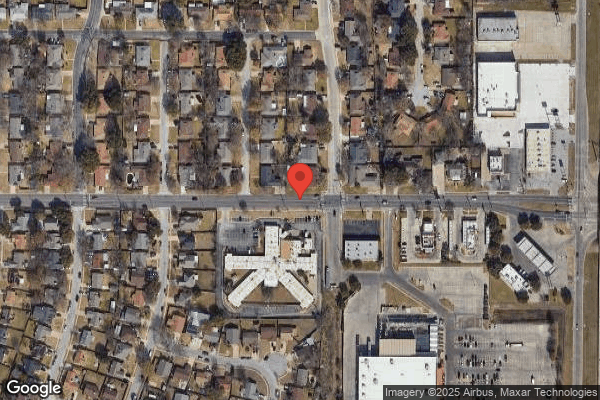
Jan 2025 1 deficiency 1 IJ
CRITICAL (J) 📢 Someone Reported This

A family member, employee, or ombudsman was alarmed enough to file a formal complaint

Immediate Jeopardy (IJ) - the most serious Medicare violation

Accident Prevention (Tag F0689)

Someone could have died · This affected 1 resident

**NOTE- TERMS IN BRACKETS HAVE BEEN EDITED TO PROTECT CONFIDENTIALITY** Based on observation, interview, and record review the facility failed to ensure each resident received adequate supervision and...

Read full inspector narrative →
**NOTE- TERMS IN BRACKETS HAVE BEEN EDITED TO PROTECT CONFIDENTIALITY** Based on observation, interview, and record review the facility failed to ensure each resident received adequate supervision and assistance devices to prevent accidents for 1 of 3 residents (Resident #1) reviewed for accidents. CNA A failed to get assistance from another staff member when providing Resident #1, who required two staff for assistance with all ADLs, a bed bath on 12/05/24. During the bed bath, CNA A asked Resident #1 to turn to her side. When the resident turned she fell to the floor, which resulted in the resident sustaining a fracture of her right femur (thigh bone). The noncompliance was identified as past noncompliance. The Immediate Jeopardy began on 12/05/24 and ended on 12/05/24. The facility had corrected the noncompliance before the survey began. This failure could place residents at risk for serious injury or harm, decline in health, and decreased quality of life. Findings included: Record review of Resident #1's quarterly MDS dated [DATE] reflected the resident was a [AGE] year-old female admitted to the facility on [DATE]. Her diagnoses included hypertension (high blood pressure), seizure disorder, cellulitis of right lower limb (bacterial infection that affects the skin and underlying tissue), fibromyalgia (chronic condition that causes widespread pain and tenderness in the body), and muscle wasting. The resident had a BIMS score of 9 which indicated her cognition was moderately impaired. The MDS further reflected Resident #1 was dependent for shower/bathing which indicated the helper did all the effort or the assistance of two or more helpers was required for the resident to complete the activity. Record review of Resident #1's care plan revised on 12/16/24 reflected the resident had an ADL self-care performance deficit. Interventions included the resident required the assistance of two staff for bathing and bed mobility. Record review of Resident #1's bathing status in the [NAME] system (documentation system used by reference key resident information for their nursing care plan) printed on 01/13/25 reflected the resident required the assistance of two staff members. Record review of the facility's Provider Investigation Report dated 12/05/24 reflected the following: The resident experienced a fall while in bed during care by the CNA [CNA A]. The CNA [CNA A] notified the nurse and had discovered the resident on the floor, resting against the bed. The resident has skin tears on both great toes, the let wrist, and beneath the right breast The resident reports generalized pain, with a particular emphasis on greater discomfort in her legs compared to other areas. When inquired about the incident, the resident explained 'I threw my foot over too far and fell.' The resident was transferred to the hospital due to experiencing pain the X-ray indicated a fracture in the left femur (left femur was facility documentation error; fracture was on the right leg). The resident subsequently underwent surgery to address the fracture Record review of Resident #1's hospital records dated 12/05/24 reflected the resident was diagnosed with a comminuted distal femoral fracture (a broken bone that has been shattered into multiple pieces and are usually caused by severe trauma) of the right leg. Observation and interview on 01/08/25 at 10:26 PM revealed Resident #1 in bed watching television. The resident was alert and oriented and able to recall the incident when she fell during care. The resident said CNA A was giving her a bed bath, and the aide asked her to turn to her side. The resident said she was turning over onto her side as she was holding on the repositioning bar and fell on the floor. She said CNA A was usually able to catch her when she rolled over, but this time she was not able to. Resident #1 said she was sent to the hospital and had surgery on her leg, as she pointed to her right leg. Resident #1 stated CNA A usually bathed her alone and never had a helper. The resident stated she preferred two people because she felt safer. Resident #1 said she was not experiencing much pain from her fracture but had discomfort due to the cellulitis in her legs. Interview on 01/08/25 at 1:05 PM with CNA A revealed she was giving Resident #1 a bed bath and asked the resident to turn to her side. She stated the resident grabbed the repositioning bar on the bed, threw her leg over her left leg and that was when the resident fell over on to the floor. CNA A stated she then called for the nurse to assist, and the resident was assessed. CNA A stated Resident #1 was on an air mattress, and it was inflating at the time the resident was turning to her side. CNA A said she was aware Resident #1 required two staff for care, but she was not able to find someone to help her. CNA A said she asked another CNA, whose name she could recall, for help. She stated she did not get any help, so she bathed the resident alone. She stated she had bathed the resident alone in the past. The CNA said she felt safe bathing the resident alone because the resident was able to help turn in bed. Interview on 01/13/25 at 1:23 PM with LVN B revealed she was called by CNA A to Resident #1's room and noticed the resident was on the floor. CNA A told her the resident was trying to turn in bed during a bed bath, and the resident fell. LVN B said during Resident #1's assessment, the resident was complaining of pain and noticed the resident's toes were bleeding and other areas of her body such as her side, so she was transferred to the hospital via EMS. LVN B stated Resident #1 required two staff member for care because she was a bariatric resident and for safety. The LVN said she did not know CNA A was caring for Resident #1 alone, and she did not recall the aide asking anyone for help during the bed bath. LVN B further stated the aides could look in the [NAME] system to verify if a resident required one or two staff members during care or ask a charge nurse. Interview on 01/08/25 at 1:28 PM with CNA D revealed she had worked at the facility for about a year and cared for Resident #1. CNA D said Resident #1 was bed bound per choice and required two staff members for assistance for all care because the resident was bariatric and could not be care for by one staff member. Interview on 01/08/25 at 2:07 PM with CNA E revealed she worked with Resident #1 and the resident was bed bound. CNA E said the resident required two staff members for all care including bed baths because she was bariatric and needed more support. CNA E further stated Resident #1 had never been a one-person care resident. Interview on 01/08/25 at 2:39 PM with RN F revealed Resident #1 was bed bound and required two staff members for all care including bed baths because the resident was bariatric and one staff member could not adequately care or clean the resident up during ADL care. Interview on 01/08/25 at 2:29 PM the ADON revealed Resident #1 was bed bound and rarely got out of bed. She said the resident was a two-person assist for all care at all times because she was on an air mattress and could easily roll out of bed and for overall safety. The ADON was made aware CNA A had bathed Resident #1 alone, but the aide was not able to explain why she had not requested for help but only stated she had not seen anyone else. The ADON stated it appeared to her that CNA A had not looked for anyone to help her with the resident. The ADON further stated they immediately began to re-in-service (training) for all nursing staff re-educating them on the importance of using two staff member if the resident required it. They also identified all the residents that required two staff members for care they were monitoring and making observations to ensure two staff were assisting when needed. The monitoring began after the incident with Resident #1 and would be on-going for six weeks to ensure safety. Interview on 01/13/25 at 8:36 AM with the DON revealed she was told Resident #1 was getting a bed bath by CNA A and while the resident was turning to her left side with the assistance of the repositioning rail, Resident threw her leg over too far and continued to roll until she fell out of the bed. Resident #1 was assessed, and they noticed she had bruising to the top of her feet and was complaining of pain throughout her body but mostly to her right knee. The resident was transferred to the hospital where she was diagnosed with a right leg fracture. The DON said Resident #1 required two staff members for care due to being a bariatric resident and for safety. The DON stated CNA A admitted knowing Resident #1 required two staff members for care, but the aide told them she had not been able to find assistance but if she would asked her (DON) she would have assisted. The DON also said if aides did not know if a resident was a one or two person for care, they could look in their [NAME] computer system. After the incident, CNA A was suspended pending their investigation and had a 1:1 counseling and re-in-service (training) on resident care and the aide was pulled from working with Resident #1. The other nursing staff were re-educated on using the [NAME] computer system to ensure a resident required a one- or two-person assistance during care. The DON further stated they had identified all the residents that required two people and were going to monitor but watching care for those resident for 6 weeks. Record review of the facility's Safe Patient Handling policy revised December 2005 reflected the following: The facility has a program to promote and assure safe patient handling for both the resident and the employee. The policy includes identification, assessment and interventions to provide a comfortable, safer transfer, repositioning and resident movement. .3. Nurses will be educated in the identification, assessment and control of risks of injury to resident and nurses during patient handling .5. Nurses will be educated regarding correct safe handling procedures, to report concerns or the inability to perform resident handling or movement that the nurse believes in good faith will expose a resident or nurse to an unacceptable risk of injury Record review of 1:1 in-service with CNA A dated 12/05/24 revealed she had been re-educated on using the [NAME] system to communicate the resident's needs and information to all the CNA's to ensure appropriate resident care. CNA was also re-educated on fall prevention strategies and safe patient handling and abuse and neglect policy. Record review of in-services dated 12/05/24 with all direct nursing reflected the staff had been re-educated using the [NAME] system to communicate the resident's needs and information to all the CNAs to ensure appropriate resident care. CNAs were also re-educated on fall prevention strategies and safe patient handling and abuse and neglect policy. Interview on 01/08/25 at 1:05 PM with CNA A revealed she had been re-in-serviced 1:1 on abuse and neglect, ensure to always use two staff members during care for residents that required it and using the [NAME] system to check the care of the residents if they were unsure. Interviews on 01/08/25 from 11:12 AM to 5:14 PM and on 01/13/25 from 10:01 AM to 1:23 PM with nursing staff from various shifts to include LVN B, CNA C, CNA D, CNA E, RN F, LVN G, CNA H, CNA I, CNA J, and CNA K all revealed they have been in-serviced on abuse/neglect, using the [NAME] system to verify if a resident required one or two staff members for care, and fall prevention to avoid accidents. Record review of the direct care monitoring sheets reflected it included to watch at least 10 episodes of incontinent care or assist with bed mobility weekly to ensure staff was performing correctly and the care-planned number of staff were assisting. The monitoring dates reviewed began 12/05/24 and would continue for 6 weeks, and end on 01/15/25. Observation on 01/08/25 at 11:07 AM revealed Resident #2 was transferred from the bed to the chair via mechanical lift by two staff members. Observation on 01/13/25 at 3:32 PM revealed Resident #3 was transferred to bed via mechanical lift by two staff members.
Oct 2024 3 deficiencies
CONCERN (D) 📢 Someone Reported This

A family member, employee, or ombudsman was alarmed enough to file a formal complaint

Potential for Harm - no one hurt, but risky conditions existed

Comprehensive Care Plan (Tag F0656)

Could have caused harm · This affected 1 resident

**NOTE- TERMS IN BRACKETS HAVE BEEN EDITED TO PROTECT CONFIDENTIALITY** Based on observation, interview, and record review, the facility failed to develop and implement a comprehensive person-centered...

Read full inspector narrative →
**NOTE- TERMS IN BRACKETS HAVE BEEN EDITED TO PROTECT CONFIDENTIALITY** Based on observation, interview, and record review, the facility failed to develop and implement a comprehensive person-centered care plan for each resident, consistent with the resident rights, that includes measurable objectives and timeframes to meet a resident's medical, nursing, and mental and psychosocial needs that are identified in the comprehensive assessment for 1 of 2 residents (Resident #1) reviewed for comprehensive care plans. The facility failed to ensure Resident #1's comprehensive person-centered care plan was not implemented and did not include measurable outcomes related to signs and symptoms of dehydration such as decreased or no urine output, concentrated urine, strong odor, tenting skin, cracked lips, furrowed tongue, new onset confusion, dizziness on sitting/standing, increased pulse, headache, fatigue/weakness, dizziness, fever, thirst, recent/sudden weight loss, dry/sunken eyes. This failure could place residents at risk of not having their individual needs met, not receiving necessary care and services, and a decreased quality of life. Findings included: Record review of Resident #1 admission record dated 10/04/24 reflected the resident was a [AGE] year-old male, who initially admitted to the facility on [DATE] with a readmission on [DATE]. Resident#1 was diagnosed with: unspecified intellectual disability acquired absence of right leg below the knee, anemia chronic kidney disease, Type 2 diabetes mellitus with unspecified complications, protein calorie malnutrition and retention of urine unspecified. Record review of Resident#1's discharged MDS dated [DATE] reflected: the resident required substantial/maximal assistance, Helper does MORE THAN HALF the effort. Helper lifts or holds trunk or limbs and provides more than half the effort, for toileting hygiene, shower/bathe self and lower body dressing. The MDS also reflected Resident #1 was always continent. Record review of Resident#1's Entry MDS dated [DATE] reflected Resident#1 had no BIMS assessement documented. Record review of Resident#1's care plan dated 08/21/24 reflected Problem: The resident has potential fluid deficit r/t decreased mobility, recent admit to facility. Intervention: Monitor/document/report to MD PRN s/sx of dehydration: decreased or no urine output, concentrated urine, strong odor, tenting skin, cracked lips, furrowed tongue, new onset confusion, dizziness on sitting/standing, increased pulse, headache, fatigue/weakness, dizziness, fever, thirst, recent/sudden weight loss, dry/sunken eyes. Record review of Resident#1's care task for the month of October 2024 reflected no care task related to monitor, document and report to medical director signs and symptoms of dehydration: decreased or no urine output, concentrated urine and strong odor. Record review of Resident #1's October 2024 TAR/NMAR reflected no care related to monitoring, documenting, and reporting to the physician signs and symptoms of dehydration, such as decreased or no urine output, concentrated urine and strong odor. Record review of Resident #1's October 2024 eMAR reflected no care related to monitoring, documenting, and reporting to the physician signs and symptoms of dehydration, such as decreased or no urine output, concentrated urine, and strong odor. Record review of Resident#1's September and October 2024 eMARs reflected the resident had a 16 French 30 cc urinary catheter for a diagnosis of urine retention, for one time a day for urine retention. The facility staff placed a check mark in the AM (morning) box. Record review of Resident#1's progress notes from 09/10/24 to 10/03/24 reflected no care related to monitoring, documenting, and reporting to the physician signs and symptoms of dehydration such as decreased or no urine output, concentrated urine, and strong odor. Observation on 10/04/24 at 1:00 PM revealed Resident#1's catheter urine collection bag had no urine output. Observation on 10/04/24 at 1:42 PM revealed Resident#1 had a case of water in his room. Observation on 10/04/24 at 3:30 PM revealed Resident#1's catheter urine collection bag had no urine output. Observation on 10/05/24 at 10:00 PM of Resident#1's catheter urine collection bag revealed no urine output. Interview on 10/04/24 at 1:04 PM with MA F revealed Resident#1 just returned from the hospital today after being gone for about three weeks. MA F stated Resident#1 had a catheter and both his legs were amputated. MA F stated Resident#1 would call out if he needed help. Interview on 10/04/24 at 1:42 PM with Resident #1 reveled staff had not emptied his catheter bag since early in the morning before breakfast. Resident#1 stated that he was doing okay, and he had just come back from the hospital. Interview on 10/04/24 at 2:10 PM with the Treatment Nurse revealed Resident #1 was not on her wound care list, and the resident had just returned from the hospital today. She stated urine would need to be monitored if it was cloudy and had sediment in it. She stated Resident #1 kept bottled water in his room to drink. Interview on 10/04/24 at 9:34 PM with MA C revealed Resident #1's urine output was monitored, and the information was given to the charge nurse to put in the system. MA C stated Resident #1 was one of the residents, who were monitored for urine output, and the resident just returned from the hospital today, Interview on 10/05/24 at 9:42 PM with RN D revealed Resident#1's urine output information was put in the resident's electronic record by her or the charge nurse by the end of each shift. RN D stated urine retention output monitoring was needed to be done to determine if the resident's medications were working or not. Interview on 10/05/24 at 10:00 PM with LVN E revealed if the DON had not updated the eMAR with the resident urine output instructions, the information should have been put in the nursing progress notes. LVN E stated if the urine output was not being monitored, the resident could have blockage, dehydration, or bladder issues. LVN E had not worked with Resident# 1 since he had returned from the hospital. Interview on 10/05/24 at 10:15 PM with the ADON revealed the order on the eMAR was to make sure that staff checked the catheter bag. The ADON stated that was not for monitoring and measurements of urine retention. Telephone interview on 10/06/24 at 12:05 AM with the Administrator and the DON revealed if the resident's urine output was not being monitored, the resident could develop a UTI or be dehydrated. The DON stated all the nursing staff were responsible to make sure urine output was monitored. The DON stated the care plans were updated and revised during IDT meetings as needed, which were done daily and consisted of the head of each department. The Administrator stated they must stay on top of the care plan interventions and make sure those were being done to keep the residents safe. The Administrator and DON stated Resident #1 was admitted to the hospital on [DATE] and returned to the facility on [DATE]. Record review of the facility's current Nursing Policy and Procedure Manual, reflected the following undated policy: Comprehensive Care Plan The facility will develop and implement a comprehensive person-centered care plan for each resident, consistent with the resident rights that includes measurable objectives and timeframes to meet a resident's medical, nursing, and mental and psychosocial needs that are identified in the comprehensive assessment. The comprehensive care plan will describe the following -The services that are to be furnished to attain or maintain the resident's highest practicable physical, mental, and psychosocial well-being .
CONCERN (D) 📢 Someone Reported This

A family member, employee, or ombudsman was alarmed enough to file a formal complaint

Potential for Harm - no one hurt, but risky conditions existed

Incontinence Care (Tag F0690)

Could have caused harm · This affected 1 resident

**NOTE- TERMS IN BRACKETS HAVE BEEN EDITED TO PROTECT CONFIDENTIALITY** Based on observation, interview, and record review, the facility failed to ensure that each resident who was incontinent of blad...

Read full inspector narrative →
**NOTE- TERMS IN BRACKETS HAVE BEEN EDITED TO PROTECT CONFIDENTIALITY** Based on observation, interview, and record review, the facility failed to ensure that each resident who was incontinent of bladder with an indwelling catheter received appropriate treatment and services for 1 of 2 residents (Residents #1) reviewed for incontinent care and for indwelling urinary catheters. The facility they failed to monitor and document signs and symptoms of dehydration, decreased or no urine output, for Resident#1. This failure could place residents at risk of not having their individual needs met, not receiving necessary care and services, and a decreased quality of life. Findings included: Record review of Resident #1's admission record dated 10/04/24 reflected the resident was a [AGE] year-old male, who initially admitted to the facility on [DATE] with a readmission on [DATE]. Resident#1's diagnoses included intellectual disability, acquired absence of right leg below the knee, anemia chronic kidney disease, Type 2 diabetes mellitus with unspecified complications, protein calorie malnutrition and retention of urine. Record review of Resident#1's discharged MDS dated [DATE] reflected the resident required substantial/maximal assistance, Helper does MORE THAN HALF the effort. Helper lifts or holds trunk or limbs and provides more than half the effort, for toileting hygiene, shower/bathe self and lower body dressing. The MDS reflected Resident #1 was always continent of bladder. Record review of Resident#1's Entry MDS dated [DATE] reflected Resident#1 had no BIMS assessment documented. Record review of Resident#1's care plan dated 08/21/24 reflected: Problem: The resident has potential fluid deficit r/t decreased mobility, recent admit to facility. Intervention: Monitor/document/report to MD PRN s/sx of dehydration: decreased or no urine output, concentrated urine, strong odor, tenting skin, cracked lips, furrowed tongue, new onset confusion, dizziness on sitting/standing, increased pulse, headache, fatigue/weakness, dizziness, fever, thirst, recent/sudden weight loss, dry/sunken eyes. Record review of Resident#1's care task for the month of October 2024 reflected no care task related to monitoring, documenting, and reporting to the physician signs and symptoms of dehydration, such as decreased or no urine output, concentrated urine and strong odor. Record review of Resident #1's October 2024 TAR/MAR reflected no care related to monitoring, documenting, and reporting to the physician signs and symptoms of dehydration, such as decreased or no urine output, concentrated urine and strong odor. Record review of Resident #1's October eMAR reflected no care related to monitoring, documenting, and reporting to the physician signs and symptoms of dehydration, such as decreased or no urine output, concentrated urine and strong odor. Record review of Resident#1's September and October 20234 eMAR reflected the resident had a 16 French urinary catheter 30 cc for a diagnosis of urine retention, for one time a day for urine retention. The facility staff placed a check mark in the AM (morning) box. Record review of Resident#1's the progress notes from 09/10/24 to 10/03/24 reflected no care related to monitoring, documenting, and reporting to the physician signs and symptoms of dehydration, such as decreased or no urine output, concentrated urine and strong odor. Record review of Resident#1's progress notes reflected no care related to monitoring, documenting, and reporting to the physician signs and symptoms of dehydration, such as decreased or no urine output, concentrated urine and strong odor. Observation on 10/04/24 at 1:00 PM revealed Resident#1's catheter urine collection bag had no urine output. Observation on 10/04/24 at 1:42 PM revealed Resident#1 had a case of water in his room. Observation on 10/04/24 at 3:30 PM revealed Resident#1's catheter urine collection bag had no urine output. Observation on 10/05/24 at 10:00 PM revealed Resident#1's catheter urine collection bag had no urine output. Interview on 10/04/24 at 1:04 PM with MA F revealed Resident#1 just returned from the hospital today after being gone for about three weeks. She stated Resident#1 had a catheter and both his legs were amputated. She stated Resident#1 would call out if he needed help. Interview on 10/04/24 at 1:42 PM with Resident #1 revealed staff had not emptied his catheter bag since early in the morning before breakfast. Resident#1 stated that he was doing okay, and he had just come back from the hospital. Interview on 10/04/24 at 2:10 PM with the Treatment Nurse revealed Resident#1 was not on her wound care list, and he returned from the hospital today. She stated the resident's urine would need to be monitored if it was cloudy and had sediment in it. She stated Resident#1 kept bottled water in his room to drink. Interview on 10/04/24 at 9:34 PM with MA C revealed Resident#1's urine output was monitored and the information was given to the charge nurse to put in the system. MA C revealed Resident#1 was one of the resident's, who were monitored for urine output, and he just returned from the hospital today. Interview on 10/05/24 at 9:42 PM with RN D revealed Resident#1's urine output information was put in the resident's electronic record by her or the charge nurse by the end of each shift. RN D stated urine retention output monitoring was needed to be done to determine if the resident's medications were working or not. Interview on 10/05/24 at 10:00 PM with LVN E revealed if the DON had not updated the eMAR with the resident urine output instructions, the information should have been put in the nurses' progress notes. LVN E stated if the urine output was not being monitored, the resident could have blockage, dehydration, or bladder issues. LVN E had not worked with Resident# 1 since he had returned from the hospital. Interview on 10/05/24 at 10:15 PM with the ADON revealed the order on Resident #1's eMAR was to ensure staff checked the catheter bag. The ADON stated that was not for monitoring and measurements of urine retention. Telephone interview on 10/06/24 at 12:05 AM with the Administrator and the DON revealed if the resident's urine outpoint was not being monitored, the resident could develop a UTI or be dehydrated. The DON stated all the nursing staff were responsible for ensuring urine output was monitored. The Administrator and DON stated Resident#1 was admitted to the hospital on [DATE] and returned to the facility on [DATE]. Record review of the facility's current Nursing Policy and Procedure Manual reflected the following undated policy: Comprehensive Care Plan The comprehensive care plan will describe the following The services that are to be furnished to attain or maintain the resident's highest practicable physical, mental, and psychosocial well-being .
CONCERN (D) 📢 Someone Reported This

A family member, employee, or ombudsman was alarmed enough to file a formal complaint

Potential for Harm - no one hurt, but risky conditions existed

Deficiency F0761 (Tag F0761)

Could have caused harm · This affected 1 resident

Based on observation, interview, and record review, the facility failed to ensure that drugs and biologicals were stored in locked compartments for 1 of 6 medication carts located on hall 200 observed...

Read full inspector narrative →
Based on observation, interview, and record review, the facility failed to ensure that drugs and biologicals were stored in locked compartments for 1 of 6 medication carts located on hall 200 observed for drug storage. 1. The facility failed to ensure one medication cart found on 200 hall was not left unlocked and unattended by LVN A on at 10/04/24 at 12:30 PM. 2. The facility failed to ensure one medication cart found on 200 hall was not left unlocked and unattended by LVN B on 10/05/24 at 9:26 PM. This failure could place residents at risk of access and ingestion medications. Findings included: Observation on 10/04/24 at 12:30 PM revealed one medication cart on Hall 200 was unlocked and unattended with the drawers facing the hallway. At 12:45 PM, the DON walked past the medication cart on Hall 200 hall and locked it. Observation on 10/05/24 at 9:10 PM revealed LVN B drove up to the facility at the same time as the surveyor and they walked into the building together. At 9:26 PM, the medication cart on Hall 200 was unlocked and unattended with the drawers facing the hallway. Interview on 10/04/24 at 2:25 PM with LVN A revealed she never forgot to lock the medication cart, she apologized, and said she did not know what happened today. LVN A stated the residents could get into the medication cart and take medications that did not belong to them. The DON was in the conference room while LVN A was interviewed. Interview on 10/05/24 at 9:26 PM with LVN B revealed she did not know she had left the medication cart open. LVN B stated she had been in-serviced, and the cart was supposed to be locked when staff walked away. LVN B stated the residents could take the medications and staff could take medications. Interview on 10/06/24 at 12:05 AM with the Administrator in person and the DON via phone revealed the medication cart should be locked when not in use. The DON stated the nursing staff were responsible for making sure the medication cart was locked before walking away from the medication cart. Record review of the facility's Medication Administration Procedures policy revised 10/25/17 reflected: .8. After the medication administration process is completed, the medication cart must be completely locked, or otherwise secured
Oct 2024 2 deficiencies
CONCERN (D) 📢 Someone Reported This

A family member, employee, or ombudsman was alarmed enough to file a formal complaint

Potential for Harm - no one hurt, but risky conditions existed

Deficiency F0558 (Tag F0558)

Could have caused harm · This affected 1 resident

**NOTE- TERMS IN BRACKETS HAVE BEEN EDITED TO PROTECT CONFIDENTIALITY** Based on observations, interviews, and record reviews, the facility failed to ensure the resident had the right to reside and re...

Read full inspector narrative →
**NOTE- TERMS IN BRACKETS HAVE BEEN EDITED TO PROTECT CONFIDENTIALITY** Based on observations, interviews, and record reviews, the facility failed to ensure the resident had the right to reside and receive services in the facility with reasonable accommodation of resident needs and preferences for 1 of 10 residents (Resident #2) reviewed for call lights. Resident #2's call light was not within reach. The call button was on the other side of the privacy curtain draped over a vacant bed. This failure could place residents at risk of not having their needs and preferences met and a decreased quality of life. Finding included: Record review of Resident #2's Face Sheet dated 10/01/2024, reflected the resident was an [AGE] year-old female who was originally admitted to the facility at 07/16/2024. Diagnoses included: Unspecified dementia without behavioral disturbance (a group of symptoms that may affect, memory, thinking and interferes with daily life), lack of coordination, anemia (deficiency of healthy red blood cells in the blood), hypothyroidism (decreased productions of thyroid hormones), and dysphasia (impacts the ability to speak and understand spoken language). Record review of Resident #2's Initial MDS Assessment, dated 07/24/2024, reflected a BIMS score of 11 which indicated moderately cognitively intact. She required maximum assistance for toileting and showers. She was frequently incontinent of bowel and bladder. Record review of Resident #2's Care Plan dated 07/22/2024 reflected: Focus: [Resident #2] is risk for falls. Intervention: Anticipate and meet [Resident #2's] needs. Be sure [Resident #2's] call light is within reach and encourage the resident to use it or assistance as needed. Staff x 1 to assist with transfers. Focus: [Resident #2] has an ADL Self Care Performance Deficit. Interventions: Encourage [Resident #2] to use bell to call for assistance. In an observation and interview on 10/01/2024 at 11:30 AM, Resident #2 was in her room resting on her bed, which was close to the window. The call button was observed draped over the A bed's headboard, which was closest to the door in the room. The privacy curtain covered the area between the two beds. Resident #2's wheelchair was beside her bed. Resident #2 said she did not know where her call light was. When asked about it, she looked around the room but was not able to find it. When asked how she called for staff if she needed assistance, she said she did no call for help. She said she did transfer herself and did have a fall about a month ago but did not hurt herself. She said she lost her balance when she was transferring to her wheelchair from her bed. In an observation and interview on 10/01/2024 at 1:30 PM, the DON accompanied this state surveyor to Resident #2's room. The call button was observed draped over the A (closest to the door) bed's headboard in the room. The privacy curtain covered the area between the two beds. The DON said the call button should be accessible to Resident #2 so she could call for assistance if she needed to. She said Resident #2 did have a recent fall and required assistance to transfer and reminders to use her call light. In an interview on 10/01/2024 at 1:40 PM, LVN A said she did not know Resident #2's call light was not in her reach. She said the call light should be accessible to all residents to ensure they can call for assistance if they need it. In an interview 10/01/2024 at 2:06 PM, CNA B said she worked in all halls. She said she did not notice that Resident #2's call light was not accessible to her. She said it should be accessible to Resident #2 so she could call for assistance if she needed to. In an interview on 10/01/2024 at 2:14 PM, the Regional Compliance Nurse said all residents needed to have a call light accessible to them to ensure they could call for assistance as needed. In an interview on 10/01/2024 at 2:37 PM, CNA C said she was not aware that Resident #2's call light was not accessible to her. CNA C said she rounds constantly and typically checks to ensure call lights were placed. She said residents have a right to be able to call for assistance whenever they needed it. She said she did receive in-servicing on placing call lights but did not recall when the last time was. In an interview on 10/01/2024 at 3:25 PM, the Administrator stated his managers completed Champion Rounds, every morning. She said they look at things like call lights, room condition, resident needs and the information was discussed in the facility's morning meeting for follow up. He said he expected all residents to have access to call lights for their safety and to ensure their needs were met. Record review of the facility's Resident Rights policy, dated 2003, reflected: We believe each resident has a right to a dignified existence, self -determination, and communication with and access to persons and services inside and outside our facility . his facility complies with all applicable provisions of the Human Resources Code Title 2, Chapter 102.
CONCERN (D) 📢 Someone Reported This

A family member, employee, or ombudsman was alarmed enough to file a formal complaint

Potential for Harm - no one hurt, but risky conditions existed

Accident Prevention (Tag F0689)

Could have caused harm · This affected 1 resident

**NOTE- TERMS IN BRACKETS HAVE BEEN EDITED TO PROTECT CONFIDENTIALITY** Based on observations, interviews, and record reviews, the facility failed to ensure residents received adequate supervision and...

Read full inspector narrative →
**NOTE- TERMS IN BRACKETS HAVE BEEN EDITED TO PROTECT CONFIDENTIALITY** Based on observations, interviews, and record reviews, the facility failed to ensure residents received adequate supervision and assistance devices to prevent accidents for 1 (Resident #1) of 10 residents reviewed for accidents. The facility staff failed to ensure Resident #1 was safe from accidents and hazards when she fell from her bed on 09/28/2024 and was found face down on the floor with a bruise on her forehead. Resident #1 did not have a fall mat placed on both sides of her bed. This failure could place residents at risk of injury and a decreased quality of life. Findings included: Record review of Resident #1's Face Sheet dated 10/01/2024, reflected the resident was a [AGE] year-old female who was originally admitted to the facility on [DATE] and readmitted on [DATE]. The resident's diagnoses included: Alzheimer's disease (brain disorder worsening over time), dysphasia (impacts the ability to speak and understand spoken language), and unspecified dementia without behavioral disturbance (a group of symptoms that may affect, memory, thinking and interferes with daily life), muscle weakness, and history of falls. Record review of Resident #1's Initial MDS Assessment, dated 09/13/2024, reflected a BIMS score of 2 which indicated severely cognitively impaired. She was on hospice care, dependent for toileting, showers, and transfers. She was always incontinent of bowel and bladder. Record review of Resident #1's Care Plan dated 06/06/2023, reflected: Focus: [Resident #1] has a hx of falls r/t impaired cognition, poor safety awareness, and is very impulsive. She is at risk for future falls and injury from falls. Interventions: Anticipate and meet the resident's needs. Dycem (to stop from sliding out of seat) wheelchair seat. Ensure bed is in lowest position while resident is in bed. Focus: The resident has a communication problem. Intervention: Anticipate and meet needs. Ensure/provide a safe environment: Call light in reach, Adequate low glare light. Bed in lowest position and wheels locked, Avoid isolation. The care plan was updated on 10/01/2024, by the Corporate Compliance Nurse, to include, Ensure that the resident's floor mat is in place in both sides of the bed while the resident is in bed. There was no orders for fall mats and fall mats were not listed as fall interventions prior to 10/01/2024. Record review of progress note, signed by RN D, and dated 09/28/2024 at 12:02 AM, reflected: during midnight round [Resident #1] noted lying with her face facing the floor, [Resident #1] assisted back to bed with the help of an aid, a complete head to toe done with a slight laceration and redness noted on her forehead, vs wnl a prn pain pill administered. Bed in low position, call light within reach. Record review of progress note, signed by RN D, and dated 09/28/2024 at 12:28 AM, reflected: hospice nurse notified, advised to continue with neuro checks and they will send someone in the morning. Rp called several times with no response. left a voice message to call back. Record review of progress note, signed by RN D, and dated 09/28/2024 at 5:28 AM, reflected: [Responsible party] called back and this nurse explained to her what happened, after talking to RP she arrived at the facility and suggested we don't send pt to hospital since she doesn't want to go back through the process of enrolling back to hospice, RP notified the hospice nurse in on her way coming, at this time pt is stable vs wnl, neuros in progress. The oncoming nurse made aware to follow up with hospice. In an interview on 10/1/2024 at 1:40 PM, the DON stated RN D informed her on 09/28/2024 that Resident #1 was found on the flood beside her bed. She said there was a fall mat on the left side of Resident #1's bed but not on the right side. She said Resident #1 was often combative and needed to be transferred using a mechanical lift. Her bed was not against the wall, so it was easier for staff to assist her. She said the facility had an IDT meeting and informed hospice of the need for a second fall mat which was added today, 10/01/2024. She said not haveing the fall mats in place put the resident at risk of injury if she fell from the bed. In an interview on 10/01/2024 at 1:54 PM, the Hospice RN said RN D did call the on-call hospice nurse who went to the facility the next morning. She said Resident #1 was assessed and had a small bruise on her forehead. She said hospice did bring a mall met for the resindet and it should be in place when Resident #1 was in bed to prevent injury if she fell out of bed. She said the facility did neurological and ordered x-rays because the fall was unwitnessed. In an interview on 10/01/2024 at 2:14 PM, the Regional Compliance Nurse stated Resident #1 rolled out of bed and was found on the floor by CNA F. She said LVN D assessed the resident and started neurologicals with no results outside of Resident #1's baseline, then contacted hospice and the family. She said it was her understanding that a fall mat was in place on the left side of Resident #1's bed but not on the right side. She said since the bed was not against the wall, they could have put a fall mat on the right side of the bed to ensure Resident #1's safety. In an interview on 10/01/2024 at 2:40 PM, RN E stated she came in to work on 09/28/2024 at 6:00 AM and was told about Resident #1's the fall by LVN D. She said when she checked, Resident #1 was in bed, the bed was low, and a fall mat was in place on Resident #1's left side of the bed. She said Resident #1 had a small bruise on her forehead. She said LVN D ordered x-rays as directed by hospice, but they had not come yet. She said Resident #1 showed no signs of pain and she continued neuros. In an interview on 10/01/2024 at 3:06 PM, LVN D said CNA F told her about midnight on 09/28/2024 that she found Resident #1 on the floor in her room. LVN D said when she went into the room, Resident #1 was face down on the right side of her bed, on the floor. She said there was a fall mat in place on the right side of the bed and the bed was in its lowest position. She said she did not recall if there was a fall mat on the resident's left side of the bed. She said she did a head-to-toe assessment and Resident #1 had a small bruise on her forehead. She said Resident #1 made no indications of pain, did not favor any part of her body or grimace when they moved her. She said she notified the RP and hospice. LVN D said when the family called her back, they did not want Resident #1 sent to the hospital because they did not want to restart hospice. She said she expected CNAs to round at least every two hours to ensure residents were okay. In a telephone interview on 10/01/2024 at 4:21 PM, CNA F stated she found Resident #1, face down, on the floor between the hall wall and the bed. She said Resident #1 was on the fall mat. She said she did not think there was a fall mat on the other side of the bed. She said Resident #1 leaned towards the right side of the bed (the side where the dresser was) which was why the fall mat was placed on that side. She said Resident #1 should have a fall mat on both sides of her bed to ensure she was not hurt if she fell of the bed. She said she did rounds every two hours and did not seen any issues with Resident #1 prior to her being found on the floor. Record review of undated photos provided by Resident #1's family member reflected Resident #1 in bed, a quarter size bump on her left forehead, a geri-chair on Resident #1's left bedside and a trash can and an oxygen concentrator on Resident #1's right bedside. A fall mat was not visible in the picture on either side of the bed. Record review of the facility's Fall Risk Assessment policy, dated 02/01/2007, reflected: High Risk for Injury: Goals: 1. The resident will be free from injury. 2. The resident incorporates personal safety tips into daily routines to prevent falls. 3. The resident recognizes factors that may increase risk of injury from falls .Procedure: Appropriate interventions will be addressed immediately on the interdisciplinary plan of care. Reassessment will occur after each fall . Environmental interventions include keeping beds in the lowest position with brakes on, grab bars in the bathroom, night-lights, and nonskid wax on floors.
Aug 2024 1 deficiency 1 Harm
SERIOUS (G) 📢 Someone Reported This

A family member, employee, or ombudsman was alarmed enough to file a formal complaint

Actual Harm - a resident was hurt due to facility failures

Accident Prevention (Tag F0689)

A resident was harmed · This affected 1 resident

**NOTE- TERMS IN BRACKETS HAVE BEEN EDITED TO PROTECT CONFIDENTIALITY** Based on observation, interview, and record review, the facility failed to ensure residents received adequate supervision and as...

Read full inspector narrative →
**NOTE- TERMS IN BRACKETS HAVE BEEN EDITED TO PROTECT CONFIDENTIALITY** Based on observation, interview, and record review, the facility failed to ensure residents received adequate supervision and assistance devices to prevent accidents for 1 of 4 residents (Resident #1) reviewed for accidents. Staff failed to ensure Resident #1 did not receive a burn blister to her left wrist on 08/09/24 when she was drinking coffee from the dining room and spilled it on herself. The noncompliance was identified as PNC. The noncompliance began on 08/09/24 and ended on 08/09/24. The facility had corrected the noncompliance before the survey began. This deficient practice could affect residents at the facility who drank hot liquids that could cause burns from the facility's kitchen. Findings included: Review of Resident #1's admission record, dated 08/21/24, reflected the resident was a [AGE] year-old female who admitted to the facility on [DATE]. Review of Resident #1's admission MDS Assessment, dated 07/06/24, reflected she had a BIMS score of 07, indicating severe cognitive impairment. Further review indicated Resident #1 required supervision or touching assistance in regard to eating which was the ability to use suitable utensils to bring food and/or liquid to the mouth and swallow food and/or liquid once the meal was placed before the resident. Resident #1 had active diagnoses of cerebrovascular accident (stroke), transient ischemic attack (a brief episode of neurological dysfunction resulting from an interruption in the blood supply to the brain), and non-Alzheimer's dementia (a form of dementia). Review of the facility's Provider Investigation Report, dated 08/16/24, reflected under the section for Provider Response reflected: .Resident was provided a lid when drinking hot liquids in a cup/mug/glass. Facility staff inserviced on abuse and neglect, hot liquids, food spills, resident rights, and cooling coffee. 100% audit of residents to identify if any other residents had the potential for burns and to validate interventions were in place as indicated. Further review revealed under the section Investigation Summary reflected: Upon my investigation the resident states she had gone into the dinning area after breakfast serve out to get another cup of coffee and as she was pouring coffee into a cup she lost grip of the cup due to the gloves she wears to prevent scratching her skin. When she had spilled the coffee she did not think much about it at the time as she was wearing a long sleeve sweater. She did not notify anyone when it happened as she stated she felt fine when it happened and felt no pain. Due to the long sleeved sweater she was wearing she didn't notice anything until she started to itch and rolled up her sleeve and notice she had a blisters on her left wrist. She then notified the nurse around 2:30 pm if she could get something for her wrist. That is when the nurse asked what happened. The physician was notified and orders were given on how to proceed to treat her wrist. Safe surveys conducted with no negative findings. Temperature logs were reviewed with no deviations in findings. Coffee was temped to validate accuracy of temperature logs [sic]. Further review under the section Facility Investigation Findings reflected: Confirmed. Review of Resident #1's physician's orders reflected the following: Triple Antibiotic Plus External Ointment 1 % (Neomycin-Bacitracin-Polymyxin-Pramoxine) Apply to left forearm topically one time a day for burn/blister for 14 days with a start date of 08/10/24 and end date of 08/24/24. Review of Resident #1's August 2024 MAR/TAR reflected the following: Triple Antibiotic External Ointment (Neomycin-Bacitracin-Polymyxin) Apply to left foream arm topically one time only for burn for 1 Day apply to the left forearm x 1 [sic] and indicated she received the treatment on 08/10/24 and Triple Antibiotic Plus External Ointment 1 % (Neomycin-Bacitracin-Polymyxin-Pramoxine) Apply to left forearm topically one time a day for burn/blister for 14 days and indicated she received treatment each day from 08/10/24 to 08/21/24. Review of Resident #1's care plan, updated 08/09/24, reflected the following: Focus: Risk of burns due to hot liquids .Goal: Resident will not suffer any injury related to hot liquids .Interventions: Coffee and other hot liquids should not be served if over 140 degrees [Fahrenheit]. If hot liquid is spilled on self, staff should pour room temperature or lower temp liquid on the affected area of the resident. Resident to use the dominant hand for drinking. Should be seated in upright position with table or overbed table when hot liquids are being consumed. Review of Resident #1's Event Nurses' Note- Burn, dated 08/09/24, reflected the following: .10. Burn/Blister, 1. Location of Event Occurred .4) Dining Room, a. Check all that apply: 1. Caused by coffee, tea, or other hot liquid, b. Part of body burned: left forearm, c. Details of injury: type of injury, dimensions, appearance, etc.: 5.5 cm x 3.2 cm blister .e. Nursing description of the event: Resident approached nurse to present burn to arm. Resident states she spilled coffee over her hand this morning at breakfast. When asked why resident didn't notify nursing staff she responded that she didn't know it was going to blister. Contacted MD [MD A] received n/o for triple abt ointment for 14 days. Wrap lightly with gauze wrap. Resident reports having no pain associated with burn. Completed by LVN B. Review of Resident #1's Hot Liquids Assessment, dated 08/09/24, reflected the following: 1. Check all conditions that apply to this resident. 1. Moderate to Severe Cognition Impairment. 2. Frequent impulsive acts or short tempered 8. Other condition or reason that puts the resident at risk for potential spills (specify below) .1a. Specify other condition or reason (blank) .2. Resident can consume hot liquids/food without special interventions? 2. No .A. Interventions to decrease potential burns with coffee or other hot liquid. Check all that apply .6. Should be seated in upright position with table or overbed table . This was the only Hot Liquids Assessment noted in Resident #1's electronic health record. Review of Resident #1's progress notes reflected the following on 08/09/24 written by the DON: Administrator and DON notified of burn to resident wrist. Resident was in her room when Administrator and DON arrived. Resident asked about how the burn happened. Resident stated that she was getting another cup of coffee after breakfast had finished and she lost her grip on her cup, due to her gloves she wears, and her coffee spilled on her and the floor. Resident asked why she didn't tell anyone she spilled coffee on herself and she replied that she did not because she did not think it was bad. Resident said she saw it was blistering and decided to tell someone. Resident stated no pain to burn site. Resident stated she feels safe within the facility. Nurse applied TAO, non-adherent pad, and gauze wrap. MD notified with new orders for TAO and gauze for 14 days. Family notified. Resident left sitting comfortably in her wheelchair in her room [sic]. Observation and interview on 08/21/24 at 9:45 AM with Resident #1 revealed she was sitting in her wheelchair in her room watching television. Resident #1 had a bandage to her left forearm near her wrist area. Resident #1 said she went to the dining room one morning to get coffee like normal and spilled it on herself and that caused a blister. Resident #1 said the blister opened up, but staff had been treating it and bandaging it up. Resident #1 said it hurt sometimes but was getting better, and she was now more careful with the coffee. Resident #1 said she had not burned herself with the coffee since and had not noticed it being too hot for her. Interview via telephone on 08/21/24 at 10:28 AM with Resident #1's Responsible Party revealed he lived out of state, but the facility had called him about Resident #1 getting burned by coffee. Resident #1's Responsible Party said he was upset because he was not sure why the facility would serve coffee to a resident that was too hot to cause a burn. He said he wanted to make sure the facility was not going to do that again. Interview on 08/21/24 at 11:20 AM with the Dietary Manager revealed she was prepping the coffee to be served during the lunch meal service. She stated everyone working in the kitchen prepped the coffee for the breakfast and lunch meal services and also kept coffee out in the dining room during the day. She said the temperature the coffee should be served at was between 135-140 degrees Fahrenheit. Interview on 08/21/24 at 11:25 AM with Dietary Aide C revealed she made coffee for the residents' meals and knew not to serve the coffee if it was over 140 degrees Fahrenheit. She said she used ice to cool the coffee down to the right temperature before being served. She said she also logged the served temperature on the coffee temperature log. Interview on 08/21/24 at 11:27 AM with Dietary Aide D revealed she made coffee for the residents' meals and knew not to serve the coffee if it was over 140 degrees Fahrenheit. She said she used ice to cool the coffee down to the right temperature before being served. She said she also logged the served temperature on the coffee temperature log. Interview on 08/21/24 at 11:29 AM with [NAME] E revealed she made coffee for the residents' meals and knew not to serve the coffee if it was over 140 degrees Fahrenheit. [NAME] E said she used ice to cool the coffee down to the right temperature before being served. [NAME] E said she also logged the served temperature on the coffee temperature log. Interview on 08/21/24 at 11:31 with Dietary Aide F revealed he made coffee for the residents' meals and knew to not serve it if it was over 140 degrees Fahrenheit. He said he used ice to cool the coffee down to the right temperature before being served. He said he also logged the served temperature on the coffee temperature log. Observation on 08/21/24 at 11:33 AM revealed the Dietary Manager prepping coffee after it was done brewing. She poured coffee into a cup and took the temperature of the coffee which read at 170 degrees Fahrenheit. The Dietary Manager then began adding ice to the coffee container and after a few seconds poured an additional cup of coffee. She took the temperature of the coffee which now read at 139 degrees Fahrenheit. Next to the coffee maker was the facility's policy and procedures for serving hot liquids to residents and what to do to lower the temperature of the coffee if it was not at the right temperature of 140 degrees Fahrenheit or less. Follow-up interview on 08/21/24 at 11:34 AM with the Dietary Manager revealed she typically put out porcelain and plastic cups for residents to use to pour their coffee in. She said residents served themselves their own coffee because they liked to be independent. She said there were staff in the dining room to assist a resident in getting coffee if they wanted or needed the help. The Dietary Manager said the facility initiated checking the temperature of the coffee before being served a few months ago because a resident in another facility was burned by hot coffee. She said everyone was in-serviced at that time to ensure they did not serve coffee that was over 140 degrees Fahrenheit. She said she also put up the policies and procedures on how to make the coffee and what temperature it should be served at next the coffee maker, so staff would not forget. Review of the facility's coffee temperature logs for August 2024 reflected staff were logging temperatures between 135 and 140-degrees Fahrenheit for each day and coffee pot served; including the coffee served on 08/09/24. Observation on 08/21/24 at 11:35 AM of the dining room revealed Resident #1 was sitting at a table waiting for her lunch to be served. Resident #1 had a hard re-usable plastic cup that was specifically used for coffee or other hot liquids. The cup had coffee in it in and was placed on the table in front of her. Resident #1 did not have gloves on and there was no steam coming from the cup. Resident #1 said her coffee was warm and tasted good today. Staff were noted to be in the dining room to assist during meals and also for activities. Interview via telephone on 08/21/24 at 12:51 PM with LVN B revealed residents could only get coffee from the dining room which came from the kitchen. Regarding the incident, LVN B said Resident #1 told her that she spilled coffee on herself earlier in the day, and she now had a blister. LVN B said she assessed Resident #1 and asked if she was having any pain to her wrist and Resident #1 told her she was not in pain. LVN B said she called Resident #1's doctor and got orders to treat the blister with a cream and bandage. Follow-up interview on 08/21/24 at 1:43 PM with the Dietary Manager revealed she only knew that Resident #1 came to the dining room to get her own coffee one morning. She said Resident #1 usually wore thick gloves that prevented her from being able to hold a lot of things with her hands. She said her expectation was that staff checked the temperature of the coffee before being served to residents. The Dietary Manager said she was not sure if the kitchen staff checked the temperature of the coffee before being served that day. She said the purpose of that was to make sure the coffee was not too hot and could burn a resident. The Dietary Manager said all the kitchen staff were in-serviced regarding serving hot liquids to residents after Resident #1 was burned with the hot coffee. Interview on 08/21/24 at 2:52 PM with the Administrator revealed the DON was not at the facility during the investigation. The Administrator said he was not sure how Resident #1 spilled the coffee on herself. The Administrator said Resident #1 told him she spilled the coffee on herself in the morning time and because of her gloves she was wearing the cup slipped. The Administrator said Resident #1 was not in any pain at that time and staff began to call the doctor to get orders to treat her. He said he went to the kitchen and looked at the coffee temperature log from that morning and saw that the temperatures were correct. He said he started his investigation into what happened and also took the temperature of the coffee that was already out being served to residents which was 128 degrees Fahrenheit. The Administrator said the coffee temperature log from that morning showed the coffee was served at 140 degrees Fahrenheit. He said the kitchen staff had already been trained to check the temperature of the coffee prior to being served because of an incident that happened at a different facility. The Administrator said after Resident #1 was burned the facility re-inserviced all kitchen staff on what the temperatures needed to be when being served to a resident. He said the steps and policies were also posted in the kitchen on the wall as well for staff to see in case they forgot. He said he started monitoring the coffee temperature logs after Resident #1 was burned to ensure the kitchen staff were not serving too hot coffee. He said the risk of serving a liquid that was too hot was it could burn a resident. The Administrator said coffee was only served from the kitchen and they were responsible for making the coffee, taking the temperature of the coffee, and ensuring the temperature was not higher than 140 degrees Fahrenheit before being served. Review of an in-service record, dated 08/09/24, and titled Record of Departmental In Service and Meetings reflected the following: Summary/Objectives: Brew coffee until complete take brew temp and ice to bring coffee to 140 degrees screw lid on tight if coffee is below 135 discard and repeat process [sic] signed by 10 dietary staff members. Review of an undated in-service record titled Hot Liquid/Burns reflected 44 facility staff had been in-serviced regarding the facility's hot liquid/food spills policy and procedures. Review of the facility's undated Guidelines on Serving Coffee in the Nursing Facility policy reflected the following: .2. The standard for coffee service will be 140 degrees .If coffee is served at 140 degrees, it will cool to 136 degrees when dispensed into a room-temperature coffee cup or mug, and per 'Time and Temperature Relationship to Serious Burns' from the American Burn Association website, this temperature will allow approximately 15 seconds before a serious burn will occur, based on the physical condition of the individual person. Review of the facility's Hot Liquid/Food Spills policy, dated 2003, reflected the following: Residents are at risk of having any hot liquid/food spilled on their person causing burns. Examples of hot liquids/food are: coffee, tea, hot soup, oatmeal, or any other hot food or liquid substance .1. Brew coffee in kitchen until brewing process is complete. 2. Add xxx (change the xxx to the amount of ice needed to cool the coffee at your facility)- 8 oz cups of ice to TF server, stir well until ice is dissolved. 3. Take temperature of coffee in TF server, if it is 135-140, then screw on lid tightly and take to dining room to be served. 4. If it is still over 140 degrees, stir until it reaches 140 degrees or less, or add ice, a few cubes at a time, until it reaches 140 degrees or less. Then screw on lid and take to dining room to be served
Jun 2024 2 deficiencies
CONCERN (E) 📢 Someone Reported This

A family member, employee, or ombudsman was alarmed enough to file a formal complaint

Potential for Harm - no one hurt, but risky conditions existed

Accident Prevention (Tag F0689)

Could have caused harm · This affected multiple residents

**NOTE- TERMS IN BRACKETS HAVE BEEN EDITED TO PROTECT CONFIDENTIALITY** Based on observation, interview, and record review the facility failed to ensure each resident received adequate supervision and...

Read full inspector narrative →
**NOTE- TERMS IN BRACKETS HAVE BEEN EDITED TO PROTECT CONFIDENTIALITY** Based on observation, interview, and record review the facility failed to ensure each resident received adequate supervision and assistance devices to prevent accidents for 1 of 3 shower rooms (Shower room [ROOM NUMBER]) observed for accident and hazards. The facility failed to ensure two disposable razors in Shower room [ROOM NUMBER] were kept out of reach of residents. These failures could place residents at risk for injury. Findings included: Observation and interview on 06/05/24 at 12:35 PM with CNA A of Shower room [ROOM NUMBER], which was to the right of the nursing station, revealed two navy blue disposable razors on top of the sharps container, within reach of residents to access. According to CNA A, razors were locked in a closet in the shower room. After use, the razors were supposed to be discarded in the sharps container. CNA A stated leaving razors on top of the sharps container placed residents at risk of taking the razors for personal use. CNA A stated if residents used razors without supervision, it would place them at risk to cut or harm themselves or others. CNA A stated aides were responsible for properly discarding razors after use. Interview on 06/05/24 at 2:08 PM with RN B revealed CNAs were responsible for showering and shaving residents on their shower days. RN B stated after CNAs were done with the use of a razor, CNAs were to dispose of the razors. RN B stated not doing so caused risk of infection, residents could take the razor out of the shower and cut themselves or others. RN B stated it was dangerous for residents to have access to a razor. Interview on 06/05/24 at 2:46 PM with the ADON revealed all staff were responsible for ensuring razors were placed in the sharps container out of reach from residents. The ADON stated staff can retrieve razors from a locked room within the shower room. The ADON stated she was not sure why razors were left outside of the sharps container. The ADON stated leaving razors out in the open placed residents at risk of cuts, injuries or infection. The ADON stated confused residents could have access to them and fall or hurt themselves or others. Record review of the facility's Shaving, Electric/Safety Razors policy, dated 2003, reflected: .shaving of the male resident can be performed with an electric or safety razor depending on the preference and availability of equipment .Store all articles in the appropriate place
CONCERN (E) 📢 Someone Reported This

A family member, employee, or ombudsman was alarmed enough to file a formal complaint

Potential for Harm - no one hurt, but risky conditions existed

Deficiency F0727 (Tag F0727)

Could have caused harm · This affected multiple residents

Based on interview, the facility failed to designate a registered nurse to serve as the director of nursing on a full time basis for 53 of 65 days (04/13/24-06/05/24) reviewed for DON coverage. The fa...

Read full inspector narrative →
Based on interview, the facility failed to designate a registered nurse to serve as the director of nursing on a full time basis for 53 of 65 days (04/13/24-06/05/24) reviewed for DON coverage. The facility failed to designate a RN to serve as DON on a full-time basis since 04/12/24. The failure placed residents at risk of not receiving necessary care and services. Findings included: Interview on 06/05/24 at 3:15 PM with the Administrator revealed the last time the facility had a dedicated DON was on 04/12/24. She stated she had interviewed applicants, but she had not hired anyone yet. Currently the DON responsibilities were being divided up between the ADON, the MDS Coordinator, and the Regional Compliance Nurse. None of the three people were dedicated to the DON position 8 hours a day. The Administrator stated she did not have a policy about DON coverage. Interview on 06/05/24 at 3:30 PM with the ADON revealed she and the MDS Coordinator and the Regional Compliance Nurse were covering for the DON. She stated they were also all performing their regular duties as well.
Jan 2024 1 deficiency
CONCERN (D) 📢 Someone Reported This

A family member, employee, or ombudsman was alarmed enough to file a formal complaint

Potential for Harm - no one hurt, but risky conditions existed

Quality of Care (Tag F0684)

Could have caused harm · This affected 1 resident

**NOTE- TERMS IN BRACKETS HAVE BEEN EDITED TO PROTECT CONFIDENTIALITY** Based on observation, interview, and record review, the facility failed to ensure residents received treatment and care in accor...

Read full inspector narrative →
**NOTE- TERMS IN BRACKETS HAVE BEEN EDITED TO PROTECT CONFIDENTIALITY** Based on observation, interview, and record review, the facility failed to ensure residents received treatment and care in accordance with professional standards of practice and the comprehensive person-centered care plan for 1 of 9 residents (Resident #1) reviewed for quality of care. The facility failed to ensure hospital discharge orders were followed for Resident #1 to have a follow-up appointment with a primary care physician. This failure could affect residents who receive care from the facility and place them at risk for worsening conditions. Findings included: Record review of Resident #1's face sheet, dated 01/30/24, reflected the resident was a [AGE] year-old female resident who was initially admitted to the facility on [DATE], and readmitted on [DATE] with diagnoses of Alzheimer's disease, abnormalities of gait and mobility, cognitive communication deficit, muscle weakness, lack of coordination, history of falling, abnormal posture, muscle wasting and atrophy (loss of muscle tissue), dementia, and unsteady on feet. Resident #1's primary care physician was reflected as being also the facility's medical director. Record review of Resident #1's Minimum Data Set, dated [DATE], reflected Resident #61 had a BIMS score of 4, which indicated the resident had severe cognitive impairment. Resident #1 required total dependence with 2 person assist for transfers. Record review of Resident #1's care plan, undated, obtained 01/30/24, reflected the following problem area: Resident #1 has a history of falls related to impaired cognition, poor safety awareness, and is very impulsive. She is a risk for future falls and injury from falls. The care plan reflected: Goals: [Resident #1] will not sustain serious injury. Resident #1 will be free of minor injury. Intervention: Encourage resident to participate in activities that promote exercise, physical activity for strengthening and improved mobility. Ensure that the resident wearing appropriate footwear when ambulating or mobilizing in wheelchair. Anticipate and meet the resident's needs. Dycem to wheelchair seat. Educate the resident/family/caregiver about safety reminders and wheat to do if a fall occurs. Keep furniture in locked position. Keep needed items, water. in reach. Mechanical lift with staff x2 to assist with transfers. Monitor resident per facility protocol when on the wheelchair. Physical therapy evaluate and treat as ordered or as needed. Put resident back in bed after each meal when not doing activities in the day room. Record review of Resident #1's discharge recommendations from the hospital, obtained 01/30/24, reflected Resident #1 needed to follow-up with a primary physician or at the hospital clinic post discharge in 7-14 days (around 01/15/24). Record review of resident admission dated 01/09/24 revealed Resident #1 was mobile with the use of a wheelchair, she had poor trunk control for balance, she required two-person assist with bed mobility, and she was transferred with a mechanical lift. No additional information related to mobility/safety indicated. Record review of Resident #1's progress notes entered by LVN A, dated [late entry] dated 01/08/24 at 6:17 PM, revealed Resident #1 was transferred to the hospital on [DATE] at 6:15 PM related LVN A being told Resident #1 fell face forward out of her wheelchair while on her way to dinner. Observation and interview on 01/30/24 at 9:51 AM with Resident #1 revealed the resident was in bed. She had a light scar on the left side of her forehead, but there were no current indications of bruising. A floor mat was folded up underneath the foot of the resident's bed, and the bed was not in the lowest position. Resident #1 was able to communicate; however, she not able to stay on task when asked if she had a fall, injury, or hospital visit. Interview on 01/30/24 at 10:20 AM with CNA B revealed CNA B said she was not present during the fall, had not noted any signs and symptoms of a fall during her care. CNA B stated she had never known Resident #1 to have any falls or be a fall risk. According to CNA B, Resident #1 used a mechanical lift to transfer. She stated the resident was assisted out of bed three times a week. She stated the resident could be very combative during care and transfers. She stated Resident #1 had a hard time with sitting up straight for long periods of time whether in bed or in her wheelchair. CNA B stated it was not a surprise to see the floor mat underneath the bed, and not at the bedside. She stated the floor mat was used on days Resident #1 remained in bed. Interview on 01/30/24 at 2:10 PM with LVN A revealed she did assist with Resident #1's admission back into the facility. LVN A did not recall any hospital discharge documents that came in with Resident #1. LVN A stated she was responsible for following up to notify the physician upon her return and enter any new orders, but there was no documentation at this time. LVN A stated either she or the ADON would contact the hospital to ensure Resident #1 proper care would be given once her return to the facility. LVN A stated she did not recall notifying the ADON or the hospital for Resident #1's hospital discharge documents. LVN A stated not following up for the hospital documents placed Resident #1 at risk for not receiving any follow up visits or proper care after her injury. Interview on 01/30/24 at 3:05 PM with the Administrator revealed hospital records were retrieved when residents returned from the hospital and sometimes were requested by the admitting nurse. When the documentation were retrieved, the admitting nurse would review it, notify the physician, enter any new orders, update resident records, give a copy to social services for future appointments, and leave discharge documents for the physician to review and sign off on. The Administrator stated after the physician signed off that he reviewed the hospital documents, the documents were uploaded to the portal by the Medical Records staff. According to the Administrator, she did not observe hospital discharge documents uploaded to Resident #1's clinal records, and she would follow-up with the Medical Records staff. Interview on 01/30/24 at 3:36 PM with the ADON revealed the admitting nurse would review hospital discharge documents and follow-up with the physician on any new orders. According to the ADON, she had not observed any discharge documents prior to this interview. According to the ADON, upon review of the resident's hospital discharge documents, Resident #1 was to have a follow-up visit with a primary physician within a week after discharge (around 01/15/24). The ADON stated she was not aware of this recommendation. The ADON stated the nurse admitting the resident back in the facility was responsible for contacting the hospital to retrieve discharge documents if they did not come in with the resident back to the facility. The ADON stated she did review records for hospital records received; however, this was missed. The ADON stated not doing so placed Resident #1 at risk of missing follow-up visits after her fall. The ADON stated the facility could have missed crucial instructions from the hospital leaving Resident #1 not receiving proper care. Interview on 01/30/24 at 4:00 PM with the Administrator revealed Resident #1's primary physician was the Medical Director of the facility, and he visited the facility weekly. The Administrator stated having Resident #1 return to the hospital clinic for a follow-up visit would cause double billing. The Administrator stated the facility failed to retrieve Resident #1's discharge documents. The facility failed notify the physician of recommendations from the discharge documents. The Administrator revealed the documents were not retrieved upon Resident #1's return to the facility. The Administrator stated this failure could prevent proper healing and care. Request of a facility policy on 01/30/24 at 4:30 PM regarding completing hospital discharge recommendations, follow-up visits, and to arrange for services that have been ordered by a physician was not available according to the Administrator.
Jan 2024 7 deficiencies
CONCERN (D)

Potential for Harm - no one hurt, but risky conditions existed

Resident Rights (Tag F0550)

Could have caused harm · This affected 1 resident

**NOTE- TERMS IN BRACKETS HAVE BEEN EDITED TO PROTECT CONFIDENTIALITY** Based on observation, interview, and record review, the facility failed to treat each resident with respect and dignity and care...

Read full inspector narrative →
**NOTE- TERMS IN BRACKETS HAVE BEEN EDITED TO PROTECT CONFIDENTIALITY** Based on observation, interview, and record review, the facility failed to treat each resident with respect and dignity and care for each resident in a manner and in an environment that promoted maintenance or enhancement of his or her quality of life, recognizing each resident's individuality for 1 (Resident #61) of 17 residents reviewed for dignity. The facility failed to ensure a WanderGuard device was not placed on Resident #61 when the resident was not an elopement risk. The failure placed residents at risk of decreased quality of life and lowered self-esteem. Findings included: Record review of Resident #61's face sheet dated 01/07/24 revealed the resident was an [AGE] year-old male admitted to the facility on [DATE] with diagnoses that included neuropathy (damaged nerves resulting in numbness, burning, or pain in relation to whichever part of the body is damaged), aphasia (language disorder affecting ability to communicate), and chronic kidney disease. Record review of Resident #61's MDS assessment, dated 08/20/23, revealed the resident had moderately impaired cognitive abilities and exhibited zero wandering frequencies one week after admission and used a wander elopement alarm daily. Record review of Resident #61's comprehensive care plan, revised 08/15/23, revealed the resident did not have a risk of elopement documented on his care plan as upon entry into the facility. Record review of Resident #61's Elopement Risk Evaluation, dated 08/14/23, revealed Resident #61 was at a risk of elopement. Record review of an updated elopement risk dated 11/14/23 revealed Resident #61 was not at risk for elopement. Record review of Resident #61's physician's orders revealed: May have WanderGuard due to poor cognition and poor redirection. There was a start date of 11/30/2023 and no end date. Monitor placement of WanderGuard bracelet q shift. There was a start date of 11/30/2023 and no end date. Monitor for function of WanderGuard QD and prn. There was a start date of 11/30/2023 and no end date. Assess skin under WanderGuard q shift every shift for preventative. There was a start date of 11/30/2023 and no end date. Record review of Resident #61's EHR revealed an entry by the Social Worker on 08/16/23 reflected the Social Worker had spoken with the resident's family member and explained the need for the resident to use a WanderGuard; however, there was documented consent from the family member. During an interview on 01/03/24 at 10:04 AM with Resident #61, he stated, I hate wearing the ankle monitor the facility has placed on me. If I ran away, where would I go? Interview on 01/4/24 at 4:33 PM with Resident #61 revealed the resident was still wearing a WanderGuard device. Resident #61 stated, It's embarrassing. It goes off every time I even get near the door. Observation on 01/05/24 at 11:08 AM with Resident #61 revealed the resident was still wearing his WanderGuard. He said he did not understand why he must wear the WanderGuard. Resident #61 stated he was embarrassed wearing the device. Interview on 01/05/24 at 10:24 AM with CNA C, who had worked at the facility since 2011, revealed she had not observed the resident exit-seeking. CNA C stated the resident said he did not want the WanderGuard, and he was alert and oriented. Interview on 01/05/24 at 10:33 AM with ADON A revealed when Resident #61 first came to the facility, the nurse said that he went to the front door and was standing next to it. ADON A stated the resident's family members were coming, and he went there to wait for them. She stated the resident did not try to go out, and he had not tried to exit-seek. She stated the resident did not have to wear a WanderGuard. She stated they took the WanderGuard off of him after they became familiar with him. ADON A asked if the resident was still wearing the WanderGuard, and she was informed the resident was still wearing it. She stated she would discontinue the WanderGuard immediately. Observation and interview on 01/05/24 at 10:53 AM with ADON A revealed she had Resident #61's WanderGuard, which had been removed from the resident. She also had the physician order showing that the WanderGuard had been discontinued and the resident's elopement assessment had been updated.
CONCERN (D)

Potential for Harm - no one hurt, but risky conditions existed

Notification of Changes (Tag F0580)

Could have caused harm · This affected 1 resident

**NOTE- TERMS IN BRACKETS HAVE BEEN EDITED TO PROTECT CONFIDENTIALITY** Based on interview and record review, the facility failed to immediately consult with the physician of a significant change in t...

Read full inspector narrative →
**NOTE- TERMS IN BRACKETS HAVE BEEN EDITED TO PROTECT CONFIDENTIALITY** Based on interview and record review, the facility failed to immediately consult with the physician of a significant change in the resident's health status; or a need to alter treatment significantly for 1 (Resident #168) of 4 residents reviewed for notification of change. The facility failed to notify Resident #168's physician that the resident's insulin had been discontinued by the hospital or that the resident had returned from the hospital and failed to follow-up with the physician to obtain new orders. The failure placed residents at risk of not having medical complications and deterioration. Findings included: Record review of Resident #1's face sheet dated 01/05/24 indicated the resident was an [AGE] year-old female, initially admitted on [DATE], and readmitted on [DATE] with diagnoses that included pneumonia, diabetes mellitus with ketoacidosis (potentially life threatening complication of diabetes), dehydration, acute and chronic respiratory failure with hypoxia (not able to keep oxygen and carbon dioxide at normal levels), dementia, heart failure, acute kidney failure, chronic kidney disease stage 3, convulsions, chronic obstructive pulmonary disease, high blood pressure. Record review of Resident #168's MDS dated [DATE] indicated Resident #168 had a BIMS of 5, indicating severe cognitive impairment. Resident #168 required supervision for oral hygiene and eating, and partial/moderate assistance with toileting. Active diagnosis included Type II Diabetes Mellitus with Hyperglycemia (indicating blood sugar too high). Record review of Resident #168 care plan undated indicated Resident #168 has Diabetes Mellitus Type 2. The care plan revealed the resident was often noncompliant with blood sugar and medication/insulin. The care plan reflected: Goal: [Resident #168] will have no complications related to diabetes. Intervention: Diabetes medication as ordered by physician. Monitor and document for side effects and effectiveness. Educate importance of medications and importance of compliance. Record review of Resident #168's hospital records dated 12/29/23 indicated he was admitted on [DATE] among active problems included Type 2 Diabetes Mellitus with complication, with long-term current use of insulin. Among discontinued medications were insulin lispro 100 unit/mL injection, insulin glargine 100 unit/mL (3mL), Freestyle Libre (glucose monitor) 10-day reader, Freestyle Libre 10-day sensor kit, blood-glucose meter. Record review of Resident #168's January 2024 physician orders revealed he had no orders for administering insulin, no orders to monitor blood sugar levels. Record review of progress note dated 12/29/23 at 5:34 PM written by LVN B, indicated Resident #168 returned to the facility via emergency services in stable condition, vitals are stable. Progress notes did not indicate discontinued medications or that the physician was notified of his return. During an interview on 01/04/24 at 5:58 PM with ADON A, she stated Resident #168 had been placed on hospice since his return to the facility. She stated Resident #168 had a significant change of condition and was sent out to the hospital. ADON A stated when he returned, he was extremely weak and was only getting out of bed for a few hours, unlike what he was doing before. ADON A stated she was looking at his medications today (01/04/24) and realized he had returned with orders for tramadol and hospice evaluation. ADON A stated, We have not been checking his blood sugar because there were no orders for it. We were going to ask hospice care if they wanted to monitor it. When asked why she was not notified that the resident's insulin orders were discontinued, she replied, We knew it was discontinued from the hospital. According to ADON A Resident #168 was on both a long- and short-acting insulin; however, Resident #168 would like to instruct staff on how much insulin he would take, so they were very aware of him taking insulin prior to his hospital stay. ADON A stated Resident #168 went from medications including 10 pills and insulin down to only having order for tramadol and hospice and the doctor was aware. ADON A stated Resident #168's blood sugar was not being checked because the orders were discontinued from the hospital and he was placed on hospice, with the expectation of not making it; however, the resident was thriving quite well. She stated they would contact the doctor for an order to start checking his blood sugar again. According to ADON A, nursing staff were responsible for contacting the physician to alert him that Resident #168's order for insulin had been discontinued at his hospital discharge. ADON A stated not following up with the physician about Resident #168's insulin orders could place him at risk for further decline. ADON A stated it was her responsibility to review Resident #168's orders to ensure proper treatment was being provided. Record review of Resident #168's progress notes on 01/04/24 at 6:29 PM written by ADON A reflected the following: Spoke with Physician informing him that resident's blood sugar checks and insulin was discontinued from the hospital and resident is on hospice, but he is not taking anything for his diabetes. New orders received to check blood sugar BID. Family Member called and informed. Interview on 01/05/24 at 8:47 AM with Physician I revealed his policy for the facility was to contact him for sending residents out to the hospital, fall, change of condition and when the resident returned from the hospital. Physician I stated with that being said, he usually received a call from the facility with any changes in resident care or condition. Physician I stated his instruction to them was always to follow hospital discharge instructions they should have documented those instructions. According to Physician I, he was in the facility every Monday and at that time he would review discharge records and initial them once he had reviewed. Physician I stated he thought that he got two calls, one stating that Resident #168 had returned to the facility and another call either yesterday or the day before about the discontinued insulin orders. Physician I stated since Resident #168 was someone that was being administered insulin before the facility should be checking his blood glucose, hemoglobin A1C (test that measures average blood sugar of the past 2-3 months) and communicating those results to him. According to Physician I, not checking the resident's hemoglobin A1C could place the resident at risk of complications with his health, which could further his complications with which he was already dealing. During an interview on 01/05/24 at 1:57 PM with LVN H, she stated she was not the admitting nurse when Resident #168 arrived from the hospital. According to LVN H, the protocol for returning orders from the hospital were to follow the instructions from the discharge paperwork, alert the physician, ADON, DON and family of any changes. LVN H stated after documenting the hospital orders they were placed in the mail box for the physician to review. LVN H stated it was the responsibility of the ADON to review resident orders in the system upon a resident's return to ensure the orders were entered correctly. LVN stated not have orders for residents who received insulin placed them at risk for missing treatments. She stated she had been off and had not completed care for Resident #168. An interview was attempted with LVN B on 01/05/24 at 2:10 PM; however, she declined the interview stating she was off the clock. On 01/05/24 at 5:00 PM, the Administrator was asked to provided the facility's policy regarding notification of changes; however, the policy was not provided.
CONCERN (D)

Potential for Harm - no one hurt, but risky conditions existed

Comprehensive Care Plan (Tag F0656)

Could have caused harm · This affected 1 resident

**NOTE- TERMS IN BRACKETS HAVE BEEN EDITED TO PROTECT CONFIDENTIALITY** Based on observation, interview and record review, the facility failed to develop and implement a comprehensive person-centered ...

Read full inspector narrative →
**NOTE- TERMS IN BRACKETS HAVE BEEN EDITED TO PROTECT CONFIDENTIALITY** Based on observation, interview and record review, the facility failed to develop and implement a comprehensive person-centered care plan for 1 of 8 residents (Residents #166) reviewed for comprehensive care plans. The ADON failed to ensure Resident #166's care plan was updated to include her use of a Life Vest. This failure could place the residents at risk of deterioration and improper care. Findings included: Review of Resident #166's undated admission Record revealed Resident #166 was [AGE] year-old female admitted to the facility on [DATE] and readmitted on [DATE] with diagnoses that included heart failure, atrial fibrillation (irregular heartbeat), muscle wasting atrophy (decrease in size and muscle wasting), Type 2 Diabetes Mellitus, hypotension and hypertension (high and low blood pressure), unsteadiness on feet, lack of coordination. Review of Resident #166's admission MDS assessment, dated 12/22/23, revealed the resident's BIMS score was blank. Her Functional Status indicated she substantially/ maximum dependent on staff for toileting, shower/bathing and for dressing. The MDS assessment indicated Resident #23 admitted with an indwelling catheter. For eating she required set-up assistance. Review of Resident #166's care plan, last review dated 01/03/24, revealed no indication that Resident #166 had been out to the hospital and returned with a Live Vest that must be worn and not removed until doctor evaluation. Review of Resident #166's January 2023 physician orders revealed: 1. Change and recharge battery QD, Remove battery before taking off system to shower or bathe Q shift, Change garment and if desired put lotion on round electrode Q shift, Check electrode placement -all electrodes against skin ends of belt fastened together, Centered in front Q shift, Every shift for Life Vest Care. 2. 24-hour help line [PHONE NUMBER] every shift for Life Vest Care 3. Always: Hold response buttons when you feel vibration or hear siren alert, Check display when you hear a [NAME] alert, Every shift for Life Vest Care. Observation and interview on 01/03/24 at 1:37 PM revealed Resident #166 sitting at her bedside table with her lunch tray. Resident #166 stated she was ready to lay down. Staff entered the room to assist with the transfer, and Resident #166 stated she was itching under her breast. The staff stated they would be careful not to remove her vest. After her transfer, staff were observed making the resident comfortable and checking underneath her shirt for placement. Interview on 01/04/23 at 3:00 PM with CNA D revealed he was new to the facility so he liked to discuss the shower process with residents to make them feel comfortable with him and the process. CNA D stated with Resident #166 she advised him that she was ready to shower and that he had to be careful not to remove her life vest. According to CNA D, he was not aware that Resident #166 wore a life vest, and he was waiting on his nurse to assist him. CNA D stated he used the care plan which gave him a reference to care for residents. CNA D stated the life vest was not on the care plan. He stated the resident recently returned from the hospital, so he was going to wait on the nurse to proceed with the shower. Interview on 01/04/23 at 3:05 PM with LVN B revealed Resident #166 recently returned from the hospital with the life vest. According to LVN B, she saw Resident #166 with the vest on and saw orders in the system for the lfe vest. LVN B stated it was the responsible of the ADON or the MDS Coordinator to update the care plan. LVN B stated it was important to have the care plan updated so that staff would have the lastest information to care for the resident. Interview on 01/05/23 at 1:57 PM with LVN H revealed Resident #166 has had two recent trips to the hospital and each time she had the vest once she returned to the facility. According to LVN H, the vest was required because the first time she returned from the hospital she had very low blood pressure and was not responding the way she would have liked so she contacted the physican and family and the resident was sent out. LVN H stated it was the responsibility of the ADON and the MDS department to ensure care plans were updated. LVN H stated if this was not done it could place risk to Resident #166 not receiving proper care, she could not have the vest removed. Interview on 01/05/24 at 2:15 PM with ADON B revealed she received information on Resident #166 prior to her discharging from the hosptial. According to ADON B, Resident #166 was not wearing the life vest in the hospital so she was not sure why she was sent home with it. ADON B stated she entered what information that was given to her from the discharging nurse at the hospital and perhaps upon discharge additonal orders were added. ADON B further stated she was aware Resident #166 was wearing a life vest based on orders that were entered for her. Interview on 01/05/24 at 2:30 PM with ADON A revealed she was aware Resident #166 had a life vest, and that she needed to check to see if she still needed to wear it. After review of Resident #166's clinical records, ADON A stated Resident #166 had a follow-up appointment with her primary care provider of cardiology and needed to wear the life vest until that appointment. ADON A stated resident use of the life vest should be included on her care plan, however it had not been updated to the care plan due to the survey beginning. ADON A stated she was responsible for including the life vest on the care plan. ADON A stated not updating the care plan could place residents at risk of goals and interventions to be dropped and it will not paint the whole picture of the residents. Interview on 01/05/24 at 4:30 PM with the Administrator revealed the IDT was responsible for updating each departments goals and interventions. The Administrator stated if it was something clinical that needed to be updated it would be the DON and ADON's responsibilty to update resident care plans. Administrator stated not updating the programs would place residents at risk of not receiving individualized care based on their needs. Review of the facility's current, undated Comprehensive Care Planning policy reflected: The facility will develop and implement a comprehensive person-centered care plan for each resident, consistent with the resident rights that includes measurable objectives and timeframes to meet a resident's medical, nursing, and mental and psychosocial needs that are identified in the comprehensive assessment. The comprehensive care plan will describe the following - The services that are to be furnished to attain or maintain the resident's highest practicable physical, mental, and psychosocial well-being. The comprehensive care plan will reflect interventions to enable each resident to meet his/her objectives. Interventions are the specific care and services that will be implemented. Prepared and/or contributed to by an interdisciplinary team, that includes but is not limited to-- The attending physician, A registered nurse with responsibility for the resident, A nurse aide with responsibility for the resident. The resident's care plan will be reviewed after each Admission, Quarterly, Annual and/or Significant Change MDS assessment, and revised based on changing goals, preferences and needs of the resident and in response to current interventions.
CONCERN (D)

Potential for Harm - no one hurt, but risky conditions existed

Deficiency F0685 (Tag F0685)

Could have caused harm · This affected 1 resident

**NOTE- TERMS IN BRACKETS HAVE BEEN EDITED TO PROTECT CONFIDENTIALITY** Based on interview and record review, the facility failed to ensure that residents received proper treatment and assistive devic...

Read full inspector narrative →
**NOTE- TERMS IN BRACKETS HAVE BEEN EDITED TO PROTECT CONFIDENTIALITY** Based on interview and record review, the facility failed to ensure that residents received proper treatment and assistive devices to maintain vision abilities for 1 (Resident #45) of 23 residents reviewed for vision services. The facility did not address Resident #45's vision loss and ensure Resident #45 was seen by an ophthalmologist. This failure could place all residents with vision loss at risk of not receiving proper services, decreased ability to communicate and/or a decreased quality of life. Findings included: Record review of Resident #45's face sheet revealed the resident was a [AGE] year-old male admitted to the facility on [DATE] with diagnoses that included stroke, congestive heart failure, and kidney failure. Record review of Resident #45's MDS assessment dated [DATE] revealed resident had a BIMS score of 13 indicating the resident was cognitively intact and capable to discuss his own plan of care. Resident's MDS also revealed that Resident #45 requires supervision assistance by one person with activities of daily living. Record review of Resident #45's Comprehensive Care Plan dated 07/03/23 revealed that resident has impaired visual function and requires ophthalmologist care as directed. Intervention stated .arrange consultation with eye practitioner as required. Record review of Resident #45's Physician's Orders revealed an order for Referral to an ophthalmologist dated 11/2/2023. Record review of Resident #45's Social Services Note dated 12/12/2023 at 09:35 AM reflected: SW contacted ophthalmologist office via phone. SW informed the operator that the documents were faxed, and SW received a transmission verification report showing that the fax went through. The operator states that she will transfer me to the ophthalmologist number, and they might have more information. SW was transferred to the main menu, and no one answered the call. SW contacted the office again via phone. SW was transferred to the ophthalmologist office. The office stated that the referrals department should have scheduled the appointment by now, but they are not sure why it is not scheduled. The office states that they checked with the referral team, and they have not received it and stated to wait four more days and they should get through the referrals, and they will call us back or to call them back after 4 days. Social Services Record review of Resident #45's Social Services Note dated 11/29/2023 at 10:37 AM reflected: SW contacted the hospital via phone and was provided with a number to call to schedule an appointment. SW contacted the hospital, and they state they did not receive the referral on the 11/27/23. SW informed the hospital that SW has a transmission verification report, and it shows that the referral went through. The department states that they cannot find it and asked SW to email the referral, and someone will call the facility within a day or two to schedule the appointment. SW emailed the referral. Email was not received. SW contacted the hospital again. They state that it is best to fax the referral than to email it. They state that it takes them 48-72 hours to receive the referral and once they have received it, they will contact us. Social Services Record review of Resident #45's Social Services Note dated 11/27/2023 at 1:58 PM reflected: SW contacted ophthalmologist office and was informed that they do not accept the resident's insurance. SW contacted hospital and was informed that a referral from primary care physician is needed because the resident has not been seen at that hospital. SW contacted another hospital via phone and was informed that for Resident #45 to be seen, they need the order to be faxed, and someone will call me back as soon as they receive the order. At 16:38 [4:38 PM], SW faxed resident's referral order for ophthalmologist to hospital. Social Services Interview on 01/03/2024 at 10:16 AM with Resident #45 revealed he needed an ophthalmologist appointment, but he had not yet been provided an appointment date. Interview on 01/05/24 at 1:43 PM with the Administrator revealed the facility's Social Worker left on vacation on 12/15/23. The Administrator stated someone should have followed up on the referral, which that would have been transport. She stated she would follow-up on the referral immediately. The Administrator stated Resident #45 was not getting services that he needed. She stated the facility policy was to follow-up on referrals. Record review of facility's Referrals From Other Disciplines for Social Services policy, dated 2003, reflected: .4. The Social Service employee will respond to the referral by: 1. Contacting the referral source. 2. Seeing the resident and/or family member. 3. Providing the service or item. 4. Answering the question. 5. Reporting back to the referral source .
CONCERN (D)

Potential for Harm - no one hurt, but risky conditions existed

Deficiency F0761 (Tag F0761)

Could have caused harm · This affected 1 resident

**NOTE- TERMS IN BRACKETS HAVE BEEN EDITED TO PROTECT CONFIDENTIALITY** Based on observation, interview, and record review, the facility failed to ensure all drugs and biologicals were stored in locke...

Read full inspector narrative →
**NOTE- TERMS IN BRACKETS HAVE BEEN EDITED TO PROTECT CONFIDENTIALITY** Based on observation, interview, and record review, the facility failed to ensure all drugs and biologicals were stored in locked compartments for 1 (Resident #57) of 17 residents reviewed for drug storage. LVN A left two medications at the bedside of Resident #57. This failure could place residents at risk of taking medications not prescribed for them. Findings included: Review of Resident #57's undated admission Record revealed the resident was a [AGE] year-old female admitted to the facility on [DATE] with diagnoses that included schizophrenia, emphysema, muscle weakness and heart attack. Review of Resident #57's annual MDS, dated [DATE], revealed a BIMS score of 9 indicating she was mildly cognitively impaired. Her Functional Status indicated she required limited assistance with her ADLs. Review of Resident #57's care plan, dated 1/03/24, revealed she was at risk of altered breathing status related to her emphysema, with interventions of administering her inhaled medications as prescribed. Review of Resident #57's physician orders revealed she was prescribed Advair 250/50, 1 puff twice a day and Spiriva 18 mcg, 1 puff once a day. Observation on 01/04/24 at 8:55 AM revealed Resident #57 had two inhalers, Advair and Spiriva, on her bedside table. Interview on 01/04/24 at 8:55 AM with Resident #57 revealed the nurse had administered the two inhalers and left them at her bedside. Resident #57 stated staff do that all the time. The Resident stated she knew to only take Advair twice a day and Spiriva once a day. Interview on 01/04/24 at 9:00 AM with LVN A revealed she had administered the inhalers to Resident #57 but was called away before she could put the inhalers back on her cart. LVN A stated some medications can be left at the bedside depending on who the patient was and if the doctor said it was ok. LVN A did not know if the physician had said it was ok to leave Resident #57's inhalers at her bedside. LVN A stated the risk of leaving any medication at the bedside was that a confused resident might take them. Interview on 01/04/24 at 10:05 AM with ADON A revealed no medications were allowed to be at the bedside of any residents. She stated the facility had no residents that had been evaluated for self-administration of medications. Review of the facility's Medication Administration policy, dated 10/25/17, revealed it did not address leaving medications at the bedside other than: .8. After the medication administration process is completed, the medication cart must be completely locked, or otherwise secured
CONCERN (D)

Potential for Harm - no one hurt, but risky conditions existed

Room Equipment (Tag F0908)

Could have caused harm · This affected 1 resident

**NOTE- TERMS IN BRACKETS HAVE BEEN EDITED TO PROTECT CONFIDENTIALITY** Based on observation, interview, and record review, the facility failed to ensure all mechanical, electrical, and patient care e...

Read full inspector narrative →
**NOTE- TERMS IN BRACKETS HAVE BEEN EDITED TO PROTECT CONFIDENTIALITY** Based on observation, interview, and record review, the facility failed to ensure all mechanical, electrical, and patient care equipment was in safe operating condition for 1 (Resident #22) of 6 residents reviewed for safe, functional equipment. The facility failed to ensure Resident #22's bed was in proper working condition. This failure could place residents at risk for skin tears, injury, falls and discomfort during transfers. Findings included: Record review of Resident #22's face sheet dated 01/05/24 indicated Resident #22 was a [AGE] year-old male and originally admitted on [DATE], readmitted on [DATE] with diagnoses including acquired absence of right leg below the knee, age-related physical debility (affects the persons physical mobility), muscle weakness, lack of coordination, chronic pain, acute pyelonephritis (sudden and severe kidney inflammation due to bacterial infection) Hypertension (high blood pressure), Diabetes Mellitus (high sugar levels). Record review of Resident #22's quarterly MDS assessment dated [DATE] indicated Resident #22 had a BIMS score of 15 which indicated cognition was intact. Resident #22 required the use of a wheelchair. The MDS indicated Resident #22 required extensive assistance with bed mobility with one person assist, limited assistance with transfers and toileting with one person assist. Resident was able to roll to the left and right, lying to sitting on the side of the bed independently. Record review of Resident #22's last care plan review was completed 11/01/23 indicated Resident #22 had a physical functioning deficit related to: Mobility impairment, self-care impairment. Goal: improve current level of physical functioning. Intervention: Inspect skin with care, report reddened areas, rashes, bruising, or open areas to charge nurse. Observe and report changes in physical functioning ability, observe and report changes in ROM ability. Resident #22 had a skin tear, laceration, or abrasion Left Dorsal Foot, Left Distal Shin (left leg) Goal: resident's skin will resolve without complications Interventions: assess reason for skin injury occurrence, notify staff of cause; determine measures to prevent further skin injuries. Notify the nurse of any new skin issues, perform wound care as ordered. Observation and interview on 01/03/24 at 10:56 AM revealed Resident #22 lying across his bed in a perpendicular position with his left foot on the wheelchair located at the side of his bed. Resident was observed with 2-3 pillows behind his head. Resident #22 stated he was having trouble getting the facility to switch out his bed. Resident #22 stated he had spoken with staff previously to have his bed replaced. Resident #22 stated he could not recall how it had been since his bed had not been able to lift up or down, head of bed does not elevate and when he is transferring in and out of bed, he would hit his knee which sometimes caused injury or pain. Resident #22 was noted with scabs at his left knee and shin. Observation of the bed revealed the head of the bed was not able to elevate or lift. The foot board of the bed was damaged with a hole and wood particles missing from the foot board. Observation and interview on 01/03/24 at 1:00 PM revealed Resident #22 sitting in his wheelchair having lunch. Resident #22 stated in order to eat he had to relocate to his wheelchair and could not eat while in bed due to the head of bed could not be elevated. Observation of resident room revealed the bed moved away from the wall, bed rail on the floor near the door, bedding removed from the bed. Resident #22 stated that since he spoke with the surveyor, he was getting a new bed, so he moved the bed in preparation of getting a new bed placed in his room. Resident #22 stated he had spoken with maintenance, and they would come in and replace the bed. Observation and interview on 01/03/24 at 1:10 PM revealed ADON A entered Resident #22's room and asked what was going on with his room, and why was the bed moved from the wall. Resident #22 stated he was getting a new bed today. He stated he moved the bed himself in anticipation of the bed change. Resident #22 stated the controls on the bed did not work, and he had requested several times to have a new bed. Resident #22 stated a nurse or maintenance had come in his room and told him he was getting a new bed. ADON A told Resident #22 not to move the bed, that she would have housekeeping come in and assist him. Interview on 01/04/24 at 3:10 PM with CNA D revealed Resident #22 did communicate he wanted an electric bed. CNA D stated he then informed ADON B either yesterday (01/03/24) or the day before (01/02/24). CNA D stated Resident #22 had requested a different bed previously, due to the condition of the bed. CNA D stated it was his responsibility to alert the nurse or the ADON when residents make a complaint or feel uncomfortable about their care. CNA D stated not communicating with the nurse about resident care or request placed residents at risk of not getting their needs met. Interview on 01/05/24 at 11:23 AM with the Maintenance Assistant revealed he was notified by an aide on the morning of 01/04/24 to change out the bed for Resident #22. The Maintenance Assistant stated the bed was thrown out when it was removed from Resident #22's room. He stated the bed was not any good, the foot board was broken, one of the springs were broken, there was no remote, and the motor was out. According to the Maintenance Assistant, this was his first time being alerted to the request for a bed change for Resident #22. He stated the beds were supposed to be checked on a regular basis by the maintenance department to prevent injury and so that residents had properly working beds. The Maintenance Assistant stated prior to the new Maintenance Director, beds were checked every two weeks; however, now they were checked at least once a month unless notified through the maintenance portal system or verbally that there was a problem or need to have the bed checked. Interview on 01/05/24 at 3:00 PM with ADON B revealed she was told about Resident #22 requesting a new bed. She was not able to indicate which day or by whom. ADON B stated it was her expectation for the staff to inform her and also enter a request in the maintenance portal and alert the nurse. ADON B stated not responding to resident request could make them feel neglected and not heard. Interview on 01/05/24 at 4:32 PM with the Administrator revealed all staff were responsible for notifying maintenance about issues with beds. The Administrator stated there was a new Maintenance Director, a new portal system linked directly to them, which they have access to any maintenance request, and they received requests quickly. According to the Administrator, not changing out the bed could place Resident #22 at risk for him getting hurt. The Administrator stated the bed was broken and the room in disarray was a complete hazard to him which jeopardized his health. The Administrator stated her expectation would be once a resident alerted any staff of maintenance concerns, that staff was to enter the concern in the maintenance portal and alert the nurse. Record review of the facility's Resident Rights, Homelike Furniture policy reflected: A facility must treat each resident with respect and dignity and care for each resident in a manner and in an environment that promotes maintenance or enhancement of his or her quality of life, recognizing each resident's individuality. Safe Environment - the resident has a right to a safe, clean, comfortable, and homelike environment, including but not limited to receiving treatment and supports for daily living safely. The facility must provide- 1. A safe, clean, comfortable, and homelike environment 2. Housekeeping and maintenance services necessary to maintain a sanitary, orderly, and comfortable interior
CONCERN (E)

Potential for Harm - no one hurt, but risky conditions existed

Infection Control (Tag F0880)

Could have caused harm · This affected multiple residents

Based on observation, interview, and record review, the facility failed to maintain an infection prevention and control program designed to provide a safe, sanitary, and comfortable environment and to...

Read full inspector narrative →
Based on observation, interview, and record review, the facility failed to maintain an infection prevention and control program designed to provide a safe, sanitary, and comfortable environment and to help prevent the development and transmission of communicable diseases and infections for 2 of 3 ice chests observed for infection control. 1. The facility failed to ensure the ice chests were maintained in a manner to prevent cross-contamination. 2. The facility failed to ensure staff personal food items were not stored in the facility's medication refrigerator in the facility's medication storage. These failures placed residents at risk for the development and spread of infection. Findings included: Observation on 01/03/24 at 9:00 AM revealed the facility had three halls and a secured unit. The three halls each had an ice chest, with ice for the residents' drink cups, located where staff and residents had access to them. Observation on 01/04/24 at 9:10 AM revealed Resident #29 filled his drink cup with ice from the 100 Hall ice chest, using the scoop provided, but placing the scoop into his cup in the process. Interview on 01/04/24 at 9:11 AM with Resident #29 revealed he filled his drink cup himself several times a day. Resident #29 stated he had never been told staff had to get ice out of the ice chest. Observation on 01/04/24 at 9:34 AM revealed Resident #33 filled his drink cup from the 300 Hall ice chest, using the scoop provided, but placed the scoop into the ice chest while he re-adjusted his grip on his cup before continuing to fill his cup. Interview on 01/04/24 at 9:35 AM with Resident #33 revealed he always filled his own cup with ice. He stated he knew he was supposed to have staff do it but waiting on staff would take too long. Observation on 01/04/24 at 11:40 AM revealed the refrigerator in the medication storage room contained one frozen dinner with a staff member name on it, one partial bottle of red soda with no name, and two cups of ice with staff members' names on them. The countertop contained a bag of fried chicken and a bottle of Ranch dressing. Interview on 01/04/24 at 11:45 AM with LVN B revealed she was unaware staff food items could not be in the medication room and refrigerator. LVN B relocated all items to the staff breakroom. Interview on 01/04/24 at 12:00 PM with ADON A revealed staff knew personal food items were not allowed to be in with resident medications. She stated the risk of contamination was too high. Residents also knew they were to have staff access the ice chests to ensure the ice or the scoop was not contaminated. Review of the facility's Infection Control policy, dated March 2023, revealed it did not address placing personal food items with resident medications.
Dec 2023 1 deficiency 1 IJ (1 affecting multiple)
CRITICAL (K) 📢 Someone Reported This

A family member, employee, or ombudsman was alarmed enough to file a formal complaint

Immediate Jeopardy (IJ) - the most serious Medicare violation

Free from Abuse/Neglect (Tag F0600)

Someone could have died · This affected multiple residents

**NOTE- TERMS IN BRACKETS HAVE BEEN EDITED TO PROTECT CONFIDENTIALITY** Based on observation, interview, and record review the facility failed to ensure residents had the right to be free from abuse a...

Read full inspector narrative →
**NOTE- TERMS IN BRACKETS HAVE BEEN EDITED TO PROTECT CONFIDENTIALITY** Based on observation, interview, and record review the facility failed to ensure residents had the right to be free from abuse and neglect for 2 of 5 residents (Resident #1 and Resident # 2) reviewed for abuse and neglect. The facility failed to prevent Resident #3 from physically abusing Resident #2, when Resident #3 punched Resident #2 in the face on 08/24/23. The facility failed to ensure Resident #1 was free from abuse and neglect by not providing adequate supervision and services, when the facility allowed Resident #3, who had a history of physically assaulting residents and staff, to continue to reside in the facility. Resident #3 assaulted Resident #1 on 12/08/23, which caused her to be hospitalized with a subdural hematoma (is a type of brain bleed that results in a tear in a blood vessel below the dura mater, a membrane layer between the brain and the skull), contusion of face (small blood vessels get torn and leak blood under the skin), neck sprain, and closed fracture of transverse process (broken bone) of lumbar vertebra (located between the rib cage and the pelvis). The noncompliance was identified as PNC. The IJ began on 12/08/23 and ended on 12/08/23. The facility had corrected the noncompliance before the survey began. This failure could place residents who were in the memory care at risk for abuse and neglect. The findings include: Resident #1 Record review of Resident #1's electronic Face Sheet dated 12/12/23 reflected Resident #1 was a [AGE] year-old female, who admitted to the facility on [DATE]. Resident #1 had the following diagnoses: unspecified dementia; muscle wasting and atrophy ; unsteadiness on feet; age-related osteoporosis (causes bones to become weak and brittle) without fracture; and wandering in diseases. Record review of Resident #1's Comprehensive MDS assessment dated [DATE] indicated a BIMS score of 3, which indicated the resident's cognition was severely impaired. The MDS reflected Resident #1 demonstrated wandering behaviors. Record review of Resident #1's Care Plan dated 10/29/23 indicated a focus on area of a history of exit seeking, so she has been placed on the Secured Unit and the intervention included staff will monitor residents location for safety. The Care Plan indicated a focus area of Resident has delirium or an acute [confusional] episode r/t Dementia, but the Care Plan did not include any interventions. Record review of facility's document titled Event Nurse's Note 12hr , dated 12/8/23 at 5:18 AM, by the ADON, reflected Summoned to hallway, CNA voiced that resident was bleeding, this nurse has just administered medication to resident (Resident #1) at 0435 and at 0500 she asked staff for more water and voiced she was thirsty. This nurse gave resident ice water and took her to her room and encouraged her to lay down Resident stated she would and nurse left to go to administer meds to the other residents. When this nurse entered 400 hall resident immediately stated, that man attacked me! . When male resident (Resident #3) was approached noted blood on his right hand and noted blood on his walking cane . Record review of Resident #1's hospital records, dated 12/08/23, reflected Resident #1 entered the ER on [DATE] at 6:42 AM. The ER summary reflected 78 y.o. (year old) female presents to the ED via EMS (ground) coming from a dementia facility for head injury onset this AM after being assaulted by another resident. Sustained facial swelling and pain and L (left) sided body pain. No LOC (level of consciousness), per NH (nursing home) staff. Pt is on Plavix. Per EMS, pt given 2 rounds of 50 mcg of Fentanyl en (in) route. Imaging in ED shows transverse process fx of L3 (fracture of lumber vertebra) and subdural hematoma. Resident #1's physical exam reflected L sided facial swelling. L periorbital ecchymosis (blood tracking along tissue, causing discoloration in the upper and lower eyelids) and edema (swelling caused by too much fluid trapped in the body's tissues). Large contusion (a region of injured tissue or skin in which blood capillaries have been ruptured) to occiput (the back of the head or skull) and Subconjunctival hemorrhage to L (when a blood vessel breaks in the white of the eye). Resident #1 was diagnosed with the following: subdural hematoma; Assault; Contusion of face; Neck sprain; and Closed fracture of transverse process of lumbar vertebra. The hospital records indicated Resident #1 was transferred to a trauma unit because she required a higher level of care. Resident #2 Record review of Resident #2's electronic Face Sheet dated 12/12/23 reflected Resident #2 was a [AGE] year-old male, who admitted to the facility on [DATE]. Resident #2 had the following diagnoses: Alzheimer's disease; dementia; muscle weakness; and repeated falls. Record review of Resident #2's Comprehensive MDS assessment dated [DATE] indicated a BIMS score of 3, which indicated the resident's cognition was severely impaired. The MDS reflected Resident #2 did not have Physical behavioral symptoms directed toward others (e.g., hitting, kicking, pushing, scratching, grabbing, abusing others sexually), Verbal behavioral symptoms directed toward others (e.g., threatening others, screaming at others, cursing at others), nor Other behavioral symptoms not directed toward others (e.g., physical symptoms such as hitting or scratching self, pacing, rummaging, public sexual acts, disrobing in public, throwing or smearing food or bodily wastes, or verbal/vocal symptoms like screaming, disruptive sounds). Record review of Resident #2's electronic record indicated there was not a Care Plan established and Resident #2 was at the facility for 5 days of respite care. Record review of the form titled admission Nurse Note, dated 08/21/23 at 9:00 AM, reflected Resident #2 had memory problem, was organized in daily routine and made safe decisions in familiar situations, but experienced some difficulty in decision making when faced with new tasks or situations, and required one person assistance with ADLs for bed mobility, transferring, toileting, dressing/hygiene, and bathing. The document indicated Resident #2 had no behaviors that required interventions. A record review of Resident #2's Progress Notes, dated 08/24/23 at 4:39 PM, by LVN C, reflected This nurse was called into pt room by aid, I ran down the hall and immediately heard yelling and cursing. Residents' roommate (Resident #3) assaulted resident by punching him in the face per resident. Resident abuse protocol followed. Head to toe completed on resident and negative injuries noted. Informed [family member]. [Family member] informed me she will be in tonight to pick him up. Resident #3 Record review of Resident #3's electronic Face Sheet dated 12/12/23 reflected Resident #3 was a [AGE] year-old male, who admitted to the facility on [DATE]. Resident #3 had the following diagnoses: unspecified dementia with psychotic disturbance and agitation; muscle wasting and atrophy; and other specified depressive episodes. Record review of Resident #3's Quarterly MDS assessment dated [DATE] indicated a BIMS score of 5, which indicated the resident's cognition was severely impaired. The MDS reflected Resident #3 did not have Physical behavioral symptoms directed toward others (e.g., hitting, kicking, pushing, scratching, grabbing, abusing others sexually), Verbal behavioral symptoms directed toward others (e.g., threatening others, screaming at others, cursing at others), nor Other behavioral symptoms not directed toward others (e.g., physical symptoms such as hitting or scratching self, pacing, rummaging, public sexual acts, disrobing in public, throwing or smearing food or bodily wastes, or verbal/vocal symptoms like screaming, disruptive sounds). Record review of Resident #3's Care Plan dated 10/29/23 indicated a focus area that Resident #3 had potential to demonstrate physical behaviors and the goal was he would not harm self or others. The intervention included If the resident has physical behaviors toward another resident, immediately intervene to protect the residents involved and call for assistance. If intervening would be unsafe, call out for staff assistance immediately; Notify the charge nurse of any physically abusive behaviors; Psych (psychiatric) eval due to increased aggression towards staff when refusing care Psych added Seroquel routine; Resident sent to [hospital] Psych for eval and treatment Roommate was moved from the room Resident placed in a room by himself upon return to the facility Medication change made ----> Depakote; and When the resident becomes agitated: Intervene before agitation escalates; Guide away from source of distress; Engage calmly in conversation; If response is aggressive, staff to walk calmly away, and approach later. Record review of Resident #3's Progress Notes, dated 08/23/23 at 9:35 PM, by LVN D, reflected Resident upset because there is a roommate in his room tonight. Spanish speaking. Talking on the phone with [family member] (who was also here this evening) at this time. [Family Member] states that he says he is going to sneak out tonight because he would rather be in jail. Reassured [family member] that I will call her for behaviors tonight. Record review of Resident #3's Progress Notes, dated 08/24/23 at 4:50 PM, by LVN C, reflected Assaulted roommate by punching him in the face. Resident (aggressor) sent to [psychiatric hospital] via EMT . Pt was aggressive with staff, however when EMT arrived he went with them with no problem. Record review of Resident #3's Progress Notes, dated 11/06/23 at 5:59 PM, by the ADON, reflected This nurse was asked by CNA, to please speak with the resident because he refused his shower, when this nurse approached room CNA and nurse went in, resident was informed that CNA has picked out a beautiful pants and shirt for resident and encouraged him to please take his shower, assessed him for pain and he denied pain when this turned around resident violently struck her twice on the left arm with a closed fist and kicked her four times in the abdomen, and kicked the CNA in the face. Resident yelled out, send me back to prison, I want to go to prison, I am going to kill all of you, I am going to go to prison. [Family member] called and informed and stated, I know exactly what you are saying because I experiences the same thing, No one in the area would take him, and that is why he is at your place, because he beat me so many times at my house, [family member]said he could not come back, he is my [family member], but he is a stranger to me, I did not know he was this violent, he was in prison all my childhood and I thought it was a good thing bringing him to live with me but it was not. [MD] called and informed and orders received to send resident to the hospital for Psych to evaluate and treat. Psych, NP, [psych NP] in house and made aware of the resident's behavior and stated since he is on his way to the hospital he will assess him when he returns. [Family member] called and informed of resident's behavior. 911 called and dispatcher states police will escort EMT. Resident transport to [psychiatric hospital] for Psych to evaluate and treat. Record review of Resident #3's Progress Notes, dated 11/06/23 at 10:02 PM, by the NP, reflected Notified the primary nurse and the nursing assistant working with the patient that they were both reportedly assaulted by the patient. The primary nurse reports that she obtained an order to transfer the patient to a more acute care setting. I will reevaluate the patient upon return. Record review of Resident #3's Progress Notes, dated 12/08/23 at 9:23 AM, by the ADON, reflected Female Resident immediately stated, that man attacked me! She was looking down the hallway, when this nurse looked, a male resident, stated I did it, I will fuck you up too if you come near me! This nurse noticed blood on the male resident's right hand. Nurse assessed the female resident, and noted copious (abundant in supply or quantity) amount of fresh red blood from the back of her head and when site assessed noted a hematoma that was 5cm x 3cm, ice applied and noted bleeding stopped. Noted face to be swollen, +3 edematous her whole face was swollen as well as her nose, and noted blood on her nose. Male resident refused for staff to assess him he kept yelling out at staff, I will fuck yall up and he took his walker and rammed it into the legs of staff and attempted to hit staff. [Family member] called and informed of the incident and she stated she was on her way to get resident, informed her that the police will be called, when [family member] arrived she came in with her [family member] as well and [family member], stated he is very violent and he use to beat my [family member] also and he attacked me before. She went onto say she has encourage to leave, but he refused and she asked when will the police be here. Finally, 0649 resident agreed to leave with [family member]. Police arrived shortly after, at 0655 and resident had already left, [police officers] informed of the incident and [police officer], gave administrator the incident number. Record review of Resident #3's Progress Notes, dated 12/08/23 at 10:40 AM, by the ADON, reflected Resident stated that he attacked resident, when she wandered into his room, resident became very aggressive and agitated, he would not allow staff to come into his room and assess him and refused all staff to do one on one care, staff was able to stand outside his door while he was in his room and was able to do one on one while standing out his door . Record review of Resident #3's Progress Notes, dated 12/08/23 at 10:54 AM, by the ADON, reflected Resident's [family member] informed this nurse that she is trying to take resident out of the facility, but resident would not leave, [family member] encouraged this nurse to call the police and resident, voiced call, the police! Resident went back to bed. This nurse informed [family member], that the police has been called and at that point, resident stated he will go with his [family member]. [Family member], stated, I am just going to take him because I now, you have to protect the other residents. Resident went with his [family member], and his [family member] also accompanied them. In an interview on 12/12/23 at 10:07 AM, the ADON stated on 12/8/23 she was filling in as a nurse for 100/400 halls. The ADON stated about 4:35 AM she gave Resident #1 her meds and left to go to the 100 hall to pass meds. She stated CNA A was doing rounds because the shift change was coming up. The ADON stated CNA A notified her that something happened on the 400 hall, while she was in another resident' room changing them. The ADON stated Resident #1 was bleeding from her face and head and kept saying look what he did to me. She stated Resident #3 was standing in front of his door screaming yes I did it. The ADON stated when she approached Resident #3's door he tried to hit her with his walker and slammed his door. She stated Resident #3 was saying he would kill her and Resident #1. The ADON stated she left him in the room and called 911, the MD, both residents' families, and the Administrator. She stated she felt bad because Resident #3 had attacked her before, so she knew how strong he was and felt so bad he had attacked Resident #1 because she was very petite and frail. The ADON stated Resident #1 was not aware of what was really happening due to her dementia. She stated she was being very calm and was not crying or yelling in pain. The ADON stated the EMS arrived and was working on Resident #1. She stated Resident #3 was standing in his door entrance watching everything. The ADON stated she attempted to approach Resident #3 again to assess him and she could see he had blood on his hands and clothes, and she saw his cane in the doorway, which had blood on it too. She stated she believed he attacked her with the cane based on the blood being on his cane and Resident #1's serious injuries. The ADON stated Resident #3 was yelling to get away from my door or I will kill you. She stated Resident #3's family member came right away and picked him up. She stated the family member arrived before the police. The ADON stated Resident #3's family member told her how he had beat her up a few times when trying to help him. The ADON stated Resident #3 had attacked her and CNA B in November. She stated she believed it happened on the 6th. The ADON stated CNA B went into his room to try to give him a bath and he kicked her in the head. She stated she went to Resident #3's room and asked him if he wanted a bath. The ADON stated Resident #3 attacked her and punched her in the stomach about 3-4 times. She stated CNA B had to help get Resident #3 off her. The ADON stated she contacted Resident #3's family, the MD, and the police. She stated the police came and said there was nothing they could do, so she got an order for him to be transported to a psychiatric hospital. She stated Resident #3 was only at the hospital for a few hours and brought him back to the facility. The ADON stated the psychiatric NP had adjusted Resident #3's medication. She stated as far as she knew there were no other incidents with him being physical until 12/08/23. The ADON stated Resident #3 did have a resident-to-resident altercation sometime in September, but she did not witness the incident. In an interview on 12/12/23 at 10:48 AM, CNA B stated Resident #3 yells and curses at residents and staff. CNA B stated there was an incident in November in which she went to give him a shower and he said no. She stated they were supposed to encourage the residents to shower when they refused, so she was trying to encourage him, but he got mad and started punching and kicking at her. She stated she blocked most of it, but she did get kicked in the forehead. CNA B stated she reported the incident to the ADON. CNA B stated the ADON went to Resident #3's room to ask if he wanted a shower, and he attacked her as well. She stated Resident #3 was punching the ADON in the arm and stomach. CNA B stated she intervened and pulled the ADON away. She stated they did contact the police and he was sent out. CNA B stated she was aware of an altercation in which Resident #3 tried to hit Resident #4. She stated Resident #3 did not like people to come into his room, so he would set at the entrance to his room and yell and curse at people to get away if they approached his door. She stated Resident #4 wandered all day and approached Resident #3's doorway. She stated Resident #3 started yelling and cursing at him and then tried to hit him as he approached the doorway. CNA B stated she jumped in front of Resident #4 to block him from hitting Resident #4. She stated he missed hitting her as well. CNA B stated she moved Resident #4 away from Resident #3 and reported it to the nurse. She could not remember, which nurse was working, that she reported it to. CNA B stated she did not believe it was safe for him to be at the facility. In an interview on 12/12/23 at 12:43 PM, CNA A stated on 12/08/23 about 3:30/4:00 AM Resident #1 got up from bed. CNA A stated Resident #1 had habits of going into other's room and saying, get your ass out of my house and would start hitting their beds to get up. She stated they had to always watch Resident #1 because Resident #3 did not like people going into his room. CNA A stated she gave Resident #1 a snack and then moved her into the living room area and turned on the TV. She stated she was content at the time. CNA A stated about 4:00/4:30 AM the nurse had to leave the unit to give meds on another hall and she started doing rounds. CNA A stated she was in another resident's room changing them and when she left the room, Resident #1 was in the hall and looked as if someone had thrown a bucket of blood on her. CNA A stated Resident #1 stated look what that man did to me and was pointing at Resident #4. She stated she knew Resident #4 did not do that to her because he did not have any blood on him and looked normal. She stated Resident #3 was in hall heading back to his room and did not say anything. CNA A stated she went to get the ADON. She stated the ADON immediately started assessing Resident #1. CNA A stated they saw Resident #3 come out of his room and they noticed the blood on his hands and clothes. She stated the ADON asked Resident #3 if he did that to Resident #1 and he said yes and I'll kick your ass too. CNA A stated he was trying to charge at the ADON with his walker and then went into his room and closed the door. CNA A stated she went into his room because he was always calm with her. She stated Resident #3 let her come in and said Resident #1 went into his room and told him to get his ass out of her house and he told her that was his house and to get out. CNA A stated Resident #3 said Resident #1 would not get out so he beat her ass. CNA A stated Resident #3's family member arrived and told Resident #3 he had to leave the facility and he told her no. She stated the family member was speaking in Spanish to Resident #3, so she did not know what they were saying, but suddenly, he assaulted the family member and the ADON had to break it up. CNA A stated Resident #3 then tried to charge at the ADON again. She stated the family member was finally able to get Resident #3 out of the facility. CNA A stated there was normally two people overnight, but the facility was short nurses, so they had the ADON covering two halls. She stated since the incident with Resident #3, they make sure to always have two people in memory care. In an interview on 12/13/23 at 9:08 AM, the Administrator stated on 12/08/23 she was contacted by the ADON early in the morning and stated that Resident #3 had assaulted Resident #1 when she wandered into his room. The Administrator stated Resident #1 received very serious injuries, so she issued Resident #3 an immediate discharge. She stated until Resident #3's family came to pick him up, they had him on 1 to 1 supervision. The Administrator stated their company took over the facility in October and she started on 11/13/23, so she was not at the facility when Resident #3 was involved in the resident-to-resident incident in August or the incident in which he attacked the ADON and CNA B in November. She stated if she was the Administrator during the second incident on 11/06/23, she would have issued a 30-day discharge and helped the family find a more appropriate facility. The Administrator stated following the incident, they immediately in-serviced staff on abuse and neglect including resident-to-resident altercations, resident rights, behavior management, and customer service. She stated on 12/8/23 they had an AD Hoc QAPI meeting with Corporate Compliance Nurse, Divisional [NAME] President of Clinical Service, Divisional [NAME] President of Operations, and the facility's MD. She stated in the meeting they reviewed the residents and any resident with behavioral issues, they ensured there was appropriate interventions in place on their care plans and some of the resident's medications were adjusted. The Administrator since the incident, they have made sure there was always two people in memory care . She stated even when staff takes their breaks, they had been instructed to get coverage from other halls. A record review of the facility's schedule dated 12/09/23, 12/10/23, 12/11/23, 12/12/23, and 12/13/23 reflected there were always two staff members in the memory care unit. In an interview on 12/13/23 at 2:03 PM, LVN C stated she was called to Resident #3's room in August because he punched his roommate. LVN C stated she did not actually witness the incident but Resident #2 stated Resident #3 punched him in the face. She stated the residents were separated. LVN C stated she contacted the MD and received an order to send Resident #3 to the psychiatric hospital. LVN C stated Resident #3 did not like anyone in his room and would often sit in his doorway and yell if anyone came near. She stated they had to often redirect residents who wandered away from his door. LVN C stated due to this behavior she felt it was not safe to have Resident #3 at the facility because wandering was typical behavior in memory care. Record review of the facility's policy titled Abuse and Neglect, dated 03/29/18, reflected The resident has the right to be free from abuse, neglect . Residents should not be subjected to abuse by anyone, including, but not limited to, facility staff, other residents . The facility will provide and ensure the promotion and protection of resident rights. It is each individual's responsibility to recognize, report, and promptly investigate actual or alleged abuse, neglect, exploitation . Definitions: 1. Abuse: Abuse is the willful infliction of injury . with resulting physical harm, pain or mental anguish . Procedure: . C. Prevention: The facility will provide the residents, families, and staff an environment free from abuse and neglect . 4. The facility will be responsible to identify, correct, and intervene in situation of possible abuse/neglect. The facility has in place a method to identify events . occurrences, patterns, and trends that may constitute abuse . G. Protection: The facility will take necessary measures to protect residents and employees from harm during and following an abuse, neglect, exploitation, mistreatment of residents or misappropriation of resident property investigation . Resident to Resident: The above policy will apply to potential resident-to-resident abuse . An Immediate Jeopardy (IJ) was identified to have existed from 12/08/23 through 12/08/23. On 12/13/23 the IJ was determined to be past noncompliance as the facility had implemented actions that corrected the noncompliance prior to the beginning of the investigation. The facility took the following actions to correct the non-compliance prior to the investigation: An observation on 12/12/23 at 9:10 AM revealed Resident #3 was no longer at the facility. Record review of the facility's census, dated 12/12/23, reflected Resident #3 was no longer at the facility. Record review of Resident #3's Progress Notes, dated 12/08/23 at 10:00 AM, by the Administrator, reflected Administrator called resident's [family member] and explained immediate discharge process. Immediate discharge notice emailed to resident's [family member] and Ombudsman. Resident's [family member] is taking resident to [psychiatric hospital] for further evaluation. Administrator advised [family member] that facility will assist in seeking alternate placement for resident due to resident is a danger to others. [Family member] verbalized understanding. Record review of the facility's in-services, dated 12/08/23, reflected all staff, were educated on abuse and neglect including resident to resident, resident rights, behavioral management, and customer service. Record review of a document titled Resident to Resident Monitoring dated 12/8/23 to 12/11/23 reflected 10 staff members within the week were asked if they noticed any inappropriate behavior among residents, and if so, verify what the staff member did and if it was reported properly. There were no inappropriate behaviors reported on the document. Record review of document AD Hoc QAPI Contributors, dated 12/8/23, reflected the Administrator, DON, Corporate Compliance Nurse, Divisional [NAME] President of Clinical Service, Divisional [NAME] President of Operations, Assistant Director of Operations and the MD attended the meeting regarding Resident to Resident Physical Aggression and completed checklist that included self-report to state within 2 hours, 1 on 1 monitoring for resident who initiated the encounter or was the aggressor until further notice from the IDT, interview residents involved in the encounter, determine new interventions, the aggressor is capable of staying in the facility, interview staff regarding if they have observed any potential physical abuse among residents, after interviews determine if other residents have the potential to be physically aggressive to other resident, if so act accordingly with new interventions for the resident, initiate risk management entry for behavior related incident and complete event note, notify police if applicable and medical director. Interviews were conducted from 12/12/23 to 12/13/23 at various times, with four nurses, seven CNAs, two Med Aides, and ADON, from various shifts. The staff all stated they had been in-serviced on abuse and neglect including resident to resident, resident rights, behavioral management, and customer service. The staff were able to identify and define abuse, were knowledge on procedures for reporting and preventing abuse, and interventions of resident o resident abuse. The staff were knowledgeable of procedures and interventions for resident with behavioral issues.
Sept 2023 1 deficiency
CONCERN (D) 📢 Someone Reported This

A family member, employee, or ombudsman was alarmed enough to file a formal complaint

Potential for Harm - no one hurt, but risky conditions existed

Free from Abuse/Neglect (Tag F0600)

Could have caused harm · This affected 1 resident

**NOTE- TERMS IN BRACKETS HAVE BEEN EDITED TO PROTECT CONFIDENTIALITY** Based on interview and record review, the facility failed to ensure residents has the right to be free from abuse for one (Resid...

Read full inspector narrative →
**NOTE- TERMS IN BRACKETS HAVE BEEN EDITED TO PROTECT CONFIDENTIALITY** Based on interview and record review, the facility failed to ensure residents has the right to be free from abuse for one (Resident #1) of three residents reviewed for abuse. The facility failed to ensure LVN A did not verbally abuse Resident #1 during their interactions on 08/04/23. This failure placed the resident at risk of decreased feelings of self-worth. Findings included: Review of Resident #1's admission Record revealed the resident was a [AGE] year-old male admitted to the facility on [DATE] with diagnoses that included stroke affecting his right side, bipolar disorder, Moyamoya disease (a rare progressive cerebrovascular disorder caused by blocked arteries at the base of the brain [basal ganglia]), and seizures. Review of Resident #1's annual MDS, dated [DATE], revealed a BIMS score of 15 indicating he was cognitively intact. His Functional Status indicated he required extensive assistance with his ADLs. Review of Resident #1's care plan, dated 07/01/23, revealed he required assistance with most of his ADLs due to his Moyamoya disease and right sided paralysis from his stroke; interventions of offering food preferences, and notify physician and family of concerns. Resident #1 was also resistive to care and had a history of inappropriate sexual behavior, with interventions of allowing the resident to make decisions about care regime and reminding about appropriate behavior around staff. Review of the facility's Provider Investigation Report revealed LVN A had an unprofessional interaction with Resident #1 on 08/04/23 that was witnessed by CNA B and SLP. The result of the DON's investigation resulted in LVN A being reassigned to a different hall to decrease her contact with Resident #1. Interview on 09/12/23 at 10:10 AM with Resident #1 revealed on 08/04/23 CNA B was in his room asking about his shower, and he told her he wanted to shower later in the day. When CNA B informed LVN A, she began to talk down to him. He stated LVN A told him he needed to be more involved in his care. LVN A stated he was [AGE] years old and was too young to be in a nursing home, he needed to be in a group home. He stated he had previously told LVN A that he wanted to go to a group home, but he needed to be able to care for himself more. LVN A told him he needed to stay off his X-Box and video games and get more independent. He stated LVN A told him there were other residents with disabilities that were getting up and making progress to getting out of the facility, he was just lazy. He stated he became angry and began to yell back at her and admitted to cursing at her. Resident #1 stated LVN A told him she was going to ask his mother to remove his X-Box he told her not to touch his belongings and to get out of his room. Resident #1 stated the whole interaction made him feel bad about himself. Interview on 09/12/23 at 10:17 AM with CNA B revealed she was in Resident #1's room when LVN A came in. She stated after she told LVN A Resident #1 wanted to wait to take a shower, LVN A became angry and started yelling at the resident. She stated LVN A definitely escalated the situation and was very belittling to Resident #1. Resident #1 began to yell back at LVN A as well before LVN A left the room. CNA B informed the DON about her observations during the DON's investigation, she also provided a written statement. In a telephone interview on 09/12/23 at 11:53 with the SLP, she stated she was walking to Resident #1's room for therapy when LVN A came out and asked her why therapy was telling Resident #1 he could not get up to the toilet and shower. The SLP stated she was caught off guard by how confrontational LVN A was but went into the resident's room with her. After talking to Resident #1, she told LVN A that physical therapy had most likely told the resident he was not safe to transfer on his own due to his right sided paralysis, but she would have to check with them since she was a speech therapist. Interview on 09/12/23 at 12:05 PM with LVN A revealed she was in Resident #1's room talking to him about being more independent since he was wanting to go to a group home. She stated Resident #1 asked her to put a video game into his X-Box, which she did. She stated Resident #1 did not get angry until the SLP came into the room and discussed therapy with him. LVN A stated it was like a switch turned on and Resident #1 started cursing at her and telling her to get out of his room. She stated when he said Bye Felicia she left the room. She stated she did raise her voice to him but never told him he needed to not be in the nursing home. She stated CNA B and the SLP both tended to exaggerate things. LVN A stated she was tired of Resident #1 cursing at her, she stated, He curses you to the core. He uses racial slurs and everything. Interview on 09/12/23 at 2:00 PM with the DON revealed she had spoken with LVN A after the incident and LVN A was upset. LVN A stated she probably could have handled it better, and should stop and think next time. The DON stated it was unlike LVN A to get upset like that, she was usually very even keeled. After the DON's investigation LVN A was moved to another hall. Review of the facility's undated policy Resident Rights revealed: The facility must treat each resident with respect and dignity . Review of the facility's undated policy Abuse/Neglect defined verbal abuse as: The willful infliction, unreasonable confinement, intimidation or punishment reslting in physical harm or mental anguish.
Apr 2023 1 deficiency
CONCERN (D) 📢 Someone Reported This

A family member, employee, or ombudsman was alarmed enough to file a formal complaint

Potential for Harm - no one hurt, but risky conditions existed

Deficiency F0761 (Tag F0761)

Could have caused harm · This affected 1 resident

**NOTE- TERMS IN BRACKETS HAVE BEEN EDITED TO PROTECT CONFIDENTIALITY** Based on observation, interview and record review the facility failed to, in accordance with State and Federal laws, store all d...

Read full inspector narrative →
**NOTE- TERMS IN BRACKETS HAVE BEEN EDITED TO PROTECT CONFIDENTIALITY** Based on observation, interview and record review the facility failed to, in accordance with State and Federal laws, store all drugs and biologicals in locked compartments under proper temperature controls and permit only authorized personnel to have access to the keys for one of three (400 Hall) medication carts reviewed. LVN A failed to lock the medication cart for the 400 Hall on 04/28/2023. This failure could place residents at risk for possible drug diversions. Findings included: Observation on 04/28/2023 beginning at 10:14 AM revealed the medication cart on the 400 Hall was unlocked and unattended for approximately 4 minutes, near room [ROOM NUMBER]. All drawers of the medication cart could be opened, and the medications were easily accessible. One resident was observed walking by the unattended unlocked cart two times. No staff was observed on the hallway of 400 Hall. Interview and observation on 04/28/2023 at 10:18 AM with LVN A revealed the medication cart for the 400 Hall was unlocked, LVN A stated she was away from the cart because she was helping a resident. LVN A stated she had been away from her cart for just a few minutes. LVN A stated the cart needed to be locked and secured to prevent a drug diversion and theft. She stated she knew she was responsible for keeping the cart locked. Interview on 04/28/2023 at 12:48 PM with the ADON revealed medication carts should be locked when the nurses walked away from the cart and left them unattended, that was the expectation. The ADON stated the medication cart should always be secured by the nurse responsible for the medication cart. The medication cart needed to be secured to prevent anyone from gaining access to the medications. The ADON stated the risk of the medication cart being unlocked could result in theft of medications or a drug diversion. Interview on 04/28/2023 at 1:01 PM with the DON revealed medication carts should be locked when the nurse leaves the cart unattended. The DON stated the medication cart needs to be locked to ensure medication security. The DON stated the risk of leaving a medication cart unlocked could result in a drug diversion or theft. Interview on 04/28/2023 at 1:55 PM the ADM stated the medication cart was to be locked while unattended. The medication cart needed to be secured to prevent anyone from gaining access to the medications, which could result in the theft of medications or a drug diversion. Record review of the facility policy titled Medication Carts, dated 2003, revealed 2. The carts are to be locked when not in use or under the direct supervision of the designated nurse. 4. Carts are to be secured .
Jan 2023 1 deficiency
CONCERN (D) 📢 Someone Reported This

A family member, employee, or ombudsman was alarmed enough to file a formal complaint

Potential for Harm - no one hurt, but risky conditions existed

Report Alleged Abuse (Tag F0609)

Could have caused harm · This affected 1 resident

**NOTE- TERMS IN BRACKETS HAVE BEEN EDITED TO PROTECT CONFIDENTIALITY** Based on interview and record review the facility failed to ensure that all alleged violations involving neglect were reported i...

Read full inspector narrative →
**NOTE- TERMS IN BRACKETS HAVE BEEN EDITED TO PROTECT CONFIDENTIALITY** Based on interview and record review the facility failed to ensure that all alleged violations involving neglect were reported immediately, but not later than two hours after the allegation was made, if the events that caused the allegation involved neglect, to the State Survey Agency in accordance with State law through established procedures for one (Resident #1) of five residents reviewed for abuse. The facility failed to immediately report an allegation of potential neglect to the abuse coordinator on 12/15/22 after Resident #1 sustained an unwitnessed fall with major injury. As a result, the incident was not reported to the State Survey Agency within the required timeframe. This failure could place residents at risk for abuse and neglect. Findings include: Review of the facility's Abuse, Neglect, Misappropriation, Exploitation Policy, dated 01/2019, reflected, .Serious Bodily Injury: An injury involving extreme physical pain; involving substantial risk of death; involving protracted loss or impairment of the function of a bodily member, organ, or mental faculty; requiring medical intervention such as surgery, hospitalization, or physical rehabilitation; or an injury resulting from criminal sexual abuse . and .Alleged violations/violations will be reported to the Administrator, designee immediately . and Immediately reporting all alleged violations to the Administrator, designee, state agency, adult protective services and to all other required agencies (e.g. law enforcement when applicable) within specified timeframe . Review of Resident #1's Face Sheet, dated 01/14/23, reflected she was a [AGE] year-old female, admitted to the facility on [DATE] with a readmission date of 12/15/22, with diagnoses including age-related cognitive decline, unsteadiness on feet, and muscle wasting and atrophy. Review of Resident #1's MDS Assessment, dated 11/04/22, reflected she had severe cognitive impairment. The MDS Assessment reflected she had a history of falls, including a fall with injury. Review of Resident #1's Care Plan, dated 08/03/21 with a revision date of 10/11/22, reflected Resident #1 had a history of falls and injury from falls due to poor balance, unsteady gait, and cognitive deficits. Review of Resident #1's Progress Notes, dated 12/15/22 and written by LVN A (LVN/Charge Nurse), reflected, .CNA called this nurse into resident room. Resident noted laying on the floor on her back beside her bed. Resident noted with blood pooling underneath her head. Resident alert and talking, confused at baseline. First aid provided. Vital signs taken. 911 called. MD on call notified. Responsible Party notified. Paramedics arrived. Patient taken to [hospital] . Interview with CNA B on 01/14/23 at 7:05PM revealed she was one of the individuals who responded to Resident #1's fall on 12/15/22. She stated she was at the Nurse's Station when a loud noise was heard coming from Resident #1's room. She and LVN A immediately went to Resident #1's room and saw Resident #1 lying on the floor next to her bed. CNA B stated she noted a large pool of blood coming from a gash in Resident #1's head. CNA B stated the gash on Resident #1's head was approximately the length of a finger. Resident #1's eye was also swollen. Resident #1 stated she was trying to get out of bed and fell to the floor. Resident #1 denied being in pain and said, this is nothing. Facility staff immediately called 911 for assistance; staff stayed with Resident #1 and applied pressure to her head until EMS arrived and transported her to the hospital. CNA B stated at the time of the incident, Resident #1's bed was in the lowest position, as required due to her history of falls. During an interview with the Administrator on 01/14/23 at 7:40PM, she stated the incident occurred when the previous DON oversaw nursing care. She stated it would have been the previous DON's responsibility, as the head of nursing, to report this incident to her. She stated the previous DON did not report any injuries to Resident #1 as a result of her fall. Per the Administrator, the previous DON just said that Resident #1 was weak and had fallen, so she was sent out to the hospital for further evaluation and treatment. The Administrator said she had no idea Resident #1 had hit her head or was bleeding at the time of her fall. She stated occurrences such as this would typically be reported to HHSC and investigated by the facility to rule out abuse/neglect. The Administrator was able to verbalize the facility's policies and procedures related to abuse/neglect, including the various types of abuse/neglect, prevention methods, and response protocols. Attempted interviews with LVN A on 01/14/23 at 8:30PM and 01/16/23 at 10:13AM were unsuccessful. Attempted interviews with the previous DON on 01/14/23 at 8:56PM and 01/16/23 at 10:16AM were unsuccessful.
Nov 2022 3 deficiencies
CONCERN (D) 📢 Someone Reported This

A family member, employee, or ombudsman was alarmed enough to file a formal complaint

Potential for Harm - no one hurt, but risky conditions existed

Pharmacy Services (Tag F0755)

Could have caused harm · This affected 1 resident

**NOTE- TERMS IN BRACKETS HAVE BEEN EDITED TO PROTECT CONFIDENTIALITY** Based on observation, interview and record review, the facility failed to provide pharmaceutical services including procedures ...

Read full inspector narrative →
**NOTE- TERMS IN BRACKETS HAVE BEEN EDITED TO PROTECT CONFIDENTIALITY** Based on observation, interview and record review, the facility failed to provide pharmaceutical services including procedures that assure the accurate acquiring, receiving, dispensing, and administering of all drugs and biologicals to meet the needs of each resident for one (Resident #61) of three residents reviewed during medication pass. The facility failed to administer Resident #61's Lyrica three consecutive days, and her Clonazepam two times a day for three consecutive days, due to not ordering the medications timely. This failure could place the residents who received pain and anxiety medications by subjecting them to exacerbation in pain and anxiety and a decreased quality of life. Findings included: Review of Resident #61's admission MDS assessment, dated 10/18/22 reflected Resident #61 was a [AGE] year-old female admitted to the facility on [DATE] with diagnosis of congestive heart failure, hypertension, diabetes melittus, thyroid disorder, anxiety disorder, depression and chronic obstructive pulmonary disease unspecified pain and. She was able to understand and be understood, was oriented to person, time, and place, and was independent in daily decision-making. It also reflected she was on routine and as needed pain medications. Review of Resident #61's care plan, dated 10/14/22 reflected Resident #61 had a diagnosis of depression, use/side effects of medications put her at risk of increased episodes. The goal was for her to remain free of symptoms of distress, symptoms of depression, anxiety or sad mood. The first intervention was to administer medications as ordered. An observation on 11/02/22 at 8:47 AM revealed, MA D prepared Resident #61's morning medications as follows: - Artificial Tears, 1 drop both eyes; - Atorvastatin (Treats high cholesterol and triglycerides) 40 MG 1 PO QD; - Buspirone (Treats Anxiety) 30 MG 1 PO BID; - Duloxetine (Treats depression and anxiety) 60 MG 2 PO QD; - Iron tab 325 MG 1 PO TID 12 pills in cup; - Hydralazine (Treats Hypertension) 50 MG 1 PO TID, held; - Magnesium Oxide (Treats Hypomagnessemia) 400 MG 1 PO QD; - Miralax (Laxative) 17 GM PO QD; refused by resident; - Tolterodine Tar (Treats Overactive Bladder) 1 MG PO BID; - Certrizine (Antihistamine)10 MG 1 PO; - Pregabalin (Treats Nerve and Muscle pain) 150 MG 1 PO BID; - Oxycodone (Treats Pain) 20 MG 2 PO BID. MA D took the portion cup of medications into Resident #61's room, gave her the portion cup and the resident took them all with water. Review of Resident #61's Order Summary Report with an order date range of 10/01/22 -11/30/22 revealed the following orders: Clonazepam tablet 0.5 MG Give one tablet by mouth two times a day for anxiety with the order date of 10/12 22. Lyrica Capsule 25 MG (Pregabalin) Give 1 capsule by mouth one time a day for Pain. Review of Resident #61's MAR dated November 2022, for the date of 11/02/22, revealed MA D did not prepare or administer Clonazepam (Treats Anxiety) 0.5 MG 1 PO BID and Lyrica (Treats Pain) Capsule 25 MG 1 PO. Further review of the MAR revealed a code 7 then with initials. Review of the MAR codes revealed the code 7 meant, Other/See Progress Notes. Review of Resident #61's EMR progress notes for 11/02/22 revealed no note explaining why medications were not given. An interview on 11/02/22 at 10:51 AM with MA D, revealed she did not give the clonazepam or Lyrica medications because they were not available. She stated they had been ordered by the charge nurse as they were responsible for ordering. The medication cards had stickers and they give them to the nurse when it was time to reorder the medications. She also said LVN E was checking to see if they had any in the E-kit. MA D said if they do have them in the E-kit she would administer them. MA D also stated she pulled the reorder sticker when there were at least 7 doses of the medication left. An interview and observation on 11/02/22 at 3:59 PM, ADON C revealed the missing medications for Resident #61 had been addressed. She stated the DON was the only one with clearance to order narcotics and she felt she had ordered them this morning but would go check to make sure. She went and asked the DON, came back and said yes, they were ordered that morning. The surveyor asked ADON C if Resident #61 would be getting either of the two medications this evening and she said she did not know. The surveyor asked if the facility had an emergency kit for medications and ADON C said she did not think they had one for narcotics. She went and looked, came back and said they do not have an E-kit for narcotics. An interview on 11/03/22 at 9:29 AM with ADON C, she explained they actually have two Narcotic E-Kits. She also said Resident #61 had received the medications as they came in last night. ADON C also stated a new E-kit for narcotics had been delivered as well. Review of Resident #61's November 2022 MAR revealed she did not receive the two medications (Clonazepam or Lyrica) on 11/01/22 or 11/02/22. Review of Resident #61's October 2022 MAR revealed she did not receive the Clonazepam PM dose on the 28, 29, 30th and not the AM or PM dose on the 31st. Further review revealed she did not receive the Lyrica Dose 25 MG on Monday, 10/31/22. Review of Resident #61's progress note dated 11/2/2022 9:34 PM reflected: Resident very upset and agitated reason being med aid was late 10 minutes while preparing her pills out side the door. Resident got out of bed was headed to exit and was redirected. Resident took her medication now calm and sitting outside [sic] smoking patio. An interview on 11/03/22 at 9:37 AM with the DON revealed she worked there since July of 2022. The DON stated the reordering of regular medications was supposed to be done when there were 7days left, and the card would prompt them to be reordered. When it came to narcotics, they were going to have to call the physician because they had a new medical director so he would have to call them in. The DON said for the last 3 weeks the nurses would bring the medications needing to be reordered to her and she was able to order them as an agent of the physician. She stated she could reorder all narcotics except Norco, morphine and there was one other that she could not reorder. She said those had to go straight through a physician. The DON said she had hoped her staff would not wait to bring the medication needing reordered until they were out, but they should bring it when there was a week of the medication left. If it was a routine narcotic, they should be able to reorder 30 with 3 refills. If it was a PRN narcotic the reorder amount was different. She stated they were doing an in-service with her nurse's and MA's about re-ordering medications and the E-kit and she did not know why the nurse or MA did not give her the missing medications from the emergency kit the previous day. She also stated if they run out of the pain medication it could cause an increase of their pain or anxiety. An interview on 11/3/22 at 3:39 PM with the Administrator the DON had informed her of the two medications not administered to Resident #61 because they had been unavailable. The Administrator did not know why she did not get her medications from the E-kit. Review of the in-service, Medication Administration and Proper Documentation, presented by the DCE, dated 10/10/22, for all nurses reflected: 1. Each medication must be documented at the time of administration. Report all near misses, errors, and adverse reactions. 2. Describe reasons why medications were not given. 3. Document all pain assessment and the effect of interventions/pain medications when administered Review of the in-service, E-kit Withdrawal Procedure, presented by the DCE, dated 10/05/22, for all nurses reflected: 1. Controlled substances include opioids, stimulants, depressants, hallucinogens, and anabolism steroids. For every E-kit withdrawal of controlled medications, call every time for a new code and document in PCC (Point Click Care). 2. Drugs shall not be accessed for use from the emergency drug kit, in an emergency situation without a new prescription drug order from a licensed practitioner. 3. Controlled medications have to be cosigned at time of withdrawal. Review of the facility's policy and procedure for reordering medications revised 01/01/13 did not address when they should reorder the medications only how to reorder medications.
CONCERN (D) 📢 Someone Reported This

A family member, employee, or ombudsman was alarmed enough to file a formal complaint

Potential for Harm - no one hurt, but risky conditions existed

Unnecessary Medications (Tag F0759)

Could have caused harm · This affected 1 resident

**NOTE- TERMS IN BRACKETS HAVE BEEN EDITED TO PROTECT CONFIDENTIALITY** Based on observation, interview and record review, the facility failed to ensure it was free of a medication error rate of five ...

Read full inspector narrative →
**NOTE- TERMS IN BRACKETS HAVE BEEN EDITED TO PROTECT CONFIDENTIALITY** Based on observation, interview and record review, the facility failed to ensure it was free of a medication error rate of five percent (5%) or greater for one (MA D) of two staff observed for medication pass. There were two errors made with 28 opportunities for error which gave a 7% medication error rate. MA D failed to administer Resident #61's Clonazepam 0.5 MG 1 PO BID and her Lyrica 25 MG 1 PO QD. This failure could place residents at risk for not receiving the therapeutic effects of their medications, an exacerbation in their pain and anxiety and a decrease in their quality of life. Findings included: Review of Resident #61's admission MDS assessment, dated 10/18/22 reflected Resident #61 was a [AGE] year-old female admitted to the facility on [DATE] with diagnosis of congestive heart failure, hypertension, diabetes melittus, thyroid disorder, anxiety disorder, depression and chronic obstructive pulmonary disease unspecified pain and. She was able to understand and be understood, was oriented to person, time, and place, and was independent in daily decision-making. It also reflected she was on routine and as needed pain medications. Review of Resident #61's care plans, dated 10/14/22 reflected Resident #61 had a diagnoses of depression, use/side effects of medications put her at risk of increased episodes. The goal was for her to remain free of symptoms of distress, symptoms of depression, anxiety or sad mood. The first intervention was to administer medications as ordered. An observation on 11/02/22 at 8:47 AM, MA D prepared Resident #61's morning medications as follows: - Artificial Tears, 1 drop both eyes; - Atorvastatin (Treats high cholesterol and triglycerides) 40 MG (Milligram) 1 PO (By mouth) QD (Every Day); - Buspirone (Treats Anxiety) 30 MG 1 PO BID (Two times a day); - Duloxetine (Treats depression and anxiety) 60 MG 2 PO QD; - Iron tab 325 MG 1 PO TID (Three Times a Day); - Hydralazine (Treats Hypertension) 50 MG 1 PO TID, held; - Magnesium Oxide (Treats Hypomagnessemia) 400 MG 1 PO QD; - Miralax (Laxative) 17 GM PO QD; refused by resident; - Tolterodine Tar (Treats Overactive Bladder) 1 MG PO BID; - Certrizine (Antihistamine)10 MG 1 PO; - Pregabalin (Treats Nerve and Muscle pain) 150 MG 1 PO BID; - signed out in narc book Oxycodone (Treats Pain) 20 MG 2 PO BID. MA D took all medications into Resident #61's room, gave her the portion cup and the resident took them all with water. Review of Resident #61's MAR (Medication Administration Record) dated November 2022, for the date of 11/02/22, revealed two other medications MA D did not prepare or administer as follows: Clonazepam (Treats Anxiety) 0.5 MG 1 PO BID and Lyrica (Treats Pain) Capsule 25 MG 1 PO. There was a code 7 then the MAs initials. Review of the MAR codes revealed that code 7 meant, Other/See Progress Notes. Review of Resident #61's Order Summary Report with an order date range of 10/01/22 -11/30/22 revealed the following orders: Clonazepam tablet 0.5 MG Give one tablet by mouth two times a day for anxiety with the order date of 10/12 22. It further revealed an order for: Lyrica Capsule 25 MG (Pregabalin) Give 1 capsule by mouth one time a day for Pain. An interview on 11/02/22 at 10:51 AM with MA D, revealed she did not give the clonazepam or Lyrica medications because they were not available. She stated they had been ordered by the charge nurse as they were responsible for ordering. The medication cards have stickers and we give them to the nurse when it is time to reorder the medications. She also said LVN E was checking to see if have any in the E-kit (Emergency Medication Box). MA D said if they do have them in the E-kit she would administer them. MA D also stated she pulled the reorder sticker when there were at least 7 doses of the medication left. An interview on11/02/22 at 3:59 PM, ADON C revealed the missing medications had been addressed. She stated the DON was the only one with clearance to order narcotics and she felt she had ordered them this morning but would go check to make sure. She went and asked the DON, came back and said yes, they were ordered that morning. The surveyor asked ADON C if Resident #61 would be getting either of the two medications this evening and she said she did not know. The surveyor asked if the facility had an emergency kit for medications and ADON C said she did not think they had one for narcotics, went and looked, came back and said they do not have an E-kit for narcotics. Review on 11/03/22 of Resident #61's MAR for 11/02/22 revealed she still had not received the doses of the two medications because they were not available on 11/02/22 in the AM and had not received the PM dose of the Clonazepam. An interview on 11/03/22 at 9:29 AM with ADON C revealed she explained they actually have two Narcotic E-Kits. She also said Resident #61 had received the medications as they came in last night. ADON C also stated a new E-kit for narcotics had been delivered as well. An interview on 11/03/22 at 9:37 AM with the DON revealed she worked there since July of 2022. She stated they were doing an in-service with her nurse's and MA's about re-ordering medications and the E-kit. The DON said she did not know why the nurse or MA did not give Resident #61 the missing medications from the emergency kit on 11/02/22. She also stated if they run out of the pain medication it could cause an increase of their pain or anxiety. An interview on 11/3/22 at 3:39 PM the Administrator revealed the DON had informed her about Resident #61's missed medications on 11/02/22. When asked how the nursing staff were to know about the emergency kit being available and she said the DON was conducting in-service's. The surveyor informed her about Resident #61's nursing note about her anxiety last night and she had not had 3 days doses of the clonazepam. When asked why the nurse's did not get them from the emergency kit she stated she did not know and wondered why the nurse did not get some for her then as well. Review of the facility's policy and procedure General Dose Preparation and Medication Administration revised 01/01/13 revealed the following: Administer medications within the timeframes specified by Facility policy.
CONCERN (D) 📢 Someone Reported This

A family member, employee, or ombudsman was alarmed enough to file a formal complaint

Potential for Harm - no one hurt, but risky conditions existed

Deficiency F0919 (Tag F0919)

Could have caused harm · This affected 1 resident

**NOTE- TERMS IN BRACKETS HAVE BEEN EDITED TO PROTECT CONFIDENTIALITY** Based on observation, interview, and record review, the facility failed to ensure resident rooms were adequately equipped to all...

Read full inspector narrative →
**NOTE- TERMS IN BRACKETS HAVE BEEN EDITED TO PROTECT CONFIDENTIALITY** Based on observation, interview, and record review, the facility failed to ensure resident rooms were adequately equipped to allow residents to call for staff assistance through a communication system which relayed the call directly to a staff member or to a centralized staff work area for 1 (Resident #42) of 29 residents reviewed for resident call systems. The facility failed to ensure Resident #42's call system was in working order, in order for him to request staff assistance. This failure could place residents at risk of being unable to obtain assistance when needed. Findings included: Review of Resident #42's face sheet, dated 11/04/22, reflected he was admitted to the facility on [DATE], with diagnosis of Chronic Obstructive Pulmonary Disease, Dementia in other Diseases, Muscle Wasting and Atrophy, PTSD, Cerebral Infarction (resulting in an additional diagnosis of Attention and Concentration Deficit, Memory Deficit, and Frontal Lobe and Executive Function Deficit), Generalized Muscle Weakness, Difficulty in Walk, Unsteadiness on Feet, Other Lack of Coordination, Unspecified Convulsions, and History of Falling. Review of Resident #42's MDS assessment, dated 10/18/2022, reflected he was understood by others, and able to understand others. He had a BIMS of 15, indicating intact cognition, and no psychosis or behaviors. Resident required set up help from one person for transfers, walking, and locomotion, and limited one-person supervision for bed mobility, toilet use, and hygiene. He required limited one-person assistance for dressing and help with part of his bathing activities. He was occasionally incontinent of bowel, and frequently incontinent of urine. He was noted to have had two falls in the period between this assessment, and the assessment prior. Review of Resident #42's care plan, dated 10/29/21, reflected he had ADL self-care deficits related to his history of stroke, and required interventions of staff assistance, oversight, encouragement and cueing for various ADL activities, on order to maintain his current level of functioning. Review of Resident #42's care plan, dated 12/04/21, reflected Resident #42 had limited physical mobility due to history of stroke, and had a goal of appropriate use of a wheelchair to increase mobility. Review of Resident #42's care plan, dated 08/19/22, reflected Resident #42 had actual falls on 08/19/22, 08/28/22, and 09/15/22. Review of Resident #42's care plan, dated 08/18/22, reflected the resident had fall risk related to impaired mobility, with a goal to be free of falls through the target date of 01/18/23, with the intervention of being sure the resident's call light was within reach, and encouraging him to use it as needed, and the resident needed prompt response to all requests for assistance. Review of incident reports for Resident #42 reflected three falls: - On 08/19/22 he had a fall in the bathroom, while attempting to use the toilet. No injuries observed. - On 08/28/22 he had a fall in his room (exact location unknown), and was lying on his side, with his head under his wheelchair. Resident stated he had not been sitting in his wheelchair, and had been shaving, and just fell. No injuries observed. -On 09/15/22 he fell in the bathroom, after sliding to the floor while holding onto the toilet. His wheelchair was still by his bed. No injuries observed. An interview and observation on 11/01/22 at 11:53 AM with Resident #42 revealed his call button had not worked for over a month. He said he had reported it to the front desk person, and no one had done anything about it. He pressed his call button and the light outside the door did not turn on. At this time, his roommate pressed his call light and the light outside turned on. Resident #42 said he did not call for help when he needed it. He said he could get from his bed to his wheelchair, but it was difficult. He said he had fallen off the toilet a couple of times, and he did not think that call light worked either, and he had also reported it, but there was never any follow up. An interview and observation on 11/01/22 at 12:02 PM revealed CNA A responded to Resident #42's roommate, Resident #70's, call light . She did a call light check for the bathroom light, and it did work. She was informed at this time, by the surveyor, that Resident #42's call light did not work. An interview and observation on 11/02/22 at 12:30 PM with Resident #42 revealed when he pressed his call button, the light did not turn on. He said his only concern was his call light not working because he tended to fall, and he would use it to call for help. An interview on 11/02/22 at 12:44 PM with LVN B revealed nursing staff entered maintenance issues, like call lights not working, in the computer, and the Maintenance Director could print a report from it. An interview and record review on 11/02/22 at 1:04 PM with the Maintenance Director revealed they used a physical (paper) logbook in the past, but now it was all electronic. He said the staff entered it in the electronic medical record software, and it notified him through an app. He showed the surveyor his phone with the current list of pending tasks, and it did not include the call light for Resident #42. The Maintenance Director said that the hall staff (CNAs) would inform the nursing staff at the nurse's station if there was a maintenance issue, and they would enter it into the computer, where he would have access to it. An interview on 11/02/22 at 1:25 PM with CNA A revealed she had gotten busy on 11/01/22 and forgotten to inform anyone about the non-functional call light. She said there was a book located at the nurse's station to report maintenance issues, and the resident had never said anything to her before about the call light not working. An interview on 11/03/22 at 12:23 PM with the Maintenance Director, revealed he had worked in the facility for about three weeks. He said he he had not been informed about a call light not working, except he thought the DON had told him earlier that day that one in the 300 hall was not working, but they were not sure which light it was. He said it was important for staff to use the electronic system they had, to inform in him, so he would know immediately what needed to be done, and where. He said on 11/02/22 nobody said anything to him about a call light, and it might have been because he was busy with their Life Safety Code survey. The Maintenance Director explained that the call light checks were scheduled in the same electronic system where staff entered his work orders, so when it was time to test the lights, he was alerted in the app. He said he checked each individual light, and if it worked, it passed. If one did not work, or broke down in between tests, they put in a work order for the repair. He said there were no more paper logs, it was all electronic. If a light did not work, he would see it in his app, and he would check on it that day. He said sometimes he had what he needed to fix it, and sometimes they had to order parts, which could take a week or two. While the resident did not have a light, the staff would provide them a bell to ring, if they needed anything, until he was able to fix the call light. He said the Administrator, or a nurse would give them a bell. He said that sometimes the residents got the buttons sticky, or wet, and they would stick, and not work properly, and he would go check Resident #42's immediately. An interview and observation on 11/03/22 at 12:31 PM with Resident #42 revealed his call light still did not work. He pressed the button, and the light in the hall did not come on. He said nobody ever gave him a bell, and if he needed something, he didn't' yell or anything but just waited until someone came, and he said, I even wait if I fall. He said if he had a call bell he could reach, he would use it, and the only time he hollered was to get his roommate's attention when he fell, and his roommate used his call light on his behalf. He said he thought he last fell and waited for staff to find him about three weeks prior to this interview. He said the light had not worked for over a month, and it might have been closer to two months, but he was not sure. An interview and observation on 11/03/22 at 12:35 PM revealed the Maintenance Director checking on the call button for Resident #42. He said it did work, but the button was sticking, due substances from the resident's hands over time, as he had explained in the previous interview, and he just needed to replace the button part. He showed the surveyor that the light did come on in the hall . He said he had one of the parts he needed on hand and would fix it immediately. An interview on 11/03/22 at 3:39 PM with the Administrator revealed the Maintenance Director had informed her that same day that a call light was sticking. She said he had replaced another call light, but she had not been aware of Resident #42's before today. She said all the CNA had to do was put it into the electronic system, which the staff had been trained to do. She said they all could do it if they had access to the electronic records software, or they could tell her, and she would put it in. An interview on 11/03/22 at 4:52 PM revealed the DON had informed the Maintenance Director about a different call light in the same hall as Resident #42, but not his. She said she was not aware of Resident # 42's light until the day of this interview. She said staff was supposed to put a maintenance request in the software, which could be accessed through the electronic record software, or they could tell her, or the Administrator. She said the staff went through training to know how to put in maintenance requests. She said agency staff was instructed to tell her or the Administrator about any maintenance issues, and they would enter it into the system. She said if a resident's call light did not work, they might not get the help they needed. She said they could be having a stroke, or horrible chest pain, and nobody would know to go help them. She said going forward, they might need to educate the residents about who they needed to notify about maintenance issues. Review of the printed maintenance work order list of open and in-progress work orders as of 11/02/2022 did not reflect an order to fix the call light for Resident #42 . Review of an in-service training record, dated 07/14/22, reflected an in-service for the electronic system used to enter maintenance requests. Direct care and some administrative staff signed the document, but CNA A's name was not reflected in this training. Review of a list of current staff reflected CNA A was hired on 04/25/2006. Review of the Logbook Documentation provided by the Maintenance Director on 11/02/22 for the electronic system used for maintenance requests reflected the following: 1. For each department, notify the appropriate person in charge that the call system is being tested. 2. Check all devices transmitting to, and received from nurse call system, to include pull cords, pendants, and pagers. Repair as necessary. 3. Check call cords in bathrooms and shower rooms. Ensure call cord length is no more than 6 inches from the floor. Repair as necessary. 4. Notify the appropriate person in charge that the test has been completed and has been returned to operational status. 5. Check call light clips. 6. If system is capable, run report to identify equipment alerts, such as low battery. This document included call system checks, including individual rooms, with checkboxes for each room (not for A and B beds) for: - 04/16/22 (400 hall) with a pass (no components of test failed). - 08/27/22 (300 hall) with 1 fail (one room failed) and a note to replace the call light for that room. -09/14/22 (100 hall) with checks of six of eleven rooms on that hall completed and passed. Other rooms were not documented as checked on this document. Review of the policy reflected: Nurse Call System. Monthly the nurse call system should be checked for proper function for the following: 1. Each call cord should be exercised to ensure that it activates the light in the corridor and the annunciation panel at the nurse's station. 2. Each cord needs to be visible and reachable by the resident to which it operates for. 3. Each pull cord in each restroom should be tested to verify that it activates the light in the corridor and the annunciation panel at the nurse's station. 4. Any component that does not function should be repaired as soon as practically feasible .
Understanding Severity Codes (click to expand)
Life-Threatening (Immediate Jeopardy)
J - Isolated K - Pattern L - Widespread
Actual Harm
G - Isolated H - Pattern I - Widespread
Potential for Harm
D - Isolated E - Pattern F - Widespread
No Harm (Minor)
A - Isolated B - Pattern C - Widespread

Questions to Ask on Your Visit

  • "What changes have you made since the serious inspection findings?"
  • "What safeguards are in place to prevent abuse and neglect?"
  • "Why is there high staff turnover? How do you retain staff?"
  • "Can I speak with families of current residents?"
  • "What's your RN coverage like on weekends and overnight?"

Our Honest Assessment

Strengths
  • • Licensed and certified facility. Meets minimum state requirements.
Concerns
  • • Multiple safety concerns identified: Federal abuse finding, 7 life-threatening violation(s), Special Focus Facility, 3 harm violation(s), $143,968 in fines, Payment denial on record. Review inspection reports carefully.
  • • 41 deficiencies on record, including 7 critical (life-threatening) violations. These warrant careful review before choosing this facility.
  • • $143,968 in fines. Extremely high, among the most fined facilities in Texas. Major compliance failures.
  • • Grade F (0/100). Below average facility with significant concerns.
Bottom line: This facility has a substantiated abuse finding. Extreme caution advised. Explore alternatives.

About This Facility

What is Estates Healthcare And Rehabilitation Center's CMS Rating?

CMS assigns ESTATES HEALTHCARE AND REHABILITATION CENTER an overall rating of 2 out of 5 stars, which is considered below average nationally. Within Texas, this rating places the facility higher than 0% of the state's 100 nursing homes. A rating at this level reflects concerns identified through health inspections, staffing assessments, or quality measures that families should carefully consider.

How is Estates Healthcare And Rehabilitation Center Staffed?

CMS rates ESTATES HEALTHCARE AND REHABILITATION CENTER's staffing level at 1 out of 5 stars, which is much below average compared to other nursing homes. Staff turnover is 65%, which is 19 percentage points above the Texas average of 46%. High turnover can affect care consistency as new staff learn residents' individual needs. RN turnover specifically is 71%, which is notably high. RNs provide skilled clinical oversight, so turnover in this role can affect medical care quality.

What Have Inspectors Found at Estates Healthcare And Rehabilitation Center?

State health inspectors documented 41 deficiencies at ESTATES HEALTHCARE AND REHABILITATION CENTER during 2022 to 2025. These included: 7 Immediate Jeopardy (the most serious level, indicating potential for serious harm or death), 3 that caused actual resident harm, and 31 with potential for harm. Immediate Jeopardy findings are rare and represent the most serious regulatory concerns. They require immediate corrective action.

Who Owns and Operates Estates Healthcare And Rehabilitation Center?

ESTATES HEALTHCARE AND REHABILITATION CENTER is owned by a for-profit company. For-profit facilities operate as businesses with obligations to shareholders or private owners. The facility is operated by CREATIVE SOLUTIONS IN HEALTHCARE, a chain that manages multiple nursing homes. With 141 certified beds and approximately 81 residents (about 57% occupancy), it is a mid-sized facility located in FORT WORTH, Texas.

How Does Estates Healthcare And Rehabilitation Center Compare to Other Texas Nursing Homes?

Compared to the 100 nursing homes in Texas, ESTATES HEALTHCARE AND REHABILITATION CENTER's overall rating (2 stars) is below the state average of 2.8, staff turnover (65%) is significantly higher than the state average of 46%, and health inspection rating (1 stars) is much below the national benchmark.

What Should Families Ask When Visiting Estates Healthcare And Rehabilitation Center?

Based on this facility's data, families visiting should ask: "What changes have been made since the serious inspection findings, and how are you preventing similar issues?" "What safeguards and monitoring systems are in place to protect residents from abuse or neglect?" "How do you ensure continuity of care given staff turnover, and what is your staff retention strategy?" "Can you walk me through typical staffing levels on day, evening, and night shifts?" These questions are particularly relevant given the facility's Immediate Jeopardy citations, the substantiated abuse finding on record, the facility's high staff turnover rate, and the below-average staffing rating.

Is Estates Healthcare And Rehabilitation Center Safe?

Based on CMS inspection data, ESTATES HEALTHCARE AND REHABILITATION CENTER has documented safety concerns. The facility has 1 substantiated abuse finding (meaning confirmed case of resident harm by staff or other residents). Inspectors have issued 7 Immediate Jeopardy citations (the most serious violation level indicating risk of serious injury or death). The facility is currently on the Special Focus Facility watch list (a federal program monitoring the lowest-performing 1% of nursing homes nationwide). The facility has a 2-star overall rating and ranks #100 of 100 nursing homes in Texas. Families considering this facility should ask detailed questions about what corrective actions have been taken since these incidents.

Do Nurses at Estates Healthcare And Rehabilitation Center Stick Around?

Staff turnover at ESTATES HEALTHCARE AND REHABILITATION CENTER is high. At 65%, the facility is 19 percentage points above the Texas average of 46%. Registered Nurse turnover is particularly concerning at 71%. RNs handle complex medical decisions and coordinate care — frequent RN changes can directly impact care quality. High turnover means new staff may not know residents' individual needs, medications, or preferences. It can also be disorienting for residents, especially those with dementia who rely on familiar faces. Families should ask: What is causing the turnover? What retention programs are in place? How do you ensure care continuity during staff transitions?

Was Estates Healthcare And Rehabilitation Center Ever Fined?

ESTATES HEALTHCARE AND REHABILITATION CENTER has been fined $143,968 across 6 penalty actions. This is 4.2x the Texas average of $34,519. Fines at this level are uncommon and typically indicate a pattern of serious deficiencies, repeated violations, or failure to correct problems promptly. CMS reserves penalties of this magnitude for facilities that pose significant, documented risk to resident health or safety. Families should request specific documentation of what issues led to these fines and what systemic changes have been implemented.

Is Estates Healthcare And Rehabilitation Center on Any Federal Watch List?

ESTATES HEALTHCARE AND REHABILITATION CENTER is currently an SFF Candidate, meaning CMS has identified it as potentially qualifying for the Special Focus Facility watch list. SFF Candidates have a history of serious deficiencies but haven't yet reached the threshold for full SFF designation. The facility is being monitored more closely — if problems continue, it may be added to the official watch list. Families should ask what the facility is doing to address the issues that led to this status.