MARINE CREEK NURSING AND REHABILITATION
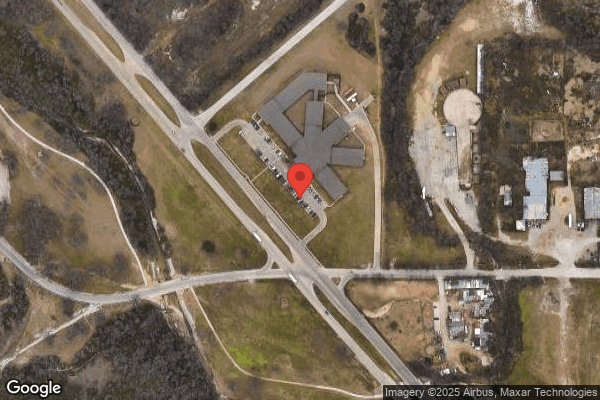
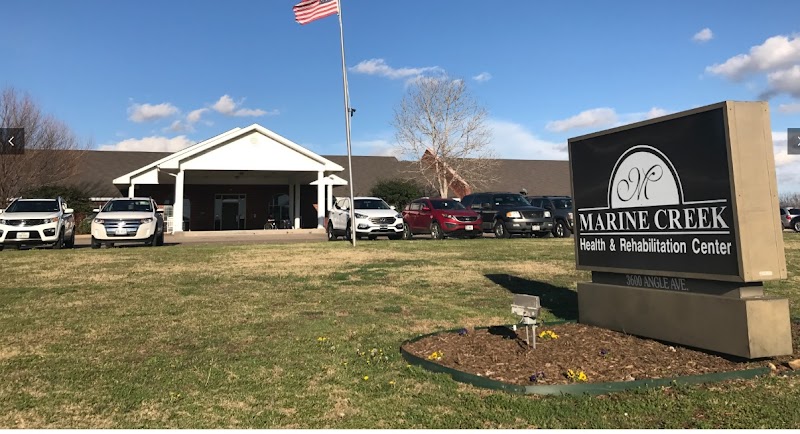
3600 ANGLE AVE, FORT WORTH, TX 76106 (817) 624-6164
For profit - Limited Liability company 170 Beds CREATIVE SOLUTIONS IN HEALTHCARE Data: November 2025 4 Immediate Jeopardy citations
Trust Grade
0/100
#769 of 1168 in TX
Last Inspection: September 2025

Inspected within the last 6 months. Data reflects current conditions.

Overview

Marine Creek Nursing and Rehabilitation has received a Trust Grade of F, indicating significant concerns about the care provided at this facility. With a state rank of #769 out of 1168 in Texas and #48 out of 69 in Tarrant County, this places them in the bottom half of all facilities, suggesting limited options for better care in the area. Although the facility is improving, having reduced issues from 26 in 2024 to 10 in 2025, it still reported 48 total deficiencies, including critical incidents where residents did not receive necessary respiratory care and were neglected after falls. Staffing is relatively stable, with a turnover rate of 33%, lower than the state average, but the overall staffing rating remains below average at 2 out of 5 stars. Additionally, the facility faced fines of $23,621, which is concerning but not unusually high for the state, and it has average RN coverage, meaning the facility is meeting basic requirements but may not provide the level of oversight needed for optimal care.

Trust Score
F
0/100
In Texas
#769/1168
Bottom 35%
Safety Record
High Risk
Review needed
Inspections
Getting Better
26 → 10 violations
Staff Stability
○ Average
33% turnover. Near Texas's 48% average. Typical for the industry.
Penalties
✓ Good
$23,621 in fines. Lower than most Texas facilities. Relatively clean record.
Skilled Nurses
⚠ Watch
Each resident gets only 20 minutes of Registered Nurse (RN) attention daily — below average for Texas. Fewer RN minutes means fewer trained eyes watching for problems.
Violations
⚠ Watch
48 deficiencies on record. Higher than average. Multiple issues found across inspections.
★★☆☆☆
2.0
Overall Rating
★★☆☆☆
2.0
Staff Levels
★★★★☆
4.0
Care Quality
★★☆☆☆
2.0
Inspection Score
Stable
2024: 26 issues
2025: 10 issues

The Good

  • 4-Star Quality Measures · Strong clinical quality outcomes
  • Full Sprinkler Coverage · Fire safety systems throughout facility
  • No fines on record
  • Staff turnover below average (33%)

    15 points below Texas average of 48%

Facility shows strength in quality measures, fire safety.

The Bad

2-Star Overall Rating

Below Texas average (2.8)

Below average - review inspection findings carefully

Staff Turnover: 33%

13pts below Texas avg (46%)

Typical for the industry

Federal Fines: $23,621

Below median ($33,413)

Minor penalties assessed

Chain: CREATIVE SOLUTIONS IN HEALTHCARE

Part of a multi-facility chain

Ask about local staffing decisions and management

The Ugly 48 deficiencies on record

4 life-threatening 2 actual harm
Sept 2025 3 deficiencies
CONCERN (D)

Potential for Harm - no one hurt, but risky conditions existed

Deficiency F0558 (Tag F0558)

Could have caused harm · This affected 1 resident

**NOTE- TERMS IN BRACKETS HAVE BEEN EDITED TO PROTECT CONFIDENTIALITY** Based on observation, interview and record review, the facility failed to ensure the residents resided and received services in ...

Read full inspector narrative →
**NOTE- TERMS IN BRACKETS HAVE BEEN EDITED TO PROTECT CONFIDENTIALITY** Based on observation, interview and record review, the facility failed to ensure the residents resided and received services in the facility with reasonable accommodation of resident needs and preferences for two (Resident #136 and Resident #112) of thirty-eight residents reviewed for call lights. Staff failed to ensure Resident # 136's and Resident # 112's call buttons were within reach. This failure could place residents at risk for needs not being met, decreased quality of life, self-worth and dignity.Findings included: Review of Resident #136's face sheet dated 09/18/2025 reflected a [AGE] year-old female admitted to the facility on [DATE], readmitted on [DATE] with diagnoses of Acute and Chronic Respiratory Failure, Unspecified, Whether with Hypoxia or Hypercapnia (a sudden exacerbation and an underlying long-term condition affecting the lungs, where the specific nature of the blood gas issue, low oxygen or high carbon dioxide, has not been determined or documented ); Unspecified Dementia, Unspecified Severity, without Behavioral Disturbance, Psychotic Disturbance, Mood Disturbance, and Anxiety (a person experiencing symptoms of dementia, but the specific type cannot be determined ); Heart Failure, Unspecified (a condition where the heart is unable to pump enough blood to meet the body's needs, without a specific underlying cause being determined ); Encounter for Attention to Tracheostomy (a medical visit where a patient receives care related to their tracheostomy, a surgical procedure that creates an opening in the trachea, windpipe, to facilitate breathing ). Review of Resident #136's MDS assessment dated [DATE] reflected the resident had a BIMS Score of 13 indicating intact cognition. Resident #136 required extensive assistance to total dependence for ADLs.Review of Resident #136's Comprehensive Care Plan dated 03/07/2023 revised on 09/12/2025 reflected Resident #136 was at risk for falls. Interventions included, to be sure the resident's call light is within reach and encourage the resident to use it for assistance as needed.Observation on 09/16/2025 at 08:40 a.m. revealed Resident #136 lying in bed asleep. The call light was on the floor under the bed lying on the overbed table rail. The call light was not within reach of the resident.In an interview on 09/16/2025 at 12:00 p.m. Resident #136 stated her cord was where she could reach it most of the time. Observed call light still on the floor under the bed. In an interview on 09/16/2025 with CNA D at 12:49 p.m. CNA D stated that all call lights must be within reach of residents. CNA D was not aware that Resident #136's call light was not within reach. CNA D immediately went to Resident #136's room to make sure the call light was in place. CNA D stated residents would not be able to call for assistance if the call light was not within reach.Review of Resident #112's face sheet dated 09/18/2025 reflected a [AGE] year-old female admitted to the facility on [DATE] with diagnoses of Bipolar Disorder, Current Episode Mixed, Severe, with Psychotic Features (symptoms of delusions and both auditory and visual hallucinations); Essential (Primary) Hypertension (a condition characterized by persistently elevated blood pressure without identifiable underlying cause ); Personal History of Traumatic Brain Injury ( an injury to the brain caused by an external force, such as a car accident, fall, or sports injury).Review of Resident #112's MDS assessment dated [DATE] reflected the resident had a BIMS Score of 0 indicating severely impaired cognition. Resident # 112 had disorganized or incoherent thinking, rambling or irrelevant conversations, unclear or illogical flow of ideas, or unpredictable switching from subject to subject.Review of Resident #112's Comprehensive Care Plan initiated 03/04/2021, revised 04/14/2023 reflected Resident #112 was at risk for falls related to limited mobility, incontinence, and impaired cognition. Interventions included, Anticipate and meet needs of resident. Personal items need to be kept within easy reach. Call light to be kept within reach was not included in the interventions.Observation on 09/16/2025 at 9:38 a.m. revealed Resident #112 was in her bed resting in her room and her call light was attached to fitted sheet on mattress with cord hanging down to the floor under the bed. The call button was not within of resident.In an interview on 09/16/2025 at 10:30 a.m. Resident #112 stated she did not know what the call button was. Observed call light clipped to fitted sheet on mattress within Resident #112's reach. In an interview on 09/18/2025 at 3:45 p.m. with LVN E stated that it was policy of the facility for call lights to be within reach of residents. The call lights were to be answered immediately or at least within 5 to 10 minutes. If a resident was unable to push the button on the call light a push pad was provided for residents. Residents were checked on every 2 hours.In an interview on 09/18/2025 at 3:50 p.m. with LVN F stated that the call lights were to be within reach of the residents. The call lights were answered as soon as possible. Residents were checked on every 2 hours. In an interview on 09/18/2025 at 4:00 p.m. with CNA G stated that call lights must be attached to the resident's bed within reach of the resident. The staff should answer the call lights as soon as possible. Staff try to answer within 5 - 10 minutes. CNA G stated all staff can answer call lights. Residents may only need fresh water or the nurse to give them something for the pain.In an interview on 09/18/2025 at 04:17 p.m. the ADM stated she expected call lights to be within reach of residents. She expected the call lights to be answered.Review of policy revised 11/18/2016 for Resident Rights reflected Safe environment -The resident has a right to a safe, clean, comfortable and homelike environment, including but not limited to receiving treatment and support for daily living safely.
CONCERN (D)

Potential for Harm - no one hurt, but risky conditions existed

Accident Prevention (Tag F0689)

Could have caused harm · This affected 1 resident

**NOTE- TERMS IN BRACKETS HAVE BEEN EDITED TO PROTECT CONFIDENTIALITY** Based on observation, interview, and record review, the facility failed to ensure that each resident received adequate supervisi...

Read full inspector narrative →
**NOTE- TERMS IN BRACKETS HAVE BEEN EDITED TO PROTECT CONFIDENTIALITY** Based on observation, interview, and record review, the facility failed to ensure that each resident received adequate supervision for one resident (Resident #28) of thirty-eight residents reviewed for supervision and ensured the environment remained free of accident hazards.The facility failed to ensure Resident #28 was not in possession of over-the-counter isopropyl alcohol located in resident's room.These failures could place residents at risk of being in danger and could be fatal if a resident ingested isopropyl alcohol.Findings included:Record review of Resident #28's Face Sheet dated 09/18/2025 revealed a [AGE] year-old male with an admission date of 02/01/2023 with a readmission on [DATE]. Admitting diagnoses included Vascular Dementia, Unspecified, Severity without Behavioral Disturbances, Psychotic Disturbances, Mood Disturbances, and Anxiety (a type of dementia caused by reduced or blocked blood flow to the brain, often stemming from conditions like heart disease, high blood pressure, diabetes, and strokes); Essential (Primary) Hypertension (a condition characterized by persistently elevated blood pressure without an identifiable underlying cause); Primary Osteoarthritis, Unspecified Site (the specific joint or joints affected or unknown).Record review of Resident #28's Quarterly MDS assessment dated [DATE] reflected a BIMS score of 06/15 indicating severe cognitive impairment.Record review of Resident #28's Care Plan dated 09/09/2024 with a revision date of 05/23/2025 revealed resident had impaired cognitive function/dementia or impaired thought processes. Staff were to Monitor/document /report to MD any changes in cognitive function, specifically changes in: decision making ability, memory, recall and general awareness, difficulty expressing self, difficulty understanding others, level of consciousness, mental status.Observation on 09/16/2025 at 9:35 a.m. revealed Resident #28 had an overbed table up against a wall with several personal items on table including a bottle of half-full rubbing alcohol. The bottle was sealed with a lid.In an interview on 09/16/2025 at 10:00 a.m., LVN C stated she did not see the rubbing alcohol in Resident #28's room on the overbed table. LVN C stated that the resident could have ingested the rubbing alcohol, or another dementia resident could have ingested the rubbing alcohol by mistake. LVN C stated that Resident #28's family member must have brought the rubbing alcohol to resident. LVN C removed the bottle of rubbing alcohol while the resident was out of the room because the resident could become easily agitated. LVN C stated that if family members bring in medications or over-the counter medications from home the facility requests that the family members give them to the nurses.In an interview on 09/16/2025 at 11:40 a.m., DON stated that the alcohol was probably brought in by Resident #28's family member. DON stated she would give resident's family member a call to not bring this type of item into the facility.In an interview on 09/18/2025 at 04:17 p.m., ADM stated it is facility policy that residents are not allowed to have any medications or over-the counter medications at the bedside. Record review of facility policy for, Items Not Allowed in Resident's Rooms, revised 03/12/2024 reflected in part, Medications includes all Prescription and Over-the-Counter drugs, except emergency items like nitro­glycerin, which must be ordered by the doctor through the Health Care Center.
CONCERN (E) 📢 Someone Reported This

A family member, employee, or ombudsman was alarmed enough to file a formal complaint

Potential for Harm - no one hurt, but risky conditions existed

Safe Environment (Tag F0584)

Could have caused harm · This affected multiple residents

Number of residents sampled: Number of residents cited: Based on observation, interviews, and record reviews, the facility failed to protect residents' right to a safe, clean, comfortable and homelike...

Read full inspector narrative →
Number of residents sampled: Number of residents cited: Based on observation, interviews, and record reviews, the facility failed to protect residents' right to a safe, clean, comfortable and homelike environment for 20 of 31 residents in the secured unit reviewed for resident rights. The male side of the secured unit had a strong urine smell on 9/16, 9/17 and 9/18/2025. This failure could result in lack of residents' hygiene and could affect their dignity. Findings included:Observation on 9/16/2025 at 7:45am, the end of hallway 100 which was connected to the secured unit had a strong urine smell. Upon entering the secured unit, there was a strong urine smell that spread through the entire male's side of the secured unit. The male side had 20 male residents. Observation on 9/17/2025 at 6:45am, the male side of the secured unit had a strong urine smell. Observation on 9/18/2025 at 9am, the male side of the secured unit had a strong urine smell. In an interview on 9/18/2025 at 9:15am, CNA A, who was the CNA assigned to male side of the secured unit, stated that there were 4 or 5 residents who would urinate in the hallway, in the dining room and in the TV room. She stated that the staff had tried to direct the residents as much as they could, however, residents still urinated in the common area. She stated that she would redirect the residents to their room and clean the residents and inform housekeeping right away so they could come to disinfect and clean the area. CNA A stated that the smell had always been there, and she was unsure if there were more interventions from the facility to decrease the smell. In an interview on 9/18/2025 at 11:01am, LVN B stated that he and CNA A had been keeping residents who wandered and urinated in common areas in the dining room or TV room for better observation. He stated that some residents would urinate while watching TV. He stated that since the residents were cognitively impaired, his interventions had been redirecting them and cleaning them when they urinated and passing feces in the common area. He also stated that housekeeping got notified right away to come and clean the area. In an interview on 9/18/2025 at 10:55am, Resident #76 stated that he did not remember smelling any urine or bad smell in the facility. Record review of Resident#76's face sheet, dated 9/18/2025, revealed the resident had a BIMS score of 4, indicating cognitive impairment. On 9/18/2025 at 11:00am, an attempt to interview Resident #108 was unsuccessful. Resident was not able to respond to surveyor's questions. Record review of Resident #108's face sheet, dated 9/18/2025, revealed the BIMS was not done because assessment revealed Resident #108's cognitive function was severely impaired to be able to complete the BIMS. In an interview on 9/18/2025 at 11:23am, the administrator stated that the male side of the secured unit did not have good ventilation. She stated she made rounds to the secured unit daily and she was aware of the urine smell. She stated that the wife of Resident #88 came to her about 3 weeks ago to complain about the strong urine smell in the unit, when she first visited her husband in the secured unit. The administrator provided 3 estimates with HVAC companies, with dates of 8/26/2025, 9/5/2025 and 9/16/2025. She stated that one company would be chosen to come out soon, she did not have a scheduled date yet. She stated that had the residents been cognitively intact, they would not have urinated in the common area, so she could not answer if the smell affected the residents' dignity and rights. Record review of Resident #88 revealed that the resident was moved to the secured unit due to wandering behavior on 8/21/2025. During an interview on 9/18/2025 at 12:49pm, Resident #88's wife stated that when Resident #88 was moved to the secured unit, she went to visit him, and the smell was horrible. She stated that it had gotten a little better since then, but the smell was still strong. She stated she did not remember complaining about the smell to anyone in the facility. Record review of facility's Resident Rights policy, dated 11/28/2016, revealed that the resident has a right to safe, clean, comfortable and homelike environment.
Sept 2025 1 deficiency 1 Harm
SERIOUS (G) 📢 Someone Reported This

A family member, employee, or ombudsman was alarmed enough to file a formal complaint

Actual Harm - a resident was hurt due to facility failures

Free from Abuse/Neglect (Tag F0600)

A resident was harmed · This affected 1 resident

**NOTE- TERMS IN BRACKETS HAVE BEEN EDITED TO PROTECT CONFIDENTIALITY** Based on observations, interview, and record review, the facility failed to ensure the resident's right to be free from abuse fo...

Read full inspector narrative →
**NOTE- TERMS IN BRACKETS HAVE BEEN EDITED TO PROTECT CONFIDENTIALITY** Based on observations, interview, and record review, the facility failed to ensure the resident's right to be free from abuse for 2 (Resident #45 and Resident #23) of 2 residents reviewed for abuse, in that: On 08/29/2025, the facility failed to ensure that Resident #45 was not punched in the face by Resident #23, resulting in injury to the face.This failure resulted in injuries to Resident #45.Resident #45Record review of a face sheet dated 09/03/2025 revealed Resident #45 was [AGE] years old and was admitted on [DATE] with a primary diagnosis of hemiplegia (paralysis of one side of the body) and hemiparesis (muscle weakness of one side of the body) following cerebral infarction (stroke) affecting left non-dominant side, and other pertinent diagnoses including cognitive communication deficit and mood disorder due to known physiological condition with major depressive-like episode.Record review of Resident #45's MDS dated [DATE] reflected a BIMs score of 15. The residents mood interview revealed he had felt down, depressed or hopeless for several days (2-6 days) over the last 2 weeks.Record review of Resident #45's care plan, last reviewed on 05/29/2025, revealed the following care areas: Potential for psychosocial well-being problem with interventions including consult with psych services, when conflict arises- remove residents to a calm safe environment and allow to vent/share feelings.Potential to demonstrate verbally abusive behaviors and becomes very loud and verbally aggressive if he does not get his way. Various interventions included analyze and document triggers and what de-escalates behavior, assess resident's understanding of the situation and allow resident to express self and feelings towards the situation, notify the charge nurse of any abusive behaviors, psychiatric/psychogeriatric consults, and when the resident becomes agitated- intervene before agitation escalates, guide away from source of distress, engage calmly in conversation, if response is aggressive, ensure all residents involved are safe and staff to walk calmly away, and approach later.Record review of Resident #45's progress note dated 08/28/2025 at 18:34 (6:34PM) reflected: Resident was complaining about having verbal disagreement with his roommate about the noise both of them were making disturbing each other, upon asking both the resident about the situation, both were blaming each other about the noise statement. Advised them to be calm and issue resolved for now.Record review of Resident #45 skin assessment following the incident dated 08/29/2025 revealed the resident had skin tear on the right side of upper chest bone and right wrist.Record review of Resident #45 psychological services progress note dated 08/29/2025 reflected: (Resident #45) and therapist met. (Resident #45) apparently had a physical altercation with his roommate. (Resident #45) was still upset and reported that he did not hit his roommate but that he was struck by the roommate. It was reported the (Resident #45) through a board . Overall, he is not a danger to others but is upset that his roommate attacked him. Record review of a written interview summary from the provider investigation report, dated 08/29/2025, of Resident #45's statement reflected: Resident #45 reported that he was in bed and attempting to get up to use the bathroom when Resident #23 began yelling at him for being too noisy. Resident #45 stated that he informed Resident #23 he was simply getting up to go to the bathroom. He alleged that Resident #23 then picked up his wheelchair and threw it at him, followed by hitting him in the mouth. Resident #45 further stated Resident #23 also threw water at him. According to Resident #45, both residents were yelling when a nurse entered the room and witnessed Resident #23 strike him in the stomach. Resident #45 added that the nurse was also aware water had been thrown on him, as he had to change his shirt due to it being wet.An interview on 09/03/2025 at 5:04PM with Resident #45 revealed anytime he was moving around the room, Resident #23 would go crazy when he made a noise. He said Resident #23 had only been his roommate for a few days and had not really discussed Resident #23 prior to the altercation. Resident #45 explained he got hit in the mouth by Resident #23's fist and hit in the chest; he further stated he was only injured on the mouth had a few scratches on his chest. Resident #45 stated Resident #23 hit him because he was making too much noise in the room when he was moving his wheelchair around the room. He further explained Resident #23 told him to quit making noise, and anytime Resident #45 made a noise, Resident #23 would bang on the wall. He said Resident #23 then rolled his wheelchair at Resident #45 really hard and it hit his leg. Resident #45 said he picked up his sliding board and raised it up (to intimidate), but never threw it at Resident #23. He said Resident #23 threw water at him and he [NAME] it back at Resident #23. Resident #45 said Resident #23 followed him out of the room and punched him one time on the mouth. Resident #45 said he had not had any issues since the altercation and stays away from Resident #23. He said felt safe at the facility and lets staff know if he had issues. Resident #23Record review of a face sheet dated 09/03/2025, revealed Resident #23 was a [AGE] year-old male admitted on [DATE] with primary diagnosis of chronic combined systolic (congestive) and diastolic (congestive) heart failure and other pertinent diagnoses of bipolar disorder, current episode depressed, severe, with psychotic features, and intermittent explosive disorder.Record review of Resident #23's MDS dated 08/29/ 2025 reflected a BIMs score of 15.Record review of Resident #23's care plan initiated on 08/28/2025 revealed resident requires anti-psychotic medications (Seroquel) related to explosive personality disorder and bipolar disorder (date initiated: 08/28/2025). Interventions included monitoring effectiveness of medication, monitor/record occurrence of for target behavior symptoms and document per facility protocol, and Monitor/record/report to MD prn side effects and adverse reactions of psychoactive medications.Record review of Resident #23's clinical history from the prior facility dated 8/22/2025, revealed Resident #23 was involved in altercation with another resident on 07/24/2025. He was injured by the other resident, admitted to having a verbal confrontation with the other resident, and denied any physical altercation.Record review of Resident #23's history and physical dated 8/28/25, reflected: admission 8/26/25: The patient is a [AGE] year old Male with below PMH who presents to [facility name] from (previous facility) for LTC. All available external records including labs and imaging have been reviewed and are summarized as part of the following HPI. Once stabilized and arrangements were made, the patient was transferred to [facility name] for further medical care and rehabilitation. Record review of a written interview summary from the provider investigation report, dated 08/29/2025, of Resident #23's statement reflected According to Resident #23, the incident began when Resident #45 was in the bathroom making loud noises, reportedly banging something against the wall. Upon exiting the bathroom, Resident #23 asked Resident #45 to lower the noise level, explaining that he was trying to sleep. Resident #23 reported that Resident #45 responded with verbal aggression, making disparaging remarks about Resident #23's (hair and personal items), and allegedly stating that these attributes made him gay. Resident #23 further stated that Resident #45 then picked up a sliding board from the bed attempted to swing it at him. Resident #23 used a curtain to block the object. Following this, Resident #23 stated Resident #45 threw a glass of water of him, which he again deflected using the curtain. Mr. [NAME] then reported that Resident #45 tipped his wheelchair backward and exited into the hallway. Resident #23 followed and struck Resident #45 in the mouth with a closed fist.Observation on 09/03/2025 at 1:57PM revealed Resident #23 dressed, groomed, and sitting outside in his wheelchair. Resident seemed relaxed, no concerns of injuries nor interactions with other residents. During an interview on 09/03/2025 at 2:07PM with Resident #23, he stated Resident #45 went crazy and tried hitting Resident #23 with his sliding board and Resident #23 blocked it with the privacy curtain. He further stated Resident #45 tried throwing water at him and he blocked that with the privacy curtain. Resident #23 said he did punch Resident #45 in the mouth. Resident #23 stated the altercation happened because Resident #45 was in the bathroom slamming something against the wall. He said he was in bed and Resident #45 came into the room screaming. Resident #23 said he did not say anything to Resident #45 and he was screaming about making noise. He explained after the nurse took Resident #45 to the hall, he was insulting Resident #23 about his hair and personal items. Resident #23 said he did not get hurt, may have hit his own arm a little. Since the incident, Resident #23 said he had not had any issues, had a good roommate, felt safe, and was receiving the care he needed. An interview with the DON on 09/03/2025 at 2:04PM revealed resident to resident altercation happened over night and LVN A was the nurse working had heard the residents in their room being loud and LVN A went to the room and removed Resident #45 from the room, and he was in his wheelchair. The DON stated Resident #23 came out of the room in his wheelchair after Resident #45 and punched him. She explained she had thought Resident #23 was the alleged perpetrator, but Resident #45 admitted to psych about his involvement with the sliding board. The DON stated police were called and both residents were cited with disorderly conduct. She further discussed that Resident #23 was a new resident and came from facility where he was involved with a resident-to-resident altercation but was not the aggressor, and he was not happy about the outcome and wanted to leave that facility; Resident #45 has been at the facility for a while and he did not get along with any roommates. An interview on 09/03/2025 at 2:24PM with the ADON revealed she spoke with Resident #45 and Resident #23 about the altercation. She said Resident #45 stated he got up to use the restroom during the night and Resident #23 was cussing and yelling because he was making too much noise. She said Resident #45 stated Resident #23 threw his wheelchair at him and then threw water at him. The ADON said Resident #45 then came out to the hall with the nurse and Resident #23 followed him out, where Resident #45 was punched in the face and stomach. The ADON said Resident #23 stated Resident #45 was using the restroom and banging on stuff in the restroom and he asked Resident #45 to be quiet, and then Resident #45 tried hitting Resident #23 with his sliding board and then threw water at him. She said Resident #23 stated he blocked both with his privacy curtain. The ADON explained that while she was not present, Resident #23 was in bed at the time of and could not have grabbed the privacy curtain (based on distance from bed to privacy curtain). She then stated that Resident #23 got into his wheelchair and went and punched Resident #45. She explained following the altercation, police were called and both residents were given citations equal to jail time. Both residents were separated, rooms were changed, and continuous monitoring had been done. The ADON stated that because Resident #45 was punched in the face, he had neuro assessments done and he had some scratches on his chest that had been treated. An interview on 09/03/2025 at 4:10PM with the ADM revealed she was told about the resident-to-resident altercation on 08/29/2025 after it occurred. She said Resident #45 can be contentious and he bothered Resident #23. She further stated things were thrown and then punches; both residents were given citations by the police. The ADM stated she does not recall Resident #45 having altercations with other roommates, but he gets his way by being loud because he wants a room to himself. The ADM explained she knew Resident #23 had a history of a resident-to-resident altercation at the previous facility but that he was not the aggressor; he didn't like the outcome at the other facility, so he wanted to move. The ADM stated when determining room assignments, it was based on type of care resident's need and type of pay (Medicare, Medicaid, private, hospice, etc.), and the facility was down (limited option) to Resident #45. She explained Resident #45 recently moved to hall 400 due to not getting along with previous roommate in hall 200, and Resident #23's health condition was not suitable for hall 200 since it was for heavier (more severe) health conditions. She said she was not aware of any other signs of the residents not getting along before the altercation. An interview on 09/03/2025 at 4:30PM with the SW revealed she found out about the altercation when she came to work for her next shift. She said she talked to Resident #45 and his psychologist, and she thought he was the aggressor. The SW said the altercation probably could have been avoided because Resident #23 was easily agitated, and Resident #45 said he was not afraid of him but did not like him. She said she talked with Resident #23, and he did not like being at the facility and was thrown out of the previous place. She explained Resident #45 was probably angry at having a roommate and Resident #23 admitted he wanted his own room. The SW further discussed before the altercation occurred, Resident #45 talked to CNA C about Resident #23 and felt like he could not do anything in his room. The SW explained she was working with the residents following the altercations. She said Resident #45 will continue current care and psych services and referred Resident #23 for psych services. She stated she had been helping Resident #23 become accustomed to the facility and help meet his needs. An interview on 09/03/2025 at 4:52PM with CNA C revealed Resident #45 told her he had been fixing his armrest on his wheelchair and it made loud noises, and Resident #23 started banging on the wall. She said she asked Resident #23 if he had been upset and he said he was fine. CNA C said she told a nurse about the residents, but she had never heard them argue.An interview on 09/03/2025 at 5:59PM with the DON revealed no one told her Resident #45 had told staff he was not getting along with Resident #23. She said she saw the nurse's note (08/28/2025) the next morning on 08/29/2025 and educated the nurse to tell her about it because if something happens like that and was explosive, then staff needs to separate the residents. She further stated if she would have known, she would have separated them. The DON explained Resident #45's loud and she can hear him talk from her office. She explained she thinks Resident #45 was just loud with his wheelchair and that was what started the altercation. She said there was no physical contact in the room, just verbal. The DON said LVN A went to room and had Resident #45 come out of the room, and she turned around to walk to her cart when Resident #23 came out of the room and hit Resident #45 in the face. The DON explained Resident #45 cannot keep a roommate because he was miserable. She said Resident #23 ended up with Resident #45 because they were both male, similar age and background. The DON further explained all clinical history was reviewed for Resident #23; the only information they received was sent by corporate. She stated they knew Resident #23 was involved with a resident-to-resident altercation at the previous facility but was told the other person was the aggressor. The DON said they received a very brief history about Resident #23, and if she had seen he had an altercation history, she would not have taken him. She further explained the facility received Resident #23's history and physical and there was no information about aggressive episode, trauma informed care, or his behaviors. Since the altercation, the DON said a psych referral had been done but he will have to see psych between dialysis appointments, and they were working with Resident #23 to help meet needs with activities of interest to him. The DON stated she knew how Resident #45 was, he would yell and insult other residents but would not hit them. She explained Resident #45 continued psych services and staff had been doing neuro assessments on him due to the injury on his face. Attempted interviews on 09/04/2025 at 9:38AM and 09/05/2025 at 12:36PM with LVN A, with no answer.Record review of the facility's Abuse and Neglect Policy, revised 3/29/18, reflected: The resident has the right to be free from abuse. This includes but is not limited . any physical . Residents should not be subjected to abuse by anyone, including, but not limited to, facility staff, other residents, consultants or volunteers, staff of other agencies serving the resident, family members or legal guardians, friends, or other individuals.The facility will provide and ensure the promotion and protection of resident rights. It is each individual's responsibility to recognize, report, and promptly investigate actual or alleged abuse, neglect, exploitation, mistreatment of residents or misappropriation of resident property abuse and situations that may constitute abuse or neglect to any resident in the facility.Definitions1. Abuse: Abuse is the willful infliction of injury, unreasonable confinement, intimidation, or punishment with resulting physical harm, pain or mental anguish. Abuse also includes the deprivation by an individual, including a caretaker, of goods or services that are necessary to attain or maintain physical, mental, and psychosocial well-being. Instances of abuse of all residents, irrespective of any mental or physical condition, cause physical harm, pain or mental anguish. It includes verbal abuse, sexual abuse, physical abuse, and mental abuse including abuse facilitated or enabled through the use of technology. Willful, as used in this definition of abuse, means the individual must have acted deliberately, not that the individual must have intended to inflict injury or harm.5. Physical Abuse: Includes, hitting, slapping, pinching and kicking. It also includes controlling behavior through corporal punishment.
Jul 2025 3 deficiencies
CONCERN (D) 📢 Someone Reported This

A family member, employee, or ombudsman was alarmed enough to file a formal complaint

Potential for Harm - no one hurt, but risky conditions existed

Tube Feeding (Tag F0693)

Could have caused harm · This affected 1 resident

**NOTE- TERMS IN BRACKETS HAVE BEEN EDITED TO PROTECT CONFIDENTIALITY** Based on observation, interview and record review, the facility failed to provide appropriate treatment and services to prevent ...

Read full inspector narrative →
**NOTE- TERMS IN BRACKETS HAVE BEEN EDITED TO PROTECT CONFIDENTIALITY** Based on observation, interview and record review, the facility failed to provide appropriate treatment and services to prevent complications of enteral feeding for one (Resident #12) of five residents reviewed for feeding tube (a process of providing nutrition directly to the stomach). The facility failed to ensure LVN C checked Resident #12's g-tube (gastrostomy tube: a tube inserted through the abdomen that delivers nutrition directly to the stomach) placement and residual before administering the resident's medications and failed to administer the resident's medication one by one on 07/12/2025. These failures could place residents with g-tubes at risk for aspiration and drug-to-drug interaction. Findings included: Record review of Resident #12's Face Sheet, dated 07/12/2025, reflected an [AGE] year-old female admitted to the facility on [DATE]. The resident was diagnosed with dysphagia (difficulty in swallowing). Record review of Resident #12's Comprehensive MDS Assessment, dated 05/15/2025, reflected the resident had a severe impairment in cognition with a BIMS score of 00. The Comprehensive MDS Assessment indicated the resident had a feeding tube. Record review of Resident #12's Quarterly Care Plan, dated 05/12/2025, reflected the resident required tube feeding and one of the interventions was to check for tube placement and gastric contents/residual volume. Record review of Resident #12's Physician Order, dated 06/11/2025, reflected every shift start continuous enteral feeding. Formula: Diabetasource; Rate: 65ml/hr, flush 200 ml H2O q 4 hrs. Record review of Resident #12's Physician Order, dated 04/04/2025, reflected every shift check placement prior to feeding and medication administration. Record review of Resident #12's Physician Order, dated 04/04/2025, reflected every shift check residual before medications and feedings; return contents after each check. Record review of Resident #12's Physician Order, dated 06/25/2025, reflected Oxycodone HCl Oral Tablet 10 MG (Oxycodone HCl) *Controlled Drug* Give 1 tablet via PEG-Tube (a flexible feeding tube inserted directly to the stomach) every 6 hours for pain, hold for sedation. Record review of Resident #12's Physician Order, dated 06/25/2025, reflected Docusate Sodium Oral Tablet 100 MG (Docusate Sodium) Give 1 tablet via PEG-Tube every 24 hours as needed for constipation. Record review of Resident #12's Physician Order on 07/12/2025 reflected no order that her medications could be cocktailed (could be given altogether at the same time). Observation and interview on 07/12/2025 at 10:38 AM revealed LVN D was preparing Resident #12's medication on his cart. LVN D said he wound administer the resident's 11:00 AM medication. He went inside the room with one small plastic cup with crushed medications in it and a big plastic cup with some water in it and placed them on the resident's overbed table. When inside the room, he incorporated some water on the small cup to dissolve the crushed medications. LVN D sanitized his hands and put on a pair of gloves. He took a 60 ml piston syringe from the resident's side table and placed it also on the overbed table. He raised the bed, lifted the resident's gown to expose the g-tube site. He pulled the plunger of the syringe, attached the syringe to the g-tube, and flushed the g-tube. After flushing the g-tube, he poured the dissolved medication. He did not check for the placement of the g-tube and the gastric content before flushing and administering the medication. After pouring the medications, he flushed the g-tube, and detached the syringe. He cleaned the syringe, took off his gloves, and sanitized his hands. In an interview on 07/12/2025 at 10:51 AM, LVN D stated he forgot to check for the g-tube placement and to check the residual of both residents. He said the right procedure was to check the placement and the residual every medication administration. He said g-tube placement was checked to ensure the tube was correctly positioned. He said the residual was also checked before administering medications to check if the stomach could accommodate the medications and fluid to be given and to prevent aspiration. He said he knew he needed to check for the placement and residual but failed to do so because he was nervous. He said he administered Resident #12's midday medications, which were oxycodone and docusate. He said he crushed the medications and put them both in a single cup. He said he was not sure if the resident had an order that would say her medications could be cocktailed. He said if there was no order to cocktail, then the medications should have been administered one by one. He said the reason for giving one by one was to prevent drug-to-drug interaction or drug-to-formula interaction that could impede the medication's effectiveness. In an interview on 07/12/2025 at 3:33 PM, ADON A stated both the gastric residual and the g-tube placement should be checked before administering the medications. She said g-tube placement should be checked to ensure the g-tube was in the right place. She said even though the residents were on continuous feeding, the placement should still be checked. She said the gastric residual was also checked to prevent aspiration and also to assess if the rate of the formula should be modified. She said the expectation was for the staff to check for g-tube placement and to check for gastric residual every time they administer medications. She said there were two ways to check for placement, one would be through auscultation and the other one was through aspiration of the gastric content. She said the second one could be used to check for placement and at the same time to check for the residual. She said if there was no order that the medications could be mixed, then the medications should be given one at a time to ensure there were no interactions between the drug. She said, as one of the ADONs, she was responsible in ensuring that the staff were following the procedures in administering medications via g-tube. She said she already started an in-service about g-tube as soon as she heard about the issues and would coordinate with the DON on how to prevent the issues from happening again. She said they would teach more and hopefully the staff would let them know if they do not understand something about the in-service. She said aside from the in-service, they would randomly check the staff's medication administration via gtube. In an interview on 07/13/2025 at 10:32 AM, the Administrator stated she was made aware about the issues pertaining to g-tube and ADON A already started an in-service relating to g-tube. She said the expectation was for the staff to follow the right procedures in administering medications via g-tube. She said she was not a clinician but she would coordinate with the DON to continually remind the staff about providing proper care for residents with g-tube. In an interview on 07/14/2025 at 1:00 PM, the DON she already knew about the incidents of not checking the placement of the g-tube and not checking for the residual. She said the placement should be checked to ensure the medications and the fluid would enter the stomach and not the lungs that could cause aspirations. She said the gastric residual should be checked before medication administration to assess if the resident's stomach was emptying properly. She said the medications should be given one at a time, if there was no order to cocktail them, so that if there were reactions, they could pinpoint what medication were causing the reactions. She said the expectation was for the staff to follow the right procedure for medication administration via g-tube. She said ADON A already started the in-service about g-tube but she would still do a one-on-one in-service with all the staff and would make sure that they understood the in-service that they were signing. Record review of the facility's policy ENTERAL (food or medication administration directly through the digestive system) MEDICATION ADMINISTRATION Pharmacy Policy & Procedure Manual revised 01/25/2013 revealed 6. Check the placement of the tube by aspiration of contents or auscultation . 8. Administer one medication at a time. Record review of the facility's policy Gastrostomy Tube Care Nursing Policy & Procedure Manual revised February 13, 2007 revealed Procedure . 7. Perform intermittent feeding . b. Aspirate gastric contents with a 60 ml syringe and if the residual is less than 50%.
CONCERN (E) 📢 Someone Reported This

A family member, employee, or ombudsman was alarmed enough to file a formal complaint

Potential for Harm - no one hurt, but risky conditions existed

Deficiency F0583 (Tag F0583)

Could have caused harm · This affected multiple residents

**NOTE- TERMS IN BRACKETS HAVE BEEN EDITED TO PROTECT CONFIDENTIALITY** Based on observations, interviews, and record review, the facility failed ensure the resident's right to personal privacy and co...

Read full inspector narrative →
**NOTE- TERMS IN BRACKETS HAVE BEEN EDITED TO PROTECT CONFIDENTIALITY** Based on observations, interviews, and record review, the facility failed ensure the resident's right to personal privacy and confidentiality of his or her personal and medical records for fourteen (Residents #1, #2, #3, #4, #5, #6, #7, #8, #9, #10, #11, #12, #13, and #14) of thirty residents reviewed for privacy and confidentiality. 1. The facility failed to ensure LVN C pulled the privacy curtain while suctioning (mechanical aspiration of pulmonary secretions to clear the airway) Resident #1 on 07/12/2025. 2. The facility failed to ensure LVN C closed the door while suctioning Resident #2 on 07/12/2025. 3. The facility failed to ensure LVN D did not leave Residents #3, #4, #5, #6, #7, #8, #9, #10, #11, #12, and #13's medical information on top of his cart on 07/12/2025. 4. The facility failed to ensure RN E closed, locked, or minimized his laptop's monitor, thus, showing Resident #14's medical information on 07/13/2025. These failures could place the residents at risk of not having their personal privacy maintained during medical treatment and their medical information exposed to unauthorized individuals. Findings included: 1. Record review of Resident #1's Face Sheet, dated 07/12/2025, reflected a [AGE] year-old female who was admitted to the facility on [DATE]. The resident was diagnosed with tracheostomy (is an opening surgically created through the neck to allow air to fill the lungs). Record review of Resident #1's Comprehensive MDS Assessment (assessment used to determine functional capabilities and health needs), dated 05/07/2025, reflected the resident had a severe impairment (resident required significant assistance and support in daily life) in cognition with a BIMS (screening tool used to assess cognitive status) score of 00. The Comprehensive MDS Assessment indicated the resident was receiving tracheostomy care while a resident of the facility. Record review of Resident #1's Comprehensive Care Plan, dated 05/21/2025, reflected the resident had tracheostomy and one of the interventions was to suction as necessary. Record review of Resident #1's Physician Order, dated 07/01/2025, reflected Check resident Q2H for suctioning need, suction via trach PRN every shift. Observation on 07/25/2025 at 9:10 AM revealed LVN C entered Resident #1's room to check on the resident. The resident signaled LVN C that she wanted to be suctioned. LVN C sanitized her hands, put on a pair of gloves, and put on a gown. She proceeded to suction the resident without pulling the privacy curtain. Resident #1 could not be seen from the hallway but could be seen by Resident #2, resident's roommate, who was sitting at the side of her bed and facing towards Resident #1's bed. Observation and attempted interview on 07/12/2025 at 10:54 AM, revealed Resident #1 did not reply when asked if it was okay for her that her roommate could see what the nurse was doing to her. 2. Record review of Resident #2's Face Sheet, dated 07/12/2025, reflected a [AGE] year-old female who was admitted to the facility on [DATE]. The resident was diagnosed with tracheostomy. Record review of Resident #2's Comprehensive MDS Assessment, dated 06/06/2025, reflected the resident was cognitively intact (resident capable of normal cognition and needs little support) with a BIMS score of 15. The Comprehensive MDS Assessment indicated the resident was receiving tracheostomy care while a resident of the facility. Record review of Resident #2's Comprehensive Care Plan, dated 06/08/2025, reflected the resident had tracheostomy and one of the interventions was to suction as necessary. Record review of Resident #2's Physician Order, dated 01/16/2025, reflected Check resident Q2H for suctioning need, suction via trach PRN every shift. Observation on 07/25/2025 at 9:25 AM revealed after LVN C was done suctioning Resident #1, Resident #2 requested to be suctioned, as well. LVN C proceeded to suction Resident #2 without closing the door or pulling the privacy curtain. Resident #2 could be seen from the hallway and the treatment being done could be seen from the hallway and her roommate. In an interview on 07/12/2025 at 10:34 AM, LVN C stated she guessed she needed to close the door and pull the privacy curtain every time care or treatment was being done for the residents, not just for Resident #1 and Resident #2, to provide privacy. She said somebody from the hallway might see that they were being suctioned and the residents might be embarrassed. In an interview on 07/12/2025 on 10:54 AM, Resident #2 stated the nurses, not only LVN C, would not close the door or pull the privacy curtain when they were treating them. She said she already got used to it, but a change would be nice so that others would not see that a tube was being inserted in her throat. 3. Record review of Resident #3's Face Sheet, dated 07/12/2025, reflected an [AGE] year-old female who was admitted to the facility on [DATE]. The resident was diagnosed with tracheostomy. Record review of Resident #3's Physician Order, dated 07/12/2025, reflected Assess before & after a treatment - O2 Sat, Resp Rate, Pulse . four times a day. Record review of Resident #3's Vital Signs, dated 07/12/2025, reflected BP: 98/60 mmHg, Temp: 97.6, Pulse: 86, Respiration: 20, O2 sats: 99.0%. Record review of Resident #4's Face Sheet, dated 07/12/2025, reflected a [AGE] year-old female who was admitted to the facility on [DATE]. The resident was diagnosed with tracheostomy. Record review of Resident #4's Physician Order, dated 07/10/2025, reflected Assess before & after a treatment - O2 Sat, Resp Rate, Pulse . every 6 hours as needed. Record review of Resident #4's Vital Signs, dated 07/12/2025, reflected BP: 100/65 mmHg, Temp: 97.5, Pulse: 70, Respiration: 18, O2 sats: 100.0%. Record review of Resident #5's Face Sheet, dated 07/12/2025, reflected a [AGE] year-old female who was admitted to the facility on [DATE]. The resident was diagnosed with tracheostomy. Record review of Resident #5's Physician Order, dated 07/10/2025, reflected Assess before & after a treatment - O2 Sat, Resp Rate, Pulse . every 6 hours as needed. Record review of Resident #5's Vital Signs, dated 07/12/2025, reflected BP: 81/52 mmHg, Temp: 97.5, Pulse: 80, Respiration: 21, O2 sats: 99.0%. Record review of Resident #6's Face Sheet, dated 07/12/2025, reflected a [AGE] year-old male who was admitted to the facility on [DATE]. The resident was diagnosed with tracheostomy. Record review of Resident #6's Physician Order, dated 07/10/2025, reflected Assess before & after a treatment - O2 Sat, Resp Rate, Pulse . every 4 hours as needed. Record review of Resident #6's Vital Signs, dated 07/12/2025, reflected BP: 105/68 mmHg, Temp: 97.5, Pulse: 87, Respiration: 21, O2 sats: 100.0%. Record review of Resident #7's Face Sheet, dated 07/12/2025, reflected a [AGE] year-old female who was admitted to the facility on [DATE]. The resident was diagnosed with tracheostomy. Record review of Resident #7's Physician Order, dated 07/12/2025, reflected Assess before & after a treatment - O2 Sat, Resp Rate, Pulse . three times a day. Record review of Resident #7's Vital Signs, dated 07/12/2025, reflected BP: 97/61 mmHg, Temp: 97.6, Pulse: 57, Respiration: 20, O2 sats: 100.0%. Record review of Resident #8's Face Sheet, dated 07/12/2025, reflected a [AGE] year-old female who was admitted to the facility on [DATE]. The resident was diagnosed with tracheostomy. Record review of Resident #8's Physician Order, dated 07/10/2025, reflected Assess before & after a treatment - O2 Sat, Resp Rate, Pulse . every 8 hours. Record review of Resident #8's Vital Signs, dated 07/12/2025, reflected BP: 141/84 mmHg, Temp: 97.5, Pulse: 100, Respiration: 24, O2 sats: 99.0%. Record review of Resident #9's Face Sheet, dated 07/12/2025, reflected a [AGE] year-old female who was admitted to the facility on [DATE]. The resident was diagnosed with tracheostomy. Record review of Resident #9's Physician Order, dated 07/10/2025, reflected Assess before & after a treatment - O2 Sat, Resp Rate, Pulse . every 4 hours as needed. Record review of Resident #9's Vital Signs, dated 07/12/2025, reflected BP: 129/72 mmHg, Temp: 97.5, Pulse: 70, Respiration: 18, O2 sats: 100.0%. Record review of Resident #10's Face Sheet, dated 07/12/2025, reflected a [AGE] year-old female who was admitted to the facility on [DATE]. The resident was diagnosed with tracheostomy. Record review of Resident #10's Physician Order, dated 07/10/2025, reflected Assess before & after a treatment - O2 Sat, Resp Rate, Pulse . every 6 hours. Record review of Resident #10's Vital Signs, dated 07/12/2025, reflected BP: 99/68 mmHg, Temp: 97.4, Pulse: 54, Respiration: 16, O2 sats: 100.0%. Record review of Resident 11's Face Sheet, dated 07/12/2025, reflected a [AGE] year-old male who was admitted to the facility on [DATE]. The resident was diagnosed with tracheostomy. Record review of Resident #11's Physician Order, dated 07/03/2025, reflected Assess before & after a treatment - O2 Sat, Resp Rate, Pulse . three times a day. Record review of Resident #11's Vital Signs, dated 07/12/2025, reflected BP: 109/69 mmHg, Temp: 97.5, Pulse: 97, Respiration: 20, O2 sats: 97.2%. Record review of Resident #12's Face Sheet, dated 07/12/2025, reflected a [AGE] year-old female who was admitted to the facility on [DATE]. The resident was diagnosed with tracheostomy. Record review of Resident #12's Physician Order, dated 07/10/2025, reflected Assess before & after a treatment - O2 Sat, Resp Rate, Pulse . four times a day. Record review of Resident #12's Vital Signs, dated 07/12/2025, reflected BP: 89/56 mmHg, Temp: 97.1, Pulse: 64, Respiration: 18, O2 sats: 99.0%. Record review of Resident #13's Face Sheet, dated 07/12/2025, reflected a [AGE] year-old female who was admitted to the facility on [DATE]. The resident was diagnosed with tracheostomy. Record review of Resident #13's Physician Order, dated 07/10/2025, reflected Assess before & after a treatment - O2 Sat, Resp Rate, Pulse . every 6 hours as needed. Record review of Resident #13's Vital Signs, dated 07/12/2025, reflected BP: 122/80 mmHg, Temp: 97.7, Pulse: 68, Respiration: 17, O2 sats: 98.0%. Observation on 07/12/2025 at 10:19 AM revealed a clipboard was on top of a nurse's cart. On the clipboard were the names of the residents, their room numbers, and their respective vital signs (blood pressure, respiratory rate, pulse rate, temperature, and oxygen saturation). In an interview on 07/12/2025 at 10:22 AM, LVN D stated he went to attend to one of the residents that was why he left his cart. He said he should have flipped the clipboard before leaving his cart because the vital signs were medical information and should be secured and not exposed for everybody to see. He said it was a HIPAA violation and the information should be confidential. In an interview on 07/12/2025 at 3:33 PM, ADON A stated the doors should be closed or the privacy pulled when providing treatment to the residents to promote dignity and privacy. She said Resident #1 and Resident #2 might be roommates but they are still entitled for privacy and dignity. She said other staff, other residents, or even visitors could see the treatment being done and might speculate the medical condition of the residents. She said it did not matter if the residents cared or not, the treatment should be done in privacy. ADON A said the staff had been trained about HIPAA over and over again and she did not know why the incident still happened. She said it was a HIPAA violation to leave the residents' health information out for everyone to see. She said the expectation was for the staff to provide privacy during treatment and to secure the residents' medical information. She said the vital signs were examples of medical information. She said she already started an in-service about dignity and privacy as soon as she heard about the issues and would coordinate with the DON on how to prevent the issues from happening again. She said they would teach more and hopefully the staff would let them know if there was something in the in-service that the did not understand. 4. Record review of Resident #14's Face Sheet, dated 07/13/2025, reflected a [AGE] year-old male who was admitted to the facility on [DATE]. The resident was diagnosed with chronic obstructive pulmonary disease and emphysema (a lung disease that damages the air sacs in the lung causing shortness of breath). Record review of Resident #14's Comprehensive MDS Assessment, dated 05/01/2025, reflected the resident had moderated impairment in cognition with a BIMS score of 11. The Comprehensive MDS Assessment indicated the resident had COPD and emphysema and was on oxygen therapy. Record review of Resident #14's Comprehensive Care Plan, dated 05/15/2025, reflected the resident had oxygen therapy and the interventions were administer oxygen and medications as ordered. Record review of Resident #14's Physician Order, dated 07/10/2025, reflected Oxygen LPM: 1-5 LPM to maintain O2 sats greater than 92%. Record review of Resident #14's Physician Order, dated 04/05/2025, reflected Symbicort Inhalation Aerosol 80 - 4.5 MCG/ACT (Budesonide-Formoterol Fumarate Dihydrate) 2 puff inhale orally two times a day for COPD, emphysema. Record review of Resident #14's Physician Order, dated 04/05/2025, reflected Ipratropium Bromide Nasal Solution 0.03 % (Ipratropium Bromide (Nasal)) 2 spray in both nostrils two times a day for nasal congestion. Record review of Resident #14's Physician Order, dated 01/29/2025, reflected Artificial Tears Ophthalmic Solution 0.1-0.3 % (Dextran 70-Hypromellose) Instill 2 drop in both eyes every 4 hours as needed for eye itching. Record review of Resident #14's Physician Order, dated 05/13/2025, reflected Acetaminophen-Codeine Tablet 300-30 MG Give 1 tablet by mouth every 8 hours as needed for pain, ** hold for sedation Not to exceed 3 gms APAP in 24 hour period. Observation on 07/13/2025 at 10:00 AM revealed a cart was parked at the nurses' station and was facing the hallway. On top of the cart was an open laptop and displayed Resident #14's name, status, location, gender, date of birth , age, name of physician, latest vital signs, allergies, code status, emergency instructions, and physician orders. Also seen from the computer were physician orders for the resident. The screen of the computer was facing the hallway. It was also observed that RN E was sitting inside the nurses' station. In an interview on 07/13/2025 at 10:02 AM, RN E stated he was the one using the computer. He saw that his monitor was open and Resident #14's medical information. He said he was not aware that he left his computer open and did not minimize the monitor of the computer. He said the information should be secured and only the resident, family members, and providers could see the resident's information. He said he went inside the nurses' station because he needed to notify a doctor about some laboratory result. He said he would make sure to that his computer was close every time he would leave it. In an interview on 07/13/2025 at 10:32 AM, the Administrator stated she was made aware about the privacy issues and ADON A already did an in-service about privacy during treatment and confidentiality of medical records. She said the expectation was for the staff to make sure that the residents were provided privacy during any treatment to prevent humiliation and to secure their medical records so that unauthorized individuals would not see the residents' medical information. She said they would continue to remind the staff about providing privacy and confidentiality. In an interview on 07/14/2025 at 1:00 PM, The DON stated she already knew about the incidents of not providing privacy and not securing the medical records. She said the door should be closed or the privacy curtain pulled when doing a medical procedure so other people would not see what was being done for the resident. She said if confidential information were exposed, non-nursing staff, other resident, and visitors could be able to see it. She said all staff, including her, were expected to provide full privacy during treatment and confidentiality of all the residents' medical information. She said providing privacy is a form of respect to the residents that entrusted their care to the facility. She said ADON A already started the in-service about privacy and confidentiality but she would still do a one-on-one in-service with all the staff and would make sure that they understood the in-service that they were signing. Record review of the facility's policy, RESIDENT RIGHTS undated, revealed The resident has a right to a dignified existence . Privacy and confidentiality . The resident has a right to personal privacy and confidentiality of his or her personal and medical records . 1. Personal privacy includes accommodations, medical treatment . 3. The resident has a right to secure and confidential personal and medical records.
CONCERN (E) 📢 Someone Reported This

A family member, employee, or ombudsman was alarmed enough to file a formal complaint

Potential for Harm - no one hurt, but risky conditions existed

Infection Control (Tag F0880)

Could have caused harm · This affected multiple residents

**NOTE- TERMS IN BRACKETS HAVE BEEN EDITED TO PROTECT CONFIDENTIALITY** Based observation, interview, and record review the facility failed to establish and maintain an infection prevention and contro...

Read full inspector narrative →
**NOTE- TERMS IN BRACKETS HAVE BEEN EDITED TO PROTECT CONFIDENTIALITY** Based observation, interview, and record review the facility failed to establish and maintain an infection prevention and control program designed to provide a safe, sanitary, and comfortable environment and to help prevent the development and transmission of communicable diseases and infections for four (Resident #1, Resident #2, Resident #12 and Resident #15) of twenty residents reviewed for infection control. 1. The facility failed to ensure LVN C did not re-use a gown to provide treatment for some residents at hall 400 on 07/12/2025. 2. The facility failed to ensure LVN C changed her gown in between Resident #1 and Resident #2 who were with tracheostomy on 07/12/2025. 3. The facility failed to ensure LVN C changed her gloves and performed hand hygiene when changing Resident #2's tracheostomy dressing on 07/12/2025. 4. The facility failed to ensure LVN D wore a gown while administering Resident #12's medication via g-tube on 07/12/2025 5. The facility failed to ensure CNA F changed her gloves and performed hand hygiene while providing incontinent care to Resident #15 on 07/12/2025. These failures could place residents at risk of cross-contamination and development of infections. Findings included: 1. Record review of Resident #1's Face Sheet, dated 07/12/2025, reflected a [AGE] year-old female who was admitted to the facility on [DATE]. The resident was diagnosed with tracheostomy (is an opening surgically created through the neck into the trachea (windpipe) to allow air to fill the lungs) and gastrostomy (having done a surgical procedure that creates artificial opening into the stomach to provide nutritional support). The Face Sheet indicated that the resident was on enhanced barrier precaution as a special instruction due to tracheostomy and gastrostomy. Record review of Resident #1's Comprehensive MDS Assessment, dated 05/07/2025, reflected the resident had a severe impairment in cognition with a BIMS score of 00. The Comprehensive MDS Assessment indicated the resident was receiving tracheostomy care and had a feeding tube. Record review of Resident #1's Comprehensive Care Plan, dated 05/21/2025, reflected the resident was on enhanced barrier protection and one of the interventions was to put on gloves and gowns. Record review of Resident #1's Physician Order, dated 06/11/2025, reflected Trach care every shift and PRN. Record review of Resident #1's Physician Order, dated 07/01/2025, reflected Bolus Isosource 1.5 250 ml via g-tube if PO intake < 50 % after meals. Record review of Resident #2's Face Sheet, dated 07/12/2025, reflected a [AGE] year-old female who was admitted to the facility on [DATE]. The resident was diagnosed with tracheostomy. The Face Sheet indicated that the resident was on enhanced barrier precaution as a special instruction due to tracheostomy. Record review of Resident #2's Comprehensive MDS Assessment, dated 06/06/2025, reflected the resident was cognitively intact with a BIMS score of 15. The Comprehensive MDS Assessment indicated the resident was receiving tracheostomy care while a resident of the facility. Record review of Resident #2's Comprehensive Care Plan, dated 06/08/2025, reflected the resident was on enhanced barrier protection and one of the interventions was to put on gloves and gowns. Record review of Resident #2's Physician Order, dated 01/16/2025, reflected Trach care every shift and prn. Observation and interview on 07/12/2025 starting at 9:05 AM revealed gowns were hanging on some of the rooms in hall 400. One of the rooms with a gown hanging on the door was for Resident #1 and Resident #2. LVN C went inside the residents' room, took the gown hanging on the door, and proceeded to do a medical procedure. She said she would hang her gown after use and would just discard the gowns at the end of her shift. She said the other gowns hanging on the doors of the other residents were also hers. 2. Record review of Resident #1's Face Sheet, dated 07/12/2025, reflected a [AGE] year-old female who was admitted to the facility on [DATE]. The resident was diagnosed with tracheostomy and gastrostomy. The Face Sheet indicated that the resident was on enhanced barrier precaution as a special instruction due to tracheostomy and gastrostomy. Record review of Resident #1's Comprehensive MDS Assessment, dated 05/07/2025, reflected the resident had a severe impairment in cognition with a BIMS score of 00. The Comprehensive MDS Assessment indicated the resident was receiving tracheostomy care and had a feeding tube. Record review of Resident #1's Comprehensive Care Plan, dated 05/21/2025, reflected the resident had tracheostomy and required tube feeding. Record review of Resident #1's Physician Order, dated 06/11/2025, reflected Trach care every shift and PRN. Record review of Resident #1's Physician Order, dated 07/01/2025, reflected Bolus Isosource 1.5 250 ml via g-tube if PO intake < 50 % after meals. Record review of Resident #2's Face Sheet, dated 07/12/2025, reflected a [AGE] year-old female who was admitted to the facility on [DATE]. The resident was diagnosed with tracheostomy. The Face Sheet indicated that the resident was on enhanced barrier precaution as a special instruction due to tracheostomy. Record review of Resident #2's Comprehensive MDS Assessment, dated 06/06/2025, reflected the resident was cognitively intact with a BIMS score of 15. The Comprehensive MDS Assessment indicated the resident was receiving tracheostomy care while a resident of the facility. Record review of Resident #2's Comprehensive Care Plan, dated 06/08/2025, reflected the resident had tracheostomy and one of the interventions was to ensure that trach ties are secured at all times. Record review of Resident #2's Physician Order, dated 01/16/2025, reflected Trach care every shift and prn. Observation on 07/12/2025 at 9:10 AM revealed LVN C entered Resident #1 and Resident #2's room to check on the residents. Resident #1 signaled LVN C that she wanted to be suctioned. She sanitized her hands, put on a pair of gloves, and donned the gown that was hanging on the residents' door. After suctioning Resident #1, Resident #2 requested to be suctioned, as well. LVN C proceeded to prepare Resident #2's suction machine without changing the gown that she used to suction Resident #1. When she was about to suction Resident #2, she noticed that the suction machine did not have a canister. She said she would get a canister and would come back. She removed her gown and hung it on the door. She came back with the canister and connected it to the suction machine. When the suction machine was ready, she put on the gown that she hung on the door, and suctioned Resident #2. In an interview on 07/12/2025 at 10:54 AM, Resident #2 stated the staff that would care for her did not always put on a gown. Some did but some did not. 3. Observation on 07/12/2025 at 9:35 AM revealed when LVN C was done suctioning Resident #2, she checked the resident's dressing on her tracheostomy. She told the resident that she would change the dressing. She removed the soiled dressing from the tracheostomy, took a new dressing, and put it on the resident's tracheostomy. She did not change her gloves and perform hand hygiene after suctioning the resident, before inspecting the stoma, and before touching the new dressing. In an interview on 07/12/2025 at 10:34 AM, LVN C stated she should have changed her gown after suctioning Resident #1 and before suctioning Resident #2 to prevent transfer of microorganism from one resident to another. She said she might get some germs from Resident #1 and would unnecessarily give it to Resident #2. She said the gowns should be disposed after every use and not re-used to reduce reproduction of microorganisms and its spread. She said she should have changed her gloves before touching the new dressing because her gloves were already dirtied when she touched the soiled dressing. She said her actions could cause probable infections and she would be mindful the next time she provided treatment to residents on enhanced barrier precautions. 4. Record review of Resident #12's Face Sheet, dated 07/12/2025, reflected an [AGE] year-old female admitted to the facility on [DATE]. The resident was diagnosed with dysphagia (difficulty in swallowing). The Face Sheet indicated that the resident was on enhanced barrier precaution as a special instruction due to gtube because the resident had a g-tube. Record review of Resident #12's Comprehensive MDS Assessment, dated 05/15/2025, reflected the resident had a severe impairment in cognition with a BIMS score of 00. The Comprehensive MDS Assessment indicated the resident had a feeding tube. Record review of Resident #12's Quarterly Care Plan, dated 05/12/2025, reflected the resident was on enhanced barrier precautions and one of the interventions was to don (put on) gloves and gowns . during enteral feeding . or other high-contact activity. Record review of Resident #12's Physician Order, dated 06/11/2025, reflected Enteral Feed Order every shift start continuous enteral feeding. Formula: Diabetasource; Rate: 65 ml/hr, flush 200 ml H2O q 4 hrs. Observation on 07/12/2025 at 10:38 AM revealed LVN D was preparing resident #12's medication via g-tube. After preparing the medications, LVN D went inside the room and proceeded to administer the medications via g-tube. He did not wear a gown while administering the medications. In an interview on 07/12/2025 at 10:51 AM, LVN D stated he should wear a gown during medication administration if the resident had a g-tube because the resident had an indwelling device and was on enhanced barrier precautions. He said the purpose of the gown was to minimize transfer of microorganism since the g-tube site could be a potential entry of microorganism. He said he did had an in-service about infection control including enhanced barrier protection but could not remember when. 5. Record review of Resident #15's Face Sheet, dated 07/12/2025, reflected an [AGE] year-old female admitted on [DATE]. The resident was diagnosed with muscle weakness. Record review of Resident #15's Comprehensive MDS Assessment, dated 06/25/2025, reflected the resident had a severe impairment in cognition with a BIMS score of 00. The Comprehensive MDS Assessment indicated the resident was always incontinent for bladder and bowel. Record review of Resident #15's Comprehensive Care Plan, dated 05/15/2025, reflected the resident had bladder and bowel incontinence and one of the interventions was provide pericare after each incontinent episode. Record review of Resident #15's Comprehensive Care Plane, dated 07/12/2025, reflected the resident had an indwelling catheter and one of the interventions was to position the catheter and tubing below the level of the bladder. Record review of resident #15's Physician Order, dated 07/12/2025, reflected Provide catheter care. Observation on 07/12/2025 at 11:39 AM revealed CNA F was about to provide incontinent care to Resident #15 prior to wound care. She washed her hands, wore a gown and gloves, and proceeded with incontinent care. She positioned herself on the left side of the resident and placed a plastic bag, with a brief and beddings inside, on the foot part of the bed. She unfastened the resident's brief and pushed it between the resident's thighs. She changed her gloves and sanitized her hands. She pulled some wipes and cleaned the resident's perineal area (area between the thighs) using the front to back technique. She did it five times. After cleaning the perineal area, she instructed and assisted the resident to roll towards the right side. Before rolling the resident, CNA F adjusted the resident's catheter. After adjusting the catheter, she pulled the brief from inside the plastic bag, and placed it beside the resident. She did not change her gloves before touching the new brief. CNA F rolled the resident and cleaned the resident's bottom. After cleaning the resident's bottom, she pulled the soiled brief and threw it on the trash can. After throwing the soiled brief, she pulled the new brief from the resident's side and placed it under the resident. She did not change her gloves after cleaning the resident's bottom and before touching the new brief. She then instructed and assisted the resident to roll to the other side so the WCN could do the wound care before fastening the brief. In an interview on 07/12/2025 at 3:33 PM, ADON A stated the staff must wear a gown every time they provide care or treatment to residents with tracheostomy, g-tube, catheter, colostomy, and with open wound. She said EBP is a new thing but staff were expected to adhere to the EBP policy. She said she was made aware by LVN C and LVN D on the issues of EBP. She said LVN C should not re-use the gown and should have changed her gown her gown from one resident to another. She said the reason for that was to prevent cross contamination and probable infection. She said if one resident had an infection or had any undesirable microorganism, she would transfer it to the next resident that she would care for. She said the disposable gowns were not re-used because it could already be contaminated by bacteria or viruses. She said LVN C should have changed her gloves when she took off the dressing on the resident's tracheostomy because her gloves were already soiled. She said the same reason why CNA F changed her gloves after touching the catheter and after cleaning the resident's bottom. She said LVN D should have worn a gown when he administered medications via g-tube because the staff might introduce any germs to the resident's g-tube and also to protect the staff from any secretions from the resident. She said, as one of the ADONs, she was responsible in ensuring that the staff were compliant with the policy and procedures of infection control. She said she already started an in-service about infection control, hand hygiene, and EBP as soon as she heard about the issues and would coordinate with the DON on how to prevent the issues from happening again. She said they would teach more and hopefully the staff would let them know if there was something in the in-service that the did not understand. She said she would randomly check the staff if they were practicing infection control. In an interview on 07/13/2025 at 10:32 AM, the Administrator stated she was made aware about the infection control issues and ADON A already did an in-service about it. She said she the expectation was for the staff to be mindful in preventing the development of infection in the facility and to their family, as well. She said she was not a clinician but would coordinate with the DON to continually remind the staff about preventing infection control. In an interview on 07/13/2025 at 11:39 AM, CNA F stated hand hygiene was important to prevent cross contamination and to prevent infection. She said she should have changed her gloves after touching Resident #15's catheter and after cleaning her bottom because her gloves became dirty on both incidents, thus rendering the new brief to be dirty, too. She said on top of changing the gloves, she should also sanitize her hands every time she would change her gloves. She said she would be mindful the next time she does incontinent care to change her gloves after touching something soiled during incontinent care. In an interview on 07/14/2025 at 1:00 PM, the DON she already knew about the infection control issues. She said all the issues observed would contribute to cross contamination and development of infection. She said gowns should never be re-used, staff should change their gowns in between residents, staff should wear gown if the resident was on EBP, and staff should change their gloves after handling something soiled. She said the expectation was for the staff to do what was right to inhibit the development and spread of infection. She said with regards to Resident #16' catheter, the resident just came back from the hospital and she had it when she was admitted back to the facility on [DATE]. She said she already did the orders and the care plan regarding her catheter. Record review of facility policy, Fundamentals of Infection Control Precautions Infection Control Policy & Procedure Manual updated 03/2024 revealed Hand hygiene continues to be the primary means of preventing the transmission of infection . Before and after changing a dressing . After contact with a resident's mucous membranes and body fluids or excretions . After handling soiled or used linens, dressings, bedpans, catheters and urinals . After removing gloves . Gloving . To provide protective barrier and prevent gross contamination of the hands when touching blood, body fluids, secretions, excretions, mucous membranes, and nonintact skin . Wearing gloves does not replace the need for hand washing because gloves may have small inapparent defects or be torn during use, and hands can become contaminated during removal of gloves. Record review of facility policy, Enhanced Barrier Precautions undated, revealed Enhanced Barrier Precautions (EBP) refer to an infection control intervention designed to reduce transmission of multidrug-resistant organisms that employ targeted gown and glove use during high contact resident care activities . EBP are used . to donning of gown and gloves during high-contact resident care activities that provide opportunities for transfer of MDROs to staff hands and clothing . A single set of PPE cannot be used for more than 1 patient . Indwelling medical device examples include central lines, urinary catheters, feeding tubes, andTracheostomies . Donning PPE for Residents on EBP Based on Activity Provided . Administer medications enterally . must don gloves and gown. Record review of facility policy, Perineal Care Female Nursing Policy and Procedure Manual revised December 08,2009 revealed Purpose: To clean the female perineum without contaminating the urethral area . J. Cleaning the rectal and buttocks area . b. Gently wash the rectal area and buttocks . c. Change gloves. Record review of facility policy, Catheter Care Nursing Policy and Procedure Manual, undated revealed Procedure . 14. Hold catheter tubing . 19. Remove gloves.
Apr 2025 3 deficiencies
CONCERN (D) 📢 Someone Reported This

A family member, employee, or ombudsman was alarmed enough to file a formal complaint

Potential for Harm - no one hurt, but risky conditions existed

Deficiency F0726 (Tag F0726)

Could have caused harm · This affected 1 resident

**NOTE- TERMS IN BRACKETS HAVE BEEN EDITED TO PROTECT CONFIDENTIALITY** Based on observation, interviews and record reviews the facility failed to ensure that licensed nurses have the specific compete...

Read full inspector narrative →
**NOTE- TERMS IN BRACKETS HAVE BEEN EDITED TO PROTECT CONFIDENTIALITY** Based on observation, interviews and record reviews the facility failed to ensure that licensed nurses have the specific competencies and skill sets necessary to care for residents' needs, as identified through resident assessments, and described in the plan of care for for 1 (Resident #1) of 5 residents reviewed for quality of care. The facility failed to ensure RN A was trained on using a non-rebreather on Resident #1 and what parameters are required and when to discontinue use of the non-rebreather. This failure could place the resident at risk for receiving inaccurate oxygen therapy and retention of too much carbon dioxide in residents with COPD. Findings Included: Record review of Resident #1 ' s admission record dated 04/23/25 revealed a [AGE] year-old female with an admission date of 01/16/24. Her primary diagnosis was unspecified dementia (a brain disease that alters brain function and causes a cognitive decline), and her secondary diagnoses were Myxedma coma (this is a rare life threatening endocrine emergency that occurs when the thyroid hormone regulation is disrupted), heart failure, Atrial fibrillation (this is a heart condition that causes an irregular, often rapid heart rate that can cause poor blood flow), acute respiratory failure with hypoxia, COPD (a lung disease that blocks airflow and makes it difficult to breathe). Resident #1 was on hospice and Resident #1 RP was family. Record review of Resident #1's quarterly MDS Assessment, dated 09/25/24, revealed the resident's BIMS score was 10 out of 15, indicating she had moderate cognitive impairment. The MDS Assessment reflected Resident #1 was able to make self-understood and understood others. Further review revealed Resident #1 was dependent on staff for all ADLs and required respiratory treatments oxygen therapy. Review of Resident #1 ' s care plan initiated on 01/17/24 revealed the following care areas: *Resident #1 had emphysema (a chronic lung diseases that progressively damages the tiny air sacs in the lungs)/COPD. The goal was for Resident #1 to display optimal breathing pattern daily through the review date. The interventions were to give oxygen therapy as ordered by the physician. *Resident #1 had oxygen therapy. The goal was for Resident #1 not to have any signs and symptoms of poor Oxygen. The interventions were to change residents position every 2 hours to facilitate lung secretion movement and drainage, If the resident is allowed to eat, oxygen still must be given to the resident but in a different manner (e.g., changing from mask to a nasal cannula). Return resident to usual oxygen delivery method after the meal, Oxygen at 2-4 lpm per nasal canula. Review of Resident #1 ' s care plan initiated on 04/20/24 revealed Resident #1 had a terminal prognosis and was receiving hospice services. Resident #1 was admitted to hospice on 02/13/24 for Alzheimer ' s disease with late onset (this is a brain condition that progressively destroys memory and other important mental functions). Interventions were to review residents living will and ensure it was followed and to involve family in the discussion. Care plan did not reflect use of non-rebreather high flow supplement oxygen therapy for Resident #1. During a phone interview with Resident #1 ' s RP on 03/26/25 at 1:26 PM revealed Resident #1 passed away on 11/14/24 at 6 pm. She said Resident #1 sounded like she was suffocating due to the non-rebreather not set correctly. She said Resident #1 ' s non-rebreather was set to administer only five liters of oxygen instead of the ten liters that were required to support non-rebreather oxygen therapy. She stated, no one noticed the wrong non-rebreather setting of oxygen until the next business day (11/14/24), when RN D corrected it and placed Resident#1 on the recommended 10 Liters to support non-rebreather treatment. She said the non-rebreather was later removed before Resident #1 passed away. In an interview with RN A on 04/23/25 at 7:15AM, revealed she had been employed at the facility for eight months. She stated one of the CNA's (CNA J) informed her that Resident #1 was not doing well, she immediately went to Resident #1's room and assessed her [11/12/24]. She said while she was assessing her the hospice nurse RN K walked into the room. She said Resident #1 was on a nasal cannula at 3 L. RN K told her to increase Resident #1's oxygen to 5 L, therefore RN A placed Resident #1 on a non-rebreather because her oxygen level was not going up. She said RN K them got on the phone with hospice physician and obtained other orders immediately . She said she could not remember the orders as it had been a long time ago. RN A stated she had never used a non-rebreather before and she would not have done so without someone telling her to do so. She said, I believe RN K told her to use the non-rebreather for Resident #1 but She did not remember 100 percent. She stated she was not familiar on range of the oxygen on non-rebreather mask. She said she would google and ask someone for the range. She said the process of receiving orders was verbal or written and that she would put the orders in the computer after the hospice nurse gave them to her . She said some hospice nurses put their own orders in, so she was not sure if the order for the non-rebreather was added. RN A said she did not take off the non-rebreather from Resident #1 until she was stable . She said the hospice nurse left after Resident #1 stabilized and she did not tell her to remove the non-rebreather. She said because the hospice nurse was in there, she assumed it was ok to the leave the non-rebreather on because she did not say to remove it and put Resident #1 back on her nasal cannula. RN A said the hospice nurse (RN K) notified the physician and she did not have to because Resident #1 was on hospice and the hospice nurse was in the room. Said it was important to get physician orders for the safety of the patient so they can know how what to do. RN A said she was aware of RT in the facility, but it all happened so fast, and they moved as fast to stabilize Resident #1 that she forgot to ask RT to check Resident #1 who had been placed on the nonrebreather. In a phone interview with RN K on 03/26/25 at 2:41 PM, she stated she was Resident #1 ' s hospice nurse. She said she went to see Resident #1 on 11/11/24 the non-rebreather was used on her. She said when she got to Resident#1 ' s room, Resident #1 was having difficulty breathing and had shortness of breath. She said the facility nurse RN A had already placed Resident #1 on the non-rebreather. She said she could not remember the liters of the non-rebreather because she herself and RN A were trying to stabilize Resident #1. RN K said she was knowledgeable that non-rebreathers should be set at minimum ten liters otherwise the patient is not getting the needed oxygen fast. RN K said a non-rebreather was used in emergency cases to help patients get large amounts of oxygen fast to help them recover. She said non-rebreathers were not for long term use. She said when she left, Resident #1 was still on the non-rebreather, but she was stable. She said she was not aware the facility left Resident #1 on the non-rebreather until 11/14/24. She said she did not give them any verbal orders to keep Resident #1 on the non-rebreather oxygen therapy. She said the risk to the resident for not getting orders for non-rebreather was retention of carbon dioxide especially in a resident with COPD. In a phone interview with CNA J on 03/26/25 at 2:10 PM, she said that she worked for the hospice company that Resident #1 was admitted to while in the facility. She said she proved ADL care, to Resident #1 three times a week and then the week before she passed away, ADL care was changed to five days a week. She said that she had found Resident #1 without oxygen or still connected to an empty oxygen tank on her wheelchair on multiple occasions. She said she would connect Resident #1 to the oxygen compressor in her room then go out and tell facility nursing staff to let them know what she saw and to get Resident #1 a full oxygen tank to use in the shower room for Resident #1.CNA J said she could not remember the names of the facility staff she reported to. CNA J said the last week before Resident #1 passed away she was assigned to provide daily ADLs care as usual, she said she told the facility that Resident #1 did not need a lot of oxygen and asked them to remove the non-rebreather off Resident #1. She said Resident #1 looked more comfortable with just the nasal canula after the non-rebreather was removed. She said she could not remember the exact date when they removed the non-rebreather, but she had to tell the facility to remove it and put her on the nasal cannula. In an interview with the DON on 04/23/25 at 12:08 PM, revealed the expectation for a non-rebreather was 10-15 L of oxygen to be effective, she said she would not expect someone to put a non-rebreather at 4-5 L DON did not state the risk because Resident #1 already had supplemental oxygen orders. Review of facility policy titled Oxygen Administration: revised March 21, 2023, reflected . The resident will maintain oxygenation with safe and effective delivery of prescribed oxygen .become familiar with the type of oxygen administration, medical diagnosis and reason for oxygen, intermittent or continuous use of oxygen, amount to be delivered .
CONCERN (E) 📢 Someone Reported This

A family member, employee, or ombudsman was alarmed enough to file a formal complaint

Potential for Harm - no one hurt, but risky conditions existed

Deficiency F0678 (Tag F0678)

Could have caused harm · This affected multiple residents

**NOTE- TERMS IN BRACKETS HAVE BEEN EDITED TO PROTECT CONFIDENTIALITY** Based on observation, interview, and record review, the facility failed to ensure personnel provide basic life support, includin...

Read full inspector narrative →
**NOTE- TERMS IN BRACKETS HAVE BEEN EDITED TO PROTECT CONFIDENTIALITY** Based on observation, interview, and record review, the facility failed to ensure personnel provide basic life support, including CPR, to a resident requiring such emergency care prior to the arrival of emergency medical personnel and subject to related physician orders and the resident's advance directives for 2 of 3 (Emergency cart 1, Emergency cart 2) emergency crush carts reviewed for emergency preparedness. 1. Facility failed to have an ambu bag [is a portable, handheld device used to provide ventilation to a resident struggling to breathe or has stopped breathing] on Emergency cart 1. 2. Facility failed to check inventory daily on Emergency cart 2 from [DATE] to [DATE] and from 4/20 to [DATE]. These failures could place residents at risk for delayed emergency care. The findings included: Review of emergency crash cart 2's daily inventory check off on [DATE] at 3:30 AM, revealed no check off was completed on [DATE], [DATE] to [DATE] and from 4/20 to [DATE]. RN B completed check off on 4/1, 4/18, and [DATE]. Review of emergency crash cart 3's daily inventory check off on [DATE] at 3:59 AM, revealed check off was completed from [DATE] to [DATE]. RN A had completed the daily check off on [DATE]. Observation and interview with RT F [DATE] at 3:23 AM, revealed an Ambu bag was missing on Emergency Cart 1. RT F said it was not necessary to have an Ambu bag on Emergency Cart 1 because all the residents on 300 hallways (location of emergency cart #1) had two Ambu bags in their rooms. He said there was no risk to the residents. He said if someone needed an Ambu bag they could just go in another resident's room and get one or they could get one from the central supply closet which was in the same 300 hallway. Observation and interview with LVN M on [DATE] at 3:30 AM revealed Emergency cart 2 for was not checked from [DATE] to [DATE] and from 4/20 to [DATE], VN M stated the night shift nurses were responsible for checking the emergency carts daily. He said whoever was assigned to the hallway with the emergency cart was responsible for checking and making sure all the necessary emergency supplies were accounted for and if anything was missing to replace it. He said the person responsible for Emergency cart #2 was LVN G which was on the 100 hallways. LVN M said all staff were in-serviced on suction and having a good working suction, so he always makes sure that he checks the suction on the emergency carts. He stated if you have an emergency and you are missing supplies cause a delay in care . In an interview with LVN G on [DATE] at 3:43 AM, revealed she had been employed by the facility for one year. She stated she had worked on [DATE] and she did not check Emergency cart #2 because it was not her responsibility alone. She said all nurses were responsible for checking all the crash carts not just her. She said she was aware that the book had to be signed and each item checked to make sure emergency items were on the cart and unexpired. She said the risk of not checking the cart was they would run out of an item needed for an emergency. In an interview with LVN B on [DATE] at 3:59 AM, he said the night shift nurses 10 PM-6 AM were responsible for checking the crash carts nightly. He said he did his already for [DATE]. He said it was important to check emergency cart so that you have everything in case of an emergency in the facility. In an interview with ADON on [DATE] at 11:57 AM, revealed the expectation was that the 10pm - 6 AM nursing staff checked the emergency carts daily. She said if an item was used, it needed be replaced to make sure that they always have all the necessary emergency equipment in an emergency. She said if a nurse did not know how to do something the expectation was that they would ask. In an interview with the DON on [DATE] at 12:08 PM, She said the emergency crash carts was the responsibility of central supply to make sure that nothing was expired monthly. DON said she did not expect the nurses to check the emergency carts each day. She said if the crash cart was used it got replaced by central supply. She said at her old job they had a lock on the crash cart after being stocked and the lock was only broken when the cart was used. she said she did not know the policy on emergency crash carts therefore, she could not say the risk. She said the expectation was the emergency crash carts should be ready to go when needed. Interview with CNA I on [DATE] at 1:43PM, she said she checked the emergency crash carts once a month for expired supplies. She said if something were expired, she would replace it and if she did not have it in stock she would order it. CNA I said the log of items on the cart are sent to corporate. She said the nurses at night have a check off list and they are responsible to check that off. She said it was important to have everything on the cart in case there was an emergency and want to make sure all the supplies are there for a code. She said if crash cart was used, it was the responsibility of either day shift or night shift if happened on night to replace it. She said the risk of not having emergency cart readily available was Something bad, they could maybe pass. In an interview with ADM on [DATE] at 6:45 PM, she said the expectation was the nurses maintained the crash cart and it should be ready when they have a code, and afterwards it was cleaned and restocked. Review of facility in-service titled suction machine was completed on [DATE] lead by ADON and DON. Twenty-two nurses attended the in-service including RT, LVN's and RN's. Review of facility policy Cardiopulmonary Resuscitation, revised [DATE], reflected 20. The facility will maintain an emergency cart with at least the following supplies: a. Backboard b. Ambu bag c. O2 and administration set d. Disposable Gloves e. Crash cart (ER cart/AED) is checked daily, PRN and restocked immediately after a code is completed .
CONCERN (E) 📢 Someone Reported This

A family member, employee, or ombudsman was alarmed enough to file a formal complaint

Potential for Harm - no one hurt, but risky conditions existed

Respiratory Care (Tag F0695)

Could have caused harm · This affected multiple residents

**NOTE- TERMS IN BRACKETS HAVE BEEN EDITED TO PROTECT CONFIDENTIALITY** Based on interviews and record reviews, the facility failed to ensurethat a resident who needs respiratory care, including trach...

Read full inspector narrative →
**NOTE- TERMS IN BRACKETS HAVE BEEN EDITED TO PROTECT CONFIDENTIALITY** Based on interviews and record reviews, the facility failed to ensurethat a resident who needs respiratory care, including tracheostomy care and tracheal suctioning, is provided such care, consistent with professional standards of practice, the comprehensive person-centered care plan, the residents' goals and preferences for 1 (Resident #1) of 5 residents reviewed for quality of care. The facility failed to obtain physician orders with specific non-rebreather (this is a mask that delivers high concentration oxygen with a minimum of 10 to 15 Liters/minute of Oxygen flow via a mask and has a valve that ensures air only comes in or out one way) amount on resident #1 from 11/11/24 to 11/14/24. This failure could place the resident at risk for receiving inaccurate oxygen therapy and retention of too much carbon dioxide in residents with COPD. Findings Included: Record review of Resident #1's admission record dated 04/23/25 revealed a [AGE] year-old female with an admission date of 01/16/24. Her primary diagnosis was unspecified dementia (a brain disease that alters brain function and causes a cognitive decline), and her secondary diagnoses were Myxedma coma (this is a rare life threatening endocrine emergency that occurs when the thyroid hormone regulation is disrupted), heart failure, Atrial fibrillation (this is a heart condition that causes an irregular, often rapid heart rate that can cause poor blood flow), acute respiratory failure with hypoxia, COPD (a lung disease that blocks airflow and makes it difficult to breathe). Resident #1 was on hospice and Resident #1 RP was family. Record review of Resident #1's quarterly MDS Assessment, dated 09/25/24, revealed the resident's BIMS score was 10 out of 15, indicating she had moderate cognitive impairment. The MDS Assessment reflected Resident #1 was able to make self-understood and understood others. Further review revealed Resident #1 was dependent on staff for all ADLs and required respiratory treatments oxygen therapy. Review of Resident #1's care plan initiated on 01/17/24 revealed the following care areas: *Resident #1 had emphysema (a chronic lung diseases that progressively damages the tiny air sacs in the lungs)/COPD. The goal was for Resident #1 to display optimal breathing pattern daily through the review date. The interventions were to give oxygen therapy as ordered by the physician. *Resident #1 had oxygen therapy. The goal was for Resident #1 not to have any signs and symptoms of poor Oxygen. The interventions were to change residents position every 2 hours to facilitate lung secretion movement and drainage, If the resident is allowed to eat, oxygen still must be given to the resident but in a different manner (e.g., changing from mask to a nasal cannula). Return resident to usual oxygen delivery method after the meal, Oxygen at 2-4 lpm per nasal canula. Review of Resident #1's care plan initiated on 04/20/24 revealed Resident #1 had a terminal prognosis and was receiving hospice services. Resident #1 was admitted to hospice on 02/13/24 for Alzheimer's disease with late onset (this is a brain condition that progressively destroys memory and other important mental functions). Interventions were to review residents living will and ensure it was followed and to involve family in the discussion. Care plan did not reflect use of non-rebreather high flow supplement oxygen therapy for Resident #1. Review of Resident#1's physician orders reflected: -DNR- Do not Resuscitate ordered on 08/12/24 -admission to hospice with diagnoses of Alzheimers diseases (with late onset (this is a brain condition that progressively destroys memory and other important mental functions) level of care on 02/13/24. - May use oxygen at 2-3 liters/minute via nasal canula every shift (nasal cannula is a thin flexible tube that gives additional oxygen up to 5 L through the nose). Ordered 02/13/24. - Albuterol Sulfate HFA Inhalation Aerosol Solution 108 (90 Base) Microgram/Activation (Albuterol Sulfate) 2 puff inhale orally every 6 hours as needed for Shortness of Breath [breathing treatment]. Ordered 01/16/24. - Acetaminophen Rectal Suppository 650 MG (Acetaminophen) Insert 1 suppository rectally every 4 hours as needed for Pain and /or fever Not to exceed 4 doses in 24-hour period. Ordered 02/12/24. - Morphine Sulfate (Concentrate) Oral Solution 20 MG/ML (Morphine Sulfate) Give 1 ml by mouth every 2 hours as needed for Very excruciating pain and /or very severe SOB. Ordered 02/12/24. -Further review of the physician orders did not reflect orders for non-rebreather high flow supplement oxygen therapy Review of Resident #1's MAR for November 2024 did not reflect administration orders for non-rebreather high flow supplement oxygen therapy. Record review of Resident #1's progress notes for November 2024 reflected as follows: Effective Date: 11/12/2024 13:42 [1:42 PM] Type: Nursing Progress Note, Author: RN A: Hospice RN in pt room, pt having SOB with 02 at 87% per 3L nasal cannula, Temp 101.2, Resp 24, BP 187/86, pulse 96. Nonrebreather mask placed on pt with 02 turned up to 5L, O2 level at 95% at this time. Hospice RN given orders by provider to start Levaquin 500 mg [antibiotic], Prednisone 20mg [steroid], and Duonebs q 6 hours [breathing treatment]. First doses given along with first Duoneb per nebulizer. Pt ia [is] alert and oriented x 2, with some confusion, with moderate SOB observed. Pt has no c/o pain at this time. Tylenol supp [suppository] given for elevated temperature. Pt head of bed elevated with instructions given to CNAs to keep it elevated due to pt SOB. Effective Date: 11/13/2024 07:04 [7:04 AM]- Author: RN A Note Text: Pt resting quietly with 02 at 96% per nonrebreather at 4L. B/P 128/79, pulse 74, resp 26, temp 98.9 with rhonchi [lung sound characterized by low pitch rumbling sound] and wheezing heard in bilateral [both] lobes. Duoneb given per order, along with Morphine 1ml sublingually [under the tongue]. Pt alert and responsive to verbal stimuli [awakening] with nodding or shaking her head. Call light within reach and no distress noted at this time. Effective Date: 11/13/2024 21:45 [9:45 PM] Type: Nursing Note- Author: LVN B Note Text: This resident is being treated for URI . BP-110/72. P-86. R-18. T-97.3. O2-97. Oxygen at LPM: 5 via mask continuously. Negative Findings: Hoarseness, Respirations: Labored Breathing, Abnormal breath sounds: Rhonchi, to Right Lower Lobe, to Right Upper Lobe, to Left Lower Lobe, to Left Upper Lobe. Interventions: Breathing treatment: DUONEBS TID head of bed up, No Pain. Effective Date: 11/14/2024 02:24 [AM] Type: Nursing Note Author: RN C This resident is being treated for URI. BP-127/64. P-90. R-18. T-97.5. O2-97. Oxygen at LPM: 5 via mask continuously. Negative Findings: None Respirations: Labored Breathing, Breath sounds clear. Interventions: Breathing treatments: ALBUTEROL TID. -11/14/2024 at 14:01 [2:01 PM] change in condition entered by RN D Effective Date: 11/14/2024 14:23 [2.23 PM] Type: Nursing Progress Note- Author: RN D Note Text: Resident transitioning to end of life. VS T97.3 P93 R12 shallow with apnea, SATS 91-97% on 10L via non-rebreather mask. Scheduled morphine and PRN Ativan given throughout shift as needed for pain/SOB. Repositioned Q2hrs for comfort, oral care provided. Family at bed side all shift. Effective Date: 11/14/2024 15:38 [3:38 PM] Type: Nursing Progress Note Effective Date: 11/14/2024 14:23 Type: Nursing Progress Note- RN B Note Text: Noted change in VS they are dropping BP 86/49, P 74, T 95.6, R20, O2 93% 10L mask, cannot verbalize pain morphine given 1 ML. During a phone interview with Resident #1's RP on 03/26/25 at 1:26 PM revealed Resident #1 passed away on 11/14/24 at 6 pm. She said Resident #1 sounded like she was suffocating due to the non-rebreather not set correctly. She said Resident #1's non-rebreather was set to administer only five liters of oxygen instead of the ten liters that were required to support non-rebreather oxygen therapy. She stated, no one noticed the wrong non-rebreather setting of oxygen until the next business day (11/14/24), when RN D corrected it and placed Resident#1 on the recommended 10 Liters to support non-rebreather treatment. She said the non-rebreather was later removed before Resident #1 passed away on 11/14/24. Review of Resident #1's respiratory vitals from 11/11/24 to 11/14/24 revealed the following: - 11/11/24 - 18 breaths per minute - 11/13/24 - 26 breaths per minute - out of range for breaths per minute - 11/17/24 - 17 breaths per minute - 11/14/24 - 19 breaths per minute Review of Resident #1's oxygen saturation levels from 11/11/24 to 11/14/24 revealed the following: - 11/14/24 - between 93-94 % (day of Resident's passing) - 11/13/24 - between 95-96% - normal range for oxygen - 11/12/24 - between 95-96% - normal range for oxygen - 11/11/24 - 97% - normal range for oxygen In an interview with RN A on 04/23/25 at 7:15AM, revealed she had been employed at the facility for eight months. She stated one of the CNA's (CNA J) informed her that Resident #1 was not doing well, she immediately went to Resident #1's room and assessed her [11/12/24]. She said while she was assessing her the hospice nurse RN K walked into the room. She said Resident #1 was on a nasal cannula at 3 L. RN K told her to increase Resident #1's oxygen to 5 L, therefore RN A placed Resident #1 on a non-rebreather because her oxygen level was not going up. She said RN K them got on the phone with hospice physician and obtained other orders immediately . She said she could not remember the orders as it had been a long time ago. RN A stated she had never used a non-rebreather before and she would not have done so without someone telling her to do so. She said, I believe RN K told her to use the non-rebreather for Resident #1 but She did not remember 100 percent. She stated she was not familiar on range of the oxygen on non-rebreather mask. She said she would google and ask someone for the range. She said the process of receiving orders was verbal or written and that she would put the orders in the computer after the hospice nurse gave them to her . She said some hospice nurses put their own orders in, so she was not sure if the order for the non-rebreather was added. RN A said she did not take off the non-rebreather from Resident #1 until she was stable . She said the hospice nurse left after Resident #1 stabilized and she did not tell her to remove the non-rebreather. She said because the hospice nurse was in there, she assumed it was ok to the leave the non-rebreather on because she did not say to remove it and put Resident #1 back on her nasal cannula. RN A said the hospice nurse (RN K) notified the physician and she did not have to because Resident #1 was on hospice and the hospice nurse was in the room. Said it was important to get physician orders for the safety of the patient so they can know how what to do. RN A said she was aware of RT in the facility, but it all happened so fast, and they moved as fast to stabilize Resident #1 that she forgot to ask RT to check Resident #1 who had been placed on the nonrebreather. In a phone interview with RN K on 03/26/25 at 2:41 PM, she stated she was Resident #1's hospice nurse. She said she went to see Resident #1 on 11/11/24 the non-rebreather was used on her. She said when she got to Resident#1's room, Resident #1 was having difficulty breathing and had shortness of breath. She said the facility nurse RN A had already placed Resident #1 on the non-rebreather. She said she could not remember the liters of the non-rebreather because she herself and RN A were trying to stabilize Resident #1. RN K said she was knowledgeable that non-rebreathers should be set at minimum ten liters otherwise the patient is not getting the needed oxygen fast. RN K said that she did not get orders for the non-rebreather. She said that she called the hospice physician while she was in Resident #1's room and reported Resident #1's condition and he gave her orders but the hospice physician did not give order to keep Resident #1 on a non-rebreather for supplemental oxygen. RN K said the order process was that she wound send the doctor a text on the phone to get orders then she wrote them down on paper and give the order to the facility nurse to imputed in her computer. She said the written orders are placed in the resident's hospice book afterwards. RN K said a non-rebreather was used in emergency cases to help patients get large amounts of oxygen fast to help them recover. She said non-rebreathers were not for long term use. She said when she left, Resident #1 was still on the non-rebreather, but she was stable. She said she was not aware the facility left Resident #1 on the non-rebreather until 11/14/24. She said she did not give them any verbal orders to keep Resident #1 on the non-rebreather oxygen therapy. She said she was also not aware that the facility had Respiratory Therapists on site 24 hours because no one told her. She said the risk to the resident for not getting orders for non-rebreather was retention of carbon dioxide especially in a resident with COPD. In a phone interview with CNA J on 03/26/25 at 2:10 PM, she said that she worked for the hospice company that Resident #1 was admitted to while in the facility. She said she proved ADL care, to Resident #1 three times a week and then the week before she passed away, ADL care was changed to five days a week. She said that she had found Resident #1 without oxygen or still connected to an empty oxygen tank on her wheelchair on multiple occasions. She said she would connect Resident #1 to the oxygen compressor in her room then go out and tell facility nursing staff to let them know what she saw and to get Resident #1 a full oxygen tank to use in the shower room for Resident #1.CNA J said she could not remember the names of the facility staff she reported to. CNA J said the last week before Resident #1 passed away she was assigned to provide daily ADLs care as usual, she said she told the facility that Resident #1 did not need a lot of oxygen and asked them to remove the non-rebreather off Resident #1.CNA J said she could not remember the exact date. She said Resident #1 looked more comfortable with just the nasal canula after the non-rebreather was removed. She said she could not remember the exact date when they removed the non-rebreather, but she had to tell the facility to remove it and put her on the nasal cannula. In an interview with LVN B on 04/23/25 at 3:59 AM, he stated he had been employed by the facility for a year and a half. He said he had gotten training on Ventilators, non-rebreathers, tracheostomy, and other supplemental oxygen therapy when he first started working at the facility. He said he knew that non-rebreathers were only used to short term use and when he took care of Resident #1, he used a regular simple oxygen mask on her. He said he did not see any orders for a non-rebreather. He said it was important to make sure residents had physician orders for consistency and to follow orders so that you do not make the patients worse by doing the wrong thing. He stated if he needed clarification on orders, he could reach out to the facility physician or the hospice physician or hospice nurse. In a phone interview on 04/23/25 at 11:18 AM, revealed RN C had worked with Resident #1 before she passed away [11/14/24] but he could not remember if Resident #1 was on a non-rebreather. He said he knew that a non-rebreather was used only in an emergency when a residents oxygen level drops to help bring back [NAME] quickly. He said after a resident was stabilized, they should be placed on a nasal cannula or if they do not stabilize 911 would be called. RN C said he did not obtain new orders for Resident #1 because the physicians were already aware of the residents' current conditions. He said he believed the oxygen orders were in the computer and he just continued with what was given to him in report. RN C stated it was always good to look at the residents' orders and verify them so that you did not do something wrong. In an interview with RN D on 04/23/25 at 7:40 AM, revealed she had been employed at the facility for four years. She said Resident #1 had been moved to her hallway [100 hall] and was assigned to her on 11/14/24 at 2PM. She said she noticed that Resident #1 was on a non-rebreather connected the hospice compressor however the compressor could only deliver a maximum of 5 Liters of oxygen so she asked the transferring nurse to get an Oxygen compressor that could deliver 10 L of oxygen. She said she then increased the non-rebreather to 10 L of oxygen which was the minimum required setting for non-rebreather mask. RN D said she completed a change of condition. RN D stated at this time, after getting the compressor and non-rebreather set to correct parameters, Resident #1 appeared stable she informed Resident #1's family that the non-rebreather was only to be used for short term use. RN D stated family refused to remove the non-rebreather even after she educated them. RN D said she did not call RT to access Resident #1 because she was already at end of life and both herself and the hospice nurse educated family on no-rebreather. RN D said eventually the family decide to allow her to remove the non-rebreather and Resident #1 was placed on a nasal cannula. RN D said physician orders are required to drive care. She said all nurses were trained on how to use a non-rebreather and for what it was used. RN D sated she forgot to document that Resident #1's RP was refusing to have the non-rebreather removed from Resident #1. In an interview with RT E and RT F on 04/23/25 at 3:23 AM, revealed they were not responsible for all the residents on supplemental oxygen therapy in the facility except for the ones on mechanical ventilation. They said in an event nursing needed assistance or had a respiratory question they would help. RT E said if a resident is needing to be on a non-rebreather, and they are a full code they would not be in the facility long, We would be calling 911. He said no-rebreathers are good for short term use to deliver fast 100% oxygen to help bring low oxygen up quickly. Both RT E and RT F said the non-rebreather should be set at 15 L or 10-12 Liters for it to be effective. RT E said a non-rebreather should not be used for 3 days as it affects PH which can cause the lungs to fail to remove enough carbon dioxide from the body. He said non-breathers can only be used for the shortest time possible. Both RT E and RT F said orders are required for all residents on oxygen therapy. In an interview with the DON on 04/23/25 at 12:08 PM, revealed she did not expect the nurses to obtain new orders for supplemental oxygen because Resident #1 already had orders to used supplement oxygen. She said even though the method of delivery was different, Resident #1 still had orders to use oxygen. DON said a non-rebreather was used for emergency when Resident #1 was having difficulty breathing and because it was an emergency to stabilize the resident, no physician orders are needed. DON said RN D educated the family that Resident #1 could not be on the no-rebreather for an extended time, but the family would not allow them to take off the non-rebreather. DON stated because Resident #1 was a DNR and was on hospice actively passing away, they did not need to call 911 for the resident needing to be on a nonrebreather oxygen delivery form. DON stated the expectation for a non-rebreather was 10-15 L of oxygen to be effective, she said she would not expect someone to put a non-rebreather at 4-5 L, however the hospice nurse (RN K) who was in the room with Resident #1 and RN A notified the physician, and the physician was aware of the condition of the resident. DON did not state the risk because Resident #1 already had supplemental oxygen orders. In a phone interview with the physician on 04/23/25 at 12:53 PM, he said he deferred supplemental Oxygen, or anything related to oxygen to the pulmonologist. He said in the event the nurses cannot reach the pulmonologist then he would put in the orders. He said he could not remember Resident #1 without looking at her records, but the nurses were good about notifying him when there was a change of condition and he expected nurses to reach out to him for oxygen order when they could not reach the pulmonologist first and he would give them the orders. He said physician orders drives care. In an interview with ADM on 04/23/25 at 6:45 PM, she said the expectations was that all residents on supplemental oxygen obtain orders. She said she expected all staff to obtain physician orders and to follow the physician orders. In an interview with ADM on 04/23/25 at 4:44 AM, she stated all records for residents on hospice were uploaded to the EMR of each resident after they discharge. Record review of Resident #1 EMR on 04/23/25 at 4:44 AM did not reflect orders for non-rebreather use. Record review of Resident #1's discharge MDS assessmet, dated 11/14/24, did not indicate cause of death. Cause of death report requested from hospice company, but surveyor has not yet obtained. Review of the facility policy titled Physician Orders dated 2015 reflected the purpose of policy was. To monitor and ensure the accuracy and completeness of the medication orders, treatment orders, and ADL order for each resident. 1. Nurse will review the order and if needed contact the prescriber for any clarifications. 2. The nurse will enter the order into PCC for the resident and select either verbal or telephone, depending on how the nurse received the order. 3. If the order requires documentation, it will be directed to the proper electronic administration record once the order is completed . Review of facility policy titled Oxygen Administration: revised March 21, 2023, reflected . The Resident will maintain oxygenation with safe and effective delivery of prescribed Oxygen
Dec 2024 1 deficiency
CONCERN (D) 📢 Someone Reported This

A family member, employee, or ombudsman was alarmed enough to file a formal complaint

Potential for Harm - no one hurt, but risky conditions existed

Tube Feeding (Tag F0693)

Could have caused harm · This affected 1 resident

**NOTE- TERMS IN BRACKETS HAVE BEEN EDITED TO PROTECT CONFIDENTIALITY** Based on observation, interview, and record review, the facility failed to ensure a resident who is fed by enteral means receive...

Read full inspector narrative →
**NOTE- TERMS IN BRACKETS HAVE BEEN EDITED TO PROTECT CONFIDENTIALITY** Based on observation, interview, and record review, the facility failed to ensure a resident who is fed by enteral means receives the appropriate treatment and services to restore, if possible, oral eating skills and to prevent complications of enteral feeding including but not limited to aspiration pneumonia, diarrhea, vomiting, dehydration, metabolic abnormalities, and nasal-pharyngeal ulcers for 1 of 3 residents (Resident #1) reviewed for enteral nutrition. The facility failed to ensure the date and time was written on Resident #1's formula and water bag . This failure could place residents at risk of malnutrition and dehydration. Findings included: Record review of Resident #1's admission record, dated 12/12/2024, revealed a [AGE] year-old male who admitted to the facility on [DATE] with diagnoses that included acute respiratory failure with hypoxia (when body tissues do not have enough oxygen), tracheostomy status (a surgical hole made in the windpipe to help with breathing), and gastrostomy status (a surgical hole made in the abdomen to the stomach; a tube can then be inserted to allow feeding directly to the stomach) . Record review of Resident #1's admission MDS dated [DATE], revealed a blank BIMS (a short screening tool that can identify cognitive functioning). Further review of the MDS revealed the resident had a short-term and long-term memory problem , had a feeding tube at admission and while a resident. .Record review of Resident #1's order summary report, dated 12/12/2024, revealed the following orders: -Enteral Feed order every shift for supplement nutrition Peptide 1.5 @ 55mL/hr. Stop for ADL's with start date 11/14/2024 -Enteral Feed order every shift Free water flush of 150mLs every 4 hours start date 11/14/2024 Record review of Resident #1's December 2024 MAR, revealed on 12/11/2024, RN B changed the formula and water on the night shift. Observation on 12/12/2024 at 10:15 am revealed Resident #1 lying in bed, with tube feeding running at 55 mL per hour. The formula and water bag did not have the date/time started or the tube feeding order . Observation and interview on 12/12/2024 at 10:25 am revealed LVN A came into Resident #1's room. LVN A stated the formula and water bag should be labeled and dated. LVN A said she had worked until 10 pm last night and did not change the bag and the night shift should have written the date and time. She stated the risk was it could make them sick. Interview on 12/12/2024 at 6:20 pm, the Administrator stated the formula and water bag should have been dated and timed. She said the risk was the resident could get sick or get too many or not enough calories. Record review of facility's policy titled Enteral Nutrition, undated, revealed it did not indicate when the formula and tube feeding bags were to be timed and dated. Record review of Texas Health and Human Services Evidence-Based Best Practice for Nutritional Support, dated 08/2023, revealed in part: Formula labels should include the following: o person's name and room number o formula name and strength o date and time formula prepared and hung o enteral delivery site/access o administration method (pump-assisted, gravity-assisted) route (gastric, postpyloric) and enteral access device (gastrostomy, jejunostomy) o rate of administration expressed as mL/h over 24 hours if continuous administration or rate not to exceed__, or volume not to exceed__. o duration of administration and total volume to be administered within that duration o initials of who prepared, hung, and checked the EN against the order o appropriate hang time (expiration date and time) o dosing weight (if appropriate) o Not for IV Use Water flush labels should include: o administration method o rate o time initiated .
Nov 2024 1 deficiency
CONCERN (D) 📢 Someone Reported This

A family member, employee, or ombudsman was alarmed enough to file a formal complaint

Potential for Harm - no one hurt, but risky conditions existed

Deficiency F0557 (Tag F0557)

Could have caused harm · This affected 1 resident

**NOTE- TERMS IN BRACKETS HAVE BEEN EDITED TO PROTECT CONFIDENTIALITY** Based on interview and record review, the facility failed to ensure residents had the right to retain and use personal possessio...

Read full inspector narrative →
**NOTE- TERMS IN BRACKETS HAVE BEEN EDITED TO PROTECT CONFIDENTIALITY** Based on interview and record review, the facility failed to ensure residents had the right to retain and use personal possessions for one (Resident #1) of five residents reviewed for personal property. The Administrator took Resident #1's cell phone away from her because she had called 911 several times. This failure could place residents at risk of not being able to retain and use personal property. Findings included: Record review of Resident #1's undated admission Record reflected the resident was a [AGE] year-old female admitted to the facility on [DATE] and expired on [DATE]. Resident #1 had diagnoses which included congestive heart failure, respiratory failure requiring the use of a tracheostomy, and ventilator dependence. (The resident's heart was failing, she developed breathing issues, was intubated and placed on a ventilator. The resident could not breathe without the ventilator, so a breathing tube was placed in her neck and she continued to rely on the ventilator to breathe.) Record review of Resident #1's baseline care plan, dated [DATE], reflected she was dependent on a ventilator, she was on oxygen, and she had a pacemaker. Interview on [DATE] at 10:28 AM with Resident #1's family member revealed the resident had called 911 several times on [DATE] because she felt she could not breathe. The resident could not speak to the 911 operator and would hang up. The family was advised by the Administrator the resident's phone was taken away because she kept calling 911. The family member stated the phone was her only way of communicating with family via text messages. The resident would also text staff members when she needed something. Interview on [DATE] at 11:50 AM with the Administrator revealed she had been contacted by the local police department regarding someone in the facility calling 911 seven times and then hanging up. The Administrator stated they investigated and discovered it was Resident #1 who had been making the calls. The Administrator stated she was contacted by a sergeant from the police department, who stated if the resident continued to call 911, she would be written a citation for abuse of the 911 system. The Administrator stated she took Resident #1's phone from her to prevent her from calling 911 and being issued a ticket. She explained the situation to the family, and they stated he would text the resident to stop calling 911. The Administrator stated the ADON returned the phone to the resident within about 10 minutes. The resident's death was not the result of her phone being taken away. Record review of the facility's policy Resident Rights dated [DATE], reflected: .Respect and dignity .2. The right to retain and use personal possessions unless to do so would infringe on the rights or health and safety of other residents .
Nov 2024 3 deficiencies
CONCERN (D) 📢 Someone Reported This

A family member, employee, or ombudsman was alarmed enough to file a formal complaint

Potential for Harm - no one hurt, but risky conditions existed

Free from Abuse/Neglect (Tag F0600)

Could have caused harm · This affected 1 resident

**NOTE- TERMS IN BRACKETS HAVE BEEN EDITED TO PROTECT CONFIDENTIALITY** Based on interview and record review, the facility failed to ensure the right to be free from verbal abuse for 1 of 1 resident r...

Read full inspector narrative →
**NOTE- TERMS IN BRACKETS HAVE BEEN EDITED TO PROTECT CONFIDENTIALITY** Based on interview and record review, the facility failed to ensure the right to be free from verbal abuse for 1 of 1 resident reviewed for mistreatment, (Resident #1). The facility did not prevent CNA B from mistreating Resident #1. CNA B yelled at Resident #1 during the early morning of 10/31/2024 trying to force resident to go to bed causing Resident #1 to become angry. This failure could place residents at risk for staff mistreatment. Findings included: Record review of Provider Investigation Report dated 11/06/2024 revealed: On the morning of 10/31/2024 at 12:35 AM, Resident #1 was refusing to go to bed. Resident #1's family had a video camera in resident's room and witnessed a confrontation between resident and CNA B. CNA B was trying to force resident to go to bed by grabbing resident's arm and yelling at resident. Resident was resisting going to bed. LVN A was summoned by CNA B to assisting with resident to get her to go to bed. Resident #1 was placed in bed and covered with blanket. Record review of a face sheet dated 11/19/2024 indicated Resident #1 was an [AGE] year-old female admitted on [DATE] with diagnoses that included Unspecified Dementia, Unspecified Severity, without Behavioral Disturbance, Psychotic Disturbance, Mood Disturbance, and Anxiety (a condition in which a person loses the ability to think, remember, learn, make decisions, and solve problems without behaviors); Schizophrenia (a disorder that affects a person's ability to think, feel, and behave clearly); Essential (Primary) Hypertension (High blood pressure that is multi-factorial and doesn't have one distinct cause). Record review of an MDS admission assessment dated [DATE] revealed Resident #1 was unable to complete the interview. A BIMS summary score of 99 indicated memory problems with memory severely impaired. Resident #1 required maximal to moderate (total assistance to minimal assistance) with daily ADL care. Resident #1 requires one person assistance. Record review of a care plan dated 10/10/2024 indicated Resident #1 required the following intervention for has a behavior problem r/t disease process. Resident fights during her showers and refuses assistance with ADLs, refuses meals. Resident refuses to go to her bed at night and sleeps on the couch as she is difficult to be redirected. She scratches, spits, yells, curses, and hits staff when attempting any sort of redirection. Interventions included were the following; distract resident from wandering by offering pleasant diversions, structured activities, food, conversation, television, book, provide structured activities: toileting, walking inside and outside, reorientation strategies including signs, pictures and memory boxes, and intervene as necessary to protect the rights and safety of others. Approach/Speak in a calm manner. Divert attention. Remove from situation and take to alternate location as needed. On 10/31/2024 at 12:00 pm, Family member A met with the DON to report the abuse of Resident #1 by CNA B and LVN A. Family member A showed DON the video camera recording of the incident that occurred between Resident #1, CNA B, and LVN A. The video recording showed the verbal abuse and the forcefulness from the staff against Resident #1. The facility ADM immediately reported the incident to Complaint and Incident Provider on 10/31/2024. In an interview on 11/19/2024 at 12:50 pm, with family member B revealed that her family member A over-heard a confrontation between LVN A, CNA B, and Resident #1 in the early morning of 10/31/2024. Family member B revealed that Resident #1 would not go to bed and was wandering in and out of rooms which was frustrating the CNA B. Family member B stated the staff were very rude to resident. Resident #1 also had a UTI at the time that was being treated. Family member B stated that family member A is the one who saw and heard what happened on the video camera. Family member A would like to be called. Family member B stated she is aware that the CNA B was terminated but thinks some kind of disciplinary action should take place r/t Charge Nurse, LVN A. LVN A is the ultimate person in charge of the unit at night. In an interview on 11/19/2024 at 1:26 pm, with family member A revealed CNA B was trying to get Resident #1 to go to bed. Resident #1 was looking for her purse. Resident #1 always looks for her purse before she will go to bed. This is common. CNA B was upsetting and provoking Resident #1. Resident #1 was calling CNA B a name and CNA B said the name back to her. CNA B was at the point saying she did not care about her job. CNA B told Resident #1 she was White Trash, and her stuff is crap. CNA B told Resident #1 that she was not allowed to have a purse at the facility. At some point, CNA B called for LVN A for assistance. LVN A took resident by the arm. Both CNA B and LVN A took resident to bed, placed her in the bed and placed a blanket on her. Family member A came to the facility on [DATE] at 12:00 pm to address the problem with the DON and show her the video recording. Family member A is afraid of retaliation due to the video. Family member A was worried about LVN A. Family member A does not believe the situation was handled in the right manner. Family member A believes that the staff need more training in dealing with behaviors. Family member A believes that the Administration is not aware of the issues on the unit. Family member A felt that the family needed to observe and watch the CNA B. Family member A have witnessed this CNA B being impatient with the residents. Family member A is glad she had a video camera in Resident #1's room. In an interview on 11/19/2024 at 5:15 pm, with ADON revealed that an assessment was completed on Resident #1 on 10/31/2024 at 2:00 PM. The facility was not aware of the incident until Resident #1's family member came in earlier that day (10/31/24) to report the incident to the DON. LVN A did not report the incident to the DON. After the family member came in and reported the incident with the video is when the assessment was completed by the ADON. No injuries were noted in the assessment completed by the ADON. In an interview on 11/21/2024 at 9:22 am, LVN A revealed that Resident #1 was going in and out of other resident's rooms, trying to pull the fire alarm, trying to get to his computer, yelling, screaming, and hitting out at the CNA B. Resident #1 was complaining she was cold. LVN A revealed that the CNA B was always very good with the residents, but that night Resident #1 was not wanting to go to bed and was more agitated towards CNA B. CNA B called for assistance with resident. Both were able to eventually able to assist resident into her bed and place covers over her. Resident #1 did not resist and stayed in bed the rest of the night. LVN A stated that he did not know that there was a video camera in the resident's room. LVN A did not report the incident to the DON because behaviors like this happen daily on the unit and the resident and staff members were not injured. Documented in-service records indicate that LVN A has been given individual training to address the incident that occurred. There have been other CNAs placed on his shift, but not a permanent one. Other CNAs from other halls have filled in to work on the memory care unit until a permanent CNA is placed. In an interview on 11/21/2024 at 10:01 am, with CNA B revealed that she did not want to talk about the incident. CNA B said, I don't want nothing to do with that place. The surveyor explained that the interview was to discuss what happened that morning of 10/31/2024. CNA B then said, Do you think I will get my job back? CNA B had worked on the unit for 8 months. CNA B revealed that Resident #1 was not wanting to go to bed. She was wandering in and out of other resident's rooms, trying to pull the fire alarms, trying to get in other resident's beds, yelling and screaming at her, not following requests to stop . Called for assistance from LVN A and was able to get Resident #1 to go to bed willingly without resisting. Placed covers over her. Resident #1 slept the rest of the night. CNA B would not discuss specific trainings that she has had on working with residents with dementia on the unit. CNA B stated, I treated them all like family. They should have given me another chance. CNA B said, Had I known that there was a video camera recorder, I would not have said the things I did. In an interview on 11/21/2024 at 11:00 am, with the DON revealed that family member A arrived at her office on 10/31/2024 at 12:00 pm to report the incident that occurred between Resident #1, LVN A, and CNA B. Family member A is calling this incident abuse due to the staff were trying to force resident to go to bed and she did not want to go to bed. Family member A showed the video camera recording and DON was able to view it. CNA B was immediately suspended and then terminated. LVN A was given one-on-one trainings and in-services on reporting incidents. LVN A has not have any issues with this before. CNA B had been employed for 8 months. In-services were provided to all the staff r/t this incident. DON expects charge nurse to report all incidents that occur even if no injury occurs. In an interview on 11/21/2024 at 11:30 am, with the ADM revealed LVN A mentioned to the ADM that he did not realize that the incident was anything. LVN A should have reported all issues on Resident #1 before. He should have reported the incident the DON and ADM when it happened. ADM states that there had been no other complaints about CNA B concerning the lack of care with any other residents. There are cameras on the unit that are monitored. ADM revealed that CNA B made the comment to the ADM and DON that if she knew that there had been a video camera that picked up recording, she would not have said anything. ADM's expectations are to report incidents immediately. In relation to falls or altercations the staff are to call ADM in the middle of the night. If they have a skin tear it will trigger and go to DON. ADM thinks that LVN A knows that he should have sent information to DON about incident. All the staff is going to go through trainings in working with residents with dementia. Record review of the facility Abuse policy revised 03/29/2018 revealed in part: The resident has the right to be free from abuse, neglect, misappropriation of resident property, and exploitation as defined in this subpart. This includes but is not limited to freedom from corporal punishment, involuntary seclusion and any physical or chemical restraint not required to treat the resident's medical symptoms. Residents should not be subjected to abuse by anyone, including, but not limited to, facility staff, other residents, consultants or volunteers, staff of other agencies serving the resident, family members or legal guardians, friends, or other individuals. The facility will provide and ensure the promotion and protection of resident rights. It is each individual's responsibility to recognize, report, and promptly investigate actual or alleged abuse, neglect, exploitation, mistreatment of residents or misappropriation of resident property abuse and situations that may constitute abuse or neglect to any resident in the facility.
CONCERN (D) 📢 Someone Reported This

A family member, employee, or ombudsman was alarmed enough to file a formal complaint

Potential for Harm - no one hurt, but risky conditions existed

Accident Prevention (Tag F0689)

Could have caused harm · This affected 1 resident

**NOTE- TERMS IN BRACKETS HAVE BEEN EDITED TO PROTECT CONFIDENTIALITY** Based on observation, interviews, and record review, the facility failed to ensure residents' environment remained as free of ac...

Read full inspector narrative →
**NOTE- TERMS IN BRACKETS HAVE BEEN EDITED TO PROTECT CONFIDENTIALITY** Based on observation, interviews, and record review, the facility failed to ensure residents' environment remained as free of accident hazards as is possible for 1 of 6 residents (Resident #2) reviewed for environmental hazards. The facility failed to ensure Resident #2's bedframe and mattress were maintained to prevent accidents. This failure could place residents at risk of accidents and injury. Findings included: Record review of Resident #2's admission record dated, 11/19/2024, reflected a [AGE] year-old-male who admitted to the facility on [DATE] with a primary diagnosis of legal blindness. Record review of Resident #2's Quarterly MDS assessment, dated 10/25/2024, reflected a BIMS score of 15, indicating intact cognition. Record review of Resident #2's Care Plan revised on 11/15/2024 revealed Resident #2 required supervision with bed mobility. Observation and interview on 11/19/2024 at 9:48 AM, in Resident #2's room, revealed Resident #2 sitting up on the side of his bed. The bed appeared lopsided; with the lowest side being the side the resident was sitting on. Resident #2 said his bed was uncomfortable and it made him wake up at night. He stated he did not know how long the bed was like that and [staff] had changed the mattress about 2 months ago. Resident #2 said he told the Maintenance Director about the mattress that morning and the Maintenance Director told him he would change it when he got up in his wheelchair. Observation on 11/19/2024 at 3:37 PM, revealed Resident #2 was lying in bed and the bed still appeared lopsided. Observation and interview on 11/19/2024 at 3:41 PM, in Resident #2's room, LVN D stated the bed looked crooked. She stated it had been like that for a while but did not know how long. She said she talked with Resident #2 who said Maintenance was going to take care of it. LVN D stated the risk was that Resident #2 could fall off the bed. She said when something needed repair she was supposed to contact Maintenance. Interview on 11/19/2024 at 3:48 PM, the Maintenance Director stated Resident #2's bed worked perfectly, and he changed the mattress 4 months ago. He said they flip the mattress every now and then, and Resident #2 goes through 3-4 mattress per year. He stated he reinforced the headboard because Resident #2 pulled on it and that the frame was not crooked. He said the mattress appeared crooked because the way the resident sat, he was heavy on one side. The Maintenance Director stated the resident could fall. Interview on 11/21/2024 at 10:38 AM, the DON stated she was aware the Maintenance Director offered to change Resident #2's mattress frequently. She said there was no risk in the headboard or mattress being uneven. The DON stated they did not have a policy on accidents or hazards. Interview on 11/21/2024 at 11:29 AM, the Administrator stated Resident #2's mattress fit on the bed. She said there was no risk to the resident with the headboard or mattress being uneven. No policy on accident prevention was provided.
CONCERN (D) 📢 Someone Reported This

A family member, employee, or ombudsman was alarmed enough to file a formal complaint

Potential for Harm - no one hurt, but risky conditions existed

Deficiency F0925 (Tag F0925)

Could have caused harm · This affected 1 resident

**NOTE- TERMS IN BRACKETS HAVE BEEN EDITED TO PROTECT CONFIDENTIALITY** Based on observations, interviews, and record review, the facility failed to maintain an effective pest control program so that ...

Read full inspector narrative →
**NOTE- TERMS IN BRACKETS HAVE BEEN EDITED TO PROTECT CONFIDENTIALITY** Based on observations, interviews, and record review, the facility failed to maintain an effective pest control program so that the facility was free of pests for 1 of 1 facility reviewed for effective pest control. 1. The facility failed to effectively treat for flies. 2. The facility failed to effectively treat for roaches. These failures could place all residents at risk for the potential of a decreased quality of life. Findings included: Interview on 11/19/2024 at 9:48 AM, Resident #3 stated he had seen roaches and killed one yesterday on his dresser during the 10-6 night shift. Observation on 11/19/2024 at 11:46 AM in Resident #4's room revealed resident was not in room. Resident #4's mattress had no sheets, and a yellowish-brown stain was in the center of the mattresss. Four live flies were observed on the mattress near the stain. Interview on 11/19/2024 at 11:50 AM, Resident #5 stated a roach had crawled on her, and on top of her bed. She stated that happened about 2 Sundays ago (November 3rd) and the roach was about in inch in size. Resident #5 stated she had seen one near the dining room about 2-3 months ago. Interview on 11/19/2024 at 3:48 PM, the Maintenance Director stated staff will come and tell him if any pests were found, and he will log it in the book. He stated if he was not around, the staff were to write the sighting in the logbook themselves. He stated a couple months ago there were complaints from CNAs moving something in the rooms on 200 hall and seeing live roaches. He said staff cannot bring chemicals in the rooms and they had to be treated by pest control. He stated if it was urgent, they call them the next day to treat. He said the pest control company was out every week and treated for flies . Observation and interview on 11/19/2024 at 4:05 PM, in Resident #4's room, revealed resident sitting up in her wheelchair. At least 2 flies were observed flying in the room. Resident #4 stated her room was fumigated, but 1 or 2 roaches still come back. She stated last night she saw 2 crawling out under the bed. She said her room was deep cleaned last Wednesday (11/13/2024) and there were a lot of dead roaches, and they were swept up. Resident #4 said because the roaches were crawling around it made her feel uncomfortable. A fly was then observed and landed on Resident #4's left arm. Resident #4 stated the flies bothered her in the dining room, but not much in her room. Interview on 11/21/2024 at 10:38 AM, the DON stated she had not received any complaints about roaches. She stated she had never seen a roach in the building and her expectation was for staff to let her know if they did see any pests. She stated she would let the Maintenance Director know so that pest control can get there off cycle. Interview on 11/21/2024 at 11:29 AM, the Administrator stated if staff or a resident complained of pests her expectation was for it to be logged in the book. She said pest control comes out every Tuesday unless they had to call for something else. Record review of pest sightings revealed: -08/01/24 - 208 - roaches -09/06/24 - 208, 213 roaches -09/27/24 - 207 bathroom - roaches were seen, small/big -09/28/24 - 200 hall - roaches in hallway -09/30/24 - 208 cockroaches under bed in curtains, etc. lots of baby ones -10/09/24 - 208A/B family complaint of roaches in dresser/bed -10/16/24 - 200 shower room - roach Record review of pest control visits revealed in part: -10/08/24 - .the log book showed one entry for 208. Inspected room [ROOM NUMBER] and did find live roaches behind both nightstands, the small black fridge and the larger cabinet. Resident was in the room, so gel baiting and dry flowable baiting were the only treatment options. -10/15/24 - Observed issues: German roach in 211 .Spoke to [Administrator] and [Maintenance Director] while in sight. They didn't have any reports, but a staff member reported rooms [ROOM NUMBERS] for roach sightings . -11/12/24 - This is just a routine inspection to make sure they're [sic] not any issue with roaches or other pests. Record review of facility policy titled, Insect and Rodent Control dated 2012, reflected in part: The facility will maintain an effective pest control program in order to provide an insect and vermin free food service department . No other pest control policy was provided by the facility.
Oct 2024 2 deficiencies
CONCERN (D) 📢 Someone Reported This

A family member, employee, or ombudsman was alarmed enough to file a formal complaint

Potential for Harm - no one hurt, but risky conditions existed

Deficiency F0583 (Tag F0583)

Could have caused harm · This affected 1 resident

**NOTE- TERMS IN BRACKETS HAVE BEEN EDITED TO PROTECT CONFIDENTIALITY** Based on observation, interview, and record review the facility failed to ensure residents had a right to personal privacy for 1...

Read full inspector narrative →
**NOTE- TERMS IN BRACKETS HAVE BEEN EDITED TO PROTECT CONFIDENTIALITY** Based on observation, interview, and record review the facility failed to ensure residents had a right to personal privacy for 1 of 5 residents (Resident #1) reviewed for personal privacy. LVN P failed to ensure Resident #1's dignity and privacy was provided when he failed to use the privacy curtain as she laid naked and exposed. This failure placed the residents at risk of not having their privacy respected. The findings included: Record review of Resident #1's face sheet dated 10/09/24 reflected a female age [AGE] year-old that was admitted on [DATE] with the current DX: Dementia with other behavioral disturbances (disease causing cognitive decline), Cognitive communication deficit (difficulty with language), Basal Cell Carcinoma of skin of other part of trunk (a type of skin cancer that causes bumps, lumps or lesions). Record review of Resident #1's admission MDS dated , 09/10/24, revealed a BIMS score of 02, indicating the resident was severely cognitively impaired. Resident #1's required maximal assistance for with ADLs of bed mobility, transfers, supervision and touching for personal hygiene, eating, dressing, eating, toilet use and personal hygiene. Record review of Resident # 1's care plan dated 09/03/24 reflected the resident has impaired cognitive function/dementia or impaired thought process r/t dementia. Record review of Resident # 1's Hospice order dated 09/23/24 reflected Lorazepam 1mg ml topical gel. In an observation on 10/17/24 at 11:10 AM of a Ring Camera that was installed in Resident #1's room reflected a date and time of 09/30/24 at [6:13 PM and 06 seconds to 6:13 PM and 42 seconds] The video revealed LVN P and a male entering Resident #1's room. Both passed the resident's bed, where she laid asleep naked (nothing covering the top of her body, left buttocks, and feet). The privacy curtain was not closed. The male was observed turning his head and looking back at the Resident #1. Resident #1's pelvic and right thigh to shin bone was covered in a white flat sheet, revealing her chest, right hip, and right buttocks'. LVN P said he did not realize the resident was exposed when he welcomed the contractor in the room. The video was silent and could not confirm conversation and sounds prior to entering (announcing or knocking on the door) the room. The contractor was later identified by LVN P, DON, and the family member. An interview on 10/17/24 at 2:05 PM with LVN P revealed that he was not familiar with Resident #1's treatment, behaviors, and care at the time he entered the room to search for the oxygen concentrator. He stated that he was focused on locating the oxygen concentrator for the contractor. LVN P said once he confirmed the serial number of the concentrator, he invited the contractor inside the room. LVN P said he should have called for assistance, closed the privacy curtain, or covered the resident. LVN P said the risk to the resident exposed her naked body to the contractor entering the room, and violated her privacy and could have caused embarrassment. An interview on 10/17/24 at 2:17 PM with the DON revealed the resident and family did not want Resident #1 clothed. She did not respond to the interview questions regarding Resident #1's privacy, bringing in the contractor while she was naked, or the risk to the resident. The DON said Resident #1's care plan stated that the family preferred that the resident not be covered or dressed in any garments due to her agitation. However review of the care plan stated The resident has impaired cognitive functions/dementia or impaired thought processes r/t Dementia. Intervention communicates with the residents family/caregivers regarding resident capabilities and needs. Review of the facility policy, Resident Rights, not dated, reflected: The resident has a right to a dignified existence and self-determination. A facility must treat each resident with respect and dignity and care for each resident in a manner recognizing each resident's individuality. The facility must protect and promote the rights of the of the resident. Exercise of Rights - The resident has the right to exercise his or her rights as a resident of the facility and as a citizen or resident of the United States. The resident has the right to make choices about aspects of his or her life in the facility that are significant to the resident. Self-determination - The resident has the right to, and the facility must promote and facilitate resident self-determination through support of resident choice.
CONCERN (E) 📢 Someone Reported This

A family member, employee, or ombudsman was alarmed enough to file a formal complaint

Potential for Harm - no one hurt, but risky conditions existed

Respiratory Care (Tag F0695)

Could have caused harm · This affected multiple residents

**NOTE- TERMS IN BRACKETS HAVE BEEN EDITED TO PROTECT CONFIDENTIALITY** Based on observations, interviews, and record review the facility failed to ensure that residents requiring respiratory care wer...

Read full inspector narrative →
**NOTE- TERMS IN BRACKETS HAVE BEEN EDITED TO PROTECT CONFIDENTIALITY** Based on observations, interviews, and record review the facility failed to ensure that residents requiring respiratory care were provided care, consistent with professional standards of practices for 2 of 7 residents reviewed for respiratory care (Residents #5 and #16). 1. RN K staff failed to ensure Resident #5's and Resident #16's nasal cannula was bagged for sanitation when not in use per the facility's policy on 10/09/24. 2. RN K failed to ensure Resident #5's oxygen concentrator and filter were free of food crumbs, debris (dust gray fuzzy participles) and spilled brown liquid on 10/09/24. 3. RN K failed to ensure Resident #16's nasal cannula was bagged for sanitation when not in use per the facility's policy on 10/09/24. 4. LVN J failed to ensure Resident #16's oxygen concentrator and filter were free of food crumbs, debris (dust gray fuzzy participles) spilled brown liquid on 10/09/24 and 10/15/24. These failures could place residents who require respiratory care at risk for respiratory infections, breathing in dust and allergens, decreased effectiveness of oxygen concentrators, and exacerbation of respiratory distress. Findings: Resident #5 Record review of Resident #5's face sheet dated 10/15/24 revealed she was a [AGE] year-old female admitted on [DATE] with the following DX: Cerebral Infarction (stroke), Communication Deficit (difficulty talking), Dementia (cognitive loss), Dysphasia (difficulty swallowing), and anxiety disorder (fear of the unknown or worrying). Record review of Resident #5's quarterly MDS dated [DATE], reflected a BIMS score of 14 indicating the resident was intact cognitively. Oxygen was not addressed in MDS Section O, although Resident #5 was ordered oxygen to maintain saturations greater than 92%. Record review of Resident #5's care plan dated 09/20/24 reflected the resident requires PRN oxygen. She can put on and remove cannular on her own. She does not replace cannular in bag when removing and it is sometimes found on the floor. The resident will have no s/sx of poor oxygen absorption through the review date. Give medications as ordered by physician. Monitor/document side effects and effectiveness. Monitor for s/sx of respiratory distress and report to MD PRN: Respirations, Pulse oximetry (method of monitoring blood oxygen), Increased heart rate (Tachycardia), Restlessness, Diaphoresis (excessive sweating), Headaches, Lethargy(tiredness or sleepiness), Confusion (lack of understanding), Atelectasis (lung collapse of close), Hemoptysis (discharge of blood or blood stained mucous), Cough, Pleuritic pain (inflammation of the membranes surrounding the lungs), Accessory muscle usage, Skin color . Following Facility Protocol for COVID-19 (an acute disease in humans caused by the coronavirus, which is characterized by fever and cough affecting respiratory function in older people with underlying health conditions and may cause death) .screening/Precautions .Observe for psychosocial and mental status changes-document and report as indicated. Record review of Resident #5's MD orders dated 07/08/24 reflected, the resident may have oxygen at 1-5 l/m as needed to maintain O2 sats (oxygen saturation how much oxygen is in your blood) greater than 92% as needed. Record review of Resident #5's September 2024 TAR reflected no oxygen use documentation for the resident from [DATE], to [DATE]. Record review of Resident #5's October 2024 TAR reflected no oxygen use documentation from [DATE], to [DATE]. In an observation of Resident #5's oxygen concentrator and NC on 10/09/24 at 10:10 AM revealed the resident's NC tubing was lying on top of the oxygen concentrator unbagged exposed to the environment. The tubing was a cloudy and smudged in appearance. The concentrator was observed with food crumbs, fuzz, particles that were gray, white, and brown dried liquid. The concentrator filter was full of gray fuzz and hairy texture on the power knob, gauge, handle, and back of the machine. The resident was not in her room at the time of the observations on 10/09/24. In an interview on 10/09/24 at 11:55 AM with RN K revealed that she changed Resident #5's NC this morning. She said she would change the tubing again since she observed the tubing unbagged. RN K said she would clean the oxygen concentrator. She did not respond to questions about the date and bagging of tubing when not in use nor who was responsible for cleaning the oxygen concentrator filter and exterior. She said it was important for the nursing staff to bag tubing when not in use and clean the concentrator and filter. The risk to the residents was respiratory illnesses. In an interview on 10/15/24 at 2:18 PM with LVN J revealed the policy for the oxygen was to change the NC out every Sunday night. LVN J said he observed Resident #5's NC being worn recently. He could not recall the date. LVN J said that nursing was responsible for checking the NC and water every shift for cleanliness, airflow, bagged when not in use, and change as needed. He stated that the central supplies staff CS M was responsible for contacting an outside service to clean and service the oxygen concentrators when needed. He said Resident #5 had dementia and removed her own oxygen. The risk to the residents was respiratory illnesses. In an interview on 10/17/24 at 2:30 PM with Resident #5 revealed that she had no concerns with her care and that the staff changed her tubing regularly. She did not remember the last time her tubing was changed. Resident #5 stated she used her tubing every day. Resident #16 Record review of Resident #16's face sheet dated 10/15/24 revealed he was a [AGE] year-old male admitted on [DATE] DX included COPD (progressive lung disease with chronic respiratory symptoms and limited airflow.), Asthma (a long-term inflammatory disease of the airways of the lungs.), Anxiety (disorder causing fear and worrying.), Schizophrenia disorder (mental disorder characterized by hallucinations and delusions). Record review of Resident #16's quarterly MDS dated [DATE], revealed a BIMS score of 15, indicating the resident was intact cognitively. His oxygen treatment was addressed. In a Record review of Resident #16's care plan dated 08/05/24 reflected The Resident's Non-compliant with oxygen therapy educate and encourage resident to place oxygen tubing in bag when removing when transferring .Notify MD of non-compliance, staff continue to monitor. Resist care and yell at staff. Record review of Resident #16's MD orders dated 04/05/22 reflected May use oxygen @ 2_l/m via nasal cannula every shift related to Chronic Obstructive Pulmonary Disease With (Acute) Exacerbation. Record review of Resident #16's September 2024 TAR reflected May use oxygen @ 2_l/m via nasal cannula every shift related to Chronic Obstructive Pulmonary Disease With (Acute) Exacerbation (J44.1) sats were check every shift. Resident #16's TAR reflected from September 1, 2024, to September 30 24. (h) on hold by physician on 09/10/24 and 9/15/24. Record review of Resident #16's October 24 TAR reflected May use oxygen @ 2_l/m via nasal cannula every shift related to Chronic Obstructive Pulmonary Disease With (Acute) Exacerbation (J44.1) sats were checked every shift and oxygen administered. In an observation with Resident #16 on 10/09/24 at 10:36 PM revealed his NC lying on the floor with the prongs touching the floor. There was a white draw string bag attached to the concentrator. The concentrator water bottle was not dated. Observation of the concentrator revealed food crumbs on top of the concentrator in the creases that had built up, and grey fuzzy and white particles. In an interview with Resident #16 on 10/09/24 at 10:40 AM the resident stated that the staff did not bag the NC. He said he could not reach the NC on the floor. Resident #16 said he did not remember when his oxygen tubing was last changed. Resident #16 said he used his oxygen that morning. Resident #16 said the tubing fell on the floor recently and could not give a time. He denied putting the tubing on the floor. In an observation with Resident #16 on 10/15/24 at 12:38 PM revealed his NC tubing lying on top of the oxygen concentrator unbagged. In an observation of the oxygen concentrator revealed food crumbs on top of the concentrator that had built up grey fuzzy and white particles. In an interview with the DON on 10/15/24 at 11:44 AM a request for the most recent oxygen in-service completed was requested. In an interview on 10/15/24 2:36 PM with CS M, central supplies, stated the nursing staff were responsible for cleaning the concentrators and filters of all residents receiving treatment by oxygen concentrators. In an interview on 10/15/24 at 2:41 PM with the DON revealed the nurses are responsible for cleaning the oxygen concentrators and filters as needed. She stated that was a task for nursing that included them documenting in the TAR. The policy does not require staff to date tubing. The policy requires NC to be bagged. The ADON's are responsible for checking and ensuring the concentrators are cleaned. As needed if not functioning properly. The facility in-service for respiratory care was requested. In an interview on 10/15/24 at 02:46 PM with the ADON, she stated that she expected nursing staff to change the resident's NCs as needed, when visibly soiled, or on the floor and contaminated. She stated that dating and changing the oxygen tubing weekly was no longer the requirement in nursing. She stated that it would be in the O2 policy. She stated it was the ADON's and DON's responsibility to monitor nursing tasks. The ADON said the risk of not dating resident tubing can result in respiratory infections and illnesses. The ADM was called for an interview and exit on 10/15/24 at 3:10 PM, and the DON reported that she was unavailable. The oxygen in-service that was requested from the ADM nor DON were not provided at the time of exit on 10/15/24 at 3:28 PM. In a record review of the facility policy titled Oxygen Administration. Dated March 21, 2023, reflected Oxygen therapy includes the administration of oxygen (02) in liters/minute (min) by cannula or face mask to treat hypoxemic conditions caused by pulmonary or cardiac diseases. 02 therapy is also prescribed to ensure oxygenation of all body organs and systems. The amount of oxygen by percent of concentration or L/min, and the method of administration, is ordered by the physician. The administration, monitoring of responses, and safety precautions associated with it are performed by the nurse Goals:1. The resident will maintain oxygenation with safe and effective delivery of prescribed oxygen .2. The resident will maintain an effective breathing pattern with administration of oxygen. 3. The resident will be free from infection. Procedure: Change the tubing (including any nasal prongs or mask) that is in use on one patient when it malfunctions or becomes visibly contaminated . Document care .Remove mask at least every 8 hours .Oxygen concentrators should be cleaned according to manufacturer recommendations . Change or clean oxygen concentrator filters according to manufacturer recommendations. The facility policy and procedure did not address storing the tubing when not in use.
Aug 2024 8 deficiencies
CONCERN (D)

Potential for Harm - no one hurt, but risky conditions existed

Deficiency F0558 (Tag F0558)

Could have caused harm · This affected 1 resident

**NOTE- TERMS IN BRACKETS HAVE BEEN EDITED TO PROTECT CONFIDENTIALITY** Based on observation, interview and record review, the facility failed to ensure the residents received services in the facility...

Read full inspector narrative →
**NOTE- TERMS IN BRACKETS HAVE BEEN EDITED TO PROTECT CONFIDENTIALITY** Based on observation, interview and record review, the facility failed to ensure the residents received services in the facility with reasonable accommodation of each resident's needs for 2 of 30 (Residents #17 and #114) reviewed for accommodation in needs. The facility failed to ensure Resident #17 and #114's call lights were within reach of the resident. This failure could have affected residents who needed assistance and could have resulted in their needs not being met. Findings included: Record Review of Resident #17's face sheet dated 8-21-2024, revealed a [AGE] year-old female who initially admitted to the facility on [DATE] and readmitted to the facility on [DATE] with a primary diagnosis of Covid-19 and Schizoaffective disorder (Bipolar type), and secondary diagnoses dementia, fracture of T11-T12 vertebra, difficulty walking, unsteadiness on feet, abnormalities of gait and mobility, and lack of coordination. Record review of Resident #17's MDS dated [DATE] indicated a BIMS score of 9 which revealed moderate cognitive impairment. Resident #17 needed supervision or touching assistance where a helper provided verbal cues and/or touching/steadying and/or contact guard assistance as resident completed activities for lying in bed to sitting on the side of her bed and sitting to a standing position. Record review of Resident #17's care plan dated 3-30-2021 and revised on 6-10-2023, revealed Resident #17 had fallen and was care planned to ensure staff keep her call light within reach while she was in her room. Resident #17's care plan also stated she had an alteration in her musculoskeletal status with fractures of T11-T12 initiated on 6-10-2023 and revised on 8-5-2024 which stated Be sure call light is within reach and respond promptly to all requests for assistance. Record review of Resident #17's nursing notes date 8-21-2024 revealed Resident #17 had a fall on 8-10-2024, in her bedroom, resulting in diagnoses of a non-displaced fracture of the styloid (a break at the end of the ulna bone in the wrist next to the little finger), a closed fracture of the 1st metacarpal bone of the right hand (the bone that connects the wrist to the thumb), osteoarthritis of her left knee (joint disease which breaks down the cartilage), compression fracture of her thoracic spine (a break or crack in one or more vertebrae in the middle section of the spine) and a compression fracture of her lumbar vertebra (a break or crack in one or more vertebrae in the lower back), and lip laceration(a cut or tear of the lip). In an observation and interview on 8-20-2024 at 11:05 AM, Resident #17 was observed to be lying in bed with bruising on the left side of her forehead, left arm, and a brace on her right arm. Resident #17's call light was observed to be tucked underneath Resident #17's fitted sheet between the mattress and fitted sheet out of reach of Resident #17. Resident #17 stated she uses her call light and did not know where it was. Resident #17 stated the bruises on her face and arms were caused by a fall she had about a week ago while trying to go to her restroom. In an interview and observation on 8-20-2024 at 11:10 AM, LVN F revealed she had been working at the facility for about 2 years, worked the 6am-2pm shift, and was the charge nurse for the hall where Resident #17 resided on. LVN F was shown the call light for Resident #17 being hidden underneath the fitted sheet, out of the reach of Resident #17. LVN F was observed removing Resident #17's call light from underneath the fitted sheet, on Resident #17's bed, and attempted to pull the cord of the call light to clip it onto Resident #17's bed. The call light cord was too short to adequately reach Resident #17 and LVN F contacted the maintenance department to get a longer call light cord for Resident #17. LVN F stated the risk to Resident #17 not having a call light within reach, was it could cause Resident #17 to fall as she was a fall risk. LVN F stated she believed the call light was left underneath Resident #17's fitted sheet when CNAs were changing her sheets. LVN F said her expectations were for CNAs to put call lights back in place for residents when they are changing out linens. Record review of Resident #114's face sheet dated 8-21-2024, revealed a [AGE] year-old male who admitted to the facility on [DATE] with a primary diagnosis of cerebral infarction (stroke), and secondary diagnoses of dementia, type 2 diabetes, unsteadiness on feet, and epilepsy. Record review of Resident #114's MDS dated [DATE] conveyed a BIMS score of 9 which indicated Resident #114 was moderately mentally impaired and needed partial/moderate assistance with toileting, showering, and dressing. Record review of Resident #114's care plan dated 6-20-2023 and revised on 10-24-2023 indicated Resident #114 had a fall and was care planned for staff to ensure his call light was within reach so he could use it for needed assistance. In an observation and interview on 8-20-2024 at 10:46 AM, Resident #114's call light was observed to be on the floor close to the wall, by the headboard of his bed, while Resident #114 was lying in bed. Resident #114 stated he did not know where his call light was and that he used his call light. In an interview on 8-20-2024 at 10:50 AM, LVN F said the risk to Resident #114 not having his call light within reach, was that he could fall trying to go to the restroom on his own, and if he was in distress, he would not be able to get help. In an interview on 8-22-2024 at 2:58 PM, CNA B stated she has worked at the facility for a month on the 2:00 PM-10:00 PM shift. CNA B stated she did not know why Resident #17's call light was not in reach. CNA B stated it was a huge risk to the resident not having their call light within reach especially if the resident was a fall risk of getting injured. In an interview on 8-22-2024 at 4:00 PM, the Administrator indicated the CNAs and the nurses, who work on the hallways, were the primary ones responsible to ensure call lights are kept within reach of residents. The Administrator's expectations were for housekeeping or other staff to put call lights within reach before they leave a resident's room. The Administrator said the risk to residents not having call lights within reach was their needs would not be met. The Administrator said the facility does not have a call light policy. In an interview on 8-22-2024 at 4:45 PM, the DON stated anyone in the nursing staff was responsible to ensure call lights to residents are within reach. The DON stated her expectation was for any staff member entering a resident's room to put a call light within reach as this could pose a risk of fall or injury to a resident.
CONCERN (D)

Potential for Harm - no one hurt, but risky conditions existed

Deficiency F0583 (Tag F0583)

Could have caused harm · This affected 1 resident

**NOTE- TERMS IN BRACKETS HAVE BEEN EDITED TO PROTECT CONFIDENTIALITY** Based on observations, interviews, and record review the facility failed to ensure the residents had the right to personal priva...

Read full inspector narrative →
**NOTE- TERMS IN BRACKETS HAVE BEEN EDITED TO PROTECT CONFIDENTIALITY** Based on observations, interviews, and record review the facility failed to ensure the residents had the right to personal privacy and confidentiality of his or her personal space for one of five residents (Resident #18) reviewed for privacy. The facility failed to ensure that the roommates of residents with AEM had signed consents in the active section of their EHR as evidenced by record review for Resident #18. This failure could place residents at risk of having medical or personal information or conversations recorded or exposed to others, and cause residents to feel a loss of privacy, dignity, and decreased self-worth and self-esteem. Findings included: Observation on 8-20-2024, at 9:54AM of the room shared by Residents #18 and #59 revealed an AEM camera placed on a dresser top aimed to capture motion of most of the room and Resident #59's bed area. Record Review of Resident #18's admission Record revealed a [AGE] year-old, divorced, Hispanic male whose primary language was Spanish who had initially admitted to the facility on [DATE]. Resident #18 had a Responsible Party, Emergency Contact #1, and Essential Caregiver #1 all listed as sibling who resided in the local area. Resident #18 also had a sibling in California listed as Other Contact. Resident is noted to have been diagnosed with Hemiplegia and Hemiparesis Following Cerebral Infarction Affecting Right Dominant Side (conditions that can occur after a cerebral infarction, or stroke, and are caused by impaired communication between the brain and muscles) as the Primary Admitting diagnosis on 2-03-2017. Other diagnoses included but not limited to Alcohol Dependence with Alcohol-Induced Persisting Dementia (secondary diagnosis, 11-18-2009), Type 2 Diabetes Mellitus Without Complications (formerly known as adult-onset diabetes, is a form of diabetes mellitus that is characterized by high blood sugar, insulin resistance, and relative lack of insulin) 11-8-2009, Urticaria (Hives) 2-26-2013, Anxiety Disorder, Unspecified 3-22-2018, Anorexia (eating disorder causing people to obsess about weight and what they eat) 3-21-2028, Puritis (itchy skin) 6-14-2017, Chronic Embolism and Thrombosis of Other Specified Deep Vein of Lower Extremity, Bilateral (can refer to a number of conditions, including deep vein thrombosis (DVT; chronic condition where blood clots form in the deep veins, usually in the legs), pulmonary embolism (PE; life-threatening condition that occurs when a blood clot from a DVT breaks off and travels to the lungs, blocking blood flow), and chronic thromboembolic pulmonary hypertension (CTEPH; condition that occurs when multiple small pulmonary emboli develop over time) 12-22-2018, Contracture, Right Wrist 6-30-2022, Contracture, Right Foot 12-5-2022, and Contracture, Right Ankle 12-5-2022. Record Review of Resident #18's Comprehensive Care Plan, Last Review Completed on 8-05-2024, revealed that resident had a Focus area reporting Resident had impaired cognitive function and impaired thought process r/t Alcohol induced persisting dementia with Date Initiated of 3-29-2021 and Revision on 6-1-2022. The Goal of the impaired cognitive function and impaired thought process Focus Area was to maintain current level of cognitive function through the review date; the Goal was initiated on 3-29-2021 with a Target Date of 9-25-2023 and a Revision on 7-01-2024. The Interventions for the impaired cognitive function and impaired thought process Initiated on 6-29-2021, with no Frequency/Resolved noted were Communicate with the resident/family/caregivers regarding resident capabilities and needs, provide resident with a homelike environment, review medications and record possible causes of cognitive deficit, new medications or dosage increases, anticholinergics, opioids, benzodiazepines, recent discontinuation, omission or decrease in dose of benzodiazepines, drug interactions, errors, or adverse drug reactions, drug toxicity. Resident #18 was also noted to have a Focus Area of Communication Problem that was Initiated on 2-3-2021 and Revision on 12-24-2021; there is no Goal for this Focus Area. The Interventions for the Focus Area of Communication Problem were all Initiated on 2-3-2021 with no Frequency/Resolved status indicated on this document. The Interventions were Provide a program of activities that accommodates the residents communication abilities, Provide information to resident/family about community resources to further adaptive devices; Refer to speech therapy for evaluation and treatment as ordered, Use communication techniques that enhance interaction, allow adequate time to respond, Repeat as necessary, Do not rush, Request feedback, clarification from resident to ensure understanding, Ask yes/no questions if appropriate, Use simple, brief, consistent words/cues . Record Review of Resident #18's Clinical Assessment list printed on 8-20-2024, revealed no assessment for ability to consent or Consent for AEM during timeframe of 2-3-2021, to 8-20-2024. Record Review, of Resident #18's Miscellaneous Notes list printed on 8-22-2024, revealed no Consent for AEM during the timeframe of 2-25-2021, to 8-20-2024, or in any other part of the active section of the resident's EHR. Record Review of Resident #18's Quarterly MDS dated [DATE], revealed that Resident #18 has a BIMS score of 4, indicating that the resident scored in the middle of the severe impairment range of 0-7. The 0-7 severe impairment range indicated that a resident would have significant trouble with cognitive tasks and will likely need extensive help from the staff to navigate daily life. Section GG 0130 Self Care indicated Resident #18 needed supervision or touch assistance with eating and oral hygiene, needed partial or moderate assistance with personal hygiene, shower/bathing, and upper body dressing, and needed substantial or maximum assistance with toileting hygiene, lower body dressing and putting on/taking off footwear. Resident has an active diagnosis of having had a stroke, non-Alzheimer's dementia, type 2 diabetic, hemiplegia, anxiety disorder, and depression. This assessment was completed by SW and LVN and signed by RN assessment coordinator DON, Record Review, of Resident #18's History & Physical Exam, dated 6-27-2024, by CRNP N revealed that Resident #18 was alert and oriented to self only, moderate to severe cognitive deficit. Further review revealed that a Review of Systems was not able to be completed due to cognitive impairment; Physical Exam revealed Psychiatric section completed as Mood and affect appropriate, or at baseline, confused; Advanced Care Planning section indicated the resident's RP was contacted and reviewed goals of care; RP expressed understanding and agreed CRNP N. Record Review, of Resident #18's Annual Exam dated 9-08-2022, revealed that Resident #18 had a language barrier due to being a native Spanish speaker. Resident was answering questions with a smile and head shake rendering Psychiatric assessment unable to assess. Record Review, of Resident #18's Complete Evaluation by mental health practitioner PMHNP O on 7-28-2021, stated that the resident exhibited symptoms of brain injury, dementia, or delirium. (Resident #18's) memory problems are prominent. (Resident #18) is experiencing time and place disorientation. (Resident #18) loses track of what is happening. (Resident #18) loses things or puts them in inappropriate places . (Resident #18) forgets how to do routine activities. MMSE performed with Resident #18 resulted with a score of 10 out of 30 indicating moderate dementia. Further review revealed Insights into problems appear to be poor. Judgement appears to be poor. There are no signs of hyperactive or attentional difficulties. Record Review, of Resident #59's admission Record revealed a [AGE] year-old, male, no marital status listed, no primary language listed, who admitted initially on 1-16-2023. Resident #59 had a RP and Emergency Contact #2/Care Conference Person listed. Resident #59 had admission diagnoses of Malignant neoplasm of prostate (prostate cancer), secondary neoplasm of bone (secondary bone cancer), type 2 diabetes, and unspecified dementia among other diagnoses. Record Review of Resident #59's Miscellaneous Notes list revealed a Request for AEM document signed by Resident #59's Emergency Care Contact #2/Care Plan Person. The document was checked that the resident did have a roommate. No accompanying documentation was seen of consent by roommate or their RP. Record Review revealed a hand filled document titled Consent by Roommate for Authorized Electronic Monitoring provided by ADON K. The document has the name of Resident #18 as the requestor to conduct AEM and Resident #59 as the roommate. There is no signature of the resident/RP however the comment of verbal consent given is written on the line and signed as witness by the ADON K and another staff member on 11-2-2023. There is no information on who, or when, this verbal consent was given by or what means of contact were used. Interview on 8-21-2024, at 11:45AM with Resident #18's RP and Emergency Contact #2 revealed that they had placed a covert camera with 2-way audio in the resident room without first notifying the facility due to concerns over resident care. The RP stated that when they spoke with a staff member about a concern and mentioned they had the camera to back up the concern they were at that time informed of the AEM policy and asked to sign the consent form by the facility as Resident #18 did not have the capacity to understand and authorize himself. When asked about obtaining consent from the roommate, the RP was not aware that needed to be done or that the camera should not be pointed to have a broad view of the room. The RP shared she had not brought most concerns to the facility's attention to give them an opportunity to address or explain their policy however would be doing so on a more timely basis going forward. Interview on 8-22-2024, at 11:01AM with LVN I revealed that there are a few residents in the facility on each hall with AEM and has not heard of any roommate having an issue with it. LVN I stated if the roommate does not sign a waiver, then the facility will try to move them to another room and switch out to a roommate who is good with the monitoring. LVN I stated that most AEM will have both video and audio. LVN I stated when AEM is ongoing in a resident room care is to be provided with the curtains drawn closed, staff should not be talking about the roommate's medical information in the room due to HIPAA violations, and the camera should not capture the roommate's area at all. Interview on 8-22-2024, at 11:28AM with the DON revealed that when one roommate/RP wanted AEM then the roommate/RP would be contacted and informed. If the roommate/RP was not comfortable with the AEM then the facility will try to move or switch with a roommate that already has AEM or agrees with AEM in room. The DON stated there was also a form that the roommate/RP wanting the AEM would sign and another form for the roommate to sign to show they agreed. When asked if the facility had any guidelines or policy on audio recordings, the DON stated there were none she was aware of, the facility would ask families not to use audio for roommate privacy, and knew of only one resident, who was in a single room, that had AEM with audio. Interview on 8-22-2024 at 11:40 AM with ADON J revealed that knew of at least one room on each hall, and maybe up to three rooms that had AEM. ADON J stated that utilization of audio with AEM would depend on the family and if the roommate/RP consented. When a resident/RP asks for AEM the staff will speak to roommate/RP and inform of the request, review the authorization form, and ask they sign or come into the facility to sign. If the roommate/RP decline to sign the form then the facility would try to find another resident in the facility willing to agree to AEM and swap the rooms. ADON J states the consents for AEM are scanned into the resident's EHR in the miscellaneous tab and also would document the discussions in a nursing Progress Note. Interview with Resident #18's RP on 8-22-2024, at 2:40PM revealed the RP was not aware of the AEM device in the resident's room. The RP did not remember signing or being called about an AEM being placed in the resident's room by roommate or their RP. Interview with ADM on 8-22-2024, at 2:45 PM revealed that the facility requests AEM to not be a broad view, camera is not to be rotated. When AEM is requested for a resident the families/RP are notified as they sometimes do not understand when the privacy curtains are pulled closed for care to be provided it is not to hide what is being done but for privacy of the resident. The ADM stated that all rooms with AED have a sign placed outside the door for notification. The residents/RP are given information about AED and the facility policy in the admissions packet, and they have the option to add AED at any time the resident is still in the facility. The ADM stated there was no stipulation or regulation about monitoring audio or having 2-way audio on AEM; the facility will attempt to get the family/RP to understand the issues with recording or listening to conversations and privacy violations that may cause. The ADM stated that the facility cannot make a family/RP not make audio recordings but do ask them not to. The ADM stated that consents are uploaded into the EHR however was unsure where the document would be located. The ADM shared there is no one specific person in the facility who was responsible for AEM consents or uploading them, there is a folder at the nurse's station with the blank forms that can be requested and completed at any time and given to staff. Staff have instructions in the folder to contact roommate/RP for consent as soon as possible. Staff would need to verify with roommate the AEM is consented to and if roommate unable to give consent they would need to contact the RP. The ADM stated that she was not fluent in Spanish and could not speak the language at all but could understand simple words a resident may use to ask for assistance. The ADM stated that Resident #18 was predominately Spanish speaking, understood a little English, and was his own RP making all his own decisions. The ADM shared the potential harm of not having a roommate/RP consent would be that the camera or audio could potentially pick up them saying or doing something that could be viewed as inappropriate and the monitoring party may share it; there could be a discussion of private matters they did not want shared; and the resident being monitored could have a conversation that they do not want others (monitoring party) to know about. Record Review of facility Information Regarding Authorized Electronic Monitoring obtained from the facility provided binder labeled as Survey Ready Binder that included facility policies and procedures documents revealed: Who determines if the resident does not have the capability to request AEM? The resident's physician will make the determination regarding capability to request AEM. When the resident's physician has determined the resident lacks capability to request AEM, a person from the following list, in order of priority, may act as the resident's legal representative for the limited purpose of requesting AEM: 1. A person named in the resident's medical power of attorney or other advanced directive 2. The resident's spouse, an adult child of the resident who has the waiver and consent of all other qualified adult children of the resident to act as sole decision maker 3. A majority of the resident's reasonably available adult children 4. The resident's parents 5. The individual clearly identified to act for the resident by the resident before the resident became incapacitated or the resident's nearest living relative Who may consent to AEM? 1. The other resident(s) in the room 2. The guardian of the other resident, of the resident has been judicially declared to lack the required capability 3. The legal representative of the other resident, if the resident does not have capacity to sign the form but has not been judicially declared to lack the required capability. The legal representative is determined by following the procedure for determining a legal representative, as stated above, under Who determines if the resident does not have the capability to request AEM?
CONCERN (D)

Potential for Harm - no one hurt, but risky conditions existed

Tube Feeding (Tag F0693)

Could have caused harm · This affected 1 resident

**NOTE- TERMS IN BRACKETS HAVE BEEN EDITED TO PROTECT CONFIDENTIALITY** Based on observation, interview, and record review, the facility failed to ensure that residents who received nutrition by enter...

Read full inspector narrative →
**NOTE- TERMS IN BRACKETS HAVE BEEN EDITED TO PROTECT CONFIDENTIALITY** Based on observation, interview, and record review, the facility failed to ensure that residents who received nutrition by enteral means received the appropriate treatment and services according to professional standards of maintenance for one (Resident #487) of twelve resident reviewed for enteral feeding. The facility failed to ensure Resident #487's G-tube water and enteral administration set (tubing attached to formula and water bottles for continuous G-tube feeding) were changed when his formula was changed on 08-19-2024 and on 08-21-2024 and failed to ensure the water was dated when it was changed. This failure could place residents at risk of infection due to not following appropriate procedures. Findings included: Review of Resident #487's face sheet dated 08-21-2024 revealed a [AGE] year-old male that was admitted to the facility on [DATE]. His diagnoses included acute respiratory failure with hypoxia (low oxygen), bacterial infection, anemia, cerebral palsy (a congenital disorder of movement, muscle tone and posture), high blood sugar, hypotension (low blood pressure), pneumonia, nutritional problem or potential nutritional problem, tracheostomy status (tracheostomy is a surgical hole made through the front of the neck and into the windpipe (trachea) to keep it open for breathing), enlarged prostate, gastrotomy status (this is a feeding tube that is placed through the abdominal cavity area into the stomach for nutritional purpose and medication for individual who have a difficulty swallowing) and dependence on respirator ventilation. Review of Resident #487's admission MDS assessment, dated 08-19-2024, reflected Resident #487 had no BIMS (Brief Inventory of Mental Status) score completion. He had no indicators of delirium, depression, or behaviors. Resident #487 had an impaired range of motion, both upper and lower body, on both sides of his body, and was completely dependent on staff for all of his ADLs and movement in bed. Resident #487 had an indwelling catheter for urine and was always incontinent of bowel. The document did not reflect Resident #487 had a feeding tube while in the facility nor did the document reflect Resident #487 received 51% or more of his nutrition through the feeding tube. Review of Resident #487's care plans reflected a care plan initiated 08-15-2024, Focus: Resident #487 had a diet order other than regular and was at risk for unplanned weight loss or gain. The care plan did not specify Resident #487's diet. The goal was to maintain ideal weight and receive proper nutrition. Intervention was to determine food preferences, to encourage meal completion and document amount, to serve diet and snacks as ordered. The care plan further reflected Resident #487 required tube feeding; Goals were to remain free of side effects or complications related to tube feeding through review date and to maintain adequate nutritional and hydration status as evidenced by stable wight, no signs/symptoms of malnutrition or dehydration through the review date 11-13-2024. Interventions included Checking for tube placement and gastric contents/residual volume per facility protocol and record. Hold feed if greater than (X) cc aspirate. Clean insertion site daily as ordered, monitoring for s/s infection or breakdown such as redness, pain, drainage, swelling, and/or ulceration and report to MD if symptoms arise. Discuss with the resident/family/caregivers any concerns about tube feeding, advantages, disadvantages, potential complications. Monitor/document/report to MD PRN: Aspiration- fever, SOB, Tube dislodged, Infection at tube site, Self-extubating, Tube dysfunction or malfunction, Abnormal breath/lung sounds, Abnormal lab values, Abdominal pain, distension, tenderness, Constipation or fecal impaction, Diarrhea, Nausea/vomiting, Dehydration. RD to evaluate quarterly and PRN. Monitor caloric intake, estimate needs. Make recommendations for changes to tube feeding as needed. The resident is dependent on tube feeding and water flushes. See MD orders for current feeding orders. Further review of care plan reflected Resident #487 had a potential fluid deficit [no specified cause of dehydration noted]. The goal was for residents to be free of symptoms of dehydration and maintain moist mucous membrane and skin turgor. The interventions were to monitor/document/report to physician PRN signs and symptoms of dehydration such as decreased urine output, concentrated urine, strong urine order, tenting skin, cracked lips, new onset of confusion, dizziness, fever, thirst, weight loss, dry/sunken eyes. Review of Resident #487's order summary, dated 08-21-2024, reflected Enteral feed order every shift for hydration start water flush Q4hour with 25 mls of water to run concurrently with enteral feedings, Active, start date 08-15-2024 . Enteral feed order every shift for keeping tube patent flush tube with 30 ml water before and after medication administration, Active, start date 08-15-2024 .; enteral feed order every shift for nutrition: Isosource [formula]1.5 in lieu of Jevity 1.5 at 50 ml/hr., Active, start 08-15-2024. The order summary did not reflect changing tubing with each enteral feeding set up, it also did not reflect changing enteral feed syringe every 24 hours. An observation on 08-20-2024 at 12:17 PM revealed Resident #487 appeared asleep. Resident #487 had feed running on a pump going at 50 ml/hr with water flush every four hours at 25 ml/hr. The water bag was full, and it was attached to one side of tubing connection to the formula. Water was dated 08-16-2024. The formula was half full attached to other side of same tubbing as the water forming a Y, formula was dated 08-19-2024 with a time stamp of 9:30 pm for formula change. An observation with ADON K on 08-21-2024 at 09:01 AM, revealed Resident #487 awake in his room. He did not answer questions. Resident #487 had the feeding pump was running at 50 ml/hr for formula and 25 ml for water flushes every 4 hours. The water bag was the same water bag observed on 08-20-2024, it was dated 08-16-2024 connected to the Y tubbing with a new formula which was dated 08/21/24. Time stamp for formula change 3:00 AM. ADON K said that she was not sure on the policy on tube feedings and she would get back to me on that. ADON K did not state risk to Resident #487 when asked what the risks to this resident were for not having G-tube tubing and water changed. In an interview with LVN E on 08-21-2024 at 09:05 AM, she stated Residents #487 feeding usually finished during the evening shift. She stated each time she had replaced any residents' feedings, she changed the whole tubing system including the water bag. She stated she was the one that had initially dated the water bag on Resident #487's pump on 08-16-2024 on the day that she had changed the formula. She stated since 08-16-2024 she had been off from the facility and when she came back the water bag was still the same as 08-16-2024 when she hung it. She said it was unacceptable that someone had not changed the tubbing since 08-16-2024. LVN E stated it was the nurse's responsibility to change all the tubing and the water bag when it finished because the tubing and water bag was one system. She stated the water bag was supposed to be changed with the feedings, and both should be dated with the same date. She stated she educated her fellow nursing staff in the importance of changing the whole tubing set, dating it and flushing the g-tubes after each medication administration. She stated not changing the water and the formula tubing can cause the resident to have an upset stomach, infection and clogging of the G-tube. LVN E stated she would change the feeding and tubing for Resident #487 immediately. In an Interview with LVN F on 08-22-2024 at 02:45 PM, he stated he had added a new formula bag for Resident #487 when it was running low. He stated he had not been paying attention and forgot to change the tubing . LVN stated he was supposed to change the whole tubbing and bag feed set when it runs out and or before adding new feedings. LVN F stated he was not aware of the water bag had not been changed since 08-16-2024. He stated he had not had Inservice on G-tube in a long time. He stated he knew how to take care of G-tubes, how to perform stoma care, program feedings and flushing after medication administration. He stated the tubbing should have been changed with the new formula to reduce the risk for infection control to Resident #487. He stated that the formula becomes very thick in the tubing and can cause G-tube clogging. He stated if he missed something it was the responsibility of the oncoming nurse, ADON, or DON to catch it so that it did not cause harm to the resident. In an interview with DON on 08-22-2024 at 3:19 PM, she stated G-tube feeding pump was a dual tubing system and should be changed with every feeding change. She stated she expected all nursing staff to follow the facility infection control and enteral feed policy by changing feeding tubing when feeds are complete. DON stated staff were trained upon hire via a computer-based training and one on one training with preceptor for enteral feeds and medication administration. DON did not state how stuff are monitored to ensure the policy was followed. DON stated the nurse could ask herself or the ADON for help. She stated the risk to residents was infection. Review of the facility policy titled Enteral Nutrition revision date February 13, 2007, reflected policy did not address replacing the tubing with new tubing, or dating the bags specifically. It did reflect . The nursing services department is responsible for all feeding equipment and administration of tube feedings .problems with the administration of tube feeds are monitored and corrected by nursing . Review of facility policy titled Fundamentals of Infection Control Precautions dated 2019, reflected, read in part . variety of infection control measures are used for decreasing the risk of transmission of microorganisms in the facility. These measures make up the fundamentals of infection control precautions . consistent use by staff of proper hygiene precautions and techniques is critical to preventing the spread of infections .
CONCERN (D)

Potential for Harm - no one hurt, but risky conditions existed

Deficiency F0694 (Tag F0694)

Could have caused harm · This affected 1 resident

**NOTE- TERMS IN BRACKETS HAVE BEEN EDITED TO PROTECT CONFIDENTIALITY** Based on observation, interview, and record review, the facility failed to ensure parenteral fluids were administered consistent...

Read full inspector narrative →
**NOTE- TERMS IN BRACKETS HAVE BEEN EDITED TO PROTECT CONFIDENTIALITY** Based on observation, interview, and record review, the facility failed to ensure parenteral fluids were administered consistent with professional standards of practice for one (Resident #487) of 2 residents reviewed for intravenous fluids. The facility failed to ensure Resident #487 received PICC line orders to manage, access, flush, and perform dressing changes since admission [DATE]. A Peripherally Inserted Central Catheter -PICC line is a soft, flexible catheter inserted into a central vein used for prolonged antibiotic therapy, giving fluids, and or getting clinical nutrients. This failure could place residents at risk for infection. Review of Resident #487's face sheet dated 08-21-2024 revealed a [AGE] year-old male that was admitted to the facility on [DATE]. His diagnoses included hypotension (low blood pressure), enlarged prostate (this is a condition when the prostate gland becomes larger than normal making it hard to urinate or empty the bladder), pneumonia, nutritional problem or potential nutritional problem, bacterial infection, anemia, cerebral palsy (a congenital disorder of movement, muscle tone and posture),, high blood sugar, tracheostomy status (tracheostomy is a surgical hole made through the front of the neck and into the windpipe (trachea) to keep it open for breathing), gastrotomy status (this is a feeding tube that is placed through the abdominal cavity area into the stomach for nutritional purpose and medication for individual who have a difficulty swallowing), acute respiratory failure with hypoxia (low oxygen), and dependence on respirator ventilation. Review of Resident #487's admission MDS assessment, dated 08-19-2024, reflection did not reflect intravenous access PICC line. Review of Resident # 487's admission nurse note dated 08-14-2024, reflected Resident #487's BP was 75/57 and he had a PICC line in the left upper extremities. Further admission nurse note reflected Resident #487 had he had a 16 French Indwelling catheter, and he had an enteral tube (G-tube). Review of Resident #487's care plans reflected a care plan initiated 08-15-2024 with no reflection intravenous PICC line. An observation and interview with ADON K on 08-21-2024 at 08:41 AM, revealed Resident #487 was awake in his bed. He could not answer any questions but smiled when you said hello. Resident #487 was observed with a PICC line with three lumens (ports/outlets) on the upper left arm. Resident #487's PICC line was dated 08-11-2024. The lumens had orange caps on them. ADON K stated Resident #487's PICC line dressing should be changed. She said she was not sure on the policy about how long before the dressing is changed. She stated dressing was changed for infection control. She stated nurses were responsible for assessing IV, dressing, and obtaining orders. In an interview with LVN E on 08-21-2024 at 09:05 AM, she stated she was aware Resident #487 had a PICC line. She stated she monitored the PICC line on her shift to make sure dressing was intact, and the lumens were closed, and caps were on the ends of the lumens. She stated being an LVN she could not change the PICC line dressing, and it was the responsibility of an RN, ADON or DON. LVN E stated she did not notify the DON or ADON of Resident #487 PICC line dressing to be changed. She stated she did not pay close attention to the PICC line date on the dressing. LVN E stated it was the nurse's responsibility to obtain orders to manage the PICC line. She stated not having PICC orders and not changing dressing placed residents at risk for infection. In an Interview with LVN F on 08-22-2024 at 02:45 PM, he stated he documented in the admission assessment that Resident #487 had a PICC line. He stated he had used the PICC line one time when Resident #487 was admitted due to low BP of 75/57. LVN F stated he obtained an order from the physician to administer one liter of fluid to help bring the BP up. LVN F stated he notified the DON during the time of the low BP. He stated the PICC line had not been used since admission on [DATE]. He stated he could not change the PICC dressing because he was an LVN. He stated only an RN could change PICC line dressing. LVN F stated he should have obtained orders for the PICC line. He stated he forgot. He stated nursing was a twenty-four-hour job therefore whatever he missed someone should have caught it and obtained orders including the DON. He stated the PICC line was somewhat hidden due to location and resident having contractures. LVN F stated he flushed the PICC line with 10 cc on his shift. He stated that flushing the PICC line kept it open and it was nursing practice. He stated PICC dressing should be changed weekly or if it was dirty. He stated he would report to the DON to change the dressing. He stated risk to resident was not making sure PICC was patent, patient was not being taken care of infection wise. In an interview with RN L on 08-22-2024 11:58 AM, she stated she had been employed at the facility for five years. She stated as an RN she could perform PICC line dressing changes. She stated PICC dressing were a sterile process for risk of infection. She stated PICC line dressing should be changed every 7 days and PRN dressing change. She stated she had no in-service on central dressing, but it was part of her nursing skill. She stated it was the nurse's responsibility to obtain orders for dressing changes and PICC management. She stated she was not assigned to Resident #487, and no one had asked her to perform his dressing change. RN F stated any nurse could perform an intravenous dressing change if they had their skill check off. She stated only RNs could remove a PICC line. She stated daily document on skin was required for PICC lines . She sated nurses were required to do daily skin assessment and if any clarifications or orders were missing to notify her. She stated during admission assessment on EMR, there was a column for Intravenous lines charting with standing orders when activated in the EMR by the nurse. She stated the risk for not managing the PICC line and any intravenous lines was infection. In an interview with DON on 08-22-2024 at 3:19 PM, she stated nurses should have gotten orders. She stated the DON or ADON, does not go through the admission assessment unless nurses asked them to take out the intravenous line or get orders. She stated nurse are good about getting orders. She stated policy does not specify on who could perform PICC line dressing changes if they had the IV Class online through the pharmacy. The DON stated she was not sure why Resident #487 was admitted to the facility with the PICC line because it had not been used. She stated when Resident #487 had a low blood pressure on admission [DATE], a peripheral IV was ordered for fluid resuscitation for the low BP. She stated there no orders to access PICC, orders to flush, make sure there is no redness, flushed are not leaking. She stated she had obtained orders to remove Resident #487 on 08-22-2024. She stated there was no infection noted under the dressing. She stated the policy said to change PICC dressing every week. Interview with ADM on 08-22-2024 at 4:31 pm, she stated orders drive care and she expected nursing staff to obtain orders for care. On 08-22-2024 ADM, DON and ADON were asked for their policy for PICC/IV Dressing Change , no policy was provided prior to exit. Review of the Centers for Disease Control and Prevention guideline titled Prevention of Intravascular Catheter-Related Infections, revision date October 2017, reflected, read in part . 3. Replace catheter site dressing if the dressing becomes damp, loosened, or visibly soiled .6. Replace dressings used on short-term CVC sites every 2 days for gauze dressings.7. Replace dressings used on short-term CVC/PICC sites at least every 7 days for transparent dressings, except in those pediatric patients in which the risk for dislodging the catheter may outweigh the benefit of changing the dressing .14. Monitor the catheter sites visually when changing the dressing or by palpation through an intact dressing on a regular basis, depending on the clinical situation of the individual patient. If patients have tenderness at the insertion site, fever without obvious source, or other manifestations suggesting local or bloodstream infection, the dressing should be removed to allow thorough examination of the site .
CONCERN (E)

Potential for Harm - no one hurt, but risky conditions existed

ADL Care (Tag F0677)

Could have caused harm · This affected multiple residents

**NOTE- TERMS IN BRACKETS HAVE BEEN EDITED TO PROTECT CONFIDENTIALITY** Based on observation, interview, and record review the facility failed to provide residents in need of ADL care the necessary se...

Read full inspector narrative →
**NOTE- TERMS IN BRACKETS HAVE BEEN EDITED TO PROTECT CONFIDENTIALITY** Based on observation, interview, and record review the facility failed to provide residents in need of ADL care the necessary services to maintain good personal hygiene for 1 of 30 residents (Resident #33) reviewed for showers. The facility failed to ensure Resident #33 received showers/baths on scheduled days. This failure could affect residents by putting them at risk for diminished quality of life, hygiene, and self-esteem. Findings include: Record review of Resident #33's face sheet dated 8-22-2024 revealed a [AGE] year-old female who admitted to the facility on [DATE] with a primary diagnosis of Muscular Dystrophy (a hereditary condition marked by progressive weakening and wasting of the muscles) with secondary diagnoses of quadriplegia (a severe medical condition that causes partial or total loss of function in all four limbs and the torso), heart failure, and contracture of right and left ankles. Record review of Resident #33's Quarterly MDS dated [DATE], revealed a BIMS Score of 14 indicating being cognitively intact. The functional abilities section of Resident #33's MDS revealed she was totally dependent for shower/tub transfer where Helper does all of the effort. Resident does none of the effort to complete the activity. Or, the assistance of 2 or more helpers is required for the resident to complete the activity. Record review of Resident #33's care plan dated 2-2-2024 revealed Resident #33 had an ADL self-care performance deficit requiring 2 staff assistance for bathing. In an observation and interview on 8-20-2024 at 2:18 PM, Resident #33 was observed lying in bed with a CPAP mask on. Resident #33 spoke extremely soft and was very difficult to hear her when she spoke. Resident #33 indicated she was not getting showered adequately. Resident #33 stated it had been a week since her last shower and she went for 3 weeks earlier not receiving a shower or bath. Resident #33 stated many times she has not been asked by staff, on her shower/bath days, if she wanted a shower or bath. Resident #33 said she has only refused a shower or bath when she has felt weak but would accept a shower the next day when she felt better. Resident #33 said when she does not get showered it makes her feel like she does not matter. In an interview on 8-21-2024 at 3:18 PM, CNA A stated she had worked at the facility for 2 weeks, had worked various halls in the facility, and worked 6:00 AM-2:00 PM. CNA A stated the facility kept track of showers/baths in the POC/PCC electronic medical records given to residents. CNA A stated there were no paper shower sheets kept by the facility. CNA A said the CNAs are the staff members who shower and document the showers given in POC/PCC electronic medical records database. CNA A said all the hallways are showered by the same system. The odd numbered rooms were showered on Tuesday, Thursdays, and Saturdays. The even numbered rooms were showered on Mondays, Wednesdays, and Fridays. The A beds got showered or bathed during the morning shift which was 6am-2pm and the B beds got showered on the evening shift which was 2pm-10pm. CNA A said if Resident #33 was not getting showered it is either because Resident #33 was refusing showers or CNAs were not asking her if she wanted a shower. In an interview on 8-21-2024 at 3:51 PM, LVN D stated he had worked at the facility for 1 year, worked the 2:00 PM - 10:00 PM shift, and works the hallway where Resident #33 resides. LVN D confirmed the statements of CNA A stating the facility keeps track of showers/baths in the POC/PCC electronic medical records database, and there were no paper shower sheet logs. LVN D said the odd numbered rooms were showered on Tuesday, Thursdays, and Saturdays. The even numbered rooms were showered on Mondays, Wednesdays, and Fridays. The A beds got showered or bathed during the morning shift which was 6am-2pm and the B beds got showered on the evening shift which was 2pm-10pm. LVN D said the facility expected the CNAs responsible for showering the residents to ask each resident, on his/her shower day if they want a shower. LVN D said he did not know of a CNA not asking a resident for a shower. Record review of Resident #33's PCC/POC shower log dated 8-21-2024, indicated in the last 30 days, Resident #33 had only been showered on 7-31-2024 and 8-5-2024. The log stated Resident #33 had not been showered on: 7-24-2024, 7-25-2024, 7-26-2024, 7-27-2024, 7-28-2024, 7-29-2024, 7-30-2024, 8-1-2024, 8-2-2024, 8-3-2024, 8-4-2024, 8-6-2024, 8-7-2024, 8-8-2024, 8-9-2024, 8-10-2024, 8-11-2024, 8-12-2024, 8-13-2024, 8-14-2024, 8-15-2024, 8-16-2024, 8-17-2024, 8-18-2024, 8-19-2024, 8-20-2024, and 8-21-2024. These dates corroborated the statements Resident #33 made. There was no documentation Resident #33 had refused a shower or bath. In an interview with the Administrator on 8-22-2024 at 4:45 PM it was revealed that CNAs are responsible for showering or bathing residents. The Administrator stated if a resident refused a shower, it should be documented in PCC/POC. The Administrator's expectations were for showers to be offered to all residents. If residents decline a shower, she wants staff to offer the shower a second time. If a resident repeatedly refused a shower, the Administrator wanted that resident to be care planned for refusing showers or baths repeatedly. The Administrator stated the risk to residents who repeatedly refused a shower were possible skin problems and psychosocial issues. Record review of the facility's shower and/or bathing policy dated 2003 stated: ADL HG 03-2.0 Bath, Tub/Shower Bathing by tub bath or shower is done to remove soil, dead epithelial cells, microorganisms from the skin, and body odor to promote comfort, cleanliness, circulation, and relaxation. A medicated tub bath can also be provided to treat skin conditions. The aging skin becomes dry, wrinkled, thinner and blemished with various aging spots over time and is easily affected by environmental temperature and humidity, sun exposure, soaps, and clothing fabrics. The frequency and type of bathing depends on resident preference, skin condition, tolerance, and energy level. Although a daily bath or shower is preferred and necessary for some, the aging skin can be maintained by bathing every two days or with partial bathing as needed. Goals 1. The resident will experience improved comfort and cleanliness by bathing. 2. The resident will maintain intact skin integrity. 3. The resident will be free from soil, odor, dryness, and pruritus following bathing. Nursing Policy & Procedure Manual 2003 ADL HG 03-2.0
CONCERN (E)

Potential for Harm - no one hurt, but risky conditions existed

Deficiency F0711 (Tag F0711)

Could have caused harm · This affected multiple residents

**NOTE- TERMS IN BRACKETS HAVE BEEN EDITED TO PROTECT CONFIDENTIALITY** Based on observation, interviews, and record review the facility failed to ensure, in accordance with accepted professional stan...

Read full inspector narrative →
**NOTE- TERMS IN BRACKETS HAVE BEEN EDITED TO PROTECT CONFIDENTIALITY** Based on observation, interviews, and record review the facility failed to ensure, in accordance with accepted professional standards and practices, medical records were maintained on each resident that were complete, accurately documented, readily accessible, and systematically organized for 1 of 5 residents (Resident #106) reviewed for resident records. Facility failed to ensure physician orders were written for ventilator setting for Resident #106 on admission [DATE] to 08-22-2024. This failure could place residents at risk for incorrect treatment decisions, evaluation, and treatment plans compromising patient safety due to insufficient information records. Findings included: Review of Resident #106 admission record dated 08-22-2024 revealed a [AGE] year-old female that was admitted to the facility on [DATE]. Her diagnoses included chronic respiratory failure, sepsis (this is a systemic infection), pneumonia, Amyotrophic Lateral Sclerosis (also known as ALS, a nervous system disease that affects nerve cells in the brain and spinal cord. ALS causes loss of muscle control), mechanical ventilator (a machine that helps your lungs to work by pushing air in and out of lungs so that the body can get oxygen) dependent, tracheostomy status (tracheostomy is a surgical hole made through the front of the neck and into the windpipe (trachea) to keep it open for breathing) , gastrotomy status (this is a feeding tube that is placed through the abdominal cavity area into the stomach for nutritional purpose and medication for individual who have a difficulty swallowing), dysphagia (difficulty swallowing), muscle weakness and protein calorie malnutrition. Resident was a full code and her own responsible party. Review of Resident #106 quarterly MDS assessment dated [DATE] reflected Resident #106 had a BIMS of 15, indicating resident was cognitively intact. Resident #106 could understand others and others could understand her. The document reflected she had impairment in her upper and lower extremities, was always incontinent, and was completely dependent on staff for all her ADLs. She did not sit up or transfer during the assessment period, due to her clinical condition. Resident #106 received 51% or more of her nutrition through her g-tube. The document reflected Resident #106 was dependent on Invasive mechanical ventilator respiratory ventilator status. Review of Resident #106 care plan dated 04-02-2024, revealed the resident was ventilator dependent with a goal to be free of complications related to ventilator dependence such as upper respiratory infection, pneumonia (fluid in lungs), atelectasis (fluid collection in the abdominal and chest cavities), decreased cardiac output, pneumothorax (blood in lungs) and subcutaneous emphysema (air bubbles in the skin in the chest areas), increased intra [NAME] pressure and hepatic congestion (a condition in which blood backs up in the liver due to heart failure). Interventions included. Assess for s/sx of hypoxia [low oxygen]: altered level of consciousness, irritability, listlessness, cyanosis. Educate resident/family/caregivers purpose/mode/and all treatments; encourage resident to relax and breath with the ventilator; explain alarms; teach importance of deep breathing. Monitor for changes in respiratory rate or depth. Observe/document for use of accessory muscles. Notify MD of significant changes. Monitor for tube misplacement at least every 2 hours and PRN - document cm markings for placement. [NAME] at lip/teeth/nares after x-ray confirmation. Monitor oxygen saturation while resident is on mechanical ventilatory support and/or during weaning process. Monitor/document and intervene as indicated for psychosocial problems including isolation, withdrawal, and depression. Monitor/document/report to MD PRN any s/sx of upper respiratory infection, pneumonia, atelectasis, decreased cardiac output, pneumothorax, decreased renal perfusion, increased intracranial pressure, hepatic congestion. Review of Resident #106 MAR on 08-20-2024 reflected the following orders: 1. HME T during the daytime or when the resident is out of bed. Add O2 as needed and every shift. Check O2 saturation Q shift and PRN. 2. Every shift check resident Q2h for suctioning need, suction via trach prn. every shift 3. Same size trach and a smaller size at bedside for emergency replacement every shift related to chronic respiratory failure, unspecified whether with hypoxia or hypercapnia (lack of oxygen or accumulation of carbon dioxide) 4. Ambu bag [a silicone shaped device placed on nose and mouth used to manually force air in lungs] with O2 cylinder at bedside (use at 10- 15 lpm) every shift related to dependence on respirator [ventilator] status 5. Bleed in O2 as needed to keep O2 sats > 92% every shift related to chronic respiratory failure, unspecified whether with hypoxia or hypercapnia. 6. MAR did not reflect ventilator setting. Review of Resident# 106 order summary on 08-20-2024 did not reflect ventilator setting orders since 06-18-2024 when Resident#106 was readmitted to the facility. Record Review of Resident #106 hospital discharge for pulmonary dated 06-18-2024 reflected ventilator setting as Ventilator mode: SIMV, Respiratory Rate total 16 bre/min, Tidal Vol Set (ml) 500 mL [this is the amount of air a ventilator delivers to a patient's lungs with each breath], amount of pressure support 10 (helps a patient breath spontaneously by providing pressure during each breath), peep 5 cm H2O, FiO2 30 %. Observation and interview with Resident #106 on 08-20-2024 at 11:26 AM, she stated using a machinal device teleprompter that she was treated with respect and dignity. The reading on her ventilator machine read as follows; SIMV-VC Active PAP, PIP (peak inspirational pressure is the highest pressure applied to lungs during inhalation in mechanical ventilation) 33.2 cm H20, tidal volume 443 mL (this is the amount of air that a mechanical ventilator moves into a patient's lungs during inhalation), RR 16, peep 5 cm H20, PIF 34.4, % spontaneous trigger 0%. FiO2 28%. Her heart rate was 60 and oxygen saturation at 98%. Interview with RT on 08-22-2024 at 3:44pm, she stated when Resident #106 returned from the hospital with the EMT who proved the admitting respiratory therapist with the settings on the ventilator. She stated nurses had a copy of the ventilator setting when residents were readmitted to the facility. RT stated she had worked with Resident #106 for a long time that she knew the resident's ventilator settings by heart. RT stated that the ventilator settings were also documented on Resident#106 flow sheet in the EMR. RT stated there was no risk to Resident #106 not having physician ventilator settings orders because RT had to monitor residents and wean their settings as needed depending on residents' vitals and oxygenation. RT stated the ventilator could not turn off by itself, therefore ventilator settings would not be lost and orders were not required. RT stated that either herself or the DON could enter the order set for the ventilator settings. Interview with DON on 08-22-2024 at 03:50 pm, she stated the facility had two or three respiratory therapists on duty each shift with twenty-four-hour coverage every day. The DON stated no one had updated the ventilator setting when Resident #106 returned after being in the hospital. The DON stated the admitting nurse should have placed the order for ventilator setting. The DON was informed by RT on 08-22-2024 at 03:50 pm and she input the ventilator setting orders. The DON stated there was no risk to Resident #106 for not having physician ventilator setting orders because it was on the EMR flow sheet. Interview with the ADM on 08-22-2024 at 4:31 pm, she stated orders drive care and she expected nursing staff and Respiratory staff to obtain orders for care. The ADM stated she expected Resident #106 to have orders for her ventilator. On 08-22-2024 facility was asked for their policy for Physician Orders, no policy was provided. Record review of policy titled, Medication Orders revised 2014, reflected Supervision by a Physician 1. Each resident must be under the care of a Licensed Physician .2. A current list of orders must be maintained in the clinical record of each resident. 3. Orders must be written and maintained in chronological order .6. Treatment orders - When recording treatment orders, specify the treatment, frequency, and duration of the treatment .
CONCERN (E)

Potential for Harm - no one hurt, but risky conditions existed

Infection Control (Tag F0880)

Could have caused harm · This affected multiple residents

**NOTE- TERMS IN BRACKETS HAVE BEEN EDITED TO PROTECT CONFIDENTIALITY** Based on observation, interview, and record review the facility failed to maintain an infection prevention and control program d...

Read full inspector narrative →
**NOTE- TERMS IN BRACKETS HAVE BEEN EDITED TO PROTECT CONFIDENTIALITY** Based on observation, interview, and record review the facility failed to maintain an infection prevention and control program designed to provide a safe, sanitary, and comfortable environment and to help prevent the development and transmission of communicable disease and infections for 4 (Residents #18, #59, #72, and Resident #437) of 12 residents reviewed for infection control. The facility failed to ensure LVN M disinfected blood sugar monitoring device between use on Resident #18, #59, and Resident #437 and failed to ensure LVN M performed hand hygiene after removing gloves and touching contaminated blood sugar monitoring device between use on Resident #18, #59 and Resident 437. The facility failed to ensure RN G put on PPE for EBP and perform hand hygiene when administering G-tube medication to Resident #72. These failures could place residents at risk for the spread of disease and infections. Findings included: 1. Resident #18 Review of Resident #18's face sheet on 08-21-2024, revealed a [AGE] year-old man, who admitted to the facility on [DATE]. His diagnoses included stroke affecting the right dominant Side, rash and other nonspecific skin eruption (some unknown skin outbreak), Type 2 diabetes mellitus (uncontrolled blood sugar), urticaria with purities (itchy skin and hives), alcohol dependence, alcohol-induced dementia (cognitive decline caused by long term excessive alcohol consumption), depression, anorexia (poor appetite), embolism and thrombosis (blood clots in both legs), Contracture of extremities on the right side (this is a condition of muscle tightening and unable to straighten arms and legs). Review of Resident #18's care plan initiated on 02-03-2021 reflected, Resident #18 had Diabetes mellitus, revision 06-15-2024. The goal was for Resident #18 to be free from any s/sx of hyperglycemia (high blood sugar) through the review date, revision date 07-01-2024, and that he would have no complications related to diabetes through the review date. Goals Initiated on 02-03-2021, revision on 07-01-2024, target date 10-20-2024. His interventions included Encourage resident to practice good general health practices: lose weight if overweight, stop smoking, compliance with dietary restrictions, compliance with treatment regimen, adequate sleep and exercise, good hygiene, and oral care. Monitor/document/report to MD PRN for s/sx of infection to any open areas: Redness, Pain, Heat, swelling or pus formation and notify the charge nurse for open areas, sores, pressure areas, blisters, edema, or redness to the feet. Initiated on 02-03-2021, revision on 07-01-2024. 2. Resident #59 Review of Resident #59's face sheet on 08-21-2024, revealed a [AGE] year-old male, who admitted to the facility on initially on 04-11-2024. His diagnoses included malignant neoplasm of prostate (prostate cancer), secondary neoplasm of bone (secondary bone cancer), muscle weakness, difficulty walking, unspecified dementia (impaired thought process), high blood pressure, and type 2 Diabetes Mellitus (uncontrolled blood sugar). Review of Resident #59's care plan dated 06-20-2024, reflected Resident #59 had rash on his back and upper buttocks, yeast. Initiated date 06-20-2024. The goal was that resident would have no complication through review date, no signs and symptoms of infection of the rash through the review date, and the resident's rash would head. Initiated date 06-20-2024, Revision date 07-10-2024, target date 10-11-2024 for all goals. Resident #59's interventions included avoiding scratching and keeping his hands and body parts from excessive moisture; not to use harsh detergents, soaps, fragrances, or irritating substance; monitoring skin risk for increased spread or signs of infection. 3. Resident #437 Review of Resident #437's face sheet on 08-21-2024, revealed a [AGE] year-old man, who admitted to the facility on [DATE]. His diagnoses included Cerebral infraction (stroke), malignant neoplasm of the colon (colon cancer), stage 4 pressure ulcer (bed sore), chronic ulcer of right foot with fat layer exposed, vitamin D deficiency, anemia, type 2 diabetes mellitus (uncontrolled blood sugar). Review of Resident #437 care plan initiated on 06-25-2024, reflected, Resident #437 was on enhanced barrier precaution (this is an infection control precaution of staff wearing glove, gown, and or a mask during resident care for infections transmission purposes for residents that had any indwelling [inside] medical devices), revision on 08-20-2024. His goal was for Resident #437 not to have any transmission of infection from or to the resident. Date initiated 06-25-2024. Revision date 08-20-2024, Target date 11-18-2024. Interventions included Gloves and gown should be donned if any of the following activities are to occur linen change, resident hygiene, transfer, dressing, toileting/incontinent care, bed mobility, wound care, enteral feeding care, catheter care, trach care, bathing, or other high-contact activity. Date Initiated: 06-25-2024, Revision on: 08-20-2024; Perform hand sanitation before entering the room and prior to leaving the room. Date Initiated: 06-25-2024, Revision on: 08-20-2024; Posting at the resident's room entrance indicating the resident is on enhanced barrier precautions. Date Initiated: 06-25-2024, Revision on: 08-20-2024; Therapy should use gown and gloves, when transfer training, mobility training, or other high-contact activity. Date Initiated: 06-25-2024. During medication administration observation and interview with LVN M on 08-21-2024 beginning at 07:03 AM, LVN M stated she would start by checking blood sugars. LVN M gathered her supplies of a one blue glucose monitoring device, 1 alcohol pad, a lancet (small needle for finger pricks), a strip (used to measure the blood) inserted into the glucose monitoring machine, and a pair of gloves. LVN M went into Resident #18's room and told the resident that she was there to do his blood sugar. LVN M went into Resident #18's bathroom and got a paper towel and placed it on his bedside table. She then placed all the supplies on the paper towel. LVN M put on her gloves and took the alcohol pad and with her left hand-held Resident #18's left hand and wiped his finger. She then took the lancet and pricked his finger. She picked up the glucose monitoring machine with strip and took a sample of Resident #18's blood. She let go of resident #18 and placed the glucose monitoring machine back on the bedside table. She took the same alcohol pad used to wipe Resident #18's finger and held slight pressure to stop the bleeding. Blood sugar reading for Resident #18 was 150. LVN M then took all the used supplies and paper towel with her gloved hands and walked to the medication cart. She placed the glucose monitoring machine on top of the medication cart and took the lancet and put it in the sharp's container, then removed the bloody strip out of the glucose monitoring machine and wadded it on the paper towel and removed her gloves and placed them in the trash can on medication cart. No hand hygiene was performed after removing gloves and no sanitation of the glucose monitoring machine. LVN M then stated she would check Resident #59's blood sugar next. She gathered supplies, picked up the soiled glucose monitoring machine without gloves and went into Resident #59's bathroom and got a paper towel. She placed the paper towel on Resident #59's bedside table and placed the soiled glucose monitoring machine on the paper towel on Resident #59 bed side table. LVN M put on her gloves and took the alcohol pad and with her left hand-held Resident #59's right hand and wiped his finger. LVN M then took the lancet and pricked the resident's finger. She picked up the glucose monitoring machine with strip and took a sample of Resident #59's blood. She placed the glucose monitoring machine back on the bedside table and took the same alcohol pad used to wipe Resident #59's finger and held slight pressure. Blood sugar reading for Resident #59 was 143. LVN took all supplies from Resident #59's bedside table and walked to the medication cart. She placed the soiled glucose monitoring machine on top of the medication cart and discarded the used supplies as before. She did not sanitize the glucose monitoring machine after use, and she did not perform hand hygiene. LVN M then stated she would go to Resident #437 to check his blood sugar. Same process as in Resident #18 and Resident #59. Blood sugar reading for Resident #437 was 113. LVN M then stated that Resident #437 was a very sick man that was just reemitted to the facility. She placed the soiled glucose monitoring machine on top of the medication cart and discarded the used supplies as before. She did not sanitize the glucose monitoring machine after use, and she did not perform hand hygiene. LVN M stated that she needed to do another blood sugar, but the process was intervened by a surveyor. LVN M stated she had been at the facility for thirteen years and worked night shift. She stated the facility was short staffed due to med aide being sick and off, so she stayed longer on shift to help the nurses to do blood sugars while they passed their medications. LVN M stated that she sanitized the glucose monitoring machine after she was done with all the blood sugar. LVN M stated that she did not sanitize her hands because she was wearing gloves, and she did not contaminate them. She said she did not need to sanitize the glucose monitoring machine between resident use. She said she had not been in-serviced on blood sugar monitoring or sanitization of the glucose device between resident use. When LVN M was asked if by her touching the soiled glucose monitoring machine that she had placed on the medication cart without gloves on contaminated her hands she stated, oh I guess I did. LVN M did not state the risk to the residents stating that she was unaware of the process to sanitize the equipment used between residents. Interview with ADON K on 08-21-2024 at 07:18 AM, she walked over to LVN M during interview and ADON K stated that she would in-service her about the policy on sanitizing shared equipment. ADON K stated the correct was to have two blood glucose machines and the person would use one of the glucose machines clean it after use, set it aside on wax paper to cure with the cleaning agent and used the other machine on another resident and vice versa with cleaning in between resident use. ADON K stated she expected all staff to sanitize equipment between residents including glucose machines and BP cuffs. She stated the risk using contaminated equipment and infection. 4. Resident #72 Review of Resident #72's face sheet on 08-21-2024, revealed a [AGE] year-old man, who admitted to the facility on [DATE]. His diagnoses included cerebral palsy (a congenital disorder of movement, muscle tone and posture), server intellectual disability, quadriplegia, urinary tract infection, seizures, dysphagia (difficulty swallowing), Gastrostomy status, and disorder of central nervous system unspecified. Review of Resident #72's care plan dated 03-26-2024 reflected resident was on enhanced barrier precautions, Date Initiated: 03-26-2024, Revision on: 08-20-2024. The goal was there will not be any transmission of infection from or to the resident. Date Initiated: 03-26-2024. Revision on: 08-05-2024, Target Date: 09-10-2024. Gloves and gown should be donned if any of the following activities are to occur: linen change, resident hygiene, transfer, dressing, toileting/incontinent care, bed mobility, wound care, enteral feeding care, catheter care, trach care, bathing, or other high-contact activity Date Initiated: 03-26-2024; Perform hand sanitation before entering the room and prior to leaving the room Date Initiated: 03-26-2024; Posting at the residents room entrance indicating the resident is on enhanced barrier precautions. Date Initiated: 03-26-2024; Therapy should use gown and gloves, when transfer training, mobility training, or other high-contact activity. Date Initiated: 03-26-2024. Further review of care plan reflected Resident #72 required tube feeds related to cerebral palsy. Date initiated 11-01-2023. His goals were: The resident will remain free of side effects or complications related to tube feeding through review date. Date Initiated: 11-01-2023, Revision on: 08-05-2024, Target Date: 09-10-2024; The resident's insertion site will be free of signs and symptoms of infection through the review date. Date Initiated: 11-01-2023 Revision on: 08-05-2024, Target Date: 09-10-2024; The resident will maintain adequate nutritional and hydration status aeb weight stable, no s/sx of malnutrition or dehydration through review date. Date Initiated: 11-01-2023. Observation of G-tube medication with RN G on 08-20-2024 beginning at 09:05 AM, revealed Resident #72 room entrance had a sign that read Multidrug-resistant Organisms (MDROs) are a threat to our residents. Enhanced Barrier Precautions (EBP) steps, perform hand hygiene, wear gown, wear gloves, dispose of gown & gloves in room. RN G gathered Resident #72s medication in individual medication cups on a tray. He entered the room after locking the medication cart with a pair of gloves in his hands. He closed the door to Resident #72's room. RN G placed the medications on the bedside table and put on his gloves. No hand hygiene before donning gloves. RN G did not wear a gown. Resident #72 was lying in bed. RN G removed residents covers and pillows with his gloved hands, then adjusted the bed remote up. Resident #72 was soiled with a BM. RN G then then stopped Resident #72 feeding pump. No hand hygiene or change of gloves before RN G proceeded to unhook the G-tube tubing from the feeding pump. He then picked up a syringe and attached it to Resident #72 G-tube and took the stethoscope from his neck and listed to Resident #72 G-tube placement. After he was done listening, he checked the residue and returned the G-tube content. RN G then started to administer Resident #72's medications after flushing G-tube and in between medications. Interview with RN G on 08-22-2024 11:42 PM, he stated he washed his hands before starting the procedure. He said that he listened for placement with 10 cc of air. He stated that he had to remove covers to access G-tube. He stated he had already started the process of the g-tube medication administration therefore he asked and at what point can I change my gloves?. He stated that he washes his hands to prevent infection. He said that he had no in-service for Enhanced barrier precaution and was not aware the PPE should be worn for G-tube. He stated not following infection control procedures and policy risked the spread of infection to the resident. In an interview with DON on 08-22-2024 at 3:19 PM, she stated all nursing staff have had competences completed in past two month and blood sugar monitoring were one of the lessons. She stated she just did an in-service on infection control and hand hygiene on Monday when they had some covid positive residents. She stated she expected all nursing staff to follow the infection control policy and procedure. Interview with ADM on 08-22-2024 at 4:31 pm, she stated her expectations were that staff wore PPE in isolation precaution rooms. She stated she expected staff to clean equipment after each resident's use. ADM stated the DON and ADONs were responsible for in-serving staff on infection control, which they had done earlier in the week. ADM stated there was a risk of spreading germs when staff did not follow proper infection control policy and procedure. Review of facility's policy titled, Fundamentals of Infection Control Precautions, dated 2019, reflected the following: Hand hygiene continues to be the primary means of preventing the transmission of infection. The following is a list of some situations that require hand hygiene: before and after entering isolation precaution settings .Upon and after coming in contact with a resident's intact skin, (e.g., when taking a pulse or blood pressure, and lifting a resident); After removing gloves or aprons
CONCERN (E)

Potential for Harm - no one hurt, but risky conditions existed

Deficiency F0925 (Tag F0925)

Could have caused harm · This affected multiple residents

**NOTE- TERMS IN BRACKETS HAVE BEEN EDITED TO PROTECT CONFIDENTIALITY** Based on observations, interviews, and record review, the facility failed to maintain an effective pest control program for 3 of...

Read full inspector narrative →
**NOTE- TERMS IN BRACKETS HAVE BEEN EDITED TO PROTECT CONFIDENTIALITY** Based on observations, interviews, and record review, the facility failed to maintain an effective pest control program for 3 of 30 residents (Residents #66, 42, and #103) reviewed for effective pest control. The facility failed to maintain an effective pest control program to ensure the facility was free of flies for Resident #66, #42, and #103 in the facilities only dining room. This failure could place the residents at risk for an unsanitary environment. Findings included: Record review of Resident #66's face sheet dated revealed a [AGE] year-old male who had an original admission date of 3-9-2020 and a re-admission date of 2-9-2024. Resident #66's primary diagnosis was a cerebral infarction (stroke) affecting the left dominant side and secondary diagnoses of cognitive communication deficit, ulcer of the right heel and midfoot, lack of coordination, and contracture of the right knee. Record review of Resident #66's Quarterly MDS assessment dated [DATE], indicated a BIMS score of 13 revealing being cognitively intact. Record review of Resident #66's care plan dated 6-15-2022 revealed Resident #66 was a hemiplegia (paralysis on one side of the body that can affect the arms, legs, and facial muscles) on the left side requiring ADL assistance. In an observation and interview on 8-20-2024 at 4:12 PM, Resident #66 was observed to be sitting in his wheelchair asleep, in the facilities only dining room, at a table with a coffee cup on it. Resident #66 was observed to have a fly on his neck, one on his right arm, and one on his head. Resident #66 woke-up and stated flies had been bad at the facility for the past week. Resident #66 stated he did not like the flies and did not want them on him. Record review of Resident #42's face sheet dated 8-21-2024, revealed a [AGE] year-old male who had an original admission date of 11-1-2017 and a re-admission date of 6-24-2023. Resident #42's primary diagnosis was Dementia with secondary diagnoses of abnormal posture, repeated falls, difficulty in walking, and Parkinson's disease. Record review of Resident 42's Quarterly MDS dated [DATE], indicated a BIMS score of 00 implying being severely cognitively impaired. Record review of Resident 42's care plan dated 6-29-2023 indicated Resident #42 had ADL deficits for hygiene and mobility, was care planned for actual falls, and was on antidepressant medications. In an observation and interview on 8-20-2024 at 4:15 PM, Resident #42 was observed sitting in a wheelchair sitting at a table in the facilities only dining room by Resident #66. Resident #66 said he saw the flies on Resident #66 and on the dining room tables. Resident #42 stated he did not like the flies especially in the dining room. Resident #42 stated dealing with the flies in the dining room made him feel like he was in a trash dumpster. In an observation on 8-20-2024 at 4:20 PM there were 10 flies observed in the facilities only dining room. A fly was observed on 80% of the tables in the dining room. Record review of Resident #103's face sheet dated 8-21-2024, revealed an [AGE] year-old female who admitted to the facility on [DATE] with a primary diagnosis of a fracture of T5-T6 vertebra and secondary diagnoses of morbid obesity, depression, asthma, and generalized muscle weakness. Record review of Resident #103's Quarterly MDS dated [DATE] revealed a BIMS score of 10 indicating Resident #103 had moderate cognitive impairment. Record review of Resident #103's care plan dated 2-6-2024 indicated she had ADL deficient requiring assistance, was on an antidepressant, and was a fall risk. On 8-21-2024 at 12:27 PM, Resident #103 was observed in a wheelchair sitting at a table in the facilities only dining room, eating her lunch. Resident #103 was observed shooing away a fly from her food. Resident #103 said the flies are not too bad today but sometimes they have been worse, and she has scared them away by waving her hand over her food. Resident #103 said she does not like the flies. In an interview on 8-22-2024 at 2:00 PM, the Maintenance Director revealed the facility contracted with a pest control company and he oversaw the responsibilities. The Maintenance Director stated the pest control company came to the facility every Tuesday and treated the facility for spiders, scorpions, rodents, and flies. The Maintenance Director said there was a Pest Control Logbook kept at the nurse's station where anyone could make an entry of a pest control problem. The pest control company comes in and checks the logbook to see where a problem might be to treat that area for that problem. The Maintenance Director said flies were a big challenge for the facility because surrounding the facility was a barn with horses, a creek, a wooded area, and a park. The Maintenance Director said it was a big deal as the facility had trach patients who cannot move to shoo flies off. The Maintenance Director said the risk to residents eating in the dining room was flies could infect residents' food and bring worms in their food. In an interview on 8-22-2024 at 3:00 PM, CNA-B stated she had worked at the facility for a month on the 2:00 PM-10:00 PM shift. CNA-B said when she hired in a month ago flies were really bad in the facility, however, they are not as bad as they were. CNA-B said there were still some flies in the facility, and they were disgusting because they land on feces and are especially not good for residents in the dining room trying to eat. In an interview on 8-22-2024 at 4:00 PM, the Administrator said the Maintenance Director was responsible for the pest control of the facility. The Administrator stated her expectations for pest control was for the pest control company to come to the facility every Tuesday to treat for flies inside and outside, to keep having blow curtains at all the entry and exit doors except the fire exits, and to have the smoking patio power washed twice a week. The Administrator said the potential risk to residents having flies in the facility was not having a sanitary environment. Record review of the facilities Pest Control Company's Logs revealed the following: 6-18-2024 - Visit at 12:58 PM - treated for flies, spiders, roaches, ants beetles and crickets. 6-25-2024 - Visit at 12:42 PM - treated for roaches, flies, gnats. 7-02-2024 - Visit at 10:24 AM - treated for roaches, flies, gnats. 7-09-2024 - Visit at 10:47 AM - treated for flies, gnats, ants, roaches, and moths. 7-16-2024 - Visit at 11:00 AM - treated for flies, gnats, and moths. 7-19-2024 - Visit at 09:19 AM - treated for bedbugs - Observed bedbugs in a wheelchair. 7-23-2024 - Visit at 02:35 PM - treated for flies and gnats. 7-30-2024 - Visit at 01:00 PM - treated for flies, gnats, spiders, and moths. 8-06-2024 - Visit at 03:34 PM - treated for flies, gnats, moths. 8-13-2024 - Visit at 09:46 AM - treated for ants, roaches flies, and gnats - Logbook reports roaches in a room. Record review of the facilities Pest Control Policy dated 2012 states: IC 00-12.0 Insect and Rodent Control The facility will maintain an effective pest control program in order to provide an insect and vermin free food service department. Procedure: 1. Arrangements are made with a reputable company for regular spraying for insects which includes rodent control when required. 2. Facility will maintain appropriate screens, close fitting doors, properly sealed water/sewer pipes, structurally maintained walls, baseboards, etc. to prevent entrance access of insects and rodents. 3. Sanitation of facility will be maintained per other stated sanitation policies to prevent food sources, breeding places, etc. for insects or rodents. 4. Deliveries of food and supplies will be monitored for prevention of insect and rodent access. Dietary Services Policy & Procedure Manual 2012 IC 00-12.0
Aug 2024 1 deficiency
CONCERN (D) 📢 Someone Reported This

A family member, employee, or ombudsman was alarmed enough to file a formal complaint

Potential for Harm - no one hurt, but risky conditions existed

Deficiency F0761 (Tag F0761)

Could have caused harm · This affected 1 resident

Based on observation, interview, and record review the facility failed to store all drugs and biologicals in locked compartments under proper temperature controls and permit only authorized personnel ...

Read full inspector narrative →
Based on observation, interview, and record review the facility failed to store all drugs and biologicals in locked compartments under proper temperature controls and permit only authorized personnel to have access to the keys for two of three medication carts and one of one respiratory treatment carts reviewed for medication storage The facility failed to ensure two (Medication Cart#1 and Medication Cart#2) facility medication cart and one (RTC) respiratory treatment cart were locked when unattended on 08/14/24. This failure could place residents at risk of having access to unauthorized medications and/or lead to possible harm or drug diversions. Findings included: An observation on 08/14/24 at 5:00 AM revealed the medication cart#1 was unlocked at the nursing station with no staff in view of the medication cart. Observation of medication cart#1 revealed the medication cart was facing outward toward the hallway. Observation of the lock mechanism was popped out and revealed a red indicater. Observation revealed LVN A was at the end of hallway 400. An observation on 08/14/24 at 5:06 AM revealed the medication cart#2 on hallway 100 was unlocked and faced the hallway.Observed the red indicator on the lock mechanism popped out which revealed the medication cart was unlocked. An observation on 08/14/24 at 5:38 AM revealed the Respiratory treatment cart was unlocked on hallway 300. Observed respiratory treatment cart faced outward and staff was not in view of the cart. Observed the red indicator on the lock mechanism popped out which revealed the treatment cart was unlocked. An interview on 08/14/24 at 5:10 AM with LVN B revealed he went into a resident's room to give him medication and did not lock the medication cart#2. LVN B stated there can be a loss of medication and residents could take the medication. An interview on 08/14/24 at 5:15 AM with LVN A stated that residents and visitors could have access to the medication on medication cart#1. An interview on 08/14/24 at 5:25 AM with LVN C stated residents can take medication or someone else could walk off with medications from an unlocked cart. LVN C stated the medication cart had to be locked. An interview on 08/14/24 at 5:35 AM with LVN D stated mobile residents could get into the medication cart and take medications. An interview on 08/14/24 at 5:39 AM with Respiratory Therapist E who stated the treatment cart was supposed to be locked when not in use. An interview on 08/14/24 at 6:45 AM with Respiratory Therapist F who stated the treatment cart should be locked when not being used. Respiratory Therapist F revealed the residents are not at risk because the cart contained breathing treatments, inhaler, mouth wash, and saline. An interview on 08/19/24 at 10:00 AM with DON who stated the medication carts and treatment carts should be locked when not in eyesight view and not being used. Residents could take medications. An interview on 08/19/24 at 10:15 AM with Administrator who stated she expect staff to follow facility policy and procedures for the medication and treatment carts. Record review of facility policy titled, Medication carts, pharmacy policy and procedure manual dated 2003, reflected: 2. The carts are to be locked when not in use or under direct supervision of the designated nurse. 4.carts must be secured
Jul 2024 2 deficiencies
CONCERN (D) 📢 Someone Reported This

A family member, employee, or ombudsman was alarmed enough to file a formal complaint

Potential for Harm - no one hurt, but risky conditions existed

Transfer Notice (Tag F0623)

Could have caused harm · This affected 1 resident

**NOTE- TERMS IN BRACKETS HAVE BEEN EDITED TO PROTECT CONFIDENTIALITY** Based on interviews and record review, the facility failed to ensure before a facility transfers or dischargers a resident the f...

Read full inspector narrative →
**NOTE- TERMS IN BRACKETS HAVE BEEN EDITED TO PROTECT CONFIDENTIALITY** Based on interviews and record review, the facility failed to ensure before a facility transfers or dischargers a resident the facility must send a copy of the notice of transfer or discharge and the reasons for the transfer or discharge in writing to the Office of the State Long-Term Care Ombudsman for one (Resident #1) of eight residents reviewed for transfer and discharge. The facility failed to send a transfer or discharge notice in writing to the facility's Ombudsman as soon as practicable when Resident #1 was discharged to hospital on [DATE]. This failure could affect residents by placing them at risk of being discharged and not having access to available advocacy services, discharge/transfer options, and the appeal processes. Findings included: Record review of Resident #1's admission record dated 07/26/24 revealed she was a [AGE] year-old female who was original admitted to the facility on [DATE] and readmitted on [DATE]. Her diagnosed included: chronic respiratory failure (condition that affects your ability to breathe and exchange oxygen and carbon dioxide) unspecified whether with hypoxia (below-normal level of oxygen in your blood) or hypercapnia (elevated levels of carbon dioxide (CO2) in the bloodstream), candidiasis(overgrowth of a type of yeast that lives in the body) unspecified, chronic obstructive pulmonary disease (persistent respiratory symptoms) with (acute) lower, respiratory infection(infection in the lungs or below the voice box encounter for attention to tracheostomy(a hole in the neck that helps you breathe when your airway is blocked or reduced.) and abnormalities of gait and mobility(a person walks differently due to injuries, conditions, or issues with the legs or feet). Under miscellaneous information Resident#1 was discharge on [DATE] to acute care hospital. Record review of progress report on 07/10/24 revealed Resident#1 reported shortness of breath and chest pain. Resident left facility on a stretcher and was transporated to the hospital. The progress notes [NAME] written by the LVN. Record review of Residents #1 optional MDS dated [DATE] revealed she had a BIMS score of 15 which meant cognitive intact. Record review of Resident #1's hospital records dated 07/10/24 revealed she was admitted on [DATE] at 8:49 PM. Record review of facility Daily census dated 07/26/24 revealed Resident#1 was not on the census. In an interview with Resident#1 on 07/26/24 at 7:30 AM at the hospital revealed that the facility called her family member and told her she had to come and pick up her belongings. Resident#1 revealed she had not received any paperwork from the facility that stated she had been discharged . Telephone interview on 07/26/24 at 1:05pm, the ombudsman revealed she has not received any discharge notifications for Resident #1. Interview on 07/26/24 with the social worker at 1:45 PM revealed she does not work on resident discharges when they go to the hospital. The Social Worker revealed nursing was responsible for hospital discharges. The Social Worker revealed Corporate or administration has the authority to discharge residents. The Social worker revealed she does the discharges when residents are going home and does the 30 - day notice. Telephone interview on 07/26/24 at 2:54 pm with the Marketing Manager revealed transfer/discharges out of the facility are completed by the nursing staff. Interview on 07/26/24 at 3:49 PM the Administrator stated the facility does not send out discharge notifications. The administration stated they are the closet vent and trach unit in the area and they had to get referrals into the facility has soon as a spot was available. The Administrator revealed the unit is a trauma unit and they have to get residents in and out. Resident was sent to the hospital because she requested to go. Telephone interview on 07/26/24 at 4:24 PM with family member revealed the marketing manager called on 07/18/24 while she was out of the county and stated that she needed to pick up Resident#1's belongings because she was going to a different facility. Family member revealed that since Resident#1 wanted to go out to the hospital that she could loss her room. Family member never received any other information from the facility. Interview on 07/29/24 at 10:00 AM the DON revealed the facility does not discharge every resident that was transferred to the hospital. The DON revealed in electronic monitoring program reflected Resident#1 was discharged but she was not really discharged . The DON revealed Resident#1 did not have a Hard discharge which meant she was not anticipating a return. The DON revealed the reason she was not on the census was because she was not in the building. The DON revealed she does not send discharge notices to resident or ombudsman that the social worker did. Interview on 07/29/2410:12 AM the business office manager revealed residents are discharged from the system the same day they go to the hospital. The Business office manager revealed she does not send out 30 - day discharge notices to residents or ombudsman. Business Office Manager revealed that she was not sure who was responsible for sending out notices. Interview on 07/29/24 at 10:00 AM the DON was asked for policy on a hard discharge the policy was not received before exiting. Record review of facility admission packet policy dated 04/13/22 titled, transfer and discharges, receive 30 day written notice sent to you, your legally authorized representative or family member .appeal the discharge within 90 days of receiving notice in a Medicaid facility. Record review of nursing policy and procedure manual effective 12/2017 revised 4/2024 AD 03-1,0 revealed Notification of Discharge For a facility-initiated non-emergent transfer or discharge of a resident, the facility will notify the resident and the resident's representative(s) of the transfer or discharge and the reasons for the move in writing and in a language and manner they understand with at least 30 days' notice prior to discharge. Additionally, the facility will send a copy of the notice of transfer or discharge to the representative of the Office of the State Long-Term Care (LTC) Ombudsman. Emergency Transfers. When a resident is temporarily transferred on an emergency basis to an acute care facility, this type of transfer is considered to be a facility-initiated transfer and a notice of transfer will be provided to the resident and resident representative as soon as practicable. Copies of notices for emergency transfers will also still be sent to the ombudsman, but they may be sent when practicable, such as in a list of residents on a monthly basis. In situations where the facility has decided to discharge the resident while the resident is still hospitalized , the facility will send a notice of discharge to the resident and resident representative and will also send a copy of the discharge notice to a representative of the Office of the State LTC Ombudsman.
CONCERN (D) 📢 Someone Reported This

A family member, employee, or ombudsman was alarmed enough to file a formal complaint

Potential for Harm - no one hurt, but risky conditions existed

Deficiency F0625 (Tag F0625)

Could have caused harm · This affected 1 resident

**NOTE- TERMS IN BRACKETS HAVE BEEN EDITED TO PROTECT CONFIDENTIALITY** Based on interview and record review the facility failed to ensure, before a resident was transferred to a hospital or the resid...

Read full inspector narrative →
**NOTE- TERMS IN BRACKETS HAVE BEEN EDITED TO PROTECT CONFIDENTIALITY** Based on interview and record review the facility failed to ensure, before a resident was transferred to a hospital or the resident went on therapeutic leave, provided written information to the resident or the resident representative that specified the duration of the bed-hold policy, if any, during which the resident was permitted to return and resume residence in the nursing facility for 1 of 1 residents (Resident #1) reviewed for transfers: The facility failed to provide Resident #1 with a written bed-hold policy when the resident was transferred out to the hospital. This failure could place residents at risk for not receiving notice of the facility's bed hold policy before being transferred; at risk for of being improperly discharged and placed in unsafe conditions. Findings included: Record review of Resident #1's admission record, dated 07/26/24 revealed she was a [AGE] year-old female who was original admitted to the facility on [DATE] and readmitted on [DATE]. Her diagnosed included: chronic respiratory failure (condition that affects your ability to breathe and exchange oxygen and carbon dioxide) unspecified whether with hypoxia (below-normal level of oxygen in your blood) or hypercapnia (elevated levels of carbon dioxide (CO2) in the bloodstream), candidiasis(overgrowth of a type of yeast that lives in the body) unspecified, chronic obstructive pulmonary disease (persistent respiratory symptoms) with (acute) lower, respiratory infection(infection in the lungs or below the voice box encounter for attention to tracheostomy(a hole in the neck that helps you breathe when your airway is blocked or reduced.) and abnormalities of gait and mobility(a person walks differently due to injuries, conditions, or issues with the legs or feet). Under miscellaneous information Resident#1 was discharge on [DATE] to acute care hospital. Record review of Residents#1 optional MDS dated [DATE] revealed she had a BIMS score of 15 which meant cognitive intact. Record review of care plan dated reflected Focus: Discharge from the facility is not feasible as evidenced by (reason discharge is not feasible). Goal: Resident will be provided an opportunity to receive information on returning to community unless the resident has chosen not to be asked this question on the MDS. Interventions: Respect resident's right to view nursing facility as his/her home. Record review of Resident #1's hospital record r07/10/24 revealed she was admitted on [DATE] at 8:49 PM. Further review revealed she was medically cleared to return to the facility on [DATE]. Record review of the facility Daily census dated 07/26/24 revealed Resident#1 was not on the census. Record review of the census list dated 07/29/24 reflected Resident #1's billing was stopped on 7/10/24 at 2:29 PM for room [ROOM NUMBER]A (semi-private) Record review of the census list dated 07/29/24 reflected Resident #2 effective date as 07/11/24 at 11:00 AM had a room change to 316 A (semi-private) In an interview with Resident#1 on 07/26/24 at 7:30 AM at the hospital revealed that the facility called her family member and told her she had to come and pick up her belongings. Resident#1 revealed she had not received any paperwork from the facility that stated she had been discharged . Telephone interview on 07/26/24 at 9:50 AM with hospital social worker revealed resident was ready to be discharged on 07/12/24 and the facility stated they did not have a bed for her. The Hospital Social Worker revealed the resident had candida auris (fungus that can cause serious illness) and used a trach and vent, it was hard to find placement somewhere else for her. Telephone interview on 07/26/24 at 2:54 pm the Marketing Manager revealed the facility cannot hold beds in the trach unit if they receive a referral, they must take the resident if they have an available bed. The next closet facility was in another city. Interview on 07/26/24 at 3:49 PM the Administrator revealed Resident#1 must be in a C positive (+) (candida auris ) room because of her infection. The Administrator revealed the facility had one female room that was C+ and one male room that was C+. The administrator revealed the facility was the closet vent and trach unit in the area. The Administrator revealed when they get referrals in, the residents are admitted if we have an open spot. The Administrator revealed it cost two thousand a day for a resident in the trach unit and would have to be paid in advanced. The Administrator revealed the facility did not hold beds in the unit. Interview on 07/29/24 at 10:00 AM with DON revealed the facility does not hold beds in the facility. Interview on 07/29/24 at 10:12 AM the business office manager revealed the facility does not hold beds in the trach unit or general unit. Record review of the facility admission packet revised 04/13/22 revealed bed hold information and practices guidelines .2. First notice is given at admission and is re-issued in the event that the bed hold policy was to change .3. The second notice is provided at the time of transfer for hospitalization .4. In the event of an emergency transfer, the facility representative are provided written notice within 24 hours of the transfer, which can include sending a copy of the notice with other documents accompanying the resident to the hospital.7. Bed hold days in excess of the state plan are considered non-covered services.
Jun 2024 1 deficiency 1 IJ
CRITICAL (J) 📢 Someone Reported This

A family member, employee, or ombudsman was alarmed enough to file a formal complaint

Immediate Jeopardy (IJ) - the most serious Medicare violation

Respiratory Care (Tag F0695)

Someone could have died · This affected 1 resident

**NOTE- TERMS IN BRACKETS HAVE BEEN EDITED TO PROTECT CONFIDENTIALITY** Based on interview and record review, the facility failed to ensure residents who needed respiratory care, including tracheostom...

Read full inspector narrative →
**NOTE- TERMS IN BRACKETS HAVE BEEN EDITED TO PROTECT CONFIDENTIALITY** Based on interview and record review, the facility failed to ensure residents who needed respiratory care, including tracheostomy care was provided such care, consistent with professional standards of practice for one (Resident #1) of eight residents reviewed for tracheostomy care. The facility failed to use the recommended amount of pressure (maximum of 25 cmH2O) per manufacturer to inflate Resident #1's tracheostomy tube cuff, which led to chronic over inflation and caused remodeling of the residents T1 and T2 vertebra and swallowing difficulty that likely caused starvation ketoacidosis (metabolic state after prolonged deprivation of glucose as primary source of energy). An Immediate Jeopardy (IJ) was identified on 06/27/24. An IJ Template was provided to the facility on [DATE] at 3:30 PM. While the Immediate Jeopardy was removed on 06/28/24 at 3:23 PM, the facility remained out of compliance at a scope of isolated and a severity level of no actual harm with potential for more than minimal harm due to the facility continuing to monitor the implementation and effectiveness of their plan of removal. This failure could affect residents with tracheostomies by placing them at risk for the development of infections and tracheal issues, and result in serious harm or death. Findings Included: Record review of Resident #1's face sheet, dated 06/27/24, revealed the resident was a [AGE] year old male who initially admitted to the facility on [DATE] and readmitted on [DATE] the following diagnoses: acute respiratory failure with hypercapnia (respiratory failure due to too much carbon dioxide in blood), tracheostomy status, mild protein0calorie malnutrition, major depressive disorder (mood disorder), Amyotrophic Lateral Sclerosis (nervous system disorder), dysphasia (difficulty swallowing), and aphonia (inability to produce voiced sound). Record review of Resident #1's annual MDS Assessment, dated 05/20/24, revealed the resident's BIMS score was 0, indicating it was unable to be assessed. The MDS Assessment reflected Resident #1 was usually able to make self understood and understood others. Further review revealed Resident #1 was dependent on staff for all ADLs and required respiratory treatments (oxygen therapy, suctioning, invasive mechanical ventilator, and tracheostomy care). Record review of Resident #1's care plan, dated 01/04/24, reflected the resident had a tracheostomy with interventions to ensure tracheostomy ties were secured, humified oxygen was provided as prescribed, respiratory rate, depth and quality was monitored, and to monitor/document any restlessness, agitation, confusion, or increased heart rate .Further review reflected Resident #1 was resistive to care that included medications, meals, treatments, weights, showers and repositioning with interventions in place to allow the resident to male decisions about treatment regime and educate resident/family on possible outcomes. Record review of Resident #1's physician orders, dated 06/17/24, reflected the following: -Fortified/enhanced diet-regular texture, regular consistency-start date of 08/08/22, end date of 6/25/24. -Remove G-tube per resident's request-start date 07/06/23, end date indefinite. -Tracheostomy Care, start date of 7/29/22, end date indefinite. No specific orders for amount of pressure in tracheostomy tube cuff. Record review of Resident #1's nursing notes, dated 06/17/24 at 10:33 AM, by LVN B revealed in part: .Resident #1 was found unresponsive by staff when entered room to feed for breakfast. [Resident #1] did not respond to touch or voice stimuli. V/S obtained BP 65/43, RR 16, HR 150, O2 98 on vent. [Resident #1] had change in condition. 0730 [sic] Phoned emergency services to have [Resident #1] transported for eval. [EMS] arrived. Phoned [MD] and made aware. Phone [RP], no answer . Record review of Resident #1's consolidated physician orders, dated 06/17/24, reflected the resident had an active order for a fortified/enhanced diet with NRA in place to have a regular diet. Further review reflected there was not an active order for pressure to be used in the resident's tracheostomy tube cuff. Record Review of Resident #1's documented weights at facility reflected the following: 9/18/23-98.6 lbs. 7/2/23-103.0 lbs. 6/5/23-103.8 lbs. 4/7/23-103.0 lbs. 3/10/23-103.4 lbs. 1/2/23-111.0 lbs. 12/6/22-106.4 lbs. 11/4/22-107.4 lbs. 10/31/22-107.4 lbs. 10/10/22-107.0 lbs. 10/6/22-106.6 lbs. 8/8/22-103.2 lbs. 8/5/22-110.8 lbs. 8/3/22-110.8 lbs. Record review of Resident #1's speech-language pathologist evaluation, dated 08/04/22, reflected in part the following: Reason for referral/Current illness: Patient was referred to ST services following nursing staff reports of communication breakdown and need for updated NRA following transfer from sister facility. Patient refuses any assessment; however, makes ill face including rolling eyes when ST discussed modified diet options and MBSS. Patient challenged to make eye contact with ST if desires to continue previous NRA from sister facility including consumption of regular texture and thin liquids which was completed. Record review of Resident #1's hospital records, dated 06/26/24, reflected in part the following: [Resident #1] presented to the ED (on 06/17/24) via EMS after being found unresponsive and hypotensive. [Resident #1's] diagnoses included hypotension (low blood pressure), septic shock, leukocytosis (high white blood cell count), acute metabolic acidosis (too much acid in body), severely overinflated tracheostomy cuff, and refeeding syndrome (reinstitution of nutrition from being starved/severely malnourished). Per chart review, [ Resident #1's] PEG tube was removed 07/2023 as [Resident #1] was tolerating PO intake, however unknown if [Resident #1] had been eating since due to overinflated tracheostomy cuff. [Resident # 1's] diagnosis of starvation ketoacidosis (metabolic state after prolonged deprivation of glucose as primary source of energy) is likely due to overinflated tracheostomy cuff. [Resident #1's] weight was as 112 lbs. [Resident #1] had remodeling of T1 and T2 vertebra due to chronic overinflation of tracheostomy cuff. In an interview on 06/26/24 at 8:45 AM, RN A at local hospital stated Resident #1 had severe protein-energy malnutrition. RN A stated Resident #1 previously had PEG tube, but it was removed by the nursing facility for unknown reason; however, the plan was to have it replaced during stay hospital. RN A stated Resident #1 was eating PO at the hospital with extensive assistance from staff. RN A stated she could not provide further information as she was new to the resident's case. In an observation and interview on 06/26/24 at 9:00 AM, Resident #1 was observed at the local hospital with ventilator and tracheostomy in place. Resident #1 was unable to communicate verbally; however, he blinked once to indicate Yes and blinked twice to indicate No. When asked if he was being fed PO by staff at the nursing facility, Resident #1 blinked twice to indicate No. Resident #1 attempted to verbalize something but was unable to be understood. Resident #1 was unable to write responses due to paralysis caused by Amyotrophic Lateral Sclerosis (nervous system disease). Resident #1 became agitated with inability to effectively communicate and did not complete a full interview. In an interview on 06/26/24 at 1:47 PM, the DON stated Resident #1 was admitted to the facility from a different nursing facility and admitted with weighing approximately 112 lbs. with malnutrition from refusal to take nutrition by PEG tube as well as PO. The DON stated Resident #1 signed a NRA to eat PO at previous facility that was still currently valid. The DON stated Resident #1 was educated on the risks of removing his PEG tube and eating PO . The DON stated Resident #1 made the decision to have his PEG tube removed in 07/2023 because he only wanted to eat PO; however, the resident still often refused to eat PO. The DON stated Resident #1 was also resistive to other care including medications. The DON stated Resident #1's right to refuse could not be violated, so they just documented all refusals. The DON stated she was unaware that Resident #1's tracheostomy cuff was overinflated. She stated although she was over clinicals, the facility had a respiratory team with a lead who oversaw respiratory/tracheostomy care. In an interview on 06/26/24 at 2:15 PM, LVN B stated she worked at the facility for about 2 weeks, 6a-6p. She stated she worked with Resident #1 on 06/17/24 when he was found unresponsive in his room. She stated the resident appeared to be fine when she first arrived on shift and did rounds. LVN B stated an aide attempted to wake Resident #1for breakfast and he would not respond so the aide alerted her. LVN B stated she immediately went in to assess Resident #1. She stated she checked his vitals, and they were abnormal, and the resident was unresponsive so she called emergency services and notified the MD. LVN B stated Resident #1 was usually compliant with care during her shift, but it was reported that he could sometimes be non-compliant. In an interview on 06/26/24 at 2:22 PM, the MD stated the facility had been trying to convince Resident #1 to go on palliative/hospice care due to continuous refusal of care including meals and medications. The MD stated placing Resident #1 on palliative/hospice care would have protected the facility and providers while they honored Resident #1's right to refuse care; however, they could not get the resident to agree, and it was difficult to contact the resident's RP to help make decisions. The MD stated the facility was afraid that something would happen to Resident #1 before they could put a plan in place. The MD stated he could not provide information on tracheostomy care/cuff inflation as it was not his specialty. In an interview on 06/26/24 at 2:37 PM, the Lead RT stated she worked at the facility for 2 years. She stated Resident #1 was adamant about staff adding more air to his tracheostomy tube cuff even after he reached his volume. The Lead RT stated Resident #1 would become angry if staff did not add more air when he asked for it. The Lead RT stated she would never add more air but would sometimes pretend to keep Resident #1 calm. She stated other RTs were probably adding more air to prevent Resident #1 from being upset but she would tell them not to do so. The Lead RT stated the risk of overinflating a tracheostomy tube cuff could be breakdown of the throat and increased swallowing issues. In an interview on 06/26/24 at 2:58 PM, the Pulmonary NP stated it had not been reported to him by the RTs that Resident #1's tracheostomy tube was being overinflated or that there were any issues with it. Pulmonary NP stated it was not standard practice to more than the recommended amount or pressure to a tracheostomy tube cuff just because a resident requested it. He stated the risk of overinflating a tracheostomy tube cuff could be damage to tracheal wall, weakened tracheostomy balloon and possible swallowing issues depending how overinflated the cuff was. Pulmonary NP stated the RTs provided the care and he only came once a week to see the residents, so he did not want to be on record proving misinformation and did not continue interview. In an interview on 06/27/24 at 9:00 AM, RT C stated she worked at the facility for a little over a year. She stated tracheostomy care consisted of cleaning around the stoma, replacing the inner cannula, replacing the gauze. She stated tracheostomies were changed out per order and as needed. RT C stated the tracheostomy tube cuff was inflated according to recommended amount of pressure which differed depending on type of tracheostomy tube, then inflated as needed. She stated Resident #1 would sometimes ask for more air in his tracheostomy tube cuff, but she would not do it. RT C denied observing or hearing about other RTs overinflating Resident #1's tracheostomy tube cuff. RT C stated all RTs were trained a few times throughout the year on tracheotomy care and in-serviced as needed. In an interview on 06/27/24 at 11:09 AM, the RD stated she had been contracted with the facility for over 6 years. She stated she worked with Resident #1 at current nursing facility as well as at the previous facility. The RD stated Resident #1 was always picky about what he ate and would often refuse meals. She stated staff would sometimes buy food from outside so he would eat. The RD stated even at the previous facility Resident #1 would trigger for weight loss because he was refusing to eat. She stated she tried to talk to Resident #1 about trying supplements to increase nutrition and he refused. She stated she was not aware of any issues with Resident #1's tracheostomy tube cuff that could have been associated with his refusal to eat, so she attributed his weight loss/malnutrition to his refusal to eat. Further interview on 06/27/24 at 2:00 PM, The Lead RT stated Resident #1's neck was already broken down and distended which is likely why he felt the need for more air to feel comfortable. The Lead RT stated Resident #1 admitted to the facility with those issues and his tracheostomy cuff was probably overinflated in the past, and once the damage was done it had to be continued to hold the resident's volume. The Lead RT stated the pulmonologist (NP) was not notified about Resident #1's tracheostomy cuff being overinflated because it was a normal thing for him. She stated it was not really considered an overinflation because Resident #1 just needed more pressure than normal due to the anatomy of neck with it being so distended. The Lead RT stated the amount of pressure that wet into the tracheostomy tube cuff was different for each resident; however, the standard was normally 20-25 cm of H2O and the manufacturer's recommendation was always written on the packaging of the tracheostomy tube. In an interview on 06/28/24 at 12:30 PM, The Administrator stated the medical director and Lead RT were ultimately responsible for overseeing the care provided to residents receiving respiratory/tracheostomy services; however, communication was kept with the DON. The Administrator stated the Lead RT was very knowledgeable of respiratory/tracheostomy care and aware of residents' needs. In an interview on 06/28/24 at 2:59 PM, Resident #1's RP/family stated he had concerns that he had not been informed by the facility about the change in the resident's condition over time. He stated the facility would only notify him once Resident #1 was ill enough to be sent out to the hospital. The RP stated he was shocked to find out from the local hospital how malnourished Resident #1 was when he arrived and that it was due to his tracheostomy tube cuff being severely overinflated for a long period of time, preventing the resident from eating properly. He stated he was aware that Resident #1 opted to have his PEG tube removed last year because he could tolerate solid food and the facility had not informed him of any changes. The RP stated he was under the impression that Resident #1 was still eating solid foods well. He stated his schedule prevented him from always being available right away, but he would always return calls from anytime the facility tried to reach him. Record review on 07/18/24 at 3:45 PM of National Library of Medicine, dated 08/08/23, revealed in part the following: Starvation ketoacidosis Clinically relevant forms of ketoacidosis include diabetic ketoacidosis, alcoholic ketoacidosis, and starvation ketoacidosis. Starvation ketoacidosis occurs after the body is deprived of glucose as its primary source of energy for a prolonged time, causing fatty acids to replace glucose as the major metabolic fuel. Record review of the facility's policy titled Tracheostomy Care Procedure, revised 10/19/09, reflected it did not address inflation of the tracheostomy cuff. An Immediate Jeopardy (IJ) situation was identified on 06/27/24 at 03:07 PM. On 06/27/24 at 3:31 PM the DON was notified of the IJ situation . The IJ template was provided to the DON, and a plan of removal (POR) was requested at that time. The POR was accepted on 06/28/24 at 11:25 AM. The POR reflected the following: [facility] Date: 6/27/2024 Plan of Removal Problem: F695 The facility failed to ensure that a resident who needed tracheostomy care, was provided such care consistent with professional standards of practice by over-inflating Resident #1's tracheostomy tube cuff, causing changes to the resident's T1 and T2 vertebrae, and placing him at risk of malnutrition, aspiration/pneumonia, and infection. Interventions: As of 6/27/24, resident #1 remains admitted to the hospital. On 6/27/24 twenty-four tracheostomies were checked by the DON, Regional Compliance Nurse, and Lead RT for proper inflation not to exceed 25 cm H2O per manufacture recommendation. There were twenty-two with inflatable cuffs and they were all within the guidelines. The medical director was notified of the immediate jeopardy by the administrator on 6/27/24. AD HOC QAPI was held with the Medical Director and facility interdisciplinary team on 6/27/24 to discuss the immediate jeopardy and subsequent plan of removal. In-services As of 6/27/2024, all Respiratory Therapists will be in-serviced 1:1 by the Lead Respiratory Therapist on the following: All staff not present will not be allowed to work their next shift until they are in-serviced. All PRN and agency staff will be in-serviced prior to the start of their next scheduled shift. o Abuse and Neglect- Over inflating a cuffed tracheostomy could cause a change in condition which include injury, unresponsiveness, difficulty swallowing, swelling, neck distention, and deceased appetite. o Trach cuffs will only be filled to manufacture recommendations. Respiratory therapist to notify physician immediately if more than 25 cm H2O is required in trach cuff. No exceptions unless documented by the Pulmonologist. o If the manufacture recommendation is not sufficient for an individual's tracheostomy the Pulmonologist will be contacted for oversight and direction. If the Pulmonologist cannot be reached the resident will be sent out 911. Monitoring: The Lead Respiratory Therapist will observe 5 trach cuff inflations per week to ensure correct pressure has been applied according to manufacture or pulmonologist recommendations. This monitoring will continue weekly for 6 weeks. The DON will ask 3 Respiratory Therapists per week, what would you do if a trach cuff needed more than 25 cm H2O? Did respiratory therapist respond appropriately? This monitoring will continue weekly for 6 weeks. Monitoring of POR on 06/28/24 included the following: Record review of Residents #1, #2, #3, #4, #5, #6, #7, and #9's, who all had tracheostomies were care planned and receiving appropriate tracheostomy care per physician orders and/ or recommended standards. Record review of 1:1 in-service on abuse/neglect, proper inflation of tracheostomy cuffs, and notifying the physician, dated 06/27/24, reflected RTs were in-serviced by the Regional Compliance Nurse. Review of document provided by the Administrator, dated, 06/27/24, reflected tracheotomy audits had completed on residents with tracheostomies by the Regional Compliance Nurse, DON, and Lead RT. Record review of QAPI sign-in sheet, dated 06/27/24, revealed a meeting was held to review the company's tracheostomy cuff inflation policy and need for an immediate change process. Interviews on 03/28/24 from 11:30 AM to 3:30 PM were conducted with Lead RT, RT C (6a-6p shift), RT D (6a-6p shift), RT E (6p-6a shift), RT F (6A-6P shift), and RT G (6p-6a shift). All interviewed staff were able to provide competency regarding in-services over abuse/neglect, following manufacturer's recommendations for inflation of tracheostomy cuffs, and notifying the physician if a resident requires more than the recommended amount of pressure for inflation and any other concerns. The Lead RT stated it was her responsibility to oversee the care being provided by the RTs and to monitor tracheostomies daily. Observation on 06/28/24 at 1:15 PM-1:25 PM of Residents #5, #7, and #8 tracheostomy care revealed the cuffs had the recommended amount of pressure and no concerns with care provided. An Immediate Jeopardy (IJ) was identified on 06/27/24. An IJ Template was provided to the facility on [DATE] at 3:30 PM. While the Immediate Jeopardy was removed on 06/28/24 at 3:23 PM, the facility remained out of compliance at a scope of isolated and a severity level of no actual harm with potential for more than minimal harm that is not immediate jeopardy due to the facility continuing to monitor the implementation and effectiveness of their plan of removal.
May 2024 3 deficiencies
CONCERN (D) 📢 Someone Reported This

A family member, employee, or ombudsman was alarmed enough to file a formal complaint

Potential for Harm - no one hurt, but risky conditions existed

Deficiency F0657 (Tag F0657)

Could have caused harm · This affected 1 resident

**NOTE- TERMS IN BRACKETS HAVE BEEN EDITED TO PROTECT CONFIDENTIALITY** Based on observation, interview, and record review the facility failed to review and revise the person-centered comprehensive ca...

Read full inspector narrative →
**NOTE- TERMS IN BRACKETS HAVE BEEN EDITED TO PROTECT CONFIDENTIALITY** Based on observation, interview, and record review the facility failed to review and revise the person-centered comprehensive care plan to reflect the resident's current status, for 1 (Resident #1) of 5 residents reviewed for care plans. The facility failed to ensure Resident #1's care plan reflected behaviors of not using the call light when he needed assistance, removing his CPAP mask, and throwing both to the floor when agitated. This deficient practice could place residents at risk of not receiving appropriate care and interventions to meet their current needs. Findings include: Record review of Resident #1's face sheet, dated on 05/02/24, revealed a [AGE] year-old male who was admitted to the facility on [DATE] with diagnoses of Acute Respiratory Failure (lungs cannot Exchange Oxygen and Carbon Dioxide) with Hypoxia (low oxygen), Emphysema/COPD (air flow blockage and breathing), Atrial Fibrillation (irregular or rapid heart rhythm), Dementia (cognitive decline). Record review of Resident #1's admission MDS, dated [DATE], revealed a BIMS score of 02, indicating the resident was severely cognitively impaired. Resident #1 had a resident mood interview severity score of 3, indicating minimal depression. Resident #1's required maximal assistance for with ADLs of bed mobility, transfers, dressing, eating, toilet use and personal hygiene. Resident #1's requires continuous respiratory oxygen therapy, CPAP (Continuous positive airway pressure), and non-mechanical ventilator, non-invasive respiratory support (NIV). Record review of Resident #1's care plan, dated 02/29/24, reflected, the resident has Emphysema/COPD. Monitor/document/report to MD PRN any s/sx of respiratory infection: Fever, Chills, increase in sputum (document the amount, color, and consistency), chest pain, increased difficulty breathing (Dyspnea), increased coughing and wheezing .the resident has a communication problem .monitor resident frustration levels .affective communication strategies and assistive care .Resident requires the use of CPAP related to sleep apnea. The care plan did not address Resident #1's behaviors of throwing the call light and BPAP on the floor, also his ability to use the call light r/t dementia. Record review of Resident #1's revised care plan focus dated 05/02/24 reflected Resident requires the use of CPAP related to sleep apnea .Resident able to remove mask himself when he wakes up .intervention, Resident will use device as ordered. The care plan did not address behaviors and actions for not using call light, throwing call light on the floor, and disassembling CPAP hose and throwing on the floor when he gets agitated. Record review of Resident #1 's physician's order, dated 04/17/24 at 2:00 P.M. reflected May have oxygen at 2-5 l/m via nasal cannula to maintain O2 sats above 92% Q shift .May use home CPAP at home settings at night and when napping. There were no MD orders to address changing oxygen tubing and bagging CPAP when not in use. In an observation and interview on 05/02/24 at 10:45 A.M., Resident #1, revealed a nasal cannula positioned in the nasal canal properly with tubing connected to the oxygen concentrators. The CPAP mask was lying on the floor under the bed, and the disconnected hose to CPAP lying across the back of the resident's head. The call light was in the resident's left hand. He stated that I'm not doing good, this call light does not work, I don't' know how the hose got loose. Resident #1 denied SOB. The interview with Resident #1's interview was limited due to confusion r/t dementia. In an interview on 05/03/24 at 2:16 P.M., ADON M stated that she managed the staff caring for Resident #1. ADON M stated Resident #1 has behaviors of removing his CPAP mask and hose connected to the mask, throwing mask on the floor, when agitated, inability to use call light system, and yelling out for assistance. ADON M stated these behaviors have been increasing since when his POA was out recovering from surgery for 6 weeks. ADON M stated the DON was responsible for updating care plans timely with interventions. ADON M stated herself and staff nurses were responsible for reporting and monitoring resident care and ensuring all information for residents' treatments were provided to the DON for care plans. ADON M said the risk of not updating timely changes to care plans, could lead to the resident receiving inadequate care and timely. In an interview on 05/03/24 at 2:28 P.M., the DON stated she was responsible for updating the care plans with changes to care, behaviors, treatments, and MD orders. She stated that she failed to update Resident #1's care plan to reflect his behaviors related to call light and CPAP. The DON stated that she was aware that Resident #1 had behaviors of removing CPAP mask from the hose and throwing to the floor. The DON said Resident #1 does not use the call light, due to memory decline, and yelling out for help. She stated that this was not documented in the care plan. The DON stated the risk to the resident for not updating the care plan for treatments and behaviors could lead to a decline in breathing and staff monitoring of timely care needs. She stated that she expects the nursing staff to follow up and report new orders, changes in behaviors, and communicate timely for updates to DON and ADM to ensure timely changes to the comprehensive care plans. In an interview on 05/03/24 at 3:53 P.M., the ADM was un-aware of resident behaviors with the call systems and removing CPAP equipment. She expects nursing staff to communicate behaviors to the DON timely to provide the necessary care plan updates. The ADM said some behaviors such as removing mask may not be addressed in the care plan. She said the DON was responsible for updating residents care plans with new medical information, care needs, and level of functioning. She does not know the risk of the resident's care plans not being updated. The facility's policy, Comprehensive Care planning, undated read in part: The facility will develop and implement a comprehensive person-centered care plan for each resident, consistent with the resident rights that includes measurable objectives and timeframes to meet a resident's medical, nursing, and mental and psychosocial needs that are identified in the comprehensive assessment. The comprehensive care plan will describe the following - The services that are to be furnished to attain or maintain the resident's highest practicable physical, mental, and psychosocial well-being; and Each resident will have a person-centered comprehensive care plan developed and implemented to meet his other preferences and goals, and address the resident's medical, physical, mental and psychosocial needs .the facility will establish, document and implement the care and services to be provided to each resident to assist in attaining or maintaining his or her highest practicable quality of life. Care planning drives the type of care and services that a resident receives. Care plans will be person-centered and reflect the resident's goals for admission and desired outcomes. Person centered care means the facility focuses on the resident as the center of control and supports each resident in making his or her own choices. Person-centered care includes making an effort to understand what each resident is communicating, verbally and nonverbally, identifying what is important to each resident with regard to daily routines and preferred activities, and having an understanding of the resident's life before coming to reside in the nursing home. Residents' goals set the expectations for the care and services he or she wishes to receive. Measurable objectives describe the steps toward achieving the resident's goals, and can be measured, quantified, and/or verified. The comprehensive care plan will reflect interventions to enable each resident to meet his/her objectives. Interventions are the specific care and services that will be implemented.
CONCERN (D) 📢 Someone Reported This

A family member, employee, or ombudsman was alarmed enough to file a formal complaint

Potential for Harm - no one hurt, but risky conditions existed

Deficiency F0919 (Tag F0919)

Could have caused harm · This affected 1 resident

**NOTE- TERMS IN BRACKETS HAVE BEEN EDITED TO PROTECT CONFIDENTIALITY** Based on observation, interview, and record review, the facility failed to be adequately equipped to allow for staff assistance ...

Read full inspector narrative →
**NOTE- TERMS IN BRACKETS HAVE BEEN EDITED TO PROTECT CONFIDENTIALITY** Based on observation, interview, and record review, the facility failed to be adequately equipped to allow for staff assistance through a communication system which relays the call directly to a staff member or to a centralized staff work area for 1 of 6 residents (Resident #1) reviewed for resident call system, in that. Resident #1s call lights was on the floor and not within reach. This could place the residents at risk of not receiving the care and services to maintain their highest level of well-being. Findings included: Resident #1 Record review of Resident #1's face sheet, dated on 05/02/24, revealed a [AGE] year-old male who was admitted to the facility on [DATE] with diagnoses of Acute Respiratory Failure (lungs cannot Exchange Oxygen and Carbon Dioxide) with Hypoxia (low oxygen), Emphysema/COPD (air flow blockage and breathing), Atrial Fibrillation (irregular or rapid heart rhythm), Dementia (cognitive decline). Record review of Resident #1's admission MDS, dated [DATE], revealed a BIMS score of 02, indicating the resident was severely cognitively impaired. Resident #1 had a mood interview severity score of 3, indicating minimal depression. Resident #1's required maximal assistance for with ADLs of bed mobility, transfers, dressing, eating, toilet use and personal hygiene. Record review of Resident #1's care plan, dated 02/29/24, reflected, the resident was a risk for falls and the intervention reflected, anticipate resident needs, be sure the call light was in reach, and encourage the resident to use it for assistance the care plan did not address Resident #1's ability to use call light or behaviors of throwing the call light on the floor. Resident has a communication problem, intervention, ensure/provide a safe environment: Call light in reach, adequate low glare light, bed in lowest position, and wheels locked. Avoid isolation. There was no documentation of resident behaviors or difficulty using call light. In an observation and interview on 05/03/24 at 10:45 A.M. revealed Resident #1's call light lying on the floor under his bed. Resident was agitated stating No, I not doing well, no one have come to help me out of bed. In an interview on 05/03/24 at 2:00 P.M., CNA A stated that she conducts rounds with Resident's every 2 hours. She said she was unaware that Resident #1's call light was on the floor. She stated Resident #1 usually yells out for help when he needs assistance. She educates him on the use of the call light frequently throughout the shift. She said that Resident # 1 throws his call light on the floor, and he does use the call system for help. CNA A had not reported behaviors to ADON and DON for additional interventions to be developed. In an interview on 05/03/24 at 2:10 P.M., RN K was the assigned charge nurse assigned to Resident #1. She stated she did not know that Resident #1's call light was on the floor and not in reach. She stated the nurse and CNA conduct frequent rounds to ensure resident call light was within reach. Surveyor observed RN K picking up the call light, cleaning with bleach wipes and placing in the resident's hand. She stated residents with confusion and who are bed bound should have call light in reach to call for assistance. The risk of resident call lights not being in reach could result in falls, needs not getting met, anxiety, agitation. During an interview on 05/03/24 at 2:28 P.M., the DON said the residents should be able to call the nurse in case of an emergency. She said the call lights within the resident reach at all times, as well as educated on the use of the light. The DON said the nurses and CNAs were checking on the residents every 2 hours. She said the possible negative outcome of not having someone to monitor the call light system on Hall 100 could be injury to the resident. The DON said not all residents with behaviors and confusion require documentation in the care plan or [NAME] (documentation system that allows nurse to write, organize, and easily reference key patient information that shapes their nursing care plan. During an interview on 05/03/24 at 3:53 P.M., the Administrator stated she has been licensed for over 11 years in Nursing facility regulations. She said her expectations were for the residents to be able to call the nurse in case of an emergency. She said the possible negative outcome could be injury to the residents. She expects the DON and ADON's to monitor and report resident changes in care, behaviors, and needs to the IDT to review, update, and add needed interventions for resident when necessary. The surveyor requested call light policy from the ADM and DON on 05/03/24 at 1:45 PM. The ADM stated that the facility does not have a call light policy.
CONCERN (E) 📢 Someone Reported This

A family member, employee, or ombudsman was alarmed enough to file a formal complaint

Potential for Harm - no one hurt, but risky conditions existed

Respiratory Care (Tag F0695)

Could have caused harm · This affected multiple residents

**NOTE- TERMS IN BRACKETS HAVE BEEN EDITED TO PROTECT CONFIDENTIALITY** Based on observation, interview and record review the facility failed to ensure that a resident who needs respiratory care, incl...

Read full inspector narrative →
**NOTE- TERMS IN BRACKETS HAVE BEEN EDITED TO PROTECT CONFIDENTIALITY** Based on observation, interview and record review the facility failed to ensure that a resident who needs respiratory care, including tracheostomy care and tracheal suctioning, was provided such care, consistent with professional standards of practice, the comprehensive person-centered care for 4 of 5 resident's (Resident #1, Resident #3, Resident #5, and Resident #7) reviewed for respiratory care. 1. The facility failed to ensure Resident #1's oxygen tubing was dated, and his CPAP mask and portable nasal cannula on his wheelchair were bagged and dated when not in use. 2. Resident #3, #5, and #7's oxygen tubes were not labeled, stored, and changed for resident. These failures affected resident's and placed them at risk of not receiving the needed services for respiratory care. Findings include: Resident #1 Record review of Resident #1's face sheet, dated on 05/02/24, revealed a [AGE] year-old male who was admitted to the facility on [DATE] with diagnoses of Acute Respiratory Failure (lungs cannot Exchange Oxygen and Carbon Dioxide) with Hypoxia (low oxygen), Emphysema/COPD (air flow blockage and breathing), Atrial Fibrillation (irregular or rapid heart rhythm), Dementia (cognitive decline). Record review of Resident #1's admission MDS, dated [DATE], revealed a BIMS score of 02, indicating the resident was severely cognitively impaired. Resident #1 had a resident mood interview severity score of 3, indicating minimal depression. Resident #1's required maximal assistance for with ADLs of bed mobility, transfers, dressing, eating, toilet use and personal hygiene. Resident #1's requires continuous respiratory oxygen therapy, CPAP (Continuous positive airway pressure), and non-mechanical ventilator, non-invasive respiratory support (NIV). Record review of Resident #1's care plan, dated 02/29/24, reflected, the resident has Emphysema/COPD. Monitor/document/report to MD PRN any s/sx of respiratory infection: Fever, Chills, increase in sputum (document the amount, color, and consistency), chest pain, increased difficulty breathing (Dyspnea), increased coughing and wheezing .the resident has oxygen use therapy initiated on 02/29/24 .Resident Requires the use of CPAP/BPAP r/t sleep apnea .the resident is at risk for falls initiated 02/29/24. Record review of Resident #1 's physician's order, dated 04/17/24 at 2:00 P.M. reflected May have oxygen at 2-5 l/m via nasal cannula to maintain O2 sats above 92% Q shift .May use CPAP from home with home settings at night. There were no MD orders to address changing oxygen tubing and bagging when not in use to maintain sanitation. In an observation and interview on 05/02/24 at 11:40 A.M., Resident #1 was lying in bed on his back with a nasal cannula positioned appropriately in his nasal canal. The oxygen concentrator was powered on and appeared to be working properly. The CPAP hose was observed lying across the top of Resident #1's head, detached from CPAP mask. The CPAP mask was observed lying on the floor under the bed. The nasal cannula tubing was not dated. Resident #1 was agitated and confused. The resident's call light was in his left hand, and he stated that it did not work. The Surveyor pressed the roommates call light at 10:47 A.M. for resident assistance. At 10:51 AM, the surveyor searched for staff in the hallway and asked an employee passing by to locate the nurse or CNA. At 10:59 AM, ADON M and ADON S entered the room with 2 other staff. ADON S examined the nasal cannula tubing and concentrator, stating that it was not dated. ADON S picked up the CPAP mask, and stated it would be cleaned before the resident's next use. Additionally, Resident #1's wheelchair was stored outside of his room in the hallway, with an oxygen tank attached and nasal cannula tubing that was undated and unbagged for sanitation. In an observation of Resident #1 on 05/03/24 at 10:45 A.M. revealed his CPAP mask placed in the top drawer of the nightstand unbagged. Resident #1's nasal cannula was connected to the concentrator and was not dated. His wheelchair was parked in his room, with the nasal cannula lying in the seat of the wheelchair undated and unbagged. Resident #3 Record review of Resident #3's face sheet, dated on 05/02/24 revealed a [AGE] year-old female admitted to the facility on [DATE] with diagnoses of chronic obstructive pulmonary disease Asthma (lung inflammation), heart failure. Record review of Resident #3's quarterly MDS dated [DATE] reflected a BIMS score of 7, indicating severe cognitive impairment. She required treatment for continuous oxygen, maximum assistance for bed mobility and ADL care. Review of Resident #3's care plan dated 02/27/24 reflected The resident has Asthma. Educate resident to use pursed-lip breathing. Educate resident/family/caregivers regarding side effects and overuse of inhalers and nebulizers. Encourage prompt treatment of any respiratory infection. Give medications as ordered. Review of Resident #3's physician order dated 03/27/24 reflected Check O2 sat Q 2 hrs and PRN every 2 hours AND as needed .Ear Padding for Continuous Oxygen via Nasal Cannula. May use oxygen @_2-3___l/m via nasal cannula every shift as needed. The resident's medical orders did not address tube changing, tube dating, and bagging when not in use. In an observation on 05/02/24 at 11:40 A.M. revealed Resident #3 sitting in her wheelchair with nasal cannula removed and she was holding it in her right hand. Resident had an oxygen tank attached to the back of her chair, and the tubing was undated. Resident #3 also had an oxygen concentrator located next to her bed and window powered on with the nasal cannula tubing attached to the machine. The nasal cannula was observed on the floor under bed with the tubing connected to the bed rail. The nasal cannula tubing was not dated nor bagged for sanitation when not in use. An attempt to interview Resident #3 was unsuccessful due to the resident being confused. The resident was not able to answer any questions. Resident #5 Record review of Resident #5's face sheet, dated on 05/02/24 revealed a [AGE] year-old female admitted to the facility on [DATE] with diagnoses of A-fib (abnormal heath rhythm), CHF (impaired heart r/t blood flow), COPD, CAD (reduced blood flow). Record review of Resident #5's quarterly MDS dated [DATE] reflected a BIMS score of 11, indicating moderate cognitive impairment. She required supervision as needed for bed mobility and ADL care. Resident receives oxygen treatment. Record review of Resident #5's care plan dated 04/20/24 reflected the resident has Emphysema/COPD Give oxygen therapy as ordered by the physician. Head of bed to be elevated (semi-Fowlers to fowlers) or out of bed upright in a chair during episodes of difficulty breathing (Dyspnea). Report to nurse if increased difficulty . Monitor and report to nurse for s/sx of acute respiratory insufficiency: Anxiety, Confusion, Restlessness, SOB at rest, monitor for difficulty breathing (Dyspnea) on exertion. The resident has Oxygen Therapy Change residents position every 2 hours to facilitate lung secretion movement and drainage for residents who should be ambulatory, provide extension tubing or portable oxygen apparatus. Oxygen at l/pm per nasal When on side, the good side should be down (e.g., damaged lung should be up). The resident's care plan did not address tube changing, tube dating, and bagging when not in use. Review of Resident #5's physician order dated 05/03/24 reflected May use oxygen @ 2-4 l/m via nasal cannula to maintain O2 sats greater than 90%. every shift Phone Active 05/03/2024. Observation of resident room on 05/02/24 at 11:43 A.M. revealed Resident #5 had an oxygen concentrator next to her bed with the nasal cannula tubing attached to concentrator. The nose prong was found wrapped around the bed rail and remainder of the hose was touching the floor. The tubing was undated and unbagged. Resident #5 was not in her room during observation. In an interview with Resident #5 at 3:30 P.M. in the dining room eating snacks. She stated that she was not having any difficulty breathing, and the staff was changing the tubing often. She could not recall the last time her tubing was changed. Resident #7 Record review of Resident #7's face sheet, dated on 05/03/24 revealed a [AGE] year-old male admitted to the facility on [DATE] with diagnoses of Chronic Obstructive Pulmonary Disease With (Acute) Exacerbation (worst, more severe). Record review of Resident #7's quarterly MDS dated [DATE] reflected a BIMS score of 15, indicating intact cognitive response. He required supervision for bed mobility, eating and ADL care. Limited assistance for toileting. Resident received treatment for oxygen COPD, SOB. Record review of Resident #7's care plan undated reflected, Resident #7 was at risk for complication r/t COPD, will be free of s/sx of respiratory infections through review date .Give oxygen therapy as ordered by the physician. Ear padding as needed .Head of bed to be elevated (semi-Fowlers to fowlers) or out of bed upright in a chair during episodes of difficulty breathing (Dyspnea) .Report to nurse if increased difficulty breathing .Monitor and report to nurse for s/sx of acute respiratory insufficiency: Anxiety, Confusion, Restlessness, SOB at rest, Cyanosis (bluish discoloration in skin), Somnolence (sleepy; drowsy) .Monitor for difficulty breathing (Dyspnea) on exertion. Remind resident not to push beyond endurance. Review of Resident #7's physician order revealed dated 02/04/21 may use oxygen @ 2_l/m via nasal cannula every shift related to COPD with exacerbation. In an observation and attempted interview with Resident #7 on 05/03/24 at 11:59 AM revealed resident in his wheelchair at the bathroom sink washing his hands. His nasal cannula was connected the portable oxygen tank and positioned in his nose and tubing was undated. The Resident #7's oxygen concentrator was observed next to his bed, with the hose wrapped in a circular pattern lying on top of his oxygen concentrator unbagged and undated. Surveyor spoke to resident several times; however, he did not respond. In an interview on 05/03/24 at 2:00 P.M., CNA A stated that all staff are responsible for ensuring resident oxygen tubing was bagged when not in use to prevent infections. She stated that she placed Resident #1's CPAP mask inside a bag and placed in the top drawer of his nightstands this morning. She stated that it was important to bag the oxygen tubing and CPAP mask when the resident was not using the device for infection prevention. She stated that nursing staff were responsible for cleaning the CPAP mask. In an interview on 05/03/24 at 2:10 P.M., RN K was the charge nurse assigned to Resident #1. She stated the night nurses changed the oxygen tubing once a week, usually on the weekend. She stated that tubing should be dated when changed. RN K stated that she did not observe resident #1's tubing lying in his wheelchair seat unbagged and dated nor the date on the nasal cannula in use. She checks the resident's tubing for air flow every two hours. RN K said it was the responsibility of the nurse on duty to clean CPAP mask daily. She had not cleaned the mask on her shift today. She stated that she did not remove Resident #1's mask this morning, and she was unaware that it was not bagged. She stated that respiratory tubing and mask should be bagged when not in use to prevent infections. She stated the consequences of not changing the oxygen tubing would be risk for infection. In an interview on 05/03/24 at 2:00 P.M., the ADON S stated that she manages the staff caring for Resident's #3, #5, and #7. She conducts frequent rounds to check on resident care. She states that the facility policy states that tubing should be changed when visibly soiled, damaged, or found undated and unbagged. RN K said the CPAP mask and tubing should be cleaned daily by the staff nurse with warm water and soap. She stated the risk of not dating the oxygen tubing could result in the overuse of tubing, infections, and resident respiratory problems. In an interview on 05/03/24 at 2:16 P.M., the ADON M stated that she managed the staff caring for Resident #1. ADON M stated Resident #1 has an order for CPAP and oxygen use r/t COPD. She stated herself and staff nurses were responsible for monitoring, dating, and changing resident nasal cannula tubing, this including cleaning the CPAP mask daily. ADON M said the risk of not dating tubing could lead to overuse and infections for the resident, poor air quality, and SOB. In an interview on 05/03/24 at 2:28 P.M., the DON stated the consequences of not dating and changing resident tubing could be infection, poor air quality, and overuse of tubing. She stated that is why dating the tubing and cleansing the CPAP mask are important. The DON stated the oxygen tubing should be stored in a bag when not being used. She stated she was responsible for following up on orders. The DON stated the facility policy did not require weekly tubing changing. The tubing was replaced with soiled, on the floor, found undated to ensure resident prevention for infections. In an interview on 05/03/24 at 3:53 P.M., the ADM stated she expects nursing staff to change nasal cannula's when visibly soiled, dirty, and found on the floor. She states nursing staff should be bagging respiratory tubing of resident's when not in use. Review of the facility policy undated Oxygen therapy includes the administration of oxygen (O2) in liters/minute (1/mm) by cannula or face mask to treat hypoxemic conditions caused by pulmonary or cardiac diseases. 02 therapy is also Prescribed to ensure oxygenation of all body organs and systems. The amount of oxygen by percent of; concentration or L/min, and the method of administration, is ordered by the physician. The Id ministration, monitoring of responses, and safety precautions associated with it are performed by the nurse. The nasal cannula delivers 22-40 % oxygen and is the most common, inexpensive, and easiest device to use. Common oxygen sources for long-term administration include cylinder (portable or stationary) or wall system near the resident's bed, concentrator. Goa1s: 1. The resident will maintain oxygenation with safe and effective delivery of prescribed oxygen. 2. The resident will maintain an effective breathing pattern with administration of oxygen. 3. The resident will be free from infection. Change the tubing (including any nasal prongs or mask) that is in use on one patient when it. malfunctions or becomes visibly contaminated. Document care. Wash hands. Dehydration. Oxygen concentrators should be cleaned according to manufacturer recommendations. Change or clean oxygen concentrator filters according to manufactures' recommendations.
Apr 2024 4 deficiencies 3 IJ
CRITICAL (J) 📢 Someone Reported This

A family member, employee, or ombudsman was alarmed enough to file a formal complaint

Immediate Jeopardy (IJ) - the most serious Medicare violation

Free from Abuse/Neglect (Tag F0600)

Someone could have died · This affected 1 resident

**NOTE- TERMS IN BRACKETS HAVE BEEN EDITED TO PROTECT CONFIDENTIALITY** Based on observation, interview, and record review the facility failed to ensure residents in the facility were free from neglec...

Read full inspector narrative →
**NOTE- TERMS IN BRACKETS HAVE BEEN EDITED TO PROTECT CONFIDENTIALITY** Based on observation, interview, and record review the facility failed to ensure residents in the facility were free from neglect for 1 (Resident #1) of 6 residents reviewed for neglect. Student Nurse Aide A, who worked the 2:00 PM-10:00 PM shift, failed to report to the charge nurse when she found Resident #1 on the floor on 04/09/24 at 9:46 PM resulting in the resident not receiving immediate treatment and care until 4:40 AM on 04/10/24, when 10:00 PM-6:00 AM staff, discovered significant bruising and injury to the resident's face/head. This failure resulted in the resident not being assessed by a nurse, not having neurological checks performed, not receiving monitoring for possible serious injury, and the physician not being notified for approximately six hours after the fall when the resident was discovered to have significant bruising and injury to the right side of her face and head. The facility failed to ensure Student Nurse Aide A knew what to do when a resident was found on floor. An Immediate Jeopardy was identified on 04/13/24 at 7:20 PM. While the Immediate Jeopardy was removed on 04/14/24 at 2:15 PM, the facility remained out of compliance at a scope of isolated with no actual harm with a potential for more than minimal harm that is not immediate jeopardy, due to the facility's continuation of in-servicing and monitoring the plan of removal. These failures could place residents at risk for serious injury, hospitalization and/or death. Findings included: Record review of Resident #1's face sheet, dated 04/14/24, revealed the resident was an [AGE] year-old female, who was admitted to the facility 09/08/23. Resident #1 had diagnoses which included dementia with other behavioral disturbance (impaired ability to remember, think, or make decisions), Type 2 diabetes, repeated falls, lack of coordination, unsteadiness on feet, essential hypertension (high blood pressure) and muscle weakness. Record review of Resident #1's MDS quarterly assessment dated [DATE], revealed her BIMS score was not completed due to resident being rarely/never understood. MDS further revealed Section E - Behaviors for Wandering occurred daily. Resident #1 was able to ambulate without any mobility devices. Record review of Resident #1's Care plan revised dated 04/12/24, revealed Focus: The resident had an actual fall r/t poor safety awareness, impulsive, impaired mobility. Goal: The resident will not sustain serious injury through review date. Interventions: Bed in lowest position. Anticipate and meet the resident's needs. Assist resident back to bed during night shift when she is ambulating and lethargic. Be sure the resident's call light is within reach and encourage the resident to use it for assistance as needed. Bolster mattress cover to bed. Continue frequent redirection with resident in an attempt to reduce falls. Encourage resident to sit throughout the day to prevent lethargy. Ensure that the resident is wearing appropriate footwear when ambulating or mobilizing in w/c. fall mat at bedside. Frequent visualization throughout the night to ensure resident safety and redirect as needed. Soft helmet when out of bed as resident tolerates to prevent head injury - refuses to wear. Review of Resident #1's progress note documented by Physician dated 04/10/24 at 4:40 AM reflected: Fall - Head injury. Plan: [AGE] year-old admitted to [Facility] on 9/8/2023 for rehabilitation and/or long-term care secondary to dementia. The patient has a medical history significant for dementia, diabetes mellitus, generalized anxiety, vitamin B12 deficiency hyperlipidemia and hypertension. Plan: 1. Neuro checks as per protocol 2. Skulls Series 3. Contact DON/ADON to schedule care plan and root cause evaluation to establish what interventions are needed. 4. Hold anticoagulants, Plavix, Eliquis, Xarelto for three days if head injury visualized or suspected. 5. Consider need to send for labs if hypotensive, tachycardic or has altered mental status/increased impulsivity. 6. Order xray for relevant bony structures if patient has point tenderness/swelling on exam. 7. Tylenol 1000 mg po q8h prn pain for 72 hours. Review of Resident #1's Event Nurses Note - Bruise dated 04/10/24 at 5:41 AM, revealed the following: Location event occurred - Unknown. Location of Injury: Right side of the forehead. Description: Blue/Purple, Unknown Origin. Nursing description of the event: [CNA reported that had a big purple bruise on the right side of the forehead]. Review of Resident #1's progress note documented by LVN B at 04/10/24 at 5:57 AM revealed the following: Cna reported that Resident had a big purple bruise to the right side of the forehead, completed head-to-toe skin assessment completed, area looked tender and painful to touch, full range of motion done, patient moved all extremities in good rang of motions without pain, M/d and family notified. Review of Resident #1's Event Nurses Note - Fall dated 04/10/24 at 6:01 AM revealed the following: Location event occurred - Unknown. Unwitnessed, Hit Head. Injury - Bruise. Right side of forehead. Swelling Present, Blue/Purple. CNA reported that Resident had a big purple bruise to the right side of the forehead, completed head-to-toe skin assessment completed, area looked tender and painful to touch, full range of motion done, patient moved all extremities in good rang of motions without pain, M/d and family notified. Review of Resident #1's Final X-Ray Report dated 04/10/24 at 15:14 [3:14 PM] revealed the following: Examination: PELVIS, RIGHT SHOULDER, SKULL. Clinical Indication: Pain in right shoulder; pelvic and perineal pain; unspecified fall, initial encounter. SKULL - Findings: There is no definite displaced or depressed calvarial fracture by plain film. Impression: No definite acute displaced or depressed calvarial fracture by plain film. RIGHT SHOULDER - Findings: There is an old healed fracture of the proximal diaphysis of the right humerus. No acute fracture or dislocation is identified. Impression: No acute fracture is identified. PELVIS - Findings: No acute fracture or dislocation. Impression: No acute osseous abnormality is seen. Review of facility's Incident Report completed by the DON, dated 04/12/24 reflected the following: Date of Incident: 04/10/24 5:47AM - CNA reported that Resident had a big purple bruise to the right side of the forehead, completed head-to-toe skin assessment completed, area looked tender and painful to touch, full range of motion done, patient moved all extremities in good rang of motions without pain, M/d and family notified. Conclusion: Resident observed on the floor by aide beside her bed. Large purple bruise noted to right side of forehead and eye as a delayed injury to fall. Interventions: Frequent visualization during evening and night hours as resident becomes restless. Psych to continue to evaluate and adjust meds as indicated. Resident refuses to allow helmet to be placed on her. Continue low bed and fall mat at bedside. Observation on 04/13/24 at 9:44 AM revealed Resident #1 in her room sleeping in B Bed with floor mats on each side of her bed. Resident #1 was covered up to her forehead. A swollen dark purple/blue bump was observed on the right side of the resident's forehead/temple. Observation and interview on 04/13/24 at 11:10 AM revealed Resident #1 in her room sitting on a chair. Resident #1 had significant bruising to her right side of her face. The bruise started from Resident #1's forehead, spread all the way down to her neck and both of her eyes were bruised. Resident #1 was not a good historian, and she was unable to recall having a fall. She denied being in any pain. Interview with Resident #1's Family Member revealed Resident #1 had a fall the night of 04/09/24 at 7:55 PM. She stated Resident #1 was on the floor until 4:33 AM. Resident #1's Family Member stated she had a camera in the resident's room. She stated the camera recorded footage when motion was detected and only recorded in 6 seconds increments. Review of camera footage date stamped 04/09/24 at 19:40 [7:40 PM] revealed Resident #1 was lying in bed trying to get up, and her bed was in a low position with no fall mats observed. Resident #1's bedside table, walker, and a chair on the right side of resident bed closed by. At 19:55 [7:55 PM] Resident #1 was on the floor lying on her right side. Camera footage did not show how the resident fell or if she hit herself and no sounds were made by the resident. Resident #1 was observed moving her head and left arm. At 21:46 [9:46 PM] it was observed a staff member with pink scrubs entered the room and left. The camera footage audio revealed the staff voicing while she was leaving the room at 21:46 [9:46 PM] Hey can you get the aide. At 21:58 [9:58 PM] Resident #1 was observed in bed. The camera footage did not show who or how Resident #1 was placed back in bed. Resident #1 was positioned horizontally on her right side with her feet hanging from the bed. There was no movement in the room for the camera to record from 21:58 [9:58 PM] to 4:17 AM Resident #1 was lying in bed vertical position. No observation of fall mat. At 4:33 AM a CNA was observed prepping to provide incontinence care for Resident #1, and Resident #1 was observed turning to her left side. Resident #1's Family Member stated she had a missed call from the facility on 04/10/24 at 4:59 AM and then within seconds she returned the call. She stated the facility nurse contacted her and notified her of the bruise. She stated the nurse asked her to review the cameras because they were not sure how Resident #1 sustained the bruise. She stated she reviewed the camera footage and noticed Resident #1 had the fall. Resident #1's Family Member stated she could not recall the name of the nurse who called her. She stated she had not been told much about the incident only that they had completed x-rays and results were fine. Interview on 04/13/24 at 12:04 PM with LVN A revealed he was the charge nurse assigned to the secure unit. He stated Resident #1 bruise was noted the morning of 04/10/24 by the 10PM-6AM staff. He stated he believed Resident #1 had a fall the night of 04/09/24 unsure how; however, Resident #1 sustained a bruise to her right side of her forehead. He stated throughout the days the bruise began to spread all over Resident #1's right side of the face. LVN A stated Resident #1 was able to ambulate on her own. He stated they provided Resident #1 with a wheelchair or a walker but Resident #1 refused to use them. LVN A stated they completed an x-ray on 04/10/24 with no findings. Interview on 04/13/24 at 12:19 PM with CNA B revealed she was the assigned CNA for Resident #1. She stated the morning of 04/10/24 she came in for her shift at around 5:45 AM, she stated she was given report that Resident #1 had a bruise to her forehead, she stated resident had a fall during the 2:00 PM-10:00 PM shift and someone had picked her up. She stated she was not provided with much information. She stated when she completed her rounds the morning of 04/10/24, she was not able to see the bruise due to Resident #1 sleeping on her right side. She stated she could not recall the CNA who noticed the bruise. Interview on 04/13/24 at 12:59 PM with LVN C revealed she was the nurse assigned to the secure unit on 04/09/24 from 2:00 PM-10:00 PM shift. She stated during her shift, her CNAs were CNA H for the male side and another CNA for the female side but could not recall her name. LVN C stated her shift ended at around 11:30 PM. She stated the last time she observed Resident #1 on 04/09/24 was around 9:30 PM-10:00 PM, she stated Resident #1 was sleeping on her right side. She stated she did not observe any bruising to her face. She stated she was never notified by her CNAs that resident had a fall. She stated she left her shift without being informed Resident #1 was found on the floor. Interview on 04/13/24 at 2:29 PM with Student Nurse Aide revealed she had been employed since November 2023. She stated she had been assigned to the secure unit twice. She stated the last time she had worked in the secure unit was on 04/09/24 from 2:00 PM-10:00 PM. She stated she was the CNA assigned to Resident #1 on 04/09/24. She stated she completed her rounds between 7:00 PM-7:30 PM and Resident #1 was in bed sleeping. She stated when CNA G came in for her 10:00 PM-6:00 AM shift. She stated CNA G was completing her rounds when she voiced Resident #1 was not in her room. She stated she began to look for her and then she returned to Resident #1's room and found Resident #1 on the floor. She stated she called for another staff to come assist her; however, it was the first time she had observed a resident on the floor that the only thought that came to mind was to get her up. She stated she picked up the resident by herself. She stated Resident #1 did not complain of pain. She stated once she placed Resident #1 in the bed, she went to the hall and observed CNA G. She stated she notified CNA G that Resident #1 was on the floor and she picked her up and left for her shift around 10:00 PM. She stated she did not notify the nurse because she thought CNA G was going to notify the nurse. She stated the next morning on 04/10/24 she was called by the ADON asking her if Resident #1 had a fall. She stated she was told Resident #1 sustained a bruise to her forehead. She stated her mistake was not notifying the nurse. She stated she had completed her training on relias but could not recall any other in-services on falls. She stated she was in-serviced after the incident to not move the resident and to notify the nurse. She stated the potential risk of moving a resident after a fall could cause serious injuries and the risk of not notifying the nurse could delay treatment. An attempt was made on 04/13/24 at 2:57 PM to contact CNA E by phone; however, there was no response. Interview on 04/13/24 at 3:02 PM with LVN F revealed he was the nurse assigned to Resident #1 the night of 04/09/24 from 10:00 PM-6:00 AM. He stated he completed his rounds every 2 hours. He stated Resident #1 was sleeping on her right side and they were not able to observe the bruise. He stated at around 4:00 AM-4:30AM, CNA E, assigned to the hall, notified him that Resident #1 had a bruise on her forehead. He stated he immediately assessed her and notified the Administrator. He stated he could not see any documentation regarding a fall or the bruise. LVN F stated they spoke to CNA G and CNA G stated that Resident #1 had a fall during the 2:00 PM-10:00 PM shift but was unaware if the Student Nurse Aide notified the nurse. LVN F stated he notified the doctor and family. He stated he asked Resident #1's Family Member to review the camera footage to see if Resident #1 had a fall. LVN F stated the doctor ordered x-rays and to monitor the bruise. LVN F stated by the Student Nurse Aide not notifying the nurse caused a delay in assessing the resident. Interview on 04/13/24 at 3:35 PM with CNA G revealed she was the assigned CNA for Resident #1 on 04/09/24 from 10:00 PM-6:00 AM for about 20 minutes. She stated on 04/09/24 closed to 10:00 PM she began her rounds. She stated she passed by Resident #1 room and Resident #1 was not in her bed. She stated she notified the Student Nurse Aide Resident #1 was not in her bed, she stated she completed her rounds while the Student Nurse Aide looked for Resident #1. CNA G stated she was not sure the what the aide's name was. She stated when she completed her rounds, the Student Nurse Aide informed her that she had found Resident #1, when she asked her where, Student Nurse Aide told her that Resident #1 was on the floor and that she had picked her up. CNA G stated when she was going to go check on Resident #1, she was called by another nurse to go 100 Hall. CNA G stated she never observed Resident #1 the night on 04/09/24. She stated she never asked the Student Nurse Aide if she had notified the nurse. CNA G stated she did not follow up on Resident #1 because she thought the Student Nurse Aide had notified someone. CNA G stated around 5:00 AM, she was asked by CNA E if she had observed Resident #1's bruise. She stated she notified CNA E and LVN F that the 2:00 PM-10:00 PM Student Nurse Aide staff had told her Resident #1 had a fall but was unsure if the Student Nurse Aide had notified the nurse. CNA G stated after she was asked about the fall it clicked on her and stated she should had followed up with the nurse. CNA G stated the risk of picking up a resident without being assess by a nurse could cause a serious injury and by not notifying the nurse could delay treatment. An attempt was made on 04/13/24 at 4:00 PM to contact CNA E by phone; however, there was no response. Interview on 04/13/24 at 4:32 PN with the DON revealed Resident #1 had a fall the night of 04/09/24. The DON stated she was unsure how everything happened, she stated she was notified on 04/10/24, that Resident #1 had bruising to her right side of the face. She stated they spoke to Student Nurse Aide and she told them that she had found Resident #1 on the floor unknown of the time and that she picked her up. She stated she spoke to CNA G and CNA G stated that Student Nurse Aide told her that Resident #1 was found on the floor and that the Student Nurse Aide had picked her up. The DON stated the Student Nurse Aide failed to notify the charge nurse of Resident #1 being on the floor and picked her up without being assessed first. The DON stated they completed 1:1 in-serviced with Student Nurse Aide on fall prevention and reporting on 04/10/24. The DON stated staff had completed in-services prior to fall but not after the incident. Interview on 04/13/24 at 4:48 PM with the Administrator revealed Resident #1 had a fall on 04/09/24; however, she was notified on 04/10/24. She stated she was told Resident #1 had a fall in her room and that the Student Nurse Aide transferred Resident #1 back into bed. She stated on 04/10/24, during morning stand up, they found out that the Student Nurse Aide failed to notify the nurse that Resident #1 had a fall and that she helped the Resident #1 back up without being assessed. She stated Student Nurse Aide was in-serviced after the incident. Review of Student Nurse Aide's personnel file revealed the following forms: Student Nurse Aide completed fall prevention training and completed the fall prevention test. Fall Prevention test dated 11/15/23, reflected one of the test questions was regarding, Once you have ensured the person's safety when discovering a fall, what is the next step? Student Nurse Aide responded: Notify the Charge Nurse. Coaching Form - dated 04/10/24: Situation: Staff failed to report a fall. Student Nurse Aide statement I [name] was making my last round w/ the aide that was working 10-6. We noticed [Resident #1] wasn't in her bed, we went checking other rooms and that's when I went back in and seen [Resident #1] on the floor as if she missed trying to sit on the bed. The first thing I did was help her off the floor onto the bed. I then asked the other aide to help me put her on the bed the right way. She said she's okay and will fix her later. I did not tell the nurse I thought maybe she would've reported it. My mistake. Record review of the facility's Abuse/Neglect policy, revised 03/29/18, reflected the following: The resident has the right to be free from abuse, neglect, mistreatment, misappropriation of resident property, and exploitation. This includes but is not limited to freedom from corporal punishment, involuntary seclusion and any physical or chemical restraint imposed for the purposes of discipline or convenience and not required to treat the resident's medical symptoms. Adverse Event: An adverse event is an untoward, undesirable, and usually unanticipated even that causes death or serious injury, or the risk thereof. Neglect: Neglect is the failure of the facility, its employees or service providers to provide goods and services to a resident that are necessary to avoid physical harm, pain, mental anguish, or emotional distress. Reporting: If the allegations involve abuse or results in serious bodily injury, the report is to be made within 2 hours of the allegation. If the allegations does not involved abuse or serious bodily injury, the report must be made within 24 hours of the allegations. An Immediate Jeopardy was identified on 04/13/24. The Administrator was notified of the Immediate Jeopardy on 04/13/24 at 7:20 PM and was provided with the IJ template. The facility was asked to provide a Plan of Removal to address the Immediate Jeopardy. The Facility's Plan of Removal for Immediate Jeopardy was accepted on 04/14/24 8:40 AM and reflected the following: -As of 4/10/24, Student Nurse Aide A was in-serviced 1:1 by the DON on the following: All in-servicing was completed on 4/13/24. -Abuse and Neglect Policy - Notification of Change in Condition: In the event of a resident incident, the nurse should immediately be notified so an assessment can be completed, and management can be notified if needed for further investigation of incident. Residents are NOT to be moved or transferred until an assessment is completed by a nurse and you are further directed by a nurse. Examples of when to notify the nurse: - A resident is found on the floor (witnessed or unwitnessed) - A resident has an injury that is new (bruise, skin tear, abrasion, laceration) - Fall Prevention Policy - On 4/13/24 head to toe assessments were initiated for all residents for any injuries including bruising. No additional issues were found. Assessments were completed by the DON, ADON and Tx Nurse on 4/14/24. - The medical director was notified of the immediate jeopardy by the administrator on 4/13/24. - AD HOC QAPI was held with the Medical Director and facility interdisciplinary team on 4/13/24 to discuss the immediate jeopardy and subsequent plan of removal. In-services: All staff will be in-serviced on the following topics below by the Administrator, DON, and ADON. All staff not present will not be allowed to assume their duties until in-serviced. All PRN staff and staff on leave received in-services electronically. Staff members who received in-servicing electronically must see the DON/Administrator prior to working their next shift to acknowledge understanding and sign in-services. All new hires will be in-serviced on their date of hire, during facility orientation. All agency staff will be in-serviced prior to the start of their assignment. Completion date: 4/14/24. - Abuse and Neglect Policy - Notification of Change in Condition: In the event of a resident incident, the nurse should immediately be notified so an assessment can be completed, and management can be notified if needed for further investigation of incident. Residents are NOT to be moved or transferred until an assessment is completed by a nurse and you are further directed by a nurse. Examples of when to notify the nurse: - A resident is found on the floor (witnessed or unwitnessed) - A resident has an injury that is new (bruise, skin tear, abrasion, laceration) - Fall Prevention Policy -Neuro Checks Policy (Charge Nurses Only) Monitoring of the facility's Plan of Removal included the following: Review of the following in-services dated 04/13/24 revealed training for Abuse and Neglect, IR (Incident Report) Reporting, Neuro Checks and Fall Prevention Policy. In-services revealed all staff completed the trainings. The in-services were conducted and signed by all facility staff on all three shifts, 6:00 AM to 2:00 PM, 2:00 PM to 10:00 PM and 10:00 PM to 6:00 AM. Review of sample residents Assessments revealed head to toe assessments were completed. Review of facility QAPI Meeting revealed meeting was completed on 04/13/24. Observations on 04/14/24 from 9:15 AM through 10:48AM revealed no other residents with bruising or injuries noted. Interviews on 04/14/24 from 10:22 AM through 2:00 PM with CNA B, LVN C, Student Aide D, CNA G, CNA H, CNA I, RN J, CNA M, CNA N, CNA O, CNA P, CNA Q, CNA R, CNA T, CNA U, CNA V, LVN W, LVN X, LVN Y, LVN Z, Treatment Nurse, Medication Aide, ADON K, ADON L, HR Coordinator, Assistant BOM, Staffing Coordinator, Medical Records, Guest Relations Coordinator, Social Worker, Dietary Manager, Dietary A, Dietary B, Dietary D, Housekeeping Supervisor, Housekeeping A, Housekeeping B, Housekeeping C, Housekeeping D, Floor Tech, Respiratory Therapist A, Respiratory Therapist B, Occupational Therapist, and Maintenance Director who worked the shifts of 6:00 AM-2:00 PM, 2:00 PM-10:00 PM and 10:00 PM-6:00 AM revealed the Staff were able to verify education was provided to them, nursing staff were able to accurately summarize what to do if a resident was found on the floor (witnessed or unwitnessed), if a resident has an injury that is new (bruise, skin tear, abrasion, laceration), fall prevention policy, and neuro checks (Charge Nurses Only). The Administrator and DON were informed the Immediate Jeopardy was removed on 04/14/2024 at 2:15 PM. The facility remained out of compliance at a severity level of no actual harm with potential for more than minimal harm and a scope of isolated due to the facility's need to evaluate the effectiveness of the corrective systems that were put into place.
CRITICAL (J) 📢 Someone Reported This

A family member, employee, or ombudsman was alarmed enough to file a formal complaint

Immediate Jeopardy (IJ) - the most serious Medicare violation

Abuse Prevention Policies (Tag F0607)

Someone could have died · This affected 1 resident

**NOTE- TERMS IN BRACKETS HAVE BEEN EDITED TO PROTECT CONFIDENTIALITY** Based on observation, interview and record review, the facility failed to implement their written policies and procedures to pro...

Read full inspector narrative →
**NOTE- TERMS IN BRACKETS HAVE BEEN EDITED TO PROTECT CONFIDENTIALITY** Based on observation, interview and record review, the facility failed to implement their written policies and procedures to prohibit and prevent abuse, neglect, and exploitation of residents and misappropriation of resident property for 1 of 5 residents (Residents #1) reviewed for abuse and neglect. Student Nurse Aide A, who worked the 2:00 PM-10:00 PM shift, failed to report to the charge nurse when she found Resident #1 on the floor on 04/09/24 at 9:46 PM resulting in the resident not receiving immediate treatment and care until 4:40 AM on 04/10/24, when 10:00 PM-6:00 AM staff, discovered significant bruising and injury to the resident's face/head. This failure resulted in the resident not being assessed by a nurse, not having neurological checks performed, not receiving monitoring for possible serious injury, and the physician not being notified for approximately six hours after the fall when the resident was discovered to have significant bruising and injury to the right side of her face and head. The facility failed to ensure Student Nurse Aide A knew what to do when a resident was found on floor. An Immediate Jeopardy was identified on 04/13/24 at 7:20 PM. While the Immediate Jeopardy was removed on 04/14/24 at 2:15 PM, the facility remained out of compliance at a scope of isolated with no actual harm with a potential for more than minimal harm that is not immediate jeopardy, due to the facility's continuation of in-servicing and monitoring the plan of removal. These failures could place residents at risk for serious injury, hospitalization and/or death. Findings included: Record review of the facility's Abuse/Neglect policy, revised 03/29/18, reflected the following: The resident has the right to be free from abuse, neglect, mistreatment, misappropriation of resident property, and exploitation. This includes but is not limited to freedom from corporal punishment, involuntary seclusion and any physical or chemical restraint imposed for the purposes of discipline or convenience and not required to treat the resident's medical symptoms. Adverse Event: An adverse event is an untoward, undesirable, and usually unanticipated even that causes death or serious injury, or the risk thereof. Neglect: Neglect is the failure of the facility, its employees or service providers to provide goods and services to a resident that are necessary to avoid physical harm, pain, mental anguish, or emotional distress. Reporting: If the allegations involve abuse or results in serious bodily injury, the report is to be made within 2 hours of the allegation. If the allegations does not involved abuse or serious bodily injury, the report must be made within 24 hours of the allegations. Record review of Resident #1's face sheet, dated 04/14/24, revealed the resident was an [AGE] year-old female, who was admitted to the facility 09/08/23. Resident #1 had diagnoses which included dementia with other behavioral disturbance (impaired ability to remember, think, or make decisions), Type 2 diabetes, repeated falls, lack of coordination, unsteadiness on feet, essential hypertension (high blood pressure) and muscle weakness. Record review of Resident #1's MDS quarterly assessment dated [DATE], revealed her BIMS score was not completed due to resident being rarely/never understood. MDS further revealed Section E - Behaviors for Wandering occurred daily. Resident #1 was able to ambulate without any mobility devices. Record review of Resident #1's Care plan revised dated 04/12/24, revealed Focus: The resident had an actual fall r/t poor safety awareness, impulsive, impaired mobility. Goal: The resident will not sustain serious injury through review date. Interventions: Bed in lowest position. Anticipate and meet the resident's needs. Assist resident back to bed during night shift when she is ambulating and lethargic. Be sure the resident's call light is within reach and encourage the resident to use it for assistance as needed. Bolster mattress cover to bed. Continue frequent redirection with resident in an attempt to reduce falls. Encourage resident to sit throughout the day to prevent lethargy. Ensure that the resident is wearing appropriate footwear when ambulating or mobilizing in w/c. fall mat at bedside. Frequent visualization throughout the night to ensure resident safety and redirect as needed. Soft helmet when out of bed as resident tolerates to prevent head injury - refuses to wear. Review of Resident #1's progress note documented by Physician dated 04/10/24 at 4:40 AM reflected: Fall - Head injury. Plan: [AGE] year-old admitted to [Facility] on 9/8/2023 for rehabilitation and/or long-term care secondary to dementia. The patient has a medical history significant for dementia, diabetes mellitus, generalized anxiety, vitamin B12 deficiency hyperlipidemia and hypertension. Plan: 1. Neuro checks as per protocol 2. Skulls Series 3. Contact DON/ADON to schedule care plan and root cause evaluation to establish what interventions are needed. 4. Hold anticoagulants, Plavix, Eliquis, Xarelto for three days if head injury visualized or suspected. 5. Consider need to send for labs if hypotensive, tachycardic or has altered mental status/increased impulsivity. 6. Order xray for relevant bony structures if patient has point tenderness/swelling on exam. 7. Tylenol 1000 mg po q8h prn pain for 72 hours. Review of Resident #1's Event Nurses Note - Bruise dated 04/10/24 at 5:41 AM, revealed the following: Location event occurred - Unknown. Location of Injury: Right side of the forehead. Description: Blue/Purple, Unknown Origin. Nursing description of the event: [CNA reported that had a big purple bruise on the right side of the forehead]. Review of Resident #1's progress note documented by LVN B at 04/10/24 at 5:57 AM revealed the following: Cna reported that Resident had a big purple bruise to the right side of the forehead, completed head-to-toe skin assessment completed, area looked tender and painful to touch, full range of motion done, patient moved all extremities in good rang of motions without pain, M/d and family notified. Review of Resident #1's Event Nurses Note - Fall dated 04/10/24 at 6:01 AM revealed the following: Location event occurred - Unknown. Unwitnessed, Hit Head. Injury - Bruise. Right side of forehead. Swelling Present, Blue/Purple. CNA reported that Resident had a big purple bruise to the right side of the forehead, completed head-to-toe skin assessment completed, area looked tender and painful to touch, full range of motion done, patient moved all extremities in good rang of motions without pain, M/d and family notified. Review of Resident #1's Final X-Ray Report dated 04/10/24 at 15:14 [3:14 PM] revealed the following: Examination: PELVIS, RIGHT SHOULDER, SKULL. Clinical Indication: Pain in right shoulder; pelvic and perineal pain; unspecified fall, initial encounter. SKULL - Findings: There is no definite displaced or depressed calvarial fracture by plain film. Impression: No definite acute displaced or depressed calvarial fracture by plain film. RIGHT SHOULDER - Findings: There is an old healed fracture of the proximal diaphysis of the right humerus. No acute fracture or dislocation is identified. Impression: No acute fracture is identified. PELVIS - Findings: No acute fracture or dislocation. Impression: No acute osseous abnormality is seen. Review of facility's Incident Report completed by the DON, dated 04/12/24 reflected the following: Date of Incident: 04/10/24 5:47AM - CNA reported that Resident had a big purple bruise to the right side of the forehead, completed head-to-toe skin assessment completed, area looked tender and painful to touch, full range of motion done, patient moved all extremities in good rang of motions without pain, M/d and family notified. Conclusion: Resident observed on the floor by aide beside her bed. Large purple bruise noted to right side of forehead and eye as a delayed injury to fall. Interventions: Frequent visualization during evening and night hours as resident becomes restless. Psych to continue to evaluate and adjust meds as indicated. Resident refuses to allow helmet to be placed on her. Continue low bed and fall mat at bedside. Observation on 04/13/24 at 9:44 AM revealed Resident #1 in her room sleeping in B Bed with floor mats on each side of her bed. Resident #1 was covered up to her forehead. A swollen dark purple/blue bump was observed on the right side of the resident's forehead/temple. Observation and interview on 04/13/24 at 11:10 AM revealed Resident #1 in her room sitting on a chair. Resident #1 had significant bruising to her right side of her face. The bruise started from Resident #1's forehead, spread all the way down to her neck and both of her eyes were bruised. Resident #1 was not a good historian, and she was unable to recall having a fall. She denied being in any pain. Interview with Resident #1's Family Member revealed Resident #1 had a fall the night of 04/09/24 at 7:55 PM. She stated Resident #1 was on the floor until 4:33 AM. Resident #1's Family Member stated she had a camera in the resident's room. She stated the camera recorded footage when motion was detected and only recorded in 6 seconds increments. Review of camera footage date stamped 04/09/24 at 19:40 [7:40 PM] revealed Resident #1 was lying in bed trying to get up, and her bed was in a low position with no fall mats observed. Resident #1's bedside table, walker, and a chair on the right side of resident bed closed by. At 19:55 [7:55 PM] Resident #1 was on the floor lying on her right side. Camera footage did not show how the resident fell or if she hit herself and no sounds were made by the resident. Resident #1 was observed moving her head and left arm. At 21:46 [9:46 PM] it was observed a staff member with pink scrubs entered the room and left. The camera footage audio revealed the staff voicing while she was leaving the room at 21:46 [9:46 PM] Hey can you get the aide. At 21:58 [9:58 PM] Resident #1 was observed in bed. The camera footage did not show who or how Resident #1 was placed back in bed. Resident #1 was positioned horizontally on her right side with her feet hanging from the bed. There was no movement in the room for the camera to record from 21:58 [9:58 PM] to 4:17 AM Resident #1 was lying in bed vertical position. No observation of fall mat. At 4:33 AM a CNA was observed prepping to provide incontinence care for Resident #1, and Resident #1 was observed turning to her left side. Resident #1's Family Member stated she had a missed call from the facility on 04/10/24 at 4:59 AM and then within seconds she returned the call. She stated the facility nurse contacted her and notified her of the bruise. She stated the nurse asked her to review the cameras because they were not sure how Resident #1 sustained the bruise. She stated she reviewed the camera footage and noticed Resident #1 had the fall. Resident #1's Family Member stated she could not recall the name of the nurse who called her. She stated she had not been told much about the incident only that they had completed x-rays and results were fine. Interview on 04/13/24 at 12:04 PM with LVN A revealed he was the charge nurse assigned to the secure unit. He stated Resident #1 bruise was noted the morning of 04/10/24 by the 10PM-6AM staff. He stated he believed Resident #1 had a fall the night of 04/09/24 unsure how; however, Resident #1 sustained a bruise to her right side of her forehead. He stated throughout the days the bruise began to spread all over Resident #1's right side of the face. LVN A stated Resident #1 was able to ambulate on her own. He stated they provided Resident #1 with a wheelchair or a walker but Resident #1 refused to use them. LVN A stated they completed an x-ray on 04/10/24 with no findings. Interview on 04/13/24 at 12:19 PM with CNA B revealed she was the assigned CNA for Resident #1. She stated the morning of 04/10/24 she came in for her shift at around 5:45 AM, she stated she was given report that Resident #1 had a bruise to her forehead, she stated resident had a fall during the 2:00 PM-10:00 PM shift and someone had picked her up. She stated she was not provided with much information. She stated when she completed her rounds the morning of 04/10/24, she was not able to see the bruise due to Resident #1 sleeping on her right side. She stated she could not recall the CNA who noticed the bruise. Interview on 04/13/24 at 12:59 PM with LVN C revealed she was the nurse assigned to the secure unit on 04/09/24 from 2:00 PM-10:00 PM shift. She stated during her shift, her CNAs were CNA H for the male side and another CNA for the female side but could not recall her name. LVN C stated her shift ended at around 11:30 PM. She stated the last time she observed Resident #1 on 04/09/24 was around 9:30 PM-10:00 PM, she stated Resident #1 was sleeping on her right side. She stated she did not observe any bruising to her face. She stated she was never notified by her CNAs that resident had a fall. She stated she left her shift without being informed Resident #1 was found on the floor. Interview on 04/13/24 at 2:29 PM with Student Nurse Aide revealed she had been employed since November 2023. She stated she had been assigned to the secure unit twice. She stated the last time she had worked in the secure unit was on 04/09/24 from 2:00 PM-10:00 PM. She stated she was the CNA assigned to Resident #1 on 04/09/24. She stated she completed her rounds between 7:00 PM-7:30 PM and Resident #1 was in bed sleeping. She stated when CNA G came in for her 10:00 PM-6:00 AM shift. She stated CNA G was completing her rounds when she voiced Resident #1 was not in her room. She stated she began to look for her and then she returned to Resident #1's room and found Resident #1 on the floor. She stated she called for another staff to come assist her; however, it was the first time she had observed a resident on the floor that the only thought that came to mind was to get her up. She stated she picked up the resident by herself. She stated Resident #1 did not complain of pain. She stated once she placed Resident #1 in the bed, she went to the hall and observed CNA G. She stated she notified CNA G that Resident #1 was on the floor and she picked her up and left for her shift around 10:00 PM. She stated she did not notify the nurse because she thought CNA G was going to notify the nurse. She stated the next morning on 04/10/24 she was called by the ADON asking her if Resident #1 had a fall. She stated she was told Resident #1 sustained a bruise to her forehead. She stated her mistake was not notifying the nurse. She stated she had completed her training on relias but could not recall any other in-services on falls. She stated she was in-serviced after the incident to not move the resident and to notify the nurse. She stated the potential risk of moving a resident after a fall could cause serious injuries and the risk of not notifying the nurse could delay treatment. An attempt was made on 04/13/24 at 2:57 PM to contact CNA E by phone; however, there was no response. Interview on 04/13/24 at 3:02 PM with LVN F revealed he was the nurse assigned to Resident #1 the night of 04/09/24 from 10:00 PM-6:00 AM. He stated he completed his rounds every 2 hours. He stated Resident #1 was sleeping on her right side and they were not able to observe the bruise. He stated at around 4:00 AM-4:30AM, CNA E, assigned to the hall, notified him that Resident #1 had a bruise on her forehead. He stated he immediately assessed her and notified the Administrator. He stated he could not see any documentation regarding a fall or the bruise. LVN F stated they spoke to CNA G and CNA G stated that Resident #1 had a fall during the 2:00 PM-10:00 PM shift but was unaware if the Student Nurse Aide notified the nurse. LVN F stated he notified the doctor and family. He stated he asked Resident #1's Family Member to review the camera footage to see if Resident #1 had a fall. LVN F stated the doctor ordered x-rays and to monitor the bruise. LVN F stated by the Student Nurse Aide not notifying the nurse caused a delay in assessing the resident. Interview on 04/13/24 at 3:35 PM with CNA G revealed she was the assigned CNA for Resident #1 on 04/09/24 from 10:00 PM-6:00 AM for about 20 minutes. She stated on 04/09/24 closed to 10:00 PM she began her rounds. She stated she passed by Resident #1 room and Resident #1 was not in her bed. She stated she notified the Student Nurse Aide Resident #1 was not in her bed, she stated she completed her rounds while the Student Nurse Aide looked for Resident #1. CNA G stated she was not sure the what the aide's name was. She stated when she completed her rounds, the Student Nurse Aide informed her that she had found Resident #1, when she asked her where, Student Nurse Aide told her that Resident #1 was on the floor and that she had picked her up. CNA G stated when she was going to go check on Resident #1, she was called by another nurse to go 100 Hall. CNA G stated she never observed Resident #1 the night on 04/09/24. She stated she never asked the Student Nurse Aide if she had notified the nurse. CNA G stated she did not follow up on Resident #1 because she thought the Student Nurse Aide had notified someone. CNA G stated around 5:00 AM, she was asked by CNA E if she had observed Resident #1's bruise. She stated she notified CNA E and LVN F that the 2:00 PM-10:00 PM Student Nurse Aide staff had told her Resident #1 had a fall but was unsure if the Student Nurse Aide had notified the nurse. CNA G stated after she was asked about the fall it clicked on her and stated she should had followed up with the nurse. CNA G stated the risk of picking up a resident without being assess by a nurse could cause a serious injury and by not notifying the nurse could delay treatment. An attempt was made on 04/13/24 at 4:00 PM to contact CNA E by phone; however, there was no response. Interview on 04/13/24 at 4:32 PN with the DON revealed Resident #1 had a fall the night of 04/09/24. The DON stated she was unsure how everything happened, she stated she was notified on 04/10/24, that Resident #1 had bruising to her right side of the face. She stated they spoke to Student Nurse Aide and she told them that she had found Resident #1 on the floor unknown of the time and that she picked her up. She stated she spoke to CNA G and CNA G stated that Student Nurse Aide told her that Resident #1 was found on the floor and that the Student Nurse Aide had picked her up. The DON stated the Student Nurse Aide failed to notify the charge nurse of Resident #1 being on the floor and picked her up without being assessed first. The DON stated they completed 1:1 in-serviced with Student Nurse Aide on fall prevention and reporting on 04/10/24. The DON stated staff had completed in-services prior to fall but not after the incident. Interview on 04/13/24 at 4:48 PM with the Administrator revealed Resident #1 had a fall on 04/09/24; however, she was notified on 04/10/24. She stated she was told Resident #1 had a fall in her room and that the Student Nurse Aide transferred Resident #1 back into bed. She stated on 04/10/24, during morning stand up, they found out that the Student Nurse Aide failed to notify the nurse that Resident #1 had a fall and that she helped the Resident #1 back up without being assessed. She stated Student Nurse Aide was in-serviced after the incident. Review of Student Nurse Aide's personnel file revealed the following forms: Student Nurse Aide completed fall prevention training and completed the fall prevention test. Fall Prevention test dated 11/15/23, reflected one of the test questions was regarding, Once you have ensured the person's safety when discovering a fall, what is the next step? Student Nurse Aide responded: Notify the Charge Nurse. Coaching Form - dated 04/10/24: Situation: Staff failed to report a fall. Student Nurse Aide statement I [name] was making my last round w/ the aide that was working 10-6. We noticed [Resident #1] wasn't in her bed, we went checking other rooms and that's when I went back in and seen [Resident #1] on the floor as if she missed trying to sit on the bed. The first thing I did was help her off the floor onto the bed. I then asked the other aide to help me put her on the bed the right way. She said she's okay and will fix her later. I did not tell the nurse I thought maybe she would've reported it. My mistake. An Immediate Jeopardy was identified on 04/13/24. The Administrator was notified of the Immediate Jeopardy on 04/13/24 at 7:20 PM and was provided with the IJ template. The facility was asked to provide a Plan of Removal to address the Immediate Jeopardy. The Facility's Plan of Removal for Immediate Jeopardy was accepted on 04/14/24 8:40 AM and reflected the following: -As of 4/10/24, Student Nurse Aide A was in-serviced 1:1 by the DON on the following: All in-servicing was completed on 4/13/24. -Abuse and Neglect Policy - Notification of Change in Condition: In the event of a resident incident, the nurse should immediately be notified so an assessment can be completed, and management can be notified if needed for further investigation of incident. Residents are NOT to be moved or transferred until an assessment is completed by a nurse and you are further directed by a nurse. Examples of when to notify the nurse: - A resident is found on the floor (witnessed or unwitnessed) - A resident has an injury that is new (bruise, skin tear, abrasion, laceration) - Fall Prevention Policy - On 4/13/24 head to toe assessments were initiated for all residents for any injuries including bruising. No additional issues were found. Assessments were completed by the DON, ADON and Tx Nurse on 4/14/24. - The medical director was notified of the immediate jeopardy by the administrator on 4/13/24. - AD HOC QAPI was held with the Medical Director and facility interdisciplinary team on 4/13/24 to discuss the immediate jeopardy and subsequent plan of removal. In-services: All staff will be in-serviced on the following topics below by the Administrator, DON, and ADON. All staff not present will not be allowed to assume their duties until in-serviced. All PRN staff and staff on leave received in-services electronically. Staff members who received in-servicing electronically must see the DON/Administrator prior to working their next shift to acknowledge understanding and sign in-services. All new hires will be in-serviced on their date of hire, during facility orientation. All agency staff will be in-serviced prior to the start of their assignment. Completion date: 4/14/24. - Abuse and Neglect Policy - Notification of Change in Condition: In the event of a resident incident, the nurse should immediately be notified so an assessment can be completed, and management can be notified if needed for further investigation of incident. Residents are NOT to be moved or transferred until an assessment is completed by a nurse and you are further directed by a nurse. Examples of when to notify the nurse: - A resident is found on the floor (witnessed or unwitnessed) - A resident has an injury that is new (bruise, skin tear, abrasion, laceration) - Fall Prevention Policy -Neuro Checks Policy (Charge Nurses Only) Monitoring of the facility's Plan of Removal included the following: Review of the following in-services dated 04/13/24 revealed training for Abuse and Neglect, IR (Incident Report) Reporting, Neuro Checks and Fall Prevention Policy. In-services revealed all staff completed the trainings. The in-services were conducted and signed by all facility staff on all three shifts, 6:00 AM to 2:00 PM, 2:00 PM to 10:00 PM and 10:00 PM to 6:00 AM. Review of sample residents Assessments revealed head to toe assessments were completed. Review of facility QAPI Meeting revealed meeting was completed on 04/13/24. Observations on 04/14/24 from 9:15 AM through 10:48AM revealed no other residents with bruising or injuries noted. Interviews on 04/14/24 from 10:22 AM through 2:00 PM with CNA B, LVN C, Student Aide D, CNA G, CNA H, CNA I, RN J, CNA M, CNA N, CNA O, CNA P, CNA Q, CNA R, CNA T, CNA U, CNA V, LVN W, LVN X, LVN Y, LVN Z, Treatment Nurse, Medication Aide, ADON K, ADON L, HR Coordinator, Assistant BOM, Staffing Coordinator, Medical Records, Guest Relations Coordinator, Social Worker, Dietary Manager, Dietary A, Dietary B, Dietary D, Housekeeping Supervisor, Housekeeping A, Housekeeping B, Housekeeping C, Housekeeping D, Floor Tech, Respiratory Therapist A, Respiratory Therapist B, Occupational Therapist, and Maintenance Director who worked the shifts of 6:00 AM-2:00 PM, 2:00 PM-10:00 PM and 10:00 PM-6:00 AM revealed the Staff were able to verify education was provided to them, nursing staff were able to accurately summarize what to do if a resident was found on the floor (witnessed or unwitnessed), if a resident has an injury that is new (bruise, skin tear, abrasion, laceration), fall prevention policy, and neuro checks (Charge Nurses Only). The Administrator and DON were informed the Immediate Jeopardy was removed on 04/14/2024 at 2:15 PM. The facility remained out of compliance at a severity level of no actual harm with potential for more than minimal harm and a scope of isolated due to the facility's need to evaluate the effectiveness of the corrective systems that were put into place.
CRITICAL (J) 📢 Someone Reported This

A family member, employee, or ombudsman was alarmed enough to file a formal complaint

Immediate Jeopardy (IJ) - the most serious Medicare violation

Accident Prevention (Tag F0689)

Someone could have died · This affected 1 resident

**NOTE- TERMS IN BRACKETS HAVE BEEN EDITED TO PROTECT CONFIDENTIALITY** Based on observation, interview and record review, the facility failed to ensure an environment that was free of accident hazard...

Read full inspector narrative →
**NOTE- TERMS IN BRACKETS HAVE BEEN EDITED TO PROTECT CONFIDENTIALITY** Based on observation, interview and record review, the facility failed to ensure an environment that was free of accident hazards and that each resident received adequate supervision to prevent elopement for 1 of 3 residents (Residents #1) reviewed for supervision. The facility failed to ensure Resident #1, who had severe cognitive impairment and resided on the secure unit, received adequate supervision to prevent her from wandering into the facility's enclosed courtyard without staff knowledge and being left outside for approximately 3 hours while it was raining. The facility failed to ensure the door that led to the enclosed courtyard was locked or supervised, when the door's locking mechanism lost power during the storm. The noncompliance was identified as past non-compliance. The Immediate Jeopardy (IJ) began on 04/01/24 and ended on 04/02/24. The facility had corrected the noncompliance before the survey began. This failure placed residents at risk of harm and/or serious injury. Findings included: Review of Resident #1's face sheet, dated 04/14/24, revealed the resident was an [AGE] year-old female, who was admitted to the facility 09/08/23. Resident #1 had diagnoses which included dementia with other behavioral disturbance (impaired ability to remember, think, or make decisions), Type 2 diabetes, repeated falls, lack of coordination, unsteadiness on feet, essential hypertension (high blood pressure) and muscle weakness. Record review of Resident #1's MDS quarterly assessment dated [DATE], revealed her BIMS score was not completed due to resident is rarely/never understood. MDS further revealed Section E - Behaviors for Wandering occurred daily. Resident #1 was able to ambulate without any mobility devices. Review of Resident #1's care plan, dated revised 04/03/24, reflected: Focus: The resident wanders throughout the day and night. Goal: Resident will demonstrate happiness with daily routine through the review date. Resident safety will be maintained through review date. Interventions: Assess for fall risk. Disguise exits: cover door knobs and handles, tape floor. Distract resident from wandering by offering pleasant diversions, structured activities, food, conversation, television and books. If the resident is exit seeking, stay with the resident and notify the charge nurse by calling out, sending another staff member, call system, etc. The resident will reside in the secure unit. Focus: Resident is at risk for elopement as evidenced by impaired safety awareness, attempts at leaving facility, pulling and banging on doors in an attempt to leave the secured unit. Goal: [Resident #1] will remain safe within facility unless accompanied by staff or other authorized person through review date. Intentions: Supervise closely and make regular compliance rounds whenever resident is in room. If the resident is exit seeking, stay with the resident and notify the charge nurse by calling out, sending another staff member, call system, etc. Focus: Resident resides in the SecureCare Unit, related to diagnosis of dementia (or related diagnosis) and risk for elopement. Memory loss. Goal: Resident will not have feelings of isolation and will feel safe and secure in the care received while on the SecureCare Unit. Interventions: Admit to SecureCare unit per MD orders. Engage resident in group activities and provide them with individualized meaningful projects that they will accomplish throughout the day. Review of Resident #1's Elopement Risk Assessment dated 03/11/24 revealed Resident #1 resided in the secure unit; Cognitive skills for daily decision making - severely impaired -never/rarely made decision; history; one or more times in last week; Behaviors - Restlessness (pacing, wandering or rummaging). Review of Resident #1's Elopement Risk Assessment dated 04/02/24 revealed Resident #1 resided in the secure unit; Cognitive skills for daily decision making - severely impaired -never/rarely made decision; history; one or more times in last week; Behaviors - Restlessness (pacing, wandering or rummaging). Review of Resident #1's progress notes by LVN AB on 04/02/24 at 00:57 revealed the following: Resident missing from the unit, later found lying on the ground in the courtyard, no bruise/injury noted on full assessment, no pain verbalized in full range of motion, Resident assisted up in w/c, taken to the shower room, given warm bath, assisted to bed, covered with warm blanket, M/d family notified. Review of Resident #1's progress notes by DON on 04/02/24 at 11:30 revealed the following: Note Text: DON went to secured unit to re-assess resident and ensure no injury r/t resident being observed on the grass beside the sidewalk in the courtyard on the night of 4/1/24. Resident was observed on the couch in the tv room sleeping. Resident stated to staff that she was not having pain, but would not stand from the couch to allow DON to fully assess her. CNA that gave resident shower on 4/1/24 stated she did not see any new injury related to this incident, there are some healing bruises noted to resident's skull from prior fall and scattered bruises to BUE from resident wandering and her unsteady gait. DON could assess BUE, back, abdomen, and BLE up to her knees; no new injuries noted. Will remain available to resident and staff. Review of facility Provider Investigation Report dated 04/05/24 revealed the following: Incident Category: Neglect; Incident Date 04/01/24; Time of Incident: 8:30 PM; Location of Incident: Resident out into courtyard; Description of the Allegation: Resident was not accounted for during walking rounds by nurses at shift change. Assessment: Date 04/01/24 at 11:30PM by LVN F; No noted injuries or behavioral changes from baseline. Head to toe assessment was completed. Xrays and labs ordered along with CT Scan out of the facility. All residents were counted visually as staff continued with the missing resident protocol. All xrays and CT Scan were negative for any new fractures. Investigation Findings: Confirmed; Provider Action Taken post-investigation: Abuse and neglect in serviced completed; missing resident protocols inserviced and drills completed and will continued to monitor and perform drills. Door was checked by outside vendor and I secure; door codes changed. Review of Resident #1's Final X-Ray Report completed 04/02/24 revealed no acute fractures or dislocations. Review of Resident #1 Ct Head Without Contrast completed 04/04/24 revealed no acute intracranial abnormality. Observation on 04/13/24 at 9:44 AM revealed Resident #1 in her room sleeping in B Bed, observed floor mats on each side of the bed. Resident #1 was covered up to her forehead, observed a swollen dark purple/blue bump to resident right side of her forehead/temple. Unable to observed Resident #1 full face. Observation and interview on 04/13/24 at 11:10 AM revealed Resident #1 in her room sitting on a chair. Resident #1 was not a good historian. Resident #1 unable to recall going outside, however, she denied any pain. Interview with Resident #1 Family Member revealed she was notified of Resident #1 leaving the secure unit and being outside the enclosed courtyard. She stated Resident #1 wandered around and walked all over the secure unit. Resident #1's Family Member stated they completed x-rays and CT scans were done with no negative results. Review of the facility's surveillance footage dated 04/01/24 at 18:26 [6:26 PM] revealed Resident #1 walking towards the secure unit living room area. Observed double doors being closed. Resident #1 opened the living room area door and was walking towards the courtyard door. However, since the camera was not facing the door, it was not captured when Resident #1 opened and exited the door. Interview on 04/13/24 at 1:08 PM with the Administrator revealed the date stamp in the camera footage was off. She stated the time was not correct. The Administrator stated she received a call at around 10:00 PM on 04/01/24 stating that Resident #1 was missing. She stated she contacted the Maintenance Director and asked him to review the camera footage. She stated she arrived at the facility at around 10:30 PM and she received a call from the Maintenance Director telling her to look in the enclosed courtyard. She stated Resident #1 was found around 11:00 PM. She stated the 2:00 PM-10:00 PM LVN was LVN AB and the 10:00 PM-6:00 AM was LVN F. The Administrator stated CNA S placed Resident #1 in bed at 7:20PM and Resident #1 got up and began to walk around the secure unit. She stated the enclosed courtyard had a door code, and it was unknown how Resident #1 was able to open the door. She stated the night of 04/01/24, it was raining and the light flickered and they believe that in that moment when the light [NAME] Resident #1 open the door. She stated when Resident #1 was found outside, she was laying on the floor, and Resident #1 was damped (slightly wet). She stated they gave Resident #1 a warmed bath and no injuries were noted. She stated X-rays and CT were completed and results were negative. Observation and interview on 04/13/24 at 1:20 PM of Secure Unit courtyard door with Maintenance Director revealed the door was closed, was unable to be opened without the code. Observed Maintenance Director punch in the door code and door open. Observed additional alarm added to the door; alarm was heard and it was loud. Maintenance Director stated he received a call at around 10:30PM the night of 04/01/24 form the Administrator. He stated he was asked to check the camera footage and he observe Resident #1 walking in the living room toward the courtyard door. He stated the camera was not facing the door so it was unknown how Resident #1 was able to open the door. The Maintenance Director stated the time on the camera footage was off and they cannot go by the time the camera footage was stamped. He stated he notified the Administrator around 11:00 PM to check the enclosed courtyard. He stated the courtyard door needs a code to open it, he stated the night of 04/01/24 it was raining and CNA G stated the lights were flickering. He stated when the light [NAME] they believed that was the time Resident #1 was able to open the door. The Maintenance Director stated since the incident they had in serviced all staff on elopement/missing person, the staff were checking doors every 15 minutes starting from 04/02/24 through 04/11/24. He stated they completed elopement drills on 04/02/24, 04/07/24 and will continue randomly. He stated they had the alarm company come out on 04/02/24 to check the doors, they implemented an additional alarm on the door and door codes would be changed monthly. He stated the alarm company came out and stated due to the light flickering the magnet on the door detached and did not grip on time. He stated they replaced the door closure with a stronger spring. Interview on 04/13/24 at 2:05 PM with LVN AB revealed he was the nurse assigned on the secure unit and was the nurse for Resident #1 on 04/01/24 from 2:00 PM-10:00 PM. LVN AB stated Resident #1 was able to ambulate on her own without assistance. He stated Resident #1 was known to wander around. He stated on 04/01/24, the last time he observed Resident #1 was between 7:00 PM-8:00 PM when he provided her with her night medications. He stated during shift change at 10:00 PM he was notified by incoming night staff that Resident #1 could not be located. He stated they began to look for Resident #1 in each room, closets, restroom, dining area, living room and all around the secure unit. He stated they notified the Administrator and the Administrator contact the Maintenance Director for him to review camera footage. He stated at around 10:45 PM close to 11:00PM, Resident #1 was found outside in the courtyard lying on the grass. He stated the courtyard door only opened with a code. He stated he did not know how Resident #1 was able to open the door. He stated he could not remember any lights flickering and denied hearing an alarm. He stated Resident #1 was slightly wet due to the rain. He stated they brought Resident #1 inside and gave her warm bath. LVN AB stated Resident #1 did not sustain any injuries. He stated Resident #1 was her normal self and could not recall the event. Interview on 04/13/24 at 2:58 PM with LVN F revealed he was the incoming nurse for the 10:00PM-6:00AM shift on 04/01/24. He stated he was completing his rounds and he was not able to locate Resident #1. He stated it was a little after 10:00PM when they were not able to locate Resident #1. He stated he contacted the Administrator to notify her Resident #1 was not able to be located after looking everywhere in the secure unit. He stated he told the Administrator to look at the video footage starting from 8:00PM. He stated the Maintenance Director was able to look at the camera footage and the Maintenance Director told them to look in the courtyard. LVN F stated they found Resident #1 outside in the enclosed courtyard. LVN F stated he could not recall the time Resident #1 was found. He stated Resident #1 was provided with a warm bath and no injuries were noted. LVN F stated no one goes into the enclosed courtyard. He stated the door had a code and it was unknown how Resident #1 was able to open it. Interview on 04/13/24 at 3:35 PM with CNA G revealed she was the incoming CNA assigned to the secure unit on 04/01/24 from 10:00 PM-6:00 AM. She stated she was completing her rounds closed to 10:00PM when she asked the 2:00 PM-10:00 PM aide where Resident #1 was. She stated she could not recall who the aide was. She stated when she asked the aide, the aide told her Resident #1 was here somewhere but not sure where Resident #1 was. She stated she notified LVN F and they began searching for Resident #1. She stated the nurses notified the Administrator and within 30-45 minutes Resident #1 was found outside in the enclosed courtyard. CNA G stated the night of 04/01/24 it was raining. She stated she did not know if the door was open or closed; however, to open the courtyard door they needed a code. She stated no one went out to the enclosed courtyard. She stated the secure unit had another courtyard that they use. She stated Resident #1 was given a warm bath and no injuries were noted. Interview on 04/13/24 at 3:53 PM with CNA S revealed she was the CNA assigned to Resident #1 on 04/01/24 from 2:00PM- 10:00PM. She stated on 04/01/24 she had placed Resident #1 in bed at around 7:00PM - 7:15PM; however, Resident #1 got up again and began to walk around. She stated she left her shift at around 9:45PM close to 10:00PM. She stated she last time she observed Resident #1 was on the hallway; however, she could not recall the time. CNA S stated she did not hear any alarms go off. She stated they did not use the enclosed courtyard. She stated they had another courtyard normally used. She stated the enclosed courtyard door needed a code to open and it was unsure how Resident #1 opened it. She stated she did not recall any lights flickering; however, it was raining outside. Interview on 04/13/24 at 4:32 PM with the DON revealed the night of 04/01/24 Resident #1 went missing in the secure unit. She stated she began her investigation on 04/02/24. She stated she spoke to CNA S and CNA S stated she had placed Resident #1 in bed around 7:30PM and Resident #1 got up from bed and was walking around the secure unit. She stated LVN AB stated he last observed Resident #1 when he provided resident with her night medications between 7:00PM-8:00PM. She stated at around 10:00PM during shift changed they noticed Resident #1 could not be located. The DON stated Resident #1 was found in the courtyard laying on the grass around 10:30PM. She stated the night of 04/01/24, it was raining and CNA S reported the lights were flickering and they believed during the time the lights [NAME] was when Resident #1 open the enclosed courtyard door. The DON stated the courtyard door needed a code to be opened. She stated she did not even know the code to the door. She stated no one used the enclosed courtyard. She stated when she was investigating the incident, she tried to open the courtyard door without the code and the door would not open. She stated they changed the door code and it would be changed monthly. She stated they implemented a new alarm on the door, they in-serviced all staff on elopement/missing person, staff would check the doors q15 , and alarm company came out to check the doors. She stated Resident #1 had no injuries and her behavior was her normal. She stated they completed x-rays and CT scan without no findings. Follow-up interview on 04/13/24 at 4:48 PM with the Administrator revealed they in-serviced all staff on missing person, they conducted missing person drills which consist of getting a volunteer resident and having staff search for that resident. She stated had the alarm company come out and implemented a new alarm and will be changing the door alarm every month. She stated the alarm company came out and stated due to the light flickering the magnet on the door detached and did not grip on time. Record review of the facility's Elopement Response policy and procedure, revised January 2023, reflected the following: Nursing personnel must report and investigate all reports of missing residents. When an elopement has occurred or is suspected, our elopement response plan will be immediately implemented. 4. Should an employee discover the resident missing from the facility (Code Orange) . Record review of the facility's Elopement Prevention policy and procedure, revised January 2023, reflected the following: Every effort will be made to prevent elopement episode while maintaining the least restrictive environment for residents who are at risk of elopement. This was determined to be a Past Non-Compliance Immediate Jeopardy on 04/13/24 at 7:20 PM. The Administrator and the DON were notified. The Administrator was provided with the IJ template on 04/13/23 at 7:20 PM. The facility took the following actions to correct the non-compliance prior to the survey: Record review of the following in-services dated 04/02/24 Elopement Response, Elopement Prevention and Code Orange. In-service reveal all staff completed the training. The in-services were conducted and signed by all facility staff on all three shifts, 6:00 AM to 2:00 PM, 2:00 PM to 10:00 PM and 10:00 PM to 6:00 AM. Review of Resident #1's Elopement Risk Assessment completed on 04/02/24; Resident #1 resided in the Secure unit. Door codes on 500 Hall unit changed on 04/03/24. Replaced door with closure with a stronger grip. Added additional alarm to exit door to courtyard. Alarm installed made louder upon opening without code and or left ajar. Observation on 04/13/24 at 1:20 PM revealed exit door on the secure unit courtyard door was checked with the Maintenance Director and door was functioning properly. There was an additional louder alarm added so they could be heard throughout the facility if the doors did not latch after being open. Interviews on 04/13/24 from 12:04 PM through 5:00 PM with LVN A, CNA B, CNA M, LVN C, LVN AB, Student Nurse Aide, CNA G, CNA H, LVN F, CNA S, CNA AC, CNA AD, CNA O, RN J, Treatment Nurse, ADON L who worked the shifts of 6:00 AM-2:00 PM, 2:00 PM-10:00 PM and 10:00 PM - 6:00 AM revealed they were able to verify education was provided to them. Nursing staff were able to accurately summarize missing person/elopement policy, missing/elopement code, missing person drills, and door checks. Interview on 04/14/24 from 10:22 AM through 2:00 PM with CNA I, CNA Q, HR Coordinator, LVN W, LVN X, Guest Relations Coordinator, ADON K, LVN Y, CNA U and CNA V who work the shifts of 6:00 AM-2:00 PM, 2:00 PM-10:00 PM and 10:00 PM-6:00 AM revealed they were able to verify education was provided to them, nursing staff were able to accurately summarize missing person/elopement policy, missing/elopement code, missing person drills, and door checks. Record review of the Facility's Door Checks date 04/02/24 at 2:00 PM through 04/11/24 door checks were completed every 15 minutes Record review of the facility's Elopement Drills or Actual Elopement Guide revealed drills were conducted on 04/02/24 and 04/07/24.
CONCERN (D) 📢 Someone Reported This

A family member, employee, or ombudsman was alarmed enough to file a formal complaint

Potential for Harm - no one hurt, but risky conditions existed

Report Alleged Abuse (Tag F0609)

Could have caused harm · This affected 1 resident

**NOTE- TERMS IN BRACKETS HAVE BEEN EDITED TO PROTECT CONFIDENTIALITY** Based on interview and record review the facility failed to ensure all alleged violations involving neglect, which included inju...

Read full inspector narrative →
**NOTE- TERMS IN BRACKETS HAVE BEEN EDITED TO PROTECT CONFIDENTIALITY** Based on interview and record review the facility failed to ensure all alleged violations involving neglect, which included injuries of unknown source, were reported immediately, but no later than 2 hours after the allegation was made, if the events that caused the allegation involved abuse or resulted in serious bodily injury, or not later than 24 hours if the events that caused the allegation did not involve abuse and did not result in serious bodily injury, to the administrator of the facility and to other officials, which included the State Survey Agency, in accordance with State law through established procedures for 1 of 6 residents (Resident #1) reviewed for abuse and neglect. 1. Student Nurse Aide A, who worked the 2:00 PM-10:00 PM shift, failed to report to the charge nurse when she found Resident #1 on the floor on 04/09/24 at 9:46 PM resulting in the resident not receiving immediate treatment and care until 4:40 AM on 04/10/24, when 10:00 PM-6:00 AM staff, discovered significant bruising and injury to the resident's face/head. 2. The Administrator failed to report to HHSC after determining Student Nurse Aide A neglected Resident #1 by placing the resident back in bed and not notifying the charge nurse after she found Resident #1 on the floor in her room, and the resident was determined to have sustained significant bruising and injury to her face/head. This deficient practice could affect any resident and contribute to resident neglect. Findings included: Review of Resident #1's face sheet, dated 04/14/24, revealed the resident was an [AGE] year-old female, who was admitted to the facility 09/08/23. Resident #1 had diagnoses which included dementia with other behavioral disturbance (impaired ability to remember, think, or make decisions), Type 2 diabetes, repeated falls, lack of coordination, unsteadiness on feet, essential hypertension (high blood pressure) and muscle weakness. Review of Resident #1's MDS quarterly assessment dated [DATE], revealed her BIMS score was not completed due to resident rarely/never being understood. MDS further revealed Section E - Behaviors for Wandering occurred daily. Resident #1 was able to ambulate without any mobility devices. MDS revealed Section J - indicated Resident #1 had had two or more falls. Review of Resident #1's Care plan revised dated 04/12/24, revealed Focus: The resident had an actual fall r/t poor safety awareness, impulsive, impaired mobility. Goal: The resident will not sustain serious injury through review date. Interventions: Bed in lowest position. Anticipate and meet the resident's needs. Assist resident back to bed during night shift when she is ambulating and lethargic. Be sure the resident's call light is within reach and encourage the resident to use it for assistance as needed. Bolster mattress cover to bed. Continue frequent redirection with resident in an attempt to reduce falls. Encourage resident to sit throughout the day to prevent lethargy. Ensure that the resident is wearing appropriate footwear when ambulating or mobilizing in w/c. fall mat at bedside. Frequent visualization throughout the night to ensure resident safety and redirect as needed. Soft helmet when out of bed as resident tolerates to prevent head injury - refuses to wear. Review of Resident #1's progress note documented by Physician dated 04/10/24 at 4:40 AM revealed Fall - Head injury. Plan: [AGE] year-old admitted to [Facility] on 9/8/2023 for rehabilitation and/or long-term care secondary to dementia. The patient has a medical history significant for dementia, diabetes mellitus, generalized anxiety, vitamin B12 deficiency hyperlipidemia and hypertension. Plan: 1. Neuro checks as per protocol 2. Skulls Series 3. Contact DON/ADON to schedule care plan and root cause evaluation to establish what interventions are needed. 4. Hold anticoagulants, Plavix, Eliquis, Xarelto for three days if head injury visualized or suspected. 5. Consider need to send for labs if hypotensive, tachycardic or has altered mental status/increased impulsivity. 6. Order xray for relevant bony structures if patient has point tenderness/swelling on exam. 7. Tylenol 1000 mg po q8h prn pain for 72 hours. Review of Resident #1's Event Nurses Note - Bruise dated 04/10/24 at 5:41 AM, revealed the following: Location event occurred - Unknown. Location of Injury: Right side of the forehead. Description: Blue/Purple, Unknown Origin. Nursing description of the event: Can reported that had a big purple bruise on the right side of the forehead. Review of Resident #1's progress note documented by LVN B at 04/10/24 at 5:57 AM revealed the following: Cna reported that Resident had a big purple bruise to the right side of the forehead, completed head-to-toe skin assessment completed, area looked tender and painful to touch, full range of motion done, patient moved all extremities in good rang of motions without pain, M/d and family notified. Review of Resident #1's Event Nurses Note - Fall dated 04/10/24 at 6:01 AM revealed the following: Location event occurred - Unknown. Unwitnessed, Hit Head. Injury - Bruise. Right side of forehead. Swelling Present, Blue/Purple. Cna reported that Resident had a big purple bruise to the right side of the forehead, completed head-to-toe skin assessment completed, area looked tender and painful to touch, full range of motion done, patient moved all extremities in good rang of motions without pain, M/d and family notified. Review of Resident #1's Final X-Ray Report dated 04/10/24 at 15:14 [3:14 PM] revealed the following: Examination: PELVIS, RIGHT SHOULDER, SKULL. Clinical Indication: Pain in right shoulder; pelvic and perineal pain; unspecified fall, initial encounter. SKULL - Findings: There is no definite displaced or depressed calvarial fracture by plain film. Impression: No definite acute displaced or depressed calvarial fracture by plain film. RIGHT SHOULDER - Findings: There is an old healed fracture of the proximal diaphysis of the right humerus. No acute fracture or dislocation is identified. Impression: No acute fracture is identified. PELVIS - Findings: No acute fracture or dislocation. Impression: No acute osseous abnormality is seen. Review of facility Incident Reported completed by DON, dated 04/12/24 revealed the following: Date of Incident: 04/10/24 5:47AM - Cna reported that Resident had a big purple bruise to the right side of the forehead, completed head-to-toe skin assessment completed, area looked tender and painful to touch, full range of motion done, patient moved all extremities in good rang of motions without pain, M/d and family notified. Conclusion: Resident observed on the floor by aide beside her bed. Large purple bruise noted to right side of forehead and eye as a delayed injury to fall. Interventions: Frequent visualization during evening and night hours as resident becomes restless. Psych to continue to evaluate and adjust meds as indicated. Resident refuses to allow helmet to be placed on her. Continue low bed and fall mat at bedside. Observation on 04/13/24 at 9:44 AM revealed Resident #1 in her room sleeping in B Bed, observed floor mats on each side of the bed. Resident #1 was covered up to her forehead, observed a swollen dark purple/blue bump to resident right side of her forehead/temple. Unable to observe Resident #1's full face. Observation and interview on 04/13/24 at 11:10 AM revealed Resident #1 in her room sitting on a chair. Observed Resident #1 to have significant bruising to her right side of her face. The bruise started from Resident #1's forehead, spread all the way down to her neck and both eyes bruised. Resident #1 was not a good historian. Resident #1 was unable to recall fall, however, she denied any pain. Interview with Resident #1's Family Member revealed Resident #1 had a fall the night of 04/09/24 at 7:55 PM, she stated resident was on the floor until 4:33 AM. Resident #1's Family Member stated she had a camera in the resident room, she stated the camera footage were 6 seconds long and it only recorded by movement. Review of camera footage date stamped 04/09/24 at 19:40 [7:40 PM] revealed Resident #1 was lying in bed trying to get up, observed bed at low position. No observation of fall mat. Resident #1's bedside table, walker, and a chair on the right side of resident bed closed by. At 19:55 [7:55 PM] Resident #1 was on the floor lying on her right side. Camera footage did not show how the resident fell or if she hit herself and no sounds were made by the resident. Resident #1 was observed moving her head and left arm. At 21:46 [9:46 PM] it was observed a staff member with pink scrubs entered the room and left. It was heard in the camera footage the staff voicing while she was leaving the room at 21:46 [9:46PM] hey can you get the aide. At 21:58 [9:58PM] it was observed Resident #1 in bed. Camera footage does not show who or how Resident #1 was placed back in bed. Resident #1 was positioned horizontally on her right side and feet hanging from the bed. There was no movement in the room for camera to record from 21:58 [9:58 PM] to 4:17 AM Resident #1 was lying in bed vertical position. No observation of fall mat. At 4:33 AM a CNA was observed prepping to provide incontinent care to Resident #1 and Resident #1 was observed turning to her left side. Resident #1's Family Member stated she had a missed call from the facility on 04/10/24 at 4:59 AM and then within seconds she returned the call. She stated the facility nurse contacted her and notified her of the bruise noted. She stated the nurse asked her to review the cameras because they were not sure how Resident #1 sustained the bruise. She stated she reviewed the camera footage and noticed Resident #1 had the fall. Resident #1's Family Member stated she could not recall the name of the nurse who called her. She stated she had not been told much about the incident only that they had completed x-rays and results were fine. Interview on 04/13/24 at 12:04 PM with LVN A revealed he was the charge nurse assigned to the secure unit. He stated Resident #1 bruise was noted the morning of 04/10/24 by the 10:00 PM-6:00 AM staff. He stated he believed Resident #1 had a fall the night of 04/09/24 unsure how; however, Resident #1 sustained a bruise to her right side of her forehead. He stated throughout the days the bruise began to spread all over Resident #1's right side of the face. He stated Resident #1 was a fall risk, he stated Resident #1 was able to ambulate on her own and they would provided Resident #1 with a wheelchair or a walker but Resident #1 refused to use them. LVN A stated they completed an x-ray on 04/10/24 with no findings. Interview on 04/13/24 at 12:19 PM with CNA B revealed she was the assigned CNA for Resident #1. She stated the morning of 04/10/24 she came in for her shift at around 5:45 AM, she stated she was given report that Resident #1 had a bruise to her forehead, she stated resident had a fall during the 2:00 PM-10:00 PM shift and someone had picked her up. She stated she was not provided with much information. She stated Resident #1 was a fall risk. She stated when she completed her rounds the morning of 04/10/24, she was not able to see the bruise due to Resident #1 sleeping on her right side. She stated she could not recall the CNA who noticed the bruise. Interview on 04/13/24 at 12:59 PM with LVN C revealed she was the nurse assigned to the secure unit on 04/09/24 from 2:00 PM-10:00 PM shift. She stated during her shift her CNAs were CNA H for the male side and another CNA for the female side but could not recall her name. LVN C stated her shift ended at around 11:30 PM. She stated the last time she observed Resident #1 on 04/09/24 was around 9:30 PM-10:00 PM, she stated Resident #1 was sleeping on her right side. She stated she did not observe any bruising to her face. She stated she was never notified by her CNAs that resident had a fall. She stated left her shift without being informed Resident #1 was found on the floor. LVN C stated by not reporting a fall to a nurse may delay treatment. Interview on 04/13/24 at 2:29 PM with Student Nurse Aide A revealed she had been employed since November 2023. She stated she had been assigned to the secure unit twice. She stated the last time she had worked in the secure unit was on 04/09/24 from 2:00 PM-10:00 PM. She stated she was the CNA assigned to Resident #1 on 04/09/24. She stated she completed her rounds between 7:00 PM-7:30 PM, and Resident #1 was in bed sleeping. She stated when CNA G came in for her 10:00 PM-6:00 AM shift, CNA G was completing her rounds when she voiced Resident #1 was not in her room. She stated she began to look for her and then she returned to Resident #1's room and found Resident #1 on the floor. She stated she called for another staff to come assist her; however, it was the first time she observed a resident on the floor that the only thought that came to mind was to get her up. She stated she picked up the resident by herself. She stated Resident #1 did not complain of pain. She stated once she placed Resident #1 in the bed, she went to the hall and observed CNA G. She stated she notified CNA G that Resident #1 was on the floor, and she picked her up and left for her shift around 10:00 PM. She stated she did not notify the nurse because she thought CNA G was going to notify the nurse. She stated the next morning on 04/10/24 she was called by the ADON asking her if Resident #1 had a fall. She stated she was told Resident #1 sustained a bruise to her forehead. She stated her mistake was not notifying the nurse. She stated her mistake was considered neglect because she failed to notify the nurse. She stated she had completed training on relias but could not recall any other in-services on falls. She stated she was in-serviced after the incident to not move the resident and to notify the nurse. She stated the potential risk of moving a resident after a fall could cause serious injuries and the risk of not notifying the nurse could delay treatment. An attempt was made on 04/13/24 at 2:57 PM to contact CNA E by phone; however, there was no response. Interview on 04/13/24 at 3:02 PM with LVN F revealed he was the nurse assigned to Resident #1 the night of 04/09/24 from 10:00 PM-6:00 AM. He stated he completed his round every 2 hours; he stated Resident #1 was sleeping on her right side throughout the night and they were not able to observe the bruise. He stated at around 4:00 AM 4:30 AM CNA E assigned to the hall notified him that Resident #1 had a bruise on her forehead, he stated he immediately assessed her and notify the Administrator. He stated he could not see any documentation regarding a fall or the bruise. LVN F stated they spoke to CNA G and CNA G had stated that Resident #1 had a fall during the 2:00 PM-10:00 PM shift but was unaware if the Student Nurse Aide had notified the nurse. LVN F stated he notified the doctor and family. He stated he had asked Resident #1 Family Member to review the camera footage to see if Resident #1 had a fall. LVN F stated the doctor ordered x-rays and to monitor the bruise. LVN F stated staff failed to report Resident #1 fall which delayed treatment. Interview on 04/13/24 at 3:35 PM with CNA G revealed she was the assigned CNA for Resident #1 on 04/09/24 from 10:00 PM-6:00 AM for about 20 minutes. She stated on 04/09/24 closed to 10:00 PM she began her rounds; she stated she passed by Resident #1 room and Resident #1 was not in her bed. She stated she notified Student Nurse Aide A that Resident #1 was not in her bed, she stated she completed her rounds while Student Nurse Aide A looked for Resident #1. CNA G stated she was not sure the what the Aide's name was. She stated when she completed her rounds, the Student Nurse Aide informed her that she had found Resident #1, when she asked her where, Student Nurse Aide told her that Resident #1 was on the floor and that she had picked her up. CNA G stated when she was going to go check on Resident #1, she was called by another nurse to go 100 Hall. CNA G stated she never observed Resident #1 the night on 04/09/24. She stated she never asked the Student Nurse Aide if she had notified the nurse. CNA G stated she did not follow up on Resident #1. CNA G stated around 5:00 AM, she was asked by CNA E if she had observed Resident #1 bruise. She stated she notified CNA E and LVN F that the 2:00 PM-10:00 PM Student Nurse Aide A had told her Resident #1 had a fall but was unsure if Student Nurse Aide A had notified the nurse. CNA G stated after she was asked about the fall it clicked on her and stated she should had followed up with the nurse. CNA G stated the risk of picking up a resident without being assess by a nurse could cause a serious injury and by not notifying the nurse could delay treatment. An attempt was made on 04/13/24 at 4:00 PM to contact CNA E by phone; however, there was no response. Interview on 04/13/24 at 4:32 PN with the DON revealed Resident #1 had a fall the night of 04/09/24. The DON stated she was unsure how everything happened. She stated she was notified on 04/10/24, that Resident #1 had bruising to her right side of the face. She stated they spoke to Student Nurse Aide A, and she told them that she had found Resident #1 on the floor unknown of the time and that she picked her up. She stated she spoke to CNA G and CNA G stated that Student Nurse Aide told her that Resident #1 was found on the floor and that the Student Nurse Aide had picked her up. The DON stated the Student Nurse Aide failed to notify the charge nurse of Resident #1 being on the floor and picked her up without being assessed first. The DON stated they completed 1:1 in-serviced with Student Nurse Aide on fall prevention, and reporting. The DON stated the Administrator was responsible for reporting to the State and if the Administrator was not here it was her responsibility to report. She stated the Student Nurse Aide did failed to report to the nurse; however, this incident was not something that needed to be reported to the state. Interview on 04/13/24 at 4:48 PM with the Administrator revealed Resident #1 had a fall on 04/09/24, and she was notified about the fall on 04/10/24. She stated she was told Resident #1 had a fall in her room and that Student Nurse Aide A transferred Resident #1 back into bed. She stated on 04/10/24 during morning stand up they found out that Student Nurse Aide A failed to notify the nurse Resident #1 had a fall and that she helped the Resident #1 back up without being assessed. She stated Student Nurse Aide A was in-serviced after the incident. She stated Student Nurse Aide A should had reported the incident; however, she made a mistake and forgot to notify the nurse. Review of Student Nurse Aide's personnel file revealed the following forms: Student Nurse Aide completed fall prevention training and completed the fall prevention test. Fall Prevention test dated 11/15/23, reflected one of the test questions was regarding, Once you have ensured the person's safety when discovering a fall, what is the next step? Student Nurse Aide responded: Notify the Charge Nurse. Coaching Form - dated 04/10/24: Situation: Staff failed to report a fall. Student Nurse Aide statement I [name] was making my last round w/ the aide that was working 10-6. We noticed [Resident #1] wasn't in her bed, we went checking other rooms and that's when I went back in and seen [Resident #1] on the floor as if she missed trying to sit on the bed. The first thing I did was help her off the floor onto the bed. I then asked the other aide to help me put her on the bed the right way. She said she's okay and will fix her later. I did not tell the nurse I thought maybe she would've reported it. My mistake. Record review of the facility Abuse/Neglect policy, revised date 03/29/18 revealed the following: The resident has the right to be free from abuse, neglect, mistreatment, misappropriation of resident property, and exploitation. This includes but is not limited to freedom from corporal punishment, involuntary seclusion and any physical or chemical restraint imposed for the purposes of discipline or convenience and not required to treat the resident's medical symptoms. Adverse Event: An adverse event is an untoward, undesirable, and usually unanticipated even that causes death or serious injury, or the risk thereof. Neglect: Neglect is the failure of the facility, its employees or service providers to provide goods and services to a resident that are necessary to avoid physical harm, pain, mental anguish, or emotional distress. Reporting: If the allegations involve abuse or results in serious bodily injury, the report is to be made within 2 hours of the allegation. If the allegations does not involved abuse or serious bodily injury, the report must be made within 24 hours of the allegations.
Nov 2023 4 deficiencies 1 Harm
SERIOUS (G) 📢 Someone Reported This

A family member, employee, or ombudsman was alarmed enough to file a formal complaint

Actual Harm - a resident was hurt due to facility failures

Incontinence Care (Tag F0690)

A resident was harmed · This affected 1 resident

**NOTE- TERMS IN BRACKETS HAVE BEEN EDITED TO PROTECT CONFIDENTIALITY** Based on observation, interview, and record review the facility failed to ensure a resident who enters the facility with an indw...

Read full inspector narrative →
**NOTE- TERMS IN BRACKETS HAVE BEEN EDITED TO PROTECT CONFIDENTIALITY** Based on observation, interview, and record review the facility failed to ensure a resident who enters the facility with an indwelling catheter or subsequently receives one, based on the resident's comprehensive assessment, receives appropriate treatment and services for 1 of 1 resident (Resident #1) reviewed for incontinence. The facility failed to ensure: Resident #1's catheter bag was placed below the level of the bladder and remained free of dependent loops (a configuration of catheter tubing where the drainage tubing dips below the entry point into the catheter bag) on 11/16/23. Resident #1 had a catheter strap and was held in place to prevent pulling or tugging of indwelling catheter tubing at insert site on 11/16/23. Perineal cleaning for Resident #1 with an indwelling catheter in accordance with the resident's needs, goals for care and professional standards of practice to provide ongoing monitoring, to recognize, and report any changes in condition to Resident #1 on 11/16/23. These failures resulted in harm to Resident #1 in that Resident #1 had white fluid (discharge) was noted around the head of the penis and at the urethral meatus (insert site of the indwelling catheter tubing). Resident #1's urethral meatus appeared to have an approximate one-inch tear or split where the tubing rested and could place residents at risk of improper catheter care and catheter-associated urinary tract infections. Findings included: A record review on 11/16/23 at 9:13 AM of Resident #1's face sheet revealed a 74 y.o. male initially admitted to SNF on 03/09/23. Resident #1's diagnoses information included chronic respiratory failure; Neuromuscular dysfunction of bladder (urinary condition when lack of bladder control is due to a brain, spinal cord or nerve problem); HF (when the heart cannot pump enough blood and oxygen to support other organs in your body); cerebral infarction (parts of the brain become damaged or die due to blood vessel blockage); and BPH (frequent need to urinate [during the day and night], a weak urine stream, and leaking or dribbling of urine) with lower urinary tract symptoms (not being able to fully empty the bladder raise the risk of infection in the urinary tract). Resident #1's Quarterly MDS assessment dated [DATE] revealed most recent reentry into the SNF was 07/19/23. Resident #1 had a primary medical condition of Debility, Cardiorespiratory Conditions with invasive mechanical ventilation (have a tube in the airway connected to a ventilator). The Quarterly MDS reflected a BIMS score of 15, which suggested Resident #1 was cognitively intact. Resident #1 did not reject evaluation or care that was necessary to achieve the goals for health and well-being during the Quarterly MDS review period. Resident #1 required two+ persons physical ADLs assistance. Resident #1 had an indwelling catheter in place. Resident #1 was always incontinent of bowel. Record review of Resident #1's physician's orders reflected: BPH medication one time a day (scheduled every night) Medication for constipation relief one time a day (scheduled every morning) Stool softener one time a day (scheduled every morning) Indwelling catheter irrigation with 0.9% sterile NS every shift Empty (indwelling catheter) drainage bag every shift Ensure (indwelling) catheter strap in place and holding every shift as needed Monitor F/C every shift for leakage, blockage, sediment buildup, or low output Provide catheter care every shift Urinary catheter 18Fr/10cc r/t neurogenic bladder to gravity drainage every shift Record review of Resident #1's November MAR reflected LVN B entered a chart/follow up code, check mark = Administered, and her user initials in the time row (AM or Day) under the date column (11/16/2023) that indicated the following scheduled orders were completed: Irrigate F/C with 0.9% sterile NS Ensure catheter strap in place and holding Monitor F/C every shift for leakage, blockage, sediment buildup, or low output Provide catheter care every shift Urinary catheter 18Fr/10cc r/t neurogenic bladder to gravity drainage every shift Review of Resident #1's care plan initiated on 03/13/23 reflected: Focus: Resident #1 had a communication problem r/t Trach (a curved tube that is inserted into the opening made in the neck and trachea [windpipe]) status [Revised 06/23/23]. Goal: Resident #1 would be able to make basic needs known daily through the review date [Revised 11/15/23; Target date 12/11/23]. Interventions: - Resident #1 preferred communication: (face to face, while family is present to translate) [Revised 06/24/23] - Observation, monitoring, education, assessing, evaluation, documentation, and reporting to MD about Resident #1's ability to express and comprehend thought(s); confounding problems; nonverbal indicators of discomfort or distress; and feedback to communication techniques that enhanced interaction. - Additional interventions included: ensure/provide a safe environment; monitor/document [Resident #1] frustration level; resident able to communicate by: lip reading, writing, using communication board, gestures, sign language, translator [Revised 03/31/23]; Use communication techniques which enhance interaction [Revised 03/31/23]; Use effective strategies touch, facial expression, eye contact, gestures, tone of voice, non-threatening posture, short direct phrases, speak slowly, speak in a calm, distinct manner, interpreter, time to communicate, 1:1, quiet setting for communicating with resident [Revised 03/31/23]; and validate resident's message by repeating aloud [Revised 03/31/23] Focus: Resident #1 has history of or BPH [Initiated 03/13/23; Revised 11/15/23]. Goal: Resident #1 will be free of urinary complication for the next 90 days. [Initiated 03/13/23; Revised 09/06/23; Target date 12/11/23]. Interventions: LVNs/RNs to monitor for urinary retention [Initiated 03/13/23; Revised 11/15/23]. Focus: Resident #1 has Indwelling Catheter: Neurogenic bladder [Initiated 04/17/23; Revised 06/23/23]. Goal: - Resident #1 would show no s/s of urinary infection through review date [Initiated 04/17/23; Revised 09/06/23; Target date 12/11/23]. - Resident #1 will be/remain free from catheter-related trauma through review date [Initiated 04/17/23; Revised 09/06/23; Target date 12/11/23]. Interventions: [Initiated 04/17/23; Revised 05/02/23] - CATHETER: Urinary Catheter 18 Fr/10cc to gravity drainage. Position catheter bag and tubing below the level of the bladder and in a privacy bag. - Change the catheter as ordered. - Check tubing for kinks and maintain the drainage bag off the floor. - Ensure tubing is anchored to the resident's leg or linens so that tubing is not pulling on the urethra. - Monitor and document intake and output as per facility policy. - Monitor/document for pain/discomfort due to catheter Focus: Resident #1 has an ADL Self Care Performance Deficit [Initiated 03/13/23]. Goal: Resident #1 will maintain or improve current level of function through the review date. [Initiated 03/13/23; Revised 09/06/23; Target date 12/11/23]. Interventions: - Assist with personal hygiene as required. - Bathing: requires two staff for assistance; prefers bed baths as he feels like he is drowning when in the shower [Initiated 03/13/23; Revised 11/15/23] - Monitor/document/report to MD PRN any changes. Observation of Resident #1 on 11/16/23 at 9:27 AM lying in bed with head of bed raised between 30 and 45 degrees. Resident #1 received respiratory support by ventilator via trach. Resident #1's catheter drainage bag was lying next to left upper outer thigh on the bed. The catheter bag was covered with a privacy bag and dull yellow drainage with sediment (white particles or specks in the urine that makes the urine appear cloudy) was noted in the curled catheter tubing between the insert site and the drainage bag. The catheter drainage bag remained on the bed while LVN A performed wound care. Resident #1 consented to observation of the indwelling catheter insert site. LVN A assisted with visual observation by opening and pulling back Resident #1's brief to expose Resident #1's pubic area and external genitalia. LVN A raised Resident #1's penis for visual inspection, then retracted the foreskin to allow visual inspection of the indwelling catheter insertion site. [NAME] fluid (discharge) was noted around the head of the penis and at the urethral meatus (insert site of the indwelling catheter tubing). Resident #1's urethral meatus appeared to have an approximate one-inch tear or split where the tubing rested. The indwelling catheter was not secured or anchored to prevent pulling, tugging, prolonged tension or pressure at the insert site. There was no foul odor or bleeding noted at the time of visual inspection, and Resident #1 denied pain or discomfort. LVN A returned the retracted foreskin to its original position around the indwelling catheter tubing. Resident #1 was repositioned, and the indwelling catheter was hung on the bed rail below the bladder and did not allow tubing or any part of the drainage system to touch the floor. During an interview on 11/16/23 at 10:42 AM, the WMD indicated that the approximate one-inch tear or split at Resident #1's urethral meatus was known as erosion (tearing) of the urinary meatus that occurred in individuals with indwelling catheters for a long period of time. The WMD indicated that erosion was usually secondary to catheter tension at the meatus. The WMD indicated the easiest and most effective practice of properly securing the indwelling catheter could avoid erosion. The WMD stated there were no concerns of infection or trauma of Resident #1's urethral meatus. During an interview on 11/16/23 at 1:20 PM, LVN B stated indwelling catheter care included perineal care, to always secure the catheter, irrigate as needed to allow the catheter to remain patent and to monitor for complications. LVN B said that as the nurse she was responsible for doing or ensuring catheter care was done. LVN B said that the catheter should be secured to prevent trauma or the catheter dislodge. LVN B said that CNAs provided perineal care during incontinence care and would report any complications. LVN B said that she was informed by the DON to assess, check for any sores while provided perineal care to Resident #1, and to apply Mupirocin cream to the catheter insert site. LVN B said that she noted faint blood-tinged discharge when provided perineal care and applied Mupirocin cream to the catheter insert site. LVN B said that the catheter was not secured, however the catheter drainage bag was covered by a privacy bag and hung from the bed rail above the floor. During an interview on 11/16/23 at 1:35 PM, the DON said she expected staff to ensure catheter tubing was secured, was not kinked, or had dependent loops and catheter bags always remained below the level of the bladder. The DON said those failures could lead to an increased risk of urinary tract infections. The DON stated catheter care should be done every shift and reflected on the TAR. The DON stated that she received a text [on 11/16/23 between 9:30 AM and 10:30 AM] from LVN A that indicated Resident #1 had a little area where it looked like the catheter was pulling that looked nasty. The DON clarified the little area referred to the insert site of the indwelling catheter tubing. The DON stated she told LVN B to do peri-care and to see if an order was needed for the referenced area. During an interview on 11/16/23 at 4:06 PM, LVN A said that she texted the DON that Resident #1's genital area looked nasty after visual inspection (with the surveyor). LVN A said that she observed a white substance when she retracted the foreskin. LVN A stated that it appeared that Resident #1 needed peri-/catheter care. The DON did not provide a related policy for catheter care on 11/16/23 before exit. Record review of the facility procedure titled Catheter Insertion, Male/Female GP UR 03-1.0 from the Nursing Policy & Procedure Manual 2003 that reflected the steps of procedure for female and male catheter insertion.
CONCERN (D) 📢 Someone Reported This

A family member, employee, or ombudsman was alarmed enough to file a formal complaint

Potential for Harm - no one hurt, but risky conditions existed

Deficiency F0710 (Tag F0710)

Could have caused harm · This affected 1 resident

**NOTE- TERMS IN BRACKETS HAVE BEEN EDITED TO PROTECT CONFIDENTIALITY** Based on observation, interview and record review the facility failed to ensure orders were provided for the resident's immediat...

Read full inspector narrative →
**NOTE- TERMS IN BRACKETS HAVE BEEN EDITED TO PROTECT CONFIDENTIALITY** Based on observation, interview and record review the facility failed to ensure orders were provided for the resident's immediate care and needs for 1 of 1 resident (Resident #1) reviewed. LVN B failed to ensure a physician, physician assistant, nurse practitioner, or clinical nurse specialist provided orders for Mupirocin cream applied topically to Resident #1. This failure had the potential to place Resident #1 at risk of an adverse drug reaction. Findings included: A record review on 11/16/23 at 9:13 AM of Resident #1's Quarterly MDS assessment dated [DATE] revealed a 74 y.o. male initially admitted to SNF on 03/09/23 and the most recent reentry into the SNF was 07/19/23. Resident #1 had a primary medical condition of Debility, Cardiorespiratory Conditions with invasive mechanical ventilation (have a tube in the airway connected to a ventilator). Resident #1's diagnoses information included chronic respiratory failure; Neuromuscular dysfunction of bladder (urinary condition when lack of bladder control is due to a brain, spinal cord or nerve problem); HF (when the heart cannot pump enough blood and oxygen to support other organs in your body); cerebral infarction (parts of the brain become damaged or die due to blood vessel blockage); and BPH (frequent need to urinate [during the day and night], a weak urine stream, and leaking or dribbling of urine) with lower urinary tract symptoms (not being able to fully empty the bladder raise the risk of infection in the urinary tract). The Quarterly MDS reflected a BIMS score of 15, which suggested Resident #1 was cognitively intact. Resident #1 did not reject evaluation or care that was necessary to achieve the goals for health and well-being during the Quarterly MDS review period. Resident #1 required two+ persons physical ADLs assistance. Resident #1 had an indwelling catheter in place. Record review of Resident #1's physician's orders reflected: Indwelling catheter irrigation with 0.9% sterile NS every shift Empty (indwelling catheter) drainage bag every shift Ensure (indwelling) catheter strap in place and holding every shift as needed Monitor F/C every shift for leakage, blockage, sediment buildup, or low output Provide catheter care every shift Urinary catheter 18Fr/10cc r/t neurogenic bladder to gravity drainage every shift Record review of Resident #1's November MAR reflected LVN B entered a chart/follow up code, check mark = Administered, and her user initials in the time row (AM or Day) under the date column (11/16/2023) that indicated the following scheduled orders were completed: Irrigate F/C with 0.9% sterile NS Ensure catheter strap in place and holding Monitor F/C every shift for leakage, blockage, sediment buildup, or low output Provide catheter care every shift Urinary catheter 18Fr/10cc r/t neurogenic bladder to gravity drainage every shift Review of Resident #1's care plan initiated on 03/13/23 reflected: Focus: Resident #1 has Indwelling Catheter: Neurogenic bladder [Initiated 04/17/23; Revised 06/23/23]. Goal: - Resident #1 would show no s/s of urinary infection through review date [Initiated 04/17/23; Revised 09/06/23; Target date 12/11/23]. - Resident #1 will be/remain free from catheter-related trauma through review date [Initiated 04/17/23; Revised 09/06/23; Target date 12/11/23]. Interventions: [Initiated 04/17/23; Revised 05/02/23] - CATHETER: Urinary Catheter 18 Fr/10cc to gravity drainage. Position catheter bag and tubing below the level of the bladder and in a privacy bag. - Change the catheter as ordered. - Check tubing for kinks and maintain the drainage bag off the floor. - Ensure tubing is anchored to the resident's leg or linens so that tubing is not pulling on the urethra. - Monitor and document intake and output as per facility policy. - Monitor/document for pain/discomfort due to catheter Observation of Resident #1 on 11/16/23 at 9:27 AM lying in bed with head of bed raised between 30 and 45 degrees. Resident #1 received respiratory support by ventilator via trach. Resident #1's catheter drainage bag was lying next to left upper outer thigh on the bed. The catheter bag was covered with a privacy bag and dull yellow drainage with sediment (white particles or specks in the urine that makes the urine appear cloudy) was noted in the curled catheter tubing between the insert site and the drainage bag. The catheter drainage bag remained on the bed while LVN A performed wound care. Resident #1 consented to observation of the indwelling catheter insert site. LVN A assisted with visual observation by opening and pulling back Resident #1's brief to expose Resident #1's pubic area and external genitalia. LVN A raised Resident #1's penis for visual inspection, then retracted the foreskin to allow visual inspection of the indwelling catheter insertion site. [NAME] fluid (discharge) was noted around the head of the penis and at the urethral meatus (the external opening through which, in males, urine is expelled and the insert site of the indwelling catheter tubing). Resident #1's urethral meatus appeared to have an approximate one-inch tear or split where the tubing rested. The indwelling catheter was not secured or anchored to prevent pulling, tugging, prolonged tension or pressure at the insert site. There was no foul odor or bleeding noted at the time of visual inspection, and Resident #1 denied pain or discomfort. LVN A returned the retracted foreskin to its original position around the indwelling catheter tubing. Resident #1 was repositioned, and the indwelling catheter was hung on the bed rail below the bladder and did not allow tubing or any part of the drainage system to touch the floor. During an interview on 11/16/23 at 10:42 AM, the WMD indicated that the approximate one-inch tear or split at Resident #1's urethral meatus was known as erosion (tearing) of the urinary meatus that occurred in individuals with indwelling catheters for a long period of time. The WMD indicated that erosion was usually secondary to catheter tension at the meatus. The WMD indicated the easiest and most effective practice of properly securing the indwelling catheter could avoid erosion. The WMD stated there were no concerns of infection or trauma of Resident #1's urethral meatus. During an interview on 11/16/23 at 1:20 PM, LVN B stated indwelling catheter care included perineal care, to always secure the catheter, irrigate as needed to allow the catheter to remain patent and to monitor for complications. LVN B said that as the nurse she was responsible for doing or ensuring catheter care was done. LVN B said that the catheter should be secured to prevent trauma, or the catheter dislodge. LVN B said that CNAs provided perineal care during incontinence care and would report any complications. LVN B said that she was informed on 11/16/23 between 10:00 AM and 10:30 AM (was unable to give an exact time) by the DON to assess, check for any sores while provided perineal care to Resident #1, and to apply Mupirocin cream to the catheter insert site. LVN B said that she noted faint blood-tinged discharge when she provided perineal care and applied Mupirocin cream to the catheter insert site as instructed by the DON. LVN B denied she received an order from the physician before she applied the Mupirocin cream to Resident #1's catheter insert site. LVN B said she entered the order into the EHR for Mupirocin Cream but would text the physician right away to obtain an order. LVN B stated that a physician order is required before any medication or treatment is administered. LVN B stated the risk to a resident when a treatment is done without a physician order could be an allergic reaction. LVN B indicated she was aware that she was not supposed to provide a treatment without an order from the attending physician and following directions from the DON to treat a resident was not acceptable because the DON was not licensed to give orders to treat a resident. Record review of Resident #1's order audit report revealed a Standard Medication [MAR] phone order entered 11/16/23 at 1:18 PM by LVN B. The order summary reflected Mupirocin Calcium External Cream 2% (Topical). Apply to meatus topically two times a day for catheter care. Cleanse meatus and apply mupirocin cream to abrasion. Adjust catheter tubing so it is not pulling until healed. The order was discontinued by the DON on 11/16/23 at 1:31 PM for the reason: no order received - per wound care, no orders needed. During an interview on 11/16/23 at 1:35 PM, the DON said she expected staff to ensure catheter tubing was secured, was not kinked, or had dependent loops and catheter bags always remained below the level of the bladder. The DON said those failures could lead to an increased risk of urinary tract infections. The DON stated catheter care should be done every shift and reflected on the TAR. The DON stated that she received a text [11/16/23 between 9:30 AM and 10:30 AM] from LVN A that indicated Resident #1 had a little area where it looked like the catheter was pulling that looked nasty. The DON clarified the little area referred to the insert site of the indwelling catheter tubing. The DON stated she told LVN B to do peri-care and to see if an order was needed for the referenced area. During an interview on 11/16/23 at 4:06 PM, LVN A said that she texted the DON that Resident #1's genital area looked nasty after visual inspection (with the surveyor). LVN A said that she observed white substance when she retracted the foreskin. LVN A stated that it appeared that Resident #1 needed peri-/catheter care. LVN A stated that she did not observe any abrasions, sores, or irritation to Resident #1's urethral meatus where the indwelling catheter tubing was inserted. Review of an undated policy, Physician's Orders, indicated the following, in part: Purpose: To monitor and ensure the accuracy and completeness of the medication orders, treatment orders, and ADL order for each resident. Written Orders by the Physician or Nurse Practitioner 1. Nurse will review the order and if needed contact the prescriber for any clarifications Verbal or Telephone Orders by the Physician or Nurse Practitioner 1. Nurse will receive the order and read the order back to the prescriber to ensure it is correct Preventing Verbal or Telephone Order Errors: 1. Clarify all communications
CONCERN (E) 📢 Someone Reported This

A family member, employee, or ombudsman was alarmed enough to file a formal complaint

Potential for Harm - no one hurt, but risky conditions existed

Quality of Care (Tag F0684)

Could have caused harm · This affected multiple residents

**NOTE- TERMS IN BRACKETS HAVE BEEN EDITED TO PROTECT CONFIDENTIALITY** Based on observations, interviews, and record review, the facility failed to ensure that residents received treatment and care i...

Read full inspector narrative →
**NOTE- TERMS IN BRACKETS HAVE BEEN EDITED TO PROTECT CONFIDENTIALITY** Based on observations, interviews, and record review, the facility failed to ensure that residents received treatment and care in accordance with professional standards of practice, the comprehensive care plan, and the residents' choices for 2 of 5 residents (Residents #1 and #3) reviewed for quality of care. The facility failed to provide wound care services for Resident #1 as ordered on 11/03/23, 11/06/23, 11/08/23, 11/11/23 (night), 11/12/23 (night), and 11/13/23 (evening and night). The facility failed to provide wound care services for Resident #3 as ordered on 11/06/23 and 11/08/23. This failure could place residents at risk of infection and/or deterioration of their wounds. Findings include: Resident #1: Record review of Resident #1's electronic Facesheet, dated 11/14/23, reflected a [AGE] year-old male who was admitted to the facility on [DATE]. Resident #1's diagnoses included chronic respiratory failure, dependence on ventilator (a machine that helps you breathe or breathes for you), tracheostomy (a procedure to help air and oxygen reach the lungs by creating an opening into the windpipe from outside the neck), congestive heart failure, rheumatoid arthritis, and myopathy (any disease that affects the muscles that control voluntary movement in the body). Record review of Resident #1's Quarterly MDS Assessment, dated 08/30/23, reflected Resident #1's BIMS was 15, which indicated his cognition was intact. The MDS reflected Resident #1 had a skin injury that required treatment of applications of nonsurgical dressings and ointments/medications. Record review of Resident #1's Care Plan, dated 03/21/23, reflected Resident #1 had potential for pressure ulcer development due to immobility. The care plan did not address Resident #1's skin injury. Record review of Resident #1's physician orders, dated 10/17/23, reflected Wound care to upper back: Cleanse with daikens solution and pat dry, apply gentamycin ointment, cover with ABD pad (gauze pads are used to absorb discharges from abdominal and other heavily draining wounds) with NO tape retention, apply, disposable chux (disposable underpads) and change every shift. every shift for Wound care. Record review of Resident #1's WAR, dated November 2023, reflected Wound care to upper back: Cleanse with daikens solution and pat dry, apply gentamycin ointment, cover with ABD pad with NO tape retention, apply disposable chux and change every shift every shift for Wound care. On the following dates the WAR was blank: 11/03/23 for day, evening; 11/06/23 for day, evening, and night; 11/08/23 for day, evening, and night; 11/11/23 for night; 11/12/23 for night; and 11/13/23 for evening and night. The blank spaces without the check mark or initials indicated wound care was not completed. In an interview on 11/14/23 at 10:55 AM, Resident #1 stated he had a wound on his back and had just received wound care about 30 minutes ago. Resident #1 stated he believed he was supposed to receive wound care once per day, but sometimes he received wound care twice per day. He stated for the most part he received wound care at least once per day, but never three times per day. Resident #1 stated lately for the last two weeks, there were days he did not receive wound care at all. Resident #1 stated he did not know the exact dates but happened like 1-2 times last week. He stated he saw the wound doctor at least once per week. In an interview on 11/14/23 at 1:18 PM, the WCN stated the nurse on the 300 hall had quite about a week and half ago. She stated when the facility could not find anyone to cover the shift, she would be assigned to the hall. The WCN stated on the days she was assigned to work the 300 hall, the nurses were responsible for completing their own wound care to their assigned residents. The WCN stated there had been times she knew wound care had not been completed by the nurses because the bandages were dated and signed by her from the previous day. The WCN stated Resident #1 was supposed to receive wound care every shift, so when she was not there during the evening and night shift, the nurses were supposed to complete the wound care. The WCN stated she knew Resident #1's wound care was not completed the previous day (11/13/23) except morning shift, because the bandages were dated and signed by her from the previous day. In an interview on 11/14/23 at 4:05 PM, the DON stated she was made aware that Resident #1's wound care that was ordered every shift was not completed. She stated the issue was the nurse's review the TAR and not the WAR because the facility had a wound care nurse. The DON stated she moved Resident #1's wound orders to the TAR to ensure the nurses would complete the orders . Resident #3: Record review of Resident #3's electronic Facesheet, dated 11/14/23, reflected a [AGE] year-old female who was admitted to the facility on [DATE]. Resident #3's diagnoses included respiratory failure, dependence on ventilator (a machine that helps you breathe or breathes for you), tracheostomy (a procedure to help air and oxygen reach the lungs by creating an opening into the windpipe from outside the neck and generalized muscle weakness. Record review of Resident #3's Quarterly MDS Assessment, dated 10/31/23, reflected Section C - Cognitive Patterns was blank. The MDS reflected Resident #3 had skin injury that required treatment of applications of ointments/medications. Record review of Resident #3's Care Plan, dated 03/31/23, reflected Resident #3 had a pressure ulcer on the first toe of her right foot. The interventions included Administer medications/supplements as ordered. Monitor/document for side effects and effectiveness. Record review of Resident #3's physician orders, dated 09/19/23, reflected Wound care to back of neck for maceration, apply skinfold dry sheet once daily or PRN as needed. One time a day for wound care. An ordered, dated, 10/26/23, reflected Wound Care to great right toe, use collagen powder, apply xeroform gauze and apply gauze island. One time a day for wound care. An order, dated, 9/14/23 reflected Wound care to upper back pustules, cleanse with hibicleanse, pat dry, apply mupirocin ointment. One time a day for wound care. Record review of Resident #3's WAR, dated November 2023, reflected Wound care to back of neck for maceration, apply skinfold dry sheet once daily or PRN as needed. one time a day for wound care with hours of 6a-6p. On 11/06/23 and 11/08/23 the WAR was blank. The blank spaces without the check mark or initials indicated wound care was not completed. The November 2023 WAR reflected Wound Care to great right toe, use collagen powder, apply xeroform gauze and apply gauze island.one time a day for wound care with hours of 6a-6p. On 11/06/23 and 11/08/23 the WAR was blank. Further review of the November 2023 WAR reflected Wound care to upper back pustules, cleanse with hibicleanse, pat dry, apply mupirocin ointment. one time a day for wound care with hours of 6a-6p. On 11/06/23 and 11/08/23 the WAR was blank. An attempt to interview Resident #3 was completed on 11/14/23 at 10:50 AM. Resident #3 was non-verbal. On 11/16/23 a Nurse Surveyor completed wound care observations for Resident #1's wound at 9:27 AM and Resident #3's wound at 10:09 AM, which revealed there were no signs or symptoms of infection and no concerns regarding the resident's wound care. In an interview on 11/16/23 at 10:45, the WMD stated the WCN was doing a good job with the wounds, and they were all progressively healing. The WMD stated she was unaware there were days wound care was not completed. She stated she was aware there was a nurse that quit and sometimes the WCN was filling in for her, but from her understanding, on those days the nurses were responsible for completing wound care on their assigned residents. The WMD stated there were no wounds in the facility that were infected or had issues with healing. She stated Resident #1, and #3's wounds were healing well. WMD stated wound care should always be completed per the orders, but she did not have any concerns with the wound care at the facility. Record review of the facility's Daily Schedule For Hall 300 reflected on 11/03/23, 11/06/23, and 11/08/23 the WCN was scheduled to work on hall 300 from 6AM- 2PM for rooms 308B-316B (Resident #1 and #3). On 11/03/23 the schedule reflected LVN C was assigned to the 300 hall from 2PM-10PM for rooms 308B-316B. On 11/06/23 the schedule reflected the ADON was assigned to the 300 hall from 2PM-10PM for rooms 308B-316B until 6:00PM and then LVN C from 6:00PM to 6AM. On 11/08/23 the schedule reflected RN D was assigned to the 300 hall from 2PM-10PM for rooms 308B-316B. In a follow up interview on 11/16/23 at 12:56 PM, the WCN stated when she worked the 300 hall, she was assigned to the back of the hall (rooms 308B-316B), so she was the nurse assigned to Resident #1 and #3. She stated because 300 hall was the ventilator unit, it was heavy on nursing services, so she and the 2-10PM nurse would split the wound care duties. The WCN stated she would do the residents who had multiple severe wounds and leave the easier wounds for the 2-10PM nurse. She stated Residents #1 and #3 had easier wounds so she would always leave them to the 2-10PM nurse. She stated she did work the back of 300 hall on 11/03/23, 11/06/23, and 11/08/23. The WCN stated she did not complete the wound care for Resident #1 and #3. She stated The WCN stated during shift change, she would let the 2-10PM nurse know what wounds needed to be completed. She stated on Friday, 11/03/23 LVN C was the 2-10PM nurse, and she did advise him that Residents #1 and #3 needed wound care. The WCN stated she could not recall who was the 2-10PM nurse on 11/06/23 or 11/08/23, but she knew she always let the oncoming nurses know what wounds needed to be completed. In an interview on 11/16/23 at 2:32 PM, LVN C stated on 11/03/23 he was assigned to the back of the 300 hall (rooms 308B-316B), so he was the nurse assigned to Residents #1 and #3. He stated he normally worked overnight from 10PM- 6AM but had been helping out and coming in early at 6PM. LVN C stated he worked from 6PM-6AM. He stated he could not remember what nurse he relieved on 11/03/23, but no one told him he needed to do wound care. LVN C stated the facility had a wound care nurse, and wound care was done during the 6AM- 2PM shift. He stated no one told him he needed to do wound care for Residents #1 and #3, so he did not complete it. In an interview on 11/16/23 at 2:54 PM, RN D stated he worked 2-10PM on 11/03/23 and 11/08/23. He stated on 11/03/23 he was assigned to the front of Hall 300 and on 11/08/23 he was assigned to the back of 300 Hall. RN D stated Residents #1 and #3 were located at the back of the 300 Hall. RN D stated he did not do wound care for Residents #1 and #3 on 11/08/23. He stated he was the 2-10PM relief for the WCN on 11/08/23 and assumed she did wound care. RN D stated the WCN did not tell him he needed to complete wound care for Residents #1 and #3. He stated their wound information was not on the TAR, which is the record he followed. RN D stated he would not review the WAR, unless he was asked to complete wound care, which did not happen very often. He stated he would have completed the wound care if the WCN told him it needed to be done. In an interview on 11/16/23 at 3:02 PM, the ADON stated she worked the back of the 300 Hall on 11/06/23. The ADON stated the WCN worked the back of 300 Hall from 6AM-2PM and she relieved her at 2PM. She stated LVN C came in early at 6PM. The ADON stated she did not do wound care for Residents #1 and #3. The ADON stated the WCN did not tell her she had not completed wound care for Residents #1 and #3. She stated she would have done it. The ADON stated she did check the TAR and completed the nursing services that needed to be done, but the wounds are not on there. The ADON stated she did not check the WAR and assumed the WCN had completed all the wounds. In an interview on 11/16/23 at 3:46 PM, the DON stated a nurse from the 300 Hall quit about two weeks ago. The DON stated the 300 Hall was the ventilator unit, so it was heavy and difficult to find someone to cover it. She stated she had to use the WCN sometimes. The DON stated on days the WCN was assigned to a hall, the nursers were responsible for their own wound care. She stated she would announce when WCN was assigned to hall in the morning meetings. The DON stated if the 6AM-2PM nurses were unable to complete all their wound care during their shift, it would be their responsibility to tell the 2-10PM nurses what needed to be completed. She stated it was her responsibility to monitor the WAR to ensure wound care was completed. The DON stated she had not checked the WAR in a while, so she was unaware there were dates wound care had been missed. The DON stated going forward she would be checking the WAR daily to ensure wound care was completed. She stated she had started in-servicing nurses they were required to check the WAR during their shift and ensure wound care had been completed by the end. The DON stated she had in-served nurses if the WCN was assigned to a hall and they were scheduled from 6AM-2PM and unable to complete wound care, then they were required to notify her, notify 2-10PM relief, and document. A record review of the facility's policy titled Skin Integrity Management, dated 10/15/16, reflected General Guidelines . 3. Wound care should be performed as ordered by the physician.
CONCERN (E) 📢 Someone Reported This

A family member, employee, or ombudsman was alarmed enough to file a formal complaint

Potential for Harm - no one hurt, but risky conditions existed

Pressure Ulcer Prevention (Tag F0686)

Could have caused harm · This affected multiple residents

**NOTE- TERMS IN BRACKETS HAVE BEEN EDITED TO PROTECT CONFIDENTIALITY** Based on observation, interview and record review, the facility failed to ensure that all residents with pressure ulcers receive...

Read full inspector narrative →
**NOTE- TERMS IN BRACKETS HAVE BEEN EDITED TO PROTECT CONFIDENTIALITY** Based on observation, interview and record review, the facility failed to ensure that all residents with pressure ulcers received necessary treatment and services, consistent with professional standards of practice, to promote healing, and prevent infection for 1 of 5 residents (Resident #2) reviewed for wound care. The facility failed to provide wound care services for Resident #2 as ordered on 11/03/23, 11/06/23, and 11/08/23. This failure could place residents at risk of infection and/or deterioration of their pressure ulcers. Resident #2: Record review of Resident #2's electronic Facesheet, dated 11/14/23, reflected a [AGE] year-old female who was admitted to the facility on [DATE]. Resident #2's diagnoses included acute respiratory failure, dependence on ventilator (a machine that helps you breathe or breathes for you), and quadriplegia (a form of paralysis that affects all four limbs, plus the torso). Record review of Resident #2's Quarterly MDS Assessment, dated 10/16/23, reflected Resident #2's BIMS was 14, which indicated his cognition was intact. The MDS reflected Resident #2 had one Stage 4 (Full thickness tissue loss with exposed bone, tendon or muscle. Slough or eschar may be present on some parts of the wound bed. Often includes undermining and tunneling) that was present upon admission/entry or reentry. Record review of Resident #2's Care Plan, dated 06/06/23, reflected Resident #2 had a Stage 4 pressure ulcer to right ischium (a paired bone of the pelvis that forms the lower and back part of the hip bone, as well as the posterior). The interventions included Administer treatments as ordered and monitor for effectiveness. Replace loose or missing dressings PRN. Record review of Resident #2's physician orders, dated 08/18/23, reflected wound to right ischium, cleanse with daikins, wet to moist, sterile gauze, super absorbent dressing. One time a day for wound healing. Record review of Resident #2's WAR, dated November 2023, reflected wound to right ischium, cleanse with daikins, wet to moist, sterile gauze, super absorbent dressing. one time a day for wound healing with hours of 6a-6p. On 11/03/23, 11/06/23, and 11/08/23 the WAR was blank. The blank spaces without the check mark or initials indicated wound care was not completed. In an interview on 11/16/23 at 11:58 AM, Resident #2 stated she had a wound on her bottom. Resident #2 stated she was supposed to receive wound care daily and most of the time she received it. She stated there were a few times recently she had not received wound care because the wound nurse was assigned to a hall, so she did not have time to complete wound care. Resident #2 stated there has been maybe 2 or 3 times in the last two weeks that she did not receive wound care for the day. Resident #2 stated she did not have concerns with wound care, and felt the facility was doing a good job with wound care because her wounds were getting better . On 11/16/23 a Nurse Surveyor completed wound care observations for Resident #2's wound at 10:29 AM, which revealed there were no signs or symptoms of infection and no concerns regarding the resident's wound care. In an interview on 11/16/23 at 10:45, the WMD stated the WCN was doing a good job with the wounds, and they were all progressively healing. The WMD stated she was unaware there were days wound care was not completed. She stated she was aware there was a nurse that quit and sometimes the WCN was filling in for her, but from her understanding, on those days the nurses were responsible for completing wound care on their assigned residents. The WMD stated there were no wounds in the facility that were infected or had issues with healing. She stated Resident #2's pressure sore had significantly decreased in size and depth, since she admitted to the facility. The WMD stated wound care should always be completed per the orders, but she did not have any concerns with the wound care at the facility. Record review of the facility's Daily Schedule For Hall 300 reflected on 11/03/23, 11/06/23, and 11/08/23 the WCN was scheduled to work on hall 300 from 6AM- 2PM for rooms 308B-316B (Resident #2). On 11/03/23 the schedule reflected LVN C was assigned to the 300 hall from 2PM-10PM for rooms 308B-316B. On 11/06/23 the schedule reflected the ADON was assigned to the 300 hall from 2PM-10PM for rooms 308B-316B until 6:00PM and then LVN C from 6:00PM to 6AM. On 11/08/23 the schedule reflected RN D was assigned to the 300 hall from 2PM-10PM for rooms 308B-316B. In a follow up interview on 11/16/23 at 12:56 PM, the WCN stated when she worked the 300 hall, she was assigned to the back of the hall (rooms 308B-316B), so she was the nurse assigned to Resident #2. She stated because 300 hall was the ventilator unit, it was heavy on nursing services, so she and the 2-10PM nurse would split the wound care duties. The WCN stated she would do the residents who had multiple severe wounds and leave the easier wounds for the 2-10PM nurse. She stated Resident #2 had easier wounds so she would always leave them to the 2-10PM nurse. She stated she did work the back of 300 hall on 11/03/23, 11/06/23, and 11/08/23. The WCN stated she did not complete the wound care for Resident #2. She stated The WCN stated during shift change, she would let the 2-10PM nurse know what wounds needed to be completed. She stated on Friday, 11/03/23 LVN C was the 2-10PM nurse, and she did advise him that Resident #2 needed wound care. The WCN stated she could not recall who was the 2-10PM nurse on 11/06/23 or 11/08/23, but she knew she always let the oncoming nurses know what wounds needed to be completed. In an interview on 11/16/23 at 2:32 PM, LVN C stated on 11/03/23 he was assigned to the back of the 300 hall (rooms 308B-316B), so he was the nurse assigned to Resident #2. He stated he normally worked overnight from 10PM- 6AM but had been helping out and coming in early at 6PM. LVN C stated he worked from 6PM-6AM. He stated he could not remember what nurse he relieved on 11/03/23, but no one told him he needed to do wound care. LVN C stated the facility had a wound care nurse, and wound care was done during the 6AM- 2PM shift. He stated no one told him he needed to do wound care for Residents #2, so he did not complete it. In an interview on 11/16/23 at 2:54 PM, RN D stated he worked 2-10PM on 11/03/23 and 11/08/23. He stated on 11/03/23 he was assigned to the front of Hall 300 and on 11/08/23 he was assigned to the back of 300 Hall. RN D stated Resident #2 was located at the back of the 300 Hall. RN D stated he did not do wound care for Resident #2 on 11/08/23. He stated he was the 2-10PM relief for the WCN on 11/08/23 and assumed she did wound care. RN D stated the WCN did not tell him he needed to complete wound care for Resident #2. He stated their wound information was not on the TAR, which is the record he followed. RN D stated he would not review the WAR, unless he was asked to complete wound care, which did not happen very often. He stated he would have completed the wound care if the WCN told him it needed to be done. In an interview on 11/16/23 at 3:02 PM, the ADON stated she worked the back of the 300 Hall on 11/06/23. The ADON stated the WCN worked the back of 300 Hall from 6AM-2PM and she relieved her at 2PM. She stated LVN C came in early at 6PM. The ADON stated she did not do wound care for Resident #2. The ADON stated the WCN did not tell her she had not completed wound care for Resident #2. She stated she would have done it. The ADON stated she did check the TAR and completed the nursing services that needed to be done, but the wounds are not on there. The ADON stated she did not check the WAR and assumed the WCN had completed all the wounds. In an interview on 11/16/23 at 3:46 PM, the DON stated a nurse from the 300 Hall quit about two weeks ago. The DON stated the 300 Hall was the ventilator unit, so it was heavy and difficult to find someone to cover it. She stated she had to use the WCN sometimes. The DON stated on days the WCN was assigned to a hall, the nursers were responsible for their own wound care. She stated she would announce when WCN was assigned to hall in the morning meetings. The DON stated if the 6AM-2PM nurses were unable to complete all their wound care during their shift, it would be their responsibility to tell the 2-10PM nurses what needed to be completed. She stated it was her responsibility to monitor the WAR to ensure wound care was completed. The DON stated she had not checked the WAR in a while, so she was unaware there were dates wound care had been missed. The DON stated going forward she would be checking the WAR daily to ensure wound care was completed. She stated she had started in-servicing nurses they were required to check the WAR during their shift and ensure wound care had been completed by the end. The DON stated she had in-served nurses if the WCN was assigned to a hall and they were scheduled from 6AM-2PM and unable to complete wound care, then they were required to notify her, notify 2-10PM relief, and document. A record review of the facility's policy titled Skin Integrity Management, dated 10/15/16, reflected General Guidelines . 3. Wound care should be performed as ordered by the physician. A record review of the facility's policy titled Pressure Injury: Prevention, Assessment, and Treatment, dated 08/12/16, reflected Procedure: . 3. Upon assessment and identification of a pressure sore the staff nurse will notify the treatment nurse/designee. The treatment nurse/designee will: 1. Notify the physician of pressure sore and obtain and follow any orders as directed by the physician .
Jul 2023 2 deficiencies
CONCERN (D)

Potential for Harm - no one hurt, but risky conditions existed

ADL Care (Tag F0677)

Could have caused harm · This affected 1 resident

**NOTE- TERMS IN BRACKETS HAVE BEEN EDITED TO PROTECT CONFIDENTIALITY** Based on interview and record review the facility failed to ensure residents who were unable to carry out activities of daily li...

Read full inspector narrative →
**NOTE- TERMS IN BRACKETS HAVE BEEN EDITED TO PROTECT CONFIDENTIALITY** Based on interview and record review the facility failed to ensure residents who were unable to carry out activities of daily living received necessary services to maintain grooming, and personal hygiene for 1 of 23 residents (Resident #97) reviewed for ADLs. The facility failed to provide Resident # 97 with showers/bed baths on a consistent basis. This failure could place residents at risk for poor personal hygiene and a decline in their quality of life and health status. Findings included: Record review of Resident #97's electronic face sheet, dated 07/13/23, revealed a [AGE] year-old female admitted to the facility on [DATE]. Resident #97 had diagnoses which included anoxic brain damage (no blood flow to brain tissue), chronic respiratory failure with hypoxia (oxygen is not available in sufficient amounts), tracheostomy status (has an opening through neck into the trachea to allow air to fill the lungs), gastrostomy status (has an opening into the stomach for feeding through a tube), and dependence on respiratory [ventilator] status. The electronic face sheet also revealed Resident # 97 was in a B bed. Record review of Resident #97's MDS assessment, dated 06/07/23, revealed Resident #97 was comatose (in a state of deep unconsciousness for a prolonged or indefinite period), Further review revealed section G0120. Bathing indicated code 4 (Total dependency), which meant full staff performance every time during entire 7-day period. Resident # 97 was not on hospice. Record review of Resident #97's bathing ADLs in her electronic medical record revealed Resident # 97 was supposed to get a bath Mondays, Wednesdays, and Fridays on the 6am to 2pm shift. The bathing task record revealed Resident #97 received a bath on 6/23/23, 7/10/23 and 7/12/23 within a 30-day look back period. Resident # 97 missed a total of 10 showers within the lookback period. One of the 10 days there was no documentation at all (6/30/23). For nine of the 10 days it was documented that activity did not occur or family and/or non-facility staff provided care 100% of the time for that activity. The dates of missed baths were as follows: 6/14/23, 6/16/23, 6/19/23, 6/21/23, 6/26/23, 6/28/23, 7/3/23, 7/5/23, and 7/7/23. Observation on 07/11/23 at 10:37AM revealed Resident # 97 was non-interviewable. In an interview on 7/12/23 at 9:59 AM with a family representative it was revealed Resident # 97 did not receive bed baths on weekends and was typically found with dirty armpits and ears when the family would visit. In an interview on 7/13/23 at 10:42 AM the ADON revealed the aides documented in their POC (electronic system used by aides for charting) and that was the same reflected in the electronic medical record under tasks for residents. The ADON stated the aides did not use shower sheets in addition to the electronic documentation. The ADON stated family members did not do baths or showers for residents. She stated it was either the facility staff or if a resident was on hospice, hospice staff would do their baths. In an interview on 7/13/23 at 10:50 AM CNA C revealed she normally worked 6am to 2pm shift. CNA C revealed that Resident # 97 was scheduled for a bath on the evening shift. CNA C revealed that residents in the A beds were morning shift baths and B beds were evening shift baths. CNA C stated the aides documented the baths in only one place in POC. CNA C stated that if a bath was marked as activity did not occur it meant that it did not happen. In an interview on 7/13/23 at 11:15 AM the ADM stated most of the time A bed was a 6AM -2 PM shift shower and B bed was a 2PM to 10PM shift shower unless a resident had a preference. In an interview on 07/13/23 at 11:17 AM the ADON stated Resident # 97 was previously on a different hall where her bath was scheduled for Mondays, Wednesdays and Fridays on the 6AM to 2PM shift. ADON stated when Resident # 97 moved to her current hallway her shower schedule should have been changed to Tuesdays, Thursdays and Saturdays on the 2PM to 10PM shift. The ADON stated when she went to print the ADL documentation for Resident # 97, she noticed that and had just fixed it. The ADON stated it was not popping up for the aides to document a bath for Resident # 97 and that was why per documentation it only appeared Resident # 97 had three baths in the past month. In an interview on 07/13/23 at 11:24 AM the ADON stated she knew the rule that said if it was not documented it was not done. Record review of the facility's policy titled, Bath, Tub/Shower, dated 2003, reflected The frequency and type of bathing depends on resident preference, skin condition, tolerance and energy level. Although a daily bath or shower is preferred and necessary for some, the aging skin can be maintained by bathing every two days or with partial bathing as needed.
CONCERN (E)

Potential for Harm - no one hurt, but risky conditions existed

Deficiency F0558 (Tag F0558)

Could have caused harm · This affected multiple residents

**NOTE- TERMS IN BRACKETS HAVE BEEN EDITED TO PROTECT CONFIDENTIALITY** Based on observation, interview and record review, the facility failed to ensure the resident resided and received services in t...

Read full inspector narrative →
**NOTE- TERMS IN BRACKETS HAVE BEEN EDITED TO PROTECT CONFIDENTIALITY** Based on observation, interview and record review, the facility failed to ensure the resident resided and received services in the facility with reasonable accommodation of resident needs and preferences for 7 (Resident #8, Resident #12, Resident #3, Resident #44, Resident #81, Resident #24, and Resident #62) of 114 residents reviewed for call lights. The facility failed to ensure Resident #8, Resident #12, Resident #3, Resident #44, Resident #81, Resident #24, and Resident #62's call buttons were within reach. This failure could place residents at risk for decreased quality of life, self-worth, and dignity. Findings included: Review of Resident #8's face sheet dated 07/13/23 reflected a [AGE] year-old female admitted to the facility on [DATE] with diagnoses of Alzheimer's Disease; Major Depressive Disorder; Unspecified Lack of Coordination; and Other Abnormalities of Gait. Review of Resident #8's MDS assessment dated [DATE] reflected the resident was severely cognitively impaired. Resident #8 required supervision to extensive assistance with ADLs. Review of Resident #8's Comprehensive Care Plan revised 07/12/23 reflected Resident #8 was a risk for falls. Interventions included, Be sure resident's call light is within reach and encourage the resident to use it for assistance as needed. Observation on 07/11/23 at 9:55 AM revealed Resident #8 was in her bed and her call light was hanging across the trash can near the wall between the bed and bedside nightstand. Resident #8 was sleeping. Review of Resident #12's face sheet dated 07/13/23 reflected a [AGE] year-old female admitted to the facility on [DATE] with diagnoses of Hemiplegia and Hemiparesis Following cerebral Infarction Affecting Left Non-Dominant Side (defined as paralysis of partial or total body, whereas hemiparesis is characterized by on-sided weakness, but without complete paralysis); Contracture, Left Wrist; Contracture, Left Hand; Contracture, Left Ankle (a contracture is a fixed tightening of muscle, tendons, ligaments, or skin). Review of Resident #12's MDS assessment dated [DATE] reflected the resident was moderately cognitively impaired. Resident #12 required total dependence to extensive assistance with ADLs. Review of Resident #12's Comprehensive Care Plan revised 07/07/23 reflected Resident #12 was a risk for falls. Interventions included, Be sure resident's call light is within reach and encourage the resident to use it for assistance as needed. Observation on 07/11/23 at 9:57 AM revealed Resident #12 was in her bed and her call light was under her bed. Interview with Resident #12 revealed she spoke Spanish but understand what the call button was and made a hand motion that she did not have her call button. Review of Resident #3's face sheet dated 07/13/23 reflected a [AGE] year-old male admitted to the facility on [DATE] with diagnoses of Unspecified Dementia, Unspecified Severity, without Behavioral Disturbances, Mood Disturbances, and Anxiety; Unspecified Lack of Coordination; Unsteadiness on Feet; Other Abnormalities of Gait and Mobility. Review of Resident #3's MDS assessment dated [DATE] reflected the resident's memory was moderately impaired. Resident #3 required supervision to limited assistance with ADLs. Review of Resident #3's Comprehensive Care Plan revised 05/26/23 reflected Resident #3 was a risk for falls. Interventions included, Be sure resident's call light is within reach and encourage the resident to use it for assistance as needed. Observation on 07/11/23 at 10:02 AM revealed Resident #3 was in his bed sleeping and the call light was stuck under his mattress where the resident could not reach call light. Review of Resident #44's face sheet dated 07/13/23 reflected a [AGE] year-old male admitted to the facility on [DATE] with diagnoses of Parkinson's Disease; Abnormal Posture; Repeated Falls; Difficulty Walking, Not Elsewhere Classified; Unspecified Dementia, Severe, With Other Behavioral Disturbance. Review of Resident #44's MDS assessment dated [DATE] reflected the resident was severely cognitively impaired. Resident #44 required limited assistance to total dependence with ADLs. Review of Resident #44's Comprehensive Care Plan initiated 06/29/23 reflected Resident #44 was a risk for falls. Interventions included, Be sure resident's call light is within reach and encourage the resident to use it for assistance as needed. Observation on 07/11/23 at 1:30 PM revealed Resident #44's call light was clipped to the back of the privacy curtain out of reach. An interview with on 07/11/23 at 1:30 PM with Resident #44 in his room revealed that he could not safely reach his call light clipped to back of the privacy curtain. Resident was in his wheelchair beside his bed. Call light was clipped to privacy curtain near the nightside, wall, above wheelchair height, and out of reach. Review of Resident #81's face sheet dated 07/13/23 reflected an [AGE] year-old female admitted to the facility on [DATE] with diagnoses of Unspecified Dementia, Severe with Other Behavioral Disturbances; Unspecified Lack of Coordination; Repeated Falls; Unsteadiness on Feet. Review of Resident #81's MDS assessment dated [DATE] reflected the resident was severely cognitively impaired. Resident #81 required partial/moderate assistance to total assistance with ADLs. Review of Resident #81's Comprehensive Care Plan revised 06/02/23 reflected Resident #81 was a risk for falls. Interventions included, Be sure resident's call light is within reach and encourage the resident to use it for assistance as needed. Observation on 07/11/23 at 10:04 AM revealed Resident #81 was currently in her bed asleep and call light was out of reach between the bed and wall. Review of Resident #24's face sheet dated 07/13/23 reflected an [AGE] year-old female admitted to the facility on [DATE] with diagnoses of Unspecified Dementia, Unspecified Severity with Psychotic Disturbances; Contracture of Right Knee; Contracture of Right Ankle; Contracture of Left Ankle; Contracture of Left Hand; Other Lack of Coordination; Other Abnormalities of Gait and Mobility. Review of Resident #24's MDS assessment dated [DATE] reflected the resident was severely cognitively impaired. Resident #24 required supervision to substantial max assistance with ADLs. Review of Resident #24's Comprehensive Care Plan revised 04/26/23 reflected Resident #24 was a risk for falls. Interventions included, Be sure resident's call light is within reach and encourage the resident to use it for assistance as needed. Observation and interview on 07/11/23 at 10:30 AM with Resident #24 revealed Resident #24 was in her bed and her call light was under her bed. Interview with the resident revealed she could use her call light if it was within reach. Review of Resident #62's face sheet dated 07/13/23 reflected a [AGE] year-old female admitted to the facility on [DATE] with diagnoses of Acute Respiratory failure with Hypoxia (defined as an absence of enough oxygen in the tissues to sustain bodily functions); Cerebral Infarction due to Unspecified Occlusion or Stenosis of Unspecified Cerebral Artery (defined as a middle cerebral artery of the brain is suddenly interrupted (ischemia) or altogether stopped (infarction). Review of Resident #62's MDS assessment dated [DATE] reflected the resident's memory reflects decisions consistent and reasonable. Resident #62 required supervision to limited assistance with ADLs. Review of Resident #62's Comprehensive Care Plan revised 06/06/23 reflected Resident #81 was a risk for falls r/t impaired balance. Interventions included, Be sure resident's call light is within reach and encourage the resident to use it for assistance as needed. Observation on 07/11/23 at 10:38 AM revealed Resident #62 was in her bed and her call light was under her bed. Interview with the resident revealed she did not want her call light at that time. In an interview on 07/11/23 at 11:32 AM with RN A revealed she was not aware of the call lights were not within reach for the residents on Hall 1. RN A was asked what problems could develop if resident did not have the call light within reach and RN A stated the resident may be in pain and need medication, may try, and get up to go to the bathroom and fall, may have a medical emergency that needs attention. RN A would inform the CNAs. In an interview on 07/11/23 at 11:37 AM with CNA B revealed she did not know the call lights were on the floor. CNA B was asked what could happen if call light was not within reach of resident who needed assistance and CNA B revealed a resident could try and get up and fall, may be sick and need assistance, or may just need water. CNA B revealed she would make sure all call lights were within reach. Asked CNA who is responsible to make sure call lights are within reach, and she replied, the CNAs. Requested a policy for Call Lights from ADM at 4:00 PM on 07/12/23. In an interview on 07/13/23 at 11:15 AM, the ADM revealed the facility did not have a policy for Call Lights.
May 2023 3 deficiencies
CONCERN (D) 📢 Someone Reported This

A family member, employee, or ombudsman was alarmed enough to file a formal complaint

Potential for Harm - no one hurt, but risky conditions existed

Deficiency F0553 (Tag F0553)

Could have caused harm · This affected 1 resident

**NOTE- TERMS IN BRACKETS HAVE BEEN EDITED TO PROTECT CONFIDENTIALITY** Based on interview and record review, the facility failed to ensure that the resident and/or representative had the right to par...

Read full inspector narrative →
**NOTE- TERMS IN BRACKETS HAVE BEEN EDITED TO PROTECT CONFIDENTIALITY** Based on interview and record review, the facility failed to ensure that the resident and/or representative had the right to participate in the development and implementation of his or her person-centered plan of care, and to ensure that the planning process facilitated the inclusion of the resident and/or representative for one (Resident #1) of three resident reviewed for care plans. The facility failed to ensure the IDT included Resident #1's RP, in the review of her comprehensive assessment and were able to discuss her individualized care needs for services to include her need for medical and nursing care, medications, therapy, psychological and dietary needs. The failure could affect residents by placing them at risk for not receiving adequate or individualized care. Findings included: Review of Resident #1's admission MDS assessment dated [DATE] revealed she was a [AGE] year-old female admitted to the facility on [DATE]. Resident #1's active diagnoses included non-Alzheimer's dementia, Parkinson's disease, thyroid disorder and hyperlipidemia. Resident #1 had minimal difficulty hearing, clear speech, was usually understood and had no vision issues. Her BIMS score was 10, which indicated moderately impaired cognition. Resident #1 had delirium as evidenced by fluctuating inattention and mood issues related to depression and lack of appetite. Resident #1 also had potential indicators of psychosis such as delusions (misconceptions or beliefs that are firmly held, contrary to reality). Her assessment reflected no physical or verbal behaviors, no rejection of care or wandering and she felt activities were very important to her. Resident #1 required supervision of one staff for mobility and limited assistance of one to two staff for dressing and toilet use, and extensive physical assistance of two staff for personal hygiene. Resident #1 was totally dependent on two staff for bathing, used a wheelchair for ambulation, and had range of motion impairment in both her upper and lower extremities. Resident #1 received antipsychotic and antidepressant medications on a routine basis and a gradual dose reduction had not been attempted. Resident #1's care areas triggered for care planning included cognitive loss/dementia and psychotropic drug use. Review of Resident #1's physician's orders for April 2023 and signed by PHY E, reflected on 04/07/23 she was prescribed Quetiapine Fumarate (Seroquel) 100 mg once at bedtime for delusions related to unspecified dementia, unspecified severity, without behavioral disturbance, psychotic disturbance, mood disturbance and anxiety. (Note: FDA WARNING: INCREASED MORTALITY IN ELDERLY PATIENTS WITH DEMENTIA-warning, atypical antipsychotic drugs are associated with an increased risk of death; Quetiapine is not approved for elderly patients with Dementia Related Psychosis, www.fda.gov. accessed 05/26/23). Review of Resident #1's April 2023 MAR reflected she was administered Seroquel every evening from 04/07/23 through 04/28/23. Review of Resident #1's care plan dated 04/10/23 reflected she used antidepressant medication and antianxiety medication. There was no documented care area for her use of an antipsychotic medication and interventions/goals, nor was there documented care plan discussion related to her cognitive loss/dementia. Review of Resident #1's Face Sheet dated 05/19/23 reflected her daughter was her responsible party. An interview with the SW on 05/19/23 at 12:23 PM revealed she had a care plan meeting with Resident #1 in the first week of admission. The SW said she called Resident #1's RP for a care plan meeting, but when she talked to residents and they were their own RP, she asked if they wanted family involved. The SW said she did not know if Resident #1 had a diagnosis of dementia. The SW stated if a resident did have a diagnosis of dementia, she had never been told she had to include the resident's RP with the care plan meeting. She said, When I feel I reach out and they don't return my calls, I feel I have to move forward with the resident and what they want. I do leave messages. I should document in PCC when I do that. Should I? Yes. Did I? I don't know. If I did, it would be in the care plan assessments. The SW was asked to provide any evidence that a care plan meeting was held with the resident and members of the IDT, including her RP. She did not return with any information. An interview with Resident #1's RP on 05/19/23 at 12:01 PM revealed someone from the facility had called the day before (05/18/23) stating Resident #1 was having a lot of trouble, thinking the secret service was coming to pick her up and take her, seeing people who were dead and in an agitated state .The RP said Resident #1 had been on psychotropic medications in the past but this psychosis is new; .from what I understand, she has been very agitated lately, we think because of a UTI. The RP said when the resident went to the hospital, she had been complaining of chest pain, but the doctors determined if was musculoskeletal, anxiety based but she also had a UTI. The RP stated the facility had told her the day before that Resident #1 was not eating, not interacting, a little childish, throwing things, which she did when she got frustrated, so the facility had asked the RP permission to give the resident Depakote. The RP was asked if she was aware the facility had prescribed Resident #1 Seroquel for several weeks in April 2023 and she stated no. She said the day prior, the facility wanted her to start on the mood stabilizer but the RP did not want her to be drugged up all the time. The RP stated there was suspicion that Resident #1's dementia was related ot her Parkinson's disease. Behavioral wise, the RP stated Resident #1 would get upset if someone was in her room, especially if they were touching her belongings, because she would think they were going to steal it. The RP stated there had been no care plan meeting since Resident #1's admission yet and I really did want to do that because I want to be active in her care. Review of the facility's policy titled, Comprehensive Care Plan (undated), reflected, A comprehensive care plan will be developed within 7 days after the completion of the comprehensive assessment; prepared and/or contributed to by an interdisciplinary team, that includes but is not limited to the attending physician, a registered nurse with responsibility for the resident, a nurse aide with responsibility for the resident, a member of food and nutrition services staff, to the extent practicable, the participation of the resident and the resident's representative(s). An explanation will be included in a resident's medical record if the participation of the resident and their resident representative is determined not practicable for the development of the resident's care plan; .The facility will provide the resident and the resident representative, if applicable with advance notice of care planning conferences to enable resident/resident representative participation, Resident and resident representative participation in care planning can be accomplished in many forms such as holding care planning conferences at a time the resident representative is available to participate, holding conference calls or video conferencing. Facilities are expected to facilitate the residents' and if applicable, the resident representative's participation in the care planning process .If the facility determines that the inclusion of the resident and/or resident representative is not practicable, documentation of the reasons, including the steps the facility took to include the resident and/or resident representative, will be included in the medical record.
CONCERN (D) 📢 Someone Reported This

A family member, employee, or ombudsman was alarmed enough to file a formal complaint

Potential for Harm - no one hurt, but risky conditions existed

Comprehensive Care Plan (Tag F0656)

Could have caused harm · This affected 1 resident

**NOTE- TERMS IN BRACKETS HAVE BEEN EDITED TO PROTECT CONFIDENTIALITY** Based on interview and record review, the facility failed to develop and implement a comprehensive person-centered care plan for...

Read full inspector narrative →
**NOTE- TERMS IN BRACKETS HAVE BEEN EDITED TO PROTECT CONFIDENTIALITY** Based on interview and record review, the facility failed to develop and implement a comprehensive person-centered care plan for each resident that included measurable objectives and timeframes to meet a resident's medical, nursing, and mental and psychosocial needs that were identified in the comprehensive assessment for one (Resident #1) of three residents reviewed for care plans. The facility failed to ensure Resident #1's comprehensive care plan addressed her need for an antipsychotic medication-Seroquel (Quetiapine Fumarate) and related behavioral interventions. This failure could place residents at risk of receiving inadequate interventions not individualized to their health care needs. Findings included: Review of Resident #1's admission MDS assessment dated [DATE] revealed she was a [AGE] year-old female admitted to the facility on [DATE]. Resident #1's active diagnoses included non-Alzheimer's dementia, Parkinson's disease, thyroid disorder and hyperlipidemia. Her BIMS score was 10, which indicated moderately impaired cognition. Resident #1 had delirium as evidenced by fluctuating inattention and mood issues related to depression and lack of appetite. Resident #1 also had potential indicators of psychosis such as delusions (misconceptions or beliefs that are firmly held, contrary to reality). Her assessment reflected no physical or verbal behaviors, no rejection of care or wandering and she felt activities were very important to her. Resident #1 received antipsychotic and antidepressant medications on a routine basis and a gradual dose reduction had not been attempted. Resident #1's care areas triggered for care planning included cognitive loss/dementia and psychotropic drug use. Review of Resident #1's care plan dated 04/10/23 reflected she used antidepressant medication and antianxiety medication. There was no documented care area for her use of an antipsychotic medication and interventions/goals, nor was there documented care plan discussion related to her cognitive loss/dementia. Review of Resident #1's physician's orders for April 2023 and signed by PHY E, reflected on 04/07/23 she was prescribed Quetiapine Fumarate (Seroquel) 100 mg once at bedtime for delusions related to unspecified dementia, unspecified severity, without behavioral disturbance, psychotic disturbance, mood disturbance and anxiety. (Note: FDA WARNING: INCREASED MORTALITY IN ELDERLY PATIENTS WITH DEMENTIA-warning, atypical antipsychotic drugs are associated with an increased risk of death; Quetiapine is not approved for elderly patients with Dementia Related Psychosis, www.fda.gov. accessed 05/26/23). Review of Resident #1's April 2023 MAR reflected she was administered Seroquel every evening from 04/07/23 through 04/28/23. An interview with the SW on 05/19/23 at 12:23 PM revealed the behavioral goals and interventions for a resident were written by the MDS nurse and the psychotropic medications were care planned by the nurse or the MDS nurse. The SW stated she had no responsibility in developing those parts of the care plan. An interview with the MDS nurse (LVN J) on 05/19/23 at 12:36 PM revealed if a behavior was acute, then the DON or ADONs completed the care plan, and if a resident had a new order for a psychotropic medications, then that was considered acute and the DON or ADONs would write the acute care plan update, but anyone can, but that is usually who. We have two ADONs here. An interview with ADON F on 05/19/23 1t 12:46 PM revealed if Resident #1 came into the facility with no known behaviors, then the nurse management would have not documented anything on her care plan. However, if her behaviors started after admission and showed a change in condition, then the care plan would have to be updated, but she did not know how quickly or the time frame. She said there were chronic and acute care plans and any of the nursing management had access to update the care plans. An interview with the ADM on 05/19/23 at 5:04 PM revealed anything acute should be care planned by the DON, ADONs or the charge nurse. The ADM stated, When you have someone like [Resident #1], who has behavioral issues, you are going to have things that auto populate, but for a care plan to be resident specific, you have to go in and put each individual goal. Review of the facility's policy titled, Comprehensive Care Planning, (not dated), reflected, Each resident will have a person-centered comprehensive care plan developed and implemented to meet his other preferences and goals, and address the resident's medical, physical, mental and psychosocial needs; .If a Care Area Assessment (CAA) is triggered, the facility will further assess the resident to determine whether the resident is at risk of developing, or currently has a weakness or need associated with that CAA and how the risk, weakness or need affects that resident. Documentation regarding these assessments and the facility's rationale for deciding whether or not to proceed with care planning for each area triggered will be recorded in the medical record.
CONCERN (D) 📢 Someone Reported This

A family member, employee, or ombudsman was alarmed enough to file a formal complaint

Potential for Harm - no one hurt, but risky conditions existed

Deficiency F0757 (Tag F0757)

Could have caused harm · This affected 1 resident

**NOTE- TERMS IN BRACKETS HAVE BEEN EDITED TO PROTECT CONFIDENTIALITY** Based on observation, interview and record review, the facility failed to ensure that each resident's drug regimen must be free ...

Read full inspector narrative →
**NOTE- TERMS IN BRACKETS HAVE BEEN EDITED TO PROTECT CONFIDENTIALITY** Based on observation, interview and record review, the facility failed to ensure that each resident's drug regimen must be free from unnecessary drugs, to include an excessive dose (including duplicate drug therapy); excessive duration; without adequate monitoring; without adequate indications for its use; or in the presence of adverse consequences which indicate the dose should be reduced or discontinued for one (Resident #1) of three residents reviewed for psychotropic medications. 1. The facility failed to ensure Resident #1 was prescribed Seroquel (quetiapine fumarate) without adequate indications for its use. 2. The facility failed to ensure Resident #1, who had a diagnosis of dementia and Parkinson's disease, was not prescribed an anti-psychotic medication prior to determining if there were other causes for her escalating behaviors. After the medication was initiated, Resident #1 went to the hospital where she was diagnosed with a UTI. This failure could affect residents by placing them at risk for possible adverse side effects, a decreased quality of life and continued use of possible unnecessary medications. Findings included: Review of Resident #1's admission MDS assessment dated [DATE] revealed she was a [AGE] year-old female admitted to the facility on [DATE]. Resident #1's active diagnoses included non-Alzheimer's dementia, Parkinson's disease, thyroid disorder and hyperlipidemia. Resident #1 had minimal difficulty hearing, clear speech, was usually understood and had no vision issues. Her BIMS score was 10, which indicated moderately impaired cognition. Resident #1 had delirium as evidenced by fluctuating inattention and mood issues related to depression and lack of appetite. Resident #1 also had potential indicators of psychosis such as delusions (misconceptions or beliefs that are firmly held, contrary to reality). Her assessment reflected no physical or verbal behaviors, no rejection of care or wandering and she felt activities were very important to her. Resident #1 received antipsychotic and antidepressant medications on a routine basis and a gradual dose reduction had not been attempted. Resident #1's care areas triggered for care planning included cognitive loss/dementia and psychotropic drug use. Review of Resident #1's care plan dated 04/10/23 reflected she used antidepressant medication and antianxiety medication. There was no documented care area for her use of an antipsychotic medication and interventions/goals, nor was there documented care plan discussion related to her cognitive loss/dementia. Review of Resident #1's initial visit on 03/31/23 from NP A (the physician extender for the attending physician) reflected it was an initial admission visit. The NP documented that Resident #1 was at the facility for rehabilitation and long-term care status post hospitalization and the diagnosis and assessment section reflected her ICD diagnoses were: Parkinson's disease, hypothyroidism, hyperlipidemia, protein malnutrition, lower back pain, chronic pain and reduced mobility. The NP's plan for Resident #1 was documented as, .4. Psyche to eval and treat and the listed medications were Carvidopa-Levidopa and Neupro transdermal patch for Parkinson's disease, Clonazepam for anxiety, Doxepin for depression, Excedrin tension headache OTC for headaches, Omeprazole for GERD, Colace and Miralax for constipation and Mirtazapine for malnutrition. NP A's visit did not reflect any discussion of behaviors or a need for any additional psychotropic medications. Review of Resident #1's Face Sheet dated 05/19/23 reflected her daughter was her responsible party. Review of Resident #1's clinical progress notes reflected: -04/01/23 by the SW-Resident agreed to psyche services, referral pending physician order for [PSY C] to [NAME] (sic) and treat for emotional health and medication management. Resident also agreed to [counseling/med management company] Psychologist to evaluate and treat for behavioral health, 1:1 therapy, pending physician order. Nursing is aware. -04/07/23 by LVN D- PSYCH NP [PHY NP H] notified of residents behaviors(See SBAR for details). New orders given to d/c clonazepam and Buspar and to start Seroquel 100mg QHS and Xanax 0.5mg q8hrs PRN for anxiety. [family member] made aware and gave consent to administer medication. -04/11/23 by SW- SW notified charge nurse SW did not refer resident to [name of hospital]Behavioral Health for psych services; referral made to [PHY E] 3/31/23, after consent for psych were obtained. 4/1/23 SW progress notes referral made. -04/18/2023 Nursing Progress Note-Resident is yelling and screaming that she want to go home. Resident is also throwing her clothes and other items to the floor. -4/18/2023 Nursing Progress Note-Alprazolam 0.5mg administered for increased agitation. Psych NP informed of adverse behavior. Will continue to monitor. -04/18/2023 Nursing Progress Note-[Resident #1] in the middle of the 200 hall shouting that she was not going to be staying here and that someone told her she need to have a BM before she could leave. She stated that the doctor and the secret service were coming for her as soon as she had a BM and they would take her to her home. I tried to redirect her but it only made her more angry and screamed even louder I hate this place I asked could I do anything for her and she just kept screaming, I then asked if she would return to her room because other residents were getting upset. She screamed I'll go to my room but I hate it here. She went to her room and got in the bed. -04/26/2023 Nursing Progress Note- 10:30 Resident complained of having moderate pain to her left chest. Vitals: B/P 125/67, P88, R18, Temp 97.0, O2 Sats 96% on RA. This nurse had a televisit about the resident status with [PHY E]. New order: may send Resident to Hospital for evaluation. 11:25 Resident sent To [hospital name]for evaluation via EMS. RP [name] informed about the transfer via voice mail. -04/26/2023 Nursing Progress Note-Patient returned from the [hospital name] ER per [family member] via private auto with new orders noted. Cefdinir 300 mg capsule PO BID x 10 days -Dx: UTI. -04/29/2023 Nursing Progress Note-Patient complaining heart attack, patient restless nurse unable assess. Temp 96.9, 02 sat 96%. 911 called an ambulance here 2:10 PM. Patient sent to hospital at 2:30 Pm. [PHY E] notified at 2:30 PM. DON notified at 1:30 PM, [family member] notified at 2 pm and 2:22 PM. -04/30/23 Nursing Progress Note- Resident re-admitted back from the hospital. Respirations even and unlabored. No c/o chest pains. Medication reconciliation request sent to [PHY E]. Vitals: B/P 108/72, P68, R18, Temp 97.9 O2 sat 96% 0n RA. Will continue to evaluate. Review of Resident #1's physician's orders for April 2023 and signed by PHY E, reflected on 04/07/23 she was currently prescribed Quetiapine Fumarate (Seroquel) 100 mg once at bedtime for delusions related to unspecified dementia, unspecified severity, without behavioral disturbance, psychotic disturbance, mood disturbance and anxiety. (Note: FDA WARNING: INCREASED MORTALITY IN ELDERLY PATIENTS WITH DEMENTIA-warning, atypical antipsychotic drugs are associated with an increased risk of death; Quetiapine is not approved for elderly patients with Dementia Related Psychosis, www.fda.gov. accessed 05/26/23). Review of Resident #1's April 2023 MAR reflected she was administered Seroquel every evening from 04/07/23 through 04/28/23. Review of Resident #1's hospital clinical notes for her 04/29/23-04/30/23 visit reflected her chest pain was indicative of anxiety and musculoskeletal pain. Her EKG was abnormal, however, and was consistent with acute myocardial ischemia (eg: ST segment or T-wave changes that are new, dynamic or otherwise suspicious for acute ischemia). During her hospital stay, Resident #1's Seroquel was discontinued. An interview with Resident #1's RP on 05/19/23 at 12:01 PM revealed someone from the facility had called the day before (05/18/23) stating Resident #1 was having a lot of trouble, thinking the secret service was coming to pick her up and take her, seeing people who were dead and in an agitated state .The RP said Resident #1 had been on psychotropic medications in the past but this psychosis is new; .from what I understand, she has been very agitated lately, we think because of a UTI. The RP said when the resident went to the hospital, she had been complaining of chest pain but the doctors determined if was musculoskeletal, anxiety based but she also had a UTI. The RP stated the facility had told her the day before that Resident #1 was not eating, not interacting, a little childish, throwing things, which she did when she got frustrated, so the facility had asked the RP permission to give the resident Depakote. The RP was asked if she was aware the facility had prescribed Resident #1 Seroquel for several weeks in April 2023 and she stated no. She said the day prior, the facility wanted her to start on the mood stabilizer but the RP did not want her to be drugged up all the time. The RP stated there was suspicion that Resident #1's dementia was related ot her Parkinson's disease. Behavioral wise, the RP stated Resident #1 would get upset if someone was in her room, especially if they were touching her belongings, because she would think they were going to steal it. The RP stated there had been no care plan meeting since Resident #1's admission yet and I really did want to do that because I want to be active in her care. An interview with ADON F on 05/19/23 at 12:46 PM revealed when a resident admitted to the facility, they were either set up with one of the two psychiatric providers the facility contracted with who did psychotropic medication management. She said, So we put orders for both to see who will pick the resident up. She said [Psychiatric Agency I] I should have been discontinued since PSY C's practice was over her services. ADON F stated PSY C and his extender's role were to come in, talk to the nurses, asses the resident, see what behaviors they had, talk to the resident, and see what medications they might benefit from according to their diagnosis. ADON F said [Psychiatric Agency I] did the same thing, it just depended on who picked them up for services. ADON F stated the reason Psyche NP H from Psychiatric Agency I made changes to Resident #1's medications was because the facility nurse may have seen an order and reached out to them. ADON F stated when Resident #1 came to the facility, she came in with behaviors, so they were just trying to treat her. When she first admitted , she was in a room by herself which was what ADON F stated they usually did with new skilled resident and then she was placed with a roommate. ADON F stated Resident #1 had some behaviors of rummaging through her roommate's belongings and decorations and flowers and was trying to get the resident up by herself, so they switched rooms, but it was not working. ADON F stated, For example, she this morning, she had gotten all the clothes out of both sides and they were piled up on her side of the bed, she is packing up and ready to go. We will need to revisit that and come together as a team to see what we can do for her. ADON F was asked what was the difference between treating delusions that come from psychosis versus from a UTI. She stated, When they are first new to us and we don't know then, we may think UTI, so we get a UA with C/S to rule it out; once we get to know them better, we can determine whether it is a behavior or UTI. An interview with ADON G on 05/19/23 at 1:16 PM revealed with a resident with dementia, Let's say for example, medicine, if a resident refuses, then we get family involved. We will try redirecting, if that doesn't work, we try activities, a snack, food. That is what we do, then contact the doctor and psyche. ADON G stated when a resident was new and had not been seen yet person to person with either of the two contracted psyche providers, we can do a televisit .Psyche NP H is with [Psychiatric Agency I]; MHNP B is with PSY C's practice. Both do medication management. ADON G stated a new resident could not be prescribed a new psychotropic medication without being seen. ADON G stated, No. What I tell my nurses is let them see nurse practitioner see the patient, do a televisit, because over the phone I can say one thing, but seeing another. If a resident had escalating behaviors, ADON G stated an SBAR would need to be completed which indicated a change in condition. If a nurse thought it was a UTI, then they could select that option as the probable cause on the SBAR and it would give the nurse symptoms to cross reference and whatever symptoms the resident had, the nurse would click on these and then the SBAR would indicate if the resident was appropriate for antibiotics. If it said that, then the nurse would contact the doctor, give a recommendation for a UA with culture and wait for further orders. ADON G stated the management team had a Standard of Care meeting once a week with the DON where various topics, including new psychotropic medications were discussed. She said with antipsychotic medication, they discuss if it a PRN and why the medication was needed, place behavior monitoring on the TAR and observe for any side effects. An interview and observation of Resident #1 on 05/19/23 at 3:01 PM revealed she was in bed on her side of the room with a blanket, a pillow, and a few items of clothing on her bed. She said her family member was coming to get her later today. Resident #1 said she remembered going to the hospital but it was because her appendix had grown back. She said it was hurting her and pointed to her lower groin area. She was asked her if she was having any chest pain and she responded, Yes, I had heart attack and stroke. Resident #1 had a large pile of clothing piled on the floor next to her be with her roommate's name clearly written on the top articles in plain view, however, Resident #1 refused to acknowledge or admit the clothes belonged to the roommate. She denied having trouble remembering things and appeared to have adequate vocabulary and was able to understand questions. However, her responses were not congruent with the truth/reality. An interview with the DON on 05/19/23 at 4:00 PM revealed she had been employed for four months at the facility. She said with an anti-psychotic, she always watched to make sure there was a proper diagnosis. The DON did not know why a UTI had not been ruled out prior to initiating Resident #1 on an antipsychotic. The DON stated, I asked if a UA had been done and I can't remember what the response was because that is my first thought on everything. The DON stated the danger of giving a resident with dementia an antipsychotic was they could have heart issues, increased behaviors, or the opposite effect where they are knocked out so badly, they cannot function. The DON did not know why the nurse did not rule out a UTI prior to calling Psyche NP H. An interview with the ADM on 05/19/23 at 5:04 PM revealed Resident #1 was very anxious and had anxiety disorder but she did not know where it manifested from. The ADM stated Resident #1 would get anxious and then say she was having a heart attack and was ordered psyche services but she was not sure who ended up seeing her. The ADM felt Resident #1 admitted with an unresolved UTI which may have caused some of her behaviors. She said when a resident was ordered a new antipsychotic, it was supposed to be discussed in the morning meeting to make sure the correct documentation as done, notifications done and consents completed. The ADM stated, [Resident #1] is going to continue to escalate just due to her psychosis. The schizoaffective part she had going on, you can't change that, no reversal of that and meds sometimes makes it worse. An interview with MHNP B on 05/23/23 at 3:29 PM revealed both contracted psychiatric companies cannot see Resident #1. He said therapy could be with the other agency and medication management could be with him, but they cannot have two psychiatric prescribers, So sometimes they don't know which one to call but there is no way he [Psyche NP H] should have made a med decision without seeing her. MHNP B said his first face to face visit with Resident #1 was on 04/12/23 and he was not a part of her getting prescribed an antipsychotic. When he came into the picture, he stated she was on PRN Xanax and then at one point she went to the hospital and he say her in May 2023. MHNP B stated, I think they just screwed up. He stated he often asked for a UA first before starting a psychotropic medication and will treat the symptoms until he can figure out what is going on. If it was a UTI, then he would continue with those medications until the UTI was resolved. MHNP B stated, For us, especially in the last years, antipsychotics is a last resort, we always try anxiety meds first then mood stabilizer then if that doesn't do the trick, we go through antipsychotics. Review of the facility policy titled, Psychotropic Drugs, revised 10/25/17, reflected, Antipsychotic Medications: .While antipsychotic medication may be prescribed for expressions or indications of distress, the IDT must first identify and address any medical, physical, psychological causes, and/or social/environmental triggers; .Diagnoses alone do not necessarily warrant the use of an antipsychotic medications. Antipsychotic medications may be indicated if: behavioral symptoms present a danger to the resident of others; expressions or indications of distress that are significant distress to the resident; If not clinically contraindicated, multiple non-pharmacological approaches have been attempted but did not relieve the symptoms which are presenting a danger or significant distress; and/or a GDR was attempted, but clinical symptoms returned. If antipsychotic medications are prescribed, documentation must clearly show the indication for the antipsychotic medication, the multiple attempts to implement care-panned, non-pharmacological approaches, and ongoing evaluation of the effectiveness of these interventions.
May 2023 1 deficiency
CONCERN (D) 📢 Someone Reported This

A family member, employee, or ombudsman was alarmed enough to file a formal complaint

Potential for Harm - no one hurt, but risky conditions existed

Transfer Notice (Tag F0623)

Could have caused harm · This affected 1 resident

**NOTE- TERMS IN BRACKETS HAVE BEEN EDITED TO PROTECT CONFIDENTIALITY** Based on interviews and record review, the facility failed to ensure the resident, the resident's representative, and the ombuds...

Read full inspector narrative →
**NOTE- TERMS IN BRACKETS HAVE BEEN EDITED TO PROTECT CONFIDENTIALITY** Based on interviews and record review, the facility failed to ensure the resident, the resident's representative, and the ombudsman were notified in writing of the resident's transfer or discharge, and in a language and manner they understand, for one (Resident #1) of one resident reviewed for discharge. The facility failed to provide Resident #1 or their responsible party and the local ombudsman in writing a 30-day notice of discharge from the facility before the resident was transferred to another long-term care facility. This failure could affect the residents by placing them at risk of being discharged and not having access to available advocacy services, discharge options and appeal processes. Findings include: Review of Resident #1's face sheet, dated 05/09/2023, revealed she was a [AGE] year-old female, who admitted to the facility on [DATE] and discharged on 04/28/2023. Contact #1 was listed as the Guardian, Responsible Party, Financial Contact, Care Conference Person, Emergency Contact, Resident Representative, and Essential Caregiver. Resident #1 had the following diagnoses: Dementia, Unspecified Severity, without Behavioral Disturbances, Psychotic Disturbances, Mood Disturbances, and Anxiety; Major Depressive Disorder, Recurrent, Mild; Generalized Anxiety Disorders; Schizoaffective Disorder, Bipolar Type; and Unspecified Psychosis, not due to substance or known Psychological Condition. Review of Resident #1's MDS assessment dated [DATE], reflected the resident had a BIMS score of 9. The mental status score of 9. The mental status score of 9 reflected the resident has minimal memory issues with cognition and could understand some information presented to her. Record review of Resident#1's care plans dated 07/21/2021 revealed the resident had delirium or acute confusional episodes r/t Alcohol use/abuse; 07/21/2021 revealed the resident had behaviors of cursing, verbal aggression towards others; and the care plan dated 05/26/2022 revealed the resident had a mood problem r/t schizoaffective disorder. Review of Resident #1's clinical record revealed the SW documentation, dated 4/27/2023 at 4:26 PM reflected the Guardian was spoken to via email of corporate's decision to restructure the secured unit reflecting, We have started to transition 500 Hall secured unit into a special care unit, for residents who have Alzheimer's and other types of dementia and need special care. As you are aware the resident needed alternate placement because of frequent, noncompliant aggressive behaviors. Interview with the Administrator on 05/09/2023 at 5:29 PM revealed the email the SW sent to the Guardian dated 04/27/2023 at 4:26 PM served as the notification to the Guardian. Administrator revealed reason for transfer, All the abuse incidents starting the company decided it will be a more focused on Memory care and away from the behaviors. The Administrator provided the letter of discharge date d 04/27/2023 was mailed on 04/28/2023 to Guardian and the Ombudsman. The Administrator revealed that the physical letter to the Guardian was mailed on 04/28/2023 and served as the notification to the Guardian. Interviewed the Guardian on 05/09/2023 at 11:00 AM the Guardian's said she received a phone call on the afternoon of 04/28/2023, by the SW that the resident had been moved to the new facility. The Guardian had not been given sufficient notice of the resident's transfer nor involved in the decision of the choice of the facility. The Guardian had been for a visit from another city on 04/27/2023 and no one had mentioned that the resident was moving the next day. Resident #1 told her Guardian that she was told she was moving. A telephone interview with the Ombudsman on 05/09/2023 at 10:30 AM revealed she did not receive a copy of the discharge notification of the facility's intent to discharge Resident #1 as soon as practicable. The Ombudsman received notification from the facility Administrator on 05/01/2023 with the letter dated 04/27/2023. Record review of the facility's policy titled Discharge or Transfer to Another Facility, policy undated, revealed r/t facility-initiated discharges: the safety of individuals in the facility is endangered due to the clinical or behavioral status of the resident; the health of individuals in the facility would otherwise be endangered. For facility-initiated transfer or discharge of a resident, the facility will notify the resident and the resident's representative(s) of the transfer or discharge and the reasons for the move in writing and in a language and manner they understand. Additionally, the facility will send a copy of the notice of transfer or discharge to the representative of the Office of the State Long-Term Care (LTC) Ombudsman.
Nov 2022 2 deficiencies
CONCERN (D) 📢 Someone Reported This

A family member, employee, or ombudsman was alarmed enough to file a formal complaint

Potential for Harm - no one hurt, but risky conditions existed

Comprehensive Care Plan (Tag F0656)

Could have caused harm · This affected 1 resident

**NOTE- TERMS IN BRACKETS HAVE BEEN EDITED TO PROTECT CONFIDENTIALITY** Based on interview and record review the facility failed to develop and implement a comprehensive person-centered care plan for ...

Read full inspector narrative →
**NOTE- TERMS IN BRACKETS HAVE BEEN EDITED TO PROTECT CONFIDENTIALITY** Based on interview and record review the facility failed to develop and implement a comprehensive person-centered care plan for each resident, consistent with the resident rights, that included measurable objectives and time frames to meet a resident's medical, nursing and mental and psychological needs that were identified in the comprehensive assessment for 1 of 4 residents (Resident #7) reviewed for comprehensive care plans. The facility failed to develop an accurate individualized comprehensive care plan which identified Resident #7's wound on the right medial foot and related wound care which included problems, goals and interventions. This failure could place residents at risk of not receiving individualized care and services to meet their wound care and infection prevention needs. Findings include: Record review of Resident #7's face sheet, dated 11/21/2022, revealed a [AGE] year-old female, who was admitted to the facility on [DATE]. Record review of Resident #7's quarterly MDS, dated [DATE], revealed the following diagnoses: anemia (reduction of blood cells that carry oxygen and nutrients to tissues), poor nutrition, diabetes and a permanent bend of both legs at the knees. Resident is dependent on facility staff for all ADL care, bed mobility, transfers, dressing, toileting, personal hygiene and bathing. Record review of Resident #7's Order Summary Report, dated 11/21/2022, revealed as of 10/10/2022 an order was written for Stage 4 pressure ulcer to rt first toe; cleanse with n/s, pat dry, apply Alginate calcium w silver and cover with border dressing. One time a day for wound healing. Record review of Resident #7's Weekly Ulcer Assessment, completed 11/17/2022, revealed the presence of a stage 4 pressure ulcer on the rt. first toe, moderate drainage, prescribed treatment was alginate calcium w silver. Record review of Resident #7's care plan, initiated 7/26/2022, with a revision date of 11/4/2022, failed to address the stage 4 pressure wound on the right foot, first toe. In an interview on 11/21/2022 at 3:01 PM, the ADON stated the care plan provided the expectations of care for a resident and their families. This care plan should have been updated when the new wound was discovered, it informs the staff of the treatment and goals. The ADON was not able to speak to why the care plan was not updated. Record review of the facility policy, revised 8/12/2016, and titled Pressure Injury: Prevention, Assessment and Treatment, taken from the Wound Care Policy & Procedure Manual revealed Procedure #7 Nursing Care plan 1. Identify the problem or pressure injuries on the Nursing Care plan 2. Under Nursing intervention, list physician ordered treatments.
CONCERN (D) 📢 Someone Reported This

A family member, employee, or ombudsman was alarmed enough to file a formal complaint

Potential for Harm - no one hurt, but risky conditions existed

Pressure Ulcer Prevention (Tag F0686)

Could have caused harm · This affected 1 resident

**NOTE- TERMS IN BRACKETS HAVE BEEN EDITED TO PROTECT CONFIDENTIALITY** Based on interview and record review the facility failed to ensure a resident with pressure ulcers received necessary treatment ...

Read full inspector narrative →
**NOTE- TERMS IN BRACKETS HAVE BEEN EDITED TO PROTECT CONFIDENTIALITY** Based on interview and record review the facility failed to ensure a resident with pressure ulcers received necessary treatment and services, consistent with professional standards of practice, to promote healing, prevent infection, and prevent new ulcers from developing for 1 out of 4 residents (Resident #6) reviewed for pressure ulcers. The facility failed to provide wound care services for Resident #6 on the dates of 11/12/2022 and 11/19/2022 as ordered by the resident's physician. This failure could place residents at risk of complications which include worsening of existing wounds, development of new wounds, and infection. Findings include: Record review of Resident #6's face sheet, dated 11/21/2022, revealed an [AGE] year-old male admitted to the facility on [DATE]. Record review of Resident #6's admission MDS, dated [DATE], revealed active diagnoses which included: the inability to move lower extremities and morbid obesity. Resident #6's BIMS score was 14, which was indicative of no cognitive impairment. The resident required the assistance of two staff members for bed mobility, transfers, dressing toileting, personal hygiene and bathing. Section M (skin conditions) of MDS indicated, Resident #6 entered the facility with a stage 3 pressure ulcer. Record review of Resident #6's care plan, dated 11/14/2022, reflected [Resident #6] had a pressure ulcer with the goal that the pressure ulcer would show signs of healing and remain free from infection with approaches including: administer treatments as ordered and monitor for effectiveness. Replace loose or missing dressings as needed. Record review of Resident #6's Order Summary Report reflected: as of 11/8/2022 Stage 3 pressure ulcer to right Ischium (bone we sit on), cleanse with n/s, pat dry, apply collagen sheet, then hydrocolloid sheet (thin dressing) one time a day every Tue, Thu, Sat for wound healing Record review of Resident #6's WAR, dated November 2022, revealed the absence of documentation for 11/12/2022 (Saturday) and 11/19/2022 (Saturday). In an interview on 11/21/2022 at 3:01 PM, the ADON reviewed the WAR for Resident #6 and was not able to provide an explanation of the lack of documentation for dates 11/12/2022 or 11/19/2022. ADON stated, the WAR was used to document wound care was provided. Record review of the facility policy revised 8/12/2016, and titled Pressure Injury: Prevention, Assessment and Treatment, taken from the Wound Care Policy & Procedure Manual revealed Procedure #6 Nursing Action/Rationale: #10 .sign off on treatment sheet any treatment completed.
Understanding Severity Codes (click to expand)
Life-Threatening (Immediate Jeopardy)
J - Isolated K - Pattern L - Widespread
Actual Harm
G - Isolated H - Pattern I - Widespread
Potential for Harm
D - Isolated E - Pattern F - Widespread
No Harm (Minor)
A - Isolated B - Pattern C - Widespread

Questions to Ask on Your Visit

  • "What changes have you made since the serious inspection findings?"
  • "What safeguards are in place to prevent abuse and neglect?"
  • "Can I speak with families of current residents?"
  • "What's your RN coverage like on weekends and overnight?"

Our Honest Assessment

Strengths
  • • 33% turnover. Below Texas's 48% average. Good staff retention means consistent care.
Concerns
  • • Multiple safety concerns identified: Federal abuse finding, 4 life-threatening violation(s), 2 harm violation(s). Review inspection reports carefully.
  • • 48 deficiencies on record, including 4 critical (life-threatening) violations. These warrant careful review before choosing this facility.
  • • $23,621 in fines. Higher than 94% of Texas facilities, suggesting repeated compliance issues.
  • • Grade F (0/100). Below average facility with significant concerns.
Bottom line: This facility has a substantiated abuse finding. Extreme caution advised. Explore alternatives.

About This Facility

What is Marine Creek Nursing And Rehabilitation's CMS Rating?

CMS assigns MARINE CREEK NURSING AND REHABILITATION an overall rating of 2 out of 5 stars, which is considered below average nationally. Within Texas, this rating places the facility higher than 0% of the state's 100 nursing homes. A rating at this level reflects concerns identified through health inspections, staffing assessments, or quality measures that families should carefully consider.
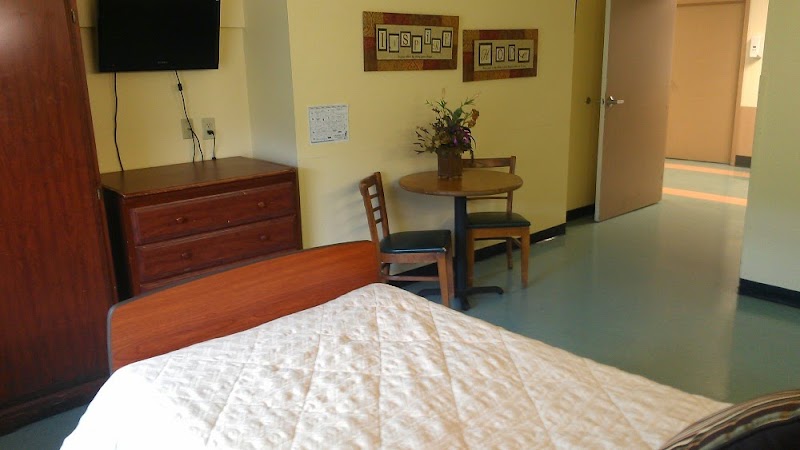
How is Marine Creek Nursing And Rehabilitation Staffed?

CMS rates MARINE CREEK NURSING AND REHABILITATION's staffing level at 2 out of 5 stars, which is below average compared to other nursing homes. Staff turnover is 33%, compared to the Texas average of 46%. This relatively stable workforce can support continuity of care.

What Have Inspectors Found at Marine Creek Nursing And Rehabilitation?

State health inspectors documented 48 deficiencies at MARINE CREEK NURSING AND REHABILITATION during 2022 to 2025. These included: 4 Immediate Jeopardy (the most serious level, indicating potential for serious harm or death), 2 that caused actual resident harm, and 42 with potential for harm. Immediate Jeopardy findings are rare and represent the most serious regulatory concerns. They require immediate corrective action.
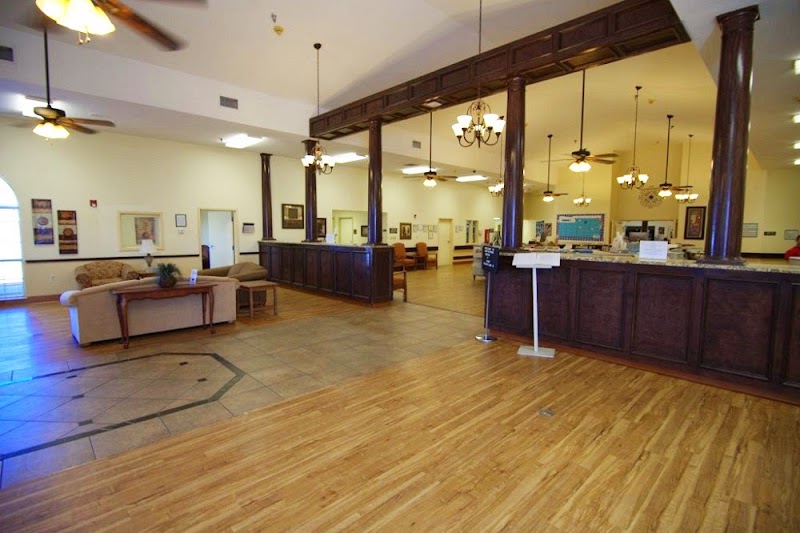
Who Owns and Operates Marine Creek Nursing And Rehabilitation?

MARINE CREEK NURSING AND REHABILITATION is owned by a for-profit company. For-profit facilities operate as businesses with obligations to shareholders or private owners. The facility is operated by CREATIVE SOLUTIONS IN HEALTHCARE, a chain that manages multiple nursing homes. With 170 certified beds and approximately 134 residents (about 79% occupancy), it is a mid-sized facility located in FORT WORTH, Texas.
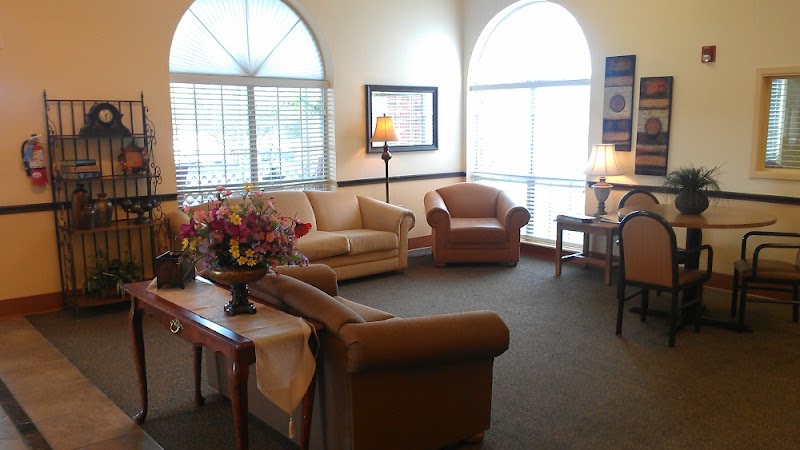
How Does Marine Creek Nursing And Rehabilitation Compare to Other Texas Nursing Homes?

Compared to the 100 nursing homes in Texas, MARINE CREEK NURSING AND REHABILITATION's overall rating (2 stars) is below the state average of 2.8, staff turnover (33%) is significantly lower than the state average of 46%, and health inspection rating (2 stars) is below the national benchmark.

What Should Families Ask When Visiting Marine Creek Nursing And Rehabilitation?

Based on this facility's data, families visiting should ask: "What changes have been made since the serious inspection findings, and how are you preventing similar issues?" "What safeguards and monitoring systems are in place to protect residents from abuse or neglect?" "Can you walk me through typical staffing levels on day, evening, and night shifts?" "Can I visit during a mealtime to observe dining assistance and food quality?" These questions are particularly relevant given the facility's Immediate Jeopardy citations, the substantiated abuse finding on record, and the below-average staffing rating.

Is Marine Creek Nursing And Rehabilitation Safe?

Based on CMS inspection data, MARINE CREEK NURSING AND REHABILITATION has documented safety concerns. The facility has 1 substantiated abuse finding (meaning confirmed case of resident harm by staff or other residents). Inspectors have issued 4 Immediate Jeopardy citations (the most serious violation level indicating risk of serious injury or death). The facility has a 2-star overall rating and ranks #100 of 100 nursing homes in Texas. Families considering this facility should ask detailed questions about what corrective actions have been taken since these incidents.

Do Nurses at Marine Creek Nursing And Rehabilitation Stick Around?

MARINE CREEK NURSING AND REHABILITATION has a staff turnover rate of 33%, which is about average for Texas nursing homes (state average: 46%). Moderate turnover is common in nursing homes, but families should still ask about staff tenure and how the facility maintains care continuity when employees leave.

Was Marine Creek Nursing And Rehabilitation Ever Fined?

MARINE CREEK NURSING AND REHABILITATION has been fined $23,621 across 3 penalty actions. This is below the Texas average of $33,315. While any fine indicates a compliance issue, fines under $50,000 are relatively common and typically reflect isolated problems that were subsequently corrected. Families should ask what specific issues led to these fines and confirm they've been resolved.

Is Marine Creek Nursing And Rehabilitation on Any Federal Watch List?

MARINE CREEK NURSING AND REHABILITATION is not on any federal watch list. The most significant is the Special Focus Facility (SFF) program, which identifies the bottom 1% of nursing homes nationally based on persistent, serious quality problems. Not being on this list means the facility has avoided the pattern of deficiencies that triggers enhanced federal oversight. This is a positive indicator, though families should still review the facility's inspection history directly.