
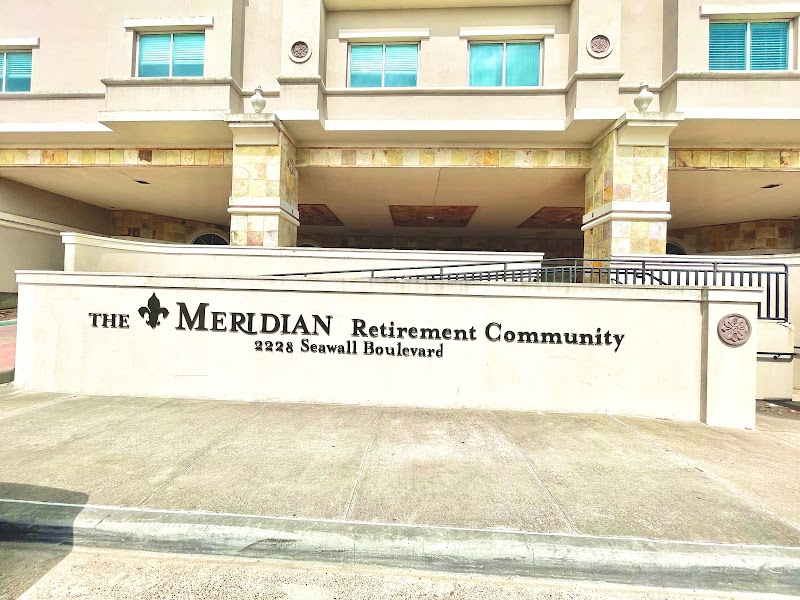
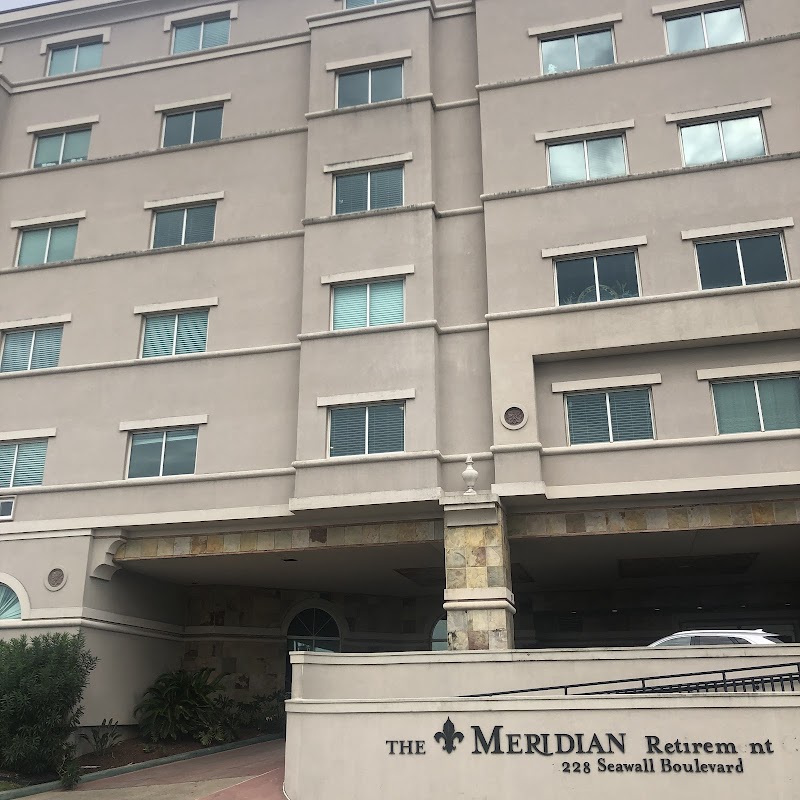

THE MERIDIAN

2228 SEAWALL BLVD, GALVESTON, TX 77550 (409) 763-6437
For profit - Corporation 96 Beds Independent Data: November 2025
Trust Grade
70/100
#358 of 1168 in TX
Last Inspection: October 2024

Within standard 12-15 month inspection cycle. Federal law requires annual inspections.

Overview

The Meridian in Galveston, Texas has a Trust Grade of B, indicating it is a good choice for families seeking care, as this grade suggests solid performance without major concerns. It ranks #2 out of 12 nursing homes in Galveston County, which means it is among the best local options available. However, the facility is experiencing a worsening trend, with issues increasing from 3 in 2023 to 7 in 2024. Staffing is a relative strength, with a 4 out of 5-star rating and turnover at 50%, which is on par with the state average, and the facility boasts more RN coverage than 88% of state facilities. On the downside, there have been some concerning incidents, including a resident who developed a bowel complication due to inadequate care, a failure to update care plans for residents with specific needs, and unsecured medication carts that posed safety risks. Overall, while there are strengths in staffing and ranking, families should be aware of the recent increase in issues and specific care deficiencies.

Trust Score
B
70/100
In Texas
#358/1168
Top 30%
Safety Record
Moderate
Needs review
Inspections
Getting Worse
3 → 7 violations
Staff Stability
⚠ Watch
50% turnover. Above average. Higher turnover means staff may not know residents' routines.
Penalties
✓ Good
No fines on record. Clean compliance history, better than most Texas facilities.
Skilled Nurses
✓ Good
Each resident gets 53 minutes of Registered Nurse (RN) attention daily — more than average for Texas. RNs are trained to catch health problems early.
Violations
⚠ Watch
14 deficiencies on record. Higher than average. Multiple issues found across inspections.
★★★★☆
4.0
Overall Rating
★★★★☆
4.0
Staff Levels
★★★★☆
4.0
Care Quality
★★★★☆
4.0
Inspection Score
Stable
2023: 3 issues
2024: 7 issues

The Good

  • 4-Star Staffing Rating · Above-average nurse staffing levels
  • 4-Star Quality Measures · Strong clinical quality outcomes
  • Full Sprinkler Coverage · Fire safety systems throughout facility
  • No fines on record

Facility shows strength in staffing levels, quality measures, fire safety.

The Bad

Staff Turnover: 50%

Near Texas avg (46%)

Higher turnover may affect care consistency

The Ugly 14 deficiencies on record

1 actual harm
Oct 2024 7 deficiencies
CONCERN (D) 📢 Someone Reported This

A family member, employee, or ombudsman was alarmed enough to file a formal complaint

Potential for Harm - no one hurt, but risky conditions existed

Safe Transfer (Tag F0626)

Could have caused harm · This affected 1 resident

**NOTE- TERMS IN BRACKETS HAVE BEEN EDITED TO PROTECT CONFIDENTIALITY** Based on interviews and record review, the facility failed to establish and follow written policy on permitting residents to ret...

Read full inspector narrative →
**NOTE- TERMS IN BRACKETS HAVE BEEN EDITED TO PROTECT CONFIDENTIALITY** Based on interviews and record review, the facility failed to establish and follow written policy on permitting residents to return to the facility after they were hospitalized for one (CR #1) of one resident reviewed for transfer/discharge. The facility failed to readmit CR#1 to the facility after she was sent to the hospital on [DATE]. This deficient practice could place residents at risk of being discharged and not allowed to return to the facility, causing a disruption in their care and services and potential decline in health. Findings included: Record review of CR # 1 face sheet dated 10/30/23 revealed an 81-year -old female admitted to the facility on [DATE]. Her diagnoses included anemia (low red blood count), hypothyroidism (a disorder of the endocrine system in which the thyroid gland does not produce enough thyroid hormones), heart disease, and lower back pain. Record review of CR#1's close MDS record indicated she was discharged from the facility on 11/29/24 coded as return not anticipated. Record review of CR #1's nurse's note dated 11/29/2023 15:48 read in part: Resident was brought to nurse's station by PTA staff. Large edematous hematoma to RLE. Measures 8.3 cm x 4.6 cm. Staff explained res hit her leg-on-leg rest during transfer to wheelchair. RLE elevated and ice pack applied to site. Res did complain of pain 8 out of 10- and one-time order for Tylenol #4 obtained and administered. Responsible party notified via voicemail of incident. Will continue to monitor for changes. Record review of emergency transfer note indicated CR #1 was sent to the hospital due to uncontrolled pain. During an interview with the Resident's responsible party on 10/30/24 at 3:30pm, she said CR #1 was admitted to the facility around November of 2023. She said CR #1 was injured at the facility and was sent to the hospital due to severe pain. RP said the facility refused to accept CR #1 back after completing her treatment at the hospital. She said CR #1 had to be transferred out of town because the facility refused to take CR # 1 back because CR #1 had an infection. During an interview with the facility's DON on 10/30/24 at 4:00pm, she said CR #1 was not accepted back to the facility due to Resident #1's communicable disease of Candida-Auris (a fungus infection acquired by patient with low immune system). The DON said the facility could not care for CR #1 due to the infection and for the protection of other residents at the facility. No answer was provided on placing CR #1 on isolation precautions. The DON said the decision was from the corporate office. In an interview with the Corporate Clinical Staff on 10/30/24 at 4:10PM, she said she does not recall CR #1. She said Candida Auris would be a condition that the facility would not accept due to the facility's population. She said candida auris can easily spread. No answer was provided on how the action of the facility might have affected the resident. During an interview with the facility's Administrator on 10/31/24 at 4:00pm, he said he was not at the facility at that time, but the facility had to protect other residents at the facility. He said normally the facility would evaluate the resident and assist the resident in locating a facility that could take care of the resident. Record review of facility's policy's policy dated 2001 revised 2022 titled Transfer or Discharge, Facility-Initiated read in part Once admitted to the facility, residents have the right to remain in the facility. Facility-initiated transfers and discharges, when necessary, must meet specific criteria and require resident/representative notification and orientation, and documentation as specified in this policy .
CONCERN (D)

Potential for Harm - no one hurt, but risky conditions existed

MDS Data Transmission (Tag F0640)

Could have caused harm · This affected 1 resident

**NOTE- TERMS IN BRACKETS HAVE BEEN EDITED TO PROTECT CONFIDENTIALITY** Based on interviews and record review, the facility failed to ensure resident assessments were electronically transmitted with M...

Read full inspector narrative →
**NOTE- TERMS IN BRACKETS HAVE BEEN EDITED TO PROTECT CONFIDENTIALITY** Based on interviews and record review, the facility failed to ensure resident assessments were electronically transmitted with MDS data to the CMS System for discharge return not anticipated for 2 of 32 residents (CR #1 & 58) reviewed for encoding and transmitting resident assessments. - The facility failed to submit/transmit/export a Return Not Anticipated MDS for CR #1- within the required timeframe. - The facility failed to submit/transmit/export a Return Not Anticipated MDS for CR #58 within the required timeframe. This failure could place discharged residents at risk of not receiving proper Medicaid benefits after discharge and of not having their assessments transmitted/exported timely. Findings included: -CR #1 Record review of CR # 1's face sheet dated 10/30/24 revealed an 81-year -old female admitted to the facility on [DATE]. Her diagnoses included anemia (low red blood count), hypothyroidism (a disorder of the endocrine system in which the thyroid gland does not produce enough thyroid hormones), heart disease, and lower back pain. Record review of CR #1's clinical records nurse's note dated 11/29/2023 15:48 read in part: Resident was brought to nurse's station by PTA staff. Large edematous hematoma to RLE. Measures 8.3 cm x 4.6 cm. Staff explained res hit her leg-on-leg rest during transfer to wheelchair. RLE elevated and ice pack applied to site. Res did complain of pain 8 out of 10- and one-time order for Tylenol #4 obtained and administered. Son notified via voicemail of incident. Will continue to monitor for changes. Record review of emergency transfer note indicated CR #1 was sent to the hospital due to uncontrolled pain. Record review of CR#1's discharge MDS with ARD date 11/29/23 coded as returned not anticipated was completed and transmitted on 07/03/24. CR# 58' -Record review of CR# 58's admission record dated 10/30/2024 revealed she was a [AGE] year-old female who admitted to the facility on [DATE] with the following diagnoses: chronic obstructive pulmonary disease (a group of lung diseases that block airflow and make it difficult to breath), insomnia (persistent problems falling and staying asleep), depression (a common mental disorder that involves depressed mood or loss of pleasure in activities for long periods of time), fracture (break) of unspecified part of neck of left femur (thighbone), and subsequent encounter for closed fracture with routine healing and pain in left hip. She discharged from the facility AMA (against medical advice) on 05/19/2024. Record review of CR #58's admission MDS assessment dated [DATE], revealed she had a BIMS score of 15 out of 15 which indicated she had no cognitive impairment. She required set-up assistance with eating and oral hygiene. She required moderate assistance with most other ADLs (Activities of Daily Living). Record review of CR#58's Release of Responsibility for Discharge Against Medical Advice, dated 5/19/24 at 2:20 pm revealed CR#58 signed the document on 5/19/24 and it was witnessed by CR#58's family member and RN C. Record review of CR 58's nursing clinical progress note dated 05/15/2024 at 5:34pm revealed, Progress Notes: Res was persistent about wanting to discharge home d/t husband being discharged from Hospital A. Res explained husband (sic) has terminal leukemia and only had a few weeks to live. Dr. A saw resident during rounds and resident reported to Dr. A that she had a cousin who would be able to stay and assist with care. Staff were preparing to discharge resident when Death Doula, arrived (sic) to facility, and asked to speak with ADON. The Death Doula explained her role was to stay with the family until CR #58's husband passed away. However, the Death Doula refused to stay with the family d/t the house being uninhabitable when the Death Doula explained the circumstances, CR #58 became irate and began cussing and throwing things around the room. Demanded that she was leaving the facility . Record review of CR 58's EMR on 10/30/2024 revealed her Discharge Return Not Anticipated was dated as completed on 5/19/24 and was highlighted in red under the submission tab with the date 10/29/2024. Interview and observation with MDS A at 12:45 PM on 10/30/24 he said that CR#58's MDS Discharge Return not anticipated MDS dated [DATE] was no completed until 10/29/24. MDS A said that the highlighted date in red meant that the assessment was submitted late. MDS A said there had been no full time MDS Coordinator at the facility since June/July of 2023 when he went down to 3 days per week. MDS A said he just missed the dates and submitted the assessment for CR#58 late. MDS A said that he just failed to get it completed within the 7-14-day timeframe and the facility only recently hired a full time MDS Coordinator, MDS B, about 2 weeks ago. MDS A said that CR#58 could have negative payment or reimbursement issues because of the late Discharge Return Not Anticipated MDS Submission. MDS A said he used the RAI manual as his policy and procedure for the completion and submission of the MDS. In an interview with the DON at 12:12 pm on 10/30/2024 she said that she did not sign any facility MDS'. She said the ADON did. She said that MDS A was responsible for the completion, accurate and timely submission of MDS assessments. The DON said she was not sure when the new full time MDS B started and that she really did not know much about any of the MDS information or assessments . In an interview with the Administrator at 1:23 pm on 10/30/24 he said that he was aware that there were issues with the MDS department. He said they had hired another part-time MDS person, but they did not work out. The Administrator said there was an audit tool in PCC (EMR) that he would and could review but did not recall how frequently he had done that. The Administrator said from that report he could see which assessments were late. The Administrator said he started working at the facility in June 2024 and identified that the MDS department needed a full-time MDS Coordinator, and the facility had just hired one about 2 weeks ago . In an interview with the ADON at 1:31 pm on 10/30/24 shesaid she had worked at the facility for 3 years. The ADON said she was the only RUG certified RN in the building. She said she signed the MDS' but only signed that they were completed not for accuracy, or submission. She said she did check to see if assessments were completed on time and caught a few that had not been completed on time but could not recall any specific resident or assessment. The ADON said there had been no full time MDS Coordinator since last year, 2023. She said there was a large corporate level shift and some staff turnover. She said that the DON and the Admin were responsible for MDS oversight but in her opinion the Corporate MDS A was ultimately responsible and should oversee the facility assessments. The ADON said that possible adverse consequences for late submission of assessments could be financial for CR #58 and that CMS could take money back from the the facility. She said Corporate Nurse A trained her on completing MDS assessments but was no longer with the company. During a follow up interview with the Administrator at 4:42 pm on 10/30/24 he said that a possible negative or adverse effect for a resident with an incomplete, inaccurate, or late submission MDS assessment could be that the resident could run into problems with state reimbursement being affected, issues with qualifying stays, and that it could be a multitude of problems. Record review of CMS's RAI Version 3.0 Manual dated October 2023, Chapter 2; 2-37 revealed the following: 09. Discharge Assessment-Return Not Anticipated Must be completed when the resident is discharged from the facility and the resident is not expected to return to the facility within 30 days. o Must be submitted within 14 days after the MDS completion date +14 days.
CONCERN (D)

Potential for Harm - no one hurt, but risky conditions existed

Assessment Accuracy (Tag F0641)

Could have caused harm · This affected 1 resident

**NOTE- TERMS IN BRACKETS HAVE BEEN EDITED TO PROTECT CONFIDENTIALITY** Based on observations, interviews, and record review, the facility failed to ensure that each resident received an accurate asse...

Read full inspector narrative →
**NOTE- TERMS IN BRACKETS HAVE BEEN EDITED TO PROTECT CONFIDENTIALITY** Based on observations, interviews, and record review, the facility failed to ensure that each resident received an accurate assessment, reflective of the resident's status at the time of the assessment, for ---2 of 16 (Resident #19 and #47) residents reviewed for MDS accuracy. -Resident #19 was not assessed for her lack of natural teeth on her oral cavity. -Resident #47's admission assessment did not reflect his cognition and his lack of natural teeth on his oral cavity. These failures could place residents at risk for not receiving care and services to meet their needs, for diminished function of health, and for regressions in their overall health. Findings included: - Resident #19: Record review of Resident #19's face sheet dated 10/29/24 revealed a 73-year -old female admitted to the facility on [DATE] and readmitted on [DATE]. Her diagnoses included hypokalemia (low blood potassium levels), anxiety, heart disease, osteoarthritis (condition that causes the breakdown of cartilage in the joints, leading to pain and stiffness), weakness, anemia ( low red blood count), and essential hypertension ( high blood pressure). Record review of Resident #19's annual MDS dated [DATE] revealed Resident #19 had a BIMS score of 15 out of 15 which indicated she was cognitively intact. Record review of section L of the MDS oral dental section was coded 0 which indicated she has all her natural teeth with no difficulty. Observation and interview on 10/28/24 at 9:15 am, revealed Resident # 19 was in her room alert and oriented. During an interview she said she had her dentures, but she did not use them because they don't fit and were very painful. She pointed to her dentures and said they were in that white cup. She said she had told someone but does not remember who she spoke to. During an interview with the MDS coordinator on 10/29/24 at 12:20pm, he said he was not responsible for section L of the MDS. He said that was done by the Dietary Manager. Resident #47 -Record review of Resident #47's Face Sheet, dated 10/30/2024, reflected the resident was an [AGE] year-old male admitted on [DATE]. Resident #47's diagnoses included essential hypertension (high blood pressure, hypothyroidism (condition when the thyroid gland doesn't make enough thyroid hormone),. Cerebral infarction (a condition where there is a decrease flow of blood to the brain), chronic obstructive, and pulmonary disease (a type of progressive lung disease, convulsions). Review of Resident #47's Comprehensive MDS Assessment, dated 12/07/23 reflected Resident #47 had severe impairment in cognition with a BIMS score of 99. Record review of section L-oral dental section was coded as 0 which indicated he had all his natural teeth with no problem on his oral cavity. Observation and interview, on 10/28/24 at 10:40AM, revealed Resident #47 was in his room with a bag of chips in his hand, he was alert and oriented during an interview, and he said that was his snack. Observation indicated he had no teeth in his oral cavity. He said he lost his dentures and doid with what he could. He said he was not sure where he lost them between seizures, hospital, and the facility. He asked if someone could help him to get them back. He said he ate mostly soft food, but he surely missed his dentures. During an interview with CNA E on 10/29/24 at 12:30PM, CNA E said she regularly worked with Resident # 47. She said Resident #47 was always awake, alert, and oriented X3, enough to answer questions, and did not seem to be cognitively impaired. CNA E said for most ADL care including oral care, she was able to provide set-up assistance for the resident and had no knowledge of his denture status. During an interview with the DON on 10/29/24 at 1:15 PM she said she had been communicating with Resident #47 without a problem since his admission. She said the Dietary Manager was responsible for doing section L of the MDS (oral cavity). She said the social worker was responsible for doing section B (Hearing, Speech, and Vision) and section C (Cognitive patterns) of the MDS. She said the facility had an audit on the MDS assessment and was aware of the corrections the process of making sure that all MDS accurately reflected resident's condition. She said the facility had just hired a new social worker that started this week (10/21/21 ). During an interview with the Dietary Manager on 10/30/24 at 3:00PM, she said she was responsible for section L of the MDS. She said she was told to ask residents if they had any problems eating and swallowing. She said she would code the MDS according to their answer. She said she did not understand how to code the MDS but was only doing what she was asked to do by a staff that no longer worked at the facility. Record review of facility's policy on Resident assessment dated 2001, revised 2022, titled Policy Statement: did not address accuracy of MDS assessment.
CONCERN (D)

Potential for Harm - no one hurt, but risky conditions existed

Deficiency F0657 (Tag F0657)

Could have caused harm · This affected 1 resident

**NOTE- TERMS IN BRACKETS HAVE BEEN EDITED TO PROTECT CONFIDENTIALITY** Based on observations, interviews and record reviews the facility failed to ensure the comprehensive care plan was reviewed and ...

Read full inspector narrative →
**NOTE- TERMS IN BRACKETS HAVE BEEN EDITED TO PROTECT CONFIDENTIALITY** Based on observations, interviews and record reviews the facility failed to ensure the comprehensive care plan was reviewed and revised by the interdisciplinary team after each assessment for 1 of 16 resident reviewed for care plan accuracy (Resident # 27). --Resident # 27's care plan was not revised to reflect a healed deep tissue injury. This failure placed residents at risk of not receiving care according to their individual needs. Findings include: Record review of Resident # 27's face sheet revealed a [AGE] year-old male with admission date 6/14/19 and diagnoses including Diabetes (too much sugar in the blood), hypertension (high blood pressure), heart disease (conditions affecting the heart), hemiplegia and hemiparesis following a stroke (partial or complete paralysis affecting one side of the body), muscle weakness, reduced mobility, chronic kidney disease (longstanding kidney disease leading to kidney failure). . Record review of the annual MDS dated [DATE] revealed Resident #27 had a BIMS score of 07 indicating moderately impaired cognitive skills, always incontinent of bowel and bladder, and required maximum staff assistance for hygiene, dressing, bathing, and toileting, and dependent on staff assistance for transfers. Record review of wound evaluation from wound care Doctor dated 9/18/24 revealed unstageable DTI of right first toe (resolved 9/18/24), epithelialized and resolved. Record review of Resident # 27's care plan, undated, revealed I have an unstageable DTI of my right big toe, wound treatment as ordered. Interventions included: discontinue this care plan when problem was resolved. Observation and interview with Resident # 27 on 10/28/24 at 10:30am revealed he was resting in bed and said he did not have any wound on his toe. He said they used to treat it but the last time the wound care doctor looked at it, it was healed. Interview on 10/30/24 at 10:45am, LVN L said there were no skin issues with Resident # 27. Interview on 10/30/24 at 10:48 am, MDS A and B said there should not be a care plan for a wound if it was healed. MDS B assessed Resident #27 and said there was no wound on his right front toe, and the care plan would be revised. In further interview, they said the risk of having inaccurate care plans would be the resident not getting the right care according to their individual assessment. Interview on 10/30/24 at 11:40 am, the DON said the care plan should be accurate and match the resident. She said the former MDS nurse left, and a full-time MDS nurse started here 2 -3 months ago, which would help them get caught up with correct assessments. She said the risk to residents of inaccurate assessments would be they would not be getting proper care. Record review of the facility policy Comprehensive Resident-Centered Care Plans, revised March 2022, read, in part: assessments of residents are ongoing and care plans are revised as information about the residents and the resident's conditions change .the interdisciplinary team reviews and updates the care plan .
CONCERN (D)

Potential for Harm - no one hurt, but risky conditions existed

Deficiency F0661 (Tag F0661)

Could have caused harm · This affected 1 resident

Based on record review and interviews, the facility failed to ensure completion of a discharge summary including a recapitulation of the resident's stay, final status at discharge and a reconciliation...

Read full inspector narrative →
Based on record review and interviews, the facility failed to ensure completion of a discharge summary including a recapitulation of the resident's stay, final status at discharge and a reconciliation of medications for 1 resident of 1 resident (CR #64) reviewed for discharge summary. The closed record for Resident #64 that was reviewed did not contain a discharge summary that included a recapitulation of the resident's stay. This failure could place residents at risk of not receiving needed care and services after discharge. Findings included: The closed record face sheet for Resident #64 revealed an admission date of 07/24/2024 with diagnoses that included unspecified fracture of left femur, presence of left artificial hip joint, hypertension (a condition in which the force of the blood against the artery wall is too high), and hyperlipidemia (excess lipids or fat in the blood). Interview with admission's director on 10/29/2024 at 2:35 PM stated that they could not get in contact with the resident, but the resident's brother stated the resident was not coming back to the facility and if he needed to signto sign anything, it needed to be mailed. Interview with DON on 10/29/2024 at 3:40 PM stated they did not receive any notes from the doctor, and they did not mail out an AMA form for the patient to sign. The DON stated that everyone should have a discharge summary, and nothing was mailed out to the resident. The DON stated that the social worker was responsible for the discharge paperwork and mailing out discharge and AMA forms. Interview with the social worker on 10/30/2024 at 12:17 PM stated that the social worker was responsible for discharge planning, mailing discharge, and AMA forms but was not working during the time the resident was at the facility. The social worker stated that a discharge summary and AMA form should have been mailed to the resident. Record review of the facility's policy titled, Discharge Summary and Plan, dated revised October 2022, read in part that .when a resident's discharge is anticipated, a discharge summary and post-discharge plan is developed to assist the resident with discharge. The resident/representative is involved in the post-discharge planning process and informed of the final post-discharge plan.
CONCERN (D)

Potential for Harm - no one hurt, but risky conditions existed

Deficiency F0757 (Tag F0757)

Could have caused harm · This affected 1 resident

**NOTE- TERMS IN BRACKETS HAVE BEEN EDITED TO PROTECT CONFIDENTIALITY** Based on observations, record review, and interviews, the facility failed to ensure each resident's drug regimen was free from u...

Read full inspector narrative →
**NOTE- TERMS IN BRACKETS HAVE BEEN EDITED TO PROTECT CONFIDENTIALITY** Based on observations, record review, and interviews, the facility failed to ensure each resident's drug regimen was free from unnecessary medications for 1 of 9 residents (Resident #38) reviewed for unnecessary medications. in that: -The facility failed to ensure Resident that Resident #38 did not have an appropriate diagnosis associated with the use of Abilifya and his clinical record did not contain a diagnosis beyond the diagnosis on the consent which was identified as psychotic behavior. This failure could place residents at risk for adverse drug reactions (unintended, harmful events attributed to the use of medicines) and receiving unnecessary medications. Findings included: Record review of Resident #38's face sheet dared 10/30/24 revealed a 72- year-old female admitted on to the facility on [DATE]. Her diagnoses included essential hypertension (high blood pressure, hypothyroidism (condition when the thyroid gland doesn't make enough thyroid hormone), alcohol dependence, Alzheimer's disease, and depression. Record review of Resident #38's admission MDS assessment dated [DATE] indicated Resident #38 had a BIMS score of 11 out of 15 which indicated moderate impairment on cognition. Record review of Resident #38's physician orders and medication administration revealed Resident # 38 was on the following medications: -Amlodipine Besylate Tablet 10 MG- Give 1 tablet by mouth one time a day for HTN start date 09/13/2024. -Aricept Tablet 5 MG (Donepezil HCl) Give 1 tablet by mouth at bedtime for dementia -Start Date-09/12/2024 1900 -Aripiprazole Tablet 5 MG Give 1 tablet by mouth one time a day for depression resistant to treatment Start Date- 09/13/2024 -Bupropion HCl ER (XL) Tablet Extended Release 24 Hour 300 MG Give 1 tablet by mouth one time a day for depression -Start Date-09/13/2024 - -Escitalopram Oxalate Tablet 20 MG Give 1 tablet by mouth one time a day for Depression -Start Date-09/13/2024 - -Levothyroxine Sodium Tablet 75 MCG Give 1 tablet by mouth one time a day for low thyroid hormone Give 1 hour before or after meals -Start Date-09/13/2024 - Meloxicam Tablet 15 MG Give 1 tablet by mouth one time a day for anti-inflammatory (left hip pain) Start Date 09/13/2024 Record review of Resident #38's consent for psychotropics revealed Resident #38 and her physician signed the consent to receive Abilify (Aripiprazole) for psychotic behavior. During an interview on 10/30/24 at 2:30PM, the DON said Resident # 38 was admitted to the facility with the medication and she would call Resident #38's physician to clarify the use of Abilify for psychotic behavior. During a phone interview with Resident #38's Physician on 10/30/24 at 4:50PM, she said Resident #38 was already on Abilify at the hospital because Resident # 38 had tried other medication and the result was not favorable and resident #38 responded well to Abilify. She said she would refer Resident #38 to psychiatric for evaluation and proper diagnoses. Facility's policy on the use of psychotropic medication was requested but was not provided prior to exit on 10/30/24.
CONCERN (D)

Potential for Harm - no one hurt, but risky conditions existed

Safe Environment (Tag F0921)

Could have caused harm · This affected 1 resident

**NOTE- TERMS IN BRACKETS HAVE BEEN EDITED TO PROTECT CONFIDENTIALITY** Based on observations, interviews, and record review the facility failed to provide a safe, functional, sanitary, comfortable en...

Read full inspector narrative →
**NOTE- TERMS IN BRACKETS HAVE BEEN EDITED TO PROTECT CONFIDENTIALITY** Based on observations, interviews, and record review the facility failed to provide a safe, functional, sanitary, comfortable environment for 1 resident of 37 (Resident #11), staff and visitors in 1 resident room (room [ROOM NUMBER] W). Resident #11's room [ROOM NUMBER] had 2 unsecured oxygen tanks standing next to each other on the floor. This failure could place residents, staff, and visitors at risk of living and working in an unsafe, dangerous environment. Findings included: Record review of Resident # 11's admission Record dated 10/30/24 revealed she was a [AGE] year old female who admitted to the facility on [DATE] and readmitted on [DATE] with the following diagnoses: diffuse traumatic brain injury with loss of consciousness of unspecified duration, post traumatic seizures ( seizures that occur after a traumatic brain injury), epilepsy and recurrent seizures (a brain disorder causing recurrent, uncontrolled jerking, movements caused by abnormal activity in the brain), tracheostomy status (surgical procedure that creates an opening in the neck and into the windpipe that helps a person breath), and aphasia (language disorder that affects a person's ability to communicate including inability to speak). Record review of Resident #11's Annual MDS dated [DATE] revealed she was coded as having no ability to talk and her SAMS revealed she was severely cognitively impaired and was dependent on staff assistance for ADL's. Resident #1 was also coded as having tracheostomy care and oxygen therapy in section O of the MDS - Special Treatments, Procedures, and Programs . Observation of Resident #11 on 10/29/24 at 08:34 a.m. revealed 3 oxygen cylinders canisters. The 3 oxygen tanks were standing next to the bedside oxygen concentrator machine. 1 oxygen tank was in a secured metal stand. The other 2 oxygen tanks were standing on the floor with no stand, or cart and they were not secured or anchored to anything to keep them from falling and potentially releasing pressurized oxygen rapidly and turning into a heavy metal projectile. Observation and interview at 8:42 am on 10/29/24 with RN B who when shown the 2 unsecured oxygen tanks standing in Resident #11's room next to a bedside oxygen concentrator (a device that produces a higher concentration of oxygen from the surrounding air). RN B said that Resident #11 had significant family involvement and input into the resident's care, and often requested additional oxygen tanks for use at the bedside. RN B said that the 2 unsecured oxygen tanks should not be free standing on the floor next to the resident's bedside. RN B said other staff sometimes keep the empty tanks at the bedside to have on hand per family request and that someone must have forgotten to remove the oxygen tanks. When asked how the oxygen tanks should be stored, RN A said they should be kept in a stand to secure them and not just left standing on the floor. RN A quickly removed the tanks from Resident #11's bedside and room. RN B said that if the tanks had fallen, they could have blown up and was unsure if they were empty. Interview with DON at 8:55am on 10/29/24 who was advised of the 2 unsecured, free standing oxygen tanks on the floor in Resident #11's room . The DON said they should not have been there and that they posed a potential hazard if they fell. The DON said the 2 oxygen tanks should have been secured and stored properly per policy and procedure. Record review of facility policy and procedure titled: Fire, Safety and Prevention, dated Revised May 2011, revealed the following: f. Store oxygen cylinders in racks with chains, sturdy portable carts, or approved stands. Never leave oxygen cylinders free-standing. Do not store oxygen cylinders in any resident room or living area; q. Ensure oxygen cylinders in use are on approved carts or stands and are attached to the residents' beds.
Sept 2023 3 deficiencies
CONCERN (D) 📢 Someone Reported This

A family member, employee, or ombudsman was alarmed enough to file a formal complaint

Potential for Harm - no one hurt, but risky conditions existed

PASARR Coordination (Tag F0644)

Could have caused harm · This affected 1 resident

**NOTE- TERMS IN BRACKETS HAVE BEEN EDITED TO PROTECT CONFIDENTIALITY** Based on observation, interview and record review, the facility failed to coordinate an assessment with Pre-admission Screening ...

Read full inspector narrative →
**NOTE- TERMS IN BRACKETS HAVE BEEN EDITED TO PROTECT CONFIDENTIALITY** Based on observation, interview and record review, the facility failed to coordinate an assessment with Pre-admission Screening and Resident Review program (PASRR) under Medicaid and initiate services within 30 days after the date that the services are agreed upon in the IDT meeting, to ensure that individuals with mental illness or intellectual developmental disabilities receive the care and services they need in the most appropriate setting for 1 of 3 residents (Resident #44) reviewed for pre-admission screenings. -The facility failed to submit a Form 1018, Request for a Customized Manual Wheelchair (CMCW) within 30 days of the date that the services were agreed upon in an IDT meeting addressing Resident #44's needs. This failure could place 2 other residents requiring PASRR services at risk of them not having their special needs assessed and met by the facility. Findings include: An observation of Resident #44 on 9/12/2023 at 9:39 a.m., the resident was sitting in his specialized wheelchair, groomed, and sitting in front of the nursing desk. The resident is not interview able. Record review of documentation provided by the facility revealed a PASRR/IDT meeting was held on 2/23/2023 with recommendations to order a custom wheelchair for Resident #44. Interview on 9/12/2023 at 2:09 a.m. with the Administrator, she said that there were changes with Resident #44 during this time(after the IDT meeting in February 2023 was held), there were plans in place dealing with guardianship and discharge to another location that led to the issue with PASRR/IDT and the receipt of his wheelchair. The facility was told that by the wheelchair manufacturor that the wheelchair would not be ready prior to his discharge and that the wheelchair would be ordered after his discharge so that the delivery would go to his new home, so the order was held and the staff that was previously dealing with the wheelchair was no longer an employee but the email correspondence regarding the ordered wheelchair was being emailed to her old email and they were not aware. Interview on 9/14/2023 at 9:00 a.m. with the MDS Coordinator, he said that he did not assume the position of MDS Coordinator until 4/18/2023 and that the MDS Coordinator is responsible for PASRR/IDT and making sure that the resident receives services as requested. He said that he did not know that Resident #44 had orders to receive a new wheelchair because the staff that was previously dealing with the wheelchair was no longer an employee but the email correspondence regarding the ordered wheelchair was being emailed to her old email address. He said that he began to work on this then and the wheelchair is supposed to be delivered today 9/14/2023. He said that the negative outcome of a resident not receiving services or equipment would be that the facility would not be following PASRR recommendations. Interview on 9/14/2023 at 2:45 p.m. the Administrator said that the wheelchair was delivered today (9/14/2023). Record review of the admission record dated 9/14/2023 for Resident #44 revealed he was [AGE] years old and admitted to the facility on [DATE] with diagnoses including profound intellectual disabilities (a condition that limits intelligence and disrupts abilities necessary for living independently. Signs of this lifelong condition appear during childhood), cerebral palsy (a condition marked by impaired muscle coordination (spastic paralysis) and/or other disabilities, typically caused by damage to the brain before or at birth) and obstructive hydrocephalus (it occurs when the flow of CSF is blocked along one of more of the passages connecting the ventricles, causing enlargement of the pathways upstream of the block and leading to an increase in pressure within the skull). Record review of Resident #44's Re-entry MDS assessment dated [DATE] revealed a cognitive skill for daily decision-making score of 3, indicating he was severely impaired cognitively. He required extensive assistance of one person for bed mobility, transfer, dressing, toileting, personal hygiene, and bathing. Record review of Resident # 44's care plan dated 9/6/2023 revealed a care plan to address PASRR/IDT, intellectual disabilities/communication and cognitive function. Record review of the order form and specifications for the wheelchair dated February 2023 for Resident #44's specialized wheelchair, revealed that the resident received an assessment and the wheelchair was ordered. Record review of the Authorization Request for Nursing Facility Specialized Services (NFSS) NFSS for Customized Manual Wheelchair (CMCW) dated 3/20/2023 revealed an order for Resident #44's specialized wheelchair. Record review of the Customized Manual Wheelchair/Durable Medical Equipment (CMWC/DME) assessment dated [DATE] for Resident # 44's customized wheelchair revealed that Resident #44 received an assessment for his customized wheelchair and that the new request for the wheelchair was submitted. Record review of the facility policy entitled Preadmission and Screening Resident Review (PASRR) Rules Guidelines Policy, revision date 1/1/2021 read in part .the Service Planning Team (SPT) develops, revises and monitors a transition plan as necessary.
CONCERN (E)

Potential for Harm - no one hurt, but risky conditions existed

Deficiency F0657 (Tag F0657)

Could have caused harm · This affected multiple residents

**NOTE- TERMS IN BRACKETS HAVE BEEN EDITED TO PROTECT CONFIDENTIALITY** Based on observation, interview and record review, the facility failed to ensure the comprehensive care plans were reviewed and ...

Read full inspector narrative →
**NOTE- TERMS IN BRACKETS HAVE BEEN EDITED TO PROTECT CONFIDENTIALITY** Based on observation, interview and record review, the facility failed to ensure the comprehensive care plans were reviewed and revised by the Interdisciplinary team after each assessment for 2 of 13 residents reviewed for care plan accuracy (Residents # 15, #27). --Resident # 15's clinical chart did not contain a care plan for ADL assistance and had care plans for a healed stage 3 sacral ulcer and a healed sore on her great toe. --Resident #27's was care planned for wander guard for risk of elopement, which had been removed by facility Findings include: Record review of Resident #15's face sheet revealed a [AGE] year-old female with admission date of 12/14/22 and diagnoses including Alzheimer's disease (progressive disease that destroys memory and mental functions), malignant neoplasm (cancer) of female breast, cerebral infarction (disruption of blood flow to the brain), functional Quadriplegia (paralysis that affects all 4 limbs), hypertension (high blood pressure). Record review of Resident #15's Quarterly MDS dated [DATE] revealed a BIMS summary score of 05, indicating severely impaired cognitive skills, required extensive assistance from 2 staff members for bed mobility, transfer, dressing, hygiene, toileting and eating, always incontinent of bowel and bladder, and one stage 3 (full thickness tissue loss) pressure sore. Observation 9/14/23 at 10:30 AM revealed Resident #15 was in bed, and said she needed to get up in her wheelchair and put on her shoes, but she had to have someone help her get up and get dressed. Record review of Resident #15's clinical chart revealed no care plan with focus, goals, or interventions for assistance with ADL's. Record review of Resident #15's care plan, reveiwed 7/11/23, revealed a stage 3 pressure ulcer to sacrum, with interventions including perform treatments as ordered, perform weekly wound evaluation, and monitor for signs and symptoms of infection . Record review of Resident # 15's care plan, reveiwed 7/11/23, revealed infection to left great toe, with interventions including infection will be resolved, monitor for signs of infection, administer medications as ordered, perform treatments as ordered . Record review of pressure sore list revealed Resident # 15's sacral pressure sore was resolved on 7/13/23 and left great toe infection was resolved on 9/4/23. In an interview on 9/13/23 at 1:30 PM, the ADON said Resident #15's stage 3 pressure sore to sacrum was healed on 7/13/23 and left great toe infection was healed on 9/4/23, and the care plan needed to be revised for the healed pressure sores and assistance with ADL's. In interview on 9/14/23 at 11:30 AM, DON said the care plans for Resident #15 needed to be revised for the healed pressure sores. She said the risk of having inaccurate care plans would be the care plan system needed to be reviewed. Record review of Resident #27's face sheet revealed an [AGE] year-old female with admission date of 4/17/21 and diagnoses including heart failure, Dementia (loss of intellectual functioning caused by a brain disease), osteoporosis (brittle and fragile bones from tissue loss), Diabetes (impaired insulin production with elevated glucose levels in blood), and neuropathy (nerve damage in hands or feet). Record review of Resident #27's Quarterly MDS dated [DATE] revealed a BIMS summary score of 09 indicating moderately impaired cognitive skills, limited assistance required for bed mobility, dressing, toileting, and extensive assistance required for hygiene and bathing, always incontinent of bladder and bowel, and wander/elopement alarm used daily. Observation and interview with Resident #27 on 9/13/23 at 10:00 AM revealed she was quietly sitting in a chair in the dining room for the Resident Council meeting as part of the annual survey. Observation at that time revealed a wander guard was not present on her ankle or wrist. Interview with Resident #15 at that time revealed she did not have the wander guard any-more, and she did not want to try to leave the facility. Record review of Resident #15's care plan, reveiwed 9/6/23, revealed focus, goals and interventions for wander guard related to risk for elopement/wandering. Focus included I want to go outside at times and like to go outside for fresh air. I now have a wander guard. Interventions included check daily to ensure my wanderer's bracelet is on and accurately working. Interview on 9/14/23 at 11:30 pm, DON said Resident #27's wander guard had been removed by the facility apprx. 2 weeks ago because she was no longer a risk for elopement, her care plan needed to be revised, and the care plan system would have to be reviewed to reflect the resident's current condition. Interview on 9/13/23 at 1:00 pm with MDS nurse revealed he has been doing care plans and MDS since April of this year, and some needed to be updated. The care plans for these residents needed to be updated to reflect their current conditions. He said the risk of not having care plans updated for the residents' current condition is that staff would not know how to care for residents properly. Record review of the facility Care Plan policy, revised Dec. 2016, revealed care plans would be reviewed and revised by the Interdisciplinary team after each assessment and as needed.
CONCERN (E)

Potential for Harm - no one hurt, but risky conditions existed

Deficiency F0761 (Tag F0761)

Could have caused harm · This affected multiple residents

**NOTE- TERMS IN BRACKETS HAVE BEEN EDITED TO PROTECT CONFIDENTIALITY** Based on observation, interviews, and record review the facility failed to ensure in accordance with State and Federal laws, all...

Read full inspector narrative →
**NOTE- TERMS IN BRACKETS HAVE BEEN EDITED TO PROTECT CONFIDENTIALITY** Based on observation, interviews, and record review the facility failed to ensure in accordance with State and Federal laws, all drugs and biologicals were stored securely in locked compartments for two (Nurse Medication Cart Second Floor and Medication Aide Medication Cart Third Floor) of six medication carts observed for storage of medications. The facility failed to ensure the Nurse medication cart second floor and Medication Aide medication cart third cart were secured when unattended. These failures could place residents at risk for loss of prescribed medications, resident's safety, and drug diversion. Findings included: Observation and interview on the second floor on 09/12/2023 at 2:28 PM revealed the Nurse medication cart was parked unlocked in the hall near room [ROOM NUMBER]. No staff, residents or visitors were in the hall. As the observation continued at 2:31 PM, LVN A arrived at the medication cart from room [ROOM NUMBER]. LVN A stated this was the medication cart she was working on. LVN A stated she forgot to lock the medication cart. LVN A stated she went into the room to help transfer a resident. LVN A stated the medication carts were to be locked when unattended. LVN A stated the risk of the medication carts not being locked was a resident could take a medication out they should not have. LVN A stated to prevent this again she will make sure the medication carts were locked before leaving it. Inventory of the Nurse medication cart second floor at this time accompanied by LVN A revealed: First drawer- Insulin Insulin syringes Second drawer- Acidophilis (dietary supplement to add good bacteria naturally found the digestive tract) Tylenol Resident individual medication packs Lactulose (liquid medication to treat constipation and liver disease) Empty locked narcotic box Third drawer Respirator breathing treatment medications Creams and lotion skin medications Observation of the third floor on 09/13/2023 at 7:23 AM revealed MA B gathered a resident's medications and walked into room [ROOM NUMBER]. The MA medication cart third floor was left unlocked and unattended in the hall out of her sight. Staff was observed going in and out of rooms on the hall providing care. No visitors or residents were observed in the hall. Observation and interview on 09/13/2023 at 7:28 AM, MA B returned to the medication cart. MA B stated she realized she forgot to lock the medication cart when she was in the middle of giving medications to the resident. MA B stated she was unable to leave the resident at that time. MA B stated it was important to lock the medication cart when leaving it because it can be a risk to the resident. MA B stated a resident may take something out of the medication cart. MA B continued and stated it was important to keep medications safe. MA B stated the next time she will make sure the medication cart was locked prior to leaving it. Inventory of MA medication cart third floor on 09/13/2023 at 7:28 AM accompanied by MA B revealed: Left side of cart: Drawer One: Mulitvitamins, Melatonin, Stool softer, Tylenol, Magnesium, Tums, laxatives. Drawer 2: Medication supplies Drawer 3: Nasal sprays Drawer 4: Empty Right side of cart: Drawer 1: medication supplies Drawer 2: Locked empty narcotic box Drawer 3: Liquid oral medications, Protein supplements Drawer 4: Empty Interview on 09/13/2023 at 9:24AM, the DON stated she expected all medication carts were locked when left. The DON stated no medication carts were to be unattended and unlocked. The DON stated staff were to wear the key on their wrist as a reminder to lock before leaving the cart. The DON stated the risk was a resident could get into the medication cart and take medications or scissors out. The DON stated there were residents with dementia which could result in harm. The DON stated she and the ADON would plan to train the staff on locking the medication carts when unattended. Interview on 09/13/2023 at 11:59 AM, the Administrator stated she expected the company policy was to be followed. The medication carts were to be locked when left unattended. The Administrator stated the risk was anyone could get into the medication carts and take medications. The Administrator stated locking the medication cart was for resident safety. The Administrator stated they will plan to do daily monitoring of the medication carts. Record review of the facility's policy, Storage of Medications. Revised Dated April 2019 read in part Policy Statement The facility stores all drugs and biologicals in a safe, secure and orderly manner. Policy Interpretation ad Implementation 1. Drugs and biologicals used in the facility are stored in locked compartments under proper temperature, light and humidity controls. 9. Unlocked medication cares are not left unattended . Record review of the facility policy, Security of Medication Cart. Revised Dated April 2007 read in part Policy Statement The medication cart shall be secured during medication passes. Policy Interpretation and Implementation 1. The nurse must secure the medication cart during the medication pass to prevent unauthorized entry. 4. Medication carts must be securely locked at all times when out of the nurse's view .
Jul 2022 4 deficiencies 1 Harm
SERIOUS (G)

Actual Harm - a resident was hurt due to facility failures

Incontinence Care (Tag F0690)

A resident was harmed · This affected 1 resident

**NOTE- TERMS IN BRACKETS HAVE BEEN EDITED TO PROTECT CONFIDENTIALITY** Based on interview and record review, the facility failed to ensure that a resident who was incontinent of bowel received approp...

Read full inspector narrative →
**NOTE- TERMS IN BRACKETS HAVE BEEN EDITED TO PROTECT CONFIDENTIALITY** Based on interview and record review, the facility failed to ensure that a resident who was incontinent of bowel received appropriate treatment and services to prevent fecal impaction for 1of 33 residents (CR # 62) reviewed for incontinent bowel care in that: The facility failed to ensure CR #62 did not develop bowel complications while at the facility that resulted in hospitalization and a fecal impaction. This failure could place residents at risk for developing bowel complications including impaction and hospitalization. Findings included: Record review of CR #62's admission record dated 7/6/22 revealed she was a [AGE] year old female who admitted on [DATE] and readmitted to the facility on [DATE] with diagnoses to included: unspecified hemorrhoids (swollen and inflamed veins in the rectum and anus that cause discomfort and bleeding), atrial fibrillation and flutter (condition in which the heart's upper chambers (atria) beat too quickly), shortness of breath, presence of heart valve replacement, hemiplegia and hemiparesis (paralysis of one side of the body) following a cerebral infarction (disrupted blood flow to the brain due to problems with the blood vessels that supply it, which can cause parts of the brain to die off) affecting left non dominant side. CR #62 discharged from the facility to hospital emergency room on 6/10/22. Record review of CR #62's admission MDS dated [DATE] revealed that her BIMS was 12 out of 15 indicating her cognition was intact with moderate impairment. CR #62 required extensive assistance of one staff for toilet use and had impaired range of motion to one side of her upper and lower extremities and was frequently incontinent of bowel and bladder. Record review of CR #62's admission Care plan dated 05/23/2022, revealed the following: Focus area CR #62 was at risk for alteration on bowel elimination: Constipation related to use of iron supplement, use of pain medication. Goal: CR #62 will establish normal elimination pattern with the ordered intervention in the next 90 days. Interventions: check for fecal impaction in rectal vault as needed. Monitor (sic)med list for any (sic) meds that may cause constipation, medicate as ordered by physician and monitor and report to (sic)md efficacy of (sic) meds. . Focus area CR #62 had pain from her hemorrhoids, bleeding from her rectum. . Goal: CR #62's pain will be managed effectively with the medication ordered by her MD through the next review date. .Interventions: Staff will monitor for pain and bleeding from her rectal area every shift and document. Further record review of CR #62's EMR revealed there was no documentation every shift, of CR #62's pain and whether she had any bleeding. There was no documentation of any checks for fecal impaction in rectal vault conducted by staff or physician on CR #62. Record review of CR #62's undated consolidated physician's order summary report revealed the following orders which CR #62 was receiving: .MiraLAX Powder 17 GM/scoop (Polyethylene Glycol 3350) Give 1 scoop by mouth one time a day for constipation with a start dated 5/24/2022. .Norco tablet 5 325 MG (Hydrocodone Acetaminophen) Give 1 tablet by mouth every 12 hours as needed for pain with a start dated 06/09/2022. .Preparation H Cream 1% (Hydrocortisone) Apply to rectum topically every 8 hours as needed for hemorrhoids with a start dated 5/23/2022. .Preparation H Suppository 0.25 88.44% (Phenylephrine Cocoa Butter) Insert 1 suppository rectally every 12 hours as needed for hemorrhoids .with a start dated 6/07/2022. .Tylenol with Codeine #3 Tablet 300 30MG (Acetaminophen Codeine) Give 1 tablet by mouth every 4 hours as needed for pain. .Ferrous Sulfate tablet 325 (65 Fe) MG Give 1 tablet by mouth one time a day for supplement. Record review of CR #62's TAR dated 6/1/2022 6/30/2022 revealed she received 1 Preparation H Suppository 0.25 88.44% (Phenylephrine Cocoa Butter) Insert 1 suppository rectally every 12 hours as needed for hemorrhoids on 6/9/22 which was documented as being effective. Interview with the DOR on 7/6/22 at 1:04 p.m., said she remembered and had worked with CR #62. The DOR said CR #62 frequently complained of pain to her rectum and CR # 62 did not participate in therapy the way she was supposed to because of painful hemorrhoids. She said she and other therapy staff always reported her complaints and concerns to nursing and it was usually the charge nurse assigned to care for CR #62 on that day. The DOR said she could not recall how many times she notified nursing about CR #62's pain. Record review of nursing progress notes on 7/6/22 at 12:55 p.m., by Former MDS Coordinator revealed the following entry dated 6/10/22: Call placed to CR #62's family member regarding concerns with constipation and pain, call placed with nurse on duty (sic)was explained that during shower this am she had a large bowel elimination and she had just had another bowel elimination and hemorrhoidal suppository had been applied. Family member said that CR #62 had a high tolerance for pain and that if she was unable to get up for therapy, she wanted her transferred to the ER. Attempted to contact nurse who wrote the progress note on 7/6/22 at 1:00pm, but nurse no longer worked for the facility and contact number voicemail box was full. Record review of nursing progress notes on 7/6/22 at 1:03 p.m. by Former MDS Coordinator dated 6/10/2022 . Per family request resident is being sent to hospital ER. 911 in facility to transport resident to ER call placed to hospital ER Triage and report was given to RN. Record review of social services note on 7/6/22 at 1:12 p.m. dated 6/11/2022 Late Entry: Since residents admission writer has talked with family member on many occasions, family member has contacted insurance company and insurance case manager contacted writer about concerns and writer wrote a grievance on family members complaints. CR #62 was (sic)(Draft)refusing therapy and writer and DOR went to her room to talk to her bout needing to participate CR #62 states she had concerns with her hemorrhoids .it was reported to writer that CR #62's family member was bringing medication from home to give to CR #62 Family member continued to complain about no one assisting with CR #62's hemorrhoids and the pain she is going through. Physician A had been notified several times and saw the resident several times. Interview on 7/6/22 at 1:11 p.m., the SW said she remembered CR #62 and the resident frequently had pain and was not participating in therapy. She said she wanted to transfer or go to a facility with a higher level of care for therapy, but it was difficult to forward records for acceptance because she was not participating and was refusing. She said CR #62 told her about painful hemorrhoids and she would tell the charge nurse and had also notified the DON and the Corporate Nurse about CR #62's concerns. SW said she spoke with CR #62's family members frequently and was trying to help because the family said they could not take the resident home and the resident was not well enough to go back to living on her own. Record review of CR #62's hospital records dated 6/10/2022 6/20/2022 revealed the following: CT ABDOMEN PELVIS W CONTRAST Result Date: 6/10/2022 Impression: 1. Severe rectal fecal impaction . HOSPITAL COURSE: General Surgery consulted and performed bedside disimpaction . (Use of finger to remove stool from rectum). Telephone interview on 7/7/22 at 2:01 p.m., Physician A said he was the physician for CR #62 and completed physical examinations on the resident during her stay at the facility. He said that CR #62 was having loose stools and got a laxative and oral stimulant and had a history of hemorrhoids. He said when he examined CR #62, she did not exhibit any signs/symptoms of bowel or rectal perforation or impaction. He said he was aware that the resident did have a fecal impaction after the June 10, 2022 admission to the hospital but did not think there was anything additional, he should have prescribed or done for the resident. He said that he felt like the staff cared for CR #62 appropriately and per his orders. Record review of the facility policy titled Bowel (Lower Gastrointestinal Tract) Clinical Protocol dated 2001 MED PASS, Inc (Revised September 2017) read in part: Assessment and Recognition .1. As part of the initial assessment, the staff and physician will help identify individuals with previously identified lower gastrointestinal tract conditions and symptoms. 2. Examples of lower gastrointestinal tract conditions and symptoms include: b. Fecal incontinence; d. pain with defecation; f. Alteration in bowel movements; h. Residents taking antidiarrheal medications or medications related to bowel motility. 3. In addition, the nurse shall assess and document/report the following: b. Quantitative and qualitative description of diarrhea (how many episodes in what period, amount, consistency, etc.); d. Presence of fecal impaction; f. Abdominal assessment; g. Digital rectal examination .5. The staff and physician will characterize symptoms related to bowel function; for example, location and radiation of abdominal pain, time relationship to meals, presence or cramps or bloating, etc6. Check for diffuse or localized tenderness and listen for bowel sounds in area of suspected ileus or obstruction
CONCERN (D)

Potential for Harm - no one hurt, but risky conditions existed

MDS Data Transmission (Tag F0640)

Could have caused harm · This affected 1 resident

**NOTE- TERMS IN BRACKETS HAVE BEEN EDITED TO PROTECT CONFIDENTIALITY** Based on interview and record review, the facility failed to complete and transmit a resident assessment within the required tim...

Read full inspector narrative →
**NOTE- TERMS IN BRACKETS HAVE BEEN EDITED TO PROTECT CONFIDENTIALITY** Based on interview and record review, the facility failed to complete and transmit a resident assessment within the required time frame for 1 of 33 residents (CR#1) reviewed for data completion and transmission in that: - CR #1's did not have a Discharge MDS completed within the required timeframe. - CR#1 did not have a Discharge MDS transmitted within the required timeframe. This failure affected 1 prior resident and could place an additional 52 current residents at risk of not having their assessments transmitted timely. Findings Include: Record review of CR #1's admission sheet revealed she was a [AGE] year old female who admitted to the facility on [DATE] and readmitted to the facility on [DATE] and discharged on 2/9/2022. Her diagnoses included insomnia (inability to sleep), other benign neuroendocrine tumors (a tumor that forms from cells that release hormones into the blood), iron deficiency anemia (a condition of too little iron in the body which results in blood lacking adequate healthy red blood cells), Type 2 Diabetes Mellitus (Chronic condition that affects the way the body processes blood sugar), hypertension (high or elevated blood pressure), Hepatic failure (Loss of liver function), and Arnold Chiari Syndrome without spina bifida (a condition in which brain tissue extends into the spinal canal and is a condition that is present at birth). Record review of CR #1's EMR assessments on 7/6/22 at 08:48 am revealed there was no discharge MDS. The last MDS assessment listed for CR #1 was a Medicare 5 day/MDS 3.0 dated 2/4/2022. Further record review revealed a progress note dated 2/9/22 that read in part, as follows: Resident discharged home with her sister with Hospice A. Record review of CR #1's EMR census and billing listing lines on 7/6/22 at 9:00am revealed the following entry: 2/8/2022 .Stop billing. Interview with DON on 7/6/22 at 9:03 am who said that she did not know anything about MDS' and assessments. The DON said that the Corporate Nurse was now the MDS RN A. In an interview on 7/6/22 at 9:58 am with the Corporate Nurse she said she was now also the MDS RN A for the facility. She said that she began working as the facilities MDS RN A about 2 weeks ago. She said she was the RN who signed the facility MDS' because the DON at the facility did not have the appropriate certification to sign MDS'. When she was shown CR #1's Medicare 5 day MDS dated [DATE] that had her initials, she confirmed those were her initials and that she had been signing the facility MDS' in February of 2022 and had signed that MDS for CR #1. When shown the MDS assessment list for CR #1 she said she also, did not see a discharge MDS and said that CR #1 should have one. She stated Yep, can't argue that it is not there. She said that the previous MDS nurse should have caught that there was no discharge MDS for CR #1, because that was ultimately his job because back in February, she was the Corporate Nurse. She said the Corporate MDS Consultant would have been responsible for oversight of all MDS' at that time. She said that the RAI manual was the policy and procedure they use for the completion of MDS'. Telephone interview with Corporate MDS Consultant on 7/6/22 at 11:49 am who said that with regard to CR #1's discharge MDS assessment, unfortunately we missed it. He said that when he looked at it today and there was no discharge assessment for CR #1 who told MDS RN A to just do one dated for today (7/6/22) because CR #1 was supposed to have one. He said that he was oversight for 7 buildings and that ultimately it was the responsibility of the previous MDS Coordinator at the facility to ensure all MDS' were completed and on time. He said the previous MDS Coordinator left on 6/27/22 and that he had not conducted any audits yet since his departure. He said the facility uses the RAI manual as the policy and procedure for completing MDS'. Record review on 7/6/22 at 2:18pm of CMS Submission Report MDS 3.0 NH Final Validation Report .Submission Date/Time: 07/06/2022 12:58 and had the following warning .Assessment Completed Late:(assessment completion date) is more than 14 days after . (assessment reference date). Record review of CMS's RAI manual version 3.0 dated October 2019 revealed the following: Discharge assessment .MDS Completion Date .No Later Than .discharge date +14 Calendar Days. Transmission Date No Later Than .MDS Completion Date +14 Calendar Days.
CONCERN (D)

Potential for Harm - no one hurt, but risky conditions existed

Deficiency F0757 (Tag F0757)

Could have caused harm · This affected 1 resident

**NOTE- TERMS IN BRACKETS HAVE BEEN EDITED TO PROTECT CONFIDENTIALITY** Based on observation, interview and record review, the facility failed to ensure each resident's drug regimen was free from the ...

Read full inspector narrative →
**NOTE- TERMS IN BRACKETS HAVE BEEN EDITED TO PROTECT CONFIDENTIALITY** Based on observation, interview and record review, the facility failed to ensure each resident's drug regimen was free from the administration of unnecessary drugs (in the presence of adverse consequences which indicate the dose should be reduced or discontinued/for excessive duration/without adequate indications for use/duplicate therapy), for 1 of 3 residents (Resident #8) reviewed for unnecessary psychotropic medications. Resident #8 was receiving antidepressant, Sertraline (Zoloft), for diagnosis of depression without adequate indications for continuing the same dose. The deficient practice could place the resident at risk for complications resulting from receiving unnecessary medication. Findings included: Resident #8 Record review of the admission sheet for Resident #8 revealed an [AGE] year old[AGE] year old female that who admitted to the facility on [DATE]. Her diagnosis included depression, hyperlipidemia, insomnia, dementia, hypertension, congestive heart failure, venous insufficiency, acute kidney failure, malaise, localized edema, and reduced mobility. Record Review of Resident #8's comprehensive MDS assessment dated [DATE] revealed the resident has a moderate cognitive impairment with a BIMS score 8 out of 15. Record Review of Resident #8's most recent physician orders revealed orders dated 11/27/2021 for Sertraline HCL (Zoloft) Tablet 25mg, Anti depressants Behavior Monitoring, and Antidepressant Medication Side Effects Monitoring daily. Record review of Resident #8's Medication Administration Record (MAR) from 06/01/2022 07/06/2022 revealed that Resident #8 was administered Sertraline HCL(Zoloft) Tablet 25mg daily. Record review of Resident #8 Treatment Administration Record (TAR) from 06/01/2022 07/06/2022 revealed that Resident #8 received anti depressants behavior monitoring, and antidepressant medication side effects monitoring daily. Record review of Resident #8's care plan dated on 06/05/2022 revealed the following: Focus: Potential for complications RT depression. Required the use of antidepressant medication. Goal: Will show decreased episodes of depression through the next review date. Intervention: Give antidepressant medication ordered by physician. Monitor/document side effects and effectiveness of antidepressant. Monitor/document/report to MD PRN ongoing s/sx of depression unaltered by antidepressant meds. Record Rreview of the Medication Regimen Review (MRR) completed by consultant pharmacist on 06/21/2022 revealed Resident #8 was reviewed for psycho active drug, Sertraline HCL(Zoloft), antidepressant. A summary of the pharmacist's recommendation was for a gradual does reduction attempt for Zoloft 25mg. The consultant pharmacist communication to physician document was not available upon record review. In an interview on 07/06/2022 at 12:10 p.m., with the DON revealed that the MRR was completed by the consultant pharmacist on 06/21/2022. She stated that the Consultant Pharmacist communication to physician document was left for Physician B to review on 06/22/2022, but the Physician B had not been to the facility to complete the document. She stated that, she had not contacted Physician B because she had over 100 to follow up on, she had not got to them yet, and the review was just completed on the 22nd. She stated that with the fourth of July holiday, she planned to follow up with Physician B on 07/05/2022, but she was delayed due to the survey. She agreed to provide a copy of the consultant pharmacist communication to physician document that was left for the Physician B. She stated that the SW was responsible for ensuring that Gradual Dose Reduction (GDR) were completed. In an interview on 07/06/2022 at 12:47 p.m., with the SW revealed that she was not the oversite for GDR, and she only assist with scheduling the meeting once she is notified the meeting is needed. She stated that the last GDR she scheduled was in October of 2021 to address Resident #8's Seroquel. In an interview and observation on 07/07/2022 at 09:10 a.m., with Resident #8, revealed that Resident was alert and oriented, . Sshe stated that she is given her medications daily. She stated that she takes medication for a few reasons, but she could not name her diagnosis or medications. Record review of the consultant pharmacist communication to physician document revealed that it was printed and dated on 06/22/2022 for Resident #8's antidepressant gradual dose reduction attempt for Zoloft 25mg daily. The document was viewed to be incomplete and had not been signed by a Physician B. Record review of a policy for Psychoactive Medications with no date provided revealed a policy statement: All physicians' orders will be screened to determine if they have an order for antidepressant, antipsychotic, antianxiety, hypnotic or medication ordered to alter a behavior. E. The designee will review, at least quarterly on all residents on psychoactive medications. 1. Gradual dosage reduction or discontinuation will be recommended by the physician/psychologist/psychiatrist/nurse practitioner and the pharmacy consultant. Record review of the policy dated April 2007 for Medication Therapy revealed a policy statement: 1. Each residents' medication regimen shall include only those medications necessary to treat existing conditions and address significant risks. 2. Medication use shall be consistent with an individual's condition, prognosis, values, whishes, and responses. 3. All medication orders will be supported by appropriate care processes and practices. The policy interpretation and implementation revealed: 4. Periodically, and when circumstances are present that represent a greater risk for medication related complications, the staff and practitioner will review the medication regimen for continued indications, proper dosage and duration, and possible adverse consequences. 5. The physician will identify situations where medications should be tapered, discontinued, or changed to another medication. 8. On monthly basis the Medical Director and Consultant Pharmacist shall collaborate to address issues of medication prescribing and monitoring with the practitioners and staff.
CONCERN (E)

Potential for Harm - no one hurt, but risky conditions existed

Pharmacy Services (Tag F0755)

Could have caused harm · This affected multiple residents

**NOTE- TERMS IN BRACKETS HAVE BEEN EDITED TO PROTECT CONFIDENTIALITY** Based on observation, interview, and record review the facility failed to ensure that the facility provided pharmaceutical servi...

Read full inspector narrative →
**NOTE- TERMS IN BRACKETS HAVE BEEN EDITED TO PROTECT CONFIDENTIALITY** Based on observation, interview, and record review the facility failed to ensure that the facility provided pharmaceutical services (including procedures that assure the accurate acquiring, receiving, dispensing, and administering of all drugs and biologicals) to meet the needs of each resident for 1 out of 14 residents (Resident #110) reviewed for pharmacy services. The facility failed to ensure that Resident #110's Hydromorphine (Dilaudid) pain medication was ordered from the pharmacy and received timely. This failure could place residents whose medications were supervised by the facility at risk of experiencing serious side effects from possible interruptions to their medication regimen. Findings Included: Record review of Resident #110's face sheet revealed she was a [AGE] year old female who was admitted to the facility on [DATE]. She was diagnosed with pain, scoliosis (a sideway curvature of the spine), fusion of spine (surgery to permanently connect two or more vertebrae in the spine, eliminating motion between them) and osteoporosis (a condition in which bones become weak and brittle). Record review of Resident #110's MDS dated [DATE], revealed she had a BIMS of 15 (cognitively intact); she did not exhibit any symptoms of psychosis or behaviors; she required limited assistance from one staff for bed mobility, transfers, dressing, toilet use, and personal hygiene; Resident #110 was occasionally incontinent of bowel and bladder. The resident reported her worst pain over the last five days was eight. Record review of Resident #110's baseline care plan dated 06/28/2022 revealed she was on opioids (documented), she had a presence of back pain, and the resident had post surgical wounds. Record review of Resident #110's Physician's Order Summary Report for July 2022 revealed: Hydromorphine tablet: 4 Mg. every four hours for pain management for seven days. Start Date: 07/01/2022, End Date 07/08/2022. Record review of Resident #110s MAR for July 2022 revealed: Hydromorphine tablet 4 Mg Give one tablet by mouth every four hours for pain management for seven days. Start Date 07/01/2022. Hold 07/03/2022 at 1949 (7:49 PM). Further review of the record revealed the medication was not administered on 07/03/2022 at: 3:00 AM, 7:00 AM, 11:00 AM, 3:00 PM and 7:00PM. Record review of Resident #110's Nurses Progress Notes revealed: 07/03/2022 at 5:57 AM, LVN J wrote Completely out of Dilaudid, 07/03/2022 at 10:29 AM and 5:15 PM, LVN F wrote Hydromorphine 4 Mg pending pharmacy, 07/03/2022 at 6:22PM, LVN L wrote physician notified resident did not have Dilaudid available. Observation and interview on 07/05/2022 at 11:56 AM, revealed Resident #110 was sitting up in bed awake, alert, and oriented. The resident had healing abdominal and back surgical wounds. The resident stated she had surgery on June 7 and June 10, 2022. Her level of pain was five out of ten. Resident #110 reported she was getting her scheduled Dilaudid the first few days she was here then it ran out and it was not available. The resident reported she had been receiving Tylenol with Codeine and Morphine. In an interview on 07/06/22 at 07:15 AM, LVN S stated she worked on an as needed basis. She stated the first time she worked with Resident #110 her Dilaudid was here then when she came back to work the next time, she heard the medication was not available. LVN S stated to prevent a medication from running out the nurse was to notify the physician and pharmacy to refill the medication order. It did take longer to refill Dilaudid due to having to get the triplicate prescription. The medication was to be refilled prior to it running out, but she was not sure how close to the end it should be refilled. LVN S stated the resident received Tylenol with codeine along with Morphine to cover her pain until the Dilaudid was received. All nurses who work on the cart and care for the resident were responsible for making sure there was enough medications available. The risk was the resident's pain may not be covered, she said it happened because it was not filled timely before it ran out. In a phone interview on 07/06/2022 at 01:01 PM, a facility pharmacist stated the Dilaudid required a triplicate prescription or e script and it cannot be ordered for more than 30 days at a time. To prevent the resident from running out the required prescription needed to be reordered prior to the medication running out. The pharmacist stated she was on call over the weekend and the nurses made multiple requests to get the medication and the physician was notified for the need to refill the order. She stated the process was to stock the Omnicell (a medication dispensing machine) and replenish as needed until the total that was ordered had been provided then a new order must be received as required. An unsuccessful attempt was made to contact LVN J by phone on 07/06/2022 at 12:42 PM and 4:24 PM. In a phone interview on 07/06/2022 at 04:35 PM, LVN F stated when she worked on 7/3/2022 Resident #110's Dilaudid was out each time it was due to be given. She stated she documented on the number nine on the MAR and a blank space for comments came up. LVN F stated she documented pending pharmacy meaning pending pharmacy delivery of the Dilaudid. She stated as soon as she saw the medication was out she called the physician and pharmacy but the pharmacy did not fill it. LVN F stated she believed this occurred because the medication was not refilled before it ran out and it could have been prevented if it was reordered before it got low especially over a holiday weekend. She continued and stated everyone working on the cart and with the resident's medication was responsible for making sure there was enough medication available. Running out had a big risk of not managing a resident's pain. In a phone interview on 07/07/2022 at 09:52 AM, the Physician stated the interruption with Resident #110's Dilaudid was because he was attempting to wean her off the Dilaudid back to the medication she was on prior to her surgery. He stated he was in communication with her pain specialist, and they managed her pain with Tylenol #3 and with Morphine orally. He stated Resident #110 was not at risk of not having her pain uncontrolled. The physician stated his physical exam of the resident did not reveal that her pain was not in control. In an interview on 07/07/2022 at 10:31 AM, the DON stated she knew there was an interruption in the Dilaudid on 07/03/22. She stated on 07/01/22 the physician gave a verbal order to the nurse to discontinue the Dilaudid but the nurse did not follow through and write the order. Since the discontinuation order for the Dilaudid was never followed through and entered into the system there was still a current active Dilaudid order for the resident and the medication was not available to give. She said we did Performance Improvement and took it to our Quality Assurance Performance Improvement so this will not occur again. She said we are having all verbal orders go through me so I can follow up and make sure the orders were followed. The resident did not have any risk because she was having her pain controlled with other medications for pain. The DON stated she will make sure all medications are available on Friday going forward to help ensure this does not occur again. In an interview on 07/07/2022 at 11:00 AM, the Administrator stated the medication issue was going to Quality Assurance Performance Improvement. She stated she agreed the DON will make sure the residents have their medications every Friday. The administrator also said every day in the morning they will run an order listing report to monitor medication availability to prevent this from occurring again. Record review of, Administering Medication, Revised April 2019 revealed, Policy Statement Medications are administered in a safe and timely manner, and as prescribed. 4. Medications are administered in accordance with prescriber orders, including any required time frame . Record review of, Medication Orders, Revised November 2014 revealed, Purpose The purpose of this procedure is to establish uniform guidelines in the receiving and recording of medication orders .
Understanding Severity Codes (click to expand)
Life-Threatening (Immediate Jeopardy)
J - Isolated K - Pattern L - Widespread
Actual Harm
G - Isolated H - Pattern I - Widespread
Potential for Harm
D - Isolated E - Pattern F - Widespread
No Harm (Minor)
A - Isolated B - Pattern C - Widespread

Questions to Ask on Your Visit

  • "Can I speak with families of current residents?"
  • "What's your RN coverage like on weekends and overnight?"

Our Honest Assessment

Strengths
  • • No fines on record. Clean compliance history, better than most Texas facilities.
Concerns
  • • 14 deficiencies on record, including 1 serious (caused harm) violation. Ask about corrective actions taken.
Bottom line: Mixed indicators with Trust Score of 70/100. Visit in person and ask pointed questions.

About This Facility

What is The Meridian's CMS Rating?

CMS assigns THE MERIDIAN an overall rating of 4 out of 5 stars, which is considered above average nationally. Within Texas, this rating places the facility higher than 99% of the state's 100 nursing homes. This rating reflects solid performance across the metrics CMS uses to evaluate nursing home quality.

How is The Meridian Staffed?

CMS rates THE MERIDIAN's staffing level at 4 out of 5 stars, which is above average compared to other nursing homes. Staff turnover is 50%, compared to the Texas average of 46%.

What Have Inspectors Found at The Meridian?

State health inspectors documented 14 deficiencies at THE MERIDIAN during 2022 to 2024. These included: 1 that caused actual resident harm and 13 with potential for harm. Deficiencies causing actual harm indicate documented cases where residents experienced negative health consequences.

Who Owns and Operates The Meridian?

THE MERIDIAN is owned by a for-profit company. For-profit facilities operate as businesses with obligations to shareholders or private owners. The facility operates independently rather than as part of a larger chain. With 96 certified beds and approximately 59 residents (about 61% occupancy), it is a smaller facility located in GALVESTON, Texas.

How Does The Meridian Compare to Other Texas Nursing Homes?

Compared to the 100 nursing homes in Texas, THE MERIDIAN's overall rating (4 stars) is above the state average of 2.8, staff turnover (50%) is near the state average of 46%, and health inspection rating (4 stars) is above the national benchmark.

What Should Families Ask When Visiting The Meridian?

Based on this facility's data, families visiting should ask: "Can I visit during a mealtime to observe dining assistance and food quality?" "How do you handle medical emergencies, and what is your hospital transfer rate?" "Can I speak with family members of current residents about their experience?"

Is The Meridian Safe?

Based on CMS inspection data, THE MERIDIAN has a clean safety record: no substantiated abuse findings (meaning no confirmed cases of resident harm), no Immediate Jeopardy citations (the most serious violation level indicating risk of serious injury or death), and is not on the Special Focus Facility watch list (a federal program monitoring the lowest-performing 1% of nursing homes). The facility has a 4-star overall rating and ranks #1 of 100 nursing homes in Texas. While no facility is perfect, families should still ask about staff-to-resident ratios and recent inspection results during their visit.

Do Nurses at The Meridian Stick Around?

THE MERIDIAN has a staff turnover rate of 50%, which is about average for Texas nursing homes (state average: 46%). Moderate turnover is common in nursing homes, but families should still ask about staff tenure and how the facility maintains care continuity when employees leave.

Was The Meridian Ever Fined?

THE MERIDIAN has no federal fines on record. CMS issues fines when nursing homes fail to meet care standards or don't correct problems found during inspections. The absence of fines suggests the facility has either maintained compliance or corrected any issues before penalties were assessed. This is a positive indicator, though families should still review recent inspection reports for the full picture.

Is The Meridian on Any Federal Watch List?

THE MERIDIAN is not on any federal watch list. The most significant is the Special Focus Facility (SFF) program, which identifies the bottom 1% of nursing homes nationally based on persistent, serious quality problems. Not being on this list means the facility has avoided the pattern of deficiencies that triggers enhanced federal oversight. This is a positive indicator, though families should still review the facility's inspection history directly.