LEGEND OAKS HEALTHCARE AND REHABILITATION-KYLE
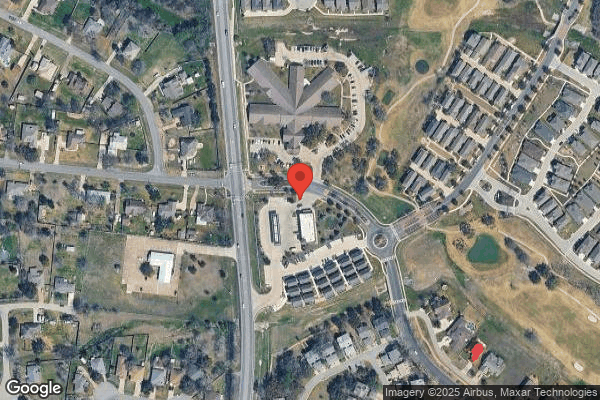
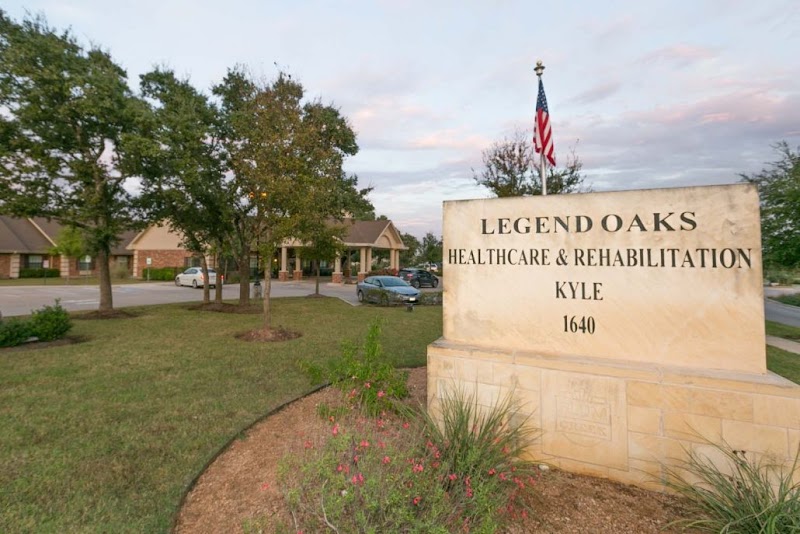
1640 FAIRWAY, KYLE, TX 78640 (512) 268-1003
For profit - Corporation 126 Beds THE ENSIGN GROUP Data: November 2025
Trust Grade
60/100
#510 of 1168 in TX
Last Inspection: September 2024

Within standard 12-15 month inspection cycle. Federal law requires annual inspections.

Overview

Legend Oaks Healthcare and Rehabilitation in Kyle, Texas, has a Trust Grade of C+, indicating it is decent and slightly above average compared to other facilities. It ranks #510 out of 1168 in Texas, placing it in the top half, and #3 out of 6 in Hays County, meaning only two local options are better. The facility is showing an improving trend, with reported issues decreasing from 15 in 2023 to 9 in 2024. Staffing is a mixed bag; it received a below-average rating of 2 out of 5 stars, but the turnover rate is a positive 33%, which is significantly lower than the Texas average. While there have been no fines, there are concerns regarding infection control practices and resident dignity, such as failures to clean medical equipment properly and ensure residents wore clean clothing, which could affect their comfort and health. Overall, while there are notable strengths in staffing stability and improvement in compliance, families should be aware of the ongoing concerns that need addressing.

Trust Score
C+
60/100
In Texas
#510/1168
Top 43%
Safety Record
Low Risk
No red flags
Inspections
Getting Better
15 → 9 violations
Staff Stability
○ Average
33% turnover. Near Texas's 48% average. Typical for the industry.
Penalties
✓ Good
No fines on record. Clean compliance history, better than most Texas facilities.
Skilled Nurses
⚠ Watch
Each resident gets only 21 minutes of Registered Nurse (RN) attention daily — below average for Texas. Fewer RN minutes means fewer trained eyes watching for problems.
Violations
⚠ Watch
26 deficiencies on record. Higher than average. Multiple issues found across inspections.
★★★☆☆
3.0
Overall Rating
★★☆☆☆
2.0
Staff Levels
★★★★☆
4.0
Care Quality
★★★☆☆
3.0
Inspection Score
Stable
2023: 15 issues
2024: 9 issues

The Good

  • 4-Star Quality Measures · Strong clinical quality outcomes
  • Full Sprinkler Coverage · Fire safety systems throughout facility
  • No fines on record
  • Staff turnover below average (33%)

    15 points below Texas average of 48%

Facility shows strength in quality measures, fire safety.

The Bad

3-Star Overall Rating

Near Texas average (2.8)

Meets federal standards, typical of most facilities

Staff Turnover: 33%

13pts below Texas avg (46%)

Typical for the industry

Chain: THE ENSIGN GROUP

Part of a multi-facility chain

Ask about local staffing decisions and management

The Ugly 26 deficiencies on record

Nov 2024 2 deficiencies
CONCERN (D) 📢 Someone Reported This

A family member, employee, or ombudsman was alarmed enough to file a formal complaint

Potential for Harm - no one hurt, but risky conditions existed

Free from Abuse/Neglect (Tag F0600)

Could have caused harm · This affected 1 resident

**NOTE- TERMS IN BRACKETS HAVE BEEN EDITED TO PROTECT CONFIDENTIALITY** Based on observation, interview, and record review, the facility failed to ensure residents were free from abuse for one (Reside...

Read full inspector narrative →
**NOTE- TERMS IN BRACKETS HAVE BEEN EDITED TO PROTECT CONFIDENTIALITY** Based on observation, interview, and record review, the facility failed to ensure residents were free from abuse for one (Resident #1) of four residents reviewed for abuse. The facility failed on 11/07/24 to protect Resident #1 from physical and emotional abuse by Resident #2. Resident #2 screamed at Resident #1 and grabbed her right arm with the history of nondisplaced fracture of triquetrum [cuneiform] bone of the wrist, caused erythema (redness of skin) that lasted for 4 days. This failure could place residents at risk of serious physical and emotional injury and harm. The findings included: Record review of Resident #1's face sheet on 11/20/24 revealed a [AGE] year-old female who was admitted to the facility on [DATE]. Her diagnoses were, Wedge compression fracture of second lumbar vertebra (back bone at lumbar area), Maxillary (upper jaw) fracture, Fracture of tooth, Repeated falls, Alzheimer's disease, Nondisplaced fracture of triquetrum bone (bone on the wrist), right wrist, Insomnia, Hypertension, Muscle weakness, Unsteadiness on feet, Lack of coordination and Cognitive communication deficit. Record review on 11/20/24 of Resident #1's initial MDS assessment, dated 08/30/24 revealed a BIMS of 03 indicating her cognition was severely impaired. Record review on 11/20/24 of Resident #1's care plan dated 08/28/24 indicated : 1.She was at the risk for impaired cognitive function or impaired thought processes r/t cognitive deficits and relevant intervention was, facilitate her wish as she liked to ambulate via wheelchair throughout the facility and liked to look out the Hall 100 door /windows. 2.Potential for a psychosocial well-being problem r/t 11/7/24 altercation with another resident [Resident #2] and had red discoloration to right arm from that and the relevant intervention was, when conflict arises, remove residents to a calm safe environment and allow to vent/share feelings. Record review of Resident #2's face sheet on 11/20/24 revealed a [AGE] year-old female who was admitted to the facility on [DATE]. Her diagnoses were, Dementia, Chronic kidney disease, Hypertension, Chronic pain, Parkinson's disease, Lack of coordination, Anxiety disorder and Cognitive communication deficit. Record review on 11/20/24 of Resident #2's quarterly MDS assessment, dated 08/02/24 revealed a BIMS of 12 indicating her cognition was moderately impaired. Record review on 11/20/24 of Resident #2's care plan dated 08/28/24 indicated she was on an antidepressant medication and the relevant intervention was monitoring for adverse side effects of agitation. Record review of facility investigation report dated 11/08/24 stated it was confirmed that during an incident on 11/07/24 at 3:00pm Resident #2 screamed at Resident #1's face , raised her arm up and grabbed her right arm. During an observation and interview on 11/20/24 at 11.30am Resident #2 was sitting on her bed and playing cards by self. Her room was adjacent to the exit door from hall 100. When asked about the incident that happened on 11/07/24 between her and Resident #1, her mood elevated and became animated . She conversed in a raised voice and stated that Bitch [Resident #1] lived in Hall 400 however wanted to come to hall 100 all the time. Resident #2 stated she was a nuisance and made numerous attempts to get into her room and on few occasions succeeded too. She stated she did not like anyone invading into her privacy. Resident #2 stated, on 11/07/24 in the evening Resident #1 entered her room , stood up on her feet and tried to assault her . Resident #2 stated at that time she pushed her wheelchair away and out of her room. Resident #2 stated she did not touch her body, only the wheelchair. Resident #2 said Resident #1 was in Hall 100 even after the incident and made attempt to enter her room. Resident #2 stated she was on watch for 10 days for a mistake that Resident #1 had done. Resident #2 said she would not hesitate to physically handle anyone as a last resort if anyone intrude into her room. Resident #2 stated she was a rape victim in the past and still had paranoia about intruders as she was not sure about their motives were. During an observation and interview on 11/20/24 at 2:00pm Resident #1 was sitting on her wheelchair, in her room. She was wearing a helmet for fall protection. She appeared as fragile and delicate. She was pleasant and happy in her presentation and interacted in a passionate manner. Resident #1 stated all the staff and residents at the facility were compassionate, friendly, and helpful. When the investigator asked about the incident that occurred between her and Resident #2 on 11/07/24, she stated she did not remember who Resident #2 was or what the incident was. She stated she did not have any complaint about any staff or residents as all of them were lovely people. When asked if she had visited any residents in their room, she stated she did not . She said she liked to look through one of the glass doors at the facility . She said the view from there was very nice and she liked to watch the activities in the nature on that side. She thanked for talking to her and suggested to stay happy and blessed. During an interview on 11/20/24 at 1:00 pm the FM of Resident #1 stated he was aware of the incident . He said the incident occurred when Resident #1 tried to enter Resident #2's room. He said the facility provided best services to Resident #1 however unsure if the facility made sure that Resident #1 would not wander into other residents' rooms or any other unsafe places due to her dementia. He stated he hope another incident would not occur from the same resident as Resident #1 still liked to go to the door next Resident #2's room. He stated he was afraid of her safety if she gets into Resident #2's room due to the lack of observation by the staff. During a telephone interview on 11/20/24 at 2:50pm LVN B stated while she was doing her round about at about 3:00pm in the Hall 100, she heard a scream . She stated she saw Resident #2 raised her arm up, grabbing Resident #1's right arm, and yelling at Resident #1. LVN B stated she did not notice at that time what Resident #1's expression or response was. She said when she arrived at the incident site CNA C was already there trying to deescalate the situation. She stated MD also rushed to the incident site at that time. On 11/20/24 at 3:00pm made a phone call to CNA C and kept a voice message to call back. There was no response as on 11/20/24 at 6:00pm. During a telephone interview on 11/20/24 at 2:40pm MD stated she was in the Hall 100 while the incident occurred. She stated she was rushing to the incident site and saw Resident #1 was pushed out of Resident #2's room by Resident #2 . MD stated Resident #2 was furious and grabbed Resident #1's arm as if she wanted to hurt her . MD stated she observed Resident #1 was upset and was visibly shaking from the commotion. MD stated the situation was deescalated by staff by removing Resident #1 from the incident site. MD stated she visited Resident #1 in her room after about 20 minutes. MD said Resident #1 was resting in her room quietly and appeared peaceful. MD said she examined Resident #1's right arm, the area Resident #2 had grabbed, and it was reddish in color without any open skin. During an interview on 11/20/24 at 1:30pm ADON stated she was the one completed the facility investigation . She stated she and ADM watched the video footage of the incident during the investigation. She stated contrary to what they thought, Resident #1 had not entered Resident #2's room. She said ,on the video it was showed Resident #2 came out of her room yelling and screaming while Resident #1 was attempting to enter her room by opening the door. She stated she also had observed in the video that Resident #2 was grabbing Resident #1's right arm . ADON stated Resident #2 had behavioral concerns and the facility tried to refer her to behavioral health service however Resident #2 and her family declined the referral. ADON stated Resident #1 was a sweet person with no behavioral concerns. She said Resident #1 liked to sit at the exit door at Hall100 and observe the nature outside. ADON stated there was something fascinating for Resident #1 on that side so much so that she wanted to spend good amount of time there. During an interview on 11/20/24 at 4:10pm the ADM stated he watched the video of the incident, and it was showing that Resident #2 grabbing Resident #1's hand during the incident. ADM stated, until watched the video footage, the impression was Resident #1 intruded into Resident #2's room .He said it was clearly shown that Resident #1 did not enter the room however tried to enter the room by pulling the door handle. ADM stated he believed the facility taken all the measures to deescalate the situation and ensuring safety of Resident #1. ADM stated he did not think Resident #1 was physically and emotionally hurt from the incident as the staff intervened at the right time. ADM stated the video was not available as on 11/20/24 as it was overridden by new recordings. Record review of the skin assessment dated [DATE] at 4:17pm reflected : re: altercation- skin intact, red discoloration noted to right arm. Record review of the skin assessment dated [DATE] at 5:36pm reflected : . noted slight discoloration to right arm, no other injuries noted. Record review of the skin assessment dated [DATE] at 6:11pm reflected : Continues with slight discoloration to right arm, denies pain or discomfort. Record review of the skin assessment dated [DATE] at 1:02pm reflected : . noted slight discoloration to right arm, no other injuries noted from recent incident. Record review on 11/20/24 of in-services records since August 2024 revealed there were in-services on 'abuse and neglect' on 08/01/24 and 11/08/24. On 11/08/24 there were in- services conducted on How to responds to resident altercations and identify triggers and what to do when you see residents wanders. Record review of facility's undated policy Investigations of Abuse and Neglect Allegations reflected: .The facility staff will ensure the resident is protected from potential future abuse and neglect while the investigation is being conducted.
CONCERN (E) 📢 Someone Reported This

A family member, employee, or ombudsman was alarmed enough to file a formal complaint

Potential for Harm - no one hurt, but risky conditions existed

Infection Control (Tag F0880)

Could have caused harm · This affected multiple residents

**NOTE- TERMS IN BRACKETS HAVE BEEN EDITED TO PROTECT CONFIDENTIALITY** Based on observation, interview and record review, the facility failed to maintain an infection and prevention control program t...

Read full inspector narrative →
**NOTE- TERMS IN BRACKETS HAVE BEEN EDITED TO PROTECT CONFIDENTIALITY** Based on observation, interview and record review, the facility failed to maintain an infection and prevention control program that included, at a minimum, a system for preventing and controlling infections for 2 of 4 residents (Residents #3 and Resident #4) reviewed for infection control, as indicated by: MA A did not clean and disinfect the blood pressure monitor while using it on Resident #3 and Resident #4 and failed to keep away opened personal drinks from the med cart , on 11/20/24 at 10:25am . This failure could place the residents at risk of transmission of disease and infection. Findings included: Record review of Resident #3's face sheet on 11/20/24 revealed an [AGE] year-old male who was admitted to the facility on [DATE]. His diagnoses were, Orthostatic hypotension, Type 2 diabetes, Hypertension, Lack of coordination, Muscle weakness, Dementia and Cognitive communication deficit. Record review on 11/20/24 of Resident #3's quarterly MDS assessment, dated 09/19/24 revealed a BIMS of 06 indicating his cognition was severely impaired. Record review on 11/20/24 of Resident #3's care plan dated 11/20/24 indicated resident has orthostatic hypotension and hypertension and relevant intervention was monitoring blood pressure daily. Record review of Resident #4's face sheet on 11/20/24 revealed a [AGE] year-old male who was admitted to the facility on [DATE]. His diagnoses were, ,Type 2 diabetes, Chronic pain, Presence of cardiac pacemaker, Lack of coordination, Hypertension, Muscle weakness, Dementia and Cognitive communication deficit. Record review on 11/20/24 of Resident #4's quarterly MDS assessment, dated 10/31/24 revealed a BIMS of 08 indicating his cognition was severely impaired. Record review on 11/20/24 of Resident #3's care plan dated 11/20/24 indicated Resident #3 had blood pressure and it had to be monitored daily. An observation on 11/20/24 at 10:25am , revealed MA A failed to sanitize the blood pressure monitor before using it on Resident #3, in between Resident #3 and Resident #4 and after Resident #4. MA A took the blood pressure monitor from the top of the med cart and without sanitizing it she took the blood pressure of Resident #3. MA A then moved on to Resident #4 and took his blood pressure with the same blood pressure monitor without sanitizing it. After completing the measurement on Resident #4, without cleaning the blood pressure monitor, she kept it on the top of the med cart. Observation of the med cart revealed there was an opened energy drink and a water bottle at the top of the cart. It was observed MA A taking sip from the bottles while she was administering medications to residents. During an interview on 11/20/24 at 10:50am , MA A stated she was working at the facility more than a year and started working as MA recently. She said it was essential to minimize the risk of spreading contagious diseases by sanitizing the blood pressure cuff in between the residents . MA A stated she was aware of the facility policy of should not have personal food items and drinks on the med cart. She said she did not know why staff should not keep food and drinks on the med cart and use it while administering medications. MA A stated she received in services on infection control however did not remember the exact date. Review of facility policy 'Infection Prevention and Control program revised in December ,2023 reflected : The infection prevention and control program is comprehensive in that it addresses detection, prevention and control of infections among residents and personnel. (Personnel covers staff, volunteers, visitors, and other individuals providing services under a contractual agreement). 2. Process Surveillance is the review of practices by staff directly related to resident care. Some considerations for this process may Include, but are not limited to: a. Hand hygiene b. Appropriate use of personal protective equipment (PPE) . e. Infection control practices during the provision of resident care and treatments f. Managing bloodborne pathogen exposure g. Cleaning and disinfection production and procedures for environmental surfaces and equipment h. Appropriate use of transmission-based precautions.
Sept 2024 7 deficiencies
CONCERN (D)

Potential for Harm - no one hurt, but risky conditions existed

Deficiency F0578 (Tag F0578)

Could have caused harm · This affected 1 resident

**NOTE- TERMS IN BRACKETS HAVE BEEN EDITED TO PROTECT CONFIDENTIALITY** Based on interview and record review, the facility failed to ensure the residents rights to request, refuse, and/or discontinue ...

Read full inspector narrative →
**NOTE- TERMS IN BRACKETS HAVE BEEN EDITED TO PROTECT CONFIDENTIALITY** Based on interview and record review, the facility failed to ensure the residents rights to request, refuse, and/or discontinue treatment, to participate in or refuse to participate in experimental research, and to formulate an advance directive for 1 of 5 residents (Resident #49) reviewed for advanced directives: The facility failed to ensure Resident #49's out of hospital do-not-resuscitate (OOH-DNR) form included all required signatures including a second signature from the resident, witnesses, and physician. This failure could place residents at-risk of having their wishes dishonored or delay necessary medical treatment or intervention. Findings included: Review of Resident #49's face sheet dated 09/05/2024 revealed Resident #49 was admitted on [DATE] with diagnoses of unspecified fracture of right femur (injury between to the bone between the hip and knee), unspecified sequelae of cerebral infarction (conditions as result of stroke), unspecified atrial fibrillation (irregular heartbeat), and dysphagia (difficulty swallowing). Review of Resident #49's care plan dated 07/21/2024 revealed the focus I have elected to be DNR code status. Interventions included to review code status quarterly and as needed with resident. Review of physician's orders for Resident #49 revealed DNR/Do Not Attempt Resuscitation order dated of 09/04/2024. Review of Resident #49's clinical record revealed she had an OOH-DNR form dated 06/06/2019. Further review revealed that under the section all persons who have signed above must sign below, acknowledging that this document has been properly completed there were no signatures from the resident/proxy, witnesses/notary or physician. Review of Resident #49's IDT care plan review dated 08/07/2024 revealed that it was reviewed Resident #49 had a DNR in place and wished to remain DNR at time of the review. During an interview on 09/04/2024 at 3:09 PM with LVN G, she stated that residents are asked when they arrive if they have a DNR in place or if they would like to put one in place if they are cognitive enough to sign. She stated that if they have a DNR form and it is filled out, the nurse reviews it to ensure it has witness signatures and is signed by the doctor. LVN G stated that she looked at the form to see if all the necessary spaces are filled out. LVN G was observed viewing Resident #49's DNR form and stated that it was not valid due to missing second signature. LVN G stated that the nurse is supposed to ensure the form is filled out prior to putting the order in. She stated that the DON, ADON and SW usually view the form before it is put in the resident's record. During an interview on 09/04/2023 at 3:18 PM, LVN I stated that the nurse and DON verify that a DNR is complete. She stated that when a resident comes in with a form that is completed copies are provided to the physician and medical records for review. LVN I was observed viewing Resident #49's DNR and stated that it was not valid, and it was missing signatures. LVN I stated that there is a potential of the resident's wishes not being met due to the form being incomplete. During an interview on 09/05/2024 at 11:14 AM, she stated that social services and nursing are responsible for ensuring advanced directives are valid. She stated that a nurse should have reviewed them, and social services is trained to review any advanced directives prior to the document going into the resident's chart. She stated that any advanced directive should have been completed filled out before it was put in the resident's chart. She stated that nurses were trained to recognize that a DNR should be filled out completely before it is excused. She stated that Resident #49's DNR was missing signatures and not considered valid. During an interview on 09/05/2024 11:31 AM with SW, she stated that she has witnessed advanced directives and does also assist with sending them to the doctor to be signed. She stated that she has reviewed DNRs to ensure it complete and will review the document if medical records sent it to her as well. She stated that advanced directives, including DNRs, are audited about every 6 to 8 weeks. She stated that for a DNR it required the name of the resident and signature, two witness signatures and printed names and the doctor signature. She stated that witnesses, resident, and doctor are required to sign twice. She stated that a DNR would not be considered valid if it was missing second signatures. During an interview on 09/05/2024 at 2:19 PM, the ADM stated that he expected that advanced directives are accurately completed prior to the document being entered in the resident charge. He stated that a complete chart review was completed after a resident was admitted ensuring that advanced directives that were provided were accurate. He stated that if a DNR is not filled out correctly then a patient should have been treated as a full code until it is corrected and stated that there were a lot of things that could potentially have happened or nothing at all. Review of facility policy titled Advanced Directives and Associated Documentation with revision date of 12/2023 reflected it is the policy of this facility to implement the resident decisions and directives that are in compliant with State and/or Federal Law and the policies of this facility. Further review revealed that it is the facility's policy to review the Advanced Directive to validate the document reflects the resident choices and that the document is signed and dated by the resident or responsible agent. Review of Health and Safety Code 166.083(7)(13) revealed that a OOH-DNR must contain a statement at the bottom of the document, with places for the signature of each person executing the document, that the document has been properly completed.
CONCERN (D)

Potential for Harm - no one hurt, but risky conditions existed

ADL Care (Tag F0677)

Could have caused harm · This affected 1 resident

**NOTE- TERMS IN BRACKETS HAVE BEEN EDITED TO PROTECT CONFIDENTIALITY** Based on observation, interview, and record review, the facility failed to ensure a resident who was unable to carry out activit...

Read full inspector narrative →
**NOTE- TERMS IN BRACKETS HAVE BEEN EDITED TO PROTECT CONFIDENTIALITY** Based on observation, interview, and record review, the facility failed to ensure a resident who was unable to carry out activities of daily living received the necessary services to maintain good grooming and personal hygiene for 1 of 8 residents (Resident #34) reviewed for ADL care. The facility failed to ensure Resident #34's fingernails were clean and smooth from 09/03/24 to 09/05/24. This failure placed residents at risk of skin tears and infection. Findings included: Review of the undated face sheet for Resident #34 reflected an [AGE] year-old female admitted to the facility on [DATE]. Her diagnosis included dementia, lack of coordination, abnormal posture, traumatic subdural hemorrhage with loss of consciousness, muscle weakness, malaise (a general feeling of discomfort, illness, or uneasiness whose exact cause is difficult to identify), cognitive communication deficit, need for assistance with personal care. Review of the quarterly MDS for Resident #34 dated 05/29/24 reflected a BIMS score of 99, indicating she was unable to complete the interview. Review of the section on functional abilities and goals reflected she required moderate/partial assistance in activities of personal hygiene. Review of the care plan for Resident #34 dated 08/19/24 reflected the following: [Resident #34] is at risk for ADL Self Care Performance Deficit. Will maintain current level of function in: Bed Mobility, Transfers, Eating, Dressing, Grooming, Toilet Use and Personal Hygiene; ADL Score through the review date. PERSONAL HYGIENE ROUTINE: requires extensive staff participation for personal hygiene. Review of the CNA documentation system reflected Resident #34 received assistance with personal hygiene at 11:18 AM on 09/04/24 by CNA E. Review of the CNA documentation system reflected no nail care was documented for Resident #34 from 08/07/24-09/05/24. During an interview on 09/05/24 at 11:35 AM, CNA E stated Resident #34 was very clingy and liked to grab and snatch everything, so her fingernails often got dirty. CNA E stated Resident #34 could be combative, but not frequently. She stated they tried to get to the fingernails, but there was sometimes not enough time. She stated she did not think nail care was assigned to a particular nursing person. She stated she had not noticed that resident #34's fingernails were long, jagged, or dirty. During an interview on 09/05/24 at 01:07 PM, LVN G stated there were no showers scheduled Sundays, and that was when nail care should have been done. She stated nails should have also been cleaned as needed and in resident showers. LVN G stated some residents were combative, and the CNAs sometimes got scared and came to her for help. She stated she addressed combativeness or refusals by offering residents something different, someone different to care for them, or distracting them with snacks, treats, or music. She stated she monitored to ensure nail care was done by doing rounds, but she mostly relied on the aides to tell her if something needed her attention. LVN G stated no combativeness or refusals by Resident #34 had been reported to her. She stated the potential negative outcome of having long, dirty, jagged fingernails, was Resident #34 could scratch herself or someone else. During an interview on 09/05/24 at 01:53 PM, the ADON stated nail care was delegated to the CNAs as long as the resident did not have diabetes. She stated the expectation was if staff saw long, jagged, or dirty nails, they should be addressed right away. She stated the person responsible for monitoring to ensure nail care was done was the charge nurse. She stated the potential negative outcome to residents for not providing their nail care was bacterial infection and skin alteration. During an interview on 09/05/24 at 02:14 PM, the DON stated she monitored nail care by going around and checking nails, tells CNAs to check nails, and telling nurses to check nails. She stated if residents refused, they tried to send someone back to try again. The DON stated the charge nurses and CNAs were responsible for ensuring nails were done. The DON stated a potential negative impact of not keeping up with nail care was residents could have a skin alteration or infection. During an interview on 09/05/24 at 02:42 PM, the ADM stated they did rounds to ensure nail care had been performed. He stated nursing was responsible for ensuring nail care was done. He stated a potential negative outcome of nail care not being done was the residents could hurt themselves. Review of facility policy dated 05/2007 and titled ADLs reflected the following: Nursing service staff cares for its residents in a manner and in an environment that promotes maintenance or enhancement of each resident's quality of life and promotes care for residents in a manner and in an environment that maintains or enhances each resident's dignity, and respect in recognition of his or her individuality. Each resident receives assistance as needed to manage their physical needs, which includes personal hygiene, grooming, dressing, toileting, transferring, and ambulating.
CONCERN (D)

Potential for Harm - no one hurt, but risky conditions existed

Dental Services (Tag F0791)

Could have caused harm · This affected 1 resident

**NOTE- TERMS IN BRACKETS HAVE BEEN EDITED TO PROTECT CONFIDENTIALITY** Based on observation, interview and record review, the facility failed to assist residents in obtaining dental services for 2 of...

Read full inspector narrative →
**NOTE- TERMS IN BRACKETS HAVE BEEN EDITED TO PROTECT CONFIDENTIALITY** Based on observation, interview and record review, the facility failed to assist residents in obtaining dental services for 2 of 5 (Resident #46, Resident #74) residents reviewed for routine dental services in that: The facility failed to assist Resident #46 in obtaining dental services after learning that her dentures were uncomfortable. The facility failed to assist Resident #74 in obtaining dental services after learning her dentures were uncomfortable. These failures could place residents with dental care concerns at risk for pain, declined oral health, weight loss and decreased quality of life. Findings included: 1. Review of Resident #46 face sheet dated 09/05/2024 revealed Resident #46 was admitted on [DATE] with diagnoses of other sequelae of cerebral infarction (conditions as result of stroke), dysphagia (difficulty swallowing, hemiplegia and hemiparesis following unspecified cerebrovascular disease (paralysis and weakness in part of body following stroke). Review of Resident #46's annual MDS dated [DATE] revealed a BIMS score of 13 which indicated she was cognitively intact. Review of Resident #46's last IDT care plan review dated 07/10/2024 revealed under Dietary Plan of Care (Dental, Oral, and Hydration and Nutritional Status) we will try to incorporate more soft foods as her (Resident #46) dentures have been bothering her Observation on 09/04/2024 at 8:50 AM, revealed Resident #46 had white and grey build up on her bottom teeth near her gums. 2. Review of Resident #74's face sheet dated 09/05/2024 reflected Resident #74 was admitted on [DATE] with diagnoses of End Stage Renal Disease (terminal illness when kidneys can no longer function properly), Type 2 Diabetes Mellitus (a chronic condition that causes high blood sugar levels due to a lack of insulin or insulin resistance), and Peripheral Vascular Disease (a chronic in which blood flow is reduced to organs and limbs outside of the heart and brain). Review of Resident #74's quarterly MDS dated [DATE] reflected a BIMS score of 15 which indicated that she was cognitively intact. Observation on 09/03/2024 at 2:14 PM, revealed resident had no teeth (natural or dentures) in her mouth. During an interview on 09/03/2024 at 2:15 PM, Resident #76 stated that she needed to get her bottom dentures fixed. Resident #76 stated that a CNA dropped her dentures in the skin and broke them. She stated that it had been a few months ago. During an interview on 09/04/2024 at 8:50 AM, Resident #46 she stated that she has upper dentures and stated that she needed to see a dentist, really bad. She stated that she only has upper dentures and that her bottom teeth were her own. She stated that sometimes her teeth hurt and stated that her dentures have been bothering her. She stated that she has asked to see a dentist two or three times. During an interview on 09/04/2024 at 1:57 PM, the ADM stated that he does not have record of Resident #46 seeing a dentist in the last year. During an interview on 09/04/2024 at 2:56 PM, SW stated that she does not believe Resident #46 has seen a dentist tin the last year. She stated that the dentist come at least once a month. She stated that the dentist usually lets her know a week in advance of who would be seen. She stated that she knew Resident #46 wanted to get new dentures and she believed the dentist told her that it may not be possible. She stated that that may have been two or three months ago. SW stated she was not present during the last care plan meeting and was unsure why Resident #46 was not referred to the dentist if she had concerns about her dentures then. She stated that the social worker is responsible for sending referrals to the dentist. She stated she also sent referrals to the dentist and would send it within a day. During an interview on 09/04/2024 at 3:01 PM, SW stated that she did not see any documentation that Resident #74 had been seen by the dentist in the last year. During an interview on 09/04/2024 at 3:05 PM, CNA J stated that the oral care that is provided to residents depends on their needs. She stated that if a resident can brush their teeth on their own, they may just help them set up. She stated that if she noticed a resident's teeth or denture was broken, she would report it to the nurse. She stated that she did not believe Resident #74 had dentures, but she stated that usually Resident #74 does her own oral care. During an interview on 09/04/2024 at 3:07 PM, CNA J stated that Resident #46 has top dentures and that her dentures get taken out at night and sanitized. She stated that she Resident #46 were to complain about her dentures she would let a nurse know. CNA J stated that she had not noticed any build up on Resident #46's teeth. During an interview on 09/05/2024 at 9:58 AM, CNA E she stated that some residents can do their own oral care in the mornings. She stated that some require set up such as getting the toothbrush ready with toothpaste. She stated that if residents cannot do their own oral care, they are offered more assistance. She stated that Resident #74 can do so and believes she has her own teeth. During an interview on 09/05/2024 at 9:59 AM, CNA E stated that Resident #46 has dentures but had a hard time with the dentures fitting. She stated that half of the time she has difficult time with the dentures because they do not fit. She stated that she feels her gums are shaped differently that the dentures. She stated that Resident #46 had top dentures. She stated that Resident #46 has told her she wanted to see a dentist and she has overheard her talking with her family about wanting to see a dentist. CNA E stated that she did not let anyone know that Resident #46 wanted to see the dentist because she was unsure if the facility provides dental services or if the resident's family would provide it. She stated that if she noticed dentures were broken or if the resident was having pain, she would let the nurse know. During an interview on 09/05/2024 at 10:09 AM, CNA F she stated that almost all residents need assistance with oral care. She stated that Resident #46 has dentures and can brush her own teeth. She is not aware if Resident #46 has complained about her teeth but if she noticed broken dentures she would report to the nurse. During an interview on 09/05/2024 at 10:16 AM, LVN G stated that Resident #74 performs her own oral care and can put her dentures on and take them off but sometimes prefers to have her dentures off. She stated that when she asked Resident#74 if she wanted to wear her dentures Resident#74 would reply are you crazy. She stated that Resident #74 sometimes asked for soft feeds. She stated that she has not asked Resident #74 if she needed to see a dentist. During an interview on 09/05/2024 at 10:17 AM, LVN G stated that Resident #46 is able to do her own oral hygiene and has top dentures and her own teeth on the bottom. She stated that if a resident were to complain about broken teeth or dentures, they could offer softer food. LVN G stated that normally the social worker is in charge or dental appointments, but ADON can help too. During an interview on 09/05/2024 at 11:17 AM, the DON stated that if there is an emergency the resident can be sent out for emergency dental. She stated that there are some residents that had insurance that dental services were not covered, or families elect to have the insurance that do not cover dental services. She stated that if a CNA overheard a resident say that they needed to see a dentist they should tell a nurse and the nurse should have notified the DON or NP. She stated that a dental would be made depending on if the complaint was a one-time complaint or if it was consistent. She stated that she would have expected a CNA to tell a nurse if they dropped dentures and were broken. She stated that Resident #74 is very vocal, and she had not heard of issues with her dentures. She stated that she believes Resident #46 family was going to take her to the dentist. During an interview on 09/05/2024 at 2:15 PM, the ADM stated that referring a resident to the dentist would depend on their insurance coverage. He stated that the facility would need to investigate what caused the dentures to break and if the facility caused the issue, then the facility would pay to get them fixed. He stated that the social worker is the person who sets up dental services. He is unsure why Resident #46 had not seen a dentist and stated that she may have potentially had no coverage and he believed the family was going to take Resident #46 to the dentist. Review of facility dental record for last year revealed Resident #46 and Resident #74 had not been seen by the dentist. Review of Resident #46 progress notes revealed no indication that family had planned to take her to see a dentist or that the facility offered to refer her to the dentist. Review of Resident #74 progress notes revealed no indication that she was offered to see a dentist by the facility despite her asking for softer foods and preferring not to wear her dentures. Review of facility policy titled Dental Services with revision date of 01/2022 revealed it is the policy of this facility to ensure that its residents who require dental services on a routine or emergency basis have access to such services without barrier. It is likewise the policy of the Facility to repair or replace the dentures of a resident except in those situations where the loss or damage directly results from the action of an alert or oriented resident who is responsible for his/her own medical decisions. Further review revealed that the facility will investigate in the event a resident experiences damage to his/her dentures to determine financial responsibility for replacement or repair. For Medicare and Medicare residents, the facility will ensure that needed/emergency dental services are available and may bill or inform resident a deduction for incurred expense may occur. Further review revealed if a resident is unable to pay for dental services the facility will attempt to find alternative funding so that the resident may receive the services to meet their dental needs and maintain their highest practicable level of well-being. Facility policy reflected the facility will promptly (within three business days) refer the resident for dental services and if services does not occur within three business days the facility will documentation actions taken to ensure resident can eat, drink and communication and document the nature of the extenuating circumstances which led to the delay.
CONCERN (D)

Potential for Harm - no one hurt, but risky conditions existed

Deficiency F0919 (Tag F0919)

Could have caused harm · This affected 1 resident

**NOTE- TERMS IN BRACKETS HAVE BEEN EDITED TO PROTECT CONFIDENTIALITY** Based on observations, interviews, and record review, the facility failed to be equipped to allow residents to call for staff th...

Read full inspector narrative →
**NOTE- TERMS IN BRACKETS HAVE BEEN EDITED TO PROTECT CONFIDENTIALITY** Based on observations, interviews, and record review, the facility failed to be equipped to allow residents to call for staff through a communication system which relayed the call directly to a centralized staff work area for 1 of 15 residents (Resident #459) reviewed for call lights. The facility failed to ensure Resident #459's emergency call button in the bedroom was operating properly. This failure could place residents at risk of injury, pain, and hospitalization. The findings included: Record review of a face sheet dated 8/25/2024 for Resident #459 indicated she was a [AGE] year old female admitted [DATE] with diagnoses of fracture of the right femur (broken leg), anemia (low red blood cells in the blood), and acute kidney failure. Record review of a MDS dated [DATE] for Resident #459 indicated she had a BIMS score of 15 indicating she had no cognitive impairment. Record review of a care plan dated 8/26/2024 for Resident #459 indicated she was at risk for falls and was dependent on staff for assistance. During an interview and observation on 9/03/2024 at 10:35 a.m. at Resident #459's room, Observation reflected the bedroom call button in Resident #459's room was not functioning after being pressed twice by resident. The light outside of the room was not illuminated to alert staff that the resident may need assistance . During an interview with Resident #459 stated I feel staff is too young and doesn't follow through timely. When call light pressed takes a long time. During an interview on 9/3/24 at 12:34 p.m., CNA H stated she observed and verified the call light was not working. She stated the call light had worked earlier that morning but was not working at the time of observation. She verified that the potential for harm towards the resident could be an injury, pain or hospitalization. During an interview on 9/3/24 at 12:59 p.m., the maintenance director stated the call light wires were not functioning properly and were replaced upon discovery. He stated the issue was fixed and that the call light was functioning properly. During an interview on 9/4/24 at 9:26 a.m., the DON stated her expectation is to have call lights answered timely and functioning. She stated that malfunctioning call light system could place the resident at risk of not having their needs met. During an interview on 9/5/24 at 2:39 p.m., the Administrator stated It is my expectation that resident call lights be functioning at all times. There could be an urgent resident need that needs to be addressed. He also stated the entire staff is responsible for ensuring call lights are functioning properly. Record review of maintenance logs dated 7/3/24 and 8/22/24 show functioning bedroom call light tests in Resident #459's room. Record review for undated policy titled, Call Light/Bell, indicated, Answer the light/bell within a reasonable time. If the call light/bell is defective, immediately report this information to the unit supervisor.
CONCERN (E)

Potential for Harm - no one hurt, but risky conditions existed

Resident Rights (Tag F0550)

Could have caused harm · This affected multiple residents

**NOTE- TERMS IN BRACKETS HAVE BEEN EDITED TO PROTECT CONFIDENTIALITY** Based on observation, interview, and record review, the facility failed to ensure the resident's right to a dignified existence ...

Read full inspector narrative →
**NOTE- TERMS IN BRACKETS HAVE BEEN EDITED TO PROTECT CONFIDENTIALITY** Based on observation, interview, and record review, the facility failed to ensure the resident's right to a dignified existence for 2 of 8 residents (Residents #34 and #67) reviewed for dignity. The facility failed to ensure Resident #34 was wearing clean clothing throughout the day on 09/04/24 and that Resident #67 was wearing clean clothing throughout the day on 09/03/24 and 09/04/24. This failure placed residents at risk of embarrassment and a loss of dignity. Findings included: 1. Review of the undated face sheet for Resident #34 reflected an [AGE] year-old female admitted to the facility on [DATE]. Her diagnoses included dementia, lack of coordination, abnormal posture, traumatic subdural hemorrhage with loss of consciousness, muscle weakness, malaise, cognitive communication deficit, need for assistance with personal care. Review of the quarterly MDS for Resident #34 dated 05/29/24 reflected a BIMS score of 99, indicating she was unable to complete the interview. Review of the section on functional abilities and goals reflected she was completely dependent on staff for upper and lower body dressing and moderate/partial assistance in activities of personal hygiene. Review of the care plan for Resident #34 dated 08/19/24 reflected the following: [Resident #34] is at risk for ADL Self Care Performance Deficit. Will maintain current level of function in: Bed Mobility, Transfers, Eating, Dressing, Grooming, Toilet Use and Personal Hygiene; ADL Score through the review date. PERSONAL HYGIENE ROUTINE: requires extensive staff participation for personal hygiene. DRESSING: Requires extensive assistance to dress. Review of the CNA documentation system reflected Resident #34 received assistance with dressing and personal hygiene at 11:18 AM on 09/04/24 by CNA E. Observation on 09/04/24 at 08:39 AM revealed Resident #34 in a tilted-back wheelchair wearing a t-shirt with a popular cartoon character on it. The front of the shirt was wet with thick yellow stains running down. Resident #34 did not respond to efforts to interview her. Observation on 09/04/24 at 12:59 PM, revealed Resident #34 was sitting in her wheelchair at a table in the dining room. She was wearing the same dirty t-shirt, though it was no longer visibly wet. She did not respond to efforts to interview her. Observation on 09/04/24 at 03:04 PM, revealed Resident #34 lying in bed asleep and wearing the same dirty t-shirt. 2. Review of the undated face sheet for Resident #67 reflected a [AGE] year-old male admitted to the facility on [DATE]. His diagnoses included Parkinson's disease with dyskinesia (abnormality or impairment of voluntary movement), dementia, malaise (a general feeling of discomfort, illness, or uneasiness whose exact cause is difficult to identify), lack of coordination, muscle, weakness, abnormal posture, cognitive communication deficit, aphasia, and need for assistance with personal care. Review of the quarterly MDS for Resident #67 dated 07/01/24 reflected a BIMS score of 10, indicative moderately impaired cognition. The section on functional abilities and goals reflected he required substantial/maximal assistance with upper body dressing and was totally dependent on staff for lower body dressing. Review of the care plan for Resident #67 dated 08/27/24 reflected the following: I have ADL Self Care Performance Deficit r/t impaired mobility, weakness. Will maintain current level of function in (SPECIFY) Bed Mobility, Transfers, Eating, Dressing, Grooming, Toilet Use and Personal Hygiene; ADL Score) through the review date. DRESSING: Requires extensive staff participation to dress. Review of the CNA documentation system reflected Resident #67 received assistance with dressing and personal hygiene at 11:24 AM on 09/04/24 by CNA F. Observation on 09/03/24 at 10:02 AM, revealed Resident #67 sitting in his wheelchair in his room with a plastic clothing protector around his neck that had lots of food on it. There was also food and moisture on his shirt behind the clothing protector. He did not respond verbally but made eye contact. Observation on 09/03/24 at 11:30 AM, revealed Resident #67 in his room, still wearing the dirty clothing protector and dirty shirt. Observation on 09/03/24 at 02:48 PM, revealed Resident #67 in his bed, still wearing the dirty shirt but no longer wearing the clothing protector. During an interview on 09/03/24 at 03:09 PM, a FM for Resident #67 stated the only problem she had with the facility was they did not clean his bib or change his pants and clothing when they were dirty from his meals. She stated he wanted to eat independently, and that was great, but he generally made a mess, and the staff often left him that way. The FM stated the issue had been reported to the charge nurse and management, but it continued to occur. Observation on 09/04/24 at 12:51 PM, revealed Resident #67 was wearing a long-sleeved cotton t-shirt and shorts, and there was food and moisture that had spilled down the entire right front half of shirt and shorts. Observation on 09/04/24 at 03:04 PM revealed Resident #67 still wearing the shirt and shorts with food and liquid on his shorts and shirt. Still in his clothing protector. During an interview on 09/05/24 at 11:35 AM, CNA E stated Resident #34 could be combative, but not frequently. CNA E stated they changed her clothes if they became dirty. She stated she had not noticed Resident #34's clothes were dirty on 09/04/24. CNA E stated she was supposed to change resident's clothing if they became dirty. CNA E stated Resident #67's family always wanted the clothing protector on him. She stated he got dirty from eating and they should have changed his clothes if he was dirty or wet as well as cleaned the clothing protector if it got dirty. She stated she had not helped him eat the last couple of days and his primary aide was CNA F. During an interview on 09/05/24 at 12:55 PM, CNA F stated she had not noticed anyone with dirty clothing on. She stated she saw Residents #34 and #67 get dirty sometimes. She stated she had not seen that either of them was dirty on 09/04/24, and she did not work on 09/03/24. She stated she was supposed to change residents if their clothing became dirty. During an interview on 09/05/24 at 01:07 PM, LVN G stated if residents spilled food during meals, the staff should have changed them as soon as the meal was over. She stated Resident #67 often had food or saliva on his clothes, and his family wanted his clothing protector on all the time when he was in his chair. She stated Resident #34 also sometimes got food on herself, because grabbed at everything she could. She stated she had not noticed long stretches of Residents #34 and #67 on 09/04/24, and she had not worked on 09/03/24. She stated they should have been changed into clean clothing right after their meals unless they refused, and if they refused, it should have been documented and reported to her. She stated the potential impact of sitting in a food-stained shirt was that the resident's dignity could have been compromised. During an interview on 09/05/24 at 01:53 PM, the ADON stated her expectation of when residents were helped to change clothing when they became dirty, was that they be changed when they went back to their rooms after their meals before they did anything else. She stated the charge nurse was responsible for monitoring to ensure dirty clothes were changed. The ADON stated a potential negative impact of the clothing not being changed was the resident would not feel clean. During an interview on 09/05/24 at 02:14 PM, the DON stated she monitored to ensure residents were changed after their clothing became dirty with food by doing rounds and checking residents. She stated the charge nurse, the ADON, and she were all responsible for ensuring residents were in clean clothing. She stated the potential negative impact of residents sitting in dirty clothes was they could be embarrassed. During an interview on 09/05/24 at 02:42 PM, the ADM stated residents who became dirty during meals needed to be changed right after the meal. He stated the CNAs had hands on responsibility and the nurses needed to be checking to make sure it was done. He stated the rest of the management team also had some responsibility to look out for people and make sure their clothes were clean. He stated a potential negative impact of the failure was that the residents could feel they were being looked at as dirty people. He stated he would not want to be looked at that way. Review of facility policy dated 2023 and titled Resident Rights reflected the following: As a resident of this nursing facility, you have the right to a dignified existence, self-determination, and communication with and access to persons and services inside and outside of the facility. You have the right to exercise your rights without interference, coercion, discrimination, or reprisal from the facility as a resident of the facility and as a citizen or resident of the United States. You have the right to be treated with respect and dignity, including the right to reside and receive services in the facility with reasonable accommodation of your needs and preferences except when to do so would endanger your or other residents' health or safety.
CONCERN (E)

Potential for Harm - no one hurt, but risky conditions existed

Deficiency F0583 (Tag F0583)

Could have caused harm · This affected multiple residents

**NOTE- TERMS IN BRACKETS HAVE BEEN EDITED TO PROTECT CONFIDENTIALITY** Based on observations, interviews, and record review the facility failed to ensure resident rights for personal privacy for 4 of...

Read full inspector narrative →
**NOTE- TERMS IN BRACKETS HAVE BEEN EDITED TO PROTECT CONFIDENTIALITY** Based on observations, interviews, and record review the facility failed to ensure resident rights for personal privacy for 4 of 10 residents (Resident #5, Resident #14, Resident #92 and Resident #459) reviewed for personal privacy. The facility failed to knock on Residents #5, #14, #92 and #459's room when going into the residents' rooms. The deficient practice could affect all residents right to privacy in the facility and cause the resident to feel like their privacy was being invaded or the facility was not their home. Findings included: Review of Resident #5's Face Sheet dated 09/05/2024 revealed she was a [AGE] year-old female who was admitted to the facility on [DATE]. Resident #5's diagnoses included closed fracture with routine healing, fall, type 2 diabetes mellitus with hyperglycemia (high blood sugar), heart failure, hypertension (high blood pressure), counseling, muscle weakness, dysphagia (difficulty swallowing), cognitive communication deficit (problems with communication), Asthma, unsteadiness on feet, abnormalities of gait and mobility, need for assistance with personal care, and personal history of respiratory disease. Record review of Resident #5's Quarterly MDS dated [DATE] revealed Resident #5 had a BIMS score of 15 indicating resident understood and could make self-understood some all the time. Review of Resident #14's Face Sheet dated 09/05/2024 revealed she was an [AGE] year-old female who was admitted to the facility on [DATE]. Resident #14's diagnoses included dementia (memory, thinking, difficulty), bipolar (extreme mood swings), major depressive disorder, osteoporosis (disease that weakens the bones and make them more likely to break), stiffness of ankles, abnormal posture, need for assistance with personal care, reduced mobility, lack of coordination, cognitive communication deficit (problems with communication), muscle weakness, dysphagia (difficulty swallowing), stiffness of hip and knee and dementia (memory, thinking, difficulty). Record review of Resident #14's Quarterly MDS dated [DATE] revealed that Resident #14 had a BIMS score of 09 indicating the resident could understand and make self-understood most of the time. Review of Resident #92's Face Sheet dated 09/05/2024 revealed she was a [AGE] year-old female who was admitted to the facility on [DATE]. Resident #92's diagnoses included intraspinal abscess and granuloma (rare but serious infection in the spine), pulmonary embolism without acute cor pulmonale (blood clot in the lungs without difficulty breathing), type 2 diabetes mellitus with other specified complications (high blood sugar), morbid obesity, paroxysmal atrial fibrillation (irregular heart beat that comes and goes), hyperlipidemia (high cholesterol), thrombophilia (blood disorder that causes clotting), hypertension (high blood pressure), constipation, muscle weakness, dysphagia (difficulty swallowing), cognitive communication deficit (problems with communication), reduced mobility, need for assistance with personal care, and cardiac defibrillator (detects and stops irregular heartbeats). Record review of Resident #92's Quarterly MDS dated [DATE] revealed that Resident #92 had a BIMS score of 15 indicating the resident could understand and make self-understood all the time. Review of Resident #459's Face Sheet dated 09/05/2024 revealed she was an [AGE] year-old female who was admitted to the facility on [DATE]. Resident #459's diagnoses included fracture of the right hip, anemia (not enough healthy red blood cells), and kidney failure. Record review of Resident #459's Quarterly MDS dated [DATE] revealed that Resident #459 had a BIMS score of 15 indicating the resident could understand and make self-understood all the time. Observation of meal tray pass on 09/03/2024 at 1:08 p.m., revealed that LVN A opened Resident #14's door and just walked in without knocking. Observation of meal tray pass on 09/04/2024 at 12:55 p.m., revealed that cna B did not knock on Resident #5, Resident #92, and Resident #459's door before entering the room. An interview with CNA B on 09/05/2024 at 9:15 a.m., revealed that she had been trained on resident rights. She stated that the policy for knocking was staff were to knock and always ask permission to enter. She said that staff were expected to knock on the residents door all the time. She also said if staff did not knock on the resident's door the resident may feel annoyed or upset. She said she did not knock on the residents doors because she is used to them, and they are used to her, and it was just a habit. She also said that even if the resident is used to her, she should have knocked. An interview with LVN A on 09/05/2024 at 9:22 a.m., revealed she had been trained on resident rights. She stated the policy was that all staff were to knock and wait to get an answer then announce yourself before entering. She said all staff were supposed to knock before going into the resident's room. She said that if staff do not knock the resident may get upset or it may surprise the resident. She also stated that she did not know why she did not knock on the resident's door. She stated that she may have been rushing to get their blood sugar before the resident had their lunch. An interview with the DON on 09/05/2024 at 10:46 a.m., revealed she had been trained on resident rights. She stated that the policy was that all staff were required to knock on the residents door before going into the resident's room. She said that if staff do not knock on the resident's door they may get upset. She said that staff may have gotten distracted or got task oriented and forgot. An interview with the ADM on 09/05/2024 at 2:41 p.m., revealed he had been trained on resident rights. He stated he did not have a policy for knocking on the residents' doors, but his expectation was that all staff knock before entering. He said that if staff did not knock on the resident's door staff could surprise the resident. He also said that depending on the resident they may get upset about staff not knocking. He said he did not know why the staff were not knocking on the residents doors. An interview with Resident #5 on 09/05/2024 at 12:31 p.m., revealed that staff do knock sometimes before entering her room. She said that it did not bother her if staff did not knock. An interview with Resident #14's roommate on 09/05/2024 at 12:20 p.m., revealed Resident #14 went to the dining room for lunch. She stated that staff usually knock on her door before entering. She said there are times that staff do not knock and that she would like for them to knock. An interview with Resident #92 on 09/05/2024 at 12:42 p.m., revealed that staff knock on the resident's door most of the time before entering. She said that she would like for staff to knock all the time. An interview with Resident #459 on 09/05/2024 at 12:36 p.m., revealed that staff knock on the door most of the time. She stated there are times when staff do not knock. She stated she would like staff to knock all the time. Record review of Resident Rights dated October 4, 2016, revealed residents have the right to be treated with dignity and respect. The resident also has the right to personal privacy.
CONCERN (E)

Potential for Harm - no one hurt, but risky conditions existed

Food Safety (Tag F0812)

Could have caused harm · This affected multiple residents

Based on observation, interview and record review, the facility failed to store, prepare, distribute, and serve food in accordance with professional standards for food service safety in one of one kit...

Read full inspector narrative →
Based on observation, interview and record review, the facility failed to store, prepare, distribute, and serve food in accordance with professional standards for food service safety in one of one kitchen observed for food storage, preparation, and distribution. Cook C did not perform hand hygiene appropriately when preparing pureed foods. This failure could place residents who ate food served by the kitchen at risk of food-borne illness from cross-contamination. Findings included: An observation of CK C on 09/03/24 at 11:30 a.m., CK C staff washed her hands, did not put on gloves, pushed the blade down into the machine with her hand and started putting the meat into the puree machine. She put the pureed meat in a pan on the steam table. She then got a pan of green peas off the stove and put by puree machine went. She then went and washed hands. She then moved the pan regular meat back to the stove. She looked at the recipe, put her hands in her pockets and came back to pan of peas. She then got a ladle and stirred the peas. She did not wash her hands between the tasks. CK C then pushed the blade down with her hand and proceeded to put green peas in the puree machine. She checked the peas pushed the middle blade down again with her hand started the machine again. When finished she put the pureed peas on the steam table. She went and washed her hands. She went and opened the warmer and the oven. She touched her pants and put her hands on her hips while waiting for the puree machine. She then proceeded to push the blade down with her hand in the puree machine. She did not wash her hands in between tasks. An interview with the DM on 09/05/2024 at 9:40 a.m., revealed that kitchen staff have been trained on hand hygiene. She stated that staff are only required to wear gloves when handling ready to make foods. She said that if staff were pureeing food and then touched a drawer, they need to wash their hands. She said all staff are required to practice hand hygiene. She said that hand hygiene prevents cross contamination. She said that if staff fail to wash their hands between tasks it would put the residents at risk for food borne illness. She said that CK C might have gotten nervous with the surveyors watching. She said she would have to ask CK C since she had been out. An interview with CK D on 09/05/2024 at 9:42 a.m., revealed she had been trained on hand hygiene. She stated that staff were supposed to wash their hands in between tasks. She said everyone was to practice hand hygiene in the kitchen. She also said that it was important to wash your hands to prevent the spread of germs and diseases. She said that if staff did not wash their hands, it would put the residents at risk of getting sick. She stated she did not know why the cook did not wash her hands between tasks. An interview with the ADM on 09/05/2024 at 2:41 p.m., revealed that all staff hand been trained on hand hygiene. He also said that all staff are to wash their hands in between tasks to prevent the spread of infections. He also said that if staff do not wash their hands in between tasks, it could put the residents at risk of getting sick. He stated he did not know why the cook was not washing her hands between tasks. Record review of Hand Hygiene Policy dated 10/2022 revealed all personnel shall follow the handwashing/hand hygiene procedure to help prevent the spread of infections to other personnel, residents, and visitors. Staff are to wash their hands before and after eating or handling food.
Nov 2023 1 deficiency
CONCERN (D) 📢 Someone Reported This

A family member, employee, or ombudsman was alarmed enough to file a formal complaint

Potential for Harm - no one hurt, but risky conditions existed

Report Alleged Abuse (Tag F0609)

Could have caused harm · This affected 1 resident

**NOTE- TERMS IN BRACKETS HAVE BEEN EDITED TO PROTECT CONFIDENTIALITY** Based on interview and record review the facility failed to report alleged violations related to abuse and report the results of...

Read full inspector narrative →
**NOTE- TERMS IN BRACKETS HAVE BEEN EDITED TO PROTECT CONFIDENTIALITY** Based on interview and record review the facility failed to report alleged violations related to abuse and report the results of all investigations to the proper authorities within prescribed timeframes for one (Resident #1) of five residents reviewed for abuse and neglect, in that: The facility failed to report an allegation of neglect to the State Agency when Resident #1 was found in her room with a steak knife and voicing suicidal intent. This failure placed residents at risk of further abuse or neglect. Findings Included: Review of Resident #1's undated face sheet reflected an [AGE] year-old female who was admitted to the facility on [DATE] and readmitted on [DATE] with diagnoses including major depressive disorder, general anxiety disorder, unspecified dementia, and frontal lobe and executive function deficit following other cerebrovascular disease (includes a variety of medical conditions that affect the blood vessels of the brain and the cerebral circulation). Review of Resident #1's quarterly MDS assessment, dated 09/21/23, reflected a BIMS of 12, indicating a moderate cognitive impairment. Section D (Mood) reflected she had little interest or pleasure in doing things, felt down, depressed, or hopeless, and felt bad about herself nearly every day. Review of Resident #1's quarterly care plan, revised 10/07/23, reflected she was at risk for potential for a psychosocial well-being problem with an intervention of evaluating her emotional status. She had potential for mood problem with an intervention of monitoring/recording/reporting to MD mood patterns or s/sx of depression, anxiety, or sad mood. Review of Resident #1's progress notes in her EMR, dated 09/05/23 and documented by LVN A, reflected the following: Around 4:15 PM, [LVN A] went into [Resident #1]'s room to admin topical analgesic medications and topical lotions to BLE. [Resident #1] was not tearful nor in any distress. At 5:58 PM, [LVN A] received a call from [Resident #1]'s [FM B], asking [LVN A] to check on [Resident #1]. [FM B] stated [Resident #1] called him tearful, stated she loved [FM B] and hung up. [FM B] said he tried calling her back, but she did not answer. [FM B] yelled at [LVN A] to check on her, then hung up. Immediately after that phone call, [LVN A] asked CNA to check on [Resident #1]. At 6:05 PM, CNA called [LVN A] and said I (LVN A) was needed ASAP. [LVN A] immediately went to [Resident #1]'s room. [LVN A] noted CNA and [Resident #1] in bathroom. [Resident #1] was tearful. CNA notified [LVN A] that [Resident #1] has a knife in her sleeve. Review of Resident #1's progress notes in her EMR, dated 09/05/23 and documented by the DON, reflected the following: .[DON] told [Resident #1] that [DON] was informed she had a knife. [Resident #1] said yes I do have a knife. [DON] told [Resident #1] to give me knife and she said, No I am not going to give you the knife, and matter of fact, I am going to use it now. [Resident #1] pulled knife from her sleeve and was about to cut her wrist. [DON] grabbed knife from her with the help of [LVN A] Review of Resident #1's [NAME] in Condition Evaluation , dated 09/05/23, reflected the following: Change in condition: Behavioral symptoms Behavioral Evaluation: depression, danger to self or others, suicidal potential Describe behavioral changes: crying, complaints, and tried to cut wrist with kitchen knife Recommendation of Primary Clinician: Send to ER for evaluation Review of Resident #1's Psychiatric Physician's note, dated 09/06/23, reflected the following: [Resident #1] hospitalized after taking a knife and stating suicidal intent. Tearful. During an interview on 11/21/23 at 12:50 PM, the DON stated the Abuse and Neglect Coordinator was the ADM. She stated on 09/05/23 a CNA called to let her know that LVN A needed her. She stated she went to Resident #1's room and LVN A was talking to her. She stated before Resident #1 was able to slit her wrist she was able to grab her hand and stop her. She stated it was a steak knife and they were unsure where she had gotten it from. She stated no one reported seeing her with the knife until that day. She stated she was sent to the ER and then to a psychiatric hospital for two weeks before returning to the facility. She stated she did not believe that a self-report was initiated to the State because there had been no actual harm . During an interview on 11/21/23 at 1:31 PM, the ADM stated he was the Abuse and Neglect Coordinator and it was his expectation that the facility was abuse-free. He stated he was notified by the DON right away after Resident #1 was found with the knife. He stated Resident #1 was admitted to a psychiatric hospital for two weeks and when she was readmitted , she told him she had obtained the knife from a restaurant. He stated the incident was a reportable incident to the State and he was sure had reported it. During an interview on 11/21/23 at 1:58 PM, the ADM stated he did not have a file on the incident, which meant it was not reported to the State. He stated it was not a reportable incident because all parties were notified and there was no actual harm. He stated their policy regarding self-reports they followed was HHSC's PL 19-17. Review of HHSC's PL 19-17, dated 07/10/19, reflected the following: A NF must report to HHSC the following types of incidents, in accordance with applicable state and federal requirements: - Abuse - Neglect . - Emergency situations that pose a threat to resident health and safety An incident that does not result in serious bodily injury and involves an emergency situation that poses a threat to resident health and safety should be reported immediately, but no later than 24 hours after the incident occurs or is suspected.
Aug 2023 3 deficiencies
CONCERN (E) 📢 Someone Reported This

A family member, employee, or ombudsman was alarmed enough to file a formal complaint

Potential for Harm - no one hurt, but risky conditions existed

Deficiency F0552 (Tag F0552)

Could have caused harm · This affected multiple residents

**NOTE- TERMS IN BRACKETS HAVE BEEN EDITED TO PROTECT CONFIDENTIALITY** Based on interviews and record reviews, the facility failed to ensure the resident's had the right to be informed of the risks, ...

Read full inspector narrative →
**NOTE- TERMS IN BRACKETS HAVE BEEN EDITED TO PROTECT CONFIDENTIALITY** Based on interviews and record reviews, the facility failed to ensure the resident's had the right to be informed of the risks, and participate in, his or her treatment which included the right to be informed in advance, by the physician or other practitioner or professional, of the risks and benefits of proposed care, of treatment and treatment alternatives or treatment options and to choose the alternative or option he or she preferred, for 1 of 5 residents (Resident #1) reviewed for resident rights . The facility failed to provide information to Resident #1 in advance about his newly diagnosed mental illness and the benefits and risks of Chlorpromazine (an anti-psychotic medication) therapy and alternative options available to him. This failure could place residents at risk of receiving medications without their prior knowledge or consent, or that of their responsible party. The findings include: Record review of Resident #1's face sheet, dated 08/10//2023, revealed a [AGE] year-old male whose admission to the facility was 08/02/2023. The resident had diagnoses of Cellulitis(Bacterial infection) of right toe, Osteomyelitis (inflammation or swelling of bone tissue ), right ankle and foot, Hypertension, Chronic Kidney Disease, Atherosclerotic heart disease( thickening or hardening of the arteries) of native coronary artery9 Artery of the heart) without angina pectoris(Chest pain), Type 2 diabetes mellitus with diabetic nephropathy(the deterioration of kidney function.), Diastolic (congestive) Heart Failure, Gastro-Esophageal Reflux disease (Acid reflex) without esophagitis(inflammation of the upper digestive tract), Asthma, Allergy, Dry eye syndrome of bilateral lacrimal glands (Tear glands), Posttraumatic Stress Disorder, Gout, Cough, Functional Dyspepsia(Indigestion), Acquired absence of right toe. Record review of Resident #1's [NAME] hospital Discharge summary dated 08/01//2023 revealed, a [AGE] year-old male who was admitted to a hospital in [NAME] on 07/23/23 and his diagnoses did not include Post Traumatic Stress Disorder (PTSD). Record review of Resident #1's Care Plan, dated 08/03/23, revealed: I'm on psychotropic medications use related to (agitation /PTSD): Chlorpromazine and the relevant interventions were Administer medications as ordered. Monitor/document for side effects and Effectiveness, consult with pharmacy, MD to consider dosage reduction when clinically appropriate, Discuss with MD, family re ongoing need for use of medication and Educate resident, family/caregivers about risks, benefits and the side effects of medication drugs being given. Record review of Resident #1's MDS, dated [DATE] revealed, Section C (BIMS) and Section N (Medications) were not completed. Record review of Resident #1's Physician Order dated 08/02/23 stated: Chlorpromazine HCl Oral Tablet 10 MG (Chlorpromazine HCl): Give 1 tablet by mouth one time a day for Agitation/PTSD. Order Date and D/C date were 08/02/2023 and 08/07/2023 respectively. Record review of Resident #1's MAR of August 2023 revealed that Chlorpromazine HCl Oral Tablet 10 MG was administered on 08/03/23,08/04/23, 08/05/23, 08/06/23 and 08/07/23. Record review of Resident #1's consent form revealed, Resident #1 had PTSD and was based on review of available medical records. The consent form was created on 08/02/23 and signed by the resident on 08/08/23 (after the discontinuation of Chlorpromazine HCl on 08/07/23). In a telephone interview on 08/10/23 at 12:00 PM the FM stated she was an RN by profession and on 08/07/23 when she was going through Resident #1's MAR, she had noticed Resident#1 was administered with Chlorpromazine HCl Oral Tablet 10 MG once a day. The start date for this medication was 08/02/23 and was for Agitation/PTSD. FM stated Resident # 1 never diagnosed with PTSD or any other mental illness at any point of time in his life. She said she requested the NP to stop giving this unnecessary medication to him and NP discontinued the medication on 08/07/23 with immediate effect. FM said, at the hospital, Resident #1 was prescribed for Chlorpromazine for hiccough (A characteristic sound like that of a cough due to the spasm of the diaphragm) that he had developed after the surgery, and it was resolved before admitting to the facility. FM said no one from the facility explained to the resident or family about the rationale for administering this medication at the facility for agitation/PTSD. She stated, had they discussed this with family and/or resident, this mistake could have been avoided. In a telephone interview on 08/10/23 at 3:00PM Resident #1 stated he never had any kind of mental illness. Resident #1 said, on the admission day LVN A asked him if he had any mental illness since he had an antipsychotic medication in the list. Resident #1 reported, when he stated he was not diagnosed with any mental illness, LVN A stated he had to take a medication for some kind of mental illness since it was ordered by the NP (Resident was unable to name the medication as Chlorpromazine). When investigator asked him, if LVN A explained about the effect and side effect of the medication and what mental illness the medication was for, Resident #1 stated she did not. Resident #1 stated he would not have agreed to take that medication if he knew that it was for managing agitation since he was not an angry man. He stated, 3 days before the FM identified this mistake and made aware to the people at the facility. In a telephone interview on 08/10/23 at 2:00 PM. the NP stated she discontinued Chlorpromazine on 08/07/23 on FM's request. When the investigator asked NP why Chlorpromazine was prescribed, NP stated since it was given at the hospital and was listed in the discharge summary as home medication, she guessed Resident #1 might have some kind of mental illness. When the investigator asked, since there was no information regarding Resident #1 having any mental illness, had she discussed about the diagnosis and effect and side effect of Chlorpromazine to the resident or his family and received a consent before commencing the medication, she stated she did not as the consent forms were completed by the nurses. When the investigator asked, what would have been the appropriate action, NP stated, before placing the order for Chlorpromazine she should have discussed and confirmed about it, with the hospital clinical staff, Resident #1, or FM, why it was administered at the hospital and the rationale for listing it among the home medicines. During an interview and record review on 08/10/23 at 3:30PM LVN A stated that she was the nurse who went to get the consent for Chlorpromazine. LVN A stated, when she stated he had mental illness and there was a medication prescribed for that, Resident #1 reported to her that he never had a diagnosis of any mental illness. LVN A said, when she stated Chlorpromazine, an antipsychotic medication was there in the discharge medication list from the hospital, Resident #1 agreed to sign a consent form, stating there must be some reason then. LVN A showed a consent form that was dated 08/02/23 and signed by resident on the same day. Review of this form revealed, the consent form did not have the information about the diagnosis, diagnostic criteria, name of the medication, probable clinically significant side effect of the medication and need and benefit of the medication. When investigator asked LVN A, if she explained to Resident #1 about the basis of the diagnostic criteria, the medication and clinically significant side effects of the medication, LVN A stated she did not as it had to be done later by the NP who prescribed the medication. In a telephone interview on 08/10/23 at 2:00 PM, the MD stated administration of Chlorpromazine at a lower dose was not harmful to Resident #1 since he was taking it at the hospital and at the facility, it was the continuation of it. When investigator asked, if diagnosing mental illness based on guess work was appropriate, he stated continuing the psychotropic medication irrespective of diagnosis was the right decision since stopping psychotropic medication suddenly have consequences to the safety of residents. When the investigator asked about the appropriateness of administering psychotropic medications without proper explanation and consent, MD stated since it was the continuation of the medication that he was receiving at the hospital, Resident #1 might be aware of it. He added, it was not reasonable to delay the order of psychotropic medications that residents were already receiving in the community, for a reason of obtaining informed consent. In an interview on 07/10/2023 at 4:30 PM, the DON stated, there was a consent form created by the NP and signed by Resident #1. She said the consent had all the component like diagnosis, explanation of possible side effect. When investigator pointed out that the resident had no diagnosis of PTSD in any records, DON stated since Chlorpromazine was ordered for a wrong diagnosis, the medication was unnecessary, and the expectation was no unnecessary medication would be administered to any residents. She stated, the confusion occurred because the medication listed as home medication in the discharge summary from ASW hospital however diagnosis without accurate information was not the best practice. When investigator stated that Resident #1 signed the consent on 08/08/23, DON said though it was signed after the discontinuation of the medication, there was a possibility that the nurses or NP explained about the effect and side effect of the medication while he was taking the medication. Record review of the facility's policy revised on 01/2022, titled Resident Rights reflected: It is the policy of this facility to inform the resident both orally and in writing of his/her rights as a resident, as well as the rules and regulations governing the resident's conduct and responsibilities during his/her stay in the facility . .4. The facility will inform the resident of his/her rights and responsibilities in a language that is both clear and understandable to the resident. Should the resident's knowledge of English be inadequate for understanding such rights and responsibilities, his/her rights and responsibilities will be explained in the language that is familiar to the resident
CONCERN (E) 📢 Someone Reported This

A family member, employee, or ombudsman was alarmed enough to file a formal complaint

Potential for Harm - no one hurt, but risky conditions existed

Deficiency F0658 (Tag F0658)

Could have caused harm · This affected multiple residents

**NOTE- TERMS IN BRACKETS HAVE BEEN EDITED TO PROTECT CONFIDENTIALITY** Based on observation, interview, and record review, the facility failed to ensure the services provided by the facility meet pro...

Read full inspector narrative →
**NOTE- TERMS IN BRACKETS HAVE BEEN EDITED TO PROTECT CONFIDENTIALITY** Based on observation, interview, and record review, the facility failed to ensure the services provided by the facility meet professional standards of quality for 1 of 5 residents (Resident # 1) reviewed for professional standards in that: -The facility failed to ensure Resident #1 was not diagnosed without subjective or objectives evidences and based on assumptions and judgements, that leads to administering unnecessary psychotropic medication. This failure placed residents at risk of receiving unnecessary psychotropic medications which could result in decline in health status. The findings include: Record review of Resident #1's face sheet, dated 08/10//2023, revealed a [AGE] year-old male whose admission to the facility was 08/02/2023. The resident had diagnoses of Cellulitis(Bacterial infection) of right toe, Osteomyelitis (inflammation or swelling of bone tissue ), right ankle and foot, Hypertension, Chronic Kidney Disease, Atherosclerotic heart disease( thickening or hardening of the arteries) of native coronary artery9 Artery of the heart) without angina pectoris(Chest pain), Type 2 diabetes mellitus with diabetic nephropathy(the deterioration of kidney function.), Diastolic (congestive) Heart Failure, Gastro-Esophageal Reflux disease (Acid reflex) without esophagitis(inflammation of the upper digestive tract), Asthma, Allergy, Dry eye syndrome of bilateral lacrimal glands (Tear glands), Posttraumatic Stress Disorder, Gout, Cough, Functional Dyspepsia(Indigestion), Acquired absence of right toe. Record review of Resident #1's [NAME] hospital Discharge summary dated 08/01//2023 revealed, a [AGE] year-old male who was admitted to a hosptal in [NAME] on 07/23/23 and his diagnoses did not include Post Traumatic Stress Disorder (PTSD). Record review of Resident #1's Care Plan, dated 08/03/23, revealed: I'm on psychotropic medications use related to (agitation PTSD): Chlorpromazine and the relevant interventions were Administer medications as ordered. Monitor/document for side effects and Effectiveness, consult with pharmacy, MD to consider dosage reduction when clinically appropriate, Discuss with MD, family re ongoing need for use of medication and Educate resident, family/caregivers about risks, benefits and the side effects of medication drugs being given. Record review of Resident #1's MDS, dated [DATE] revealed, Section C (BIMS) and Section N (Medications) were not completed. Record review of Resident #1's Physician Order dated 08/02/23 stated: Chlorpromazine HCl Oral Tablet 10 MG: Give 1 tablet by mouth one time a day for Agitation/PTSD. Order Date and D/C date were 08/02/2023 and 08/07/2023 respectively. Record review of Resident #1's MAR of August 2023 revealed that Chlorpromazine HCl Oral Tablet 10 MG was administered for PTSD/Agitation on 08/03/23,08/04/23, 08/05/23, 08/06/23 and 08/07/23. In a telephone interview on 08/10/23 at 12:00 PM the FM stated she was an RN by profession and on 08/07/23 when she was going through Resident #1's MAR, she had noticed Resident#1 was administered with Chlorpromazine HCl Oral Tablet 10 MG once a day. The start date for this medication was 08/02/23 and was for Agitation/PTSD. FM stated Resident # 1 never diagnosed with PTSD or any other mental illness at any point of time in his life. She said she requested the NP to stop giving this unnecessary medication to him and NP discontinued the medication on 08/07/23 with immediate effect. FM said at the hospital, Resident #1 was prescribed for Chlorpromazine for hiccough (A characteristic sound like that of a cough due to the spasm of the diaphragm ) that he had developed after the surgery, and it was resolved before admitting to the facility. FM said no one from the facility explained to the resident or family about the rationale for administering this medication at the facility. She stated, had they discussed this with family and/or resident, this mistake could have been avoided. In a telephone interview on 08/10/23 at 3:00PM Resident #1 stated he never had any kind of mental illness. Resident #1 said, on the admission day LVN A asked him if he had any mental illness since he had an antipsychotic medication in the list. Resident #1 reported, when he stated he was not diagnosed with any mental illness, LVN A stated he had to take a medication for some kind of mental illness since it was ordered by the NP (Resident was unable to name the medication as Chlorpromazine). When investigator asked him, if LVN A explained about the effect and side effect of the medication and what mental illness the medication was for, Resident #1 stated she did not. Resident #1 stated he would not have agreed to take that medication if he knew that it was for managing agitation since he was not an angry man. He stated, 3 days before the FM identified this mistake and made aware to the people at the facility In a telephone interview on 08/10/23 at 2:00 PM. the NP stated she discontinued Chlorpromazine on 08/07/23 on FM's request. When the investigator asked NP why Chlorpromazine was prescribed, NP stated since it was prescribed at the hospital and was listed in the discharge summary as home medication, she guessed Resident #1 might have some kind of mental illness. When investigator asked about the appropriateness of diagnosing mental illnesses based on guess work, NP said it was a mistake and never should have done that. She said she had requested medical record from VA since Resident #1 was a veteran, to confirm whether he had any mental illness. She added, since it takes time to get those records and the medication was already in the list of home medication, she thought Resident #1 had PTSD. When Investigator asked what would have been the appropriate action, she stated, before placing the order for Chlorpromazine she should have discuss with the hospital clinical staff, Resident #1 or FM for clarification. In a telephone interview on 08/10/23 at 2:00 PM, the MD stated administration of Chlorpromazine at a lower dose was not harmful to Resident #1 since he was taking it at the hospital and at the facility it was the continuation of it. When investigator asked, if diagnosing mental illness based on guess work was appropriate, he stated continuing the psychotropic medication irrespective of diagnosis was the right decision since stopping psychotropic medication suddenly have consequences to the safety of residents. He stated, generally the psychotropic medications were tapering down before discontinuation for avoiding the consequences from suddenly stopping the medication. When investigator pointed out that resident#1's Chlorpromazine stopped abruptly on 08/07/23 without tapering down, MD stated it was fine since the medication was already at a lower dose. In a telephone interview on 08/10/23 at 2:00 PM with the Pharmacist, she stated if resident had no justifiable diagnosis the prescribed Chlorpromazine was unnecessary. When the investigator asked her, if she would have identified Chlorpromazine as an unwanted medication during her next MRR at the facility, RP stated it was most unlikely since the medication was in its lower dose with a diagnosis of PTSD. In an interview on 07/06/2023 at 2:21 PM, the DON stated, Since Chlorpromazine was ordered for a wrong diagnosis, the medication was unnecessary. She stated, the confusion occurred because the medication listed as home medication in the discharge summary from ASW hospital however the practice of diagnosing without any subjective or objective evidence did not meet professional standards. DON stated, since the medication was at its lower dose and taken at the facility only for 6 days, the possibility of any negative outcome was minimal. Before leaving the room after the interview DON took off the consent form created by LVN A. DON stated she was taking it away for shredding as it was not a valid document due to the lack of information like diagnosis, name of the medication, and other relevant information on it. DON stated the consent form created by NP was the valid one. Records review of facility policy Psychotropic drug use revised on 08/2017 reflected: It is the policy of this facility to ensure that residents who have not used psychotropic drugs are not given these drugs unless the medication is necessary to treat a specific condition as diagnosed and documented in the clinical record . . 2.On admission, the admitting nurses will review the transfer orders for any psychotropic medications. All effort will be made by the Licensed Nurses to obtain as much history regarding these medications, including prior informed consents. from the previous facility or through resident or resident representative interview. Any information obtained will be documented in the resident's clinical record. 3.The Licensed Nurses shall review the classification of the drug, the appropriateness or the diagnosis, its indication/ behavior monitors and related adverse side effects prior to verification of admission orders with the Attending Physician.
CONCERN (E) 📢 Someone Reported This

A family member, employee, or ombudsman was alarmed enough to file a formal complaint

Potential for Harm - no one hurt, but risky conditions existed

Medication Errors (Tag F0758)

Could have caused harm · This affected multiple residents

**NOTE- TERMS IN BRACKETS HAVE BEEN EDITED TO PROTECT CONFIDENTIALITY** Based on interview and record review, the facility failed to ensure residents who had not used psychotropic drugs were not given...

Read full inspector narrative →
**NOTE- TERMS IN BRACKETS HAVE BEEN EDITED TO PROTECT CONFIDENTIALITY** Based on interview and record review, the facility failed to ensure residents who had not used psychotropic drugs were not given these drugs unless the medication was necessary to treat a specific condition as diagnosed and documented in the clinical record for 1 of 5 residents (Resident #1) reviewed for unnecessary psychotropic medications. The facility failed to ensure Resident #1 was not prescribed Chlorpromazine HCL (an antipsychotic) based on the correct diagnostic criteria and assessment findings, for its use. This failure could place residents at risk for adverse reactions and negative side effects from the administration of medication that was not indicated for use to treat medical conditions and symptoms. The findings included: Record review of Resident #1's face sheet, dated 08/10//2023, revealed a [AGE] year-old male whose admission to the facility was 08/02/2023. The resident had diagnoses of Cellulitis(Bacterial infection) of right toe, Osteomyelitis (inflammation or swelling of bone tissue ), right ankle and foot, Hypertension, Chronic Kidney Disease, Atherosclerotic heart disease( thickening or hardening of the arteries) of native coronary artery (Artery of the heart) without angina pectoris(Chest pain), Type 2 diabetes mellitus with diabetic nephropathy(the deterioration of kidney function.), Diastolic (congestive) Heart Failure, Gastro-Esophageal Reflux disease (Acid reflex) without esophagitis(inflammation of the upper digestive tract), Asthma, Allergy, Dry eye syndrome of bilateral lacrimal glands (Tear glands), Posttraumatic Stress Disorder, Gout, Cough, Functional Dyspepsia(Indigestion), Acquired absence of right toe. Record review of Resident #1's MDS assessment, dated 08/10/23 revealed, Section C (BIMS) and Section N (Medications) were not completed. Record review of Resident #1's Care Plan, dated 08/03/23, revealed: I'm on psychotropic medications use related to (agitation PTSD): Chlorpromazine and the relevant interventions were Administer medications as ordered. Monitor/document for side effects and Effectiveness, consult with pharmacy, MD to consider dosage reduction when clinically appropriate, Discuss with MD, family re ongoing need for use of medication and Educate resident, family/caregivers about risks, benefits and the side effects of medication drugs being given. Record review of Resident #1's Physician Order dated 08/02/23 stated: Chlorpromazine HCl Oral Tablet 10 MG (Chlorpromazine HCl): Give 1 tablet by mouth one time a day for Agitation/PTSD. Order Date and D/C date were 08/02/2023 and 08/07/2023 respectively. Record review of Resident #1's MAR of August 2023 revealed that Chlorpromazine HCl Oral Tablet 10 MG was administered on 08/03/23,08/04/23, 08/05/23, 08/06/23 and 08/07/23 Record review of Resident #1's [NAME] hospital's Discharge summary dated 08/01//2023 revealed, a [AGE] year-old male who was admitted to a hospital in [NAME] on 07/23/23 and his diagnoses did not include Post Traumatic Stress Disorder (PTSD). In a telephone interview on 08/10/23 at 12:00 PM, Resident #1's FM stated she was an RN by profession and on 08/07/23 when she was going through Resident #1's MAR, she had noticed Resident#1 was administered with Chlorpromazine HCl Oral Tablet 10 MG once a day. The start date for this medication was 08/02/23 and was for Agitation/PTSD. FM stated Resident # 1 was never diagnosed with PTSD or any other mental illness at any point of time in his life. She said she requested the NP to stop giving this unnecessary medication to him and NP discontinued the medication on 08/07/23 with immediate effect. FM said at the hospital, Resident #1 was prescribed for Chlorpromazine for hiccough (A characteristic sound like that of a cough due to the spasm of the diaphragm) that he had developed after the surgery, and it was resolved before admitting to the facility. FM said no one from the facility explained to the resident or family about the rationale for administering this medication at the facility. She stated, had they discussed this with family and/or resident, this mistake could have been avoided. In a telephone interview on 08/10/23 at 3:00 PM, Resident #1 stated he never had any kind of mental illness. Resident #1 said, on the admission day, LVN A asked him if he had any mental illness since he had an antipsychotic medication in the list. Resident #1 reported, when he stated he was not diagnosed with any mental illness, LVN A stated he had to take a medication for some kind of mental illness since it was ordered by the NP (Resident was unable to name the medication as Chlorpromazine). When investigator asked him, if LVN A explained about the effect and side effect of the medication and what mental illness the medication was for, Resident #1 stated she did not. Resident #1 stated he would not have agreed to take that medication if he knew that it was for managing agitation since he was not an angry man. He stated, 3 days before, the FM identified the mistake and made it aware to the people at the facility. During an interview and record review on 08/10/23 at 3:30 PM, LVN A stated that she was the nurse who went to get the consent for Chlorpromazine. LVN A stated, when she stated he had mental illness and there was a medication prescribed for that, Resident #1 reported to her that he never had a diagnosis of any mental illness. LVN A said, when she stated Chlorpromazine, an antipsychotic medication was there in the discharge medication list from the hospital, Resident #1 agreed to sign a consent form, stating there must be some reason then. LVN A showed a consent form that was dated 08/02/23 and signed by resident on the same day. Review of this form revealed, the consent form did not have the information about the diagnosis, diagnostic criteria, name of the medication, probable clinically significant side effect of the medication and need and benefit of the medication. When investigator asked LVN A, if she explained to Resident #1 about the basis of the diagnostic criteria, the medication and clinically significant side effects of the medication, LVN A stated she did not as it had to be done later by the NP who prescribed the medication. In a telephone interview on 08/10/23 at 2:00 PM, the NP stated she discontinued Chlorpromazine on 08/07/23 on FM's request. When the investigator asked NP why Chlorpromazine was prescribed, NP stated since it was prescribed at the hospital and was listed in the discharge summary as home medication, she guessed Resident #1 might have some kind of mental illness. When investigator asked about the appropriateness of diagnosing mental illnesses based on guess work, NP said it was a mistake and she never should have done that. She said she had requested medical records from VA since Resident #1 was a veteran, to confirm whether he had any mental illness. She added, since it took time to get those records and the medication was already in the list of home medication, she thought Resident #1 had PTSD. When Investigator asked what would have been the appropriate action, she stated, before placing the order for Chlorpromazine she should have confirmed with the hospital clinical staff, Resident #1, or FM, why it was prescribed. When asked about the negative impact of the medication administered already for 6 days, NP stated since he was already taking it at the hospital and was on lower dose, there was very minimal possibility of any harm or side effects. In a telephone interview on 08/10/23 at 2:00 PM with the Pharmacist, she stated if Resident #1 had no justifiable diagnosis, the prescribed Chlorpromazine was unnecessary. When the investigator asked her, if she would have identified Chlorpromazine as an unwanted medication during her next MRR at the facility, RP stated it was most unlikely since the medication was in its lower dose with a valid diagnosis of PTSD. In a telephone interview on 08/10/23 at 2:30 PM, the MD stated administration of Chlorpromazine at a lower dose was not harmful to Resident #1 since he was taking it at the hospital and at the facility, was the continuation of it. When investigator asked, if diagnosing mental illness based on guess work was appropriate, he stated continuing the psychotropic medication, irrespective of diagnosis, was the right decision since stopping psychotropic medication suddenly could have consequences to the safety of residents. He stated, generally the psychotropic medications were tapered down, before discontinuation, for avoiding the consequences from suddenly stopping the medication. When investigator pointed out that Resident#1's Chlorpromazine stopped abruptly on 08/07/23 without tapering down, MD stated it was fine since the medication was already at a lower dose. He added, it was not reasonable to delay the order of psychotropic medications that residents were already receiving in the community, for a reason of obtaining informed consent. In an interview on 07/06/2023 at 4:00 PM, the DON stated, since Chlorpromazine was ordered for a wrong diagnosis, the medication was unnecessary, and the expectation was no unnecessary medication would be administered to any residents. She stated, the confusion occurred because the medication listed as home medication in the discharge summary from a hospital in [NAME]. However, diagnoses without accurate information was not the best practice. Since the medication was at its lower dose and taken at the facility only for 6 days, the possibility of any negative outcome was minimal. She added, if any issues aroused, the daily assessment for adverse effect of psychotropic medications would have identified those concerns. Moreover, the facility conducted psychotropic medication review in the routine meetings to identify unnecessary medications. Before leaving the room after the interview, DON took off the consent form created by LVN A. DON stated she was taking it away for shredding as it was not a valid document due to the lack of information like diagnosis, name of the medication, and other relevant information on it. DON stated the consent form created by NP was the valid one. Record review of the facility's policy titled Antipsychotic Medication Use revised in December 2016, revealed the following [in part]: Policy Interpretation and Implementation: 1. Residents will only receive antipsychotic medications when necessary to treat specific conditions for which they are indicated and effective. Record review of facility's policy Psychotropic drug use revised on 08/2017 reflected: It is the policy of this facility to ensure that residents who have not used psychotropic drugs are not given these drugs unless the medication is necessary to treat a specific condition as diagnosed and documented in the clinical record . . Based on a comprehensive assessment of a resident, the facility will ensure that: 2.Residents do not receive psychotropic drugs pursuant to a PRN order unless medication is necessary to treat a diagnosed specific condition that is documented in the clinical record: . Psychotropic medications shall not be administered for the purpose of discipline or convenience. They are to be administered only when required to treat the resident's medical symptoms and will be considered only after nonpharmacological interventions have been attempted and failed. 2.On admission, the admitting nurses will review the transfer orders for any psychotropic medications. All effort will be made by the Licensed Nurses to obtain as much history regarding these medications, including prior informed consents from the previous facility or through resident or resident representative interview. Any information obtained will be documented in the resident's clinical record. 3.The Licensed Nurses shall review the classification of the drug, the appropriateness or the diagnosis, its indication/ behavior monitors and related adverse side effects prior to verification of admission orders with the Attending Physician. 4.The Attending Physician will review the resident's treatment plan, in collaboration with the consultant pharmacist. to calculate the use of the psychotropic medication and consider whether or not medication can be reduced or discontinued upon admission or soon after admission, during initial physician admission visit . Record review of the website https://www.ncbi.nlm.nih.gov/pmc/articles/PMC3114667/#:~:text=Chlorpromazinex., accessed on 08/12/2023, revealed: Chlorpromazine is the only medication approved for hiccups by the US Food and Drug Administration, and for many years it was the drug of choice. Chlorpromazine is a dimethylamine derivative of phenothiazine. It acts centrally by dopamine antagonism in the hypothalamus. It has serious potential side effects, such as hypotension, urinary retention, glaucoma, and delirium, so it is generally no longer recommended as first-line management.
Jun 2023 8 deficiencies
CONCERN (D)

Potential for Harm - no one hurt, but risky conditions existed

Deficiency F0578 (Tag F0578)

Could have caused harm · This affected 1 resident

**NOTE- TERMS IN BRACKETS HAVE BEEN EDITED TO PROTECT CONFIDENTIALITY** Based on interview and record review, the facility failed to ensure Residents have the right to formulate an advance directive f...

Read full inspector narrative →
**NOTE- TERMS IN BRACKETS HAVE BEEN EDITED TO PROTECT CONFIDENTIALITY** Based on interview and record review, the facility failed to ensure Residents have the right to formulate an advance directive for 1 of 18 resident (Resident #31) reviewed for advanced directive in that: The facility failed to have the physician's signature and license number recorded on the Out of Hospital Do Not Resuscitate (OOHDNR) order, which made the advanced directive invalid. This failure could affect any resident in the facility who had an OOHDNR in their chart and place them at risk of having cardiopulmonary resuscitation (CPR) performed against their wishes. Findings: Record review of Resident #31's face sheet dated [DATE] revealed an admission on [DATE] with diagnoses which include: Alzheimer's disease; Chronic Kidney Disease, (stage 4); dementia unspecified without behavioral disturbance, psychosis or anxiety; osteoarthritis (cartilage deterioration between the bones) and hypothyroidism (when body does not create and release enough thyroid hormone in body). Record review of Resident #31's Quarterly MDS assessment, dated [DATE], indicated a BIMS of 15, which revealed the resident was cognitively intact. Record review of Resident #31's Care Plan, most recently updated on [DATE] revealed code status of DNR (no CPR). Record review of Resident #31's active Physician Order Summary Report revealed an active order for DNR as of [DATE]. Record review of Resident #31's OOH-DNR, dated [DATE], revealed the physician's signature and medical license number were missing from the form. During an interview with the SW on [DATE] at 11:34 a.m. the SW stated, Resident #31's DNR, must have been missed in her most recent audit. The SW said, it is not valid and if she were to code she could be considered full code which would mean she would get CPR, her wishes would not be honored as requested. The SW stated she was responsible for ensuring DNR's are completed at the facility. During an interview and record review with the DON on [DATE] at 11:58 a.m., the DON stated, The social worker is responsible for helping with the DNR's but the nurses have to do them sometimes. The DON further stated, I do not see the physician's signature, the license number should be on there as well, but we go by the orders the physician signs not by the DNR. Record review of the Texas Health and Human Services webpage titled, Out of Hospital Do Not Resuscitate Program, updated 12/2020, accessed [DATE] revealed, Out-of-Hospital Do-Not-Resuscitate Form section D requires the patient's attending physician to sign and date the form, print or type his/her name and give his/her license number.
CONCERN (D)

Potential for Harm - no one hurt, but risky conditions existed

Quality of Care (Tag F0684)

Could have caused harm · This affected 1 resident

**NOTE- TERMS IN BRACKETS HAVE BEEN EDITED TO PROTECT CONFIDENTIALITY** Based on observation, interview, and record review, the facility failed to provide treatment and care in accordance with the com...

Read full inspector narrative →
**NOTE- TERMS IN BRACKETS HAVE BEEN EDITED TO PROTECT CONFIDENTIALITY** Based on observation, interview, and record review, the facility failed to provide treatment and care in accordance with the comprehensive person-centered care plan and in accordance with professional standards of practice for 1 of 2 residents reviewed for quality of care (Resident #316). The facility did not maintain physician orders and medical information needed to monitor Resident #316's cardiac pacemaker (electronic device that is implanted in the body to monitor heart rate and rhythm that stimulates the heart with electrical impulses to maintain or restore a normal heartbeat) parameters for proper functioning. This failure could place residents of risk for not receiving proper care and treatment. The findings included: Record review of Resident #316's face sheet, dated 06/28/23 revealed a [AGE] year-old male admitted [DATE] with diagnoses of; Fracture of shaft of right Fibula, Type 2 Diabetes, Hypertension (high blood pressure), Paroxysmal Atrial Fibrillation (rapid, erratic heart rate), Presence of Cardiac Pacemaker. Record review of Resident #316's admission MDS, dated [DATE] revealed MDS had not been completed because Resident #316 was admitted on [DATE]. Record review of Resident #316's Care Plan, dated 05/19/23 revealed care plan did not address the pacemaker. Record review of Resident #316's most recent admission Initial admission assessment, dated 05/31/23 revealed Pacemaker frequency unknown. Per resident, this is pacemaker number 4. It is managed by [agency]. Record review of Resident #316's Order Summary Report, dated 06/28/23 did not have orders for the pacemaker or parameters. Record review of Resident # 316's Cardiologist Clinical Summary Report, dated 05/02/23 revealed Pacemaker .Has 4 and a half years left on the battery. During an interview and observation on 06/27/23 at 10:46 AM Resident #316 stated he had the pacemaker for years. Observed defibrillator site to left chest. During an interview and record review on 06/29/23 at 12:17 PM with ADON, she reviewed Resident #316's medical diagnosis, orders and care plan and verified that the pacemaker was diagnosed but had no orders and was not care planned. She stated, The pacemaker was supposed to be monitored every shift. During an interview on 06/29/23 at 12:47 PM with DON, when asked why one resident's pacemaker was monitored and the other resident's pacemaker was not monitored, the DON stated, They have different doctors. During an interview on 06/30/23 at 11:06 AM, the DON and Administrator stated the Policy/Procedure regarding Pacemaker care/monitoring was not available.
CONCERN (D)

Potential for Harm - no one hurt, but risky conditions existed

Deficiency F0698 (Tag F0698)

Could have caused harm · This affected 1 resident

**NOTE- TERMS IN BRACKETS HAVE BEEN EDITED TO PROTECT CONFIDENTIALITY** Based on observation, interview and record review, the facility failed to ensure that residents who required dialysis received s...

Read full inspector narrative →
**NOTE- TERMS IN BRACKETS HAVE BEEN EDITED TO PROTECT CONFIDENTIALITY** Based on observation, interview and record review, the facility failed to ensure that residents who required dialysis received such services, consistent with professional standards of practice for 1 of 2 residents (Resident #87) reviewed for dialysis in that: The facility did not maintain communication, coordination and collaboration with the dialysis facility for Resident #87. This deficient practice could affect residents who received dialysis treatments and place them at risk for complications and not receiving proper care and treatment to meet their needs. The findings were: Record review of Resident #87's face sheet, dated 06/29/23 revealed a [AGE] year old female admitted on [DATE] and re-admitted on [DATE] with diagnoses that included end stage renal disease (condition in which the kidneys cease functioning on a permanent basis), and dependence on renal dialysis. Record review of Resident #87's most recent quarterly MDS assessment, dated 05/05/23 revealed the resident had a BIMS score of 15 meaning she was cognitively intact for daily decision-making skills and the MDS indicated she required dialysis treatments. Record review of Resident #87's Order Summary Report, dated 5/18/23 revealed an order for the following: -Hemodialysis 3 x week every Monday, Wednesday and Friday with order date 06/05/23 and no end date -Dialysis communication form to be completed and filed/scanned in chart on dialysis days every shift every [NAME], Wed, Fri with order date of 01/04/23. Record review of the facility Nursing Dialysis Communication Record revealed 3 sections on the form with the following instructions: The first section indicated FACILITY NURSES were to complete the information along with any special instructions or information; the second section indicated: DIALYSIS NURSES were to complete the section which included pre and post treatment weights, access problems, change in condition and special instructions or information; and the third section indicated FACILITY NURSES/POST DIALYSIS which included information about the dressing, any bleeding, vital signs and any special instructions or information. Record review of Resident #87's Nursing Dialysis Communication Record, dated 06/02/23 and 06/19/23 revealed the forms were incomplete. These forms were found in the Dialysis Communication Notebook which the resident kept in the back of her wheelchair. Review of dialysis communication sheets revealed that facility completed the top portion of form prior to dialysis but the sheets were blank for dialysis communication and post dialysis for facility. Dates reviewed: 6/19/23; 6/16/23; 6/12/23; 6/5/23; 6/2/23; 5/29/23; 5/26/23; 5/24/23; - there were also sheets made out for 6/23 and 6/26 but a nurses note indicated that resident refused to go to dialysis on those days. On 06/29/23 at 11:13 AM, an interview with LVN B revealed Resident #87 preferred to keep the dialysis book in her room so it was not available at the nurses station. LVN B also stated that Resident #87 frequently refused to go to dialysis so she had missed several appointments. On 06/29/23 at 03:30 PM, the DON was asked to review the dialysis sheets in Resident #87's notebook. The DON stated, This was for communication with dialysis. If they have any issues, they just call us. I've talked with the Dialysis Manager, and he said he would talk with his nurses. The return information makes sure she was okay. There could be a drop in BP (blood pressure) afterwards. If there are any significant changes, we communicate with dialysis. We usually just call them. If there was a major change in condition such as refusing to go, we will see if the NP (Nurse Practitioner) saw her. Nurses just check on residents when they return from dialysis - BP was not required. She has a permacath (a special IV line in the external jugular vein in neck for hemodialysis) so dialysis takes care of that. Resident should not be keeping the book. The DON stated she was not aware that the resident was keeping her book. The DON said she will talk with Resident #87 about this. The DON also provided the policy for dialysis but it did not contain information about the completion of the dialysis forms. During an interview on 06/30/23 at 09:56 AM with LVN C, nurse was asked about the completion of the dialysis forms. LVN C stated We check her BP and make sure she is stable. We check her before and after she goes. She has a binder with the forms. When she comes back she gives me the binder. I have noticed that sometimes they don't fill out the form - sometimes she says they do check her but the form wasn't filled out. LVN C stated the purpose of the forms was to monitor her vitals and make sure she was okay. Resident #87 said she was going to dialysis today.
CONCERN (D)

Potential for Harm - no one hurt, but risky conditions existed

Medication Errors (Tag F0758)

Could have caused harm · This affected 1 resident

**NOTE- TERMS IN BRACKETS HAVE BEEN EDITED TO PROTECT CONFIDENTIALITY** Based on record review and interviews, the facility failed to ensure residents were given psychotropic medications to treat spec...

Read full inspector narrative →
**NOTE- TERMS IN BRACKETS HAVE BEEN EDITED TO PROTECT CONFIDENTIALITY** Based on record review and interviews, the facility failed to ensure residents were given psychotropic medications to treat specific diagnoses for 1 of 1 Residents, Resident (#74) reviewed for unnecessary psychotropic medications. The facility failed to ensure the medication Aripiprazole (Abilify) was given to treat a specific diagnosis for Resident #74. This failure could affect residents who received psychotropics in the facility and put them at risk for adverse consequences such as impairment or decline in an individual's mental or physical condition or functional or psychosocial status. The findings were: Record review of Resident #74's face sheet dated 6/30/2023 reflected a [AGE] year-old female with an admission date of 6/19/2021 with a primary diagnosis of major depressive disorder, single episode, unspecified. Record review of Resident #74's physician orders, dated 6/30/2023 reflected an order for Aripiprazole (an antipsychotic medication used to treat schizophrenia, bipolar disorder, depression, and Tourette syndrome. It can also treat irritability associated with autism.) Abilify Oral Tablet 10 MG (Aripiprazole) Give 1 tablet by mouth one time a day for delusional disorder/depression and an order date 5/26/2023. Interview on 6/30/2023 at 11:11 AM, ADON A stated Resident #74's EHR active diagnoses page did not reflect a current diagnosis of delusional disorder or related delusion diagnosis and the medication was inputted by the nurse practitioner and confirmed by ADON A. ADON A stated Resident #74 was diagnosed with delusional disorder by psychiatric services on 5/25/2023 and that MDS Coordinator A would update the active diagnoses during the next quarterly assessment. ADON A stated she did not believe the failure to assign a specific diagnosis for the medication to be of harm to the resident as it was purely documentary. Interview on 6/30/2023 at 1:29 PM, MDS Coordinator A stated she updated Resident #74's current diagnoses during the last quarterly assessment and would add the diagnosis of delusional disorder during the next quarterly assessment. MDS Coordinator A stated her role responsibility does not include updating pharmacy orders to reflect specific diagnoses as that was the floor nurse's job. Interview on 6/30/2023 at 3:45 PM, the DON stated the expectation was that all psychotropic medications have specific diagnoses within the EHR, and that direct care staff update the EHR to reflect updates as they are revealed and added. The DON stated she did not believe the failure to have more than minimum harm to the resident as Resident #74 did have depression, but her EHR did not currently reflect a diagnosis of delusional disorder. The facility could not provide a copy of the policy for unnecessary medications related to documenting antipsychotics.
CONCERN (D)

Potential for Harm - no one hurt, but risky conditions existed

Deficiency F0805 (Tag F0805)

Could have caused harm · This affected 1 resident

**NOTE- TERMS IN BRACKETS HAVE BEEN EDITED TO PROTECT CONFIDENTIALITY** Based on observation, interview and record review, the facility failed to ensure food was prepared in a form designed to meet th...

Read full inspector narrative →
**NOTE- TERMS IN BRACKETS HAVE BEEN EDITED TO PROTECT CONFIDENTIALITY** Based on observation, interview and record review, the facility failed to ensure food was prepared in a form designed to meet the residents needs for 1 of 3 residents (Resident #31) reviewed for mechanical soft diet, in that: Resident #31 was provided a whole biscuit cooked hard on the bottom. This failure could place the resident who had physician orders for a mechanical soft diet at risk for choking. The findings included: Record review of Resident #31's face sheet dated 06/29/2023 revealed an admission on [DATE] with diagnoses which included: Alzheimer's disease; Chronic Kidney Disease, (stage 4); dementia unspecified without behavioral disturbance, psychosis or anxiety; osteoarthritis (cartilage deterioration between the bones) and hypothyroidism (when body does not create and release enough thyroid hormone in body). Record review of Resident #31's Quarterly MDS assessment, dated 05/10/2023, indicated a BIMS of 15, which revealed the resident was cognitively intact. Record review of Resident #31's most recent Physician Order Summary, printed on 06/29/2023 revealed REGULAR diet MECHANICAL SOFT texture, THIN LIQUIDS consistency, house shakes with meals. Record review of Resident #31's active Care Plan, with a print date of 06/29/2023 revealed the resident was being monitored for malnutrition, muscle wasting and weight loss. The care plan indicated the resident was to be served a regular diet, mechanical soft texture, thin liquids, 2 health shakes with meals. Record review of the Resident's meal card served with the meal containing the biscuit, dated 06/28/23, revealed Resident #31 was to receive a mechanical soft texture During an observation and interview with Resident #31 on 06/28/2023 at 9:00 a.m., in the resident's room, revealed the resident was served a biscuit the resident identified as being hard. Resident #31 handed the biscuit to this surveyor and said, this biscuit is too hard, I don't have any teeth and I can't eat it. Resident #31 further stated, sometimes I have to return them back, they should not give us hard biscuits. During an interview with RN G on 06/28/2023 at 9:19 a.m. she explained Resident #31 was supposed to be served mechanical soft meals. She said she verified the breakfast trays on 06/28/2023, she further stated biscuits are mechanical soft and that nurses do not touch the food explaining she would not have known if the biscuit was hard on the bottom. During an Interview with the DM on 06/28/2023 at 9:19 a.m. the DM explained Resident #31 should have not received a biscuit without gravy. The DM stated the biscuit should have been split in half and served with gravy on top since Resident #31 was supposed to be served a mechanical soft diet texture. She further stated, the resident could have choked on that biscuit, I did not know how it was supposed to be until the regional staff told me this morning. During an Interview and Observation with the Administrator on 06/28/2023 at 9:25 a.m., the Administrator said, Mechanical soft should not be like that, after he looked at the biscuit from Resident #31's tray, that looks like a regular biscuit. He further stated he was not sure exactly what mechanical soft should look like but the nurses are supposed to verify the trays before they are served. No policy related to diet textures was provided prior to exit, by the DS, DM or the Administrator.
CONCERN (D)

Potential for Harm - no one hurt, but risky conditions existed

Garbage Disposal (Tag F0814)

Could have caused harm · This affected 1 resident

Based on observation, interview, and record review, the facility failed to dispose of garbage and refuse properly, for 1 of 2 dumpsters in that: Dumpster #1 had one half of the top lid open with garb...

Read full inspector narrative →
Based on observation, interview, and record review, the facility failed to dispose of garbage and refuse properly, for 1 of 2 dumpsters in that: Dumpster #1 had one half of the top lid open with garbage items visible and on the ground outside the dumpster. This deficient practice could place residents who reside at the facility at risk of unsanitary conditions that could result in the attraction of vermin and rodents and expose them to germs and diseases carried by vermin and rodents. The findings were: Observation on 06/28/23 at 1:35 p.m. revealed Dumpster #1 had an open lid and several latex gloves beside and in front of the dumpster on the ground. Observation on 06/29/23 at 6:11 p.m. revealed Dumpster #1 had an open lid and several latex gloves beside and in front of the dumpster on the ground, in addition to a disposable razor on the ground beside the dumpster. Observation on 06/30/23 at 8:49 a.m. revealed Dumpster #1 had the lid open with garbage exposed, in addition to latex gloves, plastic debris and a disposable razor on the ground next to the dumpster. During an Interview with the DM on 06/30/23 at 3:08 p.m. the DM said there should not be any trash items on the ground around the dumpsters, she said she was not aware there was any rule that states the dumpster lids should be closed. However, she did see the dumpster lid open and trash on the ground in front of the dumpster today. During an Interview with Administrator on 06/30/23 at 3:52 p.m., the Administrator stated the facility did not have a policy regarding trash or garbage storage outside. The Administrator did not identify a responsible staff person for the task but did state all trash should go in the trash can for infection control purposes. Review of the 2017 U.S. Public Health Service, Food Code revealed the following: Section 5-501.113 Receptacles and waste handling units for REFUSE, recyclables, and returnables shall be kept covered: (B) With tight-fitting lids or doors if kept outside the FOOD Establishment. Section 5-501.114: Using Drain Plugs. Drains in receptacles and waste handling units for REFUSE, recyclables, and returnables shall have drain plugs in place.
CONCERN (E)

Potential for Harm - no one hurt, but risky conditions existed

Pharmacy Services (Tag F0755)

Could have caused harm · This affected multiple residents

**NOTE- TERMS IN BRACKETS HAVE BEEN EDITED TO PROTECT CONFIDENTIALITY** Based on interview and record review, the facility failed to provide pharmaceutical services to ensure accurate administration a...

Read full inspector narrative →
**NOTE- TERMS IN BRACKETS HAVE BEEN EDITED TO PROTECT CONFIDENTIALITY** Based on interview and record review, the facility failed to provide pharmaceutical services to ensure accurate administration and documentation of medications for 1 of 12 residents (Resident #85) reviewed for pharmacy services and medication administration in that: The facility failed to record blood pressure and heart rate as required for Resident #85. This failure placed residents at risk of inadequate therapeutic outcomes, increased negative side effects, and a decline in health. The findings included: Record review of the admission face sheet, dated 6/30/2023, reflected Resident #85 was a [AGE] year-old male admitted on [DATE] with a diagnosis included: unspecified atrial fibrillation (irregular heartbeat) and hypothyroidism, unspecified (underactive thyroid). Record review of the care plan with a start date of 4/10/2022, reflected Resident #85 had a problem area of risk for diuresis (a dangerous level of urine within the body) related to heart failure with associated intervention of: administer medications as ordered. Record review of physician's orders reflected Resident #85 had the following order: Metoprolol Tartrate Tablet 25 MG, Give 1 tablet by mouth two times a day for atrial fib hold for SBP < 100 HR <60 with the start date of 12/22/2022. Record review of the MAR for Resident #85 from 6/1/2023 to 6/28/2023, reflected missed heart rate and blood pressure readings prior to administering Metoprolol on: *6/6/2023 3:00 PM to 5:00 PM: [blank space, no reason code documented]; *6/7/2023 3:00 PM to 5:00 PM: [blank space, no reason code documented]; *6/8/2023 5:00 AM to 7:00 AM: [blank space, no reason code documented]; *6/9/2023 5:00 AM to 7:00 AM & 3:00 PM to 5:00 PM: [blank space, no reason code documented]; *6/13/2023 3:00 PM to 5:00 PM: [blank space, no reason code documented]; *6/14/2023 3:00 PM to 5:00 PM: [blank space, no reason code documented]; *6/16/2023 3:00 PM to 5:00 PM: [blank space, no reason code documented]; *6/17/2023 3:00 PM to 5:00 PM: [blank space, no reason code documented]; *6/18/2023 5:00 AM to 7:00 AM: [blank space, no reason code documented]; *6/19/2023 3:00 PM to 5:00 PM: [blank space, no reason code documented]; *6/20/2023 3:00 PM to 5:00 PM: [blank space, no reason code documented]; *6/24/2023 3:00 PM to 5:00 PM: [blank space, no reason code documented]; *6/25/2023 5:00 AM to 7:00 AM & 3:00 PM to 5:00 PM: [blank space, no reason code documented]; *6/26/2023 5:00 AM to 7:00 AM: [blank space, no reason code documented] Interview on 6/29/2023 at 11:11 AM, ADON A stated she investigated the instances of missing HR and BP monitoring for Resident #85 and concluded that staff were still administering the medication based on the parameters but were not documenting the BP and HR within the EHR. The ADON stated the risk associated with this practice was that nursing administrations were not able to determine whether BP and HR were truly collected to be able administer medications with required parameters during a medication audit. Interview on 6/30/2023 at 3:45 PM, the DON stated the expectation was the nursing staff administer medications with parameter set to first evaluate the vital signs and then document the vital signs as they could be used to see trends but also to determine if the resident was eligible for the dose. The DON stated the risk associated was that the resident might receive a medication that they should not if the nurse or med aide did not check their heart rate or blood pressure first. Review of Administering Oral Medications policy, undated, reflected the following step in the preparation stage: Determine if parameters were set before administering the medication; if so, collect measurements to evaluate if eligible for dose.
CONCERN (E)

Potential for Harm - no one hurt, but risky conditions existed

Food Safety (Tag F0812)

Could have caused harm · This affected multiple residents

Based on observation, interview and record review, the facility failed to store, prepare, distribute, and serve food in accordance with professional standards for food safety in the facility's only ki...

Read full inspector narrative →
Based on observation, interview and record review, the facility failed to store, prepare, distribute, and serve food in accordance with professional standards for food safety in the facility's only kitchen. The facility failed to ensure food items in the walk-in refrigerator/freezer and dry storage were dated and labeled. These failures could affect Residents who received their meals from the facility's only kitchen, by placing them at risk for food-borne illness, and food contamination. Findings included: 1. One unlabeled and undated large clear plastic bag of a substance identified as possibly being meat by the DS, in the walk-in freezer. 2. One carton of expired thickened liquids dated in the dry storage area. 3. One large clear plastic bag, identified by the DS as corn flakes opened and not sealed. An observation and interview with the DS on 06/27/23 at 10:22 a.m. the walk-in freezer revealed an unlabeled/undated large clear plastic bag containing an unknown substance. The DS said she nor any of the staff knew where the unidentified/unlabeled plastic bag came from or why it was in the freezer. The DS further stated she believed it might be possibly some type of meat but that all items in the freezer should be labeled and dated to ensure all residents receive good food. An observation and interview with the DS on 06/27/23 at 10:30 a.m. in the dry storage area with the DS revealed one carton of expired thickened liquids and an opened and unsealed bag of what she identified as corn flakes. The DS said, the liquid should not be used if the date has passed because it is not good. The DS further stated the items in the dry storage area are supposed to be closed and dated when they are opened. During an interview with the DM on 06/29/23 at 11:07 a.m. the DM said, all items in the refrigerators, freezers and dry storage areas are supposed to be closed shut, labeled and dated. The DM said, all staff has been in-serviced and are supposed to make sure those things happen to take care of the residents. During an interview with the Administrator on 06/29/23 at 1:01 p.m., the Administrator explained he was unaware there were any expired food items in the kitchen. Review of The U.S. Public Health Service, Food Code, dated 2017 revealed the following: (A) Food Packaged in a Food Establishment, shall be labeled as specified in Law, including 21 CFR 101-Food labeling, and 9CFR 317 Labeling, marking devices, and containers. (B) Label information shall include: (1) The common name of the Food, or absent common name, an adequately descriptive identity statement The Facility Food Storage Policy provided by the DM and the Administrator did not reveal any direction on labeling of any items in refrigerators, freezers or dry storage areas.
Jun 2023 3 deficiencies
CONCERN (E) 📢 Someone Reported This

A family member, employee, or ombudsman was alarmed enough to file a formal complaint

Potential for Harm - no one hurt, but risky conditions existed

Deficiency F0800 (Tag F0800)

Could have caused harm · This affected multiple residents

Based on observation, interview, and record review, the facility failed to provide each resident with a nourishing, palatable, well-balanced diet that meets his or her daily nutritional and special di...

Read full inspector narrative →
Based on observation, interview, and record review, the facility failed to provide each resident with a nourishing, palatable, well-balanced diet that meets his or her daily nutritional and special dietary needs, taking into consideration the preferences of each resident for one of three meals (Meal C) reviewed for well-balanced diet. The facility failed to ensure the lunch meal on 06/10/23 included any vegetable for residents with mechanical soft or puree diets or who chose an alternate meal. This failure placed residents at risk of not receiving essential vitamins and minerals and of having a diminished quality of life. Findings included: Review of the lunch menu for 06/10/23 reflected Country Fried Pork Patty, Roasted Pork Gravy, Blackeye Peas, Seasoned Cabbage, Cornbread/Margarine, Butterscotch Pudding, Beverage of Choice, Water. During a confidential interview on 06/05/23 at 11:16 AM, six anonymous residents stated the food had been terrible for months and they had weeks where they lived on snacks, because they could not eat the meals that were being served. They stated things had improved, but the food was still terrible on the weekends. They stated it was served cold, late, and the wrong thing was served. They stated the new DM was improving things, but she was not present on the weekends, and the dietary staff was insufficient on the weekends. Observation of the lunch meal on Saturday 06/10/23 from 12:00 PM to 1:30 PM revealed a small majority of residents were served a cheeseburger and French fries with a slice of tomato and a leaf of iceberg lettuce on the side. Residents with mechanical soft diets were also served a cheeseburger, mechanically chopped, but they had no lettuce, tomato, or other vegetable on their plates. Residents with puree diet had pureed hamburger meat, pureed bun, and mashed potatoes with no vegetable on the plate. Seven residents were observed with a corn dog and French fries with no vegetable on their trays. The sign in the dining room where the days menus were posted contained the menu from the previous day, 06/09/23. Observation on 06/10/23 at 12:36 PM in the kitchen revealed CK C and DA D were the only two staff present. DA D was pouring drinks and CK C was plating food. Inside the walk-in refrigerator/freezer was a wide range of foods including fresh cabbage. Pork patties could not be located in the freezer or refrigerator. Cans of blackeye peas and cornbread mix were located in the dry storage area. Both CK C and DA D were too busy serving residents to assist with locating any more ingredients for the meal that had been on the menu for the day. During an interview on 06/10/23 at 12:36 PM, CK C stated she had been called in that day to work as a dishwasher, but the primary cook, CK B on shift had left at 11:30 AM. She stated she did not know why CK B left, but CK B had prepared the lunch meal and placed it on the steam table prior to leaving. CK C stated she did not know why the meal was not what was listed on the menu. She stated she did not know why there was not a vegetable available. CK C stated she did not know if the food was available to make the lunch meal that was on the menu for that day. CK C stated she had spoken with the DM about CK B leaving, and the DM told her to serve the food that CK B had prepared. She stated she did not know what else she should have done in that situation. CK C stated she was trying to get all the residents fed, and that was all she knew to do. CK C stated the corn dog and French fries was the alternate meal. CK C was very busy and could not continue the interview. Observation in the dining room on 06/10/23 at 12:53 PM revealed nurses were checking trays before serving them to residents, but interviews were not conducted due to the nurses being too busy to stop and participate. During an interview on 06/05/23 at 04:05 PM, the AD stated there have been ongoing problems with food and dietary services, and they finally hired a good DM after the previous one died suddenly while at the facility. The AD stated she conducted the resident council meetings and knew from the meetings that nighttime and weekend meal service were weak spots, because there were not as many hands on deck. The AD stated it was a standing QAPI issue and she thought they had a PIP but was not sure of its content. The AD stated she was not aware of any residents being served foods they were allergic to. During an interview on 06/13/23 at 11:58 AM, the DON stated she was not notified that the lunch meal on Saturday 06/10/23 was not according to the menu or that the kitchen was short-staffed. The DON stated they had an RN present in the facility on Saturday, but they did not have a manager on duty to oversee operations on the weekends. She stated they needed to and planned to institute a manager on duty procedure to ensure that things go smoothly on weekends, but they had not started that process. The DON stated the nurses had training to inform her and the ADM of any problems over the weekend, but she felt they were so busy they did not get around to it. The DON stated it was not acceptable or her expectation that the residents did not receive the meal that was on the menu and not her expectation that they receive no vegetable item on their trays. She stated the dietary service program had already been on their QAPI for several months, and it had improved, but they still had work to do. The DON stated there could be many potential negative impacts on residents, and weight loss was one of them. During an interview on 06/13/23 at 12:07 PM, the ADM stated he was not made aware of any problems with dietary service on 06/10/23 during lunch. When the above observations and interviews were described to him, the ADM stated it went back to staffing which was their struggle in the kitchen. The ADM stated they had found a good manager in the DM, and she had hired many people to work in the kitchen, but it was still a struggle. The ADM stated the DM was trying to develop new systems to ensure compliance and a quality of life for the residents. The ADM stated he had not explored staffing agency or PRN options for kitchen staff, and they had not done any aggressive recruiting for kitchen staff but had left hiring to the DM. The ADM stated they did have a CNA who sometimes picked up shifts in the kitchen, and the DM was aware of that, but he did not think the CNA had worked in the kitchen for several months. The ADM stated the menu should have been posted for Saturday, the residents should have been able to expect what was on the menu, and the meal should have included vegetables. He stated potential negative impacts on the residents could be weight loss or not enjoying their food. Review of Resident Council minutes from January 2023 to May 2023 reflected the following concerns about dietary: 01/12/23 Skipping meals because the food is so bad. Families and residents are tired of buying their own food to eat. 02/10/23 Food is overcooked and can't cut it. Food is being served soggy. Food is hard not edible. Waiting too long for the alternate. Not getting condiments on their trays. Residents are skipping meals because of the food. 03/09/23 Not reading the meal tickets. Waiting too long for the alternate. Not getting condiments on their trays. Residents are skipping meals because of the food. 04/12/23 Not reading the meal tickets. Not getting alternate options. Weekends are horrible. 05/11/23 Not reading the meal tickets. Not getting alternate options. Review of facility policy dated 09/2017 and titled Menus reflected the following: Policy: it is the policy of this facility to ensure that menus are developed and prepared to meet the nutritional needs of the residents and resident choices, including their nutritional, religious, cultural, and ethnic needs while using establish national guidelines. Procedures: 2. Menus for regular and therapeutic diets, are written, at least two weeks in advance, and are dated and posted in the kitchen at least one week in advance. 4. If any meal served varies from the planned menu, the change and the reason for the change are noted on the posted menu in the kitchen and/or in the record book used solely for recording such changes. 5. Menus shall provide a variety of foods and indicate standard portions of each meal. 7. A copy of menus shall be posted in at least two resident areas. Menus shall be posted low enough and then print large enough for residents to read them.
CONCERN (E) 📢 Someone Reported This

A family member, employee, or ombudsman was alarmed enough to file a formal complaint

Potential for Harm - no one hurt, but risky conditions existed

Menu Adequacy (Tag F0803)

Could have caused harm · This affected multiple residents

Based on observation, interview, and record review, the facility failed to serve food that followed the facility menu for one of three meals (Meal C) reviewed for adherence to menus and diet orders. ...

Read full inspector narrative →
Based on observation, interview, and record review, the facility failed to serve food that followed the facility menu for one of three meals (Meal C) reviewed for adherence to menus and diet orders. The lunch meal on the menu for 06/10/23 was not served, and the replacement meal was not posted. The placed residents at risk of diminished quality of life. Findings included: Review of the lunch menu for 06/10/23 reflected Country Fried Pork Patty, Roasted Pork Gravy, Blackeye Peas, Seasoned Cabbage, Cornbread/Margarine, Butterscotch Pudding, Beverage of Choice, Water. During a confidential interview on 06/05/23 at 11:16 AM, six anonymous residents stated the food had been terrible for months and they had weeks where they lived on snacks, because they could not eat the meals that were being served. They stated things had improved, but the food was still terrible on the weekends. They stated it was served cold, late, and the wrong thing was served. They stated the new DM was improving things, but she was not present on the weekends, and the dietary staff was insufficient on the weekends. During an interview on 06/05/23 at 04:05 PM, the AD stated there have been ongoing problems with food and dietary services, and they finally hired a good DM after the previous one died suddenly while at the facility. The AD stated she conducted the resident council meetings and knew from the meetings that nighttime and weekend meal service were weak spots, because there were not as many hands on deck. The AD stated it was a standing QAPI issue and she thought they had a PIP but was not sure of its content. The AD stated she was not aware of any residents being served foods they were allergic to. Observation of the lunch meal on Saturday 06/10/23 from 12:00 PM to 1:30 PM revealed a small majority of residents were served a cheeseburger and French fries with a slice of tomato and a leaf of iceberg lettuce on the side. Residents with mechanical soft diets were also served a cheeseburger, mechanically chopped, but they had no lettuce, tomato, or other vegetable on their plates. Residents with puree diet had pureed hamburger meat, pureed bun, and mashed potatoes with no vegetable on the plate. Seven residents were observed with a corn dog and French fries with no vegetable on their trays. The sign in the dining room where they days menus were posted contained the menu from the previous day, 06/09/23. During an interview on 06/05/23 at 4:52 PM, the DM stated there was enough staff on the weekends, and CK B usually ran the kitchen on weekends. When asked what procedure she had in place to ensure weekend food service went smoothly, she stated she was new and still developing procedures like that, but she was always available to come in on the weekends if there was a problem. Observation on 06/10/23 at 12:36 PM in the kitchen revealed CK C and DA D were the only two staff members present. DA D was pouring drinks and CK C was plating food. Inside the walk-in refrigerator/freezer was a wide range of foods including fresh cabbage. Pork patties could not be found in the freezer or refrigerator. Cans of blackeye peas and cornbread mix were found in the dry storage area. Both CK C and DA D were too busy serving residents to assist with locating any more ingredients for the meal that had been on the menu for the day. During an interview on 06/10/23 at 12:36 PM, CK C stated she had been called in that day to work as a dishwasher, but the primary cook, CK B on shift had left at 11:30 AM. She stated she did not know why CK B left, but CK B had prepared the lunch meal and placed it on the steam table prior to leaving. CK C stated she did not know why the meal was not what was listed on the menu. She stated she did not know why there was not a vegetable available. CK C stated she did not know if the food was available to make the lunch meal that was on the menu for that day. CK C stated she had spoken with the DM about CK B leaving, and the DM told her to serve the food that CK B had prepared. She stated she did not know what else she should have done in that situation. CK C stated she was trying to get all the residents fed, and that was all she knew to do. CK C stated the corn dog and French fries was the alternate meal. CK C was very busy and could not continue the interview. Observation in the dining room on 06/10/23 at 12:53 PM revealed nurses were checking trays before serving them to residents, but interviews were not conducted due to the nurses being too busy to stop and participate. During an interview on 06/13/23 at 11:58 AM, the DON stated she was not notified that the lunch meal on Saturday 06/10/23 was not according to the menu or that the kitchen was short-staffed. She stated it was her expectation that the menus be followed. The DON stated they had an RN present in the facility on Saturday, but they did not have a manager on duty to oversee operations on the weekends. She stated they needed to and planned to institute a manager on duty procedure to ensure that things go smoothly on weekends, but they had not started that process. The DON stated the nurses had training to inform her and the ADM of any problems over the weekend, but she felt they were so busy they did not get around to it. The DON stated it was not acceptable or her expectation that the residents did not receive the meal that was on the menu and not her expectation that they receive no vegetable item on their trays. She stated the dietary service program had already been on their QAPI for several months, and it had improved, but they still had work to do. The DON stated there could be many potential negative impacts on residents, and weight loss was one of them. During an interview on 06/13/23 at 12:07 PM, the ADM stated he was not made aware of any problems with dietary service on 06/10/23 during lunch. When the above observations and interviews were described to him, the ADM stated it went back to staffing which was their struggle in the kitchen. He stated it was his expectation that menus be followed. The ADM stated they had found a good manager in the DM, and she had hired many people to work in the kitchen, but it was still a struggle. The ADM stated the DM was trying to develop new systems to ensure compliance and a quality of life for the residents. The ADM stated he had not explored staffing agency or PRN options for kitchen staff, and they had not done any aggressive recruiting for kitchen staff but had left hiring to the DM. The ADM stated they did have a CNA who sometimes picked up shifts in the kitchen, and the DM was aware of that, but he did not think the CNA had worked in the kitchen for several months. The ADM stated the menu should have been posted for Saturday, the residents should have been able to expect what was on the menu, and the meal should have included vegetables. He stated potential negative impacts on the residents could be weight loss or not enjoying their food. Review of Resident Council minutes from January 2023 to May 2023 reflected the following concerns about dietary: 01/12/23 Skipping meals because the food is so bad. Families and residents are tired of buying their own food to eat. 02/10/23 Food is overcooked and can't cut it. Food is being served soggy. Food is hard not edible. Waiting too long for the alternate. Not getting condiments on their trays. Residents are skipping meals because of the food. 03/09/23 Not reading the meal tickets. Waiting too long for the alternate. Not getting condiments on their trays. Residents are skipping meals because of the food. 04/12/23 Not reading the meal tickets. Not getting alternate options. Weekends are horrible. 05/11/23 Not reading the meal tickets. Not getting alternate options. Review of facility policy dated 09/2017 and titled Menus reflected the following: Policy: it is the policy of this facility to ensure that menus are developed and prepared to meet the nutritional needs of the residents and resident choices, including their nutritional, religious, cultural, and ethnic needs while using establish national guidelines. Procedures: 2. Menus for regular and therapeutic diets, are written, at least two weeks in advance, and are dated and posted in the kitchen at least one week in advance. 4. If any meal served varies from the planned menu, the change and the reason for the change are noted on the posted menu in the kitchen and/or in the record book used solely for recording such changes. 5. Menus shall provide a variety of foods and indicate standard portions of each meal. 7. A copy of menus shall be posted in at least two resident areas. Menus shall be posted low enough and then print large enough for residents to read them.
CONCERN (E) 📢 Someone Reported This

A family member, employee, or ombudsman was alarmed enough to file a formal complaint

Potential for Harm - no one hurt, but risky conditions existed

Deficiency F0806 (Tag F0806)

Could have caused harm · This affected multiple residents

**NOTE- TERMS IN BRACKETS HAVE BEEN EDITED TO PROTECT CONFIDENTIALITY** Based on observation, interview, and record review, the facility failed to serve food that accommodates resident allergies, into...

Read full inspector narrative →
**NOTE- TERMS IN BRACKETS HAVE BEEN EDITED TO PROTECT CONFIDENTIALITY** Based on observation, interview, and record review, the facility failed to serve food that accommodates resident allergies, intolerances, and preferences for four of ten residents (Residents #1, 2, 3, and 4) reviewed for food allergies and intolerances. Residents #1 and 2 were served food to which they were listed as allergic in their medical chart. Resident #3 did not have a food to which she was listed allergic in her medical chart listed on her meal ticket. Resident #4 was served food that was listed under Dislikes on her meal ticket. These failures placed residents at risk of gastrointestinal distress, allergic reaction, and inadequate nutrition. Findings included: Review of the undated face sheet for Resident #1 reflected an [AGE] year-old female admitted to the facility on [DATE] with diagnoses of anemia (low blood iron), depression, insomnia, and gastroesophageal reflux disease. Review of the admission MDS for Resident #1 dated 03/23/23 reflected a BIMS score of 14, indicating little or no cognitive impairment. It also reflected that she required the extensive assistance of one person while eating. Review of the care plan for Resident #1 dated 03/23/23 reflected the following: I have allergies to: Legumes, Latex. I will remain free from allergic reaction through the next review date. Dietary consult as needed. Dietary manager will be informed of food allergies. During an interview on 06/05/23 at 10:55 AM, Resident #1 stated the food left a bit to be desired. She stated they served a lot of beans, and she wanted no beans. When asked to specify the type of beans she did not want, she stated mainly she did not like brown beans, such as pinto beans and refried beans. Resident #1 stated she had stomach distress if she ate beans, so she was not eating them when they were served to her. She stated she had told someone she did not want beans, but she could not remember who. Observation on 06/05/23 at 06:25 PM, revealed Resident #1 was served her dinner meal with green beans as the vegetable. When the meal was revealed to her, she poked at some of the food on the plate with her fork and frowned. When asked if she could eat the green beans, she shrugged. She stated green beans were a legume, and she had an intolerance to legumes, because they gave her gastrointestinal distress, but she was not sure if green beans would give her gastrointestinal distress or not. During an interview and observation on 06/05/23 at 06:28 PM, CNA A stated he was not aware Resident #1 could not eat legumes. He stated he had not noticed it on her meal ticket. When asked if he was trained to check meal tickets, he stated the nurses usually did that. He asked Resident #1 if she wanted him to take her tray, and she made a grimace and shrugged but did not reply. Review of the dinner meal ticket for Resident #1 dated 06/09/23 reflected no mention of a legume allergy, intolerance, or dislike. Review of the undated face sheet for Resident #2 reflected an [AGE] year-old female admitted to the facility on [DATE] with diagnoses of dementia, type two diabetes mellitus, gastroesophageal, reflux, disease, and need for assistance with personal care. Review of the quarterly MDS for Resident #2 dated 03/17/23 reflected a BIMS score of 3, indicating a severe cognitive impairment. It also reflected that she required the limited assistance of one person while eating. Review of the care plan for Resident #2 dated 04/28/22 reflected the following: (Resident #2) is at risk for allergic reaction to the following Hydrocodone, Milk & Milk Products. (Resident #2) will be free from allergic reaction through the next review date. Nursing will review all new medications before administration for possible allergy. Observation on 06/05/23 at 06:37 PM revealed Resident #2 in her room seated at a lap table with her dinner tray in front of her. On the plate was tuna noodle casserole. Resident #2 was not eating her meal and did not respond to efforts to interview her. Review of the dinner meal ticket for Resident #1 dated 06/09/23 reflected no mention of a legume allergy, intolerance, or dislike. Review of the undated recipe for Tuna Noodle Casserole provided by the dietary manager on 06/05/23 reflected the following ingredients: condensed cream of mushroom or cream of chicken soup, cheddar cheese. Review of the ingredients of cream of chicken soup on 06/10/23 found in the facility kitchen reflected the following ingredients: cream, whey. Review of the Merriam-Webster online dictionary on 06/13/23 reflected the following: Cream- the yellowish part of milk containing from 18 to about 40 percent butterfat Whey- the watery part of milk that is separated from the coagulable part or curd especially in the process of making cheese and that is rich in lactose, minerals, and vitamins and contains lactalbumin and traces of fat Cheese- a food consisting of the coagulated, compressed, and usually ripened curd of milk separated from the whey. Review of the undated face sheet for Resident #3 reflected a [AGE] year-old female admitted to the facility on [DATE] with diagnoses of type two diabetes mellitus, dementia, dysphagia (swallowing problems), major depressive disorder, and protein-calorie malnutrition. Review of the quarterly MDS for Resident #3 dated 03/09/23 reflected a BIMS score of 15, indicating little or no cognitive impairment. It also reflected that she required the set-up assistance of one person while eating. Review of the care plan for Resident #3 dated 04/02/23 reflected the following: I am allergic to: Hydrocodone, Iodine I131 Tositumomab, Penicillin, Vancomycin, Sulfa Antibiotics. Will be free of adverse drug reactions through the review date. Allergies will be listed in (EMR). There was no mention of a pineapple allergy or intolerance in the care plan. During an interview on 06/10/23 at 12:40 PM, Resident #3 stated she was allergic to pineapple and had not been served pineapple recently, but she did not know if the staff knew she was allergic. She stated she did not stop breathing if she ate pineapple, but it made her mouth and throat feel very itchy and tingly, and she did not like it. Review of the undated face sheet for Resident #4 reflected a [AGE] year-old female admitted to the facility on [DATE] with diagnoses of bipolar disorder, type two diabetes mellitus, gastroduodenal, nidus, ileus, anxiety disorder, major depressive disorder, cognitive, communication, deficit, schizophrenia, dysphasia, and hypertension. Review of the quarterly MDS for Resident #4 dated 04/23/23 reflected a BIMS score of 13, indicating a mild cognitive impairment. It also reflected that she required the limited assistance of one person while eating. Review of the care plan for Resident #4 dated 11/05/22 reflected the following: Has a nutritional problem or potential nutritional problem R/T new admission to facility. Will maintain adequate nutritional status as evidenced by maintaining weight with no S/SX of malnutrition through review date. Honor resident right to make personal dietary choices and provide dietary education as needed. Invite to activities that promote additional intake. Meals in dining room if resident is in agreement. Monitor and report to MD as needed for any S/S of: decreased appetite, N/V, unexpected weight loss, C/O stomach pain, etc. Monitor/record/report to MD PRN S/SX of malnutrition: Emaciation, muscle wasting, significant weight loss. Provide diet as ordered by the physician. Observation and interview on 06/10/23 at 12:21 PM, revealed Resident #4 seated at a table in the dining room and served a cheeseburger and French fries. On her meal ticket was printed No red meat and hamburger hand-written in. When asked how she felt about being served a cheeseburger, she shrugged and did not say anything. She picked up her plate and self-ambulated in her wheelchair to the area where the nurses were checking trays, handed it to a nurse, and requested a baked potato. Resident #4 received a baked potato at 01:30 PM. During an interview on 06/05/23 at 04:32 PM, the RDM stated she covered several facilities and tried to get to each one once per week. She stated she had been in the kitchen updating the meal tickets that morning and knew the tickets were not all updated with the correct preferences and intolerances. She stated she thought they were updated with allergy information. She stated she was not aware of any resident being served the wrong food. The RDM stated she was not conducting in-services to the dietary staff, but she thought the DM had conducted some. During an interview on 06/05/23 at 4:52 PM, the DM stated she was usually responsible for updating the meal tickets with whatever the resident preferences were. She stated she thought the information at the top of the meal ticket reflected what residents wanted, not what they needed. She stated there were a few residents with a fortified meal plan, and she would add an ice cream or a cup of soup to the tray, and the recipes are slightly different. She stated she was aware of one resident in the facility with a nut allergy and ensured that resident was not served anything with nuts. The DM stated she was not aware that there were residents with allergies listed in the EMR who did not have those allergies listed in the meal ticket system. The DM stated she relied on nursing to communicate using the dietary communication forms, and if the nursing staff did not bring her any information, she had no way to know it was the case. When asked what procedure she had in place to ensure all diet preferences, intolerances, and allergies were followed, she stated she was new and still developing procedures like that. The DM stated there was enough staff on the weekends, and CK B usually ran the kitchen on weekends. During an interview on 06/06/23 at 5:25 PM, the LD stated she was physically at the facility once a week. The LD stated the facility system did not allow dietary orders to transfer directly from the EMR into the meal ticket system, so every allergy, intolerance, and preference had to be manually entered. The LD stated she knew that none of the residents in the facility except one (who had a nut allergy) had legitimate allergies but rather they may have had intolerances to the foods that were listed as allergies. She confirmed that was the case for Resident #1, 2, and 3. She stated Resident #4 did not eat red meat as a preference for her heart health. She stated she did not know the procedure for ensuring intolerance and preferences make it onto the dietary ticket, but the nursing department would have to fill out a diet form. The LD stated she did not deal with the entering of diet orders at all. The LD stated the new DM was still learning the system and learning about nursing facility regulations, as her background was in commercial kitchens. The LD stated the resident allergies, intolerance, and preferences should be abided by and that a failure to do so could result in anything from unhappiness to anaphylaxis (constricted airway). Review of Resident Council minutes from January 2023 to May 2023 reflected the following concerns about dietary: 01/12/23 Skipping meals because the food is so bad. Families and residents are tired of buying their own food to eat. 02/10/23 Food is overcooked and can't cut it. Food is being served soggy. Food is hard not edible. Waiting too long for the alternate. Not getting condiments on their trays. Residents are skipping meals because of the food. 03/09/23 Not reading the meal tickets. Waiting too long for the alternate. Not getting condiments on their trays. Residents are skipping meals because of the food. 04/12/23 Not reading the meal tickets. Not getting alternate options. Weekends are horrible. 05/11/23 Not reading the meal tickets. Not getting alternate options. Review of in-services from 03/01/23 through 06/05/23 reflected three in-services on dining room responsibilities, but none that specifically addressed meal tickets or resident meal preferences. Review of facility policy dated 09/2017 and titled Menus reflected the following: Policy: it is the policy of this facility to ensure that menus are developed and prepared to meet the nutritional needs of the residents and resident choices, including their nutritional, religious, cultural, and ethnic needs while using establish national guidelines.
Dec 2022 1 deficiency
CONCERN (D) 📢 Someone Reported This

A family member, employee, or ombudsman was alarmed enough to file a formal complaint

Potential for Harm - no one hurt, but risky conditions existed

PASARR Coordination (Tag F0644)

Could have caused harm · This affected 1 resident

**NOTE- TERMS IN BRACKETS HAVE BEEN EDITED TO PROTECT CONFIDENTIALITY** Based on interview and record review the facility failed to submit a complete and accurate request for authorization from Health...

Read full inspector narrative →
**NOTE- TERMS IN BRACKETS HAVE BEEN EDITED TO PROTECT CONFIDENTIALITY** Based on interview and record review the facility failed to submit a complete and accurate request for authorization from Health and Human Services Commission to provide a nursing facility specialized service to a designated resident for nursing facility specialized services in the LTC Online Portal within 20 business days after the date of the IDT meeting for 1 of 1 resident reviewed for PASRR services. (Resident #1). The facility failed to submit a complete and accurate request for nursing facility specialized services in the LTC Online Portal for Resident #1's occupational therapy specialized services, physical therapy specialized services and speech therapy specialized services within 20 business days after the date of the interdisciplinary (IDT) team meeting. This failure could place residents with a positive PASRR evaluation at risk for not receiving specialized PASRR services which would enhance their highest level of functioning and could contribute to a decline in physical, mental, psychosocial well being and quality of life. Findings included: Record review of Resident #1's face sheet, dated 12/07/2022, indicated Resident #1 was [AGE] years old, admitted on [DATE], with diagnoses including epilepsy, intellectual disabilities, falls, heart diseases, impulse disorder, glaucoma, asthma, respiratory disorders, insomnia, and cognitive communication deficit. Record review of Resident #1's quarterly MDS assessment dated [DATE] indicated Resident #1 was severely cognitively impaired and required limited assistance with ADLs of transfers, bed mobility, dressing, toilet use and personal hygiene. Record review of Resident #1's care plan updated on 11/17/22 indicated Resident #1 had a positive PASRR status related to intellectual disability and interventions included the following: *IDT meeting to be completed as required, *PASRR evaluation to be completed by local authority, *Specialized services will be provided as determined by IDT meeting, *Therapy services as ordered. PASRR Level 1 Screening assessment dated [DATE] indicated Resident #1 had an intellectual disability. Record review of Resident #1's PCSP form dated 06/24/22 indicated Resident #1 had an initial IDT meeting for specialized services review on 06/24/22. The IDT form indicated the IDT members recommended Resident #1 receive specialized occupational therapy, specialized physical therapy, specialized speech therapy. This form documented Resident #1 wished to receive OT, PT, ST at this time. Specialized Services Comments noted Resident #1 would like to utilize habilitative OT, PT, ST and are recommended by the nursing facility. Record review of Resident #1's PCSP form dated 09/21/22 indicated Resident #1 had a quarterly IDT meeting for specialized services review on 09/21/22. The IDT form in the local authority comments section indicated Resident #1 had been utilizing habilitative OT and PT under Medicare Part B services and did not receive ST services under PASRR but received ST through Part B and noted OT, PT and ST through PASRR are discontinued 09/21/2022. Review of an undated draft Simple LTC PASRR Nursing Facility Specialized Services NFSS Activity signed by the therapist 11/09/2022 saved at 4:28 p.m. for Resident #1 indicated the type of service request was for habilitative therapies type PT was in draft status pending submission to TMHP. Review of a Simple LTC PASRR NFSS Activity Portal History indicated the Physical Therapy assessment dated [DATE] for Resident #1 was pending denial status HHSC did not receive information previously requested from the nursing facility necessary to establish eligibility for the service or item. The Portal History indicated the assessment was pending submission on 11/30/2022. Review of a Simple LTC PASRR NFSS Activity dated 11/18/2022 indicated the Occupational Therapy Assessment for Resident #1 was referred for a PASRR evaluation to assist with establishment of day program and overall improved performance while residing at the long term care facility. Further review indicated the Occupational Therapy Assessment was pending denial status HHSC did not receive information previously requested from the nursing facility necessary to establish eligibility for the service or item. It was noted as long term goals Resident #1 would partake in out of bed activity at least four times weekly for decreased risk of social isolation and overall improved quality of life. Review of a Simple LTC PASRR NFSS Activity Portal History dated 11/30/2022 at 8:11 a.m. for Resident #1 indicated the service request for habilitative therapy types OT, PT and ST was pending submission. Review of a Simple LTC PASRR NFSS Activity Portal History dated 11/30/2022 at 8:22 a.m. for Resident #1 indicated form submitted with' the following notations: *TMHP: NFSS Form for Occupational Therapy was not submitted within 30 calendar days of the IDT meeting. *TMHP: NFSS Form for Physical Therapy was not submitted within 30 calendar days of the IDT meeting. *TMHP: NFSS Form for Speech Therapy was not submitted within 30 calendar days of the IDT meeting. During an interview on 12/06/2022 at 4:56 p.m., the MDS Coordinator said Resident #1 admitted to their facility under Medicare Part A skilled services. She said when Resident #1 decided to remain long term at the nursing facility rather than return to the group home, the facility did the first initial PASRR on 06/24/2022, then a quarterly on 09/21/2022. The 11/17/2022 quarterly IDT meeting was switch him from Part B therapy to therapy services through PASRR, which was sent in the NFSS portal. The one submitted in the portal 11/09/2022 is a pending status per Simple. No other documents have been done through the PASRR portal or since 11/17/2022. The first submission in the portal was 11/09/2022. Nothing was done before November 9th. Review of PASRR compliance call report for July 2022 spreadsheet for Resident #1's IDD services PASRR Unit indicated the following: *Resident #1 was admitted [DATE], *IDT meeting was held on 06/22/2022, *PCSP was created on 06/27/2022, *IDT date plus 30 days was 07/22/2022, *NF contacted 11/03/2022, *Date for NF to submit NFSS form in portal for therapies was 11/09/2022. Further review of the spreadsheet indicated specialized services needed were OT, PT and ST. During an interview on 12/08/2022 at 1:50 p.m., the MDS Coordinator said there was not a PASRR Level II screening done for Resident #1 and the facility had no additional information to provide. Record review of the undated facility policy entitled PASRR Policy and Procedure read, .B. Coordinate with the local intellectual/development disability and/or local mental health authority (local authority) to ensure a PASRR Level II evaluation is conducted when an individual's PASRR Level I screening indicated .E. Convene the IDT meeting within 14 days. F. Provide nursing facility specialized services agreed to in the IDT meeting within 30 days after IDT meeting.
Nov 2022 1 deficiency
CONCERN (D) 📢 Someone Reported This

A family member, employee, or ombudsman was alarmed enough to file a formal complaint

Potential for Harm - no one hurt, but risky conditions existed

Notification of Changes (Tag F0580)

Could have caused harm · This affected 1 resident

**NOTE- TERMS IN BRACKETS HAVE BEEN EDITED TO PROTECT CONFIDENTIALITY** Based on interview and record review, the facility failed to immediately consult with the resident's physician when there was a ...

Read full inspector narrative →
**NOTE- TERMS IN BRACKETS HAVE BEEN EDITED TO PROTECT CONFIDENTIALITY** Based on interview and record review, the facility failed to immediately consult with the resident's physician when there was a significant change in the resident's physical status for one (Resident #1) of four residents reviewed for changes in condition. The facility failed to inform and/or consult with Resident #1's NP before sending her to dialysis (a blood purifying treatment given when kidney function is not optimum) when her pulse and blood pressure were abnormally low from her baseline. This failure could place residents at risk of not receiving appropriate care and interventions for care. Findings included: Review of Resident #1's undated face sheet reflected a [AGE] year-old female who was admitted to the facility on [DATE] and readmitted on [DATE] with diagnoses including end-stage renal disease (kidney failure), type II diabetes, hypertension (high blood-pressure), and history of a stroke. Review of Resident #1's quarterly MDS assessment, dated 11/02/22, reflected a BIMS of 15, indicating no cognitive impairment. It further reflected she had medically complex medical conditions, including coronary artery disease (a condition where the major blood vessels supplying the heart are narrowed. The reduced blood flow can cause chest pain and shortness of breath), hypertension, end-stage renal disease, diabetes, and hyperlipidemia (an abnormally high concentration of fats or lipids in the blood). Additionally, the MDS reflected she received dialysis. Review of Resident #1's quarterly care plan, dated 09/28/22, reflected she had dialysis related to end-stage renal disease with an intervention of going to the dialysis clinic every Monday, Wednesday, and Friday. Review of Resident #1's vitals in her EMR, dated 11/02/22 at 7:23 AM, reflected her blood pressure reading 85/65 and her pulse reading 54 bpm, with a preceding notation: Irregular - new onset. Her baseline blood pressure was consistently approximately 130/80 (on the days prior to 11/02/22), with her baseline pulse rate consistently reading in the range of 61 bpm - 80 bpm (on the days prior to 11/02/22). Review of a nursing note documented by LVN A in Resident #1's EMR, dated 11/02/22 at 11:02 AM, reflected the following: During call, dialysis nurse reported [Resident #1]'s blood pressure was low, and pulse was in the 20's. [LVN A] informed dialysis nurse that [Resident #1]'s vitals were low compared to baseline this AM when obtained. At 7:30 AM: BP 85/65, pulse 54 . Review of Resident #1's Dialysis Communication Form, dated 11/02/22 and documented by LVN A, reflected the following: Pre-Dialysis Assessment: BP 85/65, Respiratory 18 . Post-Dialysis Assessment: in hospital During an interview on 11/21/22 at 12:01 PM with one of Resident #1's NP's, NP B, she stated she had not been notified of Resident #1's abnormal vitals until after the fact. She stated if she had been notified that morning (11/02/22), he would have ordered she be sent to the ER. She stated it was her expectations that she be notified right away when any of the residents were experiencing a change in condition such as abnormal vitals. She stated a blood pressure of 85/65 and a pulse of 54 was not Resident #1's baseline. She stated she knew that Resident #1 often refused to go to dialysis, but she could have been dialyzed at the hospital if that had been nursing staffs' concern. She stated it was important for either herself or the other NP (NP C) that worked in the facility to be closely involved in all of the residents' care, especially when there was a change in condition. During an interview on 11/21/22 at 12:29 PM with the DON, she stated it was her expectations that the resident's NP be notified immediately if there was a change in condition or if their vitals were abnormally low. She stated it was important for the NPs to be involved in the residents' care to ensure the right medical decisions were being made for the residents. She stated LVN A had told her she mentioned Resident #1's low vitals to NP C in passing. She stated a negative outcome of not consulting with an NP when a resident was experiencing a change in condition could be hospitalization. During an interview on 11/21/22 at 12:40 PM with NP C, she stated she was not notified of Resident #1's abnormal vitals on 11/02/22. She stated she expected either she or NP B be notified, especially in the situation concerning Resident #1. She stated she would have never told LVN A to send Resident #1 to dialysis. She stated when a resident on dialysis was having low blood pressure, they needed to be sent to the ER immediately. She stated the importance of consulting the NPs was to ensure that the residents received immediate and urgent care, especially with something like abnormal vitals. During an interview on 11/21/22 at 12:47 PM with the IADM, he stated if a resident's vitals were abnormally low, his expectations would be for the nurse to consult with the resident's NP. He stated it was important for the NP to make those kinds of medical decisions when it came to a change in condition to ensure the residents received the proper interventions with their care. During an interview on 11/21/22 at 1:00 PM with LVN A, she stated NP C was physically in the facility on 11/02/22 and she verbally notified her of Resident #1's abnormal vitals in passing. She stated that although she did not say anything about not sending her to dialysis, she did not give an order for her to be sent to the hospital. She stated it was important to notify the NP when a resident's vitals were off, if there was a status change, and if there was anything out of the norm going on with the resident. During an interview on 11/21/22 at 1:15 PM with the DON, she stated the facility did not have a policy on abnormal vital signs or notifying the NP. Review of the facility's Resident Rights Policy, revised January of 2022, reflected nothing regarding the residents' right to have their NP notified upon a change in condition.
Understanding Severity Codes (click to expand)
Life-Threatening (Immediate Jeopardy)
J - Isolated K - Pattern L - Widespread
Actual Harm
G - Isolated H - Pattern I - Widespread
Potential for Harm
D - Isolated E - Pattern F - Widespread
No Harm (Minor)
A - Isolated B - Pattern C - Widespread

Questions to Ask on Your Visit

  • "Can I speak with families of current residents?"
  • "What's your RN coverage like on weekends and overnight?"

Our Honest Assessment

Strengths
  • • No major safety red flags. No abuse findings, life-threatening violations, or SFF status.
  • • No fines on record. Clean compliance history, better than most Texas facilities.
  • • 33% turnover. Below Texas's 48% average. Good staff retention means consistent care.
Concerns
  • • 26 deficiencies on record. Higher than average. Multiple issues found across inspections.
Bottom line: Mixed indicators with Trust Score of 60/100. Visit in person and ask pointed questions.

About This Facility

What is Legend Oaks Healthcare And Rehabilitation-Kyle's CMS Rating?

CMS assigns LEGEND OAKS HEALTHCARE AND REHABILITATION-KYLE an overall rating of 3 out of 5 stars, which is considered average nationally. Within Texas, this rating places the facility higher than 99% of the state's 100 nursing homes. This mid-range rating indicates the facility meets federal standards but may have areas for improvement.
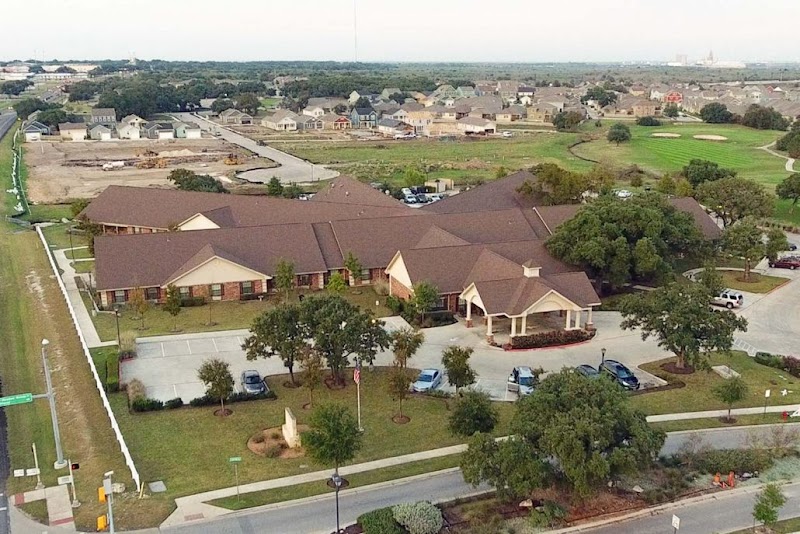
How is Legend Oaks Healthcare And Rehabilitation-Kyle Staffed?

CMS rates LEGEND OAKS HEALTHCARE AND REHABILITATION-KYLE's staffing level at 2 out of 5 stars, which is below average compared to other nursing homes. Staff turnover is 33%, compared to the Texas average of 46%. This relatively stable workforce can support continuity of care.

What Have Inspectors Found at Legend Oaks Healthcare And Rehabilitation-Kyle?

State health inspectors documented 26 deficiencies at LEGEND OAKS HEALTHCARE AND REHABILITATION-KYLE during 2022 to 2024. These included: 26 with potential for harm.
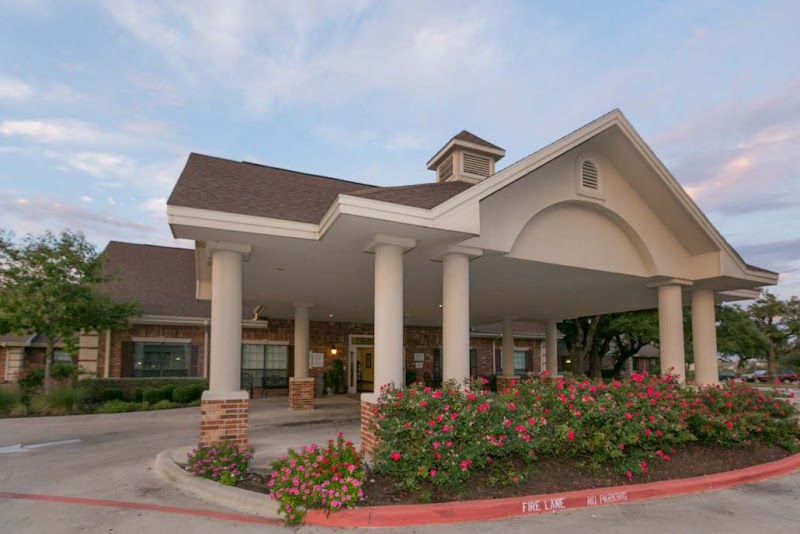
Who Owns and Operates Legend Oaks Healthcare And Rehabilitation-Kyle?

LEGEND OAKS HEALTHCARE AND REHABILITATION-KYLE is owned by a for-profit company. For-profit facilities operate as businesses with obligations to shareholders or private owners. The facility is operated by THE ENSIGN GROUP, a chain that manages multiple nursing homes. With 126 certified beds and approximately 113 residents (about 90% occupancy), it is a mid-sized facility located in KYLE, Texas.
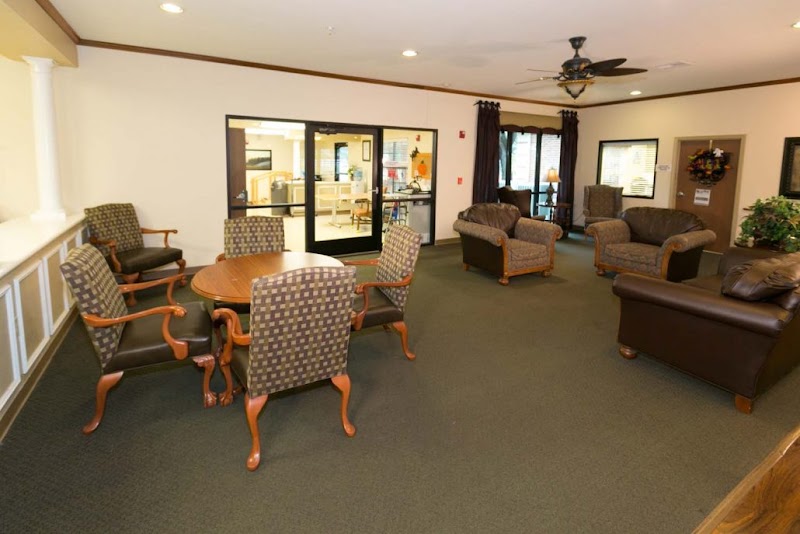
How Does Legend Oaks Healthcare And Rehabilitation-Kyle Compare to Other Texas Nursing Homes?

Compared to the 100 nursing homes in Texas, LEGEND OAKS HEALTHCARE AND REHABILITATION-KYLE's overall rating (3 stars) is above the state average of 2.8, staff turnover (33%) is significantly lower than the state average of 46%, and health inspection rating (3 stars) is at the national benchmark.

What Should Families Ask When Visiting Legend Oaks Healthcare And Rehabilitation-Kyle?

Based on this facility's data, families visiting should ask: "Can you walk me through typical staffing levels on day, evening, and night shifts?" "Can I visit during a mealtime to observe dining assistance and food quality?" "How do you handle medical emergencies, and what is your hospital transfer rate?" "Can I speak with family members of current residents about their experience?" These questions are particularly relevant given the below-average staffing rating.

Is Legend Oaks Healthcare And Rehabilitation-Kyle Safe?

Based on CMS inspection data, LEGEND OAKS HEALTHCARE AND REHABILITATION-KYLE has a clean safety record: no substantiated abuse findings (meaning no confirmed cases of resident harm), no Immediate Jeopardy citations (the most serious violation level indicating risk of serious injury or death), and is not on the Special Focus Facility watch list (a federal program monitoring the lowest-performing 1% of nursing homes). The facility has a 3-star overall rating and ranks #1 of 100 nursing homes in Texas. While no facility is perfect, families should still ask about staff-to-resident ratios and recent inspection results during their visit.

Do Nurses at Legend Oaks Healthcare And Rehabilitation-Kyle Stick Around?

LEGEND OAKS HEALTHCARE AND REHABILITATION-KYLE has a staff turnover rate of 33%, which is about average for Texas nursing homes (state average: 46%). Moderate turnover is common in nursing homes, but families should still ask about staff tenure and how the facility maintains care continuity when employees leave.

Was Legend Oaks Healthcare And Rehabilitation-Kyle Ever Fined?

LEGEND OAKS HEALTHCARE AND REHABILITATION-KYLE has no federal fines on record. CMS issues fines when nursing homes fail to meet care standards or don't correct problems found during inspections. The absence of fines suggests the facility has either maintained compliance or corrected any issues before penalties were assessed. This is a positive indicator, though families should still review recent inspection reports for the full picture.

Is Legend Oaks Healthcare And Rehabilitation-Kyle on Any Federal Watch List?

LEGEND OAKS HEALTHCARE AND REHABILITATION-KYLE is not on any federal watch list. The most significant is the Special Focus Facility (SFF) program, which identifies the bottom 1% of nursing homes nationally based on persistent, serious quality problems. Not being on this list means the facility has avoided the pattern of deficiencies that triggers enhanced federal oversight. This is a positive indicator, though families should still review the facility's inspection history directly.