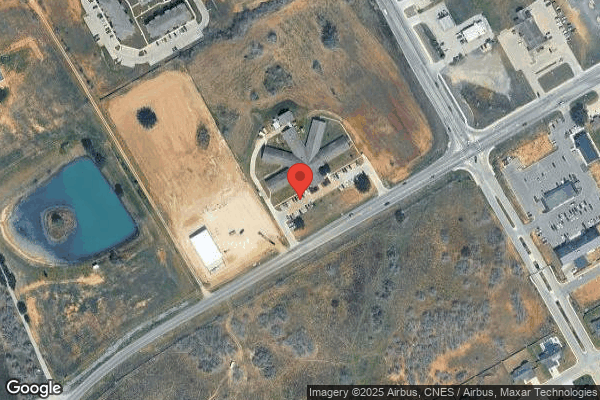
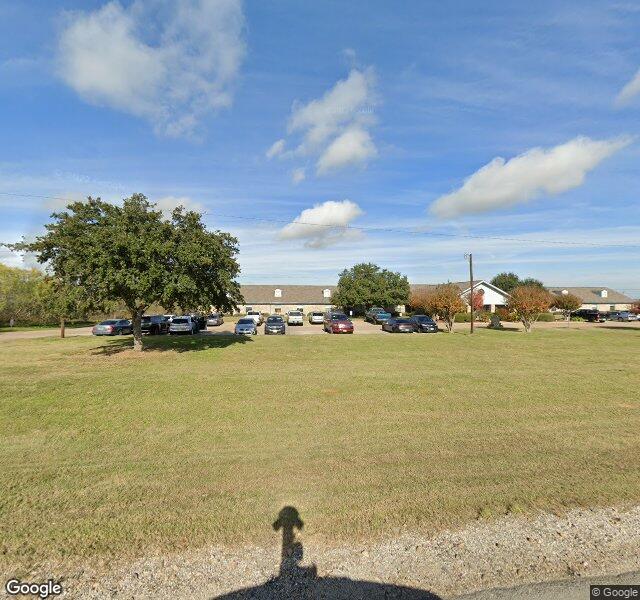
COUNTRY CARE MANOR

2736 FARM TO MARKET 775, LA VERNIA, TX 78121 (830) 779-2355
Government - Hospital district 91 Beds TOUCHSTONE COMMUNITIES Data: November 2025
Trust Grade
68/100
#444 of 1168 in TX
Last Inspection: September 2024

Within standard 12-15 month inspection cycle. Federal law requires annual inspections.

Overview

Country Care Manor has a Trust Grade of C+, indicating it is slightly above average but still has room for improvement. Ranking #444 out of 1,168 facilities in Texas places it in the top half, and it is #2 out of 4 in Wilson County, meaning only one local option is better. However, the facility is worsening, with issues increasing from 3 in 2023 to 4 in 2024. Staffing is a concern, earning only 1 out of 5 stars, and the turnover rate of 44% is slightly better than the state average. There have been $17,996 in fines, which is average, but may point to some compliance issues. The facility has average RN coverage, which is important because more RNs can help catch problems that CNAs might miss. Specific incidents include staff not properly assisting residents with daily hygiene tasks, such as brushing their teeth, and kitchen staff failing to follow food safety standards, which could lead to health risks. While some strengths exist, such as a decent Health Inspection rating, the overall picture suggests families should consider these weaknesses when researching care options.

Trust Score
C+
68/100
In Texas
#444/1168
Top 38%
Safety Record
Low Risk
No red flags
Inspections
Getting Worse
3 → 4 violations
Staff Stability
○ Average
44% turnover. Near Texas's 48% average. Typical for the industry.
Penalties
○ Average
$17,996 in fines. Higher than 59% of Texas facilities. Some compliance issues.
Skilled Nurses
⚠ Watch
Each resident gets only 27 minutes of Registered Nurse (RN) attention daily — below average for Texas. Fewer RN minutes means fewer trained eyes watching for problems.
Violations
⚠ Watch
12 deficiencies on record. Higher than average. Multiple issues found across inspections.
★★★☆☆
3.0
Overall Rating
★☆☆☆☆
1.0
Staff Levels
★★★☆☆
3.0
Care Quality
★★★★☆
4.0
Inspection Score
Stable
2023: 3 issues
2024: 4 issues

The Good

  • Full Sprinkler Coverage · Fire safety systems throughout facility
  • No fines on record
  • Staff turnover below average (44%)

    4 points below Texas average of 48%

Facility shows strength in fire safety.

The Bad

3-Star Overall Rating

Near Texas average (2.8)

Meets federal standards, typical of most facilities

Staff Turnover: 44%

Near Texas avg (46%)

Typical for the industry

Federal Fines: $17,996

Below median ($33,413)

Minor penalties assessed

Chain: TOUCHSTONE COMMUNITIES

Part of a multi-facility chain

Ask about local staffing decisions and management

The Ugly 12 deficiencies on record

Sept 2024 4 deficiencies
CONCERN (D) 📢 Someone Reported This

A family member, employee, or ombudsman was alarmed enough to file a formal complaint

Potential for Harm - no one hurt, but risky conditions existed

Deficiency F0944 (Tag F0944)

Could have caused harm · This affected 1 resident

Based on interview, and record review, the facility failed to ensure Quality Assurance Performance Improvement (QAPI) Training that outlines and informs staff of the elements and goals of the facility...

Read full inspector narrative →
Based on interview, and record review, the facility failed to ensure Quality Assurance Performance Improvement (QAPI) Training that outlines and informs staff of the elements and goals of the facility's QAPI program for 3 of 22 staff (CNAs G &H and LVN I) reviewed for training, in that: The facility failed to ensure that 3 of 22 staff (CNAs G&H and LVN I) had completed their mandatory QAPI annual training. This failure could place residents at risk for care by C.N.A. and L.V.N staff who had been insufficiently trained while working in the facility. The findings included: Record review of the annual CNA, and LVN training information revealed that: CNA G (hired-7/7/23), CNA H (hired-7/7/23), and LVN I (hired 8/16/16) had not completed their mandatory QAPI annual training requirement. During an interview with the Human Resources (HR) Director on 9/17/24 at 2:30p.m., she stated that there was not a record of completed annual QAPI training for C.N.A.-G, C.N.A.-H, and L.V.N-I. The HR Director stated that she had responsibility for coordinating the employee's training program and that it was the staff member's responsibility to have completed their training assignments. The HR Director stated that the staff member's completion of the training would have assisted them with providing improved resident care services. During an interview with the Regional HR Director on 9/17/24 at 2:40pm she stated that staff completion of their training requirements would have helped improve their resident care services. During an interview with the Administrator on 9/17/24 at 3:30p.m., he stated that staff's completion of their QAPI training would have made them aware of the process for improving resident care services. Record review of the facility's Team Member Handbook dated 9/2022 stated that All personnel are required to attend regularly scheduled in-service training classes and may also be asked to complete certain training programs using online modules.
CONCERN (E) 📢 Someone Reported This

A family member, employee, or ombudsman was alarmed enough to file a formal complaint

Potential for Harm - no one hurt, but risky conditions existed

ADL Care (Tag F0677)

Could have caused harm · This affected multiple residents

**NOTE- TERMS IN BRACKETS HAVE BEEN EDITED TO PROTECT CONFIDENTIALITY** Based on observations, interviews, and record reviews the facility failed to ensure residents who were unable to carry out activ...

Read full inspector narrative →
**NOTE- TERMS IN BRACKETS HAVE BEEN EDITED TO PROTECT CONFIDENTIALITY** Based on observations, interviews, and record reviews the facility failed to ensure residents who were unable to carry out activities of daily living received the necessary services to maintain good nutrition, grooming, and personal and oral hygiene for 4 of 8 residents (Residents #12, #24, #40, and #46) reviewed for oral care. 1. Resident #46 was not assisted with brushing her teeth on 09/17/2024. 2. Resident #40 was not assisted with brushing her teeth on 09/17/2024. 3. Resident #12 was not assisted with brushing her teeth on 09/17/2024. 4. Resident #24 was not assisted with brushing her teeth on 09/17/2024. These failures could place residents at risk for a decline in health status with dental caries and oral infections. The findings included: Resident #46 A record review of Resident #46's admission record dated 09/18/2024, revealed an admission date of 11/22/2020 with diagnoses which included polyarthritis (five or more of your joints have arthritis at the same time) and contracted left and right hands, contracted left and right knees. A record review of Resident #46's quarterly MDS assessment dated [DATE] revealed Resident #46 was a [AGE] year-old female admitted for long term care and assessed with a BIMS score of 09 out of a possible 15 which indicated moderate impaired cognition. Further review revealed Resident #46 had no difficulty hearing, had clear speech, could understand others and could make herself understood, Resident #46 had adequate vision with the use of glasses. Further review revealed Resident #46 was totally dependent on staff and needed total assistance with oral care, personal hygiene, and transfers. A record review of Resident #46's care plan dated 09/18/2024 revealed, I am at risk for oral care issues: . provide and set up oral care supplies as indicated A record review of Resident #46's physician's orders dated 09/18/2024 revealed Resident #40's physician on 11/22/2020, ordered for Resident #40 to receive oral care as needed. A record review of Resident #46's medical record for the month of September 2024, revealed CNAs had not documented oral care that was offered, preformed, and or refused. During an observation and interview on 09/15/24 at 10:50 AM revealed Resident #46 in her bed with the head of the bed up where she was positioned in a way so she could access her call light and her water drink with her left and right contracted hands. Further observation revealed Resident #46 had toothpaste and toothbrushes on a cubbyhole shelf by her bed. Resident #46 stated the supplies were brought to her by family member however they remained unused. Continued observations revealed LVN KT attended to Resident #46 at her bedside. Resident #46 stated she had complaints that she was not assisted with activities of daily life especially in the morning, on Fridays when church people come in, I would like my face washed and teeth brushed . I cannot do it myself I have bad arthritis. It's been weeks since I had help. LVN KT stated she worked part time on the weekends and stated Resident #46 should be assisted with her oral care due to her arthritis. LVN KT stated she was not aware if Resident #46 had her teeth brushed today and commented Resident #46 often refuses care. During an interview and observation on 09/17/24 at 08:30 AM revealed Resident #46's toothbrush and toothpaste in the same position and conditions as observed on 09/15/2024. Resident #46 stated no one has brushed her teeth today, yesterday and the day before. Further observation revealed Resident #46 in her bed receiving assistance eating her breakfast from CNA transport. Resident #46 stated she had not received assistance with oral care and CNA stated she had brushed her teeth this morning to which Resident #46 strongly denied and stated she had not had her teeth brushed this week. During an interview on 09/18/2024 at 02:44 PM Resident #46's representative and MPOA stated she believed Resident #46 had rarely received oral care. Resident #46's representative and MPOA stated she visited Resident #46 2-3 times a month and has recognized the unused toothbrushes and toothpaste. Resident #46's representative and MPOA stated Resident #46 was vulnerable and relies on staff for all care. Resident #46's representative and MPOA stated she believed the staff CNAs were caring but were short staffed and would not offer oral care like teeth brushing. Resident #46's representative and MPOA stated she had recognized a decline in Resident #46's oral health to include bad breath and dirty teeth. Resident #40 A record review of Resident #40's admission record dated 09/18/2024, revealed an admission date of 05/30/2023 with diagnoses which included aphasia (impairment of language, speech, comprehension, and the ability to read and write), multiple sclerosis (a disease where a person's own immune system deteriorates muscle nerves), and myasthenia gravis (results from a problem in signaling between nerves and muscles.) A record review of Resident #40's quarterly MDS assessment dated [DATE] revealed Resident #40 was a [AGE] year-old female admitted for long term care and assessed with a BIMS score of 06 out of a possible 15 which indicated severe impaired cognition. Further review revealed Resident #40 had minimal difficulty hearing, clear speech, could usually understand and could usually make herself understood, Resident #40 had impaired vision, did not use glasses, and could see large print. Further review revealed Resident #40 needed assistance with oral care, personal hygiene, and transfers. Resident #40 was totally dependent on staff for activities of daily life to include personal hygiene and transfers (bed to chair) and Resident needed, substantial maximal assistance helper does more than half the effort with oral care. A record review of Resident #40's care plan dated 09/18/2024 revealed, I am at risk for oral care issues: own teeth, some loss or carious teeth. provide and set up oral care supplies as indicated A record review of Resident #40's physician's orders dated 09/18/2024 revealed Resident #40's physician on 05/30/2023, ordered for Resident #40 to receive oral care as needed. A record review of Resident #40's medical record revealed CNAs had nowhere to document oral care that was offered, preformed, and or refused. During an interview on 09/15/2024 at 10:48 AM Resident #40 stated she could not recall when staff had offered assistance with brushing her teeth. Resident #40 stated she had not had her teeth brushed today. During an interview on 09/17/2024 at 08:48 AM Resident #40 stated she could not recall when staff had offered assistance with brushing her teeth. Resident #40 stated she had not had her teeth brushed today. Resident #12 A record review of Resident #12's admission record dated 09/18/2024, revealed an admission date of 11/07/2022 with diagnoses which included dementia (a group of symptoms affecting memory, thinking and social abilities. In people who have dementia, the symptoms interfere with their daily lives), and end stage COPD (chronic obstructive pulmonary disease). A record review of Resident #12's annual MDS assessment dated [DATE] revealed Resident #12 was an [AGE] year-old female admitted for long term care and diagnosed with a life expectancy of less than 6 months. Resident #12 was assessed with a BIMS score of 05 out of a possible 15 which indicated severe cognitive impairment. Resident #12 was assessed and needed substantial maximal assistance helper does more than half the effort with transfers to and from a bed to a chair or wheelchair. A record review of Resident #12's physician's orders dated 09/18/2024 revealed Resident #12's physician on 11/07/2022, ordered for Resident #12 to receive oral care as needed. A record review of Resident #12's medical record revealed CNAs had nowhere to document oral care that was offered, preformed, and or refused. During an observation and interview on 09/15/2024 at 12:20 PM Resident #12 and her family member were observed in Resident #12's bedroom. Resident #12 was seated in her wheelchair and appeared sleepy. Resident #12's family member was concerned Resident #12 was not receiving assistance from staff to eat and daily hygiene, specifically teeth brushing. Resident #12's family member stated they had been visiting 1-2 times a month for the last 6-7 months and had never seen any evidence Resident #12 was receiving dental care as evidenced by the same toothpaste tube and new toothbrushes stored in Resident #12's dresser. Observation of Resident #12's dresser drawer revealed new toothbrushes and a tube of tooth paste in good condition. During an observation and interview on 09/16/2024 at 8:30 AM revealed Resident #12 and her family member #2 were in Resident #12's bedroom while Resident #12 ate her breakfast. Resident #12's family member #2 stated she visited 3 times a week and had never seen Resident #12 receive assistance with brushing her teeth as evidenced by unused toothpaste and brushes. Resident #12's family member #2 stated their expectation would be that Resident #12 would receive oral care daily prior to breakfast. Resident #24 A record review of Resident #24's admission record dated 09/18/2024 revealed an admission date of 04/07/2024 with diagnoses which included Alzheimer's disease (a disabling degenerative disease of the nervous system occurring in middle-aged or older persons and characterized by dementia and failure of memory for recent events, followed by total incapacitation and death), muscle wasting, and heart failure. A record review of Resident #24's quarterly MDS assessment dated [DATE] revealed Resident #24 was a [AGE] year-old female admitted for long term care and assessed with a BIMS score of 08 out of a possible 15 which indicated moderately impaired cognition. Further review revealed Resident #24 needed assistance with personal hygiene and transfers, substantial maximal assistance helper does more than half the effort with transfers to and from a bed to a chair or wheelchair and partial / moderate - helper does less than half the effort. A record review of Resident #24's physician's orders dated 09/18/2024 revealed Resident #24's physician on 04/07/2024, ordered for Resident #24 to receive oral care as needed. A record review of Resident #24's medical record revealed CNAs had nowhere to document oral care that was offered, preformed, and or refused. During an observation and interview on 09/15/2024 at 10:44 AM revealed Resident #24 in her bedroom lying in bed. Resident #24 stated she had lived in the facility since spring and has not been offered to brush her teeth since. Resident #24 stated she would like to be offered a mouthwash if she could be assisted to the bathroom. Resident #24 stated she may not brush her teeth daily but would like to be offered assistance daily. During an observation and interview on 09/16/2024 at 1:44 PM revealed Resident #24 in her bedroom lying in bed while her representative visited. Resident #24's representative and Resident #24 stated the facility had treated her fine, but the facility had not offered to assist with brushing her teeth over the weeks she had been admitted . During an interview on 09/17/2024 at 8:50 AM Resident #24 stated she was not offered assistance with brushing her teeth. During an interview on 09/17/2024 at 8:28 AM CNA D stated she was the CNA for Residents #12, #24, #40, and #46 as well as other residents on 100-hall. CNA D stated she had not had time to provide residents on 100-hall oral care. During a joint interview on 09/17/2024 at 09:40 AM with ADON E and ADON F stated residents should be assisted and or offered assistance with oral care, teeth brushing, denture cleaning, and mouth washing at a minimum once a day in the mornings and preferably 2x a day morning and evening. The ADONs stated lack of oral care could lead to a health status decline with poor oral health. During a joint interview on 09/18/2024 at 03:00 PM with the Administrator and the DON, the administrator stated residents should receive oral care daily and staff should document the care. The DON stated the expectation was for residents to receive assistance with oral care daily and for staff to document the care. The DON and the administrator stated lack of oral care could lead to dental caries. A record review of the facility's Activities of Daily Living policy dated February 2017, revealed, . Activities of daily living include: personal hygiene . Residents who refuse care and treatment will be offered alternative treatment options and be advised of the negative impact of continued refusal to accept treatment and care.
CONCERN (E) 📢 Someone Reported This

A family member, employee, or ombudsman was alarmed enough to file a formal complaint

Potential for Harm - no one hurt, but risky conditions existed

Medical Records (Tag F0842)

Could have caused harm · This affected multiple residents

**NOTE- TERMS IN BRACKETS HAVE BEEN EDITED TO PROTECT CONFIDENTIALITY** Based on interviews and record reviews the facility failed to record in residents' medical records sufficient information to ide...

Read full inspector narrative →
**NOTE- TERMS IN BRACKETS HAVE BEEN EDITED TO PROTECT CONFIDENTIALITY** Based on interviews and record reviews the facility failed to record in residents' medical records sufficient information to identify the Resident and services provided, for 4 of 8 residents (Residents #12, #24, #40 and #46) reviewed for services provided with activities of everyday life hygiene. 1. CNA B had no log in ID number to document care services provided to residents for 2 weeks. 2. CNAs had not documented oral care that was offered, preformed, and or refused for Resident #46 during the review period of September 2024. 3. CNAs had nowhere to document oral care that was offered, preformed, and or refused for Resident #40. 4. CNAs had nowhere to document oral care that was offered, preformed, and or refused for Resident #12. 5. CNAs had nowhere to document oral care that was offered, preformed, and or refused for Resident #24. These failures could place residents at risk for of having incomplete or inaccurate records and inadequate care. The findings included: Resident #46 A record review of Resident #46's admission record dated 09/18/2024, revealed an admission date of 11/22/2020 with diagnoses which included polyarthritis (five or more of your joints have arthritis at the same time) and contracted left and right hands, contracted left and right knees. A record review of Resident #46's quarterly MDS assessment dated [DATE] revealed Resident #46 was a [AGE] year-old female admitted for long term care and assessed with a BIMS score of 09 out of a possible 15 which indicated moderate impaired cognition. Further review revealed Resident #46 had no difficulty hearing, had clear speech, could understand others and could make herself understood, Resident #46 had adequate vision with the use of glasses. Further review revealed Resident #46 was totally dependent on staff and needed total assistance with oral care, personal hygiene, and transfers. A record review of Resident #46's care plan dated 09/18/2024 revealed, I am at risk for oral care issues: . provide and set up oral care supplies as indicated A record review of Resident #46's physician's orders dated 09/18/2024 revealed Resident #40's physician on 11/22/2020, ordered for Resident #40 to receive oral care as needed. A record review of Resident #46's medical record for the month of September 2024, revealed CNAs had not documented oral care that was offered, preformed, and or refused. Resident #40 A record review of Resident #40's admission record dated 09/18/2024, revealed an admission date of 05/30/2023 with diagnoses which included aphasia (impairment of language, speech, comprehension, and the ability to read and write), multiple sclerosis (a disease where a person's own immune system deteriorates muscle nerves), and myasthenia gravis (results from a problem in signaling between nerves and muscles.) A record review of Resident #40's quarterly MDS assessment dated [DATE] revealed Resident #40 was a [AGE] year-old female admitted for long term care and assessed with a BIMS score of 06 out of a possible 15 which indicated severe impaired cognition. Further review revealed Resident #40 had minimal difficulty hearing, clear speech, could usually understand and could usually make herself understood, Resident #40 had impaired vision, did not use glasses, and could see large print. Further review revealed Resident #40 needed assistance with oral care, personal hygiene, and transfers. Resident #40 was totally dependent on staff for activities of daily life to include personal hygiene and transfers (bed to chair) and Resident needed, substantial maximal assistance helper does more than half the effort with oral care. A record review of Resident #40's care plan dated 09/18/2024 revealed, I am at risk for oral care issues: own teeth, some loss or carious teeth. provide and set up oral care supplies as indicated A record review of Resident #40's physician's orders dated 09/18/2024 revealed Resident #40's physician on 05/30/2023, ordered for Resident #40 to receive oral care as needed. A record review of Resident #40's medical record revealed CNAs had nowhere to document oral care that was offered, preformed, and or refused. Resident #12 A record review of Resident #12's admission record dated 09/18/2024, revealed an admission date of 11/07/2022 with diagnoses which included dementia (a group of symptoms affecting memory, thinking and social abilities. In people who have dementia, the symptoms interfere with their daily lives), and end stage COPD (chronic obstructive pulmonary disease). A record review of Resident #12's annual MDS assessment dated [DATE] revealed Resident #12 was an [AGE] year-old female admitted for long term care and diagnosed with a life expectancy of less than 6 months. Resident #12 was assessed with a BIMS score of 05 out of a possible 15 which indicated severe cognitive impairment. Resident #12 was assessed and needed substantial maximal assistance helper does more than half the effort with transfers to and from a bed to a chair or wheelchair. A record review of Resident #12's physician's orders dated 09/18/2024 revealed Resident #12's physician on 11/07/2022, ordered for Resident #12 to receive oral care as needed. A record review of Resident #12's medical record revealed CNAs had nowhere to document oral care that was offered, preformed, and or refused. Resident #24 A record review of Resident #24's admission record dated 09/18/2024 revealed an admission date of 04/07/2024 with diagnoses which included Alzheimer's disease (a disabling degenerative disease of the nervous system occurring in middle-aged or older persons and characterized by dementia and failure of memory for recent events, followed by total incapacitation and death), muscle wasting, and heart failure. A record review of Resident #24's quarterly MDS assessment dated [DATE] revealed Resident #24 was a [AGE] year-old female admitted for long term care and assessed with a BIMS score of 08 out of a possible 15 which indicated moderately impaired cognition. Further review revealed Resident #24 needed assistance with personal hygiene and transfers, substantial maximal assistance helper does more than half the effort with transfers to and from a bed to a chair or wheelchair and partial / moderate - helper does less than half the effort. A record review of Resident #24's physician's orders dated 09/18/2024 revealed Resident #24's physician on 04/07/2024, ordered for Resident #24 to receive oral care as needed. A record review of Resident #24's medical record revealed CNAs had nowhere to document oral care that was offered, preformed, and or refused. During an interview on 09/18/2024 at 01:30 PM CNA B stated she was the CNA usually assigned to the facility's 100-hall and usually worked from 02:00-10:00 PM and has also worked some 06:00 AM to 02:00 PM shift on 100-hall. CNA B stated she had provided care, oral, personal hygiene, and incontinence care for Residents #12, #24, #40, #46. CNA B stated she had no log-in ID number to access the electronic medical record to document care provided to residents. CNA B stated she had access prior to September 2024 and as of September 2024 she had lost access. CNA B stated she had not been able to document any care offered and or refused. CNA B stated she had reported the loss of access to the ADON E. During an interview on 09/17/2024 at 09:40 AM ADON E stated she had just today learned CNA B had no access to document in residents' electronic medical record. ADON E stated CNA B should have access to document in the electronic medical record. ADON E stated the risk for harm to residents would be neglect and CNA B had the responsibility to report loss of access to document immediately. During a joint interview on 09/18/2024 at 03:00 PM with the Administrator and the DON, the administrator and the DON stated the expectation was for all CNA's to document the care provide immediately and to immediately report the inability to access the electronic record. A record review of the facilities Medical records policy dated February 2017, revealed, . Compliance Guidelines: A medical record is maintained for every person admitted to a community in accordance with accepted professional standards and practices. The administrator has ultimate responsibility for the maintenance of medical records but may delegate this responsibility to another team member. The medical record consists of but not limited to the following: ? information to identify the Resident . ? the plan of care and services provided
CONCERN (E) 📢 Someone Reported This

A family member, employee, or ombudsman was alarmed enough to file a formal complaint

Potential for Harm - no one hurt, but risky conditions existed

Safe Environment (Tag F0921)

Could have caused harm · This affected multiple residents

**NOTE- TERMS IN BRACKETS HAVE BEEN EDITED TO PROTECT CONFIDENTIALITY** Based on observations, interviews, and record review the facility failed to provide a safe, functional, sanitary, and comfortabl...

Read full inspector narrative →
**NOTE- TERMS IN BRACKETS HAVE BEEN EDITED TO PROTECT CONFIDENTIALITY** Based on observations, interviews, and record review the facility failed to provide a safe, functional, sanitary, and comfortable environment for Residents for two (Hall 100 and 200) of six shower rooms observed for environment and 1 laundry room reviewed for a safe, functional, sanitary, and comfortable environment. 1. The facility failed to ensure Residents' shower rooms on Halls 100 and 200 were clean, safe, and in good repair. 2. The facility failed to ensure the laundry washroom was clean, safe, and in good repair. 3. The ceiling vent in the bathroom of Resident room [ROOM NUMBER] had dirt and rust on the vent slats and parameter surface. 4. The bathroom door of Resident room [ROOM NUMBER] had a large indention on the bottom of wood surface of the door. This failure could place residents at risk for diminished quality of life due to the lack of a well-kept environment. Findings included: 1. Observation on 9/17/2024 at 10:57 am of the resident shower room on the 100-hall revealed black mildew and rust on the doorframe of the shower room, black mildew along the bottom of the shower room, and orange sediment on the shower chair. Observation on 9/17/2024 at 11:00 am of the resident shower room on the 200-hall revealed black mildew along the bottom of the shower room and orange sediment on the shower chair and black mildew on the shower chair wheels. Interview with the Maintenance Director on 9/17/2024 at 11:55 am, the Maintenance Director verified the black mildew and orange sediment on the shower chairs and the black mildew and rust on the 100-hall shower room door. He did verify that the bottom of the doorframe was rusted and needed to be repaired or replaced. He stated, the black stuff could be poop. He stated, the orange stuff looks to be sediment. He also explained that deep cleaning the shower rooms were housekeeping's responsibility. During an interview with the Administrator on 9/17/2024 at 1:22 pm, the Administrator stated the shower rooms should be sprayed down after every resident by the CNA's. He stated that housekeeping should be preforming a deep clean as needed. During an interview with the Housekeeping Manager on 9/18/2024 at 11:57 am, the Housekeeping Manager stated that housekeeping performs a deep cleaning on the resident showers once a week or sooner if needed. 2. During an observation and interview on 09/18/2024 at 12:04 PM revealed the facility's laundry washroom without drywall around 4 inches from the floor due to previous flooding and a significant gap under the exit door. The Maintenance Director stated the facility bought and installed a new commercial washer around 2 months ago (July 2024) because the old washer failed and leaked water and flooded the laundry washroom. The Maintenance Director stated the flood damaged the drywall about 3-4 above the floor, had missing pieces of drywall, and needed to be replaced. The Maintenance Director stated the threshold at the exit door had to be removed to allow the old washer and new washer to be removed and installed and thus revealed a 5/8 gap at the bottom of the door and could potentially allow insects and pest to enter the facility. Record review of the facility policy review titled, Physical Environment, revision date January 2023, showed under section titled Environmental Issues, The community is designed, constructed, equipped, and maintained to protect the health and safety of residents, personnel, and the public. Under the section titled, Preventative Maintenance, it showed The community has a preventive maintenance program that ensures that all essential mechanical, electrical, and patient-care equipment is in safe operating condition. 3. Observation on 09/17/24 at 12:00 p.m. with the Maintenance Director, revealed Resident room [ROOM NUMBER] had a bathroom ceiling vent which measured approximately one foot in diameter that had dirt and rust on the vent slats and parameter surface. 4. Observation on 09/17/24 at 12:05 p.m. with the Maintenance Director, revealed Resident room [ROOM NUMBER] had a bathroom door that had an indention on the bottom of wood surface of the door which measured approximately 1.5 ft x 13 inches. During an interview with the Maintenance Director on 09/17/24 at 12:10 p.m., Maintenance Director stated he had not been made aware by staff of the noted areas to be repaired. The Maintenance Director stated that completing the repairs would promote a homelike environment for the residents. During a tour with the Administrator on 9/17/24 at 12:15 to 12:20p.m., he observed Resident rooms #407 and #413 and stated that completing the repairs would promote a homelike environment for the residents. Record review of the facility's policy on Physical Environment dated 01/2023 stated that the community environment is safe, functional, sanitary, and comfortable for residents, team members, and the public.
Aug 2023 3 deficiencies
CONCERN (D)

Potential for Harm - no one hurt, but risky conditions existed

Food Safety (Tag F0812)

Could have caused harm · This affected 1 resident

Based on observation, interview, and record review, the facility failed to store, prepare, distribute, and serve food in accordance with professional standards for food service safety for one (1) of 1...

Read full inspector narrative →
Based on observation, interview, and record review, the facility failed to store, prepare, distribute, and serve food in accordance with professional standards for food service safety for one (1) of 1 kitchen, in that: The facility failed to ensure that dietary staff were wearing hair restraints and that the ceiling light covers were kept clean. This deficient practice could place residents who received meals and snacks from the kitchen at risk for food borne illness. The findings included: Observation on 07/30/23 at 9:40 a.m., revealed that two ceiling covers measuring four (4) foot by two (2) foot for the light fixtures in the main kitchen area had a accumulation of dust particles with several dead insects noted inside each cover. Observation on 07/30/2023 at 9:45 a.m. revealed Dietary Aide (DA) #1 and DA#2 were not wearing hair restraints. Interview with DA-b on 7/30/23 at 9:46 stated that he was not aware that he had to wear a hair restraint since he shaved his head every other week. He stated that he understood wearing hair restraints would prevent hair particles from falling onto a food surface. Interview with DA-C on 7/30/23 at 9:47 a.m., stated he was not aware that he had to wear a hair restraint since he wore a baseball cap. He stated that he understood wearing a hair restraint would prevent hair particles from falling onto a food surface. Interview with the Dietary Manager on 7/30/23 at 12:30 p.m., stated the two dietary aides who were not wearing hair restraints should have known it was necessary to prevent hair particles from falling onto the food. The Dietary Manager stated that she was responsible for notifying the Maintenance Director to clean the ceiling light covers. She stated she understood having dirty ceiling light covers could affect the kitchen's overall sanitation. Interview with the Maintenance Director on 7/31/23 at 9:45 a.m., stated that he had not received a work order request to clean the ceiling covers in the kitchen but they were now cleaned. Record review of the facility policy on employee sanitation in the Nutrition and Food Service Policy and Procedure manual dated 2018 Section 4-1 stated that hair restraints must be worn to keep hair from food and food-contact surfaces. Record review of the facility's policy on general kitchen sanitation in the Nutrition and Food Service Policy and Procedure Manual dated 2018 Section 4-5 stated that non-food-contact surfaces should be cleaned to keep them free of dust, dirt, and food particles in a clean and sanitary condition. Record review of the Dietician's Quality Assurance Monitor reports dated 4/21/23 and 7/11/23 stated that the general appearance of the kitchen's ceiling and light fixtures was not a clean appearance.
CONCERN (E)

Potential for Harm - no one hurt, but risky conditions existed

Safe Environment (Tag F0584)

Could have caused harm · This affected multiple residents

**NOTE- TERMS IN BRACKETS HAVE BEEN EDITED TO PROTECT CONFIDENTIALITY** Based on observation, interview, and record review, the facility failed to maintain a safe, clean, comfortable, and homelike env...

Read full inspector narrative →
**NOTE- TERMS IN BRACKETS HAVE BEEN EDITED TO PROTECT CONFIDENTIALITY** Based on observation, interview, and record review, the facility failed to maintain a safe, clean, comfortable, and homelike environment for three (3) of twenty-two (22) residents (Resident #11, Resident #23, and Resident #39) reviewed in that: 1. There was a 1.5 inch by 18-inch scrape on the bathroom wall in room [ROOM NUMBER] in which Resident #11 and Resident #39 resided. 2. There was a hole in the wall and approximately one half of the baseboard along the same wall was loose in the bathroom of Resident #23's room. These failures could result in residents living in an environment that is not safe, clean, comfortable, and homelike in nature. The findings were: 1. Record review of Resident #11's face sheet, dated 08/02/2023, revealed the [AGE] year-old female resident was admitted to the facility on [DATE] with diagnoses including: right femur fracture (fracture of the thigh bone), chronic obstructive pulmonary disease (a type of progressive lung disease), and asthma (a long-term inflammatory disease of the lungs). Record review of Resident #39's face sheet, dated 8/2/23, revealed the [AGE] year-old female resident was admitted to the facility on [DATE] with diagnoses of cerebral infarction (a type of stroke that occurs when a blood vessel in the brain is blocked)., sick sinus syndrome (a group of abnormal heart rhythms), and COPD (a type of progressive lung disease). Record review of Resident #11's quarterly MDS assessment, completed on 6/23/23 revealed the resident had a BIMS score of 14 (a mental status test which showed an intact cognitive response). Record review of Resident # 39s annual MDS assessment, completed on 6/16/23 revealed the resident had a BIMS score of 15 (a mental status test which showed an intact cognitive response). Record review of Resident #1's most recent comprehensive MDS assessment, dated 06/01/2022, revealed Section I Active Diagnoses, Sub-section Psychiatric/Mood Disorder was left blank. During an observation in the room of Resident # 11 and Resident #39 on 7/31/23 at 9: 25am revealed a 1.5 inch by 18-inch scrape on the bathroom wall. During an interview with the Resident #11 and Resident #39 in room [ROOM NUMBER] on 7/31/23 at 9:30am, both residents stated that the scrape on the bathroom wall had been present for over one year. During an interview with the RN A on 7/31/23 at 9:30am in room [ROOM NUMBER] stated she had not been aware of the scrape on the bathroom wall. She stated that a work order to the Maintenance Director to repair the scrape was not made but she would complete this request. During an interview with the Maintenance Director on 7/31/23 at 9:40 a.m., in room [ROOM NUMBER] stated that he had not received a work order request to fix the bathroom wall scrape but would do so. During an interview with the Administrator on 7/1/23 at 4:40 pm stated the facility did not have a policy on the TELS (a work order notification system). 2. Record review of Resident #23's face sheet, dated 08/02/2023, revealed the resident was admitted to the facility on [DATE] with diagnoses including: Difficulty in Walking, Unsteadiness on Feet, and Anxiety Disorder. Record review of Resident #23's Quarterly MDS, dated [DATE], revealed a BIMS score of 9 which indicated moderate cognitive impairment. Observation on 08/02/2023 at 9:42 a.m. of the Resident #23's bathroom revealed the wall behind the sink and toilet had a hole approximately ten inches square and approximately one half of the baseboard along the same wall was loose, with part of it lying in the floor. During an interview with Resident #23 on 08/02/2023 at 10:18 a.m., Resident #23 stated she disliked the disrepair in the bathroom connected to her room and that she wished the hole and baseboard would be repaired. Resident #23 stated she was concerned she might trip or slip on the loose baseboard and injure herself by falling. During an interview with the Maintenance Director on 08/02/2023 at 11:32 a.m., the Maintenance Director verbally confirmed the presence of a hole in the wall and loose baseboard in the bathroom connected to Resident #23's room, stated the hole had been cut to facilitate an ongoing repair, and that the baseboard had been loose for approximately two weeks. Record review of the facility policy on preventative maintenance dated 02/2017 on page 80 stated that the Maintenance Director is responsible for all preventative maintenance. Record review of the facility policy, Maintenance, dated February 2017, revealed, Nonoperating equipment is fixed or replaced in a timely manner.
CONCERN (E)

Potential for Harm - no one hurt, but risky conditions existed

Safe Environment (Tag F0921)

Could have caused harm · This affected multiple residents

Based on observation, interview, and record review, the facility failed to provide a safe, functional, sanitary, and comfortable environment for residents for 1 of 4 halls (Hall 100) observed for envi...

Read full inspector narrative →
Based on observation, interview, and record review, the facility failed to provide a safe, functional, sanitary, and comfortable environment for residents for 1 of 4 halls (Hall 100) observed for environment, in that: The facility failed to ensure potential hazards were locked up in Hall 100 This deficient practice could place residents at risk of a diminished quality of life due to an unsafe environment. The findings were: Observation on 07/30/23 at 12:27 p.m. on Hall 100 revealed a container of Sani-Cloth, purple top (a germicidal wipe) in an open alcove. The container had physical and chemical hazard and precautionary statements., such as causes substantial but temporary eye damage. Call poison center or doctor for treatment advice. Further observation revealed several unnamed residents were seen in the hall. During an interview on 07/30/2023 at 12:33 p.m. with RN A, she confirmed the container of Sani-Cloth was in the open and it contained wipes. She also confirmed there were multiple residents with dementia able to transfer, ambulate or propel themselves on hall 100. She confirmed the wipes could be a hazard if handled improperly. She revealed the containers were usually kept in the carts and under lock. RN A did not know who had placed the Sani-Cloth container in the open alcove or when the wipes were left there. During an interview on 08/02/2023 at 12:41 p.m. with the DON, she revealed the Sani-Cloth constrainers are supposed to be kept out of reach of the residents. She confirmed that for a resident with dementia they could constitute a hazard and place them at risk for injury. She confirmed the staff was trained in the handling of hazardous products. She revealed the staff, including managerial staff, did rounds to ensure safety. Review of facility policy, titled Handling of needles, sharps containers, supplies and equipment, dated 5/30/2023, revealed All hazardous or dangerous supplies should be stored in supply closet, cabinet or in other designated area that is not within reach of our residents, patients, or other visitors.
Jun 2022 5 deficiencies
CONCERN (D)

Potential for Harm - no one hurt, but risky conditions existed

Deficiency F0578 (Tag F0578)

Could have caused harm · This affected 1 resident

**NOTE- TERMS IN BRACKETS HAVE BEEN EDITED TO PROTECT CONFIDENTIALITY** Based on interviews and record reviews, the facility failed to ensure residents' right to formulate an advance directive for 1 o...

Read full inspector narrative →
**NOTE- TERMS IN BRACKETS HAVE BEEN EDITED TO PROTECT CONFIDENTIALITY** Based on interviews and record reviews, the facility failed to ensure residents' right to formulate an advance directive for 1 of 4 residents (Resident #23) reviewed for advanced directives, in that: The facility failed to ensure Resident #23's Out-of-Hospital Do Not Resuscitate (OOHDNR) was completed correctly by the attending physician. This failure could place residents at-risk of having their end of life wishes dishonored, and of having CPR performed against their wishes. The findings were: Record review of Resident #23's face sheet dated [DATE] revealed an admission date of [DATE] and diagnoses which included: cerebral infarction (stroke), cellulitis (serious bacterial skin infection) left and right lower limbs, asthma and altered mental status (a change in mental function that stems from illnesses, disorders and injuries affecting your brain. It leads to changes in awareness, movement and behaviors). Record review of Resident #23's admission MDS, dated [DATE], revealed a BIMS score of 8, which indicated moderate cognitive impairment. Record review of Resident #23's Care Plan, last review date [DATE], revealed a focus area, date initiated [DATE], I/Family/RP has completed documentation for DNR status. I wish to be designated as DNR. Record review of Resident #23's active orders, dated [DATE], revealed a physician's order, dated [DATE], DNR. Record review of Resident #23's electronic clinical record revealed an OOH-DNR for Resident #23, signed on [DATE] by the resident's family member and two witnesses. Further review revealed a signature on the line where Resident #23's attending physician would sign; however, the physician's printed name and license number were not included to identify which physician had signed the document. The physician had also not dated the document when it was signed. In an interview and record review with the SW on [DATE] at 3:15 p.m., the SW was asked if the OOH-DNR in Resident #23's electronic clinical record was correct. The SW stated the OOH-DNR was missing the physician's printed name and license number and was not dated. The SW was asked if she knew who had signed the OOH-DNR. She stated the signature was Resident #23's attending physician however confirmed not everyone would be able to determine that without the physician's printed name and license number. The SW further revealed herself to be the one responsible to discuss advance directives with residents and families and ensure correct completion of the documents. She stated she would speak with the family and physician to ensure the OOH-DNR is corrected right away. Record review of the Texas Health and Safety Code Title 2 Health, Subtitle H Public Health Provisions, Chapter 166 Advance Directives, Section 166.083 Form of Out-Of-Hospital DNR order, effective [DATE], revealed, (a) A written out-of-hospital DNR order shall be in the standard form specified by department rule as recommended by the department. (b) The standard form of an out-of-hospital DNR order specified by department rule must, at a minimum, contain the following: . (6) places for the printed names and signatures of the witnesses or the notary public's acknowledgment and for the printed name and signature of the attending physician of the person and the medical license number of the attending physician. Record review of the Texas Health and Human Services webpage titled, Out of Hospital Do Not Resuscitate Program, updated [DATE], revealed, Frequently Asked Questions for DNR: Filling out the Out-of-Hospital Do-Not-Resuscitate Form. Physician's Statement: The patient's attending physician must sign and date the form, print or type his/her name and give his/her license number. Record review of the facility's policy titled, Advanced Directives, dated February 2017, revealed, Every resident has the right to formulate an advance directive and to refuse treatment. The community will determine the existence of an advance directive at the time of admission. The community will inform the resident prior to admission whether its policies contain any limitations that are inconsistent with state law implementing a resident's advance directive.
CONCERN (D)

Potential for Harm - no one hurt, but risky conditions existed

Comprehensive Care Plan (Tag F0656)

Could have caused harm · This affected 1 resident

**NOTE- TERMS IN BRACKETS HAVE BEEN EDITED TO PROTECT CONFIDENTIALITY** Based on observation, interview, and record review, the facility failed to develop and implement a comprehensive person-centered...

Read full inspector narrative →
**NOTE- TERMS IN BRACKETS HAVE BEEN EDITED TO PROTECT CONFIDENTIALITY** Based on observation, interview, and record review, the facility failed to develop and implement a comprehensive person-centered care plan for each resident, consistent with resident rights, that include measurable objectives and time frames to meet residents' physical, mental, and psychosocial needs that are identified in the comprehensive assessment and to ensure that the comprehensive care plan described the services that were to be furnished to attain or maintain the resident's highest practicable physical, mental, and psychosocial well-being, including the right to refuse treatment for 2 of 20 residents (Resident #21 and #55) reviewed for care plans, in that: 1. The facility failed to implement a comprehensive person-centered care plan to address Resident #21's diagnosis of depression. 2. The facility failed to implement a comprehensive person-centered care plan to address Resident #55's diagnosis of depression and use of anti-depressant medication. These failures could affect residents who have care areas not addressed by the care plan by not having their needs met and putting them at risk of not receiving appropriate care. The findings were: 1. Record review of Resident #21's face sheet, dated 06/23/2022, revealed an admission date of 02/13/2022 with diagnoses that included: Parkinson's Disease (a chronic and progressive movement disorder that initially causes tremor in one hand, stiffness or slowing of movement), acute osteomyelitis (an infection in the bone caused by bacteria or fungi), infection and inflammatory reaction due to left hip prosthesis, malignant neoplasm of prostate (prostate cancer), and major depressive disorder (a form of depression, symptoms affect their ability to eat, sleep, work, and function). Record review of Resident #21's Quarterly MDS, dated [DATE], revealed the resident had a BIMS score of 10, which indicated the resident had moderate cognitive impairment. Further review revealed the resident had a PHQ-9 score of 11 which indicated the resident had moderate depression, and in Section I, Active Diagnoses, under the category Psychiatric/Mood Disorder that 15800. Depression (other than bipolar) was checked. Record review of Resident #21's Care Plan, last revision date 06/01/2022, revealed no focus area related to depression, monitoring for signs or symptoms of depression, goals or interventions related to the management of depression. During an interview with the MDS nurse on 06/23/2022 at 10:29 a.m., the MDS nurse stated, I don't see anything about depression in his [Resident #21's] care plan. We try to do care plans as a team. I am responsible for the nursing part. I have no idea why the MDS information did not trigger it - it should have so we could address it. During an interview with the ADON on 06/23/2022 at 10:32 a.m., the ADON confirmed that the focus area of Depression was a diagnosis listed as one of Resident #21's diagnoses, was indicated in the resident's MDS dated [DATE], and was not addressed in Resident #21's care plan and should have been. The ADON noted that during Resident #21's baseline plan of care upon admission he was offered psychiatric care and refused services at that time; however, the ADON acknowledged that depression should have been listed as a focus area in Resident #21's care plan. 2. Record review of Resident #55's face sheet, dated 06/23/2022, revealed an initial admission date of 03/03/2020, and current admission date of 05/13/2022 with diagnoses that included: major depressive disorder (a form of depression, symptoms affect their ability to eat, sleep, work, and function). Record review of Resident #55's admission MDS, dated [DATE], revealed the resident had a BIMS score of 10, which indicated the resident had moderate cognitive impairment. Further review revealed the resident had a PHQ-9 score of 6 which indicated the resident had mild depression, and in Section I, Active Diagnoses, under the category Psychiatric/Mood Disorder that 15800. Depression (other than bipolar) was checked. Record review of Resident #55's active orders, dated 06/23/2022, revealed a physician's order, start date 05/20/2022, traZODone HCl Tablet 50 MG Give 1 tablet by mouth one time a day related to MAJOR DEPRESSIVE DISORDER, RECURRENT, UNSPECIFIED (F33.9). Record review of Resident #55's electronic clinical record, revealed a consent for psychoactive medication therapy, dated 05/21/2022, for Trazodone. The consent indicated the specific condition(s) to be treated includes: Depression. Record review of Resident #55's active orders, dated 06/23/2022, revealed a physician's order, start date 06/03/2022, Side Effects - Anti-Depressant: chart all appropriate codes - 0-none, 1-sedation/drowsiness, 2-increased falls/dizziness, 3-hypotension, 4-anxiety/agitation, 5-blurred vision, 6-sweating/rashes, 7-weakness, 8-headache, 9-dystonia, 10-urinary retention/hesitancy, 11-anticholinegic symptoms, 12-cardic abnormalities, 13-tremors, 14-appetite chg/wt chg, 15-insomnia, 16-confusion, 17-tardive dyskinesia, 18-suicidal ideations, 19-other every shift. Record review of Resident #55's Care Plan, last revision date 05/26/2022, revealed no focus area related to depression, anti-depressant medication use or monitoring of side effects. During an interview with the MDS nurse on 06/23/2022 at 3:53 p.m., the MDS nurse confirmed Resident #55's care plan did not address the diagnosis of depression or use of anti-depression medication. The MDS nurse stated her understanding in the past was depression would trigger a care area from the MDS assessment. The MDS nurse further stated she was confused because she has had it explained two ways to her and will need to obtain clarification as to what is to be included. Record review of the facility's policy titled, Care Plans, implemented February 2017, revealed, The community develops a comprehensive care plan for each resident that includes measurable objectives and timetables to meet a resident's medical nursing, mental, and psychosocial needs that are identified in the comprehensive assessment. The care plan will describe: the services to be furnished to attain or maintain the resident's highest practicable physical, mental, and psychosocial well-being. Record review of the facility's policy titled, Comprehensive Assessments, implemented February 2017, revealed, Comprehensive resident assessment: The community uses the Resident Assessment Instrument (RAI) to develop the comprehensive resident assessment. It identifies the care, services, and treatments that each resident needs to attain or maintain his or her highest practicable mental and physical functional status. Components of a Comprehensive Resident Assessment: The comprehensive assessment allows for the development of plan of care that addresses all of the resident's care needs. It also identifies the interventions that may be required to overcome barriers to the provision of resident care. The comprehensive assessment consists of a variety of data and information elements, including .mood and behavior patterns. Record review of, Long-Term Care Facility Resident Assessment Instrument 3.0 User's Manual, Version 1.17.1, October 2019, revealed, Chapter 2.7 The Care Area Assessment (CAA) Process and Care Plan Completion: Federal statute and regulations require nursing homes to conduct initial and periodic assessments for all their residents. The assessment information is used to develop, review, and revise the resident's plans of care that will be used to provide services to attain or maintain the resident's highest practicable physical, mental, and psychosocial well-being. The RAI process, which includes the Federally mandated MDS, is the basis for an accurate assessment of nursing home residents. The MDS information and the CAA process provide the foundation upon which the care plan is formulated. There are 20 problem-oriented CAAs, each of which includes MDS-based trigger conditions that signal the need for additional assessment and review of the triggered care area. Further review of the RAI User's Manual, revealed, Chapter 4 Care Area Assessment (CAA) Process and Care Planning: Table 1. Care Area Assessments in the RAI, Version 3.0 reveals, 8. Mood State and 17. Psychotropic Medication Use.
CONCERN (D)

Potential for Harm - no one hurt, but risky conditions existed

Infection Control (Tag F0880)

Could have caused harm · This affected 1 resident

**NOTE- TERMS IN BRACKETS HAVE BEEN EDITED TO PROTECT CONFIDENTIALITY** Based on observation, interview, and record review, the facility failed to maintain an Infection prevention and control program ...

Read full inspector narrative →
**NOTE- TERMS IN BRACKETS HAVE BEEN EDITED TO PROTECT CONFIDENTIALITY** Based on observation, interview, and record review, the facility failed to maintain an Infection prevention and control program designed to provide a safe, sanitary and comfortable environment and to help prevent the development and transmission of communicable disease and infection for 1 of 7 residents (Resident #79) reviewed for infection control, in that: CNA B did not wash or sanitize her hands between change of gloves and cleaned Resident #79's catheter after placing a clean on the resident. This deficient practice could place residents at-risk for infection due to improper care practices. The findings include: Record review of Resident #79's face sheet, dated 06/22/2022, revealed an admission date of 11/10/2021, and a readmission date of 02/23/2022, with diagnoses which included: Type 2 diabetes mellitus (impairment in the way the body regulates and uses sugar (glucose) as a fuel), Overactive bladder (frequent and sudden urge to urinate), History of urinary tract infection (type of infection in your urinary system), Chronic Kidney disease stage 3 (gradual loss of kidney function). Record review of Resident #79's Quarterly MDS, dated [DATE], revealed the resident had a BIMS score of 12 which indicated moderate cognitive impairment. Resident #79 required extensive assistance, had an indwelling catheter and was frequently incontinent of bowel. Record review of Resident #79's care plan revealed a care plan, created on 02/24/2022, with a problem of I require a catheter Indwelling Catheter, related to a diagnostic of Neurogenic Bladder , related to a diagnostic of Urinary Retention and a goal of I will not experience any complications associated with my catheter to include trauma, infection or pain, dignity concerns through my next review date. Observation on 06/22/2022 at 11:40 a.m. revealed CNA B , while providing catheter and perineal care for Resident #79, cleaned Resident #79's buttocks, changed her gloves but did not wash or sanitize her hands. CNA B applied perineal cream on the resident's buttocks, changed her gloves but did not wash or sanitized her hands. CNA B placed new brief under Resident #79 and, with the assistance of CNA C, rolled the resident on her back. CNA B, then clean the resident's catheter after the clean brief were placed under Resident #79. During an interview with CNA B on 06/22/2022 at 11:53 a.m., CNA B verbally confirmed she did not wash her hands between change of gloves and clean the catheter after placing clean brief under Resident #79 . CNA confirmed she should have sanitized or washed her hands between change of gloves to avoid the risk of cross contamination. CNA B verbally confirmed she should have cleaned the catheter prior to changing the resident's brief. She added she was still a new CNA and was still learning. During an interview with the DON on 06/23/2022 at 9:55 a.m., the ADON confirmed the CNA should have washed or sanitized her hands between change of gloves. The DON confirmed the CNA should have clean the catheter prior to changing the brief of the resident. The DON confirmed there was a risk of cross contamination and infection for the resident. The DON confirmed infection control training was provided to the staff and she revealed the CNA had just passed her certification and was new. Record review of CNA B's, CNA skills checklist, checklist, dated 4/02/2022, revealed CNA B met requirement for handwashing and infection control skills. Record review of the facility's policy titled, Hand washing/Hand hygiene, dated 08/2025, revealed, Use an alcohol-based hand rub [ .] for the following situations [ .] After contact with blood or bodily fluid [ .]After removing gloves
CONCERN (E)

Potential for Harm - no one hurt, but risky conditions existed

PASARR Coordination (Tag F0644)

Could have caused harm · This affected multiple residents

**NOTE- TERMS IN BRACKETS HAVE BEEN EDITED TO PROTECT CONFIDENTIALITY** Based on record review and interview, the facility failed to ensure all Preadmission Screening and Resident Review (PASRR) Level...

Read full inspector narrative →
**NOTE- TERMS IN BRACKETS HAVE BEEN EDITED TO PROTECT CONFIDENTIALITY** Based on record review and interview, the facility failed to ensure all Preadmission Screening and Resident Review (PASRR) Level I residents with mental illness were provided with a PASRR Level II assessment for 1 of 3 residents (Resident #18) reviewed for a mental illness, intellectual disability or developmental disability, in that: Resident #18 did not have a level II PASRR assessment. This deficient practice could affect residents who had been identified as requiring a level II PASRR assessment and place them at risk for not receiving needed care and services to meet their needs. The findings were: Record review of Resident #18's face sheet, dated 06/23/2022, revealed an admission date of 10/12/2021 with diagnoses that included: cerebral palsy(impaired muscle coordination (spastic paralysis) and/or other disabilities), Immunodeficiency (disorders in which part of the immune system is missing or defective) , Scoliosis (sideways curvature of the spine), Functional urinary incontinence (uncontrollable urination), Dysphagia(Difficulty swallowing) and, Cognitive communication deficit (problems with communication that have an underlying cause in a cognitive deficit). Further review revealed the Cerebral palsy was dated 10/12/2021. Record review of a physician note dated 05/03/2021 and, faced to the facility on [DATE] revealed He presented with Cerebral Palsy. The symptoms started during childhood. Symptoms are made worse by no known associated factors. Record review of Resident #18's admission MDS, dated [DATE] revealed the resident had an active diagnoses of Cerebral palsy. Record review of Resident #18's PASRR Level 1 screen, dated 10/11/2021 revealed the resident was not indicated to have a developmental disability. Record review of Resident #18's PASRR Level 1 screen, dated 06/23/2022 revealed the resident was not indicated to have a developmental disability. The PASRR screening was obtained after the surveyor inquired about Resident #18's PASRR evaluation. During an interview on 06/23/2922 at 2:40 p.m. with MDS Nurse A confirmed Resident #18's PASRR Level I screen dated 10/11/2021 did not reflect developmental disability, and therefore a PASRR Level II evaluation had not been completed. The PASRR level 1 screen revealing the resident was positive for a developmental disability was dated 06/23/2022. Further interview revealed that Resident #18 had a diagnosis of Cerebral palsy at admission and a level II screen should have been completed at that time. Record review of Texas Department of Aging and Disability Information Letter on Pre-admission Screening and Resident Review- Reviewing and requesting changes to PASRR Level 1 (PL 1) screening forms, dated 12/31/2015, revealed: when a PL 1 screening form is received from a referring entity, the nursing facility should review section C, PASRR Screen, of the form before the form is entered to the portal. If any questions is answered no and the facility has information from medical records or information from family members that would make the answer to Section C yes the facility should contact the referring entity and request a revised PL 1. If the nursing facility is unable to get a revised PL 1 , the nursing facility should complete Form 1013, Request to Change a Negative PL 1
CONCERN (F)

Potential for Harm - no one hurt, but risky conditions existed

Food Safety (Tag F0812)

Could have caused harm · This affected most or all residents

**NOTE- TERMS IN BRACKETS HAVE BEEN EDITED TO PROTECT CONFIDENTIALITY** Based on observation, interview, and record review, the facility failed to store, prepare, distribute, and serve food in accorda...

Read full inspector narrative →
**NOTE- TERMS IN BRACKETS HAVE BEEN EDITED TO PROTECT CONFIDENTIALITY** Based on observation, interview, and record review, the facility failed to store, prepare, distribute, and serve food in accordance with professional standards for food service safety for 1 of 1 kitchen, in that: 1. The DM and Dietary Aide D were wearing jewelry while preparing food in the kitchen. 2. [NAME] E's bare hands made contact with the blade of the blender used to process for modified diets and with ready-to-eat food. 3. [NAME] F did not sanitize the food thermometer when taking temperatures of food on the steam table prior to serving the lunch meal. These deficient practices could place residents who received meals and/or snacks from the kitchen at risk for food borne illness. 1. An observation on 06/22/2022 at 10:30 a.m. revealed Dietary Aide A was standing in the kitchen in front of the ice machine. Dietary Aide D scooped ice from the machine into individual drinking glasses. At 10:43 a.m., Dietary Aide D went to the iced tea maker and poured mix into the machine. Dietary Aide D then poured tea into drinking cups and covered the cups with plastic wrap. Dietary Aide D was wearing a watch on her left wrist. An observation on 06/22/2022 at 11:16 a.m. revealed revealed the Dietary manager (DM) was standing over a pot on the stove, pouring a powder from a packet into boiling water. Further observation revealed the DM had on her left hand a watch, a ring on her middle finger, and a wedding ring set (engagement ring and wedding band) on her ring finger; on her right hand she had a ring on her index finger and one on her ring finger. During an interview with the DM on 06/22/2022 at 11:17 a.m., when asked what the DM was doing, the DM responded, I'm making some mashed potatoes. During a later interview with Dietary Aide D and the DM on 06/22/2022 at 12:50 p.m., Dietary Aide D confirmed that she was wearing a wristwatch in the kitchen while engaged in food preparation and the DM confirmed that she was wearing jewelry and a wristwatch in the kitchen while engaged in food preparation. When asked who was responsible for training the employees, the DM stated that she was responsible for training. 2. An observation on 06/22/2022 at 11:12 a.m. revealed [NAME] E poured a pot containing brown chunks and gravy into the blender in the kitchen. When asked what the food was, [NAME] E responded, Salisbury steak. [NAME] E pressed the start button on the blender; however, the blender did not begin operating. Using bare hands, [NAME] E removed the lid to the blender, reached inside the blender, removed the blade shaft that was approximately 7' in length, and then poured the food back into the pot. [NAME] E ran the blender blade shaft and lid under running water, and then, still using bare hands that had not been washed or sanitized, began to inspect the blade shaft by running her fingers along the surface of the three individual circular metal blades on the shaft several times. After this inspection, [NAME] E reinserted the blade shaft inside the blender, poured the food back into the blender, covered the blender with the lid, and pushed the start button. The blender operated properly and processed the meat for the modified diets. Observation on 06/22/2022 at 11:34 a.m. revealed that [NAME] E processed cooked chicken in the blender for modified diets. After stopping the blender, [NAME] E used bare hands to remove the lid to the blender, reached inside the blender, removed the blade shaft that was in direct contact with the chicken, poured the chicken into a pan and placed the pan on the steam table. During an interview with [NAME] E and the DM on 06/22/2022 at 12:50 p.m., [NAME] E confirmed that she touched the blade to the blender with her bare hands multiple times before the blade made direct contact with food, that she had not washed or sanitized her hands prior to handling the blade, and that by doing so, it was [NAME] to her putting her bare, unwashed hand directly inside the pan of food. [NAME] E further stated she understood that touching equipment with bare hands that came in direct contact with ready-to-eat food could potentially transmit harmful bacteria to the food and place residents at risk for food borne illness. [NAME] E could not state why she failed to wear gloves prior to handling the blade. 3. An observation on 6/22/2022 at 12:40 p.m. of the steam table in the kitchen where the food for the lunch meal was placed revealed [NAME] F standing in front of the table ready to take food temperatures. The DM was present as [NAME] F prepared to take food temperatures but then stepped away from the area of the steam table. [NAME] E was present and standing to the right of the steam table. There were individual disposable alcohol wipes on the ledge attached to the steam table. [NAME] F inserted the probe of a digital food thermometer with her right hand into a pan of pureed spinach. [NAME] F removed the thermometer from the spinach and wiped the probe with a paper towel that was in her left hand. [NAME] F inserted the same thermometer probe into a pan of pureed meat, removed the thermometer, and wiped the probe using the same paper towel that was still in her left hand. [NAME] F inserted the same thermometer into a pan of ground meat with her right hand, removed the thermometer, and wiped the probe of the thermometer with the same paper towel that was in her left hand. [NAME] F inserted the thermometer into a pan of gravy with her right hand, removed the thermometer, and wiped the probe with the same paper towel that was in her left hand. The DM returned to the steam table, observed [NAME] F taking food temperatures, and told [NAME] F, You need to sanitize it. [NAME] F then reached for an individual alcohol swab, opened the packet, inserted the thermometer probe into the packet, and then inserted the thermometer probe into a pan of meat and gravy on the steam table. During an interview with the DM on 6/22/2022 at 12:50 p.m., the DM confirmed that [NAME] F did not properly sanitize the thermometer when taking food temperatures by using a paper towel instead of an alcohol swab in between inserting the thermometer into different pans of food. When asked how long [NAME] F had worked in the kitchen, the DM stated, Two days. When asked if [NAME] F had been properly trained, the DM stated, No. When asked who was responsible for training new employees, the DM stated that she was responsible, and fellow staff members also provided on-the-job training. Record review revealed that [NAME] F had a valid Food Handler certificate. Record review of facility policy 03.009 Sanitizing and Calibrating Thermometers, 2018, revealed, The facility will use a properly calibrated and sanitized thermometer to check the temperatures of potentially hazardous foods. 1. The thermometer must be sanitized prior to taking temperatures to avoid contaminating the food being tested. To sanitize the thermometer: a. Wipe off any food. b. Wash the entire thermometer stem in hot detergent water and rinse steam in clean water. C. Place stem in a sanitizing solution for one minute. Let solution drain from stem before placing in food items. d. Between food items, wipe off any food and place the stem or probe in a sanitizing solution for at least five seconds, then air dry. Record review of facility policy 03.004 Food Preparation and Handling, 2018, revealed, b. Wash hands properly before beginning food preparation. C. Prepare food with the least manual contact possible. Do not allow bare hands to touch raw food directly. Record review of facility policy 0.004 Employee Sanitation, 2018, revealed, No jewelry can be worn on the arms and hands while preparing food, except for a plain ring such as a wedding band. Record review of Record review of the Food Code, U.S. Public Health Service, U.S. FDA, 2017, U.S. Department of H&HS, revealed, 2-303.11 Jewelry Prohibition. Except for a plain ring such as a wedding band, while preparing food, food employees may not wear jewelry including medical information jewelry on their arms and hands.
Understanding Severity Codes (click to expand)
Life-Threatening (Immediate Jeopardy)
J - Isolated K - Pattern L - Widespread
Actual Harm
G - Isolated H - Pattern I - Widespread
Potential for Harm
D - Isolated E - Pattern F - Widespread
No Harm (Minor)
A - Isolated B - Pattern C - Widespread

Questions to Ask on Your Visit

  • "Can I speak with families of current residents?"
  • "What's your RN coverage like on weekends and overnight?"

Our Honest Assessment

Strengths
  • • No major safety red flags. No abuse findings, life-threatening violations, or SFF status.
  • • 44% turnover. Below Texas's 48% average. Good staff retention means consistent care.
Concerns
  • • 12 deficiencies on record. Higher than average. Multiple issues found across inspections.
  • • $17,996 in fines. Above average for Texas. Some compliance problems on record.
Bottom line: Mixed indicators with Trust Score of 68/100. Visit in person and ask pointed questions.

About This Facility

What is Country Care Manor's CMS Rating?

CMS assigns COUNTRY CARE MANOR an overall rating of 3 out of 5 stars, which is considered average nationally. Within Texas, this rating places the facility higher than 99% of the state's 100 nursing homes. This mid-range rating indicates the facility meets federal standards but may have areas for improvement.

How is Country Care Manor Staffed?

CMS rates COUNTRY CARE MANOR's staffing level at 1 out of 5 stars, which is much below average compared to other nursing homes. Staff turnover is 44%, compared to the Texas average of 46%. This relatively stable workforce can support continuity of care.

What Have Inspectors Found at Country Care Manor?

State health inspectors documented 12 deficiencies at COUNTRY CARE MANOR during 2022 to 2024. These included: 12 with potential for harm.

Who Owns and Operates Country Care Manor?

COUNTRY CARE MANOR is owned by a government entity. Government-operated facilities are typically run by state, county, or municipal agencies. The facility is operated by TOUCHSTONE COMMUNITIES, a chain that manages multiple nursing homes. With 91 certified beds and approximately 75 residents (about 82% occupancy), it is a smaller facility located in LA VERNIA, Texas.

How Does Country Care Manor Compare to Other Texas Nursing Homes?

Compared to the 100 nursing homes in Texas, COUNTRY CARE MANOR's overall rating (3 stars) is above the state average of 2.8, staff turnover (44%) is near the state average of 46%, and health inspection rating (4 stars) is above the national benchmark.

What Should Families Ask When Visiting Country Care Manor?

Based on this facility's data, families visiting should ask: "Can you walk me through typical staffing levels on day, evening, and night shifts?" "Can I visit during a mealtime to observe dining assistance and food quality?" "How do you handle medical emergencies, and what is your hospital transfer rate?" "Can I speak with family members of current residents about their experience?" These questions are particularly relevant given the below-average staffing rating.

Is Country Care Manor Safe?

Based on CMS inspection data, COUNTRY CARE MANOR has a clean safety record: no substantiated abuse findings (meaning no confirmed cases of resident harm), no Immediate Jeopardy citations (the most serious violation level indicating risk of serious injury or death), and is not on the Special Focus Facility watch list (a federal program monitoring the lowest-performing 1% of nursing homes). The facility has a 3-star overall rating and ranks #1 of 100 nursing homes in Texas. While no facility is perfect, families should still ask about staff-to-resident ratios and recent inspection results during their visit.

Do Nurses at Country Care Manor Stick Around?

COUNTRY CARE MANOR has a staff turnover rate of 44%, which is about average for Texas nursing homes (state average: 46%). Moderate turnover is common in nursing homes, but families should still ask about staff tenure and how the facility maintains care continuity when employees leave.

Was Country Care Manor Ever Fined?

COUNTRY CARE MANOR has been fined $17,996 across 1 penalty action. This is below the Texas average of $33,259. While any fine indicates a compliance issue, fines under $50,000 are relatively common and typically reflect isolated problems that were subsequently corrected. Families should ask what specific issues led to these fines and confirm they've been resolved.

Is Country Care Manor on Any Federal Watch List?

COUNTRY CARE MANOR is not on any federal watch list. The most significant is the Special Focus Facility (SFF) program, which identifies the bottom 1% of nursing homes nationally based on persistent, serious quality problems. Not being on this list means the facility has avoided the pattern of deficiencies that triggers enhanced federal oversight. This is a positive indicator, though families should still review the facility's inspection history directly.