Colonial Nursing & Rehabilitation Center

508 Pierce St, Lindale, TX 75771 (903) 352-3727
For profit - Individual 90 Beds Independent Data: November 2025 2 Immediate Jeopardy citations
Trust Grade
0/100
#960 of 1168 in TX
Last Inspection: January 2025

Within standard 12-15 month inspection cycle. Federal law requires annual inspections.

Overview

Colonial Nursing & Rehabilitation Center has received a Trust Grade of F, indicating poor performance with significant concerns about resident care. Ranking #960 out of 1168 facilities in Texas places them in the bottom half, and they are #15 out of 17 in Smith County, suggesting limited local options for better care. The facility is worsening, with the number of reported issues increasing from 5 in 2024 to 9 in 2025. While staffing turnover is impressively low at 0%, which suggests staff stability, the facility has alarming fines totaling $265,892, higher than 97% of Texas facilities, indicating ongoing compliance problems. Specific incidents of concern include failure to protect residents from abuse, such as not addressing an allegation of physical assault and inadequate supervision leading to falls, highlighting serious safety risks for residents. Overall, while the facility has strong staff retention, the critical issues and fines are significant red flags for families considering placing a loved one here.

Trust Score
F
0/100
In Texas
#960/1168
Bottom 18%
Safety Record
High Risk
Review needed
Inspections
Getting Worse
5 → 9 violations
Staff Stability
○ Average
Turnover data not reported for this facility.
Penalties
✓ Good
$265,892 in fines. Lower than most Texas facilities. Relatively clean record.
Skilled Nurses
○ Average
RN staffing data not reported for this facility.
Violations
⚠ Watch
17 deficiencies on record. Higher than average. Multiple issues found across inspections.
★☆☆☆☆
1.0
Overall Rating
★☆☆☆☆
1.0
Staff Levels
★★★★☆
4.0
Care Quality
★☆☆☆☆
1.0
Inspection Score
Stable
2024: 5 issues
2025: 9 issues

The Good

  • 4-Star Quality Measures · Strong clinical quality outcomes
  • Full Sprinkler Coverage · Fire safety systems throughout facility
  • No fines on record

Facility shows strength in quality measures, fire safety.

The Bad

1-Star Overall Rating

Below Texas average (2.8)

Significant quality concerns identified by CMS

Federal Fines: $265,892

Well above median ($33,413)

Significant penalties indicating serious issues

The Ugly 17 deficiencies on record

2 life-threatening 1 actual harm
Jan 2025 9 deficiencies
CONCERN (D)

Potential for Harm - no one hurt, but risky conditions existed

Tube Feeding (Tag F0693)

Could have caused harm · This affected 1 resident

**NOTE- TERMS IN BRACKETS HAVE BEEN EDITED TO PROTECT CONFIDENTIALITY** Based on observation, interview, and record review, the facility failed to ensure residents fed by enteral means received the ap...

Read full inspector narrative →
**NOTE- TERMS IN BRACKETS HAVE BEEN EDITED TO PROTECT CONFIDENTIALITY** Based on observation, interview, and record review, the facility failed to ensure residents fed by enteral means received the appropriate treatment and services to prevent complications for the facility's only resident with an enteral device (Resident #34). The facility failed to ensure LVN D followed the facility's policy for administration of medications through an enteral tube (gastrostomy tube, G-Tube). This failure could place the resident at risk for clogging and/or damage of the gastrostomy tube and possible leakage of medications, formula, and/or water into the abdominal cavity. Findings include: A record review of a face sheet dated 01/08/2025 indicated Resident #34 was a [AGE] year-old female who admitted to the facility on [DATE]. She had diagnoses which included pharyngeal dysphagia (difficulty swallowing due to damage to the throat), erosive esophagitis (inflammation, irritation, or swelling of the lining of the esophagus), irritable bowel syndrome (intestinal disorder causing pain in the belly, gas, diarrhea, and constipation), and gastrostomy tube placement (a feeding tube that is surgically inserted through the abdomen and stomach wall to provide nutrition directly into the stomach - also called enteral tube or G-Tube). A record review of an admission MDS assessment dated [DATE] noted Resident #34 had a BIMS of 15 which indicated her cognition was intact. The MDS assessment indicated Resident #34 had a feeding tube. A record review of Resident #34's care plan dated 01/08/2024 indicated she was receiving a pureed diet with thin liquids orally with supplementation of liquid feedings via a feeding tube (G-Tube) as needed. The care plan did not include any instructions for administering medications through the G-Tube. A record review of the physician's orders dated 01/07/2025 for Resident #34 included the following: -1 multivitamin with minerals tablet via G-tube one time a day, -1 vitamin C 500mg tablet via G-tube one time a day, -1 zinc 50 mg tablet via G-tube one time a day, - Protonix Oral Packet 40mg (pantoprazole Sodium granules) - give 1 packet via G-tube one time a day - May crush meds/open capsules -Flush enteral tube with 30 mL of water before and after medication administration Further review revealed the physician's orders did not include any other instructions specific for the administration of crushed medications via the G-Tube. During an observation and interview on 01/07/2025 at 08:12 AM, LVN D prepared Resident 34's morning medications consisting of 1 (one) multivitamin with minerals tablet, 1 (one) Vitamin C 500mg tablet, 1 (one) Zinc 50mg tablet and 1 (one) Protonix 40 mg tablet by crushing all the medications together. He placed the crushed medication mixture in a plastic cup and added an unmeasured amount of water. LVN drew the mixture up into a 60 mL syringe. The medications and water mixture measured approximately 25 mL in the syringe. He donned gloves and entered Resident #34's room. After checking the tube for placement and residual, LVN D attached the syringe to Resident #34's G-Tube and used the syringe plunger to push the medication mixture into the tube. After pushing approximately one-half of the mixture into the tube, he said he could not get the rest of the mixture to go in. He withdrew the syringe and said he could see a piece of medication lodged in the tip of the syringe. LVN D was able to dislodge the medication from the tip and back into the syringe barrel. He emptied the contents of the syringe with the uncrushed piece of medication in it back into the medicine cup and used the syringe tip to crush the uncrushed piece. LVN D drew the liquid mixture back up into the syringe, re-connected the syringe to the G-Tube and continued to push the syringe plunger, forcing the mixture into the tube. He disconnected the syringe from the G-Tube, capped the G-Tube, and said he was done. He did not flush the G-Tube with water before nor after administering the medication mixture. During an interview on 01/07/2025 at 10:45 AM, LVN D said the medications were supposed to be crushed and administered separately with water flushes prior to administering any medications, between each medication, and after administering all the medications to reduce the risk of clogging the tube. He said he crushed them all together because he thought Resident #34 might not tolerate the extra water flushes. He said he did not have an order to crush the medications together. He said he forgot to flush the G-Tube with water before and after administering the medications. LVN D said crushing and administering medications together could result in possible tube occlusion. LVN D said he was not supposed to use the syringe plunger to push the medications into the tube. He said he was supposed to remove the plunger from the syringe, pour water for flushes and medications into the syringe barrel, and allow them to drain into the tube via gravity flow. LVN D said forcing medications into and through a G-Tube could result in damage to the tube resulting in possible leakage of medications, formula, and/or water into the abdominal cavity. LVN D said that forcing medications into and through a tube could result in damage to the tube resulting in leakage of medications, formula, and/or water into the abdominal cavity. He said the rationale flushing the tube with water before, between, and after medications was to reduce the risk of clogging the tube resulting in the tube becoming un-usable and possibly requiring surgical replacement. During an interview with the MDS Nurse Coordinator and ADON on 01/07/2025 at 02:12 PM, the MDS Coordinator said medications given via the G-Tube route should be crushed and administered separately. She said the G-Tube should have been flushed with water before, between, and after each medication to reduce the risk of adverse reactions and non-therapeutic responses and possible damage to the tube. The ADON said she expected the nurses to follow the physician's orders and the facility's policy on administering medications through a G-Tube. A record review of the facility's policy dated November 2018 and titled Administering Medications through an Enteral Tube indicated the following: Purpose The purpose of this procedure is to provide guidelines for the safe administration of medications through an enteral tube. General Guidelines 3. Administer each medication separately and flush between medications. Procedure 8. When correct tube placement and acceptable residual volume have been verified, flush tubing with 15-30 mL warm purified water (or prescribed amount). 9. a. Remove plunger from syringe. 9. b. Dilute crushed (powdered) medication with at least 30 mL purified water (or prescribed amount). 10. Administer each medication separately. 12. Administer medication by gravity flow. 12. a. Pour diluted medication into the barrel of the syringe 13. If administering more than one medication, flush with 15mL warm purified water (or prescribed amount) between medications 14. When the last of the medication begins to drain from the tubing, flush the tubing with 15 mL of warm purified water (or prescribed amount).
CONCERN (D)

Potential for Harm - no one hurt, but risky conditions existed

Pharmacy Services (Tag F0755)

Could have caused harm · This affected 1 resident

**NOTE- TERMS IN BRACKETS HAVE BEEN EDITED TO PROTECT CONFIDENTIALITY** Based on observation, interview and record review, the facility failed to ensure the accurate acquiring, receiving, dispensing, ...

Read full inspector narrative →
**NOTE- TERMS IN BRACKETS HAVE BEEN EDITED TO PROTECT CONFIDENTIALITY** Based on observation, interview and record review, the facility failed to ensure the accurate acquiring, receiving, dispensing, and administering of all drugs and biologicals to meet the needs of each resident for 2 of 4 residents (Resident #34 and Resident #50) reviewed for pharmacy services. The facility failed to ensure Resident #34's physician orders included accurate and complete instructions for the administration of medications via the enteral route. The facility failed to ensure Resident #50's Cyanocobalamin (Vitamin B12) Oral Tablet 2500 mcg daily was available for administration resulting in MA B performing mathematical calculations and making substitutions with the doses of the same medication on hand in the facility. These failures could place residents at risk for non-therapeutic responses to medications and receiving the wrong dose of a medication with a possible decline in health status. Findings include: 1.A record review of a face sheet dated 01/08/2025 indicated Resident #34 was a [AGE] year-old female who admitted to the facility on [DATE]. She had diagnoses which included pharyngeal dysphagia (difficulty swallowing due to damage to the throat) and gastrostomy tube placement (a feeding tube that is surgically inserted through the abdomen and stomach wall). A record review of the admission MDS assessment dated [DATE] noted Resident #34 had a BIMS of 15 indicating her cognition to be intact. The MDS assessment indicated Resident #34 had a feeding tube (enteral or G-Tube). A record review of the physician's orders dated 01/07/2025 for Resident #34 included the following: -1 multivitamin with minerals tablet via G-tube one time a day, -1 vitamin C 500mg tablet via G-tube one time a day, -1 zinc 50 mg tablet via G-tube one time a day, - Protonix Oral Packet 40mg (pantoprazole Sodium granules) - give 1 packet via G-tube one time a day - May crush meds/open capsules -Flush enteral tube with 30 ml of water before and after medication administration During an observation and interview on 01/07/2025 at 08:12 AM, LVN D prepared Resident 34's morning medications consisting of 1 (one) multivitamin with minerals tablet, 1 (one) Vitamin C 500mg tablet, 1 (one) Zinc 50mg tablet and 1 (one) Protonix 40 mg tablet by crushing all the medications together. He placed the crushed medication mixture in a plastic cup and added an unmeasured amount of water. LVN drew the mixture up into a 60 mL syringe. The medications and water mixture measured approximately 25 ml in the syringe. He donned gloves and entered Resident #34's room. After checking the tube for placement and residual, LVN D attached the syringe to Resident #34's G-Tube and used the syringe plunger to push the medication mixture into the tube. He then disconnected the syringe from the G-Tube, capped the G-Tube, and said he was done. LVN D did not flush the G-Tube with water before nor after administration of the medications. During an interview on 01/07/2025 at 10:45 AM, LVN D said the medications were supposed to be crushed and administered separately with water flushes between each medication. He said he crushed them all together because he thought Resident #34 might not tolerate the extra water flushes. He said he did not have a specific order to crush the medications together nor how much water to use to dilute each medication nor how much water to flush the tube with between each medication. He said he knew but forgot that Protonix was not supposed to be crushed. He said he did not know Protonix was to be given with applesauce (orally) or apple juice (orally or via tube). LVN D said crushing and administering medications together could result in chemical incompatibilities leading to an altered therapeutic response and possible tube occlusion. During an interview with the MDS Nurse Coordinator and ADON on 01/07/2025 at 02:12 PM, the MDS Coordinator said medications to be given via the G-Tube route should be crushed and administered separately. She said the G-Tube should have been flushed with water before, between, and after each medication to reduce the risk of adverse reactions and non-therapeutic responses and possible damage to the tube. The ADON said the physician's orders should include the procedure to be used to administer medications via an enteral tube including the amount of water to be used to flush the tube and to dilute the crushed tablets with. She said that if a medication required specific instructions such as not to crush or give with apple juice, then it should be included in the physician's orders so staff would have the information available when administering medications. A record review of the facility's policy dated November 2018 and titled Administering Medications through an Enteral Tube indicated the following: Purpose The purpose of this procedure is to provide guidelines for the safe administration of medications through an enteral tube. Preparation 1.Verify that there is a physician's medication order for this procedure. General Guidelines 3. Administer each medication separately and flush between medications. 4. Do not crush or split medications for administration through an enteral tube unless first checking with the pharmacy or facility approved Do Not Crush Medication List. 4.a. Tablets that must be crushed prior to administration through an enteral tube require a specific order related to crushing. 2.A record review of a face sheet dated 01/08/2025 indicated Resident #50 was a [AGE] year-old male who admitted to the facility on [DATE]. He had diagnoses which included Alzheimer's Disease, Cerebral Infarction (stroke caused by blockage of blood flow to the brain), and vitamin deficiency. A record review of a MDS dated [DATE] noted resident #50 to have a BIMS of 6 indicating his cognition was severely impaired. He was continent, ambulatory, and able to voice basic needs. A record review of a care plan dated 01/08/2025 indicated Resident #50 had a concern for short- and long-term memory loss and required minimal supervision for most activities of daily living. A record review of Resident #50's physician orders dated 01/07/2025 indicated he was to receive Cyanocobalamin (Vitamin B12Oral Tablet 2500 mcg daily. During an observation on 01/07/2025 at 08:43 AM, MA B obtained 2 (two) tablets of Vitamin B12 1000 mcg and 1 (one) tablet of Vitamin B12 500 mcg from her medication cart and put them in a medication cup containing some other medications. She handed the cup of medications to Resident #50 who swallowed the medications. A record review of Resident #50's MAR dated 01/07/2025 indicated MA B had administered 1 Vitamin B12 2500mcg tablet. There was no record of Resident #50 being administered 2 Vitamin B12 1000mcg tablets and 1 Vitamin B12 500mcg tablet. During an interview with MA B on 01/07/2025 at 10:45 AM, MA B said the physician's order was for 1 (one) tablet of Vitamin B12 2500mcg. MA B said she did not have any Vitamin B12 vitamins in the 2500mcg strength so she used 2 (two) of the Vitamin B12 1000mcg tablets plus 1 (one) of the Vitamin B12 500mcg tablets to equal the 2500mcg ordered dose. MA B said she told several people she did not have the Vitamin B12 in the strength listed in the physician's orders, but she had never gotten any. MA B said she made the calculations and determined she would need 2 (two) of the Vitamin B 1000mcg tablets plus 1 (one) of the Vitamin B12 500mcg tablets to equal the physician ordered dose. MA B said medication aides were not supposed to perform drug dose calculations. She said the physician's orders were supposed to indicate exactly what the medication aide was supposed to give to prevent medication giving the wrong dose of a medication. During an interview on 01/07/2025 at 11:45 AM, the ADON said the physician's order for Vitamin B12 2500mcg should have been updated to reflect what the facility had on hand. She said there should be 2 (two) physician orders, one order to give 2 Vitamin B12 1000mcg tablets and a second order to give 1 Vitamin B12 500mcg tablet. She said medication aides were not allowed to calculate medication doses nor make changes in how a dose of medication was to be administered. The ADON said that since the medication aides were signing that they were giving 1 Vitamin B12 2500mcg tablet, there was no way of knowing what strength tablets they were giving nor if they were giving the correct dose. The ADON said administering medications according to the physician's instructions reduced the risk for administering the wrong dose of a medication. A record review of the facility's policy dated April 2019 and titled Administering Medications indicated the following: Medications are administered in a safe and timely manner, and as prescribed. 4. Medications are administered in accordance with prescriber orders .
CONCERN (D)

Potential for Harm - no one hurt, but risky conditions existed

Unnecessary Medications (Tag F0759)

Could have caused harm · This affected 1 resident

**NOTE- TERMS IN BRACKETS HAVE BEEN EDITED TO PROTECT CONFIDENTIALITY** Based on observation, interview, and record review, the facility failed to ensure that the medication error rate was not 5 perce...

Read full inspector narrative →
**NOTE- TERMS IN BRACKETS HAVE BEEN EDITED TO PROTECT CONFIDENTIALITY** Based on observation, interview, and record review, the facility failed to ensure that the medication error rate was not 5 percent or greater. The facility had a medication error rate of 7% based on 2 errors out of 26 opportunities which involved 1 of 4 residents (Resident #34) observed for medication administration. LVN D failed to ensure a delayed-release medication (releases the medication in the intestine to prevent break-down of the medication by stomach acids) was not crushed. LVN D crushed and mixed Resident #34's morning medications (and administered them via the gastrostomy tube route in a single administration. These failures could place residents who receive medications via the gastrostomy tube route at risk for non-therapeutic responses and/or potential adverse effects of the mediations with a possible decline in health status. Findings include: A record review of a face sheet dated 01/08/2025 indicated Resident #34 was a [AGE] year-old female who was admitted to the facility on [DATE]. She had diagnoses which included pharyngeal dysphagia (difficulty swallowing due to damage to the throat), erosive esophagitis (inflammation, irritation, or swelling of the lining of the esophagus), irritable bowel syndrome (intestinal disorder causing pain in the belly, gas, diarrhea, and constipation), and gastrostomy tube placement (a feeding tube that is surgically inserted through the abdomen and stomach wall). A record review of the admission MDS assessment dated [DATE] indicated Resident #34 had a BIMS of 15 which indicated her cognition was intact. The MDS assessment indicated Resident #34 had a feeding tube (enteral or G-Tube). A record review of Resident #34's physician's orders dated 01/07/2025 indicated an order dated 12/16/2024 for Protonix Oral Packet 40mg (Pantoprazole Sodium granules) - give 1 packet via G-tube one time a day. During an observation on 01/07/2025 at 08:12 AM, LVN D prepared Resident #34's morning medications. He obtained 1 (one) multivitamin with minerals tablet, 1 (one) Vitamin C 500mg tablet, and 1 (one) Zinc 50mg tablet from the medication cart and placed all 3 medications in a plastic cup. He said Resident #34 was supposed to get Protonix but said he did not have any in the cart. He said he would have to obtain the Protonix from the automated medication dispensing cabinet in the medication room. LVN D obtained 1 (one) Protonix 40mg tablet from the cabinet, returned to the cart, added the Protonix tablet to the other medications in the cup, and crushed all the medications together. He placed the crushed medication mixture in a plastic cup, added water, and drew the mixture up into a 60 mL syringe. He donned gloves and entered Resident #34's room. After checking the tube for placement and residual, LVN D attached the syringe to Resident #34's G-Tube and administered the medications through the G-Tube. He disconnected the syringe from the G-Tube, capped the G-Tube, and said he was done. During an interview on 01/07/2025 at 10:45 AM, LVN D said the medications were supposed to be crushed and administered separately. LVN D said Resident #34 was supposed to have been given 1 packet of Protonix 40mg granules. He said he did not have any in his cart and that was why he substituted the Protonix 40mg tablet. LVN D said he knew he was not supposed to crush Protonix tablets but forgot. He said he did not know that Protonix was a delayed release medication and that crushing it would increase the risk of the medication being released prematurely resulting in Resident #34 not receiving the intended therapeutic effect of the medication. During an interview with the ADON on 01/07/2025 at 11:15 AM, she said expected the nurses to follow the facility's policy on administering medications through a G-Tube. She said LVN D should not have substituted the Protonix 40 mg tablet for the ordered packet of Protonix granules, should not have crushed the Protonix tablet, and should not have crushed all the medications together and administered them in a single action. A record review of the facility's policy, Administering Medications, and dated April 2019 indicated the following: Policy Statement Medications are to be administered in a safe and timely manner, and as prescribed. Policy Interpretation and Implementation 4. Medications are administered in accordance with prescriber orders, . 8. If a .medication has been identified as having adverse consequences for the resident or is suspected of being associated with adverse consequences, the person preparing or administering the medication will contact the prescriber, the resident's Attending Physician or the facility's Medical Director to discuss the concerns. A record review of the facility's policy, Administering Medications through an Enteral Tube, dated November 2018 indicated the following: 3. Administer each medication separately and flush between medications. 4. Do not crush or split medications for administration through an enteral tube unless first checking with the pharmacy or facility approved Do Not Crush Medication List. b. Do not crush enteric coated, sustained release, buccal, or sublingual, or enzyme-specific medications. A review of information on Drugs.com at https://www.drugs.com: FDA Prescribing Information: Pantoprazole: Package Insert/prescribing Information, Last updated November 13, 2024: Dosage and Administration indicated the following: Do not split, chew, or crush Pantoprazole sodium delayed-release tablets.
CONCERN (D)

Potential for Harm - no one hurt, but risky conditions existed

Medical Records (Tag F0842)

Could have caused harm · This affected 1 resident

**NOTE- TERMS IN BRACKETS HAVE BEEN EDITED TO PROTECT CONFIDENTIALITY** Based on interview and record review, the facility failed to ensure medical records, in accordance with accepted professional st...

Read full inspector narrative →
**NOTE- TERMS IN BRACKETS HAVE BEEN EDITED TO PROTECT CONFIDENTIALITY** Based on interview and record review, the facility failed to ensure medical records, in accordance with accepted professional standards and practices, were complete and accurately documented for 1 of 5 Residents (Resident #41) reviewed for medical records accuracy. The facility failed to insure Resident #41's OOHDNR code status was accurately reflected in the facility's code status book, on the Resident's face sheet and in the physician orders and care plan. This failure could place residents at risk for receiving resuscitation actions against their declared instructions. Findings include: A record review of Resident #41's face sheet dated [DATE] indicated she was an [AGE] year-old female who was admitted to the facility on [DATE]. She had diagnoses which included Alzheimer's Disease (a progressive disease that destroys memory and other important mental functions), depression (a persistent feeling of sadness and loss of interest in activities), coronary atherosclerosis (condition where plaque builds up in the coronary arteries which can reduce or block blood flow to the heart), communication deficit, and a history of cancer of the colon. The face sheet also indicated Resident #41 had a Full Code status. A record review of Resident #41's Significant Change MDS dated [DATE] noted Resident #41 had a BIMS of 2 which indicated her cognition was severely impaired. She was non-ambulatory, incontinent of bowel and bladder, and dependent on staff for most activities of daily living. A record review of Resident #41's physician orders dated [DATE] noted an order for Full Code dated [DATE]. A record review of Resident #41's care plan dated [DATE] indicated her elected code status was Full Code and the goal was for Resident #41's wishes to be honored and her code status upheld in the event she was found to be without vital signs. A record review of a notebook titled Code Book located at the nurses' station included a green sheet of paper with Resident #41's name on it and the letters DNR on it which indicated Resident #41 was a DNR. A record review of the miscellaneous medical records section indicated Resident #41 had a signed and notarized OOHDNR (Out Of Hospital Do Not Resuscitate) document signed on [DATE] in her chart. During an interview with LVN E on [DATE] at 01:45 PM, LVN E looked in a notebook at the nurse's station and said Resident #41 was a Full Code. An unidentified RN at the nurses' station was sitting at the computer and said Resident #41's face sheet indicated Resident #41 was a Full Code. LVN E said that if Resident #41 was found to be without a pulse, she would initiate cardiopulmonary resuscitation actions. When asked about the OOHDNR document, LVN E said she was a PRN nurse and did not know what was expected. During an interview with the admission Coordinator on [DATE] at 02:00 PM, she said the facility did not have a DON nor Social Worker and said she helped with the Code Book. She said Resident 41's code status was Full Code. She said Resident #41's family member had gone back and forth regarding code status, but the status was currently a Full Code. When asked about the OOHDNR document, the admission Coordinator said she would call the family member and verify the status. During an interview on [DATE] at 02:10 PM with Admin 1, she said Resident #41 received hospice services. She said Resident #41's family member changed the Resident's code status and gave the OOHDNR document to hospice. She said hospice did not verbally communicate that change to anyone at the facility. She said hospice should have spoken to the Administrator, DON, Social Worker, or admission Coordinator about changing Resident #41's code status to DNR code status so a physician's order could have been obtained and Resident #41's medical records updated. During an interview with the admission Coordinator on [DATE] at 02:40 PM, she said Resident #41's code status was DNR. She said the Resident #41's family member told her he had signed the OOHDNR document with his mother's hospice nurse. She said the hospice nurse faxed the document to the facility but did not verbally communicate the change in code status to anyone at the facility. The admission Coordinator said evidently the OOHDNR document came by fax and was placed in the tray for items that needed to be scanned into the system. She said it looked like the OOHDNR document was scanned into the system without anybody being made aware of the change in code status. She said if Resident #41 had died, staff would have attempted to resuscitate her. A record review of the facility's policy titled Advance Directives indicated the following: Advance directives will be respected in accordance with state law and facility policy. 5. In accordance with current OBRA definitions and guidelines governing advance directives, our facility has defined advance directives as preferences regarding treatment options and include, but are not limited to: b. Do Not Resuscitate - Indicates that, in case of respiratory or cardiac failure, the resident, legal guardian, health care proxy, or representative (sponsor) has directed that no cardiopulmonary resuscitation (CPR) or other lifesaving methods are to be used. 8. Changes or revocation of a directive must be submitted in writing to the Administrator.The Care Plan team will be informed of such changes and/or revocations so that appropriate changes can be made in the resident assessment (MDS) and care plan. 9. The Director of Nursing Services or designee will notify the Attending Physician of advance directives so that appropriate orders can be documented in the resident's medical record and plan of care. 13. Inquiries concerning advance directives should be referred to the Administrator, Admissions Director, Director of Nursing Services, and/or to the Social Services Director.
CONCERN (D)

Potential for Harm - no one hurt, but risky conditions existed

Infection Control (Tag F0880)

Could have caused harm · This affected 1 resident

**NOTE- TERMS IN BRACKETS HAVE BEEN EDITED TO PROTECT CONFIDENTIALITY** Based on observations, interviews, and record reviews, the facility failed to establish and maintain an infection prevention and...

Read full inspector narrative →
**NOTE- TERMS IN BRACKETS HAVE BEEN EDITED TO PROTECT CONFIDENTIALITY** Based on observations, interviews, and record reviews, the facility failed to establish and maintain an infection prevention and control program designed to provide a safe, sanitary, and comfortable environment and to help prevent the development and transmission of communicable diseases and infections for 1 of 4 residents (Residents #34) reviewed for infection control. LVN D failed to don appropriate PPE prior to administering medications through a gastrostomy tube (also called a G-Tube, enteral tube, or feeding tube). This failure could place residents at risk of exposure and/or possible transmission of communicable diseases and infections. Findings include: A record review of a face sheet dated 01/08/2025 indicated Resident #34 was a [AGE] year-old female who was admitted to the facility on [DATE]. She had diagnoses which included pharyngeal dysphagia (difficulty swallowing due to damage to the throat), necrotizing fasciitis of the neck (serious bacterial infection of the body's soft tissue, also called flesh-eating disease), erosive esophagitis (inflammation, irritation, or swelling of the lining of the esophagus), irritable bowel syndrome (intestinal disorder causing pain in the belly, gas, diarrhea, and constipation), alcoholic cirrhosis of the liver with ascites (a condition where fluid builds up in the abdomen due to liver scarring caused by chronic alcohol consumption), and gastrostomy tube placement (a feeding tube that is surgically inserted through the abdomen and stomach wall to provide nutrition directly into the stomach - also called enteral tube or G-Tube)). A record review of Resident #34's admission MDS assessment dated [DATE] noted Resident #34 had a BIMS of 15 which indicated her cognition was intact. The MDS assessment indicated Resident #34 had a feeding tube. A record review of the physician's orders dated 01/07/2025 indicated Resident #34 had a gastrostomy tube for administration of medications and supplemental nutrition. During an observation on 01/07/2025 at 08:12 AM, LVN D prepared Resident 34's morning medications for administration through her feeding tube. He donned gloves and entered Resident #34's room. Resident #34 had a sign on the doorway entrance into her room which indicated Enhanced Barrier Precautions were required. The sign also said that all providers and staff must wear gloves and a gown for high-contact activities which included feeding tube care or use. There was a 3-drawer plastic container outside the doorway which contained PPE which included gloves and gowns. LVN D did not put on a gown. LVN D told Resident #34 that he had her medications. LVN D got down on one knee, bringing the lower leg of his uniform into direct contact with the floor. LVN checked tube placement and administered the medications through the feeding tube. LVN D said he was done and left the room. He removed his gloves, disposed of them, and performed hand hygiene. During an interview with the ADON on 01/07/2025 at 10:20 AM, she said Enhanced Barrier Precautions meant the staff were supposed to don gloves and a gown when providing direct patient care to residents with wounds and indwelling medical devices such as urinary catheters, feeding tubes, and tracheostomies. She said the purpose was to prevent and reduce the risk of spreading infections and diseases. During an interview with the MDS Coordinator on 01/08/2025 at 02:30 PM, she said she was the Infection Preventionist as of 01/07/2025. She said nurses were required to wear gloves and a gown when administering medications through a G-tube to reduce the spread of infections and diseases. During an interview on 01/08/2025 at 04:55 PM, LVN D said he did not don a gown because did not think it was necessary since Resident #34 no longer had an infection nor a pressure ulcer. He said he should have donned a gown prior to providing care to Resident #34 because she had a feeding tube which required EBP. A record review of the facility's policy titled Enhanced Barrier Precautions and dated 04/01/2024 indicated the following: It is the policy of this facility to follow CDC guidelines by utilizing Enhanced Barrier Precautions in the care of patients susceptible to multiple drug resistant organisms (MDRO), and to reduce the spread and prevalence of MDRO related infections. Enhanced barrier Precautions expand the use of PPE and refer to the use of gown and gloves during high-contact resident care activities that provide opportunities for transfer of MDROs to staff hands and clothing. The use of gown and gloves for high-contact resident care activities is indicated, when Contact precautions do not otherwise apply, for nursing home residents with wounds and/or indwelling medical devices regardless of MDRO colonization as well as for residents with MDRO infection or colonization. The following situations would warrant Enhanced Barrier Precautions .feeding tubes .
CONCERN (E)

Potential for Harm - no one hurt, but risky conditions existed

Assessment Accuracy (Tag F0641)

Could have caused harm · This affected multiple residents

**NOTE- TERMS IN BRACKETS HAVE BEEN EDITED TO PROTECT CONFIDENTIALITY** Based on interview and record review the facility failed to ensure accurate assessments were completed for 3 of 15 residents (Re...

Read full inspector narrative →
**NOTE- TERMS IN BRACKETS HAVE BEEN EDITED TO PROTECT CONFIDENTIALITY** Based on interview and record review the facility failed to ensure accurate assessments were completed for 3 of 15 residents (Residents #16, #52, and #53) reviewed for accuracy of assessments. The facility failed to ensure Residents #16, #52, and #53's MDS assessment was accurately coded for Preadmission Screening and Resident Review (PASRR). These failures could place residents at risk for not receiving the appropriate care and services to maintain the highest level of well-being. Findings included: 1.A review of Resident #16's face sheet for January 2025 indicated he was a [AGE] year-old male who admitted to the facility on [DATE] with diagnoses which included bipolar disorder and depressive disorder. A review of Resident #16's PASRR Level 1 screening done 10/24/2024 indicated he now had a primary diagnosis of dementia and would not qualify for specialized services. A review of Resident #16's PASRR Evaluation done10/22/2020 indicated he was positive for mental illness but did not meet the PASRR definition for mental illness for specialized services. A review of Resident #16's annual MDS dated [DATE] Section A1500. Preadmission Screening and Resident Review (PASRR) indicated No if resident currently considered by the state level II PASRR process to have serious mental illness and/or intellectual disability or a related condition. Section I Active Diagnoses under Psychiatric/Mood Disorder indicated the resident had depression and bipolar disorder. 2. A review of Resident #52's face sheet for January 2025 indicated he was a [AGE] year-old male who admitted to the facility on [DATE] with diagnoses which included psychotic disorder with delusions, pseudobulbar affect (neurological condition that causes sudden and uncontrollable outbursts of crying or laughter), and dementia. A review of Resident #52's PASRR Level 1 screening done 09/26/2024 indicated he was positive for MI. A review of Resident #52's PASRR Evaluation done 10/04/2024 indicated he was positive for MI. The resident was positive for mental illness but did not meet the PASRR definition for mental illness for specialized services. A review of Resident #52's admission MDS dated [DATE] Section A1500. Preadmission Screening and Resident Review (PASRR) indicated No if resident currently considered by the state level II PASRR process to have serious mental illness and/or intellectual disability or a related condition. Section I Active Diagnoses under Psychiatric/Mood Disorder indicated the resident had depression and psychotic disorder. 3. A review of Resident #53's face sheet for January 2025 indicated he was an [AGE] year-old male who admitted to the facility on [DATE] with diagnoses which included psychotic disorder with delusions, major depressive disorder, and vascular dementia. A review of Resident #53's PASRR Level 1 screening done 10/24/2024 indicated he had a primary diagnosis of dementia and the local authority determined a PASRR Evaluation would not be done. He would not qualify for specialized services due to his dementia. A review of Resident #53's admission MDS dated [DATE] Section A1500. Preadmission Screening and Resident Review (PASRR) indicated No if resident currently considered by the state level II PASRR process to have serious mental illness and/or intellectual disability or a related condition. Section I Active Diagnoses under Psychiatric/Mood Disorder indicated the resident had depression and psychotic disorder. During an interview on 01/08/2025 at 9:15 AM, the MDS Coordinator said the facility used the RAI Version 3.0 Manual as the policy for completing MDS assessments. She said if she had any questions regarding the MDS assessment she went directly to the RAI manual. She said she also had a corporate resource person. She said Section A 1500 indicated if the resident was positive for mental illness, intellectual disability or developmental disability. She said she did not realize the Section I Active Diagnoses was related to Section A PASRR screening documentation. She said she had been taught if the local authority had found residents that did not qualify for PASRR services because they did not meet the PASRR definition for mental illness for specialized services and she was told to answer no because they were negative. She said she did not know Section A had to be coded as positive for mental illness, intellectual disability or developmental disability even though they did not qualify for PASRR services.
CONCERN (F)

Potential for Harm - no one hurt, but risky conditions existed

Deficiency F0727 (Tag F0727)

Could have caused harm · This affected most or all residents

Based on interview and record review, the facility failed to use the service of an RN for 8 consecutive hours 7 days a week. The facility did not have RN coverage on the following dates: 12/2/24 - 12/...

Read full inspector narrative →
Based on interview and record review, the facility failed to use the service of an RN for 8 consecutive hours 7 days a week. The facility did not have RN coverage on the following dates: 12/2/24 - 12/9/24, 12/13/24-12/18/24, 12/20/24-12/22/24, 12/25/24, and 12/28/24 - 1/6/2025. This failure has the potential to affect the residents in the facility and place them at risk of not having staff with advance care skills available to assist in their care needs. Finding included: Record review of the RN Coverage for months of December 2024 and January 2025 indicated there were no RN hours on the following dates: * 12/2/24 - 12/9/24 * 12/13/24-12/18/24 * 12/20/24-12/22/24 * 12/25/24 * 12/28/24 - 1/6/2025 During an interview on 1/6/2025 at 8:45 am, Administrator F, said the facility does not have a full time RN for coverage, she stated a possible negative outcome for not having an RN working for 8 hours/day would be that if something bad happened, the staff would not know what to do and would not have anyone to go to. During an interview on 1/7/2025 at 10:25 AM, the BOM stated the facility did not have a full time RN working in the facility. She stated the consequences of not having an RN in the facility would be not having another set of eyes for the residents. She stated she did not know why there was no full time RN working. A record review of the facility's Departmental Supervision policy dated April 2006, revealed, Policy Statement: The Nursing Services department shall be under the direct supervision of a Registered or Licensed Practical/ Vocational Nurse at all times. Policy Interpretation and Implementation: I. A Registered or Licensed Practical/Vocational Nurse (RN/LPN/LVN) is on duty twenty-four hours per day, seven (7) days per week, to supervise the nursing services activities in accordance with physician orders and facility policy. 2. A Registered Nurse (RN) is employed as the Director of Nursing Services (DNS). The DNS is on duty during the day shift Monday through Friday. During the absence of the DNS, a Nurse Supervisor/Charge Nurse is responsible for the supervision of all nursing department activities including the supervision of direct care staff.
CONCERN (F)

Potential for Harm - no one hurt, but risky conditions existed

Deficiency F0731 (Tag F0731)

Could have caused harm · This affected most or all residents

Based on interview and record review, the facility failed to designate a registered nurse (RN) to serve as the DON on a full-time basis since 11/3/2024 The facility did not have a DON from 11/3/2024 t...

Read full inspector narrative →
Based on interview and record review, the facility failed to designate a registered nurse (RN) to serve as the DON on a full-time basis since 11/3/2024 The facility did not have a DON from 11/3/2024 to currant date. This failure could place residents at risk of lack of nursing oversight and a higher level of care. Findings include: Record review of DON Coverage from Raw Punch Report dated 1/7/2025 indicated last day of DON coverage was 11/3/2024 with punch out time of 2:38pm with a total of 6.70 hours. During Entrance Conference interview on 1/6/2025 at 8:45 AM with the administrator F, she said they currently do not have a DON. ADM F said her first day of employment was 11/25/2024, and there was not a DON. Record Review of offer of employment for ADM F dated 11/16/2024, offer for employment for the administrator position at [facility] with effective start date of 11/25/2024. During an interview on 1/8/2025 at 2:09 p.m. the ADON, said she began employment on 11/11/2024 and there was not a DON at that time. Record review of letter dated 1/6/2025 at 6:50p.m. from ADM F stated: I am letting you know I am no longer at [facility]. Please take my name off that facility as they were wanting me to say I was DON so they would have RN coverage hours. Adm F, RN, DNP LNFA, [email] During an interview on 1/7/2025@ at 9:00 a.m. with Adm G, he said he was now the Administrator of the facility, and they still do not have a DON. He states have been unable to employee a DON and this was his second day of employment. A record review of the facility's Director of Nursing Services policy dated August 2006, revealed, Policy Statement: The Nursing Services department is under the direct supervision of a Registered. Policy Interpretation and Implementation: I. The Nursing Service department is managed by the Director of Nursing Services. The Director is a Registered Nurse (RN), licensed by this state, and has experience in nursing administration, rehabilitation, and geriatric nursing. 2. The Director is employed full time (40-hours per week) and is responsible for, but is not necessarily limited to: a) Developing and periodically updating nursing service objectives and statement of philosophy b) Developing standards of nursing practice c) Developing and maintaining nursing policies and procedure manuals d) Developing and maintaining written job descriptions for each level of nursing personnel etc.
CONCERN (F)

Potential for Harm - no one hurt, but risky conditions existed

Food Safety (Tag F0812)

Could have caused harm · This affected most or all residents

Based on observation, interview and record review, the facility failed to store, prepare, distribute, and serve food under sanitary conditions in the facility's only kitchen observed for kitchen sanit...

Read full inspector narrative →
Based on observation, interview and record review, the facility failed to store, prepare, distribute, and serve food under sanitary conditions in the facility's only kitchen observed for kitchen sanitation. A 16 oz. bag of tortilla chips was opened and not re-sealed. DA A checked the sanitizing of the dish machine using quaternary ammonia test strips instead of chlorine test strips. The dish machine log January 2025 had been pre-filled with results for the noon check (01/06/25) when the noon meal had not occurred. The results indicated temperatures but no sanitizing conditions for any date. The dish machine log for December 2024 and January 2025 had blanks where washing temperatures and sanitizing results had not been documented. In the walk in cooler 2-46 oz. nectar thick iced teas, 1-46 oz. nectar thick orange juice, and 1-46 oz. honey thick water with lemon had been opened and not labeled with the open date. These failures could place residents who ate food from the kitchen at risk of foodborne illness. Findings included: During observations, interviews and record reviews on 01/06/25 of the kitchen the following was noted: *at 9:40 AM DA A was washing dishes and was asked to check the sanitizing solution on the dish machine. He took a container of test strips from a wall-mounted storage box above the dish machine and tested the water in the dish machine after the sanitizing cycle. The test strip did not chemically react. The container of test strips was labeled QAC (quaternary ammonia compounds-a sanitizer). The sanitizing solution connected to the dish machine was marked as CL (chlorine). DA A said he had been using the test strips that were in the storage box because those were the strips the dish machine vendor had left. He said he did not know the QAC strips were the incorrect ones. He said he had had the purple chlorine strips before and someone had put the QAC strips in the storage box but he did not know exactly when that happened. DA A said he was to log the wash, rinse and sanitizing results in the logbook that was in the dish room. The DM said, at that time, the dish machine vendor always came when he was not at the facility. He said he did not know the QAC strips were in the storage box. He said the vendor came about a week ago sometime before the first of the year to change out the chemicals. DA A said he had not made any chemical notations in the logbook, only the water temperatures for January 2025. He had already filled in the noon meal temperatures by 9:00 AM. The DM was asked if he checked the sanitizing logbook on a regular basis and he did not respond to the question. He did not know the logbook had no notations for sanitizing of the dishes in the dish machine for January 1 through 6, 2025 only the wash and rinse temperatures. The DM said the QAC strips were used to test the sanitizing solution used in the red sanitizing buckets and the 3 compartment sink. The DM left the dish room and returned with a container of test strips labeled chlorine to be used on the dish machine. The DM said the sanitizing solution should test between 50 and 200 ppm. He said the kitchen staff were to check the sanitizer when they washed the dishes for each meal and log it in the Dish Machine Temperature Logbook. The dish machine was tested and the result was 200 ppm which indicated the machine was sanitizing although at a higher concentration noted on the logbook. The DM used liquid paper to erase the temperatures entered for 01/06/24 noon meal. A copy was made before it was changed. The DM said he did not know the sanitizing results were not entered for all 3 meals for 01/01/25, 01/02/25, 01/03/25, 01/04/25, 01/05/25 or for breakfast on 01/06/25. *at 10:07 AM in the dry pantry one 16 oz. bag of tortilla chips was opened and the tops\ was rolled down and not secured or placed in a re-sealable bag. After surveyor intervention the DM took the opened bag and placed it in a resealable bag and returned it to the shelf. *at 10:10 AM in the walk in cooler there was one 46 oz. nectar thick orange juice and one 46 oz. honey thick water with lemon, and the packaging indicated May be kept for up to 7 days after opening under refrigeration and two 46 oz. nectar thick iced teas (by another manufacturer) and the packaging indicated Discard if not used within 10 days of opening. The DM said the dates written on the side of the cartons were the truck date when the product came to the facility. He said he did not know the thickened liquid products had an expiration date after opening. He did not do anything with the opened products and they remained in the cooler for service. Record review of the facility's Dish Machine Temperature Logbook at 9:50 AM, dated January 2025, indicated 3 sets of columns which indicated the date, temp/chem and initials of person doing the test. The 3 sets of columns were for the 3 meal times for the day. Day 01/06/2025) indicated the morning meal and noon meal contained values for the date, temp/chem, and initials for the noon meal that had not occurred. The noon and evening meal values were not recorded on 01/02/25. The evening meal values were not recorded for 01/04/25 and 01/05/25. Chem values were not sanitizer values but rinse water temperatures (the values ranged from 50, 59, 69, 70, and 80. Record review of the facility's Dish Machine Temperature Logbook at 9:50 AM, dated December 2024, indicated 3 sets of columns which indicated the date, wash, rinse, chem and initials of the DM. The 3 sets of columns were for the 3 meal times for the day. Day 01/06/2025) indicated the morning meal and noon meal contained values for the date, temp/chem, and initials for the noon meal that had not occurred. The noon and evening meal values were not recorded on 01/02/25. The breakfast values were not recorded for 12/24/24, 12/30/24 and 12/31/24. The lunch values were not recorded for 12/24/24, 12/28/24, and 12/29/24. The evening meal values were not recorded for 12/23/24, 12/27/24, 12/28/24, and 12/29/24. Chemical values were inaccurately noted as 58, 59, 62, 63, 68, 69, 76, 77, 78, 80, 89, 98, 101, and 102 when the values can only be 0, 50, 100 or 200 per the chemical testing strip for chlorine. The record was not initialed by the DM on any day. Review of undated directions on the front of the Dish Machine Temperature Logbook binder indicated Make sure you are recording temperatures before the start of each meal to ensure all dishes are being properly sanitized. Low Temperature Dish Machine Wash: 100-120 degrees; Rinse: 140 degrees; Sanitizer: 50 ppm-100 ppm. Record review of the facility's Sanitation policy, dated October 2008, indicated the following: .Low-Temperature Dishwasher (Chemical Sanitization) a. Wash temperature (120 degrees F); b. Final rinse with 50 parts per million (ppm) hypochlorite (chlorine) for at least 10 seconds. Record review of the facility's Dishwashing Machine Use policy, dated March 2010, indicated the following: 4. Dishwashing machine sanitizer concentrations and contact times will be as follows: Chlorine 50-100 ppm 10 seconds contact time, Quaternary Ammonium 150-200 ppm per manufacturer's instructions for contact time. 5. A supervisor will check the dishwashing machine for proper concentrations of sanitizer solution after filling the dishwashing machine and once a week thereafter. Concentrations will be recorded in a facility approved log. Record review the facility's Refrigerators and Freezers policy, dated December 2014, indicated the following: .8. Supervisors will be responsible for ensuring food items in pantry, refrigerators, and freezers are not expired or past perish dates.
Dec 2024 3 deficiencies 2 IJ (2 affecting multiple)
CRITICAL (K) 📢 Someone Reported This

A family member, employee, or ombudsman was alarmed enough to file a formal complaint

Immediate Jeopardy (IJ) - the most serious Medicare violation

Free from Abuse/Neglect (Tag F0600)

Someone could have died · This affected multiple residents

**NOTE- TERMS IN BRACKETS HAVE BEEN EDITED TO PROTECT CONFIDENTIALITY** Based on observation, record review and interview the facility failed to ensure residents had the right to be free from abuse an...

Read full inspector narrative →
**NOTE- TERMS IN BRACKETS HAVE BEEN EDITED TO PROTECT CONFIDENTIALITY** Based on observation, record review and interview the facility failed to ensure residents had the right to be free from abuse and neglect for 5 of 11 residents reviewed for abuse and neglect. (Resident #1 #2, #4, #5, and #8) 1. The facility failed to ensure Resident #2 was free from abuse after Resident #2 indicated MA B physically assaulted her on 11/9/24. The facility failed to address the abuse, report/investigate the allegations of abuse or suspend the alleged perpetrator. 2. The facility failed to provide assistance and supervision for Resident #1 between the hours of 12:20 am and 5:30 am on 6/2/24. Resident #1 rolled out of bed and was not checked on during this time. 3. The facility failed to ensure residents were free from abuse from Resident #7. a. Resident #7 was in Resident #8's room and was found touching Resident #8's genital area. Resident #8 had no pants on. b. Resident #7 pushed Resident #1 down on 10/3/24. c. Resident #7 choked Resident #8 on 10/4/24. d. Resident #7 had additional incidents of aggressive behaviors per nursing notes dated 10/16/24 with no detailed information. 4. The facility failed to ensure residents were free from abuse from Resident #3. a. Resident #3 grabbed a female resident by the wrist and would not let go on 10/28/24. b. Resident #3 hit Resident #4 in the mouth on 10/31/24. c. Resident #3 hit Resident # 5 in the head several times on 11/16/24 and was transferred to a behavioral unit. An Immediate Jeopardy (IJ) situation was identified 12/19/24 at 4:50 p.m. While the IJ was removed on 12/22/24 at 2:32 p.m., the facility remained out of compliance at no actual harm with potential for more than minimal harm that is not immediate jeopardy with a scope identified as a pattern due to the facility's need to evaluate the effectiveness of the corrective systems. The facility failures could have caused residents serious physical injury, and emotional abuse due to neglect and continued abuse. Findings Included: 1. Record review of Resident #2's face sheet indicated she was a [AGE] year-old female admitted to the facility on [DATE]. Some of her diagnoses were unsteadiness on feet, dementia (general memory loss) mild with anxiety (feelings of fear, dread, and uneasiness that may occur as a reaction to stress), nicotine dependence, post-traumatic stress disorder (difficulty recovering after experiencing or witnessing a terrifying event) and borderline personality disorder (mental disorder characterized by unstable moods, behavior, and relationships). Record review of Resident #2's quarterly MDS assessment dated [DATE] indicated her BIMS score was a 13 indicating she was cognitively intact. The MDS indicated Resident #2 required set up assistance only with all ADLs. Record review of Resident #2's care plan indicated a Focused area with an initiation date of 5/15/24 that she was a smoker. She was noncompliant with the safe smoking policy. She hid cigarettes and smoking material in her room and was educated repeatedly on these issues. She became confrontational with other residents, staff and visitors during smoke times for no apparent reason. Resident #2 had a Focused area of behavior problems related to smoking and smoking times. One of the interventions was care givers were to provide an opportunity for positive interaction, and attention. Record review of an incident report dated 11/9/24 at 10:10 p.m. indicated this nurse was called by nurse in the front station to report that Resident #2 had been physically aggressive towards MA B. As per front nurse, MA B was just asking Resident #2 to back up a little bit since she was already inside the nurse's station and was in the way of one of the cabinets she needed to open. When MA B pushed her wheelchair back, that was when the resident grabbed the MA's left arm and caused a scratch. Resident #2 called for police assistance without anyone's knowledge. Both parties were interviewed by the police. The nurse talked to the resident, and she claimed MA B grabbed her arm and assaulted her. Resident #2's mental status was oriented to person, place, time, and situation. There was a section for statements and the comment that indicated there were no statements found. There were no injuries noted post incident. Other information was the residents' smoke schedule changed recently and that did not make her happy. Record review of Resident #2's nursing note dated 11/9/24 at 10:23 p.m. indicated the nurse was called by nurse in the front station to report Resident #2 had been physically aggressive towards the MA B. As per front nurse, MA B was asking resident to back up a little bit since she was already inside the nurse's station and was in the way of one of the cabinets that she needed to open. When MA B pushed her wheelchair back, that was when the resident grabbed the MA's left arm and caused a scratch. This nurse talked to Resident #2 and calmed her down. And she verbalized that the MA had assaulted her. This nurse talked to both sides and agreed amicably and just escalated out of proportion. When the police arrived, the resident was in her room resting. Both parties were interviewed by the police. The Resident was sent to the hospital for an evaluation. Signed by LVN C Record review of Resident #2's nursing notes dated 11/9/24 at 11: 45 p.m. indicated the resident came back from the hospital with no new orders. She was sent out to a psychiatric evaluation due to an earlier incident. The resident is resting in bed with no behaviors. Record review of Resident #2's After Visit Summary dated 11/9/24 indicated the reason for visit was a psychiatric evaluation with a diagnosis of physical assault, left upper arm pain, and speech impairment. There were instructions to schedule an appointment for neurology and a family practitioner. Record review of Resident #2's nursing noted dated 11/12/24 indicated she was transferred to another facility. Record Review of Resident #2's hospital records obtained from the facility on 12/18/24 at 12:31 p.m. indicated Resident #2 was sent to the hospital on [DATE] for a psychiatric evaluation. The resident reportedly got into a physical altercation with of the caregiver at the facility. The patient stated she got into an argument with a staff member that she did not get along with. She stated the worker grabbed her left forearm and refused to let go despite the patient asking her to, so she pulled away violently. Resident #2 reported bruising to her left arm and some pain with movement of the left wrist, left elbow, and left shoulder. She remembered the incident fully. She stated she did this to get away from her. She stated they keep telling her that she had dementia, and she did not believe them. She was able to answer the month, year, date of birth , location, and identified the situation without significant difficulty. Comments were mild bruising noted to the left distal bicep, left distal forearm, mild pain with range of motion of the wrist and elbow and shoulder. The Clinical Impression on 11/10/24 at 12:35 a.m. was physical assault and left arm pain. Record review of a Provider Investigation Report indicated HHSC was notified on 12/19/24 at 3:30 p.m. after surveyor intervention. The report contained statements from LVN C (with no date) said LVN M told her she had seen Resident #2 had jumped up and grabbed MA Bs hand causing a skin tear. (There was no statement from LVN M). LVN C said both parties claimed they were grabbed by the arm. She said Resident #2 insisted she was assaulted. LVN C said she checked both of their arms and neither had any visible marks. She said she was preparing to send the resident out to the ER for an evaluation as ordered by her supervisor. Resident #2 had called the police and they showed up. The resident went to the ER for a couple of hours. There were no new orders given to the nurse in report. There was no mention of any injury. When Resident #2 came back from the hospital Resident #2 said she was just tired. A statement dated 12/19/24 from MA B said on the second time she found Resident #2 behind the nursing station on 11/9/24 and told her she was going to move her. MA B said in her statement when she moved Resident #2 back, she jumped up and swung at her barley grazed her. (She did not say she grabbed her.) She said she went and talked to a LVN M who was in the room with a resident. She then said she went and found LVN C and told her Resident #2 was mad about her cigarettes. She said she avoided Resident #2 all night. She said another staff member reported to her that Resident #2 was telling other residents she was going to call the police and tell them she hit her. She said later an officer came and took her statement. Record review of MA B's personnel file indicated she worked double weekends as an MA. Review of her time sheet indicted she last worked Sunday, 12/15/24; her regular scheduled day. During a telephone interview with the hospital ER doctor on 12/18/24 at 11:54 a.m., he said he needed to review the ER notes from 11/9/24. He said the facility had sent Resident #2 to the hospital on [DATE]. The report he received from the facility was Resident #2 had dementia. He said there was nothing wrong with Resident #2's cognitive recall. She did not have a diagnosis of dementia. He said Resident #2 told him the staff member that abused her did not like her and Resident #2 had words with that staff on several occasions. He said Resident #2 said the staff member grabbed her arm and would not let go despite her asking her to let go. He said they did an assessment of Resident #2 and determined bruising on her left distal forearm and left distal bicep were consistent with her story and she was indeed assaulted. He said again after reviewing Resident #2's chart there was no indication she had dementia from their testing. He said they usually sent the ER report with the resident back to the facility, but he could not be sure. During an interview on 12/18/24 at 12:29 p.m., the Marketing Director said the hospital usually sent the ER records back with the residents when they came from the hospital. She said Resident #2's ER or After Visit Summary records were already uploaded to the facility digital file. However, it took a few days for the physician report to generate. The Hospital records for Resident #2's was uploaded today into the facility's digital system. During a telephone interview on 12/18/24 at 4:00 p.m., LVN C said when she arrived at the nursing station on 11/9/24 Resident #2 was in there in a Wheelchair at the nursing station. She said there may have been another resident that witnessed the incident. She said the facility had cameras. LVN C said when she arrived, she listened to both MA B and Resident #2. She said the MA B said Resident #2 got too close in the nursing station and she asked Resident #2 to move, and the resident would not. She said the aide told her she had pushed Resident #2's wheelchair back. The LVN said the MA B told her Resident #2 had clawed her on the arm. LVN C said Resident #2 said she was assaulted. LVN C said they were arguing back and forth exchanging words and accusations. She said she got them separated and Resident #2 went to her room and apparently called the police. The nurse said she did not call the police. She said the police came and talked to both the MA B and Resident #2. LVN C said she had called the former ADON and was told to send the resident to the hospital for an evaluation. She said she had only looked at Resident #2's hand/ wrist area where she said the aide had grabbed her and she did not see any bruising. She did not do a full body assessment. LVN C said she did not write a statement, and as far as she knew the incident was resolved. She said when the police came, they mentioned the word assault but she had called her supervisor and done what she was told. She said she knew what abuse was and did not believe any abuse had occurred. She said when the resident came from the hospital there were no new orders on her paperwork, and she did not see anything else. During a telephone interview on 12/18/24 at 4:30 p.m. MA B said there were two incidents that occurred with Resident #2 on 11/9/24. She said the first incident Resident #2 was behind the nurse's station in one of the employee bags, and she asked her to back up. MA B said she pulled Resident #2's wheelchair back and the resident was upset. She said Resident #2 grabbed her on the forearm on that occasion. MA B said the second time she came back to the nurse's station again, and Resident #2 was back at the nursing station trying to open the cigarette box. She said she told Resident #2 she was going to have to move her back. MA B said Resident #2 went on about her cigarettes. She said she told her she was going to pull back the wheelchair, and Resident #2 jumped out of the chair and was trying to hit her. She said this happened right at shift change, but she could not say anyone witnessed the incidents. She said she had heard staff saying Resident #2 said she had assaulted her. MA B said that night about an hour and half later, the police came, and she told them what happened. She said she had a scratch on her hand, and they took a picture her hand. She said Resident #2 had swung at her, but she barely scratched her. MA B said Resident #2 was mad at her because, previously, they had words about the cigarettes. She said Resident #2 would want to go and smoke and demand to be smoked. MA B said they sent Resident #2 to the hospital to be evaluated. The MA said she did not touch Resident #2 she only touched her wheelchair. The MA said Resident #2 accused her of assault; she was telling the aides on the floor, and police. MA B said she did feel like she was accused of abuse. MA B said no one asked her questions other than the LVN C at that time and no one asked questions after. She said no one asked her to write a statement. During an interview on 12/19/24 at 2:35 p.m., the Director of Operations said they were not aware Resident #2 had a diagnosis of physical assault. They did not have the hospital records uploaded into the computer until today. He said at the time of the incident the former Administrator had turned in her notice a few days before effective immediately and the DON had left without notice on 11/8/24. During an interview on 12/20/24 at 4:16 p.m., the Administrator said that LVN C and MA B had written their statements on yesterday, 12/19/24. She stated she called the allegation of abuse into the state on 12/19/24 regarding Resident #2 that occurred on 11/9/24. She said MA B had come to the facility long enough for the in service and to write her statement and left on 12/19/24. The Administrator said she was not employed at the facility at the time of the incident. Record review of the facility census report dated 12/17/24 indicated the census on the unit was 13. It also indicated Resident #1, Resident #3, Resident #4, Resident #7, and Resident #8 all resided on the locked unit. 2. Record review of Resident #1 face sheet indicated she was a [AGE] year-old female admitted to the facility on [DATE]. Some of her diagnoses were vascular Dementia (brain damage caused by multiple strokes which caused memory loss), assistance with personal care, unsteadiness on feet, muscle weakness, and lack of coordination. Record review of Resident #1's quarterly MDS dated [DATE] indicated a BIMS score of 2 which indicate severe cognitive impairment. The resident had behaviors of disorganized thinking or incoherent rambling, or irrelevant conversations, which could be unclear or illogical. The MDS indicated she required touching assistance with eating, and putting on and taking off footwear, and dressing. She was independent with transfers, sit to stand, and walking. Record review of Resident #1's care plan with an initiation date 9/6/23 indicated a Focus area of at risk for wandering or elopement. She resided on the secure unit. Resident #1 had a Focused area of communication deficit related to dementia. One of the interventions was to provide a safe environment, with call light within reach, and the bed in the lowest position. Resident #1 had a Focus area of episodes of aggression and resistant with care. The resident preferred her door shut. She kept her door closed and did not like anyone in her space/room. She was very anti-social and preferred to stay to herself in her room. Resident #1 had a Focused care area of ADL self-care performance deficit related to dementia and altered thought process. Record review of Resident #1's computerized physician orders indicted an order to admit to the secured unit for exit seeking behaviors with a revision date of 11/23/24. Record review of a Provider Investigation Report indicated on 7/2/24 indicated CNA A was working the 10p to 6 a shift. She failed to check on Resident #1 between 12:20 a.m. and 5:30 a.m. Resident #1 rolled out of bed and was on the floor close to 4.5 hours. CNA A took her break around 3:00 a.m. and notified the charge that she had checked all residents, however that was not true. The family had 2 cameras in Resident #1's room and were aware of what happened. The report indicated CNA A failed to check on Resident # 1. The report stated if CNA A had rounded frequently, Resident #1 would not have been left on the floor for an extended period without attention. Based upon the film recording of the incident CNA A failed to care for Resident #1. The allegation of neglect was confirmed, and CNA A was terminated. During an observation on 12/17/24 at 10:17 a.m., Resident #1 sitting at the table and did not respond when spoken to but was noted to be ambulatory. During a telephone interview 12/18/24 at 11:17 a.m., LVN H said on 7/2/24, CNA A said she was going on break around 3:00 a.m. LVN H said CNA A said she had just completed rounds on everyone on the unit, and everything was good. LVN H said when CNA A was doing her last round about 5:30 a.m. she found Resident #1 on the floor. She said she was informed by the family the resident had been on the floor for hours. She then asked CNA A if she had checked on Resident #1 at 3:00 a.m. and she said she was not sure. During a telephone interview on 12/18/24 at 2:27 p.m., CNA A said she did not remember if she had checked on Resident #1 on the night of 7/2/24. She said it had been a while and she was not sure. 3. Record review of Resident #7's face sheet indicted he was an [AGE] year-old male admitted to the facility on [DATE]. Some of his diagnoses were dementia (general memory loss), cognitive communication deficit, lack of coordination, and generalized muscle weakness. Record review of Resident #7's quarterly MDS dated [DATE] indicated his BIMS score was 1 indicated severe cognitive impairment. The only behavior he had listed on the MDS was rejection of care which occurred one to three days a week. He required setup and cleaned up help with most ADLs and he was independent with transfers and walking. Review of Resident #7's care plan indicated a Focused area of diagnosis of dementia with agitation and delirium secondary to alcohol abuse with an initiation date of 9/6/23 and a revision date of 12/17/24. Some of the approaches were to acknowledge moods in one-to-one interventions as needed, monitor for changes in mood and behaviors. A Focused area of Resident #7 had the potential to be physically and verbally aggressive related to dementia and poor impulse control. On 5/1/24, he was verbally and physical aggressive to staff. The care plan indicated on 7/28/24, he was physically aggressive a resident tapped on the arm. On 10/3/24, he had physical aggression toward a resident. On 10/4/24, he had physical aggression towards a resident. Some of the interventions were to administer medications, analyze times of day, circumstances, triggers, and de-escalate the behavior and document, send to acute hospital as needed, when he became agitated, intervene before the agitation escalates. (There was no mention of sexually in appropriate behaviors. There was no mention of aggression after 10/4/24.) Record review of Resident #7's physician orders indicated on Order dated 12/7/24 for Lorazepam 0.5 mg to give 1 tablet by mouth every 12 hours as needed for anxiety related to a diagnosis of dementia. An order dated 12/9/24 revealed an order for Depakote 500 mg delayed release. Give 1 tablet by mouth two times a day related to unspecified dementia. Record review of Resident #7's computerized physician's orders indicated an order for medication management may provide psychiatric services dated 9/8/23. Record review of Resident #8's face sheet indicated she was a [AGE] year-old female admitted to the facility on [DATE]. Some of her diagnoses were Alzheimer's Disease (a progressive disease that destroys memory and important mental functions), and adjustment disorder (a mental disorder that involves and intense emotional or behavioral response to a stressful event or life change.) Record review of Resident #8's quarterly MDS dated [DATE] indicated a BIMS score of 9 which indicated moderate cognitive impairment. Resident #8's functional status was she was independent with toileting hygiene and dressing. She was independent with bed mobility, transfers, walking/ambulation. Record review of Resident #8' s care plan indicated a focused area of ADL care performance deficit related to dementia, with an initiation date of 5/10/24. Some of the interventions were the resident required one person assist with bathing, hygiene, dressing and transfers. (No mention of behaviors or an inappropriate relationship) Record review of an incident report dated 6/23/24 at 10:26 a.m. indicated Resident #8 was found lying in her bed without any pants/underwear while being touched in her private area (vaginal) by Resident #7. The residents were unable to give a description. Residents were asked to stop and were separated. There were no injuries at the time of the incident. The residents thought they were married to each other. Record review of a nursing note dated 6/24/24 at 2:35 a.m. indicated the resident was found by nurse doing rounds lying in her bed with no pants/underwear while being touched in her private parts by Resident #7. The residents were told to stop and separated. Notified all parties. Record review of Resident #8's nursing notes dated 6/24/24 at 8:15 a.m. day one of three monitoring due to inappropriate sexual behaviors will continue to monitor. Record review of Resident #8's nursing notes dated 6/25/24 at 8:51 a.m. day two of three monitoring due to inappropriate sexual behaviors will continue to monitor. Record review of Resident #8's nursing notes dated 6/26/24 at 2:24 p.m. day three of three monitoring due to inappropriate sexual behaviors will continue to monitor. Record review of Resident #8's physician's physical examination dated 7/3/24 indicated poor insight, poor judgement, and poor recall. Record review of Resident #7's nursing notes dated 9/23/24 indicated CNA E said Resident #7 was being aggressive with other residents and herself. The nurse went to check on the resident and he was very agitated. PRN Lorazepam was given to calm resident down. He was sitting in the common room using foul language. Record review of a Provider Investigation report dated 11/20/24 indicated on 10/3/24 at 1:30 p.m., Resident # 7 pushed Resident #1 causing her to fall. Resident #1 had no injuries and both residents had dementia. No other Provider Investigation Report was found for Resident #7. Review of Resident #7's nursing notes dated 10/3/24 at 12:35 p.m. said Resident #7 was very upset and was witnessed pushing Resident #1 down. He yelled. She was in my way. Record review of Resident #1's nursing notes dated 10/3/24 at 12:45 p.m. indicated Resident #1 had witnessed fall in the hallway when she was pushed down by Resident #7. Resident #1 was found sitting on the floor. When asked where she hursts she stated all over. The resident received an order for a pelvic x ray. Record review of Resident #1's nursing notes dated 10/4/24 indicated x-rays of pelvis results received indicated no acute fracture or dislocation. Record review of Resident #7's nursing notes dated 10/4/24 at 3:58 a.m. indicated he was placed on Q 15 checks for 72 hours. Review of Resident #7's Q 15-minute monitoring indicated on 10/4/24 he was in another residents room at 12:00 p.m. to 12:30 p.m. and had behaviors of restlessness, wandering, pacing and agitation. On 10/4/24 at 7:45 p.m. he was swinging a cane. He was sent to the hospital. Record review of Resident #7's nursing notes dated 10/4/24 at 10:29 p.m. indicted the nurse was called to the locked unit by CNA, the resident was standing in the hallway with a cane in his hand and swinging at another resident and staff. The CNA told the nurse that the resident choked the other resident involved. The nurse tried to reason with Resident #7 and asked him to release the cane. He became more agitated. The nurse separated the residents by putting the female resident in her room. The nurse then went for help and called 911. The resident was sent to the ER. Record review of Resident #7's Hospital After Visit Summary dated 10/4/24 indicated medications have changed, start taking Haldol 2 mg tablet by mouth every 8 hours as need for agitation. The reason for visit was a psychiatric evaluation. The diagnoses were dementia without behavioral disturbance, psychotic disturbances, mood disturbances, or anxiety. Review of a Resident #7's nursing notes dated 10/5/24 at 12:12 p.m. indicated Resident #7 arrived back at the facility. Record review of Resident #7's Order Audit Report indicated on 10/5/24 an order for Haloperidol oral 3mg give one tablet by mouth every 8 hours as needed for agitation. The order was discontinued on 10/28/24. Record review of Resident #8's nursing note dated 10/5/24 at 7:29 a.m. indicated day one of aggression received from Resident #7. Record review of Resident #8's nursing note dated 10/7/24 at 3:37 p.m. indicated day three of three of aggression received from Resident #7. There were no delayed injuries noted. The resident had no complaints of pain or discomfort at this time. Record review of Resident #7's progress note dated 10/16/24 indicated he had grabbed another resident by the wrist and would not let her go. Staff were able to get him to let her go but he was very agitated. Record Review of Resident #7's Progress Note/History and Physical dated 10/18/24 indicted Resident #7 was sent to the ER earlier this month for agitation and attempting to harm others on the memory care unit. Nursing staff reported he had been redirectable, and they were monitoring him closely. During an observation and interview on 12/17/24 at 10:21 p.m. Resident #7 was sitting in a chair. When staff asked him what he preferred to be called he yelled loudly and said he was fine. During an interview on 12/17/24 at 10:22 a.m., CNA K said she had only been on the unit for 2 days and Resident #7 was had anger issues and was easily agitated. During an observation and interview on 12/17/24 at 10:19 a.m., Resident #8 was sitting at the table in the common area. She talked about her family and how they had dumped her at the facility. The more she talked the more upset she became. She said the facility was okay, but she should not be there. Resident #8 said the staff and residents were fine for the most part. During an interview on 12/18/24 at 11:12 a.m. LVN G said when she was working the floor, she was responsible for the residents on the locked unit. She said on 10/21/24 Resident #7 was in Resident #8's face trying to make her sit down. She said Resident #7 grabbed Resident #8 by the wrist and did not want to let her go. LVN G said most of Resident #7's arguments were with Resident #8. She said Resident #7 thought Resident #8 was his wife and they bickered back and forth. LVN G said Resident #7 tried to tell Resident #8 what to do and insisted that she do it right then. During a telephone interview 12/18/24 at 11:17 a.m., LVN H said she remembered an incident of aggression with Resident #7. She said the incident occurred on 10/4/24 when Resident #7 was swing a cane. LVN H said there was one resident standing in the hallway, Resident # 8, and it was her cane that Resident #7 had. She said she could not remember if another resident was in the hallway She said that was right after it was reported to her that he had choked Resident #8 in the hallway. During an interview on 12/18/24 at 12:58 p.m. LVN J said he was the nurse on the unit on day shift. He said it was an ongoing thing between Resident #7 and Resident #8. He said Resident #7 thought Resident #8 was his wife. He said sometimes Resident #8 was with it and realized Resident #7 was not her husband. LVN J said other times Resident #8 would think Resident #7 was her husband. He said they acted like a married couple that did not get along. LVN J said they fussed at each other, sit together, or walk together. LVN J said, at times, Resident #8 would tell Resident #7 to do something, and he would listen. He said Resident #8's dementia goes and comes. During an interview on 12/18/24 at 2:15 p.m., CNA E said she had seen Resident # 7 get angry and hit at women. She said he mostly had controversy with Resident #8. She said she saw him choke Resident #8. She said she had gone into his room and Resident #8 was sitting on the side of the Resident #7's bed holding his hand. She had asked Resident #8 to leave and Resident #7 wanted her to sleep with him. CNA E said Resident #8 told him she was not going to sleep with him, and Resident # 7 got upset and told Resident #8 she needed to give him his fifteen hundred dollars back. She said Resident #8 told him she did not have his money and left the room. She said Resident #8 was on her way to her room and Resident #7 came behind her yelling. She said Resident #7 was to the back side of Resident #8 and put his hands around her neck as if to choke her. The CNA said she was right there within reaching distance and told him to stop and he removed his hands from Resident #8's neck. She said he did not squeeze or have a chance to choke Resident #8, but he did put his hands around her neck. She said she had written a statement and told the former DON the same thing. During a telephone interview on 12/19/24 at 11:03 a.m., the former DON said Resident #8 could not make her own decisions. She stated she was on the unit for a reason, but she can make some decisions. She said she was aware of the incident when Resident #7 supposedly choked Resident #8. She said she did an investigation into that incident and Resident #7 never put hands around the neck. She said she was told he only touched her on the back of her neck; there were no red marks. She said her assessments did not show that he had harmed her physically, he had only touched her. She said when Resident # 7 came into the facility and was very confused. The former DON said she did not believe he was aggressive toward any of the staff. He was independent and missed his wife. The former DON said no harm occurred. 4. Record review of Resident #3's face sheet indicated he was an [AGE] year-old male admitted to the facility on [DATE]. Some of his diagnoses were Alzheimer's Disease (a progressive disease that destroys memory and important mental functions), dementia (general memory loss), and psychotic disorder (mental illness that cause abnormal thinking and perceptions- a loss of reality.) Record review of Resident #3's admission MDS dated [DATE] indicated a BIMS score of 3 indicating severe cognitive impairment. The MDS indicated Behavioral indicators of psychosis such as delusions, misconceptions or beliefs that are firmly held, but contrary to reality. Resident # 3 also had behaviors that occurred one to three days a week of physical symptoms directed towards others such as hitting, pushing, or grabbing. He also has other behavioral symptoms not directed toward others such as pacing, disrobing in public, and verbal symptoms like screaming. The resident required partial to moderate assistance wi[TRUNCATED]
CRITICAL (K) 📢 Someone Reported This

A family member, employee, or ombudsman was alarmed enough to file a formal complaint

Immediate Jeopardy (IJ) - the most serious Medicare violation

Abuse Prevention Policies (Tag F0607)

Someone could have died · This affected multiple residents

**NOTE- TERMS IN BRACKETS HAVE BEEN EDITED TO PROTECT CONFIDENTIALITY** Based on observation, record review, and interview the facility failed implement their abuse policy to ensure residents had the ...

Read full inspector narrative →
**NOTE- TERMS IN BRACKETS HAVE BEEN EDITED TO PROTECT CONFIDENTIALITY** Based on observation, record review, and interview the facility failed implement their abuse policy to ensure residents had the right to be free from abuse and neglect, allegations were investigated, 7 of 11 residents reviewed for abuse and neglect. (Resident #1, #2, # 3, #4, #5, #7, and #8) 1. The facility failed to ensure Resident #2 was free from abuse after Resident #2 indicated MA B physically assaulted her on 11/9/24. The facility failed to address the abuse, report/investigate the allegations of abuse or suspend the alleged perpetrator. 2. The facility failed to provide assistance and supervision for Resident #1 between the hours of 12:20 am and 5:30 am on 6/2/24. Resident #1 rolled out of bed and was not checked on during this time. 3. The facility failed to ensure residents were free from abuse from Resident #7. a. Resident #7 was in Resident #8's room and was found touching Resident #8's genital area. Resident #8 had no pants on. This incident was not investigated, and no measures were put in place to protect Resident #8. b. Resident #7 pushed Resident #1 down on 10/3/24. c. Resident #7 choked Resident #8 on 10/4/24. d. Resident #7 had additional incidents of aggressive behaviors per nursing notes dated 10/16/24 with no detailed information. 4. The facility failed to ensure residents were free from abuse from Resident #3. a. Resident #3 grabbed a female resident by the wrist and would not let go on 10/28/24. b. Resident #3 hit Resident #4 in the mouth on 10/31/24. c. Resident #3 hit Resident # 5 in the head several times on 11/16/24 and was transferred to a behavioral unit. This incident was not investigated or reported to HHSC. An Immediate Jeopardy (IJ) situation was identified 12/19/24 at 4:50 p.m. While the IJ was removed on 12/22/24 at 2:32 p.m., the facility remained out of compliance at no actual harm with potential for more than minimal harm that is not immediate jeopardy with a scope identified as a pattern due to the facility's need to evaluate the effectiveness of the corrective systems. The facility failures could have caused residents serious physical injury, and emotional abuse due to neglect and continued abuse. Findings Included: Record review of the facilities, signs and symptoms of abuse and neglect policy revise January 20, 2021. Indicate it was the policy of the facility to prohibit resident abuse or neglect in any form and to report in accordance with the law any incident in which there was cause to believe a resident's physical or mental health or welfare had been adversely after by abuse or neglect cause by another person. Abuse was defined as willful infliction of injury, unreasonable, confinement, intimidation, or punishment with resulting physical harm, pain, or mental anguish. Neglect is defined as failure to provide goods and services as necessary to avoid physical harm, mental anguish, or mental illness. The following examples of actual abuse are neglect with signs and symptoms, [NAME] or bruises, sexual exploitation, signs of neglect, caregiver indifference to resident personal care needs, and leaving someone unattended who needs supervision. Sexual abuse was defined as the non-consensual sexual contact of any type with a resident. The policy indicated all residents will be immediately protected from harm. All allegation involving staff will necessitate suspension. If another resident is the alleged perpetrator, they shall immediately be assessed for treatment options. The safety and protection of other residents is the facility's concern. Reporting- indicate all allegations of abuse will be reported to the appropriate state agency and to all other agencies as required by regulation. 1. Record review of Resident #2's face sheet indicated she was a [AGE] year-old female admitted to the facility on [DATE]. Some of her diagnoses were unsteadiness on feet, dementia (general memory loss) mild with anxiety (feelings of fear, dread, and uneasiness that may occur as a reaction to stress), nicotine dependence, post-traumatic stress disorder (difficulty recovering after experiencing or witnessing a terrifying event) and borderline personality disorder (mental disorder characterized by unstable moods, behavior, and relationships). Record review of Resident #2's quarterly MDS assessment dated [DATE] indicated her BIMS score was a 13 indicating she was cognitively intact. The MDS indicated Resident # 2 required set up assistance only with all ADLs. Record review of Resident #2's care plan indicated a Focused area with an initiation date of 5/15/24 that she was a smoker. She was noncompliant with the safe smoking policy. She hid cigarettes and smoking material in her room and was educated repeatedly on these issues. She became confrontational with other residents, staff and visitors during smoke times for no apparent reason. Resident #2 had a Focused area of behavior problems related to smoking and smoking times. One of the interventions was care givers were to provide an opportunity for positive interaction, and attention. Record review of an incident report dated 11/9/24 at 10:10 p.m. indicated this nurse was called by nurse in the front station to report that Resident #2 had been physically aggressive towards MA B. As per front nurse, MA B was just asking Resident #2 to back up a little bit since she was already inside the nurse's station and was in the way of one of the cabinets she needed to open. When MA B pushed her wheelchair back, that was when the resident grabbed the MA's left arm and caused a scratch. Resident #2 called for police assistance without anyone's knowledge. Both parties were interviewed by the police. The nurse talked to the resident, and she claimed MA B grabbed her arm and assaulted her. Resident #2's mental status was oriented to person, place, time, and situation. There was a section for statements and the comment that indicated there were no statements found. There were no injuries noted post incident. Other information was the residents' smoke schedule changed recently and that did not make her happy. Record review of Resident #2's nursing note dated 11/9/24 at 10:23 p.m. indicated the nurse was called by nurse in the front station to report Resident #2 had been physically aggressive towards the MA B. As per front nurse, MA B was asking resident to back up a little bit since she was already inside the nurse's station and was in the way of one of the cabinets that she needed to open. When MA B pushed her wheelchair back, that was when the resident grabbed the MA's left arm and caused a scratch. This nurse talked to Resident #2 and calmed her down. And she verbalized that the MA had assaulted her. This nurse talked to both sides and agreed amicably and just escalated out of proportion. When the police arrived, the resident was in her room resting. Both parties were interviewed by the police. The Resident was sent to the hospital for an evaluation. Signed by LVN C Record review of Resident #2's nursing notes dated 11/9/24 at 11: 45 p.m. indicated the resident came back from the hospital with no new orders. She was sent out to a psychiatric evaluation due to an earlier incident. The resident is resting in bed with no behaviors. Record review of Resident #2's After Visit Summary dated 11/9/24 indicated the reason for visit was a psychiatric evaluation with a diagnosis of physical assault, left upper arm pain, and speech impairment. There were instructions to schedule an appointment for neurology and a family practitioner. Record review of Resident #2's nursing noted dated 11/12/24 indicated she was transferred to another facility. Record Review of Resident #2's hospital records obtained from the facility on 12/18/24 at 12:31 p.m. indicated Resident #2 was sent to the hospital on [DATE] for a psychiatric evaluation. The resident reportedly got into a physical altercation with of the caregiver at the facility. The patient stated she got into an argument with a staff member that she did not get along with. She stated the worker grabbed her left forearm and refused to let go despite the patient asking her to, so she pulled away violently. Resident #2 reported bruising to her left arm and some pain with movement of the left wrist, left elbow, and left shoulder. She remembered the incident fully. She stated she did this to get away from her. She stated they keep telling her that she had dementia, and she did not believe them. She was able to answer the month, year, date of birth , location, and identified the situation without significant difficulty. Comments were mild bruising noted to the left distal bicep, left distal forearm, mild pain with range of motion of the wrist and elbow and shoulder. The Clinical Impression on 11/10/24 at 12:35 a.m. was physical assault and left arm pain. Record review of a Provider Investigation Report indicated HHSC was notified on 12/19/24 at 3:30 p.m. after surveyor intervention. The report contained statements from LVN C (with no date) said LVN M told her she had seen Resident #2 had jumped up and grabbed MA Bs hand causing a skin tear. (There was no statement from LVN M). LVN C said both parties claimed they were grabbed by the arm. She said Resident #2 insisted she was assaulted. LVN C said she checked both of their arms and neither had any visible marks. She said she was preparing to send the resident out to the ER for an evaluation as ordered by her supervisor. Resident #2 had called the police and they showed up. The resident went to the ER for a couple of hours. There were no new orders given to the nurse in report. There was no mention of any injury. When Resident #2 came back from the hospital Resident #2 said she was just tired. A statement dated 12/19/24 from MA B said on the second time she found Resident #2 behind the nursing station on 11/9/24 and told her she was going to move her. MA B said in her statement when she moved Resident #2 back, she jumped up and swung at her barley grazed her. (She did not say she grabbed her.) She said she went and talked to a LVN M who was in the room with a resident. She then said she went and found LVN C and told her Resident #2 was mad about her cigarettes. She said she avoided Resident #2 all night. She said another staff member reported to her that Resident #2 was telling other residents she was going to call the police and tell them she hit her. She said later an officer came and took her statement. Record review of MA B's personnel file indicated she worked double weekends as an MA. Review of her time sheet indicted she last worked Sunday, 12/15/24; her regular scheduled day. During a telephone interview with the hospital ER doctor on 12/18/24 at 11:54 a.m., he said he needed to review the ER notes from 11/9/24. He said the facility had sent Resident #2 to the hospital on [DATE]. The report he received from the facility was Resident #2 had dementia. He said there was nothing wrong with Resident #2's cognitive recall. She did not have a diagnosis of dementia. He said Resident #2 told him the staff member that abused her did not like her and Resident #2 had words with that staff on several occasions. He said Resident #2 said the staff member grabbed her arm and would not let go despite her asking her to let go. He said they did an assessment of Resident #2 and determined bruising on her left distal forearm and left distal bicep were consistent with her story and she was indeed assaulted. He said again after reviewing Resident #2's chart there was no indication she had dementia from their testing. He said they usually sent the ER report with the resident back to the facility, but he could not be sure. During an interview on 12/18/24 at 12:29 p.m., the Marketing Director said the hospital usually sent the ER records back with the residents when they came from the hospital. She said Resident #2's ER or After Visit Summary records were already uploaded to the facility digital file. However, it took a few days for the physician report to generate. The Hospital records for Resident #2's was uploaded today into the facility's digital system. During a telephone interview on 12/18/24 at 4:00 p.m., LVN C said when she arrived at the nursing station on 11/9/24 Resident #2 was in there in a Wheelchair at the nursing station. She said there may have been another resident that witnessed the incident. She said the facility had cameras. LVN C said when she arrived, she listened to both MA B and Resident #2. She said the MA B said Resident #2 got too close in the nursing station and she asked Resident #2 to move, and the resident would not. She said the aide told her she had pushed Resident #2's wheelchair back. The LVN said the MA B told her Resident #2 had clawed her on the arm. LVN C said Resident #2 said she was assaulted. LVN C said they were arguing back and forth exchanging words and accusations. She said she got them separated and Resident #2 went to her room and apparently called the police. The nurse said she did not call the police. She said the police came and talked to both the MA B and Resident #2. LVN C said she had called the former ADON and was told to send the resident to the hospital for an evaluation. She said she had only looked at Resident #2's hand/ wrist area where she said the aide had grabbed her and she did not see any bruising. She did not do a full body assessment. LVN C said she did not write a statement, and as far as she knew the incident was resolved. She said when the police came, they mentioned the word assault but she had called her supervisor and done what she was told. She said she knew what abuse was and did not believe any abuse had occurred. She said when the resident came from the hospital there were no new orders on her paperwork, and she did not see anything else. During a telephone interview on 12/18/24 at 4:30 p.m. MA B said there were two incidents that occurred with Resident #2 on 11/9/24. She said the first incident Resident #2 was behind the nurse's station in one of the employee bags, and she asked her to back up. MA B said she pulled Resident #2's wheelchair back and the resident was upset. She said Resident #2 grabbed her on the forearm on that occasion. MA B said the second time she came back to the nurse's station again, and Resident #2 was back at the nursing station trying to open the cigarette box. She said she told Resident #2 she was going to have to move her back. MA B said Resident #2 went on about her cigarettes. She said she told her she was going to pull back the wheelchair, and Resident #2 jumped out of the chair and was trying to hit her. She said this happened right at shift change, but she could not say anyone witnessed the incidents. She said she had heard staff saying Resident #2 said she had assaulted her. MA B said that night about an hour and half later, the police came, and she told them what happened. She said she had a scratch on her hand, and they took a picture her hand. She said Resident #2 had swung at her, but she barely scratched her. MA B said Resident #2 was mad at her because, previously, they had words about the cigarettes. She said Resident #2 would want to go and smoke and demand to be smoked. MA B said they sent Resident #2 to the hospital to be evaluated. The MA said she did not touch Resident #2 she only touched her wheelchair. The MA said Resident #2 accused her of assault; she was telling the aides on the floor, and police. MA B said she did feel like she was accused of abuse. MA B said no one asked her questions other than the LVN C at that time and no one asked questions after. She said no one asked her to write a statement. During an interview on 12/19/24 at 2:35 p.m., the Director of Operations said they were not aware Resident #2 had a diagnosis of physical assault. They did not have the hospital records uploaded into the computer until today. He said at the time of the incident the former Administrator had turned in her notice a few days before effective immediately and the DON had left without notice on 11/8/24. During an interview on 12/20/24 at 4:16 p.m., the Administrator said that LVN C and MA B had written their statements on yesterday, 12/19/24. She stated she called the allegation of abuse into the state on 12/19/24 regarding Resident #2 that occurred on 11/9/24. She said MA B had come to the facility long enough for the in service and to write her statement and left on 12/19/24. The Administrator said she was not employed at the facility at the time of the incident. Record review of the facility census report dated 12/17/24 indicated the census on the unit was 13. It also indicated Resident #1, Resident #3, Resident #4, Resident #7, and Resident #8 all resided on the locked unit. 2. Record review of Resident #1 face sheet indicated she was a [AGE] year-old female admitted to the facility on [DATE]. Some of her diagnoses were vascular Dementia (brain damage caused by multiple strokes which caused memory loss), assistance with personal care, unsteadiness on feet, muscle weakness, and lack of coordination. Record review of Resident #1's quarterly MDS dated [DATE] indicated a BIMS score of 2 which indicate severe cognitive impairment. The resident had behaviors of disorganized thinking or incoherent rambling, or irrelevant conversations, which could be unclear or illogical. The MDS indicated she required touching assistance with eating, and putting on and taking off footwear, and dressing. She was independent with transfers, sit to stand, and walking. Record review of Resident #1's care plan with an initiation date 9/6/23 indicated a Focus area of at risk for wandering or elopement. She resided on the secure unit. Resident #1 had a Focused area of communication deficit related to dementia. One of the interventions was to provide a safe environment, with call light within reach, and the bed in the lowest position. Resident #1 had a Focus area of episodes of aggression and resistant with care. The resident preferred her door shut. She kept her door closed and did not like anyone in her space/room. She was very anti-social and preferred to stay to herself in her room. Resident #1 had a Focused care area of ADL self-care performance deficit related to dementia and altered thought process. Record review of Resident #1's computerized physician orders indicted an order to admit to the secured unit for exit seeking behaviors with a revision date of 11/23/24. Record review of a Provider Investigation Report indicated on 7/2/24 indicated CNA A was working the 10p to 6 a shift. She failed to check on Resident #1 between 12:20 a.m. and 5:30 a.m. Resident #1 rolled out of bed and was on the floor close to 4.5 hours. CNA A took her break around 3:00 a.m. and notified the charge that she had checked all residents, however that was not true. The family had 2 cameras in Resident #1's room and were aware of what happened. The report indicated CNA A failed to check on Resident # 1. The report stated if CNA A had rounded frequently, Resident #1 would not have been left on the floor for an extended period without attention. Based upon the film recording of the incident CNA A failed to care for Resident #1. The allegation of neglect was confirmed, and CNA A was terminated. During an observation on 12/17/24 at 10:17 a.m., Resident #1 sitting at the table and did not respond when spoken to but was noted to be ambulatory. During a telephone interview 12/18/24 at 11:17 a.m., LVN H said on 7/2/24, CNA A said she was going on break around 3:00 a.m. LVN H said CNA A said she had just completed rounds on everyone on the unit, and everything was good. LVN H said when CNA A was doing her last round about 5:30 a.m. she found Resident #1 on the floor. She said she was informed by the family the resident had been on the floor for hours. She then asked CNA A if she had checked on Resident #1 at 3:00 a.m. and she said she was not sure. During a telephone interview on 12/18/24 at 2:27 p.m., CNA A said she did not remember if she had checked on Resident #1 on the night of 7/2/24. She said it had been a while and she was not sure. 3. Record review of Resident #7's face sheet indicted he was an [AGE] year-old male admitted to the facility on [DATE]. Some of his diagnoses were dementia (general memory loss), cognitive communication deficit, lack of coordination, and generalized muscle weakness. Record review of Resident #7's quarterly MDS dated [DATE] indicated his BIMS score was 1 indicated severe cognitive impairment. The only behavior he had listed on the MDS was rejection of care which occurred one to three days a week. He required setup and cleaned up help with most ADLs and he was independent with transfers and walking. Review of Resident #7's care plan indicated a Focused area of diagnosis of dementia with agitation and delirium secondary to alcohol abuse with an initiation date of 9/6/23 and a revision date of 12/17/24. Some of the approaches were to acknowledge moods in one-to-one interventions as needed, monitor for changes in mood and behaviors. A Focused area of Resident #7 had the potential to be physically and verbally aggressive related to dementia and poor impulse control. On 5/1/24, he was verbally and physical aggressive to staff. The care plan indicated on 7/28/24, he was physically aggressive a resident tapped on the arm. On 10/3/24, he had physical aggression toward a resident. On 10/4/24, he had physical aggression towards a resident. Some of the interventions were to administer medications, analyze times of day, circumstances, triggers, and de-escalate the behavior and document, send to acute hospital as needed, when he became agitated, intervene before the agitation escalates. (There was no mention of sexually in appropriate behaviors. There was no mention of aggression after 10/4/24.) Record review of Resident #7's physician orders indicated on Order dated 12/7/24 for Lorazepam 0.5 mg to give 1 tablet by mouth every 12 hours as needed for anxiety related to a diagnosis of dementia. An order dated 12/9/24 revealed an order for Depakote 500 mg delayed release. Give 1 tablet by mouth two times a day related to unspecified dementia. Record review of Resident #7's computerized physician's orders indicated an order for medication management may provide psychiatric services dated 9/8/23. Record review of Resident #8's face sheet indicated she was a [AGE] year-old female admitted to the facility on [DATE]. Some of her diagnoses were Alzheimer's Disease (a progressive disease that destroys memory and important mental functions), and adjustment disorder (a mental disorder that involves and intense emotional or behavioral response to a stressful event or life change.) Record review of Resident #8's quarterly MDS dated [DATE] indicated a BIMS score of 9 which indicated moderate cognitive impairment. Resident #8's functional status was she was independent with toileting hygiene and dressing. She was independent with bed mobility, transfers, walking/ambulation. Record review of Resident #8' s care plan indicated a focused area of ADL care performance deficit related to dementia, with an initiation date of 5/10/24. Some of the interventions were the resident required one person assist with bathing, hygiene, dressing and transfers. (No mention of behaviors or an inappropriate relationship) Record review of an incident report dated 6/23/24 at 10:26 a.m. indicated Resident #8 was found lying in her bed without any pants/underwear while being touched in her private area (vaginal) by Resident #7. The residents were unable to give a description. Residents were asked to stop and were separated. There were no injuries at the time of the incident. The residents thought they were married to each other. Record review of a nursing note dated 6/24/24 at 2:35 a.m. indicated the resident was found by nurse doing rounds lying in her bed with no pants/underwear while being touched in her private parts by Resident #7. The residents were told to stop and separated. Notified all parties. Record review of Resident #8's nursing notes dated 6/24/24 at 8:15 a.m. day one of three monitoring due to inappropriate sexual behaviors will continue to monitor. Record review of Resident #8's nursing notes dated 6/25/24 at 8:51 a.m. day two of three monitoring due to inappropriate sexual behaviors will continue to monitor. Record review of Resident #8's nursing notes dated 6/26/24 at 2:24 p.m. day three of three monitoring due to inappropriate sexual behaviors will continue to monitor. Record review of Resident #8's physician's physical examination dated 7/3/24 indicated poor insight, poor judgement, and poor recall. Record review of Resident #7's nursing notes dated 9/23/24 indicated CNA E said Resident #7 was being aggressive with other residents and herself. The nurse went to check on the resident and he was very agitated. PRN Lorazepam was given to calm resident down. He was sitting in the common room using foul language. Record review of a Provider Investigation report dated 11/20/24 indicated on 10/3/24 at 1:30 p.m., Resident # 7 pushed Resident #1 causing her to fall. Resident #1 had no injuries and both residents had dementia. No other Provider Investigation Report was found for Resident #7. Review of Resident #7's nursing notes dated 10/3/24 at 12:35 p.m. said Resident #7 was very upset and was witnessed pushing Resident #1 down. He yelled. She was in my way. Record review of Resident #1's nursing notes dated 10/3/24 at 12:45 p.m. indicated Resident #1 had witnessed fall in the hallway when she was pushed down by Resident #7. Resident #1 was found sitting on the floor. When asked where she hursts she stated all over. The resident received an order for a pelvic x ray. Record review of Resident #1's nursing notes dated 10/4/24 indicated x-rays of pelvis results received indicated no acute fracture or dislocation. Record review of Resident #7's nursing notes dated 10/4/24 at 3:58 a.m. indicated he was placed on Q 15 checks for 72 hours. Review of Resident #7's Q 15-minute monitoring indicated on 10/4/24 he was in another residents room at 12:00 p.m. to 12:30 p.m. and had behaviors of restlessness, wandering, pacing and agitation. On 10/4/24 at 7:45 p.m. he was swinging a cane. He was sent to the hospital. Record review of Resident #7's nursing notes dated 10/4/24 at 10:29 p.m. indicted the nurse was called to the locked unit by CNA, the resident was standing in the hallway with a cane in his hand and swinging at another resident and staff. The CNA told the nurse that the resident choked the other resident involved. The nurse tried to reason with Resident #7 and asked him to release the cane. He became more agitated. The nurse separated the residents by putting the female resident in her room. The nurse then went for help and called 911. The resident was sent to the ER. Record review of Resident #7's Hospital After Visit Summary dated 10/4/24 indicated medications have changed, start taking Haldol 2 mg tablet by mouth every 8 hours as need for agitation. The reason for visit was a psychiatric evaluation. The diagnoses were dementia without behavioral disturbance, psychotic disturbances, mood disturbances, or anxiety. Review of a Resident #7's nursing notes dated 10/5/24 at 12:12 p.m. indicated Resident #7 arrived back at the facility. Record review of Resident #7's Order Audit Report indicated on 10/5/24 an order for Haloperidol oral 3mg give one tablet by mouth every 8 hours as needed for agitation. The order was discontinued on 10/28/24. Record review of Resident #8's nursing note dated 10/5/24 at 7:29 a.m. indicated day one of aggression received from Resident #7. Record review of Resident #8's nursing note dated 10/7/24 at 3:37 p.m. indicated day three of three of aggression received from Resident #7. There were no delayed injuries noted. The resident had no complaints of pain or discomfort at this time. Record review of Resident #7's progress note dated 10/16/24 indicated he had grabbed another resident by the wrist and would not let her go. Staff were able to get him to let her go but he was very agitated. Record Review of Resident #7's Progress Note/History and Physical dated 10/18/24 indicted Resident #7 was sent to the ER earlier this month for agitation and attempting to harm others on the memory care unit. Nursing staff reported he had been redirectable, and they were monitoring him closely. During an observation and interview on 12/17/24 at 10:21 p.m. Resident #7 was sitting in a chair. When staff asked him what he preferred to be called he yelled loudly and said he was fine. During an interview on 12/17/24 at 10:22 a.m., CNA K said she had only been on the unit for 2 days and Resident #7 was had anger issues and was easily agitated. During an observation and interview on 12/17/24 at 10:19 a.m., Resident #8 was sitting at the table in the common area. She talked about her family and how they had dumped her at the facility. The more she talked the more upset she became. She said the facility was okay, but she should not be there. Resident #8 said the staff and residents were fine for the most part. During an interview on 12/18/24 at 11:12 a.m. LVN G said when she was working the floor, she was responsible for the residents on the locked unit. She said on 10/21/24 Resident #7 was in Resident #8's face trying to make her sit down. She said Resident #7 grabbed Resident #8 by the wrist and did not want to let her go. LVN G said most of Resident #7's arguments were with Resident #8. She said Resident #7 thought Resident #8 was his wife and they bickered back and forth. LVN G said Resident #7 tried to tell Resident #8 what to do and insisted that she do it right then. During a telephone interview 12/18/24 at 11:17 a.m., LVN H said she remembered an incident of aggression with Resident #7. She said the incident occurred on 10/4/24 when Resident #7 was swing a cane. LVN H said there was one resident standing in the hallway, Resident # 8, and it was her cane that Resident #7 had. She said she could not remember if another resident was in the hallway She said that was right after it was reported to her that he had choked Resident #8 in the hallway. During an interview on 12/18/24 at 12:58 p.m. LVN J said he was the nurse on the unit on day shift. He said it was an ongoing thing between Resident #7 and Resident #8. He said Resident #7 thought Resident #8 was his wife. He said sometimes Resident #8 was with it and realized Resident #7 was not her husband. LVN J said other times Resident #8 would think Resident #7 was her husband. He said they acted like a married couple that did not get along. LVN J said they fussed at each other, sit together, or walk together. LVN J said, at times, Resident #8 would tell Resident #7 to do something, and he would listen. He said Resident #8's dementia goes and comes. During an interview on 12/18/24 at 2:15 p.m., CNA E said she had seen Resident # 7 get angry and hit at women. She said he mostly had controversy with Resident #8. She said she saw him choke Resident #8. She said she had gone into his room and Resident #8 was sitting on the side of the Resident #7's bed holding his hand. She had asked Resident #8 to leave and Resident #7 wanted her to sleep with him. CNA E said Resident #8 told him she was not going to sleep with him, and Resident # 7 got upset and told Resident #8 she needed to give him his fifteen hundred dollars back. She said Resident #8 told him she did not have his money and left the room. She said Resident #8 was on her way to her room and Resident #7 came behind her yelling. She said Resident #7 was to the back side of Resident #8 and put his hands around her neck as if to choke her. The CNA said she was right there within reaching distance and told him to stop and he removed his hands from Resident #8's neck. She said he did not squeeze or have a chance to choke Resident #8, but he did put his hands around her neck. She said she had written a statement and told the former DON the same thing. During a telephone interview on 12/19/24 at 11:03 a.m., the former DON said Resident #8 could not make her own decisions. She stated she[TRUNCATED]
SERIOUS (G) 📢 Someone Reported This

A family member, employee, or ombudsman was alarmed enough to file a formal complaint

Actual Harm - a resident was hurt due to facility failures

Accident Prevention (Tag F0689)

A resident was harmed · This affected 1 resident

**NOTE- TERMS IN BRACKETS HAVE BEEN EDITED TO PROTECT CONFIDENTIALITY** Based on interview and record review, the facility failed to ensure a resident received adequate supervision and assistive devic...

Read full inspector narrative →
**NOTE- TERMS IN BRACKETS HAVE BEEN EDITED TO PROTECT CONFIDENTIALITY** Based on interview and record review, the facility failed to ensure a resident received adequate supervision and assistive devices to prevent accidents for 1 of 11 residents reviewed for accidents. (Resident #6) The facility failed to ensure CNA D prevented Resident #6 from failing during a mechanical lift transfer by transferring the resident alone. This facility failure could place residents at risk of injuries including lacerations and bruising to the forehead. Findings included: Record review of Resident #6's face sheet dated 12/16/24 indicated he was a [AGE] year-old male admitted to the facility on [DATE]. Some of his diagnoses were paralysis on the left side due to a stroke, need for assistance with personal care, generalized muscle weakness, and lack of coordination. Record review of Resident #6's quarterly MDS assessment dated [DATE] indicated his cognition was severely impaired. His functional limitation in range of motion was impaired on one side for the upper extremity (shoulder, elbow, wrist, and hand) and Lower extremity (hip, knee, ankle, and foot.) The MDS indicted Resident #6 was dependent on staff for all ADLs including sit to stand and transfers. Record review of Resident #6's care plan with an initiation date of 10/26/22 indicated Resident #6 had an ADL self-care performance deficit related to stroke and contractures. An intervention was Resident #6 required a mechanical lift for transfers with two staff. Record review of Resident #6's nursing notes dated 11/14/24 at 4:53 p.m. indicated an aide notified the nurse that Resident #6 had fallen from the Hoyer lift. An assessment of the incident showed Resident #6 was lying next to the bed with the Hoyer sling still attached to the Hoyer. The right side of his face had facial swelling and a gash in the center. The resident was unable to follow commands and his right eye was more sluggish than the left. Called the NP and received orders to send Resident #6 to the ER for further evaluation. Signed by LVN F. Record review of a nursing note dated 11/15/24 at 12:34 a.m. indicated Resident #6 was back at the facility following a witnessed fall incident. He had no fractures. He received a new order for ointment applied topically three times daily for 7 days to his right brow laceration. No other injures noted. Record review of Resident #6's Skin Observation sheet dated 11/15/24 indicted a new skin issue of a laceration with bruising to the right eye area. Record review of an in-service training dated 11/14/24 indicted when transferring with a Hoyer lift, two persons must be present to assist. An attachment to the in-service titled Transfers and Mechanical Lift Guidelines with no date indicated to make sure all equipment or assistance is available prior to the start of a lift transfer, and there must be two staff members for lifting nonweight bearing residents. Record review of nursing note dated 11/16/24 at 9:59 a.m. indicated Day 3 of 3 days post fall from Hoyer lift and ER visit, day 2 of day 7 of ointment to the right brow. No distress noted at this time and no delayed injuries note, Resident #6 continued with trace edema to the right eye. Record review indicated an Employee Termination Form dated 11/19/24 indicating CNA D was terminated due to failure to meet performance expectations. The reason was she failed to use two people with a Hoyer lift transfer resulting in an incident. Record review of a Provider Investigation Report dated 11/20/24 indicated on 11/14/25 at 5:00 p.m. a staff member transferred a resident with a mechanical lift without assistance and the resident fell to the floor. The employee was suspended immediately, and staff were in-serviced on the protocol for safe transfers using mechanical lift. The facility findings were confirmed. During an interview on 12/17/24 at 12:06 p.m. the ADON said on 11/14/24 she had been ADON for 5 days and they did not have a DON at that time or currently. She said she was told CNA D had allowed Resident #6 to fall during a Hoyer lift transfer. The ADON said CNA D did not ask for assistance and the Hoyer lift pad strap came off the Hoyer lift during the transfer. The ADON said all Hoyer lift transfers required two people. They removed the Hoyer lift from the hall due to the strap holders being small. She said they no longer used that lift. During an interview on 12/17/24 at 12:44 p.m. the Maintenance Supervisor said the incident on 11/14/24 occurred after hours and he was not at the facility at the time. He said what they told him was the lift pad straps came of the Hoyer lift. He said it was a new lift and they had only had it for a few weeks. The Maintenance Supervisor said after he looked at it the hook holders on the lift, he made the determination they were too small. He said they had removed that Hoyer from the hall and gotten a new lift to replace it. He said prior to the incident on 11/14/24, no staff had reported any problems to him about the Hoyer lift. He said he could not remember if he had inspected the lift prior to it being placed on the hall. He said there was no schedule for checking the Hoyer lifts. He stated the company that inspected the facility scales, checked the Hoyer lifts twice a year when they did the scales. During an interview on 12/17/24 at 12:52 a.m. LVN F said she was called to the room by CNA D on 11/14/24. She said when she went into the room, Resident #6 was on the floor on his right side, with his head toward the end of the bed. She said he had some facial swelling with a gash to his right eye. She said she had initiated neuros and he was more sluggish than usual, and he was sent to the ER. LVN F said Resident #6 was nonverbal and could not say what happened or how he felt. She said the Hoyer lift straps were still attached. She said CNA D was in the room without assistance. LVN said the aide did not ask her for assistance prior to transferring the resident. During an interview on 12/17/24 at 1:23 p.m., the Therapy Director said he was not at the facility on 11/14/24 when Resident #6 fell from the Hoyer. He said he had worked at the facility for 17 years and conducted regular training on transfers and lift transfers. He said during all the training on Hoyer's, staff were told to always have two people to transfer with Hoyer lift. Therapy Director said CNA D was a seasoned aide that knew what she was doing. He said that he and the Maintenance Supervisor looked at the Hoyer lift the next day and observed the hocks on the Hoyer were smaller than normal. He said they felt the Hoyer was not appropriate for use so, they got rid of the Hoyer and got another one. He said the Hoyer had been at the facility for a week at the most. During a telephone interview on 12/17/24 at 1:46 p.m., CNA D said she had performed a Hoyer lift transfer of Resident #6 on 11/14/24. She said the hooks on the Hoyer lift were not very big. She said she had gone in alone to transfer Resident #6 from the bed to the chair. She said the transfer had gone well until the resident was up in the air from the bed and between the bed and the chair. She said one of the lift pad straps had come off and he went down headfirst. She said it was the first strap on the right side by his head, and then she said it was the strap closer to his right foot. She said she did not panic when it happened. She bent over to his face to see if he was alright. She said he did not speak, but he was grunting. She said she had gone to get the LVN F. CNA D said prior to the transfer she did not ask for help. She said she knew it was supposed to be two people to transfer Resident #6. CNA D said she knew better, but she was not the only one that had transferred Resident #6 unassisted. She said she had done so in the past but had just got caught at that time. CNA D said she was glad the resident was not badly hurt, and she was sorry. During an interview on 12/18/24 at 9:00 a.m., the Administrator said people that checked the weight machine, checked the Hoyer's when they came twice a year. She said she did was not employed by the facility until 11/25/24 and was not aware of the details of the incident involving Resident #6' s fall on 11/14/24. During an interview on 12/19/24 at 1:15 p.m., the Director of Operations said that the facility had purchased a new Hoyer lift after the incident on 11/14/24 with Resident #6 and he provided a receipt. Record review of an invoice statement dated 11/21/24 indicated a power patient lift was purchased by the facility.
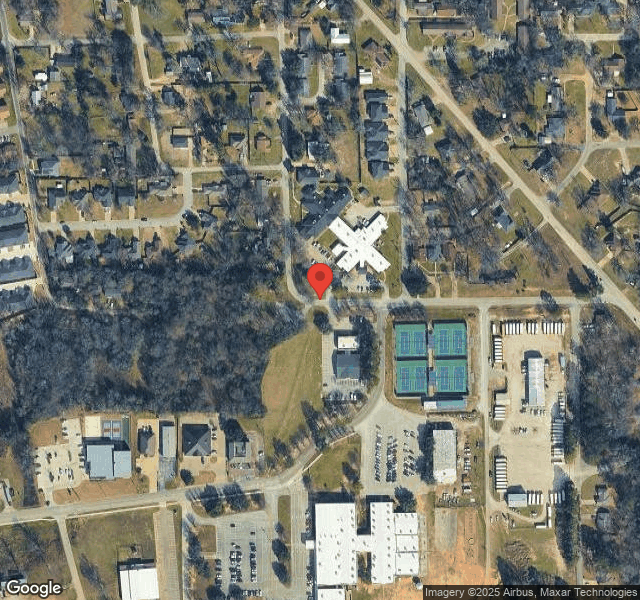
Jul 2024 2 deficiencies
CONCERN (D) 📢 Someone Reported This

A family member, employee, or ombudsman was alarmed enough to file a formal complaint

Potential for Harm - no one hurt, but risky conditions existed

Accident Prevention (Tag F0689)

Could have caused harm · This affected 1 resident

**NOTE- TERMS IN BRACKETS HAVE BEEN EDITED TO PROTECT CONFIDENTIALITY** Based on interview and record review, the facility failed to ensure residents were secure during transportation to prevent accid...

Read full inspector narrative →
**NOTE- TERMS IN BRACKETS HAVE BEEN EDITED TO PROTECT CONFIDENTIALITY** Based on interview and record review, the facility failed to ensure residents were secure during transportation to prevent accidents for 1 of 3 residents reviewed for accidents. (Resident # 12) The facility did not ensure a wheelchair was secured while transporting Resident #12 which caused . Resident #12 to slide out of the wheelchair during transportation from the hospital. This failure could place residents who travel in the facility van at risk of injuries. Findings included: During record review of a face sheet dated 6/23/2024 indicated Resident # 12 was [AGE] years old female and admitted on [DATE]. Resident #12's diagnoses included: Sepsis (An infection of the blood stream resulting in a cluster of symptoms such as drop in a blood pressure, increase in heart rate and fever), Acute on chronic diastolic congestive heart failure ( condition in which your heart's main pumping chamber (left ventricle) becomes stiff and unable to fill properly), Type II Diabetes (Type 2 diabetes is a chronic condition that happens when you have persistently high blood sugar levels (hyperglycemia).) acquired absence of right below the knee and acquired absence of left leg above the knee (a medical condition that indicates the loss or amputation of the right leg below the knee and left leg above the knee), and cognitive communication deficit (communication deficit is a problem with one or more cognitive skills involved in communication such as attention, memory or reasoning). During record review of a MDS dated [DATE] revealed Resident #12's BIMs (Brief Interview for Mental Status) score was a 08 indicating Resident #12's cognition was moderately impaired. Resident # 12 was dependent on 2 or more persons to transfer from the chair to the bed and toilet transfers. She used a manual wheelchair as a mobility device. During record review of a care plan dated 5/17/2024 indicated Resident # 12 was a resident at risk for falls related to balance problems, incontinence, weakness and bilateral (pertaining to, involving, or affecting two or both sided) lower extremity amputee with a goal to be free of fall. Interventions reflected to anticipate and meet Resident #12's needs, keep call light within reach and remind resident what to do if a fall occurs, encourage to participate in activities that promote exercise, physical activity for strengthening and improved mobility. Resident #12's care plan indicated she had limited physical mobility related to double lower extremity amputee with a goal to demonstrate the appropriate use of electric wheelchair to increase mobility and maintain current level of mobility. Interventions reflected to provide supportive care, assistance with mobility as needed and physical therapy and occupational referrals as ordered. Resident #12's care plan indicated she had ADL self-care deficits and required a mechanical lift with 2 staff for transfers to and from the shower chair and may use sliding board from bed to chair or chair to bed. During an interview on 6/22/2024 at 3:12 PM, Resident #12 denied any falls or injuries while at the facility. Resident #12 said she had used the transportation at the facility and said she was buckled in securely and felt safe during transportation to and from hospital. During record review of incident report dated 6/10/2024, Transportation driver indicated Resident #12 slid from her wheelchair onto the floor in the van. The incident report indicated upon assessment; Resident #12 was observed laying on the floor of the van with a pillow under her head. When attempted to move Resident #12, she screamed out in pain while grabbing her hips. Emergency services notified and Resident #12 was transported to hospital. During an interview on 6/22/2024 at 4:43 PM, the DON and the Assistant ADM said Resident #12 slid from her wheelchair during van transportation on 6/10/2024. The DON said the fall occurred as the van was pulling into the driveway at the facility. During an interview on 6/22/2024 at 4:48 PM, the Transportation Driver said she placed Resident #12 in the van and Resident #12. The Transportation driver said Resident #12 kept sliding out of her wheelchair prior to transport from the hospital The Transportation Driver said about half-way back and approximately 12 miles from the facility, the resident said she was sliding. The Transportation driver pulled over and assisted Resident #12, by lowering her to the floor of the van and placed 2 wheelchair cushions under her head and under Resident #12's bottom. She called the ADM of the facility and the phone hung up. The Transportation Driver said she made the decision to strap the resident down on the floor with the straps and transport her back to the facility. The Transportation Driver said the ADM asked her why she did not call 911. The Transportation Driver said she was never trained on what to do in the event of an accident. The Transportation Driver said when she returned to the facility, staff members came out to the van to assess Resident #12 and Emergency Medical Services were notified and Resident #12 was transported to the hospital for further evaluation. The Transportation Driver said she was not suspended after the incident . During an interview on 6/22/2024 at 5:29 PM, the Director of Rehab said he trained the Transportation Driver on proper seating in the wheelchair and wheelchair on the van on 12/18/2023. The Director of Rehab said Resident #12 was a double amputee and Resident #12 required a manual wheelchair to transport. The Director of Rehab said he demonstrated to the Transportation Driver how to get a resident in and out of van and strap securement on the wheelchair. During an interview on 6/22/2024 at 5:44 PM, the Transportation Driver was contacted for further information. The Transportation Driver said Resident #12 would normally use her powerchair during transportation but was in a regular manual wheelchair on the day of the incident. The Transportation Driver said she was not allowed to transfer residents due to her not being a CNA. During an interview on 6/23/2024 at 4:40 PM Activity Director said she had never observed Resident #12 sliding from her wheelchair. The Activity Director said Resident #12 did not require anything to keep her in her wheelchair. The Activity Director said a resident having issues with wheelchair would be on the care plan. During an interview on 6/23/2024 at 4:50 PM, CMA K said CNAs did not assist during transportation with residents in wheelchairs. She said the transportation driver and residents were the only ones on the van. During an interview on 6/23/2024 at 5:23 PM, the DON said securing a resident on the floor of the van and transporting them back to the facility was appropriate, but the Transportation Driver should have called Emergency Medical Services (EMS) for assistance. The DON said she was going to investigate the incident and the Transportation Driver would be re-educated and have a vehicle checklist. The DON said a resident sliding out of from a wheelchair should be care planned. The DON said there should be another person on the van with Resident #12 since she had an issue with sliding out of her wheelchair. During an interview on 6/23/2024 at 5:38 PM, the Assistant ADM said the Transportation Driver should make sure the residents are properly secured in van before transport. The Assistant ADM said he would have pulled over and called first responders and he expected the Transportation Driver to call for help because she was not a nurse aid. The Assistant ADM said a resident sliding out of wheelchair should be care planned and would be care planned to move forward to prevent incidents. During record review of the facility's in-service training report dated 12/18/2023 indicated the Transportation Driver was trained on following: Van and Car transfers including seating and positioning of resident in wheelchair, locking brakes, seat belts, loading and unloading via lift and down, adding or removing wheelchair leg rest, use of oxygen and proper placement on wheelchair conducted and signed by Director of Rehab. The Director of Rehab indicated in his evaluation, comments the Transportation Driver was able to demonstrate proper use of wheelchair and oxygen tanks. He noted she was able to safely load and unload resident's using the van lift and able to use seat belt and lock wheelchair correctly. The Director of Rehab indicated she was instructed to make sure residents had leg rest and buckled properly. Record review of the facility's Transportation Policy dated 6/3/2023 indicated .Purpose: The transportation policy of residents of facility, whether conducted by facility-employed or contracted transportation services .Any accidents or incidents during transportation must be reported immediately to the facility's designated personnel and documented per facility procedures .8. Emergency procedures: Drivers must be trained in emergency procedures specific to transportation incidents, including medical emergencies, accidents, and adverse weather conditions .Emergency contact information for residents and facility staff must be readily available and accessible during transport .
CONCERN (D) 📢 Someone Reported This

A family member, employee, or ombudsman was alarmed enough to file a formal complaint

Potential for Harm - no one hurt, but risky conditions existed

Pharmacy Services (Tag F0755)

Could have caused harm · This affected 1 resident

**NOTE- TERMS IN BRACKETS HAVE BEEN EDITED TO PROTECT CONFIDENTIALITY** Based on interview and record review, the facility failed to provide pharmaceutical services, including procedures that assure t...

Read full inspector narrative →
**NOTE- TERMS IN BRACKETS HAVE BEEN EDITED TO PROTECT CONFIDENTIALITY** Based on interview and record review, the facility failed to provide pharmaceutical services, including procedures that assure the accurate dispensing and administering of all drugs and biologicals to meet the needs of each resident for 1 of 5 residents reviewed for pharmacy services (Resident #24) 1. The facility failed to keep a record receipt of Resident #24's-controlled medication Hydrocodone. The failures could place residents at risk of inadequate pain control, not receiving the intended therapeutic dose to alleviate moderate to severe pain as ordered and not having accurate records of medication administration which could result in diminished health and well-being. Findings included: 1.Record review of the undated face sheet for Resident #24 indicated she was a [AGE] year old female that re-admitted [DATE] with diagnoses that included: Orthopedic aftercare following surgical amputation (surgical procedure of a removal of body part such as arm, foot, toe or leg), Atherosclerosis of native arteries of extremities with rest pain, right leg (a disease of the peripheral blood vessels that is characterized by narrowing and hardening of the arteries that supply the legs and feet), peripheral vascular disorder (a circulatory condition in which narrowed blood vessels reduce blood flow to limbs). Record review of the MDS assessment dated [DATE] indicated Resident # 24 had clear speech, usually understood others, and usually understood by others. She had a BIMS of 15 indicating she was cognitively intact. Record review of the care plan revised on 4/29/2024 revealed Resident #24 had acute and chronic pain related to peripheral vascular disease and post-surgery to right femoral bypass grafts and takes pain medication. The goal was Resident #24 would be free of any discomfort or adverse side effects from pain medication. Interventions included to administer analgesic medications as ordered by physician. Monitor and document side effects and effectiveness every shift and notify MD PRN. Review for pain medication efficacy, assess whether pain intensity was acceptable to resident. Record review of physician's orders for Resident #24 indicated: 1. Hydrocodone 5-325 mg (120 quantity) was filled on 4/19/2024. The pharmacist confirmed order written for Hydrocodone 5-325 mg 1 tablet every 6 hours scheduled for 30 days. 2. Hydrocodone 5-325 mg (180 quantity) was filled on 5/20/2024 and receipted at the facility. The pharmacist confirmed the order was for Hydrocodone 5-325 mg 1 tablet four times daily and every 6 hours as needed for pain. Record review of a hospital discharge date d 6/20/2024 indicated Resident #24 was hospitalized from [DATE]- 6/20/2024 for Right AKA (above the knee amputation). Resident #24 was discharged from hospital with a new prescription of Hydrocodone-acetaminophen 5-325 mg 1 tablet every 4 hours if needed for moderate pain (4-6) or severe pain (7-10). Resident #24 would have remaining Hydrocodone previously prescribed to her on 5/20/2024 for Hydrocodone 5-325 mg (180 dispensed) 1 tablet every 4 hours and every 6 hours as needed for pain. The facility was unable to locate remaining Hydrocodone prescribed and delivered on 5/20/2024. During an interview on 6/23/2024 at 12:50 PM, LVN C and the DON said the facility could not locate Resident #24's Hydrocodone 5-325 mg 4 x daily and every 6 hours prn for pain that was delivered on 5/20/2024 . The DON and LVN C said Resident #24 was prescribed Oxycodone 5-325 mg 1 tablet every 4 hours as needed for mod erate pain on 5/15/2024 and was completed on 5/22/2024. During record review of delivery receipt dated 5/15/2024, indicated Resident #24's Oxycodone/APAP 5-325 mg tablet quantity 30 was delivered on 5/15/2024 and completed on 5/22/2024 indicated on the individual control drug record. During an interview on 6/23/2024 at 12:56 PM LVN C said there was not another prescription or delivery for Hydrocodone on 5/20/2024. During a phone interview on 6/23/2024 at 1:42 PM, with Pharmacist G, said the Hydrocodone 5-325 mg was delivered on 5/20/2024 (180 dispensed) and was signed by LVN D. The remaining Hydrocodone from dispensed date 5/20/2024 was not located at the facility. During an interview on 6/23/2024 at 1:48 PM, the DON said LVN D worked on 5/20/2024 on the 6pm-6am shift and was scheduled. During an interview on 6/23/2024 at 2:16 PM LVN A said narcotics were always counted before and after shift change. LVN A denied any counts being off. LVN A said she would call the DON if counts were off. LVN A said the medications remained on the cart when a resident went to the hospital. She said they would not send Resident #24 with medications. LVN A said discontinued medication count sheets go to the DON for her and the pharmacist to destruct medications. During an interview on 6/23/2024 at 2:43 PM Resident #24 said she received her routine medications on time as scheduled and wound care daily as ordered. Resident #24 said recently she had to wait 24 hours to receive her pain medication after returning from the hospital on 6/20/2024 and said she had to wait for the pharmacy to deliver her pain medications. Resident #24 said she only received Hydrocodone 5-325 mg 1 tablet of her pain medication scheduled every 4 hours. During an interview on 6/23/2024 at 4:10 PM the DON said she was on vacation on 6/10/2024-6/16/2024. The DON said prior to her vacation, the Hydrocodone prescribed on 4/19/2024 was dated completed on 6/6/2024 and she reviewed Resident #24's Hydrocodone prescription to ensure she needed a new prescription on 6/20/2024. The DON said the Hydrocodone had been called in for Resident #24 from the hospital prior to her discharging. The DON said she was not aware of the missing count sheet or Hydrocodone. The DON said it would be a reportable incident if medication was missing. The DON said she was going to in-service staff on narcotic delivery and would start having 2 nurses sign when the pharm dropped off narcotics. During an interview on 6/23/2024 at 4:55 PM, RN B said she had only been at the facility for 2 days and she did not administer medications and said she had not received report from any staff that narcotic counts were off and would recount if counts were ever off. During an interview on 6/23/2024 5:05 PM LVN C said she was currently the new MDS nurse was previously the ADON about 1 month ago. LVN C said she was not aware of missing narcotics. During an interview on 6/23/2024 5:23 PM, the DON said she expected the nurses to report any missing medications. The DON said she was not aware of Resident #24's missing count sheet or Hydrocodone. She said missing medication was reportable. The DON said that was the first time a medication had not been located. During an interview on 6/23/2024 at 5:38 PM, the Assistant ADM he it was not reported that Resident #24 was missing her Hydrocodone or count sheet, expected nursing staff to report any medication counts off or missing narcotics immediately. During an interview on 6/23/2024 6:20 PM, LVN D said she received the Hydrocodone on 5/20/2024 between 10 PM and 11 pm. LVN D said she signed for the medication and placed it in the med cart. LVN D said no other nurses witnessed the medications dropped off. LVN D said there were 180 pills of Hydrocodone delivered for Resident #24 on 5/20/2024. LVN D said she signed the individual control drug record and documented the quantity and placed the form in the narcotic book at station 1 cart. LVN D said the medications were routine . During record review of the facility's individual control drug record dated 5/15/2024 indicated Oxycodone/APAP 5-325 mg in the quantity of 30 pills dispensed for Resident #24 to be administered 1 tablet by mouth every 4 hours as needed for moderate pain for up to 7 days and was started on 5/16/2024-5/22/2024. Resident #24 received her pain medication and completed them on 5/22/2024. During the record review of the facility's individual control drug record dated 4/19/2024 indicated Resident #24's Hydrocodone 5-325 mg 1 tablet by mouth every 6 hours and quantity of 120 dispensed and signed off on starting on 4/20/2024- 5/24/2024 on 1 of 2 drug records and 5/24/2024 -6/6/2024 on page 2 of 2 drug records. During record review of the facility's individual control drug record dated 6/20/2024 indicated Hydrocodone 5-325 mg 1 tablet by mouth every 4 hours as needed for moderate to severe pain and a quantity of 40 pills started on 6/20/2024 at 11:00 PM through 6/24/2024 was still available and administered as ordered with 16 tablets remaining. During record review and interview on 6/23/2024 at 1:54 PM the DON presented a pharmacy delivery requisition form dated 5/20/2024, Resident #24's Hydrocodone 5-325 mg in quantity of 180 pills filled and delivered on 5/20/2024 was not accounted for. The DON said she could not locate the individual control drug record with the counts for the Hydrocodone 5-325 mg delivered on 5/20/2024. The DON said the medications were not located in the medication destruction storage. During record review of the facility 's policy dated April 2019 titled Discarding and Destroying Medications, indicated .Medications will be disposed of in accordance with federal, state, and local regulations governing management of non-hazardous pharmaceuticals, hazardous waste, and controlled substances . Policy Interpretation and Implementation .1. All unused controlled substances shall be retained in a securely locked area with restricted access until disposed of .11. The medication disposition record will contain the following information . a. The resident's name b. Date medication disposed c. The name and strength of the medication d. The name of the dispensing pharmacy e. The quantity disposed f. Method of disposition g. Reason of disposition h. signature of witnesses .12. Completed medication disposition records shall be kept on file in the facility for at least two (2) years, or as mandated by state law governing the retention and storage of such records. During record review of the facility 's policy titled Storage of Medication dated April 2019 indicated .the facility stores all drugs and biologicals in a safe, secure, and orderly manner .Policy Interpretation and Implementation . 5. Discontinued, outdated, or deteriorated drugs or biologicals are returned to the dispensing pharmacy or destroyed . 13. Schedule II-V controlled medications are stored in separately locked, permanently affixed compartments. Security access to controlled medication is separate from access to non-controlled medications .14. Access to controlled medications are limited to authorized personnel. Personnel access to controlled medications is recorded .
Dec 2023 3 deficiencies
CONCERN (D)

Potential for Harm - no one hurt, but risky conditions existed

PASARR Coordination (Tag F0644)

Could have caused harm · This affected 1 resident

**NOTE- TERMS IN BRACKETS HAVE BEEN EDITED TO PROTECT CONFIDENTIALITY** Based on interviews and record reviews, the facility failed to ensure individuals with mental health disorders were provided an ...

Read full inspector narrative →
**NOTE- TERMS IN BRACKETS HAVE BEEN EDITED TO PROTECT CONFIDENTIALITY** Based on interviews and record reviews, the facility failed to ensure individuals with mental health disorders were provided an accurate Preadmission Screening and Resident Review (PASRR) Level 1 Screening for 1 of 6 residents reviewed for PASRR (Resident #32). The facility failed to ensure Resident #32 had an accurate PASRR Level 1 Screening indicating a diagnosis of mental illness on 07/25/2023. This failure could place residents at risk of not receiving needed individualized care, and specialized services to meet their needs. Findings included: Record review of a face sheet dated 12/12/2023 indicated Resident #32 was a [AGE] year-old female who admitted to the facility on [DATE] with diagnoses including Post Traumatic Stress Disorder and major depressive disorder. Record review of the Comprehensive (admission) MDS assessment dated [DATE] indicated Resident #32 had a BIMS score of 15 (fifteen) indicating no impaired cognition. The MDS section for PASRR indicated Resident #32 did not have a serious mental illness. The MDS indicated Resident #32 had a diagnosis of depression and Post Traumatic Stress Disorder. Record review of Resident #32's PASRR Level 1 Screening completed at an acute care hospital on [DATE] indicated in section C0100 the resident did not have evidence of having a mental illness. During an interview with the MDS Nurse on 12/12/2023 at 10:12 AM, she said she was responsible for tasks related to PASRR and MDS processes. She said she was the MDS Coordinator at the time of Resident #32's admission. She said at the time of Resident #32's admission, the acute care hospital completed her PASRR Level 1 Screening and indicated she was negative for mental illness. She said Resident #32 had a diagnosis of Post Traumatic Stress Disorder upon admission and questioned whether she needed to follow up and send notice to the local authority but never did. She said Resident #32's PASRR Level 1 Screening was incorrect upon admission, and she should have notified the local authority Resident #32 had an incorrect PASRR Level 1 Screening and was positive for mental illness. The MDS Nurse said she understood the importance of PASRR Level 1 Screenings being accurate because the facility needed to make sure eligible residents were getting the correct resources.
CONCERN (E)

Potential for Harm - no one hurt, but risky conditions existed

Deficiency F0725 (Tag F0725)

Could have caused harm · This affected multiple residents

Based on interview, and record review, the facility failed to have sufficient nursing staff to provide nursing and related services to assure resident safety and attain or maintain the highest practic...

Read full inspector narrative →
Based on interview, and record review, the facility failed to have sufficient nursing staff to provide nursing and related services to assure resident safety and attain or maintain the highest practicable physical, mental, and psychosocial well-being of each resident, for 1 of 4 quarters for 2023 (Quarter 3) reviewed for nursing services. *The facility did not have sufficient staff according to the PBJ report for Quarter 3 2023 (April 1 through June 30). This failure could place residents at risk of diminished quality of life and quality of care. Findings included: Record review of the CMS PBJ reports Quarter 3 2023 (April 1 through June 30) indicated: the facility had a 1-star staffing rating; * the facility failed to have Licensed Nursing Coverage 24 hours/Day from April 1st through June 5th. * the facility had excessively low weekend staffing. During an interview on 12/11/23 at 3:37 p.m., the Administrator said the facility changed ownership in June 2023 and he started working at the facility in July 2023. The Administrator said the facility did not submit the prior quarterly PBJ report regarding staffing under the previous owner. The Administrator said under the new ownership, they had a new payroll company and can access employee timecards to submit staffing data to the PBJ. The Administrator said the Regional Director of HR was responsible for submitting the staffing data to the PBJ. During an interview on 12/11/23 at 4:06 p.m., the DON said she started working at the facility in November 2023 and did not work for the previous owner. The DON said she had no knowledge regarding the prior quarterly PBJ report regarding staffing and tried to keep staffing according to the needs of the residents. During an interview on 12/12/23 at 4:30 p.m., the Regional Director of HR said she started working for the new ownership in May 2023 and was responsible for submitting the staffing data to the PBJ. She said she contacted the previous owners payroll company and asked them for the timecards, but they denied her access because there was an outstanding bill. She said she was not responsible for submitting the facility's prior quarterly PBJ report regarding staffing because she did not work at the facility for the previous owner at that time. The Regional Director of HR said they did not have a policy regarding PBJ reporting, and she followed the CMS guidelines for PBJ reporting.
CONCERN (E)

Potential for Harm - no one hurt, but risky conditions existed

Deficiency F0727 (Tag F0727)

Could have caused harm · This affected multiple residents

Based on interview and record review, the facility failed to ensure they had an RN for 8 consecutive hours 7 days a week for 1 of 4 quarters of 2023 (Quarter 3) PBJ reports reviewed for RN coverage. ...

Read full inspector narrative →
Based on interview and record review, the facility failed to ensure they had an RN for 8 consecutive hours 7 days a week for 1 of 4 quarters of 2023 (Quarter 3) PBJ reports reviewed for RN coverage. The facility did not have RN coverage from April 1st through June 5th and 2 weekends in June 2023. This failure could place residents at risk of lack of nursing oversight and a higher level of care. Findings included: Record review of the CMS PBJ reports Quarter 3 2023 (April 1 through June 30) indicated there were no RN hours on the following dates: * April 1st through June 5th * 06/10 (Saturday) * 06/11 (Sunday) * 06/26 (Monday) During an interview on 12/11/23 at 3:37 p.m., the Administrator said the facility changed ownership in June 2023 and he started working at the facility in July 2023. The Administrator said facility did not submit the prior quarterly PBJ report regarding staffing under the previous owner. The Administrator said under the new ownership they have a new payroll company and can access employee timecards to submit staffing data to the PBJ. The Administrator said the Regional Director of HR was responsible for submitting the staffing data to the PBJ. During an interview on 12/11/23 at 4:06 p.m., the DON said she started working at the facility in November 2023 and did not work for the previous owner. The DON said she had no knowledge regarding the prior quarterly PBJ report regarding staffing and tried to keep staffing according to the needs of the residents. During an interview on 12/12/23 at 4:30 p.m., the Regional Director of HR said she started working for the new ownership in May 2023 and was responsible for submitting the staffing data to the PBJ. She said she contacted the previous owners payroll company and asked them for the timecards, but they denied her access because there was an outstanding bill. She said she was not responsible for submitting the facility's prior quarterly PBJ report regarding staffing because she did not work at the facility for the previous owner at that time. The Regional Director of HR said they did not have a policy regarding PBJ reporting, and she followed the CMS guidelines for PBJ reporting.
Understanding Severity Codes (click to expand)
Life-Threatening (Immediate Jeopardy)
J - Isolated K - Pattern L - Widespread
Actual Harm
G - Isolated H - Pattern I - Widespread
Potential for Harm
D - Isolated E - Pattern F - Widespread
No Harm (Minor)
A - Isolated B - Pattern C - Widespread

Questions to Ask on Your Visit

  • "What changes have you made since the serious inspection findings?"
  • "What safeguards are in place to prevent abuse and neglect?"
  • "Can I speak with families of current residents?"
  • "What's your RN coverage like on weekends and overnight?"

Our Honest Assessment

Strengths
  • • Licensed and certified facility. Meets minimum state requirements.
Concerns
  • • Multiple safety concerns identified: Federal abuse finding, 2 life-threatening violation(s), 1 harm violation(s), $265,892 in fines. Review inspection reports carefully.
  • • 17 deficiencies on record, including 2 critical (life-threatening) violations. These warrant careful review before choosing this facility.
  • • $265,892 in fines. Extremely high, among the most fined facilities in Texas. Major compliance failures.
  • • Grade F (0/100). Below average facility with significant concerns.
Bottom line: This facility has a substantiated abuse finding. Extreme caution advised. Explore alternatives.

About This Facility

What is Colonial Nursing & Rehabilitation Center's CMS Rating?

CMS assigns Colonial Nursing & Rehabilitation Center an overall rating of 1 out of 5 stars, which is considered much below average nationally. Within Texas, this rating places the facility higher than 0% of the state's 100 nursing homes. A rating at this level reflects concerns identified through health inspections, staffing assessments, or quality measures that families should carefully consider.

How is Colonial Nursing & Rehabilitation Center Staffed?

CMS rates Colonial Nursing & Rehabilitation Center's staffing level at 1 out of 5 stars, which is much below average compared to other nursing homes.

What Have Inspectors Found at Colonial Nursing & Rehabilitation Center?

State health inspectors documented 17 deficiencies at Colonial Nursing & Rehabilitation Center during 2023 to 2025. These included: 2 Immediate Jeopardy (the most serious level, indicating potential for serious harm or death), 1 that caused actual resident harm, and 14 with potential for harm. Immediate Jeopardy findings are rare and represent the most serious regulatory concerns. They require immediate corrective action.

Who Owns and Operates Colonial Nursing & Rehabilitation Center?

Colonial Nursing & Rehabilitation Center is owned by a for-profit company. For-profit facilities operate as businesses with obligations to shareholders or private owners. The facility operates independently rather than as part of a larger chain. With 90 certified beds and approximately 61 residents (about 68% occupancy), it is a smaller facility located in Lindale, Texas.

How Does Colonial Nursing & Rehabilitation Center Compare to Other Texas Nursing Homes?

Compared to the 100 nursing homes in Texas, Colonial Nursing & Rehabilitation Center's overall rating (1 stars) is below the state average of 2.8 and health inspection rating (1 stars) is much below the national benchmark.

What Should Families Ask When Visiting Colonial Nursing & Rehabilitation Center?

Based on this facility's data, families visiting should ask: "What changes have been made since the serious inspection findings, and how are you preventing similar issues?" "What safeguards and monitoring systems are in place to protect residents from abuse or neglect?" "Can you walk me through typical staffing levels on day, evening, and night shifts?" "Can I visit during a mealtime to observe dining assistance and food quality?" These questions are particularly relevant given the facility's Immediate Jeopardy citations, the substantiated abuse finding on record, and the below-average staffing rating.

Is Colonial Nursing & Rehabilitation Center Safe?

Based on CMS inspection data, Colonial Nursing & Rehabilitation Center has documented safety concerns. The facility has 1 substantiated abuse finding (meaning confirmed case of resident harm by staff or other residents). Inspectors have issued 2 Immediate Jeopardy citations (the most serious violation level indicating risk of serious injury or death). The facility has a 1-star overall rating and ranks #100 of 100 nursing homes in Texas. Families considering this facility should ask detailed questions about what corrective actions have been taken since these incidents.

Do Nurses at Colonial Nursing & Rehabilitation Center Stick Around?

Colonial Nursing & Rehabilitation Center has not reported staff turnover data to CMS. Staff turnover matters because consistent caregivers learn residents' individual needs, medications, and preferences. When staff frequently change, this institutional knowledge is lost. Families should ask the facility directly about their staff retention rates and average employee tenure.

Was Colonial Nursing & Rehabilitation Center Ever Fined?

Colonial Nursing & Rehabilitation Center has been fined $265,892 across 5 penalty actions. This is 7.4x the Texas average of $35,738. Fines at this level are uncommon and typically indicate a pattern of serious deficiencies, repeated violations, or failure to correct problems promptly. CMS reserves penalties of this magnitude for facilities that pose significant, documented risk to resident health or safety. Families should request specific documentation of what issues led to these fines and what systemic changes have been implemented.

Is Colonial Nursing & Rehabilitation Center on Any Federal Watch List?

Colonial Nursing & Rehabilitation Center is not on any federal watch list. The most significant is the Special Focus Facility (SFF) program, which identifies the bottom 1% of nursing homes nationally based on persistent, serious quality problems. Not being on this list means the facility has avoided the pattern of deficiencies that triggers enhanced federal oversight. This is a positive indicator, though families should still review the facility's inspection history directly.