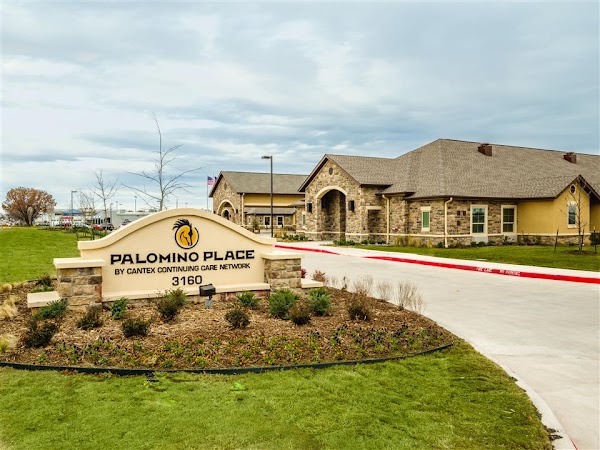


Palomino Place

3160 Gus Thomasson Road, Mesquite, TX 75150 (469) 329-4002
For profit - Corporation 120 Beds CANTEX CONTINUING CARE Data: November 2025 3 Immediate Jeopardy citations
Trust Grade
2/100
#810 of 1168 in TX
Last Inspection: August 2024

Within standard 12-15 month inspection cycle. Federal law requires annual inspections.

Overview

Palomino Place in Mesquite, Texas, has a Trust Grade of F, indicating significant concerns and a poor reputation among nursing homes. They rank #810 out of 1168 facilities in Texas, placing them in the bottom half, and #51 out of 83 in Dallas County, meaning there are many better options nearby. While the facility is improving, having reduced issues from 14 in 2024 to 5 in 2025, they have a troubling history with critical incidents, including failures in medication administration that led to medical emergencies and inadequate supervision resulting in resident elopement. Staffing is below average with a 50% turnover rate, which is concerning for continuity of care, but they do provide average RN coverage. Additionally, they have incurred $8,827 in fines, which is typical for the area but suggests ongoing compliance issues.

Trust Score
F
2/100
In Texas
#810/1168
Bottom 31%
Safety Record
High Risk
Review needed
Inspections
Getting Better
14 → 5 violations
Staff Stability
⚠ Watch
50% turnover. Above average. Higher turnover means staff may not know residents' routines.
Penalties
⚠ Watch
$8,827 in fines. Higher than 92% of Texas facilities. Major compliance failures.
Skilled Nurses
⚠ Watch
Each resident gets only 17 minutes of Registered Nurse (RN) attention daily — below average for Texas. Fewer RN minutes means fewer trained eyes watching for problems.
Violations
⚠ Watch
24 deficiencies on record. Higher than average. Multiple issues found across inspections.
★★☆☆☆
2.0
Overall Rating
★★☆☆☆
2.0
Staff Levels
★★★★★
5.0
Care Quality
★☆☆☆☆
1.0
Inspection Score
Stable
2024: 14 issues
2025: 5 issues

The Good

  • 5-Star Quality Measures · Strong clinical quality outcomes
  • Full Sprinkler Coverage · Fire safety systems throughout facility
  • No fines on record

Facility shows strength in quality measures, fire safety.

The Bad

2-Star Overall Rating

Below Texas average (2.8)

Below average - review inspection findings carefully

Staff Turnover: 50%

Near Texas avg (46%)

Higher turnover may affect care consistency

Federal Fines: $8,827

Below median ($33,413)

Minor penalties assessed

Chain: CANTEX CONTINUING CARE

Part of a multi-facility chain

Ask about local staffing decisions and management

The Ugly 24 deficiencies on record

3 life-threatening 2 actual harm
Aug 2025 1 deficiency 1 IJ
CRITICAL (J) 📢 Someone Reported This

A family member, employee, or ombudsman was alarmed enough to file a formal complaint

Immediate Jeopardy (IJ) - the most serious Medicare violation

Pharmacy Services (Tag F0755)

Someone could have died · This affected 1 resident

**NOTE- TERMS IN BRACKETS HAVE BEEN EDITED TO PROTECT CONFIDENTIALITY** Based on observations, interviews, and record reviews, the facility failed to provide pharmaceutical services (including procedu...

Read full inspector narrative →
**NOTE- TERMS IN BRACKETS HAVE BEEN EDITED TO PROTECT CONFIDENTIALITY** Based on observations, interviews, and record reviews, the facility failed to provide pharmaceutical services (including procedures that assure the accurate acquiring, receiving, dispensing, and administering of all drugs and biologicals) to meet the needs of each resident for one (Resident #1) of three residents reviewed for pharmacy services.The facility failed to ensure Resident #1, who was NPO, did not receive a medication by mouth.The failure could place residents at risk for aspiration, choking, and death. An IJ was identified on 08/26/25. The IJ template was provided to the facility on [DATE] at 4:49 PM. While the IJ was removed on 08/27/25, the facility remained out of compliance at a scope of isolated and a severity level of potential for more than minimum harm because all staff had not been trained on the Plan of Removal.Findings included:Record review of Resident #1's quarterly MDS assessment dated [DATE], reflected she was a [AGE] year-old female who admitted to the facility on [DATE]. She was sometimes able to understand others and sometimes able to make herself understood. The resident's diagnoses included diabetes and multiple sclerosis (multiple sclerosis is an autoimmune disease that affects the central nervous system, leading to a range of symptoms due to the immune system attacking the nerve fibers.) The resident had a feeding tube.Record review of Resident #1's August 2025 Order Summary Report reflected:Start Date: 06/03/25NPO dietStart Date: 06/03/25G Tube - Flush before and after medication administration. Every shift Flush G Tube with 50 ml water before and after medication administration.Start Date: 06/03/25G-Tube - May mix and flush each medication with 5 - 10 ml's of Water.Record review of Resident #1's August 2025 Medication Administration Record reflected on 08/22/25, RN B administered all 7:00 AM and 9:00 AM medications including Eliquis via Resident #1's feeding tube.Record review of Resident #1's FNP note reflected:08/22/25 10:09 AMPhysician- Progress Note Late Entry:Note Text: Subjective:Resting in bed, has a pill in her mouth. Reports the nurse gave her a pill and she is unable to swallow. I removed pill and notified nurse and DON - patient is NPO. Educated nurse on medication distribution and notified DON of error.An interview on 08/26/25 at 1:35 PM with the FNP revealed on 08/22/25 Resident #1 told her there was a pill in her mouth. The FNP said she removed the pill from Resident #1's mouth and pill was intact. The FNP said the resident did not have adverse effects. The FNP said the risk to the resident was she could have aspirated. The FNP said she notified LVN A of the error and the DON. The FNP said she told the DON to educate the nurses.A follow-up interview on 08/26/25 at 1:55 PM with the FNP revealed LVN A told her the pill in Resident's #1 mouth was the Eliquis that he gave her.An interview on 08/26/25 at 2:35 PM revealed LVN A said he did not give Resident #1 a pill by mouth. He said he was supposed to be receiving orientation but was assigned a hall to work. LVN A said he administered Resident #1's medications by feeding tube. LVN A said he worked a full shift on 08/22/25. An interview on 08/26/25 at 4:10 PM with RN B revealed she was working at the facility the morning of 08/22/25. RN B said she did not know why LVN A would deny administering medications orally to Resident #1. RN B said she saw LVN A go into Resident #1's room at unknown time and then leave the room. RN B said LVN A told her that he tried to give Resident #1 a medication by mouth because he did not know the resident had a feeding tube. RN B said LVN A told her that it was a speech therapist who told him not to give Resident #1 a pill by mouth. RN B said she told LVN A that it was very important to follow the rights of giving medication, including route. RN B said she saw LVN A later that shift and he was counting the medication cart with another nurse. RN B said LVN A called later and said he was not coming back to work at the facility. RN B said she saw the DON and told her to do 1:1 training with LVN A. RN B said she only passed a couple of medications to residents, and she saw LVN A documenting under her name. She said she told LVN A not to document under his name. RN B said she thought it was a speech therapist who had talked to LVN A, not the FNP.An interview on 08/26/25 at 2:30 PM with the DON revealed there were 5 residents who were NPO. She said she was not there when Resident #1 was given a pill by mouth. The DON said she was told by RN B that LVN A gave Resident #1 a pill by mouth instead of by feeding tube and the FNP removed it. The DON said she was told by RN B that the FNP counseled LVN A. The DON said she did not talk to LVN A about the incident. The DON said LVN C was placed to work with LVN A for the rest of the shift. The DON said LVN A did not know the residents at the facility but knew the system of working at the facility and was a transfer from a sister facility. The DON said she saw LVN A and LVN C talking during the shift. The DON said she did not tell LVN C about the incident. The DON said she was supposed to in-service LVN A and she attempted to call him, but he declined all calls. The DON said she did not do any in-services with the other nurses because they knew which residents had feeding tubes. The DON said to determine the route to administer medication, nurses were supposed to read the order. The DON said if a resident had NPO restrictions then they would have a picture posted in their room of a green plant. The DON said normally LVN A would have been trained and orientation for new nurses was 72 hours. The DON said in this case, he was a transfer from a sister facility, and she thought he was good to take over the medication cart until LVN C arrived at 8:00 AM. The DON said going forward, all nurses would be given a 72-hour orientation before passing medications.Review of the facility policy, Medication Administration Through a Feeding Tube, updated March 2019, reflected: PurposeTo provide a route for accurate and timely medication administration for a Patient who cannot or should not take medications orally.GuidelinesA physician's order is required for the administration of any medication via feeding tube.This was determined to be an IJ on 08/26/25. The Administrator and the DON were notified. The Administrator was provided with the IJ template on 08/26/25 at 4:49 PM. The Plan of Removal was accepted on 08/26/25 at 9:48 AM and reflected the following:Immediate Actions1. 08/26/225-Resident #1 was assessed by the DON and was deemed to be at her normal baseline. The Medical Director gave no new orders or guidance.2. The Ombudsman was notified of the content of the immediate jeopardy via email on 08/26/25.3. On 08/26/25 The RDCS in-serviced the DON with test for competency on: Following physicians' orders The 6 Rights of Medication Administration Enteral Administration of Medications (with skill competency and test) [NAME] Foliage Picture Protocol (which identifies NPO residents, Picture above the bed) and green wrist bands4. On 08/26/25 The RDCS and DON completed a 100% audit of all residents who were NPO, who hadthe potential to be affected. The result of the audit yielded that no other residents were affected and were at their normal baseline. The audit consisted of individual review of the residents' orders, visual audit of the residents' rooms to ensure that a [NAME] Foliage Picture was above the bed and that [NAME] Wrist bands were present on the residents who were NPO. In addition, the electronic medical records were audited to ensure a specific care plan denoting NPO status and that the NPO status was also on the CNA's Plan of Care in the electronic medical record.Staff Training and EducationMandatory Training: Starting 08/26/25 All licensed and registered nursing staff will undergo mandatory training with test for competency (must pass 100%) on: Following physicians' orders The 6 Rights of Medication Administration Enteral Administration of Medications (with skill competency and test) [NAME] Foliage Picture Protocol (which identifies NPO residents, Picture above the bed) and green wrist bandsTraining will be conducted by the DON/RDCS and Clinical Designee(s).Competency Assessment: Each licensed or registered nursing staff member will be required to demonstrate competency in Medication Administration via Enteral Feed through hands-on evaluations. Staff who fail to demonstrate competence will not be allowed to work or perform enteral medication administration-related procedures until retraining and reassessment are completed.CNA's and Medication Aides will also be trained with test competency on the: [NAME] Foliage Picture Protocol (which identifies NPO residents, Picture above the bed) and green wrist bands; in addition, a re-in-service that the NPO status is located in their Plans of Care and Care Plans.Systematic Approach1. On 08/26/25 A QAPI meeting was held to discuss the components of this Plan of Removal, in attendance were the Medical Director (via TEAMS), Executive Director, DON, and the Regional Director of Clinical Services, The Director of Clinical Education and the Director of Regulatory Compliance. Policy and Procedures on Medication Administration via Enteral Feeding, the 6 rights of Medication Administration, The [NAME] Foliage and the [NAME] Wrist Band protocols for residents who are NPO. The review deemed that the policy and procedures met state and federal regulations. The [NAME] Foliage and Wrist Bands were adequate. The QAPI Team also decided to add NPO under the picture of each resident who was NPO under their resident profile.2. The facility will incorporate NPO protocols into its annual staff training program and QAPI initiatives to ensure ongoing compliance and resident safety.Monitoringa) The DON/ Unit Manager/ Clinical Designees will review the Order Listing Report, the 24-Hour Summary and Review of All New Admits/readmits to ensure compliance and knowledge of all residents who are NPO and/or who may have had their diet status change. This will occur daily for 2 weeks, weekly for 2 weeks and then monthly x 2. On the weekends and holidays, the Nurse Supervisor/Designee will complete the audit/review. The DON/ Designee will monitor daily, M-F, on the weekends and holidays, the Nurse Supervisor/Designee will complete the review. The DON/Designee will monitor this process.Any staff who are not present to complete the in-service by 08/26/25 will be required to complete the in-service at the start of their next shift before beginning work. New Hires, PRN and any agency staff will also be in-serviced prior to the start of their shift. The education will be conducted and monitored by the DON/Designee.Quality Assurance:Results of all monitoring by DON and Unit Manager shall be brought to the Quality Assessment and Assurance Committee for review and any committee recommendations will be acted upon. The DON will be responsible for bringing the results of the monitoring to the QA committee.Completion Date: 08/26/25This Emergency QAPI plan was reviewed and approved by the QAPI members.Monitoring of the facility's Plan of Removal included the following:Record reviews of the facility Plan of Removal In-services reflected:38 staff were in-serviced on: NPO Protocol, not dated; and The 6 Rights of Medication, not dated.Observations and interviews on 08/27/25 from 10:20 AM to 11:00 AM revealed the rooms of Residents #1, #2, and #3 had a green foliage sign above the resident's bed indicating NPO status and a green armband on their bed. The residents said they had not received medications by mouth. Record review during this time revealed 5 residents were NPO.Interviews with staff from 08/27/25 at 10:55 AM to 08/27/25 at 1:00 PM were completed. 15 staff were interviewed in person/on the phone who worked all shifts at the facility. The interviewed staff were MA D, LVN C, LVN E, CNA F, CNA G, CNA H, LVN I, LVN J, LVN K, CNA L, CNA M, CNA N, LVN O, weekend supervisor, and LVN P. The staff were able to verbalize they were in-serviced on following physicians' orders, the 6 Rights of Medication Administration, Enteral Administration of Medications (with skill competency and test), and [NAME] Foliage Picture Protocol and green wrist bands. Staff were able to identify residents with NPO status. Staff were able to verbalize the procedure of how to know to administer medications through a feeding tube instead of orally.An interview with the DON on 08/27/25 at 12:23 PM revealed she had worked at the facility for 3 years. She said her role in the Plan of Removal would be to review the Order Listing Report, the 24-Hour Summary and Review of All New Admits/readmits to ensure compliance and knowledge of all residents who were NPO and/or who may have had their diet status changed. The DON said the process would occur daily for 2 weeks, weekly for 2 weeks and then monthly x 2. The DON said on weekends and holidays, the Nurse Supervisor/Designee would be completing the audit/review. The DON said new or pulled staff would be trained to pass medications by being in-serviced with 72 hours on the floor as well as a check-off for g-tube medications. The DON said if the issue occurred in the future, she would take immediate action to in-service, educate, and discipline the nurse who did the infraction. The DON said an incident report would be completed, and the resident would be assessed and notify the physician. The DON said she would be completing random observations of medication pass for residents with a feeding tube.An interview on 08/27/25 at 12:50 PM with the Administrator revealed he had worked at the facility for 3 years. The Administrator said his role in the Plan of Removal would be to overlook and ensure everything in the Plan of Removal was completed. The Administrator said a QAPI meeting was held on 08/26/25 and would continue monthly.An IJ was identified on 08/26/25. The IJ template was provided to the facility on [DATE] at 4:49 PM. While the IJ was removed on 08/27/25, the facility remained out of compliance at a scope of isolated and a severity level of potential for more than minimum harm because all staff had not been trained on the Plan of Removal.
Jul 2025 2 deficiencies 1 Harm
SERIOUS (H) 📢 Someone Reported This

A family member, employee, or ombudsman was alarmed enough to file a formal complaint

Actual Harm - a resident was hurt due to facility failures

Pressure Ulcer Prevention (Tag F0686)

A resident was harmed · This affected multiple residents

**NOTE- TERMS IN BRACKETS HAVE BEEN EDITED TO PROTECT CONFIDENTIALITY** Based on observation, interview, and record review, the facility failed to ensure a resident with pressure ulcers received neces...

Read full inspector narrative →
**NOTE- TERMS IN BRACKETS HAVE BEEN EDITED TO PROTECT CONFIDENTIALITY** Based on observation, interview, and record review, the facility failed to ensure a resident with pressure ulcers received necessary treatment and services, consistent with professional standards of practice, to promote healing, prevent infection, and prevent new ulcers from developing for 1 (Resident #1) of 3 residents reviewed for pressure ulcers.CNA A and CNA B failed to reposition Resident #1 as required by her orders and care plan on 07/30/25.The facility failed to ensure that Resident #1 did not develop 2 stage III wounds while at the facility. This failure could place residents with pressure wounds at risk of the wound worsening, leading to increased pain, infection, delayed healing, serious complications including sepsis, reduced mobility, and a lower quality of life.Findings included:Record Review of Resident 1's quarterly MDS assessment, dated 06/26/25, revealed she was a [AGE] year-old female, admitted to the facility on [DATE]. Resident #1 was sometimes understood and sometimes was able to understand. The resident was dependent on staff to roll her from left to right. Her diagnoses included diabetes, neurogenic bladder (an injury or disease interrupts the electrical signals between your nervous system and bladder function), multiple sclerosis (can cause muscle weakness, vision changes, numbness and memory issues). The resident used a Foley catheter. The resident had one Stage IV pressure ulcer present on admission.Record Review of Resident #1's Care Plans, revised on 06/26/25, reflected,1. Pressure Ulcer Prevention in place to prevent any additional skin alterations.Facility interventions included: Turn and reposition every 2 hours and as needed. Keep body in good alignment.2. Resident has current skin concerns: Stage IV pressure ulcer to sacrum.Facility interventions included:Monitor areas for increase breakdown and signs and symptoms of infection. Report to Physician.Record Review of Resident #1's Order Summary Report, dated 07/02/25, reflected:1. Nursing Intervention: Turn and reposition every 2 hours every shift.Review of Resident #1's Wound Evaluation and Management Summary reflected:6/26/25 Stage IV Pressure Ulcer Sacrum - Greater than 157 days. 5.5 CM x 6.0 CM x 2.0 CM. Surgical Debridement of the wound performed. No wounds on the Left Buttock or Right ButtockWound Progress: Not at goal due to need more time.7/10/25 Stage IV Pressure Ulcer Sacrum - 5.5 CM x 5.0 CM x 3.0 CMWound progress: Exacerbated due to patient non-compliant with wound care.Left buttock Deep Tissue Injury - Greater than 7 days. 3.5 CM x 4.0 CM X 0.2 CMEstimated Time to Heal: 4-6 monthsRight buttock Deep Tissue Injury - Greater than 7 days. 3.0 CM x 3.0 CM x 0.2 CMEstimated Time to Heal: 4-6 months7/17/25 Stage IV Pressure Ulcer Sacrum - 7.0 CM x 5.0 CM x 3.0 CM. Surgical Debridement of the wound performed. Wound Progress: At goalLeft buttock Stage III - 4.0 CM x 2.0 CM x 0.2 CMWound Progress: Not at goal due to need more time.Right buttock Stage III - 5.5 CM x3.0 x 0.2 CM. Surgical Debridement of the wound performed. Wound Progress: Not at goal due to need more time.An observation and interview on 07/30/25 at 10:22 AM revealed the WCN was preparing to do wound care for Resident #1. The resident was lying in bed with the head of bed slightly elevated. CNA A was assisting the WCN and said she last repositioned Resident #1 between 6:15 AM - 6:20 AM. She said she did not reposition the resident at the 8:00 AM time frame, because she was busy passing trays. CNA A said the risk to the resident if she was not repositioned every 2 hours was that she could get more breakdown. CNA A said there were no other residents who were not repositioned every 2 hours. Resident #1 was turned to her right side. Her sacrum and buttocks was covered with 3 drainage soiled dressings, dated 07/29/25. The WCN said the resident had the wounds for less than a year and the WCP came to the facility on Thursdays. The WCN removed the dressings. The sacral wound was large and deep, about the size of 1/2 a baseball. There was slough (slough in wound healing refers to dead tissue within a wound, often appearing as a yellow, tan, or white fibrous material. Slough can cover the wound bed and impede the healing process if not properly managed) The sacral wound was a Stage IV. The resident had a Stage III wound on each buttock that was red and open. There was no slough. The WCN said the resident wounds had improved. The WCN said the resident had previously had a wound vac that was removed due to worsening of the sacral wound. The deep sacral wound was packed lightly with calcium alginate. The WCN debrided and covered all 3 wounds with calcium alginate and foam dressings. An interview on 07/30/25, at 12:40 PM with CNA A revealed staffing was sufficient for the morning shift on 07/30/25. She said she always tried to keep her residents repositioned and the DON expected that all residents were repositioned before passing ice. CNA A said there was a routine the CNAs followed that allowed 2 CNAs to pass trays, and 2 CNAs to reposition residents. CNA A said there was an issue the morning of 07/30/25, because it took two staff to change one resident. CNA A said she did not ask anyone for help to reposition Resident #1 because there was no one to ask. She said LVN C arrived late as well as LVN D. CNA A said the issue did not happen often. She said the DON also assisted with residents and gave a resident a shower the morning of 07/30/25. CNA A said she did not see anyone that she could ask for help until after the State Surveyors arrived at the facility.An interview on 07/30/25 at 2:20 pm with LVN D revealed she clocked in at 6:05 AM on 07/30/25. She said CNA A did not ask her to assist with repositioning Resident #1.An interview on 07/30/25 at 2:23 PM with LVN C revealed he clocked in at 6:30 AM. He said CNA A did not ask him to assist with repositioning Resident #1.An interview on 07/30/25 at 1:25 PM with the WCP revealed failure to reposition Resident #1 could cause worsening of her wounds. The WCP said originally the resident only had the sacral wound and then she developed the new wounds on the buttocks. The WCP said she did not know why she developed the new wounds, but it could be due to not being repositioned. The WCP said she did not know Resident #1 was not repositioned during the 8:00 AM time frame on 07/30/25 because trays had to be passed. The WCP said it was just as important to reposition the resident as it was to pass trays. The WCP said she did not know why it would take 2 hours to pass trays. The WCP said the resident had been doing well for so long, then, she went to the hospital, and after readmission to the nursing facility she Resident #1 had an overall decline in the sacral wound and the development of two new areas. The WCP said the buttocks wounds were avoidable because she went so long without developing them and she was not on Hospice.An interview on 07/30/25 at 4:55 PM with the DON revealed she did not know why Resident #1 was not repositioned during the 8:00 AM hour on 07/30/25. The DON said all staff were responsible to ensure residents were repositioned and the DON was not asked to assist with Resident #1's repositioning. She said failure to reposition could cause further breakdown.An interview with the DON and Administrator on 07/30/25 at 5:50 PM revealed CNA A was not responsible for Resident #1 on 07/30/25 and the State Surveyor did not speak to the CNA responsible for the resident.An interview on 07/30/25 at 5:55 PM with CNA B with the Administrator and DON in the room revealed she was assigned to Resident #1 the morning of 07/30/25. She said she did not reposition the resident during the 8:00 AM hour because she had to pass trays. She said staff could not pass trays and reposition residents at the same time because it was an infection control issue. CNA B said she repositioned Resident #1 after lunch. Record review of the facility policy, Wound Care, revised October 2010, reflected: Purpose: The purpose of this procedure is to provide guidelines for the care of wounds to promote healing.17. Reposition the bed covers. Make the resident comfortable. Use supportive devices as instructed.
CONCERN (D) 📢 Someone Reported This

A family member, employee, or ombudsman was alarmed enough to file a formal complaint

Potential for Harm - no one hurt, but risky conditions existed

Incontinence Care (Tag F0690)

Could have caused harm · This affected 1 resident

**NOTE- TERMS IN BRACKETS HAVE BEEN EDITED TO PROTECT CONFIDENTIALITY** Based on observation, interview, and record review, the facility failed to ensure a resident who was incontinent of bladder rece...

Read full inspector narrative →
**NOTE- TERMS IN BRACKETS HAVE BEEN EDITED TO PROTECT CONFIDENTIALITY** Based on observation, interview, and record review, the facility failed to ensure a resident who was incontinent of bladder received appropriate treatment and services to prevent urinary tract infections for 1 (Resident #1) of 2 residents reviewed for catheter care. The facility failed to ensure Resident #1 had a catheter anchor in place during wound care on 07/30/25. This failure could place residents with foley catheters at risk for pulling and/or trauma to the bladder and urethra. Findings included: Record Review of Resident 1's quarterly MDS assessment, dated 06/26/25, revealed she was a [AGE] year-old female, admitted to the facility on [DATE]. Resident #1 was sometimes understood and sometimes was able to understand. The resident was dependent on staff to roll her from left to right. Her diagnoses included diabetes, neurogenic bladder (an injury or disease interrupts the electrical signals between your nervous system and bladder function), multiple sclerosis (can cause muscle weakness, vision changes, numbness and memory issues). The resident used a Foley catheter. Record Review of Resident #1's Care Plans, not dated, reflected,1. Foley catheter for urinary retention, at risk for infection.Facility interventions included: Ensure leg strap or other method in place to secure catheter. Record Review of Resident #1's Order Summary Report, dated 06/03/25, reflected: Foley Catheter: Check and Change Catheter Anchor if needed every shiftAn observation and interview on 07/30/25 at 10:22 AM revealed the WCN was preparing to do wound care for Resident #1. Resident #1 was lying in bed with the head of bed slightly elevated and she had a Foley catheter. The resident did not have a catheter anchor in place. The staff assisted to turn her to her right side. There was a risk for the catheter to pull during wound care. CNA A said she last saw the catheter anchor in place at around 6:15 AM and without one the resident was at risk of the catheter getting pulled. The WCN said the resident had a catheter anchor in place on 07/29/25. The WCN said it was important to have a catheter anchor in place to prevent pulling on the catheter. The WCN said she would get a catheter anchor off of the medication cart and place it on the resident. An interview on 07/30/25 at 4:55 PM with the DON revealed she did not know why Resident #1 did not have a catheter anchor in place during wound care on 07/30/25. The DON said the CNAs and nurses were responsible for checking to make sure it was in place. The DON said the risk to the resident was it could be pulled or cause trauma. Record review of the facility policy, Foley Catheter Insertion, Female Resident, revised October 2010, reflected: Steps in the Procedure.25.Tape catheter to inner thigh or secure with leg band.
Jun 2025 1 deficiency 1 IJ
CRITICAL (J) 📢 Someone Reported This

A family member, employee, or ombudsman was alarmed enough to file a formal complaint

Immediate Jeopardy (IJ) - the most serious Medicare violation

Deficiency F0760 (Tag F0760)

Someone could have died · This affected 1 resident

**NOTE- TERMS IN BRACKETS HAVE BEEN EDITED TO PROTECT CONFIDENTIALITY** Based on interviews and record reviews, the facility failed to ensure that residents are free of any significant medication erro...

Read full inspector narrative →
**NOTE- TERMS IN BRACKETS HAVE BEEN EDITED TO PROTECT CONFIDENTIALITY** Based on interviews and record reviews, the facility failed to ensure that residents are free of any significant medication errors for 1 of 1 resident (Resident #1) reviewed for medication administration. The facility failed ensure Resident #1, who was at increased risk for stroke due to having history of heart failure and persistent atrial fibrillation as per hospital discharge records dated 05/29/25, was administered her physician-ordered warfarin (Coumadin); which resulted in the resident being sent to emergency room after developing drooping of the left side of the face and slurred speech. An Immediate Jeopardy was identified on 06/26/25. The IJ template was provided to the facility on [DATE] at 03:46:PM. While the Immediate Jeopardy was removed on 06/27/25, the facility remained out of compliance at a scope of isolated and a severity level of no actual harm with a potential for more than minimal harm that is not Immediate Jeopardy , due to the facility's need to implement corrective systems. The failure placed residents at risk of decline in the resident's condition and/or the need for hospitalization, prolonged treatment, and death.Findings included: Record review of Resident #1's Comprehensive MDS dated , 06/25/25, reflected a BIMS score of 14, which indicated her cognition was intact. Her diagnoses included heart failure (occurs when the heart muscle cannot pump enough blood to meet the body's needs) and humerus fracture (break in the long bone of the upper arm). The MDS further reflected the resident was on a high risk drug class, specifically, the resident required an anticoagulant (warfarin [Coumadin]). Record review of Resident #1's Care plan, dated 06/09/25, reflected: Focus: [Resident #1] was on Long-term Anticoagulant therapy (Coumadin) due to history of CVA (also known as a stroke, is a medical condition characterized by the sudden interruption of blood flow to the brain, leading to the death of brain cells and potential neurological damage) and recent humerus fracture. Please see physician orders and [MAR ] for wound and treatment. Goal: [Resident #1] will continue to receive the prescribed anticoagulant therapy to help prevent blood clots and/or complications r/t blood clots over the next 90 days or while here for rehabilitation. Interventions: Administer anticoagulant medications as ordered by physician. Monitor for side effects and effectiveness q-shift. Obtain Labs as ordered. Report abnormal lab results to the MD. Record review of Resident #1's physician orders dated 06/03/25 reflected the following: - Warfarin Sodium Oral Tablet 2.5 MG (Warfarin Sodium)give 0.5 tablet by mouth in the afternoon every Tuesday, Thursday, Saturday, Sunday for long term (current) use of anticoagulants (2.5mg(1/2)tab). - Warfarin sodium tablet 5 mg. Give 1 tablet by mouth in the afternoon every Monday, Wednesday and Friday for long term (current) use of anticoagulants. - check for last INR (a standardized way to report the results of a prothrombin time) (PT) test which measures how long it takes for blood to clot) result before next dose. If INR is not within therapeutic range, contact medical doctor. Record review of Resident #1's June 2025 MAR reflected the warfarin was on hold on 06/03/25 and 06/04/25. Further review reflected Resident #1 did not receive warfarin as ordered by her physician on the following dates: Warfarin 2.5 mg - 06/05/25, 06/07/25, 06/08/25, 06/10/25, and 06/12/25. Warfarin 5 mg - 06/06/25, 06/09/25, and 06/13/25. Record review of Resident #1's Progress Notes dated 06/03/25 for the nurse practitioner reflected INR elevated at 3.8. Hold warfarin for 48 hours then resume at lower dose. Record review of Resident #1's Progress Notes dated 06/08/25 for the nurse practitioner reflected doing well. Repeat INR tomorrow. Record review of Resident #1's Progress notes dated 06/10/25 for the nurse practitioner reflected INR not done notified nurse, STAT INR ordered follow-up results. Record review of Resident #1's laboratory results dated [DATE] revealed a PT/INR 1.39. Record review of Resident #1's Progress Notes dated 06/15/25 at 09:00 AM reflected LVN A transferred Resident #1 to the hospital due to a change in condition. Resident#1 speech was slurred and drooping noted to left side of mouth. Record review of Resident #1's Hospital CT (medical imaging technique that uses X-rays to create detailed cross-sectional images of the body) dated 06/15/25 at 09:39 AM to 09:51AM reflected: .3. Small perfusion deficit compatible with ischemia in the left posterior frontal lobe (refers to a stroke affecting the left side of the brain, specifically within the frontal lobe, where blood flow is reduced or blocked, typically by a clot) Telephone interview on 06/20/25 at 11:13 AM with Resident #1 revealed she had history of mini strokes before, and she revealed she was on warfarin and said she has been getting her warfarin, but she was not sure at what time and what were the doses. She stated she was referred to hospital after the staff at the facility noticed her speech was slurred and dropping of one side of the face. She stated she was discharged form hospital on [DATE] to a rehabilitation hospital where she was continuing with her fractured arm therapy. She stated she still feels the speech was affected but no other part of her body. Interview on 06/20/25 at 1:13 PM with ADON B revealed she was one of Resident #1's nurses. She stated she worked on the floor on 06/06/25, 06/10/25 and 06/11/25 when LVN A who worked second shift was on vacation. ADON B stated she knew Resident#1 was supposed to get Coumadin. She said was the one that received the order for the start PTINR on 06/10/25 since the nurse practitioner wanted a repeat and on 06/11/25 she got an order to give since the INR was low. She stated she was aware she was supposed to give Coumadin on 06/06/25 and 6/10/25 and she could not recall what happened those two days whether she administered or not because the administration record was blank. She stated nurses, nurse practitioner, and doctors were responsible of putting the orders on the electronic records to resume Coumadin and also she was responsible of auditing the carts weekly. She stated failure to administer anticoagulant would cause blood clot which could lead to stroke. Interview on 06/20/25 at 3:13 PM with LVN A revealed she was one of Resident #1's charge nurses. LVN A stated she knew Resident#1 was supposed to get Coumadin (warfarin) and she was getting during her shift. She stated she was aware she was supposed to hold Coumadin on 06/03/25 and 06/04/25 and resume on 06/05/25 on a lower dose as she was instructed by the nurse practitioner. She stated she was supposed to restart her with 2.5mgs and 5 mgs but she failed to clarify with the nurse practitioner about the lower doses. She stated nurses ,nurse practitioner and doctors were responsible of putting the orders on the electronic records to resume administering after two days of hold. She stated the nurse practitioner orders were supposed to show on the facility's electronic record, and she was supposed to activate but that did not happen she thought the nurse practitioner failed to put the orders. LVN A stated she never saw Resident #1's electronic health record flag the warning of missed Coumadin dose administration. LVN A stated it was every nurse's responsibility to follow-up with doctor and Nurse Practitioner for order clarification to ensure residents had right orders for medication administration. She stated failure to administer Coumadin as prescribed by the doctor could lead to blood clots and then stroke. Telephone interview on 06/20/25 at 03:20 PM with the DON revealed she was unaware Resident #1 was not receiving her Coumadin as ordered. She stated she knew she was the only resident with Coumadin, and it was the doctor and Nurse practitioner to put orders in the system and nurses to activate the orders so that they can reflect on the medication administration record. The DON stated her expectation was the nurse could have clarified the orders with the doctor, and they administer medication as indicated on the MAR. She stated ADON was responsible of monitoring the labs and ensure the doctors get results and new orders were given and taken care of. She stated failure to administer anticoagulants could lead to clots. Observation on 06/20/23 of the medication cart for 400 halls with LVN A revealed two bubble packs of Coumadin 2.5 mg with 21/2 tablets remaining having received 81/2 tablets on 05/30/25 and Coumadin 5 mg with tablet remaining having received 6 tablets on 05/30/25. Interview on 06/20/25 at 4:31 PM with the Corporate Regional Director of Clinical Nurse it was revealed the nurses received an order to hold the Coumadin on 06/03/35 for two days and follow-on lower dose and as per the records the nurses did not resume administration after the hold. She stated the nurse practitioner, doctors and nurses are responsible of putting the orders in the system and nurse activate them. She stated since they were moving from one system to another she could not tell what had happened. She stated the DON who was out after an oral surgery and the ADON were responsible of monitoring the medications are being administered. Interview on 06/20/25 at 4:45 PM with the Nurse Practitioner revealed Resident #1 was on Coumadin, and she was following her INR closely. She stated on 06/03/25 after the labs results she put the Coumadin on hold for 48 hours. She stated the nurses were supposed to resume Resident #1 with 2.5 mg Tuesday, Thursday, Saturday and Sunday and 5mgs on Monday, Wednesday, and Friday on 06/05/25. She stated she then had orders a repeat of PT/INR on 06/09/25 and when she came for the rounds on 06/10/25 she ordered for STAT labs which were done and then on 06/13/25 she did labs and at that point she orders the nurse to give resident an extra 2.5 mg to make the dose to 7.5 mg and then to continue with the previous doses of 2.5 mg and 5 mg. She stated she was in the facility 3 days in a week and she was not notified the resident was not receiving Coumadin as she had ordered. She stated she was also responsible of putting orders in the system and the nurse also. The Nurse Practitioner stated failure to administer anticoagulant to Resident #1 could lead to development of blood clots and would make the resident be admitted to hospital with signs of stroke. Interview on 06/26/25 at 11:24 AM with DON she stated she had been off sick, and she only received a text message saying Resident #1 was sent to hospital due to drooping of the left face and slurred speech. She stated when she reported back on 06/23/25 she went through Resident #1's MAR, and she noticed Coumadin was supposed to be held for two days 06/3/25 and 06/04/25 and resumed on 06/05/24 at low dose. She stated the nurse and the ADON were responsible for clarifying the orders with doctor or Nurse Practitioner, and the Nurse Practitioner notes reflected they ought to have resumed the Coumadin after it had been placed on hold. She stated she suspended all the nurses that worked with Resident #1 and also the nurse that was responsible for holding the Coumadin and resuming the Coumadin at a low dose. She stated the Nurse Practitioner was responsible for putting the orders in the system, and the nurse was responsible for activatinge the orders. The DON stated it appeared that the Nurse Practitioner told the nurse about the changes regarding Coumadin administration for Resident #1; however, the nurse did not put the orders in the system. She stated the nurse also failed to clarify the Coumadin orders with the Nurse Practitioner. The DON stated she felt there was miscommunication between the nurse and the Nurse Practitioner, and nobody caught the mistake because they were changing over from one computer system to another. Record review of the facility's Anticoagulation Therapy policy, dated 01/04/16, reflected: It is the policy to monitor any patient prescribed an anticoagulant therapy for the side effects and drug interactions. Responsibility:- to test for therapeutic levels of anticoagulant therapy(Coumadin, heparin, lovenox)as prescribed by the physician. Procedures: Orders for all patients on anticoagulation medications (Coumadin, Heparin, Lovenox for example) are entered into the Electronic Medical Record (EMR) system. Lab testing for monitoring is conducted weekly or as requested by physician. Side effect monitoring is completed every shift in the Electronic Medical Record system in the eTAR. This was determined to be an Immediate Jeopardy (IJ) on 06/26/25 at 3:46 PM. The Administrator was notified. The Administrator was provided the IJ template on 06/25/25 at 3:50 PM and a plan of removal was requested. The following plan of removal submitted by the facility was accepted on 06/26/25 at 7:03 PM and included the following: .Date: 06/26/25 Plan of Removal Problem: F760 Resident are free of significant med errors Interventions: The Resident is no longer in the building. The Medical Director was assigned this resident. The Ombudsmen was notified on 06/23/2025. On 06/23/2025 The RDCS in-serviced DON and IP Nurse on Coumadin monitoring and tracking and being responsible for bringing the results of monitoring and tracking to the Ad hoc QAPI committee 6/23/25. On 06/23/2025 The RDCS completed a 100% audit of all residents, and no other residents are on Coumadin at this time. On 06/23/2025 All in-house licensed and registered nurses and medication aides were re in serviced with a test to validate competency by the DON and Unit Manager on: Coumadin toxicity, lab monitoring, Lab review, Notification to Physicians, Identifying Changes in Condition and Assessments. Our Pharmacist completed an audit on all anticoagulants on 6/23/25. It identified no other residents on Coumadin or any other anticoagulants requiring therapeutic monitoring. No concerns were identified in the review. Director of Nursing & Nurse Managers immediately reviewed all residents that have anticoagulants therapy with a visual record audit as well as visual assessment completed on 6/23/25 on review the three residents on anticoagulant therapy did not require any changes. The three nurses identified as not administering the medication were suspended, pending investigation. Systematic Approach: On 06/23/2025 A QAPI meeting was held, in attendance were the Medical Director, Executive Director, DON, the Regional Director of Clinical Services and the Regional Director of Operations. A Root Cause analysis was completed by the Executive Director with the support/collaboration of Regional Director of Clinical Services, Interim Director of Nursing and Regional Director of Operations. Nursing staff was educated on, anticoagulant medications, Coumadin, and labs as well as bringing results to the QA committee. Also discussed with the Medical Director the medication administration form that is utilized in stand up daily with the plan for daily discussion with him for all high-risk medications and required monitoring. In addition, a review of present protocols and/or policies/procedures concerning Coumadin monitoring and tracking, lab monitoring, lab review, Notification to Physicians and Changes in Condition, the present Policies and Procedures were found to be sufficient, but the QAPI Team added a new protocol for pharmacy dispensing--- that each Coumadin order set will include the review of the date and result of the most present INR and New/Change/Readmit orders for Coumadin will not be given without appropriate labs and physician review before administering. On 06/23/2025 A Medication Error Report was completed by the DON Education and monitoring: DON, UM's, and IP were educated on 6/23/25 on the daily process of medication administration and discussion on follow up labs to all high-risk medications and change of status on the change of status log. The monitoring logs will be reviewed daily in morning stand-up by the facility clinical team with additional review in Monthly QA meeting. On the weekends and holidays, the Nurse Supervisor/Designee will complete the review. The DON/Designee will monitor this process. Nurse managers were educated 6/23/25 and will use the Grand Rounds process and logs (High Risk Medication and Change in status) to review all at risk patients daily for 2 weeks, Weekly for 2 weeks and then monthly. On the weekends and holidays, the Nurse Supervisor/Designee will complete the review. The DON/ Designee will monitor daily, M-F, on the weekends and holidays, the Nurse Supervisor/Designee will complete the review. The DON/Designee will monitor this process. All nurses educated by 6/23/25 on new protocol that each Coumadin order set will include the review of the date and result of the most present INR and New/Change/Readmit orders for Coumadin will not be given without appropriate labs and physician review. The DON/ Designee will monitor daily, M-F, on the weekends and holidays, the Nurse Supervisor/Designee will complete the review. The DON/Designee will monitor this process. Charge nurses will review all new admission orders and verify with the physician on all new Coumadin and required lab orders, DON or designee will be responsible for reviewing the admission orders for Coumadin have the appropriate monitoring orders. DON and UM's in-service on 6/23/25. The DON/ Designee will monitor daily, M-F, on the weekends and holidays, the Nurse Supervisor/Designee will complete the review. The DON/Designee will monitor this process. The following plan of removal monitoring was conducted: The resident was sent to the ER on [DATE]. Record review reflected employee coaching and counselling due to failure to administer and/or document medication to be administered by licensed nurse and action taken to staff was suspension. Supervision and training was done by phone and one-on-one. Interview on 06/27/25 at 3:45 PM with DON revealed she had created a log for anticoagulants which she check daily and also document new admitted resident with anticoagulants and the ADONs also were given the forms during the morning meeting and they will be monitoring on respectful halls and report every morning during the meeting. Record review on 06/27/25 revealed monitoring started on 06/23/25 and ongoing daily. Inservice Training Topics: Documentation/Following physician orders /writing physician orders /MARS completion/Labs. A change in dose or time of medication must be highlighted and rewritten in anew space on the MAR. Only RN, LVN or MA that removes the medication from the packages may administer the medications. Orders for all patients on coagulation medications (Coumadin, Heparin, lovenox for example) are entered into the electronic medical record (EMR) system. Date Conducted 06/25/25 Instructor DON Attendees to include: RNA F, RN X, LVN A, ADON B, ADON E, LVN C, LVN G, LVN N, LVN P, LVN O, LVN D, LVN H, MA U, MA T, MA V, MA R, LVN N, LVN E, LVN J, LVN M, LVN K, LVN L, and LVN Q. Pre and posttest:1. Physician orders are to be reviewed daily. True ___ False __ _2. Any missing dose of medication has to be documented. True __ False __3. Orders discontinued or on hold must be reviewed during shift change. TRUE __ False __ _4. Nurses need to monitor residents on anticoagulants for sideeffects? True __ False __5. Labs should be monitored every daily per physician orders for anticoagulants. True ___ False __6. Nurses and medication aides need to review MARS prior to end of shift to ensure .:. medications have been signed off on or documentation shows why med was not given . True_False_ Record review reflected the facility had introduced anticoagulant logs dated 06/23/25, 06/24/25, 06/25/25, 06/26/25 and 06/27/25 that they were monitoring Coumadin and other anticoagulants on all new admits and report to morning meeting daily. Monitoring was done by the ADON and DON Monday through Friday and on weekend by the weekend supervisor. All other residents on anticoagulant medications MAR and TARS were audited by the Pharmacist and all medications were moved to nurses' cart to be administered by nurses and being monitored by the ADON and the DON daily. Interviews were conducted on 06/27/25 at 10:30AM to 4:30PM with RN F, RN X, LVN A, ADON B, ADON E, LVN C, LVN G, LVN N , LVN P, LVN O, LVN D, LVN H, MA U, CMA T, MA V, MA R, LVN N, LVN E, LVN J, LVN M, LVN K,LVN L, and LVN Q indicated they had understanding: They all knew they should review orders daily and clarify orders with the doctor. The staffs stated in case of a missing dose they should document on the MAR/TAR and notify the doctor and management. Orders that were discontinued or put on hold should be reviewed by the outgoing nurse and the incoming nurse and orders verified and documented in 24-hour report. All resident on anticoagulants should be monitored by the nurse through labs and for side effects. Labs should be checked daily as per physician orders and doctor notified and incase of new orders and changes it should be documented on residents MAR and TAR. Before the change of shift the nurse on duty and the medication aide need to review the MAR/TAR to ensure all medications have been signed off and if not there should be a documentation showing why medication was not signed off/given. The Administrator was informed the Immediate Jeopardy was removed on 06/27/2025 at 04:36 PM. The facility remained out of compliance at a severity level of no actual harm with potential for more than minimal harm and a scope of isolated due to the facility's need to evaluate the effectiveness of the corrective systems that were put into place.
Feb 2025 1 deficiency
CONCERN (D) 📢 Someone Reported This

A family member, employee, or ombudsman was alarmed enough to file a formal complaint

Potential for Harm - no one hurt, but risky conditions existed

Pharmacy Services (Tag F0755)

Could have caused harm · This affected 1 resident

**NOTE- TERMS IN BRACKETS HAVE BEEN EDITED TO PROTECT CONFIDENTIALITY** Based on observation, interview, and record review the facility failed to provide pharmaceutical services (including procedures ...

Read full inspector narrative →
**NOTE- TERMS IN BRACKETS HAVE BEEN EDITED TO PROTECT CONFIDENTIALITY** Based on observation, interview, and record review the facility failed to provide pharmaceutical services (including procedures that assure the accurate acquiring, receiving, dispensing, and administering of all drugs and biologicals) to meet the needs of each resident for 1 (Resident #1) of 6 residents reviewed for pharmacy services. The facility failed to ensure employees with access to controlled medication properly counted the inventory of the controlled medications. LVN A and LVN B did not adequately count the inventory on their medication cart, and it was later discovered that 120 tablets of Oxycodone (a controlled narcotic drug), belonging to Resident #1, was missing from the medication cart. The medications were never located. The noncompliance was identified as past noncompliance (PNC). The noncompliance began on 10/09/24 and ended on 10/11/24. The facility had corrected the noncompliance before the investigation began. This failure placed residents at risk for unrelieved pain due to their medication not being readily available. Findings included: Review of Resident #1's Face Sheet, dated 10/09/24, reflected he was a [AGE] year-old male, who admitted to the facility on [DATE], with diagnoses including hyperlipidemia (a condition in which there are high levels of fats in the blood), muscle spasm of back (a sudden, involuntary contraction of the muscles in your back, causing a sharp, painful tightness or twinge, often triggered by overuse, injury, poor posture, or lifting heavy objects, and can feel like a sudden locking up of the back muscles, limiting movement), and pain (an unpleasant sensory and emotional experience that signals potential or actual tissue damage). Review of Resident #1's Physician's Orders, dated 02/01/25, reflected he was prescribed Oxycodone 15mg tablet orally every four hours as needed (for pain). The start date of this medication was 09/26/24. Review of the facility's Provider Investigation Report, dated 10/14/24, reflected on 10/09/24, Resident #1's prescription medication of Oxycodone 15mg was noted to be missing (120 tablets were identified as missing). Resident #1's medication was delivered on 10/03/24 (126 tablets), and he was given the medication on 10/05/24 (2 tablets), 10/06/24 (2 tablets), 10/07/24 (1 tablet), and 10/08/24 (1 tablet). The medications were counted on 10/08/24 at 10:00PM (at shift change), but neither nurse who completed the medication count (LVN A and LVN B) could confirm if the blister packs (a form of tamper-evident packaging where an individual pushes individually sealed tablets through the foil in order to take the medication) of medication were there at the time of the count, nor could they remember the last time the medication was seen. It was noted that Resident #1 had not missed a dose of medication, as there was still a blister pack of Oxycodone (prescribed to him) on the medication cart that was being used. All appropriate parties, including the police department, were notified of the missing medication. LVN A and LVN B, who both denied diverting the medications, were suspended pending the outcome of the investigation. Staff statements revealed all individuals who had access to the medication denied taking the medication and/or knowing how the medication went missing. Drug testing revealed all individuals who had access to the medication tested negative for any substances, including Oxycodone. The facility was unable to determine who diverted the medication or how the medication went missing. To prevent further occurrences, the facility implemented a new form for shift count where nurses were required to count the blister packs as well as the individual sheets. There was also a new policy implemented in which the nurses were required to make a copy of all paperwork upon delivery of new narcotics and provide it to nurse management. The facility ordered new medication for Resident #1, at the cost of the facility. Facility staff were in-serviced on procedures for receiving narcotics, narcotic count protocol, the implementation of new narcotic count sheets with card counts, and controlled substance accountability. LVN A and LVN B both received a final warning/action plan due to their failure to ensure narcotics were accounted for during shift change. All staff were in-serviced on the facility's new policies and procedures. Review of the facility's in-service logs, dated from 10/09/24 to 10/11/24, reflected facility staff were in-serviced on procedures for receiving narcotics, narcotic count protocol, the implementation of new narcotic count sheets with card counts, and controlled substance accountability. Review of personnel files for LVN A and LVN B reflected they both received a written final warning/action plan, dated 10/09/24, for failing to count narcotics according to facility policy. Observations of five separate medication carts on 02/01/25 from 11:00AM to 12:00PM, including a review of narcotic logs and count sheets, reflected no evidence of a current drug diversion. It appeared as though facility staff were following the facility's policies and procedures to prevent a drug diversion. These observations were completed with CMA C, LVN D, LVN E, and LVN F. During interviews with multiple staff members (with CMA C, LVN D, LVN E, LVN F, and LVN G) on 02/01/25 from 11:00AM to 12:00PM, they each stated they had been in-serviced on pharmacy services. They were knowledgeable of the facility's policies and procedures related to acquiring, receiving, dispensing, labeling, storing, and administering medications. They were able to verbalize the facility's policies and procedures related to the prevention of drug diversion, including the new policies and procedures implemented as a result of the incident involving Resident #1's prescription medication of Oxycodone (such as what procedures to take when narcotics were received from the pharmacy as well as the procedure for counting medications). During interviews with the Administrator on 02/01/25 at 12:48PM and 3:20PM, he stated a drug diversion occurred with Resident #1's prescription medication of Oxycodone 15mg. The Administrator stated 120 tablets of this medication went missing from the medication cart. He stated a search of the facility, including all medication carts and the drug destruction area, revealed the medication was unable to be located. A review of the facility's staffing schedule, as well as Resident #1's MAR/TAR and narcotic logs, revealed the medication had to have gone missing on either 10/08/24 or 10/09/24. Potential perpetrators included LVN A and LVN B, as they were the last individuals to have access to and complete the narcotic count prior to the medication being identified as missing. However, both LVN A and LVN B were unable to recall if the blister packs of medication were on the cart during their narcotic count. The Administrator stated Resident #1 still had Oxycodone on the cart that was being given as prescribed, so he did not miss any scheduled doses or have any adverse effects. The police department was notified of the drug diversion. LVN A and LVN B were suspended pending the outcome of the investigation. Staff statements revealed all individuals who had access to the medication denied taking the medication and/or knowing how the medication went missing. Drug testing revealed all individuals who had access to the medication tested negative for any substances, including Oxycodone. The facility was unable to determine who diverted the medication. To prevent further occurrences, the facility implemented a new form for shift count where nurses were required to count the blister packs as well as the individual sheets. There was also a new policy implemented in which the nurses were required to make a copy of all paperwork upon delivery of new narcotics and provide it to nurse management. The facility ordered new medication for Resident #1, at the cost of the facility. Facility staff were in-serviced on procedures for receiving narcotics, narcotic count protocol, the implementation of new narcotic count sheets with card counts, and controlled substance accountability. LVN A and LVN B both received a final warning/action plan due to their failure to ensure narcotics were accounted for during shift change. The Administrator stated a potential risk of drug diversion was that the resident may not receive his or her prescribed dose of medication. During an interview with the Director of Nursing on 02/01/25 at 1:17PM, she stated a confirmed drug diversion occurred with Resident #1's prescription medication of Oxycodone 15mg. The Director of Nursing stated as a result of the facility's investigation, new policies were implemented to include: a new form for shift count where nurses were required to count the blister packs as well as the individual sheets and a new policy implemented in which the nurses were required to make a copy of all paperwork upon delivery of new narcotics and provide it to nurse management. The Director of Nursing was monitoring this for timely and proper completion by staff to ensure the prevention of another drug diversion. The Director of Nursing stated a potential risk of drug diversion was that the resident may not receive his or her prescribed dose of medication. On 02/01/25 at 3:47PM, the surveyor attempted to contact LVN B via telephone. The surveyor left a voice message requesting a return telephone call. On 02/01/25 at 3:50PM, the surveyor attempted to contact LVN A via telephone. The surveyor left a voice message requesting a return telephone call. Review of the facility's Narcotic Receipt Procedures and Narcotic Count Protocol Policy, undated, reflected, .The new procedure for receiving Narcotic has become more defined. From this point forward, ALL narcotics forms (there are 3 in total) MUST be signed by 2 Nurses. Those 3 forms include: the delivery manifest, the Class II-V Delivery Record, and the Narcotic Count Sheet (maybe pink or white). Once you have made a copy of these three forms, they are to be stapled together and placed under the ADON's/DON's office door immediately. When counting the narcotics on the oncoming shift, you MUST give the name of the patient, the name of the medication, the strength of the medication, and the quantity of medication on hand. THERE ARE NO EXCEPTIONS TO THE PROCESS. YOU WILL FOLLOW THIS PROTOCOL TO HELP PREVENT ANY MEDICATION FROM BEING MISPLACED OR TAKEN .
Aug 2024 9 deficiencies
CONCERN (D)

Potential for Harm - no one hurt, but risky conditions existed

Deficiency F0583 (Tag F0583)

Could have caused harm · This affected 1 resident

**NOTE- TERMS IN BRACKETS HAVE BEEN EDITED TO PROTECT CONFIDENTIALITY** Based on observation, interview, and record review, the facility failed to ensure residents had a right to personal privacy that...

Read full inspector narrative →
**NOTE- TERMS IN BRACKETS HAVE BEEN EDITED TO PROTECT CONFIDENTIALITY** Based on observation, interview, and record review, the facility failed to ensure residents had a right to personal privacy that included accommodations for one (Resident #153) of nine residents reviewed for resident rights. The facility failed to ensure Resident #153 was provided with privacy when receiving tracheostomy care. This failure placed residents at risk for their privacy being violated and a decrease in their quality of life. Findings included: Review of Resident #153's Face Sheet, dated 08/22/24, reflected she was a [AGE] year-old female who admitted to the facility on [DATE]. Review of Resident #153's MDS Assessment, dated 08/20/24, reflected she had diagnoses including cancer (a disease in which abnormal cells divide uncontrollably and destroy body tissue) and pulmonary disease (a disease that affects the lungs and other parts of the respiratory system). Resident #153 had a BIMS score of 7, indicating she had severe cognitive impairment. Review of Resident #153's Care Plan, dated 08/22/24, reflected Resident #153 had a tracheostomy and was at-risk for increased secretions/congestion and infections. Goals included for any secretions/congestion to be relieved within five minutes of suctioning and for no infections to occur within a 90-day timeframe. Observation of Resident #153 from the hallway on 08/20/24 at 11:56AM revealed she was receiving tracheostomy care by two staff members (Speech Therapist I and LVN J). Resident #153's bedroom door was open, and no privacy curtain was in place/in use. During an interview with Resident #153 on 08/20/24 at 12:05PM, she stated facility staff typically closed her bedroom door when providing care. She said she was not sure why the door was not closed when she received her most recent tracheostomy care. She reported typically, she preferred for her door to remain open throughout the day. During an interview with Speech Therapist I on 08/20/24 at 12:09PM, she stated she did not offer privacy for Resident #153 when providing her most recent tracheostomy care. She stated facility staff typically closed residents' doors when providing care; she was not sure why the door was not closed during Resident #153's most recent tracheostomy care. During an interview with LVN J on 08/20/24 at 12:13PM, she stated she did not offer privacy for Resident #153 when providing her most recent tracheostomy care. She explained that Resident #153 typically preferred for her door to be open, which was why she did not offer to close the door when providing care. During an interview with the DON on 08/22/24 at 3:36PM, she stated the expectation for staff was to provide privacy for residents during personal care. She stated the risk of not providing privacy for residents during personal care included the potential for dignity issues. Review of the facility's Dignity policy, dated 02/2021, reflected, .Each resident shall be cared for in a manner that promotes and enhances his or her sense of well-being, level of satisfaction with life, and feelings of self-worth and self-esteem . and .Staff promote, maintain and protect resident privacy, including bodily privacy during assistance with personal care and during treatment procedures .
CONCERN (D) 📢 Someone Reported This

A family member, employee, or ombudsman was alarmed enough to file a formal complaint

Potential for Harm - no one hurt, but risky conditions existed

Infection Control (Tag F0880)

Could have caused harm · This affected 1 resident

**NOTE- TERMS IN BRACKETS HAVE BEEN EDITED TO PROTECT CONFIDENTIALITY** Based on observation, interview, and record review the facility failed to establish and maintain an infection prevention and con...

Read full inspector narrative →
**NOTE- TERMS IN BRACKETS HAVE BEEN EDITED TO PROTECT CONFIDENTIALITY** Based on observation, interview, and record review the facility failed to establish and maintain an infection prevention and control program designed to provide a safe, sanitary, and comfortable environment and to help prevent the development and transmission of communicable diseases and infections for 1 (Resident #45) of 8 residents observed for infection control. CNA B failed to perform hand hygiene or change her gloves after providing incontinence care for Resident #45. This failure could place residents at risk for healthcare associated cross contamination and infections. Findings included: Record review of Resident #45's quarterly MDS assessment, dated 07/25/24, revealed she was a [AGE] year-old female who was admitted to the facility on [DATE]. Her diagnoses included: non-Alzheimer's dementia, diabetes, and neurogenic bladder (inability to control urine) . Resident #45 had severely impaired cognition was completely dependent on staff for toileting. Resident #45 was always incontinent of bladder and bowel. Review of Resident #45's Care Plan, not dated, reflected: Resident #45 had a self-care deficit with extensive assistance required with bathing, hygiene, dressing, and grooming related to impaired mobility and impaired cognition. An observation on 08/21/24 at 1:05 PM revealed resident #45 was lying in bed. CNA D and CNA B entered the resident's room. The resident's brief was on the floor. CNA B and CNA D positioned the resident in bed and gathered their supplies for incontinence care. CNA B performed hand hygiene and put on gloves. CNA B cleaned the resident and prepared to put a clean brief on the resident. CNA B did not perform hand hygiene or change her gloves after cleansing the resident. CNA B used her soiled gloves to put a clean brief on the resident. The resident was repositioned for comfort. An interview on 08/21/24 at 1:20 PM with CNA B revealed she said she was supposed to perform hand hygiene after cleaning the resident and before putting on a clean brief. She said it was important not to touch clean items with soiled gloves. An interview on 08/21/24 at 2:00 PM with the DON revealed staff were supposed to perform hand hygiene after cleaning for incontinence care and before putting on clean brief. She said that it was important to prevent infection. Record review of the facility policy, Infection Control, dated November 2017, reflected: 1. The facility must establish an infection prevention and control program (IPCP) that must include: a. A system for preventing, identifying, reporting, investigating, and controlling infections and communicable diseases for all patients .
CONCERN (E) 📢 Someone Reported This

A family member, employee, or ombudsman was alarmed enough to file a formal complaint

Potential for Harm - no one hurt, but risky conditions existed

ADL Care (Tag F0677)

Could have caused harm · This affected multiple residents

**NOTE- TERMS IN BRACKETS HAVE BEEN EDITED TO PROTECT CONFIDENTIALITY** Based on observation, interview, and record review, the facility failed to provide the necessary services for residents who were...

Read full inspector narrative →
**NOTE- TERMS IN BRACKETS HAVE BEEN EDITED TO PROTECT CONFIDENTIALITY** Based on observation, interview, and record review, the facility failed to provide the necessary services for residents who were unable to carry out activities of daily living to maintain good grooming and personal hygiene for 1 (Resident #203) of 8 residents reviewed for quality of life. The facility failed to ensure Resident #203's hair was washed while she was at the facility. This failure could place residents who were dependent on staff for ADL care at risk for loss of dignity and a decreased quality of life. Findings include: 1. Record review of Resident #203's admission MDS assessment dated [DATE], reflected Resident #203 was a [AGE] year-old male admitted to the facility on [DATE]. His diagnoses included Parkinson's disease and diabetes. Resident #203 had a BIMS score of 9 which indicated Resident #203's cognition was moderately impaired. Resident #203 was totally dependent on staff for bathing/showering. Review of Resident #203's Comprehensive Care Plan, dated 08/09/24, reflected the resident required the shower chair and assistance of one staff for grooming. An observation and interview on 08/20/24 at 9:57 AM with Resident #203 revealed she was seated in her wheelchair in her room. Her hair looked oily. She said she had not received a shower since she arrived on 08/09/24 and her hair had not been washed. She said staff would clean her body, but not wash her hair. A follow-up observation and interview 08/22/24 at 10:47 AM with Resident #203, revealed she still had not had her hair washed. She said her hair felt oily and itchy. An interview on 08/22/24 at 11:07 AM with CNA A revealed she said she showered Resident #203 on 08/21/24 and her bathing schedule was Monday, Wednesday, and Friday. She said the resident did not ask for her to be washed and she forgot to ask her. CNA A said she did not wash the resident's hair. She said the resident could get lice if she did not get her hair washed. CNA A said the resident had a care plan but it did not include washing the resident's hair. An interview on 08/22/24 at 12:33 PM with the ADON revealed hair washing during bathing was to be completed if the resident wanted it . The ADON said she did not know that Resident #203 had not had her hair washed since she was admitted on [DATE]. She said Resident #203 had a shower in her room. Record review of the facility policy, Bath-Shower, not dated, reflected: Procedure o Wash your hands, gather equipment. o Explain procedure to patient and provide privacy. o Adjust temperature of water before placing Patient under shower. Check temperature; water should not be above 105-110 degrees F. o Encourage Patient to do as much of his/her own care as possible; supervise and assist Patient as necessary. o Wash face and shampoo hair; rinse well.
CONCERN (E)

Potential for Harm - no one hurt, but risky conditions existed

Deficiency F0692 (Tag F0692)

Could have caused harm · This affected multiple residents

**NOTE- TERMS IN BRACKETS HAVE BEEN EDITED TO PROTECT CONFIDENTIALITY** Based on observation, interview and record review, the facility failed to ensure fluid intake to maintain proper hydration for t...

Read full inspector narrative →
**NOTE- TERMS IN BRACKETS HAVE BEEN EDITED TO PROTECT CONFIDENTIALITY** Based on observation, interview and record review, the facility failed to ensure fluid intake to maintain proper hydration for two (Resident #1 and Resident #45) of four residents reviewed for hydration status and maintenance was available. 1. The facility failed to offer fluids that were accessible for Resident #1 and the facility failed to offer extra fluids at mealtime for Resident #1 as indicated in the resident's comprehensive plan of care. 2. The facility failed to offer fluids that were accessible for Resident #45 and the facility failed to offer extra fluids at mealtime for Resident #45 as indicated in the resident's comprehensive plan of care. These failures could increase the resident's risk for dehydration, skin breakdown and weight loss. Findings Include: Record Review of Resident #1's Quarterly MDS with an ARD of 06/28/2024 revealed a [AGE] year-old male who admitted to the facility on [DATE]. Resident #1's active diagnoses included: Dysphagia (Condition with difficulty in swallowing food/liquid) and Hemiplegia and Hemiparesis (one-sided paralysis) affecting the right dominant side. Resident #1 had a BIMS score of 2 indicating a severe cognitive impairment. Resident #1 had no potential indicators of psychosis. Resident #1 required set up assistance for eating, Resident #1's Quarterly MDS revealed the definition for eating was, The ability to use suitable utensils to bring food and/or liquid to the mouth and swallow food and/or liquid once the meal is placed before the resident. Resident #1's Quarterly MDS revealed that Resident #1 required partial/moderate assistance for chair/bed-to-chair transfers (The ability to transfer to and from a bed to a chair (or wheelchair). Record Review of Resident #1's physician order revealed an order for, Honey Thickened Liquids with an order date of 08/1/2023 and status as active (current). Record Review of Resident #1's comprehensive plan of care dated, 08/21/2024 revealed the following: Problems: [Resident #1] is at risk for dehydration related to impaired cognition and honey thick liquids. Status: Active (Current) Interventions: Extra Fluids on Tray, Status: Active (Current) Disciplines: Nutrition Services Director, Nursing. Observation of Resident #1's room on 08/20/24 at 2:15PM revealed Resident #1 was sitting in his wheelchair, in his room, watching television. Observation of Resident #1's room revealed there was no accessible fluids anywhere in Resident #1's room. Observation of Resident #1's room on 08/21/24 at 9:46AM revealed Resident #1 was not in his room at this time. Observation of Resident #1's room revealed there was no accessible fluids anywhere in Resident #1's room. Observation of Resident #1's room on 08/21/24 at 1:48PM revealed Resident #1 was sitting in his wheelchair, in his room, watching television. Observation of Resident #1's room revealed there was no accessible fluids anywhere in Resident #1's room. Observation of Resident #1 during lunch service in the facility's dining room on 08/20/24 from 12:20PM-1:00PM revealed Resident #1 independently utilized utensils to independently consume food and liquids. During the observation of Resident #1 during mealtime revealed Resident #1 consumed 1 glass of honey thickened tea, no additional fluids were offered or given to Resident #1 during his meal. Resident #1 exited the dining room at 1:00PM. Record Review of Resident #1's lunch meal ticket for 08/21/24 revealed Resident #1 was on a Regular-Puree diet with honey thickened liquids. The meal ticket did not reveal Resident #1's care planned intervention of extra fluids on tray. Interview with Resident #1 on 08/22/24 revealed Resident #1 was unable to answer surveyor questions. 2. Record review of Resident #45's quarterly MDS assessment, dated 07/25/24, revealed she was a [AGE] year-old female who was admitted to the facility on [DATE]. Her diagnoses included: non-Alzheimer's dementia and diabetes. Resident #45 had severely impaired cognition and was completely dependent on staff for eating. Resident 45 had a BIMS score of 3 indicating a severe cognitive impairment. Record Review of Resident #45's Comprehensive Care Plan, not dated, reflected: Resident #45 was at risk for dehydration. Facility interventions included: Offer appropriate fluids during activities and care. Extra fluids on tray An observation and interview on 08/20/24 at 2:00PM revealed Resident #45 was lying in bed and she said she was thirsty. Observation revealed no fluids available anywhere in the room. LVN E entered the room and said the resident was able to drink independently and she went to get the resident water. An observation on 08/21/24 at 9:56 AM revealed Resident #45 was lying in bed. The resident's lips were dry. The resident did not have fluids available at the bedside. An observation and interview on 08/21/24 at 1:20 PM revealed CNA D was feeding Resident #45 lunch. The only fluids in the resident's room/tray was approximately ½ glass of tea. CNA D said periodically staff would give the resident fluids. She said she gave the resident lemonade about 45 minutes earlier. The ticket on the tray did not say extra fluids. An interview on 08/22/24 at 12:25 PM with ADON H revealed she gave Resident #45 water when she asked for it. She said she did not know the resident's care plan said she was supposed to get extra fluids on her tray. An interview on 08/22/24 at 1:17 PM with LVN G revealed staff passed water every shift and as needed to the residents to keep them hydrated. LVN G said Resident #45 could drink fluids by herself and had to be dependently fed. LVN G said she did not know why the resident did not have fluids available on 08/21/24 or 08/22/24. She said she did not know why the resident did not receive extra fluids on her tray. She said the resident was at risk for dehydration if she did not have access to fluids. Interview with LVN A on 08/22/24 at 1:18PM revealed that she was the nurse for Resident #1 and Resident #45 and worked the 6am-2PM shift. LVN A revealed that direct care staff would pass ice and hydration at the beginning of each shift per the resident's needs and physician orders. LVN A revealed that if residents required thickened liquids per physicians orders, the facility staff would access the thickened liquids in the facility's nutrition room as thickened liquids were not kept in the resident's rooms. LVN A revealed that the facility nutrition room was only accessible by staff. LVN A revealed that residents who had thickened liquid orders would have to ask staff to access the fluids or fluids would be given routinley during med pass and meal times. LVN A revealed that Resident #1 was able to hydrate and feed himself independently while Resident #45 requires assistance for hydration and meals. Observation of the Facility Nutrition Room on 08/22/24 at 1:45PM revealed the door was locked and inaccessible to those without a key or code. An interview on 08/21/24 at 2:00 PM with the DON revealed Resident #45 was supposed to have fluids available at the bedside. She said extra fluids on the tray ticket would require a physician's order. Interview with CNA Q on 08/22/24 at 4:05PM revealed that it was the responsibility of the CNA's in the facility to pass ice, ensure hydration and ensure resident's have accessible fluids in their rooms. CNA Q revealed that any staff member could pass ice and get the resident's a form of hydration, but it was the CNA's who primarily ensure that there was some sort of hydration in the resident's room accessible to them. CNA Q revealed that resident's should have accessible fluids in their rooms at all times. CNA Q revealed that Resident #1 could hydrate and access fluids, if in reach and at bedside, independently. CNA Q revealed that Resident #45 could hydrate and access fluids independently, if in reach and at bedside, but did require cues and set-up assistance. CNA Q revealed a risk to resident's who did not have access to fluids or hydration is an increased risk of dehydration. Interview with ADON H on 08/21/24 at 3:30PM revealed that all residents were supposed to always have hydration in their rooms unless clinically contradictory. ADON H revealed that she was unsure of the facility's protocol or procedure for resident's on thickened liquids and keeping their hydration needs accessible at bedside as she has only been employed at the facility for one week. ADON H was unsure of Resident #1 or Resident #45's functional abilities. ADON H revealed that a risk to the resident's who have inaccessible hydration is an increased risk of hydration. Interview with MDS Nurse A on 08/22/24 at 2:12PM revealed that she was the MDS nurse responsible for all comprehensive care plans. MDS Nurse A revealed that all staff had access to the resident's plan of care and the plan of care should have been followed. MDS Nurse A revealed that resident's who had a care planned focus of risk for dehydration would also have care planned interventions to correspond including, extra fluids. MDS Nurse A revealed she was unaware Resident #1 and Resident #45's care plan for extra fluids on tray during meals was not being followed. MDS Nurse A revealed it is the responsibility of all direct care staff and facility management to ensure all interventions are being followed per the resident's plan of care. MDS Nurse A revealed a risk to resident's who had inaccessible hydration or insufficient hydration needs would be an increased risk for dehydration. Interview with the Dietician on 08/22/24 at 10:49AM revealed that resident's with thickened liquids orders did not have to have direct access to fluids at their bedside as clinical staff would offer fluids during mealtime and med pass. The Dietician revealed that resident's who did not have modified liquid orders should have had a water pitcher at bedside with their choice of fluids. Resident's who had order restrictions such as NPO (nothing by mouth) or fluid restrictions may not have fluids accessible at bedside at all times. The Dietician was not aware Resident #1's or Resident #45's care planned intervention for extra fluids on tray at meals was not being followed. The Dietician revealed that these recommendations or interventions made by nursing staff should have been relayed to the dietary staff so the resident's meal tickets could have been updated to reflect their current needs. The Dietician revealed a risk to resident's who have inaccessible hydration or insufficient hydration needs would be an increased risk of dehydration and skin breakdown. Interview with DON on 08/21/24 at 3:30PM revealed that direct care staff would distribute hydration to resident's during med pass, hydration/snack rounds and mealtimes. The DON revealed it was the responsibility of all nursing staff to ensure hydration needs are met for all resident's no matter their dietary orders regarding hydration. The DON revealed that all resident's had the right to have hydration that is accessible to them at all times, unless the resident is NPO (Nothing by Mouth). The DON revealed that if resident's cannot independently feed or hydrate themselves then it is the responsibility of the nursing staff to frequently encourage and offer fluids to ensure hydration needs are being met. The DON revealed that Resident #1 could hydrate and feed himself independently and Resident #45 needed cues and set-up assistance for meals and hydration, but does require staff assistance at times. The DON revealed that she was not aware Resident #1's or Resident #45's care plan indicated an intervention for extra fluids on tray during meals. The DON revealed that all resident's plan of care should have been followed and accurately reflected their current needs. The DON revealed a risk to resident's who have inaccessible hydration or insufficient hydration needs would be an increased risk of dehydration. Record Review of the facility's policy titled, Hydration Protocol dated February 2022 revealed that, Water pitchers must be filled with fresh ice water frequently and placed at the bedside of each Patient/Resident, unless otherwise ordered . Beverages must be made available to the Patients/Residents during Nutrition Services off-hours.
CONCERN (E) 📢 Someone Reported This

A family member, employee, or ombudsman was alarmed enough to file a formal complaint

Potential for Harm - no one hurt, but risky conditions existed

Pharmacy Services (Tag F0755)

Could have caused harm · This affected multiple residents

**NOTE- TERMS IN BRACKETS HAVE BEEN EDITED TO PROTECT CONFIDENTIALITY** Based on observation, interviews, and record review, the facility failed to provide pharmaceutical services (including procedure...

Read full inspector narrative →
**NOTE- TERMS IN BRACKETS HAVE BEEN EDITED TO PROTECT CONFIDENTIALITY** Based on observation, interviews, and record review, the facility failed to provide pharmaceutical services (including procedures that assure the accurate acquiring, receiving, dispensing, and administering of all drugs and biologicals to meet the needs of each resident for 1 (Resident #45) of 8 residents reviewed for pharmacy services. The facility failed to document on the Medical Administration Record and Treatment Administration Record for August 2024 that Resident #1 was receiving Hydrocodone 10 mg-acetaminophen 325 mg (pain medicine). These failures could place residents at risk for medication errors, ineffective relief from pain medication, and drug diversion of controlled substances. Findings included: Record review of Resident #45's quarterly MDS assessment, dated 07/25/24, revealed she was a [AGE] year-old female who was admitted to the facility on [DATE]. Her diagnoses included: non-Alzheimer's dementia and diabetes. Resident #45 had severely impaired cognition. Resident #45 was receiving scheduled pain medicine with no documentation of pain. Review of Resident #45's Care Plan, not dated, reflected: Resident #45 had risk for pain. Facility interventions included: Assess level of comfort/discomfort and identify comfort goal. Assess and monitor pain medications are adequately managing pain and signs/symptoms of complications. Review of Resident #45's August 2024 Physician Orders, reflected: Hydrocodone 10 mg-acetaminophen 325 mg tablet every six hours as needed for pain. There was not an order for Hydrocodone 7.5 mg-acetaminophen 325 mg every six hours as needed for pain. Review of Resident #45's August 2024 Medication Administration Records and Treatment Administration Records reflected there were no documented doses of Hydrocodone 10 mg-acetaminophen 325 mg or Hydrocodone 7.5 mg-acetaminophen 325 mg tablet. There was also no documentation that the resident had any pain. Interview and record review of Resident #45's August 2024 Narcotic Count Record Sheet reviewed on 08/22/24 with the DON reflected: Hydrocodone 10 mg-acetaminophen 325 mg: 08/10/24 7:00 PM - Unknown Nurse 08/11/24 8:00 AM, 2:00 PM, 8:00 PM - Unknown Nurse 08/12/24 - Unable to read time. - LVN E 08/13/24 - Unable to read time - LVN E 08/14/24, Unable to read time, Unable to read time - Unknown Nurse 08/15/24 7:00 PM - LVN E 08/16/24 Unable to read time - LVN E 08/17/24 8:00 AM, 2:00 PM, 8:00 PM - Unknown nurse 08/18/24 8:00 AM, 2:00 PM, 8:00 PM - Unknown nurse 08/19/24 5:00 PM - LVN E 08/20/24 2:00 PM - LVN E 08/21/24 9:00 PM - Unknown Nurse 08/22/24 9:00 AM - LVN G Hydrocodone 7.5 mg-acetaminophen 325 mg: 08/01/24 9:00 PM - LVN E 08/09/24 4:00 PM - LVN E 08/10/24 5:00 AM - Unknown Nurse 08/10/24 1:00 PM - Unknown Nurse Narcotic Count Record sheet reflected that the narcotic medication was signed out on that document to be administered to the resident. An observation on 08/22/24 at 10:20 AM of Resident #1 revealed she was seated in her wheelchair at the nurse station. Resident #1 complained of abdominal pain and told ADON F that she was hurting. The ADON said she would get her nurse. The resident said, They never help me. My stomach hurts bad. I'm hurting right here. Resident pointed to right side of abdominal pain. LVN G approached the resident and said she medicated her not even 2 hours ago. The resident was pushed to her room. The ADON assessed her and said the plan was to call the physician. An interview on 08/22/24 at 2:45 PM with LVN E revealed she medicated Resident #1 anytime she complained of pain because she had an order for Hydrocodone. LVN E said she only documented the medication administration on the narcotic count log. LVN E said she assessed the resident for pain when she administered the medication but did not document it because she only documented on the narcotic count log. The narcotic count on the cart was correct . An interview on 08/22/24 at 3:26 PM with the DON revealed Resident #1 received pain medication the morning of 08/22/24. She said she was not aware that staff did not document the administration of the hydrocodone on the MAR/TAR or progress notes. The DON said she did not know why the resident had a narcotic count log for a 10 mg dose of hydrocodone and a 7.5 mg dose of hydrocodone. She said there was a risk to the resident if she was only receiving a 7.5 mg dose of hydrocodone because she would not be getting the full ordered dose. The DON said the nurse was supposed to document on the MAR/TAR and progress note if they administered a dose of medication , but she did not know they were not documenting it. The DON looked at the narcotic count log and said she recognized LVN E's name and she planned to talk to her. An interview on 08/22/24 at 3:57 PM with the Physician revealed Resident #1 was new to his caseload and he had not reviewed her medical records yet. He said the nurses should not be administering hydrocodone 7.5mg because there was no order for it. The Physician said the resident was at risk if she did not receive the ordered dose of the medication and if staff did not document the dose they were administering. He said she could be double-dosed and staff might not document side effects from the medication. Review of the facility policy, Medications, dated November 2017, reflected: 2. The details of administration of each PRN medication for a Patient/Resident, including the time of administration, must be noted along with the reason for giving the medication and the effectiveness of the medication.
CONCERN (E)

Potential for Harm - no one hurt, but risky conditions existed

Medication Errors (Tag F0758)

Could have caused harm · This affected multiple residents

**NOTE- TERMS IN BRACKETS HAVE BEEN EDITED TO PROTECT CONFIDENTIALITY** Based on interview and record review, the facility failed to ensure, based on the comprehensive assessment of a resident, reside...

Read full inspector narrative →
**NOTE- TERMS IN BRACKETS HAVE BEEN EDITED TO PROTECT CONFIDENTIALITY** Based on interview and record review, the facility failed to ensure, based on the comprehensive assessment of a resident, residents who had not used psychotropic drugs were not given these drugs unless the medication was necessary to treat a specific condition as diagnosed and documented in the clinical record for 1 of 5 residents (Resident #44) reviewed for unnecessary psychotropic medications. The facility failed to provide an appropriate diagnosis for Resident #44's use of Olanzapine (Atypical antipsychotic used to treat schizophrenia and bipolar disorder). These failures could put residents at risk of receiving unnecessary psychotropic medications. Findings included: Record review of Resident #44's Quarterly MDS assessment, undated, revealed the resident was a [AGE] year-old male who admitted to the facility on [DATE]. The resident's cognition was moderately impaired. The resident had diagnoses including anxiety disorder, depression (other than bipolar). The resident did not have a diagnosis of schizophrenia or bipolar. Record review of Resident #44's care plan revealed he had a care plan for the antipsychotic medication but not specific for schizophrenia or bipolar disorder. Record review of Resident #44's Order Summary Report, dated August 2024, reflected: Olanzapine 7.5 mg tablet oral, for anxiety disorders, order date 04/18/24. Record review of Resident #44's consultant pharmacist's medication regimen review dated 4/28/24 - 4/29/24 reflected, Olanzapine 7.5 mg for anxiety is not supported in our setting. Please change to appropriate DX to support med order with non-pharmacological interventions first or TAPER TO QOD FOR 3 DAYS THEN DC. For review on 6/26/24 and 6/27/24 reflected add supportive documentation including appropriate diagnosis assessments and file for Olanzapine med order In an interview on 08/22/24 at 02:40 PM with ADON B she stated she was responsible with the other ADON to follow up with the pharmacy recommendations. Regarding Resident #44, ADON B stated she did not follow up with resident's pharmacy recommendations because he was being seen by an outside psychiatric doctor. ADON B stated the DON did a follow up with the psychiatric doctor. In an interview on 08/22/24at 03:24 PM with the DON she stated she did a follow up with Resident's #44's psychiatric doctor, but she was not able to remember when and she did not document. The DON stated she was aware Resident #44 was taking Olanzapine, and when she talked with the resident's psychiatric doctor regarding the pharmacy recommendation for the right diagnosis for the medication, the psychiatric doctor stated he was not going to change the diagnosis because the resident had bipolar. The psychotic doctor did not give the rationale in writing to indicate the right diagnosis for the medication ( psychiatric office was closed when contacted). When the DON was asked what the policy regarding right diagnosis for psychotropic medication was, she stated she did not know. The facility did not have a policy for the right diagnosis for psychotropic medications use.
CONCERN (E)

Potential for Harm - no one hurt, but risky conditions existed

Menu Adequacy (Tag F0803)

Could have caused harm · This affected multiple residents

Based on observations, interviews, and record review, the facility failed to ensure that menus were followed for the lunch meal served on 08/21/24 to meet the nutritional needs for 7 of 24 regular die...

Read full inspector narrative →
Based on observations, interviews, and record review, the facility failed to ensure that menus were followed for the lunch meal served on 08/21/24 to meet the nutritional needs for 7 of 24 regular diet plates served. 1.The facility failed to serve 7 of 24 observed lunch trays with the appropriate and sufficient serving of chicken for lunch on 08/21/24. These failures could place residents at risk of decreased food intake, weight loss and an increased risk of aspiration. Interview on 08/21/24 beginning on 11:00AM during a confidential resident group meeting with 7 facility residents revealed that residents are served inadequate portions. The confidential resident group meeting revealed that several resident's were concerned with the portion sizes they are served as they are still hungry after they finish their meal and have to ask for more food or a snack after they finish their meals. The residents revealed that each plate looks different when compared to other resident's, even though each meal could be the same. Observation and record review of the facility's lunch food line service on 08/21/24 at 11:35AM revealed [NAME] E was serving and preparing each ticket for delivery to either the dining room or to the facility's hall trays for delivery. [NAME] E revealed that the facility prepared the residents' choice meal for lunch. [NAME] E revealed that before serving dietary staff would ensure the right scoops were in each food item for serving by checking the meal extensions on the menu posted for that day. Observation of the food service line revealed two documents were at the beginning of the service line which assisted staff in accurately serving each food item and they revealed the following: Record review of the facility's document titled Cycle 18 not dated, revealed the food item and portions for the served items for lunch on 08/21/24. Patient Meal of the Month- 3 ounces Vegetable of the day- ½ cup Bread of Choice- ½ cup Record review of the facility's document titled Cyle 18 did not reveal specific portions or scoops to use for the meal served for lunch on 08/21/24 for dietary staff to follow to ensure residents were receiving sufficient and adequate portions. Observation of the facility's lunch food line service on 08/21/24 at 11:40AM revealed the following items on the service line: Spring Mix- Served with a black scoop. Shredded Chicken- Served with a black scoop. Diced tomatoes- Served with a yellow scoop. Shredded Carrots- Served with a white scoop. Shredded Cheese- Served with a black scoop. Mechanical Ground Chicken- Served with a grey scoop. Diced Onion- Served with a black scoop. Sliced Cucumber- Served with a yellow scoop. Hard boiled eggs, cut in half- One per plate, served with tongs. Record Review of facility's document titled, Portion Control, no date indicated, revealed the following: Scoop Color/Sizes Black- 1/8 cup Red- 1/6 cup Yellow- 7/32 cup Blue- 1/4 cup Green- 1/3 cup Ivory- 3/8 cup Gray-1/2 cup White- 2/3 cup Observation of lunch food line service from 11:40AM-12:15PM revealed that 7 out of 24 regular diet chef salads were served inadequate and insufficient portions of chicken. Observation on 08/21/24 at 11:43AM revealed [NAME] E did not fill the scoop and placed a half scoop of shredded chicken on the plate and continued down the service line. Observation on 08/21/24 at 11:46AM [NAME] E did not fill the scoop and placed a half scoop of shredded chicken on the plate and continued down the service line. Observation on 08/21/24 at 11:55AM [NAME] E did not fill the scoop and placed a half scoop of shredded chicken on the plate and continued down the service line. Observation on 08/21/24 at 11:59AM [NAME] E did not fill the scoop and placed a half scoop of shredded chicken on the plate and continued down the service line. Observation on 08/21/24 at 12:01PM [NAME] E did not fill the scoop and placed a quarter scoop of shredded chicken on the plate and continued down the service line. Observation on 08/21/24 at 12:05PM [NAME] E did not fill the scoop and placed a half scoop of shredded chicken on the plate and continued down the service line. Observation on 08/21/24 at 12:10PM [NAME] E did not fill the scoop and placed a quarter scoop of shredded chicken on the plate and continued down the service line. Interview with [NAME] E on 08/21/24 at 12:20Pm revealed that she was nervous during observation and realized her mistake when the Dietary Manager told her to use full scoops. [NAME] E revealed she should have used a full scoop of chicken, leveled the scoop out and placed the portion on the plate. Interview with the Dietary Manager on 08/22/24 at 11:15AM revealed that food was portioned based on the facility meal extensions and that dietary staff had access to the meal extensions at all times during their shift. The Dietary Manager revealed a risk to serving insufficient portions to residents would be weight loss. In an interview with the Dietician on 08/22/24 at 10:49AM revealed that all dietary staff were in-serviced on portions and where to access the facility's meal extensions guide. The Dietician revealed that a risk to the residents when served incorrect portions or in the correct consistent form could result in weight loss or skin breakdown from inadequate nutrition. Review of the facility's policy titled, Portion Control dated of November 3rd, 2004 revealed that, The menu should list the specific portion size for each food item. Menus should be posted at the tray line for staff to refer to for proper portioning of servings for each diet .servings too small of portions results in the Residents not receiving the nutrients needed
CONCERN (E)

Potential for Harm - no one hurt, but risky conditions existed

Deficiency F0804 (Tag F0804)

Could have caused harm · This affected multiple residents

**NOTE- TERMS IN BRACKETS HAVE BEEN EDITED TO PROTECT CONFIDENTIALITY** Based on observation, interview and record review the facility failed to provide food that was palatable, appetizing and served ...

Read full inspector narrative →
**NOTE- TERMS IN BRACKETS HAVE BEEN EDITED TO PROTECT CONFIDENTIALITY** Based on observation, interview and record review the facility failed to provide food that was palatable, appetizing and served at safe temperatures for 1 (08/20/24-Lunch) of 2 meals reviewed for temperature, taste and palatability. 1.The facility failed to serve food that was palatable and appetizing for Resident #3 for lunch on 08/20/24. 2. The facility failed to ensure desserts served during lunch service on 08/21/24 were tested for safe serving temperatures before serving to residents. These failures could place residents at risk for weight loss, altered nutritional status and food borne illnesses. Findings Included: 1. Record Review of Resident #3's admission MDS with an ARD of 08/16/24 revealed an [AGE] year-old male who admitted to the facility on [DATE]. Resident #3's active diagnoses included: Dysphagia (Difficulty Swallowing) and Urinary tract infection. Resident #3's had a BIMS score of 7, indicating a severe cognitive impairment. Resident #3 had no indicators of psychosis. Record Review of Resident #3's comprehensive care plan, dated for 08/20/24 revealed the following: Problems: [Resident #3] has a history of CVA (Cerebral Vascular Accident, Stroke) with dysphagia Interventions: Serve Diet as Ordered, Active (Current), Monitor for aspiration, Active (Current) Disciplines: Nutrition Services Record Review of a document titled, [Company Name] Spring/Summer 2024 revealed the menu for 08/20/24 and revealed the following to be served for lunch on 08/20/24: Country Style Ribs Baked Potato Steamed Carrots Bread of the Day Margarine Pineapple Upside Down Cake Beverage of Choice Observation of Resident #3 on 08/20/24 at 12:20PM during lunch in the facility's dining room revealed Resident #3 sitting in his wheelchair, fork placed on plate and looking around the room. Record Review of Resident #3's meal ticket on 08/20/24 at 12:22PM revealed that he was on a puree diet with nectar thickened liquids. Resident #3's lunch plate revealed: 1 scoop of mashed potatoes, 1 scoop of a tan colored food which revealed to be puree bread of the day, 1 scoop of an orange-colored food, which revealed to be puree sliced carrots and 1 scoop of a brown colored food with dark sauce on top which revealed to be puree baby back ribs with barbeque sauce. In front of Resident #3 appeared two cups. One cup contained a clear congealed liquid with a label that stated, [Resident #3]- 08/20/24- Nectar Thickened Liquids. The other cup contained a thin brown liquid, which revealed to be tea. Interview with Resident #3 on 08/20/24 at 12:36PM revealed that he did not enjoy the food he was eating. Resident #3 revealed that the only thing good on the plate was the mashed potatoes. Resident #3 proceeded to taste and describe every item on his plate for the surveyor. Resident #3 revealed that pureed baby back ribs with sauce had no flavor, the pureed carrots had no flavor and the pureed bread of the day was sticky and hard to place on his spoon. Resident #3 picked the pureed bread from the plate onto his spoon and attempted to eat the item, but a majority of the pureed bread stuck to the spoon. Resident #3 revealed that the food was always served luke warm. Resident #3 revealed that he hated eating this, baby food and wished he could eat a hamburger. Record review of a facility document titled, Cycle 18, not dated, revealed the menu for lunch served at the facility on 08/21/24: Patient Meal of the Month Starch of Choice (No specific food item listed) Vegetable of the Day (No specific food item listed) Bread of Choice (No specific food item listed) Margarine Dessert of the day (No specific food item listed) Beverage of Choice. Record Review of the document titled, [Facility Name] August Resident Choice Special Menu revealed the following items: Soup and Salads: [Employee Name] Beef Soup Sides: Baked Potato with fixings and Breadsticks Main Course: Grilled Chicken Chef Salad or Select Choice Menu Dessert: Peach Cobbler Beverage: Tea, Water or Fruit Punch Interview with the Dietary Manager on 08/21/24 at 11:40AM revealed that the vegetable of the day was green beans, and the bread of choice was wheat bread. Observation on 08/21/24 at 1:14PM revealed the lunch test tray for the puree diet was tasted by two state surveyors. The pureed lunch test tray was served on one plate with four scoops. The pureed chicken was covered in a brown gravy sauce, both the gravy and chicken had no flavor, the pureed mashed potatoes were covered in brown gravy, the flavor resembled mashed potatoes, but did not resemble a baked potato as indicated on the menu. The pureed wheat bread was served hard and sticky, consistency did not resemble pudding and it stuck to the spoons. The pureed green beans had no flavor, the pureed peach cobbler was gritty and tasted like thickener. The pureed beef soup was served cold. Observation on 08/21/24 at 1:29PM revealed the lunch test tray for the puree diet was tasted by the Dietary Manager. The Dietary Manager revealed that the puree mashed potatoes with gravy was not overly salted and resembled the product, the pureed wheat bread tasted like bread and was sticky due to the production process, the pureed vegetables were well seasoned and resembled green beans, the puree dessert had the flavor of peach cobbler. The Dietary Manager revealed that the pureed dessert tasted like thickener because that is what was added to the dessert. The puree chicken with gravy tasted like the product. 2. Record Review of the document titled, [Facility Name] August Resident Choice Special Menu revealed the facility was serving peach cobbler for dessert. Observation of the facility dining room on 08/21/24 at 12:35PM revealed the Dietary Manager passing out peach cobber to residents in the dining room. Interview with the Dietary Manager on 08/21/24 at 12:41PM revealed that he did not take temperatures of the desserts before serving them as he forgot to do so. The Dietary Manager revealed that he or a member of the dietary staff would ensure that the desserts are stored at the proper temperature, temperatures taken and then served if appropriate, to the facility's residents. The Dietary Manager revealed that temperatures could not be taken as all the desserts have been served to the resident's either in the dining room or on the hall trays sent to resident's who eat in their rooms. The Dietary Manager revealed that the facility has no reported food borne related illnesses. Interview with the Dietary Manager on 08/22/24 at 11:15AM revealed that all cooks were tasked with all puree food items for the facility and it was his expectation that all food items were tasted before being served. The Dietary Manager revealed that the puree bread was made from bread, milk and then would be pureed to a pudding-like consistency. The Dietary Manager revealed that puree bread would be sticky due to the gluten in the bread. The Dietary Manager revealed that all puree items should have been easy for resident's to eat and the food should not have stuck to their spoons. The Dietary Manager revealed that all puree food should be made to a pudding-like consistency. The Dietary Manager revealed that all dietary staff were in-serviced and educated on hire and throughout their employment on how to make and maintain all pureed items consistency. The Dietary Manager revealed that he and his staff would be alerted of a resident's preference or care plan through diet communication forms from either therapy or nursing staff. The Dietary Manager did not reveal any issues or concerns with the food tray he tested from lunch served on 08/21/24. In an interview with the Dietician on 08/22/24 at 10:49AM revealed that the cooks and dietary aides were all tasked with making the puree food items. The dietician revealed that it was her expectation for the pureed food items to be tasted before they were served to the resident's. The Dietician revealed that the puree bread should be made with the bread item and pureed with milk for the base and should be made to a pudding-like consistency. The pureed bread could be made before the meal was served and placed in the hot food item holder before serving. The Dietician revealed the puree bread should be a pudding consistency and tends to result in a sticky consistency. The Dietician revealed that the pureed bread should not have stuck to a resident's spoon or be difficult for the resident to consume. The Dietician revealed that dietary staff were in-serviced and educated on hire and throughout their employment on how to make and maintain pureed items consistency. The Dietician revealed that it was her expectation that all food served at the facility was appetizing, palatable and served within safe temperatures. Record Review of the facility's document titled, Nutrition Services Director Job Description, dated July 2018 revealed that it was the overall purpose of the Nutrition Services Director to . [be] responsible for food service standards, policy and procedure, dining staff while providing the highest quality of food service for patients.
CONCERN (E)

Potential for Harm - no one hurt, but risky conditions existed

Deficiency F0805 (Tag F0805)

Could have caused harm · This affected multiple residents

**NOTE- TERMS IN BRACKETS HAVE BEEN EDITED TO PROTECT CONFIDENTIALITY** Based on observation, interview and record review, the facility failed to ensure food was prepared and served according to the r...

Read full inspector narrative →
**NOTE- TERMS IN BRACKETS HAVE BEEN EDITED TO PROTECT CONFIDENTIALITY** Based on observation, interview and record review, the facility failed to ensure food was prepared and served according to the resident's assessment, plan of care, and in a form designed to meet the resident's needs for two (08/20/24- Lunch and 08/21/24- Lunch) of three meals reviewed for resident's needs. 1.The facility failed to follow Resident #3's physician order for nectar thickened liquids on 08/20/24. 2. The facility failed to provide pureed wheat bread in a smooth, palatable and pudding-like consistency on 08/20/24 and 08/21/24 3. The facility failed to serve 7 of 24 observed lunch trays with the appropriate and sufficient serving of chicken for lunch on 08/21/24. These failures could place residents at risk of decreased food intake, weight loss and an increased risk of aspiration. Findings Include: Record Review of Resident #3's admission MDS with an ARD of 08/16/24 revealed an [AGE] year-old male who admitted to the facility on [DATE]. Resident #3's active diagnoses included: Dysphagia and Urinary tract infection. Resident #3's had a BIMS score of 7, indicating a severe cognitive impairment. Resident #3 had no indicators of psychosis. Record Review of Resident #3's comprehensive care plan, dated for 08/20/24 revealed the following: Problems: [Resident #3] has a history of CVA (Cerebral Vascular Accident, Stroke) with dysphagia Interventions: Serve Diet as Ordered, Active (Current), Monitor for aspiration, Active (Current) Disciplines: Nutrition Services Record Review of a document titled, [Company Name] Spring/Summer 2024 revealed the menu for 08/20/24 and revealed the following to be served for lunch on 08/20/24: Country Style Ribs Baked Potato Steamed Carrots Bread of the Day Margarine Pineapple Upside Down Cake Beverage of Choice Observation of Resident #3 on 08/20/24 at 12:20PM during lunch in the facility's dining room revealed Resident #3 sitting in his wheelchair, fork placed on plate and looking around the room. Record Review of Resident #3's meal ticket on 08/20/24 at 12:22PM revealed that he was on a puree diet with nectar thickened liquids. Resident #3's lunch plate revealed: 1 scoop of mashed potatoes, 1 scoop of a tan colored food which revealed to be puree bread of the day, 1 scoop of an orange-colored food, which revealed to be puree sliced carrots and 1 scoop of a brown colored food with dark sauce on top which revealed to be puree baby back ribs with barbeque sauce. In front of Resident #3 appeared two cups. One cup contained a clear congealed liquid with a label that stated, [Resident #3]- 08/20/24- Nectar Thickened Liquids. The other cup contained a thin brown liquid, which revealed to be tea. Interview with Resident #3 on 08/20/24 at 12:20PM revealed that he requested tea and this was what they served him, pointing to the cup containing a thin brown liquid which revealed to be tea. Resident #3 revealed that he did not enjoy the food he was eating. Resident #3 revealed that the only thing good on the plate was the mashed potatoes. Resident #3 proceeded to taste and describe every item on his plate for the surveyor. Resident #3 revealed that pureed baby back ribs with sauce had no flavor, the pureed carrots had no flavor and the pureed bread of the day was sticky and hard to place on his spoon. Resident #3 picked the pureed bread from the plate onto his spoon and attempted to eat the item, but a majority of the pureed bread stuck to the spoon. Resident #3 revealed that he hated eating this, baby food and wished he could eat a hamburger. Interview with the Dietary Manager on 08/20/24 at 12:31PM revealed that Resident #3 had the incorrect tea in front of him per the physician's orders as indicated on Resident #3's meal ticket. The Dietary Manager went back to the kitchen and brought back a cup, with a brown liquid and several ice cubes. The Dietary Manager added three sugar packets to the cup and stirred the liquid, the liquid still appeared to be thin. Interview with the Director of Rehabilitation on 08/20/24 at 12:39PM revealed that the tea served by the Dietary Manager was still not in the correct consistency per Resident #3's current physician orders of nectar thickened liquids and should not contain ice as it can alter the consistency of the thickened liquids. The Director of Rehabilitation proceeded back to the kitchen and came back to Resident #3 with a cup containing a brown liquid which was revealed to be tea. The Director of Rehabilitation stirred the liquid and the liquid appeared to be thicker than the previous offered liquids. Record Review of Resident #3'document titled, Speech Pathology Report dated 08/20/24 revealed that Resident #3 was seen by [Company Name] consultants for a MBSS (Modified Barium Swallow Study) on 08/20/24 for diet upgrade. Review of the document revealed that Resident #3's current diet was puree and current liquids was nectar thick. Review of the document revealed that the recommended solids after the MBSS was for mechanical soft and recommended liquids was for honey thick liquids with no restrictions or thin liquids by tsp/5cc or nectar thick liquids by tsp/5cc. Document revealed to be signed by MD B on 08/20/24 at 11:08AM. 2.Record review of a facility document titled, Cycle 18, not dated, revealed the menu for lunch served at the facility on 08/21/24: Patient Meal of the Month Starch of Choice (No specific food item listed) Vegetable of the Day (No specific food item listed) Bread of Choice (No specific food item listed) Margarine Dessert of the day (No specific food item listed) Beverage of Choice. Record Review of the document titled, [Facility Name] August Resident Choice Special Menu revealed the following items: Soup and Salads: [Employee Name] Beef Soup Sides: Baked Potato with fixings and Breadsticks Main Course: Grilled Chicken Chef Salad or Select Choice Menu Dessert: Peach Cobbler Beverage: Tea, Water or Fruit Punch Interview with the Dietary Manager on 08/21/24 at 11:40AM revealed that the bread of choice was wheat bread. Observation on 08/21/24 at 1:14PM revealed the lunch test tray for the puree diet was tasted by two state surveyors. The pureed wheat bread was served hard and sticky, consistency did not resemble pudding and it stuck to the spoons. Observation on 08/21/24 at 1:29PM revealed the lunch test tray for the puree diet was tasted by the Dietary Manager. The Dietary Manager revealed that the pureed wheat bread tasted like bread and was sticky due to the production process 3. Interview on 08/21/24 beginning on 11:00AM during a confidential resident group meeting with 7 facility residents revealed that residents were served inadequate portions. The confidential resident group meeting revealed that several residents were concerned with the portion sizes they are served as they are still hungry after they finish their meal and have to ask for more food or a snack after they finish their meals. The residents revealed that each plate looks different when compared to other resident's, even though each meal could be the same. Observation and record review of the facility's lunch food line service on 08/21/24 at 11:35AM revealed [NAME] E was serving and preparing each ticket for delivery to either the dining room or to the facility's hall trays for delivery. [NAME] E revealed that the facility prepared the residents' choice meal for lunch. [NAME] E revealed that before serving dietary staff would ensure the right scoops were in each food item for serving by checking the meal extensions on the menu posted for that day. Observation of the food service line revealed two documents were at the beginning of the service line which assisted staff in accurately serving each food item and they revealed the following: Record review of the facility's document titled Cycle 18 not dated, revealed the food item and portions for the served items for lunch on 08/21/24. Patient Meal of the Month- 3 ounces Vegetable of the day- ½ cup Bread of Choice- ½ cup Record review of the facility's document titled Cyle 18 did not reveal specific portions or scoops to use for the meal served for lunch on 08/21/24 for dietary staff to follow to ensure residents were receiving sufficient and adequate portions. Observation of the facility's lunch food line service on 08/21/24 at 11:40AM revealed the following items on the service line: Spring Mix- Served with a black scoop. Shredded Chicken- Served with a black scoop. Diced tomatoes- Served with a yellow scoop. Shredded Carrots- Served with a white scoop. Shredded Cheese- Served with a black scoop. Mechanical Ground Chicken- Served with a grey scoop. Diced Onion- Served with a black scoop. Sliced Cucumber- Served with a yellow scoop. Hard boiled eggs, cut in half- One per plate, served with tongs. Record Review of facility's document titled, Portion Control, no date indicated, revealed the following: Scoop Color/Sizes Black- 1/8 cup Red- 1/6 cup Yellow- 7/32 cup Blue- 1/4 cup Green- 1/3 cup Ivory- 3/8 cup Gray-1/2 cup White- 2/3 cup Observation of lunch food line service from 11:40AM-12:15PM revealed that 7 out of 24 regular diet chef salads were served inadequate and insufficient portions of chicken. Observation on 08/21/24 at 11:43AM revealed [NAME] E did not fill the scoop and placed a half scoop of shredded chicken on the plate and continued down the service line. Observation on 08/21/24 at 11:46AM [NAME] E did not fill the scoop and placed a half scoop of shredded chicken on the plate and continued down the service line. Observation on 08/21/24 at 11:55AM [NAME] E did not fill the scoop and placed a half scoop of shredded chicken on the plate and continued down the service line. Observation on 08/21/24 at 11:59AM [NAME] E did not fill the scoop and placed a half scoop of shredded chicken on the plate and continued down the service line. Observation on 08/21/24 at 12:01PM [NAME] E did not fill the scoop and placed a quarter scoop of shredded chicken on the plate and continued down the service line. Observation on 08/21/24 at 12:05PM [NAME] E did not fill the scoop and placed a half scoop of shredded chicken on the plate and continued down the service line. Observation on 08/21/24 at 12:10PM [NAME] E did not fill the scoop and placed a quarter scoop of shredded chicken on the plate and continued down the service line. Interview with [NAME] E on 08/21/24 at 12:20Pm revealed that she was nervous during observation and realized her mistake when the Dietary Manager told her to use full scoops. [NAME] E revealed she should have used a full scoop of chicken, leveled the scoop out and placed the portion on the plate. Interview with the Dietary Manager on 08/22/24 at 11:15AM revealed that ice could be served in modified liquids such as nectar and honey thick liquids if the resident requested it as it was the resident's rights. The Dietary Manager revealed that modified liquids came in either pre-packaged or the dietary staff would make the liquids to their consistency based on the resident's orders. The Dietary Manager revealed that staff who served in the dining room should have checked the resident's ticket to ensure they were served the correct food and hydration per the physicians orders. The Dietary Manager revealed that it was his expectation that all food items were tasted before being served. The Dietary Manager revealed that the cooks made the puree bread on 08/20/24 and 08/21/24 and no issues were reported to him. The Dietary Manager revealed that the puree bread was made from bread, milk and would then be pureed to a pudding-like consitency. The Dietary Manager revealed that puree bread would be sticky due to the gluten in the bread. The Dietary Manager revealed that all puree items should be easy for residents to eat and the food should not have stuck to their spoons. The Dietary Manager revealed that all puree food should be made to a pudding-like consistency. The Dietary Manager revealed that all dietary staff were in-serviced and educated on hire and throughout their employment on how to make pureed food items and how pureed items were maintained for consistency. The Dietary Manager revealed that he and his staff would be alerted of a resident's preference or care plan through diet communication forms from either therapy or nursing staff. The Dietary Manager revealed that food was portioned based on the facility meal extensions and that dietary staff had access to the meal extensions at all times during their shift. The Dietary Manager revealed a risk to serving insufficient portions to residents would be weight loss. The Dietary Manager revealed that a risk to serving residents liquids not ordered by their physician would be choking. In an interview with the Dietician on 08/22/24 at 10:49AM revealed that the cooks and dietary aides were all tasked with and made the puree food items. The dietician revealed that it was her expectation for the pureed food items to have been tasted before they were served to the resident's. The Dietician revealed that the puree bread should have been made with the bread item and pureed with milk for the base and should have been made to a pudding-like consistency. The pureed bread can be made before the meal it is served and placed in the hot food item holder before serving. The Dietician revealed the puree bread should have been a pudding-like consistency and tended to result in a sticky consistency. The Dietician revealed that the pureed bread should not have stuck to the resident's spoon or should not have been difficult for the resident to consume. The Dietician were in-serviced and educated on hire and throughout their employment on how to make pureed food items and how pureed items were maintained for consistency. The Dietician revealed that food should have been served by the dietary staff per the meal extensions breakdown as listed on the menu. The Dietician revealed that all dietary staff were in-serviced on portions and where to access the facility's meal extensions guide. The Dietician revealed that a risk to the residents when served incorrect portions or in the correct consistent form could result in weight loss or skin breakdown from inadequate nutrition. The Dietician revealed that a risk to resident's being served incorrect liquids not ordered by their physician would be aspiration. Review of the facility's policy titled, Portion Control dated of November 3rd, 2004 revealed that, The menu should list the specific portion size for each food item. Menus should be posted at the tray line for staff to refer to for proper portioning of servings for each diet .servings too small of portions results in the Residents not receiving the nutrients needed
Jul 2024 4 deficiencies
CONCERN (D) 📢 Someone Reported This

A family member, employee, or ombudsman was alarmed enough to file a formal complaint

Potential for Harm - no one hurt, but risky conditions existed

Pharmacy Services (Tag F0755)

Could have caused harm · This affected 1 resident

**NOTE- TERMS IN BRACKETS HAVE BEEN EDITED TO PROTECT CONFIDENTIALITY** Based on observations, interviews, and record review the facility failed to provide pharmaceutical services (including procedure...

Read full inspector narrative →
**NOTE- TERMS IN BRACKETS HAVE BEEN EDITED TO PROTECT CONFIDENTIALITY** Based on observations, interviews, and record review the facility failed to provide pharmaceutical services (including procedures that assure the accurate acquiring, receiving, dispensing, and administering of all drugs and biologicals) to meet the needs of each resident for 1 of 1 resident (Resident #6) reviewed for pharmacy services. Resident #1's narcotic pain medication was not accurately received as required. DON on 7/25/24 at 10:15am revealed the medication was delivered by a general shipping company. The medication was left unsecured as revealed by none of the staff receiving the medication and resulted in the medication not being accounted for resulting in a drug diversion. This failure could place residents at risk of misappropriation by drug diversion, and could result in increased pain, and poor quality of life. The noncompliance was identified as Past Noncompliance (PNC). The noncompliance began on 5/3/24 and ended on 5/16/24. The facility had corrected the noncompliance before the survey began. Findings included: Record review of Resident #6's face sheet dated 7/26/24 revealed the resident was a [AGE] year-old female admitted to the facility on [DATE]. Her diagnoses included Chronic Obstructive Pulmonary disease-a type of progressive lung disease characterized by long-term respiratory symptoms and airflow limitation, pain, fibromyalgia-a medical syndrome which causes chronic widespread pain, accompanied by fatigue, waking unrefreshed, and cognitive symptoms., and restless leg syndrome. Record review of Resident #6's Care Plan dated 8/25/2023-Present revealed Resident #6 was under the care of Hospice, who ordered the medication. Record review of Resident #6's Electronic Health Record physician orders revealed an active date of 5/30/24 for oxycodone-acetaminophen 10mg-325mg (hydrocodone-acetaminophen) PRN (as needed) every 6 hours. Record review of state form 3613 Provider Investigation Report on 5/21/2024 revealed a routine audit of medications was completed and noted the Oxycodone from pharmacy was not available. Interview on 7/25/24 at 2:35pm, the Social Worker revealed that the administrator was working with the hospice company to develop a more efficient medication delivery system. Interview on 7/25/24 at 2:45pm with Resident #6 revealed the resident was currently not in pain and did not miss any pain medication administration. Interview on 7/25/24 at 2:55pm with the DON, revealed that she was familiar with the incident regarding alleged missing narcotics. DON revealed the expectation for medications was to have been received and stored properly. DON revealed the responsibility ultimately fell on the DON. The DON revealed that the resident did not miss any doses as she still was using medication, she had prior to the delivery of the medication. The DON revealed an agreement for the hospice company to order medications from the same pharmacy service the facility used ruling out medications not being properly received and stored. A failure could affect the resident by not having needed medication, resulting in unnecessary pain. Record Review of facility policy titled, Medication Labeling and Storage dated February 2023, revealed that medications are stored in an orderly manner in cabinets, drawers, carts, or automatic dispensing systems. Labeling of medications and biologicals dispensed by the pharmacy is consistent with applicable federal and state requirements and currently accepted pharmaceutical practices. The nursing staff is responsible for maintaining medication storage and preparation areas in a clean, safe, and sanitary manner. This noncompliance was identified as Past Noncompliance (PNC). The noncompliance began on 5/3/24 and ended 5/16/24. The facility had corrected the noncompliance before the investigation began. The facility took the following actions to correct the non-compliance: 1. 5/16/24 Hospice company began using the same pharmacy as the facility. 2. 5/17/24 Staff were in-serviced on medication management. 3. 5/17/24 The Facility self-reported the incident to Health and Human Services. 4. 5/17/24 The facility notified the resident's family. 5. 5/17/24 The facility notified the facility's medical director. 6. 5/17/24 The facility notified the hospice company. 7. 5/17/21 Performance Improvement Plan was started for Hospice medication delivery. 8. 5/17/24 staff with possible access to the medication were drug tested with negative results. 9. 5/17/24 The facility made a police report. 10. Going forward when narcotics are delivered two nurses will sign off as to receiving the medication. 11. Statements were taken from staff. 12. SW conducted a psychosocial well-being assessment with Resident #6.
CONCERN (D) 📢 Someone Reported This

A family member, employee, or ombudsman was alarmed enough to file a formal complaint

Potential for Harm - no one hurt, but risky conditions existed

Deficiency F0761 (Tag F0761)

Could have caused harm · This affected 1 resident

Based on observations, interviews, and record review the facility failed to ensure that drugs and biologicals were stored and labeled in accordance with accepted professional principles for 1 (800 hal...

Read full inspector narrative →
Based on observations, interviews, and record review the facility failed to ensure that drugs and biologicals were stored and labeled in accordance with accepted professional principles for 1 (800 hall Medication Aide Cart) of 3 medication carts . 1.The facility failed to ensure that medications already opened, and in-use were dated and labeled on the date they were initially opened on the 800 hall MA (Medication Aide) cart. 2. The facility failed to ensure that there were loose medications on the 800 MA (Medication Aide) cart that were unidentified. These failures could place residents at risk for adverse pharmaceutical reactions. Findings Included: Observation and audit of the facility 800 hall MA cart on 07/26/24 at 2:15pm, during 6am-2pm shift and 2pm-10pm shift change revealed the following: 1.Fish Oil 500 mg, opened, with no labeled date indicating the date first accessed or opened. 2.Ibuprofen Tab 200 mg, opened with no labeled date indicating the date first accessed or opened. 3. Three unidentified pills scattered in various drawers in the 800 hall MA cart (One oval shaped, white pill with 114 marking, one oval red colored pill with H146 marking, one oval white pill, scored with 1/25 marking) Interview with LVN B on 07/26/24 at 4:05pm revealed that it was the responsibility of the floor nurses and medication aides to ensure that when a medication was opened, it was labeled with the date initially opened. LVN B revealed that it was the responsibility of the nurses and medication aides to ensure the medications within the cart were stored in a safe and sanitary manner. LVN B revealed that if loose medications were in the cart, when noticed they should be disposed of immediately. Interview with LVN B revealed that risks associated with not labeling medications with the date initially opened could risk using medications past their expiration date or past their shelf life . Interview with the DON on 07/26/24 at 4:10pm revealed that the pharmacist was just at the building to complete medication cart audits and informed the DON that OTC (over the counter) medications were now to be labeled with the date they were opened. The DON revealed that per her understanding, this practice has just recently gone into effect . The DON revealed that she expected all nurses and medication aides to follow safe practices when it came to the handling, storing and distribution of medications. The DON revealed that loose pills should not be anywhere in the medication cart. The DON did not reveal any risks associated with not labeling medications with the date initially opened. Record Review of facility policy titled, Medication Labeling and Storage dated February 2023, revealed that medications are stored in an orderly manner in cabinets, drawers, carts, or automatic dispensing systems. Labeling of medications and biologicals dispensed by the pharmacy is consistent with applicable federal and state requirements and currently accepted pharmaceutical practices. The nursing staff is responsible for maintaining medication storage and preparation areas in a clean, safe, and sanitary manner.
CONCERN (D) 📢 Someone Reported This

A family member, employee, or ombudsman was alarmed enough to file a formal complaint

Potential for Harm - no one hurt, but risky conditions existed

Infection Control (Tag F0880)

Could have caused harm · This affected 1 resident

Based on observations, interviews, and record review, the facility failed to maintain an infection prevention and control program designed to provide a safe, sanitary, and comfortable environment and ...

Read full inspector narrative →
Based on observations, interviews, and record review, the facility failed to maintain an infection prevention and control program designed to provide a safe, sanitary, and comfortable environment and to help prevent the development and transmission of communicable diseases and infections for 2 (CMA C and LVN B) of 4 staff members reviewed for infection control practices. 1.CMA C failed to preform hand hygiene before and after medication administration. 2.LVN B failed to follow safe infection prevention practices by placing gloves on before entering a patient's room, entering the Resident's room to provide care, failing to preform hand hygiene before and after care, and exiting the patients room with gloves on. These failures have the potential to affect all residents in the facility by exposing them to care that could lead to the spread of viral or secondary infections and communicable diseases. Findings included: Observation on 07/26/24 at 11:15am with CMA C revealed that CMA C was preparing for the 12:00pm medication rounds. CMA C revealed that she was preparing to administer medications for Resident #5. CMA C logged into the facility's EMAR system, verified Resident #5's orders within her clinical record, unlocked her cart, located Resident #5's medications (Gabapentin 600 mg and Hydrocodone 325mg), placed the medications into a plastic medication cup, and closed and locked her medication cart. CMA C along with the medications and a plastic cup of water, walked to Resident #5's room, and provided Resident #5 with the medications and water. CMA C took her gloves off, placed them in the trash can, and exited the room. Interview with CMA C on 07/26/24 at 11:45am revealed that she forgot to preform hand hygiene after completing the medication administration for Resident #5. CMA C revealed that a risk to the resident if staff does not preform hand hygiene after direct patient care or contact would be exposure to germs. Observation on 07/26/24 at 5:05pm revealed LVN B at her medication cart, placed gloves on, entered a resident's room, then exited with gloves on. Interview with LVN B on 07/26/24 at 5:20pm revealed that she was not supposed to have gloves on in the hallways after exiting a Resident's room. LVN B revealed that she should have entered the Resident's room, washed her hands, placed the gloves on, performed care, removed gloves, washed her hands, and exited the room. LVN B revealed that she was in a hurry and forgot. LVN B revealed that a risk to the residents when hand hygiene was not performed or keeping gloves on after performing care would be a risk in spreading infection. Interview with the DON on 07/26/24 at 4:15pm revealed that it was her expectation from staff to perform and maintain safe infection control practices, including hand hygiene. The DON revealed that they were providing in-services to staff today regarding hand hygiene. Record Review of the facility's policy titled, Infection Control dated for November 2017 revealed that the facility must establish an infection prevention and control program.
CONCERN (E) 📢 Someone Reported This

A family member, employee, or ombudsman was alarmed enough to file a formal complaint

Potential for Harm - no one hurt, but risky conditions existed

Grievances (Tag F0585)

Could have caused harm · This affected multiple residents

**NOTE- TERMS IN BRACKETS HAVE BEEN EDITED TO PROTECT CONFIDENTIALITY** Based on observations, interviews, and record review, the facility failed to resolve a grievance in a timely manner for 1 of 4 (...

Read full inspector narrative →
**NOTE- TERMS IN BRACKETS HAVE BEEN EDITED TO PROTECT CONFIDENTIALITY** Based on observations, interviews, and record review, the facility failed to resolve a grievance in a timely manner for 1 of 4 (Resident #1) residents reviewed for grievances. The facility failed to notify residents or their representatives on how to file a grievance in an anonymous manner, their right to obtain a written decision regarding their grievance and the correct information for the facility grievance official for 4 (Resident #1, Resident #2, Resident #3, Resident #4) out of 4 residents reviewed for grievances. 1.The facility failed to make prompt efforts to ensure Resident #1's Representative's request to file a grievance was initiated and resolved in a timely manner. 2.The facility failed to notify Residents or their representatives either individually or through prominent postings throughout the facility on how to file a grievance or complaint in an anonymous manner and their right to obtain a written decision regarding their grievance. 3.The facility failed to follow their grievance policy by providing the correct information to the facility's identified Grievance Official per the facility's written policy for 4 (Resident #1, Resident #2, Resident #3 and Resident #4) out of 4 residents reviewed for grievances. These failures could affect the Resident's ability to file a grievance without the fear of discrimination, reprisal, retribution, and their right to request a written decision regarding the resolution of their grievance. Findings Included: Record Review of Resident #1's admission MDS with ARD of 06/12/24, revealed an [AGE] year-old male who admitted to the facility on [DATE]. Resident #1's diagnoses included: Acute and chronic respiratory failure with hypoxia (Condition where your body does not have enough oxygen in the tissues in your body), Alzheimer's disease (Brain disorder that causes memory loss, thinking problems, and personality changes.), anxiety disorder (a group of mental illnesses that cause constant fear and worry), and depression (other than bipolar)(mental state of low mood and aversion to activity). The MDS revealed resident #1 had a BIMS score (brief interview for mental status - is a mandatory tool used to screen and identify the cognitive condition of residents upon admission into a long-term care facility) of 12 indicating a moderate cognitive impairment. Record Review of Resident #1's care plan, dated for 07/26/24, revealed the following: Problems- Behavioral Symptoms: Resident #1 behavioral symptom directed at others. When he gets angry, he makes up false allegations against staff, then recants his story when interviewed for investigation status. Goals- Number of verbal incidents will be decreased over the next 90 days as on Behavior Tracking Record. Interventions- Encourage caregivers to participate in activities with Resident #1 to promote positive interactions (Disciplines- Nutrition Services Director), gently remind Resident #1 that screaming/cursing was not appropriate (Disciplines- Skilled Nursing), record behaviors on behavior tracking form, monitor pattern of behavior (time of day, precipitating factors, specific staff, or situations) (Disciplines- Skilled Nursing), respond in a calm voice, maintain eye contact, and, remove from area if Resident #1 was abusive to others (No discipline responsibility indicated) . Record Review of Resident #1's admission MDS revealed Resident #1 was dependent for the following functional mobilities: Upper body dressing (the ability to dress and undress above the waist; including fasteners, if applicable), lower body dressing (he ability to dress and undress below the waist, including fasteners; does not include, footwear), toileting hygiene (the ability to maintain perineal hygiene, adjust clothes before and after voiding or having a bowel movement) and personal hygiene (the ability to maintain personal hygiene, including combing hair, shaving, applying makeup, washing/drying face, and hands (excludes baths, showers, and oral hygiene) In an interview with Resident #1's representative on 07/25/24 at 10:41am revealed that on 06/09/24 while visiting with Resident #1, it was stated by Resident #1 that a night shift CNA threw a washcloth at his face and told him to, go back to bed. RP #1 stated that she reported the incident to LVN A. She stated that LVN A reported the allegations and concerns of RP #1 to the facility's DON, the Administrator, the ADON, and the Weekend Supervisor. RP #1 revealed the facility's Weekend Supervisor entered Resident #1's room, took statements from Resident #1 and herself. At the conclusion of the interview process by the Weekend Supervisor, RP #1 stated that she would like to proceed with filing a grievance. RP #1 stated she requested to file a grievance to ensure the facility followed up with her about the alleged communication concerns and care treatment displayed by the facility staff. RP #1 revealed in the interview the facility contacted her on 06/10/24 to alert her that the concerns reported to the facility by RP #1 on 06/09/24 was reported to the Texas Department of Health and Human Services Commission and that the facility was conducting their own internal investigation into the allegations. RP #1 revealed that she met with the facility DON, the ADON and the Wound Nurse on 06/10/24 regarding the facility's internal investigation. RP #1 revealed that in the meeting on 06/10/24 it was revealed to her that during the investigation Resident #1 recanted his statement and the investigation was concluded. RP #1 revealed that the facility administration did not acknowledge her request made previously on 06/9/24 of filing an official grievance to the facility, did not provide a resolution to RP #1's stated concerns of communication and care delivery or provide written documentation regarding her grievance filed. Interview with RP #1 revealed that her or her family were not made aware of the facility's grievance policy or procedures. Review of the document titled, [Facility Name] Grievance Log, dated for 07/25/24, did not reveal a grievance filed for RP #1 and it did not reveal a grievance filed for RP #1 being resolved. Interview with LVN A on 07/25/24 at 11:24am revealed that she was the nurse for Resident #1 on 06/09/24. LVN A revealed that RP #1 reported the allegations expressed by Resident #1 and wanted to file a concern. LVN A stated that she reported the findings to the DON, the Administrator, the ADON, and the Weekend Supervisor. LVN A revealed that the Weekend Supervisor completed the interview process on 06/09/24 and revealed that she was unsure if the Weekend Supervisor filed an official grievance for RP #1. LVN A revealed that residents and their representatives were informed of the facility's grievance policies and procedures on admission. Review of Resident #1's admission agreement revealed to be signed by RP #2 and dated for 06/06/24. Review of Resident #1's admission agreement did not outline the facility's grievance policy or the rights for residents and their representatives on filing a grievance. The facility did not produce any supplemental attestations or documents showcasing Resident #1's representatives signed that they were informed of the facility's grievance policy or procedures. Interview with RP #2 on 7/26/24 at 9:00am revealed that she was the one that signed the admission agreement on 06/6/24. Interview with RP #2 revealed that the facility did not review the facility's grievance policy and procedures with her when signing the admission agreement or at any time during their stay. RP #2 revealed that the facility staff told her if there was ever a concern, go to the nurse. Interview with the facility's interim admissions director (IAD) on 07/26/24 at 10:04am revealed that she was responsible for ensuring that the admission paperwork was completed within 48 hours of admission. IAD stated that she reviewed the admission agreement with the residents and/or their representatives which included the facility policies, procedures, and the grievance policy and procedures. Interview with IAD revealed that residents and their families can file grievances to any staff member and that a member of management will follow-up. IAD reviewed resident #1's signed admission agreement with the state surveyor which revealed no documentation related to the facility's grievance policy or procedures. IAD stated that there were attachments that were not provided by the facility administration. IAD provided four documents (Page 45, 46, 57, and 58) which revealed the following: 1. Page 45-46: Titled, Information About the Ombudsman Program for Patients and Families, Office of the State Long-Term Care Ombudsman, Texas Department of Aging, Post Office Box 12786, [NAME], Texas, 78711, Ph# [PHONE NUMBER]. Document revealed sections, what is an Ombudsman, An Ombudsman as a resource, and other resources to assist you. 2. Page 57-58: Section N, Grievances, did not outline the facility's policy on grievances, who the assigned facility grievance official is, their contact information, the right to file an anonymous grievance, and the right to receive a written statement regarding their grievance. The provided attestations (Pages 45, 46, 57, 58) were not signed by RP #2 indicating she was made aware of this information. Interview with the facility DON on 07/25/24 at 3:30pm revealed that she investigated the allegations brought to the facility's attention by RP #1. The DON revealed that she met with RP #1 on 06/10/24 where he recanted the statement and allegations made on 06/9/24. The DON revealed that she met with RP #1 on 06/10/24 along with the facility wound nurse and the ADON to provide her the outcome of the facility's internal investigation. The DON revealed that there was no mention of a grievance or request for a follow-up on unresolved concerns related to the grievance. The DON revealed that RP #1 did ask for a written summary of their investigation, but she denied the request stating that the state can provide that information as they cannot provide information to a family member on an internal investigation. The DON revealed that if a resident or representative requested to file a grievance, the receiving staff member should document the grievance in the facility's EMR system to alert the necessary department heads to follow-up or complete a facility grievance form . The DON revealed that the expectation was that grievances should be resolved within three business days per the facility's grievance postings. Observation of the facility receptionist desk on 07/26/24 at 8:25am revealed a binder situated behind the receptionist desk that was inaccessible for residents. To access the binder, residents would have to physically ask the receptionist for a grievance form. In an interview with the facility's receptionist on 07/25/24 at 1:07pm revealed that she had been the receptionist for one year and works the hours 8am-4pm, Monday through Friday. Interview with the Receptionist revealed that she does keep a binder behind her desk with grievance forms for the facility's residents. The Receptionist revealed that if a resident requested to file a grievance with her, she would assist the resident with filling out one of the grievance forms. During interview with the facility receptionist, the facility receptionist agreed that the posting titled, Grievances could potentially intimidate or hinder the resident from filing a grievance as there was no option outlined for residents on how to file a grievance in an anonymous way . The Receptionist did not state the expected time frame regarding grievance resolutions. The Receptionist revealed that the facility Social Worker was responsible for overseeing the grievances and the grievance binder. In an interview with the facility's ADON on 07/25/24 at 2:38pm revealed that she was contacted by LVN A on 06/09/24 regarding the allegations made by RP #1. The ADON revealed that she also alerted the DON, the Administrator, and the Weekend Supervisor who was conducting the investigation. The ADON revealed that she was unsure if RP #1 requested to file a grievance as she did not conduct the investigation. When asked about the facility policy on grievances, the ADON revealed that if a resident had a grievance or concern, they would be given a grievance form by a staff member, or their grievance would be entered into the facility's EMR system to ensure resolution and follow-up. The ADON revealed that the residents and their representatives should receive communication from the facility staff in a timely manner regarding their grievance . Interview with the facility Social Worker on 07/25/24 at 12:35pm revealed that she was alerted of RP #1's allegations and the facility's investigation by nursing. The SW revealed that she met with the resident to ensure that all his needs were met. Interview and review of the facility's document titled, [Facility Name] Grievance Log dated for 07/25/24 with the SW, revealed that the SW was unsure why the grievance log did not have a grievance for RP #1. She stated typically a grievance would be filed in relation to a facility internal investigation to showcase and ensure it was resolved. The SW revealed that it was her responsibility to ensure grievances were followed through and assigned to the proper department head for follow-up and resolution. The SW revealed that the admissions director reviewed the grievance policy on admission when they complete the admission paperwork . Review of the document titled, [Facility Name & Corporation Name] Job Description, Social Services Worker, dated for January 2017, revealed that the overall purpose of the Social Services Worker position is to enable the facility to identify medically related social and emotional needs of the patients/residents. Review of the Social Services Worker essential functions outlined in the document did not reveal functions related to grievances, resolving grievances or preforming duties related to acting as the facility Grievance Official. Observation of the facility on 07/25/24 at 12:15pm revealed the following: 1.Paper sign posted at the facility [NAME] Neighborhood Nurses Station titled Grievances stated, please ask the charge nurse for grievance forms. Abuse Prevention Coordinator- Executive Director, Grievance Official- Social Services Director, Resident Council- Staff Liaison- Lifestyle Director. The Grievance Process is addressed in a timely manner; please allow up to 3 business days to resolve concerns. For further details or information please see our front receptionist. 2.Paper sign posted at the facility Palio Neighborhood Nurses Station titled Grievances stated, Abuse Prevention Coordinator- Executive Director, Grievance Official- Social Services Director, Resident Council- Staff Liaison- Lifestyle Director. The Grievance Process is addressed in a timely manner; please allow up to 3 business days to resolve concerns. For further details or information please see our front receptionist. 3.Paper sign posted to bulletin board across from Ascot Dining Room revealed information regarding the facility's Grievance forms and grievance processes. Form stated that, for grievance forms (please ask staff for assistance), Grievance Processes: All grievances are electronically filed, Grievance investigation (s) are resolved in a timely manner, Grievance binder location(s): Palio rm and nursing stations. Grievance Official listed the facility administrators name and contact information. Observation and Review of the Palio Room Grievance Binder revealed a black dresser with a sign in a plastic covering which stated, Grievance Forms located here in drawer. Top drawer revealed a white binder with several blank forms titled, Grievance/Complaint Form, form revealed that this form shall be utilized to provide written documentation of any concern expressed by a resident or resident representative and to record the follow-up action taken and results thereof. Sections included: Receipt of Grievance/Complaint, Documentation of Grievance/ Complaint, Documentation of Facility Follow-up, and Resolution of Grievance/Complaint. Observation and Review of the facility's grievance postings revealed that both the facility Social Worker and the facility administrator were both named as the facility's grievance official on two separate postings. Review of the facility's grievance postings revealed that the facility's postings did not include information on how to anonymously file a grievance, guidance on how to properly fill out and submit the facility's grievance forms titled, Grievance/Complaint Form if the resident requested to submit a grievance in a written manner to the identified grievance official, or the ability for the facility residents to obtain a written decision regarding their grievance. In an interview with the Facility Social Worker on 07/25/24 at 12:35pm revealed that there were postings around the facility regarding grievances. During the interview with the SW revealed that the forms posted at the two nurses' stations, titled Grievances do state that residents do have to ask the charge nurse for a grievance form and do not mention the residents right to file an anonymous grievance or obtain a written decision regarding the grievance. During interview with the SW, the SW agreed that the posting titled, Grievances could potentially intimidate or hinder the resident from filing a grievance as there is no option outlined for residents on how to file a grievance in an anonymous way. Record Review of Resident #2's admission MDS with an ARD of 07/26/2024 revealed a [AGE] year-old male who admitted to the facility on [DATE]. Resident #2's diagnoses included: gastroesophageal reflux disease (Condition in which the stomach acid is repeatedly flowed back up into the esophagus) depression (other than bipolar), and diabetes mellitus (Group of diseases that affects how the body uses blood sugar). The MDS revealed Resident #2 had a BIMS score (Brief Interview for Mental Status - is a mandatory tool used to screen and identifying the cognitive condition of residents upon admission into a long-term care facility) of 13 indicating no cognitive impairment. Record Review of Resident #2's admission agreement revealed that the admission agreement was signed by Resident #2 on 07/26/24 and was not sent to the resident for review until 07/26/24 at 18:01pm, 7 days after the resident admitted to the facility. The facility did not produce additional attestations or documents signed by resident #2 indicating he had been informed on the facility's grievance policies, including how to file a grievance either anonymously, orally, or in a written manner and the right to obtain a written decision regarding his grievances. In an interview with Resident #2 on 07/25/24 at 4:23pm revealed that he admitted to the facility about 8 or 9 days ago. Interview with Resident #2 revealed that he was unsure of the facility's grievance policy, or his rights related to grievances. Interview with Resident #2 revealed that he had not been educated on how to file a grievance, anonymously, orally, or in a written manner. Interview with Resident #2 revealed that he had not yet signed admission paperwork or reviewed the facility's admission agreement. Interview with Resident #2 revealed that he was unsure of who the facility grievance official was. Interview with Resident #2 revealed that if he had a concern, he was unsure of who to go to. Interview with Resident #2 revealed he was unsure of where in the facility the grievance postings were located. Record Review of Resident #3's admission MDS with an ARD of 07/29/2024 revealed a [AGE] year-old female, who admitted to the facility on [DATE]. Resident #3' diagnoses included: Diabetes (group of diseases that affect how the body uses blood sugar), urinary tract infection (last 30 days) (infection of any part of the urinary system), cerebrovascular accident (CVA ) (condition where the supply of blood flow to the brain is stopped), transient ischemic attack (TIA) (Brief blockage of blood flow to the brain), or stroke. The MDS revealed Resident #3 had a BIMS score (Brief Interview for Mental Status- is a mandatory tool used to screen and identifying the cognitive condition of residents upon admission into a long-term care facility) of 13 indicating no cognitive impairment. The facility did not produce a signed admission agreement for Resident #3. The facility did not produce additional attestations or documents signed by Resident #3 indicating she had been informed on the facility's grievance policies, including how to file a grievance either anonymously, orally, or in a written manner, and the right to obtain a written decision regarding his grievances. In an interview with Resident #3 on 07/25/24 4:27pm revealed that she had been at the facility for about 48 hours. Resident #3 revealed that she had not signed admission paperwork. Resident #3 reports that she was unsure of the facility's grievance policy, or her rights related to grievances. When asked who she would go to if she had a grievance or concern, Resident #3 stated she would go to her family member. Interview with resident #3 revealed that she was unsure of where in the facility the grievances postings were located. Interview with resident #3 revealed that she had not been educated or informed on how to file a grievance anonymously, orally, or in a written manner or the right to obtain a written decision regarding her grievances. Interview with resident #3 revealed she was not sure who the facility's grievance official was. Record Review of Resident #4's Quarterly MDS with an ARD date of 06/10/2024 revealed an [AGE] year-old female who admitted to the facility on [DATE]. Resident #4's diagnoses included: diabetes mellitus (group of diseases that affect how the body uses blood sugar), hyperkalemia (condition of high potassium levels in the blood), and depression (other than bipolar) (mental state of low mood and aversion to activity). The MDS revealed Resident #4 had a BIMS score (Brief Interview for Mental Status- is a mandatory tool used to screen and identifying the cognitive condition of residents upon admission into a long-term care facility) of 14 indicating no cognitive impairment. In an interview with Resident #4 on 07/25/24 at 4:35pm revealed that she had been at the facility for a little over a year. Resident #4 revealed that that she was unsure of the facility's grievance policy or her rights related to grievances. Resident #4 revealed that she was unsure of who the facility grievance official was. When asked who resident #4 would go to with a concern or grievance, Resident #4 revealed she wouldn't know where to go. Interview with Resident #4 revealed that she was unsure of where in the facility the grievances postings were located. Interview with Resident #4 revealed that she had not been educated or informed on how to file a grievance anonymously, orally, or in a written manner, or the right to obtain a written decision regarding her grievances. In an interview with the facility's DON on 07/25/24 at 3:30pm revealed that there had been no concerns with residents being able to file a grievance or filing a grievance in an anonymous manner . Review of the facility's policy titled, Grievances dated November 2017 revealed that, the patient or patient representative has the right to voice grievances to the facility or other entity that hears grievances without the fear of discrimination or reprisal. Grievances include those with respect to care and treatment which has been furnished as well as that which has not been furnished, the behavior of staff and of other patients, and other concerns regarding their LTC facility stay. The facility must make prompt efforts to resolve grievances and must make information on how to file a grievance or complaint available to the patient. When the facility is made aware of a problem or concern voiced by a Patient or on behalf of the Patient, the facility must make every effort for prompt resolution of all grievances regarding the residents' rights. The policy revealed that, The Executive Director is the designated grievance official for the facility. The policy revealed that the facility must make information on how to file a grievance or complaint available. When the facility is made aware of a problem or concern voiced by a Patient or on behalf of the Patient, the facility must make every effort for prompt resolution of all grievances regarding the resident's rights. Notify patients through postings in prominent locations through the facility of the right to file grievances orally (meaning spoken) or in writing; the right to file grievances anonymously; The right to obtain a written decision regarding his or her grievance.
Feb 2024 1 deficiency 1 IJ
CRITICAL (J) 📢 Someone Reported This

A family member, employee, or ombudsman was alarmed enough to file a formal complaint

Immediate Jeopardy (IJ) - the most serious Medicare violation

Accident Prevention (Tag F0689)

Someone could have died · This affected 1 resident

**NOTE- TERMS IN BRACKETS HAVE BEEN EDITED TO PROTECT CONFIDENTIALITY** Based on observations, record review, and interviews, the facility failed to ensure an environment that was free of accident haz...

Read full inspector narrative →
**NOTE- TERMS IN BRACKETS HAVE BEEN EDITED TO PROTECT CONFIDENTIALITY** Based on observations, record review, and interviews, the facility failed to ensure an environment that was free of accident hazards and that each resident received adequate supervision to prevent elopement for 1 (Resident #1) of 6 residents reviewed for quality of care. 1. The facility failed to ensure Resident #1 was provided with adequate supervision to prevent him from eloping from the facility on 01/22/2024. 2. The facility failed to ensure staff recognized Resident #1 eloped and recognize Resident #1 as a resident of the facility when Resident #1 was encountered outside the 500 Hall door. 3. RN A failed to follow their elopement response policy when the 500 Hall door alarm sounded. The facility concluded Resident #1 eloped through the facility's 500 Hall exit and staff did not conduct a thorough search of the facility and its grounds when the alarm sounded. A past non-compliance Immediate Jeopardy (IJ) situation was identified on 02/13/24 at 11:30 AM. The Immediate Jeopardy began on 01/22/2024 and ended on 01/25/2024. The facility remained out of compliance at a scope of isolated and a severity of no actual harm with a potential for more than minimal harm while they completed in-service training and evaluated the effectiveness of their corrective systems. The facility had corrected the non-compliance before the surveyor began. These failures placed residents at risk of harm and/or serious injury. Findings included: Record review of Resident #1's Face Sheet dated 02/13/2024 reflected an [AGE] year old male admitted to the facility with diagnoses that included Atrial Fibrillation (irregular and rapid heart rhythm, Cirrhosis of the Liver (liver damage where healthy cells are replaced with scar tissue), Heart failure (heart muscle don't pump blood as it should), Papilledema associated with increased intracranial pressure (optic disc swelling), and Dementia (impaired ability to remember, think, or make decisions that interferes with doing everyday activities. Record review of Resident #1's MDS assessment dated [DATE] reflected he had a BIMS score of 2 indicating severe cognitive impairment. He was sometimes understood and sometimes able to understand others. The MDS Assessment indicated he performed walking with supervision or touching assistance and used a walker to ambulate. Wandering behaviors were not exhibited. Record review of Resident #1's Care Plan dated 11/10/2023 reflected the following entry: [Resident #1] has a language barrior he speaks Spanish . Interventions: Allow adequate time to express self, complete word or sentence if unable to do so. Ask simple questions that can be answered YES or NO. [Resident #1] is oriented to self only and has a diagnosis of dementia . Record review of Resident #1's Nursing admission Assessment, dated 11/01/2023, reflected, no risk of elopement, [Resident #1] is able to make decisions regarding tasks of daily living, decisions are consistent and reasonable. Record review of the Elopement Risk assessment dated [DATE] reflected, Moderate risk, patient ambulate or propels self. Patient may go outdoors on occasion but makes no attempts to leave grounds. Record review of the Elopement Risk assessment dated [DATE] reflected, No risk, [Resident #1] is able to make decisions regarding tasks of daily living, decisions are consistent and reasonable. Record review of the Monitoring patient location and activity log, dated 01/22/2024 through 01/26/2024 reflected, Resident #1 was monitored for location and activity every 15 minutes, for three days. Record review of Resident #1's Psychosocial wellbeing assessment dated 01/22/2024, reflected, [Resident #1] needs redirection to environment due to him trying to find his daughter and disorientation. Diagnosis of dementia. Record review of the facility's Provider Investigation Report, dated 01/26/2024, reflected the following: On 01/22/2024 at 4:00 AM [Resident #1] was noted outside of the facility. When Resident #1 was noted outside employee that did not recognize him called 911. Resident #1 was noted to be confused and could not tell the nurse his name. He stated he was looking for his daughter and was not trying to leave but got confused about the time. He was retunred to the facility and placed on frequent monitoring with no negative outcomes or attempts of exit seeking. Staff will continue to monitor patient for any wondering or confusion. The incident was reported to the state, physician and family notified, medication management competed with staff, staff safe surveys completed, and resident safe surveys completed. An elopement risk assessment was completed on 01/22/2024 which indicated moderate risk; rounds checklist was completed, staff in-servicing began on elopment and abuse and neglect began on 1/22/24. RN A received coaching and counseling, dated 01/23/2024 for failure to perform a proper search and identify a resident who was in her care for over two months. A performance improvement plan was initiated on 01/22/2024 the elopement risk procedure was not followed properly. Changes implemented included: 1. Completed in-service to all employees on looking outside before turning the alarm off. 2. Door alarm checks were completed immediately to ensure all door alarms are functioning appropriately. 3. Review of door alarm checks from maintenance to show the alarms have been checked. 4. Review of all elopement assessments to ensure that all patients have a completed assessment. 5. Review of assessment for [Resident #1] showed he was not a risk on admission. New assessment completed to show at risk due to the elopement. 6. Patient on frequent monitoring for 72 hours to ensure safety. All staff were re-educated on the following: The process for when the door alarm sounds and there is a potential elopement. The the importance of checking outside the door where alarm has sounded for any presence of a resident who could have gone out that door. Facility grounds need to be evaluated for any presence of a resident who could have gone out the door alarming. All rooms thoroughly checked to ensure that residents are accounted for. Turning on resident's room lights and ensuring the resident is in the right bed. If resident is not in bed, checking restrooms, under beds, behind door unlocked, and locked. Record review of Resident #1's progress notes revealed the following entries: *01/22/2024 7:04 AM: Patient was noted standing outside the door of 500 Unit. He was unable to communicate and could not say his name. No staff on duty was able to identify him when they were alerted, He was offered a warm blanket and police called. When police arrived, patient was brought inside and then searched. He was identified with a piece of paper in his possession bearing his name. Patient was then taken back into his room and made comfortable. Warm drink was offered, and PRN Tylenol 325mg 2 tabs administered. VS: 118/59, HR 69, temp. 97.4, RR 18. DON, Administrator, and [physician] notified. Patient's POA also notified. Patient is comfortably resting in his bed at this Ume and is now placed on frequent monitoring, signed by RN A. *01/22/2024 20:56 PM: SW met with bedside to assess mood and behavior with staff assistance for translation. Pt pleasant, confused, Pt did not recall opening door this weekend. He reports not wanting to leave but wants to know where his daughter ls. Pt easily redirected. [Psych] referral in process for assessment/med management as appropriate, signed by the Social Worker. *01/24/2024 2:51 AM: Patient is resting comfortably in his bed with call light and water within reach. Pt continued on every 15 minutes frequent monitoring, signed by LVN B. *01/25/2024 1:22 AM: Patient in his bed with call light and water within reach. Pt continued on every 15 minutes frequent monitoring, signed by LVN B. In an interview on 02/13/2024 at 9:50 AM, the Administrator and the DON stated Resident #1 eloped from the facility. They were not sure of the time but estimated it to be after 2:00 AM. They said they were notified at 4:00 PM by RN A. The DON stated RN A told her she heard the door alarm sound but did not know the exact time. She said RN A told her she looked down the hall and saw a CNA in the hall and thought they had opened the door. The DON said a short time later RN A was rounding on 500 hall and saw a man outside the 500-hall door. She said RN A told her she did not recognize the man outside the door but did check resident rooms on 500 hall and found no one was missing. The DON said RN A did not turn the lights on in each resident room to ensure everyone was in their bed. She said RN A then called the nurse from another hall to come to the 500-hall door because she was afraid to open the door for the man standing outside. The DON said CNA C and CNA D came to the hall and did not recognize Resident #1 standing outside the door. She stated CNA C called the police who arrived a short time later and were able to identify Resident #1 when one of the officers spoke Spanish to him. The DON said RN A did not follow the facility's Elopement Response Policy because she did not turn on the lights in resident rooms to ensure everyone was in their bed and staff did not search the perimeter of the facility when the alarm sounded. The Administrator stated the door alarms were working because they sounded. He said the Maintenance director checked and logged the alarms regularly. He said the alarms were checked the morning of 01/22/2024 and they worked, which led him to believe staff did not follow the elopement protocol. The DON said Resident #1 was not an elopement risk and had not displayed any elopement behavior since he had been admitted . She said Resident #1 was confused at times. The DON stated she counseled RN A on the elopement protocol and initiated neglect and elopement protocol in-services. She said Resident #1 was reassessed as a moderate elopement risk and placed on 15-minute checks for three days. The DON said staff should be able to identify residents in the facility. She said resident pictures are in each clinical record. She stated a step-by-step elopement protocol could be found at each nurses' station. An observation on 02/13/2024 at 10:45 AM in the 500 hall, at the exit door, revealed the alarm sounded when opened by the state surveyor. Five staff were observed running to the exit. Staff were observed checking rooms and exit the door to round the perimeter of the facility. When they were done, they turned off the door alarm. In an interview, interpreted by CNA E, on 02/13/2024 at 11:00 AM, Resident #1 revealed he recalled leaving the facility but did not recall where he was going. He said he liked the facility and staff. He said he was able to walk on his own and used a walker but liked to stay in his room. Resident #1 was able to answer questions appropriately however did appear to have problems remembering past events. In an interview on 02/13/2024 at 11:10 AM, Resident #1's roommate said he did not recall Resident #1 leaving the facility recently. He said Resident #1 usually stayed in the room. He stated staff checked on both residents constantly and had no concerns. In an interview on 02/13/2024 at 1:15 PM, CNA C stated she had worked the night when Resident #1 eloped. She said she did not work on the 500 hall, but staff came to get her to see if she could identify a man who was outside the 500 hall exit door. She said she did not know the man but did call the police because she could not be sure who the man was. She stated she did not recall the exact time but thought it to be about 2:30 AM. In a telephone interview on 02/13/2024 at 2:50 PM, RN A stated she did hear the 500 hall door alarm sound on 01/22/2024 but could not recall the time. She said she did not immediately go to the door because she saw a CNA in the hall and thought they had opened the door. She said she did not know who the CNA was because the CNA who regularly worked with her on the 500 hall had called in. She said later when she went down the hall she saw a man outside the door on the 500 hall. She said she did not know the man and was afraid to open the door. She said she did call for other staff to come to the door to see if they knew the man, but they did not. She said she checked the rooms on the 500 hall for missing residents but did not turn the lights on in each room. She said when she looked in Resident #1's room she thought she saw his leg on the bed and moved on. She said the police were called and they found a paper in Resident #1's pocket identifying him. She said she checked the computer, and he was a resident. She said they brought Resident #1 into the facility, and she assessed him. She said she contacted the DON after that but did not know the time. She said she was reprimanded for not following the elopement protocol and in serviced on the policy. In a telephone interview on 02/13/2024 at 3:10 PM, the Maintenance Director said he checked and logged the door alarms regularly. He said he checked the alarms on all the doors when he came to the facility on 1/22/2024 and they were all engaged and working. He said the staff must have turned off the alarm when it went off when Resident #1 exited the facility. In an interview on 02/13/2024 at 1:15 PM, the staffing coordinator stated she completed all the in servicing for all staff. She said she in-serviced on the elopement protocol, and where to find the step-by-step instructions. She said she also in-serviced staff on using the language line for interpreters when residents did not speak English, and the importance of knowing the residents in the facility. In a telephone interview on 02/13/2024 at 5:30 PM, CNA D said he worked on the night Resident #1 eloped from the facility. He said he worked on another hall but was called to see if he knew the man standing outside the door. He said he did not. He said he never worked on the 500 hall which was why he did not recognize him. He said the police came and they found out Resident #1's name and RN A checked the computer and realized he was a resident of the facility. On 01/13/23 at 12:00 PM, a search via WorldWeather revealed the temperature on 01/22/2024 at 2:00 AM in Dallas County, was 34 degrees F. The facility took the following actions to correct the non-compliance prior to the investigation: Record review of the following in-services dated 01/22/2024 through 01/25/2024 reflected,Ongoing checking exit doors and responding to door alarms, rounding every two hours, check outside before shutting off door alarms, Google translate of communication needs to be used, call the Administrator if a resident is exit seeking, ADLs, call lights, responding to safety alarms, doors, fire, abuse, neglect, elopement protocol, and customer service. Attached sign-in sheets reflected staff from all shifts completed the trainings which included return-demonstrations for resetting door alarms and elopement protocols. Record review of the facility's completed door alarms checks confirmed they had been completed regularly on 1/12/24, 1/15/24, 1/16/24, 1/17/24, 1/18/24, 1/19/24, 1/22/24, 1/23/24, 1/24/24, 1/25/24, and 1/26/24. The door alarms were working properly on 01/22/2024. Record review of documentation of emergency IDT meeting was held on 01/22/2024 which addressed the following: 1. Completed in-service to all employees on looking outside before turning the alarm off. 2. Door alarm checks were completed immediately to ensure all door alarms are functioning appropriately. 3. Review of door alarm checks from maintenance to show the alarms have been checked. 4. Review of all elopement assessments to ensure that all patients have a completed assessment. 5. Review of assessment for [Resident #1] showed he was not a risk on admission. New assessment completed to show at risk due to the elopement. 6. Patient on frequent monitoring for 72 hours to ensure safety. 7. All the Staff re-educated on the process for when the door alarm sounds and there is a potential elopement. Reiterate to all nursing staff the importance of checking outside the door where alarm has sounded for any presence of a resident who could have gone out that door. 8. Facility grounds are evaluated for any presence of a resident who could have gone out the door alarming. All rooms are thoroughly checked to ensure that all residents are accounted for. Which means turning on the resident's room lights and ensuring the resident is in the right bed. If the resident is not in bed, checking restrooms, under beds, behind door unlocked, and locked. Record review of Resident #1's latest elopement risk dated 01/26/2024 revealed he was not an elopement risk. Record review of RN A's counseling on the elopement protocol and initiated neglect and elopement protocol in-services, dated 01/23/2024. Interviews on 02/13/2024 from 10:30 AM to 5:30 PM with RN A, LVN B, CNA C, CNA D, CNA E, MA F, MA G, LVN H, LVN I, CNA J, Social Worker, and Nutritional Services Director who worked multiple shifts, revealed they had received in-service training between 01/22/2024 and 01/25/2024. They stated the training had included return demonstrations of how to properly secure the exit doors and reset the alarms. They were able to accurately summarize how to use google translate, the elopement protocol, secure the doors, and report any alarm reactivations to management. Record review of the facility's Elopement Response Protocol, dated May 2016, reflected, Upon the occurrence of an elopement or a suspected elopement, the following steps must be immediately taken: 1. Conduct a thorough search of the Facility and its grounds. 2. If the Patient is not found within 15 minutes notify the Executive Director, DON, Regional Director of Operations, Regional Director of Clinical Services, Chief Clinical Officer, and Director of Operations. 3. Notify the Patient's responsible party and Attending Physician. 4. Notify the local police department. 5. Notify the Department of Aging and Disability (DADS) [PHONE NUMBER] in accordance with the DADS Guidelines for Reportable Incidents. 6. Organize search teams composed of Facility, regional and corporate staff to search the vicinity of the Facility on a continuous basis. Search teams should conduct their searches in one-hour shifts and cover defined areas identified on a street map. Unless the specific circumstances dictate otherwise, searches should begin with an area that consists of a circle with a one-mile diameter with the Facility at its center and then expand to incrementally broader areas. 7. Report hourly to the Chief Clinical Officer, Regional Director of Clinical Services, Director of Operations, and the Regional Director of Operations until the Patient is located or you are directed to report at a different frequency. 8. If the Patient is not located within 8 hours, or if the Patient is not located during a search of the facility, facility grounds, and immediate vicinity, and there is a circumstances that place the patient's health, safety, and or welfare at risk, the report must be made as soon as the facility becomes aware the Patient is missing and cannot be located, and discuss approval from the Director of Operations and the Chief Clinical Officer for the engagement of an outside private detection agency to assist in the search. 9. A complete head to toe nursing assessment must be completed upon return of the Patient In addition, the physician and responsible party must be notified and document. 10. Based on the elopement risk; the Patient may be discharged .
Jul 2023 2 deficiencies
CONCERN (D)

Potential for Harm - no one hurt, but risky conditions existed

ADL Care (Tag F0677)

Could have caused harm · This affected 1 resident

**NOTE- TERMS IN BRACKETS HAVE BEEN EDITED TO PROTECT CONFIDENTIALITY** Based on observation, interview, and record review, the facility failed to provide the necessary services to maintain good perso...

Read full inspector narrative →
**NOTE- TERMS IN BRACKETS HAVE BEEN EDITED TO PROTECT CONFIDENTIALITY** Based on observation, interview, and record review, the facility failed to provide the necessary services to maintain good personal hygiene for one (Resident #76) of eight residents reviewed for ADL care. The facility failed to provide Resident #76, who required extensive assistance, with timely incontinent care on 7/17/23. This failure could place residents at risk of not receiving necessary care and services to maintain skin integrity and self-esteem. Findings included: During initial tour of the 800 Hall on 7/17/23 between 9:35 and 11:00 AM, confidential interviews with four out of five residents revealed they had complaints about slow or no call light response when needing assistance with activities of daily living (ADLs). Residents asked that they not be identified to facility staff. Review of Resident #76's admission MDS assessment dated [DATE] revealed she had an admission date of 4/21/23 and active diagnoses including septicemia, anxiety disorder, depression, and urinary tract infection. Resident #76 had a BIMS score of 7, indicating she was severely cognitively impaired. She was always incontinent of bowel and required extensive assistance of two people for toileting, bed mobility, and personal hygiene. Review of Resident #76's Care Plan Report dated 7/18/23 reflected, Problem . [Resident #76] has incontinence of bowel, she is dep [dependent] on staff for incontinence care needs and is at risk for pressure sores .Goals [Resident #76] will remain clean, dry and odor free and no occurrence of skin breakdown will occur over the next 90 days.Interventions .Monitor for s/s [signs/symptoms] of skin breakdown-report to MD [medical doctor] and RP [responsible party]. Assess for causes of incontinence. Place on a q [every] 2 hour toileting program if appropriate. Lab as ordered by MD. Encourage fluid intake within dietary limits. Monitor for s/s of infection-report to MD Observation on 7/17/23 at 9:45 AM revealed Resident #76 was curled up in middle of bed, wearing a hospital gown. The blanket next to her was visibly soiled w/brown substance. Resident #76 stated she had pooped in her bed, staff knew, and were coming back to clean her up. The call light above her door was unlit. Observation on 7/17/23 at 10:10 AM revealed Resident #76 was still in the same position. Resident #76 stated no one had arrived yet and was observed pressing her call light button. Observation on 7/17/23 at 10:13 AM from the hallway outside Resident #76's revealed the light above her door was lit. LVN A was seen entering Resident #76's room. She was heard to say, Let me get someone for you. LVN A was then observed walking down hall toward nurse's station. The call light above Resident #76's door was unlit indicating LVN A had cleared the light while in the room. Observation on 7/17/23 at 10:41 AM revealed Resident #76 continued to lay in the same position with the soiled blanket at her side. She stated no one had been back. Observation on 7/17/23 at 11:05 AM revealed Resident #76 was still in bed with soiled linen. Observation on 7/17/23 at 11:35 AM revealed Resident #76 had still received no assistance. Resident #76 appeared upset and was reaching for a video monitor on her bedside table and stated she wanted to call her daughter. She pressed her call light button again. Observation from the hallway on 7/17/23 at 11:38 AM revealed the Regional Director of Clinical Operations was seen approaching and entering Resident #76 's room. He could be heard telling her he would be right back. He was observed leaving her room, walking toward the nurse's station. Observation on 7/17/23 at 11:43 AM revealed the Regional Director Clinical Operations returned with a staff member, who was carrying linens, entered Resident #76's room and closed the door. Observation on 7/17/23 at 12:55 PM revealed Resident #76 sitting up in bed eating lunch. She stated she was cleaned up and felt better. When questioned whether this was a recurring issue for her, Resident #76 declined to answer and stated she did not want to talk about it anymore. Observation on 7/18/23 at 8:10 AM revealed Resident #76 was sitting up in bed eating breakfast. She appeared clean. She denied complaints, stated everything is OK today. A request to observe her care after breakfast was declined. The Regional Director of Clinical Services and the DON were interviewed on 7/18/23 at 3:20 PM. During the interview, the DON revealed she expected call lights to be answered within 5-7 minutes. She explained anyone could respond to a call light but, depending on the resident's need, they may need to leave to get assistance from other staff. She stated the call light should remain on until the care has been completed. The DON stated it was important to leave the call light on because the resident may not be aware the light was cancelled. Staff could become side-tracked after leaving the room and the resident would be left waiting a long time which could lead to fear, anxiety, and skin breakdown if the resident was incontinent. When it was explained Resident #76 waited almost two hours for assistance with incontinent care, the Regional Director of Clinical Services stated he responded to the call light and the resident seemed somewhat confused. He stated he noted the soiled linens on her bed, but she was pointing to a device on her bedside table and saying she wanted her daughter. He stated he left and got an aide to provide incontinent care for her and change her linens. The observations made of the events leading up to the Regional Director of Clinical Operation's entry to Resident #76's room were shared with the DON and Director of Clinical Operations. The DON stated they would continue to monitor the situation and provide in-service training. 7/19/23 8:02 AM Interview with LVN A, revealed she tried to answer the call lights quickly. If she could provide the care requested, she would. Otherwise, she would get an aide to assist. She stated the call light should be left on until care was completed. When asked about her encounter with Resident #76 on Monday morning, LVN A stated she did not remember turning off the call light and thought an aide had taken care of it. 07/19/23 9:10 AM Interview with CNA B revealed she worked on different halls depending on where she was assigned. CNA B stated she answered call lights as quickly as possible. She stated incontinent care should be done right away, if she needed to leave the resident in order to retrieve supplies or get a nurse, she left the call light on. CNA B stated she does not clear the call light until care has been completed because something could happen while she was away and the resident wouldn't get help. 07/19/23 9:38 AM Interview with CNA C revealed she worked the 800 hall but had not worked the previous two days. She stated she answered call lights as soon as she could. CNA C stated she would clear the call light if she felt she could take care of the resident's needs, even if that meant leaving to gather supplies. She stated she would leave the light on if the resident needed a nurse and go and tell the nurse. CNA C stated she would check back with resident to ensure the nurse took care of needs because the nurses can get side-tracked. CNA C stated the risk clearing a call light before care was completed, she stated something could happen and the resident would be left waiting. 07/09/23 2:30 PM Interview with Unit Manager E revealed when responding to call lights, staff should not cancel call lights until all resident concerns are addressed. Interview on 07/19/23 03:24 PM with CNA D revealed she worked the 2-10 PM shift and floated to all units as needed. She stated, when answering call lights, she would knock, get permission to enter, introduce herself, and address any concerns the residents had. CNA D stated the call lights were not to be turned off until all the resident's needs were met. Review of the facility policy titled, Continence Management Incontinent Care Protocol dated June 2013 reflected, Goal: Maintain the Patient in a clean and dry state and prevent complications of incontinence by maintaining and providing incontinent care to the Patient at regular intervals.Procedure: .Incontinent care will be provided after each incontinent episode. The incontinent product will be changed as indicated . Review of facility policy titled, Answering the Call Light, dated Revised March 2021, reflected, .The purpose of this procedure is to ensure timely responses to the resident's requests and needs.Steps in the Procedure .a. If the resident needs assistance, indicate the approximate time it will take you to respond. b. If the resident's request requires another staff member, notify the individual. c. If the resident's request is something you can fulfill, complete the task within five minutes if possible. d. If you are uncertain as to whether or not a request can be fulfilled or if you cannot fulfill the resident's request, ask the nurse supervisor for assistance. 3. If assistance is needed when you enter the room, summon help by using the call signal .
CONCERN (E)

Potential for Harm - no one hurt, but risky conditions existed

Deficiency F0804 (Tag F0804)

Could have caused harm · This affected multiple residents

Based on observations, interviews, and record reviews, the facility failed to provide food that was palatable for 5 (Resident#8, Resident#31, Resident#36, Resident#49 and Resident#69) of 23 residents ...

Read full inspector narrative →
Based on observations, interviews, and record reviews, the facility failed to provide food that was palatable for 5 (Resident#8, Resident#31, Resident#36, Resident#49 and Resident#69) of 23 residents who were interviewed regarding room trays and dining room trays from the facility's only kitchen. 1. The facility failed to serve food that was palatable. 2. Test tray lunch meal were served bland (lack of taste or flavor). These failures could affect the residents who ate and had their meals prepared by the facility kitchen by placing them at risk of weight loss, altered nutritional status, and diminished quality of life. The findings included: During initial tour on 7/17/23 beginning at 9:15 AM, residents made the following comments when asked about food served in the facility: In an interview on 7/17/23 at 9:15 AM, Resident #8 stated she could not always tell what the food was, the vegetables were overcooked and mushy, and it was always served lukewarm or cold. Resident #8 stated this was the case whether she ate in the dining room or her room. In an interview on 07/17/23 at 10:00 AM, Resident #31 described the food as so-so and stated he hated when they put that old dark gravy stuff on it, really don't like that. In an interview on 07/17/23 at 10:25 AM, Resident #36 stated the food was, edible mush. She stated the desserts were very good, but the vegetables were always mushy. In an interview on 07/17/23 at 11:07 AM, Resident #69 stated she wished there was more seasoning in the food or at least on the tray and described the food as very blend. In an interview on 07/17/23 at 12:37 PM, Resident #49 was observed eating lunch in his room and stated he had to doctor his food and add seasoning. In an observation on 07/18/23 at 12:52 PM, test tray was warm and bland. Mixed vegetables did not have any flavor. Tacos were soft and bland, apple sauce had a dash of Carmel syrup which provided flavor. Puree ground beef was smooth and tasted bland, broccoli had flavor and was smooth, mashed potatoes were smooth with no flavor. In an interview on 07/19/23 at 1:20 PM Dietary cook stated she tasted the food at every meal before it is served, and it is OK. Dietary cook stated some people you can please and others you never will. Dietary cook stated when residents do not eat, it puts them at risk for weight loss and not receiving nutritional value. In an interview on 07/19/23 at 01:40 PM Registered dietitian stated the facility followed a liberalized diet and tried not to restrict residents too much but of course, it depends on the patients. Registered dietitian stated staff encouraged residents to eat. Registered dietitian stated residents could have weight loss and it also depends on patient's orders. Record review of facility policy titled General Food Preparation and handling Policy (revised 07/12) Food items shall be prepared to conserve maximum nutritive value, develop and enhance flavor .
Mar 2023 1 deficiency
CONCERN (D) 📢 Someone Reported This

A family member, employee, or ombudsman was alarmed enough to file a formal complaint

Potential for Harm - no one hurt, but risky conditions existed

Deficiency F0761 (Tag F0761)

Could have caused harm · This affected 1 resident

**NOTE- TERMS IN BRACKETS HAVE BEEN EDITED TO PROTECT CONFIDENTIALITY** Based on observations, interview, and record review, the facility failed to, in accordance with State and Federal laws, ensure a...

Read full inspector narrative →
**NOTE- TERMS IN BRACKETS HAVE BEEN EDITED TO PROTECT CONFIDENTIALITY** Based on observations, interview, and record review, the facility failed to, in accordance with State and Federal laws, ensure all drugs were stored in locked compartments under proper temperature controls, and permit only authorized personnel to have access to these drugs, to meet the needs of each resident, for one (Resident #1) of five residents reviewed for medication storage. The facility failed to ensure Resident #1 did not have vitamins and unsecured medication in her room on 03/21/23. This failure could place residents at risk of not being monitored for their medications, adverse reactions, and drug diversion. Findings included: Review of Resident #1's admission MDS assessment dated [DATE] revealed she was a [AGE] year-old female who was admitted to the facility 07/13/22. Her diagnosis included: Alzheimer's disease and bipolar disorder. She was sometimes understood, sometimes understood others, and had unclear speech. Her BIMS score (1) revealed she had severe cognitive impairment. Review of Resident #1's Patient Orders dated 03/21/22 revealed there was not an order for AREDS 2 eye vitamin and mineral supplement. Review of Resident #1's MAR dated March 2023 did not reflect AREDS 2 eye vitamin and mineral supplement or self -administration of medication. Review of Resident #1's Care Plan dated 07/15/22 did not reflect AREDS 2 eye vitamin and mineral supplement. An observation and interview on 03/21/23 between 11:15 AM and 3:35 PM revealed there was a bottle of AREDS 2 eye vitamin and mineral supplement containing one pill on Resident #1's beside table. Resident #1 stated she took the vitamins for her eyes and pointed at her eye. She stated she purchased the vitamins herself. She was asked if staff were aware she was self-administering the vitamins. She began mumbling incoherently. Interview with MA A on 03/21/23 at 3:56 PM revealed Resident #1 was not prescribed any vitamins. She stated Resident #1 was not able to store her own medications. She stated Resident #1's vitamins should have been stored on the medication cart to monitor administration and to avoid medication abuse. She stated she never saw vitamins on Resident #1's bedside table or anywhere in her room. Interview with LVN B on 03/21/23 at 4:01 PM revealed Resident #1 was not prescribed vitamins. He stated she was not able to store her medication in her room. He stated he never saw any vitamins on her bedside table or anywhere in her room. He stated vitamins were supposed to be stored on the medication cart. He stated the purpose of medications being stored in the medication cart was to prevent danger to Resident #1. He stated Resident #1 was at risk of overdosing on vitamins because staff was not aware she was taking the vitamins. Interview with LVN C on 03/21/23 at 4:10 PM revealed Resident #1 was not prescribed vitamins. She stated Resident #1 was not able to store her medications in her room. She stated she did not observe any medications on Resident #1's bedside table or anywhere in her room. She stated there were no risks to Resident #1 self-administering vitamins and storing medications in her room. She stated the only risk was staff not being aware resident had vitamins in her possession. Interview with the DON on 03/21/23 at 4:19 PM revealed the physician had not prescribed Resident #1 any vitamins. She stated the vitamins were not from the facility and there was only one pill in the bottle. She stated Resident #1 was not able to administer her own medication. She stated the physician prescribed medications at the facility. She stated for residents to be administered vitamins there had to be an order from the physician. She stated Resident#1 did not have a history of storing her own medication. She stated vitamins should not be left on the bedside table in Resident #1's room. She stated she did not know how the resident came into possession with the vitamins. She stated her expectation was for medications to be locked up and stored in the medication cart. She stated she did not know of any risk or if there was a risk. She stated the physician was being contacted regarding the incident. Interview with the Administrator on 03/21/23 at 4:41 PM revealed the facility did not provide a policy regarding medication storage.
Jun 2022 2 deficiencies 1 Harm
SERIOUS (G)

Actual Harm - a resident was hurt due to facility failures

Accident Prevention (Tag F0689)

A resident was harmed · This affected 1 resident

**NOTE- TERMS IN BRACKETS HAVE BEEN EDITED TO PROTECT CONFIDENTIALITY** Based on observation, interview, and record review the facility failed to ensure each resident receives adequate supervision and...

Read full inspector narrative →
**NOTE- TERMS IN BRACKETS HAVE BEEN EDITED TO PROTECT CONFIDENTIALITY** Based on observation, interview, and record review the facility failed to ensure each resident receives adequate supervision and assistance devices to prevent accidents for 1 of 3 residents (Resident #48) reviewed for accident hazards/supervision. The facility failed to use a two-person mechanical lift transfer from the wheelchair to the bed leading to Resident #48's sustaining a deep laceration to the left shin that required Resident #48's transfer to the local emergency room. The noncompliance was identified as PNC. The noncompliance started on 06/10/2022 and ended on 6/10/2022. The facility had corrected the noncompliance before the survey began. This failure could result in residents experiencing accidents, injuries and/or a diminished quality of life. The findings include: Record review of Resident #48's face sheet revealed a [AGE] year-old female admitted to the facility on [DATE]. Her diagnoses included: Heart failure, pneumonia, cerebral infarction, dementia without behaviors, hypoosmolality and hyponatremia, muscle weakness, fatigue, anemia, localized edema, dysphagia, anxiety disorder, difficult walking, and history of falling. Record review of Resident #48's quarterly MDS assessment dated [DATE], revealed a BIMS score of 8 (moderate cognition impairment). Resident #48 required total - extensive assistance with two-person physical assistance with bed mobility, dressing, and toileting. Resident #48 required total assistance with two-person physical assistance with transfers. The MDS reflected Resident #48's range of motion was not impaired in the upper and lower extremity and she utilized a wheelchair. Record review of Resident #48's Care Plan dated 06/14/2022 revealed: Resident #48 was at risk for falls related to decreased mobility and safety awareness. One of the goals was for Resident #48 to be without falls and injury and the intervention was for Resident #48 to call for assistance before moving from bed to chair and from chair to bed, also to provide reminders to use ambulation and transfer assist devices. Observation on 06/15/22 at 11:15 AM of Resident #48 revealed she was in the wheelchair with LVN A (Treatment Nurse). The wound was noted on her left shin with about 20 sutures. The wound was held intact with the sutures, no drainage or foul odor was noted. Resident #48 denied pain on the wound. LVN A stated the wound was monitored daily. Observation and interview on 06/13/22 at 01:53 PM of the Resident# 48 revealed she needed assistance to get in and out of bed and to the wheelchair . Resident #48 stated the staff used a mechanical lift to transfer her. She stated she did not have issues with the transfers because the staff transferred her safely to the chair and back to bed with the mechanical lift. Resident #48 stated she did not complain of the sling hurting her to CNA B. In an interview with Resident #48 on 06/14/22 at 16:24 regarding the incident she stated CNA B was transferring her from the chair to the bed when she tore her leg. Resident #48 stated CNA B had never used a mechanical lift before to transfer her. She stated CNA B normally picked her from underneath her arms and transferred her to bed. The resident stated on the day of the incident, CNA B did not want to use the mechanical lift and she did not call anyone to help her to transfer her. The resident stated she did not refuse to use the mechanical lift, rather it was the CNA B who said she was not going to use the mechanical lift. The resident stated CNA B was the only one who never used a mechanical lift when she transferred her; all other staff used the mechanical lift when they transferred her. The resident stated CNA B did not transfer her properly leading to her being injured on her left shin and treated with 20 sutures to close the wound. In an interview on 06/14/22 at 10:30 AM with LVN A, she revealed she was the treatment nurse and she provided treatment to Resident #48's laceration. LVN A stated she was made aware the day of the incident and she assessed the resident's injury before Resident #48 was transferred to the local hospital. LVN A stated the resident sustained the laceration when CNA B was transferring the resident from the chair to the bed without the use of the mechanical lift. LVN A stated the laceration on the left shin was deep and bled actively. LVN A stated she provided first aid to the resident and the resident was transferred to the hospital. Resident #48 was treated in the hospital with 20 sutures applied to the laceration. The laceration measured about 18cm by 0.5cm. Since Resident #48 had been back to the facility, LVN A had been providing treatment to the laceration daily and monitoring for any signs or symptoms of infection. LVN A stated, after the incident, she was in-serviced on proper transfers. In an interview via telephone on 06/14/22 at 10:46 AM CNA B revealed she was the one who was transferring Resident #48 when the resident sustained the injury. CNA B stated she had gone to the resident's room before lunch on 06/10/22, and she informed Resident #48 she was going to transfer the resident to bed, to provide incontinent care to the resident before lunch . CNA B stated the resident refused to use the mechanical lift because Resident #48 indicated the Hoyer sling was hurting her. CNA B then told Resident #48 to hold her around her neck and the CNA B grabbed the resident's pants. CNA B lifted the resident and transferred her from the chair to the bed and sat the resident on the side of the bed, then assisted the resident to lay down in bed. CNA B stated after the resident was in bed, she noticed the resident's pants were wet on the left leg. when CNA B opened the resident's pants on the left leg, she noted the resident was bleeding on her shin from a cut. CNA B immediately notified LVN C, who was the charge nurse, and LVN C attended to the resident. CNA B stated LVN A provided treatment to the laceration. When CNA B was asked if she transferred Resident #48 per the resident's care plan and facility protocol, CNA B stated, that was where I messed up, CNA B stated she did not use the Hoyer lift and she failed to tell the nurse in charge that Resident #48 had refused to use the mechanical lift for the transfer. CNA B stated it was almost lunch time and she just wanted to change the resident. If she did not change the resident, the resident would be calling her family to report that she had not been changed. CNA B also stated she did not use the gait belt because it was in another room. Again she stated, I messed up, I just wanted to change the resident. CNA B stated she knew Resident #48 required a mechanical lift for transfers with two staff members. CNA B stated if she asked for another staff's assistance and used the mechanical lift, it could have prevented Resident #48's injury. CNA B stated, prior to the incident, she had been trained on proper transfers with a mechanical lift and the use of gait belt, and after the incident she was in-serviced on proper transfers. CNA B stated she was still on suspension upon the investigation of the incident. On 06/14/22 at 01:35 PM with CNA D and CNA E, an observation of Resident #48 was completed with a mechanical lift transfer. The CNAs transferred the resident from the wheelchair to bed without any concerns. Resident #48 did not voice any concerns of the sling hurting her. In an interview with CNA D and CNA E revealed they were aware Resident #48 required a mechanical lift for transfer and two staff had to be present. They both stated on 06/10/22 they received any in-service on proper transfer with a mechanical lift. In an interview via telephone on 06/14/22 at 04:03 PM with LVN C revealed she was the charge nurse on the day Resident #48 sustained an injury to her left shin. LVN C stated it was around 12 pm when CNA B asked her to go to Resident #48's room. When LVN C got to the resident's room, she noted the resident was calm, in bed. Then CNA B showed the cut on the resident's left shin. LVN C stated it was a deep laceration and it was actively bleeding. LVN C stated she provided first aide and notified the nurse supervisor and LVN A (Treatment nurse). LVN C also notified Resident #48's responsible party and primary care provider. Primary care provider gave orders for Resident #48 to be transferred to the local hospital for evaluation and treatment. LVN C stated when she asked CNA B why she did not ask for assistance to transfer the resident, CNA B could not give a reason why she did not ask for assistance or use a mechanical lift to transfer the resident. LVN C stated Resident #48 required a two-person transfer with the use of the mechanical lift; failure could lead to resident injury. LVN C stated she received an in-service after the incident on proper mechanical lift transfer on 06/10/22. In an interview on 06/14/22 at 03:32 PM with the DON revealed she was not present when the incident happened, but she was made aware. DON stated when she interviewed CNA B, CNA B stated Resident #48 declined to use the Hoyer lift during transfer, but CNA B failed to follow the facility protocol of notifying the charge nurse and transferring the resident improperly leading to resident getting injured. DON stated she was sent a picture of the injury and it was a significant laceration. Resident #48 sustained a laceration to her left shin from the improper transfer, and the resident had to be transferred to the local hospital for evaluation and treatment. DON stated CNA B was aware not transfer the resident without a Hoyer lift and that there had to be to staff in the room during the transfer. DON also stated CNA B had been trained on proper transfers using a mechanical lift and gait belt, and after the incident CNA B was in-serviced on proper transfers before being suspended pending the investigation. The incident was reported to HHS because the resident sustained an injury that required the resident to be treated at the local hospital. DON stated after the incident, the facility put the following measures in place, and they would be reviewed in 30 days. The following documents were also reviewed; - All the staff members were in-serviced on Abuse and Neglect and proper transferring techniques - Skills check off were completed on mechanical lift transfer - Random rounds - Hospice aides were not allowed to transfer the resident without charge nurse or nurse manager being present - There had to be always be two staff during Hoyer transfer - CNA B was terminated In an interview on 06/15/22 at 04:28 PM with the Administrator, he stated he completed an interview with Resident #48 and the resident stated she did not know what caused the laceration. The Administrator stated the laceration was discovered after CNA B transferred the resident. Administrator stated after the investigation, it was confirmed CNA B completed an improper transfer on Resident #48. Administrator stated when he interviewed CNA B, CNA B stated, she was not thinking, and she messed up. The Administrator stated CNA B took full responsibility and acknowledged she was at fault. CNA B was terminated from the facility. The Administrator stated failure of CNA B to follow the facility protocol led to Resident #48 sustaining injury that led to Resident #48 being transferred to the hospital. Review of the facility policy revised July 2017 not dated and titled Lifting Machine, Using a Mechanical, .1. At least two (2) nursing assistants are needed to safely move a resident with a mechanical lift.
CONCERN (D)

Potential for Harm - no one hurt, but risky conditions existed

ADL Care (Tag F0677)

Could have caused harm · This affected 1 resident

**NOTE- TERMS IN BRACKETS HAVE BEEN EDITED TO PROTECT CONFIDENTIALITY** Based on observation, interview, and record review the facility failed to ensure a resident who was unable to carry out activiti...

Read full inspector narrative →
**NOTE- TERMS IN BRACKETS HAVE BEEN EDITED TO PROTECT CONFIDENTIALITY** Based on observation, interview, and record review the facility failed to ensure a resident who was unable to carry out activities of daily living received the necessary services to maintain good nutrition, grooming, and personal/oral hygiene for one (Resident #39) of five residents reviewed for Activities of Daily Living (ADLs). The facility failed to ensure Resident #39 received personal hygiene care, in respect to facial hair underneath her chin. This failure could place residents who were dependent on staff for ADL care at risk for not having their care and treatment needs met. Findings included: Record review of Resident #39's face sheet revealed a [AGE] year-old female with an admission date of 03/03/2022. Resident #39's diagnoses included: End stage renal disease, a medical condition related to the kidneys functioning, which result in dialysis; type 2 diabetes mellitus, an impairment related to the use of sugar in the body; chronic pain, legal blindness, peripheral vascular disease, a slow and progressive circulation disorder; vascular dementia without behavioral disturbance, a form of dementia after Alzheimer's disease, which was caused by decreased blood flow and damage to the brain tissue. Resident #39 was also an amputee. Record review of Resident #39's quarterly MDS, dated [DATE], revealed a BIMS score of 10 out of 15, which indicated moderate impairment. Resident #39 was able to verbally communicate but had some issues with recalling specific dates or certain names. Further review revealed Resident #39 was severely vision impaired, which indicated she was unable to see colors, shapes, size and/or light. Resident #39's MDS assessment revealed, she required moderate to extensive assistance from staff while dressing, toileting, attending to personal hygiene tasks, such as shaving and bathing. Record review of Resident #39's care plan, dated 03/05/22, revealed the resident required extensive staff assist with ADL functions due to impaired vision. According to Resident #39's care plan, it stated, Resident will maintain a sense of dignity by being clean, dry, odor free, and well groomed . The resident's care plan stated, Vision: resident's ability to see in adequate light is highly impaired. Resident #39's care plan stated, she required extensive assistance from staff which pertained to personal hygiene and total assistance from staff which pertained to bathing. The resident's care plan stated, Resident will have oral hygiene, hair combed, and other personal hygiene needs met daily. Observation on 06/13/22 at 11:54 AM revealed Resident #39 had visible dark hair underneath her chin. Resident #39 was seen rubbing and scratching underneath her chin where the hair was. The hair was approximately a 1/2 inch long. In an interview with Resident #39 on 06/13/22 at 11:56 AM revealed she asked staff to shave the hair on her chin. She stated it was embarrassing and she did not want to be seen with hair on her chin. Observation on 06/14/22 at 4:25 PM revealed Resident #39 still had visible dark hair underneath her chin. In an interview with Resident #39 on 06/14/22 at 4:30 PM revealed she asked a CNA on the evening before (06/13/22) and on 06/14/22 if they could shave her chin hair. Resident #39 stated she was told, Do it yourself. Resident #39 could not remember the name of the CNA she had spoken with. Resident #39 stated it was embarrassing for her to go to dialysis with facial hair. Resident #39 stated she did not report the interaction between her and the CNA. In an interview with Resident #39's family member on 06/14/22 at 4:34 PM revealed she asked repeatedly for Resident #39's chin hair to be shaved, but stated every time she had come to visit, it was not done. It was reported by the family, they had asked for Resident #39's chin hair to be shaved for over a week and a half. In an interview with CNA F on 06/15/22 at 12:13 PM revealed she only worked with Resident #39 once when she first arrived at the facility 3 or 4 months ago and during that time, she did not notice any facial hair on the resident. In an interview with LVN G on 06/15/22 at 12:15 PM revealed she had been working with Resident #39 since the resident was admitted into the facility and never noticed the resident with facial hair. She stated if Resident #39 wanted her chin shaved, she (Resident #39) could tell the staff, which provided personal hygiene care to the resident. She stated facial hair on female resident, such ass Resident #39 could result in the resident feeling sad and embarrassed. In an interview with CNA H on 06/15/22 at 3:30 PM revealed he had not noticed Resident #39 with facial hair. He stated if he had known, he would have asked if the resident would like for him to shave it. He stated he would have definitely shaved Resident #39's chin hair because the resident was blind and was not able to see what others may see. He stated, Having facial hair on a resident, such as Resident #39 would be emotional for her. Especially, because the resident is blind, and she does not really know how the facial hair is looking. She can only feel it. He stated, it could have caused Resident #39 to have depression. In an interview with the Administrator on 06/15/22 at 03:50 PM revealed he spoke with Resident #39 and her sisters and was never told the resident wanted her chin shaved. He stated this was the first time it was brought to his attention. He stated his staff were to ensure all resident were properly groomed. He stated when he met with Resident #39 and her sisters on 06/14/22, he did notice the resident had facial hair underneath her chin. He stated the hair on the resident's chin appeared to have been there for a couple of weeks from his opinion but stated he could not say for sure. He stated a female resident with facial hair, could make a resident feel down or not wanting to be seen in public. Record review of the facility's Quality of Life- Dignity policy, revised February 2020 revealed, Each resident shall be cared for in a manner that promotes and enhances his or her sense of well-being, level of satisfaction with life, feeling of self-worth and self-esteem .1. Residents are treated with dignity and respect at all times. 2. The facility culture is one that supports and encourages humanization and individuation of residents, and honors resident choices, preferences, values and beliefs 3. Some examples of ways in which respect for choices and values are exercised include: Personal grooming-Residents are groomed as they wish to be groomed (hair styles, nails, facial hair, etc) .
Understanding Severity Codes (click to expand)
Life-Threatening (Immediate Jeopardy)
J - Isolated K - Pattern L - Widespread
Actual Harm
G - Isolated H - Pattern I - Widespread
Potential for Harm
D - Isolated E - Pattern F - Widespread
No Harm (Minor)
A - Isolated B - Pattern C - Widespread

Questions to Ask on Your Visit

  • "What changes have you made since the serious inspection findings?"
  • "Can I speak with families of current residents?"
  • "What's your RN coverage like on weekends and overnight?"

Our Honest Assessment

Strengths
  • • Licensed and certified facility. Meets minimum state requirements.
Concerns
  • • Multiple safety concerns identified: 3 life-threatening violation(s), 2 harm violation(s). Review inspection reports carefully.
  • • 24 deficiencies on record, including 3 critical (life-threatening) violations. These warrant careful review before choosing this facility.
  • • Grade F (2/100). Below average facility with significant concerns.
Bottom line: This facility has 3 Immediate Jeopardy findings. Serious concerns require careful evaluation.

About This Facility

What is Palomino Place's CMS Rating?

CMS assigns Palomino Place an overall rating of 2 out of 5 stars, which is considered below average nationally. Within Texas, this rating places the facility higher than 0% of the state's 100 nursing homes. A rating at this level reflects concerns identified through health inspections, staffing assessments, or quality measures that families should carefully consider.

How is Palomino Place Staffed?

CMS rates Palomino Place's staffing level at 2 out of 5 stars, which is below average compared to other nursing homes. Staff turnover is 50%, compared to the Texas average of 46%.

What Have Inspectors Found at Palomino Place?

State health inspectors documented 24 deficiencies at Palomino Place during 2022 to 2025. These included: 3 Immediate Jeopardy (the most serious level, indicating potential for serious harm or death), 2 that caused actual resident harm, and 19 with potential for harm. Immediate Jeopardy findings are rare and represent the most serious regulatory concerns. They require immediate corrective action.

Who Owns and Operates Palomino Place?

Palomino Place is owned by a for-profit company. For-profit facilities operate as businesses with obligations to shareholders or private owners. The facility is operated by CANTEX CONTINUING CARE, a chain that manages multiple nursing homes. With 120 certified beds and approximately 95 residents (about 79% occupancy), it is a mid-sized facility located in Mesquite, Texas.

How Does Palomino Place Compare to Other Texas Nursing Homes?

Compared to the 100 nursing homes in Texas, Palomino Place's overall rating (2 stars) is below the state average of 2.8, staff turnover (50%) is near the state average of 46%, and health inspection rating (1 stars) is much below the national benchmark.

What Should Families Ask When Visiting Palomino Place?

Based on this facility's data, families visiting should ask: "What changes have been made since the serious inspection findings, and how are you preventing similar issues?" "Can you walk me through typical staffing levels on day, evening, and night shifts?" "Can I visit during a mealtime to observe dining assistance and food quality?" "How do you handle medical emergencies, and what is your hospital transfer rate?" These questions are particularly relevant given the facility's Immediate Jeopardy citations and the below-average staffing rating.

Is Palomino Place Safe?

Based on CMS inspection data, Palomino Place has documented safety concerns. Inspectors have issued 3 Immediate Jeopardy citations (the most serious violation level indicating risk of serious injury or death). The facility has a 2-star overall rating and ranks #100 of 100 nursing homes in Texas. Families considering this facility should ask detailed questions about what corrective actions have been taken since these incidents.

Do Nurses at Palomino Place Stick Around?

Palomino Place has a staff turnover rate of 50%, which is about average for Texas nursing homes (state average: 46%). Moderate turnover is common in nursing homes, but families should still ask about staff tenure and how the facility maintains care continuity when employees leave.

Was Palomino Place Ever Fined?

Palomino Place has been fined $8,827 across 1 penalty action. This is below the Texas average of $33,167. While any fine indicates a compliance issue, fines under $50,000 are relatively common and typically reflect isolated problems that were subsequently corrected. Families should ask what specific issues led to these fines and confirm they've been resolved.

Is Palomino Place on Any Federal Watch List?

Palomino Place is not on any federal watch list. The most significant is the Special Focus Facility (SFF) program, which identifies the bottom 1% of nursing homes nationally based on persistent, serious quality problems. Not being on this list means the facility has avoided the pattern of deficiencies that triggers enhanced federal oversight. This is a positive indicator, though families should still review the facility's inspection history directly.