ASHTON MEDICAL LODGE

801 SOUTH LOOP 250 WEST, MIDLAND, TX 79703 (432) 689-2100
Government - Hospital district 144 Beds Independent Data: November 2025 1 Immediate Jeopardy citation
Trust Grade
31/100
#630 of 1168 in TX
Last Inspection: February 2025

Within standard 12-15 month inspection cycle. Federal law requires annual inspections.

Overview

Ashton Medical Lodge has received a Trust Grade of F, indicating poor performance with significant concerns regarding resident care. It ranks #630 out of 1168 facilities in Texas, placing it in the bottom half, and #4 out of 5 in Midland County, meaning there is only one local option that is better. The facility is worsening, with issues increasing from 2 in 2024 to 14 in 2025. Staffing is a notable weakness, rated only 1 out of 5 stars, with a turnover rate of 57%, which is around the Texas average but still concerning. There have been critical incidents, including a resident eloping from the facility at night and being found in hypothermic conditions, as well as multiple food safety violations that could put residents at risk for foodborne illnesses. While the health inspection rating is average at 3 out of 5 stars, the overall performance suggests families should proceed with caution.

Trust Score
F
31/100
In Texas
#630/1168
Bottom 47%
Safety Record
High Risk
Review needed
Inspections
Getting Worse
2 → 14 violations
Staff Stability
⚠ Watch
57% turnover. Above average. Higher turnover means staff may not know residents' routines.
Penalties
⚠ Watch
$13,397 in fines. Higher than 93% of Texas facilities. Major compliance failures.
Skilled Nurses
⚠ Watch
Each resident gets only 25 minutes of Registered Nurse (RN) attention daily — below average for Texas. Fewer RN minutes means fewer trained eyes watching for problems.
Violations
⚠ Watch
26 deficiencies on record. Higher than average. Multiple issues found across inspections.
★★☆☆☆
2.0
Overall Rating
★☆☆☆☆
1.0
Staff Levels
★★★☆☆
3.0
Care Quality
★★★☆☆
3.0
Inspection Score
Stable
2024: 2 issues
2025: 14 issues

The Good

  • Full Sprinkler Coverage · Fire safety systems throughout facility
  • No fines on record

Facility shows strength in fire safety.

The Bad

2-Star Overall Rating

Below Texas average (2.8)

Below average - review inspection findings carefully

Staff Turnover: 57%

11pts above Texas avg (46%)

Frequent staff changes - ask about care continuity

Federal Fines: $13,397

Below median ($33,413)

Minor penalties assessed

Staff turnover is elevated (57%)

9 points above Texas average of 48%

The Ugly 26 deficiencies on record

1 life-threatening
May 2025 3 deficiencies
CONCERN (D) 📢 Someone Reported This

A family member, employee, or ombudsman was alarmed enough to file a formal complaint

Potential for Harm - no one hurt, but risky conditions existed

Free from Abuse/Neglect (Tag F0600)

Could have caused harm · This affected 1 resident

**NOTE- TERMS IN BRACKETS HAVE BEEN EDITED TO PROTECT CONFIDENTIALITY** Based on interview and record review, the facility failed to ensure the right to be free from abuse was provided for 1 (Resident...

Read full inspector narrative →
**NOTE- TERMS IN BRACKETS HAVE BEEN EDITED TO PROTECT CONFIDENTIALITY** Based on interview and record review, the facility failed to ensure the right to be free from abuse was provided for 1 (Resident #1) of 15 residents reviewed for abuse, in that: The facility failed to protect Resident #1 from abuse on 4.24.25 when Resident #1 was handled roughly by CNA A. These failures could place residents at risk of abuse, injury, intimidation, fear, agitation, and psychological harm. Findings included: Resident #1 was an [AGE] year-old female admitted to the facility on 1.24.22 with diagnoses of lack of coordination, urinary tract infection, anxiety disorder, and type 2 diabetes mellitus. Resident #1's quarterly BIMS status was completed on 4.9.25 with a score of 5, indicating severe cognitive impairment. Record review of CPS report dated 4.24.25 indicated PRIMARY CONCERNS: Today was 04/24/2025, MF contacted LA. MF stated NR was being aggressive CL. MF took off CLs shirt aggressively and grabbed her by the waste and was placed on the bed making a sound. NR was able to observe the incident through a curtain and saw a shadow of what happened. It was unknown if CL has any injuries. NR stated CL was very combative when female nurses try to assist her. It was unknown what was the name of the MF that physically abused CL. NRs in the facility are investigating the incident. IP stated that NR has been suspended. There was no video of the incident. NR that witnessed that incident did not have a clear view of the incident. It was unknown if this was the first time this has happened. CL does get combative with NRs in the facility. Record review of statement given by CNA A dated 4.24.25 regarding incident indicated involving Resident #1: I CNA A was laying down my resident per usual she was fighting as being on the hall 200 I know the resident very well so it didn't alarm me while I was taking resident jacket off resident started to yell and hit, per usual like I said the resident was known for this behavior as I do chart in every night I work when the behavior happens. As I got her jacket off, resident stared to kick and continue to call me names. As I got read to transfer my resident, I talked clear on what I was doing and letter her know it was not ok to kick me while I got resident on bed after transfer and resident attempted to kick me again I spoke loud and clear it wasn't ok to kick and told her she was wet and needed to be changed as I got ready to take residents pants off I stopped because my curtain was not shut all the way while I stopped to close the curtain I see a housekeeper watching me. As I continue to change my resident I spoke loud and clear on everything that I was doing. Attempted to contact CNA A on 5.14.25 at 9:16 a.m., with no answer. Voicemail message with call back information was left. During an interview on 5.14.25 at 1:55 pm HK B stated that she normally works 8-5pm Monday through Friday at the facility. She stated that the night of the incident she was called in to help and was working 6p to 9p. she stated she was cleaning the room and noticed behind the curtain that an aid was changing resident. She stated Resident #1 was not very verbal, but that night Resident #1 was saying the words, No and Stop, which caught her attention. She stated that she saw the aid through the curtain removed the resident's shirt by pulling the resident forward and hunching her over and yanking off the shirt. She stated that when the shirt came off the resident slammed back into the wheelchair. She stated that CNA A then picked up Resident #1 out of the wheelchair and slammed Resident #1 down on the bed roughly, shaking the bed. She stated she was shocked/stunned and was not sure what to do. She stated she went and reported what she had seen to the charge nurse at the time. Record review of statement by HK B regarding incident dated 4.24.25 indicated: I was standing at 200 hall showers getting ready to clean it when I heard Resident #1 yelling. When I looked up at her room, I saw the back of Resident #1 chair and part of Resident #1 back. I watched someone aggressively taking off her shirt and throw it on the floor at the end of her bed. Resident #1 was continuously loudly yelling to stop. Then I saw the shadow get closer to Resident #1 and aggressively put her on the bed. The aide looked around the curtain and made eye contact with me. That's when I saw that the aide in the room was CNA A. Once CNA A saw me staring at her she closed the curtain more and began speaking extremely loud at Resident #1 to stop hitting her. Which CNA A was not saying before she saw me. Even though there was a curtain I could still see shadows and I never saw Resident #1 striking out. I stayed where I was until CNA A left the room. Administrator was notified immediately. During an interview on 5.14.25 at 10:45 am Resident #1 was unable to communicate any answers to investigator. Resident #1 only made noises towards investigator when asked questions. During an interview on 5.15.25 at 2:30 pm DON stated that this was more of a resident right then an abuse case because she stated the witness was in the shower room not in the room. She stated she has no idea if the witness was in the room. She stated that CNA A should have stopped what she was doing when Resident #1 told her no and stated stop. She stated CNA A should have gone and got help at this point or left the room and returned later to assist Resident #1. During an interview on 5.15.25 at 4:20 pm administrator stated he received a call on 4.24.25 at roughly 7:15 pm that CNA A had been seen by another employee being aggressive and rough with Resident #1. He stated that CNA A was suspending immediately, and he started his investigation. He stated that his investigation was targeted for resident rights issue, not abuse, but he stated that CNA A should have stopped working with Resident #1 when Resident #1 told her no and stop. Record review of in-service dated 4.16.25 titled abuse/neglect indicated: Abuse Coordinator (administrator). Abuse must be reported immediately to the abuse coordinator. Record review of facility Abuse/Neglect policy, undated, reflected the following: Each resident has the right to be free from verbal, sexual, physical, or mental abuse, corporal punishment, and involuntary seclusion. Mental abuse includes, but was not limited to, abuse that was facilitated or caused by nursing home staff taking or using photographs or recordings in any manner that would demean or humiliate a resident. Residents will not be subjected to abuse by anyone, including, but not limited to, facility staff, other resident, contractors, consultants or volunteers, staff or other agencies serving the resident, family members or legal guardians, friends, or other individuals.:
CONCERN (D) 📢 Someone Reported This

A family member, employee, or ombudsman was alarmed enough to file a formal complaint

Potential for Harm - no one hurt, but risky conditions existed

Deficiency F0602 (Tag F0602)

Could have caused harm · This affected 1 resident

**NOTE- TERMS IN BRACKETS HAVE BEEN EDITED TO PROTECT CONFIDENTIALITY** Based on observation, interview, and record review, the facility failed to ensure the resident's right to be free from misapprop...

Read full inspector narrative →
**NOTE- TERMS IN BRACKETS HAVE BEEN EDITED TO PROTECT CONFIDENTIALITY** Based on observation, interview, and record review, the facility failed to ensure the resident's right to be free from misappropriation of resident property for 1 of 16 residents (Resident #3), reviewed for drug diversion. The facility failed to prevent the misappropriation of an unknown number of Resident #3's Lorazepam Oral Concentrate 1MG/0.5ML (Controlled Substance requiring double lock and count every shift) on 08/03/2024 from the medication cart that was never found. This failure could place residents at risk of misappropriation, and could result in increased pain, and poor quality of life. Findings included: Review of Resident #3's face sheet revealed a [AGE] year-old female admitted to the facility on 10.31.23 with the diagnoses of fracture of sacrum, pressure ulcer of sacral region, dementia, and anxiety disorder. Resident #3's quarterly BIMS status was completed on 4.28.25 with a score of 1, indicating severe cognitive impairment. Review of Resident #3's Comprehensive Care Plan last revised 10.20.24, revealed: Focus: Pain/Pain Management. Administer pain medications as ordered. Describe pain scale used and location of pain and any pain behaviors observed. Review of Resident #3's electronic physician orders revealed: Lorazepam Oral Concentrate 1MG/0.5ML give 0.75 ml by mouth every 3 hours as needed for Anxiety, order date 3.20.25. Record review of Packing Slip dated 4.15.25 indicated: Controlled Substances, for Resident #3, Lorazepam 2mg/ml. Signed by LVN C. Review of the provider investigation report dated 4.18.25 revealed facility investigation findings confirmed misappropriation of property and drug diversion. On 4.15.25 the lorazepam was never found, facility unsure of its whereabouts. Nursing staff educated on control medication storage double lock system. Facility found that a control medication was not in a double lock system due to it being broken and the narcotics were not counted correctly. Resident never went without meds. Record review of in-service dated 4.18.25 titled medication room indicated: if you are not a licensed/certified to handle medications you can not go into the medication room. Record review of Resident #3's MAR dated 4.13.25 through 4.21.25 indicated Lorazepam Oral Concentrate 1MG/0.5ML was not given any day due to no pain notated by Resident #3. Attempted to contact LVN C on 5.15.25 at 4:05 pm, no answer, left message. During an interview on 5.14.25 at 1:20 pm ADON stated all nurses and medication aides have access to the medication room and there are only 2 keys to the lock box in the refrigerator. She stated one key was on the 100-hall key ring and the DON has a key. Observation of lock box on 5.15.25 revealed no medications at this time. During an interview on 5.14.25 at 3:00 pm DON stated medications delivered on 4.15.25, LVN C signed for the medications which came in in bottle, LVN C put medication in refrigerator in medication room not in lock box. She stated LVN C couldn't get lock box open. She stated the medication was not missed until a few days later. She stated the Resident #3 never missed any doses because the medication was as needed for pain. She stated this was missed through multiple narcotic counts. She stated all medication aides and all nurses had access to the refrigerator. She stated only 1 key to lock box. She stated 1 CMA, and 2 nurses have access to hall 300 medication cart, and she did not see any concern with that. She stated the nurse do the oncoming narcotic count and the ongoing narcotic count. During an interview on 08/15/24 at 03:20 PM, the Administrator stated was expectation was to not have any medication errors and for staff to follow protocol and policies when administering medications. The Administration stated was DON and ADON oversaw overseeing medication errors and properly signing and counting narcotics. Record review dated 4.18.25 titled confidential employee corrective action form signed by LVN C indicated: Not counting narcotics per policy and procedure. Request for policy from Administrator and DON for Controlled Substances was requested on 5.15.25 at 4:35 pm. The policy was not provided by the time of exit.
CONCERN (D) 📢 Someone Reported This

A family member, employee, or ombudsman was alarmed enough to file a formal complaint

Potential for Harm - no one hurt, but risky conditions existed

Investigate Abuse (Tag F0610)

Could have caused harm · This affected 1 resident

**NOTE- TERMS IN BRACKETS HAVE BEEN EDITED TO PROTECT CONFIDENTIALITY** Based on interviews and record reviews the facility failed to have evidence that all allegations of abuse, neglect, exploitation...

Read full inspector narrative →
**NOTE- TERMS IN BRACKETS HAVE BEEN EDITED TO PROTECT CONFIDENTIALITY** Based on interviews and record reviews the facility failed to have evidence that all allegations of abuse, neglect, exploitation, or mistreatment, were thoroughly investigated, for 1 (Resident #4) of 8 residents reviewed for investigating alleged verbal abuse. On Tuesday 4.15.25 Resident #4 reported that she was hit by an employee at night. The Facility did not investigate the allegation of physical abuse. The failure could place residents at risk for abuse. The findings included: Resident #4 was an [AGE] year-old female admitted to the facility on 10.30.20 with diagnoses of Parkinson's disease, hypertension, dementia, and chronic pain. Resident #4's quarterly BIMS status was completed on 4.28.25 with a score of 7, indicating moderate cognitive impairment. Record review of facilities incident report dated 4.15.25 at 9:00 pm indicated: Resident states that she was hit by an employee last night. She was unable to give a name or description of an alleged perpetrator. During an interview of Resident #4 on 5.15.25 at 3:45 pm Resident #4 stated she did not remember the incident and does not remember being hit by anyone. Progress note dated 4.16.25 at 5:13 pm indicated: Note Text: This WCN completed skin assessment today on resident d/t DON reporting that an allegation was made by resident. Resident skin warm/dry. Turgor WNL. NPE noted to BLE. Resident has no new open areas to note. Skin against bony prominences remains intact. Resident has no bruising throughout body at this time. This nurse observed redness to bilateral buttocks, which barrier cream was given to CNA staffing to apply Q brief change. Reported findings to resident, advising no bruising noted, however will be continued to be monitored for any latent bruising. During assessment, the resident voiced concerns of staff member being too rough and rushing me and stated in the shower, she experienced rough care from same staff member. She also included that she believed staff had bruised her buttocks, however, this nurse advised she currently has no bruising present to buttocks. This nurse reported findings to ADON, LVN, DON, RN/BSN. Attempted to contact WCN D on 5.15.25 at 2:05 pm, no answer, left message. During an interview on 5.15.25 at 3:00 pm DON stated that the only employee that matched the identity of any nurse working the night of 4.15.25 was LVN C. She stated but after interviewing Resident #4 and that the resident could not give any identifying features of the nurse, the investigation was completed. She stated no employee was suspended during the investigation. She stated LVN C was not suspended because she was off work the next two days anyways. She stated she did not know about the progress note dated 4.16.25. DON stated knowing that information she would have suspended LVN C and done a more through investigation. She stated she felt the facility did do a through investigation but based on the documentation provided in the investigation, it was not very thorough. During an interview on 5.15.25 at 4:20 pm Administrator stated that due to Resident #4 not being able to identify anyone there was not much they could do. He stated he did not know about the progress note from 4.16.25. He stated that based on that note, and evidence a more thorough investigation should have been done. He stated he does check progress notes, but he has a lot of residents and can't go through all of them. He stated that the nursing staff should be the ones that brought this to his attention. Record review of facility Abuse/Neglect policy, undated, reflected the following: Each resident has the right to be free from verbal, sexual, physical, or mental abuse, corporal punishment, and involuntary seclusion. Mental abuse includes, but was not limited to, abuse that was facilitated or caused by nursing home staff taking or using photographs or recordings in any manner that would demean or humiliate a resident. Residents will not be subjected to abuse by anyone, including, but not limited to, facility staff, other resident, contractors, consultants or volunteers, staff or other agencies serving the resident, family members or legal guardians, friends, or other individuals.
Feb 2025 11 deficiencies
CONCERN (D)

Potential for Harm - no one hurt, but risky conditions existed

Resident Rights (Tag F0550)

Could have caused harm · This affected 1 resident

**NOTE- TERMS IN BRACKETS HAVE BEEN EDITED TO PROTECT CONFIDENTIALITY** Based on observations, interview, and record review the facility failed to ensure that the resident has a right to a dignified e...

Read full inspector narrative →
**NOTE- TERMS IN BRACKETS HAVE BEEN EDITED TO PROTECT CONFIDENTIALITY** Based on observations, interview, and record review the facility failed to ensure that the resident has a right to a dignified existence and treat each resident with respect and dignity for 1 (Resident #45) of 8 residents reviewed. Resident #45's nephrostomy bag (a sterile disposable bag used to collect urine that is drained from the kidney through a tube) was not placed in a privacy bag. This failure could place residents at risk of diminished quality of life and compromise residents' dignity. Findings include: Record review of Residents # 45's face sheet dated 02/05/2025 revealed she was admitted on [DATE] and readmitted on [DATE]. Record review of Residents # 45's history and physical dated 07/24/2024 revealed a 75-years-old-female diagnosed with other mechanical complication of other urinary devices and implants, pain due to genitourinary prosthetic devices (medical implants designed to restore or improve the function of the urinary system), hydronephrosis (a condition that occurs when urine backs up into the kidney), acute kidney failure with tubular necrosis (a type of kidney injury that occurs when the cells lining the tubules of the kidneys are damaged or destroyed), obstructive and reflux uropathy (conditions that affect the urinary tract). Record review of Residents # 45's quarterly MDS dated [DATE] revealed she had a BIMS score of 9 indicating she was moderately cognitively impaired. Record review of Residents # 45's care plan reviewed on 11/01/2024 revealed she had an indwelling catheter and requested to ensure the foley privacy bag was in place. During an observation and interview on 02/04/25 at 09:45 AM, Resident # 45 was laying in bed to her left side. A nephrostomy bag was on top of the bed sheets beside the resident. The bag was placed inside a clear plastic bag and not inside a privacy bag. Urine was noticed inside the bag and in the tubing. Resident# 45 stated she liked the bag beside her because it was easier for her to reposition in bed and when transferring to her wheelchair. Resident #45 stated it was her preference to have it next to her so she could see the amount of urine in the bag and that way she could drain the urine or request assistance to drain it. Resident # 45 said that some times the nephrostomy bag slipped out of the privacy bag when it was placed inside the clear plastic bag, but that it did not bothered her because that's how she was able to see how much urine there was inside the bag and determine if she needed to drain it. In an interview on 02/05/25 at 03:00 PM LVN H said that the expectation was for the nephrostomy bags to always be inside a privacy bag. She said not having a nephrostomy bag inside the privacy bag could result in a resident feeling ashamed and there was a probability of making the resident feel like their right to privacy was being violated. LVN H stated that it was also to protect other residents who might not want to see Resident# 45's bodily fluids. LVN H said nephrostomy bags needed to always be inside a privacy bag. In an interview on 02/05/25 at 03:14 PM with CNA I she stated the nephrostomy bag needs to be inside the privacy bag so that no outsiders can see the urine and to provide privacy and dignity to the resident as well as to their roommate. CNA I stated that not having a nephrostomy bag inside of a privacy bag could result in making the resident feel ashamed or that their privacy was not being respected. CNA I said that there was also a risk if the bag was not in the privacy bag it could tear and have spills which could potentially be carried by other staff into other rooms and infect other residents if that resident had some kind of infection. In an interview on 02/06/25 at 09:22 AM with the DON, she said the nephrostomy bag or any bag with bodily fluids should be covered for privacy and for infection control purposes. The DON said the risk of having a bag exposed was possibly violating Resident #45's rights and her privacy. She stated the resident could have feelings of shame and psychosocial issues. DON said if the bag was altered in any other way there would be a possibility of having those fluids spill and contaminate other areas. In an interview on 02/06/25 at 09:42 AM with the Administrator, he stated that the purpose of a privacy bag is to promote dignity and privacy for the residents. He stated that if a bag with bodily fluids is exposed and not inside a privacy bag, it could result in dignity issues or violations of a resident's rights. Record Review of the undated facility's policy titled Catheter Care reflected it did not address the necessity of the foley bag being placed into a privacy bag. The Administrator and the DON stated on 02/06/25 at 11:00 AM the facility did not have a policy addressing privacy bags .
CONCERN (D)

Potential for Harm - no one hurt, but risky conditions existed

Deficiency F0558 (Tag F0558)

Could have caused harm · This affected 1 resident

**NOTE- TERMS IN BRACKETS HAVE BEEN EDITED TO PROTECT CONFIDENTIALITY** Based on observation, interview and record review the facility failed to ensure residents were provided services with reasonable...

Read full inspector narrative →
**NOTE- TERMS IN BRACKETS HAVE BEEN EDITED TO PROTECT CONFIDENTIALITY** Based on observation, interview and record review the facility failed to ensure residents were provided services with reasonable accommodation of needs and preferences for 2 (Resident #20, Resident #38) of 8 residents. Resident call lights were not kept within reach for Resident #20 and Resident #38 This failure places residents at risk of having needs unmet when they are unable to contact staff. Findings included: Resident #20 Record review of Resident #20's face sheet dated 02/04/25 revealed he was admitted on [DATE]. Record review of Resident #20's history and physical dated 01/26/24 revealed he was an [AGE] year-old male diagnosed with generalized muscle weakness, difficulty in walking, abnormalities with mobility and lack of coordination. Record review of Resident #20's MDS revealed he had a BIMS score of 3 indicating severe cognitive impairment. Review of Resident #20's Functional Abilities revealed he required moderate assistance with oral hygiene and upper body dressing as well as maximal assistance with toileting hygiene, shower, lower body dressing, putting on or taking off footwear and personal hygiene. Record review of Resident #20's care plan reviewed on 12/12/24 revealed Resident # 20 was at risk for falls due to new environment and/or age and stated the resident's call light needed to be within reach and for staff to encourage the resident to use it for assistance as needed. It stated the resident needed a prompt response to all requests for assistance. Resident #38 Record review of Resident #38's face sheet dated 02/04/25 revealed he was admitted on [DATE]. Record review of Resident #38's history and physical revealed he was a [AGE] year-old male diagnosed with cerebral palsy (a group of disorders that affect movement and muscle tone or posture), unspecified lack of coordination, generalized muscle weakness, paraplegia (a type of paralysis that affects the lower half of the body.) and quadriplegia (a type of paralysis that affects all four limbs, both arms, and both legs.). Record review of Resident #38's MDS revealed he had a BIMS score of 0 indicating severe cognitive impairment. Review of Resident #38's Functional Abilities revealed he required moderate assistance for feeding as well as maximal assistance with oral hygiene, toileting hygiene, shower, upper and lower body dressing, putting on or taking off footwear and personal hygiene. Record review of Resident #38's care plan reviewed on 12/11/24 revealed that the resident's call light needed to be within reach and for staff to encourage the resident to use it for assistance as needed. It stated the resident needed a prompt response to all requests for assistance. In an observation on 02/04/25 at 09:05 AM in Resident #20's room, the resident was asleep facing up. His call light was tangled and hanging from his bed rails to his left side about two inches from the floor. In an observation on 02/04/25 at 09:05 AM in Resident #38's room, the resident was lying in bed facing up. Resident# 38 was interviewed and said he used the call light when he needed assistance from the staff. Resident #38 said he would not be able to reach his call light since it was hanging behind his bed out of his reach. Resident # 38 said that when this happened, he would wait until a staff member went into the room to check on him or his roommate to then request for his call light to be placed near him again. Resident # 38 said that sometimes it would take a long time for staff to check on them but was not able to say an approximate period . In an interview on 02/05/25 at 03:00 PM LVN H, she stated call lights needed to be within residents' reach. LVN H explained not having a call light within reach could result in a resident being unable to call for help, and subsequently, not receiving the help they needed. LVN H stated that all staff are responsible for conducting rounds of the residents' rooms to ensure that the call lights are properly placed and within reach. In an interview on 02/05/25 at 03:14 PM with CNA I, she stated she had received training regarding call lights, their use, and placement. CNA I said call lights were supposed to be within reach of every resident so that the residents could request assistance if needed. She said not having a call light within reach could result in the resident not getting help if they needed assistance, or if there was an emergency, they possibly could not contact staff to promptly help them. In an interview on 02/06/25 at 09:36 AM with the DON, she said the call light needed to be within reach of a resident to assist them with their needs and to help them with medications or toileting or whatever they needed help with. The DON said a risk could be that a resident tried doing something on their own, which could result in falls, injuries or staying wet or soiled which could result in issues with their skin integrity. DON said staff was to check for call light placement every two hours and as needed. She said having rounds every two hours helped to detect any call lights that were not within reach. In an interview on 02/06/25 at 09:42 AM with the Administrator, he said the call light being within the reach of a resident is for them to be able to call for assistance when they need it. Not having the call light within reach would delay the resident receiving help. If a resident does not receive assistance in a timely manner the resident could be left soiled and without being changed or if there was an emergency, it could delay the time for them to get assistance. Record review of the facility's policies and procedures, not dated, titled Section C, Call Lights, stated in part: The call light must always be within resident's reach before you leave the room.
CONCERN (D)

Potential for Harm - no one hurt, but risky conditions existed

ADL Care (Tag F0677)

Could have caused harm · This affected 1 resident

**NOTE- TERMS IN BRACKETS HAVE BEEN EDITED TO PROTECT CONFIDENTIALITY** Based on observation, interview and record review the facility failed to ensure a resident who is unable to carry out activities...

Read full inspector narrative →
**NOTE- TERMS IN BRACKETS HAVE BEEN EDITED TO PROTECT CONFIDENTIALITY** Based on observation, interview and record review the facility failed to ensure a resident who is unable to carry out activities of daily living receives the necessary services to maintain personal hygiene for 1 of 6 residents (Resident #18) reviewed for ADL s. The facility failure to provide nail trimming for Resident #18. This failure placed the resident at risk for injury, infection and decreased quality of life. Findings include: Record review of the Face Sheet for Resident #18 revealed she was initially admitted to the facility on [DATE] and readmitted to the facility on [DATE] with the following diagnoses: Muscular dystrophy (a group of genetic diseases that cause progressive weakness and loss of muscle mass), Type 2 Diabetes Mellitus. Record review of Resident #18's history and physical dated 12/03/24 revealed she is an [AGE] year-old female diagnosed with Muscular Dystrophy with progressive weakness, and Diabetes Mellitus type 2. Record review of Resident #18's care plan dated 02/06/25 revealed the resident is at risk for complications related to having Diabetes Mellitus and staff is to encourage Resident #18 to practice good general health practices including good hygiene. Review of the MDS admission assessment for Resident #18 dated 11/29/24 reflected a BIMS (a cognitive screening tool used to assess a person's orientation and short-term memory with a scoring range of 0-15, where higher scores indicate better cognitive function) score of 10 indicating moderate cognitive impairment. Review of MDS revealed Resident #18 scored a 2 under Personal Hygiene, which indicate the resident is in need of Substantial/Maximal assistance and the helper is to do more than half the effort with assistance. During an observation on 02/04/25 at 02:48 PM, Resident #18 was observed with long nails. Resident #18 stated the facility's staff have not offered to trim her nails. Resident #18 was unable to recall last nail trimming service. Resident #18's right thumb's nail was observed approximately 1/2 inch long. Resident #18's left thumb nail was observed approximately 2 centimeters long. Resident #18's left middle finger, ring finger, and the smallest finger, was observed approximately 2 centimeters long. During an Interview with LVN K on 02/06/25 at 01:04PM, she stated the resident's nail care is provided on the weekends. She stated the CNAs are reminded to provide nail care or grooming for residents via text message. LVN K stated the CNA's are responsible for nail care, unless the resident is diabetic. She stated the nurses will provide nail care for diabetic residents. LVN K stated the nurses are responsible for overseeing the CNA's. She stated activities staff also provide nail painting for residents and if there are concerns, it is brought to the attention of the nurses. LVN K stated, It is also the resident's choice to refuse nail care, but nursing staff is to educate the residents and clean the nails. She stated that Resident #18 does not like to have her nails clipped and refuses but will let the nursing staff clean her nails. LVN K stated Resident #18 is diabetic, so the nurses are responsible for nail trimming. She stated the risks include infection, or resident could scratch self or others. In an interview with ADON L on 02/06/25 at 01:19PM, she stated staff is to ask the resident for permission before providing nail care. She stated if the resident is diabetic, nails are to be cut only by a nurse. ADON L stated nursing staff tries to provide nail care regularly. ADON L stated the risks for residents with long nails include scratching self, others including residents or staff, and infection. During an interview with Activity Director on 02/06/25 at 02:21 PM, she stated the activities staff paints residents' nails once a month. The Activity Director stated she will trim the residents' fingernails at that time if the resident is not diabetic. She stated if she has concerns about a resident's nail length, she will notify the nurse. She stated if there are requests for nail care on Saturdays, the Activity Assistant will provide the service. She stated Resident #18 is scheduled for 1-on-1 activities three times a week but refuses activities a lot. She stated the Activity Assistant usually does 1-on-1 with residents. During an interview with Activity Assistant on 02/06/25 at 02:27 PM, she stated she paints the residents' nails monthly, and during her 1-on-1 activities, if requested. She stated that she will get the nurse to cut the resident's nails if they are too long. Activity Assistant stated Resident #18 is scheduled for 1-on-1. Activity Assistant stated Resident #18 does not really want to do anything regarding her nails. She also stated Resident #18 was offered nail care approximately 1 month ago. The Activity Assistant stated the risks for the resident include bacteria can get underneath the nails. During an interview with DON on 02/06/25 at 02:55 PM, she stated CNA's trim or file down residents' nails once a week or as needed. She stateds Sundays are Nail Day, and CNA's offer nail care or other grooming to residents every Sunday. She stated the risk of residents having untrimmed nails included ripping of the nail, infection control as dirt can go underneath the nail. DON stated diabetic residents are at higher risk if nails are not cut or trimmed properly. Record Review of facility's policy Nail Care-Fingernails and Toenails with no date, read in part: Purpose 1. To promote cleanliness 2. To prevent injury 3. To prevent infection.
CONCERN (D)

Potential for Harm - no one hurt, but risky conditions existed

Incontinence Care (Tag F0690)

Could have caused harm · This affected 1 resident

**NOTE- TERMS IN BRACKETS HAVE BEEN EDITED TO PROTECT CONFIDENTIALITY** Based on observations, interview, and record review the facility failed to ensure that a resident who is incontinent of bladder ...

Read full inspector narrative →
**NOTE- TERMS IN BRACKETS HAVE BEEN EDITED TO PROTECT CONFIDENTIALITY** Based on observations, interview, and record review the facility failed to ensure that a resident who is incontinent of bladder receives appropriate treatment and services to prevent urinary tract infections for 1 (Resident #45) of 8 residents reviewed. Resident #45's urinary catheter nephrostomy bag bag was not placed below the bladder. This deficient practice could place the residents at risk of urinary tract infections. Findings include: Record review of Residents # 45's face sheet dated 02/05/2025 revealed she was admitted on [DATE] and readmitted on [DATE]. Record review of Resident # 45's history and physical dated 07/24/2024 revealed a 75-years-old-female diagnosed with other mechanical complication of other urinary devices and implants, pain due to genitourinary prosthetic devices (medical implants designed to restore or improve the function of the urinary system), hydronephrosis (a condition that occurs when urine backs up into the kidney), acute kidney failure with tubular necrosis (a type of kidney injury that occurs when the cells lining the tubules of the kidneys are damaged or destroyed), obstructive and reflux uropathy (conditions that affect the urinary tract). Record review of Resident # 45's quarterly MDS dated [DATE] revealed she had a BIMS of 9 indicating she was moderately cognitively impaired. Record review of Resident # 45's care plan reviewed on 11/01/2024 revealed she had an indwelling catheter related to acute pyelonephritis (a kidney infection that is usually caused by bacteria. It is a type or urinary tract infection that starts in the bladder and then spreads to the kidneys). During an observation and interview on 02/04/25 at 09:45 AM, Resident # 45 was laying in bed to her left side. A nephrostomy bag (a sterile disposable bag used to collect urine that is drained from the kidney through a tube) was on top of the bed sheets beside the resident. The bag was placed inside a clear plastic bag. Urine was noticed inside the bag and in the tubing. Resident #45 stated she liked the bag beside her because it was easier for her to reposition in bed and when transferring to her wheelchair. Resident #45 stated she had been educated of the risks for having the bag above the bladder but that it was her preference to have it next to her so she could see the amount of urine in the bag and that way she could drain the urine or request assistance to drain it. In an interview on 02/05/25 at 03:00 PM with LVN H, she stated that nephrostomy bags needed to be placed hanging from the bed frame below the resident's bladder or kidneys so that they could properly drain. LVN H stated the resident had been instructed on the risks of having the nephrostomy bag on her bed. LVN H said she did not remember if a care plan had been created regarding education being provided for Resident #45. She said risks discussed with the resident included the bag not draining properly and the risk of infection. LVN H mentioned Resident #45 sees a nephrologist and had been told they would remove the bags, but LVN H said she did not know when the bags would be removed. In an interview on 02/05/25 at 03:14 PM CNA I stated the nephrostomy bags are supposed to be hanging on the side of the bed below the waist. CNA I said that the purpose of the bag placed below the bladder or kidneys of a resident was for urine to drain properly. CNA I said the risk of not hanging a nephrostomy bag below a resident as it's supposed to be placed, was that the cord could get wrapped around the resident and tug the nephrostomy tube or bag, causing pain or discomfort to the resident or the bag could tear spilling its contents. CNA I said there could be a risk of a Urinary Tract Infection (an infection that affects parts of the kidneys or urethra). In an interview on 02/06/25 at 09:22 AM with the DON she stated the nephrostomy bag should always be positioned lower than the bladder so it can properly drain, and it does not backflow. The DON stated if it did not drain properly the Resident could be susceptible to infection and UTIs and other complications with infections. DON said if the urine back flowed, it would also pose a risk for UTI . The DON said Resident #45 liked to manage her nephrostomy bag and place it on her side. The DON stated that Resident #45 was aware the bag needed to be below the bladder. The DON said that Resident #45 had expressed to the facility that she knew what she was doing and that she knew how to take care of herself. The DON expressed Resident #45 could get upset when placement of the nephrostomy bag was discussed with her. The DON informed that Resident #45 had received education on placement of her nephrostomy bag. The DON said she believed a conversation should happen between the facility and Resident #45's nephrologist regarding the removal of the nephrostomy bags, but to her knowledge that had not been done. In an interview on 02/06/25 at 09:42 AM with the Administrator, he stated the nephrostomy bag should be placed below the resident's waist so that it can properly drain and to avoid infections and for the urine to backflow. He stated that the risk of placing the bag at the same level as Resident #45, could put her at risk of infection. The Administrator stated that some residents signed an informed consent form where they are informed about the risks of refusing treatment and said he would look to see if Resident #45 had signed one for having her bag at bladder level. In an interview on 02/06/25 at 11:00 AM with the DON and Administrator revealed the care plan for Resident #45 stated the facility would monitor the resident for nephrostomy bag placement but did not note encouragement or interventions to relocate the nephrostomy bag below the bladder or kidneys. The DON and Administrator stated Resident #45 did not have a signed informed consent form mentioning that Resident #45 had received education on the risks for not placing the nephrostomy bag below the kidney/bladder level and denoting her refusal for proper treatment. The DON and the Administrator confirmed that the facility lacked a policy addressing Foley catheter and nephrostomy bag placement on 02/06/2025 at 11:00 AM.
CONCERN (D)

Potential for Harm - no one hurt, but risky conditions existed

Tube Feeding (Tag F0693)

Could have caused harm · This affected 1 resident

**NOTE- TERMS IN BRACKETS HAVE BEEN EDITED TO PROTECT CONFIDENTIALITY** Based on observation, interview, and record review the facility failed to ensure a resident who is fed by enteral means receives...

Read full inspector narrative →
**NOTE- TERMS IN BRACKETS HAVE BEEN EDITED TO PROTECT CONFIDENTIALITY** Based on observation, interview, and record review the facility failed to ensure a resident who is fed by enteral means receives the appropriate treatment to prevent complications for 1 of 1 residents (Resident #83) reviewed who received their feeding through a percutaneous endoscopic gastrostomy (PEG) feeding tube. The facility failed to ensure CNA C and CNA E did not lower the head of the bed flat while the PEG (A PEG tube is a thin, flexible tube inserted through the abdominal wall and into the stomach. It is used to provide nutrition and medications to patients who cannot eat or drink normally) pump was still infusing the formula, during personal care performed for Resident #83. This failure could affect residents with PEG tubes and could result in unwanted outcomes such as aspiration pneumonia. The findings: Record review of Resident #83's admission record dated 02/06/25 indicated she was admitted to the facility on [DATE] with diagnoses of dysphagia (difficulty swallowing) and dementia. She was [AGE] years of age. Review of Resident #83's quarterly MDS dated [DATE] indicated in part: Cognitive Skills for Daily Decision Making = severely impaired. Always incontinent of both bladder and bowel. Nutrition approach - feeding tube. Record review of Resident #83's Physicians Orders dated 02/06/2025 documented in part: Enteral Feed Order every shift G-TUBE- via g-tube and pump. Head of bed elevated 30-45 degrees at all times. During an observation on 02/04/25 at 12:21 PM CNA C and CNA E performed incontinent care for Resident #83. Both CNAs entered the room, washed their hands and then donned PPE. CNA C then lowered the head of the bed flat while the PEG pump was still flowing or infusing the formula. The CNAs performed all the incontinent care while the resident was flat and the pump was on the on position. There was no observation of the resident aspirating during the entire care process. During an interview on 02/04/25 at 03:32 PM CNA C said as far as she knew they never paused or touched the PEG pump when they performed incontinent care. The CNA said as far as she knew the nurses knew about them performing incontinent care and they had not paused the pump before. The CNA said she was not aware of an order indicating the HOB should be at 30-45 degrees up at all times. During an interview on 02/06/25 at 03:46 PM the ADON said it was expected for the CNAs to notify the nurse to pause the PEG pump before they performed incontinent care as they had to lay the head of the bed flat. The ADON was made aware of the observation of the incontinent care performed with the pump on the on position and the head of the resident's bed being flat. The ADON said if the CNAs left the pump on, and the resident's bed was totally flat then it could lead to aspiration pneumonia. The ADON said the failure occurred because the CNAs failed to notify the nurse to pause the pump. During an interview on 02/06/25 at 04:12 PM the DON said it was expected for the nurses to pause the PEG pump whenever the CNAs performed incontinent care on the residents. The DON said it was expected for the HOB to be elevated to at least 30 degrees when the PEG pump was on. The DON said if the HOB was lowered with the PEG pump that could lead to the resident aspirating. The DON said she believed the failure occurred because the CNAs failed to notify the nurse to pause the pump and that they would be conducting more training. During an interview on 02/06/25 at 04:09 PM the Administrator was made aware of the observation of the CNA lowering the HOB flat during incontinent care and the PEG pump being on. The Administrator acknowledged it was an issue. Record review of the undated document titled Tube medication administration indicated in part: Leave head of bed elevated as ordered with call light accessible. This prevents aspiration of stomach contents.
CONCERN (D)

Potential for Harm - no one hurt, but risky conditions existed

Respiratory Care (Tag F0695)

Could have caused harm · This affected 1 resident

**NOTE- TERMS IN BRACKETS HAVE BEEN EDITED TO PROTECT CONFIDENTIALITY** Based on observations, interviews, and record reviews the facility failed to ensure that a resident who neededs respiratory care...

Read full inspector narrative →
**NOTE- TERMS IN BRACKETS HAVE BEEN EDITED TO PROTECT CONFIDENTIALITY** Based on observations, interviews, and record reviews the facility failed to ensure that a resident who neededs respiratory care was provided such care, consistent with professional standards of practice for 1 (Resident #29) of 17 residents observed for oxygen management. - The facility failed to ensure Resident #29's oxygen tank was not empty behind her wheelchair while she was in the dining area. These failures could place residents on oxygen therapy at risk of receiving incorrect or inadequate oxygen support and decline in health. Findings included: Resident 29 Record review of Resident #29's face sheet dated 02/06/25, revealed an, admission on [DATE] and re-admission on [DATE] to the facility. Record review of Resident #29's medical diagnoses dated 02/06/25, revealed, an [AGE] year-old female diagnosed with history of pneumonia unspecified organism and , chronic obstructive pulmonary disease (an ongoing lung condition caused by damage to the lungs). Record review of Resident #29's MDS dated [DATE], revealed BIMS score of 15. Indicating that the resident has intact cognition and is likely to fuction normally and may need the least amount of support from staff. Record review of Resident #29''s orders dated 01/11/25, revealed, OXYGEN -- CONTINUOUSLY = Oxygen at 3 Liters per min via nasal cannula continuously. Check every shift. Check oxygen saturation every shift and keep oxygen saturation at or greater than 92%. Record oxygen saturation every shift. Record review of Resident #29's care plan dated 01/15/25, revealed, the resident has oxygen therapy as needed to keep saturations above 92%. An observation on 02/04/25 at 12:30 PM revealed resident having lunch in dining area, oxygen tank behind her chair was on empty. The State Surveyor brought this to a Medication Aide F's attention, and she went to retrieve another tank, and she also let the residents assigned nurse (LVN G) know. Medication Aide F changed the tank, and nasal cannula. LVN G measured oxygen saturation using a pulse oximeter. The oxygen saturation was at 90%. In an interview with Medication Aide F on 02/06/25 at 01:12 PM revealed that the protocol that she was trained to follow was to get the nurse to change oxygen because it was a medication. She stated that it was the responsibility of anyone who noticed the oxygen tank to be running low or to be empty to report it to the nurse to change the tank. She stated that the risk of residents having an empty oxygen tank was the residents could run low on oxygen and it could lead to trouble breathing. In an interview with LVN G on 02/06/25 at 01:16 PM revealed that all residents with oxygen tanks and concentrators were rounded on every morning and mid- day before going out to lunch. She stated that Resident #29 was alert and oriented and she was usually the one who lets the staff know when her oxygen tank [NAME] running low. LVN G stated that she usually rounds on everyone in the morning and before lunch time. But, this resident was independent enough to wheel herself out of the room and into the dining area, that she wheeled her self to the dining area before she could verify that the tank was full . The risk of the resident running out of oxy gen was that it could lead to hypoxia. In an interview with the DON on 02/06/25 at 02:48 PM revealed that oxygen tank rounds should be done in the dining room by nursing staff including CNA's and nurses. She stated and there was no set time for nurses to round on the oxygen tanks. All direct care staff were were required to monitor residents every 2 hours. The risks to residents that were not being properly oxygenated are desaturating, and hypoxia. She stated that residents have their oxygen for a purpose. In an interview with facility administrator on 02/06/25 at 04:35 PM revealed that residents should be checked if taken to the dining room, that particular resident makes their needs known. The resident will let the nurse know that oxygen was running low. The risk of the resident running out of oxygen was that it could cause harm by ineffective breathing. Record Review of the facility's oxygen policy and procedure provided titled Administration of Oxygen and Administration of Cannula, not dated, revealed no specific policy on rounding and checking oxygen tanks.
CONCERN (D)

Potential for Harm - no one hurt, but risky conditions existed

Pharmacy Services (Tag F0755)

Could have caused harm · This affected 1 resident

Based on observations, interviews, and record review the facility failed to provide pharmaceutical services, including procedures that ensure the accurate administering of all drugs to meet the needs ...

Read full inspector narrative →
Based on observations, interviews, and record review the facility failed to provide pharmaceutical services, including procedures that ensure the accurate administering of all drugs to meet the needs of the residents, for 1 (Hall 5 nurse cart) of 4 medication carts inspected for medication reconciliation. RN A did not document the administration of a controlled medication (Tramadol) on the individual controlled medication records after she had administered the medication on 02/04/2025. This failure could place residents at risk of under dose, overdose, and drug diversion. The findings were: During an observation on 02/04/25 at 10:46 AM the medication cart for hall 500 was inspected with RN A present. The controlled medication drawer was checked, and the medications were compared with their corresponding medication sheet. Two of the medication packets were found to be off by 1 number. The medication was Tramadol 50mg, the medication packet contained 20 pills, and the corresponding count sheet indicated 21 pills left in the packet. The second medication was Tramadol 50mg, and the packet contained 11 pills, and the corresponding count sheet indicated 12 pills left in the packet. During an interview on 02/04/25 at 10:54 AM RN A said that she usually signed the controlled medication sheets after she administered the medication and not after she poured the medication. RN A said as far as she knew this was okay to sign the medication afterwards or even at shift change. During an interview on 02/06/25 at 03:42 PM the ADON said it was expected for the nurses to sign out any controlled medications as soon as they administered them. The ADON said this was best practice and it was expected to be done to keep an accurate count of the controlled medications. The ADON said if for some reason the nurse had to leave immediately then this could lead to the count being off. The ADON said they had done training on signing out the controlled medications and they would do reminders for staff to sign out the medications. During an interview on 02/06/25 at 04:06 PM the DON said it was expected for the nurses to keep the control medication binder up to date such as the controlled medication count. The DON said there wasn't an exact expectation on when to document the count. The DON said it was best practice to document the controlled medication was administered, as soon as they administered the medication to keep an accurate count. During an interview on 02/06/25 at 04:07 PM the Administrator was made aware the controlled medication record was not correct when reconciled with the corresponding blister pack. The Administrator acknowledged it was an issue. Record review of the undated document titled Narcotic count indicated in part: The nurse (CMA) counting the pills will call out to the nurse (CMA) reading the narcotic count sheet how many pills are on hand. The nurse (CMA) reading the narcotic count sheet will confirm the number of pills, after the last recorded dose was given, matches the number of narcotics on hand. Any discrepancy will immediately be reported to the charge nurse and/or ADON, who will attempt to reconcile the discrepancy.
CONCERN (D)

Potential for Harm - no one hurt, but risky conditions existed

Deficiency F0761 (Tag F0761)

Could have caused harm · This affected 1 resident

Based on observations, interviews, and record review the facility failed to ensure drugs and biologicals used in the facility were labeled in accordance with currently accepted professional principles...

Read full inspector narrative →
Based on observations, interviews, and record review the facility failed to ensure drugs and biologicals used in the facility were labeled in accordance with currently accepted professional principles, included the appropriate accessory and cautionary instructions, and the expiration date when applicable for 1 of 4 medication carts (Hall 500 Nurse Med Cart) reviewed for medication storage. The facility failed to ensure the Hall 500 Nurse Medication Cart contained an insulin pen with an open date. This failure could place residents at risk of not receiving the therapeutic benefit of medications or adverse reactions to medications. Findings included: During an observation on 02/04/25 at 10:46 AM the medication cart for hall 500 was inspected with RN A present. On the top drawer were several insulin pens. One of the insulin pens had been opened but there was no open date observed on the pen. During an interview on 02/04/25 at 10:55 AM RN A said that she was not sure why the insulin pen did not have an open date on it. The RN said she usually dated it when she opened it, the RN disposed of the insulin pen. The RN said she had disposed of the pen because now they would not be able to tell when it would expire as they were only good for 28 days. During an interview on 02/06/25 at 03:44 PM the ADON said it was expected for the nurses to label and write an open date on the insulin pens when opened. The ADON said the pens had to be dated when opened so they could tell when it had been 28 days since most insulin pens would expire. The ADON said if the insulin pen was used after it had expired it could not be as effective. The ADON said it was expected for the nurses to know when to dispose of expired insulin pens and they conducted training on monitoring their (nurses) carts. During an interview on 02/06/25 at 04:08 PM the DON said it was expected for the nurses to document an open date on the insulin pen when opened. The DON said it was supposed to be dated so that the nurse would know when the medication was expired as they usually only lasted 28 days. The DON said the failure occurred because whoever opened the insulin pen failed to document when it was opened. The DON said they checked the carts at least once a week for expired medications but not necessarily done weekly. During an interview on 02/06/25 at 04:09 PM the Administrator was made aware of the insulin pen not having an open date when opened. The Administrator acknowledged it was an issue. Record review of the undated document titled Administration of insulin did not indicate anything regarding dating of insulin. This was the only policy/document provided by the facility. Review of the undated insulin pen container indicated Discard unused portion 28 days after first opening.
CONCERN (D)

Potential for Harm - no one hurt, but risky conditions existed

Deficiency F0804 (Tag F0804)

Could have caused harm · This affected 1 resident

Based on observations, interviews, and record review, the facility failed to provide food that was palatable and served at an appetizing temperature for 3 of 3 diet test trays reviewed for food temper...

Read full inspector narrative →
Based on observations, interviews, and record review, the facility failed to provide food that was palatable and served at an appetizing temperature for 3 of 3 diet test trays reviewed for food temperatures. -The facility failed to maintain hot food on the served test trays. -This failure could place residents who ate food from the kitchen at risk of weight loss, altered nutritional status, and diminished quality of life. The findings included: Interviews with residents during initial rounds on 02/04/25 revealed 6 out of 20 residents complained of food being cold when served in their rooms. An observation on 02/05/25 at 5:45 PM revealed sample trays transported in open rolling cart because they did not fit in the insulated cart. One tray for a resident was observed to be placed on top of the insulated cart, due to it not fitting in the cart. Trays for the hall and sample trays all exited the kitchen at 5:53 PM and were taken to hall 500, all trays served to residents. Sample trays then transported to the conference room. Sampling of the test trays on 02/05/25 at 6:05 PM in the conference room, with the Dietary Director revealed: The Regular Diet Tray: Cheese ravioli with meat sauce was 122.2 degrees Fahrenheit. Mixed vegetables were 143.9 degrees Fahrenheit and bread roll was 100 degrees Fahrenheit. The Mechanical Diet Tray: Ravioli with meat sauce was 90 degrees Fahrenheit, mixed veggies were 100 degrees Fahrenheit, and bread roll was 98 degrees Fahrenheit. The Pureed Diet Tray: Ravioli with meat sauce was 95 degrees Fahrenheit, mixed vegetables were 90 degrees Fahrenheit, and bread was 80 degrees Fahrenheit. An interview with Dietary Director on 02/06/25 at 12:56 PM revealed the test tray temperatures were below temperature. , food should be at a temperature of 135 degrees Fahrenheit. She stated that the service cart was used because it was an extra insulated cart, and it would help keep temperatures at an adequate number. The risk of cold food served to residents included food borne illnesses from improper temperature foods. She also stated that food will not be as palatable for residents because the warmth keeps the aroma and makes the food enticing . An interview with the Administrator on 02/06/25 at 04:30 PM revealed that he noticed that sample trays were not in the insulated tray cart. He stated that there was an extra insulated cart in the kitchen, and he did not know why the Dietary Director did not use that one. He stated that it is all of the kitchen staffs responsibility to ensure food is kept warm. The risks of residents being served cold food could be the residents getting sick due to food borne illnesses and the food was not as palatable when it was cold . Review of grievances on 02/06/2025 at 09:00 AM revealed no grievances filed regarding kitchen food temperatures. Review of the facility's policy and procedure on Safe Food Temperatures dated 11/15/24 revealed in part, Food temperatures will be maintained at acceptable levels during food storage, preparation, holding, service, delivery, cooling, and reheating. The time that food is in the temperature danger zone (41° to 135°) throughout the food handling process is minimized to no more than 4 hours. Food is cooked to at least 135° F or to its minimum safe internal cooking temperature (whichever is higher). Foods can be cooked to higher temps if the quality is not sacrificed. All previously cooked food is reheated to an internal temperature of at least 165° F for at least 15 seconds. This temperature is achieved within 2 hours of cooking. Foods are reheated only once. Hot foods are held at 135° F or higher during meal service (on the trayline).
CONCERN (E)

Potential for Harm - no one hurt, but risky conditions existed

Food Safety (Tag F0812)

Could have caused harm · This affected multiple residents

Based on observations, interviews, and record reviews the facility failed to store, prepare, distribute, and serve food in accordance with professional standards for food service safety in 1 of 1 kitc...

Read full inspector narrative →
Based on observations, interviews, and record reviews the facility failed to store, prepare, distribute, and serve food in accordance with professional standards for food service safety in 1 of 1 kitchen reviewed for kitchen sanitation and food storage. -The facility failed to keep a plastic bottle of barbeque sauce free of dried drippings around sides of the bottle. -The facility failed to keep spice bottles completely sealed. These failures could place residents at risk of food borne illnesses. Findings included: Observation on 02/04/2025 at 09:05, with the Dietary Manager during the initial tour in the kitchen, revealed the following:, The food preparation area by the food warmer revealed: -16 plastic bottles of spices stored on metal shelves directly above the food preparation area of which 5 spice bottles had opened tops. The refrigerator revealed the following: -A plastic bottle of barbecue sauce had dry dripping running down the side of the neck of the bottle. Interview with the Dietary Director on 02/06/25 at 12:56 PM revealed that staff were trained to close all containers after using each one. She stated that staff were trained to wipe containers and bottles after each use and reclose them to prevent dust and other particles from getting into the containers. She stated that bugs could get in unsealed bottles and containers causing contamination of spices and condiments. Regarding the open container of barbecue sauce, the Dietary Director stated, staff were trained to wipe containers before sealing them. She stated that she had reexplained the importance of cleaning them after use and keeping them clean. She stated having dirty bottles looked unsightly and can lead to contamination and that can lead to foodborne illnesses for the residents. Record Review of the facility''s policy and procedure on Cleaning the Refrigerators and Freezers Section: Sanitation -- revised 10/21/2024, reflected, Policy: Refrigerators and freezers will be maintained in a clean, sanitary condition and will be free from spills, food particles and odors to prevent cross contamination and food borne illness. Procedure: Refrigerator (daily): Check that all foods are properly covered, labeled, and dated. Straighten refrigerator inventory, placing older inventory to front of shelves. Wipe down all exterior surfaces with a solution of warm water and an all-purpose cleaner. Wipe dry with a clean cloth. Clean rubber wheels if applicable. Record review of the facility's policy and procedure on Food Safety in Receiving and Storage Section: Sanitation revised on 10/21/24, reflected in part, Policy: Food will be received and stored by methods to minimize contamination and bacterial growth. Procedure: Dry Storage Guidelines reads in part, Clean exterior surfaces of food containers such as cans or jars of visible soil before opening
CONCERN (E)

Potential for Harm - no one hurt, but risky conditions existed

Infection Control (Tag F0880)

Could have caused harm · This affected multiple residents

Based on observations, interviews and record review the facility failed to establish and maintain an infection prevention and control program designed to provide a safe, sanitary and comfortable envir...

Read full inspector narrative →
Based on observations, interviews and record review the facility failed to establish and maintain an infection prevention and control program designed to provide a safe, sanitary and comfortable environment and to help prevent the development and transmission of communicable diseases and infections for the residents during lunch service observation. -The Director of Rehabilitation did not don gloves or properly disinfect resident's bodily fluids observed on the floor of the main dining room. This failure could place the residents at risk for communicable diseases or viruses. The findings included: In an observation on 02/04/25 at 12:28 PM, a resident was observed spitting on the floor and the facility's Director of Rehabilitation moved the resident to another table. He was then observed using a paper towel without gloves to wipe a resident's spit on the floor next to the dining room table with other residents present and eating their lunch. The Director of Rehab was observed cleaning the area with new paper towels and without gloves. He was observed using the same paper towel to pick up a dirty napkin from the same dining room table with the other residents present and eating their lunch. No disinfectant used during observation. During an interview with LVN K on 02/06/25 at 12:28 PM, she stated in instances for spills or liquids observed on the floor, the nursing staff was to put up a sign. LVN K stated housekeeping staff were notified so they could clean and disinfect spills. LVN stated the risks of not wearing gloves when cleaning bodily fluids included bacteria or viruses which could endanger other residents if the site was not cleaned properly. She stated the responsibility belonged to all staff. During an interview with ADON L on 02/06/25 at 01:22 PM, she stated protocol for bodily fluids observed on the floor would indicate for nursing staff to don gloves, clean fluids with disposable tissue, dispose tissue, and then clean with a disinfectant. ADON L stated if nursing staff were not able to properly clean and disinfect the area, they were to notify housekeeping staff for proper cleaning. ADON L stated that the risk of not donning gloves and disinfecting the area was transmission of communicable disease to the person cleaning and other residents around the area. In an interview with the Housekeeper on 02/06/25 at 02:42 PM, she stated for bodily fluids observed on the floor would indicate cleaning the area with gloves on and then disinfecting the area. She stated they were trained to wait for the kill time as indicated on the disinfectant, and then housekeeping staff would mop the area. She stated they use a new mophead to clean bodily fluids, which will be bagged and placed in the laundry room, so the mophead was not used for any other reason. She stated the risks included the spread of hepatitis b, or other viruses if the area was not disinfected. In an interview with the DON on 02/06/25 at 02:52 PM, she stated staff were to wear gloves and clean bodily fluids such as saliva, with paper towels and notify housekeeping staff since they have the required chemicals to disinfect the area. She stated the risk was an infection control issue as saliva or bodily fluids can spread infection, or communicable diseases or viruses. The DON stated all staff were to wear gloves when in contact with bodily fluids. In an interview with the Director of Rehabilitation on 02/06/25 at 03:55 PM, he stated the facility staff were to use gloves and disinfectant when in contact with bodily fluids. He stated this was to prevent skin contact from person to bodily fluid. He stated the responsibility belonged to all staff if a spill was observed. They were to clean and disinfect the area. The risks included transmission of illness to staff or other residents. The Director of Rehabilitation stated he was made aware of a resident spitting on the floor by a state surveyor and he then moved the resident to another dining room table. The Director of Rehabilitation stated he then cleaned the area without gloves. He stated he used paper towels because he did not think he could use cleaning solutions or disinfectants during the meal service. He stated the cleaning staff cleaneds and disinfecteds the dining room after each meal service. He stated that the risk of bodily fluids on the floor included falls, or transmission of illness. During an interview with the Administrator on 02/06/25 at 04:24 PM, he stated the proper protocol for cleaning of bodily fluids included hand hygiene, and donning PPE in order to prevent the spread of infection. He stated that typically housekeeping staff used chemicals to clean and disinfect areas exposed to bodily fluids. The Administrator stated using paper towels without gloves to clean bodily fluids could pose a risk for infection as the fluid couldan soak through the paper towel and contaminate the skin. The Administrator stated the cleaning chemicals and disinfectant were not to be used during meal service as it could contaminate the food being served. He stated all residents at the affected area should have been moved to another dining room table so housekeeping staff could clean and disinfect the bodily fluids properly to prevent infection or illness. Record Review of the facility's policy Infection Prevention and Control Program not dated, read in part: Employees -Supports resident safety by adhering to all policies and procedures related to infection prevention; Participates in performance improvement activities by promoting enhanced hand hygiene and adherence to respiratory hygiene/cough etiquette.
May 2024 1 deficiency
CONCERN (E) 📢 Someone Reported This

A family member, employee, or ombudsman was alarmed enough to file a formal complaint

Potential for Harm - no one hurt, but risky conditions existed

Resident Rights (Tag F0550)

Could have caused harm · This affected multiple residents

**NOTE- TERMS IN BRACKETS HAVE BEEN EDITED TO PROTECT CONFIDENTIALITY** Based on observation, interview, and record review the facility failed to treat each resident with respect and dignity and provi...

Read full inspector narrative →
**NOTE- TERMS IN BRACKETS HAVE BEEN EDITED TO PROTECT CONFIDENTIALITY** Based on observation, interview, and record review the facility failed to treat each resident with respect and dignity and provide care in a manner that promoted maintenance or enhancement of his or her quality of life for 3 of 6 residents (Residents #1, #2, and #3) observed for resident rights. The facility failed to ensure staff assisting Residents #1, #2, and #3 did not stand while feeding them. This failure could place residents at risk for decreased meal satisfaction. The findings included: Review of Resident #1's admission Record dated 5/30/24 revealed she was a [AGE] year-old female admitted to the facility on [DATE] with diagnoses including strokes, paralysis on one side, and brain cancer. Review of Resident #1's quarterly MDS assessment, dated 5/1/24, revealedshe scored a 0 of 15 on her mental status exam (indicating severe cognitive impairment). She needed substantial to maximum assistance for eating. Review of Resident #1's care plan, last revised on 1/12/24 revealed Focus: Resident required extensive assist with late loss ADLS and feeding assistance with meals/mechanical lift transfer. The identified goal was Resident was able to perform self-care to optimal level and maintain strength and endurance for 90 days. None of the interventions addressed eating. Review of Resident #2's admission Record, dated 5/30/24, revealed she was an [AGE] year-old female admitted to the facility on [DATE] with diagnoses including stroke, dementia, and Alzheimer's disease. Review of Resident #2's Significant Change MDS dated [DATE], revealed: She scored a 0 of 15 on her mental status exam (indicating severe cognitive impairment). She had physical and verbal behaviors that disrupted the resident's care and environment 1 - 3 days in the previous week. She needed substantial to maximum assistance while eating. Review of Resident #2's Care Plan, updated 5/30/24, revealed: Focus: Resident requires extensive assistance with late loss ADLs and the use of wheelchair for locomotion. The identified goal was Resident was able to perform self-care to optimal level and maintains strength and endurance for 90 days. Interventions included encourage independence in performance in self-care and mobility within limitations. Review of Resident #3's admission Record, dated 5/30/24, revealed he was an [AGE] year-old male admitted to the facility on [DATE] with diagnoses including stroke, dementia, and dysphagia (difficulty swallowing) Review of Resident #3's Significant Change MDS, dated [DATE], revealed: He scored a 0 of 15 on his mental status exam (indicating severe cognitive impairment). He needed supervision for eating. Review of Resident #3's care plan, dated 1/4/24 revealed a focus of Resident requires assist with ADLs. The identified goal was Resident was able to perform self-care to optimal level and maintain strength and endurance for 90 days. Interventions included encourage independence in performance of self-care and mobility within limitations. Review of Resident #3's care plan, updated 2/23/24 revealed, No added salt diet, regular texture, regular consistency. The goal was resident will maintain adequate nutritional status as evidenced by maintain weight through review date. Interventions included: 4/16/24 Resident no longer needs feeding assistance. Observation on 5/29/24 at 12:27 p.m., revealed CNA A stood while feeding Resident #1. CNA B stood while feeding Resident #2 and CNA C stood while feeding Resident #3. The lead CNA observed the three standing and brought two of them chairs, while CNA B reached behind her to another table to get a spare chair. While feeding Resident #1, CNA A had difficulty remaining seated because she kept kneeling up in the chair and then looking at the lead CNA or a nurse and sitting again. Interview on 5/29/24 at 12:41 p.m., the lead CNA stated CNAs needed to sit down while feeding because it was a dignity thing. The lead CNA stated the three aides forgot to get chairs and when he got them chairs, they remembered they needed to do that. The lead CNA stated the aides were monitored daily but he was responsible for monitoring the aides every Thursday. He said it had been a while since he had issues with the aides standing in the dining room while feeding. Observation on 5/30/24 at 12:43 p.m., staff were observed standing while feeding Resident #2. Interview on 5/30/23 at 1:24 p.m., the DON stated her expectation for the meal served was that the staff be seated while feeding the residents. She said it was inappropriate for the staff to be standing because the staff were supposed to be at eye level of the resident and be able to talk to the resident about what the resident was eating to see if the resident liked something or not within the resident's therapeutic diet. The DON said there was a meal monitor in the dining room and a nurse who were responsible to monitor for that. The DON stated normally the aides' put chairs where the dependent residents were fed prior to the meal service but the dining room was currently being remodeled so it was crowded so the staff were just trying to get residents into the dining room in where they could to feed them. The DON said she did see staff sitting to feed residents. Surveyor requested a policy for feeding residents. Interview on 5/30/24 at 1:58 p.m., the Administrator was informed of the staff standing while feeding observations. The Administrator stated he did not feel this was an issue due to the chaos going on related to the remodel in the dining room. He stated there were not chairs available. Surveyor pointed out the lead CNA was able to bring 2 chairs immediately to the table and the third CNA was able to go to the table immediately behind her for a chair. Surveyor also pointed out chairs could have been set up at the assisted table while the dining room was half-empty rather than waiting until the dining room was full. The Administrator said sitting while feeding was not outline specifically in the facility's policy. Follow up interview on 5/30/24 at 3:38 p.m., the Administrator said he did some investigation and the staff only reported that they only stood while cutting up the resident's meals during set up. Review of in-services provided by the facility revealed the staff were in-serviced: 4/19/24 Resident Rights on 4/19/24 that residents had the right to be treated with dignity, courtesy, consideration, and respect. (CNA A did attend this in-service) 5/6/24: Ombudsman's Resident's rights: Resident rights include being treated with respect, dignity and consideration. Review of the facility's undated policy and procedure on Feeding Residents in the Dining Room revealed: Purpose: To be sure all residents in the dining room have the assistance needed to complete their meal. Procedure: Staff member should position themselves so that the resident is at eye level with the staff member for better communication with the resident and to provide feeding in a dignified manner.
Jan 2024 1 deficiency 1 IJ
CRITICAL (J) 📢 Someone Reported This

A family member, employee, or ombudsman was alarmed enough to file a formal complaint

Immediate Jeopardy (IJ) - the most serious Medicare violation

Accident Prevention (Tag F0689)

Someone could have died · This affected 1 resident

**NOTE- TERMS IN BRACKETS HAVE BEEN EDITED TO PROTECT CONFIDENTIALITY** Based on interviews and record reviews, the facility failed to ensure residents received adequate supervision to prevent elopeme...

Read full inspector narrative →
**NOTE- TERMS IN BRACKETS HAVE BEEN EDITED TO PROTECT CONFIDENTIALITY** Based on interviews and record reviews, the facility failed to ensure residents received adequate supervision to prevent elopements for 1 (Resident #1) of 7 residents reviewed for accidents and supervision. The facility failed to provide adequate supervision to Resident #1. As a result, Resident #1 eloped from the facility at night along a highway and was located approximately 2 hours later in 44° Fahrenheit weather after he had fallen into a wet drainage ditch. Resident #1 was admitted to the hospital with diagnoses including hypothermia. An Immediate Jeopardy was identified on 01/04/24 at 3:02 PM. While the IJ was removed on 01/05/24 at 6:28 PM, the facility remained out of compliance at a severity level of actual harm that was not Immediate Jeopardy and a scope of isolated due to the facility's need to evaluate the effectiveness of the corrective systems. This failure placed all residents that are an elopement risk at risk for serious injury, harm, and/or death. Findings included: Review of Resident #1's admission Record, dated 1/2/24, revealed he was an [AGE] year-old male admitted to the facility on [DATE] with diagnoses including dementia, urinary tract infection, difficulty walking, diabetes, and history of falling. Review of Resident #1's Significant Change MDS Assessment, dated 11/22/23, revealed: -He had mental status exam of 2 of 15 (indicating severe cognitive impairment) with no signs of delirium. -He used a wheelchair, and the walker was not indicated. -He had a catheter. -He received IV medications and antibiotics. There were no falls in the look back time frame. Review of Resident #1's Care Plans revealed the following: -2/24/23: The resident has impaired cognitive function or impaired thought processes related to having dementia. A Goal was the resident will maintain current level of cognitive function through the review date. Interventions included: Administer medications as ordered. Monitor/document for side effects and effectiveness. Communicate with the resident/family/caregivers regarding resident's capabilities and needs. Discuss concerns about confusion, disease process, nursing home placement with resident/family/ caregiver(s). Engage the resident in simple, structured activities that avoid overly demanding tasks. -7/19/23 The resident is at high risk for falls due to new environment and cognitive deficits. Goal the resident will be free of falls through the review date. Interventions included: Educate the resident/family/ caregivers about safety reminders and what to do if a fall occurs. -2/24/23 The resident has a psychosocial well-being problem relate to mood indicators. Goal: The resident will identify ways of increasing meaningful relationships by the review date. Interventions included: Encourage participation from resident who depends on others to make own decisions. Increase communication between residents/family/ caregivers about care and living environment: explain all procedures and treatments, medications, results of labs/tests, condition, all changes, rules, options. -Dated 1/2/24 (after entrance and after elopement) resident is at high risk for elopement related to poor cognition and previous incident. Goal: the resident will not leave facility unattended through the review date. Interventions: Distract resident from wandering by offering pleasant diversions, structured activities, food, conversation, television, books. Resident prefers: (blank). Identify pattern of wandering: Is wandering purposeful, aimless or escapist? Is resident looking for something? Does it indicate the need for more exercise? Intervene as appropriate. Monitor location every (Specify 15/30/60) minutes (Specify frequency) Document wandering behavior and attempted diversional activities in behavior log. Review of Resident #1's Brief Interview for Mental Status dated 10/26/23 revealed he had mental status score of 7 of 15 (indicating severe cognitive impairment). Review of Resident #1's Behavior Note, dated 12/26/23 at 9:29 p.m. revealed Resident #1 noted to be walking down different hallways, stopping different staff members asking in regard to a car accident, and a newspaper. Resident #1 then proceeded to be looking for his apartment on Hall 400. Nurse provided redirection, multiple times, only for patient to leave his room and continue to ambulate without assistance, or walker. Nurse aide redirected patient back to his room, patient proceeded to go and open his roommate's drawers. Redirection provided, and assisted patient into bed. Review of Resident #1'sTransfer out note, dated 12/31/23, at 10:30 p.m. revealed: Vital signs: unable to obtain: Clinical condition: elopement. Who transferred: city EMS. Time resident left facility: 10:10 p.m. Review of Resident #1's Incident Note, dated 1/1/24 at 2:22 a.m. revealed: This nurse noted resident in bistro at approximately 6:30 p.m. This nurse notified lead CNA to give resident his walker as he was walking without it. Resident then began to walk down hallway to room per lead CNA. At approximately 8:00 p.m. this nurse entered resident's room to check his blood glucose and noted resident was not sitting in his chair, his bed, or in the restroom. The nurse went down to bistro and was unable to locate the resident. The nurse was still unable to locate him. This nurse then searched every room and restroom on hall 500. The aide for the hall and MA were questioned, per MA she last saw him when his family member came to visit. At this time around 9 p.m. The nurse alerted staff on skilled unit to search all rooms on skilled unit. The exit doors on units were confirmed to be locked and the alarms were active. This nurse then spoke to the responsible party and confirmed resident was not with them. A full search of the building and perimeter of building with all staff commenced and the DON and Administrator were notified. Resident was noted at approximately 9:30 p.m. on ground next door at storage facility. Actions taken: 911 was called and EMS arrived and transported resident to ER. Physician notified: yes. DON notified: yes. Review of Resident #1's incident/accident reports (7/20/23 through 12/30/23) revealed no falls since 7/20/23. Review of Resident #1's Nursing Admission/ readmission Assessment, dated 2/17/23 revealed an elopement risk assessment was completed at that time and he was assessed as not at risk for elopement at that time. Review of Resident #1's Emergency Department Triage Note dated 12/31/23 at 10:17 p.m. revealed: Resident #1 was confused and had a decreased cardiac output. He had altered mental status and was found outside laying on his side in the cold weather, patient was last seen at 6 p.m. His internal temperature was 92.5 degrees F. He was admitted to the local hospital with admitting diagnoses of heart failure, metabolic encephalopathy (condition where brain function is temporarily or permanently disturbed due to different diseases or toxins in the body), UTI, and hypothermia due to exposure. Review of the facility's Provider Investigation Report, completed 1/5/24 revealed, Description of the incident: Resident missing and was found on sidewalk next door by storage center (neighboring building to facility.) Resident was on ground. Found by staff, no injuries notes, resident was able to answer staff questions. Resident was seen by staff members a couple hours prior to being deemed missing and found. Actions and Notifications: 911 called, Administrator, DON, Family, and MDS all notified. In-service for elopement ongoing. This is resident's first occurrence of any type of elopement/wandering, will be assessed for elopement/ wander guard program in facility as he is a candidate for this intervention. Was the resident sent to the hospital: Yes What immediate actions has facility taken to protect the resident's health and safety as a result of the allegation? No injuries noted upon finding resident, staff able to stand resident and resident responsive/answering questions. Resident has been sent to hospital for further evaluation for any potential injuries/findings. Elopement in-servicer on-going and resident to be assessed for elopement / wanderguard program at facility as he a candidate for this intervention. Were the police notified? Yes. Were the physician, guardian and/or family notified? Yes. Was in-service training provided to staff as a result of this incident? Yes. Please provide the topic(s) of the in-services training(s): Elopement. Interview on 1/2/24 at 3:33 p.m. LVN A stated she was functioning as Resident #1's charge nurse the evening of 12/31/23. LVN A stated at the beginning of the shift around 6 or 6:30 p.m. she got report and saw Resident #1 walking down the hall walking without his walker. LVN A said she instructed a CNA to give Resident #1 his walker and continued to get report. LVN A stated she did her rounds and checked blood sugars. LVN A stated when she got to Resident #1's room she noticed he was not in there and she checked the bathroom and the 'bistro' area. LVN A stated she figured Resident #1 was walking and finished her rounds. LVN A stated she returned to Resident #1's room and did not find him. LVN A said she asked the nurse aide if she had seen Resident #1 and the nurse aide told her no. LVN A said after that she alerted the 600 hall charge nurse to check her hall and they searched public areas, rooms and bathrooms of the 400, 500 and 600 halls and still did not find Resident #1. LVN A said she was told Resident #1's family was there earlier in the day and they may have forgotten to sign him out. LVN A stated she called Resident #1's family to see if they did not have Resident #1. LVN A said after the family said they did not have Resident #1, LVN A called the other Nurse's Station to do a full facility sweep of the rooms, bathrooms, and public areas while she walked around the building and she did not see Resident #1. LVN A stated an aide looked further away from the building and that aide (CNA C) found Resident #1. LVN A said Resident #1 was found right next door by the road in between the building and the fence. LVN A described Resident #1 as laying in a fetal position on his left side and would not open his eyes. LVN stated Resident #1 was cold and pale, not shivering, and was not blue or red colored. LVN A state Resident #1 did not appear to have any injuries but did have a little abrasion over his lip. LVN A stated Resident #1 was able to answer simple questions. LVN A said Resident #1 reported he was ok and not in pain. LVN A stated she left Resident #1 in position she found him and called 911. LVN A said one of Resident #1's family members was present at the scene and she guessed the responsible party called them. LVN A said she did not have a lot of history with Resident #1. LVN A said did not have knowledge of him having a previous history of wandering. LVN A stated she covered Resident #1's hall at least weekly. LVN A stated in hindsight she would have been more diligent about making sure her residents were accounted for and getting with her nurse aides. LVN A stated as a team they were going to have to figure out a better plan to monitor the front door, but she did not know what. Interview on 1/3/24 at 12:15 p.m. LVN A stated Resident #1 was found wearing regular clothing pajama pants, she did not remember if Resident #1 was in a long sleeve shirt or a t-shirt. LVN A stated the staff were covering him up with jackets and blankets as soon as they found him. Review of CNA C's written statement (undated) revealed: I was informed that a resident went missing around 9 p.m. We went to all the rooms and all the bathrooms around the facility. Finally, I decided to go around and look outside. I walked toward the loop (highway) and when I turned to the left, I noticed a walker flipped upside down and when I walked toward it I found the resident in a fetal position. I asked him if he was ok and was he hurt and he said no. I took off my jacket and covered him. Interview on 1/3/24 at 4:05 p.m. CNA C stated she was on duty the night of 12/31/23. CNA C said she was alerted that Resident #1 was missing around 9 p.m. and checked the resident rooms on the side of the facility she worked. CNA C said then she checked outside. CNA C stated she asked if the family member took Resident #1 out and forgot to sign him out, but the family member said they had not. CNA C disclosed she worked at the facility a long time and most of the elopements had been towards the service road so that was where she went to check first. CNA C said when she looked, she saw what looked like wheels so she went to investigate. CNA C stated she found Resident #1 in a fetal position in a ditch and he was wet. CNA C stated Resident #1 could talk and said he was ok. CNA C said she took off her jacket and put it over Resident #1. CNA C stated she called the lead CNA and told him to get some blankets. CNA C said the nurses were the ones who called 911, but she did not know which one. CNA C said Resident #1 was so cold he could barely move. CNA C stated Resident #1 was wearing a black long-sleeved shirt, pants, and tennis shoes on. CNA C said she thought Resident #1's walker got stuck in the mud and then he rolled down the hill of the ditch because his back and side were wet and everything else was dry. CNA C repeated Resident #1 did not say he was hurt but she did notice a cut above his lip, but that was it. CNA C stated there was no way the staff could get Resident #1 up and out of the ditch and the best thing they could do was call 911. CNA C stated she heard the staff tell each other the last time they saw Resident #1 was after dinner was around 6:30 p.m. which was a bit steep. CNA C said no one said they gave Resident #1 his medication. CNA C said the charge nurse went to check his blood sugar and could not find him. CNA C said the nurse should have known then and no one saw Resident #1 for three hours. CNA C added we deserve this one, this one is bad. Review of Resident #1's Electronic Medication Administration Record revealed his medications for the evening of 12/31/23 were signed out at 8:36 p.m. Interview on 1/3/24 at 2:51 p.m. the DON stated MA D gave medication at approximately 7:30 p.m. in the bistro area so Resident #1 was out for less than two hours. The DON said Resident #1 did not have a history of exit seeking but had an increase of confusion. Review of MA D's written statement (undated) revealed: at about 6:15 p.m. or 6:30 p.m. I saw the family member walk by the nurse station and go down the hall. At around 7:45 p.m. I was standing at the cart preparing Resident #1's medications. I went to his room he wasn't in his room. I did check the restroom he wasn't there so I decided to check the bistro and he in fact was sitting in bistro. I gave him his medications and told him bye and walked back to hall 500 cart. A telephone interview was attempted with MA D on 1/4/24 at 9:39 a.m. but was unable to leave a message. Review of CNA E's written statement (undated) revealed: Saw resident headed down hall about 6:30 p.m. I stopped him and grabbed his walker from bistro. He continued down hall five. At 9 p.m. I was informed he was missing. We did a sweep inside the building checked bathrooms, beds, community showers. Then headed to parking log. Got a call from CNA A at 9:37 p.m. that she found him and to bring blankets. During an interview on 1/2/24 at 10:26 a.m. the Administrator and DON stated the facility had an elopement over the weekend (12/31/23). The DON stated the resident was in the hospital at the time of the interview. The DON said the resident was exit seeking the day of the elopement and that was not normal for him. The DON stated Resident #1 was admitted to the hospital for a Urinary Tract Infection and Hypothermia. The DON stated the LVN A last saw Resident #1 at 6:30 p.m. in the evening and at 8 p.m. the nurse was unable to find Resident #1 when the nurse went to do Resident #1's blood sugar. The DON explained the nurse completed evening rounds and then looked for him. The DON stated the nurse started checking the building and then the perimeter of the building. The Administrator added the facility's receptionist at the front door left at 5:30 p.m. that day. The DON said Resident #1 used a walker and he did not ambulate quickly. Observation on 1/2/24 at 10:59 a.m. revealed if Resident #1 left from Resident #1's room from the most direct route: Resident #1's room was the second to last room on his hallway and it was 205 small steps with three (3) significant bumps (bumps that a bed side table got stuck on) between the nurse's station and the front door. Interview on 1/2/24 at 12:57 p.m. CNA B stated she usually worked Resident #1's hallway and was familiar with him. CNA B said Resident #1 liked to be in his room but had become more confused. CNA B said Resident #1 used a walker and moved very slowly. CNA B said Resident # 1 tried to leave by the end of the hall door one time, but the aides were able to redirect him. CNA B said the aides were the ones to redirect him because they were closer; she said this happened once on her shift. CNA B said she did not know if the nurses knew. CNA B stated she was surprised Resident #1 went out the front door. Interview on 1/2/24 at 1:06 p.m. CNA C stated Resident #1 was able to move around the facility. CNA C stated Resident #1 was not always aware of his surroundings but was always pretty pleasant but paced back and forth in the facility some. Interview on 1/2/24 at 2:36 p.m. the Administrator stated he was not aware if the facility had a formal elopement assessment or not and he left the interview saying he would be right back. When the administrator returned at 2:46 p.m. the Administrator stated there was an elopement risk assessment on the admission/re-admission assessment. The Administrator said Resident #1 had an Elopement assessment completed 2/17/23 with no exit seeking behaviors noted and that was the last elopement assessment completed. Interview on 1/2/24 at 3:18 p.m. the Regional Consultant stated her understanding of the elopement was the nurse went to check Resident#1's blood sugar and could not find him. The Regional Consultant said the charge nurse checked for him in the bistro the rooms, did a head count, and checked the perimeter. The Regional Consultant stated she was unsure about the timeframes. The Regional Consultant stated the report she got was Resident #1 was found in the ditch. Interview on 1/3/24 at 11:43 a.m. Resident #1's Nurse Practitioner stated he was made aware of Resident #1's elopement. The NP stated the facility reported Resident #1 was found at the storage facility next door. The NP stated there was no time frame given for how long he was out. The NP said he was just told there was no obvious injuries. The NP stated Resident#1 always had a level of confusion due to a history of UTI's so there was no way to assess his cognitive states. The NP stated the residents at the facility were free to move around the facility and could come and go unless they had a band (wanderguard). The NP said hypothermia was variable and would depend on how cold it was outside and for how long the resident was outside but could cause major damage. The NP stated the beginning stage of hypothermia began with a body temperature of 95 degrees F. The NP stated he did not know what Resident #1's body temperature was when he was picked up. Interview on 1/3/24 at 1:21 p.m. Resident #1's Responsible Party stated Resident #1 was still in the hospital but was slowly stabilizing. The RP confirmed they did visit Resident #1 after church and [NAME] Resident #1 lunch and left around 3 p.m. the RP stated the facility called them at 9:30 p.m. to report the facility did not know where Resident #1 was and could not find Resident #1. The RP stated they sent another family member to look around the neighborhood. The RP stated she called the local police department at 9:39 p.m. (from her call logs on the cell phone). The RP said the family member texted them at 9:42 p.m. to say the family member was with the resident. The RP stated they were told by the family member Resident #1 was scratched up. The RP said Resident #1 told the RP Resident #1 left the facility to go home. The RP stated one staff member they did not identify told the RP that Resident #1 was last seen at 6 p.m. The RP stated concerns about the number of times staff did rounds or that no one went into Resident #1's room to check on him. Interview on 1/3/24 at 3:21 p.m. the Administrator stated the investigation into Resident #1's elopement he gathered Resident #1 got out of the facility around 7:45 p.m. and was found at 9:30 p.m. The Administrator stated he figured Resident #1 was out for an hour based on how slowly he moved. The DON who was present stated the consequences of hypothermia included the potential for death and hospitalization. The DON said as long as the body temperature could be brought back up there should not be lasting consequences. The DON said she did not know who called the police department that the resident was missing, but believed it was part of the policy and part of calling 911. m Interview and observation on 1/3/24 at 4:25 p.m. the DON and surveyor walked out the front door, across the 10 foot by 10 foot area of rock, the alley and to the ditch where Resident #1 was found. The DON said she did not know how Resident #1 got over the rocks without falling or how he fell down the ditch and only got minor injuries. Observation on 1/2/24 at 10:15 a.m. revealed the facility was built along one of the area's major highways, a divided 4 lane highway with 2 lane access road. The speed limit on the access road was 55 miles per hour. The landscaping immediately in front of the facility decorative rocks. Review of https://www.wunderground.com/history/daily/us/tx/midland/KMAF/date/2023-12-31 revealed the temperature on 12/31/23 at 8:53 p.m. was 47 degrees F. The temperature on 12/31/23 at 9:53 p.m. was 44 degrees F. Review of the facility's undated policy and procedure on Wandering/Missing Residents .To meet this need the facility will obtain information during pre-admission or admission conferences with the resident and family regarding any history of wandering or the potential for wandering. All instances of wandering or attempted elopement will be recorded in the medical record. A plan of care will be developed and implement with specific approaches and goals for the wanderer. The resident's name, picture, and physical description are placed in the wander book located at the nurses' station. When a resident is believed to be missing, the facility will implement the following steps: The charge nurse will be alerted the resident is missing. The charge nurse will alert all staff by announcing CODE GREY over the public announcement system and have staff report to the nurse station. Circumstances will be explained to the staff and each staff will be directed as to where to search. The entire building and grounds will be searched, including all shower rooms, closets, bathrooms, and entryways. If this search is unsuccessful, surrounding streets and yards will be checked. This search should not take longer than 15 minutes. IF the resident is not found withing 15 minutes, the administrator, director of nurses, HHS and the local police will be notified. HHS procedure will be followed regarding a missing resident. A current photograph and complete description will be given to the police of the missing resident. The charge nurse, director of nursing, or administrator will notify the family of the situation, what is being done and encourage their assistance. When the resident is located, the charge nurse will notify all previously contacted persons. Upon return to the facility, the resident will be assessed for injuries and the attending physician will be advised of the situation. A thorough incident report will be filled out by the charge nurse and given to the administrator. This will be documented in the resident's medical record. The charge nurse will be responsible for documenting the incident of residents leaving the facility. All documentation will be concise and reflect the actual facts as they relate to the incident, condition of the resident upon return to the facility, doctor's orders, treatment initiated, and any other information deemed pertinent by the facility. The time the police arrived and took over the search will be documented. The administrator will be responsible for preparing and investigation file of the incident, which is not a portion of the medical record. It is the responsibility of the facility administrator to ensure that the staff is fully aware of this policy. Review of the in-service on Emergency Exits, dated 12/19/23 revealed: door code is locked in emergency binder at each nurse's station. In the event that there is an alarm related to an emergency exit door ajar these are the steps to be followed: 1. See white box located at each nurse's station to verify which door is alarming. 2. Immediately report to the appropriate door. 2. Physically walk outside the door check to see if any residents are outside, if all clear step back inside and lock door. During an interview on 1/4/24 at 3:10 PM the Administrator, DON, and Corporate Consultant RN were informed that an Immediate Jeopardy Situation had been identified in the area of Quality of Care and the Immediate Jeopardy Template was emailed to the Administrator. Review of the in-service on Elopement, dated 1/1/24, revealed: Residents are to be checked every two hours to ensure safety. If a resident cannot be found in regular areas a building search is to be conducted of all patient rooms, bathrooms, common areas, parking lot, etc. Elopement binders are at both nurse's desks and front door, code grey is code for elopement. Review of the in-service on Secured Doors, dated 1/2/24, revealed: secured doors should be checked at the start of shift by nurses the code for side doors can be found in the fire book. The front door should be locked at 10 p.m. Review of the facility's Elopement Intervention, provided 1/3/24 at 4:19 p.m. revealed: Current population - elopement/ wander-guard program on all current residents/ admission/ re-admission for cognition changes (BIMS score, any indication of mental changes) Change of Condition - evaluate for elopement wander-guard program, if deemed appropriate, care plan meeting with RP / family, resident to be added to facility elopement binders. * The following Plan of Removal was accepted on 01/05/2024 at and included: The facility failed to ensure the residents are Free of Accidents Hazards/Supervisions/Devices. 1. All residents have the potential to be affected. Facility census on 01/05/2024 was 128. 2. MDS, ADON's and DON will assess all currents residents for changes in condition that would cause the resident to be considered a risk for elopement. All future admissions will be evaluated for elopement risk and be placed on a list at both the nurse's station and reception area. 3. Residents identified during assessment today (and in the future) found to be elopement risks and not suitable for care at will be supervised one on one until a more secure facility can be found to place the resident for their safety, such as a locked, secure unit. 4. The facility front door will be locked at 6 PM when the receptionist leaves for the day to ensure that no resident can leave or attempt to leave the facility without staff knowing and interceding. 5. DON and Lead-Aide will in-serviced and train all direct staff on the facility's elopement policy and procedure. 6. DON will in service all staff on communication priorities when any observation or issues present themselves whereas a resident has shown behaviors of wandering, either through a change in condition or increase in activity of wandering or made verbal requests to the staff concerning wanting to leave the facility. 7. All staff on leave will be educated prior to starting first shift back and completion of attestation form. 8. DON is responsible after a resident has been identified as an elopement risk to ensure that a proper assessment or care plan decision has been made and protective measures have been put in place until identified. 9. Any negative outcomes will be reported to the QAPI committee. The Medical Director was notified about the immediate jeopardy on 01-04-2024. Surveyors monitored the facility's Plan of Removal and confirmed it was sufficient to remove the IJ through observations, interviews, and record reviews from 01/04/2024 at 3:02 pm to 01/05/2024 at 6:28 pm. Review of the facility's in service, dated 01/04/2024 presented by DON, covering Communication and Change of Condition indicated: *With and change of condition that occurs with any resident including physical, mental changes, any wandering or changes in behaviors a change of condition note needs to be initiated, DON and Administrator informed. *CNA's on floor with any changes identified with their residents will make sure to notify charge nurse. *All staff will notify DON and Administrator if any resident makes verbal requests to staff concerning wanting to leave the facility. Record review of a Facility Audit of the resident's medical records, performed by the DON, dated 01/04/2024, revealed that all residents were assessed for risk of elopement with 4 additional residents identified with wander guard orders initiated. During an interview, on 01/05/2024 at 12:10 PM, the Administrator stated if the facility identified an at risk resident for possible elopement the facility would place that resident on one-to one-supervision, the facility would call an emergency care plan meeting with the resident and/or the resident's family, the ombudsman, and the IDT. He said the facility would discuss the reasons for possible discharge and the facility would ensure the resident was discharged safely and appropriately, per regulations. The Administrator stated that the appropriate notices would be issued, and all other options would be explored before the discharge was done. Record review on 01/05/2024 at 12:45 PM revealed revised Orientation/Onboarding Power Point presentation containing slide with Elopement In-Service and attestation forms from presentation performed by administrator and DON. Review of sign in sheet of attendance revealed that 93 of 173 staff had completed on 01/04/2024 with Administrator stating that the facility was still in process of calling all staff to complete in-service. During an interview on 01/05/2024 at 2:26 PM CNA F (6PM to 6AM shift) stated that she received in-service training on 01/04/2024 for Orientation/Onboarding/Elopement. She stated she was aware that the front doors would be locked at 6:00 PM every night with entrance code posted on the outside of the door for visitors and visitors were to obtain the code to leave facility from staff. CNA F stated that she was in-serviced to report any changes to a resident's behaviors immediately to the charge nurse, DON, or Administrator. During an interview on 01/05/2024 at 2:32 PM Corporate Consultant RN stated that an assessment of all residents was performed on 01/04/2024 for all resident to identify elopement at risk. Stated that there were 5 new residents identified with physician notified to obtain wander guard orders. Corporate Consultant RN stated that there were no resident's identified as unsuitable for care at the facility during assessments. [TRUNCATED]
Dec 2023 4 deficiencies
CONCERN (D)

Potential for Harm - no one hurt, but risky conditions existed

Deficiency F0761 (Tag F0761)

Could have caused harm · This affected 1 resident

**NOTE- TERMS IN BRACKETS HAVE BEEN EDITED TO PROTECT CONFIDENTIALITY** Based on observation, interview, and record review the facility failed to store all drugs and biologicals in locked compartments...

Read full inspector narrative →
**NOTE- TERMS IN BRACKETS HAVE BEEN EDITED TO PROTECT CONFIDENTIALITY** Based on observation, interview, and record review the facility failed to store all drugs and biologicals in locked compartments under proper temperature controls and permit only authorized personnel to have access to medications in medication cart 1 of 8 reviewed for label and storage of drugs and biologicals. The facility failed to ensure medication cart #1 was locked when unattended on [DATE]. This failure could place residents at risk of having access to unauthorized medications and/or lead to possible harm or drug diversions. Findings included: During an observation and interview on [DATE] at 9:30AM revealed Medication cart #1 was left unattended and unlocked by LVN B. The Surveyor was observing medication administration with LVN B. LVN B walked away from her medication cart to central supply, leaving her medication cart unlocked and unattended for 7 minutes. LVN B stated that she was not accustomed to passing medications for the entire hall and that she could not be perfect. LVN B stated she was aware that leaving the cart unattended and unlocked poses a risk for drug diversion. During an interview on [DATE] at 10:35 AM LVN C, the Charge nurse, stated that all nurses and medication aides are responsible for checking their medication carts daily to ensure there are no expired medication, loose pills and carts are clean and stocked. LVN C stated that the DON checked them occasionally. During an interview on [DATE] at 11:35 AM the DON stated that her expectation was that all medication carts were locked when unattended. DON stated that she assigned LVN B to check all carts on every hall to ensure that carts were locked. During an interview on [DATE] at 4:40 PM the Corporate Consultant Nurse stated that there was no policy in place for unlocked carts. The Corporate Consultant Nurse stated that all nurses and medication aides received training regarding locking medication carts. During an interview on [DATE] at 2:52 PM the Administrator stated that his expectation was that all medication carts were locked when unattended. The Administrator stated that he was disappointed because he walked through the halls daily and checked the medication carts to ensure they were locked. He stated that staff were aware that an unlocked unattended cart was a risk to residents' safety. Review of the facility's check off training, titled Medication Administration, undated, reflected (in part) that Med cart: no missing supplies or expired supplies, clean, visible and locked.
CONCERN (D)

Potential for Harm - no one hurt, but risky conditions existed

Infection Control (Tag F0880)

Could have caused harm · This affected 1 resident

**NOTE- TERMS IN BRACKETS HAVE BEEN EDITED TO PROTECT CONFIDENTIALITY** Based on observation, interview, and record review, the facility failed to maintain an infection prevention and control program ...

Read full inspector narrative →
**NOTE- TERMS IN BRACKETS HAVE BEEN EDITED TO PROTECT CONFIDENTIALITY** Based on observation, interview, and record review, the facility failed to maintain an infection prevention and control program designed to provide a safe, sanitary, and comfortable environment to help prevent the development and transmission of communicable diseases and infections for 1 (Resident #72) of 4 residents reviewed for infection control. The facility failed to ensure RN A washed or sanitized her hands prior to putting gloves on and administering medication to Resident #72. This failure could place resident's risk for cross contamination and the spread of infection. Finding include: Record review of Resident #72's admission record dated 12/21/23 indicated she was admitted to the facility on [DATE] with diagnosis of osteomyelitis (inflammation or swelling that occurs in the bone). She was [AGE] years of age. Record review of Resident #72's order summary report dated 12/21/2023 indicated in part: (Piperacillin Sodium-Tazobactam Sodium in Dextrose) Use 1 dose intravenously four times a day for osteomyelitis until 12/28/2023. (Piperacillin and Tazobactam are antibiotic medications). Record review of Resident #72's care plan dated 12/18/23 indicated in part: Focus: The resident is on antibiotic therapy related to infection. Goal: The resident will be free of any discomfort or adverse side effects of antibiotic therapy through the review date. Interventions: Piperacillin Sodium-Tazobactam Sodium in Dextrose) Use 1 dose intravenously four times a day for Osteomyelitis. During an observation on 12/19/23 at 10:27 AM revealed RN A entered Resident #72's room to administer some IV medications. After she entered the room RN A put gloves on without first washing or sanitizing her hands. RN A the prepared the antibiotic medication piperacillin and tazobactam which was in a vial. RN A then wiped the PICC line port (PICC line is a thin, soft tube that is inserted into a vein in the arm, leg or neck for long-term IV antibiotics) with an alcohol pad and flushed the port with some sodium chloride and then connected the antibiotic medication to the PICC line. RN A then removed her gloves and did not wash her hands or sanitize her hands and left the room. During an interview on 12/19/23 at 10:38 AM RN A said she forgot to sanitize or wash her hands prior to putting on gloves and administering the medication to Resident #72. RN A said she usually washed or sanitized her hand before putting on and after removing her gloves. RN A said she forgot to sanitize or wash her hands after removing the gloves. RN A said she became nervous and forgot the steps. RN A said if she did not wash or sanitize her hands, she could cause cross contamination or spread germs to other residents. During an interview on 12/21/23 at 3:54 PM the Corporate Consultant Nurse said the expectation was for staff to wash their hands or use alcohol-based hand rub prior to putting on gloves. The Corporate Consultant Nurse said any charge nurse could ensure infection control procedures were followed. The Corporate Consultant Nurse said the Staff Educator was also in charge of doing some of the training. The Corporate Consultant Nurse said if staff did not wash or sanitize their hands they could spread infections. The Corporate Consultant Nurse said the failure probably occurred because the nurse got nervous and forgot the steps. During an interview on 12/21/23 at 4:22 PM the Staff Educator said it was expected for staff to wash or sanitize their hands prior to putting gloves on providing resident care. The Staff Educator was made aware of the resident care provided by RN A and not washing or sanitizing her hands prior to putting gloves on. The Staff Educator said she would have to provide more training and in-services. The Staff Educator said if the staff did not wash or sanitize their hands it could lead to the spread of infections. The Staff Educator said she believed the failure occurred because the nurse got nervous and forgot to wash or sanitize her hands. During an interview on 12/21/23 at 4:32 PM the Administrator said the expectations were for staff to wash their hands prior to performing care. The Administrator said the DON and the Staff Educator were usually the ones in charge of providing the training. The Administrator said if staff did not wash or sanitize their hands it could lead to the spread of infections. The Administrator said the failure probably occurred due to the nurse getting nervous and forgetting to wash or sanitize her hands prior to performing resident care. Review of the facility's policy and procedure on Hand Washing, undated, revealed: Standard: Mechanical removal of pathogenic organisms from the skin is accomplished by hand washing. Policy: Hand washing is required before and after a procedure that involves direct or indirect contact with a resident, after contact with any wastes or contaminated materials, before handling any food or food receptacle, or at any time the hands are soiled. Record review of the facility's undated document titled Infection prevention and control program indicated in part: This company maintain an organized, effective facility wide program designed to systematically identify and reduce the risk of acquiring and transmitting infections among residents, visitors and health care workers. This program involves the collaboration of many programs and services with them the facility in his designed to meet the intent of regulatory agencies.
CONCERN (E)

Potential for Harm - no one hurt, but risky conditions existed

Pharmacy Services (Tag F0755)

Could have caused harm · This affected multiple residents

**NOTE- TERMS IN BRACKETS HAVE BEEN EDITED TO PROTECT CONFIDENTIALITY** Based on observation, interview, and record review, the facility failed to provide pharmaceutical services including procedures ...

Read full inspector narrative →
**NOTE- TERMS IN BRACKETS HAVE BEEN EDITED TO PROTECT CONFIDENTIALITY** Based on observation, interview, and record review, the facility failed to provide pharmaceutical services including procedures that assure the accurate acquiring, receiving, dispensing, and administering of all drugs and biological, to meet the needs of 1 of 10 residents (Resident #271), 3 of 8 Medication Carts (400 Hall Nurse Medication Cart, 500 Hall Nurse Medication Cart, and 500 Hall Medication Aide Cart) reviewed for pharmacy services. - The facility failed to ensure the 400 Hall Nurse Medication Cart did not include two loose pills. - The facility failed to ensure the 500 Hall Nurse Medication Cart did not contain expired Tramadol medication. - The facility failed to ensure the 500 Hall Medication Aide Cart did not include three loose pills and an expired ophthalmic solution. These failures could place residents at risk of not receiving the therapeutic benefit of medications, adverse reactions to medications and worsening of symptoms of diseases. Findings included: In an observation on 12/21/23 at 10:35AM, inventory of the Hall 400 Nurse Cart with LVN C revealed: - one loose round white pill identified as Famotidine by LVN C. - one loose oval white pill, identified as Ondasteron by LVN C. In an observation on 12/21/23 at 10:15AM, inventory of the Hall 500 Nurse Cart with LVN C revealed: - expired medication card with 13 pills of Tramadol, expired 9/2/23 prescribed to Resident #271. In an observation on 12/21/23 at 9:55AM, inventory of the Hall 500 Medication Aide Cart with LVN B revealed: - two loose pills identified as Carvedilol 3.125mg by LVN B. - one loose white round pill, unable to identify. - expired ophthalmic solution, expired 08/23. Record review of Resident #271's admission record dated 12/21/2023 indicated that she was admitted to the facility on [DATE] with diagnoses which included dementia, anxiety, osteoarthritis. She was [AGE] years of age. During an interview on 12/21/23 at 10:35 AM LVN C stated that this is her cart today and all nurses and medication aides were responsible for checking their medication carts daily to ensure there were no expired medication, loose pills and carts were clean and stocked. LVN C stated that the DON checked them occasionally. During an interview on 12/21/23 at 11:35 AM the DON stated she had assigned LVN B to check all carts on every hall to ensure that carts were locked, were clean, had no expired medications and definitely no loose pills. LVN B stated that she checked all carts and failed to find any expired or loose pills. During an interview on 12/21/23 at 2:52 PM the Administrator stated that his expectation was there should be no loose pills and no expired medications. The Administrator stated that staff should be cleaning their medication carts to decrease risk to residents. During an interview on 12/21/23 at 4:40 PM the Corporate Consultant Nurse stated that there was no policy in place. She stated that all nurses and medication aides received training regarding medication carts as stated in the check off training sheet (see below). Review of the facility's check off training, titled Medication Administration, undated, reflected (in part) that Med cart: no missing supplies or expired supplies, clean, visible and locked.
CONCERN (F)

Potential for Harm - no one hurt, but risky conditions existed

Food Safety (Tag F0812)

Could have caused harm · This affected most or all residents

Based on observation, interview and record review the facility failed to store, prepare, distribute, and serve food in accordance with professional standards for food service safety for 1 of 1 kitchen...

Read full inspector narrative →
Based on observation, interview and record review the facility failed to store, prepare, distribute, and serve food in accordance with professional standards for food service safety for 1 of 1 kitchen: The facility failed to label and date food items. The facility failed to maintain cleanliness in the kitchen. The kitchen staff did not practice proper hand hygiene. These failures could place residents who received meals prepared in the kitchen at risk for ingesting food borne pathogens resulting in gastrointestinal discomfort or illness and cross-contamination. Findings include: During an observation on 12/19/23 at 8:10 am during a walk-through inspection of the kitchen accompanied by the Dietary Director revealed the following: There was a large plastic bin with yellow particles in the dry storage room that did not have a label or date, and the cover was open and exposed to air. There were crumbs and other food particles on the shelf above the food preparation table. In an interview on 12/19/23 at 8:48 am with the Dietary Director, the Dietary Director was asked about the open and unlabeled bin in the dry storage room, and she indicated that it was parmesan cheese and that the bin should have been labeled and the cover closed. The Dietary Director also stated that the kitchen staff should have cleaned the shelf above the preparation table. During an observation on 12/19/23 at 12:11 PM of the freezer, revealed there were three rolls of meat, and two packages of brown color food in the shape of round balls, in the freezer that were not labeled or dated. During an observation on 12/19/23 at 12:12 PM revealed [NAME] E was observed changing gloves; however, she did not wash her hands after removing the gloves before putting on new gloves for 5 out of 6 glove changes. In addition, [NAME] E was observed using her gloved hand along with a pair of tongs to pick up meatballs out of the pan on the steam table. During an interview with [NAME] E on 12/19/23 at 12:15 PM, [NAME] E indicated that she needed to wash her hands every time she changed her gloves. During an interview on 12/19/23 at 12:20 PM with the Dietary Director, she indicated that the cooks needed to wash their hands each time after changing gloves and should only be using kitchen utensils for food distribution and not their gloved hands. In addition, the Dietary Director also indicated that all food in the freezer should be labeled with the contents and date. During an interview on 12/20/23 at 3:15 PM with the DON indicated that all kitchen staff had been trained on hand hygiene and food handling. A record review of undated kitchen policies for checking food temperatures, handling food and hand hygiene, and labeling food products, indicated: Policy 4.41, Subject: Safe Food Temperatures, Section: Sanitation, page 4-62, paragraph on Guidelines for Checking Food Temperature. The guideline required that thermometer is clean and has been sanitized with an appropriate sanitizer and thermometer must be cleaned and sanitized between each product that is tested. Policy 4.03, Subject: Indications for Glove Use, Section: Sanitation, page 4-4. The procedure, step 2, reflected, Hands are washed thoroughly before putting on gloves, when changing into a fresh pair of gloves, and immediately after removing gloves. Step 3 states, Appropriate food service gloves are available at all times in food production and meal service areas. Step 4 indicated that Disposable gloves appropriate for food service are worn when hands come in direct contact with ready-to-eat food or eating surfaces. Step 6 states, Gloves are changed whenever an unsanitized item or surface is touched. Operational Policy pages IX.8 and IX.9: Requires the Dietary Services Supervisor to orient all new dietary employees to the facility policies and procedures and the dietary policies and procedures. In addition, the policy indicated that Food in unlabeled or damaged containers shall not be accepted or retained. Review of FDA Food Code 2022 revealed the following for handwashing: (A) Except as specified in (D) of this section, FOOD EMPLOYEES shall clean their hands and exposed portions of their arms, including surrogate prosthetic devices for hands or arms for at least 20 seconds, using a cleaning compound in a HANDWASHING SINK that is equipped as specified under § 5-202.12 and Subpart 6-301. FOOD EMPLOYEES shall clean their hands and exposed portions of their arms as specified under § 2-301.12 immediately before engaging in FOOD preparation including working with exposed FOOD, clean EQUIPMENT and UTENSILS, and unwrapped SINGLE-SERVICE and SINGLE-USE ARTICLESP and: (E) After handling soiled EQUIPMENT or UTENSILS; (F) During FOOD preparation, as often as necessary to remove soil and contamination and to prevent cross contamination when changing tasks; (G) When switching between working with raw FOOD and working with READY-TO-EAT FOOD; (H) Before donning gloves to initiate a task that involves working with FOOD; and (I) After engaging in other activities that contaminate the hands.
Feb 2023 1 deficiency
CONCERN (D) 📢 Someone Reported This

A family member, employee, or ombudsman was alarmed enough to file a formal complaint

Potential for Harm - no one hurt, but risky conditions existed

Report Alleged Abuse (Tag F0609)

Could have caused harm · This affected 1 resident

**NOTE- TERMS IN BRACKETS HAVE BEEN EDITED TO PROTECT CONFIDENTIALITY** Based on interview and record review the facility failed to ensure that all alleged violations involving abuse, were reported im...

Read full inspector narrative →
**NOTE- TERMS IN BRACKETS HAVE BEEN EDITED TO PROTECT CONFIDENTIALITY** Based on interview and record review the facility failed to ensure that all alleged violations involving abuse, were reported immediately, but not later than 2 hours after the allegation was made, if the events that caused the allegation involved abuse, to the State Survey Agency in accordance with State law through established procedures for 1 (Resident #1) of 10 residents reviewed for abuse. The facility failed to report an allegation of abuse to HHSC in a timely manner, after facility staff, the Administrator was notified Resident #1 made an allegation of abuse against LVN D. This failure could place residents at risk for abuse and neglect. Findings include: Review of Resident #1's face sheet dated 02/06/2023 documented an [AGE] year-old female with an admission date to the facility of 01/06/2023. She had diagnoses of dementia, transient cerebral ischemic attack (a brief stroke-like attack, that requires immediate medical attention), hypertension (high blood pressure), and Parkinson's disease (a disorder of the central nervous system that affects movement). Review of Resident #1's MDS assessment dated [DATE], showed Resident #1 had a BIMS score of 10 showing she was moderately cognitive impaired . Resident #1 requires extensive assistance with bed mobility, transfer, locomotion on/off the unit, dressing, toilet use and person hygiene. Review of Resident #1's progress note dated 1/14/2023 at 8:23 a.m. and written by LVN E, reads in part CNA reported when she went in the room to wake patient up for breakfast, that she (Resident #1) stated that (LVN D), molested her last night. Nurse asked patient (Resident #1) what happened last night, and she stated that (LVN D) exposed himself to her last night. She (Resident #1) then told (LVN D) that he needed to back off and that he then began touching her breast she told him to leave her room and he stated what else can i do for you she told him again to leave her room and he left at that time. The nurse notified on-call nurse who said she would notify (the Administrator). Nurse called (Resident #1's) family member (FM E) and explain what had happened along with the allegations and that the Administrator would have to call the cops. She (FM E) then stated if we (facility) could hold off until she got there stated that she wanted to talk to her first and see if she would even repeat the same story. FM E also stated that she (Resident #1) is very manipulative and could be making all this up to get out of here (the facility) so she can go home. Also, stated that even when she (FM E) has changed her, if she accidently touched her butt or her breast that she gets paranoid and that she freaks out thinking it was a sexual behavior. Nurse called the Administrator and reported what FM E had said and he stated to let him know when FM E was done talking to the patient and to have FM E call him. In an interview on 02/06/2023 at 9:46 a.m., Resident #1 said that LVN D forced her to touch him on the penis. She said that LVN D had his pants on at the time. She said that the incident occurred at night. She said that the incident happened in her room while she was lying in bed. She said that LVN D grabbed her breast. She said that she was not hurt or injured. She said that she told LVN D to leave the room and leave her alone. She said that there was no more contact with LVN D and that she had not seen LVN D anymore. In a phone interview on 02/06/2023 at 2:33 p.m., FM E said Resident #1 reported that some nurse exposed himself to her and that he fondled her. FM E said that Resident #1 has an overactive imagination in this category regarding family members touching others. FM E said that Resident #1 has Alzheimer's, Parkinson, and dementia. FM E said the facility moved the nurse away from contact with Resident #1. FM E said that Resident #1 changed the version of events several times from her being touched to not being touched and her seeing the nurse's penis to touching his penis. FM E said Resident #1 told her the incident happened while she was in bed but told her sister that the incident happened in the restroom. FM E said that prior to the incident, Resident #1 wanted to live with her sister and did not want to be at the facility. FM E said that she spoke with the Administrator and asked him not to report this incident to the police if possible because the allegation was not credible. In a phone interview on 02/07/2023 at 9:33 a.m., FM F said that Resident #1 told her that the incident involving a nurse fondling her breast and pulling down his pants, occurred in the bathroom. FM F said the Administrator spoke with FM E. FM F said that she spoke with Resident #1 after she (Resident #1) had spoken to the police. FM F said she does not know if what Resident #1 reported was credible. In an interview on 02/07/2023 at 12:20 p.m., the Administrator said that Resident #1 is a Hospice patient residing at the facility. The Administrator said there was a sexual allegation made by Resident #1 that was reported to him by facility staff. He said that he was out of town on the day the allegation was reported which was on 1/14/2023. He said he called police dispatch right after receiving the report. He said the police visited the facility and investigated the allegation. He said that Resident #1's FM E spoke with Administrator on the phone and said that nothing happened. The Administrator said that Resident #1 changed the story so many times. The Administrator said he is responsible for the facility investigation. The Administrator said that LVN D was immediately suspended with no patient contact pending investigation . The Administrator said he conducted an internal investigation and safe surveys to confirm nothing was going on. The Administrator said Resident #1 was assessed and had no injuries. The Administrator said he completed the investigation, and the allegation was found to be unsubstantiated. The Administrator said that there had been no prior warnings or incidents involving LVN D. The Administrator said that actions were still taken to include LVN D no longer having contact with Resident #1, and her care is provided in pairs meaning 2 persons providing services, with limited male contact. The Administrator said he did not report the allegation to HHSC as he thought that Hospice reported the allegation. The Administrator said he did not feel the report was credible after speaking with FM E. The Administrator said that FM E did not want him to report the allegation to the police. The Administrator said he did not report the allegation to HHSC as a request on their part of Resident #1 family. The Administrator said if there was one thing to indicate the allegation may have been credible, he would pushed-further, and reported the allegation to HHSC. The Administrator said the risk of not reporting the allegation timely to HHSC is a potential fine . The Administrator said that he is the facility abuse coordinator. The Administrator said that the facility policy is to report all allegations of abuse or neglect. The Administrator said that he is the responsible person for reporting abuse at the facility. A record review of the facility investigation conducted on 1/15/2023 by the Administrator, indicated that LVN D was suspended at time of allegation. Allegation was reported to the police department. Facility Administrator conducted an investigation which included interviews with LVN D and LVN E. Assessment of resident was completed with no injuries noted. Safe surveys with other residents were conducted with no concerns noted. Residential services for Resident #1 were changed to care services provided by two staff. Background checks performed on LVN D. The Administrator found the allegation to be unconfirmed. A record review of LVN D personnel file indicated that criminal background and EMR checks were completed on 4/20/2022, with no findings of any criminal history or history of abuse, neglect, or exploitation. A record review of the facility's policy titled Abuse/Neglect Prohibition Policy, no date, reads in part The person responsible for coordination of abuse prohibition task is the Administrator. An employee who has cause to believe that the physical and mental health or welfare of a resident has been or may be adversely affected by abuse, neglect, or exploitation caused by another person, must immediately report the abuse, neglect, or exploitation. The individual must report to their immediate supervisor who in turn will report either to the director of nursing or the administrator. The administrator or his/her designee will report the alleged abuse/neglect to the Texas Health and Human Services and/or other appropriate agency and/or the appropriate law enforcement agency per regulation.
Oct 2022 5 deficiencies
CONCERN (D)

Potential for Harm - no one hurt, but risky conditions existed

MDS Data Transmission (Tag F0640)

Could have caused harm · This affected 1 resident

**NOTE- TERMS IN BRACKETS HAVE BEEN EDITED TO PROTECT CONFIDENTIALITY** Based on interview and record review, the facility failed to complete and transmit a resident assessment within the required tim...

Read full inspector narrative →
**NOTE- TERMS IN BRACKETS HAVE BEEN EDITED TO PROTECT CONFIDENTIALITY** Based on interview and record review, the facility failed to complete and transmit a resident assessment within the required time frame for 1 of 12 residents (Resident #3) reviewed for data completion and transmission in that: The facility failed to ensure Resident #3's quarterly MDS was transmitted within 14 days of being completed and instead was transmitted 36 days after the assessment reference date. These failures could place residents at risk of not having their assessments completed and transmitted timely. Findings included: Record review of Resident #3's admission record dated 10/28/22 indicated he was admitted to the facility on [DATE] with diagnoses which included lack of coordination and hemiplegia (one-sided paralysis). He was [AGE] years of age. Record review of Resident #3's MDS dated [DATE] indicated in part: Bladder and Bowel: Urinary Continence =. 3. Always incontinent (no episodes of continent voiding). Bowel Continence = 2. Frequently incontinent (2 or more episodes of bowel incontinence, but at least one continent bowel movement). Resident #3's quarterly MDS dated [DATE] was not signed until 10/02/2022 and was not closed and transmitted until 10/28/2022. During an interview on 10/28/22 at 10:54 AM MDS coordinator A said Resident #3's 09/22/22 quarterly MDS had been completed but she had forgotten to transmit it timely. During an interview on 10/28/22 at 03:02 PM the MDS corporate nurse said MDS coordinator A had just submitted Resident #3's 09/22/2022 quarterly MDS today 10/28/2022 after being made aware by the state surveyor. The MDS corporate nurse said she monitored the MDS nurse coordinators to make sure they transmitted the MDS's timely. The MDS corporate nurse said Resident #3's MDS was not transmitted timely because it got missed. The MDS corporate nurse said they went by the RAI manual as a guide on how to transmit the MDS's. Record review of the RAI (Resident Assessment Instrument) Manual dated October 2019, page 5-2 read in part .5.2 Timeliness Criteria In accordance with the requirements at 42 CFR §483.20(f)(1), (f)(2), and (f)(3), long-term care facilities participating in the Medicare and Medicaid programs must meet the following conditions: · Completion Timing Assessment For the other comprehensive MDS assessments, Significant Change in Status Assessment and Significant Correction to Prior Comprehensive Assessment, the CAA Completion Date (V0200B2) must be no later than 14 days from the ARD (A2300) and no later than 14 days from the determination date of the significant change in status or the significant error, respectively Summary page 2-16 dated October 2011 revealed that the MDS (Minimum Data Set) completion date is to be no later than the discharge date plus 14 calendar days. Further record review of the RAI Manual dated October 2019 read in part .Assessment Transmission: Comprehensive assessments must be transmitted electronically within 14 days of the Care Plan Completion Date (V0200C2 + 14 days). All other MDS assessments must be submitted within 14 days of the MDS Completion Date (Z0500B + 14 days) .
CONCERN (D)

Potential for Harm - no one hurt, but risky conditions existed

Accident Prevention (Tag F0689)

Could have caused harm · This affected 1 resident

**NOTE- TERMS IN BRACKETS HAVE BEEN EDITED TO PROTECT CONFIDENTIALITY** Based on observation, interview and record review the facility failed to ensure each resident each resident received adequate su...

Read full inspector narrative →
**NOTE- TERMS IN BRACKETS HAVE BEEN EDITED TO PROTECT CONFIDENTIALITY** Based on observation, interview and record review the facility failed to ensure each resident each resident received adequate supervision and assistive devices to prevent accidents for 1 of 2 residents observed for mechanical transfers (Resident #87). CNA C and D demonstrated improper transfer techniques for Resident #87. These failures could place residents at risk for injuries from inappropriate transfers. Findings included: Review of Resident #87's admission Record, dated 10/27/22, revealed she was a [AGE] year-old female admitted to the facility on [DATE] with diagnoses which included paralysis on one side, seizures, and stroke. Review of Resident #87's Significant Change MDS Assessment, dated 9/21/22 revealed: She scored a 4 of 15 on her mental status exam (indicating severe cognitive impairment) but showed no signs of delirium. She needed extensive assistance of two staff for transfers. Review of Resident #87's Care Plan, revised 3/24/ 22, revealed: Focus: Resident requires assist with late loss ADLs, use of wheelchair for locomotion. Able to feed self with set up. Goal: Resident is able to perform self-care to optimal level and maintains strength and endurance for 90 days. Interventions: encourage independence in performance of self-care and mobility within limitations. And Provide level of support to completed transferring needs each shift. Review of Resident #87's Care Plan, revised 6/3/19, revealed: Focus: The resident is at risk for falls related to gait/balance problems Goal: The resident will not sustain serious injury through the review date. (Revised 9/29/22) Intervention implemented 4/27/21 Resident to be two-person transfer at all times. The care plan did not address use of a mechanical lift. Interview on 10/25/22 at 3:21 PM Resident #87 stated the facility was short staffed because there was usually one person working on the hall. She stated sometimes there was only one person working the mechanical lift when they transferred her. Observation on 10/28/22 at 11:43 AM revealed CNA C and CNA D prepared Resident #87 for the lift with the sling. CNA C did not widen the legs on the mechanical lift but did lift Resident #87 up. CNA D scrambled to steady Resident #87 while moving up and then to move the wheelchair to the end of the bed. The wheelchair was not locked. CNA C moved Resident #87 to the end of the bed over the wheelchair, widened the legs of the lift around the wheelchair and immediately lowered the resident. CNA D did not have time to position Resident #87 in the wheelchair. Once Resident #87 was in the wheelchair, the aides removed the loops from the hanger bar, the hanger bar swung, striking Resident #87's nose causing her to exclaim oh! Interview on 10/28/22 at 11:55 AM CNA D said she did not feel the transfer went well. She said CNA C did not open the mechanical lift legs when she (CNA C) lifted the resident. CNA D stated CNA C did not communicate with her, and she (CNA D) did not feel she had time to position Resident #87. CNA D said the boom (the part the sling hooks too) was too close to the resident and confirmed the cross bar hit Resident #87 in the nose. CNA D said she did not have the chance to lock the wheelchair because CNA C went too fast, and CNA C did not do it. Interview on 10/28/22 at 12:25 PM CNA C said she thought the mechanical lift to her was okay. During a confidential interview on 10/25/22 between 1:00 p.m. and 4:30 p.m. an aide stated the staffing pattern on each hallway was supposed to be two aides on each hall during the day shift (6 a.m. - 6 p.m.) and one staff on the halls on the night shift (6 p.m. - 6 a.m.). The aide said if the hallway was short-staffed, they would try to get a nurse to help if she will. The aide reported if the nurse would not help, they would try to get another aide to help. The aide was asked what they would do if they could not find assistance and answered you don't want me to tell the truth. The aide stated they would end up doing a mechanical lift transfer by themselves probably every other day, maybe every three days depending on who showed up. Interview during Confidential Resident Council Meeting on 10/26/22 at 10:48 AM revealed nine alert, lucid residents unanimously said there was sometimes one aide on the floor and the nurses would not help. The two residents present who required mechanical lifts stated there was one aide assisting them with the transfer and it made them worried something would happen. Interview on 10/27/22 02:14 PM the DON stated Resident #87 recently declined significantly . Interview on 10/28/22 at 3:58 PM the DON stated her expectation for a mechanical lift was that there be two people, the sling be properly under the resident with one staff on each side of the resident to make sure the sling was properly placed. She stated generally one person would operate the lift while the other person would guide the resident. She stated the legs on the mechanical lift needed to spread to make sure the base was stable. The DON said the wheelchair needed to be locked. Interview on 10/28/22 at 5:18 PM the Administrator stated he had to print the instructions for the mechanical lift off the internet. He said the lifts were possible to use one-person, but it was not a good idea. Review of the facility's policy and procedure on Transfer of Patient, undated, revealed, in part: Two-Person Hoyer (Mechanical Lift) Purpose: to safely get resident from one surface to another when the resident is unable/unwilling to bear weight on his or her lower extremities and cannot be safely transferred using the 2-person total lift. Procedure: Gather equipment and bring to bedside. Position wheelchair so that you can maneuver the lift safely from the bed to over the chair. Lock wheels/brakes. Place sling under resident. Position lift over the bed. Spread the legs of the lift to the widest open position to maintain a broad base of support. Attach chains to the sling ensuring the s hooks face away from the resident to prevent injury. Slowly guide the lift away from the chair and position lift above the chair. Lower the resident into chair. One staff member holds the sling to help keep the resident's hips, back, in the chair as the lift is being lowered. Unhook the chains and move the lift out of the way. The sling remains under the resident. Review of the facility's Hoyer Lift Transfer proficiency checklist, undated, revealed, in part: Move lift and sling into the resident's room. Request and addition staff member to assist with the transfer. ALWAYS HAVE TWO STAFF PERFORM HOYER LIFT TRANSFERS Move list into position. Open the legs of the lift to their widest position, the shift handle locked in place and DO NOT LOCK THE REAR CASTERS. Attach the proper sling loops onto the lift bar. Place both the (head end) upper loops for each side of sling on lift bar first, making sure the lift bar is parallel to the shoulders. Then, if resident is in the sitting position place larger and middle loops on the lift crossbar hooks. Two staff must be available to guide the resident to the bed chair, lifting legs over mattress. Review of the User Manual, undated, revealed: Warnings: Operating the lift (page 8) Although the manufacturer recommends that two assistants be used for all lifting preparation, transferring from and transferring to procedures, or equipment will permit proper operation by one assistant. The use of one assistant is based on the evaluation of the health care professional for each individual case. Lifting the Patient: when using an adjustable base lift, the legs MUST be in the maximum Opened/Locked position before lifting the patient. Transferring the Patient: Wheelchair locks MUST be in a locked position before lowering the patient into the wheelchair for transport. Operation (page 20) Warning The legs of the lift must be in the maximum open position for optimum stability and safety. If it is necessary to close the legs of the lift to maneuver the lift under a bed, close the legs of the lift only as long as it takes to position the lift over the patient and lift the patient off the surface of the bed. When the legs of the lift are no longer under the bed, return the legs of the lift to the maximum open position. The manufacturer recommends that two assistants be used for all lifting preparation and transferring to/from procedures. Lifting the Patient (page 24) The manufacturer recommends that two assistants be used for all lifting preparations to/from procedures. The legs of the lift must be in the maximum open position for optimum stability and safety. If it is necessary to close the legs of the lift, close the legs of the lift only as long as it takes to position the lift over the patient and lift the patient off the surface of the bed. When the legs of the lift are no longer under the bed, return the legs of the lift to the maximum open position and lock the shift handle immediately. Press the legs open button on the hand control to open the legs of the patient lift to maximum. Position the patient lift using the steering handle Press the boom down button on the hand control to lower the boom for easy attachment of the sling. Transferring to a wheelchair (page 31) Lift the patient from the bed. Ensure the legs of the lift with patient is in the sling are in the open position. Move the wheelchair into position. Engage the rear wheel locks of the wheelchair to prevent movement of the chair. WARNING: DO NOT place the patient in the wheelchair if the locks are not engaged. The wheelchair wheel locks MUST be in a locked position before lowering the patient into the wheelchair for transport. Otherwise, injury may result. Use the straps or handles on the side and the back of the sling to guide the patient's hips as far back as possible into the seat for proper positioning. Position the patient over the seat with their back against the back of the chair. Begin to lower the patient Two assistants are recommended for this step - one assistant stands behind the chair and the other operates the patient lift. The assistant behind the chair pulls back on the grab handle or sides of the sling to seat the patient well into the back of the chair. This will maintain a good center of balance and prevent the chair from tipping forward.
CONCERN (E)

Potential for Harm - no one hurt, but risky conditions existed

Resident Rights (Tag F0550)

Could have caused harm · This affected multiple residents

**NOTE- TERMS IN BRACKETS HAVE BEEN EDITED TO PROTECT CONFIDENTIALITY** Based on observation, interview, and record review the facility failed to treat residents with respect, dignity, and care for ea...

Read full inspector narrative →
**NOTE- TERMS IN BRACKETS HAVE BEEN EDITED TO PROTECT CONFIDENTIALITY** Based on observation, interview, and record review the facility failed to treat residents with respect, dignity, and care for each resident in a manner that promotes maintenance or enhancement of his or her quality of life for 9 of 9 residents in the confidential group interview. Staff used cell phones in the presence of Residents while providing care. This failure resulted in a diminished quality of life for the identified residents and could affect additional residents by causing a loss of self-esteem and increased isolation. The findings included: Observation on 10/25/22 at 11:01 AM showed three residents in the day room while one staff stood at the outside of the nurse's station on the phone. Observation on 10/25/22 at 11:10 AM showed a housekeeper standing in room [ROOM NUMBER] (which was occupied by a resident ) texting. Observation on 10/25/22 at 12:08 PM showed staff walking through the dining room with residents present texting on her phone. Observation on 10/25/22 at 2:54 PM showed a third CNA walking down 300 hall texting. Interview at Confidential Resident Council Meeting on 10/26/22 at 10:48 AM revealed nine alert, lucid residents said staff were on their cell phones while providing care to residents. The residents reported the MAs were texting at the carts making the medications late and that the aides were on the phones while providing incontinent care. One resident said they just talk on the phone while they're changing you just like during the conversation in the group interview. The residents stated the day time shift aides were worse about the cell phones than the night aides. The residents said the staff were not concentrating on them or the task they were supposed to be doing. One resident said the staff could ignore residents for over an hour because they were on the phone. Observation on 10/27/22 at 4:24 PM revealed LVN E standing at the treatment cart texting. Observation and interview on 10/28/22 12:00 PM while standing outside Resident #87's room revealed. Resident #87's visitor stated she came to the facility at least once a week. The visitor and surveyor looked over and saw a staff member pushing a resident into the dining room, stop in the middle of the hall, text something and continue to push the resident into the dining room. The aide came out of the dining room on the phone. The visitor stated it made her mad because the residents were people and needed to be treated that way. The visitor looked at the surveyor and said, you wouldn't want to be treated like that. Interview on 10/28/22 at 3:58 PM the DON said cell phones should not be out or on the employee. She said if the staff had to have them, then the phone needed to be on silent and the call needed to be taken to a private area. The DON stated a resident's room, even if the resident was not in the room, was not a private area. She said if it was not a life-threatening call, then the staff member needed to be out of the resident's room. She stated this expectation applied to all staff. Interview on 10/28/22 at 04:43 PM the AD stated there was only 4 -6 residents who came to activities because the not-cognitive residents did not remember, or the staff were hiding in those resident's bathroom texting. The AD said when she caught this, she would text the DON to come to whatever room. The AD said staff cell phone use was a problem. Interview on 10/28/22 at 5:18 PM the Administrator said he would be irritated if staff members were on the cell phone while taking care of his family. He stated he would be annoyed if it was himself in the wheelchair. He stated the facility had been pushing customer service and that was part of it for the last few weeks. Review of the facility's employee handbook dated 10/10/22 revealed: an employee should refrain from usage of his/her personal cell phone during normal working hours; with the exception of his/her break time in the designated break areas only. Your personal cell phone should never be in use while you are performing your duties so as to cause the resident's need to not be met.
CONCERN (E)

Potential for Harm - no one hurt, but risky conditions existed

Deficiency F0725 (Tag F0725)

Could have caused harm · This affected multiple residents

**NOTE- TERMS IN BRACKETS HAVE BEEN EDITED TO PROTECT CONFIDENTIALITY** Based on observation, interview, and record review, the facility failed to have sufficient numbers of staff to provide nursing c...

Read full inspector narrative →
**NOTE- TERMS IN BRACKETS HAVE BEEN EDITED TO PROTECT CONFIDENTIALITY** Based on observation, interview, and record review, the facility failed to have sufficient numbers of staff to provide nursing care to attain or maintain the highest practicable physical, mental, and psychosocial well-being of each resident for 7 of 18 (Residents #8, #32, #34, #38, #60, #72, #87) and 9 of 9 resident confidential Resident Council Meeting reviewed for appropriate staff services. The facility failed to ensure there was sufficient staffing to: Answer Residents #8's, #34's, and #38's call lights timely; Ensure there were enough staff to perform Resident #87's and #32's mechanical lift transfers; Ensure that Resident #8 was able to be out of bed and shower when he chose; Ensure that Resident #60 and #87's eating habits were accommodated; Ensure Resident #87 received pain medication timely; Ensure staff was not short-tempered with Resident #72; These failures placed residents at risk for not receiving care and services to meet their needs. The findings included: Review of Resident #8's admission Record, dated 10/28/22, revealed he was a [AGE] year-old male initially admitted to the facility on [DATE] and readmitted on [DATE] with diagnoses which included complete paraplegia, morbid (severe) obesity, injury at unspecified level of thoracic spinal cord and muscle weakness. Review of Resident #8's Significant Change MDS Assessment, dated 7/24/22, revealed: He scored a 15 of 15 on his mental status exam (indicating intact cognition) and no signs of delirium. He required extensive assistance of two or more staff for all ADLs with the exception of eating in which he required setup only. Interview during initial pool rounds on 10/27/22 at 10:22 AM Resident #8 stated that he had been told the facility was understaffed. He stated the staff blow him off and they answer my call light but tell me they will be back and never come back. He stated he was supposed to get three showers a week, but most of the time he only got one because it took at least 2 staff to get him out of bed and there was never enough staff around to help. He stated he preferred to get up in the morning but there were times when he was left in bed until after lunch or longer. He stated sometimes he had to stay in bed all day because they did not get him up and they claimed it was because he was sleeping. Resident #8 stated he had told them to wake him up because he needs to be out of bed. He stated staff took too long to answer call lights. He stated the time varies but it could be up to an hour. He stated he had timed it on his cell phone timer on several occasions because he was curious to see exactly how long he was waiting. He had started using his cell phone to call the nurses station when staff took too long to answer his call light. Review of Resident #87's admission Record, dated 10/27/22, revealed she was a [AGE] year-old female admitted to the facility on [DATE] with diagnoses which included paralysis on one side, seizures, and stroke. Review of Resident #87's Significant Change MDS Assessment, dated 9/21/22 revealed: She scored a 4 of 15 on her mental status exam (indicating severe cognitive impairment) but showed no signs of delirium. She needed extensive assistance of one or two staff for all ADLs. Interview during initial pool rounds on 10/25/22 at 3:21 PM Resident #87 said the facility was short staffed. She stated there was usually one aide on each hall. Resident #87 said she was a mechanical lift transfer and sometimes there was only one staff operating the lift. She added she sometimes had to wait a long time to get her pain medication. Observation and interview on 10/28/22 at 11:19 AM revealed Resident #87's family stated their biggest concern was the staffing because there did not seem to be around a lot . The resident stated she needed help eating and no one came to help her. Observation showed her breakfast still had the lid on top of it and it was completely untouched. CNA D told Resident #87 she was sorry no one came to help, and she was assigned to the dining room so could not do it. During a follow up interview on 10/28/22 at 12:23 PM Resident #87's family repeated the facility was short staffed and that was part of why the family was making the decision to put Resident #87 (admission date 10/28/22). Interview during rounds on 10/25/22 at 3:28 PM Resident #72 said sometimes the staff were short and that made them short tempered. During a confidential interview on 10/25/22 between 1:00 p.m. and 4:30 p.m. an aide stated staffing in the building was terrible and there was a lot of turn over. The aide stated there were new aides almost every day. The aide said the staffing pattern on each hallway was supposed to be two aides on each hall during the day shift (6 a.m. - 6 p.m.) and one staff on the halls on the night shift (6 p.m. - 6 a.m.). The aide said if the hallway was short staffed, they would try to get a nurse to help if she will. The aide reported if the nurse would not help, they would try to get another aide to help. The aide was asked what they would do if they could not find assistance and answered you don't want me to tell the truth. The aide stated they would end up doing a mechanical lift transfer by themselves probably every other day, maybe every three days depending on who showed up. The aide stated they were working six days a week to help cover the shortage. Interview during rounds on 10/25/22 at 4:20 p.m. Resident #34 said it could take up to 30 minutes for her call light to be answered. She said she knew it was 30 minutes because she could track it on her cell phone. Interview during Confidential Resident Council Meeting on 10/26/22 at 10:48 AM revealed nine alert, lucid residents unanimously said there was sometimes one aide on the floor and the nurses would not help. The two residents present who required mechanical lifts stated there was one aide assisting them with the transfer and it made them worried something would happen. The residents all unanimously stated the nurses would tell the aides it was not their problem and that made the aides too afraid to ask them for help. The aides said it could take an hour for call lights to be answered and they knew it was an hour because they could check the clock on their cell phone. Review of Resident #60's admission Record, dated 10/28/22, revelaed she was a [AGE] year-old female admitted tothe facility on 9/11/20 with diagnoses which included dementia, dusphagia, feeding difficulties, Alzheimer's Disease and head injury. Review of Resident #60's Quarterly MDS assessment dated [DATE] revealed a scored of 00 on her mental status assessment (indicating severe cognitive impairment) and she was completely dependent on staff for all ADLs. Interview and observation during initial pool rounds on 10/26/22 at 09:28 AM Resident #60's family member stated, if you really want to see how the place runs you should come in on the night shift or the weekend. When asked to explain, she stated that normally each hall only had one CNA working at night and weekend shift and they were lucky when they had two during the day. She stated that she came to the facility every day for every meal to make sure that Resident #60 was fed. She stated that Resident #60 had a specific way she had to be fed after she had her stroke, and it was time consuming, and she knew that since the facility was understaffed the only way to make sure it was done was to do it herself. While she was explaining Resident #60's needs she was feeding her a thickened juice in very small bites over approximately 30 minutes. She stated that she did not get much help from the staff when providing care for Resident #60, and that she was the one who got her in and out of bed, got her dressed and did her incontinent care. She stated the facility had some very caring CNAs that were very good at their jobs, but they were overworked. She stated the nurses did not help the CNAs. Interview during initial pool rounds on 10/26/22 at 2:24 PM Resident #38 stated it could take up to an hour to have the call light answered if there was only one staff on the hallway. She said she kept track of the time on her phone. Interview during initial pool rounds on 10/26/22 at 2:24 pm. Resident #32 said there had been times when there was one staff operating the mechanical lift because the facility was short staffed. He said the last time it happened was in the previous week. Observation on 10/27/22 at 10:45 AM showed the call light on hall 100 was going off. The call light continued to go off until 11:10 a.m. Interview on 10/27/22 at 4:53 PM the DON said staffing was not good. She shared the facility was down 17 full-time aides. She said the facility tried to run 12 aides on the day shift and there were 2 rotations, but the facility was actually running with 10 aides. She said there were several aides who would pick up a shift and there were several as-needed staff. She shared the facility would also borrow staff from a sister facility in the area as well. The DON added there were also three MA and 3 full time nurses short as well. The DON stated she was at a loss about why the facility was so short staffed. The DON said corporate policy was no agency aides so they would pull the transportation aide to assist, and they got rid of a restorative aide at the time. The DON said the nurses knew they needed to answer call lights, and everyone needed to pitch in. Interview on 10/28/22 at 3:58 PM the DON stated the facility tried to do two aides for Halls 1 - 5. She stated since Hall 600 was such a heavy hall they tried to do three aides. She stated there was one aide on the hallway at night. She stated the ratio was 1 aide to 25 residents. The DON shared she thought Hall 3 could use two aides on the night shift, but she would never win that battle since it was above her paygrade (it was a corporate decision). Interview on 10/28/22 at 04:43 PM the AD stated she had one part-time assistant to help with activities. She said the aides would not help with assisting residents to activities or even turn on the radio for them. The AD said there was a lot of resistance from the floor staff (nurses and aides) because they felt like it was not their job to help. She said she did not know why they felt this way. The AD said she and/or the activity assistant would have to go room to room to invite the residents to activities and then tell the aide the residents needed assistance with transfers. She said as a result the residents got aggravated because the activity was running behind. The AD stated there was only 4 -6 residents who came to activities because the not-cognitive residents did not remember, or the staff were hiding in those resident's bathroom texting. Review of the Resident Council Minutes revealed: 9/14/22 - 12 residents attended and reported to the facility some nurses good and some bad 10/12/22 - 13 residents attended and reported to the facility they felt the Administrator did not treat the staff well and that was why they facility lost all the good help. The residents reported that some nurses were good, and some were bad. The residents informed the facility the staff did not take their time with the residents and could be very rough; nor did the staff come back to shower the residents or change them when they said they would. The residents complained they would like to get out of bed according to their care plan and not stay in bed most of the day. The residents voiced to the facility they were tired of being in bed all weekend and wanted the staff to get them out of bed.
CONCERN (E)

Potential for Harm - no one hurt, but risky conditions existed

Infection Control (Tag F0880)

Could have caused harm · This affected multiple residents

**NOTE- TERMS IN BRACKETS HAVE BEEN EDITED TO PROTECT CONFIDENTIALITY** Based on observation, interview, and record review, the facility failed to maintain an infection prevention and control program ...

Read full inspector narrative →
**NOTE- TERMS IN BRACKETS HAVE BEEN EDITED TO PROTECT CONFIDENTIALITY** Based on observation, interview, and record review, the facility failed to maintain an infection prevention and control program designed to provide a safe, sanitary, and comfortable environment to help prevent the development and transmission of communicable diseases and infections for 2 (Residents #47 and #87) of 5 residents reviewed for infection control. The facility failed to ensure PCA B changed her gloves after they became contaminated during incontinent care while assisting Resident #47. CNA D failed to turn off the faucet with a paper towel after washing her hands and then assisting Resident #87 with a transfer. This failure could place residents at risk for cross contamination and the spread of infection. Findings include: INCONTINENT CARE: Record review of Resident #47's admission record dated 10/25/22 indicated she was admitted to the facility on [DATE] with diagnoses which included dementia and muscle weakness. She was [AGE] years of age. Record review of Resident #47's MDS dated [DATE] indicated in part: Bladder and Bowel: Urinary Continence =. 3. Always incontinent (no episodes of continent voiding). Bowel Continence = 2. Frequently incontinent (2 or more episodes of bowel incontinence, but at least one continent bowel movement). Record review of Resident #47's care plan dated 06/01/22 indicated in part: Focus: Resident has Urinary incontinence- Resident has bowel incontinence. Goal: I will become continent within next 90 days. Resident will be clean, dry and free from odors the next 90 days. Interventions: Give perennial care when resident is incontinent. Assist with applying pads/briefs. During an observation on 10/25/22 at 03:17 PM PCA B performed incontinent care for Resident #47. PCA B aide washed her hands and put on some gloves. PCA B undid the resident's brief, took some wet wipes and wiped the resident's vaginal and rectal area. During the wiping the PCA's gloves came in contact with the resident's vaginal and rectal area. While still wearing the same gloves, PCA B opened one of the drawers in the cabinet to obtain a new brief, turned the resident on her side, applied the new brief and covered the resident with the blankets. During an interview on 10/28/2022 at 11:12 AM the DON said staff were expected to change their gloves, wash their hands and put on new gloves once their gloves became contaminated. The DON said if staff did not change their gloves that could lead to cross contamination and infections. The DON said they had a nurse educator that would monitor and train the staff. The DON said she believed the failure occurred because the aide got nervous. During an interview on 10/28/2022 at 11:32 AM the nurse educator said she did random competency checks by asking aides to go and perform incontinent care and she observes them. The nurse educator said the aides had to remove their gloves once they became contaminated before touching the clean items to prevent infection and cross contamination. The nurse educator said she trained the aides on changing their gloves once they became contaminated. During a telephone interview on 10/28/22 at 01:32 PM PCA B said she should have changed her gloves before applying the new brief on the resident. The aide said she got nervous and forgot to change them. The aide said her not changing her gloves could lead to possible cross contamination. Record review of the facility document titled Incontinent care procedure and proficiency evaluation dated 09/27/22 and signed by PCA B indicated in part: Perineal care - create clean field arrange supplies so they can be easily reached. Perform hand hygiene, don gloves. With wet washcloth or wipe cleanse perineal area wiping from font to back. Clean rectal area with new wash cloth/wipe using upward gentle strokes. Remove soiled pan and clothing and place in plastic bag. Remove gloves and discard. Perform hand hygiene, don gloves. The document was signed by PCA B. Record review of the facility undated document titled Infection prevention and control program indicated in part: Facility maintain an organized, effective facility wide program designed to systematically identify and reduce the risk of acquiring and transmitting infections among residents, visitors and health care workers. This program involves the collaboration of many programs and services with them the facility in his designed to meet the intent of regulatory agencies. HANDWASHING: Review of Resident #87's admission Record, dated 10/27/22, revealed she was a [AGE] year-old female admitted to the facility on [DATE] with diagnoses which included paralysis on one side, seizures, and stroke. Review of Resident #87's Significant Change MDS Assessment, dated 9/21/22 revealed: She scored a 4 of 15 on her mental status exam (indicating severe cognitive impairment) but showed no signs of delirium. She needed extensive assistance of two staff for transfers During an observation on 10/28/22 at 11:43 AM, CNA C and CNA D completed a transfer for Resident #87. They were both observed washing their hands at the same time before the transfer. CNA D was the last to complete the handwashing and turned off the faucet with her bare hands. During an interview on 10/28/22 at 12:25 PM CNA D stated her training for hand washing was to dry her hands and then use a paper towel to turn off the tap and open the door. When asked why she did not, she said I didn't? Sorry. During an interview on 10/28/22 at 3:58 PM the DON stated her expectation for hand washing was for staff to use a paper towel to turn off the faucet to avoid contaminating their hands. She said the Staffing Coordinator just watched a lot of staff do hand washing proficiencies. The DON added there was a computer training the staff had to do on hand washing. The DON said the staff covered handwashing all the time - we're saying it all the time: alcohol and wash your hands all day long. Review of the facility's policy and procedure on Hand Washing, undated, revealed: Standard: Mechanical removal of pathogenic organisms from the skin is accomplished by hand washing. Policy: Hand washing is required before and after a procedure that involves direct or indirect contact with a resident, after contact with any wastes or contaminated materials, before handling any food or food receptacle, or at any time the hands are soiled. Procedure: dry hands from the fingers towards the forearm with a clean paper towel. Turn the faucet hands off using the paper towels. Review of the facility's competency checklist on Hand Hygiene Competency Validation - Return Demonstration, dated 5/9/20, revealed: Handwashing using soap and water: Use paper towel to shut off sink. Review of the In-Service Training Report, dated 7/15/22, documented: wash hands often to prevent spread of infection.
Understanding Severity Codes (click to expand)
Life-Threatening (Immediate Jeopardy)
J - Isolated K - Pattern L - Widespread
Actual Harm
G - Isolated H - Pattern I - Widespread
Potential for Harm
D - Isolated E - Pattern F - Widespread
No Harm (Minor)
A - Isolated B - Pattern C - Widespread

Questions to Ask on Your Visit

  • "What changes have you made since the serious inspection findings?"
  • "Why is there high staff turnover? How do you retain staff?"
  • "Can I speak with families of current residents?"
  • "What's your RN coverage like on weekends and overnight?"

Our Honest Assessment

Strengths
  • • Licensed and certified facility. Meets minimum state requirements.
Concerns
  • • Multiple safety concerns identified: 1 life-threatening violation(s). Review inspection reports carefully.
  • • 26 deficiencies on record, including 1 critical (life-threatening) violation. These warrant careful review before choosing this facility.
  • • $13,397 in fines. Above average for Texas. Some compliance problems on record.
  • • Grade F (31/100). Below average facility with significant concerns.
Bottom line: Trust Score of 31/100 indicates significant concerns. Thoroughly evaluate alternatives.

About This Facility

What is Ashton Medical Lodge's CMS Rating?

CMS assigns ASHTON MEDICAL LODGE an overall rating of 2 out of 5 stars, which is considered below average nationally. Within Texas, this rating places the facility higher than 0% of the state's 100 nursing homes. A rating at this level reflects concerns identified through health inspections, staffing assessments, or quality measures that families should carefully consider.
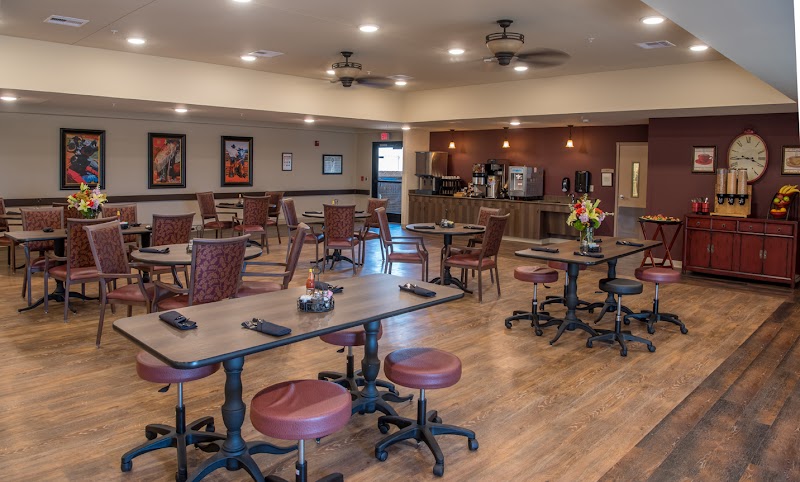
How is Ashton Medical Lodge Staffed?

CMS rates ASHTON MEDICAL LODGE's staffing level at 1 out of 5 stars, which is much below average compared to other nursing homes. Staff turnover is 57%, which is 11 percentage points above the Texas average of 46%. High turnover can affect care consistency as new staff learn residents' individual needs.

What Have Inspectors Found at Ashton Medical Lodge?

State health inspectors documented 26 deficiencies at ASHTON MEDICAL LODGE during 2022 to 2025. These included: 1 Immediate Jeopardy (the most serious level, indicating potential for serious harm or death) and 25 with potential for harm. Immediate Jeopardy findings are rare and represent the most serious regulatory concerns. They require immediate corrective action.
Who Owns and Operates Ashton Medical Lodge?

ASHTON MEDICAL LODGE is owned by a government entity. Government-operated facilities are typically run by state, county, or municipal agencies. The facility operates independently rather than as part of a larger chain. With 144 certified beds and approximately 122 residents (about 85% occupancy), it is a mid-sized facility located in MIDLAND, Texas.
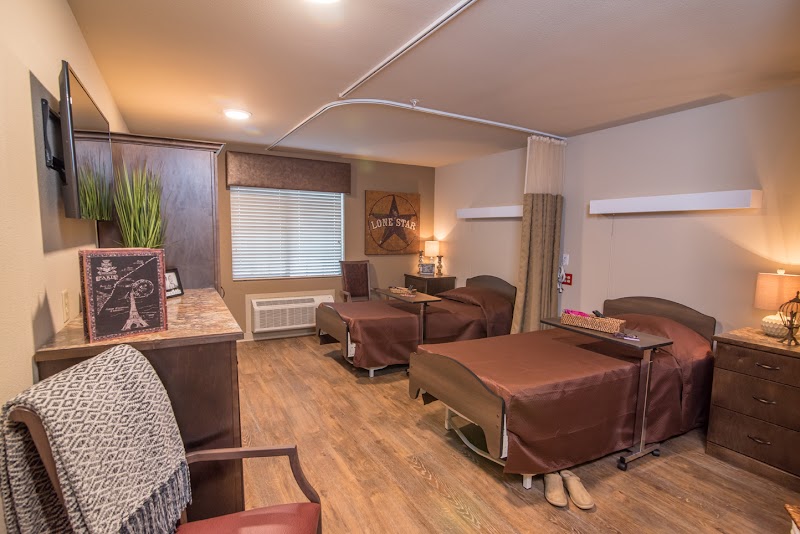
How Does Ashton Medical Lodge Compare to Other Texas Nursing Homes?

Compared to the 100 nursing homes in Texas, ASHTON MEDICAL LODGE's overall rating (2 stars) is below the state average of 2.8, staff turnover (57%) is significantly higher than the state average of 46%, and health inspection rating (3 stars) is at the national benchmark.

What Should Families Ask When Visiting Ashton Medical Lodge?

Based on this facility's data, families visiting should ask: "What changes have been made since the serious inspection findings, and how are you preventing similar issues?" "How do you ensure continuity of care given staff turnover, and what is your staff retention strategy?" "Can you walk me through typical staffing levels on day, evening, and night shifts?" "Can I visit during a mealtime to observe dining assistance and food quality?" These questions are particularly relevant given the facility's Immediate Jeopardy citations, the facility's high staff turnover rate, and the below-average staffing rating.

Is Ashton Medical Lodge Safe?

Based on CMS inspection data, ASHTON MEDICAL LODGE has documented safety concerns. Inspectors have issued 1 Immediate Jeopardy citation (the most serious violation level indicating risk of serious injury or death). The facility has a 2-star overall rating and ranks #100 of 100 nursing homes in Texas. Families considering this facility should ask detailed questions about what corrective actions have been taken since these incidents.

Do Nurses at Ashton Medical Lodge Stick Around?

Staff turnover at ASHTON MEDICAL LODGE is high. At 57%, the facility is 11 percentage points above the Texas average of 46%. High turnover means new staff may not know residents' individual needs, medications, or preferences. It can also be disorienting for residents, especially those with dementia who rely on familiar faces. Families should ask: What is causing the turnover? What retention programs are in place? How do you ensure care continuity during staff transitions?

Was Ashton Medical Lodge Ever Fined?

ASHTON MEDICAL LODGE has been fined $13,397 across 1 penalty action. This is below the Texas average of $33,213. While any fine indicates a compliance issue, fines under $50,000 are relatively common and typically reflect isolated problems that were subsequently corrected. Families should ask what specific issues led to these fines and confirm they've been resolved.

Is Ashton Medical Lodge on Any Federal Watch List?

ASHTON MEDICAL LODGE is not on any federal watch list. The most significant is the Special Focus Facility (SFF) program, which identifies the bottom 1% of nursing homes nationally based on persistent, serious quality problems. Not being on this list means the facility has avoided the pattern of deficiencies that triggers enhanced federal oversight. This is a positive indicator, though families should still review the facility's inspection history directly.