MISSION NURSING & REHABILITATION CENTER
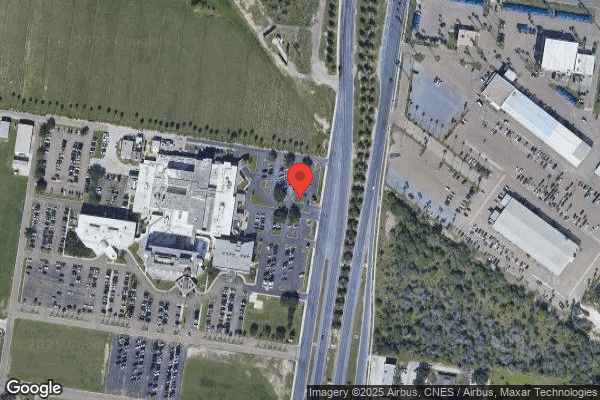

1013 S BRYAN RD, MISSION, TX 78572 (281) 419-5520
For profit - Limited Liability company 170 Beds HMG HEALTHCARE Data: November 2025
Trust Grade
78/100
#97 of 1168 in TX
Last Inspection: January 2025

Within standard 12-15 month inspection cycle. Federal law requires annual inspections.

Overview

Mission Nursing & Rehabilitation Center has earned a Trust Grade of B, indicating it is a good choice for families seeking care, but not the top of the line. It ranks #97 out of 1,168 facilities in Texas, placing it in the top half of nursing homes statewide, and is #4 out of 22 in Hidalgo County, meaning only three local options are better. Unfortunately, the facility is experiencing a worsening trend, with issues increasing from three in 2024 to five in 2025. Staffing has an average rating of 3 out of 5 stars, and turnover is at 50%, which is on par with the Texas average, suggesting that while staff are present, retention could be better. There are some concerning incidents reported, such as a resident not receiving adequate supervision while showering, which could lead to accidents, and issues with infection control, specifically related to Legionella, that could put residents at risk for infections. While the facility has strengths, including high ratings for overall quality measures, these weaknesses should be carefully considered by families during their research.

Trust Score
B
78/100
In Texas
#97/1168
Top 8%
Safety Record
Moderate
Needs review
Inspections
Getting Worse
3 → 5 violations
Staff Stability
⚠ Watch
50% turnover. Above average. Higher turnover means staff may not know residents' routines.
Penalties
✓ Good
$8,190 in fines. Lower than most Texas facilities. Relatively clean record.
Skilled Nurses
○ Average
Each resident gets 31 minutes of Registered Nurse (RN) attention daily — about average for Texas. RNs are the most trained staff who monitor for health changes.
Violations
⚠ Watch
19 deficiencies on record. Higher than average. Multiple issues found across inspections.
★★★★★
5.0
Overall Rating
★★★☆☆
3.0
Staff Levels
★★★★★
5.0
Care Quality
★★★★☆
4.0
Inspection Score
Stable
2024: 3 issues
2025: 5 issues

The Good

  • 5-Star Quality Measures · Strong clinical quality outcomes
  • Full Sprinkler Coverage · Fire safety systems throughout facility
  • No fines on record

Facility shows strength in quality measures, fire safety.

The Bad

Staff Turnover: 50%

Near Texas avg (46%)

Higher turnover may affect care consistency

Federal Fines: $8,190

Below median ($33,413)

Minor penalties assessed

Chain: HMG HEALTHCARE

Part of a multi-facility chain

Ask about local staffing decisions and management

The Ugly 19 deficiencies on record

1 actual harm
Jan 2025 5 deficiencies
CONCERN (D)

Potential for Harm - no one hurt, but risky conditions existed

Deficiency F0578 (Tag F0578)

Could have caused harm · This affected 1 resident

**NOTE- TERMS IN BRACKETS HAVE BEEN EDITED TO PROTECT CONFIDENTIALITY** Based on interview and record review, the facility failed to ensure residents have the right to request, refuse, and or disconti...

Read full inspector narrative →
**NOTE- TERMS IN BRACKETS HAVE BEEN EDITED TO PROTECT CONFIDENTIALITY** Based on interview and record review, the facility failed to ensure residents have the right to request, refuse, and or discontinue treatment and to formulate an advance directive for 1 (R#22) of 4 residents whose records were reviewed for OOH-DNR Order forms: The facility failed to have the physician sign at the bottom of R#22's Out of Hospital Do Not Resuscitate (OOH-DNR) order, which mad the advance directive invalid. This failure could place residents at risk for not having their end of life wishes honored. The findings included: Record review of R#22's admission record dated 01/08/2025 reflected a [AGE] year-old female admitted to the facility on [DATE] and an initial admission date of 02/12/20. Her diagnoses included Dementia (A loss of brain function that worsens over time and affects memory, thinking, behavior, and language), and Crohn's disease (inflammatory bowel disease that causes swelling and irritation of the tissues in the digestive tract). Record review of R#22's quarterly MDS assessment dated [DATE] reflected a BIMS score of 1, indicating R#22 cognition was severely impaired. Record review of R#22's quarterly care plan dated 10/23/24 reflected a focus of: [R#22] had a code status of OOH-DNR. Date Initiated: 05/02/24 Revision on: 09/10/24. Interventions included: A copy of the OOH-DNR would be kept in the R#22's medical chart readily available for all to see. Date Initiated: 09/10/2024, and in the event that [R#22] arrested no efforts to resuscitate would be provided in accordance with the Resident wishes. Date Initiated: 09/10/24 Record review of R#22's medical orders reflected an OOH-DNR order dated 10/05/24. Record review of R#22's Out-Of-Hospital Do-Not-Resuscitate (OOH-DNR) dated 04/06/24 reflected there was no physician signature at the bottom section stating, all persons who have signed above must sign below, acknowledging that this document has been properly completed. An interview on 01/07/24 at 11:05 a.m., SW said part of her duties was to assist the facility's residents and or their representatives understand their end of life wishes. She said if a resident or their representative opted to be a DNR, she would initiate the process by first making sure they understood what a DNR meant and to assist them in completing the OOH-DNR form. She said the form required the resident or their representative, 2 witnesses and their physician signature. She said once the resident or representative and the 2 witnesses signed the OOH-DNR form she would email the form to the resident's PCP and the hard copy would be kept in the facility in case the PCP would visit the facility. The SW said after the resident/representative and 2 witness signed the OOH-DNR form, she would notify the resident's charge nurse so they could obtain a verbal order from their PCP and code the resident appropriately on their electronic medical record. She said that she would give the original OOH-DNR form to the medical records personnel for her to assist in obtaining the primary care PCP signature. The SW said once the facility received the OOH-DNR form signed by the resident's PCP, it would be given to the medical records department to make sure it was completed correctly. If it were correctly completed it would be uploaded to the resident's electronic medical record, a copy would be kept in the nurse's station, and in her office in case of a power outage. She said as long as the form had the physician's signature under physician's statement and the date it was signed it would be considered valid. She said the physician did not have to sign the bottom portion of the OOH-DNR form that stated, All persons who have signed above must sign below, acknowledging that this document has been properly completed. The SW said if a resident were to code, nursing staff would check their electronic medical record under face sheet to check their code status. She said if a resident were coded a DNR, the nursing staff would also check the uploaded DNR form to make sure the form had been signed by the resident/representative, 2 witnesses, and their PCP to be considered a valid form. If the form were missing any of the required signatures, the resident would be considered full code. An interview and observation on 01/07/25 at 11:37 a.m., Medical Records specialist said she would assist the facility's SW in obtaining the resident's PCP signature on their OOH-DNR form. She said as soon as the SW gave her the OOH-DNR form she would walk the form over to the PCP for their signature. She said she once she obtained the PCP's signature, it would the SW's responsibility to make sure the form had been completed correctly. The Medical Records Specialist said as long as the resident's PCP had singed under the physician's statement it would be considered valid. She was observed checking R#22's medical file and pulled out the OOH-DNR form and said it was considered valid because her PCP had signed under physician's statement. She said the OOH-DNR form did not need the physician's signature on the bottom portion of the form that stated, All persons who have signed above must sign below, acknowledging that this document has been properly completed. An interview and observation on 01/07/25 at 1:05 pm, LVN B was observed checking R#22's electronic medical record and said R#22 had a code status of DNR. She said if a resident coded, she would first check their electronic medical record for their code status under their face sheet and then proceed to check the actual OOH-DHR form under miscellaneous tab to ensure the form had all required signatures. She said R#22's DNR was considered valid because it had a physician's signature. LVN B said had been in-serviced in resident's code status when she was first hired and as needed. She said if the OOH-DNR form was missing a required signature, it would be considered invalid, and the resident would be a full code. An interview on 01/08/25 at 8:35 a.m., LVN C said if a resident were to code, he would immediately check their electronic medical record under their face sheet to see what their code status was. He said he would then check the resident's miscellaneous tab to ensure the OOH-DNR form had the resident/RP, 2 witnesses, and physician's signature. He as long as the physician singed under the physician's statement it would be considered a valid form. LVN C said he had been in-serviced in DNR protocols. He said if the OOH-DNR form was missing a required signature, it would be considered invalid, and the resident would be a full code. An interview on 01/08/25 at 8:41 a.m., ADON she said if a resident were to code, nurses would check their electronic medical record under profile to check what their code status was and then check the resident's OOH-DNR form to ensure all required partied had signed. The LVN/ADON said as long as the OOH-DNR had the physician's under Physician's statement it would be considered valid. She said staff have been in-serviced on the topic of DNR quarterly or as needed. She said if the OOH-DNR form was missing any of the required signature they would be considered full code. An interview on 01/08/25 at 8:50 a.m. DON said the facility's SW was responsible to assist the resident or their representative with their code status decisions. She said if a resident or their representative opted to be a DNR, an OOH-DNR form was required. A completed OOH-DNR form was uploaded to the resident's electronic medical record for nursing staff to have easy access to the form. She said the OOH-DNR form required to have the signatures of the resident or representative, 2 witnesses signatures and the PCP's signature under physician's statement to be considered valid. The DON said if a resident were to code, nursing staff would check their electronic medical record face sheet to check what their code status was. They would next need to check the miscellaneous tab to ensure the actual OOH-DNR form had all required signatures. She said if the OOH-DNR form was missing any of the required signatures, it would be considered invalid, and the resident would be a full code status. She said the OOH-DNR form did not need the physician's signature on the bottom portion of the form that stated, All persons who have signed above must sign below, acknowledging that this document has been properly completed. Record review of the facility's Do Not Resuscitate Order (revised April 2017) reflected: Policy Statement: Our facility will not use cardiopulmonary resuscitation and related emergency measures to maintain like functions on a resident when there is a Do Not Resuscitate Order in effect . Policy Interpretation and Implementation: 1. Do not resuscitate orders must be signed by the resident's attending physician on the physician's order sheet maintained in the resident's medical record. 2. A do not resuscitate (DNR) order form must be completed and signed by the attending physician and resident (or resident's legal surrogate, as permitted by state law) and place in the front of the resident's medical record .
CONCERN (D)

Potential for Harm - no one hurt, but risky conditions existed

Respiratory Care (Tag F0695)

Could have caused harm · This affected 1 resident

**NOTE- TERMS IN BRACKETS HAVE BEEN EDITED TO PROTECT CONFIDENTIALITY** Based on observations, interviews, and record review the facility failed to ensure a resident who needed respiratory care was pr...

Read full inspector narrative →
**NOTE- TERMS IN BRACKETS HAVE BEEN EDITED TO PROTECT CONFIDENTIALITY** Based on observations, interviews, and record review the facility failed to ensure a resident who needed respiratory care was provided such care, consistent with professional standards of practice, the comprehensive person-centered care plan and the residents' goals and preferences for 1 of 4 residents (Resident #34) reviewed for respiratory care. The facility failed to ensure Resident #34 received oxygen at the prescribed rate. This failure could place residents at risk for respiratory distress. The findings included: Record review of Resident #34's face sheet dated 1/6/25 reflected the resident was an 81 -year-old male admitted to the facility on [DATE]. Resident #34 had diagnoses which included the following: acute (rapid onset) and chronic (persistent and long-lasting) respiratory failure, acute bronchitis (inflammation of the bronchial tubes in the lungs), and chronic obstructive pulmonary disease (lung disease causing restricted airflow and breathing problems). Record review of Resident #34's MDS assessment, dated 12/16/24, reflected the resident had a BIMS score of 15 which suggests cognitively intact. Special treatments, procedures, and programs reflected resident received oxygen therapy. Record review of the most recent Care Plan for Resident #34, dated 12/18/24, reflected the resident had Oxygen Therapy r/t CHF, Respiratory illness Date Initiated: 12/13/2024. Interventions reflected: Give medications as ordered by physician. Oxygen Settings: O2 via nasal cannula at 3L continuously. Record review of the Doctor's Order Summary dated 1/6/25 reflected Resident #34 was prescribed O2 3L via nasal cannula every shift start date 12/20/24. Record review of the MAR for January 2025 reflected the resident was prescribed O2 3L via nasal cannula every shift -Start Date- 12/20/2024. Observation on 01/06/25 10:05 AM Resident #34 observed in room sitting up in bed head of bed elevated and receiving O2 at 4Lpm via NC. Resident #34 verbalized that was the rate he received at home and that he has informed staff the same. Resident denied any headache, dizziness, or other not normal symptoms. Observation on 01/06/25 at 5:58 PM Resident #34 observed in room sitting up in bed with head of bed elevated and receiving O2 at 4 Lpm via NC. Resident denied any headache, dizziness, or other not normal symptoms. Observation on 01/07/25 10:32 AM Resident #34 observed in room sitting up in bed with head of bed elevated and receiving O2 at 3.5 Lpm via NC. Resident denied any headache, dizziness, or other not normal symptoms. In an interview on 1/7/25 at 10:45 am with LVN J she said the orders for Resident #34's oxygen say he should receive 3L of oxygen via nasal cannula. She said they must check rate every 2 hours when check on resident or as needed. She said she checked on O2 and that call light was in reach every time she went in the room. She said she went into Resident #34's room about 15 minutes ago and the O2 was set at 3L and that she did not have to adjust the flow rate. She said LVN K, the charge nurse also checked prior told her it was set at 3L. She said they also checked on O2. She said Resident #34 was not able to change the setting himself because the concentrator was too far from him, and that he was aware he was not to be moving the rate. LVN J said Resident #34 does get visitors. The family member was very supportive. LVN J said she had not witnessed Resident #34's family member changing the oxygen setting. LVN J said that if a Resident was receiving more oxygen than prescribed, they could have hyper oxygen and that could damage the lungs. LVN J entered Resident #34's room to check the oxygen settings with surveyor. O2 setting was at 3L at that time. In an interview on 1/7/25 at 11:05 am LVN K. She said she went into Resident #34's room a few minutes ago. She said she adjusted the O2 setting when she went in his room and made sure it was at 3L. LVN K said Resident #34 was non-compliant on certain things but did not know if the resident moved the setting or not because she had never witnessed. She said they usually check the O2 settings every time they go into a Resident's room. She said if the oxygen was set higher than prescribed, it could affect a Resident's overall condition with their lungs depending on their diagnosis. LVN K said she believed nursing staff got checked-off yearly on oxygen administration. LVN K said they used to have an RT provide in-services but now ADON/LVN or DON in-service nursing staff. In an interview on 1/7/25 at 11:17 am ADON/LVN. She said if an order reads for 3L of oxygen to be administered, it should be followed. If oxygen was bumped up, would have to get an MD order. ADON/LVN said if a resident received too much oxygen and had COPD (Chronic Obstructive Pulmonary Disease - a chronic lung disease caused by damage to the lungs that leads to inflammation and swelling in the airways which limits airflow and makes breathing difficult) as a diagnosis, it could be a problem. ADON/LVN said they could get acidosis. She said if a resident was given 4 L of oxygen and the order reads 3L and there was no order for the increase, then it was considered a medication error. The ADON/LVN said they do in-services on oxygen therapy frequently and skills checkoffs were also done by the DON. In an interview on 1/7/25 at 12:00 pm the DON stated that LVN K called the family member of Resident #34, and family member said that she adjusted the resident's oxygen rate at times. The DON said the family member was informed that was not allowed. The DON said they started in-servicing staff and will complete care plan to include family adjusts O2 rate. In an interview on 1/8/24 at 7:00 pm DON, she said the order for Resident #34's oxygen was for 3L. She said the frequency for checking oxygen settings is case by case depending on what the order said. DON said that for Resident #34, the order said check every shift. The DON said the adverse effect for a resident receiving more O2 than prescribed could be hyperoxemia (a condition in which there is too much oxygen in the blood usually caused by high levels of oxygen) if receiving more oxygen than prescribed. The DON said Resident #34's original order that he received from hospital was 2-4 Lpm. The DON said the resident was not over oxygenated. She said his O2 saturations were not over oxygenated and there were no signs of distress while under their care. She said if any signs of distress had been noticed a change in condition would have been completed and they would have notified the doctor. The DON said the nurses were following the orders, they did not change it and they do not check the prescribed rate frequently because he is not one-on one care. Record review of the facility's Oxygen Therapy skills check-off reflected: Purpose: Validation of skills associated with administering oxygen therapy: 1. Oxygen is a medication and should not be adjusted without a physician's order. 4. Attach oxygen deliver device (e.g., cannula, mask to oxygen tubing) and attach to humidified oxygen source adjusted to prescribed flow rate, usually between 1 and 6 L/min. 8. Assess flow meter and oxygen source for proper setup and prescribed flow rate. Record review of the facility's record of in-service dated 10/24/24 reflected: Objectives of the In-Service . Brief evaluation of the participants' responses to the in-service: Oxygen policy (Administration, Assessments, etc.) . Record review of the facility's most recent Record of in-service dated 1/7/24 reflected In-service of oxygen settings: Objectives of the In-Service: 1. Always assess all residents for the need of oxygen 2. Follow O2 orders as stated from MD 3. Us of O2 for emergencies doesn't require an order 4. Therapy can adjust momentarily if needed for SOB, but must notify charge nurse to contact MD. 5. All changes to O2 will dictate a change of condition and need MD Notification 6. Always check concentrator vs orders with each entry. Record review of facility's Oxygen Administration policy revised March 2004, reflected: Purpose: The purpose of this procedure is to provide guidelines for safe oxygen administration. Preparation 1. Verify that there is a physician's order for this procedure. Review the physician's orders or facility protocol for oxygen administration. 2. Review the resident's care plan to assess for any special needs of the resident. Procedure . 8. Turn on the oxygen. Unless otherwise ordered, start the flow of oxygen at the rate of 2 to 3 liters per minute 10. Adjust the oxygen delivery device so that it is comfortable for the resident and the proper flow of oxygen is being administered. 13. Observe the resident upon setup and periodically thereafter to be sure oxygen is being tolerated.
CONCERN (D)

Potential for Harm - no one hurt, but risky conditions existed

Deficiency F0726 (Tag F0726)

Could have caused harm · This affected 1 resident

**NOTE- TERMS IN BRACKETS HAVE BEEN EDITED TO PROTECT CONFIDENTIALITY** Based on interviews and record reviews, the facility failed to have sufficient nursing staff with the appropriate competencies a...

Read full inspector narrative →
**NOTE- TERMS IN BRACKETS HAVE BEEN EDITED TO PROTECT CONFIDENTIALITY** Based on interviews and record reviews, the facility failed to have sufficient nursing staff with the appropriate competencies and skill sets to provide nursing and related services to assure resident safety and attain or maintain the highest practicable, physical, mental, and psychosocial well-being for 1 (CNA D) of 4 CNAs reviewed for competent nursing care. The facility failed to ensure CNA D communicated R#22's change of condition to the charge nurse on 12/23/2024. This failure could place residents at risk of not having change in conditions assessed immediately resulting in delayed treatment and a decreased in quality of life. The findings included: Record review of R#22's admission record dated 01/08/2025 reflected a [AGE] year-old female admitted to the facility on [DATE] and an initial admission date of 02/12/2020. Her diagnoses included Dementia (A loss of brain function that worsens over time and affects memory, thinking, behavior, and language), and Crohn's disease (inflammatory bowel disease that causes swelling and irritation of the tissues in the digestive tract). Record review of R#22's quarterly MDS assessment dated [DATE] reflected a BIMS score of 1, indicating R#22 cognition was severely impaired. Record review of R#22's weekly skin review dated 12/24/2024 at 7:53 a.m., reflected: redness to her right upper arm, chest, and abdomen. RP and physician had been notified on 12/24/2024. Record review of R#22's progress note on 12/26/2024 at 5:44 a.m., authored by LVN A reflected: CNA D stated that since Monday she has noticed a small rash on her left side. Since then, the rash has progressed all over her upper chest down to her abdomen and both of her arms. The resident states no discomfort but you can tell she visibly has been scratching herself nonstop. I gave the patient Hydrocortisone for the itchiness during the night. I let NP know about the situation and am awaiting new orders. Record review of R#22's change in condition evaluation effective 12/26/2024 reflected: signs and symptoms identified as other change in condition ( red bump rash all over upper body) and change in skin color or condition. Date stated signed 12/23/2024. Vitals were within normal range. R#22's primary care clinician notified on 12/26/2024 at 5:55 a.m. and he recommended for R#22 to be applied Permethrin cream neck below x1 for dermatitis. An interview on 01/07/24 at 2:46 p.m., CNA D, said her regular work schedule was the overnight shift. She said on 12/23/24, she went into R#22's room and noticed she was scratching her chest. She said she noticed R#22 had a rash which she described being red bumps on her chest. She said the rash looked like an allergic reaction. She said she told herself she was not going to report it to her charge nurse until the following day and see if it went away. She said on 12/24/24, she checked the resident's chest again and noticed the rash had already run down to her breast area and at that point she told herself she needed to report it immediately to her charge nurse but got occupied with other residents and forgot to report it. She said on 12/25/24 she was assigned a different hall and did not reported it. CNA D said on 12/26/24 she was assigned R#22's hall and went to check on R#22 and noticed it was really bad, like if she had chicken pox, a lot of red dots from her chest down to her belly, and her back. She said R#22 was non-verbal but did not display any facial grimacing. She said after seeing R#22's rash had gotten worse, she immediately reported it to LVN A. She said she and LVN A went back to R#22's room and observed LVN A assess the resident. She said LVN A took a picture of the rash and sent it to R#22's NP. CNA D said she had been in-serviced in recognizing changes in residents and reporting them to their charge nurse immediately. CNA D was not able to say how her not reporting R#22's rash to her charge nurse immediately could have negatively impacted her. A telephone interview on 01/07/24 at 3:37 p.m., LVN A said on 12/26/24, CNA D communicated to her that R#22 had a rash on her chest, belly, and back and had been seen scratching nonstop. LVN A described the rash as being pinkish/red bumps. She said she took a picture and notified R#22's NP. She said while she was waiting for NP's response, she applied hydrocortisone to alleviate the itchiness during the night (which she had a standing order). She the NP responded the same day and prescribed Permethrin cream to be applied from the neck down, one time only for dermatitis. She said she did a change of condition on 12/26/24. She said, resident was not in pain or any discomfort just itchy. She said CNA D told her she had first noticed the rash on R#22 on 12/23/24. LVN A said any skin discolorations, skin tears and or rashes should be reported to the charge nurse immediately. An interview on 01/08/25 at 9:19 a.m., CNA E said that on 12/24/24 she had given R#22 a bed bath and noticed the resident had a rash on chest, stomach, arms and back. She said she immediately notified LVN E and she informed the treatment nurse. She said she was in-serviced in recognizing change in conditions and to report any changes to her charge nurse immediately upon being hired, quarterly, or as needed . An interview on 01/08/25 at 9:25 a.m., LVN L said on 12/25/24 she was R#22's charge nurse. She said R#22 had a standing order for hydrocortisone cream to be applied every morning to her arms and legs due to dry and itchy skin. She said couple of months ago, R#22 broke her right arm and required to wear sling. She said R#22 did not like the sling and constantly tried to remove it. She said R#22 would use her left hand to try to remove the sling and while doing so, she would scratch her chest and abdomen area in the process. She said CNA E had told her she had noticed a rash on R#22's chest and abdomen on 12/24/24. She said she assessed R#22 and determined that the rash was due to R#22 trying to remove the sling. LVN L said she immediately informed the wound care nurse who told her to just monitor R#22 since she already had scheduled orders for hydrocortisone. She said if a CNA noticed any skin discoloration, they need to let their charge nurse know immediately. She said the charge nurse would advise the resident's PCP, RP, ADON/DON and do a change in condition evaluation. She said nursing staff, and CNA 's have received in-services on what to do when change of condition skin occur and what steps to follow. An interview on 01/08/25 at 10:05 am, Treatment nurse/LVN said she was responsible for conducting weekly skin assessments on R#22. She said she had done a skin assessment on 12/24/24 and noticed a slight redness on her chest and abdomen, she said no blisters or open areas. She said R#22 required to wear a sling on her right arm and would constantly try to remove it. She said R#22 would pull down the sling and the movement of her trying to remove it caused the redness to her chest and abdomen area. She said it was reported to RP and PCP on 12/24/24. She said the PCP recommended for R#22 to be monitored. An interview on 01/08/25 at 10:56 a.m., NP said he received a call from the facility on 12/26/24 to inform him R#22 had a rash to her chest, abdomen, and back. The NP said the facility's nurse sent him a picture of R#22's chest and abdomen area. He said he prescribed a 1-time application of topical ointment called Permethrin to be applied to her neck and below for the diagnosis of dermatitis. He said the ointment he prescribed was for a 1 time use only. He said 12/26/24, he had not been updated on R#22 skin condition. An interview on 01/08/25 at 3:35 pm, DON said the CNA 's have been in-serviced to report any change in condition to their charge nurse as soon as possible. She said CNA 's can bathe residents but are not supposed to diagnose residents because they do not have a license to assess. She said CNAs were in-serviced on the topic of change of conditions and what to report. The DON said there were no negative outcome for R#22 since CNA E had previously reported her rash on 12/24/24 and the facility had already acted on treating the rash. The DON said the facility did not have a policy that indicated how long the CNA had to report a change in condition but were in-serviced on reporting it immediately to their charge nurse.
CONCERN (D)

Potential for Harm - no one hurt, but risky conditions existed

Pharmacy Services (Tag F0755)

Could have caused harm · This affected 1 resident

**NOTE- TERMS IN BRACKETS HAVE BEEN EDITED TO PROTECT CONFIDENTIALITY** Based on interview and record review, the facility failed to provide pharmaceutical services including procedures that ensure ac...

Read full inspector narrative →
**NOTE- TERMS IN BRACKETS HAVE BEEN EDITED TO PROTECT CONFIDENTIALITY** Based on interview and record review, the facility failed to provide pharmaceutical services including procedures that ensure accurate administering of all drugs and biologicals to meet the needs for 2 of 10 (Resident #5 and Resident #22) residents reviewed for pharmacy services. 1. The nursing staff did not administer Resident #5's Tramadol as prescribed by her physician. This failure could place resident s with pain at risk of not receiving the intended therapeutic benefit of their medications. 2. MA documented she had administered Resident #22 a frozen nutritional treat on 01/07/2025 when the facility did not have the frozen nutritional treat available on 01/07/2025. This failure could place residents at risks of not receiving the intended therapeutic benefit of their medications. The findings were: Record review or Resident #5's admission Record dated 01/08/25 revealed an [AGE] year-old female with an initial admission date of 04/09/24 with diagnoses of Alzheimer's disease (a progressive irreversible brain disorder that destroys memory ad thinking skills), Heart failure, and Type 2 Diabetes mellitus with unspecified complications (a disease that occurs when your blood glucose, also called blood sugar, is too high). Record review of Resident #5's Physician's Orders for January of 2025 revealed an order for Tramadol HCl oral tablet 50 mg (Tramadol HCl) give two tablets by mouth every 8 hours as needed for Pain. Give 2 tablets of 50 mg to equal 100 mg prn q8h, start date of 04/09/24. Record Review of Resident#5's Quarterly MDS assessment dated [DATE] revealed Resident #5 had a BIMS of 07 that indicated Resident #5 had severe cognitive impairment and had received scheduled pain medication regimen within the past five days. Resident #5 replied to no to having had pain or hurting at any time withinn the past five days. The question for pain intensity was blank. Record review of Resident#5's Care Plan revised on 04/18/24 stated Resident #5 had the potential for pain r/t Depression, wound (admitted with stage 3 PU to sacrum) with interventions to anticipate resident's need for pain relief and respond immediately to any complaint of pain and to observe/record/report to nurse resident complaints of pain or requests for pain treatment. Record review of Resident #5's e-MAR dated July of 2024 revealed an order for tramadol HCl Oral tablet 50 mg, give 2 tablets by mouth every 8 hours as needed for pain. Give 2 tablets to equal 100mg prn q8h, start date 04/09/24. Record review of Control Drug Administration Record dated 06/05/24 for Resident #5 revealed Tramadol 50 mg tab give 1 tab by mouth every 8 hours as needed. The Control Drug Administration record revealed only 1 tablet was administered on the following dates: *06/09/24 at 9:52 p.m., *06/10/24 at 11:00 a.m., *06/11/24 at 9:45 p.m., *06/17/24 at 8:05 p.m., *06/22/24 at 9:41 p.m., *06/30/24 at 1:52 a.m., *07/04/24 at 5:54 p.m., *07/06/24 at 1:16 a.m., *07/07/24 at 7:41 a.m., and *07/11/24 at 5:50 a.m. In an interview on 01/07/24 at 2:30 p.m., the DON said there might be a difference in the order on the blister pack/Controlled Drug Administration log and the e-MAR because the physician called the pharmacy directly. The DON said when that happens the facility does not get the orders. The DON said the nurse should have called the physician to clarify the order. In an interview on 01/08/25 at 6:43 p.m., LVN J said she administered the tramadol on dates 07/07/24 and 07/20/24.LVN J said when passing out medications she verified that the medication was accurate by checking the resident's name, the right route, the right dosage, right time, and right medication. LVN J said she checked the PCC under the MARS tab. The medication was tramadol 50mg every eight hours, one tablet as needed. On 07/07/24 LVN J said she gave one tablet to Resident #5 and on 07/20/24 she gave Resident #5 two tablets. LVN J said if there was a PRN order, she would check the MAR for PRN orders and would compare the blister pack with the sheet. If there were any changes to the order, there would be a sticker on the blister pack indicating a change. LVN J said if they made an error, they would call the doctor and the DON. Then they would get a new blister pack, or they put in the new information in electronic medical record for other staff to follow. LVN J said the negative effect was that the resident would not have the correct dosage to relieve her pain. LVN J said they received the sealed pack from the pharmacy, and she would open it and compare the blister pack to the orders in the MAR. If the order is incorrect, they would call the doctor to ask for a new prescription. LVN J said she did not call the doctor to verify the orders. In an interview on 01/08/25 at 7:00 p.m., LVN C said he administered the tramadol medication on 07/09/24 for two tablets and on 10/26/24 it was one tablet. LVN C said to verify if administering the correct medication, he would check the MAR to make sure it was the right route, right resident, right time, and right dosage. He would check the order and the log. LVN said he would then take the blister pack and pop the medication out. The LVN said if there was a change in direction there would be a sticker with a change in direction or to refer to the MAR. LVN C said he did notice a discrepancy on the log and noticed that the order said one tablet. LVN said on the time that he administered one tablet he looked at the order on the blister pack and when he gave the two tablets, he probably looked at the MAR. LVN C said if he had caught the mistake, he would have called the doctor and he would not have administered the medication. LVN C said he did not call the doctor to clarify the orders. LVN C said they did have an in-service on medication administration conducted by the DON. LVN C said the negative outcome of one tablet would be that the resident's pain would not be relieved but if he gave the two tablets the resident would just be sedated and relaxed. An interview on 01/08/25 at 7:10 p.m., The DON said nursing staff were responsible to sign off any medication given or not given to residents. She said nursing staff and med aides were supposed to check the e-MAR and label to make sure they matched. The DON said nursing staff and med aides are in-serviced quarterly or as needed on the topic of medication administration. The DON said if a medication was signed off on the resident's e-MAR when it was not administered it could cause them to not get the full effects of the medication. The DON said she had called the physician and he had clarified the order. In an interview on 01/08/25 at 07:15 p.m., the Administrator said he did not have very much to do with the nursing procedures. The Administrator said they had the daily clinical meetings, and they went over the 24-hour report and any other concerns. There was follow through throughout the day. The nursing department followed through with concerns such as orders, treatments, and resident care. They also had managers on duty during the weekend and they had an RN that also worked during the weekend for any issues that came up. Record review of facility's policy for Medication and Treatment Orders revised in July 2016 revealed: Policy Statement Orders for medications and treatments will be consistent with principles of safe and effective order writing. 1. Medications shall be administered only upon written order of a person duly licensed and authorized to prescribe such medication in this state. 9. Orders for medications must include: a. number and strength of drug b. Number of doses, start and stop date, and/or specific duration of therapy. c. Dosage and frequency of administration d. Route of Administration e. Clinical condition or symptoms for which medication is prescribed; and f. Any interim follow-up requirements (pending culture and sensitivity reports, repeat labs therapeutic medication monitoring, etc.) Record review of facility's policy for Administering Medications revised in December 2012 revealed: Policy Statement Medications shall be administered in a safe and timely manner, and as prescribed. 1. Only persons licensed or permitted by this state to prepare, administer, and document the administration of medications may do so. 3. Medications must be administered in accordance with he orders, including any required time frame. 5. If a dosage is believed to be inappropriate or excessive for the resident, or a medication has been identified as having potential adverse consequences for the resident or is suspected of being associated with adverse consequences, the person preparing or administering the medication shall contact the resident's Attending Physician or the facility's Medical Director to discuss the concerns. 7. The individual administering the medication must check the label to verify the right resident, right medication, right dosage, right time, and right method, (route) of administration before giving the medication. 18. If a medication is withheld, refused, or given at a time other than the scheduled time, the individual administering the medication shall initial, circle the MAR space provided for that drug and dose. 19. The individual administering the medication must initial the resident's MAR on the appropriate line after giving each medication and before administering the next ones. 20. As required or indicated for a medication, the individual administering the medication will record in the resident's medical record: a. The date and time the medication was administered. b. The dosage. c. The route of administration. d. The injection site (if applicable). e. Any complaints or symptoms for which the drug was administered, and f. Any results achieved and when those results were observed, and g. The signature and title of the person administering the drug. 2. 2. Record review of Resident #22's admission record dated 01/08/2025 reflected a [AGE] year-old female admitted to the facility on [DATE] and an initial admission date of 02/12/2020. Her diagnoses included Dementia (A loss of brain function that worsens over time and affects memory, thinking, behavior, and language), hypothyroidism (a condition in which the thyroid gland does not produce enough thyroid hormone), and Crohn's disease (inflammatory bowel disease that causes swelling and irritation of the tissues in the digestive tract). Record review of Resident #22's quarterly MDS assessment dated [DATE] reflected a BIMS score of 1, indicating Resident #22 cognition was severely impaired. Record review of Resident #22's quarterly care plan dated 10/23/204 reflected a focus of unintended weight loss on 01/05/2024 of 6 months trigger with 7-pound loss, 4 pounds in 3 months with BMI of 13.2. Date initiated 11/28/2022 and revised on 05/14/2024. Interventions included to provide a frozen nutritional treat daily as a supplement .continue with current care plan per registered dietician. Record review of Resident #22's MAR for the month of January 2025 reflected an order for a frozen nutritional treat one time a day for supplement, start date of 03/09/2022. Med-Aide had signed off on 01/07/2024 at 12 noon. Record review of Resident #22's meal ticket dated 01/07/2025 reflected a regular-puree diet. She was served pureed classic baked ziti-8 oz, pureed parmesan and herb roasted cauliflower, pureed garlic bread, pureed chocolate brownie, pudding, tea, and for frozen nutritional treat was scratched off with a note saying, not available. An observation and interview on 01/07/25 at 1:17 p.m., CNA E was observed feeding Resident #22 in her room during her lunch meal. Resident #22 had been served pureed ziti, pureed parmesan & herb roasted cauliflower, pureed garlic bread, pureed brownie, and a cup of chocolate pudding. CNA E said Resident #22 had eaten about 75 % of her meal. CNA E said Resident #22 had not received her frozen nutritional treat and didn't know why. CNA E said Resident #22 would get a frozen nutritional treat daily with her lunch tray. An observation and interview on 01/07/25 at 1:30 pm, Dietary Manager Trainer said the DM had stepped out of the facility, but she was willing to answer any questions. She was observed reviewing Resident #22's medical orders on her electronic medical record and said Resident #22 had an order for a frozen nutritional treat with her lunch tray every day. She was shown a picture of resident's meal ticket for 01/07/25 where it showed the frozen nutritional treat had been scratched off and a note saying not available had been written on the bottom portion of the meal ticket. The Dietary Manager Trainer was observed checking the freezer and said they were out of the frozen nutritional treats. She was then observed calling the DM on the phone to inquire on the frozen nutritional treats and was told by the DM that the facility was out of the frozen nutritional treats, but she had already placed an order and were due to be delivered on 01/08/2024. An interview on 01/07/25 at 4:00 p.m., Med-Aide was observed when she checked Resident #22's MAR on electronic medical record and said she had signed off a frozen nutritional treat for Resident #22 on 01/07/2024 at 12 noon. She said she had not physically checked Resident #22's tray to make sure the frozen nutritional treat had been included in her lunch tray. She said she trusted the kitchen staff to include it in her lunch tray. The Med-Aide said she was supposed to check if the frozen nutritional treat had been included before signing if off on Resident #22's MAR. She Resident #22 could be negatively affected in that she was not getting the added nutritional treat that she was ordered to receive. The Med-Aide said she said had been in-serviced on medication administration when she was first hired and as needed and felt confident in performing her job duties. An interview on 01/07/25 at 4:25 pm, DM said the facility had run out of frozen nutritional treats on 01/05/25. The DM said on 01/06/25 they had substituted the frozen nutritional treat with regular ice cream. She said on 01/07/25, regular ice cream should have been included but the kitchen staff failed to put it on Resident #22's lunch tray. The DM said she had borrowed frozen nutritional treats from a sister facility to be able to administer Resident #22 until their order comes in. She said no negative outcome to Resident #22 because aside from her regular menu she had been given pudding as a supplement. An interview on 01/07/25 at 5:00 p.m., the Dietician said Resident #22 was on a 2300 calorie diet. He said Resident #22 also had orders for a frozen nutritional treat (290 calories) and pudding (150 calories) to be administered during with her lunch tray. The Dietician said Resident #22 was on a high caloric diet but was not gaining weight. He said her age and medical diagnoses were a contributing factor in her no gaining weight. The Dietician said Resident #22 had not sustained any negative effects for not receiving the frozen nutritional treat on 01/07/2025. An interview on 01/07/25 at 5:25 p.m., DON said Nurse's and Med Aides were responsible to administer residents their medication(s) and sign them off on the residents MAR after the medication(s) had been administered. The DON said if the medication was not administered for whatever reason they were to use the chart codes listed on the bottom of the MAR to indicate the reason why a medication had not been administered. She said Resident #22's frozen nutritional treat should not have been signed off by the facility's Med-Aide because it had not been administered to her. She said she and the ADON have conducted in-services to all nursing staff and med-aides on the topic of medication administration upon hire, quarterly, and or as needed. The DON said she and the facility's Dietician had discussed that on 01/07/2024, Resident #22 had not been administered a frozen nutritional treat and had agreed that there were no negative effects to Resident #22 because she had been served, he regular diet plus pudding for lunch. Record review of the facility's Documentation of Medication Administration policy revised on April 2007 reflected: Policy Statement: The facility shall maintain a medication administration record to document all medications administered . Policy Interpretation and Implementation: 1. A nurse or certified medication aide (where applicable) shall document all medications administered to each resident on the resident's medication administration record (MAR). 2. Administration of medication must be documented immediately after (never before) it is given. 3. Documentation must include, as a minimum: e. reason(s) why a medication was withheld, not administered, or refused (as applicable
CONCERN (D)

Potential for Harm - no one hurt, but risky conditions existed

Infection Control (Tag F0880)

Could have caused harm · This affected 1 resident

**NOTE- TERMS IN BRACKETS HAVE BEEN EDITED TO PROTECT CONFIDENTIALITY** Based on observation, interview, and record review, the facility failed to establish an infection prevention and control program...

Read full inspector narrative →
**NOTE- TERMS IN BRACKETS HAVE BEEN EDITED TO PROTECT CONFIDENTIALITY** Based on observation, interview, and record review, the facility failed to establish an infection prevention and control program designed to provide a safe, sanitary, and comfortable environment and to help prevent the development and transmission of communicable diseases and infections for, 1 of 5 residents (Resident #32) observed for infection control issues in that: CNA F and CNA G revealed CNA F used wipes to cleanse the perineal area, folding it, and using the wipes again and CNA G noticed not sanitizing between glove changes. This deficient practice could place residents at-risk for infection due to improper hand sanitizing and incontinent care practices. The findings were: Record review of Resident #32's electronic face sheet dated 1/8/25 revealed the resident was a [AGE] year-old female admitted to the facility on [DATE]. Her diagnosis included unspecified sequelae of cerebral infarction (long-term complications from a stroke where specific nature cannot be clearly identified), muscle weakness, muscle wasting and atrophy (decrease in size or wasting away of muscle), and unspecified lack of coordination. Record review of Resident #32's comprehensive person-centered care plan, dated 10/23/24, reflected Resident #32 has an indwelling Catheter: neuromuscular dysfunction of bladder. Interventions included: Change catheter as indicated and observe/record/report to MD for s/sx UTI: pain, burning, blood-tinged urine, cloudiness, no output, deepening of urine color, increased pulse, increased temp, Urinary frequency, foul smelling urine, fever, chills, altered mental status, change in behavior, change in eating patterns. Care plan also reflected Resident #32 has bowel incontinence r/t loss of bowel control. Interventions included Check resident during rounds and assist with toileting as needed, provide loose fitting, easy to remove clothing, and provide pericare after each incontinent episode. Monitor for and report to MD s/sx (signs and symptoms) of UTI (urinary tract infection): pain, burning, blood-tinged urine, cloudiness, no output, deepening of urine color, increased pulse, increased temp, urinary frequency, foul smelling urine, fever, chills, altered mental status, change in behavior, change in eating patterns. Care plan also revealed Resident #32 has an ADL Self Care Performance Deficit. Interventions included: TOILET USE: The resident requires total assist of 1-2 staff for incontinent care. Record review of Resident #32's Quarterly MDS dated [DATE] reflected Resident #32 was dependent for self-care of toileting hygiene, had a catheter for urinary incontinence, and was always bowel incontinent. During an incontinent care observation for Resident #32, on 1/7/25 at 4:50 PM., CNA F and CNA G performed incontinent care on Resident #32. CNA G changed gloves twice and did not sanitize hands between glove changes. CNA F used a wipe to sanitize between labia of vaginal area wiped from clean to dirty, folded it and used the wipe again, then disposed of wipe. CNA F proceeded to wipe, fold, and wipe again 2 more times. CNA F completed cleansing vaginal area, she did not change gloves and sanitize hands prior to assisting resident on her side. CNA G applied sanitizer to gloves and assisted resident on side. She did not change gloves and sanitize hands. Resident #32 was on her other side, CNA G removed soiled diaper, then pulled clean diaper out from under resident using same gloves. CNA G then changed gloves without sanitizing between glove change. CNA F and CNA G left resident in comfortable position with call light in reach. In an interview on 1/7/25 at 5:30 pm., CNA F stated while using wipes during incontinent care, she should wipe, fold over the wipe, wipe again then dispose of wipe. She said she had never been told to only use one wipe per swipe or that she cannot fold over a wipe and use again. She said she had never been told that she must sanitize hands between glove changes. CNA F stated she had been doing this since she started working as a CNA. She said that the nurses at times assisted her when she performed pericare and had never been told she was doing anything wrong. In an interview on 1/7/25 at 5:35 pm CNA G stated that she had been performing pericare the same way since she remembered and had never been told that she must sanitize between glove changes. CNA G said she did not recall sanitizing her gloves. In an interview on 1/8/25 at 6:00 pm, DON stated she completed incontinence care check offs upon hire of staff and annually. She stated she also included in the monthly meetings and as needed. She said hand hygiene must be completed before and after care of residents, between glove changes and after every time they wipe a resident when performing incontinent care. She said CNAs were instructed to only use one wipe per swipe. DON said protocols must be followed to prevent cross contamination. Record review of Clinical Skills Checklist (CMAs and CNAs) for CNA F and CNA G dated 11/21/24 Perineal Care (Female Resident) indicated Procedure . 9. For a female resident: . a. using toilet tissue removes excess soiling as needed. b. discard soil gloves, sanitize hands and apply clean gloves c. Using the pre-moisten disposable/non disposable washcloth wash perineal area, wiping from front to back . 2. Continue to wash the perineum .Do not reuse the same pre-moistened disposable/non disposable washcloth to clean the urethra or labia 4. If needed gently dry perineum of excess moisture . b. Discard soil gloves, sanitize hands and apply clean gloves c. Using the pre-moisten disposable/non disposable washcloth wash the rectal area thoroughly, wiping from the base of the labia towards and extending over the buttocks. Do not reuse the same pre-moisten disposable washcloth to clean the labia. Disposal a. Discard brief and other disposable items in plastic bag b. Discard soil gloves, sanitize/wash hands and apply clean gloves c. Apply clean brief on resident Record review of facility's Handwashing/Hand Hygiene policy revised August 2015, revealed: Policy Statement This facility considers hand hygiene the primary means to prevent the spread of infections. Policy Interpretation and Implementation 2. All personnel shall follow the handwashing/hand hygiene procedures to help prevent the spread of infections to other personnel, residents, and visitors. Use an alcohol-based hand rub containing at least 62% alcohol; or, alternatively, soap (antimicrobial or non-antimicrobial) and water for the following situations: a. Before and after coming on duty; b. Before and after direct contact with residents; . h. Before moving from a contaminated body site to a clean body site during resident care; i. After contact with a resident's intact skin; j. After contact with blood or bodily fluids; . m. After removing gloves; . 8. Hand hygiene is the final step after removing and disposing of personal protective equipment. 9. The use of gloves does not r3eplace hand washing/hand hygiene. Integration of glove use along with routine hygiene is recognized as the best practice for preventing healthcare-associated infections. 10. Single-use disposable gloves should be used: a. Before aseptic procedures; b. When anticipating contact with blood or body fluids; .
Sept 2024 1 deficiency
CONCERN (D) 📢 Someone Reported This

A family member, employee, or ombudsman was alarmed enough to file a formal complaint

Potential for Harm - no one hurt, but risky conditions existed

Abuse Prevention Policies (Tag F0607)

Could have caused harm · This affected 1 resident

**NOTE- TERMS IN BRACKETS HAVE BEEN EDITED TO PROTECT CONFIDENTIALITY** Based on interview and record review, the facility failed to implement its written policies and procedures to prohibit and preve...

Read full inspector narrative →
**NOTE- TERMS IN BRACKETS HAVE BEEN EDITED TO PROTECT CONFIDENTIALITY** Based on interview and record review, the facility failed to implement its written policies and procedures to prohibit and prevent abuse, neglect, and exploitation of residents and misappropriation of resident property, for 1 of 4 residents (Resident#2) reviewed for abuse and neglect, in that: Facility staff member, CNA A did not implement their abuse policy related to reporting suspected abuse when Resident #2 was observed to be crying while Resident #2's family member was rubbing her forehead. This failure could place residents at risk of abuse and neglect. The findings were: Record review of Resident #2's face sheet, dated 09/06/24, revealed the resident was a [AGE] year-old female who was initially admitted to the facility on [DATE] with diagnoses that included: Alzheimer disease, unspecified (progressive disease that destroys memory and other important mental functions), essential (primary) hypertension (high blood pressure), functional quadriplegia (a condition that causes complete immobility due to a severe disability or frailty, but is not caused by spinal cord damage or stroke), peripheral vascular disease, unspecified (narrowed blood vessels reduce blood flow to the limbs), schizoaffective disorder, unspecified (a mental health condition including schizophrenia and mood disorder symptoms). Record review of Resident #2's discharge minimum data set assessment (MDS), dated [DATE], revealed Resident #2 had a BIMS score of 99, indicating the resident was unable to complete the interview. The hearing, speech and vision section of the MDS did not include if resident was able to make herself understood by others. Record review of Resident #2's care plan with an initiated date of 06/28/24 revealed 08/31/2024 discoloration to middle of forehead. Record review of Resident #2's nursing note dated 08/31/24 at 12:33pm by LVN B stated, Nurse noted discoloration to middle of the forehead. Nurse assess [sic] the patient no facial grimace or discomfort noted at this time. Also nurse observe the [family member] of [Resident #2] is touching and rubbing the skin Record review of Resident #2's pain assessment in advanced dementia dated 08/31/24 completed by LVN B did not identify any negative vocalization and identified facial expression as smiling or inexpressive. Record review of CNA A's statement dated 09/03/24 about Resident #2's on 08/31/24 did not include any verbiage regarding Resident #2 crying. Record review of Resident #2's physician orders on 09/06/24 revealed an order for Xarelto 2.5MG to be given once daily for peripheral vascular disease with a start date of 06/17/24 and an indefinite end date. Record review of Resident #2's physician orders on 09/06/24 for Xarelto revealed it was classified as an anticoagulant. During an interview with LVN B on 09/05/24 at 5:03pm she stated on 08/31/24 either Resident #2's family member or CNA A notified her of the discoloration to Resident #2's forehead but she could not recall. She stated when she went to assess Resident #2 she noted family member for Resident #2 rubbing her forehead, and stated it was like friction to the forehead. LVN B stated Resident #2's family member was telling her to look at the discoloration which LVN B stated she did note to the middle of her forehead. LVN B stated at the time the discoloration was identified there were no allegations of abuse made. LVN B stated she made notifications to Resident #2's responsible party, DON and the Administrator. During and interview with LVN C on 09/05/24 at 5:30pm he stated on 08/31/24 Resident #2 was not his patient but he went with LVN B to assess Resident #2. LVN C stated Resident #2's family member was doing a swiping motion to Resident #2's forehead. LVN C stated Resident #2 had no signs of pain, no grimacing, no moaning and states she was just sitting in her chair. During an interview with CNA A on 09/06/24 at 3:32pm she stated on 08/31/24 at around 11:00AM Resident #2's family member requested for Resident #2 to be taken out of bed and brought to her in the common area. CNA A stated when she took Resident #2 to her family member in the common area she did not have any discoloration to her forehead. CNA A stated Resident #2's family member then requested a pillow and CNA A went to get it and when she returned she noted Resident #2's family member standing over Resident #2 rubbing Resident #2's forehead while Resident #2 was crying. CNA A stated Resident #2 was not verbal, and her crying could have meant she was in pain. CNA A stated she went to report to LVN B that Resident #2 was crying and that her family member was rubbing her forehead. CNA A stated shortly after that Resident #2's family member went to tell the nurses that Resident #2 had a bruise. CNA A stated she felt it was abuse because Resident #2's family member was hurting Resident #2. CNA A stated she told LVN B about Resident #2 crying and making voices but did not mention she thought Resident #2's family member was abusing her because she did not want to assume things. CNA A stated she had been trained over abuse and neglect at the facility via in-services by the DON and stated she was trained to immediately report any suspected or witnessed abuse to the nurse, ADON, DON and Administrator. CNA A stated she did not report to the Administrator because she did not know the Administrators personal phone number and did not know she was supposed to go to the Administrator. CNA A stated she thought she had to follow the chain of command when reporting and thought LVN B would report to the Administrator. CNA A stated on 09/04/24 she spoke to the Administrator and told him she felt like Resident #2's family member was abusing Resident #2. CNA A stated she told the Administrator she thought Resident #2's family member was hurting Resident #2 because she was crying, and the family member was telling her not to cry. CNA A stated it was important to report abuse for the patient's safety. CNA A stated she did not know the facility policy for reporting before but had since learned it. CNA A stated not reporting abuse could negatively impact residents because if they don't report the abuse then they will keep getting abused. During an interview with the DON on 09/06/24 at 6:02pm she stated staff had been trained over abuse and had been trained to report suspected abuse to the Administrator right away. The DON stated Resident #2 was identified with a bruise to her forehead on 08/31/24. The DON stated LVN B called her and told her that Resident #2's family member was rubbing Resident #2's forehead and after that she went and told the nurses that Resident #2 had a bruise. The DON stated Resident #2 had no signs of crying, pain, no facial grimacing and no other injuries or bruises noted by the nurse. The DON stated there were no allegations of abuse when the discoloration was noted and stated she did not think it was abuse because the patient was not crying. The DON stated CNA A had not reported Resident #2 crying to LVN B and stated ADON D got a statement from CNA A on 09/04/24 that did not include verbiage about Resident #2 crying. The DON stated CNA A spoke to the Administrator on 09/04/24 and did not mention Resident #2 crying. The DON stated her, and the Administrator did not know about Resident #2 crying until 09/06/24. The DON stated she asked LVN B if Resident #2 was crying, and she stated she was not. The DON stated the allegation of abuse was made by CNA A to Surveyor E on 09/06/24 unless CNA A told the Administrator something on 09/04/24. The DON stated CNA A should have reported the suspected abuse to the Administrator. The DON stated CNA A had been trained over reporting abuse on 08/29/24 and 09/04/24 and had been given a 1:1 counseling for not reporting possible physical abuse. The DON stated it was important to report abuse to make sure the residents were well taken care of. The DON stated the facility policy stated to report to the Administrator right away when abuse was suspected or witnessed. The DON stated CNA A did not follow the facility policy when she initially reported because she did not say anything about Resident #2 crying or being in pain. The DON stated not reporting abuse could negatively impact residents because it could affect their care, quality of life, and stated patients could get hurt physically and emotionally. During an interview with the Administrator on 09/06/24 at 6:33pm he stated staff were trained over abuse and were expected to notify him immediately if abuse was suspected or witnessed. The Administrator stated on 08/31/24 Resident #2 was identified with discoloration to her forehead by a family member who reported it to LVN B. The Administrator stated LVN B went to assess Resident #2 after she was notified on 08/31/24 and noted discoloration to forehead. The administrator stated the nurse had not noted any signs or symptoms of pain, no crying, and no distress from Resident #2 at that time. The Administrator stated at the time the discoloration was identified on 08/31/24 there were no allegations or suspicions of abuse. The Administrator stated CNA A had not mentioned Resident #2 crying to the nurse on 08/31/24 and stated CNA A provided a statement on 09/03/24 that did not mention abuse or neglect. The Administrator stated CNA A first alleged abuse on 09/04/24 when she told him that she felt the incident with Resident #2's bruising on 08/31/24 was possible abuse. The Administrator stated due to the allegation he then made a self-report at 3:14pm on 09/04/24. The Administrator stated he asked CNA A if she felt Resident #2's family member was trying to cause a mark and CNA A stated yes that it was being done intentionally and she was rubbing hard. The Administrator stated CNA A should have reported any suspicion of abuse to him and stated it was important to report abuse so that they could investigate thoroughly and report to state and keep it from happening. The Administrator stated he and staff monitored and ensured residents were free from abuse and neglect in the facility by doing continuous in-services, completing safe surveys with residents and talking about them during resident council meetings, completing weekly head to toe assessments, and ensuring staff monitored residents for any signs of abuse or neglect with every enteraction. The Administrator stated the facility policy reflected their training to report all suspicions and allegations of abuse to him. The Administrator stated CNA A did not follow the facility policy in regard to reporting The Administrator stated not reporting abuse could negatively impact resident because it would allow abuse to continue. The Administrator stated Resident #2 had no recent falls or other incidents that could have caused bruising and stated after their investigation they determined that the bruising likely came from Resident #2's family member rubbing her forehead. Record review of facility in-services revealed CNA A had been trained over reporting allegations of abuse and neglect on 08/29/24. Record review of a document titled, Record of Disciplinary Measure revealed on 09/04/24 CNA A received counseling over her failure to report an abuse allegation to the abuse prohibition coordinator, the Administrator when she witnessed possible physical abuse on 08/31/24 and did not report until 09/04/24. Record review of facility policy titled Reporting Abuse to Facility Management with a revision date of December 2009 included a section titled, Policy Interpretation and Implementation that included the following verbiage: 5. Any individual observing an incident of resident abuse or suspecting resident abuse must immediately report such incident to the Administrator or Director of Nursing Services.
May 2024 1 deficiency
CONCERN (D) 📢 Someone Reported This

A family member, employee, or ombudsman was alarmed enough to file a formal complaint

Potential for Harm - no one hurt, but risky conditions existed

Deficiency F0839 (Tag F0839)

Could have caused harm · This affected 1 resident

**NOTE- TERMS IN BRACKETS HAVE BEEN EDITED TO PROTECT CONFIDENTIALITY** Based on observations, interviews, and record review the facility failed to ensure professional staff were licensed, certified, ...

Read full inspector narrative →
**NOTE- TERMS IN BRACKETS HAVE BEEN EDITED TO PROTECT CONFIDENTIALITY** Based on observations, interviews, and record review the facility failed to ensure professional staff were licensed, certified, or registered in accordance with applicable State laws for 1 of 30 staff (LVN A) reviewed for staff qualifications. The facility failed to ensure LVN A renewed her nursing license before the expiration date in order to practice nursing in the State of Texas. This failure could place residents at risk of not receiving care and services from staff who were properly licensed. The findings included: Record review of the Texas Board of Nursing website license verification portal on [DATE] at 5:44 p.m. revealed LVN A's Texas nursing license was listed as delinquent with a license expiration date of [DATE]. Record review of the Texas Board of Nursing website on [DATE] stated, If you do not renew your license before the expiration date, your license will go into delinquent status, and you cannot practice/work as a nurse with a delinquent license. You will not be able to practice nursing until your license is successfully renewed and placed into an active/current status. Record review on [DATE] of LVN A's timecard revealed she worked the following days and hours with a delinquent license. a. Sunday - [DATE] - 11.25 Hours b. Tuesday - [DATE] - 11.50 Hours c. Wednesday - [DATE]- 12 Hours d. Monday - [DATE] - 11.50 Hours e. Tuesday [DATE]- 11.75 Hours f. Friday [DATE]- 11.75 Hours g. Saturday [DATE]- 11.75 Hours h. Sunday [DATE]- 12 Hours i. Monday [DATE]- 12 Hours j. Tuesday [DATE] - 11.75 Hours k. Friday [DATE] - 11.75 Hours l. Saturday - [DATE] - 11 Hours m. Sunday - [DATE] - 11 Hours n. Tuesday - [DATE] - 11 Hours o. Wednesday - [DATE] - 11.75 Hours p. Thursday - [DATE] - 12 Hours q. Monday - [DATE] - 11.5 Hours r. Tuesday - [DATE] - 11.5 Hours s. Friday - [DATE] - 12 Hours t. Saturday - [DATE] - 12.25 Hours u. Sunday - [DATE] - 12 Hours v. Wednesday - [DATE] - 11.75 Hours w. Thursday - [DATE] - 11.25 Hours x. Monday - [DATE] - 11.75 Hours y. Tuesday - [DATE] - 12.5 Hours z. Friday - [DATE] - 11.25 Hours During an observation LVN A was observed in the facility's south wing on [DATE] at 6:18pm and [DATE] at 4:15pm, LVN A was not observed providing direct patient care. During an interview and record review with the DON on [DATE] at 2:35pm she stated before surveyor B identified LVN A had a delinquent license on [DATE] she was not aware of LVN A's delinquent license. The DON stated HR was responsible for verifying staff licenses and certifications and had started checking the nurse aides but had not started checking the nurses. The DON was not sure how often those checks were completed and stated she did know that during their annual survey window they would check and be given a list of expiration dates. The DON stated the last time licenses were checked was in [DATE] and stated she would get a licensure report/update on renewals from HR. The DON stated the nurses themselves were responsible for renewing their licenses. The DON reviewed LVN A licensure information retrieved from the Texas Board of Nursing website license verification portal on [DATE] at 5:44pm and confirmed LVN A's licensure stated delinquent. The DON stated LVN A had since submitted for renewal and was pending confirmation. Shortly after this interview, the DON returned and stated LVN A's renewal had gone through and was active as of [DATE]. The DON stated LVN A had been working the floor and had provided nursing care to residents since her licensure date of expiration on [DATE] and stated the last day she worked was on [DATE]. The DON stated she nor other staff had sent LVN A any reminders for her licensure renewal. The DON stated HR was the only person reviewing staff qualifications. The DON stated she had not identified LVN A's license was delinquent because she thought LVN A would be on top of it. The DON stated LVN's were not allowed to work with a delinquent license because their licenses needed to be active to practice as a nurse. The DON stated when LVN A was identified to be delinquent she was written up, sent home, suspended, and would not be allowed to return to work until LVN A provided proof her license was active. The DON stated although LVN A was not compliant with the regulations of the Texas Board of Nurses she had not had any complaints or seen any effects on resident care due to LVN A not having an active license. During an interview on [DATE] at 2:58pm LVN A stated on Friday [DATE] her nursing license was delinquent and stated she had since renewed it and had confirmed it had become active on [DATE]. LVN A stated she did not have the exact date her nursing license had expired on. LVN A stated she had not known her license had expired and stated she had been working at the facility providing patient care from the time of licensure expiration on [DATE] until Surveyor B identified that her license was delinquent on [DATE]. LVN A stated she didn't know if there was anyone at the facility designated to oversee when staff licensure/certifications were set to expire. LVN A stated no one at the facility notified her of needing to renew her license. LVN A stated the responsibility to renew her license and maintain it active was hers. LVN A stated she had not renewed it because she did not know it was expiring. LVN A stated she was not allowed to work as an LVN and provide nursing care to patients with a delinquent license. LVN A stated when she was identified to have a delinquent license, she was removed from providing patient care. When LVN A was asked about the impact not having an active license could have on residents, LVN A stated that although she did not have an active license she would still have the skills and knowledge. During an interview with HR on [DATE] at 3:11pm she stated before surveyor B identified LVN A had a delinquent license on [DATE] she was not aware of LVN A's delinquent license. She stated she would only track the nurse aides and did not know she needed to check the nurses. HR stated she did not think anyone was responsible for checking the nurse licenses and stated she only checked the nurse's licenses upon hire and had not checked otherwise. HR stated the nurses would now be included in her monthly checks. HR stated because nurses were not being reviewed, she had not provided any licensure report or updates to the DON or Administrator for the nurses. HR stated the nurses themselves were responsible for renewing their licenses. HR stated LVN A had been working the floor and providing nursing care to residents since her licensure date of expiration on [DATE]. HR stated between [DATE] and [DATE] LVN A worked a total of 26 days. HR stated she had not sent LVN A any reminders for her licensure renewal. HR stated she was the only person reviewing staff qualifications and stated she had not identified LVN A's delinquent license because previously she was only checking the aides and not nurses. HR stated LVN s are not allowed to work with a delinquent license because they weren't certified. HR stated when LVN A was identified to have a delinquent license she was written up, suspended, and not able to work until her license was active. HR stated nurses not having an active license could negatively impact residents because they wouldn't be up to date on what's new and updated in their continuing education. During an interview with the Administrator on [DATE] at 4:17pm he stated before surveyor B identified LVN A had a delinquent license he was not aware of LVN A having a delinquent license. The Administrator stated the nurses themselves were responsible for verifying their licenses were renewed, active, and were expected to monitor and check themselves. The Administrator stated HR would check nurse aides' certifications monthly, with the last check completed [DATE]. The Administrator stated no one had been in charge of checking the nurse's licenses and stated they had been checked upon hire, but they had not been checked regularly that he knew of. The Administrator stated there was no licensure report or updates on renewals coming up that was being sent to him for the nurses. The Administrator reviewed LVN A licensure information retrieved from the Texas Board of Nursing website license verification portal on [DATE] at 5:44pm and confirmed LVN A's licensure stated delinquent. The Administrator stated LVN A had been working the floor and providing nursing care to residents since her licensure date of expiration on [DATE] and stated the last day she worked was on [DATE]. The Administrator stated he nor other staff had not sent LVN A any reminders for her licensure renewal. The Administrator stated there was no one who specifically reviewed nurse licenses, and stated they had not identified LVN A's license being delinquent because they did not check them. The Administrator stated LVN's were not allowed to work with a delinquent license because it was part of their job description and expectations. The Administrator stated when LVN A was identified to have a delinquent license she was taken off the floor immediately, counseled, suspended, and stated he completed an audit of other licensed nursing staff with no other issues identified. The Administrator stated nurses not having an active license could negatively impact residents because they may not have the best or most active practices. Record review of a facility document provided by the DON that was titled, Charge Nurse indicated the specific requirements for the position and stated, Must possess a current, unencumbered, active license to practice as an RN or LPN/LVN in this state. Record review of excerpt from the facility handbook provided by the Administrator dated [DATE] revealed section 13.1.7 titled, LICENSE RENEWAL/CONTINUING EDUCATION UNITS stated, All other employees are responsible for maintaining current license including the cost of continuing education. If an employee allows their license to lapse, the employee will be suspended without pay until such a time a license in good standing is produced and verified.
May 2024 1 deficiency
CONCERN (D) 📢 Someone Reported This

A family member, employee, or ombudsman was alarmed enough to file a formal complaint

Potential for Harm - no one hurt, but risky conditions existed

Report Alleged Abuse (Tag F0609)

Could have caused harm · This affected 1 resident

**NOTE- TERMS IN BRACKETS HAVE BEEN EDITED TO PROTECT CONFIDENTIALITY** Based on observations, interviews, and record review, the facility failed to ensure that all alleged violations involving abuse,...

Read full inspector narrative →
**NOTE- TERMS IN BRACKETS HAVE BEEN EDITED TO PROTECT CONFIDENTIALITY** Based on observations, interviews, and record review, the facility failed to ensure that all alleged violations involving abuse, neglect, or mistreatment, were reported immediately to the State Survey Agency, within two hours if the events that cause the allegation that involved abuse or result in serious bodily injury, or not later than 24 hours if the events that cause the allegation do not involve abuse and do not result in serious bodily injury, for 1 (R #1) of 5 residents reviewed for abuse/neglect. The facility failed to report allegations of resident abuse for R #1 for an incident on 04/24/24 to the State Survey Agency within the allotted time frame of 2 hours. This failure could place all residents at increased risk for potential abuse due to unreported allegations of abuse and neglect. The findings included: Record review of R #1 's file reflected [AGE] year-old female with original admission date of 09/08/23 and last admission date of 03/12/24. Her diagnosis included: Alzheimer's disease, cognitive communication deficit, muscle weakness, Osteoporosis (weak bones), other specified depressive episodes, and other specified local infections of the skin and subcutaneous tissue. Record review of R #1's MDS assessment dated [DATE] reflected BIMS was not conducted as R #1 was rarely/never understood. R #1 was dependent (helper does all of the effort) for toileting hygiene (ability to maintain perineal hygiene, adjust clothes before and after voiding or having a bowel movement). Record review of R #1's Care Plan dated 05/03/24 reflected R #1 had an ADL self-care performance deficit related to confusion, dementia, limited mobility, limited range of motion, and musculoskeletal impairment. Interventions included: R #1 required a total assist of 1-2 staff for incontinent care. Date initiated: 12/27/23. R #1 had a deficit in memory, judgement, decision making and thought process related to long term memory loss, short term memory loss, and Alzheimer's disease. Interventions included: explain each activity/care procedure prior to beginning it. Date initiated: 12/27/23. Record review of progress notes for R #1 reflected - On 04/24/24 at 5:16 PM, documented by LVN A. At 4:20 PM, LVN A rendered perineal care to R #1 and applied cream as ordered to the groin and to private area with diaper rash with FM 4 in the room. At around 4:35-4:45 PM, as soon as they finished, after few minutes, the FM 1 came in and went straight to R #1's room then went to LVN A and said she wanted to talk to LVN A. FM 1 directed LVN A to R #1's room and saw R #1's diaper open exposing her private area and FM 1 showed LVN A that R #1 had yeast on her vagina. FM 1 opened R #1's labia with her finger. LVN A explained to FM 1 that they barely changed R #1's diaper and no discharge was noted during that time and a cream was applied which may be the cream she sees as yeast. LVN A and LVN B wiped R #1's private area to verify if it's vaginal discharge but no discharge noted. FM 1 did a body check on R #1 every time she comes to see her. Notified RP and NP. Explained to NP the situation above with order to give Miconazole 1200 mg vaginal suppository x 1 dose and topical cream to outer area daily x 7 days and orders carried out. On 04/25/24 at 9:05 AM, documented by LVN A. Miconazole 7 Vaginal Cream 2 % Insert 1 application vaginally one time a day for yeast for 7 Days vagina outer area. Not in stock yet. On 04/25/24 at 11:11 AM, documented by DON. R #1 resting in bed, no signs of distress noted. As per charge nurse, R #1 had been eating well. R #1 was being repositioned constantly to prevent skin breakdown while she was in bed. Peri care was being provided as needed. R #1 required assist by 1-2 staff for ADLs. Call light within reach. On 04/25/25 at 2:52 PM, documented by LVN A. At 6:30 AM, R #1 was asleep, not in distress and no signs or symptoms pain noted. At 7:00 AM, peri care done and no vaginal discharge noted. Keep resident clean and dry. Keep head elevated with TV on. Breakfast given to resident with the help of the CNA. At 8:00 AM, R #1 showered by CNA and no vaginal discharge noted. Call light within reach. Head of bed to upright position. Touch call light within reach. Continue rounding. At 10:30 AM, again peri care done and no vaginal discharge noted. At 11:03 AM, notified NP of no vaginal discharge noted with order to discontinue Miconazole suppository and cream. Orders carried out. On 04/25/24 at 4:13 PM, documented by DON. attempted to schedule care plan meeting today with family to discuss the care being provided and family's disagreements in regard to FM 1 coming to the facility almost on a daily basis to perform head to toe assessments (skin assessments) on R #1's body including her private areas. FM 1 stated that she could not come in today but will be available tomorrow at 4pm. RP notified. On 04/25/24 at 5:39 PM, documented by DON. Called FM 1 to advise her to ask for a nurse when she wants to assess R #1's body so that she can have a witness when she inspects R #1's body. The nurse will make sure R #1 was okay and not in any kind of distress while FM 1 assesses her body. As per RP, RP was not comfortable with FM 1 completing assessments on R #1. FM 1 stated that she had to do skin assessments on R #1 because she was her advocate and the facility did not have the right to tell her not to do it. DON told FM 1 that the facility needed to protect R #1's privacy and dignity and they had to ensure their residents are safe. DON also suggested to request a skin assessment and be present while the nurse does it so that FM 1 can see if there was any skin breakdown but she was not allowed to touch R #1's private areas without asking R #1 for permission. FM 1 got upset and said that she would be in the care plan meeting tomorrow to continue with this conversation. On 04/26/24 at 3:38 AM, documented by DON. The facility received a visit from APS today in regard to a case on R #1. The APS worker was asking about R #1's care and about any concerns that we had about FM 1. DON notified the APS worker that DON had received a call yesterday from the police department regarding a report that a family member had filed against FM 1 due family not being comfortable about FM 1 being alone in a room with R #1. RP and other siblings fear for R #1's safety when FM 1 visits and does unsupervised head to toe skin assessments. On 04/26/24 at 4:54 PM, documented by DON. Email sent to FM 1 to advise that she must complete all visits in facility with supervision. FM 1 had been given the option of visiting in day room or dining room while there was an active APS case. RP and other siblings aware of the change. Staff have been advised of change and protocol to follow. No further questions or concerns at this moment. In an interview with APS on 05/03/24 at 9:20 AM. APS said she received an intake for R #1 with an allegation of sexual abuse from FM 1. APS said the allegation was that FM 1 had stuck her fingers inside of R #1's vagina. APS said she spoke to the DON and did explain the concerns reported for R #1. APS said that there was also concern that FM 1 took photos and sent them to the DON and staff members. APS said she was not sure exactly what the photos consisted of but the family was not comfortable with this. APS said she told DON there was an allegation of abuse but did not specify sexual abuse. APS said R #1 did not have capacity to make decisions and RP would be responsible to make decisions for R #1. APS said DON informed her that the facility was going to implement supervised visits with FM 1 to keep R #1 safe and no longer allow FM 1 to assess or take such photos of R #1. In an interview with OMB on 05/03/24 at 2:30 PM. OMB said there were family issues for many years and FM 1 used to have a power of attorney for R #1, but it was revoked by the court. OMB said the family voted and made one of the children the RP. OMB said there was a concern that the facility did not report the possible abuse of from FM 1 towards R #1. Observation of R #1 on 05/03/24 at 3:30 PM. R #1 did not respond to questions. R #1 appeared with good personal hygiene. R #1 was not injured or in distress. R #1 was in bed resting. R #1 had the touch call light within reach. R #1 had bed rails on both sides. There was a camera by the overhead light facing R #1's bed. In an interview with FM 1 on 05/06/24 at 11:25 AM. FM 1 said on 4/24/24, she visited R #1 and removed the brief to check for a rash or redness. FM 1 said FM 4 was present. FM 1 said she was only checking for a rash but she saw an abnormal discharge so she rushed to call the nurse. FM 1 said LVN A claimed that she had just changed R #1 5 minutes prior to when FM 1 arrived. FM 1 said LVN A called LVN B to the room and LVN B told her they could discuss things because she was not RP. FM 1 said she insisted on the nurses getting orders for testing and LVN B said they would notify NP/RP. FM 1 said there was an APS case opened against her. FM 1 said that on 4/24/24 she did not do anything wrong. FM 1 said she did not touch R #1's vagina or touch her inappropriately in any way. FM 1 said the nurses explained that they had just changed R #1 and that the discharge was ointment or rash cream, not a yeast infection, but she did not believe so. FM 1 said she was wearing gloves but she did not open R #1's private area or vagina. FM 1 said DON had asked her why she opened R #1's vulva but she did not do that. FM 1 said she did not put her fingers inside of R #1's vagina. FM 1 said that DON informed her she had to ask a nurse to assess R #1 and she also had to be supervised during visits. FM 1 said that before this she would do assessments, but it was only to check R #1's skin, and she never removed R #1's brief until this time on 4/24/24 because she did not believe them that the rash was clear or getting better. FM 1 said she never sent photos of R #1's private areas. FM 1 said she did take photos of R #'1 private areas but it was to show DON or her family that she had a rash, not because she had any malice or sexual intent. FM 1 said hid the private areas and did not expose the genitals in the photos. FM 1 said maybe she should not have done that but she was upset at the time and did not process if it was right or wrong. Observation of R #1 on 05/07/24 at 9:30 AM. R #1 did not respond to questions. R #1 appeared with good personal hygiene. R #1 was sitting in her wheelchair by the nurse's station and wearing the brace boots on both feet. In an interview with FM 4 on 05/07/24 at 12:15 PM. FM 4 said she was present on 4/24/24 when FM 1 visited R #1. FM 4 said the staff had changed R #1 about 5-10 minutes before FM 1 arrived. FM 4 said she informed FM 1 of the brief change. FM 4 said FM 1 still took off R #1's pants and opened her brief. FM 4 said she did not look because she did not want to see R #1 in that way, exposed. FM 4 said FM 1 got upset and went to call the nurse. FM 4 said she did not remember if FM 1 left the brief open, but she probably did. FM 4 said FM 1 told the nurse that R #1 had something, but the nurse told FM 1 that it was the medicine they had put on her. FM 4 said that was all she remembered. FM 4 said she did not see if FM 1 did anything to R #1's private area, but she was not very close because she did not want to see R #1 naked. FM 4 said she did see when the staff changed R #1 before FM 1 arrived and the staff had put 2 different creams on her private areas. FM 4 said she did not see FM 1 open R #1's vagina or do anything inappropriate but she stayed away from the bed and did not see or look at everything that was going because she knew how FM 1 was and she tried to avoid problems with her. FM 4 said she visited R #1 about 3 times a week and assisted in feeding her. FM 4 said she had no concerns with the care provided to R #1 as R #1 was always clean and ate well. In an interview with FM 2 on 05/07/24 at 1:15 PM. FM 2 said RP was notified of an incident that happened on 4/24/24 regarding FM 1 putting her fingers inside of R #1's vagina. FM 2 said she was not present during that time and did not witness this. FM 2 said the family was not comfortable with FM 1 doing this or doing assessments on R #1. FM 2 said the facility did initiate supervised visits and no longer allowed FM 1 to conduct assessments. FM 2 said the situation was better. FM 2 said she had no concerns regarding the care provided to R #1 by the facility staff. In an interview with RP on 05/07/24 at 4:45 PM. RP said he was informed by the facility of an incident on 4/24/24 where FM 1 put her fingers in R #1's vagina because she was assessing her. RP said he did not think FM 1 needed to be doing that and he did not want her checking R #1. RP said R #1 did not comprehend what was going on and he did not think what FM 1 did was justified. RP said he tried to get a restraining order with the police against FM 1, but the police told him that it would be a process, depending on the outcome of the investigations opened with APS and the state. RP said he had no concerns with the care provided to R #1 by the facility staff. In an interview with LVN B on 05/07/24 at 2:55 PM. LVN B said on 04/24/24, FM 1 was upset so she went in to assess R #1 with LVN A. LVN B said FM 1 had R #1's legs open and her brief was open. LVN B said FM 1 opened R #1's labia with her fingers and tried to scoop out what FM 1 thought was yeast from R #1's vagina, but really it was cream that LVN A had just applied during a brief change. LVN B said she explained to FM 1 that she should not be doing that because she could cause trauma or introduce bacteria into R #1's vagina, but FM 1 said it was her right. LVN B said FM 1 insisted that was yeast and that they needed to get orders right away. LVN B said R #1 had not shown signs of a yeast infection, however, LVN A notified the NP of the situation. LVN B said she believed this incident would be sexual abuse because she was putting her fingers inside of R #1's vagina and she did not think it was okay. LVN B said she did not believe it was with sexual intent but R #1 was not able to voice if she gave permission and FM 1 did not explain to R #1 what she was doing. LVN B said she did notify the DON about this incident that same day. LVN B said FM 4 was in the room during the situation but was not sure what she saw. In an interview with LVN A on 05/07/24 at 4:40 PM. LVN A said on 4/24/24, FM 1 visited R #1 and FM 4 was in the room. LVN A said FM 1 called LVN A to the room and when she walked in the room, R #1 had her brief open and her legs were spread apart. LVN A said FM 1 opened R #1's labia with her fingers and said that R #1 had a yeast infection. LVN A said explained to FM 1 that she had just changed R #1's brief and applied the cream/ointment for R #1's rash in that area. LVN A said FM 1 insisted so she called LVN B to assist her. LVN A said she and LVN B returned to the room, and FM 1 again showed them what FM 1 thought was yeast. LVN A said FM 1 opened R #1's labia and showed LVN B. LVN A said LVN B explained to FM 1 that it was not yeast and that R #1 did not have signs or symptoms of a yeast infection. LVN A said she was not able to tell FM 1 to stop but LVN A did not think it was right for FM 1 to do that, to check R #1 in that manner. LVN A said she did not remember FM 1 putting her fingers inside of R #1's vagina or if she did more than open her labia. LVN A said FM 1 did get the substance that she thought was yeast with her fingers, like with a swooping motion, and was trying to show them that it was yeast, but it was the cream and ointment LVN A had applied. LVN A said she and LVN B cleaned R #1 and ensured she was okay before they left the room. LVN A said she notified NP about the situation and obtained orders. LVN A said the NP did discontinue the orders the following day when she followed up regarding R #1 not having signs or symptoms of a yeast infection. LVN A said she continued to monitor R #1 for a yeast infection but she did not show signs or symptoms. LVN A said what she saw what FM 1 was doing to R #1 on 4/24/24, checking her vagina in that manner, LVN A would consider it abuse because it was R #1's private area and R #1 did not know what was going on. LVN A said FM 1 did not explain to R #1 what she was doing and even if R #1 did not understand, FM 1 should have told R #1 that she was going to undress her, open her brief, or check her vagina, but she did not. LVN A said she and LVN B explained to R #1 the care that was being rendered that day. In an interview with the DON on 05/14/24 at 10:55 AM. DON said the facility implemented supervised visits with FM 1 for R #1 when APS informed them about an open investigation. DON said APS informed her that there were concerns regarding FM 1 taking photos of R #1 and that the family was not comfortable with FM 1 assessing R #1 in the manner like it happened on 4/24/24. DON said the staff knew that FM 1 would assess R #1 almost every time she visited, but they were not aware of the extent of the assessments until 4/24/24 when FM 1 showed the nurses what she thought was a yeast infection. DON said they thought FM 1 would only check R #1's skin for bruises or rashes. DON said LVN B notified her on 4/24/24 that FM 1 had removed R #1's pants, opened her brief, and had put her fingers in R #1's vagina because she thought she had a yeast infection. DON said FM 1 should not have been assessing R #1 in that manner by exposing her private areas and putting her hands/fingers on R #1's vagina for any reason. DON said FM 1 was not a nurse or trained professional and did not know how to properly conduct an assessment regarding the vagina or that area. DON said FM 1 was wearing gloves during the incident on 4/24/24 from what the nurse reported, however, FM 1 the gloves are not sterile and she could introduce bacteria into the vaginal canal. DON said she was aware that FM 1 would take photos of R #1 as FM 1 sent the photos to her to show that R #1 had a rash, but at that point the nurse was already aware and the rash or concern had already been addressed with the NP or MD. DON said she did not believe the photos were taken with sexual intent, but it did become a bit much to deal with. DON said on 4/24/24, the staff had performed incontinent care and had applied the cream/ointment for R #1's rash in the groin and vagina area. DON said there were no signs or symptoms of a yeast infection. DON said the staff tried to tell FM 1 that she could not assess R #1 in that manner, but FM 1 said that it was her right. DON said after that, the facility implemented the supervised visits and informed FM 1 that she was not allowed to assess R #1. DON said R #1 was not injured from this incident on 4/24/24. Observation of R #1 on 05/14/24 at 11:55 AM. R #1 did not respond to questions. R #1 appeared with good personal hygiene. R #1 was sitting in her wheelchair by the nurse's station and wearing the brace boots on both feet. Record review of grievances, R #1's electronic medical chart, and the state reporting system completed on 5/14/24 at 12:20 PM reflected the incident on 4/24/24 was not reported to the State Survey Agency. In an interview with the DON on 5/14/24 at 1:10 PM. DON said APS did not tell her that they were investigating abuse but the APS worker did say it was regarding concerns about what had happened on 4/24/24. DON said R #1 was not injured and did not have a negative outcome because of the facility not reporting this incident to the state. DON said she saw the importance of reporting to the state within required timeframes. DON said they should have reported this incident to the state although APS never mentioned abuse or neglect. In an interview with the Administrator on 05/14/24 at 2:00 PM. The Administrator verified this incident regarding FM 1 checking R #1's vagina with her fingers was not reported to the state by the facility. The Administrator said if it had been a staff or another resident that did this to R #1, that would have been reported, but since it was a family member and it was not abuse, in his eyes, he did not report it. The Administrator said his train of thought was that since it was not done with sexual intent, like FM 1 was checking R #1 because she thought she had a yeast infection and she was trying to do an assessment although FM 1 was not a nurse. The Administrator said since there was no sexual intent, it was not sexual abuse or abuse. The Administrator said FM 1 had brought up a lot of issues throughout the time since R #1 had been admitted so he was more focused on keeping R #1 safe and doing what was best on her behalf. The Administrator said FM 1 had sent him photos of R #1's private areas, showing a rash or a concern she had. The Administrator said although it made him uncomfortable, he saw it as FM 1 bringing up concerns, not as sexual abuse or abuse of any kind. The Administrator said APS brought up concerns but did not specify abuse as far as he knew. The Administrator said perhaps maybe there was a miscommunication from what the nurses saw, to what was reported to the family, and what was reported to APS. The Administrator said from what the nurses (witnesses) reported to the facility, they never saw the incident as malice, and what was reported was not considered abuse as FM 1 was not doing it with sexual intent, it was like just like FM 1 was playing nurse. The Administrator said the supervised visits implemented have been sufficient in keeping FM 1 from continuing to do these assessments and to keep R #1 safe. The Administrator said although he did not see it as abuse, and R #1 was not injured or negatively impacted from the incident or by the facility not reporting to the state, he could see both sides of reporting or not. Record review of Abuse Prevention Program Policy (revised December 2016) Policy Statement: Our residents have the right to be free from abuse, neglect, misappropriation of resident property and exploitation. This includes but is not limited to freedom from corporal punishment, involuntary seclusion, verbal, mental, sexual or physical abuse, and physical or chemical restraint not required to treat the resident's symptoms. Policy Interpretation and Implementation: As part of the resident abuse prevention, the administration will: 1. Protect our residents from abuse by anyone including, but not necessarily limited to facility staff, other residents, consultants, volunteers, staff from other agencies, family members, legal representatives, friends, visitors, or any other individual. 7. Investigate and report any allegations of abuse within timeframes as required by federal requirements.
Dec 2023 2 deficiencies
CONCERN (D) 📢 Someone Reported This

A family member, employee, or ombudsman was alarmed enough to file a formal complaint

Potential for Harm - no one hurt, but risky conditions existed

Respiratory Care (Tag F0695)

Could have caused harm · This affected 1 resident

**NOTE- TERMS IN BRACKETS HAVE BEEN EDITED TO PROTECT CONFIDENTIALITY** Based on record review and interview the facility failed to ensure that a resident who needs respiratory care, including tracheo...

Read full inspector narrative →
**NOTE- TERMS IN BRACKETS HAVE BEEN EDITED TO PROTECT CONFIDENTIALITY** Based on record review and interview the facility failed to ensure that a resident who needs respiratory care, including tracheostomy care and tracheal suctioning, is provided such care, consistent with professional standards of practice, the comprehensive person-centered care plan, the residents' goals, and preferences for 1 of 5 residents (Resident #1) reviewed for quality of care, in that: The facility failed to ensure Resident #1 medication Ipratropium-Albuterol Solution via nebulizer mask was monitored by staff based on their nursing protocols. This failure could place residents at-risk of not receiving adequate respiratory care. The findings included: Record review of Resident #1's admission record, dated [DATE], reflected he was a [AGE] year-old male with an admission date of [DATE] with diagnoses which included dementia (decline in cognitive abilities), chronic obstructive pulmonary disease with acute exacerbation (progressive lung disease and airflow limitation), contracture (shortening of muscles, tendons, skin causing joints to shorten), gastrostomy status (artificial external opening into stomach for nutritional support), and aphasia (damage to the language areas of the brain.) Record review of Resident #1 Physician Order Summary of all orders, dated [DATE], reflected there was an order for oxygen administration at .2 liters per minutes via nasal cannula if O2 below 92% room air, as needed for SOB, start date [DATE]. Including an order for Ipratropium-Albuterol Solution 0.05-2.5 (3) mg/3ml vial via mask every 4 hours for cough/congestion, start date [DATE]. Record review of Resident #1's baseline care plan dated [DATE], reflected under pulmonary disease/URI to check lung sounds, clear, O2 per nasal cannula at 2 lpm. Record review of the MARs dated [DATE] for Resident #1 reflected: -Ipratropium-Albuterol Solution 0.5-2.5 (3) mg/3ml , one vial via mask every four hours for cough/congestion was administered on 2:00 am with O2 at 96, respiratory rate at 20, and pulse at 72 by LVN G. -Ipratropium-Albuterol Solution 0.5-2.5 (3) mg/3ml , one vial via mask every four hours for cough/congestion was administered on 6:00 am with O2 at 96, respiratory rate at 20, and pulse at 74 by LVN G. -Ipratropium-Albuterol Solution 0.5-2.5 (3) mg/3ml , one vial via mask every four hours for cough/congestion was administered on 10:00 am with O2 at 92, respiratory rate at 17, and pulse at 60 by LVN A. Interview on [DATE] at 2:02 pm with LVN A revealed Resident # 1 had orders for medication nebulizer treatments. LVN said on [DATE] at approximately 10:07 am, he took Resident #1's vitals which included placing a pulse oximeter (to monitor a person's blood oxygen saturation) on resident's finger to check his oxygen saturation. LVN A said he also checked the lung sounds using a stethoscope and respiratory rate.) LVN A said Resident #1's oxygen was 92%, pulse was 60 and respiratory rate was 17. LVN A stated then applied the medication nebulizer treatment by placing the nebulizer mask on Resident# 1's mouth and nose. LVN A said the nebulizer treatment would take about 10 to 15 minutes to complete. LVN A said he stepped out of Resident #1's room and headed to the nurse's station because he could not document in the EMARs, the readings for oxygen, pulse rate and respiratory rate because he was not getting internet in the room or hallway. LVN A said he went and stood by nurse's station at approximately 10:15 am. LVN A said at approximately 10:20 or 10:25 am, Resident #1's FM D came out of Resident #1's room that was halfway down the hall from the nurse's station, appearing distressed voicing the Resident #1 was not responding. LVN A said while he had been standing at the nurse's station, LVN B had walked to the nurse's station and was standing inside the nurse's station and heard FM D voicing Resident #1 was not responding. LVN A said he walked to Resident #1's room, assessed Resident #1 by checking his pulse, and oxygen saturation and got no readings on both vitals. LVN A said Resident #1 code status was DNR in his clinical record. FM C who was the resident's RP, voiced to him to do anything to help Resident #1 who was not breathing. LVN A said FM D came into to the resident's room and told LVN A to do anything to help Resident #1. LVN A said he then asked FM C if she wanted to revoke the code status to Full Code and FM C said she did. Interview on [DATE] at 2:21 pm with LVN B revealed on [DATE] at approximately 10:15 am she walked into the nurse's station and saw LVN A standing by his med cart next to the nurse's station. LVN B said at about 10:20 am she saw Resident #1's FM C and FM D walk by the nurse's station, greeted her and proceeded to walk down Resident #1's hall. LVN B said about a minute or two later, she saw FM D come out of Resident #1's room, appearing distressed and voicing out loud that Resident #1 was not responding to her calling his name. FM D voiced to call 911 or do something to help Resident #1. LVN B said she saw LVN A walk into Resident #1's room and LVN B went to Resident #1's clinical record to verify the code status. LVN B said she saw that Resident #1 was a DNR. LVN B said she walked into Resident #1's room and heard FM C to revoke the code status to full code. LVN B said she assessed the resident and began to provide CPR to Resident #1. LVN B said LVN A went outside the room to call 911 and to nurse's station to begin paperwork for the Emergency staff. LVN B said she continued performing CPR on Resident #1 until EMS arrived and they took over performing CPR on the resident. EMS took Resident #1 on a stretcher to the hospital, and he had not responded as they left the facility. LVN B said Resident #1 was pronounced dead at the ER. Interview on [DATE] at 2:27 pm with the DON revealed Resident #1 was admitted to the facility on [DATE] from another nursing home. On [DATE], Resident #1 was transferred to the hospital with the diagnosis of sepsis. Resident #1 was transferred back to the facility on [DATE]. On [DATE], Resident #1 was transferred to the hospital by doctor orders for diagnosis of hypoxia (low oxygen in the blood). Resident was re-admitted to the facility from the hospital on [DATE] with diagnosis of pneumonia and sepsis and orders for antibiotics for pneumonia. The DON said she was notified on [DATE] on the change of condition for Resident #1. Interview on [DATE] at 10:39 am with LVN A revealed he did check Resident #1's oxygen levels, pulse rate and respiratory rate before he applied the nebulizer treatment. LVN A said he wrote the readings on a piece of paper so he could enter the Resident #1's electronic record at the nurse's station. LVN A said he did not enter the vitals in the electronic clinical chart until 5:02 pm in the afternoon because he got very busy after Resident #1 left to the hospital. LVN B said the vitals were taken before and after the nebulizer treatment to assess if the nebulizer treatment was effective and to monitor for the heart rate because the medication administered in the nebulizer treatment might raise the heart rate. LVN A said he did not stay in the resident's room during the nebulizer treatment to monitor or assess the treatment. LVN A said he should have stayed to monitor to see if the resident experienced a rise in the heart rate or to ensure the nebulizer mask did not fall off his face. Interview on [DATE] at 1:38 pm with the DON revealed LVN A should have stayed with Resident #1 through the entire process of administering the medication via nebulizer mask, according to their policy and protocol. The DON said staff were in-serviced after the incident and LVN A was given a disciplinary action warning for not providing respiratory care when he did not follow the facility nursing protocols that indicated staff needed to stay with the resident during the medication nebulizer administration. Interview on [DATE] at 2:45 pm with Resident #1's physician revealed Resident #1 had been in the hospital ICU for a long time while he was intubated (insertion of a tube into the body to keep the airway open.) The physician said Resident #1's prognosis had been very poor when he was transferred back to the facility on [DATE]. The physician said Resident #1 would not have lived very long. Resident #1's physician said in his medical opinion, the staff leaving Resident #1 alone with his medication treatment of the Ipratropium-Albuterol Solution via a nebulizer mask could not have caused any injury, harm, or death to Resident #1. Record review of the facility policy titled Administering Medications through a small volume (handheld) Nebulizer dated [DATE] reflected The purpose of this procedure is to safely and aseptically administer aerosolized particles of medication into the resident's airway. Steps in the Procedure; Remain with the resident for the treatment.
CONCERN (D) 📢 Someone Reported This

A family member, employee, or ombudsman was alarmed enough to file a formal complaint

Potential for Harm - no one hurt, but risky conditions existed

Medical Records (Tag F0842)

Could have caused harm · This affected 1 resident

**NOTE- TERMS IN BRACKETS HAVE BEEN EDITED TO PROTECT CONFIDENTIALITY** Based on interview, and record review, the facility failed to maintain clinical records on each resident that were complete and ...

Read full inspector narrative →
**NOTE- TERMS IN BRACKETS HAVE BEEN EDITED TO PROTECT CONFIDENTIALITY** Based on interview, and record review, the facility failed to maintain clinical records on each resident that were complete and accurate, for one Resident (R#1), of five residents reviewed for clinical records, in that. The facility failed to ensure LVN E documented the results of vital sign assessments accurately in Resident #1's clinical records. This failure could place residents at risk for not receiving proper care and treatments. The findings included: Record review of Resident #1's admission record, dated 12/28/23, reflected he was a [AGE] year-old male with an admission date of 12/16/23 with diagnoses which included dementia (decline in cognitive abilities), chronic obstructive pulmonary disease with acute exacerbation (progressive lung disease and airflow limitation), contracture (shortening of muscles, tendons, skin causing joints to shorten), gastrostomy status (artificial external opening into stomach for nutritional support), and aphasia (damage to the language areas of the brain.) Record review of Resident #1 Physician Order Summary of all orders, dated 12/20/23, reflected there was an order for oxygen administration at .2 liters per minutes via nasal cannula if O2 below 92% room air, as needed for SOB, start date 12/16/23. Including an order for Ipratropium-Albuterol Solution 0.05-2.5 (3) mg/3ml vial via mask every 4 hours for cough/congestion, start date 12/16/23. Record review of Resident #1's baseline care plan dated 12/16/2023, reflected under pulmonary disease/URI to check lung sounds, clear, O2 per nasal cannula at 2 lpm. Record review of the MARs dated 12/01/23-12/31/23 for Resident #1 reflected: -Ipratropium-Albuterol Solution 0.5-2.5 (3) mg/3ml , one vial via mask every four hours for cough/congestion was administered on 2:00 am with O2 at 96, respiratory rate at 20, and pulse at 72 by LVN G. -Ipratropium-Albuterol Solution 0.5-2.5 (3) mg/3ml , one vial via mask every four hours for cough/congestion was administered on 6:00 am with O2 at 96, respiratory rate at 20, and pulse at 74 by LVN G. -Ipratropium-Albuterol Solution 0.5-2.5 (3) mg/3ml , one vial via mask every four hours for cough/congestion was administered on 10:00 am with O2 at 92, respiratory rate at 17, and pulse at 60 by LVN A. -Ipratropium-Albuterol Solution 0.5-2.5 (3) mg/3ml , one vial via mask every four hours for cough/congestion was administered on 10:00 pm with respiratory rate at 18, and pulse at 63 by LVN E. No record of the O2 was recorded. Interview on 12/28/23 at 2:02 pm with LVN A revealed Resident # had orders for medication nebulizer treatments. LVN said on 12/20/23 at approximately 10:07 am he took Resident #1's vitals which included placing a pulse oximeter (to monitor a person's blood oxygen saturation) on resident's finger to check his oxygen saturation. LVN A said he also checked the lung sounds using a stethoscope and respiratory rate.) LVN A said oxygen was 92%, pulse was 60 and respiratory rate was 17. LVN A then applied the medication nebulizer treatment by placing the nebulizer mask on Resident# 1's mouth and nose. LVN A said the nebulizer treatment would take about 10 to 15 minutes to complete. LVN A said he stepped out of Resident #1's room and headed to the nurse's station because he could not document in the EMARs, the readings for oxygen, pulse rate and respiratory rate because he was not getting internet in the room or hallway. Interview on 12/29/23 at 10:39 am with LVN A revealed he did check Resident #1's oxygen levels, pulse rate and respiratory rate before he applied the nebulizer treatment. LVN A said he wrote the readings on a piece of paper so he could enter the Resident #1's electronic record at the nurse's station. LVN A said he did not enter the vitals in the electronic clinical chart until 5:02 pm in the afternoon because he got very busy after Resident #1 left to the hospital. LVN A said he should have entered the readings on Resident #1's clinical record as soon as possible within time necessary to provide the information to staff providing care to the resident. Interview on 12/29/23 at 11:09 with the DON revealed LVN A did not record the vitals for Resident #1 when he took the reading on 12/20/23 at 10:07 am until later in the day at 5:02 pm. Staff are required to document information on clinical records in a timely manner, such as two hours later. If an entry is made after 24 hours, a data entry error must be documented. The vitals taken by LVN A on 12/20/23 at 10:07 am were not recorded until 12/20/23 at 5:02 pm as indicated on the EMAR the time the record was entered. Interview on 12/29/23 at 11:09 am with the DON revealed she had reviewed Resident #1's EMARs on 12/28/23. The DON said she found that LVN E had inaccurately recorded on Resident #1's EMARs on 12/20/23 at 10:00 pm when she entered the vital reading for his pulse and respiratory rate. Resident #1 had been transferred to the hospital on [DATE] at about 10:30 am, when he was found unresponsive. The DON said she tried to contact LVN E by telephone to ask her about the error but was unable to contact LVN E. The DON said she entered a note into Resident #1's progress notes to indicate error documentation as a late entry on 12/28/23. The DON said LVN E had gotten confused but should have informed her or someone about the inaccurate documentation on Resident #1 right away. The DON stated it was very important to document accurate information on resident's clinical charts because the misinformation could affect the care the residents should be receiving. The DON every staff member was responsible for ensuring all information recorded was accurate. Interview on 12/30/23 at 9:20 am with LVN E via telephone revealed she had worked on 12/20/23 during the evening shift as she worked PRN. She took a resident's (unnamed) vitals and recorded on a piece of paper to later record in the EMARS for that resident. After entering the vitals, she had taken from another resident and proceeded to enter Resident #1's EMARS on 12/20/23 at around 10:00 am. She immediately realized she was on the wrong resident's EMARs (Resident #1's). She stopped entering the vitals on Resident #1's EMARs and closed his record and started recording on the correct resident's EMAR. LVN E said she did not inform the DON about her mistake on recording on the wrong residents EMARs. LVN E said failure to correctly document on every resident's record could cause misinformation for the resident. Interview on 12/30/23 at 11:40 am with RN F revealed after providing any type of medication or treatment the EMARs should be documented in the resident's clinical record right after the administration. Record review of the facility policy titled Charting and Documentation dated July 2017 reflected All services provided to the resident, progress toward the care plan goals, or any changes in the resident's medical, physical, functional, or psychosocial condition, shall be documented in the resident's medical record. The medical record should facilitate communication between the interdisciplinary team regarding the resident's condition and response to care. Accurate medical records should be maintained by this facility.
Oct 2023 6 deficiencies 1 Harm
SERIOUS (G) 📢 Someone Reported This

A family member, employee, or ombudsman was alarmed enough to file a formal complaint

Actual Harm - a resident was hurt due to facility failures

Accident Prevention (Tag F0689)

A resident was harmed · This affected 1 resident

**NOTE- TERMS IN BRACKETS HAVE BEEN EDITED TO PROTECT CONFIDENTIALITY** Based on observation, interview, and record review, the facility failed to ensure that each resident received adequate supervisi...

Read full inspector narrative →
**NOTE- TERMS IN BRACKETS HAVE BEEN EDITED TO PROTECT CONFIDENTIALITY** Based on observation, interview, and record review, the facility failed to ensure that each resident received adequate supervision for one resident (Resident #49) of three residents reviewed for supervision and ensured the environment remained free of accident hazards for 2 of 2 unlocked resident rooms reviewed for supervision in that. 1) The facility failed to ensure Resident #49 received supervision while in the shower. 2 ) The facility failed to ensure the two resident rooms, 323 and 324 were free of cluttered storage of equipment, furniture, boxes, walkers, wheelchairs in a secured manner. These failures could place residents at risk of being in an unsafe environment and at risk for accidents and injury. Findings included: 1)Record review of Resident #49's admission Record dated 10/06/23 revealed a [AGE] year old male with an admission date of 6/01/22 and diagnoses which included: dementia (a condition characterized by progressive or persistent loss of intellectual functioning, especially with impairment of memory and abstract thinking, and often with personality change, resulting from organic disease of the brain), Huntington's Disease (an inherited condition in which nerve cells in the brain break down over time), traumatic subarachnoid hemorrhage without loss of consciousness (presence of blood within the brain most often caused by head trauma, such as from a serious fall or vehicle accident or by a brain aneurysms where the aneurysm can leak or rupture causing life-threatening bleeding), lack of coordination, repeated falls, and history of falling. Record review of Resident #49's Quarterly MDS assessment dated [DATE] revealed he required extensive assistance with 1 person physical assistance for bed mobility, transfers, dressing, toilet use, and personal hygiene. Resident #49 was frequently incontinent of bowel and bladder. Record review of Resident #49's Care Plan dated 09/13/23 revealed he had a history of falls at the facility. Bathing interventions included Resident #49 required 1 staff participation with bathing; need varied. Resident #49 will take a shower by himself without notifying the staff. Combination locks have been applied to all the shower rooms so that resident will not be able to enter the shower room and attempt to shower himself. Record review of Resident #49's Progress Note dated 09/23/23 at 05:25 p.m., Nurse Note written by LVN V revealed, Note Text: Resident noted to be on the floor of the shower room as per CNA resident took a shower and CNA left to bring his clothes and when he come back, he noticed resident on his knees voiding into the trash can with scrapes and redness to the elbows. Resident states he was voiding into trash can of the shower room when he fell forward onto his elbows. Performed a head-to-toe assessment and no abnormalities noted other than 1 small scrap (sic) on each elbow noted with redness and minimal bleeding which were cleaned with NS and pat dry with 4x4 gauze, vital signs are within normal limits, resident able to move all extremities, as per resident complaining of pain to the neck, PRN Tylenol offered, and resident agreed. RP and DON made aware. Called NP and as per NP new orders for x ray of c spine and neck and to give Tylenol for pain. Called mobile x-ray and as per tech is on its way. Record review of Resident #49's Progress Note written on 09/23/23 at 05:35 p.m., Nurse Note written by LVN V revealed, Note Text: Mobile x-ray tech in facility to perform x-ray of c spine and neck. Pending results. Record review of Resident #49's Progress Note written on 09/23/23 at 05:50 p.m., Nurse Note written by LVN V revealed, Note Text: Resident #49 complaining of neck pain and unable to move neck or arms upon request, hand grip strong and equal, PERRLA, and vital signs within normal limits. As per patient requesting to go to hospital. Called NP and as per NP ok to send to hospital. Called hospital and gave report to RN. RP made aware. 911 was called and on its way. Record review of Resident #49's Progress Note written on 09/23/23 06:08 p.m., Nurse Note written by LVN V revealed, Note Text: Resident left to hospital alert and oriented via stretcher accompanied by 2 EMTs, no signs of shortness of breath or any distress noted. Record review of Resident #49's Progress Note written on 09/23/23 11:18 p.m. Nurse Note written by RN Z revealed, Note Text: Called hospital-ER status of the resident S/P fall, per RN resident will be transferred to another hospital d/t mild subdural hematoma (a pool of blood between the brain and its outermost covering). Record review of Resident #49's Progress Note written on 09/24/23 12:50 a.m., Nurse Note written by RN Z revealed, Note Text: Spoke with RN of hospital ER, resident will be transferred to another hospital ER. Record review of Resident #49's Progress Note written on 09/24/23 03:43 a.m., Nurse Note written by RN Z revealed, Note Text: RN of hospital ER called to notify that resident is going to be sent back to facility. Record review of hospital records dated 09/24/23 at 04:30 a.m., Resident #49 was discharged from hospital observation. Record review of Resident #49's Progress Note written on 09/24/23 04:51 a.m., Nurse Note written by RN Z revealed, Note Text: Resident came back from hospital-ER via stretcher. Per RN at hospital ER, CT of the head was performed, and the result presents no danger. Checked V/S and WNL. Resident denies of any pain/discomfort at this time. Will continue with close monitoring and neuro checks. In an interview and observation on 10/06/23 at 03:11 p.m., revealed Resident #49 was standing by the nurse's station saying, I want to go home. Resident #49 stated he had recently fallen and hurt his head. Resident #49 stated it did not hurt anymore. He said he received his medicine and his head did not hurt. Resident #49 stated the nurses are good and take care of him. He said he had no problems with anyone. Resident #49 repeated, I want to go home. In an interview on 10/06/23 at 03:20 p.m., LVN V stated when Resident #49 fell, a CNA in 400 Hall was looking for a chair for a resident. LVN V stated she and another nurse looked in a shower room and Resident #49 was sitting in a shower chair naked. LVN V stated Resident #49 had not taken a shower yet. CNA R came by and they told CNA R Resident #49 was in the shower waiting for his shower. CNA R stated he would be back in a few because he was showering another resident right now. LVN V stated that she and another nurse stayed with Resident #49 until the CNA R came back about twenty minutes later. CNA R came back to shower Resident #49. LVN V stated she saw CNA R a while later and CNA R told her that Resident #49 fell in the shower and had some scrapes on his elbows. CNA R told LVN V he went to get clothes for Resident #49 since Resident #49 did not take any in with him. LVN V stated Resident #49 told her that he had urinated in the trash can in the shower and fell forward on his elbows. LVN V stated she notified the NP and cleaned Resident #49's elbows. The NP gave orders for Tylenol for pain and x-rays. LVN V stated a few minutes later, Resident #49 complained of neck pain and wanted to go to the hospital. LVN V stated she notified the NP and the NP said to send him to the hospital. LVN V stated she followed the orders and sent Resident #49 to the hospital. LVN V stated CNAs should not leave residents in the shower unattended because they could fall. In an interview on 10/06/23 at 04:35 p.m., CNA W stated she had been working at the facility for six months. CNA W stated if she were to see a resident fall or a resident was on the floor, she would call the nurse. CNA W would not move or leave the resident. CNA W stated she would stay with the resident until the nurse told her they were done. CNA W stated she gave showers. CNA W stated she never would leave a resident alone in the shower. If she would forget something, she would call the nurse to stay with the resident while she went to get whatever she forgot. CNA W stated any accident could happen if a resident were left alone in the shower. In an interview on 10/06/23 at 04:51 p.m., CNA X stated she had been working at the facility for 6 months. CNA X stated if she were to see a resident fall or a resident was on the floor, she would call for the nurse. CNA X stated she would not leave or move the resident. CNA X stated she would stay with the nurse to help until they were done. CNA X stated she gave showers to the residents. CNA X she would never leave the resident alone in the shower. She stated she would use the emergency light and ask the nurse to go get whatever she needs or to stay with the resident while she went to get what she needed. CNA X stated if a resident was left alone in the shower while she went to get the items needed, the resident could fall. CNA stated even resident who showers themselves, they watch to make sure the resident does not fall. In an interview on 10/06/23 at 05:11 p.m., ADON E acting DON while DON is on vacation. ADON E stated she had worked at the facility for 4 and a half years. ADON E stated CNAs are checked off on skills at hire and annually. ADON E stated CNAs should never leave residents alone in the shower. ADON E stated the CNA is not supposed to leave the resident in the shower by themselves unless it is care planned that the resident was able to shower alone. In an interview on 10/06/23 at 05:45 p.m., the Administrator stated he started as the Administrator at the facility 03/22/23. The Administrator stated 5 out of the 7 nurses/CNAs surveyor would like to speak with no longer worked at the facility and 1 CNA works nights and may still be asleep. The Administrator stated CNA should not leave the resident in a dangerous position. The Administrator stated the resident, Resident #49, fell. The Administrator stated Resident #49 had gone in the shower waiting for the CNA (CNA R) and did not take any clothes in with him. The Administrator stated CNA R had been in-serviced and educated. Attempted telephone interview on 10/06/23 at 06:30 p.m. with CNA R concerning Resident #49's fall in the shower while not being supervised, but there was no answer. Unable to leave message. Review of facility's Shower/Tub Bath policy dated 2001 MED-PASS, Inc (Revised October 2010) revealed: Purpose The purposes of this procedure are to promote cleanliness, provide comfort to the resident and to observe the condition of the resident's skin. General Guidelines 1. Stay with the resident throughout the bath. Never leave the resident unattended in the tub or shower. 2. Use the emergency call signal to summon assistance, if needed. Equipment and Supplies The following equipment and supplies will be necessary when performing this procedure: 3.Robe and slippers; 4.Face cloth and bath towels; 5.Clean gown, pajamas, or street clothing; 9.Comb and/or hairbrush 2) Observation on 10/03/23 at 10:50 am revealed rooms #323 and #324 located at the end of the 300 halls, were filled to the doorway in an unorganized manner, beds, wheelchairs, furniture, desks, walkers, computers, televisions, closed and opened boxes stacked to the ceiling. Both rooms were unlocked and accessible to residents or staff to enter. Observation on 10/06/23 at 11:53 am revealed room [ROOM NUMBER] had been placed with a lock and entry was not available. room [ROOM NUMBER] did not have a lock. Interview on 10/06/23 at 9:32 am with Resident #31 revealed he had been in the same hallway for two years. Resident #31 said he could walk anywhere in the facility. Resident #31 said he had not gone into rooms 323 or 324 and did not know who or what was in the rooms. Interview on 10/06/23 at 10:19 am with LVN O, revealed he was the charge nurse for all three halls, including rooms [ROOM NUMBERS]. LVN O said eight residents in the halls 100, 200 and 300 were able to leave their rooms, were ambulatory, and some were cognitively impaired, and some residents were alert and cognitive. LVN O said both room [ROOM NUMBER] and 324 were vacant, not locked and currently were used for storage. LVN O said the rooms were filled with random furniture, beds, wheelchairs and very many boxes, some that were open and some that were closed. The boxes contained paper goods. LVN O said he had never seen any residents go into the rooms [ROOM NUMBERS]. He said there was a potential that residents might go into the rooms and get harmed with the cluttered manner the items were stored. Interviews on 10/06/23 at 10:29 am with CNA P and CNA Q revealed they had never entered the room [ROOM NUMBER] or 324 and they were not locked. CNA P and CNA Q said they did not know how long the rooms had been used for storage. Both CNAs said if they saw any residents go towards the rooms, they would re-direct them not to go into the rooms because entering those two rooms could be dangerous the way they had all items cluttered in the rooms, items placed on top of each other, etc. Interview on 10/06/23 at 10:34 am with the Maintenance Supervisor revealed the two rooms had been filled with all kinds of furniture, beds, TVs, and boxes for some time. He said the rooms did not have any locks on them because they were still considered residents rooms. Interview on 10/06/23 at 11:00 am with the Administrator revealed the two resident rooms had been used for storage for an undetermined time but the items were stored temporarily. The Administrator said there was a potential that a resident could go into the rooms since they were not locked and could get hurt. The Administrator said his staff would empty the two rooms immediately.
CONCERN (D) 📢 Someone Reported This

A family member, employee, or ombudsman was alarmed enough to file a formal complaint

Potential for Harm - no one hurt, but risky conditions existed

Notification of Changes (Tag F0580)

Could have caused harm · This affected 1 resident

**NOTE- TERMS IN BRACKETS HAVE BEEN EDITED TO PROTECT CONFIDENTIALITY** Based on interview and record review the facility failed to consult with the resident's physician when there was a significant c...

Read full inspector narrative →
**NOTE- TERMS IN BRACKETS HAVE BEEN EDITED TO PROTECT CONFIDENTIALITY** Based on interview and record review the facility failed to consult with the resident's physician when there was a significant change in the resident's physical mental or psychological status for 1 of 5 residents (Resident #30) reviewed for notification of change of condition. The facility failed to notify the resident's physician when Resident #30's appointment with the orthopedic surgeon was scheduled on 12/27/22, after an acute left femoral neck fracture was identified on x-ray dated 12/18/22. This failure could affect residents with injuries by placing them at risk of delay medical treatment, hospitalization, and decline in condition. The findings included; Record review of the admission record for Resident #30 dated 10/06/23 reflected Resident #30 was an [AGE] year-old female that was admitted to facility on 03/14/22 with the diagnoses including Alzheimer's Disease (a progressive mental deterioration due to generalized degeneration of the brain), type 2 diabetes mellitus (chronic condition that affects the way the body processes blood glucose), hypertension (high blood pressure), fracture of the left femur (thigh bone), dementia (a condition characterized by progressive or persistent loss of intellectual functioning, especially with impairment of memory and abstract thinking, and often with personality change, resulting from organic disease of the brain). Record review of the quarterly MDS dated [DATE] reflected Resident #30's cognitive status was moderately impaired, required extensive assistance by two persons for bed mobility, transfers, and was totally dependent on two persons for dressing, toilet use, and personal hygiene. Resident #30 was always incontinent of bowel and bladder. Record review of the care plans dated 09/13/23 for Resident #30, reflected Resident #30 had an unwitnessed fall on 12/17/22, which resulted in a left femoral (thigh bone) neck fracture. Goals that were care planned for Resident #30, included Resident #30 would remain free of complications related to hip fracture, such as contracture formation, embolism (blood clot), and immobility. Among the interventions listed for Resident #30 were to assess for pain and orthopedic appointment on 12/27/22. Record review of Resident #30's Progress Note dated 12/17/22 at 10:10 p.m., Nurse Note written by RN S revealed Resident #30's unwitnessed fall. RN S noted Resident #30's discomfort when moved. RN S noted Resident #30 was able to move bilateral (both sides) upper and lower extremities with minimal range of motion. RN noted hematoma (bruise) to left frontal-parietal (front top) head approx. 2x5 cm. Skin tear to left hand. Assisted to wheelchair. RN S reported to physician and received order for stat CT scan. Record review of Resident #30's Fall Risk assessment dated [DATE] reflected Resident #30 was scored 18 (high risk for falls). Record review of Resident #30's Progress Note dated 12/18/22 at 03:03 a.m., Nurse Note written by RN S reflected RN S received phone call from hospital reporting CT of head and spine negative (-); XR (x-ray) to right knee related to hematoma S/P Fall negative (-) No fracture. 1 tab. of Hydrocodone was given for pain. Record review of Resident #30's Progress Note dated 12/18/22 03:43 PM Nurse Note written by LVN O: Note Text: Resident #30 c/o pain to left leg. Gave order for x-ray of left leg and hip. All orders acknowledged, and carried out. Record review of x-ray results dated 12/18/22, reflected Resident #30 had an acute left femoral neck fracture. Record review of Resident #30's Progress Note dated 12/19/22 at 01:20 a.m. Health Status Note written by LVN T, reflected x-ray results relayed to physician. Pending call back. Record review of Resident #30's Progress Note dated 12/19/22 at 09:40 a.m. Nurse Note written by LVN U reflected Patient (Resident #30) has an appt with orthopedic surgeon on 12/27/22 at 10:15 a.m. Record review of Resident #30's Progress Note dated 12/19/22 at 12:24 p.m. Nurse Note written by LVN U reflected x-ray results with significant finding of acute left femoral neck fracture were faxed to physician and new orders were received to consult with orthopedic surgeon. Record review of Resident #30's Progress Note dated 12/19/22 at 02:54 p.m., Nurse Note written by LVN U reflecting new orders given by physician for Tylenol 325 mg 2 tablets every 6 hours for pain and Tylenol with codeine #3 300-30 mg 1 tablet by mouth every 8 hours as needed for pain was given. Record review of Resident #30's Progress Note dated 12/19/22 at 03:14 p.m. Nurse Note written by LVN U reflected new orders were given by physician for physical therapy to evaluate/treat and occupational therapy to evaluate/treat. Record review of Resident #30's Progress Note dated 12/20/22 05:24 p.m. Nurse Note written by LVN U reflected new orders received from physician for bed rest and no weight bearing. Record review of Resident #30's Progress Note dated 12/24/22 02:48 p.m. Nurse Note written by LVN U reflected Resident #30 refused any type of bathing. Record review of Resident #30's Progress Note dated 12/27/22 at 02:09 p.m. Nurse Note written by LVN V reflected Resident #30 left for appointment with orthopedic surgeon via stretcher. Record review of Resident #30's Progress Note dated 12/27/22 at 04:06 p.m. Nurse Note written by LVN V reflected Resident #30 back from Orthopedic Surgeon and as per Orthopedic Surgeon, Resident #30 to be sent out to the health main hospital for a left hip bipolar hip replacement (when only the ball of the hip socket is replaced unlike a total hip replacement where the ball and socket are replaced). LVN V wrote NP informed of surgery request and NP gave the ok to send patient to the hospital. RP aware. Record review of Resident #30's Progress Note dated 12/27/22 05:27 p.m. Nurse Note written by LVN V reflected Resident #30 was sent out via stretcher to hospital for possible left hip replacement. Record review of Resident #30's Progress Note dated 12/30/22 at 09:35 p.m. Nurse Note written by LVN RN S reflecting Resident #30 was admitted back to facility after left hip ORIF endoprosthesis (the use of pins, screws, and plates to repair a complex or severe hip fracture). Record review of Resident #30's eMAR prior to Resident #30's bipolar hip replacement, revealed on 12/18/22 Resident #30 had a pain level of 6 out of 10, and received Tylenol 325 mg 2 tablets. On 12/18/22 Resident received 2 Tylenol 325 mg tablets for pain level of 2 out of 10. On 12/25/22, Resident #30 received Tylenol with codeine #3 for pain level of 2 out of 10. On 12/26/22 Resident #30 received Tylenol with codeine #3 for pain level of 8 out of 10. In an interview on 10/06/23 at 03:06 p.m., Resident #30 stated she fell awhile back and hurt her hip. She said it still hurts some, but she takes medicine for pain and it (the pain) is better. Resident stated the nurses and CNAs are very good and they take very good care of her. She stated she has no complaints or problems. In an interview on 10/06/23 at 03:20 p.m., LVN V stated she was helping out another nurse when she (LVN V) sent Resident #30 out to hospital for a hip replacement. LVN stated she really did not know much about Resident #30. In an interview on 10/06/23 at 05:00 p.m., LVN Y stated when a resident falls, she goes in to assess and check to see what happened. LVN Y stated the doctor, RP, and DON are notified. LVN Y stated if the doctor gives orders, family is updated, DON is updated, and orders are carried out. LVN Y stated CNAs will report to her if a resident falls. In an interview on 10/06/23 at 05:11 p.m., ADON E, acting DON while DON is on vacation, stated she had worked at the facility for 4 and a half years. ADON E stated she just came back in May of 2023 after being gone for almost a year. ADON E stated nurses report changes in condition, if a doctor changed medication, or for clinical (falls, change in condition, resident to resident altercations, staffing). ADON E stated if they called for a fall, ADON E maked sure everything had been done. ADON E stated if there were a fracture, the nurse would tell the ADON E what the doctor said. ADON E stated most the time the resident was sent to the ER for a fracture. ADON E stated if the doctor ordered an ortho consult, the consult was made. ADON E stated if it were a hip fracture, if x-rays came back showing a hip fracture, she would use her nursing judgement and send the resident to the hospital. ADON E stated she would educate the family and tell them with a hip fracture, this needed to be addressed now. ADON E stated she looked over the initial investigation report, then the DON would, and then the Administrator would and then it would be locked. ADON E stated she would not let a resident sit for ten days with a broken hip. She said she would send them to the hospital. In an interview on 10/06/23 at 05:45 p.m., the Administrator stated he started as the Administrator at the facility 03/22/23. The Administrator stated he was not at the facility for the incident with Resident #30, and 5 out of the 7 nurses/CNAs surveyor would like to speak with no longer worked at the facility and 1 CNA works nights and may still be asleep. The Administrator stated the appointment for the orthopedic surgeon, 10 days after Resident #30's fall, should have been communicated to the doctor so the doctor could have made the decision to send resident out to the hospital. Review of facility's policy Change in a Resident's Condition or Status 2001 MED-PASS, Inc (Revised May 2017) revealed: Policy Statement Our facility shall promptly notify the resident, his or her Attending Physician, and representative (sponsor) of changes in the resident's medical/mental condition and/or status (e.g., changes in level of care, billing/payments, resident rights, etc.). Policy Interpretation and Implementation 1. The nurse will notify the resident's Attending Physician or physician on call when there has been a(an): e. need to alter the resident's medical treatment significantly; g. need to transfer the resident to a hospital/treatment center 2. A 'significant change' of condition is a major decline or improvement in the resident's status that: a. Will not normally resolve itself without intervention by staff or by implementing standard disease-related clinical interventions (is not self-limiting); b. Impacts more than one area of the resident's health status;
CONCERN (D)

Potential for Harm - no one hurt, but risky conditions existed

Comprehensive Care Plan (Tag F0656)

Could have caused harm · This affected 1 resident

**NOTE- TERMS IN BRACKETS HAVE BEEN EDITED TO PROTECT CONFIDENTIALITY** Based on observation, interview and record review, the facility failed to develop the resident's comprehensive care plan for one...

Read full inspector narrative →
**NOTE- TERMS IN BRACKETS HAVE BEEN EDITED TO PROTECT CONFIDENTIALITY** Based on observation, interview and record review, the facility failed to develop the resident's comprehensive care plan for one (Resident #60) of 18 residents reviewed for care plans that describe the services to be provided to attain the resident's highest practicable physical, mental, and psychological well-being in that: The facility failed to develop a care plan to address Resident #60's feeling anxious when door was closed during incontinent care. Resident #60 would refuse to have the door closed while staff provided care. This failure could affect the residents with behavioral healthcare needs at risk for their psychosocial needs not being met. The findings included: Record review of Resident #60's Face Sheet dated 10/06/23 indicated Resident #60 was an [AGE] year-old male admitted to facility on 03/13/21 and readmitted on [DATE] with diagnosis of vascular dementia a decline in thinking skills caused by conditions that block or reduce the blood flow to various regions of the brain, depriving them of oxygen) and anxiety disorder (mental health disorder characterized by feelings of worry, anxiety, or fear that are strong enough to interfere with one's daily activities). Record review of Resident #60's Significant Change in Status MDS assessment dated [DATE] indicated Resident #60 was: -usually understood by others, -sometimes understood others, -scored a BIMS of 11 (was moderately impaired cognitively) -did not have any behaviors. Record review of Resident #60's Physician's Orders revealed Resident #60 had an order for Sertraline HCl oral tablet, give one tablet by mouth one time a day for depression, start date 08/25/23. No indication Resident #60 was receiving any antianxiety medication. Record review of Resident #60's care plan dated 09/08/23 did not indicate Resident #60 had a care plan to address Resident's choice to have the door open while staff were providing care. Observation on 10/03/23 at 10:45 AM revealed Resident #60 was sitting up in bed with his knees flexed. Resident #60 had his eyes closed and did not respond to Surveyor's greeting. Observation on 10/03/23 at 11:08 AM revealed call light was on in Resident #60's room and, CNA G went in and asked Resident #60 if he needed to be changed. CNA G walked out of room and went to the linen cart and got wipes, a brief and gloves from the housekeeping cart and then went into Resident #60's room. The curtain around Resident #60's bed was closed but the door was open. In an interview on 10/03/23 at 11:14 AM, CNA G said she did not close the door because Resident #60 did not like the door to be closed. CNA G said Resident #60 would allow staff to close the curtain. CNA G said she was supposed to close the door for the resident's privacy, but Resident #60 had some sort of phobia and would not allow the door to be closed. CNA G said she closed the door the first time she provided care and Resident #60 had a fainting episode. CNA G said Resident 60's behavior should be in the care plan because the CNAs knew about his behavior. CNA G said she did not normally work Resident #60's hall, but they needed assistance in this hall. CNA G said staff were provided in-services on different topics every two weeks. In an interview on 10/04/23 at 1:42 PM Resident #60 said he does not like to have the door closed because he has anxiety. Resident #60 said when the door is closed, he feels like he was buried and was going to be asphyxiated (depriving him of air). Resident #60 said he can't go in an elevator because he would panic. Resident #60 said he told staff to close the curtain but not the door. In an interview on 10/05/23 at 09:10 AM CNA H said Resident #60 does not like the door to be closed. CNA H said if they close the door Resident #60 will faint and his blood pressure will go up. So, they have to keep the door open during incontinent care. CNA H said when a new CNA is providing care, they will tell her during report not to close the door. In an interview on 10/05/23 at 9:18 AM LVN C said when she started her shift the outgoing nurse gave report and LVN C said she would assess the residents and if any resident was behaving differently, she would inform the ADON. The ADON will call the NP or the physician. LVN C said the nursing staff have meetings in the mornings, and they would discuss any change in condition of residents. After the meeting the nursing staff would implement new orders and the MDS nurse would revise the care plan and would provide the nurse a copy of the revised care plan or the nurse can check in the computer for any changes to the care plan. LVN C said she would tell the oncoming shift there was a change in the care plan so they could monitor the resident. LVN C said she did not know Resident #60 had anxiety when the CNAs closed the door during incontinent care. LVN C said she was aware that Resident #60 had anxiety during transfers to and from his wheelchair. Resident #60 has fainting episodes during the transfers, and it is documented. In an interview on 10/05/23 at 9:57 AM MDS/RN I said she was not aware of Resident #60's choice of having the door open during incontinent care. MDS/RN I said she was aware Resident 60 had fainting episodes when he was transferred to the wheelchair. MDS/RN I said she was responsible for developing the care plan and the behavior of not wanting the door closed needs to be care planned. MDS/RN said they have morning clinical meetings and at that time the nurses can inform the team of any new changes a resident was exhibiting. MDS/RN I said she was not informed of Resident #60 not wanting the door to be closed during incontinent care. MDS/RN I said the nurse did not mention it during the morning meeting so maybe it was a new behavior. MDS/RN I said she would initiate the care plan once she talked with the nurse. In an interview on 10/05/23 at 2:57 PM ADON/LVN E said she was not aware that Resident #60 did not want the CNAs to close the door while providing incontinent care. ADON E said Resident #60 has hypotension and does have fainting episodes, but she did not know he had fainting episodes when they closed the door. ADON E said she would speak with the MDS nurses so they could develop a care plan for this behavior. ADON E said that she would also in-service the CNAs about reporting any changes. Record review of facility's policy on Care Plans, Comprehensive Person-Centered revealed A comprehensive, person-centered care plan that includes, measurable objectives and timetables to meet the resident's physical, psychosocial and functional needs is developed and implemented for each resident. 1. The Interdisciplinary Team (IDT), in conjunction with the resident and his/her family or legal representative, develop and implement a comprehensive, person-centered care plan for each resident. 8. The comprehensive, person-centered care plan: g. Incorporate identified problem areas; Incorporate risk factors associated with identified problems. 13. Assessments of residents are ongoing and care plans are revised as information about the residents and the residents' condition change.
CONCERN (D)

Potential for Harm - no one hurt, but risky conditions existed

Deficiency F0761 (Tag F0761)

Could have caused harm · This affected 1 resident

**NOTE- TERMS IN BRACKETS HAVE BEEN EDITED TO PROTECT CONFIDENTIALITY** Based on observations, interviews, and record reviews the facility failed to ensure and provide pharmaceutical services (includi...

Read full inspector narrative →
**NOTE- TERMS IN BRACKETS HAVE BEEN EDITED TO PROTECT CONFIDENTIALITY** Based on observations, interviews, and record reviews the facility failed to ensure and provide pharmaceutical services (including procedures that assure the accurate acquiring, receiving, dispensing, and administering of all drugs and biologicals) to meet the needs of each resident for 2 of 4 ( Resident #291 and Residents #23) residents reviewed for pharmaceutical services, in that: 1. MA J did not check open date on 2 multi dose medication bottles and was going to administer them to Resident #291. 2. Resident #23's medication (zinc oxide 20%) was found on the bedside dresser drawer. These deficient practices could place residents at risk of not receiving the intended therapeutic effect of the medications resulting in exacerbation of the resident's condition and disease process. Findings included: 1. Record review of Resident #291's face sheet dated 10/06/23 revealed a [AGE] year-old male admitted to the facility on [DATE] with diagnoses that included unspecified fracture of lower end of left femur (thigh bone), subsequent encounter for closed fracture with routine healing, unilateral primary osteoarthritis, left knee, hyperlipidemia(high concentration of fats in the blood), essential hypertension (primary high blood pressure), primary osteoarthritis, unspecified site, age related osteoporosis without current pathological fracture. Record review of Resident #291's most recent MDS assessment, dated 9/28/23 revealed the resident's primary medical condition is other Orthopedic conditions, Hypertension, and hyperlipidemia. Record review of Resident #291's comprehensive care plan, revision date 10/04/23 revealed the following: -Focus: Resident #291 has coronary artery disease related to hypercholesterolemia (high cholesterol), hypertension. Intervention: Aspirin tablet chewable 81mg, Give 1 tablet by mouth one time a day for prophylaxis(prevent the spread of disease) . -Focus: Resident #291 has anemia related to comorbid condition. Interventions: Ferrous Sulfate Tablet 325mg, Give 1 tablet by mouth three times a day for supplement. Record review of Resident #291's Medication Orders, revealed the following: -Aspirin tablet chewable 81mg give 1 tablet by mouth one time a day for prophylaxis with order date 9/24/23 and no end date. -Ferrous Sulfate tablet 325mg give 1 tablet by mouth three times a day for supplement with order date 9/24/23 and no end date. Observation on 10/05/23 at 7:46 a.m., during the medication pass revealed MA J was going to administer 1 Aspirin 81mg chewable tablet and 1 Ferrous Sulfate 325mg tablet, that were removed from bottles that had no open date, to Resident #291. Interview on 10/05/2023 at 8:12 a.m., MA J stated all medication bottles are supposed to be dated after opening, so they can know when it was opened and does not expire. MA J stated she checks her medication cart once a week for any expired medications and unlabeled open bottles. The last time she checked her medication cart was last week. She stated the ADON checks medication carts too. She stated she is not sure of a negative outcome. Interview on 10/05/2023 at 8:14 a.m., ADON L stated she checked medication carts for any expired medications and unlabeled open bottles yesterday. She stated the charge nurse also checks them weekly. Stated the negative outcome could cause the resident to not get the full effect of the medication. Record review of the facility policy and procedure titled, Administering Medications Policy, revised 12/2012, revealed in Policy Interpretation and Implementation #9., The expiration/beyond use date on the medication label must be checked prior to administering. When opening a multi-dose container, the date opened shall be recorded on the container. 2. Record review of Resident # 23's admission Record dated 10/04/2023 revealed she was admitted to the facility on [DATE] with diagnosis of Dependence of renal dialysis, right/left hand contracture, cognitive communication deficit (difficulty paying attention to a conversation, staying on topic, remembering information, responding accurately), malnutrition, end stage renal disease, type 2 diabetes mellitus, chronic kidney disease, stage 5, chronic pulmonary edema, sequelae of cerebral infarction (residual effects or conditions produced after the acute phase of an illness or injury has ended.) Record review of Resident #23 MDS dated [DATE] revealed Resident #23 had a BIMS of 00, which indicated the resident was severely cognitively impaired. Resident #23 required extensive assistance with a two person assist in bed mobility, transfer, and dressing. Record review of Resident #23's Comprehensive Care Plan dated 07/03/23 revealed she had potential impairment to skin integrity related to fragile skin, Goal: skin injury be healed date initiated 07/03/23, Intervention: apply zinc oxide 20% cream to bilateral buttocks and sacrum BID for irritant dermatitis from incontinence. Record review of Resident #23's physician's order revealed an order to apply zinc oxide 20% cream to bilateral buttocks and all affected areas area's BID. Directions, two times a day for irritant dermatitis (a general term that describes inflammation of the skin) from incontinence for 30 days with a start date of 10/02/23 and end date of 11/01/23. During an observation on 10/03/23 revealed Resident #23 was observed asleep in her bed. She was dressed in her own personal clothing and was well groomed. Resident #23's family member was in the room. Interview on 10/03/2023 at 9:45 a.m., Resident # 23's family member said Resident #23 had just arrived from dialysis and usually sleeps for a couple of hours after returning to facility. She said she visits Resident #23 7 days a week in the AM. Resident #23's family member said her mother has dialysis scheduled on Tuesdays, Thursdays, and Saturdays from 4:00 am to 9:00 am. She said on the days her mother has dialysis she arrives earlier to remind nursing staff to change her mother's brief as soon as she arrives back from dialysis. She said her mother is incontinent and by the time she returns to the facility she is soiled. Resident #23's family member said if staff take too long to change her mother's brief I do it myself. She said she prefers doing it herself because she has noticed when nursing staff change her mother's brief, they do not clean the rash she has on her buttocks and apply the medication ointment on top of the old one. She said, I don't think that is right. Resident #23's family member opened her mother's bedside table drawer and pointed to two 3 oz. plastic medication cups with a white creamy substance. One of the cups had a double ended wooden spoon and contained about 2 tablespoons of the white creamy substance. The other cup was about half full of the white creamy substance. Also in the drawer was a bottle of a 16 oz Skintegrity wound cleanser. She said LVN D gave it to her to use when she cleaned her mother's rash. She said she did not receive any training on how to change her mother's brief, clean the area where the rash was or how apply the white creamy substance. She said she has been changing her mother's brief and cleaning the area where she has her rash for a long time but was not able to say how long. Interview on 10/05/2023 at 1:31 p.m., CNA A said he changed Resident #23's brief as soon as she returned from the dialysis facility. He said he noticed she had a rash on her buttocks area. CNA A said he is not allowed to apply any medication/ointment on residents. If he notices anything abnormal, he will immediately notify the charge nurse. Interview on 10/05/2023 at 1:42 p.m., LVN B said Resident #23 has redness to her buttocks, like a rash. She said it was a little open but not much. She said it was considered an ulcer and was unstageable at this time. LVN B said Resident #23 had an order of zinc oxide 20 % to be applied two times a day for 30 days. She said the most recent order started on 10/02/23 and will end 11/01/2023. LVN B said as far as she remembers, Resident #23 has had a zinc oxide 20% order for a while but unable to say how long. LVN B said the facility's protocol for when a CNA notices anything abnormal they are to inform an LVN as soon as possible. But in Resident #23's case, they do not have to since she has an order for zinc oxide. LVN B said the zinc oxide 20 % is kept in the medication cart under lock and key. She said LVN's and med aids have the key to the cart. LVN B checked the eMAR and verified the last time Resident #23 was applied zinc oxide 20% was Thursday 10/05/23 at 7:14 a.m. by LVN C. LVN B opened Resident #23's bedside table drawer and pointed to the two plastic cups with a white creamy substance and immediately said I don't know what it is, but it's not supposed to be there. LVN B later said the white creamy substance looked like zinc oxide. She said the zinc oxide was no longer good since it was uncovered and had been contaminated. LVN B said she knows Resident #23 family member had changed her brief in the past but said she was not aware of her applying any medication. Interview on 10/05/2023 at 2:00 p.m., LVN C said she applied zinc oxide 20% to resident on 10/05/2023 right after she came back from dialysis (not sure of time). LVN C checked the eMAR and corrected herself by saying she had applied zinc oxide 20% at 7:13 a.m. LVN C was asked if she could double check the time the zinc oxide was applied and again, she said on 10/05/2023 at 7:13 a.m. LVN C was asked how was it possible for her to have applied the zinc oxide 20 % at 7:13 a.m. when resident left the facility at 4:49 a.m. and didn't return until 9:00 a.m. LVN C said, Well I gave it family member. She said Resident #23's family member always asks for the zinc oxide before Resident #23 gets back from dialysis. She said aside from requesting the zinc oxide she also requests clean sheets, a new brief, wipes to have it ready for her mother comes back from dialysis. She said Every morning I give family member the zinc oxide 20 %. I place it on a medication cup along with a wooden spoon and cover it with a plastic (like the one used in the kitchen) wrap. LVN C said she has never personally seen Resident #23's family member change her brief or apply the zinc oxide. She was not able to estimate how long she had been giving Resident #23's family member the zinc oxide 20 % but said it has been a while. LVN C opened Resident #23's bedside dresser drawer and identified the two plastic cups with white creamy substance as zinc oxide. She said she was not able to say how long the two plastic cups had been in the bedside dresser drawer. LVN C said the zinc oxide in the bedside dresser drawer was no longer good as it had been exposed to the air and might have been contaminated as it was not covered. She said if a family member who is not trained on how to apply the zinc oxide applies it, they might apply where they are not supposed to. LVN C said Resident #23 had an unstageable pressure ulcer. LNV C said she did not know who gave Resident #23's family member the cleansing spray but it was not her. Interview on 10/06/2023 at 2:25 p.m. LVN D/Wound Care Nurse said Resident #23 was no longer receiving wound care as of 09/20/2023. She said Resident #23 had moisture-associated skin damage on both her buttocks and had an active order of zinc oxide 20%. She said she still did weekly wound care assessments on Resident #23. She described the zinc oxide as a white creamy substance. LVN D opened Resident #23's bedside dresser drawer but the two plastic cups with the white creamy substance were no longer in the drawer. LNV D checked the three drawers, but the 2 plastic cups were not found. LVN D checked Resident #23's closet and found the cleansing spray. She said she had never given Resident #23's family member any cleansing sprays. She said she initials the spray bottles she used and the one found in the closet was not initialed. LVN D said she was not sure how the cleansing spray got to Resident #23's room as she keeps all the cleansing sprays under lock in her office. She said all LVNs have access to her office. The Surveyor showed LVN D a picture of the 2 plastic cups with white creamy substance found in Resident #23's bedside dresser drawer and she identified them as zinc oxide. She said if a family member were to apply the zinc oxide that was left in Resident #23's room, they could make the rash worse because it was exposed to open air. She said if staff finds medication in a resident's room, they are to pick it up and report it to the DON and Administrator. LVN D said only licensed nursing staff are permitted to apply zinc oxide to residents. If a CNA is changing a resident's brief and notices, they need any medication they are to report it to an LVN. Interview on 10/06/2023 at 3:35 p.m., ADON E said the last time Resident #23 was applied the zinc oxide 20% was on 10/05/2023 at 7:13 a.m. She did not know why LVN C entered on the eMAR that time if Resident #23 was not even in the facility. She said I would have to ask (LVN C.) She said generally speaking a medication is marked off on the eMAR right after it has been administered. ADON E identified the two plastic cups found in Resident #23 as zinc oxide and confirmed it had been given to family member by a nurse. ADON E said she has knowledge of Resident #23's family member repositioning, changed her brief, and applied the zinc oxide to Resident #23. She said she was not aware of the wound cleanser spray was left in Resident #23's room. ADON E explained the reason Resident #23's family member changes her brief and applied the zinc oxide is because she helps provide care to her mother. ADON E said the zinc oxide should only be applied by a licensed staff. The Surveyor asked if Resident #23's family member had been educated on how to apply the zinc oxide, she said no. ADON E said in her professional opinion, the zinc oxide found in the bedside dresser drawer was still good to use. The Surveyor asked if Resident #23's family member knew how much to use, and she said it did not matter because the order did not specify whether to apply a thick or thin layer. Record review of the facility's Administering Medication policy revealed: 1. Only persons licensed or permitted by this state to prepare, administer, and document the administration of medications may do so.
CONCERN (D)

Potential for Harm - no one hurt, but risky conditions existed

Medical Records (Tag F0842)

Could have caused harm · This affected 1 resident

**NOTE- TERMS IN BRACKETS HAVE BEEN EDITED TO PROTECT CONFIDENTIALITY** Based on observation, interview, and record review, the facility failed to maintain clinical records on each resident that were ...

Read full inspector narrative →
**NOTE- TERMS IN BRACKETS HAVE BEEN EDITED TO PROTECT CONFIDENTIALITY** Based on observation, interview, and record review, the facility failed to maintain clinical records on each resident that were complete and accurate, for one Resident (R# 81), of eight residents reviewed for clinical records, in that. LVN did not document the results of two skin assessments for pressure ulcers in the sacrum and in left heel in Resident #81's clinical records. This failure could place residents at risk for not receiving proper care and treatments. The findings were: Record review of Resident #81's admission record dated 10/05/23 reflected Resident #81 was admitted to the facility on [DATE] and re-admitted to the facility on [DATE]. Resident #81 was an [AGE] year-old female with diagnoses that included pressure ulcer of the sacral region (triangular bone at botom of the spine) stage 4 (a full-thickness tissue loss with exposed bone, tendon, or muscle), diabetes (sustained high blood sugar levels), and pressure ulcer of left heel (localized damage over a bony area.) Record review of Resident #81's admission MDS dated [DATE] reflected Resident #81 had severe cognitive impairment, required two-person assist for bed mobility and toilet use, had a stage 3 pressure ulcer, one unstageable pressure injury presenting as deep tissue injury, that were present upon admission. Record review of the care plans dated 10/05/23 for Resident #81 reflected resident had a stage 4 pressure injury to the sacrum, with potential for further decline, date initiated 09/29/23. Interventions included to assess/record/monitor wound healing weekly. Measure length, width, and depth where possible, date initiated 09/29/23. Record review of the care plans dated 10/05/23 for Resident #81 reflected resident had an unstageable pressure ulcer to left heel with potential for decline, date initiated 09/29/23. Interventions included to assess/record/monitor wound healing weekly. Measure length, width, and depth where possible, date initiated 09/29/23. Observation on 10/03/23 at 10:35 am revealed Resident #81 was in her bed, eyes closed and with heel protectors on both feet. Resident #81 did not respond to the surveyor's greeting. Record review of the weekly skin integrity review dated 09/28/23 for Resident #81 reflected no documentation for the assessment for Resident #81's pressure ulcer to the sacrum or the left heel. Record review of the progress notes for Resident #81 on 10/04/23 reflected no documentation on 09/29/23 or 10/03/23 related to the skin assessment results for Resident #81 pressure ulcer to sacrum and left heel. Interview on 10/04/23 2:51 pm with LVN M revealed she was the wound care nurse. LVN M said she had completed a weekly skin assessment on Resident #81 on 09/29/23. LVM M said she had not entered the results of the assessment into Resident #81's progress notes or the weekly skin integrity review dated 09/29/23. LVN M said she had written the information on a wound care report form, and she had not downloaded that form into Resident #81's clinical records. LVN M said she was keeping the wound report dated 09/29/23 in her desk and she was going to enter the results of the assessment later in the day. LVN M said she should have entered the weekly assessment results in the resident's clinical records on the same day, in the progress notes and in the weekly skin form dated 09/29/23, but she had not had time. LVN M said Resident #81's wound physician had come to see Resident #81 to assess her wounds, sacrum, and heel in the evening on 10/03/23. LVN M said she had written the results of the wounds assessment on a piece of paper, and she had not entered the information into Resident #81's clinical records, weekly skin assessment form or in the resident's progress notes. LVN M said she had not had time to enter the wound assessments into Resident #81's clinical records, the weekly skin assessment and in progress notes. Record review of the paper wound report for Resident #81 dated 09/29/23 reflected measurements of the wound to the sacrum stage 4 size 4.8 x 4.6 x 0.5, 100% slough, pending orders, called doctor. The report reflected a pressure unstageable for the left heel measurements were 1.9 x 1.7, 100% slough pending orders, called doctor, continue with previous orders. Record review of the assessments for Resident #81 dated 10/03/22 reflected a stage 4 wound to the sacrum measurements 4.9x 4.5 x0.5 with 95% slough, 5% granulation. Report reflected left heel pressure unstageable measurements, 1.7 x 0.9, 100% slough. Continue with current orders. Interview on 10/05/23 at 2:35 pm with LVN B revealed all information pertaining to a resident should be entered into the computer system in the resident's clinical records at least before their shift was over during the day. The information should be entered into the progress notes and if needed a risk assessment form as soon as possible to ensure that information was shared with staff. Interview on 10/05/23 at 2:43 pm with RN N revealed staff should document any assessment or skin concerns in the progress notes and he would notify the wound treatment nurse right away if any skin condition was found. The wound treatment nurse would document in her notes and forms the skin condition. RN N said staff was expected to document in clinical records before they left their shift. Interview on 10/06/23 at 10:14 am with LVN O revealed progress notes and assessments should be documented in the resident's computerized clinical records, in the progress notes and if skin assessments, they should notify the wound treatment nurse so she can enter in her skin assessments and into the resident's clinical records. LVN O said progress notes and risk management are documented as it happens, process and should be documented right away in the clinical chart for the resident at least on the same day. Interview on 10/06/23 at 2:30 pm with the ADON E revealed staff should enter all information into the resident's clinical records as soon as the information was obtained. ADON E said information about weekly skin assessments should be entered into the progress notes and the skin assessments forms right away and failure to document in the resident's clinical records could cause the information to get forgotten, lost, and missed information on assessments. ADON E said it was the DON's responsibility to ensure the nurses were documenting and following the documentation policy. Record review of the facility policy titled Charting and Documentation revised July 2017 reflected All services provided to the resident, progress toward the care plan goals, or any changes in the resident's medical, physical, functional, or psychosocial condition, shall be documented in the resident's medical record. The medical record should facilitate communication between the interdisciplinary team regarding the resident's condition and response to care.
CONCERN (F)

Potential for Harm - no one hurt, but risky conditions existed

Infection Control (Tag F0880)

Could have caused harm · This affected most or all residents

Based on interview, and record review, the facility failed to maintain an infection and prevention control program that included, at a minimum, a system for preventing and controlling Legionella throu...

Read full inspector narrative →
Based on interview, and record review, the facility failed to maintain an infection and prevention control program that included, at a minimum, a system for preventing and controlling Legionella through a program that identifies areas in the water system where Legionella can grow and spread for 1 of 1 facility. The facility failed to have a system in place for preventing and controlling Legionella through a program that identifies areas in the water system where Legionella could grow and spread. This deficient practice places the facility residents at risk for airborne infections. The findings included: Interview on 10/05/23 with the Maintenance Director at 10:10 a.m., he stated he did not know what Legionnaire's was. He stated he had been working at the facility for 2 years. Stated the only thing he checks every week is the water temperatures. Stated to his knowledge, there is no system to monitor effectiveness of control measures. Stated he had training upon hire from the previous maintenance director but not on anything regarding checking for bacteria in the facility water. He is also unaware of the facility policy, Legionella Water Management Program. Interview on 10/05/23 with the Administrator at 11:15 a.m., he stated he thinks there is a system in place for preventing and controlling Legionella in the facility. Stated he will look for the map indicating where Legionella and other opportunistic waterborne pathogens can grow and spread. He stated he would speak to the Maintenance Director regarding not being aware of having a Legionella policy. Interview on 10/06/23 at 5:31 p.m. with the Administrator, he stated he was not able to provide me with any system that had been in place to prior to the state agency's visit, to prevent, detect or control water borne contaminates, including Legionella. A map was not provided of where Legionella and other opportunistic waterborne pathogens can grow and spread. A record review of the facility's Legionella Water Management Program Policy Interpretation and Implementation revised 09/2022 revealed the water management program included the following elements: 5. b. A detailed description and diagram of the water system in the facility, including the following: 1. Receiving 2. Cold water distribution 3. Heating 4. Hot water distribution 5. Waste 5. c. The identification of areas in the water system that could encourage the growth and spread of Legionella or other waterborne bacteria, including the following: storage tanks, water heaters, filters, aerators, showerheads and hoses, misters, atomizers, air washers and humidifiers, hot tubs, fountains, and medical devices such as CPAP machines, hydrotherapy equipment etc. 5. d. The identification of situations that can lead to Legionella growth, such as: 1. Construction 2. Water main breaks 3. Changes in municipal water quality 4. The presence of biofilm, scale, or sediments 5. Water temperature fluctuations 6. Water pressure changes 7. Water stagnation 8. Inadequate disinfection 5. e. Specific measures used to control the introduction and/or spread of legionella (e.g., temperature, disinfectants) f. The control limits or parameters that are acceptable and that are monitored g. A diagram of where the control measures are in place h. A system to monitor control limits and the effectiveness of control measures i. A plan for when control limits are not met or not effective j. Documentation of the program
Jul 2022 3 deficiencies
CONCERN (D)

Potential for Harm - no one hurt, but risky conditions existed

Report Alleged Abuse (Tag F0609)

Could have caused harm · This affected 1 resident

**NOTE- TERMS IN BRACKETS HAVE BEEN EDITED TO PROTECT CONFIDENTIALITY** Based on interview and record review, the facility failed to ensure that all alleged violations involving abuse, neglect, or mis...

Read full inspector narrative →
**NOTE- TERMS IN BRACKETS HAVE BEEN EDITED TO PROTECT CONFIDENTIALITY** Based on interview and record review, the facility failed to ensure that all alleged violations involving abuse, neglect, or mistreatment, were reported immediately to the State Survey Agency, within two hours, for one resident (Resident #42) reviewed for abuse/neglect, in that: The facility did not report the allegations of neglect/injury of unknown origin to the State Survey Agency within the allotted time frame for Resident #42 who had a fractured right ankle. This failure could place all residents at risk for injuries, abuse, and/or neglect. Record review of Resident #42's admission Record, dated 07/27/22, revealed Resident #42 was a [AGE] year-old female, who was admitted to the facility on [DATE]. Diagnoses included: Alzheimer's Disease (a progressive disease that destroys memory and the other important mental functions), osteoporosis (medical condition in which the bones become brittle and fragile from loss of tissue) with current pathological fracture (a broken bone caused by disease), right ankle and foot, acute respiratory failure with low oxygen level, arthropathy (any disease of the joints), severe protein-calorie malnutrition, subacute osteomyelitis (a chronic low-grade infection of bone characterized by lack of fever or other constitutional symptoms, fatigue, malaise or anorexia, etc.), right ankle and foot, heart failure, hypertension (high blood pressure), peripheral vascular disease (a circulatory condition in which narrowed blood vessels reduce blood flow to the limbs), heart disease, gastrostomy status (an opening into the stomach from the abdominal wall made surgically for the introduction of food), and history of falling. Record review of Resident #42's change in status MDS, dated [DATE], revealed Resident #42: -had unclear speech -was sometimes able to make herself understood -was sometimes able to understand others -had a blank BIMS (severely impaired cognition) -had total dependence on two staff for bed mobility, dressing, toilet use, and personal hygiene -had total dependence by one staff for transfers and eating -locomotion on unit did not occur Record review of Resident #42's Nurses Progress Note dated 07/17/22 at 2:43 p.m., written by LVN I, revealed Note Text: Hospice nurse came and requested to have the Admitting Dx change to Dementia instead sub acute Osteomyelitis (bone infection), right ankle and foot. Pls ask medical record if they can change it. Record review of Resident #42's Nurses Progress Note dated 07/15/22 at 2:30 p.m., written by LVN I, revealed Note Text: Called (hospice) to verify order for resident Right ankle/lower leg splint and spoke to (staff) ask to Keep the right leg immobile, no dressing change x 2 weeks and until re-evaluated Record review of Resident #42's Nurses Progress Note dated 07/11/22 at 2:30 p.m., written by LVN I, revealed Note Text: (Hospice nurse) called and informed me that Dr gave an order to sent (sic) out resident to (hospital) with Dx: Right Ankle Fracture for Splint Placement and carried out. Record review of Resident #42's Nurses Progress Note dated 07/11/22 at 10:44 a.m., written by LVN I, revealed Note Text: Called (hospice) and spoke to (staff) and verify with her about the Right Ankle splint, who will provide it and according to her they will provide it with in this week and to placed resident on Bedbound or no getting out of bed x 2 weeks until evaluated by them. Record review of Resident #42's Nurses Progress Note dated 07/11/22 at 3:25 a.m., written by LVN H, revealed Note Text: Spoke to hospice RN in person, Sn ask about receiving Splint and she said hospice does not provide them. Also mention she will be back today 7/11/22 to bring new order of Morphine for pain. Record review of Resident #42's Nurses eMar - Medication Administration Note dated 07/10/22 at 10:39 p.m., written by LVN H, revealed Note Text: Splint to right ankle every shift for fracture on order. Record review of Resident #42's Nurses Progress Note dated 07/10/22 at 12:16 p.m., written by LVN A, revealed Note Text: NP (hospice) made aware of fracture to right ankle. Gave new order for splint to right ankle. All orders acknowledged, and carried out. Record review of Resident #42's Nurses Progress Note dated 07/10/22 at 9:12 a.m., written by LVN A, revealed Note Text: Reported findings of x-ray to right ankle to RN from (hospice). Per Dr., change tramadol from PRN, to scheduled. All orders acknowledged, and carried out. Record review of Resident #42's Health status note dated 07/09/22 at 5:53 p.m., written by LVN A, revealed Note Text: Resident was noted with deformity to rt ankle by W/C (wound care) nurse. Upon assessment ankle note with edema, and was uneven to touch. Called (hospice) to report findings. Per (hospice RN G) Dr. gave new order for x-ray rt ankle. Record review of Resident #42's Nurses Progress Note dated 07/09/22 at 2:24 p.m., written by LVN A, revealed Note Text: Resident noted with deformity to RLE. Contacted Hospice RN G from (hospice), okay for x-ray to right ankle. Noted. Record review of Resident #42's Nurses Progress Note dated 07/02/22 at 4:59 p.m., written by LVN F, revealed Note Text: Called (hospice) multiple times got transferred to nurse and no answer. pending a call back if not call back and follow up. resident shows no pain or distress noted right foot still swollen. continue monitoring right foot. Record review of Resident #42's Nurses Progress Note dated 07/02/22 at 3:14 p.m., written by LVN F, revealed Note Text: (Treatment nurse) noticed right foot was swollen and off went to check on it and noticed the same findings. resident doesn't show signs of pain or distress. Called (hospice) to report to nurse and Dr. and no answer. Notified treatment nurse. Pending a call back from (hospice). Record review of Resident #42's right ankle x-ray - 2 views result, dated 07/09/22 at 4:15 p.m. revealed: Findings: There are acute osteoporotic fractures involving medial lateral malleoli (formed by the lower part of the tibia and makes up the inner side of the ankle) with medial (lower part of the tibia) displacement. The joint alignment is maintained. There is associated soft tissue swelling. Impression: Acute bimalleolar fracture (break at the lower ends of the fibula and tibia at the ankle) Record review of Resident #42's Addendum Right Ankle X-ray - 2 views dated 07/28/2022 at 3:47 p.m. revealed: The patient is confined to the bed and has no history of trauma. No history of a fall. Review of films demonstrates the fractures are transverse (when bone is broken perpendicular to its length) and osteoporotic. Fractures of the distal tibial (lower shinbone) and fibula (smaller than the tibia and runs beside it) are consistent with benign spontaneous osteoporotic fractures. Findings are not suggestive of post-traumatic fractures of this bedbound patient. Impression: The patient is confined to the bed and has no history of trauma. No history of a fall. Review of films demonstrates the fractures are transverse and osteoporotic. Fractures of the distal tibial and fibula are consistent with benign spontaneous osteoporotic fractures. Resource reviewed on 07/29/22 entitled A to Z: Fracture, Bimalleolar (for Parents)-Nemours-Kids Health https://kidshealth.org 1995-2022 The Nemours Foundation reads, A bimalleolar fracture is a type of broken ankle that happens when parts of both the tibia (shinbone) and fibula (smaller than the tibia and runs beside it) called the malleoli are fractured. A bimalleolar fracture is one that involves both the medial malleolus and the lateral malleolus. This type of fracture often happens as a result of the foot and ankle rolling inward, but it can also be caused by a trip or fall, or by a direct blow to the ankle. The bony knobs on the inside and outside of the ankle are called the malleoli, which is the plural form of malleolus. The knob on the inside, the medial malleolus, is part of the tibia, or shinbone. The knob on the outside, the lateral malleolus, is part of the fibula, the smaller bone in the lower leg. In a telephone interview on 07/28/22 at 10:25 a.m., with Resident #42's family member, she stated she could not understand how Resident #42 had a broken right ankle when she was not weight-bearing. Resident #42's family member said it did not matter anymore and Resident #42 was in a better place with no pain. In an interview on 07/28/22 at 11:37 a.m., the Administrator stated they did not do a self-report on Resident #42's fractured right ankle because the x-ray report showed a pathological fracture (a broken bone caused by disease, often by the spread of cancer to the bone). The Administrator stated, If it were not a pathological fracture, we would have definitely reported it. In an interview on 07/28/22 at 1:00 p.m., with the Administrator and Regional Clinical Director D, the Administrator stated he asked his supervisor (Regional Clinical Director D) about whether he should report and was told that since it was osteoporosis, he did not have to report. Regional Clinical Director D stated since the resident had osteoporosis and the x-ray report showed osteoporosis as the reason for the fractures, he did not think that it had to be reported. Record review of TULIP on 07/27/22, revealed no report was made for Resident #42's right ankle fracture. Record review of the facility policy titled, Reporting Abuse to Facility Management Policy, 2001 MED-PASS, Inc. (Revised December 2009) revealed: Policy Statement It is the responsibility of our employees, facility consultants, Attending Physicians, family members, visitors, etc., to promptly report any incident or suspected incident of neglect or resident abuse, including injuries of unknown source, and theft or misappropriation of resident property to facility management. Policy Interpretation and Implementation 2. To help with recognition of incidents of abuse, the following definitions of abuse are provided: g. 'Injury of unknown source' is defined as an injury that meets both of the following conditions: (1) The source of the injury was not observed by any person or the source of the injury could not be explained by the resident; and (2) The injury is suspicious because of: -the extent of the injury; or -the location of the injury (e.g., the injury is located in an area not generally vulnerable to trauma); or -the number of injuries observed at one particular point in time; or -the incidence of injuries over time. 8. The Administrator and Director of Nursing Services must be notified of suspected abuse or incidents of abuse. If such incidents occur or are discovered after hours, the Administrator and Director of Nursing Services must be called at home or must be paged and informed of such incident. When an incident of resident abuse is suspected or confirmed, the incident must be immediately reported to facility management regardless of the time lapse since the incident occurred. Reporting procedures should be followed as outlined in this policy.
CONCERN (D)

Potential for Harm - no one hurt, but risky conditions existed

Medication Errors (Tag F0758)

Could have caused harm · This affected 1 resident

**NOTE- TERMS IN BRACKETS HAVE BEEN EDITED TO PROTECT CONFIDENTIALITY** Based on observation, interview and record review, the facility failed to ensure that PRN (as needed) orders for anti-psychotic ...

Read full inspector narrative →
**NOTE- TERMS IN BRACKETS HAVE BEEN EDITED TO PROTECT CONFIDENTIALITY** Based on observation, interview and record review, the facility failed to ensure that PRN (as needed) orders for anti-psychotic drugs are limited to 14 days and cannot be renewed unless the attending physician or prescribing practitioner evaluates the resident for the appropriateness of that medication, for 1 of 6 (Resident # 4) reviewed for unnecessary medications. Resident #4 had a PRN order for Zyprexa (anti-psychotic medication) for more than 14 days without physician documentation re-evaluating the medication to continue its use PRN. This deficient practice could place residents at risk of receiving unnecessary medications. Findings include: Record review of Resident #4's admission Record, dated 07/27/22, revealed the resident was initially admitted to the facility on [DATE] with diagnoses which included paranoid schizophrenia (characterized by delusions and hallucinations) , dementia without behavioral disturbance, epilepsy, anxiety disorder, abnormal weight loss, and diabetes. Record review of Resident #4's physician orders revealed -an order dated 07/08/22 for Zyprexa Solution Reconstituted, inject 5 mg intramuscularly every 6 hours as needed for agitation for 30 days. -an order for Latuda tablet, (anti-psychotic) 120 mg, give one tablet by mouth one time a day related to paranoid schizophrenia, start date, 04/16/22. -an order for Alprazolam tablet, (anti-anxiety), 0.25 mg, give one tablet by mouth three times a day for severe anxiety and agitation, start date, 02/02/22. Record review of Resident #4's annual MDS dated [DATE] indicated Resident #4 had: -severe cognitive impairment - verbal behavioral symptoms directed towards others (threatening others, screaming at others, cursing at others). - other behavioral symptoms not directed at others (physical symptoms such as hitting or scratching self). -rejection of care and -received anti-psychotic and anti-depressant medications. Record review of Resident #4's care plan dated 06/22/22 indicated focus problem initiated on 01/06/22. Resident uses psychotropic medications due to diagnosis of schizophrenia. Interventions included pharmacy consultant/designee to make recommendation for GDR as needed. Record review of Resident #4's MARs for May 2022 revealed Zyprexa was administered on 05/22/22 without any indications of episodes of behaviors on 05/22/22. The May MARs indicated no episodes of agitation or aggressiveness. Record review of Resident #4's MARs for June 2022 revealed Zyprexa was administered on 06/05/22 without any indications of episodes of behaviors on 06/05/22. The MARs indicated two episodes of aggressiveness on 6/21/22. Record review of Resident #4's MAR for July revealed Zyprexa had not been administered. No episodes of aggressiveness or agitation were indicated on the MARs. Record review of nurse's notes dated 05/22/22 did not indicate any episodes of aggression or agitation. Nurse's notes dated 06/05/22 indicated to inject 5 mg intramuscularly of Zyprexa every six hours as needed for agitation, given due to being combative with staff and soiling herself and attempting to throw feces and punch staff. Nurse's notes dated 06/06/22 indicated nurse attempted several times to check blood sugar and to give prescribed anxiety medication, but resident refused. Nurse's notes dated 06/07/22 indicated staff observed three self-inflicted scratches to left forearm. Nurse's notes dated 06/10/22 indicated reported to have continued episodes of behavior as manifested by fixation to a resident, to re-direct resident at all times. Observation on 07/25/22 at 3:13 pm revealed Resident #4 was sitting in the hallway. Resident #4 was observed mumbling to herself. When greeted with a hello, Resident #4 said no, don't come with hello, get out! Observation on 07/25/22 at 3:26 pm revealed Resident #4 was standing up from her wheelchair and yelling at someone by the nurse's station. Resident #4 waved her hand and said F---- you! then went into her room and slammed the door shut. Observation of Resident #4 on 07/27/22 at 8:59 am revealed resident in her room, lying in bed. Resident #4 did not answer surveyor greeting. Interview on 07/27/22 at 9:05 am with LVN A revealed he was the charge nurse for Resident #4. LVN A said Resident #4 had behaviors of aggression and agitation on some days and on some days, she was calmer. Resident #4 had an order for Zyprexa as needed for these behaviors. Interview on 07/27/22 at 9:10 am with ADON C revealed Resident #4's Psychiatric Nurse had prescribed Zyprexa as needed when Resident #4 had behaviors of aggression, agitation and anxiety. This Psychiatric Nurse had prescribed Zyprexa for Resident #4 as needed for over 14 days several times. ADON C said that Resident #4 sometimes got very aggressive, and they had the order for Zyprexa to administer as needed. ADON C said during May and June Resident #4 had orders to administer Zyprexa as needed from 05/08/22 to 07/08/22. The order for Zyprexa as needed had been prescribed again on 07/08/22 to 08/07/22, for thirty days. On 07/27/22 at 9:35 am interview with Psychiatric Nurse via telephone revealed Resident #4 had behaviors that did not occur every day and staff wanted to have the medication Zyprexa on board in case they needed to administer when she had bouts of emergency behaviors such as aggression or agitation. Resident #4's Psychiatric Nurse said in the past Resident #4's behaviors had been very bad. The Psychiatric Nurse said staff had administered Zyprexa on 05/22/22 and 06/05/22. The last psych evaluation she had completed for Resident #4 was in May 2022. On 07/27/22 at 10:45 am, interview with LVN A revealed staff would document Resident's behaviors on the MARs section for behavior monitoring and sometimes also in nurse's notes. Interview on 07/27/22 on 11:04 am with the DON revealed Resident #4 had behaviors that were monitored and documented. The Psychiatric Nurse had prescribed Zyprexa as needed for over 14 days on last two orders. The nurses would indicate on Resident #4's MARs if there was an episode of behaviors or on the nurse's notes. Resident #4 had behaviors during different times of the day such as refusing care, housekeeping and got agitated when Resident #4's sister came to visit the resident. There was family dynamics going on that created agitation for the resident. Resident #4's behaviors were a roller coaster, very unpredictable and they were trying to handle her aggressive behaviors with Zyprexa, if needed. The DON said they were actively trying to gdr Resident #4's psychotropic, including anti-psychotic medications. On 04/29/22 a meeting was held with Resident #4's Psychiatric Nurse to review Resident 4's medications for Latuda (anti and Zyprexa but no gdr was recommended by the Psychiatric Nurse. Record review of the Pharmacist Consultant's recommendation for Resident #4 dated 04/20/22 revealed a recommendation to gdr the medication Latuda, but the Psychiatric Nurse had declined the gdr due to the resident's target symptoms returned or worsened after previous attempts at gradual dose reduction. Interview on 07/28/22 at 1:46 pm with the DON revealed prn (as needed) orders for Zyprexa for more than 14 days can lead to administering unnecessary medications that can casual resident to be over sedated. Record review of the facility policy titled Antipsychotic Medication Use dated revised December 2016 indicated; PRN orders for antipsychotic medications will not be renewed beyond 14 days unless the healthcare practitioner has evaluated the resident for the appropriateness of that medication.
CONCERN (D)

Potential for Harm - no one hurt, but risky conditions existed

Food Safety (Tag F0812)

Could have caused harm · This affected 1 resident

Based on observation, interview and record review, the facility failed to store, prepare, and distribute food in accordance with professional standards for food service safety for 1 of 1 kitchen revie...

Read full inspector narrative →
Based on observation, interview and record review, the facility failed to store, prepare, and distribute food in accordance with professional standards for food service safety for 1 of 1 kitchen reviewed for kitchen sanitation. The facility failed to ensure sanitary practices were maintained in the kitchen as clean spatulas, ladles, pots were hanging on a fixture above a 3-compartment sink that had dirty pots. This failure could place residents who ate from the kitchen at risk for cross-contamination and food-borne illnesses. Finding included: Observation of the kitchen on 07/26/22 at 9:35 am accompanied by the Dietary Manager revealed pots, pans, tongs, ladles, spatulas and large strainer pots hanging above the 3-compartment sink containing a soiled pot filled with food waste and dirty dish water. Interview on 07/26/22 at 9:35 am with the Dietary Manager revealed kitchen aides stored the clean dishes approximately 12 inches above the 3-compartment sink. The Dietary Manager said the pots and spatulas hanging above the sink were clean. The kitchen aides washed the large dirty pots, pans and large utensils containing food waste in the 3-comparment sink and placed the dishes to dry in the counter area next to sink used to rinse and sanitize the dishes. The Dietary Manager said she had not noticed the potential for the clean dishes stored above the 3-compartment sink to be contaminated with splashes or spillage from the dirty pots and pans during washing. Interview on 07/26/22 at 9:40 am with Kitchen Aide E revealed he washed the large pots and pans in the 3-compartment sink. After the large pots, pans and utensils were washed in the 3-compartment sink, they were placed to dry and then hanged above the sink to store the clean dishes until they were used again by the cook. Kitchen Aide E said when he washed the large pots, pans, and utensils the dishes hanging above the sink could get sprayed with food waste from the dirty dishes. He said he had not noticed this concern until it was discussed with the surveyor. Interview on 07/28/22 at 1:52 pm with the Administrator revealed the process of hanging clean dishes above the 3-compartment sink could cause spillage and contaminate the clean dishes. The clean dishes need to be stored away from dirty dishes. Record review of the facility policy titled Warewashing dated September 2017 indicated all dishware will be air dried and properly stored. Record review of the USDA Food Code dated 2017, revealed in part; 4-403.11 Equipment, Utensils, Linens, and Single-Service and Single-Use Articles : (A) Except as specified in (D) of this section, cleaned equipment and utensils, laundered linens, and single service and single-use articles shall be stored in a (1) In a dry, clean location; (2) Where they are not exposed to splash, dust, or other contamination; and (3) At least 15 cm (6 inches) above the floor.
Understanding Severity Codes (click to expand)
Life-Threatening (Immediate Jeopardy)
J - Isolated K - Pattern L - Widespread
Actual Harm
G - Isolated H - Pattern I - Widespread
Potential for Harm
D - Isolated E - Pattern F - Widespread
No Harm (Minor)
A - Isolated B - Pattern C - Widespread

Questions to Ask on Your Visit

  • "Can I speak with families of current residents?"
  • "What's your RN coverage like on weekends and overnight?"

Our Honest Assessment

Strengths
  • • Licensed and certified facility. Meets minimum state requirements.
Concerns
  • • 19 deficiencies on record, including 1 serious (caused harm) violation. Ask about corrective actions taken.
Bottom line: Generally positive indicators. Standard due diligence and a personal visit recommended.

About This Facility

What is Mission Nursing & Rehabilitation Center's CMS Rating?

CMS assigns MISSION NURSING & REHABILITATION CENTER an overall rating of 5 out of 5 stars, which is considered much above average nationally. Within Texas, this rating places the facility higher than 99% of the state's 100 nursing homes. This rating reflects solid performance across the metrics CMS uses to evaluate nursing home quality.
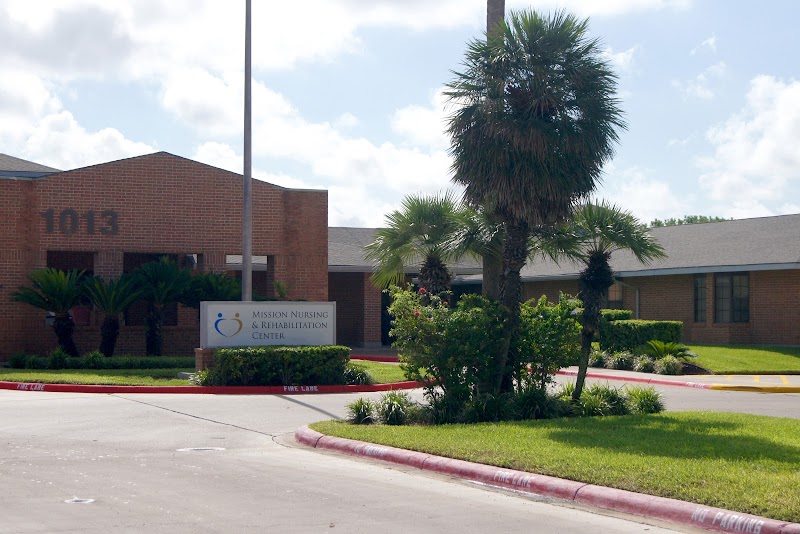
How is Mission Nursing & Rehabilitation Center Staffed?

CMS rates MISSION NURSING & REHABILITATION CENTER's staffing level at 3 out of 5 stars, which is average compared to other nursing homes. Staff turnover is 50%, compared to the Texas average of 46%.

What Have Inspectors Found at Mission Nursing & Rehabilitation Center?

State health inspectors documented 19 deficiencies at MISSION NURSING & REHABILITATION CENTER during 2022 to 2025. These included: 1 that caused actual resident harm and 18 with potential for harm. Deficiencies causing actual harm indicate documented cases where residents experienced negative health consequences.
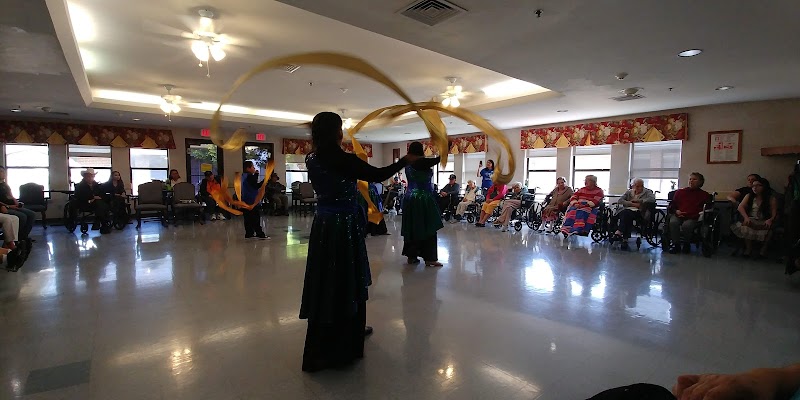
Who Owns and Operates Mission Nursing & Rehabilitation Center?

MISSION NURSING & REHABILITATION CENTER is owned by a for-profit company. For-profit facilities operate as businesses with obligations to shareholders or private owners. The facility is operated by HMG HEALTHCARE, a chain that manages multiple nursing homes. With 170 certified beds and approximately 89 residents (about 52% occupancy), it is a mid-sized facility located in MISSION, Texas.
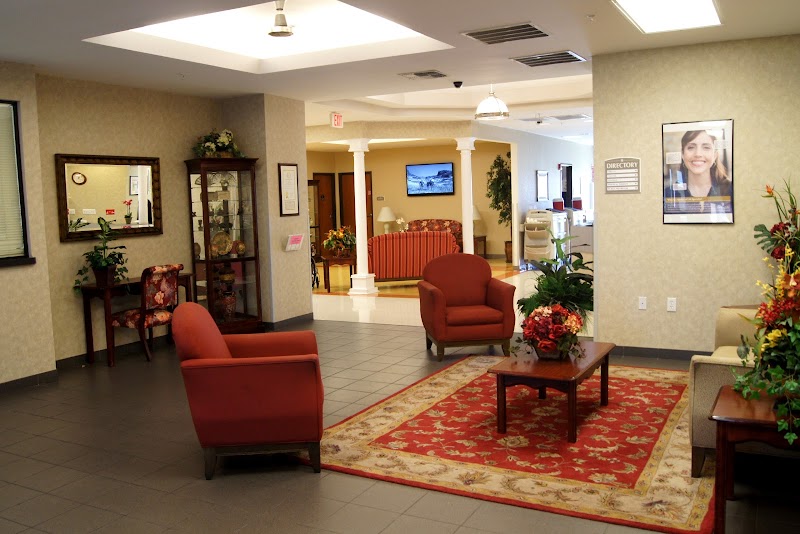
How Does Mission Nursing & Rehabilitation Center Compare to Other Texas Nursing Homes?

Compared to the 100 nursing homes in Texas, MISSION NURSING & REHABILITATION CENTER's overall rating (5 stars) is above the state average of 2.8, staff turnover (50%) is near the state average of 46%, and health inspection rating (4 stars) is above the national benchmark.

What Should Families Ask When Visiting Mission Nursing & Rehabilitation Center?

Based on this facility's data, families visiting should ask: "Can I visit during a mealtime to observe dining assistance and food quality?" "How do you handle medical emergencies, and what is your hospital transfer rate?" "Can I speak with family members of current residents about their experience?"

Is Mission Nursing & Rehabilitation Center Safe?

Based on CMS inspection data, MISSION NURSING & REHABILITATION CENTER has a clean safety record: no substantiated abuse findings (meaning no confirmed cases of resident harm), no Immediate Jeopardy citations (the most serious violation level indicating risk of serious injury or death), and is not on the Special Focus Facility watch list (a federal program monitoring the lowest-performing 1% of nursing homes). The facility has a 5-star overall rating and ranks #1 of 100 nursing homes in Texas. While no facility is perfect, families should still ask about staff-to-resident ratios and recent inspection results during their visit.

Do Nurses at Mission Nursing & Rehabilitation Center Stick Around?

MISSION NURSING & REHABILITATION CENTER has a staff turnover rate of 50%, which is about average for Texas nursing homes (state average: 46%). Moderate turnover is common in nursing homes, but families should still ask about staff tenure and how the facility maintains care continuity when employees leave.

Was Mission Nursing & Rehabilitation Center Ever Fined?

MISSION NURSING & REHABILITATION CENTER has been fined $8,190 across 1 penalty action. This is below the Texas average of $33,161. While any fine indicates a compliance issue, fines under $50,000 are relatively common and typically reflect isolated problems that were subsequently corrected. Families should ask what specific issues led to these fines and confirm they've been resolved.

Is Mission Nursing & Rehabilitation Center on Any Federal Watch List?

MISSION NURSING & REHABILITATION CENTER is not on any federal watch list. The most significant is the Special Focus Facility (SFF) program, which identifies the bottom 1% of nursing homes nationally based on persistent, serious quality problems. Not being on this list means the facility has avoided the pattern of deficiencies that triggers enhanced federal oversight. This is a positive indicator, though families should still review the facility's inspection history directly.