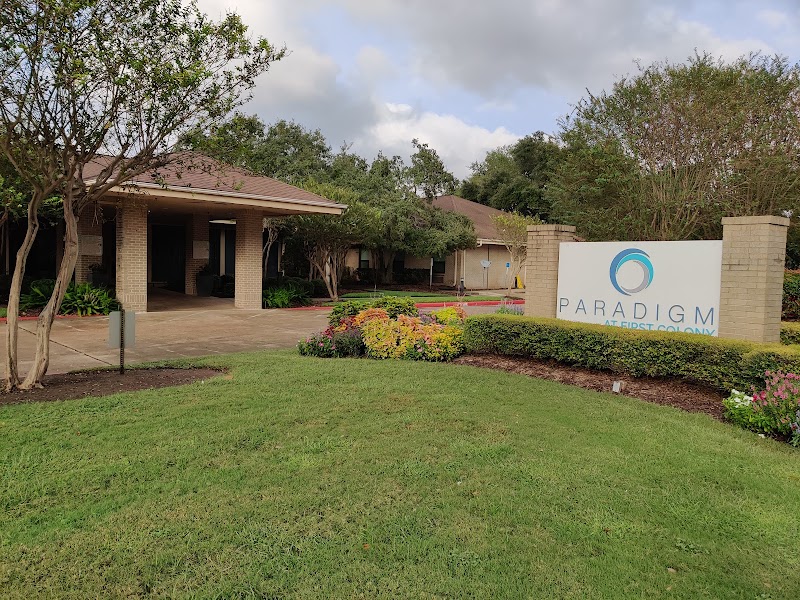
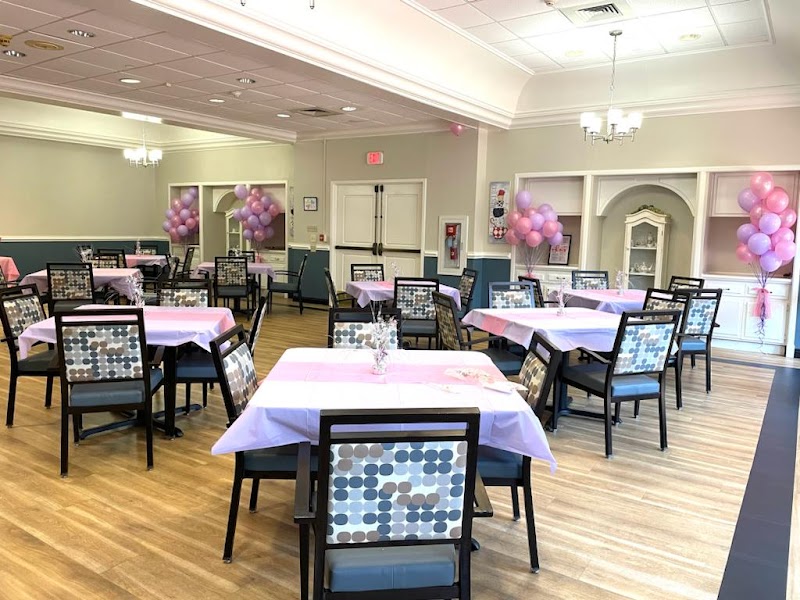
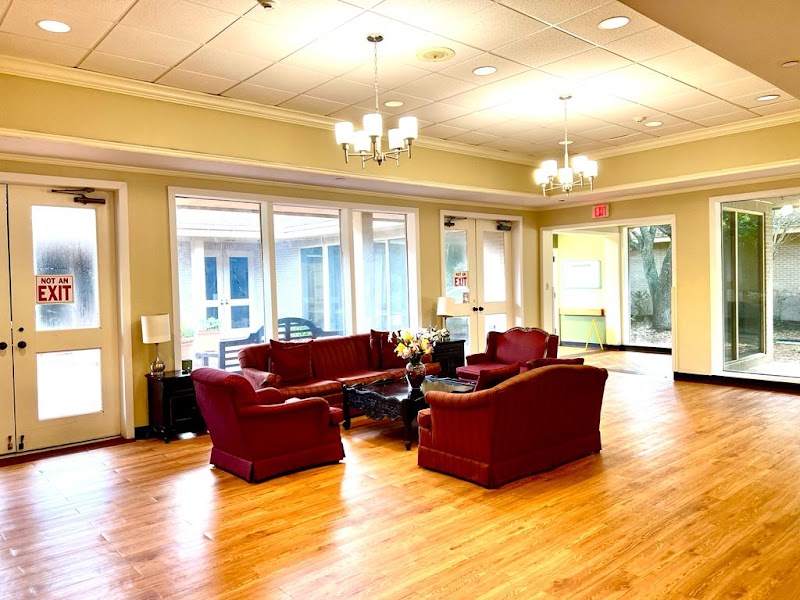
PARADIGM AT FIRST COLONY

4710 LEXINGTON BLVD, MISSOURI CITY, TX 77459 (281) 499-4710
For profit - Limited Liability company 150 Beds PARADIGM HEALTHCARE Data: November 2025 9 Immediate Jeopardy citations
Trust Grade
0/100
#1063 of 1168 in TX
Last Inspection: October 2024

Within standard 12-15 month inspection cycle. Federal law requires annual inspections.

Overview

Paradigm at First Colony has a Trust Grade of F, indicating significant concerns about the quality of care provided. Ranked #1063 out of 1168 in Texas, this facility is in the bottom half of nursing homes in the state, and #13 out of 15 in Fort Bend County, meaning there are only two local options that are better. While the facility has shown improvement, reducing issues from 22 in 2024 to 2 in 2025, the overall situation remains serious, with 48 deficiencies noted, including critical failures to ensure adequate supervision and care for residents on anticoagulants, leading to unwitnessed falls and serious injuries. Staffing is a concern, with a high turnover rate of 63%, but the facility does have more RN coverage than 86% of Texas facilities, which can help catch issues that may arise. However, the $211,113 in fines suggests ongoing compliance problems that families should consider carefully.

Trust Score
F
0/100
In Texas
#1063/1168
Bottom 9%
Safety Record
High Risk
Review needed
Inspections
Getting Better
22 → 2 violations
Staff Stability
⚠ Watch
63% turnover. Above average. Higher turnover means staff may not know residents' routines.
Penalties
✓ Good
$211,113 in fines. Lower than most Texas facilities. Relatively clean record.
Skilled Nurses
○ Average
Each resident gets 35 minutes of Registered Nurse (RN) attention daily — about average for Texas. RNs are the most trained staff who monitor for health changes.
Violations
⚠ Watch
48 deficiencies on record. Higher than average. Multiple issues found across inspections.
★☆☆☆☆
1.0
Overall Rating
★☆☆☆☆
1.0
Staff Levels
★★★☆☆
3.0
Care Quality
★☆☆☆☆
1.0
Inspection Score
Stable
2024: 22 issues
2025: 2 issues

The Good

  • Full Sprinkler Coverage · Fire safety systems throughout facility
  • No fines on record

Facility shows strength in fire safety.

The Bad

1-Star Overall Rating

Below Texas average (2.8)

Significant quality concerns identified by CMS

Staff Turnover: 63%

17pts above Texas avg (46%)

Frequent staff changes - ask about care continuity

Federal Fines: $211,113

Well above median ($33,413)

Significant penalties indicating serious issues

Chain: PARADIGM HEALTHCARE

Part of a multi-facility chain

Ask about local staffing decisions and management

Staff turnover is elevated (63%)

15 points above Texas average of 48%

The Ugly 48 deficiencies on record

9 life-threatening
Sept 2025 1 deficiency
CONCERN (E) 📢 Someone Reported This

A family member, employee, or ombudsman was alarmed enough to file a formal complaint

Potential for Harm - no one hurt, but risky conditions existed

Investigate Abuse (Tag F0610)

Could have caused harm · This affected multiple residents

**NOTE- TERMS IN BRACKETS HAVE BEEN EDITED TO PROTECT CONFIDENTIALITY** Based on interview, and record review, the facility failed to provide evidence that all alleged violations of abuse were thoroug...

Read full inspector narrative →
**NOTE- TERMS IN BRACKETS HAVE BEEN EDITED TO PROTECT CONFIDENTIALITY** Based on interview, and record review, the facility failed to provide evidence that all alleged violations of abuse were thoroughly investigated, and that the results of the investigations were reported to the State Survey Agency within five working days of the incident for 6 of 8 residents (CR #1, CR#2, CR#3, CR#6, Resident #4, Resident#5 ) reviewed for Abuse, Neglect, and Exploitation.The facility failed to submit via State Survey Agency database, TULIP the five-day thoroughly investigated evidence that the allegations made on 12/26/2024, by CR #1 and CR#2, stating that CNA A provided rough care during activities of daily living (ADL) assistance. The facility failed to submit via State Survey Agency database, TULIP the five-day thoroughly investigated evidence that the family complaint made on 12/26/2024, regarding rough care provided by MA L during medication pass to CR#3.The facility failed to submit via State Survey Agency database, TULIP the five-day thoroughly investigated evidence that the family complaint made on 02/25/2025, regarding CNA R's failure to provide essential care to CR#3. The facility failed to submit via State Survey Agency database, TULIP the five-day thoroughly investigated evidence that the allegations made on 02/10/2025, of Resident #4 hitting Resident #5 across the head.The facility failed to submit via State Survey Agency database, TULIP the five-day thoroughly investigated evidence that the allegations made on 09/16/2024, reported by insurance provider regarding CR#6, including a new-onset rectal bleeding noted on 9/17/24 (reported to be absent on 9/16/24) with concern of possible sexual assault, absence of a dressing on the dialysis catheter, and unsanitary conditions in the room with mold and mildew.These failures could place residents at risk for abuse and/or neglect by not having their concerns and allegations of abuse thoroughly investigated and reported. 1.Record review of facility reported intake created on 01/18/2025 via TULIP, with allegations of Resident Abuse, indicated CR# 1 and CR #2 alleged that CNA was rough when providing ADL care. Further review revealed no five-day investigation submission was found. No additional information related to the incident was submitted via the TULIP intake database. Record review of CR#1's Face Sheet dated 09/07/2025 revealed a [AGE] year-old who was originally admitted on [DATE] due to end Stage 4 chronic kidney disease (kidneys are moderately or severely damaged and are not properly filtering waste from your blood) and discharged from the facility on 02/04/2025. Record review of CR#1's care plan last reviewed on 02/10/2025 revealed CR#1's had a self-care deficit related to below knee amputation, with interventions including provide prompt assistance, aid of for toileting/incontinent care, provide total assistance for bed mobility, bathing, and showering. Record review of CR#1's Comprehensive MDS (resident assessment tool) dated 04/29/2024 revealed a BIMS score of 15, indicating intact cognition. Further review revealed that CR#1 was totally dependent on helper(s) for toileting hygiene. Record review of CR#2's Face Sheet dated 09/07/2025 revealed a [AGE] year-old who was originally admitted on [DATE] due to Type 2 diabetes mellitus with other specified complication (a lifelong disease that keeps your body from using insulin the way it should) and discharged from the facility on 04/18/2025. Record review of CR#2's care plan last reviewed on 04/23/2025 revealed CR#2's had a self-care deficit, with interventions including provide prompt assistance, provide encouragement and cueing as needed to performed ADL cares, aid of for toileting care, aid with bathing, and showering. Record review of CR#2's Comprehensive MDS (resident assessment tool) dated 02/07/2025 revealed a BIMS score of 15, indicating intact cognition. Further review revealed that CR#2' was dependent on helper(s) for toileting hygiene. Record review of CR#1's and CR#2's progress notes revealed: On 01/16/2025 at 5:00pm, reflected Nurse V wrote that she was notified by CR#1 and CR#2 that CNA was rough when ADL care was provided. The progress note did not identify the CNA and included additional details. Grievance dated 01/15/2025, reflected CR#2 reported that she would like CNAs to take more time and care when doing patient care. Documentation did not identify a particular CNA. The surveyor was unable to interview CR#1's and CR#2 as residents no longer resided at the facility. The interview on 09/08/2025 @ 11:00am with the Regional Nurse, she stated CNA A was identity during the facility investigation as the CNA assigned to CR#1's and CR#2 on 01/16/2025. Regional Nurse stated CNA A was suspended to ensure CR#1's and CR#2 safety during the facility investigation. Regional Nurse stated that the allegations of abuse and neglect related to CNA A providing rough care during med pass were unfound due to lack of information provided evidence, CNA A's denial of allegations. She stated the facility is required to report allegations of abuse and conduct a thorough internal investigation within 5 days timeframe. If an incident (such as an injury, abuse, or neglect) is not reported in a timely manner, it could delay any necessary investigations or interventions to protect the safety and well-being of residents and could place residents at risk of harm. She stated the facility reported the incident, but the five-day report evidence findings were not submitted to the state agency and retained by the facility's former administrator. She stated that it was uncertain why the investigation findings were not reported and retained. She stated she was recently, on 09/05/2025, made aware of this failure upon the state surveyor's request for documentation. She started an audit was completed and no additional intake reporting failure has been identified since the termination of the former administrator. She stated the facility has implemented an additional step to prevent similar problems in the future. She stated that the facility has crated an internal secure share drives are all reportable investigation and finding are retained by the facility. She stated that the DON and current Administrator have been trained on the process as of 09/06/2025. Attempted interview with the CNA A on 09/07/2025 at 11:53am, left a voicemail requesting a return call. 2. Record review of facility reported intake created on 12/31/2025 via TULIP, with allegations of Resident Abuse, indicated CR #3' family member alleged MA was rough during medication pass. Further review revealed no five-day investigation submission was found. No additional information related to the incident was submitted via the TULIP intake database. Record review of CR#3's Face Sheet dated 09/07/2025 revealed a [AGE] year-old who was originally admitted on [DATE] due to acute respiratory failure with hypoxia (a condition where there's not enough oxygen or too much carbon dioxide in your body) and discharged from the facility on 04/11/2025. Record review of CR#3's care plan last reviewed on 03/17/2025 revealed CR#3's had a self-care deficit, with interventions including aid with personal hygiene/grooming, aid of for toileting/incontinent care, provide total assistance for transfers, bathing, assistance for upper/lower body dressing, and assistance with meals. Record review of CR#3's Comprehensive MDS (resident assessment tool) dated 02/13/2025 revealed a BIMS score of 00, severe cognitive impairment. Further review revealed that CR#3 was dependent on two or more helper(s) to complete daily living activity. Record revie of grievance document, titled Concern Report dated, 12/29/2024 indicated RP reported concern related med pass to CR#3 on Friday, 12/26/2025. Documented resolution indicated staff was re - educated on medication administration. No additional documentation related to allegation details provided. The interview on 09/08/2025 @ 11:00am with the Regional Nurse, she stated MA L was identity during the facility investigation and the MA assigned to CR # 3 on 12/26/2024 @ 9:00am. Regional Nurse stated MA L was suspended to ensure CR #3's safety during the facility investigation. Regional Nurse stated that the allegations of abuse and neglect related to MA L providing rough care during med pass were unfound due to lack of information provided by the RP and MA L denial of rough incident. The surveyor was unable to interview CR #3; no longer resided at the facility. Attempted interview with the RP on 09/05/2025 at 11:53am, left a voicemail requesting a return call. Record review of MA L file revealed MA L was suspended on 12/26/2024 no documentation of date of return. Attempted interview with the MA L on 09/05/2025 at 1:58pm, left a voicemail. Record review of documentation provided revealed Medication Administration in- service was provided on 02/01/2025, no evidence of training provided on the date or surround dates of the incident. 3. Record review of facility reported intake created on 03/01/2025 via TULIP, with allegations of Resident Neglect, indicated CR #3' RP alleged CNA R was not providing the essential level of care on 02/25/2025. Further review revealed no five-day investigation submission was found. No additional information related to the incident was submitted via the TULIP intake database. Record review of training documentation revealed Abuse and neglect training was provided on 02/28/2025. Record review of CR # 3 clinical documentation, Skin Observation dated 02/27/2025, indicated not finding. Attempted interview with the former Administrator on 09/06/2025 at 10:16am; surveyor left a voicemail requested a return call. During interview on 09/07/2025 @ 4:48pm with CAN R, CAN R stated she could recall the alleged incident, she stated that CR # 3 often presented with aggressive behaviors towards staff. CAN R denial neglecting the CR # 3 when she previously provided patient care. She stated she was not sure of the details related to the incident. She stated she was suspended after the report was made and was later informed that the allegations were unfound. She stated abuse and neglect training was provided following the incident. She stated additional training regarding patient care and abuse was provided by the facility monthly. She stated that when care is provided to current residents who may present with behaviors, she used the support of the unit nurse or staff to aid in redirecting the resident. 4.Record review of facility reported intake created on 02/12/2025 via TULIP, indicated Resident #4 hitting Resident #5 across. Further review revealed no five-day investigation submission was found. No additional information related to the incident was submitted via the TULIP intake database. Record review of Resident #4's Face Sheet dated 09/07/2025 revealed a [AGE] year-old who was originally admitted on [DATE] due to skin infection. Record review of Resident #4's care plan last reviewed on 07/07/2025 revealed Resident #4's focus areas: Behaviors related to physical aggression, documented occurrence of 02/11/2025 with interventions including, monitor and chart behaviors as they occur and report progress/declines to provider, provide psych consult, re-evaluated, and admission to behavioral hospital as ordered.Psychotropic medications related to behavior management with interventions including, administer psychotropic medications as ordered by physician; monitor for side effects and effectiveness every shift; discuss with medical provider/family regarding ongoing need for use of medication; monitor/document/report as needed for any adverse reactions of psychotropic medications. Record review of Resident #4's Comprehensive MDS (resident assessment tool) dated 07/02/2025 revealed a BIMS score of 13, indicating intact cognition. Further review revealed that Resident #4 was able to function with a helper provided verbal cues and/or touching. Record review of Resident #5's Face Sheet dated 09/07/2025 revealed a [AGE] year-old who was originally admitted on [DATE] with schizophrenia. Record review of Resident #5's care plan last reviewed on 08/08/2025 revealed Resident #5's focus areas: Behaviors: occurrence date 02/11/2025- roommate hitting him, at risk for further increased episodes and injury with interventions Resident #5's was moved to another location for safety, occurrence was reported to abuse coordinator; skin and pain assessment completed and reported to medical providers, DON and Administrator. Psychotropic medications, with interventions including, administer antipsychotic medications as ordered by physician; monitor for side effects and effectiveness; Monitor for episodes of psychotic/psychosis driven behaviors such as Visual/Auditory hallucinations, delusions, thought insertion/withdrawal, increased physical/verbal aggression; and provide psych consult as ordered. Record review of Resident #5's Comprehensive MDS (resident assessment tool) dated 07/02/2025 revealed a BIMS score of 14, indicating intact cognition. Further review revealed that Resident #5 was able to function with helper provided setup or clean up assistance. Record review of nursing clinical documentation dated 02/11/2025 at 11:30am, revealed a head-to-toe assessment was completed on Resident #4 following the incident, no injury identified. Record review of nursing clinical documentation dated 02/11/2025 at 11:31am, revealed a head-to-toe assessment was completed on Resident #4 following the incident, no injury identified. Record of progress notes revealed: Resident #4 was transferred to a behavioral hospital on [DATE], following the incident. Resident #5 was immediately moved to a different room on 02/11/2025. Nursing assessment completed without finding of injury, and social worker consult. During interviews on 09/08/2025 @ 5:18pm with Resident #4, he stated he feels safe at the facility. Residents denied he had experienced or witnessed abuse at the facility. Resident #5 could not recall the incident. During interviews on 09/08/2025 @ 5:42pm with Resident #5, he stated he feels safe at the facility. Residents denied he had experienced or witnessed abuse at the facility. Resident #5 could not recall the incident. 5.Record review of facility reported intake created on 01/15/2025 via TULIP, indicated facility reported allegation of abuse and neglect reported by insurance provider regarding CR#6, including a new-onset rectal bleeding noted on 9/17/24 (reported to be absent on 9/16/24) with concern of possible sexual assault, absence of a dressing on the dialysis catheter, and unsanitary conditions in the room with mold and mildew. Further review revealed no five-day investigation submission was found. No additional information related to the incident was submitted via the TULIP intake database.Record review of CR#6's Face Sheet dated 09/07/2025 revealed a [AGE] year-old who was originally admitted on [DATE] with primary diagnosis of sepsis (a serious condition in which the body responds improperly to an infection) and chronic kidney disease (occurs when a disease or condition impairs kidney function) and discharged from the facility on 09/23/2024. Record review of CR#6's care plan last reviewed on 09/14/2024 revealed CR#6's bowel incontinence, with interventions including apply a house moisture barrier cream after each episode of incontinence; encourage the resident to maintain mobility and participate in activities that promote regular bowel movements; monitor for signs of discomfort or agitation that may indicate the need for toileting; perform routine rounding to include incontinence care and brief changes; and remind and assist the resident to use the toilet regularly as indicated/able. No additional information related to self-care deficit was identified in care plan. Record review of CR#6 Comprehensive MDS (resident assessment tool) dated 04/29/2024 revealed a BIMS score of 06, indicating severe cognitive impairment. Further review revealed that CR#6's was totally dependent on helper(s) for toileting hygiene. The surveyor unable to interview CR#6 as resident no longer reside at the facility. During an interview on 09/05/2025 at 2:18pm, the SW stated she's worked in his role as the SW at the facility for many years. The SW explained her role as part of a comprehensive abuse investigation was to assess the safety and psychosocial well-being of the resident identified in the investigation and other residents. She stated when an abuse allegation is made, involving a staff member, it's critical to determine whether the abuse was isolated or systemic. She stated other residents may have been affected or were at similar risk. She stated when notified of an abuse incident it was her responsibility to identify at-risk residents. She stated she would start by reviewing other residents under the care of the alleged abuser (same hall/unit). Thereafter, she would conduct safety care rounds by meeting with each identified resident privately to assess. She explained in the individual meetings, he would assess for the resident safety, signs of fear or distress, or unreported incidents. When asked if she recalled the identified incidents involving CR #1, CR#2, CR#3, CR#6, and Residents #4, #5, she stated she recalled the incident. She stated she completed safety care rounds related to the incidents. When asked where the information was documented, she stated that safety care round documentation was submitted to the Former Administrator, FS M. When asked if her encounter with the resident was documented in the clinical record, he stated all encounters were documented in social worker's progress notes which is part of the resident clinical record. Attempted interview with the former Administrator on 09/05/2025 at 3:58pm, left a voicemail. Attempted interview with resident family member on 09/07/2025 at 1:05pm, left a voicemail requesting a return call. During an interview on 09/05/2025 at various times, with staff (LVN, K, LVN D, RN C, CMA M, CNA L, CAN J, and CAN R) stated they had been trained in abuses and neglect, repositioning techniques. Staff denied witnessing abuse and/or neglect at the facility. All staff identified the Administrator as the abuse coordinator. Staff stated they feel that there was enough staff support with resident's needs. They stated that sometimes they were short, but staff work together to meet the needs of the resident. During an interview with Administrator and DON on 09/07/2025 at 10:00am, the Administrator she was the facility's abuse coordinator. She stated as the abuse coordinator she must report to HHSC immediately and then start the investigation and complete it within five days of the incident. The Administrator stated that if a staff member were identified in the incident, she would suspend the staff member while continuing the investigation. The Administrator stated, she realized that there was a failure by the previous administration, FS M with the 5-day submission of investigation findings involving CR #1, CR#2, CR#3, CR#6, and Residents #4, and #5. The Administrator stated she gathered all the documentation to review that incidents were initiated but was unable to locate documentation evidence that a thorough investigation was completed, and findings reported to the state. The Administrator stated each intake was reviewed upon surveyor's request for evidence. The Administrator stated supporting documentation was gathered to confirm that each incident was addressed with acknowledgement that it was noted and addressed with education or clinically assessed. The Administrator stated five-day reports for the identified incidents were not submitted to by the pervious Administrator, FS M. The Administrator stated the facility was now required to store all investigations on a shared drive with regional staff to prevent the reoccurrence of the facility not retaining the documentation and evidence for all incident investigations. Record review of TULIP (portal where facilities report incidents to the state) on 09/05/2025 revealed no facility five-day investigation findings were reported for CR #1, CR#2, CR#3, #4, #5 CR#6. Record review of CNA A, CNA R, and MA L's file revealed abuse and neglect training to staff and a follow up incident follow ups were made regarding involving CR #1, CR#2, and CR#3. Record review of training and in-services revealed that the facility had provided the following trainings: 08/04/2025 - Abuse Reporting06/27/2025 - Abuse, Neglect, and Exploitation05/10/2025 - Abuse, Neglect, and Exploitation04/17/2025 - Abuse, Neglect, and Exploitation04/17/2025 - Turing and Reportioning04/07/2025 - Abuse, Neglect, and Exploitation 04/14/2025 - Abuse, Neglect, and Exploitation02/01/2025 - Abuse, Neglect, and Exploitation01/24/2025- Abuse, Neglect, and Exploitation 12/22/2024 - Reporting Abuse and Neglect Timely Record review of the facility's Abuse, Neglect and Exploitation Policy, revised 10/2024 revealed: The Facility will conduct a timely investigation of any alleged abuse/neglect, exploitation, mistreatment, injuries of unknown origin, or misappropriation of resident property. The investigation should include gathering evidence, interviewing witnesses, conducting surveys as indicated, reviewing medical records, and examining any relevant documentation.The Facility will submit a summary of its investigation as required by applicable state and federal regulations.
Jun 2025 1 deficiency
CONCERN (D) 📢 Someone Reported This

A family member, employee, or ombudsman was alarmed enough to file a formal complaint

Potential for Harm - no one hurt, but risky conditions existed

Pharmacy Services (Tag F0755)

Could have caused harm · This affected 1 resident

**NOTE- TERMS IN BRACKETS HAVE BEEN EDITED TO PROTECT CONFIDENTIALITY** Based on observation, interview, and record review the facility failed to provide pharmaceutical services (including procedures ...

Read full inspector narrative →
**NOTE- TERMS IN BRACKETS HAVE BEEN EDITED TO PROTECT CONFIDENTIALITY** Based on observation, interview, and record review the facility failed to provide pharmaceutical services (including procedures that assure the accurate acquiring, receiving, dispensing, and administering of all drugs and biological's) to meet the needs of each resident, for 1 of 1 Resident (Resident #1) reviewed for medication administration. MA-A did not pull down on the lower eye lid prior to instilling medicated eye drops to Resident #1. MA-A placed the medication cap for the eye drops on an unclean surface, with the inside facing down then replaced the cap onto the bottle after administering the medication to Resident #1. These failures could affect residents who received medication and place them at risk of not receiving the appropriate amount of medication and could result in an adverse reaction, infection, or a decline in health. Findings included: Record review of Resident #1's face sheet dated 06/01/25 revealed an [AGE] year-old female admitted to the facility on [DATE] and initially admitted on [DATE]. Her diagnoses included heart failure, fainting and collapse; glaucoma (condition that damages the optic nerves) and elevated blood pressure. Record review of Resident #1's quarterly MDS dated [DATE] revealed a BIMS score of 6 out of 15 indicating severe cognitive impairment. She had impairment to one side of the lower extremity. She was dependent on staff assistance for some ADLs and others she required only substantial assistance. Record review of Resident #1's undated care plan revealed Focus - Resident #1 had impaired visual functioning and was at risk for decreased in ADLs due to Glaucoma. Interventions did not include to administer medications as MD ordered. Record review of Resident #1's physician order dated 1/19/25 indicated an order for Latanoprost 0.005%, instill one (1) drop in both eyes in the evening for treatment. Record review of Resident #1's MAR dated 6/1/25 at 3:51 PM, indicated an order for Latanoprost 0.005%, instill one (1) drop in both eyes in the evening for treatment and scheduled for 7:00 PM. During an observation on 06/01/25 at 6:20 PM, MA-A performed hand sanitization, put on clean gloves, positioned Resident #1 to receive eye drops then removed the medication cap of the Latanoprost eye drops and placed the cap inside facing down on top the nightstand. The nightstand was not disinfected prior to the procedure. MA- A instructed Resident #1 to open her eyes wide. Resident #1 slightly opened her eyes. MA- A held the bottle over Resident #1's right eye and instilled one drop. MA-A instructed Resident #1 to close her eyes. Resident #1 had her eyes closed for three seconds. MA-A instructed Resident #1 to open her eyes and attempted to instill a drop into the left eye, resident blinked, and the solution did not enter into the eye. MA-A attempted again, and 2 drops entered the eye. Resident #1 closed both eyes, MA-A wiped excess solution using a clean tissue. MA-A replaced the medication cap onto the bottle, removed gloves and sanitized hands. In an interview on 06/01/25 at 6:53 PM, MA-A stated Resident #1's eye drop order was one drop per eye. MA-A stated Resident #1 was receiving Latanoprost eye drops because she does not see clearly. MA-A stated she was taught to drop medication into the inside of the eye by the medication aides who had been working at the facility for a long time. MA-A stated she received training during orientation in February 2025. MA-A stated normally she would put the medication cap in a way it would stay clean, but she was nervous. In an interview on 6/01/25 at 7:12 PM, LVN-B stated when administering eye drops she would wash hands, put on clean gloves, pull lower eye lid down, administer eye drop into the lower portion of the eye then have the resident close their eye and massage the lower lid or ask the resident to close eyes and move eye ball around in order to better absorb and spread the medication. LVN-B stated Resident #1 needs the Lantanoprost eye medication for glaucoma and if not instilled correctly her vision could worsen. LVN-B stated she would ensure the tip of the dropper stays clean by putting the medication cap on a clean surface upside down on a clean surface so the inside of the cap remains clean otherwise if the cap is placed facing down it could contaminate the tip of the dropper when the cap is replaced, and this could possibly cause an eye infection. LVN-B stated she will follow up and re-educate MA-A and notify the DON so a new bottle can get ordered and the old bottle should not be used again. In an interview on 6/1/25 at 8:20 PM the DON stated she expected nurses and medication aides to put on clean gloves, pull down on the lower eye lid and instill the ordered number of eye drops into the lower lid area. Then have the resident close their eyes. The DON stated if the facility policy and procedure was not followed the resident may not receive the full dose. The DON stated Resident #1 receives Latanoprost for glaucoma or cataracts. The DON stated it was important to ensure the tip of eye dropper stays clean to reduce chance of infection. The DON states she would hold the medication cap in the palm of her hand and would not put the cap down on a surface as it could potentially cross-contaminate the tip of the dropper and cause eye infection. The DON stated she would conduct in-service with MA-A on proper administration of eye drops. Record review of MA-A's Medication Aide-Medication pass competency check list dated 2/30/25, indicated the performance criteria was met for eye drop administration including to gently pull down the lower eyelid to form a pouch while instructing the resident to look up. Further review indicated MA-A signed the checklist and was evaluated by the Lead MA. Record review of the facility policy and procedure for Medication Administration and Management revised on June 2019, read in part: It is the policy of this facility that the facility will implement an Medication management Program that incorporates systems with established goals to meet each resident's needs as well as regulatory requirements .9. The authorized licensed or certified/permitted medication aide or by state regulatory guidelines staff member administers eye medications as follows: A. Administer according to pharmacy/manufacturer specifications .G. Use the index finger to pull down the lower lid. H. Instruct the resident to look up. I. Steady your hand holding the dispenser against the resident's forehead, and instill the drop inside the lower lid L. Release the eyelid, instruct resident to close eyes slowly, and gently wipe off excess medication with a clean tissue from the inside to the outside .O. If indicated, it may be necessary to apply pressure to the tear duct (inner canthus) following the instillation of a specific eye drop for one (1) minute or per manufacturer's specifications .
Nov 2024 2 deficiencies 2 IJ (2 affecting multiple)
CRITICAL (K) 📢 Someone Reported This

A family member, employee, or ombudsman was alarmed enough to file a formal complaint

Immediate Jeopardy (IJ) - the most serious Medicare violation

Quality of Care (Tag F0684)

Someone could have died · This affected multiple residents

**NOTE- TERMS IN BRACKETS HAVE BEEN EDITED TO PROTECT CONFIDENTIALITY** Based on observation, interview, and record review, the facility failed to ensure residents received treatment and care in accor...

Read full inspector narrative →
**NOTE- TERMS IN BRACKETS HAVE BEEN EDITED TO PROTECT CONFIDENTIALITY** Based on observation, interview, and record review, the facility failed to ensure residents received treatment and care in accordance with professional standards of practice, the comprehensive care plan, and the residents' choices based on the comprehensive assessment of resident for 1 (CR#1) of 18 residents reviewed for anticoagulants. -The facility delayed sending CR #1 to a higher level of care on 11/21/2024 when CR #1 experienced an unwitnessed fall with a head injury (swelling to right cheek). CR #1 was receiving the medication Eliquis (blood thinner). -CR #1 was diagnosed with an Acute Subdural Hematoma with mass effect An Immediate Jeopardy (IJ) was identified on 11/23/2024 at 4:24PM. While the IJ was removed on 11/25/2024, the facility remained out of compliance at a severity of no actual harm with potential for more than minimal harm that is not an immediate jeopardy and a scope of pattern due to the facility need to evaluate the effectiveness of the corrected system. This failure has the potential to place residents at risk for hospitalization and death. Findings: Record review of CR #1's face sheet dated 11/22/24 revealed a [AGE] year-old female admitted to the NF originally on 05/11/2024 and readmitted on [DATE]. CR #1's diagnoses included the following: muscle weakness, unsteadiness on feet, vascular dementia (memory loss), end stage renal disease (kidney disease), and osteoporosis (bones become weak and brittle). Record review of CR#1's MDS assessment dated [DATE] revealed a BIMS score of 7 indicating the resident's cognition was severely impaired. Record review of CR #1's Comprehensive Care Plan dated 11/04/2024 reflected that the resident was being care planned for anticoagulants that reflected the following: -Give meds per order -Monitor for increase bruising, bleeding, etc. -Notify MD if bleeding is not stopped with pressure Record review of CR #1's Physician Orders for the month of November 2024 reflected the following orders: -Dated 05/16/24 Eliquis 5mg give one capsule by mouth q 12 hours related to atherosclerosis (build-up of fats, cholesterol, and other substances in and around the artery {a vessel that carry blood away from the heart to the entire body}) walls. -Dated 05/14/24 Acetaminophen Tablet 325mg give 2 tablets by mouth every 6 hours for general discomfort. Record review of CR #1's MAR for the month of November 2024 reflected that RN A medication administered on 11/21/24 to CR #1 included: -Tylenol (325 mg 2 tablets administered by mouth) with a pain level documented as 0. Further review of CR #1's MAR dated November 2024 reflected that Medication Aide RR administered the medication Eliquis 5mg po prior to resident being transported to the hospital on [DATE]. Further review revealed that CR #1 was receiving the medication Eliquis twice a day as ordered by the physician. Record review of CR #1's Nursing Progress Notes dated 11/21/24 at 5:50 AM revealed CR #1 was found in her room sitting on the floor by RN A. RN A assessed resident and documented that resident had swelling to her right cheek. Further record review revealed that CR #1 was transferred to the hospital on [DATE] at 7:40 AM. Record review of CR #1's Progress Notes documented by RN A dated 11/21/24 reflected the following: .CR #1 was assessed, V/S were evaluated to be stable and WNL. Swelling / hematoma was noted to the Right cheek. No distress is noted at this time. CR #1 denies any pain or discomfort at this time. Fall precaution is in place. Neuro assessment is initiated and ongoing. CR #1 educated to call for assistance whenever she needed help, CR #1 verbalized understanding. Bed is put in the lowest position with call bell and personal belonging within her reach. MD was notified. DON and RP were also notified. This nurse called report to hospital. CR #1 is awaiting transfer to the hospital . Record review of CR#1's SBAR dated 11/21/2024 documented by RN A reflected the following: -Form Summary: SBAR (Change of Condition) - Fall Event Date/Time of Fall: 11/21/2024 5:50 AM Location of the Fall: Resident's room Classification of the Fall: Unwitnessed What was the resident doing prior to the fall: Resident states I was trying to turn and I rolled over. Initial Vital Signs Post Fall Event: Blood Pressure-124/71 Pulse-78 Temperature-97.6 Respirations-17 02 Saturation-99% Medication Reviewed with the Physician: Yes Notifications Physician/Physician Extender: PCP; 11/21/2024 5:54 AM Resident/Responsible Party: 11/21/2024 5:55 AM Observation on 11/23/2024 at 11:30AM revealed CR# 1in the ICU unresponive, resting in the hospital bed connected to a ventilator, and a neck collar. The top and left side of CR #1's head was bald with dressing on top of her head. There was a small plastic bulb that appeared to be connected to CR #1's head with red fluids draining inside of bulb. CR #1 was receiving the medication Cardene (used to treat high blood pressure and control chest pain) IV 40 mg in 200 ml of fluid at 75 ml/hr. Resident was receiving gastrostomy feedings Nova Source that read on pump 20 ml/hr. Record review of CR #1's hospital records revealed that CR #1 admitting diagnoses was Acute Subdural Hematoma (a pool of blood between the brainand its outermost coverin) with mass and a left craniotomy ( surgical procedure that involves removing a section of the skull to access the brain) evacuation. In an interview on 11/22/24 at 10:12 AM with the NF Administrator, and the DON present, the Administrator said CR #1 was residing on the Memory Care Unit and on 11/21/24 around 5:30 AM, the staff (RN A and CN B) had gotten CR #1 up for dialysis. The Administrator said from her understanding, the staff placed CR #1 near the nurse station in her wheelchair. The Administrator said the staff began to round on other residents in the MCU at 5:40 AM. The Administrator said CNA B said shortly after, she saw CR #1 laying on her bed. The Administrator said, at 5:50 AM, the Charge Nurse heard a noise coming from CR #1's room and went to see what was going on. The Administrator said when RN A arrived to CR #1's room, she found CR #1 sitting on the floor in between the 2 beds. The Administrator said CR #1 could walk. The DON interjected and said that CR #1 could walk, but had an unsteady gait. The surveyor requested copies from the Administrator of everything that the NF had done (investigation/in-services, etc.) regarding CR #1's fall on 11/21/2024. The Administrator said she had not completed her investigation, but would email so far what the facility had completed. Interview on 11/22/24 at 1:58 PM with a family member of CR #1 said CR #1 was still at the hospital in a coma and her condition was not looking good because CR #1 had a lot of bleeding on the brain. The family member said the NF called her on 11/21/24 around 6:40 AM telling her that CR #1 had a fall, and they were preparing to send CR #1 to the hospital for further evaluation. The family member said she spoke with CR #1 prior to leaving the NF and CR #1's speech was slurred. The family member said the nurse, who name she did not recall, told her it was probably CR #1's medications causing the slurring of speech. The family member said when the nurse called her to report that CR #1 had a fall, the nurse told her that she had called transportation instead of 911. Interview on 11/22/24 at 2:34 PM, RN A said she worked the 6:00 PM- 6:00 AM shift, and worked on 11/20/24. RN A said herself and CNA B had gotten CR #1 out of bed at 5:30 AM to dress CR #1 and placed in her wheelchair for dialysis. RN A said CR #1 was taken to the common area across from the nurse station. RN A said the CNA that was assigned to CR #1 was CNA C, but CNA B assisted with getting CR #1 out of bed for dialysis. RN A said CNA B was in the common area as well but later began to make rounds with CNA C getting the other residents out of bed and taking some to the common area as well, but still checking on CR #1. RN A said she began to pass medications on the other residents while keeping an eye on CR #1. RN A said she could see CR #1 because of the way her cart was positioned on the hallway. RN A said when she came out of a resident room, she did not see CR #1. RN A said she rushed to CR #1's room where she found CR #1 sitting on the floor. RN A said she never heard a noise coming from CR #1's room. RN A said she called CNA C to come and assist her with CR #1. RN A said after she finished assessing CR #1, herself and CNA C placed CR #1 back in bed. RN A said CR #1 had some swelling to the right side of face but was not complaining of pain. RN A said CR #1 vital signs were stable and she initiated neurological checks on CR #1 which were within normal limits. RN A said she called the doctor, resident family member as well as the Administrator. RN A said CR #1's family member wanted to speak to CR #1. Therefore, she took the phone to CR #1's room so she could speak to the family member. RN A said when she initially called the doctor, he did not answer. RN A said CR #1's PCP came to the facility later. RN A said because CR #1 appeared stable, she used her own judgment to send CR #1 to the hospital via regular EMS and not 911. RN A said she was aware that CR #1 was receiving the medication Eliquis and reiterated that she used her own judgement. RN A said the facility policy on unwitnessed falls with head injuries receiving anticoagulants was to send to hospital via 911. RN A said if a resident experienced an unwitnessed fall with a head injury and on blood thinners, they should be sent to the hospital via 911. RN A said if this was not done, the resident could die. Interview via phone on 11/22/24 at 3:05 PM, CNA B said she worked the night shift from 10 PM - 6 AM and worked on 11/20/24 on the MCU. CNA B said she was not the CNA assigned to CR #1. CNA B said she never provided any type of care for CR #1 including assisting with placing CR #1 in the wheelchair on 11/21/2024 at 5:30AM. Interview on 11/22/24 at 3:13 PM, the Administrator said RN A initially called regular transportation to transport CR #1 to the hospital. The Administrator said she asked RN A why she called regular transportation instead of 911. The Administrator said RN A said because CR #1 appeared to be stable. The Administrator said according to CR #1's Nursing Progress Notes, RN A sent CR #1 to the hospital via regular EMS at 7:40AM. Interview on 11/22/24 at 3:26 PM, the DON, with the Administrator present, said the NF did not have a policy on unwitnessed falls with head injury receiving anticoagulants. The DON said prior to reviewing CR #1's chart on 11/21/24, she was not aware that CR #1 was on the medication Eliquis. The DON said she was not aware what time CR #1 left the NF to go to the hospital until she reviewed the Nursing Progress Notes. The DON said if the nurse felt that it was okay to send CR #1 to the hospital via regular EMS, she would have to trust RN A's judgement because she was not present at the time of the incident. The DON said if she was present when CR #1 experienced the unwitnessed fall with head injury, she could not say what she would have done. The DON said she in-serviced the staff on falls on 11/21/24. Interview on 11/22/24 at 3:40 PM with the Administrator and the DON being present, the Administrator said she informed the Medical Director about CR #1's fall on 11/21/24. The Administrator said the Medical Director told her she would have to review CR #1's medical records to see if there were concerns about resident's fall with a head injury. The Administrator said she spoke with the Medical Director on 11/22/24 asking the MD about how the resident was transferred to the hospital via regular EMS instead of 911 after an unwitnessed fall with head injury and receiving the medication Eliquis. The Administrator said the MD told her after reviewing CR #1's medical records that the situation regarding CR #1's unwitnessed fall with head injury was tricky. The Administrator did not elaborate further what the MD meant by tricky. The Administrator said after herself and the DON discussed CR #1's incident further, they decided moving forward that any resident that experienced a fall with a head injury witnessed or unwitnessed needed to be transported to the hospital via 911 transport even if the resident was not on blood thinners. The Administrator said this should be done because of the gray areas and one could not see what may be happening to the resident internally. The Administrator said the NF could not perform CT scans (type of x-ray). Therefore, the resident should be sent to the hospital for further evaluation. Interview on 11/22/24 at 4:13 PM the Administrator provided a copy of more in-service, she said, had been conducted by the DON that entailed falls, anticoagulant, and visible head injury. The Aministrator said this in-service was in a book with other in-services the DON had done. Attempted an interview via phone on 11/22/24 at 3:52 PM with the Medical Director. There was no answer, and the mailbox was full. Interview on 11/22/24 at 4:45 PM via phone with the NP revealed the NF notified her of CR #1's fall on 11/21/24 and resident went to the hospital. The NP said the PCP made rounds at the facility on 11/21/24. The surveyor asked the NP if a resident experienced an unwitnessed fall with head injury receiving an anticoagulant medication, should the resident be sent out via regular EMS or 911. The NP said she could not really answer the question and that the surveyor would need to speak with CR #1's PCP. Attempted an interview via phone on 11/22/24 at 4:55 PM with CR #1's PCP. There was no answer; left voicemail. Interview on 11/23/24 at 11:35 AM, the hospital nurse said CR #1 would be taken off the ventilator on 11/23/24, and the family wanted comfort measures (treatments that focus on relieving the pain and distress for a dying person) after taking CR #1 off the ventilator. Interview on 11/24/24/ at 7:26 PM via phone, CNA C said she worked the 10 PM-6 AM shift. CNA C said on 11/20/24, she was CR #1's CNA on the Memory Care Unit. CNA C said the nurse helped her in getting the resident ready for dialysis. CNA C said after her and the nurse got CR #1 ready for dialysis at 5:30 AM, CR #1 was taken to the common area in her wheelchair across from the nurse station. CNA C said she went to check on the other residents. CNA C said the nurse was on another hallway passing medications. CNA C said CNA B was making rounds on the residents. CNA C said the last time she saw CR #1, prior to the fall, was at 5:40 AM in her room laying on her bed. CNA C said shortly after, she heard RN A calling her to come to CR #1's room. CNA C said when she arrived to CR #1's room, she saw CR #1 sitting on the floor. CNA C said RN A assessed CR #1, and afterwards, she assisted RN A in placing CR #1 back in bed. CNA C said CR #1 denied any pain. CNA C said RN A was preparing to send CR #1 to the hospital. CNA C said after assisting RN A, she went to check on the other residents. CNA C said she left the facility at 6 AM. Interview on 11/25/24 at 12:38 PM, the Administrator said the reason she provided the surveyor more in-services via email on 11/22/24 at 4:13 PM, regarding falls and anticoagulants, was due to the surveyor asking about polices. The Administrator said it prompted her to tell the DON to get the rest of the training the NF had done with the staff. Interview on 11/25/24 via phone at 12:50PM with CR #1's PCP said if CR #1's speech was slurred, CR #1 should have been sent to the hospital via 911. The PCP said a good rule of thumb, was if a resident with dementia experienced an unwitnessed fall with head injury, the resident should be sent to the hospital via 911 because the resident might be experiencing bleeding on the brain. The doctor said that he never received a call from the NF because it was not in his call log. Interview on 11/25/24 at 3:25PM via phone, at 3:25PM RN A said on the morning of CR #1's fall, 11/21/24, she administered CR #1 Tylenol because the family asked her to. A follow up interview via phone on 11/26/24 at 9:31am with CR #1's family member revealed CR #1 was on hospice. The family member said, on 11/21/24, the NF called to tell her that CR #1 fell, but she was okay. The family member said she wanted to talk to CR #1, but when CR #1 was talking back, she was slurring her words. The family member said the only thing the NF told her was that CR #1 had a small hematoma in her cheek. The family member said when she went to see CR #1 , CR #1's left side of the face and nose looked broken and bent to the side. CR #1's face had a lot of swelling and discoloration. The family member said the hospital had to do an emergency surgery on her brain to stop the bleeding. The family member said CR #1 wasn't waking up and she got another CT scan and it showed there was still internal bleeding in the brain and that the second surgery would have been too risky, and the chances of survival were low. Interview on 11/27/24 at 2:15 PM, Medication Aide RR said she worked on the MCU on 11/21/24. The medication aide said when she arrived at the facility on the MCU, the time was between 6:30 AM. Medication Aide RR said CR #1 was sitting up in a wheelchair at the nurse station. Medication Aide RR said CR #1 did not appear to be in any pain. Medication Aide RR said she was told that CR #1 had fallen. Medication Aide RR said CR #1 had some swelling to her face. Medication Aide RR said she asked RN D if it was okay to administer CR #1 her medications before CR #1 went to the hospital, and RN D said that it was okay. RN D said that she administered CR #1's morning medications including the medication Eliquis. Interview on 11/27/24 at 4:02 PM via phone, the Medical Director said she was aware of CR #1's fall on 11/21/24. The Medical Director said if a resident was clinically stable, without doctor's orders, the nurse could not hold a medication. The Medical Director said giving it or not giving Eliquis, it wouldn't have changed any outcome in CR #1's case. The Medical Director said it would not have mattered even with CR #1's face being swollen. The Medical Director said CR #1's vitals were stable before and after the fall. The Medical Director said Medication Aide RR did their job. The Medical Director said she did not have any concerns about the facility administering the medicine Eliquis after the resident had an unwitnessed fall with head injury. Record review of the NF's policy on Change in Condition Communication revised January 2024 reflected in part: . To improve communication between physicians and nursing staff to promote optimal patient/resident care, provide nursing staff with guidelines for making decisions regarding appropriate and timely notification of medical staff regarding changes in a patient's/resident's condition, and provide guidance for the notification of patients/residents and their responsible party regarding changes in condition .If the physician does not respond within an acceptable time frame, the Medical Director and Director of Nursing will be notified. The Medical Director will provide medical orders as necessary to treat the patient's/resident's condition . Record review of the NF's policy on Fall Management revised 07/2024 reflected in part: .The facility will provide a safe environment for all residents by implementing a fall management program. This program includes fall risk assessment, individualized care plans, staff education, and post fall evaluations .The charge nurse will notify the Physician/Physician extender of the fall, provide assessment findings and medications review, and receive orders as indicated .If the resident's condition warrants, the charge nurse will arrange for appropriate emergency services or hospital transfer in collaboration with the physician/Physician Extender . The Administrator and DON were notified on 11/23/2024 at 4:24 PM that an Immediate Jeopardy situation (IJ) was identified due to the above failures. The Administrator was provided the IJ template on 11/23/2024 at 4:30 PM and a Plan or Removal (POR) was requested. The facility's POR was accepted on 11/24/2024 at 12:40 PM and indicated: PLAN OF REMOVAL F684 Name of facility: [facility]: 11/24/2024 Immediate Action POR F684 CR #1 was transferred to hospital on [DATE]. The Administrator, Director of Nursing, and Medical Director held an ADHOC QAPI meeting on 11/23/24 to review the IJ template and Plan of Removal. RN A was suspended pending investigation on 11/21/24. On 11/22/24 and 11/23/24 the Director of Nursing and Assistant Director of Nursing assessed residents who had unwitnessed fall in the last 10 days for any signs or symptoms of headache, vomiting, or abnormal findings to the scalp/head with no adverse findings. The Director of Nursing initiated an in-service on 11/21/24 with licensed nurses. Topics included: Fall Procedures, specifically on activating the emergency response system (911) for any residents who has a fall with a visible head injury. 911 should be activated upon identification and notification to Physician and the DON would be secondary. Licensed nurses will be educated before starting their next shift. Education will be included in orientation. Education will be completed on 11/23/24. The Director of Nursing provided 1:1 education with RN A on 11/22/24. Education included Fall Procedures and activating the emergency response system (911) for any resident who has a fall with a visible head injury. 911 should be activated upon identification of the abnormal findings and notification to Physician and DON would be secondary; and completing through assessments post-fall with consideration for residents on anticoagulants. The Regional Nurse Consultant provided 1:1 education with the DON on 11/22/24. Education included Fall Procedures and activating the emergency response system (911) for any resident who has a fall with a visible head injury ' 911 should be activated upon identification and notification to Physician and DON secondary; and completing through assessments post-fall with considerations for resident on anticoagulants. Fall documentation will be reviewed each weekday in morning meeting on weekends, holidays, and after hours by DON/designee to ensure completed and appropriate actions are taken and documented. The Administrator and DON reviewed the policy on Fall Management and Changes of Condition no changes noted. The surveyor confirmed the plan of removal had been implemented sufficiently to remove the IJ by the following: Interview on 11/24/24 at 12:50 PM, RN D, on the Memory Care Unit (6AM-6PM), said she had been in-serviced on abuse and neglect as well as falls. RN D said if a resident experienced a fall with head injury witnessed or unwitnessed to prepare to send the resident to the hospital 911, notify the Physician, DON, and the resident's RP. RN D said she was in-serviced to assess the resident for pain, skin assessment, check their vital signs, and began neurological checks per facility protocol. RN D said if the resident was in pain to medicate the resident. RN D said even if the resident was not complaining of pain to give something for pain due to residents in the MCU decrease in cognition, the resident may not be able to express that they were in pain. RN D said she was also in-serviced to document all actions taken in the facility's electronic medical records system. Interview on 11/24/24 at 1:03 PM, RN E said she was the weekend supervisor and worked from 6AM-6PM. RN E said she had been in-serviced on falls witnessed and un-witnessed with head injury and anticoagulants. RN E said a resident that had fallen and developed a head injury, she would have to send to the hospital right away via 911 services. RN E said an assessment had to be done on the resident that included neurological assessment, vital signs, checking for bleeding. RN E said she would also notify the physician, family, DON and document all necessary actions taken in PCC. Interview on 11/24/24 at 1:10 PM, RN F said she was a new grad in orientation. RN F said she had received in-services on fall precautions witnessed or unwitnessed with head injuries receiving blood thinners. RN F said the resident should be sent to the hospital via 911. RN F said, at the time of the fall, neurological checks should be done on the resident and the resident should assessed for pain. RN F said the vital signs were taken and the doctor should be notified as well as the RP and the DON. RN F said documentation had to be done as well. Interview on 11/24/24 at 1:30 PM, LVN G said she worked from 6AM-6PM shift PRN. LVN G said she had been in-serviced on the following: abuse and neglect, resident falls, being sure to round on the residents regularly to see if they needed anything, making sure that personal belongings were in reach to prevent falls, answering their call lights in a timely manner. LVN G said she had been in-serviced on falls with injuries, particularly falls, with head injuries along with resident receiving blood thinners. LVN G said a resident with a head injury had to be sent to the hospital right away via 911 services. LVN G said when a resident had a fall, the resident had to be assessed by the nurse along with initiating neurological checks, vital signs, notifying the physician, DON, and responsible party. LVN G said she was in-serviced to also document all actions taken. Interview on 11/24/2/4 at 1:40 PM, RN H said she worked the 6AM-6PM shift. RN H said she had been in-serviced on falls witnessed and unwitnessed with head injuries to send to the hospital 911 services. RN H said she had been in-serviced on residents receiving blood thinners, notifying the physician of falls with injuries and the resident receiving blood thinners, how to assess a resident that had a fall being sure to initiate neurological checks per facility protocol, assessing the resident for pain, taking the residents vital signs, documentation and to notify the family and the DON of the incident. Interview on 11/24/24 at 7:11 PM, LVN I said she worked at the NF PRN on the 6PM-6AM. LVN I said she received in-services on falls, witnessed and unwitnessed with head injuries, to send the resident to the hospital via 911 because the resident's life depended on it. LVN I said the physician needed to be notified right away along with the RP and the DON. LVN I said she was in-serviced on blood thinners and documentation. Interview on 11/24/24 7:40 PM via phone at LVN J said she worked 6PM-6AM shift. LVN J said she was in-serviced on falls with head injuries, blood thinners, notifying the doctor of any changes in a resident condition as well as the DON and RP, documentation, and sending resident out to the hospital 911 if they had fallen and hit their head. Interview on 11/25/24 at 11:58 AM with LVN M 6AM-6PM said she use to work at the facility full time but worked on a PRN basis at that time. LVN M said she had received in-services on the following: witnesses and unwitnessed falls with head injuries to send the resident to hospital 911, call the doctor, family, and the DON. LVN M said she was in-serviced on documentation, assessments, and blood thinners. Interview on 11/25/24 at 12:05 PM, the DON said if a resident experienced a fall with a head injury and speech was slurred, there could be something going on neurologically such as a stroke or bleeding on the brain. The DON said it could only be determined by a test. The DON said she had been in-serviced on falls witnessed and unwitnessed with head injury to notify the physician, sending resident to hospital via 9ll. Interview on 11/25/24 at 12:19 PM, LVN N said she worked full time 6AM-6PM and had been in-serviced on falls witnessed and unwitnessed. LVN N said a fall with a head injury, 911 services and the doctor should be called right away. LVN N said if they were unable to reach the doctor or NP, they were supposed to call the Medical Director, DON, and document. LVN N said if a resident was on blood thinners need to monitor the resident for bleeding. Interview on 11/25/24 at 3:25 PM via phone, RN A said she had been in-serviced on falls witnessed and unwitnessed with head injuries, blood thinners, sending the resident out via 911, notifying the physician, DON, and family. On 11/25/2024 at 4:56 p.m., the Administrator was informed that the IJ was removed, however, the facility remained out of compliance at a severity of no actual harm with potential for more than minimal harm that is not an immediate jeopardy and a scope of pattern due to the facility need to evaluate the effectiveness of the corrected system. Medication Eliquis Reference www.fda.gov/dragsatfda reference ID: 3237516: .Call your doctor or get medical help right away if expereince unexpected pain .swelling .
CRITICAL (K) 📢 Someone Reported This

A family member, employee, or ombudsman was alarmed enough to file a formal complaint

Immediate Jeopardy (IJ) - the most serious Medicare violation

Accident Prevention (Tag F0689)

Someone could have died · This affected multiple residents

**NOTE- TERMS IN BRACKETS HAVE BEEN EDITED TO PROTECT CONFIDENTIALITY** Based on interview and record review, the facility failed to ensure each resident receives adequate supervision and assistance d...

Read full inspector narrative →
**NOTE- TERMS IN BRACKETS HAVE BEEN EDITED TO PROTECT CONFIDENTIALITY** Based on interview and record review, the facility failed to ensure each resident receives adequate supervision and assistance devices to prevent accident for 1 (CR #1) of 18 residents reviewed for accidents in that: - The facility failed to provide CR#1, who was on an anticoagulant medication, adequate supervision and interventions to prevent falls on 11/13/24, 11/14/24, 11/17/24, and 11/21/24 causing head injury and hospitalization. -The falls were unwitnessed, CR #1 had dementia and did not remember to use their call light when they needed assistance. Cr #1 was admitted to the hospital with diagnosis of Acute Subdural Hematoma with mass effect left craniotomy evacuation. An IJ was identified on 11/25/2024. While the IJ was removed on 11/27/2024, the facility remained out of compliance at a severity of no actual harm with potential for more than minimal harm that is not an immediate jeopardy and a scope of pattern due to the facility need to evaluate the effectiveness of the corrected system. This failure could place residents at risk for unwanted hospitalizations and death. Findings included: Record review of CR #1's face sheet dated 11/22/24 revealed a [AGE] year-old female admitted to the NF originally on 05/11/2024 and again on 11/02/2024. CR #1 diagnoses included the following: muscle weakness, unsteadiness on feet, vascular dementia (memory loss), end stage renal disease (kidney disease), and osteoporosis (bones become weak and brittle). Record review of CR#1's MDS dated [DATE] revealed a BIMS score of 7 indicating that resident cognition was severely impaired. Further review section GG-Functional Abilities and Goals reflected that CR #1 required supervision with transfer. Record review of CR #1's Comprehensive Care Plan dated 11/04/2024 reflected that resident was being care planned for risk for falls and injuries due to a hx of falls prior to admission. Further review reflected that CR #1 experienced falls on the following days for the month of November 2024 (11/13/24 unwitnessed fall in room no apparent injuries, 11/14/24 unwitnessed fall in room, 11/17/24 unwitnessed fall in room no injury, and 11/21/24 unwitnessed fall in room). The interventions included the following: -Anticipate needs- provide prompt assistance -Assure lighting is adequate and areas are free of clutter -Encourage resident to ask for assistance of staff -(Revised on 11/21/24) CR #1 will be reeducated to call for assistance from staff for all transfers, she continued to try to be independent, staff would make frequent rounds for closer monitoring, bed in lowest position, and call light in reach. Record review of CR #1's Physician Orders for the month of November 2024 reflected the following order: -Dated 05/16/24 Eliquis 5mg give one capsule by mouth q 12 hrs related to atherosclerosis (build-up of fats, cholesterol, and other substances in and around the artery {a vessel that carry blood away from the heart to the entire body}) walls. Record review of CR #1's MAR for the month of November 2024 reflected that the NF was administering the medication Eliquis as ordered by the physician. Record review of CR #1's fall incidents: -11/13/24 4:26 pm on the facility's incident report list -11/14/24 4:55 pm on the facility's incident report list -11/17/24 5:50 am on CR #1's change in condition assessment -11/21/24 5:50 am on CR #1's change in condition assessment Record review of CR #1's fall risk assessments, CR #1 had the following fall assessments with scores: -11/14/24 - high risk 25.0 -11/17/24 - high risk 19.0 -11/21/24 - high risk 19.0 Record review of CR #1's fall incident reports: -11/13/24: resident found sitting on bottom beside bed in bedroom. No witness. Resident unable to give description. -11/14/24 incident report- patient found on floor in bedroom, unbothered, patient confused no question answered. No witness. Resident unable to give description. Record review of CR #1's fall incident reports: -11/13/24: resident found sitting on bottom beside bed in bedroom. No witness. Resident unable to give description. -11/14/24 incident report- patient found on floor in bedroom, unbothered, patient confused no question answered. No witness. Resident unable to give description. Record review of CR #1's Nursing Progress Notes: -11/15/2024 17:02: S/P: Day 1 of 3. Fall occurrence on 1/14/2024. No complaint of pain or distress at this time. resident is moving around in her wheelchair in the common area interacting with other residents. Vitals are WNL. will continue with plan of care. Record review of CR #1's Nursing Progress Notes dated 11/21/24 at 5:50 AM CR #1 was found in room sitting on floor by RN A. RN A assessed resident and documented that resident had swelling to her right cheek. Further record review revealed that resident was transferred to the hospital on [DATE] at 7:40AM. Further record review CR #1's Nursing Progress Notes documented by RN A dated 11/21/24 reflected the following: . CR #1 was assessed, V/S were evaluated to be stable and WNL. Swelling / hematoma was noted to the Right cheeks. No distress is noted at this time. CR #1 denies any pain or discomfort at this time. Fall precaution is in place. Neuro assessment is initiated and ongoing. CR #1 educated to call for assistance whenever she needed help, CR #1 verbalized understanding. Bed is put in the lowest position with call bell and personal belonging within her reach. MD was notified. DON and RP were also notified. This nurse called report to hospital. CR #1 is awaiting transfer to the hospital . Further Record review of SBAR documented by RN A reflected the following: -Form Summary: SBAR (Change of Condition) - Fall Event Date/Time of Fall: 11/21/2024 5:50 AM Location of the Fall: Resident's room Classification of the Fall: Unwitnessed What was the resident doing prior to the fall: Resident states I was trying to turn and I rolled over. Initial Vital Signs Post Fall Event: Blood Pressure-124/71 Pulse-78 Temperature-97.6 Respirations-17 02 Saturation-99% Medication Reviewed with the Physician: Yes Notifications Physician/Physician Extender: PCP; 11/21/2024 5:54 AM Resident/Responsible Party: 11/21/2024 5:55 AM Interview on 11/22/24 at 10:12AM with the NF Administrator and the DON present, the Administrator said CR #1 was residing on the Memory Care Unit and on 11/21/24 around 5:30AM the staff (RN A and CN B) had gotten CR #1 up for dialysis. The Administrator said from her understanding the staff placed CR #1 near the nurse station in wheelchair. The Administrator said the staff began to round on other residents in the MCU at 5:40AM. The Administrator said CNA B said shortly after she saw CR #1 laying on her bed. The Administrator said at 5:50AM the Charge Nurse heard a noise coming from CR #1's room and went to see what was going on. The Administrator said when RN A arrived to CR #1' room, she found CR #1 sitting on the floor in between the 2 beds. The Administrator said CR #1 could walk. The DON interjected and said that CR #1 could walk but had an unsteady gait. Interview on 11/22/24 at 1:58PM with family member of CR #1 said CR #1 was still at the hospital in a coma and her condition was not looking good because CR #1 had a lot of bleeding on the brain. The family member said the NF called her on 11/21/24 around 6:40AM telling her that CR #1 had a fall, and they were preparing to send CR #1 to the hospital for further evaluation. The family member said she spoke with CR #1 prior to leaving the NF and CR #1's speech was slurred. Interview on 11/22/24 at 2:34PM RN A said she worked the 6:00 PM - 6:00 AM shift and worked on 11/20/24. RN A said herself and CNA B had gotten CR #1 out of bed at 5:30AM to dress CR #1 and placed in wheelchair for dialysis. RN A said CR #1 was taken to the common area across from the nurse station. RN A said the CNA that was assigned to CR #1 CNA C, but CNA B assisted with getting CR #1 out of bed for dialysis. RN A said CNA B was in the common area as well but later began to make rounds with the other CNA C getting the other residents out of bed and taking some to the common area as well but still checking on CR #1. RN A said she began to pass medications on the other residents while keeping an eye on CR #1. RN A said she could see CR #1 because of the way her cart was positioned on the hallway. RN A said when she came out of a resident room, she did not see CR #1. RN A said she rushed to CR #1's room where she found CR #1 sitting on the floor. RN A said she never heard a noise coming from CR #1's room. RN A said she called CNA C to come and assist her with CR #1. RN A said after she finished assessing CR #1, herself and CNA C placed CR #1 back in bed. RN A said CR #1 had some swelling to the right side of face but was not complaining of pain. RN A said CR #1 vital signs were stable and she initiated neurological checks on CR #1 which were within normal limits. RN A said she called the doctor, resident family member as well as the Administrator. Interview on 11/22/24 via phone at 3:05PM CNA B said she worked the night shift from 10PM-6AM. CNA B said she was not the CNA assigned to CR #1. CNA B said she never provided any type of care for CR #1 including assisting with placing resident in wheelchair on 11/21/2024 at 5:30AM. Observation on 11/23/24 at 11:30AM CR #1 in the ICU resting in hospital bed connected to ventilator unresponsive wearing a neck collar. Further observation on the top and left side of CR #1's head was bald with dressing on the top of head. There was a small plastic bulb what appeared to be connected to CR #1's head with red fluids draining inside of bulb. CR #1 was receiving the medication Cardene (used to treat high blood pressure and control chest pain) IV 40mg in 200ml of fluid at 75ml/hr. Resident was receiving gastrostomy feedings Nova Source that read on pump 20ml/hr. Record review of CR #1's Admitting diagnoses revealed that CR #1 was admitted to the hospital for Acute Subdural Hematoma with mass effect left craniotomy evacuation. Interview on 11/23/24 at 11:35AM the hospital nurse said CR #1 would be taken off the ventilator 11/23/24 and the family wanted comfort measures (treatments that focus on relieving pain and distress for a dying person) after taking CR #1 off the ventilator. Interview on 11/24/24/ at 7:26PM via phone CNA C said she worked the 10PM-6AM shift. CNA C said on 11/20/24 she was CR #1's CNA on the Memory Care Unit. CNA C said the nurse helped her in getting resident ready for dialysis. CNA C said after her and the nurse got CR #1 ready for dialysis at 5:30AM CR #1 was taken to the common area in her wheelchair across from the nurse station. CNA C said she went to check on the other residents. CNA C said the nurse was on another hallway passing medications. CNA C said CNA B was making rounds on the residents. CNA C said the last time she saw CR #1 prior to the fall was at 5:40AM in her room laying on her bed. CNA C said shortly after, she heard RN A calling her to come to CR #1's room. CNA C said when she arrived too CR #1's room, she saw CR #1 sitting on the floor. CNA C said RN A assessed CR #1 and afterwards, she assisted RN A in placing CR #1 back in bed. CNA C said CR #1 denied any pain. CNA C said RN A was preparing to send CR #1 to the hospital. Interview on 11/25/24 at 1:00 PM, the MDS Coordinator said the ways the facility tried to prevent CR #1 from falling was by keeping CR #1 in the common area across from the nurse station as much as possible, but CR #1 moved freely in her wheelchair in the MCU. The MDS Coordinator said the NF also tried to keep CR #1 engaged in activities. The MDS Coordinator said the interventions that were in place for CR #1 were sufficient in preventing continuous falls for CR #1. The MDS Coordinator said due to CR #1 being mobile in her wheelchair, the only other intervention was to place resident maybe on 1 on 1 supervision. Interview on 11/25/24 at 1:25 PM, the DON said, regarding falls. she started working at the NF on 10/21/2024. The DON said she was aware of how often CR #1was falling because it was discussed in the morning meetings. The DON said the NF tried to put interventions in place to prevent CR #1 from falling. The DON said because of CR #1's resident disease process, regarding her dementia it made it difficult to prevent CR #1 from falling. The DON said the NF did not have the staff to place resident on 1 on 1 supervision. The DON said the interventions that the NF put in place for CR #1 was the best the facility could do to prevent resident from falling. The DON said she could not say if the NF could have done anything different to keep resident from falling. Interview on 11/25/24 at 2:08 PM, the Administrator said CR #1's falls were discussed in the morning meetings. The Administrator said she was aware of CR #1's continuous falls in the month of November, but would have to review her notes to see what was discussed about resident falls. The Administrator never provided any notes about CR #1's falls during the morning meeting. Interview on 11/26/24 at 8:54AM the Rehab Director said she participated in the morning meetings. The Director said she was familiar with CR #1. The Director said CR #1 was pretty much independent prior to hip fracture which took place at the facility about a month and a half ago. The Director said prior to CR #1 hip fracture she was transferring independently but after, she required assistance with transfers. The Director said CR #1's falls on 13, 14, 17, and 21st of November 2024 were discussed in morning meetings and the interventions included all that were in CR #1's care plan. The Director said the problem was due to CR #1's dementia, she would not remember about safety. The Director said she did not meet with the family regarding CR #1's repeated falls. The Director said CR #1 was receiving therapy but cognitively, CR #1 thought she could do what she was doing before. The Director said the NF were trying to keep CR #1 in the common area as much as possible. The Director said she remember coming to pick up another resident and remembered seeing CR #1 trying to walk back to her room. The Director said she had to redirect CR #1 back to the common area. The Director said CR #1 would go to her room and self-transfer. The Director said in some cases during morning meetings they discussed medications and fall. The Director said she could not say if CR #1's medications were discussed, but they should have discussed it. The Director said she was not working at the NF on the 15th and 18th of November. The Director said an intervention would be to ask the psychiatrist to review medications, do labs for UTI maybe, but that was done on an individual basis. The Director said she did not recall if the NF talked about medications and labs regarding CR #1. The Director said the interventions that the facility had in place regarding falls for CR #1 were sufficient. The Director said the NF could not do 1-on-1 supervision. The Director said after reviewing the interventions, the NF implemented their suggestions one being getting CR #1 up earlier so she would not get up on her own. Interview on 11/26/2024 at 9:31am via phone with CR #1's family member/RP said she never attended a meeting regarding CR #1's falls with the NF. The RP said the NF would sometimes call regarding a fall, and other times would wait until CR #1's family member visited the facility, to tell them CR #1 had a fall. The RP said that on 11/21/2024 the facility called the RP to say that CR #1 fell but that she was okay and that she only had a small hematoma on her cheek. CR #1 speech was slurred on the phone. When the RP went to see CR #1, see saw the entire left side of CR #1's face was swollen and that her nose appeared broken and bent to the side and there was a lot of swelling and discoloration. The RP said that CR #1 had successfully completed emergency brain surgery to stop the bleed, but that CR #1 did not wake up afterward. The hospital informed the RP that another CT scan showed there was still internal bleeding in the brain but that a second surgery would have been too risky, and the chance of survival was low. CR #1 was currently on hospice at that time. Interview on 11/26/2024 at 12:57 PM, the Regional Nurse she said that after a resident fell, the unit manager should conduct a fall risk assessment and that would trigger an incident report. The Regional Nurse said based on that information a skin, pain, or change in condition assessment would be triggered. Those forms could be completed by either the unit manager or charge nurse. The Regional Nurse said from what she was told, a lot of CR #1's falls would be a staff member finding her on the floor, but she was comfortable and unbothered. The Regional Nurse said she was aware of the fall on 11/21/2024 and that the Administrator told her the family called the facility to inform that CR #1 was transferred to another hospital. The Regional Nurse said she was aware that an intervention the NF came up with was placing CR #1 in a common area, but CR #1 would wheel herself around the unit. The Regional Nurse said CR #1 had the right to go into her room or the dining room. The Regional Nurse said the NF notified the family of all CR #1's falls and updated them on lab work, etc. The Regional Nurse said there were no specific meetings regarding the falls. Record review of the NF's policy on Fall Management revised 07/2024 reflected in part: .The facility will provide a safe environment for all residents by implementing a fall management program. This program includes fall risk assessment, individualized care plans, staff education, and post fall evaluations .The charge nurse will notify the Physician/Physician extender of the fall, provide assessment findings and medications review, and receive orders as indicated .If the resident's condition warrants, the charge nurse will arrange for appropriate emergency services or hospital transfer in collaboration with the physician/Physician Extender . The Administrator and Regional Nurse was notified on 11/25/2024 at 3:58 PM an Immediate Jeopardy situation (IJ) was identified due to the above failure. The Administrator was provided the IJ template on 11/25/2024 at 3:58 PM and a Plan or Removal (POR) was requested. The facility POR was accepted on 11/26/2024 4:45PM. PLAN OF REMOVAL F689 Name of facility: 11/25/2024 Immediate Action According to the IJ template: The facility failed to provide CR#1, who is on an anticoagulant medication, adequate supervision and interventions to prevent falls after multiple falls which lead to an unwitnessed fall on 11/21/24 resulting in a hematoma to the right cheek requiring hospitalization due brain bleed and placed on ventilator. CR #1 was transferred to the hospital on [DATE]. The Administrator, Director of Nursing, and Medical Director held an ADHOC QAPI meeting on 11/25/24 to review the IJ template and Plan of Removal. CR #1 had a fall on 11/13/24. On 11/13/24 the resident's careplan was reviewed and fall interventions updated by MDS Coordinator to include: Neuro vital signs in place- lab work ordered to rule out infection. Neuros were initiated and completed with no adverse findings. CR #1 had a fall on 11/14/24. On 11/14/24 the resident's careplan was reviewed and fall interventions updated by MDS Coordinator to include: Staff will redirect/offer her to attend activities of choice in the common area. CR #1 had a fall on 11/17/24. On 11/17/24 the resident's careplan was reviewed and fall interventions updated by MDS Coordinator to include: staff will offer to get her up early in the morning is she chooses and she can sit in common area and watch tv/or visit with staff On 11/21/24 the MDS coordinator reviewed residents who had a fall for the last 60 days to ensure adequate interventions are in place, with no adverse findings. The Regional Nurse did 1:1 in-service with MDS on 11/21/24. Topics included: Fall management: to include developing an individualized fall prevention plan for each resident identified at risk and updating the care plan with each fall event to ensure new interventions are implemented according to the resident's risk. Residents who experience a fall event are reviewed during the daily clinical morning meeting, which includes members of the Interdisciplinary Team (IDT). During this meeting, the IDT evaluates the fall event, reviewing documentation in the medical record (progress notes) and the incident report. The MDS Coordinator/Designee updates the resident's care plan to reflect the agreed-upon fall prevention interventions that are individualized and aimed at preventing further falls. The facility will identify residents who are on anticoagulants by Physician Orders, Anticoagulant Care Plans, and side effect monitoring on the EMAR. Residents are assessed for risk for falls by the charge nurse on admission, quarterly, with significant change and fall events. Residents noted at risk for falls careplans are updated to identify the fall risk and appropriate interventions. The ADON conducted an audit on 11/26/24 with no adverse findings. The Director of Nursing initiated an in-service on 11/21/24 with licensed nurses. Topics included: Fall management, change of condition, Kardex; Education was completed on 11/23/24. Licensed nurses will receive education before their next shift, with new hires receiving training during orientation. The Director of Nursing provided education with staff members that provide direct care to residents on 11/21/24. Education included: Reviewing the Kardex for resident-specific fall prevention measures. Staff will receive education before their next shift, with new hires receiving training during orientation. Completion date 11/23/24. The Regional Nurse Consultant provided 1:1 education with the DON on 11/21/24. Education included Fall management to include Developing an individualized fall prevention plan for each resident identified at risk and updating the care plan with each fall event to ensure that any new risks or necessary interventions are addressed. On 11/25/24, the Regional Nurse discussed with CR#1's Nurse Practitioner (NP) the interventions implemented by the facility in response to the falls on 11/13, 11/14, and 11/17. It was determined that the interventions were appropriate for the resident's plan of care and aligned with clinical guidelines. There was no indication or order for 1:1 observation at the time. However, while the interventions were appropriate, the resident remains at high risk for falls. The Administrator and DON reviewed the policy on Fall Management on 11/21/24 with no changes required. Fall trends are brought to QAPI and reviewed monthly with the Medical Director. The Administrator reviewed the facility assessment, staffing on the memory care unit (supervision), and residents who are at risk for falls on 11/21/24 with no adverse findings identified. The surveyor confirmed the plan of removal had been implemented sufficiently to remove the IJ by the following: Interview on 11/26/2024 at 10:07 am via phone, RN A said she received in-services from the DON on 11/22/2024 around 4:00 pm by phone after checking her phone log. RN A said the in-services were on falls regarding residents with physical or head injuries to be sent out by calling 911, notifying the doctor/ NP, RP and DON by phone calls and not through text messaging. RN A also said that she received an in-service on residents taking blood thinners. Interview on 11/26/24 at 10:50 PM via phone, LVN K 6PM-6AM said she had been in-serviced on falls with head injury, anticoagulants, fall prevention (making rounds on the resident anticipating their needs, making sure call light in reach and responding to the resident light in a timely manner, keeping bed locked and in low position, reviewing the resident Kardex on how to care for the resident looking at interventions for resident, make sure resident wearing non-slip socks or shoes) when to call 911 to transport resident to a higher level of care, notifying the doctor, family, DON when there was a change in a resident condition, and documentation. Interview on 11/26/24 at 11:15 PM, CNA B said she worked the 10PM-6AM shift. CNA B said she had received the following in-services: if a resident experienced a fall prevention and falls to report to the nurse immediately so that the nurse could assess the resident, reviewing resident Kardex that was found in POC on how to care for each resident, abuse and neglect, and resident rights. Interview on 11/26/24 at 11:27 PM, CNA O said she worked the 10PM-6AM shift. CNA O said she received in-service on falls and the prevention of falls, how to access the Kardex in POC to review resident plan of care that included if the resident was a fall risk. CNA O said when a resident experienced a fall, she was in-serviced to send for the nurse immediately, notifying the nurse if notice a change in a resident condition. Interview on 11/26/24 at 11:37 PM, CNA BB on the 10PM-6AM shift said she was in-serviced on resident rights, fall preventions (making sure bed was in the low, locked position, fall mats on the floor, checking the resident frequently every 2 hours or sooner, call light in reach, room free of clutter with call light in reach, answering the call lights in a timely manner, and making sure residents had a on non-slip socks or shoes), reviewing resident Kardex that instructed her on how to care for the resident, notifying the nurse if the resident had a change in condition. Interview on 11/26/24 at 11:39 PM, CNA C 10PM-6AM said she had received in-service on looking at the Kardex to see how to better care for the resident, fall preventions, and abuse/neglect. Interview on 11/26/24 at 11:43 PM, CNA P 10PM-6AM said she received in-service on fall preventions, how to access the Kardex in POC to show how her to care for the resident, and to notify the nurse of any changes in the resident condition. Interview on 11/26/24 at 12:00 AM, CNA Q said she worked the 2PM-10PM and 10PM-6AM shifts. said she had been in-serviced on how to access the resident Kardex in POC to review the resident care, fall preventions, resident rights, and abuse and neglect. Interview on 11/26/24 at 7:35 AM, LVN J said she worked the 6PM-6AM shift and had been in-serviced on fall prevention and supervision of the residents, responding to resident call lights in a timely manner, leaving the resident bed locked and in low position, fall mats in position on the floor for residents on fall risk, keeping the call light in reach along with their personal belongings, keeping the resident room free of clutter and providing adequate lighting, rounding on the residents at least every 2 hours or sooner pending on what was going on with resident, utilizing the Kardex because it provided guidance on how to care for the resident, documenting changes in a resident condition, along with notifying the doctor, family, and DON, falls witnessed and unwitnessed, assessments, blood thinners, and when to send a resident out via 911 services. Interview on 11/27/24 at 7:45AM, LVN R said she worked the 6PM-6AM shift and was in-serviced on fall preventions, falls witnessed and unwitnessed with head injury, blood thinners, sending the resident out 911, calling the doctor, family, and Administration, know what residents that were on blood thinners, utilizing the Kardex to care for the resident, and documentation. Interview on 11/27/24 at 8:00 AM, RN L said she worked the 6PM-6AM shift and was in-serviced on the following: when to send a resident to the hospital via 911 services, falls witnessed and unwitnessed with injuries, blood thinners, the use of the Kardex, abuse and neglect, and resident rights. Interview on 11/27/24 at 10:30 AM, CNA S said she worked the 6AM-2PM shift and the 2PM-10PM shift. CNA S said she had been in-serviced on where to find the Kardex in POC to review the care for a resident, fall prevention and falls witnessed and unwitnessed not moving the resident but alerting the nurse immediately, making sure residents who were fall risk, had their fall mats on the floor at the bedside, keeping call light in reach, answering the call lights, keeping the resident room organized, making sure the resident was wearing non-slip socks or shoes to prevent any falls, and constantly monitoring the residents because she worked on the Memory Care Unit. Interview on 11/27/24 at 10:35 AM, CNA T 6AM-2PM shift been in-serviced on falls, fall prevention, abuse and neglect, keeping resident room free of clutter, importance of using the Kardex to care for the resident, keeping resident bed in low position and locked, fall mats, and the use of grip socks to prevent residents from slipping and falling. Interview on 11/27/24 at 10:40 AM, LVN G 6AM-6PM in-serviced on falls and fall prevention falls with head injury, sending a resident to the hospital via 911, notifying the doctor, family member, and DON, blood thinners, Kardex, assessments, documentation, and PICC line care. Interview on 11/27/24 at 10:44 AM, CNA U 6AM-2PM on the Memory Care said she had received in-services on abuse and neglect, resident rights, usage of the Kardex regarding resident care, fall prevention, and rounding on the residents frequently. Interview on 11/27/24 at 10:48 AM, the MDS Coordinator said she had been in-serviced on fall prevention, head injuries, how to transport a resident to a higher level of care via 911 services, anticoagulants, being more resident specific to meet each resident needs when discussed in the morning meetings, and the IDT meetings. Interview on 11/27/24 at 10:50AM, the Certified Occupational Therapist Assistant said she had received in-service on fall preventions, making sure a resident on fall precautions mats were on the floor at the bedside, leaving calling light in reach, and making sure the resident wore grip socks to prevent falls. Interview on 11/27/24 at 10:54 AM, the Activity Director said she had received in-services on fall prevention and 1 on 1 supervision when needed, keeping residents engaged, and grip socks. Interview on 11/27/24 at 10:58 AM, the Unit Manager for the weekend said she had received in-services on abuse and neglect, anticoagulants, fall prevention (bed in low position, making sure fall matts on floor at the bedside, resident wearing non-slip shoes or socks, answering call lights in a timely manner, call light in reach, where to find resident Kardex in the computer. The Unit Manager said the Kardex would alert the staff if the resident was a fall risk, etc, and basically how to provide care for the resident). The Unit Manager said she had also been in-service on head injuries and to send the resident to the hospital via 911 and informing the physician, responsible party, and administration. Interview on 11/27/24 at 11:06 AM, CNA V 6AM-2PM shift said she worked at the NF PRN and had received in-services about the Kardex, fall preventions, keeping residents' bed locked and in low position, call light in reach, answering the call lights as quickly as possible, if a resident fell not to move the resident, and to notify the nurse immediately. Interview on 11/27/24 at 11:10 AM, RN H, on the 6AM-6PM shift, said she had received in-service regarding resident Kardex, fall preventions, falls with head injury, anticoagulants, and PICC Lines. Interview on 11/27/24 at 11:11 AM, CNA W 6AM-6PM shift said she received in-services on answering call lights, keeping call light within resident reach, Kardex, rounding on the residents every 2 hours and as needed, keeping the resident room clutter free, bed locked and in low position, fall mats to prevent falls. CNA W said if the resident had a fall, she would not move the resident but call for the nurse to assess the resident. Interview on 11/27/24 at 11:18 AM, RN X, on the 6AM-6PM shift, said she had been in-serviced on falls with head injury and [TRUNCATED]
Nov 2024 2 deficiencies
MINOR (C) 📢 Someone Reported This

A family member, employee, or ombudsman was alarmed enough to file a formal complaint

Minor Issue - procedural, no safety impact

Deficiency F0583 (Tag F0583)

Minor procedural issue · This affected most or all residents

Based on observation, interview and record review, the facility failed to ensure the residents' rights to privacy for 7 (#1, #2, #3, #4, #5, #6, #7) of 10 residents reviewed for personal privacy. The...

Read full inspector narrative →
Based on observation, interview and record review, the facility failed to ensure the residents' rights to privacy for 7 (#1, #2, #3, #4, #5, #6, #7) of 10 residents reviewed for personal privacy. The facility failed to ensure CMA A locked the computer screen, displaying the names of 7 residents, while CMA A was in a resident's room administering medication. This failure could allow residents' protected HIPAA information to be shared with individuals who did not have a need or right to know. The findings included: An observation 11/19/24 at 10:10 a.m. revealed an open laptop on the nurse's cart on Unit C. The screen displayed the full name and room number of 7 residents on the C unit. CMA A was in a resident's room providing administering medication. The cart was outside the door of the room CMA A was in. A housekeeping staff was next to the cart and in direct sight access of the laptop and screen. During an interview 11/19/24 at 10:12 a.m., CMA A stated she was supposed to lock the screen when away from the computer. She stated it was a HIPAA violation to leave the screen open, unattended, with resident information displayed. She said she had been trained to lock the laptop screen, but she forgot before she administered medication to a resident. She said resident information could be viewed by others who did not have authorization. During an interview with the RN A 11/19/24 at 1:12 p.m., said CMA A should lock the computer when not using it, because resident information could be seen, and it was a HIPAA violation. She said this was a privacy issue for residents. She said during orientation all staff are trained on resident rights and how to keep medical information confidential. Record review of the facility policy, revised April 2024, titled Resident Rights revealed the following in part: .The facility staff will safeguard the privacy of the resident's protected health information from improper use and disclosure . Record review of the facility policy, revised 6/1/2019, titled Minimum Necessary Standard - HIPAA Manual revealed the following in part: .The facility staff should be mindful not to divulge clinical information such as diagnoses or other personal information in .halls .facility staff will keep medical records secure and confidential .
MINOR (C) 📢 Someone Reported This

A family member, employee, or ombudsman was alarmed enough to file a formal complaint

Minor Issue - procedural, no safety impact

Staffing Information (Tag F0732)

Minor procedural issue · This affected most or all residents

Based on observations, interviews and record review, the facility failed to ensure that the daily staffing was posted and readily accessible for review for 1 of 1 facility reviewed for required postin...

Read full inspector narrative →
Based on observations, interviews and record review, the facility failed to ensure that the daily staffing was posted and readily accessible for review for 1 of 1 facility reviewed for required postings. -The facility failed to post the daily nursing staffing information 11/14/24 - 11/19/24. This failure could affect residents, facility visitors, vendors, and emergency personnel by placing them at risk of not having access to information regarding daily nursing staffing in a timely manner. Findings Included: Observation on 11/19/24 at 9:09 a.m., during entrance revealed the nursing staffing information was posted at the receptionist desk dated 11/13/24. Interview on 11/19/24 at 9:24 a.m., with the Staffing Coordinator, she said she was responsible for posting the daily nursing staff information at the front desk. She said she forgot to update it for the past few days. She said the information was posted to let the public and others know the staffing on each shift and the census. Interview on 11/19/24 at 5:34 p.m., the Administrator said the staffing coordinator was responsible for posting the daily staffing information. The Administrator said the daily nursing staffing was supposed to be posted at the front of the facility each day. Interview on 9/10/2024 at 1:15 p.m., the Administrator said the facility did not have a staffing posting policy.
Oct 2024 13 deficiencies 1 IJ (1 affecting multiple)
CRITICAL (K) 📢 Someone Reported This

A family member, employee, or ombudsman was alarmed enough to file a formal complaint

Immediate Jeopardy (IJ) - the most serious Medicare violation

Deficiency F0694 (Tag F0694)

Someone could have died · This affected multiple residents

**NOTE- TERMS IN BRACKETS HAVE BEEN EDITED TO PROTECT CONFIDENTIALITY** Based on observation, interview and record review, the facility failed to ensure parenteral fluids were administered consistent ...

Read full inspector narrative →
**NOTE- TERMS IN BRACKETS HAVE BEEN EDITED TO PROTECT CONFIDENTIALITY** Based on observation, interview and record review, the facility failed to ensure parenteral fluids were administered consistent with professional standards of practice and in accordance with physician orders, the comprehensive person-centered care plan, and the resident's goals and preferences for 1 of 1 (Resident #37) residents reviewed for intravenous fluids. - The facility failed to ensure Resident #37 had physician orders and care plan in place for monitoring and dressing change of Resident #37's PICC line (Peripherally Inserted Central Catheter, a tube inserted through a vein in the arm which passes to the larger veins near the heart and used to deliver medications, liquid nutrition or other treatments) from when Resident #37 was readmitted from the hospital with a PICC line on 9/09/2024 to 10/2/2024 when the NP put in an order for the PICC line to be discontinued. -The facility failed to ensure Resident #37 's PICC line was removed after completion of IV antibiotics which ended on 09/19/24. -The facility failed to ensure Resident #37 's dry dressing was changed every 5 to 7 days per facility policies and procedures, including orders for monitoring the site. An IJ was identified on 10/04/2024. The IJ template was provided to the facility on [DATE] 12:47pm. While the IJ was removed on 10/06/2024 at 11:47am, the facility remained out of compliance at a severity of no actual harm with potential for more than minimal harm that is not an immediate jeopardy and a scope of pattern due to the facility need to evaluate the effectiveness of the corrected system. This deficient practice could place residents at risk of serious harm, injury or death by leaving the PICC line in longer than necessary and exposing residents to infections in the blood stream and serious illness. Findings included: Record review of Resident #37's face sheet dated 10/03/2024 revealed he was a [AGE] year-old male that was admitted to the facility on [DATE] and readmitted on [DATE] with a diagnosis of acute cystitis with hematuria (a bladder infection that may cause blood in the urine), anemia(low red blood cell count), hypotension (abnormally low blood pressure), colostomy (a surgical opening for the colon in the abdomen which provides an alternative channel for feces to leave the body), intestinal obstruction, and schizophrenia (a serious mental health condition which may include hallucinations, delusions and disorganized thinking and behavior) . Record review of Resident #37's hospital discharge records dated 9/9/24 revealed Resident #37's midline placement (a catheter placed in a vein used to deliver medications and other treatments quickly to the body) date was 09/05/24. Further review revealed Resident #37 was ordered meropenem (MERREM) 500 mg intravenously every 8 hours for 9 days with a start date of 9/10/2024 and a stop date of 9/19/2024. He had a transfer diagnosis of hematuria (blood in urine). Record review of Resident #37's September MAR revealed he received the medication every shift as ordered starting 09/10/2024 at 11:00pm to 09/19/2024 at 3:00pm. Record review of Resident #37's physician's orders last updated 10/03/2024 and care plan last revised 09/11/2024 revealed no documented orders or instructions for maintenance of midline and dry bandage. Record review of Resident #37's physician's progress notes dated 9/11/24 revealed, Patient is being seen today to follow up on hospitalization. Patient is on IV abx (antibiotics) for 9 days for sepsis . Observation on 10/1/24 at 5:10 p.m., revealed Resident #37 lying in bed and , had a PICC line in his left arm, double lumen (a catheter which splits into two tubes, with each tube being used to take or give blood products and the other used for medication or IV fluids) with two tape dressings cover it one on the other. The first dressing was dated 9/5/24 which was when Resident #37 was in the hospital and the second dressing on top was used to secure the first dressing and was not dated. Both dressings and tape were brownish in color. Resident #37 was not interview-able and had a representative at bedside. Interview with the DON on 10/2/2024 at 2:54pm, nurses should ensure residents with PICC line have physician orders for it. PICC line dressings should be changed every 5 to 7 days and that nurses should observe the PICC line site every shift to ensure no redness, drainiage, not be hot to the touch. Interview with the MDS Coordinator A on 10/3/24 at12:28p.m., she was not aware of Resident #37's PICC line. She always assessed a resident with PICC on admission, documenting how the PICC line site is and checking for infection. She said currently the facility had 2 residents with a PICC. Interview with LVN B on 10/03/2024 at 11:52am, she stated that nurses were to follow physician's orders for residents with PICC llines. LVN B stated that dressing changes should be done every 5 to 7 days and as needed and that nurses should inform the doctor when a resident's antibiotic therapy was completed. LVN B said sometimes a PICC Line was not removed immediately after antibiotic therapy completion because the resident's physician ordered more labs before discontinuing the PICC Line, but that she would continue to monitor and flush the PICC line every shift until it is discontinued. She said she never worked with Resident #37. Interview with LVN C on 10/03/2024 at 12:00pm, he stated that when a resident is admitted to the facility with a PICC Line, they should already have physician's orders for it, including dressing changes. LVN C stated that after a resident completes antibiotic therapy, the physician should be notified. Interview with LVN A on 10/03/2024 at 3:00 pm, LVN A stated when a resident was admitted the nurse was supposed to call the physician do all the paperwork such as verifying and entering medications and treatments into the MAR. Interview with NP A on 10/3/2024 at 4:32pm, she stated that when a resident is admitted from the hospital the NP will review medications that day and review the resident's clinical notes the next on-site visit. NP A stated she did not put any orders for the resident's PICC line to be discontinued nor for dressing changes it, but that it was her fault that the orders were not put in Resident #37's MAR and it was her responsibility to do that when her residents were admitted with a PICC line. She stated that nurses are to update her if there is changes in condition and to questions her orders, but that they did not do so. NP A stated that PICC lines would be discontinued after the treatment is completed and after all labs are done to confirm it can be removed. She stated the facility called her on 10/2/24 to get the PICC line discontinued. NP A said that risks for a resident not having their dressing changed per physician's orders or standard practice is that it could cause infection and sepsis. Interview on 10/3/24 at 5:04pm with the ADON and Administrator, the ADON said that the PICC line and dressing change should be administered according to physician's orders and that nurses were expected to let the doctor know when the antibiotics were completed. The ADON said that when a resident completed their antibiotics, the nurse should call the physician to see if the order should be discontinued, if labs needed to be drawn or if the antibiotics need to be continued. The Administrator said that staff should have followed physician's orders. The ADON said that having the dressing on since 9/5/24 would be an infection control concern and it could pose a risk of bacteria with a dressing on that long without being changed and cleaned. The Administrator said the risk due to leaving the bandage on for that amount of time is related to infection control . An IJ was identified on 10/04/2024. The facility was notified of the IJ on 10/04/2024 at 12:47pm with the Interim Administrator, RNC and DON present. The IJ template was provided to the facility on [DATE] 12:47pm and a POR was requested by email to the Interim Administrator, RNC and DON. The following Plan of Removal was submitted by the facility and accepted on 10/04/2024 at 5:45pm. Allegation F694: [Facility Name] - IJ Plan of Removal F694 10/4/2024 The facility failed to ensure a peripherally inserted central catheter (PICC) (a thin, flexible tube that is inserted into a vein in the upper arm and ends in a large vein near the heart) used to administer parenteral fluids and antibiotics had an order how to cleaned and discontinued consistent with professional standards of practice and in accordance with physician orders, the comprehensive person-centered care plan, and the resident's goals and preferences. On October 2, 2024, Resident #37's PICC line was assessed by the Director of Nursing (DON), with no adverse effects or signs or symptoms of infection noted. A physician's order was obtained for the removal of the PICC line, and PICC line was discontinued without adverse effects. The Physician ordered lab work on 10/3/24 and results were noted with no adverse findings. On October 2, 2024, all other residents with central lines were assessed by the Director of Nursing to ensure an up-to-date dressing, active order sets to include monitoring, flushes, dressing changes, orders to obtain central lines after IV therapy is completed, and central line specific care plans. No adverse findings were noted. The Administrator and DON informed the Medical Director of the Immediate Jeopardy situation on October 4, 2024, through an AD Hoc QAPI meeting. The Regional Nurse Consultant provided 1:1 education with the DON on 10/2/24 on providing oversight with residents with central lines and ensuring compliance with central line policies and procedures to include active orders for monitoring central line site, flushing the central line, central line dressing changes, and obtaining orders to remove central lines after IV therapy is completed. The Director of Nursing initiated in-services with licensed nurses on 10/2/24 on and ensuring compliance with central line policies and procedures to include active orders for monitoring central line site, flushing the central line, central line dressing changes, and obtaining orders to remove central lines after IV therapy is completed. Education will be completed on 10/4/24. Licensed Nurses will be educated prior to their next shift: including PRN employees or new hires. After the IJ was called out on 10/4/24, the Director of Nursing conducted 100% rounds on residents with central lines and compliance was noted with policies and procedures. The Administrator reviewed the Central Line Policies and Procedures on 10/4/24 and no changes were required. The charge nurse will input and complete orders for residents who obtain or admit with a central line and will be validated in clinical morning meeting by nurse leadership. The clinical morning meeting will include reviewing high risk residents to include residents with central lines and ensuring compliance with central line policies and procedures (orders and care plans). DON Inservice nurse leadership on 10/4 on the above process; The charge nurse will input and complete orders for residents who obtain or admit with a central line. Completion date 10/4. Record review of Physician Order policy last reviewed January 2024 revealed that all physician orders must be verified by the receiving nurse for accuracy and upon receipt the nurse will enter the order into the electronic health record. Nursing staff will review physician orders and follow up on any discrepancies or unclear orders with the prescribing physician. Record review of the facility's Nurses' Infusion Manual for Long Term Care Facilities last updated 05/16/2022 revealed a dressing changing must be done every 7 days or sooner if compromised adn be monitored for signs and symptoms of compllications from infection like swelling, redness or pain. Record review of the facility's Central Line policy last revised January 2024 revealed that nursing staff are not obtain physician orders to remove the central line once IV therapy is completed. [Signed by Interim Administrator, 10/4/2024] Monitoring the Plan of Removal for Effectiveness as follows: Observation on 10/05/2024 at 12:45pm of Resident #10 revealed the resident had a left peripheral IVF hep-lock single lumen (a single catheter line placed in a vein on a resident's left side of the body that contains a medication called heparin used to prevent blood clotting), the site was cleaned with no redness, dressing infiltration, odors, or warmth. The dressing on the site was dated 10/03/24. Observations and record review of other residents with a PICC line revealed: Record review of Resident #7's orders revealed nurses were to monitor the PICC line site every shift, midline dressing change every 5 days and as needed, a midline flush 10 millilters of Normal Saline every shift. Observation of the resident on 10/05/2024 revealed Resident #7 was sitting in the dining area eating lunch with their PICC line to their left upper arm intact. Resident #7 had a left upper arm IVF hep-lock double lumen, the site was clean with no redness, dressing infiltration, odors, or warmth. Dressing on the PICC line site was dated 10/02/24. Record review of Resident #155's orders revealed nurses were to monitor the midline every shift, midline dressing changes every 5 days and as needed, a midline flush of 10 milliliters of Normal Saline every shift. Observation of Resident #155 on 10/05/2024 revealed the resident was sitting in the dining area eating lunch with the PICC line to their upper arm intact. Resident #115 had left upper arm IVF hep-lock double lumen line, the site was clean with no redness, dressing infiltration, odors, or warmth. Dressing on the PICC line site was dated 10/02/24. Interview with LVN I on 10/04/2024 at 4:30pm, she said she only took care of Resident #37 when he was admitted . LVN I said she was supposed to document in the TAR that Resident #37 is to have his PICC line inititaed but that she forgot. LVN I said that any nurse, including the nurse on the next shift could have obtained orders and entered them in Resident #37's chart. LVN I said she had not worked at the facility since that day when she admitted Resident #37. Interview with RN G on 10/05/2024 at 1:15pm, she said that she received in-services a few days ago for PICC line. RN G said she was educated on making sure residents with a PICC line had orders from their physician for monitoring, maintaining the dressing, which should be changed every 5-7 days depending on the physician orders , and to notify the physician when the residents get to the facility and when antibiotics were completed so that the nurse could place an order to discontinue the PICC line. Interview with RN A on 10/05/2024 at 1:30 pm, she said that she received in-services a few days ago for PICC line. RN A said she was educated on making sure residents with a PICC line had orders from their physician for monitoring, maintaining dressing which should be changed every 5-7 days depending on the physician orders, and that she should notify the physician when the residents get to the facility and when antibiotics are completed so that the nurse can place an order to discontinue the PICC line. Interview with the DON on 10/05/2024 at 2:00pm, the DON said the nurses were not doing what they should have, which included the documenting residents with PICC line and to check the line every shift and flush the line, ensure the site is clean, and getting Physician Orders for removal of PICC line after antibiotics are completed. The DON said she immediately started in-services on PICC line for the nurses. Interview with RN E on 10/05/2024 at 8:30pm, she stated she worked every other weekend as a weekend supervisor. RN E said she had in-services and also conducted in-services for other nurses, which included making sure staff get physician orders for residents with PICC lines including monitoring the line site and maintenance of the line, notifying the physician when antibiotics are completed, contacting the physician with labs and when to discontinue the PICC line. RN E stated that staff are to notify the resident's physician if they do not see PICC line orders. RN E also said that all care provided to a resident for their PICC line should be documented in their MAR. Interview with LVN B on 10/05/2024 at 8:42pm, she said that she received in-services a few days ago for PICC line. LVN E said she was educated on making sure residents with a PICC line have orders from their physician for monitoring and changing the resident's dressing every 5 to 7 days depending on the physician orders, and to notify the physician when the residents get to the facility and when antibiotics are completed so that the nurse can place an order to discontinue the PICC line. Interview with LVN D on 10/05/2024 at 9:47pm, she stated that she had been at the facility for a year and works night shifts. She stated she received educations on PICC and IV lines, making sure residents have orders after having a PICC line placed, calling the physician and verifying that residents have orders for the PICC line, monitoring for signs and symptoms of infection, and dressing changes which are every 5 days. LVN D said she also received education on informing the physician when the antibiotics are completed and make sure that orders are put in for PICC line to be discontinued. LVN D said that after treatment is completed and before being discontinued, nurses should still observe for any changes in the PICC line site and to flush the line every shift and to document anything done for the PICC line in the resident's chart. Interview with RN D on 10/05/20234 at 9:54pm, she stated that she had been with the facility for more than a year and works night shifts. She stated that she received in-services on PICC line on 10/04/2024, which included making sure residents with a PICC line have orders for dressing changes every 5-7 days depending on the physician orders, flushing before and after medication and every shift, monitoring the PICC site for signs of infection and reporting any changes to the physician, and to inform the physician when the resident's antibiotics are completed and to get an order to discontinue the PICC line per physician orders. RN D stated that after a resident is admitted , nurses are to verify PICC line orders with the resident's physician, the nurse then assess the PICC line site to see where and when the line was placed, make sure there are orders for signs of infection, dressing changes, how often to flush the line, checking fluids through the lines, and documenting PICC line care in the resident's MAR. An IJ was identified on 10/04/2024. The IJ template was provided to the facility on [DATE] 12:47pm. While the IJ was removed on 10/06/2024 at 11:47am, the facility remained out of compliance at a severity of no actual harm with potential for more than minimal harm that is not an immediate jeopardy and a scope of pattern due to the facility need to evaluate the effectiveness of the corrected system.
CONCERN (D) 📢 Someone Reported This

A family member, employee, or ombudsman was alarmed enough to file a formal complaint

Potential for Harm - no one hurt, but risky conditions existed

Resident Rights (Tag F0550)

Could have caused harm · This affected 1 resident

**NOTE- TERMS IN BRACKETS HAVE BEEN EDITED TO PROTECT CONFIDENTIALITY** Based on observation, interview, and record review, the facility failed to ensure the resident's right to respect and dignity fo...

Read full inspector narrative →
**NOTE- TERMS IN BRACKETS HAVE BEEN EDITED TO PROTECT CONFIDENTIALITY** Based on observation, interview, and record review, the facility failed to ensure the resident's right to respect and dignity for 3 (Resident #78, Resident #70, and Resident #73) of 8 residents reviewed for respect and dignity, in that: 1. CNA M and MA J laughed while redirecting Resident #73 away from Resident #78 and #70. 2. CNA M and MA J called Resident #73 crazy while redirecting him away from Resident #78 and #70. This deficient practice could lead to psychosocial harm due to feelings of low self-esteem and/or embarrassment. The findings were: Record review revealed of Resident #78's Facesheet dated 10/14/2024 revealed she was an [AGE] year-old female who admitted to the facility on [DATE]. Her medical diagnoses included but not limited to cognitive communication deficit, diabetes mellitus (body's inability to regulate blood sugar) due to underlying condition with diabetic neuropathy (blood flow damage), muscle weakness, encounter for orthopedic aftercare following surgical amputation, acquired absence of right leg above knee, pain, other lack of coordination, and difficulty in walking. Record review of Resident #78 Quarterly Minimum Data Set (MDS) dated [DATE] revealed a Brief Interview of Mental Status (BIMS, with 15 being the highest cognitive function) score of 15 which reflected intact cognition. Record review of Resident #78's undated Care Plan revealed: MOOD/BEHAVIOR: Resident had a history of alteration in mood or exhibition of behavioral symptoms of crying withdrawal r/t depression. Record review of Resident #70's Facesheet dated 10/14/2024 revealed Resident #70 was a [AGE] year-old female who admitted to the facility on readmitted on [DATE] and initially admitted on [DATE]. Resident's medical diagnoses included but were not limited to metabolic encephalopathy (brain disorder causing imbalanced functions), benign neoplasm (brain cancer) of cerebral meninges (benign tumor), repeated falls, Alzheimer's disease with early onset, and major depressive disorder, recurrent. Record review of Resident #70's Comprehensive MDS dated [DATE] revealed a BIMS, (with 15 being the highest cognitive function) score of 13 which reflected intact cognition. Record review of Resident #70's Care Plan revised 09/09/2024 revealed resident MOOD/BEHAVIOR: Resident had a behavior or exhibition of behavioral symptoms, crying and increased confusion r/t: Depression. 07/15/2024 Crying in her room, offered r/t, stated she was fine. Date Initiated: 04/05/2023 Revision on: 07/16/2024. COGNITIVE IMPAIRMENT: Resident had impaired cognition and was at risk for further decline and injury as evidence by (AEB), diagnosis (Dx) ALZ/Dementia Date Initiated: 09/18/2023 Revision on: 09/18/2023. Record review of Resident #73's Facesheet dated 10/05/2024 revealed Resident #73 was a [AGE] year-old male who admitted to the facility on [DATE] and initially admitted on [DATE]. Resident's medical diagnoses included but were not limited to altered mental status, bipolar disorder, dementia, unspecified severity, with other behavioral disturbance, and insomnia. Record review of Resident 73's Quarterly Minimum Data Set (MDS) dated [DATE] revealed a BIMS (with 15 being the highest cognitive function) score of 09 which reflected moderate impairment. Record review of Resident #73's Care Plan revised 09/12/2024 revealed Care Plan revised 09/09/2024 revealed resident had difficulty being engaged throughout the day. INSOMNIA: Resident had a potential for fluctuations in sleep patterns and injuries AEB, Dx insomnia Date Initiated: 09/09/2024. Resident had a Dx of Dementia and was at risk for increased confusion and decline in Activities of Daily Living (ADL)'s as the diseases progresses Date Initiated: 09/09/2024 Revision on: 09/09/2024. During an observation/interview on 10/05/2024 at 01:28 PM, Resident #78 stated that on 10/03/2024 Resident #73 came into her room in his wheelchair. She stated that she was lying down in her bed and jumped up into her wheelchair. She stated Resident #73 came towards her and began pulling her hair and t-shirt. She stated she began screaming and was able to wheel into the hallway screaming for help until staff whose names and descriptions she could not provide came to remove Resident #73 from her room. She stated the staff who came to remove resident #78 kept laughing, saying, What can we do he is crazy. She stated that was their only answer and response to Resident #73's actions and she does not feel they understood the emotional impact of fear and lack of peace and security it had brought to her. She could not understand why the staff thought it was funny to laugh when she was so upset. She stated that she does not feel like staff had taken the situation serious and it made her feel bad. She stated that this was the second time that Resident #73 had come into her room where staff had to remove him. She stated that she had only one leg and it hinders her ability to get around. She asked why she should not have to cope with Resident #73 coming into her room making her feel unsafe and fearful when her mobility was already affected. She stated that she wanted to live in peace not to be hurt and not to be hit by Resident #73. She stated the incident had affected her nerves negatively. She stated that the facility was a madhouse and not a decent place to live peacefully. She stated that the resident belonged in another area of the facility where he does not bother resident who need and receive normal care. She stated she wanted to get out of this facility so she could live a quiet life. She does not want to be afraid. Resident #78 provided her interview while visibly upset and tearful. During an observation and interview on 10/05/2024 at 01:37 PM, Resident #70 stated that on 10/03/2025 she was in her bed when Resident #73 entered into her and her roommate #78's room. She stated Resident #70 wheeled himself over to Resident #78's side of the room, but because of the privacy curtain she could not see. She stated then she began hearing Resident #78 screaming and crying and Resident #78 wheeled past her out of the room into the hall screaming and crying. She stated then Resident #73 then wheeling behind the curtain in front of Resident #78's bed, but his wheels had gotten stuck near the foot of Resident #78's bed and he could not move. She stated from her bed she continued to see and hear Resident #78 continued screams and yells. She stated that 2 or 3 staff came to assist Resident #73 out of their room. She stated that the staff were laughing saying Resident #73 was crazy and what could they do. She stated that she felt so bad for Resident #78 who was crying and very upset. She stated the staff's laughter had made her feel bad and she felt bad for Resident #78 when she heard the staff laughing about what had happened. She stated she had not seen Resident #73 pull Resident #78's hair or t-shirt maybe because that had happened when the privacy curtain blocked her line of sight. Resident #70 stated that she feels safe at the facility, but she does not appreciate how the staff laugh and called Resident #73 crazy. During the interview Resident #70 was observed confidently recalling the events of the incident. When the resident was specifically asked what she witnessed of the staff, Resident #70 shrunk down in her bed and began to speak softly. Resident #70 stated it had made her feel bad when the staff had laughed and called Resident #78 crazy for what he had done to Resident #78. She stated that she does not believe that was the professional response to the incident. During an observation and interview on 10/05/2024 at 01:41 PM, revealed Resident #73 lying in his bed under a blanket, alert. Resident #73 repeated everything asked of him. He was only able to respond that he was Resident #73. During an interview on 10/05/2024 at 01:42 PM, CNA O stated she worked PRN and had begun working with facility on 10/03/2024. CNA O was observed sitting in a chair at the foot of Resident #73's bed. She stated she had been assigned to provide one-on-one (1:1) care for the resident. She stated that she had been sitting with the resident since 6:00 AM and had fed him breakfast, lunch and changed his briefs throughout her shift with Resident #73. She stated she was not aware why but was told the resident was required 1:1 care 24-hours a day. She stated that she would sit with the resident until 2:00 PM when her shift ends and then another staff member would sit with the resident. She stated she was unaware when the 1:1 began but was told that someone had sat with the resident overnight. She stated that he had not gotten up out of the bed today but had spoken with her throughout the day making jokes and laughing. She stated 10/05/2024 was her first 1st time working with Resident #73. During an interview on 10/07/2024 at 12:41 PM, CNA M stated that on 10/03/2024 she was in another resident's room when she heard Resident #78 screaming. She came out to find Resident #78 screaming into her phone's interpreter app which translated that Resident #73 came into her room and hurt her. She stated that CM J told her that she had not seen Resident #73 in Resident #78's room, only at the resident's room door. She stated that MA J redirected Resident #73 back to his room. She stated that Resident #73 was hungry and may have entered Resident #78's room because she has food on her table. She stated that Resident #73 wanders and staff redirected him to his room by giving him snacks. She stated Resident #73 had usually went to the dining room to get snacks from the kitchen, but since remodeling he has not been able. She stated she had in-services on abuse and residents with behaviors. She stated that she cannot be everywhere and stated she was sorry the incident happened. She stated that MA J reported the incident to the RN F. She stated that Resident #78 does not have behaviors such as yelling or screaming, and never asked staff for assistance. She stated staff only attend to Resident #78's roommate Resident #70. She stated she had not laughed nor was aware if MA J laughed when redirecting the residents. During an interview on 10/07/2024 at 01:36 PM, RN F stated that MA J reported to her that Resident #78 was upset that Resident #73 entered her room. She stated she was unaware if MA J witnessed Resident #73 enter Resident #78's room. She stated she witnessed Resident #78 speaking in her language and speaking to MA J. She stated that she had not witnessed any staff laughing when redirecting the residents. She stated if she had witnessed inappropriate laughing or resident abuse or neglect, would report the incidents to the ADM who was the abuse coordinator. During an interview on 10/07/2024 at 01:39 PM, MA J stated she was on break when she heard a commotion. She stated she came into the hall but had not seen Resident #73 go into Resident #78's room. She stated she had not heard any laughter nor heard anyone call the residents crazy. She stated she does not know who removed Resident #73 from Resident #78's room. During an interview on 10/07/2024 at 01:41 PM, ADM A stated that she interviewed staff, and all denied laughing when redirecting residents. She stated Resident #73 was receiving 1:1 supervision until psych services and the DON could determine if he would be appropriate placed in the secure unit. She stated that Resident #73 has a BIMS of 09 which reflected he was moderate impairment, but had ended up rummagin through resident's items. She stated that they had begun educating staff on resident rights. She stated the SW met with Resident #78 on 10/03/2024 and reported that she does not want Resident #73 in her room. She stated that Resident #70 had not mentioned any staff laughing when Resident #73 was in their room. During an interview on 10/07/2024, 01:41 PM, the DON stated that Resident #73 was evaluated by psych service to determine if he should be appropriately placed in the secure unit after incidents of rummaging. She stated they were waiting on the outcome of the assessment. Record review of Resident #78's Progress Note dated 10/04/2024 at 06:32 PM reveled Social Services Note Note Text: PSYCHO SOCIAL ASSESSMENT: SW met with resident in her room, resident appeared calm and relaxed. Resident was on her phone watching a video. SW spoke with resident regarding incident that occurred yesterday with the aid of an interpreter. When asked if she was ok, resident replied that she is fine. When asked if she felt safe, she said yes. When asked if she would like to see the psychologist or psychiatrist, resident declined. Resident does not appear to have any adverse effects from said incident. SW will continue to follow up with resident. Author, SW. Record review of Resident #78's Progress Note dated 10/04/2024 at 06:32 PM reveled Social Services Note Note Text: PSYCHO SOCIAL ASSESSMENT: SW met with resident in her room, resident appeared calm and relaxed. Resident was on her phone watching a video. SW spoke with resident regarding incident that occurred yesterday with the aid of an interpreter. When asked if she was ok, resident replied that she is fine. When asked if she felt safe, she said yes. When asked if she would like to see the psychologist or psychiatrist, resident declined. Resident does not appear to have any adverse effects from said incident. SW will continue to follow up with resident. Author, SW. Record review of Resident #78's Progress Note dated 10/04/2024 at 06:39 PM revealed Social Services Note Note Text: SW informed psychologist of incident that occurred yesterday. Author, SW. Record review of Resident #73's Progress Note dated 10/03/2024 at 06:01 PM revealed Summary Narrative: resident alert to self with needs anticipated by staff. Resident to be on 1:1 until further notice due to potential for wandering into other resident's room. Author, DON. Record review of Resident #73's Progress Note dated 10/03/2024 at 06:42 PM revealed Social Services Note Late Entry: Note Text: SW informed psych service's NP, SW r/t resident's aggressive behavior towards another resident. Social Services. Record review of Resident #73's Progress Note dated 10/03/2024 at 08:47 PM revealed, Nursing Note: Resident has been receiving one on one care until further notice, no behavior issue noted on shift. Will continue with the plan of care. Author, LVN OO Record review of Resident #73's Progress Note dated 10/03/2024 at 11:30 PM revealed, No Type Specified. Note Text: NP and responsible party (RP) notified about incident involving a second resident. No concerns presented at this time. Author, ADM A. Record review of the facility policy Resident Rights last revised June 2019, revealed the facility provides the resident with an environment that preserves dignity, privacy and contributes to a positive self-image . 13. The facility must provide a safe, functional . and comfortable environment for residents, staff and the public.
CONCERN (D) 📢 Someone Reported This

A family member, employee, or ombudsman was alarmed enough to file a formal complaint

Potential for Harm - no one hurt, but risky conditions existed

Abuse Prevention Policies (Tag F0607)

Could have caused harm · This affected 1 resident

**NOTE- TERMS IN BRACKETS HAVE BEEN EDITED TO PROTECT CONFIDENTIALITY** Based on observation, interview, and record review the facility failed to ensure all alleged violations involving abuse are repo...

Read full inspector narrative →
**NOTE- TERMS IN BRACKETS HAVE BEEN EDITED TO PROTECT CONFIDENTIALITY** Based on observation, interview, and record review the facility failed to ensure all alleged violations involving abuse are reported immediately to the Administrator of the facility for 1 resident (Resident #91) reviewed for abuse. LVN M failed to immediately report her suspicions of abuse when notified Resident #91 was slapped. The deficient practices could affect any resident and contribute to further abuse or neglect. Findings included: These failures could place residents at risk for abuse/neglect and could lead to a diminished quality of life and psychosocial harm. Findings included: Record review of Resident #91's Facesheet dated 10/01/2024 revealed Resident #91 was an [AGE] year-old female who admitted to the facility on [DATE]. Her medical diagnoses included but not limited to chronic obstructive pulmonary disease (lung disease making it difficult to breath), dementia (cognitive loss), unspecified severity, without behavioral disturbance, psychotic disturbance, mood disturbance, and anxiety, atherosclerotic heart disease of native coronary artery (plaque builds up in the coronary arteries) without angina pectoris (heart muscle not receiving enough oxygen), schizophrenia, anxiety disorder, depression, difficulty in walking, adult failure to thrive, and Alzheimer's disease. Record review of Resident #91's Quarterly MDS dated [DATE] revealed a BIMS, (a measure of cognitive function, with 15 being the highest cognitive function) score of 07 which indicated severe cognitive impairment. Record review of Resident #91's Care Plan revised 09/12/2024 revealed resident was care-planned for the following: Focus: increased pain, limited ambulation, Focus: Resident resides in the memory care unit, impaired cognition secondary to dx: unspecified dementia, unspecified severity, without behavioral disturbance, psychotic disturbance, mood disturbance, and anxiety, schizophrenia, unspecified and need for reduced stimuli. date initiated: 04/24/2024 revision on: 04/24/2024 due to memory loss, she forgets and needs frequent reminders date initiated: 03/22/2024 revision on: 06/03/2024. Record review of Resident #91's Progress Notes dated 07/13/2024 at 02:12 PM entered by LVN M revealed Family #1 reported that Resident #91 told her that an unknown CNA had slapped her 3 or 4-days ago. Resident #91 could not remember the person and she had not told any staff. LVN M reported to the manager on duty the complaint. The manager on duty spoke with Family #1. Resident #91 stable, awake alert to her baseline. No distress or any discomfort noted at this time. Denied any spitting of blood or pain at this time. Plan of care continue on this shift. Record review of Resident #91's Progress Notes dated 07/22/2024 at 11:54 AM entered by LVN M revealed resident awake and alert to her baseline. Resident reported CNA/someone slapped her and when LVN M went with the CNA (unknown), resident stated nobody slapped her or had done anything to hurt her. During an observation and interview on 10/01/2024 at 02:57 PM Resident #91 stated that she could not remember reporting someone slapped her, but it was possible. She stated that staff rough her, and that Family #1 would know about happened. She was unable to provide any staff names, descriptions, or dates of incidents. During an interview on 10/02/2024 at 01:12 PM, Family #1 stated that Resident #91 reported to her that she was being assaulted by CNAs. She stated that Resident #91 was incontinence, frequently used the bathroom, and had issues with her holding down food and often removed her brief when staff would not timely. She stated that this frustrated staff who would then as reported by Resident #91 would rough her up, particularly a young Indian lady. She stated she reported the allegations to a manager on duty and the DON. During an interview on 10/02/2024 at 02:57 PM, the DON stated that she had not been informed of any abuse allegations reported regarding resident #91. She stated that ADM B was the abuse coordinator and responsible for reporting abuse allegations to the State Survey Agency and initiated and complete the abuse investigations. During an interview on 10/03/2024 at 10:30 AM, the ADM A stated that she could not find that the Resident #91's abuse allegations were reported to HHSC. She stated she reported the allegations to the HHSC on 10/03/2024 and treating it as a brand-new reportable allegation. During an interview on 10/04/2024 at 01:05 PM, LVN M stated that Family #1 had visiting on the weekends and reported that someone had slapped Resident #91. She stated called the manager on duty, or maybe the therapy manager but could not recall who either of those individuals were. During an interview on 10/14/2024 at 03:11 PM, ADM B stated she never received any communication from LVN M or any other staff or individual that Resident #91 was slapped by a staff. Record review of the facility policy, Abuse, Neglect, and Exploitation, revised April 2024 revealed that the Administrator or designee shall report allegations of abuse to the State Health Department within 24 hours. Record review of HHSC reporting intake website does not reveal any reports/intakes of abuse involving Resident #91. In July 2024 10/03/2024.
CONCERN (D) 📢 Someone Reported This

A family member, employee, or ombudsman was alarmed enough to file a formal complaint

Potential for Harm - no one hurt, but risky conditions existed

Report Alleged Abuse (Tag F0609)

Could have caused harm · This affected 1 resident

**NOTE- TERMS IN BRACKETS HAVE BEEN EDITED TO PROTECT CONFIDENTIALITY** Based on interview and record view the facility failed to ensure that all alleged violations involving abuse, neglect, exploitat...

Read full inspector narrative →
**NOTE- TERMS IN BRACKETS HAVE BEEN EDITED TO PROTECT CONFIDENTIALITY** Based on interview and record view the facility failed to ensure that all alleged violations involving abuse, neglect, exploitation or mistreatment, injuries of unknown source and misappropriation of resident property, were reported immediately, but not later than 2 hours after the allegation was made, if the events that caused the allegation involved abuse or result in serious bodily injury to the administer of the facility and to other officials including the State Survey Agency in accordance with State law through established procedures for 1 of 6 residents (Residents #91) reviewed for abuse and neglect. The facility failed to report an incident where Resident #91 reported to Family #1 she was slapped by CNA/someone at the facility on 07/13/2024 and 07/22/2024. These failures could place residents at risk for abuse/neglect and could lead to a diminished quality of life and psychosocial harm. Findings included: Record review of Resident #91's Facesheet dated 10/01/2024 revealed Resident #91 was an [AGE] year-old female who admitted to the facility on [DATE]. Her medical diagnoses included but not limited to chronic obstructive pulmonary disease (lung disease making it difficult to breath), dementia (cognitive loss), unspecified severity, without behavioral disturbance, psychotic disturbance, mood disturbance, and anxiety, atherosclerotic heart disease of native coronary artery (plaque builds up in the coronary arteries) without angina pectoris (heart muscle not receiving enough oxygen), schizophrenia, anxiety disorder, depression, difficulty in walking, adult failure to thrive, and Alzheimer's disease. Record review of Resident #91's Quarterly MDS dated [DATE] revealed a BIMS, (a measure of cognitive function, with 15 being the highest cognitive function) score of 07 which indicated severe cognitive impairment. Record review of Resident #91's Care Plan revised 09/12/2024 revealed resident was care-planned for the following: Focus: increased pain, limited ambulation, Focus: Resident resides in the memory care unit, impaired cognition secondary to dx: unspecified dementia, unspecified severity, without behavioral disturbance, psychotic disturbance, mood disturbance, and anxiety, schizophrenia, unspecified and need for reduced stimuli. date initiated: 04/24/2024 revision on: 04/24/2024 due to memory loss, she forgets and needs frequent reminders date initiated: 03/22/2024 revision on: 06/03/2024. Record review of Resident #91's Progress Notes dated 07/13/2024 at 02:12 PM entered by LVN M revealed Family #1 reported that Resident #91 told her that CNA (unknown) slapped her maybe 3 or 4-days ago and she had not remembered the person and she had not told nobody. LVN reported to the manager on duty the complaint. The manager on duty spoke with Family #1. Resident #91 stable, awake alert to her baseline. No distress or any discomfort noted at this time. Denied any spitting of blood or pain at this time. Plan of care continue on this shift. Record review of Resident #91's Progress Notes dated 07/22/2024 at 11:54 AM entered by LVN M revealed resident awake and alert to her baseline. Resident reported CNA/someone slapped her and when LVN M went with the CNA (unknown), resident stated nobody slapped her or had done anything to hurt her. Resident stated that it happens in her dream not in this place. Assessment done no bruise or redness noted on resident face, head, or any part of her body at this time. Plan of care will continue. During an observation and interview on 10/01/2024 at 02:57 PM Resident #91 stated that she could not remember reporting someone slapped her, but it was possible. She stated that staff rough me up. She stated that Family #1 would know about her being roughed up. She stated she had problems with staff all the time but could not neither provide any specifics on being roughed up, nor any staff names, descriptions, or dates of incidents. When asked had she felt safe at the facility resident responded, I guess. and shrugged her shoulders. During an interview on 10/02/2024 at 01:12 PM, Family #1 stated that Resident #91 reported to her that she was being assaulted by CNAs. She stated that Resident #91 was incontinence, frequently used the bathroom, and had issues with her holding down food. She stated that the resident reported to her that CNAs were not coming and change her briefs timely and the resident would become irritated with the soiled briefs and remove them. She stated that the resident told her that when removing the briefs, she would make a mess and staff would become frustrated with the resident because of the mess and roughed her up. She stated that the resident could not provide the name of the CNA but descripted her as a young Indian lady. She stated there were no bruise marks or evidence of resident being roughed up. She stated she never spoke with the CNA. She stated that the resident was moved to another room and that CNA no longer provided the resident care and she had not seen her since. She stated she reported the allegations to management and the nurses. She stated that they listened to her concerns, but they informed her without any names or descriptions there was nothing they could do. She could not recall the names of the management staff only than one of them was filling for the DON. She stated Resident #91 has not spoken about being roughed up in a while and hoped that incidents had stopped. During an interview on 10/02/2024 at 02:57 PM, the DON stated that she had been with the facility since May of 2024. She stated she had not been made aware that Resident #91 made allegations of abuse on 07/13/2024 and 07/22/2024. She stated that ADM B was the abuse coordinator and responsible for reporting abuse allegations to the State Survey Agency and initiated and complete the abuse investigations. The DON stated the potential negative outcome of not following the facility's abuse policy was that someone could be abused, harmed, or not be taken care of at the facility. She said she was familiar with the facility's abuse policy and had been trained on the policy. She stated had she been made aware of an allegation of abuse, she would immediately notify the ADM, ensure that the resident was safe from any further harm, complete a head-to-toe assessment of the resident to ensure no signs of pain or injury were present. She stated the ADM B's last day with the facility was 08/30/2024. During an interview on 10/03/2024 at 10:30 AM, the ADM A stated her first day with the facility was on 09/30/2024. She stated that she could not find that the Resident #91's abuse allegations were reported to HHSC. She stated she reported the allegations to the HHSC on 10/03/2024 and treating it as a brand-new allegation since it cannot be located. She stated that the SW would perform resident safety questionnaires. During an interview on 10/04/2024 at 01:05 PM, LVN M stated that she was PRN with the facility. She stated her last full-time shift with the facility was in July 2024. She stated she was familiar with Resident #91 and the abuse allegations. She stated Family #1 had visiting on the weekend and reported that someone had slapped Resident #91. She stated she checked on the resident walked the resident around and told her to point at the staff member who slapped her. She stated that the resident was unable to identify a staff member and told her that maybe it happened another day. She stated she performed a physical assessment on resident. The resident said she was slapped in the face, then the back, and then said, No, on the leg. The resident then told her that maybe it had been a dream and happened on another day, and maybe not in that facility. She stated that her physical assessment found no bruising or redness noted to resident's face, head or any part of her body at that time. She stated once the assessment was completed, Family #1 asked was the allegation going to report to ADM B. She told Family #1, yes, but Family member said not to report since there were no marks also stating that maybe the incident does not even happen, as the resident said things that have not happened all the time due to her dementia diagnosis. She stated that she told Family #1 since a slap had been reported, she had to report. She stated called the manager on duty, or maybe the therapy manager who spoke to Family #1. During an interview on 10/14/2024 at 03:11 PM, ADM B stated she was the interim administrator of the facility from approximately 05/23/2024 through 08/28/2024 and was the facility's abuse coordinator. She stated that she submitted several self-reports during her time at the facility, never received any communication from LVN M regarding Resident #91 being slapped by a staff of [NAME] nationality. During an interview on 10/18/2024 at 06:34 PM, ADM A stated on 07/13.2024, the manager on duty was the DOR. She stated on 07/22/2024 ADM B and the DON were on duty. Record review of the facility policy, Abuse, Neglect, and Exploitation, revised April 2024 revealed that the Administrator or designee shall report allegations of abuse to the State Health Department within 24 hours. Record review of HHSC reporting intake website does not reveal any reports/intakes of abuse involving Resident #91. In July 2024 10/03/2024.
CONCERN (D)

Potential for Harm - no one hurt, but risky conditions existed

Deficiency F0655 (Tag F0655)

Could have caused harm · This affected 1 resident

**NOTE- TERMS IN BRACKETS HAVE BEEN EDITED TO PROTECT CONFIDENTIALITY** Based on interview and record review, the facility failed to develop a person-centered baseline admission care plan for 1 of 5 r...

Read full inspector narrative →
**NOTE- TERMS IN BRACKETS HAVE BEEN EDITED TO PROTECT CONFIDENTIALITY** Based on interview and record review, the facility failed to develop a person-centered baseline admission care plan for 1 of 5 residents (Resident #43) reviewed for baseline care plans in that: -The facility failed to develop a 48-hour baseline care plan with goals, interventions, treatments, and psychosocial needs addressed in a resident specific care plan for Resident #43. This failure could affect new admissions residents reviewed for 48-hour baseline care plans of not having their individual, medical, functional, and psychosocial needs identified and cause a physical or psychosocial decline in health. Findings included: Record review or Resident #43's admission record dated October 3, 2024, revealed a [AGE] year-old male admitted to the facility on [DATE]. Resident #43's diagnoses included cerebrovascular disease (conditions that affect blood flow to your brain) and hemiplegia and hemiparesis following cerebral infarction (both conditions that can occur after a cerebral infarction, or stroke, and are characterized by weakness or paralysis on one side of the body). Record review of Resident #43's admissions MDS dated [DATE] revealed a Brief Interview of Mental Status (BIMS) score of 15 out of 15 revealing he was cognitively intact. The MDS assessment revealed that Resident #43 was impaired on one side with upper extremities and limited on both sides with lower extremities with functional range of motions. Resident #43 was coded to be always incontinent of bladder and bladder. Record review of Resident #43's baseline care plan dated of 5/29/2024 revealed that he was always incontinent with bladder and frequently incontinent with bowel. 1. Urinary continence required assistance to total dependence with his ADL's, he required anticoagulants, oxygen, and pain medication. There were no other focus areas related to incontinent care for Resident #43 related to skin. During an interview on 10/3/24 at 1: 32pm the DON said that Resident #43 should have had a baseline care plan to address the potential for skin issue, that Resident #43 was incontinent of bladder and also used the urinal. She added that a potential negative outcome of not having a care plan to address skin issues would be a potential unawareness of required care to provide. She said that the MDS Coordinators would be responsible for creating the care plans and that they facility had one MDS Coordinator on site and also had a Regional MDS Nurse. During an interview on 10/4/2024 at 1:00 pm MDS Coordinator A said Resident #43 should have had a baseline care plan to address the resident for skin issues and she missed it. She said Resident #43 was in bed quite a bit, he was care planned for using the urinal, but she should have care planned him for skin issues. She said she used the RAI manual for assessments and care plans. She said that a negative outcome for a resident not care planned for skin could be skin irritation, rashes and possible skin break down. She added that there was another staff that also held responsibility for care plans that worked off-site, MDS Coordinator B and she believed that Resident #43 admitted under skilled care so MDS Coordinator B would have completed Resident #43's initial care plan. During a telephone interview on 10/4/2024 at 1:15 pm with MDS Coordinator B, she said that Resident #43 should have had a care plan to address skin issues and the potential negative outcome could be skin breakdown, if not care planned. She confirmed using the RAI Manual for care plans. Record review of the facility policy entitled; Baseline Care Plan dated revised 6/2024 reflected in part .The Facility will implement a Baseline Care Plan to ensure continuity of care and communication, prevent adverse events, and inform the resident and/or responsible party of the initial care and services . Procedure: A Baseline Care Plan will be developed within 48 hours of admission.
CONCERN (D)

Potential for Harm - no one hurt, but risky conditions existed

Pressure Ulcer Prevention (Tag F0686)

Could have caused harm · This affected 1 resident

**NOTE- TERMS IN BRACKETS HAVE BEEN EDITED TO PROTECT CONFIDENTIALITY** Based on observation, interview, and record review the facility failed to ensure a resident with pressure ulcers received necess...

Read full inspector narrative →
**NOTE- TERMS IN BRACKETS HAVE BEEN EDITED TO PROTECT CONFIDENTIALITY** Based on observation, interview, and record review the facility failed to ensure a resident with pressure ulcers received necessary treatment and services, consistent with professional standards of practice, to promote healing, prevent infection and prevent new ulcers from developing for two of six residents reviewed (Residents #60 and #155) for pressure ulcers. 1.The facility failed to provide resident with an air mattress bed as ordered by the physician from when he was re-admitted to the facility on [DATE] until the order was placed on 10/04/2024. 2.The WCN did not provide wound care to Resident #155 by cleaning the pressure wound and patting dry as ordered by the physician. This failure could place residents at risk for worsening of existing wounds or development of new pressure ulcers. Findings included: 1. Record review of Resident #60's Facesheet dated 10/01/2024 revealed Resident #60 was a [AGE] year-old male who admitted to the facility on [DATE]. His medical diagnoses included but not limited to pressure ulcer of sacral (large, triangular bone that forms the base of the spine and the back wall of the pelvis) region, unspecified stage, person injured in unspecified motor-vehicle accident, nontraffic, pathological fracture (when force or impact does not cause the break to happen), hip, infection following a procedure, deep incisional surgical site, acute posthemorrhagic anemia, anemia, major depressive disorder, recurrent, moderate, epilepsy, pressure ulcer of unspecified hip, unspecified stage, other muscle spasm, contracture, right knee, and contracture, left knee. Record review of Resident #60's Quarterly MDS dated [DATE] reflected a BIMS (with 15 being the highest cognitive function) of 99 BIMS indicating that resident was unable to complete the interview. The annual MDS dated [DATE] revealed a BIMS, a measure of cognitive function, with 15 being the highest cognitive function, score of 14 which reflected intact cognition. Record review of Resident #60's Care Plan dated 07/25/2024 revealed Focus: PAIN: Resident was at risk for episodes of increased pain/discomfort and injury AEB, Dx chronic pain, Dx Muscle spasms, Stage 4 wound Date Initiated: 08/17/2022 Revision on: 02/15/2023. CONTRACTURES: Resident had contractures and was at risk for skin break down, increased pain to affected areas and further worsening of contracted areas. Date Initiated: 05/26/2023 Revision on: 05/26/2023. PRESSURE WOUNDS: Resident had pressure wound(s) and was at risk for further skin break down, infection, worsening of existing pressure wounds, new pressure wound formation --Sacral stage 4 pressure wound --Left medial (midline of the body or the median plane) foot stage 4 Date Initiated: 08/17/2022 Revision on: 12/11/2023. ADL SELF CARE DEFCITS: Resident had ADL self-care deficits and is at risk for further decline in ADL functioning and injury AEB, Hip fracture (Fx), generalized weakness, sacral stage 4 pressure wound Date Initiated: 08/17/2022 Revision on: 08/17/2022. ANTICOAGULANTS: Resident was receiving anticoagulant therapy and was at risk for increased bleeding, bruising, etc. Date Initiated: 08/17/2022 Revision on: 08/17/2022. Record review of Resident #60 Braden Score dated 08/06/2022 COMMUNICATION Questions: 1.a Date 08/05/2022 1b. Details (Who, how, what and by whom?): MD W to assess, wound to give treatment orders. 08/05/2022 2b. Details (Who, how, what and by whom?): Resident was self (own representative) 3. Special equipment/Preventative measures (i.e. gel mattress/pad, special bed/Mattress, side rail pads etc.), air mattress 4. Resident is on turning and repositioning routine, first eval. Record review of Resident #60's Wound Care Evaluation dated 02/22/2023 revealed resident's Support Surface Bed Group 2 (alternating-pressure mattresses, low-air-loss mattresses and mattress overlays are indicated for use as a prevention or treatment for pressure ulcers, bedsores and other types of skin tissue breakdown). Record review of Resident #60's Weekly Wound Observation dated 08/06/2024 revealed resident Special Equipment/Preventative measures (i.e. gel mattress/pad, special bed/Mattress, side rail pads etc.) air mattress, stage IV pressure sore to the sacrum area, first observation. 12cm length, 4cm width, 0.3cm depth, 20% slough tissue present (yellow, tan, white, stringy), and granulation tissue present (beefy red). Record review of Resident #60 Progress Notes dated 02/03/2023 at 07:14 AM drafted by NP B revealed: Monthly exam Patient seen in bed resting. sleepy, arousable; stated his pain is manageable with current pain med regimen. he has stage 4 sacral wound, seen by wound care this morning; notes reviewed. Stage 4 chronic sacral wound- wound care following; seen today-2/3/23- notes reviewed; follow recommendations-Off-load wound; Reposition per facility protocol; Turn side to side and front to back in bed every 1-2 hours if able; Group-2 mattress; Vascular consulted. Plan of care discussed with the nurse and patient and patient. Plan of care also discussed with MD K. Record review of Resident #60 Progress Notes dated 08/12/2024 at 09:45 AM drafted by NP C. Stage 4-chronic sacral wound- wound care MD W was following; wound care last seen on-8/8/23- notes reviewed; follow recommendations-Off-load wound; Reposition per facility protocol; Turn side to side and front to back in bed every 1-2 hours if able; Group-2 mattress. Record review of Resident #60 Progress Notes dated 09/03/2024 at 11:53 AM drafted by NP B. Stage 4-chronic sacral wound- wound care MD was following; wound care last seen on - 08/08/2023- notes reviewed; follow recommendations-Off-load wound; Reposition per facility protocol; Turn side to side and front to back in bed every 1-2 hours if able; Group-2 mattress. Record review of Resident #60 Progress Notes dated 09/04/2024 at 11:50 AM drafted by NP B. Stage 4-chronic sacral wound- wound care MD was following; wound care last seen on - 08/08/2023- notes reviewed; follow recommendations-Off-load wound; Reposition per facility protocol; Turn side to side and front to back in bed every 1-2 hours if able; Group-2 mattress. Record review of Resident #60 Progress Notes dated 09/11/2024 at 09:00 AM drafted by NP B revealed: Stage 4-chronic sacral wound- wound care MD K was following; wound care last seen on 08/08/2023 notes reviewed; follow recommendations-Off-load wound; Reposition per facility protocol; Turn side-to-side and front to back in bed every 1-2 hours if able; Group-2 mattress. Record review of Resident #60's Progress Note dated 09/10/2024 at 12:34 PM revealed: Orders - Administration Note Text: Stage 4 sacrum: Active 7/28/2023 22:30 7/28/2023. Record review Resident #60's Braden Scale - Predicting Pressure Score Risk dated 09/24/2024, revealed Mild Risk: (risk scale 6 through 23, with 6 being highest risk), score 17 which reflected mild risk. Record review of Resident #60 Braden Score dated 10/01/2024 revealed COMMUNICATION. 1a. Date 10/03/2024 1.b Details (Who, how, what and by whom?): MD W on call service phoned, awaiting call back. noted MD K services due to patient refusals and non- compliance. 2a. Date Family/ Notified/Last updated: 10/03/2024 2b. Details (Who, how, what and by whom?): Resident aware 3. Special Equipment/Preventative measures (i.e. gel mattress/pad, special bed/Mattress, side rail pads etc.) air mattress 4. Resident is on turning and repositioning routine. Record review Resident #60's Braden Scale - Predicting Pressure Score Risk dated 10/01/2024 revealed Mild Risk: (risk scale 6 being highest risk through 23 being lowest risk), score 17 which reflected mild risk. Record review of Resident #60's Weekly Wound Observation dated 10/03/2024 revealed resident Special Equipment/Preventative measures (i.e. gel mattress/pad, special bed/Mattress, side rail pads etc.) air mattress. Pressure Sore Stage: stage IV to the sacrum area, size: 2cm length, 4cm width, 0.2cm depth, 20% slough tissue present (yellow, tan, white, stringy), and 40% (considered to be in the early or partial granulation stage) granulation tissue present (beefy red) and 60% (considered final stages) epithelial (thin layer of skin that covers internal and external surface of the body). Record review of Resident #60's Physician Order dated 10/04/2024 at 08:21 AM from MD K revealed, Order Summary/Description: LOW AIR LOSS MATTRESS - PROMOTE WOUND HEALING Ensure Mattress is in place and working all shifts. During an observation and interview on 10/01/2024 at 03:38 PM Resident #60 stated he has sores on his bottom since he had admitted and pointed to a torn and ripped regular mattress laid to the side of his bed. He stated that he was lying on the wrong mattress the whole time he had been admitted and finally received the correct mattress of which he was currently lying on. He stated when he returned to his room a week or so ago and he finally received a new mattress after years of complaining about the old mattress being uncomfortable, worn and torn. Resident was observed sitting 45-degrees upright with both legs bent at the knee. Resident appeared to have had swollen reddish legs with swollen peeling feet. Resident stated he was in constant pain when lying on the old mattress. During an interview on 10/03/2024 at 01:20 PM, the DON stated Resident #60 received a mattress change when he returned from his last hospital visit on 09/10/2024. She stated he was on a regular mattress and received the same regular mattress, from her knowledge. She stated that the LVN E recommended resident receive a new mattress. The LVN E received the order from MD K and the mattress was obtained and placed. She was unaware what the Group 2 Mattress indicated on the resident's physician order. She stated she would ask NP B what Group-2 Mattress means. She stated the benefit of a resident with sacrum pressure wounds having an air mattress provide the resident pressure reduction flexibility, offload parts of body, reduces skin tears and breakdowns for patents that do not move allot. She stated they were having trouble getting him up to change the mattress as he refused patient care often. During an interview attempt on 10/03/2024 at 10:56 AM, to MD K was left a message for a return call back. During an interview attempt on 10/03/2024 at 10:59 AM, NP B was left a message for a return call back. During an interview on 10/03/2024 at 11:17 AM, the LVN E stated her first day with the facility was 09/24/2024. She stated in her role she completed wound assessments and documented notes as to whether resident had wound infections and/or behaviors and if an air mattress was recommended. She stated her assessments were sent to the resident's physicians for review. She stated she was unaware what Group-2 mattress meant on Resident #60's wound care evaluations, but it would more than likely had been determined by the resident's ability, capabilities and the type(s) of wounds measured by the Braden Scale Scorer. She stated she had just began providing wound care to Resident #60 last week and was not aware when he received a mattress change. During an interview on 10/14/2024 at 03:11 PM, ADM B stated she was unaware of the type of mattress Resident #60 was ordered to receive. She stated the resident never rose concerns with a mattress since she had been at the facility. 2. Record review of Resident #155's face sheet, dated 09/30/2024, revealed a [AGE] year-old male with an admission date of 09/09/2024. His diagnoses that included: gunshot wound, paraplegia, sacral (area at the bottom of the spine) and sacrococcygeal (area between the bottom of the spine and the tailbone) region stage 4 ( a full -thickness skin loss that extends into the deep tissues, including muscle, tendons, ligaments cartilage or bone), schizoaffective disorder- bipolar, acute embolism and thrombosis of deep veins of right upper extremity muscle wasting and atrophy, deconditioning, immobility and bowel ostomy (a surgical procedure where an opening is created from the bowel to the body's surface so that waste can be collected directly from the body to a bag). Record review of Resident #155's admission MDS assessment, dated 09/18/2024, revealed Resident #155 BIMS was 12 score indicating moderate cognitive impairment. Resident #155 required limited to extensive assistance with all ADL's and pressure ulcer treatment. Record review of Resident #155's wound assessment form dated 09/30/24 reflected 9/30/24 had the following orders for their wounds: -9/30/24 LEFT HIP - Stage 4 - Cleanse with normal saline, pat dry lightly pack wound bed with 4X4 inch GAUZE soaked with DANKINS (type of solution) cover with pads, secure with TAPE DAILY and PRN if soiled wet or falling off every day shift for wound care. LEFT ISCHIUM (ischium being the lower and back region of the hip bone) - Stage 4- Cleanse with normal saline, pat dry lightly pack wound bed with 4X4 inch Gauze soaked with DANKINS cover with pads secure with TAPE DAILY and PRN if soiled wet or falling off every day shift for wound care RIGHT ISCHIUM - Stage 4 - Cleanse with normal saline, pat dry lightly pack wound bed with 4X4 inch Gauze soaked with DANKINS cover with pads secure with TAPE DAILY and PRN if soiled wet or falling off every day shift for wound care SACRUM - STAGE IV - Cleanse with normal saline, pat dry lightly pack wound bed with 4X4 inch Gauze soaked with DANKINS cover with pads secure with TAPE DAILY and PRN if soiled wet or falling off every day shift for wound care Observation of Resident #155's wound care treatment on 10/02/24 at 11:08 AM, revealed the Wound Care Doctor was at the facility. LVN C and Wound Care Doctor entered Resident #155's room, donned PPE and clean gloves. LVN C took off Resident #155's soiled dressing at his sacral pressure ulcers. The Wound Care Doctor measured the sacral pressure ulcers and then removed his PPE, washed his hands and left the room. The Wound care doctor asked LVN C to dress the pressure ulcers. Resident #155's foley catheter was on the bed during wound care. LVN C donned cleaned gloves, soaked a 4 x 4 inch gauze pad with Darkin's solution and placed it on the wounds but not clean the wound with normal saline and pat dry. LVN C then applied pads on the all the wounds and taped it. Record review wound care dated 10/02/24 revealed the physician did the measurement of sacral pressure ulcer which reflected the following: LEFT ISCHIUM - STAGE IV: Length 5.5 CM, width 4 CM and depth 0.5cm RIGHT ISCHIUM - STAGE IV: Length 3.5 CM, width 2.5 CM and depth 0.5cm HIP - STAGE IV : Length 5 CM, width 3 CM and depth 1cm SACRUM - STAGE IV - Length 5 CM, width 7.5 CM and depth 0.5cm Interview with LVN C on 10/02/24 at 2:41 PM regarding wound care she just completed, she said she thought the wound doctor had cleaned the four pressure ulcers and was only asking LVN C to place dressings on them. She said not cleaning the wound could prevent the wound from healing as expected. Interview on 10/02/24 at 3:22 PM with the DON regarding pressure ulcer treatment done by LVN C, the DON said that LVN C started working at the facility four days ago. The DON also said sbe will start retraining LVN C on wound care and doing random monitoring of LVN C doing wound care treatments. The DON said not cleaning the wound could slow down the healing process and cause the resident to develop an infection. Further interview with the DON on 10/03/2024 at 4:20 PM, the DON stated her expectation was for the nurses to follow physician orders. She stated not following physician orders could potentially affect the resident's health. She would have and in-service and monitor the licensed staff. Record review of Physician Orders policy last revised on January 2024: -Purpose: To establish a standardized process for receiving , processing and documenting physician orders in a nursing home setting to ensure resident safety, compliance aand quality of care. Record review of the facility policy on Resident Rights was reviewed.
CONCERN (D)

Potential for Harm - no one hurt, but risky conditions existed

Incontinence Care (Tag F0690)

Could have caused harm · This affected 1 resident

**NOTE- TERMS IN BRACKETS HAVE BEEN EDITED TO PROTECT CONFIDENTIALITY** Based on observation, interview, and record review, the facility failed to ensure residents with incontinent of bladder received...

Read full inspector narrative →
**NOTE- TERMS IN BRACKETS HAVE BEEN EDITED TO PROTECT CONFIDENTIALITY** Based on observation, interview, and record review, the facility failed to ensure residents with incontinent of bladder received appropriate treatment and services to prevent urinary tract infections and to restore continence to the extent possible for 1 of 1 resident (Resident #155) reviewed for incontinent care. -The facility failed to ensure LVN C did not leave Resident #155's foley catheter ( (is a sterile tube that is inserted into your bladder to drain urine), on the bed with urine in the bag during pressure ulcer treatment. This failure could place residents at risk for pain, infection, injury, and hospitalization. Findings included: Record review of Resident #155's face sheet, dated 09/30/2024, revealed a [AGE] year-old male with an admission date of 09/09/2024. His diagnoses that included: gunshot wound, paraplegia, sacral and sacrococcygeal region stage 4 ( a full -thickness skin loss that extends into the deep tissues, including muscle, tendons, ligaments cartilage or bone), schizoaffective disorder- bipolar, acute embolism and thrombosis of deep veins of right upper extremity muscle wasting and atrophy (a clinical condition where blood clots form in the blood vessels of the right upper leg, leading to partial or complete blood flow blockage and resulting in loss of strength in the muscles), deconditioning (decline in physical function), immobility, and bowel ostomy (a surgical procedure that creates an opening in the abdominal wall to allow waste to go from the instestines to exit the body due to bowel damage or dysfunction). Record review of Resident #155's admission MDS assessment, dated 09/18/2024, revealed Resident #155's BIMS score was a 12, indicating moderate cognitive impairment. Resident #155 required limited to extensive assistance with all ADLs, pressure ulcer treatment, and had an with indwelling catheter and ostomy. Record review of Resident #155 's care plan, dated 09/09/24, reflected, . The resident hads an ADL self-care deficit .Interventions .Personal hygiene and Toilet use- Resident is totally dependent . Resident #155 was also care-planned for a foley catheter, with interventions including following physician orders for catheter insertion, changes and maintenance. Review of Resident #155's Physician orders from 09/09/2024 through 09/30/2024 reflected orders for the following: -Foley Catheter monitoring with a start date of 09/11/2024 -Foley Cathter urinary output with a start date of 09/11/2024 -Foley Catheter cleansing and perineal hygiene daily and as needed if soiled, using a catheter securing device with a start date of 09/11/2024 -Foley Catheter flushing with 10 cc of normal saline every night shift and change catheter monthly and as needed with a start date of 10/11/2024 Review of Resident #155's MARs and TARs from 09/09/2024 through 09/30/2024 reflected no evidence of Foley catheter care, Foley catheter monitoring, Foley catheter output. Observation on 10/02/24 at 11:08 AM, revealed wound care doctor was in the facility. Wound care doctor and LVN C came into Resident #155's room, donned PPE and clean gloves. The Foley catheter was on Resident #155's bed during wound care treatment with about 350 cc of urine in the bag. In an interview with LVN C on 10/02/24 at 2:41 p.m., she was asked if the Foley was supposed to be on the bed during pressure ulcer treatment. LVN C said she was not sure who placed the Foley catheter on the bed, and she knew placing the catheter on the bed could cause urinary tract infection . Review of the facility's policy titled Catheter Care, revised February 2024 revealed, .Catheter Management: Positioning: Ensure the catheter bag is positioned below the level of the bladder to allow for proper drainage and avoid reflux of urine.
CONCERN (D) 📢 Someone Reported This

A family member, employee, or ombudsman was alarmed enough to file a formal complaint

Potential for Harm - no one hurt, but risky conditions existed

Respiratory Care (Tag F0695)

Could have caused harm · This affected 1 resident

**NOTE- TERMS IN BRACKETS HAVE BEEN EDITED TO PROTECT CONFIDENTIALITY** Based on observation, interview, and record review, the facility failed to ensure that residents who needs respiratory care, inc...

Read full inspector narrative →
**NOTE- TERMS IN BRACKETS HAVE BEEN EDITED TO PROTECT CONFIDENTIALITY** Based on observation, interview, and record review, the facility failed to ensure that residents who needs respiratory care, including tracheotomy care and tracheal suctioning, is provided such care, consistent with professional standards of practice, the comprehensive person-centered care plan, and the residents' goals and preferences for one of two residents reviewed for tracheotomy care (Resident #200). -The facility failed to ensure RN G used sterile technique during tracheotomy care and suctioning for Resident #200. This failure could place residents with a tracheotomy requiring suctioning at risk for respiratory infections, hospitalizations, and a decline in their quality of life. Findings included: Record review of Resident #200's face sheet dated 10/2/2024 revealed a [AGE] year-old male resident was admitted to the facility on [DATE]. Resident #200 had diagnosies of Acute Respiratory Failure with Hypoxia (occurs when the body doesn't have enough oxygen in its tissues) and alcoholic cirrhosis of liver with ascites (ascite being abnormal fluid buildup), abnormal posture, esophageal varices with bleeding (enlarged veins in the esophagus with bleeding), alcohol abuse, and other seizures, metabolic encephalopathy (alteration in consciousness caused by an underlying condition, which can lead to confusion, memory loss and loss of consciousness). Record review of Resident #200's MDS assessment dated [DATE] revealed the BIMS assessment was blank and mental status assessment found he had short-term and long-term memory/recall ability problems and was severely cognitively impaired. Record review of Resident #200's Care Plan reflected Resident #200 had ADL self-care deficits and was at risk for further decline in ADL functioning and injury. It also reflected Resident #200 had a tracheostomy and was care-planned for routine equipment maintenance and changes as indicated, following physician orders related to oxygen administration, medication administration, labs, and encouraging resident to keep head of bed elevated. Record review of Resident #200's Physician Orders reviewed 09/28/2024 revealed the following: -Order date: 09/28/2024 - Tracheostomy Care cuffed flex Shiley 6 with disposable inner cannula) as indicated every 12 hours and PRN. Trach Care: Suctioning,every shift Suction tracheostomy tube as needed to clear airway. Document # of Suctions Performed During Assigned Shift. Notify MD of any abnormalities. Observation on 10/2/2024 at 11:00 am revealed Resident #200 was in bed with audible moist breath sounds. RN G donned gloves and set up a clean field on top of the bedside table, checked Resident #200's oxygen saturation which was 98%. RN G removed her dirty gloves and picked up a Trach Care Kit. RN R opened the sterile Trach Care Kit, then picked up and donned the sterile gloves in the kit, and suctioned Resident #200 several times. She changed into a new pair of gloves without washing her hands or using hand sanitizer in between. She grabbed the sterile suction catheter kit tray with the inner canula, opened it, then donned sterile gloves again without washing her hands. RN G then removed Resident #200's used inner cannula and replaced it. RN G cleaned the surrounding trach area using the sterile 4x4 inch gauze and dipped the gauze in the normal saline three different times without changing gloves or performing hand hygiene during the cleaning and changing of tracheostomy tubes. In an interview on 10/02/2024 at 1:30 PM, RN G stated she did not wash her hands during trach care or during suctioning. She stated she should have used sterile technique throughout, and she was recently in-serviced on tracheostomy care but could not recall the date of the in service. RN G did not disclose why she failed to use sterile technique. She stated she was working with Resident #200 for the first time during the observed trach care. RN G stated that her observed technique placed the resident at risk for a respiratory infection. In an interview on 10/04/2024 at 5:00 PM, the DON stated that RN G had not been in-serviced on tracheostomy and that RN G started working 3 days ago. The DON stated that RN G should have used sterile techniques during tracheostomy care. The DON stated that using the technique RN G used could have placed the resident at risk for an infection. The DON stated that the facility's scheduled respiratory therapist was usually responsible for providing respiratory care, but the nurses are trained in the event that the respiratory therapy staff is not available. The DON stated that the respiratory therapy department primarily oversaw the trach care, but she would be working with the respiratory therapy to ensure that nursing staff were held accountable as well. Review of the facility's policy titled Tracheostomy Care revised 11/2022, read Aseptic technique must be used: during cleaning and sterilization of reusable tracheostomy tubes; during all dressing changes until the tracheostomy wound has granulated (healed); and during tracheostomy tube changes, either reusable or disposable. Gloves must be used on both hands during any or all manipulation of the tracheostomy. Sterile gloves must be used during aseptic procedures.
CONCERN (D)

Potential for Harm - no one hurt, but risky conditions existed

Infection Control (Tag F0880)

Could have caused harm · This affected 1 resident

**NOTE- TERMS IN BRACKETS HAVE BEEN EDITED TO PROTECT CONFIDENTIALITY** Based on observation, interview, and record review, the facility failed to maintain an infection and prevention control program ...

Read full inspector narrative →
**NOTE- TERMS IN BRACKETS HAVE BEEN EDITED TO PROTECT CONFIDENTIALITY** Based on observation, interview, and record review, the facility failed to maintain an infection and prevention control program that included, at a minimum, a system for preventing and controlling infections for 1 of 9 (Resident #88) residents reviewed for infection control. 1. The facility failed to ensure Resident #88's oxygen cannula that was found underneath two bedsheets and a blanket on her bed was properly disinfected before RN G placed the cannula in a plastic bag. Thisese failures could place residents at risk of cross-contamination and development of infection. Findings included: 1. Record review of Resident #88's face sheet dated 09/30/2024 revealed a [AGE] year-old female who was admitted to the facility on [DATE] with medical diagnoses including: chronic obstructive pulmonary disease (lung condition that limits airflow in and out of the lungs due to swelling and irritation), dysphagia (difficulty swallowing), Major Depressive Disorder, Post-Traumatic Stress Disorder, hypothyroidism (underactive thyroid gland), and hypertension (high blood pressure). Record review of Resident #88's Quarterly MDS assessment dated [DATE] revealed she had a BIMS (short assessment of mental status) score of 15, indicating high cognitive intactness. Further review showed Resident #88 used a wheelchair and that she was fully independent in all self-care activities except for showering or bathing, where she required set-up or clean-up assistance. Record review of Resident #88's MAR (medication administration administration) for September 2024 revealed she had physician orders that started on 10/16/2023 for oxygen at 2-6 liters per minute to keep O2 sats above 92% as needed. Record review of Resident #88's care plan last reviewed 09/10/2024 revealed she had a focus area of shortness of breath and was at risk for respiratory distress or failure and increased episodes of SOB (shortness of breath) as evidenced by COPD diagnosis. Resident #88 refused to be sent to the ER for evaluation after complaining of SOB on 04/29/2024. Interventions included: applying o2 per order, check pulse oximetry as ordered, and observe for s/sx of respiratory infection and report any noted to MD. There were no orders for her behavior of removing oxygen cannula against physician orders. Observation of Resident #88's room on 09/30/2024 at 9:30 am, revealed the oxygen cannula was on the bed underneath two sheets and one blanket near the left edge of the bed. Interview with RN G on 09/30/2024 at 9:30 am, RN G came into the room and took the cannula out and put it in a clean bag. RN G stated a risk of keeping the cannula on the mattress would be it could catch fire and infection control. Interview with Resident #88 on 09/30/2024 at 12:55 pm, she stated that her oxygen was working well and she had no issues and stated that she measured her own oxygen because she was a smoker. Interview with the Administrator on 09/30/2024 at 11:45 am, she stated that Resident #88 leaving her cannula on the bed could be an infection control issue, but in her case, the resident was care-planned for that behavior. In a later interview with the Administrator and RNC on 09/30/024 at 2:16 pm, the RNC said Resident #88 tended to lay her cannula on the sheet. The RNC said that the nurses should have cleaned the cannula when Resident #88 laid it on her bed but that it is not an infection control issue because it was unknown if Resident #88 placed the cannula back on for use without it being cleaned first. The RNC said Resident #88 had been at the facility for a few years and was independent. Record review of the facility's Infection Control Program dated February 2022, it stated, the foundations of a facility's infection control and prevention program is evidence-based policies and procedures which includes decreasing the risk of infection and communicable diseases to residents . and provide staff education A request was made to the Administrator for the facility's Oxygen policy on 09/30/2024 at 2:06 pm by email; no policies were received before exit.
CONCERN (E) 📢 Someone Reported This

A family member, employee, or ombudsman was alarmed enough to file a formal complaint

Potential for Harm - no one hurt, but risky conditions existed

Comprehensive Care Plan (Tag F0656)

Could have caused harm · This affected multiple residents

**NOTE- TERMS IN BRACKETS HAVE BEEN EDITED TO PROTECT CONFIDENTIALITY** Based on observation, interview and record review, the facility failed to develop and implement a comprehensive person-centered ...

Read full inspector narrative →
**NOTE- TERMS IN BRACKETS HAVE BEEN EDITED TO PROTECT CONFIDENTIALITY** Based on observation, interview and record review, the facility failed to develop and implement a comprehensive person-centered care plan for each resident that includes measurable objectives and timeframes to meet a resident's medical, nursing and mental and psychosocial needs that are identified in the comprehensive assessment describing services that are to be furnished to attain or maintain the resident's highest practicable physical, mental, and psychosocial well-being for 2 of 3 residents (Residents #88 and #43) reviewed for comprehensive care plans. 1. The facility failed to care plan Resident #88's behavior of removing her oxygen cannula off her face and not properly storing the cannula when not in use. 2. The facility failed to care plan Resident #43 for potential skin issues due to being always incontinent with bladder and frequently incontinent with bowel . This failure could lead to residents not having their individual, medical, functional, and psychosocial needs identified and cause a physical or psychosocial decline in health. Findings included: 1. Record review of Resident #88's face sheet dated 09/30/2024 revealed a [AGE] year-old who was admitted to the facility on [DATE] with medical diagnoses including: chronic obstructive pulmonary disease (lung condition that limits airflow in and out of the lungs due to swelling and irritation), dysphagia (difficulty swallowing), Major Depressive Disorder, Post-Traumatic Stress Disorder, hypothyroidism (underactive thyroid gland), and hypertension (high blood pressure). Record review of Resident #88's Quarterly MDS assessment dated [DATE] revealed she had a BIMS (short assessment of mental status) score of 15, indicating high cognitive intactness. Further review revealed Resident #88 used a wheelchair and that she was fully independent in all self-care activities except for showering or bathing, where she required set-up or clean-up assistance . Resident #88's MDS did not reflect that she was on oxygen therapy. Record review of Resident #88's MAR (medication administration administration) for September 2024 revealed she had physician orders started on 10/16/2023 for oxygen at 2-6 liters to keep o2 sats above 92% as needed. Record review of Resident #88's physician notes dated 07/02/2024, the MD wrote under her COPD diagnosis: patient has a history of significant COPD, currently symptoms/COPD well-controlled, patient is sometimes noncompliant with keeping the oxygen on, patient has been advised to keep the supplemental oxygen on, understands risks. Record review of Resident #88's care plan last reviewed 09/10/2024 revealed she had a focus area of shortness of breath and at risk for respiratory distress/failure and increased episodes of SOB (shortness of breath) as evidenced by COPD diagnosis. Resident #88 refused to be sent to the ER for evaluation after complaining of SOB on 04/29/2024. Interventions included: applying O2 per order, check pulse oximetry as ordered, and observe for s/sx of respiratory infection and report any noted to the MD. Resident #88's care plan did not address her behavior of removing oxygen cannula against physician orders. Observation of Resident #88's room on 09/30/2024 at 9:30am, revealed the oxygen cannula was on the bed underneath two sheets and one blanket near the left edge of the bed. Observation and interview with RN G on 09/30/2024 at 9:30am, revealed RN G came into Resident #88's room and took the cannula out and put it in a clean bag. RN G stated a risk of keeping the cannula on the mattress would be it could catch fire and infection control . Interview with Resident #88 on 09/30/2024 at 12:55pm, she stated that her oxygen was working well and she had no issues and that she measured her own oxygen using her personal pulse oximeter because she was a smoker. She had been educated on oxygen use by staff. Interview with the Administrator and RNC on 09/30/024 at 2:16pm, the RNC said Resident #88 tended to lay her cannula on the sheet. The RNC said that the nurses should have cleaned the cannula when Resident #88 laid it on her bed but that it was not an infection control issue because it was unknown if Resident #88 placed the cannula back on for use without it being cleaned first. The RNC said Resident #88 had been at the facility for a few years and was independent and that nurses did not track or monitor the oxygen while she smokes. Interview with the MDS Coordinator A on 10/05/2024 at 1:01pm, she said that Resident #88 has PRN oxygen orders and that there is was documentation Resident #88 was educated on keeping her oxygen equipment clean and taking care of it. MDS Coordinator A said Resident #88 was care-planned for oxygen, but that MDS Coordinator A recently put in the care plan that Resident #88 tended to take off her cannula and leave the room without cleaning it and storing it. MDS Coordinator A said that Resident #88 leaving the cannula out in the open was an infection control risk because it could end up on the floor which is dirty and where people step on it. MDS Coordinator A said that Resident #88 is documented for respiratory issues and that she should know how to turn off her oxygen concentrator, but that staff are responsible for turning it off if they saw her going down the hall away from her room. Another interview with the Administrator on 10/07/2024 at 2:00pm, she said that each patient had individualized care plans which allowed staff to know how to better take care of the patient as an individual. 2. Record review or Resident #43's admission record dated October 3, 2024 revealed a [AGE] year-old male admitted to the facility on [DATE]. Resident #43's diagnoses included cerebrovascular disease (conditions that affect blood flow to your brain) and hemiplegia and hemiparesis following cerebral infarction (both conditions that can occur after a cerebral infarction, or stroke, and are characterized by weakness or paralysis on one side of the body). Record review of Resident #43's admissions MDS dated [DATE] revealed a Brief Interview of Mental Status (BIMS) score of 15 out of 15 revealing he was cognitively intact. The MDS assessment revealed that Resident #43 was impaired on one side with upper extremities and limited on both sides with lower extremities with functional range of motions. Resident #43 was coded to be always incontinent of bladder and bladder. Record review of Resident #43's baseline care plan dated of 5/29/2024 revealed that he was always incontinent with bladder and frequently incontinent with bowel. 1. Urinary continence required assistance to total dependence with his ADL's Record review of Resident #43's comprehensive care plan revealed there was no skin/wound care planned though the area was triggered on the admission CAA (Care Area Assessment summary) dated 6/2/2024. During an interview on 10/3/24 at 1:32pm the DON said that Resident #43 should have a comprehensive care plan to address the potential for skin issues, that Resident #43 was incontinent of bladder and also used the urinal. She added that a potential negative outcome of not having a care plan to address skin issues would be a potential unawareness of required care to provide. She said that the MDS Coordinators would be responsible for creating the care plans and that they facility had one MDS Coordinator on site along with a Regional MDS Nurse. During an interview on 10/4/2024 at 1:00 pm MDS Coordinator A said that Resident #43 should have a comprehensive care plans to address the resident for skin issues and she missed it. She said Resident #43 was in bed quite a bit, he was care planned for using the urinal, but she should have care planned him for skin issues. She said she used the RAI manual for assessments and care plans. She said that a negative outcome for a resident not care planned for skin could be skin irritation, rashes and possible skin break down. She added that there was another staff that also held responsibility for care plans that works off-site, MDS Coordinator B and she believed that Resident #43 admitted under skilled care so MDS Coordinator B would have completed Resident #43's initial care plan. During a telephone interview on 10/4/2024 at 1:15 pm with MDS Coordinator B, she said that Resident #43 should have had a care plan to address skin issues and the potential negative outcome could be skin breakdown, if not care planned. She confirmed using the RAI Manual for care plans. Record review of the facility's Care Planning Nursing Policies and Procedures last revised June 2019, revealed the comprehensive care plan is developed within seven days of the comprehensive assessment for each resident by the interdisciplinary team.
CONCERN (E)

Potential for Harm - no one hurt, but risky conditions existed

Unnecessary Medications (Tag F0759)

Could have caused harm · This affected multiple residents

**NOTE- TERMS IN BRACKETS HAVE BEEN EDITED TO PROTECT CONFIDENTIALITY** Based on observation, interview, and record review, the facility failed to provide pharmaceutical services (including procedures...

Read full inspector narrative →
**NOTE- TERMS IN BRACKETS HAVE BEEN EDITED TO PROTECT CONFIDENTIALITY** Based on observation, interview, and record review, the facility failed to provide pharmaceutical services (including procedures that assure the accurate acquiring, dispensing, and administering of all drugs and biologicals) to meet the needs of 2 of 5 residents (Resident #83 and Resident #205) reviewed for pharmacy services with 5 errors out of 33 opportunities from 2 of 2 staff (MA A and RN A) and a medication error rate of 15%. 1. The facility failed to ensure MA A administered Pantoprazole granules (medicine used to reduce amount of acid in teh stomach) mixed with 10 cc apple juice or applesauce per physician orders and Ferrous Gluconate (medicine used to treat or prevent low blood levels of iron) per physician orders for Resident #83 2. RN A failed to administer the following medications correctly for Resident #205: - Megastrol 40mg/ml oral suspension (medicines used to treat loss of appetite, malnutrition, and severe weight loss in patients with acquired immunodeficiency syndrome (AIDS) by not following pharmacy orders to Shake well -Ferrous Sulfate 325 mg (medicine used to treat or prevent low blood levels of iron) by administering Ferrous Gluconate 240 mg T tablet by mouth instead - Latanoprost 0.005% eyes suspension (medicine used to treat increased intraocular pressure) in the day time instead of at bedtime These failures could place residents at risk of incomplete therapeutic outcomes, increased negative side effects, and decline in health. Findings included: 1. Record review of Resident #83's face sheet dated 09/27/2024 revealed resident was admitted to the facility on [DATE] and was re-admitted on [DATE]. Resident #83 had diagnoses of sepsis,( a serious condition in which the body responds improperly to an infection) and ,schizophrenia ( a serious mental health condition that affects how people think, feel and behave),and Essential (Primary) Hypertension (high blood pressure that is multi-factorial and doesn't have one distinct cause); and Cellulitis (a bacterial infection that affects the skin). , Record review of Resident# 83's quarterly MDS assessment dated [DATE] revealed a BIMS score of 09 which indicated moderately impaired cognition. It also revealed the resident needed total care assist with ADL with two staffs assistance. Record review of Resident #83's physician's order summary report revealed the following order: order dated 07/8/2023, Ferrous Sulfate Tablet 325 (65 Fe) MG Give 1 tablet by mouth one time a day for anemia (9:00am). order dated 07/8/23 Pantoprazole 40 mg packet mix of 10cc apple juice or apple sauce po 2. Record review of Resident #205's face sheet dated 09/27/2024 revealed an [AGE] year-old male admitted to the facility on [DATE]. Resident #205 had diagnoses of heart failure, respiratory distress, malignant neoplasm, bronchus or lung and peripheral vascular disease (dysfunction of the veins by the lungs), and presence of cardiac pacemaker. Record review of Resident# 205's admission MDS dated [DATE] revealed a BIMS score of 12 which indicated moderate impairment of cognition. It also revealed the resident needed total care assist with ADL with two staffs assistance. Record review of Resident #205's physician's order summary report revealed the following orders: order dated 09/23/2023, Ferrous Sulfate Tablet 325 (65 Fe) MG Give 1 tablet by mouth one time a day for anemia (9:00am). . order dated 09/26/23, Latanoprost Solution 0.005 % Instill 1 drop in both eyes at bedtime. . ordered 9/27/2024 Megestrol Acetate Suspension 400 MG/10MLMegestrol Acetate Suspension 400 MG/10MLGive 10 ml by mouth two times a day for appetite for 30 Day. The bottle indicated for the user to Shake Well. Observation on 09/30/2024 at 8:48am revealed medication administration with MA A for Resident # 83. MA A was observed preparing and administering Resident # 83 medications by giving Resident #83 Ferrous Gluconate 240 mg 1 tablet po instead of Ferrous Sulfate Tablet 325 (65 Fe) MG. MA A also administered and Pantoprazole 40 mg packet mixed with yogurt instead of apple juice or applesauce as instructed by the pharmacist. Mixing Pantoprazole with yogurt can reduce the rate at which the drug dissolves, especially in the first 10 minutes due to yogurts high viscocity (https://www.fda.gov/media/149137/download#:~:text=This%20was%20due%20to%20the,10%20minutes%20in%20PBS%20stage.&text=Oral%20delivery%20is%20a%20widely%20used%20route%20of%20drug%20administration.) Later observation on 09/30/2024 at 9:06am, RN A was observed administering Megestrol 40 mg/ml/oral suspension 10 mls. RN A opened the top cap of the medication bottle, open the seal on top of the medication container in the plastic bag from the pharmacy, RN A did not shake the bottle before administering the medication to Resident #205. The bottle was labelled Shake Well. RN A also administered Latanoprost Solution 0.005 % at that time, with the solution's label instructing to instill 2 drops in both eyes at bedtime. Interview with MA A on 10/04/24 at 3:22 pm, the surveyor showed MA A the medication blister packet of Pantoprazole 40 mg packet which was labeled to adminster with apple juice or apple sauce. The surveyor also showed MA A the Ferrous Sulfate Tablet 325 (65 Fe) medication label. MA A said for Pantoprazole 40 mg packet, she had told the DON she needed applesauce for the medication and that the DON told her the facility did not have apple sauce or juice and it was fine to use yogurt. MA A said she was sorry for giving Ferrous Gluconate instead of Ferrous Sulfate and that she would be more careful . MA A stated that medications should be administered as ordered by the doctor and tofollow recommendations due to the potential side effects if she did not follow the instructions. MA A said she started working with the facility on 6/25/24 and had not had any medication training. Interview on 10/04/24 at 3:34 PM RN A regarding her administering to Resident #205 Ferrous Gluconate 240mg tablet po instead of Ferrous Sulfate Tablet 325 (65 Fe), and not shaking Megestrol 40 mg/ml/oral suspension 10mls before pouring into the medication cup, and instilling Latanoprost Solution 0.005 % Instill 2 drops in both eyes in teh daytime, she said she was very sorry and was nervous and that she would have to double check the medication. RN A said she knew giving medications not as ordered by the physician could result in residents not getting the benefit of the medication. RN A said she did not receive in-services on medication. In an interview on 10/04/2024 at 5:05 pm, Tthe DON stated that she recently started working at the facility a couple of months ago, but she would be the individual responsible for overseeing and having the pharmacist monitor the staffs during medication administration. The DON stated that all nurses and MA staff had been trained and were knowledgeable of the medication administration policy. The DON stated that additional training would be provided. Record review of RN A's personnel file reflected date of hired was 8/27/24 and there were no medication trainings in her personnel file. Record review of the facility's policy titled Medication and Treatment orders dated November 2014, read Medications shall be administered only upon the written order . The policy did not address administering meds timely and administering all the meds correctly.
CONCERN (F)

Potential for Harm - no one hurt, but risky conditions existed

Food Safety (Tag F0812)

Could have caused harm · This affected most or all residents

Based on observations, interviews, and record review, the facility failed to store, prepare, distribute, and serve food in accordance with professional standards for food service safety in 1 of 1 kitc...

Read full inspector narrative →
Based on observations, interviews, and record review, the facility failed to store, prepare, distribute, and serve food in accordance with professional standards for food service safety in 1 of 1 kitchen reviewed for food procurement. 1. The facility failed to ensure foods were dated as opened or prepared and discarded after 72-hours (3 days) per facility policy. 2. The facility failed to store food off the floor in the storage room. 3. The facility failed to self-report to the local Department of Health for drain water backup in the kitchen, with less than a one-inch air gap. These failures could place residents at risk of food borne illness and disease. Findings Include: Observation of the facility kitchen in the walk in refrigerator on 09/30/2024 at 8:15 AM revealed the following: 1. A plastic bag of boiled eggs not labeled. 2. A plastic bag of fresh salad not labeled. 3. A plastic bag of shredded cheese not labeled. 4. A plastic bag of sliced American cheese dated open 9/24. 5. A plastic container of green beans dated open 9/29 6. A plastic container of cooked pasta dated open 9/26. 7. A plastic container of Mexican rice dated open 9/25. 8. A plastic container of breaded fish dated open 9/22. 9. Two cases of canned food were on the storage room floor. Observation of the facility kitchen on 09/30/2024 at 8:15 AM revealed the following. 1. Kitchen floor was wet with water near dish machine and 3-sink compartment. 2. Ice machine and dish machine did not have proper air gap of one inch to prevent back flow drain water backup. 3. There were holes in the ceiling by the dishwashing machine and in the walls near the Dietary Food Service Manager (DFSM)'s office. Observation of the facility kitchen on 10/01/2024 at 8:30 AM, revealed drain water backup on the floor was flowing. In an interview with the DFSM on 09/30/2024 at 8:30 AM, she stated the leftover food stored in the refrigerator should have been used or discarded prior to use by date. She stated the cases of food should be off the floor due to cross contamination. She stated she or the designee were responsible for checking the refrigerator daily for food items that were expiring and should be discarded prior to expiration date. In an interview with the DFSM on 09/30/2024 at 8:30 AM revealed that on 09/28/2024, the kitchen had a drain water backup, and that the Contractor Plumber (CP) fixed the problem. DFSM stated that she did not report the drain water back up to the local health department. She stated that she needed to get maintenance to fix the holes in the ceilings and walls to prevent pest rodents to enter the facility. Observation on Tuesday 10/01/2024 at 8:30 AM revealed the kitchen had another drain water back up. DFSM stated that she would contact the local health department. A local Health Department Inspector (HDI) came within that day and ordered the facility to cease operations, stop preparing, and serving food. All food not sealed at that point in time were to be disposed of immediately. In an interview with HDI revealed that the facility did not self-report the drain water backup the past weekend. She stated that according to Sec. 18-86 City Ordinance section where it stated that the establishment must cease operations in the case of a sewage backup. In an interview with ADM A on 10/23/2024 at 08:42 AM, she stated that on 10/01/2024 she entered the kitchen and observed a large board covering the drain in the dish room area. She stated she lifted the board and observed floor and tiles were removed and the pipes and dirt were exposed. She stated she learned from the Maintenance Director that the plumbing contractor had come out overnight and began repairing and unclogging the drainpipes that were damaged beneath ground. She stated that the facility's kitchen operations were approved for reopening on 10/08/2024 by the HDI. She stated dietary service staff received an in-service on immediately reporting backflow water to maintenance on 10/03/2024 and would receive another 10/23/2024 and ADM A. In an interview with DFSM on 10/23/2024 at 9:20 AM, she stated on 09/21/2024 she first became aware of an issue with the airgap when it backed up in the dish room. She stated the staff immediately stopped washing dishes and notified the maintenance director who called a plumbing contractor. She stated that the dishwasher machine's water had come up from the drain and covered the dish room floor. She stated a plumbing service came in repaired the grease trap on the outside of the building. She stated on 09/21/2024 the facility used paper products the whole day and into the next day until the CP fixed the backflow issue to ensure the backflow had not contaminated any of their eateries. She stated on 09/30/2024 she learned from the state survey team that the airgap was not the required 1.5 inches from the floor. She stated the airgap positioning was low and allowed the potential for easy backflow into the airgap pipe if water levels rose. She stated that she called the Health Department on 09/30/2024 to self-report the airgap and backflow issue. She stated on the morning of 10/01/2024 she seen a large board had been laid over the drain. She learned from the Maintenance Director that the CP's team worked on the pipes overnight and the work was not completed. She stated the board was laid to allow for the area to dry while also allowing her staff to continue to work in that area. She stated that same morning, the HDI came to the facility and during the walkthrough noticed that the airgap was too low. She stated that the drain cap was off centered and the cylinder block under the cap had fallen over which caused the drain cap to be low and off centered. She stated that the HDI immediately discontinued food service operations in the kitchen, by closing the kitchen. She stated it was her understanding the kitchen was closed for precautionary measures from possible contamination from the airgap backup. She stated she provided an in-service to her dietary staff on 10/01/2024 on the airgap, backflow system, and reporting backflow issues to the Maintenance Director and ADM A immediately. She stated they purchased food and/or prepared food from a sister facility. She stated during that timeframe they purchased disposable eateries, utensils and paper products as well as obtained disposable products from their sister facility. She stated the repairs to the kitchen were completed on 10/03/2024, at which point a team came out and sanitized everything in the kitchen top to bottom, which included deep cleaning scrubbing floors, and throwing out food items that had been opened. She stated once the kitchen was opened on 10/08/2024, they rewashed their dishes and began normal operations which allowed time to serve lunch. She stated her team and her received a reeducation in-service on 10/23/2024 by ADM A on the airgap, backflow system, and reporting backflow issues to the maintenance director and ADM A immediately. In an interview on 10/23/2024 at 9:20 AM, Maintenance Director stated on 09/21/2024, he received notice from the DFSM that that the dish room had experienced water overflow. He stated he reported the overflow to ADM B and CP had been contacted. He stated the CP ran a snake system through the drain line and it was discovered that the grease trap was clogged and needed clearing. He stated the plumbing services did not interrupt any kitchen operations as the grease trap clearing took place on the exterior area of the facility. He stated on the morning of 09/30/2024, he was made aware by the state survey team that the airgap was not measuring at its required height and the airgap had begun backed up in kitchen's dish room. He stated a drainage airgap was required at a minimum vertical distance, to be measured from the lowest point of the indirect water pipe or the fixture outlet to the flood-level rim. He stated the receptor shall not be less than 1-inch (25.4 mm). He stated on the evening of 09/30/2024 the CP returned, reran the snake, found that the water drainpipe was broken, and tree roots had grown into the pipe causing the interruption of water flow. He stated the backflow consisted of water from the kitchen sinks and dish machine. He stated it was considered a part of the grey water sewage line or system. He stated grey water runs from the kitchen sinks, through the dishwasher machine, down the airgap, into the drain system on the dish room floor, under the kitchen floor, and under the concrete in the parking lot about 25-ft to where it reaches the cities mainline. He stated that the toilets do not run into that line. He stated that the toilets run on what was known as a black water sewer line. He stated that the kitchen water runs on the grey water sewer line and the two lines do not meet, cross, or run into the same lines. He stated that on 10/01/2024, the kitchen repairs were still under construction, and kitchen services were discontinued by the HDI from what he understood, due to the airgap repairs. He stated the repairs took over 3-days and required cutting away the dish room flooring and tiles and the concrete in the facility's parking lot. He stated the facility brought food in from a sister facility and catered from local restaurants. He stated he had not spoken to the HDI. He stated there have been no issue with the back flow since the completion of the repairs on 10/03/2024. He stated he was in-serviced on 10/03/2024 on the airgap and paying attention to the inches from the airgap and the floor by ADM A. Interview on 10/23/2024 at 12:18 PM, CP stated that he was hired by the Master Plumber (MP) on 09/21/2024 to unclog the facility's grease trap that had backed up on the outside of the building. He stated the grease trap filtered out food particles and had backed up and was cleaned. He stated he provided the facility with an invoiced dated 09/28/2024 for that service. He stated on 09/30/2024, the Maintenance Director rehired him to return to the facility and address a backflow issue, totally separate and unrelated service and repairs from his 09/21/2024 visit. He stated that they ran the snake down the drainpipe and found that there were two old snake heads that had broken off in the line and had clocked and damaged the line. He stated when the kitchen staff ran the garbage disposal it would not allow for the food and the water to flow though causing a backup. He stated it did not even happen each time they ran the garbage disposal, but enough where when particles settled the backflow was created. He stated he reported the findings to the facility who gave them the go ahead to make whatever repairs were needed to correct the problem. He stated that began work on the late evening of 09/30/2024 and was completed on 10/03/2024. He stated the MP prepared a report that was submitted to the Health Department. He stated the backflow was only grey water which accumulated from the kitchen sinks and dishwasher. He stated that the black water sewage was not and could not connect or backup in the kitchen when the airgap, line or drain clogged. Record review of Retail Food Establishment Inspection Report dated 10/01/2024 from Health Department Inspector revealed, Violation Follow-up: Received a call from DFSM in regard to a sewage backup in kitchen. Arrived at the establishment at 11:15 AM. DFSM mentioned that issue had been resolved but noticed sewage backup during inspection . Ice machine in dish room have pipes without 1 inch air gap. These are signs of water backup in dish room, kitchen. By 3-compartment sink and ice machine drains. Licensed plumber must be contacted to inspect plumbing and water quality must be tested. May not operate until repairs are completed, and water quality has been cleared. May only use clean portable water. Must voluntary discard any food prepared onsite today. Will follow-up for final inspection once ready Signed acknowledgment by DFSM. Record review of in-service training dated 10/01/2024 and 10/23/22024 titled: Backflow revealed ADM A provided 1:1 in-service training to DFSM on all things hazardous conditions in the kitchen, reporting all environmental changes immediately, notifying managers of overflow, and ceasing meals until cleared by appropriate parties. Record review of in-service training dated 10/01/2024 and 10/23/22024 titled: Backflow revealed DFSM provided in-service training to dietary staff on reporting environmental changes including broken equipment, and notifying managers of overflow, and ceasing meals until cleared by appropriate parties. Record review of in-service training dated 10/03/2024 titled: Emergency Maintenance Repairs and Concerns revealed ADM A provided 1:1 in-service training to Maintenance Director on reporting all emergency maintenance repairs immediately to the ADM A. Failure to do so can subject you to progressive disciplinary action. Record review of in-service training dated 10/03/2024 titled: Air Gap revealed ADM A provided 1:1 in-service training to Maintenance Director. Record review of Health Inspector Report dated 10/08/2024 revealed: Main initial violations: 1. §228.247 (A). A person may not operate a food establishment without a valid permit or license to operate issued by the regulatory authority. (Health Permit expired 9/30/2024 and must be renewed as soon as possible) 2. §228.248 (5) Immediately discontinue operations and notify the regulatory authority if an imminent health hazard may exist as specified under §228.252(a) of this title; 3. §228.252 (a) Ceasing operations and reporting. (1) Except as specified in paragraph (2) of this subsection, a food establishment shall immediately discontinue operations and notify the regulatory authority if an imminent health hazard may exist because of an emergency such as a fire, flood, extended interruption of electrical or water service, sewage backup, misuse of poisonous or toxic materials, onset of an apparent foodborne illness outbreak, gross insanitary occurrence or condition, or other circumstance that may endanger public health. P [12] Corrections needed: 1. §228.66 Food protected from cross-contamination (Food products in walk-in cooler that were exposed to cross contamination from sewer backup and food not sealed must be discarded) 2. §228.146 (c) Backflow prevention, air gap. An air gap between the water supply inlet and the flood level rim of the plumbing fixture, equipment, or nonfood equipment shall be at least twice the diameter of the water supply inlet and may not be less than 25 mm (1 inch). P [19] (Dish machine and ice machine must have a proper air gap/ these pipes must be replaced) 3. §228.174 (e) (1) (A) Except as specified in paragraphs (2) - (5) of this subsection, outer openings of a food establishment shall be protected against the entry of insects and rodents by: (A) filling or closing holes and other gaps along floors, walls, and ceilings; (Holes in ceiling must be repaired and sealed) 4. §228.114 (c) & §228.173 Nonfood-contact surfaces. Nonfood-contact surfaces of equipment shall be cleaned at a frequency necessary to preclude accumulation of soil residues. [42] (Kitchen floors must be cleaned and sanitized) 5. §228.173 (a) Cleanability. Except as specified under subsection (d) of this section, and except for anti-slip floor coverings or applications that may be used for safety reasons, the floors, floor coverings, walls, wall coverings, and ceilings shall be designed, constructed, and installed so they are smooth and easily cleanable, (Air vents must be tested for possible mold contamination and must be cleaned properly) Below is the City Ordinance Section where it states that the establishment must cease operations in the case of a sewage backup: Sec. 18-86. - Correction of violations 1. If an imminent health hazard exists, such as complete lack of refrigeration or sewage backup into the establishment, the establishment shall immediately cease food service operations. Operations shall not be resumed until authorized by the city. Record review of Retail Food Establishment Inspection Report dated 10/24/2024 from Health Department Inspector revealed, Complaint Follow-up. A follow-up inspection was performed at 12:30 PM to ensure there were no sewage backup violations. The DFSM stated there had not been any issues Health Department Inspector's last visit. Upon inspection, noticed that there were no violations to report. No Issues with the following: - Air Vent Buildup - Air Gap in Drains - Water Backup Record review of facility's policies and procedures for Food Safety dated June 1, 2019 reflected in part .d. Date, label and tightly seal all refrigerated foods using clean, nonabsorbent covered containers. e. Use all leftovers within 72-hrs. (3-days). Discard items that are over 72 hrs. old h. Store all items at least 6 inches above the floor to protect from contamination. Record review of facility's policies and procedures for Food Safety Requirements dated 2004 reflected in part b. foods/beverages be stored in a clean, dry area off the floor to prevent cross contamination.
MINOR (C)

Minor Issue - procedural, no safety impact

Garbage Disposal (Tag F0814)

Minor procedural issue · This affected most or all residents

Based on observation, interview, and record review, the facility failed to dispose of garbage and refuse properly for 1 of 2 dumpster reviewed for food and nutrition services. -The facility failed to ...

Read full inspector narrative →
Based on observation, interview, and record review, the facility failed to dispose of garbage and refuse properly for 1 of 2 dumpster reviewed for food and nutrition services. -The facility failed to ensure the dumpster door was closed at all times when no one was dumping garbage . This failure could place residents at risk of infection from improperly disposed garbage. Findings include: Observation on 09-30-24 at 8:15 am, revealed the facility's dumpster area, which was in the lot behind the dietary department, had a commercial-size dumpster ¾ full of garbage and dumpster door was open. In an interview on 09-30-24 at 8:45 am, with the Dietary Food Service Manager, she stated that the dumpster door, when not in use, should have the doors closed to keep vermin, pests, and insects out of the dumpster and from entering the facility. She stated housekeeping, and nursing also discarded their waste garbage in the dumpster. It was the responsibility of staff from dietary, nursing and housekeeping for ensuring the dumpster doors were kept closed when not in use. Record review of facility's Policies and Procedures on waste disposal of garbage and refuse dated 6/2019 reflected, trash containers, liners are received and collected .5. Cover waste containers and close dumpster at all times.
Aug 2024 1 deficiency
CONCERN (D) 📢 Someone Reported This

A family member, employee, or ombudsman was alarmed enough to file a formal complaint

Potential for Harm - no one hurt, but risky conditions existed

Medical Records (Tag F0842)

Could have caused harm · This affected 1 resident

**NOTE- TERMS IN BRACKETS HAVE BEEN EDITED TO PROTECT CONFIDENTIALITY** Based on observation, interview and record review, the facility failed to maintain clinical records in accordance with accepted ...

Read full inspector narrative →
**NOTE- TERMS IN BRACKETS HAVE BEEN EDITED TO PROTECT CONFIDENTIALITY** Based on observation, interview and record review, the facility failed to maintain clinical records in accordance with accepted professional standards and practices that are complete and accurately documented for 1 of 5 residents (Resident#1) reviewed for accuracy of medical records in that: The facility failed to ensure that Resident #1's pain level was documented in the resident's clinical record. This deficient practice could affect residents whose records were maintained by the facility and could place the residents at risk for errors in their care and treatment. Findings included: Record review of Resident #1's face sheet revealed he was a [AGE] year-old male who was admitted to the facility on [DATE]. His diagnoses included atherosclerotic heart disease of disease of native coronary artery without angina pectoris (a buildup of fat, cholesterol, and other substances in and on the artery walls), type 2 diabetes (high blood sugar), hyperlipidemia (high levels of fat in the blood), essential hypertension (high blood pressure), peripheral vascular disease (circulatory condition in which narrow blood vessels reduce blood flow to the limbs) and lower extremity amputation (loss or removal of body parts) Record review of Resident #1's baseline care plan dated 8/19/24 revealed the resident was alert, had no memory issues and was incontinent of bowel and bladder. Record review of Resident#1's care plan dated 8/20/2024 revealed the following: SKIN CONDITION: (Resident's Name) has non pressure/surgical skin conditions: o (resident name)'s skin condition will be free from signs and symptoms of infection through the review date. o (Resident's Name)'s pain related to the skin condition will be managed through the review date. o (Resident's Name)'s skin condition will improvement through the review date. o Assess the wound bed and surrounding skin for signs of infection or other complications. Record review of the pain assessment log revealed the following: 8/21/2024 11:25 am 0 Numerical (Manual) 8/21/2024 08:30 am 0 Numerical (Manual) 8/21/2024 05:30 am 6 Numerical (Manual) 8/21/2024 04:56 am 0 Numerical (Manual) 8/20/2024 10:00 pm 0 Numerical (Manual) 8/20/2024 6:58 pm 0 Numerical (Manual) 8/20/2024 10:48 am 8 Numerical (Manual) 8/19/2024 10:11 pm 0 Numerical (Manual) An interview was attempted on 8/21/2024 at 2:33 pm with LVN G but she did not answer. A call back number was left, but the staff did not return the call. In an interview on 8/21/2024 at 4:15pm with the Director of Nursing she said that if the doctor was called and orders for the medication was sent to the pharmacy, then the resident must have expressed some pain to the nurse. She said she was sure the nurse must have forgotten to document in the progress notes. She said in nursing if was not documented it was not done. She said nurses were expected to document in the nurse's notes. She said that she was going to call the nurse. Further interview with the DON revealed LVN G had an emergency, but she was available by text. Observation of Resident #1 on 8/21/2024 at 4:35pm revealed he was up in his wheelchair, clean and groomed with no odor. He was alert and oriented and could make his needs known. In an interview on 8/21/2024 at 4:35pm with Resident #1 he said he was not in pain. Resident #1 said he got his medication on 8/20/2024 when he was in pain. He said he could not remember what time on 8/20/2024 he got his medication. In an interview on 8/21/2024 at 4:50pm with Doctor J he said he was in the facility on 8/20/2024 around 1:00pm and he assessed Resident #1 and he said he was not in pain, and he did not express any signs and symptoms of pain. He said around 5:30pm LVN G called to say that Resident #1 was in pain, and he called the pharmacy and placed an order for Norco for pain. He said he was comfortable giving the order for the Norco because Resident #1 had an amputation, and it was very likely he would be in pain. Record review of the nurse's progress notes dated 8/20/2024 revealed no documentation what Resident #'s 1 pain level was when the Norco was ordered. There was no evidence if when the doctor was notified at 5:30pm on 8/20/2024 of Resident #1's pain level nor was it documented on the pain assessment log. In an interview on 8/21/2024 at 5:15pm via text with LVN G she said that Resident #1 complained of pain on 8/20/2024, and she called the doctor. She said the doctor called in the pain medication Norco to the pharmacy. She said she should have documented it in the nurse's notes, but she got busy and forgot to document. Record review of the facility's nursing policies and procedures dated 06/2019 reflected in part . Subject: Documentation: Licensed Nurse Policy: It is the policy off the facility that documentation pertaining to the resident will be recorded will be recorded in accordance with the regulatory requirements. Procedures: The nursing staff will be responsible for recording care and treatment observation, and assessment and other appropriate entries in the resident's clinical records. Post admission Documentation Nursing documentation will occur every shift for 72 hours after admission and will address vital signs and reasons for admission.
Jul 2024 2 deficiencies
CONCERN (D) 📢 Someone Reported This

A family member, employee, or ombudsman was alarmed enough to file a formal complaint

Potential for Harm - no one hurt, but risky conditions existed

Medical Records (Tag F0842)

Could have caused harm · This affected 1 resident

**NOTE- TERMS IN BRACKETS HAVE BEEN EDITED TO PROTECT CONFIDENTIALITY** Based on interviews, and record review the facility failed to maintain clinical records on each resident that were complete and ...

Read full inspector narrative →
**NOTE- TERMS IN BRACKETS HAVE BEEN EDITED TO PROTECT CONFIDENTIALITY** Based on interviews, and record review the facility failed to maintain clinical records on each resident that were complete and accurately documented in accordance with accepted professional standards and practices for 2 (Resident #2 and #3) of 4 residents reviewed for accuracy and completeness. A. The facility failed to correctly note on Resident's #2's Facesheet that his race was White. B. The facility failed to obtain a psychiatric subsequent assessment (PSA) noting Resident #2's correct demographics. C. The facility failed to add Resident #2 and Resident #3's resident-to-resident altercation to the incident and accident report. This failure could place residents at risk of not having accurate and complete information available to those providing their treatment and care. Findings included: A. 1. Record review of Resident #2's face sheet dated 07/24/2024 revealed a [AGE] year-old African-American male who was admitted on [DATE] with diagnoses that included chronic respiratory failure (narrow airway damage), tracheostomy (surgical procedure to open airway in wind pipe) status, personal history of malignant neoplasm of larynx (throat cancer), chronic obstructive pulmonary disease with (acute) exacerbation (shortness of breath with discolored phlegm), alcohol dependence with withdrawal (symptoms that occur when someone stops using alcohol after a period of heavy drinking), opioid use with withdrawal, moderate protein-calorie malnutrition (weight loss), dependence on supplemental oxygen (oxygen therapy), unspecified viral hepatitis c without hepatic coma (failing liver), anxiety disorder, major depressive disorder, and pain in joints of unspecified hand. A. 2. Record review of Resident #2's quarterly (Minimum Data Set) MDS assessment dated [DATE] indicated he had a Brief Interview for Mental Status (BIMS) score of 14 which indicated he was cognitively intact. The MDS further revealed that Resident #2 was a [NAME] Male. Record review of Resident #2's Care Plan dated 05/29/2024 indicated: Focus: Mood/Behavior: (Resident #2) has a history of alteration exhibition of behavioral symptoms of . Date Initiated: 04/06/2023 Revision on: 03/13/2024. Goals: (Resident #2) dignity will be preserved, quality of life improved by minimizing the risk for agitation, inappropriate behaviors, unmet needs and inappropriate behavioral symptoms will be minimized through the next review period Date Initiated: 04/06/2023 Revision on: 05/09/2024 Target Date: 08/09/2024. Interventions/Tasks: Allow resident time to calm down and reapproach at a later time Date Initiated: 04/06/2023. Focus: Resident #2 was accused of inappropriate behavior towards former roommate and is at risk for further increased episodes. Resident #2 has denied the allegation. Date Initiated: 03/08/2024 Revision on: 03/12/2024. Goals: This episode of inappropriate behavior will be reduced and will be free from injury over the next 90 days Date Initiated: 03/12/2024 Revision on: 05/09/2024 Target Date: 08/09/2024. Interventions/Tasks: Explain procedures using terms/gestures the resident can understand Date Initiated: 03/12/2024 . Monitor and chart behaviors as they occur and report progress/declines to medical doctor (MD) Date Initiated: 03/12/2024 . Observe for early warning signs of behavior - approach in a calm manner, call by name, remove from unwanted stimuli Date Initiated: 03/12/2024 . Provide psych consult as ordered Date Initiated: 03/12/2024. B. Record review of Resident #2's PSA dated 03/07/2024 revealed that the resident was miss identified as an African American Female. The PSA further revealed that Resident #2 adamantly denies hitting or touching the roommate but said it was hard not to hit him. Encouraged Pt to let staff immediately know if roommate (or potential roommates) are causing issues for overall well-being. Pt verbalizes understanding. He denies worsening of depression or anxiety. He states he's in a bad mood due to poor sleep last night and having to hear his roommate accuse of hitting him. Denies si/hi (suicidal/homicidal ideation), avh (auditory/visual hallucinations), or paranoia. Record review of Resident #2's Assessments noted no skin assessment dated for 03/07/2024, 03/08/2024, or 03/09/2024. Record review of Resident #2's records revealed there was no resident skin, SBAR, risk management, or incident assessment documented from the incident on 03/07/2024. C. Record review of facilities Incidents and Accidents report dated 02/01/2024 - 07/25/2024 did not list Resident #2 and Resident #3's 07/07/2024 resident-to-resident altercation. Record review of Resident #3's face sheet dated 07/24/2024 revealed a [AGE] year-old male who was initially admitted on [DATE], readmitted on [DATE] and discharged on 05/06/2024 with diagnoses that included cerebral infarction (damage to tissues in the brain due to a loss of oxygen to the area), acute kidney failure (difficulties filtering waste products from the blood), acute respiratory failure with hypoxia (impairment of gas exchange from the blood to the lungs causing shortness of breath), acute metabolic acidosis (buildup of body toxins causing nausea, vomiting, fast breathing, and lethargy), left ventricular failure (difficulty pumping blood in the heart), hemiplegia and hemiparesis (Muscle weakness or partial paralysis) following cerebral infarction affecting left non-dominant side, hypothyroidism (deficiency of thyroid hormone disrupting the heart rate and body temperature) , depression, other insomnia (inability to sleep), generalized anxiety disorder, bipolar disorder (mental illness that causes unusual shifts in a person's mood, energy, activity levels, and concentration), acute on chronic diastolic (congestive) heart failure, muscle weakness, lack of coordination, and abnormal posture. Record review of Resident #3's quarterly (Minimum Data Set) MDS assessment dated [DATE] indicated he had a BIMS score of 10 which indicated he was moderately impaired. The MDS further revealed that the resident was a [NAME] Male. Record review of Resident #3's Care Plan dated 05/21/2024 Focus: CANCELLED: PSYCHOTROPIC MEDICATION: (Resident #3) is currently taking psychotropic medication and is at risk for adverse reactions and episodes of (behavior type) driven behavior as evidence by (AEB) Anti-depressant Anti-anxiety Date Initiated: 10/24/2022 Revision on: 05/21/2024 Cancelled Date: 05/21/2024. Goals: CANCELLED: (Resident #3) will not experience any adverse reactions and will be free from episodes of (Behavior Type) driven behaviors over the next 90 days Date Initiated: 10/24/2022 Revision on: 05/21/2024 Target Date: 06/25/2024 Cancelled Date: 05/21/2024. Interventions/Tasks: CANCELLED: Give medication as ordered, check for effectiveness, report to MD if medication is ineffective Date Initiated: 10/24/2022 Revision on: 05/21/2024 Cancelled Date: 05/21/2024. CANCELLED: Monitor for episodes of anxiety driven behaviors such as paranoia, hypersensitivity, sense of impending danger, rapid breathing/hyperventilation, etc. report any noted to MD/RP and document in the clinical record Date Initiated: 10/24/2022 Revision on: 05/21/2024. Record review of Resident #3's SBAR dated 03/07/2024 at 04:01 PM revealed Incident Location: Resident's Room. Incident Description: Nursing Description: Resident reported that his roommate punched on his face yesterday at night when he was lying on his bed. Resident Description: Immediate Action Taken: Description: Head to toe assessment done, no injuries, no swelling or bruise noted. Checked resident's face no injuries, no swelling or bruise noted. Resident denies pain or discomfort. Vital obtained: Temperature 97.6, Pulse, 77, Respiratory 18, Blood Pressure 122/75. Notified Nurse Practitioner (NP), RP, Director of Nursing (DON), Social Worker (SW). Resident taken to Hospital? No. Injuries Occurred at Time of Incident: Injury Type: No Injuries observed at time of incident. Record review of Resident #3's Progress Notes dated 03/07/2024 at 04:01 PM revealed Nursing Note Text: Resident reported that his roommate punched on his face last night when he was lying on his bed. Head to toe assessment done, no injuries, bruises or swelling noted, checked resident's face no bruises, injuries or swelling noted. Resident denies pain or discomfort. Record review of Resident #3's Progress Notes dated 03/10/2024 at 03:47 PM revealed Nursing Note Late Entry: Note Text: No redness/bruising observed to face. Denying pain or discomfort. Record review of facility's Provider Report dated 03/07/2024 revealed: Incident details Resident#3 stated that roommate punched him in the left jaw. Date and time learned of allegation: 03/07/2024 at 04:10 PM. Date and time the incident occurred- investigating to find out Resident #3 was in living room all day, did not tell anyone until late afternoon. Alleged Perpetrator: Roommate, Resident #2 denied the allegations and said he never touched Resident #3. Resident #2 said Resident #3 was screaming all night and Resident #2, told Resident #3 to stop screaming. Assessments Nurse conducted head to toe assessment and found no marks or evidence of abuse or the skin being hit. Psych came in to talk with Resident #3 and increased medication to help calm bipolar disorder. Facility notified RPs, MDs, Law Enforcement, room relocation of Resident #3 and increased supervision. During an interview on 07/24/2024 at 10:51 AM, the DON stated that she was not aware that Resident #2 was listed as a [AGE] year-old African American female on his PSA nor as an African American on his Facesheet. She stated the resident was a [NAME] Male. She stated she would correct the resident's race on his Facesheet and get with the service provider for a corrected assessment for it to accurately reflect the resident's assessment. During an interview on 07/24/2024 at 02:42 PM, the Administrator stated that psychiatric services was contacted to provide an updated/corrected psychiatric subsequent assessment for Resident #2. During an interview on 07/25/2024 at 03:42 PM, the DON stated that she began working at the facility on 05/01/2024. She stated she was not aware of the physical resident-to-resident altercation on 03/07/2024 between Resident #2 and Resident #3. She stated she was not aware that there were no progress notes or an SBAR in Resident #2's electronic chart related to the 03/07/2024 incident with Resident #3. She started she was not aware that Resident #2 and Resident #3's names did not appear on the Incidents and Accidents Report for the date of 03/07/2024. She stated that it would have been the responsibilities of the charge nurse on duty at the time of the incident to complete an SBAR/change of condition or risk management assessment, enter progress notes that summarized the incident and update the resident's care plans. She stated that the progress notes were linked from the completion of the risk management assessment and pulled over on the facility's 24-hour incidents and accidents report the following day. She stated during the facility's morning meeting the department heads review the 24-hour report which would show that the resident's had an incident and know to continue behavior monitoring. She stated roommates involved in a physical altercation was considered a state reportable incident. She stated the residents would immediately be separated and a physical head-to-toe assessment for injuries would be performed by the charge nurse, and notification would be made to the resident's MD and RP. She stated if injuries or pain were present the MD would order the residents to be sent out to the hospital for further assessments. She stated the Administrator or SW would complete and report the incident to the state and the facility investigation would begin. She stated this was important to document on both the aggressor and receiving resident to track repeat offences and incidents and make necessary changes. She stated the residents would receive alternative rooms and behavioral monitoring would begin. She stated if the aggressor was a repeat offender the facility would complete 1:1 monitoring, order labs, seek higher level of care such as psych services, and potentially look for alternative placement for the resident. During interview on 07/25/2024 at 03:42 PM, the ADON stated that she was aware of the resident-to-resident incident between Resident #2 and Resident #3. She stated that she did not complete any of the assessments or reports on the incident that it was completed by the previous DON. During interview on 07/25/2024 at 04:55 PM, RN J stated that she was the charge nurse on shift during the 03/07/2024 altercation between Resident #2 and Resident #3. She stated that she completed the SBAR and updated the progress notes for Resident #3 after Resident #2 hit him. She stated that she only completed documentation on Resident #2 because he was the resident who received the hit. She stated she was not sure if the aggressive resident should have had a SBAR completed, or progress notes and care plans updated. She stated she was trained to only complete notes on the resident who received the hit. She stated that she could only remember completing a physical assessment on Resident #3 but had contacted the families and physicians of both residents regarding the incident. She stated that the SW would then have taken over with any follow-ups needed. RN J then concluded that the incident occurred along time ago and that she no longer works for the facility as of the end of June 2024. During interview on 07/25/2024 at 06:09 PM, the Interim Administrator stated that she began assisting with the facility on 05/20/2024. She stated she was not aware of the physical resident-to-resident altercation on 03/07/2024 between Resident #2 and Resident #3. She stated she was not aware that there were no progress notes or the SBAR in Resident #2's electronic chart related to the 03/07/2024 incident. She started she was not aware that Resident #2 and Resident #3's names did not appear on the Incidents and Accidents Report dated for 03/07/2024. She stated when a resident-to-resident altercations occurred a head-to-toe assessment would have been performed for all residents involved. She stated the residents would be separated, and law enforcement, RP's, MD's, and the DON notified. She stated the SBAR would be completed for all residents involved. She stated that a physical resident-to-resident altercation could be considered an incident and she would add the resident's incident to the incidents and accidents report. She stated SBARs, progress notes, and updated care plans should be completed and updated for all residents involved. She stated the DON would follows-up after receiving the facility's 24-hour report the following day in the department heads morning meeting. She stated that the SBARs were completed by the charge nurses and then it triggers them to add the resident's names to the 24-hr report. She stated by reading the SBAR report for Resident #3 it would have been known there were two individuals involved and someone should have gone back and completed the SBAR for Resident #2. During interview on 07/25/2024 at 07:02 PM, the SW stated that she had been working for the facility for nearly 2-years. She stated that she was aware of the resident-to-resident altercation between Resident #2 and Resident #3 on 03/07/2024. She stated it was reported that Resident #2 punched Resident #3 in the jaw. She stated Resident #2 was interviewed and denied the allegations. She stated since Resident #2 was allegedly the aggressor he was immediately moved away from Resident #3 and sent out the same day on a psychiatric services referral. She stated that the facility called law enforcement who did not pursue the matter. She stated that the resident's received a head-to-toe assessment and their families and physicians were notified. She stated that she was in the process of assisting Resident #3 with a transfer to a facility closer to his family. She stated that the incident expedited Resident #3's transfer. She stated that the previous Administrator completed the reportable incident sent to the state. She stated, I guess I should have added progress notes relating to the incident adding that she normally would have added notes. She stated she was not involved in any follow-up assessments or monitoring for either of the residents. Record review of the facility's policy Policies and Procedures Abuse, Neglect, and Exploitation (ANE) Prohibition dated 4/2024 revealed: The Nursing Facility strictly prohibits abuse, neglect, exploitation, or any mistreatment of residents by anyone at the Facility, including: staff, residents, volunteers, visitors, and others, this policy includes 7 key components: Screening, Training, Prevention, Identification, Investigation, Protection, and Reporting/Response. The Administrator or appointed designee serves as the ANE Prohibition Coordinator, overseeing the policy and investigations . Training: o The Facility will train each employee on this policy during orientation, and annually thereafter, and may provide additional training if deemed necessary by the Facility. o The Facility will provide training to staff regarding related policies and procedures pursuant to applicable state and federal regulations. o The Facility will provide training to residents and responsible parties pursuant to applicable state and federal regulations . Prevention: . The Facility will instruct staff to report any signs of stress from employees, family, and other individuals involved with the resident that may lead to abuse, neglect, injuries of unknown origin, or misappropriation of resident property, and to intervene as appropriate, as required by state and federal regulations. The Facility will implement an appropriate plan of care for residents with a history of self-injurious or abusive behaviors and update the plan of care as needed. Record review of the facility's policy Nursing Policies and Procedures. Subject: Change in Condition Communication undated revealed: Policy: To improve communication between physicians and nursing staff to promote optimal patient/resident care, provide nursing staff with guidelines for making decisions regarding appropriate and timely notification of medical staff regarding changes in a patient's/resident's condition, and provide guidance for the notification of patients/residents and their responsible party regarding changes in condition. Procedures: 1. Complete assessment of the patient/resident which may include but is not limited to: A. Patient/resident name, age, primary diagnosis. B. Current physical condition C. Patient's/resident's previous condition {declining, improving, stable) D. Previous and current mental status E. Vital signs, TPR, BP, 1/0, Lung Sounds, N/V Abdominal Assessment, Pain, Last BM, Blood Glucose F. Recent labs, x-ray results G. Medications H. Allergies I. Code status J. Hospital of choice. K. Patient/resident/family wishes L. Any interventions/first aide provided to the patient/resident 2. Complete SBAR Record review of the facility's policy Environmental Resident Room's / Resident Rights with a revised date of 6/2019 revealed: It is the policy of this facility that the Facility provides the resident with an environment that preserves dignity, privacy and contributes to a positive self-image. Resident rooms are designed and equipped for adequate. Nursing care comfort and privacy of residents. Promoting and preserving resident independence and self-sufficiency should be considered when arranging the resident living space. Record review of facility's ANE in-service dated 03/18/2024 presented by the SW.
CONCERN (D) 📢 Someone Reported This

A family member, employee, or ombudsman was alarmed enough to file a formal complaint

Potential for Harm - no one hurt, but risky conditions existed

Deficiency F0919 (Tag F0919)

Could have caused harm · This affected 1 resident

**NOTE- TERMS IN BRACKETS HAVE BEEN EDITED TO PROTECT CONFIDENTIALITY** Based on observations, interviews, and record review, the facility failed to have an adequately equipped system that allowed res...

Read full inspector narrative →
**NOTE- TERMS IN BRACKETS HAVE BEEN EDITED TO PROTECT CONFIDENTIALITY** Based on observations, interviews, and record review, the facility failed to have an adequately equipped system that allowed residents to call for staff assistance through a communication system for 1 (Resident #1) of 5 residents reviewed for call light button placement. The facility failed to ensure that Resident #1 ' s call light was functioning properly. This failure put residents at risk of not being able to call for assistance when needed. Findings included: Record review of Resident #1's face sheet dated 07/25/24 revealed she was a [AGE] year-old female initially admitted to the facility on [DATE] and readmitted on [DATE]. Resident #1 had diagnoses which included: diabetes mellitus (body does not produce enough insulin or cannot use it properly), end stage renal disease (the final stage of chronic kidney disease when the kidneys can no longer function on their own), dependence on renal dialysis (removes waste and excess fluid from the blood when the kidneys are not work properly), and legal blindness (if the better eye has a 20/200 or worse even with the best possible correction). Record review of Resident #1's annual MDS assessment dated [DATE] revealed a BIMS score of 15 of 15 which indicated moderate impaired cognition. Further review revealed the resident had severely impaired vision under section B100. Record review of Resident #1's care plan dated 07/11/24 revealed the resident had ADL self-care deficits and was at risk for further decline in ADL functioning and injury. Interventions: ensure call light was within reach and answer in a timely manner. During an observation and interview on 07/25/24 at 4:10 p.m., Resident #1 was lying on her back in bed. She said she was dirty and needed to be changed. Resident #1 reached for her call light and tried to push it, but she said it was of no use. Resident #1 said the button was still missing, and that was why she always called out for help. Resident #1 said that most of the time, the nurse would not come, and sometimes, it took a while. Resident # 1 said it has been months snice she told the staff and up till the call light still did not have the red button. During an observation and interview on 07/25/24 at 4:12 p.m., RN S said she was Resident #1's nurse and checked on Resident #1 around 2:30 p.m. She was in bed, and the call light was within reach. RN S said she did not assess the call light when she made rounds. RN S said that she could see that the red button was not on the call light and that Resident #1 could not call for assistance. RN S said she saw the call light was in place and did not check to see if it was functional. RN S said she was not sure who should be checking on the call light to make sure the call light was working. RN S said Resident #1 would not get the care when she needed until the staff made rounds, and it was also a safety issue. RN S said the nurse should monitor the aides during rounding and ensure the call light was within reach, and the nurse managers monitored the nurses when they made random rounds. RN S said she had an in-service on call lights, and it was about call lights being within reach for the residents. During an observation and interview on 07/25/24 at 4:14 p.m., CNA B said he made rounds when he came to work. He stated Resident #1 was in bed, and her call light was within reach, but he did not check if the call light had the push button. CNA B said the call light did not have a push button. He stated Resident #1 could not call for help, and the care Resident #1 needed when she could not use the call would not be provided until the CNA or nurse made a round. CNA B said he could not tell how long the call light had been without the button because he only worked PRN, and it had been weeks since he last worked. CNA B said he could not remember if he had worked with Resident #1 the last time he had worked. CNA B said he had training on call lights, and they should be within reach for the resident. CNA B said the maintenance director should ensure the call light was functional. CNA B said the nurse monitored the aides during rounding. During an interview on 07/25/24 at 4:22 p.m., the Maintenance Director said he was not told the call light button fell off Resident #1's call light. The Maintenance director said all the staff members were responsible for checking and ensuring the call light was functional. The Maintenance Director said the nursing staff would notify him if any call lights were not working, and he would fix the call lights. The Maintenance Director did not respond when asked what could happen to Resident #1 if she needed care and could not reach any staff because the call light was not functional. During an interview on 07/25/24 at 4:24 p.m., the Unit Manager said Resident #1's nurse came and told her the call light for the resident did not have the push button, and she told her where to get a new call light cord. She said the nurse and the aides should check that the call light was functional before it was placed within reach for the residents. The Unit Manager said if the call light was not working, the resident would have to wait until the staff made rounds. The Unit Manager said the nurses monitored the aides during rounding and made sure the call light was in place, and the nurse managers monitored the nurses during random rounds. During an interview on 07/25/24 at 4:29 p.m., The ADON said the aides and the nurses should check the call light and ensure it was working before the aide placed the call light within reach for Resident #1. The ADON said if the call light did not have the push button, Resident #1 would not be able to call for assistance, and Resident #1 would not be able to get help for whatever care Resident #1 needed. The ADON said it could also be a safety issue because Resident #1 might have a health issue that may require immediate attention, and the resident may not get timely intervention. During an interview on 07/25/24 at 4:45 p.m., the DON said the call light should be functional before the nursing staff would place the call light within reach for Resident #1. The DON said without the button on the call light, Resident #1 could not call for assistance, and the care she needed would be delayed until the aide and nurse made rounds. During an interview on 07/25/24 at 7:17 p.m., the Administrator said she expected the resident to have a functional call light within close proximity so the resident could call for help when needed. She said Resident #1 could need something, and the staff may not be aware because the light was not functioning. Record review of the facility policy on call lights Revised:12/23 read in part . The Facility will provide a call light system that is accessible, functional, and responsive to meet the needs of the residents. Procedure . call lights will be in working order . call lights will be monitored routinely to assess functionality .
Feb 2024 2 deficiencies
CONCERN (D) 📢 Someone Reported This

A family member, employee, or ombudsman was alarmed enough to file a formal complaint

Potential for Harm - no one hurt, but risky conditions existed

Incontinence Care (Tag F0690)

Could have caused harm · This affected 1 resident

**NOTE- TERMS IN BRACKETS HAVE BEEN EDITED TO PROTECT CONFIDENTIALITY** Based on interview, observation, and record review the facility failed to ensure that a resident who is incontinent of bladder r...

Read full inspector narrative →
**NOTE- TERMS IN BRACKETS HAVE BEEN EDITED TO PROTECT CONFIDENTIALITY** Based on interview, observation, and record review the facility failed to ensure that a resident who is incontinent of bladder receives appropriate treatment and services to prevent urinary tract infections and to restore continence to the extent possible for for 1 of 6 residents (Resident #2) reviewed for incontinent care. -The facility failed to provide Resident #2 incontinent care for over 3 hours. This failure placed resident at risk for skin impairment and UTI's. Findings: Record review of Resident #2's face sheet dated 02/02/2024 revealed a 65year old male admitted to the NF on 10/07/2022 with the following diagnoses that consisted of: cerebral infarction (disrupted blood flow to the brain), ischemic cardiomyopathy (damage heart muscle) , acute kidney failure, hemiplegia (paralysis on one side of the body) and hemiparesis (weakness on one side of the body), unilateral (affecting one side of the body) primary osteoarthritis (wearing down of the bone) right knee, urinary tract infection, and depression. Record review of Resident #2's MDS dated [DATE] revealed that resident had BIMS score of 10 indicating that resident cognition was moderately impaired. Further review revealed that resident was dependent for toileting hygiene and frequently incontinent of bowel and bladder. Record review of Resident #2's care plan revealed that resident was being care planned for ADL self -care deficits and at risk for further decline in ADL functioning and injury AEB CVA with left side weakness. Further review revealed that resident was being care planned for bowel and bladder incontinence and at risk for skin break down with interventions that included: change promptly and apply a protective skin barrier to the skin as needed and provide incontinent care after each incontinent episode and prn. Further review of resident care plan revealed that resident was being care planned for being on the antibiotic Cipro dx UTI dated initiated 11/29/2023 and revised 01/08/2024. Record review of Resident #2's Physician Order Summary report revealed the following order: -dated 11/25/2023 Doxycycline Hyclate oral tablet 100mg give 1 tablet by mouth every 12 hours for probable UTI for 5 days . Record review of Resident #2's MAR for the month of November 2023 revealed that the facility was administering the medication Doxycycline as order. Observation on 02/02/2024 at 11:46AM revealed Resident #2 sitting in wheelchair across from the nurse station dressed in street clothing. Interview on 02/02/2024 at 11:46AM Resident #2 said he had been sitting in his wheelchair across from the nurse station since after breakfast which was around 8:00AM. Resident said he had breakfast in his room and was taken out of his room afterwards and placed in the TV room. Resident said on 02/01/2024 he was placed in the TV room across from the nurse station after breakfast and his brief was not changed until after 5PM when the staff placed him back in bed after dinner. Resident said he had a urinary tract infection in the past. Resident said it would be nice for his brief to be changed more often. Further interview with resident said his brief was soiled and needed to be changed. Resident said the last time his brief was changed was in the early morning when staff got him up for breakfast. Resident said it would be nice for his brief to be changed more often. Observation on 02/02/24 at 11:57AM of incontinent care for Resident #2 by CNA A with the assistance of CNA C. Resident was taken to his room and transferred in bed by both CNA A and CNA C using a mechanical lift Hoyer to transfer resident in bed. CNA A proceeded to remove residents brief. Further observation was made of resident brief being heavily soiled with urine. Resident scrotum was reddened, and skin was intact. Interview on 02/02/24 at 12:20PM CNA A said the last time she had provided incontinent care for Resident #2 was at 10:00AM. On 02/02/2024 at 3:00PM the Administrator was asked for the facility policy on Quality of Life. The Administrator said the facility did not have a policy on Quality of Life. The Administrator provided to the surveyor a policy on Resident's Right revised 06/2019 that revealed in part: .It is the policy of this facility that the facility will provide the resident with right to an environment that preserves dignity and contribute to a positive self-image .
CONCERN (E) 📢 Someone Reported This

A family member, employee, or ombudsman was alarmed enough to file a formal complaint

Potential for Harm - no one hurt, but risky conditions existed

Infection Control (Tag F0880)

Could have caused harm · This affected multiple residents

**NOTE- TERMS IN BRACKETS HAVE BEEN EDITED TO PROTECT CONFIDENTIALITY** Based on observation, interview, and record review the facility failed to establish and maintain an infection prevention and con...

Read full inspector narrative →
**NOTE- TERMS IN BRACKETS HAVE BEEN EDITED TO PROTECT CONFIDENTIALITY** Based on observation, interview, and record review the facility failed to establish and maintain an infection prevention and control program designed to provide a safe, sanitary, and comfortable environment and to help prevent the development and transmission of communicable disease and infection for 2 of 6 Residents (Resident #1 and Resident #2) reviewed for infection control. -The facility failed to label Resident #1 and Resident #2 personal care items -CNA A failed to practice hand hygiene while providing care and after care for Resident #2. This failure placed residents at risk for unwanted infections and decrease in quality of life. Findings: Resident #2 Record review of Resident #2's face sheet dated 02/02/2024 revealed a 65year old male admitted to the NF on 10/07/2022 with the following diagnoses that consisted of: cerebral infarction (disruption of blood to the brain), ischemic cardiomyopathy (damage heart muscle), acute kidney failure, hemiplegia (paralysis to one side of the body)and hemiparesis (weakness to one side of the body), unilateral (one side of the body) primary osteoarthritis (wearing down of bones) right knee, urinary tract infection, and depression. Record review of Resident #2's MDS dated [DATE] revealed that resident had BIMS score of 10 indicating that resident cognition was moderately impaired. Further review revealed that resident was dependent for toileting hygiene and frequently incontinent of bowel and bladder. Resident #1 Record review of Resident #1's face sheet dated 02/02/2024 revealed a 74year old male admitted to the facility on [DATE] with the following diagnoses: cirrhosis of the liver (liver damage), tracheostomy (surgical incision to help air and oxygen reach the lungs), malignant neoplasm of larynx (cancer in throat effecting the voice) , dependence of supplemental oxygen, gastrostomy (surgical incision in the stomach to introduce food/nutrition) on , and chronic respiratory failure (a condition that makes it difficult to breathe on your own). Record review of Resident #1's MDS dated 11/182023 revealed a BIMS score of 15 indicating resident cognition was intact. Observation on 02/02/24 at 11:57AM of incontinent care for Resident #1 by CNA A with the assistance of CNA C. CNA A entered the room of Resident #1 and Resident #2 and placed gloves on not washing her hands and proceeded to transferred Resident #2 from his specialized wheelchair to his bed using a mechanical Hoyer lift with CNA C assisting. After Resident #2 was transferred in bed, CNA A proceeded to care for resident by providing incontinent care without removing her gloves and washing her hands. Further observation was made of resident brief being heavily soiled with urine. When CNA A finished providing incontinent care for Resident #2, she did not discard her soiled gloves instead, began to touch resident bed side table with the soiled gloves arranging resident personal items around on his bedside table. After doing this, CNA A proceeded to transfer resident with the assistance of CNA C from his bed back to his wheelchair using the lift. When Resident #2 was transferred back to his wheelchair, Resident #2 asked for a drink out of his personal fridge. CNA A retrieved a soda (Dr Pepper) from the resident fridge and gave to resident wearing the same soiled gloves. CNA C removed her gloves and went to resident bathroom and washed her hands with soap and water. CNA A left the room without washing her hands and took the soiled material from resident room to the soiled utility room. After CNA A placed the soiled materials in the soiled utility room, she washed her hands. Observation on 02/02/24 at 12:15 PM in the bathroom of Resident #1 and Resident #2 on the sink countertop was personal care items that consisted of the following: an unlabeled pink wash basin. Inside the wash basin was personal care items including a brush all not labeled. Sitting inside of the pink wash basin was a note written on a paper towel. The note read stop using my brush. Further observation was made on the bathroom counter sink of other personal care items (mouth wash, shaving cream, tube of toothpaste, shampoo) not labeled with resident name. Observation on 02/02/24 at 12:32PM Resident #1 was resting in bed with tracheostomy connected to oxygen. Resident could speak but also used a communication board. Interview on 02/02/2024 at 12:32PM Resident #1 communicated/wrote he had to tell the staff to stop using his personal care items particularly his brush on Resident #2. Interview on 02/02/24 at 12:47PM RN B said she was Resident #1 and Resident #2's nurse. RN B said the residents personal care items were supposed to be labeled with their name to prevent cross contamination and infection control. RN B said she was not aware of resident's personal care items not being labeled. Interview on 02/02/24 at 12:56PM CNA A said all the residents personal care items should be labeled with the resident name for infection control. CNA A said she never noticed that Resident #1 and Resident #2 personal care items were not labeled. Interview on 02/02/2024 at 1:42PM Infection Control Nurse said resident personal care items should be labeled to prevent cross contamination and infection control. Interview on 02/08/2024 at 4:00pm the DON said all resident personal care items should be labeled to prevent cross contamination. The DON said she wouldbe in-servicing the staff on the matter. Record review of the NF Infection Control Policy not dated revealed in part: .Standard Precautions, sometimes known as Universal Precautions .Hand Hygiene must be performed even if gloves are used .Wash hands after touching blood, body fluids, secretions, excretions, and contaminated items, whether gloves are worn .Wash hands thoroughly before putting on gloves, when changing gloves, when changing into fresh pair of gloves, and immediately after removing gloves .
Nov 2023 2 deficiencies
CONCERN (D) 📢 Someone Reported This

A family member, employee, or ombudsman was alarmed enough to file a formal complaint

Potential for Harm - no one hurt, but risky conditions existed

Comprehensive Care Plan (Tag F0656)

Could have caused harm · This affected 1 resident

**NOTE- TERMS IN BRACKETS HAVE BEEN EDITED TO PROTECT CONFIDENTIALITY** Based on interviews and record review, the facility failed to develop and implement an accurate comprehensive person-centered ca...

Read full inspector narrative →
**NOTE- TERMS IN BRACKETS HAVE BEEN EDITED TO PROTECT CONFIDENTIALITY** Based on interviews and record review, the facility failed to develop and implement an accurate comprehensive person-centered care plan for 1 of 6 (Resident #5) residents reviewed for care plans. The facility failed to appropriately implement Resident #5 ' s care planned safe smoking goals and interventions when she had a pack of cigarettes in her possession and was smoking outside of scheduled hours unsupervised. These failures could place residents at risk for unmet care needs and decreased quality of care. Findings Included: Record review of Resident #5's face sheet dated 09/26/23, revealed she was admitted the facility on 07/18/19 with diagnoses of Cerebral Infarction (necrotic tissue in the brain due to disrupted blood supply and restricted oxygen supply), Schizophrenia, and Extrapyramidal and Movement Disorder (involuntary or uncontrollable movements, tremors or muscle contractions caused by antipsychotic drugs). Record review of Resident #5's MDS dated [DATE], revealed the resident's BIMS score was 11, which indicated moderate cognitive impairment. Resident #5 used a wheelchair and required setup or clean up assistance with eating and oral hygeine, and supervision or touching assistance with upper body dressing. Further review of the MDS indicated Resident #5 DID use tobacco. Record review of Resident #5's care plan, last reviewed on 08/18/23, revealed she was a smoker and required supervision due to her diagnoses of Schizophrenia and Extrapyramidal and Movement Disorder. Interventions included supervision while smoking, the facility storing the resident's smoking supplies and immediately notifying the charge nurse if Resident #5 was suspected to have violated the facility smoking policy. Record review of Resident #5's Smoking Safety Screen, updated 11/02/23, indicated resident was safe to smoke without supervision .and needs the facility to store lighter and cigarettes. The Safety Screen also indicated a care plan was used to ensure resident Resident #5 was safe while smoking. In an interview with Resident #5 on 11/02/23 at 1:25 PM, she said she had lived at the facility for a long time. She said staff always came outside while residents were smoking. She said staff kept residents ' smoking stuff and passed it out to residents during smoke breaks. She said one of the nurses, or someone else wearing blue (CNA ' s), lit cigarettes for residents when they smoked outside. She said she did not know if staff knew she had cigarettes she was currently keeping with her. She said when she was in her room, she kept the cigarettes in a drawer. She said when she was not in her room, she kept the cigarettes in her pocket. She said the staff kept her cigarettes locked up for her in the past, but that was a long time ago. She said staff told her the reason they had to keep her smoking supplies for her was because she burnt her clothes one time while smoking. Said she burnt her clothes on accident. She said she could not remember when she burnt her clothes. She said she could not remember if she was hurt after burning her clothes. She said she was looked at by the nurse after that. She said she could not remember when the facility stopped making her turn her cigarettes in. She said she stopped giving the nurses her cigarettes because it was not fair. She said other residents that smoked did not have to turn their stuff in, so she should not have to give her cigarettes to staff either. She said she only had cigarettes, and no lighter. She said she was smoking outside earlier today. She said she knew the scheduled smoking times. She said she did not know what time it was when she went outside to smoke. She said she saw other residents outside smoking, so she decided to go smoke too. She said she asked another resident to light her cigarette because she did not have a lighter. She said she did not know the name of the resident who lit her cigarette. She said she did not know if residents were allowed to light cigarettes for other residents. She said there was no staff outside when the resident lit her cigarette today. She said there was no staff outside while she smoked her cigarette. She said she was allowed to smoke outside without staff present. She said she probably would not be allowed to smoke without staff around or keep her cigarettes after this because she was not supposed to have cigarettes on her. She said she knew the facility 's smoking policies because staff spoke to her about them. In an interview with Resident #6 on 11/02/23 at 1:43 PM, he said he had been at the facility for three weeks. He said he kept to himself and did not talk to residents or staff. He said he has smoked since he moved into the facility. He said he kept his cigarettes and lighter in his nightstand drawer when he was in his room. He said he kept them in his jacket pocket whenever he left his room. He said he did not share cigarettes with other residents. He said he did not use his lighter to light other residents' cigarettes. He said he had gone outside in the courtyard to smoke a couple times today. He said he never lit another resident ' s cigarette for them while he was smoking outside. He said he did everything he was supposed to do as far as smoking in the facility. He said he did not have any problems smoking on his own. Resident stopped responding to surveyors inquires. In an interview with the Administrator in Training on 11/02/23 at 10:30 AM, he said he did not think residents were supposed to have lighters, but he was not sure. He said he would notify the Administrator and get clarification on that. In an interview with LVN C on 11/02/23 at 10:32 AM, she said she was familiar with two residents in the courtyard area. She identified the two residents as Resident #4 and Resident #5. She said Resident #4 was a new admission and had only been at the facility for a few days. She said the third resident lived on the other side of the facility. She said she thought it was okay for the residents to be outside in the courtyard without staff. In an interview with Nurse Manager A on 11/2/23 at 10:34 AM, she said the resident near the window on the left side of the courtyard was Resident #6. She said the resident was a new admission and pretty much stayed to himself. She said Resident #6 was very independent and was okay to be outside alone smoking. In an interview with the Administrator and Regional Nurse Consultant on 11/2/23 at 2:05 PM, the Regional Nurse Consultant said the facility was responsible for completing a comprehensive care plan within 14 days of admitting a resident. He said smoking should have been care planned for residents that smoked. The Administrator and Regional Nurse Consultant said they were not aware Resident #5 was care planned to smoke with supervision; required a nurse to be notified if the resident was suspected of violating smoking policies; and, required the facility to store her smoking supplies. Both the Administrator and Regional Nurse Consultant said they were not aware Resident #5 had an incident in the past that resulted in her burning her clothes. Both the Administrator and Regional Nurse Consultant agreed that Resident #5 ' s smoking interventions should have been appropriately implemented. The Administrator and Regional Nurse Consultant agreed failing to develop and implement accurate care plans put residents at risk of not receiving appropriate care from staff. Record review of the policy, revised 06/2019, titled, Nursing Policies and Procedures Smoking revealed the following: Smoking Safety - Resident Assessment .2. The Smoking- Safety Screen serves as a guideline to the interdisciplinary team who are responsible for using this information, as well as other information, to make a recommendation regarding the amount of assistance that a resident requires to smoke safely. A plan of care shall be developed consistent with the resident ' s smoking risk assessment . Record review of the policy, revised 06/2019, titled, Nursing Policies and Procedures Smoking-Safety Screen revealed the following: It is the policy of this facility that all residents who desire to smoke will be evaluated to determine their level of dependence and/or need for assistive devices in order to reduce the likelihood for risk of injury related to smoking and to honor resident smoking preferences while residing in the facility. 2. The Smoking- Safety Screen serves as a guideline to the interdisciplinary team, as well as other information, to make a recommendation regarding the amount of assistance the resident requires. 3. A plan of care shall be developed consistent with the resident ' s Smoking- Safety Screen .5. Residents who are determined by the interdisciplinary team as needing assistance with smoking will be supervised during established smoking times in the designated smoking area. Facility staff members will implement resident care plan interventions as indicated.
CONCERN (E) 📢 Someone Reported This

A family member, employee, or ombudsman was alarmed enough to file a formal complaint

Potential for Harm - no one hurt, but risky conditions existed

Accident Prevention (Tag F0689)

Could have caused harm · This affected multiple residents

**NOTE- TERMS IN BRACKETS HAVE BEEN EDITED TO PROTECT CONFIDENTIALITY** Based on observations, interviews and record review the facility failed to ensure each resident received adequate supervision to...

Read full inspector narrative →
**NOTE- TERMS IN BRACKETS HAVE BEEN EDITED TO PROTECT CONFIDENTIALITY** Based on observations, interviews and record review the facility failed to ensure each resident received adequate supervision to prevent accidents for 3 (Resident #4, Resident #5, Resident #6) of 6 residents reviewed for accidents, hazards, and supervision. 1. The facility failed to ensure safe smoking for Resident #4 when he had a lighter in his possession, outside of scheduled smoking hours unsupervised. 2. The facility failed to ensure safe smoking for Resident #5 when she had a pack of cigarettes in her possession, outside of scheduled smoking hours unsupervised. 3. The facility failed to ensure safe smoking for Resident #6 when he had a lighter in his possession and lit a cigarette for Resident #5 unsupervised. 4. The facility failed to ensure safe smoking for Residents #4, #5 and #6 while they were smoking, outside of scheduled hours unsupervised. These failures could place residents who smoke at risk of harm. Findings Included: 1 . Record review of Resident #4's face sheet dated 11/02/23, revealed he was admitted to the facility on [DATE] with diagnoses of Unspecified Osteomyelitis (bone inflammation due to infection), right hip pain, Hypospadias (opening of the urethra is located on the underside of the penis instead of the tip), and Incomplete Paraplegia (partial paralysis of the legs and lower body, typically caused by spinal injury or disease). Record review of Resident #4's electronic health reocrd indicated the resident's MDS had not been completed at the time of review. The MDS revealed no documentation on Resident #4's ADL's or smoking status. Record review of Resident #4's care plan dated 10/30/23, did not reveal a focus to address Resident #4 was a smoker. There were no goals or interventions for smoking in the care plan. Record review of Resident #4's Smoking Safety Screen dated 11/2/23, indicated resident is safe to smoke with supervision .and needs the facility to store lighter and cigarettes. The Safety Screen also indicated a care plan was used to ensure Resident #4 was safe while smoking. 2. Record review of Resident #5's face sheet dated 09/26/23, revealed she was admitted the facility on 07/18/19 with diagnoses of Cerebral Infarction (necrotic tissue in the brain due to disrupted blood supply and restricted oxygen supply), Schizophrenia, and Extrapyramidal and Movement Disorder (involuntary or uncontrollable movements, tremors or muscle contractions caused by antipsychotic drugs). Record review of Resident #5's MDS dated [DATE], revealed the resident's BIMS score was 11, which indicated moderate cognitive impairment. Resident #5 used a wheelchair and required setup or clean up assistance with eating and oral hygeine, and supervision or touching assistance with upper body dressing. Further review of the MDS indicated Resident #5 DID use tobacco. Record review of Resident #5's care plan, last reviewed on 08/18/23, revealed she was a smoker and required supervision due to her diagnoses of Schizophrenia and Extrapyramidal and Movement Disorder. Interventions included supervision while smoking, the facility storing the resident's smoking supplies and immediately notifying the charge nurse if resident #5 was suspected to have violated the facility smoking policy. Record review of Resident #5's Smoking Safety Screen, updated 11/02/23, indicated resident was safe to smoke without supervision .and needs the facility to store lighter and cigarettes. The Safety Screen also indicated a care plan was used to ensure resident Resident #5 was safe while smoking. 3. Record review of Resident #6's face sheet dated 11/02/23, revealed he was admitted the facility on 10/20/2023 with diagnoses of Cervical Myelopathy (compression of the spinal cord at the cervical level of the spinal column resulting in sustained muscle contractions, digit/hand clumsiness, and/or gait disturbance; Neuralgia (nerve pain usually caused by inflammation, injury, infection, degeneration, or dysfunction of the nerves) and Neuritis (inflammation caused in one or more nerves due to an injury, infection, or any autoimmune disorder); and, Hypertension (high blood pressure). Record review of Resident #6's MDS dated [DATE], revealed the resident's BIMS score was 14, which indicated cognitive intactness. Resident #4 used a wheelchair and required partial or moderate assistance with eating, upper body mobility and personal hygeine. Further review of the MDS indicated Resident #6 did NOT use tobacco. Record review of Resident #6's care plan dated 10/20/23, did not reveal a focus to address Resident #6 was a smoker. There were no goals or interventions for smoking in the care plan. Record review of Resident #6's Smoking Safety Screen, updated 11/02/23, indicated resident was safe to smoke without supervision .and did not require the facility to store his lighter and cigarettes. The Safety Screen also indicated a care plan was used to ensure resident #6 was safe while smoking. Record review of the Resident Smoking Schedule revealed the following: 9:00 AM, 11:00 AM, 2:00 PM, 4:00 PM, 6:00 PM. Observation of residents smoking on 11/2/23 at 10:24 AM revealed, signs posted on both doors leading out to the courtyard listing the following as the smoking schedule: 9:00 AM, 11:00 AM, 2:00 PM, 4:00 PM, 6:00 PM. Resident #4 sat in his wheelchair outside in the courtyard. One blanket was over his lap, a second blanket covered his head and the top half of his body. He had compression boots on both legs. Resident #4 was smoking a cigarette, with a cigarette lighter sitting on the blanket covering his lap. Resident #4 adjusted the lighter on his lap several times, in what appeared to be an attempt to keep the lighter from falling. Resident #4 wheeled over to a bench near the right-side window, bent down and raised each leg, one by one, by the compression boot and rested them on the bench in front of him. Resident #4 was still smoking his cigarette and juggling his lighter while he moved his legs. Nurse C was on the right side of the facility, standing at and adjusting, a medication cart in front of the nurse ' s station. Nurse C was about 20 feet away from a window with a view out into the courtyard. The Administrator in Training approached the surveyor near the main window facing out into the courtyard area. The Administrator in Training left the area. Resident #5 wheeled herself out into the courtyard area, from the right-side door. She stopped, pulled a small green box out of her jacket pocket, removed a cigarette, and put the box back in her pocket. She wheeled near Resident #6, who after a few seconds, removed a lighter from his pocket. Resident #6 lit Resident #5 ' s cigarette and put the lighter back in his jacket pocket. Resident #5 wheeled herself to an open space in the courtyard and smoked her cigarette. Several staff walked past the main window looking out into the courtyard. No staff joined the residents in the courtyard. No staff observed the smoking residents by approaching or standing near the windows. There were two nurse ' s stations with a view into the courtyard; the distance from the nurse ' s stations to the to the smoking area was over 30 feet. In an interview with Resident #4 on 11/02/23 at 12:32 PM, he said he been at the facility since Monday (10/30/23). He said he has smoked and been allowed to smoke since his admission. He said he could not remember if he had to sign a contract about smoking policies. He said he smoked when he felt like it, whether staff were outside or not. He said he always smoked in the courtyard because that was where residents were supposed to smoke. He said staff did come outside with other residents that needed help when they smoked. He said he had smoked a couple of times today. He said staff was not outside every time he smoked because he did not need any help. He said he could not remember which times he smoked today, and staff were also outside. He said the staff knew he could handle himself with cigarettes and his lighter. In an interview with Resident #5 on 11/02/23 at 1:25 PM, she said she had lived at the facility for a long time. She said staff always came outside while residents were smoking. She said staff kept residents' smoking stuff and passed it out to residents during smoke breaks. She said one of the nurses, or someone else wearing blue (CNA's), lit cigarettes for residents when they smoked outside. She said she did not know if staff knew she had cigarettes she was currently keeping with her. She said when she was in her room, she kept the cigarettes in a drawer. She said when she was not in her room, she kept the cigarettes in her pocket. She said the staff kept her cigarettes locked up for her in the past, but that was a long time ago. She said staff told her the reason they had to keep her smoking supplies for her was because she burnt her clothes one time while smoking. Said she burnt her clothes on accident. She said she could not remember when she burnt her clothes. She said she could not remember if she was hurt after burning her clothes. She said she was looked at by the nurse after that. She said she could not remember when the facility stopped making her turn her cigarettes in. She said she stopped giving the nurses her cigarettes because it was not fair. She said other residents that smoked did not have to turn their stuff in, so she should not have to give her cigarettes to staff either. She said she only had cigarettes, and no lighter. She said she was smoking outside earlier today. She said she knew the scheduled smoking times. She said she did not know what time it was when she went outside to smoke. She said she saw other residents outside smoking, so she decided to go smoke too. She said she asked another resident to light her cigarette because she did not have a lighter. She said she did not know the name of the resident who lit her cigarette. She said she did not know if residents were allowed to light cigarettes for other residents. She said there was no staff outside when the resident lit her cigarette, or while she smoked her cigarette today. She said she was allowed to smoke outside without staff present. She said she probably would not be allowed to smoke without staff around or keep her cigarettes after this because she was not supposed to have cigarettes on her. She said she knew the facility's smoking policies because staff spoke to her about them. In an interview with Resident #6 on 11/02/23 at 1:43 PM, he said he had been at the facility for three weeks. He said he kept to himself and did not talk to residents or staff. He said he has smoked since he moved into the facility. He said he kept his cigarettes and lighter in his nightstand drawer. He said he kept them in his jacket pocket whenever he left his room. He said he did not share cigarettes with other residents. He said he did not use his lighter to light other residents' cigarettes. He said he had gone outside in the courtyard to smoke a couple times today. He said he never lit another resident's cigarette for them while he was smoking outside today. He said he did everything he was supposed to do as far as smoking in the facility. He said he did not have any problems smoking on his own. Resident #6 stopped responding to surveyors inquires. In an interview with the Administrator in Training on 11/02/23 at 10:30 AM, he said he did not think residents were supposed to have lighters, but he was not sure. He said he would notify the Administrator and get clarification on that. In an interview with LVN C on 11/02/23 at 10:32 AM, she said she was familiar with two residents in the courtyard area. She identified the two residents as Resident #4 and Resident #5. She said Resident #4 was a new admission and had only been at the facility for a few days. She said the third resident lived on the other side of the facility. She said she thought it was okay for the residents to be outside in the courtyard without staff. In an interview with Nurse Manager A on 11/2/23 at 10:34 AM, she said the resident near the window on the left side of the courtyard was Resident #6. She said the resident was a new admission and pretty much stayed to himself. She said Resident #6 was very independent and was okay to be outside alone smoking. In an interview with the Administrator and Regional Nurse Consultant on 11/2/23 at 2:05 PM, the Administrator said it was his expectation for all smoking residents to follow the facility's smoking policies, including following the smoking schedule. He said it was his expectation for staff to be aware and ensure residents followed smoking policies. He said, however, residents were aware they had the right to smoke. He said majority of the smokers were independent and did not like having their smoking materials locked up by facility staff. He said all smoking residents were aware of the policies because they were explained during admission. The Administrator said smoking residents also had to sign contracts agreeing to abide by the smoking policies. He said a resident who violated smoking policies could have resulted in the resident being asked to leave the facility and find placement elsewhere. The Regional Nurse Consultant said although the facility had scheduled smoking times, the residents had the right to smoke when they wanted to. Both the Administrator and Regional Nurse Consultant said they did not know whether Residents #4, #5 or #6 had signed contracts on file at the facility. The Regional Nurse Consultant said he would have to verify that information by reviewing the residents' charts. The Administrator said residents who smoked in the courtyard any time outside of the schedule would have been considered noncompliant with the facility's policies. He said it was his expectation for staff to be aware of the smoking residents and monitor residents any time they were smoking. He said all staff were responsible for monitoring smoking residents. He said staff working near each of the nurse's stations knew to at least be aware of the residents smoking in the courtyard, even during off times, since they could be seen from the windows. He said if staff were aware of a resident's noncompliance with smoking policies, it was his expectation for staff to document the noncompliance and speak with the social worker about the concern. The Administrator and Regional Nurse Consultant agreed that the facility had assigned staff to store residents' smoking materials and to supervise residents during scheduled smoking times. The Regional Nurse Consultant said Smoking Safety Assessments were performed upon admission for new residents. He said smoking residents were required to have a Smoking Safety Assessment. He said unless a resident was not safe to smoke due to a hand contracture, or something like that, most residents were considered safe to smoke. He said a resident could be reassessed for smoking safety if something like a life event or significant change in condition occurred. He said Resident's #4, #5 and #6 each had current smoking assessments. He said Resident #4 was a younger resident, very independent and did not want help from staff with pretty much anything. He said Resident #4 had been smoking independently since he was admitted to the facility. He said the resident could light his own cigarette and smoke with no issues or concerns. The Regional Nurse Consultant said he could not speak to why the version of Resident #4, #5 and #6's Smoking Safety Assessment in each of their electronic health records at the time of this interview showed updates with today's date, and times 15 to 45 minutes after the facility was notified Resident #4 was observed with a cigarette lighter in his possession. He said sometimes, the facility did not find out certain residents were smokers until after having been admitted to the facility. He said that could have been the reason for the updates made today. He said he did not know who made updates to the smoking assessments today. He said the facility was responsible for completing a comprehensive care plan within 14 days of admitting a resident. He said smoking should be care planned for residents that smoked. He said Residents #4, #5 and #6 were care planned for smoking. He said he did not know why the versions of care plans in Resident #4 and #6's electronic health record at the time of this interview included smoking goals and interventions, but the versions of the care plans reviewed by surveyors this morning did not. He said resident care plans were consistently updated for different reasons. He said he did not know who made updates to Resident #4 and #6's care plans today. He said Resident #4 had not been at the facility 14 days, so the facility was still within the timeframe of making any necessary updates to his care plan. The Administrator and Regional Nurse Consultant said they were not aware Resident #5 was care planned to smoke with supervision; required a nurse to be notified if the resident was suspected of violating smoking policies; and, required the facility to store her smoking supplies. Both the Administrator and Regional Nurse Consultant said they were not aware Resident #5 had an incident in the past that resulted in her burning her clothes. Both the Administrator and Regional Nurse Consultant agreed that Resident #5's smoking interventions should have been appropriately implemented. The Administrator and Regional Nurse Consultant agreed failing to develop and implement accurate care plans put residents at risk of not receiving appropriate care from staff. The Regional Nurse Consultant said he could not speak to why the Smoking Safety Assessment in Resident #5's electronic health record at the time of this interview, showed an update as of today. He said he did not know why the current assessment identified the resident as being safe to smoke independently, without supervision, nor needing the facility to store her cigarettes or lighter. While the Administrator and the Regional Nurse Consultant maintained the facility was doing everything possible to ensure the safety of smoking residents, the Regional Nurse Consultant said the failure to do so, could put residents at risk of unsafe situations. Record review of the undated Resident Smoking Behavior Contract revealed the following: .I understand that I must follow each and every rule governing smoking and should I violate even one rule, even one time, I am aware that the facility may temporarily suspend, revoke, and/or initiate discharge proceedings and I will not be allowed to live in this building. I ACKNOWLEDGE THAT SMOKING IS A PRIVILEGE AND NOT A RIGHT AND THE FACILITY MAY SUSPEND MY PRIVILEGE BASED ON MY ACTIONS AND ABILITIES IN ACCORDANCE TO THE SMOKING POLICY. .I agree that, if my assessment shows I need assistance, I will only smoke at the designated times . .I agree that, if my assessment shows I need assistance, I am not allowed to have in my possession and must permit the facility to store smoking materials (i.e., cigarettes, tobacco, rolling papers, lighters, matches to a staff person). .I understand that offenses to the Smoking Policy will result in smoking privileges being suspended, revoked, or involuntary discharge will be pursued at the Administrator's discretion based on my actions and the risk presented to myself and other residents. .The resident/POA agrees to the following terms and conditions: I/they will follow the objectives set forth in this contract. This contract has been developed with my input and it reflects my/their best interests. As a responsible adult, I understand that failure to comply with the obligations of this contract will be dealt with accordingly. If I/they disregard the facility's smoking safety regulations, I am aware that the facility will suspend or revoke my/their smoking privileges. I recognize that continued failure to honor the Smoking Policy will jeopardize my/their ability to remain at this facility. Record review of the policy, revised 06/2019, titled, Nursing Policies and Procedures Smoking-Safety Screen revealed the following: It is the policy of this facility that all residents who desire to smoke will be evaluated to determine their level of dependence and/or need for assistive devices in order to reduce the likelihood for risk of injury related to smoking and to honor resident smoking preferences while residing in the facility. 1. Residents who desire to smoke will be assessed using a Smoking- Safety Screen to determine their level of independence while smoking and/or need for assistive devices. Smoking- Safety Screens will be conducted upon admission, quarterly, when a change of condition occurs and/or if there has been an incident of unsafe smoking observed or reported. 2. The Smoking- Safety Screen serves as a guideline to the interdisciplinary team, as well as other information, to make a recommendation regarding the amount of assistance the resident requires. 3. A plan of care shall be developed consistent with the resident's Smoking- Safety Screen .5. Residents who are determined by the interdisciplinary team as needing assistance with smoking will be supervised during established smoking times in the designated smoking area. Facility staff members will implement resident care plan interventions as indicated. Record review of the policy, revised 06/2019, titled, Nursing Policies and Procedures Smoking revealed the following: To provide a healthy living environment with respect for the health and well-being of each resident, staff member and visitor. It is also the objective of this policy to communicate to each resident/POA that they are responsible for following each rule and on-going compliance with the Resident Smoking Policy. Policy: It is the policy of this facility to provide smoking policies and procedures supporting residents' preference to smoke. Our policies have been developed to reduce risk related to smoking behaviors and to support the well-being of residents residing in the facility. Smoking will occur in a designated smoking area, at designated times. Residents who desire to smoke will be evaluated to determine level of smoking dependence. A Smoking Behavior Contract must be completed, signed and followed by each resident/representative who smokes. Failure to honor the Smoking Behavior Contract and the Smoking Policy will be addressed to minimize potential risk to residents residing in the facility, up to and including involuntary discharge of the individual. Notice of Smoking Policy - 1. At the time of admission, each resident and legal representative shall be informed of and receive a written copy of the facility's Smoking Policy. 2. Each resident who desires to smoke shall receive and have explained the Smoking Behavior Contract. The resident/POA is required to complete, sign and follow the Smoking Behavior Contract. Smoking Safety - Resident Assessment 1. Residents who desire to smoke will be assessed using the Smoking- Safety Screen, documented in the electronic health record, for their ability to smoke safely. Assessments will be conducted at the time of admission, quarterly and at the time any condition or behavioral change impacts their ability to smoke safely. 2. The Smoking- Safety Screen serves as a guideline to the interdisciplinary team who are responsible for using this information, as well as other information, to make a recommendation regarding the amount of assistance that a resident requires to smoke safely. A plan of care shall be developed consistent with the resident's smoking risk assessment .4. Residents who are determined by the interdisciplinary team as needing supervision will be within eyesight of facility staff .during the time of the smoking session. 5. Residents who are determined by the interdisciplinary team as needing assistance with smoking will receive assistance from facility staff . Smoking - General Guidelines .4. Residents who are determined by the interdisciplinary team as needing assistance with smoking will be supervised during established smoking times in the designated smoking area. The facility's designated smoking times shall be posted in public view .5. Only facility staff may supervise smoke breaks for residents. No other person, including but not limited to other patients/residents, family members and/or visitors, may supervise residents during smoke breaks, assist with igniting or extinguishing smoking materials, or directly give/provide smoking materials to any resident. This includes, without limitation, selling, sharing or bartering materials .9. Smoking materials for residents who are determined by the interdisciplinary team as needing assistance with smoking, .will be stored by the nursing staff beginning at the time of admission, when purchased by the resident, and/or received from family or other visitors. 10. Smoking materials for residents who are determined by the interdisciplinary team as safe for independent smoking may be managed by the resident, but must be stored on their person or in a locked box, inaccessible to other residents. 11. Residents may not give away, sell, share or trade smoking materials to other residents .15. Employees who witness violations of the facility's smoking policies by residents, .staff must promptly intervene and ensure smoking materials are immediately extinguished in the designated ashtrays and further safeguarded with facility staff. An employee's failure to comply with and/or enforce any of the facility's smoking policies may result in disciplinary action up to and including termination. Smoking Practices - Failure to Honor/Unsafe Conditions Individuals who fail to honor the Smoking Policy, .will be counseled and/or have smoking privileges suspended or revoked based on behavior. The following behaviors and/or conditions may restrict, suspend, cause revocation of the resident's smoking privileges and/or result in an Involuntary Discharge .2. Cognitive impairment, poor judgment, compromised manual dexterity and/or mobility. 3.burning clothing, hands, fingers, face or lips . Corrective Action for Failure to Honor the Policy and/or Unsafe Conditions: 1. Residents/POAs will be instructed and educated regarding the facility's Resident Smoking Policy via the Smoking Behavior Contract. 2. Failure to honor the smoking policy will follow the Smoking Behavior Contract. 3. Behavior determined to be potentially harmful may jeopardize the person's ability to remain in the health care facility. The facility may exercise its right to involuntarily discharge such individuals. 4. The facility recognizes the potential harm that may result from careless, hazardous smoking and has implemented this policy to maximize residents' well-being and minimize risk of harm from smoking. Violation of this policy will be taken seriously, and action will be taken by the leadership team in accordance with the policies.
Sept 2023 6 deficiencies
CONCERN (D) 📢 Someone Reported This

A family member, employee, or ombudsman was alarmed enough to file a formal complaint

Potential for Harm - no one hurt, but risky conditions existed

Deficiency F0655 (Tag F0655)

Could have caused harm · This affected 1 resident

**NOTE- TERMS IN BRACKETS HAVE BEEN EDITED TO PROTECT CONFIDENTIALITY** Based on observation, interview, and record review, the facility failed to develop and implement a baseline care plan for each r...

Read full inspector narrative →
**NOTE- TERMS IN BRACKETS HAVE BEEN EDITED TO PROTECT CONFIDENTIALITY** Based on observation, interview, and record review, the facility failed to develop and implement a baseline care plan for each resident that includes the instructions needed to provide effective and person-centered care of the resident that meet professional standards of quality of care for 2 of 5 residents (Resident's #14 and #60) reviewed for baseline care plans. -The facility failed to complete a baseline care plan within the required 48-hour timeframe for Resident #14 and Resident #60. This failure could place residents at risk for not receiving the necessary care and services or having important care needs identified. The Findings Include: Resident #14 Record review of Resident #14's admission Record form, dated 09/07/2023, revealed a [AGE] year-old male who was initially admitted to the facility on [DATE] and readmitted on [DATE]. Resident #14's diagnoses included metabolic encephalopathy (brain disorder caused by various diseases or toxins), schizophrenia (mental disorder characterized by continuous or relapsing episodes of psychosis), alcoholic cirrhosis of liver without ascites (destruction of normal liver tissue without buildup of fluid in the belly), anxiety disorder (excessive fear or worry), muscle weakness, dysphagia (difficulty in swallowing), contracture left hand (condition that causes one or more fingers to bend toward the palm of the hand) , and major depressive disorder (mood disorder that causes a persistent of sadness and loss of interest). Record review of Resident #14's Annual MDS assessment, dated 08/17/2023, revealed a BIMS score of 0 out of 15, indicating he was severely impaired cognitively. Resident #14 required one-person physical assist with bed mobility, dressing, eating, toileting and bathing, and two-person physical assist with transferring. Record review of Resident #14's Care Plan, dated 08/25/2023, revealed in part that he was taking a psychotropic medication, was incontinent, had impaired cognition, required a pureed diet, was a DNR; was on hospice, used antidepressant and antipsychotic medications, was at risk for skin break down and falls, had a history of GERD; had impaired cognition, pain, constipation, contractures, and history of falls; had ADL self-care deficits, a communication impairment, delirium, and MI PASRR. Record review of Resident #1's clinical record's revealed he did not have a baseline care plan completed within 48 hours of admission. Resident #60 Record review of Resident #60's clinical records, revealed a [AGE] year-old male who was initially admitted to the facility on [DATE] and readmitted on [DATE]. Resident #60's diagnoses included end stage renal disease (kidney failure), dementia (symptoms affecting memory, thinking, and social abilities) with agitation, anemia (lower than normal amount of red blood cells) in chronic kidney disease, and dependence on renal dialysis (blood purifying treatment). Record review of Resident #60's MDS assessment, revealed a BIMS score of 12 out of 15, indicating he was moderately impaired cognitively. Record review of Resident #60's clinical records revealed he did not have a baseline care plan completed within 48-hours of admission. Observation and interview on 09/06/2023 at 7:43 a.m., Resident #60 was alert and oriented. He said he was on dialysis but was not receiving it any longer. In an interview on 09/08/2023 at 8:20 a.m., the MDS Coordinator said she had been working at the facility for approximately 22 years. She said baseline care plans were completed during admission. She said the nurse who admitted the resident to the facility would have been the person to complete their baseline care plan. She said Resident #14's baseline care plan was not completed. She said the admitting nurse at the time of Resident #14's admission was Nurse A. In the same interview, she said Resident #60's admitting baseline care plan was not completed and was unable to determine who the admitting nurse was at the time of his admission. In an interview on 09/08/2023 at 9:21 a.m., Nurse A, said she had been working at the facility for approximately 26 years. She said baseline care plans were completed during admission. She said the MDS nurse, unit manager, and DON helped as well. She said Resident #14's baseline care plan was not completed. She said the baseline care plan process was broken down between 3 shifts. She said she did not think it was part of the admission process. She said it could have been the next shift that was assigned the task to start the baseline care plan process. She said Resident #14's original admission date was 06/22/2022. She said the baseline care plan was to be completed within 24 hours from admission. She said as far as she was aware, a baseline care plan was not completed for Resident #14. She said the purpose of completing the baseline care plan was to determine the resident's initial assessment, what their needs were, and what interventions and goals needed to be met. She said not completing a baseline care plan within the required timeframe could delay the care they needed. In an interview on 09/08/2023 at 11:55 a.m., the Regional Nurse Consultant said he had been working for the facility for approximately 8 months. He said baseline care plans could be opened by a LVN but needed to be signed by the RN. He said baseline care plans must be completed within 72 hours of admission and were generated during admission. He said Resident #60's baseline care plan was not completed within 48 hours of admission. He said Resident #60's original admit date was 06/06/2023. He said Resident #60 had an order for dialysis upon admitting to the facility. He said the resident was first admitted to the facility as moderately impaired and then readmitted as cognitively intact. He said the Social Worker entered a progress note, dated 06/14/2023, for Resident #60 that read Attempt to contact family for 72-hour care plan. Could not leave vm. In the same interview, he said Resident #14's baseline care plan was not completed within 48 hours of admission. He said the purpose of a baseline care plan was to identify what the resident's length of stay was, the goals of the resident, preferences, and their discharge planning. He said there was no effect to the resident when the baseline care plan was not completed within the required timeframe. He said it did not harm the resident because residents had an updated comprehensive care plan completed somewhere within the 20-day timeframe. Record review of the facility's policy titled Care Planning - Baseline Care plan, revised 12/21, read in part . Policy Each resident will have a baseline care plan developed within 48 hours of admission to the center that addressed identified risk areas and resident's initial individual needs .
CONCERN (D) 📢 Someone Reported This

A family member, employee, or ombudsman was alarmed enough to file a formal complaint

Potential for Harm - no one hurt, but risky conditions existed

Comprehensive Care Plan (Tag F0656)

Could have caused harm · This affected 1 resident

**NOTE- TERMS IN BRACKETS HAVE BEEN EDITED TO PROTECT CONFIDENTIALITY** Based on observation, interview, and record review the facility failed to develop and implement a comprehensive person-centered ...

Read full inspector narrative →
**NOTE- TERMS IN BRACKETS HAVE BEEN EDITED TO PROTECT CONFIDENTIALITY** Based on observation, interview, and record review the facility failed to develop and implement a comprehensive person-centered care plan for each resident, consistent with resident rights, that included measurable objectives and timeframes to meet a resident's medical, nursing, and mental and psychosocial needs that were identified in the comprehensive assessment for 1 of 5 residents (Resident #13) reviewed for care plans. Resident #13 was not care planned for resting splint to right hand. This deficient practice could place residents at risk for not receiving appropriate care and services. The Findings Include: Record review of Resident #13's admission Record, dated 09/06/2023, revealed a [AGE] year-old male who was admitted to the facility on [DATE]. Resident #13's diagnoses included cerebral infarction (stroke), hemiplegia unspecified affecting right dominant right nondominant side (paralysis of the right side of the body), muscle weakness, vascular dementia (changes to memory, thinking, and behavior resulting from conditions that affect the blood vessels in the brain), and muscle wasting and atrophy (thinning of muscle mass). Record review of Resident #13's Quarterly MDS assessment, dated 08/18/2023, revealed a BIMS score of 11 out of 15, which indicated he was moderately impaired cognitively. Resident #13 required one-person physical assist with bed mobility, transferring, dressing, toileting, and bathing. Record review of Resident #13's Care Plan, dated 09/01/2023, read in part .Focus: ADL Self Care Deficits: [Resident #13] has ADL self-care deficits and is at risk for further decline in ADL functioning and injury AEB CVA, Date Initiated: 10/07/2022, Revision on: 10/07/2022 . Interventions included anticipating needs, encouraging to ask for assistance as needed, ensuring call light was within reach and answered timely; assistance for bed mobility, toileting/incontinence care, transfers, eating, bathing/showering, encouragement and cueing as needed, and to provide and maintain dignity. Further review revealed it did not address his need for a splint. Record review of Resident #13's orders, dated 08/07/2023, read in part .wear resting splint to right hand for up to 4 hours/day 4-6 times per week . Observation and interview on 09/06/2023 at 8:15 a.m., Resident #13 was lying in bed watching television. Resident had a contracture to his right hand and was not wearing a splint. Resident said he believed he wore a splint but did not know when or how often. In an interview on 09/08/2023 at 8:20 a.m., the MDS Coordinator, said she had been working at the facility for approximately 22 years. She said Resident #13 had an order to wear a splint to his right hand. She said the order came from the therapy department on 08/07/2023. She said the resident's splint was not care planned. She said therapy was responsible for adding it to Resident #13's care plan. In an interview on 09/08/2023 at 9:50 a.m., the Director of Rehabilitation said Resident #13's splint order came from OT. She said it was the responsibility of the MDS nurse to care plan the splint. She said the MDS nurse and her usually discussed the residents' caseloads and care planned together. She said it was determined that Resident #13 needed a splint for his right hand to maintain the range of motion he gained during his treatment. She said she did not remember when she told the MDS nurse about the resident's need for a splint. She said the resident's splint should have been care planned. She said the MDS nurse, and she care planned it today. She said the splint was being applied to the resident's hand per the order. She said there were no set days that he wore the splint. She said he wore it 4-6 times per week. She said the purpose of care planning the splint was to provide the resident with appropriate treatment and to address their needs and problems to prevent further decline. Record review of the facility's policy titled Nursing Policies and Procedures, revised date 06/2019, read in part . Subject: Care Planning. Policy: It is the policy of this facility that the interdisciplinary team (IDT) shall develop a comprehensive care plan for each resident .
CONCERN (D) 📢 Someone Reported This

A family member, employee, or ombudsman was alarmed enough to file a formal complaint

Potential for Harm - no one hurt, but risky conditions existed

Respiratory Care (Tag F0695)

Could have caused harm · This affected 1 resident

**NOTE- TERMS IN BRACKETS HAVE BEEN EDITED TO PROTECT CONFIDENTIALITY** Based on observations, interviews, and record reviews, the facility failed to ensure that residents who needed respiratory care ...

Read full inspector narrative →
**NOTE- TERMS IN BRACKETS HAVE BEEN EDITED TO PROTECT CONFIDENTIALITY** Based on observations, interviews, and record reviews, the facility failed to ensure that residents who needed respiratory care were provided with such care, consistent with professional standards of practice for 1 (Resident #108) of 4 residents reviewed for respiratory care, in that: -Resident #108's Nebulizer mask was not changed in over 14 days. This deficient practice could place residents that receive oxygen therapy at risk for inadequate care and respiratory infection. Findings Include: Record review of Resident #108's Face Sheet (undated) revealed she was a [AGE] year-old female who was admitted to the facility on [DATE]. Her diagnoses included acute respiratory failure with hypoxia (acute or chronic impairment of gas exchange between the lungs and the blood causing hypoxia with or without hypercapnia), chronic obstructive pulmonary disease with (acute) exacerbation (diseases that cause airflow blockage and breathing-related problems) and ventilator associated pneumonia (pneumonia occurring more than 48 hr after patients have been intubated and received mechanical ventilation). Record review of Resident #108's Comprehensive MDS assessment dated [DATE] revealed she was assessed as having a BIMS of 14 out of 15 indicating intact cognitively. The MDS did not indicate respiratory status. Record review of Resident #108's care plan initiated 7/18/23 and revised on 8/3/23 revealed the following: Focus: [Resident#108] has COPD r/t Smoking Goal: Resident#108] will display optimal breathing patterns daily through review date. Interventions/Tasks: Give aerosol or bronchodilators as ordered. Monitor/document any side effects and effectiveness. Monitor for s/sx of acute respiratory insufficiency: Anxiety, Confusion, Restlessness, SOB at rest, Cyanosis, Somnolence. Record review of Resident #108's physician order dated 7/19/23 revealed an order to administer Ipratropium Bromide Inhalation Solution 0.02 % (Ipratropium Bromide) 1 dose inhale orally every 6 hours for antiasthmatic and bronchodilator at 1am, 7am, 1pm, 7pm Record review of Resident #108's physician order dated 7/19/23 revealed an order to administer Albuterol Sulfate Nebulization Solution(2.5 MG/3ML) 0.083% 3 milliliter inhale orally via nebulizer every 6 hours as needed for Shortness of Breath. Last dose administered on 9/4/23 at 8:01am. Observation on 09/05/23 at 10:02 a.m., revealed Resident #108's Nebulizer mask was sitting on top of the side drawer next to the resident's bed. Nebulizer mask was not dated. The tubing was dated 8/21/23. The mask/tubing were not bagged when not in use. Gnats were flying above/around the nebulizer mask in the resident's room. Observation and interview on 09/05/23 at 10:02 a.m., RN X stated, I think Resident#108 received breathing treating BID. I am not sure. She stated Neb mask and tubing was supposed to be changed every 3 days. She stated Resident # 108's neb mask tubing was dated for 08/21/23 and it was not bagged while not in use. She stated the gnats were coming from the resident's trash can sitting right below the resident's side drawer. She said the risk for not covering the mask while not in use was infections. In an interview on 09/06/23 at 1:38 p.m., with the DON, she stated oxygen tubing/neb mask were changed every 7 days by the night nurse for sanitation purposes after a while mist on the mask gets gooky. She stated the set could also be changed on prn bases if the mask/tubing fell on the floor then any nurse could change the set. She stated the nebulizer mask, and the tubing should be dated when changed and should be placed in the bag when not in use. Record review of facility's Oxygen Therapy: General Administration & Care policy (Revised 8/2019) revealed read in part: .It is the policy of this facility that the facility will provide oxygen therapy by means of various administration devices. Procedures: 15. Change O2 tubing with any discoloration or contamination. i. Dating/Timing O2 tubing not required as longevity various according to multiple factors . The policy did not address bagging the equipment when not in use. .
CONCERN (D) 📢 Someone Reported This

A family member, employee, or ombudsman was alarmed enough to file a formal complaint

Potential for Harm - no one hurt, but risky conditions existed

Garbage Disposal (Tag F0814)

Could have caused harm · This affected 1 resident

Based on observation, interview, and record review the facility failed to dispose of garbage and refuse properly in that 2 (Dumpster #1 and Dumpster#2) out of 2 dumpsters had the lids open: 1. Dumpst...

Read full inspector narrative →
Based on observation, interview, and record review the facility failed to dispose of garbage and refuse properly in that 2 (Dumpster #1 and Dumpster#2) out of 2 dumpsters had the lids open: 1. Dumpster #1 and Dumpster #2 lids were open. 2. There was refuse around Dumpster #1 and Dumpster #2. This failure could affect residents, staff, and visitors by placing them at risk for infection, pest infestation and decreased quality of life due to having an exterior environment which could attract rodents, insects, and other animals. Findings: On 9/6/2023 at 3:45pm surveyor observed Dumpster #1 and Dumpster #2 lids were open. In an interview on 9/6/2023 at 6:13pm with the Kitchen Manager she said she had worked at the facility for two years. She said the reason for having the lids closed on Dumpster #1 and Dumpster #2 was to keep flies and pests away such as rats. . In an interview on 9/7/2023 at 4:00pm with the Administrator she said there were a couple of reasons for keeping the lids down on Dumpster #1 and Dumpster #2. She said keeping the lids closed on the dumpsters was important so rodents would not jump in and out and for infection control as that was a hazard. Record review of facilities policy titled, Nutrition Services Policies and Procedures . read in part . Subject: Waste Disposal .Waste will be disposed of in a manner to prevent transmission of disease, nuisance or breeding place for insects and feeding places for rodents and other mammals. .
CONCERN (E) 📢 Someone Reported This

A family member, employee, or ombudsman was alarmed enough to file a formal complaint

Potential for Harm - no one hurt, but risky conditions existed

Menu Adequacy (Tag F0803)

Could have caused harm · This affected multiple residents

Based on observation, interview and record review, the facility failed to ensure the menus were followed for 2 of 2 observed meals in that: 1. Residents were not served milk at the breakfast meal on ...

Read full inspector narrative →
Based on observation, interview and record review, the facility failed to ensure the menus were followed for 2 of 2 observed meals in that: 1. Residents were not served milk at the breakfast meal on 9/5/2023. 2. Resident were not served bread at the noon meal on 9/6/2023. These deficient practices could affect residents who received meals from the kitchen by contributing to dissatisfaction, poor intake and/or weight loss. Findings: Observation on the breakfast meal on 9/5/2023 at 8:00a.m. revealed no milk sent out with the tray carts and no milk on the residents' trays. Observation of the lunch meal on 9/6/2023 at 12:00p.m. revealed no bread on the residents' trays. Observation of kitchen refrigerator on 9/6/2023 at 3:00p.m. revealed there was 7 gallons of unexpired milk. Record review of facilities menu for Week 1 September 2023, Tuesday revealed Milk was to be served at the breakfast meal on 9/5/2023. Further review revealed Wednesday bread was to be served at the noon meal on 9/6/2023. In an interview on 9/6/2023 at 12:50p.m. with the Kitchen Manager she said she had worked at the facility for two years. She stated they stopped putting milk on all trays. She said the residents do not drink milk. She said it was expensive to put milk on trays. She said they stopped serving milk, coffee, and tea even though it was on the menu because it was expensive. She said the rolls were not served at the lunch meal because the rolls did not have time to rise. She said she did not have a substitute for the rolls. In an interview on 9/6/2023 at 1:40p.m. with the Dietician she said she did notknow the residents were not getting milk on their trays. She said she did not know the residents did not get the rolls with their lunch. She said she was concerned the residents were not getting enough calories. In an interview on 9/6/2023 at 1:45p.m. with the Kitchen Manager she said if residents do not get all their food on the menu, they lost weight. She said the reason for the menu was to make sure residents got enough calories. She said if there were missing food items from the menu then residents were not getting enough calories and their preferences were not honored. In an interview on 9/8/2023 at 3:33p.m. with the Administrator she said she had worked at the facility for four days. She said she did not know the residents were not getting milk and they did not get their bread at lunch on 9/6/2023. She said they have a menu so their residents would have enough calories. She said if the residents did not get enough calories, they lost weight. She said when there were menu changes the kitchen manager should have notified resident council who would have notified the residents. Record Review of Facilities Inservice dated 8/10/2023 read in part Subject Special Diet Order/Requests/Supplement .It's very important we followed all diets due to weight loss/ diet exchange and likes/dislikes. Record review of facility's policy titled, Nutrition Services Policies and Procedures read in part .Menus will be planned to meet the nutritional needs and preferences of the patients/residents, and are in accordance with the recommended dietary allowances of the Food and nutrition Board of the National Research Council, National Academy of Sciences . The facility dietician approves and signs all menus, diet modifications, and menu changes .the patients/residents provide input into menu development either through Patient/Resident Council or a separate dining committee .Make appropriate substitutions when items on the menu are not available. .
CONCERN (E) 📢 Someone Reported This

A family member, employee, or ombudsman was alarmed enough to file a formal complaint

Potential for Harm - no one hurt, but risky conditions existed

Food Safety (Tag F0812)

Could have caused harm · This affected multiple residents

Based on observation, interview, and record review the facility failed to store, prepare, distribute and serve food in accordance with professional standards for food service safety. 1. Facility sta...

Read full inspector narrative →
Based on observation, interview, and record review the facility failed to store, prepare, distribute and serve food in accordance with professional standards for food service safety. 1. Facility staff were using dishwashing machine to wash lunch dishes after it was found to not be dispensing chlorine sanitizing solution. 2. Facility staff did not document dishwashing machine temperature or chlorine sanitizing solution levels at lunchtime. Findings: Observation on 9/6/2023 at 12:35p.m. with the Kitchen Manager revealed after running a load of cups through the dish machine, she tested the chlorine sanitizing solution that was pooled on top of one of the cups with a chlorine test strip, expiration date 7/2025. The test strips original color was white and after the test was completed it remained white indicating the chlorine sanitizer was not being dispensed by the dishwashing machine. . Observation on 09/06/2023 at 1:12 p.m. revealed [NAME] A was using the dish machine to wash soiled lunch dishes. Observation on 09/06/2023 at 1:14 p.m. with Kitchen Manager revealed after running a load of bowls through the dish machine, she tested the chlorine sanitizing solution that was pooled on top of one of the bowls with a chlorine test strip, expiration date 07/2025. The test strip's original color was white and after the test was completed it remained white indicating the chlorine sanitizer was not being dispensed by the dishwashing machine. In an interview on 09/06/2023 at 1:16 p.m., the Kitchen Manager said Dietary Aide A checked the dishwasher temperatures and its ppm chlorine sanitizing solution today, 09/06/2023. She said a verbal and written in-service training was completed approximately one month ago. She said the in-service training went over the dish machine and how to check the water temperatures and test the sanitizing solution. She said when the dish machine was not working, she would tell the dietary staff to immediately stop using the dish machine. She said she called the dish machine company as soon as she found out it was not registering the correct ppm's. She said the company was on their way to the facility today, 09/06/2023 to see if it was the testing strips or something was wrong with the dish machine. She said she called the company at 12:51 p.m. She called him again and was told he would be at the facility at approximately 20 minutes. She said the protocol was to go to using paper supplies if the dish machine was not working. She said the [NAME] A was probably still using the dish machine because she did not know it was not working properly. She said when the dish machine's sanitizing cycle was not working it could affect the trays from properly being sanitized which could cause the spread of bacteria, diseases, and COVID to the residents. Observation on 09/06/2023 at 1:25 p.m. revealed the kitchen's Temperature Chemical Log was posted in the kitchen. Observation on 09/06/2023 at 1:37 p.m. revealed the kitchen had paper cups, Styrofoam containers, napkins, and cutlery on hand in the kitchen. In an interview on 09/06/2023 at 1:40 p.m., [NAME] A said she was not made aware that the dish machine was not working properly until the surveyors entered the kitchen at approximately 1:12 p.m. to check the sanitizing solution. She said she received training on how to test the dish machine's sanitizing solution approximately 6 weeks ago. She said if the dish machine was not working the protocol was to call/tell the manager and/or report it to maintenance. In an interview on 9/7/2023 at 4:00p.m. with the Administrator she said the reason for testing the ppm chlorine sanitizing solution was to make sure it was sterilizing the dishes. She said the reason for using ppm chlorine sanitizing solution was to reduce chances of spreading infection in the building. She said the dishwasher had to run at the right temperature and have the right amount of ppm chlorine sanitizing solution to effectively clean the dishes. She said if the sanitizing solution was not working, they should have used the three-compartment sink. Record review of the kitchens Temperature/Chemical log dated 9/2023 revealed on 9/6/2023 no temperature or ppm testing at lunch. Temperature and ppm testing times on Temperature/Chemical Log were breakfast, lunch, dinner. Record review of the in-service documentation revealed the last two-in-service trainings were completed on 3/29/2023 and 6/21/2023. The in-service topic on 3/29/2023 The in-service on 6/21/2023 read in part . Documentation Temp logs .Record correct temps/don't miss a day .dish machine document temps properly. Record review of facility's policy titled, Nutrition Services Policies and Procedures dated 6/2019 read in part .discontinue ware washing and use disposable dishes and flatware until issue is resolved .wash dishes in dish machine according to equipment directions. .
Aug 2023 6 deficiencies 6 IJ (2 affecting multiple)
CRITICAL (J) 📢 Someone Reported This

A family member, employee, or ombudsman was alarmed enough to file a formal complaint

Immediate Jeopardy (IJ) - the most serious Medicare violation

Deficiency F0678 (Tag F0678)

Someone could have died · This affected 1 resident

**NOTE- TERMS IN BRACKETS HAVE BEEN EDITED TO PROTECT CONFIDENTIALITY** Based on interview and record review, the facility failed to provide basic life support, including cardiopulmonary resuscitation...

Read full inspector narrative →
**NOTE- TERMS IN BRACKETS HAVE BEEN EDITED TO PROTECT CONFIDENTIALITY** Based on interview and record review, the facility failed to provide basic life support, including cardiopulmonary resuscitation (CPR) for 1 (CR#8) of 9 residents reviewed for advanced directives. - The facility failed to ensure that CR#8 received CPR in accordance with professional standards of practice on [DATE]. -The facility failed to immediately initiate CPR on [DATE] at 4:19 a.m. when CR#8 was found unresponsive. -The facility failed to immediately contact Emergency Services on [DATE] at 4:19 a.m. when CR#8 was found unresponsive. EMS was contacted on [DATE] at 4:34 a.m. (15-minute delay). An Immediate Jeopardy (IJ) was identified on [DATE]. The IJ template was provided to the facility on [DATE] at 2:34 p.m. While the IJ was removed on [DATE], the facility remained out of compliance at a scope of isolated and a severity level of actual harm that is not an Immediate Jeopardy because all staff had not been effectively trained on CPR, calling the code, and immediately contacting Emergency Medical Services and evaluate the effectiveness of the corrective systems. These failures could place residents who are a full code-status (everything that is done to keep a person alive) at risk of death. Findings include: Record review of CR#8's face sheet dated [DATE] revealed CR #8 was a [AGE] year-old male who was admitted to the facility on [DATE]. He was diagnosed with dementia, unspecified severity, with other behavioral disturbance, osteoarthritis, hypertension, benign prostatic hyperplasia (prostate gland enlarged, but not cancerous) with lower urinary tract symptoms, insomnia, cachexia (wasting syndrome), overactive bladder, major depressive disorder, recurrent, severe with psychotic symptoms and hallucinations. Record review of CR#8's Care Plan dated [DATE] revealed, CR#8 had delusions and was at risk for injury with interventions to report delusions in the clinical record, notify MD of changes in behavior, psychiatric consult as needed. CR#8 resident in Memory Care Unit for impaired cognition secondary to diagnosis of dementia, elopement risk, wandering with interventions to call resident by name when giving care, explain procedures, keep environment free of possible hazards .He also took psychotropic medication and was at risk for adverse reactions and episodes of driven behavior as evidenced by taking anti-psychotic with interventions to give medication as ordered, monitor each behavioral episode for frequency, intensity, duration and document in the clinical record .He was at risk for falls and injuries as evidenced by unsteady gait, confusion with interventions to anticipate needs, provide prompt assistance, assure lighting is adequate and areas are free of clutter, ensure call light is in reach and answer promptly, keep frequently used items at resident bedside, monitor for incontinent episodes-provide peri care as indicated and therapy to screen resident. Evaluate/treat per order. Self care deficits was identified with interventions to anticipate needs-provide prompt assistance, ensure light is within reach and answer in a timely manner, provide (extensive) assistance of (1-2 support persons for bed mobility, provide extensive assistance of (1-2 support persons) for transfers and provide (Supervision/Set up) assistance of (1-2 support persons for eating and staff to monitor for tolerance of intake, provide total assistance of (1 support persons) for toileting/incontinent care and provide privacy and maintain dignity. CR#8 was identified for being at risk for wandering as evidenced by dementia/Alzheimer's and was full code. Record review of CR#8's MDS assessment dated [DATE] revealed a BIMS Summary score of 3 indicating severe cognitive impairment, no behaviors exhibited, verbal behavior, the functional status revealed bed mobility, transfer, locomotion off the unit, dressing, toilet use and personal hygiene were extensive assistance with one person physical assist and limited assistance for walking in room and corridor, and locomotion on unit. Record review of CR#8's physician orders revealed CR#8 did not have a DNR. Observation: Behaviors, target behaviors (Hallucinations, Aggression, Wandering, Depressive Feature) every shift Monitor resident for presence of behaviors. Document yes or no to whether behaviors were observed? Notify MD as needed for behaviors. Started on [DATE]. Observation: Pain-observe every shift. If pain present, complete pain flow sheet and treat trying non-pharmacologic interventions prior to medicating if appropriate. Document in the PN's. every shift. Started on [DATE]. Amlodipine Besylate oral tablet 5 mg (Amlodipine Besylate) give 5 mg by mouth one time a day related to essential (primary) hypertension (110) Hold for sbp <110, dbp <60, pulse <60. Started on [DATE]. Aricept Oral tablet 10 mg (Donepezil Hydrocholoride) Give 0.5 tablet by mouth one time a day for dementia started on [DATE]. Gemtesa Oral tablet 75 mg (vibegron) give 1 tablet by mouth one time a day related to overactive bladder started on [DATE]. Megestrol Acetate oral suspension 400 mg/10ml (Megestrol Acetate) give 10 ml by mouth two times a day for loss of appetite started on [DATE]. Memantine HCl oral tablet 10 mg (Memantine HCl) give 10 mg by mouth two times a day for dementia started on [DATE]. ProAir HFA Inhalation Aerosol Solution 108 (90 Base) MCG/ACT (Albuterol Sulfate) 1 inhalation inhale orally every 6 hours as needed for COPD started on [DATE]. ProMod Oral Liquid (Nutritional Supplements) give 30 ml by mouth three times a day related to unspecified protein-calorie malnutrition started on [DATE]. Tylenol Oral tablet 325 mg (Acetaminophen) give 2 tablets by mouth every 6 hours as needed for OA related to unspecified osteoarthritis started on [DATE]. Record review of CR#8's Physical Therapy PT Evaluation & Plan of Treatment started on [DATE] revealed: Patient will have increase strength of trunk rotators and abdominals to [DATE] to be able to do all bed mobility with CGA x 1 (Target [DATE]) Baseline strength of trunk rotators and abdominals 3/5, able to do all bed mobility with minimum assistance of staff. Assessment Summary Clinical impressions: Patient presents with clinical impairments consisting of decreased strength of trunk rotators, abdominal and both LE, pain on both knees and thighs, decreased endurance, impaired dynamic standing balance. Reason for Skilled Services Skilled Patient services are warranted to analyze gait pattern, analyze/instruct in home exercise program, assess functional abilities, decrease complaints of pain, develop and instruct in restorative nursing program, enhance fall recovery abilities, enhance rehab potential, establish and instruct in compensatory strategies, facilitate anticipatory reactions .gait, increase LE ROM and strength, minimize falls, promote safety awareness . Record review of CR#8's Facility Provider Investigation Report dated [DATE] and reported to the State on [DATE] at 1:50 p.m. revealed Incident Category Death on [DATE] at 6 a.m. in resident's room. CR#8 functional assistance was total assistance in Memory Care. CR#8 was independently ambulatory, not interviewable, no capacity to make informed decisions and not wearing a wander guard at time of incident. Description of the allegations: Allegedly while the CNA was making her rounds she observed the resident lying on the floor in his room unresponsive. The assessment was on [DATE] at 6 a.m. Name and title of person who completed assessment was LVN E, with the description of assessment: Description of assessment including extent of injuries. Provide details of any physical harm, pain, or mental anguish including serious bodily injury, other injuries including but not limited to measurements, location, color of bruises, scratches, lacerations, fractures, changes in resident's behavior that is different from the normal baseline. LVN E immediately assessed the resident (CR#8) noting bleeding from the right side of the forehead, resident unresponsive CPR initiated and 911 was called. The incident was reported to the police and CPR initiated, notification to DON, Administrator, staff in-service initiated on rounds, supervision, fall prevention. Investigation Summary: Based on the information provided this investigation, while making AM rounds the CNA observed the resident lying on the floor in his room unresponsive. Per the CNA, she started her rounds at 10:00 p.m. the resident was in bed resting. Rounds were made again at 12:00 a.m. and then at 2 am, resident was resting in bed. When the CNA made rounds at 4 AM she noted the resident lying on the floor. She went into the room, called his name but did not get a response. The CNA immediately notified the Charge Nurse of her findings. The Charge Nurse immediately assessed the resident noting blood on the right side of his forehead and resident unresponsive. CPR was initiated and 911 was called. Resident continued to be unresponsive and was pronounced by the EMS. As a result of the incident, the facility could not rule out a cardiac or neurological event prior to falling. The family and physician were notified. The investigation findings were inconclusive. Record review of Fall assessment dated [DATE] at 5:53 a.m. with incident description: The CNA made her regular round at 10:25pm, 2 am. Then started her morning job at 4 am. When she went in there and found the resident on the floor unresponsive. Immediate Action Taken: She run and called me. I came in and observed resident on the floor by the bed side. Resident was bleeding from the head and was unresponsive. CPR initiated. 911 called. Injury type: laceration, Injury location: top of scalp, mobility: wheelchair bound. Record review of police body camera dated [DATE] at 4:58 a.m. revealed Paramedic stated the facility staff said they last saw CR#8 at 2 a.m. and he was okay and at 4:34 a.m. they were rounding and found CR#8. Observation of CR#8's room did not reveal a crash cart, nothing on the floor, no [NAME] bag observed. The police stated you can still see the blood right there. The Paramedic stated some facilities have a bed alarm. Police asked did the resident pee and pointed to something on the floor and EMS said they have no idea what that was on the floor. The paramedic stated he did not know what the facility policy was. Police officer was heard asking the facility for CR#8's paperwork and observation revealed LVN E was still trying to get the face sheet. LVN E stated at 2 a.m. CR#8 was still in bed and at around 4 am. LVN E stated they decided to start their morning job. The Police officer was observed asking LVN E did they have something for when residents fell out the bed, and LVN E stated the facility did not have anything. Observation revealed the Nurses station and there were no other nurses assisting LVN E at this time printing paperwork. Observation of CR#8's room in the video did not reveal a crash cart out or an ambu bag at the nurses station. LVN E was observed printing all CR#8's paperwork for the paramedic and the police. LVN E stated all the facility had was the call light that the resident may use when they need help. LVN E stated the CNA found CR#8 and CR#8 was diagnosed with dementia. LVN E was observed printing out the face sheet for the police officer. LVN E stated there was no DNR on record for CR#8 and he was full code. LVN E stated the full code was the first thing he checked. LVN E told the police officer that nursing homes did not allow bedrails. LVN E stated bedrails were considered a restraint. The police was heard asking for the paperwork and saying the facility smelled like urine. Observation revealed the police was saying something and they muted the body camera. LVN E stated CR#8 raised the bed and CR#8 fell out of the bed. The police stated CR#8 bled for a minute and the police said they probably could have saved him [CR#8]. Police was heard asking LVN E if anybody walked down that aisle and LVN E said no body walked down that aisle. The police asked if LVN E called his boss. LVN E said he would call his boss at 5:07 a.m. to tell his boss. The police officer stated he did not know what the cause of death would be because CR#8 fell. LVN E could be heard stating that 911 was at the facility and they were working with CR#8 and police was heard asking what did LVN E's boss say. LVN E stated the paramedics called the death at 4:46 a.m. LVN E was heard calling the family at 5:12 a.m. The police asked was CR#8's family member's coming to the facility and if they stayed far. The police officer asked where the family member's were coming from and she said she was not too far. Police asked how long it would take to get here and if they had a funeral home in mind. She said they need to get all the paperwork and call the funeral home. Police said the funeral home could not get the body yet because he needed to call the Medical Examiner. The family member said they would come after they get the paperwork for the funeral home. LVN E was heard telling the family member to wait until she got to the facility to call the funeral home. LVN E told the police he just spoke with the Director but said it was the DON. LVN E stated CR#8's doctor does not sign the death certificate in a situation like this. The police asked for the doctor information. The police said CR#8's room smells. The police asked LVN E to call for CNA C. LVN E was heard calling for CNA C to come. The police asked CNA C what happened and she stated the first time she rounded to see the residents was around 10 p.m. CNA C stated they check the resident's every 2 hours and her next round was around 2 a.m. and he was laying in bed face up. CNA C stated at 2 a.m. CR#8 had been in the room fumbling around and picking stuff of the floor. CNA C stated after 4 a.m. she saw CR#8 on the floor and ran back out the room. CNA C stated she kind of touched CR#8 and said LVN E went into the room and she saw CR#8's blood. She stated when she saw CR#8, he was facing on the side downward. She said the bed was not high when she went into the room. She grabbed LVN E and LVN E touched CR#8. On [DATE] at 5:26 a.m. CR#8's family member spoke with the police and he told her they could not call the funeral home now because he had to call the medical examiner. He said the funeral home will have to get the body from the medical examiner. She said she had the mortuary for the funeral home. The Police asked what time they were coming to the facility. Police said they could start heading towards the facility. He said he was sorry for their loss. The police continued with CNA C and she stated CR#8 was cold to the touch and that CR#8 got hit on the left side of the temple and that was where the blood was coming from. LVN E heard that the iron tire on the bed was where CR#8 hit. Before he hit the ground he hit a metal piece that was attached to the bed. Police called the medical examiner at 5:36 a.m. LVN E stated he just spoke with CR#8's family member. LVN E told the police CR#8 was a full code. Police stated the facility staff did not hear CR#8 fall. Police was observed asking LVN E to print CR#8's physician orders. Observation did not reveal any other nurses printing any paperwork or assisting LVN E with anything. Observation revealed the police had the SILK test and the police said he would give it to the medical examiner. Case number (deidentified). Record review of Police body camera on [DATE] at 6:02 a.m. Resident observed laying on his back with both arms across his chest. Observation revealed blood at the head of roommates bed. Police observed walking down the hallway towards the Nurse Station. LVN E stated the roommate was walking in the hallway right now. The police stated the room and CR#8's body needed to be cleaned and he said the room smelled. They have to clean that room and they are going to come get the body. Police stated CR#8 peed in the bed. Police asked LVN E to call the family member at 6:05 a.m. CNA C was heard saying that CR#8 continued to raise the bed up and mess with the bed remote. The police said the family member could not come look at the body like that. The police spoke with the family member and said the body will be transported and they will not be able to see the body right now and the family member was already in the car right now. He said he could not let them see the body like this. (Deidentified) for Medical Examiner and the number is (deidentified). Police instructed them to say case in regards to her father and the medical examiner is (deidentified )The police said he could not let them see the body like this. They will pick the body up in the next 30 minutes. Record review of police body camera video dated [DATE] at 6:26 a.m. revealed 911 Police instructing LVN E tell to write specifics on the report stating CR#8 had a hole in the right temple of the head at 6:26 a.m. Police officer was heard asking how was CR#8's body was so close to the other bed (roommates bed) in the room. LVN E stated the foot of CR#8's bed was always up. LVN E was heard saying the bed was all the way up when he found CR#8. LVN E stated when he went into the room LVN E put the bed down low. CR#8 was found on his side. The black thing on the edge of the bed is metal and this is where CR #8's head was found. LVN E stated CR#8 liked to move his bed and his bed was moved all the way by the roommates bed. Observation revealed Police said he had the staff to remove roommate out of the room. CR #8 body's was observed on the floor with both of his arms across his chest. Observation of CR#8's room on the video did not reveal a crash cart, [NAME] bag and no other staff assisting LVN E. Observation of the body camera video revealed Police was heard asking how he can lift the bed up and he was heard asking for CR#8's bed remote. Observation revealed blood on the floor by roommates bed. Record review of County EMS date of Service [DATE] with primary role: Medic Transport, Paramedic, Ambulance Response Info: Nature of Call: Cardiac Arrest/Death, Patient found: On floor, Initial Patient Acuity: Dead without Resuscitation Efforts (Black) .(means dead without resuscitation efforts) Disposition: Type of Service 911 Response (Scene) Outcome: Dead at Scene- No Resuscitation Attempted- No Transport Barriers to Care: None noted Scene Delay: None/No Delay Times: Injury: 4:19 a.m. on [DATE] PSAP (Public Safety Answering Point): 4:34 a.m. on [DATE] Dispatch Notify: 4:34 a.m. [DATE] Received: 4:34 a.m. [DATE] Dispatch: 4:36 a.m. [DATE] En route: 4:37 a.m. [DATE] At scene: 4:42 a.m. [DATE] At Patient: 4:46 a.m. [DATE] In service: 5:09 a.m. [DATE] [DATE] 4:46 a.m. Body Area: Assessments and Comments: Body Area: Assessments and comments Airway Patent Breathing Absent Circulation Pulses-Carotid-Absent (0) Blood/Fluid loss 100-500 ml Pulses-Femoral-Absent Head Laceration External/Skin Cold: Dry Mental Status Unresponsive Neurological Not done Primary Impression: Death Secondary Impressions: Cardiac Arrest Cardiac Arrest Cardiac Arrest: Yes, Prior to EMS Arrival Arrest Etiology: Cardiac (Presumed) Resuscitation Attempted: Not Attempted-Considered Futile Arrest Witnessed by: Not witnessed Discontinued Reason: Obvious signs of death Patient Dead on Arrival: yes Pronounced Dead By: First Responder (Fire, Law, EMS) Time of Cardiac Arrest [DATE] 4:34 a.m. End of Cardiac Arrest Event: Expired in the field [DATE] at 4:48 a.m. Medic responded emergent for a 911 request for a cardiac arrest. Medic responded without delay from the station. Medic arrived on scene to find a [AGE] year-old male lying supine on the floor with signs of rigor mortis. The patient is apneic and pulseless. The nursing staff stated that they last saw the patient normal was around 2:00 a.m. The nursing staff stated that they found the patient on the floor and immediately called 911. The patient skin is cold and dry. The patient's jaw is stiff and unable to be moved. The patient's pupils are fixed and unreactive. The 4-lead (shows electrical activity of the heart) was applied to the patient. The patient was in asystole (heart stopped beating). The patient is DOA per protocol at 4:45 a.m. Scene was left with [PD]. Medic returned back in service. Record review of City Police Department Event Report dated [DATE] at 4:34 a.m. revealed, Call received [DATE] at 4:34 a.m. Call routed [DATE] at 4:34 a.m. Call take finished [DATE] 4:34 a.m. 1st Dispatch [DATE] 4:36 a.m. 1st En-Route [DATE] 4:36 a.m. 1st Arrive [DATE] 4:53 a.m. Last Clear [DATE] 7:14 a.m. Record review of Police Department Incident/Investigation Report dated [DATE] at 4:34 a.m., time reported [DATE] at 4:34 a.m. revealed: Crime Incident(s) Dead On Arrival Narrative: On [Wednesday] [DATE], at approximately 4:34 a.m., .Officers were dispatched to [facility]. A death investigation and a report was completed. On [Wednesday] [DATE], at approximately 0434 hours [4:34 a.m.], .a Police Officer for the City .was dispatched to [facility]. Upon arrival, I made contact with the on duty nurse who was identified as LVN E, The deceased male was identified as [CR#8], [ethnicity, gender, date of birth ], .The CNA who was taking care of the deceased male was identified as [CNA C][ethnicity, gender, date of birth ]. [CNA C], stated she went to [CR#8's], Room on [DATE] at approximately 10pm to check on him and she noticed he was doing fine. [CNA C], stated when she went to go check back on [CR#8], on [DATE], at approximately 2AM, she noticed he was alive. [CNA C], stated she left the room and returned at approximately 4AM on [DATE] and that`s when she noticed that [CR#8] had fallen out of his bed and struck the right side of his forehead on the ground. [CNA C] stated when she noticed [CR#8] was on the ground, She asked [LVN E] to come help her lift him up off the ground. [CNA C] stated when they touched [CR#8], he was already cold to the touch .medic 6:08 a.m. arrived on location and called the time of death on [DATE] at 4:46 AM. I asked [CNA C] how often they are supposed to check on their patient and she stated every two hours. I was advised by [LVN E] that [CR#8], was not on hospice. [LVN E] provided me with [CR#8's] doctor information, but he did not make contact with him while I was on location. While in the room, I did not notice any foul play. [CR#8`s] body was cold to the touch. There was blood on the right side of his bed. I observed [CR#8] to have a knot on the right side of his forehead. Photos of the room were taken of his body and the injury. [CR#8] was diagnose with the following, unspecified dementia, unspecified osteoarthritis, hypertension, benign prostatic, insomnia, constipation, cachexia, overactive bladder, major depression, and hallucination. The next of kin [CR#8's family member] [ethnicity, gender, date of birth ], was notified of the death and was also advised that [CR#8's] body`s will be transported to the .Medical Examiner`s. Body car arrived on location on [DATE] at approximately 06:39 a.m. hours to transport the body to the .County Medical Examiner`s Office .Medical examiner ., provided me with their case number [case number] and took custody of [CR#8`s] body. The body bag zip tie sealed number was [number]. While on scene, audio and video was recorded on my Utility body camera and in car camera in unit 2522. Record review of 911 call made by LVN E he stated the address to the facility and that they find a patient by the bedside it looks like he has fallen from the bed he is unresponsive. He is in [room number, side of room letter]. He is not breathing. He is [AGE] years old, he is not breathing I checked. Record review of 29 photographs taken on [DATE] of CR#8 and CR#8's room by First Responders revealed a large amount of blood on the floor and bed wheel of the (resident's) roommate. The blood was both smeared and puddled. CR#8 was observed laying at the end of his own bed with his feet towards the door. His arms were resting on his chest. HE was wearing socks and a gown. A puddle of blood was on the floor by his head. CR#8's eyes were open, mouth was closed. CR#8 was observed with a wound (appeared to be a hole) to right side of his head above his eye. The bed was observed to have 3 stacked pillows at the head of the bed. The pictures revealed the head of CR#8's bed was lower than the foot of the bed. One photograph revealed the bed was in a low lying position, head of bed lower than the foot of bed. A separate photo of the bed revealed the bed was in a raised position, the head of bed was lower than the foot of bed. Call light was attached to CR#8's) and roommates bed. Observation revealed there was a small amount of blood on the roommates call light cord. There was no blood visible on CR#8's bed. Record review of National Library of Medicine, Methods of Estimation of Time Since Death written by Rijen Shrestha; Tanuj Kanchan; Kewal [NAME] dated [DATE] reveaeld, Rigor mortis is the post-mortem stiffening of muscles caused by the depletion of adenosine triphosphate (ATP) from the muscles, which is necessary for the breakdown of actin-myosin filaments in the muscle fibers. Actin and myosin are components of the muscle fiber and form a bond during contraction. The cessation of oxygen supply causes the stoppage of aerobic respiration in the cells and leads to a lack of ATP production. Rigor mortis starts immediately after death and is usually seen in a sequence known as the march of rigor and Nysten's Law. While rigor mortis develops simultaneously in all muscle tissue in the body, voluntary and involuntary, the size of the muscle determines the perceptibility of changes by the examiner. Smaller muscles over the face - around the eyes, around the mouth, etc. are the muscles where rigor mortis first appears, followed by rigor mortis of the muscles in the hands and upper limbs, and finally appears in the large muscles of the lower limbs. Rigor mortis appears approximately 2 hours after death in the muscles of the face, progresses to the limbs over the next few hours, completing between 6 to 8 hours after death.[10] Rigor mortis then stays for another 12 hours (till 24 hours after death) and then disappears. In a telephone interview on [DATE] at 1:25 p.m. with CNA C she stated she worked the night shift in the Memory Care Unit from 10pm-6am and had been working on the unit for a year. CNA C said when she arrived to work on [DATE] at 10:00pm she made rounds on the residents and that CR#8 was sleeping in bed with the bed in low position with no concerns identified. She said she made rounds on the residents every 2 hours going in the resident's room making sure they were breathing and doing okay. CNA C said she made rounds again at 12:00am and 2:00am with CR#8 continuing to rest quietly in bed with bed in low position and bed had not been moved. She said when she went to check on CR#8 again at 4:00a.m., she found CR#8 on the floor in his room with his head somewhat under his roommate's bed and thought resident was resting on his left side but was not certain but resident (CR#8) was not responding when she started calling his name. CNA C said resident bed was still in the low position and the bed had not been moved. She said she did not see any blood at that time and ran out of the room to get the nurse. CNA C said when the nurse got to the room and turned resident on his back, she could see a lot of blood coming from his head and was not sure which side it was coming from. CNA C said LVN E went and called 911 while she stayed with CR#8 and after LVN E called 911, he came back and began CPR on CR#8. She said CR#8 could walk and dress himself always rearranging stuff in his room such as his table. CNA C said CR#8 did have the behavior of liking to play with the bed remote a lot raising the bed in the highest position or raising the head or foot of bed putting in different positions. CNA C said CR#8 did not like his roommate always saying get him out of here, but never witnessed him and the roommate getting in any physical altercations. CNA C said she had heard that on the day shift they may have had words at one time but that was here say. She said CR#8's roommate could walk but at the time of the incident, CR#8's roommate slept through the whole incident. In an interview on [DATE] at 11 a.m. with LVN F she stated she came in on [DATE] and walked in on the situation with CR#8 and allowed LVN E and EMS to take care of his passing. LVN F stated CR#8 passed on the night shift and when she walked in CR#8 was laying with his head toward his roommate's bed in the middle aisle between the bed and the chest of drawers. She stated the police officer was standing here and there was a lot of chaos on the floor and she was late due to traffic. LVN F stated the officer asked her if she knew anything. She stated when she came into CR#8's room, the bed was to the floor and the resident was laying on the floor. In an interview on [DATE] at 10:37 a.m. with the DON she stated she spoke with LVN E when he called her and said CNA C on night shift was making rounds and went to assess CR#8 she noticed CR#8 was unresponsive. The DON stated LVN E said he started CPR, called 911 and 911 worked on CR#8 and 911 pronounced CR#8 deceased . The DON stated CR#8 would try to walk but use the wheelchair sometime. In an interview on [DATE] on 11:29 a.m. with CNA E she stated she assisted CR#8 with showers and he was sometimes confused. She stated CR#8 would say things that were not true and he was always on the wheelchair. She stated sometimes CR#8 would just lay on the bed and on the day of his shower, she gave CR#8 limited assistance to transfer to the wheelchair and take him to the shower. CNA E stated sometimes CR#8 tried to stand up from the wheelchair and she assisted him to sit. In an interview on [DATE] at 10:49 a.m. with CNA C she stated she found CR#8 and she let the LVN E know. CNA C stated she called CR#8's name and he was laying on his side on the floor halfway by his roommate's bed. CNA C stated she did not touch CR#8. She stated there was blood when the LVN E moved CR#8. She stated there was no fall mat and the bed was at the lowest level. She stated she saw CR#8 at 10 p.m., 12 a.m., 2 a.m. and 4 a.m. She stated she saw CR#8 at 2 a.m. sleeping, and she did not have to change him. CNA C stated she called LVN E and he came into the room and called CR#8's name. She stated LVN E touched CR#8 and moved him and that is when they saw the blood on CR#8's head. She stated she did not remember if LVN E stated CR#8 was cold or warm and LVN E touched CR#8's chest. CNA C stated LVN E called 911 with crash cart (carries instruments for CPR) and started performing CPR. She stated LVN E did chest compressions and the [NAME] bag (used to deliver positive pressure ventilation for respiratory support in CPR) and the CNA D came and CNA C let 911 in. CNA C stated she did not go back in the room. CNA C stated she could not explain the CPR process LVN E carried out. CNA C stated CR#8's roommate was in the room in bed and she did not pay attention to him when she found CR#8. CNA C stated at 2 a.m. CR#8's roommate was sleeping. She stated she saw LVN E with the [NAME] bag but not what he was doing with it because she ran to the front. She stated she saw chest compressions. In an interview and Record review on [DATE] at 11:54 a.m. with the DON of CR#8's clinical records revealed CNA C did rounds at 1:11 a.m. on [DATE] and CNA C went to do her other rounds at 4 a.m. and that is when CNA C found the resident (CR#8). The DON stated CNA C said 911 found CR#8 and worked on him for a good while. The DON stated LVN E called her when 911 was at the facility and said what happened. She stated LVN E called her back with bad news 35 minutes later and said 911 said they could not stabilize CR#8. The DON stated she could not answer whether CR#8 should be cold or warm when a resident died as far as time. The DON stated she coul[TRUNCATED]
CRITICAL (J) 📢 Someone Reported This

A family member, employee, or ombudsman was alarmed enough to file a formal complaint

Immediate Jeopardy (IJ) - the most serious Medicare violation

Pressure Ulcer Prevention (Tag F0686)

Someone could have died · This affected 1 resident

**NOTE- TERMS IN BRACKETS HAVE BEEN EDITED TO PROTECT CONFIDENTIALITY** Based on observation, interview and record review, facility failed to ensure residents received treatment and care in accordance...

Read full inspector narrative →
**NOTE- TERMS IN BRACKETS HAVE BEEN EDITED TO PROTECT CONFIDENTIALITY** Based on observation, interview and record review, facility failed to ensure residents received treatment and care in accordance with professional standards of practice for Seven (7) residents (CR #1, CR#2, Residents #3, #4, #5, #6, and #7) of seven (7) residents reviewed for quality of care. 1. The facility failed to provide weekly skin assessment for CR #1 who was non- ambulatory and bed bound. 2. The facility failed to identify onset of CR #1's three large unstageable pressure ulcer and initiate intervention. 3. Facility failed to follow physician orders and treat pressure wound for CR #1, #2 and Residents #3, #4, #5, #6, #7, for multiple days. 4. The facility failed to provide education to their nurses regarding wound care and documentation, and nurses responsibility to do wound care when the treatment nurse was not in the facility. 5. Facility failed to obtain physician order before applying wound care treatment (Santyl and betadine) on CR #2 An Immediate Jeopardy (IJ) was identified on 07/28/2023. The IJ template was provided to the facility on [DATE] at 5:25pm. While the IJ was removed on 08/05/2023 at 3:50pm, the facility remained out of compliance at a severity of isolated actual harm that is not immediate jeopardy with a scope of pattern due to failure occurred to multiple residents over multiple days and the facility's need to evaluate the effectiveness of the corrective systems. These deficiencies could expose residents to low quality of care, wound deterioration, worsening of condition, infection, sepsis, and hospitalization. Findings included: CR #1 Review of face sheet revealed CR #1 was [AGE] years old female admitted to the facility on [DATE]. Her diagnoses were malignant neoplasm of rectosigmoid junction, fistula of vagina to large intestine, chronic pain, UTI (Urinary Tract Infection), fracture of lumbosacral spine and pelvis, and Hypertension, muscle wasting, lack of coordination, anxiety disorder, peripheral autonomic neuropathy, and encephalopathy. Review of skin assessment during admission on [DATE] reveal CR #1 only had redness under her bilateral breast. Record review of facility weekly skin assessment for the month of February and March 2023 revealed there were no skin assessments done for CR #1 in the months of February and March 2023. Further review revealed there were no weekly skin assessment for CR#1 in the month of April 2023, until April 24th when three wounds were first identified. The skin assessment on 04/24/2023 revealed the following: - Wound #1 was acquired in the facility, first observation, size was (length x width x height) 7.5cm x 5.3cm x 0.0cm. Wound #1 was identified as pressure wound at the right buttock, necrotic tissue present, dry, thick adherent devitalized necrotic tissue 70%, moderate drainage, no odor, peri-wound tissue was described to have redness and wound edges well defined. Stage of the wound was not documented, - Wound #2 acquired in the facility, first observation, size was (length x width x height) 5.5cm x 2.5cm x 0.0cm. wound #2 was identified as pressure wound at the left buttock, necrotic tissue present, dry, thick adherent devitalized necrotic tissue 70%, moderate drainage and no odor, peri-wound tissue was described having redness and wound edges well defined. Stage of the wound was not documented, - Wound #3 acquired in the facility, first observation, size was (length x width x height) 9.0cm x 0.8cm x 0.0cm. wound #3 was identified as pressure wound at the right ischium, necrotic tissue present, dry, thick adherent devitalized necrotic tissue 70%, no drainage and odor, peri-wound tissue was described as normal and wound edges well defined. Stage of the wound was not documented, Record review of progress note revealed CR #1 refused to be weighed on 02/06/2023. CR #1refused vital signs and medications multiple times, she also refused feeding and diaper change in the month of March and April 2023. However, there was no documentation of CR#1 or family member refusing skin assessment prior to 04/24/2023. Review of MDS dated [DATE] revealed CR #1 was identified as a resident who was at risk for pressure ulcers/injuries. Review of MDS dated [DATE] section M0300 revealed CR #1 had pressure ulcers. Review of care plan with close date 07/26/2023 revealed CR #1 had pressure wound. stage 4 buttock and DTI (Deep Tissue Injury) to the right ischium. Review of physician order dated 04/24/2023 revealed the following: - Left Buttocks Unstageable: Cleanse with normal saline, pat dry, apply Santyl + Calcium Alginate cover with gauze + island dressing daily. - Right buttocks Unstageable: Cleanse with normal saline, pat dry, apply Santyl + Calcium Alginate cover with gauze + island dressing daily. - Right Ischium Unstageable DTI: Cleanse with normal saline, pat dry, apply house barrier cream daily. Review of Wound Care Doctor's initial evaluation note dated 04/24/2023 revealed: - Site 1 was documented as unstageable (due to necrosis) of the right buttock full thickness. Wound size (L x W x D): 7.5cm x 5.3 x not measurable. - Site 2 was documented as unstageable (due to necrosis) of the left buttock full thickness. Wound size (L x W x D): 5.5cm x 2.5 x not measurable. - Site 3 was documented as unstageable DTI of the right buttock partial thickness. Wound size (L x W x D): 9cm x 0.8 x not measurable. Review of Treatment Administration Record for the month of April and May 2023 revealed there were no documentation of wound care provided to CR#1 on the following dates: 4/25/23, 4/26/23, 4/30/23, 5/5/23, 5/7/23, 5/14/23. Review of Wound Care Doctor's note dated 05/12/2023 revealed CR #1's wound Site 1 Stage 4 pressure wound of the right buttock full thickness became coalesced (merged) with Left buttock wound to form one large wound with new wound size. Wound Size (L x W x D): 12 x 18.5 x 1.5 cm; Surface Area: 222.00 cm²; Exudate: Light Serous; Thick adherent devitalized necrotic tissue: 60 % Granulation tissue: 30 %; Other viable tissues: 10 % (Dermis, Bone, Fascia) Wound progress: Deteriorated On 7/26/23 at 11:10am in an interview with the Wound Care Nurse she sated the assigned nurse or whoever was taking care of CR #1 identified that CR #1 had 3 pressure sore areas. She stated the wounds were unstageable to right buttock measuring 7.5cm x 3.5cm, unstageable left buttock and it was 5.5cm x 2.5cm and the third site was an unstageable DTI on the right buttocks 9.0cm x 0.8cm. She stated the Wound Care Doctor saw CR #1 on 4/24/2023. She stated the wounds were debrided by the Wound Care Doctor. The Wound Care Nurse stated before CR #1 passed away at the facility due to her end-of-life condition. She stated the wounds merged and became one as CR #1's condition worsened. She also stated she always did wound care for all residents when she (Wound Care Nurse) came to the building. She said she always had a lot to do, but sometimes she got someone to help her so she could catch up with her documentations. She stated she might have missed to document for some days, but she was not sure. On 7/27/2023 at 2:48pm during interview with CNA F, she stated CR #1 was in room [ROOM NUMBER], she stated she did not take care of CR #1 often because they rotated shift and assignment, she stated sometimes she might not have CR #1 assigned to her. CNA F stated the last time she took care of CR #1 had been a while and she did not see any skin breakdown on CR #1. CNA F stated that CR #1's sister was not allowing them to do many things for CR #1. She stated the sister would say CR #1 was hurting and the sister would change CR #1 by herself most of the time. CNA F said sometimes the sister would call for help to change CR #1. CNA F stated whenever she changed resident or reposition resident, she always assessed residents' skin. On 7/27/2023 at 3:01pm in an interview with CNA G, she stated she never had the opportunity to take care of CR #1 because she was always assigned to the other side of the hall. CNA G stated she assessed residents every time she saw them or when she changed /clean them, and she would tell the nurse if she saw anything like new wound or changes to existing wounds. On 07/27/2023 at 3:23pm in an interview with LVN A, she stated she knew CR #1, she stated at the time CR #1 was in the facility the sister to CR #1 was always at the bedside and the sister she was always preventing the staffs from taking care of the resident. LVN A stated CR #1's sister would tell them not to disturb CR #1 because the sister stated CR#1 was in a lot of pain. She stated CR #1 had a lot going on with her, LVN A said CR #1 had cancer and hospice was recommended for CR#1, but CR #1 was not able to get on hospice because of CR#1's insurance. On 07/28/2023 at 11:54am in an interview with LVN B she said she worked night shift, she said by the time she arrived on shift, the wound care nurse must have done the dressing. She said if the dressing comes off, she would re-do the dressing. She said most of the time resident's sister was at bed side and refusing care for CR #1. She stated they did weekly skin assessment on all residents; however, the sister was not allowing care for CR #1. On 08/06/2023 at 2:47pm in an interview with CR#1's family member she stated she came to the facility every day, and she would text what was happening every day to other family members. CR#1's family member stated CR#1 would call her crying saying she was burning because they would not change her brief. She stated when she got there, CR#1 was still dirty many times. She stated the staff would come in and say they were going to get someone to help them, and they would not come back. She stated on 4/24/23 that was the first time she saw the wound nurse. She stated she asked the Wound Care Nurse for an air mattress, and maybe 2 or 3 days later they still had not provided the air mattress. She stated CR#1 did not get the air mattress the day the Wound Care Nurse found the wound. CR#1's family member stated the next day on 4/25/23, they brought the air mattress to CR#1's room and it sat on the floor for 2 days not aired up. CR#1's family member stated the Wound Care Nurse took pictures, measured the wounds, and put gauze on it. CR #2 Review of face sheet revealed CR #2 was [AGE] years old male admitted to the facility on [DATE] with diagnoses of pressure ulcers, osteomyelitis of sacral pressure ulcer, multiple fractures ribs, end stage renal disease, type 2 diabetes mellitus, functional quadriplegia, metabolic encephalopathy, acquired absence of the left leg below the knee, and peripheral vascular disease. Review of admission assessment dated [DATE] revealed CR #2 was admitted with multiple wounds identified as pressure injury at the sacrum and right heel, wound at the left stump, scrotum, right lower extremity, groin, and redness at the chest. Review of CR #2's baseline care plan dated 07/21/2023 reveal there was no intervention initiated for wounds. Review of physician orders dated 07/23/2023 revealed CR #2 had the following pressure wound care orders: - Right Ischium Unstageable: Cleanse with normal saline, pat dry, apply Santyl + Vashe moist gauze sponge cover with gauze island dressing daily. - Sacrum Unstageable: Cleanse with normal saline, pat dry, apply Santyl + Dakins moist gauze sponge cover with gauze island dressing daily. - Bilateral Buttocks maceration: Cleanse with normal saline, pat dry apply maceration cover with gauze + island dressing daily. Review of Treatment Administration Record dated 07/23/2023 revealed a documentation of wound care for CR#2. Further review revealed there were no other documentation of wound care for CR#2 for 7/21/2023, 7/22/2023 at the time of his admission to the facility on [DATE]. On 07/26/2023 at 11:19am during interview with the Wound Care Nurse, she stated she assessed CR #2 and performed wound care for CR #2 on Friday 07/21/2023. Wound Care Nurse stated CR #2 was admitted on Thursday 07/20/2023, but Friday 07/21/2023 was the first day she saw CR #2, and at that time she was trying to reach out to the wound care company to give them a doctor who would cover for their Wound Care Doctor, because the Wound Care Doctor was on vacation. She stated but she did not hear back from the company on that Friday. She stated she also called the PCP (Primary Care Provider) for CR #2 but she could not get hold of anyone. The Wound Care Nurse said she did not want to leave the wound undone, and she did not want to leave the patient without dressing the wound. She said she took care of the wound, she cleaned the wound at the sacrum and applied Santyl to it because it had a slough, she stated the wound at the knee had necrotic tissue and she applied betadine to it. She stated CR#2's bottom had maceration and she put zinc oxide and cover all the wounds. The Wound Care Nurse stated she applied the same care, the same thing in the wound order. Surveyor asked how she could have used same wound supply in the order, because there was no wound care order given at that time. The wound Care Nurse responded that, based on her experience as a nurse, and based on the preference of the Wound Care Doctor, she knew that the Wound Care Doctor would use exactly what she used for the patient. She said she did not come to work on Saturday, but on Sunday when she came to work, she was able to reach out to the patient's primary care doctors Nurse Practitioner who gave order for the wound care. She stated that she (Wound Care Nurse) was the one who suggested the specifics of the wound care order for the nurse practitioner of which the nurse practitioner agreed. She said, I reached out to her, described everything and I said this will be a good order for the sacrum, and if you approve it, if you don't, you can give me something different. She stated the Nurse Practitioner agreed with the order. She stated she used Santyl for the sacrum and vashe moist, said she used Santyl because the sacrum wound had 90% slough. She said the stump and heel, had necrotic tissue and she used betadine on it. She stated the wound at the ischium had hard slough and she put Santyl on it with calcium alginate and covered it up. The Wound Care Nurse said CR #2 had maceration all around his bottom all the way to his anus, the Wound Care Nurse stated she put zinc oxide on the wound and covered them up. The Wound Care Nurse stated on the Friday she used those wound care supplies based on her experience with the Wound Care Doctor. She stated some other Doctors might use Medi-honey, but the wound Care Doctor never used Medi-honey, she said the Wound Care Doctor would use Santyl instead of Medi-Honey, and that was why she used it. She stated CR #2 was sent to hospital on Monday 07/24/2023 upon request by the family. On 07/26/2023 at 2:02pm, in an interview with LVN G. She stated she remembered the patient was brought in at her closing time and she only received the patient into the room and did a quick note on the resident. She stated the oncoming night nurse was the one who did the admission assessment on the patient. She stated she did not know anything regarding CR #2. On 07/26/2023 at 4:01pm in an interview with the Wound Care Nurse. She stated she was wrong by using the treatment (Santyl, betadine, Calcium alginate, and Zinc oxide) on CR #2's wound without Doctor's order. She stated she could have done the basic treatment of cleaning the wound with normal saline and covering it up. She stated she felt passion for the resident (CR #2) because the resident had multiple wounds and she did not want to leave his wound uncared for. On 07/26/2023 at 4:29pm, in an interview with LVN K, she said she started working at the facility about three weeks ago. She said she remembered CR #2 had wound in multiple locations including sacrum, because she saw it during the admission assessment. She stated she did not do anything to the wounds because the dressing was intact and did not require dressing change or reinforcement. She stated all the wounds were wrapped. She stated, honestly I did not see any order for wound care and it did not come to her mind to call the physician for wound care order. She stated she probably did not remember to call because she did not need to do the wound care that night. She said maybe if she had needed to do the wound care, she would have remembered to call for the order. She stated if there was no wound order and patient would not get timely wound care, and it might not be safe for the patient because of risk for infection. Resident #3 Review of face sheet revealed Resident #3 was a 54- year- old male initially admitted to the facility on [DATE]. Current admission date was 6/12/2023 with diagnoses of cerebral infarction, traumatic hemorrhage of cerebrum, quadriplegia, contracture, hypokalemia, Atherosclerotic heart disease, metabolic encephalopathy. Review of care plan dated 08/07/2023 revealed Resident #3 has multiple pressure wounds. Sites of the wounds were identified at sacrum, right plantar foot, left ischium, right Ischium, right calf, right and left posterior shoulder, and right lateral ankle. Review of MDS dated [DATE] section M0300 revealed Resident #3 has multiple pressure wounds. Review of physician order revealed the following orders: - Sacrum Stage 4: Cleanse with normal saline, pat dry, apply Vashe moist gauze sponge cover with gauze + island dressing daily. Order Date: 5/19/2023. - Left Ischium Stage 4: Cleanse with normal saline, pat dry, apply Vashe moist gauze sponge cover with gauze + island dressing daily. Order date: On 5/15/2023 - Right Ischium Stage 4: Cleanse with normal saline, pat dry, apply Vashe moist gauze sponge cover with gauze + island dressing daily. Order Date: 5/15/2023 - Left Posterior Shoulder Stage 4: Cleanse with normal saline, pat dry, apply Vashe moist gauze sponge cover with gauze + island dressing daily. Order date: 5/19/2023 - Right Posterior Shoulder Stage 4: Cleanse with normal saline, pat dry, apply Vashe moist gauze sponge cover with gauze + island dressing daily. Order Date: 5/15/2023. - Right Plantar Foot Stage 4: Cleanse with normal saline, pat dry, apply Collagen Powder + Calcium Alginate cover with gauze + island dressing daily. Order Date: 05/15/2023 - Right Calf Stage 4: Cleanse with normal saline, pat dry, apply Collagen Powder + Calcium Alginate cover with gauze + island dressing daily. Order Date: 5/15/2023 - Right Lateral Ankle Stage 3: Cleanse with normal saline, pat dry apply Calcium Alginate cover with gauze + Island dressing daily. Order Date: 7/14/2023. Review of Treatment Administration Record (TAR) for the months of April through July 2023 revealed there were no wound care documented in the TAR for Resident #3 on the following days: 7/2/23, 7/16/23, 7/22/23, 6/17/23, 6/18/23, 6/19/23, 6/25/23, 6/30/23 5/27/23, 5/29/23, 5/31/23, 4/15/23, 4/16/23, and 4/23/23. Review of progress notes revealed no documentation of wound care provided to Resident #3 on these dates: 7/2/23, 7/16/23, 7/22/23, 6/17/23, 6/18/23, 6/19/23, 6/25/23, 6/30/23 5/27/23, 5/29/23, 5/31/23, 4/15/23, 4/16/23, and 4/23/23. Review of Wound Care Doctor's note dated 07/20/2023 revealed the following on Resident #3's wound: - Stage 4 pressure wound sacrum full thickness Wound Size (L x W x D): 6 x 5.5 x 0.5 cm; Surface Area: 33.00 cm² Exudate: Moderate Serous; Slough: 20 %; Granulation tissue: 80 % Wound progress: Not Improved - Stage 4 pressure wound of the right, plantar foot full thickness. Wound Size (L x W x D): 1 x 0.5 x 0.3 cm; Surface Area: 0.50 cm²; Exudate: Moderate Serous, Slough: 20 %; Granulation tissue: 80 % Wound progress: Not Improved - Stage 4 pressure wound of the right ischium full thickness Wound Size (L x W x D): 6.5 x 7 x 1.5 cm; Surface Area: 45.50 cm² Exudate: Moderate Serous; Slough: 20 %; Granulation tissue: 80 % Wound progress: Not Improved - Stage 4 pressure wound of the left, posterior shoulder full thickness Wound Size (L x W x D): 7 x 8 x 0.5 cm; Surface Area: 56.00 cm² Exudate: Moderate Serous; Slough: 20 %; Granulation tissue: 80 % Wound progress: Not Improved - Stage 3 pressure wound of the right, lateral ankle full thickness Wound Size (L x W x D): 3 x 2 x 0.2 cm; Surface Area: 6.00 cm² Exudate: Moderate Serous; Granulation tissue: 100 % Wound progress: Not Improved On 07/25/2023 at 1:23pm, surveyor observed and interviewed Resident #3, he said he got wound care daily most of the time, and he got wound care yesterday (07/24/2023) by the treatment nurse, but he stated he had not gotten wound care today (07/25/2023), he said he probably would not get any treatment today because he thought the Wound Care Nurse was not in the building. He said whenever he did not get wound care, he would know that the Wound Care Nurse was not in the building that day. When asked about the specific days in the past that he did not get wound care as a result of the wound care nurse not in the building, Resident #3 could not recall specifically. However, he stated he knew if he had not seen the wound care nurse by this time of the day, he would know that the wound care nurse was not in the building. Resident #4 Review of face sheet revealed Resident #4 was a [AGE] year old male who was initially admitted to the facility on [DATE]. His current admission was on 07/16/2023. His diagnoses included cerebral infarction, Hemiplegia and hemiparesis, heart failure, dysphagia, acute respiratory failure, and pulmonary hypertension. Review of care plan dated 07/17/2023 revealed Resident #4 had multiple pressure wound identified as Left heel, Right heel, left ankle, and left lateral foot. Review of MDS dated [DATE] section M0300 revealed Resident #4 had pressure wounds. Section C revealed resident had significant cognitive impairment. Review of physician order revealed the following: - Sacrum Stage 4: Cleanse with normal saline, pat dry, pack with Dakins moist gauze roll(kerlix) cover with gauze + island dressing daily. Order Date: 05/30/2023. - Left Heel DTI: Cleanse with normal saline, pat dry, apply Skin Prep Daily. Order Date: 4/01/2023 - Leg Medial leg Stage 3: Cleanse with normal saline, pat dry, apply Calcium Alginate cover with gauze + island dressing daily. Order Date: 4/19/2023. Review of Treatment Administration Record revealed there were no documentation of wound care provided for Resident #4 on the following days: 7/22/23, 7/24/23, 6/3/23, 6/4/23, 5/4/23, 5/5/23, 5/10/23, 5/14/23, and 4/16/23. Review of progress note revealed there were no documentation of wound care provided to Resident #4 on the following dates: 7/22/23, 7/24/23, 6/3/23, 6/4/23, 5/4/23, 5/5/23, 5/10/23, 5/14/23, and 4/16/23. Resident #5 Review of face sheet revealed Resident #5 was a [AGE] years old male who was initially admitted to the facility on [DATE] with the diagnoses of intellectual disabilities, Acute respiratory failure, pneumonia, constipation, and developmental disorders of speech. Review of care plan dated 06/29/2023 revealed Resident #5 has pressure wounds and at risk for further skin break down, infection, worsening of existing pressure wounds, and developing new pressure wound formation. Review of MDS dated [DATE] section M0300 revealed Resident #5 has pressure wounds. Section C revealed resident had significant cognitive impairment. Review of physician order dated 05/12/2023 revealed the following: - Left Hip Stage: Cleanse with normal Saline, pat dry apply Collagen Powder + Vashe moist gauze sponge sterile cover with gauze + island dressing daily. - Right Hip Stage: Cleanse with normal Saline, pat dry apply Collagen Powder + Vashe moist gauze sponge sterile cover with gauze + island dressing daily. Review of TAR revealed there were no documentation of wound care performed for Resident #5 on the following days: 7/16/23, 7/22/23, 6/3/23, 6/16/23, 6/17/23, 6/18/23, 6/25/23, 5/7/23, 5/13/23, 5/17/23, 5/29/23, 4/16/23, 4/17/23. Review of progress note revealed there were no wound care provided for Resident #5 on 7/16/23, 7/22/23, 6/3/23, 6/16/23, 6/17/23, 6/18/23, 6/25/23, 5/7/23, 5/13/23, 5/17/23, 5/29/23, 4/16/23, and 4/17/23. Resident #6 Review of face sheet revealed Resident #6 was an [AGE] years old female admitted to the facility on [DATE] with diagnosis of multiple Sclerosis, Chronic kidney disease, cataract, essential hypertension. Review of care plan dated revealed Resident #6 had pressure wound Review of MDS dated [DATE] revealed Resident #6 had pressure wound. Review of Treatment Administration record revealed there was no documentation of wound care for Resident #6 on the following days: 7/2/23, 7/16/23, 7/22/23, 6/16/23, 6/17/23, 6/18/23, 6/25/23. Review of Physician order dated 06/06/2023 revealed Sacrum Unstageable: cleanse with normal saline, pat dry, apply Santyl + Calcium Alginate cover with gauze + island dressing daily. Review of progress note revealed there were no wound care provided for Resident #6 on 7/2/23, 7/16/23, 7/22/23, 6/16/23, 6/17/23, 6/18/23, and 6/25/23. Resident #7 Review of face sheet revealed Resident #7 was a [AGE] year old female who was admitted to the facility on [DATE]. Her diagnoses included Hemiplegia and Hemiparesis, cerebral infarction, pressure ulcers, metabolic encephalopathy, neuro muscular dysfunction of bladder, immunodeficiency, and essential primary hypertension. Review of MDS dated [DATE] revealed Resident #7 had pressure wounds. Section C revealed resident had significant cognitive impairment. Review of care plan dated 06/01/2023 revealed Resident #7 had pressure wounds Review of physician order dated 05/19/2023 revealed order Sacrum Stage 4: Cleanse with normal saline, pat dry, apply Collagen Powder + Calcium Alginate cover with gauze + island dressing daily. Review of Treatment Administration Record revealed there were no documentation of wound care for Resident #7 on the following dates: 7/22/23, 6/17/23, 6/18/23, 6/19/23, 5/5/23, 5/7/23, 5/14/23, 5/18/23. On 07/25/2023 at 12:08pm in an interview with Charge Nurse A on the hallway at 300 hall, Charge Nurse A was observed standing by the medication cart. She stated that the wound Care Nurse was at the other side of the building, in the 400 hall. On 07/25/2023 at 12:12 pm, in an interview with LVN G in the 400 hall, she said the wound care nurse had not been to that side of the building. She said the Wound Care Nurse should be in the 300 hall because the Wound Care Nurse had never been to the 400 hall that day and she had not seen the Wound Care Nurse today (7/25/2023). Surveyor asked who would be responsible for wound care if the Wound Care Nurse was not in the building. LVN G said she thought the Wound Care Nurse was at the other side in the 300 hall. She said she was new and did not know the practice in the facility when the Wound Care Nurse was not in the building, she said she did not know what the process was, and she did not know who was responsible to do the wound care if the wound care nurse was not in the building. LVN G said as far as she knew, the facility always has someone to do the wound every day. She said since the time she started working at the facility she never did wound care. Surveyor asked what she would do if she had a new admission with wound when the treatment nurse was not in the building. She said she was new in the facility, she said she just started working about three weeks ago and she had never had many resident admissions and she never had to deal with a wound on admission either. LVN G said at the time she was hired about three weeks ago, she was made to understand that the facility would always have somebody to take care of wounds, and that she would not have to worry about doing wound care. She also said she was not trained or receive in-service yet about wound care at the facility. On 07/25/2023 at 12:40pm in an interview with Charge Nurse A, surveyor asked about the wound Care Nurse. When the Surveyor told her that they wound care nurse was not at the other side of the building, she said well let me go and ask. Then she said she was not aware that the wound care nurse was not in the building today. She stated that if the Wound Care Nurse was not in the building, the nurses on the floor would be responsible to do the wound care. Surveyor asked how they (floor Nurses) would know when the wound care nurse was not in the building, then she said they (Unit Managers, DON) would tell them anytime the treatment nurse not in the building, she stated but today she had not heard if the treatment nurse was not in the building, and she said she had not seen the treatment nurse yes. She said, let me go and find out and she walked away. On 07/26/2023 at 2:07pm, in an interview with LVN G, she said yesterday (07/25/2023) the DON trained her in an in-service about the expectation that the nurses were responsible to perform wound care if the wound care nurse was not in the building. She stated prior to yesterday (7/25/2023) nobody had ever told her, but she said, I know it now from yesterday when the DON told me. On 07/26/2023 at 3:17pm in an interview with LVN J, she stated she was the nurse who took care of CR #2, Resident #5 and #6 on Saturday 07/22/2023, she said she started working at the facility around May 2023. She said she did not work at the facility very often, but she remembered taking care of CR #2 on Saturday 7/22/2023 but she did not remember if CR #2 had any wound. She stated she did not usually do wound care, she said only if wound dressing came off during diaper change, she would do the dressing. She said usually she did not deal with wound care, and she would not know if any resident had any wound unless she was told - she said if she admitted any resident, she would do skin assessment and that way she would see if the resident had any wound. She said if the CNAs noticed anything like new skin breakdown, they would notify her. She said she worked night shift, and at night she generally did not do wound assessment. She stated she was not aware if wound care was performed for CR #2 or not. She stated her understanding was that the wound care nurse during the day would always take care of all residents' wounds. She said they[TRUNCATED]
CRITICAL (J) 📢 Someone Reported This

A family member, employee, or ombudsman was alarmed enough to file a formal complaint

Immediate Jeopardy (IJ) - the most serious Medicare violation

Accident Prevention (Tag F0689)

Someone could have died · This affected 1 resident

**NOTE- TERMS IN BRACKETS HAVE BEEN EDITED TO PROTECT CONFIDENTIALITY** Based on interview, and record review the facility failed to ensure each resident receives adequate supervision and assistance d...

Read full inspector narrative →
**NOTE- TERMS IN BRACKETS HAVE BEEN EDITED TO PROTECT CONFIDENTIALITY** Based on interview, and record review the facility failed to ensure each resident receives adequate supervision and assistance devices to prevent accidents for 1 (CR#1) of 9 residents reviewed for accidents, hazards, and supervision. -The facility failed to safely transfer CR #1 when the Wound Care Nurse used a Hoyer lift and left her in the air unattended for about 45 minutes until CR #1's family member alerted LVN A. -The facility failed to adequately supervise CR #1 who was cognitively impaired when the Wound Care Nurse positioned her on her side and left her unattended after wound care resulting in an unwitnessed fall. -The facility failed to thoroughly document 3-day neuro checks to monitor CR #1 after her fall. -The facility failed to adequately document and notify the physician of CR#1's fall. -The facility failed to complete an Incident Report and investigation on the fall. An Immediate Jeopardy (IJ) was identified on 07/28/23. The IJ template was provided to the facility on 7/28/23 at 5:25 p.m. While the IJ was removed on 08/5/23, the facility remained out of compliance at a scope of isolated and a severity level of actual harm that is not an Immediate Jeopardy because all staff had not been trained on accidents and supervision, neglect, safe transfer, fall prevention, and adequate monitoring. These failures placed residents at risk for accidents and supervision, risk for falls, unsafe transfers, no safety interventions, improper use Hoyer lifts, no fall prevention measures causing pain, lower quality of life, falls with unknown harm and death. Findings included: CR #1 CR #1 was a [AGE] year-old female who was admitted to the facility on [DATE] and re-admitted on [DATE]. She was diagnosed with malignant neoplasm of rectosigmoid junction (cancer between the sigmoid colon and rectum), fistula of vagina to large intestine (feces coming through the vagina), chronic pain syndrome, muscle weakness, muscle wasting and atrophy (decrease in size and wasting of muscle tissue), anxiety disorder, idiopathic peripheral autonomic neuropathy, encephalopathy (damage to the peripheral nerves), hypertension, bacteremia (bacteria in the blood), fracture of fifth lumbar vertebra, and fracture of lumbosacral spine and pelvis. Record review of CR #1's Care Plan dated 2/22/23 revealed CR#1 has a diagnosis of cancer and was at risk of increased weakness, weight loss, pain, depression, tiredness, death as evidenced by, receiving anticoagulant therapy and was at risk for increased bleeding, bruising, etc., bowel and bladder incontinence and was at risk for skin breakdown as evidenced by cognitive impairment, ADL self-care deficits and was at risk for further decline in ADL functioning and injury as evidenced by disease process with interventions being provide extensive assistance of (#2 support persons) for bed mobility, toileting/incontinent care and transfers. CR#1 complained of increased pain and was at risk for further episodes of increased pain/discomfort and injury with interventions/tasks to give pain medication, treatments, relaxation modalities, provide pressure reducing and positioning devices as needed. CR#1 was at risk for falls and injuries with goal to be free from falls and injuries over the next 90 days dated/revised on 2/22/23, risk for pressure wounds with interventions/tasks to assist with incontinent care, perform weekly skin checks, provide pressure reducing device for bed and wheelchair . Record review of Resident #1's Quarterly MDS dated [DATE] revealed Cognitive Pattern BIMS Summary Score was 00 indicating severe impairment. CR#1's functional status revealed walk in room and corridor, locomotion on/off unit did not occur, bed mobility, dressing, personal hygiene was extensive assistance with 2- person assisting, transfer was activity occurred once or twice with 2-person assisting and bathing, and she was totally dependent for bathing with 2-person assist. Record review of CR#1's family members text message to CR#1's family member dated April 27, 2023, at 5:16 p.m. revealed, Painful [CR#1] was suspended by a lift to keep her off the bed while they put blow up mattress on her bed to help with bed sores. I was trying to hold her head up the whole time by bracing my leg up on the metal part of the bed and stacking pillows on to my knee to it touched [CR#1's] head. Awful but not torture. Her legs were dangling and that was hurting so once the Nurse left, I stacked pillows until they reached under her leg. The Nurse came back and argued with me that the bed wouldn't fill with air with the pillows, and I said the man said the bed would inflate regardless and she said, he didn't say that and then said, well if you want it (air mattress) to never inflate and her stay dangling forever and walked out. The mattress filled with air just fine and I'm so thankful I was here. They would have left her neck/head with no support just dangling like, her legs, if I hadn't had been here. I do thank God for that. I can't even begin to understand what she would have gone through. I talked to the Dr. today and he did up one of her pain patch meds. I told him she's still not on Hospice because she is Medicaid pending but with Palliative Care, we're trying to keep her comfortable and she isn't comfortable. So at least a little more pain meds but it still isn't enough. Record review of CR#1 family member text message to CR#1's family member dated 4/27/23 at 7:06 p.m. revealed, I forgot to tell you they forgot [CR#1] and left her dangling .I was told the mattress would take 20 min to fill so after 30 min the mattress felt full and read normal. I waited another 15 minutes then headed to the Nurse Station. Finally, the Nurse came and lowered the sling on to the bed. She could have been there for hours. Record review of CR#1's progress notes dated 4/27/23 revealed no facility notes (documentation) regarding CR#1 being left dangling on a Hoyer lift without staff present. Record review of LVN A's text message to NP dated 5/10/23 at 1:33 p.m. revealed, Good morning just letting you know that [CR#1] fell from her bed, no injuries vital signs ok, she stated that she was trying to sit on the wheelchair and NP response revealed Ok thanks. Record review of CR#1 progress notes dated 5/10/23 at 1:34 p.m. by LVN A revealed, Resident fell from the bed, no injuries, vital sign ok, RP, NP all notified, Neuro check in progress. Record review of CR#1's Neurological Evaluation Flow Sheet dated 5/10/23 revealed: Eyes Open to: Spontaneously, to Speech, To Pain, None was not documented on 5/10/23 at 1:30 p.m., 1:45 p.m., 2 p.m., 2:15 p.m., 2:30 p.m., 2:45 p.m., 3 p.m. 4 p.m., 5 p.m., 6 p.m. 5/10/23 documented once during the shift 6 p.m. to 6 a.m. level 2 pain, 5/11/23 was not documented for pain at all. 5/12/23 at 2 p.m. and 8 p.m. documented 4 for spontaneously. 5/13/23 at 6 (unknown a.m. or p.m.) documented 4 for spontaneously Record review of CR #1's SBAR (Change of Condition) dated 5/10/23 at 4:17 p.m. revealed, Resident fell out of bed, no injuries, position lying left arm .Resident fell out of bed with no injuries noted, vitals sign completed and correct, neuro check in progress .Recommendation monitor vital signs, x-ray/ultrasound/ekg, other . Record review of CR#1's family member text message to CR#1's family member dated 5/10/23 at 9:48 p.m. revealed, Poor [CR#1] fell off her bed today between 12 and 1 PM, right before I got there .The Nurse said they checked her out and she seemed to be ok. After talking to the Nurse, a while to try to see how it could have happened, I found out that the Wound Nurse had just changed her bandage and I'm sure left her on her stomach because she needed the aide to change the diaper, but they all know if can take up to hours for an Aide to show up. Also, she left the bed as high as it goes up and she claims the aide was coming. Anyway, I told the Nurse that it hurts [CR#1] to lay on her stomach and being close to the edge of the bed managed to try to turn over and went off the bed. I told the Nurse to tell the Wound Nurse not to leave [CR#1] close to the edge or on her stomach. [CR#1] seemed to be really scared of anyone coming up to her except me .She (CR#1) said my head hurts then my body hurts, etc. I told her I know she fell on the floor because the stupid Nurse and it won't happen again. She kept saying help me help me off and on for the whole time I was there .I felt so bad for her. After I got there, she said don't leave .I checked her head while I was lightly rubbing her face and head and didn't feel any lumps. Praying she didn't break anything. The Nurse said they would check her out every day for 3 days. Record review of CR#1's Physician note dated 5/18/23 revealed, Uncontrolled pain, Patient currently on palliative care services, responsible party does not want any aggressive care, patient has a history of probable metastatic cancer, is on multiple pain medications, patient reported to be in uncontrolled pain at times as per her responsible party. Patient is currently not able to swallow medications. Hospice services not available due to insurance issues. Review of systems general: unreliable due to patients lethargy .bedbound, ulcers on bilateral buttocks .Uncontrolled, patient is currently on palliative services, patient appropriate for hospice services, hospice services not available due to insurance issues., patient currently on scheduled fentanyl 50 mcg patch per hour, methadone 10 mg p.o. daily, also Norco scheduled, pain reported to be uncontrolled, patient not able to take medications by mouth, have ordered sublingual morphine, 10 mg every 4 hours as needed for pain .Lethargy Patient has not been eating for several days, patient's responsible party does not want aggressive measures, continue with palliative care, goals of care palliative. Decline in condition expected due to patients' severe comorbidities. Continue with palliative care and symptoms control as much as possible. Pharmacy Orders: Morphine concentrate 100 mg/5ml (20 mg/ml) oral solution- Take ½ ml under tongue every four hours as needed for pain . In an interview on 7/26/23 at 11:30 a.m. with LVN A she stated the CNA came and called her on 5/10/23 at around 12 p.m. and she found CR #1 on the floor. LVN A stated she assessed CR #1, and she was fine, and they checked on her for 3 days. She stated she notified the NP and CR #1's family member. LVN A explained CNA A was going to take care of CR #1's roommate and she found CR #1 on the floor. Record review of CR#1's clinical records and interview with LVN A revealed CR #1 did not have any x-rays or labs completed after CR#1's fall on 5/10/23. In an interview on 7/26/23 at 12:14 p.m. the Wound Care Nurse stated the wound care doctor started taking care of CR #1 for pressure sores on 4/24/23 when he saw CR #1 for the first time. The Wound Care Nurse stated she stated working at the facility in March 2023. The Wound Care Nurse stated CR #1 passed away while at the facility on May 31, 2023. The Wound Care nurse stated when CR #1 got the wounds she would tell the staff to get the air mattress. She stated CR #1 got the air mattress on 4/25/23 after seeing the wounds. She stated by the time she got back to see CR #1 the air mattress was already on. The Wound Care Nurse stated CNA A had CR #1 most of the time and the nurse over her was LVN A. The Wound Care Nurse stated she went back the next day and CR #1 was already on it. Wound Care Nurse stated she did not recall the details of the day CR #1 got the air mattress because they had to use the Hoyer lift and put CR #1 up and put the mattress on and the CNA stayed with her. The Wound Care Nurse stated it took about 10 minutes and she told the CNA once it pumps up a little, although it was not finished just put CR #1 on and it would be enough cushion. The Wound Care Nurse stated she left the CNA that had her for that day stayed with the resident and they used pillows to help to hold her feet up and put a pillow at her back. The Wound Care Nurse stated she told the CNA (unknown) that she did not need to wait that long, and she thinks CR #1's family member came into the room. The Wound Care Nurse stated she left CR #1's room and the CNA was there. The Wound Care Nurse stated she could not recall what day, she did not even document about it. The Wound Care Nurse stated she finished CR#1's wound care and she let the CNA know she needed to be cleaned up. She stated she went out to tell the CNA (CNA A) that CR#1 needed to be cleaned up and CR#1 had fallen out of her bed. The Wound Care Nurse stated CR#1 rolled out of the bed from being on her side. She stated the facility had little rails and CR#1 was laying on her side because she had stool and the Wound Care Nurse did not want to put her back in the stool and she put pillows behind CR#1's back and positioned her. The Wound Care Nurse stated she did not document CR#1's fall. The Wound Care Nurse did check CR#1's clinical record and she stated that she does not see any notes about CR#1's fall on 5/10/23. The Wound Care Nurse stated CR#1 did not have any injuries. The Wound Care Nurse stated she was told CR#1 had fallen but by the time she got into the room they had already picked her up. She stated CR#1 was found on her right side on the floor with her back on the bed. The Wound Care Nurse stated there was no blood, no wound, and the wound dressing was intact. The Wound Care Nurse stated CR #1's bed did not go all the way down but was the lowest that it could go. She stated she did not know if the facility reported the fall, she did not have injury and she thought they reported when there was injury. She stated normally they determine when a resident needs an air mattress when they have an injury anywhere from the back down. The Wound Care Nurse stated the back, the buttocks, or the back of legs even if it there were no pressure wounds and that was when they determine the resident can have an air mattress. In an interview on 7/26/23 at 3:31 p.m. CR#1's Family member stated everyday she showed up at the facility CR#1 was left wet all night long and they would change the resident once a shift. CR#1's Family member stated when the facility finally got around to giving CR#1 an air mattress, the Wound Care Nurse and maintenance came, and she was in the room. CR#1's Family member stated there was no CNA in the room when the air mattress was being installed. CR#1 stated the Wound Care Nurse hooked CR#1 to the Hoyer lift and lifted her up to wait for the air mattress to fill up. CR#1's family member stated the Wound Care Nurse and maintenance left her in the room and CR#1 was on the Hoyer Lift in pain and she tried to put pillows to help her. She stated it was the time right before the night shift and everybody was already gone. CR#1's Family member stated she asked LVN A to come look and LVN A said Oh, I can put that back down and she said she cannot believe they left her (CR#1) like that. CR#1's Family member stated she even made the comment I can't believe they left her like this. She stated the maintenance person put the mattress up and it was the Wound Care Nurse and maintenance who were in the room. CR#1's family member stated she made it to the facility while they were lifting her up out of the bed with the Hoyer Lift. She stated CR#1's head was not lifted up. CR#1's Family member stated LVN A was also the one that told her that CR#1 had fallen out the bed about an hour after she arrived at the facility. She stated LVN A told her the Wound Care Nurse left her (CR#1) on her side and the bed was all the way up which made it a harder fall. CR#1's Family member stated CR#1 was really hurting, especially the next day. She stated CR#1 could have easily broken something on the inside. She stated if the facility had not left CR#1 in urine and poop she would not have had a wound. She stated during the day she did change CR#1 because she always found CR#1 dirty. She stated she would go and ask for help and it take them hours to come to change CR#1. She stated, pee and poop burns, so she changed CR#1 herself, but that did not have anything to do with why the facility did not change her at night. She stated she pushed the call button, and no one came, and CR#1 would say get her out of here. In an interview on 7/26/23 at 4:05 p.m. the Maintenance Assistant stated he helped a lot of residents and did not remember helping with CR#1. The Maintenance Assistant stated he takes the air mattress in the resident's room and put it on the bed. He stated he straps the air mattress down and set up the pump. He stated the air mattress has 3 straps, and he secures it to the bed, turns the air pump on and plug it in and that was all he does. The Maintenance Assistant stated its takes about 30 minutes to an hour to air up the air mattress. He stated they should not put a resident down on an air mattress after 10 min because it is not fully inflated. He stated he does not stay in the room to wait for the air mattress to inflate. In an interview and Record review on 7/26/23 beginning at 4:20 p.m. LVN A stated CR#1's family member came and asked her to come look for a little bit, but she did not know it was so urgent. LVN A stated when she went to CR#1's room, she was in the Hoyer lift. She stated Maintenance was already gone. LVN A stated she was sorry she did not know it was something she could do because she thought it was a maintenance issue. She stated CR#1 was in the Hoyer lift and she was in the air, so she put CR#1 down into the bed and took the Hoyer lift. She stated she did not know who did that and put CR#1 in that position that day (4/27/23). She stated no one else was in the room. LVN A stated it was CR#1, her family member and her in the room. LVN A stated at the time CR#1's family member came to her and reported, it took about 10 to 15 minutes that CR#1's family member waited for her to come to the room. She stated before that she did not know how long CR#1 had been up in the Hoyer lift. LVN A stated the air mattress was fully inflated. LVN A stated she worked the 6 a.m. to 6 p.m. shift on 4/27/23. LVN A stated when CR#1 had her fall there were multiple pillows in her bed and she was dirty because the CNA was going to her room to change her. LVN A stated the bed was in normal position and they assessed CR#1 for 3 days with no injuries. LVN A reviewed CR#1's clinical record and she stated the Doctor did not order labs or x-rays. In an interview on 7/26/23 at 5:06 p.m. the DON stated there were different times when it is appropriate for an air mattress. She stated it was not necessary that the resident is bed bound that a resident receives an air mattress. The DON stated they have to look at the patient and the situation of the patient and they look at every individual case. The DON stated they normally do full body assessments upon admission and then weekly unless there is a new occurrence. The DON said she would have to know all the details about the resident to see why they have 3 pressure sores that big overnight. She stated the procedures for Hoyer lift transfer can be done by one person or two. She stated she does not believe that someone left the resident with a family member hooked to a Hoyer lift. She said she would hate to believe that would happen. In an interview on 7/27/23 at 12:15 p.m. the Wound Care Nurse stated CR#1 was being put on air mattress and CR#1 was positioned over the bed on Hoyer Lift a few inches above the bed. She stated she did CR#1's wound care and she left her on her side because she had stool. The Wound Care Nurse stated CR#1 had a brief on and the stool was in the brief, so she left to call the CNA. The Wound Care Nurse stated she called the CNA to come, and she went to see another patient. The Wound Care Nurse stated she was not aware that CR#1 was a 2 person assist. The Wound Care Nurse stated she was in bed, and she positioned CR#1 on her side to do the wound. In an interview on 7/28/23 at 12:03 p.m. the NP stated CR#1 had cancer, she was very sick, CR#1 was by CR#1's bed side, and CR#1 was unable to go to hospice. The NP stated she did not recall CR#1 having a fall and would have to look at the chart. The NP stated CR#1 had wounds that were being taken care of by wound care team. The NP stated she thought they did weekly skin assessments, and she gives wound care orders if she is notified. In an interview and Record review on 7/28/23 beginning at 12:21 p.m. the DON stated she was not working at the facility when CR#1 was at the facility. The DON stated she started working at the facility on July 3, 2023, and CR#1 has a fall on 5/10/23. The DON stated CR#1 had a fall out of bed no injuries, vital signs, neuro checks and the RP/NP were informed. The DON stated she did not see an assessment for CR#1. She stated the facility did a change of condition so that was considered an assessment and it said CR#1 fell out the bed. The DON stated the change in condition revealed the NP was informed and stated to start neuro checks and it did say x-ray. The DON completed a record review of CR#1's clinical records and she did not see the x-rays for 5/10/23. The DON stated the only circumstance a resident should be left alone on a Hoyer lift was in an extreme emergency when you go to the door and scream for a nurse. She stated CR#1 should not have been left alone when hooked up to a Hoyer lift unless it was a 911 emergency situation. The DON stated CR#1 should not have been left for 45 minutes. In an interview on 7/28/23 at 2:50 p.m. the Administrator stated she did not recall who CR#1 was. She stated they discuss all of their incidents in the morning meeting. She stated she did not make a report to the State because there was no injury. She stated the nurse should do an incident report. She stated if the unwitnessed fall required a transfer out of the facility, then she would begin her investigation. In a telephone interview on 8/1/23 at 1:18 p.m. the NP stated on 5/10/23 the nurse said there was no visible trauma and CR#1 was able to move her extremities, and there was no hematoma. She stated she did not remember what the nurse (LVN A) told her. The NP stated she only went by what was documented, and she saw a lot of patients. The NP stated if the nurse says the fall was unwitnessed then it was unwitnessed, then she would assess the patient and tell her that if the patient did not have injuries, then start neuro assessments. She stated if there was a change in condition within 72 hours, they would do something else. The NP stated the Doctor saw CR#1 on 5/9/23. She stated there was no definite time that they send patients out after a fall. The NP stated CR#1 could not tell her about her pain, but the nurses were taking care of CR#1. She stated the CNAs would pay attention and say CR#1 was grimacing more after a fall, then they would report. She stated if it was not documented then it did not occur when asked if the nurse informed her if there was a bruise on CR#1's head or body. The NP stated if it was not documented, there was an error of omission. The NP stated from her assessment and interview with the nurse (LVN A) she did not see an indication for diagnostics. She stated there was no change in condition and CR#1 had a terminal disease that CR#1's family member did not want treated. The NP stated Cr#1 was already on morphine; multiple pain meds, and a fentanyl patch and CR#1 was consistently being covered with pain meds. The NP stated death was imminent given her terminal disease and there was no increased pain. She stated the pain meds were efficient. The NP asked, Would an x-ray have made more of a difference than a neurological assessment that was being carried out. In an interview on 8/2/23 at 10:25 a.m. LVN C stated she had worked with CR#1. She stated she was not here when CR#1 fell, but she was total care and unable to move by herself. She stated when they have a resident that has an unwitnessed fall, she lets the resident stay in the position and she would let the nurse know. LVN C stated she would take CR#1's vital signs, carry out her neuro checks to do their assessments and observations, take vitals and assess for pain, try to carry out range of motion to rule out fracture. She would notify her supervisor, Unit manager, call the doctor and the family member. She stated they put the resident back in bed after and they continue to monitor. She stated she would have completed the SBAR for change in condition and the questions on the SBAR are what happened, her opinion, should the patient be sent out. Whatever action she would take is based on the Doctor's order and that they use to fill out the SBAR. She stated most of the time they send the patient for an x-ray order. LVN C stated the doctor's do not say no about an x-ray because they are their eyes of the doctor. She stated most of the time they get an x-ray stat order. LVN C stated the doctor sends them out sometimes, but the doctor's do not say no. LVN C stated CR#1 was alert and oriented x2 and was able to tell them she was in pain, up to a point and she was taking pain meds. She stated she was not lucid very much and was not able to communicate a lot, but she still made sense. LVN C stated before she does the SBAR, she would have spoken with the doctor already and that was the priority. She stated CR#1 was in a lot of pain because she had a big tumor on her neck. She stated as long as they left CR#1 alone in a state of rest she had no pain, but when they touched her, she had pain. If a resident is on anticoagulant, she would have sent the resident out of the building if they had an unwitnessed fall. LVN C stated CR#1 started morphine on 5/18/23 according to the Medication Administration Record. In an interview and record review on 8/2/23 at 10:56 a.m. Unit Manager A stated when there is an unwitnessed fall, she does an assessment to make sure the resident was ok and she does a quick assessment to make sure there are no injuries and no pain. Unit Manager A stated she does range of motion and a complete body assessment of all, checks for injuries, does neuro checks, SBAR, a risk assessment, nurse note, notify the doctor, family/RP, DON, and Administrator. She stated she documents the neuro checks on a neuro check list, does vitals on the neuro checks every 15 minutes for the first hour, every half an hour for the 2nd hour, every hour after the 2nd hour, every 4 hours after that, and then its every 8 hours and every day for 4 days. She stated if the patient does not have any injuries, they monitor them (the resident) and chart on them (the neuro checks) daily. Unit Manager A stated the Doctor, and the RP was notified. She stated she does the SBAR at the same time when she speaks with the Doctor/NP, and she likes to get the exact times. She stated the SBAR asks them some of the same questions, it asks the time you talk to the Doctor and the orders, and it asks the same question about when they speak with the RP and what their reaction was. Unit Manager A stated they document the SBAR with what they get from the Doctor and the nurse note will have the same information from the SBAR. She stated if the fall was unwitnessed, they are supposed to write it there because it asks them the question. She stated if the Doctor did not order an x-ray, you don't check that. She stated on the SBAR they put what the Doctor said to do, and they always follow what the Doctor says to do. She stated if x-ray was ordered then they call the x-ray company. She stated it was up to the Doctor to make the decision to send the resident out or not. Unit Manager A stated they offered CR#1 nourishment, and pain meds and sometimes she took it and sometimes she did not. She stated around 5/18/23 CR#1 started having more pain and that was when she started getting morphine. Unit Manager A stated she was not here when CR#1 had the fall. In an interview on 8/2/23 at 11:27 a.m. CNA A stated she took care of CR#1. She stated CR #1 was not really eating, she moaned a lot, so she tried to give her a sip to drink and food but every now and then she took a bite. CNA A stated she was here at the facility when CR#1 had her fall on 5/10/23. She stated she found CR#1 on the floor, and she told the nurse (LVN A) she needed help getting CR#1 back in the bed. CNA A stated when she found CR#1, she was on the side of the bed on her stomach. CNA A stated CR#1 was laying with her head on the floor on the side by the door. CNA A stated CR#1 did not have a fall mat. She stated she did not notice any blood. She stated CR#1 barely did say anything, she did not hardly talk. CNA A stated she would not have been able to tell if CR#1 had more pain at that time. She stated LVN A assessed CR#1. She said she could not remember noticing if CR#1 had any bruises or not. She stated the wound care nurse did not come to tell her that CR#1 was on her side or that she (CR#1) needed changing. CNA A stated she heard the Wound Care Nurse was looking for her, but it was too late then. CNA A stated CR#1 did not have any rails and she did not recall any pillows around CR#1. CNA A stated she was surprised CR#1 was on the floor because she was not able to move herself around the bed. She stated for CR#1 to be on the floor that means she was in a position she should not have been in because CR#1 could not move. CNA A stated when LVN A came she looked at her and checked to see if she was ok. She stated LVN A checked CR#1's head and looked at her whole body to make sure she was ok. CNA A stated she could not remember if LVN A moved CR#1 legs or not. CNA A stated in the position she was in; it was likely that CR#1 hit her head on the floor. CNA stated she did not remember CR#1 getting an air mattress. She stated she would never have left CR#1 on a Hoyer lift. CNA A stated it takes 2 staff to put a resident on Hoyer lift and CR#1 needed 2 people to help her with ADL's and bed mobility because she could not move. CNA A stated CR#1 just laid there in the bed like she did not want to be bothered. She stated sometimes CR#1 would moan when she (CNA A) moved her around in the bed and she did not want to be touched on. She stated when she started working with CR#1 she already had the pressure sores. CNA A stated she saw CR#1's wounds but she did not know how many there were because she just saw one (1) big one. In an interview on 8/2/23 at 12:44 p.m. the NP said she did not order x-rays and CR#1's Family member did not want anything done. She stated she ordered neuro checks, they looked at CR#1, did she become unresponsive at this time within 72 hours. The NP stated CR#1's family member did not want anything done. She stated CR#1 was on palliative care heading towards Hospice. She stated, We are talking about someone who is terminal illness who the POA did not want anything invasive. She stated there was no increased pain level, she was on fentanyl, the doctor increased the morphine out of compassion not because she fell. She said they assess the patient; she knew that she was on anticoagulants. She stated she did not recall if she was in the building on 5/12/23. In an interview on 8/3/23 at 10:16 a.m. LVN A stated when CNA A called her on 5/10/23, she was in another room taking care of another resident and when she got there, CR#1 was trying to grab with both hands holding the edge of the bed. She stated before that she never tried to get up out of the bed. She stated she did the SBAR, started a neuro check and she did not have to call the family member because the sister came to the facility that day. LVN A stated she let the NP know and he told her to keep checking on CR#1 for 20 min. She stated she sent a text to the NP, and she told NP she found CR#1 and she fell out of the bed with no injury, she completed vital signs its ok. LVN A said CR#1said she was trying to sit on the wheelchair, and she replied, ok thanks. LVN A stated the bed was not up and there were at least 4 or 5 pillows on the bed. She stated CR#1 should not have been left on her side. LVN A stated on the SBAR they fill out the vital sign, the report of what happened, who you notified, phy[TRUNCATED]
CRITICAL (J) 📢 Someone Reported This

A family member, employee, or ombudsman was alarmed enough to file a formal complaint

Immediate Jeopardy (IJ) - the most serious Medicare violation

Administration (Tag F0835)

Someone could have died · This affected 1 resident

Deficiency Text Not Available

Read full inspector narrative →
Deficiency Text Not Available
CRITICAL (K) 📢 Someone Reported This

A family member, employee, or ombudsman was alarmed enough to file a formal complaint

Immediate Jeopardy (IJ) - the most serious Medicare violation

Free from Abuse/Neglect (Tag F0600)

Someone could have died · This affected multiple residents

**NOTE- TERMS IN BRACKETS HAVE BEEN EDITED TO PROTECT CONFIDENTIALITY** Based on interview and record review, the facility failed to ensure the resident's right to be free from neglect for 8 of reside...

Read full inspector narrative →
**NOTE- TERMS IN BRACKETS HAVE BEEN EDITED TO PROTECT CONFIDENTIALITY** Based on interview and record review, the facility failed to ensure the resident's right to be free from neglect for 8 of residents (CR#1, CR#2, Residents #3, #4, #5, #6, #7 and CR#8) of 9 reviewed for neglect. The facility failed to oversee the implementation of resident care policies and failed to ensure residents received appropriate wound care and CPR and were free of accidents and injuries. The facility Administration failed to thoroughly and accurately investigate the incident of CR#8 being found unresponsive with a laceration, requiring emergency services, and passing away at the facility, therefore, not identifying and correcting the CPR failures. The facility failed to ensure the administration and nursing staff were educated on CPR. The facility failed to identify onset of CR #1's three large unstageable pressure ulcer and initiate intervention. The facility failed to follow physician orders and treat pressure wounds for CR #1, #2 and Residents #3, #4, #5, #6, #7, for multiple days. The facility failed to practice safe positioning for CR #1 when she was placed on her side, left alone and CR #1 had an unwitnessed fall. An Immediate Jeopardy (IJ) was identified on [DATE] at 4:46 p.m. The IJ template was provided to the facility on [DATE] at 4:46 p.m. While the IJ was removed on [DATE] at 3:50 p.m., the facility remained out of compliance at the severity level of actual harm that is not immediate jeopardy, and a scope of pattern while the facility continued to monitor the implementation of effectiveness of their plan of removal. A second Immediate Jeopardy (IJ) was identified on [DATE]. The IJ template was provided to the facility on [DATE] at 2:34 p.m. While the IJ was removed on [DATE], the facility remained out of compliance at a scope of pattern and a severity level of actual harm that was Immediate Jeopardy due to the facility's needs to evaluate the effectiveness of the corrective systems. These failures placed residents at risk of neglect and not having their care needs met, receiving treatments, which could cause a decline in physical and psychosocial health or even death. Findings included: CR #1 CR #1 was a [AGE] year old female who was admitted to the facility on [DATE] and re admitted on [DATE]. She was diagnosed with malignant neoplasm of rectosigmoid junction (cancer between the sigmoid colon and rectum), fistula of vagina to large intestine (feces coming through the vagina), chronic pain syndrome, muscle weakness, muscle wasting and atrophy (decrease in size and wasting of muscle tissue), anxiety disorder, idiopathic peripheral autonomic neuropathy, encephalopathy (damage to the peripheral nerves), hypertension, bacteremia (bacteria in the blood), fracture of fifth lumbar vertebra, and fracture of lumbosacral spine and pelvis. Record review of CR #1's Care Plan dated [DATE] revealed CR#1 has a diagnosis of cancer and was at risk of increased weakness, weight loss, pain, depression, tiredness, death as evidenced by, receiving anticoagulant therapy and is at risk for increased bleeding, bruising, etc., bowel and bladder incontinence and is at risk for skin breakdown as evidenced by cognitive impairment, ADL self care deficits and is at risk for further decline in ADL functioning and injury as evidenced by disease process with interventions being provide extensive assistance of (#2 support persons) for bed mobility, toileting/incontinent care and transfers. CR#1 complained of increased pain and was at risk for further episodes of increased pain/discomfort and injury with interventions/tasks to give pain medication, treatments, relaxation modalities, provide pressure reducing and positioning devices as needed. CR#1 was at risk for falls and injuries with goal to be free from falls and injuries over the next 90 days dated/revised on [DATE], risk for pressure wounds with interventions/tasks to assist with incontinent care, perform weekly skin checks, provide pressure reducing device for bed and wheelchair . Review of care plan with closed date [DATE] revealed CR #1 had pressure wound. stage 4 buttock and DTI (Deep Tissue Injury) to the right ischium. Record review of Resident #1's Quarterly MDS dated [DATE] revealed Cognitive Pattern BIMS Summary Score was 00 indicating severe impairment. CR#1's functional status revealed walk in room and corridor, locomotion on/off unit did not occur, bed mobility, dressing, personal hygiene were extensive assistance with 2 person assisting, transfer was activity occurred once or twice with 2 person assisting and bathing, and she was totally dependent for bathing with 2 person assist. Review of MDS dated [DATE] section revealed CR #1 was identified as at risk for pressure ulcers/injuries. Review of MDS dated [DATE] section M0300 revealed CR #1 had pressure ulcers. Review of Treatment Administration Record for the month of April and [DATE] revealed there were no documentation of wound care provided to CR#1 on the following dates: [DATE], [DATE], [DATE], [DATE], [DATE], [DATE]. Review of physician order dated [DATE] revealed the following: Left Buttocks Unstageable: Cleanse with normal saline, pat dry, apply Santyl + Calcium Alginate cover with gauze + island dressing daily. Right buttocks Unstageable: Cleanse with normal saline, pat dry, apply Santyl + Calcium Alginate cover with gauze + island dressing daily. Right Ischium Unstageable DTI: Cleanse with normal saline, pat dry, apply house barrier cream daily. Review of skin assessment during admission on [DATE] reveal CR #1 only had redness under her bilateral breast. Record review of facility weekly skin assessment for the month of February and [DATE] revealed there were no skin assessments done for CR #1 in the months of February and [DATE]. Further review revealed there were no weekly skin assessment for CR#1 in the month of [DATE], until [DATE]th when three wounds were first identified. The skin assessment on [DATE] revealed the following: Wound #1 was acquired in the facility, first observation, size was (length x width x height) 7.5cm x 5.3cm x 0.0cm. Wound #1 was identified as pressure wound at the right buttock, necrotic tissue present, dry, thick adherent devitalized necrotic tissue 70%, moderate drainage, no odor, peri wound tissue was described to have redness and wound edges well defined. Stage of the wound was not documented, Wound #2 acquired in the facility, first observation, size was (length x width x height) 5.5cm x 2.5cm x 0.0cm. wound #2 was identified as pressure wound at the left buttock, necrotic tissue present, dry, thick adherent devitalized necrotic tissue 70%, moderate drainage and no odor, peri wound tissue was described having redness and wound edges well defined. Stage of the wound was not documented, Wound #3 acquired in the facility, first observation, size was (length x width x height) 9.0cm x 0.8cm x 0.0cm. wound #3 was identified as pressure wound at the right ischium, necrotic tissue present, dry, thick adherent devitalized necrotic tissue 70%, no drainage and odor, peri wound tissue was described as normal and wound edges well defined. Stage of the wound was not documented, Record review of CR#1's progress notes dated [DATE] at 4:45 p.m. by The Wound Care Nurse revealed, Patients assigned nurse notified me of skin injury to patient. Skin &Wound assessment done with indications of pressure injuries to right & left buttocks and deep tissue injury to the right ischium. [Wound Care Doctor] notified and new orders given for wound treatment as indicated . Record review of CR#1's family members text message dated [DATE], at 5:16 p.m. revealed, Painful [CR#1] was suspended by a lift to keep her off the bed while they put blow up mattress on her bed to help with bed sores. I was trying to hold her head up the whole time by bracing my leg up on the metal part of the bed and stacking pillows on to my knee to it touched [CR#1's] head. Awful but not torture. Her legs were dangling and that was hurting so once the Nurse left, I stacked pillows until they reached under her leg. The Nurse came back and argued with me that the bed wouldn't fill with air with the pillows, and I said the man said the bed would inflate regardless and she said he didn't say that and said, well if you want it to never inflate and her stay dangling forever and walked out. The mattress filled with air just fine and I'm so thankful I was here. They would have left her neck/head with no support just dangling like her legs if I hadn't had been here. I do thank God for that. I can't even begin to understand what she would have gone through. I talked to the Dr. today and he did up one of her pain patch meds. I told him she's still not on Hospice because she is Medicaid pending but with Palliative Care, we're trying to keep her comfortable and she isn't comfortable. So at least a little more pain meds but it still isn't enough. Record review of CR#1 family member text message dated [DATE] at 7:06 p.m. revealed, I forgot to tell you they forgot [CR#1] and left her dangling .I was told the mattress would take 20 min to fill so after 30 min the mattress felt full and read normal. I waited another 15 minutes then headed to the Nurse Station. Finally, the Nurse came and lowered the sling on to the bed. She could have been there for hours. Record review of CR#1's progress notes dated [DATE] revealed no notes regarding CR#1 being left dangling on a Hoyer lift without staff present. Record review of LVN A's text message to NP dated [DATE] at 1:33 p.m. revealed, Good morning Just letting you know that [CR#1] fell from her bed, no injuries vital signs ok, she stated that she was trying to sit on the wheelchair and NP response revealed Ok thanks. Record review of CR#1 progress notes dated [DATE] at 1:34 p.m. by LVN A revealed, Resident fell from the bed, no injuries, vital sign ok, RP, NP all notified, Neuro check in progress. Record review of CR#1's Neurological Evaluation Flow Sheet dated [DATE] revealed: Eyes Open to: Spontaneously, to Speech, To Pain, None was not documented on [DATE] at 1:30 p.m., 1:45 p.m., 2 p.m., 2:15 p.m., 2:30 p.m., 2:45 p.m., 3 p.m. 4 p.m., 5 p.m., 6 p.m. [DATE] documented once during the shift 6 p.m. to 6 a.m. 2 to pain, [DATE] was not documented for pain at all. [DATE] at 2 p.m. and 8 p.m. documented 4 for spontaneously [DATE] at 6 (unknown a.m. or p.m.) documented 4 for spontaneously Record review of CR #1's SBAR (Change of Condition) dated [DATE] at 4:17 p.m. revealed, Resident fell out of bed, No injuries, position lying left arm .Resident fell out of bed with no injuries noted, vitals sign completed and correct, neuro check in progress .Recommendation monitor vital signs, x ray/ultrasound/ekg, other . Record review of CR#1's family member text message dated [DATE] at 9:48 p.m. revealed, Poor [CR#1] fell off her bed today between 12 and 1 PM, right before I got there .The Nurse said they checked her out and she seemed to be ok. After taking to the Nurse, a while to try to see how it could have happened, I found out that the Wound Nurse had just changed her bandage and I'm sure left her on her stomach because she needed the aide to change the diaper, but they all know if can take up to hours for an Aide to show up. Also, she left the bed as high as it goes up and she claims the aide was coming. Anyway, I told the Nurse that it hurts [CR#1] to lay on her stomach and being close to the edge of the bed managed to try to turn over and went off the bed. I told the Nurse to tell the Wound Nurse not to leave [CR#1] close to the edge or on her stomach. [CR#1] seemed to be really scared of anyone coming up to her except me .She (CR#1) said my head hurts then my body hurts, etc. I told her I know she fell on the floor because the stupid Nurse and it won't happen again. She kept saying help me help me off and on for the whole time I was there .I felt so bad for her. After I got there, she said don't leave .I checked her head while I was lightly rubbing her face and head and didn't feel any lumps. Praying she didn't break anything. The Nurse said they would check her out every day for 3 days. Record review of CR#1's Physician note dated [DATE] revealed, Uncontrolled pain, Patient currently on palliative care services, responsible party does not want any aggressive care, patient has a history of probable metastatic cancer, is on multiple pain medications, patient reported to be in uncontrolled pain at times as per her responsible party. Patient is currently not able to swallow medications. Hospice services not available due to insurance issues. Review of systems general: unreliable due to patients lethargy .bedbound, ulcers on bilateral buttocks .Uncontrolled, patient is currently on palliative services, patient appropriate for hospice services, hospice services not available due to insurance issues., patient currently on scheduled fentanyl 50 mcg patch per hour, methadone 10 mg p.o. daily, also Norco scheduled, pain reported to be uncontrolled, patient not able to take medications by mouth, have ordered sublingual morphine, 10 mg every 4 hours as needed for pain .Lethargy Patient has not been eating for several days, patient's responsible party does not want aggressive measures, continue with palliative care, goals of care palliative. Decline in condition expected due to patient's severe comorbidities. Continue with palliative care and symptoms control as much as possible. Pharmacy Orders: Morphine concentrate 100 mg/5ml (20 mg/ml) oral solution Take ½ ml under tongue every four hours as needed for pain . In an interview on [DATE] at 11:30 a.m. LVN A stated the CNA came and called her on [DATE] at around 12 p.m. and she found CR #1 on the floor. LVN A stated she assessed CR #1, and she was fine, and they checked on her for 3 days. She stated she notified the NP and CR #1's family member. LVN A explained CNA A was going to take care of CR #1's roommate and she found CR #1 on the floor. Record review and interview with LVN A did not reveal CR #1 had any x rays or labs completed. In an interview on [DATE] at 12:14 p.m. the Wound Care Nurse stated the wound care doctor started taking care of CR #1 for pressure sores on [DATE] when he saw CR #1 for the first time. The Wound Care Nurse stated she stated working at the facility in [DATE]. She stated the assigned nurse of whoever was taking care of CR #1 on 4/23 or 4/24 identified that CR #1 had 3 pressure sore areas and they were debrided, and they all kept getting worse at unstageable to right buttock 7.5 by 3.5, unstageable left buttock and it was 5.5 x 2.5 and the 3rd site was an unstageable DTI on the right buttocks 9 x 0.8. The Wound Care Nurse stated all the wounds became 1 before (all the wounds blended together and become 1 big wound) she passed away. The Wound Care Nurse stated CR #1 passed away while at the facility on [DATE]. The Wound Care Nurse stated on [DATE], CR #1's family member said she would not allow them to treat CR #1 without the lidocaine spray. The Wound Care nurse stated when CR #1 got the wounds she would tell the staff to get the air mattress. She stated CR #1 got the air mattress on [DATE] after seeing the wounds. She stated by the time she got back to see CR #1 the air mattress was already on. The Wound Care Nurse stated CNA A had CR #1 most of the time and the nurse over her was LVN A. The Wound Care Nurse stated she went back the next day and CR #1 was already on it. Wound Care Nurse stated she did not recall the details of the day CR #1 got the air mattress because they had to use the Hoyer lift and put CR #1 up and put the mattress on and the CNA stayed with her. The Wound Care Nurse stated it took about 10 minutes and she told the CNA once it pumps up a little, although it was not finished just put CR #1 on and it would be enough cushion. The Wound Care Nurse stated she left the CNA that had her for that day stayed with the resident and they used pillows to help to hold her feet up and put a pillow at her back. The Wound Care Nurse stated she told the CNA (unknown) that she did not need to wait that long, and she thinks CR #1's family member came into the room. The Wound Care Nurse stated she left CR #1's room and the CNA was there. The Wound Care Nurse stated she could not recall what day, she did not even document about it. The Wound Care Nurse stated she finished CR#1's wound care and she let the CNA know she needed to be cleaned up. She stated she went out to tell the CNA (CNA A) that CR#1 needed to be cleaned up and CR#1 had fallen out of her bed. The Wound Care Nurse stated CR#1 rolled out of the bed from being on her side. She stated the facility had little rails and CR#1 was laying on her side because she had stool and the Wound Care Nurse did not want to put her back in the stool and she put pillows behind CR#1's back and positioned her. The Wound Care Nurse stated she did not document CR#1's fall. The Wound Care Nurse did check CR#1's clinical record and she stated that she does not see any notes about CR#1's fall on [DATE]. The Wound Care Nurse stated CR#1 did not have any injuries. The Wound Care Nurse stated she was told CR#1 had fallen but by the time she got into the room they had already picked her up. She stated CR#1 was found on her right side on the floor with her back on the bed. The Wound Care Nurse stated there was no blood, no wound, and the wound dressing was intact. The Wound Care Nurse stated CR #1's bed did not go all the way down but was the lowest that it could go. She stated she did not know if the facility reported the fall, she did not have injury and she thought they reported when there was injury. She stated normally they determine when a resident needs an air mattress when they have an injury anywhere from the back down. The Wound Care Nurse stated the back, the buttocks, or the back of legs even if it there were no pressure wounds and that was when they determine the resident can have an air mattress. In an interview on [DATE] at 3:31 p.m. CR#1's Family member stated everyday she showed up at the facility CR#1 was left wet all night long and they would change the resident once a shift. CR#1's Family member stated when the facility finally got around to giving CR#1 an air mattress, the Wound Care Nurse and maintenance came, and she was in the room. CR#1's Family member stated there was no CNA in the room when the air mattress was being installed. CR#1 stated the Wound Care Nurse hooked CR#1 to the Hoyer lift and lifted her up to wait for the air mattress to fill up. CR#1's family member stated the Wound Care Nurse and maintenance left her in the room and CR#1 was on the Hoyer Lift in pain and she tried to put pillows to help her. She stated it was the time right before the night shift and everybody was already gone. CR#1's Family member stated she asked LVN A to come look and LVN A said Oh, I can put that back down and she said she cannot believe they left her (CR#1) like that. CR#1's Family member stated she even made the comment I can't believe they left her like this. She stated the maintenance person put the mattress up and it was the Wound Care Nurse and maintenance who were in the room. CR#1's family member stated she made it to the facility while they were lifting her up out of the bed with the Hoyer Lift. She stated CR#1's head was not lifted up. CR#1's Family member stated LVN A was also the one that told her that CR#1 had fallen out the bed about an hour after she arrived at the facility. She stated LVN A told her the Wound Care Nurse left her (CR#1) on her side and the bed was all the way up which made it a harder fall. CR#1's Family member stated CR#1 was really hurting, especially the next day. She stated CR#1 could have easily broken something on the inside. She stated if the facility had not left CR#1 in urine and poop she would not have had a wound. She stated during the day she did change CR#1 because she always found CR#1 dirty. She stated she would go and ask for help and it take them hours to come to change CR#1. She stated, pee and poop burns, so she changed CR#1 herself, but that did not have anything to do with why the facility did not change her at night. She stated she pushed the call button, and no one came, and CR#1 would say get her out of here. In an interview on [DATE] at 4:05 p.m. the Maintenance Assistant stated he helped a lot of residents and did not remember helping with CR#1. The Maintenance Assistant stated he takes the air mattress in the resident's room and put it on the bed. He stated he straps the air mattress down and set up the pump. He stated the air mattress has 3 straps, and he secures it to the bed, turns the air pump on and plug it in and that was all he does. The Maintenance Assistant stated its takes about 30 minutes to an hour to air up the air mattress. He stated they should not put a resident down on an air mattress after 10 min because it is not fully inflated. He stated he does not stay in the room to wait for the air mattress to inflate. In an interview and Record review on [DATE] beginning at 4:20 p.m. LVN A stated CR#1's family member came and asked her to come look for a little bit, but she did not know it was so urgent. LVN A stated when she went to CR#1's room, she was in the Hoyer lift. She stated Maintenance was already gone. LVN A stated she was sorry she did not know it was something she could do because she thought it was a maintenance issue. She stated CR#1 was in the Hoyer lift and she was in the air, so she put CR#1 down into the bed and took the Hoyer lift. She stated she did not know who did that and put CR#1 in that position that day ([DATE]). She stated no one else was in the room. LVN A stated it was CR#1, her family member and her in the room. LVN A stated at the time CR#1's family member came to her and reported, it took about 10 to 15 minutes that CR#1's family member waited for her to come to the room. She stated before that she did not know how long CR#1 had been up in the Hoyer lift. LVN A stated the air mattress was fully inflated. LVN A stated she worked the 6 a.m. to 6 p.m. shift on [DATE]. LVN A stated when CR#1 had her fall there were multiple pillows in her bed and she was dirty because the CNA was going to her room to change her. LVN A stated the bed was in normal position and they assessed CR#1 for 3 days with no injuries. LVN A reviewed CR#1's clinical record and she stated the Doctor did not order labs or x rays. In an interview on [DATE] at 5:06 p.m. the DON stated there were different times when it is appropriate for an air mattress. She stated it was not necessary that the resident is bed bound that a resident receives an air mattress. The DON stated they have to look at the patient and the situation of the patient and they look at every individual case. The DON stated they normally do full body assessments upon admission and then weekly unless there is a new occurrence. The DON said she would have to know all the details about the resident to see why they have 3 pressure sores that big overnight. She stated the procedures for Hoyer lift transfer can be done by one person or two. She stated she does not believe that someone left the resident with a family member hooked to a Hoyer lift. She said she would hate to believe that would happen. In an interview on [DATE] at 12:15 p.m. the Wound Care Nurse stated CR#1 was being put on air mattress and CR#1 was positioned over the bed on Hoyer Lift a few inches above the bed. She stated she did CR#1's wound care and she left her on her side because she had stool. The Wound Care Nurse stated CR#1 had a brief on and the stool was in the brief, so she left to call the CNA. The Wound Care Nurse stated she called the CNA to come, and she went to see another patient. The Wound Care Nurse stated she was not aware that CR#1 was a 2 person assist. The Wound Care Nurse stated she was in bed, and she positioned CR#1 on her side to do the wound. In an interview on [DATE] at 12:03 p.m. the NP stated CR#1 had cancer, she was very sick, CR#1 was by CR#1's bed side, and CR#1 was unable to go to hospice. The NP stated she did not recall CR#1 having a fall and would have to look at the chart. The NP stated CR#1 had wounds that were being taken care of by wound care team. The NP stated she thought they did weekly skin assessments, and she gives wound care orders if she is notified. In an interview and Record review on [DATE] beginning at 12:21 p.m. the DON stated she was not working at the facility when CR#1 was at the facility. The DON stated she started working at the facility on [DATE], and CR#1 has a fall on [DATE]. The DON stated CR#1 had a fall out of bed no injuries, vital signs, neuro checks and the RP/NP were informed. The DON stated she did not see an assessment for CR#1. She stated the facility did a change of condition so that was considered an assessment and it said CR#1 fell out the bed. The DON stated the change in condition revealed the NP was informed and stated to start neuro checks and it did say x ray. The DON completed a record review of CR#1's clinical records and she did not see the x rays for [DATE]. The DON stated the only circumstance a resident should be left alone on a Hoyer lift was in an extreme emergency when you go to the door and scream for a nurse. She stated CR#1 should not have been left alone when hooked up to a Hoyer lift unless it was a 911 emergency situation. The DON stated CR#1 should not have been left for 45 minutes. In an interview on [DATE] at 2:50 p.m. the Administrator stated she did not recall who CR#1 was. She stated they discuss all of their incidents in the morning meeting. She stated she did not make a report to the State because there was no injury. She stated the nurse should do an incident report. She stated if the unwitnessed fall required a transfer out of the facility, then she would begin her investigation. In a telephone interview on [DATE] at 1:18 p.m. the NP stated on [DATE] the nurse said there was no visible trauma and CR#1 was able to move her extremities, and there was no hematoma. She stated she did not remember what the nurse (LVN A) told her. The NP stated she only went by what was documented, and she saw a lot of patients. The NP stated if the nurse says the fall was unwitnessed then it was unwitnessed, then she would assess the patient and tell her that if the patient did not have injuries, then start neuro assessments. She stated if there was a change in condition within 72 hours, they would do something else. The NP stated the Doctor saw CR#1 on [DATE]. She stated there was no definite time that they send patients out after a fall. The NP stated CR#1 could not tell her about her pain, but the nurses were taking care of CR#1. She stated the CNAs would pay attention and say CR#1 was grimacing more after a fall, then they would report. She stated if it was not documented then it did not occur when asked if the nurse informed her if there was a bruise on CR#1's head or body. The NP stated if it was not documented, there was an error of omission. The NP stated from her assessment and interview with the nurse (LVN A) she did not see an indication for diagnostics. She stated there was no change in condition and CR#1 had a terminal disease that CR#1's family member did not want treated. The NP stated Cr#1 was already on morphine; multiple pain meds, and a fentanyl patch and CR#1 was consistently being covered with pain meds. The NP stated death was imminent given her terminal disease and there was no increased pain. She stated the pain meds were efficient. The NP asked, Would an x ray have made more of a difference than a neurological assessment that was being carried out. In an interview on [DATE] at 10:25 a.m. LVN C stated she had worked with CR#1. She stated she was not here when CR#1 fell, but she was total care and unable to move by herself. She stated when they have a resident that has an unwitnessed fall, she lets the resident stay in the position and she would let the nurse know. LVN C stated she would take CR#1's vital signs, carry out her neuro checks to do their assessments and observations, take vitals and assess for pain, try to carry out range of motion to rule out fracture. She would notify her supervisor, Unit manager, call the doctor and the family member. She stated they put the resident back in bed after and they continue to monitor. She stated she would have completed the SBAR for change in condition and the questions on the SBAR are what happened, her opinion, should the patient be sent out. Whatever action she would take is based on the Doctor's order and that they use to fill out the SBAR. She stated most of the time they send the patient for an x ray order. LVN C stated the doctor's do not say no about an x ray because they are their eyes of the doctor. She stated most of the time they get an x ray stat order. LVN C stated the doctor sends them out sometimes, but the doctor's do not say no. LVN C stated CR#1 was alert and oriented x2 and was able to tell them she was in pain, up to a point and she was taking pain meds. She stated she was not lucid very much and was not able to communicate a lot, but she still made sense. LVN C stated before she does the SBAR, she would have spoken with the doctor already and that was the priority. She stated CR#1 was in a lot of pain because she had a big tumor on her neck. She stated as long as they left CR#1 alone in a state of rest she had no pain, but when they touched her, she had pain. If a resident is on anticoagulant, she would have sent the resident out of the building if they had an unwitnessed fall. LVN C stated CR#1 started morphine on [DATE] according to the Medication Administration Record. In an interview and record review on [DATE] at 10:56 a.m. Unit Manager A stated when there is an unwitnessed fall, she does an assessment to make sure the resident was ok and she does a quick assessment to make sure there are no injuries and no pain. Unit Manager A stated she does range of motion and a complete body assessment of all, checks for injuries, does neuro checks, SBAR, a risk assessment, nurse note, notify the doctor, family/RP, DON, and Administrator. She stated she documents the neuro checks on a neuro check list, does vitals on the neuro checks every 15 minutes for the first hour, every half an hour for the 2nd hour, every hour after the 2nd hour, every 4 hours after that, and then its every 8 hours and every day for 4 days. She stated if the patient does not have any injuries, they monitor them (the resident) and chart on them (the neuro checks) daily. Unit Manager A stated the Doctor, and the RP was notified. She stated she does the SBAR at the same time when she speaks with the Doctor/NP, and she likes to get the exact times. She stated the SBAR asks them some of the same questions, it asks the time you talk to the Doctor and the orders, and it asks the same question about when they speak with the RP and what their reaction was. Unit Manager A stated they document the SBAR with what they get from the Doctor and the nurse note will have the same information from the SBAR. She stated if the fall was unwitnessed, they are supposed to write it there because it asks them the question. She stated if the Doctor did not order an x ray, you don't check that. She stated on the SBAR they put what the Doctor said to do, and they always follow what the Doctor says to do. She stated if x ray was ordered then they call the x ray company. She stated it was up to the Doctor to make the decision to send the resident out or not. Unit Manager A stated they offered CR#1 nourishment, and pain meds and sometimes she took it a[TRUNCATED]
CRITICAL (K) 📢 Someone Reported This

A family member, employee, or ombudsman was alarmed enough to file a formal complaint

Immediate Jeopardy (IJ) - the most serious Medicare violation

Comprehensive Care Plan (Tag F0656)

Someone could have died · This affected multiple residents

**NOTE- TERMS IN BRACKETS HAVE BEEN EDITED TO PROTECT CONFIDENTIALITY** Based on interview and record review the facility failed to implement a comprehensive person-centered care plan for each residen...

Read full inspector narrative →
**NOTE- TERMS IN BRACKETS HAVE BEEN EDITED TO PROTECT CONFIDENTIALITY** Based on interview and record review the facility failed to implement a comprehensive person-centered care plan for each resident, consistent with the resident rights, that includes measurable objectives and timeframes to meet a resident's medical, nursing, and mental and psychosocial needs that are identified in the comprehensive assessment plan of care for 2 of 9 residents (CR#1 and CR#8) reviewed for comprehensive care plans in that The facility failed to implement CR #1's comprehensive person-centered Care Plan for pain to provide pressure reducing and positioning devices (air mattress) and CR#1 did develop 3 pressure sores on [DATE]. The facility failed to implement CR#1's comprehensive person-centered Care Plan for ADL self-care deficits as she required extensive assistance of 2 support persons for bed mobility, toileting/incontinent care and transfers. The facility failed to care plan for CR#8's behaviors such as playing with his bed remote and rearranging his furniture. An Immediate Jeopardy (IJ) was identified on [DATE]. The IJ template was provided to the facility on [DATE] at 5:25 p.m. While the IJ was removed on [DATE], the facility remained out of compliance at a scope of pattern and a severity level of actual harm that is not an Immediate Jeopardy because all staff had not been trained on developing and implementing a person centered comprehensive care plans. These failures placed residents at risk of not having their care needs met, which could cause a decline in physical and psychosocial health or even death. Findings include: CR #1 Record review of CR #1's face sheet dated [DATE] revealed a [AGE] year-old female who was admitted to the facility on [DATE] and re-admitted on [DATE]. She was diagnosed with malignant neoplasm of rectosigmoid junction (cancer between the sigmoid colon and rectum), fistula of vagina to large intestine (feces coming through the vagina), chronic pain syndrome, muscle weakness, muscle wasting and atrophy (decrease in size and wasting of muscle tissue), anxiety disorder, idiopathic peripheral autonomic neuropathy, encephalopathy (damage to the peripheral nerves), hypertension, bacteremia (bacteria in the blood), fracture of fifth lumbar vertebra, and fracture of lumbosacral spine and pelvis. Record review of CR #1's Care Plan dated [DATE] revealed CR#1 has a diagnosis of cancer and was at risk of increased weakness, weight loss, pain, depression, tiredness, death as evidenced by, receiving anticoagulant therapy and is at risk for increased bleeding, bruising, etc., bowel and bladder incontinence and is at risk for skin breakdown as evidenced by cognitive impairment, ADL self care deficits and is at risk for further decline in ADL functioning and injury as evidenced by disease process with interventions being provide extensive assistance of (#2 support persons) for bed mobility, toileting/incontinent care and transfers. CR#1 complained of increased pain and was at risk for further episodes of increased pain/discomfort and injury with interventions/tasks to give pain medication, treatments, relaxation modalities, provide pressure reducing and positioning devices as needed. CR#1 was at risk for falls and injuries with goal to be free from falls and injuries over the next 90 days dated/revised on [DATE], risk for pressure wounds with interventions/tasks to assist with incontinent care, perform weekly skin checks, provide pressure reducing device for bed and wheelchair . Record review of Resident #1's Quarterly MDS assessment dated [DATE] revealed Cognitive Pattern BIMS Summary Score was 00 indicating severe cognitive impairment. CR#1's functional status revealed walk in room and corridor, locomotion on/off unit did not occur, bed mobility, dressing, personal hygiene were extensive assistance with 2 person assisting, transfer was activity occurred once or twice with 2 person assisting and bathing, and she was totally dependent for bathing with 2 person assist. Record review of CR #1's Physician Orders dated [DATE] revealed: Fentanyl Patch 72 hour 75 mcg/HR apply 1 patch trans dermally dated [DATE] Lidocaine-Menthol (Spray) External Liquid 4- 1% Lidocaine-Menthol apply to wound topically dated [DATE] Right Buttocks Stage 4: Cleanse with Vashe, pat dry and packed with Vashe moist gauze sponge cover with ABD (used to absorb discharges) pad + island dressing PRN every 1 hour as needed dated [DATE] Morphine Sulfate (Concentrate) Solution 20 mg/ml give 0.5 ml sublingually every 4 hours as needed for pain dated [DATE] Lorazepam Tablet 0.5 mg give 1 tablet by mouth dated [DATE] Gemtesa Oral Tablet 75 mg (Vibegron) give 1 tablet by mouth one time a day for overactive bladder dated [DATE] Nystatin Powder (Nystatin Bulk) Apply to breast topically dated [DATE] Lidocaine External Patch 4% (Lidocaine) Apply to right shoulder dated [DATE] Hydrocodone-Acetaminophen 7.5-325 mg give 1 tablet by mouth every 8 hours as needed for pain level 6-10 dated [DATE] Turn and reposition every 2 hrs. Every shift [DATE] Wound consult No directions dated [DATE] Lidocaine External patch 4% (Lidocaine) Apply to both thigh topically dated [DATE] Hydrocodone Acetaminophen Tablet 7.5-325 mg give 1 tablet by mouth dated [DATE] Phenergan Injection Solution (Promethazine HCl) Inject 12.5 mg intramuscularly every 8 hours as needed for nausea dated [DATE] Palliative Care only, no labs, no diagnostic exams. May Administer pain and nausea medication only, hold PO medications if unable to swallow x 7 days then discontinue dated [DATE] O2 Sat. via nasal cannula, 2-4 liters/92% continuously Every shift for difficulty breathing dated [DATE] Record review of CR#1's progress notes dated [DATE] at 4:45 p.m. by The Wound Care Nurse revealed, Patients assigned nurse notified me of skin injury to patient. Skin &Wound assessment done with indications of pressure injuries to right & left buttocks and deep tissue injury to the right ischium. [Wound Care Doctor] notified and new orders given for wound treatment as indicated . In an interview on [DATE] at 12:14 p.m. with the Wound Care Nurse she stated the wound care doctor started taking care of CR #1 for pressure sores on [DATE] when he saw CR #1 for the first time. The Wound Care Nurse stated she started working at the facility in [DATE]. She stated the assigned nurse of whoever was taking care of CR #1 on 4/23 or 4/24 identified that CR #1 had 3 pressure sore areas and they were debrided and they all kept getting worse at unstageable to right buttock 7.5 by 3.5, unstageable left buttock and it was 5.5 x 2.5 and the 3rd site was an unstageable DTI on the right buttocks 9 x 0.8. The Wound Care nurse stated when CR #1 got the wounds she would tell the staff to get the air mattress. She stated CR #1 got the air mattress on [DATE] after seeing the wounds. She stated by the time she got back to see CR #1 the air mattress was already placed on the bed. The Wound Care Nurse stated she finished CR#1's wound care on [DATE] and she let the CNA know she needed to be cleaned up. She stated she went out to tell the CNA (CNA A) that CR#1 needed to be cleaned up and CR#1 had fallen out of her bed. The Wound Care Nurse stated CR#1 rolled out of the bed from being on her side. She stated the facility had little rails and CR#1 was laying on her side because she had stool and the Wound Care Nurse did not want to put her back in the stool and she put pillows behind CR#1's back and positioned her. She stated normally they determine when a resident needs an air mattress when they have an injury anywhere from the back down. The Wound Care Nurse stated the back, the buttocks or the back of legs even if it is non pressure wounds and that is when they determine the resident can have an air mattress. In an interview on [DATE] at 3:31 p.m. with CR#1's Family member she stated when the facility finally got around to giving CR#1 an air mattress, the Wound Care Nurse and maintenance came and she was in the room. CR#1's Family member stated there was no CNA in the room when the air mattress was being installed. CR#1's family stated the Wound Care Nurse hooked CR#1 to the Hoyer lift and lifted her up to wait for the air mattress to fill up. In an interview on [DATE] at 4:05 p.m. with the Maintenance Assistant he stated he helped a lot of residents and did not remember helping with CR#1. The Maintenance Assistant stated he takes the air mattress in the resident's room and put it on the bed. He stated he straps the air mattress down and set up the pump. He stated the air mattress has 3 straps, and he secures it to the bed, turns the air pump on and plug it in and that is all he does. In an interview on [DATE] at 5:06 p.m. with the DON she stated there were different times when it is appropriate for an air mattress. She stated it was not necessary that the resident is bed bound that a resident receives an air mattress. The DON stated they have to look at the patient and the situation of the patient and they look at every individual case. The DON stated they normally do full body assessments upon admission and then weekly unless there is a new occurrence. The DON said she would have to know all the details about the resident to see why they have 3 pressure sores that big overnight. She stated the procedures for Hoyer lift transfer can be done by one person or two. In an interview on [DATE] at 12:15 p.m. with the Wound Care Nurse she stated CR#1 was being put on the air mattress on [DATE]. She stated she did CR#1's wound care and she left her on her side because she had stool. The Wound Care Nurse stated CR#1 had a brief on and the stool was in the brief so she left to call the CNA. The Wound Care Nurse stated she called the CNA to come and she went to see another patient. The Wound Care Nurse stated she was not aware that CR#1 was a 2 person assist. The Wound Care Nurse stated she was in bed and she positioned CR#1 on her side on [DATE] to do the wound. In an interview on [DATE] at 10:25 a.m. with LVN C she stated she had worked with CR#1. She stated she was total care and unable to move by herself. In an interview on [DATE] at 11:27 a.m. with CNA A she stated she took care of CR#1. CNA A stated she was here at the facility when CR#1 had her fall on [DATE]. She stated the wound care nurse did not come to tell her that CR#1 was on her side or that she (CR#1) needed changing. CNA A stated she heard the Wound Care Nurse was looking for her but it was too late then. CNA A stated CR#1 did not have any rails and she did not recall any pillows around CR#1. CNA A stated she was surprised CR#1 was on the floor because she was not able to move herself around the bed. She stated for CR#1 to be on the floor that means she was in a position she should not have been in because CR#1 could not move. CNA A stated she did not remember CR#1 getting an air mattress. CNA A stated it takes 2 staff to put a resident on Hoyer lift and CR#1 needed 2 people to help her with ADL's and bed mobility because she could not move. CNA A stated CR#1 just laid there in the bed like she did not want to be bothered. She stated sometimes CR#1 would moan when she (CNA A) moved her around in the bed and she did not want to be touched on. In an interview on [DATE] at 10:16 a.m. with LVN A she stated when CNA A called her on [DATE], she was in another room taking care of another resident and when she got there CR#1 was trying to grab with both hands holding the edge of the bed. She stated CR#1 should not have been left on her side. In an interview on [DATE] at 11:12 a.m. with Charge Nurse A she stated the Hoyer Lift was a 2 person lift used for transfers and to do weights and it is not ok to transfer someone without assistance. She stated when installing an air mattress they can put the air mattress to the side of the bed and have maintenance to air it up on the side of the bed while the patient is still in the bed. She stated once the air mattress is aired up they get the patient up and put the resident in the bed. In an interview on [DATE] at 12:50 p.m. with the Wound Care Nurse she stated she should have had a 2nd person with her when she was going to do CR#1's wound care from the beginning. She stated she should have had 2 people because CR#1 was a 2 person assist. The Wound Care Nurse stated CR#1 was positioned comfortably on her side, she did not think anything was wrong with her positioning. In an interview on [DATE] at 1:29 p.m. with CNA A she stated she was in-serviced on Hoyer lift and she stated it took 2 people to transfer with the Hoyer lift. She stated there was never a time it is acceptable to only have 1 person with a Hoyer lift. She stated she never transferred CR#1 on Hoyer lift. CNA A stated she never saw the wound care nurse on [DATE], and nobody told her CR#1 needed to be changed. In an interview on [DATE] at 12:46 p.m. with the DON she stated she did not know why the wound care nurse did not have 2 staff present with her. The DON stated the Therapy department completed the in-service on Hoyer Lifts. They did in-service on 2 person assist and always have 2 people on Hoyer's. She stated the care plans should be updated and make sure they are patient specific. In an interview on [DATE] at 2:47 p.m. with CR#1's family member she stated she came to the facility everyday. She stated on [DATE] that was the first time she saw the wound nurse. She stated she asked the wound nurse for an air mattress and maybe 2 or 3 days later they still had not done the air mattress. She stated CR#1 fell off the bed on [DATE] because the wound nurse left CR#1 all the way to the side of the bed on the edge on her side. CR#1's family member stated she spoke with the Wound nurse and she said she guessed she left CR#1 on her side and left her too close to the edge, but she said she went to tell the aide CR#1 needed to be changed. She stated CR#1 did not get the air mattress the day the Wound Care Nurse found the wound. CR#1's family member stated the next day on [DATE], they brought the air mattress to CR#1's room and it sat on the floor for 2 days not aired up. CR #8 Record review of CR#8's face sheet dated [DATE] revealed CR #8 was a [AGE] year-old male who was admitted to the facility on [DATE]. He was diagnosed with dementia, unspecified severity, with other behavioral disturbance, osteoarthritis, hypertension, benign prostatic hyperplasia with lower urinary tract symptoms, insomnia, cachexia, overactive bladder, major depressive disorder, recurrent, severe with psychotic symptoms and hallucinations. Record review of CR#8's Care Plan dated [DATE] revealed, CR#8 had delusions and was at risk for injury with interventions to report delusions in the clinical record, notify MD of changes in behavior, psychiatric consult as needed. CR#8 resident in Memory Care Unit for impaired cognition secondary to diagnosis of dementia, elopement risk, wandering with interventions to call resident by name when giving care, explain procedures, keep environment free of possible hazards .He also took psychotropic medication and was at risk for adverse reactions and episodes of driven behavior as evidenced by taking anti-psychotic with interventions to give medication as ordered, monitor each behavioral episode for frequency, intensity, duration and document in the clinical record .He was at risk for falls and injuries as evidenced by unsteady gait, confusion with interventions to anticipate needs, provide prompt assistance, assure lighting is adequate and areas are free of clutter, ensure call light is in reach and answer promptly, keep frequently used items at resident bedside, monitor for incontinent episodes-provide peri care as indicated and therapy to screen resident. Evaluate/treat per order. Self care deficits was identified with interventions to anticipate needs-provide prompt assistance, ensure light is within reach and answer in a timely manner, provide (extensive) assistance of (1-2 support persons for bed mobility, provide extensive assistance of (1-2 support persons) for transfers and provide (Supervision/Set up) assistance of (1-2 support persons for eating and staff to monitor for tolerance of intake, provide total assistance of (1 support person) for toileting/incontinent care and provide privacy and maintain dignity. CR#8 was identified for being at risk for wandering as evidenced by dementia/Alzheimer's and he was full code. Record review of CR#8's Care Plan did not reveal he was care planned for behaviors such as playing with his bed remote or rearranging furniture. Record review of CR#8's MDS assessment dated [DATE] revealed a BIMS Summary score of 3 indicating severe cognitive impairment, no behaviors exhibited, verbal behavior occurred 4 to 6 times, the functional status revealed bed mobility, transfer, locomotion off the unit, dressing, toilet use and personal hygiene were extensive assistance with one person physical assist and limited assistance for walking in room and corridor, and locomotion on unit. Record review of CR#8's physician orders revealed: Observation: Behaviors, target behaviors (Hallucinations, Aggression, Wandering, Depressive Feature) every shift Monitor resident for presence of behaviors. Document yes or no to whether behaviors were observed? Notify MD as needed for behaviors. Started on [DATE] Observation: Pain-observe every shift. If pain present, complete pain flow sheet and treat trying non-pharmacologic interventions prior to medicating if appropriate. Document in the PN's. every shift. Started on [DATE]. Amlodipine Besylate oral tablet 5 mg (Amlodipine Besylate) give 5 mg by mouth one time a day related to essential (primary) hypertension (110) Hold for systolic blood pressure <110, diastolic blood pressure <60, pulse <60. Started on [DATE] Aricept Oral tablet 10 mg (Donepezil Hydrocholoride) Give 0.5 tablet by mouth one time a day for dementia started on [DATE] Gemtesa Oral tablet 75 mg (vibegron) give 1 tablet by mouth one time a day related to overactive bladder started on [DATE] Megestrol Acetate oral suspension 400 mg/10ml (Megestrol Acetate) give 10 ml by mouth two times a day for loss of appetite started on [DATE] Memantine HCl oral tablet 10 mg (Memantine HCl) give 10 mg by mouth two times a day for dementia started on [DATE]. ProAir HFA Inhalation Aerosol Solution 108 (90 Base) MCG/ACT (Albuterol Sulfate) 1 inhalation inhale orally every 6 hours as needed for COPD started on [DATE] ProMod Oral Liquid (Nutritional Supplements) give 30 ml by mouth three times a day related to unspecified protein-calorie malnutrition started on [DATE]. Tylenol Oral tablet 325 mg (Acetaminophen) give 2 tablets by mouth every 6 hours as needed for OA related to unspecified osteoarthritis started on [DATE]. Record review of CR#8's Facility Provider Investigation Report dated [DATE] and reported to the State on [DATE] at 1:50 p.m. revealed Incident Category Death on [DATE] at 6 a.m. in resident's room. CR#8 functional assistance was total assistance in Memory Care. CR#8 was independently ambulatory, not interviewable, no capacity to make informed decisions and not wearing a wander guard at time of incident. Description of the allegations: Allegedly while the CNA was making her rounds she observed the resident lying on the floor in his room unresponsive. LVN E immediately assessed the resident (CR#8) noting bleeding from the right side of the forehead, resident unresponsive. Staff in-service initiated on fall prevention. Investigation Summary: Based on the information provided this investigation, while making AM rounds the CNA observed the resident lying on the floor in his room unresponsive. Per the CNA, she started her rounds at 10:00 p.m. the resident was in bed resting. Rounds were made again at 12:00 a.m. and then at 2 am, resident was resting in bed. When the CNA made rounds at 4 AM she noted the resident lying on the floor. She went into the room, called his name but did not get a response. The CNA immediately notified the Charge Nurse of her findings. The Charge Nurse immediately assessed the resident noting blood on the right side of his forehead and resident unresponsive. Resident continued to be unresponsive and was pronounced by the EMS. Record review of County EMS date of Service [DATE] with primary role: Medic Transport, Paramedic, Ambulance Response Info: Nature of Call: Cardiac Arrest/Death, Patient found: On floor, Initial Patient Acuity: Dead without Resuscitation Efforts (Black) . Disposition: Type of Service 911 Response (Scene) Outcome: Dead at Scene- No Resuscitation Attempted- No Transport Record review of police body camera dated [DATE] at 4:58 a.m. revealed Paramedic stated the facility staff said they last saw CR#8 at 2 a.m. and he was okay and at 4:34 a.m. they were rounding and found CR#8. Observation of CR#8's room did not reveal a crash cart, nothing on the floor, no [NAME] bag observed. The police stated you can still see the blood right there. The Paramedic stated some facilities have a bed alarm. Police asked did the resident pee and pointed to something on the floor and EMS said they have no idea what that was on the floor. The paramedic stated he did not know what the facility policy was. Police officer was heard asking the facility for CR#8's paperwork and observation revealed LVN E was still trying to get the face sheet. LVN E stated at 2 a.m. CR#8 was still in bed and at around 4 am. LVN E stated they decided to start their morning job. The Police officer was observed asking LVN E did they have something for when residents fell out the bed, and LVN E stated the facility did not have anything. Observation revealed the Nurses station and there were no other nurses assisting LVN E at this time printing paperwork. LVN E was observed trying to Observation did not reveal a crash cart out or an [NAME] bag at the nurses station. LVN E was observed printing all CR#8's paperwork for the paramedic and the police. LVN E stated all the facility had was the call light that the resident may use when they need help. LVN E stated the CNA found CR#8 and CR#8 was diagnosed with dementia. LVN E was observed printing out the face sheet for the police officer. LVN E stated there was no DNR on record for CR#8 and he was full code. LVN E stated the full code was the first thing he checked. LVN E told the police officer that nursing homes did not allow bedrails. LVN E stated bedrails were considered a restraint. The police was heard asking for the paperwork and saying the facility smelled like urine. Observation revealed the police was saying something and they muted the body camera. LVN E stated CR#8 raised the bed and CR#8 fell out of the bed. The police stated CR#8 bled for a minute and the police said they probably could have saved him [CR#8]. Police was heard asking LVN E if anybody walked down that aisle and LVN E said no body walked down that aisle. The police asked if LVN E called his boss. LVN E said he would call his boss at 5:07 a.m. to tell his boss. The police officer stated he did not know what the cause of death would be because CR#8 fell. LVN E could be heard stating that 911 was at the facility and they were working with CR#8 and police was heard asking what did LVN E's boss say. LVN E stated the paramedics called the death at 4:46 a.m. LVN E was heard calling the family at 5:12 a.m. The police asked was CR#8's family member's coming to the facility and if they stayed far. The police officer asked where the family member's were coming from and she said she was not too far. Police asked how long it would take to get here and if they had a funeral home in mind. She said they need to get all the paperwork and call the funeral home. Police said the funeral home could not get the body yet because he needed to call the Medical Examiner. The family member said they would come after they get the paperwork for the funeral home. LVN E was heard telling the family member to wait until she got to the facility to call the funeral home. LVN E told the police he just spoke with the Director but said it was the DON. LVN E stated CR#8's doctor does not sign the death certificate in a situation like this. The police asked for the doctor information. The police said CR#8's room smells. The police asked LVN E to call for CNA C. LVN E was heard calling for CNA C to come. The police asked CNA C what happened and she stated the first time she rounded to see the residents was around 10 p.m. CNA C stated they check the resident's every 2 hours and her next round was around 2 a.m. and he was laying in bed face up. CNA C stated at 2 a.m. CR#8 had been in the room fumbling around and picking stuff of the floor. CNA C stated after 4 a.m. she saw CR#8 on the floor and ran back out the room. CNA C stated she kind of touched CR#8 and said LVN E went into the room and she saw CR#8's blood. She stated when she saw CR#8, he was facing on the side downward. She said the bed was not high when she went into the room. She grabbed LVN E and LVN E touched CR#8. On [DATE] at 5:26 a.m. CR#8's family member spoke with the police and he told her they could not call the funeral home now because he had to call the medical examiner. He said the funeral home will have to get the body from the medical examiner. She said she had the mortuary for the funeral home. The Police asked what time they were coming to the facility. Police said they could start heading towards the facility. He said he was sorry for their loss. The police continued with CNA C and she stated CR#8 was cold to the touch and that CR#8 got hit on the left side of the temple and that was where the blood was coming from. LVN E heard that the iron tire on the bed was where CR#8 hit. Before he hit the ground he hit a metal piece that was attached to the bed. Police called the medical examiner at 5:36 a.m. LVN E stated he just spoke with CR#8's family member. LVN E told the police CR#8 was a full code. Police stated the facility staff did not hear CR#8 fall. Police was observed asking LVN E to print CR#8's physician orders. Observation did not reveal any other nurses printing any paperwork or assisting LVN E with anything. Observation revealed the police had the SILK test and the police said he would give it to the medical examiner. Case number 2300-2156. Record review of Police body camera on [DATE] at 6:02 a.m. Resident observed laying on his back with both arms across his chest. Observation revealed blood at the head of roommates bed. Police observed walking down the hallway towards the Nurse Station. LVN E stated the roommate was walking in the hallway right now. The police stated the room and CR#8's body needed to be cleaned and he said the room smelled. They have to clean that room and they are going to come get the body. Police stated CR#8 peed in the bed. Police asked LVN E to call the family member at 6:05 a.m. CNA C was heard saying that CR#8 continued to raise the bed up and mess with the bed remote. The police said the family member could not come look at the body like that. The police spoke with the family member and said the body will be transported and they will not be able to see the body right now and the family member was already in the car right now. He said he could not let them see the body like this. 23-01665F for Medical Examiner and the number is [PHONE NUMBER]. Police instructed them to say case in regards to her father and the medical examiner is [NAME], [NAME]. The police said he could not let them see the body like this. They will pick the body up in the next 30 minutes. Record review of police body camera video dated [DATE] at 6:26 a.m. revealed 911 Police instructing LVN E tell to write specifics on the report stating CR#8 had a hole in the right temple of the head at 6:26 a.m. Police officer was heard asking how was CR#8's body was so close to the other bed (roommates bed) in the room. LVN E stated the foot of CR#8's bed was always up. LVN E was heard saying the bed was all the way up when he found CR#8. LVN E stated when he went into the room LVN E put the bed down low. CR#8 was found on his side. The black thing on the edge of the bed is metal and this is where CR #8's head was found. LVN E stated CR#8 liked to move his bed and his bed was moved all the way by the roommates bed. Observation revealed Police said he had the staff to remove roommate out of the room. CR #8 body's was observed on the floor with both of his arms across his chest. Observation of CR#8's room on the video did not reveal a crash cart, [NAME] bag and no other staff assisting LVN E. Observation of the body camera video revealed Police was heard asking how he can lift the bed up and he was heard asking for CR#8's bed remote. Observation revealed blood on the floor by roommates bed. Record review of 29 photographs taken on [DATE] of CR#8 and CR#8's room by First Responders revealed a large amount of blood on the floor and bed wheel of the (resident's) roommate. The blood was both smeared and puddled. CR#8 was observed laying at the end of his own bed with his feet towards the door. His arms were resting on his chest. HE was wearing socks and a gown. A puddle of blood was on the floor by his head. CR#8's eyes were open, mouth was closed. CR#8 was observed with a wound (appeared to be a hole) to right side of his head above his eye. The bed was observed to have 3 stacked pillows at the head of the bed. The pictures revealed the head of CR#8's bed was lower than the foot of the bed. One photograph revealed the bed was in a low lying position, head of bed lower than the foot of bed. A separate photo of the bed revealed the bed was in a raised position, the head of bed was lower than the foot of bed. Call light was attached to CR#8's) and roommates bed. Observation revealed there was a small amount of blood on the roommates call light cord. There was no blood visible on CR#8's bed. In a telephone interview on [DATE] at 1:25 p.m. with CNA C she stated she worked the night shift in the Memory Care Unit from 10pm-6am and had been working on the unit for a year. CNA C said when she arrived to work on [DATE] at 10:00pm she made rounds on the residents and that CR#8 was sleeping in bed with the bed in low position with no concerns identified. She said she made rounds on the residents every 2 hours going in the resident's room making sure they were breathing and doing okay. CNA C said she made rounds again at 12:00am and 2:00am with CR#8 continuing to rest quietly in bed with bed in low position and bed had not been moved. She said when she went to check on CR#8 again at 4:00a.m., she found CR#8 on the floor in his room with his head somewhat under his roommate's bed and thought resident was resting on his left side but was not certain but resident (CR#8) was not responding when she started calling his name. CNA C said resident bed was still in the low position and the bed had not been moved. She said CR#8 could walk and dress himself always rearranging stuff in his room such as his table. CNA C said CR#8 did have the behavior of liking to play with the bed remote a lot raising the bed in the highest position or raising the head or foot of bed putting in different positions. In an interview on [DATE] at 12:19 p.m. with LVN E he stated on [DATE] at first CR#8 was in bed the last time they saw him was 2 a.m. and around 4:15 a.m. LVN E stated he was giving meds and CNA C started changing the residents. He stated CNA C went to CR#8's room to change him and when she entered the room CNA C came out running and calling his name. LVN E stated he asked what was going on and CNA C said come, come, it looks like [CR#8] fell out of his bed and they found CR#8 between his bed and his roommate's bed because CR#8 pushed his bed close to his roommate's bed. LVN E stated CR#8's bed was able to move. CR#8 was lying on his right side and CR#8's forehead was against the head of his roommate's bed on the tire. LVN E stated CR#8's head came straight down on the tire. He stated since CR#8 was between the beds, LVN E tried to push the bed back but it was all the way up and the bed was not going down. LVN E
Jul 2023 1 deficiency
CONCERN (D) 📢 Someone Reported This

A family member, employee, or ombudsman was alarmed enough to file a formal complaint

Potential for Harm - no one hurt, but risky conditions existed

Notification of Changes (Tag F0580)

Could have caused harm · This affected 1 resident

**NOTE- TERMS IN BRACKETS HAVE BEEN EDITED TO PROTECT CONFIDENTIALITY** Based on observation, interview, and record review the facility failed to immediately notify the residents' representative when ...

Read full inspector narrative →
**NOTE- TERMS IN BRACKETS HAVE BEEN EDITED TO PROTECT CONFIDENTIALITY** Based on observation, interview, and record review the facility failed to immediately notify the residents' representative when they had a significant change in condition requiring transfer to the hospital for 1 (Resident#1) of 5 residents reviewed for change of condition. The facility failed to notify Resident #1's representative when she had a change in condition and was transferred to the emergency room for treatment on 5/4/2023. This failure could place residents at risk for denial of rights of resident representatives to be notified with change in status and residents not getting proper advocacy. Findings Included: Record review of Resident #1's Face Sheet revealed an [AGE] year-old female who was admitted on [DATE] with diagnoses of Vascular Dementia (Brain Damage caused by multiple strokes), Anxiety Disorder (Feelings of Worry), and Major Depressive Disorder (Feeling of Sadness). Record Review of Resident #1's Quarterly MDS assessment dated [DATE] revealed a BIMS score of 3 out of 15 indicating the resident was severely cognitively impaired. Resident required limited assistance with 1 person for ambulation, extensive assistance with 1 person for toileting and personal hygiene. Section J noted falls since admission. Record review of Resident #1's Emergency Hospital Record dated 5/4/2023 read in part . Reason for visit .Fall, Head Injury .Diagnoses: Contusion of Head .Laceration of Scalp .Staple Wound Closure . Record review of Resident #1's clinical record reflected no documentation indicating Resident #1's representative had been notified of the change of condition or transfer to the hospital on 5/4/2023. Observation on 7/18/2023 at 08:37am revealed Resident #1 ambulating in the secure unit. Resident #1 had a large, wound (about the size of a 50-cent piece) in the healing stages (Scab) on the back of her head. In an interview on 7/18/2023 at 8:43am with RN #A, she said Resident #1 had a history of falls and Resident #1 was on hospice care. She said Resident #1 sustained a fall and was treated at the hospital and that was why she had the raised area on the back of her head. In a telephone interview on 7/18/2023 at 10:21am with Resident #1's RR, she said the facility never notified her about Resident #1 being sent to the hospital and receiving staples. She said the hospice nurse called her days later for an update and that was how she found out. She said she never got a call from the hospital either. She said she called the nursing facility and spoke with them regarding Resident #1's fall and transfer to the hospital but did not get an adequate response. In an interview on 7/18/2023 at 11:00am with RN #B she said she had worked at the facility for 4 months. She said she served in the role of an RN in the facility. She said she usually worked in the memory care unit on the day shift (7am to 7pm). She said she was familiar with Resident #1 and met her RR too. She said she monitored Resident #1's behaviors on the unit because she wandered. She said the policy for residents was to notify resident's families of changes of condition and transfers to the hospital. She said Resident #1 was always wandering. She said she found her on the floor on the day she hit her head (5/4/2023). She said she sent Resident #1 to the hospital. She said per the facility's policy, she should have notified the family when Resident #1 got injured and transferred to the hospital. She said she had been in-serviced in the last 4 months. She said the reason for the failure to notify Resident #1's RR was because she was busy with Resident #1. She said the risk to the resident for not notifying Resident #1's RR could lead to inappropriate care and representation. In an interview on 7/18/2023 at 11:30am with the hospice nurse, she said Resident #1 fell at the facility and was taken to the hospital. She said her nurse aide called her the day it happened (5/4/2023). She said she thought the facility notified the RR, so she did not call the RR. She said she called Resident #1's RR a few days later to give an update. She said the RR said she did not know Resident #1 had been taken to the hospital and treated. In an interview on 7/18/2023 at 1:33am with the DON, she said she had worked at the facility for 17 days. She said her role at the facility was to oversee all the aspects of the building including staffing and supplies. She said she was not familiar with Resident #1 but was familiar with the secured unit. She said when a resident had falls, the standard was to notify the RR if the resident was injured and transferred to the hospital. She said she could not recall if she had been in-serviced for notifying RR's when residents were injured and transferred to the hospital. She said the Unit Manager and ADON were responsible for oversight to ensure staff was following protocol. In a follow up interview on 7/18/2023 at 12:05pm with RN #A she said she had worked at the facility for 2 years. She said Resident #1 was confused, wandered and was a fall risk. She said when a resident had a change in condition and was transferred to the hospital, she was supposed to notify the RR, and the DON. She could not recall the last time she was in-serviced. She said the worst thing that could happen when the RR was not notified was the resident could go to the wrong hospital. Record review of facility's policy titled, Nursing Policies and Procedures dated 6/2019 read in part . Discharge/Transfer .Notify the patient/resident, his/her legal representative, if any or an interested family member and document the discharge .
Apr 2023 1 deficiency
CONCERN (D) 📢 Someone Reported This

A family member, employee, or ombudsman was alarmed enough to file a formal complaint

Potential for Harm - no one hurt, but risky conditions existed

Infection Control (Tag F0880)

Could have caused harm · This affected 1 resident

**NOTE- TERMS IN BRACKETS HAVE BEEN EDITED TO PROTECT CONFIDENTIALITY** Based on observation, interview, and record review, the facility failed to maintain an infection prevention and control program ...

Read full inspector narrative →
**NOTE- TERMS IN BRACKETS HAVE BEEN EDITED TO PROTECT CONFIDENTIALITY** Based on observation, interview, and record review, the facility failed to maintain an infection prevention and control program designed to provide a safe, sanitary, and comfortable environment and to help prevent the development and transmission of communicable diseases and infections for 1 (Resident #1) of 5 residents reviewed for infection control. The facility failed to store Resident #1's face mask used for Resident #1's breathing treatment in a sanitary manner to avoid cross-contamination. This deficient practice could affect all residents using a face mask during breathing treatments and place them at risk of cross infections which could result in health complications. Findings Included: Record review of Resident #1's face sheet not dated revealed an [AGE] year-old male who was admitted on [DATE] and readmitted on [DATE] with the diagnoses of Pneumonia (Lung inflammation caused by bacterial or viral infection), Muscle Weakness (Generalized), and Essential (Primary) Hypertension (High blood pressure). Record review of the Resident #1's Quarterly MDS dated [DATE] revealed the resident had a BIMS of 14 out of 15 indicating the resident was cognitively intact. The resident required limited assistance from one person for dressing. He required supervision with setup help only for bed mobility, transfers, locomotion on and off the unit, and supervision from one-person for eating, toileting, and personal hygiene. Record review of Resident #1's care plan initiated on 9/15/22 and revised on 1/27/22 read: Focus: Resident #1 has ADL self-care deficits and is at risk for further decline in ADL functioning and injury. Goal: Resident #1 will be well dressed, groomed, clean, dignity will be maintained and will have no further decline in ADL functioning or injury over the next 90 days. Interventions: Anticipate needs - provide prompt assistance, encourage independent function as able, encourage resident to ask, keep daily preferred routine unchanged for assistance for AOL cares as needed, ensure call light is within reach and answer in a timely manner, and provide encouragement and cueing as needed to performed ADL care. Resident #1 was not care planned for diagnosis of Pneumonia or receiving breathing treatments. Record review of Resident #1's Physician orders dated 4/23/23 revealed read in part . STAT Chest Xray to rule out Pneumonia DX: AMS STAT for AMS -Order Date-04/09/2023 4:36pm . Record review of Resident #1's physician orders dated 4/10/23 revealed orders for Albuterol Sulfate Inhalation Nebulization Solution (2.5 MG/3ML) 0.083% (Albuterol Sulfate); 2.5 mg inhale orally via nebulizer every 4 hours for Pneumonia (4am, 8am, 12pm, 4pm, and 8pm) Observation and interview on 4/11/23 at 8:55 a.m., with Resident #1 revealed him lying in bed wearing a hospital gown. He said he felt weak. He had an IV pole by his right side. The IV pole had a drip bag that read, 5% Dextrose to 45% Sodium Chloride, 20 d/ml. The bag was empty. Resident #1 said he was given fluids because he was weak. He said he did not understand why he had been feeling weak. There was a nebulizer face mask placed on top of Resident #1's bedside rolling table (not covered while not in use). The face mask was lying on a sticky surface next to dried egg crumbs spilled over from Resident #1's morning breakfast tray. Resident #1 said he began getting breathing treatments on 4/11/23. He said the RN placed the face mask on him and she removed the face mask after the treatment was completed. He said RN A placed the face mask on his rolling table. He said he did not understand why he was receiving breathing treatments. Observation and interview on 4/11/23 at 9:08 a.m., with RN A, she said she was recently hired at the facility about one month ago. She said she was familiar with Resident #1 because she was the charge nurse assigned to his room. She said Resident #1 had been tested for COVID, but results were negative. She said a chest x-ray was ordered on 4/9/23 and the results confirmed Resident #1 had pneumonia. She said Resident #1 had an IV Pole with a drip bag because he was receiving fluids to keep the resident hydrated. She said she gave Resident #1 his first breathing treatment with the nebulizer this morning (4/11/23). Accompanied by the RN A, this Surveyor returned to Resident #1's room. This Surveyor pointed to the location of Resident #1's face mask (not covered while not in use) lying next to the dried egg crumbs. RN A said the face mask should have been covered while not in use to prevent cross-contamination. She said the dried food crumbs were small enough to get swept into the exposed face mask and if not noticed, they could get into Resident #1's lungs placing Resident #1 in a worst situation. She said Resident #1 x-ray results confirmed the resident had Pneumonia the day before (4/10/23). She said she was the RN who set up Resident #1's nebulizer equipment and placed and removed the face mask for Resident #1 during his initial treatment this morning. She said she did not know why she placed Resident #1's face mask on the rolling table. She said the face mask (not covered while not in use) placed Resident #1 at risk of declining instead of getting better. She said she was in-serviced on infection control one month ago upon hire. She said the Unit Managers were supposed to make rounds to ensure nursing staff was following infection control prevention protocols and procedures. She said she knew she was supposed to store face masks in a bag while not in use. She said she placed it on the rolling table, intended to return and forgot. In an interview on 4/11/232 at 2:10 p.m., with the Regional Respiratory Therapist, she said she had been with the Corporate Office since 10/22/22). She said she was responsible for going to 14 facilities to educate skilled care nursing staff. She said the RNs were the ones who set up the face masks for respiratory care and the charge Unit Managers were supposed to make rounds to ensure face masks were bagged while not in use. She said the purpose for storing the face masks in a bag while not in use was to prevent infection. She said the nursing staff was responsible for ensuring face masks used for respiratory care were stored in bags while not in use to prevent cross-contamination. She said the nursing staff knew how to do it. She said, They have been educated so they know. In an interview on 4/11/23 at 2:37 p.m., with ADON, she said she had worked for the facility since 10/28/22. She said face masks used for respiratory care should be bagged while not in use. She said the nebulizer face mask should be covered to keep it as clean as possible. She said if it was not, it should be replaced with a clean face mask. She said she was aware of Resident #1's recent diagnosis of Pneumonia because he was being closely supervised. She said she was not aware Resident #1 had his face mask not covered while not in use and was left lying on Resident #1's rolling table next to dried egg crumbs. She said the risk to Resident #1 was airborne infection and it could exacerbate Resident #1's current condition and expose his lungs to whatever debris was in the air. She said the nursing staff was last in-serviced on 12/22/22 and it was conducted by the Regional Respiratory Therapist. She said oversight to ensure face masks were covered and protected from cross-contamination fell on ADON and DON. In an interview on 4/11/23 at 3:27 p.m., with the DON, she said she had worked at the facility since 12/12/22. She said she was responsible for overseeing nursing staff, facility policies, procedures, and systems, ensuring residents were taken care of and had all their needs met. She said Resident #1 was diagnosed with Pneumonia less than a week ago, but she could not recall the exact date. She said Resident #1 received orders for respiratory care which required a nebulizer for breathing treatments. She said the charge nurse was responsible for conducting the admissions and physician orders. She said if a resident required a nebulizer, the charge nurse would set up the nebulizer. She said the RN would go to the respiratory room to get a clean nebulizer, get the clean face mask, and any medications needed for the treatment to place the resident on a nebulizer. She said the face mask used on the nebulizer should be bagged while not in use. She said if left exposed and uncovered, the face mask would be contaminated, and it could make the resident get worse. She said it could also create other illnesses or cause Resident #1 to become septic or develop other respiratory infections. She said the nursing staff was last in-serviced for infection control related to respiratory care around the first week of 4/23. She said all nursing staff were responsible for ensuring face masks used for respiratory care were bagged while not in use. She said Charge nurses, Unit Managers, ambassadors, ADON, Regional Respiratory, and DON conducted rounds and if anyone noticed a face mask not covered while not in use, the expectation would be for the face mask to be changed and stored in a bag while not in use. She said she could not say why the failure to store Resident #1's face mask in a bag while not in use occurred because the nursing staff had the education. Record review of the facility's infection control policy titled, Nursing Policies and Procedures (revised on 2/22) revealed read in part: .Goals: A. Decrease the risk of infections and communicable diseases to residents B. Monitor for the occurrence of infection and communicable diseases and implement appropriate prevention and control measures. C. Identifying correct problems relating to infection prevention and control practices. D. Maintain compliance with state and federal regulations relating to infection prevention. The goals of the infection control program are to provide a healthy living environment with respect for the health and well-being of each resident . The facilities facility's Nursing Policies and Procedures did not address stored sanitary conditions for face masks used for nebulizers for residents receiving respiratory care. Record review of the American Thoracic Society, titled Top 20 Pneumonia Facts dated 2019 located at: https://www.thoracic.org/patients/patient-resources/resources/top-pneumonia-facts.pdf reflected: .Pneumonia is an infection of the lung. The lungs fill with fluid and make breathing difficult. Pneumonia disproportionately affects the young, the elderly, and the immunocompromised. It preys on weakness and vulnerability. Hospital acquired pneumonia has a higher mortality rate than any other hospital acquired infection. Adults who survived pneumonia may have worsened exercise ability, cardiovascular disease, cognitive decline, and quality of life for months or years. Older people have a higher risk of getting pneumonia and are more likely to die from it if they do. For seniors, hospitalization for pneumonia has a greater risk of death compared to any of the other top ten reasons for hospitalization. Pneumonia is the most common cause of sepsis and septic shock, causing 50% of all episodes .
Feb 2023 1 deficiency
CONCERN (E) 📢 Someone Reported This

A family member, employee, or ombudsman was alarmed enough to file a formal complaint

Potential for Harm - no one hurt, but risky conditions existed

Deficiency F0760 (Tag F0760)

Could have caused harm · This affected multiple residents

**NOTE- TERMS IN BRACKETS HAVE BEEN EDITED TO PROTECT CONFIDENTIALITY** Based on interviews and record review, the facility failed to ensure residents were free from significant medication errors for ...

Read full inspector narrative →
**NOTE- TERMS IN BRACKETS HAVE BEEN EDITED TO PROTECT CONFIDENTIALITY** Based on interviews and record review, the facility failed to ensure residents were free from significant medication errors for 1 (CR#1) of 5 residents reviewed for significant medication errors in that; -The facility failed to ensure that CR#1's blood pressure medications were administered as ordered by his physician. This failure could affect all residents who received blood pressure medications placing them at risk of not receiving the therapeutic effect of the mediations and could result in declining health status. Findings include: CR#1 Record review of CR#1's admission face sheet dated 2/15/2023 revealed he was an [AGE] year-old male who was admitted to the facility on [DATE]. His diagnoses included chronic venous hypertension, high blood pressure, end stage renal disease, (kidney disease). Hypothyroidism (low activity of the thyroid glands), anemia in chronic kidney disease, edema, chronic obstructive pulmonary disease (difficulty breath from inflammation of the lungs), peripheral vascular disease (narrowing of the blood vessels), infection of amputation stump. Record review of CR #1's quarterly Minimum Data set (MDS ) dated 02/27/2023 revealed his Brief Interview for Mental Status (BIMS) was scored 02 and his cognitive skills for daily decision making was severely impaired. The resident required extensive assistance of one staff for bed mobility, transfers and personal hygiene. He was always incontinent of bladder and bowel. Record review of CR #1's consolidated physician's orders dated January 21, 2023, revealed orders for the following medications: 1. Carvedilol oral tablet 25mg give one by mouth 2 times a day related to essential hypertension hold for SBP <110 or DBP <60 or <60. 2. Losartan Potassium oral tablet 100mg give one by mouth 1 time a day related to essential hypertension hold for SBP <110 or DBP <60 or <60. 3. Clonidine HCL oral tablet 0.1 mg give one by mouth three times a day related to essential hypertension hold for SBP <110 or DBP <60. 4. Hydralazine HCL oral tablet 50mg give one by mouth every 8 hours related to essential hypertension hold for SBP <110 or DBP <60 or <60. 5. Torsemide HCL oral tablet 20mg give one by mouth 2 times a day related to essential hypertension hold for SBP <110 or DBP <60 or <60. Record review of CR#1's Medication Administration Record (MAR) dated January 2023 revealed the following medications were not held as ordered on 1/30/2023 for SBP <110 or DBP <60 or <60 at 8:00am by MA B. Losartan Potassium oral tablet 100mg and Clonidine HCL oral tablet 0.1 mg were not held at 9:00am and Hydralazine HCL oral tablet 50mg by mouth was not held at 7:00am: Carvedilol oral tablet 25mg and Torsemide HCL oral tablet 20mg was not held at 8:00am. The medications were documented as given on 2/6/2023 when the blood pressure was 105/99. Record review of CR#1's Medication Administration Record (MAR) dated February 2023 revealed the following medications were not held as ordered on 2/1/2023 and 2/6/2023. Clonidine HCL oral tablet 0.1 mg were not held as ordered on 2/1/2023 at 1:00pm it was documented as given when the blood pressure was 103/62. On 2/6/2023 the following medications were not held as ordered: Carvedilol oral tablet 25mg and Torsemide HCL oral tablet 20mg was not held at 8:00am. Losartan Potassium oral tablet 100mg and 2/6/2023 Clonidine HCL oral tablet 0.1 mg were not held at 9:00am and Hydralazine HCL oral tablet 50mg by mouth was not held at 7:00am. The medications were documented as given on 2/6/2023 when the blood pressure was 102/60 by MA B. Record review of nurse's progress notes dated January 30,/2023 to 2/06/2023 revealed no documentation as to why the blood pressure medications were documented as given and not held per physician's order. In an interview on 2/17/2023 at 5:50pm with MA B via telephone she said she usually give medications as ordered by the physician. She said before giving blood pressure medications she would take the resident's blood pressure and document in the system. She said if the blood pressure was within the range the physician order to be held, she would hold the medication and document with a number. She said if the blood pressure was not within the range the physician ordered she would give the medication. She said she was sure if the blood pressure for CR#1 was in the range the physician ordered them to be held she would not have given the medications. She said she did not know what happened why CR#1's blood pressure medications were documented as given, when they were in the range to be held. In an interview on 2/17/2023 at 5:55pm with the ADON she said the nursing staff were expected to check residents blood pressures before blood pressure medications were given. If the blood pressures are within normal range, then medications should be given if they are not within normal range then the medications should be withheld and document the reason/reasons why they were held. She than then said the MA will have to be in-serviced. In an interview on 02/17/2023 at 6:03pm the DON stated she expect the nursing staff to take blood pressure before blood pressure medications were given. She said if blood pressures were within the range of what the physician order that the medications to be held, she would not have given the medications but would hold the medications. If the blood pressure was within normal range, she would give the medications. The DON said that the pharmacist was in the facility recently and in-serviced staff on medication administration. She said that MA B was out sick but as soon as she returns she would be in-serviced. Record review of the facility policy titled Nursing Policies and Procedures revised 6/2019, Read in part . Subject: Medication Administration and Management Procedures:Policy: It is the policy of this facility that the facility will implement a Medication Management Program that incorporates systems and establish goals to meet each resident's needs as well as regulatory requirements. Step 111: Administering the Medication Pass .4. The authorized licensed or certified/permitted medication aide or by state regulatory guidelines staff identifies that the following information, but not limited to is documented on the MAR. A. Correct physician's order. .9. The authorized licensed or certified/permitted medication aide or by state regulatory guidelines staff identifies that the following information, but not limited to is documented on the MAR. 1. If the patient/resident refuses it, the authorized licensed or certified/permitted medication aide or by state regulatory guidelines staff members circles his/her initials on the MAR and documents the reason refused or not given on the designated area of the MAR (physician is notified as necessary).
Jun 2022 7 deficiencies
CONCERN (D)

Potential for Harm - no one hurt, but risky conditions existed

Deficiency F0657 (Tag F0657)

Could have caused harm · This affected 1 resident

**NOTE- TERMS IN BRACKETS HAVE BEEN EDITED TO PROTECT CONFIDENTIALITY** Based on interviews and record reviews the facility failed to develop and implement a comprehensive person-centered care plan fo...

Read full inspector narrative →
**NOTE- TERMS IN BRACKETS HAVE BEEN EDITED TO PROTECT CONFIDENTIALITY** Based on interviews and record reviews the facility failed to develop and implement a comprehensive person-centered care plan for each resident, consistent with the resident rights, which included measurable objectives and timeframes to meet a resident's medical, nursing, and mental and psychosocial needs that were identified in the comprehensive assessment and that the services that were to be furnished to attain or maintain the resident's highest practicable physical, mental, and psychosocial well-being for 1 of 23 residents (Residents # 16) reviewed for care plans. The facility failed to ensure Resident #16's care plan was updated to show correc code status of DNR. This deficient practice could place residents at risk of a diminished quality of life. The findings were: Record review of Resident #16's face sheet revealed a [AGE] year-old female who was admitted to the facility on [DATE] with a diagnoses which included Alzheimer's disease, hypertension, anxiety, difficulty walking, muscle weakness, cognitive communication deficit, lack of coordination, repeated falls, aphasia, muscle wasting atrophy, cerebrovascular disease, urinary tract infection, dementia, major depressive disorder, bipolar disorder and mood disorder. Record review of Resident #16's MDS, dated [DATE], revealed she had a BIMS of 2, which meant she had a severe cognitive deficit. Record review of Resident #16's Physician Orders, dated [DATE], revealed Admit to [Hospice Provider Name] DX: Alzheimer's disease, unspecified. Status code: DNR. Continue with regular care .Active Date [DATE]. Record review of Resident #16's Care Plan, dated [DATE], revealed Resident #16 was a full code. Staff were to initiate CPR and call 911 for transfer to hospital if Resident #16's heart stopped. Staff were to monitor changes in resident's code status, and monitor for decline in change in condition to report to physician and responsible party. In an interview on [DATE] at 10:58 AM the MDS Nurse stated the Social Worker must have forgot to update the care plan. The resident was placed on DNR status recently and the Social Worker did not update the care plan. In an interview on [DATE] at 11:45 AM the Social Worker stated Resident #16 went on hospice recently. She stated anyone on the IDT could change or update the care plan. In an interview on [DATE] at 10:49 AM the DON stated the floor nurse would initiate the care plan, then the DON, or MDS Nurse would review and close out the care plan. Anyone who was on the IDT could revise or fill out their parts on the care plan. The DON stated Resident #16's care plan was not updated she was recently placed on hospice. The care plan revision was missed and not completed. Record review of the facility's policy Care Plan Revisions, dated 05/2022, revealed Policy: The purpose of this procedure is to provide a consistent process for reviewing and revising the care plan for those residents within the facility. Guidelines: 1. The comprehensive care plan will be reviewed and revised every quarter, when a resident experiences a status change and as deemed necessary. 2. Procedure for reviewing and revising the care plan is as follows: a. Upon identification of a change in status, the nurse will notify the MDS Coordinator, the physician, and the resident representative, if applicable. b. The MDS Coordinator and the Interdisciplinary Team will discuss the resident condition and collaborate on intervention options. c. The care plan will be updated with the new or modified interventions. d. Staff involved in the care of the resident will report resident response to new or modified interventions. e. Care Plan will be modified as needed by the MDS Coordinator or other designated staff member.
CONCERN (D)

Potential for Harm - no one hurt, but risky conditions existed

Tube Feeding (Tag F0693)

Could have caused harm · This affected 1 resident

**NOTE- TERMS IN BRACKETS HAVE BEEN EDITED TO PROTECT CONFIDENTIALITY** Based on observation, interview and record review the facility failed to ensure a resident who was fed by enteral means received...

Read full inspector narrative →
**NOTE- TERMS IN BRACKETS HAVE BEEN EDITED TO PROTECT CONFIDENTIALITY** Based on observation, interview and record review the facility failed to ensure a resident who was fed by enteral means received appropriate treatment and services to restore, if possible, oral eating skills and to prevent complications of enteral feeding which included but not limited to aspiration pneumonia, diarrhea, vomiting, dehydration, metabolic abnormalities and nasal-pharyngeal ulcers for 1 out of 3 residents (Resident #49) reviewed for enteral nutrition. 1. The facility failed to provide G-tube care for Resident #49 for 6 days. 2. The facility failed to follow physician's orders regarding Resident #49's G-tube care. These failures could place residents at risk of infection and/or a decline in health due to inappropriate G-tube care, management and not following appropriate procedures. Findings include: Record review of Resident #49's face sheet revealed a [AGE] year-old male admitted to the facility on [DATE]. Resident #49 had diagnoses which included gastrostomy status, dysphagia (difficulty swallowing), mild protein-calorie malnutrition, hypertension (high blood pressure), hemiplegia and hemiparesis (loss of strength of the body), and schizophrenia (mental disorder that affects a person's ability to think, feel and behave). Record review of Resident #49's quarterly MDS, dated [DATE], revealed the resident had a BIMS of 11, which indicated moderately impaired cognition. Resident #49 exhibited verbal behavioral symptoms directed toward others. He used a wheelchair for mobility and required extensive assistance for all ADLs. He also had a feeding tube while a resident at the facility. Record review of Resident's 49's care plan focus, date initiated on 12/03/2021, revealed in parts, Resident #49 was at risk for aspiration, unplanned weight loss, dehydration and nutritional complication, received total nutrition/hydration via tube feeding. The goal was the resident's feeding tube would remain patent and resident would be adequately nourished without evidence of aspiration, dehydration, or nutritional compromise over the next 90 days. The interventions included assess abdomen prior to initiating feeding/water flush, check for residual etc., Check placement of tube prior to initiating feeding/water flush and report abnormalities to MD. Give all feeding/water flushes via feeding tube as ordered. Record review of Resident #49's physician order, dated 11/29/21, revealed Enteral Feed Order every night shift Enteral 5b- Tube Care: Complete tube site care and change syringe daily. Observation and interview of Resident #49 on 06/07/2022 at 9:29 a.m. revealed Resident #49 was lying in bed. He said he did not move around much, and his stomach was painful, then he pulled up his gown, it was observed that the resident's abdomen with G-tube attached, and the dressing had a date of 06/01/22 on it. Interview with LVN M on 06/07/2022 at 1:08 p.m., she said the night nurses were responsible for the G-tube care as the resident got his G-tube feedings at night, they were supposed to change it daily, there's a risk of infection if it was not changed timely. Interview with the DON on 06/09/2022 at 10:25 a.m., she said the nurses were responsible to monitor the resident's G-tubes, they should be observed and monitored every shift, and the dressing should be changed daily or more if there were any concerns. If the insertion site was not cleaned properly and timely, there's risk of infections. Record review of the facility's policy titled Gastrostomy/Jejunostomy Tube Site Care, dated 02/2022, revealed in parts .8. inspect surrounding skin for redness, tenderness, swelling, irritation, purulent drainage or gastric leakage. Notify MD of any abnormalities for further orders. 9. cleanse site with Gauze/Normal Saline and allow to dry. 10. apply split gauze to site, secure with tape if needed. 11. remove gloves. 12. perform hand hygiene. 13. date/initial dressing. 14. document on EMAR/ETAR. Note: physician may write treatment specific orders for gastrostomy/jejunostomy site to include application of ointment, leave site OTA, etc. Facility will follow physician specific order as it related to gastrostomy/jejunostomy site care.
CONCERN (E)

Potential for Harm - no one hurt, but risky conditions existed

ADL Care (Tag F0677)

Could have caused harm · This affected multiple residents

**NOTE- TERMS IN BRACKETS HAVE BEEN EDITED TO PROTECT CONFIDENTIALITY** Based on observation, interview, and record review the facility failed to ensure a resident who was unable to carry out activiti...

Read full inspector narrative →
**NOTE- TERMS IN BRACKETS HAVE BEEN EDITED TO PROTECT CONFIDENTIALITY** Based on observation, interview, and record review the facility failed to ensure a resident who was unable to carry out activities of daily living received the necessary services to maintain good nutrition, grooming, and personal and personal and oral hygiene, for one of 23 residents (Resident #46) reviewed for activities of daily living. The facility failed to ensure Resident #46 was provided a bath for 14 days. This failure could place residents at risk for hygiene neglect and a diminished quality of life. The findings were: Record review of document titled admission record revealed Resident #46 was [AGE] year-old male and was admitted to the facility on [DATE]. Resident #46's diagnoses included muscle weakness, difficulty in walking, other lack of coordination, end stage renal disease (a medical condition in which a person's kidneys cease functioning on a permanent basis leading to the need for a regular course of long-term dialysis or a kidney transplant to maintain life) and Cerebral infraction (also called ischemic stroke, occurs as a result of disrupted blood flow to the brain due to problems with the blood vessels that supply it) due to unspecified occlusion or stenosis of unspecified cerebral artery need for assistance with personal care and lack of coordination. Record review of Resident #46's care plan, last reviewed on 06/2/22, revealed Resident #46 had ADL self-care deficits and was at risk for further decline in ADL functioning and injury as evidenced by Cerebral infraction respiratory failure. The goal was Resident #46 would be well dressed, groomed, clean, dignity would be maintained and would have no further decline in ADL functioning or injury over the next 90 days. Intervention included to Provide (Extensive) assistance of (#1 support persons) for bathing as scheduled and as needed. Record review of Resident #46 Activities of Daily Living (ADL) chart dated 05/24/22 through 06/08/22, revealed the resident did not receive a bath or bed bath for 14 days, Tuesday 05/24/22, Wednesday 05/26/22, Friday 05/27/22, Saturday 05/28/22, Sunday 05/29/22, Monday 05/30/22, Tuesday 05/31/22, Wednesday 06/01/22, Thursday 06/02/22, Friday 06/03/22, Sunday 06/05/22, Monday 06/06/22, Tuesday 06/07/22 and Wednesday 06/08/22. Record review of Resident #46 ADL chart revealed no refusals by resident. Record review of the shower binder with shower sheets revealed a shower sheet, dated 5/18/22, for detailing a shower was completed for Resident #46. No other shower sheets were available for Resident #46 for the month of May 2022 and June 2022. In an observation and interview on 06/07/22 at 1:35 p.m., Resident #46 said when he called for help the staff took a long time to come because they needed more staff on all shifts. Resident #46 stated a long time could be between 20 - 40 minutes. Resident #46 stated he wasn't getting his showers and wasn't offered showers or bed baths. Resident #46 stated he hasn't gotten a shower in over 2 weeks which made him feel very uncomfortable and not clean. Resident #46 stated he complained to the Certified Nursing Assistants and the Nurse and nothing was done. Resident #46 did not specify which nurses he complained to. In an interview on 06/08/22 at 11:35 a.m., CNA A stated showers were done on Monday, Wednesday and Friday for residents of certain rooms, and Tuesday, Thursday and Saturday for the alternative room numbers. CNA A stated resident shower forms were completed at the time of shower, which the nurse signed off on. Residents could refuse showers and it would be offered later. CNA A stated when she went to Resident #46 room, this morning, he had an unpleasant odor and Resident #46 informed her he had not been receiving his showers. CNA A stated Resident #46 was scheduled for showers at the 2 p.m.- 10 p.m. shift on Monday, Wednesday and Friday. CNA A stated she worked on the 6:00 a.m.- 2:00 p.m. shift. In an interview on 06/08/22 at 12:16 p.m., the Director of Nurses (DON) stated Resident #46 was care planned to have showers or bed baths 3 times a week and the Certified Nursing Assistants were responsible for showers which the nurse signed off on. The DON stated the facility policy and procedure for showers was to offer showers 3 times a week and the resident could request showers more frequently. If a resident refused a shower, the resident was encouraged and given options which included at a later time or a bed bath. If a resident refused a shower, it was documented in a nursing note. The DON stated Resident #46 had dialysis and it was her expectation that a shower be offered before Resident #46 left the facility for dialysis due to being tired after the procedure. The DON stated she could not answer why Resident #46 was not offered a shower before leaving for dialysis. The DON stated there was no excuse for him not getting a shower and would have education on charting and resident care for staff. In an interview on 06/08/22 at 1:00 p.m., the LVN AB stated she did not know why Resident #46 did not have a bath or where his shower sheet documentation forms were located if it was not in the shower binder. LVN AB stated if someone declined a shower, a bed bath was offered, a later time was offered, and the shower sheet was filled out with a note that it was declined. LVN AB stated the CNAs were responsible for showers. LVN AB stated occasionally Resident #46 may want to shower later after he came from dialysis due to being tired. LVN AB stated Resident #46 did not have a history of frequently refusing showers. Record review of the facility's, undated, policy titled, Nursing Policies and Procedures, Activities of Daily Living, revealed: The facility is responsible to provide necessary care to all residents who are unable to carry out activities of daily living on their own to ensure they maintain proper nutrition, grooming, and hygiene.
CONCERN (E)

Potential for Harm - no one hurt, but risky conditions existed

Accident Prevention (Tag F0689)

Could have caused harm · This affected multiple residents

**NOTE- TERMS IN BRACKETS HAVE BEEN EDITED TO PROTECT CONFIDENTIALITY** Based on observation, interview and record review the facility failed to ensure each resident received adequate supervision and ...

Read full inspector narrative →
**NOTE- TERMS IN BRACKETS HAVE BEEN EDITED TO PROTECT CONFIDENTIALITY** Based on observation, interview and record review the facility failed to ensure each resident received adequate supervision and assistance devices to prevent accidents for 3 of 23 residents (Residents #94, #98 and #93) reviewed for accidents and supervision. 1. The facility failed to have an ashtray in the secure unit smoking area. 2. The facility failed to ensure Resident #93 and Resident #94 didn't throw cigarette butts on the ground after smoking. 3. The facility failed to ensure there wasn't multiple cigarette butts on the ground in the secure unit smoking area. 4. The facility failed to ensure Resident #98 didn't have a box of cigarettes and half-smoked cigarette on his bedside table. 5. The facility failed to provide supervision for Resident #98 and Resident #93 while smoking. These failures could place residents at risk of injuries related to burns. Findings include: Observation on 06/08/22 at 9:09 AM revealed the secure unit smoking area did not have an ashtray for residents to discard cigarette butts. There were over multiple cigarette butts on the ground. 1. Record review of Resident #94's face sheet revealed an [AGE] year-old female who was admitted to the facility on [DATE] with diagnoses which included dementia, altered mental status, type 2 diabetes mellitus, mild protein-calorie malnutrition, dysphagia, cognitive communication deficit, muscle weakness, encephalopathy, psychosis, hypertension, cerebral infarction, chest pain, cerebrovascular disease, peripheral vascular disease and shortness of breath. Record review of Resident #94's MDS, dated [DATE], revealed she had a BIMS of 8, which meant she had mild cognitive deficit. Record review of Resident #94's care plan, dated 06/08/22, revealed Resident #94 had a potential risk for injury related to smoking. Staff were supposed to inform resident of facility's smoking policy and potential consequences of noncompliance, orient to designated smoking areas, smoking materials to be maintained by staff if indicated. Record review of Resident #94's Smoking-Safety Screen, dated 05/20/22, revealed Resident #94 had some cognitive loss. Resident #94 was determined to be a safe smoker without supervision. Record review of Resident #94's Resident Smoking Behavior Contract, dated 10/29/21, revealed I will discard my cigarette ashes in an appropriate receptacle. I will not drop/throw cigarette butts or matches on the floor or ground. Observation and interview on 06/08/22 at 9:10 AM revealed Resident #94 was outside smoking a cigarette; the resident threw her cigarette butt on the ground when finished. Resident #94 stated the facility did not have an ashtray, so she just put the cigarette butts on the ground. She was not sure how long they did not have an ashtray. Observation and interview on 06/08/22 at 10:10 AM revealed Resident #94 had a pack of cigarettes and a lighter in her purse. Resident #94 stated she never smoked inside the facility only outside. 2. Record review of Resident #98's face sheet revealed a [AGE] year-old male who was admitted to the facility on [DATE] with a diagnoses which included Wernicke's encephalopathy, muscle weakness, muscle wasting atrophy, lack of coordination, difficulty walking, partial symptomatic epilepsy, dementia, repeated falls, anxiety disorder, cellulitis of perineum, and anemia. Record review of Resident #98's MDS, dated [DATE], revealed he had a BIMS of 11, which meant he had no cognitive impairment. Record review of Resident #98's care plan, dated 10/29/21, revealed Resident #98 had a potential for injury as evidence by needing supervision related to diagnosis of Wernicke's encephalopathy (degenerative brain disorder caused by the lack of thiamine (vitamin B1). Staff were to inform resident of facility's smoking policy and potential consequences of noncompliance, smoking materials to be maintained by staff if indicated. Record review of Resident #98's Smoking-Safety Screen, dated 05/20/22, revealed Resident #98 had some cognitive loss. Resident #98 was deemed safe to smoke independently and to store own smoking materials. Resident #98 was determined to be a safe smoker without supervision. Record review of Resident #98's Resident Smoking Behavior Contract, dated 10/29/21, revealed I will smoke carefully to minimize risk for burning my clothes or fingers (or any other person). I know that careless smoking will cause my privileges to be suspended. Observation and interview on 06/08/22 at 9:25 AM revealed Resident #98 was lying in bed. The resident had a pack of cigarettes on his bedside table and a half-smoked cigarette on his bedside table. Resident #98 stated the facility did not have an ashtray, so he put the cigarettes out and put it in his pocket. 3. Record review of Resident #93's face sheet revealed a [AGE] year-old male who was admitted to the facility on [DATE] with a diagnoses which included sepsis, type II diabetes, cognitive communication deficit, muscle weakness, lack of coordination, urinary tract infection, dysphagia, contracted left hand, feeding difficulties, repeated falls, dementia, schizophrenia and shortness of breath. Record review of Resident #93's MDS, dated [DATE], revealed he had a BIMS of 8, which meant he had mild cognitive deficit. Record review of Resident #93's care plan, dated 04/27/22, revealed Resident #93 had a potential for injury related to smoking. Staff were to inform resident of the facility's smoking policy and potential consequences of noncompliance, smoking materials to be maintained by staff if indicated. Supervised smoker. Record review of Resident #93's Smoking-Safety Screen, dated 05/20/22, revealed Resident #93 was not deemed safe to smoke independently or store his own smoking materials due to his use of oxygen. Resident #93 was determined to be a safe smoker without supervision. Record review of Resident #93's Resident Smoking Behavior Contract, dated 04/27/22, revealed I will discard my cigarette ashes in an appropriate receptacle. I will not drop/throw cigarette butts or matches on the floor or ground. Observation on 06/08/22 at 1:06 PM revealed Resident #93 was outside alone standing with rollator (a walking device) smoking a cigarette. The resident threw the lit cigarette on the ground and asked the state surveyor to open the door so he could go back into building. There was an ashtray placed in the secured unit smoking area without a self-closing cover. Observation on 06/08/22 at 10:53 AM revealed Resident #93 was outside smoking in an area that was not visible through the patio window or door window. In an interview on 06/08/22 at 9:15 AM, the Maintenance Director stated the metal part of the ashtray was rusted so she had to dispose of the ashtray. The facility bought a new ashtray, but everything was on back order. She cleaned the ground daily for the cigarette butts. The cigarette butts were not a fire hazards because she cleaned the patio daily. The secure unit smoking area had been without the ashtray for about a week. In an interview on 06/08/22 at 9:27 AM, CNA B stated residents could smoke outside by themselves they do not have to be supervised. She was not sure how long they were without an ashtray. The residents kept their own smoking materials. In an interview on 06/08/22 at 1:15 PM, CNA C stated staff were supposed to give the residents their smoking supplies. The residents do not have to be supervised. In an interview on 06/08/22 at 9:28 AM, the DON stated residents should not put out cigarettes in their own pocket because that could be dangerous, they could set themselves on fire, burn themselves, burn their clothes or another resident. The residents on the secure unit were considered safe smokers and did not need to be supervised. The residents were not supposed to have smoking materials, they were supposed to ask for them. The smoking materials were supposed to be stored at the nurse's station. Resident #94 went out on visits, she was not sure why Resident #98 had smoking materials. If the residents were breaking the rules, they were not safe smokers. In an interview on 06/08/22 at 10:49 AM, the DON stated on the care plan the definition of supervision was, as long as someone could see the residents, because you could see the residents smoking through the window on the patio. The safeguard was for residents to ask for the cigarettes so staff were aware they were smoking and could be supervised. She did go to Resident #98's room to confiscate the cigarettes, the resident stated he did not have any cigarettes, but they were on his bed side table. Record review of the facility policy Smoking, dated 06/2019, revealed To provide a healthy living environment with respect for the health and well-being of reach resident, staff member and visitor. It is also the objective of this policy to communicate to each resident/POA that they are responsible for following each rule and on-going compliance with the Resident Smoking Policy .Smoking General Guidelines .2. The designated smoking area shall be maintained with devices including, but not limited to, available smoking aprons, extinguishing blanket or fire extinguisher, and ashtrays made of noncombustible material. Metal containers with self-closing covers into which ashtrays can be emptied shall be readily available .4. Residents who are determined by the interdisciplinary team as needing assistance with smoking will be supervised during established smoking times in the designated smoking area .5. Only facility staff may supervise smoke breaks for residents. No other person, including but not limited to other patients/residents, family members and/or visitors, may supervise resident (except their own loved one) during smoke breaks, assist with igniting or extinguishing smoking materials or directly give/provide smoking materials to any resident .9. Smoking materials for residents who are determined by the interdisciplinary team as needing assistance with smoking, and for residents who use or reside in a room with oxygen in use, will be stored by the nursing staff beginning at the time of admission, when purchased by the resident, and/or received from family or other visitors .10. Smoking materials for residents who are determined by the interdisciplinary team as safe for independent smoking may be managed by the resident, but must be stored on their person or in a locked box, inaccessible to other residents
CONCERN (E)

Potential for Harm - no one hurt, but risky conditions existed

Deficiency F0761 (Tag F0761)

Could have caused harm · This affected multiple residents

Based on observation, interview, and record review the facility failed to, in accordance with State and Federal laws, store all drugs and biologicals in locked compartments under proper temperature co...

Read full inspector narrative →
Based on observation, interview, and record review the facility failed to, in accordance with State and Federal laws, store all drugs and biologicals in locked compartments under proper temperature controls, and permit only authorized personnel to have access to the keys for one of three central supply storage rooms on the 300 hall reviewed. The facility failed to ensure an unattended central supply room with drugs and biologicals was secured with a locked door on the 300 hall. This deficient practice could place residents at risk for loss of biologicals and place residents at risk of access to hazards. Findings include: During an observation 06/07/2022 at 09:44 AM, during initial tour of the 300 hall, revealed the central supply room with the door propped open with a box. The room was unattended and contained medication bottles visible from the hall. Observation at this time revealed no residents in the hall. Inventory of the medications in the room at the time of the observation revealed: One shelf on the left of the room contained: 12 bottles of vitamin D 25 mcg 100 count bottles, One tube 1% Hydrocortisone Anti Itch Cream, One shelf at the back of the room facing the open door contained: Four boxes Artificial Tears 0.5 fl. oz., 10 boxes Care All Eye drops 8.5 fl. oz., One box Lubricant eye drops 100 count, Two bottles Geri Kot Senna Laxative 200 count, Five bottles Stool Softener 100mg 200 count, Six bottles Melatonin 3mg 250 count, One bottle Chewable Calcium Carbonate tables, Five bottles Aspirin 100 tablets, Six bottles Multiple Vitamin with Iron 100 tablets, 13 bottles Tylenol 325mg 200 count bottle. In an interview on 06/07/22 at 1:30 PM with LVN BB, she stated the DON was responsible for the central supply room and ensuring it was secured. LVN BB stated if staff found it open, they did not close the door because it was always kept open. She stated the door being open was a risk because of the medicine kept in the room. A resident could go in and get something they should not have. A key was required to open the door and the nurses on the unit did not have a key. It was kept open so the nurses could go in to get supplies. The LVN stated the unit did not have residents who wandered but they did have confused residents. There currently was no central supply staff member. In an interview on 06/07/2022 at 1:50 AM, the DON stated all nursing staff were responsible for making sure the central supply room was locked and if any nurse saw it open they were responsible for closing the door to ensure it was kept secure. There are medicines in the room and it was a risk for any resident to go in and take something they should not get. The DON stated the facility did not have any wandering residents on that unit. In an interview on 06/07/2022 at 02:02 PM with the Administrator, he stated all medications were to be secured behind a locked door or in a locked cart. It was the responsibility of all nursing staff to make sure the door to the central supply was locked and secured. The Administrator stated the facility did not have any wandering residents on that hall so that was not a risk to residents. It was a risk that anyone else could get into the room. Record review of the facility Census dated 06/07/22 revealed the facility had 43 residents on the 300 hallway. Record review of the facility's, undated, policy titled Storage of Medications read in part, Medications and biologicals are stored safely, securely, and properly, following manufacturer's recommendations or those of the supplier. The medication supply is accessible only to licensed nursing personnel, pharmacy personnel, or staff members lawfully authorized to administer medications .2. Only licensed nurses, pharmacy personnel, and those lawfully authorized to administer medications are permitted to access medications. Medication rooms, carts and medication supplies are locked when not attended by persons with authorized access .
CONCERN (E)

Potential for Harm - no one hurt, but risky conditions existed

Deficiency F0925 (Tag F0925)

Could have caused harm · This affected multiple residents

Based on observation, interview, and record review, the facility failed to maintain an effective pest control program to keep the facility free of pest in the kitchen The facility failed to treat the ...

Read full inspector narrative →
Based on observation, interview, and record review, the facility failed to maintain an effective pest control program to keep the facility free of pest in the kitchen The facility failed to treat the facility for pest in the facility. This failure could affect all 86 residents by placing them at risk for the potential spread of infection, cross-contamination, food-borne illness, and decreased quality of life. Findings included: Observation on 06/07/22 at 9:24 a.m. revealed an abundance of small black thin oval shaped droppings in the kitchen pantry on top of the sugar boxes and thickened liquid containers. Interview on 06/07/22 at 9:26 a.m. with [NAME] A she was asked what was on top of the containers and she said, rat droppings. She said she first noticed them on another rack, she said she told the Dietary Manager Interview on 06/08/22 at 1:25 p.m. with the Administrator he was aware that the kitchen staff had reported rodent droppings in the kitchen, but the Maintenance Director was handling that. Interview on 06/07/22 at 1:33 p.m. with the Maintenance Director she said she gets treatments weekly and as needed for pests. She said pest control came in last week because the kitchen staff reported seeing rodent droppings. The surveyor and the Maintenance Director went to the kitchen to see the droppings and she said they were roach droppings not rodent droppings. Review of the pest control log revealed an invoice dated 05/25/22 to treated the kitchen for roaches. It was noted on the invoice there were no rodent droppings present. Review of the Operations Policies and Procedures Pest Control dated 6/2019 stated in part .It is the policy of this facility that the facility will maintain an effective pest control program to prevent or eliminate infestation of pests and rodents .
CONCERN (F)

Potential for Harm - no one hurt, but risky conditions existed

Food Safety (Tag F0812)

Could have caused harm · This affected most or all residents

Based on observation, interview, and record review the facility failed to store, prepare, distribute, and serve food in accordance with professional standards for food service safety in 1 of 1 kitchen...

Read full inspector narrative →
Based on observation, interview, and record review the facility failed to store, prepare, distribute, and serve food in accordance with professional standards for food service safety in 1 of 1 kitchen. Food temps are not being taken and documented daily for each meal. These failures could have placed 86 residents that eat food prepared in the kitchen at risk of food-borne illnesses. The findings included: Record review of the food temp log reflected no food temps were taken for the breakfast meal on 06/07/22 and the lunch meal on 06/06/22. Interview on 06/07/22 at 9:24 a.m, with [NAME] A she said the food temps were not taken or documented for breakfast on 06/07/22 or for the lunch meal on 06/06/22. The cook said she only had one dietary aide and a lot was going on, so she forgot to take the food temps. Observed [NAME] A on 06/08/22 at 11:30 a.m. taking food temps for the lunch meal but no food temps were documented. Interview on 06/07/22 at 11:19 AM with [NAME] A she said she was taught by the Dietary Manager that if you miss a day you just go back and fill in the missing temps with temps that are within normal range. Interview on 06/07/22 at 11:35 am with [NAME] B she said she had been working at the facility for about a year. She said if she did not take the food temps or forgot to document the food temps for lunch, she would use the dinner meal temps for both. Reviewed In-Service Training Report dated 01/05/22, Subject Temperature Logs Follow up said in part .all temperature logs need to be documented properly for infection precautions Both [NAME] A and [NAME] B signed that they received the training. Interview with the Dietary Manager on 06/08/22 at 12:02 p.m. she said the cooks are supposed to take food temps and they are to use alcohol wipers to clean the thermometer probe between each food item or else that is cross contamination. She said when they are taking food temps, they are supposed to write them down the temps in the book across from the stove. She said when she comes in each morning, she checks the food temp book. If she sees food temps not documented, she will in-service and if it keeps happening, she will write-up the person. She said she never told the staff to fill in missing temps. Review of the facility undated policy Nutrition Services Policies and Procedures stated in part . check and record tray line food temperatures on the food temperature record before each meal .
Understanding Severity Codes (click to expand)
Life-Threatening (Immediate Jeopardy)
J - Isolated K - Pattern L - Widespread
Actual Harm
G - Isolated H - Pattern I - Widespread
Potential for Harm
D - Isolated E - Pattern F - Widespread
No Harm (Minor)
A - Isolated B - Pattern C - Widespread

Questions to Ask on Your Visit

  • "What changes have you made since the serious inspection findings?"
  • "Why is there high staff turnover? How do you retain staff?"
  • "Can I speak with families of current residents?"
  • "What's your RN coverage like on weekends and overnight?"

Our Honest Assessment

Strengths
  • • Licensed and certified facility. Meets minimum state requirements.
Concerns
  • • Multiple safety concerns identified: 9 life-threatening violation(s), Special Focus Facility, $211,113 in fines. Review inspection reports carefully.
  • • 48 deficiencies on record, including 9 critical (life-threatening) violations. These warrant careful review before choosing this facility.
  • • $211,113 in fines. Extremely high, among the most fined facilities in Texas. Major compliance failures.
  • • Grade F (0/100). Below average facility with significant concerns.
Bottom line: This facility is on CMS's Special Focus list for poor performance. Consider alternatives strongly.

About This Facility

What is Paradigm At First Colony's CMS Rating?

CMS assigns PARADIGM AT FIRST COLONY an overall rating of 1 out of 5 stars, which is considered much below average nationally. Within Texas, this rating places the facility higher than 0% of the state's 100 nursing homes. A rating at this level reflects concerns identified through health inspections, staffing assessments, or quality measures that families should carefully consider.

How is Paradigm At First Colony Staffed?

CMS rates PARADIGM AT FIRST COLONY's staffing level at 1 out of 5 stars, which is much below average compared to other nursing homes. Staff turnover is 63%, which is 17 percentage points above the Texas average of 46%. High turnover can affect care consistency as new staff learn residents' individual needs. RN turnover specifically is 83%, which is notably high. RNs provide skilled clinical oversight, so turnover in this role can affect medical care quality.

What Have Inspectors Found at Paradigm At First Colony?

State health inspectors documented 48 deficiencies at PARADIGM AT FIRST COLONY during 2022 to 2025. These included: 9 Immediate Jeopardy (the most serious level, indicating potential for serious harm or death), 36 with potential for harm, and 3 minor or isolated issues. Immediate Jeopardy findings are rare and represent the most serious regulatory concerns. They require immediate corrective action.

Who Owns and Operates Paradigm At First Colony?

PARADIGM AT FIRST COLONY is owned by a for-profit company. For-profit facilities operate as businesses with obligations to shareholders or private owners. The facility is operated by PARADIGM HEALTHCARE, a chain that manages multiple nursing homes. With 150 certified beds and approximately 108 residents (about 72% occupancy), it is a mid-sized facility located in MISSOURI CITY, Texas.

How Does Paradigm At First Colony Compare to Other Texas Nursing Homes?

Compared to the 100 nursing homes in Texas, PARADIGM AT FIRST COLONY's overall rating (1 stars) is below the state average of 2.8, staff turnover (63%) is significantly higher than the state average of 46%, and health inspection rating (1 stars) is much below the national benchmark.

What Should Families Ask When Visiting Paradigm At First Colony?

Based on this facility's data, families visiting should ask: "What changes have been made since the serious inspection findings, and how are you preventing similar issues?" "How do you ensure continuity of care given staff turnover, and what is your staff retention strategy?" "Can you walk me through typical staffing levels on day, evening, and night shifts?" "Can I visit during a mealtime to observe dining assistance and food quality?" These questions are particularly relevant given the facility's Immediate Jeopardy citations, the facility's high staff turnover rate, and the below-average staffing rating.

Is Paradigm At First Colony Safe?

Based on CMS inspection data, PARADIGM AT FIRST COLONY has documented safety concerns. Inspectors have issued 9 Immediate Jeopardy citations (the most serious violation level indicating risk of serious injury or death). The facility is currently on the Special Focus Facility watch list (a federal program monitoring the lowest-performing 1% of nursing homes nationwide). The facility has a 1-star overall rating and ranks #100 of 100 nursing homes in Texas. Families considering this facility should ask detailed questions about what corrective actions have been taken since these incidents.

Do Nurses at Paradigm At First Colony Stick Around?

Staff turnover at PARADIGM AT FIRST COLONY is high. At 63%, the facility is 17 percentage points above the Texas average of 46%. Registered Nurse turnover is particularly concerning at 83%. RNs handle complex medical decisions and coordinate care — frequent RN changes can directly impact care quality. High turnover means new staff may not know residents' individual needs, medications, or preferences. It can also be disorienting for residents, especially those with dementia who rely on familiar faces. Families should ask: What is causing the turnover? What retention programs are in place? How do you ensure care continuity during staff transitions?

Was Paradigm At First Colony Ever Fined?

PARADIGM AT FIRST COLONY has been fined $211,113 across 3 penalty actions. This is 6.0x the Texas average of $35,190. Fines at this level are uncommon and typically indicate a pattern of serious deficiencies, repeated violations, or failure to correct problems promptly. CMS reserves penalties of this magnitude for facilities that pose significant, documented risk to resident health or safety. Families should request specific documentation of what issues led to these fines and what systemic changes have been implemented.

Is Paradigm At First Colony on Any Federal Watch List?

PARADIGM AT FIRST COLONY is currently an SFF Candidate, meaning CMS has identified it as potentially qualifying for the Special Focus Facility watch list. SFF Candidates have a history of serious deficiencies but haven't yet reached the threshold for full SFF designation. The facility is being monitored more closely — if problems continue, it may be added to the official watch list. Families should ask what the facility is doing to address the issues that led to this status.